BROOKDALE UNIVERSITY PARK SNF (AL)
501 UNIVERSITY PARK DRIVE, BIRMINGHAM, AL 35209 (205) 870-0786
For profit - Corporation 66 Beds BROOKDALE SENIOR LIVING Data: November 2025
Trust Grade
45/100
#188 of 223 in AL
Last Inspection: June 2024

Within standard 12-15 month inspection cycle. Federal law requires annual inspections.

Overview

Brookdale University Park SNF in Birmingham, Alabama, has received a Trust Grade of D, indicating below-average performance and some concerns. It ranks #188 out of 223 nursing homes in Alabama, placing it in the bottom half of facilities in the state, and #22 out of 34 in Jefferson County, meaning there are only a few better local options. The facility's trend is worsening, with issues increasing from 3 in 2019 to 8 in 2024. Staffing is a relative strength with a rating of 4 out of 5 stars and a turnover rate of 45%, which is below the state average of 48%, suggesting a stable workforce. However, there have been specific concerns, such as failure to maintain proper hygiene in the laundry area, including not sanitizing hands after handling soiled linens, and not labeling food items properly, which raises potential health risks for residents. While the facility has no fines on record and decent RN coverage, the overall health inspection rating of 1 out of 5 is a significant red flag.

Trust Score
D
45/100
In Alabama
#188/223
Bottom 16%
Safety Record
Low Risk
No red flags
Inspections
Getting Worse
3 → 8 violations
Staff Stability
○ Average
45% turnover. Near Alabama's 48% average. Typical for the industry.
Penalties
✓ Good
No fines on record. Clean compliance history, better than most Alabama facilities.
Skilled Nurses
✓ Good
Each resident gets 43 minutes of Registered Nurse (RN) attention daily — more than average for Alabama. RNs are trained to catch health problems early.
Violations
⚠ Watch
17 deficiencies on record. Higher than average. Multiple issues found across inspections.
★☆☆☆☆
1.0
Overall Rating
★★★★☆
4.0
Staff Levels
★★★★☆
4.0
Care Quality
★☆☆☆☆
1.0
Inspection Score
Stable
2019: 3 issues
2024: 8 issues

The Good

  • 4-Star Staffing Rating · Above-average nurse staffing levels
  • 4-Star Quality Measures · Strong clinical quality outcomes
  • Full Sprinkler Coverage · Fire safety systems throughout facility
  • No fines on record
  • Staff turnover below average (45%)

    3 points below Alabama average of 48%

Facility shows strength in staffing levels, quality measures, fire safety.

The Bad

1-Star Overall Rating

Below Alabama average (2.9)

Significant quality concerns identified by CMS

Staff Turnover: 45%

Near Alabama avg (46%)

Typical for the industry

Chain: BROOKDALE SENIOR LIVING

Part of a multi-facility chain

Ask about local staffing decisions and management

The Ugly 17 deficiencies on record

Jun 2024 8 deficiencies
CONCERN (D) 📢 Someone Reported This

A family member, employee, or ombudsman was alarmed enough to file a formal complaint

Potential for Harm - no one hurt, but risky conditions existed

Notification of Changes (Tag F0580)

Could have caused harm · This affected 1 resident

**NOTE- TERMS IN BRACKETS HAVE BEEN EDITED TO PROTECT CONFIDENTIALITY** Based on interviews, resident record review, review of a facility policy titled Resident Medication Rights, and the facility inv...

Read full inspector narrative →
**NOTE- TERMS IN BRACKETS HAVE BEEN EDITED TO PROTECT CONFIDENTIALITY** Based on interviews, resident record review, review of a facility policy titled Resident Medication Rights, and the facility investigative file for Resident Identifier (RI) #107, the facility failed to ensure licensed staff notified the Medical Doctor (MD) or the Nurse Practitioner (NP) when RI #107 refused or missed wound treatment on 04/03/2024, 04/04/2024, and 04/05/2024. This deficiency was cited as a result of the investigation of complaint/report number AL00047486 and affected RI #107, one of three residents reviewed for wound care. Findings include: On 04/06/2024 the State Agency received an Online Incident Report from the facility alleging RI #107's wound dressing had not been changed for a couple of days. A facility policy titled Resident Medication Rights last revised 01/01/2013 documented: . Procedure: . 3. Facility should notify Physician/Prescriber of a resident's refusal of treatment . 4. Facility should notify Physician/Prescriber of a resident's refusal of medications/treatment for periods greater than twenty-four (24) hours or per facility policy. Facility should notify Physician/Prescriber immediately if the refused medication could affect the health or safety of the resident. RI #107 was admitted to the facility on [DATE] with diagnoses to include: Encounter for Surgical Aftercare following Surgery on the Skin and Subcutaneous Tissue. RI #1 was discharged from the facility on 04/05/2024. RI #107's April 2024 Order Summary Report documented: .Clean Perianal abscess . pat dry, pack . daily, apply dry dressing daily every day shift . Order Date . 03/26/2024 . RI #107's Treatment Administration Record (TAR) for April 2024 documented: Clean perianal abscess . pat dry, pack . daily, apply dry dressing daily every day shift. The areas on the TAR where licensed staff was to document the treatment, was left blank and not completed on 04/03/2024, was marked as refused on 04/04/2024, and was marked as not completed on 04/05/2024. The facility's investigative file was reviewed and contained an Investigation Summary which documented: On 04/06/2024 . resident's daughter in law . reported . dressing changes had not be (been) completed for several days. Based on the investigation the physician's orders for daily wound care were not followed. Dressing changes were not done on 4/3, the resident refused dressing changes on 4/4 and the resident discharged prior to having the dressing changes performed on 4/5. Failure to complete daily dressing changes did not result in harm . 06/25/2024 at 7:22 PM Registered Nurse (RN) #6 was asked about RI #107's wound treatment in April of 2024. RN #6 stated, she remembered it and she did not mark the wound treatment was completed on the TAR for 04/03/2024. RN #6 said, she had planned to do the treatment when she was done with medication pass, then RI #107 had visitors, and then she never did go back. RN #6 said, all treatments should be completed as ordered to ensure the resident received proper care and services. On 06/25/2024 at 4:39 PM RN #5 was asked about the wound treatment for RI #107 on 04/04/2024. RN #5 said, she tried to complete the treatment, but the resident refused and she noted the refusal on the TAR. RN #5 said, she did not inform the Medical Doctor (MD), the Nurse Practitioner (NP), or the oncoming nurse about RI #107's refusal of treatment but she should have. RN #5 said, at the time of the refusal, she did not know the treatment had not been completed on 04/03/2024. On 06/25/2024 at 5:48 PM RN #7 said, she was working on 04/05/2024, the day RI #107 was discharged from the facility. RN #7 said, the resident was discharged between 11:00 AM and 11:30 AM. When questioned about completing RI #107's wound treatment on 04/05/2024, she said, the treatment was not completed prior to RI #107's discharge. RN #7 said, she did not notify the MD or the NP that the wound treatment was not completed prior to RI #107's discharge on [DATE] but she should have. On 06/27/2024 at 12:00 PM the Director of Clinical Services (DCS) was asked about RI #107's wound treatment. The DCS stated, an investigation into RI #107 not receiving wound treatment had been completed and the investigation revealed RI #107's wound care had not been completed for three days on 04/03/2024, 04/04/2024, and 04/05/2024. The DCS said, when a resident refused treatment the MD should be notified that treatment was refused, a nurse's note should be made, and the oncoming nurse should be notified. The DCS said, the MD or NP should be notified after every missed medication or treatment. The Nurse Practitioner (NP) was interviewed on 06/26/2024 at 4:07 PM. During the interview, the NP said, she had been informed on 04/06/2024 about RI #107 missing wound treatments for three days. The NP said, she had not been informed prior to 04/06/2024 about the missed wound treatments on 04/03/2024, 04/04/2024, and 04/05/2025. Additionally, the NP said, she would typically be notified when a resident refused care or treatment. When asked about the reason for being notified, she explained it was to stay informed about the missed treatment and to determine if any further action was necessary. ******************************************************** The facility took immediate action to correct the non-compliance by: On 04/06/2024 the facility took the following action: Reported to ADPH, RI #107's physician, CRNP, Ombudsman. The resident was still residing on the facility's campus and was evaluated and treatment provided by RN #8 and surgical site/wound was unremarkable for s/s infection. Nurses were educated to follow treatment orders, document treatments in PCC, document refusals of treatment and notifications (MD, family, DCS), and Date and Initial dressings. On 04/07/2024 the DCS completed an audit to ensure all treatments were completed and documented, audits continued through 04/30/2024. On 04/08/2024 RI #107 saw surgeon for follow-up and wound was unremarkable for abnormal findings. Alleging compliance as of 04/08/2024. ******************************************************* After review and verification of the information provided in the facility's corrective action plan, in-service education records, monitoring tools, and the facility's investigation, as well as staff interviews, the survey team determined the facility implemented corrective actions from 04/06/2024 through 04/08/2024, with ongoing monitoring implemented; thus, past noncompliance was cited.
CONCERN (D) 📢 Someone Reported This

A family member, employee, or ombudsman was alarmed enough to file a formal complaint

Potential for Harm - no one hurt, but risky conditions existed

Deficiency F0602 (Tag F0602)

Could have caused harm · This affected 1 resident

**NOTE- TERMS IN BRACKETS HAVE BEEN EDITED TO PROTECT CONFIDENTIALITY** Based on interviews, resident record review, review of a facility policy titled Abuse, Neglect & Exploitation Policy, and the fa...

Read full inspector narrative →
**NOTE- TERMS IN BRACKETS HAVE BEEN EDITED TO PROTECT CONFIDENTIALITY** Based on interviews, resident record review, review of a facility policy titled Abuse, Neglect & Exploitation Policy, and the facility's abuse investigative file, the facility failed to ensure Resident Identifier (RI) #12 was free from misappropriation of controlled medication on 05/30/2024 when two tablets of Lorazepam belonging to RI #12 was missing and could not be located. The facility's investigation determined Licensed Practical Nurse (LPN) #16 and Registered Nurse (RN) #3 failed to count controlled medications when LPN #16 gave RN #3 keys to the medication cart where RI #12's medications were stored. This deficiency was cited as a result of the investigation of complaint/report number AL00048012 and affected one of 16 sampled residents. Findings include: On 05/30/2024 the State Agency received an Online Incident Report from the facility alleging Abuse-Misappropriation of Resident Property for RI #12 when Charge Nurses performing count of controlled medications noticed a card containing two tablets of Lorazepam 0.5 milligrams (mg) was missing. A facility policy titled Abuse, Neglect & Exploitation Policy last revised 10/2022, documented: . Policy Detail . 1. Residents have the right to be free from . misappropriation of resident property, . 2. Definitions . Misappropriation of Resident Property The deliberate misplacement, exploitation, or wrongful, temporary, or permanent use of a resident's belongings . without the resident's consent . RI #12 was originally admitted to the facility on [DATE]. RI #12's admission Minimum Data Set (MDS) assessment, with an Assessment Reference Date (ARD) of 05/30/2024, documented RI #12 had a Brief Interview for Mental Status (BIMS) score of 14 out of 15, indicating intact cognition. RI #12's May 2024 Physician's Orders documented an order for 0.5 mg Lorazepam Oral Tablet for anxiety. RI #12's CONTROLLED DRUG RECORD documented five tablets were received on 05/20/2024. The CONTROLLED DRUG RECORD indicated three tablets had been administered and RI #12 had two 0.5 mg tablets of Lorazepam that had not been administered as of 05/25/2024. The facility's investigative file for RI #12 was reviewed and contained an Investigation Summary dated 06/04/2024 that documented the following: On 05/30/2024 at 08:47 pm (LPN #24) and (LPN #16) notified Director of Clinical Services (DCS) of a discrepancy in the narcotic count performed at shift change. Nursing Home Administrator, (local) Police Department and . the resident's physician were notified of the discrepancy by . DCS. Review of medication cart by . DCS at 9:25 pm revealed a card of Lorazepam 0.5 mg with two tabs (tablets) remaining in the card was missing from the cart. (LPN #16) was placed on suspension pending investigation. A review of the resident's orders revealed the medication had been discontinued and had not been removed from the medication cart. Interviews with (LPN #23) and (LPN #16) revealed the cart was counted the morning of 05/30/2024 at shift change by (LPN #25) and (LPN #23) with (LPN #16) observing the count. No discrepancies were noted with the count. Interview with (LPN #16) and (RN #3) revealed that (LPN #16) asked (RN #3) to hold keys to the cart while she was off campus on lunch break. The cart was not counted by (RN #3) or (LPN #16) with the exchange of the cart keys. Based on the investigation the card of medication could not be located. Completed by: . (NHA) . The facility's investigative file contained a form for LPN #16 titled Personnel Action Form dated 06/14/2024, that documented the following: . Termination . Last Day Worked 5/30/2024 . Resigned prior to receiving termination for failing to follow policy and procedure. On 06/26/2024 at 5:35 PM, RN #3 she was asked about the missing drug card for RI #12. RN #3 said, she was called at home by the DCS regarding a drug diversion. RN #3 said, if RI #12's medication was missing it could be misappropriation and if the medication belonged to RI #12 it should not be missing. RN #3 said, misappropriation was the wrongful use of a resident's property. RN #3 said, LPN #16 had placed the medication cart keys on her desk and left for lunch and she did not count the controlled medications with LPN #16 before or after LPN #16's lunch. On 06/26/2024 at 1:01 PM during an interview with the Administrator (ADM), she said, she was notified of RI #12's missing Lorazepam on 05/30/2024 at 9:25 PM. The ADM said, the outcome of the investigation revealed the drug card was missing and could not be located. The ADM said, the medication was set to be destructed and should have been removed from the cart before 05/30/2024. The ADM stated misappropriation of property was taking someone's property without asking. The ADM said, as a result of the investigation LPN #16 chose to resign, and RN #3 received corrective action for not following policy and procedure. The ADM said, LPN #16 resigned during the investigation due to violation of facility policy. On 06/27/2024 at 11:23 AM, during an interview with the DCS, she stated she received a call on 05/30/2024 at 8:47 PM about a concern found with the narcotic count. The DCS said, the investigation revealed a whole card of Lorazepam with two pills was missing for RI #12. The DCS said, on 05/20/2024 the card was received and had five (5) tablets. She said, RI #12 received three (3) lorazepam from the card and during the narcotic count on 05/30/2024 two (2) pills were found to be missing. The DCS said, once she arrived at the facility on 05/30/2024 a search was conducted for the missing medication, but it was not located. The DCS said, this incident was considered misappropriation of resident's property. On 06/25/2024 at 10:08 AM RI #12 was asked about medications. RI #12 did not know what medication he/she took. RI #12 did not recall receiving Lorazepam. When asked how he/she would feel if someone took medication prescribed for him/her, RI #12 said, it would make him/her feel robbed.
CONCERN (D) 📢 Someone Reported This

A family member, employee, or ombudsman was alarmed enough to file a formal complaint

Potential for Harm - no one hurt, but risky conditions existed

Quality of Care (Tag F0684)

Could have caused harm · This affected 1 resident

**NOTE- TERMS IN BRACKETS HAVE BEEN EDITED TO PROTECT CONFIDENTIALITY** Based on interviews, resident record review, review of a facility policy titled Procedure: Wound Care, and review of the facilit...

Read full inspector narrative →
**NOTE- TERMS IN BRACKETS HAVE BEEN EDITED TO PROTECT CONFIDENTIALITY** Based on interviews, resident record review, review of a facility policy titled Procedure: Wound Care, and review of the facility investigative file for Resident Identifier (RI) #107, the facility failed to ensure licensed staff followed Resident Identifier (RI) #107 physician's orders to provide daily surgical wound treatment. RI #107 did not receive the daily treatment on 04/03/2024, 04/04/2024, or 04/05/2024 prior to being discharged from the facility. This deficiency was cited as a result of the investigation of complaint/report number AL00047486 and affected RI #107, one of three residents reviewed for wound care. Findings include: On 04/06/2024 the State Agency received an Online Incident Report from the facility alleging RI #107's wound dressing had not been changed for a couple of days. A facility policy titled Procedure: Wound Care last revised 04/2024 documented: . The purpose of this procedure is to provide guidelines for the care of wounds to promote healing. General Guidelines 1. Verify that there is a healthcare provider's order for this procedure. Steps in the Procedure . 13. Apply treatments as indicated. 14. [NAME] with initials, time and date to dressing. Reporting 1. Notify the charge nurse if the resident refuses the wound care. 2. Report other information in accordance with community policy and professional standards of practice. RI #107 was admitted to the facility on [DATE] with diagnoses to include: Encounter for Surgical Aftercare following Surgery on the Skin and Subcutaneous Tissue. RI #107 was discharged from the facility on 04/05/2024. RI #107's April 2024 Order Summary Report documented: .Clean Perianal abscess . pat dry, pack . daily, apply dry dressing daily every day shift . Order Date . 03/26/2024 . RI #107's Treatment Administration Record (TAR) for April 2024 documented: Clean perianal abscess . pat dry, pack . daily, apply dry dressing daily every day shift. The areas on the TAR where licensed staff were to document the treatment, were left blank and not completed on 04/03/2024, marked as refused on 04/04/2024, and marked as not completed on 04/05/2024. The facility's investigative file was reviewed and contained an Investigation Summary which documented: On 04/06/2024 . resident's daughter in law . reported . dressing changes had not be (been) completed for several days. Based on the investigation the physician's orders for daily wound care were not followed. Dressing changes were not done on 4/3, the resident refused dressing changes on 4/4 and the resident discharged prior to having the dressing changes performed on 4/5. Failure to complete daily dressing changes did not result in harm . An interview was conducted with Registered Nurse (RN) #6 on 06/25/2024 at 7:22 PM. During the interview, RN #6 recalled the incident related to RI #107 that occurred in April 2024. RN #6 said, she did not document on the TAR that treatment was completed and also did not do the treatment after medication pass. RN #6 said, her intention was to return and complete the care, but she never got around to doing it. RN #6 said, the importance of completing treatments as prescribed was to ensure that the resident received appropriate care and services. An interview was conducted with RN #5 on 06/25/2024 at 4:39 PM. During the interview, RN #5 was asked about the wound treatment for RI #107 on 04/04/2024. RN #5 said, she tried to complete the treatment, but the resident refused. She noted on the TAR that the resident refused the treatment. RN #5 said, she did not inform the Medical Doctor (MD), the Nurse Practitioner (NP), or the incoming nurse about RI #107's refusal of treatment. She acknowledged that the medical orders were not followed and a possible outcome of not completing treatment would be infection. RI #5 also stated, at the time of the refusal she was not aware the treatment had not been provided on 04/03/2024. An interview was conducted with RN #7 on 06/25/2024, at 5:48 PM. RN #7 said, she was working on 04/05/2024, the day RI #107 was discharged from the facility. She said, the resident was discharged between 11:00 AM and 11:30 AM. When questioned about completing RI #107's wound treatment on 04/05/2024, she said the treatment was not completed prior to RI #107's discharge. When asked if the dressing should have been changed prior to discharge RN #7 said, yes typically she would have done the treatment but the resident was anxious to discharge and it did not get done. When asked if the wound order had been followed for RI # 107, RN #7 said, no the order had been followed. The Director of Clinical Services (DCS) was interviewed on 06/27/2024 at 12:00 PM. During the interview, the DCS stated that an investigation into RI #107 not receiving wound treatment had been completed and the investigation revealed that RI #107's wound care had not been completed for three days on 04/03/2024, 04/04/2024, and 04/05/2024. The facility was notified on 04/06/2024 by a family member that the wound care had not been provided, prompting an investigation and a report to the Alabama Department of Public Health. ******************************************************** The facility took immediate action to correct the non-compliance by: On 04/06/2024 the facility took the following action: Reported to ADPH, RI #107's physician, CRNP, Ombudsman. The resident was still residing on the facility's campus and was evaluated and treatment provided by RN #8 and surgical site/wound was unremarkable for s/s infection. Nurses were educated to follow treatment orders, document treatments in PCC, document refusals of treatment and notifications (MD, family, DCS), and Date and Initial dressings. On 04/07/2024 the DCS completed an audit to ensure all treatments were completed and documented, audits continued through 04/30/2024. On 04/08/2024 RI #107 saw surgeon for follow-up and wound was unremarkable for abnormal findings. Alleging compliance as of 04/08/2024. ******************************************************* After review and verification of the information provided in the facility's corrective action plan, in-service education records, monitoring tools, and the facility's investigation, as well as staff interviews, the survey team determined the facility implemented corrective actions from 04/06/2024 through 04/08/2024, with ongoing monitoring implemented; thus, immediate jeopardy past noncompliance was cited.
CONCERN (D) 📢 Someone Reported This

A family member, employee, or ombudsman was alarmed enough to file a formal complaint

Potential for Harm - no one hurt, but risky conditions existed

Medication Errors (Tag F0758)

Could have caused harm · This affected 1 resident

**NOTE- TERMS IN BRACKETS HAVE BEEN EDITED TO PROTECT CONFIDENTIALITY** Based on record review, interviews, and the facility policy titled Psychotropic Drug Management Policy the facility failed to en...

Read full inspector narrative →
**NOTE- TERMS IN BRACKETS HAVE BEEN EDITED TO PROTECT CONFIDENTIALITY** Based on record review, interviews, and the facility policy titled Psychotropic Drug Management Policy the facility failed to ensure Resident Identifier (RI) #12 did not receive three doses Lorazepam (Ativan), a psychotropic medication, without a physician's order. RI #12 had orders for Lorazepam that was discontinued on 05/22/2024. The CONTROLLED DRUG RECORDs for RI #12's Lorazepam 0.5 milligram (mg) indicated doses were administered on 05/25/2024 and 05/28/2024. The CONTROLLED DRUG RECORD for RI #12's Lorazepam 1 (one) mg indicated a dose was administered on 05/30/2024. This deficiency was cited as a result of the investigation of complaint/report number AL00048012. This affected RI #12, one of six residents reviewed for unnecessary psychotropic medication use. Findings Include: The facility's policy titled Psychotropic Drug Management Policy with a last revised date of 10/2022 documented: Policy Overview . Psychotropic is defined as any drug that affects the brain activities associated with mental processes and behaviors. Included, but not limited to: .Anti-anxiety . Policy Detail A. Health Care Provider Responsibilities 1. The health care provider shall initiate psychotropic medications at the lowest effective dose . 2. The psychotropic medication order shall include . a. Appropriate diagnosis for the medication. c. Drug dose and frequency of administration. d. Monitoring parameters, as appropriate. The Mayo Clinic Drugs and Supplements online resource for Lorazepam last updated on 07/01/2024 located online at https://www.mayoclinic.org/drugs-supplements/lorazepam-oral-route/description/drg-20072296 documented: . Lorazepam is used to treat anxiety disorders. It is also used for short-term relief of the symptoms of anxiety or anxiety caused by depression. Lorazepam is a benzodiazepine that works in the brain to relieve symptoms of anxiety. Benzodiazepines are central nervous system (CNS) depressants, which are medicines that slow down the nervous system. RI #12 was originally admitted to the facility on [DATE]. RI #12's admission Minimum Data Set (MDS) assessment, with an Assessment Reference Date (ARD) of 05/30/2024, documented RI #12 had a Brief Interview for Mental Status (BIMS) score of 14 out of 15, indicating intact cognition. RI #12's May 2024 Physician's Orders documented an order for 0.5 mg Lorazepam Oral Tablet for anxiety and it was discontinued on 05/22/2024. RI #12's May 2024 Physician's Orders documented an order for 1 mg Lorazepam Oral Tablet for anxiety and it was discontinued on 05/22/2024. RI #12's CONTROLLED DRUG RECORD for Lorazepam 0.5 mg with date received of 05/20/2024 documented a dose administered on 05/25/2024 at 9P. The signature of the nurse who administered the medication was not readable. RI #12's CONTROLLED DRUG RECORD for Lorazepam 0.5 mg with date received of 05/27/2024 documented a dose administered on 05/28/2024 at 9P. The signature of the nurse who administered the medication was not readable. RI #12's CONTROLLED DRUG RECORD for Lorazepam 1 mg with date received of 05/20/2024 documented a dose administered on 05/30/2024 at 9P. The signature of the nurse who administered the medication was not readable. On 06/25/2024 at 10:08 AM an interview was conducted with RI #12 who said he/she did not know what medication he/she was prescribed or what medication he/she received. On 06/27/2024 at 11:23 AM an interview was conducted with the Director of Clinical Services (DCS). The DCS said nurses should not administer medications after the medication was discontinued. The DON said administering the medication after it was discontinued could have caused increase risk of falls or lethargy. On 07/10/2024 at 4:00 PM an interview was conducted with the Administrator (ADM) and the DCS. The ADM answered all questions. The administrator said RI #12's lorazepam was discontinued on 05/22/2024. The ADM said RI #12 did not have an order for lorazepam on 05/25/2024, 05/28/2024, or 05/30/2024. The ADM said RI #12 had an order for lorazepam when he/she was discharged to the hospital. The ADM said when RI #12 returned, the lorazepam was not re-ordered and was discontinued, but the lorazepam medication cards were not removed from the medication cart. She said she thought staff removed the lorazepam from the medication card and did not verify the orders in the computer before administering the medication. The ADM said the facility identified that the medication had been administered after being discontinued and reviewed the findings in QAPI and educated staff. The ADM said RI #12 did not have any harm as a result of the medication being administered. The facility took immediate action to correct the non-compliance by: ***************************************************** 1. Specific Corrective Action RI #12's discontinued medication was removed from the med cart on 05/31/2024. 2. RI #12's resident representative was notified of medication error related to administering Ativan on 05/31/2024. 3. Impromptu QAPI completed on 05/31/2024 with Medical Director, Director of Clinical Services (DCS), Nursing Home Administrator (NHA) and Assistant Director of Clinical Services (ADCS) in attendance. 4. Identify other Occurrences On 05/31/2024 Director of Clinical Services (DCS) conducted audit of all carts for discontinued medications. No further incidents were identified. On 06/12/2024 a third party pharmacy consultant completed a controlled substance MAR to cart audit. No additional concerns identified. 5. Measures established to insure deficient practice is eliminated The DCS or designee re-educated nurses on removal of discontinued medications from medication cart, types of medication errors to include wrong dose, route, form, drug, time, unauthorized drug on 05/31/2024. On 06/1/2024 the DCS or designee started running the order listing report to include discontinued medications to assist with removal of discontinued controlled substances from the medication carts. The discontinued controlled substances are destroyed using the pharmaceutical destruction process. 6. Monitor Beginning 06/07/2024 the DCS or designee will conduct audit on medication cart for MAR to cart reconciliation 3 x week x 30 days and re-assess as needed for compliance. DCS or designee will report findings to QAPI Committee monthly. ************************************************ After review and verification of the information provided in the facility's corrective action plan, inservice/education records, monitoring tools and the facility's investigation, as well as staff interviews, the survey team determined the facility implemented corrective actions from 05/31/2024 through 06/12/2024 with ongoing monitoring implemented; thus, past noncompliance was cited.
CONCERN (D) 📢 Someone Reported This

A family member, employee, or ombudsman was alarmed enough to file a formal complaint

Potential for Harm - no one hurt, but risky conditions existed

Deficiency F0760 (Tag F0760)

Could have caused harm · This affected 1 resident

**NOTE- TERMS IN BRACKETS HAVE BEEN EDITED TO PROTECT CONFIDENTIALITY** Based on record review, interviews, and the facility policy titled Medication Errors the facility failed to ensure Resident Iden...

Read full inspector narrative →
**NOTE- TERMS IN BRACKETS HAVE BEEN EDITED TO PROTECT CONFIDENTIALITY** Based on record review, interviews, and the facility policy titled Medication Errors the facility failed to ensure Resident Identifier (RI) #12 was free from significant medication errors when the staff administered three doses Lorazepam (Ativan) without an active physician's order. RI #12 had an active order for Lorazepam that was discontinued on 05/22/2024. The Controlled Drug Record for RI #12's Lorazepam 0.5 milligram (mg) indicated doses were administered on 05/25/2024 and 05/28/2024. The Narcotic Log for RI #12's Lorazepam 1 (one) mg indicated a dose were administered on 05/30/2024. This deficiency was cited as a result of the investigation of complaint/report number AL00048012. This affected RI #12, one of five residents reviewed for medication administration. Findings Include: The facility policy titled Medication Errors with a revised date of 10/2016 documented: Policy Overview A medication error is defined as the preparation or administration of drugs . which is not in accordance with Health Care Providers orders . Policy Detail 1. Examples of medication errors include: . (b) Unauthorized drug- a drug is administered without a physician's order; . RI #12 was originally admitted to the facility on [DATE]. RI #12's admission Minimum Data Set (MDS) assessment, with an Assessment Reference Date (ARD) of 05/30/2024, documented RI #12 had a Brief Interview for Mental Status (BIMS) score of 14 out of 15, indicating intact cognition. RI #12's May 2024 Physician's Orders documented an order for 0.5 mg Lorazepam Oral Tablet for anxiety and it was discontinued on 05/22/2024. RI #12's May 2024 Physician's Orders documented an order for 1 mg Lorazepam Oral Tablet for anxiety and it was discontinued on 05/22/2024. RI #12's CONTROLLED DRUG RECORD for Lorazepam 0.5 mg with date received of 05/20/2024 documented a dose administered on 05/25/2024 at 9P. The signature of the nurse who administered the medication was not readable. RI #12's CONTROLLED DRUG RECORD for Lorazepam 0.5 mg with date received of 05/27/2024 documented a dose administered on 05/28/2024 at 9P. The signature of the nurse who administered the medication was not readable. RI #12's CONTROLLED DRUG RECORD for Lorazepam 1 mg with date received of 05/20/2024 documented a dose administered on 05/30/2024 at 9P. The signature of the nurse who administered the medication was not readable. On 06/27/2024 at 11:23 AM an interview was conducted with the Director of Clinical Services (DCS). The DCS said nurses should not administer medications after the medication was discontinued. The DON said administering the medication after it was discontinued could have caused increase risk of falls or lethargy. On 07/10/2024 at 4:00 PM an interview was conducted with the Administrator (ADM) and the DCS. The ADM answered all questions. The administrator said RI #12's lorazepam was discontinued on 05/22/2024. The ADM said RI #12 did not have an order for lorazepam on 05/25/2024, 05/28/2024, or 05/30/2024. The ADM said RI #12 had an order for lorazepam when he/she was discharged to the hospital. The ADM said when RI #12 returned, the lorazepam was not re-ordered and was discontinued, but the lorazepam medication cards were not removed from the medication cart. She said she thought staff removed the lorazepam from the medication card and did not verify the orders in the computer before administering the medication. The ADM said the facility identified that the medication had been administered after being discontinued and reviewed the findings in QAPI and educated staff. The ADM said RI #12 did not have any harm as a result of the medication being administered. The facility took the following immediate action to correct the identified deficient practice: **************************************************************************** Specific Corrective Action 1. Resident #12's discontinued medication was removed from the med cart on 05/31/2024. 2. RI#12's resident representative was notified of medication error related to administering Ativan on 05/31/2024. 3. Impromptu QAPI completed on 05/31/2024 with Medical Director, Director of Clinical Services (DCS), Nursing Home Administrator (NHA) and Assistant Director of Clinical Services (ADCS) in attendance. 4. Identify other Occurrences On 05/31/2024 Director of Clinical Services (DCS) conducted audit of all carts for discontinued medications. No further incidents were identified. On June 12, 2024 a third party pharmacy consultant completed a controlled substance MAR to cart audit. No additional concerns identified. 5. Measures established to insure deficient practice is eliminated On 05/31/2024 the DCS or designee educated nurses on removal of discontinued medications from medication cart, types of medication errors to include wrong dose, route, form, drug, time, unauthorized drug, and dual documenting controlled medication administration on the Electronic Medication Administration Record and the Narcotic sheet, and all signatures must be readible. On 6/1/2024 the DCS or designee started running the order listing report to include discontinued medications to assist with removal of discontinued controlled substances from the medication carts. The discontinued controlled substances are destroyed using the pharmaceutical destruction process. 6. Monitor Beginning 06/07/2024 the DCS or designee will conduct audit on medication cart for MAR to cart reconciliation 3 x week x 30 days and re-assess as needed for compliance. DCS or designee will report findings to QAPI Committee monthly. *************************************************************************** After review and verification of the information provided in the facility's corrective action plan, inservice/education records, monitoring tools and the facility's investigation, as well as staff interviews, the survey team determined the facility implemented corrective actions from 05/31/2024 through 06/12/2024 with ongoing monitoring implemented; thus, past noncompliance was cited.
CONCERN (E) 📢 Someone Reported This

A family member, employee, or ombudsman was alarmed enough to file a formal complaint

Potential for Harm - no one hurt, but risky conditions existed

Pharmacy Services (Tag F0755)

Could have caused harm · This affected multiple residents

**NOTE- TERMS IN BRACKETS HAVE BEEN EDITED TO PROTECT CONFIDENTIALITY** Based on interviews, resident record review, a review of the facility's pharmacy policy titled, 8.2 Disposal/ Destruction of Exp...

Read full inspector narrative →
**NOTE- TERMS IN BRACKETS HAVE BEEN EDITED TO PROTECT CONFIDENTIALITY** Based on interviews, resident record review, a review of the facility's pharmacy policy titled, 8.2 Disposal/ Destruction of Expired or Discontinued Medications, the facility failed to accurately account and periodically reconcile controlled medication records. The facility failed to ensure (RI) #12's controlled medication record for Lorazepam was complete and failed to ensure RI #12's Lorazepam was accounted for on [DATE]. This deficiency was cited as a result of the investigation of complaint/report number AL00048012. This deficient practice had the potential to affect RI #12, one of 16 sampled residents, and affected two of four medication carts observed during this survey. Findings include: On [DATE] the State Agency received an Online Incident Report from the facility alleging Abuse-Missappropriation of Resident Property for RI #12 when Charge Nurses performing count of controlled medications noticed a card containing two tablets of Lorazepam 0.5 milligrams (mg) was missing. A facility policy titled Controlled Substances Policy last revised 09/2017 documented the following: . An accounting of all controlled drugs will be conducted each shift by licensed nurses at the community to promote the proper storage and security of drugs, to minimize the potential for abuse of controlled drugs and to comply with state and federal laws. Policy Detail . B. Accounting Procedures: . Controlled drugs shall be counted by the oncoming Charge Nurse and the outgoing Charge Nurse . C. Incorrect Count: Determine whether medication was given and not charted Determine if medication may have been lost or discarded. Document on the individual count form that the count is incorrect . RI #12 was originally admitted to the facility on [DATE]. RI #12's admission Minimum Data Set (MDS) assessment, with an Assessment Reference Date (ARD) of [DATE], documented RI #12 had a Brief Interview for Mental Status (BIMS) score of 14 out of 15, indicating intact cognition. A review of RI #12's Physican's Orders for [DATE] revealed: Lorazepam Oral Tablet 0.5 mg for anxiety. RI #12's [DATE] Physican's Orders documented an order for 0.5 mg Lorazepam Oral Tablet for anxiety and it was discontinued on [DATE]. RI #12's CONTROLLED DRUG RECORD dated [DATE] documented RI #12 had two 0.5 mg tablets of Lorazepam remaining. The facility's investigative file for RI #12 was reviewed and contained an Investigation Summary dated [DATE] that documented the following: On [DATE] at 08:47 pm (LPN #24) and (LPN #16) notified Director of Clinical Services (DCS) of a discrepancy in the narcotic count performed at shift change. Nursing Home Administrator, (local) Police Department and . the resident's physician were notified of the discrepancy by . DCS. Review of medication cart by . DCS at 9:25pm revealed a card of Lorazepam 0.5mg with two tabs (tablets) remaining in the card was missing from the cart. (LPN #16) was placed on suspension pending investigation. A review of the resident's orders revealed the medication had been discontinued and had not been removed from the medication cart. Interviews with (LPN #23) and (LPN #16) revealed the cart was counted the morning of [DATE] at shift change by (LPN #25) and (LPN #23) with (LPN #16) observing the count. No discrepancies were noted with the count. Interview with (LPN #16) and (RN #3) revealed that (LPN #16) asked (RN #3) to hold keys to the cart while she was off campus on lunch break. The cart was not counted by (RN #3) or (LPN #16) with the exchange of the cart keys. Based on the investigation the card of medication could not be located. Completed by: . (NHA) . The facility's investigative file contained a form for LPN #16 titled Personnel Action Form dated [DATE], that documented the following: . Termination . Last Day Worked [DATE] . Resigned prior to receiving termination for failing to follow policy and procedure . On [DATE] at 10:08 AM RI #12 was asked about medications. RI #12 did not know what medication he/she took. RI #12 did not recall receiving Lorazepam. When asked how he/she would feel if someone took medication prescribed for him/her, RI #12 said, it would make him/her feel robbed. On [DATE] at 5:35 PM, during an interview with the RN #3 she was asked to recall what she remembered about the missing drug card for RI #12. RN #3 said she was called at home by the Director of Nursing (DON) regarding a drug diversion. RN #3, said that if RI #12's medication was missing it could be misappropriation. RN #3 said, LPN #16 had placed the medication cart keys on her desk and left for lunch. RN #3 said he did not count the controlled medications with LPN #16 before or after LPN #16's lunch. RN #3 said, she was reprimanded for not counting the controlled medications with LPN #16. On [DATE] at 1:01 PM, the Administrator (ADM) said she was notified of RI #12's missing Lorazepam on [DATE] at 9:25 PM. The ADM said, the outcome of the investigation revealed the drug card was missing and could not be located. The ADM said, misappropriation of property was taking someone's property without asking. The administrator said, as a result of the investigation LPN #16 chose to resign and RN #3 received corrective action for not following policy and procedure. On [DATE] at 11:23 AM during an interview, the DCS stated she received a call on [DATE] at 8:47 PM that revealed that during medication count a concern was found with the narcotic count. The DCS said the investigation revealed a whole card of Lorazepam with two pills was missing for RI #12. The DCS said, on [DATE] the card of five tablets was received. The DCS said RI #12 received three lorazepam from the card and during the narcotic count on [DATE] the two remaining pills were missing. The DCS said, once she arrived to the facility on [DATE] a search was conducted for the missing medication but it was not located. The DCS said, discontinued medications should be removed from the medication cart and taken to the DCS office. The DCS said, there was a potential for diversion if controlled medications were left on the cart. The facility took the following immediate actions to correct the identified deficient practice: ************************************* 1. Specific Corrective Action Resident #12's discontinued medication was removed from the med cart on [DATE]. On [DATE] the facility notified ADPH, the Ombudsman, and local law enforcement. 2. Impromptu QAPI completed on [DATE] with Medical Director, Director of Clinical Services (DCS), Nursing Home Administrator (NHA) and Assistant Director of Clinical Services (ADCS) in attendance. 3. Identify other Occurrences On [DATE] Director of Clinical Services (DCS) conducted audit of all carts for discontinued medications. No further incidents were identified. On [DATE] a third party pharmacy consultant completed a controlled substance MAR to cart audit. No additional concerns identified. 4. Measures established to insure deficient practice is eliminated On [DATE] the DCS or designee educated nurses on removal of discontinued medications from medication cart, types of medication errors to include wrong dose, route, form, drug, time, unauthorized drug, and dual documenting controlled medication administration on the Electronic Medication Administration Record and the Narcotic sheet, and all signatures must be readible. On [DATE] the DCS or designee started running the order listing report to include discontinued medications to assist with removal of discontinued controlled substances from the medication carts. The discontinued controlled substances are destroyed using the pharmaceutical destruction process. 5. Monitor DCS or designee will conduct audit on medication cart for MAR to cart reconciliation 3 x week x 30 days and re-assess as needed for compliance. DCS or designee will report findings to QAPI Committee monthly.
CONCERN (F)

Potential for Harm - no one hurt, but risky conditions existed

Garbage Disposal (Tag F0814)

Could have caused harm · This affected most or all residents

Based on observations, interviews, review of the the 2022 United States (U.S.) Food and Drug Administration (FDA) Food Code, and review of a facility policy titled Food-Related Garbage and Refuse Disp...

Read full inspector narrative →
Based on observations, interviews, review of the the 2022 United States (U.S.) Food and Drug Administration (FDA) Food Code, and review of a facility policy titled Food-Related Garbage and Refuse Disposal the facility failed to ensure two garbage dumpsters had lids for closing and the area outside of the laundry room was free of debris on the ground and pests flying around and on trash. This affected two of two garbage dumpsters and the area outside of the laundry room; and had the potential to affect 62 of 62 residents in the facility. Findings include: A review of The 2022 U.S. FDA Food Code included the following: . 5-501.13 Receptacles. (A) . receptacles and waste handling units for REFUSE . and for use with materials containing FOOD residue shall be durable, cleanable, insect- and rodent-resistant, leakproof, and nonabsorbent. 5-501.15 Outside Receptacles. (A) Receptacles and waste handling units for REFUSE . with materials containing FOOD residue and used outside the FOOD ESTABLISHMENT shall be designed and constructed to have tight-fitting lids, doors, or covers. (B) Receptacles and waste handling units for REFUSE . shall be installed so that accumulation of debris and insect and rodent attraction and harborage are minimized and effective cleaning is facilitated . 5-501.110 Storing Refuse, Recyclables, and Returnables. REFUSE . shall be stored in receptacles or waste handling units so that they are inaccessible to insects and rodents. 5-501.111 Areas, Enclosures, and Receptacles, Good Repair. receptacles for REFUSE . shall be maintained in good repair. 5-501.113 Covering Receptacles. Receptacles and waste handling units for REFUSE . shall be kept covered: . (B) With tight-fitting lids or doors if kept outside the FOOD ESTABLISHMENT. 5-501.115 Maintaining Refuse Areas and Enclosures. A storage area and enclosure for REFUSE . shall be maintained free of unnecessary items . and clean. A facility policy titled Food-Related Garbage and Refuse Disposal documented the following: . Food-related garbage and refuse are disposed of in accordance with current state laws. 1. All food waste shall be kept in containers. 2. All garbage and refuse containers are provided with tight-fitting lids or covers and must be kept covered when stored or not in continuous use. 5. Garbage and refuse containing food wastes will be stored in a manner that is inaccessible to pests. 6. Storage areas will be kept clean at all times. and shall not constitute a nuisance. 7. Outside dumpsters provided by garbage pickup services will be kept closed and free of surrounding litter. On 06/27/2024 at 12:15 PM, the surveyor and the Director of Environmental Services (DES) conducted an inspection of the exterior premises, which included the facility dumpster and loading dock area adjacent to the laundry room. The following observations were made: - Two open dumpsters without lids, were filled with trash and cardboard. - Several flies were flying around the open trash dumpsters. - Trash was scattered on the ground surrounding the open dumpsters. - A closed bag of trash was on the ground near the open dumpsters, attracting over 50 flies. During the tour, the DES said, the trash compactor had been removed due to no longer working. He explained, the two open dumpsters had been used more frequently following the removal of the compactor, which could be the cause of the increased fly activity in the dumpster and loading dock area. On 06/27/2024 at 1:00 PM while touring the laundry area outside the facility with the Director of Nursing (DON) an open bin of soiled linen was observed with food, a discarded glove, and flies on the ground near the linen bin. On 06/27/2024, at 1:38 PM, the Housekeeping Supervisor was asked about the soiled laundry bin and the trash observed on the ground. The Housekeeping Supervisor said, the soiled linen should not be left outside uncovered and the garbage, food, and discarded gloves should not be left near the linen bin as it could attract flies, bugs, and rodents. A follow up interview was conducted with the DES on 06/27/2024 at 3:56 PM. The DES said, the area outside the laundry area should be clean and free of flies to prevent contamination. He said, the flies were caused by the open trash bins and staff placing food in the trash bins. He said, food would normally go in the compacter but it was currently broken. An interview with the Maintenance Director was completed on 06/27/2024 at 4:30 PM. During the interview, the Maintenance Director said, the facility had been utilizing two open-air dumpsters for about four months and originally, those dumpsters were intended for remodeling debris; however, due to a broken compactor, more items, including food, had been disposed of in the dumpsters. The Maintenance Director said, no trash or food should be left on the ground near the dumpsters to avoid possible contamination, flies, rodents, and other pest-related issues. Additionally, he said, the dumpsters lacked doors or lids, making it impossible to close them.
CONCERN (F)

Potential for Harm - no one hurt, but risky conditions existed

Infection Control (Tag F0880)

Could have caused harm · This affected most or all residents

Based on observations, interviews, and facility policies titled Handwashing/Hand Hygiene, and Departmental (Environmental Services)-Laundry and Linen the facility failed to ensure resident laundry was...

Read full inspector narrative →
Based on observations, interviews, and facility policies titled Handwashing/Hand Hygiene, and Departmental (Environmental Services)-Laundry and Linen the facility failed to ensure resident laundry was handled in a manner to prevent the spread of infection and failed to ensure: 1) The sink in the linen laundry room was clean. 2) The linen laundry area was clean and free of flies. 3) The soap dispenser above the sink in the linen laundry room was in working order. 4) Laundry Staff (LS) wore protective gear while folding clean linens. 5) LS washed or sanitized hands after moving between the dirty and clean sides of the linen laundry room. 6) LS washed or sanitized hands after handling soiled linen from the trash can and before handling clean linens. 7) The facility had a designated separate area for clean and dirty items in the facility laundry room. 8) Dirty clothes and dirty linen were not stored outside without covering near the facility laundry room. This had the potential to effect all resident's residing in the facility. Findings include: A facility policy titled Departmental (Environmental Services)-Laundry and Linen last revised 01/2014 documented: .The purpose of this procedure is to provide a process for the safe and aseptic handling, washing, and storage of linen. General Guidelines . 1. Separate soiled and clean linen at all times. 2. Wash hands after handling soiled linen and before handling clean linen. 3. Consider all soiled linen to be potentially infectious and handle with standard precautions . Bagging and Handling Soiled Linen 1. All soiled linen must be placed directly into a covered laundry hamper which can contain the moisture. Sorting Soiled Linen . 1. Employees sorting or washing linen must wear a gown and gloves. 6. Keep soiled and clean linen, and their respective hampers and laundry carts, separate at all times. 7. Clean linen will remain hygienically clean (free of pathogens in sufficient numbers to cause human illness) through measures designed to protect it from environmental contamination, such as covering clean linen carts .12. Wash hands before handling clean linen (i.e., when moving from washer to dryer, moving from dryer to sorting table, and through the sorting process . A review of policy titled Handwashing/Hand Hygiene with a revised date of 01/2021, documented: .The community considers hand hygiene the primary means to prevent the spread of infections .C. hand hygiene products and supplies (sinks, soap, alcohol-based hand rub, etc.) shall be readily accessible and convenient for associates use to encourage compliance with hand hygiene policies . On 06/27/2024 at 12:15 PM, the surveyor and the Director of Environmental Services (DES) conducted a tour of the Linen laundry room. The DES said, linen was brought over from the long term care building to be washed and dried daily. During the tour, the handwashing sink was observed dirty and the soap dispenser was not in working order. Upon entering the clean side of the linen laundry room, the surveyor witnessed LS folding clothes without wearing protective clothing gear. LS was observed leaving the clean side and going to the dirty side of the laundry area. Upon returning to the clean side, LS did not wash or sanitize his hands. Additionally, LS was observed picking up soiled linen from the trash can and returning to handling clean linen without washing or sanitizing his hands. On 06/27/2024 at 1:00 PM, the surveyor and the Director of Nursing (DON) conducted an inspection of the laundry area in the facility designated for washing resident's clothes. During the inspection, it was observed, there were two washers and two dryers in the same room without any separation. Additionally, a laundry sink was observed with a dried mop head placed beside it, along with a steam cleaner on the floor under the sink in close proximity to clean clothing. Upon exiting the laundry room and walking outside, an open uncovered cart filled with dirty linen was observed. Also, an uncovered cart containing resident's dirty/soiled clothing was observed waiting to be taken inside the building for washing and drying. On 06/27/2024 at 1:38 PM, an interview was conducted with the Housekeeping Supervisor (HS). During the interview, the HS said, due to limited space the washers and dryers are in the same room, therefore clean and dirty clothes could not be separated. She said, the mop head was washed in the sink before being left to dry on the side of the sink. The HS supervisor said, the steam cleaner was mistakenly left in the laundry area after being used to clean the bathroom. She said, the mop head and steamer should not be kept in the laundry area to avoid any potential contamination of the clothes. When asked about resident's clothes and dirty linen being left outside uncovered, she said, they should be covered to prevent debris and to protect the items from rain. On 06/27/2024 at 3:56 PM an interview was conducted with the Director of Environmental Services (DES). When questioned about the presence of flies in the laundry area, the DES said, flies were unclean and could lead to contamination. He said, the handwashing sink and soap dispenser in the laundry area should be clean and in working order to ensure staff could wash their hands. The DES said, employees should wear protective gear when handling laundry to prevent contamination. The DES said, staff should wash their hands after handling soiled/dirty linen and before touching clean linen to avoid cross contamination. Additionally, the DES said, staff should wash and sanitize their hands when moving between clean and dirty areas of the laundry to prevent contamination. The DES said, the negative outcome of staff not washing their hands would be cross contamination and the spread of infection.
Dec 2019 3 deficiencies
CONCERN (D)

Potential for Harm - no one hurt, but risky conditions existed

Deficiency F0658 (Tag F0658)

Could have caused harm · This affected 1 resident

**NOTE- TERMS IN BRACKETS HAVE BEEN EDITED TO PROTECT CONFIDENTIALITY** Based on staff interviews, record reviews and review of a facility policy titled, Administering Medications, the facility failed...

Read full inspector narrative →
**NOTE- TERMS IN BRACKETS HAVE BEEN EDITED TO PROTECT CONFIDENTIALITY** Based on staff interviews, record reviews and review of a facility policy titled, Administering Medications, the facility failed to ensure a Registered Nurse (RN) administered an intravenous (IV) antibiotic medication to Resident Identifier (RI) #199 in accordance with the physician order on 12/03/2019 at 7:00 a.m. This deficiency affected one of three sampled residents that received IV antibiotic medications. Findings Include: A review of a facility policy titled, Administering Medications, revised December 2012, revealed: . Policy Interpretation and Implementation . 3. Medications must be administered in accordance with the orders, including any required time frame. RI #199 was admitted to the facility on [DATE] with a diagnosis of Ulcerative Colitis Unspecified. A review of RI #199's admission Minimum Data Set (MDS) with an Assessment Reference Date (ARD) of 11/26/2019 revealed RI #199 had a Brief Interview for Mental Status (BIMS) score of 15, indicating cognitively intact. RI #199's November 2019 Physician Orders documented: . Vancomycin HCI Solution 750 MG(milligram)/7.5 ML(milliliter)/ Use 750 mg intravenously two times a day related to ULCERATIVE COLITIS UNSPECIFIED, WITHOUT COMPLICATIONS . On 12/03/2019 at 03:08 p.m., the surveyor observed one empty bag of IV medication on an IV pole next to RI #199's bedside with date and initial on bag of 12/02/2019 at 07:00 p.m. with RN signature. On 12/03/2019 at 03:20 p.m., the surveyor conducted an interview with RI #199. The surveyor asked RI #199 had he/she received an IV antibiotic on this date. RI #199 stated no, it was late. RI #199 was asked how often he/she received IV antibiotics. RI #199 stated twice a day, usually given between 9-10 a.m. in the morning and 7-8 p.m. at night. RI #199 was asked if he/she had ever missed a dose of the IV antibiotic. RI #199 stated yes. RI #199 again stated he/she had not received the IV antibiotic on this date (12/03/2019). Review of RI #199's December 2019 Medication Administration Record (MAR) verified there was no documentation of administration of RI #199's IV antibiotic on 12/03/2019. The last dose administered per the MAR was the 7:00 p.m. dose on 12/02/2019. On 12/03/2019 at 03:40 p.m., the surveyor conducted an interview with Employee Identifier (EI) #4, a Licensed Practical Nurse (LPN). EI #4 was asked what was the date on the empty IV bag of antibiotics hanging on RI #199's IV pole at bedside. EI #4 stated 12/02/19 at 7:00 p.m. EI #4 was asked who was the nurse that initialed the bag. EI #4 stated EI #2, a RN. EI #4 was asked if the IV antibiotic had been given to RI #199 on 12/03/19 at 07:00 a.m EI #4 stated no, but it should have been. EI #4 further stated she gave EI #1, RN/Director of Nursing, RI #199's antibiotic to administer that morning. EI #4 was asked who was responsible for ensuring that it was given. EI #4 stated EI#1. EI #4 was asked if she saw EI #1 hang the IV antibiotic, and EI #4 said no. When asked what the concern was, EI #4 said if the resident did not receive the IV medication, the infection could possibly come back. On 12/03/19 at 03:46 p.m., the surveyor conducted an interview with EI #1, RN/Director of Nursing (DON). EI #1 was asked if EI #4 had asked her to administer RI #199's IV antibiotic that morning. EI #1 stated yes. EI #1 was asked when RI #199's IV antibiotic should have been hung. EI #1 stated it was scheduled to be hung at 07:00 a.m The surveyor asked EI #1 to clarify the date and time on the empty IV bag on RI #199's IV pole at bedside. EI #1 stated the date was 12/02/19 at 07:00 p.m., signed by EI #2. EI #1 was asked how often RI #199 received the IV antibiotic. EI #1 stated every 12 hours. EI #1 was asked what would be the concern of a resident not receiving the IV antibiotic. EI #1 stated the resident's infection could get worse and not heal accordingly. EI #1 was asked who was responsible for ensuring the IV antibiotic for RI #199 was hung on 12/03/19 at 07:00 a.m. EI #1 stated she was responsible. EI #1 was asked how she became aware RI #199's IV antibiotic was due on 12/03/19 and EI #1 stated EI #4 told her. EI #1 further stated EI #4 gave her RI #199's IV antibiotic to administer, but she forgot. On 12/03/19 at 04:13 p.m., after the interview with EI #1, the surveyor observed in EI #1's office, RI #199's IV bag of antibiotic medication lying on her desk. The label on RI #199's IV antibiotic revealed the medication should have been intravenously administered at 7:00 a.m. on 12/03/19. This deficiency was cited as a result of the investigation of complaint/report number AL00037248.
CONCERN (E)

Potential for Harm - no one hurt, but risky conditions existed

Medical Records (Tag F0842)

Could have caused harm · This affected multiple residents

**NOTE- TERMS IN BRACKETS HAVE BEEN EDITED TO PROTECT CONFIDENTIALITY** Based on staff interviews, record reviews, review of a facility policy titled, Documentation of Medication Administration, and r...

Read full inspector narrative →
**NOTE- TERMS IN BRACKETS HAVE BEEN EDITED TO PROTECT CONFIDENTIALITY** Based on staff interviews, record reviews, review of a facility policy titled, Documentation of Medication Administration, and review of facility Daily Staffing Sheets and Time Detail Reports, the facility failed to ensure licensed staff documented administration of Resident Identifier (RI) #98's and RI #199's IV (Intravenous) antibiotics on the Medication Administration Record (MAR). This deficiency affected two of three sampled residents reviewed for IV antibiotic administration. Findings Include: A review of an undated facility policy titled, Documentation of Medication Administration revealed: Policy Statement The facility shall maintain a medication administration record to document all medications administered. Policy Interpretation and Implementation 1. A Nurse . shall document all medications administered to each resident on the resident's medication administration record (MAR). 2. Administration of medication must be documented immediately after . it is given . 1) RI #98 was admitted to the facility on [DATE] with diagnoses including: Unspecified Fracture of Upper End of Left Tibia, Subsequent Encounter for Closed Fracture with Nonunion, Other Chronic Osteomyelitis, Left Tibia and Fibula, Pyogenic Arthritis and Muscle Weakness (Generalized). Review of RI #98's Order Recap Report revealed an order dated 8/31/19 for IV Vancomycin to be given every 12 hours for infection until 10/02/19. However, review of RI #98's September 2019 MAR, revealed no documentation the IV Vancomycin was administered for the 7:00 a.m. dose on 9/08/19 and 9/20/19. Review of a Time Detail Report, dated 9/08/19, revealed Employee Identifier (EI) #7 was the Registered Nurse (RN) working that morning. EI #7 was interviewed on 12/05/19 at 02:16 p.m EI #7 was asked if she gave the IV antibiotic medication to RI #98 on 09/08/19 at 07:00 a.m. and if it was it given on time. EI #7 stated yes. EI #7 stated she had not documented on the MAR that she gave the medication to RI #98, but she should have. When asked why she had not documented the IV antibiotic was administered, EI #7 said she overlooked it. EI #7 was asked what would be the concern in not documenting on the MAR that the IV antibiotic medication was given. EI #7 stated the medication could be given again to the resident. Review of a Time Detail Report and Daily Staffing Sheet, both dated 9/20/19, revealed EI #6 was the RN working that morning. EI #6 was interviewed on 12/05/19 at 01:52 p.m EI #6 was asked if she gave the IV antibiotics to RI #98 on 09/20/19 at 07:00 a.m. and if it was given on time. EI #6 stated yes. EI #6 stated she had not documented on the MAR that she gave the medication to RI #98, but she should have. When asked why she had not documented the IV antibiotic was administered, EI #6 said she overlooked it. EI #6 was asked what would be the concern in not documenting on the MAR that the IV antibiotic medication was given. EI #6 stated the resident could receive a second dose, which could lead to kidney issues. 2) RI #199 was admitted to the facility on [DATE] with a diagnosis of Ulcerative Colitis Unspecified. Review of RI #199's Order Recap Report revealed orders for IV Vancomycin to be given every 12 hours related to Ulcerative Colitis. The order was initially written on 11/19/19 and was reordered on 11/23/19 and 11/30/19 for administration twice a day until 12/28/19. However, review of RI #199's November 2019 MAR revealed no documentation the IV Vancomycin was administered on the following dates and times: 11/21/19 morning and evening dose 11/22/19 morning dose 11/26/19 morning dose 11/27/19 morning and evening dose 11/28/19 evening dose On 12/04/19 at 09:30 a.m., Employee Identifier (EI) #1, Registered Nurse(RN)/Director of Nursing(DON), stated she had administered RI #199's morning IV doses on 11/21/19, 11/22/19, 11/26/19, and 11/27/19. EI #1 said she should have signed the MAR on those dates to indicate she gave the medication to RI #199, but she did not. EI #1 was asked why she did not sign off on the MAR indicating she administered RI #199's IV Vancomycin. EI #1 stated she forgot to sign off the MAR. EI #1 was asked what would be the concern in not documenting on the MAR the IV antibiotic medication was given. EI #1 stated it would appear that the resident did not receive the medication, and another nurse could administer the medication again. EI #1 further stated the MAR documentation would not be complete and accurate. On 12/04/19 at 4:44 p.m., EI #2, RN, stated she administered the evening doses of the IV Vancomycin to RI #199 on 11/27/19 and 11/28/19, but had not signed them off as given on the MAR. When asked why she had not documented on the MAR that the doses were administered, EI #2 stated it slipped her mind. EI #2 was asked what would be the concern in not documenting on the MAR that the IV antibiotic medication was given. EI #2 stated someone would think it was not given and give it again to the resident. On 12/04/19 at 05:54 p.m., EI #3, RN, stated she administered the evening dose of RI #199's IV Vancomycin on 11/21/19, but had not signed it off as given on the MAR. When asked why she had not documented the administration of the medication on the MAR, EI #3 stated she overlooked it. EI #3 was asked what would be the concern in not documenting on the MAR that the IV antibiotic medication was given. EI #3 said it would show the resident did not receive the medication, when in fact, the resident did. This deficiency was cited as a result of the investigation of complaint/report number AL00037248.
CONCERN (F)

Potential for Harm - no one hurt, but risky conditions existed

Food Safety (Tag F0812)

Could have caused harm · This affected most or all residents

Based on observations, interview, review of a facility policy titled, Labeling, and review of the 2017 U.S. (United States) Public Health Service Food Code, the facility failed to ensure: 1. open foo...

Read full inspector narrative →
Based on observations, interview, review of a facility policy titled, Labeling, and review of the 2017 U.S. (United States) Public Health Service Food Code, the facility failed to ensure: 1. open food items were labeled with a use by date prior to storage in the walk-in cooler; and 2. outdated food was not stored in the walk-in cooler. These failures had the potential to affect 54 of 54 residents who received meals from the kitchen. Findings Include: The facility policy titled, Labeling, with a last revised date of 5/10, included, . All food items . must have a date marked before putting in any storage . A review of the 2017 U.S. Public Health Service Food Code revealed: . 3-5 LIMITATION OF GROWTH OF ORGANISMS OF PUBLIC HEALTH CONCERN . 3-501.17 Ready-to-Eat, Time/Temperature Control for Safety Food, Date Marking . (B) . FOOD prepared and PACKAGED by a FOOD PROCESSING PLANT shall be clearly marked, at the time the original container is opened in a FOOD ESTABLISHMENT and if the FOOD is held for more than 24 hours, to indicate the date or day by which the FOOD shall be consumed on the PREMISES . On 12/03/19 at 7:42 a.m., the surveyor and Employee Identifier (EI) #8, Certified Dietary Manager (CDM), observed the following food items in the walk-in-cooler: - a hand made turkey sandwich with bread, slice of turkey, tomato and lettuce labeled with a preparation date of 11/29/19 and a use by date of 12/2/19 - a salad plate with lettuce, cheese, and turkey, not labeled with a preparation date or use by date - 12 small salad plates with lettuce and tomatoes with no preparation date or use by date On 12/05/19 at 9:00 a.m., an interview was conducted with EI #8, the CDM. EI #8 was asked what a use by date of 12/02/19 meant. EI #8 stated this was the date you use it by. EI #8 was asked what the policy was on use by dates for stored items in the refrigerator/walk in cooler. EI #8 stated the policy stated you should discard it. EI #8 further stated the kitchen aide should have thrown it out the night before. EI #8 was asked what the policy was on the labeling of food being stored in the refrigerator/walk in cooler. EI #8 stated if you take food out of a container to a smaller serving container, it should be thrown out in three days. EI #8 added the food should all be labeled when prepared with a preparation date and a use by date. EI #8 was asked if a turkey sandwich with bread, tomato and lettuce should be stored in the refrigerator with a preparation date of 11/29/19 and a use by date of 12/2/19. EI #8 stated it should have been discarded the night before (12/02/19). EI #8 was asked why the turkey sandwich was not discarded. EI #8 stated the kitchen aide must have overlooked it. EI #8 was asked what was the potential harm in having a hand made turkey sandwich in the refrigerator with a preparation date of 11/29/19 and a use by date of 12/2/19 on 12/03/19. EI #8 stated the resident might get it and the resident could get sick. EI #8 was asked should there be a large salad plate with lettuce, cheese and turkey stored in the walk in cooler not labeled with a preparation date and no use by date. EI #8 stated no. EI #8 was asked should there be 12 small salad plates with lettuce and tomatoes stored in the walk in cooler not labeled with a preparation date and no use by date. EI #8 stated no. EI #8 was asked why was there a large salad pate and 12 small salad plates in the refrigerator not labeled with a preparation date or use by date. EI #8 stated the kitchen aide failed to discard it the night before. EI #8 was asked what was the potential harm in not labeling these items with a preparation date and a use by date. EI #8 stated the resident might get the food and make the resident sick.
Nov 2018 6 deficiencies
CONCERN (D)

Potential for Harm - no one hurt, but risky conditions existed

Comprehensive Care Plan (Tag F0656)

Could have caused harm · This affected 1 resident

**NOTE- TERMS IN BRACKETS HAVE BEEN EDITED TO PROTECT CONFIDENTIALITY** Based on observation, interview and review of a policy titled Care Plans-Comprehensive the facility failed to ensure Resident Id...

Read full inspector narrative →
**NOTE- TERMS IN BRACKETS HAVE BEEN EDITED TO PROTECT CONFIDENTIALITY** Based on observation, interview and review of a policy titled Care Plans-Comprehensive the facility failed to ensure Resident Identifier (RI) # 243's foley catheter was not hung above the level of the bladder. This affected 1 of 24 residents whose care plans were reviewed. Findings Include: A review of a policy titled Care Plans-Comprehensive documented: .An individualized comprehensive care plan that includes measurable objectives and timetables to meet the resident's medical, nursing, mental and psychological needs is developed .i. Reflect currently recognized standards of practice for problem areas and conditions . RI # 243 was admitted to the facility on [DATE] with diagnoses to include retention of urine. A review of RI # 243's care plan documented: .Resident has a foley catheter. Position catheter bag and tubing below the level of the bladder. Date Initiated: 11/15/2018 . On 11/19/18 at 11:03 a.m. the survey observed RI #243 sitting in a wheel chair in the day area with Employee Identifier (EI) # 7, Physical Therapist. The Foley catheter was hung on the mid bar of a walker above the level of the bladder. An interview was conducted with EI #7, Physical Therapist on 11/19/18 at 2:27 p.m. EI # 7 was asked what was the policy on the position of the foley catheter. EI # 7 stated it was supposed to be below the bladder level for proper fluid flow. EI # 7 was asked if RI # 243's foley catheter was below the level of the bladder when she was working with him/her earlier in the day. EI # 7 stated no, it was definitely too high. EI # 7 was asked what was the potential harm of placing the bag above the level of the bladder. EI # 7 stated it could get a back flow and increase the chance of infection. On 11/20/18 at 11:56 a.m. an interview was completed with Employee Identifier (EI) #10, MDS Coordinator. EI # 10 stated RI # 243's care plan documented the catheter bag and tubing should be placed below the level of the bladder. EI # 10 was asked if the care plan was followed on 11/19/18 when the surveyor observed the bag above the level of the bladder. EI # 10 responded, apparently not. EI # 10 further stated the care plan should be followed. EI #10 was asked what was the potential harm of not following the care plan. EI # 10 responded potential for infection.
CONCERN (D)

Potential for Harm - no one hurt, but risky conditions existed

Deficiency F0658 (Tag F0658)

Could have caused harm · This affected 1 resident

**NOTE- TERMS IN BRACKETS HAVE BEEN EDITED TO PROTECT CONFIDENTIALITY** Based on observations, record review, and interviews, the facility failed to ensure Resident Identifier (RI) #196 had a physicia...

Read full inspector narrative →
**NOTE- TERMS IN BRACKETS HAVE BEEN EDITED TO PROTECT CONFIDENTIALITY** Based on observations, record review, and interviews, the facility failed to ensure Resident Identifier (RI) #196 had a physician's order for a catheter and catheter care. This affected one of three sampled residents reviewed for catheters. Findings include: RI #196 was admitted to the facility on [DATE]. On 11/18/18 at 11:46 AM the surveyor observed that RI #196 had a urinary catheter. On 11/19/18 at 12:43 PM the surveyor reviewed the resident's orders, and did not see any orders for a urinary catheter or for urinary catheter care. On 11/19/18 at 02:27 PM an interview was conducted with Employee Identifier (EI) #8, Certified Nursing Assistant (CNA). EI #8 was asked, have you ever preformed incontinence care on RI #196. EI #8 replied, yes. EI #8 was asked, how often does RI #196 receive catheter care. EI #8 replied, probably twice on morning shift, I am not sure about other shifts. EI #8 was asked, how do you know how often to perform catheter care on RI #196. EI #8 replied, I really don't know how often it should be done. On 11/20/18 at 09:48 AM an interview was conducted with EI #9, Director of Nursing (DON). EI #9 was asked, why is it important to have orders for a foley catheter and care of the foley catheter. EI #9 replied, to ensure continuity of care. EI #9 was asked, did RI #196 have orders for a foley catheter, or for care of the foley catheter. EI #9 replied, no. EI #9 was asked, should there have been orders for a foley catheter and foley catheter care. EI #9 replied, yes. EI #9 was asked, what is the potential harm of not having orders for a foley catheter or care of the foley catheter. EI #9 replied, to not have continuity of care, that care of the catheter would not be addressed correctly. EI #9 was asked, how can you be sure that resident was receiving catheter care. EI #9 replied, you can't, if its not documented you can not be sure.
CONCERN (D)

Potential for Harm - no one hurt, but risky conditions existed

Incontinence Care (Tag F0690)

Could have caused harm · This affected 1 resident

**NOTE- TERMS IN BRACKETS HAVE BEEN EDITED TO PROTECT CONFIDENTIALITY** A review of a policy titled Prevention of Catheter Associated Urinary Tract Infection, last revised 7/2015, documented: .The Pur...

Read full inspector narrative →
**NOTE- TERMS IN BRACKETS HAVE BEEN EDITED TO PROTECT CONFIDENTIALITY** A review of a policy titled Prevention of Catheter Associated Urinary Tract Infection, last revised 7/2015, documented: .The Purpose of these guidelines is to reduce the risk of urinary tract infection associated with the use of a catheter .B .Maintain unobstructed urine flow .Keep the collecting bag below the level of the bladder at all times . RI # 243 was admitted to the facility on [DATE] with diagnoses to include Retention of Urine. A review of RI # 243's care plan documented: .Resident has a foley catheter. Position catheter bag and tubing below the level of the bladder. Date Initiated: 11/15/2018 . On 11/19/18 at 11:03 a.m. the survey observed RI #243 sitting in a wheel chair in the day area with Employee Identifier (EI) # 7, Physical Therapist. The Foley catheter was hung on the mid bar of a walker above the level of the bladder. An interview was conducted with EI #7, Physical Therapist, on 11/19/18 at 2:27 p.m EI # 7 was asked what was the policy on the position of the foley catheter. EI # 7 stated it was supposed to be below the bladder level for proper fluid flow. EI # 7 was asked if RI # 243's foley catheter was below the level of the bladder when she was working with him/her earlier in the day. EI # 7 stated no, it was definitely too high. EI # 7 was asked what was the potential harm of placing the bag above the level of the bladder. EI # 7 stated it could get a back flow and increase the chance of infection. An interview was conducted with EI # 9, Registered Nurse (RN)/ Director of Nursing/Infection Control, on 11/20/18 at 9:09 a.m EI # 9 was asked about the facility policy concerning position of the catheter bag. EI # 9 stated the bag should always be below the level of the bladder to facilitate proper drainage and prevent back flow. EI # 9 was asked about the potential harm of not placing the catheter bag below the level of the bladder. EI # 9 stated it would increase the chance of an infection. Review of a document tilted Perineal Care, issued 10/2016, documented: .The purposes of this procedure are to provide cleanliness .to prevent infection .Steps in the procedure .2. Wash and dry hands thoroughly .12. Remove gloves and discard into designated container. Wash and dry your hands thoroughly. On 11/18/18 at 11:28 a.m. the surveyor observed EI #'s 6 and 8, CNAs, perform perineal care for RI # 243. EI # 6 removed a soiled brief and did not wash her hands or change gloves before applying a clean brief. EI # 6 and #8 then pulled RI # 243 up in bed with a draw sheet. EI # 6 then retrieved a basin from the bathroom and emptied RI # 243's foley catheter into the basin. EI # 6 then removed her gloves and washed her hands after care was completed. An interview was conducted with EI # 6 on 11/19/18 at 2:03 p.m EI # 6 was asked what was the policy on handwashing when performing perineal care. EI # 6 stated you wash your hands three times, once when you come in, the second when you take dirty soil off, and third once done putting brief on and then again before leaving the room. EI # 6 was asked if she changed her gloves and washed her hands after cleaning the perineal area and before applying clean brief and emptying the foley. EI # 6 stated no. EI # 6 was asked what was the harm of not washing her hands. EI # 6 stated germs and cross contamination. An interview was conducted with EI # 9, Registered Nurse/Director of Nursing/Infection Control, on 11/20/18 at 9:09 a.m EI # 9 was asked what was the facility policy regarding handwashing with perineal care and catheter care. EI # 9 stated it was to wash hands every time you go from a dirty function to a clean function, to avoid cross contamination. Based on observation, interviews, record reviews, and review of facility policies titled, Urinary Catheter Care,, Perineal Care and Prevention of Catheter Associated Urinary Tract Infections, the facility failed to ensure Resident Identifier (RI) # 243's catheter bag was below the level of the bladder. Further, the facility failed to ensure a Certified Nursing Assistant (CNA) did not touch RI# 243's catheter bag with contaminated hands during incontinent care. This affected one of three sampled residents reviewed for catheters and one of one observations of perineal care with catheter care. Findings include:
CONCERN (D)

Potential for Harm - no one hurt, but risky conditions existed

Deficiency F0730 (Tag F0730)

Could have caused harm · This affected 1 resident

Based on interview, review of a document titled, Student and Group Transcript Report and a facility policy titled In-Service Training Program, Nurse Aide, the facility failed to ensure Certified Nursi...

Read full inspector narrative →
Based on interview, review of a document titled, Student and Group Transcript Report and a facility policy titled In-Service Training Program, Nurse Aide, the facility failed to ensure Certified Nursing Assistant (CNAs), Employee Identifiers (EI) #s 2, 3 and 4 received 12 hours of mandatory annual training. This deficient practice affected 3 of 3 CNAs whose training records were reviewed. Findings Include: A review of a policy titled In-Service Training, Nurse Aide, revised 12/2011, documented: . All nurse aide personnel shall participate in regularly scheduled in-service training classes . 3. Annual in-services must: . b. Be no less than 12 hours per employment year . Student and Group Transcript Reports for EI #s 2, 3, and 4 indicated they did not have the 12 hours of mandatory annual training. On 11/19/18 at 4:43 p.m., an interview was conducted with EI #1, Administrator. EI #1 was asked how many CEUs (Continuing Education Units/training hours) are required for the CNAs per year. EI #1 said 12 CEUs. EI #1 was asked if EI #s 2, 3 and 4 had their 12 CEUs for the year. EI #1 said, no. EI #1 was asked what was the importance of CNAs having CEUs. EI #1 said the training was a refresher course and to learn new information.
CONCERN (D)

Potential for Harm - no one hurt, but risky conditions existed

Deficiency F0761 (Tag F0761)

Could have caused harm · This affected 1 resident

Based on observation, interview and review of a facility policy titled, 8.2 Disposal/Destruction of Expired or Discontinued Medication , the facility failed to ensure that expired medication was not s...

Read full inspector narrative →
Based on observation, interview and review of a facility policy titled, 8.2 Disposal/Destruction of Expired or Discontinued Medication , the facility failed to ensure that expired medication was not stored in the medication storage room. This deficient practice affected one of two medication rooms viewed for expired medications. Findings Include: Review of a facility policy titled, 8.2 Disposal/Destruction of Expired or Discontinued Medication, revised 01/01/23, revealed the following: .11. Facility should destroy discontinued or out-dated non-controlled medications . On 11/20/2018 at 09:00 AM, the surveyor conducted a medication storage room review on the South Unit Medication Storage Room with Employee Identifier (EI) # 11, Registered Nurse (RN). One bag of 5% Dextrose Injection Usp 250 ml with an expiration date of 08/18/18 was observed. On 11/20/18 at 10:13 AM, an interview was conducted with EI #11, RN. The surveyor asked EI #11, was the 5% Dextrose expired in the medication room. EI #11 stated, yes. The surveyor asked EI #11, should the expired bag of fluids have been there. EI #11 stated, no. EI #11 was asked, what was the facility policy regarding expired medication. EI #11 stated, thirty days to return to pharmacy. The surveyor asked EI #11, who was responsible for medication not being expired in medication room. EI #11 stated, the eleven to seven nurse is supposed to check the medication room. The surveyor asked EI #11, what was the potential harm of expired medications in the medication room. EI #11 stated, somebody could get the expired medication.
CONCERN (F)

Potential for Harm - no one hurt, but risky conditions existed

Food Safety (Tag F0812)

Could have caused harm · This affected most or all residents

Based on observations, interview and review of facility policy titled, Labeling, and 2017 U.S. (United States) Public Health Service Food Code, the facility failed to ensure: 1. open food items were ...

Read full inspector narrative →
Based on observations, interview and review of facility policy titled, Labeling, and 2017 U.S. (United States) Public Health Service Food Code, the facility failed to ensure: 1. open food items were labeled with a use by date prior to storage in the walk-in cooler; and 2. outdated food was not stored in the walk-in cooler. These failures had the potential to affect 56 of 56 residents who received meals from the kitchen. Findings Include: The facility policy titled, Labeling with a last revised date of 5/10, included, All food items .must have a date marked before putting in any storage . A review of the 2017 U.S. Public Health Service Food Code revealed: . 3-5 LIMITATION OF GROWTH OF ORGANISMS OF PUBLIC HEALTH CONCERN . 3-501.17 Ready-to-Eat, Time/Temperature Control for Safety Food, Date Marking . (B) . FOOD prepared and PACKAGED by a FOOD PROCESSING PLANT shall be clearly marked, at the time the original container is opened in a FOOD ESTABLISHMENT and if the FOOD is held for more than 24 hours, to indicate the date or day by which the FOOD shall be consumed on the PREMISES . On 11/18/18 at 11:04 a.m., the surveyor observed food items in the walk-in-cooler. There was one open Smoked Ham Package with received date 11/07/18, one open bag of 3 English muffins, one open bag of 5 bagels, one open loaf of white bread with manufacture stamped date of 10/27/18 on package and one open loaf of raisin bread with manufacture stamped date of 08/30/18 on package. None of the food items had an open or use by date on the packages. On 11/18/18 at 11:12 a.m., the surveyor observed food items in the walk-in-cooler. There was one red container of pumpkin with a prep date of 11/13/18 with use by date 11/15/18, one container of sauerkraut with an open date of 11/11/18 and use by date 11/17/18, one gallon container of mayonnaise with an open date of 10/31/18 and use by date 11/17/18 and one half gallon container of cultured dairy fresh buttermilk with best by date of 11/17/18. All of the food items had an expired use by date on the containers. On 11/19/18 at 03:55 p.m., the surveyor conducted an interview with EI (Employee Identifier) #5, the Dietary Manager. The surveyor asked EI #5, what does a use by date of 11/15/2018 mean. EI #5 stated, use by 11/15/18. The surveyor asked EI #5, why the pumpkin, sauerkraut, mayonnaise, and cultured dairy fresh buttermilk with expired use by dates were not discarded. EI #5 stated, failure of staff. The surveyor asked, what was the facility policy on expired used by dates in the refrigerator/cooler/freezer. EI #5 stated, throw away food items. The surveyor asked EI #5, what was the potential harm in using expired food items. EI #5 stated, harm to residents. EI #5 said open food items should be marked with an open date and use by date before placing in storage. The surveyor asked, what was the facility policy on labeling food items before placing in storage. EI #5 stated, to label with receive date, open date and used by date on food items. The surveyor asked EI #5, what was the potential harm of not labeling food items before placing in storage. EI #5 stated, lose track of received or open food items.
Understanding Severity Codes (click to expand)
Life-Threatening (Immediate Jeopardy)
J - Isolated K - Pattern L - Widespread
Actual Harm
G - Isolated H - Pattern I - Widespread
Potential for Harm
D - Isolated E - Pattern F - Widespread
No Harm (Minor)
A - Isolated B - Pattern C - Widespread

Questions to Ask on Your Visit

  • "Can I speak with families of current residents?"
  • "What's your RN coverage like on weekends and overnight?"

Our Honest Assessment

Strengths
  • • No major safety red flags. No abuse findings, life-threatening violations, or SFF status.
  • • No fines on record. Clean compliance history, better than most Alabama facilities.
  • • 45% turnover. Below Alabama's 48% average. Good staff retention means consistent care.
Concerns
  • • 17 deficiencies on record. Higher than average. Multiple issues found across inspections.
  • • Grade D (45/100). Below average facility with significant concerns.
Bottom line: Trust Score of 45/100 indicates significant concerns. Thoroughly evaluate alternatives.

About This Facility

What is Brookdale University Park Snf (Al)'s CMS Rating?

CMS assigns BROOKDALE UNIVERSITY PARK SNF (AL) an overall rating of 1 out of 5 stars, which is considered much below average nationally. Within Alabama, this rating places the facility higher than 0% of the state's 100 nursing homes. A rating at this level reflects concerns identified through health inspections, staffing assessments, or quality measures that families should carefully consider.

How is Brookdale University Park Snf (Al) Staffed?

CMS rates BROOKDALE UNIVERSITY PARK SNF (AL)'s staffing level at 4 out of 5 stars, which is above average compared to other nursing homes. Staff turnover is 45%, compared to the Alabama average of 46%. This relatively stable workforce can support continuity of care.

What Have Inspectors Found at Brookdale University Park Snf (Al)?

State health inspectors documented 17 deficiencies at BROOKDALE UNIVERSITY PARK SNF (AL) during 2018 to 2024. These included: 17 with potential for harm.
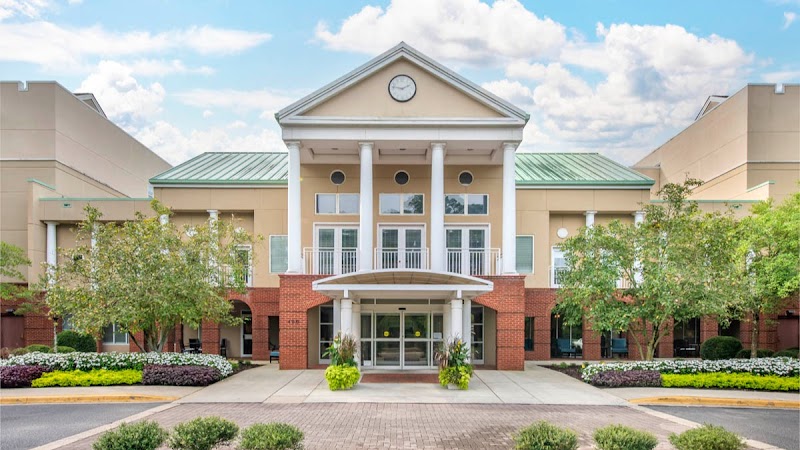
Who Owns and Operates Brookdale University Park Snf (Al)?

BROOKDALE UNIVERSITY PARK SNF (AL) is owned by a for-profit company. For-profit facilities operate as businesses with obligations to shareholders or private owners. The facility is operated by BROOKDALE SENIOR LIVING, a chain that manages multiple nursing homes. With 66 certified beds and approximately 56 residents (about 85% occupancy), it is a smaller facility located in BIRMINGHAM, Alabama.

How Does Brookdale University Park Snf (Al) Compare to Other Alabama Nursing Homes?

Compared to the 100 nursing homes in Alabama, BROOKDALE UNIVERSITY PARK SNF (AL)'s overall rating (1 stars) is below the state average of 2.9, staff turnover (45%) is near the state average of 46%, and health inspection rating (1 stars) is much below the national benchmark.

What Should Families Ask When Visiting Brookdale University Park Snf (Al)?

Based on this facility's data, families visiting should ask: "Can I visit during a mealtime to observe dining assistance and food quality?" "How do you handle medical emergencies, and what is your hospital transfer rate?" "Can I speak with family members of current residents about their experience?"

Is Brookdale University Park Snf (Al) Safe?

Based on CMS inspection data, BROOKDALE UNIVERSITY PARK SNF (AL) has a clean safety record: no substantiated abuse findings (meaning no confirmed cases of resident harm), no Immediate Jeopardy citations (the most serious violation level indicating risk of serious injury or death), and is not on the Special Focus Facility watch list (a federal program monitoring the lowest-performing 1% of nursing homes). The facility has a 1-star overall rating and ranks #100 of 100 nursing homes in Alabama. While no facility is perfect, families should still ask about staff-to-resident ratios and recent inspection results during their visit.

Do Nurses at Brookdale University Park Snf (Al) Stick Around?

BROOKDALE UNIVERSITY PARK SNF (AL) has a staff turnover rate of 45%, which is about average for Alabama nursing homes (state average: 46%). Moderate turnover is common in nursing homes, but families should still ask about staff tenure and how the facility maintains care continuity when employees leave.

Was Brookdale University Park Snf (Al) Ever Fined?

BROOKDALE UNIVERSITY PARK SNF (AL) has no federal fines on record. CMS issues fines when nursing homes fail to meet care standards or don't correct problems found during inspections. The absence of fines suggests the facility has either maintained compliance or corrected any issues before penalties were assessed. This is a positive indicator, though families should still review recent inspection reports for the full picture.

Is Brookdale University Park Snf (Al) on Any Federal Watch List?

BROOKDALE UNIVERSITY PARK SNF (AL) is not on any federal watch list. The most significant is the Special Focus Facility (SFF) program, which identifies the bottom 1% of nursing homes nationally based on persistent, serious quality problems. Not being on this list means the facility has avoided the pattern of deficiencies that triggers enhanced federal oversight. This is a positive indicator, though families should still review the facility's inspection history directly.