CIVIC CENTER HEALTH AND REHABILITATION, LLC
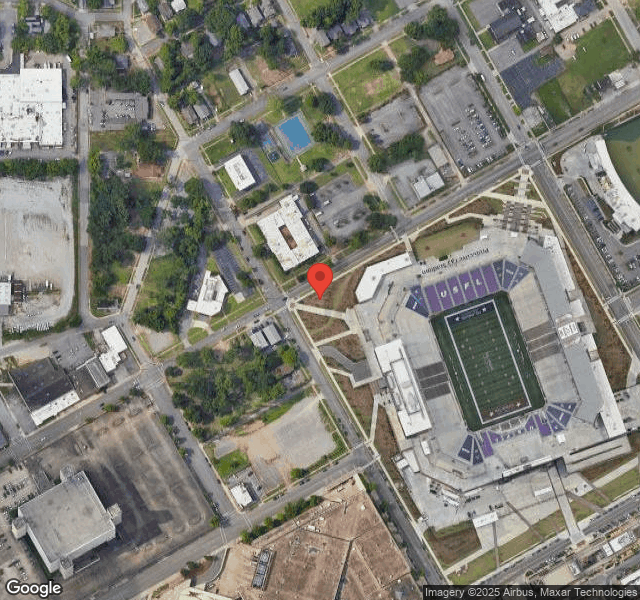
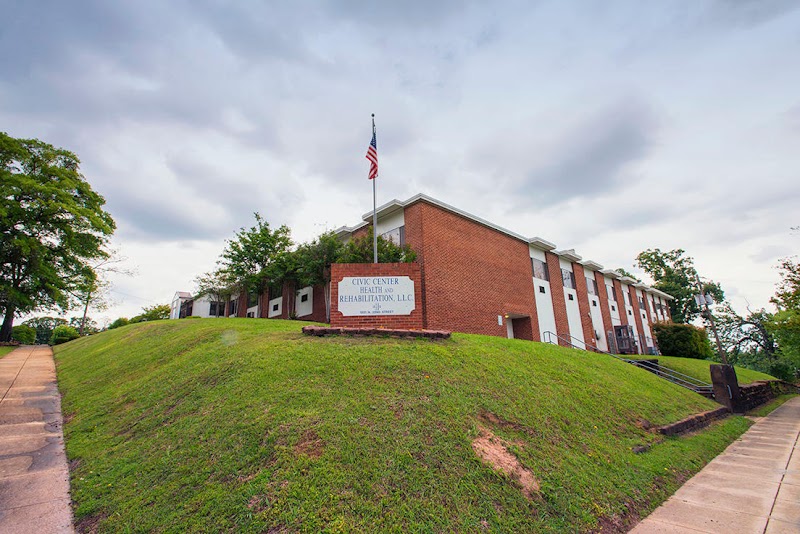
1201 22ND STREET NORTH, BIRMINGHAM, AL 35234 (205) 251-5271
For profit - Corporation 95 Beds NHS MANAGEMENT Data: November 2025
Trust Grade
55/100
#149 of 223 in AL
Last Inspection: March 2024

Within standard 12-15 month inspection cycle. Federal law requires annual inspections.

Overview

Civic Center Health and Rehabilitation in Birmingham, Alabama, has a Trust Grade of C, which means it is average and falls in the middle of the pack among nursing homes. It ranks #149 out of 223 facilities in Alabama, placing it in the bottom half of the state, and #13 of 34 in Jefferson County, indicating that only a few local options are better. The facility is experiencing a worsening trend, with issues increasing from 1 in 2021 to 6 in 2024. Staffing is rated average with a 3/5 star rating, but the turnover rate is concerning at 60%, significantly higher than the state average of 48%. While there have been no fines reported, the facility has faced multiple incidents, including failure to maintain cleanliness in the kitchen and improper hand hygiene practices by staff, which raises potential health risks for residents. Overall, while there are some strengths, such as no fines and decent quality measures, the increasing number of issues and staffing concerns are significant weaknesses that families should consider.

Trust Score
C
55/100
In Alabama
#149/223
Bottom 34%
Safety Record
Low Risk
No red flags
Inspections
Getting Worse
1 → 6 violations
Staff Stability
⚠ Watch
60% turnover. Above average. Higher turnover means staff may not know residents' routines.
Penalties
✓ Good
No fines on record. Clean compliance history, better than most Alabama facilities.
Skilled Nurses
⚠ Watch
Each resident gets only 27 minutes of Registered Nurse (RN) attention daily — below average for Alabama. Fewer RN minutes means fewer trained eyes watching for problems.
Violations
○ Average
10 deficiencies on record. Average for a facility this size. Mostly minor or procedural issues.
★★☆☆☆
2.0
Overall Rating
★★★☆☆
3.0
Staff Levels
★★★★☆
4.0
Care Quality
★★☆☆☆
2.0
Inspection Score
Stable
2021: 1 issues
2024: 6 issues

The Good

  • 4-Star Quality Measures · Strong clinical quality outcomes
  • Full Sprinkler Coverage · Fire safety systems throughout facility
  • No fines on record

Facility shows strength in quality measures, fire safety.

The Bad

2-Star Overall Rating

Below Alabama average (2.9)

Below average - review inspection findings carefully

Staff Turnover: 60%

14pts above Alabama avg (46%)

Frequent staff changes - ask about care continuity

Chain: NHS MANAGEMENT

Part of a multi-facility chain

Ask about local staffing decisions and management

Staff turnover is elevated (60%)

12 points above Alabama average of 48%

The Ugly 10 deficiencies on record

Mar 2024 6 deficiencies
CONCERN (D) 📢 Someone Reported This

A family member, employee, or ombudsman was alarmed enough to file a formal complaint

Potential for Harm - no one hurt, but risky conditions existed

Report Alleged Abuse (Tag F0609)

Could have caused harm · This affected 1 resident

**NOTE- TERMS IN BRACKETS HAVE BEEN EDITED TO PROTECT CONFIDENTIALITY** Based on interviews, resident record review, review of an Employee file, and review of a facility policy titled Abuse, Neglect, ...

Read full inspector narrative →
**NOTE- TERMS IN BRACKETS HAVE BEEN EDITED TO PROTECT CONFIDENTIALITY** Based on interviews, resident record review, review of an Employee file, and review of a facility policy titled Abuse, Neglect, Misappropriation of Resident/Guest Property, Suspicious Injuries of Unknown Source, Exploitation, the facility failed to ensure an allegation of exploitation was reported to the State Agency after the Administrator/Abuse Coordinator was made aware on 10/18/2023 of Licensed Practical Nurse (LPN) #13 taking money from Resident Identifier (RI) #27 on multiple occasions. This deficient practice affected RI #27, one of nineteen sampled residents and one of five residents investigated for abuse. Findings include: This tag was cited as a result of the investigation of complaint/report number AL00047241. The State Agency received the complaint on 03/15/2024 with the allegation that LPN #13 was terminated from the facility in the fall of 2023 because LPN #13 borrowed $500.00 from RI #27. Review of a facility policy titled Abuse, Neglect, Misappropriation of Resident/Guest Property, Suspicious Injuries of Unknown Source, Exploitation with an effective date of 02/08/2018 revealed: . E. Exploitation is taking advantage of a resident/guest for personal gain through use of manipulation, intimidation, threats, or coercion. An example is monetary assistance provided to staff after informing resident/guest that they are in a financial crisis, gifts to staff by resident/guest(s) based on staff persuasion. VI. a) The facility will report all instances of alleged or suspected abuse, including . exploitation and misappropriation of resident/guest property in the following manner: b) Investigation and Reporting Steps . The Administrator/Designee will report to the State Agency . per regulations. Review of LPN #13's employee file revealed a facility form titled CONFERENCE REPORT dated 10/18/2023. The report documented a violation as follows: . Type A Violation #20: Engaging in fraudulent Activity by violating our Corporate Compliance Policy and Procedure: (LPN #13) . on multiple occasions took money from the resident . This activity was overheard by another Resident, the roommate and reported the activity to the Administrator. When the Resident . was questioned (he/she) acknowledged (he/she) would give her the money that was in (his/her) billfold when (he/she) was asked. (He/She) stated this occurred on multiple occasions. HR was notified and informed of the situation, they were in agreement with termination. RI #27 was admitted to the facility on [DATE] and a readmit date of 09/10/2018. On 03/22/2024 at 12:50 PM an interview was conducted with the Abuse Coordinator (AC)/Administrator (ADM). The ADM said, she had talked to RI #27 and was told that LPN #13 would ask for money and RI #27 would give her money. The ADM stated, the incident had not been reported to the State Agency but LPN #13 was terminated. The ADM stated, the situation should have been reported to the State Agency because it was regulatory and there was a concern of it not being reported. On 03/22/2024 at 04:00 PM an interview was conducted with RI #27. RI #27 stated, he/she would give money to LPN #13 when she needed it. RI #27 stated, he/she would only give LPN #13 a little money at a time, like $30.00, and LPN #13 had a bad home life and needed money to come to work.
CONCERN (D) 📢 Someone Reported This

A family member, employee, or ombudsman was alarmed enough to file a formal complaint

Potential for Harm - no one hurt, but risky conditions existed

Accident Prevention (Tag F0689)

Could have caused harm · This affected 1 resident

**NOTE- TERMS IN BRACKETS HAVE BEEN EDITED TO PROTECT CONFIDENTIALITY** Based on interviews, resident record review, and review of a facility policy titled Incidents and Accidents the facility failed ...

Read full inspector narrative →
**NOTE- TERMS IN BRACKETS HAVE BEEN EDITED TO PROTECT CONFIDENTIALITY** Based on interviews, resident record review, and review of a facility policy titled Incidents and Accidents the facility failed to ensure Resident Indentifer (RI) #81 and RI #26 was not left alone after being dropped off unaccompanied at a local health clinic on 01/25/2024. This affected 2 of 4 residents sampled for accident concerns. Findings include: On 01/25/2024 at 12:42 PM, the State Survey Agency received an initial report from the facility via the Online Incident Reporting System regarding an allegation of possible abuse-neglect that occurred on 01/25/2024 at approximately 10:30 AM. According to this initial report, RI #81 was transported to a local hospital medical clinic on 01/25/2024 at 7:15 AM unattended. The driver escorted RI #81 into the clinic and returned to the facility at approximately 7:35 AM to pick up RI #26 for an appointment at the same clinic. When the driver to with clinic he saw RI #81 standing outside the clinic in the rain. A facility policy titled Incidents and Accidents with an effective date of 11/10/2014 documented: . The resident/guest environment remains as free of accident hazards as is possible, . An incident is an occurrence that may not be consistent with the routine operation of the facility or the routine care of a particular resident/guest. RI #81 was admitted to the facility on [DATE]. RI #81's quarterly Minimum Data Set (MDS) assessment with an Assessment Reference Date (ARD) of 12/05/2023, documented a Brief Interview of Mental Status (BIMS) score of 12, indicating moderate cognitive impairment. RI #26 was re-admitted to the facility on [DATE]. RI #26's quarterly MDS assessment with an ARD of 10/26/2023 documented RI #26 had both long and short term memory problems and moderately impaired cognition. An interview was conducted with RI #81 on 03/18/2024 at 4:49 PM. RI #81 stated, she arrived at the clinic on 01/25/2024, and was the first one there. RI #81 said, the secretary at the clinic stated they did not open until 8:00 AM, so RI #81 explored the building upstairs before going outside and then waited outside for the driver. RI #81 continued, when he arrived with another resident, they went inside for the appointment. RI #81 added, once inside, an employee of the facility joined the appointment, and they were transported back to the facility afterwards. On 03/19/2024 at 2:46 PM, an interview was conducted with the Transport Driver. He said, on 01/25/2024, he accompanied RI #81 to the clinic for an appointment. He opened the door for RI #81 and RI #81 proceeded to the front desk where to sign in. After that, the driver said, he returned to the facility and picked up RI #26 for an appointment at the same clinic. Upon his return, he noticed RI #81 was walking outside in the misting rain. He observed RI #81's clothes were damp from standing in the rain. The driver then escorted both residents into the clinic for their appointments. On 03/20/2024 at 11:25 AM, an interview was conducted with Certified Nursing Assistant (CNA) #14. CNA #14 reported that she had arrived at work on 01/25/2024 around 8:00 AM and she was informed there was no staff present for RI #81 and RI #26 at their scheduled appointment. CNA #14 said, she then proceeded to the clinic and stayed with the residents until the driver arrived to transport both residents back to the facility, and she followed in her own vehicle. CNA #14 said, that her duty during resident appointments was to ensure their safety and prevent them from wandering off. On 03/20/2024 at 12:13 PM CNA #9 was asked about residents going out for appointments. CNA #9 said, she arranges staff schedules to accompany residents to medical appointments. She recalled an incident on 01/25/2024, when a CNA was supposed to accompany RI #81 and RI #26 to their appointment but called off. CNA #9 discovered that the residents had gone to the appointment unaccompanied when she arrived at around 8:00 AM. CNA #9 said, she then assigned another staff member to go with the residents. When questioned about why the residents were sent without a staff member, she attributed it to bad weather causing and staff calling out. On 3/20/2024 at 12:43 PM, an interview was conducted with the charge nurse, a Registered Nurse (RN) #15. During the interview, RN #15 said, on 01/25/2024, when he arrived at work, the transportation driver was present to pick up RI #81 and RI #26. According to him, the driver initially left with RI #81 and later returned for RI #26. He stated, no employee accompanied RI #81 when they left, and there was no employee following behind the transport van. The RN supervisor said, it was the facility's policy to have staff accompany residents to their appointments. RN #15 said, he assumed he CNA was to accompany residents at the appointment and he did not know she had called out. On 03/20/2024 at 2:57 PM an interview was conducted with the Administrator. She said, sending staff with residents to appointments had always been a practice to ensure continuity of care. She said the facility had no written policy regarding this but sending staff with residents to appointments had been consistently implemented by the facility. The administrator explained that the reason RI #81 and RI #26 were sent without a staff member on 01/25/2024 was due to the confusion with the call offs. When asked how the process has changed since this incident, she said, it was the same but they were more cautious. This deficiency was cited as a result of complaint/report number AL00046869. ************************* The facility took immediate actions to correct the non-compliance and prevent reoccurrence by: - On 01/25/2024, the facility became aware of a resident being left at an appointment by there selves at a local hospital clinic. The resident did walk out of the lobby and outside in the misting rain. The resident stood outside until the driver returned with a second resident. Both residents were then walked into the clinic - A report was made to the Alabama Department of Public Health on 01/25/2024. - On 01/25/2024 an In-service began with License Nurses, and the Lead CNA who sets up staff to go on appointments with instructions for any time a resident leaves the facility for an appointment staff is always to accompany the resident and residents should never go to an appointment unaccompanied by a staff member. Completed 01/25/2024. - Monitoring began on 01/25/2024 at stand down regarding resident appointments and staff attending. Monitoring continued for four weeks with no issues. The facility continues to monitor resident appointments during AM and PM meetings; Monday - Friday. - Compliance has been met with no further concerns identified. ************************* After review of documentation supporting the above corrective actions, including the facility's investigation file, and in-service/education records, the survey team verified the facility implemented corrective actions including monitoring that began 01/25/2024, thus F689 was cited at past non-compliance.
CONCERN (D)

Potential for Harm - no one hurt, but risky conditions existed

Deficiency F0761 (Tag F0761)

Could have caused harm · This affected 1 resident

**NOTE- TERMS IN BRACKETS HAVE BEEN EDITED TO PROTECT CONFIDENTIALITY** Based on observations, interviews, medical record review, and review of a facility policy titled, Medication Storage, the facili...

Read full inspector narrative →
**NOTE- TERMS IN BRACKETS HAVE BEEN EDITED TO PROTECT CONFIDENTIALITY** Based on observations, interviews, medical record review, and review of a facility policy titled, Medication Storage, the facility failed to ensure Vitamin B12 tablets were disposed of by the expiration date and not left on the medication cart and administered to Resident Identifier (RI) #3 by Medication Technician (MT) #6. This was observed on 01/21/2024 during medication administration observations and had the potential to affect RI #3 one of three residents observed for medication administration. Findings include: A facility policy titled Medication Storage with a reviewed date of 04/2020 documented: . Policy Medications and biologicals are stored safely, securely, and properly, following manufacturer's recommendations or those of the supplier. Procedures . 11. Outdated, contaminated, or deteriorated medications . are removed from stock, disposed of according to procedures for medication disposal, . RI #3 was admitted to the facility on [DATE] and readmitted on [DATE]. RI #3's 2024 Physician Orders documented an order dated 12/29/2020 for Cyanocobalamin (Vitamin B12) one tablet to be given daily. An observation was made on 03/21/2024 at 08:00 AM during medication administration with MT #6. MT #6 prepared Vitamin B12 medication for RI #3 from a bottle of Vitamin B12 tablets with an open date of 12/2017. On 03/21/2024 at 08:36 AM MT #6 administered the medication to RI #3. On 03/21/2024 at 09:06 AM the Vitamin B12 bottle with the open date of 12/2017 was observed with MT #6 to have an expiration date of 02/2024. MT stated, the medication technicians, nurses, and nurse managers were responsible for checking the medications expiration date on the medication cart daily. MT stated, expired medication had the risk of the not being effective. MT #6 stated, she did not pay attention to the date on the medication when she administered medications to RI #3. An interview with the Director of Nursing (DON) was conducted on 03/22/2024 at 12:07 PM. The DON stated, when staff administer medications, they should look for the right person, medication, the route, and the expiration date. The DON stated, there was a risk of the effectiveness of the medication when given past the expiration date. The DON stated, expired medications should have never been on the medication cart.
CONCERN (D)

Potential for Harm - no one hurt, but risky conditions existed

Deficiency F0947 (Tag F0947)

Could have caused harm · This affected 1 resident

Based on interview and review of facility employee training logs and transcripts, the facility failed to ensure Certified Nursing Assistant (CNA) #12 received required Dementia training from January 2...

Read full inspector narrative →
Based on interview and review of facility employee training logs and transcripts, the facility failed to ensure Certified Nursing Assistant (CNA) #12 received required Dementia training from January 2023 through January 2024. This affected one of three employee files reviewed during the survey. Findings include: Review of CNA #12's employee training files revealed CNA #12 had a dire date of 12/09/2022 and she did not receive Dementia training for the time period January 2023 to January 2024. In an interview on 03/22/2024 at 04:19 PM with the Staff Development Coordinator (SDC) #5, she was asked about CNA #12's Dementia training. SCD #5 said, she was unable to locate CNA #12's Dementia training and CNA #12 had some technical difficulties and had not completed the required training. When asked should CNA #12 have had Dementia training, SDC #5 said, yes, and until she completed the required training, CNA #12 had been taken off the schedule.
CONCERN (E)

Potential for Harm - no one hurt, but risky conditions existed

Infection Control (Tag F0880)

Could have caused harm · This affected multiple residents

**NOTE- TERMS IN BRACKETS HAVE BEEN EDITED TO PROTECT CONFIDENTIALITY** Based on observations, interviews, and review of facility policies titled, Hand Hygiene, LAUNDRY STORAGE, COLLECTION & TRANSPORT...

Read full inspector narrative →
**NOTE- TERMS IN BRACKETS HAVE BEEN EDITED TO PROTECT CONFIDENTIALITY** Based on observations, interviews, and review of facility policies titled, Hand Hygiene, LAUNDRY STORAGE, COLLECTION & TRANSPORT, and LAUNDRY - HANDLING CLEAN LINEN, the facility failed to ensure staff provided care to residents and handled supplies and linen in a manner to prevent the possibility for cross-contamination of residents and their environment. On 03/19/2024 Certified Nursing Assistant (CNA) #7 touched the floor and without performing hand hygiene touched Resident Identifier (RI) #53. On 03/19/2024 Nursing Assistant (NA) #8 took supplies from RI #10's room to RI #16's room, and touched soiled barrels and then clean linen for RI #9 and RI #74 without performing hand hygiene. The wipes taken from room to room were also placed on the clean linen. Laundry Staff (LS) #10 was observed on 03/19/2024 delivering clean cloths to RI #19, RI #34, and RI #77, from an uncovered cart without performing hand hygiene. Dirty laundry placed in the laundry chute on 03/21/2024 was not in a bag. On 03/21/2024 Medication Technician (MT) #6 was observed removing gloves during Medication Administration for RI #3 without performing hand hygiene. This deficient practice had the potential to affect 9 of 19 residents observed for infection control. Findings include: Review of a facility policy titled Hand Hygiene with an effective date of 06/11/2020 revealed: . PURPOSE: To provide guidelines to employees for proper and appropriate hand washing techniques that will aide in the prevention of the transmission of infections. STANDARD: Hand washing should be performed between procedures with resident/guest(s) based upon the principle that all blood, body fluids, secretions, excretions (except sweat), non-intact skin, and mucus membranes may contain transmissible infectious agents. III. Hand Hygiene . Before and after assisting a resident/guest with personal care . Upon and after coming in contact with a resident/guest(s) intact skin . After handling soiled equipment . After removing gloves . Review of an undated facility policy titled LAUNDRY - HANDLING CLEAN LINEN revealed: . POLICY: After washing, cleaned/dried textiles, fabrics and clothing shall be folded for transport, distribution and storage by methods that ensure their cleanliness until used. PROCEDURE: . All linen shall be transported from the Laundry in a clean, covered linen cart with a solid bottom. The Laundry staff shall wash their hands before handling clean linen. Review of an undated facility policy titled LAUNDRY -STORAGE, COLLECTION & TRANSPORT revealed: . POLICY: All linens will be stored, handled, transported and processed in a manner that prevents the transmission of microorganisms to other patients and areas. If laundry chutes are used all linens should be bagged. Clean linens shall be transported to patient care areas by use of covered carts with solid bottoms by the Laundry staff. RI #53 was admitted to the facility on [DATE]. On 03/18/2024 at 5:07 PM CNA #7 entered RI #53's room with a food tray, placed it on the bedside table, bent down on the floor on her hands and knees, touching the floor with both hands to look for the bed remote control under the bed. CNA #7 then got up from the floor and without washing or sanitizing her hands or the bed remote, lifted the head of the bed up, put down the remote on the side of the bed, put her hands on RI #53, assisted the resident to turn around to the bedside, and put shoes on RI #53. On 03/18/2024 at 05:46 PM CNA #7 was asked about washing and sanitizing her hands. CNA #7 stated, she was supposed to wash or sanitize her hands before providing care. CNA #7 stated, she got down on her hands and knees to look for the bed remote. CNA #7 said, she assisted RI #53 up to the side of the bed without washing her hands. CNA #7 stated, after touching the floor she should have washed or sanitized her hands. CNA #7 stated, there was a risk of contamination since she did not wash or sanitize her hands before touching RI #53. RI #10 was admitted to the facility on [DATE] and readmitted on [DATE]. RI #16 was admitted to the facility on [DATE] and readmitted on [DATE]. RI #9 was admitted to the facility on [DATE] and readmitted on [DATE]. RI #74 was admitted to the facility on [DATE] and readmitted on [DATE]. On 03/19/2024 at 10:10 AM NA #8 was observed coming out of RI #10's room with bath wipes in her right hand and with her left hand she pushed the yellow dirty linen barrel and the gray trash barrel down the hall in front of RI #9 and RI #74's room. CNA #9 in RI #9 and RI #74's room and asked NA #8 for a pillow case for the residents. NA #8 let go of the barrels, lifted the clean linen pink cover up, set the bath wipes from RI #10's room on the clean linen, and handed clean pillow cases to CNA #9. NA #8 then picked up the bath wipes and a box of gloves in her right hand, pulled the pink cover back over the linen on the cart, and continued pushing the yellow and gray barrels down the hallway. On 03/19/2024 at 10:13 AM NA #8 stated, before handling clean linen hands must be washed. NA #8 stated, the yellow and gray barrels were considered dirty. NA #8 stated, CNA #9 asked for pillowcases for RI #9 and RI #74. NA #8 stated, she did not wash or sanitize her hands after touching the gray and yellow barrels. NA #8 stated, she did not know why she did not wash or sanitize her hands before touching the clean linen. NA #8 stated, there was a risk of cross-contamination by touching the pillowcases after touching the dirty yellow and gray barrels. NA #8 stated, she should have washed her hands before touching the clean linen cart. NA #8 stated, she cared for 13 residents on 03/19/2024. On 03/19/2024 at 10:16 AM NA #8 was observed taking the bath wipes and the box of gloves into room RI #16 and closed the door. On 03/19/2024 at 10:23 AM CNA #9 confirmed the pillowcases she asked NA #8 for, were used for RI #9 and RI #74. On 03/19/2024 at 10:49 AM a follow up interview was conducted with NA #8 and she was asked about what she did. NA #8 stated, she brought the gloves and the package of wipes into RI #10's room and put them on the nightstand next to RI #10's bed. NA #8 stated, she would consider the package of wipes and the box of gloves dirty after being in RI #10's room. NA #8 stated, she put the package of wipes and the box of gloves on the clean linen after leaving RI #10's room. NA #8 stated, she did not know why she put the package of wipes and box of gloves on the clean linen. NA #8 stated, there would be a risk of cross contamination when putting the package of wipes and the box of gloves on the clean linen. RI #19 was admitted to the facility on [DATE] and readmitted on [DATE]. RI #34 was admitted to the facility on [DATE] and readmitted on [DATE]. RI #77 was admitted to the facility on [DATE]. On 03/19/2024 at 11:20 AM Laundry Staff (LS) #10 was observed passing out clean laundry from an uncovered gray cart. LS #10 went from room to room opening resident room doors and closet doors to deliver hanging cloths to RI #19, RI #34, and RI #77 without washing or sanitizing her hands between rooms. On 03/19/2024 at 11:26 AM LS #10 was asked about what she was doing. LS #10 stated, she was passing clean laundry to the residents. When asked about covering the laundry cart, LS #10 said, she only covered it when she was outside. When asked about washing her hands LS #10 said, she only washed her hands when she came into the building. LS #10 stated, the facility policy was to wash or sanitize hands before entering a resident's room. LS #10 stated, the linen uncovered had the risk of being contaminated. On 03/21/24 at 03:23 PM the HLS was asked about hand hygiene and delivery of clean laundry to resident rooms. The HLS stated, staff were to wash their hands before entering and when exiting a room. The HLS stated, there was a risk of cross-contamination if staff did not wash hands when entering a room. The HLS stated, clean laundry should be transported covered with a white clean blanket to prevent cross-contamination. On 03/21/2024 at 03:02 PM an observation was made with Housekeeping/Laundry Supervisor (HLS) of loose unbagged towels in the dirty laundry bin under the laundry chute. HLS stated, sometimes staff threw one towel or one wash cloth down the laundry chute not bagged. During the observation several towels and a purple gown came down the laundry chute unbagged. On 03/21/24 at 03:23 PM the HLS was asked about what had been observed and she stated, the dirty laundry put in the laundry chute should always be bagged and it should not be carried on the hall without being in a bag because it could cause cross-contamination if the dirty laundry was not in a bag. RI #3 was admitted to the facility on [DATE] and readmitted on [DATE]. On 03/21/2024 at 08:00 AM Medication Technician (MT) #6 was observed during Medication Administration wearing a glove to handle medication, then she removed and disposed of the glove without washing or sanitizing her hands. On 03/21/2024 at 09:06 AM MT #6 stated, hands should be sanitized before and after putting on or taking off gloves. MT #6 stated, she did not sanitize her hands when she used gloves during medication administration for RI #3. MT #6 stated, there would be a risk of cross contamination when not washing or sanitizing hands before and after glove use. On 03/22/2024 at 11:15 AM the Infection Preventionist (IP) was asked about infection control practices. The IP stated, staff should wash their hands after any contact with residents, before and after entering rooms, before providing any care, when care was completed, before they start medication pass on an individual, and before and after donning gloves. The IP said, the risk of leaving one resident's room and then pushing the laundry cart down the hall uncovered to another resident's room was aerosol contamination and transfering from one resident to another. The IP stated, staff should not go in and out of rooms without washing or sanitizing their hands. The IP stated, there was a risk of contaminating one resident to another if not washing or not sanitizing hands before entering residents rooms. The IP stated, contaminated laundry should be bagged in the room, the bag put in the yellow barrel, transported to the laundry chute, and put down the chute in the bags. The IP stated, clean linens should be put in the large cart separated and covered. The IP stated, the dirty laundry that goes down the laundry chute should be contained for infection control. The IP stated, laundry should never be put down the laundry chute without being in a bag. The IP stated, staff should utilize hand hygiene after exiting a resident's room and when a staff member touches the floor because there was a risk of infection control. The IP stated, when an item goes into a residents room like a box of gloves or a package of wipes they would become dirty when it touches the surface and staff should get their gloves in the resident's room or bathrooms. The IP said, staff should never take in a box of gloves or package of wipes into other rooms due to infection control contamination. The IP stated, staff should perform hand hygiene before touching clean linen and should never set down contaminated items on clean linen.
CONCERN (F)

Potential for Harm - no one hurt, but risky conditions existed

Food Safety (Tag F0812)

Could have caused harm · This affected most or all residents

Based on observations, interviews, the 2022 United States (U.S.) Food and Drug Administration (FDA) Food Code, and the facility's policies titled Cleaning Schedules, Cleaning of Miscellaneous Equipmen...

Read full inspector narrative →
Based on observations, interviews, the 2022 United States (U.S.) Food and Drug Administration (FDA) Food Code, and the facility's policies titled Cleaning Schedules, Cleaning of Miscellaneous Equipment and Utensils, and Insect and Rodent Control, the facility failed to prevent the potential for cross-contamination and foodborne illness as evidenced by: The kitchen floor was dirty and had grease build up; The stove had grease build up present; The deep fryer had grease and food build up; The drain near the deep fryer had water and grease on top of the drain; Chipping paint was observed on the ceiling directly above clean pots and pans; and A serving tray with an unknown liquid brown substance was observed in the walk-in cooler. This had the potential to affect all residents who received meals from the facility's kitchen. Findings include: A review of 2022 United States (U.S.) Food and Drug Administration (FDA) Food Code, documented: .4-204.120 Equipment Compartments, Drainage. EQUIPMENT compartments that are subject to accumulation of moisture due to conditions such as condensation, FOOD or BEVERAGE drip, or water from melting ice shall be sloped to an outlet that allows complete draining .6-501.11 Repairing. PHYSICAL FACILITIES shall be maintained in good repair .6-501.12 Cleaning, Frequency and Restrictions. (A) PHYSICAL FACILITIES shall be cleaned as often as necessary to keep them clean . A review of a policy titled Cleaning Schedules documented .PURPOSE: To prevent the spread of bacteria that may cause food borne illnesses. A facility policy titled Cleaning of Miscellaneous Equipment and Utensils with an effective date 09/03/2019, documented: .14. Floors: . Mop floor using disinfecting detergent solution, as needed, and at least once daily . Housekeeping services will deep-clean the dietary floors at least quarterly . 19. Deep Fat Fryer: . b. Weekly: Fill Fryer with detergent solution Scrub fryer, both inside and outside Drain detergent solution from fryer . Rinse Wipe dry . A facility policy titled Insect and Rodent Control with an effective date of 002/01/2002 documented: .PROCESS: . f. Cracks in walls, floors, along baseboards or ceilings should be reported to maintenance for repair. On 03/18/2024 at 4:45 PM during initial kitchen inspection with the Dietary Manager (DM), the floor near the three compartment sink, dishwashing area, and the entire floor was found to be unclean, with an unidentified black substance present. The DM said, they had scheduled a pressure washing of the floor later in the week. Inside the walk-in cooler, a soiled pan containing an unknown brown liquid substance was noticed. The DM was unaware of why the pan was stored in the walk-in cooler and said, it should be removed. Additionally, a build-up of grease and cooking residue was observed on and around the deep fryer. The drain adjacent to the deep fryer had stagnant water and grease accumulating near its top. The DM acknowledged that the drain was not functioning properly and had recently been sealed off. The DM did not know the reason behind the pooling water and grease on the top of the drain. Furthermore, grease buildup was detected on the back of the stove and stove knobs, while peeling paint was observed above the hanging pots and pans. During a revisit to the kitchen on 03/21/2024 at 11:29 PM, chipping/peeling paint above the hanging pots and pans was observed. The DM said, the ceiling had been in that condition for over a year. Additionally, there was grease buildup and food debris around the deep fryer, while the stove and stove knobs also had grease accumulation present. On 03/22/2024 at 10:05 AM, an interview was conducted with the Dietary Manager. The DM said. there should be no grease accumulation on the deep fryer, pipes near the deep fryer, stove, and stove knobs. The DM said, the floor should be kept clean and it was power washed on 03/19/2024 (Tuesday) and prior to that, the last deep cleaning of the floor had taken place six months ago. The DM said, the cleaning schedule for the kitchen included daily mopping of the floor. The DM said, the pan observed in the walk-in cooler during the initial tour should not have been there and was removed. The DM said, there should not be chipping paint above the pots and pans and it had been that way for at least one year. The DM said, the drain near the deep fryer should not have water and grease on top of it and a company that recently sealed the drain would be contacted. The DM said, the kitchen should be clean because it could attract bugs, cause the food to be bad and potentially make the residents sick.
Jun 2021 1 deficiency
CONCERN (D)

Potential for Harm - no one hurt, but risky conditions existed

Assessment Accuracy (Tag F0641)

Could have caused harm · This affected 1 resident

Based on record review and interview the facility failed to ensure Resident Identifier (RI) # 47's quarterly Minimum Data Set with and Assessment Reference Date (ARD) of 1/22/21 and 4/23/21 were coded...

Read full inspector narrative →
Based on record review and interview the facility failed to ensure Resident Identifier (RI) # 47's quarterly Minimum Data Set with and Assessment Reference Date (ARD) of 1/22/21 and 4/23/21 were coded to reflect RI # 47 receiving hospice and oxygen. This affected 1of 1 resident sampled for hospice and 1 of 2 residents sampled for oxygen. Findings Include: A review of RAI Version 3.0 Manual documented .O0100K, Hospice care Code residents identified as being in a hospice program .O0100C, Oxygen therapy code continuous .oxygen administered via mask, cannula .delivered to a resident . RI # 47 was admitted to the facility with diagnoses to include Alzheimer's disease and dependence on supplemental oxygen. A review of RI #47's June 2021 Physician's orders documented: .2/10/20 .Oxygen @ 2L(liters)/Min Per Nasal Cannula Continuously .11/14/19 .Admit to .Hospice . A review of RI # 47's MDS with an ARD of 1/22/21 did not document RI # 47 receiving oxygen or hospice A review of RI # 47's MDS with an ARD of 4/23/21 did not document RI # 47 receiving oxygen or hospice. An interview was conducted on 6/10/21 at 2:15 PM with Employee Identifier (EI) # 1, Registered Nurse. EI #1 was asked was RI # 47 on continuous oxygen when you completed the quarterly MDS for 1/22/21 and 4/23/21. EI #1 replied, yes according to the physician's orders. EI #1 was asked, does the Quarterly 1/22/21 and 4/23/21 MDS document RI # 47 was on Hospice. EI #1 replied, no not on either 1/22 or 4/23. EI #1 was asked, was the oxygen checked for 1/22/21 and 4/23/21. EI #1 replied, it was not checked for 1/22/21 or 4/23/21 Quarterly MDS. EI #1 was asked was RI #47 currently on oxygen. EI #1 replied, yes at two liters continuous since 2/10/20. EI #1 was asked should it be checked to show RI #47 was receiving oxygen continuously. EI #1 replied, yes. EI #1 was asked why it wasn't. EI #1 replied, she misread the order, it was a coding error. EI #1 was asked what was the benefit of an accurate MDS. EI #1 replied, it benefited the facility and patient to ensure appropriate care was provided.
Mar 2019 3 deficiencies
CONCERN (D)

Potential for Harm - no one hurt, but risky conditions existed

Transfer Notice (Tag F0623)

Could have caused harm · This affected 1 resident

**NOTE- TERMS IN BRACKETS HAVE BEEN EDITED TO PROTECT CONFIDENTIALITY** Based on review of Resident Identifier (RI) #81's medical record, the facility's policy titled VI. THERAPEUTIC LEAVE, TRANSFER, ...

Read full inspector narrative →
**NOTE- TERMS IN BRACKETS HAVE BEEN EDITED TO PROTECT CONFIDENTIALITY** Based on review of Resident Identifier (RI) #81's medical record, the facility's policy titled VI. THERAPEUTIC LEAVE, TRANSFER, AND DISCHARGE and interviews, the facility failed to issue a notice of discharge to RI #81 and/or RI #81's representative (sponsor) when RI #81 was discharged to a local hospital on 1/30/2019. According to staff interview, the facility did not plan on accepting RI #81 back into their facility when the resident was discharged to the local hospital on 1/30/2019. This deficient practice affected RI #81, one of one sampled residents reviewed for a facility initiated discharge. Findings include: The facility's undated policy titled VI. THERAPEUTIC LEAVE, TRANSFER, AND DISCHARGE documented .Transfer/Discharge . The Facility will provide notice to you and your Responsible Party and, if known, a designated family member of your transfer or discharge and the reason for it at least thirty (30) days before you are transferred or discharged . Where your health and safety or the health and safety of other individuals in the Facility may be endangered, however, or where other good cause or legal reasons exist, notice may be given as soon as practicable before your transfer or discharge . RI #81 was readmitted to the facility on [DATE]. RI #81 has a medical history to include diagnoses of: Schizoaffective Disorder, Alzheimer's disease, Visual Hallucinations, and Psychosis. RI #81's Quarterly and Discharge Minimum Data Set with an assessment reference date of 1/30/2019, indicated RI #81 was discharged from the facility to an acute hospital on 1/30/2019 with return not anticipated. During an interview on 2/27/2019 at 3:54 PM, RI #81's sponsor was asked if anyone at Civic Center had contacted her stating RI #81 had been discharged from their facility. RI #81's sponsor said no. In an interview on 2/27/2019 at 4:57 PM, Employee Identifier (EI) #3, the facility's Social Worker, was asked why the hospital was planning to send RI #81 to a different facility. EI #3 said it was because the Administrator (EI #1) felt like the facility could no longer meet RI #81's needs when they sent the resident out to the hospital on 1/30/2019. On 2/28/2019 at 8:55 AM, an interview was conducted with EI #1, the Administrator. When asked if the facility had issued a notice of discharge to RI #81 and/or RI #81's sponsor, EI #1 said they had not.
CONCERN (D)

Potential for Harm - no one hurt, but risky conditions existed

Safe Transfer (Tag F0626)

Could have caused harm · This affected 1 resident

**NOTE- TERMS IN BRACKETS HAVE BEEN EDITED TO PROTECT CONFIDENTIALITY** Based on review of Resident Identifier (RI) #81's medical record, RI #81's hospital record and interviews, the facility failed t...

Read full inspector narrative →
**NOTE- TERMS IN BRACKETS HAVE BEEN EDITED TO PROTECT CONFIDENTIALITY** Based on review of Resident Identifier (RI) #81's medical record, RI #81's hospital record and interviews, the facility failed to allow RI #81 to return to the facility following transfer (discharge) to the hospital. Despite reports from the acute care facility indicating that RI #81's behaviors were now stable and the resident was safe to return to a nursing home setting, the facility denied the request to allow RI #81 to return to the facility. This deficient practice affected RI #81, one of one sampled residents whose closed record was reviewed for discharge to the hospital. Findings include: RI #81 was readmitted to the facility on [DATE]. RI #81 has a medical history to include diagnoses of: Schizoaffective Disorder, Alzheimer's disease, Visual Hallucinations, and Psychosis. RI #81's Quarterly and Discharge Minimum Data Set (MDS) with an assessment reference date of 1/30/2019, indicated RI #81 was moderately impaired in cognitive skills for daily decision making, with long and short term memory problems. RI #81 displayed behaviors of psychosis and had verbal behavior symptoms directed towards others and other behavioral symptoms not directed towards others for one to three days during the assessment period. Also, RI #81 rejected care one to three days during the assessment period. According to this MDS, RI #81 was discharged from the facility to an acute hospital on 1/30/2019 with return not anticipated. In an interview on 2/27/2019 at 4:57 PM, Employee Identifier (EI) #3, the facility's Social Worker, was asked why the hospital was planning to send RI #81 to a different facility. EI #3 said it was because the Administrator (EI #1) felt like the facility could no longer meet RI #81's needs when they sent the resident out to the hospital on 1/30/2019. During an interview with RI #81's sponsor on 3/1/2019 at 2:35 PM, she stated she had been made aware by the hospital that RI #81 would not be allowed to return to Civic Center. The local hospital's Case Worker, also RI #81's discharge planner, was interviewed on 3/1/2019 at 12:32 PM. When asked if Civic Center had informed her they would not take RI #81 back at their facility, the Case Worker said, yes, the Administrator (EI #1) had told her the facility would absolutely not be taking RI #81 back. When asked when she was provided this information, the Case Worker said one day the prior week (week of 2/25/2019). The Case Worker explained that RI #81 was safe, stable and ready to be transferred back into a nursing home setting. When asked if RI #81 had exhibited any signs of combative behaviors, the Case Worker said staff had reported there were none. When asked how long RI #81 had been ready for discharge from the hospital, the Case Worker said two or more weeks. The Case Worker indicated RI #81's medications had been adjusted while the resident was in the hospital, and she felt RI #81 was stable enough to go back into the nursing home. Contained within RI #81's local hospital medical record was a document labeled Discharge Plan Update dated 2/14/2019, which documented . Patient Name: (RI #81) . Discharge plan update . Civic Center reports that pt. (patient) cannot return . Contained within RI #81's local hospital medical record was a document labeled Progress Note dated 2/15/2019, which documented . Patient (RI #81) remains very intrusive, requires frequent redirection, however, has been calm and cooperative. No aggression or combative behavior noted . Patient is taking medications as prescribed . On 2/28/2019 at 8:55 AM, an interview was conducted with EI #1, the Administrator. When asked if she told the hospital the facility would not accept RI #81 back, EI #1 said yes. EI #1 said she told the Case Worker at the hospital they would not be taking RI #81 back because they could not force the resident to take his/her medications; RI #81 had refused to allow his/her roommate to come into their room; and RI #81 was violent with staff. EI #1 said she did not feel she could take RI #81 back due to the safety of the other residents and staff; however, EI #1 confirmed the hospital Case Worker had reported to her that RI #81 was calm and compliant.
CONCERN (E)

Potential for Harm - no one hurt, but risky conditions existed

Deficiency F0625 (Tag F0625)

Could have caused harm · This affected multiple residents

**NOTE- TERMS IN BRACKETS HAVE BEEN EDITED TO PROTECT CONFIDENTIALITY** Based on record review and interviews, the facility failed to ensure Resident Identifier (RI) #81 and/or RI #81's representative...

Read full inspector narrative →
**NOTE- TERMS IN BRACKETS HAVE BEEN EDITED TO PROTECT CONFIDENTIALITY** Based on record review and interviews, the facility failed to ensure Resident Identifier (RI) #81 and/or RI #81's representative (sponsor) was provided written notice which specified the duration of the bed hold, reserve bed payment, the facility's policy regarding bed hold and the conditions upon which RI #81 would be able to return to the facility, when RI #1 was discharged from the facility to the hospital on 4/2/2018, 4/20/2018, 1/9/2019 and 1/30/2019. This deficient practice affected RI #81, one of one sampled resident whose closed record was reviewed for discharge to the hospital. Findings include: RI #81 was readmitted to the facility on [DATE]. The facility's Detail admission / Discharge Report dated 2/27/2019 indicated the following: RI #81 was discharged to the hospital on 4/2/2018 and returned to the facility on 4/10/2018; RI #81 was discharged to the hospital on 4/20/2018 and returned to the facility on 5/21/2018; RI #81 was discharged to the hospital on 1/9/2019 and returned to the facility on 1/25/2019; and RI #81 was discharged to the hospital on 1/30/2019. RI #81's Quarterly and Discharge Minimum Data Set with an assessment reference date of 1/30/2019 indicated on 1/30/2019, RI #81 was discharged to an acute hospital, with return not anticipated. On 2/28/2019 at 8:55 AM, Employee Identifier (EI) #1, the Administrator was asked if the facility sent the bed hold notice to RI #81 and/or the resident's representative when RI #81 was transferred (discharged ) to the hospital on 1/30/2019. EI #1 said no, they did not. During a follow-up interview on 3/1/2019 at 3:30 PM, EI #1, the Administrator, stated the facility only issued the notice of bed hold policy upon admission. EI #1 further stated that RI #81's representative was informed of the bed hold policy once, during the admission process, but the notice was not issued at any other time.
Understanding Severity Codes (click to expand)
Life-Threatening (Immediate Jeopardy)
J - Isolated K - Pattern L - Widespread
Actual Harm
G - Isolated H - Pattern I - Widespread
Potential for Harm
D - Isolated E - Pattern F - Widespread
No Harm (Minor)
A - Isolated B - Pattern C - Widespread

Questions to Ask on Your Visit

  • "Why is there high staff turnover? How do you retain staff?"
  • "Can I speak with families of current residents?"
  • "What's your RN coverage like on weekends and overnight?"

Our Honest Assessment

Strengths
  • • No major safety red flags. No abuse findings, life-threatening violations, or SFF status.
  • • No fines on record. Clean compliance history, better than most Alabama facilities.
Concerns
  • • Grade C (55/100). Below average facility with significant concerns.
  • • 60% turnover. Above average. Higher turnover means staff may not know residents' routines.
Bottom line: Mixed indicators with Trust Score of 55/100. Visit in person and ask pointed questions.

About This Facility

What is Civic Center, Llc's CMS Rating?

CMS assigns CIVIC CENTER HEALTH AND REHABILITATION, LLC an overall rating of 2 out of 5 stars, which is considered below average nationally. Within Alabama, this rating places the facility higher than 0% of the state's 100 nursing homes. A rating at this level reflects concerns identified through health inspections, staffing assessments, or quality measures that families should carefully consider.
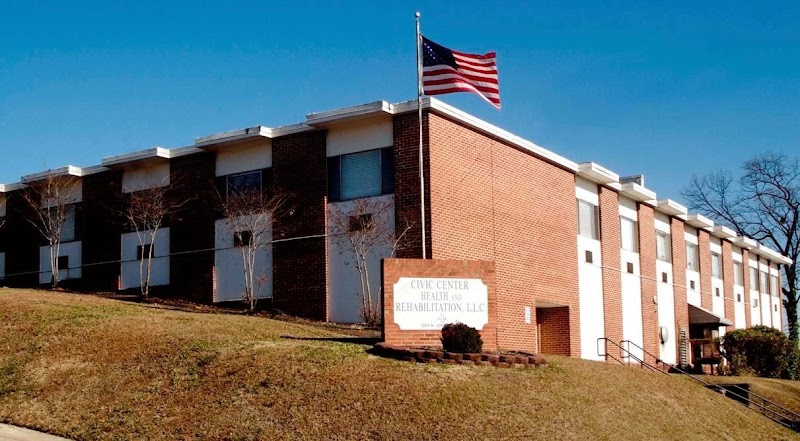
How is Civic Center, Llc Staffed?

CMS rates CIVIC CENTER HEALTH AND REHABILITATION, LLC's staffing level at 3 out of 5 stars, which is average compared to other nursing homes. Staff turnover is 60%, which is 14 percentage points above the Alabama average of 46%. High turnover can affect care consistency as new staff learn residents' individual needs. RN turnover specifically is 62%, which is notably high. RNs provide skilled clinical oversight, so turnover in this role can affect medical care quality.

What Have Inspectors Found at Civic Center, Llc?

State health inspectors documented 10 deficiencies at CIVIC CENTER HEALTH AND REHABILITATION, LLC during 2019 to 2024. These included: 10 with potential for harm.
Who Owns and Operates Civic Center, Llc?

CIVIC CENTER HEALTH AND REHABILITATION, LLC is owned by a for-profit company. For-profit facilities operate as businesses with obligations to shareholders or private owners. The facility is operated by NHS MANAGEMENT, a chain that manages multiple nursing homes. With 95 certified beds and approximately 89 residents (about 94% occupancy), it is a smaller facility located in BIRMINGHAM, Alabama.
How Does Civic Center, Llc Compare to Other Alabama Nursing Homes?

Compared to the 100 nursing homes in Alabama, CIVIC CENTER HEALTH AND REHABILITATION, LLC's overall rating (2 stars) is below the state average of 2.9, staff turnover (60%) is significantly higher than the state average of 46%, and health inspection rating (2 stars) is below the national benchmark.

What Should Families Ask When Visiting Civic Center, Llc?

Based on this facility's data, families visiting should ask: "How do you ensure continuity of care given staff turnover, and what is your staff retention strategy?" "Can I visit during a mealtime to observe dining assistance and food quality?" "How do you handle medical emergencies, and what is your hospital transfer rate?" "Can I speak with family members of current residents about their experience?" These questions are particularly relevant given the facility's high staff turnover rate.

Is Civic Center, Llc Safe?

Based on CMS inspection data, CIVIC CENTER HEALTH AND REHABILITATION, LLC has a clean safety record: no substantiated abuse findings (meaning no confirmed cases of resident harm), no Immediate Jeopardy citations (the most serious violation level indicating risk of serious injury or death), and is not on the Special Focus Facility watch list (a federal program monitoring the lowest-performing 1% of nursing homes). The facility has a 2-star overall rating and ranks #100 of 100 nursing homes in Alabama. While no facility is perfect, families should still ask about staff-to-resident ratios and recent inspection results during their visit.

Do Nurses at Civic Center, Llc Stick Around?

Staff turnover at CIVIC CENTER HEALTH AND REHABILITATION, LLC is high. At 60%, the facility is 14 percentage points above the Alabama average of 46%. Registered Nurse turnover is particularly concerning at 62%. RNs handle complex medical decisions and coordinate care — frequent RN changes can directly impact care quality. High turnover means new staff may not know residents' individual needs, medications, or preferences. It can also be disorienting for residents, especially those with dementia who rely on familiar faces. Families should ask: What is causing the turnover? What retention programs are in place? How do you ensure care continuity during staff transitions?

Was Civic Center, Llc Ever Fined?

CIVIC CENTER HEALTH AND REHABILITATION, LLC has no federal fines on record. CMS issues fines when nursing homes fail to meet care standards or don't correct problems found during inspections. The absence of fines suggests the facility has either maintained compliance or corrected any issues before penalties were assessed. This is a positive indicator, though families should still review recent inspection reports for the full picture.

Is Civic Center, Llc on Any Federal Watch List?

CIVIC CENTER HEALTH AND REHABILITATION, LLC is not on any federal watch list. The most significant is the Special Focus Facility (SFF) program, which identifies the bottom 1% of nursing homes nationally based on persistent, serious quality problems. Not being on this list means the facility has avoided the pattern of deficiencies that triggers enhanced federal oversight. This is a positive indicator, though families should still review the facility's inspection history directly.