GALLERIA WOODS SKILLED NURSING FACILITY
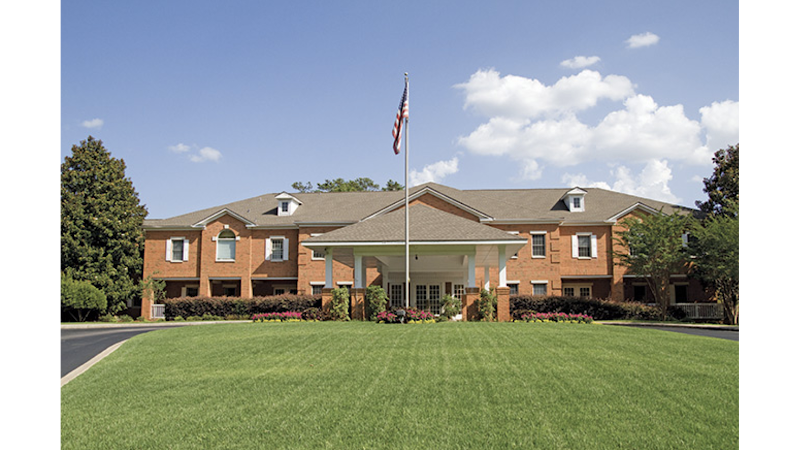

3850 GALLERIA WOODS DRIVE, BIRMINGHAM, AL 35244 (205) 985-7537
For profit - Corporation 30 Beds HEALTHPEAK PROPERTIES, INC. Data: November 2025
Trust Grade
65/100
#109 of 223 in AL
Last Inspection: December 2021

Over 2 years since last inspection. Current conditions may differ from available data.

Overview

Galleria Woods Skilled Nursing Facility in Birmingham, Alabama has a Trust Grade of C+, indicating it is decent and slightly above average compared to other facilities. It ranks #109 out of 223 in Alabama, placing it in the top half of nursing homes in the state, and #6 out of 34 in Jefferson County, meaning only five local options are better. However, the facility's trend is worsening, with the number of reported issues increasing from 3 in 2019 to 4 in 2021. Staffing is a relative strength with a rating of 4 out of 5 stars, although a 59% turnover rate is concerning, as it is higher than the state average. While the facility has no fines on record, which is positive, there are some weaknesses; for example, food items were not properly labeled or sealed, and staff were observed not wearing masks correctly, posing potential risks to residents. Overall, while there are strengths in staffing and no fines, the facility must address regulatory compliance and cleanliness issues to ensure resident safety.

Trust Score
C+
65/100
In Alabama
#109/223
Top 48%
Safety Record
Low Risk
No red flags
Inspections
Getting Worse
3 → 4 violations
Staff Stability
⚠ Watch
59% turnover. Above average. Higher turnover means staff may not know residents' routines.
Penalties
✓ Good
No fines on record. Clean compliance history, better than most Alabama facilities.
Skilled Nurses
✓ Good
Each resident gets 77 minutes of Registered Nurse (RN) attention daily — more than 97% of Alabama nursing homes. RNs are the most trained staff who catch health problems before they become serious.
Violations
○ Average
10 deficiencies on record. Average for a facility this size. Mostly minor or procedural issues.
★★★☆☆
3.0
Overall Rating
★★★★☆
4.0
Staff Levels
★★★★★
5.0
Care Quality
★★☆☆☆
2.0
Inspection Score
Stable
2019: 3 issues
2021: 4 issues

The Good

  • 4-Star Staffing Rating · Above-average nurse staffing levels
  • 5-Star Quality Measures · Strong clinical quality outcomes
  • Full Sprinkler Coverage · Fire safety systems throughout facility
  • No fines on record

Facility shows strength in staffing levels, quality measures, fire safety.

The Bad

3-Star Overall Rating

Near Alabama average (2.9)

Meets federal standards, typical of most facilities

Staff Turnover: 59%

13pts above Alabama avg (46%)

Frequent staff changes - ask about care continuity

Chain: HEALTHPEAK PROPERTIES, INC.

Part of a multi-facility chain

Ask about local staffing decisions and management

Staff turnover is elevated (59%)

11 points above Alabama average of 48%

The Ugly 10 deficiencies on record

Dec 2021 4 deficiencies
CONCERN (D)

Potential for Harm - no one hurt, but risky conditions existed

Comprehensive Care Plan (Tag F0656)

Could have caused harm · This affected 1 resident

**NOTE- TERMS IN BRACKETS HAVE BEEN EDITED TO PROTECT CONFIDENTIALITY** Based on observations, interviews, medical record review and review of a facility policy titled, Care Plans-Comprehensive, the f...

Read full inspector narrative →
**NOTE- TERMS IN BRACKETS HAVE BEEN EDITED TO PROTECT CONFIDENTIALITY** Based on observations, interviews, medical record review and review of a facility policy titled, Care Plans-Comprehensive, the facility failed to ensure RI (Resident Identifier) #24's intervention for a fall mat at bedside was implemented on 12/15/21. This deficient practice affected RI #24, one of 13 residents whose care plans were reviewed. Findings Include: A review of a facility policy titled, Care Plans-Comprehensive, reviewed/revised May 2018, revealed: Policy Statement An individualized comprehensive care plan that includes measurable objectives and timetables to meet the resident's medical, nursing, mental and psychological needs is developed for each resident. Policy Interpretation and Implementation .3. Each resident's comprehensive care plan is designed to: . e. Reflect treatment goals, .6. Identifying problem areas and their causes, and developing interventions that are targeted and meaningful to the resident . RI #24 was admitted to the facility on [DATE] and readmitted to the facility on [DATE]. RI #24's diagnoses list included a diagnosis of Repeated Falls. RI #24's Care Plan documented .(Resident's name) is at risk for fall r/t (related to) past hx (history), vascular dementia, vertigo and weakness . Interventions/Tasks . Mats on the floor at bedside Date initiated: 06/23/21 . On 12/15/21 at 11:23 AM, the surveyor did not observe a fall mat at the bedside for RI #24. On 12/15/21 at 11:45 AM, the surveyor observed RI #24 sitting up in bed eating lunch and there was no fall mat observed at the bedside. The surveyor observed the fall mat folded up between the bed and recliner. On 12/15/21 at 11:23 AM, an interview was conducted with EI (Employee Identifier) #10, LPN (Licensed Practical Nurse). EI #10 was asked if RI #24 was care planned for a fall mat at bedside. EI #10 said, yes. EI #10 was asked, when should RI #24 have the fall mat at his/her bedside. EI #10 said, when RI #24 was in bed. EI #10 was asked if there was a fall mat by his/her bedside at that time. EI #10 said, no. EI #10 was asked where was the fall mat. EI #10 said, behind the door. EI #10 was asked what was the potential harm of RI #24 not having a fall mat by the bedside as care planned. EI #10 said, RI #24 could get up out of his/her bed and have an injury. EI #10 was asked if he/she was care planned for a fall mat by his/her bedside, was the care plan being followed. EI #10 said, no. On 12/15/21 at 11:35 AM, an interview was conducted with EI #1, Registered Nurse/Director of Clinical Services. EI #1 was asked if RI #24 was care planned for a fall mat by the bedside. EI #1 said, yes. EI #1 was asked how would staff know when to put the fall mat by RI #24's bedside. EI #1 said it was a general procedure to put the fall mat by the bedside when the resident was in bed. EI #1 was asked, what was the potential harm for RI #24 who was care planned for a fall mat by the beside to not have a fall mat by the beside when in bed. EI #1 said, potential for injury.
CONCERN (D)

Potential for Harm - no one hurt, but risky conditions existed

Garbage Disposal (Tag F0814)

Could have caused harm · This affected 1 resident

Based on observation, interview, and the Food and Drug Administration (FDA) 2017 Food Code, the facility failed to ensure the grease/oil receptacle was free from leaking oil. This was observed during ...

Read full inspector narrative →
Based on observation, interview, and the Food and Drug Administration (FDA) 2017 Food Code, the facility failed to ensure the grease/oil receptacle was free from leaking oil. This was observed during the initial tour of the kitchen on 12/14/21, one of three days of the survey. This affected one of one grease/oil receptacle observed. Findings Include: A review of the FDA, 2017 Food Code, revealed: . 5-501.15 Outside Receptacles. (B) Receptacles and waste handling units for REFUSE . shall be installed so that accumulation of debris and insect and rodent attraction and harborage are minimized and effective cleaning is facilitated . On 12/14/2021 at 2:28 PM, the surveyor observed the dumpster area. The oil receptacle had oil draining from an open area in the bottom of the container. The oil leaves a trail about ten feet out from the oil container. On 12/15/2021 at 4:31 PM an interview was conducted with EI (Employee Identifier) #8, the Dietician. EI #8 was asked what was the problem with the oil refuse area. EI #8 said, the oil was leaking from the receptacle. EI #8 was asked who was responsible for cleaning up that area. EI #8 said they did not have anyone responsible for the cleaning of that area. EI #8 was asked, what was the harm with oil spillage in an open area and not cleaned up. EI #8 said, it could be a hazard, someone could slip on it and it could cause a fire.
CONCERN (F)

Potential for Harm - no one hurt, but risky conditions existed

Food Safety (Tag F0812)

Could have caused harm · This affected most or all residents

Based on observations, interviews, and review of the facility policy titled, Labeling and Dating for Safe Storage of Food, the facility failed to ensure food items in the dry storage area were sealed ...

Read full inspector narrative →
Based on observations, interviews, and review of the facility policy titled, Labeling and Dating for Safe Storage of Food, the facility failed to ensure food items in the dry storage area were sealed and labeled with an open date and used-by date. This deficient practice had the potential to affect 28 out of 28 residents receiving meals from the kitchen. Findings Include: A review of a facility policy titled, Labeling and Dating for Safe Storage of Food, with a revised date of 3/6/20, revealed, OBJECTIVE: . labeling and dating are critical in order to promote food safety. All products should be dated when opened. Use-By dates on all food once opened . On 12/14/21 at 8:15 AM, the surveyor toured the kitchen. While in the dry storage area the surveyor observed an unsealed bag of fish breading with no open date, green split peas that were opened at the corner and not sealed, German chocolate cake opened on the shelf, lentils with no open date and not covered, dried pinto bean opened with no open date and not covered, tempura batter mix opened with no open date, butter cream vanilla icing with the lid opened and on the shelf without an open date, and chocolate butter cream frosting with the lid partially opened and no open date. On 12/15/21 at 4:31 PM an interview was conducted with EI #8, the Dietician. EI #8 was asked what food items were opened without an open date and not covered properly. EI #8 said fish breading, icing, dried pinto beans, green split peas, and tempura batter. EI #8 was asked, who was responsible for making sure the dry good storage items had an open date and open foods were covered properly. EI #8 said technically, it was everybody's responsibility, they knew everything had to be wrapped, labeled and dated. EI #8 was asked what was the harm in having food on the shelf that was open without a date. EI #8 replied, we don't know how long it has been there. The food could dry out and not taste as well, and it could also expose the facility to rodents.
CONCERN (F)

Potential for Harm - no one hurt, but risky conditions existed

Infection Control (Tag F0880)

Could have caused harm · This affected most or all residents

Based on observations, interviews, and review of a facility policy titled, Crisis Use of Facemasks (COVID-19 Outbreak), the facility failed to ensure staff were correctly wearing their face masks whil...

Read full inspector narrative →
Based on observations, interviews, and review of a facility policy titled, Crisis Use of Facemasks (COVID-19 Outbreak), the facility failed to ensure staff were correctly wearing their face masks while in the facility. This deficient practice had the potential to affect all 28 of 28 residents residing in the facility and interacting with facility staff. Findings Include: A review of a facility policy titled, Personal Protective Equipment-Contingency and Crisis Use of Facemasks (COVID-19 Outbreak), dated April 2020, revealed, . Objective To prevent transmission of infectious agents through the inhalation of droplets. General Procedure for Donning and Doffing Masks 1. To put on mask: . b. Be sure that the face mask covers the nose and mouth while wearing. e. Do not remove the mask while performing treatment or services for a resident. On 12/14/21 at 4:28 PM the surveyor observed a sign posted under the staff time clock that instructed staff on the following: ATTENTION ALL STAFF!!!! IT IS REQUIRED THAT ALL STAFF WEAR FACE MASKS WHEN ON THE SKILLED UNIT AND IN COMMON AREAS!! YOU WILL NOT BE ALLOWED IN THE BUILDING WITHOUT A FACE MASK!! IF YOU HAVE ANY QUESTIONS PLEASE ASK!! An observation was made on 12/14/21 at 8:17 AM of EI #6, a Certified Nursing Assistant (CNA), in RI #19's room with her mask down below her mouth assisting the resident. On 12/14/21 at 9:10 AM another observation was made of EI #6, CNA, leaving RI #1's room with her mask under her nose. On 12/14/21 at 11:26 AM EI #6 was observed delivering RI #26's meal tray. After EI #6 set the tray on the bedside table, she pulled her mask down off of her face and was observed talking to the resident and visitors. On 12/14/21 at 11:28 AM EI #6 was interviewed. EI #6 was asked, what was the policy on wearing masks. EI #6 replied, she was supposed to wear it when coming into the building over her nose at all times. EI #6 was asked, how she was wearing the masks. EI #6 said she wears them over her nose but when she talks it goes below her nose. EI #6 was asked if she pulled the mask off of her face when talking to the resident. EI #6 said she did not remember what she did. EI #6 was asked, what was the risk of not wearing the mask correctly. EI #6 replied, you could possibly spread the coronavirus or whatever you have going on with yourself. EI #6 was asked if she should have pulled her mask away from her face. EI #6 replied, no. On 12/14/21 at 8:18 AM, EI #3, Licensed Practical Nurse (LPN), was observed in the hallway assisting an unidentified resident with her surgical mask down below the nose. Another observation was made on 12/14/21 at 8:59 AM of EI #3. EI #3 came out of a resident room with her surgical mask under her nose. EI #3's nose was not covered as she walked down the hallway. On 12/16/21 at 7:59 AM EI #3, LPN, was observed walking down B Hall with her mask below her nose. On 12/16/21 at 7:59 AM an interview was conducted with EI #3, LPN. EI #3 was asked how she wears her mask. EI #3 replied, she was supposed to wear it above her nose, but it kept falling down. EI #3 was asked, what was the correct way to wear the mask. EI #3 replied, over the bridge of the nose and around the cheek and under the chin. EI #3 was asked, what was the risk of not wearing the mask correctly. EI #3 replied, you could contract something or bring something in to somebody. EI #3 further stated the mask should not be worn below the nose. On 12/15/21 at 2:39 PM an observation was made of several CNAs in hallway A, gathered for shift change. EI #11, a CNA, had her mask pulled all the way down under her chin, with nothing covering her mouth or nose while talking to the other CNAs gathered in the group. On 12/15/21 at 2:40 PM an interview with EI #11, CNA, was conducted. EI #11 was asked why she had her mask off in the hallway. EI #11 replied, she did not know, she was talking to another staff member and she took it off so she could hear her. EI #11 was asked if she should have removed her mask. EI #11 replied, no. EI #11 was asked, what was the risk of removing the mask. EI #11 replied, COVID. On 12/16/21 at 9:26 AM an interview was conducted with EI #2, Infection Preventionist/Registered Nurse (RN)/Assistant Director of Nursing. EI #2 was asked, how often education on donning and doffing PPE (Personal Protective Equipment) was performed. EI #2 replied, on hire, annually and if there was an outbreak it would be done more often. EI #2 was asked, how often were staff educated on the proper way to wear a mask. EI #2 replied, we go over it a lot more, on hire, annually, when an outbreak occurs and monthly doing spot checks. An interview was conducted with EI #1, the Director of Clinical Services, on 12/16/21 at 9:59 AM. EI #1 was asked, what the procedure/policy was on how to properly wear a mask. EI #1 replied, staff have to wear a mask at all times. EI #1 was asked, how should staff be wearing a mask. EI #1 replied, it should cover their nose and mouth. EI #1 was asked, what was the risk of not wearing a mask correctly. EI #1 replied, exposure.
Apr 2019 3 deficiencies
CONCERN (D)

Potential for Harm - no one hurt, but risky conditions existed

Incontinence Care (Tag F0690)

Could have caused harm · This affected 1 resident

**NOTE- TERMS IN BRACKETS HAVE BEEN EDITED TO PROTECT CONFIDENTIALITY** Based on observation, interview, record review and review of a facility policy titled, Prevention of Catheter Associated Urinary...

Read full inspector narrative →
**NOTE- TERMS IN BRACKETS HAVE BEEN EDITED TO PROTECT CONFIDENTIALITY** Based on observation, interview, record review and review of a facility policy titled, Prevention of Catheter Associated Urinary Tract Infection, the facility failed to ensure Resident Identifier (RI) #19, a resident admitted to the facility with a Foley catheter, had a qualifying diagnosis for the catheter. This affected one of two residents sampled for Foley catheters. Findings Include: A review of a facility policy titled Prevention of Catheter Associated Urinary Tract Infection with an effective date of 1/2009 revealed: .Policy Detail A. Appropriate Urinary Catheter Use *Utilize urinary catheters when residents clinical condition demonstrates a need (see below for examples/guidance), and left in place only as long as needed. *Resident has chronic urinary retention or bladder outlet obstruction *To assist in healing of open Stage III or IV sacral pressure ulcers in incontinent residents *To improve comfort for end of life care if needed. RI #19 was admitted to the facility 3/8/19 with diagnosis of Displaced Intertrochanteric fracture of left femur, subsequent encounter for closed fracture with routine healing. A review of a facility form titled Nursing admission Data Collection with an effective date of 3/8/19 revealed: . page 20 . 5. Review for Residents with Indwelling Catheters 3. Diagnosis for Catheter: Displaced Intertrochanteric fracture of unspecified femur, Encounter for Closed Fracture . healing .Unspecified Fall . Vitamin D Deficiency Hypo-Osmolality and Hyponatremia . Elevated [NAME] Blood Cell Count . Hyperglycemia .Rhabdomyolysis .Hypothyroidism . Hyperlipidemia . A review of RI #19's admit Physician Orders revealed .Catheter bag to gravity drainage . Catheter Care for Indwelling catheter . Change Foley Bag and Tubing . Order Date 3/8/19 . On 4/9/19 at 12:00 PM, RI #19 was observed with a foley catheter to bedside drain bag. At lunch RI #19 was observed up in the wheelchair. On 4/10/19 a record review of a nurse note revealed RI #19 was admitted to the facility with a Foley catheter on 3/8/19 and non weight bearing left lower extremity. It was also documented that RI #19 was admitted wearing an adult brief and kept dry per staff. On 4/10/19 at 2:22 PM, an interview was conducted Employee Identifier (EI) #1, Director of Nursing. EI #1 was asked when was RI #19's Foley catheter ordered. EI #1 replied, on admission RI #19 came from the hospital with it. EI #1 was asked what was the diagnosis for the Foley catheter. EI #1 stated We were told on the report from the hospital to leave the Foley because the resident had difficulty moving and wanted it left in until the resident was getting up. EI #1 was asked who was giving the report. EI #1 replied it was nurse to nurse. EI #1 was asked if the Medical Doctor for RI #19 was the same as for the nursing facility. EI #1 replied, no. EI #1 was asked if receiving in a phone report just telling to leave a Foley catheter in was a diagnosis for a catheter. EI #1 replied, no. EI #1 was asked what was the facility protocol for discontinuing a foley. EI #1 replied, generally they get them out within a week. EI #1 was asked where was the assessment for the Foley catheter. EI #1 gave a copy of the assessment and surveyor and EI #1 reviewed it. Then EI #1 was asked if the diagnoses on the assessment in the area for Diagnosis for Catheter were qualifying diagnoses for a catheter. EI #1 replied, no. EI #1 was asked what was the harm in RI #19's Foley catheter not assessed for removal. EI #1 replied, the potential for infection. EI #1 was asked if RI #19 was admitted on [DATE] when should the resident have been assessed for the removal of the catheter. EI #1 replied, within the first week. EI #1 was asked if the reason given during the phone report was an acceptable diagnosis for not discontinuing the Foley catheter. EI #1 replied, no
CONCERN (D)

Potential for Harm - no one hurt, but risky conditions existed

Deficiency F0761 (Tag F0761)

Could have caused harm · This affected 1 resident

Based on observation, interview, record review and review of a facility policy titled, Storage and Expiration of Medications, Biologicals, Syringes and Needles, the facility failed to ensure 2 vials o...

Read full inspector narrative →
Based on observation, interview, record review and review of a facility policy titled, Storage and Expiration of Medications, Biologicals, Syringes and Needles, the facility failed to ensure 2 vials of Lorazepam (Ativan) and a 30 milliliter bottle of Lorazepam were in a secured locked box. This was observed on 4/10/19 and affected one of one medication rooms. Findings Include: A review of a facility policy titled, Storage and Expiration of Medications, Biologicals, Syringes and Needles with an effective date of 12/1/07 revealed: . Procedure: . 3. General Storage Procedures: 3.1 Facility should store Schedule II controlled substances . to be at risk for abuse or diversion in a separate compartment within the locked . 12 Controlled Substances Storage: 12.1 Facility should ensure that Schedule II - V controlled substances are only accessible to licensing nursing, Pharmacy, and medical personnel designated by the Facility. 12.2 After receiving controlled substances and adding to inventory, Facility should ensure that Schedule II - V controlled substances are immediately placed into a secure storage area On 4/10/19 at 3:45 PM, a medication room observation was conducted with Employee Identifier (EI) #2, Licensed Practical Nurse (LPN). The surveyor and EI #2 observed in the locked medication refrigerator in the medication room, a locked secured box was a bottle of 30 milliliter oral Lorazepam. Further observation revealed in the same medication refrigerator on the top shelf, not in the locked secured box, was a clear zippered narcotic fridge bag labeled as narcotic fridge box. Inside the bag were 2 vials of Lorazepam injectable and 1 bottle of oral Lorazepam. On 4/10/19 at 3:50 PM an interview was conducted with EI #2. EI #2 was asked what was in the fridge bag. EI #2 replied,one bottle of oral Ativan and two vials of injectable Ativan. EI #2 was asked what was in the secured box in the medication refrigerator. EI #2 replied, oral Ativan for a resident. EI #2 was asked should the Ativan in the refrigerated bag be in the secured locked box. EI #2 replied, yes. EI #2 was asked why was the Ativan in the refrigerated bag not in the secured locked storage box. EI #2 replied, she did not know. EI #2 was asked what was the harm in the medication in the refrigerated bag not being in the secured locked box. EI #2 replied it was not under proper lock regulation and could easily be taken. On 4/11/19 at 11:01 AM, an interview was conducted with EI #1, Director Of Nursing. EI #1 was asked what was the policy for storage for refrigerated controlled medications. EI #1 read from the policy, 12 Controlled Substances Storage 12.1 Facility should ensure that Schedule II - V controlled substances are only accessible to licensing nursing, Pharmacy, and medical personnel designated by the facility. 12.2 After receiving controlled substances and adding to inventory, Facility should ensure that Schedule II - V controlled substances are immediately placed into a secure storage area ( . in all cases accordance with Applicable Law.) EI #1 was asked if the controlled medication in the zip bag was stored in the secured box in the medication refrigerator. EI #1 replied, it was stored outside the box. EI #1 was asked why was it not stored in the secured box. EI #1 replied, the bagged medicine would not fit in the box. EI #1 was asked what was the harm in the medication not stored in the secured locked box. EI #1 stated , It was stored under two locks and we followed our policy; however, someone could take the medication.
CONCERN (F)

Potential for Harm - no one hurt, but risky conditions existed

Food Safety (Tag F0812)

Could have caused harm · This affected most or all residents

Based on observations, interviews, and review of policies titled, POTS AND PANS- SANITIZING SOLUTION, CRITERIA FOR COMPLETION OF . QUARTERLY REPORT SANITATION FOR LONG TERM CARE and DISHWASHING PROCED...

Read full inspector narrative →
Based on observations, interviews, and review of policies titled, POTS AND PANS- SANITIZING SOLUTION, CRITERIA FOR COMPLETION OF . QUARTERLY REPORT SANITATION FOR LONG TERM CARE and DISHWASHING PROCEDURE the facility failed to ensure: 1) wet pans were not stacked on top of each other; 2) staff did not use gloved hands to touch the broom, dust pan and then continue to wash dishes with the same gloves hands and 3) dietary staff had on a hair net while in the kitchen. This had the potential to affect 29 of 29 resident who received meals from the kitchen. Findings Include: 1) A review of a policy titled, POTS AND PANS-SANITIZING SOLUTION with a revised dated of 08/31/2018, revealed: .7. Sanitize pots and pans in third tank .8. Remove items. 9. Invert items on counter. Allow all items to air dry. On 4/10/2019 at 4:47 p.m. an observation was made of dishwashing of pans. The worker washing the items was observed stacking trays and serving pans on top of each other after washing. A small and medium pan was observed with water on and in the pan. A dietary staff then came into the area and got a wet pan stacked on top of other wet pans and put egg rolls in the pan. On 4/10/2019 at 5:19 p.m., an interview was conducted with Employee Identifier (EI) #4, utility worker. EI #4 was asked what was stacked on top of each other. EI #4 replied, pots. EI #4 was asked why were the pots stacked on top of each other. EI #4 replied, they were not put up properly. EI #4 was asked what did the facility policy say regarding stacking pans on top of each other. EI #4 replied, do not stack that was wet nesting. EI #4 was asked how many pans were stack on top of each other. EI #4 replied, three. EI #4 was asked how should pans be placed on the rack after sanitizing. EI #4 replied, in a line in a row. EI #4 was asked why was it important not to stack pans on top of each other. EI #4 replied, they will leave the pan wet and rust will form. EI #4 was asked who was responsible for washing dishes this evening. EI #4 replied, he was and another person. On 4/10/2019 at 5:24 p.m., an interview was conducted with EI #5, Sous Chief. EI #5 was asked where did he get a pan that he put egg rolls in. EI #5 replied, from the dishroom. EI #5 was asked what was in and on the pan. EI #5 replied, he did not see anything in the pan. EI #5 was asked what did he put in the pan. EI #5 replied, spring rolls. When the surveyor pointed to the pan and asked EI #5 what was in it, he replied, little drops of water. 2) A review of a policy titled, CRITERIA FOR COMPLETION OF . QUARTERLY REPORT SANITATION FOR LONG TERM CARE, with a revised date of 01/04/2019, revealed: 71-76 b. Plastic gloves worn when needed: iv.Hands washed as needed . when going from any dirty job to a clean job . On 4/10/2019 at 5:47 p.m., the surveyor observed EI #4 sweeping the floor. EI #4 placed the dust pan in his hand, with gloves on, to empty trash into the trash can. He did not change gloves after the task and then went back to washing dishes. On 4/10/2019 at 6:18 p.m., an interview was conducted with EI #4. He was asked when should he change gloves. EI #4 replied, every 30 minutes if he was dealing with dirty dishes he was suppose to get brand new gloves. EI #4 was asked what was in and on the dust pan. EI #4 replied, noodle/pasta. EI #4 was asked what did he do after sweeping the floor. EI #4 replied, he touched a pot. EI #4 was asked when going from dirty to clean should he wash his hands. EI #4 replied, yes ma'am. EI #4 was asked did he wash his hands after sweeping the floor and dumping the trash. EI #4 replied, no ma'am. EI #4 was asked what did the facility policy say about washing hands. EI #4 replied, after washing the dishes he was supposed to wash his hands. EI #4 was asked why was it important to wash his hands when going from a dirty task to a clean task. EI #4 replied, because he did not want dirty to be on clean. On 4/11/2019 at 10:20 a.m., an interview was conducted with the DON (Director of Nursing). EI #1 was asked when should staff wash their hands or changed gloves in the kitchen. EI #1 replied, any time they went from clean to dirt and try to go back to clean, they should wash their hand and put on clean gloves. EI #1 was asked why was it important that staff wash their hands between dirty and clean task. EI #1 replied, for the prevention of infection. EI #1 was asked should staff change gloves after sweeping the floor, touching a dust pan and returning back to washing dishes. EI #1 replied, yes ma'am. 3. A review of a policy titled, CRITERIA FOR COMPLETION OF . QUARTERLY REPORT SANITATION FOR LONG TERM CARE Personnel 65-70 Hygiene . Hair restraints properly in place for hair, . e. All staff preparing food in the food and Nutrition Services department must wear hair restraints. Staff coming into the Food and Nutrition Services department , i.e maintenance, should also wear hair restraints. 4/10/2019 at 11:02 a.m., the surveyor observed a dietary staff in the kitchen with no hair net on. On 4/11/2019 at 7:55 a.m., the surveyor conducted an interview with EI # 3, Dining Director Service. EI #3 was asked what staff did not have a hair net on his head on 4/10/2019. EI #3 replied, EI #6. EI #3 was asked why did he not have on a hair net. EI #3 replied, there was no reason he should not have had on a hair net. EI #3 was asked what was the facility policy on having hair nets on in the kitchen. EI #3 replied, everyone should have on a hair net. EI #3 stated they have hair nets on the outside of the kitchen. EI #3 said every person that walked in the kitchen should have a hair net on. On 4/11/2019 at 8:46 a.m., an interview was conducted with EI #6. He was asked when in the kitchen on 4/10/19, what did he have on his head. EI #6 replied, nothing. EI #6 was asked why did he not have on a hair net. EI #6 replied, he just forgot. EI #6 was asked what was the facility policy on having on a hair net in the kitchen. EI #6 replied, he should have had on a hair net. EI #6 was asked should he have had on a hair net. EI #6 replied, yes, absolutely he should have had one on. EI #6 was asked why was it important that he have on a hair net on in the kitchen. EI #6 replied, you did not want hair to end up in the food.
May 2018 3 deficiencies
CONCERN (D)

Potential for Harm - no one hurt, but risky conditions existed

Pressure Ulcer Prevention (Tag F0686)

Could have caused harm · This affected 1 resident

**NOTE- TERMS IN BRACKETS HAVE BEEN EDITED TO PROTECT CONFIDENTIALITY** Based on observation, interview, resident record review, a Facility Policy titled Wound Observation and Pressure Injury/Ulcer St...

Read full inspector narrative →
**NOTE- TERMS IN BRACKETS HAVE BEEN EDITED TO PROTECT CONFIDENTIALITY** Based on observation, interview, resident record review, a Facility Policy titled Wound Observation and Pressure Injury/Ulcer Staging Policy and the National Pressure Ulcer Advisory Panel (NPUAP) Pressure Injury Stages, the facility failed to ensure RI (Resident Identifier) #10's right heel wound that contained slough was accurately staged on 4/23/18 and 4/30/18, when the wound was staged as a II (two); and accurately staged on 5/8/18 after the wound bed no longer contained slough and continued to be staged as a II. This affected one of two residents reviewed for pressure ulcers. Findings include: A review of a facility policy titled, Wound Observation and Pressure Injury/Ulcer Staging Policy, with a revised date of 9/2017, revealed: Policy Overview All licensed nurses should follow established guidelines and protocols to observe, describe tissue, evaluate, measure wounds and stage of pressure injuries/ulcers. Policy Detail . B. Staging Protocol 1. Clinical standards do not support reverse staging or back staging pressure injuries/ulcers as a way to document healing . 2. Pressure injuries/ulcers will be staged according to the National Pressure Ulcer Advisory Panel (NPUAP) guidelines. A review of an undated NPUAP for NPUAP Pressure Injury Stages revealed: . Unstageable Pressure Injury: Obscured full-thickness skin and tissue loss Full-thickness skin and tissue loss in which the extent of tissue damage within the ulcer cannot be confirmed because it is obscured by slough or eschar. If slough is removed, a Stage 3 (three) or Stage 4 (four) pressure injury will be revealed. RI #10 was admitted to the facility on [DATE] with diagnoses of Diabetes Mellitus with Diabetic Neuropathy and Cellulitis. RI #10's Quarterly Minimum Data Set Assessment, with an Assessment Reference Date of 04/10/2018, documented RI #10 had one unstageable pressure ulcer due to coverage of the wound bed by slough and/or eschar. The WOUND EVALUATION FLOW SHEET(s) for RI #10's right heel wound, dated 4/23/18 and 4/30/18, were reviewed. RI #10's pressure injury/ulcer was documented as a Stage II with 90 percent granulation tissue and 10 percent slough for both dates. Further, RI #10's wound flow sheet for the entry dated 5/8/18 documented the wound as a Stage II after there was no longer slough in the wound bed. On 5/17/18 at 9:52 AM, EI (Employee Identifier) #1 DON (Director of Nursing) observed RI #10's wound with the surveyor and described the wound as a pink, granulating Stage II that previously had slough. On 5/17/18 at 10:57 AM, EI #1 was asked why RI #10's pressure ulcer was a Stage II when the wound evaluation flow sheet documented there was 10 percent slough on 4/23/18 and 4/30/18. EI #1 said, she should have left it unstageable since there was still some slough. On 5/17/18 at 2:06 PM, an interview was conducted with EI #1. EI #1 was asked what it meant when slough was present in a wound and to describe slough. EI #1 said it was not a healthy tissue and you could not tell the depth when there was slough. EI #1 was asked what the facility policy was for how a pressure ulcer would be staged. EI #1 said, we use the National Pressure Ulcer Advisory Panel (NPUAP) guidelines. EI #1 was asked how did the NPUAP staging system describe unstageable wounds once slough or eschar was removed. EI #1 said, a stage three or four was revealed. EI #1 was asked why RI #10's right heel wound was staged a II after slough was gone on 5/8/18. EI #1 said, she just miss-staged it. EI #1 was asked what should RI #10's wound have been staged. EI #1 said, by these guidelines (NPUAP) it should have been a stage 3 (III).
CONCERN (D)

Potential for Harm - no one hurt, but risky conditions existed

Pharmacy Services (Tag F0755)

Could have caused harm · This affected 1 resident

Based on record reviews, interviews and a facility policy titled, Discarding and Destroying Medication, the facility failed to ensure the method of destruction was documented on two of 12 months of me...

Read full inspector narrative →
Based on record reviews, interviews and a facility policy titled, Discarding and Destroying Medication, the facility failed to ensure the method of destruction was documented on two of 12 months of medication destruction records. On 1/24/18 and 2/16/18 records did not reveal a method of destruction. This affected two of 12 months of medication disposal records reviewed. Findings include: A review of a facility policy titled, Discarding and Destroying Medications with a revised date of April 2013 revealed: . Policy Statement Medications will be disposed of in accordance with federal, state and local regulations governing management of non-hazardous pharmaceuticals, hazardous waste and controlled substances. Policy Interpretation and Implementation . 7. The medication disposition record will contain the following information: . f. Method of disposition . On 5/17/18 at 11:24 AM, Narcotic and Non-narcotic medication destruction records were reviewed for April, 2017 through April, 2018. There was no method of destruction documented for the months of January, 2018 and February, 2018. On 5/17/18 at 3:00 PM, an interview was conducted with Employee Identifier (EI) #1, Director of Nursing (DON). EI #1 was asked how should Narcotic and Non-Narcotic destruction method be documented. EI #1 said, it should be documented and the type of destruction should be marked by the pharmacist. EI #1 was asked what was the importance of documenting the method of destruction. EI #1 said, it was a requirement. EI #1 was asked what was the method of destruction of the narcotic and non-narcotics. EI #1 said, RX (prescription) Destroyer and Sharps medication boxes were used. On 5/17/18 at 4:29 PM, a telephone interview was conducted with EI #2, Pharmacist. EI #2 was asked who was responsible for documenting the method of destruction of narcotic and non-narcotic medications. EI #2 said, the pharmacist. EI #2 was asked what was the importance of documenting the method of destruction for narcotic and non-narcotics. EI #2 said, to make sure where the medication was destroyed and where it was put after it was removed from packages. EI #2 was asked why was the method not documented for January 2018 and February 2018. EI #2 said, he must have missed it when he signed the forms.
CONCERN (F)

Potential for Harm - no one hurt, but risky conditions existed

Food Safety (Tag F0812)

Could have caused harm · This affected most or all residents

Based on observations, interviews, a facility policy titled, PERSONAL HYGIENE, and a facility policy titled, Hair Restraints, the facility failed to ensure three kitchen staff restrained their hair du...

Read full inspector narrative →
Based on observations, interviews, a facility policy titled, PERSONAL HYGIENE, and a facility policy titled, Hair Restraints, the facility failed to ensure three kitchen staff restrained their hair during kitchen observations in the main kitchen and on the skilled unit while serving and/or preparing food. This was observed on two of three days of the survey and had the potential to affect all 26 residents receiving meals from the kitchen. Findings include: A review of a facility policy titled, PERSONAL HYGIENE with a revised date of 4/20/16 revealed: POLICY Guidelines for personal hygiene to promote a safe and sanitary department must be followed. PROCEDURE . 3. Head Covering Worn a. Wear . hair restraint. Hair must be appropriately restrained or completely covered. A review of a facility policy titled, Hair Restraints with a revised date of 5/10 revealed: Policy Overview All associates involved in food preparation must wear hair restraints. Policy Detail . 2. Hair that cannot be effectively restrained . must wear a hairnet. 3. hair that cannot be covered with a single hairnet will wear two (one for the front and one for the back). All hair must be covered. On 5/15/18 at 5:33 PM, Employee Indentifier (EI) #3, Dietary Aid on the Long Term Care unit, was observed with her bangs not secured in a hairnet while serving food for residents. On 5/15/18 at 6:15 PM, an interview was conducted with EI #3. EI #3 was asked what did the facility policy indicate about wearing a hairnet while serving food. EI #3 said, she had to wear a hairnet. EI #3 was asked, was all of her hair contained in the hairnet. EI #3 said, no ma'am. EI #3 was asked what hair was exposed. EI #3 said, bangs. EI #3 was asked should all hair be contained inside a hairnet. EI #3 said, yes. EI #3 was asked why did she not contain all her hair in the hairnet. EI #3 said, no reason, that was just how she wore it. EI #3 was asked what was the potential concern when hair was not contained in a hairnet. EI #3 said, hair could fall in food and drinks. On 5/16/18 at 10:40 AM, an observation of the kitchen and staff was made. EI #4, Dietary Aide, was observed wearing a crochet type head covering not covering all of her hair. Hair was exposed around her head. EI #4 was preparing trays of fish filets on a table in the kitchen area. On 5/16/18 at 10:52 AM, EI #5, Dietary Aide entered the kitchen, walked into the dry storage area and went to the food warmer next to the food preparation area. Her hairnet covered hair from the forehead to the top half of her hair in back. Her hair hung down to the top of her shirt and was not secured in the hairnet. On 5/16/18 at 5:00 PM, an interview was conducted with EI #6, Registered Dietician. EI #6 was asked what did the facility policy indicate regarding when hair restraints/nets should be worn. EI #6 said, hair nets needed to be worn when in the kitchen and preparation area. EI #6 was asked why should all hair be completely restrained when preparing and plating food for residents. EI #6 said, to prevent cross-contamination. EI #6 was asked what was considered an appropriate use of a hair restraint/net. EI #6 said, all hair within the hair net. On 5/16/18 at 5:29 PM, an interview was conducted with EI #7, Director of Dining Services. EI #7 was asked what did the facility policy indicate regarding when hair restraints/nets should be worn. EI #7 said, hair restraints should be worn at all times in food service area. EI #7 was asked why should hair be completely restrained when preparing and plating food for residents. EI #7 said, to prevent any physical contaminant. EI #7 was asked what was considered an appropriate use of a hair restraint/net. EI #7 said, all hair should be covered.
Understanding Severity Codes (click to expand)
Life-Threatening (Immediate Jeopardy)
J - Isolated K - Pattern L - Widespread
Actual Harm
G - Isolated H - Pattern I - Widespread
Potential for Harm
D - Isolated E - Pattern F - Widespread
No Harm (Minor)
A - Isolated B - Pattern C - Widespread

Questions to Ask on Your Visit

  • "Why is there high staff turnover? How do you retain staff?"
  • "Can I speak with families of current residents?"
  • "What's your RN coverage like on weekends and overnight?"

Our Honest Assessment

Strengths
  • • No major safety red flags. No abuse findings, life-threatening violations, or SFF status.
  • • No fines on record. Clean compliance history, better than most Alabama facilities.
Concerns
  • • 59% turnover. Above average. Higher turnover means staff may not know residents' routines.
Bottom line: Mixed indicators with Trust Score of 65/100. Visit in person and ask pointed questions.

About This Facility

What is Galleria Woods Skilled Nursing Facility's CMS Rating?

CMS assigns GALLERIA WOODS SKILLED NURSING FACILITY an overall rating of 3 out of 5 stars, which is considered average nationally. Within Alabama, this rating places the facility higher than 99% of the state's 100 nursing homes. This mid-range rating indicates the facility meets federal standards but may have areas for improvement.

How is Galleria Woods Skilled Nursing Facility Staffed?

CMS rates GALLERIA WOODS SKILLED NURSING FACILITY's staffing level at 4 out of 5 stars, which is above average compared to other nursing homes. Staff turnover is 59%, which is 13 percentage points above the Alabama average of 46%. High turnover can affect care consistency as new staff learn residents' individual needs. RN turnover specifically is 67%, which is notably high. RNs provide skilled clinical oversight, so turnover in this role can affect medical care quality.

What Have Inspectors Found at Galleria Woods Skilled Nursing Facility?

State health inspectors documented 10 deficiencies at GALLERIA WOODS SKILLED NURSING FACILITY during 2018 to 2021. These included: 10 with potential for harm.
Who Owns and Operates Galleria Woods Skilled Nursing Facility?

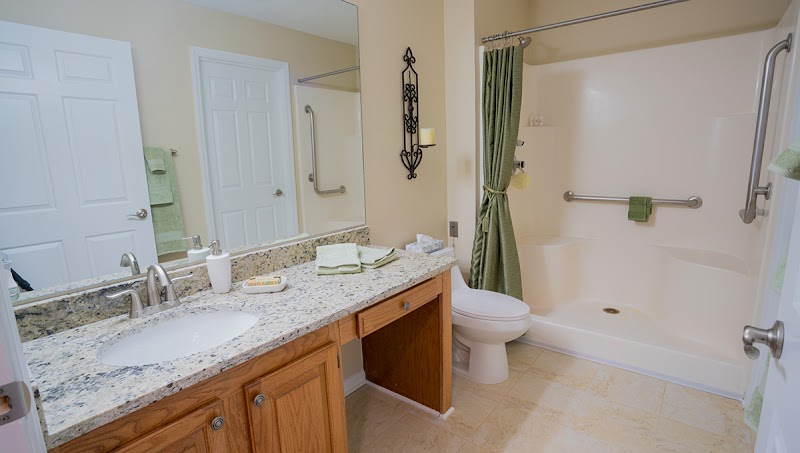
GALLERIA WOODS SKILLED NURSING FACILITY is owned by a for-profit company. For-profit facilities operate as businesses with obligations to shareholders or private owners. The facility is operated by HEALTHPEAK PROPERTIES, INC., a chain that manages multiple nursing homes. With 30 certified beds and approximately 27 residents (about 90% occupancy), it is a smaller facility located in BIRMINGHAM, Alabama.
How Does Galleria Woods Skilled Nursing Facility Compare to Other Alabama Nursing Homes?

Compared to the 100 nursing homes in Alabama, GALLERIA WOODS SKILLED NURSING FACILITY's overall rating (3 stars) is above the state average of 2.9, staff turnover (59%) is significantly higher than the state average of 46%, and health inspection rating (2 stars) is below the national benchmark.

What Should Families Ask When Visiting Galleria Woods Skilled Nursing Facility?

Based on this facility's data, families visiting should ask: "How do you ensure continuity of care given staff turnover, and what is your staff retention strategy?" "Can I visit during a mealtime to observe dining assistance and food quality?" "How do you handle medical emergencies, and what is your hospital transfer rate?" "Can I speak with family members of current residents about their experience?" These questions are particularly relevant given the facility's high staff turnover rate.

Is Galleria Woods Skilled Nursing Facility Safe?

Based on CMS inspection data, GALLERIA WOODS SKILLED NURSING FACILITY has a clean safety record: no substantiated abuse findings (meaning no confirmed cases of resident harm), no Immediate Jeopardy citations (the most serious violation level indicating risk of serious injury or death), and is not on the Special Focus Facility watch list (a federal program monitoring the lowest-performing 1% of nursing homes). The facility has a 3-star overall rating and ranks #1 of 100 nursing homes in Alabama. While no facility is perfect, families should still ask about staff-to-resident ratios and recent inspection results during their visit.

Do Nurses at Galleria Woods Skilled Nursing Facility Stick Around?

Staff turnover at GALLERIA WOODS SKILLED NURSING FACILITY is high. At 59%, the facility is 13 percentage points above the Alabama average of 46%. Registered Nurse turnover is particularly concerning at 67%. RNs handle complex medical decisions and coordinate care — frequent RN changes can directly impact care quality. High turnover means new staff may not know residents' individual needs, medications, or preferences. It can also be disorienting for residents, especially those with dementia who rely on familiar faces. Families should ask: What is causing the turnover? What retention programs are in place? How do you ensure care continuity during staff transitions?

Was Galleria Woods Skilled Nursing Facility Ever Fined?

GALLERIA WOODS SKILLED NURSING FACILITY has no federal fines on record. CMS issues fines when nursing homes fail to meet care standards or don't correct problems found during inspections. The absence of fines suggests the facility has either maintained compliance or corrected any issues before penalties were assessed. This is a positive indicator, though families should still review recent inspection reports for the full picture.

Is Galleria Woods Skilled Nursing Facility on Any Federal Watch List?

GALLERIA WOODS SKILLED NURSING FACILITY is not on any federal watch list. The most significant is the Special Focus Facility (SFF) program, which identifies the bottom 1% of nursing homes nationally based on persistent, serious quality problems. Not being on this list means the facility has avoided the pattern of deficiencies that triggers enhanced federal oversight. This is a positive indicator, though families should still review the facility's inspection history directly.