SOUTH HAVEN HEALTH AND REHABILITATION, LLC
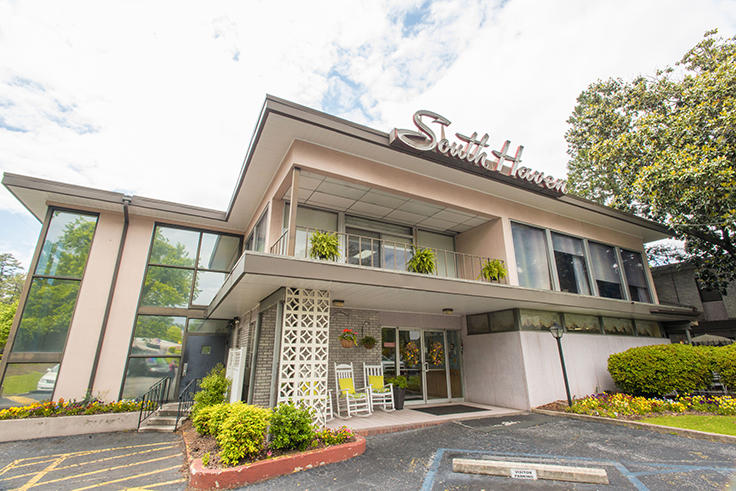
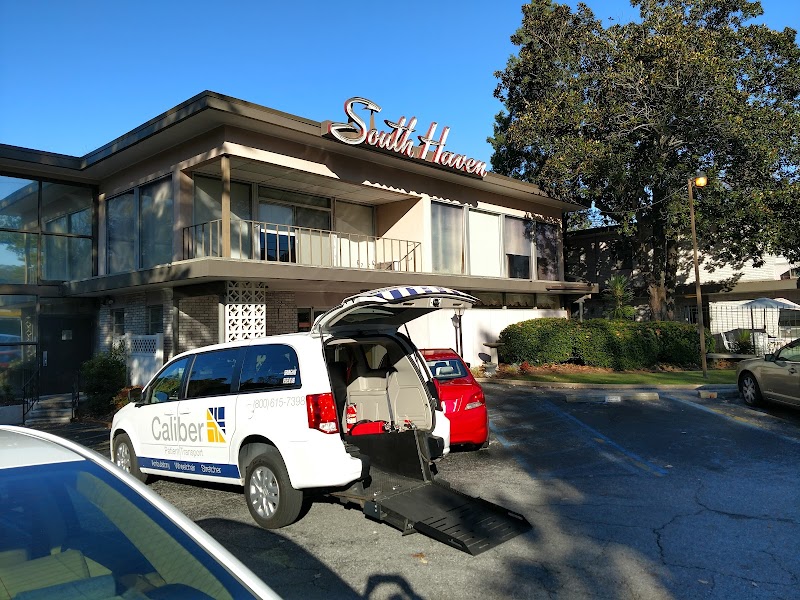
3141 OLD COLUMBIANA ROAD, BIRMINGHAM, AL 35226 (205) 822-1580
For profit - Individual 101 Beds NHS MANAGEMENT Data: November 2025
Trust Grade
65/100
#134 of 223 in AL
Last Inspection: July 2022

Over 2 years since last inspection. Current conditions may differ from available data.

Overview

South Haven Health and Rehabilitation in Birmingham, Alabama, has a Trust Grade of C+, indicating it is slightly above average but not exceptional. It ranks #134 out of 223 facilities in Alabama, placing it in the bottom half, and #9 out of 34 in Jefferson County, meaning there are only eight better options locally. The facility's trend is worsening, with issues increasing from 1 in 2022 to 6 in 2024. Staffing is a concern with a turnover rate of 62%, which is significantly higher than the state average of 48%. Although there are no fines on record, making that aspect positive, the nursing home has faced several specific incidents, such as not properly storing food and chemicals, which could potentially affect all residents. Overall, while the lack of fines and the average RN coverage are strengths, the increasing issues and high staff turnover raise red flags for families considering this facility.

Trust Score
C+
65/100
In Alabama
#134/223
Bottom 40%
Safety Record
Low Risk
No red flags
Inspections
Getting Worse
1 → 6 violations
Staff Stability
⚠ Watch
62% turnover. Above average. Higher turnover means staff may not know residents' routines.
Penalties
✓ Good
No fines on record. Clean compliance history, better than most Alabama facilities.
Skilled Nurses
○ Average
Each resident gets 36 minutes of Registered Nurse (RN) attention daily — about average for Alabama. RNs are the most trained staff who monitor for health changes.
Violations
⚠ Watch
12 deficiencies on record. Higher than average. Multiple issues found across inspections.
★★★☆☆
3.0
Overall Rating
★★★☆☆
3.0
Staff Levels
★★★☆☆
3.0
Care Quality
★★★☆☆
3.0
Inspection Score
Stable
2022: 1 issues
2024: 6 issues

The Good

  • Full Sprinkler Coverage · Fire safety systems throughout facility
  • No fines on record

Facility shows strength in fire safety.

The Bad

3-Star Overall Rating

Near Alabama average (2.9)

Meets federal standards, typical of most facilities

Staff Turnover: 62%

15pts above Alabama avg (46%)

Frequent staff changes - ask about care continuity

Chain: NHS MANAGEMENT

Part of a multi-facility chain

Ask about local staffing decisions and management

Staff turnover is elevated (62%)

14 points above Alabama average of 48%

The Ugly 12 deficiencies on record

Apr 2024 6 deficiencies
CONCERN (D) 📢 Someone Reported This

A family member, employee, or ombudsman was alarmed enough to file a formal complaint

Potential for Harm - no one hurt, but risky conditions existed

Deficiency F0552 (Tag F0552)

Could have caused harm · This affected 1 resident

**NOTE- TERMS IN BRACKETS HAVE BEEN EDITED TO PROTECT CONFIDENTIALITY** Based on interviews, observations, resident record review, and review of a facility policy titled, Federal Rights of Resident/Gu...

Read full inspector narrative →
**NOTE- TERMS IN BRACKETS HAVE BEEN EDITED TO PROTECT CONFIDENTIALITY** Based on interviews, observations, resident record review, and review of a facility policy titled, Federal Rights of Resident/Guest(s) the facility failed to ensure Resident Identifier (RI) #7 was informed in his/her language, of care being provided. Findings include: A review of the facility policy titled Federal Rights of Resident/Guest(s) with an effective date of 11/28/2016 revealed: . STANDARD: (a) Resident/Guest rights. The resident/guest has the right to a dignified existence, self determination, and communication with and access to persons and services inside and outside the facility. (c) Planning and implementing care. The resident/guest has the right to be informed of, and participate in, his or her treatment, including: (c)(1) The right to be fully informed in language that he or she can understand of his or her total health status, including but not limited to, his or her medical condition. RI #7 was admitted to the facility on [DATE] and readmitted on [DATE]. RI #7's quarterly Minimum Data Set (MDS) assessment dated [DATE] documented Spanish was RI #7's preferred language. On 04/11/2024 at 09:35 AM the surveyor communicated with RI #7 using a phone translator. RI #7 stated, the staff talked to him/her in English. RI #7 stated, it was hard for him/her to communicate with the staff. On 04/11/2024 at 09:55 AM an observation was made of Licensed Practical Nurse (LPN) #27 administering medications to RI #7. LPN #27 handed RI #7 a cup of medications and in English told the resident she had his/her medications. RI #7 replied to LPN #27 in Spanish. LPN #27 spoke to RI #7 in English, and said for RI #7 to take the medications. On 04/11/2024 at 10:04 AM an interview was conducted with LPN #27. LPN #27 stated, when administering medications, before the medication was given to the resident, the resident should be told what medications he/she was receiving. LPN #27 stated, RI #7 did not understand English and so she did not tell him/her the name of the medications. LPN #27 stated, she wished she were able to communicate with RI #7. LPN #27 stated, she did not tell RI #7 the name of the medications before administering. On 04/16/2024 at 09:00 an interview was conducted with Minimum Data Set Coordinator (MDS). MDS stated, the MDS assessments capture the resident's diagnosis, behaviors, and what they are doing. On 04/16/2024 at 10:23 AM a follow-up interview was conducted with MDS. MDS stated, according to RI #7's 01/08/2024 MDS assessment, the preferred language was Spanish. On 04/16/2024 at 10:52 AM the Director of Nursing (DON) stated, during medication administration residents should be notified of what they were taking. DON stated, there was a risk for residents not knowing what the medication was or the risks of the medication. DON stated, even if the resident did not speak English, they should be provided that information. DON stated, staff should have utilized Google translator or the 1800 number for a translator.
CONCERN (D) 📢 Someone Reported This

A family member, employee, or ombudsman was alarmed enough to file a formal complaint

Potential for Harm - no one hurt, but risky conditions existed

Report Alleged Abuse (Tag F0609)

Could have caused harm · This affected 1 resident

**NOTE- TERMS IN BRACKETS HAVE BEEN EDITED TO PROTECT CONFIDENTIALITY** Based on interviews, resident record review, review of facility policies titled Incidents and Accidents and Abuse, Neglect, Misa...

Read full inspector narrative →
**NOTE- TERMS IN BRACKETS HAVE BEEN EDITED TO PROTECT CONFIDENTIALITY** Based on interviews, resident record review, review of facility policies titled Incidents and Accidents and Abuse, Neglect, Misappropriation of Resident/Guest Property, Suspicious Injuries of Unknown Source, Exploitation and review of a facility investigative file for Resident Identifier (RI) #2, the facility failed to ensure an injury of unknown origin was reported to the Alabama Department of Public Health (ADPH) online reporting system in a timely manner when Certified Nursing Assistant (CNA) #16, discovered discoloration and bruising on RI #2's right ankle on 11/07/2023. The Licensed Practical Nurse (LPN) #19 failed to report the bruising to anyone including the abuse coordinator. On 11/10/2023 an x-ray was performed on RI #2's right ankle and revealed a fracture. The injury of unknown origin was still not reported to ADPH until 11/12/2023. This affected RI #2, one of two residents whose reportable incidents were reviewed. Findings include: A facility policy titled Incidents and Accidents with an effective date of 11/10/2014 documented . The resident/guest environment remains as free of accident hazards as is possible, however, when an accident occurs, prompt response and reporting occurs. A facility policy titled Abuse, Neglect, Misappropriation of Resident/Guest Property, Suspicious Injuries of Unknown Source, Exploitation, dated 05/01/2023 documented .PURPOSE: The facility's policy requires that it report all instances of . suspicious injuries of unknown source that might indicate abuse, neglect, as required by state and federal law. VI. b) . Notify the Administrator of any unusual situation in the facility, whether reportable or not immediately. The Administrator/Designee will report to the State Agency and all other required agencies, per regulations. All allegations of abuse and instances that result in serious bodily injury must be reported within 2 hours. Resident Identifier (RI) #2 was admitted to the facility on [DATE] and had diagnoses to include: Myocardial Infarction, Dementia with Behavioral Disturbances. RI #2's quarterly Minimum Data Set (MDS) assessment with an assessment reference date of 09/11/2023 documented RI #2 had moderate cognitive impairment. Review of the facility's investigative file for RI #2 revealed a form titled Shower Team Body Audit Sheet (STBAS) dated 11/07/2023 with RI #2's name on the form. The STBAS had a hand drawn mark next to the right ankle and handwritten on the top of the form were the words, right ankle swollen and discoloration. The form was signed by Certified Nursing Assistant (CNA) #16 and the form was also signed by Licensed Practical Nurse (LPN) #19. On 04/13/2024 at 11:02 AM CNA #16 was asked about the body audit conducted on RI #2 on 11/07/2023. CNA #16 said, she saw the bruise, put it on the body audit sheet and told the nurse. On 04/13/2024 at 10:20 AM LPN #19 was asked about the body audit sheet for RI #2 dated 11/07/2023. LPN #19 said, she did sign the body audit sheet and she thought everyone (other nurses) were aware of the bruise. A hand written statement signed by CNA #17 documented he found the bruise on RI #2's foot going up the leg and stopped immediately to notify the nurse RN #30. A typed statement signed by Registered Nurse (RN) #30 documented the following: . on 11/10/2023 the CNA reported to her in the hallway that the resident in (RI #2's room) right ankle had a bruise. Upon assessment, there was a bruise to the right ankle going up (his/her) lower leg. After my assessment I notified MD (Medical Doctor) of findings and received verbal order for x-ray to the right ankle. RI #2's x-ray report dated 11/10/2023 documented . Conclusion: A [NAME] B distal fibular fracture. On 04/11/2024 at 6:53 PM an interview with the Abuse Coordinator/Administrator (ADM) was conducted. ADM stated, the facility had two hours to report an injury of unknown origin to the Alabama Department of Public Health. On 04/12/2024 at 8:47 AM a follow-up interview was conducted with the ADM and she was asked about RI #2's incident with fracture that was reported to ADPH. ADM stated, she was informed of the fracture on 11/12/2023. ADM said, CNA #16 saw the discoloration on RI #2 on 11/07/2023. ADM stated, RI #2 was unable to be interviewed regarding the cause of the bruise due to impaired cognition. ADM stated, she was unable to determine the root cause of the bruise and fracture. ADM stated, she could not determine the cause of the discoloration that was identified on 11/07/2023. The ADM said, after the nurse, LPN #19 was made aware of the bruise on RI #2's right ankle she did not notify anyone. ADM said, she did not know why LPN #19 did not document or report the incident and the risk of not reporting an incident of unknown origin was the resident was not protected. On 04/16/2024 at 10:52 AM the Director of Nursing (DON) was asked about RI #2's injury of unknown origin reported to ADPH on 11/12/2023. The DON said, the bruise was identified on 11/07/2023 on a body audit but the nurse did not report it to the abuse coordinator. The DON said, RI #2 had an x-ray on 11/10/2023 due to the bruising and discoloration to the skin. The DON said, she could not say why the fracture was not reported to ADPH on 11/10/2023. The DON said, a root cause was not determined.
CONCERN (D) 📢 Someone Reported This

A family member, employee, or ombudsman was alarmed enough to file a formal complaint

Potential for Harm - no one hurt, but risky conditions existed

Investigate Abuse (Tag F0610)

Could have caused harm · This affected 1 resident

**NOTE- TERMS IN BRACKETS HAVE BEEN EDITED TO PROTECT CONFIDENTIALITY** Based on interviews, resident record review, review of facility policies titled Incidents and Accidents and Abuse, Neglect, Misa...

Read full inspector narrative →
**NOTE- TERMS IN BRACKETS HAVE BEEN EDITED TO PROTECT CONFIDENTIALITY** Based on interviews, resident record review, review of facility policies titled Incidents and Accidents and Abuse, Neglect, Misappropriation of Resident/Guest Property, Suspicious Injuries of Unknown Source, Exploitation, and review of the facility investigative file for Resident Identifier (RI) #2, the facility failed to thoroughly investigate an injury of unknown origin for Resident Identifier (RI) #2 when a bruise was identified on 11/07/2023. This affected RI #2 one of two residents for whom reportable incidents were reviewed. Findings include: Cross-reference F609 Review of facility policy titled Incidents and Accidents with an effective date of 11/10/2014 indicated . The resident/guest environment remains as free of accident hazards as is possible, however, when an accident occurs, prompt response and reporting occurs. Accidents may involve resident/guest(s), employees, or visitors. c) Develop a brief investigation plan. Review of a facility policy titled Abuse, Neglect, Misappropriation of Resident/Guest Property, Suspicious Injuries of Unknown Source, Exploitation dated 05/01/2023 indicated . A complete and thorough investigation must be conducted on all incidents including suspicious injuries of unknown origin, whether reportable or not, within five working days to determine the cause of the injury or incident. The outcomes of the investigation must also determine whether or not the incident was abusive or neglectful in nature. RI #2 was admitted to the facility on [DATE] and had diagnoses to include: Dementia with Behavioral Disturbances. Review of the facility's investigative file for RI #2 revealed a form titled Shower Team Body Audit Sheet (STBAS) dated 11/07/2023 with RI #2's name on the form. The STBAS had a hand drawn mark next to the right ankle and handwritten on the top of the form were the words, right ankle swollen and discoloration. The form was signed by Certified Nursing Assistant (CNA) #16 and the form was also signed by Licensed Practical Nurse (LPN) #19. On 04/13/2024 at 11:02 AM CNA #16 was asked about the body audit conducted on RI #2 on 11/07/2023. CNA #16 said, she saw the bruise, put it on the body audit sheet and told the nurse. On 04/13/2024 at 10:20 AM LPN #19 was asked about the body audit sheet for RI #2 dated 11/07/2023. LPN #19 said, she did sign the body audit sheet and she thought everyone (other nurses) were aware of the bruise. A hand written statement signed by CNA #17 documented he found the bruise on RI #2's foot going up the leg and stopped immediately to notify the nurse RN #30. A typed statement signed by Registered Nurse (RN) #30 documented the following: . on 11/10/2023 the CNA reported to her in the hallway that the resident in (RI #2's room) right ankle had a bruise. Upon assessment, there was a bruise to the right ankle going up (his/her) lower leg. After my assessment I notified MD (Medical Doctor) of findings and received verbal order for x-ray to the right ankle. The facility investigative file for RI #2 did not contain interviews with staff who may have had knowledge of occurrences that could have caused or contributed to the injury of bruising and fracture. On 04/12/2024 at 8:47 AM the Administrator (ADM) stated she did not interview the staff that cared for RI #2 before November 7, 2024, when the bruise was documented. ADM stated that she could not determine the root cause of the bruise for RI #2. ADM stated she should have interviewed staff members that cared for RI #2 before the bruise was found to determine if the staff saw the bruise.
CONCERN (D) 📢 Someone Reported This

A family member, employee, or ombudsman was alarmed enough to file a formal complaint

Potential for Harm - no one hurt, but risky conditions existed

ADL Care (Tag F0677)

Could have caused harm · This affected 1 resident

**NOTE- TERMS IN BRACKETS HAVE BEEN EDITED TO PROTECT CONFIDENTIALITY** Based on interviews, resident record review, and review of a facility policy titled Federal Rights of Resident/Guest(s) the faci...

Read full inspector narrative →
**NOTE- TERMS IN BRACKETS HAVE BEEN EDITED TO PROTECT CONFIDENTIALITY** Based on interviews, resident record review, and review of a facility policy titled Federal Rights of Resident/Guest(s) the facility failed to ensure staff assisted Resident Identifier (RI) #1 with hair washing and oral care on 04/09/2024 . This had the potential to affect RI #1, one of three residents sampled for Activity of Daily Living care. Findings include: Review of a facility policy titled Federal Rights of Resident/Guest(s) with an effective date of 11/28/2016, revealed: . STANDARD: The resident/guest has a right to a dignified existence, self-determination, and communication with and access to persons and services inside and outside the facility. (e)(3) The right to reside and receive services in the facility with reasonable accommodation of resident/guest needs and preferences, . RI #1 was admitted to the facility on [DATE] and readmitted on [DATE] and had diagnoses to include: Multiple Sclerosis. On 04/10/2024 at 10:20 AM RI #1 reported to the surveyor, staff does not assist him/her with oral care and he/she must get water from the sink for oral care. RI #1 said to get the water he/she used the sliding board to get into the wheelchair by himself/herself. RI #1 stated that staff has not taken him/her to the shower since March and do not offer to wash his/her hair. RI #1 stated that staff had never offered to assist with oral care, brushing or washing hair, or assisting with dressing. On 04/10/2024 at 6:09 PM CNA #14 stated, she provided care for RI #1 on 04/09/2024. CNA #14 stated RI #1's bath/shower days were on Tuesday, Thursday, and Saturday on the second shift. CNA #14 stated, she assisted with providing towels, washcloth, soap, clean gown, and she put water in the basin. CNA #14 stated, RI #1 was supposed to have his/her hair washed during care on 04/09/2024 but she did not do it. CNA #14 stated, she did not ask if RI #1 wanted his/her hair washed on 04/09/2024, because she forgot. CNA #14 said, hair would become flaky if not washed and she should have washed RI #1's hair. On 04/10/2024 at 10:58 AM an interview was conducted with CNA #10. CNA #10 stated, she assisted RI #1 with his/her activities of daily living (ADL). CNA #10 stated, she had provided care for RI #1on 04/09/2024 and did not provide oral care for him/her. CNA #10 stated that she did not assist RI #1 with oral care because he/she brushes them. CNA #10 stated the care plans for RI #1 stated to assist with brushing teeth and oral care. CNA #10 stated that she should have assisted RI #1 with oral care to follow the care plan. On 04/16/2024 at 10:52 AM the Director of Nursing (DON) was asked about staff assisting with washing residents' hair, brushing teeth and oral care. The DON said, staff should assist with washing hair on assigned bath days, when visibly soiled, or upon request. The DON stated, she could not say why staff would not wash a resident's hair. DON said, RI #1i's care plan stated to assist with brushing teeth and oral care. The DON stated the staff should set up and stay at the resident's bedside during oral care. The DON stated, there was a risk for infection control by not assisting residents with washing their hair or providing oral care.
CONCERN (D) 📢 Someone Reported This

A family member, employee, or ombudsman was alarmed enough to file a formal complaint

Potential for Harm - no one hurt, but risky conditions existed

Deficiency F0688 (Tag F0688)

Could have caused harm · This affected 1 resident

**NOTE- TERMS IN BRACKETS HAVE BEEN EDITED TO PROTECT CONFIDENTIALITY** Based on observations, interviews, resident record review, and review of a facility policy titled Federal Rights of Resident/Gue...

Read full inspector narrative →
**NOTE- TERMS IN BRACKETS HAVE BEEN EDITED TO PROTECT CONFIDENTIALITY** Based on observations, interviews, resident record review, and review of a facility policy titled Federal Rights of Resident/Guest(s) the facility failed to ensure Resident Identifier (RI) #3 a resident with upper and lower extremity range of motion limitations, had hand splints or rolled washcloths placed in his/her hands as care planned. RI #3 was observed on 04/09/2024, 04/10/2024, and 04/11/2024, without anything placed in his/her hands. This had the potential to affect RI #3, one of three residents reviewed for extremity limitations. This tag is cited as a result of the investigation of complaint/report number AL00043223. Findings include: Review of a facility policy titled Federal Rights of Resident/Guest(s) with an effective date of 11/28/2016 revealed: . Facility Responsibilities (a)(1) Resident/Guest rights. A facility must treat each resident/guest with respect and dignity and care for each resident/guest in a manner and in an environment that promotes maintenance or enhancement of his or her quality of life, recognizing each resident/guest(s) individuality. (c)(2)(iv) The right to receive the services and/or items included in the plan of care. RI #3 was admitted to the facility on [DATE] and readmitted on [DATE] and had diagnoses to include: Dementia, Personal History of Traumatic Brain Injury, and Monoarthritis. RI #3's annual Minimum Data Set (MDS) assessment dated [DATE] documented RI #3 was assessed with severly impaired cognition and was impaired on both sides for functional limitation in range of motion in upper and lower extremities. RI #3 had a care plan with a problem of actual contractures upon admission to bilateral upper and lower extremities, with a start date of 03/16/2022. The care plan had an intervention documented for staff to apply splints or rolled washcloths to bilateral hands every morning and to remove at bedtime. On 04/09/2024 at 5:39 PM an observation was made of RI #3 with his/her right hand on top of the covers with no splint or rolled washcloth. On 04/10/2024 at 4:50 PM an observation of RI #3 was made of right hand on top of the blanket with no rolled washcloth or splint. On 04/10/2024 at 6:58 PM an observation was made of RI #3's right arm and hand with no splint or rolled washcloth. On 04/10/2024 at 7:14 PM an observation was made with Certified Nursing Assistant (CNA) #28. CNA #28 uncovered RI #3's left arm and lower extremities. RI #3's left hand was balled up in a tight fist, there were no splints or rolled washcloths noted. On 04/11/2024 at 9:02 AM an observation was made of RI #3's left hand clenched fist with no splint or washcloth noted. On 04/11/2024 at 10:47 AM an interview with Nursing Assistant (NA) #20 was conducted. NA #20 stated, she was told late on 04/11/2024 that RI #3 was to have hand rolls or splints. NA #20 stated, she did not know why she was supposed to put them on RI #3. NA #20 stated, she did not know what the hand rolls were for. On 04/16/2024 at 10:52 AM the Director of Nursing (DON) was asked about contractures and care plans for RI #3. The DON stated, according to RI #3's care plan interventions, there should be splints or rolled washcloths to bilateral hands. The DON stated, the nursing staff were responsible for ensuring the splints or rolled washcloths were being implemented. The DON stated, there would be a risk of injury if not implemented and there could also be risk of increased contractures.
CONCERN (D) 📢 Someone Reported This

A family member, employee, or ombudsman was alarmed enough to file a formal complaint

Potential for Harm - no one hurt, but risky conditions existed

Infection Control (Tag F0880)

Could have caused harm · This affected 1 resident

**NOTE- TERMS IN BRACKETS HAVE BEEN EDITED TO PROTECT CONFIDENTIALITY** Based on observations, interviews, resident record review, and review of a facility policy titled Hand Hygiene, the facility fai...

Read full inspector narrative →
**NOTE- TERMS IN BRACKETS HAVE BEEN EDITED TO PROTECT CONFIDENTIALITY** Based on observations, interviews, resident record review, and review of a facility policy titled Hand Hygiene, the facility failed to ensure staff provided care in a manner to prevent the spread of infection. On 04/09/2024 Certified Nursing Assistant (CNA) #8 was observed not washing or sanitizing her hands when going between Resident Identifier (RI) #4 and RI #5's rooms. Further, CNA #26 was observed on 04/11/2024 wearing the same gloves for care and transport of RI #6 in the hallway and while obtaining clean clothes and supplies for RI #6's shower. This had the potential to affect RI #4, RI #5, and RI #6, three of eight sampled residents. Findings include: A review of the facility policy titled Hand Hygiene with an effective date of 06/11/2020, revealed: . PURPOSE: To provide guidelines to employees for proper and appropriate hand washing techniques that will aide in the prevention of the transmission of infections. III. Hand Hygiene . The following is a list of some situations that require hand hygiene. Upon and after coming in contact with a resident/guest(s) intact skin . After removing gloves or aprons . RI #4 was admitted to the facility on [DATE] and readmitted on [DATE] and had diagnoses to include: Urinary Tract Infection and Chronic Kidney Disease. RI #5 was admitted to the facility on [DATE] and readmitted on [DATE] and had diagnoses to include: Acute Respiratory Failure with Hypoxia and Heart Failure. On 04/09/2024 at 1:10 PM CNA #8 was observed in RI #4's room preparing to transfer RI #4. CNA #8 moved RI #4's bedside table and a pillow from RI #4's bed, and without washing her hands walked out of the room and into RI #5's room. CNA #8 then picked up a pair of gloves out of the glove box and walked out of RI #5's room, still without washing or sanitizing her hands. CNA #8 donned the gloves and walked back into RI #4's room. An interview was conducted on 04/09/2024 at 1:28 PM with CNA #8. CNA #8 stated, she did not wash or sanitize her hands before leaving RI #4's room and after coming out of RI #5's room. CNA #8 stated, she did not know why she did not wash her hands either time. CNA #8 stated, there was a risk for cross contamination when not washing or sanitizing hands between rooms. CNA #8 said, she should have washed hands after exiting RI #4 and RI #5's rooms. RI #6 was admitted to the facility on [DATE]. On 04/11/2024 at 09:15 AM CNA #26 was observed assisting RI #6 with a transfer to a shower bed. CNA #26 wore gloves during the transfer and did not remove them or wash her hands after the transfer and she then transported RI #6 on the shower bed down the hall while wearing the gloves. CNA #26 left RI #6 with other staff at the shower and went back to RI #6's room still wearing the gloves to get clean clothing and shower supplies to take to the shower room. On 04/11/2024 at 10:38 AM CNA #26 was asked about the gloves she had been wearing. CNA #26 stated, she had left RI #6's room with dirty gloves on. CNA #26 stated, she went into RI #6's closet with the same dirty gloves on. CNA #26 stated, there was a risk for cross contamination. An interview on 04/16/2024 at 10:52 AM was conducted with Director of Nursing (DON). The DON stated, staff should wash or sanitize their hands before entering and after leaving a resident's room. The DON stated, there was a risk of cross contamination if staff did not remove dirty gloves before exiting a room. The DON further stated, there was a risk of cross contamination if not removing contaminated gloves before entering a resident's closet.
Jul 2022 1 deficiency
CONCERN (E)

Potential for Harm - no one hurt, but risky conditions existed

Deficiency F0679 (Tag F0679)

Could have caused harm · This affected multiple residents

**NOTE- TERMS IN BRACKETS HAVE BEEN EDITED TO PROTECT CONFIDENTIALITY** Based on interviews, record review, review of facility policies titled, Activity Program Management and Activity Program Assessm...

Read full inspector narrative →
**NOTE- TERMS IN BRACKETS HAVE BEEN EDITED TO PROTECT CONFIDENTIALITY** Based on interviews, record review, review of facility policies titled, Activity Program Management and Activity Program Assessment, and review of Resident Identifier (RI) #81's Group Activity Participation Records, the facility failed to provide RI #81 an ongoing program of activities consistent with his/her preferences and in accordance with the individualized plan of care. This affected RI #81, one of three sampled residents reviewed for activities, but had the potential to affect any resident who wished to participate in the facility's weekend planned group activities. Findings include: A review of the facility policy titled, Activity Program Management, dated 03/01/2008, revealed, .STANDARD In accordance with federal regulations, the facility provides the care and services necessary to attain or maintain the highest practicable physical, mental and psychosocial wellbeing of the resident, in accordance with the comprehensive assessment and plan of care . Review of a facility policy titled, Activity Program Assessment, dated 03/01/2008, revealed, PURPOSE The participation records reflect implementation of the services identified in the resident's plan of care, and documents programs being provided. Participation records serve as a tool for the Activities Director in the development of a plan of care, as they provide for the review of the activities the resident has been involved at what frequency . RI #81 was admitted to the facility on [DATE] with diagnoses that included Dementia without Behavioral Disturbances and Acute Heart Failure. A review of RI #81's annual Minimum Data Set (MDS) assessment, dated 06/06/2022, indicated RI #81 scored 7 out of 15 on the Brief Interview for Mental Status (BIMS), which indicated the resident had severe cognitive impairment. This MDS indicated the daily and activity preferences that were very important to RI #81 included listening to music, keeping up with the news, doing favorite activities, being outside when the weather was good, and participating in religious practices. A review of RI #81's activities care plan, dated 06/09/2020, revealed RI #81 enjoyed daily activities and participating daily. Interventions included choosing individual activities in the room daily and creating an activity plan based on resident preferences, which included word search, watching TV, building model airplanes, and listening to country music. A review of RI #81's Group Activity Participation Records, dated March 2022, April 2022, May 2022, June 2022, and 07/01/2022 through 07/11/2022, indicated RI #81 attended every activity offered daily, but attended no activities on the weekends, except for Sunday 07/03/2022, despite the facility's activity calendars for these times indicating there were planned weekend activities every weekend. During an interview on 07/10/2022 at 2:38 PM, RI #81 stated on many days, there were no activities, including on the weekends. The resident stated on many days, he/she would look at the calendar and go upstairs (to the activity room), but there would be no activity being conducted, as listed on the monthly activity calendar. The resident stated he/she asked the lady in charge on one occasion why she went to all the trouble of making up a calendar if they did not follow it. During an interview on 07/12/2022 at 2:42 PM, Employee Identifier (EI) #5, a Registered Nurse, was asked if all the activities scheduled on the activity calendar were happening. EI #5 stated because they did not have a designated full-time activities person, not all the activities on the calendar were happening. During an interview on 07/13/2022 at 12:24 PM, EI #4, the Activities Director, was asked why a resident would think all of the activities were not being provided as listed on the activity calendars. EI #4 stated, They are exactly right. EI #4 indicated the activities assistant was pulled away from helping with activities at the beginning of the COVID-19 pandemic to screen employees and visitors at the front door. EI #4 explained that the weekend activities were not being done, as both EI #4 and the former activities assistant rotated weekends screening people entering the building for COVID-19. EI #4 stated she was, .not happy about the situation. During an interview on 07/13/2022 at 1:38 PM, EI #3, the Director of Nursing (DON), stated that activities should be conducted, even when the activities director was not at the facility, including during the weekends. On 07/13/2022 at 1:41 PM, EI #1, the Administrator, stated the facility had been trying to hire a staff member to help with activities. EI #1 stated she had heard in daily staff stand-up meetings that coloring and movies were offered to the residents. When EI #1 was asked who oversaw activities and was responsible for coordinating the weekend activities, she stated it was the Activities Director's responsibility.
Jun 2019 3 deficiencies
CONCERN (D)

Potential for Harm - no one hurt, but risky conditions existed

Infection Control (Tag F0880)

Could have caused harm · This affected 1 resident

Based on observation, interview and a review of the facility's policy titled, LAUNDRY - STORAGE, COLLECTION & (and) TRANSPORT, the facility failed to ensure employees handling the laundry did not stac...

Read full inspector narrative →
Based on observation, interview and a review of the facility's policy titled, LAUNDRY - STORAGE, COLLECTION & (and) TRANSPORT, the facility failed to ensure employees handling the laundry did not stack clean clothes/linen against the wall or place folded clothing on the same table that employees stored their personal belongings. This affected three of six laundry carts. Findings Include: A review of the facility's policy titled, LAUNDRY - STORAGE. COLLECTION & TRANSPORT REVEALED: . POLICY: * All linens will be stored, handled, transported and processed in a manner that prevents the transmission of microorganisms to other patients and areas. On 6/20/19 at 8:24 a.m. during a tour of the laundry department, the surveyor observed stacks of clean towels (greater than ten) and stacks of bath cloths (greater than ten), touching the wall. The folding table was pushed against the wall. Clean folded clothes/linen covered approximately three quarters of the table. Employee personal items covered approximately one quarter of the table and included a back pack, three bottles of water, a large thermos drinking cup with straw, an IPad, a folder with papers inside, an oscillating fan. Some of the personal items were touching the clean linen. On 06/20/19 at 10:00 a.m. the surveyor observed clean clothes on a table; folded bath cloths were touching an oscillating fan that had been placed on left side of table. Stacked towels were leaning against the back wall, socks were touching the back wall and fan, and bath cloths were touching the wall and fan. Personal employee items were on same table with clean clothing, some touching clean clothing. Clothes hangers were touching clean linen and employee items. Employee items included: back pack, thermos drinking cup with straw, oscillating fan, three bottles water, folder with papers, IPad. On 6/20/19 10:14 a.m. an interview was conducted with Employee Identifier (EI) #10, Environmental Services Supervisor. EI #10 was asked, were clean items supposed to be touching personal items or the back wall. EI #10 said no. EI #10 was asked, what was the potential for harm. EI #10 stated dust from the wall and cross contamination. An interview was conducted on 6/20/19 at 1:54 p.m. with EI #7, Registered Nurse/Director of Nursing/Infection Control Nurse. EI #7 was asked, should clothes/linens be stacked on a table touching the wall and employee personal items. EI #7 stated, They shouldn't be touching personal stuff. EI #7 was asked, what about clean linens/clothing touching the wall. EI #7 stated, Could have dust on it. EI #7 was asked, what was the potential for harm. EI #7 stated, Cross contamination.
CONCERN (F)

Potential for Harm - no one hurt, but risky conditions existed

Food Safety (Tag F0812)

Could have caused harm · This affected most or all residents

Based on observation, interview, and review of the Food and Drug Administration (FDA) 2017 Food Code, the facility failed to prevent the potential for cross-contamination by: 1) storing a chemical in ...

Read full inspector narrative →
Based on observation, interview, and review of the Food and Drug Administration (FDA) 2017 Food Code, the facility failed to prevent the potential for cross-contamination by: 1) storing a chemical in close proximity with food products, 2) allowing splash from a food preparation sink to strike previously clean pots and pans on a storage shelf, 3) allowing residue to build-up on the conveyor toaster over a 24-hour period, 4) permitting an employee handling soiled items to pull the dish rack of cleaned items out of the dishwasher without washing hands, and 5) not ensuring air gaps existed between the sewer drain and the drains from the dishwasher, the spray sink, the food preparation sinks, and the pot and pan washing sinks. This had the potential to affect 94 residents receiving meals from the facility's kitchen, 94 of 94 residents in the facility. Findings include: 1) The FDA 2017 Food Code included the following: . 7-301.11 Separation. POISONOUS or TOXIC MATERIALS shall be stored . so they can not contaminate FOOD . by: (A) Separating the POISONOUS or TOXIC MATERIALS by spacing or partitioning . On 06/18/19 at 09:37 AM, during the initial tour of the kitchen, a plastic spray bottle labeled in black marker as Delimer was observed in the dry food store room. The partially filled bottle was on a shelf right beside a 25-pound paper bag of flour. This was also observed by Employee Identifier (EI) #1, the Dietary Manager (DM). On 06/20/19 at 11: 00 AM, EI #1 was asked what is Delimer. EI #1 said it is a dishwasher cleaner that helps get scale and build-up off the dishwasher. When asked if Delimer should be in the dry food storage room, EI #1 replied no. EI #1 was asked why would you want to keep Delimer separate from food in the dry storage area. EI #1 said that it could contaminate food and make a resident sick. EI #1 further stated we keep chemicals and food separate. 2) The FDA 2017 Food Code included the following: . 4-903.11 Equipment, Utensils, Linens, and Single Service and Single Use Articles. (A) . cleaned EQUIPMENT and UTENSILS . shall be stored: (1) In a clean, dry, location; (2) Where they are not exposed to splash, dust, or other contamination . On 06/18/19 at 10:02 AM, large drops of water were observed on clean pans stored upon shelving next to the two-compartment food preparation sink. EI #2, the Regional Registered Dietitian (RD) and EI #1, the DM were present. When asked what was causing the water droplets on the pans, EI #2 said splashing from the food preparation sink. EI #2 further said a splash guard would be beneficial. EI #1, the DM, was asked what would be the potential problem with water from the food preparation sink splashing onto the clean pots and pans. EI #1 said if meat were in it (the food preparation sink), it could harm the residents due to sanitation issues. 3) The FDA 2017 Food Code included the following: . 4-601.11 Equipment, Food-Contact Surfaces, Nonfood-Contact Surfaces, and Utensils. (A) EQUIPMENT, FOOD-CONTACT SURFACES and UTENSILS shall be clean to sight and touch. (B) The FOOD-CONTACT SURFACES of cooking EQUIPMENT and pans shall be kept free of encrusted grease deposits and other soil accumulations. (C) NONFOOD-CONTACT SURFACES of equipment shall be kept free of accumulation of dust, dirt, FOOD residue, and other debris. On 06/18/19 at 09:53 AM, during the initial kitchen tour, the conveyor toaster was observed to have fuzz on the rack and a large amount of dried, crusty crumbs in the tray. On 06/19/19 at 10:11 AM, the conveyor toaster was observed with crumbs and a fuzzy substance on the rack that toast lays on, as was noted on 06/18/2019 during the initial tour. On 06/19/19 at 10:11 AM, EI #1, the DM, was asked what would be the concern of not cleaning the toaster. EI #1 said contamination, it should be cleaned after every use. 4) The FDA 2017 Food Code included the following: . 2-301.14 When to Wash. FOOD EMPLOYEES shall clean their hands and exposed portions of their arms . immediately before . working with . clean EQUIPMENT and UTENSILS . and: (E) After handling soiled EQUIPMENT and UTENSILS; . (I) After engaging in other activities that contaminate the hands. On 06/19/19 at 09:46 AM, EI #9, a Dietary Aide, was the dietary staff member on the clean side of the single-tank dishwasher. EI #8, a Dietary Aide, was the dietary staff on the dirty side of the dishwasher. At 09:59 AM, EI #8 (dirty side) pulled the dish rack of cleaned dishes out of the dishwasher with her right hand holding onto the right side of the dish rack. At 10:00 AM, EI #9 (clean side) touched the dish rack at the same area where EI #8 had touched the dish rack. In addition, the same handle of the dishwasher was being touched by both EI #8 and EI #9. EI #8 was asked, what would be the problem if the person cleaning the dirty dishes opened the dish washer and grabbed the clean rack of dishes. EI #8 said cross-contamination. EI #2, the Regional RD, was present and said (EI #8) should remove her gloves, wash her hands, and re-glove to continue if (EI #9) was not available. 5) The FDA 2017 Food Code included the following: . 5-402.11 Backflow Prevention. (A) . a direct connection may not exist between the SEWAGE system and a drain originating from EQUIPMENT in which FOOD, portable EQUIPMENT, or UTENSILS are placed. On 06/19/19 at 09:46 AM, upon observing the floor drain in the dish room, the drain pipe from the dishwasher was noted to be down inside the floor drain. There was no air gap between the end of the dishwasher drain pipe and the top of the floor drain. In addition, the drain pipe from the dish sprayer sink was observed to go down into the floor drain. There was no air gap between the end of the dish sprayer sink drain and the top of the floor drain. On 06/19/19 at 10:12 AM, EI #1, the DM, was asked to have Maintenance measure the pipes passing into the floor drain. EI #1 was asked what was the concern with not having an air gap for the drain that connects to the dishwasher. EI #1 said contamination, if it backs up. On 06/19/19 at 10:16 AM, it was observed that the two-compartment food preparation sink's PVC (Polyvinyl Chloride) drain entered down into a cast iron pipe. This cast iron pipe joined together with the cast iron pipe drain from the three-compartment pot and pan sink and the merged pipeline entered the wall. Upon further observation both inside the kitchen and outside, it appeared the cast iron drain pipe connected directly into the sewer line. On 06/19/19 at 10:25 AM, EI #3, the Maintenance Assistant, and EI #5, the Maintenance Supervisor from a sister facility, reported to the kitchen to see the concerns. When asked if the combined drain from the pot and pan sink and the food preparation sink had a direct connection to the sewer, EI #5 said yes. EI #5 was further asked if there was a backflow prevention device on the drain pipe. EI #5 said no, not here. Upon further questioning, EI #5 said the drain pipe connected directly to the sewer. EI #5 was asked what would happen if the sewer backed up and where was the sewage going to go. EI #5 said it was going to back up into the sinks. On 06/19/19 at 10:30 AM, EI #2, the Regional RD, was asked what would be the concern if there was no air gap between the drain pipe from the sinks and the sewer. EI #2 said there would be backflow from dirty water to a clean water source. EI #2 was also asked what would be the concern in the dish room with the drains extending into the floor drain with no air gap. EI #2 said contamination and backflow to the clean. On 06/19/19 at 10:39 AM, EI #3 measured from the top of the floor drain to the end of the dish sprayer sink's drain pipe that extended into the floor drain. It extended five inches into the floor drain. EI #3 also measured the length of the dishwasher's drain pipe as it extended into the floor drain. It measured five and one-half inches into the floor drain. There was no air gap for either of these drain pipes.
CONCERN (F)

Potential for Harm - no one hurt, but risky conditions existed

Garbage Disposal (Tag F0814)

Could have caused harm · This affected most or all residents

Based on observation, interview, and review of the Food and Drug Administration (FDA) 2017 Food Code, the facility failed to ensure food-related trash and discarded items did not accumulate in the dum...

Read full inspector narrative →
Based on observation, interview, and review of the Food and Drug Administration (FDA) 2017 Food Code, the facility failed to ensure food-related trash and discarded items did not accumulate in the dumpster area and failed to ensure chunks of concrete did not accumulate in the oil refuse area. This had the potential to affect 94 of 94 residents in the facility. Findings include: The 2017 FDA Food Code included the following: . 5-501.15 Outside Receptacles. (B) Receptacles and waste handling units for REFUSE . shall be installed so that accumulation of debris and insect and rodent attraction and harborage are minimized and effective cleaning is facilitated around . the unit. 5-501.110 Storing Refuse, Recyclables, and Returnables. REFUSE . shall be stored in receptacles or waste handling units so that they are inaccessible to insects and rodents. 5-501.115 Maintaining Refuse Areas and Enclosures. A storage area and enclosure for REFUSE . shall be maintained free of unnecessary items, as specified under . 6-501.114, and clean. 6-501.113 Storing Maintenance Tools. Maintenance tools . shall be: . (B) Stored in an orderly manner that facilitates cleaning the area used for storing the maintenance tools. 6-501.114 Maintaining Premises, Unnecessary Items and Litter. The PREMISES shall be free of: (A) Items that are unnecessary to the operation or maintenance of the establishment such as EQUIPMENT that is nonfunctional or no longer used; and (B) Litter. An initial tour of the dumpster area of the facility was conducted on 06/18/2019 at 10:31 AM with Employee Identifier (EI) #1, the Dietary Manager (DM). The fence-enclosed area around the dumpster was observed to be heavily cluttered with food-related trash to include a potato chip bag, a candy wrapper, 16 plastic gloves, three soda bottles, a fast food bag, a french fry container, three individual condiment containers, three plastic spoons, a snack cake wrapper, four Styrofoam cups, three straws, a nutritional supplement container, and much more. EI #1 was asked what would be the concern with the debris around the dumpster. EI #1 stated it can create rodent and other animal issues, as they will be attracted to it and then they can go right straight down there to a room. EI #1 then pointed to the side of the facility building. Extraneous equipment was also noted piled around the dumpster area to include the following: PVC (polyvinyl chloride) pipe, broken hand rails, two unused smoking containers for cigarette butts, six broken bricks, pieces of broken glass, a broken bedside commode chair, a walker, several vinyl panels, four metal rods, and a coat hanger. EI #1, the DM, stated these broken items and equipment were from Maintenance. On 06/18/19 at 10:42 AM, during the initial tour, the grease refuse container was observed with EI #1, the DM. There were nine plus chunks of concrete debris distributed next to the oil refuse container. The DM said she had previously asked Maintenance to remove the clumps of concrete. On 06/18/19 at 04:48 PM, an interview was conducted with EI #3, the Maintenance Assistant. When asked if he had received a work order about removing the concrete chunks around the oil refuse container, EI #3 said no, he did not think so. EI #3 was asked why those chunks of concrete were lying by the oil refuse container. EI #3 responded he did not know where they came from. When asked if the concrete should have been there, EI #3 said no. Upon being asked who was responsible for cleaning around the facility dumpster, EI #3 replied probably maintenance and said it was probably his fault. EI #3 was asked if anyone had told him to clean around the facility dumpster before today. EI #3 said no, but he tries to keep my eye on it, it has been there for awhile. EI #3 was asked how often the area around the facility dumpster was cleaned. EI #3 stated they try to clean it every morning, but it has not been cleaned around for the past few mornings. EI #3 further said it had a good cleaning about a month ago. When asked why was there so much trash around the the dumpster, EI #3 replied he thought everybody contributed to spilling a little bit when they go out there; the bags will be too full or bags may tear. EI # 3 was asked why was there so much broken equipment lying around the dumpster. EI #3 said it is sort of a place to keep stuff in case we may need it, it was stuff we felt we might need to use later. When asked what was the problem with having that broken equipment piled up around the facility dumpster, EI #3 said bugs, rats, little varmints. When asked what would be the issue with the food-related trash out there around the facility dumpster, EI #3 said bugs, roaches, and varmints.
Jul 2018 2 deficiencies
CONCERN (D)

Potential for Harm - no one hurt, but risky conditions existed

Infection Control (Tag F0880)

Could have caused harm · This affected 1 resident

**NOTE- TERMS IN BRACKETS HAVE BEEN EDITED TO PROTECT CONFIDENTIALITY** Based on observations, interviews, record review, and review of Potter and [NAME], Fundamentals of Nursing, Ninth Edition, the f...

Read full inspector narrative →
**NOTE- TERMS IN BRACKETS HAVE BEEN EDITED TO PROTECT CONFIDENTIALITY** Based on observations, interviews, record review, and review of Potter and [NAME], Fundamentals of Nursing, Ninth Edition, the facility failed to ensure licensed staff did not place Resident Identifier (RI) # 241's nebulizer mask in a bag wet with condensation/moisture after a treatment was administered. This deficient practice affected one of two residents observed for nebulizer treatments and one of five nurses observed during medication pass. Findings Include: A review of of Potter and [NAME], Fundamentals of Nursing, Ninth Edition, Chapter 27, page 455, documented: .Cleaning. Cleaning is the removal of organic material .from objects and surfaces .when an object comes in contact with an infectious or potentially infectious material, it is contaminated . Reusable objects need to be cleaned thoroughly before reuse . RI # 241 was admitted to the facility on [DATE]. A review of RI # 241's Physician's Orders dated 6/27/18 documented an order for a nebulizer treatment every four hours. A review of RI # 241's Medication Administration Record (MAR) documented he/she was given Iprat-Albut (Ipratropium Bromide/Albuterol Sulfate) 0.5-3 (2.5) MG/3 ML (nebulizer treatment) on 7/2/18 at 1:00 a.m., 5:00 a.m., 9:00 a.m., and 1:00 p.m. On 7/2/18 at 8:23 a.m. during medication administration observation, the surveyor observed staff administer RI # 241's medication to include Iprat-Albut 0.5-3 (2.5) MG/3 ML. Employee Indentifier (EI) # 2, Licensed Practical Nurse (LPN), came into RI # 241's room to administer nebulizer medication. At 8:41 a.m., EI # 2 took RI # 241's nebulizer face mask off and placed it in a plastic bag. The surveyor observed condensation/moisture on the face mask inside the plastic bag. EI # 2 did not wipe or clean the face mask prior to putting it in the plastic bag. On 7/2/18 at 8:42 a.m., an interview was completed with EI # 2. EI #2 was asked what do you normally do with the face mask after a treatment. EI #2 replied clean it before putting it into the bag. EI # 2 was asked if there was wet moisture on RI # 241's face mask when it was placed into the plastic bag. EI # 2 stated yes. EI #2 further stated she did not clean the mask prior to placing it in the bag after RI # 241's treatment was completed. EI # 2 stated not cleaning and drying the mask could cause probable contamination. On 7/3/18 at 9:00 a.m., an interview was completed with EI # 4 , Director of Nursing, Infection Control Practitioner. EI # 4 was asked what would usually be done after a nebulizer treatment was completed. EI # 4 replied staff would rinse it off, dry it and place it in a plastic bag. EI # 4 stated the mask should not be placed in the plastic bag with moisture on it. EI # 4 was asked what effect this would have on the resident. EI # 4 stated it could grow something.
CONCERN (F)

Potential for Harm - no one hurt, but risky conditions existed

Food Safety (Tag F0812)

Could have caused harm · This affected most or all residents

Based on observation, interview, and review of a facility policy titled Leftover Food Storage and Use, the facility failed to ensure: 1. peaches in a closed plastic container with a documented facili...

Read full inspector narrative →
Based on observation, interview, and review of a facility policy titled Leftover Food Storage and Use, the facility failed to ensure: 1. peaches in a closed plastic container with a documented facility open date of 6/28/18 and a facility use by date of 6/30/18, and potato salad in a closed plastic container with a documented facility open date of 6/28/2018 and a facility use by date of 6/30/18 were discarded, and 2. gravy in a closed plastic container with no documented facility open date and no facility use by date were dated. This had the potential to affect all 92 residents receiving meals from the dietary department. Findings Include: A review of the facility policy titled Leftover Food Storage and Use, with an effective date of 8/15/2009, documented: Purpose: To ensure food borne illnesses are avoided . b. Leftover foods should be .dated. c. Refrigerated leftover foods should be used within 72 hours (three days). If not used within 72 hours, refrigerated foods should be discarded . 1. On 07/01/18 at 09:40 a.m., during the initial kitchen tour, the surveyor observed the following items in the unit 1 refrigerator: peaches in a closed plastic container with a documented facility open date of 6/28/18 and a facility use by date of 6-30-18, and potato salad in a closed plastic container with a documented facility open date of 6/28/2018 and a facility use by date of 6/30/18. On 07/01/2018 at 03:57 p.m., an interview was conducted with Employee Identifier (EI) #1, a Dietary Manager. EI #1 was asked what facility use by date did the peaches in a closed plastic container and the potato salad in a closed plastic container, in the Unit 1 Refrigerator, have documented on the containers. EI #1 replied that the peaches and potato salad had a documented facility open date of 6/28/2018 and a facility use by date of 6/30/2018, and should have been discarded on 6/30/2018. EI #1 was asked why were the peaches and potato salad in the closed containers not discarded by the facility use by date. EI #1 stated it was an oversight of the kitchen staff, and the food in the refrigerator should be checked daily. EI #1 was asked what would be the potential harm of not discarding food items by the use by date. EI #1 replied residents could get a food borne illness. 2. On 07/01/18 at 09:42 a.m., the surveyor observed gravy in a closed plastic container in the Unit 1 Refrigerator with no documented facility open date and no facility use by date. On 07/01/2018 at 04:05 p.m., an interview was conducted with EI #1, a Dietary Manager. EI #1 was asked should the gravy in the plastic container, in the Unit 1 Refrigerator, have a facility open and use by date. EI #1 replied yes. EI #1 was asked why did the gravy in the plastic container, in the Unit 1 Refrigerator, not have a facility open and use by date. EI #1 stated it was an oversight by the staff. EI #1 was asked what the potential harm of the gravy in the Unit 1 Refrigerator not having a facility open and use by date. EI #1 replied that the staff would not know when to discard the food and the residents may get a food borne illness.
Understanding Severity Codes (click to expand)
Life-Threatening (Immediate Jeopardy)
J - Isolated K - Pattern L - Widespread
Actual Harm
G - Isolated H - Pattern I - Widespread
Potential for Harm
D - Isolated E - Pattern F - Widespread
No Harm (Minor)
A - Isolated B - Pattern C - Widespread

Questions to Ask on Your Visit

  • "Why is there high staff turnover? How do you retain staff?"
  • "Can I speak with families of current residents?"
  • "What's your RN coverage like on weekends and overnight?"

Our Honest Assessment

Strengths
  • • No major safety red flags. No abuse findings, life-threatening violations, or SFF status.
  • • No fines on record. Clean compliance history, better than most Alabama facilities.
Concerns
  • • 12 deficiencies on record. Higher than average. Multiple issues found across inspections.
  • • 62% turnover. Above average. Higher turnover means staff may not know residents' routines.
Bottom line: Mixed indicators with Trust Score of 65/100. Visit in person and ask pointed questions.

About This Facility

What is South Haven, Llc's CMS Rating?

CMS assigns SOUTH HAVEN HEALTH AND REHABILITATION, LLC an overall rating of 3 out of 5 stars, which is considered average nationally. Within Alabama, this rating places the facility higher than 99% of the state's 100 nursing homes. This mid-range rating indicates the facility meets federal standards but may have areas for improvement.

How is South Haven, Llc Staffed?

CMS rates SOUTH HAVEN HEALTH AND REHABILITATION, LLC's staffing level at 3 out of 5 stars, which is average compared to other nursing homes. Staff turnover is 62%, which is 15 percentage points above the Alabama average of 46%. High turnover can affect care consistency as new staff learn residents' individual needs.

What Have Inspectors Found at South Haven, Llc?

State health inspectors documented 12 deficiencies at SOUTH HAVEN HEALTH AND REHABILITATION, LLC during 2018 to 2024. These included: 12 with potential for harm.

Who Owns and Operates South Haven, Llc?

SOUTH HAVEN HEALTH AND REHABILITATION, LLC is owned by a for-profit company. For-profit facilities operate as businesses with obligations to shareholders or private owners. The facility is operated by NHS MANAGEMENT, a chain that manages multiple nursing homes. With 101 certified beds and approximately 92 residents (about 91% occupancy), it is a mid-sized facility located in BIRMINGHAM, Alabama.

How Does South Haven, Llc Compare to Other Alabama Nursing Homes?

Compared to the 100 nursing homes in Alabama, SOUTH HAVEN HEALTH AND REHABILITATION, LLC's overall rating (3 stars) is above the state average of 2.9, staff turnover (62%) is significantly higher than the state average of 46%, and health inspection rating (3 stars) is at the national benchmark.

What Should Families Ask When Visiting South Haven, Llc?

Based on this facility's data, families visiting should ask: "How do you ensure continuity of care given staff turnover, and what is your staff retention strategy?" "Can I visit during a mealtime to observe dining assistance and food quality?" "How do you handle medical emergencies, and what is your hospital transfer rate?" "Can I speak with family members of current residents about their experience?" These questions are particularly relevant given the facility's high staff turnover rate.

Is South Haven, Llc Safe?

Based on CMS inspection data, SOUTH HAVEN HEALTH AND REHABILITATION, LLC has a clean safety record: no substantiated abuse findings (meaning no confirmed cases of resident harm), no Immediate Jeopardy citations (the most serious violation level indicating risk of serious injury or death), and is not on the Special Focus Facility watch list (a federal program monitoring the lowest-performing 1% of nursing homes). The facility has a 3-star overall rating and ranks #1 of 100 nursing homes in Alabama. While no facility is perfect, families should still ask about staff-to-resident ratios and recent inspection results during their visit.

Do Nurses at South Haven, Llc Stick Around?

Staff turnover at SOUTH HAVEN HEALTH AND REHABILITATION, LLC is high. At 62%, the facility is 15 percentage points above the Alabama average of 46%. High turnover means new staff may not know residents' individual needs, medications, or preferences. It can also be disorienting for residents, especially those with dementia who rely on familiar faces. Families should ask: What is causing the turnover? What retention programs are in place? How do you ensure care continuity during staff transitions?

Was South Haven, Llc Ever Fined?

SOUTH HAVEN HEALTH AND REHABILITATION, LLC has no federal fines on record. CMS issues fines when nursing homes fail to meet care standards or don't correct problems found during inspections. The absence of fines suggests the facility has either maintained compliance or corrected any issues before penalties were assessed. This is a positive indicator, though families should still review recent inspection reports for the full picture.

Is South Haven, Llc on Any Federal Watch List?

SOUTH HAVEN HEALTH AND REHABILITATION, LLC is not on any federal watch list. The most significant is the Special Focus Facility (SFF) program, which identifies the bottom 1% of nursing homes nationally based on persistent, serious quality problems. Not being on this list means the facility has avoided the pattern of deficiencies that triggers enhanced federal oversight. This is a positive indicator, though families should still review the facility's inspection history directly.