LAKE HAMILTON HEALTH AND REHAB
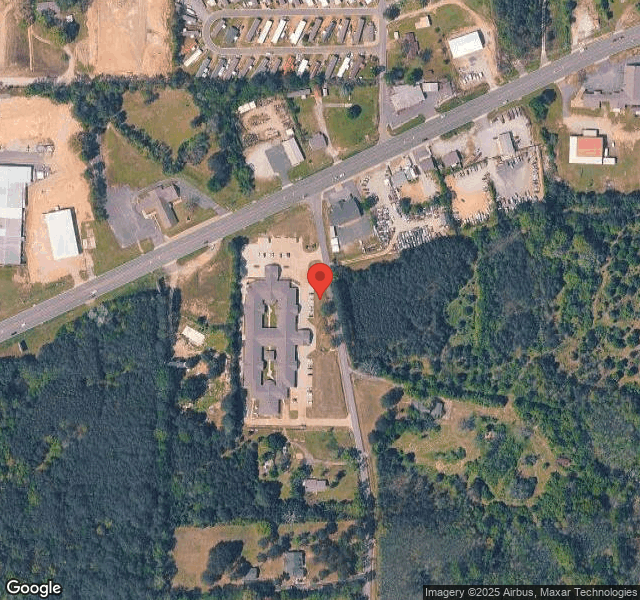
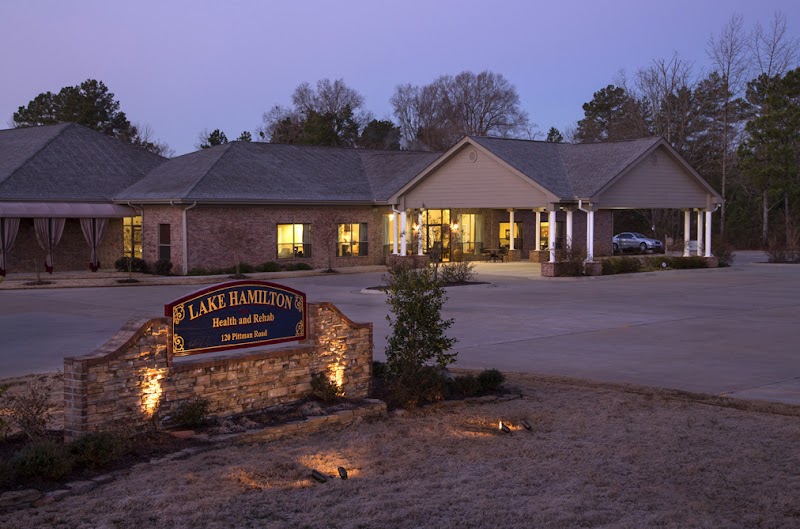
120 PITTMAN ROAD, HOT SPRINGS, AR 71913 (501) 767-7530
For profit - Limited Liability company 84 Beds CENTRAL ARKANSAS NURSING CENTERS Data: November 2025
Trust Grade
70/100
#68 of 218 in AR
Last Inspection: May 2025

Inspected within the last 6 months. Data reflects current conditions.

Overview

Lake Hamilton Health and Rehab has a Trust Grade of B, indicating it is a good choice for families seeking care, as it performs solidly compared to other facilities. It ranks #68 out of 218 in Arkansas, placing it in the top half, and is the best option among nine facilities in Garland County. The facility is improving, having reduced its issues from 10 in 2024 to 4 in 2025, which is a positive trend. However, it has concerning staffing levels, with RN coverage less than 83% of facilities in the state, and a turnover rate of 54%, which is average but suggests potential inconsistency in care. While there have been no fines reported, some specific incidents have raised concerns; for example, food items in the kitchen were not stored properly, and staff failed to wash hands between serving residents, both of which could lead to foodborne illnesses. Additionally, there was a lack of privacy during personal care for some residents, highlighting areas that need improvement despite the facility's strengths in overall quality measures.

Trust Score
B
70/100
In Arkansas
#68/218
Top 31%
Safety Record
Low Risk
No red flags
Inspections
Getting Better
10 → 4 violations
Staff Stability
⚠ Watch
54% turnover. Above average. Higher turnover means staff may not know residents' routines.
Penalties
✓ Good
No fines on record. Clean compliance history, better than most Arkansas facilities.
Skilled Nurses
⚠ Watch
Each resident gets only 16 minutes of Registered Nurse (RN) attention daily — below average for Arkansas. Fewer RN minutes means fewer trained eyes watching for problems.
Violations
⚠ Watch
22 deficiencies on record. Higher than average. Multiple issues found across inspections.
★★★★☆
4.0
Overall Rating
★★★☆☆
3.0
Staff Levels
★★★★★
5.0
Care Quality
★★★☆☆
3.0
Inspection Score
Stable
2024: 10 issues
2025: 4 issues

The Good

  • 5-Star Quality Measures · Strong clinical quality outcomes
  • Full Sprinkler Coverage · Fire safety systems throughout facility
  • No fines on record

Facility shows strength in quality measures, fire safety.

The Bad

Staff Turnover: 54%

Near Arkansas avg (46%)

Higher turnover may affect care consistency

Chain: CENTRAL ARKANSAS NURSING CENTERS

Part of a multi-facility chain

Ask about local staffing decisions and management

The Ugly 22 deficiencies on record

May 2025 4 deficiencies
CONCERN (D)

Potential for Harm - no one hurt, but risky conditions existed

Deficiency F0688 (Tag F0688)

Could have caused harm · This affected 1 resident

Based on observation, interview, record review, and facility policy review, it was determined that the facility did not ensure there was a device in place to prevent further contracture and/or skin br...

Read full inspector narrative →
Based on observation, interview, record review, and facility policy review, it was determined that the facility did not ensure there was a device in place to prevent further contracture and/or skin breakdown for 1 (Resident #59) of 1 resident sampled for mobility. The findings include: A review of the quarterly Minimum Data Set (MDS) with an Assessment Reference Date (ARD) of 02/20/2025, revealed Resident #59 had a Staff Assessment of Mental Status (SAMS) that indicated the resident had short-term and long-term memory problems. The MDS also revealed Resident #59 had bilateral impairment to upper and lower extremities. A review of the Care Plan Report (initiated date 11/16/2023) revealed Resident #59 had contractures to bilateral hands. The interventions included to apply a finger separator to bilateral hands continuously as tolerated. Resident #59 had the potential for pressure ulcer development related to immobility, severe contracture of hands, and being non-verbal. The Care Plan also revealed Resident #59 had a stage 3 wound to the left ring finger, which was resolved on 01/07/2025. A review of the Order Summary Report revealed Resident #59 had a physician's order instructing staff to keep finger separator applied to the left hand at all times for severe contracture, to be monitored every shift, and for staff to check placement of finger separators to bilateral hands, adjust as needed, ensure closure was not stuck between fingers .notify Medical Doctor/Advance Practice Nurse of signs/symptoms of skin breakdown, rash, or non-compliance, also to be performed every shift. Another ordered directed, [Patient] to wear palmar grasp splint to [right] hand and wrist daily as tolerated .in the morning for contracture management . During an observation on 05/18/2025 at 1:54 PM, Resident #59 was observed in the common area, on the 200 hall. This surveyor noted Resident #59 had bilateral hand contractures, with a device in the right hand, but nothing in the left hand. During an observation on 05/19/2025 at 8:52 AM, Resident #59 was observed sitting in the common area, on the 200 hall. This surveyor noted there were no devices, in either hand. During an observation on 05/19/2025 at 12:45 PM, Resident #59 was observed sitting in the common area, on the 200 hall. This surveyor noted there were no devices, in either hand. During an observation on 05/19/2025 at 1:17 PM, Resident #59 was observed lying in bed. This surveyor noted one brace on the bedside table, and two hand devices on the nightstand, but no devices in either hand. During an observation on 05/20/2025 at 8:55 AM, Resident #59 was observed sitting in a wheelchair, in the common area on the 200 hall. This surveyor noted there were no devices, in either hand. During an observation on 05/20/2025 at 10:19 AM, Resident #59 was observed sitting in a wheelchair, in the common area on the 200 hall. This surveyor noted there were no devices, in either hand. During an observation on 05/20/2025 at 12:38 PM, Resident #59 was observed in the dining room for meal service. This surveyor noted there were no devices, in either hand. During an interview on 05/20/2025 at 10:21 AM, Certified Nursing Assistant (CNA) #7 stated the only person CNA #7 had observed placing the brace(s) in Resident #59 hands, was the Treatment Nurse. During an interview on 05/20/2025 at 10:24 AM, the Assistant Director of Nursing (ADON), who was working as the floor nurse on 200 hall, stated the restorative aide or aides were responsible for placing the braces in Resident #59 ' s hands. The ADON verified there were currently no devices in either of the resident ' s hands. The ADON stated if the resident refused the brace(s), the floor nurse should be notified. The ADON, who was serving as the floor nurse, stated she had not been informed Resident #59 had refused the braces. During an interview on 05/20/2025 at 10:53 AM, CNA #8 showed this surveyor their documentation option for application of the brace, which included applied, removed, refused, resident not available, and not applicable. CNA #8 stated that if the resident refused, then refusal would be marked. CNA #8 stated, if there were skin issues, I would mark issue there and if none noted I would mark none of the above. The tasks sheets for Resident #59 did not indicate the resident had refused the interventions. During an interview on 05/21/2025 at 12:30 PM, the Director of Nursing (DON) stated the aides documented skin observations, made sure the hand guards were in place and adjusted as needed, and documented if the resident was wearing finger separators. The DON stated there was no documentation that she was aware of completed by the nurses indicating they had been informed Resident #59 refused the brace or finger separators. The DON stated that it was not noted that the Medical Director or Advance Practice Nurse was notified of Resident #59 ' s non-compliance. The DON stated Resident #59 had a wound to their finger, which was the reason the facility implemented the finger separators, but since Resident #59 had not had any finger separators in place, that intervention would be ineffective. The DON stated she did not know why the care plan had not been revised to note Resident #59 refused to wear the hand guard. A review of the policy titled Rehabilitative Nursing Care (revised 11/22/2016) noted, the facility will provide general rehabilitative nursing care to its residents, as ordered or required.
CONCERN (E)

Potential for Harm - no one hurt, but risky conditions existed

Resident Rights (Tag F0550)

Could have caused harm · This affected multiple residents

Based on observations, interviews, record review, and facility policy review, it was determined that the facility failed to ensure that privacy was provided while providing care to maintain dignity fo...

Read full inspector narrative →
Based on observations, interviews, record review, and facility policy review, it was determined that the facility failed to ensure that privacy was provided while providing care to maintain dignity for 2 (Resident #8 and #57) of 2 sampled residents observed for personal care. The findings include: 1. A review of the modified admission Minimum Data Set (MDS) with an Assessment Reference Date (ARD) of 04/24/2025, revealed Resident #8 had a Brief Interview of Mental Status (BIMS) score of 05, which indicated severely impaired cognition. a. A review of a Care Plan Report (initiated date 05/19/2025), revealed Resident #8 had an Activities of Daily Living (ADL) self-care performance deficit related to impaired balance and limited mobility. b. During an observation on 05/19/2025 at 6:25 PM, this surveyor observed Licensed Practical Nurse (LPN) #6 pull Resident #8 ' s covers back, pull the resident ' s underwear down, and place the resident on a bedpan, with the door to the resident ' s room open, the privacy curtain was not drawn. The exposed resident was visible to passersby in the hallway. c. During an interview on 05/19/2025 at 6:27 PM, LPN #6 verified that the door was open, while she provided care to Resident #8, which was a privacy issue. 2. A review of the quarterly MDS with an ARD of 03/25/2025, revealed Resident #57 had a BIMS score of 11, which indicated moderately impaired cognition. Resident #57 had a feeding tube while a resident. a. A review of a Care Plan Report (revision date 10/23/2023), revealed Resident #57 requires tube feeding related to resisting eating. b. During an observation on 05/20/2025 at 11:51 AM, this surveyor observed the Assistant Director of Nursing (ADON) raise Resident #57 ' s shirt and administered the medications to the resident, via Percutaneous Endoscopic Gastrostomy (PEG) feeding tube. This surveyor observed the door to the resident ' s room was open, the privacy curtain was not drawn, and the blinds were raised while the ADON administered the medication. This surveyor observed a staff member pass the window pushing a resident in a wheelchair, while the ADON was administering the medication via the PEG tube. This surveyor observed several residents in the dining room, which was visible from the window. c. During an interview on 05/20/2025 at 12:00 PM, the ADON verified that the door was not closed, and she did not think about closing the blinds. d. During an interview on 05/21/25 12:26 PM, the Director of Nursing (DON) stated that staff should close the door, pull the curtains, close the blinds, and verbalize patient care to protect the privacy of the residents. The DON stated the residents had a right to privacy and if privacy was not provided, it would become a dignity issue. 3. A review of Resident Rights (revision date 11/22/2016) noted residents had the right to be treated with consideration, respect and full recognition of dignity and individuality.
CONCERN (E)

Potential for Harm - no one hurt, but risky conditions existed

Food Safety (Tag F0812)

Could have caused harm · This affected multiple residents

Based on observation, interview, and facility policy review, the facility failed to ensure 1 of 1 ice machine was maintained in a sanitary condition; expired food items were promptly removed / discard...

Read full inspector narrative →
Based on observation, interview, and facility policy review, the facility failed to ensure 1 of 1 ice machine was maintained in a sanitary condition; expired food items were promptly removed / discarded on or before the expiration or use by date; food stored in the freezer was covered; the refrigerator temperature and cold dairy products were maintained at 41 degrees Fahrenheit or below; and dietary staff washed their hands between tasks for 1 of 1 meal observed. The findings are: 1. On 05/20/2025 at 9:29 AM, the ice machine was checked. The area of the ice machine where ice formed, before dropping into the ice collector, had a grayish residue on the left side, and a black residue on the right side. The area was pointed out to the Dietary Manager (DM), who wiped the substance away. During an interview with the DM, she was asked to describe the appearance of what she had wiped off, on the left and the right sides of the ice machine. She stated, It was mold. She was asked how often the ice machine was cleaned and who used ice from the ice machine. The DM stated she cleaned the ice machine once a month, and it was only used for residents' drinks and to fill the ice chests for resident cups, in their rooms. 2. On 05/20/2025 at 9:35 AM, the following seasonings were observed on a shelf, above the food preparation counter, and were expired: a. Nutmeg, with an expiration date of 04/20/2024 b. Rubbed Sage, with an expiration date of 08/17/2024. c. Ground Cloves, with an expiration date of 04/25/2025. 3. On 05/20/2025 at 9:42 AM, there were four loose tea bags, lying uncovered on a paper towel, on top of the shelf, above the stove. The DM stated they should have been covered until used. 4. On 05/20/2025 at 9:43 AM, the 2-door glass refrigerator temperature was 44 degrees Fahrenheit. The DM was asked to check the temperature of the buttermilk and half and half. She did, and stated the buttermilk was 53.3 degrees Fahrenheit and the half and half was 47 degrees Fahrenheit. The DM then stated both had been out for breakfast to puree with. 5. On 05/20/2025 at 10:15 AM, a box containing 31 individual packages of French dressing was observed on a shelf in the storage room with an expiration date of 05/18/2025. On 05/20/2025 at 10:51 AM, the DM was asked about the potential concerns with expired items and she stated they should have been checked, and they (the dressing) go bad too fast. 6. On 05/20/2025 at 11:03 AM, Dietary [NAME] (DC) #1 removed a plastic bag from the refrigerator that contained lettuce, and placed it on the counter. She removed gloves from the glove box and placed them on her hands. DC #1 opened the bag, removed the lettuce, and placed it on the cutting board. DC #1 then removed onions from a plastic bag and placed them on the cutting board. Without rinsing the lettuce or onions, DC #1 cut the lettuce and onions and placed them on a plate, without changing her gloves or washing her hands. 7. On 05/20/2025 at 11:21 AM, DC #1 had gloves on when she opened a container of strawberries. She removed the unwashed strawberries, with contaminated gloves, and placed the strawberries on the cutting board. DC #1 cut the strawberries and transferred them to a plate for residents' meals. At 12:00 PM, DC #1 was interviewed and was asked what she should have done after touching dirty objects and before handling food with contaminated gloves. DC #1 stated she should have washed her hands. 8. On 05/20/2025 at11:27 AM, DC #2 touched the inside of the blender that contained the mechanical soft meatloaf mixture, with contaminated gloves, to adjust the blade. She poured the meatloaf mixture into a sprayed pan and placed it on the steam table. At 12:13 PM, DC #2, was interviewed and asked what she should have done after touching dirty objects and before handling food with contaminated gloves. DC #2 stated she should have washed her hands. 9. On 05/20/2025 at 11:32 AM, DC #1 and Dietary Aide (DA) #3 were talking. DC #1 touched her gloved hands to her lips. Without changing gloves or washing her hands, she then removed slices of bread from a bag. At 12:03 PM, DC #3 was interviewed and asked what she should have done after touching dirty objects and before handling food with contaminated gloves, and she stated she should have washed her hands. 10. On 05/20/2025 at 11:34 AM, DC #4 removed turkey, ham, and cheese from the walk-in refrigerator and placed them on top of the counter, contaminating her hands. Without washing her hands, she applied gloves and removed slices of turkey and ham, from the original package, and transferred them into a pan. She adjusted the stove knob, with contaminated gloves, then used the same gloves to remove slices of turkey and ham from the package. She placed the slices of turkey in a pan on the stove, then used her gloved hand to flip the turkey meat, that was in the pan, on the stove. This surveyor asked DC #3 what she should have done after touching dirty objects and before handling food. DC #3 stated she should have washed her hands before using gloves. 11. On 05/20/2025 at 11:50 AM, DA #3, without having gloves on, touched cream cheese and then placed gloves on her hands. DA #3 then adjusted the mixer and picked up the contaminated cream cheese and added it to the mixer to be used for residents' desserts. At 1:51 PM, DA #3 was interviewed and was asked what she should have done after touching dirty objects and before handling food. DA #3 stated she should have washed her hands. 12. On 05/20/2025 at 11:51 AM, DA #5 touched the rims of the electrolyte drink glasses, while removing them from the 2- door glass refrigerator and placing them on a utility cart in the walk-in refrigerator. 13. On 05/20/2025 at 11:52 AM, DC #2, without washing her hands or placing gloves on, placed three rolls, warm milk with butter, two tablespoons of protein powder, and one tablespoon of thickener into a blender to puree. She poured the pureed content into a sprayed pan and placed it on the steam table. 14. On 05/20/2025 at 12:24 PM, DA #5, who was assisting with lunch meal service at the tray line, picked up cartons of supplements and placed them on the trays. Without washing her hands, she picked up glasses with beverages in them, by the rims, and placed them on the trays to be served to the residents with their lunch meal. DA #5 was interviewed and was asked what she should have done after touching dirty objects and before handling food with contaminated gloves. DA #5 stated she should not have grabbed the glasses on the rim but on the side of the glasses. 15. A review of a facility policy titled, Ice Machine reviewed indicated the machine should be clean and free of bacteria and mold. 16. A review of a facility policy titled, Safe Food Handling Practices indicated employees should wash their hands when entering the kitchen, before handling food, and should never use bare hand contact with any foods ready to eat or otherwise.
CONCERN (E)

Potential for Harm - no one hurt, but risky conditions existed

Infection Control (Tag F0880)

Could have caused harm · This affected multiple residents

Based on observations, interviews, record review, and facility policy review, it was determined that the facility did not ensure Enhance Barrier Precautions (EBP) were implemented and followed; that s...

Read full inspector narrative →
Based on observations, interviews, record review, and facility policy review, it was determined that the facility did not ensure Enhance Barrier Precautions (EBP) were implemented and followed; that staff used proper hand hygiene during incontinence care; and/or that staff wore proper Personal Protective Equipment (PPE) when care was provided, for 3 (Resident #8, #42, and #226) of 3 residents reviewed for EBP or Transmission Based Precautions (TBP). The findings include: 1. A review of the modified admission Minimum Data Set (MDS) with an Assessment Reference Date (ARD) of 04/24/2025, revealed Resident #8 had a Brief Interview of Mental Status (BIMS) score of 05, which indicated the resident had severely impaired cognition. The MDS also indicated Resident #8 had one or more unhealed pressure ulcers/injuries. a. A review of Care Plan Report (revision date 05/19/2025) indicated Resident #8 had an unstageable pressure injury to the sacrum, and Resident #8 (revision date 05/14/2025) had Vancomycin-Resistant Enterococci in their urine and was on strict contact isolation. (Vancomycin Resistant Enterococci, or VRE, is a type of enterococcus bacterium that has become resistant to antibiotics such as penicillin, gentamicin, and vancomycin. Such drugs are usually used to treat infections with Enterococci, but do not work for fighting infections caused by VRE.) b. A review of the Lab Results Report, collected on 05/09/2025, revealed Resident #8 had greater than 100,000 colony-forming unit/per milliliter Vancomycin-resistant enterococci, which typically indicates the presence of an infection that requires treatment. c. On 05/19/2025 at 6:25 PM, this surveyor observed Licensed Practical Nurse (LPN) #6 provide care to Resident #8. LPN #6 only wore gloves at the time care was provided, and did not wear any other form of personal protective equipment such as a gown. d. On 05/19/2025 at 6:27 PM, during an interview, LPN #6 stated Resident #8 was on contact isolation, and she should have been wearing a gown and gloves to provide care to the resident. 2. A review of the quarterly MDS with an ARD of 04/30/2025 indicated Resident #42 had a BIMS score of 09, which indicated the resident had moderately impaired cognition. The MDS also indicated Resident #42 was always incontinent of bowel and bladder. a. A review of the Care Plan Report (date initiated 01/23/2025) indicated Resident #42 was incontinent of bowel and bladder. b. On 05/19/2025 at 6:40 PM, this surveyor observed Certified Nursing Assistant (CNA) #9 at the bedside, providing incontinence care to Resident #42. This surveyor observed CNA #9 touch the right bed rail and nightstand drawer, with the gloves that had previously been used to provide incontinence care. c. On 05/19/2025 at 6:45 PM, during an interview, CNA #9 stated that she did not change her gloves during the process of providing incontinence care to Resident #42. CNA #9 stated that she touched the resident's sheets, the trash bag, the resident's pillow, and nightstand, with dirty gloves. CNA #8 did not remember if she touched the bed rail. CNA #8 stated by touching items with dirty gloves, it was cross contamination. 3. A review of Care Plan , dated 05/05/2025, revealed Resident #226 had a diagnosis of pressure induced deep tissue damage of the sacral region, chronic obstructive pulmonary disease, and benign prostatic hyperplasia. a. The admission MDS with an ARD of 5/9/2025 for Resident #226 was still in progress. b. On 05/19/2025 at 2:00 PM, this surveyor observed the Treatment Nurse perform wound care to a pressure ulcer on Resident #266's sacral region. The Treatment Nurse entered the room with gloves on, wound care supplies in hand, and no gown on. The Treatment Nurse touched, and her body brushed against the resident ' s bed while performing wound care. Hand hygiene was not performed between glove changes, and a gown was not worn at any point during the procedure. c. On 05/19/2025 at 2:10 PM, during an interview, the Treatment Nurse was asked what she could have done differently while providing care to Resident #226. The Treatment Nurse stated she should have performed hand hygiene and worn a gown, due to Resident #226 being on EBP. The Treatment Nurse stated the purpose of performing hand hygiene was to prevent infection. 4. On 05/21/2025 at 12:39 PM, during an interview, the Director of Nursing (DON) stated staff were expected to put on gowns and gloves before caring for a resident on contact isolation. The DON stated if staff touched items with dirty gloves, they were contaminating everything. The DON stated there were many things that determine if a resident was on EBP including catheters and ostomies. 5. During a concurrent interview on 05/21/2025 at 1:00 PM, the DON stated staff should wash their hands prior to wound care and when applying PPE, after wound care and with glove changes. The DON stated staff should perform hand hygiene to prevent infections. 6. On 05/21/2025 at 10:08 AM, the Administrator stated the facility did not have a policy on Enhanced Barrier Precautions, but the facility followed CDC (Centers for Disease Control) guidelines. 7. On 05/21/2025 at 10:10 AM, this surveyor received a CDC policy titled Consideration for use of Enhanced Barrier Precautions in Skilled Nursing Facilities which indicated EBP may be applied to residents with wounds or indwelling catheters. 8. A review of a policy titled, Standard precautions Policy-Hand Hygiene indicated wash hands immediately after gloves are removed. 9. A review of the policy titled Standard Precautions (11/22/2016) revealed standard precautions will be used in the care of all residents, regardless of their diagnosis or suspected or confirmed infection status. Staff should wash hands after touching blood, bodily fluid, secretions, excretions, and contaminated items, whether or not gloves are worn. 10. A review of the policy titled Infection Prevention and Control Program (11//22/2017) noted wear a disposable gown upon entering the contact precaution room.
Apr 2024 10 deficiencies
CONCERN (D)

Potential for Harm - no one hurt, but risky conditions existed

Resident Rights (Tag F0550)

Could have caused harm · This affected 1 resident

Based on observation, interview and record review, the facility failed to ensure staff were sitting face to face with residents during meal service to promote dignity for 1 (Resident #41) of 3 sampled...

Read full inspector narrative →
Based on observation, interview and record review, the facility failed to ensure staff were sitting face to face with residents during meal service to promote dignity for 1 (Resident #41) of 3 sampled residents requiring feeding assistance during dining. The findings are: a. On 04/09/2024 at 12:33 PM, Certified Nursing Assistant (CNA) #3 was observed standing above Resident #41 feeding resident mixed vegetables. CNA #3 remained standing throughout the meal service. b. On 04/09/2024 at 12:48 PM, CNA #3 was asked what procedure staff was expected to follow when providing feeding assistance to residents. CNA #3 reported normally sitting at eye level, but there is a missing table and chairs today that resulted in him standing. The Surveyor observed an empty chair with a cellphone resting in it on the rear, left side of the resident, and an empty chair resting against the wall across the room. c. On 04/09/2024 at 03:00 PM, the Administrator provided Your Rights and Responsibilities (Revision 08/2020) documenting, .Rights and Responsibilities Across All Programs 1. You have the right to be treated courteously and with respect . d. On 04/12/2024 at 08:30 AM, the Director of Nursing (DON) and the Nurse Consultant were asked the process staff were expected to follow when providing feeding assistance to residents. The Nurse Consultant told the Surveyor that staff should not stand, staff should sit face to face with residents, and feed small bites to residents. The Surveyor asked why staff were expected to be face to face when feeding a resident during meals, and the nurse consultant said, It is dignity. The Nurse Consultant confirmed that the facility does not have a policy on feeding assistance.
CONCERN (D)

Potential for Harm - no one hurt, but risky conditions existed

Deficiency F0583 (Tag F0583)

Could have caused harm · This affected 1 resident

Based on observation, interview and record review, the facility failed to protect 1 (Resident #231) sampled resident ' s privacy by leaving medication cards with identifiable resident information faci...

Read full inspector narrative →
Based on observation, interview and record review, the facility failed to protect 1 (Resident #231) sampled resident ' s privacy by leaving medication cards with identifiable resident information facing out towards passersby on an unattended medication cart on the 100 Hall. The findings are: a. On 04/09/2024 at 10:46 PM, the Surveyor observed an unattended medication cart pushed against the left side of the 100 Hall with medication cards facing the hallway. The Surveyor clearly read Resident 231's name, room number, and medication. b. On 04/09/2024 at 10:48 AM, Licensed Practical Nurse (LPN) #3 looked at Resident #231's medication card on the unattended medication cart on the 100 Hall and told the Surveyor that the tops should be ripped off of empty medication cards and the cards should not be left visible to others. LPN #3 confirmed this was a Health Insurance Portability and Accountability Act (HIPAA) violation. c. On 04/09/2024 at 03:00 PM, the Administrator provided a form titled, Your Rights and Responsibilities (Revision 08/2020) documenting, .Rights and Responsibilities Across All Programs 1. You have the right to be treated courteously and with respect . Resident Rights from the admission packet did not address privacy concerns. d. On 04/11/2024 at 11:38 AM, while interviewing the Director of Nursing (DON) and the Nurse Consultant the Surveyor asked if standing medication cards up on the med cart with a residents name, room number, and medication clearly visible to passersby was appropriate, and part of the facilities policy. The DON confirmed that it is not appropriate to leave patient information visible to others because it is a HIPAA violation. The Surveyor was told its addressed in Resident Rights from the admission packet.
CONCERN (D)

Potential for Harm - no one hurt, but risky conditions existed

Accident Prevention (Tag F0689)

Could have caused harm · This affected 1 resident

Based on observation, interview, and record review, the facility failed to ensure the unlocked public bathroom near a common resident area was equipped with a pull cord on the call light to ensure res...

Read full inspector narrative →
Based on observation, interview, and record review, the facility failed to ensure the unlocked public bathroom near a common resident area was equipped with a pull cord on the call light to ensure resident safety and to prevent falls. This failed practice had the potential to affect 9 (Residents #8, #22, #26, #27, #30, #63, #68, #325, #326) of 42 sampled residents who ambulated and/or self-propelled in the facility. The findings are: a. On 04/11/2024 at 09:48 AM, the Surveyor observed an unlocked bathroom on a hallway between the nurse's station area. The call light did not have a pull cord. Across the hall to the right was a large open room with tables that Licensed Practical Nurse (LPN) #1 identified as an area used for rehab dining, group therapy, activity overthrow, family visiting area, and where residents can go for coffee, or water. b. On 04/11/2024 at 09:50 AM, LPN #1 was asked what procedure residents were encouraged to use when there are falls in the bathroom. LPN #1 said that residents should pull the call button cord if they can reach it or call out for help. c. On 04/11/2024 at 09:51 AM, LPN #1 was asked to accompany the Surveyor to the male/female bathroom located between the two nurses' stations. LPN #1 confirmed that residents can and do use the bathroom. The Surveyor asked LPN #1 if residents could reach the call button from the floor. LPN #1 told the Surveyor that if a resident fell, they would not be able to reach the call button located above the grab bar to the right of the toilet, and the pull cord should be there, but there is not one. d. On 04/11/2024 at 11:06 AM, the Surveyor spoke with the Director of Nursing (DON) and the Nurse Consultant and asked what process a resident should use to call staff for help if they fall in their bathroom, or one of the unlocked public bathrooms. The Nurse Consultant confirmed that residents would use their call light, and all bathrooms should have a pull cord, and even if there is no pull cord there does not have to be one. The Surveyor asked if a call button placed above the grab bar can be reached by residents if they are lying on the floor. The Nurse Consultant confirmed that their bathrooms are designed to regulation and code, and the distance from the floor to the call light button is appropriate to code. The Surveyor asked for a call light policy, and the code and regulation used to determine the distance from the bathroom floor, and the call button. e. On 04/11/2024 at 12:04 PM, the Nursing Consultant told the Surveyor they do not have a call light policy, and the Nurse Consultant had miscalculated the distance from the bathroom floor to the call light button. No code or regulation documentation was provided.
CONCERN (D)

Potential for Harm - no one hurt, but risky conditions existed

Respiratory Care (Tag F0695)

Could have caused harm · This affected 1 resident

Based on observation, interview and record review, the facility failed to ensure only licensed nursing staff provided oxygen as ordered by the physician via concentrator, and/or portable oxygen tank t...

Read full inspector narrative →
Based on observation, interview and record review, the facility failed to ensure only licensed nursing staff provided oxygen as ordered by the physician via concentrator, and/or portable oxygen tank to prevent possible respiratory complications for 1 (Resident #45) on who received oxygen with 1 of 1 observation. The findings are: 1. On 04/10/2024 at 09:40 AM, Certified Nursing Assistance (CNA) #5 was observed removing Resident #45's nasal cannula and connecting Resident #45 to portable oxygen and placing the nasal cannula from the portable tank on Resident #45's face. The Surveyor asked CNA #5 the protocol for placing a resident on portable oxygen. CNA #5 told the Surveyor that she looked at the concentrator to see how many liters of oxygen Resident #45 is on and turned the portable tank to the same liters of oxygen and swapped out the nasal cannula. The Surveyor asked CNA #5 to confirm that CNA #5 turned the portable tank on to the liters Resident #45 needs and swaps out the cannula. CNA #5 confirmed this and turned on the portable unit to 2 liters and swapped out the nasal cannula. Permission was not given to look in the closet by Resident #45. a. On 04/11/2024 at 10:19 AM, while interviewing Licensed Practical Nurse, (LPN) #1 the Surveyor asked what process CNAs use when they are assisting a resident on an oxygen concentrator and needing to be switched to portable oxygen. LPN #1 confirmed that the CNA will transfer a resident from the bed to a wheelchair and remove the nasal cannula and roll it up and place it in the storage bag located on the concentrator. The CNA would then place the tubing from the portable tank on the resident and turn on the oxygen. The Surveyor asked how the CNA would know how much oxygen to place on the resident. LPN #1 told the Surveyor the CNA would get the dosage off the concentrator, or from the closet care plan. b. The Order Summary (dated, 03/07/2024) for Resident #45 documented, .O2 at 2-3 liters per minute via nasal cannula as needed . c. On 04/11/2024 at 11:34 AM, the Director of Nursing (DON) and the Nurse Consultant were asked what process they expect staff to follow when CNAs are providing care to someone that needs switched from a concentrator to a portable tank. The Nurse Consultant told the Surveyor the CNA would have to get the nurse to help, because oxygen is considered a medication. The Nurse Consultant confirmed that CNAs cannot administer oxygen. d. On 04/11/2024 at 12:40 PM, the Nurse Consultant provided a policy titled Oxygen, Portable and Oxygen Safety that does not address oxygen as a medication and did not identify staff licensed to administer oxygen.
CONCERN (E)

Potential for Harm - no one hurt, but risky conditions existed

Comprehensive Care Plan (Tag F0656)

Could have caused harm · This affected multiple residents

3. A review of Resident #68's Physicians Order dated 01/15/2024 documented Resident #68 was to receive 15 units of a long acting insulin at bedtime related to type 2 diabetes mellitus. b. On 04/11/202...

Read full inspector narrative →
3. A review of Resident #68's Physicians Order dated 01/15/2024 documented Resident #68 was to receive 15 units of a long acting insulin at bedtime related to type 2 diabetes mellitus. b. On 04/11/2024 at 10:30 AM, the Surveyor reviewed Resident 68's Care Plan. The care plan did not address insulin. Resident 68's admission 5-day MDS with an ARD of 01/18/2024 indicated on insulin was received 3 times in the last 7 days and was on a hypoglycemic medication. b. On 04/12/2024 at 09:50 AM, the Surveyor asked the MDS Nurse to check Resident 68's care plan for insulin. The MDS Nurse told the Surveyor insulin was not on the care plan. The Surveyor asked if insulin and diabetes should be care planned. The MDS Nurse told the Surveyor that insulin and diabetes should be documented because it is good to know Resident #68 is on insulin, and why Resident #68 is receiving insulin so if there is a sudden change in the resident, we know what to look for, or the interventions that are in place. c. On 04/12/2024 at 11:15 AM, the Assistant Administrator told the Surveyor there is not a policy on care plans. The facility refers to the Resident Assessment Instrument (RAI) manual. Based on observation, interview and record review, the facility failed to develop care plans to address a resident receiving antibiotics for prevention of recurring urinary tract infections for 1 (Resident #34) sampled resident, a resident was receiving anticoagulants for 1 (Resident #22) sampled resident, and a resident was receiving insulin for 1 (Resident #68) sampled resident to ensure appropriate coordination of care. This failed practice had the potential to affect 3 residents that were receiving antibiotics for prevention of recurring urinary tract infections, 27 residents that were receiving anticoagulant medication and 10 residents that received insulin. The findings are: 1. Resident #34 had diagnoses of Non-Alzheimer's dementia and Urinary tract infection. The admission Minimum Data Set (MDS) with an Assessment Reference Date (ARD) of 12/10/2023 documented that the resident scored 9 (8-12 indicates moderately cognitive impaired) on a Brief Interview for Mental Status (BIMS). a. On 04/11/2024 at 03:15 PM, the Surveyor reviewed the Care Plan with an initiation date of 12/08/2023 and it did not address that Resident #34 was receiving antibiotics for recurrent urinary tract infections. b. A Physicians Order dated 02/13/2024 documented, .Nitrofurantoin Macrocrystal Oral Capsule 100 MG [milligrams] .Give 1 capsule by mouth one time a day for UTI (Urinary Tract Infection) prophylaxis (Prevention) . for 3 Months . (Nitrofurantoin is an antibiotic that can treat and prevent urinary tract infections.) c. On 04/12/2024 at 09:25 AM, the Surveyor asked the MDS Coordinator if Resident #34 currently takes antibiotics for the prevention of recurring urinary tract infections. The MDS Coordinator looked in the electronic record and stated, Yes. The Surveyor asked if Resident #34's care plan address the use of antibiotics for the prevention of recurring urinary tract infections. The MDS Coordinator looked in the electronic record and stated, No. It does not. The Surveyor asked should Resident #34's care plan address the use of antibiotics for the prevention of recurring urinary tract infections? The MDS Coordinator stated, Absolutely, it should. The Surveyor asked why is it important that the residents care plan addresses the use of antibiotics to prevent reoccurring urinary tract infections? The MDS Coordinator stated, It is important so that we know that is a baseline thing for her. We can monitor for any side effects. Anyone can look at the care plan and that information is a good thing to have in place. I have gone ahead and added the antibiotic use to the care plan. 2. Resident # 22 had diagnoses of Non-Alzheimer's dementia and Other orthopedic after care. The Quarterly MDS with an ARD of 03/03/2024 documented that the resident scored 9 (8-12 indicates moderate cognitive impairment) on a BIMS and received an anticoagulant medication. a. On 04/10/2024 at 01:30 PM, the Surveyor reviewed Resident #22's Care Plan with a revision date of 04/03/2024 and it did not address the residents use of anti-coagulant medication. b. A Physicians Order dated 01/03/2024 documented, .Eliquis Oral Tablet 2.5 MG [milligrams] (Apixaban) Give 1 tablet by mouth two times a day related to Encounter for other orthopedic aftercare . (Eliquis is an anticoagulant medication used to treat and prevent blood clots and to prevent stroke.) c. On 04/12/2024 at 09:30 AM, the Surveyor asked the MDS Coordinator, if Resident #22 takes an anticoagulant medication. The MDS Coordinator looked in the electronic record and stated, It looks like [the resident] does, and it was started on 01/04/2024. The Surveyor asked if Resident #22's care plan addressed that the resident takes an anticoagulant medication. The MDS Coordinator looked in the electronic record and stated, I'm not seeing it. The Surveyor asked should Resident #22's care plan address that the resident takes an anticoagulant medication? The MDS Coordinator stated, Absolutely. The Surveyor asked the MDS Coordinator why is it important that the residents care plan addresses that they are receiving an anticoagulant medication? The MDS Coordinator stated, If the resident falls, the resident could bleed. That is pretty important and something you would want to know about the resident. I am going to add it to the care plan right now.
CONCERN (E)

Potential for Harm - no one hurt, but risky conditions existed

Pharmacy Services (Tag F0755)

Could have caused harm · This affected multiple residents

Based on observation, interview and record review, the facility failed to ensure stock narcotics were counted, and accurately documented when received from the pharmacy to ensure the correct count was...

Read full inspector narrative →
Based on observation, interview and record review, the facility failed to ensure stock narcotics were counted, and accurately documented when received from the pharmacy to ensure the correct count was on hand and to prevent misappropriation of resident medications and ensure accurate documentation in the narcotic book to prevent the potential for medication errors. This failed practice had the potential to affect 74 residents receiving medications in the facility. The findings are: a. On 04/10/2024 at 01:12 PM, the Surveyor asked what is kept in the refrigerated narcotic box and Licensed Practical Nurse (LPN) #2 confirmed the following stock medications were in the emergency kit. 1. 5 - Ativan 2mg/ml (milligram/milliliter) oral solution syringes 2. 1 - Ativan injectable 2mg/ml vial b. On 04/10/2024 at 02:02 PM, the Surveyor asked LPN #2 to locate the stock Ativan in the narcotic book. LPN #2 turned to page 7 and confirmed there were 5 syringes of 2mg/ml Ativan oral concentrate. The Surveyor asked LPN #2 to count the 2mg syringes and LPN #2 confirmed there were 5 syringes. The Surveyor asked LPN #2 to confirm the concentration documented on page 7 of the narcotic book. LPN #2 said, Wait a minute . there are 5, 1mg/0.5ml syringes. LPN #2 confirmed that the dosage of the Ativan oral concentration on hand does not match the dosage documented on page 7. c. On 04/10/2024 at 02:11 PM, the Surveyor asked LPN #2 to find Ativan injectable stock in the narcotic book. LPN #2 showed the Surveyor page 6 and said this is wrong, because it says Ativan 0.5mg is available. I used the Ativan on 04/03/2024 and it shows 0.5mg was wasted on 4/4/2024 and there should not be any Ativan available. There is 1 Ativan injectable vial in the emergency kit. LPN #2 said, When the pharmacy brought the refill on 04/04/2024, it was not documented in the narcotic book. The Surveyor asked if the Ativan should have been documented within the last 6 days, the procedure for documenting medication sent to the facility, and who would be responsible for documenting the medication. LPN #2 told the Surveyor that when a narcotic is brought in by the pharmacy, nursing is responsible for documenting it in the narcotic book when it arrives. The Surveyor asked if the consolidated delivery sheets are supposed to be signed by the receiving nurse, and LPN #2 confirmed that the receiving nurse should sign the delivery sheet, so they know who the medications were given too. LPN #2 told the Surveyor that LPN #2 looked at the emergency kit count this morning but did not correct it. d. On 04/10/2024 at 03:04 PM, LPN #2 provided the consolidated delivery sheet dated 04/04/2024 showing the available Ativan was delivered at 22:10 (10:10) PM. LPN #2 told the Surveyor that she spoke to the Director of Nursing (DON) and documented the 1 available Ativan injectable on hand and used today's date, 04/10/2024, even though it was received on 04/04/2024 so that the count is now correct on page 7 of the narcotic book. e. On 04/11/2024 at 10:25 AM, the Surveyor asked the DON, and the Nurse Consultant why it was important for staff to document medications, or narcotics in a timely, and accurate manner when narcotics are sent to the facility by the pharmacy. The DON told the Surveyor to prevent diversion, and to make sure medications are being counted. The Nurse Consultant said to make sure they knew what they had in the building. The Nurse Consultant confirmed nursing is responsible for counting narcotics each shift. The Nurse Consultant told the Surveyor there is not a medication storage policy.
CONCERN (E)

Potential for Harm - no one hurt, but risky conditions existed

Unnecessary Medications (Tag F0759)

Could have caused harm · This affected multiple residents

Based on observation, interview and record review, it was determined that the facility failed to ensure the medication error rate was less than 5%. Physician orders were not followed for 2 (Resident #...

Read full inspector narrative →
Based on observation, interview and record review, it was determined that the facility failed to ensure the medication error rate was less than 5%. Physician orders were not followed for 2 (Resident #67 and #229) of 3 residents reviewed for Medication Administration. Medications were observed with 2 errors in 34 opportunities, resulting in a medication error rate of 5.88%. The findings include: A review of a facility policy titled, Medications, Nose Drops, Instillation of, dated 11/22/2016, indicated, Instill medication in the amount ordered. A review of Medication Administration Record, revealed Resident #229 had an order for Calcium plus Vitamin D3 500-15 mg-mcg (milligram-microgram). Give one tablet by mouth one time a day. A review of the Medication Administration Record, revealed Resident #67 had an order for Fluticasone Propionate Nasal Suspension 50 mcg/act (microgram/action). One Spray in each nostril two times a day. During an observation on 04/11/2024 at 08:09 AM, Licensed Practical Nurse (LPN) #1 administered Calcium with Vitamin D 600 mg 10 mcg, 1 tablet by mouth. During an observation on 04/11/2024 at 08:32 AM, LPN #1 administered Fluticasone Propionate Nasal Suspension 50 mcg/act. 2 sprays in each nostril. During an interview on 04/11/2024 at 02:55 PM, LPN #1 confirmed that on Resident #67 and #229 the wrong dosage of medication was administered. Also, LPN #1 stated that there should have been a new order from the physician since the ordered dose was not available in the building. During an interview on 04/11/2024 at 03:06 PM, the Director of Nursing confirmed that LPN #1 gave incorrect dosages of medications and stated that we have to follow physicians orders for resident safety.
CONCERN (E)

Potential for Harm - no one hurt, but risky conditions existed

Deficiency F0761 (Tag F0761)

Could have caused harm · This affected multiple residents

Based on observation, interview and record review, the facility failed to ensure medications were not stored at the bedside for residents without self-administration rights approved by the Interdiscip...

Read full inspector narrative →
Based on observation, interview and record review, the facility failed to ensure medications were not stored at the bedside for residents without self-administration rights approved by the Interdisciplinary team. This failed practice had the potential to affect 3 (Residents #22, #26, #68) sampled residents and 23 residents that ambulate and/or self-propel on 100 and 200 Halls. The facility failed to ensure licensed staff remained at the bedside during updrafts to ensure residents received the complete dose affecting 1 (Resident #226) of 3 sampled on 100 Hall getting updrafts. The facility failed to ensure refrigerated narcotics were stored in a permanently affixed storage box to ensure no misappropriation of resident medications affecting all 74 residents in the facility. The findings are: 1.a. The order summary for Resident #226 (dated, 04/03/2024) documented, .Albuterol Sulfate HFA Inhalation Aerosol Solution 108 (90 Base) MCG/ACT (microgram/action) (Albuterol Sulfate) 2 puff inhale orally every 6 hours as needed for shortness of breath related to SHORTNESS OF BREATH . b. A Physician Order for Resident #226 (dated, 04/03/2024) documented, .Levalbuterol HCl Inhalation Nebulization Solution 1.25 MG/3ML (Levalbuterol HCl) 1 vial inhale orally via nebulizer one time a day related to shortness of breath and 1 vial inhale orally via nebulizer every 6 hours as needed for shortness of breath related to shortness of breath. c. On 04/09/2024 at 10:42 AM, while rounding the Surveyor observed Resident #226's room, albuterol sulfate inhalation aerosol 200 metered inhaler resting on the bedside table to the right side of the bed. d. On 04/09/2024 at 11:32 AM, Resident #226 opened the top drawer of the bedside table and remarked that the inhaler was gone now. It was in here. Resident #226 told the Surveyor the resident did not know if the Albuterol inhaler was theirs from home, or if it was given to the resident at the facility. Resident #226 confirmed using the inhaler since admission about a week ago and the inhaler had been in the top drawer of the resident's bedside table, and sometimes on top of the table after the resident used the inhaler. e. On 04/09/2024 at 11:35 AM, Licensed Practical Nurse (LPN) #3 confirmed that she found an albuterol inhaler on the bedside table and removed it from the room. LPN #3 said Resident #226 was new and she thought the family might have brought medication to the facility. While interviewing LPN #3 the LPN told the Surveyor it was unknown if Resident #226 had self-administration rights. The Surveyor asked why residents had to be approved for self-administration and LPN #3 said the reason for not leaving medications at the bedside is forgetfulness. They could forget and take the same medication twice. 2.a. On 04/09/2024 at 11:28 AM, the Surveyor observed Resident #226 sitting in a wheelchair on the right side of the bed holding a nebulizer mask over his/her nose and mouth, with visible aerosol vapers. There were no staff or nursing staff present in the room during Resident #226's nebulizer treatment. b. On 04/09/2024 at 11:31 AM, Resident #226 complained that the inhaler had been on too long and was bothering the resident. The Surveyor observed the fluid chamber was empty. Resident #226 removed the nebulizer mask and laid it on the bedside table. c. On 04/09/2024 at 11:35 AM, Licensed Practical Nurse (LPN) #3 was asked what the policy is on administering updrafts to residents. LPN #3 said, Normally it takes fifteen to twenty minutes, and I was headed back to check on [Resident #226]. We do blood pressures before and after to check to see how they are doing, and clean and store the mask when the updraft is complete to prevent infection. 3.a On 04/10/2024 at 01:12 PM, LPN #2 unlocked a large white refrigerator in the 300/400 Hall medication room and pointed to a purple case that LPN #2 identified as containing the emergency narcotic box. The purple narcotic box was easily picked up and set down on the counter in the medication room. LPN #2 confirmed that the purple narcotic case is removeable but is behind double locks. The Surveyor asked what is kept in the refrigerated emergency kit and LPN #2 confirmed 5 - Ativan oral solution syringes, and 1 - Ativan injectable. LPN #2 pointed out a silver box with a 3 on it and said it is permanently affixed, but empty at this time. The Surveyor asked if there was a reason the Ativan in the purple container did not have to be permanently affixed in the refrigerator and LPN #2 said because it is part of the emergency kit. b. On 04/11/2024 at 10:28 AM, the Nurse Consultant confirmed that medication was not to be left at the bedside without self-administration rights. She stated, I think families occasionally bring in medications without staff knowledge. The Nurse Consultant was asked what procedure staff is expected to follow when administering updrafts and she said that the nurse administering the updraft should stay in the resident's room until the updraft is completed, and the equipment should be cleaned and stored. The Surveyor asked the Director of Nursing (DON), and the Nurse Consultant what procedure was used to protect refrigerated narcotics in the medication room. The DON said that narcotics are behind two locks, and pointed out the door to the medication room, and a lock on the outside of the refrigerator. The Surveyor asked if the purple box labeled #4 with the emergency kit containing oral and injectable Ativan should be permanently affixed in the refrigerator. The Nurse Consultant said that the emergency kit medications do not have to be permanently affixed, and there is a permanently affixed narcotic box in the refrigerator. The Surveyor advised a silver box, labeled #3 was empty, and the emergency kit was in the unlocked purple box that was not permanently affixed. The Surveyor asked for a nursing documentation policy/in-service, and a medication storage policy. c. On 04/11/2024 at 12:04 PM, the Nurse Consultant told the Surveyor that they do not have a medication storage policy. The Nurse Consultant provided a policy titled Medications, Self-Administration of documenting, General Guidelines 1. A resident may be permitted to administer or retain medication in his/her room under the following conditions: a. Assessment and approval by the interdisciplinary team . 8. The charge nurse or staff should counsel the resident on the proper use of medications. Reporting and Documentation . 2. The following information may be documented in the resident's medical record: a. The name and strength of the medication taken by the resident and the route of administration. b. Resident instructed on the proper use of each medicine kept at the bedside for self -administration. c. The signature and title of the person recording the entry. The Nurse Consultant provided a policy titled, Preparation and General Guidelines, documenting, IIA7: Controlled Substances, the policy did not address refrigerated narcotics being kept in a permanently affixed compartment. The Nurse Consultant provided a In-service titled, Nursing In-service (August 15, 2023), the documentation did not apply to medication storage. The Nurse Consultant said they do more one on one interventions than In-Services.
CONCERN (E)

Potential for Harm - no one hurt, but risky conditions existed

Deficiency F0804 (Tag F0804)

Could have caused harm · This affected multiple residents

Based on observation, interview and record review, the facility failed to ensure meals were served in a method that maintained the appearance of cold products and at temperatures that were acceptable ...

Read full inspector narrative →
Based on observation, interview and record review, the facility failed to ensure meals were served in a method that maintained the appearance of cold products and at temperatures that were acceptable to the residents to improve palatability and encourage good nutritional intake during 1 of 1 meal observed. This failed practice had the potential to affect 15 residents who received meal trays in their rooms on the 100 Hall, 25 residents who received meal trays on the 200 Hall, 17 residents who received meal trays in their room on the 300 Hall, and 17 residents who received meal trays on the 400 Hall. The findings are: 1. On 04/11/2024 at 07:39 AM, an unheated food cart that contained 25 trays for breakfast was delivered to the 200 Hall by Certified Nursing Assistant (CNA) #1. At 07:52 AM, immediately after the last resident was served in their room on the 200 Hall, the temperature of the food items on the tray used as a test tray were taken and read by the Dietary Supervisor with the following results. a. Ground sausage with gravy - 116 degrees Fahrenheit. b. Scrambled eggs - 109 degrees Fahrenheit. c. Sausage - 105.7 degrees Fahrenheit. 2. On 04/11/2024 at 07:45 AM, an unheated food cart that contained 17 trays for breakfast was delivered to the 400 Hall by the CNA #2. At 08:00 AM, immediately after the last resident was served in their room on the 200 Hall, the temperature of the food items on the tray used as a test tray were taken and read by the Dietary Supervisor with the following results: a. Scrambled eggs - 113 degrees Fahrenheit. b. Sausage - 109 degrees Fahrenheit. 3. On 04/11/2024 at 07:48 AM, an unheated food cart that contained 15 trays for breakfast was delivered to the 100 Hall by the CNA #3. At 08:10 AM, immediately after the last resident was served in their room on the 100 Hall, the temperature of the food items on the tray used as a test tray were taken and read by the Dietary Supervisor with the following results: a. Scrambled eggs - 105.6 degrees Fahrenheit. b. Sausage - 108 degrees Fahrenheit. 4. On 04/11/2024 at 07:58 AM, an unheated food cart that contained 17 trays for breakfast was delivered to the 300 Hall by the CNA #3. At 08:14 AM, immediately after the last resident was served in their room on the 300 Hall, the temperature of the food items on the tray used as a test tray were taken and read by the Dietary Supervisor with the following results: a. Scrambled eggs - 111 degrees Fahrenheit. b. Sausage - 108.2 degrees Fahrenheit.
CONCERN (F)

Potential for Harm - no one hurt, but risky conditions existed

Food Safety (Tag F0812)

Could have caused harm · This affected most or all residents

Based on observation, interview and policy review, the facility failed to ensure food items stored in the freezer were covered, sealed, and dated to minimize the potential for food borne illness for r...

Read full inspector narrative →
Based on observation, interview and policy review, the facility failed to ensure food items stored in the freezer were covered, sealed, and dated to minimize the potential for food borne illness for residents who received meals from 1 of 1 kitchen, manufacturer specification was followed to prevent the potential for borne illness for residents who received meals from 1 of 1 kitchen, and dietary staff washed their hands before handling clean equipment or food items to prevent potential food borne illness for residents who received meals from 1 of 1 kitchen; These failed practices had the potential to affect 73 residents who received. meals from the kitchen, (total census:74). The findings are: 1. On 04/10/2024 at 11:10 AM, the following food items on a shelf in the walk-in freezer did not have an open date on them: a. An opened box of biscuits. b. An opened box of cheese omelet. c. An opened box of chocolate chip cookies. d. An opened box of bread sticks. The box was not covered or sealed. e. An opened box of chicken and cheese tortillas filling. f. An opened box of breaded beef. g. An opened box of bean burritos. h. An opened box of hamburger patties. i. An opened box of beef steak. The box was not covered or sealed. j. An opened box of beef fritters. 2. On 04/10/2024 at 11:22 AM, an opened gallon of soy sauce was on a rack in the kitchen. The manufacturer ' s specification on the gallon documented, Refrigerate after opening. 3. On 04/10/2024 at 12:04 PM, Dietary Employee (DE) #1, who was on the tray line assisting with the noon meal, picked up tray cards and placed them on the steam table shelf. Without washing his hands, he picked plates with his fingers touching inside the plates to be used in portioning food items to be served to the residents at the noon meal. The Surveyor asked DE #1 what should have been done after touching dirty objects and before handling clean equipment? DE #1 stated, I should have washed my hands. 4. On 04/10/2024 at 04:05 PM, Dietary Employee (DE) #1 pulled his pant up, then pulled two carts that had cans of soft drinks, pitchers that contained beverages, and empty containers towards the ice machine. He removed a glove from the glove box and placed it on his hand, contaminating the glove. He picked up a scoop from the scoop holder and used it to scoop ice from the ice machine and emptied it into the containers with his thumb touching the ice. The Surveyor asked DE #1, What should have been done after touching dirty objects and before handling clean equipment? DE #1 stated, I should have washed my hands.
Apr 2023 8 deficiencies
CONCERN (D)

Potential for Harm - no one hurt, but risky conditions existed

Safe Environment (Tag F0584)

Could have caused harm · This affected 1 resident

**NOTE- TERMS IN BRACKETS HAVE BEEN EDITED TO PROTECT CONFIDENTIALITY** Based on observation, and interview, the facility failed to ensure resident personal hygiene items were stored in a sanitary man...

Read full inspector narrative →
**NOTE- TERMS IN BRACKETS HAVE BEEN EDITED TO PROTECT CONFIDENTIALITY** Based on observation, and interview, the facility failed to ensure resident personal hygiene items were stored in a sanitary manner 2 (rooms [ROOM NUMBERS]) of 5 (Rooms 211, 213, 215, 217 and 303) resident bathrooms. The findings are: 1. On 04/24/23 at 10:18 AM, 04/25/23 at 8:02 AM, 04/26/23 at 9:00 AM and 04/27/23 at 8:49 AM, in the shared bathroom in Resident room [ROOM NUMBER], a bedpan was wedged between the wall and the grab bar by the toilet and a wash basin was on the floor between the sink and the toilet. The wash basin and bedpan were not stored in a bag or storage container. 2. On 04/24/23 at 10:11 AM and 04/25/23 at 11:45 AM, in the shared bathroom in Resident room [ROOM NUMBER], a bedpan was wedged between the wall and the towel rack behind the toilet and a urinal was hanging on the grab bar by the toilet. The bedpan and urinal were not stored in a bag or storage container. 3. On 04/27/23 at 10:15 AM, in the shared bathroom in Resident room [ROOM NUMBER], the urinal was hanging on the grab bar by the toilet in a plastic bag, the bedpan was wedged between the wall and the towel rack behind the toilet. The bedpan was not stored in a bag or storage container. 4. On 04/27/23 at 10:15 AM, Certified Nursing Assistant (CNA) 3 stated, Bedpans, urinals and wash basins should be cleaned and bagged. This bedpan hasn't been used in a long time. CNA #3 discarded the bedpan. 5. On 04/27/23 at 10:56 AM, the Director of Nursing (DON) stated, Bed pans, wash basins and urinals should be stored in a plastic bag. 6. The facility policy titled, Bedpans and Urinals, Disinfection of , provided by the Assistant Administrator on 04/27/23 at 2:00 PM documented, Procedure . 12. Cover and return bedpan or urinal to resident's bedside cabinet.
CONCERN (D)

Potential for Harm - no one hurt, but risky conditions existed

Deficiency F0604 (Tag F0604)

Could have caused harm · This affected 1 resident

Based on observation, record review and interview, the facility failed to document the medical symptoms that required the use of a restraint; failed to demonstrate ongoing monitoring and evaluation fo...

Read full inspector narrative →
Based on observation, record review and interview, the facility failed to document the medical symptoms that required the use of a restraint; failed to demonstrate ongoing monitoring and evaluation for the use of the restraint and failed to demonstrate attempts of other less restrictive interventions prior to the initiation of the restraint for 1 (Resident #71) of 1 sampled resident who was required to wear a seatbelt while in his wheelchair. The findings include: 1. Resident #71 had diagnoses of Metabolic Encephalopathy and Dementia without Behavioral Disturbance. The Medicare 5-day Minimum Data Set (MDS) with an Assessment Reference Date (ARD) of 04/01/23 documented the resident was moderately impaired in cognitive skills for daily decision-making per a Staff Assessment for Mental Status (SAMS) and used a trunk restraint less than daily when in a chair or out of bed. 2. A Physician Orders with a start date of 03/27/23 documented, Pressure Alarms to W/C [wheelchair], Bed and Recliner, Check placement and function Q [every] shift and PRN [as needed] every shift . 3. A Progress Note dated 03/29/23 at 8:45 AM by the Director of Nursing (DON) documented, .Late Entry . Resident was standing up from W/C on 100 hall. CNA staff at end off [of] hall. Resident began to stand, before staff could reach resident, resident fell to right side. Resident with abrasion to right forearm. Staff saw resident fall but sated [stated] it happened so fast that unsure if resident hit head. Resident unable to state what had happened. Verbal consent was obtained by nursing staff d/t [due to] resident non compliance with safety interventions. Long Term Intervention: Seat belt Added to Care Plan: Yes Ensure MD [Medical Doctor] & [and] Family Notification: Yes. 4. An Assessment for the use of Physical Restraint dated 04/08/23 provided by the DON on 04/27/23 at 5:00 PM documented the behavior prompting the use of restraints as agitated behavior and delirium/confusion. Alternatives attempted was documented as a recliner, alarm devices and side rail. The summary of interdisciplinary team reviews documented seat belt per family. 5. A Physicians Order with a start date of 04/08/23 documented, Seatbelt Alarm, Check restraint every 30 Min [minutes] and release every 2 HR [hours] for ADL [activities of daily living] assistance and ROM [range of motion] to BUE [bilateral upper extremities] and BLE [bilateral lower extremities] Saturday through Thursday with rest day on Friday every shift every Mon [Monday], Tue [Tuesday], Wed [Wednesday], Thu [Thursday], Sat [Saturday], Sun [Sunday] for history of falling per POA [Power of Attorney] request. Check placement and function Q shift . 6. On 04/24/23 at 12:43 PM, Resident #71 was sitting in a wheelchair in the hallway, he stood up from his wheelchair outside of a resident room and the position change alarm on the wheelchair sounded. Resident #71 walked into the resident room, then out into the hallway and down the hall. Certified Nursing Assistant (CNA) #4 approached Resident #71 and assisted him back to the wheelchair and fastened a seat belt across his lap. 7. On 04/26/23 at 10:38 AM, Resident #71 was sitting at the Nurses Station at the end of the 100 Hall in his wheelchair. A seat belt was across his lap. 8. On 04/27/23 at 9:40 AM, Resident #71 was self-propelling in his wheelchair on the 100 Hall. A seat belt was across his lap. 9. On 04/27/23 at 3:28 PM, the Surveyor asked the Activity Director what activities are available for the cognitively impaired residents who primarily stay in their room. She stated, I try to go around and visit with those residents each day. The Activity Director verbalized, The Chronical, which is a packet of news, puzzles, word search, crossword and color pages are distributed to residents every day. 10. On 04/27/23 at 3:45 PM, CNA #2 stated, Resident #71 used a seat belt. Because he's a high risk for falls. CNA #2 further stated the resident was able to unlatch the seatbelt. 11. On 04/27/23 at 4:20 PM, the Assistant Administrator stated, The aides are stretched out walking up and down the halls to rooms. We have orthopedic residents who just had hip replacements. If someone got up and fell without an alarm it could be an hour before someone got back around and found them. 12. On 04/27/23 at 4:45 PM, the DON stated the position change alarms are placed on residents at admission if the resident triggers as a high risk for falls and had a fall at home. The DON confirmed residents are automatically given a position change alarm on admission if the resident is a high risk for falls and had a previous fall. The DON stated, Residents are reassessed at 90 days to determine if the resident had a fall, or a self-transfer. If the resident is self-transferring and staff have had to respond to alarms, the facility will keep the alarm on to prevent the resident from falling. [Resident #71] has a seat belt because he self-transfers and had a fall on admission. The resident gets up by himself and is fast and will walk by himself. Other measures such as non-skid socks, medication management, fall mats, music therapy and anti-rollbacks are used based on individualized needs of the resident. 13. An April 2023 Order Listing Report dated 04/27/23 at 4:23 PM provided by the DON on 04/27/23 at 5:00 PM documented 6 residents with seatbelt alarms. 14. An April 2023 Order Listing Report, dated 04/27/23 at 4:31 PM provided by the DON on 04/27/23 at 5:00 PM documented 25 residents with pressure alarms. 15. On 04/28/23 at 9:29 AM, Resident #71 was sitting in his wheelchair, with a seat belt across his lap. A therapist and a family member were with the resident. The Surveyor asked Resident #71 to unlatch the seat belt and he was able to unlatch the belt. 16. The facility policy titled, Restraints, Use Of , provided by the Administrator on 04/27/23 at 3:43 PM documented, .Residents have the right to be free from restraint or seclusion, of any form, used as a means of coercion, discipline, convenience or retaliation. All Facility residents will be free from seclusion, unless required pursuant to the Facility's infection control policies and procedures. All Facility residents will be free from any physical restraints except those which may be required per physician's order to treat the resident's medical condition .
CONCERN (D)

Potential for Harm - no one hurt, but risky conditions existed

Comprehensive Care Plan (Tag F0656)

Could have caused harm · This affected 1 resident

Based on observation, interview, and record review, the facility failed to complete a Comprehensive Care Plan to include care for indwelling catheters for 1 (Resident #74) of 4 (Residents #10, #70, #7...

Read full inspector narrative →
Based on observation, interview, and record review, the facility failed to complete a Comprehensive Care Plan to include care for indwelling catheters for 1 (Resident #74) of 4 (Residents #10, #70, #71 and #74) sampled residents with indwelling catheters as documented on a list provided by the Administrator on 04/28/23 at 9:10 AM. The findings are: 1. Resident #74 had diagnoses of Hemiplegia and Hemiparesis following Cerebral Infarction, Other Obstructive and Reflux Uropathy and Urinary Tract Infection, site unspecified. The admission Minimum Data Set (MDS) with an Assessment Reference Date (ARD) of 03/26/23 documented the resident scored 9 (8-12 indicates moderately cognitively impaired) on a Brief Interview for Mental Status (BIMS) and had an indwelling catheter. a. The Care Plan with an initiated date of 03/28/23 did not include care, goals, interventions, or tasks related to the care of an indwelling catheters. b. The April 2023 Physicians Orders did not contain an order for an indwelling catheter. c. A Physicians Note dated 04/17/23 documented, .Patient resting in bed, c/o [complaint of] new sore on abdomen. Wound care reviewed and thinks likely 2nd to foley [indwelling catheter], dressing applied . d. On 04/24/23 at 10:41 AM, Resident #74 was seated in a chair in his room. Tubing was visible emerging from beneath the resident's clothing and connecting to a urinary catheter collection bag. e. On 04/24/23 at 10:45 AM, Resident #74 stated, This catheter tubing is too short. They need to fix it. He readjusted the tubing with his hands. The Surveyor asked if it was causing him discomfort. He stated, It hurts. The Surveyor asked if the resident had been diagnosed with a Urinary Tract Infection (UTI) recently. He stated, Yeah. That's why it hurts. He placed a hand on his lower abdomen to indicate the location of the pain. f. On 04/27/23 at 11:16 AM, the Surveyor asked Licensed Practical Nurse (LPN) #2 if she relied on a resident's Care Plan to provide information on indwelling catheter care. She stated, Sometimes. The order will usually have the information needed to provide care. It will say how to clean around it and care for it. The Surveyor asked what procedure would be followed if the resident's Physician Orders did not stipulate the details of care. She stated, We'd use the Care Plan, or just standard catheter care. g. On 04/27/23 at 11:40 AM, the Surveyor asked the MDS Coordinator if a resident with an indwelling catheter Care Plan should have catheter care documented. She stated, Absolutely.
CONCERN (D)

Potential for Harm - no one hurt, but risky conditions existed

Deficiency F0679 (Tag F0679)

Could have caused harm · This affected 1 resident

Based on observation, interview, and record review, the facility failed to provide activities designed to meet the interests and support the physical, mental and psychosocial wellbeing of each residen...

Read full inspector narrative →
Based on observation, interview, and record review, the facility failed to provide activities designed to meet the interests and support the physical, mental and psychosocial wellbeing of each resident for 1 (Resident #3) of 30 (Residents #1, #2, #3, #4, #7, #10, #20, #21, #22, #26, #28, #30, #31, #33, #34, #36, #39, #42, #43, #45, #49, #53, #56, #61, #67, #70, #71, #74, #76 and #77) sampled residents. The findings are: Resident #3 had diagnoses of Dementia, Psychosis and Recurrent Depressive Disorder with Anxiety. The Annual Minimum Data Set (MDS) with an Assessment Reference Date (ARD) of 04/08/23 documented the resident was severely impaired in cognitive skills for daily decision-making per a Staff Assessment of Mental Status (SAMS) and preferred family or significant other involvement in care decisions and listening to music and required extensive physical assistance of one person with bed mobility, transfer and limited physical assistance on one person for locomotion on and off the unit. a. The Care Plan with a revision date of 08/09/22 documented, .This resident is at risk for altered mood state r/t [related to] Other Recurrent Depressive Disorders, anxiety, and Insomnia . Social and activities to visit PRN [as needed] . Risk for activity and psychosocial decline r/t anxiety, depression, and unspecified Psychosis . Encourage resident to attend facility activities . Encourage socialization with other residents . Meals in dining room to promote socialization . b. An Activity Note dated 03/21/23 documented, .[Resident #3] rolls herself around the facility all day. Enjoys talking with staff. [Resident #3] will come to some parties and crafts. enjoys daily visits from her sons as well. I will continue to encourage to come to activity . c. On 04/24/23 at 9:54 AM, Resident #3 was sitting in the hallway in a reclined wheelchair looking up and down the hallway. Resident #3 was confused, but able to state name. Resident #3 was not engaged in any activities. d. On 04/25/23 at 11:30 AM, Resident #3 was lying in bed with her eyes closed. e. On 04/26/23 at 8:30 AM, Resident #3 was lying in bed with a breakfast tray on the overbed table in front of her. f. On 04/26/23 at 2:30 PM, Resident #3 was lying in bed with her eyes closed. g. On 04/27/23 at 3:28 PM, the Surveyor asked the Activity Director, What kind of activities are provided for the less cognitive residents who are mostly in their rooms? The Activity Director showed the Surveyor The Chronical (a packet that includes the day ' s activities and times, any important news, a cross word puzzle, word search and a color page.) that she distributes every day. The Surveyor asked the Activity Director, What about the cognitively impaired residents, who spend a lot of time in their room? The Activity Director responded, I try to go around and visit with those residents each day.
CONCERN (D)

Potential for Harm - no one hurt, but risky conditions existed

Deficiency F0757 (Tag F0757)

Could have caused harm · This affected 1 resident

Based on observation, interview, and record review, the facility failed to ensure residents who received antibiotics did not receive them for an excessive duration, without adequate monitoring and ind...

Read full inspector narrative →
Based on observation, interview, and record review, the facility failed to ensure residents who received antibiotics did not receive them for an excessive duration, without adequate monitoring and indication for their use for 1 (Resident #20) of 30 (Residents #1, #2, #3, #4, #7, #10, #20, #21, #22, #26, #28, #30, #31, #33, #34, #36, #39, #42, #43, #45, #49, #53, #56, #61, #67, #70, #71, #74, #76 and #77 ) sampled residents. The findings are: Resident #20 had a diagnosis of Glaucoma. The Quarterly Minimum Data Set (MDS) with an Assessment Reference Date (ARD) of 03/08/23 documented the resident scored 10 (8-12 indicates moderately cognitively impaired) on a Brief Interview for Mental Status (BIMS) and had impaired visual function, wore glasses, and received antibiotics 7 days of the 7 day look back period. a. A Physician Orders dated 07/13/22 documented, .Erythromycin Ointment 5 MG/GM [Milligrams/Gram] Instill 1 gram in right eye two times a day related to UNSPECIFIED GLAUCOMA . b. The Care Plan with a revision date of 09/19/22 documented, .This resident has impaired ability to see in adequate light r/t [related to] UNSPECIFIED GLAUCOMA . Medications per PO [Physicians Order] . c. A Pharmacy Consultant recommendation dated 04/04/23 documented, .erythromycin eye oint [ointment] clarify dx [diagnosis] add stop date since 7-13-22 . No acknowledgement or response was documented in Resident #20's record as of 04/28/23. d. On 04/27/23 at 11:30 AM, the Surveyor asked the Infection Preventionist [IP], What criteria is used during your monitoring of an Antibiotic Stewardship? The IP responded, I follow McGeer Criteria. [Criteria for Eyes - Must fulfill at least 1 criteria? Pus from one or both eyes for 24 h [hours]? New or increased conjunctival erythema +/- itching? New or increased conjunctival pain for 24 h] The Surveyor asked, Would an antibiotic normally be used to treat Glaucoma? The IP responded, [Resident #20] went to an eye appointment, the Eye Doctor prescribed that. The Surveyor asked, Should there have been a clarification of the order with the Eye Doctor when it was prescribed, why and what it was prescribed for? The IP stated, When we send them to a Specialist, we follow the Specialist's orders. e. On 04/27/23 at 12:30 PM, the Surveyor requested the Policy for processing Pharmacy Consultant recommendations from the Director of Nursing (DON). As of 04/27/23 at 5:00 PM, the policy had not been provided. f. The facility policy titled, Monthly Drug Regimen Review, provided by the DON on 04/28/23 at 9:20 AM documented, .The facility will ensure that the Consultant Pharmacist will review each Resident's drug regimen monthly and address issues identified promptly . The Director of Nursing upon receipt of Pharmacist monthly report will review and follow up on recommendations within 5 business days . g. On 04/28/23 at 9:26 AM, during a telephone interview with the Pharmacy Consultant the Surveyor asked, Is Glaucoma a valid diagnosis to prescribe Erythromycin antibiotic eye ointment? The Pharmacy Consultant responded, It's not a root diagnosis, but I can't say that the doctor can't prescribe it if the resident has Glaucoma. The Surveyor asked, Is Glaucoma an appropriate diagnosis to prescribe an antibiotic eye medication? The Pharmacy Consultant stated, My recommendations are just recommendations, the doctor will prescribe what he wants.
CONCERN (E)

Potential for Harm - no one hurt, but risky conditions existed

Respiratory Care (Tag F0695)

Could have caused harm · This affected multiple residents

Based on observation, interview, and record review, the facility failed to obtain a Physician's Order for supplemental oxygen before administering it to a resident for 1 (Resident #31) of 9 (Residents...

Read full inspector narrative →
Based on observation, interview, and record review, the facility failed to obtain a Physician's Order for supplemental oxygen before administering it to a resident for 1 (Resident #31) of 9 (Residents #2, #30, #31, #39, #45, #56, #67, #70 and #74) sampled residents who received oxygen as documented on a list provided by the Administrator on 04/28/23 at 9:10 AM, and failed to store nebulizer tubing and mask in a sanitary manner for 1 (Resident #70) of 2 (Residents #31 and #70) sampled residents who received respiratory care services. The findings are: 1. Resident #31 had diagnoses of Acute Respiratory Failure with Hypoxia, Acute on Chronic Diastolic (Congestive) Heart Failure, and Chronic Atrial Fibrillation. The admission Minimum Data Set (MDS) with an Assessment Reference Date (ARD) of 03/22/23 documented the resident scored 13 (13-15 indicates cognitively intact) on a Brief Interview for Mental Status (BIMS) and received oxygen therapy. a. A Physicians Order dated 03/16/23 documented, Check O2 [oxygen] Sat [saturation] every shift Notify MD/NP [Medical Doctor and/or Nurse Practioner] if less than 90% . There was no order for supplemental oxygen. b. On 04/24/23 at 11:39 AM, Resident #31 was lying in bed receiving 2.5 liters per minute (lpm) of oxygen via nasal cannula. c. On 04/25/23 at 1:20 PM, Resident #31 was seated in her room receiving 2.5 lpm of oxygen via nasal cannula. d. On 04/27/23 at 11:16 AM, the Surveyor asked Licensed Practical Nurse (LPN) #2 if residents in the facility could receive supplemental oxygen without a Physician's Order. She stated, No, there has to be an order. e. On 04/27/23 at 11:25 AM, the Surveyor asked the Director of Nursing (DON) if residents could receive supplemental oxygen without a Physician's Order. She stated, No, it has to have an order. 2. Resident #70 had diagnoses of Cerebral Infarction, Chronic Obstructive Pulmonary Disease, and Dementia. The Medicare 5-day MDS with an ARD of 03/30/23 documented the resident was moderately impaired in cognitive skills for daily decision-making per a Staff Assessment for Mental Status (SAMS) and received oxygen therapy. a. A Physicians Order dated 03/24/23 documented, Change and date updraft tubing and nebulizer every Friday Day shift . b. The April 2023 Medication Administration Record (MAR) documented, Change and date updraft tubing and nebulizer every Friday Day shift . The updraft tubing was last changed on 04/21/23. c. On 04/24/23 at 2:33 PM, Resident #70 was not in the room. A nebulizer machine was sitting on Resident #70 ' s bedside table. The tubing was hanging down in front of the bedside table and draped over the legs of the overbed table. The end of the tubing was open, and not in a storage bag. The trash can was sitting next to the tubing. The mask was in the shared bathroom, on a paper towel on the sink, under the soap dispenser not in a storage bag. There was no paper towel on top of the mask, protecting the mask. d. On 04/25/23 at 11:45 AM, Resident #70 was not in the room. A nebulizer machine was sitting on the bedside table. The tubing was rolled up with the opened end of the tubing lying between the nebulizer machine and a box of tissue. The tubing was not dated. The mask was in the shared bathroom, on a paper towel on the sink. There was no paper towel on top of the mask, protecting the mask. The mask was under the soap dispenser and was not in a storage bag. e. On 04/25/23 at 3:28 PM, Resident #70 was in bed, with her eyes closed. A nebulizer machine was sitting on the bedside table. The tubing was rolled up with the opened end of the tubing lying between the nebulizer machine and a box of tissue. The tubing was not dated. The mask was in the shared bathroom, on a paper towel on the sink. There was no paper towel on top of the mask, protecting the mask. The mask was under the soap dispenser and was not in a storage bag. f. On 04/26/23 at 4:02 PM, LPN #1 stated, Tubing is changed weekly on Sunday, and should be dated. I rinse off the nebulizer mask and let it dry on a paper towel until the next time it is used. LPN #1 confirmed the nebulizer tubing should be in a bag. g. On 04/27/23 at 11:14 AM, Certified Nursing Assistant (CNA) #3 confirmed the resident who shares a room with Resident #70 can self-propel her wheelchair into the bathroom. h. On 04/27/23 at 9:54 AM, the Infection Preventionist stated, Respiratory equipment should be stored in a plastic bag, which includes the mask. The Infection Preventionist confirmed the mask should not be left on the sink in the shared bathroom. i. On 04/27/23 at 11:13 AM, the Director of Nurses (DON) confirmed the nebulizer mask and tubing should be in a bag and not stored on the bathroom sink. j. On 04/27/23 at 11:13 AM, the Surveyor requested the Policy for care and storage of nebulizer mask and tubing from the DON. As of 5:00 PM, the policy had not been provided. The facility Assistant Administrator provided a document titled, Patient Care Instructions Small Volume Nebulizer . Cleaning Procedure Cleansing and decontamination of respiratory therapy equipment in the nursing home is of major concern. To prevent equipment contamination, a simple but effective cleaning procedure must be carried out on a routine basis. Do all cleaning and disinfecting in a clean environment. After Each Treatment . Step One-Wash your hands. Step Two-Remove the mask/mouthpiece, hose/tubing and nebulizer cup. Step Three-Disassemble the nebulizer cup and empty it. Step Four-Rinse with a sterile solution. NOTE: It is NOT necessary to wash the tubing. Step Five-Shake off excess solution. Step Six-Place nebulizer parts on a paper towel to air dry. Cover with another paper towel to keep dust free. Step Seven-Once dry, reassemble for next treatment. WEEKLY CHANGE OUT All nebulizer circuits are to be changed each week. They are to be dated when changed and placed in bag for clean storage when not in use . k. On 04/28/23 at 9:08 AM, the Administrator stated, The facility does not have a policy related to nebulizer mask and tubing storage. The Patient Care Instructions is used as guidelines for staff.
CONCERN (E)

Potential for Harm - no one hurt, but risky conditions existed

Deficiency F0725 (Tag F0725)

Could have caused harm · This affected multiple residents

Based on observation, interview, and record review, the facility failed to ensure safe staffing levels were maintained for 2 (Residents #1 and #10) of 30 (Residents #1, #2, #3, #4, #7, #10, #20, #21, ...

Read full inspector narrative →
Based on observation, interview, and record review, the facility failed to ensure safe staffing levels were maintained for 2 (Residents #1 and #10) of 30 (Residents #1, #2, #3, #4, #7, #10, #20, #21, #22, #26, #28, #30, #31, #33, #34, #38, #39, #42, #43, #45, #49, #53, #56, #61, #67, #70, #71, #74, #76 and #77) sampled residents who relied on the facility to provide safe staffing ratios and to ensure sufficient staff were present to avert the use of restraints for 1 (Resident #71) of 9 (Residents #3, #7, #20, #31, #34, #39, #43, #53 and #71) sampled residents who resided in the facility and used a seatbelt and/or pressure alarm restraints. The findings are: 1. The Facility Assessment Instrument revised by the Administrator March 2023 indicated the Facility Recourses needed to provide competent Resident Support and Care Daily and During Emergencies are as follows: Staffing Plan: . Direct Care Staff: 12 CNA's: Days (Total Certified), 8 CNA's Evening, and 6 CNA's nights. 1:4 ratio Days, 1:6 ratio Evenings, and 1:9 Ratio Nights . Staffing: Staff increased as census increases . 2. Resident #1 had diagnoses of Spastic Hemiplegic Cerebral Palsy, Epilepsy, Unspecified, Not Intractable, without Status Epilepticus, and Atherosclerotic Heart Disease of Native Coronary Artery without Angina Pectoris. The Quarterly Minimum Data Set (MDS) with an Assessment Reference Date (ARD) of 04/04/23 documented the resident scored 15 (13-15 indicates cognitively intact) on a Brief Interview for Mental Status (BIMS) and was totally dependent on one person ' s physical assistance for bathing, extensive physical assistance of two plus persons for bed mobility, transfers, dressing, toileting and personal hygiene, and extensive physical assistance of one person for locomotion on and off unit, was mobile via wheelchair and incontinent of bowel and bladder. a. On 04/24/23 at 2:21 PM, Resident #1 stated to the Surveyor, On the 3-11 [3:00 PM to 11:00 PM] shift we only have one aide [Certified Nursing Assistant (CNA)] back here. That makes it hard to get care. In my physical condition it takes at least two people to transfer me and give me care. The aides on the other side say they are too busy to help. I have to wait too long to get up or go back to bed. The Surveyor asked how long they had to wait, on average, for assistance when needed. Resident #1 stated, Up to about an hour a lot of the time. The Surveyor asked if they had spoken to anyone about their concerns. Resident #1 stated, I have spoken to the Director of Nursing [DON] and higher. b. On 04/27/23 at 12:30 PM, the Surveyor asked CNA #5 how many residents they were responsible for on a regular basis during their shift. CNA # 5 stated, Almost 20 most of the time and even higher than that at times. The Surveyor asked if they had help with those 20 residents. CNA #5 stated, A lot of the times I do, but not always. The Surveyor asked how often they were asked to stay late, come in early, or work overtime. CNA #5 stated, All the time. The Surveyor asked if they used position-change alarms, and if yes, why. CNA #5 stated, Yes, the alarms are used to alert us if someone is getting up and might fall. The Surveyor asked if there were any devices used to help keep residents from falling, moving in certain ways, or wandering into certain areas. CNA #5 stated, Yes, we use the special mattresses and seat cushions. 3. Resident #10 had diagnoses of Muscle Wasting and Atrophy, Pressure Ulcer of Sacral Region, Stage 3, and Cerebral Infarction. The Quarterly MDS with an ARD of 03/15/23 documented the resident scored 15 (13-15 indicates cognitively intact) on a BIMS and required extensive physical assistance of two plus persons for bed mobility, transfers, locomotion off the unit, dressing, toilet use, and personal hygiene, one person physical assistance with bathing, locomotion on the unit and was independent with eating with set up help only. a. On 04/24/23 at 2:04 PM, the Surveyor asked Resident #10 to describe the care he received in the facility. Resident #10 stated, Sometimes it takes a while for them to answer my call light. It's worse on the afternoon shift. A lot of times they end up short, they do the best they can. The Surveyor asked Resident #10 to elaborate on what he meant by a while. Resident #10 stated, Sometimes an hour, sometimes longer. 4. Resident #71 had diagnoses of Metabolic Encephalopathy and Dementia without Behavioral Disturbance. The 5-day MDS with an ARD of 04/01/23 documented the resident was moderately impaired in cognitive skills for daily decision-making per a Staff Assessment for Mental Status (SAMS) and required extensive physical assistance of one person with bed mobility, transfer, walking in room and corridor, toilet use and used a trunk restraint less than daily when in a chair or out of bed. a. A Physician Orders with a start date of 03/27/23 documented, Pressure Alarms to W/C [wheelchair], Bed and Recliner, Check placement and function Q [every] shift and PRN [as needed] every shift . b. A Physicians Order with a start date of 04/08/23 documented, Seatbelt Alarm, Check restraint every 30 Min [minutes] and release every 2 HR [hours] for ADL [activities of daily living] assistance and ROM [range of motion] to BUE [bilateral upper extremities] and BLE [bilateral lower extremities] Saturday through Thursday with rest day on Friday every shift every Mon [Monday], Tue [Tuesday], Wed [Wednesday], Thu [Thursday], Sat [Saturday], Sun [Sunday] for history of falling per POA [Power of Attorney] request. Check placement and function Q shift . c. On 04/24/23 at 12:04 PM, Resident #71 was sitting in a wheelchair with a seatbelt restraint device secured across his lap and was being pushed into his room. d. On 04/24/23 at 12:43 PM, Resident #71 stood up from his wheelchair outside of a resident's room and the position change alarm on the wheelchair sounded. Resident #71 walked into the resident room, then out into the hallway and walked down the hall. CNA #4 approached the resident and assisted him back to his wheelchair and placed a seat belt across his lap. e. On 04/26/23 at 10:38 AM, Resident #71 was sitting at the Nurse's Station at the end of the 100 Hall in his wheelchair. A seat belt was across his lap. f. On 04/27/23 at 9:40 AM, Resident #71 was self-propelling his wheelchair on the 100 Hall. A seat belt was across his lap. g. On 04/27/23 at 3:45 PM, the Surveyor asked CNA #2 why a seatbelt restraint was in use on Resident #71. CNA #2 stated, Because he's a high risk for falls. The Surveyor asked if Resident #71 could undo the seatbelt restraint without assistance. CNA #2 stated, Yes. The Surveyor asked how long the seatbelt restraint had been utilized for Resident #71. CNA #2 stated, I don't know. Not for very long. The Surveyor asked if she could be as specific as possible. CNA #2 stated, I don't know. Just as long as he's been back from the hospital this last time. 5. On 04/27/23 at 4:20 PM, the Surveyor was speaking with the Administrator, Assistant Administrator, and the Director of Nursing regarding the use of bed and chair alarms. The Assistant Administrator stated, The aides are stretched out walking up and down the halls to rooms. We have orthopedic residents who just had hip replacements. If someone got up and fell without an alarm it could be an hour before someone got back around and found them.
CONCERN (F)

Potential for Harm - no one hurt, but risky conditions existed

Food Safety (Tag F0812)

Could have caused harm · This affected most or all residents

**NOTE- TERMS IN BRACKETS HAVE BEEN EDITED TO PROTECT CONFIDENTIALITY** Based on observation, and interview, the facility failed to ensure staff washed their hands or changed gloves between residents ...

Read full inspector narrative →
**NOTE- TERMS IN BRACKETS HAVE BEEN EDITED TO PROTECT CONFIDENTIALITY** Based on observation, and interview, the facility failed to ensure staff washed their hands or changed gloves between residents while serving beverages for the lunch meal on the 200 Hall to prevent the potential for food borne illness. The failed practice had the potential to affect 24 residents who resided on the 200 Hall as documented on the Census List provided by the Administrator on 04/24/23. The findings are: 1. On 04/24/23 at 11:37 AM, Certified Nursing Assistant (CNA) #1, scooped ice from the ice chest on the 200 Hall, poured a beverage into the cup with gloved hands, then delivered the beverage to the resident in room [ROOM NUMBER]. CNA #1 exited the room with the same gloves on and did not wash or sanitize her hands. 2. On 04/24/23 at 11:38 AM, wearing the same gloves, CNA #1 walked off the 200 Hall. At 11:39 AM, CNA #1 returned to room [ROOM NUMBER] with 2 juice containers. CNA #1 exited the room with same gloves on and did not wash or sanitize her hands. 3. On 04/24/23 at 11:39 AM, wearing the same gloves, CNA #1 walked from room [ROOM NUMBER] into room [ROOM NUMBER]. CNA #1 walked out of room [ROOM NUMBER] to the Service Cart and picked up silverware wrapped in paper. CNA #1 did not change gloves, wash, or sanitize her hands. 4. On 04/24/23 at 11:40 AM, wearing the same gloves, CNA #1 opened the door to room [ROOM NUMBER], walked to the Resident ' s bed and touched the siderail of the bed. CNA #1 exited room [ROOM NUMBER], picked up the ice scoop on the Service Cart, scooped ice into a cup, picked up a pitcher of tea and poured the beverage into the cup, then took the beverage to room [ROOM NUMBER]. CNA #1 exited room [ROOM NUMBER], returned to the Service Cart, and picked up silverware wrapped in paper, and returned to room [ROOM NUMBER]. CNA #1 did not change gloves and did not wash or sanitize her hands. 5. On 04/24/23 at 11:42 AM, wearing the same gloves, CNA #1 opened the closed door to room [ROOM NUMBER], entered the room then returned to the Service Cart. She picked up a juice container and reentered room [ROOM NUMBER]. CNA #1 did not change gloves and did not wash or sanitize her hands. 6. On 04/24/23 at 11:43 AM, wearing the same gloves, CNA #1 pushed the Service Cart to room [ROOM NUMBER]. CNA #1 entered room [ROOM NUMBER], then exited the room to the Service Cart and scooped ice into a cup, picked up silverware wrapped in paper and placed the items on the overbed table in room [ROOM NUMBER]. CNA #1 exited the room with the same gloves on and did not wash or sanitize her hands. 7. On 04/24/23 at 11:43 AM, wearing the same gloves, CNA #1 entered room [ROOM NUMBER], then exited the room to the Service Cart and scooped ice into a cup and poured a beverage into the cup. CNA #1 reentered room [ROOM NUMBER] and delivered the beverage to the resident. CNA #1 exited the room with the same gloves on and did not wash or sanitize her hands. 8. On 04/24/23 at 11:43 AM, wearing the same gloves, CNA #1 entered room [ROOM NUMBER], then exited the room to the Service Cart and scooped ice into a cup and poured a beverage into the cup, then delivered the beverage to room [ROOM NUMBER]. CNA #1 exited the room with the same gloves on and did not sanitize her hands. 9. On 04/24/23 at 12:50 PM, CNA #1 stated, I should wash my hands when I am finished serving all residents on the unit. 10. On 04/24/23 at 1:56 PM, the Director of Nursing (DON), stated, Staff should typically wash hands between residents and if gloves are worn, should sanitize if touching a resident. 11. The facility policy titled, Handwashing/Hand Hygiene , provided by the Administrator on 04/24/23 at 10:30 AM documented, This facility considers hand hygiene the primary means to prevent the spread of infections . 1. All personnel shall follow the handwashing/hand hygiene procedures to help prevent the spread of infections to other personnel, residents, and visitors . 6. The use of gloves does not replace hand washing/hand hygiene. Integration of glove use along with routine hand hygiene is recognized as the best practice for preventing healthcare-associated infections .
Understanding Severity Codes (click to expand)
Life-Threatening (Immediate Jeopardy)
J - Isolated K - Pattern L - Widespread
Actual Harm
G - Isolated H - Pattern I - Widespread
Potential for Harm
D - Isolated E - Pattern F - Widespread
No Harm (Minor)
A - Isolated B - Pattern C - Widespread

Questions to Ask on Your Visit

  • "Can I speak with families of current residents?"
  • "What's your RN coverage like on weekends and overnight?"

Our Honest Assessment

Strengths
  • • No major safety red flags. No abuse findings, life-threatening violations, or SFF status.
  • • No fines on record. Clean compliance history, better than most Arkansas facilities.
Concerns
  • • 22 deficiencies on record. Higher than average. Multiple issues found across inspections.
Bottom line: Mixed indicators with Trust Score of 70/100. Visit in person and ask pointed questions.

About This Facility

What is Lake Hamilton Health And Rehab's CMS Rating?

CMS assigns LAKE HAMILTON HEALTH AND REHAB an overall rating of 4 out of 5 stars, which is considered above average nationally. Within Arkansas, this rating places the facility higher than 99% of the state's 100 nursing homes. This rating reflects solid performance across the metrics CMS uses to evaluate nursing home quality.
How is Lake Hamilton Health And Rehab Staffed?

CMS rates LAKE HAMILTON HEALTH AND REHAB's staffing level at 3 out of 5 stars, which is average compared to other nursing homes. Staff turnover is 54%, compared to the Arkansas average of 46%. RN turnover specifically is 70%, which is notably high. RNs provide skilled clinical oversight, so turnover in this role can affect medical care quality.

What Have Inspectors Found at Lake Hamilton Health And Rehab?

State health inspectors documented 22 deficiencies at LAKE HAMILTON HEALTH AND REHAB during 2023 to 2025. These included: 22 with potential for harm.
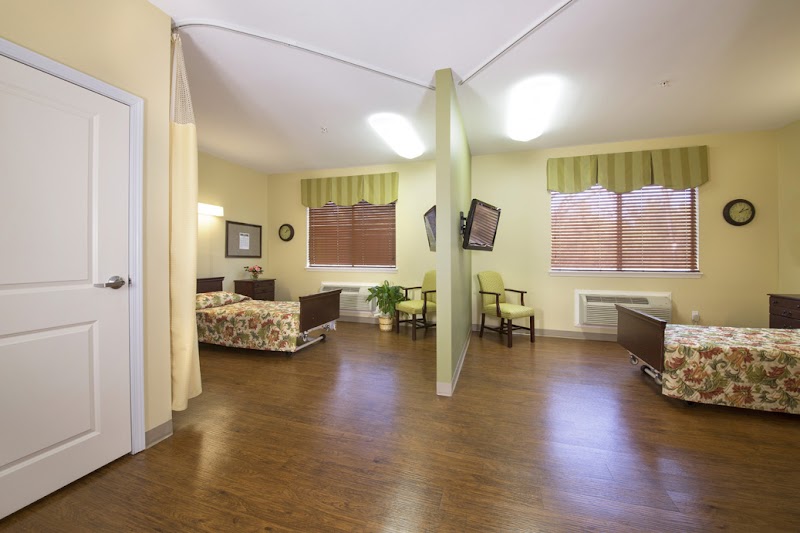
Who Owns and Operates Lake Hamilton Health And Rehab?

LAKE HAMILTON HEALTH AND REHAB is owned by a for-profit company. For-profit facilities operate as businesses with obligations to shareholders or private owners. The facility is operated by CENTRAL ARKANSAS NURSING CENTERS, a chain that manages multiple nursing homes. With 84 certified beds and approximately 75 residents (about 89% occupancy), it is a smaller facility located in HOT SPRINGS, Arkansas.
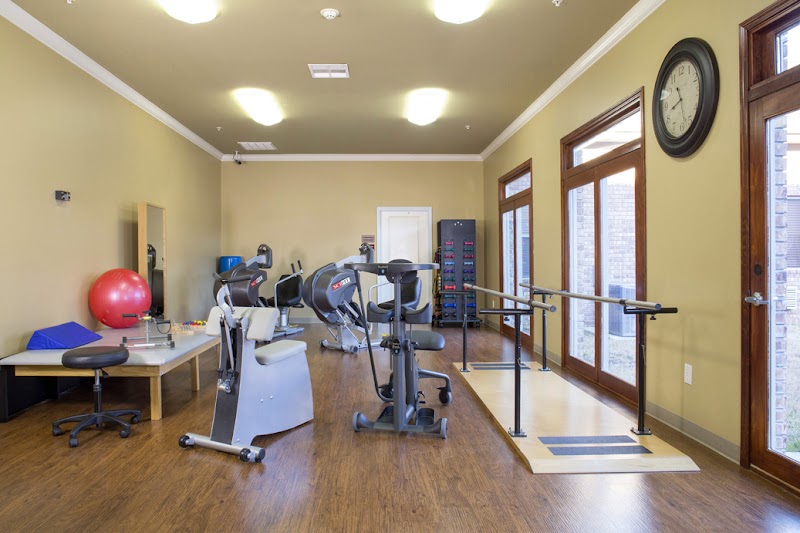
How Does Lake Hamilton Health And Rehab Compare to Other Arkansas Nursing Homes?

Compared to the 100 nursing homes in Arkansas, LAKE HAMILTON HEALTH AND REHAB's overall rating (4 stars) is above the state average of 3.1, staff turnover (54%) is near the state average of 46%, and health inspection rating (3 stars) is at the national benchmark.

What Should Families Ask When Visiting Lake Hamilton Health And Rehab?

Based on this facility's data, families visiting should ask: "Can I visit during a mealtime to observe dining assistance and food quality?" "How do you handle medical emergencies, and what is your hospital transfer rate?" "Can I speak with family members of current residents about their experience?"

Is Lake Hamilton Health And Rehab Safe?

Based on CMS inspection data, LAKE HAMILTON HEALTH AND REHAB has a clean safety record: no substantiated abuse findings (meaning no confirmed cases of resident harm), no Immediate Jeopardy citations (the most serious violation level indicating risk of serious injury or death), and is not on the Special Focus Facility watch list (a federal program monitoring the lowest-performing 1% of nursing homes). The facility has a 4-star overall rating and ranks #1 of 100 nursing homes in Arkansas. While no facility is perfect, families should still ask about staff-to-resident ratios and recent inspection results during their visit.

Do Nurses at Lake Hamilton Health And Rehab Stick Around?

LAKE HAMILTON HEALTH AND REHAB has a staff turnover rate of 54%, which is 7 percentage points above the Arkansas average of 46%. Moderate turnover is common in nursing homes, but families should still ask about staff tenure and how the facility maintains care continuity when employees leave.

Was Lake Hamilton Health And Rehab Ever Fined?

LAKE HAMILTON HEALTH AND REHAB has no federal fines on record. CMS issues fines when nursing homes fail to meet care standards or don't correct problems found during inspections. The absence of fines suggests the facility has either maintained compliance or corrected any issues before penalties were assessed. This is a positive indicator, though families should still review recent inspection reports for the full picture.

Is Lake Hamilton Health And Rehab on Any Federal Watch List?

LAKE HAMILTON HEALTH AND REHAB is not on any federal watch list. The most significant is the Special Focus Facility (SFF) program, which identifies the bottom 1% of nursing homes nationally based on persistent, serious quality problems. Not being on this list means the facility has avoided the pattern of deficiencies that triggers enhanced federal oversight. This is a positive indicator, though families should still review the facility's inspection history directly.