Buena Vista Care Center
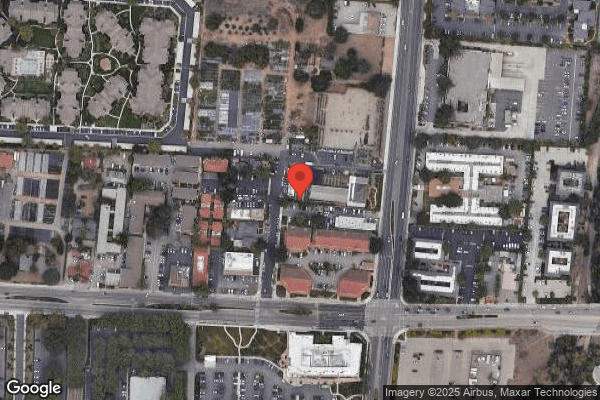
160 South Patterson Avenue, Santa Barbara, CA 93111 (805) 964-4871
For profit - Corporation 150 Beds COVENANT CARE Data: November 2025
Trust Grade
80/100
#30 of 1155 in CA
Last Inspection: January 2025

Within standard 12-15 month inspection cycle. Federal law requires annual inspections.

Overview

Buena Vista Care Center in Santa Barbara, California, has a Trust Grade of B+, indicating it is above average and recommended for families considering care options. It ranks #30 out of 1,155 nursing homes in California, placing it in the top half of facilities statewide, and #2 out of 14 in Santa Barbara County, meaning only one other local option is better. However, the facility's trend is worsening, as the number of reported issues increased from 4 in 2024 to 10 in 2025. Staffing is rated average with a turnover rate of 38%, which matches the state average, and there are currently no fines on record, suggesting compliance with regulations. Unfortunately, there have been some concerning incidents, including dietary staff not wearing required hair restraints during meal preparation, which could pose hygiene risks, and issues with documentation related to residents' emergency treatment wishes that may delay care. Overall, while the facility has strengths such as a strong overall star rating and no fines, families should be aware of these specific concerns.

Trust Score
B+
80/100
In California
#30/1155
Top 2%
Safety Record
Low Risk
No red flags
Inspections
Getting Worse
4 → 10 violations
Staff Stability
○ Average
38% turnover. Near California's 48% average. Typical for the industry.
Penalties
✓ Good
No fines on record. Clean compliance history, better than most California facilities.
Skilled Nurses
⚠ Watch
Each resident gets only 19 minutes of Registered Nurse (RN) attention daily — below average for California. Fewer RN minutes means fewer trained eyes watching for problems.
Violations
⚠ Watch
43 deficiencies on record. Higher than average. Multiple issues found across inspections.
★★★★★
5.0
Overall Rating
★★★☆☆
3.0
Staff Levels
★★★★★
5.0
Care Quality
★★★★☆
4.0
Inspection Score
Stable
2024: 4 issues
2025: 10 issues

The Good

  • 5-Star Quality Measures · Strong clinical quality outcomes
  • Full Sprinkler Coverage · Fire safety systems throughout facility
  • No fines on record
  • Staff turnover below average (38%)

    10 points below California average of 48%

Facility shows strength in quality measures, fire safety.

The Bad

Staff Turnover: 38%

Near California avg (46%)

Typical for the industry

Chain: COVENANT CARE

Part of a multi-facility chain

Ask about local staffing decisions and management

The Ugly 43 deficiencies on record

Aug 2025 1 deficiency
CONCERN (D) 📢 Someone Reported This

A family member, employee, or ombudsman was alarmed enough to file a formal complaint

Potential for Harm - no one hurt, but risky conditions existed

Deficiency F0697 (Tag F0697)

Could have caused harm · This affected 1 resident

**NOTE- TERMS IN BRACKETS HAVE BEEN EDITED TO PROTECT CONFIDENTIALITY** Based on interview and record review, the facility failed to ensure pain management was provided for one of two sampled resident...

Read full inspector narrative →
**NOTE- TERMS IN BRACKETS HAVE BEEN EDITED TO PROTECT CONFIDENTIALITY** Based on interview and record review, the facility failed to ensure pain management was provided for one of two sampled residents (Resident 2).This failure had the potential for Resident 2 and other residents to have unrelieved and/or uncontrollable pain. Findings:During the interview on 8/14/25 at 10:10 a.m. with Resident 2, Resident 2 stated she had her last dose of pain medication on 6/27/25 at noon in the hospital but did not get anything for pain from the nursing home until the next day and was told by a staff that your medication has not arrived yet.Resident 2's health record revealed the following:admission Record (Face Sheet) indicated Resident 2 was admitted on [DATE] with diagnosis of aftercare following joint replacement surgery. The Minimum Data Set (MDS- a tool for assessing the health and functional capabilities of residents in the nursing home) facilities section Cognitive (C) indicated a BIMS (Brief Interview for Mental Status- cognitive screening tool to assess memory and orientation in nursing home residents) score of 15 indicating Resident 2 is cognitively intact. Nurses' notes dated 6/27/25 at 1:20 p.m. indicated Resident 2 was alert and oriented, can understand and be understood when speaking, vocal complaints of pain in left knee described as aching, pain level #3.The physician order summary report indicated pain relieving medication orders of:a. Acetaminophen 325 mg give 2 tablets by mouth every 6 hrs. as needed for mild pain (1-3 on the pain scale)b. Roxicodone 5 mg 1 tablet orally every 4 hours as needed for moderate pain (no pain parameter)c. Roxicodone 5 mg 2 tablets every 4 hours as needed for severe pain (no pain parameter). Medication Administration Record (MAR) dated June 2025 indicated no Acetaminophen or Roxicodone was administered on 6/27/25. However, on 6/28/25 at 5:44 a.m., record indicated Resident 2 received Acetaminophen given at level 4 pain and did not have monitoring for the effectiveness of the drug. During the interview on 8/14/25 at 2:15 p.m. with the Director of Nursing (DON), DON stated that the controlled pain medication (Roxicodone) was available from the facility's secured emergency medication supply storage and confirmed that no pain medication was administered on 6/27/25. During the review of facility's policy and procedure (P&P), titled Recognition and Management of Pain, dated 8/2025, P&P indicated, It is the policy of this facility to ensure that pain management is provided to residents who require such services, consistent with professional standards of practice, the comprehensive person-centered care plan, and the residents' goals and preferences. During the review of facility's policy and procedure (P&P), titled Medication Shortages/ Unavailable Medication, dated 8/2025, P&P indicated a licensed facility nurse should obtain the ordered medication from the Emergency Medication Supply.
May 2025 1 deficiency
CONCERN (D) 📢 Someone Reported This

A family member, employee, or ombudsman was alarmed enough to file a formal complaint

Potential for Harm - no one hurt, but risky conditions existed

Medical Records (Tag F0842)

Could have caused harm · This affected 1 resident

**NOTE- TERMS IN BRACKETS HAVE BEEN EDITED TO PROTECT CONFIDENTIALITY** Based on interview and record review, the facility failed to ensure staff verified the accuracy of a physician's order in one of...

Read full inspector narrative →
**NOTE- TERMS IN BRACKETS HAVE BEEN EDITED TO PROTECT CONFIDENTIALITY** Based on interview and record review, the facility failed to ensure staff verified the accuracy of a physician's order in one of 2 residents' medical record (Resident 1). Resident 1 had an order of NPO (nothing by mouth) and another order was to give medication by mouth. This failure had the potential to place Resident 1 at risk for medication related adverse events and complications. Findings: During Resident 1's review of health records: a. admission record, indicated an initial admission on [DATE], readmission on [DATE] with diagnosis of dysphagia (difficulty swallowing) following cerebral infarction (a blockage of blood supply to the brain). b. An MDS (comprehensive assessment) on swallowing and nutrition dated 3/12/25 indicated Resident 1 had a feeding tube (a way of providing nutritional needs by way of a tube that is connected straight to resident's stomach). c. Physician's order dated 4/4/25 indicated diet order as NPO. d. Medication Administration Record (MAR) dated April 2025 indicated an order of: * Amoxicillin/ Clavulanate 500/125 mg (antibiotic-medication to neutralize bacterial infection in the body) 1 tablet by mouth every 12 hours for 10 days, initialed by licensed nurses from 4/7/25 to 4/17/25. * Cephalexin (antibiotic) tablet 500 mg, give 10 ml by mouth three times a day for two days, initialed by licensed nurses from 4/30/25 to 5/2/25. During the interview on 5/2/25 at 11:45 a.m. with the Assistant Director of Nursing (ADON), ADON stated Resident 1 had an order not to take anything by mouth (NPO). During the interview on 5/2/25 at 12:00 p.m. with Licensed Nurse (LN 1), LN 1 stated that she was administering Resident 1's medications via gastric tube and not as per the written order by mouth but did not clarify the order with the physician. During the interview on 5/2/25 at 12:15 p.m. with the Director of Nursing (DON), DON acknowledged the antibiotic orders were written in error and was not verified in a timely manner.
Mar 2025 1 deficiency
CONCERN (D) 📢 Someone Reported This

A family member, employee, or ombudsman was alarmed enough to file a formal complaint

Potential for Harm - no one hurt, but risky conditions existed

Safe Environment (Tag F0584)

Could have caused harm · This affected 1 resident

Based on observation, interview, and record review the facility failed to maintain a restroom in good repair for one of two sampled residents (Resident 1). This failure had the potential to deny Resid...

Read full inspector narrative →
Based on observation, interview, and record review the facility failed to maintain a restroom in good repair for one of two sampled residents (Resident 1). This failure had the potential to deny Resident 1 with a homelike environment. Findings: During a concurrent observation and interview, on 3/20/25, beginning at 11:55 a.m., with the Housekeeping Supervisor (HS 1) and Maintenance Assistant (MA 1), Resident 1's restroom was toured. Inside the restroom there was peeling paint, and inoperable ceiling fan, a toilet seat partially without its outer coating, and a loose toilet lever. The HS 1 and MA 1 verbalized and confirmed there was peeling paint, an inoperable ceiling fan, a loose toilet lever and a toilet seat the was partially without its outer coating in Resident 1's restroom. The HS 1 verbalized there were no current work orders in the facility's maintenance system for these issues to be addressed by the maintenance department and they needed to be fixed. During a review of the facility's policy titled Preventative Maintenance dated 8/14, indicated in part The Maintenance Department will maintain the facility's physical plant in accordance with the TELS schedule that will serve to provide a safe, functional, and aesthetically pleasing environment .All maintenance will be scheduled, performed and documented in accordance with the facility's department instruction as noted within the TELS.
Mar 2025 2 deficiencies
CONCERN (D) 📢 Someone Reported This

A family member, employee, or ombudsman was alarmed enough to file a formal complaint

Potential for Harm - no one hurt, but risky conditions existed

Comprehensive Care Plan (Tag F0656)

Could have caused harm · This affected 1 resident

**NOTE- TERMS IN BRACKETS HAVE BEEN EDITED TO PROTECT CONFIDENTIALITY** Based on record review and interview the facility failed to implement care plan interventions for 1. Feeding assistance needs fo...

Read full inspector narrative →
**NOTE- TERMS IN BRACKETS HAVE BEEN EDITED TO PROTECT CONFIDENTIALITY** Based on record review and interview the facility failed to implement care plan interventions for 1. Feeding assistance needs for one of three sampled residents (Resident 1). 2. Pressure injury care and prevention for one of three sampled residents (Resident 1). This failure had the potential for Resident 1 to experience weight loss and progression of pressure ulcers. Findings: During a review of the admission record (AR) for Resident 1, dated 2/25/25, the AR indicated Resident 1 was admitted on [DATE] with diagnosis including but not limited to hemiplegia and hemiparesis following cerebral infarction affecting left side (weakness or paralysis following blood flow being blocked in brain causing tissue death), dysphagia (difficulty swallowing), unspecified glaucoma (eye disease causing vision loss). During a review of the facility's policy and procedure titled Care Plan, Comprehensive dated 2008, the policy indicated in part .The care plan is directed toward achieving and maintaining optimal status of health, functional ability, and quality of life and .The individualized care plan is accessible to all caregivers to assure resident specific care information is exchanged and the consistent delivery of care and approaches. During a review of the facility's policy and procedure titled Documentation in Medical Record dated 1/20/2024, the policy indicated in part .Each residents medical record shall contain an accurate representation of the actual experiences of the resident and include enough information to provide a picture of the resident's progress through complete, accurate, and timely documentation and .1. Licensed staff and interdisciplinary team members shall document all assessments, observations, and services provided in the resident's medical record in accordance with state law and facility policy. 2. Documentation shall be completed at the time of service, but no later than the shift in which the assessment, observation, l or care service occurred. 1. During a review of the Nutritional Risk Assessment (NRA) for Resident 1, dated 10/3/24, the NRA indicated in part .biting/chewing difficulties, requires full feeding assistance, goal to consume 70-80% meal intake. During a review of the Care Plan Report (CP) for Resident 1, dated 9/29/24, the CP indicated in part .Focus: Self-care deficit as evidenced by: Needs assistance with ADLs (activities of daily living) related to CVA (cardiovascular accident), weakness. Intervention/Tasks: Eating dependent. During a review of the CP for Resident 1, dated 10/3/24, the CP indicated in part .Focus: Altered nutrition . Goal: Encourage 70-80% meal intake. During a concurrent interview and record review on 3/7/25 at 1:24 pm with the director of nursing (DON), the Documentation Survey Report (DSR) dated December 2024, for Resident 1 was reviewed. The DSR indicated Meal intake percentages for three meals daily for Resident 1. The DSR has no meal intake amount and no signature of staff on 12/5/24 and 12/19/24 at 1:00pm. There is no meal intake amount and no staff signature on 12/18/24 at 6;00 pm. The DON agreed that the DSR is missing this information and should be documented if done. 2. During a review of the Wound Assessment Report (WAR) for Resident 1, dated 12/4/24, the WAR indicated in part . Location: Heel, Length 5.00cm, Width 4.00cm, Depth 0.10cm, etiology: Pressure Injury. During a review of the Wound Assessment Report (WAR) for Resident 1, dated 12/4/24, the WAR indicated in part . Location Sacro coccyx, Length 1.00cm, Width: 050cm, Depth 0.30cm, etiology: Pressure Injury. During a review of the CP for Resident 1, dated 9/29/24, the CP indicated in part .Focus: Potential for impaired skin integrity related to fragile skin . Interventions/Tasks: Pressure redistribution mattress to bed, Pressure redistribution cushion-wheelchair. During a concurrent interview and record review on 3/7/25 at 1:24 pm with the director of nursing (DON), the Documentation Survey Report (DSR) dated December 2024 and January 2025, for Resident 1 was reviewed. The DSR indicated Pressure Redistribution Device presence for day, evening, and overnight shifts daily for Resident 1. The DSR for December 2024 has no indicator of presence or staff signature on day shift 12/19/24, evening shift 12/18/24, and overnight shift 12/1/24, 12/4/24, and 12/6/24. The DSR for January 2025 has no indicator of presence or staff signature on the overnight shift on 1/8/25, 1/11/25, 1/15/25, 1/17/25, 1/20/25, and 1/24/25. The DON agreed that the DSR is missing this information and should be documented if done.
CONCERN (D) 📢 Someone Reported This

A family member, employee, or ombudsman was alarmed enough to file a formal complaint

Potential for Harm - no one hurt, but risky conditions existed

Safe Environment (Tag F0921)

Could have caused harm · This affected 1 resident

Based on observation, interview, and record review the facility failed to position a wound vacuum pump in accordance with manufacturer guidance for 1 sampled Resident (Resident 1). This failure had th...

Read full inspector narrative →
Based on observation, interview, and record review the facility failed to position a wound vacuum pump in accordance with manufacturer guidance for 1 sampled Resident (Resident 1). This failure had the potential to cause a tripping hazard to residents, staff, or visitors as well as a risk of disconnecting the device upon tripping. Findings: During a review of the Order Summary Report (OSR) dated 3/7/25, the OSR indicated an order for Resident 1 dated 3/6/25 for Dressing 1- Apply to wound location: sacrum clean with normal saline pat dry primary dressing; apply the following to the wound bed, NPWT (Negative Pressure Wound Therapy) green sponge, secondary dressing: NPWT drape tertiary dressing 125mm Hg continuous/intermittent therapy every day shift every Thursday, Sunday for pressure ulcer. During an observation on 3/7/25 at 11:29 am in Resident 1's room, the NPWT device's pump which is connected to a power adapter, extension cord and a tube that connects to the wound dressing on Resident 1 is observed sitting on the floor next to Resident 1's bed. There are multiple cables and a tube that come in direct contact with my feet as I stand at bedside. During a review of the Manufacturers Guidance titled (Brand Name) Negative Pressure Wound Therapy System, revised 10/6/21, indicated in part .Position the (Brand Name) Negative Pressure Wound Therapy System and tubing appropriately to avoid the risks of causing a trip hazard. Whenever possible, the device and system tubing should be positioned level with or below the wound. During an interview on 3/7/25 at 12:11 pm with the director of nursing (DON), DON agreed the wound vacuum located on the floor could cause a risk of tripping and or disconnection.
Jan 2025 5 deficiencies
CONCERN (D)

Potential for Harm - no one hurt, but risky conditions existed

Deficiency F0554 (Tag F0554)

Could have caused harm · This affected 1 resident

Based on observation, interview, record review, and facility policy review, the facility failed to assess 1 (Resident #129) of 24 sampled residents for the ability to self-administer their medication(...

Read full inspector narrative →
Based on observation, interview, record review, and facility policy review, the facility failed to assess 1 (Resident #129) of 24 sampled residents for the ability to self-administer their medication(s). Findings included: A facility policy titled, Self-Administration of Medication, dated 2008, indicated, It is the policy of this facility to allow residents who request self-administration of medication to do so if the facility Interdisciplinary Team has determined that resident is capable of doing so in a safe manner that does not present a risk to other residents of the facility. Per the policy, 2. If the resident expresses a desire to self-administer their medications, or a physician orders self-administration, the facility will not allow the resident to self-administer meds until the following procedures are done: a. A Licensed Nurse will complete the Self-Administration Assessment Review which includes the resident's physical and cognitive ability to safely administer and store their medication(s). b. The assessment will then be routed to the Director of Nursing/designee to review with the Interdisciplinary Team (IDT) for approval. c. The IDT will re-assess the resident to verify they are still able to self-administrate medications quarterly. The resident will do a returned demonstration to the IDT to show they are able to perform this task. An admission Record revealed the facility admitted Resident #129 on 12/31/2024. According to the admission Record, the resident had a medical history that included diagnoses of Parkinson's disease and type 2 diabetes mellitus. An admission Minimum Data Set (MDS), with an Assessment Reference Date (ARD) of 01/05/2025, revealed Resident #129 had a Brief Interview for Mental Status (BIMS) score of 14, which indicated the resident had intact cognition. Resident #129's Order Summary Report, revealed an order dated 12/31/2024, for a multivitamin oral tablet, give one tablet by mouth one time day for a supplement. Resident #129's medical record revealed no evidence to indicate the resident was able to self-administer their medication(s). During an observation on 01/14/2025 at 10:03 AM and 01/15/2025 at 12:19 PM, the surveyor noted a bottle of multivitamins on Resident #129's bedside table. During a concurrent observation and interview on 01/14/2025 at 10:03 AM, the surveyor noted a bottle of multivitamins on Resident #129's bedside table. Resident #129 stated they took the multivitamin because they were all natural and organic. Resident #129 stated the facility had not assessed them to be able to self-administer their own medications. Resident #129 stated the facility prescribed and administered vitamins in addition to their own once-a-day multivitamin. Resident #129 stated they did want to continue to self-administer their personal multivitamin. During a concurrent observation and interview on 01/16/2025 at 9:37 AM, Licensed Vocational Nurse (LVN) #3 stated that Resident #129 had not been assessed to self-administer medications and that she administered the resident their medications. LVN #3 observed the bottle of multivitamins on the resident's bedside table, picked up the bottle, and verbally verified the label was for a multivitamin. LVN #3 stated the resident was not permitted to have the multivitamin in their room. In an interview on 01/16/2025 at 9:49 AM, the Director of Nursing (DON) stated Resident #129 had not been assessed to self-administer medications. The DON stated that the resident did have an order for a multivitamin. Per the DON, Resident #129 needed a self-administration assessment and a physician's order, if they wanted to keep the medication to be kept at their bedside. In an interview on 01/16/2025 at 2:37 PM, the Administrator stated her expectations for nursing staff were to get an order for self-administration for the resident and then the resident needed to keep the medications secure in a bedside drawer.
CONCERN (D)

Potential for Harm - no one hurt, but risky conditions existed

Assessment Accuracy (Tag F0641)

Could have caused harm · This affected 1 resident

Based on interview, record review, and facility policy review, the facility failed to ensure the accuracy of the Minimum Data Set (MDS) for 1 (Resident #16) of 24 sampled residents. Findings included...

Read full inspector narrative →
Based on interview, record review, and facility policy review, the facility failed to ensure the accuracy of the Minimum Data Set (MDS) for 1 (Resident #16) of 24 sampled residents. Findings included: A facility policy titled, MDS Standard of Practice, dated 01/2024, specified, It is the practice of this facility to conduct accurate coding and delivery of services provided to capture accurate assessment of each resident's functional capacity and health status as per CMS [Centers for Medicare & Medicaid] RAI [Resident Assessment Instrument] MDS 3.0 Manual guidelines. An admission Record indicated the facility admitted Resident #16 on 11/25/2024. According to the admission Record, the resident had a medical history that included diagnoses of neurofibromatosis (a condition that caused tumors to form in the brain, spinal cord, and nerves) and encounter for palliative care. A significant change in status MDS, with an Assessment Reference Date (ARD) of 12/31/2024, revealed Resident #16 had a Brief Interview for Mental Status (BIMS) score of 10, which indicated the resident had moderate cognitive impairment. The MDS revealed the resident did not receive hospice care. Resident #16's care plan included a focus area initiated 12/17/2024 that indicated the resident received hospice services related to the diagnosis of neurofibromatosis. Resident #16's Order Recap Report for the time frame 11/01/2024 to 01/31/2024, revealed an order dated 12/20/2024, to admit to hospice. During an interview on 01/16/2025 at 12:22 PM, the MDS Coordinator stated the accuracy of the MDS was important because it reflected the resident's status and drove the care plan. She stated the significant change in status MDS was done for Resident #16 due to the resident being placed on hospice services. The MDS Coordinator reviewed the MDS and confirmed that hospice was not coded on the MDS but stated it should have been. Per the MDS Coordinator, she would have to do a modification of the assessment to accurately reflect the resident being on hospice services. The MDS Coordinator stated it was an oversight. During an interview on 01/17/2025 at 10:36 AM, the Director of Nursing (DON) stated it was important for the MDS to be accurate for reimbursement and it made sure the facility identified and met the resident's needs. The DON stated the MDS Coordinator was responsible for the accuracy of the MDS. During an interview on 01/17/2025 at 10:50 AM, the Administrator stated the MDS needed to be accurate because it triggered the quality measures that initiated the care plan. The Administrator stated the person who completed the specific section of the MDS was responsible to ensure it was accurate, and the MDS Coordinator should do a second check.
CONCERN (D)

Potential for Harm - no one hurt, but risky conditions existed

Deficiency F0645 (Tag F0645)

Could have caused harm · This affected 1 resident

Based on interview, record review, and facility policy review, the facility failed to ensure resubmit a new Level I screening when 1 (Resident #22) of 2 sampled residents reviewed for preadmission scr...

Read full inspector narrative →
Based on interview, record review, and facility policy review, the facility failed to ensure resubmit a new Level I screening when 1 (Resident #22) of 2 sampled residents reviewed for preadmission screening and resident review (PASARR) remained in the facility on the 31st day. Findings included: A facility policy titled, Resident Assessment-Coordination with PASARR Program, revised 05/2024, revealed, This facility coordinates assessments with the preadmission screening and Resident review program under Medicaid to ensure that individuals with a mental disorder [MD], intellectual disability [ID], or a related condition receives care and services in the most integrated setting appropriate to their needs. The policy specified, 5. If a resident who was not screened due to an exception above and the Resident remains in the facility longer than 30 days: a. The facility should screen the individual using the State's Level I screening process and refer any Resident who has or may have MD, ID or a related condition to the appropriate state- designated authority for Level II PASARR evaluation and determination. An admission Record revealed the facility admitted Resident #22 on 09/20/2022. According to the admission Record, the resident had a medical history including diagnoses of depression and anxiety disorder. An annual Minimum Data Set (MDS), with an Assessment Reference Date (ARD) of 09/20/2024, revealed Resident #22 had a Brief Interview for Mental Status (BIMS) score of 14, which indicated the resident had intact cognition. A letter from the State of California - Health and Human Services Agency Department of Health Care Services, dated 09/20/2022, revealed if Resident #22 remained in the facility longer than 30 days, the facility should resubmit a new Level I screening as a resident review of the 31st day. Resident #22's medical record revealed no evidence a new Level I screening was completed when the resident remained in the facility 30 days after 09/20/2022. During an interview on 01/16/2025 at 10:53 AM, the Assistant Director of Nursing stated was not aware Resident #22 required a new Level I screening. During an interview on 01/17/2025 at 9:07 AM, the Director of Nursing stated that after Resident #22 remained in the facility after 30 days, the facility should have resubmitted a Level I screening. During an interview on 01/17/2025 at 10:24 AM, the Administrator stated a Level I Screening should have been completed after the resident's 31st day in the facility.
CONCERN (D)

Potential for Harm - no one hurt, but risky conditions existed

Deficiency F0761 (Tag F0761)

Could have caused harm · This affected 1 resident

Based on observation, interview, and record review, the facility failed to ensure medications were stored properly for 1 (Resident #129) of 24 sampled residents. Findings included: An admission Recor...

Read full inspector narrative →
Based on observation, interview, and record review, the facility failed to ensure medications were stored properly for 1 (Resident #129) of 24 sampled residents. Findings included: An admission Record revealed the facility admitted Resident #129 on 12/31/2024. According to the admission Record, the resident had a medical history that included diagnoses of Parkinson's disease and type 2 diabetes mellitus. An admission Minimum Data Set (MDS), with an Assessment Reference Date (ARD) of 01/05/2025, revealed Resident #129 had a Brief Interview for Mental Status (BIMS) score of 14, which indicated the resident had intact cognition. Resident #129's Order Summary Report, revealed an order dated 12/31/2024, for a multivitamin oral tablet, give one tablet by mouth one time day for a supplement. During an observation on 01/14/2025 at 10:03 AM and 01/15/2025 at 12:19 PM, the surveyor noted a bottle of multivitamins on Resident #129's bedside table. During a concurrent observation and interview on 01/14/2025 at 10:03 AM, the surveyor noted a bottle of multivitamins on Resident #129's bedside table. Resident #129 stated they took the multivitamin because they were all natural and organic. During a concurrent observation and interview on 01/16/2025 at 9:37 AM, Licensed Vocational Nurse (LVN) #3 observed the bottle of multivitamins on the resident's bedside table, picked up the bottle, and verbally verified the label was for a multivitamin. LVN #3 stated the resident was not permitted to have the multivitamin in their room. In an interview on 01/16/2025 at 2:37 PM, the Administrator stated she expected the nursing staff to secure medication storage. Per the Administrator, after the resident has been assessed to self-administer their medication, she expected the medications to be secured in their bedside drawer.
CONCERN (F)

Potential for Harm - no one hurt, but risky conditions existed

Food Safety (Tag F0812)

Could have caused harm · This affected most or all residents

Based on observation, interview, and facility policy review, the facility failed to ensure hair restraints were worn for dietary staff during meal service. This deficient practice had the potential to...

Read full inspector narrative →
Based on observation, interview, and facility policy review, the facility failed to ensure hair restraints were worn for dietary staff during meal service. This deficient practice had the potential to affect all residents who received food from the kitchen. Findings included: A facility policy titled, Personnel Sanitation Standards, effective 02/2024, revealed, 1. In addition to employee personnel policies, food and dining personnel will be required to adhere to the following sanitary standards: a. hair must be restrained or covered (via hat or hair net). During an observation on 01/15/2025 at 11:11 AM, [NAME] #5 prepared sandwiches and did not wear facial restraint. During an observation on 01/15/2025 at 12:00 PM, [NAME] #4 and [NAME] #5 both had facial hair and were not wearing a facial restraint when they were observed plating the lunch meal for residents. During an interview on 01/15/2025 at 1:23 PM, [NAME] #5 stated the facility did not require him to wear facial restraints because he did not believe his facial hair was long. During an interview on 01/15/2025 at 1:30 PM, [NAME] #4 stated he did have facial hair; however, the facility did not require him to wear a facial restraint. During an interview on 01/15/2025 at 1:38 PM, the Registered Dietician stated [NAME] #4 and [NAME] #5 should have worn facial restraints. During an interview on 01/16/2025 at 1:21 PM, the Dietary Manager (DM) stated the facility policy and procedures were not very clear about the use of hair restraints. The DM stated [NAME] #4 and [NAME] #5 did not require facial restraints as facial restraints were only required if the staff members' facial hair was over a half inch in length. The DM stated he did not know how long [NAME] #4's and [NAME] #5's facial hair was. During an interview on 01/17/2025 at 10:15 AM, the Administrator stated facial restraints should be worn in the kitchen.
Aug 2024 1 deficiency
CONCERN (D) 📢 Someone Reported This

A family member, employee, or ombudsman was alarmed enough to file a formal complaint

Potential for Harm - no one hurt, but risky conditions existed

Notification of Changes (Tag F0580)

Could have caused harm · This affected 1 resident

**NOTE- TERMS IN BRACKETS HAVE BEEN EDITED TO PROTECT CONFIDENTIALITY** Based on interview and record review, the facility failed to notify the responsible party (RP) after a fall incident for one of ...

Read full inspector narrative →
**NOTE- TERMS IN BRACKETS HAVE BEEN EDITED TO PROTECT CONFIDENTIALITY** Based on interview and record review, the facility failed to notify the responsible party (RP) after a fall incident for one of two sampled residents (Resident 1). This failure had the potential to eliminate RP's participation in the development and implementation of Resident 1's person-centered plan of care. Findings: During a review of Resident 1's medical records, Resident 1's medical records indicated, Resident 1 was admitted to the facility on [DATE] with primary diagnosis of general muscle weakness on the right side of the body following a cerebral infarction (condition where the blood flow to some part of the brain is blocked causing brain tissue to die).Resident 1's BIMS (Brief Interview for Mental Status- a tool used to screen and identify cognitive condition of residents upon admission into a long-term care facility) score of 14, indicated Resident 1 has intact cognition. Per Resident 1's history and physical, the physician determined Resident 1 had the mental capacity to make healthcare decisions. The admission record, indicated Resident 1's niece was designated as the decision maker or RP. During a concurrent observation and interview on 8/7/24 at 2:00 p.m., with Resident 1, Resident 1 was observed in room (108 C) sitting on a wheelchair, alert and oriented, pleasant, and cooperative; and stated that a doctor's order to go out on pass (OOP) from the facility is in place. Resident 1 further stated that there was no accident in the past while OOP but remembered falling from wheelchair to the bed from a wrong turn in July and had minor scratch on right arm and right knee. During a concurrent interview and record review on 8/7/24 at 2:30 p.m., with Licensed Nurse 1 (LN 1), Resident 1's fall incident report, dated 7/28/24 was reviewed. The incident report indicated that Resident 1 had unwitnessed fall on 7/28/24 at 5:10 p.m. when missing a turn and lost balance during her self-transfer from wheelchair to bed. It also indicated Resident 1 had skin tear on the right elbow when found by a staff on the floor. The physician was notified but there was no notification made to the RP. LN 1 confirmed there was no notification made to the RP listed in Resident 1's record. During the interview on 8/7/24 at 2:45 p.m. with the administrator (ADM), the ADM stated there was probably verbal information relayed to the RP, but it was not in the documentation. During a review of Resident 1's Power of Attorney (POA), dated April 2, 2024, the POA indicated, My Agent shall have full power and authority to act on my behalf. This power and authority shall authorize my agent to manage and conduct all of my affairs and to exercise all of my legal rights and powers, including all rights and powers that I may acquire in the future. My Agent's powers shall include, but not be limited to, the power to .have access to my healthcare and medical records and statements regarding billing, insurance, and payments. During a review of the facility's policy and procedure (P&P) titled, Promoting the Right of Self-Determination for Healthcare Decisions and Advanced Healthcare Directives, dated Nov. 2016, the P&P indicated in the definition that resident representative was, (1) An individual chosen by the resident to act on behalf of the resident in order to support the resident indecision-making; access medical, social or other personal information of the resident; manage financial matters; or receive notifications; (2) A person authorized by State or Federal law (including but not limited to agents under power of attorney, representative payees, and other fiduciaries) to act on behalf of the resident in order to support the resident in decision-making; access medical, social or other personal information of the resident; manage financial matters; or receive notifications.
Apr 2024 1 deficiency
CONCERN (D) 📢 Someone Reported This

A family member, employee, or ombudsman was alarmed enough to file a formal complaint

Potential for Harm - no one hurt, but risky conditions existed

Resident Rights (Tag F0550)

Could have caused harm · This affected 1 resident

**NOTE- TERMS IN BRACKETS HAVE BEEN EDITED TO PROTECT CONFIDENTIALITY** Based on record review and interview, the facility failed to assist one of two sampled residents (Resident 1) in making an outsi...

Read full inspector narrative →
**NOTE- TERMS IN BRACKETS HAVE BEEN EDITED TO PROTECT CONFIDENTIALITY** Based on record review and interview, the facility failed to assist one of two sampled residents (Resident 1) in making an outside appointment, per a prescriber's order. This facility failure had the potential to result in a delay of care for Resident 1. Findings: During a review of Resident 1's admission Record undated, indicated in part, Resident 1 was admitted to the facility on [DATE], and discharged on 11/16/23. During a review of Resident 1's Order Summary Report undated, indicated in part, an order dated 11/1/23, for Cataract (a medical condition which can cause blurry vision) evaluation by to [outside facility name] Ophthalmology clinic. During an interview on 4/15/24, starting at 3:48 p.m., with the Administrator (Admin 1), the Admin 1 confirmed the facility could not provide documentation indicating facility staff had attempted to make Resident 1's cataract evaluation/ophthalmology appointment prior to Resident 1 being discharged from the facility. During a review of the Job Description/Performance Evaluation form, for the job position of Social Services Assistant, dated 11/13/17, indicated in part, Key/ Essential Duties . Coordinates and sets up appointments including Dental, Podiatrist, Ophthalmologist, Psychiatrist. During a review of the facility's policy and procedure titled Resident Rights dated 10/22, indicated in part, The resident has the right to a dignified existence, self-determination, and communication with and access to persons and services inside and outside the facility.
Apr 2024 1 deficiency
CONCERN (D) 📢 Someone Reported This

A family member, employee, or ombudsman was alarmed enough to file a formal complaint

Potential for Harm - no one hurt, but risky conditions existed

Deficiency F0568 (Tag F0568)

Could have caused harm · This affected 1 resident

**NOTE- TERMS IN BRACKETS HAVE BEEN EDITED TO PROTECT CONFIDENTIALITY** Based on observation, interview, and record review the facility failed to maintain a system for a full and complete accounting a...

Read full inspector narrative →
**NOTE- TERMS IN BRACKETS HAVE BEEN EDITED TO PROTECT CONFIDENTIALITY** Based on observation, interview, and record review the facility failed to maintain a system for a full and complete accounting and management of personal funds entrusted to the facility, for one of three sampled residents (Resident 1). This failure had the potential for misappropriation of Resident 1's personal funds. Findings: Resident 1 was admitted to the facility on [DATE] with primary diagnosis of multiple fractures in right ribs related to fall per the the facility's Face Sheet . Resident 1's medical record titled, Order Summary dated 11/10/23 indicated, Resident 1 as having the capacity to make own healthcare decisions. In addition, Resident 1's Minimum Data Set (MDS, an assessment tool) dated 2/17/24, indicated a Brief Interview of Mental Status (BIMS, an assessment of the resident's ability to remember and reason) score of 15 (13-15 cognitively intact) indicated Resident 1 as having intact cognition. During a concurrent observation and interview on 3/27/24 at 11:45 a.m., in the dining room, Resident 1 was observed to be alert and oriented to time, place, person, and orientation, pleasant and cooperative, and agreed for an interview. Resident 1 stated she left money amounting to $300 to the facility's Social Services Assistant (SSA) to assist in purchasing items from the facility or from the outside store. Resident 1 stated there was no signed agreement regarding her personal funds left in the care of the facility and denies getting any accounting statement. During a concurrent observation and interview on 3/27/24 at 12:00 p.m., at the social services office, the SSA was observed getting from a locked safety deposit a transparent plastic bag with money and receipts inside. SSA stated that was Resident 1's money, and there was no accounting and statement related to Resident 1's funds. During the interview on 3/27/24 at 12:10 p.m., with Director of Social Services (DSS), DSS stated that there was no system to account for the cash that Resident 1 had left in their care. During the interview on 3/27/24 at 12:15 p.m., with the Administrator (ADM), ADM stated they only have accounting on trust funds by some residents but not on cash left by residents in the facility. During a review of facility policy and procedure (P&P), titled Resident Trust California, dated 9/24/19, indicated, .resident may request that the facility manage some or all their personal funds, signed receipts for all personal funds received from the residents, and full accounting of all disbursements made to or on behalf of the resident.
Jan 2024 1 deficiency
CONCERN (D) 📢 Someone Reported This

A family member, employee, or ombudsman was alarmed enough to file a formal complaint

Potential for Harm - no one hurt, but risky conditions existed

Comprehensive Care Plan (Tag F0656)

Could have caused harm · This affected 1 resident

Based on interview and record review, the facility failed to ensure a care plan regarding impaired skin integrity was implemented for the care of one of two sampled residents (Resident 1) when: 1. Res...

Read full inspector narrative →
Based on interview and record review, the facility failed to ensure a care plan regarding impaired skin integrity was implemented for the care of one of two sampled residents (Resident 1) when: 1. Resident 1 had a fall on 11/6/23, and acquired a skin tear to the right knee, and a wound assessment was not done. 2. Resident 1 had a fall on 11/14/23, the wound condition had changed, and a wound assessment was not done. These failures may have contributed to Resident 1 receiving antibiotics at the hospital when being treated for right lower leg cellulitis (bacterial skin infection). Findings: 1. During a review of Resident 1's Care Plan, dated 11/4/23, the care plan indicated, Resident 1 had impairment to skin integrity: skin tear to right lower leg. Resident 1's goals: will have no complications from skin integrity issues. Resident 1's interventions: monitor/document location, size, and treatment of skin injury; report abnormalities, failure to heal, signs and symptoms of infection, maceration etc., to the physician. During a review of Resident 1's SBAR (a form filled out for change in condition) - Fall Report Incident, dated 11/6/23 at 9:45 p.m., the SBAR indicated, Resident 1 was found on the floor, in the bathroom, and had a skin tear to the right knee. The report further indicated, to complete a wound assessment for items with asterisks (*). The box for skin tears was checked and had an asterisk (*). Further review of Resident 1's record had no documentation of a wound assessment on 11/6/23. During a concurrent interview and record review on 12/22/23 at 12:01 p.m. with the director of nursing (DON), Resident 1's SBAR-Fall Report Incident, dated 11/6/23 was reviewed. When asked if a wound assessment had been done on Resident 1 after falling and acquiring a right knee skin tear, the DON verbalized could not find a wound assessment on 11/6/23 for Resident 1's skin tear. When asked how often a wound assessment should be done, the DON verbalized wound assessments should be completed when there is a new wound, weekly assessments for an existing wound, and when there is a change to the condition of the wound. The DON acknowledged the wound assessment had not been done for the right knee skin tear and further acknowledged the care plan was not followed. During a review of facility's policy and procedure (P&P) titled, Comprehensive Care Plans, dated 9/11/19, the P&P indicated in part, It is the policy of this facility to develop and implement a comprehensive person-centered care plan for each resident, consistent with resident rights, that includes measurable objectives and timeframes to meet a resident's medical, nursing, and mental and psychosocial needs that are identified in the resident's comprehensive assessment . 6. The comprehensive care plan will include measurable objectives and timeframes to meet the resident's needs as identified in the resident's comprehensive assessment . the objectives will be utilized to monitor the resident's progress . alternative interventions will be documented, as needed . 8. Qualified staff responsible for carrying out interventions specified in the care plan will be notified of their roles and responsibilities for carrying out the interventions, initially and when changes are made . 2. During a review of Resident 1's Care Plan, dated 11/4/23, the care plan indicated, Resident 1 had impairment to skin integrity: skin tear to lower leg. Resident 1's goals: will have no complications from skin integrity issues. Resident 1's interventions: monitor/document location, size, and treatment of skin injury; report abnormalities, failure to heal, signs and symptoms of infection, maceration etc., to the physician. During a review of Resident 1's SBAR- Fall Report Incident, dated 11/14/23 at 2:45 a.m., indicated, Resident 1 was trying to get up from the wheelchair, did not call for assistance, and fell on her buttocks to the floor, and indicated no injuries noted. Further review of the fall report, under the Post Fall Note 1 section, on the evening shift, on 11/14/23 around 10:03 p.m., indicated, Resident 1 had 9/10 pain, acute pain appears related to fall. Resident 1 has open wounds to the right lower leg, wounds are weeping, redness, and severe tenderness. Further review of Resident 1's record had no documentation of a wound assessment on 11/14/23. During a concurrent interview and record review on 12/22/23 at 12:15 p.m. with the director of nursing (DON), Resident 1's SBAR-Fall Report Incident, dated 11/14/23 was reviewed. When asked if a wound assessment had been done on Resident 1, after the wounds to the right lower leg had changed, the DON verbalized could not find a wound assessment on 11/14/23 for Resident 1's wounds. When asked if a wound assessment should have been done, the DON verbalized if the nurse thinks the wound condition has changed and has become worse, then the nurse should have done a wound assessment. The DON acknowledged the wound assessment for Resident 1 was not done on 11/14/23. During a review of facility's policy and procedure (P&P) titled, Wound Treatment Management, dated 10/19/19, the P&P indicated in part, To promote wound healing of various types of wounds, it is the policy of this facility to provide evidenced -based treatments in accordance with current standards of practice and physicians orders . 5. Treatment decisions will be based on: a. Etiology of the wound . b. Characteristics of the wound: ii size-including shape, depth, . iii Volume and characteristics of exudate (drainage) . iv presence of pain . v presence of infection . vi condition of wound bed . vii condition of peri-wound . c. location of wound . 8. The effectiveness of treatments will be monitored through ongoing assessment of the wound . characteristics for needed modifications include: a. lack of progress towards healing .b. changes in the characteristics of the wound . During a review of Resident 1's Emergency Department Provider Note, dated 11/16/23 at 6:23 p.m., the note indicated in part, Resident 1 was brought into the emergency department (ED) with a past medical history of hypertension (high blood pressure) hyperlipidemia (high blood cholesterol) and Alzheimer disease (progressive disease that destroys memory and mental function), by the daughter from the skilled nursing facility for altered mental status. Review of systems: Skin positive for wound. Wounds on the right anterior leg .bruise to mid left posterior chest, around ribs 7-8 .cast on left leg, below knee. During a review of Resident 1's Hospital Physician Orders, dated 11/17/23, the orders indicated, Resident 1 was given Rocephin 2 gram IV (intravenous). During a review of Resident 1's Hospital Physician Progress Note, dated 11/26/23, indicated in part, Resident 1 had wounds to the skin from 11/17/23; skin tear anterior right lower leg, multiple skin tears, abrasions and redness; Resolved right lower leg cellulitis (bacterial skin infection); completed antibiotic therapy.
Dec 2023 1 deficiency
CONCERN (D) 📢 Someone Reported This

A family member, employee, or ombudsman was alarmed enough to file a formal complaint

Potential for Harm - no one hurt, but risky conditions existed

Safe Environment (Tag F0584)

Could have caused harm · This affected 1 resident

Based on observation, interview, and record review, the facility failed to adequately maintain two shower rooms in good repair. This facility failure had the potential for residents not to experience ...

Read full inspector narrative →
Based on observation, interview, and record review, the facility failed to adequately maintain two shower rooms in good repair. This facility failure had the potential for residents not to experience a homelike environment. Findings: During an interview on 12/14/23, at 1:30 p.m., with resident (Resident 1), Resident 1 verbalized the shower room was in a state of disrepair and the shower head was leaking. During a concurrent observation, and interview, on 12/19/23, starting at 1:28 p.m., the facility's shower rooms were toured with the Maintenance Director (MD 1). In one shower room, located on the A side of the facility, a plastic bag was observed tied to a shower handle. When asked why a plastic bag was tied to the shower handle, the MD 1 verbalized the plastic bag was tied to the shower handle due to the shower handle leaking water, when in use. The MD 1 further verbalized the shower handle needed a new gasket and confirmed it needed to be fixed. In another shower room, located on the B side of the facility, exposed plumbing was sticking out from the wall. The MD 1 confirmed the exposed plumbing and could not speak to how long it had been like that. The MD 1 verbalized it needed to be fixed with a new cover. During a review of the facility's policy and procedure tiled Preventative Maintenance dated 8/14, indicated in part Regularly scheduled maintenance tasks performed to ensure that each facility's department and the individual items classified as part of it, are maintained in a safe, functional and aesthetically acceptable condition.
Jun 2023 3 deficiencies
CONCERN (D) 📢 Someone Reported This

A family member, employee, or ombudsman was alarmed enough to file a formal complaint

Potential for Harm - no one hurt, but risky conditions existed

Deficiency F0558 (Tag F0558)

Could have caused harm · This affected 1 resident

Based on observation, interview, and record review, the facility failed to ensure two out of four sampled residents (Resident 2 and Resident 3) had wheelchairs that were in safe operating condition wh...

Read full inspector narrative →
Based on observation, interview, and record review, the facility failed to ensure two out of four sampled residents (Resident 2 and Resident 3) had wheelchairs that were in safe operating condition when: 1. Resident 2's wheelchair back support was broken. 2. Resident 3's wheelchair leg and foot supports were missing, and the seat was torn. The facility failed to meet the residents personal, mental, and physical needs and failed to maintain independent functioning, dignity, and well-being for Resident 2 and Resident 3. Findings: 1. During a review of Resident 2's admission Record dated 4/12/21 .indicated Resident 2 has end stage renal disease, dependent on renal dialysis, had acute infarction (a stroke), and paraplegia (paralysis of the legs and lower body typically caused by spinal injury). During a review of Resident 2's MDS (Minimum Data Set-comprehensive assessment of each resident's functional capabilities and helps nursing home staff identify health problems) dated 3/4/23, the MDS indicated Section G- functional status: functional limitation in range of motion: lower extremity impairment on both sides and uses a wheelchair. During a concurrent observation and interview on 4/20/23, at 9:20 a.m. with Resident 2, in Resident 2's room, Resident 2 verbalized her wheelchair was in bad condition. Resident 2 verbalized the administrator was aware and is waiting for a new wheelchair. Resident 2 verbalized it has been broken since last November of 2022. Resident 2 verbalized the back support is broken and stated, I don't feel safe traveling to and from dialysis, 3 days a week, in a broken wheelchair . Resident 2 further verbalized liked going to bingo on Saturdays and stated, I can't go to bingo with a broken wheelchair, it is not safe to use, and further stated, I miss going to bingo. Resident 2's wheelchair was observed being stored in the bathroom. The wheelchair's back support was observed to be loose, and the metal support rods were not holding the back support in place, it appeared to be broken. During an interview on 4/20/23, at 12:30 p.m., with the administrator (Admin 1), Admin 1 acknowledged Resident 2's wheelchair was broken and needed a new one. Admin 1 verbalized ordering a wheelchair for Resident 2 in February of 2023, the wheelchair ended up being the wrong size and needed to be reordered. Admin 1 verbalized during the reorder of the second wheelchair, Resident 2's insurance changed, and Resident 2 would have to pay out of pocket for a new wheelchair. Admin 1 verbalized Resident 2 agreed to pay out of pocket for the new wheelchair. Admin 1 verbalized just ordering a new wheelchair for Resident 2 on 4/19/23, and was confirmed today on 4/20/23, that the wheelchair will arrive in 3-6 weeks. Admin 1 further verbalized the medical supplier will have a loaner wheelchair for Resident 2 to use in the meantime. When asked why since November of 2022 (for 5 months), Resident 2 could not have a loaner wheelchair in the meantime, Admin 1 verbalized not knowing about getting a loaner wheelchair for Resident 2. Admin 1 was informed Resident 2 did not feel safe using her broken wheelchair during transportation to and from dialysis. Admin 1 was further informed Resident 2 stopped attending bingo because Resident 2 felt unsafe in her wheelchair. Admin 1 acknowledged Resident 2 needing a new wheelchair to accommodate her needs. During a review of the facility's policy and procedure titled, Accommodation of Needs-Positive Practice, dated 2016, indicated in part . It is the standard of this facility to honor the right of the resident to: reside and receive services in the center with reasonable accommodation of individual needs and preferences .the facility's physical environment and staff's behavior will be modified to assist the resident in maintain independent function, dignity, and well-being .the facility staff is instructed to meet resident's personal, mental, and physical needs .the staff is encouraged to meet the psychosocial needs of residents, which include requests for care, opinions, decisions, and choices in everyday activity .the facility will ensure that the physical environment will aid residents to maintain independent functioning which includes promoting mobility, and good body alignment by providing supportive and adaptive furniture and equipment, and furniture designed for the handicapped . 2. During a review of Resident 3's admission Record dated 11/18/22 .indicated Resident 3 has hemiplegia (paralysis on one side of the body) and hemiparesis (weakness on one side of the body) following cerebral infarction (a stroke in the brain) affecting the left non-dominant side. During a review of Resident 3's MDS (Minimum Data Set- comprehensive assessment of each resident's functional capabilities and helps nursing home staff identify health problems) dated 3/4/23, the MDS indicated Section G- functional status: Resident 3 uses a wheelchair. During a concurrent observation and interview on 4/20/23, at 9:05 a.m. with Resident 3, in Resident 3's room, Resident 3 verbalized having a stroke that affected the left side of her body. Resident 3 verbalized wanting a new wheelchair and stated, The seat is torn, the seat is too big and not comfortable, and there are no leg or foot supports. Resident 3's wheelchair was observed to have a torn seat and there were no leg/foot supports on or around the wheelchair. Resident 3 verbalized when sitting in the wheelchair her left leg needs support because of the stroke. Resident 3 stated, I can't hold my leg up on its own, and further stated, I need the leg/foot support when moving around the facility in my wheelchair. During a concurrent observation and interview on 4/20/23, at 9:12 a.m., with the nurse assistant (CNA 1), CNA 1 observed Resident 3's wheelchair, acknowledged the torn seat, no foot pedals, and verbalized needed to be repaired. CNA 1 verbalized the director of maintenance (DOM) was in charge of maintaining wheelchairs and equipment. During an interview on 4/20/23, at 12:05 p.m., with the director of maintenance (DOM), the DOM was asked about maintenance of the building and equipment (wheelchairs), and what is to be fixed first, the DOM verbalized resident rooms and equipment in their rooms are priority. The DOM verbalized nursing puts into the computer system (TELS) what items need to be fixed. The DOM stated, If nursing does not put into the computer system, and or does not inform me of broken equipment, then I will not know what needs to be repaired. When asked about rounding on the environment and equipment, the DOM verbalized checking once a month unless informed of something is broken. The DOM further verbalized should be making daily rounds but not always able too. During a review of the facility's policy and procedure titled, Preventative Maintenance , dated 8/14, indicated in part . Maintenance Department-regularly scheduled maintenance tasks performed to ensure that each facility's department and the individual items classified as part of it, are maintained in a safe, functional and aesthetically acceptable condition .TELS-preventative maintenance program-a calendar based information system used to facilitate the scheduling, monitoring and documentation of equipment and environmental maintenance .each week the maintenance department schedules and completes maintenance tasks provided by TELS .the maintenance department will conduct a daily, weekly, and monthly inspection of equipment within the facility as scheduled by TELS and in accordance with manufacturer recommendations .
CONCERN (D) 📢 Someone Reported This

A family member, employee, or ombudsman was alarmed enough to file a formal complaint

Potential for Harm - no one hurt, but risky conditions existed

Safe Environment (Tag F0921)

Could have caused harm · This affected 1 resident

Based on observation, interview, and record review, the facility failed to provide a safe, functional, and sanitary environment when the community showers were observed to be dirty and in disrepair. T...

Read full inspector narrative →
Based on observation, interview, and record review, the facility failed to provide a safe, functional, and sanitary environment when the community showers were observed to be dirty and in disrepair. This facility failure exposed residents to potentially harmful microorganisms and potentially exposed to an electrical hazard. Findings: During an interview on 4/18/23, at 9:45 a.m., with Resident 1, Resident 1 verbalized the bathroom showers on side A of the facility are dirty, unclean, and in disrepair. Resident 1 verbalized to look up at the ceiling, look at the shower heads, walls, and drains. Resident 1 further verbalized these are community showers and shared between the residents. During a concurrent observation and interview on 4/20/23, at 12:00 p.m., with the administrator (ADMIN 1), Shower # 2 on the A side of the facility was observed. Admin 1 acknowledged the paint peeling on the walls and a broken floor drain cover. Admin 1 verbalized the walls need repainting and the drain cover will need to be fixed. During a concurrent observation and interview on 4/20/23, at 12:05 p.m., with ADMIN 1 and the director of maintenance (DOM), Shower # 1 on the A side of the facility was observed. A black substance was noted to be all over the ceiling and paint was peeling to the drywall. When asked what you think the black stuff was, both Admin 1 and the DOM verbalized it was dirt and needed to be cleaned and repainted. ADMIN 1 further verbalized the shower smelled musty . The light switch in the shower was observed and had a big piece of tape on it that said, Do not remove . The tape was removed, and the light switch was turned on and off, and the light stopped working. The DOM verbalized the light switch was broken and needs fixing. The switch for the shower fan was turned on, and the motor was running very slow and struggling. Both Admin 1 and the DOM verbalized the shower fan needs to be replaced and acknowledged a properly working fan may help with the musty smell and ventilation in the shower. Both Admin 1 and the DOM further acknowledged these are community showers for all residents to use. During an interview on 4/20/23, at 12:05 p.m., with the director of maintenance (DOM), the DOM was asked about maintenance of the building and equipment and what is to be fixed first, the DOM verbalized resident rooms and equipment in their rooms are priority. The DOM verbalized nursing puts into the computer system (TELS) what items need to be fixed. The DOM stated, If nursing does not put into the computer system, and or does not inform me of broken equipment, then I will not know what needs to be repaired. When asked about rounding on the environment and equipment, the DOM verbalized checking once a month unless informed of something is broken. The DOM further verbalized should be making daily rounds but not always able too. During a review of the facility's policy and procedure titled, Preventative Maintenance , dated 8/14, indicated in part . Maintenance Department-regularly scheduled maintenance tasks performed to ensure that each facility's department and the individual items classified as part of it, are maintained in a safe, functional and aesthetically acceptable condition .TELS-preventative maintenance program-a calendar based information system used to facilitate the scheduling, monitoring and documentation of equipment and environmental maintenance .the maintenance department will maintain the facility's physical plant in accordance with the TELS schedule that will serve to provide a safe, functional, and aesthetically pleasing environment .each week the maintenance department schedules and completes maintenance tasks provided by TELS .the maintenance department will conduct a daily, weekly, and monthly inspection of equipment within the facility as scheduled by TELS and in accordance with manufacturer recommendations .the maintenance department performs preventative and corrective maintenance, as well as functional/safety testing as specified by TELS .
CONCERN (D) 📢 Someone Reported This

A family member, employee, or ombudsman was alarmed enough to file a formal complaint

Potential for Harm - no one hurt, but risky conditions existed

Smoking Policies (Tag F0926)

Could have caused harm · This affected 1 resident

Based on observation, interview, and record review, the facility failed to follow the smoking policy when: 1. Residents were smoking outside of the designated smoking area. 2. Ashtrays were full, over...

Read full inspector narrative →
Based on observation, interview, and record review, the facility failed to follow the smoking policy when: 1. Residents were smoking outside of the designated smoking area. 2. Ashtrays were full, overflowing, and cigarette butts not disposed of properly. The facility failed to provide a safe environment, putting residents, visitors, and employees, at risk for secondhand smoke exposure and had potential for a fire hazard. Findings: 1. During an interview on 4/18/23, at 9:45 a.m., with Resident 1, Resident 1 verbalized residents who smoke are supposed to smoke in the designated smoking area outside in the patio. Resident 1 verbalized when residents are smoking outside of the designated spot, the smoke comes into other resident rooms through the windows. Resident 1 further verbalized smoke is also coming through the windows of the activity room where residents play bingo. During a concurrent observation and interview on 4/20/23, at 10:00 a.m., the outside patio was observed. When walking out, into the covered part (first half) of the patio, to the right, there was a No Smoking Sign hanging on the wall, next to a vending machine. The second half of patio continues out into the yard and is uncovered. The second half of the uncovered patio also has the activity room on the left, and the windows were observed to be open, where secondhand smoke could enter. There was a table, next to the grass and a tree, where there were three residents (two males and one female) smoking at the table. There was a personal, non-commercialized ashtray sitting on top of the table. When asked if this was the designated smoking area, the first male resident stated, They put an ashtray on the table (pointing to the blue non commercialized ashtray) so we assume this is part of the smoking section. The second male resident stated, We are allowed to smoke here. During further observation of the uncovered patio area, several residents' windows were observed to be open, where secondhand smoke could enter. During further observation to the right, there were 7 other residents smoking under a canopy shade structure. Under the canopy, there were 3 commercialized ashtrays that were all enclosed for cigarette butts and ash disposal. There was a broken sign hanging from the canopy shade structure that said, Designated Smoking Area . During a concurrent observation and interview on 4/20/23, at 10:15 a.m., with the administrator (ADMIN 1), the outside patio was observed. ADMIN 1 was asked where the designated smoking area was, ADMIN 1 verbalized to the right, next to the vending machine, was the No Smoking Area. During further observation of the uncovered part of the patio, ADMIN 1 was asked if the table next to the grass and the tree was part of the smoking area, ADMIN 1 thought the table, and this part of the patio, was part of the smoking area. When informed of the broken sign that said, Designated Smoking Area , attached to the canopy structure, to the right, Admin 1 acknowledged the broken sign needs to be fixed, acknowledged the designated smoking area, and further verbalized the designated smoking area is confusing. Admin 1 further verbalized needing some kind of line or barrier to specifically indicate the smoking zone. Admin 1 observed and acknowledged the secondhand smoke coming from the residents who were smoking, and the close proximity to the open windows to the residents' rooms. Admin 1 verbalized this space is a challenge and further acknowledged smokers have a right to smoke but non-smokers have a right to a smoke-free environment. During an interview on 4/20/23, at 10:55 a.m., with Resident 1 during a resident council meeting, Resident 1 brought up the issue of residents smoking outside of the designated smoking area. Resident 1 verbalized the cigarette smoke is coming into the residents' rooms and the activity room. When asked where the designated smoking area was located, Resident 1 verbalized under the covered canopy area to the right. Resident 1 verbalized if residents stay and smoke in the designated area, the secondhand cigarette smoke would not go into the residents' rooms. During a review of the facility's policy and procedure titled, Smoking Policy , revised 10/22, indicated in part . It is facility policy to provide a safe and healthy environment for residents, visitors, and employees who engage in smoking activities on facility premises .Smoking Rules and Compliance Guidelines: 1. Smoking is prohibited in all areas except the designated smoking areas. Designated area signs will be prominently posted .2. Safety measures for the designated smoking area will include, but are not limited to: a. Protection from weather conditions (i.e., covered patio or shade structure) .b. Required use of ashtrays made of noncombustible material and safe design for ash/disposal .c. Metal containers with self-closing covers into which ashtrays are to be emptied .f. A location away from exits or common areas used by others (to protect from second-hand smoke) . 2. During an observation on 4/20/23, at 10:00 a.m., the outside patio was observed. There was a table, next to the grass and a tree, and there were three residents (two males and one female) smoking at the table. One of the male resident's was smoking next to a potted plant with dried leaves. This resident was observed ashing his cigarette into the potted plant and when done smoking, discarded his cigarette into the potted plant, instead of the designated ashtray. The potted plant was observed to have several discarded cigarette butts in it. During further observation to the right, there were 7 other residents smoking under a canopy shade structure (the designated smoking area). Under the canopy, there were 3 commercialized ashtrays that were all enclosed for cigarette butts and ash disposal. These ashtrays were completely full of cigarette butts up to the top. Cigarette butts were also observed on the ground and in other planters as well. During a concurrent observation and interview on 4/20/23, at 10:15 a.m., with the administrator (ADMIN 1), the outside patio was observed. Admin 1 was informed that one of the male residents, sitting next to the potted plant, was observed ashing and discarding cigarette butts into the plant. Admin 1 observed the potted plant and acknowledged several discarded cigarette butts. Admin 1 verbalized the residents should not be discarding cigarette butts into the planter, they need to be discarded in the proper ashtray receptacle. During further observation of the designated smoking area, ADMIN 1 acknowledged all the ashtrays were full and verbalized they needed to be emptied. Admin 1 further acknowledged the cigarette butts on the ground and in other planters. Admin 1 further verbalized the patio needed to be cleaned up, the tree needs trimming, the grass and weeds were overgrown, and needed maintenance.
Feb 2023 1 deficiency
CONCERN (D) 📢 Someone Reported This

A family member, employee, or ombudsman was alarmed enough to file a formal complaint

Potential for Harm - no one hurt, but risky conditions existed

Administration (Tag F0835)

Could have caused harm · This affected 1 resident

Based on observation, interview, and record review, the facility failed to ensure staff were following facility policy in regards to wearing name badges. This failure had the potential to result in re...

Read full inspector narrative →
Based on observation, interview, and record review, the facility failed to ensure staff were following facility policy in regards to wearing name badges. This failure had the potential to result in residents not being aware of who was providing their care. Findings: During a review of the facility's policy and procedure titled, Appearance and Dress, dated 03/15, indicated in part ., It is the policy .to ensure that all employees convey a positive and professional image in the workplace . Scope: This policy applies to all employees .Terms: C. Name badges will be issued to all employees who have visual public contact, and must be worn at all times while on duty During a concurrent observation and interview on 01/23/2023, at 10:35 a.m., with certified nursing assistant (CNA 1), observed CNA 1 was not wearing a name badge. CNA 1 stated, I don't have my name tag on, it's in my car. During a concurrent observation and interview on 01/23/2023, at 10:40 a.m., with CNA 2, observed CNA 2 was not wearing a name badge. CNA 2 stated, It's in my car. During a concurrent observation and interview on 01/23/2023, at 10:45 a.m., with licensed nurse (LN 1), observed LN 1 not wearing a name badge. LN 1 stated, No, I don't have it. I have to go get it. During a concurrent interview and record review on 01/23/2023, at 2:20 p.m., with the administrator (Admin), the Admin acknowledged name badges are required and pointed at the policy.
Jan 2023 1 deficiency
CONCERN (D) 📢 Someone Reported This

A family member, employee, or ombudsman was alarmed enough to file a formal complaint

Potential for Harm - no one hurt, but risky conditions existed

Deficiency F0658 (Tag F0658)

Could have caused harm · This affected 1 resident

Based on record review and interview, the facility failed to ensure residents care assessments performed by licensed vocational nurses (LVN) meets professional standards of practice and with evidence ...

Read full inspector narrative →
Based on record review and interview, the facility failed to ensure residents care assessments performed by licensed vocational nurses (LVN) meets professional standards of practice and with evidence for two of two sampled residents (Resident 1 and 2) by: 1. The data collected by the LVN are analyzed, and collaborated by the registered nurse (RN) with all information sources to ensure a comprehensive written plan of care is based on current standards of safe practice. 2. The data collected by the LVN is integrated to the data collection of the RN for analysis to make decisions regarding patient/residents care. This facility failure placed residents at risk of not being assessed appropriately with risk for delayed care or quality care rendered. Findings: According to the Nursing Practice Act, Business & Professions Code, Chapter 6, Nursing Section 2725 indicates, .(b) The practice of nursing within the meaning of this chapter means those functions, including basic health care, that help people cope with difficulties in daily living that are associated with their actual or potential health or illness problems or the treatment thereof, and that require a substantial amount of scientific knowledge or technical skill, including all of the following: RN is accountable for an ongoing comprehensive assessment that includes data collection (LVN data collection contribution), analysis, and drawing conclusions/making judgments in order to: formulate diagnoses and update diagnoses, formulate or change the plan of care, decide on specific activities to implement the plan of care (immediate and long-term), prioritize and coordinate delivery of care, delegate to nursing care competent staff to deliver required care . RN uses scientific knowledge and experience to make clinical judgments/assessments about observed abnormalities and changes based on a series of complex, independent and collaborative decision-making activities. According to the Standards Of Competent Performance, California Code Of Regulations, Title 16, Section 1443.5 indicates, A registered nurse . consistently demonstrates the ability to transfer scientific knowledge from social, biological and physical sciences in applying the nursing process, as follows: formulates a care plan in collaboration with the client, which ensures that direct and indirect nursing care services provide for the client's safety, comfort, hygiene, and protection, and for the disease prevention and restorative measures. RN role necessitates rapid information processing and application of scientific knowledge to coordinate, delegate and supervise the delivery of safe, timely care. This includes knowledge, skill, and ability to: Check accuracy/reliability of information (LVN data collection); Identify patterns by case type, standards of treatment, familiar circumstances, and relevance of data (LVN data collection); Recognize inconsistencies and missing information; Search for additional information; Generate a hypothesis about disease conditions, health problems, patient needs; Make predictions about findings, needs, use of interventions, outcomes; Set priorities for implementation of nursing care, priorities regarding urgency of patient concerns. Evaluate and revise based on review of new information; LVN is not prepared by formal education to make RN level nursing judgments/assessments that include independent analysis, synthesis, and decision-making. RN is responsible for collecting (LVN data collection), analyzing, and collaborating with all information sources to ensure a comprehensive written plan of care that is based on current standards of safe practice. According to the Scope of Vocational Nursing Practice, section 518.5 indicates, The licensed vocational nurse performs services requiring technical and manual skills which include the following: (a) Uses and practices basic assessment (data collection), participates in planning, executes interventions in accordance with the care plan or treatment plan, and contributes to evaluation of individualized interventions related to the care plan or treatment plan. The data collection performed by the LVN is integrated to the data collection the RN collects to analyzed, synthesized, and make decisions regarding patient/residents care as outlined above. A review of Resident 1's Skilled Care Assessment, dated 10/16/22 and 10/17/22, indicated, Resident 1's assessment were performed by an LVN. There was no evidence documented the assessment was collaborated by a RN or integrated to the RN data collection. A review of Resident 2's Nursing Weekly Summary Review, dated 10/27/22 and 11/2/22, indicated, Resident 2's assessments were performed by an LVN. There was no evidence documented the assessment was collaborated by a RN or integrated to the RN data collection. During a concurrent record review and interview on 11/17/22, at 12:39 p.m., Resident 1 and 2's Skilled Care Assessment and Nursing Weekly Summary Review documents were reviewed with registered nurse (RN 1). Resident 1 and 2's assessments indicated, these were performed by an LVN. RN 1 explained, residents are assessed daily, if they require skilled care and weekly if they do not need skilled care. The assessments are performed by either an RN or LVN, the nurse who is assigned to the resident on that day. RN 1 was asked if she validates and co-signs the LVNs resident ' s assessment. RN 1 stated, I don't co-sign their (LVNs) assessments. They are responsible for their own residents' assessments and no I don't check to see if their assessment is right . During a concurrent interview and record review, on 11/17/22, at 1:20 p.m., Resident 2's Nursing Weekly Summary Review, dated 11/2/22, created by LVN 1, was reviewed, and indicated, assessments were not signed by an RN. LVN 1 explained, residents get weekly assessments when they are not receiving skilled care. The daily and/or weekly assessments are performed by either the RN or LVN whomever is caring for the resident. LVN 1 further explained, LVNs do assessments all the time without the RN being present e.g., change of condition assessment. LVN 1 stated, If a resident has a change of condition, I do an assessment, call the doctor, if I get orders, I carry out the orders. I do everything then I just let the RN know. LVN was asked if the RNs co-sign their assessments or verifies if their assessments are correct. LVN 1 stated, No they don't. During an interview on 11/17/22, at 1:50 p.m., with the assistant director of nursing (ADON), the ADON confirmed, the daily and weekly resident assessment can be performed by either the RN or LVN, the nurse in charge of the resident. ADON stated, If the LVN does the assessment it does not need to be co-signed by the RN.
Mar 2022 9 deficiencies
CONCERN (D)

Potential for Harm - no one hurt, but risky conditions existed

Safe Environment (Tag F0584)

Could have caused harm · This affected 1 resident

**NOTE- TERMS IN BRACKETS HAVE BEEN EDITED TO PROTECT CONFIDENTIALITY** Based on observation and interview, the facility failed to ensure residents rooms were free from broken ,non functional items (t...

Read full inspector narrative →
**NOTE- TERMS IN BRACKETS HAVE BEEN EDITED TO PROTECT CONFIDENTIALITY** Based on observation and interview, the facility failed to ensure residents rooms were free from broken ,non functional items (torn window screen , peeling off wallpapers , baseboards, broken window metal handle) for two sampled residents (Resident 72 and Resident 47) This failure had the potential to be safety risks that can affect the residents overall health and ability to function. Findings: 1. During an observation and interview with Resident 72 on 3/1/22, at 3:06 p.m., Resident 72's screen door was noted to be torned with the wallpaper and baseboards peeling off the wall. Resident 72 verbalized the room had been in this state of disrepair for many months. During an interview on 3/1/22, at 3:40 p.m., with the director of maintenance (DOM), the DOM verbalized repairing and fixing up other resident rooms and hadn't had the opportunity to address the torned screen door, peeling baseboards and wallpaper inside Resident 72's room. During a review of the facility's policy and procedure titled, Maintenance Department dated 2012, indicated in part . To ensure safety related to the proper maintenance of the physical plant .IV. General Facility Maintenance: A. The department will do on-going monitoring of the facility for areas needing repair and, if needed, will report to the supervisor for approval of the repairs. 2. During a concurrent observation and interview on 2/28/22, at 3:00 p.m., inside room [ROOM NUMBER] with Resident 47, the resident's bed was next to the window. The glass window was open with a large vertical tear in the screen with a broken, detached metal-pull handle, causing the non sealing of the window.The wallpaper around the room and under the window-sill were ripped and peeling off. Resident 47 indicated, the window screen had been broken for a long time, it gets cold at night in the room ,the unsecured window is a hazard and the walls needed repair. During a concurrent observation and interview on 2/28/22, at 3:21 p.m., inside room [ROOM NUMBER] with the DOM, the DOM verbalized the facility is undergoing repair and remodelling of residents room one at a time and would repair the ripped screen and broken window in room [ROOM NUMBER] right away. The DOM proceeded to remove the broken window. During a review of the facility's policy and procedure titled, Maintenance Department dated 2012, indicated in part . To ensure safety related to the proper maintenance of the physical plant .IV. General Facility Maintenance: A. The department will do on-going monitoring of the facility for areas needing repair and, if needed, will report to the supervisor for approval of the repairs.
CONCERN (D)

Potential for Harm - no one hurt, but risky conditions existed

Comprehensive Care Plan (Tag F0656)

Could have caused harm · This affected 1 resident

Based on observation, interview, and record review the facility failed to ensure a care plan regarding ambulation was implemented for the care of one of 24 sampled residents (Resident 95). This failur...

Read full inspector narrative →
Based on observation, interview, and record review the facility failed to ensure a care plan regarding ambulation was implemented for the care of one of 24 sampled residents (Resident 95). This failure placed Resident 95 at risk for decreased mobility with the potential to decline in ambulation skill. Findings: During a concurrent observation and interview on 2/28/22, at 11:00 a.m., with Resident 95, in the outside smoking patio, Resident 95 was observed sitting on a wheelchair smoking. Resident 95 indicated coming to the facility from a homeless shelter, been in the facility since October 2021 and needed to get stronger and find a place to live. During a review of Resident 95's PT-Therapist Progress & Discharge Summary, dated 11/10/21, indicated Resident 95's medical diagnosis: chronic kidney disease, hemiplegia (paralysis on one side of body) and hemiparesis (loss of strength on one side of body) following cerebral infarction (stroke) affecting left non-dominant side. Resident 95's treatment diagnosis: difficulty in walking. Resident 95's analysis of functional outcome/ clinical impression: patient modified independence (MI) with functional mobility and ambulation using narrow based quad cane (NBQC). Resident 95's impact on burden of care/daily life: post discharge recommendations for patient follow through include RNA (restorative nursing assistant) program. Resident 95's discharge plans & instructions: patient discharged to long term care (LTC) same skilled nursing facility (SNF) with recommendations including RNA program. During a review of Resident 95's Care Plan dated 2/7/22, indicated Resident 95 was at risk for decline with walking skill. Interventions indicated Resident 95 to ambulate (walk) with cane at supervision as per patient's tolerance three times a week Tuesday, Thursday, and Sunday. During a concurrent interview and record review on 3/2/22, at 3:10 p.m., with the assistant director of nursing (ADON) and the medical records staff (MR 2), Resident 95's RNA Documentation dated 2/8/22 through 3/1/22 was reviewed. The documentation indicated Resident 95 had 15 minutes of walking on Tuesday 2/8/22 and Thursday 2/10/22. On Sunday 2/13/22 there was no documentation of walking in the medical record. The documentation indicated Resident 95 had 15 minutes of walking on Tuesday 2/15/22 and Thursday 2/17/22. On Sunday 2/20/22 there was no documentation of walking in the medical record. The ADON and MR 2 acknowledged the missing documentation on 2/13/22 and 2/20/22. The ADON verbalized if walking was not documented then it was not done. The ADON acknowledged Resident 95 only walked two times a week and not three and the resident's care plan was not being followed and it should be. During a review of the facility's policy and procedure titled, Care Plan, Comprehensive dated 12/2017, indicated in part . It is the policy of this facility to develop, in conjunction with the resident and/or representative, the comprehensive resident care plan .the care plan is directed toward achieving and maintaining optimal status of health, functional ability, and quality of life .care plans are individualized through identification of resident concerns, unique characteristics, strengths and individual needs .resident progress is regularly evaluated, and approached revised or updated as appropriate .each plan should include measurable goals and associated time-frames and responsibility .documentation may include: .resident specific focus, goals, and interventions.
CONCERN (D)

Potential for Harm - no one hurt, but risky conditions existed

Pharmacy Services (Tag F0755)

Could have caused harm · This affected 1 resident

**NOTE- TERMS IN BRACKETS HAVE BEEN EDITED TO PROTECT CONFIDENTIALITY** Based on observation, interview, and record review, the facility failed to ensure a bottle of Tramadol (a narcotic pain medicati...

Read full inspector narrative →
**NOTE- TERMS IN BRACKETS HAVE BEEN EDITED TO PROTECT CONFIDENTIALITY** Based on observation, interview, and record review, the facility failed to ensure a bottle of Tramadol (a narcotic pain medication), was disposed as required by law. This failure had the potential to lead to drug diversion (when prescription medicines are obtained or used illegally). Findings: During a review of facility's policy and procedure (P&P) titled, Disposal/Destruction of Expired or Discontinued Medication, dated [DATE], the P&P indicated, Facility should place all discontinued or out-dated medications in a designated, secure location which is solely for discontinued medications and subject to destruction. The P&P further indicated, Facility should destroy controlled substances .Prior to destruction, controlled substance medications .should be removed from their dispensing containers and poured into a container or plastic bag under the supervision of a staff member and witnessing licensed professional. During a concurrent observation and interview on [DATE], at 2:31 p.m. station A 1's medication cart was inspected with the Nurse Supervisor 1 (NS 1). A 1's medication cart contained a prescription container of Tramadol for a resident who had been discharged . The NS 1 verbalized, the Tramadol should not be in the medication cart. During an interview on [DATE], at 10:56 a.m., with the Assistant Director of Nursing (ADON), the ADON verbalized, the nurse is to turn over narcotics when a resident is discharged . Narcotics of discharged residents should not be in the medication cart.
CONCERN (D)

Potential for Harm - no one hurt, but risky conditions existed

Deficiency F0761 (Tag F0761)

Could have caused harm · This affected 1 resident

Based on observation, interview, and record review, the facility failed to ensure: 1. A thermometer was in one of two medication refrigerators' freezers (medication room A 1's small refrigerator) sam...

Read full inspector narrative →
Based on observation, interview, and record review, the facility failed to ensure: 1. A thermometer was in one of two medication refrigerators' freezers (medication room A 1's small refrigerator) sampled. 2. No expired medications were inside two of two medication carts sampled (cart A 1 and B 2) a. A bubble pack (individualized medication pack) of Amlodipine (medication to lower blood pressure) expired 12/21/21 b. A bubble pack of Prednisone (medication that reduces swelling in the body, and also suppresses your immune system) expired 2/28/22 c. A bubble pack of Metoclopramide (medication for nausea) expired 1/31/22 d. A bottle of liquid Acetaminophen (Tylenol) expired 1/31/22 e. A bottle of Probiotic capsules (good bacteria to aid in digestive health) expired 5/30/20 f. A bottle of Prostat (liquid protein medical food) expired 2/22 3. Two medications were with no open dates on one of two medication carts (Cart A 1) a. A container of Thick It (supplement added to liquids to make it safer to swallow) opened, no date opened on label b. A bottle of Florastat Probiotics with no open date marked on bottle 4. One container of blood glucose (sugar) testing strips was not dated when opened . These failures had the potential for residents to receive expired medications and inaccurate blood glucose testing. Findings: 1. During a review of the facility's policy & procedure (P&P), titled Storage and Expiration of Medications, Biologicals, Syringes and Needles, dated 2017, the P&P indicated, Facility should ensure that medications and biologicals are stored at their appropriate temperatures .Freezing: -4° F - 14° F or -20° C- -10° C. During a concurrent observation and interview on 3/2/22, at 2:31 p.m., with the Nurse Supervisor 1 (NS 1), the medication storage room on unit A 1 was viewed. The 1 A medication storage room's small refrigerator contained no thermometer. The NS 1 verbalized, there was no thermometer in the freezer, and there should be thermometers in all refrigerators and freezers. 2. During a review of the facility's policy & procedure (P&P), titled Storage and Expiration of Medications, Biologicals, Syringes and Needles, dated 2017, the P&P indicated, Facility should ensure that medications and biologicals that: (1) have an expired date on the label; (2) have been retained longer than recommended by manufacturer or supplier guidelines; . are stored separate from other medications until destroyed or returned to the pharmacy or supplier .Facility should record the date opened on the medication container when the medication has a shortened expiration date once opened. During a concurrent observation and interview on 3/2/22, at 2:31 p.m., with NS 1, the medication storage room on unit A 1 was viewed. A bottle of probiotic capsules in medication refrigerator had an expiration date of 5/2020. The NS 1 verbalized, the probiotics are expired and should be discarded. During a concurrent observation and interview on 3/2/22, at 2:35 p.m., with the NS 1, Unit A 1's medication cart was inspected. The inspection indicated: A bottle of Prostat was opened on 11/21 and was located in the cart. The manufacturer instructions read discard after 3 months. A bottle of liquid Tylenol was in the cart, and expired 1/22. The NS 1 verbalized, the Prostat and Tylenol are expired, they should not be in the cart. During a concurrent observation and interview on 3/3/22, at 10:46 a.m., unit B 2's medication cart was inspected with the Assistant Director of Nursing (ADON). The inspection indicated, Resident 7's Amlodipine was expired on 12/21/21, Resident 11's Prednisone was expired on 2/28/22, and Resident 41's Metoclopramide was expired on 1/31/22. The ADON verbalized, the medications were expired and there should not be expired medications in the cart or available to give to residents because staff cannot ensure the medications' effectiveness. 3. During a review of the facility's policy & procedure (P&P), titled Storage and Expiration of Medications, Biologicals, Syringes and Needles, dated 2017, the P&P indicated, Facility should ensure that medications and biologicals that: (1) have an expired date on the label; (2) have been retained longer than recommended by manufacturer or supplier guidelines; . are stored separate from other medications until destroyed or returned to the pharmacy or supplier .Facility should record the date opened on the medication container when the medication has a shortened expiration date once opened. During an observation on 3/3/22, at 9:48 a.m., the medication cart on unit B 2 was inspected. The inspection indicated, a bottle of Florastat probiotic capsules was opened with no open date marked on bottle. During an interview on 3/3/22, at 9:50 a.m., with Licensed Vocational Nurse 3 (LVN 3), LVN 3 verbalized, the probiotic bottle was not marked with an open date. The LVN 3 further verbalized, the bottle should be dated when opened, it is a standard of practice. During a concurrent observation and interview on 3/2/22, at 2:35 p.m., with the NS 1, Unit A 1's medication cart was inspected. A container of Thick It, was opened and not dated in the cart. The NS 1 verbalized, the Thick It container should have been dated when opened, to know when it expires. 4. During a concurrent observation and interview on 3/2/22 at 11:28 a.m., with LVN 1, at nursing station B, inside the med cart, the glucometer test strips vial were open and undated. The label on the vial of test strips indicated once opened, they were good for 90 days. LVN 1 acknowledged the tests strips vial should be dated once opened and verbalized did not know how long the vial had been open for. During a review of the manufacturer instructions for use (MFU's) for the glucometer indicated in part . Assure Platinum Test Strips Storage and Handling: .When you first open the vial, write the date on the vial label .use test strips within 3 months of first opening the vial.
CONCERN (D)

Potential for Harm - no one hurt, but risky conditions existed

Deficiency F0806 (Tag F0806)

Could have caused harm · This affected 1 resident

Based on observation, interview and record review, the facility failed to ensure food preferences as assessed and ordered were implemented in three of three residents (Residents 57, 92, and 249) when:...

Read full inspector narrative →
Based on observation, interview and record review, the facility failed to ensure food preferences as assessed and ordered were implemented in three of three residents (Residents 57, 92, and 249) when: 1. Residents 57 and 92's tray ticket /card stated No Salt but the meal trays served were with salt. 2. Resident 249's tray ticket /card indicated No bread and No beans but the resident was served with a meal tray containing bread and beans. These failures have the potential to result in medical condition changes secondary to not following physician assessed orders pertaining to residents diet. Findings: 1. During an observation on 3/2/22, at 11:30 a.m., inside the kitchen, the prepared lunch meal trays for Residents 57 and 92 were noted to be with salt packets. Review of the meal ticket/card accompanying the meal trays indicated both residents should have no salt in their meal trays . During a concurrent interview and record review, on 3/2/22, at 11:45 a.m., with the Director of Staff Development (DSD), the DSD confirmed the meal trays of both residents 57 and 92 should have no salt packets as ordered. During an interview on 03/02/2022, at 9:00 a.m., with the Registered Dietician (RD), the RD stated, It was our mistake, those salt packets were not supposed to be there. A review of the facility policy titled, Resident Food Preferences, dated 11/16, indicated in part . Dining Services Manager will inquire as to the resident's specific food preferences, dislikes and food intolerances and allergies. These are documented on tray tickets . The food and dining services staff will avoid serving products that contribute to food allergies and make every attempt to meet the resident's food preferences. 2. During an observation and concurrent interview on 3/2/22, at 12:44 p.m., Resident 249 stated, I am always getting food I requested not to get, lunch tray had bread and beans on it. Review of Resident 249's tray ticket/card indicated no bread or beans. The RD confirmed Resident 249 had requested not to have beans and bread but conitnues to receive the food items. Review of the facility policy titled, Resident Food Preferences, dated 11/16, indicated in part . Within 24-48 hours of admission to the facility the Food and Dining Services Manager will inquire as to the resident's specific food preferences .these are documented on tray tickets .all food and dining services staff will be made aware of all preferences .staff will make every attempt to meet the resident's food preferences.
CONCERN (D)

Potential for Harm - no one hurt, but risky conditions existed

Food Safety (Tag F0812)

Could have caused harm · This affected 1 resident

Based on observation and interview, the facility failed to ensure a clean and sanitary kitchen was maintained when two kitchen fans located right above a food/drinks preparation area were with dust an...

Read full inspector narrative →
Based on observation and interview, the facility failed to ensure a clean and sanitary kitchen was maintained when two kitchen fans located right above a food/drinks preparation area were with dust and debris. This failure had the potential for residents' food/drinks to be contaminated resulting to gastrointestinal or other medical issues. Findings: During a concurrent observation and interview with the dietary supervisor (DS 1) on 2/28/22 at 10:33 a.m., two kitchen fans were observed with a heavy coating debris and dust, both on the fan blades and fan guards. The two kitchen fans were directly above a kitchen staff member who was preparing fresh drinks for residents. The DS 1 confirmed both kitchen fans were dirty and verbalized they should be cleaned.
CONCERN (E)

Potential for Harm - no one hurt, but risky conditions existed

Medical Records (Tag F0842)

Could have caused harm · This affected multiple residents

**NOTE- TERMS IN BRACKETS HAVE BEEN EDITED TO PROTECT CONFIDENTIALITY** Based on interview and record review the facility failed to ensure the Physician Orders for Life-Sustaining Treatment (POLST-a c...

Read full inspector narrative →
**NOTE- TERMS IN BRACKETS HAVE BEEN EDITED TO PROTECT CONFIDENTIALITY** Based on interview and record review the facility failed to ensure the Physician Orders for Life-Sustaining Treatment (POLST-a care directive during life threatening situations) were reflected as signed and ordered in the POLST by the attending physician on to the residents electronic medical record (EMR) for five of 24 sampled residents (Residents 95,42,25, and 47). This failure had the potential to cause a delay or violate resident's rights as to wishes on administering life-sustaining treatments during an emergency because of inaccurate or inconsistent documentation in the EMR. Findings: 1. During a concurrent interview and record review on [DATE], at 10:46 a.m., with the assistant director of nursing (ADON) and the medical records staff (MR 1), Resident 95's POLST dated [DATE] indicated to . Attempt Resuscitation (CPR-cardiopulmonary resuscitation), provide Full Treatment, a Trial period of artificial nutrition, including feeding tubes and no advance directives. Resident 95's Physician Orders (PO) with the run date of [DATE] indicated an order for Full Cardiopulmonary Resuscitation (CPR) dated [DATE]. No orders for full treatment, trial artificial nutrition including feeding tubes were noted in the PO dated [DATE]. The ADON and MR 1 acknowledged the PO in the EMR did reflect the signed orders on the POLST dated [DATE]. The ADON verbalized Resident 95's EMR should be updated to match the current POLST. 2. During a concurrent interview and record review on [DATE], at 10:48 a.m., with ADON and MR1, Resident 42's POLST dated [DATE] indicated to . Attempt Resuscitation (CPR-cardiopulmonary resuscitation), provide Full Treatment, Trial period of artificial nutrition, including feeding tubes, and no advance directives. The PO with the run date of [DATE] had an order of Full Cardiopulmonary Resuscitation (CPR) dated [DATE]. The PO in the EMR did not reflect the orders for full treatment , and trial artifical nutrition including feeding tubes. The ADON and MR 1 acknowledged the physician orders in the EMR did not match what was documented on the POLST dated [DATE]. The ADON verbalized Resident 42's EMR should be updated to match the current POLST. 3. During a concurrent interview and record review on [DATE], at 10:38 a.m., with the ADON and MR1 Resident 25's POLST [DATE] indicated .Do Not Attempt Resuscitation (DNR), provide Selective Treatment- IV (in the vein) fluids, IV antibiotics, do not intubate and no artificial means nutrition, including feeding tubes. The PO in the EMR with the run date [DATE] indicated a Do Not Resuscitate (DNR) order dated [DATE] . No orders in the PO was noted for selective treatment and no artificial means of nutrition, including feeding tubes were noted. The ADON and MR 1 acknowledged the physician orders in the EMR did not match what was documented on the POLST. The ADON verbalized Resident 25's EMR should be updated to match the current POLST. 4. During a concurrent interview and record review on [DATE], at 10:53 a.m., with the ADON and MR1 assistant director of nursing (ADON) and the medical records staff (MR 1), Resident 47's POLST dated [DATE] indicated .Do Not Attempt Resuscitation (DNR), provide Comfort-Focused Treatment- relieve pain and suffering with medication, use oxygen, suctioning, and manual treatment of airway obstruction, and No artificial means nutrition, including feeding tubes. The PO in the EMR with the run date of [DATE] indicated a Do Not Resuscitate (DNR)order dated [DATE]. No other PO in the EMR ws noted to reflect Comfort-focused treatment and no artificial means of nutrition, including feeding tubes. The ADON and MR 1 acknowledged the physician orders in the EMR did not match what was documented on the POLST. The ADON verbalized Resident 47's EMR should be updated to match the current POLST. During a review of the facility's policy and procedure titled, Promoting The Right Of Self-Determination for Healthcare Decisions And Advanced Healthcare Directives dated 11/2016, indicated in part . To provide guidelines and principles to assist residents and/or legal healthcare decision maker, physicians and facility personnel in implementing decisions concerning a residents' preferred intensity of care and the process for creating and implementing advanced healthcare directives including the withholding of life support and the foregoing or withdrawal of life sustaining treatment .Standing physician order form (POLST) are physician orders, typically on bright colored paper and clearly identifiable, that specify the types of medical treatment that a patient wishes to receive towards the end of life .decisions documented on these orders include choices for CPR, antibiotics and IV fluids, use of intubation and mechanical ventilation, and artificial nutrition .the form is to be used to compliment an Advanced Directive or Living Will and is not intended to replace those documents .a completed, fully executed form is a legal physician order and is immediately actionable .if the physician has completed a standing physician order form (POLST), it should be copied and maintained as part of the resident's medical chart.
CONCERN (E)

Potential for Harm - no one hurt, but risky conditions existed

Infection Control (Tag F0880)

Could have caused harm · This affected multiple residents

**NOTE- TERMS IN BRACKETS HAVE BEEN EDITED TO PROTECT CONFIDENTIALITY** 6. During a review of the facility's policy & procedure, titled, Infection Prevention Program Overview, dated 2012, the P&P indi...

Read full inspector narrative →
**NOTE- TERMS IN BRACKETS HAVE BEEN EDITED TO PROTECT CONFIDENTIALITY** 6. During a review of the facility's policy & procedure, titled, Infection Prevention Program Overview, dated 2012, the P&P indicated, .Policies, procedures and aseptic practices are followed by personnel in performing procedures and in disinfection of equipment. During a concurrent observation and interview on 2/28/22, at 2:22 p.m., with Licensed Nurse 1 (LN 1), Resident 18's right shin's wound dressing change was observed. During the observation, LN 1 used a pair of scissors, removed from the dressing supply cart's top drawer, to cut off a dirty gauze dressing. LN 1 then put the scissors back in the drawer. LN 1 verbalized, the scissors should have been cleaned before and after being used on Resident 18 because the scissors were dirty. During an interview on 3/3/22, at 9:33 a.m., with the Infection Preventionist (IP), the IP verbalized, any dressing equipment or supplies used on more than one resident needs to be cleaned and disinfected. IP further verbalized, using scissors on a resident to cut off a dressing and then returning the scissors to the drawer, without cleaning or disinfecting, is not a good infection control practice. Based on observation, interview, and record review the facility failed to maintain infection control practices when: 1. Contact time (time product should stay wet) of disinfectant/cleaner could not be verbalized by staff 2. Staff did not change gloves after cleaning dirty surfaces in the resident's room before getting supplies from the clean supply cart 3. Disinfectant/cleaner was contaminated prior to use in residents' rooms 4. Hand hygiene was not performed 5. Disposable gown reused in laundry 6. Dirty scissors were placed in clean treatment cart These facility failures had the potential to result in cross-contamination (the transfer of harmful bacteria) that could impact residents' health and safety and cause preventable HAIs (Healthcare Associated Infections) for residents in an already compromised condition. Findings: 1. During an observation and concurrent interview on 3/2/22, at 10:15 am, environmental services (EVS 1) was using disinfectant/cleaning products in room [ROOM NUMBER]. EVS 1 could not verbalize the contact time for the products used when asked. Confirmed with director or housekeeping (DH) that EVS 1 should be able to verbalize contact times for products being used. During a review of the MFU's for the disinfectant cleaner titled, D.D.C., undated, indicated in part . Hospital and general disinfection: Treated surfaces must remain wet for 10 minutes. During a review of the MFU's for the disinfectant cleaner titled, Oxivir Tb, dated 12/12/2019, indicated in part . Oxivir can be used in Health Care Facilities . all surfaces must remain wet for: 1 minute - Bacteria & Viruses; 5 minutes - Tuberculosis; 3 minutes - Fungi. During a review of the MFU's for the disinfectant cleaner titled, Clorox Healthcare Surface Disinfectant Cleaner Premoistened Germicidal Manual Pull Wipe., undated, indicated in part . Use in healthcare settings . kills C. Difficile spores in 3 minutes and more than 55 HAI-causing pathogens in 1 minute. 2. During an observation and concurrent interview on 3/2/22, at 10:15 am, environmental services (EVS 1) removed clean supplies from the supply cart with dirty gloves on. Confirmed with director or housekeeping (DH) that EVS 1 should not be touching clean supplies with dirty gloves. Review of the APIC website, https://infectionpreventionandyou.org/infographic/ppe-dos-and-donts/ accessed on 3/7/2022, indicated Do clean hands and change gloves between each task (e.g., after contact with a contaminated surface or environment). 3. During an observation and concurrent interview on 3/2/22, at 10:15 am, environmental services (EVS 1) placed a used toilet brush into a container of disinfectant/cleaner, EVS 1 also placed a used sponge into a container of disinfectant/cleaner. EVS 1 stated I continue to use the disinfectant/cleaner and sponge in these containers for additional residents' rooms. Confirmed with director or housekeeping (DH) that EVS 1 should not be placing a used toilet brush and sponge in containers with disinfectant/cleaner and using in additional residents' rooms. DH stated I don't know why EVS are not using spray bottles for disinfectant/cleaner, I will give them some. Review of the facility policy titled, Resident Room and Bathroom Cleaning, dated 8/14, indicated in part . Fill spray bottle with quaternary disinfectant for room cleaning. Cleaning cloths used will be made of re-usable, washable material. Terrycloth is preferable. No more than one room should be cleaning with each clean cloth. Used cloths should be placed in a plastic bag on the cart. At the end of the day these should be delivered to the laundry for washing. Spray the sink and fixtures with spray bottle of diluted disinfectant cleaner. 4. During a review of the facility's policy and procedure titled, Hand Hygiene, dated 11/2017, indicated in part . To decrease the risk of transmission of infection by appropriate hand hygiene .III. Performing Hand Hygiene .staff must perform hand hygiene (even if gloves are used) at minimum: before and after contact with the resident, before performing an aseptic task, after contact with blood, body fluids, visibly contaminated surfaces or after contact with object in the resident's room, after removing personal protective equipment (e.g. gloves, gowns, facemask), after using the restroom, and before meals. During an observation and concurrent interview on 3/2/22, at 9:55 a.m., environmental services staff (EVS 1), was observed cleaning room [ROOM NUMBER]. EVS 1 was removing trash from the room. After removing the trash, EVS 1 did not change dirty gloves, and continued to clean tables, countertops, and multitouch surfaces. EVS 1 then came out of room to the cleaning cart, took off the dirty gloves, threw them in trash, put on new gloves, went back into the room to continue cleaning without performing hand hygiene. Confirmed with director of housekeeping (DH) that EVS 1 should be changing dirty gloves when contaminated and performing hand hygiene before and after glove changes. Review of the APIC (Association for Professionals in Infection Control and Epidemiology) website, https://infectionpreventionandyou.org/infographic/ppe-dos-and-donts/ accessed on 3/7/2022, indicated Do clean hands and change gloves between each task (e.g., after contact with a contaminated surface or environment). 5. During a review of the facility's policy and procedure titled, Standard Precautions dated 2012, indicated in part . It is the intent of this facility that all resident blood, body fluids, excretions and secretions other than sweat will be considered potentially infectious .III. Gowns/aprons (fluid resistant) should be worn when there is potential for soiling clothing with blood/body fluids .personal protective equipment (PPE) .II. The type of PPE should be appropriate for the procedure being performed and the type of exposure anticipated. During a concurrent observation and interview on 3/2/22, at 10:40 a.m., with laundry services staff (LS 1) and director of housekeeping (DH), in the laundry room, a disposable gown was observed hanging next to the laundry sorting area. When asked about the disposable gown, LS 1 verbalized putting on and taking off the disposable gown multiple times while sorting laundry. Confirmed with DH that LS 1 should not be reusing disposable gowns. Review of the APIC website, https://infectionpreventionandyou.org/infographic/ppe-dos-and-donts/ accessed on 3/7/2022, indicated Do not re-use gown .disposable and reusable gowns are single time use and should always be promptly disposed of in the garbage or laundry when care is complete.
CONCERN (E)

Potential for Harm - no one hurt, but risky conditions existed

Deficiency F0925 (Tag F0925)

Could have caused harm · This affected multiple residents

**NOTE- TERMS IN BRACKETS HAVE BEEN EDITED TO PROTECT CONFIDENTIALITY** 3. During a review of facility's policy and procedure (P&P) titled, Pest Control, dated 2012, the P&P indicated, Monitoring of t...

Read full inspector narrative →
**NOTE- TERMS IN BRACKETS HAVE BEEN EDITED TO PROTECT CONFIDENTIALITY** 3. During a review of facility's policy and procedure (P&P) titled, Pest Control, dated 2012, the P&P indicated, Monitoring of the environment will be done by the facility's staff. Pest control problems will be reported promptly to the contractor. During a concurrent observation and interview on 2/28/22, at 10:52 a.m., inside Resident 54's room, with Certified Nursing Assistant 1 (CNA 1), small black bugs were flying in the room, around Resident 54. CNA 1 verbalize observing the little black bugs flying around , residents insisting on keeping food at the bedside and the weather getting warmer. During a concurrent observation and interview on 2/28/22, at 11:06 a.m., inside Resident 10's room, small black bugs were noted flying around .CNA 1 verbalized noting the presence of the small black bugs in the air. During a concurrent observation and interview on 2/28/22, at 11:16 a.m., inside Resident 49's room, with Licensed Nurse 1 (LN 1), small black bugs were seen flying in the air. LN 1 stated, The facility gets these fruit flies when residents won't let us take their food, once the food is gone, there is no problem with bugs. During a medication pass observation on 3/2/22, at 8:22 a.m., inside Resident 309's room, a small black bug was seen flying around the residents room. During an interview on 2/28/22, at 11:40 a.m., with the Director of Nursing (DON), the DON indicated , the facility is aware of the bugs which comes with the warm weather and when residents have food at the bedside. During an interview on 2/28/22, at 11:46 a.m., the DOM indiated the facility does have fruit flies and staff ,even the DON work with residents to dispose of food at the bedside. 2. During an observation and interview with Resident 72 on 3/1/22 at 3:06 p.m., inside the resident's room , two spiders were observed on the walls . Resident 72 indicated a preference for spiders not to be in the room and of the spiders being present in the room for some time now. During an interview on 3/1/22 at 3:40 p.m., with the DOM inside Resident 72's room, the DOM confirmed the presence of the spiders inside the resident's room. The DOM verbalized geting rid of the spiders soon. During a review of the facility's policy and procedure titled, Pest Control, dated 2012, indicated in part . To provide an environment free of pests .monitoring of the environment will be done by facility staff .pest control problems will be reported promptly to the contractor .screens will be maintained on all windows that open to the outside. Based on observation, interview, and record review, the facility failed to ensure an effective pest control program was in place for a sanitary, free of insects and pests environment when: 1. Black bugs (fruit flies) were flying in Resident 47's room 2. Spiders were found in Resident 72's room 3. Black bugs (fruit flies) were flying in several residents Rooms (Residents 54, 10, 49, and 309). This failure placed these residents at risk of vector-borne diseases (diseases that result from an infection transmitted to humans by pests and insects such as cockroaches, mosquitos, flies and maggots, fleas, spiders, and rodents). Findings: 1. According to the CDC (Centers for Disease Control and Prevention), Guidelines for Environmental Infection Control in Health-Care Facilities dated 7/19, indicated Insects can serve as agents for the mechanical transmission of microorganisms, or as active participants in the disease transmission process by serving as a vector. During a concurrent observation and interview on 2/28/22, at 3:00 p.m., with Resident 47, inside room [ROOM NUMBER], Resident 47 was sitting up in bed next to the window eating lunch. Black bugs were observed flying around the resident's food tray and the resident was waiving a hand around to shoo the black flying bugs away from the food tray. Resident 47 indicated the bugs are bothersome and comes in through the broken window screen. The window next to the resident's bed was open with a large vertical tear on the screen. Resident 47 further indicated the screen had been broken for a long time. During a concurrent observation and interview on 2/28/22, at 3:21 p.m., with the director of maintenance (DOM), inside room [ROOM NUMBER], the DOM acknowledged the window had a ripped screen and confirmed the facility had fruit flies. that could be entering the facility through the ripped screen. The DOM indicated repairing the screen right away. During a review of the facility's policy and procedure titled, Pest Control, dated 2012, indicated in part . To provide an environment free of pests .monitoring of the environment will be done by facility staff .pest control problems will be reported promptly to the contractor .screens will be maintained on all windows that open to the outside.
Mar 2019 14 deficiencies
CONCERN (D)

Potential for Harm - no one hurt, but risky conditions existed

Deficiency F0557 (Tag F0557)

Could have caused harm · This affected 1 resident

Based on observation, interview and document review, the facility failed to ensure one resident was adequately covered while on a shower chair during transport to the shower room in one sampled reside...

Read full inspector narrative →
Based on observation, interview and document review, the facility failed to ensure one resident was adequately covered while on a shower chair during transport to the shower room in one sampled resident (Resident 257). This failure had the potential to violate resident's rights to be treated with dignity and respect. Findings: During an observation on 3/6/19 at 11:53 a.m., two certified nursing assistants (CNA3 and CNA4) wheeled Resident 257 out of the resident's room in a shower chair. The resident was covered with only a sheet wrapped around the upper body to mid-thigh exposing the tubing from the Foley catheter (tube to drain urine from the bladder into a drainage bag) from between the resident's thighs. The Foley catheter urine bag was attached/hooked to the shower chair. During an interview with Resident 257 on 3/6/19 at 12:02 p.m., the resident confirmed too much of the body was exposed. Resident 257 stated, It should be different because I'm precious. During an interview with Nursing Supervisor (NS1) on 3/6/19 at 12:00 p.m., NS1 confirmed the facility's expectation is for the CNA's to cover the Resident with a poncho (body semi blanket) and the urine catheter bag should be inside a privacy bag. The facility policy and procedure titled Accommodation of Needs Positive Practice dated November 2016, indicated in part . The facility's physical environment and staff's behavior will be modified to assist the resident in maintaining independent functioning, dignity, and well-being .The staff is encouraged to meet the psychosocial needs of residents, which include requests for care, opinions, decisions, and choices in everyday activity .
CONCERN (D)

Potential for Harm - no one hurt, but risky conditions existed

Deficiency F0561 (Tag F0561)

Could have caused harm · This affected 1 resident

Based on observation, interview, and record review, the facility failed to ensure permission was obtained and resident's choice was honored prior to collection of personal belongings for laundry in on...

Read full inspector narrative →
Based on observation, interview, and record review, the facility failed to ensure permission was obtained and resident's choice was honored prior to collection of personal belongings for laundry in one resident (Resident 1). This failure resulted to the resident being upset with verbal outbursts directed at staff. Findings: During an observation in Resident 1's room on 3/5/19 at 11:33 AM , the resident was talking loudly with an angry tone to a certified nurse's aide (CNA3). Resident 1 stated, Now I have no clean socks, and They didn't even ask me. During an interview with the facility's social service director (SSD) on 3/8/19 at 9:45 AM, the SSD stated, The resident gets upset when staff takes his clothing out to the laundry. During an interview with a licensed nurse (LN2) and Resident 1 on 3/8/19 at 11:39 AM at Resident 1's bedside, Resident 1 stated, CNAs don't ask permission before taking my clothing to the laundry, it makes me angry. LN2 indicated the CNAs are new and don't know Resident 1s routines. LN2 stated, Yes, all staff should ask before taking the personal belongings to the laundry. Needs to in-service the new CNAs on this. The facility policy and procedure titled: Accommodation of Needs Positive Practice dated 11/16 indicated, It is the standard of this facility to honor the right of the resident to .receive services in the center with reasonable accommodation of individual needs and preferences .The staff is encouraged to meet the psychosocial needs of residents, which includes requests for .choices in everyday activity.
CONCERN (D)

Potential for Harm - no one hurt, but risky conditions existed

Deficiency F0582 (Tag F0582)

Could have caused harm · This affected 1 resident

Based on interview and record review, the facility failed to ensure the Skilled Nursing Facility Advanced Beneficiary Notice (SNF-ABN form containing information regarding medicare days used or exhaus...

Read full inspector narrative →
Based on interview and record review, the facility failed to ensure the Skilled Nursing Facility Advanced Beneficiary Notice (SNF-ABN form containing information regarding medicare days used or exhausted, and termination date of medicare services) was provided for two of three sampled Residents (Residents 33 and 68) when the facility initiated discharge from Medicare Part A Services (physical, occupational, speech and skilled services) of both residents with remaining Medicare A benefit days. This failure had the potential for Residents to be not aware they have the right to appeal to stay on Medicare A services and wait for the outcome while still in the facility. Findings: Record review of Resident 33's SNFABN indicated the Medicare Part A skilled services start date was 9/25/2018 and the last covered day was 10/24/2018. The record indicated the resident still had some remaining Medicare A days. Record review of Resident 68's SNFABN indicated the Medicare Part A skilled services start date was 1/16/2019 and the last covered day was 1/29/2019. The record indicated the resident still had some remaining Medicare A days. During an interview on 3/7/19 at 2:45 p.m. the Business Office Manager (BOM) confirmed Resident 68 and Resident 33 were not provided the SNF-ABN forms. The BOM further indicated the facility have no policy and procedure regarding provision of the SNF-ABN form to residents on Medicare A services.
CONCERN (D)

Potential for Harm - no one hurt, but risky conditions existed

Transfer Notice (Tag F0623)

Could have caused harm · This affected 1 resident

**NOTE- TERMS IN BRACKETS HAVE BEEN EDITED TO PROTECT CONFIDENTIALITY** Based on interview and record review, the facility failed to provide a Notice of Transfer or Discharge to the Office of the Stat...

Read full inspector narrative →
**NOTE- TERMS IN BRACKETS HAVE BEEN EDITED TO PROTECT CONFIDENTIALITY** Based on interview and record review, the facility failed to provide a Notice of Transfer or Discharge to the Office of the State Long-Term Care (LTC) Ombudsman for one Resident (Resident 109). This facility failure had the potential to deny a Resident access to a State Long-Term Care (LTC) Ombudsman (volunteer, trained Resident advocates) representation for possible inappropriate discharge from the facility and denial for re-admission. Findings: A closed record review on 3/7/19 at 12:35 p.m., indicated Resident 109 was discharged to an acute hospital on [DATE] at 8:50 a.m. by ambulance for altered mental status. The record indicated no documentation, a copy of Notice of Transfer or discharge date d 12/20/18, was delivered or forwarded to the Office of the State Long-Term Care (LTC) Ombudsman. During an interview with the Nursing Supervisor (NS1) on 3/7/19 at 12:47 p.m., the NS1 confirmed there was no notice of transfer or discharge delivered to Ombudsman in the transfer/discharge log kept at the nursing station. NS1 called the Social Services Director (SSD) who could not find a copy of the Transfer notice delivered to the local LTC Ombudsman in the social services transfer/discharge log for Resident 109. Review of the facility policy and procedure titled Admission, Transfer, Discharge and Bed-Holds dated December 2016, indicated in part . The facility will send a copy of the notice to a representative of the Office of the State Long-Term Care Ombudsman .The facility will comply with all state and federal guidelines regarding medical record documentation for transfers and discharges .This policy applies to transfers and discharges initiated by the facility and apply regardless of the residents' agreement with the facilities decision . During an interview with the SSD on 3/8/19 at 8:57 a.m., the SSD confirmed calling the local Ombudsman office on 3/7/19 and they (ombudsman) did not have a copy of Resident 109's Transfer Notice. The SSD further confirmed the expectation is for medical records to have documentation a notice was sent to the Ombudsman and for facility staff to know the process for ombudsman notification.
CONCERN (D)

Potential for Harm - no one hurt, but risky conditions existed

Deficiency F0655 (Tag F0655)

Could have caused harm · This affected 1 resident

Based on interview and record review, the facility failed to ensure a resident's baseline care plan (a plan that includes the minimum healthcare information necessary to properly care for a resident u...

Read full inspector narrative →
Based on interview and record review, the facility failed to ensure a resident's baseline care plan (a plan that includes the minimum healthcare information necessary to properly care for a resident upon admission) addressed the cause, intervention and measures in place for isolation in one sampled residents (Resident 257). This failure had the potential to result in the spread of the infection to other residents and staff. Findings: During a review of the clinical record for Resident 257 the baseline care plan dated 3/1/19 indicated, The care team will provide isolation to prevent the spread of infections to or from other patients and staff. The Order Review History Report dated 2/6/19-3/6/19 indicated, an active order dated 3/1/19 for Contact and Droplet Isolation (procedures to prevent the spread of infection). The baseline careplan developed for Resident 257 did not indicate why type of infection( microorganism/bactreria involved) and precautionary measures the resident should be on for staff to implement. During an interview with a director of nursing (DON) on 3/7/19 at 1:14 P.M., the DON reviewed the clinical record and was unable to find documentation in the baseline care plan of the microorganism or the type of precautions ordered. The facility policy and procedure titled, Care Plan, Comprehensive dated 12/17 indicated, Baseline Care Plans are initiated within 48-hours of admission .To support and guide resident .to achieve and maintain optimal resident health .Care plans are individualized through the identification of resident .individual needs .should be accessible to all caregivers .Actual .resident centered problems .
CONCERN (D)

Potential for Harm - no one hurt, but risky conditions existed

Comprehensive Care Plan (Tag F0656)

Could have caused harm · This affected 1 resident

Based on observation, interview and record review the facility failed to develop an individualized care plan to address the bilateral upper extremities edema (swelling) for one out of one sampled resi...

Read full inspector narrative →
Based on observation, interview and record review the facility failed to develop an individualized care plan to address the bilateral upper extremities edema (swelling) for one out of one sampled resident, (Resident 308). This failure had the potential for the resident's edema to be not resolved or unattended due to lack of interventional care instructions and measures for the staff involved in the resident's care. Finding: During an observation inside the resident's room on 03/05/19 at 11:16 AM, Resident 308 was seated up in a wheelchair with both upper extremities visibly swollen. Review of the resident's clinical records on 03/07/19 at 11 AM, indicated the resident was transferred out to the hospital on 3/03/19 at 12:30 AM for the worsening swelling of both upper arms. The nurse's notes dated 3/04/19 at 9:26 AM, had documentation the resident's upper arms remained swollen. No careplan for swollen arms was located in the resident's clinical record during review. The facility policy and procedure titled Care Plan, Comprehensive dated 12/2017, indicated care plans are individualized through the identification of resident concerns, unique characteristic, strengths and individual needs. During an interview with the director of resident assessment (DRA) on 03/07/19 at 11:48 A.M., the DRA acknowledged the care plan for edema was not done after it was identified.
CONCERN (D)

Potential for Harm - no one hurt, but risky conditions existed

Deficiency F0657 (Tag F0657)

Could have caused harm · This affected 1 resident

Based on interview, document and record review, the facility failed to update a care plan (written approaches, measures, and interventions to address residents care issues and needs) to include the us...

Read full inspector narrative →
Based on interview, document and record review, the facility failed to update a care plan (written approaches, measures, and interventions to address residents care issues and needs) to include the use of Z Flex Boots (a boot designed to lift the heel and redistribute weight and pressure across the entire lower leg) for one of six residents (Resident 12). This failure had the potential for misdirection and miscoordination between staff when to apply the Z Flex Boots on the resident which can result to skin breakdown. Findings: Review of the clinical record for Resident 12, indicated an active order dated 11/24/16, forZ Flex Boots Offload (relieve pressure) both heels.The Care plan titled, Actual skin impairment initiated 3/6/19, revised 3/6/19, failed to indicate Z Flex Boots as an intervention. The Care plan titled, Potential for impaired skin initiated 11/24/16, revised 3/6/19, reflected no documentation of the Z Flex Boots as an intervention. During an interview and concurrent record review with a licensed nurse (LN2) on 3/8/19 at 9:14 A.M., LN2 was unable to find documentation on a care plan for Z flex Boots use on Resident 12. LN2 stated, Nothing, indicating there was no documentation on the careplans about the Z Flex boots The review of the facility policy and procedure titled: Care Plan, Comprehensive dated 12/17 indicated The care plan is directed toward achieving and maintaining optimal status of health, functional ability, and quality of life .Resident progress is regularly evaluated, and approaches revised or updated as appropriate .Care Plans should be reviewed .quarterly .
CONCERN (D)

Potential for Harm - no one hurt, but risky conditions existed

Staffing Information (Tag F0732)

Could have caused harm · This affected 1 resident

Based on observation and interview the facility failed to ensure the Daily Nurse Staffing information sheet posted by the facility was accurate, current, and complete. This facility failure had the po...

Read full inspector narrative →
Based on observation and interview the facility failed to ensure the Daily Nurse Staffing information sheet posted by the facility was accurate, current, and complete. This facility failure had the potential to misinform residents and visitors regarding the facility's nurse and direct patient care staffing ratio essential for resident quality care. Findings: During an observation on 3/8/19 at 11:31 a.m. the facility staffing information (SI) dated 3/8/19 were noted posted at nursing station one and nursing station two. The SI included the facility's census, projected number of staff for the three shifts (day shift, evening shift, and night shift) but had missing information for the actual work hours. During an interview with the Administrator on 3/8/19 at 1:10 p.m. the Administrator confirmed the SI was not posted correctly and should indicate the actual hours worked by licensed nurses and certified nursing assistants (CNA's).
CONCERN (D)

Potential for Harm - no one hurt, but risky conditions existed

Drug Regimen Review (Tag F0756)

Could have caused harm · This affected 1 resident

Based on record review and interview, the facility failed to ensure the pharmacist consultation report /monthly medication review (MMR) had the right medication dose for Seroquel (medication to treat ...

Read full inspector narrative →
Based on record review and interview, the facility failed to ensure the pharmacist consultation report /monthly medication review (MMR) had the right medication dose for Seroquel (medication to treat psychosis -uncontrollable behavior with hallucination and delusions) dose review recommendation and the attending physician response to the recommendation were in accordance to the resident's current behavior condition for one unsampled resident (Resident 102). This failure had the potential to result to either under or over medication of the resident which can affect the treatment of the condition psychosis. Findings: Review of the clinical record for Resident 102, indicated multiple diagnoses including psychosis.The physician orders dated 7/18/18, had orders for the resident to have Seroquel 37.5 milligrams (mg) by mouth (po) at bedtime (HS) and Seroquel 12.5 mg po at noon (50 mg total per day). Review of the MMR dated October 1 2018 to October 31, 2018 indicated the resident had a recent fall, continous yelling, and with attempts to hit staff. The pharmacist recommendation to the resident's attending physician was to change Seroquel 37.5 mg po at HS to Seroquel 12.5 mg.po BID (twice a day morning and afternoon) secondary to the non effectiveness of the medication when only taken once a day. The MRR had no documentation about the other Seroquel dose (12.5 mg po) the resident was taking at noon time. Further review of the MRR reflected the physician response of declining the recommendation due to decrease in the resident's behavior. During an interview with Director of Resident Assessment, (DRA), and licensed nurse (LN2) on 3/08/19, at 11:44 A.M., regarding the inconsistent information in the MRR for Seroquel doses and wrong response/rational of the attending physician, the DRA stated,It (referring to the MRR) should say increase in behavior and should have the 12.5 mg of Seroquel for noon time. LN 2 nodded her head in agreement.
CONCERN (E)

Potential for Harm - no one hurt, but risky conditions existed

Food Safety (Tag F0812)

Could have caused harm · This affected multiple residents

Based on observation, interview, and document review, the facility failed to ensure used tong (device to pick up food items) handles did not touch prepared food. This facility failure had the potentia...

Read full inspector narrative →
Based on observation, interview, and document review, the facility failed to ensure used tong (device to pick up food items) handles did not touch prepared food. This facility failure had the potential for cross- contamination and transmission of foodborne to residents. Findings: During a tray line observation inside the facility's kitchen on 3/6/19, from 11 a.m., to 12:02 pm, the cook (CK) with kitchen staff were preparing resident's food for lunch. A tong (device used by kitchen staff, cook to pick food items) was used back and forth for the food preparation and plate set up. On multiple occasions the handles of the tong were left unattended to slid into the inside of food containers containing ham and beans on the steam table. During an interview with the CK and Licensed Dietician (LD) on 3/6/19 at 12:02 p.m.,the CK confirmed used tong handles should not touch the prepared food while the LD indicated used tong handles should not touch the food. Review of the Food Code 2017 section 3-304.11 indicated in part food that comes into contact directly or indirectly with surfaces that are not clean and sanitized is liable to such contamination. The handles of utensils, even if manipulated with gloved hands, are particularly susceptible to contamination. Review of the facility policy titled Safe Food Handling dated 9/2017 indicated in part food should be prepared and served with clean tongs, scoops, forks, spoons, spatulas, or other suitable implements to avoid manual contact of prepared foods with hands.
CONCERN (E)

Potential for Harm - no one hurt, but risky conditions existed

Medical Records (Tag F0842)

Could have caused harm · This affected multiple residents

Based on interviews and record review the facility failed to ensure documentation for bed mobility and turning every 2 hours were documented in the clinical records for 4 of 4 sampled residents (Resid...

Read full inspector narrative →
Based on interviews and record review the facility failed to ensure documentation for bed mobility and turning every 2 hours were documented in the clinical records for 4 of 4 sampled residents (Resident 7, 32, 34, and 307). This failure had the potential for the residents clinical record to be not complete to reflect the care status, condition, and care services the residents needed for daily living. Findings: 1. Review of the clinical record for Resident 7 on 3/07/19 at 1:01 PM, the minimum data set (MDS- complete assessment) indicated the resident required extensive assistance for bed mobility. The certified nursing assistant (CNA) Activities of Daily Living (ADL) flow sheet dated 3/02/19 and 3/05/19 for 11 PM- 7 AM (noc shift) and 3/06/19, 3 PM- 11 PM (PM shift) had missing documentation about the resident's bed mobility and turning /repositioning every 2 hours. During an interview with the director of resident assessment (DRA) 3/07/19 at 2:17 PM., the DRA acknowledged the CNA ADL flow sheet had missing documentation on Resident 7's bed mobility and turning/repositioning every 2 hours. 2. Review of the clinical record for Resident 32 on 3/7/19 the careplan for ADL had documentation for bed mobility and turning /repositioning every 2 hours for interventions. The CNA ADL flowsheet dated 3/2/19 and 3/5/19 for 11 PM - 7 AM. shift reflected missing documentation on bed mobility and turning every 2 hours assistance. During an interview with the DRA 3/07/19 at 4:05 PM., the DRA confirmed the CNA ADL Flowsheet dated 3/2/19 and 3/5/19, 11- 7 shift had no documentation regarding the resident's bed mobility and turning/repositioning status or assistance. 3. Review of the clinical record for Resident 34 on 3/7/19, indicated the resident required extensive assistance for bed mobility . The CNA ADL flowsheet dated 3/2/19, 3/5/19 and 3/6/19 for 11 PM - 7 AM shift had missing documentation for bed mobility and turning every 2 hours. During an interview with the DRA on 3/7/19 at 11:41 AM, the DRA confirmed the CNA ADL Flowsheet dated 3/2, 3/5, and 3/6/19 had no documentation if the resident was assisted with bed mobility or turned every 2 hours. 4. Review of the clinical record for Resident 307 on 3/7/19 at 2:20 PM., indicated the resident required bed mobility assistance and needed to be turned and reposition every 2 hours. The CNA ADL flowsheet dated 3/2, 3/3/, and 3/6/19 for 11 PM - 7 AM shift had missing documentation on the resident's bed mobility and turning every 2 hours status. During an interview with the DRA on 3/7/19 at 2:30 PM., the DRA acknowledged the CNA ADL flowsheet dated 3/2, 3/3,and 3/6/19 had missing bed mobility and turning every 2 hours documentation. During an interview with the facility's medical records director (MRD) on 3/08/19 at 1:53 PM, the MRD indicated the facility does not have a policy and procedure for missing documentation for bed mobility and turning every 2 hours for the CNA ADL flowsheet.
CONCERN (E)

Potential for Harm - no one hurt, but risky conditions existed

Infection Control (Tag F0880)

Could have caused harm · This affected multiple residents

**NOTE- TERMS IN BRACKETS HAVE BEEN EDITED TO PROTECT CONFIDENTIALITY** Based on observation, interview, and record review, the facility failed to ensure appropriate methods were in place to prevent t...

Read full inspector narrative →
**NOTE- TERMS IN BRACKETS HAVE BEEN EDITED TO PROTECT CONFIDENTIALITY** Based on observation, interview, and record review, the facility failed to ensure appropriate methods were in place to prevent the spread of infection among Residents, staff and visitors as evidenced by: 1. Staff handling soiled linens and clothing in the facility laundry did not wear or use appropriate personal protective equipment (PPE). 2. Clinical staff did not perform handwashing according to facility policy and procedure and the Centers for Disease Control (CDC) recommendations. 3. Staff did not place appropriate PPE on one Resident while Resident was in hallway among other Residents, staff and visitors. These facility failures had the potential for cross contamination of potentially infectious microorganisms to Residents, staff and visitors. Findings: 1. During an observation in the soiled laundry room and concurrent interviews with the Laundry Housekeeping Supervisor (LHS), Director of Staff Development/Infection Control (DSD) and the Laundry Attendant (LA) on 3/6/19, at 10:20 a.m., the LHS confirmed that when sorting dirty linen, laundry staff wear gloves and a reusable apron for PPE. The LHS pointed to an apron hanging on a hook outside the soiled laundry room and identified it as the one used when handling soiled linen. The apron had no sleeves with visible rips and tears. The LHS acknowledged the reusable apron does not sufficiently cover the arms to protect staff from potentially infectious linen while sorting dirty linen and the torn areas would no longer be fluid resistant, potentially harboring microscopic bacteria. The DSD confirmed that the PPE should remain in the dirty area and the torn apron was not appropriately placed when removed (in the clean area) and the PPE was not effective in order to protect laundry staff from potentially infectious dirty linen. The facility policy and procedure titled Laundry Services dated 2012, indicated in part . To ensure a clean supply of linens and to protect employees who handle and process the laundry .all staff use standard precautions in handling linen, therefore all linen is handled in the same manner .Protecting personnel who sort laundry: A. In the laundry, hand hygiene facilities and protective barriers (e.g., fluid resistant gowns or aprons, gloves, and masks/face protection) shall be made available to personnel who sort laundry .C. Laundry personnel should wash their hands and remove protective barriers before going into the clean linen area. 2. During an observation on 3/05/19 at 9:05 a.m., while interviewing the pharmacist, the Director of Nursing (DON) sneeze two times into both hands. The DON then turned the doorknob with the left hand, opened the door, propped the door open with the left foot, while at the same time, using right hand to pump wall mounted alcohol-based hand rub (ABHR) and walked away rubbing hands together. According to the CDC, Serious respiratory illnesses like influenza, are spread by coughing or sneezing, unclean hands, and touching objects after contamination of hands. To help stop the spread of germs the CDC recommends to cover the mouth and nose with a tissue when coughing or sneezing and if there is not a tissue available, cough or sneeze into an upper sleeve, not the hands and perform handwashing after coughing or sneezing with soap and water, or an alcohol-based hand sanitizer that contains at least 60% alcohol to clean hands. During an observation on 3/05/19 at 10:50 a.m., Licensed Nurse (LN2) walked from a Resident room to the nursing station (over 40 feet) while holding both hands in the air. LN2 walked to the sink and washed hands with soap and water, for 10 seconds (timed). During an interview on 3/05/19 at 10:52 a.m., LN2 stated, I only touched the wire for the call light. When asked what the facility policy and procedure was for handwashing, LN2 stated, 30 seconds. During an observation on 3/05/19 at 10:56 a.m., a Physical Therapy Assistant (PTA1) walked from Resident 507's room (room [ROOM NUMBER]) to the nursing Station (38 feet) while holding both hands up in front of both shoulders, then washed hands at staff sink for 12 seconds (timed). Observed ABHR dispenser on the wall directly across from R507's room that PTA1 exited prior to washing hands. During an interview on 3/5/19 at 10:58 a.m., PTA1 confirmed washing hands for 30 seconds and did not use ABHR as prefers soap and water. When asked what the facility policy and procedure was for handwashing, PTA1 stated, I don't know the facility policy but universal is 30 seconds. During an interview on 3/8/19 at 11:00 a.m., the Director of Staff Development and Infection Control confirmed the expectation is for staff to wash hands immediately before and after Resident care and not walk down hallways with dirty hands to wash and to follow the CDC guidelines for handwashing - 15-20 seconds. The DSD also confirmed that the expectation is to sneeze into a disposable tissue or sleeve as recommended by the CDC then wash hands. The facility policy and procedure titled, Hand Hygiene dated 2012, indicated in part . Purpose: to decrease the risk of transmission of infection by appropriate hand hygiene .Policy: Handwashing/hand hygiene is generally considered the most important single procedure for preventing healthcare associated infections .I. Handwashing: When hands are visibly dirty or contaminated . perform hand hygiene with either a non-antimicrobial soap and water or an antimicrobial soap and water .C. Wash well under running water for at least 20 seconds .II. Waterless Handwashing Products: If hands are not visibly soiled, use an ABHR for routinely decontaminating hands in all clinical situations other than those listed in Handwashing above . 3. During an observation on 3/6/19 at 11:53 a.m., two certified nursing assistants (CNA3 and CNA4) brought a Resident (Resident 257) out of a contact isolation room without the appropriate PPE to prevent risk of transmission based precautions. Resident 257 was in a shower chair, with only a sheet wrapped around the upper body to mid-thigh. A tube from the foley catheter (tube to drain urine from the bladder into a drainage bag) was seen coming from between the thighs and the urine bag was hooked to the shower chair. Resident 257 was placed on contact isolation for Extended Spectrum Beta Lactamase (ESBL - a certain group of bugs that produce the enzyme ESBL, making some antibiotics ineffective) in the urine (an infection that can be spread by direct contact or with equipment or surfaces that have been contaminated with the germ of an infected person's bodily fluids blood, such as urine) and Methicillin Resistant Staph Aureus (MRSA - bacteria that causes infections in different parts of the body. Difficult to treat than most strains of staphylococcus aureus or staph because it is resistant to commonly used antibiotics, is contagious and can be spread to other people through skin-to- skin contact) as ordered by the Physician, requiring a private room to isolate Resident 257 and protect other Residents, staff and visitors from transmission of infectious disease. Record review of Resident 257's Order review History report dated 3/6/19 indicated a Physician order for Contact and Droplet Isolation and the Care Plan initiated 3/1/19 indicated, The care team will provide isolation to prevent the spread of infections to or from other patients and staff. During an interview on 3/6/19 11:57 a.m., when asked if Resident 257 should be wearing a PPE gown, CNA3 pointed to the sheet wrapped around Resident 257 and stated, She is. During an interview on 3/6/19 at 12:00 p.m., Nursing Supervisor (NS1) confirmed the expectation for Resident's with contact isolation orders is for the CNA's to wear PPE when in the hallway and the Resident to wear a poncho. During an interview on 3/8/19 at 11:00 a.m., the DSD confirmed the CNA's should remove their PPE when leaving a contact isolation room and a Resident with contact isolation orders should be wearing appropriate PPE when outside of their room. The facility policy and procedure titled Standard Precautions dated 2012, indicated in part . Purpose: It is the intent of this facility that: 1) all resident blood, body fluids, excretions and secretions other than sweat will be considered potentially infectious .III. Gowns/Aprons (fluid resistant) - should be worn when there is potential for soiling clothing with blood/body fluids.
CONCERN (E)

Potential for Harm - no one hurt, but risky conditions existed

Deficiency F0909 (Tag F0909)

Could have caused harm · This affected multiple residents

**NOTE- TERMS IN BRACKETS HAVE BEEN EDITED TO PROTECT CONFIDENTIALITY** 2. During an interview with Resident 1 and a licensed nurse (LN 2) on 3/8/19 at 10:48 AM, Resident 1 stated, My mattress is too ...

Read full inspector narrative →
**NOTE- TERMS IN BRACKETS HAVE BEEN EDITED TO PROTECT CONFIDENTIALITY** 2. During an interview with Resident 1 and a licensed nurse (LN 2) on 3/8/19 at 10:48 AM, Resident 1 stated, My mattress is too short. LN2 stated, The residents are saying the bed mattresses doesn't fit. It's a safety issue. During an observation on 3/8/19 starting at 10:48 A.M. LN2 used a facility 12-inch ruler and measured the space gap between the footboard and the mattress of the following beds: 1. room [ROOM NUMBER] - bed A - 5 inch 2. room [ROOM NUMBER] - bed A - 3.8 inch 3. room [ROOM NUMBER] - bed C - 3.8 inch 4. room [ROOM NUMBER] - bed B - 7 inch 5. room [ROOM NUMBER] - bed A - 5.8 inch 6. room [ROOM NUMBER] - bed C - 6 inch During an interview and concurrent document review with the MS on 3/8/19 at 1:01 PM the MS stated, If there is a problem they tell us. MS presented the facility Maintenance Log Book dated 2/11/19 - 2/15/19. The maintenance log indicated no mattress item issues. The MS stated, Mattresses not on the monthly log. The facility policy and procedure titled: Scope of Services dated 8/14 indicated The maintenance Department is responsible for the condition and function of the facility's physical plant, including .equipment .will be inventoried, inspected, maintained and recorded on an individual basis within the system. Based on observation, interview, and review of , the facility failed to ensure: 1. The foot board for one of 26 sampled resident's bed ( Resident 86) was not broken and in good condition. This failure had the potential to cause injuries and accidents. 2. Bed mattress for six resident beds (Rooms 118-A, 119- A, 119 -C, 121- B, 128 -A and 112-C) were of the right size. This failure had the potential to cause discomfort and accidents. Findings: 1. During an observation inside room [ROOM NUMBER] on 3/05/19, at 11:05 AM., Bed A had a broken foot board with the left side hanging off the screw. During an interview with Licensed Vocational Nurse (LN 1) on 3/06/19, at 1:10 PM, LN1 confirmed the bed foot board was broken and stated, Oh, I see. Yes I will call maintenance. Review of facility policy and procedure, titled: Scope of Services, dated 8/14, indicated in part .The equipment will be inspected, maintained and recorded on an individual basis within the system . During an interview with Maintenance Supervisor (MS), on 3/06/19, at 2:15 PM.,the MS stated, The nurses write on the maintenance log and we fix whatever it is. On Monday, 3/04/19, housekeeping said the board was loose and so I tightened it. Review of the Maintenance Log Book for January, February and March 2019 indicated room [ROOM NUMBER] Bed A, was not checked. No evidence was located in the maintenance log the screw of the footboard in room [ROOM NUMBER] Bed A was tightened on 3/04/19.
CONCERN (E)

Potential for Harm - no one hurt, but risky conditions existed

Safe Environment (Tag F0921)

Could have caused harm · This affected multiple residents

Based on observation, interview and record review, the facility failed to ensure: 1. Multiple items inside one medication storage room were safely stored and in good condition. 2. The facility's laund...

Read full inspector narrative →
Based on observation, interview and record review, the facility failed to ensure: 1. Multiple items inside one medication storage room were safely stored and in good condition. 2. The facility's laundry area was kept clean and sanitary. These failures had the potential for injuries and infection among Residents and staff. Findings: 1. During an observation with the Nursing Supervisor (NS1) on 3/5/19 at 12:45 PM, the following were noted inside the medication storage room located behind nursing station A: a. Three cardboard boxes stored on the top near to the ceiling. b. One 'Uresil' gravity drainage bag opened and mixed in with new, unopened medical supplies. c. Tracheostomy kits without expiration dates and contents of package were stained with a tan color around the edges. d. Curad non-adherent pads 3×4 without expiration dates on an opened box and contents of package were stained with a tan color around the edges. e. Six Irrigation Trays without expiration dates and contents of package were stained with a tan color around the edges. f. Nine Tubing connectors without expiration dates. g. Non-Rebreather 0xygen mask with a manufacturer date of 11/13 and no expiration date and contents of package were stained with a tan color around the edges. h. Oxygen Tubing without expiration dates. i. Three Kangaroo Tube feeding kits outdated with expiration dates of 2/19. j. A portable air conditioning unit with a hose attachment to the bottom section of the window screen. Covering the upper part of the screen was a piece of wood. At the top of the wood, there was a narrow opening with a hole to the outside, allowing for pests to enter the medication storage room where medicine, medical supplies, nourishment and Residents' personal food items are stored. k. Nail clippers, plastic syringe caps, dirt and dust observed on the floor between Omnicell unit and the countertop/cabinets where medicine, medical supplies, and nourishments are stored. l. One syringe waste receptacle with used syringes and vials sitting on the floor, not fixed to a solid structure. NS1 confirmed and verbally acknowledged what was noted inside the medication storage room was not acceptable. The facility policy and procedure titled 5.3 Storage and Expiration of Medications, Biologicals, Syringes and Needles with a Revision date of 10/31/16 indicated in part . Facility should ensure that medications and biologicals that: (1) have an expired date on the label; (2) have been retained longer than recommended by manufacturer or supplier guidelines; or (3) have been contaminated or deteriorated, are stored separate from other medications until destroyed or returned to the pharmacy or supplier .Facility should destroy and reorder medications and biologicals with soiled, illegible, worn, makeshift, incomplete, damaged or missing labels or cautionary instructions . 2. During an observation of the facility's laundry area and concurrent interview with the Maintenance Supervisor (MS) and Housekeeping/Laundry Supervisor (HLS) on 3/6/19 at 10:20 a.m. the following concerns were observed: a. The Laundry room dirty sorting area did not have paper towels for employees to dry hands after washing. The only paper towel dispenser was located in a single bathroom with a closed door. b. The laundry facility dirty area contained clean supplies. c. The laundry facility dirty area contained one sharps container containing dirty needles with a lid hanging open, on a shelf over 5 feet high that was not fixed to a solid structure. d. Behind the laundry facility washing and drying area on the back wall close to the ceiling was an air conditioning unit placed into the concrete wall. On the left side (facing the unit) there was a visible gap between the wall and the unit to the outside allowing for pests to enter the laundry facility. e. Above the clean, folded laundry storage area there was a large brown stain on the ceiling, indicative of a water leak. f. The laundry facility's single bathroom contained one eye wash station behind a closed door containing a lock. The eye wash aerators contained white/gray crusty scaling. The MS attempted to turn on the eye wash station water and confirmed it was not functioning correctly. Both MS and HLS confirmed the unsanitary environment could impact the facility's and residents clean, laundered linens. The MS and HLS further confirmed that the following observations were not safe and sanitary working conditions for the laundry room employees: During another interview on 3/8/19 at 1:00 p.m. the MS confirmed the eye wash station should be moved to a location where there is no door to obstruct access to the eyewash station. The MS confirmed checking the eye wash stations weekly but did not have maintenance logs of any of the facility's eye wash stations. Record review of the Maintenance Log Book dated 2019 indicated, that under the Housekeeping and Laundry section Inspect Eye Wash Stations Unit 1 through Unit 5 with OK marked next to each unit. During an observation on 3/07/19 at 9:35 AM. the ceiling at the laundry area was water stains, opening with exposed wet wood. During an observation on 3/8/19 at 9:45 p.m., the laundry facility ceiling was closed up, but with a new brown stains indicating some leak from the roof. During an interview on 3/8/19 at 10:00 a.m. the MS confirmed the wood was not dry and was still leaking. The facility policy and procedure titled Scope of Services dated 8/14, indicated in part . The Maintenance Department is responsible for the condition and function of the facility's physical plant, including all utilities, grounds and equipment .All areas of the facility and equipment therein, are inspected and maintained in accordance with the TELS Preventative Maintenance Program .Equipment supplied and maintained by an external Covenant Care, LLC .The equipment listed above will be inventoried, inspected, maintained and recorded on an individual basis within the system .
Understanding Severity Codes (click to expand)
Life-Threatening (Immediate Jeopardy)
J - Isolated K - Pattern L - Widespread
Actual Harm
G - Isolated H - Pattern I - Widespread
Potential for Harm
D - Isolated E - Pattern F - Widespread
No Harm (Minor)
A - Isolated B - Pattern C - Widespread

Questions to Ask on Your Visit

  • "Can I speak with families of current residents?"
  • "What's your RN coverage like on weekends and overnight?"

Our Honest Assessment

Strengths
  • • Grade B+ (80/100). Above average facility, better than most options in California.
  • • No major safety red flags. No abuse findings, life-threatening violations, or SFF status.
  • • No fines on record. Clean compliance history, better than most California facilities.
  • • 38% turnover. Below California's 48% average. Good staff retention means consistent care.
Concerns
  • • 43 deficiencies on record. Higher than average. Multiple issues found across inspections.
Bottom line: Generally positive indicators. Standard due diligence and a personal visit recommended.

About This Facility

What is Buena Vista Care Center's CMS Rating?

CMS assigns Buena Vista Care Center an overall rating of 5 out of 5 stars, which is considered much above average nationally. Within California, this rating places the facility higher than 99% of the state's 100 nursing homes. This rating reflects solid performance across the metrics CMS uses to evaluate nursing home quality.

How is Buena Vista Care Center Staffed?

CMS rates Buena Vista Care Center's staffing level at 3 out of 5 stars, which is average compared to other nursing homes. Staff turnover is 38%, compared to the California average of 46%. This relatively stable workforce can support continuity of care.

What Have Inspectors Found at Buena Vista Care Center?

State health inspectors documented 43 deficiencies at Buena Vista Care Center during 2019 to 2025. These included: 43 with potential for harm.

Who Owns and Operates Buena Vista Care Center?

Buena Vista Care Center is owned by a for-profit company. For-profit facilities operate as businesses with obligations to shareholders or private owners. The facility is operated by COVENANT CARE, a chain that manages multiple nursing homes. With 150 certified beds and approximately 111 residents (about 74% occupancy), it is a mid-sized facility located in Santa Barbara, California.

How Does Buena Vista Care Center Compare to Other California Nursing Homes?

Compared to the 100 nursing homes in California, Buena Vista Care Center's overall rating (5 stars) is above the state average of 3.2, staff turnover (38%) is near the state average of 46%, and health inspection rating (4 stars) is above the national benchmark.

What Should Families Ask When Visiting Buena Vista Care Center?

Based on this facility's data, families visiting should ask: "Can I visit during a mealtime to observe dining assistance and food quality?" "How do you handle medical emergencies, and what is your hospital transfer rate?" "Can I speak with family members of current residents about their experience?"

Is Buena Vista Care Center Safe?

Based on CMS inspection data, Buena Vista Care Center has a clean safety record: no substantiated abuse findings (meaning no confirmed cases of resident harm), no Immediate Jeopardy citations (the most serious violation level indicating risk of serious injury or death), and is not on the Special Focus Facility watch list (a federal program monitoring the lowest-performing 1% of nursing homes). The facility has a 5-star overall rating and ranks #1 of 100 nursing homes in California. While no facility is perfect, families should still ask about staff-to-resident ratios and recent inspection results during their visit.

Do Nurses at Buena Vista Care Center Stick Around?

Buena Vista Care Center has a staff turnover rate of 38%, which is about average for California nursing homes (state average: 46%). Moderate turnover is common in nursing homes, but families should still ask about staff tenure and how the facility maintains care continuity when employees leave.

Was Buena Vista Care Center Ever Fined?

Buena Vista Care Center has no federal fines on record. CMS issues fines when nursing homes fail to meet care standards or don't correct problems found during inspections. The absence of fines suggests the facility has either maintained compliance or corrected any issues before penalties were assessed. This is a positive indicator, though families should still review recent inspection reports for the full picture.

Is Buena Vista Care Center on Any Federal Watch List?

Buena Vista Care Center is not on any federal watch list. The most significant is the Special Focus Facility (SFF) program, which identifies the bottom 1% of nursing homes nationally based on persistent, serious quality problems. Not being on this list means the facility has avoided the pattern of deficiencies that triggers enhanced federal oversight. This is a positive indicator, though families should still review the facility's inspection history directly.