COAL CREEK POST ACUTE & ASSISTED LIVING
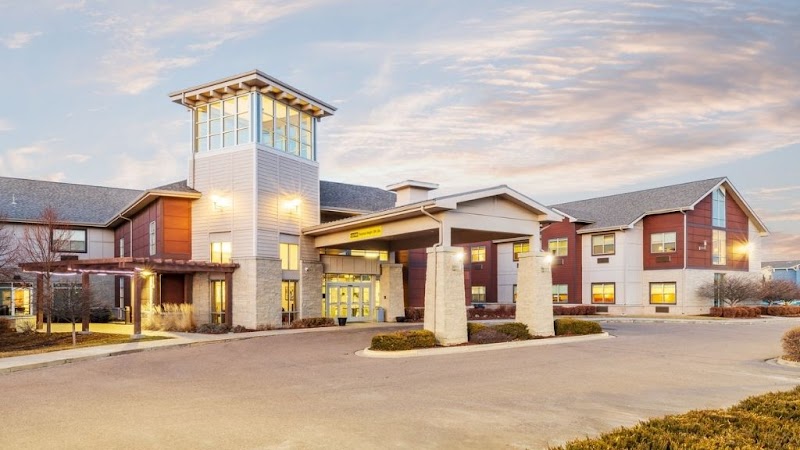
329 EXEMPLA CIR, LAFAYETTE, CO 80026 (720) 639-2200
For profit - Limited Liability company 70 Beds PACS GROUP Data: November 2025
Trust Grade
50/100
#97 of 208 in CO
Last Inspection: February 2024

Within standard 12-15 month inspection cycle. Federal law requires annual inspections.

Overview

Coal Creek Post Acute & Assisted Living has a Trust Grade of C, which means it is average and positioned in the middle of the pack among nursing homes. It ranks #97 out of 208 facilities in Colorado, indicating it is in the top half, but only #8 out of 10 in Boulder County, suggesting there are better local options. The facility is experiencing a worsening trend, with issues increasing from 7 in 2019 to 10 in 2024, which raises concerns about its overall quality. Staffing is rated at 4 out of 5 stars, indicating a strength, but the turnover rate of 67% is concerning compared to the Colorado average of 49%, suggesting staff stability may be an issue. Notably, while there have been no fines, there were serious incidents, including a resident suffering a fall due to inadequate safety measures and another instance where multiple residents were not supported in their personal care choices, highlighting both strengths in staffing but weaknesses in care execution and resident satisfaction.

Trust Score
C
50/100
In Colorado
#97/208
Top 46%
Safety Record
Moderate
Needs review
Inspections
Getting Worse
7 → 10 violations
Staff Stability
⚠ Watch
67% turnover. Above average. Higher turnover means staff may not know residents' routines.
Penalties
✓ Good
No fines on record. Clean compliance history, better than most Colorado facilities.
Skilled Nurses
✓ Good
Each resident gets 83 minutes of Registered Nurse (RN) attention daily — more than 97% of Colorado nursing homes. RNs are the most trained staff who catch health problems before they become serious.
Violations
⚠ Watch
25 deficiencies on record. Higher than average. Multiple issues found across inspections.
★★★☆☆
3.0
Overall Rating
★★★★☆
4.0
Staff Levels
★★★★☆
4.0
Care Quality
★★★☆☆
3.0
Inspection Score
Stable
2019: 7 issues
2024: 10 issues

The Good

  • 4-Star Staffing Rating · Above-average nurse staffing levels
  • 4-Star Quality Measures · Strong clinical quality outcomes
  • Full Sprinkler Coverage · Fire safety systems throughout facility
  • No fines on record

Facility shows strength in staffing levels, quality measures, fire safety.

The Bad

3-Star Overall Rating

Near Colorado average (3.1)

Meets federal standards, typical of most facilities

Staff Turnover: 67%

20pts above Colorado avg (46%)

Frequent staff changes - ask about care continuity

Chain: PACS GROUP

Part of a multi-facility chain

Ask about local staffing decisions and management

Staff turnover is elevated (67%)

19 points above Colorado average of 48%

The Ugly 25 deficiencies on record

1 actual harm
Nov 2024 3 deficiencies 1 Harm
SERIOUS (G) 📢 Someone Reported This

A family member, employee, or ombudsman was alarmed enough to file a formal complaint

Actual Harm - a resident was hurt due to facility failures

Accident Prevention (Tag F0689)

A resident was harmed · This affected 1 resident

**NOTE- TERMS IN BRACKETS HAVE BEEN EDITED TO PROTECT CONFIDENTIALITY** Based on record review and interviews, the facility failed to ensure the resident environment was free from accident hazards and...

Read full inspector narrative →
**NOTE- TERMS IN BRACKETS HAVE BEEN EDITED TO PROTECT CONFIDENTIALITY** Based on record review and interviews, the facility failed to ensure the resident environment was free from accident hazards and adequate supervision was provided for one (#3) of three residents reviewed out of nine sample residents. Resident #3 was admitted to the facility on [DATE] for rehabilitation after surgery on her back. Upon admission, the resident was assessed for fall risk and was identified as a high risk for falls. However, the baseline care plan, initiated on 10/11/24, failed to identify the resident was at risk for falls and person-centered interventions were not put in place to prevent falls for Resident #3. On 10/12/24 Resident #3 sustained a fall which resulted in a laceration to her head and required transportation to the emergency department for further evaluation and staples to close the laceration. Findings include: I. Facility policy and procedure The Fall Management policy, reviewed September 2012, was provided by the nursing home administrator (NHA) on 11/13/24. The policy revealed the facility would identify each resident who was at risk for falls, would plan the care and implement interventions to manage falls. Residents who were at risk for falls, would have interventions to manage falls. The facility would manage falls by providing an environment that was free from potential hazards. II. Fall investigation The 10/12/24 fall investigation for Resident #3 was provided by the NHA on 11/13/24 at 11:00 a.m. Review of the fall investigation revealed Resident #3 was found on the floor near her bathroom. The resident said she walked to the hallway and asked for help but the girl told me to do it myself. The resident returned to her room where she later was found on the floor with a laceration to her head. Resident #3 was transported to the emergency department for further evaluation. The investigation included an interview with certified nurse aide (CNA) #2 who said she assisted Resident #3 to the bathroom and back to her room. CNA #2's written statement indicated Resident #3 continued to say that she was going to fall while CNA #2 was in the bathroom with her. The investigation did not include an interview with the nurse or manager on duty at the time of the incident. The investigation included interviews with three other staff members who were not present during the incident. III. Resident #3 A. Resident status Resident #3, age greater than 65, was admitted on [DATE] and discharged home on [DATE]. According to the November 2024 computerized physician orders (CPO), diagnoses included compression fracture of the fourth thoracic vertebrae, diabetes, difficulty walking, communication deficit, lack of coordination and congestive heart failure. The 10/15/24 minimum data set (MDS) assessment revealed a brief interview for mental status (BIMS) score was not conducted. The resident did not display any behaviors or rejection of care. A 10/12/24 nurse progress note revealed the resident was alert and oriented to person, time, place and situation. The assessment documented Resident #3 was independent with all activities of daily living (ADL). B. Record review Per the functional assessment completed on 10/11/24, Resident #3 required assistance with ambulation to the bathroom. The 10/11/24 fall risk assessment revealed Resident #3 was at risk for falls. -However, the baseline care plan, initiated on 10/11/24, failed to identify the resident was at risk for falls and person-centered interventions were not put in place to prevent falls for Resident #3. Per the 10/12/24 daily skilled note, the resident had difficulty walking due to compression fracture. The 10/12/24 nurse progress note documented Resident #3 was found sitting on the floor at 6:05 a.m. and the resident was noted to have a laceration 2 centimeters (cm) by 0.5 cm by 0.1 cm bleeding down her hair and onto her chest. When the resident was asked what happened, Resident #3 said she asked a girl (CNA #2) for help and was told she could do it herself. Resident #3 said she took the walker and went to the bathroom. The resident did not know what happened and said she just fell backwards. A physician's order was obtained to send the resident out to the emergency department for evaluation. The 10/12/24 emergency department records revealed Resident #3 was admitted after a fall at the nursing facility where she asked for help and was refused. The resident sustained a head trauma with a laceration that was secured with two staples and a dressing. The resident was discharged back to the nursing facility the same day (10/12/24). IV. Staff interviews The director of nursing (DON), the assistant director of nursing (ADON) and the regional clincial resource (RCR) were interviewed together on 11/13/24 at 3:30 p.m. The ADON said she received a call from the floor nurse on 10/12/24. She said the floor nurse reported to her that Resident #3 had a fall. She said the floor nurse told her that Resident #3 was assisted to the bathroom by CNA #2. The ADON said she was told Resident #3 later approached CNA #2 again when she was giving a report to another CNA. She said the resident was told to return to her room where she was later found on the floor in the bathroom. The ADON said she did not participate in the formal investigation of the incident. The DON said she did not recall the incident on 10/12/24 and she was not sure if she was included in the investigation. She said every resident was assessed upon admission for fall risk and baseline care plans were initiated to ensure the safety of residents. -The DON was unable to say why Resident #3's baseline care plan initiated on 10/11/24 did not identify the resident was at risk for falls or include person-centered interventions to prevent falls for the resident. The RCR said Resident #3's initial assessment for fall risk should have triggered the baseline care plan for falls and should have included person-centered interventions for the resident. The physical therapist (PT) was interviewed on 11/13/24 at 4:15 p.m. The PT said Resident #3 participated in therapy and reached her full potential at the time of her discharge from the facility on 11/3/24. He said, upon admission, the resident required one-person assistance with transfers. He said the resident was admitted after back surgery and it was very difficult for the resident to get up. He said she required maximum assistance getting off the bed or chair and assistance of one person when ambulating. The NHA was interviewed on 11/13/24 at 4:45 p.m. The NHA said he completed the investigation for the 10/12/24 incident involving Resident #3. He said CNA #2 was suspended from her duties during the investigation and later was dismissed as she did not return the facility's calls. The NHA said he could not substantiate that neglect had occurred for Resident #3 because he could not prove that CNA #2 refused to provide assistance to the bathroom for the resident.
CONCERN (D) 📢 Someone Reported This

A family member, employee, or ombudsman was alarmed enough to file a formal complaint

Potential for Harm - no one hurt, but risky conditions existed

Deficiency F0658 (Tag F0658)

Could have caused harm · This affected 1 resident

**NOTE- TERMS IN BRACKETS HAVE BEEN EDITED TO PROTECT CONFIDENTIALITY** Based on observation and interviews, the facility failed to ensure that professional standards of practice were followed during ...

Read full inspector narrative →
**NOTE- TERMS IN BRACKETS HAVE BEEN EDITED TO PROTECT CONFIDENTIALITY** Based on observation and interviews, the facility failed to ensure that professional standards of practice were followed during medication administration for two (#9 and #8) of three residents out of nine sample residents. Specifically, the facility failed to ensure Resident #9 and Resident #8 received medications as scheduled according to the physician's orders. Findings include: I. Professional reference According to [NAME], P.A., [NAME], A.G., et.al., Fundamentals of Nursing, 10 ed. (2020), E.[NAME], St. Louis Missouri, page 606-607, retrieved on 11/21/24, It read in pertinent part, Take appropriate actions to ensure the patient receives medication as prescribed and within the times prescribed and in the appropriate environment. Professional Standards such as nursing scope and standards of practice apply to the activity of medication administration. To prevent medication errors, follow the seven rights of medication administration consistently every time you administer medications. Many medication errors can be linked in some way to an inconsistency in adhering to these seven rights: the right medication, the right dose, the right patient, the right route, the right time, the right documentation and the right indication. II. Facility policy and procedure The Administering Medication policy, revised 2019, was received from the nursing home administrator (NHA) on 11/13/24 at 9:08 a.m. It documented in pertinent part, Medications are administered in a safe and timely manner and as prescribed. Medication errors are documented, reported and reviewed by the quality assurance and performance improvement (QAPI) committee to inform process changes and or the need for additional staff training. Medications are administered within one hour of their prescribed time, unless otherwise specified. III. Resident #9 A. Resident status Resident #9, age greater than 65, was admitted on [DATE]. According to the November 2024 computerized physician orders (CPO), diagnoses included Alzheimer's dementia and hypertension (high blood pressure). The 11/11/24 minimum data set (MDS) assessment the resident had short term and long term memory deficits and was severely impaired with daily decisions per staff assessment. The assessment indicated Resident #9 was receiving an antidepressant, opioid (pain medication) and hypoglycemic medications (used to lower blood sugar). B. Observations Licensed practical nurse (LPN) #1 was observed during medication administration on 11/13/24 at 9:35 a.m. She was preparing medications for Resident #9. She put two 500 milligrams (mg) tablets of Tylenol and squirted Voltaren gel into another cup. She approached the resident at the table near the nurses station and administered the medications at 9:50 a.m. C. Record review The November 2024 medication administration record (MAR) for Resident #9 revealed that all of Resident #9's medications were scheduled for 8 a.m. -Resident #9 received her medications one hour and 50 minutes past its scheduled time and 50 minutes after the allowed medication administration window (see observations above). IV. Resident #8 A. Resident status Resident #8, age greater 65, was admitted on [DATE]. According to the November 2024 CPO, diagnoses included osteomyelitis (bone infection) and type 2 diabetes. The 10/10/24 MDS assessment revealed Resident #8 had moderate cognitive impairments with a brief interview for mental status (BIMS) score of 12 out of 15. The assessment indicated Resident #8 was receiving an antipsychotic (class of drugs used to treat mental disorders), an antibiotic and an antiplatelet medication (used to prevent blood clots). B. Observations LPN #1 was observed during medication pass on 11/13/24 at 10:00 a.m. S was preparing medications for Resident #8. She put the following medications in the cup: -B-complex vitamin one tablet; -Finasteride (urinary retention medication) five mg one tablet; -Aspirin 81 mg one tablet; -Lactobacillus tablet (probiotic); -Quetiapine (antipsychotic medication) 12.5 mg; and, -Omeprazole (used to treat gastroesophageal reflux disease) 20 mg. She administered the medications at 10:06 a.m. C. Record review The November 2024 MAR for Resident #8, revealed that the B-complex, Finasteride and aspirin were scheduled for 8:00 a.m. The lactobacillus, quetiapine and the omeprazole were scheduled to be administered at 9:00 a.m. -Resident #8 received the B-complex, Finasteride and Aspirin two hours and six minutes past the scheduled time and one hour after the medication administration window. -Resident #8 received the lactobacillus, quetiapine and the omeprazole one hour and six minutes past the scheduled time and six minutes after the medication administration window. V. Staff interviews The director of nursing (DON) and the regional clincial resource (RCR) were interviewed together on 11/13/24 at 4:30 p.m. The RCR said the nursing staff had a one hour window (one hour before and one hour after scheduled time) to administer medications. She said she reviewed the time stamps on the morning medications for Resident #9 and Resident #8 and said their morning medications were administered late. She said the medications were administered late because the morning nurse called off and did not come to work.
CONCERN (D) 📢 Someone Reported This

A family member, employee, or ombudsman was alarmed enough to file a formal complaint

Potential for Harm - no one hurt, but risky conditions existed

Deficiency F0760 (Tag F0760)

Could have caused harm · This affected 1 resident

**NOTE- TERMS IN BRACKETS HAVE BEEN EDITED TO PROTECT CONFIDENTIALITY** Based on record review and interviews, the facility failed to ensure one (#4) of three residents out of nine sample residents we...

Read full inspector narrative →
**NOTE- TERMS IN BRACKETS HAVE BEEN EDITED TO PROTECT CONFIDENTIALITY** Based on record review and interviews, the facility failed to ensure one (#4) of three residents out of nine sample residents were free of significant medication errors. Specifically, the facility failed to ensure Resident #4 was administered his Parkinson's medication per the physician orders. Findings include: I. Professional reference According to the carbidopa/levodopa dosing instructions, retrieved from https://www.goodrx.com/carbidopa-levodopa/dosage on 11/21/24, A combination of two medications: carbidopa and levodopa. Levodopa replaces dopamine, which improves symptoms of Parkinson's disease. And carbidopa helps levodopa stick around longer in the body. If you miss a dose of carbidopa/levodopa, take the medication as soon as you remember. But if you remember when you' re already close to taking your next dose, skip the missed one. Don' t take more than one carbidopa/levodopa dose at a time. Doubling up on doses can be dangerous and lead to more side effects, such as movement problems and mood changes. Taking too much carbidopa/levodopa can be dangerous and increase your risk of side effects. These side effects may include low blood pressure, a fast heartbeat and confusion. According to the carbidopa-levodopa dosing guidelines, retrieved from https://www.drugs.com/medical-answers/carbidopa-levodopa-3562239/ on 11/21/24, It is important to adhere to the schedule closely, and it is recommended that you take the medication at the same time each day. II. Facility policy and procedure The Administering Medication policy, revised 2019, was received from the nursing home administrator (NHA) on 11/13/24 at 9:08 a.m. It documented in pertinent part, Medications are administered in a safe and timely manner and as prescribed. Medication errors are documented, reported and reviewed by the quality assurance and performance improvement (QAPI) committee to inform process changes and or the need for additional staff training. Medications are administered within one hour of their prescribed time, unless otherwise specified. III. Resident #4 A. Resident status Resident #4, age [AGE], was admitted on [DATE] and discharged on 8/1/24. According to the July 2024 computerized physician orders (CPO), diagnoses included Parkinson's disease (brain disease causing uncontrollable movements and difficulty with motor function), acute respiratory failure and difficulty in walking. According to the 7/21/24 minimum data set (MDS) assessment Resident #4 was cognitively intact with a brief interview for mental status score of 15 out of 15. She required partial/moderate assistance with hygiene, dressing and transferring. B. Record review Review of Resident #4's July 2024 CPO revealed the following physician order: Carbidopa-Levodopa oral tablet disintegrating 25-100 milligrams (mg), give one tablet by mouth four times a day for Parkinson's, ordered on 7/15/24, administer at 8:00 a.m., 12:00 p.m., 4:00 p.m. and 8:00 p.m. A review the July 2024 medication administration record (MAR) revealed on 7/30/24Resident #4 did not receive Carbidopa-Levodopa at 8:00 a.m., 12:00 p.m., or 4:00 p.m. per the physician's order. The MAR was marked with the number nine for those times, which indicated other and to see the nursing progress note. A nursing progress note from 7/30/24 at 7:24 a.m. revealed Resident #4 was noted to be out of Carbidopa-Levadopa. The nurse called the pharmacy and the pharmacy noted it was in process and would be delivered to the facility that day. The nurse urged the importance of the medication to the pharmacist due to the amount of medication the resident took. A nursing progress note from 7/30/24 at 3:23 p.m. revealed the medication delivery made to the facility did not contain Resident #4's Carbidopa-Levadopa. The nurse spoke to the pharmacy and the pharmacy said they would send it out as STAT (immediately). The nursing unit manager was made aware of the concern at this time. -The nursing staff failed to audit the cart and reorder the medication before the medication ran out. -The nursing staff failed to order the medication as STAT once they noticed it was missing. -There was no documentation that the resident's physician was notified after Resident #4 missed three doses of the Carbidopa-Levadopa. -There was no documentation that the nurse monitored Resident #4 for symptoms that she may have experienced while missing the medication. IV. Staff interviews Registered nurse (RN) #1 was interviewed on 11/13/24 at 1:50 p.m. RN #1 said it was the responsibility of the floor nurses to audit the medication cart each shift and order medications as needed. She said if a medication was due to run out within two to three days, she would reorder it. She said the pharmacy the facility worked with delivered the medications the day after ordering. RN #1 said the medication could also be ordered as STAT and it would arrive within an hour and a half. She said Parkinson's medications should be administered per the physician order. She said if the medication was missed, she would notify the provider and monitor the resident for increased Parkinson's symptoms such as agitation and tremors. She said the number nine on the MAR indicated other and to see the nursing progress note. The director of nursing (DON), the assistant director of nursing (ADON) and the regional clincial resource (RCR) were interviewed together on 11/13/24 at 3:10 p.m. The ADON said it was the expectation for the nursing staff to audit the medication carts on the night shift and reorder any medication that was due to run out in the next five days. She said the pharmacy had a four hour window to deliver medications orders as STAT, but they typically came within an hour. She said if a medication administration was missed for a resident, the process was to notify the provider, notify the unit manager and DON and order the medication as [NAME] She said the nurse should monitor the resident for any symptoms the resident had due to missing the medication. She said the symptoms should be documented in the resident's medical record. She said the number nine on the MAR indicated other and to see the nursing progress note. She said there should be a nursing progress note associated with each documentation of a nine in the MAR. The RCR said there was no documentation that the nurse notified the provider of Resident #3's three missing doses of Carbidopa-Levadopa. The consultant pharmacist was interviewed on 11/13/24 at 4:09 p.m. The pharmacist said the medication was important to take according to the physician's orders unless the resident was experiencing any clinical side effects. She said if the resident missed doses, it could worsen the Parkinson's effect and the resident's motor abilities could not have been managed.
Aug 2024 1 deficiency
CONCERN (D) 📢 Someone Reported This

A family member, employee, or ombudsman was alarmed enough to file a formal complaint

Potential for Harm - no one hurt, but risky conditions existed

Resident Rights (Tag F0550)

Could have caused harm · This affected 1 resident

**NOTE- TERMS IN BRACKETS HAVE BEEN EDITED TO PROTECT CONFIDENTIALITY** Based on observations, record review and interviews, the facility failed to promote and maintain resident dignity by providing c...

Read full inspector narrative →
**NOTE- TERMS IN BRACKETS HAVE BEEN EDITED TO PROTECT CONFIDENTIALITY** Based on observations, record review and interviews, the facility failed to promote and maintain resident dignity by providing care in a dignified, respectful and individualized manner for three (#1, #5 and #6) of three residents out of 12 sample residents. Specifically, the facility failed to: -Ensure Resident #1 and Resident #6 were treated with dignity and respect when they asked for care assistance; and, -Ensure Resident #5, a resident with a diagnosis of Alzheimer's disease, was provided a dignified experience of receiving sufficient care to maintain good personal health and hygiene. Findings included: I. Facility policy The Dignity policy, revised February 2021, was provided by the corporate nurse consultant (CNC) on 8/27/24 at 11:10 a.m. It read in pertinent part, Each resident shall be cared for in a manner that promotes and enhances his or her sense of well-being, level of satisfaction with life, and feelings of self-worth and self-esteem. Residents are treated with dignity and respect at all times. The facility culture supports dignity and respect for residents by honoring resident goals, choices, preferences, values and beliefs. This begins with the initial admission and continues throughout the resident's facility stay. Individual needs and preferences of the resident are identified through the assessment process. Residents may exercise their rights without interference, coercion, discrimination or reprisal from any person or entity associated with this facility. When assisting with care, residents are supported in exercising their rights. For example, residents are; groomed as they wish to be groomed (hairstyles, nails, facial hair). The Resident Rights policy, revised December 2016, was provided by the CNC on 8/27/24 at 11:10 a.m. It read in pertinent part, Employees shall treat all residents with kindness, respect and dignity. The residents' rights include a dignified experience. The Activities of Daily Living (ADL), Supporting policy, dated 2001, was provided by the CNC on 8/27/24 at 11:10 a.m. It read in pertinent part, Residents who are unable to carry out activities of daily living independently will receive the services necessary to maintain good nutrition, grooming and personal and oral hygiene. II. Resident #1 A. Resident status Resident #1, age [AGE], was admitted on [DATE] and discharged on 7/29/24. According to the July 2024 computerized physician orders (CPO), diagnoses included diabetes and congestive heart failure. The minimum data set (MDS) assessment was not completed. The nursing admission assessment dated [DATE] documented Resident #1 was alert and oriented to person, place, time and situation and was calm and cooperative. The resident was motivated to participate in rehabilitation services and needed assistance with ADLs, including transferring, toileting, dressing and hygiene. The resident was incontinent of bladder and usually had daily bowel movements. B. Record review A review of Resident #1's electronic medical record (EMR) revealed the resident's baseline care plan had not yet been started and there was no CNA task record or [NAME] (abbreviated plan of care for the CNA). -The CNC confirmed the facility did not have a [NAME] for Resident #1. A social services note, dated 7/29/24 at 11:18 p.m., documented Resident #1 said he wanted to leave the facility due to the caregiver neglecting to provide timely assistance for him to use the bathroom. The facility investigation dated 7/29/24 documented that the resident asked his certified nurse aide (CNA) #2 for assistance to use the bathroom to have a bowel movement and CNA #2 told him to remain in bed, go to the bathroom in his brief and she would clean him up afterward. The resident insisted he be taken to the bathroom. CNA #2 finally took the resident to the bathroom. Staff interviews revealed Resident #1 waited so long for the staff to act that he thought he was not going to make it to the bathroom. The resident was unhappy with the way he was treated and told staff that he was leaving and going home. Resident #1 called the police, rolled himself outside of the facility and was taken to the hospital by ambulance transport. The facility's investigation concluded CNA #2 did not respond to Resident #1 in a dignified and respectful manner when she told him to go to the bathroom in his brief instead of providing him timely assistance to use the toilet as he asked. III. Resident #5 A. Resident status Resident #5, age greater than 65, was admitted on [DATE] and discharged on 8/11/24. According to the August 2024 CPO, diagnoses included Alzheimer's disease, overactive bladder and depression. The MDS assessment was not completed. The nursing admission summary dated [DATE] revealed the resident was alert and oriented to person only. The resident was incontinent of bowel and bladder and dependent on staff to complete ADLs and used a mechanical lift for transfers. B. Resident representative interview Resident #5's legal representative was interviewed on 8/26/24 at 10:33 a.m. The representative said she had talked to the facility during Resident #5's admission and several times afterward about the resident's care choices. The representative said Resident #5 spent a lot of time in bed but had requested that staff get her up before lunch so she could spend time with family when they visited. The representative said the resident also requested staff get her up so she could participate in Sunday church services, the one activity she enjoyed. She said there were several occasions when the family would visit and find Resident #5 with poor hygiene and wearing the same clothing as the day before. She said this was out of character for Resident #5. The resident's representative said she was in the facility to see the resident every day at different times of day and she found her mom in poor condition on several occasions making her fear for the resident's health. She said Resident #5 had a pressure injury when she admitted and it started worsening. She said if Resident #5 did not get proper hygiene and hydration assistance, her wounds would worsen. The resident's representative said Resident #5 had always had good hygiene and it was important to her. The representative said Resident #5 was in a total state of helplessness and was dependent on staff to provide good care for her overall wellbeing and happiness. She said staff did not take the time to change soiled linens, provide timely incontinence care or remove the resident's soiled clothing to be laundered. The representative said this left Resident #5 and her room with a foul odor. The resident's representative said it was disappointing to see the resident in a soiled state. The resident's representative said, on 8/4/24, she provided the facility a detailed letter of the family's observations and concerns with action items (interventions) that she and Resident #5 would like to have provided for the resident but she said things still were not corrected by the facility. The resident's representative said her concerns for the resident's well-being deepened when she learned that the nursing home administrator (NHA) had not been provided a copy of her grievance letter and was not informed of her request to meet with the leadership team to discuss the details of her grievance letter. The resident's representative said it was not long after she gave the facility the letter that the family decided to remove Resident #5 from the facility's care. She said they moved Resident #5 out of the facility on 8/11/24, 16 days after she was admitted to the facility. C. Record review A care conference summary dated 8/2/24 revealed the resident and her legal representative were in attendance at the care conference, as were the facility's interdisciplinary team (IDT) members, including the director of nursing (DON) and the social services director (SSD). The summary documented the family planned for Resident #5 to remain in the long-term care setting and for the resident's husband to move to the facility's on-site assisted living community. The psychosocial mood care plan initiated on 8/2/24 revealed Resident #5 was at risk for decreased psychosocial well-being adjustment issues and emotional distress. The goal was for the resident to have no decline in mood or behavior that prevented her from functioning in her daily activities. Interventions included assessing the resident's preferences and choices with activities and encouraging involvement and encouraging friends and family support/visits. A nursing note dated 8/4/24 documented the resident's legal representative voiced concerns about the resident's care. The representative voiced concerns that, despite a request at a care conference, the resident was not up for church that morning (8/4/24) and she had the same shirt on from 8/2/24 (Friday). The representative was additionally concerned because the resident had not had a shower since her admission to the facility on 7/26/24 and soiled laundry was left on the shower floor. A care conference summary dated 8/8/24 revealed Resident #5, her legal representative and another family member were in attendance at the care conference, as were the facility's IDT members, including the DON, the SSD and the activities director (AD). The care conference summary documented the resident's representative and the other family member brought up concerns about the resident's personal and environmental hygiene. The representative said she had arrived at the facility to assist Resident #5 with the noon meal and found the resident in a darkened room and still in bed. The representative said she had asked the facility staff, upon the resident's admission to the facility, to make sure the resident was up and dressed by 11:00 a.m. so she could eat her meal while seated in her chair and not in bed. According to the care conference summary note, the representative's concerns included finding Resident #5 being left in heavily soiled undergarments and smelling strongly of urine. The sheets of the resident's bed were also stained and soiled with urine. The representative said the resident's bedding was covered with food crumbs from the resident being assisted to eat while in bed. Additionally, the representative was concerned because the resident had not been showered. The IDT's plan for the resident's care was to schedule management follow-up to make an observation of Resident #5 every morning at 9:00 a.m. to ensure the resident was provided assistance to meet her care needs. A comprehensive skin evaluation assessment dated [DATE] documented the resident was placed on a two-hour check and change schedule. -The care plan was not updated to reflect the two-hour check and change intervention. The facility investigation dated 8/14/24 documented that, after investigating the resident's legal representative's concerns, the facility substantiated that CNA #1 failed to provide the resident with a hygienic environment when they left soiled laundry in and around the resident's room. The facility separated from CNA #1 and did not schedule her for additional shifts. CNA #1 was interviewed on 8/14/24. CNA #1 said she checked on Resident #5 in the morning assisted her with breakfast and changed the resident. She did not prove the time that the care was completed. CNA #1 said she continued with rounds assisting her other residents and came back to Resident #5's room to find the family present. CNA #1 said the family was very upset by the condition of Resident #5 and by the presence of a soiled laundry being found on the floor of the resident's shower. -The facility's interview with CNA #1 did not provide answers and details about the exact nature of why the family was upset, the complaint the family voiced and the exact condition of how the resident was found. The investigation did not establish a timeline of events with CNA #1 and failed to provide any substantial evidence about CNA #1's knowledge of the resident's routine or care needs. IV. Resident #6 A. Resident status Resident #6, age less than 65, was admitted on [DATE] and discharged on 7/5/24. According to the July 2024 CPO, diagnoses included amputation between the left hip and knee, diabetes and pressure-induced deep tissue injury. The 6/10/24 MDS assessment documented the resident had intact cognition with a BIMS score of 15 out of 15. The resident was dependent on staff for toileting hygiene and bathing and substantial assistance with dressing. The resident was frequently incontinent of bladder and occasionally incontinent of bowel. B. Record review The facility investigation dated 7/10/24 documented Resident #6 filed a grievance on 7/3/24 that when she asked her assigned CNA (CNA #3) to assist her in changing her soiled brief, CNA #3 told her You do not need me to change your diaper, you can do it your (expletive word) self. CNA#3 was removed from the care of Resident #6 and another CNA took over the resident's care and provided ADL assistance and emotional support. The investigation documented there were no witnesses to the exchange between CNA #3 and Resident #6 and the facility concluded it was a He said, she said situation. -However, the facility terminated CNA #3 when the investigation revealed there were four other times in the prior two weeks that CNA #3's conduct caused several other residents to request CNA #3 not to provide care for them. V. Interviews A frequent visitor (FV) to the facility was interviewed on 8/26/24 at 2:47 p.m. The FV said she had concerns about the way residents in the facility were treated. She said residents complained that they were not always treated respectfully and others had to wait a long time for care to be completed. The FV said residents had reported that staff did not address them directly and walked away from them in the middle of a conversation when they were asking for staff assistance. The FV said she brought resident-voiced concerns, as well as her observed concerns, to the leadership team and found that it took a long time for the facility to address resident grievances. The FV said the new NHA seemed to be taking things more seriously than the previous NHA and some things had improved. She said several of the problematic staff were no longer working in the facility. Resident #9 was interviewed on 8/26/24 at 3:41 p.m. Resident #9 said she had just filed a grievance concern earlier today (8/26/24) because of the disrespectful way one of the CNAs made her feel. Resident #9 said she never knew how she would be treated from day to day. She said there were good CNAs and then other CNAs were disrespectful and rough with care assistance. Resident #9 said some CNAs would drop off her meal tray and walk out quickly; never speaking to her to see if she needed anything. She said other CNAs would walk away mid-conversation and she did not get what she needed. Resident #9 said today (8/26/24), a CNA came in to take her to the bathroom and she hurriedly assisted her to the toilet. The CNA never apologized or said anything about it. The NHA was interviewed on 8/27/24 at 8:12 a.m. The NHA said he was new to the facility and started working as the NHA on 7/10/24. The NHA said, after becoming familiar with the facility's operating practices, he implemented several quality measures and improvement projects. He said a couple of areas of focus included developing an orientation binder for agency staff that they were to read before working in the facility. He said the binder would provide agency staff information on basic facility policy, expectations for resident care and following the resident care plan. The NHA said. initially, agency staff were not provided access to the resident's plan of care. He said the DON and assistant director of nursing (ADON) would be responsible for reviewing admission intake information and providing a report to staff on the day of admission to ensure appropriate care was provided for all residents. The NHA said he recognized the need for staff to be better educated on the importance of treating every resident with dignity and respect while meeting the resident-assessed care needs and preferences. The NHA said he was saddened when he learned about the care concerns brought forward by several residents and their families. He said poor quality of care should not be the resident experience. The NHA said it frustrated him that members of leadership had not brought the concerns of Resident #5's family members to him when they first voiced grievances because he believed the concerns could have been fixed and the resident could have been happy living in the facility. The NHA said he did not learn of the family's concerns until a few days before the resident was discharged . The NHA said once he started to investigate resident care concerns and grievances, he realized the leadership team needed to make some changes in the staff's approach to resident care and staff's understanding of the facility's expectations to ensure that all resident care needs were met in a dignified and respectful manner. The NHA said he called a mandatory all-staff meeting last night (8/26/24) and early this morning (8/27/24), which was the first of many training sessions where staff would be educated on the importance of customer service and resident care. The NHA said that staff who did not follow facility policies for resident care would be removed from employment. The DON, the unit manager (UM) and the CNC were interviewed on 8/27/24 at 10:56 a.m. The UM said every unit had a nurse-to-nurse report sheet that was updated each shift and the CNAs had access to the residents' [NAME]. The UM said the floor nurse should have updated the CNA assigned to Resident #1 about his care needs, especially since the resident had been newly admitted . The DON said she expected the nursing staff to be compassionate, provide good customer service and treat the residents like family. The DON said the facility would be educating staff on the expectations of good customer service.
Feb 2024 6 deficiencies
CONCERN (D)

Potential for Harm - no one hurt, but risky conditions existed

Resident Rights (Tag F0550)

Could have caused harm · This affected 1 resident

**NOTE- TERMS IN BRACKETS HAVE BEEN EDITED TO PROTECT CONFIDENTIALITY** Based on observations, record review and interviews, the facility failed to ensure residents were treated with dignity and respe...

Read full inspector narrative →
**NOTE- TERMS IN BRACKETS HAVE BEEN EDITED TO PROTECT CONFIDENTIALITY** Based on observations, record review and interviews, the facility failed to ensure residents were treated with dignity and respect for two (#12 and #133) of five residents reviewed for dignity and respect out of 18 sample residents. Specifically, the facility failed to: -Ensure Resident #12 was assisted during meal times in a dignified manner; and, -Ensure Resident #133 was treated with dignity and respect when she requested a cup of coffee. Findings include: I. Facility policy The Dignity policy, revised February 2021, was received from the nursing home administrator (NHA) on 2/29/24 at 1:03 p.m. The policy read in pertinent part, Each resident shall be cared for in a manner that promotes and enhances his or her sense of well-being, level of satisfaction with life, and feelings of self-worth and self-esteem. Residents are treated with dignity and respect at all times. Individual needs and preferences of the resident are identified through the assessment process. Staff speak respectfully to residents at all times, including addressing the resident by his or her name of choice. II. Resident #12 Resident #12, age over 65, was admitted on [DATE]. According to the February 2024 computerized physician orders (CPO), diagnoses included dementia and pulmonary hypertension (high blood pressure in the lungs). The 2/14/24 minimum data set (MDS) revealed the resident was unable to complete the brief interview for mental status (BIMS). A staff assessment of the resident's cognitive status revealed the resident's cognitive skills for daily functioning were severely impaired. She required extensive assistance and was dependent on staff for all cares. A. Observations On 2/26/24 at 9:03 a.m., Resident #12 was sitting in the dining room. Two plates with pureed food were in front of her on the tray, covered with plastic. At 9:10 a.m., certified nurse aide (CNA) #1 brought three plastic cups, one with apple juice, one with lemonade and one more with an unidentifiable liquid and placed them on the table in front of the resident. An Ensure (a nutritional supplement) was observed on the tray as well. At 9:16 a.m., CNA #1 opened the Ensure and poured it into a cup. She proceeded to mix part of Resident #12's pureed food into the Ensure. -CNA #1 did not call the resident by her name during the meal and she did not converse with the resident. At 9:35 a.m., CNA #1 got up to answer a call light. She returned to the resident at 9:38 a.m. and offered the resident a mixture of the Ensure and pureed food. At 9:41 a.m., CNA #1 left to find a nurse for another resident. At 9:42 a.m. she returned and offered Resident #12 the mixture of Ensure and pureed food. At 9:43 a.m., CNA #1 left to answer a call light. At 9:48 a.m. she returned and offered the resident the Ensure/pureed food mixture, apple juice, and lemonade. The resident refused. At 9:50 a.m., Resident #12's tray was taken away. At 12:27 p.m., lunch was delivered to Resident #12 in the dining room. Her lunch consisted of two plates of pureed food covered with plastic, applesauce, an Ensure supplement and chocolate cake in a cup. CNA #1 attempted to assist the resident with the meal but the resident appeared sleepy and was sitting with her eyes closed. At 12:36 p.m., CNA #1 offered a drink to the resident and the resident opened her eyes. CNA #1 mixed the Ensure supplement with the pureed dish in a cup and gave it to the resident. At 1:15 p.m. the resident was taken to her room. -CNA #1 did not interact with Resident #12 when she was assisting with meals. She did not call the resident by her name and did not talk to the resident when she got up in the middle of assisting the resident with her meal to go answer call lights. B. Resident representative interview Resident #12's representative was interviewed on 2/26/24 at 1:15 p.m. The resident's representative said the resident got very little social interaction from the staff. She said the resident was nonverbal and it was important for the staff to converse with her. However, she said she did not see staff talk with the resident while they were assisting her with her meals. C. Staff interview The director of nursing (DON), assistant director or nursing (ADON), and NHA were interviewed on 2/29/24 at 1:45 p.m. The DON and ADON said mixing Ensure and pureed food together was not the resident's preference. The DON and ADON said CNA #1 had not treated Resident #12 with dignity. The DON and ADON said staff was expected to treat all residents with respect and dignity and converse with every resident during resident care.III. Resident #133 A. Resident status Resident #133, over the age of 65, was admitted on [DATE]. According to February 2024 CPO, diagnoses included hypoglycemia, chronic pain, protein calorie malnutrition, weakness, rheumatoid arthritis and cognitive communication deficit. The 2/23/24 MDS assessment had not been completed for the resident at the time of the survey. B. Resident observation On 2/26/24 at 9:44 a.m. Resident #133 was sitting on her bed. She was rearranging her items on the bedside table. -At 9:46 a.m., dietary aide (DA) #1 arrived in the resident's room to pick up a breakfast tray. Resident #133 asked DA #1 for a cup of warm coffee. DA #1 told the resident to ask her nurse and walked away from the resident's room without providing the cup of warm coffee. C. Resident interview Resident #133 was interviewed on 2/27/24 at approximately 10:14 a.m. Resident #122 said she did not receive the cup of warm coffee she asked for after finishing her breakfast the previous day (2/26/24). The resident said she asked the wrong staff member and she was disappointed that she could not get a cup of warm coffee when she needed it. D. Staff interviews DA #1 was interviewed on 2/27/24 at 10:22 a.m. DA #1 said she was informed she was not to provide any resident services including providing water and coffee for any of the residents in the facility. DA #1 said she informed the nursing staff about the resident's request for warm coffee, however, she did not recall who she talked to about the resident needing assistance with a cup of warm coffee. DA #1 said she did not know if the resident received the coffee. Licensed practical nurse (LPN) #3 was interviewed on 2/27/24 at 10:31 a.m. LPN #3 said she was not informed about the resident needing assistance with getting a cup of coffee. She said the dietary staff usually would notify the floor nurse about a resident's request and ask if they could assist. Unit manager (UM) #1 and the ADON were interviewed together on 2/28/24 at 10:15 a.m. The ADON and UM #1 both said they did not understand the reason DA #1 told Resident #133 to ask her nurse as the resident was recently admitted to the facility and did not know who the nurse was. The ADON said every staff member, regardless of position, had been trained to be able to assist residents. The ADON said she would ensure staff education was provided to prevent the incident from occurring again. UM #1 said DA #1 should have informed the nurse or the CNA about the resident's request for coffee.
CONCERN (D)

Potential for Harm - no one hurt, but risky conditions existed

Deficiency F0688 (Tag F0688)

Could have caused harm · This affected 1 resident

**NOTE- TERMS IN BRACKETS HAVE BEEN EDITED TO PROTECT CONFIDENTIALITY** Based on observations, record review, and interviews, the facility failed to ensure residents who entered the facility with limi...

Read full inspector narrative →
**NOTE- TERMS IN BRACKETS HAVE BEEN EDITED TO PROTECT CONFIDENTIALITY** Based on observations, record review, and interviews, the facility failed to ensure residents who entered the facility with limited range of motion received appropriate treatment and services to increase range of motion and/or prevent further decrease in range of motion for one (#12) of five residents reviewed for range of motion out of 18 sample residents. Specifically, the facility failed to ensure Resident #12 was assessed for a restorative program for her contracted right hand. Findings include: I. Facility policy The Prevention of Decline in Range of Motion policy, revised March 2022, was received from the nursing home administrator (NHA) on 2/29/24 at 1:03 p.m. The policy stated in pertinent part, The facility in collaboration with the medical director, director of nurses, and as appropriate, physical/occupational therapy consultant shall establish and utilize a systematic approach for prevention of decline in range of motion, including the assessment, appropriate care planning, and preventative care. II. Resident status Resident #12, age over 65, was admitted on [DATE]. According to the February 2024 computerized physician orders (CPO), diagnoses included dementia and pulmonary hypertension (high blood pressure in the lungs). The 2/14/24 minimum data set (MDS) revealed this resident had severe cognitive impairment with a brief interview for mental status was unable to be completed. It was documented that cognitive skills for daily functioning were severely impaired. There were no behaviors or refusals of care documented. She required extensive assistance and was dependent on staff for all cares. The assessment coded the resident as not having an upper extremity impairment. -However, according to observations and interviews (see below) she did have an upper extremity impairment. The assessment did not code the resident as having therapy or restorative services. III. Observations Resident #12 was observed on 2/26/24 at 9:03 a.m. She was sitting in a geri chair in the dining room holding a towel roll in her right hand. Resident #12 was observed again on 2/26/24 at 1:00 p.m. Staff were changing her brief and put a stuffed animal in her right hand once she was back up in the geri chair. -Although Resident #12 had items in her right hand during the observations, there was no formal restorative program in place for her contracture (see interviews and record review below). IV. Resident's representative interview Resident #12's representative was interviewed on 2/26/24 at 1:00 p.m. She said she had requested restorative therapy upon admission. She said she had not witnessed the resident receiving therapy. She said the nursing staff sometimes put towel rolls in her contracted hand. V. Record review -The comprehensive care plan, initiated on 2/9/24 and revised on 2/14/24, did not mention the resident's contracture. There were no listed interventions in place. VI. Staff interviews Licensed practical nurse (LPN) #1 was interviewed on 2/27/24 at 4:00 p.m. She said Resident #12 had a contracture to her right hand and she was unable to move it on her own. She said the nursing staff put a towel in her right hand to prevent the contracture from worsening. She said there was currently no formal restorative therapy program. The director of rehabilitation (DOR) was interviewed on 2/28/24 at 12:03 p.m. She said there was currently no restorative program in place for long term care residents. She said the facility started accepting long term care residents about two months ago. She said contracture care was important because it helped maintain the ability to care for oneself. She said contractures could be very painful and appropriate care could help to alleviate the pain. She said every resident should be assessed for contractures and providing flexion, extension and splints to contracted areas in part of the treatment. The director of nursing (DON), assistant director of nursing (ADON) and NHA were interviewed on 2/29/24 at 1:45 p.m. They said the facility currently did not have a restorative therapy program in place and they should have a program in place. They were aware of Resident 12's contracture and failed to provide her with appropriate treatment.
CONCERN (D)

Potential for Harm - no one hurt, but risky conditions existed

Respiratory Care (Tag F0695)

Could have caused harm · This affected 1 resident

**NOTE- TERMS IN BRACKETS HAVE BEEN EDITED TO PROTECT CONFIDENTIALITY** III. Resident #191 A. Resident status Resident #191, age [AGE], was admitted on [DATE]. According to the February 2024 CPO, diag...

Read full inspector narrative →
**NOTE- TERMS IN BRACKETS HAVE BEEN EDITED TO PROTECT CONFIDENTIALITY** III. Resident #191 A. Resident status Resident #191, age [AGE], was admitted on [DATE]. According to the February 2024 CPO, diagnoses included aftercare following right hip joint replacement surgery, nausea and tachycardia (heart rate of more than 100 beats per minute at rest). The 2/24/24 MDS assessment revealed the resident was cognitively intact with a BIMS score of 15 out of 15. She required moderate assistance of one to two staff members with transferring, toileting and walking. B. Resident observations and interview On 2/26/24 at 9:41 a.m., Resident #191 was in her room. An oxygen concentrator was continuously providing her with 2.5 LPM of oxygen through a nasal cannula in her nostrils. Resident #191 said she was admitted to the facility on [DATE] from the hospital for physical and occupational therapy after having elective hip surgery. She said the hospital attempted to discontinue the use of supplemental oxygen twice and were unsuccessful so she was admitted to the facility with oxygen. She said prior to having surgery she was not using an oxygen concentrator at home and she was unsure why there was a continued need for it at the facility or how long she was expected to use it. On 2/27/24 at 1:37 p.m., Resident #191 was in her room. She continued to have a nasal cannula in her nostrils and the oxygen concentrator was providing her with 2.5 LPM of oxygen. On 2/28/24 at 9:30 a.m., Resident #191 was again in her room with the oxygen concentrator continuously providing her 2.5 LPM of oxygen through the nasal cannula. C. Record review The 2/24/24 facility admission note revealed Resident #191 admitted from the hospital on three LPM of oxygen through a nasal cannula following right hip replacement surgery. -Review of Resident #191's February 2024 CPO revealed there was not a physician's order for the administration of oxygen. The 2/26/24 physician's progress note revealed Resident #191 had a new need for oxygen use after surgery related to acute respiratory failure and the resident's respiratory status was to be monitored and the oxygen weaned as tolerated. The progress note further indicated Resident #191's oxygen use was decreased to 2 LPM from 3 LPM. -However, the facility failed to have an order for the use of oxygen to include monitoring and weaning as tolerated. -Additionally, Resident #191's comprehensive care plan did not include a care plan focus for the use of oxygen. On 2/28/24, during the survey, the following physician's order was entered, in pertinent part, into Resident #191's electronic medical record (EMR): Oxygen at 2 liters (L) a minute via (through) nasal cannula due to post surgical hypoxia (low levels of oxygen in your body tissues). Attempt oxygen titration as able, respiratory therapist to evaluate and treat one time only for hypoxia. -However, the resident's care plan was still not updated to include the use of oxygen. D. Staff Interviews Registered nurse (RN) #1 was interviewed on 2/28/24 at 9:58 a.m. RN #1 said Resident #191 was using 2.5 LPM of oxygen and she knew this because she had just taken her vital signs. She said supplemental oxygen was considered a medication and required a physician's order. RN #1 was unable to find an order for the use of oxygen in the EMR for Resident #191. Unit manager (UM) #1 was interviewed on 2/28/24 at 10:08 a.m. UM #1 said oxygen was considered a medication and should have a physician's order for use. She was unable to find an order for the use of oxygen listed in the EMR for the resident, nor was she able to identify a diagnosis it was being used for. UM #1 was able to locate an admitting report sheet from 2/24/24 indicating the use of 3 LPM of oxygen for Resident #191. She did not know why the resident was using 2.5 LPM instead of 3 LPM or if she could be weaned off the oxygen. UM #1 said the facility had a respiratory therapist on staff who could work with the physician regarding the appropriateness of oxygen use for Resident #191. The ADON was interviewed on 2/29/24 at 2:29 p.m. The ADON said it was concerning Resident #191 was using oxygen without a physician's order or a diagnosis. She said there was not an order for the respiratory therapist to evaluate and treat the resident for oxygen use and a care plan had not been initiated for the resident's use of oxygen. She said oxygen use was considered a medication and should have a physician's order for use and a care plan in place if a resident was receiving oxygen. The ADON said the facility needed a better system in place to ensure physician orders were obtained for the use of oxygen and that a care plan was initiated for the use of oxygen. She said the facility started an audit on 2/28/24 to ensure other residents who were receiving oxygen had physician orders and a care plan for the use of oxygen in place. Based on observations, record review and interviews, the facility failed to ensure residents received respiratory treatment as ordered for two (#137 and #191) of five residents reviewed for supplemental oxygen use out of 18 sample residents. Specifically, the facility failed to obtain a physician's order for the administration of oxygen for Resident #137 and Resident #191. Findings include: I. Facility policy The Oxygen Administration policy, revised October 2010, was provided on 2/27/24 by the nursing home administrator (NHA). It read in pertinent part, The purpose of this procedure is to provide guidelines for safe oxygen administration. Verify that there is a physician's order for this procedure and review the physician orders or the facility protocol for oxygen administration. II. Resident #137 A. Resident status Resident #137, over age [AGE], was admitted on [DATE]. According to the February 2024 computerized physician orders (CPO), diagnoses included atherosclerotic heart disease, systolic congestive heart failure, and hypertension. According to the 2/21/24 minimum data set (MDS) assessment, the resident was cognitively intact with a brief interview for mental status (BIMS) score of 15 out of 15. The resident required limited assistance with bed mobility, grooming, and toileting, and one-person assistance with transfers. The resident's assessment was not coded for the use of oxygen therapy. B. Resident observations and interview On 2/26/24 at 9:27 a.m., Resident #137 was sitting on her bed with a nasal cannula receiving oxygen through her nostrils. The resident's oxygen concentrator was set to 3 liters of oxygen per minute (LPM). Resident #137 said she did not normally require the use of oxygen, however, she said her oxygen saturation level (level of oxygen in the blood) dropped from 90 percent (%) to 81% that morning (2/26/24). She said the nurse put her on oxygen to get her oxygen saturation levels back up above 90%. On 2/26/24 at 2:15 p.m., Resident #137 was sleeping in her bed. She continued to have an oxygen nasal cannula in her nostrils and she was receiving oxygen at 3 LPM. C. Record review -The comprehensive care plan, initiated on 2/19/24, did not identify that the resident required the use of oxygen. -There were no interventions included for oxygen therapy. The care plan did not include signs and symptoms to monitor for the use of oxygen. -The February 2024 CPO did not include a physician's order to administer oxygen. -Nursing progress notes written on 2/17/24 and 2/27/24 documented the resident did not require oxygen. D. Staff interviews Licensed practical nurse (LPN) #2 was interviewed on 2/27/24 at 3:20 p.m. LPN #2 said Resident #137 was not receiving oxygen therapy until the day before (2/26/24)when the resident's oxygen saturation levels dropped below 90%. She said Resident #137 received continuous oxygen at 3 LPM throughout the rest of the day. LPN #2 said she notified the resident's physician about the incident but forgot to request an order for the continued use of oxygen for the resident. Certified nurse aide (CNA) #2 was interviewed on 2/28/24 at 10:30 a.m. CNA #2 said Resident #137 did not normally use oxygen. The CNA said she did not know the reason the resident was on continuous oxygen. She said she had never seen the resident on oxygen since the resident was admitted to the facility. The assistant director of nursing (ADON) was interviewed on 2/29/24 at 2:00 p.m. The ADON said there should be a physician's order for the use of oxygen for every resident who required oxygen therapy. The ADON said she did not know why LPN #2 did not obtain a physician's order for Resident #137's oxygen after she had identified the resident needed oxygen. The ADON said too much oxygenation could slow breathing and heart rate to dangerous levels which could result in death. The ADON said the facility was revising the oxygen administration protocol including providing education to the nursing staff regarding obtaining physician's orders when a resident needed oxygen.
CONCERN (D)

Potential for Harm - no one hurt, but risky conditions existed

Deficiency F0761 (Tag F0761)

Could have caused harm · This affected 1 resident

Based on observation, record review and interviews, the facility failed to ensure all drugs and biologicals were properly stored, secured and labeled in accordance with accepted professional standards...

Read full inspector narrative →
Based on observation, record review and interviews, the facility failed to ensure all drugs and biologicals were properly stored, secured and labeled in accordance with accepted professional standards for two of two medication storage rooms. Specifically, the facility failed to: -Ensure medication storage refrigerators were within acceptable parameters for proper medication storage; -Ensure medication storage refrigerator temperatures were monitored and documented consistently; -Ensure a Schedule IV controlled medication was properly stored in a locked, permanently affixed compartment in the medication storage refrigerator; and, -Ensure expired medications were properly disposed of. Findings include: I. Facility policy The Storage of Medications policy, revised November 2022, was received from the nursing home administrator (NHA) on 2/29/24 at 1:03 p.m. The policy read in pertinent part, Drug containers that have missing, incomplete, improper, or incorrect labels are returned to the pharmacy for proper labeling before storing. Discontinued, outdated, or deteriorated drugs or biologicals are returned to the proper pharmacy or destroyed. Schedule II-V controlled medication are stored in separately locked, permanently affixed compartments. Access to controlled medication is separate from access to non-controlled medications. The Storage of Medications Requiring Refrigeration policy, revised November 2022, was received from the NHA on 2/29/24 at 1:03 p.m. The policy read in pertinent part, It is the policy of this facility to assure proper and safe storage of medications requiring refrigeration and to prevent the potential alteration of medication by exposure to improper temperature controls. 'Refrigerated' refers to temperature maintained between 36-46 degrees Fahrenheit (F). Temperatures should be monitored daily to ensure proper temperature control and documented on the temperature log with date, time, and signature of the person performing the check clearly written. II. Observations On 2/29/24 at 10:00 a.m., the west hallway medication storage room was observed with licensed practical nurse (LPN) #4. The medication storage refrigerator contained vaccines and insulin. -The medication storage refrigerator thermometer read 48 degrees F, which was above the acceptable parameters for safe refrigerated medication storage of 36 degrees to 46 degrees F. On 2/29/24 at 10:15 a.m., the east hallway medication storage room was observed with registered nurse (RN) #1.The medication storage refrigerator contained a lockbox of emergency medications. The medications in the box included Humulin 70/30 insulin, a Lantus Solostar insulin pen, Humulin N insulin, Humulin R insulin, two lorazepam (a Schedule IV controlled medication used to treat anxiety) injectable syringes and a lorazepam multi-dose vial. -The emergency medication box was not locked and had a label on it which indicated the medication kit expired in January 2024. -The lorazepam, a Schedule IV controlled substance, was not stored in a locked, permanently affixed compartment in the medication storage refrigerator. -The medication storage refrigerator thermometer read 30 degrees F, which was below the acceptable parameters for safe refrigerated medication storage of 36 degrees to 46 degrees F. -The temperature logs for the medication storage refrigerator revealed several missing dates of documentation for the months of December 2023, January 2024 and February 2024. III. Staff interviews Registered nurse (RN) #1 was interviewed on 2/29/24 at 10:20 a.m. RN #2 said controlled medications were supposed to be kept under two locked systems. She said the consulting pharmacy was responsible for collecting expired medications and disposing of them properly. The director of nursing (DON) and assistant director of nursing (ADON) were interviewed on 2/29/24 at 10:43 a.m. She said controlled medications should be stored under a double lock system. She said the refrigerator temperatures were inappropriate for storing medications safely. She said if controlled medications were stored in the medication storage refrigerator they must be in a place permanently affixed to the refrigerator. She said the facility's pharmacy was responsible for tracking and disposing of expired medications.
CONCERN (D)

Potential for Harm - no one hurt, but risky conditions existed

Deficiency F0806 (Tag F0806)

Could have caused harm · This affected 1 resident

**NOTE- TERMS IN BRACKETS HAVE BEEN EDITED TO PROTECT CONFIDENTIALITY** Based on observations, record review and interviews, the facility failed to ensure residents received and the facility provided ...

Read full inspector narrative →
**NOTE- TERMS IN BRACKETS HAVE BEEN EDITED TO PROTECT CONFIDENTIALITY** Based on observations, record review and interviews, the facility failed to ensure residents received and the facility provided food that accommodated resident preferences for one (#12) of three residents reviewed for food preferences out of 18 sample residents. Specifically, the facility failed to ensure Resident #4 was provided with a vegetarian diet per her preference. Findings include: I. Facility policy The Resident Food Preferences policy, revised July 2017, was received from the nursing home administrator (NHA) on 2/29/24 at 1:03 p.m. The policy read in pertinent part, Individual food preferences will be assessed upon admission and communicated to the interdisciplinary team. Modification to diet will only be ordered with the resident's or representative's consent. Nursing staff will document the resident's food and eating preferences in the care plan. II. Resident status Resident #12, age over 65, was admitted on [DATE]. According to the February 2024 computerized physician orders (CPO), diagnoses included dementia and pulmonary hypertension (high blood pressure in the lungs). The 2/14/24 minimum data set (MDS) assessment revealed the resident was unable to complete a brief interview for mental status (BIMS). The staff assessment for mental status revealed the resident's cognitive skills for daily functioning were severely impaired. She required extensive assistance and was dependent on staff for all cares. III. Observations On 2/26/24 at 9:03 a.m., Resident #12 was sitting in her wheelchair at a table in the dining room. There were two plates of pureed food on a tray in front of her. The plates were covered with plastic. The resident's meal ticket documented the resident was on a puree diet and thickened liquids. -The puree food on the plates was not labeled to indicate what each food item was. -The resident's meal ticket did not document what food the resident received for breakfast. -The meal ticket did not indicate Resident #12 was to receive a vegetarian diet. On 2/26/24 at 12:27 p.m., Resident #12 was sitting in the dining room for lunch. There were two plates with pureed food covered with plastic on the table in front of the resident. -The puree food on the plates was not labeled to indicate what each food item was. -The resident's meal ticket did not document what food the resident received for lunch. -The meal ticket did not indicate Resident #12 was to receive a vegetarian diet. On 2/29/24 at 12:45 p.m., Resident #12 was sitting in the dining room when her lunch was delivered. The food in the dishes delivered to the resident were labeled as beef pot pie, beans and bread. -The resident's meal ticket indicated she was to receive a vegetarian diet, however, the resident was served beef pot pie for lunch. -The resident's meal ticket did not document what food the resident received for lunch. IV. Resident's representative interview Resident #12's representative was interviewed on 2/26/24 at 1:00 p.m. She said she the resident had been assessed for dietary preferences. The representative said she told the facility's registered dietitian (RD) that the resident preferred a vegetarian diet. She said the facility frequently served the resident food which was inconsistent with a vegetarian diet. V. Record review Review of Resident #12's nutrition care plan, revised 2/14/24, revealed she was at a nutritional risk related to hospice. Interventions included providing a diet per physician order, dietary supplements as ordered, monitoring skin for signs of breakdown and for the registered dietitian (RD) to reassess as indicated. -There was no intervention for the resident's food preferences documented on the care plan. -The care plan did not document the resident was vegetarian. VI. Staff interviews The dietary manager (DM) was interviewed on 2/28/24 at 4:30 p.m. The DM said Resident #12t probably received the main dish listed on the menu every day for lunch. He said the resident was not verbal and her meals were communicated by her representative. The DM said he did not know who had contacted the representative for the resident's preferences or where resident's preferences were documented. He said he was not sure what the resident's diet preferences were. The DM said if the resident preferred a vegetarian diet, she should probably receive the main dish option without the meat. He was not sure if Resident #12 was offered a protein substitute as an alternative to the meat portion of the menu. The DM said he did not have a vegetarian menu and it was improvised for every meal. Licensed practical nurse (LPN) # 4 was interviewed on 2/29/24 at 12:50 p.m. LPN #4 looked at Resident #12's meal ticket and said she was not sure what resident received for lunch because her food items were not listed on the meal ticket. After looking at the resident's food tray which was labeled, LPN #4 said the resident was served pureed beef pot pie, pureed beans and pureed bread. LPN #4 said she was not aware the resident was vegetarian. The director of nursing (DON), assistant director or nursing (ADON), and NHA were interviewed on 2/29/24 at 1:45 p.m. The DON and ADON said staff should follow residents' preferences for their diet. The DON and ADON said Resident #12 should be receiving a vegetarian diet if that was her preference and the vegetarian diet preference should be included on the care plan.
CONCERN (D)

Potential for Harm - no one hurt, but risky conditions existed

Infection Control (Tag F0880)

Could have caused harm · This affected 1 resident

**NOTE- TERMS IN BRACKETS HAVE BEEN EDITED TO PROTECT CONFIDENTIALITY** Based on observations and staff interviews, the facility failed to establish and maintain an infection prevention and control pr...

Read full inspector narrative →
**NOTE- TERMS IN BRACKETS HAVE BEEN EDITED TO PROTECT CONFIDENTIALITY** Based on observations and staff interviews, the facility failed to establish and maintain an infection prevention and control program designed to provide a safe, sanitary and comfortable environment and to help prevent the development and transmission of communicable diseases and infections for two (#3, and #9) of five residents out of 18 sample residents. Specifically, the facility failed to ensure transmission-based precautions were implemented for Resident #3 and #9. Findings include: I. Facility policy The Transmission-Based (Isolation) Precautions policy, undated, was received from the nursing home administrator (NHA) on 2/29/24 at 1:03 p.m. The policy stated in pertinent part, It is our policy to take appropriate precautions to prevent transmission of pathogens, based on the pathogens' modes of transmission. Contact precautions refers to measures that are intended to prevent transmission of infectious agents which are spread by direct or indirect contact with the resident of the resident's environment. When implementing transmission-based precautions, the facility will consider the following: the identification of resident risk factors that increase the likelihood of transmission, the provision of a private room, cohorting residents with the same pathogen, and sharing a room with a roommate with limited risk factors. Residents on transmission-based precautions should remain in their rooms except for medically necessary care. Healthcare personnel caring for residents on contact precautions wear a gown and gloves for all interactions that may involve contact with the resident or potentially contaminated areas in the resident's environment. Contact precautions are recommended for multi-resistant organisms, infection or colonization. II. Resident #3 A. Resident status Resident #3, under the age of 65, was admitted on [DATE]. According to the February 2024 computerized physician orders (CPO), diagnoses included infection following a procedure and a deep surgical incision site and methicillin-resistant staphylococcus aureus (MRSA) infection (highly contagious infection on the skin). The 2/19/24 minimum data set (MDS) assessment revealed the resident was cognitively intact with a brief interview for mental status (BIMS) score of 15 out of 15. She required partial/moderate assistance for activities of daily living (ADL) which included dressing, toilet transferring and standing. B. Observations On 2/26/24 at 10:30 a.m., Resident #3 was sitting in her wheelchair in the hallway outside her room. Licensed practical nurse (LPN) #1 was preparing the resident's intravenous (IV) antibiotic infusion and hooked it up to her central line (a tube utilized for the administration of fluids or medications which is surgically placed in the neck, groin, chest or arm and can remain in place longer than a standard IV) in the hallway. Resident #3 remained in the hallway for the entire IV administration of her antibiotic. -LPN #1 wore gloves to administer the IV medication, however, she did not put on a gown. On 2/27/24 at 1:45 p.m., Resident #3 was in her room. LPN #1 gathered supplies for Resident #3's IV antibiotic infusion and entered the resident's room. She set up the IV antibiotic and attached it to the resident's central line. -LPN #1 failed to put on a gown or gloves when she set up Resident #3's IV antibiotic infusion -There was no isolation cart with personal protective equipment (PPE) in it outside of Resident #3's room. -There was no sign on Resident #3's door which informed staff the resident was on transmission-based precautions or what type of PPE should be worn when working with the resident. III. Resident #9 A. Resident status Resident #9, age [AGE], was admitted on [DATE]. According to the February 2024 CPO, diagnoses included fracture of the neck and pressure injuries to the chin and back of the head. The 11/28/23 MDS assessment revealed the resident was cognitively intact with a BIMS score of 15 out of 15. She was dependent on staff for most ADLs. B. Record review The wound care note by the wound care physician, dated 12/20/23, revealed the resident's wound on her chin had a MRSA infection. C. Observations Wound care observations for Resident #9 were completed on 2/29/24 at 9:30 a.m. The wound care was completed by wound care nurse (WCN) #1. -WCN #1 did not put on a gown before performing wound care for Resident #9, despite the resident having a MRSA infection in the wound on her chin, which required contact precautions, including the use of a protective gown. WCN #1 entered the room, placed an Ipad (tablet computer) on the resident's table, donned gloves and prepared supplies for the wound. He approached the resident, removed the dressing on the right side of her chin and disposed of the dressing in the trash. The dressing was saturated with yellow drainage. WCN #1 soaked a gauze pad in a wound cleanser solution and used the gauze pad to clean the wound. After cleaning the wound, he picked up the Ipad from the table, logged in, and took a picture of the resident's wound. -WCN #1 did not change his gloves or perform hand hygiene before picking up the Ipad. WCN #1 returned the Ipad to the table and proceeded to apply a clean dressing to the wound. -WCN #1 did not remove his gloves or perform hand hygiene prior to applying the clean dressing to the wound. After applying the clean dressing to the wound, WCN #1 removed his gloves. He applied clean gloves and started the wound care for the second wound on the back of the resident's head. -WCN #1 did not perform hand hygiene prior to starting wound care on the resident's second wound. WCN #1 removed the soiled dressing, which was saturated with yellow drainage, from Resident #9's wound on the back of her head. WCN #1 proceeded to pick up his Ipad and took a picture of the wound. -WCN #1 did not change his gloves or perform hand hygiene before picking up the Ipad. WCN #1 returned the Ipad to the table and proceeded to apply a clean dressing to the resident's head wound. -WCN #1 did not remove his gloves or perform hand hygiene prior to applying the clean dressing to the wound. IV. Staff interviews LPN #2 was interviewed on 2/28/24 at 8:47 a.m. She said she was not aware of any resident on transmission-based precautions. She said she was not aware of any resident with an active MRSA infection. She said residents with MRSA were placed on contact precautions, which included a gown and gloves. LPN #2 said residents on contact precautions should have an isolation cart outside their room and a sign on the door to stop anyone who entered the room to see the nurse before entering. The director of nursing (DON), assistant director or nursing (ADON), and NHA were interviewed on 2/29/24 at 11:07 a.m. The ADON said she was serving as the facility's infection preventionist. She said any resident with an active MRSA infection or a history of the infection were placed on contact precautions. This included wearing a gown, gloves, mask, and goggles or a face shield if splashing was a risk. She said residents on contact precautions should have an isolation cart outside their room with PPE in it. She said there should also be a stop sign on the resident's door stopping anyone from entering without checking with the nurse on duty. She said the facility had an adequate supply of PPE. The ADON said she was unaware of Resident #3's MRSA infection. The ADON said it was inappropriate to set up and run an antibiotic in the hallway for a resident on transmission-based precautions. She said this was because of the potential to spread the infection to other staff members and residents.
Nov 2019 7 deficiencies
CONCERN (D)

Potential for Harm - no one hurt, but risky conditions existed

Resident Rights (Tag F0550)

Could have caused harm · This affected 1 resident

**NOTE- TERMS IN BRACKETS HAVE BEEN EDITED TO PROTECT CONFIDENTIALITY** Based on observations and interviews, the facility failed to ensure care for residents was provided in a manner and in an enviro...

Read full inspector narrative →
**NOTE- TERMS IN BRACKETS HAVE BEEN EDITED TO PROTECT CONFIDENTIALITY** Based on observations and interviews, the facility failed to ensure care for residents was provided in a manner and in an environment that maintained or enhanced the residents' dignity and respect in full recognition of their individuality for one (#102) resident of three residents reviewed for dignity out of 24 sample residents. Specifically, the facility failed to: -Address resident in her preferred way; and -Provide Resident #102 with a dignified dining experience in her room while she was eating lunch. I. Resident #102 A. Resident status Resident #102, age [AGE], was admitted on [DATE]. According to the November 2019 computerized physician orders (CPO), pertinent diagnoses included lumbar fracture, multiple rib fractures and dementia without behaviors. The 11/14/19 minimum data set (MDS) assessment revealed, the resident was cognitively intact with a brief interview for mental status (BIMS) score of 12 out of 15. She required limited assistance of one person with most activities of daily living (ADLs), and supervision with meals. Resident #102 did not exhibit any behaviours and did not resist the care. B. Observations Resident was observed on 11/21/19 at 1:17 p.m. She was assisted by certified nurse aide (CNA) #1 to her chair for lunch. After CNA was done assisting the resident, she said: Here we go, sugar. Do you need anything else?. Resident said no, and CNA left the room. Resident #102 was sitting at the table, eating lunch. Her room had a strong smell of urine. Open plastic bag with dirty laundry was observed on the floor next to the entrance. C. Resident interview Resident was interviewed on 11/21/19 at 1:27 p.m. She said she did not like being called sugar because she was not that sweet. She said she did not know why CNA called her sugar, and said she would prefer to be called by her name. II. Staff interviews CNA #1 was interviewed on 11/21/19 at 1:30 p.m. She said she called everyone sugar because all residents liked that and it made them feel good. She said she did ask every resident if they were ok with her calling them sugar and they all liked that. Registered nurse (RN) #1 was interviewed on 11/21/19 at 1:35 p.m. She was interviewed in resident ' s room. She said room had a strong odor of urine that probably was coming from the open bag of dirty laundry on the floor. She said CNAs were responsible for bagging laundry and moving it to dirty laundry room. She said dirty laundry should not be left on the floor and especially when a resident is eating. Assistant director of nursing (aDON) was interviewed on 11/25/19 at 2:31 p.m. She said it was not appropriate to call residents sugar or honey or any other names except their real name. She said it was not a respectful was to call a resident. She said residents should be called by their names unless they request to use any other name. She said all dirty laundry should be removed from the room as soon as it was bagged. III. Facility follow-up On 11/26/19 at 2:47 p.m. facility submitted an email stating that Resident #102 was interviewed by facility staff and reported to them that she was treated with respect and dignity during her stay. However, the facility did not submit any evidence of education that was given to staff members regarding dirty laundry handling, dignity, or respect.
CONCERN (D)

Potential for Harm - no one hurt, but risky conditions existed

Deficiency F0657 (Tag F0657)

Could have caused harm · This affected 1 resident

**NOTE- TERMS IN BRACKETS HAVE BEEN EDITED TO PROTECT CONFIDENTIALITY** Based on record review and interviews, the facility failed to ensure the comprehensive care plan for one (# 97) resident out of ...

Read full inspector narrative →
**NOTE- TERMS IN BRACKETS HAVE BEEN EDITED TO PROTECT CONFIDENTIALITY** Based on record review and interviews, the facility failed to ensure the comprehensive care plan for one (# 97) resident out of three sample residents was reviewed and revised by the interdisciplinary team. Specifically, the facility failed to ensure Resident #97's care plan was updated with new risks and interventions after resident's fall on 11/18/19. Findings include: I. Resident #97 A. Resident status Resident #97, age [AGE], was admitted on [DATE]. According to the November 2019 computerized physician orders (CPO), the diagnoses included dementia with behavioral disturbance, paraplegia, anxiety disorder, major depressive disorder, and insomnia. The minimum data set (MDS) assessment for the resident was not completed. Resident's brief interview for mental status (BIMS) score was not conducted. During the interview the resident was able to answer simple questions, he was oriented to place and situation. Resident #97 was using a manual wheelchair for ambulation. B. Record review According to the physician note on 11/24/19, resident had a fall on 11/18/19. Physician recommended to monitor resident for safety. According to the incident report resident had a fall on 11/18/19. He was assessed by registered nurse (RN) after the fall. The note read that resident was found on the floor by the side of the night stand. Resident said he was trying to go to the bathroom. -No new interventions were discussed in incident report. -No new interventions were documented in the residents care plan either. The resident's care plan for falls was reviewed on 11/21/19 at 5:00 p.m. Resident's comprehensive care plan revealed that the resident was at risk for falls due to recent illness. The care plan was dated with initiation date of 10/11/19 (prior to most recent admission date on 11/12/19). All initiated interventions were dated 10/11/19 as well. -The care plan did not mention resident's fall on 11/18/19. There were no new interventions added to the care plan after the fall on 11/18/19. C. Staff interview The assistant director of nursing (aDON) was interviewed on 11/25/19 at 1:09 p.m. She said she was in charge of updating care plans and make sure they were current and accurate. She reviewed the care plan for Resident # 97 and said it was not updated after the fall. She said she was very busy today as she was working as a floor nurse today and needed to complete a discharge packet for one of her residents. She said she will look into that closely when she will be done with the floor duties. The director of nursing (DON) was interviewed on 11/25/19 at 1:09 p.m. She said Resident #97 should have specific care plan for falls with individual interventions. She said it was important to have information regarding new approaches to prevent any further falls from happening. D. Facility follow-up On 11/25/19 the regional nurse consultant (RNC) provided a printed copy of the care plan specific to the fall, and stated it was updated.
CONCERN (D)

Potential for Harm - no one hurt, but risky conditions existed

Quality of Care (Tag F0684)

Could have caused harm · This affected 1 resident

**NOTE- TERMS IN BRACKETS HAVE BEEN EDITED TO PROTECT CONFIDENTIALITY** Based on record review and staff interviews, the facility failed to ensure two (#40 and #20) residents reviewed of five sample r...

Read full inspector narrative →
**NOTE- TERMS IN BRACKETS HAVE BEEN EDITED TO PROTECT CONFIDENTIALITY** Based on record review and staff interviews, the facility failed to ensure two (#40 and #20) residents reviewed of five sample residents received treatment and care in accordance with professional standards of practice out of 24 sample residents. Specifically, the facility failed to: -Routinely monitor the surgical incision on the back, and timely communicate changes in incision to the physician for Resident #40. Resident developed purulent drainage from the wound and was sent to the emergency room for evaluation; and, -Complete skin assessments timely, and to monitor bruising and abrasions for Resident #20. Findings include: I. Facility policies and procedures The skin assessment policy was requested from the director of nursing (DON) on 11/21/19. She provided the policy for Nursing Assessment. The policy did not include any information regarding skin assessment and surgical wound care treatments. The Nursing Assessments policy, revised 11/1/19, was provided by the Regional Nurse Consultant on 11/25/19. It read, in pertinent part, The Center will conduct initially and periodically a comprehensive, standardized, reproducible assessment of each patient's functional capacity. The assessment must accurately reflect the patient's status at the time of assessment. A nursing assessment will be performed by a licensed nurse for all patients within 24 hours of admission. Routine and focused assessments will be performed on an ongoing basis as needed. Complete focused assessments/evaluations as triggered. Complete subsequent assessments/evaluations per the nursing assessment schedule. II. Resident status A. Resident #40 Resident #40, age [AGE], was admitted on [DATE], and discharged to acute care facility on 11/15/19. According to the October and November 2019 computerized physician orders (CPO), diagnoses included spinal surgery, morbid obesity, long term use of anticoagulants. The 11/7/19 minimum data set (MDS) assessment revealed the resident was cognitive intact, her brief interview for mental status (BIMS) score was 15 out of 15. She required extensive assistance of two people with bed mobility and transfers. Resident was at risk for developing skin conditions and she was admitted with surgical wound. B. Resident interview Resident was interviewed on 11/20/19 at 11:02 a.m. She said a registered nurse (RN) looked at the incision and changed the dressing on the morning after her admission and then three days later. She said no one bothered to look at the wound or change the dressing until she started complaining of increased pain in her incision site and she had seen the sheets and her pillow were soaked with some yellowish discharge on [DATE]. She said she noticed on this day no nurse had looked at her wound or change the dressing for nine days. She said she was asking the nursing staff to tell the physician, who was in the facility full-time, every day, to come and see her because of the pain increase, and her physician was not notified until the last day when physicican came, he sent her to the hospital with the infection C. Record review 1.Hospital discharge summary According to the Discharge summary dated [DATE] from the hospital, Resident #40 was discharged after spinal surgery. Her discharge summary did not include any orders for wound care. 2. Facility records The resident's care plan, initiated on 10/31/19, revealed the resident was at risk for developing skin problems due to recent surgical incision. Interventions included to observe skin daily for signs and symptoms of skin breakdown, observe for verbal and non verbal signs of pain related to the wound, and provide wound treatments as ordered. -The care plan was not specific to the incision on the resident ' s back. According to the physician orders on admission, 10/31/19, the resident was to be monitored daily for status of surrounding tissue and wound pain, as well as the status of the dressing to the area. According to the medical administration record (MAR) for November 2019, nurses signed the MAR daily for wound monitoring. This would be inaccurate according to the resident, see resident interview above. III. Failure to assess wound daily According to skilled daily notes and skin assessments, resident ' s incision was not assessed daily. The skin assessment on admission, 10/31/19 mentioned resident had incision on her mid back. The assessment did not include a description of the wound size, status of dressing, and/or presence of steri strips or staples. Skilled notes between 11/1/19 and 11/7/19 were incomplete, skin section of the assessment was left blank. On 11/8/19 skilled note read back incision, appeared reddened, brownish tissue noted between upper incisions. Otherwise healthy and healing. Free of offensive odor. States pain increased [after physical therapy] on 11/7/19 due to increased strain to the area. Skilled notes between 11/9/19 and 11/10/19 did not include any notes on skin, skin assessment section was left blank. The skin assessment note dated 11/10/19 read in pertinent part: lower back incision, draining purulent drainage, with foul odor, dressing changed, [physician] notified via email. Wound size and description were not documented. Skilled notes between 11/11/19 and 11/14/19 did not include skin assessments. Skin assessment section on above skilled notes was left blank. According to the progress note on 11/15/19, resident was transferred to the hospital due to incision to back-infection and drainage. IV. Failure to timely communicate wound condition to the physician and obtain wound care treatment According to the skin assessment note dated 11/10/19 lower back incision, draining purulent drainage, with foul odor, dressing changed, [physician] notified via email, resident experienced change of condition. No further note regarding new orders or if physician was contacted again. According to the physician orders, wound care treatments started two days after the change of condition. On 11/12/19 physician wrote an order to: clean lower back incision and change dressing twice a day two times a day for wound infection. According to the physician note, resident was assessed on 11/15/19, resident still having significant amount of drainage from her back incision, need to change dressing 3-4 times a day. Later that day Resident #40 was transferred to the emergency room for evaluation of her wound. According to hospital admission record, resident was admitted on [DATE], and presented from [nursing facility] with wound drainage. Was at [nursing facility] and wound started to drain with small area of dehiscence so [resident] was sent to [emergency department] for evaluation. Resident was evaluated by the physician in the emergency room, the physician evaluated wound and did not think it was infected but rather the result of hematoma development and fat necrosis and pressure from laying in bed for prolonged periods of time in setting of morbid obesity. V. Staff interviews Licensed practical nurse (LPN) #1 was interviewed on 11/25/19 at 12:05 p.m. She said surgical incision were monitored daily and results of the assessment documented in daily skilled notes. The assistant director of nursing (aDON) was interviewed on 11/25/19 at 1:12 p.m. She said surgical incisions should be documented on skin integrity report. She said it was important to monitor surgical incisions to make sure they do not get infected and healed appropriately. She said nurses were documenting skin assessment on daily skilled notes and on weekly skin assessments. The DON was interviewed on 11/25/19 at 2:43 p.m. She said all skin conditions, including surgical incisions should be initially documented on admission assessment. Later, incision site should be documented in daily skilled notes under skin assessment section. She said all incisions should be monitored for signs and symptoms of infection. She said most residents discharged from hospitals with detailed orders for dressing changes. In cases when resident discharged without specific orders for dressing changes, such orders should be obtained from the physician on admission. She said any changes in wound condition should be communicated to the physician at the time such changes were identified. She said it was expected from nurses to contact the physician to obtain and clarify order the same day if physician have not returned the call. VI. Resident #20 A. Resident status Resident #20, age below 70, was admitted on [DATE]. According to the November 2019 computerized physician orders (CPO) diagnoses included osteomyelitis in right ankle and foot, end stage renal disease, diabetes mellitus type II, and cognitive communication deficit. The 11/1/19 minimum data set (MDS) assessment revealed the resident had moderate cognitive impairments with a brief interview for mental status (BIMS) score of 11 out of 15. He had one unhealed pressure ulcer, a surgical wound, and an infection of the foot. B. Record review, failure to consistently monitor residents skin The comprehensive care plan, revised 11/1/19, revealed the resident was at risk for skin breakdown related to moisture associated skin damage to coccyx and bilateral buttocks, port to dialysis, surgical incision, and stage one pressure ulcer upon admission. Interventions included observe skin for signs or symptoms of skin breakdown, evaluate for any localized skin problems, and provide wound treatment as ordered. The weekly skin assessments were requested from the facility on 11/20/19. The regional nurse consultant (RNC) said there was only one assessment, which was completed on 11/5/19. The assessment revealed the resident had a stage one pressure ulcer on his coccyx. -The assessment did not identify any bruising. On 11/26/19, the nursing home administrator provided additional skin assessments for Resident #20. The 11/12/19 skin assessment was signed by licensed practical nurse (LPN) #2 on 11/20/19, after the documentation was requested during the survey and was not previously and readily accessible. The 11/21/19 skin assessment revealed the resident had a bruise to his upper thigh. The documentation revealed the resident knew it was from surgery a couple weeks ago, however there was no prior documentation of measurements to monitor healing. The skin assessment also did not include measurements of the bruise and scattered abrasions to his left lower leg. C. Observations A skin assessment was done on Resident #20 with LPN #2 on 11/21/19 at 3:46 p.m The following skin integrity concerns were observed: -Six bruises that measured approximately three centimeters (cm) in diameter, the LPN did not measure the bruises; -Redness to his groin area; -Left inner thigh bruise approximately three cm by one cm, the LPN did not measure the bruise; -Four small scabs on his left knee; -One scab on his left lower leg which measured 1 cm; -One scab on his left lower leg which measured 0.4 cm by 0.3 cm; -One on his left lower leg which measured 0.7 cm by 0.3 cm; -One abrasion on his ankle which was not measured because the LPN threw away the measuring tape. It was estimated to be 1 cm by 0.5 cm. The resident was unable to determine how he got this; and -Discoloration to his buttocks which measured 8 cm by 6 cm. D. Staff interviews LPN #2 was interviewed on 11/21/19 at 3:52 p.m. She said she did not measure or document bruising on the skin assessments unless the bruise covered a large portion of the body. Like a limb or large body bruise. She said the resident was alert and oriented and was able to tell staff how he got the injuries so they did not document. The director of nursing (DON) was interviewed on 11/25/19 at 2:42 p.m. She said skin assessments were completed on admission, and weekly. She said skin assessments should include rashes, abrasions, surgical incisions, significant tears, wounds, and significant bruises. She said a bruise from an injection would not be considered significant but all other bruises should be documented. She said the skin assessments should be documented at the time it was completed or by the end of that shift in the electronic medical records or in the paper charts. She said all bruises and wounds should be measured and documented to be able to monitor for healing.
CONCERN (D)

Potential for Harm - no one hurt, but risky conditions existed

Respiratory Care (Tag F0695)

Could have caused harm · This affected 1 resident

**NOTE- TERMS IN BRACKETS HAVE BEEN EDITED TO PROTECT CONFIDENTIALITY** Based on observations, record review and interviews, the facility failed to provide respiratory care and services in accordance ...

Read full inspector narrative →
**NOTE- TERMS IN BRACKETS HAVE BEEN EDITED TO PROTECT CONFIDENTIALITY** Based on observations, record review and interviews, the facility failed to provide respiratory care and services in accordance with professional standards of practice, for one (#195) of one resident reviewed for supplemental oxygen use out of 25 sample residents. Specifically, the facility failed to: -Ensure staff followed current physician's order for use of oxygen; -Obtain orders to establish parameters to maintain acceptable oxygen levels; -Obtain orders to establish why the resident required oxygen to include liter flow rate when Resident #195 was below the appropriate saturation levels; -Ensure the care plan included specific oxygen use instructions for staff to follow; and, -Ensure the resident maintained safe oxygen saturation levels. Findings include: I. Facility policy and procedure The respiratory management policy and procedure, provided by the director of nursing (DON) on 11/25/19, revealed, in pertinent part, Patients will be assessed for the need for respiratory services as part of the nursing assessment process. If respiratory care is needed, it will be performed by a licensed nurse who has been trained on the procedure and demonstrated on competency. Certain respiratory treatments may be performed by non-licensed staff with appropriate training per state regulation. II. Resident #195 A. Resident status Resident #195, age [AGE], was admitted on [DATE]. According to the November 2019 computerized physician orders (CPO), diagnoses included wedge compression fracture of the fourth lumbar vertebra, multiple fractures of ribs and history of falling. The resident was a new admission to the facility. A completed minimum data set (MDS) assessment was not available for review. B. Record review The November 2019 CPO revealed the resident had an order for oxygen at two liters per minute (LPM) continuously via nasal cannula. The oxygen order was started on 11/17/19. The order indicated to document every shift. -The CPO did not show parameters for use based on oxygen saturation levels. The CPO did not document directions in the oxygen order for when the resident's oxygen saturation level dropped below 90%. The November 2019 care plan read Resident exhibits or is at risk for respiratory complications related to chronic respiratory failure. According to the care plan, she should be in an upright position to facilitate respirations, encourage coughing and deep breathing and be reminded to use the incentive spirometer. -The care plan did not include the need for supplemental oxygen use, interventions for use or staff directions for specific oxygen care. The care plan did not include the resident removed or needed assistance with monitoring use. The November 2019 medication administration record (MAR) indicated the resident's oxygen levels ranged from 88% to 98% via nasal cannula. The 11/25/19 progress note read Resident #195 had chronic respiratory failure with a history of restrictive lung disease (kyphoscoliosis). According to the note, the resident was to use oxygen 24 hours a day while recovering from rib fractures. C. Resident interview and observations Resident #195 was observed on 11/19/19 at 10:01 a.m. She sat in a lounge chair in her room. Beside the resident, between the chair and the bathroom doorway was an oxygen concentrator. The concentrator was not on. The resident did not wear the nasal cannula tubing attached to the oxygen concentrator. The tubing was coiled on top of the concentrator. The resident was not wearing her oxygen as ordered via oxygen concentrator or portable concentrator. Resident #195 was interviewed on 11/20/19 at 2:40 p.m. with her visiting family. The resident was observed sitting in the lounge chair. The oxygen concentrator was turned on and set at 2 liters per minute (LPM). The resident was not wearing the nasal cannula attached to the concentrator. The daughter said Resident #195 had just returned from therapy. The resident said she did not wear oxygen during the therapy session. The resident said she did not have a portable oxygen tank to wear during the therapy session. The resident ' s daughter said the therapist did not offer use or reminder of oxygen use during or after the therapy session and no other staff had helped her. The resident said she needed assistance putting the oxygen on. The resident ' s son placed the nasal cannula tubing in the resident ' s nares. Resident #195 was observed on 11/21/19 at 12:08 p.m. in the therapy gym. She did not wear oxygen via nasal cannula. A portable oxygen concentrator was not attached to the resident ' s wheelchair. The resident was observed on 11/25/19 at 10:31 a.m. The resident walked with a walker down the hall with a family friend. The resident did not wear oxygen as she walked down the hall towards her room. A portable oxygen tank was not attached to the resident ' s walker. The assistant director of nursing (ADON) was positioned at a nursing cart, in the hall, next door to the room of Resident #195. -At 10:35 a.m, the resident walked towards the ADON and requested medicine for her pain. The ADON, observing the resident, did not encourage or assist her with the use of oxygen. -At 10:39 a.m. the ADON approached the resident as she stood near the entrance to her room, and asked the resident ' s pain level. The ADON did not encourage or assist her with the use of oxygen. -At 10:41 a.m., the resident informed her friend she was very tired and slowly entered her room, having to hold on the wall with her left hand as she pushed her walker forward. -At 10:45 a.m., the resident ' s friend assisted the resident in her lounge chair. The oxygen concentrator was on, the resident did not have the nasal cannula in her nares. The tubing remained on top of the concentrator, out of reach of the resident. -At 10:46 a.m., the ADON entered the resident ' s room and administered her pain medication. The ADON exited the room without encouraging or assisting the resident with her oxygen from her running oxygen concentrator. -At 10:54 a.m., the resident sat in her chair with her eyes closed, leaning to her right side. She was not wearing oxygen. -At 11:08 a.m., the ADON observed the resident not wearing her ordered oxygen. The ADON woke the resident and applied a pulse oximeter to measure the resident ' s oxygen saturation levels. -At 11:10 a.m. the ADON said the resident ' s saturation level was at 66% at room air. She placed oxygen in nares of Resident #195 via her running oxygen concentrator. The resident ' s saturation levels rose to 94%. She instructed the resident to exhale into an incentive spirometer. She told the resident that she needs to use the spirometer every hour, as much as she can to expand her lungs. IV. Staff interviews The ADON was interviewed on 11/25/19 at 11:02 a.m. She identified herself as a registered nurse (RN) and the unit manager. She said Resident #195 should wear her oxygen continuously. She said all direct care staff who work with Resident #195 should be aware that the resident should always have her oxygen on and assist as needed. The ADON said the resident ' s normal saturation levels run between 91% and 96%. The nurse acknowledged the resident ' s oxygen orders did not establish parameters to maintain acceptable oxygen levels or liter flow rate when Resident #195 was below the appropriate saturation levels. According to the ADON, she said she also could not find an order to monitor the resident ' s oxygen. -At 11:17 a.m., the ADON identified the resident ' s 11/25/19 oxygen saturation level was at 66%. According to the ADON, a saturation level at 66% would be very low for anyone. She said the resident would need to use a spirometer for the rest of the day. An occupational therapy assistant (OTA) #1 was interviewed on 11/25/19 at 2:21 p.m. OTA #1 said therapy staff should be aware of the supplemental oxygen use and need of Resident #195 when conducting a therapy session. The director of nursing (DON) was interviewed on 11/25/19 at 2:47 p.m. She said any resident who received supplemental oxygen, should have a physician's order. The DON said the orders should provide a clear direction for staff. She said a physician order should be obtained by nursing for oxygen use of each resident. She said oxygen use should be monitored by the nurse, and all staff, including therapy, should be aware of the usage. The DON said supplemental oxygen should be on the MAR and the care plan. She said the resident ' s care plan should include specific oxygen use instructions for staff. The DON said the oxygen saturation level of Resident #195 should be maintained above 88%. She said she was informed of the resident's low oxygen level at 66%, and the physician was alerted. The DON revealed she directed her staff to conduct a facility wide audit on all residents with supplemental oxygen orders to ensure appropriate use and ensure safe oxygen saturation levels. The DON said she also provided staff education for resident oxygen use. V. Facility follow-up The nurse consultant provided a revised oxygen care plan on 11/25/19, after oxygen concerns were identified. The care plan included: -Medicate as ordered and monitor for effectiveness, observing signs and symptoms of side effects, and report to the physician as indicated; -Monitor and record lung sounds every shift and report to the physician as needed; -Monitor and report oxygen saturation levels via pulse oximetry as ordered and as needed; -Provide oxygen as ordered via nasal cannula; -Observe the respiratory rate, signs and symptoms of dyspnea, use of accessory muscles indicating respiratory distress and report to the physician as needed; and -Observe respiratory status and assess for changes, including changes in mental status.
CONCERN (D)

Potential for Harm - no one hurt, but risky conditions existed

Drug Regimen Review (Tag F0756)

Could have caused harm · This affected 1 resident

**NOTE- TERMS IN BRACKETS HAVE BEEN EDITED TO PROTECT CONFIDENTIALITY** Based on record review and interviews, the facility failed to ensure one (#97) of five residents reviewed out of 25 sample resid...

Read full inspector narrative →
**NOTE- TERMS IN BRACKETS HAVE BEEN EDITED TO PROTECT CONFIDENTIALITY** Based on record review and interviews, the facility failed to ensure one (#97) of five residents reviewed out of 25 sample residents were reviewed by interdisciplinary team after pharmacy submitted monthly recommendations. Specifically, the facility failed to: -Timely communicate/deliver all pharmacy recommendations to the physician for review, and -Follow up with the physician regarding the pharmacist recommendations for Resident #97. I. Resident #97 A. Resident status Resident #97, age [AGE], was admitted on [DATE]. According to the November 2019 computerized physician orders (CPO), the diagnoses included dementia with behavioral disturbance, paraplegia, anxiety disorder, major depressive disorder, and insomnia. The minimum data set (MDS) assessment for the resident was not completed. Resident ' s brief interview for mental status (BIMS) score was not conducted. During the interview resident was able to answer simple questions, he was oriented to place and situation. B. Record review A review of the physician orders for November 2019 revealed the following relevant orders: -Melatonin tablet 5 milligram (mg), give 15 mg by mouth at bedtime for insomnia. Effective 11/12/2019. -Remeron tablet 45 mg by mouth at bedtime for insomnia. Effective 11/12/2019. -Temazepam Capsule 7.5 mg, give one capsule by mouth as needed for insomnia. Effective 11/15/2019. -Paroxetine tablet 20 mg, give one tablet by mouth one time a day for depression. Effective 11/13/2019. Risperidone tablet one mg, give one tablet by mouth two times a day for dementia with behaviors. Effective 11/12/2019. The 11/13/19 pharmacist report included four recommendations: 1. To provide risk benefit statement as resident was receiving two antidepressants concomitantly: Remeron 45mg and Paxil 20mg; 2. To consider discontinuing albuterol, at least at bedtime, and use alternative therapy if needed. Resident received scheduled albuterol twice a day and had symptoms of restlessness, and insomnia, which were common possible side effects of albuterol. 3. To administer tamsulosin capsules at least 30 minutes after the same meal every day to decrease the risk and adverse side effects. Capsules were scheduled at 8 a.m. in the morning. 4. To separate the administration of eye drops. Resident was receiving multiple ophthalmic drugs at one administration time. The medication administration record (MAR) for November 2019 revealed no changes were made based on pharmacist recommendations until 11/20/19 (the day when recommendations were requested for the survey). Recommendation #3 and #4 were addressed by nursing staff on 11/20/19. Recommendations #1 and #2 were not addressed at all. II. Interviews Certified nurse aide (CNA) #4 was interviewed on 11/21/19 at 11:28 a.m. She said resident took two to three naps during the day and in general he can sleep all day long if we let him. She said resident ' s wife was asking them to keep resident up in the morning so he can sleep better at night. She said resident was more restless and active during the evenings. Pharmacy service consultant (PSC) was contacted via the phone on 11/21/19 at 4:35 p.m. She said she documented a total of four recommendations on 11/13/19 to the facility. She provided copies of her recommendations by email. She said she did not know if any of her recommendations were addressed as her follow up visit was not due yet. Physician assistant (PA) was interviewed on 11/25/19 at 12:35 p.m. She said pharmacy recommendations were dropped by staff members to the physician mailbox. She said all the physicians who were in the office would address recommendations the same day. She said once recommendations were addressed they were placed in the paper chart. She reviewed the recommendations and said she did not recall having these notes from the pharmacist. The director of nursing (DON) was interviewed on 11/25/19 at 2:46 p.m. She said she was new to this position and have been working in the facility for the last three weeks. She said she received all recommendations by email and since she started her position she received over 800 emails and was not able to go through all of them.
CONCERN (E)

Potential for Harm - no one hurt, but risky conditions existed

Deficiency F0561 (Tag F0561)

Could have caused harm · This affected multiple residents

**NOTE- TERMS IN BRACKETS HAVE BEEN EDITED TO PROTECT CONFIDENTIALITY** Based on observations, interviews, and record review; the facility failed to honor resident choices for six ( #243, #246, #27, #...

Read full inspector narrative →
**NOTE- TERMS IN BRACKETS HAVE BEEN EDITED TO PROTECT CONFIDENTIALITY** Based on observations, interviews, and record review; the facility failed to honor resident choices for six ( #243, #246, #27, #29, #93, and #193 ) out of 25 resident's reviewed for self-determination. Specifically, the facility failed to ensure Residents #243,#246, #27, #29, #93, and #193 received showers according to their choice of frequency. Findings include: Cross-reference F725 failure to provide sufficient staffing. I. Facility policy and procedure The Activities of Daily Living (ADL) policy, revised 11/1/19, was provided by the Clinical Regional Consultant (CRC) on 11/25/19. It read, in pertinent part, Based on the comprehensive assessment of a patient and consistent with the patient's needs and choices, the Center must provide the necessary care and services to ensure that a patient's abilities in activities of daily living do not diminish unless circumstances of the individual's clinical condition demonstrate that such diminution was unavoidable. Activities of daily living (ADLs) include: Hygiene- bathing, dressing, grooming, and oral care. ADL care is documented every shift by the nursing assistant on an ADL flow record or in electronic medical records. The ADL flow record will be reviewed at morning meetings. II. Resident #243 A. Resident status Resident #243, age below 70, was admitted on [DATE]. According to the November 2019 computerized physician orders (CPO) diagnoses included acute and subacute infective endocarditis, pain, weakness, and morbid obesity. The 11/29/19 minimum data set (MDS) assessment revealed the resident had mild cognitive impairments with a brief interview for mental status (BIMS) score of 12 out of 15. She required two person extensive assistance with bathing. B. Resident interview The resident was interviewed on 11/20/19 at 11:32 a.m. She said she would like to shower every other day, but nobody asked her what her preferences were. She said she had only received one shower since her admission to the facility on [DATE]. C. Record review The comprehensive care plan, revised 11/18/19, revealed the resident required assistance for ADL care in bathing related to recent illness, hospitalization, and activity intolerance. The facility failed to identify interventions related to bathing on the comprehensive care plan. The resident bathing schedule preference sheet revealed the resident's showers were scheduled for Wednesday, Friday, and Sunday in the evening. The resident's representative signed the preference schedule upon admission on [DATE]. Review of the certified nurse aide (CNA) shower record revealed the resident had not received a shower in eight days, since admission to the facility on [DATE]. III. Resident #246 A. Resident status Resident #246, age above 70, was admitted on [DATE]. According to the November 2019 CPO, diagnoses included aftercare following joint replacement surgery, right artificial shoulder joint, weakness, pain, and difficulty in walking. The 11/21/19 MDS assessment was not completed yet. B. Resident interview Resident #246 was interviewed on 11/19/19 at 1:06 p.m. She said she had only received one shower since admission by her occupational therapist. She said she took a shower every day at home but would be ok with three showers per week while in the facility. C. Record review The comprehensive care plan, revised 11/19/19 revealed the resident was at risk for decreased ability to perform ADLs related to right shoulder arthroplasty and limited limited range of motion. The care plan failed to identify interventions related to bathing on the comprehensive care plan. The resident's shower preferences sheet revealed the resident's shower schedule was Monday, Thursday, and Saturday. The resident signed and agreed to this schedule on 11/14/19. The resident's shower record revealed the resident had not received showers from a CNA from 11/14/19 to 11/21/19. A therapy progress note revealed the resident receive one shower from her occupational therapist on 11/19/19 due to resident's request at the time of therapy (five days after admission). D. Staff interviews CNA #4 was interviewed on 11/21/19 at 3:20 p.m. She said they documented shower preferences in a book at the nurse's station and documented the showers given in the electronic medical records. She said the nurse managers updated the shower preference sheets and checked the books. The CRC was interviewed on 11/25/19 at 10:35 a.m. She said the facility was unable to locate and shower documentation for Resident #243, #193, #93, #27, #246, and #29. She said an action plan was implemented, during survey, to immediately to offer showers to all residents. The director of nursing (DON) was interviewed on 11/25/19 at 2:42 p.m. She said there was currently not a unit manager on the west unit where Residents #243 and #246 resided. She said the unit managers were supposed to follow-up on shower records to ensure all showers were provided for residents as preferred. She said the nurses asked residents their preferred shower days upon admission, then added them to the shower schedule. She said showers should be documented by CNAs in the shower book at the nurse's station or in the electronic medical records. She said if the CNAs need assistance then occupation therapists or managers will provide showers. She said she had not been told by any CNAs that they needed assistance with showers. VI. Resident #93 A. Resident status Resident #93, age [AGE], was admitted on [DATE]. According to the November 2019 computerized physician orders (CPO), diagnoses included unspecified fracture of lower end of right ulna, chronic kidney disease, stage 3, osteoporosis affecting left nondominant side, history of transient ischemic attack (TIA) and cerebral infarction, difficulty walking, and generalized muscle weakness. The November 2019 activities for daily living (ADLs) care plan identified the resident was dependent for ADL care in bathing, grooming, personal hygiene, dressing, transfer, locomotion, and toileting related to a recent fall resulting in a fracture. B. Resident and family interview Resident #93 was interviewed on 11/20/19 at 10:00 a.m. during the resident group interview. According to the resident, he has had only one shower/bath since admission to the facility on [DATE]. The resident said he has not been offered, or given the choice for additional showers. The resident said he was not told of a bathing schedule. He said his family also expressed a concern for the lack shower/bathing opportunities. Resident #93 was interviewed on 11/25/19 at 12:12 p.m. The resident was in his room, in a wheelchair reading a paper set on his bedside table. The resident had a slight odor of urine. The paper, placed in front of the resident, was identified as a bathing preference sheet. The resident said he just received a shower schedule that would allow him to have showers three days a week. He said he did not refuse showers. He said staff would only assist with cleansing after toileting. He said he would be happy if staff would provide him a shower three times a week. The daughter of Resident #93 was interviewed on 11/25/19 at 12:16 p.m. She said she and her family were very concerned about the lack of offered bathing and felt it had been a big problem. She said on admission, she was told that the facility had only a staff member available to give showers twice a week. She said she was told he could have a shower on Sunday and Wednesday based on the staff schedule. The daughter said she would often come to the facility to see if Resident #93 was offered a shower. She said, after frequent inquiries, he only received a shower on 11/7/19. She said she asked why he was not getting showers, and was told he refused and the facility could not force him to bathe. The daughter said she has not seen or been told by Resident #93 that he refused to bathe. The daughter said she had not seen a bathing preference schedule until the facility presented it to her and Resident #93 on 11/25/19. She said she would hope the facility would follow through with the planned three times a week schedule. C. Record review The November 2019 bathing record for Resident #93 identified the resident received a shower on 11/7/19. The record indicated on 11/7/19, was the only recorded bath/shower between 11/3/19 and 11/20/19. According to the record, all other dates between 11/3/19 and 11/20/19 were not applicable. -The record did not show the resident received a bath, or a bed bath. The record did not show the resident was unavailable for a bath/shower, or refused a bath/shower between 11/3/19 and 11/20/19. The weekly bath and skin report identified the resident had a shower on 11/21/19. The task list report, initiated on 11/3/19, read the resident bathing was scheduled on Tuesdays, Thursdays, and Saturdays. A bathing preference sheet, provided to the resident and signed by his daughter on 11/25/19, identified the resident wanted showers three days a week. The November 2019 ADL care plan short term goal indicated the resident's ADL care needs will be anticipated and met throughout the next review period. -The care plan did not indicate the resident had a behavior of refusing ADL or bathing care. The November 2019 preference care plan read it was important to the resident to have an opportunity to engage in daily routines that are meaningful relative to his preferences. According to his care planned short term goal, the resident would express satisfaction with his daily routines and preferences. The care plan read his preferences and routines would be accommodated by staff. The November 2019 bowel and bladder care plan indicated Resident #93 is incontinent of urine. The November 2019 skin care plan identified the resident was at risk for skin breakdown with actual breakdown. According to the care plan, the resident had a pressure ulcer to his left buttock. VII. Resident #193 A. Resident status Resident #193, age [AGE], was admitted on [DATE]. According to the November 2019 computerized physician orders (CPO), diagnoses included intra articular fracture of lower end of right radius, osteoarthritis of the knee, the presence of a left artificial knee joint, history of TIA and cerebral infarction, unsteadiness on feet, difficulty walking, lack of coordination, and generalized muscle weakness. The resident was a new admission to the facility. A completed minimum data set (MDS) assessment was not available for review. The November 2019 ADL care plan identified the resident was dependent for ADL care in bathing, grooming, personal hygiene, dressing, transfer, locomotion, and toileting. B. Resident interview Resident #193 was interviewed on 11/20/19 at 10:00 a.m., during the resident group interview. According to the resident, she had not received a shower since admission, and would like to be offered one. Resident #193 was interviewed on 11/21/19 at 12:40 p.m. She said she was told she could have a shower three times a week. She said she requested to have a shower this morning. -At 4:32 p.m., the resident said she still had not been offered a shower and hoped she received her requested shower the following day. She said she preferred a shower every couple of days. Resident #193 was interviewed on 11/25/19 at 12:08 p.m. The resident stated she received her first shower on 11/22/19, after multiple requests. Resident #193 said she was happy to have received the shower because her head was starting to itch and she felt like she smelled. She said she was provided a bathing schedule on 11/21/19, indicating she could have a shower three days a week. She said she would request a shower today so she could receive a shower in a few days. C. Record review The November 2019 bathing record for Resident #193 identified the resident received a shower on 11/22/19, five days after admission. According to the record, all other dates between 11/17/19 and 11/21/19 were not applicable. The record did not show the resident received a bath/shower, or a bed bath. The record did not show the resident was unavailable for a bath or shower, or refused a bath or shower. The November 2019 preference care plan read it was important to the resident to have an opportunity to engage in daily routines that are meaningful relative to her preferences. According to her care planned short term goal, the resident would express satisfaction with her daily routines and preferences. The care plan read her preferences and routines would be accommodated by staff. A bathing preference sheet, provided to, and signed by the resident on 11/21/19, identified the resident wanted showers three days a week. VIII. Staff interviews The certified nurse aide (CNA) #3 was interviewed on 11/20/19 at 12:40 p.m. She said she was responsible for 16 residents today. She said they did not have bathing aide in the facility and showers were a primary CNAs responsibility. She said on the days when three CNAs were scheduled to work the unit, they would have three to four showers to complete per CNA. On the days when they had only two CNAs on the unit, they would have up to six scheduled showers per CNA. She said with such a workload it was impossible to accommodate any additional showers. She said she received a few additional requests for showers during her shift but was not able to accommodate it because she was busy giving showers to residents that were scheduled that day. CNA #2 was interviewed on 11/21/19 at 12:59 p.m. She said they had only two CNAs working today on the unit. She said it was a rehab unit and residents had a lot of care needs. She said they had 3-4 residents on the unit that required two person assistance. She said today she was able to complete all showers because some showers were done by a third CNA that left earlier and some showers were refused by residents. She said on the days when only two CNAs were scheduled to work on the unit, they were not able to complete all showers. She said she communicated that to nurses and nurse managers but did not receive any feedback or additional help. The DON was interviewed on 11/25/19 at 2:52 p.m. She said bathing preference sheets should be included during the admission process. She said bathing preference should be honored as close as possible. IV. Resident #27 A. Resident status Resident #27, age [AGE], was admitted on [DATE]. According to the November 2019 computerized physician orders (CPO), diagnosis included femur fracture. The 11/5/19 minimum data set (MDS) assessment revealed, the resident was cognitively intact with a brief interview for mental status (BIMS) score of 15 out of 15. She had no memory problems, she did not experience delusions and hallucinations. Resident required extensive assistance of two people with most activities of daily living. B. Resident interview Resident #27 was interviewed on 11/19/19 at 2:29 p.m. She said since her arrival to the facility she had received one shower and one bed bath. She said her preference was to receive a shower three times a week and physician cleared her for showers a long time ago. Resident #27 said, CNAs would come and say they will go check to see if anyone was available to give a shower, and did not come back. She said the ultimate response from CNAs and nurses was if we have time we can do it, but apparently they never have time. (Cross-referenced F725-insufficient staffing).Resident #27 said she end up asking her occupational therapist (OT) to assist her with showers and OT helped her. C. Record review The care plan for activities of daily living, initiated 11/7/19 with no revision date, identified the resident required assistance with bathing related to recent hospitalization. There were no interventions specific for bathing, such as preferred times and days. According to the 10/29/19 preference sheet completed on admission, Resident #27preferred to receive showers three times a week. According to the shower records for November 2019, the resident did not receive any showers in November 2019. According to OT notes dated 11/16/19 resident said she has never received a shower during her stay at the facility. Resident was assisted by OT with shower on 11/16/19. V. Resident #29 A. Resident status Resident #29, age [AGE], was admitted on [DATE]. According to the November 2019 computerized physician orders (CPO), diagnosis included acute respiratory distress, and heart failure. The 1/6/19 minimum data set (MDS) assessment revealed, the resident was cognitively intact with a brief interview for mental status (BIMS) score of seven out of 15. He was documented as he had no memory problems, he did not experience delusions and hallucinations. Resident required limited assistance of one person with most activities of daily living. B. Resident interview Resident was interviewed on 11/19/19 at 11:22 a.m. He said he received his second shower yesterday, and it was given to him by OT. He said his preference was to receive a shower every day, or at least every other day. He said every time he asked CNAs for showers they say not today because they are too busy. He said sometimes he felt sorry for the CNA because he can see how hard they work when they don ' t have enough help and he can understand why they can ' t find any time for him. He said he believed this facility was very understaffed and CNAs did not have enough help. C. Record review The care plan for activities of daily living, initiated 11/7/19 with no revision date, identified the resident required assistance with bathing related to limited mobility. The interventions included assistance of one person with bathing. There were no specific interventions related to residents preference of time and days. According to the 10/29/19 preference sheet completed on admission, Resident #29 preferred to receive showers three times a week. According to the shower records for November 2019, the resident did not receive any showers in November 2019.
CONCERN (E)

Potential for Harm - no one hurt, but risky conditions existed

Deficiency F0725 (Tag F0725)

Could have caused harm · This affected multiple residents

Based on record review and interviews the facility failed to provide sufficient nursing staff to ensure the residents received the care and services they required to achieve their highest practicable ...

Read full inspector narrative →
Based on record review and interviews the facility failed to provide sufficient nursing staff to ensure the residents received the care and services they required to achieve their highest practicable physical, mental, and psychosocial well-being. Specifically, the facility failed to ensure enough staff were available to adequately care for the resident as residents felt and expressed their activities of daily living (ADLs) of toileting assistance, transferring, showers, and overall call light response, were met and addressed in a timely manner. -Cross-reference F561, failure to honor resident ' s choice regarding showers. I. Resident interviews Resident #194 was interviewed on 11/19/19 at 9:40 a.m. She said she often had to wait 20 to 30 minutes to use the restroom after putting on her call light. Resident #5 was interviewed on 11/19/19 at 10:19 a.m. He said he believed the facility did not have enough staff everyday. He said depending on the time of day and the number of staff available, he often had to wait a long time for his call light to be answered. He said he was told by a staff member that she was considering leaving because staff could not deliver the level of care needed to all the residents because of short staff. He said sometimes he had to wait over an hour for assistance. Resident #243 was interviewed on 11/19/19 at 10:25 a.m. She said it takes a long time to get help when she puts on the call light. Resident #196 was interviewed on 11/19/19 at 12:18 p.m. She said she had to wait on average 15 to 20 minutes to have her call light answered. She said she one evening, she put her call light on to request her scheduled pain medication. She said she had to wait two hours before she had a response. She said she was told that staff was short and they were waiting on more staff to come in to help. Resident #246 was interviewed on 11/19/19 at 12:34 p.m. She said she is sometimes left on the toilet for a long time waiting for the CNA to return. Resident #247 was interviewed on 11/19/19 at 12:50 p.m. He said staff needed to answer the call light quicker and check to see what the resident needed. He said he sometimes had to wait 20 minutes for them to respond. Resident #27 was interviewed on 11/19/19 at 2:38 p.m. She said she had to sometimes wait an hour for staff to respond to her call light when she required a two person assist with ADL ' s. II. Group interview A group interview was held on 11/21/19 at 10:00 a.m. with four alert and oriented residents selected by the facility for participation. The residents said they felt the CNA ' s worked hard but were short handed, resulting in long light waits, limited showers, and slow deliveries of meal room trays. Resident #7 said he frequently had to take himself to the restroom after having to wait for his call light to be answered. He said he was unsteady on his feet and needed a wheelchair for mobility. All residents stated they reported concerns to the DON. III. Observations Resident #193 was observed on 11/19/19 at 9:25 a.m. She laid flat on her bed with her breakfast tray in front of her on an over the bed table. She said she needed to be repositioned with her bed raised so she could eat her meal and could not do it herself. -At 9:26 a.m., she placed her call light on. -At 9:28 a.m., a housekeeper passed the room of Resident #193 and entered the room next door. She did not respond to the call light of Resident #193. -At 9:31 a.m., a non uniformed staff member walked to and from the nursing cart directly across from the room of Resident #193. She did not respond to the call light the resident ' s call light. -At 9:35 a.m., the housekeeper exited the room next door to resident #193. She did not respond to the call light. -At 9:36 a.m., a therapist was observed exiting a room directly across the hall from Resident #193. The call light was not responded to. -At 9:38 a.m. CNA #2 responded to call light of Resident #193. The CNA repositioned the resident so she could eat her meal. IV. Record review The Census and Conditions of Residents form, provided by the facility and dated 11/19/19, revealed 51 residents resided in the facility. Care needs of the residents were documented as follows: -Two residents were dependent on staff for bathing and 17 residents needed the assistance of one or two staff to bath; -24 residents needed the assistance of one or two staff to dress; -28 residents needed to the assistance of one or two staff to transfer; -28 residents needed the assistance of one or two staff to use the toilet; -18 residents needed the assistance of one or two staff to ear; -11 residents were frequently or occasionally incontinent of bladder; -Seven residents were frequently or occasionally incontinent of bowel: -26 resident were in their wheelchairs all or most of the time; -Three residents had a diagnosis of dementia; -Two residents had current pressure injuries and 18 residents received preventative skin care; -One residents recieved dialysis services; -Two residents received intravenous therapy, nutritions, and/or blood transfusion -Nine residents recieved respiratory care; -Nine residents had contractures; -19 residents received therapy services; -Seven on antibiotic therapy; -13 on psychoactive medication; and -22 residents were on a pain management program. The facility assessment was provided on 11/19/19 by the nursing home administrator (NHA). The facility assessment indicated 85% of the resident population required assistance with dressing, bathing, and transferring. The assessment indicated 70% of the population needed assistance in toileting. Review of a call light audit between 11/9/19 and 11/11/19 revealed out of 73 call light entries, 17 response times were left blank or crossed out. The call light audit revealed in pertinent part call lights at 10 minutes or over. -On 11/10/19 a call light was placed on at 7:30 a.m. and responded to at 7:40 a.m. -On 11/10/19 a call light was placed on at 8:00 a.m. and responded to at 8:15 a.m. -On 11/10/19 a call light was placed on at 8:55 a.m. and responded to at 9:20 a.m. -On 11/11/19 a call light was placed on at 11:30 a.m. and responded to at 11:40 a.m. V. Staff interviews A frequent facility visitor was interviewed on 11/20/19 at 9:12 a.m. She said she was aware of resident call light complaints and was told residents had to call the front desk to request for call lights to be answered. Certified nursing aide (CNA) #3 was interviewed on 11/20/19 at 12:40 p.m. She said she had 16 residents she needed to provide ADL care for. She said she had difficulty meeting all residents ADL daily care needs such as showers, Cross-reference F561. CNA #2 was interviewed on 11/21/19 at 12:59 p.m. She said they had only two CNAs working today on the unit. She said it was a rehab unit and residents had a lot of needs. She said they had three to four residents on the unit that required two person assistance. LPN #1 was interviewed 11/21/19 at 2:37 p.m. She said there was only one CNA working on the west unit at the moment and that CNA was unavailable to be interviewed. CNA #3 was interviewed on 11/21/19 at 3:11 p.m. She said she was an agency employee. She said she usually worked six days a week, 12 to 14 hour shifts. She said she wanted to have a schedule with less hours but is often asked to work extra to help provide enough staff coverage at this facility. She said she has seen a lot of facility and agency staff turnover in the past couple of months. She said the CNA ' s try to do their best for the residents with limited, but there was so much to do to care for them. She said the CNA ' s have to run room to room, and do not normally get meal breaks because there was no time. CNA #3 referred to the survey observation period, she said the environment had been calm and very different than usual weeks. She said it was a helpful and needed change to see management and other staff help answer call lights and pass meals. Residents were able to have all their needs timely met with this additional help. CNA #3 said sometimes she had seen a CNA had to work two to three hours alone on a unit. She said the nurse would help with taking resident vitals but it was impossible for one person to help all the residents with ADL cares, showers and call lights. She said she has refused to be the only CNA covering the unit. She said she could not do it alone. The director of nursing (DON) was interviewed on 11/25/19 at 10:07 a.m. with the central staff manager (CSM). The DON identified she was the interim DON for the past month and stepped in to the staff scheduler to fill the open position after the previous scheduler left unexpectedly in October 2019. The CSM said he was hired two weeks ago and was currently responsible for scheduling staff. The CMS said the facility had three to four CNA shifts open on the 2:00 p.m. to 10:00 a.m. shift and 6:00 p.m. to 6:00 a.m. overnight shift. The DON said they consistently use agency staff to fill open shifts. The CSM said he would like to see three CNAs per unit which would equal to one CNA per hall. He said when there is only two CNA ' s per unit, they have to split a hall. The DON said that there has never been a time that she was aware of, that there would be only one CNA responsible for covering a unit. The DON said she had heard staff express concerns that they are short staffed, but disagreed with the expressed concerns. The dietary manager was interviewed on 11/25/19 at 10:57 a.m. He said he received complaints from residents about cold food, but there were not enough CNAs available to pass the room trays before the food got cold. He said CNAs were too busy to reheat food after it cooled down. He said the facility told him they wanted CNAs to observe food texture before it was served to the residents and they did not want the kitchen staff to assist with room trays. The director of nursing (DON) was interviewed again on 11/25/19 at 2:52 p.m. She said she expected call lights to be answered as soon as possible, with a maximum of an eight minute wait. She said all staff should answer call lights. She said she instructed her staff to conduct call light audits after she heard residents expressed long call light wait times. She reviewed the call light audit record between 11/9/19 and 11/10/19. She said she had not seen all of the call light results. She said she did not know why some of the call light response times were left blank or crossed out. She said the audit record did not give clear results of resident call light response time.
Nov 2018 8 deficiencies
CONCERN (D)

Potential for Harm - no one hurt, but risky conditions existed

Deficiency F0655 (Tag F0655)

Could have caused harm · This affected 1 resident

**NOTE- TERMS IN BRACKETS HAVE BEEN EDITED TO PROTECT CONFIDENTIALITY** Based on resident observations, record review and interview, the facility failed to develop and implement initial temporary/bas...

Read full inspector narrative →
**NOTE- TERMS IN BRACKETS HAVE BEEN EDITED TO PROTECT CONFIDENTIALITY** Based on resident observations, record review and interview, the facility failed to develop and implement initial temporary/baseline care plans to ensure that two (#4, and #31) out of eight residents reviewed for compliance with baseline care plans out of a total sample of 21 residents. Specifically the facility failed to develop and implement, within 48 hours of admission, a person-centered acute/baseline care plan for residents (#4, and #31 ) which included healthcare information necessary to properly care for the resident. Findings include: I. Resident #4 A. Resident status Resident #4, below the age of 65, was admitted on [DATE]. According to the November 2018 computerized physician orders (CPO) diagnoses included cognitive communication deficit, acute respiratory failure, chronic pulmonary disease, tracheostomy status, type two diabetes melitus, history of falling, and muscle weakness. The 9/26/18 admission minimum data set (MDS) assessment documented the resident had adequate hearing without the use of assistive devices, showed understanding of conversations, but did not communicate in spoken word. Resident had limited range of motion, was unable to stand or walk and needed extensive assistance from two staff with all activities of daily living. Due to residents health status the assessor was unable to assess the resident for cognition functioning patterns, mood and mental status. The resident was incontenient of bowel and bladder, and was using a texas catheter. The resident was eating primarily by feeding tube, and had started to eat a mechanically altered diet. Resident had no pressure sores, but was identified as being at risk for pressure sores. The resident was on insulin, antidepressant medication, and oxygen therapy. In addition, the resident has a tracheostomy and required suctioning. B. Record review The initial temporary care plan located in Resident #4 paper chart, was undated, and was not completely filled out. The following sections: labeled nutrition and diet, mood and behavioral monitoring, pain, blood sugar and diebetic foot checks, infections, anticoagulant treatment, skin and positioning needs, oxygen, and tubes (feeding tubes) did not have any documentation. The facility's initial temporary care plan form consisted of a checklist for medical and nursing care needs and interventions, but did not document care interventions for resident preferences. Additionally, the initial temporary care plan dated 11/10/18 documented relevant care areas with check marks, but did not give an explanation of care goals or intervention instructions. The comprehensive care plan, date for 11/17/18, documented a care intervention for respiratory care. The care intervention read resident exhibits or is at risk for respiratory complications related to aspiration and tracheostomy. This care plan failed to document physician ordered oxygen therapy at the time of admission. Neither the baseline care plan or the comprehensive care plan documented the use of oxygen, method of delivery, the liter flow, or titration of the oxygen therapy. II. Resident #235 A. Resident status Resident #235, age [AGE], was admitted on [DATE]. According to the November 2018 computerized physician orders (CPO) diagnoses included chronic pain, congestive heart failure, neuropathy, and entercolitis due to clostridium difficile (C diff). The care plan dated 11/17/18, documented a diagnosis of depression on admission. The 11/24/18 minimum data set (MDS) assessment documented the resident was assessed to be cognitively intact confirmed by a score of 15 out of 15 on the brief interview for mental status tool (BIMS). There were no identified signs of psychosis, delirium, behaviors, or mental decline. The resident had moderate difficulty hearing without hearing aids in place, and impaired vision needing large print and corrective lenses. Speech was clear speech and the resident was able to understanding of conversations when the speaker talked in an increased volume. The assessment documented being around pets, doing favorite activities and religious activities were very important to the resident; and group activities were less important. Per the MDS the resident had occasional urinary incontinence but was continent of bowel, seven days on antibiotic treatment, and zero minutes of recreational therapy. B. Records review The resident initial temporary care plan dated 11/10/18, found in the resident's paper chart was dated 11/10/18, the date admission prior to the resident's current admission. An initial temporary care plan for the 11/17/18 admission was not available. The facility ' s initial temporary care plan form consists of a checklist for medical and nursing care needs and interventions, but did not contain a care interventions for resident preferences or recreational/social activities. Additionally, the initial temporary care plan dated 11/10/18 documented relevant care areas with check marks, but did not give an explanation of care goals or intervention instructions. The complete comprehensive care plan dated for admission date 11/17/18; documented a diagnosis of c.diff, but failed to documented the resident was on isolation precautions at admission, for dates documented in the resident's electronic record (11/18/18 through 11/21/18). Additionally, the care plan failed to document care interventions for the resident while on isolation and contact precautions. The 11/17/18, comprehensive care plan documented the resident's risk for distress and fluctuating moods due to a diagnosis of depressionand listed monitoring interventions for pharmaceutical treatment. The care plan does not provide non pharmacologic interventions, social and recreational activities, or individualized care and treatment preferences and goals. The care plan failed to document physician ordered oxygen therapy treatment, interventions and parameters for maintaining proper oxygen saturation levels. Additionally, the care plan failed to address social, recreational, or individualized preferences. Progress note dated 11/21/18 documented conducting a post admission patient family conference meeting to discuss and review of the baseline care plan. However, this was completed past the initial 48 hours of admission. Interviews Registered nurse #3 was interviewed on 11/29/18 at approximately 2:00 p.m. The RN #3 said that he reviewed the nursing part of the baseline care plan with the resident within 48 hours. He said he did not review the discharge goals as that was social services department. The social service director was interviewed on 11/29/18 at approximately 4:30 p.m. The SSD said she met with the resident and or family within 72 hours to review her parts of the baseline carplan. She said she did not review the entire baseline care plan as nursing reviewed their sections. The nurse consultant was interviewed on 11/29/18 at approximately 5:00 p.m. She said the facility did not have a system to review the entire baseline care plan with the resident in one meeting within 48 hours.
CONCERN (D)

Potential for Harm - no one hurt, but risky conditions existed

Deficiency F0679 (Tag F0679)

Could have caused harm · This affected 1 resident

**NOTE- TERMS IN BRACKETS HAVE BEEN EDITED TO PROTECT CONFIDENTIALITY** III. Resident #242 A. Resident Status Resident #242 age [AGE], was admitted on [DATE]. According to the November 2018 computeriz...

Read full inspector narrative →
**NOTE- TERMS IN BRACKETS HAVE BEEN EDITED TO PROTECT CONFIDENTIALITY** III. Resident #242 A. Resident Status Resident #242 age [AGE], was admitted on [DATE]. According to the November 2018 computerized physician orders (CPO) the resident was diagnosed with pain in hip, benign prostatic hyperplasia,hypertension, lower back pain, and muscle weakness. According to the 11/16/18 minimum date set (MDS) assessment, the resident had no cognitive impairments as evidenced by a score of 15 out of 15 for the brief interview for mental status. The resident required assistance for locomotion, bed mobility, transfers, dressing, personal hygiene and toilet use. The resident used a wheelchair and a walker during therapy. The care plan, initiated on 11/16/18 states that it was important that the residents had the opportunity to engage in daily routines which were meaningful and relative to his preferences. The residents would have opportunities to make decisions/choices related to/for self-directed involvement in meaningful activities. The care plan documented it was important to the resident to go outside when the weather was good and that he enjoyed watching the family play sports. The care plan documented the staff educated the resident on available outdoor areas. The medical record failed to show the resident was assisted outdoors. B. Resident Interview The resident #242 was interviewed on 11/27/18 9:50 a.m. The resident said there were choices but there were no activities offered. Resident #242 then said there was not enough to do. The resident #242 said they did not get an activities calendar. On 11/28/18 8:38 a.m., the resident said he enjoyed telling stories to people and that they would like visitors. Resident #242 said visitors were gifts. The resident #242 said being social was very important. The resident requested his door remained open at all times as he liked seeing people. Resident #242 said there was not a way to access outdoors without a therapist as they did not have enough staff. Resident #242 said the outdoors was very important and he would love to go outside.The resident said he did not get an activities calendar. C. Observations The resident did not participate in purposeful activities during the duration of the survey.The facility does not document activity participation or refusals. 11/28/18 -At 10:32 a.m., the resident in his room. -At 12:20 p.m., the resident was observed eating lunch in his room. -At 2:02 p.m., the resident was observed in his room awaiting therapy. 11/29/18 -At 10:39 a.m., the resident was observed in his room awaiting therapy. -At 1:59 p.m., the resident was observed in his room. Interviews The AD was interviewed on 11/29/18 at 4:22 p.m. The AD said that she has educated residents on the walking paths, however, she was not aware Resident #242 wanted to go out walking. She said that certified nurse aides would help with that. She said that she had not taken the resident outdoors since his admission. The AD said she was the only staff in the activity department for both sides of the facility long term care (approximately 50 residents) and 20 residents in the assisted living. The AD said a bulletin board post (located in assisted living) had one to two activities which were offered daily for both sides of the facility. When asked how they created their activity plans to be person centered she said there was no process and she knew what the residents liked. The AD said most activities are upstairs in assisted living facilities. The AD said she was the one who takes residents to the activities if they need assistance. The AD said she checks in with residents and instructs them to call if they would like to attend the activity. The AD said she consults the document labelled resident list report for details on person centered activities. The AD delivered calendars to residents and the calendar was displayed on the power back private tv channel. When the AD was interviewed she stated she would be the one to facilitate person centered preferences such as walks outside. The activities director said she did not use the recreation assessment to analyze activities or to keep track of resident preferences. There was no reservation logs for 1:1 person centered activities. The facility did not keep logs of participation/refusals of activities. There were no logs to address individualized activity preferences or participation in individualized activities. Facility follow up: On 11/30/18 after the completion of the survey the facility provided a follow up email to support compliance. The follow up contained a signed written statement from resident #242 saying the resident was satisfied with activities at the facility and they spend their time focused on therapy. However, the facility did not document activities or refusals. The interview on 11/27/18 9:50 a.m. the resident stated there was nothing to do and there were no offered activities. In a second interview on 11/28/18 8:38 a.m. the resident said they would love to go outside and this had not happened. The resident said they were not showed areas to access outdoors or how to access these areas. Based on resident observations, record review, and interview, the facility failed to provide person centered activities for twp (#242 and #235) out of three residents reviewed for choice of activities, out of a total sample of 21 residents. Specifically the facility failed to develop and implement individualized activities for residents, follow recreation assessments and include activity preferences reflected in care plans for Resident #242 and Resident #235. Findings include: I. Observation The activity calendar was a combined calendar for both the long term care and assisted living facilities. However, the assisted living was located on the second floor and the long-term care was on the main floor. The facility failed to have a posted calendar on the main floor where residents resided. II. Resident #235 A. Resident status: Resident #235, age [AGE], was admitted on [DATE]. According to the November 2018 computerized physician orders (CPO) diagnoses included chronic pain, restless leg syndrome, glaucoma, and entercolitis due to clostridium difficile (C diff). The 11/24/18 minimum data set (MDS) assessment documented the resident was assessed to be cognitively intact confirmed by a score of 15 out of 15 on the brief interview for mental status tool (BIMS). There were no identified signs of psychosis, delirium, behaviors, or mental decline. The resident had moderate difficulty hearing without hearing aids in place, and impaired vision needing large print and corrective lenses. Speech was clear speech and the resident was able to understanding of conversations when the speaker talked in an increased volume. The assessment documented being around pets, doing favorite activities and religious activities were very important to the resident; and group activities were less important. The resident had seven days on antibiotic treatment, as of the assessment date. The assessment documented the resident had zero minutes of recreational therapy. B. Resident Interview Resident # 235 was interviewed on 11/27/18 at 10:28 a.m. Resident #235 said she was isolation for an extended period of time because of an infection the facility had ordered isolation precautions and had not permitted participation in activities outside of the room. The resident said several times I am bored; they do not let me out of the room; it has been three weeks since I ' ve been out socializing. I read, sometimes watch TV, but I get lonely. Resident #235 said she would be getting out of the room today to go to a doctor ' s appointment. The resident said it was important for the door to remain open because of possible panic attacks when people were not visible and voices were not heard because she had been alone for too long. Resident #235 was interviewed on 11/28/18 at 9:22 a.m. The resident said it was good to get out, to the doctor ' s office yesterday, and was enjoying walking out in the hall again. The resident expressed a desire to attend Bingo, and to borrow a facility owned ipad. The resident said hobbies such as letter writing, making necklaces and socializing with others were enjoyable activities and identified self as a busy body being always on the go. At the conclusion of the interview, the resident asked for the door to be left open; I don't like the door to be closed, it gives me anxiety The activity director (AD) was interviewed on 11/28/18 at 4:22 p.m. The AD said she visited resident's room every Monday and delivered the weekly activities calendar. The AD was fairly sure a conversation was held with Resident #235 about the possibilities of available activities, while she was on isolation. However, she did not document the conversation. The AD said Resident #235 participated in the activity programming, today as desired. The AD said she was now off of isolation and she did attend Bingo earlier in the day and she had provided an ipad to her. Resident #235 was interviewed on 11/29/18 at 11:00 a.m. Resident #235 said the morning Bingo activity was fun and with two wins candy bars were the prize. Per the resident the ipad provided the previous day was not charged and it was not usable because the battery power went out a short time after receiving the ipad. The nurse educator/infection prevention nurse (NE/IP) was interviewed on 11/28/18 at 3:20 p.m. The NE/IP said it would be possible to provide a resident on isolation precautions with room based activities and it had been done in the past. The NE/IP said precautions for a resident with clostridium difficile (c. diff) includes contact precautions and having staff and visitors wearing protective gowns and gloves when in the resident's room; a face mask would not be necessary. Provision of single resident use recreational type equipment and use of standard precautions would permit facility staff the ability to safely provide and assist the resident with preferred recreational activity. Upon exiting the resident's room the staff would remove the protective gown and gloves and conduct hand hygiene with soap and water, the single use equipment would stay with the resident or be disposed of when no longer used. The NE/IP said that was possible to provide multi use equipment such as an ipad to a resident on contact precautions, as long as the staff properly disinfect the device after resident use. Standard facility practice for residents diagnosed with c.diff would be isolation and contact precautions during treatment until the resident had 48 hours with no episodes of diarrhea and evidence of at least on formed stool, observed by staff. The NE/IP said isolation was not always necessary for all individuals with c.diff. In Resident #235 case, the resident was admitted to the facility with a diagnosis of c.diff, was placed on isolation precautions upon re-admission from the hospital 11/17/18, due to mixed bowel continence, initial signs of forgetfulness and episodes of bowel incontinence C. Observations Resident #235 was observed on 11/27/18 at 10:25 a.m., lying on the bed awake. The residents room was quiet and there were no visible signs of recreational activities in the room (i.e. books, cards, ipad, crafts, etc.). Isolation precaution signs were no longer posted. Resident #235 was observed on 11/28/18 at 9:21 a.m., sitting on the side of the bed in the resident's room. The TV was off and there were no signs of recreational activities in the room (i.e. books, cards, ipad, crafts, etc.) Resident #235 was observed on 11/29/18 at approximately 10:00 a.m., sitting on the side of the bed in the resident's room. Resident had a word search puzzle she was working. D. Record review Progress note dated 11/17/18, 5:03 p.m., documented Resident #235, was admitted to the facility from a three night stay in the hospital. Per a note dated 11/18/18, 12:24 p.m., the resident was placed on isolation precautions. A note dated 11/21/18 22:38, documented the resident is no longer on isolation and precautions were removed. The recreational comprehensive assessment dated [DATE] documented Resident #235 identified important activities including: pet visits, religious (catholic) activities/visits from clergy and other favorite activities (no specification for favorite activities). Shopping was mentioned as a preferred activity. The care plan section of the recreational assessment was not complete and the assessment failed to address interventions for the residents to participate in recreational activity while on isolation precautions. The comprehensive care plan for Resident #235, does not address recreational / activity preferences or interventions. The initial temporary care plan checklist form does not have a section for recreational activity needs and no related notes were added to the temporary care plan. There were no records of Resident #235's participation or refusal to participate in activities. E. Facility follow up The facility provided additional written justification of compliance, via email received 11/30/18 after the completion of the survey. The justification read the facility stance is that each resident named in the survey were making choices of their daily activities, and had received a comprehensive assessment with care plan and chose their daily activity. The facility AD wrote and provided a note as a part of the facility email documentation for justification of compliance. The ADs note dated 11/30/18, read Resident #235 participated in Bingo and was provided an ipad, no date of attendance given. During an interview with the AD, on 11/28/18, the AD said both of these reported activities occurred on 11/28/18, and gave no other indication of the resident attended other group activities or was provided individualized activities. This was confirmed by an interview with Resident #235 on 11/27/18, 11/28/18 and 11/29/18. Additionally, the residents progress notes documented Resident #235 was placed on isolation the night of admission in the early morning hours on 11/18/18 and removed from isolation precautions as of 11/21/18. There were seven days between the removal of isolation precautions and the date of the first reported provision of a recreational activity for Resident #235, and 10 days from admission till the resident's first reported individualized activity.
CONCERN (D)

Potential for Harm - no one hurt, but risky conditions existed

Quality of Care (Tag F0684)

Could have caused harm · This affected 1 resident

**NOTE- TERMS IN BRACKETS HAVE BEEN EDITED TO PROTECT CONFIDENTIALITY** Based on resident observations, record review, and interview, the facility failed to ensure that one (#4) out of three residents...

Read full inspector narrative →
**NOTE- TERMS IN BRACKETS HAVE BEEN EDITED TO PROTECT CONFIDENTIALITY** Based on resident observations, record review, and interview, the facility failed to ensure that one (#4) out of three residents reviewed for compliance with physicians orders out of a total sample of 21 residents. Specifically the facility failed to follow physician's orders to provide Resident #4 the prescribed treatment of the prescribed tubi grips (elastic bandage designed to provide tissue support and compression). Findings include: I. Professional references Per Wound Source, Submitted by Temple University https://www.woundsource.com/print/blog/tubigrip-static-compression-therapy-option, 7/8/14 by [NAME] and [NAME] DPM, PT, CPed, FAPWHc Tubigrip (Trademark), are a multi-purpose tubular compression bandage and focuses on its utilization in decreasing edema associated with venous and lymphatic conditions. Compression therapies work to restore circulation, reduce edema, and enhance tissue stability. With the myriad of compression options available, sorting through which treatments are best for each patient can be a daunting task for clinicians. Peripheral edema, or the swelling of extremities resulting from excess interstitial fluid retention, has many etiologies including chronic venous insufficiency and lymphatic system damage. Chronic venous insufficiency frequently leads to leg ulcers which may be painful, are often difficult to treat, and have high recurrence rates. Compression bandages are extremely useful in the prevention and treatment of venous leg ulcers ([NAME], 2000). II. Resident #4 A. Resident status Resident #4, below the age of 65, was admitted on [DATE]. According to the November 2018 computerized physician orders (CPO) diagnoses included cognitive communication deficit, acute respiratory failure, chronic pulmonary disease, and muscle weakness (generalized), The 11/14/18 minimum data set (MDS) assessment documented the resident was assessed to be cognitively intact with no signs of delirium or mental decline; confirmed by a score of 13 out of 15 on the brief interview for mental status tool (BIMS). The assessment documented the resident was on a mechanically altered diet. The MDS also documented the resident had function limitations in range of motion with one sided weakness, and needed one person. Resident ' s skin was intact at the time of the assessment with no venous or arterial ulcers, but indicated resident was at risk for pressure ulcers. The assessment documented the resident has a pressure relieving device for bed and chair and application of non-surgical dressing (with or without topical medication) to other than feet. B. Observations On 11/29/18 at 10:38 a.m., Resident #4 was observed in the physical therapy room. His pant legs were pulled up showing his shins; the resident was not wearing the physician ordered Tubigrips. Theresident was wearing yellow non slip socks without shoes. C. Record review The November 2018 CPOs showed theTubigrips were ordered on 10/10/18 for treatment of edema. The October and November 2018 medication administration record (MAR) documented the resident had daily orders to place Tubigrips to both lower extremities (BLE) every morning and remove at night, with the associated diagnosis of BLE edema. The order was documented to start on 10/10/18. The MARs failed to show documentation of administration of the Tubigrips; and the record failed to have nurse ' s initials or check marks documenting the Tubigrips were applied as ordered by the physician, from 10/10/8 through 11/28/18. The first documentation of compliance with the physician's orders was 11/29/18. The comprehensive care plan dated 11/29/18 failed to document the resident was experiencing lower extremity edema or the treatment intervention and monitoring of the edema and Tubigrips. D. Interviews Registered Nurse (RN) #4 was interviewed on 11/29/18 at 10:40 a.m. The RN reviewed the physician's orders and confirmed the resident was to wear the Tubigrips daily. The RN also observed the resident without the physician ordered Tubigrips. Certified nurse aide (CNA) #1 was interviewed on 11/29/18 at 10:42 a.m. The CNA was not aware Resident #4 had an order for Tubigrips to be applied to both lower extremities, every morning. CNA #1 said Resident #4 was a two person transfer and the CNA who assisted to get Resident #4 up this morning had not mentioned Resident #4 had an order for Tubigrips. CNA #1 said after looking in his room the Tubigrips were not present. CNA #1 said RN #1 would be notified and Tubigrips, will be applied to Resident #4 lower extremities upon return form physical therapy. E. Additional follow up and observation 11/29/18 at 1:45 p.m., observed Resident #4 seated in dining room with spouse. Tubigrips were applied to both lower extremities. RN #4 was interviewed on 11/29/18 2:06 p.m. RN #4 said the nurse assigned to the resident's care was responsible to train the CNA staff of the care needs for the resident's including the need for Tubigrips. RN #1 approached and confirmed the Tubigrips were now on Resident #4 lower extremities and the Tubigrips had been applied upon Resident #4s return to the unit.
CONCERN (D)

Potential for Harm - no one hurt, but risky conditions existed

Accident Prevention (Tag F0689)

Could have caused harm · This affected 1 resident

**NOTE- TERMS IN BRACKETS HAVE BEEN EDITED TO PROTECT CONFIDENTIALITY** Based on observations,record review and interviews the facility failed to ensure the resident environment remained as free of ac...

Read full inspector narrative →
**NOTE- TERMS IN BRACKETS HAVE BEEN EDITED TO PROTECT CONFIDENTIALITY** Based on observations,record review and interviews the facility failed to ensure the resident environment remained as free of accident hazards as possible and that residents received adequate supervision and assistance to prevent accidents for one (#239) out of four out of 21 total residents. Specifically the facility failed to provide training to staff on how to use bariatric equipment which resulted in the unsafe transfer for Resident # 239. Findings include: I. Professional Reference According to the United States Food and Drug Administration ' s Center for Devices (FDA) www.fda.gov : .improper use of patient lifts have lead to patient falls which resulted in head traumas, fractures and death. The FDA patient lift best practices include: ensuring nurses receive training, understand how to operate the lift and match the sling to the specific lift and weight of the patient . II. Resident Status A. Resident # 239 was admitted to the facility on [DATE]. According to the computerized physician orders (CPO) the resident is diagnosed with muscle weakness (generalized), history of falling, fracture of upper end of right tibia, subsequent encounter for closed fracture with routine healing, obstructive sleep apnea, glaucoma, difficulty in walking, elevated white blood cell count, chronic kidney disease (stage 2), morbid (severe) obesity due to excess calories. The initial minimum data set (MDS) dated [DATE] showed the resident had a score of 15 out of 15 for the brief interview for mental status (BIMS) which indicated had no cognitive impairment . The MDS documented the resident was 5 ' 5 ' tall and weighed 394 lbs. The resident required assistance of two plus staff member for activities of daily living. B. Observation On 11/28/18 at 9:50 a.m., Resident # 239 was observed to be transferred from her bed to her wheelchair. CNA # 3 and CNA #5 were observed to assist Resident #239 with hoyer sling by rolling her from one side to the other. CNA # 3 was on one side of the bed, and CNA #5 on the opposite end. CNA #3 was observed to help the resident roll to the side while the hoyer lift sling was placed under the resident. Then she was rolled back, the other side, while the resident held onto the resident and the sling was pulled out from under her and laid flat on the bed. The resident had nothing but the CNAs to hold onto as she was rolled side to side. The CNAs informed the resident that and utilized the mechanical hoyer lift. With Resident #239 in the sling and above the bed in the air, CNA # 5 locked the hoyer in place and adjusted the base to allow for the wheelchair to be positioned. When lowering Resident # 239 into the wheelchair, CNA # 3 was holding the back of the wheelchair and it was titled with the two front wheels coming three to four inches off the ground as Resident #239 was positioned. The left foot rest was then put on the wheelchair for Resident #239 to boost herself into position (utilizing non injured leg). Record review: The treatment plan dated as of 11/15/18 states: resident requires assistance/ is dependent for ADL care in bathing, grooming, personal hygiene, dressing,eating, bed mobility, transfer, locomotion, toileting related to: Fall, R knee FX, impaired mobility. The mechanical lift was not included in the treatment plan until after it was reviewed with Registered Nurse (RN) #3. He added the mechanical lift for transfers on 11/28/18. C.Interviews CNA # 5 was interviewed on 11/28/18 at 10:05 a.m. The CNA said the wheel chair was tilted back during the transfer due to the resident ' s size, it was difficult to adjust her into the wheelchair and therefore they had tilted the chair backwords to allow for her shoulders to meet the back of the wheelchair. CNA # 5 reported this was not a process that she or CNA # 3 had been trained on but what they found worked best for bariatric residents. The physical therapist (PT) was interviewed on 11/28/18 at 3:39 p.m. The PT had completed therapy session with the resident at 1:00 p.m. Reviewed the mechanical hoyer lift process as it was observed and then described by CNA # 5, which was that tipping the wheelchair during hoyer transfer was determined as process, due to her size to adapt process so that the resident could assist to adjust herself into the chair. PT acknowledged that tipping wheelchair was not the professional standard for a mechanical hoyer transfer and that there could be a potential unsafe risk to Resident # 239 and/or staff. She said with adjustable (tilt and space) wheelchairs that could be utilized to make sure resident ' s back met the back of the wheelchair, however, Resident # 239 utilized a regular bariatric wheelchair. PT reported today was the first time she had worked with the resident. She stated slide board transfers have been attempted, however, had not been successful and that she has good upper body strength and strength in non-injured leg, however resident tires easily and has been unsuccessful to complete slide board transfers. The left foot rest (non injured leg) was utilized for the resident to boost herself into positioning in the chair. PT noted Resident # 239 ' s height (5 ' 5 ' ' ) and weight as limitations to resident ' s ability to have her feet on the ground as well as the height of the wheelchair being a barrier as to why the foot rest may be utilized to adjust positioning but did acknowledge that there may be a risk in utilizing foot rest to push back on. The nurse educator/ infection prevention (NE/IP) was interviewed on 11/29/18 at 1:30 p.m. The NE/IP reported that all staff were trained in safe mechanical lift transfers. She reported that staff must complete in person as well as online learning modules on a computer based training program. After she reviewed the training curriculum over the past year and she then reported that none of the facility trainings included bariatric care needs or equipment. She said she was completing training with all staff in regards to proper mechanical lift training, to ensure the wheel chair wheels were not tipped during transfers.
CONCERN (D)

Potential for Harm - no one hurt, but risky conditions existed

Incontinence Care (Tag F0690)

Could have caused harm · This affected 1 resident

**NOTE- TERMS IN BRACKETS HAVE BEEN EDITED TO PROTECT CONFIDENTIALITY** Based on resident observation, record review and interview, the facility failed to complete an assessment of continence needs of...

Read full inspector narrative →
**NOTE- TERMS IN BRACKETS HAVE BEEN EDITED TO PROTECT CONFIDENTIALITY** Based on resident observation, record review and interview, the facility failed to complete an assessment of continence needs of bowel and bladder or evaluate environmental accommodation, assistive devices and care needs necessary to access the bathroom for one (#239) out of three residents out of 21 total sample residents. Specifically the facility failed to ensure Resident #239 was assessed for both bowel and bladder needs. Findings include: I. Facility policy and procedure A. Facility policy on Continence Management states: A urinary incontinence assessment and/or bowel incontinence assessment and the Three-Day Continence Management Diary will be completed if the patient is incontinent upon admission or readmission and with change in condition or change in continence status. Continence status will be reviewed quarterly and with significant change as part of the nursing assessment. II. Resident #239 Resident # 239, age [AGE], was admitted to the facility on [DATE]. According to the computerized physician orders (CPO) the resident is diagnosed with muscle weakness (generalized), history of falling, fracture of upper end of right tibia, subsequent encounter for closed fracture with routine healing, While at the facility she utilized a bariatric bed, hoyer and sling. The resident utilized a bedpan for all toileting needs and then staff would assist to roll her to her side to assist to wipe and sanitize. The initial minimum data set (MDS) dated [DATE] showed the resident had a score of 15 out of 15 for the brief interview for mental status (BIMS) which indicated had no cognitive impairment . The MDS documented the resident was 5 ' 5 ' tall and weighed 394 lbs. The resident required assistance of two plus staff member for activities of daily living. The initial MDS documented the resident as having occasional bladder incontinence and frequent bowel incontinence. II.Record Review A. Report sheet from hospital dated 11/14/18 documented the resident was continent of both bowel and bladder. B. The medical record failed to show a urinary incontinence assessment and/or bowel incontinence assessment and the three day continence management diary was completed for Resident # 239 upon admission. C. Progress notes dated 11/15/18, 11/17/18, 11/18/18, 11/19/18,11/20/18, 11/21/18, 11/23/18, 11/26/18, 11/27/18 and 11/28/18 documented the resident was continent of both bowel and bladder. C. The MDS was completed on 11/23/18 and documented Resident #239 as having occasional bladder incontinence and frequent bowel incontinence. D. On 11/23/18 Resident # 239 ' s care plan documented: Resident is incontinent of urine with potential for improved control or management of urinary elimination. The intervention from the treatment plan indicated to complete an incontinence assessment at intervals according to policy and procedure. E. Occupational therapy initial evaluation dated 11/15/18 documented the resident was dependent with toileting. F. Occupational therapy initial evaluation dated 11/15/18 identified the resident ' s goal was to perform toileting routine seated in bathroom with moderate assist with assistive devices and compensatory strategies in order to participate in ADLS (Acquired Daily Living Skills) with a target date of 11/28/18. III. Interview Resident # 239 was interviewed on 11/28/18 at 8:10 a.m. She said her daily routine was to eat breakfast in bed, then, she would then use a bedpan, receive a bed bath and assistance to get dressed and then two certified nurse aides would assist with mechanical hoyer lift to transfer into the wheelchair. She reported that she used the bedpan because she could not bear weight on her right leg to transfer in the bathroom and while staff had attempted to get her onto the toilet in the bathroom; the space was too small for the equipment, herself and staff to assist and the process was difficult. Certified nurse aide (CNA) # 5 was interviewed on 11/28/18 at 11:34 a.m. CNA #5 said Resident # 239 was continent of bowel and bladder, however, she wore incontinence brief as just in case and to protect clothing from cream applied to peri area. She reported resident would notify the CNA when she needed to urinate would follow the same process with transferring on to bed to utilize bed pan. The unit manger, registered nurse (RN) # 3, was interviewed on 11/29/18 at 9:45 a.m. He said the resident had MSD (moisture associated skin damage) which was being treated with fungal nystatin cream. He said when residents were admitted they were assessed for incontinence as part of the initial assessment. He said Resident # 239 was continent and able to alert staff when she needed to urinate or have a bowel movement, however, she wore an incontinence brief to maintain dignity should the process to mechanical lift onto the bed to utilize a bedpan take too long. After reviewing the medical record, the RN #3 said the assessment for incontinence of bowel and bladder had not been completed. He reviewed the MDS and said that on the task screen he saw bouts of incontinence with urine and that was a concern. RN # 3 stated the incontinence assessment needed to be done to determine the reason for the incontinence and appropriate interventions. He said he would initiate it. Follow up: RN # 3 followed up on 11/29/18 at approximately 10:30 a.m. to report that he had initiated a urinary incontinence evaluation, updated the resident ' s record and provided a copy of the document. Facility Response: The facility responded via an email on 11/30/18 after the completion of the survey and provided a statement that the resident was cognitively intact and voiced understanding of her baseline urge and stress incontinence and that prior to admission she was independently managing her incontinence and therefore demonstrating independence in this area. The facility response stated that the initial assessment was appropriate to the resident's baseline, however, the record review documented inconsistencies as to what the resident's bowel and bladder needs and status were. The occupational therapy initial evaluation dated 11/15/18 documented Resident # 239 was dependent with toileting and identified the resident's goal was to perform toileting routine seated in bathroom with moderate assist with assistive devices and compensatory strategies in order to participate in ADLS. As documented in the staff interview with RN # 3, the facility did not complete the urinary incontinence evaluation upon admission and was initiated on 11/29/18. Cross referenced to F838, the facility did not define how the bariatric care needs of this resident would be met, what equipment would be utilized to assist her or how staff would be trained to use the rented bariatric equipment. Interviews with staff revealed that lack of space in the bathroom for equipment was a barrier to the resident accessing the toilet. A bariatric commode or toileting sling were not available at the facility. The facility failed to identify the resident's bowel and bladder needs or have bariatric equipment available to provide toileting options to assist the resident to progress towards rehabilitation goals.
CONCERN (D)

Potential for Harm - no one hurt, but risky conditions existed

Respiratory Care (Tag F0695)

Could have caused harm · This affected 1 resident

**NOTE- TERMS IN BRACKETS HAVE BEEN EDITED TO PROTECT CONFIDENTIALITY** Based on observations, record review and interviews the facility failed to provide one (#137) of four residents with the necessa...

Read full inspector narrative →
**NOTE- TERMS IN BRACKETS HAVE BEEN EDITED TO PROTECT CONFIDENTIALITY** Based on observations, record review and interviews the facility failed to provide one (#137) of four residents with the necessary respiratory care and services in accordance with professional standards or practice out of 21 sample residents reviewed for respiratory care. Specifically, Resident #137 was observed wearing oxygen without a physician ' s order to include the liter flow, duration, monitoring of oxygen saturation levels with parameters nor an active respiratory care plan. Findings include: I. Facility policy The Oxygen Therapy Via Nasal Cannula policy, dated 12/1/06, was provided by the nurse consultant (NC) on 11/29/18 at 6:00 p.m. The policy, documented in part, Oxygen therapy via nasal cannula will be administered as ordered by a physician and will include correct flow rate, mode of deliver and frequency .and monitored by trained staff. II. Resident #137 status Resident #137, age [AGE], admitted on [DATE]. According to the November 2018 computerized physician ' s orders (CPO) diagnoses included acute respiratory failure with hypoxia, asthma, fracture of unspecified part of neck of left femur and paroxysmal atrial fibrillation The 11/23/18 minimum data set (MDS) assessment revealed the resident was cognitively impaired and scored a 00 on the brief interview of mental status (BIMS). She was identified as utilizing oxygen. Observations On 11/26/18 at 3:50 p.m., the resident was observed in her room awake in bed and watching television. There was an oxygen concentrator, turned on to two liters and the tubing was not labeled. The nasal cannula and tubing was lying on the floor next to the resident ' s over bed table. On 11/26/18 at 4:53 p.m., the resident was observed with the oxygen and nasal cannula in the same position. A staff member was observed entering the room at the time to check on the resident. Two minutes later at 4:55 p.m., the staff member exited the room. The nasal cannula was still on the floor and the concentrator was still running. On 11/27/18 at 11:41 a.m., the resident was observed in her room lying in bed resting. She was not wearing her oxygen. The oxygen concentrator was observed to be turned off and the tubing was stored in the plastic bag attached to the machine. On 11/27/18 at 4:05 p.m., the resident was observed awake and resting in bed. The oxygen concentrator was running with the liter flow set at two. She had the nasal cannula placed correctly on her face. III. Record review There was an order found on the November 2018 CPO that documented in part, Wean OT (sic) please report any issues to MD every day and night shift for wean O2. Order written on 11/21/18. Review of the daily skilled nurse notes from 11/16/18 (admission) until 11/27/18 note, time stamped at 2:21 p.m., did not address the resident ' s use of oxygen. There was no evidence of a specific order for oxygen use, liter flow or oxygen saturation parameters when the electronic medical record was initially reviewed on; 11/26/18 at 4:15 p.m. There was no respiratory care plan found in the clinical record that reflected the use of oxygen. IV. Interviews Licensed practical nurse (LPN #1) was interviewed on 11/27/18 at 4:06 p.m. she said any resident using O2 need to have a physician ' s order in place for oxygen because it was considered a medication. She said the order should include the parameters and if it needed to be continuous and to check the oxygen saturation levels. She said that the oxygen tubing must be dated and initialed and, it should be changed weekly. She said that Resident #137 wore oxygen but would have to check the orders to confirm the information. She then opened the electronic medical record (EMR) to check the resident ' s orders. She said there was no clear orders for oxygen. She said the order to wean OT, might have been a typed error because the order did say O2 in it. She said she would speak to the unit manager and provide follow up. LPN #1 was interviewed a second time on 11/27/18 at 5:05 p.m. she said she checked the paper chart and there was no order found. She said the nurse-to-nurse report sheet upon admission revealed the resident was on room air. She said there must have been a nursing judgment made to place the oxygen on her without following through to get a physician ' s order. She said the nurse practitioner was notified today and she wrote an order for the oxygen. Certified nurse aide (CNA #2) was interviewed on 11/28/18 at 3:39 p.m. She said Resident #137 wore oxygen off and on since she had been there. She said when she took daily vital signs that checking oxygen levels was always included. She said she did not do much with oxygen except follow the nurses ' instructions. She said she did not know how many liters of oxygen the resident was ordered to have.
CONCERN (D)

Potential for Harm - no one hurt, but risky conditions existed

Deficiency F0838 (Tag F0838)

Could have caused harm · This affected 1 resident

**NOTE- TERMS IN BRACKETS HAVE BEEN EDITED TO PROTECT CONFIDENTIALITY** Based on observation, record review and interview, the facility failed to conduct and complete the facility wide assessment to i...

Read full inspector narrative →
**NOTE- TERMS IN BRACKETS HAVE BEEN EDITED TO PROTECT CONFIDENTIALITY** Based on observation, record review and interview, the facility failed to conduct and complete the facility wide assessment to include the necessary resources to care for bariatric residents competently during day to day operations and emergencies. Specifically the facility failed to define how they provide care to residents with bariatric care needs or train staff on the use of bariatric equipment. Findings include: I. Facility assessment The facility assessment tool (not dated) showed a daily average census of 62 residents. The assessment documented the resident care needs, which did not include bariatric residents, however, the assessment documented metabolic disorders which included morbid obesity up to 350 pounds (lbs). The facility did not include the care and services required to care for bariatric residents such as equipment, staffing and training needs of staff. Cross referenced to F690 and F689. A. Observation On 11/29/18 at 12:39 p.m. the maintenance personnel (MP) measured the resident's bed and it was 47 inches wide, the doorway measured at 42 and 7/8th inches. The MP was unaware how the bed would be able to fit through the doorway in the event of an emergency. II. Resident #239 B Resident Status Resident # 239, age [AGE], was admitted on [DATE]. According the November 2018 computerized physician ' s orders, diagnosis included a right tibial plateau fracture and morbid obesity. While at the facility she utilized a bariatric bed, hoyer and sling. The initial minimum data set (MDS) dated [DATE] showed the resident had a score of 15 out of 15 for the brief interview for mental status which indicated had no cognitive impairment . The MDS documented the resident was 5 ' 5 ' tall and weighed 394 lbs. The resident required assistance of two plus staff member for activities of daily living. Resident Interview The resident was interviewed on 11/27/18 at 11:50 a.m. The resident was stated that she was recently admitted to the facility to a fall while stepping up on a curb which resulted in a right tibial fracture. She stated she cannot bear weight on her right leg. B. Record Review The progress notes dated 11/27/18 documented the resident was recorded as having a height of 5'5 '' and had a weight of 393 lbs. D. Interviews The nursing home administrator (NHA) was interviewed on 11/29/18 at 1:04 p.m. The NHA reviewed the facility assessment and reported that the last time it was updated was in early summer. He reported that the copy he had of the facility assessment on his computer did reference bariatric care needs. The NHA then opened a document on his computer which he read from which did have specific language regarding bariatric care needs and specified equipment. The NHA provided a copy of the document he was referencing,however, the copy that was provided was the actual instructions of how to complete a facility assessment per the guidelines provided by the Centers for Medicare and Medicaid (CMS). The NHA said the bariatric bed was rented for Resident # 239. At approximately 1:15 p.m. the NHA said the mechanical hoyer lifts were rented and able to accommodate residents up to 850 lbs, however, observing the mechanical hoyer lift listed the safe working load up to 500 lbs. The nurse educator/ infection prevention (NE/IP) was interviewed on 11/29/18 at 1:30 p.m. The NE/IP reported that all staff were trained in safe mechanical lift transfers. She reported that staff must complete in person as well as online learning modules on a computer based training program. After she reviewed the training curriculum over the past year and she then reported that none of the facility trainings included bariatric care needs or equipment. The NHA was interviewed a second time on 11/29/18 at 1:55 p.m. The NHA reported that after he looked closer at the bed, the sides of the mattress were removable in order to reduce the size of the mattress to fit the bed through the threshold. Follow up: The NHA was interviewed a third time on 11/29/18 at 3:59 p.m. The NHA provided an updated facility assessment tool and said he updated it to include the following under metabolic disorders: .Obesity, Morbid Obesity up to 350 lbs unless to exceed this weight approved by CED/NE (NHA). Additional equipment may need to be rented to manage weight capacity .
CONCERN (D)

Potential for Harm - no one hurt, but risky conditions existed

Infection Control (Tag F0880)

Could have caused harm · This affected 1 resident

**NOTE- TERMS IN BRACKETS HAVE BEEN EDITED TO PROTECT CONFIDENTIALITY** Based on observations, record review and staff interviews the facility failed to provide a sanitary and safe environment to help...

Read full inspector narrative →
**NOTE- TERMS IN BRACKETS HAVE BEEN EDITED TO PROTECT CONFIDENTIALITY** Based on observations, record review and staff interviews the facility failed to provide a sanitary and safe environment to help prevent the development of infections for one (#242) out of two residents reviewed out of 21 sample residents. Specifically the facility failed to follow the manufacturer's recommendations for the maintenance and cleaning of Resident #242 ' s continuous positive airway pressure machine (CPAP). Findings include: I. Facility procedure The Continuous Positive Airway Pressure (CPAP) procedures, last revised on 12/8/14 provided by the infection control nurse (ICN) on 11/29/18approximately 3:30 p.m. documented the process on how to clean the unit to manufacturer ' s recommendations. II. Manufacture recommendations The manufacturer ' s recommendations for cleaning the Trilogy 200 documented the following information, .using a mild detergent, such as liquid dishwashing soap, clean all accessible surfaces of the circuit. [NAME] not clean using alcohol. Rinse the circuit with tap water, removing all remaining detergent. Prepare a solution of one part white vinegar to there parts distilled water. An average beginning quantity is 16 ounces vinegar to 48 ounces distilled water. The actual amount will vary according to individual needs. Regardless of the quantity the ratio must remain 1 part:3 parts. Soak the circuit in this solution for one hour. Rinse the circuit completely with tap water. III. Resident status Resident #242, age [AGE], was admitted on [DATE]. According to the November 2018 computerized physician orders (CPO) diagnoses include, hyperplasia, gastro-esophageal reflux disease, and hypertension and obstructive sleep apnea. The 11/23/18 minimum date set (MDS) assessment revealed, the resident had no cognitive impairments with a brief interview for mental status with a score of 15 out of 15. A.Observations On 11/27/18 at approximately 12:00 p.m., the resident had a CPAP machine sitting on his night stand table. On 11/29/18 at approximately 3:30 p.m., the registered nurse (RN)#3 demonstrated how the face mask was rinsed out under running water and placed in the window on a paper towel to air dry. Record review The November 2018 CPO showed a physician order to clean the CPAP reservoir in the morning, clean the CPAP filter as needed with start date of 11/16/18 and clean the CPAP filter every day shift every seven days with a start date of 11/17/18. The instructions failed to show how the system was to be cleaned. The care plan last updated 11/18/18 identified the resident used a CPAP at night in relation to sleep apnea. The care plan failed to show how the entire CPAP machine was to be maintained and cleaned. III. Interviews The unit manager registered nurse (RN) #3 was interviewed on 11/29/18 at 3:15 p.m. The RN #3 said that he was not sure how the CPAP machine was cleaned for Resident #242. The ICN was interviewed on 11/29/18 at 3:30 p.m. The ICN provided a procedure guide for the Trilogy 200 unit CPAP machine which Resident #242 used. She said that she had just pulled the directions off of the internet. She said the cleaning of the machine should follow the manufacturer ' s guidelines. She was not aware of how the nurses were cleaning the machine currently. RN #7 was interviewed on 11/29/18 at 3:45 p.m. with the ICN present. The RN #7 worked the unit regularly and was familiar with the resident. RN #7 said that she rinsed the mask under tap water, and let it air dry and rinsed the filter out once a with tap water. The ICN instructed the RN that a mild soap was to be used. The RN #7 asked where to find the mild soap, as she did not have any mild soap to use. The RN said that she did not wash or clean the hose to the CPAP machine.
Understanding Severity Codes (click to expand)
Life-Threatening (Immediate Jeopardy)
J - Isolated K - Pattern L - Widespread
Actual Harm
G - Isolated H - Pattern I - Widespread
Potential for Harm
D - Isolated E - Pattern F - Widespread
No Harm (Minor)
A - Isolated B - Pattern C - Widespread

Questions to Ask on Your Visit

  • "Why is there high staff turnover? How do you retain staff?"
  • "Can I speak with families of current residents?"
  • "What's your RN coverage like on weekends and overnight?"

Our Honest Assessment

Strengths
  • • No fines on record. Clean compliance history, better than most Colorado facilities.
Concerns
  • • 25 deficiencies on record, including 1 serious (caused harm) violation. Ask about corrective actions taken.
  • • Grade C (50/100). Below average facility with significant concerns.
  • • 67% turnover. Above average. Higher turnover means staff may not know residents' routines.
Bottom line: Mixed indicators with Trust Score of 50/100. Visit in person and ask pointed questions.

About This Facility

What is Coal Creek Post Acute & Assisted Living's CMS Rating?

CMS assigns COAL CREEK POST ACUTE & ASSISTED LIVING an overall rating of 3 out of 5 stars, which is considered average nationally. Within Colorado, this rating places the facility higher than 0% of the state's 100 nursing homes. This mid-range rating indicates the facility meets federal standards but may have areas for improvement.
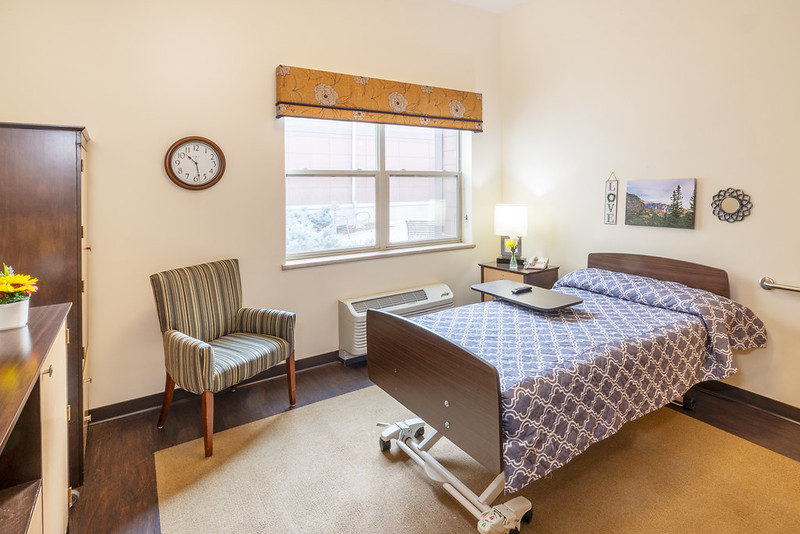
How is Coal Creek Post Acute & Assisted Living Staffed?

CMS rates COAL CREEK POST ACUTE & ASSISTED LIVING's staffing level at 4 out of 5 stars, which is above average compared to other nursing homes. Staff turnover is 67%, which is 20 percentage points above the Colorado average of 46%. High turnover can affect care consistency as new staff learn residents' individual needs. RN turnover specifically is 79%, which is notably high. RNs provide skilled clinical oversight, so turnover in this role can affect medical care quality.

What Have Inspectors Found at Coal Creek Post Acute & Assisted Living?

State health inspectors documented 25 deficiencies at COAL CREEK POST ACUTE & ASSISTED LIVING during 2018 to 2024. These included: 1 that caused actual resident harm and 24 with potential for harm. Deficiencies causing actual harm indicate documented cases where residents experienced negative health consequences.
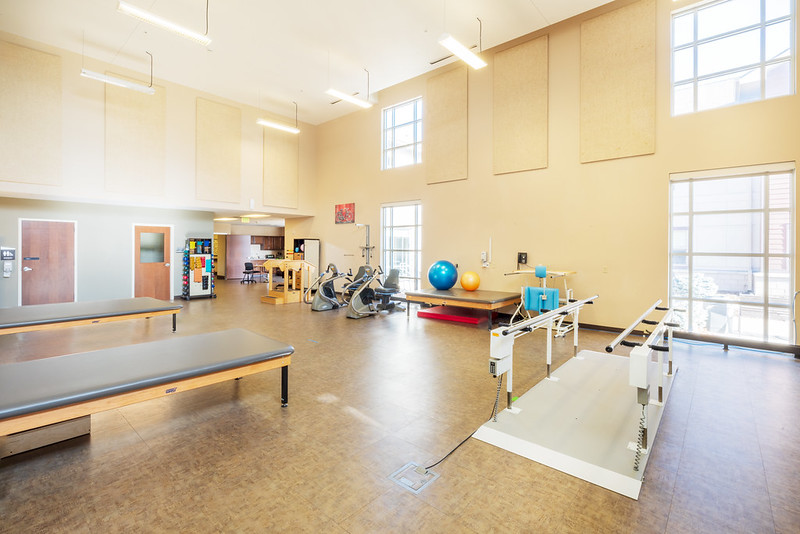
Who Owns and Operates Coal Creek Post Acute & Assisted Living?

COAL CREEK POST ACUTE & ASSISTED LIVING is owned by a for-profit company. For-profit facilities operate as businesses with obligations to shareholders or private owners. The facility is operated by PACS GROUP, a chain that manages multiple nursing homes. With 70 certified beds and approximately 36 residents (about 51% occupancy), it is a smaller facility located in LAFAYETTE, Colorado.

How Does Coal Creek Post Acute & Assisted Living Compare to Other Colorado Nursing Homes?

Compared to the 100 nursing homes in Colorado, COAL CREEK POST ACUTE & ASSISTED LIVING's overall rating (3 stars) is below the state average of 3.1, staff turnover (67%) is significantly higher than the state average of 46%, and health inspection rating (3 stars) is at the national benchmark.

What Should Families Ask When Visiting Coal Creek Post Acute & Assisted Living?

Based on this facility's data, families visiting should ask: "How do you ensure continuity of care given staff turnover, and what is your staff retention strategy?" "Can I visit during a mealtime to observe dining assistance and food quality?" "How do you handle medical emergencies, and what is your hospital transfer rate?" "Can I speak with family members of current residents about their experience?" These questions are particularly relevant given the facility's high staff turnover rate.

Is Coal Creek Post Acute & Assisted Living Safe?

Based on CMS inspection data, COAL CREEK POST ACUTE & ASSISTED LIVING has a clean safety record: no substantiated abuse findings (meaning no confirmed cases of resident harm), no Immediate Jeopardy citations (the most serious violation level indicating risk of serious injury or death), and is not on the Special Focus Facility watch list (a federal program monitoring the lowest-performing 1% of nursing homes). The facility has a 3-star overall rating and ranks #100 of 100 nursing homes in Colorado. While no facility is perfect, families should still ask about staff-to-resident ratios and recent inspection results during their visit.

Do Nurses at Coal Creek Post Acute & Assisted Living Stick Around?

Staff turnover at COAL CREEK POST ACUTE & ASSISTED LIVING is high. At 67%, the facility is 20 percentage points above the Colorado average of 46%. Registered Nurse turnover is particularly concerning at 79%. RNs handle complex medical decisions and coordinate care — frequent RN changes can directly impact care quality. High turnover means new staff may not know residents' individual needs, medications, or preferences. It can also be disorienting for residents, especially those with dementia who rely on familiar faces. Families should ask: What is causing the turnover? What retention programs are in place? How do you ensure care continuity during staff transitions?

Was Coal Creek Post Acute & Assisted Living Ever Fined?

COAL CREEK POST ACUTE & ASSISTED LIVING has no federal fines on record. CMS issues fines when nursing homes fail to meet care standards or don't correct problems found during inspections. The absence of fines suggests the facility has either maintained compliance or corrected any issues before penalties were assessed. This is a positive indicator, though families should still review recent inspection reports for the full picture.

Is Coal Creek Post Acute & Assisted Living on Any Federal Watch List?

COAL CREEK POST ACUTE & ASSISTED LIVING is not on any federal watch list. The most significant is the Special Focus Facility (SFF) program, which identifies the bottom 1% of nursing homes nationally based on persistent, serious quality problems. Not being on this list means the facility has avoided the pattern of deficiencies that triggers enhanced federal oversight. This is a positive indicator, though families should still review the facility's inspection history directly.