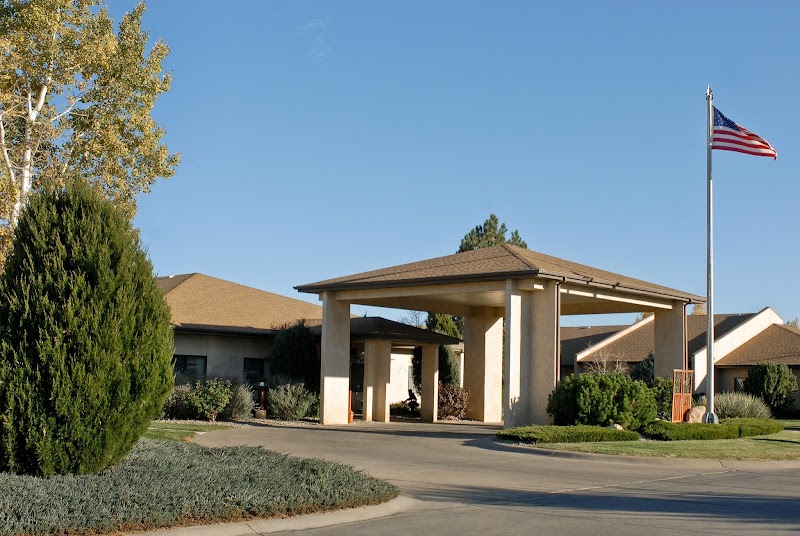
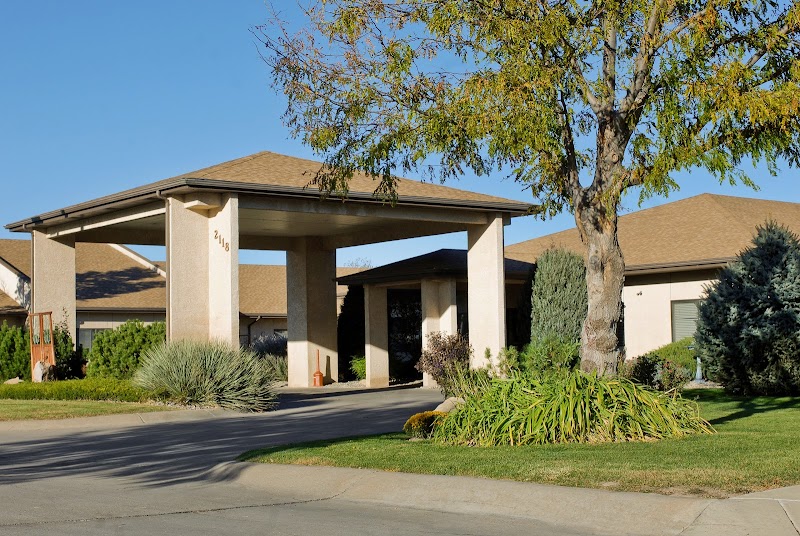
LIFE CARE CENTER OF PUEBLO

2118 CHATALET LN, PUEBLO, CO 81005 (719) 564-2000
For profit - Corporation 187 Beds LIFE CARE CENTERS OF AMERICA Data: November 2025
Trust Grade
48/100
#73 of 208 in CO
Last Inspection: May 2024

Within standard 12-15 month inspection cycle. Federal law requires annual inspections.

Overview

Life Care Center of Pueblo has a Trust Grade of D, indicating below-average performance with some concerns about care quality. They rank #73 out of 208 facilities in Colorado, placing them in the top half, and #3 out of 9 facilities in Pueblo County, meaning only two local options are better. The facility is improving, with the number of issues decreasing from 12 in 2020 to 8 in 2024; however, they still have 29 total issues, including 4 serious ones. Staffing is adequate, rated 3 out of 5 stars, with a turnover rate of 43%, which is better than the state average of 49%. There have been some concerning incidents, such as a resident being left on the toilet after requesting assistance and another resident experiencing pain during a medical procedure that was not documented properly. While the facility has strong RN coverage compared to many others in Colorado, families should weigh these strengths against the serious care issues reported.

Trust Score
D
48/100
In Colorado
#73/208
Top 35%
Safety Record
High Risk
Review needed
Inspections
Getting Better
12 → 8 violations
Staff Stability
○ Average
43% turnover. Near Colorado's 48% average. Typical for the industry.
Penalties
✓ Good
$9,575 in fines. Lower than most Colorado facilities. Relatively clean record.
Skilled Nurses
✓ Good
Each resident gets 57 minutes of Registered Nurse (RN) attention daily — more than average for Colorado. RNs are trained to catch health problems early.
Violations
⚠ Watch
29 deficiencies on record. Higher than average. Multiple issues found across inspections.
★★★★☆
4.0
Overall Rating
★★★☆☆
3.0
Staff Levels
★★★★★
5.0
Care Quality
★★★☆☆
3.0
Inspection Score
Stable
2020: 12 issues
2024: 8 issues

The Good

  • 5-Star Quality Measures · Strong clinical quality outcomes
  • Full Sprinkler Coverage · Fire safety systems throughout facility
  • No fines on record
  • Staff turnover below average (43%)

    5 points below Colorado average of 48%

Facility shows strength in quality measures, fire safety.

The Bad

Staff Turnover: 43%

Near Colorado avg (46%)

Typical for the industry

Federal Fines: $9,575

Below median ($33,413)

Minor penalties assessed

Chain: LIFE CARE CENTERS OF AMERICA

Part of a multi-facility chain

Ask about local staffing decisions and management

The Ugly 29 deficiencies on record

4 actual harm
Aug 2024 5 deficiencies 2 Harm
SERIOUS (G) 📢 Someone Reported This

A family member, employee, or ombudsman was alarmed enough to file a formal complaint

Actual Harm - a resident was hurt due to facility failures

Resident Rights (Tag F0550)

A resident was harmed · This affected 1 resident

**NOTE- TERMS IN BRACKETS HAVE BEEN EDITED TO PROTECT CONFIDENTIALITY** Based on record review and interviews the facility failed to ensure residents were treated with dignity and respect for three (#...

Read full inspector narrative →
**NOTE- TERMS IN BRACKETS HAVE BEEN EDITED TO PROTECT CONFIDENTIALITY** Based on record review and interviews the facility failed to ensure residents were treated with dignity and respect for three (#1, #12 and #9) of four residents out of 13 sample residents. Resident #1, who was non-weight bearing on his right leg due to a broken ankle required staff assistance to transfer from his wheelchair to and from the toilet. According to Resident #1, certified nurse aide (CNA) #1 was rude to him when he requested assistance with transferring to the toilet and told him he could use the bathroom himself. CNA #1 did assist the resident onto the toilet, however when Resident #1 requested assistance to transfer back to his wheelchair after using the bathroom, CNA #1 entered the resident's room and refused to assist him. CNA #1 informed the resident we are not doing this again and left the resident's room without assisting him. Resident #1 said he had to remain on the toilet until another CNA responded to his call light and came to assist him from the toilet back to his wheelchair. Resident #1 said the experience made him feel humiliated. On another occasion, Resident #1 said CNA #1 approached him in the dining room and when he did not respond to her, she laughed at him and rudely said What's the matter with you, you don't have a mouth now and That's right, you're mad at me. Resident #1 again said the experience with CNA #1 humiliated him. Resident #1 said CNA #1 entered his room to answer his call light and he asked her to leave because he did not want to receive care from her due to his past experiences with her. The resident said he told CNA #1 he was going to report her behavior to the nursing home administrator (NHA) and CNA #1 responded by saying I've already told therapy about you. Resident #1 said her statement made him feel scared. Resident #1 said he was afraid other staff would treat him poorly if CNA #1 was bad-mouthing him. Resident #1 said he reported CNA #1's behavior to the NHA, however, he said nothing had changed and CNA #1 now snickered at him and heckled him in the hallway when he passed by. He said she sometimes stood outside his room and stared at him or laughed at him. He said he had started to keep his door closed when CNA #1 was working but he preferred to have his door open. Due to the facility's failure to ensure Resident #1 was treated with respect and dignity by CNA #1 and the facility's failure to follow up effectively with CNA #1 to ensure CNA #1's behaviors toward Resident #1 were corrected, Resident #1 suffered psychosocial harm due to feelings of humiliation from the treatment he received and fear that other staff would also treat him poorly. Additionally, Resident #12 and Resident #9 reported they were not treated with dignity and respect by staff on occasion. The residents felt staff were rude, degrading and did not care for them. Findings include: I. Facility policy and procedure The Dignity policy and procedure, dated September 2023, was provided by the nursing home administrator (NHA) on 8/7/24 at 3:12 p.m. It read in pertinent part, Each resident has the right to be treated with dignity and respect. Interactions with staff must focus on maintaining and enhancing the resident's self-esteem and self-worth, as well as honor and value their input. The facility must protect and promote the rights of the resident. II. Resident #1 A. Resident status Resident #1, age less than 65, was admitted on [DATE]. According to the August 2024 computerized physician orders (CPO), diagnoses included fracture of upper and lower end of right fibula, closed fracture with routine healing, lack of coordination, muscle weakness, difficulty in walking and pressure ulcer of the right ankle. The 6/17/24 minimum data set (MDS) assessment revealed the resident was cognitively intact with a brief interview for mental status (BIMS) score of 15 out of 15. The resident was dependent on staff assistance for toilet transfers. The assessment revealed the resident was strictly non-weight bearing on his right extremity related to his fractured fibula. B. Resident interview Resident #1 was interviewed on 8/5/24 at 4:31 p.m. Resident #1 said he was admitted to the facility for rehabilitation after breaking his ankle. He said he was unable to bear any weight on his right ankle related to the surgery. He said because of his surgery, he needed staff assistance to get on and off of the elevated commode that was placed over the toilet in his bathroom. Resident #1 said he had used his call light to request assistance transferring from his wheelchair onto the commode. He said CNA #1 was rude and refused to help him. Resident #1 said CNA #1 told him he could go to the bathroom by himself. Resident #1 said he told her he could not because he was non-weight bearing and weak. He said CNA #1 told him that it was (expletive language) that he needed assistance. Resident #1 said while he was seated on the commode after having a bowel movement he used the call light to request assistance to transfer back to his wheelchair. Resident #1 said CNA #1 entered his bathroom in response to the call light, said we're not doing this again and exited the room. He said she left him seated in the bathroom soiled. He said he felt humiliated. Resident #1 said he had to continue to push the call light until another CNA came to the bathroom to assist him. Resident #1 said he was approached on another occasion in the dining room by CNA #1. He said she was rude and hateful toward him. Resident #1 said CNA #1 aske him What's the matter with you, you don't have a mouth now? He said she then laughed at him and said That's right, you're mad at me and walked away. Resident #1 said again he felt humiliated. Resident #1 said he no longer wanted to receive care from CNA #1. He said CNA #1 came into his room another time, after he pushed the call light. He said he asked her to leave and he would wait for another CNA or nurse to come assist him. He said CNA #1 argued with him about leaving. Resident #1 said he told CNA #1 that he was going to report her behavior to the NHA. Resident #1 said, in response, she told him I've already told therapy about you. He said CNA #1's statement made him feel scared. Resident #1 said he was afraid other staff would treat him poorly if CNA #1 was bad-mouthing him. Resident #1 said he reported CNA #1 to the NHA, however, he said her behavior toward him had not changed. Resident #1 said after he reported CNA #1's behavior to the NHA, she began to bully him in the hallways. He said she snickered and heckled him while passing him in the hallways. Resident #1 said CNA #1 had begun to stand outside his doorway and stared or laughed at him. He said he had begun to keep his door shut during her scheduled shifts, however, he said he preferred for his door to remain open. C. Record Review Review of Resident #1's August 2024 CPO revealed a physician's order that indicated the resident was to 7/26/24 continue strict non-weight bearing to his right lower extremity for four more weeks. D. Staff interviews The NHA and the director of nursing (DON) were interviewed together on 8/5/24 at 5:35 p.m. The NHA said he remembered receiving a complaint from Resident #1 about CNA #1. The NHA said Resident #1 had been upset with CNA #1 because she had been rude. The NHA said the resident was unable to express an exact allegation and had reported the complaint to him in the hallway. The NHA said he had not spoken with CNA #1 because he had been unsure exactly what to speak to her about. The DON said she had spoken with CNA #1. The DON said Resident #1 had reported that CNA #1 had been rude to him on a Friday, however, she said CNA #1 did not work on Fridays. The DON said when she approached CNA #1 about Resident #1's complaint, CNA #1 told her she had no issues with the resident. The DON said it may be easy for a resident to become confused as to the day of the week. The NHA said CNA #1 had been told not to provide cares to Resident #1 unless it was necessary, such as when another staff member could not provide assistance to the resident. The NHA said the facility did not change the hallway assignment for CNA #1 so she would no longer be providing care for Resident #1 because she had been told not to answer his call light. The NHA said he did not investigate or file a grievance on Resident #1's behalf because it had appeared to be a customer service issue. -However, per Resident #1's interview, he continued to have problems with CNA #1 (see resident interview above). The NHA was interviewed again on 8/7/24 at 10:15 a.m. The NHA said a Resident's Rights training had been attended by every employee during their orientation and then annually thereafter. III. Resident #12 A. Resident status Resident #12, age greater than 65, was admitted on [DATE]. According to the August 2024 CPO, diagnoses included chronic respiratory failure, chronic obstructive pulmonary disease (COPD), dependence on oxygen, weakness and difficulty in walking. The 5/22/24 MDS assessment revealed the resident was cognitively intact with a BIMS score of 15 out of 15. The resident required assistance with activities of daily living (ADL). B. Resident interview Resident #12 was interviewed on 8/7/24 at 2:00 p.m. Resident #12 said most staff treated her with dignity and respect. However, she said today (8/7/24) the bath aide (CNA #7) was an (expletive language) to her. She said CNA #7 refused to put lotion or ted hose (compression stockings) back on her after her shower. She said CNA #7 told her she did not have time. She said this morning (8/7/24) her breakfast tray came late and her coffee was cold. She said this happened frequently so she asked when her tray was picked up to have two cups of hot coffee brought to her. However, Resident #12 said, this morning (8/7/24) CNA #8 told her she did not have time to go get the hot coffee so she would have to wait until lunch. Resident #8 said it made her feel like she was not important and it was degrading to her. She said she tried not to bother the staff unless she needed to. She said she had complained in the past, but it did not do any good. Resident #12 said the CNAs gossiped about residents who complained. C. Staff interview The NHA was interviewed on 8/7/24 at 2:30 p.m. The NHA said he was informed of the above interview with Resident #12. He said the resident should have received the care she requested. He said he would investigate the situation and go talk to Resident #12. He said the facility staff could use some training on customer service. He said he would talk to the dietary manager about the coffee being cold. IV. Resident #9 A. Resident status Resident #9, age greater than 65, was admitted on [DATE]. According to the August 2024 CPO, diagnoses included COPD, type II diabetes mellitus with neuropathy, heart failure, neurocognitive disorder with Lewy bodies and hemiplegia and hemiparesis (weakness to one side of the body). The 5/10/24 MDS assessment revealed the resident had moderate cognitive impairment with a BIMS score of nine out of 15. B. Resident interview Resident #9 was interviewed on 8/6/24 at 9:05 a.m. Resident #9 said licensed practical nurse (LPN) #1 did not treat her with respect and dignity. She said LPN #1 was rude and would not listen to her. She said when she had chest pain LPN #1 would not believe her. Resident #9 said LPN #1 just did not care for her. She said she tried to avoid her when she was the nurse for the day. C. Staff interview The social service assistant (SSA) was interviewed on 8/6/24 at 9:30 a.m. The SSA spoke with Resident #9 about her concern and told the resident she would investigate. The SSA said the staff were to treat residents with respect. She said Resident #9 was able to make her needs known. She said she would check in with the resident periodically to see how she was doing.
SERIOUS (G) 📢 Someone Reported This

A family member, employee, or ombudsman was alarmed enough to file a formal complaint

Actual Harm - a resident was hurt due to facility failures

Free from Abuse/Neglect (Tag F0600)

A resident was harmed · This affected 1 resident

**NOTE- TERMS IN BRACKETS HAVE BEEN EDITED TO PROTECT CONFIDENTIALITY** Based on record review and interviews, the facility failed to ensure residents had the right to be free from physical abuse for ...

Read full inspector narrative →
**NOTE- TERMS IN BRACKETS HAVE BEEN EDITED TO PROTECT CONFIDENTIALITY** Based on record review and interviews, the facility failed to ensure residents had the right to be free from physical abuse for one (#3) of three residents reviewed for abuse out of 13 sample residents. Resident #3 was admitted to the facility on [DATE] with a diagnosis of constipation. On [DATE], in the early morning hours, Resident #3 called for assistance. The resident told the staff that she was constipated and needed assistance or she wanted to go to the hospital. Registered nurse (RN) #1 came to her room. Certified nurse aide (CNA) #5 assisted Resident #3 to roll over. RN #1 began to insert a suppository and felt a hard stool in the resident's rectum. As RN #1 removed the stool from Resident #3's rectum, the resident was crying and yelling in pain and asking RN #1 to stop. However, RN #1 continued to proceed with the removal of the stool, while the resident was crying in pain, which caused mental anguish, emotional distress and fear for Resident #3. Additionally, the facility failed to document any information related to Resident #3's fecal impaction and the procedure that occurred in Resident #3's electronic medical record (EMR). Findings include: I. Professional references According to Setya A, [NAME] G, Cagir B. (2023). Fecal Impaction. National Institutes of Health, retrieved on [DATE] from https://www.ncbi.nlm.nih.gov/books/NBK448094/, Fecal impaction is a significant but preventable problem in the elderly population within hospitals and other institutions. The best way to treat it is to prevent it from developing in the first place. The cause of constipation should be identified early and managed appropriately. The treatment options are the rectal administration of stool softening agents, usually enemas or suppositories or a digital evacuation of the impacted fecal mass.The procedure is best done using ample lubrication and gently removing the impacted stool with the index finger. Treas, L.S., [NAME], K.L., & [NAME], M.H. (2022) Basic Nursing, Thinking, Doing and Caring, (Third edition), pages 2087-2090, retrieved on [DATE], read in pertinent part, Position patient on left side which helps with medication retention because the descending colon is on the left side, it also helps relax the external anal sphincter (rectum). The patient should not experience pain during the administration of a suppository, but they will feel pressure. Encourage deep breathing to aid in relaxation of the sphincter. Pushing a suppository through a constricted sphincter causes discomfort. II. Facility policy and procedure The Abuse and Neglect policy and procedure, dated [DATE], was provided by the nursing home administrator (NHA) on [DATE] at 9:11 a.m. It read in pertinent part, Nursing homes must incorporate clear-cut policies and practices that demonstrate a hardline, zero-tolerance approach to resident abuse. It is the policy and practice of this facility that all residents will be protected from all types of abuse. Prohibiting and preventing all forms of abuse. Identifying what constitutes abuse. Reporting abuse. III. Physical abuse by RN #1 toward Resident #3 on [DATE] The [DATE] facility investigation was received from the nursing home administrator (NHA) on [DATE] at 12:45 p.m. The investigation was related to an allegation of sexual abuse on [DATE]. Resident #3 was interviewed by the facility on [DATE] at 4:00 p.m. Resident #3 said she had been feeling constipated and had requested a suppository. Resident #3 said RN #1 had inserted more than three fingers inside her rectum, moving them around, during the medication administration. Resident #3 told RN #1 that it was hurting and to stop, but RN #1 did not stop. Resident #3 said she was told by RN #1 not to push her call light again after the incident. Resident #3 said she did not feel safe in the facility. The roommate of Resident #3 was interviewed by the facility on [DATE] at 9:15 a.m. The roommate reported that RN #1 said she had come off of her break to deal with Resident #3. The roommate said Resident #3 had repeatedly yelled for RN #1 to stop. The roommate said RN #1 had hurt Resident #3 and she had heard her scream. The roommate said she had begun to pray for Resident #3. RN #1 was interviewed by the facility on [DATE] at 11:15 a.m. RN #1 said she administered a suppository after digitally removing stool from the Resident #3's rectum. RN #1 said the care only lasted 15 to 20 seconds. RN#1 said Resident #3 never told her to stop. The facility unsubstantiated Resident #3's sexual abuse related to the resident's emergency department (ED) visit had not noted trauma to the resident's rectal area. -However, according to the ED visit documentation, the resident's rectum was mildly red (see record review below). IV. Resident #3 A. Resident status Resident #3, age greater than 65, was admitted on [DATE] and discharged to home on [DATE]. According to the [DATE] computerized physician orders (CPO), diagnoses included constipation, gastro-esophageal reflux disease (GERD), nausea, diabetes mellitus type 2, end stage renal disease and left leg below the knee amputation. The [DATE] minimum data set (MDS) assessment revealed the resident was cognitively intact with a brief interview for mental status (BIMS) score of 15 out of 15. The MDS assessment documented the resident was receiving renal dialysis. V. Resident's representative interview The resident's representative was interviewed on [DATE] at 12:55 p.m. The representative said Resident #3 resided at the facility, until she moved her from the facility on [DATE]. She said her mother had experienced a traumatic event at the facility. She said her mother had a history of constipation. She said Resident #3's mother had died at an early age of a bowel obstruction and so Resident #3 was very cautious about her bowels. She said Resident #3 told her she was held down while RN #1 gave her a suppository. She said Resident #3 was crying out to stop and RN #1 did not stop. She said the resident was afraid to stay in the facility. The resident's representative said Resident #3 was a religious woman and she felt she was rectally assaulted to the extent that she continued to have nightmares about the abuse. She said the resident was humiliated and embarrassed and that was why she did not report the abuse the night the incident occurred. She said Resident #3 told the social worker at the dialysis center of the abuse. The representative said the dialysis center social worker (DSW) reported the incident to adult protective services. VI. Record Review The admission record dated [DATE] revealed Resident #3 admitted to the facility with a medical diagnosis of a history of constipation. A [DATE] emergency department report for Resident #3 documented there was a small external hemorrhoid at the 11 o'clock position of the resident's rectum that was not bleeding and there were no overt tears, trauma, bleeding or bruising. The note documented the rectum did not appear to be irritated but was mildly red inside. A [DATE] facility nursing progress note documented a facility RN got a report from the emergency department that Resident #3 was alright and did not have bleeding or tears from the rectum. Another [DATE] facility nursing progress note documented Resident #3 had come back from the emergency department and was hungry. The [DATE] nurse practitioner note documented the nurse practitioner followed-up regarding the resident's sexual assault allegation. The note said the resident voiced to the nurse practitioner that she was constipated and the nurse forcefully digitally stimulated her. The note documented the resident was seen at the hospital and no evidence of trauma was noted on the exam. The note documented an investigation of the incident was in progress with nursing staff. A review of the resident's EMR did not reveal other documentation regarding the procedure that was done on [DATE] that prompted the resident to go to the emergency department, the allegation made, or any psychosocial harm on [DATE]. VII. Staff interviews RN #1 was interviewed on [DATE] at 7:24 p.m. RN #1 said Resident #3 had requested a suppository (laxative). RN #1 said she entered Resident #3's room with CNA #5 to administer the suppository. RN #1 said she had explained the need for digital disimpaction (procedure of removing stool from the rectum with the index finger) to Resident #3. RN #1 said the resident was educated that the stool needed to be removed for the suppository to work properly. RN #1 said she had heard the resident moaning as stool was removed from the rectum. RN #1 said the resident did say to stop, but it had been after the disimpaction and after her finger had already entered the rectum to administer the suppository. RN #1 then said she had never heard the resident say to stop. RN #1 said after the event she had heard from others that the resident had said to stop. RN #1 said the resident may have said stop, but she did not hear it until she was done. RN #1 said she may have forgotten to chart the administration of the suppository. Certified nurse aide (CNA) #5 was interviewed on [DATE] at 7:24 p.m. CNA #5 said Resident #3 had complained of constipation and had been turning her call light on every fifteen minutes asking for something to help her with her constipation. CNA #5 said Resident #3 had told her that the day shift nursing staff had not given her anything to relieve her of her constipation. CNA #5 said Resident #3 said she had been passing hard little balls of feces throughout the day and evening shifts. CNA #5 said she told RN #1 and that it took her a while to come into Resident #3's room to give her the suppository. CNA #5 said that Resident #3 understood the procedure. CNA #5 said once RN #1 came in to give the suppository, she helped roll Resident #3 onto her right side and held Resident #3's hand with her right hand and had her left hand on Resident #3's hip. CNA #5 said RN #1 did explain the procedure to her, that she needed to get the feces out for the suppository to work. CNA #5 said Resident #3 was crying and yelling for RN #1 to stop because the digging was painful. CNA #5 said RN #1 did not stop. CNA #5 said RN #1 was really digging the bowel movement out and RN #1 should have stopped when Resident #3 was yelling for her to stop. CNA #5 said she did not feel comfortable asking RN #1 to stop because she was a new CNA and also because RN #1 was the charge nurse on duty. A frequent visitor (FV) was interviewed on [DATE] at 9:24 a.m. She said she got a phone call from the resident's representative the morning of [DATE]. The FV said the resident's representative told her Resident #3 had been receiving a suppository and was digitally probed to the point where it felt as if she had been sexually assaulted, so much so that the representative took her to the emergency department for a sexual assault examination. The FV said the resident's representative told her that Resident #3 was fearful and traumatized from the experience. The NHA and the director of nursing (DON) were interviewed together on [DATE] at 10:15 a.m. The DON said RN #1 should have applied lubrication to her gloved finger before she inserted her finger into Resident #3's rectum. The DON said RN #1 should have removed as much stool as required to administer the suppository. The DON said RN #1 should have stopped when told to stop by the resident. The DON said if a resident said stop, it was their right and it did not matter what care was being performed at the time. The DON said RN #1 should have stopped the procedure and provided education to the resident. She said RN #1 should have provided options (continuing with the disimpaction, stopping the procedure completely or calling a provider) and allowed the resident to decide how they proceeded. The DON said there should be documentation in the resident's electronic medical record (EMR) of the digital stool removal. The NHA said he was the abuse coordinator for the facility. The NHA said on [DATE] he was notified of a sexual abuse allegation by Resident #3's dialysis center. The NHA said after he had received a notification of sexual abuse, he contacted the DON and the regional director. The NHA said he did not remember who notified him. The NHA said he called the DON, the regional team, the ombudsman and the police. He said he then reported Resident #3's allegation of rape to the State Agency reporting site. The NHA said the investigation had begun immediately upon the facility's notification of the allegation. The NHA said RN #1 and CNA #5 were placed on administrative suspension for approximately five days during the investigation. The NHA read aloud the facility-conducted interview of Resident #3's roommate. The NHA said he had seen and read the interview before. The NHA said his first instinct would have been that there had been potential abuse. The dialysis center social worker (DSW) returned a phone call (placed during the survey) and was interviewed on [DATE] at 9:33 a.m. The DSW said on [DATE] Resident #3 arrived for dialysis appearing disheveled, tearful and her demeanor was out of character. The DSW said as the dialysis staff attempted to calm down Resident #3, she had begun to shake and had cried. The DSW said Resident #3 told the dialysis staff that a CNA held her down and a nurse forced a suppository inside her. The DSW said Resident #3 said she had told them to stop, never mind, she did not want the suppository anymore, she just wanted to go to sleep. Resident #3 said the nurse did not stop. The DSW said Resident #3 used the words, fearful, scared, and retaliation.
CONCERN (D) 📢 Someone Reported This

A family member, employee, or ombudsman was alarmed enough to file a formal complaint

Potential for Harm - no one hurt, but risky conditions existed

Investigate Abuse (Tag F0610)

Could have caused harm · This affected 1 resident

**NOTE- TERMS IN BRACKETS HAVE BEEN EDITED TO PROTECT CONFIDENTIALITY** Based on record review and interviews, the facility failed to have evidence that all alleged abuse were thoroughly investigated ...

Read full inspector narrative →
**NOTE- TERMS IN BRACKETS HAVE BEEN EDITED TO PROTECT CONFIDENTIALITY** Based on record review and interviews, the facility failed to have evidence that all alleged abuse were thoroughly investigated for one (#3) of three residents reviewed for abuse of 13 sample residents. Specifically, the facility failed to thoroughly investigate an allegation of abuse. Findings include: I. Facility policy and procedure The Abuse and Neglect policy and procedure, dated [DATE], was provided by the nursing home administrator (NHA) on [DATE] at 9:11 a.m. It read in pertinent part, The facility must develop and implement written policies and procedures to investigate any such allegations. Have evidence that all alleged allegations of abuse are thoroughly investigated. II. Resident #3 A. Resident status Resident #3, age greater than 65, was admitted on [DATE] and discharged to home on [DATE]. According to the [DATE] computerized physician orders (CPO), diagnoses included constipation, gastro-esophageal reflux disease (GERD), nausea, diabetes mellitus type 2, end stage renal disease and left leg below the knee amputation. The [DATE] minimum data set (MDS) assessment revealed the resident was cognitively intact with a brief interview for mental status (BIMS) score of 15 out of 15. B. Resident's representative interview The resident's representative was interviewed on [DATE] at 12:55 p.m. The representative said Resident #3 resided at the facility, until she moved her from the facility on [DATE]. She said her mother had experienced a traumatic event at the facility. She said her mother had a history of constipation. She said Resident #3's mother had died at an early age of a bowel obstruction and so Resident #3 was very cautious about her bowels. She said Resident #3 told her she was held down while registered nurse (RN) #1 gave her a suppository. She said Resident #3 was crying out to stop and RN #1 did not stop. She said the resident was afraid to stay in the facility. The resident's representative said Resident #3 was a religious woman and she felt she was rectally assaulted to the extent that she continued to have nightmares about the abuse. She said the resident was humiliated and embarrassed and that was why she did not report the abuse the night the incident occurred. She said Resident #3 told the social worker at the dialysis center of the abuse. Cross-reference F600 for failure to keep a resident free from abuse. C. Facility investigation of incident between RN #1 and Resident #3 The [DATE] facility investigation was provided by the nursing home administrator (NHA) on [DATE] at 12:45 p.m. The investigation was related to an allegation of sexual abuse in the early morning hours of [DATE]. The roommate of Resident #3 was interviewed by the facility on [DATE] at 9:15 a.m. The roommate reported that RN #1 said she had come off of her break to deal with Resident #3. The roommate said Resident #3 had repeatedly yelled for RN #1 to stop. The roommate said RN #1 had hurt Resident #3 and she had heard her scream. The roommate said she had begun to pray for Resident #3. RN #1 was interviewed by the facility on [DATE] at 11:15 a.m. RN #1 said she administered a suppository after digitally removing stool from the Resident #3's rectum. RN #1 said the care only lasted 15 to 20 seconds. RN #1 said Resident #3 never told her to stop. On [DATE] at approximately 3:00 p.m. the facility interviewed certified nurse aide (CNA) #5. CNA #5 said she helped RN #1 administer the suppository by rolling Resident #3 onto her side. CNA #5 said the nurse had to remove feces to get the suppository placed inside Resident #3. CNA #5 said RN #1 told Resident #3 I can't stop because I am trying to pull feces out so I can put the suppository in. Resident #3 was interviewed by the facility on [DATE] at 4:00 p.m. Resident #3 said she had been feeling constipated and had requested a suppository. Resident #3 said RN #1 had inserted more than three fingers inside her rectum, moving them around, during the medication administration. Resident #3 told RN #1 that it was hurting and to stop, but RN #1 did not stop. Resident #3 said she was told by RN #1 not to push her call light again after the incident. Resident #3 said she did not feel safe in the facility. The investigation revealed the facility interviewed one additional staff member who was working the floor at the time of the incident. -However, the two additional staff members who were working at the time of the incident were not interviewed as part of the investigation. According to review of the facility's investigation, three additional staff members from different shifts were interviewed and asked if they had ever witnessed staff members being sexually inappropriate with residents and if they had any concerns about the way staff members handled residents. The facility interviewed five additional residents, asking each of them the following questions: -Has a staff member ever been sexually inappropriate with you; -Are you fearful of any staff members; -Do you feel safe; and, -Is there anything else you want the facility to know? -However, the facility failed to ask the residents any questions related to if any of them had ever experienced any care from staff that they felt had been provided in a forceful physical way. The facility unsubstantiated Resident #3's sexual abuse related to the resident's emergency department (ED) visit had not noted trauma to the resident's rectal area. -However, the facility failed to investigate the potential that physical abuse occurred due to the forceful way RN #1 administered the suppository to Resident #3, despite Resident #3 asking the nurse to stop. D. Record Review An emergency department (ED) visit progress note, dated [DATE] at 3:23 p.m., documented Resident #3 appeared to be nervous. Resident #3 said she had been rectally assaulted, possibly for disimpaction, but against her will. The note documented the resident had a small external hemorrhoid at the 11 o'clock position of the rectum that was not bleeding and there were no overt tears, trauma, bleeding or bruising. The note further documented the rectum did not appear to be irritated but was mildly red inside. III. Staff interviews The NHA and the director of nursing (DON) were interviewed together on [DATE] at 10:15 a.m. The NHA said he was the abuse coordinator for the facility. He said he was notified of a sexual abuse allegation on [DATE]. The NHA said he followed the investigation procedure for a sexual abuse allegation. The DON said the facility had not substantiated the sexual abuse allegation because the emergency room discharge stated no signs of trauma or assault. The DON said RN #1 had been interviewed by a CNA who was helping out the social services department and was not a licensed social worker. The DON said she had not conducted the interviews because RN #1 was the DON's sister, so she had removed herself from the investigation. She said she did not think the assistant director of nursing (ADON) had conducted an interview with RN #1 in her place when she removed herself from the investigation. The NHA said the interviews during the investigation should have been conducted by a qualified social worker or someone from the management team, and not the CNA who was not a licensed social worker. During the interview, the NHA read aloud the interview that the facility had conducted with Resident #3's roommate. After reading the interview, the NHA said his first instinct would have been that there had been potential physical abuse, however, he said he did not recognize it at the time of the incident. The NHA said every staff member who was working on the shift when the incident occurred should have been interviewed.
CONCERN (D) 📢 Someone Reported This

A family member, employee, or ombudsman was alarmed enough to file a formal complaint

Potential for Harm - no one hurt, but risky conditions existed

Deficiency F0660 (Tag F0660)

Could have caused harm · This affected 1 resident

**NOTE- TERMS IN BRACKETS HAVE BEEN EDITED TO PROTECT CONFIDENTIALITY** Based on record review and interviews, the facility failed to develop and implement an effective discharge plan for one (#3) of ...

Read full inspector narrative →
**NOTE- TERMS IN BRACKETS HAVE BEEN EDITED TO PROTECT CONFIDENTIALITY** Based on record review and interviews, the facility failed to develop and implement an effective discharge plan for one (#3) of three residents reviewed for discharge planning out of 13 sample residents. Specifically the facility failed to assist Resident #3 in the development of a safe and appropriate discharge plan. Findings include: I. Facility policy and procedure The Against Medical Advice (AMA) Discharges policy and procedure, August 2023, was provided by the nursing home administrator (NHA) on 8/7/24 at 2:30 p.m. It read in pertinent part, If a resident wishes to be discharged prior to the completion of medical treatment or against the advice of the attending physician to a setting that does not appear to meet their needs or appears unsafe, the facility will treat this a refusal of care. The facility will complete the required documentation and provide written discharge instructions as with any discharge. If a discharge AMA cannot be prevented, a practitioner must evaluate the resident's mental capacity to be sure that the resident can understand the condition, the nature and effect of the proposed treatment, and the inherent risk/benefit in pursuing the treatment and not pursuing the treatment. Documentation should include the resident's decision-making capacity, disclosed risks, and the resident's understanding of those risks. As with any discharge, the facility is required to provide written discharge instructions, including follow-up with practitioners, medication management, the need for continued therapy, and any durable medical equipment necessary. Notify the resident practitioner, the facility's social services department, and a facility administrator of the resident's desire to leave the facility AMA. The AMA documentation includes: decision-making capacity, discussion of treatment goals (risks of not completing goals with resident understanding those risks), date and time the practitioner was notified of residents desire to discharge AMA, discharge arrangements made with caregiver/family member, written discharge instructions provided, person to whom resident was discharged , signed copy of the AMA form, physical assessment findings and education provided to resident and family (with understanding of that teaching). II. Resident #3 A. Resident status Resident #3, age greater than 65, was admitted on [DATE] and discharged to home on 6/7/24. According to the June 2024 computerized physician orders (CPO), diagnoses included constipation, gastro-esophageal reflux disease (GERD), nausea, diabetes mellitus type 2, end stage renal disease and left leg below the knee amputation. The 4/24/24 minimum data set (MDS) assessment revealed the resident was cognitively intact with a brief interview for mental status (BIMS) score of 15 out of 15. She required a hoyer lift for transfers related to a recent left leg below the knee amputation. The MDS assessment did not indicate the resident had an ongoing discharge plan. B. Resident's representative interview The resident's representative was interviewed on 8/7/24 at 12:55 p.m. The resident's representative said her mother had informed her of an incident which occurred in the early morning of 6/5/24. She said her mother had told her later in the morning (6/5/24) that she was scared and did not want to continue to live at the facility. The resident's representative said she spoke with the NHA to inform him of the abuse allegation. The resident's representative said Resident #3 went to dialysis on 6/5/24 and then to the hospital to be examined for a sexual assault allegation. The resident's representative said Resident #3 returned to the facility on 6/5/24 so the family could have time to obtain a Hoyer lift (mechanical lift) and a medical bed in order to make preparations so Resident #3 could be discharged from the facility to live with her. The resident's representative was a certified nurse aide (CNA) and an emergency medical technician (EMT). The resident's representative said she had told the facility she wanted Resident #3 to discharge home with her, however, she needed time to prepare. The resident's representative said the NHA told her if she was taking Resident #3 out of the facility it would be AMA and he had forced her to sign the AMA paperwork on the discharge date of 6/7/24. The resident's representative said the facility did not send any discharge instructions, medications or a list of the current medications that Resident #3 was currently prescribed. She said Resident #3 went nearly two weeks without her blood thinner medication and other medications. The resident's representative said the facility did not send any paperwork with the resident. The resident's representative said the facility did not provide any assistance with the discharge planning process. C. Record review The AMA form, dated 6/7/24, was signed by the resident's daughter, the ombudsman and a registered nurse (RN). The discharge form documented, in pertinent part, I am being discharged against the advice of the attending physician and the facility administration. I acknowledge that I have been informed of the risks involved and hereby release the attending physician and the facility from all responsibility for and from anything that may result from such discharge. I am also aware that I will be responsible for any costs incurred tha my insurance company refuses to cover. -Review of Resident #3's electronic medical record (EMR) did not reveal documentation indicating the facility had assisted the resident with discharge goals. -The EMR failed to document the reasons for the AMA discharge, who had made the decision for the AMA discharge or if the interdisciplinary team (IDT) was involved with the decision to discharge the resident AMA. -The EMR failed to document if the resident's physician or the medical director (MD) was notified of Resident #3's AMA discharge. -A review of Resident #3's June 2024 CPO did not reveal a physician's order for the resident's discharge. -The EMR did not reveal documentation to indicate that a discharge summary or any discharge documentation was sent with the resident. III. Staff interviews The NHA and the director of nursing (DON) were interviewed together on 8/7/24 at 10:15 a.m. The DON said it was not been safe for Resident #3 to discharge home with family. The DON said the family had told the facility they were unable to care for the resident at home. The DON said the resident did return to the facility after dialysis and the emergency department on 6/5/24 and was not discharged AMA until 6/7/24. The DON said the facility had wondered why Resident #3 had come back to the facility after her emergency department visit if the family had not wanted her there. The DON said when the resident was first admitted to the facility she had planned to return home with her family. The DON said the resident's representative and the resident had made the decision to stay at the facility, as it was going to be difficult for the resident's representative to care for the resident at home. The DON said the facility made the decision to discharge Resident #3 AMA due to the fact that the resident's representative had told them she could not take care of her at home but was insisting on taking the resident home anyway. The DON said the resident's physician had not been notified prior to Resident's #3's discharge or that the resident left AMA. The DON said Resident #3's EMR should have included documentation that she had been discharged home. The DON said it was standard practice for the facility to notify adult protective services (APS) when a resident was discharged AMA, however, the DON said APS had not been contacted by the facility regarding Resident #3's AMA discharge. The social services director (SSD), and the DON were interviewed together on 8/7/24 at 2:45 p.m. The SSD said a discharge summary should have been written and given to the family upon discharge. The SSD said she did not know why a physician's discharge order was not obtained. The SSD said although she was newly employed and was not hired at the time of Resident #3's discharge, she said the practice was for the social worker to lead the discharge planning process. She said the social worker was to offer services and make referrals when needed. The SSD said the IDT was to complete a summary of the resident's stay. The SSD said she reviewed Resident #3's EMR and said there was not any documentation or evidence which showed the resident was offered any services or discharge planning assistance. She said pertinent phone numbers, such as advocacy contact numbers, were not provided. The MD was interviewed on 8/7/24 at 3:19 p.m. via telephone. The MD said there should have been a physician's discharge order when Resident #3 was discharged from the facility. The MD said the attending physician should have been notified and participated in the AMA discharge process. The MD said he was not notified that Resident #3 had been discharged AMA. The dialysis center social worker (DSW) was interviewed on 8/15/24 at 9:33 a.m. via telephone. The DSW said the facility had not completed a safe discharge for Resident #3. The DSW said the facility left the resident's representative on her own with the discharge. The DSW said the facility did not provide discharge instructions, a medication list or the necessary equipment for Resident #3 to successfully discharge. The DSW said she picked up oxygen supplies at a medical supply company for Resident #3.
CONCERN (D) 📢 Someone Reported This

A family member, employee, or ombudsman was alarmed enough to file a formal complaint

Potential for Harm - no one hurt, but risky conditions existed

Quality of Care (Tag F0684)

Could have caused harm · This affected 1 resident

**NOTE- TERMS IN BRACKETS HAVE BEEN EDITED TO PROTECT CONFIDENTIALITY** Based on record review and interviews, the facility failed to provide treatment and care in accordance with professional standar...

Read full inspector narrative →
**NOTE- TERMS IN BRACKETS HAVE BEEN EDITED TO PROTECT CONFIDENTIALITY** Based on record review and interviews, the facility failed to provide treatment and care in accordance with professional standards of practice and the comprehensive person-centered care plan for one (#3) of three residents reviewed for quality of care out of 13 sample residents. Specifically the facility failed to: -Follow the physician's standing orders for bowel management for Resident #3; -Document the bowel medications that were administered to Resident #3; -Document the nursing medication reassessment; -Document the nursing abdominal and peri-rectal assessment; and, -Document the digital fecal disimpaction (procedure of removing stool from the rectum with a finger) procedure for Resident #3. Findings include: I. Professional reference Setya A, [NAME] G, Cagir B. (2023). Fecal Impaction. National Institutes of Health. Retrieved on [DATE] from https://www.ncbi.nlm.nih.gov/books/NBK448094/. It read in pertinent part, Fecal impaction is a significant but preventable problem in the elderly population within hospitals and other institutions. The best way to treat it is to prevent it from developing in the first place. The cause of constipation should be identified early and managed appropriately. The treatment options are the rectal administration of stool softening agents, usually enemas or suppositories or a digital evacuation of the impacted fecal mass. The procedure is best done using ample lubrication and gently removing the impacted stool with the index finger. Treas, L.S., [NAME], K.L., & [NAME], M.H. (2022) Basic Nursing, Thinking, Doing and Caring, (Third edition), page 2065 was retrieved on [DATE]. It read in pertinent part, A health record permanently documents: the care, in chronological order, performed by healthcare providers, responses to medications, interventions, and procedures. Document the medication, time, dose, and route given, preadministration assessments, and your signature. Document all therapeutic and adverse effects of the medication. Also document your nursing interventions and teaching of potential adverse effects. Treas, L.S., [NAME], K.L., & [NAME], M.H. (2022) Basic Nursing, Thinking, Doing and Caring, (Third edition), pages 2087-2090 was retrieved on [DATE]. It read in pertinent part, Position patient on left side which helps with medication retention because the descending colon is on the left side, it also helps relax the external anal sphincter (rectum). The patient should not experience pain during the administration of a suppository, but they will feel pressure. Encourage deep breathing to aid in relaxation of the sphincter. Pushing a suppository through a constricted sphincter causes discomfort. II. Facility policy and procedure The Bowel Protocol policy and procedure, dated [DATE], was provided by the NHA on [DATE] at 8:44 a.m. It read in pertinent part, Provide effective interventions for signs and symptoms of constipation. Nursing staff will record, in the electronic health record (EHR), each time a resident has a bowel movement. The Nursing Facility Standing Orders and Constipation policy and procedure, dated [DATE], was provided by unit care coordinator (UCC) #1 on [DATE] at 12:12 p.m. It read in pertinent part, The nurse may order the following if no bowel movement for three days: milk of magnesia; dulcolax suppository, fleets enema or senna. If standing orders are followed and not effective, report assessment of impaction, bowel sounds, vital signs, last BM (bowel movement) quality and quantity, presence of blood in stool, recent administration of narcotics and fluid intake. III. Resident #3 A. Resident status Resident #3, age greater than 65, was admitted on [DATE] and discharged home on [DATE]. According to the [DATE] computerized physician orders (CPO), diagnoses included constipation, gastro-esophageal reflux disease (GERD), nausea, diabetes mellitus type 2, end stage renal disease and left leg below the knee amputation. The [DATE] minimum data set (MDS) assessment revealed the resident was cognitively intact with a brief interview for mental status (BIMS) score of 15 out of 15. The MDS assessment revealed dependent status required two staff assistance with hoyer for transfers. B. Resident's representative interview The resident's representative was interviewed on [DATE] at 12:55 p.m. The representative said Resident #3's mother died at an early age from a bowel obstruction and therefore she was always concerned about her bowel regimen because she was fearful of an obstruction. C. Record review The [DATE] CPO revealed the following physician's order for bowel management: -Standing order/protocols, ordered on [DATE]; -Colace 100 mg (milligrams) (laxative) oral capsule as needed, ordered on [DATE]; -Fleet enema 7-19 grams (g) per 118 milliliter (ml) enema as needed, ordered on [DATE]; -Miralax (3350 powder) 17 g with 120 to 240 ounces (oz) of fluid as needed, ordered on [DATE]; -Bisacodyl 10 mg suppository as needed, ordered on [DATE]; -Miralax (1450 powder) 17 g with eight oz ounces of fluid was ordered daily, ordered on [DATE] (started after the disimpaction procedure on [DATE]); and, -Senna-docusate sodium 8.6-50 mg oral tablet was ordered nightly, ordered on [DATE] (started after the disimpaction procedure on [DATE]). The bowel and bladder elimination tracking record ([DATE] to [DATE]) revealed the following: On [DATE], the resident had a large bowel movement. On [DATE], it was documented a response was not required. On [DATE], it was documented a response was not required On [DATE], there was no documentation. On [DATE], it was documented a response was not required. On [DATE] at 12:55 a.m., it was documented a response was not required On [DATE] at 5:39 p.m., it was documented the resident had a small bowel movement. On [DATE], it was documented a response was not required. On [DATE] at 12:51 a.m., it was documented the resident had a medium bowel movement. -According to the [DATE] medication administration record (MAR) the resident did not receive any as needed laxatives, softeners or enemas after she had gone four days ([DATE] to [DATE]) without any bowel movement. -The facility failed to follow the standing physician's orders for bowel management. -Review of Resident #3's electronic medical record (EMR) did not reveal documentation regarding RN #1's assessment of the resident's bowel status or the procedure for the fecal disimpaction and suppository administration in the early morning hours of [DATE] (see interviews below). IV. Staff interviews Unit care coordinator (UCC) #1 was interviewed on [DATE] at 12:00 p.m. UCC #1 said all medications that were administered needed to be documented as administered in the resident's EMR. UCC #1 said there was a standing order list (a list of common medical issues with steps and medications for the nurses to utilize). UCC #1 said constipation was one of the common issues that occurred with residents that was included on the standing physician's orders. The director of nursing (DON) was interviewed on [DATE] at 3:48 p.m. The DON said residents' bowel movements were charted by the certified nurse aides (CNA). The DON said the standing physician's orders for bowel protocol began with the most gentle laxative and increased in strength if it was found to be unsuccessful. The DON said the nurses would give a stool softener, then milk of magnesia (laxative), then a suppository or enema. The DON said registered nurse (RN) #1 did not document in Resident #3's EMR that she performed a fecal disimpaction or administered the suppository on [DATE]. RN #1 was interviewed on [DATE] at 7:24 p.m. RN #1 said Resident #3 had complained of constipation on the previous day ([DATE]). RN #1 said she had given Resident #3 milk of magnesia (laxative) and miralax (laxative) which helped the resident have a few small bowel movements. RN #1 said the resident had requested a Bisacodyl suppository (laxative). -However, RN #1 did not document that she had administered the resident milk of magnesia, miralax or the suppository (see record review above). RN #1 said as part of her assessment, she had listened to bowel sounds, palpated her stomach and verified that the resident was able to pass gas. RN #1 said she had explained to the resident that there was a need for digital fecal disimpaction. RN #1 said the resident was educated that stool needed to be removed for the suppository to work properly. RN #1 said she lubricated her finger and massaged the lubrication around the edge of the rectum. She said some small stool exited the rectum with the lubrication and palpation around the resident's rectum. RN #1 said there were many little, hard, shaped balls of stool in different sizes from small to quarter sized. RN #1 said she may have forgotten to chart the administration of the suppository and the fecal disimpaction. The DON was interviewed a second time on [DATE] at 10:15 a.m. The DON said RN #1 should have documented the abdominal and rectal assessment, digital stool removal and the fecal disimpaction. The DON said all medications and treatments given to residents should be documented on the MAR when given.
May 2024 3 deficiencies
CONCERN (D)

Potential for Harm - no one hurt, but risky conditions existed

Comprehensive Care Plan (Tag F0656)

Could have caused harm · This affected 1 resident

**NOTE- TERMS IN BRACKETS HAVE BEEN EDITED TO PROTECT CONFIDENTIALITY** Based on record review and interviews, the facility failed to develop a comprehensive care plan for services that were to be pro...

Read full inspector narrative →
**NOTE- TERMS IN BRACKETS HAVE BEEN EDITED TO PROTECT CONFIDENTIALITY** Based on record review and interviews, the facility failed to develop a comprehensive care plan for services that were to be provided in order to attain or maintain the resident's highest practicable physical, mental and psychosocial well-being for two (#63 and #6) of five residents reviewed for care planning out of 36 sample residents. Specifically, the facility failed to: -Develop a dementia care plan focus for Resident #63 and Resident #6; and, -Update care plan interventions for falls for Resident #63. Findings include: I. Facility policy The Incident and Reportable Event Management policy, revised 8/15/23, was provided by the nursing home administrator (NHA) on 5/8/24 at 8:12 a.m. It read in pertinent part, The licensed nurse should update the resident's care plan and communicate the intervention to the staff caring for the resident. The Care of the Cognitively Impaired (Dementia Care) policy, revised 8/22/23, was provided by the NHA on 5/8/24 at 8:12 a.m. It read in pertinent part, Develop and implement person-centered care plans that include and support the dementia care needs, identified in the comprehensive assessment. Develop individualized interventions related to the resident's symptomology and rate of progression. Review and revise care plans that have not been effective and/or when the resident has a change in condition. II. Resident #63 A. Resident status Resident #63, age greater than 65, was admitted [DATE]. According to the May 2024 computerized physician orders (CPO), diagnoses included dementia and insomnia. The 2/15/24 minimum data assessment (MDS) assessment revealed the resident was moderately cognitively impaired with a brief interview for mental status (BIMS) score of 12 out of 15. The resident required moderate to maximal assistance with transfers. B. Record review The care plan, initiated 12/7/23 and revised 4/26/24, revealed Resident #63 was at risk for elopement. Pertinent interventions included providing one on one supervision while the resident was out of bed and assessing for fall risk. The fall care plan, initiated 11/10/23 and revised 11/21/23, revealed Resident #63 was at risk for falls due to decreased mobility, weakness, cognitive impairment and poor safety awareness. Pertinent interventions included ensuring the resident wore appropriate footwear, having the call light within reach and completing a fall risk assessment. -The care plan did not include any focus areas for dementia or cognitive decline. -The care plan focus area for falls had not been updated after any of Resident #63's falls in 2024. A progress note on 12/16/23 at 11:30 p.m. revealed Resident #63 was found sitting on the floor on his floor mat. A progress note on 2/28/24 at 8:30 p.m. revealed Resident #63 was found sitting on the floor next to his bed. The note revealed Resident #63 had a floor mat in place but that the resident often moved the mat away from his bedside. A progress note on 4/29/24 at 1:39 p.m. revealed Resident #63 was found sitting on the floor mat next to his bed. The 12/16/23 fall investigation report revealed Resident #63 had an unwitnessed fall and was found on the floor next to his bed. Frequent checks every fifteen minutes were put in place as a new intervention per the report. The 2/26/24 fall investigation report revealed Resident #63 had an unwitnessed fall and was found on the floor next to his bed. No new interventions were written in the report. The 4/3/24 fall investigation report revealed Resident #63 had an unwitnessed fall and was found on the floor next to his bed. No new interventions were written in the report. The 4/29/24 fall investigation report revealed Resident #63 had an unwitnessed fall and was found on the floor next to his bed. Bed in lowest position was documented as a new intervention but was scratched out. -However, the intervention had not been updated on the resident's care plan (see care plan above). The 2/20/24 care plan conference notes revealed Resident #63's care plan was reviewed but no changes were noted at that time. C. Staff interviews Certified nursing assistant (CNA) #6 was interviewed on 5/9/24 at 9:01 a.m. CNA #6 said Resident #63 needed to be in a bed at the lowest position and she was not sure whether the resident needed a fall mat. CNA #6 said the interventions should have been in Resident #63's care plan, along with dementia care and its pertinent interventions. Licensed practical nurse (LPN) #2 was interviewed on 5/9/24 at 9:11 a.m. LPN #2 said Resident #63 needed to have his bed in the lowest position, have his wheelchair and walker away from the bed to avoid self-transfers and have a fall mat in place. LPN #2 said the interventions were in Resident #63's care plan. LPN #2 said Resident #63 had not fallen for some time, so the new interventions were effective. LPN #2 said dementia care was a separate area with its own interventions, and the DON and nursing managers updated the care plans. -However, the interventions mentioned by LPN #2 were not on the care plan (see care plan above). The director of nursing (DON) and assistant director of nursing (ADON) were interviewed together on 5/9/24 at 9:34 a.m. The DON said Resident #63 had interventions to prevent falls, including having his bed in the lowest position, fall mat in place and having non-skid footwear. The DON said Resident #63's care plan was updated as needed and reviewed quarterly and the nursing staff could update it if needed. The DON said care plans specifically for cognitive impairment due to dementia were created and managed by the social services department. The ADON said the facility staff met after fall incidents to talk about new interventions, and discussed these interventions during rounds. -The ADON reviewed the care planned interventions for Resident #63's falls and said the interventions of the bed in lowest position and fall mat in place were not on the care plan. The social services assistant (SSA) and social services director (SSD) were interviewed on 5/9/24 at 9:58 a.m. The SSA said for residents with dementia diagnoses, their care plans usually had a specific focus indicating they had impaired cognition due to dementia and pertinent and person-centered interventions. The SSA said care plans were reviewed quarterly, yearly and as needed. The SSA could not identify any specific focus on Resident #63's care plan related to cognitive impairment. The SSD said Resident #63's care plan was different, and that she did not see anything specifically related to his dementia diagnosis. III. Resident #6 A. Resident status Resident #6, age [AGE], was admitted [DATE]. According to the May 2024 CPO, diagnoses included dementia and neurocognitive disorder with Lewy bodies (a type of progressive dementia that leads to a decline in thinking, reasoning and independent function). The 2/13/24 MDS assessment revealed the resident was moderately cognitively impaired with a BIMS score of 11 out of 15. B. Record review The 5/4/23 care plan revealed Resident #6 had a behavior problem and was taking a psychotropic medication for behaviors with dementia. Pertinent interventions included administering medications as ordered and anticipating and meeting the resident's needs. The 5/18/23 care plan revealed Resident #6 was using a psychotropic medication to treat dementia with behaviors. Pertinent interventions included administering medications and observing for side effects and effectiveness and consulting with the pharmacists to consider a dosage reduction when clinically appropriate. -The care plan did not include any focus areas for dementia or cognitive decline. C. Staff interviews The SSD was interviewed on 5/9/24 at 9:58 a.m. The SSD said she could not find any focus in Resident #6's care plan specifically for dementia. The SSD read aloud the care plan focus for Resident #6 that was related to the resident being on psychotropic medications and pointed out that it said the resident was on the medication related to dementia with behaviors. -However, the care plan did not include a specific focus for dementia and pertinent behaviors to address the resident's dementia and behaviors related to dementia.
CONCERN (D)

Potential for Harm - no one hurt, but risky conditions existed

Deficiency F0761 (Tag F0761)

Could have caused harm · This affected 1 resident

**NOTE- TERMS IN BRACKETS HAVE BEEN EDITED TO PROTECT CONFIDENTIALITY** Based on observations, interviews and record review, the facility failed to ensure drugs and biologicals were labeled and stored...

Read full inspector narrative →
**NOTE- TERMS IN BRACKETS HAVE BEEN EDITED TO PROTECT CONFIDENTIALITY** Based on observations, interviews and record review, the facility failed to ensure drugs and biologicals were labeled and stored in accordance with accepted professional standards for two of three medication carts. Specifically, the facility failed to ensure inhalers were dated when opened. Findings include: I. Professional reference According to the Incruse inhaler manufacturer's guidelines, retrieved on [DATE] from https://gskpro.com/content/dam/global/hcpportal/en_US/Prescribing_Information/Incruse_Ellipta/pdf/INCRUSE-ELLIPTA-PI-PIL-IFU.PDF, Discard Incruse six weeks after opening the foil tray or when the counter reads 0 (after all blisters have been used), whichever comes first. According to the Wixela inhaler manufacturer's guidelines, retrieved on [DATE] from https://dailymed.nlm.nih.gov/dailymed/fda/fdaDrugXsl.cfm?setid=3beef422-8a07-4a45-9ba6-414511e4b7e2, Discard Wixela Inhub one month after opening the foil pouch or when the counter reads 0 (after all doses have been used), whichever comes first. According to the Trelegy inhaler manufacturer's guidelines, retrieved on [DATE] from https://gskpro.com/content/dam/global/hcpportal/en_US/Prescribing_Information/Trelegy_Ellipta/pdf/TRELEGY-ELLIPTA-PI-PIL-IFU.PDF, Discard Trelegy six weeks after opening the foil tray or when the counter reads 0 (after all blisters have been used), whichever comes first. II. Observations and interviews On [DATE] at 8:45 a.m. the H hall medication cart was observed with registered nurse (RN) #1. The medication cart contained a Trelegy inhaler. -The inhaler was not dated with the date it was opened. RN #2 said she did not know the Trelegy inhaler was expired. She said the inhaler should have been dated to ensure safety of the medication and to know when to discard the inhaler. On [DATE] at 8:55 a.m. the G hall medication cart was observed with licensed practical nurse (LPN) #1. The medication cart contained an open Incruse inhaler and Wixela inhaler. -Both inhalers were not dated when opened. LPN #1 said she was not aware the inhalers did not have an open date. She said it was important to date the inhalers when they were opened to make sure it was safe to administer the medication to the resident. III. Additional interview The director of nursing (DON) was interviewed on [DATE] at 11:00 a.m. The DON said it was important for all medications to be dated when opened and discarded when expired to ensure the medication was safe for the residents who received them.
CONCERN (E)

Potential for Harm - no one hurt, but risky conditions existed

Deficiency F0730 (Tag F0730)

Could have caused harm · This affected multiple residents

Based on record review and interviews, the facility failed to complete a performance review of every nurse aide at least once every 12 months and provide regular in-service education based on the outc...

Read full inspector narrative →
Based on record review and interviews, the facility failed to complete a performance review of every nurse aide at least once every 12 months and provide regular in-service education based on the outcome of these reviews for five of five staff reviewed. Specifically, the facility had not completed annual performance reviews and/or provided regular in-service education based on the outcome of the reviews for certified nurse aide (CNA) #1, CNA #2, CNA #3, CNA #4 and CNA #5. Findings include: I. Record review CNA #1 (hired on 9/5/15), CNA #2 (hired on 2/20/2020), CNA #3 (hired on 8/25/2020), CNA #4 (hired on 5/24/2020) and CNA #5 (hired on 9/20/22) did not have an annual performance review completed. The CNAs did not have an in-service education plan based on the outcome of the review. II. Interview The director of nursing (DON) was interviewed on 5/7/24 at 4:00 p.m. The DON said she was not aware the performance reviews needed to include a regular in-service plan based on the outcome of these reviews. She said going forward she would ensure the performance reviews were completed annually to ensure the best care was being delivered to the residents.
Jan 2020 12 deficiencies 2 Harm
SERIOUS (G)

Actual Harm - a resident was hurt due to facility failures

Accident Prevention (Tag F0689)

A resident was harmed · This affected 1 resident

**NOTE- TERMS IN BRACKETS HAVE BEEN EDITED TO PROTECT CONFIDENTIALITY** III. Resident #83 A. Resident status Resident #83, age [AGE], was admitted on [DATE] and re-admitted on [DATE]. The January 2020...

Read full inspector narrative →
**NOTE- TERMS IN BRACKETS HAVE BEEN EDITED TO PROTECT CONFIDENTIALITY** III. Resident #83 A. Resident status Resident #83, age [AGE], was admitted on [DATE] and re-admitted on [DATE]. The January 2020 computerized physician order (CPO) revealed diagnoses of dementia without behavioral disturbance, history of falling and muscle weakness. The 1/9/2020 minimum data set (MDS) revealed the resident had short-term memory problems and moderately impaired cognitive skills for daily decision making. The resident required extensive assistance for transfers, bed mobility, and toileting. B. Record review The director of nursing (DON) provided the fall investigations for falls occurring on 7/5/19, 7/16/19, 7/18/19, 9/1/19, 9/5/19, 9/9/19, 9/10/19, 9/15/19, 9/16/19, 9/17/19, 9/18/19, and 12/24/19 on 1/30/2020 at 2:00 p.m. -On 7/5/19 revealed the resident was found lying on the floor in her room. A contusion was found on her left forehead. The physician assessed the resident. Interventions included the resident would be enrolled in therapy services. -On 7/16/19 the resident was found sitting on the floor in the common room. The resident reported losing her balance and strength, falling to the floor landing on her buttocks. She reported not hitting her head. The physician was called and she was sent to the emergency department. Initiated interventions included a fall mat at the bedside, a bed to be in a low position when resident was in bed, bed against the wall to allow for more space for ambulation, neurological (neuro) checks upon return from the hospital, pharmacy consult to evaluate medications, assistance with activities of daily living (ADLs) as needed, and non-skid strips to floor in front of sink and bed. -The physical therapy discharge summary was provided by the medical records director (MRD) on 1/30/2020 at 11:15 a.m. It revealed the resident graduated her therapy program successfully while ambulating with her walker on 7/16/19. -The non-skid (grip tape) at the bedside and in front of the sink and in residents bathroom was not initiated on the care plan until 9/11/19 - On 7/18/19 the resident was found laying on the floor at the top of her hallway, next to her wheelchair on her left side. She was assessed by the licensed nurse who found no injuries and the resident had no complaints of pain. Neuro checks were initiated. Additional interventions put in place included call light education, a new anti-rollback wheelchair and placing the wheelchair next to the resident's bed. -The physical therapy discharge summary was provided by the MRD on 1/30/2020 at 11:15 a.m. It revealed the resident graduated her therapy program successfully while ambulating with her walker on 8/16/19. -On 9/1/19 the resident was found by a certified nurse aide (CNA) who went to answer her call light. As the CNA entered, the resident was walking out of her room. The resident reported falling outside her bathroom and got herself back to her feet. She said she yelled for help and no one responded. The nurse assessed the resident, found no injury and no complaints of pain from the resident. Additional interventions included keeping belongings and crafts within the resident's reach and off the floor. -On 9/5/19 the resident was found in the hallway laying on her side. She said she had pain in the back of her head and thought she was in the hospital. Attempts to reorient the resident were unsuccessful. Staff assisted the resident to her bed and waited for the ambulance to transport her to the emergency department. No new interventions noted. A care plan intervention dated 9/5/19 included her falls frequently coincide with her son being out of town or preparing to be out of town. -On 9/9/19 the resident reported falling on her bottom and getting herself back up. No injuries found or complaints of pain. Interventions added after this fall included frequent (every 15 minutes) checks. The resident was on 15-minute checks until 9/13/19. An interdisciplinary team (IDT) meeting note dated 9/10/19 revealed one-on-one staffing was initiated for the resident related to an increase in falls. During this meeting, the removal of the resident's walker was discussed and keeping her primarily in the wheelchair. -On 9/15/19 the resident was found lying in the hallway outside of her room with her walker up against the wall. She reported the right side of her head hurt. No injuries were found and no redness or swelling was noted to the resident's head. -On 9/16/19 the resident was found laying on her back next to her sink in her room. Upon assessment, the nurse found a large bump on the back of the resident's head and the resident complained of severe head pain. The physician was called and the resident was sent to the emergency department. Interventions included storing craft items in the activity room and continued therapy services. -On 9/17/19 staff were alerted by another resident that Resident #83 was laying on the floor. She was found lying on her right side. Upon nurse assessment, a laceration was noted to the resident's right forehead measured approximately four (4) centimeters (cm) and was accompanied by significant bleeding. The resident complained of head pain. Nursing staff applied pressure to the wound and an ice pack was applied. No stitches were documented. The physician was called and the resident was sent to the emergency department. No additional interventions noted. -On 9/18/19 the resident was found crawling on her hands and knees in the hallway outside her room. the nurse assessed the resident and interventions included continued with a one-on-one staff. Additional interventions included medication review, continued one-on-one staff, labs, room change, and decaffeinated coffee at all times. -The physical therapy discharge summary was provided by the MRD on 1/30/2020 at 11:15 a.m. It revealed the resident graduated her therapy program with occasional supervision while ambulating with her walker on 10/29/19. -On 12/24/19 the resident was found sitting on the floor and reported reaching for her craft supplies on the floor and falling out of her wheelchair. The nurse assessed the resident and found no injury and the resident reported no pain. Neuro checks were initiated. Additional intervention put in place included giving the resident a reaching tool to grab things out of reach, reminded to use her call light and encouraged the resident to use the activities room for her craft projects. Interventions included in the revised care plan dated 12/15/19. C. Staff interviews CNA #2 was interviewed 1/30/2020 at 12:50 p.m. She said when she finds a resident on the floor after a fall, she would yell for help and stay with the resident until the nurse comes. She said she reports all falls to the nurse. She said if she were to find Resident #83 after a fall she would leave her where she found her, yell help, and stay with her until the nurse came to assess her. Registered nurse (RN) #1 was interviewed 1/30/2020 at 12:20 p.m. RN #1 said the facility followed the standard precautions and interventions for falls. She said fall mats, grippy floor strips, remind residents to use their call lights, low beds, and frequent checks were used as interventions. She said if the fall was witnessed the nurses completed a packet and assessed for injuries. She said if the fall was unwitnessed, neurological (neuro) checks were initiated, vitals taken and the resident was monitored closely. She said Resident #83 had the standard interventions put into place. She said specialized precautions for the resident included making sure the floor was clear of craft supplies, one-on-one staffing, and anticipating needs. She said the resident can be impulsive and if her call light was not answered immediately, the resident would seek out staff or try to do it herself. The assistant director of nursing (ADON) was interviewed on 1/30/2020 at 2:55 p.m. She said when the facility called Resident #83's son after a fall, he told them he was heading out of town. This was how the behavioral connection to some of her falls was made. She said some of the interventions we tried around her crafts involved table trays for her beads and a shoe organizer for her yarn and knitting needles. She said the beads still ended up on the floor and became a fall risk. She said the resident's beads were put into the activity room by the nurse's station and she could craft with them in there whenever she asked. She said the resident had a hard time adjusting to being in a wheelchair and would try to walk or stand-up and fall. The DON was interviewed on 1/30/2020 at 2:35 p.m. She said all falls were discussed during their weekly risk management meeting. She said to determine the root cause of a fall they went over the five whys, asking why something happened until you can not ask why anymore, thus reaching the root cause. She said they look at what the resident was doing, where they were, what time staff last checked in on them, before or after meals, were they incontinent and what the resident was doing before the fall. She said the RNs go over risk management on the floor after the fall. She said when a resident had multiple falls the facility tried to prevent injuries and look into any behavioral and psychosocial components that could have contributed to the falls. She said Resident #83 started falling more frequently when she knew her son was going out of town. She said the resident became anxious and would fall. She said they no longer inform the resident when her son goes out of town and her falls had decreased. She said the fall on 12/24/19 was the most recent fall and her son was out of town. She said the resident figured out her son was away because he did not come to the facility when she called and told him she was sick. She said some of the resident's falls were related to her craft supplies. She said they wanted her to craft and be safe at the same time. She said the resident's beads and supplies would be on the floor posing a fall risk as she leaned over to pick them up. She said the family and Resident #83 were involved in the interventions on the care plan. She said the resident had a one-on-one staff for a time but became agitated with the staff always there so they stopped the one-on-one. Based on observations, interviews, and record review the facility failed to provide adequate supervision to prevent accidents for four #119, #83, #77 and #99) out of six of 48 total sampled residents. Specifically, the facility failed to: The facilities failure to provide adequate supervisor for Resident #119 who was a repeat resident and had a known history of falls from her past admission and was at risk for continued falls for falling and sustaining a fractured left femur within one week of admission. Furthermore, interventions were not added to the care plan (cross-reference F656) and those that were put into place were not always appropriate for a resident who did not remember to call for assistance and had poor safety awareness. A root cause and analysis was not done for each fall to find out the cause of each fall and to keep the resident from future falls. Resident #119 had three more unwitnessed falls within 12 days after her last readmission date of 1/3/2020 following her femur fracture. Additionally, the faciilty failed to: -Ensure Resident #83 had interventions in place to prevent falls. -Ensure mechanical lifts were functioning properly to ensure safety of residents during transfers for Resident #77 and Resident #99. Findings include: I. Facility policy and procedure The policy Fall Management was received from the medical records director (MRD) on 1/29/2020 at 7:35 a.m. It read in pertinent part, To promote patient safety and reduce patient falls by proactively identifying, care planning and monitoring of patients' fall indicators. The facility must ensure that the resident's environment remains free of accident hazards as is possible and each resident receives adequate supervision and assistance devices to prevent accidents. II. Failure to prevent/protect residents from major injury. A. Resident #119 status Resident #119, age [AGE], was admitted on [DATE] and readmitted [DATE] for atrial fibrillation (A-fib), generalized weakness, and muscular reconditioning with physical and occupational therapies and last admitted on [DATE]. According to the 1/2020 computerized physician orders (CPO), the diagnoses included fracture of left pubis, displaced apophyseal fracture of left femur, muscle weakness, lack of coordination, anxiety disorder and history of falls as of 12/18/19. The 1/10/19 minimum data set (MDS) assessment, the resident had moderate cognitive impairment with a brief interview for mental status (BIMS) score of nine out of 15. The resident required extensive assistance from two persons with bed mobility; extensive assistance from one person for toilet use, transfers, dressing and personal hygiene; supervision and meal setup for eating. Behavior not exhibited and she did not reject care. B. Observations On 1/27/2020 at 11:53 p.m. Resident #119 was seated in her wheelchair outside of the dining room [ROOM NUMBER], she had a bruise on the right side of her face. The bruise was dark purple and went from her eye down to her cheek. She had no foot pedals and had anti tippers on her wheelchair. On 1/29/20 at 9:30 a.m. the resident was in her room seated bent forward in her wheelchair. Her wheelchair had anti tippers. CNA #16 was in the room sitting in a chair. On 1/29/2020 at 10:35 a.m. CNA #16 was in the resident's room seated in a chair. The Resident was sleeping in her bed. The bed was in the lowest position and a mat was on the floor in front of the bed. The Resident was with a one to one staff member throughout the day. C. Record review Resident #119's clinical record revealed she originally admitted to the facility on [DATE] with a left pelvic fracture due to a fall on ice. She was discharged home and readmitted on [DATE]. She fell four times in 30 days after the 12/18/19 admission date. Documentation of the falls showed the facility failed to develop and implement effective interventions to prevent the resident from falls with injury. 1. Fall #1- 12/24/19 unwitnessed A nursing progress note dated 12/18/19 documented the resident was resting in bed with eyes closed. She had been 'up wandering in other resident rooms at the beginning of the shift and was redirected to her room and encouraged to use call light and not to get up by herself. Call light in reach. Will monitor. -This notation documented the first day of admission the resident will wander and get up by herself without using the call light. The fall risk assessment completed 12/18/19 upon admission, revealed the resident scored a 14 out of 30, a high fall risk. The assessment documented interventions should be initiated for a score of 10 or above. The care plan initiated 12/18/19 upon readmission revealed the resident was at risk for falls related to impaired cognition which resulted in poor safety awareness. The resident got up without assistance and ambulated without devices despite being weak and unsteady. The resident was receiving antianxiety, anticoagulant, antidepressant and diuretic medications. The care plan interventions dated 12/18/19 included: -Assist with ADLs as needed; -Call light within reach; and, -Complete fall risk assessment. -The call light within reach would be an inadequate intervention as the resident was not capable of using the call light (per interviews below) and required more/frequent oversight of her needs. A nursing progress note dated 12/24/19 documented the resident had an unwitnessed fall. Resident complaining of left knee pain Left knee is slightly swollen when compared to the right. Np wrote orders for a 2 view x ray of left hip and knee with a dx of pain related to fall. RN assessed, resident able to move all extremities. Resident stated she slipped out of her bed a few days ago during the early morning when I was going to the bathroom. She couldn't remember if staff assisted her off the floor or if she got up independently. The resident reported the same to her daughter and family. Nueros started notified doc and daughter. Implemented low bed and fall mat. Nueros completed. Went to hospital on [DATE] A progress note dated 12/24/19 revealed the resident had an unwitnessed fall. She complained of left knee pain. Her left knee was slightly swollen when compared to the right. The nurse practitioner (NP) wrote orders for a 2 view x ray of left hip and knee with a dx of pain related to fall. The RN assessed, the resident was able to move all extremities. The resident stated she slipped out of her bed a few days ago during the early morning when I was going to the bathroom. She couldn't remember if staff assisted her off the floor or if she got up independently. The resident reported the same to her daughter and family. Implemented low bed and fall mat. The 12/24/19 investigation of the resident's injury reported post fall was a fracture of left trochanter (hip). Staff documented there were many factors regarding incident are unknown as the resident is reporting it occurred a few days ago during the early morning when she was going to the bathroom. The resident went to hospital on [DATE]. Incident follow-up and recommendation form dated 12/24/19 showed no documentation of the nursing home administrator's (NHAs) review. The summary of investigative facts documented C/O (complaint of) L(left) knee pain, reported on floor and got herself up. Actions taken: Low bed with floor mat bed against wall. Follow up - Hospital, bolsters to bed. A physician note dated 12/25/19 revealed she was seen at the emergency department (ED) for concern for left femoral neck fracture. The resident fell out of bed three to four days prior and landed on her left knee and hip. She had some pain but was able to ambulate after her fall. Her daughter visited on 12/24/19 and noticed resident was walking awkwardly An X-ray was performed which was concerning for a left femoral neck fracture. Surgery was planned for 12/26/19. The resident was readmitted to the facility from the hospital on 1/3/2020 following surgery to repair her left femoral neck fracture. A post fall risk assessment was completed on 12/24/2019. The resident scored a 21 out of 30, which indicated a high fall risk. The care plan was updated 12/24/19. The interventions included: -Anticipate and meet [resident name] needs due to poor safety awareness. [Resident name] won't always call for assistance; -Low bed with fall mat when the resident was in bed. Keep bed against the wall for safety.; -Orient [resident name] to room; and, -Reinforce safety education due to poor memory and recall. 2. Fall #2 -1/7/2020 unwitnessed The fall risk assessment completed 1/3/2020, following surgery for left femoral neck fracture. The assessment revealed the resident scored a 18. The assessment documented interventions should be initiated for a score of 10 above. A nursing progress note dated 1/4/2020 documented the resident was readmitted to the facility. The note read in pertinent part, She is very familiar with the facility and indicated she was glad to be back. She has a left femoral neck fracture. She has eleven staples that are intact. There is no s/s (signs and symptoms) of infection. She has extensive bruising of her hip area, legs, buttocks and coccyx area. She transfers well from bed to wheelchair and was assisted up to the bathroom. Denies pain. Her call light is within reach. Resident #119 fell on 1/7/2020. The incident description revealed the resident was found down in her bathroom on her right hip with leg extended. O2 tubing in nose but not attached to tank. No wetness on the floor. Her wheelchair was adjacent to her recliner, approximately 10 feet from the bathroom area. A nursing progress note dated 1/7/2020 documented the resident was found on floor on right side with left leg extended. Resident stated she was trying to use the restroom. MD (physician) in facility to assess resident and ordered three view X ray of right hip and psych referral. Family notified of fall and of new orders. Resident denies all pain and discomfort. Neurological assessment completed and is within normal limits. Resident has fall precautions in place. The Incident Follow up and Recommendation form dated 1/7/20 revealed no documentation of the NHA review and the DON signed as reviewed on 1/10/20. There was no follow-up documented. The summary of investigative facts documented Found in bathroom. The Recommendations/Actions taken were to obtain a three (3) view x-ray, increased supervision and group activities in satellite dining room and common areas. A post fall risk assessment was completed on 1/7/2020. The assessment revealed the resident scored a 22 out of 30. The assessment documented interventions should be initiated for a score of 10 above. Two Interventions were added to the care plan on 1/10/2020, three days after the fall. The interventions included: -Encourage [resident name] to participate in activities and group activities; -Encourage [resident name] to stay in common areas when not in bed; 3. Fall #3 - 1/12/2020 unwitnessed A nursing progress note dated 1/9/2020 documented the resident was assisted by two staff to go to the bathroom. The resident was unable to lift self out of w/c (wheelchair) or bear weight on either leg. She is very weak and exhausted tonight. Will monitor. A nursing progress note dated 1/11/2020 documented the resident was post fall. She continues to not follow her plan of care and is a significant fall risk requiring frequent checks. She does not appear to have any injuries. Her call light is within reach. She is on a low bed next to the wall with a mat on the floor. Her call light is within reach. The summary of investigative facts documented, Found on ground at CNA station. The Recommendations/Actions taken were: antitippers to her wheelchair, remove foot pedals, as allows, and a comfort weighted blanket when available. The Incident Follow up and Recommendation form dated 1/12/2020 revealed no documentation of the NHA review. The DONs signed as reviewed, however her review was undated. The follow up was documented as, working with therapy services for gait training, balance and safety. A nursing progress note dated 1/13/2020 documented the resident was being monitored s/p fall last night. The resident is awake at this time. Is oriented to herself and is confused per baseline. Was found sitting on the edge of her bed this morning getting ready to transfer herself. CNA intervened and got the resident up for the day. The resident sustained bruises to her right eye, left knee, and left elbow from the 1/12/2020 fall. The resident denied any new pain complaints. Neuro checks remain in place and are without any significant changes. Transferred without any difficulties this morning. Denies any headache, dizziness, and/or nausea. A post fall risk assessment was completed on 1/13/2020. The assessment revealed the resident scored a 28 out of 30, which indicated a high fall risk. The assessment documented interventions should be initiated for a score of 10 above. No interventions were added to the care plan following the resident's fall on 1/12/2020, five days after the last fall on 1/7/2020. 4. Fall #4 - 1/15/20 unwitnessed Resident #119 fell on 1/15/2020 three days after her last fall. The incident description revealed the Resident was noted sitting on the floor. An undated witness statement revealed the resident was sitting on the floor hallway to BR (bathroom) and between her bed. The resident was assessed and no new injuries were found. The Incident Follow up and Recommendation form dated 1/15/2020 revealed no documentation of the NHA review. The DON signed as reviewed, however her review was undated. The follow up was documented as, green tennis ball to call light, continue in satellite dining area during waking hours, keep until 9 p.m. as resident allows and in wheelchair at nurses station as resident allows. The Recommendations/Actions taken revealed one-to-one supervision was requested. The care plan was not updated with the recommended interventions. A nursing progress note dated 1/17/2020 read in pertinent part, Continuing to monitor the resident post fall. Neuro checks remain in place and are without any significant changes. The resident has been propelling herself in her w/c independently t/o this shift. Has been attending group activities off and on in the station #1 dining room to offer distraction. Close supervision is being provided by staff d/t (due to)the resident's poor safety awareness and impulsiveness. Bruising remains to right orbital region from a fall prior to this one. The resident denies any new onset of pain and no new latent injuries noted. The post fall risk assessment completed 1/15/2020 revealed the resident scored a 28 out of 30, which indicated a high fall risk. The assessment documented interventions should be initiated for a score of 10 above. Staff interviews LPN #6 was interviewed on 1/28/2020 at 10:49 a.m. The LPN stated the resident fell at least twice. She was hurt. The bruise on the side of her face was really dark and started above her eye and started fading down. RN #2 was interviewed on 1/29/2020 at 10:43 a.m. The RN stated the shortage of staff affects patient care and contributed to why the facility had so many falls. She said she felt that she cannot give the level of care the residents deserve. LPN #7 was interviewed on 1/30/20 at 5:01 p.m. The LPN stated when the resident admitted she had a low bed with fall mat right away because we were well aware she was a fall risk. The LPN stated she was not sure if the intervention of a low bed and fall mat were in the care plan when she was admitted . We knew she was a high fall risk. She was also a lot more demented than the last time. Staff knew her from her previous admission. Not sure if it was care planned. She needed redirection and one-to-one staff supervision when she got 'riled up'. The last few weeks she had been angry. Two to four family members came to visit after dinner. She gets upset when they leave. She will pull on things or people to stand up. She is not able to use the call light button we have to anticipate her needs. Her family knew she was a high fall risk. They always let us know when they are leaving and asks where they should put her so she would be watched. The LPN stated Resident #119 will follow her around. When the family leaves with no aid then we have a problem. So as long as there are two aids we're ok. We know where she is at all times. It's frustrating she falls so much. Staff was with her and she fell when a nurse was standing right there next to her. The nurse said she couldn't do anything to prevent it. CNA #17 was interviewed on 1/30/2020 at 5:39 p.m. The CNA stated, When a resident is admitted we are told by the nurse if they are a fall risk. The nurse will automatically have us put the bed in low position and use a fall mat. She said Resident #119 did not use her call light. When she was in her room she liked to get up and walk around. She liked to fidget with things. The director of nurses (DON) was interviewed on 1/30/2020 at 6:54 p.m. The DON stated when a resident was admitted they completed a fall risk assessment and have conversations with family to determine if there was a history of falls in the previous 90 days. Falls at home or hospital were definitely high fall risks. Interventions are put in place such as a low bed, a fall mat, call light in reach and the bed against the wall. She said she did not want nurses updating the care plans. She said too many hands in the care plans adding and deleting information and having too many care plans. She said it was Chaos, pure chaos. She said, Now the MDS is a registered nurses (RN's), assistant director of nurses (ADON), and nurse managers were the only staff to update care plans. She said risk management meetings were held on Friday's. The DON, ADON and nurse managers looked at falls every Friday. She said they discussed what the recommendations and interventions were and if the care plan was updated. IV. The facility failed to ensure mechanical Hoyer lifts were functioning properly to ensure the safety of residents during transfers. A. Record review During record review of Resident #77 and Resident #99 the log notes revealed both residents' had experienced a malfunction of the Hoyer (mechanical lift). Nursing log note dated 10/17/19 at 2:56 p.m. Two certified nurse aides (CNA) were transferring the resident to shower chair. When they turned the Hoyer to put the resident on shower chair, the resident was leaning to the right. Suddenly they noticed the hook came off the Hoyer lift. One CNA put her leg up to hold the resident up and they pulled him back up to keep him from falling and to place the sling back on the hook as she used her left arm and hand to put the sling back onto the hook. We continued to place Resident #77 in his shower chair. Resident was alert and able to make needs known. Resident denied pain at this time. Skin intact, treatment in place no injury noted. Maintenance notified of Hoyer malfunction. Maintenance did educate staff regarding Hoyer to inspect it before doing a transfer which was the intervention. Nurse practitioner and power of attorney notified. Nursing log note dated 1/24/2020 at 12:04 p.m., revealed during transfer with Hoyer lift the clip came off on the right side as a resident was going into her wheelchair. Resident #99's leg dropped approximately ½ inch into the wheelchair chair seat of the wheelchair. Resident denied any pain, discomfort. No redness or swelling or bruising noted. The intra-facility request for repairs or alteration for incident on 10/17/19 was not provided. Intra-facility request for repairs or alteration dated 1/24/2020 revealed a clip came off Hoyer lift a second time. Mashed hook slightly and reinstalled. Intra-facility request for repairs or alteration dated 1/29/2020 revealed clip on Hoyer lift replaced. 1. Hoyer lift UNO 100 LIKO. No serial number. 2. Hoyer lift UNO 100 EE. Product number 2010011 and serial number 7096452. -At time of exit, no in-service documentation on Hoyer lift was provided. B. Resident interviews Resident #99 was interviewed 1/29/2020 at 9:35 a.m. She said, I noticed the clip was not on the Hoyer lift correctly this morning. She said the CNA's called maintenance supervisor (MS) and he just replaced the pin right back on the lift. She said she almost fell out of the lift when the the strap fell off last week. She said, I was lucky that my wheelchair was under me or I may have fallen on the ground. She said, I get scared and it worries me. Resident # 77's mother was interviewed on 1/29/2020 at 10:13 a.m. She said she was told of the problems with the Hoyer lift and the incident which happened on 10/17/19. She said she had just walked in her son's room after the incident but did not witness it. She said, I was told there were no injuries to my son but I am sure it scared him. She said the facility was short staffed and the CNA's rushed resident transfers which may have been part of the problem. C. Staff interview The nursing home administra[TRUNCATED]
SERIOUS (G)

Actual Harm - a resident was hurt due to facility failures

Deficiency F0865 (Tag F0865)

A resident was harmed · This affected 1 resident

Based on observations, interviews and record review, the facility failed to ensure an effective quality assurance program to identify and address facility compliance concerns was implemented in order ...

Read full inspector narrative →
Based on observations, interviews and record review, the facility failed to ensure an effective quality assurance program to identify and address facility compliance concerns was implemented in order to facilitate improvement in the lives of nursing home residents, through continuous attention to qualify of care, quality of life, and resident safety. Specifically, the facility failed to demonstrate that their quality assurance performance improvement (QAPI) program committee effectively identified quality care issues to address concerns related to abuse prevention, accident hazards, resident rights, respiratory care and highest practicable quality of life. Findings include: I. Cross-referenced citation with harm Cross-reference F689: The facility failed to ensure residents were free from accident hazards related to falls for residents identified at high risk for falls and that all possible interventions were put into place and reevaluated to prevent further falls. In addition, the facility failed to ensure mechanical lifts were in safe and proper working condition. Resident #83 sustained an injury (laceration) to her head requiring hospitalization and treatment. Resident #119 sustained a displaced apophyseal fracture of her left femur identified on 12/24/19 and subsequently admitted to the hospital for surgical intervention. II. Cross-referenced citations Cross-reference F600: The facility failed to ensure residents were protected from abuse. Cross-reference F550: The failed to ensure residents were treated in a dignified manner. Cross-reference F583: The facility failed to ensure residents' private medical information was protected. Cross-reference F684: The facility failed to provide care and services necessary to maintain the highest practicable physical well-being. Cross-reference F880: The facility failed to ensure proper infection control processes were followed to prevent cross-contamination related to housekeeping, handwashing and wound care. III. Repeat deficiencies Review of the facility's regulatory record revealed it failed to operate a QA program in a manner to prevent repeat deficiencies. F550 During the 1/10/19 standard survey, F550 was cited at a D level for failure to ensure residents who expressed concerns did not perceive they were treated differently; residents who had high care needs did not perceive they were treated differently; and, follow-up with resident emotional needs after addressing resident reported concerns. During the 1/30/2020 standard survey, F550 was cited at an E level for potential for more than minimal harm at a pattern. F689 During the 7/25/19 abbreviated survey, F689 was cited at a D level for failure to transfer a resident with two people in accordance with their plan of care. During the 10/17/19 abbreviated survey, F689 was cited at an E level for potential for minimal harm at a pattern for failure to implement and care plan effective interventions timely after two resident falls, ensure complete and accurate neurological assessments for one of the resident's and ensure a treatment cart was kept lock. During the 1/30/2020 standard survey, F689 was cited at a G level for actual harm. F600 During the10/17/19 abbreviated survey, F600 was cited at a G level for actual harm for neglect and failure of staff to follow resident's plan of care for transfers and attempted unsafe transfer resulting in a major injury. During the 1/30/2020 standard survey, F600 was cited at a D'' level. F695 During the 7/25/19 abbreviated survey, F695 was cited at a D level for failure to ensure oxygen was administered according to physician's orders. During the 1/30/2020 standard survey, F695 was cited at an E level. F 880 During the 1/10/19 standard survey, F880 was cited at an F level, no actual harm with potential for more than minimal harm; widespread. During the 7/25/19 abbreviated survey F880 was cited at a D level for failure to follow proper sanitary practices and proper hand hygiene/glove use during incontinence care. During the 1/30/2020 standard survey, F 880 was cited at an E level. III. Staff interview The nursing home administrator (NHA) was interviewed on 1/30/19 at 6:45 p.m. She said the QA meeting was held monthly and attended by the DON, medical director, pharmacist consultant and entire interdisciplinary (IDT) team. She said an agenda format was followed at each meeting whereby each IDT member reported on any concerns that could be QA'd and what the goals would be. She said progress was discussed for any ongoing PIPs (process improvement plans). She said they had subcommittees to include: safety, to include falls, infection control, psyche/pharm, nutrition-at-risk, nursing-skin issues, catheters, rehabilitation and risk management (for falls and reportable events). She said they look at their quality measures and quality indicators as a guide as well in creating the subcommittees. She said items brought forth for QA were identified through resident and family concerns/grievances, through public health surveys and through resident council meetings. She said once a concern was identified the team would decide if a PIP should be put into place and decide who would be responsible for each part of the PIP. They would include measurable goals and would track the progress on a monthly basis and report at QA until 100% compliance was achieved. She said if a concern was resolved 100%, they like to hold that for three consecutive months and then call it resolved. She said if progress was not being achieved, the QA committee would discuss why they did not make progress and then modify the action plan or PIP as needed. She said they utilized audit tools, tracking and trending and would do a root-cause analysis. She said their medical director was very involved, listened to each department's reports and offers suggestions and will provide helpful information and education. She said that no concerns had been brought to QA regarding abuse concerns. She said they follow the guidelines for reporting and do not hesitate to report. She said the neglect concern (F600) during a previous complaint survey was reported to the State Agency as appropriate. She said the most recent abuse allegation would be discussed at the next QA. She said no concerns had been brought to QA regarding privacy and confidentiality of records (F583). She said no concerns had been brought to QA regarding dignity and respect (F550). She said they are always mindful of how they treat their residents and she felt that they addressed things appropriately through investigation or education. She said no concerns had been brought to QA recently regarding quality of care and not following physician's orders (F684). She said they discuss those concerns when they arise and the medical director was involved with those. She said she thought that concerns regarding range of motion and use of splints (F688) had been brought up at a past QA but she could not remember when that was. She said the therapy manager was a part of the QA meetings. She said that falls are a big focus in QA. She said they are continuously monitoring if their interventions are effective. She said they look at falls by neighborhood and by shift. She said they look at root-cause of falls and how they can prevent them. She said they look at any PIPs they have in place and if an intervention was not effective, they would look for an alternate. She said no new concerns had been brought to the last QA regarding problems with falls (F689). She said that maintenance had been monitoring lifts appropriately and replacing rings. She said that no concerns had been brought to QA recently regarding infection control practices (F880) for housekeeping or wound care. She said no concerns had been brought to QA regarding hand washing issues in the kitchen. She said that they had spoken about respiratory issues in the past and had addressed concerns and corrected them. She said there had been no concerns brought to QA recently regarding respiratory (F695). She said there have been no concerns brought to QA by dietary recently regarding any problems in the kitchen with sanitation or handwashing (F812). She said there have been no specific concerns brought to QA regarding Hospice collaboration (F849). She said Hospice was considered a partner in the provision of resident care and services. She said that QA was their opportunity to share plans for improvement and to identify the areas where they are weak and to strengthen their systems. She said they have addressed past citations regarding falls by creating a PIP to see if their interventions have been effective and reduced. She said the PIP was implemented in September 2019 and was currently ongoing. She said they conduct daily post-falls huddles daily during grand rounds and that has seemed to be an effective intervention.
CONCERN (D)

Potential for Harm - no one hurt, but risky conditions existed

Free from Abuse/Neglect (Tag F0600)

Could have caused harm · This affected 1 resident

**NOTE- TERMS IN BRACKETS HAVE BEEN EDITED TO PROTECT CONFIDENTIALITY** Based on record review and interview, the facility failed to ensure residents were protected from abuse for one (#67) of two res...

Read full inspector narrative →
**NOTE- TERMS IN BRACKETS HAVE BEEN EDITED TO PROTECT CONFIDENTIALITY** Based on record review and interview, the facility failed to ensure residents were protected from abuse for one (#67) of two residents out of 48 sample residents. Specifically, the facility failed to ensure: -The alleged assailant was relieved from working with residents immediately following Resident #67' s allegation of sexual abuse and prior to the facility' s investigation (see investigation interviews). Findings include: An alleged allegation of sexual abuse involving Resident #67 and CNA #19 was unsubstantiated by the facility, however, CNA #19 was allowed to continue to work with other residents the remainder of his shift the day of the allegation and the following day. I. Policy and procedures The Abuse policy was requested on 1/30/2020. The policy was not provided during the survey. A. Reporting Alleged Abuse policy The undated Reporting Alleged Abuse policy was provided by the facility via electronic mail (e-mail) on 2/5/2020 at 12:39 p.m. The policy included procedures to report and investigate an allegation of abuse, mistreatment, neglect and injuries of unknown origin. It read, in pertinent part, This facility does not condone resident abuse and/or neglect by anyone. This includes, but is not limited to: staff members, other residents, consultants, volunteers, and staff from other agencies serving our residents, family members, the responsible party, sponsors, friends, or other individuals. The Policy Interpretation & Implementation included: All alleged or suspected violations involving mistreatment, abuse, neglect, injuries of unknown origin (e.g., bruising and skin tears) will be promptly reported to the administrator and/or director of nursing. The charge nurse will complete and sign the Incident Report and notify the physician and the resident's responsible party of the occurrence. The incident will be reported immediately to the administrator or his designated representative and the director of nursing. The administrator, director of nursing, or designated representative will complete an investigation of the incident including a written summary of the findings no later than five (5) working days after the reported occurrence. -The policy did not include how staff were to protect the victim and other residents from further abuse following an allegation and during the investigation. It also did not include the protection of the victim and other residents. II. Resident #67 A. Resident status Resident #67, age [AGE], was admitted on [DATE] and readmitted [DATE]. According to the 1/2020 computerized physician orders (CPO), the diagnoses included dementia without behavioral disturbance, major depressive disorder, and repeated falls. According to the 12/16/19 minimum data set (MDS) assessment, the resident had moderate cognitive impairment with a brief interview for mental status (BIMS) score of 11 out of 15. She had no behaviors and did not reject care. The resident required extensive assistance from one person with bed mobility, transfers, dressing and personal hygiene; extensive assistance from two persons for toilet use and; supervision and meal setup for eating. B. Record review The Resident' s past sexual history care plan was initiated on 1/27/2020, the day the survey began. The care plan revealed, as a teenager, she was touched inappropriately by an unknown male in a movie theater. The resident' s activities of daily living (ADL) care plan initiated 9/6/2019 and revised 1/20/2020 and again on 1/27/2020, the day the survey began, showed the resident had an ADL self-care performance deficit related to (r/t) impaired balance. She was to improve current level of function through the review date of 3/15/2020. The intervention initiated 1/20/2020 and revised on 1/27/2020 revealed, Male caregivers will not be assigned to resident for personal cares or if not possible, 2 staff members will be present. III. Sexual abuse investigation The facility' s initial report to the State survey agency (State), dated 1/18/20 at 16:56 revealed Resident #67, stated to staff member, as certified nurses aide (CNA) #19 was passing by her, that he (CNA #19) was the one who raped her last night. The report documented CNA #19 was suspended immediately. Resident was assessed and no indication of trauma present, and nothing out of the ordinary noted. Rape kit will be administered per family request. Initially, on 1/17/2020 at approximately 18:30 (6:30 p.m.), LPN #5 was called into Resident's #67' s room as male CNA #19 was attempting to assist the resident with getting ready for bed. The LPN observed CNA#19 as he assisted the resident and tried to keep her safe. Resident was accusing CNA of trying to make her naked and rape her. On 1/18/2020 Resident #67 stated to registered nurse (RN) that she had been raped by male CNA who was walking by during discussion with the RN. Reported by RN #4, reported timely by staff. The investigation initial report dated 1/18/20 at 6:45 p.m. documented, on 1/17/2020 at 7:30 p.m., Resident #67 stated CNA #19 raped her while getting her ready for bed. IV. Investigation interviews LPN #5 was interviewed by the interim director of social work (IDSS) on 1/17/2020 at approximately 20:30 (8:30 p.m.) the resident was sitting on the edge of her bed unassisted. She is a very high fall risk, CNA #19 had been assigned to her room. The CNA entered and was as concerned about her safety to assist her to a better position and offered to help her to get ready for bed. The resident started accusing CNA #19 of trying to make her naked and rape her; this was not the case. I witnessed him in her room and he was just attempting to keep her safe and assist her with preparing for bed. I being her nurse changed assignments to give [NAME] a female CNA and we helped her sit down and get ready for bed. The ISSD interviewed Resident #67 on 1/20/2020. The ISSD documented she spoke with the resident regarding her care. The resident denied any staff were disrespectful to her, abused her, yelled at her or ever been rough with her. When asked if she was fearful of any staff, she stated no, then told the SSD there was a male staff member who was trying to get her ready for bed, she stated she thought it was last Thursday but was not sure. She said he had dark hair and wore a pink striped shirt. She said his mannerisms were gentle but she was uncomfortable with him when he was attempting to undress her and get her ready for bed. She stated she punched him with her fist and told him to stop when he tried to get her ready for bed but did not remember what happened after that. She was not comfortable with a male staff providing care and she was fearful of that male staff. She said there was no sexual contact made or any attempt made by male staff. CNA #19 reported on 1/18/19 (sic), I noticed the patient sitting up in bed trying to change herself. The patient being a fall risk I entered her room to assist her in changing her clothes as well as toileting. While assisting, she suddenly wished for her privacy then suddenly standing up calling for help that I was breaching her privacy staying with the patient fearing for her safety while continuing to call for help. The resident was visibly upset with me prior to offering assistance. Licensed practical nurse (LPN) #5 stated she came into the room and CNA #19 was attempting to assist the Resident to a safer position and started accusing him of trying to make her naked and rape her. LPN #5 witnessed that CNA #19 was trying to keep her safe and to started to get her ready for bed. CNA #19 called for assistance then left the room. CNA #18 eventually put the resident to bed and noted that while toileting her and giving her peri care there was no sign of trauma. All documentation reviewed, assessments made and the history of the resident making false statements indicated that the resident was not violated in any way. In addition, she stated that no sexual contact was made with her by CNA. The allegation was unsubstantiated based on assessments conducted at the facility as well as by the ER staff indicating no trauma occurred. Also, the resident's statement that there was no sexual contact made by male staff member, or any attempt to do so. There were no witnesses to inappropriate care but rather the CNA was seen as trying to get residents ready for bed and to keep her from falling. In addition, resident's cognition status is moderate impairment. CNA's lack of negative issues and clean personnel file were also considered. CNA was suspended pending investigation. -However, CNA#19 was allowed to work in the facility with other residents until the end of his shift the day of the allegation and the following day. According to the CNA #19' s timecard from 1/1/2020 to 1/27/2020 showed CNA #19 worked from approximately 1:30 p.m. to approximately 10:30 p.m. The CNA worked from the time of the allegation of 7:30 p.m to 10:19 p.m. on 1/17/2020, the day of the allegation. The following day, 1/18/2020, he worked from 1:27 p.m. to 5:02 p.m. V. Staff interviews The NHA and the facility consultant (FC) were interviewed on 1/29/2020 at 4:15 p.m. The NHA stated the initial report was submitted to the State survey agency on 1/18/2020. She said the allegation occurred on 1/17/20 at 7:30 p.m. CNA #19 worked the 2:00 p.m. to 10:00 p.m. shift. She stated, the resident indicated she was raped by the CNA (CNA #19). According to the NHA, CNA #19 was reassigned to another hallway by LPN #5. She did not report to the NHA and she did not suspend CNA from working directly with residents. Instead, LPN #5 reassigned CNA #19 to another hallway of the facility and he continued to work for the other residents during the shift. CNA #19 will not be assigned to Resident #67 as well as no other male caregivers. She said the evening of the allegation, LPN #5 reassigned CNA #19 to a different neighborhood. He was not to care for Resident #67 anymore and she was to have no male caregivers. The NHA stated LPN #5 said she felt it didn' t happen and did not send the CNA home.
CONCERN (D)

Potential for Harm - no one hurt, but risky conditions existed

Comprehensive Care Plan (Tag F0656)

Could have caused harm · This affected 1 resident

**NOTE- TERMS IN BRACKETS HAVE BEEN EDITED TO PROTECT CONFIDENTIALITY** II. Failed to implement a person centered care plan intervention for Resident #43s care needs related to a limited range of moti...

Read full inspector narrative →
**NOTE- TERMS IN BRACKETS HAVE BEEN EDITED TO PROTECT CONFIDENTIALITY** II. Failed to implement a person centered care plan intervention for Resident #43s care needs related to a limited range of motion, specifically for splinting assistance. A. Resident status Resident #43, age [AGE], admitted on [DATE]. According to the January 2020 computerized physician's orders (CPO), diagnoses included hemiplegia and hemiparesis following cerebral infarction affecting right dominant side, aphasia (loss of ability to understand or express speech), contracture of the right wrist and hand and vascular dementia. The 11/18/19 minimum data set (MDS) assessment revealed the resident had severe cognitive impairment with a brief interview for mental status (BIMS) score of five out of 15. As of this assessment date the resident had functional limitations in ROM in both the upper and lower extremities, on one side. He was coded with hemiplegia or hemiparesis. B. Record review The occupational therapy (OT) evaluation and treatment plan dated 8/8/19 revealed the resident was completely dependent on others for all daily tasks and transfers. He had a limited range of motion (ROM) in his right upper extremities with functional limitations and impaired strength due to contractures of the right hand and wrist. His right shoulder wrist and hand were impaired. Resident wore a palmar guard on his right hand, to prevent increased contracture(s). The physician health and physical report dated 1/10/2020 revealed the resident had a long-standing history of strokes. He was unable to perform his own personal hygiene care, move himself from place to place or eat on his own, due to partial and complete paralysis affecting his right dominant side. He had contractures of the right hand and the physician documented ordering daily (right) hand hygiene and for the resident to wear a splint/brace while awake and wear a palm protector with foam roll when sleeping or when he was not wearing splint for the diagnosed right hand contractures. The care plan revealed the following care focus needs related to his limited ROM: -Resident #43 was dependent on staff for meeting his physical needs related to his cognitive deficits, immobility, physical limitations. Initiated: 12/09/19. -Resident is at risk for break in skin integrity. Initiated: 10/18/19, last revised: 11/21/19. The care plan did document the development of a person centered comprehensive list of care needs with measurable objectives and/or timeframes and interventions to meet his needs related to his right dominated sided range of motion limitations and mobility needs; including his need for a splinting assistance, wheelchair with specialized accessories and specific feeding assistance. Cross-referenced to F688 failure to provide consistent splinting assistance. C. Staff interview The director of nursing (DON) was interviewed on 1/30/2020 at 1:02 p.m. The DON said there should be a care plan intervening documenting the resident ' s use of splints and the order should have been transferred to the resident ' s medication administration record (MAR). She did not know how the omission occurred but said she will look into it and get the MAR and the care plan updated. D. Follow-up On 1/31/2020 at 6:25 p.m. the nursing home administrator forwarded additional information via email to show that the resident ' s care plan was updated. The documents revealed that Resident #43 ' s care plan was updated by a facility registered nurse on 1/28/2020, following staff interviews during survey. The updated read in pertinent part: Resident is at risk for breaks in skin integrity (Initiated 10/18/19). Intervention: Splint on right hand as resident allows. (Initiated 1/28/2020). Based on record review and interviews, the facility failed to develop a comprehensive care plan for two (#119, #43) out of 50 sample residents for services that were to be furnished to attain or maintain the resident's highest practicable physical, mental, and psychosocial well-being. Specifically, the facility failed to: -Implement person centered care plan interventions for Resident #119s to prevent recurring falls with injuries (cross-referenced F689); and, -Implement a person centered care plan intervention for Resident #43s care needs related to a limited range of motion, specifically for splinting assistance. Findings include: I. Failed to implement person centered care plan interventions for Resident #119s to prevent recurring falls with injuries. A. Resident status Resident #119, age [AGE], was admitted on [DATE] and readmitted [DATE] for atrial fibrillation (A-fib), generalized weakness, and muscular reconditioning with physical and occupational therapies and 1/3/2020. According to the 1/2020 computerized physician orders (CPO), the diagnoses included fracture of left pubis, displaced apophyseal fracture of left femur, muscle weakness, lack of coordination, anxiety disorder and history of falls. According to the 1/10/19 minimum data set (MDS) assessment, the resident had moderate cognitive impairment with a brief interview for mental status (BIMS) score of nine out of 15. The resident extensive assistance from two persons for bed mobility; extensive assistance from one person with transfers, dressing and personal hygiene and toilet use and; supervision and meal setup for eating. Behavior not exhibited and she did not reject care. B. Observation On 1/27/2020 at 11:53 a.m. Resident #119 was observed seated in her wheelchair with anti tippers in place near the entrance to the dining room. She was leaning to her right side and had a dark bruise on the right side of her face from her eye to her lower cheek. On 1/29/2020 at 9:30 a.m. Resident #119 was in the middle of her room seated in her wheelchair with anti tippers in place. Certified nurse ' s aide (CNA) #16 was in the room sitting in a chair. There was no interaction or engagement with the resident. On 1/29/2020 at 10:35 a.m. CNA #16 was in the resident ' s room seated in a chair. The resident was sleeping in her bed. The bed was in the lowest position and a mat was on the floor in front of the bed. The resident was with a one-to-one staff member throughout the day. C. Record review Resident #119 ' s clinical record revealed she originally admitted to the facility on [DATE] with a left pelvic fracture due to a fall on ice. She was discharged and readmitted on [DATE]. She fell four times within 30 days of the admission date 12/18/19. Documentation of the falls showed the facility failed to revise and update the care plan with recommended interventions to prevent the resident from falls with injury. D. Falls 1. Fall #1- 12/24/19 unwitnessed The investigation of the Resident ' s injury reported post fall was a fracture of left trochanter (hip). Staff documented there were many factors regarding incident are unknown as the resident is reporting it occurred a few days ago during the early morning when she was going to the bathroom. The Resident went to hospital on [DATE]. Incident follow up and recommendation form dated 12/24/19 showed a recommendation for a low bed with floor mat bed against wall. Follow up, bolsters to bed. The fall risk assessment completed 12/18/19 upon admission, revealed the resident scored a 14 out of 30, which indicated she was a fall risk. The assessment documented interventions should be initiated for a score of 10 above. The care plan initiated 12/18/19 upon readmission revealed the Resident was at risk for falls related to impaired cognition which resulted in poor safety awareness. The resident got up without assistance and ambulated without devices despite being weak and unsteady. The resident was receiving antianxiety, anticoagulant, antidepressant and diuretic medications. The care plan interventions dated 12/18/19 included: -Assist with ADLs as needed. -Call light within reach. -Complete fall risk assessment. -The fall risk assessment completed upon admission identified the resident as a fall risk. Fall mat and low bed interventions were not included in the care plan when it was developed on 12/18/19. -The call light within reach would be an inadequate intervention as the resident was not capable of using the call light (per interviews below) and required more/frequent oversight of her needs. The Resident was readmitted to the facility from the hospital on 1/3/2020 following surgery to repair her left femoral neck fracture. A post fall risk assessment was completed on 12/24/2019. The resident scored a 21. The care plan was updated on 12/24/19. The interventions included: -Anticipate and meet [Resident name] needs due to poor safety awareness. [Name] won ' t always call for assistance. -Low bed with fall mat when the resident was in bed. Keep the bed against the wall for safety. -Orient [Name] to room. -Reinforce safety education due to poor memory and recall. -The fall mat and low bed interventions were recommended by the interdisciplinary team (IDT) on 12/24/19 and added to the care plan after the fall and not prior to prevent injury. (cross reference F689) 2. Fall #2 -1/7/2020 unwitnessed A nursing progress note dated 1/7/2020 documented the Resident was found on floor on right side with left leg extended. Resident states she was trying to use the restroom. MD in facility to assess resident and ordered 3 view X ray of right hip and psych referral. Family notified of fall and of new orders. Resident denies all pain and discomfort. Neurological assessment completed and is with in normal limits. Resident has fall precautions in place. The fall risk assessment completed 1/3/2020, following surgery for left femoral neck fracture. The assessment revealed the resident scored a 18. The assessment documented interventions should be initiated for a score of 10 above. The Incident Follow up and Recommendation form dated 1/7/20 recommended, increased supervision and group activities in satellite diningroom and common areas. Two Interventions were added to the care plan on 1/10/202, three days after the fall. The interventions included: -Encourage [Name] to participate in activities and group activities. -Encourage [Name] to stay in common areas when not in bed. 3. Fall #3 - 1/12/2020 unwitnessed A nursing progress note dated 1/11/2020 documented the Resident was post fall. She continues to not follow her plan of care and is a significant fall risk requiring frequent checks. She does not appear to have any injuries. Her call light is within reach. She is on a low bed next to the wall with a mat on the floor. Her call light is within reach. A nursing progress note dated 1/13/2020 documented the Resident was being monitored s/p fall last night. The resident is awake at this time. Is oriented to herself and is confused per baseline. Was found sitting on the edge of her bed this morning getting ready to transfer herself. CNA intervened and got the resident up for the day. The resident sustained bruises to her right eye, left knee, and left elbow. The resident denies any new pain complaints. Neuro checks remain in place and are without any significant changes. Transferred without any difficulties this morning. Denies any headache, dizziness, and/or nausea. The summary of investigative facts documented, Found on ground at CNA station. The Recommendations/Actions taken were: anti tippers to her wheelchair, remove foot pedals, as allows, and a comfort weighted blanket when available. The follow up was documented as, working with therapy services for gait training, balance and safety. A post fall risk assessment was completed on 1/13/2020. The assessment revealed the resident scored a 28. The assessment documented interventions should be initiated for a score of 10 above. -The residents' fall risk continued to increase with each fall. -The resident had been working with therapy prior to the 12/18/19, the foot pedals were removed from her wheelchair and anti tippers were added. -No new effective interventions were added to the care plan following the resident ' s fall on 1/12/2020, five days after the last fall on 1/7/2020. 4. Fall #4-1/15/20 unwitnessed Resident #119 fell on 1/15/2020 two days after her last fall. The incident description revealed the Resident was noted sitting on the floor. An undated witness statement revealed the Resident was sitting on the floor hallway to BR (bathroom) and between her bed. The resident was assessed and no new injuries were found. The Incident Follow up and Recommendation form dated 1/15/20 revealed the follow up was documented as, green tennis ball to call light, continue in satellite dining area during waking hours, keep until 9 p.m. as resident allows and in wheelchair at nurses station as resident allows. The Recommendations/Actions taken revealed one to one supervision was requested. The post fall risk assessment completed 1/15/2020 revealed the resident scored a 28. The assessment documented interventions should be initiated for a score of 10 above. -The care plan was not updated with the recommended intervention of a one to-one supervision nor give parameters as to when it was used. -The recommended intervention, to add the green tennis ball to her call light was not added to the care plan. -No new effective interventions were added to the care plan following the resident ' s fall on 1/15/2020, three days after the last fall on 1/12/2020. E. Staff interviews LPN #6 was interviewed on 1/28/2020 at 10:49 a.m. The LPN stated the resident fell at least twice. She was hurt. The bruise on the side of her face was really dark and started above her eye and started fading down. LPN #7 was interviewed on 1/30/20 at 5:01 p.m. The LPN stated when the Resident admitted she had a low bed with fall mat right away because we were well aware she was a fall risk. The LPN stated she was not sure if the intervention of a low bed and fall mat were in the care plan when she was admitted . We knew she was a high fall risk. She was also a lot more demented than the last time. Staff knew her from her previous admission. Not sure if it was care planned. She needed redirection and one to one staff supervision when she gets riled up. The last few weeks she had been angry. Two to four family members came to visit after dinner. She gets upset when they leave. She will pull on things or people to stand up. She is not able to use the call light button we have to anticipate her needs. Her family knew she was a high fall risk. They always let us know when they are leaving and asks where they should put her so she would be watched. The LPN stated Resident #119 will follow her around. When the family leaves with no aid then we have a problem. So as long as there are two aids we ' re ok. We know where she is at all times. It ' s frustrating she falls so much. Staff was with her and she fell when a nurse was standing right there next to her. The nurse said she couldn ' t do anything to prevent it. CNA #17 was interviewed on 1/30/2020 at 5:39 p.m. The CNA stated, When a resident is admitted we are told by the nurse if they are a fall risk. The nurse will automatically have us put the bed in a low position and use a fall mat. The director of nurses (DON) was interviewed on 1/30/2020 at 6:54 p.m. The DON stated when a resident was admitted they completed a fall risk assessment and have conversations with family to determine if there was a history of falls in the previous 90 days. Falls at home or hospital were definitely high fall risks. Interventions are put in place such as a low bed, a fall mat, call light in reach and the bed against the wall. She said she did not want nurses to be in the care plans. She said too many hands in the care plans adding and deleting information and having too many care plans. She said it was Chaos, pure chaos. She said, Now the MDS registered nurses (RN ' s), assistant director of nurses (ADON), and nurse managers were the only staff to update care plans. She said risk management meetings were held on Friday ' s. The DON, ADON and nurse managers looked at falls every Friday. She said they discussed what the recommendations and interventions were recommended and if the care plan was updated.
CONCERN (D)

Potential for Harm - no one hurt, but risky conditions existed

Quality of Care (Tag F0684)

Could have caused harm · This affected 1 resident

**NOTE- TERMS IN BRACKETS HAVE BEEN EDITED TO PROTECT CONFIDENTIALITY** Based on resident and family interviews and record review, the facility failed to ensure the resident received treatment and car...

Read full inspector narrative →
**NOTE- TERMS IN BRACKETS HAVE BEEN EDITED TO PROTECT CONFIDENTIALITY** Based on resident and family interviews and record review, the facility failed to ensure the resident received treatment and care in accordance with professional standards of practice, their comprehensive, person centered care plan and the residents choice for one (#116) of two resident reviewed for edema of 45 sample residents. Specifically, the facility failed to ensure donning of tubigrips on lower extremities for Resident #116 according to the physician orders and care plan. Findings include: I. Resident #116 A. Resident status Resident #116, age [AGE], was admitted on [DATE] and readmitted on [DATE]. According to the January 2019 CPO, diagnoses included end stage renal disease, chronic obstructive pulmonary disease, muscle weakness, altered mental status, history of falling, bipolar and major depression. According to the 1/20/2020 minimum data set (MDS) assessment, the resident had no cognitive impairment with a brief interview for mental status (BIMS) score of 15 out of 15. She required extensive assistance for bed mobility, transfers, dressing, grooming and toilet use. B. Record review The January 2020 CPO showed a physician order for tubigrips to bilateral lower extremities. The order directed for the tubigrips to be on in the day and off at night, the start date was 1/14/2020. The care plan, initiated 12/17/18 and revised 1/6/2020, identified the resident had an ADL self-care performance deficit related to generalized weakness. Interventions include anti roll back and anti-tippers to wheelchair. Avoid scrubbing and pat dry sensitive skin. Allow sufficient time for dressing and undressing. Encourage the resident to participate to the fullest extent possible with each interaction. The resident had no care plan identifying edema or the use of compression-stocking, placement, or day and time of application. C. Observations 1/27/2020 On 1/27/2020 at 11:50 a.m., the resident was observed lying on her bed. The resident was observed not to be wearing her tubigrips on lower extremities. On 1/29/2020 at 10:00 a.m., the resident was observed lying on her bed. The resident was observed not to be wearing her tubigrips on lower extremities. D. Resident interview Resident #116 was interviewed on 1/27/2020 at 11:50 a.m. She said she didn' t even know about the tubigrips. She said no one told her what they were even for. II. Interviews Licensed practical nurse (LPN) #1 was interviewed on 1/29/2020 at 10:07 a.m. She opened up her computer to check the physician's order for Resident #116. She said she had spoken with supply and they ordered them. She said, We had several boxes but we ran out. She said it was important to have the tubigrips on the resident to prevent further edema. Certified nursing aid (CNA) #10 was interviewed on 1/29/2020 at 10:23 a.m. She said that nursing staff will put the tubigrips on residents ' The director of nursing (DON) was interviewed on 1/30/2020 at 10:17 a.m. The DON said, the CNA's were to apply the compression stockings. The licensed nurse should verify placement of the tubigrips on the resident and they are to be put on and taken off according to the physician's orders. She said a negative outcome for not having the tubigrips would be increased edema to lower extremities, poor circulation, deep vein thrombosis (DVT) and should be included in all residents' ADL care and individualized care plans.
CONCERN (D)

Potential for Harm - no one hurt, but risky conditions existed

Deficiency F0688 (Tag F0688)

Could have caused harm · This affected 1 resident

**NOTE- TERMS IN BRACKETS HAVE BEEN EDITED TO PROTECT CONFIDENTIALITY** Based on observations, record review and interviews, the facility failed to ensure one (#43) of one resident with limited mobili...

Read full inspector narrative →
**NOTE- TERMS IN BRACKETS HAVE BEEN EDITED TO PROTECT CONFIDENTIALITY** Based on observations, record review and interviews, the facility failed to ensure one (#43) of one resident with limited mobility reviewed for range of motion (ROM) received appropriate services, equipment, and assistance to maintain independence and services to prevent further decrease in ROM, out of 48 sample residents reviewed. Specifically, the facility failed to ensure Resident #43 continued to receive assistance for splinting of the right hand to prevent the possibility of worsening of a contracture and to protect skin integrity. Findings include: I. The Rehabilitation Services: Rehabilitation orders policy last revised 4/21/17 was provided by the medical records assistant (MRA) #1 on 1/29/2020 at 11:05 a.m. The policy read in pertinent part: Physician orders are required prior to completing a rehab evaluation or initiating Therapeutic intervention. Rehab services are delivered per physician orders. II. Resident #43 A. Resident status Resident #43, age [AGE], admitted on [DATE]. According to the January 2020 computerized physician's orders (CPO), diagnoses included hemiplegia and hemiparesis following cerebral infarction affecting right dominant side, aphasia (loss of ability to understand or express speech), contracture of the right wrist and hand and vascular dementia. The 11/18/19 minimum data set (MDS) assessment revealed the resident had severe cognitive impairment with a brief interview for mental status (BIMS) score of five out of 15. As of this assessment date the resident had functional limitations in ROM in both the upper and lower extremities, on one side. He was coded with hemiplegia or hemiparesis. B. Observations and interview On 1/27/2020 at 11:42 a.m. Resident #43 was observed in the memory lane unit dining room sitting up in his high back wheelchair. His chair was equipped with a right sided foot rest; he had one foot on the footrest and the other on the floor allowing him to self-propel himself backwards within the room. The chair had an attached arm rest on the right side which his hand was resting. His right hand was contracted and tightly closed so that his fingernails were not visible. He did not have any splint/brace or other protective cloth in his hand to prevent the contracture form worsening or to protect his skin from breakdown. He did not reject evaluation or care. On 1/28/2020 at 8:35 a.m., 11:11 a.m., 12:28 a.m., 1:25 p.m., Resident #43 was observed without a splint to his right hand. On 1/29/2020 at 9:40 a.m., 10:45 a.m., and 1:05 p.m., Resident #43 was observed without a splint to his right hand. C. Record review The January 2020 CPO documented the following order: -Therapy Clarification: skilled occupational therapy evaluation only. Resident at functional baseline. Foot buddy to be added to the wheelchair. For diagnosis hemiplegia and hemiparesis, abnormal posture. Start date: 8/8/19. The CPO did not document and order for the resident to wear a splint on his right hand. No documentation on the medication administration record (MAR) or the treatment administration record (TAR) to indicate the staff were monitoring the resident for splint use and duration. The MDS assessment dated [DATE], revealed the resident had no limitations in either the upper or lower extremities. (This MDS is inaccurate, see diagnoses above) An occupational therapy (OT) evaluation and treatment plan dated 8/8/19 documented the resident was referred for therapeutic positioning, wheelchair safety and functional visual assessment. The report read in pertinent part: -Level of functioning: resident has assistance from nursing, dependent for all daily tasks and transfers. -Musculoskeletal system assessment: right upper extremities ROM impaired. Shoulder is impaired; elbow and forearm functions within normal limits; wrist is impaired; hand is impaired; strength is impaired. -Functional limitations are present due to contracture. -Functional limitations are present as a result of contracture: include grasp/release, self-feeding, and repositioning. -Skilled therapy is not recommended. -Resident has a palmar guard for hand, wears as tolerated to prevent increased contracture(s). The Bi-annual comprehensive assessment of chronic conditions and physical exam dated and signed by the primary care provider nurse practitioner on 1/10/2020 read in pertinent part: Resident has a long-standing history of a CVA with sequelae hemiplegia and hemiparesis, affecting right dominant side. Resident is unable to provide any activities of daily living as a result. Contractures of the right hand. Hand/wrist splint when up in a wheelchair; to wear as tolerated and remove when in bed. Apply the right palm protector with foam roll when not wearing a splint. Right hand hygiene daily; needed for contractures of the right wrist and hand. The Visual Bedside [NAME] Report print date 1/28/2020, read in pertinent part: Dressing/splint care: splint on right hand as resident allows. The [NAME] did not document a treatment task to monitor and notify the nurse of resident's intolerance to splitting of his right hand, changes in ROM or changes in skin integrity. The comprehensive care plan last revised 5/17/2020, revealed the following care focus needs: - Resident #43 is dependent on staff for meeting his emotional, intellectual, physical, and social needs related to his cognitive deficits, immobility, physical limitations. Date initiated: 12/09/19. -Resident is at risk for break in skin integrity. Also receives aspirin therapy and may be at higher risk for bruising and bleeding. Maintain intact skin with no skin breaks through next review. Date initiated: 11/21/18 -Provide treatment as ordered. Date initiated: 11/21/2018. -Weekly skin checks. Date Initiated: 11/21/2018. The care plan did not document the use of a hand splint or of the resident's limitations in ROM. D. Staff interviews Certified nursing aide (CNA) #12 was interviewed on 1/29/2020 at 12:57 p.m. CNA #12 said Resident #43 has a splint for his right hand. He usually wears it but it has not been available for the past several days. I'm not sure where the split went to, I think it is in the wash. CNA #13 was interviewed on 1/29/2020 at 12:58 p.m. CNA #13 said Resident #43s hand splint got dirty and it was sent to the wash and had not returned. I don't know why the laundry has not returned it. When we have the splint to put it on him, he tolerates it very well. He will wear the splints for the entire day shift. The evening shift removes the splint to give him a break. The director of rehab (DOR) was interviewed on 1/29/2020 at 3:55 p.m. The DOR said Resident #43 was last seen in August of 2019 for positioning. He was not sure when he was evaluated for splinting, but said once we assess and recommend a splinting device we would not follow the resident further unless there is a change in the resident's condition or a need for other skilled therapy. We provide the resident with a brace lined with a sheep skinned material to prevent hand form closing. The splint is designed to prevent worsening of the contracture and to protect the skin from breakdown. It prevents moisture buildup and prevents the fingernails from digging into the resident palm. Nursing would monitor the use of the splint. We can provide replacements if the splint gets lost or is degraded. All the staff has to do is ask. I will make sure Resident #43 get a replacement splint. Licensed practical nurse (LPN) #4 was intervened on 1/29/2020 at 5:53 p.m. LPN #4 checked the resident's orders, including the medication administration record (MAR) and treatment administration record (TAR). She said there were no orders on the CPO MAR or the TAR to apply the splint. She said she was not usually assigned to the resident and was not aware of the splint, but the splint would be applied by the CNAs and should be listed as a task on the CNA care plan. The CNAs would be responsible for application and removal and monitoring and notifying the nurse of any change including any observed redness or cuts in the skin. She observed the resident's right hand during the interview. The resident's hand was observed to be moist with redness and shallow impression marks where the fingernails rested in the palm. She said she would check on the status of the splint. LPN #2 was interviewed on 1/30/2020 at 11:56 a.m. LPN #2 checked the resident's MAR and TAR and said there was no orders for splinting for Resident #43, but there should have been an order for the splint. The director of nursing (DON) was interviewed on 1/30/2020 at 1:02 p.m. The DON said the CNAs are responsible for applying splints and notifying the nurse if the splint was missing or damaged. There should be a physician order for splint usage and it should have been documented on the care plan. I am not sure why the resident doesn't have an order, I will have to look into it.
CONCERN (D)

Potential for Harm - no one hurt, but risky conditions existed

Deficiency F0849 (Tag F0849)

Could have caused harm · This affected 1 resident

**NOTE- TERMS IN BRACKETS HAVE BEEN EDITED TO PROTECT CONFIDENTIALITY** Based on observations, record review and interviews, the facility failed to ensure that the hospice services provided meet profe...

Read full inspector narrative →
**NOTE- TERMS IN BRACKETS HAVE BEEN EDITED TO PROTECT CONFIDENTIALITY** Based on observations, record review and interviews, the facility failed to ensure that the hospice services provided meet professional standards and principles that applied to individuals providing services in the facility for one (#80) of three residents reviewed for hospice services out of 48 sample residents. Specifically, the facility failed to: -Have a written agreement to ensure Resident #80, had a written plan of care which included both the most recent hospice plan of care and a description of the services furnished by the long term care (LTC) facility; and, -Ensure that the LTC facility staff provide orientation regarding the policies and procedures of the facility, including patient rights, appropriate forms, and record keeping requirements, to hospice staff furnishing care to LTC residents. Findings include: I. Resident #80 A. Resident status Resident #80, age [AGE], was admitted on [DATE]. According to the January 2019 CPO, diagnoses included Parkinson ' s, Lewy body dementia, chronic systolic heart failure, diabetes mellitus, dependence on supplemental oxygen anxiety and insomnia. According to the 12/23/19 minimum data set (MDS) assessment, the resident had moderate severe cognitive impairment with a brief interview for mental status (BIMS) score of eight out of 15. The resident had mild depression with the resident scoring six seven of 27 on the patient health questionnaire (PHQ-9). The resident had no behavior symptoms. He required extensive assistance for bed mobility, transfers, grooming and toilet use. The resident required one person to assist with eating. He was not rated for bladder and always frequently incontinent of bowel. Revealed the resident was not on hospice at this time. The resident received oxygen therapy. B. Record review The January 2020 CPO included: -Admit to hospice care, start date 1/23/2020. The care plan, initiated 12/19/18 and revised 12/23/19, identified the resident had a terminal prognosis. Interventions include encouraging the resident to express feelings, listen with non-judgmental acceptance, and compassion. Encourage support system of family and friends. Keep the environment quiet and calm. Keep linens clean, dry and wrinkle free. Keep lighting low and familiar objects near. Work cooperatively with the hospice team to provide resident's spiritual, emotional, intellectual, physical and social needs. Work with nursing staff to provide maximum comfort for the resident. -The care plan failed to delineate the responsibilities of the facility versus what the hospice would provide in terms of services. -The facility failed to have a designated staff member with a clinical background, coordinate care for the resident between the hospice agency and the facility. II. Interviews Hospice certified nurse aide (HCNA) #11 was interviewed on 1/27/2020 at 10:37 p.m. CNA #11 said he was familiar with Resident #80. She said, I come in Monday through Sunday. She said she provides all activity of daily living care (ADL) for Resident #80 as well as feeding assistance and companionship. She said she would document her visits on her phone and would verbally communicate care which was provided with facility staff. Licensed practical nurse (LPN) #1 was interviewed on 1/29/2020 at 10:07 a.m. She said Resident #80 received hospice care. She said hospice staff would come in at 10:00 or 11:00 a.m. She said, I don ' t know what services they provide. CNA #10 was interviewed on 1/29/2020 at 10:23 a.m. She said Resident #80 received hospice care two to three times a week. She said hospice CNA would come in for lunch to assist resident #80 with meals. She said we provide all ADL care for Resident #80. HCNA #15 was interviewed on 1/29/2020 at 12:59 p.m. She said Resident #80 ' s family had requested she provide assistance with meals, showers, hygiene and perineal care (PERI). She said she would document her visit on her phone and she too would verbally communicate care to the facility. She said her notes would then be placed in the resident file after she returned to her office. She said she did not know what time frame they had to place it in the residents file. She said she had not received any type of facility orientation and she was not given access to facilities computer program. The director of nursing (DON) and facility consultant (FC) #2 were interviewed on 1/30/2020 at 3:15 p.m. She said she was not familiar with the regulation specific toward hospice care. She said social service was the coordinator between all hospice providers. She said the facility had no formal orientation for hospice aides. She said and the facility will provide facility orientation to all hospice staff, which will entail policies and procedures of the facility, including patient rights. She said hospice staff would be provided access to the facility computer system so all staff could ensure residents ' care was being provided. The FC #2 said we are currently working on the regulation and are working on all aspects of hospice orientation, coordination of care and updating the residents care plan to identify all care being provided and by whom. The social service director was interviewed on 1/30/2020 at 7:06 p.m. She said all they communicate with hospice was when the care plans are being scheduled. She said we do not coordinate any care.
CONCERN (E)

Potential for Harm - no one hurt, but risky conditions existed

Resident Rights (Tag F0550)

Could have caused harm · This affected multiple residents

**NOTE- TERMS IN BRACKETS HAVE BEEN EDITED TO PROTECT CONFIDENTIALITY** IV. Dining room observations A. Observation Observations of the noon meal on 1/27/2020 at 11:40 a.m., CNA #2 referred to residen...

Read full inspector narrative →
**NOTE- TERMS IN BRACKETS HAVE BEEN EDITED TO PROTECT CONFIDENTIALITY** IV. Dining room observations A. Observation Observations of the noon meal on 1/27/2020 at 11:40 a.m., CNA #2 referred to residents who required meal assistance as feeders. The CNA said this within earshot of four residents as she was sorting meal tickets. Meal observations were conducted on 1/29/2020 at 11:18 a.m., the observations showed dietary aide (DA) #6 was heard across the dining area referring to residents who required meal assistance as feeders. She said this loud enough to be heard in the back of the dining room. There where 12 residents sitting in the dining area awaiting lunch. B. Staff interviews CNA #2 was interviewed on 1/30/2020 at 12:50 p.m. She said she did not remember receiving specific training about how to refer to residents who require assistance or about how labels identified groups of residents. The director of dietary was interviewed 1/30/2020 at 1:30 p.m. She said the staff were not supposed to refer to residents as feeders. She said the respectful terms to use were, residents who require assistance or assisted tables. The director of nursing was interviewed on 1/30/2020 at 2:35 p.m. The DON said the staff were not to refer to residents who need assistance as feeders. C. Facility follow-up The facility conducted an in-service with staff about respectfully referring to residents who require meal assistance on 1/30/2020. The facility provided education to their staff about respectfully referring to residents, however, the CNA and dietary aide overheard referring to residents as feeders were not included in the staff education list. Both staff members were present on the day of the in-service. Based on observation, interview and record review the facility failed to treat residents with dignity and respect while providing assistance and care for one (#54) out of one of the 48 sampled residents, as well as, disrespectfully referring to residents who required meal assistance in the dining area as feeders. Specifically, the facility failed: -to ensure Resident #54 was treated with dignity and respect. Resident #54 stated that she felt disrespected by the way certified nurse aide (CNA #14) spoke to her and ignored her request for assistance; -to respectfully refer to residents who required meal assistance. Findings include: I. Facility policy The Standards of Practice policy, unknown last revised date, taken from the facility ' s handbook for provision of services and referred to as Professional Standards of Quality, was provided by the medical records assistant (MRA #1) on 1/30/2020 at 1:50 p.m. The policy read in part, (Facility) is committed to the provisions of quality care for each resident, patient, and family. Our daily business operations require adherence to legal and ethical principles and practices. (Facility) is committed to: providing appropriate care efficiently and courteously and in accordance with applicable legal and ethical standards . II. Resident #54 A. Resident #54 status Resident #54, age greater than 65, admitted on [DATE]. According to the January 2020 CPO diagnoses included dependence on renal dialysis, non-displaced fracture of the sacrum, diabetes type 2 and major depressive disorder. The 12/2/19 minimum data set (MDS) assessment revealed the resident was cognitively intact with a brief interview of mental status (BIMS) score of 15 out of 15. She had moods assessed to include trouble falling, staying asleep or sleeping too much and feeling tired or having little energy. She had no behaviors during the assessment period. B. Resident interview The resident was interviewed on 1/27/2020 at 3:35 p.m. she was asked if she was treated with respect and dignity. She stated there was a certified nurse aide (CNA #14) who ignored her when she called on her call light. She said she could see through the doorway CNA #14 passing right by her room when her call light was on. She said CNA #14 spoke to her in a disrespectful manner by stating to her what do you want (resident)? She said she had told the nurse about it, however; things had not changed. She said this had been going on for some time. C. Record review A psychological services note by an outside counseling provider, dated 12/9/19, documented in pertinent the resident was angry on this day because aides (CNAs) walked away when she returned from an outside provider appointment. She said she told a CNA that she needed to lay down and was left in her chair for 30 minutes. The note further documented the resident felt staff were not attentive or friendly. She said staff do not greet her, smile at her or ask how she was doing. The therapist discussed a short term goal with the resident during the session that included the resident being assertive and asking for what she needs and wants. The resident reported to the therapist that she was verbal but at times the staff did not listen. There was no evidence found the therapist followed up with the facility staff regarding the residents verbalized concerns during the session above. A concern and comment form submitted by the resident and dated 1/19/20 documented the resident named CNA #14 in the concern form. She said she was tired of the CNA not providing care to her until late (in the morning) and not answering her call light until hours later. The form further documented the resident felt like the CNAs were avoiding answering her call light and just passed by her room. She handwrote additional comments that no one came into her room to ask her if she needed anything and that she did not get cleaned up until 11:00 a.m. or later. The response to resolve the concern was to educate staff on the AM routine requested by the resident. The section entitled concerned party ' s response to the action plan was blank (not signed by the resident). D. Interviews A staff member, who wished to remain anonymous, was interviewed on 1/29/2020 at 2:42 p.m. She said the resident had told her one day that CNA #14 had not put her to bed until midnight and she was very upset about that. She said that another CNA (did not wish to disclose the name) told her that the resident reported to her that CNA #14 never answered her call light. A frequent visitor to the facility was interviewed on 1/28/2020 at 8:00 a.m. She said that she had witnessed staff speaking to residents in a disrespectful manner. She said staff tones were harsh and she heard statements such as What do you want?! in response to residents ' request for assistance. Registered nurse (RN #4) was interviewed on 1/30/2020 at 12:00 p.m. She said that treating a resident with respect meant being mindful of the way you talk to them. She said some other examples of respect included not talking down to them, do not treat them like a child, acknowledge and validate their feelings, give them time to express how they are feeling and listen to what they are saying. She said she believed that training on dignity and respect happened yearly but could not recall when the last training was. She said that she remembered talking to Resident #54 recently about a concern she had with CNAs passing by her room when she had the light on for assistance. She said she did not remember if the resident mentioned problems with a specific CNA. She said she helped the resident fill out a concern card and that an education was done with the CNAs about how she would like her morning routine to go. She wanted to be dressed and cleaned up after breakfast by 9:00 a.m. The director of nursing (DON) was interviewed on 1/30/2020 at 6:30 p.m. She said it was her expectation that staff are following resident rights because this was their home. She said staff should be knocking on doors and asking permission to enter and when communicating with residents staff need to watch their tone and body language. She said staff should be allowing the resident time to process and complete tasks and provide resident centered care.
CONCERN (E)

Potential for Harm - no one hurt, but risky conditions existed

Deficiency F0583 (Tag F0583)

Could have caused harm · This affected multiple residents

Based on observations, record review and interviews the facility failed to ensure five (#289, #17, #111, #83, and #283) of five residents personal and medical information was private and confidential ...

Read full inspector narrative →
Based on observations, record review and interviews the facility failed to ensure five (#289, #17, #111, #83, and #283) of five residents personal and medical information was private and confidential out of 47 sample residents. Specifically, the electronic medication administration record (MAR) for five of five residents (above), was left visible on the computer screen located on top of medication carts in hallways visible to other residents, visitors providers and staff members. Findings include: I. Facility policy The Confidentiality of Information Policy, last reviewed on 4/5/19, was provided by the medical record assistant (MRA #1) on 1/30/2020 at 1:50 p.m. The policy documented in part that certain information related to current and former residents was confidential. Disclosing confidential information could be an invasion of privacy for residents and may result in adverse consequences for the company and/or its associates, residents and patients . Confidential information includes, but is not limited to, proprietary information and protected health information. Procedures (in part): -Associates are responsible and accountable for the integrity and protection of protected health information; -Associates should pay particular attention to the security of confidential information stored on computer systems . II. Observations and interviews On 1/27/2020 at 4:16 p.m. Resident #289s computer MAR screen, containing medical information and located on the top of the medication cart, was left visible on the computer screen open. In addition, the resident ' s Coumadin (anticoagulant) flow sheet was left visible and on top of the cart. The cart was unattended at the time and the resident ' s information was visible to other residents, visitors and providers. On 1/29/2020 at 8:00 a.m. Resident #17s computer MAR screen, containing medical information and located on the top of the medication cart, was left visible. The cart was unattended at the time and the resident ' s information was visible to other residents, visitors and providers. At 8:05 a.m. licensed practical nurse (LPN #2) returned to the cart and closed the computer screen. She said that the screen should be closed each time before stepping away because of HIPAA (Health Insurance Portability and Accountability Act) for protection of residents ' medical information. On 1/29/2020 at 11:01 a.m. Resident #111s computer MAR screen, containing medical information and located on the top of the medication cart, was left visible on the screen. The cart was unattended at the time and the resident ' s information was visible to other residents, visitors and providers. On 1/30/2020 at 12:00 p.m. Resident #83s computer MAR screen, containing medical information and located on the top of the medication cart, was visible on the screen. The cart was unattended at the time and the resident ' s information was visible to other residents, visitors and providers. Registered nurse (RN #1) was interviewed on 1/30/2020 at 12:20 p.m. She said when the nurses leave the med cart, they need to click on the button that hides the screen to protect personal health information (PHI). She said she turned paperwork over and does not give out patient information. On 1/30/2020 at 1:11 p.m. Resident #283s computer MAR screen, containing medical information and located on the top of the medication cart, was found visible on the screen. The cart was unattended at the time and the resident ' s information was visible to other residents, visitors and providers. RN #3 was interviewed at 1:13 p.m. as she returned from down the hall. She said she should have locked the screen before she walked away because of HIPAA. She then locked the screen. III. Additional interview The director of nursing (DON) was interviewed on 1/30/2020 at 6:30 p.m. She said the nurse on the medication cart should lock the screen before walking away to make sure that others in the building are not seeing confidential resident information.
CONCERN (E)

Potential for Harm - no one hurt, but risky conditions existed

Respiratory Care (Tag F0695)

Could have caused harm · This affected multiple residents

**NOTE- TERMS IN BRACKETS HAVE BEEN EDITED TO PROTECT CONFIDENTIALITY** Based on observations, record review and interviews, the facility failed to ensure that six (#332, #52, #100, #25, #114, #49) ou...

Read full inspector narrative →
**NOTE- TERMS IN BRACKETS HAVE BEEN EDITED TO PROTECT CONFIDENTIALITY** Based on observations, record review and interviews, the facility failed to ensure that six (#332, #52, #100, #25, #114, #49) out of ten residents reviewed for respiratory care and treatment received respiratory treatments in a manner of care consistent with professional standards of practice, the resident's care plan, goals and preferences out of 48 sampled residents. Specifically the facility failed to: -Ensure Resident #332 received nebulizer treatment as ordered within a reasonable time frame after returning from the hospital; -To clean, sanitize and store Resident #52 nebulizer equipment in a manner to prevent possible bacterial cross-contamination with respiratory infection; -To have an order to administer Resident #100s CPAP (continuous positive airway pressure) therapy; -To clean, sanitize and store Resident's #52 and #100s (CPAP) and Bi-level positive airway pressure (BiPAP) machine and equipment in a manner to prevent possible bacterial cross-contamination with respiratory infection; -Ensure Resident #114s oxygen saturation levels were consistently monitored for the month of January 2020; -Ensure Resident #49 received oxygen therapy per liter flow, as ordered; and, -To store and maintain Residents (#52, #25, #114 and #49) oxygen tubing in sanitary manner to prevent possible bacterial cross-contamination and potential respiratory infections. Findings include: I. Facility policy and procedure The Administration of Medications policy dated 4/24/19 was provided by the medical records director (MRD) on 1/30/2020 at 11:15 a.m. The policy read in pertinent part: All medications are administered per physician order to address residents ' diagnosis, signs and symptoms. The Providing Pharmacy Services and Procedures Manual last revised 10/1/18 was provided by the MRD on 1/30/2020 at 11:15 a.m. The policy read in pertinent part: this policy sets forth procedures relating to physician/prescriber authorization and communication of orders. -Procedure: -Authorized staff and prescriber enters prescriber's orders into a medical record system that securely transmits prescriber order electronically to the pharmacy. -Pharmacy may contact facility staff via fax telephone or email before dispensing a mediation when the pharmacist believes that there is a need to clarify the medication order because the order is unclear, incomplete or vague; contraindicated or has a severe drug interaction; is duplicate therapy; the resident has and allergy to it; or is written for an inappropriate dose or frequency. -Facility staff should regularly check the fax machine(s) for any pharmacy communication. -Facility should contact the physician/prescriber when staff is notified by the pharmacy of an order requiring clarification. -Facility should explain the issue to the physician/prescriber, document the clarification and document any new orders received. -According to the IMPACT Act, for newly admitted resident's, the dispensing pharmacist's notification to the facility of a significant medication-related issue must be addressed by the facility with the prescriber or designee and resolved by 11:50 p.m. the following day. -Facility staff should closely monitor calls, faxes, or emails from the pharmacy regarding significant medication-related issues. Facility staff should note any time the notification was received to assure the issue had been resolved in a timely manner, pre regulation. The Cleaning and Disinfecting of Non-Critical Patient Care Equipment policy last reviewed 7/25/19 was provided by the MRD on 1/30/2020 at 11:15 a.m. The policy read in pertinent part: -The following defines and establishes standards for assuring that non critical reusable patient care equipment is cleaned daily and before and after reuse. -Cleaning is the physical removal of foreign material (e.g., dust, oil and organic matter). Accomplished with water, detergent, and mechanical action. Disinfection is the inactivation of disease producing organisms. -Equipment will be cleaned and disinfected prior to storage. -Do not store equipment around the sink. The Oxygen Administration Safety Storage Maintenance policy last reviewed 4/15/19 was provided by the MRD on 1/30/2020 at 11:15 a.m. The policy read in pertinent part: Purpose: To assure oxygen is administered and stored safely within the healthcare centers or in an outside storage area. -Infection control: Change oxygen supplies weekly and when visibly soiled. Equipment should be labeled with the resident's name and dated when setup is changed out. -Store oxygen and respiratory supplies in a bag labeled with the residents' name when not in use. -Clean the exterior of the concentrator weekly with a bactericidal surface cleaner. External filters should be checked daily and all dust should be removed. Filters should be washed with water once each week and as needed. Dry with a paper towel and reinsert. Discard and replace when damaged. -The facility will utilize the following Lippincott procedures: Oxygen Administration. According to Lippincott Manual of Nursing Practice 10th edition (2014), Oxygen Administration procedure, pp, 239-240, Nursing Action: assess the patient's condition, arterial blood gases or oxygen situation levels and the functioning of equipment at regular intervals. A request was made for the nebulizer and CPAP/BiPAP administration, cleaning and storage policies on 1/30/2020 at 9:30 a.m. The facility did not provide copies of either policy. II. Failure to provide nebulizer treatments, as ordered A. Resident #332 1. Resident status Resident #332, age [AGE], admitted on [DATE], discharged to the hospital on [DATE], readmitted on [DATE] and discharged on 1/16/2020. According to the January 2020 computerized physician's orders (CPO), diagnoses included chronic obstructive pulmonary disease (COPD), shortness of breath, personal history of pulmonary embolism, pneumonia, and atrial fibrillation. The 1/9/2020 minimum data set (MDS) assessment revealed the resident had intact cognition with a brief interview for mental status (BIMS) score of 13 out of 15. The resident was on oxygen therapy. 2. Resident representative interview The resident's daughter/medical power of attorney was interviewed on 1/27/2020 at 2:33 p.m. The MPOA said her mom was not available for an interview because she was in the hospital and was still very ill. She said her mom had been in the facility for over three years and she had a number of concerns. This latest concern occurred when she had taken her mom home on pass for a couple of days, started on 12/23/19. On 12/26/19 she found her mom unresponsive and called 911. Her mom was admitted to the hospital. Her mom was diagnosed with severe sepsis from pneumonia and urinary tract infection (UTI). Following hospital care her mom was sent back to the facility on 1/2/2020. I gave the charge nurse all of the discharge paperwork, she said she would send the orders to the pharmacy so the prescriptions could be filled. My mom missed 11 doses of albuterol and/or xopenex nebulizer treatments from 1/2/2020 to 1/6/2020. I kept checking with the nurses about the status of the nebulizer treatments. The nurses kept telling me the medication was pending and they didn ' t know why. I called the unit nursing manager (registered nurse unit manager - RNUM) on Monday 1/6/2020 to find out why my mom was not getting her nebulizer treatments. The RNUM told me the medication was still pending and they were waiting to hear back from the pharmacy. I called the pharmacy and they told me they were waiting for clarification from the nursing facility. I then called the social worker and asked her to investigate why my mom was not getting her nebulizer treatments. The RNUM later admitted it was the facility's fault. Considering my mom was septic from pneumonia and a UTI; I was very concerned about my mother's health. 3. Record review Hospital discharge instructions plan dated 1/2/2020 revealed the resident was admitted to the hospital on [DATE]. Related diagnosis - active problems list included in part: acute and chronic respiratory failure with hypoxia, urinary tract infection (acute), severe sepsis (acute), streptococcal pneumonia (acute), COPD (chronic) and pulmonary hypertension (chronic). Hospital discharge prescriptions list signed and dated by the discharging hospital physician on 1/2/2020 at 8:00 a.m., read in pertinent part: Instructions: New prescriptions to be taken at nursing facility: -Levalbuterol (xopenex) 1.25 milligrams (mg) per 0.5 milliliters (ml) nebulizer. Give 1.25 mg nebulizer treatment three times a day, for COPD. Next dose due 1/2/2020. -Digoxin (Lanoxin) 125 microgram (mcg) tablet. Give 125 mcg daily in the morning, for atrial fibrillation. Next dose due 1/3/2020. The comprehensive care plan, revised 1/2/2020, revealed a care need for oxygen therapy related to ineffective gas exchange, date of initiation was 12/4/19. The documented interventions read in part: Give medications as ordered by physician. Observe signs and symptoms of respiratory distress and report to physician. Promote lung expansion and improve air exchange by positioning with proper body alignment. The care plan did not document the residents need for nebulizer treatments or the requirements to clean, sanitize or store respiratory equipment. admission orders signed by the resident's facility physician, dated 1/3/2020 9:51 a.m., revealed resident was readmitted to the nursing facility on 1/2/2020. Documented prescriptions orders read in part: Xopenex concentrate nebulizer solution 1.25 mg per 0.5 ml (levalbuterol HCL). Give one dose inhaled orally via nebulizer three times a day for COPD. These orders were confirmed by the assistant director of nurse (ADON). Health and physical long term care visit report signed by the resident's primary care physician's nurse practitioner, dated 1/3/2020 read in pertinent part: -Reason for appointment: request to be seen per nursing staff regarding recent hospital visit. -Treatments included: COPD: will continue xopenex 1.25 mg per 0.5ml. Giving one dose inhaled orally via nebulizer three times daily and will continue to monitor breathing closely. We will also continue the increased ellipta aerosol inhaler 62.5 mcg one puff inhale daily. -Current medications: Taking. Medications reviewed and reconciled in the patient's chart at the facility. The health and physical report did not document any awareness of problems or concerns with current prescribed nebulized medications which had not been given to the resident per the hospital discharge orders. Nor did the report document and order for a change in nebulizer medication from xopenex to albuterol sulfate. The January CPO revealed orders in pertinent part: - Xopenex concentrate nebulization solution 1.25mg per 0.5ml (levalbuterol HCl) one dose inhaled orally via nebulizer three times a day for COPD. Start date 1/2/2020, discontinued date 1/2/2020.(see drug interactions below) -Albuterol sulfate 2.5mg per 3 ml vial nebulizer 3ml inhale orally via nebulizer three times a day for pneumonia related to pneumonia due to other streptococci. Start date 1/6/2020. The January 2020 medication administration record (MAR) revealed the resident's albuterol sulfate nebulizer treatment was started on 1/2/2020 but the first albuterol sulfate nebulizer treatment was not administered until 1/6/2020 at 12:00 p.m. The xopenex concentrate nebulization solution was not administered at all. Review of the resident's progress notes revealed there were several drug interactions with medications orders following discharge from the hospital on 1/2/0202. The drug interactions documented as possible, mild, and moderate and severe. Notes read in pertinent part: -Order note dated 1/2/2020 at 4:13 p.m. Note text: Digoxin tablet 125mcg has triggered the following drug protocol alerts/warning(s): Drug to drug interaction. The system has identified a possible drug interaction with the following orders: Xopenex concentrate nebulization solution 1.25mg per 0.5ml. Severity: Mild. Interaction: Plasma concentrations digoxin tablet 125mcg may be decreased by Xopenex Concentrate Nebulization Solution 1.25mg per 0.5ml. Pharmacologic effects of digoxin tablet 125mcg may be altered. Clinical significance is not known. There was no additional progress note to document the reason for the delay in obtaining and administering the resident's nebulizer medication until 1/6/2020. -Health status note dated 1/5/2020 at 11:59 a.m. Note text: Resident's daughter called concerned that her mother seemed tired. Told the resident's daughter that her mother had her breakfast in the dining room. Staff pushed her in her wheelchair. She ate 75% feeding herself. Daughter asked if we could get a set of vitals and call her back. This nurse did so. The resident's temperature was 98.2 degrees Fahrenheit, pulse 70 beats per minute, respirations 18 breaths per minute, blood pressure was 156/76 and her oxygen saturation was at 93 percent. Resident states she slept well but is just tired today. -Event note dated 1/6/2020 at 11:00 a.m. Note Text: Resident returned from hospital 1/2/2020 related to acute respiratory failure, pneumonia with new orders for nebulizer treatment, Daughter telephoned the director of nursing (DON). DON researched the incident. New order was placed into point click care, pharmacy received order, changed the order, pending confirmation of order change from pharmacy, awaiting for nurse to confirm new order. Pharmacy did not call or notify staff that the order was waiting for confirmation and not active, staff not aware of pending order. Notified MD, no new orders. Notified daughter explained the incident. -The staff were aware the residents medication was pending per the daughters interview above and failed to follow up with the pharmacy continuously to ensure any issues with the medication were resolved timely. The nursing staff failed to notify the MD of the concerns with obtaining medications from the pharmacy and the residents daughter until she called the facility herself. 4. Staff interview Licensed practical nurse (LPN) #3 was interviewed on 1/30/2020 at 11:56 a.m. LPN #3 said I remember working with Resident #332, but I do not recall why there was a delay in the resident getting her nebulizer medication. If an ordered medication is not available, in house, the facility can request an emergency delivery form the pharmacy. The DON was interviewed on1/30/20 at 1:05 p.m. The DON said when a resident returns from the hospital the RNUM or the night nurse enters the medications into the mediation administration system. The orders are electronically delivered to the pharmacy. The pharmacy reviews the medications for contraindications allergies and drug interactions. If the pharmacist finds concerns with the prescribed medication he sends an alert to the facility with a request for action. In Resident#332s situation the pharmacist found a drug interaction and wanted us to call the doctor. I did not know about the problem until the resident's daughter approached one of the floor nurses to ask why the nebulizer treatments had not started. The nurse alerted me on Monday (1/6/2020) of the daughters concern. I called the pharmacy on 1/6/2020; the pharmacist said there was a drug interaction and they wanted to change the order to a different nebulizer medication. The pharmacist asked me to call the doctor to get approval. My nurses don't see pending medication orders on the electronic MAR, so they have no way of knowing there is an unfilled pending medication order. It is the responsibility of either myself or of the assistant director of nursing (ADON) to check the medication ordering system for delays in medication orders. It is our practice to check the system periodically for unfilled pending orders. We don ' t have a regular schedule to check for pharmacy alerts and notifications. I did not check the system the day after the resident's return for alerts and notifications from the pharmacy, it was just before the weekend, so I wasn ' t aware of the delay until I was alerted by the floor nurse after the resident's daughter's inquiry about the delay of treatment. I did get the issue cleared up and the nebulizer medications were delivered on 1/6/2020 for afternoon administration. We are looking at the mediation reconciliation process. She provided a document titled Night Shift Nurse Responsibilities and Check Off, the document revealed a section instructing the nurse to review the medication system for waiting to be received medications. The pharmacist consultant (PC) was interviewed on 1/30/2020 at 5:28 p.m. The PC said the pharmacy process with this facility was for the facility nurses to fax medication order to the pharmacy once they have entered the orders into the medication system. The orders were to be checked and signed off by two nurses, then the pharmacist will check the orders for potential drug interactions and dosage appropriateness. The pharmacy could not fill the order until they received approval from the resident's physician to fill the order as written or make the recommended medication change. If the pharmacist detects drug interaction the prescription is not filled until the resident's physician reviews and approves or changes the order to a more appropriate medication/dosage as appropriate. The pharmacist will contact the doctor with the medication concern and send an alert to the facility so they can follow up with the doctor and get the order approved as soon as possible. III. Failure to obtain an order for respiratory treatment, and failure clean, sanitize and store respiratory equipment properly (including nebulizers, CPAP/BiPAP and oxygen tubing. A. Resident #52 1. Resident status Resident #52, age [AGE], admitted on [DATE]. According to the January 2020 CPO, diagnoses included dependence on supplemental oxygen, COPD, hypoxemia (abnormally low level of oxygen in the blood) and chronic respiratory failure with hypoxia. The 12/21/19 MDS assessment revealed the resident had intact cognition with a BIMS score of 15 out of 15. The resident was on oxygen therapy. The assessment did not document the resident's use of CPAP therapy. 2. Resident observation and interview On 1/27/2020 at 10:16 a.m., the Resident #52 was observed sitting in his wheelchair in his room using his portable oxygen via nasal cannula. His room oxygen concentrator was at the bedside the machine was dusty and the unused oxygen tubing was wound up and stored under the handle of the machine. The tubing was not in any type of protective container. It was left exposed to air and the nasal prongs were touching the concentrator machine. The resident's nebulizer mask/med set was observed hanging on a wall hook above the resident's bedside table. The nebulizer was dated 8/8/18. The resident's BiPAP machine was on the nightstand. The machine was dusty and had black residue in the seams of the machine where the different pieces of the machine came together. The table top was dusty as well and the mask was lying directly on the table top and was not in any protective container. The resident said he uses his oxygen concentrator every night, I have a BiPAP machine but I don't always use it. It had been many months since I've had a nebulizer treatment. I can have it if I need it but I don't get every day like I used to. I suppose I should ask for it at night so I could sleep better, I have problems with wheezing at night. They store the nebulizer mask up on that hook on the wall, they ' ve never opened up a new one for me. It's the same mask I've had from the beginning. I've never seen them wash it, It just hangs there. My oxygen tubing was changed a week ago but not this week and before that I had the same oxygen tubing for six weeks. Sometimes the prongs get pretty crusty and the tubing gets brittle from use before they change the tubing for me. They never clean the BiPAP machine and that is the same mask I've had since getting the machine. It is always at my bedside, but I don ' t like using it. On 1/29/2020 and 1/30/2020 the nebulizer mask continued to hang on the hook at bedside above the resident's night stand with the same dating 8/8/18 and was not in any type of protective container. The BiPAP machine remained at bedside throughout the day on 1/29/2020 in the same condition and the mask lay on the table top not in any protective container. The mask was soiled with tiny brownish particles. The machine was not present on 1/30/2020. There was no date or resident identification on the BiPAP machine, tubing or mask. 3. Record review The January CPO documented the following pertinent orders: -BIPAP on while sleeping/napping and off while awake. Settings: 22/10 back up at 22 at bedtime for COPD and remove per schedule. Order date 10/20/18. -Oxygen at two liters/minute continuously via nasal cannula. Document every shift. Order date 10/20/18. -Change oxygen tubing and nebulizer circuit every night shift on Monday. Order date 11/18/18. -Albuterol sulfate nebulization solution (2.5mg/3ml) 0.083% 3ml inhale orally via nebulizer every six hours as needed for shortness of breath lung sounds. Order date 1/16/2020 The CPO did not document orders to clean, sanitize or store the respiratory equipment. Progress notes documented the last date of Resident #52s nebulizer treatment was 6/30/19. Progress notes read in patient part: - Health status note dated 6/26/19 at 453 p.m. Monitoring resident for cough/SOB and no cough/SOB at present time. Cooperative nebulizer treatments three times a day. -Order note dated 6/25/19 at 3:46 p.m. New order from physician for shortness of breath. Ipratropium-albuterol solution 0.5-2.5 (3) mg/ml, three ml inhaled orally via nebulizer three times a day for five days, then every 4 hours as needed. The comprehensive care plan revised 6/4/19, revealed a care need for oxygen therapy initiated 12/4/19. The documented interventions read in part: Give medications as ordered by physician. Observe signs or symptoms of respiratory distress and report to the physician. Oxygen settings: oxygen via nasal cannula set at two liters per minute continuously. The care plan did not document the resident's use of BiPAP or nebulizer treatments or directives for care, sanitation or storage of respiratory equipment. B. Resident #100 1. Resident status Resident #100, age [AGE], admitted on [DATE]. According to the January 2020 CPO, diagnoses included obstructive sleep apnea, atrial fibrillation and essential primary hypertension. The 12/30/19 MDS assessment revealed the resident had moderate cognitive impairment with a BIMS score of 12 out of 15. The resident was on oxygen therapy. The assessment did not document the resident's use of CPAP therapy. 2. Resident observation and interview Resident #100's CPAP machine was observed on 1/27/2020 at 9:17 a.m. The CPAP machine was very dusty with a large amount of black residue build up in the crevices seams of the machine. The mask had dried white and pink spots on the outer and inner plastic. The machine was on top of the resident's T.V. which was covered in white dust. The mask and tubing were draped over the television and laying directly on the dusty T.V. and not in any type of protective container. The water chamber contained large droplets of moisture inside the reservoir. On the top of the plastic clear chamber. The oxygen tubing connected to the concentrator is not dated or labeled in any manner. The tubing appeared to have some light brown film/residue all across the tubing and was wound up and stored under the handle of the dusty concentrator and not in any type of protective container or storage bag. The CPAP was observed again on 1/28/2020 and 1/29/2020 in the same condition and location. Resident #100 was not able to give any details about the use and storage of his CPAP machine or how often the tubing was replaced and or cleaned. 3. Record review The January CPO documented the following pertinent orders: -Oxygen at two and a half liters/minute continuously via nasal cannula, related to obstructive sleep apnea. Document every shift. Order date 12/7/19. -Change oxygen tubing and nebulizer circuit every night shift on Monday. Order date 7/10/19. The CPO did not document orders for the resident's CPAP therapy or settings nor did it document an order to clean, sanitize or storage the respiratory equipment. The comprehensive care plan revised on 1/13/2020 revealed a care need for oxygen therapy initiated 12/27/19. The documented interventions read in part: Give medications as ordered by physician. Observe signs or symptoms of respiratory distress and report to the physician. Oxygen settings: oxygen via nasal cannula set at two and one half liters per minute continuously. - CPAP at home settings with four liters of oxygen bleed at night. Date initiated 1/7/19. The care plan did not document directives for care, sanitation or storage of respiratory equipment. C. Resident #25 1. Resident status Resident #25, age [AGE], admitted on [DATE]. According to the January 2020 CPO, diagnoses included shortness of breath, dependence on supplemental oxygen and respiratory failure with hypoxia. The 10/26/19 MDS assessment revealed the resident had severe cognitive impairment with a BIMS score of seven out of 15. The resident was on oxygen therapy. 2. Resident observations and interview Resident #25s oxygen concentrator was observed on 1/27/2020 at 9:26 a.m. The concentrator machine was not in use and the attached oxygen nasal cannula tubing was rolled up and stored under the handle of the concentrator machine. The resident was using a portable oxygen and with a nasal cannula to deliver oxygen therapy. Neither tubing was dated or labeled in any manner and was not in any type of protective container or bag. The oxygen concentrator and nasal cannula tubing was observed again on 1/29/2020 at 3:22 p.m., stored in the same manner. Resident was out of her room using a portable oxygen tank that tubing was not labeled or dated either. Resident #25 was not able to give any details about the use and storage of her oxygen or how often the tubing was replaced. 3. Record review The January CPO documented the following pertinent orders: -Oxygen at two liters/minute continuously via nasal cannula. Document every shift. Order date 10/21/19. -Change oxygen tubing and nebulizer circuit every night shift on Monday. Order date 10/19/19. The CPO did not document orders to clean, sanitize or store of the respiratory equipment. The care plan revealed a care need for oxygen therapy initiated 10/28/19. The documented interventions read in part: Give medications as ordered by physician. Observe signs or symptoms of respiratory distress and report to the physician. Oxygen settings: oxygen via nasal cannula set at two liters per minute continuously. The care plan did not document directives for care, sanitation or storage of respiratory equipment 4. Staff interviews LPN #4 was interviewed on 1/30/2020 at 3:15 p.m. LPN #4 said each resident should have an order to administer respiratory treatments including CPAP therapy. She checked into resident #100 orders for CPAP therapy and confirmed the resident did not have a current order to administer CPAP therapy. She said Resident #100 was very compliant with CPAP therapy and tolerate the usage of the device nightly. Resident #52 on the other hand was resistant to using his BiPAP devices and only accepted the therapy occasionally. His machine is currently broken, and it had been sent out for repairs. The respiratory machine should be cleaned on a regular basis and all respiratory tubing was to be changed weekly by the night nurse working Sunday night into Monday morning. I would change them myself, but it is not on my shift to do. -However, this is within her scope of practice as well and could change the tuning at any time if needed. She said Resident #52s nebulizer mask was way too old to use, it would be unacceptable to use it, as it was dated for 8/8/18. You would run the risk of possible bacterial contamination. Using a nebulizer med set or oxygen tubing over a week past the open date puts the resident at risk for infections. The CPAP and BIPAP machines and oxygen tanks/concentrators should be cleaned regularly, but I do not know who does that or the schedule when the machines are cleaned. The nebulizer mask and med sets as well as the CPAP/BIPAP masks medication sets and head strap should be washed by the nurse after each use with warm soap and water, air dried on a clean paper towel and stored in a plastic bag once dry. I don't often work the night shift so I don't know the CPAP cleaning schedule. She acknowledged that resident #100s CPAP machine was pretty dirty and the mask and machine should not have been stored on top of the dusty television set and the mask should be washed dried and stored in a plastic bag. I will throw out the nebulizer sets dated past a weeks ' time and ask the charge nurse if I can remove and change all the oxygen tubing that is out of date and or undated. The DON was interviewed on 1/30/2020 at 5:02 p.m. The DON said the nurses were responsible for changing oxygen tubing and nebulizer equipment once a week on the night shift, as assigned on the resident's MAR, where applicable. The administering nurse should be rinsing the nebulizer masks and medication sets with water after each treatment administration. She said the nebulizer supplies were to be air dried and stored in a bag once dried. Each nebulizer mask and mediation set should be dated when open and labeled with the resident's name. She said she was new to the DON position and she had not reviewed the facility policy and procedures manufactures recommendations for resident respiratory equipment. She acknowledged that the nebulizer mask and medication sets should be thrown out immediately if the open date was older than one week or if the supplies were not labeled properly. She said she was not concerned that the oxygen tubing was not dated because the nurses sign off that they changed the tubing as ordered, but could understand the concern. D. Resident #49 status Resident #49, age [AGE], admitted [DATE]. According to the January 2020 CPO diagnoses included acute respiratory failure with hypoxia and chronic obstructive pulmonary disease (COPD). According to the 11/6/19 MDS assessment the resident had moderate cognitive impairment with a BIMS score of six out of 15. The resident was coded as receiving oxygen therapy. 1. Record review The 1/2020 CPO documented the following order in pertinent part: -O2 (oxygen) 4L (liter) per NC (nasal cannula) continuously, every shift for COPD. Order date 11/1/19. -Change oxygen tubing and nebulizer circuit every night shift, every Sunday. Order date 11/3/19. 2. Observations On 1/27/2020 at 2:40 p.m. the resident was in her room sitting in her chair. She was wearing oxygen connected to an oxygen concentrator. There was a sign on the resident ' s wall that read the resident was on 4L (liters) of oxygen. The resident ' s oxygen tubing was observed and there was not label or date when it was last changed. The gauge for the liter flow was set on 3 liters. On 1/29/2020 at 2:15 P.M. The resident was observed in her room sitting in her chair. She was wearing her oxygen and it was connected to the oxygen concentrator. The gauge was on 3 liters and her oxygen tubing[TRUNCATED]
CONCERN (E)

Potential for Harm - no one hurt, but risky conditions existed

Infection Control (Tag F0880)

Could have caused harm · This affected multiple residents

**NOTE- TERMS IN BRACKETS HAVE BEEN EDITED TO PROTECT CONFIDENTIALITY** IV. Hand hygiene A. Observations On 1/27/2020 at 12:02 p.m., CNA #10 carried a bag of soiled linen from a resident's room to the...

Read full inspector narrative →
**NOTE- TERMS IN BRACKETS HAVE BEEN EDITED TO PROTECT CONFIDENTIALITY** IV. Hand hygiene A. Observations On 1/27/2020 at 12:02 p.m., CNA #10 carried a bag of soiled linen from a resident's room to the dirty linen room across from nurse's station #2. The door to the soiled linen room did not close behind her as she stood in the way to hold it open. She came out of the soiled linen room, went across the hall and entered nurse's station #2. She looked around on the counters and the desk areas. As she exited the nurse's station, she laid her hand on top of the medication/treatment cart. She went to a second linen room and obtained a white plastic container with an orange top. She brought the container to room [ROOM NUMBER], opened the lid, removed a moistened wipe and wiped down the vinyl covered mattress. -CNA #10 did not perform hand hygiene after leaving the soiled linen room and before she went to the nurse's station, second linen room, then to resident room [ROOM NUMBER]. On 1/28/2020, during a continuous observation from 2:30 p.m. to 2:55 p.m., CNA #16 gave manicures to Residents #87 and #91. The CNA clipped, filed and painted the resident's nails. She used a small metal nail clipper, a six in one wooden finger and cuticle pusher, a disposable cardboard nail file and multiple shared nail polishes. The CNA stored the manicure tools and polish in an approximately 12 inch by 6 inch plastic rectangle shaped box. After the CNA completed Resident # 87's manicure she put the clippers, file and cuticle pusher in the trash. She asked Resident #91 if she wanted another cup of coffee. She took the resident's cup and poured her more coffee. She returned the cup to Resident #91 then sat and held Resident #288's hand and tried to convince her to have a manicure. -CNA #16 did not perform hand hygiene in between Residents #87's and #91's manicures, before getting more coffee for Resident #91 or before holding Resident #288's hands. B. Staff interviews CNA #16 was interviewed on 1/28/2020 at 2:55 p.m. The CNA stated she used the clippers, file and cuticle pusher one time per resident. She said she used new ones for each resident's manicure. She said when she was through with the manicure she throws away the clippers, file and cuticle pusher. SDC was interviewed on 1/30/2020 at 2:15 p.m. The SDC said staff should wash their hands prior to providing resident care and they should wash their hands after care had been provided. Based on observations, record review and interviews, the facility failed to effectively follow an infection control program designed to provide a safe, sanitary, and comfortable environment to help prevent the development and transmission of disease and infection. Specifically, the facility failed to: -Follow proper housekeeping protocols to prevent cross-contamination. -Maintain proper cleaning standards and procedures. -Ensure proper hand sanitation, gloving and disinfection of medical scissors while providing wound care to Resident #5 to prevent cross-contamination; and -Ensure proper hand hygiene was done when handling soiled linen by certified nurse aide (CNA) #10, and in between resident cares by CNA #16. Findings include: I. Improprer houskeeping protocols A. Facility policies and procedures The Infection Control Policies and Procedures policy, revised 8/1/18, was provided on 1/30/2020 at 1:00 p.m. by the facility's medical records. The facility must establish and maintain an infection prevention and control program designed to provide a safe, sanitary, and comfortable environment and to help prevent the development and transmission of communicable disease and infections. IB. Observations of improper housekeeping protocols On 1/29/2020 at 9:25 a.m., Housekeeper (HSK) #2 was observed cleaning room [ROOM NUMBER]. Housekeeper HSK#2 put on gloves, and grabbed a rag, cleaner and toilet brush and walked directly to residents' bathroom. HSK #2 removed the commode chair from the toilet. HSK #2 was observed to use her gloved hands, and sprayed the toilet bowl and base of the commode. She wiped the toilet lid, seat and base with the rag. She sprayed the commode chair and wiped it with the same rage she cleaned the toilet bowl and base with. She replaced the commode chair over the toilet. She then walked outside of the room, without doffing her contaminated gloves, to her cleaning cart and retrieved another rag and spray bottle. She walked over to the window and sprayed the window seal and wiped the window seal. She then wiped the bedside table. She then sprayed and wiped the sink and counter lifting wash cloths and other personal items which were on the counter. She wiped the towel dispenser with the same rag. She then walked outside of the room without doffing gloves still, to her cleaning cart. She placed a used towel in a plastic bag. She bent over and grabbed two microfiber mop pads, and proceeded to ring them out with her contaminated gloved hands. She reentered the resident room and dropped one mop pad on the bathroom floor and the other by the window. She returned to the cart and grabbed two mop handles. She utilized one mop handle for the mop pad in the restroom. She proceeded to wash the floor with the mop. She exited the restroom and pulled the mop pad off with her same contaminated gloved hands and placed the mop pad in the plastic bag. She placed the other mop handle on the mop pad by the window and proceeded to wash the floor from the window walking outward toward the door. She completed cleaning the residents' room and then removed her gloves. Throughout this entire process HSK#2 did not change her gloves or perform hand hygiene in between task and leaving the residents room to take items from her cart. On 1/30/2020 at 9:59 a.m., Housekeeper (HSK) #1 was observed cleaning room [ROOM NUMBER]. Housekeeper HSK#1 put on gloves, and grabbed an orange, cleaner and toilet brush and walked directly to residents' bathroom. HSK #1 removed the commode chair from the toilet. HSK #1 was observed to use her gloved hands, and sprayed the toilet bowl and base of the commode. She wiped the toilet lid, seat and base with the rag. She sprayed the commode chair and wiped it with the same rage she cleaned the toilet bowl and base with. She replaced the commode chair over the toilet. She then walked outside of the room without doffing gloves to her cleaning cart, and retrieved another rag and spray bottle. She walked over to the window and sprayed the window seal and wiped the window seal. She then wiped the bedside table. She then sprayed and wiped the sink and counter lifting wash cloths and other personal items which were on the counter. She wiped the towel dispenser with the same rag. She then walked outside of the room without doffing her gloves to her cleaning cart. She placed a used towel in a plastic bag. She bent over and grabbed two microfiber mop pads, and proceeded to ring them out with her contaminated gloved hands. She reentered the resident room and dropped one mop pad on the bathroom floor and the other by the window. She returned to the cart and grabbed two mop handles. She utilized one mop handle for the mop pad in the restroom. She proceeded to wash the floor with the mop. She exited the restroom and pulled the mop pad off with her contaminated gloved hand and placed the mop pad in the plastic bag. She placed the other mop handle on the mop pad by the window and proceeded to wash the floor from the window walking outward toward the door. She completed cleaning the residents' room and then removed her gloves. C. Staff interviews HSK#1 was interviewed on 1/30/2020 at 10:14 a.m. She said, she thought having a cleaning cart near the door meant she did not have to take off gloves to grab supplies from her cart. The Director of Housekeeping (DOH) was interviewed on 1/30/2020 at 12:32 p.m. The DOH was told of the observation above. She stated housekeepers should start cleaning from the window out and the restroom should be the last thing to clean. She said staff need to change gloves between cleaning areas. She said after they come out of the bathroom they should either wash their hands or use hand sanitizer and then change to a new pair of gloves. She said when they clean the sink they should remove all items from the counter and clean it then. She said they should have changed gloves after every new task especially after cleaning the restroom. She said she had two new hires and she will have to do more education on room cleaning. Staff development coordinator (SDC) was interviewed on 1/30/2020 at 2:15 p.m. The SDC was told of the observations above. She said HSK's should have changed their gloves and washed their hands after every task. She said a negative outcome would be the spread of infections and potential for cross contamination. II. Wound care A. Facility policy The Treatment of Wounds policy, effective 10/3/19, was provided by the medical records assistant (MRA #1) on 1/30/2020 at 1:50 p.m. The policy documented in pertinent part, It is the intent of this center to provide a comprehensive treatment plan designated to meet the individual patient's goal utilizing a multidisciplinary approach. It is the intent of this center that a patient having a wound receives necessary medical treatment to prevent infection, deterioration or development of wounds in keeping with the patient's medical condition. Procedure (in part): -Follow hand hygiene protocol; -Prepare a clean field with the necessary equipment; -Put on gloves; -Remove the soiled dressing; -Follow hand hygiene protocol; -Put on new gloves; -Cleanse the wound as directed; -Remove gloves and discard them; -Follow hand hygiene protocol; -Put on new gloves and perform wound care as ordered; -Secure the dressing with tape if indicated; -Remove gloves and discard them; -Put all contaminated materials in appropriate disposal bag; -Disinfect or clean the work area as required; -Follow hand hygiene protocol; -Dispose of all soiled materials in the appropriate container. B. Resident #5 status Resident #5, age greater than 65, admitted on [DATE]. According to the January 2020 computerized physician's orders diagnosis included pressure ulcer of right buttock, stage 4. According to the 1/13/20 minimum data set (MDS) assessment the resident was cognitively intact with a brief interview of mental status (BIMS) score of 13 out of 15. He was identified at risk for pressure ulcers and with one or more unhealed pressure ulcers, stage 4, present upon admission. Skin and ulcer treatments were provided to include application of dressings, ointments and medications. C. Record review The 1/2020 CPO documented the following order in pertinent part: Right buttock wound: cleanse wound, apply collagen/silver alginate to wound bed, cover with mepilex border dressing. One time a day for wound to right buttock. Order date 1/28/2020. The pressure ulcer care plan initiated 3/7/19 and last revised on 1/22/2020, identified the resident with a stage 4 pressure ulcer to the right buttock/sacral area. The goal was the pressure ulcer would show signs of healing and remain free from infection through the review date. Interventions included in part to administer treatments as ordered, assess wound healing weekly and follow facility policies and protocols for the prevention/treatment of skin breakdown. D. Observation On 1/29/2020 at 10:09 a.m. licensed practical nurse (LPN) #2 was observed providing wound care to Resident #5. The LPN had her dressing supplies in her hand as she entered the resident's room and closed the door behind her. She announced herself and explained she was going to provide wound care. The resident was lying on his right side with his brief undone and his bare bottom exposed. The LPN then sat the packaged supplies on the sink counter without a barrier underneath them. She then turned on both the hot and cold faucets, took soap from the dispenser and began to wash her hands by rubbing them together for ten seconds. She then dried her hands with a paper towel from the dispenser and finished by turning off the water faucet with a paper towel. She then took two pairs of clean gloves from the box and her supplies and set the supplies on the resident's over bed table. She did not wipe down or sanitize the table before using it. She said she had already sprayed the sterile 4x4 gauze with wound cleanser when she removed the supplies from the wound cart. She then donned clean gloves and began to open the mepilex dressing which was still sealed. She said she was not sure if one of 4x4 mepilex dressings would completely cover the wound. She asked the certified nurse aide that entered the room to try and find a larger dressing. The LPN then proceeded with the treatment without rewashing her hands and wearing the same gloves donned above. She then removed the old alginate from inside the wound bed and discarded it into the trash. She did not remove her gloves or wash her hands. She then took the first 4x4 gauze with the wound cleanser (as stated above) on it and wiped the wound from the top, inside edge of the wound, into the wound bed and towards the bottom edge of the wound. She then took the same gauze, folded it over to the unused side and wiped the wound again in the same manner and discarded the gauze. She then took a second 4x4 gauze with the wound cleanser and wiped the wound in the same sequence as above with only one pass and discarded that gauze. The wound bed was clean and had pink, granulating, tissue and had some bleeding after being cleaned. The LPN did not doff her dirty gloves or wash her hands after cleaning the wound. She then took the alginate medication out of the package with her dirty gloves and placed it into the clean wound bed. She then doffed her dirty gloves, rinsed her hands quickly with some soap and water for five seconds, dried her hands and donned clean gloves. She then removed the first mepilex border dressing and decided she was going to cut it in order for it to fit over the entire wound. She did not have any scissors with her. At that time a second nurse, LPN #3, entered the room and LPN #2 asked her if she had any scissors with her. LPN #3 said she did and removed a pair of metal scissors from her uniform pocket. LPN #2 took the scissors, did not sanitize them, and cut the first sterile mepilex dressing and placed this dressing over the resident's wound. She then placed the second mepilex dressing into place and doffed her gloves. She ended by dating the outside of the dressing and then washing her hands with soap and water for 13 seconds. She did not discard the trash containing the contaminated materials. E. Interviews LPN #2 was interviewed at 10:31 a.m. following the above observation. She said that you must wash hands before any patient contact with soap and warm water for twenty seconds, rinse and then dry hands and turn off the faucet with a paper towel. She said with wound care you wash your hands then apply clean gloves to remove the old dressing and to clean the wound. She said when cleaning the wound you would use one gauze, wiping once in one direction then get a new gauze each time. She said after cleaning the wound you would wash your hands again with the same process, put on clean gloves and apply the treatment and dressing. She said that equipment, such as scissors should be sanitized before use because you do not know what they were used for before. She acknowledged that she did not follow the proper process for handwashing and gloving and she did not sanitize the scissors. The director of nursing (DON) was interviewed on 1/30/2020 at 6:30 p.m. She said her expectation was for nurses to follow the wound care policy when providing wound care. She said nurses should wash hands with soap and warm water for 60 seconds, scrubbing vigorously in between the fingers. She said when rinsing the hands it should be done from the wrist down and use of a paper towel to dry. She said when setting up wound care treatment supplies for a dressing change, the nurse must set up a sterile field. She said after removing used dressings and cleaning a wound, the nurse must remove the gloves, wash hands and apply clean gloves to put the treatment in place.
CONCERN (F)

Potential for Harm - no one hurt, but risky conditions existed

Food Safety (Tag F0812)

Could have caused harm · This affected most or all residents

Based on record review, observation and staff interview, the facility failed to ensure food was prepared and served in a sanitary and timely manner. Specifically, the facility failed to ensure: -Sta...

Read full inspector narrative →
Based on record review, observation and staff interview, the facility failed to ensure food was prepared and served in a sanitary and timely manner. Specifically, the facility failed to ensure: -Staff performed adequate hand hygiene while serving foods; -The holding temperatures of the always available foods on the steam table were checked and recorded; and, -Temperatures of foods prepared in the microwave and from the fryer were checked prior to serving to residents. Findings include: I. Policies and procedures A. Hand hygiene The Hand Hygiene policy, with a review date of 7/25/19, was provided by the health information manager (HIM) on 1/30/2020 at 1:50 a.m. The purpose was to decrease the risk of transmission of infection by appropriate hand hygiene. The facility utilized the Lippincott procedure. Procedure read in pertinent part, The hands are the conduits for almost every transfer of potential pathogens from one patient to another, from a contaminated object to a patient, and from a staff member to a patient. Hand hygiene, therefore is the single most important procedure in preventing infection. The procedure included the following steps: -Wet your hands and wrist with warm water, and apply soap from a dispenser. Hold your hands below the elbow level to prevent water from running up your arms and back down, thus contaminating clean areas. -Work up a generous lather by rubbing your hands together vigorously for at least 20 seconds. -Avoid touching the sink and faucet because they are contaminated. -Rinse hands and wrists well because running water flushes away suds, soil, and microorganisms -Pat hands and wrists dry with a paper towel. Avoid rubbing, which can cause abrasion and chapping. -If the sink isn ' t equipped with knee or foot control, turn off the faucets by gripping them with a paper towel to avoid re-contaminating your hands. II. Failure to ensure staff performed adequate hand hygiene while preparing or serving foods. A.Observation On 1/29/2020 at 11:05 a.m. the dietary manager (DM) dispensed soap in his hand rubbed his hands together for five seconds and rinsed them off. He shut off the water with his bare hand (recontaminating them) then pulled a paper towel and dried his hands. At 11:30 a.m. dietary aide (DA) #2 ' s hair was out of the net in the back. He tucked it in and went to wash his hands. He rubbed his hands together under the water then shut off the water with his bare hand (recontaminating them), and proceeded to take a paper towel to dry his hands. At 11 a.m. DA #3 washed his hands for eight seconds dispensed soap in his hand rubbed his hands together for five seconds. He shut off the water with his bare hand (recontaminating them) then pulled a paper towel and dried his hands. At 11:38 p.m. the director of dietary services (DOD) entered the kitchen and went to the handwashing sink and washed her hands for eight seconds, shut off the water with her hand (recontaminating them) and pulled a paper towel to dry her hands. At 11:48 a.m. DA #1 washed her hands for three seconds, shut off the water (recontaminating them), drew a paper towel from the dispenser and dried her hands. At 12:00 p.m. DA #3 washed her hands for 10 seconds, dried them with a paper towel, shut off the water and carried the paper towel in ball back to her station. She picked up a pellet plate with the hand holding the paper towel. At 12:01 p.m. DA #5 washed her hands for nine seconds, shut off the water with her bare hand (recontaminating them) then dried her hands with a paper towel. At 12:02 the director of dietary (DOD) washed her hands for 10 seconds, shut off the water with her bare hand and tried to take a paper towel from the dispenser, however, it was empty. The DM immediately fixed the dispenser. B. Additional information The DM and RD completed a handwashing in-service with dietary staff following the observations on 1/29/2020. C.Staff interviews The DM was interviewed on 1/30/2020 at 1:03 p.m. The DM stated, hands were to be washed after entering the kitchen, leaving line and coming back, after wearing gloves and going to cooler. He said the process for handwashing was to wash for 15 to 20 seconds in hot water, use a paper towel before they dry their hands off to close the faucet. III. Failure to ensure the holding temperatures of the always available foods on the steam table were checked and recorded, and temperatures of foods prepared in the microwave and from the fryer were checked prior to serving to residents. A.Observations The lunch meal service was observed on 1/29/2020 beginning at 11:00 a.m. Dietary aides prepared and plated lunch for the residents. Staff heated foods in the microwave, that were cooked in the deep fryer and soups served with a lade for service. The temperatures of the foods from the microwave, deep fryer and the always available food in the second steam table were not taken to ensure the food was at the proper temperature prior to serving the residents. (DA) #1 lifted the cover of the cold food in the holding table to check the cold food holding temperatures. The prepared egg salad had a used plastic spoon left in the container. DA #1 removed the plastic spoon and threw it away. At 11:25 a.m. DA #2 opened a packet of dry oatmeal and poured it in a maroon coffee cup in the microwave. When it was done cooking, he removed it from the microwave and stirred it around and placed it on top of the counter to pass to DA #3 to be placed on a tray. -DA#2 nor DA#3 checked the temperature of the oatmeal before serving it. At 11:35 a.m. an unknown DA placed a single portion of onion rings in the deep fryer basket and submerged the basket and onion rings into the hot oil. When they were done, he pulled them from the oil, let them drain and placed them on a plate to be served to a resident. The DA did not take the temperature of the onion rings before serving to the resident. Throughout the meal service, DA #1 and #2 served food from the always available hot foods. The steam table included refried beans, hamburgers, hotdogs, chicken nuggets, chicken tenders, and green chili and soups. B. Staff interviews DA #1 was interviewed on 1/29/2020 at 11:20 a.m. The DA stated the spoon should not have been left in the container of egg salad. She said she took the temperatures of the always available foods when they came out of the ovens, but did not obtain their holding temperatures prior to serving to the residents because there was no place for it on the log. The DM, RD and DA #4 were interviewed on 1/30/2020 at 1:03 p.m. The DM stated, the cook temps the food before it is put on the line. Microwaved foods and food from the fryer should be temped before it ' s put on the tray. He said he would create a log for the always available foods on the steam table.
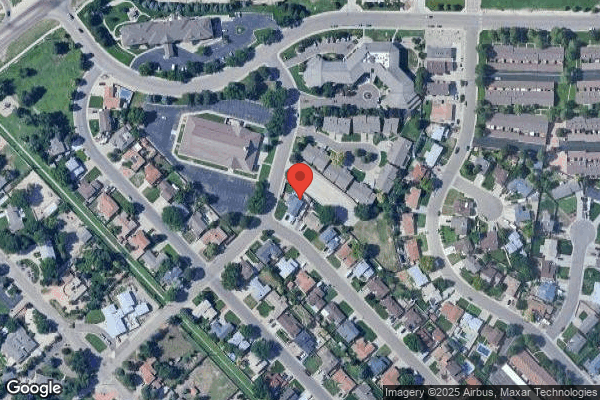
Jan 2019 9 deficiencies
CONCERN (D)

Potential for Harm - no one hurt, but risky conditions existed

Grievances (Tag F0585)

Could have caused harm · This affected 1 resident

**NOTE- TERMS IN BRACKETS HAVE BEEN EDITED TO PROTECT CONFIDENTIALITY** Based on observations, record review and interviews, the facility failed to investigate a complaint for one (#5) of two resident...

Read full inspector narrative →
**NOTE- TERMS IN BRACKETS HAVE BEEN EDITED TO PROTECT CONFIDENTIALITY** Based on observations, record review and interviews, the facility failed to investigate a complaint for one (#5) of two residents reviewed for grievances out of 40 sample residents. Specifically, the facility failed to resolve a complaint the resident submitted to administration. Findings include: A. Resident status Resident #5, age [AGE], was admitted on [DATE] and readmitted on [DATE]. According to the December 2018 computerized physician orders (CPO), diagnoses included left hand contracture, muscle spasms, hemiplegia and hemiparesis, muscle weakness, difficulty walking and pain. The 10/2/18 minimum data set (MDS) assessment revealed the resident was cognitively intact with a brief interview for mental status (BIMS) score of 15 out of 15. The resident had clear speech, was able to make herself understood and understood others. The resident PHQ-9 (patient health questionnaire for depression) score was six out of 27. She identified feeling down, depressed or hopeless and feeling tired or having little energy. The resident displayed physical and verbal behaviors directed toward others and rejected care. The resident required extensive assistance with two or more staff for bed mobility, transfers and toilet use. She required extensive assistance with one staff for locomotion on and off the unit, dressing, eating and personal hygiene. Additional diagnoses included anxiety disorder and depression. She did not receive psychotropic medication or psychological therapy during the assessment seven day period. B. Resident interview Resident #5was interviewed on 1/8/19 at 9:15 a.m. She said she submitted a complaint to the facility about a certain staff and she had not heard anything back. She was unable to recall the date but said it was not long ago. Resident #5 was interviewed again on 1/9/19 at 2:39 p.m. She said she had not talked to anyone about the complaint she submitted. She said she submitted the complaint because the nurses never took her to the bathroom. She said the nurses tell her it was not their job and she had to wait for a CNA to take her. She said she did not want registered nurse (RN) #7 in her room anymore. She said RN #7 entered the room, did not ask how she was or say good morning and started arguing with her. She said she RN #7 came into the room to administer medication and that was it. The resident said RN #7 was mean and rude. She explained mean and rude as RN #7 not helping her. C. Record review The care plan, initiated 8/11/15 and revised 7/4/18, identified the resident had multiple behaviors which included excessive use of call light within minutes of staff answering; screaming in the hallways for staff to assist without the call light being used; frequent calls to the front desk and family for staff to help when the call light is not on; refusal of medication; call the nurses' station and not talk and had an altercation with another resident. Interventions included encourage to let staff know of needs prior to exiting the room; inform the resident staff will assist as soon as possible; encourage to complete activities of daily living (ADLs) tasks she is capable of independently; inform benefits of medication for health and encourage compliance; verbally aggressive with staff frequently; and, will remain on 1:1 observation. On 1/9/19 the social services director (SSD) provided concern and comment forms the resident had submitted since June of 2018. She said the facility response to the investigation was on the reverse side of the two sided form. The concern form dated 12/25/18 at 8:16 a.m. did not include a response from the facility. The SSD said if it was blank the concern had not been addressed by any staff. The concern and comment form read, Person reporting: (Resident #5) Date: 12/25/18 at 8:16 a.m. Resident Name: Resident #5's, first initial and full last name Relationship to resident: self Please describe in detail your concern, comment or commendation. Registered nurse (name listed) made me wait 3 hours for the bathroom. I would like to file a complaint on her. I do not want her as my nurse anymore. She is mean and rude. Were you able to report this concern/comment to a staff member? -Yes was marked and did not provide the staff member's name. Was the staff member able to resolve the concern at the time it was shared? -No was marked. Please leave the completed form at the Reception desk. A facility manager will contact you as soon as possible to discuss the concern, any subsequent investigation and measures to resolve the concern. We value and appreciate your comments. Thank you. Nurses' progress notes The nurses' progress notes were reviewed form 12/25/18 to 1//819 and revealed the following: A behavior note was written on 12/25/18 at 12:29 p.m. and read, Resident extremely verbally abusive with RN and CNA staff this am. Slapped RN hand x2 during FBS (fasting blood sugar). Gave RN middle finger and stated stick this up your ass. Did allow FBS to be performed. Allowed administration of am insulins and took po (oral) meds (medication). Remains very upset. Report from dining room staff stating she was yelling and stated that she was going to turn everyone into the state. Dining room staff documented behaviors. Behavior monitoring form The resident's behavior was identified on 12/25/18 at 6:00 a.m. and 2:00 p.m. the behavior code read, Resident saying F you several times and kicked at me. The location was the resident room Intervention number 1 (one) –active listening and 3 (three) positive distraction Resident response: NC (no change). The behavior huddle tool forms were reviewed for December 2018 and revealed a huddle was not completed for the behaviors the resident displayed on 12/25/18. Social services notes Social services notes were reviewed from 12/25/18 to 1/7/19 and revealed the following: A behavior note was written on 12/26/18 at 12:11 p.m. and read, It was documented in behavior book that resident was verbally and physically aggressive, she was using profanity toward staff and attempting to kick staff. Non pharm (nonpharmacological) interventions were stop task and re-approach at a later time, nurse assessed for physical needs. No changes in behaviors. Behavior huddle was completed and staff will continue to monitor, remind resident that these behaviors are unacceptable, continue to monitor. The above documentation reviewed did not acknowledge or reveal the resident submitted a concern & comment form on 12/25/18 or that the concern was addressed. Staff schedule The staff schedule from 12/25/18 to 1/11/18 documented RN#7 continued to work the 6:00 a.m. to 2:00 p.m. shift on the floor where the resident lived on 12/25/18, 12/16/18, 12/28/18, 12/29/18, 12/30/18, 12/31/18, 1/2/19, 1/3/19, 1/4/19, 1/7/19, 1/8/19, 1/9/19 and 1/11/19. Observations 1/8/19 - RN #7 exited the resident's room at 8:48 a.m. she told a nearby CNA the resident was awake and was not ready to get up yet. - At 8:59 a.m., the resident was in her room reclined in bed, she was not wearing her oxygen cannula RN #7 was notified and she entered the room to check the resident's saturation level. RN #7 said, I need your finger to check your oxygen level. The resident was compliant and said You were just here and you did not notice that I didn't have my oxygen on. RN #7 did not respond. She completed the task end exited the room. 1/9/19 - At approximately 6:45 a.m. the resident was observed in her wheelchair in the hallway with RN #7. The resident was upset because the RN had completed a fasting blood sugar check and had to return to the medication cart for the insulin. The resident said she did not want it. The RN said she would try later. The resident returned to her room and then went to the dining room for breakfast. The Resident did make verbal comments about the nurse as she went into her room. The RN told the nursing home administrator she would go back and offer the insulin later. - The resident's light went on at 8:48 a.m. - RN #7 entered the room at 8:51 a.m. and exited after turning off the light. She approached a CNA and then went to the nurses' station to the phone. The RN called the resident and told her a CNA was with another resident and would go in as soon as she could. She did not address the resident in person. D. Staff interviews The NHA was interviewed on 1/9/19 at approximately 1:00 p.m. She did not have an update as to whether the residents concern had been addressed and she was still asking questions. At 2:37 p.m. the NHA said Resident #5 fired the RN today as her nurse. The NHA was not sure if an investigation was completed. She had to ask the social services director. She said the concern was probably not addressed. At 4:57 p.m. The NHA was unable to locate the original concern form submitted on 12/25/18. She explained the original was given to social services, social services identified which discipline or department was to respond and provided the concern card to the department for follow up and investigation. The NHA said an investigation would commence and follow up to be provided during the process. The social services director (SSD) was interviewed on 1/10/19 at 4:35 p.m. She said she reviewed the concern form received from Resident #5 and handed it off to the director of nursing (DON) for follow up or investigation, because the concern was about a nurse. The DON was interviewed on 1/10/19 at 5:50 p.m. She said she was not aware of the concern or complaint from the resident until 1/8/19. She did not recall seeing the concern or complaint form after it was submitted by the resident. She said the social services department interviewed the resident on 1/9/19 and did not have an update. She had to ask the NHA what the status was. The DON said follow up or an investigation should have occurred when the form was submitted to address the residents concern. The NHA was interviewed on 1/10/19 at 6:33 p.m. She said the DON was completing another interview with the resident to complete an investigation in response to the resident's complaint on 12/25/18. An interview with the RN was not completed. She was not available after 2:00 p.m. on 1/9/19 and 1/10/19. A voice message was left at 2:14 p.m. on 1/11/19 and at 10:31 a.m. on 1/16/19. RN #7 was interviewed, via phone conversation, on 1/17/19 at 10:34 a.m. She said she was not aware Resident #5 had submitted a concern or complaint form on 12/25/18 until the survey was completed last week. The RN said the social services director told her about the concern the resident submitted. She said it was something about she (the RN) left her on the toilet for four hours or something absurd and that she was mean and rude. The RN said she had been working at the facility since October of 2018 and worked at station three with the resident. She said the resident displayed many behaviors and they were well documented. She said she was currently working at station two as a result of the investigation conducted and she would not have to provide care for Resident #5.
CONCERN (D)

Potential for Harm - no one hurt, but risky conditions existed

Transfer Notice (Tag F0623)

Could have caused harm · This affected 1 resident

**NOTE- TERMS IN BRACKETS HAVE BEEN EDITED TO PROTECT CONFIDENTIALITY** Based on record review and interviews, the facility failed to provide notice of transfer to one (#52) of one resident reviewed f...

Read full inspector narrative →
**NOTE- TERMS IN BRACKETS HAVE BEEN EDITED TO PROTECT CONFIDENTIALITY** Based on record review and interviews, the facility failed to provide notice of transfer to one (#52) of one resident reviewed for hospitalization of 40 sample residents. Specifically, the facility failed to provide Resident #52 with notice of transfer upon being sent to an acute care setting with an emergent condition. Findings include: A. Resident status Resident #52, age [AGE] was admitted to the facility on [DATE] and transferred to a hospital on 1/5/19. According to the December 2018 computerized physician orders (CPO), pertinent diagnoses included end stage renal disease, type II diabetes mellitus and major depressive disorder. The 10/28/18 minimum data set (MDS) assessment revealed the resident's cognitive status was intact with a brief interview for mental status (BIMS) score of 15 out of 15. She had adequate hearing, clear speech and clearly understood conversations with others. The resident's vision was severely impaired with little or no sight. B. Record review The 1/5/19 Nursing Home to Hospital Transfer form, sent to the hospital and not the resident, documented the resident was being sent to the hospital for having signs of possible influenza. A 1/6/19 social services note documented the resident was discharged to a local hospital. Additional review of nurses' notes, physician's notes, social services notes and communication with the resident failed to reveal the resident was provided with written notice of the reasons for her emergency transfer to an acute care setting. The resident was not present in the facility between 1/7/19 and 1/10/19 and, according to the social services director (SSD) was still at the hospital. D. Staff interviews The director of nursing (DON) was interviewed on 1/10/19 at approximately 6:00 p.m. The DON said nursing staff did not send notice of transfer or notice of the bed hold policy with residents when they were sent to the hospital. She said she thought the social services staff was responsible for sending these notices. The SSD was interviewed on 1/10/19 at 6:05 p.m. The SSD said she did not send the residents a notice of transfer and had not spoken with this resident since her discharge. The SSD said she did not realize an emergency transfer was considered a facility initiated transfer and, besides sending the ombudsman a monthly list of resident's being transferred, she did not think anything further needed to be done. -At 6:15 p.m., the SSD provided an example of a blank non-carbon copy form that was previously used to notify residents of the reasons for transfer. The SSD said she would make sure the form was used in the future with all residents being transferred.
CONCERN (D)

Potential for Harm - no one hurt, but risky conditions existed

Deficiency F0625 (Tag F0625)

Could have caused harm · This affected 1 resident

**NOTE- TERMS IN BRACKETS HAVE BEEN EDITED TO PROTECT CONFIDENTIALITY** Based on record review and interviews, the facility failed to provide notice of the bed hold policy to one (#52) of one resident...

Read full inspector narrative →
**NOTE- TERMS IN BRACKETS HAVE BEEN EDITED TO PROTECT CONFIDENTIALITY** Based on record review and interviews, the facility failed to provide notice of the bed hold policy to one (#52) of one resident reviewed for hospitalization of 40 sample residents. Specifically, the facility failed to provide Resident #52 with a notice of the bed hold policy upon emergency transfer to an acute care setting. Findings include: A. Resident status Resident #52, age [AGE] was admitted to the facility on [DATE] and transferred to a hospital on 1/5/19. According to the December 2018 computerized physician orders (CPO), pertinent diagnoses included end stage renal disease, type II diabetes mellitus and major depressive disorder. The 10/28/18 minimum data set (MDS) assessment revealed the resident's cognitive status was intact with a brief interview for mental status (BIMS) score of 15 out of 15. She had adequate hearing, clear speech and clearly understood conversations with others. The resident's vision was severely impaired with little or no sight. B. Facility policy The Room Reservation Bed Hold Policy, dated May 2001, read, Bed hold policies will be provided and explained to the resident upon admission and explained to the resident before each temporary absence. C. Record review The 1/5/19 Nursing home to hospital transfer form documented the resident was being sent to the hospital for having signs of possible influenza. A 1/6/19 social services note documented the resident was discharged to a local hospital. Additional review of nurses' notes, physician's notes, social services notes and communication with the resident failed to reveal the resident was provided with written notice or an explanation of the bed hold policy upon her emergency transfer to an acute care setting. The resident was not present in the facility between 1/7/19 and 1/10/19 and, according to the social services director (SSD) was still at the hospital. D. Staff interviews The director of nursing (DON) was interviewed on 1/10/19 at approximately 6:00 p.m. The DON said nursing staff did not give notice of the bed hold policy with residents when being sent to the hospital. She said she thought the social services staff was responsible for sending these notices. The SSD was interviewed on 1/10/19 at 6:05 p.m. The SSD said she did not send the resident a notice of the bed hold policy and had not spoken with the resident since her discharge. She said residents receive notice of the bed hold policy upon admission and she did not think anything further needed to be done. She said she would make sure to send the notice in the future to comply with the regulation.
CONCERN (D)

Potential for Harm - no one hurt, but risky conditions existed

Deficiency F0658 (Tag F0658)

Could have caused harm · This affected 1 resident

**NOTE- TERMS IN BRACKETS HAVE BEEN EDITED TO PROTECT CONFIDENTIALITY** Based on observations, interviews and record review, the facility failed to provide intravenous (IV) care and services in accord...

Read full inspector narrative →
**NOTE- TERMS IN BRACKETS HAVE BEEN EDITED TO PROTECT CONFIDENTIALITY** Based on observations, interviews and record review, the facility failed to provide intravenous (IV) care and services in accordance with professional standards of practice for two (#103 and #173) of two residents who received IV care and services out of 40 sample residents. Specifically, the facility failed to ensure nursing staff timed, dated and initialed the IV bags they hung for Residents #103 and #173. Findings include: I. Facility policy and procedure The Administration of an Intermittent Infusion policy, revised on 5/1/15 and provided by medical records on 1/10/19 at 11:30 a.m., revealed in pertinent part: -The nurse was responsible and accountable for obtaining and maintaining competence with infusion therapy within their scope of practice. -Nurses who provided infusion therapy to residents were expected to follow safety compliance procedures. -The nurse was to label the medication/solution container with the date, time and nurse initials. II. Resident #103 A. Resident status Resident #103, age [AGE], was admitted on [DATE] and readmitted on [DATE]. According to the January 2019 computerized physician orders (CPO), diagnoses included infection following a surgical procedure and an aortocoronary bypass graft. The 12/13/18 minimum data set (MDS) assessment revealed she had minimal cognitive impairment with a brief interview for mental status (BIMS) score of 14 of 15. She had a surgical wound and was receiving surgical wound care. B. Observations An observation on 1/7/19 at 8:39 a.m. revealed Resident #103 had a peripherally inserted central catheter (PICC) line in her right upper extremity. There was an intravenous (IV) pump on an IV pole to her right, from which hung an empty IV bag of the antibiotic meropenem and an area in which to document the date, time and initials of the nurse who hung it for administration purposes. The IV bag did not have a date, time or the initials of the nurse who hung it. An observation on 1/8/19 at 8:04 a.m. revealed Resident #103 had a PICC line in her right upper extremity (RUE). There was an IV pole to her right from which hung an empty IV bag of the antibiotic meropenem. The IV bag had an area which indicated where to document the date, time and initials of the nurse who hung it for administration purposes. The IV bag did not have a documented date, time or the initials of the nurse who hung it. An observation on 1/9/19 at 9:52 a.m. revealed registered nurse (RN) #4 hung a new bag of the IV antibiotic meropenem for administration. She did not date, time or initial the IV bag after she hung it. She performed several tasks to prepare for the IV administration of the IV meropenem, turned on the IV pump, and left the room without documenting the date, time and her initials on the IV bag she hung. C. Record review The January 2019 CPO identified the resident received the IV antibiotic meropenem two times a day for an infection. The January 2019 medication administration record (MAR) identified she received the IV antibiotic meropenem at 9:00 a.m. and 9:00 p.m. A review of her care plan revealed she was not care planned for having intermittent IV antibiotic therapy through a PICC line in her RUE. D. Staff interview RN #3 was interviewed on 1/9/19 at 6:20 a.m. She said Resident #103 received intravenous meropenem medication through her PICC line in her RUE due to having bilateral groin infections. She said Resident #173 (see below) received the antibiotic Pfizerpen through his PICC line in his RUE due to osteomyelitis; which she administered to him twice during her shift, at midnight and at 4:00 a.m. She said he received it every four hours. She said RNs were to date the IV tubing. She did not say they were to date, time and initial the IV bags they hung for administration purposes. III. Resident #173 A. Resident status Resident #173, under the age of 65, was admitted on [DATE]. According to the January 2019 CPO, diagnoses included osteomyelitis of the vertebra and radiculopathy. The 1/7/19 MDS assessment revealed he had minimal cognitive impairment with a BIMS score of 14 out of 15. He received IV medication. B. Observations An observation on 1/9/19 at 8:37 a.m. in the presence of RN #4 revealed Resident #173 had a PICC line in his RUE. There was an IV pump on an IV pole to his right which had an empty IV bag of the antibiotic Pfizerpen hanging on it. The IV bag had an area which indicated where to document the date, time and initials of the nurse who hung it for administration purposes. The IV bag did not have a documented date, time or the initials of the nurse who hung it. RN #4 hung a new bag of IV Pfizerpen for administration. She did not date, time or initial the IV bag after she hung it. She performed several tasks to prepare for the IV administration of the IV Pfizerpen, turned on the IV pump, and left the room without documenting the date, time and her initials on the IV bag she hung. C. Record review The January 2019 CPO identified the resident received Pfizerpen intravenously every four hours for vertebral osteomyelitis. The January 2019 MAR identified he received Pfizerpen intravenously at midnight, 4:00 a.m., 8:00 a.m., 12:00 p.m., 4:00 p.m. and 8:00 p.m. The care plan, initiated and revised on 1/9/19, identified he had a PICC line for medication administration due to osteomyelitis. Interventions did not include to administer intermittent IV therapy per facility policy and procedures. D. Staff interviews RN #4 was interviewed on 1/9/19 at 8:37 a.m. She said Resident #173 received IV Pfizerpen every four hours. She said, as she observed the empty IV bag which hung on the IV pole next to him, the IV bag did not have a date or time written on it. RN #6 was interviewed on 1/10/19 at 5:58 p.m. She said RNs must date and time the IV bags they hung. IV. Facility follow-up A. Staff interviews RN #2 was interviewed on 1/9/19 at 10:12 a.m. She identified herself as a unit manager. As she observed the IV bags of Residents #103 and #173 did not have documented dates, times, and initials of the nurse(s) who hung them, she said the IV administration process required nurses to date, time and initial the IV bags after they hung them. She said this was a way to prevent the potential to overdose a resident or the potential to fail to administer an IV medication to a resident. She said an overdose could negatively affect kidney function and the failure to administer an IV antibiotic medication, in the case of Residents #103 and #173, could cause their infections to worsen. She said either of those outcomes could lead to an immediate jeopardy situation for the residents. She said she needed to document the dates and times both residents' IV bags were hung and initial them, then re-educate her RNs about the IV administration process. The director of nursing (DON) was interviewed on 1/9/19 at 11:52 a.m. She said per the IV administration facility policy RNs were to date and initial IV bags they hung so when the next shift RNs prepared to hang a new IV bag, they could see when the last IV administration was given. She said failure to do this could lead to a missed dose of IV medication. She said she was going to educate the RNs on the IV administration policy, and do observations of the IV bag identification process. She said the unit managers would receive the IV administration education and provide the education to the RNs. B. Record review 1. Resident #103 According to the 1/9/19 nurse progress notes, documented by the ADON, she ensured Resident #103's IV was timed and dated in accordance with proper medication administration procedures. She informed the resident of the need to perform this task and instructed RNs to follow this plan of care. 2. Resident #173 According to the 1/9/19 nurse progress notes, documented by the ADON, she ensured Resident #173's IV Pfizerpen was timed and dated in accordance with proper medication administration procedures. She informed the resident of the need to perform this task and instructed RNs to follow this plan of care. 3. In-service According to the Administration of an Intermittent Infusion in-services on 1/9/19 and 1/10/19, provided by medical records on 1/10/19 at 4:30 p.m., six RNs were observed to perform intermittent infusion therapy and 11 RNs signed they received intermittent infusion therapy which included: -To perform hand hygiene after gloves were removed; and -To label the medication/solution container with the date, time and nurse initials.
CONCERN (D)

Potential for Harm - no one hurt, but risky conditions existed

Medication Errors (Tag F0758)

Could have caused harm · This affected 1 resident

**NOTE- TERMS IN BRACKETS HAVE BEEN EDITED TO PROTECT CONFIDENTIALITY** Based on record review and interview, the facility failed to ensure a resident who used psychotropic drugs receive behavioral in...

Read full inspector narrative →
**NOTE- TERMS IN BRACKETS HAVE BEEN EDITED TO PROTECT CONFIDENTIALITY** Based on record review and interview, the facility failed to ensure a resident who used psychotropic drugs receive behavioral interventions for one (#173) of 19 residents reviewed for anti-anxiety medications out of 40 sample residents. Specifically, the facility failed to identify, document, and utilize behavioral interventions prior to the administration of an as needed (PRN) psychoactive medication. Findings include: I. Facility policy Psychopharmacological Medication Management Clinical policies and procedures,revised 8/23/17, provided by the medical record (MR) #1 on 1/8/19 at 3:20 p.m. It revealed in part, Unnecessary medications .An unnecessary drug is any drug when used .Without adequate indications for its use .Residents who use these drugs receive gradual dose reductions and behavioral interventions .Behavioral interventions are individualized non-pharmacological approaches (including direct care and activities) that are provided as part of a supportive physical and psychosocial environment, and are directed toward preventing, relieving, and/or accommodating a resident's distressed behavior. Policy: .Non-pharmacological interventions (such as behavioral interventions) are considered and used when indicated, instead of, or in addition to, psychopharmacologic medication . II. Resident #173 A. Resident status Resident #173, age [AGE], was admitted on [DATE]. According to the January 2019 computerized physician orders (CPO), diagnoses included hypertension (HTN) and chronic obstructive pulmonary disease (COPD). The 1/7/19 initial minimum data set (MDS) assessment revealed, the resident had minimal cognitive impairment with a brief interview of mental status (BIMS) score of 14 out of 15. B. Record review The care plan initiated 1/6/19 identified a focus of anxiety and the resident may become overly concerned and anxious. Interventions included; if the resident appears to have anxiety notify his nurse immediately, take him to a quiet calm area, dim the lights, soft music, warm drink, etc. The January 2019 CPO included Ativan 0.5 mg (ordered at admission [DATE]), give one tablet by mouth every six hours as needed (PRN) for anxiety. The January 2019 medication administration record (MAR) documented the resident received the PRN Ativan on six occasions, 1/2/19, 1/3/19, 1/4/19, 1/5/19, and two times on 1/8/19 . The Behavior Monitoring Form (BMF) identified the medication Ativan for this resident. The targeted behaviors identified to monitor the efficacy of the Ativan were; overly concerned and anxious. The identified interventions included assist to a quiet area, dim lights, and soft music. -The form did not document the resident displayed any behaviors or that non-pharmacological interventions were attempted prior to the administration of the PRN Ativan being given as documented above. The resident's progress notes (PNs) included: -The progress note dated 1/2/19 at 10:50 p.m. and 1/3/19 at 11:35 p.m., documented Ativan was given for complaints of increased anxiety and restlessness. There were no identified non-pharmacological interventions attempted prior to the administration of this medication. -The progress note dated 1/3/19 at 11:35 p.m. documented Ativan was given for complaints of increased restlessness and anxiety. There were no identified non-pharmacological interventions attempted prior to the administration of this medication. given. -The progress note dated 1/4/19 at 10:27 p.m. and 1/5/19 at 11:49 p.m., documented Ativan was given for anxiety. There were no identified non-pharmacological interventions attempted prior to the administration of this medication. -The progress note dated 1/8/19 at 12:15 a.m. and at 11:10 p.m., documented Ativan was given for complaints of increased anxiety. There were no identified non-pharmacological interventions attempted prior to the administration of this medication. C. Staff interviews Certified nurse aide (CNA) #13 was interviewed on 1/7/19 at 2:47 p.m. She said the resident would tell the nurse he wanted an Ativan. She said she was not aware of any behaviors exhibited by the resident or interventions for the resident. CNA #15 was interviewed on 1/9/19 at 5:49 a.m. She said the resident was very quiet and was not aware of him having any behaviors. CNA #9 was interviewed on 1/9/19 at 6:08 a.m. She said she had never seen the resident display any behaviors on her shift. Licensed practical nurse (LPN) #5 as interviewed on 1/09/19 at 9:14 a.m. She said the resident had an order for PRN Ativan, but was not aware he had any behaviors to facilitate the administration of the Ativan. The director of nursing (DON) was interviewed on 1/9/19 at 10:00 a.m. She said the nurses should have attempted non-pharmacological interventions prior to the administration of the PRN Ativan and documented what was attempted. She said the resident should have had a more resident specific care plan that addressed more specific interventions that were collaborated with the team and the resident for the treatment of anxiety. The DON said she needed to get clarification for the diagnosis of anxiety and would call the provider to clarify the PRN order. No further follow-up provided during survey.
CONCERN (E)

Potential for Harm - no one hurt, but risky conditions existed

Resident Rights (Tag F0550)

Could have caused harm · This affected multiple residents

**NOTE- TERMS IN BRACKETS HAVE BEEN EDITED TO PROTECT CONFIDENTIALITY** VI. Resident #85 A. Resident status Resident #85, age [AGE], was admitted on [DATE]. According to the admission face sheet, dia...

Read full inspector narrative →
**NOTE- TERMS IN BRACKETS HAVE BEEN EDITED TO PROTECT CONFIDENTIALITY** VI. Resident #85 A. Resident status Resident #85, age [AGE], was admitted on [DATE]. According to the admission face sheet, diagnoses included chronic obstructive pulmonary disease (COPD), pain, severe major depressive episode with psychotic features and type two diabetes mellitus with diabetic neuropathy. The 10/9/18 MDS assessment revealed the resident was cognitively intact with a BIMS score of 15 out of 15. She required extensive assistance from two persons for transferring and toileting. She was also completely dependent on one person for bed mobility. B. Resident interviews Resident #85 was interviewed on 1/7/19 at 12:28 p.m. The resident said she reported concerns regarding call light response and oxygen use to the facility. She said there was a recent incident where she did not receive assistance for ten minutes with her oxygen. The resident said she was short of breath and was gasping for air. Resident #85 was interviewed on 1/10/19 at 9:18 a.m. She said she had lived at the facility for 12 years. She said she used to be very happy living at the facility but over the last several months, it had been different. The resident said, on one occasion, she told a CNA she was applying her roommate's hearing aides incorrectly. She said the CNA got upset and stomped out of the room. She said she reported the concern and the CNA was suspended. The resident said the CNA was later reinstated and still worked with her. The resident said she felt that attention to her care had changed since the incident. The resident said the CNA told another CNA she (the resident) was difficult to work with and this embarrassed and upset the resident. The resident said she still felt uncomfortable asking the CNAs for assistance. C. Record review Care plans A care plan for major depression, initiated 10/10/18, included interventions to allow the resident to express her feelings and let her know staff is empathetic. The 10/10/18 care plan also identified the resident made accusations against staff when she was upset. Interventions included two staff members at all times, when available, and use different staff members if issues arise. Behavior documentation Behavior monitoring completed between November 2018 and January 2019 revealed the resident did not have any documented behaviors during the reviewed period. A 1/5/19 psychosocial note documented the resident did not have any behaviors of concern in the past six months. Facility response A 12/19/18 grievance report, documented the resident expressed a concern that a CNA turned off her call light without providing care. According to the report, the concern was addressed with the CNA who was re-educated. A witness statement form was completed by CNA #19 on 12/30/18. The statement documented CNA #18 told CNA #19 that Resident #85 was difficult. The comment was in front of the resident however CNA #19 said it seemed like CNA#18 was making a joke. A witness interview form completed by the SSD on 1/1/19 documentged CNA #18 said the resident seemed anxious and uncomfortable whenever she worked with her CNA #18 acknowledged the oxygen complaint made by the resident and confirmed she told CNA #19 Resident #85 was difficult in front of the resident. An education acknowledgement form, completed by the DON on 1/3/19, documented CNA #18 was counseled on customer service and professionalism. She was also re-educated regarding resident use of supplemental oxygen. D. Staff interviews The NHA and the SSD were interviewed on 1/10/19 at 1:50 p.m. The NHA and SSD said facility followed its grievance process each time the resident expressed concern. The NHA said the second investigation revealed CNA #18 failed to replace the resident's oxygen after dressing her for the day. CNA #18 reported the resident was in a bad mood because she had to wait for cares the day of the incident. The NHA said the facility often reassigned staff if a resident expressed a concern and was not comfortable with a staff member to prevent potential staff retaliation. The DON and NHA were interviewed on 1/10/19 at 4:05 p.m. The DON said staff were removed from the facility during an investigation involving a resident concern and were often re-educated before returning to duty. She said staff from the social services department also provide additional support to the resident and nursing will initiate 72 hour charting to monitor the resident's mood and behavior. E. Follow up The NHA, DON and SSD were interviewed on 1/10/19 between 5:15 p.m. and 5:30 p.m. They reported being unable to find evidence the resident received follow up to ensure she was no longer distressed over her concerns regarding dignified and respectful interactions with staff. VII. Resident #19 A. Resident status Resident #19, age [AGE], was admitted on [DATE]. According to the face sheet, diagnoses included dementia without behavioral disturbance, anxiety, major depressive disorder, muscle weakness, abnormalities of gait and mobility, lumbago with sciatica. The 10/3/18 MDS assessment revealed the resident was cognitively intact with a BIMS score of 15 out of 15. She needed supervision to complete ADLs and set up assistance for bathing. She required physical assistance to transfer when showering. B. Resident interviews Resident #19 was interviewed on 1/8/19 at 9:00 a.m. The resident she reported missing money and sentimental items taken from her room six months ago. She said she confronted some of the CNAs she believed took her money. She said since then, most of the CNAs do not talk to her and feels her care has changed. Recently, the resident said the staff did not explain why she did not receive a shower. She was upset she did not receive a shower but was mostly disturbed because no one would tell her why. Resident #19 was interviewed on 1/10/19 at 1:05 p.m. The resident said she was no longer comfortable reporting concerns to the facility because she felt like no believed her. She said she was told she was going to get a shower on 1/4/19. She said she asked staff multiple times throughout the day when she would have her shower and was told that they do not know. She waited all day and no one told her she was not on the schedule for a shower that day She said she became frustrated and tearful when the staff did not explain the situation to her. The resident said she felt she was intentionally mislead in believing she would receive a shower. She said a CNA from another unit saw she was frustrated and finally offered to give her a shower. C. Record review Care plan A care plan, initiated on 10/19/18, identified the resident sometimes embellished stories, The care plan, written shortly after completion of the missing money investigation, read, the resident often relayed information about staff that was not true. Bath record The bathing schedule was provided by the DON on 1/10/19 at 4:15 p.m. The schedule revealed the resident was not scheduled to have a shower on 1/4/19. The shower record revealed the resident was assisted with showering on 1/4/19 at 5:21 p.m. by CNA #20. Facility response Two concern and comment cards and a missing items investigations were provided by the NHA on 1/10/19 at 3:15 p.m. According to the concern cards, the resident was missing personal property on 7/12/18 and missing money since 10/9/18 . The 7/12/18 concern card read the resident was very upset and had doubts of living in our facility due to thieves and liars. The NHA said the resident was very vocal about her concerns. The NHA provided both investigations. According to the investigation report packets, an investigation was conducted on 7/12/18 related to the personal property, with finding shared with the resident on 7/27/18. The facility reimbursed some of the missing items on 7/27/18. The missing money investigation was conducted on 10/10/18 to 10/17/18. The investigation report documented Resident #19 reported missing money from her locked drawer. The money was not recovered and the concern was not substantiated. D. Staff interviews The SSD was interviewed on 1/10/19 at 5:30 p.m. The SSD said she could not provide evidence the facility followed up with the resident regarding her feelings and frustration with staff after reporting concerns. CNA #20 was interviewed on 1/10/19 at 5:50 p.m. She said she was not assigned to work on the floor where the resident lived but was in the area supervising another resident. She said Resident #19 was pacing the halls and visibly upset because she did not get a shower.The CNA said she worked with the resident in the past and did not want to see her so upset. Instead of confronting the other CNAs, CNA #20 said she adjusted her workload and helped the resident with a shower. CNA #3 was interviewed on 1/10/19 at 7:50 p.m. The CNA said she did not recall shower concerns with Resident #19. She said she thought the resident was on the schedule and received a shower on 1/4/19. VIII. Resident #25 A. Resident status Resident #25, age [AGE], was admitted on [DATE]. According to the face sheet, diagnoses included osteoporosis, history of falling, lack of coordination, restless leg syndrome, pain in leg, heart failure, acute and chronic respiratory failure with hypoxia, glaucoma, dementia without behavioral disturbances and major depressive disorder The 10/9/18 MDS assessment revealed the resident had moderate cognitive impairment with a BIMS score of 12 out of 15. She required limited assistance for toileting and hygiene and supervision for bed mobility, transfers and dressing. The current care plan identified the resident was at risk for falls and had a recent fall with injury. The resident had a ADL self-care performance deficit related to impaired mobility, weakness and gait imbalance. Care plan interventions included anticipate and meet her needs. B. Resident observation and interviews Resident #25 was seated in a wheelchair in her room on 1/7/19 at 10:55 a.m. as she attempted to retrieve a blanket from the back side of her bed. The resident said she had to use a wheelchair because she recently sprained ankle in a fall. She said thought the nurse at the facility were great but had difficulty with the CNAs. The resident said the CNAs provided little help and often take more than 10 minutes to answer her call light. Resident #25 was interviewed on 1/9/18 at 9:00 a.m. The resident said she did not ask for help anymore unless she really could not do something for herself. She said the CNAs were not very cooperative and were sometimes rude when responding to her call light. She said she did not want to be a burden to the staff, but only got water once a day in little blue container. She said she reported the concern and continued to feel ignored by the CNAs. Resident #25 was interviewed on 1/9/19 at 10:40 a.m. She said lived at the facility for over a year and felt care had declined over the last three or four months. She said she did not feel well prior to the fall and told staff restless legs were kept her awake, causing the fall. The resident said, since the fall, she felt increased depression and frustration because she was more dependent on the CNAs. The resident said she did not think the CNAs realized she needed more help since the fall. She said some of CNAS acted like they did not want to help her causing her to feel brushed off, mad and hurt. C. Record review A grievance by Resident #25 was documented on 11/12/18. The resident's complaint was that CNAs did not provide ice water on the weekends. According to the grievance, CNAs and nurses were notified of the resident's concern and staff education was completed. A progress note documented the resident fell outside of her room on 12/15/18 at approximately 3:30 a.m. A radiologist documented in 12/15/18 report the resident had an old healing ankle fracture with current soft tissue swelling. A note from the nurse practitioner (NP) on1/2/19 documented the resident's family reported increasing signs of depression. The NP documented resident was frustrated with not being able to do things for herself and said the resident felt stuck in her wheelchair. IX. Resident #77 A. Resident status Resident #77, age [AGE], was admitted on [DATE] and readmitted on [DATE]. According to the face sheet, diagnoses included unspecified fracture of upper end left humerus with subsequent encounter for fracture with routine healing, muscle weakness, heart failure, edema, hypoxia, lymphedema and type two diabetes mellitus. The 11/20/18 MDS assessment revealed the resident was cognitively intact with a BIMS score of 15 out of 15. She needed extensive physical assistance from two or more person for toileting, transfers, bed mobility and dressing. The care plan, initiated on 11/14/18, identified the resident had a left shoulder fracture. The goal was to remain free of complications such as immobility. Interventions included anticipate and meet needs and respond promptly to all requests for assistance. B. Resident interviews Resident #77 was interviewed on 1/8/19 at 10:30 a.m. The resident said she recently moved from the rehab unit to long term care. She said she was happy with the move because she felt some of the CNAs on the rehab unit resented her because of her high care needs. She said they joked around with each other during cares and referred to her as this old lady. The resident said she did not report the concern because she needed their help. Resident #77 was interviewed on 1/9/19 at 4:22 p.m. The resident said she did not want to identify the staff involved because she was concerned how the staff would respond and did not want it to affect her care. The resident said it took awhile to get her ready for therapy because of her immobility and dependence on staff. She said sometimes it would take three to four staff to move her. The resident said she was often told by a CNA that she made her back hurt during cares. She said one time a nurse was upset with her because the CNAs had to spend all of their time helping her and could not help other residents. The resident said she was also embarrassed by a CNA in the dining room when she was having difficulty using her arm Resident #77 said she was embarrassed. She said she expressed her concerns with her care to other CNAs but they would roll their eyes and make fun of her. She said she had to wait for long periods to go in and out of bed or use the restroom. The resident said she would often become incontinent from waiting. She said it bothered her to feel like she was forgotten. C. Staff interviews Physical therapist (PT) #1 was interviewed on 1/10/19 at 11:27 a.m. PT #1 said the resident used compression boots and was diagnosed with lymphedema. She said it required coordination of staff to provide therapy. She said the resident had high care needs and at times would take to four staff for safety and stability. She said everything had to be planned and it took time. The SSD was interviewed with the NHA on 1/10/19 at 1:50 p.m. She said Resident #77 did not share her concerns with her. The NHA was interviewed on 1/10/19 at 3:15 p.m. She said she has at least one member of management in the dining room during meals. She said she was made aware of a witnessed confrontation with a CNA and Resident #77. X. Resident #99 A. Resident status Resident #99, age [AGE], was admitted on [DATE]. According to the face sheet, diagnoses included chronic diastolic (congestive) heart failure, rheumatoid arthritis, unspecified subluxation of left patella, muscle weakness and abnormalities of gait and mobility. According to the 12/11/18 MDS assessment, the resident was cognitively intact with a BIMS score of 15 out of 15. She needed extensive assistance from two persons for bed mobility and transfers and extensive assistance from one person for toileting, locomotion, hygiene and eating. B. Resident interviews Resident #99 was interviewed on 1/7/19 at 12:10 p.m. She said often felt she was not always valued or viewed as important because she needed extra help with cares. The resident wore braces on her legs and her hands were severely contractured. Resident #99 was seated in her wheelchair at the end of the hall across from her room on 1/8/19 at 9:25 a.m. The resident said she was upset because she was left in the hallway. She said she was taken out of room and was told by CNA #20 she needed to stay in the hall until the housekeeper finished mopping her room. The resident said she asked the housekeeper for help getting back to her room when he was done because she could not move her wheelchair alone. The resident said the housekeeper told her he could not move her wheelchair and she was left sitting in the hallway. Resident #99 was interviewed on 1/8/19 at 9:50 a.m. She said she asked to help to lay down for the night on 1/7/18 at 7:00 p.m. The resident said the CNA told her that she could not lay her down yet because the CNAs had other people to take care first. The resident said the CNA did not return to assist her until 9:00 p.m which made her feel disregarded. C. Record review The care plan, initiated on 12/13/18, read Resident #99 had an ADL self performance deficit related to activity tolerance, disease process, fatigue and impaired balance. XI. Resident #62 A. Resident status Resident # 62, age [AGE], was admitted on [DATE] and readmitted on [DATE] According to the January 2019 CPO, diagnoses included chronic obstructive pulmonary disease with acute exacerbation, dementia without behavioral disturbance, atrial fibrillation, polyneuropathy, major depressive disorder, anxiety and type two diabetes mellitus. According to the 11/5/18 MDS assessment, the resident was cognitively intact with a BIMS score of 15 out of 15. She needed extensive assistance from one person for bed mobility, transfers, dressing and toileting. The care plan, initiated on 11/6/18, read Resident #62 had a self-care performance deficit related to activity intolerance, fatigue, and impaired balance. B. Resident interview Resident #62 was interviewed on 1/9/19 at 9:00 a.m. She said she felt she had to be careful with what was said in front of staff. The resident said she and her daughter reported a care concern about a CNA to the former NHA and it resulted in having friction with the CNA. Resident #62 was interviewed on 1/10/19 at approximately 1:20 p.m. The resident said the friction with the CNA started when she asked to go to bed at 6:00 p.m. She said the CNA still had not assisted her to bed by 8:30 p.m., so she called her daughter to help her. Resident #62 said her daughter contacted social services to report the incident. The resident said she felt the administration staff did not address her concern except to inform the CNA. She said, since the incident she felt the CNA did not like her and was rude. She said she felt like the other CNAs do not like her either and it has changed her care. C. Record review The care plan, initiated on 10/14/18, identified the resident had depression and was tearful at times due to her loss of independence. Interventions included allow the resident to express her feelings and let her know staff was empathetic. Behavior monitoring completed between November 2018 and December 2018 identified isolation and making negative statements as target behaviors On 12/11/18, two CNAs documented the resident assumed we said she was fat during cares. D. Staff interviews The NHA and the SD were interviewed on 1/10/19 at 1:50 p.m. The SSD said she did not recall hearing about the concern. At 3:15 p.m., the NHA said she could not locate the resident's concern in the grievance book. The NHA said the facility would look into the concern right away. XII. Interviews The director of nursing (DON) was interviewed on 1/10/19 at 5:50 p.m. She said all of the residents should be treated with dignity and respect in the facility because it is their home. The DON said it was important for the residents to be treated with respect and dignity because to not do so could affect their mood, behavior and overall health. V. Resident #42 A. Resident status Resident #42, under the age of 60, was admitted on [DATE]. According to the January 2019 CPO, diagnoses included hypertension and depression. The 10/17/18 MDS assessment revealed the resident's cognitive status was intact with a BIMS score of 15 out of 15. He could ambulate independently without assistive devices. B. Observation On 1/7/19 at 8:51 a.m., the resident was seated in his room. Also in the room was housekeeper (HK) #2. She said she was providing one-to-one supervision for the resident. She said she would exit the room to allow for the resident to be interviewed but had to return to sit with the resident when the visit was over. C. Resident interviews Resident #42 was interviewed on 1/7/19 at 8:59 a.m. He said he made a poor decision and drank something he should not have. He said the facility placed him on 1:1 supervision which he thought was excessive. The resident said things had gotten worse because he was an adult being treated like a kid. He said he drank alcohol while at the facility because he was bored. At the end of the interview, HK #2 re-entered the room and sat down with the resident. Resident #42 was interviewed again on 1/08/19 at 3:11 p.m. He said a CNA was with him in the room this morning and (HK #3) was with him at the time of the interview. The resident said the facility told him he would have to have one-to-one supervision until he was to discharged for a medical procedure in a few months. He said sometimes it was alright to socialize with the staff assigned to provide one-to-one supervision, however, most times he felt like a five year-old child being watched by a babysitter. He said his sister was coming to visit. He said the director of social services (DSS) told him a staff member would remain outside the door of his room during her visit. He said he felt like a prisoner. D. Record review Care Plans The care plan, initiated in October 2018, identified he had a history of alcoholism and was found intoxicated in the facility. The care plan, initiated on 12/27/18, identified he was on one-to-one supervision. Interventions failed to reveal whether less restrictive alternatives were considered or address how his psychosocial wellbeing was affected by having one to one supervision. Progress Notes According to a 10/31/18 progress note, the resident drank alcohol while out on pass and was intoxicated upon return to the facility. According to a 12/27/18 progress note, the resident drank hand sanitizer, making him ill. Behavior contacts A behavior contract, dated 12/19/18 and signed by the resident, read the resident would not consume alcohol or engage in illegal drug use while out of the facility. The behavior did not identify the facility's use of one to one supervision as an intervention. The contract did include the facility could issue a 30 day involuntary discharge letter if the resident did not follow the contract. According to a separate undated one to one supervision contact provided by medical records (MR) staff #1 on 1/10/19, one to one supervision would be provided by either having a staff sit in his room or outside of his room with the door open. The door could be closed when the resident had a visitor but the staff would remain outside of his room. Other records Additional review of behavior contracts; nursing and social services notes, change of condition reports and other correspondence failed to reveal the facility discussed less restrictive means of ensuring the resident's safety or criteria for modifying his level of supervision. Additionally, there was no monitoring as to the psychosocial affect the increased supervision had on the resident or assessment of any additional supports the resident might need. Documentation of grievances involving Resident #42, received within the last three months, was requested on 1/10/19 at 10:00 a.m. No documentation was provided by the time of the survey exit. E. Staff interviews HK #2 was interviewed on 1/8/19 at 9:20 a.m. She said she was assigned by the facility to sit with Resident #42 in his room and to accompany him wherever he was in the facility. She said she did not receive training to provide one to one supervision prior to this assignment. HK #3 was interviewed on 1/08/19 at 3:31 p.m. She said she was assigned to provide one to one supervision for Resident #42 and would sit with him in his room or outside the door if he had a visitor. She said the facility instructed staff to sit outside his door if they were not going to be in his room. The director of nursing (DON) was interviewed on 1/10/19 at 11:30 a.m. She said the resident was on one-to-one supervision at all times to keep him safe from ingesting things things containing alcohol. She said the resident was to remain on one to one supervision until his discharge for a medical procedure. At the time of the interview, the facility did not have a plan to ensure the resident's one to one supervision was the least restrictive measure to be used. She also did not have a plan to monitor the resident's psychosocial wellbeing as a result of the restrictive measures being imposed. F. Follow-up The DON was interviewed again on 1/10/19 - At 11:51 a.m., the DON said she spoke with the resident and planned to put together some things for the resident to do, alone or with the staff providing his supervision. - At 12:58 p.m., the DON said she spoke with the nursing home administrator (NHA), the activity director (AD) and one of the activity assistants. They discussed how young the resident was and devised a plan to provide him with some activities of interest. The DON said the facility would meet with the resident to reassess his needs and develop a new MDS assessment. - At 2:46 p.m., the DON said the facility just had the activity assistant visit with Resident #42 to discuss areas of interest. She said the care plan would be revised to reflect these interests. The DON said she would reeducate staff regarding the resident's need for more meaningful interactions with the staff who were provided the one-to-one supervision. At the time of the final interview, the facility did not have a plan to ensure the resident's one to one supervision was the least restrictive measure to be used. She also did not have a plan to monitor the resident's psychosocial wellbeing as a result of the restrictive measures being imposed. Based on observations, record review and interviews, the facility failed to promote care for residents in a manner and in an environment that maintained or enhanced dignity and respect for eight (#5, #42, #19, #25, #62, #77, #85 and #99) out of 40 sample residents. Specifically, the facility failed to: - Ensure residents who had expressed concerns did not perceive they were treated differently; - Ensure residents who had high care needs did not perceive they were treated differently; and, - Follow-up with resident emotional needs after addressing resident reported concerns. Findings include: I. Facility policy The Dignity policy, revised 6/17/08, read in pertinent part; -All residents are treated in a manner and in an environment that maintains and enhances each resident's dignity and respect in full recognition of his or her individuality. Treating residents with dignity and respect maintains and enhances each resident's self-worth and improves his or her psychosocial well-being and quality of life. - Speaking to residents in a friendly and patient manner. - Focusing on residents as individuals when speaking to them. - Respecting residents social status, speaking respectfully, listening carefully, and addressing residents by preferred name. - Respecting residents private space and property. - Assisting residents in daily care in a dignified manner . II. Interview with an interested party An interested party was interviewed on 1/7/19 at 9:25 a.m. The interested party reported concerns regarding staff interactions with residents. - The interested party said there were concerns that staff were not answering call lights, were rude to residents and behavior supports were punitive. The interested party said residents were upset because they were put on lock down during a recent infectious outbreak, regardless of whether they were symptomatic. The interested party said residents complained they were not allowed to go outside. - The interested party said Resident #5 did not have her call light answered for over 15 minutes while seated on the commode. The interested party also said staff were quick to file charges against Resident #5 when there seemed to be inappropriate behavior from both the resident and staff. - The interested party also said Resident #42 felt like his behavior plan was inappropriate and he did not want to have a 1:1 staff follow him around. The interested party said the resident acknowledged having made some poor choices but believed he was treated like a child for having 1:1 supervision and having some personal items removed from his room III. Resident group interview A resident group interview was conducted on 1/9/19 at 9:00 a.m The five residents in attendance were cognitively intact based on observation, facility report and assessment. The residents reported they did not believe the certified nurse aides (CNAs) at the facility treated them with respect and dignity. They said the CNAs treat residents differently if they ask for a lot of help. The residents said the CNAs act as if they do not want to help residents, sometimes ignore resident requests for help and were rude. The residents said they feel like the CNAs blamed the residents for needing help and said they would just do for themselves instead of ask. The residents said they were not fearful of the staff at the facility but it felt like upsetting one CNA caused all of the other CNAs to be upset too. IV. Resident #5 A. Resident status Resident #5, age [AGE], was admitted on [DATE] and readmitted on [DATE]. According to the December 2018 computerized physician orders (CPO), diagnoses included left hand contracture, muscle spasms, hemiplegia and hemiparesis, muscle weakness, difficulty walking and pain. According to the 10/2/18 minimum data set (MDS) assessment, the resident was cognitively intact with a brief interview for mental status (BIMS) score of 15 out of 15. The resident had clear speech, was able to make herself understood and understood others. The resident PHQ-9 (depression) score was 6 and identified feeling down, depressed or hopeless and feeling tired or having little energy. The resident displayed physical and verbal behaviors directed toward others and rejected care. The resident required extensive assistance with two or more staff for bed mobility, transfers and toilet use. She required extensive assistance from one staff for locomotion on and off the unit, dressing, eating and personal hygiene. Additional diagnoses included anxiety and depression. She did not receive psychotropic medications or psychological therapy during the seven day assessment period. B. Resident interviews The resident was interviewed on 1/8/19 at 9:15 a.m. She said a few of the CNAs cuss when they talk to me during cares and she found it offensive The resident said the CNAs told her she wanted everything her way and that she was a terrible person with a terrible attitude. The resident said she liked her clothing hung up and not on the floor and the staff got upset with her when she asked them to hang her clothes. She said staff get mad[TRUNCATED]
CONCERN (E)

Potential for Harm - no one hurt, but risky conditions existed

Safe Environment (Tag F0584)

Could have caused harm · This affected multiple residents

Based on record review, observations and interviews, the facility failed to ensure the resident living environment was clean and safe. Specifically, the facility failed to ensure three of six shower r...

Read full inspector narrative →
Based on record review, observations and interviews, the facility failed to ensure the resident living environment was clean and safe. Specifically, the facility failed to ensure three of six shower rooms were cleaned after each use. Findings include: A. Record review The resident council minutes for September 2018 documented resident concerns that the shower room was left a mess from the prior shower with linens left all over the floor. The residents were told housekeeping staff clean the shower rooms but CNAs (certified nurse aides) were supposed to do the cleaning after shower. A concern form attached to the minutes documented staff were re-educated as a result of the concern. B. Resident interview Resident #5 was interviewed on 1/8/19 at 9:24 a.m. The resident reported the shower rooms were not cleaned between uses. She said towels and other items from the previous shower were often left behind. C. Observations An observation of resident shower rooms was conducted on 1/10/19, beginning at 4:45 p.m. -The shower room on the east hall of the 300 floor was observed in the presence of licensed practical nurse (LPN) #4. There was a damp towel draped across the shower chair. Several other used bath towels and washcloths were piled on the floor near the sink. A bag of resident laundry was next to the bath chair. -The shower room on the east hall of the 200 floor was observed in the presence of CNA #26. There were used towels and washcloths piled on the floor next to the wall. A wastebasket next to the sink overflowed with refuse. -The shower room on the west hall of the 200 floor was observed in the presence of CNA #26. There were used towels and washcloths piled on the floor next to the sink. D. Staff interviews LPN #4 was interviewed on 1/10/19 at 4:50 p.m. The LPN said CNAs were responsible for removing used linens and clothing after each shower. She said she did not monitor the cleanliness of shower rooms as a part of her duties. The LPN said she would send someone to clean the rooms right away. She acknowledged that leaving shower rooms unclean could lead to cross contamination and spread of pathogens. CNA #26 was interviewed on 1/10/19 at 5:00 p.m. She said CNAs were responsible to pick up after each shower. The CNA said she would remove the items left in the 200 floor shower rooms right away. CNA #27 was interviewed on 1/10/19 at 5:12 p.m. She said CNAs were responsible for picking up resident belongings and bath linens after each shower and send them to the laundry. The CNA said any refuse in the shower room should be discarded at this time. The CNA said housekeeping provided a bottle of cleaner/disinfectant for CNAs to clean the area after each use. The director of nursing (DON) was interviewed on 1/10/19 at approximately 6:00 p.m. The DON said CNAs were supposed to clean shower rooms after each use. She said CNAs should pick up all used linens and clothing and send to the laundry. She said CNAs should use the cleaner/disinfectant solution provided by housekeeping to wipe down the area. The DON said ensuring shower rooms were clean was of significant importance as there was a recent infectious outbreak in the facility. The DON said failing to effectively clean the shower rooms and remove used linens and clothing after each use could lead to cross contamination and the spread of pathogens.
CONCERN (E)

Potential for Harm - no one hurt, but risky conditions existed

Deficiency F0741 (Tag F0741)

Could have caused harm · This affected multiple residents

**NOTE- TERMS IN BRACKETS HAVE BEEN EDITED TO PROTECT CONFIDENTIALITY** Based on observations, record review and interviews, the facility failed to provide adequate training for adequate provision of ...

Read full inspector narrative →
**NOTE- TERMS IN BRACKETS HAVE BEEN EDITED TO PROTECT CONFIDENTIALITY** Based on observations, record review and interviews, the facility failed to provide adequate training for adequate provision of care and services to the behavioral health population for one (#5) of one resident reviewed for behaviors out of 40 sample residents. Specifically, the facility failed to provide required behavior training to facility staff. Findings include: A. Resident status Resident #5, age [AGE], was admitted on [DATE] and readmitted on [DATE]. According to the December 2018 computerized physician orders (CPO), diagnoses included left hand contracture, muscle spasms, hemiplegia and hemiparesis, muscle weakness, difficulty walking and pain. The 10/2/18 minimum data set (MDS) assessment revealed the resident was cognitively intact with a brief interview for mental status (BIMS) score of 15 out of 15. The resident had clear speech, was able to make herself understood and understood others. The resident PHQ-9 (patient health questionnaire) score was six out of 27 and identified feeling down, depressed or hopeless and feeling tired or having little energy. The resident displayed physical and verbal behaviors directed toward others and rejected care. The resident required extensive assistance with two or more staff for bed mobility, transfers and toilet use. She required extensive assistance with one staff for locomotion on and off the unit, dressing, eating and personal hygiene. The assessment included the diagnoses of anxiety disorder and depression and did not receive antipsychotic medication or psychological therapy during the assessment period. B. Observations 1. On 1/8/19 RN #7 exited a resident ' s room at 8:48 a.m. she told a nearby certified nurse aide (CNA) the resident was awake and was not ready to get up yet. At 8:59 a.m. the resident was in her room reclined in bed, she did not have her oxygen nasal cannula in her nares. RN #7 was informed and she entered the room to check the resident ' s saturation level. RN #7 said, I need your finger to check your oxygen level. The resident was compliant and said You were just here and you did not notice that I didn ' t have my oxygen on. RN #7 did not respond. She completed the task end exited the room. The resident was reclined in her bed at 5:03 p.m. a CNA was removing the resident ' s shoes and socks. The resident said, Ow and the CNA said, I ' m sorry and continued to remove the resident ' s shoes and socks quickly. The resident asked the CNA to be more careful and the CNA responded, I said I was sorry. 2. On 1/9/19 At approximately 6:45 a.m. the resident was observed in her wheelchair in the hallway with RN #7. The resident was upset, calling the RN names, because the RN had completed a fasting blood sugar check and had to return to the medication cart for the insulin. The resident said she did not want it. The RN said she would try later. The resident returned to her room and then went to the dining room for breakfast. The Resident did make other verbal comments about the nurse as she went into her room. The RN told the nursing home administrator she would go back and offer the insulin later. The resident ' s light went on at 8:48 a.m. RN #7 entered the room at 8:51 a.m. and exited after turning off the light. She approached a CNA and then went to the nurses ' station to the phone. The RN called the resident and told her a CNA was with another resident and would go in as soon as she could. She did not go tell the resident in person. The resident was sitting in her wheelchair at 4:08 p.m. in her room. She was asking CNAs in the hallway to help her. She wanted her leg rest on her wheelchair. She said she was waiting for the CNA to take her to take a shower. CNA #18 knocked on the door and asked what the resident needed and proceeded to put the leg rests on. The resident asked CNA #18 if she would take her to shower because she did not want the other CNA to help her. The resident said she felt the other CNA would rush her since she asked her to clean the shower room before going in there. CNA #18 agreed to help her. CNA #19 entered the room and told the resident the shower was clean and she proceeded to exit the room with the resident. The resident was using profanity and telling the CNA she had better have cleaned the shower room. CNA #19 did not respond to the resident, to reassure the resident the shower room was clean. C. Record review Care plan The care plan, initiated 8/11/15and revised 7/4/18, identified the resident had multiple behaviors which included excessive use of call light within minutes of staff answering; screaming in the hallways for staff to assist without the call light being used; frequent calls to the front desk and family for staff to help when the call light is not on; refusal of medication; call the nurses ' station and not talk and had an altercation with another resident. Interventions included: encourage to let staff know of needs prior to exiting the room; inform the resident staff will assist as soon as possible; encourage to complete activities of daily living (ADLs) tasks she is capable of independently; inform benefits of medication for health and encourage compliance; verbally aggressive with staff frequently; and will remain on 1:1 observation. A care plan, initiated 9/19/16, identified the resident became verbally upset with staff and made false accusations against them. Interventions included: remind that yelling at staff was not appropriate; ask what was bothering her; allow to vent feelings; encourage to be open and honest; and remind her of the staff was there to assist when care was needed. A care plan, initiated 4/5/17, identified the resident displayed attention seeking behavior, as soon as she knew there was an emergency and the nurse was busy sending out a resident to the hospital. She did everything she could to be disruptive and interrupt the process of sending out a resident. Interventions included: document all behaviors in the behavior book; explain the importance of staying in her room and remaining calm and not disruptive when there is an emergency of sending someone out to the hospital and redirect and remind her that her cooperation was appreciated and praise for all efforts. A care plan initiated 1/7/19, identified the resident had a modified 1:1 related to a resident to resident occurrence. Interventions included: direct issues to social services; observation of 1:1 when around other residents; and the assigned CNA provided care when she was in her room. In-service training was reviewed for ten CNAs and revealed the facility did not provide behavior training to the staff who cared for residents that displayed behaviors.Training was not provided for CNA #6, CNA #8, CNA #9, CNA #10, CNA #11, CNA 14, CNA #16, CNA #17, CNA #21 and CNA #22. D. Staff interviews Licensed practical nurse (LPN) #6 was interviewed on 1/10/19 at 11:53 a.m. He said he provided care to Resident #5 when she was on hall two. He said she was moved to hall three recently because of behaviors she displayed toward another resident and staff. The LPN said the facility did not provide training to learn how to provide care for residents who displayed behaviors, whether physical or verbal. CNA #20 was interviewed on 1/10/19 at 12:02 p.m. She said she was familiar with Resident #5 because she had lived on hall #2. She said the resident was pretty feisty. She said some of the staff would get overwhelmed with her at times and were afraid of the resident. CNA #20 said she was one of the CNAs who got along with the resident and did not have any problems or concerns with her. CNA #20 said the facility did not provide training or education about how to handle residents who displayed behaviors. She said it was on the job training and learning what worked and what did not work with residents. CNA #18 was interviewed on 1/10/19 at 4:07 p.m. She said she was familiar with Resident #5 and worked with her on hall #3 and was her 1:1 at times too. She said some of the staff did not work well with her because the resident wanted things a certain way and she could be demanding. She said the resident had a history of being verbally abusive and at times physically abusive. The CNA said the facility did not provide training on how to work with residents who displayed behaviors. The social services director (SSD) was interviewed on 1/10/18 at 4:35 p.m. She said the facility did not provide training to facility staff on how to provide care to residents who displayed behaviors. She said the social services department did not have official training on behavior. The SSD said she worked in a facility that dealt with behaviors in the past. The director of nursing (DON) was interviewed on 1/10/19 at 5:50 p.m. She said the facility staff did not have behavior training. She said she was working on a healthcare academy module that included dementia and behavior training. The DON said it was important for all of the staff to understand why residents displayed behaviors, how to communicate and respond to the residents to provide care. LPN #7 was interviewed on 1/17/19 at 10:34 a.m. She said the facility did not provide behavior training during her new hire orientation or later in-services. She said the social services department handled the resident behavior issues. The LPN said all of the residents behaviors were very well documented as she was told to do.
CONCERN (F)

Potential for Harm - no one hurt, but risky conditions existed

Infection Control (Tag F0880)

Could have caused harm · This affected most or all residents

**NOTE- TERMS IN BRACKETS HAVE BEEN EDITED TO PROTECT CONFIDENTIALITY** III. Hand hygiene during infusion therapy A. Facility policies The undated handwashing policy documented staff were expected to ...

Read full inspector narrative →
**NOTE- TERMS IN BRACKETS HAVE BEEN EDITED TO PROTECT CONFIDENTIALITY** III. Hand hygiene during infusion therapy A. Facility policies The undated handwashing policy documented staff were expected to wash their hands after using gloves. The Administration of an Intermittent Infusion policy, revised on 5/1/15 and provided by MR #1 on 1/10/19 at 11:30 a.m., identified: · The nurse was responsible and accountable for obtaining and maintaining competence with infusion therapy within their scope of practice. · Nurses caring for residents receiving infusion therapy were expected to follow infection control procedures. · Hand hygiene was to be performed after gloves were removed. B. Observations An observation, made on 1/09/19 at 9:52 a.m., revealed after disinfecting the IV pump used for IV administration, for Resident #103, with a bleach wipe, assembling the IV tubing, and priming the IV tubing, registered nurse (RN) #4 removed the gloves she wore to do these tasks and donned another pair of gloves without performing hand hygiene (without using hand sanitizer or washing her hands with soap and water). She then used a syringe of normal saline and a syringe of heparin to flush the red port of Resident #103 ' s dual port PICC line. Then she used another syringe of normal saline to flush the purple port of Resident #103 ' s dual port PICC line. Finally she connected the IV tubing to the purple port of his PICC line and turned on the pump to begin infusion of his IV medication. An observation, made on 1/09/19 at 8:37 a.m., revealed after disinfecting the IV pump used for IV administration, for with Resident #173, with a bleach wipe, assembling the IV tubing, and priming the IV tubing, RN #4 removed the gloves she wore to do these tasks and donned another pair of gloves without performing hand hygiene (without using hand sanitizer or washing her hands with soap and water). She then used a syringe of normal saline and a syringe of heparin to flush the red port of Resident #173 ' s dual port PICC line. Then she used another syringe of normal saline to flush the purple port of Resident #173 ' s dual port PICC line. Finally she connected the IV tubing to the purple port of his PICC line and turned on the pump to begin infusion of his IV medication. C. Interviews The RN #2 was interviewed on 1/09/19 at 10:12 a.m. She said all staff must perform hand hygiene between glove changes by either washing their hands with soap and water or using hand sanitizer. She said because it was currently flu season, the facility had educated their staff to hand wash their hands between glove changes. She said the failure to perform hand hygiene between glove changes could cause cross contamination during the delivery of care for our residents. She said she would have her nurses perform return demonstrations regarding hand hygiene and perform monitoring as soon as possible. The director of nursing (DON) was interviewed on 1/9/19 at 11:52 a.m. She said the facility policy on hand hygiene was if gloves were changed during the delivery of care, especially IV care, hand hygiene was to be done. She said hand hygiene involved the usage of hand sanitizer between glove changes, if the hands were not visibly soiled, and the usage of soap and water if the hands were visibly soiled. Certified nurse aide (CNA) #10 and RN #6 were interviewed on 1/10/19 at 5:58 p.m. They said staff must wash their hands between glove changes. IV. Resident hand hygiene A. Record review An always-available menu was placed on each table in the main dining room and included food items for resident's to choose from when the main meal selection was not preferred. The always available menu included items such as a cheeseburger, chicken tenders, fries, onion rings, grilled cheese sandwiches, hot dogs and personal-sized pizzas. Menus for meals scheduled between 1/6/19 and 1/19/19 revealed: -Toast or danishes were typically served with breakfast. -Dinner rolls, breadsticks or other bread types were typically served with lunch and dinner. -Fried chicken was served for lunch on 1/9/19. -Soft tacos were served for lunch on 1/10/19. -Deli sandwiches were served for dinner on 1/7/19. -Egg rolls were included with dinner on 1/9/19. Based on record review, a substantial amount of hand held food items were prepared or made available to residents. B. Observations The lunch meal service the main dining room was observed on 1/9/19 from 11:45 a.m. to 12:30 p.m. Numerous residents entered the dining room without staff assistance. Several residents used the hand rails in the hallway to steady themselves as they ambulated to the dining room under staff supervision. Other residents propelled wheelchairs into the dining room, using their hands to directly contact the rubber wheels on the wheelchairs. Residents were not offered an opportunity to wash or sanitize their hands prior to eating their meal. Multiple residents who were served the main meal selection used their hands to separate the meat from bone-in chicken. Others used their hands to eat (finger food), chicken tenders, french fries and other sandwiches. The lunch meal service in the main dining room was observed on 1/10/19 from 12:05 p.m. to 12:35 p.m. Numerous residents were observed propelling wheelchairs to enter the dining room independently. Multiple residents were served soft tacos while others received sandwiches and fries from the always available menu. Residents were not offered an opportunity to wash or sanitize their hands prior to using their hands to eat the food items. C. Resident interviews A table of three residents who asked to remain anonymous were interviewed on 1/10/19 at 12:15 p.m. One of the residents used a handrail to ambulate and the two other residents self propelled in their wheelchairs into the dining room. All three residents ate the soft taco main meal selection. Each of the three residents said they were not offered an opportunity to wash or sanitize their hands prior to eating their meals that required touching their food items. D. Staff interviews The director of dietary services (DDS) was interviewed on 1/10/19 at 12:35 p.m. The DDS said the facility used to have a container of wipes at the entrance to the dining room for staff to help residents clean their hands. She said staff needed to ensure residents were offered the opportunity to clean their hands, especially when using their hands to propel wheelchairs across the floors of the facility,because dirty hands could contaminate their food the residents would eat. The director of nursing services (DON) was interviewed on 1/10/19 at 12:47 p.m. The DON said the facility used to have a process for ensuring resident hands were clean prior to meals. She said staff must have moved away from following this process. The DON said the risk of spreading pathogens or cross contaminating food is increased when residents were not offered an opportunity to clean their hands. Based on observations and interviews, the facility failed to ensure accepted infection control practices were being implemented by staff while providing patient care. Specifically, the facility failed to -Ensure staff washed their hands in between patient rooms and when in an identified high risk area; -Ensure staff followed accepted hand hygiene practice when performing infusion therapy; and, -Provide residents with an opportunity to wash or sanitize their hands before meals. Findings include: I. Professional references CDC Control and Prevention, Hand Hygiene Basics, http://www.cdc.gov/handhygiene/Basics.html (3/29/17). Healthcare providers should practice hand hygiene at key points in time to disrupt the transmission of microorganisms to patients including: before patient contact; after contact with blood, body fluids, or contaminated surfaces (even if gloves are worn); before invasive procedures; and after removing gloves (wearing gloves is not enough to prevent the transmission of pathogens in healthcare settings). II. Hand hygiene during infection precautions A. Facility policy The undated policy for Handwashing was provided by medical records (MR) staff #1 on 1/8/19 at 3:20 p.m. The policy read, .Washing your hands .After caring for an infected or contaminated resident .Before entering and leaving an isolation room or area . B. Observations Station 2 was identified as rooms 200 to 234. During the survey (1/7/19 to 1/9/19) Station 2 was under enhanced precautions with one resident testing positive for the flu. The wall mounted alcohol based hand rubs (ABHR)s dispensers outside of rooms [ROOM NUMBER] were not functioning on 1/7/19 at 10:35 a.m. CNA #4 was observed on 1/7/19 at 10:39 a.m. going in and out of several rooms. He was started by going into room [ROOM NUMBER], and then came out of 204 and went into 205. He came out of 205 and went into 206. He then came out of 206 and went into 207, and finally came out of 207. He was interviewed at 10:43 a.m. immediately after he exited room [ROOM NUMBER]. He said he forgot to perform hand washing/hygiene in between room that were in the enhanced precaution area. He proceeded to approach the ABHR dispenser that was on the wall outside of room [ROOM NUMBER]. The ABHR dispenser did not work for him. He went into room [ROOM NUMBER] and washed his hands in the sink with soap and water. He said he was taking the temperatures of all the residents in the above observed rooms with the same thermometer. for any elevated temperatures due to the potential for the flu virus. CNA #7 was observed on 1/07/19 at 2:38 p.m. going in and out of several rooms. She went into room [ROOM NUMBER], and then came out of 204 and then went into 205, and came out of 205 and then into 206, out came of 206 and finally into 207. She said she was checking on the residents in the rooms, and forgot to wash her hands between rooms in the enhanced precaution area. C. Staff interviews The director of nursing (DON) was interviewed on 1/9/19 at 10:00 a.m. She said all aides should carry pocket sized ABHRs and should wash or sanitize their hands when entering and exiting a residents room. She said the aides should be more diligent due to the ongoing situation. She said the enhanced precautions for station 2 included: to encourage the residents to stay in their rooms, to minimize large group activities, minimize group dining, monitor all residents in the identified area for flu like symptoms (to include elevated temperatures), and increase handwashing for the residents and direct care staff.
Understanding Severity Codes (click to expand)
Life-Threatening (Immediate Jeopardy)
J - Isolated K - Pattern L - Widespread
Actual Harm
G - Isolated H - Pattern I - Widespread
Potential for Harm
D - Isolated E - Pattern F - Widespread
No Harm (Minor)
A - Isolated B - Pattern C - Widespread

Questions to Ask on Your Visit

  • "Can I speak with families of current residents?"
  • "What's your RN coverage like on weekends and overnight?"

Our Honest Assessment

Strengths
  • • 43% turnover. Below Colorado's 48% average. Good staff retention means consistent care.
Concerns
  • • Multiple safety concerns identified: 4 harm violation(s). Review inspection reports carefully.
  • • 29 deficiencies on record, including 4 serious (caused harm) violations. Ask about corrective actions taken.
  • • Grade D (48/100). Below average facility with significant concerns.
Bottom line: Trust Score of 48/100 indicates significant concerns. Thoroughly evaluate alternatives.

About This Facility

What is Life Of Pueblo's CMS Rating?

CMS assigns LIFE CARE CENTER OF PUEBLO an overall rating of 4 out of 5 stars, which is considered above average nationally. Within Colorado, this rating places the facility higher than 99% of the state's 100 nursing homes. This rating reflects solid performance across the metrics CMS uses to evaluate nursing home quality.

How is Life Of Pueblo Staffed?

CMS rates LIFE CARE CENTER OF PUEBLO's staffing level at 3 out of 5 stars, which is average compared to other nursing homes. Staff turnover is 43%, compared to the Colorado average of 46%. This relatively stable workforce can support continuity of care.

What Have Inspectors Found at Life Of Pueblo?

State health inspectors documented 29 deficiencies at LIFE CARE CENTER OF PUEBLO during 2019 to 2024. These included: 4 that caused actual resident harm and 25 with potential for harm. Deficiencies causing actual harm indicate documented cases where residents experienced negative health consequences.

Who Owns and Operates Life Of Pueblo?

LIFE CARE CENTER OF PUEBLO is owned by a for-profit company. For-profit facilities operate as businesses with obligations to shareholders or private owners. The facility is operated by LIFE CARE CENTERS OF AMERICA, a chain that manages multiple nursing homes. With 187 certified beds and approximately 114 residents (about 61% occupancy), it is a mid-sized facility located in PUEBLO, Colorado.

How Does Life Of Pueblo Compare to Other Colorado Nursing Homes?

Compared to the 100 nursing homes in Colorado, LIFE CARE CENTER OF PUEBLO's overall rating (4 stars) is above the state average of 3.1, staff turnover (43%) is near the state average of 46%, and health inspection rating (3 stars) is at the national benchmark.

What Should Families Ask When Visiting Life Of Pueblo?

Based on this facility's data, families visiting should ask: "Can I visit during a mealtime to observe dining assistance and food quality?" "How do you handle medical emergencies, and what is your hospital transfer rate?" "Can I speak with family members of current residents about their experience?"

Is Life Of Pueblo Safe?

Based on CMS inspection data, LIFE CARE CENTER OF PUEBLO has a clean safety record: no substantiated abuse findings (meaning no confirmed cases of resident harm), no Immediate Jeopardy citations (the most serious violation level indicating risk of serious injury or death), and is not on the Special Focus Facility watch list (a federal program monitoring the lowest-performing 1% of nursing homes). The facility has a 4-star overall rating and ranks #1 of 100 nursing homes in Colorado. While no facility is perfect, families should still ask about staff-to-resident ratios and recent inspection results during their visit.

Do Nurses at Life Of Pueblo Stick Around?

LIFE CARE CENTER OF PUEBLO has a staff turnover rate of 43%, which is about average for Colorado nursing homes (state average: 46%). Moderate turnover is common in nursing homes, but families should still ask about staff tenure and how the facility maintains care continuity when employees leave.

Was Life Of Pueblo Ever Fined?

LIFE CARE CENTER OF PUEBLO has been fined $9,575 across 1 penalty action. This is below the Colorado average of $33,175. While any fine indicates a compliance issue, fines under $50,000 are relatively common and typically reflect isolated problems that were subsequently corrected. Families should ask what specific issues led to these fines and confirm they've been resolved.

Is Life Of Pueblo on Any Federal Watch List?

LIFE CARE CENTER OF PUEBLO is not on any federal watch list. The most significant is the Special Focus Facility (SFF) program, which identifies the bottom 1% of nursing homes nationally based on persistent, serious quality problems. Not being on this list means the facility has avoided the pattern of deficiencies that triggers enhanced federal oversight. This is a positive indicator, though families should still review the facility's inspection history directly.