ROCK CANYON RESPIRATORY AND REHABILITATION CENTER
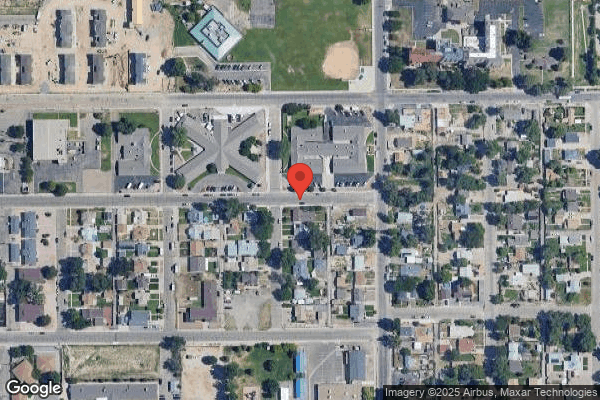
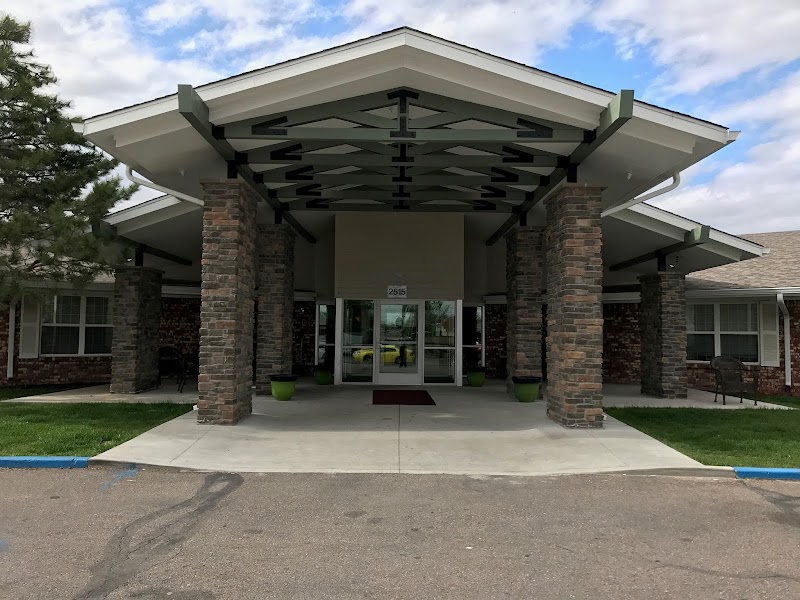
2515 PITMAN PL, PUEBLO, CO 81004 (719) 564-0550
For profit - Limited Liability company 151 Beds THE ENSIGN GROUP Data: November 2025 1 Immediate Jeopardy citation
Trust Grade
0/100
#168 of 208 in CO
Last Inspection: June 2025

Inspected within the last 6 months. Data reflects current conditions.

Overview

Rock Canyon Respiratory and Rehabilitation Center has received a Trust Grade of F, which indicates significant concerns and a poor overall rating. They rank #168 out of 208 facilities in Colorado, placing them in the bottom half, and #9 out of 9 in Pueblo County, meaning there are no better local options. The facility is currently improving, having reduced issues from 17 in 2024 to 7 in 2025, but it still faces serious challenges, including $108,730 in fines, which is higher than 88% of facilities in Colorado. Staffing is a weakness, rated at 1 out of 5 stars with a turnover rate of 51%, indicating instability among staff members. Specific incidents include a critical failure to protect residents from sexual abuse, where one resident was abused by another, and serious issues where a resident was provided money to purchase methamphetamines, demonstrating a lack of oversight and care. While the quality measures rating is excellent at 5 out of 5, the overall environment raises significant concerns for families considering this facility.

Trust Score
F
0/100
In Colorado
#168/208
Bottom 20%
Safety Record
High Risk
Review needed
Inspections
Getting Better
17 → 7 violations
Staff Stability
⚠ Watch
51% turnover. Above average. Higher turnover means staff may not know residents' routines.
Penalties
✓ Good
$108,730 in fines. Lower than most Colorado facilities. Relatively clean record.
Skilled Nurses
○ Average
Each resident gets 33 minutes of Registered Nurse (RN) attention daily — about average for Colorado. RNs are the most trained staff who monitor for health changes.
Violations
⚠ Watch
42 deficiencies on record. Higher than average. Multiple issues found across inspections.
★★☆☆☆
2.0
Overall Rating
★☆☆☆☆
1.0
Staff Levels
★★★★★
5.0
Care Quality
★★☆☆☆
2.0
Inspection Score
Stable
2024: 17 issues
2025: 7 issues

The Good

  • 5-Star Quality Measures · Strong clinical quality outcomes
  • Full Sprinkler Coverage · Fire safety systems throughout facility
  • No fines on record

Facility shows strength in quality measures, fire safety.

The Bad

2-Star Overall Rating

Below Colorado average (3.1)

Below average - review inspection findings carefully

Staff Turnover: 51%

Near Colorado avg (46%)

Higher turnover may affect care consistency

Federal Fines: $108,730

Well above median ($33,413)

Significant penalties indicating serious issues

Chain: THE ENSIGN GROUP

Part of a multi-facility chain

Ask about local staffing decisions and management

The Ugly 42 deficiencies on record

1 life-threatening 6 actual harm
Jun 2025 6 deficiencies
CONCERN (D) 📢 Someone Reported This

A family member, employee, or ombudsman was alarmed enough to file a formal complaint

Potential for Harm - no one hurt, but risky conditions existed

Deficiency F0558 (Tag F0558)

Could have caused harm · This affected 1 resident

**NOTE- TERMS IN BRACKETS HAVE BEEN EDITED TO PROTECT CONFIDENTIALITY** Based on observations, record review and interviews, the facility failed to provide reasonable accommodation necessary to accomm...

Read full inspector narrative →
**NOTE- TERMS IN BRACKETS HAVE BEEN EDITED TO PROTECT CONFIDENTIALITY** Based on observations, record review and interviews, the facility failed to provide reasonable accommodation necessary to accommodate mobility and accessibility in the residents' environment for two (#119 and #120) of seven residents reviewed out of 43 sample residents. Specifically, the facility failed to ensure Resident #119 and Resident #120's call lights were within reach when the residents were in bed. Findings include: I. Facility policy and procedure The Call Light/Bell policy and procedure, revised January 2025, was received from the director of nursing (DON) on 6/5/25 at 3:15 p.m. It read in pertinent part, It is the policy of this facility to provide the resident with a means of communication with nursing staff and ensure the safety of residents. Leave the resident comfortable and safe. Place the call device within the resident's reach before leaving the room. II. Resident #119 A. Resident status Resident #119, age [AGE], was admitted on [DATE]. According to the June 2025 computerized physician orders (CPO), diagnoses included metabolic encephalopathy (a brain disorder that occurs when problems with the body's metabolism lead to brain dysfunction), osteoarthritis, dementia and unsteadiness on feet. The 5/19/25 minimum data set (MDS) assessment revealed the resident was severely cognitively impaired with a brief interview for mental status (BIMS) score of five out of 15. The resident required substantial to maximal assistance for most activities of daily living (ADL). B. Resident interview and observations Resident #119 was interviewed on 6/2/25 at 2:09 p.m. Resident #119 said her call light was far away from her bed. Resident #119 said there had been a few instances in which she had her roommate use her call light to get assistance from the nursing staff, as Resident #119 had not been able to reach her call light. Resident #119 said she had spoken with the facility staff about her call light being too far away from her bed but did not want to make a fuss. Resident #119 was sitting in her wheelchair, her call light was plugged into a call light receptacle on the wall approximately four feet away from the left side of her bed. On 6/3/25 at 10:19 a.m. Resident #119 was lying in her bed and her call light was on the floor under a chair, approximately three feet away from the resident. Resident #119 said she could not reach her call light. Certified nurse aide (CNA) #2 entered Resident #119's room and removed the resident's breakfast from her over-bed table. -CNA #2 did not move Resident #119's call light so it was within the resident's reach. On 6/4/25 at 9:21 a.m. Resident #119 was lying in bed. Resident #119's call light was clipped to the top of her bed above her head. Resident #119's call light cord was stretched out from the wall completely without any slack. C. Record review The ADL care plan, revised 2/19/25, revealed Resident #119 had ADL performance deficits due to weakness and arthritis. The care plan documented Resident #119 required one to two staff members to assist with toilet use, transfers, bed mobility, bathing and eating. The pressure ulcer care plan, revised 2/19/25, revealed Resident #119 was at risk for pressure ulcer development. Pertinent interventions included keeping Resident #119's call light within reach. III. Resident #120 A. Resident status Resident #120, age [AGE], was admitted on [DATE]. According to the June 2025 CPO, diagnoses included cerebral infarction (stroke), repeated falls, muscle wasting and fracture of the right femur (thigh). The 5/19/25 MDS assessment revealed the resident was moderately cognitively impaired with a BIMS score of eight out of 15. The resident required substantial to maximal assistance for most ADL. B. Resident interview and observations Resident #120 was interviewed on 6/4/25 at 1:12 p.m. Resident #120 said he often had a hard time reaching his call light. Resident #120 said he had told his nurse about not being able to reach his call light, and the nurse told him she was working with maintenance to get another call light cord. Resident #120 was lying in bed with his call light cord clipped to the top of his bed with over a foot of space between the resident's head and the call light. Resident #120's call light was plugged into a receptacle directly behind the resident's bed. Resident #120 attempted to reach for his call light but could not grasp it. On 6/5/25 at 9:18 a.m. Resident #120 was lying in bed with his call light cord clipped to his bed underneath his pillow. C. Record review The ADL care plan, revised 3/4/25, revealed Resident #119 had ADL performance deficits due to weakness, stroke and right hip fracture. The care plan documented Resident #119 required one to two staff members to assist with toilet use, transfers, bed mobility, bathing and eating. The pressure ulcer care plan, revised 3/4/25, revealed Resident #120 was at risk for pressure ulcer development. Pertinent interventions included keeping Resident #120's call light within reach. IV. Staff interviews CNA #2 was interviewed on 6/4/25 at 4:15 p.m. CNA #2 said she clipped the residents' call light cords to their beds so if they had mobility issues they could easily reach them. CNA #2 said Resident #119's call light cord was not long enough to clip to her bed, so she laid it across her over-bed tray and placed the resident's belongings on the cord so it would not fall off. CNA #3 was interviewed on 6/5/25 at 9:42 a.m. CNA #3 said Resident #119's call light was placed on her side table so she could see it. CNA #3 said Resident #119 was able to reach her call light and use it when it was on her side table. CNA #3 said Resident #120 was able to reach his call light when it was placed behind him. CNA #3 said Resident #120's call light was placed behind him due to the location of his bed. The social services director (SSD) was interviewed on 6/5/25 at 10:53 a.m. The SSD said she had never received any grievances from Resident #119 or Resident #120 regarding call lights. The SSD said she had not heard about any issues with the residents' call light cord lengths, but she would talk to Resident #120 and Resident #119 and ensure their call lights were long enough and within reach. Licensed practical nurse (LPN) #1 was interviewed on 6/5/25 at 10:58 a.m. LPN #1 said she preferred when the nursing staff clipped residents' call lights to their bed so they could reach them. LPN #1 said Resident #119 could sometimes reach her call light if it was on her side table, but was unable to reach it other times. LPN #1 said Resident #119 preferred to have her call light near her in bed. LPN #1 said Resident #119 needed help with getting out of bed and incontinence care. LPN #1 said Resident #119 never mentioned to her that her call light cord was too short. LPN #1 said Resident #120 could reach and use his call light when it was positioned above his head. -However, observations Revealed Resident #120 was unable to reach his call light when it was clipped to the bed sheets above his head (see observations above). LPN #1 said Resident #120 used his call light to get help with getting out of bed or when he needed tissues. LPN #1 said Resident #120 occasionally lost his call light cord under his blanket or behind his bed. The DON was interviewed on 6/5/25 at 11:53 a.m. The DON said when residents were in bed their call light should be within reach by being clipped on their bed, pillow or gown. The DON said she had not heard about any issues with Resident #119 or Resident #120's call light cord length but would look into the issue.
CONCERN (D) 📢 Someone Reported This

A family member, employee, or ombudsman was alarmed enough to file a formal complaint

Potential for Harm - no one hurt, but risky conditions existed

Deficiency F0605 (Tag F0605)

Could have caused harm · This affected 1 resident

**NOTE- TERMS IN BRACKETS HAVE BEEN EDITED TO PROTECT CONFIDENTIALITY** Based on observations, record review and interviews, the facility failed to ensure residents were free from chemical restraints ...

Read full inspector narrative →
**NOTE- TERMS IN BRACKETS HAVE BEEN EDITED TO PROTECT CONFIDENTIALITY** Based on observations, record review and interviews, the facility failed to ensure residents were free from chemical restraints for one (#122) of five residents out of 43 sample residents. Specifically, the facility failed to ensure Resident #122, who was on antipsychotic medication, received appropriate monitoring to ensure signs and symptoms of tardive dyskinesia (involuntary movements) did not worsen. Findings include: I. Professional reference According to the National Institute of Health (NIH) National Library of Medicine's Impact of A Pharmacist-Driven Tardive Dyskinesia Screening Process (7/16/21), retrieved on 6/10/25 from https://pmc.ncbi.nlm.nih.gov/articles/PMC8287863/#s1, According to the Diagnostic and Statistical Manual of Mental Disorders (DSM-5), tardive dyskinesia (TD) is defined as involuntary movements generally of the tongue, lower face, jaw, torso, and extremities that are developed from the use of antipsychotics. These movements can either be choreiform (rapid and jerky) or athetoid (slow, snakelike, and writhing). Tardive dyskinesia (TD) is defined as involuntary movements that can develop with prolonged antipsychotic use. Several studies have investigated risk factors that may be associated with tardive dyskinesia, including age, sex, and long-term antipsychotic use. II. Facility policy and procedure The Chemical Restraints and Psychotropic Medication Management policy and procedure, revised April 2025, was provided by the director of nursing (DON) on 6/5/25 at 3:51 p.m. It read in pertinent part, The licensed nurse shall review the classification of the drug, the appropriateness of the diagnosis, its indication, behavior monitors, and related side effects prior to verification of admission orders with the attending physician. The facility's interdisciplinary team (IDT) will review to ensure monitoring for adverse consequences and effectiveness of medications are in place. Tardive dyskinesia is abnormal, recurrent, involuntary movements that may be irreversible and typically present as lateral movements of the tongue or jaw, tongue thrusting, chewing, frequent blinking, brow arching, grimacing, and lip smacking, although the trunk or other parts of the body may also be affected. III. Resident #122 A. Resident status Resident #122, age [AGE], was admitted on [DATE]. According to the June 2025 computerized physician order (CPO), diagnoses included schizoaffective disorder (a mental health condition characterized by a combination of symptoms of schizophrenia - a disconnection from reality and a mood disorder like depression or mania), bipolar disorder, chronic obstructive pulmonary disease (COPD), type 2 diabetes mellitus, chronic kidney disease and wandering. The 4/10/25 minimum data set (MDS) assessment revealed a brief interview for mental status (BIMS) assessment was not conducted because the resident was rarely or never understood. According to the staff assessment for mental status, the resident had short and long-term memory problems and her cognitive skills for daily decision making were severely impaired. She required partial assistance with showering, dressing and personal hygiene. The MDS assessment revealed the resident had received antipsychotic medications during the seven day assessment look back period. B. Observations On 6/2/25, during a continuous observation beginning at 10:25 a.m. and ending at 11:44 a.m., the following was observed: At 10:43 a.m. Resident #122 was walking throughout the common area of the secured unit. Resident #122 was observed constantly smacking her lips together while she walked around. At 11:25 a.m. Resident #122 was still in the common area and continued constantly smacking her lips together. On 6/3/25, during a continuous observation beginning at 10:06 a.m. and ending at 12:23 p.m., the following was observed: From 10:31 a.m. to 11:40 a.m, Resident #122 walked from different chairs in the common area to the women's hallway. From 11:40 a.m. to 12:23 p.m., Resident #122 was observed in the main dining room in the secured unit. Resident #122 was observed constantly smacking her lips together at 10:06 a.m., at 10:59 a.m., and at 11:47 a.m. On 6/4/25, during a continuous observation beginning at 11:14 a.m. and ending at 1:15 p.m., the following was observed: At 11:14 a.m. Resident #122 was sitting in a chair in the common area. The resident was observed constantly smacking her lips together. At 12:30 p.m. Resident #122 was sitting in a chair closest to the television. The resident was observed constantly smacking her lips together. C. Record review The antipsychotic medication care plan, initiated and revised on 4/5/25, revealed Resident #122 received an antipsychotic medication. Interventions included documenting episodes of behavior, documenting non-pharmacological interventions, documenting side effects, including tardive dyskinesia, completing an Abnormal Involuntary Movement Scale (AIMS) assessment quarterly and monitoring episodes of physical and verbal aggression. The 4/4/25 AIMS assessment documented the resident had a low risk of movement disorder. The assessment revealed the resident had no facial and oral movements, no extremity movements, no trunk (neck, shoulder, and hip) movements and no severity of abnormal movement and no incapacitation due to abnormal movements. -However, according to staff interviews, Resident #122 had been exhibiting signs of tardive dyskinesia since her admission to the facility on 4/4/25 (see interviews below). Review of Resident #122's June 2025 CPO revealed the following physician's orders related to antipsychotic medications: Olanzapine 10 milligrams (mg). Give one tablet at bedtime for behavior, ordered 4/4/25 and discontinued 5/16/25. Olanzapine 7.5 mg. Give 7.5 mg by mouth at bedtime related to schizoaffective disorder, ordered 5/16/25. Quetiapine fumarate 25 mg. Give one tablet in the afternoon for behavior, ordered 4/4/25. Quetiapine fumarate 300 mg. Give two tablets by mouth at bedtime for schizoaffective disorder, ordered 4/5/25. Monitor episodes of side effects: drowsiness, dry mouth, blurred vision, constipation, less common side effects: edema, extra pyramidal symptoms, urinary retention, stiff or tight muscles, restlessness, rare side effects: tardive dyskinesia, ordered 4/4/25. Monitor episodes: physical and verbal aggression, side effects: drowsiness, dry mouth, blurred vision, constipation, less common side effects: edema, extra pyramidal symptoms, urinary retention, stiff or tight muscles, restlessness, rare side effects: tardive dyskinesia, ordered 4/5/25. Review of Resident #122's April 2025, May 2025 and June 2025 medication administration records (MAR) and treatment administration records (TAR), from 4/5/25 through 6/4/25, revealed there was no documentation to indicate the resident was exhibiting symptoms of tardive dyskinesia on 4/6/25, 4/825 through 4/12/25, 4/17/25 through 4/30/25 and 5/1/25 through 6/4/25. -However, according to staff interviews, Resident #122 had been exhibiting signs of tardive dyskinesia since her admission to the facility on 4/4/25 (see interviews below). The 5/21/25 physician's note revealed Resident #122 was seen by the physician for paranoid schizophrenia. The note indicated the resident continued on a gradual dose reduction (GDR) process of her psychotropic medications over time. The resident continued on two antipsychotic medications and the plan was to continue the GDR process. The most recent GDR was done five days prior. -Review of Resident #122's progress notes, from 4/4/25 to 6/4/25, failed to reveal documentation to indicate the resident was exhibiting symptoms of tardive dyskinesia or that the physician was notified if the resident was exhibiting symptoms of tardive dyskinesia. -However, according to staff interviews, Resident #122 had been exhibiting signs of tardive dyskinesia since her admission to the facility on 4/4/25 (see interviews below). -A review of Resident #122's electronic medical record (EMR) did not reveal any documentation to indicate the resident was being seen by a psychiatric or behavioral health consultant related to her diagnosis or her tardive dyskinesia. IV. Staff interviews Registered nurse (RN) #2 was interviewed on 6/4/25 at 3:57 p.m. RN #2 said he was familiar with Resident #122. He said when a resident had a side effect from a psychotropic medication, he documented the side effect in the resident's TAR. He said Resident #122 smacked her lips because she had tardive dyskinesia. He said she had had symptoms of tardive dyskinesia since she was admitted . Licensed practical nurse (LPN) #2 was interviewed on 6/5/25 at 10:42 a.m. LPN #2 said an AIMS assessment was completed quarterly or every six months when a resident was on antipsychotic medications. He said he documented if a side effect from a psychotropic medication was observed in the MAR and TAR in the resident's chart. He said he was familiar with Resident #122. During the interview, Resident #122 walked into the secured unit, and she was observed to be constantly smacking her lips together. LPN #2 said her behavior of lip smacking was a symptom of tardive dyskinesia. The DON was interviewed on 6/5/25 at 1:30 p.m. The DON said AIMS assessments should be completed every six months or once a quarter for residents on antipsychotic medications. The DON said it was the responsibility of nursing staff to complete the assessments. She said once an antipsychotic medication's side effect was identified, it should be discussed and addressed with the physician or the psychiatrist and documented in the resident's medical record. The DON said it was important to monitor for side effects of psychotropic medications because the side effects could get worse and could affect the resident's quality of life. The DON said she was familiar with Resident #122. She said the resident had had symptoms of tardive dyskinesia since she was admitted to the facility. She said she did not know if there was a referral made to psychiatry for Resident #122 or if the resident's physician had noticed the tardive dyskinesia. The DON said she could not diagnose what caused the tardive dyskinesia. The DON said Resident #122 was on two antipsychotic medications so that could have caused the resident's tardive dyskinesia. The social services director (SSD) was interviewed on 6/5/25 at 2:10 p.m. The SSD said she was familiar with Resident #122. She said the resident had been seen by an outside psychiatrist since she was admitted to the facility. The SSD said she had not received the psychiatrist's records regarding the visits with Resident #122. The SSD said she had noticed the resident's tardive dyskinesia since she was initially admitted . She said when she saw a side effect, such as tardive dyskinesia, she told the psychiatrist or the resident's physician. The SSD said she did not tell Resident #122's physician or psychiatrist. V. Facility follow-up The DON provided psychiatry progress notes for Resident #122 via email on 6/6/25 at 1:44 p.m., after the survey exit. The notes revealed Resident #122 was seen by the psychiatrist on 4/14/25, following her 4/4/25 admission to the facility. The 4/14/25 psychiatry progress notes revealed documentation that the resident's psychomotor activity was normal, there were no abnormal movements observed, there was no psychomotor retardation and there was no psychomotor agitation. -However, the nursing staff identified Resident #122 had tardive dyskinesia and failed to report the side effects to the physician (see interviews above).
CONCERN (D) 📢 Someone Reported This

A family member, employee, or ombudsman was alarmed enough to file a formal complaint

Potential for Harm - no one hurt, but risky conditions existed

Deficiency F0658 (Tag F0658)

Could have caused harm · This affected 1 resident

**NOTE- TERMS IN BRACKETS HAVE BEEN EDITED TO PROTECT CONFIDENTIALITY** Based on observations, record review and interviews, the facility failed to ensure one (#53) of five residents out of 43 sample ...

Read full inspector narrative →
**NOTE- TERMS IN BRACKETS HAVE BEEN EDITED TO PROTECT CONFIDENTIALITY** Based on observations, record review and interviews, the facility failed to ensure one (#53) of five residents out of 43 sample residents were provided services that met professional standards of quality. Specifically, the facility failed to ensure the physician's orders for Resident #53 contained the appropriate dose of the medication that was to be administered to the resident. Findings include: I. Professional reference According to the National Institutes of Health (NIH), National Library of Medicine, Nursing Rights of Medication Administration (September 2023), retrieved on 6/11/25 from https://www.ncbi.nlm.nih.gov/books/NBK560654/, It is standard during nursing education to receive instruction on a guide to clinical medication administration and upholding patient safety known as the 'five rights' or 'five R's' of medication administration. Incorrect dosage is a prevalent modality of medication administration error. This error type stems from nurses giving a patient an incorrect dose of medications, even if it is the correct medication and the patient's identity is verified, without first checking to ensure it is the correct strength for the patient. According to the NIH, National Library of Medicine, hydrocortisone cream 1% cream (May 2025), retrieved on 6/11/25 from https://dailymed.nlm.nih.gov/dailymed/drugInfo.cfm?setid=9987165c-1a0f-dd57-e053-2a95a90ae735, Apply to the affected area not more than three to four times a day. According to the NIH, National Library of Medicine, miconazole nitrate 2% cream, (June 2024), retrieved on 6/11/25 from https://dailymed.nlm.nih.gov/dailymed/drugInfo.cfm?setid=e66191a6-0c3c-7319-e053-2a95a90aae84, Clean the affected area and dry thoroughly. Apply a thin layer of the product over the affected area twice daily (morning and night) or as directed by a healthcare professional. II. Facility policy and procedure The Medication Administration policy and procedure, revised 10/1/23, was provided by the director of nursing (DON) on 6/5/25 at 3:51 p.m. It read in pertinent part, Five rights: right resident, right drug, right dosage, right route, right time are applied for each medication being administered. III. Resident #53 A. Resident status Resident #53, age [AGE], was admitted on [DATE]. According to the June 2025 computerized physician order (CPO), diagnoses included vascular dementia, hemiplegia and hemiparesis (paralysis and weakness on one side of the body) following cerebral infarction affecting the left non dominant side, type 2 diabetes mellitus and mesothelioma (a rare and aggressive cancer that develops in the lining of certain tissues). The 3/24/25 minimum data set (MDS) assessment revealed a brief interview for mental status (BIMS) assessment was not conducted because the resident was rarely or never understood. According to the staff assessment for mental status, the resident had short and long-term memory problems and his cognitive skills for daily decision making were severely impaired. He was dependent on staff assistance for eating, oral hygiene, toileting, showering, dressing and personal hygiene. The MDS assessment revealed the resident received applications of ointments and medications other than to his feet. B. Observation On 6/4/25 at 1:00 p.m. Resident #53 was sitting in his Broda chair in the hallway next to his room. His abdomen was exposed and there were multiple red spots across his abdomen. C. Record review Review of the June 2025 CPO revealed Resident #53 had the following physician's order: Wound care: Rash to the body. Mix prednisone cream and antifungal cream and apply every shift to the affected body area until resolved. Every shift for rash, ordered 5/19/25. -The physician's order did not include a dose or measurement to direct the nursing staff how much cream to apply to the affected areas with each administration of the medicated treatment. IV. Staff interviews The hospice registered nurse (HRN) was interviewed on 6/3/25 at 3:18 p.m. The HRN said Resident #53 had had skin issues the last couple of months. She said he had a rash on his trunk, his back, his arm and in his arm pits. She said the rash was due to heat. She said when the resident was hot and sweated, the rash was worse. She said the facility recently changed the resident's skin treatment plan. She reviewed the physician's order and she said the order was confusing because she said she did not know how much antifungal cream and how much steroid cream to put on the affected areas. She said if she was the nurse providing the skin care, she would call the physician to clarify how much to use of each cream. Registered nurse (RN) #2 was interviewed on 6/4/25 at 3:57 p.m. RN #2 said he was familiar with Resident #53. He said he provided skin care for the resident's rash today (6/4/25). During the interview, RN #2 went to the treatment cart and displayed the two creams he applied to Resident #53' affected areas. The two creams RN #2 displayed were hydrocortisone cream 1% cream (steroid cream) and miconazole nitrate 2% cream (antifungal cream). He said he measured 4 centimeters (cm) of each cream and mixed the cream in a plastic cup (approximately one ounce) before he applied the cream to the resident's affected areas. He said Resident #53 had a rash on his hands, his chest, his stomach and on his back. He said he determined to use four cm of each cream based on his nursing judgement. Licensed practical nurse (LPN) #2 was interviewed on 6/5/25 at 10:52 a.m. LPN #2 said he was familiar with Resident #53. He said he provided skin care for the resident's rash today (6/5/25). He said he applied a thin layer of a steroid cream and a thin layer of antifungal cream to the resident's affected areas. LPN #2 said he used as much as possible of the steroid cream and the antifungal cream to cover the body areas affected. He said the resident had a rash on his whole body but mostly on his upper torso. He said the facility tried everything from ointments, to creams to antibiotics, to resolve the resident's rash. LPN #2 said the current plan was to provide the resident with a daily shower, apply the two creams, keep him as dry as possible and provide the skin treatment. He said he determined to use a thin layer of cream based on best nursing practice. The DON was interviewed on 6/5/25 at 1:35 p.m. She said some of the key components of a prescription were the right route, the right resident and the right frequency. She said if the physician left a component out of the prescription, such as the amount to administer, the nurse should contact the physician to clarify the order prior to administering the medication. She said she was not aware Resident #53's prescription creams did not say how much for the nurse to administer. She said the nurses should have clarified how much to use with each administration with the physician.
CONCERN (D) 📢 Someone Reported This

A family member, employee, or ombudsman was alarmed enough to file a formal complaint

Potential for Harm - no one hurt, but risky conditions existed

Deficiency F0688 (Tag F0688)

Could have caused harm · This affected 1 resident

**NOTE- TERMS IN BRACKETS HAVE BEEN EDITED TO PROTECT CONFIDENTIALITY** Based on observations, record review and interviews, the facility failed to ensure each resident with limited range of motion re...

Read full inspector narrative →
**NOTE- TERMS IN BRACKETS HAVE BEEN EDITED TO PROTECT CONFIDENTIALITY** Based on observations, record review and interviews, the facility failed to ensure each resident with limited range of motion received appropriate treatment and services to increase range of motion (ROM) and/or prevent further decrease in ROM for one (#33) of three residents reviewed for restorative services out of 43 sample residents. Specifically, the facility failed to ensure Resident #33's bilateral hand contracture soft splints were applied for contracture management per physician's order. Findings include: I. Facility policy and procedure The Restorative Care Program Overview policy and procedure, revised May 2018, was provided by the director of nursing (DON) on 6/5/25 at 2:30 p.m. It read in pertinent part, Provide direct nursing care services that will maintain optimum physical and mental health for the resident and meet his medical treatment needs. II. Resident #33 A. Resident status Resident #33, age less than 65, was admitted on [DATE] and readmitted on [DATE]. According to the June 2025 computerized physician orders (CPO), diagnoses included anoxic brain damage (brain damage caused by a lack of oxygen) and contractures of bilateral upper and lower extremities. The 5/5/25 minimum data set (MDS) assessment revealed the resident had severe cognitive impairment with a brief interview for mental status (BIMS) could not be conducted. He was dependent with bed mobility, transfers, personal hygiene and toileting. The MDS assessment indicated Resident #33 was in a persistent vegetative state with no discernable consciousness. The MDS assessment indicated Resident #33 had received passive ROM and active ROM on six days, with no splint or brace assistance, during the seven day look back assessment period. B. Observations On 6/3/25 at 9:56 a.m. Resident #33 was in his room in bed. His hands were on his chest with all five digits on both hands folded inward toward the palm. He did not have soft splints in his hands. One soft splint was sitting on Resident #33's chest. On 6/3/25 at 11:16 a.m. Resident #33 was sitting up in his wheelchair. His hands were on his chest with all five digits on both hands folded inward toward the palm. He did not have soft splints in his hands. On 6/4/25 at 10:15 a.m. Resident #33 was in his room in bed. His hands were on his chest with all five digits on both hands folded inward toward the palm. He did not have a soft splint in his hands. On 6/5/25 at 9:20 a.m. Resident #33 was in his room in his wheelchair. His hands were on his chest with all five digits on both hands folded inward toward the palm. He did not have soft splints in his hands. Certified nurse aide (CNA) #1 pulled a soft splint from under the pillow under his head and a second soft splint from the bedside table table and placed both soft splints into Resident #33's hands without difficulty. C. Record review The restorative program care plan, initiated 10/22/24, indicated Resident #33 was immobile and had contractures. Interventions included monitoring/documenting/reporting to the physician signs/symptoms of contractures worsening, nursing rehabilitation program with passive ROM to bilateral upper extremities, providing supportive care with mobility and therapy referral as ordered. -A review of Resident #33's comprehensive care plan did not reveal personalized interventions for checking for the placement of the resident's soft hand splints. The June 2025 CPO revealed a physician's order for Resident #33 to utilize bilateral resting hand splints as tolerated. Check placement for fit and signs of breakdown every shift, ordered 2/15/25. A review of the CNA task documentation, from 5/23/25 to 6/5/25, related to providing passive ROM to Resident #33's hands, wrists, elbow and shoulders and applying hand protectors revealed the following: Fifteen minutes of passive ROM was provided to Resident #33 one time on 5/23/25, 5/24/25, 5/25/25, 5/26/25, 5/27/25, 5/28/25, 5/29/25, 5/30/25, 5/31/25, 6/1/25, 6/3/25, 6/4/25 and 6/5/25. -There was no documentation to indicate whether or not the resident received passive ROM on 5/26/25, 5/27/25 and 6/2/25. -The documentation did not indicate if Resident #33's hand protectors were applied and checked for fit. A facility training inservice sign in sheet, dated 3/20/25, was provided by the assistant director of nursing (ADON ) on 6/5/25 at 10:30 a.m. The training provided to staff was for positioning Resident #33 daily with bolsters in between his elbows, applying his hand protectors, conducting skin assessments and getting the resident up on Tuesdays and Thursdays. -However, observations revealed staff did not consistently apply Resident #33's hand protectors (see observations above). III. Staff interviews CNA #1 was interviewed on 6/5/25 at 9:18 a.m. CNA #1 said the nursing staff would put Resident #33's soft hand splints in his hands in the morning, if he would let them. She said staff would additionally put bolsters under his elbows. She said sometimes the resident's hands were pretty tight and it was difficult to apply the splints. She said sometimes he was able to maneuver the hand splints out of his hands. She said CNAs would document the application of the splints in the resident's electronic medical record. Registered nurse (RN) #3 was interviewed on 6/5/25 at 9:40 a.m. RN #3 said the facility's restorative nurse aide had recently stepped down from the position and it had been falling onto the CNAs to place splints and provide passive ROM to residents. See said the therapy department had now been overseeing the restorative program. The physical therapist (PT) was interviewed on 6/5/25 at 10:00 a.m. The PT said there currently was not a restorative nurse aide in the facility and they had been slowly transitioning the residents that needed a maintenance restorative program under the domain of the therapy department. He said the therapists had been working with the CNAs on how to place splints and provide passive ROM to residents. The rehabilitation resource was interviewed on 6/5/25 at 11:30 a.m. The rehabilitation resource said Resident #33 had a history of refusing his soft splints to his hands but the facility needed to do a better job of documenting his splints and his refusals on the care plan.
CONCERN (D) 📢 Someone Reported This

A family member, employee, or ombudsman was alarmed enough to file a formal complaint

Potential for Harm - no one hurt, but risky conditions existed

Deficiency F0760 (Tag F0760)

Could have caused harm · This affected 1 resident

**NOTE- TERMS IN BRACKETS HAVE BEEN EDITED TO PROTECT CONFIDENTIALITY** Based on observations, record review and interviews, the facility failed to ensure that residents were free from significant med...

Read full inspector narrative →
**NOTE- TERMS IN BRACKETS HAVE BEEN EDITED TO PROTECT CONFIDENTIALITY** Based on observations, record review and interviews, the facility failed to ensure that residents were free from significant medication errors for one (#15) of six residents reviewed for medication errors of 43 sample residents. Specifically, the facility failed to ensure that Resident #15 was administered the correct dose of insulin by properly priming the insulin pen before insulin administration Findings include: I. Professional reference According to the Humalog Kwikpen manufacturer guidelines, last updated July 2023, retrieved on 6/12/25 from https://uspl.lilly.com/humalog/humalog.html#ug1 on 6/12/25 included the following recommendations, Priming your pen means removing the air from the needle and cartridge that may collect during normal use and ensuring that the pen is working correctly. If you do not prime before each injection, you may get too much or too little insulin. To prime your pen, turn the dose knob to select 2 units. Hold your pen with the needle pointing up. Tap the cartridge holder gently to collect air bubbles at the top. Continue holding your pen with the needle in until it stops, and 0 is seen in the dose window. Hold the dos knob in and count to 5 slowly. You should see insulin at the tip of the needle. II. Resident #15 A. Resident status Resident #15, age less than 65, was admitted on [DATE] and readmitted on [DATE]. According to the June 2025 computerized physician orders (CPO), the diagnoses included hypertension and diabetes. The 3/12/25 minimum data set (MDS) assessment revealed the resident was cognitively intact with a brief interview for mental status (BIMS) score of 15 out of 15. She was dependent with toileting, required set up/clean up assistance with eating, supervision with personal hygiene, transfers and was independent with bed mobility. B. Observations On 6/4/25 at 11:15 a.m. licensed practical nurse (LPN) #3 checked Resident #15's insulin order of Humalog 8 units to be administered at the lunchtime meal. She obtained her labeled Humalog insulin pen. She then dialed in two units and pushed on the cartridge. She then placed a disposable needle on the pen and dialed in 8 units into the pen. She then entered Resident #15's room and administered the insulin into the resident's abdomen. -LPN #3 failed to prime the insulin pen prior to administering it to Resident #15. III. Staff interviews LPN #3 was interviewed on 6/4/25 at 11:20 a.m. LPN #3 said the insulin pens could be primed before the needle was placed on the cartridge. She said insulin pens needed to be primed so that the resident would get the correct dose of insulin. -However, according to the manufacturer recommendations the needle needed to be placed on the cartridge prior to priming the insulin pen. The director of nursing (DON) was interviewed on 6/4/25 at 11:23 a.m. The DON said the needle needed to be on the cartridge before it was primed so that the air could be flushed out of the needle and the resident received the correct dose of insulin. She said the insulin did not go anywhere if there was no needle on the syringe. She said she would follow up with LPN #3 and provide education on the correct way to prime the pen.
CONCERN (E) 📢 Someone Reported This

A family member, employee, or ombudsman was alarmed enough to file a formal complaint

Potential for Harm - no one hurt, but risky conditions existed

Infection Control (Tag F0880)

Could have caused harm · This affected multiple residents

**NOTE- TERMS IN BRACKETS HAVE BEEN EDITED TO PROTECT CONFIDENTIALITY** Based on observations and interviews, the facility failed to maintain an infection control program designed to provide a safe, s...

Read full inspector narrative →
**NOTE- TERMS IN BRACKETS HAVE BEEN EDITED TO PROTECT CONFIDENTIALITY** Based on observations and interviews, the facility failed to maintain an infection control program designed to provide a safe, sanitary and comfortable environment to help prevent the development and transmission of diseases and infection on one of four units. Specifically, the facility failed to: -Ensure housekeeping staff followed the proper cleaning techniques for cleaning resident rooms and disinfecting high frequency touched areas; -Ensure housekeeping staff followed the appropriate procedure when cleaning resident bathrooms; -Ensure housekeeping staff were trained appropriately on housekeeping procedures; -Ensure housekeeping staff performed appropriate hand hygiene; and, -Ensure individual glucometers were cleaned properly. Findings include: I. Housekeeping failures A. Professional reference According to Assadian O, Harbarth S, Vos M, et al. Practical Recommendations for Routine Cleaning and Disinfection Procedures in Healthcare Institutions: A Narrative Review. The Journal of Hospital Infection. (July 2021); pages113:104-114, retrieved on 6/10/25 from https://pubmed.ncbi.nlm.nih.gov/33744383/, High-touch surfaces, on the other hand, are usually close to the patient, are frequently touched by the patient or nursing staff, come into contact with the skin and, due to increased contact, pose a particularly high risk of transmitting pathogens (virus or microorganism that can cause disease) Healthcare-associated infections (HAIs) are the most common adverse outcomes due to delivery of medical care. HAIs increase morbidity and mortality, prolonged hospital stay, and are associated with additional healthcare costs. Contaminated surfaces, particularly those that are touched frequently, act as reservoirs for pathogens and contribute towards pathogen transmission. Therefore, healthcare hygiene requires a comprehensive approach. This approach includes hand hygiene in conjunction with environmental cleaning and disinfection of surfaces and clinical equipment. The Centers for Disease Control (CDC) Environment Cleaning Procedures (5/4/23) was retrieved on 5/26/25 from https://www.cdc.gov/hai/prevent/resource-limited/cleaning-procedures.html#, High-Touch Surfaces: The identification of high-touch surfaces and items in each patient care area is a necessary prerequisite to the development of cleaning procedures, as these will often differ by room, ward and facility. Common high-touch surfaces include: -bedrails; -IV (intravenous) poles; -sink handles; -bedside tables; -counters; -edges of privacy curtains; -patient monitoring equipment (keyboards, control panels); -call bells; and, -door knobs. According to the CDC's Hand Hygiene in Healthcare Settings (1/18/21), retrieved on 5/26/25 from https://www.cdc.gov/handhygiene/providers/index.html, Cleaning your hands reduces the spread of potentially deadly germs to patients. Alcohol-based hand sanitizers are the most effective products for reducing the number of germs on the hands of healthcare providers. Alcohol-based hand sanitizers are the preferred method for cleaning your hands in most clinical situations. Wash your hands with soap and water whenever they are visibly dirty, before eating, and after using the restroom. When cleaning your hands with soap and water, wet your hands first with water, apply the amount of product recommended by the manufacturer to your hands, and rub your hands together vigorously for at least 15 seconds, covering all surfaces of the hands and fingers. Rinse your hands with water and use disposable towels to dry. Use a towel to turn off the faucet. Avoid using hot water, to prevent drying of skin. B. Facility policy and procedure The Routine and Disinfecting Resident Rooms policy and procedure, revised May 2024, was provided by the nursing home administrator (NHA) on 6/5/25 at 2:30 p.m. It read in pertinent part, It is the policy of the facility to ensure the provision of routine cleaning and disinfection in order to provide a safe, sanitary environment and to prevent the development and transmission of infections to the extent possible. Cleaning considerations included: dry cleaning procedures will be conducted before wet procedures; clean from areas that are visibly clean and least likely to be contaminated to areas usually visibly dirty; clean from top to bottom (bring dirt from high levels down to the floor levels); and,clean from front to back areas. Consistent surface cleaning and disinfection will be conducted with the detailed focus on high touch areas to include:tToilet flush handles, bed rails, tray tables, call buttons, TV (television) remote, telephones, toilet seats, monitor control panels, touch screens and cables, residence chairs, IV (intravenous) poles, blood pressure cuffs, sinks and faucets, light switches, door knobs and levers. The Hand Hygiene policy and procedure, revised January 2025, was provided by the NHA on 6/5/25 at 2:30 p.m. It read in pertinent part, It is the policy of the facility to clean hands to prevent transmission of possible infectious material and to provide a clean, healthy environment for residents and staff. Hand washing is generally considered the most important single procedure for preventing nosocomial infections. Antiseptics control or kill microorganisms contaminating skin and other superficial tissues and are sometimes composed of the same chemicals that are used for disinfection of inanimate objects. Although antiseptics and other hand washing agents do not sterilize the skin, they can reduce microbial contamination depending on the type and the amount of contamination, the agent used, the presence of residual activity and the hand washing technique followed. C. Observations During a continuous observation on 6/5/25, beginning at 9:53 a.m. and ending at 10:47 a.m., the following was observed: Housekeeper (HK) #1 pushed the cleaning cart to room number #9. She removed the bleach germicidal cleaner from the cart. She sprayed the faucet, the counter, the sink, the ABHR dispenser, the towel dispenser and the trash cans. She placed the spray bottle back onto the cart and removed the broom and swept the room. At 10:02 a.m. she removed a wet rag from the cleaning solution and wiped down the items she had previously sprayed. She removed her gloves and put on clean gloves, without performing hand hygiene. She removed the mop from the mop bucket and placed the wet floor sign in the doorway and mopped the floor. She returned the mop to the mop bucket on the cleaning cart and removed her gloves. room [ROOM NUMBER] and room [ROOM NUMBER] had a shared bathroom and she said she would clean the bathroom when she cleaned room [ROOM NUMBER]. Without performing hand hygiene, she put on clean gloves and pushed the cleaning cart to the housekeeping closet to empty and replace her cleaning solutions including the mop water. -HK #1 failed to disinfect high touch areas such as the bed remotes, the call lights,the light switches, over the bed table and night stand. -HK #1 failed to perform hand hygiene after removing her gloves and putting on new gloves and after exiting the residents' room. At 10:21 a.m HK #1 pushed the cleaning cart to room [ROOM NUMBER] and put on clean gloves, without performing hand hygiene. She removed the disinfectant spray bottle from the cart and sprayed the toilet tank, the grab bars, inside and outside the toilet bowl and emptied the trash. She returned the spray bottle back to the cart and retrieved the toilet bowl cleaner. She poured the toilet cleaner into the toilet, placed the cleaner back on the cart and removed the toilet brush. She scrubbed the inside of the toilet bowl and under the rim. She dipped the toilet brush into the toilet water and scrubbed feces off the bottom of the seat and flushed the toilet. She placed the toilet brush back into its holder and returned it to the cleaning cart. She removed her gloves and put on clean gloves, without performing hand hygiene. At 10:25 a.m. HK #1 removed two wet rags from the cart and used the pink rag to wipe the handrails in the bathroom, the toilet tank, the lid and the inside of the lid. She used a blue rag to wipe the seat, under the seat and the rim. She removed her gloves, used ABHR and put on clean gloves. -HK#1 did not clean the base of the toilet and used the toilet brush outside of the toilet bowl. At 10:27 a.m. HK #1 removed the disinfectant spray from the cart and sprayed the faucet, the sink, the ABHR dispenser and the paper towel dispenser. She placed the spray bottle back onto the cleaning cart, removed a spray bottle with glass cleaner and cleaned the mirror. At 10:30 a.m. HK #1 removed an orange rag from the cart and wiped the ABHR dispenser, the paper towel dispenser, the counter, the faucet and the sink. She placed the soil rag into a bag on the cleaning cart and removed her gloves. She put on clean gloves and placed trash bags into the trash cans. She removed the broom from the cleaning cart and swept the room. She removed her gloves and put on clean gloves. She removed the mop from the mop bucket and mopped the room. She removed her gloves and used ABHR and pushed her cleaning cart to room [ROOM NUMBER]. -HK #1 failed to disinfect high touch areas such as the bed remotes, the call lights, the light switches, over the bed table and night stand. -HK #1 failed to perform hand hygiene after removing her gloves and putting on new gloves. D. Staff interviews HK #1 was interviewed on 6/5/25 at 10:47 a.m. through a translator. HK #1 said she had hand hygiene education when she recently started working at the facility. She said she was supposed to use ABHR or wash her hands after removing gloves and putting on clean gloves. She said prior to working at the facility, she worked at a restaurant and she got into the bad habit of not performing hand hygiene when she changed her gloves. She said high touch areas should be cleaned daily and that she would come back and clean them after cleaning the room at the end of the day. She said she would clean the night stand, bedside table and dresser sometimes when she cleaned the room. She said she did not like touching the resident items when they were not in the room. She said she used the toilet brush on the underside of the seat because there was a small amount of feces on it. She said she did not know she was not supposed to use the toilet brush outside of the toilet bowl. She said she did not document which rooms she needed to come back to to clean high touch areas and just remembered which rooms she needed to come back too. She said she would start cleaning the rooms and the high touch areas at the same time instead of coming back at a later time. The house keeping and laundry manager (HKM) was interviewed on 6/5/25 at 1:16 p.m. The HKM said hand hygiene education was provided upon hire and was discussed on a regular basis. She said after removing gloves the staff member should always perform hand hygiene before putting clean gloves on. She said the housekeepers should change their gloves after cleaning the bathroom and after cleaning the room. She said the housekeepers should perform hand hygiene when they change their gloves either by washing their hands or using ABHR. She said high touch areas should be cleaned daily when cleaning the room. She said high touch areas included the light switches, call lights, door handles, over bed tables, nightstands, dressers, remotes and handrails. She said the toilet brush should only be used inside the toilet bowl and no other part of the toilet. She said she would immediately provide education to the housekeeping staff and to HK #1 on the correct room cleaning procedure and hand hygiene. The director of nursing (DON) was interviewed on 6/5/25 at 2:36 p.m. The DON said hand hygiene should be performed whenever there was a glove change. She said high touch areas should be cleaned daily and the toilet brush should not be used outside of the toilet bowl. II. Glucometer failures A. Manufacturer guidelines According to Arkray USA, Inc., Arkray Technical Brief cleaning and Disinfecting the Assure Prism multi Blood Glucose Monitoring System (September 2024), retrieved on 6/12/25 from,. https://arkrayusa.com/diabetes-management/professional-healthcare-products/assure/assure-prism-multi/. Each time the cleaning and disinfecting procedure is performed, two wipes are needed; one wipe to clean the meter and a second wipe to disinfect the meter. Wipe the entire surface of the meter using the towelette at least three times vertically and three times horizontally to clean blood and other body fluids from the meter. Repeat the above steps with a new towelette to disinfect the meter. Meter surfaces must remain wet according to contact times listed in the wipe manufacturer's instructions. Once complete, wipe the meter dry. According to the PDI. Sani-Cloth Bleach Germicidal Disposable Wipe instructions (2025). Retrieved on 6/12/25 from https://pdihc.com/products/envhttps://pdihc.com/products/environment-of-care/sani-cloth-bleach-germicidal-disposable-wipe/ironment-of-care/sani-cloth-bleach-germicidal-disposable-wipe/. Although efficacy at one minute contact time for HIV (AIDS virus) and HCV (hepatitis C virus) has shown to be adequate, this time is not sufficient for all organisms listed on this label. Therefore a four minute wet contact time must be used for tuberculosis (TB) and pathogenic fungi. Effective against 52 microorganisms in four minutes. B. Observations On 6/4/25 at 8:35 a.m. registered nurse (RN) #2 removed Resident #122's designated glucometer from the medication cart. RN #2 approached Resident #122 in the common area and obtained her morning blood glucose. He returned to the medication cart with the glucometer and disposed of the lancet and test strip. He then wiped the glucometer with one Sani Cloth Bleach Germicidal wipes and immediately placed it in the resident's labeled glucometer container and returned it to the medication cart. -However, according to the manufacturer guidelines RN #2 should have used a total of two wipes and allowed the glucometer to remain wet for four minutes total disinfection time (see manufacturer guidelines above). C. Staff interviews RN #2 was interviewed on 6/4/25 at 8:45 a.m. RN #2 said glucometers should be wiped before and after use. He said the glucometer should be allowed to dry for two minutes. -However, according to the manufacturer guidelines, the glucometer should stay wet for four minutes (see manufacturer guidelines above). The clinical nurse resource was interviewed on 6/4/25 at 8:45 a.m. The clinical nurse resource said that glucometers should be cleaned according to manufacturer recommended contact disinfection times and that it should be kept wet for three minutes after use. She said she would provide education to the nurses. The infection preventionist (IP) was interviewed on 6/5/25 at 1:42 p.m. The IP said glucometers should be cleaned according to the manufacturer recommendations and the recommended contact disinfection times.
Apr 2025 1 deficiency 1 Harm
SERIOUS (G) 📢 Someone Reported This

A family member, employee, or ombudsman was alarmed enough to file a formal complaint

Actual Harm - a resident was hurt due to facility failures

Free from Abuse/Neglect (Tag F0600)

A resident was harmed · This affected 1 resident

**NOTE- TERMS IN BRACKETS HAVE BEEN EDITED TO PROTECT CONFIDENTIALITY** Based on record review and interviews, the facility failed to ensure one (#1) of one resident was free from mental anguish out o...

Read full inspector narrative →
**NOTE- TERMS IN BRACKETS HAVE BEEN EDITED TO PROTECT CONFIDENTIALITY** Based on record review and interviews, the facility failed to ensure one (#1) of one resident was free from mental anguish out of three sample residents. Resident #1 was admitted to the facility on [DATE] for long term care with a diagnosis of diagnoses included developmental disabilities, dementia, depression, anxiety, schizophrenia (mental illness), myocardial infarction (heart attack), nicotine dependence, hypertension (high blood pressure), coronary heart disease and chronic obstructive pulmonary (lung) disease (COPD). On 12/7/24, the facility staff noticed Resident #1 had a pipe used to smoke methamphetamines. The nursing home administrator (NHA) approached Resident #1 in order to find out where the resident was purchasing the drugs. The NHA asked Resident #1 if he could observe the resident purchase drugs to determine who was selling the drugs within the facility. Resident #1 told the NHA that he did not have any money. The NHA provided Resident #1 with $20 to purchase methamphetamines, so he could determine who was selling the drugs. The NHA watched Resident #1 approach Resident #2 and purchase methamphetamines. The NHA confiscated the drugs and the pipe from Resident #1. The NHA notified the police of the incident. Resident #1 suffered mental anguish from the drug buying incident the NHA arranged. Resident #1 reported he felt he needed to purchase the drugs to prove to the NHA that he was not a drug dealer. Resident #1 said he was afraid and the incident made him feel uncomfortable. Resident #1 said he was staying in his room longer as he was afraid he was going to get kicked out of the facility or arrested. Findings include: I. Facility policy and procedure The Abuse Prevention and Reporting policy, revised August 2024, was provided by the director of nursing (DON) on 4/3/25 at 4:57 p.m. It read in pertinent part, Residents will be free from verbal abuse, physical abuse, mental abuse, neglect, and exploitation. Residents will not be subjected to abuse by anyone, including but not limited to, facility staff, other residents, or other individuals. All allegations of abuse are investigated. All reported incidents of alleged abuse are immediately investigated and reported per state law and in accordance with the Elder Justice Act. Any staff member who has reasonable cause to believe or reason to suspect abuse will immediately report to the charge nurse. The staff member will intervene to ensure the resident is safe during the investigation. The staff member will notify the administrator or designee immediately. The staff member will report suspicion of a crime against a resident. Social services will provide ongoing support and counseling to the resident and other residents as needed. The administrator will complete the investigation and implement corrective action based on the investigation findings. II. Resident #1 A. Resident status Resident #1, age less than 65, was admitted on [DATE]. According to the April 2025 computerized physician's orders (CPO), diagnoses included developmental disabilities, dementia, depression, anxiety, schizophrenia , myocardial infarction , nicotine dependence, hypertension , coronary heart disease and COPD. The 1/3/25 minimum data set (MDS) assessment revealed the resident had moderate cognitive impairments with a brief interview for mental status (BIMS) score of 12 out of 15. The resident was independent with activities of daily living. B. Resident interview Resident #1 was interviewed on 4/3/25 at 2:15 p.m. Resident #1 said the nursing home administrator (NHA) approached him and said a staff member saw him outside the facility with a pipe used for drugs. Resident #1 said he told the NHA the pipe was not his. Resident #1 said he told the NHA that another resident, Resident #2, sold drugs from inside the facility. Resident #1 said the NHA wanted to know which resident sold the drugs. Resident #1 said when he told the NHA, the NHA asked him if he would return and buy drugs from Resident #2. Resident #1 said he told the NHA that he did not have any money to buy drugs. Resident #1 said the NHA called him a drug user and drug dealer. Resident #1 said the NHA said he would provide him with money to purchase the drugs from Resident #2. Resident #1 said the NHA wanted to watch Resident #2 purchase drugs. Resident #1 said he agreed to the deal to prove to the NHA he was not a drug dealer. Resident #1 said the NHA gave him two ten-dollar bills and they went to Resident 2's room. Resident #1 said he entered Resident #2's room and purchased the drugs. Resident #1 said he was unaware when the NHA entered the room and said the NHA took the drugs. Resident #1 said he told the NHA he had used drugs and was a drug runner for Resident #2. Resident #1 said after the drug incident the NHA and the DON told him he could not enter the unit where Resident #2 resided. Resident #1 said that it upset him because he had friends who were residents there, and he enjoyed visiting and participating in bingo and other activities with those friends. Resident #1 said he felt bad because he considered Resident #2 a friend and was scared about her being arrested. Resident #1 said before the drug purchase, no staff member reviewed with him what could happen during and after the drug purchase. He repeated that he participated in the set-up just to prove to the NHA he was not the drug dealer. Resident #1 said he cooperated with the police investigation because he thought he did not do anything wrong. Resident #1 said he thought he would not get into trouble because he bought the drugs for the NHA and not for another resident. Resident #1 said the officer told him if Resident #2 was arrested, he and the NHA would also be charged because they participated in the drug-buying set-up. Resident #1 said he was scared and fearful of the police because he would be charged. Resident #1 said he was afraid that the NHA would discharge him from the facility Resident #1 said he had since talked with the NHA to see if things were good because he felt scared. Resident #1 said none of the facility staff helped him determine if he was at risk with the police, so he reported the investigation to his sister. Resident #1 said he told her he wanted to resume counseling services with his preferred provider. Resident #1 said that he felt bad and afraid after the incident. He said that he stayed in bed longer because he was scared of the police and felt bad for what happened to Resident #2. Resident #1 said he had received counseling at the facility. He said he was unhappy with the service because the provider talked to him about breaking the facility rules with drugs. He said the meetings were held in common areas instead of in a private location. Resident #1 said he wanted to return to a prior counselor because he wanted to talk in a different environment. Resident #1 said he still felt upset that he was used in a drug set-up. He said he still had some fear he would be arrested and discharged from the facility. He said he still heard nursing and therapy staff refer to him as a drug dealer. He said he enjoyed living in the facility. C. Resident #1's family interview Resident #1's sister was interviewed by telephone on 4/3/25 at 5:32 p.m. She said she was not informed on 12/7/25 that her brother had been involved in a drug investigation and that he had reported he used methamphetamine. The sister said she was notified of the drug purchase in mid-January 2025, when Resident #1 spoke to her about being afraid of a nurse and said he was upset that the staff called him a drug dealer. The sister said Resident #1 told her he wanted to change mental health providers because he was uncomfortable talking about his concerns in the facility. The sister said Resident #1 was still upset that he was used to buy drugs and told her he was still afraid of having to discharge from the facility. The sister said the resident was still upset that the staff called him a drug dealer. D. Facility investigation The facility investigation regarding Resident #1 was requested from the DON on 4/3/25. The DON said there was no documentation for the investigation related to the drug purchase incident. E. Care plan review The cognitive impairment care plan, revised 2/16/24, revealed the resident was at risk for cognitive function or impaired thought process related to intellectual disability and schizophrenia. Pertinent interventions included administering medications as ordered, communicating with the family/caregivers regarding the residents capacity as needed, giving step-by-step instructions to support cognitive function, monitoring for changes in cognitive function and reporting to the physician as needed and to provide psychosocial support through social services as needed. F. Record review An undated notification that was sent to the police by the NHA was provided by the DON on 4/3/25 at 11:15 a.m. It read in pertinent part, Earlier today, Resident #1 was found with a methamphetamine pipe in his room. The NHA immediately notified the police, who came to investigate (However, the police came to investigate two days after the incident on 2/9/24). During the conversation with Resident #1 he disclosed he had been receiving drugs from another resident (Resident #2). To address this issue, the NHA and the DON accompanied Resident #1 the next time he attempted to purchase drugs. This led to the identification of the resident involved in selling, who was caught in the act. The police confiscated the drugs and the ombudsman was notified. Resident #1 cooperated with law enforcement. Resident #1 was no longer able to visit the unit where Resident #2 resided. At this time, no further issues had been noted, but the facility would continue to monitor closely. The note was signed by the NHA. The local police department investigation report, dated 12/9/24, was provided by the police department. It read in pertinent part, The report documented on 12/9/24 at approximately 12:53 p.m., the officer was dispatched to the facility on a narcotics violation (two days after the incident). Upon arrival, the NHA was contacted and said there was a drug problem inside the facility. The NHA said he found out who he believed was supplying the drugs. The NHA said he observed a male (Resident #1) who had a pipe used for drugs in his possession. The NHA had Resident #1 tell him where he got the drugs. The NHA reported to the officer he conducted a sting operation with Resident #1 and went to where Resident #1 said he got the drugs from. The NHA identified another resident (Resident #2) as the one who was supplying the drugs. The NHA reported to the officer he gave Resident #1 $20 to buy methamphetamine from Resident #2. The NHA said that he stood outside of the room in a spot where Resident #2 could not see him, when Resident #1 bought methamphetamine from Resident #2. The police report read the NHA gave what appeared to be methamphetamine and a pipe used to smoke methamphetamine to the officer. The officer took pictures of the items and the items were confiscated. The police report read the NHA told the officer he believed Resident #2's son was a drug dealer and he brought the drugs to the resident to sell. The police report read the NHA reported Resident #2 used Resident #1 as a runner to deliver drugs to another resident, and the NHA reported he believed that resident had $40 worth of methamphetamine from the suspected resident/supplier and had attempted to locate the drugs but had not found the drugs. The police report revealed the police officer contacted Resident #1, who was developmentally delayed. Resident #1 told the officer he had received drugs from Resident #2 at least 12 times and that he also brought the drugs to another resident. The police report revealed Resident #1 told the officer that Resident #2 gave him methamphetamine for delivering the drugs to the other resident. The police report revealed Resident #1 reported he was the go-between man for the suspected supplier. Resident #1 told the officer he suspected Resident #2 kept the drugs in a drawer. The clinical record review did not reveal progress notes, assessments, or physician notifications related to Resident #1's involvement in a drug investigation. III. Staff interviews The DON was interviewed on 4/3/25 at 11:06 a.m. The DON said she was aware of the drug set-up investigation completed by the NHA. The DON said the staff had suspected Resident #2 had been dealing drugs but had been unable to catch the resident in the act. The DON said she was aware that the NHA met with Resident #2 after he completed the drug purchase set-up. The DON said the NHA issued Resident #2 a 30-day discharge notice because the NHA observed her provide methamphetamine to Resident #1. The social services director (SSD) was interviewed on 4/3/25 at 1:40 p.m. She said she coordinated the change in mental health counselors for Resident #1. She said she was unaware of why Resident #1 wanted to change providers. The SSD said she was aware Resident #1 had bought illegal substances and was found with a drug pipe. She said she checked on Resident #1 occasionally and he had not reported concerns to her. The NHA was interviewed on 4/3/25 at 2:15 p.m. He said he wrote and sent the message on 12/7/24, the day of the occurrence, to the police and the ombudsman. The NHA said this document was sent by email and was used to report the occurrence (see staff notification above). The NHA was interviewed again on 4/3/25 at 3:15 p.m. The NHA said he had suspected there was a drug problem in the facility. The NHA said the staff had been talking about drugs being used in the facility but had not heard that from any residents. The NHA said after an employee reported she saw Resident #1 with a drug pipe, he responded by investigating the situation. The NHA said he went to Resident #1's room and found a drug pipe. The NHA said he spoke with Resident #1, who told him that he got drugs from Resident #2. The NHA said Resident #1 said he also delivered drugs to another resident in the facility. The NHA said he asked Resident #1, if he could go with him the next time he went to get drugs. The NHA said Resident #1 told him he could go to Resident #2 to get drugs but needed money. The NHA said he provided Resident #1 with $20 and he went with Resident #1 to buy the drugs. The NHA said he confiscated the drugs during the purchase and notified the police. The NHA said he kept the drugs in his office to give to the police. The NHA said he knew Resident #1 was developmentally delayed, but did not abuse Resident #1 in any way. -However, Resident #1 suffered mental anguish and fear from the drug buying incident that was set up by the NHA. The NHA said Resident #1 agreed to help and participate in the drug purchase and said he felt it was the opposite of abuse. The NHA said he successfully identified the drug dealer and stopped drugs from reaching residents. He said by doing that, he prevented drug overdoses and deaths. The NHA said that after the investigation, he notified the facility's legal department about the situation. The NHA said the legal department's feedback was that they approved and told him he did a great job. The NHA said he did not have investigation documents because there was nothing to investigate. The NHA said after discovering and confirming that illegal drugs were in the facility, he did not interview other residents or staff members. He said he interviewed Resident #1 and Resident #2 and identified the parties that were involved. The NHA said there was no reason to go further with interviewing other residents.
Jul 2024 7 deficiencies 2 Harm
SERIOUS (G) 📢 Someone Reported This

A family member, employee, or ombudsman was alarmed enough to file a formal complaint

Actual Harm - a resident was hurt due to facility failures

Accident Prevention (Tag F0689)

A resident was harmed · This affected 1 resident

**NOTE- TERMS IN BRACKETS HAVE BEEN EDITED TO PROTECT CONFIDENTIALITY** Based on observations, record review and interviews, the facility failed to ensure the resident environment remained as free fro...

Read full inspector narrative →
**NOTE- TERMS IN BRACKETS HAVE BEEN EDITED TO PROTECT CONFIDENTIALITY** Based on observations, record review and interviews, the facility failed to ensure the resident environment remained as free from accident hazards as possible for one (#20) of four residents reviewed for accident hazards out of 29 sample residents. Resident #20, who had severely impaired daily decision-making skills, was admitted on [DATE]. The facility determined the resident to be at risk for falls upon her admission and implemented a care plan with generalized fall risk interventions that were not individualized for Resident #20. Resident #20 sustained falls with minor injuries on 5/3/24, 5/10/24 and 5/16/24. Per interviews during the survey (from 7/12/24 to 7/16/24), the facility added fall interventions following each of the falls, however, the facility failed to update the interventions on the resident's care plan or ensure staff were consistently implementing the identified fall interventions for the resident. The facility additionally did not evaluate the fall interventions to determine if the interventions were effective. On 7/8/24, Resident #20 sustained another fall, which resulted in the resident being transferred to the hospital for further evaluation, where it was discovered that she had sustained a fractured nose from the fall. Observations during the survey revealed the resident was not always wearing appropriate footwear (non-skid socks or shoes), as had been identified as a fall intervention. Additionally, the resident did not have a call light in her room, despite one of the fall interventions instructing staff to ensure the call light was within reach of the resident. Due to the facility's failures to identify and consistently implement individualized person-centered fall interventions, and update the resident's care plan with new fall interventions that were identified, Resident #20 sustained four falls within a three month period between 4/25/24 and 7/8/24, with the last fall on 7/8/24 resulting in a fracture to the resident's nose. Findings include: I. Facility Policy The Falls Monitoring and Management policy, undated, was provided by the director of nursing (DON) on 7/10/24 at 5:28 p.m. The policy read in pertinent part, Residents are assessed and evaluated to identify risks for injury due to falls. Residents receive necessary treatment and monitoring after a fall and interventions are implemented to minimize risks for injury due to falls. II. Resident status Resident #20, age greater than 65, was admitted on [DATE]. According to the July 2024 computerized physician orders (CPO), diagnoses included neurocognitive disorder with Lewy bodies, cognitive communication deficit and diabetes. The 5/1/24 minimum data set (MDS) assessment revealed the resident was rarely/never understood and had short-term and long-term memory problems and her daily decision-making was severely impaired. She was dependent on staff for personal hygiene, dressing, bathing, toileting and oral hygiene. She also needed setup and clean-up for meals. She was dependent on staff for bed mobility, and needed supervision or touching assistance for walking and sitting to standing, while needing substantial assistance with transferring from chair to bed and bed to chair. She was frequently incontinent of bladder and always incontinent of bowel. III. Observations On 7/10/24 at 11:00 a.m., Resident #20 was observed getting up from her chair and beginning to walk. The brakes on the resident's wheelchair were not locked. The resident's representative was in the room and asked for the resident to sit down. The resident did not sit back down until she was encouraged to sit back down. She did have non-slip socks on. On 7/11/24 at 11:35 a.m., the resident was sitting in her wheelchair. She was self propelling with her feet. -Resident #20 had socks on her feet, however they were not non-slip socks. Certified nurse aide (CNA) #3 said the resident was at risk for falls and staff needed to ensure she had proper footwear on, which would be non-slip socks or shoes. On 7/11/24 at 2:00 p.m. Resident #20's room was observed. -There was no call light in the resident's room, however, ensuring the call light was within reach was one of the resident's care planned fall interventions (see record review below). On 7/12/24 at approximately 5:00 p.m. the resident was sitting in her wheelchair. -Resident #20 had socks on her feet, however, they were not non-slip socks. CNA #2 was interviewed on 7/12/24 at approximately 5:00 p.m. CNA #2 said the resident was at risk for falls and staff needed to ensure she had proper footwear on, which would be non-slip socks or shoes. IV. Resident representative interview Resident #20's representative was interviewed on 7/10/24 at 11:41 a.m. The representative said Resident #20 had resided at the facility since April 2024. She said since the resident had resided at the facility, she had fallen four times. She said Resident #20 fractured her nose during her most recent fall on 7/8/24. The representative said the resident had been at risk for falling prior to her admission to the facility and the facility was aware of the resident's fall history. She said the resident was not always toileted timely and that could be a contributing factor to the falls. The representative said the facility had just placed a lipped mattress on the resident's bed after the fall on 7/8/24. The representative said the Resident #20 was not on a walking program, but she frequently would stand up and try to walk on her own. -The lipped mattress was not added to Resident #20's care plan. V. Record review The fall care plan, initiated on 4/29/24, identified Resident #20 was at risk for falls related to the resident's confusion and impaired safety awareness. Pertinent interventions included to ensure the call light was within reach, resident to wear proper footwear when ambulating or wheeling in wheelchair and to maintain a clear pathway. -There were no interventions added to the resident's care plan following the resident's falls on 5/3/24, 5/10/24, 5/16/24 or 7/8/24. The [NAME] (a tool utilized for providing consistent care for residents), dated 7/12/24, documented the safety interventions which in place for Resident #20 were to provide frequent checks and ensure the resident was wearing appropriate footwear when walking or wheeling her wheelchair. Review of Resident #20's fall risk assessments revealed the following: -On 4/25/24, Resident #20's fall risk score was documented as an eight, which indicated she was a medium fall risk; -On 5/3/24 Resident #20's fall risk score was documented as a 13, which indicted she was a high fall risk; -On 5/11/24 Resident #20's fall risk score was documented as a 13, which indicted she was a high fall risk; -On 5/16/24 Resident #20's fall risk score was documented as a nine, which indicted she was a medium fall risk; and, -On 7/8/24 Resident #20's fall risk score was documented as a 13, which indicted she was a high fall risk. -Resident #20 was incorrectly assessed as a medium hall risk on 5/16/24 despite the resident sustaining falls on 5/3/24, 5/10/24 and 5/16/24. A. Fall #1 The 5/3/24 fall investigation documented Resident #20 fell on 5/3/24 and was found laying on her right side in the hall. The resident sustained a large hematoma (an injury which causes blood to pool under the skin) forming on the back right side of her head. The investigation documented the resident was confused, drowsy, incontinent and ambulating without assistance. The investigation further documented the predisposing psychological factors were confusion, drowsy, incontinence and impaired memory. The predisposing situation factors were ambulating without assistance and being a wanderer. -The investigation failed to document if the resident was wearing appropriate footwear (no-slip socks or shoes) at the time of the fall. A nurse progress note dated 5/3/24 at 5:18 a.m. documented the registered nurse (RN) heard a loud thud and noted the resident laying on the floor on her right side. The resident had been walking in the hallway. A CNA was walking toward the resident with the resident's wheelchair when the fall occurred.The RN assessed the resident and found a large hematoma forming on the back right side of her head. The resident was assisted up into a waiting wheelchair and brought to the nurses station. Neurological checks were started on the resident. The 5/3/24 post fall interdisciplinary team (IDT) note documented the resident was found on the floor. She could not explain what happened. The note documented more frequent checks were to be provided when the resident was in her room. -However, the intervention for more frequent checks was not added to the resident's care plan. B. Fall #2 The 5/10/24 fall investigation documented the resident was refusing to sit down and Resident #20 was found laying on the floor on her right side in the common area living room. She had a small one millimeter (mm) by two mm bruise to her eye and a bruise on her leg. The investigation documented the resident was ambulating without assistance. The investigation further documented the predisposing psychological factors were confusion, gait imbalance, recent change in medication and impaired memory The predisposing situation factor was ambulating without assistance. -The investigation failed to document if the resident was wearing appropriate footwear (no-slip socks or shoes) at the time of the fall. A nurse progress note dated 5/11/24 at 1:03 a.m. documented the resident fell on 5/10/24. The resident had been refusing to go to her room or sit in her wheelchair and was wide awake. The resident was on the other side of a wall. A RN who was nearby heard a noise and went to assess. Resident #20 was found laying in front of her wheelchair on her right side on the floor. The RN assessed the resident and found bruises on the resident's right lateral eye orbit, left side of her face near the temple area and her right lower leg. The resident was alert and able to follow simple directions. The resident was assisted to stand by a CNA and the RN, placed into her wheelchair and positioned within view of the nurses station. Neurological checks were started on the resident. -Review of Resident #20's electronic medical record (EMR) revealed there was no documentation to indicate the IDT reviewed the resident's 5/10/24 fall or that new fall interventions were implemented. C. Fall #3 The 5/16/24 fall investigation documented the resident slid to the floor from her wheelchair. The resident did not sustain any injuries. The investigation documented the predisposing psychological factor was confusion. The predisposing situation factor was she was a wanderer. -The investigation failed to document if the resident was wearing appropriate footwear (no-slip socks or shoes) at the time of the fall. A nurse progress note dated 5/16/24 at 8:25 p.m. documented Resident #20 was in the front entrance hallway of the facility and was observed sliding from her wheelchair to the floor in a seated position and then laying herself flat on her back. There were no injuries observed and neurological checks and vital signs were initiated. The 5/17/24 post fall IDT note documented the resident slid from her chair near the front door. Frequent checks and an occupational therapy wheelchair evaluation were documented as prior fall interventions. The new fall intervention added was for the occupational therapist to screen for adding dycem (a non-slip material used under wheelchair cushions) to the resident's wheelchair. -However, the interventions for frequent checks and dycem to the wheelchair were not added to the resident's care plan. D. Fall #4 The 7/8/24 fall investigation documented Resident #20 was face down on the floor bleeding from her nose and the right side of her head. The resident was sent to the emergency department. The resident had facial grimacing. The fall happened in the hallway. The investigation documented the predisposing psychological factors were gait imbalance, impaired memory and confusion. The predisposing situation factor was she was a wanderer. -The investigation failed to document if the resident was wearing appropriate footwear (no-slip socks or shoes) at the time of the fall. A nurse progress note dated 7/8/24 at 11:33 p.m. documented the resident was observed on the floor face down bleeding from the bridge of her nose and the right side of her head. She had bruising and swelling noted to her face and her pupils were unequal. The resident was sent to the hospital for further evaluation and treatment. A nurse progress note dated 7/9/24 at 3:33 a.m. documented the resident had returned from the hospital. A nurse progress note dated 7/9/24 at 3:48 a.m. documented the resident had a fractured nose with swelling and bruising noted. The 7/8/24 post fall IDT note documented the resident had been found in her room laying on the floor with a fractured nose. The prior interventions listed were for occupational therapy to screen for wheelchair safety and dycem and frequent checks. The current new intervention was to lay the resident down when she appeared fatigued. -However, none of the interventions were added to the resident's care plan. VI. Staff interviews RN #1 was interviewed on 7/12/24 at 11:30 a.m. RN #1 said the resident had memory impairments and dementia. He said the resident could walk with assistance but she was not on a walking program. RN #1 said the resident's dementia was worse later in the day and the interventions the facility used to keep her safe were keeping an eye on her and ensuring she was wearing proper footwear. -However, observations during the survey revealed the resident was not consistently wearing non-slip socks or shoes (see observations above). The DON was interviewed on 7/12/24 at 3:42 p.m. The DON said residents were assessed for fall interventions upon admission, quarterly and after each fall. She said the falls were to be analyzed the day of or the day after a fall in the facility's morning meetings and as a IDT they talked about what interventions had worked to prevent falls and which ones had not. The DON said the IDT came up with new interventions and implemented them after the falls. The DON said Resident #20 was found laying on her right side on 5/3/24 and that she had a hematoma on her head. She said they implemented frequent checks. -However, the intervention was not added to the resident's care plan. The DON said the resident fell on 5/10/24 in front of her wheelchair. She said she received a laceration on her eye. She said that the resident's representative did not want to move her room. She said the occupational therapist screened for a new wheelchair. However, she said the resident's family did not wish to change the chair. -However, the intervention was not added to the resident's care plan and there was no documentation the resident's family had declined a room move or a new wheelchair for the resident. The DON said Resident #20 fell on 5/16/24 when she slid to the floor onto her back. She said dycem was placed in the wheelchair under the cushion. -However, the intervention was not added to the resident's care plan. The DON said the resident fell on 7/8/24 and was sent to the emergency department for evaluation and treatment. She said Resident #20 had a fractured nose. The MDS coordinator (MDSC) was interviewed on 7/12/24 at approximately 6:00 p.m. The MDSC said she completed the MDS assessments and also the residents' care plans. She said the fall intervention for Resident #20 to have her call light within reach was not an appropriate intervention for the resident because she did not have a call light in her room.
SERIOUS (G) 📢 Someone Reported This

A family member, employee, or ombudsman was alarmed enough to file a formal complaint

Actual Harm - a resident was hurt due to facility failures

Deficiency F0692 (Tag F0692)

A resident was harmed · This affected 1 resident

**NOTE- TERMS IN BRACKETS HAVE BEEN EDITED TO PROTECT CONFIDENTIALITY** Based on record review and interviews, the facility failed to ensure two (#23 and #1) of nine residents reviewed for weight loss...

Read full inspector narrative →
**NOTE- TERMS IN BRACKETS HAVE BEEN EDITED TO PROTECT CONFIDENTIALITY** Based on record review and interviews, the facility failed to ensure two (#23 and #1) of nine residents reviewed for weight loss out of 29 sample residents received the care and services necessary to meet their nutrition and hydration needs and to maintain their highest level of physical well-being Resident #23, admitted at nutritional risk and lost 14 pounds in six weeks. While nutritional interventions were initiated on admission (supplements three times a day) and again when a significant weight loss was identified on 6/20/24 (fortified foods), observations revealed the facility failed to promote the resident's nutritional status by encouraging, cueing and assisting the resident at mealtime, documenting his intake of snack and supplement, and addressing his agitation in the dining room at mealtime. No new interventions were considered when the resident continued to lose weight. Additionally, the facility failed to weigh Resident #1 upon admission to create a baseline to assess the resident's weight and nutritional status. Findings include: I. Facility policy and procedure The Weights policy, revised May 2017, was provided by registered dietitian consultant (RDC) #1 on 7/12/24 at 12:20 p.m. It read in pertinent part, It is the policy of this facility to obtain an accurate weight as part of the resident's assessment upon admission and at least monthly thereafter. Nursing will be responsible for the initial determination of each individual's weight. admission weights will be obtained. This will be included in the admission process and documented in the medical record. If hospital weight is entered, it should be listed as'type of scale used. ' The facility is responsible for obtaining correct weights on a regular basis, and for keeping accurate records. This includes having adequate weight scales, lift scales and/or wheelchair scales as needed. Erroneous (incorrect) weights may be struck out when determined inaccurate. Reweighs may be requested if a discrepancy is presumed or if a significant weight change is noted to assure accuracy of the weight. Individuals with unplanned significant or severe weight loss may receive nutrition interventions to prevent further weight loss, stabilize weight and/or assist to regain weight as appropriate. II. Resident #23 A. Resident status Resident #23, age [AGE], was admitted on [DATE]. According to the July 2024 computerized physician orders (CPO), diagnoses included senile degeneration of the brain, anxiety, hyperglycemia (high blood sugar), protein-calorie malnutrition, dysphagia oropharyngeal phase (difficulty swallowing), muscle weakness, muscle wasting and atrophy multiple sites (partial or complete wasting of the muscles). The 5/28/24 minimum data set (MDS) assessment revealed the resident was rarely or never understood through staff assessment. The resident had short-term and long-term memory deficits and was severely impaired in daily decision-making through staff assessment. The resident required set up and clean up assistance for meals and was dependent for all other activities of daily living (ADL). The assessment revealed the resident had complaints of difficulty or pain of swallowing, was on a mechanically altered diet and showed none or had unknown weight loss or weight gain. B. Observations On 7/9/24 at approximately 5:06 p.m., an unidentified staff member served Resident #23 dinner. Resident #23 was able to eat approximately 25% of his dinner and drink 100% of his beverages. -Resident #23 was not encouraged, cued or assisted by staff. -No alternates, refills or seconds were offered to Resident #23 before he was assisted out of the dining room. On 7/10/24 at approximately 12:05 p.m. Resident #23 was served his lunch meal. He was eating his lunch with no issues. -Resident #23 was not encouraged, cued or assisted by staff. At approximately 12:15 p.m. Resident #23 accidentally knocked his plate over the side of the table which spilled his plate of food down the front of himself and onto the floor. Resident #23 had consumed less than 25% of his meal. The resident was assisted out of the dining room and into the common area. -The resident was not offered a new meal after his lunch spilled on the ground. C. Record Review The nutrition care plan, dated 5/23/24, revealed the resident had a nutritional problem related to the diagnoses of dementia and hyperglycemia. The care plan documented the resident was malnourished and had a history of weight loss based on hospitalizations prior to admission to the skilled nursing facility. Pertinent interventions included honoring his right to make dietary choices, monitoring and reporting signs and symptoms of decreased appetite and unexpected weight loss to the physician, monitoring weekly weights for four weeks, monitoring intake and the registered dietitian (RD) would monitor the resident's ongoing nutritional status. -Resident #23's care plan did not identify weight loss was expected for the resident and there were no updates made to the care plan when significant weight loss was identified (see record review below). The July 2024 CPO revealed the resident had a physician's order to receive MedPass 2.0 (nutritional supplement) 120 ml (millileters) three times a day, ordered 5/24/24. The June 2024 and July 2024 medication administration records (MAR) revealed that MedPass 2.0 120 ml was being given to the resident three times a day and the resident was consistently consuming 100% of the supplement. -However, the amount of the supplement was not increased or another nutritional supplement added when the resident continued to lose weight until 6/25/24 when the RD added fortified foods. Resident #23's weights were documented in the resident's electronic medical record (EMR) as follows: -On 5/22/24, the resident weighed 153.5 lbs; -On 6/5/24, the resident weighed 150 lbs; -On 6/13/24, the resident weighed 147.5 lbs; -On 6/20/24, the resident weighed 142 lbs; -On 6/24/24, the resident weighed 140.5 lbs; and, -On 7/1/24, the resident weighed 139.0 lbs. -The resident lost 14.5 lbs (9.5%) from 5/22/24 to 7/1/24, in 40 days, which was considered significant. The 5/23/24 mini nutritional assessment (MNA) score was a six, which indicated that he was malnourished upon admission. The 5/24/24 admission nutritional assessment documented the resident's weight was 153.5 lbs upon admission. It documented his mini nutritional assessment risk score was a six, which indicated the resident was malnourished. The RD documented the resident was consuming 75-100% of most meals. The RD recommended starting 120 ml MedPass 2.0 three times a day, which would provide 720 calories and 30 grams protein per day. The assessment documented the RD would continue to monitor and follow up as needed. The 6/25/24 RD progress note documented the RD spoke to the resident's representative about the resident's weight loss and recommended fortified meals to help reduce further weight loss. The resident's representative agreed with the intervention. The 6/25/24 nutrition at risk committee documented the resident's current weight was 140.5 lbs. The committee reviewed the resident's weight loss, which was down 13 lbs from the admission weight. The committee determined the resident's weight loss might have been related to fluctuating intake at meals and the disease progression. The resident's representative said the resident enjoyed peanut butter and honey. The note documented the recommendation was to assist the resident at meals to help reduce further weight loss. The physician was notified of the weight loss and was requested to evaluate for a possible appetite stimulant. The 7/1/24 progress note revealed the resident was placed on hospice with the diagnosis of senile degeneration of the brain. A review of Resident #23's intake meal record on 7/11/24 at 11:37 a.m., revealed the amount the resident had consumed of his meals from 6/12/24 to 7/11/24 was as follows: -25% of meals on 23 occasions; -50% of meals on 21 occasions; -75% of meals on 12 occasions; -100% of meals on 28 occasions; - refusal noted one time; and, - no documentation on two occasions. A decline in the resident's meal intakes was noted between 7/5/24 and 7/11/24, following the resident's admission to hospice. D. Staff interviews Registered nurse (RN) #1 was interviewed on 7/11/24 at 4:00 p.m. RN #1 said Resident #23 should have been given another meal when he had spilled his first one. He said the resident was able to feed himself. RN #1 said Resident #23 required encouragement and oversight with eating. RN #1 said the certified nurse aides (CNA) were responsible for documenting the amount each resident consumed at meals. CNA #3 was interviewed on 7/12/24 at 11:45 a.m. CNA #3 said snacks were offered to the residents throughout the day. She said if a resident did not like something (snacks or meals), the staff would go and get them what they wanted. CNA #3 said the CNAs would chart how much each resident ate after the resident was finished eating. The dietary manager (DM) was interviewed on 7/12/24 at approximately 10:00 a.m. The DM said the satellite kitchen in the secured area had extra pureed food. The DM said the staff should have offered Resident #23 a new meal after he spilled his food. RDC #2 was interviewed on 7/12/24 at approximately 2:00 p.m. RDC #2 said Resident #23 had first experienced a three pound weight loss. She said because the resident did not have a significant weight loss, the facility did not implement a new intervention since he was already on the prescribed health shake upon admission. She said, on 6/20/24, the resident had experienced a significant weight loss. She said after the resident triggered for significant weight loss, the interdisciplinary team (IDT) began reviewing the resident in the nutrition at risk meetings. RDC #2 said the RD assessed the resident's nutritional status, spoke with the resident's family and observed the resident at lunch on 6/25/24. She said the RD spoke with the resident's representative about the fortified meal program and recommended fortified foods to help combat the resident's weight loss. RDC #2 said the resident often had increased agitation at meal times. She said the noise and amount of activity may have contributed to the agitation. She said the resident began hospice services on 7/1/24 with the diagnosis of senile degeneration of the brain. III. Resident #1 A. Resident status Resident #1, age less than 65, was admitted on [DATE] and discharged on 5/1/24. According to the July 2024 computerized physician order (CPO), diagnoses included hemiplegia (paralysis on one half of the body), hemiparesis (muscle weakness on one half of the body) following a cerebral infarction (stroke) affecting right non-dominant side, quadriplegia (paralysis of all four limbs), tracheostomy status (opening from the outside of the windpipe to help oxygen reach the lungs), dysphagia oropharyngeal phase (inability to swallow food or fluids) and gastrostomy status (artificial opening to the stomach). The 5/2/24 minimum data set (MDS) assessment revealed the resident was unable to be understood and unable to participate in the brief interview for mental status (BIMS). The MDS assessment indicated the resident had no memory problems through staff assessment. The assessment documented Resident #1 had lost five percent or more of his body weight in the previous month or 10% or more of his body weight in the previous six months and he was not on a prescribed weight loss regimen. The assessment documented Resident #1 had a feeding tube and 100% of his nutrients were received through the feeding tube. B. Record review Resident #1's weights were documented in the resident's EMR as follows: On 2/22/24, Resident #1 weighed 103 lbs, this was struck out as an incorrect weight on 2/23/24. On 2/23/24, it was documented that Resident #1 weighed 152 lbs, which was obtained during his hospital stay. On 3/13/24, Resident #1's weight was 152 lbs, via the Hoyer scale (mechanical lift). On 3/28/24, Resident #1's weight was 104.5 lbs, via the Hoyer scale. Resident #1's nutritional care plan, revised 3/4/24, documented the resident had a nutritional problem or potential for a nutritional problem referring to his diagnoses. Interventions implemented were to provide the resident with Nutren 2.0 (tube feeding formula) at 35 milliliters (ml) an hour for 24 hours a day, enteral support regimen as ordered by the physician, staff monitoring for signs of intolerance to the tube feedings, staff monitoring for muscle wasting and significant weight loss and staff providing the resident his diet as ordered of nothing by mouth. Resident #1's tube feeding care plan, revised 3/6/24, documented the resident was dependent on tube feedings and water flushes and needed the RD to evaluate his needs quarterly and as needed to provide recommendations for changes to the tube feeding regimen. Review of nutritional assessments and IDT notes revealed the facility continued to use the resident's hospital weight and failed to weigh the resident to create a baseline for nutritional assessment until 3/28/24, 36 days after he was admitted to the facility, even though the RD requested the facility to obtain a weight on 2/23/24, in order to determine the correct amount of tube feeding the resident should be receiving (see RD nutritional summary below). The 2/23/24 nutritional summary documented Resident #1's hospital weight was entered into the facility's EMR. The RD requested for the facility to obtain a weight because the resident's weight history was undetermined. The 3/27/24 nutrition at risk meeting note documented the reason the resident was reviewed by the IDT was to adjust the resident's enteral feeding. The note documented Resident #1 weighed 152 lbs and often requested to have his feeding turned off because the resident felt full. The RD followed up with the resident and Resident #1 said the feedings caused the resident to feel full and made the resident nauseous. The resident said he had thrown up and the RD confirmed this in his chart. The RD spoke with the resident's family that the current feeding regimen was not enough to meet Resident #1's nutritional needs. The RD requested a follow-up weight and anticipated a weight decline because of a decrease in calories and a potential erroneous weight at the facility. The RD recalculated Resident #1's nutritional needs based on the resident's weight at home and adjusted the feeding regimen to match the weight of 103 lbs. C. Staff interviews The RD was interviewed on 7/11/24 at 10:14 a.m. The RD said the nursing staff weighed the residents upon admission. He said the facility preferred not to use the hospital weight because the facility was unsure if the weight was accurate. He said if a resident who received nutrition via a feeding tube experienced weight loss, he asked the nursing staff to re-weigh the resident to ensure the weight was accurate. The RD said when he noticed Resident #1 had lost weight he called the resident's family and the family said the resident typically weighed around 105 lbs and the family said the resident did not weigh 152 lbs. The RD said he questioned Resident #1's initial weight entered into the EMR, but the resident's weight was never confirmed. Registered dietitian consultant (RDC) #1 and RDC #2 were interviewed together on 7/12/24 at 10:19 a.m. RDC #1 said she and RDC #2 were dietary resources for the facility when help was needed. She said the hospital weight was not supposed to be entered into the resident's chart and the resident needed to be weighed on the facility's scale. RDC #1 said it was important to have an accurate weight because the facility needed to be able to provide the resident with the correct amount of calories he needed since he had a feeding tube. She said she and RDC #2 investigated any resident who experienced any type of weight loss. RDC #1 said the facility had documentation that Resident #1's family said the resident never weighed over 120 lbs and the facility knew the weight was incorrect. RDC #1 said the 152 lbs weight needed to be struck out as it was incorrect. She said the weight had not been struck out. She said when the resident was admitted to the facility, the hospital weight of 152 lbs was entered into Resident #1's EMR. RDC #1 said the resident's weight was documented as 103 lbs. She said the following day, on 2/23/24, the former RD struck out the 103 lbs and re-entered the 152 lbs as the resident's current weight. She said the current RD documented in the resident EMR that Resident #1's admitting weight was incorrect. She said the RD entered a progress note that indicated the weight of 152 lbs was incorrect should have been disregarded. The director of nursing (DON) was interviewed on 7/12/24 at 3:17 p.m. The DON said she had spoken to the staff member who documented Resident #1's admitting weight at 152 lbs. She said the staff member informed the DON she did not physically weigh the resident. The DON said the staff member who entered Resident #1's weight did not normally weigh residents The DON said the facility planned to have one staff member responsible for documenting the weights so someone was keeping track of any weight changes.
CONCERN (D) 📢 Someone Reported This

A family member, employee, or ombudsman was alarmed enough to file a formal complaint

Potential for Harm - no one hurt, but risky conditions existed

Resident Rights (Tag F0550)

Could have caused harm · This affected 1 resident

**NOTE- TERMS IN BRACKETS HAVE BEEN EDITED TO PROTECT CONFIDENTIALITY** Based on observations, interviews and record review, the facility failed to ensure care for residents in a manner and in an envi...

Read full inspector narrative →
**NOTE- TERMS IN BRACKETS HAVE BEEN EDITED TO PROTECT CONFIDENTIALITY** Based on observations, interviews and record review, the facility failed to ensure care for residents in a manner and in an environment that maintains or enhances each resident's dignity and respect, in full recognition of his or her individuality for two (#16 and #28) of two residents reviewed for respect and dignity out of 29 sample residents. Specifically, the facility failed to: -Ensure Resident #16 had privacy when he slept in a brief; and, -Ensure Resident #28 was dressed appropriately and not exposed in the dining room. Findings include: I. Facility policy and procedure The Resident Rights Dignity and Respect policy, revised November 2023, was provided by the director of nursing (DON) on 7/12/24 at 11:45 a.m. It read in pertinent part, It is the policy of this facility that all residents be treated with kindness, dignity and respect. Residents will be appropriately dressed in clean clothes arranged comfortably on their persons, and well groomed. Residents shall be examined and treated in a manner that maintains the privacy of their bodies. A closed door or drawn curtain shields the resident from passers-by. Violations of the resident's right to dignity and respect should be promptly reported to the DON and/or the administrator. II. Resident #16 A. Resident status Resident #16, age less than 65, was admitted on [DATE]. According to the July 2024 computerized physician orders (CPO), diagnoses included personal history of a traumatic brain injury, dependence on respirator and persistent vegetative state (disordered state of consciousness). The 5/1/24 minimum data set (MDS) assessment revealed the resident was unable to be understood and unable to participate in the brief interview for mental status (BIMS) for a cognitive score. The MDS assessment indicated Resident #16 had a memory problem and was severely impaired through staff assessment. Resident #16 was dependent upon staff for all activities of daily living (ADLs). B. Observations During a continuous observation on 7/10/24, beginning at 10:55 a.m. and ending at 12:55 p.m., the following was observed: At 10:55 a.m. Resident #16 was lying in bed wearing a brief. The resident's brief and the entire right side of his body was exposed and the resident's bedroom door was completely open. At 12:03 p.m. licensed practical nurse (LPN) #2 entered Resident #16's room and administered his medication through his feeding tube. There was a sheet that covered Resident #16's left leg exposing the rest of his body and his brief. -LPN #2 did not cover Resident #16 and left the room at 12:07 p.m. The resident's door was left completely open. At 12:45 p.m. an unidentified respiratory therapist (RT) entered Resident #16's room. The unidentified RT suctioned the resident's tracheostomy. The RT exited the room at 12:49 p.m. and left the resident's room without covering the resident. The RT left the resident's door completely open. At 12:55 p.m. a staff member entered Resident #16's room and provided incontinence care. The staff member covered Resident #16 with a sheet when he left the room. -However, the facility failed to cover the resident for two hours. The resident's door was left open and he was exposed to individuals who passed by in the hallway. C. Staff interviews Certified nurse aide (CNA) #1 was interviewed on 7/10/24 at 1:17 p.m. CNA #1 said after a resident was changed or repositioned the staff covered the resident with a sheet or their clothing. CNA #1 said if the resident refused to be covered the staff closed the door or pulled the privacy curtain. The DON was interviewed on 7/12/24 at 3:17 p.m. The DON said if a resident wanted to lay in their bed in their underwear or a brief the staff respected the resident's wishes. She said the staff needed to close the bedroom door or pull the privacy curtain if they chose to lay in bed without clothing. The DON said she was not sure why the staff left Resident #16 exposed. She said the staff should have covered Resident #16's legs, closed the door or pulled the privacy curtain to prevent Resident #16 from being exposed to individuals passing by his room. III. Resident #28 A. Resident status Resident #28, age [AGE], was admitted on [DATE]. According to the July 2024 CPO, diagnoses included morbid obesity due to excessive calories, undifferentiated schizophrenia (a psychotic disorder that was a subtype of schizophrenia with a broad range of symptoms), muscle weakness and abnormal posture. The 4/17/24 MDS assessment revealed Resident #28 was cognitively intact with a BIMS score of 13 out of 15. Resident #28 had no impairment to his upper or lower extremities and used a wheelchair. It indicated the resident refused care offered. B. Observations On 7/10/24 at 12:37 p.m. Resident #28 was in the main dining room in his wheelchair. His shirt was raised over his stomach just below his chest and his pants were down low which exposed his intergluteal cleft to the residents and staff in the dining room. -No staff members offered to adjust the resident's clothing so the resident was not exposed in the dining room. On 7/11/24 at 12:21 p.m. Resident #28 was in the main dining room in his wheelchair wearing the same clothes from 7/10/24. His shirt was raised over his stomach just below his chest and his pants were down low which exposed his intergluteal cleft to the residents and staff in the dining room. -No staff members offered to adjust the resident's clothing so the resident was not exposed in the dining room. On 7/12/24 at 5:04 p.m. Resident #28 was in the main dining room in his wheelchair wearing the same clothes from 7/10/24. His shirt was raised over his stomach just below his chest and his pants were down low which exposed his intergluteal cleft to the residents and staff in the dining room. -No staff members offered to adjust the resident's clothing so the resident was not exposed in the dining room. C. Resident interview A resident, who wished to remain anonymous, was interviewed on 7/10/24 at 3:00 p.m. The resident said when the weather was hot the staff often placed residents in their wheelchairs with only a brief and shirt or just a brief on in the dining room. The resident said a lot of residents walked around exposed and Resident #28 often had his clothes not positioned properly to prevent exposure. D. Staff interviews The DON was interviewed on 7/12/24 at 3:17 p.m. The DON said Resident #28 often sat in the dining room partially exposed because he was a bigger resident and his clothes did not fit well. She said the staff encouraged him to fix his clothing placement or offered to help him, but the resident often refused. The DON said the facility offered to purchase the resident bigger clothes and Resident #28 refused. -However, staff were not observed offering to reposition Resident #28's clothing so he was not exposed in the dining room during the survey (see observations above). The DON said she had not heard of any concerns from residents regarding other residents being exposed during meal times. The DON said she understood why it was a concern.
CONCERN (E) 📢 Someone Reported This

A family member, employee, or ombudsman was alarmed enough to file a formal complaint

Potential for Harm - no one hurt, but risky conditions existed

ADL Care (Tag F0677)

Could have caused harm · This affected multiple residents

**NOTE- TERMS IN BRACKETS HAVE BEEN EDITED TO PROTECT CONFIDENTIALITY** IV. Failure to ensure timely repositioning and toileting/incontinence care for Resident #6 and #24 A. Resident #6 1. Resident st...

Read full inspector narrative →
**NOTE- TERMS IN BRACKETS HAVE BEEN EDITED TO PROTECT CONFIDENTIALITY** IV. Failure to ensure timely repositioning and toileting/incontinence care for Resident #6 and #24 A. Resident #6 1. Resident status Resident #6, age [AGE], was admitted on [DATE]. According to the July 2024 CPO, diagnoses included hemiplegia and hemiparesis (conditions that cause weakness or paralysis on one side of the body) following cerebral infarction (type of stroke) affecting left non-dominant side, vascular dementia unspecified severity, senile degeneration of brain not elsewhere classified, benign prostatic hyperplasia (increased cell production in a normal tissue or organ) without lower urinary tract symptoms. The 4/22/24 MDS assessment revealed the resident was rarely or never understood, had short-term and long-term memory problems and his daily decision making was severely impaired. He was dependent on staff for personal hygiene, dressing, bathing and toileting and needed substantial or maximal assistance for oral hygiene. He needed setup and clean-up for meals and he was dependent on staff for wheelchair and bed mobility. 2. Observations During a continuous observation on 7/10/24, beginning at 9:35 a.m. and ending at 1:30 p.m., the following observations were made: At 9:35 a.m. Resident #6 was in the common area with a group of other residents and activities assistant (AA) #1 who were hitting and throwing a large ball. Resident #6 was tilted in his wheelchair at approximately a 45 degree angle and he was leaning to his left side. At 10:25 a.m. the resident continued to participate in the activity. There were no changes to his positioning. At 11:54 a.m. Resident #6 was assisted into the dining room for lunch by a CNA. -The CNA positioned the resident's wheelchair at approximately a 90 degree angle at the table, however, the resident was not repositioned in the wheelchair and continued to lean to his left side. -Resident #6 was not offered toileting or incontinence care prior to being taken to the dining room for lunch. -At 12:35 p.m., after eating lunch, Resident #6 was assisted back to the common area by a CNA. -The CNA positioned the resident's wheelchair at approximately a 45 degree angle, however, the resident was not repositioned in the wheelchair and continued to lean to his left side. -Resident #6 was not offered toileting or incontinence care prior to being taken back to the common area after lunch. At 1:06 p.m. the resident was heard asking an unknown CNA to lay down because he had urinated himself. At 1:11 p.m. the resident was assisted to his room and assisted by two staff members to lay down in bed and have his brief changed. -Resident #6 was not repositioned or provided toileting/incontinence care during the three hour and 36 minute continuous observation. 3. Record review Resident #6's ADL care plan, initiated 8/13/23, revealed the resident had ADL self care performance deficits due to lack of safety awareness, end stage dementia and impaired mobility. The care plan indicated that the resident was dependent on one to two staff members with toilet use, transfers to and from wheelchair, bathing, bed mobility, personal hygiene, oral care and dressing. The care plan further revealed Resident #6 was at risk for bowel and bladder incontinence. Pertinent interventions included checking the resident as required for incontinence. B. Resident #24 1. Resident status Resident #24, age [AGE], was admitted on [DATE]. According to the July 2024 CPO, diagnoses included other sequelae of cerebral infarction (stroke), hemiplegia and hemiparesis following cerebral infarction affecting non-dominant side, cerebrovascular disease (condition affecting blood flow and blood vessels in the brain and spinal cord) unspecified, unspecified dementia, abnormal posture, muscle weakness generalized, contracture of left elbow, and contracture of muscle left upper arm. The 6/17/24 MDS assessment revealed the resident had a severe cognitive impairment with a BIMS score of seven out of 15. He was dependent on staff assistance with oral hygiene, toileting, bathing, dressing upper and lower body, putting on footwear, personal hygiene, transfers to and from his wheelchair and bed mobility. He needed supervision or touching assistance with eating. 2. Observations During a continuous observation on 7/10/24, beginning at 9:35 a.m. and ending at 1:30 p.m., the following observations were made: At 9:35 a.m. Resident #24 was in the common area with a group of other residents and AA #1 who were hitting and throwing a large ball. Resident #24 was tilted in his wheelchair at approximately a 45 degree angle and was not actively participating in the activity. At 10:25 a.m, Resident #24 remained in the common area in his wheelchair in the same position. -At 11:57 a.m. the resident was assisted to the dining room for lunch by a CNA. -The CNA positioned the resident's wheelchair at approximately a 90 degree angle at the table, however, the resident was not repositioned in the wheelchair. -Resident #24 was not offered toileting or incontinence care prior to being taken to the dining room for lunch. At 12:40 p.m., after eating lunch, Resident #24 was assisted back to the common area by a CNA. The resident was sliding down in his wheelchair. -The CNA positioned the resident's wheelchair at approximately a 45 degree angle, however, the resident was not repositioned in the wheelchair despite the resident noticeably sliding down in his wheelchair. -Resident #24 was not offered toileting or incontinence care prior to being taken back to the common area after lunch. - At approximately 12:45 p.m. Resident #24 was wheeled to his room to be provided with incontinence care. At 1:01 p.m. the resident was transferred to bed and provided with incontinence care. -Resident #24 was not repositioned or provided toileting/incontinence care during the three hour and 26 minute continuous observation. 3. Record review Resident #24's ADL care plan, initiated 10/6/23, revealed the resident had an ADL care performance deficit due to his weakness and left sided deficits due to his cerebrovascular accident. The care plan indicated the resident was dependent on one to two staff members with toilet use, transfers to and from the wheelchair, bathing, bed mobility, personal hygiene, oral care, and dressing. The care plan further revealed Resident #24 was at risk for bowel and bladder incontinence. Pertinent interventions included checking the resident as required for incontinence. C. Staff interviews LPN (licensed practical nurse) #1 was interviewed on 7/10/24 at 12:45 p.m. LPN #1 said residents should be toileted every two to three hours and should be toileted before going to lunch. She said residents should be repositioned every two hours. LPN #1 said Resident #6 and Resident #24 were incontinent and were at risk for skin issues. CNA #3 was interviewed on 7/10/24 at approximately 1:20 p.m. CNA #3 said Resident #6 should be checked for incontinence every two hours unless he asked to be changed more frequently. She said the resident could reposition himself in his wheelchair. -However, observations revealed the resident did not attempt to reposition himself (see observations above). CNA #5 said residents should be repositioned and have their briefs checked for incontinence every two hours. She said Resident #6 and Resident #24 were incontinent. V. Failure to ensure Resident #9 received assistance with meals A. Resident #9 1. Resident status Resident #9, age [AGE], was admitted on [DATE]. According to the July 2024 CPO, diagnoses included Alzheimer's disease, cognitive communication deficit and need for assistance with personal care. The 5/1/24 MDS assessment revealed the resident was rarely or never understood through staff assessment. She had short-term and long-term memory deficits and was severely impaired in daily decision-making through staff assessment. She required set up and clean up assistance for meals and was dependent on staff for all other ADLs. 2. Observations On 7/9/24 at 5:10 p.m. Resident #9 was assisted to the dining room. The resident was served her meal which consisted of four chicken nuggets, french fries and four apricot halves. She instantly picked up a french fry to eat. At 5:13 p.m. Resident #9 stood up and ate half an apricot half. She then proceeded to leave the table. -No staff members attempted to redirect the resident back to the table as she walked away from the dining room or offer the resident a hand held food item to take with her while she walked. At 5:15 p.m. the resident returned to the dining room. She took her plate of chicken nuggets and french fries with her as she left the dining room again. At 5:19 p.m. Resident #9 was walking the hall and had blankets in her arms. She did not have the food plate with her and the plate of food was not in sight in the hallway. At approximately 5:30 p.m. an unidentified CNA passed the resident walking in the hallway. The unidentified CNA asked another CNA if Resident #9 had eaten. The other CNA said the resident had eaten. -However, Resident #9 had not eaten (see observations above). On 7/10/24 at 8:35 a.m. Resident #9 was sitting at a dining room table with her meal in front of her. The resident was sleeping. At 8:45 a.m. the resident continued to sit at the table asleep. She had not touched her food. -No staff members attempted to wake the resident up or provide encouragement for her to eat. -On 7/10/24 at 11:00 a.m. Resident #9's plate of chicken nuggets and french fries from the dinner meal on 7/9/24 were found in another resident's drawer. The plate still contained the four chicken nuggets and french fries. 3. Record review Resident #9's nutrition care, initiated 4/26/24, revealed the resident had a nutritional problem. Pertinent interventions were to provide the diet as ordered. Resident #9's ADL care plan revealed the resident required set up and supervision with eating. The 5/2/24 initial nutritional evaluation documented the resident ate in the dining room and required set up assistance with her meal. B. Staff interviews Registered nurse (RN) #1 was interviewed on 7/11/24 at 4:00 p.m. RN #1 said Resident #9 was able to feed herself but she needed to receive cueing and encouragement to eat. RN #1 said the resident did get up and leave the table but she should be encouraged to come back to the dining room and she should be provided a hand held food to take with her if she would not come back to the dining room. The dietary manager (DM) was interviewed on 7/12/24 at 10:00 a.m. The DM said the kitchen had bread and other items and a hand held sandwich could be made for Resident #9 to take with her when she was walking. CNA #3 was interviewed 7/12/24 at 11:45 a.m. CNA #3 said residents who needed meal assistance could vary each day and she observed the dining room to see which residents needed assistance. The registered dietitian (RD) was interviewed on 7/12/24 at 2:00 p.m. The RD said Resident #9 would benefit from a hand held meal because she tended to walk around during meals. She said the resident should always be offered an alternative if she was not eating. Based on observations, record review, and interviews the facility failed to ensure residents who were unable to carry out activities of daily living (ADL) received the necessary services to maintain good nutrition, grooming and personal and oral hygiene for six (#10, #16, #14, #6, #24 and #9) of 13 residents reviewed for ADLs out of 29 sample residents. Specifically, the facility failed to: -Ensure Resident #10, #16 and #14 received timely repositioning and toileting/incontinence care while in bed; -Ensure Resident #6 and #24 received timely repositioning and toileting/incontinence care; and, -Ensure Resident #9 received assistance with meals. Findings include: I. Professional reference According to the Basic Nursing third edition, Treas, L.S., [NAME], K.L., & [NAME], M.H. (2022), page 1214 read in pertinent part, Healthy people regularly shift position to maintain comfort. However, many patients are unable to move without assistance. They require a change of position at least every two hours to prevent skin breakdown, muscle discomfort, damage to superficial nerves and blood vessels, and contractures. II. Facility policy The Activity of Daily Living/Maintain Abilities policy and procedure, revised October 2022, was provided by the director of nursing (DON) on 7/10/24 at 5:28 p.m. It documented in pertinent part, Residents who are unable to carry out activities of daily living (ADL) will receive necessary services or support from staff. ADLs will be care planned to reflect the resident specific needs The Activities of Daily Living (ADL) policy, undated, was provided by the DON on 7/12/24 at 11:45 a.m. It documented in pertinent part, Care and services will be provided for the following activities of daily living: bathing, dressing, grooming and oral care, transfer and ambulation, toileting, eating, to include meals and snacks. A resident who is unable to carry out activities of daily living will receive the necessary services to maintain good nutrition, grooming and personal and oral hygiene. III. Failure to ensure timely repositioning in bed and toileting/incontinence care for Resident #10, #16 and #14 A. Resident #10 1. Resident status Resident #10, age less than 65, was admitted on [DATE]. According to the July 2024 computerized physician orders (CPO), diagnoses included anoxic brain damage, persistent vegetative state, muscle wasting and atrophy, contracture of muscle (right ankle and foot), contracture (right elbow, left elbow, right wrist, left wrist), swan-neck deformity of (right fingers, left fingers), chronic respiratory failure, and dependence on respirator (ventilator) status. The 5/27/24 minimum data set (MDS) assessment revealed the resident was in a persistent vegetative state with no discernible consciousness and was unable to complete a brief interview for mental status (BIMS). The resident was dependent on two staff members for all ADLs. 2. Observations During a continuous observation on 7/10/24, beginning at 10:37 a.m. and ending at 1:12 p.m., the following observations were made: At 10:55 a.m. Resident #10 was lying in bed, positioned with his right arm off-loaded by a wedge cushion. At 12:03 p.m. licensed practical nurse (LPN) #2 entered the resident's room. LPN #2 completed a medication administration for the resident and then left the room. Resident #2 was not repositioned. At 12:24 p.m. Resident #10 remained lying in the same position in bed, positioned with his right arm off-loaded by the wedge cushion. At 12:55 p.m., two staff members entered the resident's room. The staff members performed incontinence care with the resident's roommate, however, Resident #10 was not repositioned. -Resident #10 was not repositioned or provided toileting/incontinence care during the two hour and 18 minute continuous observation. 3. Record Review Review of the [NAME] (a tool utilized for providing consistent care for residents) for Resident #10 revealed the resident required the total participation of two staff members to reposition and turn in bed. The resident was to be repositioned at least every two hours Resident #10's ADL care plan, revised 3/7/24, revealed the resident was totally dependent for all ADLs related to his vegetative state. Interventions included total staff participation of two staff members to reposition and turn the resident in bed. B.Resident # 16 1. Resident status Resident #16, age less than 65, was admitted on [DATE]. According to the July 2024 CPO, diagnoses included traumatic brain injury and dependence on respirator (ventilator) status. The 4/29/24 MDS assessment revealed the resident was in a persistent vegetative state with no discernible consciousness and was unable to complete a BIMS. The resident was dependent on two staff members for all ADLs. The assessment revealed the resident had a feeding tube. 2. Observations During a continuous observation on 7/10/24, beginning at 10:37 a.m. and ending at 1:12 p.m., the following observations were made: At 10:55 a.m. Resident #16 was lying in bed turned to the right side with his left arm and left hip off-loaded by wedge cushions. The resident's heel protector boots rested next to his feet on the right hand side of the bed and his heels were not off-loaded. The resident was wearing only a brief. Resident #16's left leg and left hip were covered by a flat sheet. The resident's door was open to the hallway. At 12:03 p.m. LPN #2 entered the room and provided care to Resident #16's roommate. Neither resident was repositioned. Resident #16 remained in just a brief with his left leg covered by a sheet. The resident's left hip had become exposed. At 12:24 p.m. Resident #16 remained in the same position. The wedge cushions placed to off-load the resident's weight remained on the resident's left side. The resident's heels were laying on the mattress next to his heel protector boots. The resident was wearing only a brief with just his left leg covered by a sheet and the resident's door was open fully. At 12:45 p.m. a respiratory therapist (RT) entered Resident #16's room. The RT performed tracheostomy care and suctioning with the resident and exited the room at 12:49 p.m. The resident remained in the same position with his left leg partially covered by the sheet. At 12:55 p.m. two staff members entered the resident's room and performed incontinence care with Resident #16. The resident was repositioned with the wedge cushions on the right side of his body and he was covered with a sheet and no longer exposed. -However, Resident #16's heel protector boots remained next to his feet on the right hand side of the bed and the resident's heels were not off-loaded. -Resident #16 was not repositioned or provided toileting/incontinence care for two hours and 18 minutes during the continuous observation. 3. Record Review Review or the [NAME] for Resident #16 revealed the resident required the assistance of one to two staff members. -The [NAME] did not document how frequently the resident should be repositioned. Resident #16's ADL care plan, revised 2/20/24 revealed the resident needed assistance to turn/reposition and his heels were to be floated as the resident tolerated. C. Resident # 14 1. Resident status Resident #14, age less than 65, was admitted on [DATE]. According to the July 2024 CPO, diagnoses included need for assistance with personal care, anoxic brain injury, quadriplegia, contracture of muscle (right ankle and foot), contracture (left shoulder, left elbow, left wrist, right elbow, right wrist, right hand), muscle wasting and atrophy, and dependence on respirator (ventilator) status. The 6/17/24 MDS assessment revealed the resident was rarely/never understood and was unable to complete a BIMS. The resident was dependent on two staff members for all ADLs. 2. Observations During a continuous observation on 7/10/24, beginning at 10:37 a.m. and ending at 1:12 p.m., the following observations were made: At 11:03 a.m. Resident #14 was lying in bed, positioned with his left arm off-loaded with a pillow. At 11:12 a.m. Resident #14's family member was observed adjusting the positioning of the resident's feet and the bed linens. At 12:14 p.m. LPN #2 entered the resident's room. LPN #2 administered medications to the resident and exited the room at 12:19 p.m. Resident #14 was not repositioned and remained lying in bed with the pillow under his left arm. -Resident #14 was not repositioned or provided toileting/incontinence care during the two hour and 18 minute continuous observation. 3. Record Review Review of the [NAME] for Resident #14 revealed the resident was totally dependent on two staff members for repositioning and turning in bed. The resident's heels were to be floated as tolerated or he was to wear pressure relieving boots as tolerated. Review of Resident #14's ADL care plan, revised 2/20/24, revealed the resident was totally dependent on two staff members for repositioning and turning in bed and his heels were to be floated as tolerated. D. Staff interviews Certified nurse aide (CNA) #7 was interviewed on 7/10/24 at 1:12 p.m. CNA #7 said Resident #14 and Resident #16 were to be repositioned and toileted or changed every two hours and more frequently if needed. CNA #1 was interviewed on 7/10/24 at 1:17 p.m. CNA #1 said residents were repositioned and toileted or changed every two hours CNA #1 said he provided care for Resident #10 and Resident #16. He said he checked the residents every two hours. He said some residents were checked more frequently if they required more frequent incontinence care. CNA #6 was interviewed on 7/12/24 at 10:48 a.m. CNA #6 said dependent residents should be turned/repositioned every two hours. He said staff was not always able to reposition residents every two hours. CNA #6 said his current shift required him to complete eight showers during his shift. He said when a resident was being showered, it required one CNA to be off the floor while the CNA was in the shower room. CNA #6 said some dependent residents were difficult to reposition related to their contractures or preferred position. Physical therapist assistant (PTA) #1 was interviewed on 7/12/24 at 10:56 a.m. PTA #1 said each resident received an individualized evaluation which included recommendations for positioning PTA #1 said the recommendations could be restorative, preventative, or maintenance measures.
CONCERN (E) 📢 Someone Reported This

A family member, employee, or ombudsman was alarmed enough to file a formal complaint

Potential for Harm - no one hurt, but risky conditions existed

Deficiency F0919 (Tag F0919)

Could have caused harm · This affected multiple residents

**NOTE- TERMS IN BRACKETS HAVE BEEN EDITED TO PROTECT CONFIDENTIALITY** Based on observations, record review and interviews the facility failed to adequately equip the residents to call for staff for ...

Read full inspector narrative →
**NOTE- TERMS IN BRACKETS HAVE BEEN EDITED TO PROTECT CONFIDENTIALITY** Based on observations, record review and interviews the facility failed to adequately equip the residents to call for staff for two (#8 and #24) of three residents out of 29 sample residents and to provide a working call light system in the shower facilities. Specifically, the facility failed to: -Provide a working call light for Resident #24 and Resident #8; and, -Have a functioning call light system in the women's and men's shower areas. Findings include: I. Facility policy and procedure The Call Light/Bell policy and procedure, revised May 2007, was provided by the director of nursing (DON) on 7/12/24 at 11:54 a.m. It revealed in pertinent part, It is the policy of this facility to provide the residents a means of communication with nursing staff. II. Resident #24 A. Resident status Resident #24, age [AGE], was admitted on [DATE]. According to the July 2024 computerized physician orders (CPO), diagnoses included cerebral infarction (stroke), hemiplegia and hemiparesis following cerebral infarction affecting non-dominant side (limited or no movement of the resident's dominant side), cerebrovascular disease unspecified, unspecified dementia, abnormal posture, muscle weakness generalized, contracture of left elbow and contracture of muscle left upper arm. The 6/17/24 minimum data set (MDS) assessment revealed the resident had severe cognitive impairment with a brief interview for mental status (BIMS) score of seven out of 15. He was dependent on staff for oral hygiene, toileting, bathing, dressing upper and lower body, putting on footwear, personal hygiene, transfers and bed mobility. He required supervision or touching assistance with eating. B. Resident interview and observations On 7/9/24 at approximately 5:15 p m., Resident #24 was lying in his bed. His room was at the end of the hallway. Resident #24 was yelling for help and did not have a call light. On 7/10/24 at approximately 12:45 p.m. licensed practical nurse (LPN) #1 and certified nurse aide (CNA) #5 assisted Resident #24 with transferring from his wheelchair to the bed. Resident #24 did not have a call light in his room. On 7/12/24 at approximately 5:00 p.m. the resident had a yellow service bell. The resident had it on his chest. He said he was happy to have a call bell, however, he said when he rang it, the staff did not answer him. C. Record review The 4/11/24 call system assessment documented #24 was unable to demonstrate using a call bell. D. Staff interviews CNA #5 was interviewed on 7/10/24 at approximately 1:15 p.m. CNA #5 said Resident #24 was able to make his needs known. She said none of the residents who resided on the memory care unit had a call light. CNA #4 was interviewed on 7/11/24 at 9:30 a.m. CNA #4 said Resident #24 was not able to use a call light to make his needs known due to his forgetfulness. He said Resident #24 would be at risk for safety issues such as strangulation due to not understanding what it was for and playing with the long cord. The social services director (SSD) was interviewed on 7/11/24 at approximately 3:00 p.m. The SSD said she had recently taken over the call bell assessments. She said the assessments consisted of explaining and showing the call bell procedure to the resident. She said she would ask the resident to demonstrate the call bell procedure. She said if the resident could demonstrate the call bell procedure they left the call bell in their room. She said Resident #24 was unable to use the call bell on the last assessment but that she would reassess Resident #24 later that day (7/11/24). The social service director (SSD) was interviewed again on 7/11/24 at 4:04 p.m. The SSD said the resident was reassessed and it was determined Resident #24 could use a call bell. She said she gave the resident a yellow service bell (see above observations). III. Resident #8 A. Resident status Resident #8, age less than 65, was admitted on [DATE]. According to the July 2024 CPO, diagnoses included unspecified dementia, unspecified severity without behavioral disturbance, other amnesia (difficulty speaking), muscle weakness, contracture right knee, contracture left knee and rheumatoid arthritis (pain in the joints). The 5/8/24 MDS assessment revealed Resident #8 had moderate cognitive impairments with a BIMS score of eight out of 15. The MDS assessment revealed she had limited range of motion in both lower and upper extremities. Resident #8 was dependent on staff for eating, oral hygiene, toileting, showering, dressing lower and upper body, personal hygiene and bed mobility. B. Observations On 7/10/24 at 12:20 p.m. Resident #8 was in the dining room, another resident began to eat Resident #8's cake. Resident #8 told the other resident to stop eating her cake. On 7/11/24 at 12:00 p.m., the resident was at the medication cart. Registered nurse (RN) #1 was asking her medical questions and she was able to answer appropriately. C. Resident interview Resident #8 was interviewed on 7/12/24 at 3:00 p.m. Resident #8 said she was glad to have a call bell. She said she was able to use it when she needed to call for staff. D. Record review The 5/21/24 call system assessment documented Resident #8 was unable to demonstrate using a call bell. E. Staff interviews The SSD was interviewed on 7/11/24 at approximately 3:00 p.m. The SSD said Resident #8 scored an eight on her most recent BIMS assessment. She said because the resident scored an eight on the assessment, the SSD determined the resident was unable to use the call bell. The SSD said she would reassess the resident later in the day. The SSD was interviewed again on 7/11/24 at 4:04 p.m. The SSD said she reassessed the resident and determined the resident was able to use a call bell. She said she gave the resident a bell. IV. Shower rooms A. Observations and interviews On 7/10/24 at approximately 2:30 p.m., the men's and women's shower rooms on the memory care unit did not have a working call light system. There was a small red button on the men's side of the shower room which read emergency. However, when pushed, the red button did nothing. CNA #2 was interviewed on 7/10/24 at approximately 2:30 p.m. CNA #2 said the shower room call light initiated a light on a panel that was located across from the nurse's station. She tested the red button and the light on the panel did not light up. She said the facility did not have a different system in place to call for assistance. The maintenance supervisor (MS) was interviewed on 7/11/24 at 2:43 p.m. The MS said he had worked at the facility for four years. He said during that time there had never been call lights in the shower rooms on the memory care unit. He said the red button in the shower room was from an old call light system that no longer functioned. The MS was interviewed again on 7/11/24 at 3:15 p.m. The MS said he was able to put call lights into the shower rooms (on 7/11/24).
CONCERN (F) 📢 Someone Reported This

A family member, employee, or ombudsman was alarmed enough to file a formal complaint

Potential for Harm - no one hurt, but risky conditions existed

Tube Feeding (Tag F0693)

Could have caused harm · This affected most or all residents

**NOTE- TERMS IN BRACKETS HAVE BEEN EDITED TO PROTECT CONFIDENTIALITY** Based on observations, record review, and interviews the facility failed to ensure residents with percutaneous endoscopic gastro...

Read full inspector narrative →
**NOTE- TERMS IN BRACKETS HAVE BEEN EDITED TO PROTECT CONFIDENTIALITY** Based on observations, record review, and interviews the facility failed to ensure residents with percutaneous endoscopic gastrostomy (PEG) tubes received treatment and services to prevent complications for eight (#10, #25, #13, #15, #12, #14, #16 and #11) of nine residents reviewed for tube feeding management out of 29 sample residents. Specifically, the facility failed to: -Label Resident #10, Resident #25, Resident #13, Resident #15, Resident #12, Resident #14, Resident #16 and Resident #11's tube feeding containers with the residents' names, room number, date, start time, formula type, feeding rate and nurse initials; -Provide Residents #10, Resident #12, Resident #14, Resident #15, Resident #16 and Resident #25, with the prescribed formula as written in the computerized physician orders (CPO); -Provide Residents #10, Resident #25 and Resident #13 with water flushes at the prescribed rate as written in the CPO; and, -Ensure the feeding pumps were calibrated for Residents #13, Resident #15, Resident #12, Resident #14 and Resident #11. Findings include: I. Facility policy and procedure The Gastrostomy policy and procedure, dated March 2024, was provided by the director of nursing (DON) on 7/10/24 at 10:35 a.m. It read in pertinent part, Administer enteral feedings per prescriber orders. -The policy did not include how the formula bottle/bag should be labeled according to professional standards. The DON provided an undated resource poster that was typically hung in their medication room on 7/11/24 at 12:45 p.m. that indicated Jevity 1.2 could be substituted with Fibersource HN. The Food and Nutrition Services: Enteral Nutrition policy, dated August 2021, was provided by the registered dietitian consultant (RDC) on 7/12/24 at 10:17 a.m. The policy read in pertinent part, Nursing will administer enteral feeding per orders. Nursing will utilize formulary substitution sheets when the product is not readily available. Nursing will consult RD (registered dietitian) if the comparable formula (using substitution sheet) is not available. II. Professional reference Treas, L.S., [NAME], K.L., & [NAME], M.H. (2022) Basic Nursing, Thinking, Doing and Caring, (Third edition), pages 2270-2277. Retrieved on 7/24/25. It read in pertinent part, Prior to administration, check the prescription for type of feeding, rate of infusion, and frequency of feeding. Label the container with the patient's name, room number, date, start time, formula type, feeding rate, and nurse initials. According to the Fibersource HN nutrition label, retrieved on 7/10/24 from https://www.nestlemedicalhub.com/products/fibersource-hn, Fibersource HN has 300 calories per 250 milliliters (ml) and 13.5 grams protein per 250 ml. According to the Jevity 1.2 nutrition label, retrieved on 7/10/24 from https://www.abbottnutrition.com/our-products/jevity-1_2-cal, Jevity 1.2 has 285 calories per 237 ml and 13.2 grams protein per 237 ml. According to the Jevity 1.5 nutrition label, retrieved on 7/25/24 from https://www.abbottnutrition.com/our-products/jevity-1_5-cal, Jevity 1.5 has 355 calories per 237 ml and 15.1 grams protein per 273 ml. III. Resident #10 A. Resident status Resident #10, age less than 65, was admitted on [DATE]. According to the July 2024 CPO, diagnoses included gastrostomy status (surgical opening into the stomach for nutrition support), anoxic brain damage (lack of oxygen to the brain), chronic respiratory failure, disorders of diaphragm (muscle in the chest), disorders of electrolyte fluid imbalance, gastro-esophageal reflux disorder (GERD) and dependence on respirator (ventilator) status. The 5/27/24 minimum data set (MDS) assessment revealed the resident was in a persistent vegetative state with no discernible consciousness. The resident was dependent on two staff members for all activities of daily living (ADL). The assessment revealed the resident had a feeding tube. B. Observations On 7/9/24 at 6:10 p.m., the resident's feeding tube was connected to the tube feeding pump which was infusing Jevity 1.5 (tube feeding formula) at 83 ml per hour. The tube feeding pump automated water flush was programmed at 83 ml every two hours. -The CPO revealed the resident was supposed to receive Fibersource HN at 83 ml per hour, however, the resident was receiving Jevity 1.5, which was not an equivalent formula to Fibersource HN. -The tube feeding formula container did not have the time the formula was hung or the nurses'initials. On 7/10/24 at 9:30 a.m., the resident's feeding tube was connected to the tube feeding pump. Jevity 1.5 was infusing at 83 ml per hour. -The CPO revealed the resident was supposed to receive Fibersource HN at 83 ml per hour, however, the resident was receiving Jevity 1.5. On 7/10/24 at 5:51 p.m., the resident's feeding tube was connected to the tube feeding pump. Jevity 1.5 was infusing at 83 ml per hour. -The CPO revealed the resident was supposed to receive Fibersource HN at 83 ml per hour, however, the resident was receiving Jevity 1.5. On 7/11/24 at 9:17 a.m., the resident's feeding tube was connected to the tube feeding pump. Jevity 1.5 was infusing at 83 ml per hour. -The CPO revealed the resident was supposed to receive Fibersource HN at 83 ml per hour, however, the resident was receiving Jevity 1.5. C. Record Review The July 2024 CPO revealed the following physician's order related to the resident's nutritional needs: Fibersource HN at 83 ml per hour for 20 hours via PEG tube, ordered 5/20/24. Free water flush every shift a 83 ml water auto flush every 20 hours via enteral support while feeding is running, ordered 4/29/24. -The physician's order indicated the resident was to receive 83 ml of water per day. However, the nutritional assessment indicated to provide 83 ml of water every two hours for 20 hours. The 5/21/24 nutritional summary documented the resident's nutritional needs were met with the enteral nutrition order of Fibersource HN at 83 ml per hour for 20 hours which the resident was observed not to be receiving. The free water was an auto flush of 83 ml every two hours while enteral feed was running. The 7/11/24 (during the survey) nutritional assessment documented due to shortage of Fibersource HN formula, Jevity 1.2 was used for substitution. -However, observations revealed the resident was receiving Jevity 1.5. IV. Resident #25 A. Resident status Resident #25, age less than 65, was admitted on [DATE]. According to the July 2024 CPO, diagnoses included gastrostomy status, constipation, hyperkalemia (high potassium levels in the body), amyotrophic lateral scoliosis (ALS) and dependence on respirator status. The 7/8/24 MDS assessment revealed the resident was cognitively intact with a brief interview for mental status (BIMS) score of 15 out of 15. The resident was dependent on two staff members for all ADLs. The assessment revealed the resident had a feeding tube. B. Observations On 7/10/24 at 9:30 a.m., the resident's feeding tube was connected to the tube feeding pump which was infusing Jevity 1.5 (tube feed formula) at 72 ml per hour. The water flush on the tube feeding pump was programmed at 72 ml every two hours. The formula type was identified by the manufacturer label on the bottle. -The CPO revealed the resident was supposed to receive Fibersource HN at 72 ml per hour, however, the resident was receiving Jevity 1.5. -Additionally, the CPO revealed the resident was supposed to receive 80 ml of water every two hours. On 7/10/24 at 5:51 p.m., the resident's feeding tube was connected to the tube feeding pump which was infusing Jevity 1.5 at 72 ml per hour. The tube feeding pump automated water flush was programmed at 72 ml every two hours. -The CPO revealed the resident was supposed to receive Fibersource HN at 72 ml per hour, however, the resident was receiving Jevity 1.5. -Additionally, the CPO revealed the resident was supposed to receive 80 ml of water every two hours. On 7/11/24 at 9:17 a.m., the resident's feeding tube was connected to the tube feeding pump which was infusing Jevity 1.5 at 72 ml per hour. The tube feeding pump automated water flush was programmed at 72 ml every two hours. On 7/11/24 at 9:30 a.m. (during the survey), licensed practical nurse (LPN) #3 adjusted the rate of the water on the feeding pump to match the ordered rate of 80 ml every 2 hours (see interview below). C. Record Review The July 2024 CPO revealed the following physician's order related to the resident's nutritional needs: Fibersource HN at 72 ml per hour for 20 hours via PEG tube, ordered 5/21/24. 80 ml free water flush every two hours via enteral support while the tube feeding was running, ordered 6/14/24. May substitute Jevity 1.2 for Fibersource HN at 72 ml per hour for 20 hours via peg tube, ordered 7/11/24 (during the survey). -However, observations revealed the resident was receiving Jevity 1.5. The 7/3/24 nutritional summary documented the enteral nutrition order as Fibersource HN at 72 ml per hour for 20 hours. The free water was an auto flush 80 ml every two hours while enteral feed was running. D. Staff interviews LPN #3 was interviewed on 7/11/24 at 9:17 p.m. LPN #3 said Resident #25 was being administered Jevity 1.5. LPN #3 said Resident #25 was receiving 72 ml of water every two hours instead of 80 ml of water every two hours. LPN #3 said she recently started working at the facility. She said she knew the physician's orders for Fibersource HN were incorrect but, as a nurse, she did not question the physician's orders. She said the physician's order indicated to administer Fibersource HN, however the facility had been administering Jevity 1.5. She said a staff communication was sent on 5/29/24 by the director of staff development (DSD). She said the communication advised that Jevity would replace Fibersource HN during back order. She said the communication did not indicate which Jevity formula to utilize. V. Resident #13 A. Resident status Resident #13, age greater than 65, was admitted on [DATE]. According to the July 2024 CPO, diagnoses included gastrostomy status, GERD protein calorie malnutrition, hyper/hyposmolality, hyper/hyponatremia (high and low levels of sodium in the body), constipation and dependence on respirator status. The 5/20/24 MDS assessment revealed that the resident was rarely/never understood through staff assessment. The resident was dependent on two staff members for all ADLs. The assessment revealed the resident had a feeding tube. B. Observations On 7/9/24 at 6:10 p.m., Resident # 13 was lying in bed. The resident's feeding tube was connected to a feeding tube pump. The automated water flush was programmed at 115 ml every two hours. -However, the nutrition assessment indicated the resident needed 110 ml every two hours for 20 hours. -The container of tube feeding formula was not dated or initialed by the licensed nurse. On 7/10/24 at 9:30 a.m., the resident's feeding tube was connected to the tube feeding pump. An automated water flush was programmed at 115 ml every two hours. -However, the nutrition assessment indicated the resident needed 110 ml every two hours for 20 hours. On 7/10/24 at 5:51 p.m., the resident's feeding tube was connected to the tube feeding pump. Nutren 2.0 (tube feed formula) at 65 ml per hour with an automated water flush programmed at 115 ml every two hours. -However, the nutrition assessment indicated the resident needed 110 ml every two hours for 20 hours. -The tube feed formula container was not dated. On 7/11/24 at 9:17 a.m., Resident #13 was lying in bed. The resident's feeding tube was connected to a feeding tube pump and was infusing Nutren 2.0 at a rate of 65 ml per hour. -The container was not dated with the time it was hung for administration or initialed by the administrating nurse. On 7/11/24 at 9:27 a.m., Resident #13 was lying in bed with Nutren 2.0 infusing at 65 ml per hour. The water auto flush was programmed at a rate of 115 ml every two hours. -However, the nutrition assessment indicated the resident needed 110 ml every two hours for 20 hours. -The tube feed formula container and the bag that contained the water flushes was not dated with the time it was hung on the pump to be administered or initialed with the administering nurse's signature. -The resident's tube feeding pump in Resident #13's room did not have a sticker indicating the pump had received annual calibration. C. Record Review The July 2024 CPO revealed the following physician's order related to the resident's nutritional needs: Nutren 2.0 at 65 ml per hour for 20 hours via PEG tube, ordered 5/21/24. 110 ml free water flush every two hours via enteral support while the tube feeding was running, ordered 3/22/24. 70 ml free water flush every two hours via enteral support while the tube feeding was running ordered 7/11/24 (during the survey). The 5/21/24 nutritional summary documented the enteral nutrition order as Nutren 2.0 at 65 ml per hour for 20 hours. The free water was an auto flush 110 ml every two hours while the enteral feed was running. -The physician's order indicated the resident was to receive 110 ml of water every two hours, however, observations revealed the resident was receiving 115 ml of water every two hours. D. Staff interviews LPN #3 was interviewed on 7/11/24 at 9:27 a.m. LPN #3 said the resident was receiving Nutren 2.0 formula through the feeding tube. LPN #3 confirmed the formula container was not dated or initialed. LPN #3 said the formula container was not labeled with the time it was hung to be administered or initialed. LPN #3 said Resident #13's water flush was running at 115 ml instead of the physician's order of 110 ml every two hours (see observations above). VI. Resident #15 A. Resident status Resident #15, age less than 65, was admitted on [DATE]. According to the July 2024 CPO, diagnoses included gastrostomy status, type II diabetes mellitus, hyposmolality (low levels of nutrients, proteins and electrolytes in the blood), hyponatremia, anemia (low blood levels), vitamin D deficiency, cerebral infarction (stroke) and dependence on respirator status. The 5/6/24 MDS assessment revealed the resident had severe cognitive impairments with a mental status score of six out of 15. The resident was dependent on two staff members for all ADLs. The assessment revealed the resident had a feeding tube. B. Observations On 7/9/24 at 6:10 p.m., Resident #15 was lying in bed. The resident's feeding tube was connected to a feeding tube pump. The pump was infusing Jevity 1.5 at a rate of 90 ml per hour. The water flush bag was not labeled. -The CPO revealed the resident was supposed to receive Fibersource HN at 90 ml per hour, however, the resident was receiving Jevity 1.5, which was not an equivalent formula to Fibersource HN. -The tube feed formula container was not dated with the time or date it was hung on the pump to be administered or initialed with the administering nurse's signature. On 7/10/24 at 9:30 a.m., the resident's feeding tube was connected to the tube feeding pump. Jevity 1.5 was infusing at 90 ml per hour. -The CPO revealed the resident was supposed to receive Fibersource HN at 90 ml per hour, however, the resident was receiving Jevity 1.5, which was not an equivalent formula to Fibersource HN. On 7/10/24 at 5:51 p.m., the resident's feeding tube was connected to the tube feeding pump. Jevity 1.5 was infusing at 90 ml per hour -The CPO revealed the resident was supposed to receive Fibersource HN at 90 ml per hour, however, the resident was receiving Jevity 1.5. On 7/11/24 at 9:17 a.m., the resident's feeding tube was connected to the tube feeding pump. Jevity 1.5 was infusing at 90 ml per hour. -The CPO revealed the resident was supposed to receive Fibersource HN at 90 ml per hour, however, the resident was receiving Jevity 1.5. -On 7/12/24 at 2:51 p.m. The tube feeding pump in Resident #15's room did not have a sticker indicating the pump had received annual calibration. C. Record Review The July 2024 CPO revealed the following physician's order related to the resident's nutritional needs: Fibersource HN at 90 ml per hour for 20 hours via PEG tube, ordered 5/21/24. 90 ml free water flush every two hours via enteral support while the tube feeding was running, ordered 6/14/24. The 4/30/24 nutritional summary documented the enteral nutrition order as Fibersource HN at 90 ml per hour for 20 hours. The free water was an auto flush of 90 ml every two hours while the enteral feed was running. VII. Resident #12 A. Resident status Resident #12, age less than 65, was admitted on [DATE]. According to the July 2024 CPO, diagnoses included gastrostomy status, GERD, gastroparesis (decreased stomach movement), traumatic brain injury, and dependence on respirator status. The 6/24/24 MDS assessment revealed the resident was rarely/never understood through staff assessment. The resident was in a persistent vegetative state with no discernible consciousness The resident was dependent on two staff members for all ADLs. The assessment revealed the resident had a feeding tube. B. Observations On 7/9/24 at 6:10 p.m., Resident # 12 was lying in bed. The resident's feeding tube was connected to a feeding tube pump. The pump was infusing Jevity 1.5 at a rate of 68 ml per hour. The automated water flush was programmed at 100 ml every two hours. -The CPO revealed the resident was supposed to receive Fibersource HN at 68 ml per hour, however, the resident was receiving Jevity 1.5. -The tube feed formula container was not dated with the time it was hung on the pump to be administered or initialed with the administering nurse's signature. On 7/10/24 at 9:30 a.m., the resident's feeding tube was connected to the tube feeding pump. Jevity 1.5 at 68 ml per hour. -The CPO revealed the resident was supposed to receive Fibersource HN at 68 ml per hour, however, the resident was receiving Jevity 1.5. On 7/10/24 at 5:51 p.m., the resident's feeding tube was connected to the tube feeding pump. Jevity 1.5 was infusing at 68 ml per hour. On 7/11/24 at 9:17 a.m., the resident's feeding tube was connected to the tube feeding pump. Jevity 1.5 was infusing at 68 ml per hour. -The CPO revealed the resident was supposed to receive Fibersource HN at 68 ml per hour, however, the resident was receiving Jevity 1.5. On 7/11/24 at 9:27 a.m., Resident #12 was lying in bed and Jevity 1.5 was infusing at 68 ml per hour. -The CPO revealed the resident was supposed to receive Fibersource HN at 68 ml per hour, however, the resident was receiving Jevity 1.5. -On 7/12/24 at 2:51 p.m. the tube feeding pump in Resident #12's room did not have a sticker indicating the pump had received annual calibration. C. Record Review The July 2024 CPO revealed the following physician's order related to the resident's nutritional needs: Fibersource HN at 68 ml per hour for 20 hours via PEG tube, ordered 6/25/24. 100 ml free water flush every two hours via enteral support while the tube feeding was running, ordered 6/14/24. May substitute Jevity 1.2 for Fibersource HN at 68 ml per hour for 20 hours via PEG tube, ordered 7/11/24 (during the survey). -However, observations revealed the resident was receiving Jevity 1.5. D. Staff interviews LPN #3 was interviewed on 7/11/24 at 9:27 a.m. LPN #3 said Resident #12 was being administered Jevity 1.5 at 68 ml per hour. She said the physician's order indicated to administer Fibersource HN. VIII. Resident #14 A. Resident status Resident #14, age less than 65, was admitted on [DATE]. According to the July 2024 CPO, diagnoses included gastrostomy status, GERD, constipation, anoxic brain injury and dependence on respirator status. The 6/17/24 MDS assessment revealed the resident was rarely/never understood through staff interview. The resident was dependent on two staff members for all ADLs. The assessment revealed the resident had a feeding tube. B. Observations On 7/9/24 at 6:10 p.m., the resident's feeding tube was connected to the tube feeding pump which was infusing Jevity 1.5 at 72 ml per hour. -The tube feed formula container was not dated with the time it was hung on the pump to be administered. On 7/10/24 at 9:30 a.m., the resident's feeding tube was connected to the tube feeding pump. Jevity 1.5 was infusing at 72 ml per hour. -The CPO revealed the resident was supposed to receive Fibersource HN at 72 ml per hour, however, the resident was receiving Jevity 1.5. On 7/10/24 at 5:51 p.m., Jevity 1.5 was infusing at 72 ml per hour. -The CPO revealed the resident was supposed to receive Fibersource HN at 72 ml per hour, however, the resident was receiving Jevity 1.5. On 7/11/24 at 9:17 a.m., the resident's feeding tube was connected to the tube feeding pump. Jevity 1.5 was infusing at 72 ml per hour with an automated water flush programmed at 72 ml every two hours. -The CPO revealed the resident was supposed to receive Fibersource HN at 72 ml per hour, however, the resident was receiving Jevity 1.5. -The water flush bag was not labeled with the time or date it was hung on the pump to be administered or initialed by the administrating nurse. On 7/12/24 at 2:51 p.m. the resident's feeding tube was connected to the tube feeding pump. Fibersource HN was infused at 72 ml per hour. -On 7/12/24 at 2:51 p.m. the tube feeding pump in Resident #14's room did not have a sticker indicating the pump had received annual calibration. C. Record Review The July 2024 CPO revealed the following physician's order related to the resident's nutritional needs: Fibersource HN at 72 ml per hour for 20 hours via PEG tube, ordered 5/21/24. 72 ml free water flush every two hours via enteral support while the tube feeding was running, ordered 4/9/24. May substitute Jevity 1.2 for Fibersource HN at 72 ml per hour for 20 hours via PEG tube, ordered 7/11/24 (during the survey). -However, observations revealed the resident was receiving Jevity 1.5. The 6/11/24 nutritional summary documented the enteral nutrition order as Fibersource HN at 72 ml per hour for 20 hours. The free water was an auto flush of 72 ml every two hours while the enteral feed was running. VIII. Resident #16 A. Resident status Resident #16, age less than 65, was admitted on [DATE]. According to the July 2024 CPO, diagnoses included gastrostomy status, protein-calorie malnutrition, anemia, constipation, GERD, traumatic brain injury and dependence on respirator status. The 4/29/24 minimum data set (MDS) assessment revealed the resident was in a persistent vegetative state with no discernible consciousness. The resident was dependent on two staff members for all ADLs. The assessment revealed the resident had a feeding tube. B. Observations On 7/9/24 at 6:10 p.m., the resident's feeding tube was connected to the tube feeding pump which was infusing Jevity 1.5 at 105 ml per hour. The tube feed formula container had the name of the formula, however, was not timed when hung, and failed to have the nurses' initials. -The tube feed formula container bag was not labeled with the time it was hung on the pump to be administered or initialed by the administrating nurse. On 7/10/24 at 9:30 a.m., the resident's feeding tube was connected to the tube feeding pump. Jevity 1.5 at 105 ml per hour. with an automated water flush programmed at 100 ml every two hours. -The CPO revealed the resident was supposed to receive Fibersource HN at 105 ml per hour, however, the resident was receiving Jevity 1.5. On 7/10/24 at 5:51 p.m., the resident's feeding tube was connected to the tube feeding pump. Jevity 1.5 infused at 105 ml per hour. -The CPO revealed the resident was supposed to receive Fibersource HN at 105 ml per hour, however, the resident was receiving Jevity 1.5. On 7/11/24 at 9:17 a.m., the resident's feeding tube was connected to the tube feeding pump. Jevity 1.5 was infusing at 105 ml per hour. -The CPO revealed the resident was supposed to receive Fibersource HN at 105 ml per hour, however, the resident was receiving Jevity 1.5. On 7/11/24 at 9:27 a.m., Jevity 1.5 was running through the pump at 105 ml per hour. -The CPO revealed the resident was supposed to receive Fibersource HN at 105 ml per hour, however, the resident was receiving Jevity 1.5. The tube feeding pump serial number: C14113939 had a sticker validating that annual calibration was required in March 2025. C. Record Review The July 2024 CPO revealed the following physician's order related to the resident's nutritional needs: Fibersource HN at 105 ml per hour for 20 hours via PEG tube, ordered 2/20/24. 100 ml free water flush every two hours via enteral support while the tube feeding was running, ordered 2/20/24. May substitute Jevity 1.5 for Fibersource HN at 105 ml per hour for 20 hours via PEG tube, ordered 7/11/24 (during the survey). May substitute Jevity 1.2 for Fibersource HN at 105 ml per hour for 20 hours via PEG tube, ordered 7/11/24 (during the survey). The 4/23/24 nutritional summary documented the enteral nutrition order as Fibersource HN at 105 ml per hour for 20 hours. The free water was an auto flush of 100 ml every two hours while the enteral feed was running. D. Staff interviews LPN #3 was interviewed 7/11/24 at 9:27 a.m. LPN #3 said Resident #16 was receiving Jevity 1.5 at 105 ml per hour. She said the physician's order indicated to administer Fibersource HN at 105 ml per hour. X. Resident #11 A. Resident status Resident #11, age greater than 65, was admitted to the facility on [DATE]. According to the July 2024 CPO, diagnoses included gastrostomy status, GERD, type II diabetes mellitus with hypoglycemia, chronic idiopathic constipation, cerebral infarction, hemiplegia and hemiparesis following cerebral infarction, aphasia following cerebral infarction, iron deficiency anemia and dependence on respirator status. The 6/3/24 MDS assessment revealed the resident was rarely/never understood through staff interview. The resident was dependent on two staff members for all ADLs. The assessment revealed the resident had a feeding tube. B. Observations On 7/9/2024 at 6:10 p.m., [NAME] Farms Peptide 1.5 (tube feed formula) was being administered at 59 ml per hour. -The tube feed formula container bag had the formula type written on the bag, however, the writing was illegible. The container was not labeled with the time it was hung on the pump to be administered or initialed by the administrating nurse. On 7/10/24 at 5:51 p.m., the resident's feeding tube was connected to the tube feeding pump. [NAME] Farm Peptide 1.5 was infused at 59 ml per hour with an automated water flush programmed at 100 ml every two hours. -On 7/12/24 at 2:51 p.m., the tube feeding pump in Resident #11's room did not have a sticker indicating the pump had received annual calibration. C. Record Review The July 2024 CPO revealed the following physician's order related to the resident's nutritional needs: [NAME] Farms Peptide 1.5 at 59 mla per hour for 20 hours via PEG tube, ordered 5/20/24. 100 ml free water flush every two hours via enteral support while the tube feeding was running, ordered 1/28/24. The 5/28/24 nutritional summary documented the enteral nutrition order as [NAME] Farms Peptide 1.5 at 59 ml per hour for 20 hours. The free water was an auto flush of 100 ml water every two hours for 20 hours while the enteral feed was running. XI. Additional record review The nursing communication memo written by director staff development (DSD), dated 5/29/24 at 2:37 p.m., documented in pertinent part, The manufacturer of Fibersource tube feeding is back-ordered. They sent Jevity and can be used in its place. -The nursing communication memo did not indicate which Jevity formula to use. On 7/12/24 at 3:45 p.m., the director of nursing (DON) provided a print out from a website called MedWrench. The print out read in pertinent part, A series of tests can be performed to verify pump performance. It is recommended that the evaluation procedure be run at least once per year. XII. Additional staff interviews Registered nurse (RN) #2 was interviewed on 7/9/2024 at 6:25 p.m. RN #2 said the tubing on a feeding tube pump must be changed every 24 hours. She said she changed them on the nightshift as her first task upon shift change. RN #2 said she wrote the resident's initials, date, and her first initial on each tube feed bottle. She said it was not important to label tube feeding formula bags or containers because the formula was used quickly. RN #2 She said that many of the residents in her assigned hallway had tube feeding sets that were not properly labeled related to a hectic shift the previous night. RN #2 observed Resident #15's infusing tube feed had no writing on the formula or water bag. RN #2 stated she had not hung it. She said the day shift hung it. She said the previous night shift had been extremely busy. The registered dietitian (RD) was interviewed via telephone on 7/11/24 at 10:14 a.m. The RD said when a resident was admitted to the facility he reviewed their medical record to determine which tube feeding formula they had been receiving prior to admission. The RD said he interviewed the residents and their representatives to determine the previous enteral feed regimens. The RD said he entered tube feeding related orders and the physician signed them. The RD said the physician's orders needed to be followed. The RD said there was communication with upper management and the nursing staff any time changes with the tube feeding orders had been made. The RD said Fibersource HN had been on backorder since May 2024. The RD said Jevity was being used as a temporary replacement for Fibersource HN. The RD said he was unaware that the physician's orders did not match the tube feeding formula that was hung for the residents. The RD said an incorrect auto water flush could cause a resident to become overhydrated, dehydrated, or to develop an electrolyte imbalance. The RD said he reviewed tube feed related orders with the expectation that the orders would not be altered by other staff members. The DON was interviewed on 7/11/24 at 11:29 a.m. The DON said she was not responsible for managing the tube feedings for the residents. She said the director of staff development (DSD) was responsible for ordering all tube feed formulas. The DON said the communication written by the DSD was not a valid physician's order and the actual orders should have been rewritten. She said the physician's order needed to match the tube feed formula that was infusing. She said the registered nurse supervisor (RNS) verified that the formulas that were infused through the tube feeding pumps matched the physician's orders. She said the RNS had been unable to complete the checks because he had been covering night shifts. The DON said different formula substitutions would not always run at the same rate, related to the caloric and nutritional content. She said the water flushes might also be altered in relation to tube feed formula. She said effects of incorrect formula or water intake could cause issues for residents from dehydration to fluid overload. The DON said the tube feeding for all the samples was not labeled impr[TRUNCATED]
CONCERN (F) 📢 Someone Reported This

A family member, employee, or ombudsman was alarmed enough to file a formal complaint

Potential for Harm - no one hurt, but risky conditions existed

Deficiency F0865 (Tag F0865)

Could have caused harm · This affected most or all residents

Based on interviews and record review, the facility failed to ensure an effective quality assurance program to identify and address facility compliance concerns was implemented, in order to facilitate...

Read full inspector narrative →
Based on interviews and record review, the facility failed to ensure an effective quality assurance program to identify and address facility compliance concerns was implemented, in order to facilitate improvement in the lives of nursing home residents, through continuous attention to quality of care, quality of life, and resident safety. Specifically, the quality assurance performance improvement (QAPI) program committee failed to identify and address concerns related to quality of life and quality of care. Findings include: I. Facility policy and procedure The Quality Assurance and Performance Improvement (QAPI) policy, revised 1/2022, was provided by the director of nursing (DON) on 7/12/24 at 6:23 p.m. The policy documented in pertinent part, The purpose of the QAPI plan and processes is to continually assess the facility's performance in all service areas, so that systems and processes achieve the delivery of person-centered care, and which maximizes the individuals' highest practicable physical, mental and social well-being. The committee will meet at least quarterly or more often as the facility deems necessary. The committee will maintain a record of the fates of all meetings and the names and titles of those attending each meeting. Committee functions include QAPI plan, identifying and prioritizing performance improvement plans (PIPs), implementing actions to correct quality issues and monitoring to ensure the corrective action implemented is being sustained. II. Repeat deficiencies Review of the facility's regulatory record revealed it failed to operate a QA program in a manner to prevent repeat deficiencies. F919 Resident call system During a recertification survey on 3/21/24, F919 was cited at an E level, no actual harm with potential for more than minimal harm that is not immediate jeopardy, pattern. During an abbreviated survey on 7/12/24, F919 was cited at an E level, no actual harm with potential for more than minimal harm that is not immediate jeopardy, pattern. F677 ADL (activities of daily living) Care Provided for Dependent Residents During a recertification survey on 12/15/22, F677 was cited at a D level, no actual harm with potential for more than minimal harm that is not immediate jeopardy, isolated. During an abbreviated survey on 8/10/23, F677 was cited at an E level, no actual harm with potential for more than minimal harm that is not immediate jeopardy, pattern. During an abbreviated survey on 9/11/23, F677 was cited at a D level, no actual harm with potential for more than minimal harm that is not immediate jeopardy, isolated. During an abbreviated survey on 7/12/24, F677 was cited at an E level, no actual harm with potential for more than minimal harm that is not immediate jeopardy, pattern. III. Cross-referenced citations Cross-reference F692: The facility failed to ensure residents received the care and services necessary to meet their nutrition and hydration needs and to maintain their highest level of physical well-being. This failure resulted in actual harm with a severe weight loss and a G level citation, actual harm that is not immediate jeopardy, isolated. Cross-reference F693: The facility failed to administer tube feedings and water flushes accurately and according to physician orders. The facility failed to update physician orders when the tube feeding formula was on backorder and verbally informed staff to use a comparable tube feeding formula. This failure resulted in substandard care being provided to the residents due to eight out of eight residents having the incorrect formula administered. Cross-reference F677: The facility failed to provide activities of daily living (ADL) care to dependent residents. Cross-reference F689: The facility failed to implement effective interventions to prevent falls and bruises. Cross reference F919: The facility failed to install and maintain a working call light system. IV. Interviews The nursing home administrator (NHA) was interviewed on 7/12/24 at 5:52 p.m. The NHA said the interdisciplinary team (IDT) met once a month for QAPI. He said the QAPI team used the fishbone diagram (a tool used to identify root causes of a problem) once a specific area was identified as a concern. He said the facility had a spreadsheet to document each specific concern area identified. The NHA said the QAPI team discussed certain concerns if a grievance was filed about it. The NHA said tube feedings were not on the QAPI teams' areas of identified concerns within the past 90 days. The NHA said the registered dietician entered the residents' order for tube feedings and the nursing staff followed the orders. The NHA said he was unsure if the clinical staff were not hanging the formula bags correctly, however, he said the facility clearly did not have an effective process to ensure resident tube feedings were being appropriately monitored and managed. The NHA said falls was a topic covered in every QAPI meeting, which included discussion about interventions and active falls. The NHA said weight loss was discussed as part of the facility's nutritional program and the QAPI team investigated if the weight loss was desired or not and how to correct the problem. The NHA said he felt the registered dietician consultant needed to provide training to the facility to ensure everyone was on the same page regarding management of weight loss. The NHA said the facility would be following up on how to proceed with the concern regarding the lack of an appropriate call light system in the memory care secure unit.
Mar 2024 10 deficiencies
CONCERN (D) 📢 Someone Reported This

A family member, employee, or ombudsman was alarmed enough to file a formal complaint

Potential for Harm - no one hurt, but risky conditions existed

Free from Abuse/Neglect (Tag F0600)

Could have caused harm · This affected 1 resident

**NOTE- TERMS IN BRACKETS HAVE BEEN EDITED TO PROTECT CONFIDENTIALITY** Based on interviews, observations and record review, the facility failed to ensure the residents were free from abuse for one (#...

Read full inspector narrative →
**NOTE- TERMS IN BRACKETS HAVE BEEN EDITED TO PROTECT CONFIDENTIALITY** Based on interviews, observations and record review, the facility failed to ensure the residents were free from abuse for one (#76) of three residents reviewed for abuse out of 47 sample residents. Specifically, the facility failed to ensure Resident #76 was safe from abuse by an employee. Findings include: I. Facility policy and procedure The Abuse Prevention and Reporting policy, dated 4/2014, was provided by the director of nursing (DON) on 3/18/24 at 8:35 a.m. It read in pertinent part, It is the policy of this facility that residents will be free from verbal abuse, physical abuse, mental abuse, sexual abuse, involuntary seclusion, neglect and exploitation. Residents will not be subjected to abuse by anyone, including but not limited to, facility staff. Sexual abuse-nonconsensual sexual contact, including, but not limited to, sexual intrusion or penetration or touching intimate parts or the clothing covering the intimate parts or examines or treats for other than [NAME] fide medical purposes or observes or photographs another persons intimate parts or physical force/threat. Any staff member who has reasonable cause to believe or reason to suspect any situation that may be considered abuse will immediately report to the charge nurse. The staff member will intervene and ensure that the resident is safe. Make sure that all residents are kept safe during the investigation. If a staff member is the assailant, the charge nurse/designee must suspend the employee and escort them out of the building immediately. The charge nurse will assess the situation to determine if any emergency treatment is required. The Administrator/designee will complete the investigation and will notify the suspected assailant and victim or responsible party of the conclusion and any corrective actions implemented based on the investigative findings. II. Facility abuse investigation The abuse investigation report was provided by the DON on 3/18/24 at approximately 1:00 p.m. The report, dated 2/7/24, documented Resident #76 was found to be involved in a sexual relationship with a former employee. The definition of an at-risk adult is a person with a mental illness. The facility documented the resident was not an at risk adult. The facility unsubstantiated the allegation. Resident #76 was found to be involved in a sexual relationship with an employee. The employee was immediately suspended and later terminated. The investigation included interviews with Resident #76 and all male residents in the facility. The resident interview documented the employee and the resident held hands and kissed on the lips. The employee did not provide a statement. -However, the resident was considered an at risk adult because he was residing at the care facility. III. Resident #76 A. Resident status Resident #76, age under 65, was admitted on [DATE]. According to the March 2024 computerized physician orders (CPO), diagnoses included acute and chronic respiratory failure with hypoxia (low oxygen), generalized anxiety disorder, obesity, anemia, chronic pain syndrome, insomnia, chest pain, personal history of COVID-19 and major depressive disorder. The 3/11/24 minimum data set (MDS) assessment revealed the resident had normal cognitive function with a brief interview for mental status (BIMS) score of 15 out of 15. The resident was independent for oral hygiene, toileting, showering, dressing, personal hygiene, transferring and walking. B. Resident interview and observation Resident #76 was interviewed on 3/18/24 at approximately 11:00 a.m. Resident #76 presented his phone with multiple texts from the staff member, respiratory therapist (RT) #1. Text messages included messages stating that she wanted to kick him in the shin (because the relationship was ending), asking where the resident wanted to meet, she needed to put on makeup and clothes and she thought the resident was ignoring her messages. RT #1 had sent two suggestive photos of herself in a bikini to Resident #76. Resident #76 said he and an employee, RT #1, had a relationship. Resident #76 said in January 2024 RT #1 said that she could go out with him. He said she started texting him. He said RT #1 kissed him on the lips at the end of January 2024 and they went out to eat together on 2/3/24. He said they had gone to the park a few times. He said they had gone out a couple of times. He said RT #1 had sneaked into the facility to see him. He said she would stay with him for an hour to an hour and a half. He said she had told him to erase the messages on his phone. He said RT#1 had parked outside the facility and sent text messages saying she wanted to come in and kick him in the shin because he was making her mad because he would not answer her calls (toward the end of the relationship). He said he told RT #1 that they should not be doing this and he was getting stressed due to the craziness. C. Record review The care plan for cognitive function, revised on 7/16/23, documented the resident was at risk for impaired thought processes related to anxiety. Interventions included engaging in simple, structured activities that avoided overly demanding tasks, keeping routines consistent, trying to provide consistent care givers as much as possible in order to decrease confusion and social services to provide psychological support as needed. The care plan for psychological well-being, revised on 2/15/24, documented the resident was at risk for psychosocial well-being problems related to anxiety, depression, history of trauma, inability to problem solve, ineffective coping and lack of acceptance to current condition. Interventions included allow time to answer questions and to verbalize feelings and perceptions, and fears, consult with social services, behavioral health provider and ombudsman, and offer to continue to participate in the transitions program including discussing alternate placement and sending referrals as needed, and providing logical explanations to paranoid/perseveration. The care plan for mood, revised on 2/15/24, documented the resident was at risk for mood problems related to anxiety, depression and trauma. Interventions included behavioral health consults as needed, puzzles, word searches, walks, discussing current events, and one-on-one conversations. The care plan for preadmission screening resident review (PASRR) level II, initiated on 3/6/24, documented the resident had diagnoses of major depressive disorder and post traumatic stress disorder as documented by the mental health provider. Interventions included assisting with a program of activities that is meaningful and of interest, drawing, exercising, walking outdoors, crafting and journaling. Assist to identify strengths, positive coping skills and reinforce these. IV. Interviews A frequent visitor (FV), with knowledge of the resident, was interviewed on 3/18/24 at approximately 12:35 p.m. The FV said Resident #76 initiated a relationship with an employee. She said even if the resident initiated the relationship the employee had the power and, by law, she was the one in trouble. She said no matter what the resident said the employee was in trouble because he was the resident. She said Resident #76 called her about it and he had shown the employee's texts and pictures to her. She said the employee was fired after the investigation. The director of respiratory therapy (DRT) was interviewed on 3/20/24 at 2:22 p.m. The DRT said RT #1 was having a physical relationship with a resident. He said this was a reportable offense. He said this was a conduct issue. He said RT #1 was suspended immediately. He said he had reached out to RT #1 but she had not returned the calls. He said the relationship was happening at her home too. He said there was no rebuttal from her. He said he had spoken with Resident #76 and he corroborated the allegations. The DRT said Resident #76 had shown him the texts to and from RT #1. The DRT said it was not a one time thing, it was ongoing for weeks. The DON was interviewed on 3/20/24 at 2:44 p.m. She said RT #1 had a relationship with Resident #76. It was a sexual relationship. RT #1 was terminated due to the facility's code of conduct which RT #1 had signed when first hired. The social services assistant (SSA) was interviewed on 3/20/24 at 4:16 p.m. She said she was not aware of the relationship while it was happening. She said Resident #76 had said they had held hands. It was completely unethical for staff to have a relationship with a resident. She said the staff were in a position of trust, like a teacher and student relationship. She said it was just something that the staff should not do. V. Facility follow-up The nursing home administrator (NHA) provided the following information on 3/22/24 at 2:28 p.m. It read, A sexual relationship cannot be substantiated. Per the facility interview the resident denies any sexual relationship and stated that he and the employee only 'held hands and kissed'. Further, multiple attempts to contact the employee have not been effective and she will not contact the facility. Facility believes the two are in a consensual 'relationship' as they may have held hands and kissed. - This does not meet the criteria of abuse. Resident is a (age of resident) year old male and does not meet the criteria of an at risk adult, he has a BIMS of 15/15. During the survey it was stated that he informed the surveyor that a sexual relationship occurred, this was denied in the facility interviews with him. Despite that interview, resident and employees would still be considered to be in a consensual relationship. The relationship with a resident may be unprofessional, however does not constitute abuse in this case or meet criteria in SOM (state operations manual). Employee was terminated for code of conduct. Facility did report to be compliant with regulation F609 and acted accordingly and followed policy through investigation. -Though the resident and the employee only held hands and kissed, the employee was acting in a role outside of providing care to the resident. The employee acted deliberately while engaging in the relationship with the resident. The employee sent texts and pictures to the resident and sneaked into the facility to see the resident. Though the resident did not have a diminished mental capacity and had the ability to make decisions, the employee was the medical professional. The employee acted outside of the role of a care provider and the relationship was considered abuse due to the employee being in a position of power.
CONCERN (D)

Potential for Harm - no one hurt, but risky conditions existed

Transfer Requirements (Tag F0622)

Could have caused harm · This affected 1 resident

**NOTE- TERMS IN BRACKETS HAVE BEEN EDITED TO PROTECT CONFIDENTIALITY** Based on record review and interviews, the facility failed to ensure a facility initiated discharge procedure was followed for o...

Read full inspector narrative →
**NOTE- TERMS IN BRACKETS HAVE BEEN EDITED TO PROTECT CONFIDENTIALITY** Based on record review and interviews, the facility failed to ensure a facility initiated discharge procedure was followed for one (#76) of two residents reviewed for discharge out of 47 sample residents. Specifically, the facility failed to follow the appropriate procedure for Resident #76's facility initiated discharge from the facility when he requested an appeal. Findings include: I. Facility policy and procedure The Continuum of Care Discharge or Transfer policy and procedure, revised October 2020, was provided by the director of nursing (DON) on 3/19/24 at 6:05 p.m. It read in pertinent part, It is the policy of this facility to provide the resident with a safe organized structured transfer and or discharge from the facility to include but not limited to hospital, another healthcare facility or home that will meet their highest practical level of medical, physical and psychosocial well being. Transfer/discharge to other facility (planned) Keep resident/family involved with all discharge planning. Complete discharge instruction form and provide direction to resident/family as needed. Obtain signatures to verify directions. Give copy to resident, place original in chart. The Nursing Home Notice of Involuntary Transfer or Discharge policy, revised April 2018, was provided by the nursing home administrator (NHA) on 3/19/24 at 12:13 p.m. It read in pertinent part, This is a notice for an involuntary discharge or transfer. Date nursing home provided notice and the proposed move; nursing home gave the resident these pages on 3/6/24. Nursing home wants the resident to move on 4/6/24. A nursing home can move a resident 30 days after it gives this page to the resident, provided a safe discharge has been arranged. You have the right to appeal the nursing home decision to transfer or discharge you. Grievance and discharge notices: Resident, resident representative or resident council presents grievance orally or in writing within 14 days of incident or nursing home presents resident or resident's representative with written 30 day notice of discharge. Staff designee confers with persons involved in incident or other relevant persons provides written findings to the complainant within 3 days of receipt of the grievance or discharge notice. II. Resident #76 A. Resident status Resident #76, age under 65, was admitted [DATE]. According to the March 2024 computerized physician orders (CPO), diagnoses included acute and chronic respiratory failure with hypoxia (low oxygen), generalized anxiety disorder, obesity, anemia, chronic pain syndrome, insomnia, chest pain, personal history of COVID-19 and major depressive disorder. The 3/11/24 minimum data set (MDS) assessment revealed the resident had normal cognitive function with a brief interview for mental status (BIMS) score of 15 out of 15. The resident was independent for oral hygiene, toileting, showering, dressing, personal hygiene, transferring and walking. B. Resident interview and record review Resident #76 was interviewed on 3/18/24 at 11:12 a.m. He said the facility had given him a 30 day notice of involuntary discharge. He said he was concerned about going out because of the concentrator (for oxygen delivery) and it not being enough. He said he had felt better six months ago but then had pneumonia in January 2024 and respiratory syncytial virus (RSV) in February 2024. He said an incident happened with a female staff member that had been discovered 2/7/24 and now they wanted him to leave (cross-reference F600 for abuse). He said he was worried about pain management. He said he had been working on pain management himself. Resident #76 was interviewed again on 3/18/24 at 4:24 p.m. He said he filled out a grievance form with his desire for an appeal of the 30 day discharge notice. He said he had given the notice to the social services assistant (SSA) by slipping it under the social services door. He said he filed a written notice after he had spoken to the nursing home administrator (NHA). He said he had the nurse on duty sign it and make a copy for him. The resident provided the copy of the grievance form with the desire to appeal the 30 day notice from 3/11/24 at 11:29 p.m. It read in pertinent part, I'm turning in this as a notice that I would like to appeal the decision. I talked with the NHA and he is aware of my decision. I am making sure it is documented in writing. Please give the NHA a copy of this and let me know the decision to appeal. The grievance form was signed by the resident and a nurse on 3/11/24 at 11:29 p.m. Resident #76 was interviewed on 3/20/24 at 10:05 a.m. He said he spoke with the NHA on 3/11/24 at approximately 1:30 p.m. or 2:00 p.m. and informed him that he wanted an appeal. He said that was when he decided he should get it in writing too. He said a second 30 day notice was delivered on 3/19/24 and he had been told not to worry about an appeal. He said he had been informed that he did not need to write an appeal. C. Record review The care plan for discharge, initiated on 11/23/23 and revised on 2/15/24, documented the resident wished to return/be discharged to a home outside of the facility, the resident was working to obtain disability income and independent housing. Interventions included receiving assistance towards self-reliance for discharge, the resident will demonstrate the ability to contact and work with resources independently, encourage to discuss feelings and concerns with impending discharge. Monitor for and address episodes of anxiety, fear and distress. Prepare and give resident contact numbers for all community referrals. A physician progress note dated 2/22/24 documented a physician review for lower level of care. At this time, the resident would benefit from a more independent structure and would recommend a lower level of care. A medication administration note dated 2/22/24 documented a change of condition. The resident was RSV positive. A medication administration note dated 3/6/24 documented the resident required eight liters per minute of oxygen. A social services note dated 3/6/24 documented a meeting with the resident, OMB, NHA and the DON to discuss overall goals and discharge planning. Reviewed the medical directors documentation related to the recommendation for a lesser level of care. A social services note dated 3/7/24 documented the resident was assessed for assisted living facility placement. The ombudsman (OMB) was present during the assessment. The resident was non receptive. The resident was looking at the floor and fidgeting with his oxygen tubing. A social services note dated 3/11/24 documented the resident said he was not going to tour any more buildings and did not like the location he had toured. He said he would not take his disability application to the Social Security Administration office because he did not have the medical records that were required. The SSA and resident have attempted multiple times to obtain the needed records however the organization that had them had not responded. A physician note dated 3/19/24 documented at the resident's last visit he had slowly increased his activity and had dropped about 36 pounds, was lifting weights and was able to walk about two miles. He had been on six lpm of oxygen, however RSV last month set him back quite a bit. He had not fully recovered and was on eight to 10 lpm of oxygen at rest. He hopes to return to his activity in the near future but currently was unable to do that given his high oxygen requirements. He had a follow up appointment with pulmonary in two days. -The follow up pulmonary note was requested on 3/20/24 during the survey, but the facility failed to provide the note by exit on 3/21/24. A copy of the Nursing Home Notice of Involuntary Transfer or Discharge was provided by the DON on 3/19/24 at 2:04 p.m. it read in pertinent part, This notice is for an involuntary discharge or transfer. Fill out this notice for the resident you want to move. Give these pages to the resident and to his or her representative. Also, send these pages to the State LTC (long term care) Ombudsman and the Local LTC Ombudsman. -The 30 day notice form did not have a receiving facility and was signed by the NHA, had the physician name written in with no signature,and was not signed by the resident. III. Staff interview The social services assistant (SSA) was interviewed on 3/19/24 at 10:17 a.m. She said she did not know how the 30 notice of involuntary discharge worked because she was not part of the discharge planning process for Resident #76. She said the nursing home administrator (NHA) was the only person who could initiate the 30 day discharge process. She said Resident #76 had brought her a concern (grievance) form regarding an appeal. She said she had informed the OMB about the appeal request. She said the resident had fired the OMB; however, that did not stop her from working on the case. The NHA, the DON, and the social services consultant (SSC) were interviewed on 3/19/24 at approximately 1:50 p.m. The NHA said Resident #76 was given the 30 day notice of involuntary discharge on [DATE]. He said the resident, the NHA, the DON, the OMB and the SSC were in the room. He said the OMB gave the resident the notice. He said the 30 day notice was facility initiated. He said he had not saved a copy of the 30 day notice and the resident had the only copy. He said he had not received the grievance form with the appeal request due to being out of town. He said the SSA should have contacted the OMB with the grievance/appeal form. He said there was an official appeal form but he had not filled it out because he was unaware of the resident's desire to appeal. He said the resolution to the grievance form was filled out on 3/19/24 during the survey. The SSC was interviewed on 3/19/24 at approximately 1:50 p.m. The SSC said the first 30 day notice did not have a facility noted. She said the resident had been informed a new notice would be issued when there was a receiving facility. The social services director (SSD) was interviewed on 3/19/24 at 3:14 p.m. She said grievance forms should be addressed in a timely manner. She said if the administration was not available the grievance/appeal should have gone to the ombudsman. The NHA was interviewed again on 3/19/24 at 3:25 p.m. He said grievances were discussed in the morning meetings and during walking rounds. He said he did not know if it was discussed in the morning meeting due to being out of town. The SSC was interviewed on 3/20/24 at 9:17 a.m. She said the SSA should have contacted the NHA regarding the grievance/appeal form from Resident #76 and then speak to the resident and explain the plan. She said the SSA could have contacted her about the appeal. She said the discharge was an involuntary/facility initiated discharge. She said she had spoken with the NHA on 3/6/24 about the 30 day notice for Resident #76. She said the original 30 day notice did not have a receiving facility listed and after a facility was chosen a new 30 day notice would be issued. The SSC said the discharge plan was involuntary due to the resident not wanting to leave. The SSC said she had given the NHA the template for the 30 day notice and the NHA should have kept a copy as well as given a copy to the OMB. She said the 30 day notice form should have the residents, the OMB, the NHA and the physician's signature on it. The NHA was interviewed on 3/20/24 at 10:26 a.m. The NHA said he did not remember having a conversation with Resident #76 about an appeal on 3/11/24. He said the first he knew about an appeal was the form he saw for the first time on 3/19/24. He said he had not had any conversations with the ombudsman about the 30 day notice after giving the resident the original 30 day notice on 3/6/24.
CONCERN (D)

Potential for Harm - no one hurt, but risky conditions existed

Deficiency F0744 (Tag F0744)

Could have caused harm · This affected 1 resident

**NOTE- TERMS IN BRACKETS HAVE BEEN EDITED TO PROTECT CONFIDENTIALITY** Based on observations, record review, and interviews, the facility failed to ensure a resident diagnosed with dementia, received...

Read full inspector narrative →
**NOTE- TERMS IN BRACKETS HAVE BEEN EDITED TO PROTECT CONFIDENTIALITY** Based on observations, record review, and interviews, the facility failed to ensure a resident diagnosed with dementia, received the appropriate treatment and services to attain or maintain his or her highest practicable physical, mental, and psychosocial well-being for one (#70) of two residents reviewed for dementia care out of 47 sample residents. Specifically, the facility failed to: -Implement wandering interventions as listed on the care plan for Resident #70; and, -Consistently document Resident #70's wandering behavior and interventions used to determine the effectiveness of the interventions. Findings include: I. Facility policy and procedure The Care of Dementia policy, revised July 2023, was provided by the director of nursing (DON) on 3/21/24 at 9:50 a.m. The policy revealed in pertinent part, It is the policy of this facility that all residents will have an individualized plan of care and have the least restrictive approaches to care. Staff are offered specialized trainings in the care of the dementia population, appropriate approaches to care and managing behaviors. The interdisciplinary staff will initiate a thorough clinical assessment. The monitoring of mood, behavior and/or any psychosocial related issues to identify possible underlying medical problems which may be causing behavior problems. The interdisciplinary team will review findings of evaluations and develop a plan of care addressing the resident's needs. II. Resident #70 A. Resident status Resident #70, age [AGE], was admitted on [DATE]. According to the March 2024 computerized physician orders (CPO), diagnoses included Alzheimer's disease, dementia and bipolar disorder. The 1/5/24 minimum data set (MDS) assessment revealed a brief interview for mental status (BIMS) was not conducted for Resident #70, and she had a memory problem and was severely impaired. The resident was dependent on staff for oral hygiene, toileting, dressing and personal hygiene and shower/tub transfers; she needed supervision for bed mobility; and supervisor or touching assistance from staff for walking ten feet, 50 feet and up to 100 feet. The MDS assessment marked wandering behavior was not exhibited by Resident #70. B. Observations The following observations were made on 3/17/23 in the secure unit. At 3:37 p.m. Resident #70 entered room [ROOM NUMBER]. Resident #70 walked across the room to the dresser and picked up the folded bath towel on the dresser. The resident who resided in room [ROOM NUMBER] told Resident #70 no, and he guided Resident #70 toward the door of the room which she exited into the hallway. At 3:39 p.m. Resident #70 entered room [ROOM NUMBER] again and the resident who resided in room [ROOM NUMBER] said to Resident #70, please get out of here, and he guided Resident #70 to the door of the room where she exited into the hallway. -Staff were not present to intervene or redirect Resident #70 from entering room [ROOM NUMBER] and attempting to remove a personal item from room [ROOM NUMBER]. At 4:47 p.m. Resident #70 was sitting in the dining room during dinner service. At 4:57 p.m. Resident #70 walked out of the dining room past four staff members talking to each other. The four staff members continued talking to one another while Resident #70 continued to walk out of sight around the corner of the common area. -Resident #70 was not redirected back to the dining room or offered any food or items of preference as she left the dining room. At 5:01 p.m. Resident #70 was in the dining room. One staff member was present in the dining room passing meal trays to seated residents. Resident #70 attempted to hold another resident's hand. Resident #70 walked to another resident and attempted to grab the resident's walker. The staff member passing trays called out Resident #70's name and then continued to pass trays. Resident #70 continued to ambulate in the dining room. At 5:31 p.m. Resident #70 pushed open the alarmed exit door to the outdoor courtyard at the end of the women's hallway, setting off the exit door alarm. Resident #70 turned around to continue back down the women's hallway. The assistant director of nursing (ADON) walked down the hallway to redirect Resident #70 away from the alarmed door and back to the common area of the building. At 5:47 p.m. Resident #70 opened a door to room [ROOM NUMBER] and entered the room, walked around briefly in the room and then exited the room to continue walking down the men's hallway. -Staff did not see or redirect Resident #70 away from room [ROOM NUMBER] to prevent her from entering another resident's room. At 5:55 p.m. Resident #70 entered room [ROOM NUMBER]. A staff member entered room [ROOM NUMBER] behind Resident #70 and said, Ok we will walk right in and walk right out. The staff member followed Resident #70 into room [ROOM NUMBER] and after Resident #70 exited the room, the staff member exited the room. Two residents were present in room number number 21 when Resident #70 entered and exited the room. -Resident #70 was not offered any kind of activity or snack as an intervention after exiting room [ROOM NUMBER]. The following observations were made on 3/19/24 in the secure unit. At 9:10 a.m. Resident #70 entered room [ROOM NUMBER] on the men's hallway. She walked around inside the room, exited the room and pulled the door closed. -Resident #70 was not observed by staff and there were no interventions that prevented her from entering room [ROOM NUMBER]. At 9:35 a.m. Resident #70 entered room [ROOM NUMBER] on the men's hallway, walked into the room and then exited the room. -Resident #70 was not observed by three staff at the nurses station to prevent Resident #70 from entering another resident's room. At 11:02 a.m. Resident #70 entered room number six for approximately five seconds. Resident #70 then exited the room and continued to walk down the women's hallway. -No staff were present to intervene and prevent Resident #70 from entering another resident's room while the resident who resided in room [ROOM NUMBER] was in her room. At 11:04 a.m. Resident #70 attempted to open the door to room number three but was unable to get the door open. -Two staff members were in view of Resident #70 but did not see Resident #70 open the door and staff did not intervene to redirect Resident #70. At 11:05 a.m. Resident #70 entered room number six, walked around inside the room and exited the room while the resident who resided in room number six was in her room. -No staff were present to intervene and prevent Resident #70 from entering another resident's room. At 11:15 a.m. Resident #70 tried to open the door to room number eight at the end of the women's hallway. She was unable to open the door and continued to walk down the hallway. At 11:22 a.m. Resident #70 attempted to open the door to a resident's corner room on the women's hallway but was unable to get the door open. -Two staff members were at the nurses station in view of the resident but did not observe her attempting to open the door to another resident's room. At 2:41 p.m. Resident #70 pushed open the alarmed exit door to the outdoor courtyard at the end of the women's hallway, setting off the exit door alarm. Resident #70 turned around to continue back down the women's hallway. A certified nurse aide (CNA) redirected Resident #70 back toward the common area and offered her a snack with a snack. At 3:05 p.m. Resident #70 pushed open the alarmed exit door to the outdoor courtyard at the end of the women's hallway, setting off the exit door alarm. Resident #70 exited through the alarmed door to the outdoor courtyard. After hearing the alarm, three staff members opened the alarmed exit door to redirect Resident #70 back inside the secure unit women's hallway. -Resident #70's wandering behaviors of entering resident's rooms and any interventions if offered by staff were not documented in her medical record. C. Record review Resident #70's elopement care plan, initiated 8/24/22 and revised 5/10/23, documented she was an elopement risk and wanderer due to her wandering behavior and dementia diagnosis; she enjoyed walking throughout the facility and often wandered into other residents rooms and into others personal space. Pertinent interventions included: -Distract Resident #70 from wandering by offering pleasant diversions, structured activities, food, conversation, television, or a book, and document wandering behavior and attempted diversional interventions, initiated 8/24/22. -Identify a pattern of wandering such as wandering purposeful, aimless, or escapist or was the resident looking for something and did the behavior indicate the need for more exercise. Intervene as appropriate, initiated 8/24/22. -Re-direct Resident #70 out of others rooms as needed, initiated 1/17/23. Resident #70's care plan documented she had potential for behavior problems related to her bipolar diagnosis, at times ambulated into other residents' rooms and took their belongings and took belongings that were not hers, initiated 9/07/22 and revised 9/18/23. Pertinent interventions included: -Assist Resident #70 out of other residents' rooms and offer activities of choice, initiated 12/02/22. -Offer to walk with Resident #70 when she invaded others' space, initiated 1/18/23. Resident #70's behavior tracking task in the electronic medical record included wandering behavior. -There were no responses for wandering recorded in the task responses. III. Staff interviews CNA #1 was interviewed on 3/20/24 at 2:35 p.m. CNA #1 said staff tried their best to keep residents out of other residents' rooms. She said the resident in room [ROOM NUMBER] yelled for staff nurse when another resident entered his room and he let the staff know if another resident entered his room. CNA #1 said she was not aware Resident #70 entered room [ROOM NUMBER] and attempted to take a towel from the dresser. CNA #1 said staff tried to redirect Resident #70 away from the alarmed exit door and back inside the building because Resident #70 removed her socks often and it was unsafe for Resident #70 to be on the concrete outside without her socks. She said she was not aware Resident #70 had specific interventions on her care plan for wandering. The ADON was interviewed on 3/21/24 at 10:30 a.m. The ADON said the facility tried to schedule more staff on the men's hallway to and redirect residents away from room [ROOM NUMBER] and prevent residents from entering that room. The ADON said staff could monitor the safety mirror positioned in each upper corner of the hallway to monitor hallways when not physically present in the hallway. The ADON said Resident #70's wandering was typical that behavior was not documented, only if her behavior was a safety hazard to herself or others and staff should tell a nurse or use the behavior documenting in Resident #70's chart. She said Resident #70 was expected to wander to the back exit door and staff monitored Resident #70 to redirect her way from the back door for safety reasons. IV. Facility follow up Resident #70's wandering behavior documentation was requested. On 3/22/24 at 2:45 p.m. The facility provided Resident #70's wandering evaluation dated 1/14/24. The wandering evaluation documented Resident's #70's wanderings placed the resident at significant risk of getting to a potentially danger place (outside the facility), wandering was aimless with potential to go outside with active exit seeking behavior, and the wandering significantly intruded on the privacy and activity of others in the last 6 months.
CONCERN (D)

Potential for Harm - no one hurt, but risky conditions existed

Unnecessary Medications (Tag F0759)

Could have caused harm · This affected 1 resident

Based on observations, record review and staff interviews, the facility failed to ensure the medication error rate was not greater than five percent. Specifically, the facility's medication error rate...

Read full inspector narrative →
Based on observations, record review and staff interviews, the facility failed to ensure the medication error rate was not greater than five percent. Specifically, the facility's medication error rate was 6.25% with two errors out of 31 opportunities. Findings include: I. Professional reference According to the Humalog Kwikpen (Lispro insulin) manufacturer guidelines, last updated August 2023, retrieved from https://uspl.lilly.com/humalog/humalog.html#ug1 retrieved on 3/25/24 included the following recommendations, Priming your pen means removing the air from the Needle and Cartridge that may collect during normal use and ensures that the Pen is working correctly. If you do not before each injection, you may get too much or too little insulin. To prime your Pen, turn the Dose Knob to select 2 units. Hold your Pen with the Needle pointing up. Tap the Cartridge Holder gently to collect air bubbles at the top. Continue holding your Pen with Needle in until it stops, and '0' is seen in the Dose Window. Hold the Dose Knob in and count to 5 slowly. You should see insulin at the tip of the Needle. II. Facility policy and procedure The Medication Administration policy and procedure, reviewed January 2023, was provided by the nursing home administrator (NHA) on 3/19/24 at 6:06 p.m. It read in pertinent part, Medications are administered as prescribed in accordance with manufacturers' specifications, good nursing principles and practices and only by persons legally authorized to do so. III. Medication administration to Resident #53 On 3/19/24 at 11:00 a.m. registered nurse (RN) #1 checked Resident #53's insulin order of Lispro insulin eight units to be administered before lunch. She obtained his labeled Lispro insulin pen. She then placed a disposable needle onto the Lispro insulin pen. She then dialed eights onto the Lispro insulin pen. She then entered Resident #53's room and administered the insulin. -RN #1 did not prime the pen prior to dialing the dose and administering the insulin. IV. Medication administration Resident #73 At 4:00 p.m. RN #2 checked Resident #73's insulin order of Humalog eight units. She obtained his labeled Humalog insulin pen and dialed eight units of insulin. She administered the insulin to Resident #73 who was sitting at the medication cart. -RN #2 did not prime the insulin pen prior to dialing the dose and administering the insulin. V. Staff interviews RN #1 was interviewed on 3/19/24 at 11:05 a.m. She said insulin pens should be primed when it was a new pen or primed when there was visible air in the pen cartridge. She said she did not prime the insulin pen prior to administration of the insulin. The director of nursing (DON) was interviewed on 3/19/24 at 11:30 a.m. She said insulin pens should be primed with two units of insulin before the dosage was dialed into the pen. She said this was done to ensure the proper dose of insulin was administered. She said she would review with the RNs on how to prime pens prior to administration of insulin. RN #2 was interviewed on 3/19/24 at 4:15 p.m. She said insulin pens should be primed before every administration of insulin to ensure there were no air bubbles in the cartridge or needle and to ensure the correct dosage of insulin was administered. She said she did not prime the pen before administration.
CONCERN (D)

Potential for Harm - no one hurt, but risky conditions existed

Deficiency F0760 (Tag F0760)

Could have caused harm · This affected 1 resident

**NOTE- TERMS IN BRACKETS HAVE BEEN EDITED TO PROTECT CONFIDENTIALITY** Based on observation, record review and interviews, the facility failed to ensure that residents were free from significant medi...

Read full inspector narrative →
**NOTE- TERMS IN BRACKETS HAVE BEEN EDITED TO PROTECT CONFIDENTIALITY** Based on observation, record review and interviews, the facility failed to ensure that residents were free from significant medication errors for two (#53 and #73) of six residents reviewed for medication errors of 47 sample residents. Specifically, the facility failed to ensure that Resident #53 and Resident #73 was administered the correct dose of insulin by properly priming the insulin pen before insulin administration. Findings include: I. Professional reference According to the Humalog Kwikpen (Lispro insulin) manufacturer guidelines, last updated August 2023, retrieved from https://uspl.lilly.com/humalog/humalog.html#ug1 retrieved on 3/25/24 included the following recommendations, Priming your pen means removing the air from the Needle and Cartridge that may collect during normal use and ensures that the Pen is working correctly. If you do not before each injection, you may get too much or too little insulin. To prime your Pen, turn the Dose Knob to select 2 units. Hold your Pen with the Needle pointing up. Tap the Cartridge Holder gently to collect air bubbles at the top. Continue holding your Pen with Needle in until it stops, and '0' is seen in the Dose Window. Hold the Dose Knob in and count to 5 slowly. You should see insulin at the tip of the Needle. III. Resident #53 A. Resident status Resident #53, age [AGE], was admitted on [DATE]. According to the March 2024 computerized physician orders (CPO), the diagnoses included heart disease and diabetes mellitus. The 2/10/24 minimum data set (MDS) assessment revealed the resident was cognitively intact with a brief interview for mental status score (BIMS) of 14 out of 15. He required substantial/maximal assistance with transfers, toileting, partial/moderate assistance with personal hygiene, bed mobility and set up assistance for eating. B. Observations On 3/19/24 at 11:00 a.m. registered nurse (RN) #1 checked Resident #53's insulin order of Lispro insulin eight units to be administered before lunch. She obtained his labeled Lispro insulin pen. She then placed a disposable needle onto the Lispro insulin pen. She then dialed eights onto the Lispro insulin pen. She then entered Resident #53's room and administered the insulin. -RN #1 did not prime the pen prior to dialing the dose and administering the insulin. IV. Resident #73 A. Resident status Resident #73, age [AGE], was admitted on [DATE]. According to the March 2024 CPO, the diagnoses included diabetes mellitus. The 3/4/24 MDS assessment revealed the resident had moderate cognitive impairment with a BIMS score of nine out of 15. He required setup assistance with eating, personal hygiene, bed mobility, transfers and toileting. B. Observations At 4:00 p.m. RN #2 checked Resident #73's insulin order of Humalog eight units. She obtained his labeled Humalog insulin pen and dialed eight units of insulin. She administered the insulin to Resident #73 who was sitting at the medication cart. -RN #2 did not prime the insulin pen prior to dialing the dose and administering the insulin. V. Staff interviews RN #1 was interviewed on 3/19/24 at 11:05 a.m. She said insulin pens should be primed when it was a new pen or primed when there was visible air in the pen cartridge. She said she did not prime the insulin pen prior to administration of the insulin. The director of nursing (DON) was interviewed on 3/19/24 at 11:30 a.m. She said insulin pens should be primed with two units of insulin before the dosage was dialed into the pen. She said this was done to ensure the proper dose of insulin was administered. She said she would review with the RNs on how to prime pens prior to administration of insulin. RN #2 was interviewed on 3/19/24 at 4:15 p.m. She said insulin pens should be primed before every administration of insulin to ensure there were no air bubbles in the cartridge or needle and to ensure the correct dosage of insulin was administered. She said she did not prime the pen before administration.
CONCERN (D)

Potential for Harm - no one hurt, but risky conditions existed

Infection Control (Tag F0880)

Could have caused harm · This affected 1 resident

Based on observations, interviews and record review, the facility failed to maintain an infection control program designed to provide a safe, sanitary and comfortable environment to prevent the develo...

Read full inspector narrative →
Based on observations, interviews and record review, the facility failed to maintain an infection control program designed to provide a safe, sanitary and comfortable environment to prevent the development and transmission of disease and infection in one out of two units. Specifically, the facility failed to ensure a glucometer was cleaned in a sanitary manner. Findings include: I. Professional reference Institute for Safe Medical Practices (July 2021). Infection transmission risk with shared glucometers, fingerstick devices, and insulin pens. https://www.ismp.org/resources/infection-transmission-risk-shared-glucometers-fingerstick-devices-and-insulin-pens, retrieved on 3/25/24. Whenever possible, blood glucometers should not be shared. If they must be shared, each device should be cleaned and disinfected after every use, per the manufacturer's instructions. II. Facility policy and procedure The Glucometer Disinfection policy and procedure, not dated, was provided by the director of nursing (DON) on 3/19/24 at 6:05 p.m. It read in pertinent part, Glucometers should be cleaned and disinfected before and after each use and according to manufacturer's instructions, regardless of whether they are intended for single resident or multiple resident use. Glucometers should be disinfected with a wipe presaturated with an EPA (Environmental Protection Agency) registered disinfectant that is effective against HIV (human immunodeficiency virus), hepatitis C and hepatitis B virus. The facility currently uses Medline Micro Kill Bleach wipes, which have been validated by the glucometer manufacturer. III. Manufacturer guidelines Arkray USA, Inc. April 2023. Arkray Technical Brief: Cleaning and Disinfecting the Assure Prism Multi Blood Glucose Monitoring System. https://arkrayusa.com/diabetes-management/professional-healthcare-products/assure/assure-prism-multi/, retrieved 3/25/24. The disinfecting procedure is needed to prevent the transmission of bloodborne pathogens. Only wipes with environmental protection registration (EPA) numbers listed below have been validated for use in cleaning and disinfecting the meter. Clorox Germicidal Wipes EPA #67619-12; Dispatch Hospital Cleaner Disinfectant Towels with Bleach EPA #56392-8; Super Sani-Cloth Germicidal Disposable Wipe EPA #9480-4; CaviWipes1 EPA #46781-13 PDI. September 2023. PDI Sani Hands and Sani Professional Hand Sanitizing Wipes Safety Data Sheet. https://pdihc.com/wp-content/uploads/2018/08/SDS-0343-00-English-Rev.7_SaniHands.pdf, retrieved 3/25/24. EPA Pesticide Registration Number not applicable. PDI. 2024. Sani Hands Instant Hand Sanitizing Wipes Instructions for Use. https://pdihc.com/wp-content/uploads/2018/08/Sani-Hands-IFU.pdf, retrieved 3/25/24 Help prevent the spread of infections. Sanitize your hands before eating and after visiting the restroom and after coughing or sneezing. IV. Observations On 3/19/24 at 11:00 a.m. registered nurse (RN) #1 took out from the medication cart a glucometer not labeled for a resident to check Resident #53's before lunch blood glucose. She wiped the glucometer with two PDI Sani Hand wipes. She entered Resident #53's room obtained his blood glucose and disposed of the test strip in the glucometer that contained blood in the sharps container. She returned to the medication cart and wiped the glucometer down with another PDI Sani Hand wipe and placed it in the medication administration cart. V. Staff interviews RN #1 was interviewed on 3/19/24 at 11:03 a.m. She said she wiped down the glucometers before and after and used PDI Sani Hand Wipes. She said the glucometer needed to stay wet for two minutes after using the PDI Sani Hand Wipes. RN #2 was interviewed on 3/19/24 at 4:15 p.m. She said glucometers needed to be wiped down before and after use with Sani Cloth bleach wipes and they needed to stay wrapped for two minutes to stay wet and ensure the proper disinfectant time. The director of nursing (DON) was interviewed on 3/19/24 at 4:32 p.m. She said glucometers needed to be wiped with the bleach wipes or the Sani Cloth Germicidal Wipes. She said they should be wrapped and kept wet for the recommended manufacturer time of two minutes. She said the PDI Sani Hand wipes were not the approved wipes for disinfection of the glucometer.
CONCERN (E)

Potential for Harm - no one hurt, but risky conditions existed

Safe Environment (Tag F0584)

Could have caused harm · This affected multiple residents

**NOTE- TERMS IN BRACKETS HAVE BEEN EDITED TO PROTECT CONFIDENTIALITY** Based on observations, interviews, and record review, the facility failed to provide a clean, comfortable and homelike environme...

Read full inspector narrative →
**NOTE- TERMS IN BRACKETS HAVE BEEN EDITED TO PROTECT CONFIDENTIALITY** Based on observations, interviews, and record review, the facility failed to provide a clean, comfortable and homelike environment for 27 of 27 residents in two of two hallways on the secure unit and one of eight residents reviewed on the rehabiliation unit. Specifically, the facility failed to: -Ensure resident rooms were in good repair, blinds were maintained and doors in good condition; -Ensure common areas and the dining room such as walls and baseboards were cleaned and maintained in good repair in the secure unit; -Ensure resident rooms and closet space was labeled appropriately; and, -Ensure resident common area furniture was in good condition. Findings include: I. Observation of the secured unit On 3/17/24 an initial tour was conducted in the secure unit from between 3:00 p.m. and 4:30 p.m. The secure unit consisted of two hallways with resident living areas where 27 residents occupied 17 rooms and were connected by a main hallway with a common area, dining room and the main entrance from outside to the secure unit itself. The following conditions were observed in common areas and resident rooms during the initial walkthrough and throughout survey from 3/17/24 to 3/21/24. Resident hallways and common areas: -The hallway baseboards throughout the facility had multiple areas of peeling paint and pieces of the wood chipped away. Flakes of dried, chipped paint one-fourth to one-half inch in size were scattered in the hallways in front of resident rooms on the women's hallway. -Numerous splatters of white paint were present on the hallway floors. -Adjacent hallway corners were scuffed, uneven and were missing fragments that exposed layers of gray, yellow and white paint. -There were six long pink drip stains that ran down the wall from the handrail to the wood baseboard near the men's hallway. -Multiple brown splatters covered an area approximately two feet long and six inches high on the wall above the baseboard near the women's hallway. -A large piece of paint approximately two by three inches was peeling from the door frame of room number five. -A square inch of yellow colored splatter was visible on the wall outside the shower room. -The men's and women's hallways were devoid of any wall decoration. -A handrail approximately twelve inches long on the women's hallway was connected to the wall by two brackets with two screws each. One of the bracket's screws were not secured to the wall and the handrail lifted approximately one inch when moved. -A light brown chair in the common area was cracked and the surface of the chair's headrest worn away so it was black instead of light brown. Residents sat in the chair throughout the survey. -A corner of the metal baseboard heater in the dining room was bent and protruding. The bent corner was under a dining room chair and near residents' feet while resident dined in the dining room. -A grass patio space outside the front entrance of the secure unit building and was accessed freely by secure unit residents through the front doors. The front doors opened to a small outdoor concrete patio that residents and staff passed through during the day. There were eight cigarette butts on the concrete patio 3/18/24 to 3/21/24. Next to the cigarette butts were numerous black burn marks on the concrete, and approximately four feet above the cigarette butts on the brick wall of the building entrance. Staff were observed entering and exiting the front doors of the building numerous times throughout the survey. On 3/20/24 residents participated in a staff led activity on the grass patio space next to the front doors with the cigarette butts still on the concrete patio. Resident rooms: -The doors to the residents' rooms had clear pieces of tape stuck to the doors, multiple spots of leftover tape residue and numerous scuff marks and scratches. -Room number four had a window with a set of blinds that had approximately a dozen missing end pieces near the braided ladders of the blinds. -room [ROOM NUMBER] had two windows each with a set of blinds. Both sets of blinds have multiple bent and broken pieces as well as missing ends of the blinds. -room [ROOM NUMBER] had two name labels taped to the door, one was laminated yellow paper and the other was laminated orange paper, both approximately two by six inches wide. Multiple other resident rooms had no resident name signs of any kind. -room [ROOM NUMBER] had a yellow two inch by two inch post it note taped to the door and written in red marker was #20 and the resident's first name. The yellow paper was taped to the door with a four inch long piece of clear tape. room [ROOM NUMBER] on the secure unit: -The four drawer dresser had a drawer with a missing handle. -The closet shelf had a name written on it with black marker and another name attached by a yellow label with white letters. -room [ROOM NUMBER] had two windows with blinds in each window. Both sets of blinds have missing ends. II. Resident interviews and additional observation The resident in room [ROOM NUMBER] of the secure unit was interviewed on 3/17/24 at 3:30 p.m. He said his dresser and bed (in room [ROOM NUMBER]) were old. Resident #111 said he did not know who the people were whose names were written on his closet shelf, but he thought one of them used to live in room [ROOM NUMBER] and had passed away. Resident #111 said he was unsure how long the handle on his dresser was broken and would like his blinds fixed. The resident in room [ROOM NUMBER]W was interviewed on 3/18/24 at 11:00 a.m. Resident #53 said he wished his blinds were fixed because his room was not dark even with the blinds closed. The missing sections of the blinds still let light in his room. -On 3/18/24 room number nine on the rehabilitation unit was observed at 11:00 a.m. to have seven missing ends of the window blinds. III. Staff interviews The maintenance supervisor (MS) was interviewed on 3/20/24 at 1:30 p.m. The MS said facility staff could put a maintenance request into TELS (electronic maintenance request system) to let him know that the blinds in residents' rooms needed repair. The MS said that it was preferable that closet shelves in resident rooms did not have resident names written on them but staff should instead use a label maker. The MS said he would repaint the shelf in room [ROOM NUMBER] on the secure unit to cover the name written in black marker. The MS said the burn marks on the front wall of the building and pavement were likely done by staff smoking and should be cleaned. He said any facility staff could all clean the interior walls and he would see if the housekeeping staff could clean them. The MS said the facility should be getting new chairs and the items were taken off the walls for the remodel a couple weeks prior. On 3/20/24 at 2:33 p.m. the nursing home administrator (NHA) came in through the front door of the secure unit and passed by the cigarette butts on the ground. The NHA said he did not see the cigarette butts at the front door when he entered the building and said he would clean them up. The NHA immediately turned and went to the front door of the secured unit and cleaned the cigarette butts from the front entrance. Certified nurse aide (CNA) #1 was interviewed on 3/20/24 at 2:35 p.m. CNA #1 said she usually asked other staff to put a maintenance request for blinds in TELS but the staff told her the residents would just pull the blinds down. CNA #1 said she had not put a work order into the TELS system herself. CNA #1 said she was unsure who was responsible for putting the resident's name on their closet shelf. CNA #1 said all staff regardless of position could clean the spills off the walls. The assistant director of nursing (ADON) #1 was interviewed on 3/21/24 at 10:30 a.m. The ADON said the resident in room [ROOM NUMBER] on the secure unit did not let people in his room when he first arrived so staff were unable to label his closet. ADON #1 said staff were able to place maintenance requests for blinds in TELS and then maintenance staff could then follow up. DON #1 said she was unaware staff told CNA #1 residents would just pull the blinds down again when she noticed the blinds needed repair. ADON #1 said she was unaware there were cigarette butts at the front entrance of the secure unit but cleaning in the facility was the responsibility of all staff. IV. Facility follow up The MS provided a follow up on 3/20/24 at 2:00 p.m. he asked a housekeeping staff member to clean the drips and splatters on the secure unit walls and that she would let him know if the walls were not cleanable and needed to be painted. The MS pushed in the protruding corner of the baseboard heater so it was flush with the rest of the unit and no longer a hazard.
CONCERN (E)

Potential for Harm - no one hurt, but risky conditions existed

Food Safety (Tag F0812)

Could have caused harm · This affected multiple residents

Based on observations, record review and interviews, the facility failed to store, prepare and serve food in a sanitary manner in one of two kitchens. Specifically, the facility failed to ensure dish ...

Read full inspector narrative →
Based on observations, record review and interviews, the facility failed to store, prepare and serve food in a sanitary manner in one of two kitchens. Specifically, the facility failed to ensure dish room sanitation was maintained to eliminate harborage conditions for pests in the secure unit kitchen. Finding include: I. Professional reference The Colorado Retail Food Regulations, effective 3/16/24, were retrieved 3/25/24 from https://cdphe.colorado.gov/environment/food-regulations. The regulations revealed in pertinent part, Physical facilities shall be cleaned as often as necessary to keep them clean. Except for cleaning that is necessary due to a spill or other accident, cleaning shall be done during periods when the least amount of food is exposed such as after closing. The premises shall be maintained free of insects, rodents, and other pests. The presence of insects, rodents, and other pests shall be controlled to eliminate their presence on the premises by routinely inspecting incoming shipments of food and supplies; routinely inspecting the premises for evidence of pests; and eliminating harborage conditions. Dead or trapped birds, insects, rodents, and other pests shall be removed from control devices and the premises at a frequency that prevents their accumulation, decomposition, or the attraction of pests. II. Facility policy and procedure The Kitchen Sanitation and Cleaning policy and procedure, revised August 2021, was provided by the dietary manager (DM) on 3/21/24 at 12:30 p.m. The policy revealed in pertinent part, Cleaning should be performed before, during and after food preparation. Each user must properly clean and sanitize the kitchen after their shift and ensure the kitchen is ready for the next user. Floors should be swept and cleaned at the end of your shift. All custodial brushes and equipment must be in good repair. Dirtied walls should be washed with hot soapy water, wiped with clean towels, sanitized and wiped again with clean towels. III. Observations Lunch service was observed and a kitchen walk through was conducted in the secure unit on 3/20/24 from 11:50 a.m. to 12:30 p.m. Observations in the kitchen revealed a cleaning list was not posted or utilized and the facility failed to maintain in good condition and keep the floor and walls under the dish machine clean to prevent pest harborage. The dish machine in the secure unit kitchen was flanked by dish tables on both sides that connected in a 90 degree angle in the corner of the kitchen. The tile walls behind and under the dish machine tables were splattered with brown spots and small pieces of debris. A layer of black dirt and grime with pieces of debris and food crumbs was on the floor under the dish machine and both dish machine tables and extended to the walls. The black vinyl cove base (baseboard) under the clean dish table pulled away from the wall at its top edge in two spaces, approximately one inch long each. An undated pest glue trap approximately three inches long was on the floor under the clean side dish table with approximately 20 small roaches inside. There were two dead and dried roach carcasses next to the pest glue trap on the floor. The black vinyl cove base under the dirty side dish table was completely separated from the wall and when pulled away from the wall half an inch there were two live cockroaches behind the cove base. IV. Staff interviews The DM was interviewed on 3/20/24 at 3:30 p.m. The DM said she was working on a cleaning list for the kitchen but did not have a cleaning list currently in use. The DM said staff cleaned the kitchen floors daily but have not specifically cleaned under the dish machine. The DM said the pest control company came to the facility for scheduled maintenance visits and made additional visits and if the facility called the company. The DM said staff wrote pest sightings in a pest control log and then informed maintenance. The DM said she would add the walls and floor under the dish machine to the cleaning list as an area to be cleaned on a regular basis and deep cleaned. The maintenance supervisor (MS) was interviewed on 3/20/24 at 3:45 p.m. The MS said the pest control company came to the facility on a regular schedule for maintenance. The MS said the pest control company put the pest sticky traps in the area most likely to harbor pests such as under the dish machine. The MS said he was unsure how long the pest sticky trap had been under the dish machine.
CONCERN (E)

Potential for Harm - no one hurt, but risky conditions existed

Medical Records (Tag F0842)

Could have caused harm · This affected multiple residents

**NOTE- TERMS IN BRACKETS HAVE BEEN EDITED TO PROTECT CONFIDENTIALITY** Based on record review and interviews, the facility failed to maintain medical records on each resident that were accurately doc...

Read full inspector narrative →
**NOTE- TERMS IN BRACKETS HAVE BEEN EDITED TO PROTECT CONFIDENTIALITY** Based on record review and interviews, the facility failed to maintain medical records on each resident that were accurately documented for three (#3, #22 and #59) out of four residents reviewed out of 47 sample residents. Specifically, the facility failed to: -Ensure the medical orders for scope of treatment (MOST) form had complete and accurate documentation of who obtained verbal consent from legal decision makers; and, -Ensure timely follow up was completed with a signature from the resident's legal representative. Findings include: I. Facility policy and procedure The Advanced Directives policy and procedure, reviewed [DATE], was provided by the director of nursing (DON) on [DATE] at 6:05 p.m. It read in pertinent part, The resident or responsible party will be asked to fill out and sign a MOST form upon admission indicating their wishes in the event of a health emergency. The resident and/or legal representative shall sign and date the form acknowledging that the options were reviewed and understood. Such documentation shall be maintained in each resident's record. The form will also be signed by the resident's medical provider. Any resident who does not have a signed order or advance directive will be treated as a full code until the order is signed by the resident/responsible party and the provider. II. Resident #3 A. Resident status Resident #3, age [AGE], was admitted on [DATE]. According to the [DATE] computerized physician orders (CPO), the diagnoses included vascular dementia, diabetes mellitus and hypertension (high blood pressure). The [DATE] minimum data set (MDS) assessment revealed the resident had severe cognitive impairment with a brief interview for mental status score (BIMS) of one out of 15. He was dependent with personal hygiene, transfers, toileting, required substantial/maximal assistance with bed mobility and set up assistance with eating. B. Record review The MOST form, dated [DATE] and reviewed on [DATE], revealed the resident wished to receive CPR (cardiopulmonary resuscitation). -The form did not have a mandatory patient or legal decision maker signature. The form had a hand written verbal consent from POA (power of attorney) along the margin without any corresponding signatures of who obtained the verbal consent. III. Resident #22 A. Resident status Resident #22, age [AGE], was admitted on [DATE]. According to the [DATE] CPO, the diagnoses included Alzheimer's disease and diabetes mellitus. The [DATE] MDS assessment revealed the resident had severe cognitive impairment with deficits in short and long term memory. He rarely ever made decisions regarding daily life. He was dependent with toileting, personal hygiene, bed mobility, transfers and required set up assistance for eating. B. Record review The MOST form, dated [DATE] and reviewed [DATE], revealed the resident wish of no CPR with comfort focused treatment and no artificial nutrition by tube. -The form did not have a mandatory patient or legal decision maker signature. The consent had handwritten verbal consent from POA without corresponding signatures of who obtained verbal consent. IV. Resident #59 A. Resident status Resident #59, age [AGE], was admitted on [DATE]. According to the [DATE] CPO, the diagnoses included cervical fracture, cerebral infarction (stroke) and dementia. The 2//5/24 minimum data set (MDS) assessment revealed the resident had severe cognitive impairment with a brief BIMS score of 3 out of 15. He was dependent with personal hygiene, bed mobility, transfers, toileting and required set up assistance with eating. B. Record review The MOST form, dated [DATE] and reviewed [DATE], revealed the resident wish of CPR with selective treatment and short term nutrition by tube. -The form did not have a mandatory patient or legal decision maker signature. The consent had handwritten verbal consent from daughter and resident without corresponding signatures of who obtained verbal consent. V. Staff interviews Licensed practical nurse (LPN) #2 was interviewed on [DATE] at 11:30 a.m. She said the nurse completed the MOST forms upon admission. She said if the resident was not able to sign their consent the legal decision maker or POA would sign the form. She said if the legal decision maker was not available to sign the form she said a verbal consent was obtained and the sure signed the form. She said only one nurse needed to sign the form. She said the MOST forms were forwarded to medical records for completion and uploaded into the electronic medical record. The medical records specialist (MRS) was interviewed on [DATE] at 11:35 a.m. She said she ensured the physician signed the MOST forms. She said if there were other missing signatures including from the resident or the legal decision maker she would notify the nursing staff. She said she did not know if verbal consents required two signatures until a formal signature from the legal decision maker or POA could be obtained. The social work consultant (SSC) was interviewed on [DATE] at 9:17 a.m. She said the admitting nurse completed the MOST form upon the resident's admission into the facility. She said during the care conferences MOST forms were reviewed at that time. The recommended practice during the care conference was to make sure the MOST forms were complete and accurately filled out. She said when a verbal consent was obtained for a MOST form two staff members needed to witness the verbal consent and then follow up with their signatures on the form. She said there seemed to be a gap in practice in ensuring those signatures were completed and reviewed during the quarterly care conferences.
CONCERN (E) 📢 Someone Reported This

A family member, employee, or ombudsman was alarmed enough to file a formal complaint

Potential for Harm - no one hurt, but risky conditions existed

Deficiency F0919 (Tag F0919)

Could have caused harm · This affected multiple residents

**NOTE- TERMS IN BRACKETS HAVE BEEN EDITED TO PROTECT CONFIDENTIALITY** Based on record review, observations and staff interviews, the facility failed to ensure the call light system was functioning p...

Read full inspector narrative →
**NOTE- TERMS IN BRACKETS HAVE BEEN EDITED TO PROTECT CONFIDENTIALITY** Based on record review, observations and staff interviews, the facility failed to ensure the call light system was functioning properly in its entirety. Specifically, the facility failed to ensure all 27 residents on the secure unit had access to a functioning call light system. Findings include: I. Facility policy The Call Light/Bell policy, revised May 2023, was provided by the director of nursing (DON) on 3/21/24 at 10:00 a.m. The policy revealed in pertinent part, It is the policy of this facility to provide the resident a means of communication with nursing staff. Procedures: Answer the call light/bell within a reasonable time. Turn off the call light/bell. Listen to the resident's request/need. Respond to the request. If the item is not available or you are unable to assist, explain the resident and notify the charge nurse for further instructions. Leave the resident comfortable. Place the call device within the resident's reach before leaving the room. If the call light/bell is defective, immediately report this information to the unit supervisor. II. Facility layout and initial observations The secure unit consisted of two resident hallways that housed 27 residents and connected to a main hallway that contained the main entrance, common area and nurses station. On 3/19/24 at 11:15 a.m call lights in room [ROOM NUMBER] were observed: There was a call light button over a bed in room [ROOM NUMBER] and no call light in the bathroom of room [ROOM NUMBER]. Each resident room in the secure unit had a light over their door in the facility hallway. Two of the lights were painted over so the light was not visible under the paint. No lights were turned on over the resident's doors during the survey for the following dates and times: 3/17/24 from 3:00 p.m. to 6:00 p.m., 3/18/24 to 3/20/24 from 9:00 a.m. to 5:00 p.m, and 3/21/24 from 9:00 a.m. to 12:30 p.m. III. Resident #111 A. Resident status Resident #111, age [AGE], was initially admitted on [DATE]. According to the March 2024 computerized physician orders (CPO), fracture of the fourth vertebrae, encephalopathy (change in brain function), epilepsy, high blood pressure, muscle weakness, history of traumatic brain injury and disorientation. The 1/2/24 minimum data set (MDS) assessment revealed the resident had moderate cognitive impairment with a brief interview for mental status (BIMS) score of 11 out of 15 with no behaviors. The resident needed staff set-up assistance with bathing, dressing, using the toilet, and eating, and all transfers, including toileting and tub/shower. B. Resident interview and observations Resident #111 was interviewed on 3/17/24 at 3:00 p.m. Resident #111 said the call light system above his bed and in his bathroom did not work and the call lights did not go anywhere. Resident #111 said he could push the button on the call light in the bathroom or pull the call light cord. The call light system was observed on 3/17/24 at 12:59 p.m. in Resident #111's room. The call light for the bed was non-functional. The call light for the bathroom activated inside the bathroom when pushed by showing a red light on the call button, but did not activate the light over Resident #111's door or activate a notification system at the nurses station. Resident #111's room was at the end of a hallway farthest from the nurses station and common area of the secure unit. An unidentified certified nurse aide (CNA) aide approached Resident #111's room at 3:07 p.m. The CNA said the staff performed 15 minute checks on the residents in the secure unit because the call light system was not used and did not work. -A review of Resident #111's electronic medical record revealed 15 minute checks were not documented or recorded in his electronic medical record. C. Record review Resident #111's care plan for activities of daily living (ADLs) for self-care performance deficit related to weakness, cognitive deficits, seizures and history of traumatic brain injury was initiated on 12/29/23. Pertinent interventions encourage the resident to participate to the fullest extent possible with each interaction, encourage the resident to use the bell to call for assistance and that Resident #111 required the assistance of 1-2 staff members for transfers, bed mobility, toilet use and showers. -Resident #111's care plan did not encourage staff to ensure the resident's call light was functional or include a care plan or intervention for scheduled resident monitoring. The care plan failed to provide alternatives for Resident #111 since the call system did not function. IV. Staff interviews The maintenance supervisor (MS) was interviewed on 3/20/24 at 1:30 p.m. The MS said the call light system on the secure unit was not functional primarily because the residents were unable to use it. The MS was not sure how long or when the facility stopped using the call light system. The MS said the call light over the beds were part of the defunct call system and not in use, and the call light in Resident #111's bathroom was part of a wireless call light system used on the rehabilitation unit but the call light did not alert anywhere. Certified nurse aide (CNA) #1 was interviewed on 3/20/24 at 2:35 p.m. CNA #1 said she was not aware Resident #111 had a call light in his bathroom or that Resident #111 had an intervention on this care plan to encourage him to use a call light. The minimum data set (MDS) coordinator for the secure unit was interviewed on 3/20/24 at 2:40 p.m. She said the care plan intervention for Resident #111's call light encouragement was a standard intervention that was added to all residents' care plans in the secure unit. The staffing development coordinator (SDC) was interviewed on 3/20/24 at 2:41 p.m. The SDC said residents in the secure unit were evaluated upon admission for appropriate use of the call light but it was possible that not all of them were uploaded into the electronic medical record. Assistant director of nursing (ADON) #1 was interviewed on 3/21/24 at 10:30 a.m. ADON #1 said if Resident #111 fell in his bathroom, the staff on the secure unit would hear the fall and get to the resident timely so that Resident #111 would not have to wait until staff completed their 15 minute rounds to find him. V. Facility follow up The nursing home administrator (NHA) provided the Call Light/Bell Secured Unit Policy, revised October 2014, on 3/22/24 at 2:28 PM. The policy read in pertinent part, It is the policy of this facility to provide the resident a means of communication with nursing staff. Residents on the secure unit will be assumed to need to have their needs and wants anticipated by staff. Staff is selected to round on residents regularly to ensure all needs are met. Residents with moderate to severe cognitive impairment are unable to utilize a call light system appropriately. Further, resident with moderate to severe cognitive impairment are unable to be taught to use a call light system and presence of call lights in the room present risk related to entanglement, uniting the call light for harm to self or other and an infection control risk. If a resident is unable to use the call light, keep all cords out of the resident's reach to keep residents safe from getting tangled on the cord. Facility to provide frequent checks to anticipate resident needs due to the inability to use the call-light system and potential for injury by getting tangled in the call light cord. -However, Resident #111 had a call light with a pull cord in his bathroom and was able to explain the call light function. Staff were notified on 3/17/24 the call button in the bathroom was pushed and the call light remained in Resident #111's bathroom throughout the survey process. The facility provided two call light assessments for Resident #111 on 3/22/24. The assessments were completed on 12/28/23 and 3/21/24 (the last day of survey). The call light assessment documented the resident was unable to demonstrate how to use the call light button. -However, there was no additional documentation provided as to whether the call light with the attached cord remained in Resident #111's room or updates to Resident #111's care plan.
Sept 2023 6 deficiencies 3 Harm
SERIOUS (G) 📢 Someone Reported This

A family member, employee, or ombudsman was alarmed enough to file a formal complaint

Actual Harm - a resident was hurt due to facility failures

Quality of Care (Tag F0684)

A resident was harmed · This affected 1 resident

**NOTE- TERMS IN BRACKETS HAVE BEEN EDITED TO PROTECT CONFIDENTIALITY** Based on interviews and record review, the facility failed to ensure that the resident received treatment and care in accordance...

Read full inspector narrative →
**NOTE- TERMS IN BRACKETS HAVE BEEN EDITED TO PROTECT CONFIDENTIALITY** Based on interviews and record review, the facility failed to ensure that the resident received treatment and care in accordance with professional standards of practice and the comprehensive person-centered care plan for for one (#1) of three residents reviewed for dental care out of five sample residents. The facility failed to provide emergency dental services for Resident #1. Resident #1's family was visiting on 4/16/23. The family notified the licensed nurse on duty of a broken, dark tooth, pain, discoloration and swelling to the resident's right lower jaw and neck.The family member said it was weeks before he was seen by a dentist, and the facility just kept giving him antibiotics. The resident received oral and intravenous (IV) antibiotics between 4/18/23 and 5/25/23 for repeat swelling and pain to the jaw. He was not seen by a dentist until 5/3/23, more than two weeks after he was observed with pain and swelling to his right jaw and neck. The dentist documented on 5/3/23, Resident #1 needed a root canal (dental procedure needed when the soft tissue or pulp inside the tooth becomes infected leading to severe toothache, tooth becomes darker, swollen painful gums and abscess if not treated). The resident was discharged to the hospital on 6/5/23, he had not had a root canal or been scheduled for one. Additionally, antibiotics were not initially started until two days after the resident developed signs of infection. Findings include: I. Facility policy and procedure The Dental Services policy, dated January 2020, was provided by the director of nursing (DON) on 9/11/23 at 4:57 p.m. It revealed, in pertinent part, It is the policy of this facility, in accordance with residents' needs, to promptly assist residents in obtaining routine (to the extent covered under the State plan) and emergency dental care. Emergency dental services include services needed to treat an episode of acute pain in teeth, gums, or palate; broken, or otherwise damaged teeth, or any other problem of the oral cavity that required immediate attention by a dentist. The Social Services Director maintains contact information for providers of dental services that are available to facility residents at a nominal cost. II. Resident status Resident #1, age [AGE], was admitted on [DATE], readmitted on [DATE] and discharged from the facility to the hospital on 6/5/23. According to the August 2023 computerized physician orders (CPO), diagnoses included hypothermia (dangerously low body temperature) with shock, acute respiratory failure and metabolic encephalopathy (problem of the brain due to chemical imbalance in blood). The 5/17/23 minimum data set (MDS) assessment revealed the resident had minimal cognitive impairment with a brief interview for mental status (BIMS) with a score of 14 out of 15. He was totally dependent on two staff to assist with bed mobility, transfers, dressing, toileting and personal hygiene. He had a tracheostomy and was on a mechanical ventilator with oxygen. The assessment documented the resident had mouth or facial pain and discomfort. He had received intravenous medications while at the facility. III. Interviews Resident #1's family was visiting the resident on 4/16/23 and observed discoloration and swelling to the resident's right lower jaw extending down his neck. The family member said the entire right lower jaw and neck were swollen and the resident complained of pain when the family member lightly touched his neck. The family said she could see a broken dark tooth in his lower right jaw. The family member notified the nurse on duty. The family said the nurse became angry and abruptly said she would call the physician for an x-ray. The x-ray showed no bone abnormality and there were no new orders on 4/16/23. The family member said it would be weeks before Resident #1 was actually seen by a dentist, and in the meantime the facility had just kept giving him antibiotics. Social worker (SW) #1 was interviewed on 9/11/23 at 9:39 a.m. She said social services handled ancillary services such as dental services. SW #1 said she was assigned to Resident #1. She said she was not notified of the resident's dental issue on 4/16/23. SW #1 said she discovered the resident had pain and swelling in his jaw and neck when she was reviewing progress notes on 4/19/23. She said the facility had no formal process for notifying her of emergent dental needs. SW #1 said emergency dental services could probably be provided within a week through the visiting dentist, but not 24 hours. She asked if it was a requirement that the resident receive dental services in 24 hours. She said she would have to send them to the emergency room (ER) because the visiting dentist probably would not come out in 24 hours. SW #1 acknowledged there were no dentists in the ER. She said she scheduled an appointment for Resident #1 with the visiting dentist for 4/26/23. However, the dentist had a scheduling problem and did not come on 4/26/23 (see below). The resident was treated with oral and IV medications for repeated swelling, redness and pain to his right jaw and neck. SW #1 provided a note from a dentist dated 5/3/23, more than two weeks after he developed pain and swelling to his jaw and neck. The dentist note recommended a root canal. -The resident was discharged to the hospital on 6/5/23. He had not had a root canal. SW #1 said she had not been able to schedule the procedure due to insurance issues. IV. Record review On 4/16/23 at 10:13 a change of condition report documented the resident had swelling along the right mandible (lower jaw). The report documented the family was at bedside, the physician was notified and ordered an x-ray of the face and jaw. -There was no further description of the jaw or neck by the nurse, or of the broken tooth the family observed. On 4/16/23 at 5:59 p.m. the nurse notes documented the x-ray was normal and there were no new orders. On 4/17/23 the nurse practitioner (NP) documented the resident's face had developed redness and swelling. She documented the area was hot to touch and hard. The NP documented the area probably had an abscess or was an odontogenic (infection of teeth and or tissues). -There was no description of his mouth or broken tooth. The NP ordered two antibiotics, Linezolid Oral Tablet, 600 mg (milligrams) via PEG (percutaneous endoscopic gastrostomy) feeding tube two times a day for skin infection for 10 Days. The NP documented this antibiotic was given in case the infection was MRSA (methicillin resistant staphylococcus aureus). Additionally, she ordered Augmentin antibiotic 875-125 MG, one tablet via PEG tube two times per day for odontogenic infection for 10 days. The April 2023 medication administration record (MAR) documented the antibiotics were not started until the following day 4/18/23, two days after the family notified the facility of the signs of infection to Resident #1's tooth, jaw, and neck. On 4/19/23 at 10:27 a.m. SW #1 documented the resident was referred to the dental provider for swelling in his lower jaw, three days after his facial and neck swelling was observed. On 4/19/23 at 3:43 p.m. the nurse's notes documented the dentist would come for an emergency visit on 4/26/23 (10 days after the resident developed emergent dental concerns). Additionally, the Augmentin was increased to four times per day. On 4/26/23 at 10:50 a.m. the resident's physician documented the jaw and neck had improved, and the dentist would be out to evaluate the resident that day. On 4/26/23 at 2:07 p.m. the nurse notes documented the dentist would be here today for possible tooth extractions, and the resident and the resident's niece were notified. On 4/27/23 at 10:46 a.m. the nurse documented the social worker said the dentist would see the resident on 5/3/23. SW #1 provided an email she sent to the dentist on 4/27/23 at 9:49 a.m., when the dentist did not show up to see the resident on 4/26/23. The dentist said she had not added the emergency to her phone and therefore missed it. She said would come to see Resident #1 on 5/3/23. On 5/10/23 at 11:38 a.m. the NP documented the redness and swelling had returned to the residents face and neck on the right side. The NP ordered IV antibiotics, Unasyn IV every six hours for seven days total. On 5/10/23 at 1:00 p.m. the nursing notes documented the resident's face on the right side and jaw were swollen again and tender to touch. At 3:00 p.m. the nurse documented the resident and his medical power of attorney would like to do antibiotics through the PEG tube. The Augmentin was restarted twice per day via the PEG tube. On 5/15/23 at 11:23 the resident's swelling was worse. The Augmentin was discontinued and the Unasyn 3 g (grams) IV every 6 hours for 7 days until seen by a dental surgeon was ordered. On 5/17/23 3:51 a.m. the nursing note documented the swelling was better but the resident was having pain. He was medicated for pain. On 5/18/23 4:19 a.m. the nursing note documented the swelling was diminished to the resident's right jaw, but the resident was having pain. He was medicated for pain. On 5/22/23 at 8:04 a.m. the NP documented the resident was supposed to come off IV antibiotics today but due to significant swelling the IV antibiotics would be continued for three more days. 5/25/23 at 11:15 a.m. the NP documented the the resident would complete the IV antibiotic today, and the jaw swelling was better. -There were no further progress notes related to the resident's jaw or follow up appointment with the oral surgeon. On 6/1/23 at 9:23 a.m. SW #1 documented she had spoken to the resident's insurance company and the insurance would be transferred from the office in the city the resident previously resided in to the office of his current address at the nursing home. -This was the first social service follow up note since the initial note on 4/19/23 at 10:27 a.m. On 6/5/23 at 7:34 a.m. the nursing progress notes documented the resident was transferred to the hospital with altered mental status and a low blood pressure. V. Facility follow-up The facility provided a note from the medical director (MD) on 9/12/23, after the survey. The note, undated, documented in pertinent part, The dental delay did not have any impact on the resident health as the infection resolved with interventions in place. This had no impact on the resident eating as he was NPO (nothing by mouth) and meeting nutritional needs through enteral feeds. There was no harm related to dental appointments being rescheduled and the provider was monitoring the situation closely with resolution of the infection obtained in house. -However, emergency dental services were required to be provided. Placing the resident on antibiotics repeatedly by the primary physician did not meet this requirement. Additionally, the resident was not initially started on antibiotics for two days after his symptoms began, a dentist recommended increasing the amount of antibiotics three days later via telephone, but he was not seen by a dentist for two weeks after he developed symptoms. He suffered repeated swelling and pain and needed repeat treatments with antibiotics. Furthermore, the facility never followed up and scheduled the resident with an oral surgeon.
SERIOUS (G) 📢 Someone Reported This

A family member, employee, or ombudsman was alarmed enough to file a formal complaint

Actual Harm - a resident was hurt due to facility failures

Pressure Ulcer Prevention (Tag F0686)

A resident was harmed · This affected 1 resident

**NOTE- TERMS IN BRACKETS HAVE BEEN EDITED TO PROTECT CONFIDENTIALITY** Based on record review and interviews, the facility failed to ensure residents received care consistent with professional standa...

Read full inspector narrative →
**NOTE- TERMS IN BRACKETS HAVE BEEN EDITED TO PROTECT CONFIDENTIALITY** Based on record review and interviews, the facility failed to ensure residents received care consistent with professional standards of practice to prevent worsening and infection of a pressure injury for two (#1 and #3) of four residents with pressure injuries out of five sample residents. Resident #1 admitted to the facility on [DATE] with intact skin. Resident #1 developed pressure injuries at the facility to his sacrum, left shoulder and right buttock. He had multiple comorbidities including a history of cardiogenic shock (heart not pumping enough blood to organs) and chronic respiratory failure, rhabdomyolysis (muscle tissue breakdown) and diabetes mellitus. He was at high risk for pressure injuries. The facility failed to initiate treatment when the sacral wound was first found on [DATE] for three days until [DATE]. The treatment administration records from [DATE] to [DATE] documented the wound care to his sacral, shoulder and right buttock wounds was held on multiple dates. The facility discussed the sacral wound with the wound doctor and documented the sacral wound was probably a Kennedy ulcer (terminal ulcer that may develop possibly indicating impending death) on [DATE]. However, there was no documentation that was discussed with the resident or the resident's representative to determine if aggressive treatment was desired. The decision to aggressively treat the wounds or seek acute care, regardless of risk factors or rationale for developing or worsening should have been discussed with the resident and/or his representative. His sacral wound became almost three times larger between [DATE] and [DATE] with a large amount of drainage. His wound was described by the facility as having a foul odor on [DATE]. There was no documentation the resident or his family were notified. He was sent to the hospital on [DATE] with altered mental status and hypotension. The resident's wounds were diagnosed as infected and he was septic. He underwent surgical treatment of the wounds, intravenous (IV) antibiotics and extensive wound care. He passed away 10 days later. His hospital death discharge summary listed his infected wounds and pneumonia as his final diagnoses. Resident #3 was admitted with a stage three pressure injury to his sacrum on [DATE]. On [DATE] at 4:03 p.m. the nursing note documented the resident fell out of bed, face down and hit his head causing a laceration. At 11:22 p.m. the nursing notes documented the resident began jerking, was less responsive with sluggish pupils and a high blood pressure (BP) of 165/137 (normal 130s/80s). The resident was sent to the hospital. He was admitted for sepsis infection to his sacral wound. The hospital notes documented the wound had pus coming from it, his temperature was 101 (normal for this resident 97.3 to 98.3). degrees fahrenheit and the resident had severe sepsis of his chronic sacral wound. His head computed tomography (CT, x-ray with cross sections) was normal. The resident was readmitted to the facility on [DATE], however there was no assessment of the wound until [DATE] or treatment of the sacral wound documented until [DATE]. Additionally, the resident was observed on an air mattress during the survey which was set for someone weighing 320 lbs (pounds). The resident weighed 233 lbs as of [DATE]. The air mattress was overinflated. Findings include: I. Professional reference According to the National Pressure Injury Advisory Panel, European Pressure Injury Advisory Panel and Pan Pacific Pressure Injury Alliance Prevention and Treatment of Pressure Injuries: Clinical Practice Guideline, third edition, [NAME] Haesler (Ed.), EPUAP/NPIAP/PPPIA: 2019, retrieved from https://www.internationalguideline.com/guideline on [DATE], Pressure ulcer classification is as follows: Category/Stage 1: Nonblanchable Erythema (discoloration of the skin that does not turn white when pressed, early sign of tissue damage) Intact skin with nonblanchable redness of a localized area usually over a bony prominence. Darkly pigmented skin may not have visible blanching; its color may differ from the surrounding area. The area may be painful, firm, soft, warmer or cooler as compared to adjacent tissue. Category/Stage 1 may be difficult to detect in individuals with dark skin tones. May indicate 'at risk' individuals (a heralding sign of risk). Category/Stage 2: Partial Thickness Skin Loss Partial thickness loss of dermis presenting as a shallow open ulcer with a red pink wound bed, without slough. May also present as an intact or open/ruptured serum filled blister. Presents as a shiny or dry shallow ulcer without slough or bruising.This Category/Stage should not be used to describe skin tears, tape burns, perineal dermatitis, maceration or excoriation. Category/Stage 3: Full Thickness Skin Loss Full thickness tissue loss. Subcutaneous fat may be visible, but bone, tendon or muscle are not exposed. Slough may be present but does not obscure the depth of tissue loss. May include undermining and tunneling. The depth of a Category/ Stage 3 pressure ulcer varies by anatomical location. The bridge of the nose, ear, occiput and malleolus do not have subcutaneous tissue and Category/ Stage 3 ulcers can be shallow. In contrast, areas of significant adiposity can develop extremely deep Category/Stage 3 pressure ulcers. Bone/tendon is not visible or directly palpable. Category/Stage 4: Full Thickness Tissue Loss Full thickness tissue loss with exposed bone, tendon or muscle. Slough or eschar may be present on some parts of the wound bed. Often include undermining and tunneling. The depth of a Category/Stage 4 pressure ulcer varies by anatomical location. The bridge of the nose, ear, occiput and malleolus do not have subcutaneous tissue and these ulcers can be shallow. Category/ Stage 4 ulcers can extend into muscle and/ or supporting structures ( fascia, tendon or joint capsule) making osteomyelitis possible. Exposed bone/tendon is visible or directly palpable Unstageable: Depth Unknown Full thickness tissue loss in which the base of the ulcer is covered by slough (yellow, tan, gray, green or brown) and/or eschar (tan, brown or black) in the wound bed. Until enough slough and/or eschar is removed to expose the base of the wound, the true depth, and therefore Category/ Stage, cannot be determined. Stable (dry, adherent, intact without erythema or fluctuance) eschar on the heels serves as 'the body's natural (biological) cover' and should not be removed. Suspected Deep Tissue Injury: Depth Unknown Purple or maroon localized area of discolored intact skin or blood-filled blister due to damage of underlying soft tissue from pressure and/or shear. The area may be preceded by tissue that is painful, firm, mushy, boggy, warmer or cooler as compared to adjacent tissue. Deep tissue injury may be difficult to detect in individuals with dark skin tones. Evolution may include a thin blister over a dark wound bed. The wound may further evolve and become covered by thin eschar. Evolution may be rapid, exposing additional layers of tissue even with optimal treatment. II. Facility policy and procedure The Skin and Wound Monitoring and Management policy, revised [DATE], was received from the director of nursing (DON) on [DATE] at 4:57 p.m. The policy documented in pertinent part, A resident who enters the facility without pressure injury does not develop pressure injury unless the individual's clinical condition or other factors demonstrate that a developed pressure injury was unavoidable; and a resident having pressure injury(s) receives necessary treatment and services to promote healing, prevent infection, and prevent new, avoidable pressure injuries from developing. Current evidence documents that, in certain circumstances, the development of pressure injury is an unavoidable occurrence. In accordance with the guidance issued by the National Pressure Ulcer Advisory Panel ([DATE]), the facility recognizes that an 'unavoidable' pressure injury is one that developed even though the provider evaluated the individual's clinical condition and pressure injury risk factors; defined and implemented interventions that are consistent with individual needs goals and recognized standards of practice; monitored and evaluated the impact of the interventions; and revised the approaches as appropriate. Facility nursing staff will identify and document in the resident's clinical records, the condition and pressure injury risk factors related to the development of unavoidable pressure injury. This identification and implementation of a plan of care will begin at admission with the initial care plan and be completed throughout the assessment process for developing a comprehensive plan of care. A licensed nurse must assess/evaluate a resident's skin on admission. All areas of breakdown, excoriation, or discoloration, or other unusual findings, will be documented on the Initial admission Record. A licensed nurse will assess/evaluate each pressure injury and/or non-pressure injury that exists on the resident. This assessment/evaluation should align with the scope of practice and include but not be limited to: measuring the skin injury, staging the skin injury when the cause is pressure, describing the nature of the injury, describing the location of the skin alteration, describing the characteristics of the skin alteration. Once an area of alteration in skin integrity has been identified, assessed, and documented, nursing shall administer treatment to each affected area as per the physician's order. Any changes in the condition of the resident's skin as identified daily, weekly, monthly, or otherwise, must be communicated to the resident and or responsible party. Monitoring, daily via medication administration (MAR) and treatment administration records (TAR), weekly via the Skin Weekly Committee, inspection on showering, weekly skin check by a licensed nurse. III. Resident #1 A. Resident status Resident #1, age [AGE], was admitted on [DATE], readmitted on [DATE] and discharged from the facility to the hospital on [DATE]. According to the [DATE] computerized physician orders (CPO), diagnoses included hypothermia (dangerously low body temperature) with respiratory failure and shock, and metabolic encephalopathy (problem of the brain due to chemical imbalance in blood). The [DATE] minimum data set (MDS) assessment revealed the resident had minimal cognitive impairment with a brief interview for mental status (BIMS) with a score of 14 out of 15. He was totally dependent on two staff to assist with bed mobility, transfers, dressing, toileting and personal hygiene. He had a tracheostomy and was on a mechanical ventilator with oxygen. The assessment documented the resident had two stage 3 pressure injuries. He was on a pressure reducing device in bed and he was not on a turning or repositioning program. The assessment documented the resident did not have application of wound dressing. B. Resident representative interview The resident's representative was interviewed on [DATE] at 2:19 p.m. She said she had not been aware of the resident's deteriorating wound until she got a panicked call from the nurse on [DATE], and the nurse said they were sending Resident #1 to the hospital. The representative reviewed the calls on her phone. The representative had no record of a call from the facility on [DATE]. She said she spoke to nurse, she thought it was licensed practical nurse (LPN) #1, on [DATE] and [DATE]. LPN #1 said each time the wounds were looking good. She was not notified of the deterioration of the wounds. The representative said Resident #1 was not on hospice or comfort care and was not dying. She said she was familiar with the term Kennedy ulcer. The representative said the facility should have notified her so a decision could have been made on treatment options. C. Record review The resident had a medical orders for scope of treatment (MOST) form dated [DATE], signed by the resident [DATE] and the physician [DATE], documenting he wanted full CPR (cardiopulmonary resuscitation) if needed and full treatment to prolong life by all means, including transfer to the hospital and intensive care unit (ICU). The resident was not on comfort care, palliative care or hospice. On [DATE] at 5:21 p.m. the nursing admission assessment documented the resident admitted with intact skin. The only note was regarding a healed surgical incision to the back of his neck. He was placed on a pressure redistributing overlay. On [DATE] at 3:30 p.m. the nursing notes documented the resident was sent to the hospital with altered mental status. On [DATE] at 1:25 p.m. the nursing admission assessment documented the resident's skin was intact except for being dry with three small scabs to the right ankle. On [DATE] at 10:57 a.m. the nurse practitioner (NP) documented the resident had been admitted to the hospital [DATE] with septic shock due to lung infection. On [DATE] at 7:14 p.m. the resident was sent to the hospital with abdominal distension and vomiting. On [DATE] at 1:15 p.m. the facility nursing admission documented the resident had an open area 7.0 centimeter (cm) in length by 0.5 cm width to his left inner thigh and an 0.5 cm by 0.5 cm red area to his scrotum. On [DATE] a non pressure wound report documented the resident had an abrasion to the back of the left thigh, with an onset of [DATE]. The wound was 0.3 cm by 0.15 cm. On [DATE] the nursing notes documented the resident had altered mental status and was sent to the hospital. On [DATE] at 11:34 a.m. the nursing admission note documented the resident had a 1.0 cm by 2.0 cm red area on the back of his right thigh. -There were no pressure injuries or wounds documented. There were no treatment orders until [DATE] (see below). On [DATE] at 3:11 a.m. the weekly skin evaluation documented monitor red area back of leg. -There was no further description of which leg or the size of the red area. On [DATE] at 5:26 a.m. (the same day) the weekly skin evaluation documented the resident's skin was intact. On [DATE] at 2:39 a.m. the weekly skin evaluation documented the resident had three pressure injuries. One to the rear left thigh 0.4 cm by 0.6 cm, stage 2. One to the sacrum 5 cm by 1 cm, stage 3. One to the right gluteal fold 4 cm by 3.5 cm stage 3. The evaluation said the resident would see the wound doctor on [DATE]. -There was no documentation the physician or family were notified. The [DATE] CPO was reviewed and revealed there were no treatment orders until [DATE], three days after the wounds were discovered (see below). On [DATE] at 10:27 a.m. the weekly pressure ulcer assessment documented: -Left rear thigh was 0.4 cm by 0.6 cm, no depth, no drainage or odor, 100% epithelialization (new epidermis outer skin layer), stage 2. -The sacrum was 5 cm by 1 cm, no depth, no drainage or odor, wound bed pink, 50% epithelialization, 50% granulation (new connective tissue), stage 3. -The right buttock was 4 cm by 3.5 cm, no depth with scant serosanguineous (contains blood and serum) drainage, the wound bed had slough (dead cells in wound, white or yellow material in wound bed) stage 3. The wound physician notes on [DATE] documented the above measurements and ordered to clean the wounds with normal saline and apply barrier cream twice daily and as needed for all wounds. On [DATE] at 10:22 p.m. a change of condition evaluation documented the resident had moisture associated skin damage (MASD) to the right and left buttock. On [DATE] at 4:53 a.m. the weekly skin evaluation documented the wounds to the sacrum and back of right thigh were intact (the wound on [DATE] as the left thigh). -There was no further documentation. On [DATE] at 3:45 p.m. the weekly pressure ulcer assessment documented: -Left rear thigh was resolved. -The sacrum was larger, 8.5 cm by 6.5 cm, no depth, with a small amount of serosanguinous drainage, no odor, the wound bed had granulation and the wound edges were macerated (softening and breaking down of skin related to moisture), stage 3. -The right buttock was smaller, 3.5 cm by 2 cm, no depth, with a small amount of serosanguinous drainage, no odor, the wound bed had granulation and the wound edges were macerated, stage 3. All necessary notifications have been made. -It was unclear if the resident or family were updated at this time. The wound physician notes on [DATE] documented the above measurements and ordered to clean the wounds with normal saline and apply barrier cream twice daily and as needed for both wounds. On [DATE] at 10:53 a.m. the weekly pressure ulcer assessment documented, -The sacrum was 7.5 cm by 6.5 cm, by 0.2 cm depth, with a small amount of serosanguinous drainage, no odor, the wound bed had non granulating tissue and the wound edges were macerated, stage 3. The treatment changed to Medihoney and foam dressing daily and as needed. -The right buttock was smaller, 2.1 cm by 4.2 cm, no depth, with a small amount of serosanguinous drainage, no odor, the wound bed was black and brown eschar (necrotic tissue) and the treatment was changed to Medihoney and foam dressing daily and as needed.The wound was a stage 3. All necessary notifications have been made. -It was unclear if the resident or family were updated at this time. On [DATE] the wound MD documented the same measurements and ordered to clean the wounds with normal saline and apply honey and cover with foam dressing daily and as needed for both wounds. On [DATE] at 10:37 a.m. the weekly pressure ulcer assessment documented: The sacrum was 9.5 cm by 10.5 cm, by no depth, with a moderate amount of serosanguinous drainage, no odor, the wound bed had black and brown eschar and the wound edges were macerated, the surrounding skin was red, stage 3. The treatment changed to barrier cream to wound edges, Medihoney and abdominal dressing daily and as needed. -The right buttock was larger, 4.4 cm by 2.7 cm, no depth, with a moderate amount of serosanguinous drainage, no odor, the wound bed was black and brown eschar and the treatment was changed to barrier cream to wound edge, Medihoney and foam dressing daily and as needed. The wound was stage 3. All necessary notifications have been made. -It was unclear if the resident or family were updated at this time. On [DATE] the wound physician documented the above measurements and ordered to clean the wounds with normal saline, protect the wound edge with barrier cream, and apply honey and cover with abdominal dressing, twice daily and as needed for both wounds. On [DATE] at 1:18 p.m. the weekly pressure ulcer assessment documented: The sacrum wound had improved and was 4.5 cm by 5 cm, by no depth, with a small amount of serosanguinous drainage, no odor, the wound bed had black and brown eschar and the wound edges were macerated, the surrounding skin was red, stage 3. The treatment was unchanged. -The right buttock was improved, 4.1 cm by 2.5 cm, no depth, with a small amount of serous (clear to yellow fluid) drainage, no odor, the wound bed had granulation tissue and the treatment was unchanged. The wound was stage 3. All necessary notifications have been made. -It was unclear if the resident or family were updated at this time. On [DATE] the wound physician documented the above measurements and ordered to clean the wounds with normal saline, protect the wound edge with barrier cream, and apply honey and cover with abdominal dressing, daily and as needed for both wounds. On [DATE] at 2:04 p.m. the weekly pressure ulcer assessment documented: The sacrum wound had deteriorated and was 12 cm by 10 cm, by no depth, with large copious amounts of serosanguinous drainage, moderate odor, the wound bed had black and brown eschar, stage 3. The wound was debrided (removal of dead tissue with scalpel). The wound was packed with gauze soaked in Dakins (antiseptic). -The right buttock was improved, 3 cm by 2.7 cm, no depth, with a moderate amount of serosanguineous, no odor, the wound bed had granulation tissue and the treatment was unchanged. The wound was stage 3. The nurse documented the wound physician said the sacrum could be a Kennedy ulcer (pressure injury identified when a person is terminal). All necessary notifications have been made. -It was unclear if the resident or family were updated at this time. On [DATE] the wound physician documented the above measurements and ordered to clean the wounds with normal saline, protect the wound edge with barrier cream, and apply honey and cover with abdominal dressing, daily and as needed for both wounds. The wound physician documented the wounds were debrided, the length and width of each wound remained the same. The depth of the sacrum wound after debridement was 0.3 cm. The depth of the right buttock wound was 0.1 cm. On [DATE] at 2:49 p.m., the wound physician signed a Wound Tracker form documenting the sacral wound was probably a Kennedy ulcer. On [DATE] at 3:32 p.m. the nursing progress notes documented a late entry, that a call was placed to the resident's family about his wound deterioration and a return call was pending. -There was no further documentation of family or resident notification of the deteriorating wound. -The resident representative had no record of a call from the facility on [DATE] (see below). On [DATE] at 2:41 a.m. a change of condition assessment documented the resident had shearing to the back of the left shoulder. There was no further description. The MD was notified and the resident was notified. Wound care orders were obtained on [DATE] for bacitracin and an island dressing every shift and as needed. On [DATE] at 1:54 a.m. the weekly skin evaluation documented the sacrum wound was stage 4 and had a foul odor. -There was no documentation of the right buttock or left shoulder. On [DATE] at 7:38 a.m. a change of condition report documented the resident was unresponsive with a blank stare, labored breathing and a low blood pressure of 57/31. It further documented he had a new skin condition, changes to a wound and his skin color was jaundice (yellow due to build up of bilirubin with the liver not functioning). The treatment administration records (TAR) were reviewed for [DATE], [DATE] and [DATE] and revealed the following: [DATE] Wound care to sacrum and left posterior thigh, dated [DATE], clean with wound cleanser pat dry, apply skin prep to peri wound and apply barrier cream every shift. The facility had two shifts, day shift and night shift. The order was written three days after the wound was found on [DATE]. The wound care orders for the sacrum and posterior left thigh were documented as 2 hold on the night shift [DATE], [DATE] and [DATE]. A number 2 indicated the treatment was held, see progress notes. -However, there were no progress notes for the sacrum on those dates. Orders for wound care to the right thigh, dated [DATE], were documented as 2 hold on the night shift 4/13 to 4/15, 4/20 to 4/22, and 4/27 to [DATE]. The orders for barrier cream to the buttocks and peri area every shift, dated [DATE], were documented as 2 hold, see progress notes on the night shift on 4/13 to 4/15, 4/20 to 4/22, and 4/27 to [DATE]. [DATE] The wound care orders for the sacrum and right buttock were documented as 2 hold, see progress notes on the night shift on [DATE] to [DATE], [DATE], [DATE], [DATE] to [DATE], [DATE] to [DATE]. On [DATE] and [DATE] the TAR was blank for the night shift wound care. -There were no progress notes for the sacrum on those dates. The orders for barrier cream to the buttocks and peri area were documented as 2 hold, see progress notes on the night shift on [DATE] to [DATE], [DATE], [DATE], [DATE] to [DATE], [DATE] to [DATE]. On [DATE] and [DATE] the TAR was blank for the night shift barrier cream. [DATE] The orders for wound care to the left shoulder, right buttock and sacrum were documented as 2 hold, see progress notes on the night shift on [DATE] to [DATE]. The orders for barrier cream to the buttocks and peri area were documented as 2 hold, see progress notes on the night shift on [DATE] to [DATE]. -There were no progress notes for the dates documented that the wound care was held. The skin integrity, potential or actual skin impairment care plan initiated [DATE] was reviewed. The care plan had interventions: air mattress, keep skin clean and dry, use lotion and avoid scratching. The skin impairment, abrasion of the left thigh care plan initiated [DATE], documented to follow protocol: monitor the location and size, report abnormalities to the physician and avoid scratching. The pressure ulcer care plan actual or potential, initiated [DATE], documented administered treatment as ordered: air mattress, assess and monitor wounds, report decline to physician, call light in reach, daily body checks, monitor nutritional status. The pressure ulcer stage 3 to the sacrum care plan, initiated [DATE], documented administer treatment as ordered, assess wound for healing, encourage turning and repositioning, monitor and report changes to the physician, notify nurse of new area of skin breakdown, weekly head to toe skin assessment. The pressure ulcer stage 3 to the right buttock care plan, initiated [DATE], documented administer treatment as ordered, assess wound for healing, inform resident and family of new area of skin breakdown. The hospital records dated [DATE] documented the nursing facility staff said the resident's wounds were looking more infected and that the resident was usually able to communicate, but had been confused lately and was hypotensive (low blood pressure). The ER records documented the resident was hypotensive, hypoglycemic (low blood sugar), anemic (low red blood cells), hypothermic, with altered mental status and a large sacral wound. The ER notes documented the medical durable power of attorney (MDPOA) confirmed the resident's full code status and understood his condition was life threatening. On [DATE] a pelvic CT revealed a large sacral wound with evidence of early osteomyelitis. The notes documented the resident was in shock due to sepsis or hemorrhagic (due to blood loss). The blood loss was documented as most likely chronic blood loss due to the extensive sacral wound. On [DATE] the hospital measured the sacral wound at 8.1 cm by 18.9 cm by 4.6 cm. The left back wound was 7.1 cm by 6.4 cm by 2.1 cm. The right ischial wound was measured at 6.7 cm by 6.5 cm by 0.1 cm. The left ischial wound, not documented in the nursing facility record, was measured at 6.7 cm by 6.5 cm by 0.1 cm. The resident had MASD with draining open areas to the lower abdomen and front of the left thigh near his groin. The resident received IV antibiotics and was followed by the infectious disease physician. On [DATE] at 10:28 a.m. the hospital nursing notes documented the resident's representative provided photos of the coccyx (tailbone near sacrum) with what the nurse described as a skin tear for [DATE]. The resident representative expressed concern with the wound care at the nursing facility. Adult protective services (APS) was notified by the hospital. On [DATE] the surgical records documented the stage 4 wound to the sacrum and stage 3 wound to the left back were surgically debrided. The record documented the left back wound and sacral wound had extensive amounts of necrotic tissue with a foul odor. A wound vac (machine to pull out fluids, stimulate new tissue) was placed on the left back wound. On [DATE] the right ischial wound was smaller and was measured at 5 cm by 5 cm by 0.1 cm. The left ischial wound, not documented in the nursing facility record, was measured at 7.5 cm by 7 cm by 6.5 cm by 0.1 cm. On [DATE] the sacral wound was smaller at 7.8 cm by 16 cm by 7.6 cm depth (debrided [DATE]). The left back wound was 7.1 cm by 6.4 cm by 2.1 cm. On [DATE] the surgeon spoke with the family and recommended debride of the left back again per the advice of the infectious disease physician. The family declined further treatment. The resident's code status was changed, he was removed from the ventilator and passed away on [DATE]. On [DATE] the hospital discharge summary documented the resident was admitted with altered mental status and hypotension likely due to septic shock with pneumonia and bacteremia (bacteria in the blood). The shoulder and sacrum wound were considered the cause of the bacteremia. He had early signs of osteomyelitis. The final diagnoses in pertinent part: septic shock due pneumonia, infected sacral decubitus ulcer, osteomyelitis, hemorrhagic shock with anemia of blood loss. On [DATE] at 4:11 p.m. the DON provided a document titled QAPI (quality assurance and performance improvement), dated [DATE], related to hospital concern of wound management for Resident #1. The document reviewed the resident's wounds and interventions. The review documented the facility felt the wound was unavoidable and recommended talking to the rounding wound nurse about keeping the family updated. -There was no documentation or review of the left shoulder wound. There was no review of the missing treatments documented as a 2 on the TAR. The facility documented the wound was unavoidable, probably a Kennedy ulcer. The review did not include any information related to evaluating wound care technique. There were no names or signatures on the QAPI document. VI. Resident #3 A. Resident status Resident #3, under age [AGE], was admitted on [DATE]. According to the [DATE] CPO diagnoses included interstitial lung disease, fibrotic phenotype (fibrous changes in lungs affecting lung function), unstageable sacral pressure injury, anxiety and depression. The [DATE] MDS assessment revealed the resident had moderate cognitive impairment with a BIMS score of 11 of 15. He was totally dependent on extensive two person staff assistance for bed mobility, dressing, and personal hygiene. Transfers and toileting were documented as only having occurred one to two times, requiring extensive two person staff assistance. The assessment documented the resident had no behavioral concerns and did not refuse care. He had an unstageable wound and was not on a turning or repositioning program. B. Record review The nursing admission assessment dated [DATE] documented the resident had an unstageable wound to the sacrum measuring 3.6 cm by 3.4 cm. On [DATE] the weekly pressure ulcer assessment documented the wound was 6 cm by 10 cm by 0 cm. On [DATE] the weekly pressure ulcer assessment documented the wound was 8.5 cm by 10 cm by 0 cm. On [DATE] the weekly pressure ulcer assessment documented the wound was 6.5 cm by 9 cm by 0 cm. On [DATE] the weekly pressure ulcer assessment documented the wound was 7 cm by 8 cm by 0.5 cm. On [DATE] the weekly pressure ulcer assessment documented the wound was 8 cm by 8 cm by 0 cm. On [DATE] the weekly pressure ulcer assessment documented the wound was 7.5 cm by 7.6 cm by 2 cm. On [DATE] at 4:03 p.m. the nursing notes documented at the resident fell out of bed face down, and hit his head causing a laceration. At 11:22 p.m. the nursing notes documented the resident began jerking, was less responsive with sluggish pupils and a high blood pressure (BP) of 165/137. The resident was sent to the hospital. Hospital records dated [DATE] documented the resident was admitted for sepsis infection to his sacral wound. The hospital notes documented the wound had pus coming from it, his tempe[TRUNCATED]
SERIOUS (G) 📢 Someone Reported This

A family member, employee, or ombudsman was alarmed enough to file a formal complaint

Actual Harm - a resident was hurt due to facility failures

Respiratory Care (Tag F0695)

A resident was harmed · This affected 1 resident

**NOTE- TERMS IN BRACKETS HAVE BEEN EDITED TO PROTECT CONFIDENTIALITY** Based on record review and interviews, the facility failed to ensure one (#5) of three residents reviewed out of five sample res...

Read full inspector narrative →
**NOTE- TERMS IN BRACKETS HAVE BEEN EDITED TO PROTECT CONFIDENTIALITY** Based on record review and interviews, the facility failed to ensure one (#5) of three residents reviewed out of five sample residents received respiratory care consistent with professional standards of practice. Resident #5 was admitted to the hospital from home on 6/28/23 with pneumonia. While at the hospital a tracheostomy was placed and the resident was placed on a mechanical ventilator (machine that breathes for you, ensures large enough breaths are taken). During the last week of the resident's hospitalization he was weaned from a ventilator down to a bi-level positive airway pressure (BIPAP, helps keep the airway open with positive pressure and gives more oxygen to the lungs, a person breathes on their own). The facility admitted the resident on 8/4/23. The facility placed him back on a mechanical ventilator. Facility records were requested that documented the resident was being weaned off the ventilator. The facility provided one respiratory note that was written during the survey and documented the resident was tolerating trach shield trials (a process of masking the tracheostomy and providing oxygen but no assistance with breathing) a few times per week for 20 minutes to four hours. However, the resident's hospital notes documented the resident was tolerating a BIPAP and trach shield trials up to five hours. The resident and his representative were interviewed which revealed the resident was not being weaned off the ventilator. The resident and resident representative expressed concern that since he had been on the ventilator at the facility for over a month, he would not be able to wean off successfully. Discharge orders from the hospital did not include mechanical ventilator orders. The facility admission orders did not include mechanical ventilator orders, tracheostomy care or suctioning orders until four days after the resident was admitted to the facility. Findings include: I. Facility policy and procedure The Mechanical Ventilator policy and procedure was requested on 9/11/23 at 4:30 p.m. and not received by the end of the survey 9/11/23 or within 24 hours after the survey exit. A protocol titled Mechanical Ventilation Weaning with Decrease of Settings, undated, was received from respiratory therapist (RT) #1 on 9/11/23 at 2:01 p.m. The protocol documented in pertinent part, daily evaluation, do not wean if systolic blood pressure is less than 90 mmhg (millimeters mercury), the pulse is less than 50 or greater than 130 sustained, BPM (beats per minute). Weaning, chart baseline on all parameters every two hours, weaning to continue 24 hours around the clock. II. Resident #5 A. Resident status Resident #5, under age [AGE], was admitted on [DATE]. According to the September 2023 computerized physician orders (CPO) diagnoses included amyotrophic lateral sclerosis (ALS, nervous system disease where nerve cells breakdown which reduces function of muscles). The 8/4/23 minimum data set (MDS) assessment revealed the resident had mild cognitive impairment with a brief interview for mental status score (BIMS) with a score of 14 of 15. He required extensive two person assistance with bed mobility. He required extensive two person assistance with transfers, dressing and personal hygiene. According to the assessment, the resident was only transferred and toileted one to two times and required extensive one person assistance with transfers and extensive one person assistance with toileting. The assessment documented the resident was on a mechanical ventilator with tracheostomy and oxygen and he had no shortness of breath. II. Interviews and record review The resident's representative was interviewed on 9/6/23 at 3:16 p.m. She said Resident #5 had initially been on a mechanical ventilator at the hospital. She said during the last two weeks the hospital had weaned the resident off the mechanical ventilator on to a BIPAP because he was able to breathe spontaneously on his own. She said when he was discharged from the hospital the resident's son was present. The emergency medical services (EMS) staff could not use the BIPAP in their vehicle, so they used an Ambu bag to provide supportive oxygen and positive pressure ventilation. However, when he arrived at the facility the respiratory staff placed him on a mechanical ventilator. The resident's representative said she had spoken to the director of respiratory therapy (DRT) several times including on 8/31/23 at the care conference without resolution (cross-reference F585 grievances). The DRT informed the resident representative that when he saw the resident at the hospital he was on a BIPAP with a back up. He told her this was the same as a ventilator. However, the resident representative said the facility's assessment was two weeks before Resident #5 was discharged from the hospital to the facility. She said the resident had been making progress at the hospital with just a BIPAP. The resident's representative said she and Resident #5 were aware that he had a progressive neurological disease. However, she said that did not excuse the facility's lack of care and treatment resulting in the resident becoming more dependent on a mechanical ventilator. He was up and walking in the hospital with just a BIPAP (see hospital notes). She said since admission to the facility he was in bed most of the time and on a mechanical ventilator full time. The resident's representative said the hospital records indicated he was weaned to just the BIPAP portion of the machine during the last week of hospitalization and breathing spontaneously on his own. The resident's representative expressed concern that Resident #5 was not able to get off the mechanical ventilator since the facility had placed it on him since his admission on [DATE]. She said the respiratory staff were supposed to be working with the resident on trach shields (a process of masking the tracheostomy and providing oxygen but no assistance with breathing). However, this was not occurring consistently. The DRT was interviewed via telephone on 9/11/23 at 1:52 p.m. He said if the resident came to the facility on a ventilator then that was continued at the facility. He said all residents come with orders for respiratory therapy (RT) to evaluate and treat. The DRT said residents were given more or less support based on their needs per the facility protocol. He said the facility was attempting to wean the resident off the full time ventilator. The DRT said the hospital BIPAP system also has a back up which functions as a ventilator and therefore it was the same as the facility ventilator. -However, the hospital records the last week before the resident discharged did not indicate the resident needed the backup ventilator. He was using the BIPAP and ambulating. The DRT said the facility was attempting to wean the resident using trach shields off the ventilator. The RT notes from admission to present related to weaning the resident off the ventilator were requested. Only one note related to weaning was received (see below). RT #1 was interviewed on 9/11/23 at 2:01 p.m. She said she reviewed the hospital notes and the notes did indicate the resident was only using the BIPAP. She said she did not know why he was put on a mechanical ventilator when he admitted . RT #1 said she had reviewed his physician orders, and did not find orders for the mechanical ventilator or orders regarding his tracheostomy until 8/8/23. III. Additional record review A record containing hospital notes labeled referral in the resident's facility medical record was reviewed. According to a hospital document History of Present Illness, Resident #5 had been living at home with his sister before admission. He was diagnosed with ALS in February 2023. He was on room air and ambulated with a walker at home. Resident #5 went to the hospital on 6/28/23 due to shortness of breath. He was diagnosed with pneumonia and sent to the intensive care unit (ICU). He had a tracheostomy placed and was on a mechanical ventilator as of 6/29/23. Hospital progress notes were reviewed and further documented: On 7/7/23 the hospital documented the resident was tolerating trach shields for three hours. On 7/10/23 the hospital notes documented the resident was tolerating trach shields for five hours and had participated in therapy five days per week for one to three hours. He was still on the ventilator. On 7/16/23 at 7:00 a.m. the nursing notes documented the resident was resting in bed with a ventilator via tracheostomy. At 7:20 a.m. the nursing notes documented the resident was placed on BIPAP per respiratory therapy. At 10:00 a.m. the nurses notes documented the physician was at bedside and said to plan to keep Resident #5 on BIPAP if he continues to tolerate it. On 7/17/23 at 11:11 a.m. the hospital nursing notes documented the nurse had placed a trach shield and taken the resident for a walk. The nursing note documented the resident tolerated the walk fine. On 7/20/23 at 7:09 p.m. the nursing notes documented the resident was on BIPAP and his vital signs were stable. On 7/25/23 at 10:05 a.m. the physician notes documented the resident was medically stable to leave the ICU and tolerating trach shield trials and was on a BIPAP. From 7/21/23 to 8/1/23 the nurse notes documented the resident remained on BIPAP and his vital signs were stable. The 8/3/23 at 6:30 a.m. the nurse notes documented the resident was maintaining oxygen saturation levels above 90% on BIPAP. The facility admission orders on 8/4/23 revealed there was an order for respiratory therapy to evaluate and treat as indicated. There were no orders for a mechanical ventilator, oxygen, tracheostomy care, tracheostomy size, monitoring or suctioning of the tracheostomy until 8/8/23, four days after the resident was admitted to the facility. The facility nursing admission note dated 8/4/23 at 11:15 p.m. documented the resident was alert and oriented to person, place and time. His lungs were clear, he had no cough. Oxygen was administered at 16 liters per minute via tracheostomy. The note documented the resident was on a mechanical ventilator. The resident had a tracheostomy and required suctioning. The RT records from admission to the facility 8/4/23 to 9/11/23 were received from RT #1 on 9/11/23 at 2:01 p.m. The RT notes for 8/4/23 to 8/8/23, 8/30 to 9/1/23 and 9/6/23 during the survey were received. No other notes were provided. The RT notes from 8/4/23 to 9/1/23 did not include any documentation regarding weaning the resident off the ventilator. The RT note on 9/6/23, during the survey, documented the resident has been able to tolerate TS (trach shield) trials roughly a few times per week for 20 minutes to four hours. -There was no information regarding what days the trials were done, how many times a trial was done, what the resident's vital signs were before or after the trials or why the trial ended at 20 minutes of the four hour mark. VI. Facility follow-up On 9/13/23, two days after the survey exit on 9/11/23, the facility provided an undated note from a pulmonologist. The note documented in pertinent part, patients have a standing order to maintain current ventilatory support at the time of discharge and to migrate them to management protocols in place at the facility.
CONCERN (D) 📢 Someone Reported This

A family member, employee, or ombudsman was alarmed enough to file a formal complaint

Potential for Harm - no one hurt, but risky conditions existed

Grievances (Tag F0585)

Could have caused harm · This affected 1 resident

**NOTE- TERMS IN BRACKETS HAVE BEEN EDITED TO PROTECT CONFIDENTIALITY** Based on observations, interviews and record review, the facility failed to ensure residents and or there representatives were p...

Read full inspector narrative →
**NOTE- TERMS IN BRACKETS HAVE BEEN EDITED TO PROTECT CONFIDENTIALITY** Based on observations, interviews and record review, the facility failed to ensure residents and or there representatives were provided prompt efforts by the facility to resolve grievances for one (#5) of three residents reviewed out of five sample residents. Specifically, the facility failed to address, resolve, document and follow up on grievances expressed by Resident #5 and the resident representative on 8/31/23 during a care conference. Findings include: I. Facility policy and procedure The Grievances policy, revised November 2022, was received from the director of nursing (DON) on 9/11/23 at 4:57 p.m. Only the first of two pages was received. The portion of the policy provided documented in pertinent part, Resident and/or Resident Representatives have the right to file grievances orally or in writing, the right to file grievances anonymously, and obtain a written decision regarding his or her grievance as requested. Copies of the Grievance Resolution Forms are available from the Social Services Designee or Grievance official and at designated locations throughout the facility. These forms are to be initiated when grievances are reported. The Grievance Official evaluates and investigates the concern and takes immediate action to resolve the concern and prevent further potential violations of any resident's right while the alleged violation is being investigated. II Resident status Resident #5, under age [AGE], was admitted on [DATE]. According to the September 2023 computerized physician orders (CPO) diagnoses included amyotrophic lateral sclerosis (ALS, nervous system disease where nerve cells breakdown which reduces function of muscles). The 8/4/23 minimum data set (MDS) assessment revealed the resident had mild cognitive impairment with a brief interview for mental status score (BIMS) with a score of 14 of 15. He required extensive two person assistance with bed mobility, dressing, toileting and personal hygiene.The assessment documented the resident was only transferred one to two times and required extensive one person assistance. The assessment documented bathing did not occur. The assessment documented the resident was on a mechanical ventilator with tracheostomy and oxygen and he had no shortness of breath. The assessment documented the resident did not refuse care, had frequent pain and had no behavior concerns. III. Interviews The resident's representative was interviewed on 9/6/23 at 3:16 p.m. She said she had multiple concerns with Resident #5's care at the facility. She said she requested a care conference with the facility which occurred on 8/31/23. The representative said the facility had not followed up on the concerns expressed. The concerns expressed by the resident and representative involved: The resident representative said Resident #5 had initially been on a mechanical ventilator (breaths for the person, fully dependent on the machine) at the hospital. She said during the last two weeks the hospital had weaned the resident off the mechanical ventilator on to a BIPAP (bi-level positive airway pressure, helps keep airway open with positive pressure and gives more oxygen to the lungs, person breaths on their own) because he was able to breathe spontaneously on his own. She said when he was discharged from the hospital the resident's son was present. The emergency medical services (EMS) staff could not use the BIPAP in their vehicle, so they provided the resident ventilation with an Ambu bag from the hospital to the nursing facility. When he arrived at the facility the facility respiratory staff placed him on a mechanical ventilator. She said she had spoken to the director of respiratory therapy (DRT) several times including on 8/31/23 at the care conference without resolution. The DRT informed the resident representative that when he saw the resident at the hospital he was on a bipap with a back up. He told her this was the same as a ventilator. The resident representative said the hospital records indicated he was weaned to just the BIPAP portion of the machine. The residents representative expressed concern that Resident #5 would not be able to get off the mechanical ventilator now that the facility had placed it on him since his admission on [DATE] (cross-reference: F695 respiratory care). The resident's representative expressed concern at the care conference the facility was not consistently attempting to wean the resident of the mechanical ventilator. The representative said Resident #5 did not receive his Tramadol (pain medication) for 48 hours after he was admitted . The representative said the first nurse on the day he was admitted said she did not have the medication. The nurse the second day said she did not have the medication The nurse on the third day said she would not give the tramadol with his oxycodone medication unless he went on comfort care. The representative said this had not made sense since he had received both pain medications in the hospital and had a lot of pain related to his ALS (cross-reference F697 pain management). The resident's scheduled pain medication was frequently late. The DON told the representative the staff could give them up to an hour late per the facility policy. The resident felt he needed suctioning at times, and waited over an hour which caused him a lot of anxiety. The resident told her he felt suffocated, like he was drowning, anguish and fear. The facility was still not getting the resident out of bed daily as they had said they would. She said the resident had not gotten out of bed last weekend (cross-reference F677 ADL, activities of daily living, care for dependent residents). The representative said his roommate had dementia and roamed around, rummaging through items. She said the nursing home administrator (NHA) said he would take care of it, but he had not done anything or gotten back to the representative. The resident's representative said the nurse would mix his medications in a liquid and leave it at his bedside for extended periods of time over 30 minutes before she returned to administer the medications. The representative provided photographs of a liquid with particles at the bedside with no licensed nurse in the room. She said this was a further delay in his ability to get medications and was concerning given his roommate was very confused. Medications were observed left at bedside during the survey (cross-reference F658, professional standards). Resident #5 was interviewed on 9/7/23 at 10:30 a.m. He communicated by writing notes on a cell phone screen. The resident said on admission he had to argue with the staff to get any pain medication. He said at first they did not have it and then they would not give it to him because they did not want to sedate him. He said he had pain frequently and the nurses were late with his medications especially at night. The resident said he did not know why the nurses were documenting zeros for his routine pain assessments. He said they did not ask him for a pain level or number. He said his pain was tolerable at a level 4 (out of 10, with 10 being the worst pain) but was never at a zero. Resident #5 said they did not get him out of bed daily as the nursing staff did not get him out of bed daily. Resident #5 said his roommate was in the hospital right now but that the roommate was very confused, rummaged through things and wandered back and forth. He said this made him uncomfortable. Resident #5 said he felt panicked when his call light would go unanswered for an hour and he needed to be suctioned. He said he felt panicked. He said the facility was not consistently working with him on TS (Trach shields), a process of covering the tracheostomy with a mask and oxygen and having the resident breath on his own. A frequent visitor was interviewed on 9/7/23 at 3:04 p.m. She said she was at the facility several times per week. The visitor said she was at the care conference with the family and the facility on 8/31/23. The visitor said the concerns and issues brought up in the care conference had not been addressed by the facility. The visitor said they are supposed to get the resident out of bed daily. She said she came in last weekend, 9/3/23, and Resident #5 had not gotten out of bed. The visitor said the resident had been reporting more pain to her and was still not getting pain medications timely. She said the resident reported increased anxiety and fear related to not being suctioned when he needed it. The frequent visitor said the resident and his family were still waiting for an explanation as to why the resident was weaned down from a mechanical ventilator to a BIPAP in the week before he left the hospital, but the facility put him on a mechanical ventilator when he was admitted to the facility. The frequent visitor said the resident's concern with his roommate had not been addressed. Social worker (SW) #1 was interviewed on 9/11/23 at 9:39 a.m. She said she was in charge of managing grievances in the facility. She said anyone could fill out a grievance and give it to the department responsible. She said for example, if the grievance was about food it went directly to the dietary department. She said sometimes the grievances came to her and she gave them to the responsible department. SW #1 said she then stored them in a binder in her office. She said the interdisciplinary team (IDT) team made sure they were complete. She did not know when the IDT team reviewed the grievances for completeness. SW #1 said the facility had a care conference with the Resident #5's representative, per the representatives request, on 8/31/23. SW #1 said there were multiple people at the care conference including the NHA, assistant director of nursing (ADON) and a frequent visitor. SW #1 said the resident and the resident's representative had multiple concerns. SW #1 said some of those concerns were the appropriateness of Resident #5's roommate who had severe dementia. There was a delay in pain medication on admission. There were ongoing delays with receiving medication for pain and anxiety timely. The resident was concerned with waiting long periods of time for a call light response which caused anxiety when he felt he needed suctioning. She said she could not remember the length of time he had to wait. SW #1 said there were concerns with lack of showers and the nursing staff not getting the resident out of bed. Additionally, the resident and resident representative were concerns about the reason the resident was placed on a mechanical ventilator (breaths for the person, fully dependent on machine) rather than a BIPAP (helps keep airway open with positive pressure and gives more oxygen to the lungs, person breaths on their own) as he had been weaned (gradual process of reducing) down to from a ventilator in the hospital prior to admission to the facility. SW #1 said she did not know if all the grievances were resolved. She said she thought the department managers that were at the care conference would follow up on the concerns with the resident and his representative. SW #1 said she knew the concern related to his roommate had not been resolved. SW #1 said Resident #5's roommate had severe dementia and rummaged through others belongings and wandered. She said Resident #5 was alert and oriented and on a mechanical ventilator, and she did not feel the current roommate was an appropriate fit. SW #1 said We can see if there is a different roommate we can put with Resident #5. She said the roommate was currently in the hospital. SW #1 said the facility provided the representative with a schedule of when nursing would get the resident out of bed. She said therapy would get the resident out of bed on Monday, Wednesday and Friday between 7:30 a.m. and 8:00 a.m. and the nursing staff would get the resident out of bed by 8:00 a.m. on Tuesday, Thursday, Saturday and Sunday. -However, review of nursing documentation and interviews with the resident, family and visitors indicated the nursing staff had not gotten the resident out of bed (see below). SW #1 said no Grievance Resolution form had been completed. She said the facility should have documented the grievances, attempts to resolve the grievance and follow up with the resident and his representative. The DON was interviewed on 9/11/23 at 12:05 p.m. She said she was not aware of the concerns for Resident #5. She said she did not go to care conferences and had not attended the one on 8/31/23. She said one of the nurse managers went to the care conferences. The DON said unless there was a grievance form, she would not have known. The NHA was interviewed on 9/11/23 at 2:27 p.m. He said he had attended the care conference on 8/31/23 for Resident #5. He said he recalled the residents representative had concerns regarding the resident admitting to the facility and being placed on a mechanical ventilator instead of a BIPAP, and the roommate rummaging through things and roaming. He said he assumed the DRT would review the concern with the representative regarding the ventilator. The NHA said he did not recall if there were concerns related to the resident waiting to be suctioned or late pain medications. He said he thought the therapy department would address any concerns related to the resident not getting out of bed. He did not recall any other concerns. He said he did not feel a grievance form should have been filed to document attempts to resolve the concerns. The NHA said the grievance process was used for concerns that could not be resolved or fixed at the moment. He said anyone could fill out a grievance and give it to the department the grievance was related to. The NHA said the department manager should investigate and respond to the resident or representative in three days. The NHA said grievances that arose during care conferences would have a grievance form completed. IV. Record review Grievances were requested from SW #1 on 9/11/23 at 9:39 a.m. for the concerns expressed during the care conference on 8/31/23. No grievances were received by the end of the survey on 9/11/23. The progress notes were reviewed for Resident #5. There were no progress notes regarding the care conference. Care conference notes were requested from SW #1 on 9/11/23 at 9:39 a.m. No care conference notes were received from SW #1 by the end of the survey on 9/11/23. Documentation of resident transfers for the past in the Tasks section of the chart were reviewed. The documentation revealed the resident was not transferred out of bed Saturday 8/19/23 to Wednesday 8/23/23, Friday 8/25/23, Sunday 8/27/23, Thursday 8/31/23 to Monday 9/4/23, Saturday 9/9/23 or Sunday 9/10/23. V. Observations Resident #5 was observed on 9/6/23 at 12:40 p.m He was laying in bed on his back. He was observed on 9/7/23 at 9:40 a.m. and 10:30 am, he was still on his back in bed. Resident #5 was observed on 9/11/23 at 9:30 a.m. on his back in bed. -Observations revealed the resident was not consistently out of bed after the concern was communicated to the facility at the 8/31/23 care conference.
CONCERN (D) 📢 Someone Reported This

A family member, employee, or ombudsman was alarmed enough to file a formal complaint

Potential for Harm - no one hurt, but risky conditions existed

Deficiency F0658 (Tag F0658)

Could have caused harm · This affected 1 resident

**NOTE- TERMS IN BRACKETS HAVE BEEN EDITED TO PROTECT CONFIDENTIALITY** Based on observations, record review and staff interviews, the facility failed to provide services for one (#5) out of three res...

Read full inspector narrative →
**NOTE- TERMS IN BRACKETS HAVE BEEN EDITED TO PROTECT CONFIDENTIALITY** Based on observations, record review and staff interviews, the facility failed to provide services for one (#5) out of three residents reviewed out of five sample residents according to professional standards of practice. Specifically, the facility left medications at Resident #5's bedside, who could not physically self administer medications. Findings include: I. Facility policy The Medication Administration policy, revised August 2021 was received from the director of nursing (DON) on 9/11/23 at 4:57 p.m. The policy documented in pertinent part, Only licensed medical and nursing personnel or other lawfully authorized staff members (Medication Techs) may prepare, administer, and record medications. Medications must be administered in accordance with the written orders of the attending physician. All current drugs and dosage schedules must be recorded on the resident's medication administration record (MAR). Identification of the resident must be made prior to administering medication to the resident. Medications may not be set up in advance and must be administered within one (1) hour before or after their prescribed time. The staff administering the medication must record such information on the resident's MAR before administering the next resident's medication. Should a drug be withheld, refused or given other than at the scheduled time it should be appropriately documented on the MAR. II Resident status Resident #5, under age [AGE], was admitted on [DATE]. According to the September 2023 computerized physician orders (CPO) diagnoses included amyotrophic lateral sclerosis (ALS, nervous system disease where nerve cells breakdown which reduces function of muscles). The 8/4/23 minimum data set (MDS) assessment revealed the resident had mild cognitive impairment with a brief interview for mental status score (BIMS) with a score of 14 of 15. He required extensive two person assistance with bed mobility. He required extensive two person assistance with transfers, dressing, and personal hygiene. According to the assessment, the resident was only transferred and toileted one to two times and required extensive one person assistance with transfers and extensive one person assistance with toileting. The assessment documented the resident was on a mechanical ventilator with tracheostomy and oxygen, and he had no shortness of breath. III. Interviews and observations The residents representative was interviewed on 9/6/23 at 3:16 p.m. She said the nurses would mix the resident's medications in a liquid and leave it at his bedside for extended periods of time over 30 minutes before they returned to administer the medications. The representative provided photographs of a liquid with particles at the bedside with no licensed nurse in the room. She said this was a further delay in his ability to get medications including pain medication timely. She said she was concerned because the resident's roommate was confused, roamed and rummaged through things. The resident was observed in bed on Interviewed 9/6/23 at 1:45 p.m. a small white cup labeled guaifenesin (cough syrup) was sitting on his bedside table. The resident said he had not requested cough medicine and did not know when that was brought to his room. Licensed practical nurse (LPN) #1 came into the resident's room at 2:05 p.m. she said she did not leave the guaifenesin in the resident's room. She picked up the medication and returned to her medication cart in the hallway. LPN #1 looked up Resident #5's orders on her laptop. She said the resident did not have an order for guaifenesin cough syrup. She said she would dispose of the medication. LPN #1 said medications could not be left at the resident's bedside unless the resident has an order to self administer medication. She said Resident #5 did not have an order to self administer. IV. Record review The September 2023 physician orders were reviewed on 9/11/23 at 2:00 p.m. There was no order for the resident to self administer medications. There was no order for guaifenesin cough syrup.
CONCERN (D) 📢 Someone Reported This

A family member, employee, or ombudsman was alarmed enough to file a formal complaint

Potential for Harm - no one hurt, but risky conditions existed

ADL Care (Tag F0677)

Could have caused harm · This affected 1 resident

**NOTE- TERMS IN BRACKETS HAVE BEEN EDITED TO PROTECT CONFIDENTIALITY** Based on observations, record review and interviews, the facility failed to ensure residents who were unable to carry out activi...

Read full inspector narrative →
**NOTE- TERMS IN BRACKETS HAVE BEEN EDITED TO PROTECT CONFIDENTIALITY** Based on observations, record review and interviews, the facility failed to ensure residents who were unable to carry out activities of daily living received the necessary services to maintain mobility for two (#3 and #5) of three residents reviewed out of five sample residents. Specifically, the facility failed to ensure Resident #3 and Resident #5 were transferred out of bed according to their preference, orders and plan of care. Findings include: I. Facility policy and procedure The Activity of Daily Living policy, revised October 2022, was received from the director of nursing (DON) on 9/11/23 at 4:57 p.m. The policy documented in pertinent part, The facility will, based on the resident's comprehensive assessment and consistent with the resident's needs and choices, ensure a resident's abilities in ADLs do not deteriorate unless deterioration is unavoidable. Care and services will be provided for the following activities of daily living: transfers and ambulation. II. Resident #3 A. Resident status Resident #3, under age [AGE], was admitted on [DATE]. According to the September 2023 computerized physician orders (CPO) diagnoses included interstitial lung disease, fibrotic phenotype (fibrous changes in lungs affecting lung function), unstageable sacral pressure injury anxiety and depression. The 7/25/23 minimum data set (MDS) assessment revealed the resident had moderate cognitive impairment with a brief interview for mental status score (BIMS) with a score of 11 of 15. He was totally dependent on extensive two person staff assistance for bed mobility, dressing, and personal hygiene. Transfers and toileting were documented as only having occurred one to two times, requiring extensive two person staff assistance. The assessment documented the resident had no behavioral concerns and did not refuse care. The assessment documented going outside when the weather was nice was very important to him. B. Resident interview and observations On 9/6/23 at 12:40 p.m. Resident #3 was in bed on his back. He complained of pain to his tailbone. Resident #3 was interviewed on 9/6/23 at 1:19 p.m. He was observed in bed on his back. He had a laceration running vertically down his forehead with sutures. Resident #3 said he had fallen out of bed last week and was sent to the hospital where they discovered he had an infection to the wound on his bottom (cross-reference F686 pressure injuries). He said his tailbone was sore. He was not on an air mattress. He said he had been on one but the mattress would sink in the middle and he felt it was too small. He said I am a big guy. He told the staff he could not use it anymore. Resident #3 said the staff would reposition him once during the day and not at all during the night. He said he was only assisted up out of the bed about once per week. He said he really wanted to be up and out of the bed at least once during the day. On 9/7/23 at 9:45 a.m. and 10:27 a.m. Resident #3 was in bed on his back. C. Record review The pressure injury care plan initiated 7/21/23 documented, Out of bed unless contraindicated. The certified nurse aide (CNA) task documentation was reviewed for the last 30 days on 9/9/23 at 2:21 p.m. The documentation revealed the resident was transferred five times in the last 30 days on 8/12/23, 8/16/23, 8/17/23, 8/30/23 and 9/1/23. The resident was in the hospital 8/31/23 to 9/3/23 due to an infected pressure injury. -There was no further documentation the nursing staff had transferred the resident out of bed. There were no refusals documented. Physical therapy (PT) notes dated 9/5/23, during the survey, documented Resident #3 was assessed 9/5/23 by PT. The notes documented he and would have PT five times per week for strengthening, skin checks, fall risk reduction and functional mobilization. III. Resident #5 A. Resident status Resident #5, under age [AGE], was admitted on [DATE]. According to the September 2023 CPO diagnoses included amyotrophic lateral sclerosis (ALS, nervous system disease where nerve cells breakdown which reduces function of muscles). The 8/4/23 MDS assessment revealed the resident had mild cognitive impairment with a BIMS score with a score of 14 of 15. He required extensive two person assistance with bed mobility, dressing, toileting and personal hygiene.The assessment documented the resident was only transferred one to two times and required extensive one person assistance. The assessment documented bathing did not occur. The assessment documented bathing did not occur. The assessment documented the resident was on a mechanical ventilator with tracheostomy and oxygen, and he had no shortness of breath. The assessment documented the resident did not refuse care. B. Interviews The residents representative was interviewed on 9/6/23 at 3:16 p.m. She said the resident was not getting out of bed daily. She said she communicated with the resident multiple times daily and he frequently told her he had not gotten out of bed. She said the resident was growing more depressed. The resident representative said she had reported her concern during a care conference on 8/31/23, but the concern had not been resolved (cross-reference F585 grievances). A frequent visitor was interviewed on 9/11/23 at 12:47 p.m. She said she attended a care conference for Resident #5 on 8/31/23. She said the resident's representative expressed concern that the resident was not getting out of bed daily. The frequent visitor said the concern had not been addressed by the facility. She said she visited the facility several times per week and the redsient has not been out of bed. She said Resident #5 was still in his pajamas today. She said she was present over the weekend, and the staff had not gotten Resident #5 out of bed today or all weekend. C. Observations Resident #5 was observed on 9/6/23 at 12:40 p.m He was laying in bed on his back. He was observed again on 9/7/23 at 9:40 a.m. and 10:30 am, he was still on his back in bed. Resident #5 was observed on 9/11/23 at 9:30 a.m. He was on his back in bed. D. Record review The physician orders were reviewed on 9/7/23 at 11:00 a.m. A physician's order dated 9/1/23 documented that occupational therapy (OT) would get the resident out of bed every Monday, Wednesday and Friday no later than 7:30 a.m. On Tuesday, Thursday and Saturday the nursing staff would get the resident up out of bed by 7:30 a.m. There were no orders to get the resident up on Sundays. The order documented subject to change per resident's plan of care. -However, there was no plan of care related to getting the resident up (see below). Documentation of resident transfers for the past in the Tasks section of the chart were reviewed. The documentation revealed the resident was not transferred out of bed, Saturday 8/19/23 to Wednesday 8/23/23 (five days), Friday 8/25/23, Sunday 8/27/23, Thursday 8/31/23 to Monday 9/4/23 (five days), Saturday 9/9/23 or Sunday 9/10/23. -The resident's comprehensive care plan was reviewed and here was no documented plan for getting the resident out of bed. E. Staff interviews CNA #1 was interviewed on 9/6/23 at 12:55 p.m. She said residents were getting out of bed according to their plan of care. She did not know when Resident #5 got out of bed. IV. Administrative interview The DON was interviewed on 9/11/23 at 12:05 p.m. She said she was not aware of Resident #3 or Resident #5's concerns with not getting out of bed. She said she would provide therapy notes that documented Resident #5 was getting out of bed. She said she did not know why the nursing staff were not getting the resident out of bed opposite of therapy days as ordered. V. Facility follow-up Occupational and Physical therapy notes, dated 9/4/23 to 9/823, for Resident #5 were received from the DON on 9/12/23 at 1:44 p.m. after the survey exit on 9/11/23. Only every other page was received, pages 1, 3, and 5 for each discipline. On 9/5/23 he physical therapy notes documented the resident worked on gait training with a front wheeled walker. -The occupational notes did not include information on getting the resident out of bed.
Aug 2023 5 deficiencies
CONCERN (E) 📢 Someone Reported This

A family member, employee, or ombudsman was alarmed enough to file a formal complaint

Potential for Harm - no one hurt, but risky conditions existed

ADL Care (Tag F0677)

Could have caused harm · This affected multiple residents

**NOTE- TERMS IN BRACKETS HAVE BEEN EDITED TO PROTECT CONFIDENTIALITY** II. Resident #3 A. Resident status Resident #3, under age [AGE], was admitted on [DATE]. According to the August 2023 CPO diagno...

Read full inspector narrative →
**NOTE- TERMS IN BRACKETS HAVE BEEN EDITED TO PROTECT CONFIDENTIALITY** II. Resident #3 A. Resident status Resident #3, under age [AGE], was admitted on [DATE]. According to the August 2023 CPO diagnoses included amyotrophic lateral sclerosis(ALS), dependence on respirator, and muscle wasting and atrophy. The 7/10/23 MDS assessment documented the resident had no cognitive impairment with a BIMS score of 15 out of 15. The resident required extensive assistance with personal hygiene which included showers. He had no behaviors or refusal of care. B. Resident interview Resident #3 was interviewed on 8/8/23 at 2:34 p.m. The resident said his showers were not provided as scheduled. He said he had been scheduled for two a week, however, he had not received due to staffing. C. Record review The care plan, last updated 3/15/23, identified the resident had an ADL self-care performance deficit related to weakness, ALS, NI (non invasive) vent dependence, and functional quadriplegia. Pertinent approaches were the resident required total assistance. The [NAME] (care directive) showed the resident's shower days were Tuesdays and Fridays during night shift. The bathing record from 7/12/23 to 8/9/23 confirmed the resident did not receive a shower in that time frame. Documentation showed that the facility charted his showers as not applicable on 7/12, 7/15, 8/5, and 8/9/23. D. Staff interview Certified nurse aide (CNA) #2 was interviewed on 8/10/23 at approximately 2:00 p.m. The CNA said the resident was unable to assist with his showers and required total assistance. She said the facility frequently used shower chairs for residents with no mobility and that were on ventilators so the resident was a good candidate for a shower. She said there were times when night shift did not complete showers for residents and did not communicate that to day shift. She said residents that were not bathing regularly could have been at risk for infections. The DON was interviewed on 8/10/23 at 11:30 a.m The DON said the residents could receive the amount of showers per their choice, however, they were to receive at least two a week. She said all residents in the facility were able to be taken to the showers and if they refused they were offered a bed bath and alternate shower day. She said the CNAs should be documenting showers in the electronic medical record. She said any residents that were not receiving bathing on a regular basis were to be reported to leadership. She said she was not aware Resident #3 was missing that many bathing opportunities. She said residents that did not bathe regularly were at risk for infections and higher risk for pressure injuries. Based on observations, record review and interviews, the facility failed to ensure residents who were unable to carry out activities of daily living received the necessary services to maintain good grooming and personal hygiene for three (#6, #20 and #3) of six residents reviewed of 21 sample residents. Specifically, the facility failed to ensure: -Resident #6 received timely incontinence care; and, -Residents #20 and #3 received assistance with showers as scheduled. Findings include: I. Resident #6 A. Resident status Resident #6, age [AGE], was admitted on [DATE] and readmitted on [DATE]. According to the August 2023 computerized physician orders (CPO), the diagnoses included Lewy Body dementia, diabetes mellitus and rheumatoid arthritis. The 6/5/23 minimum data set (MDS) assessment revealed the resident had severe cognitive impairment with deficits in short and long term memory. She required the extensive assistance of two people for bed mobility, transfers, toileting, personal hygiene, the extensive assistance of one person for dressing and supervision of one person for eating. B. Observations During a continuous observation on 8/8/23 beginning at 9:00 a.m. and ended at 1:25 p.m. Resident #6 was observed sitting in a wheelchair. -At 9:30 a.m. she was observed being wheeled outside by a staff member to the patio with other residents to participate in staff led activities. -At 11:40 a.m. Resident #6 was observed being wheeled into the resident's room and licensed practical nurse (LPN) #2 was observed applying a new dressing onto the resident's right knee. -At 11:45 a.m. Resident #6 was observed being wheeled in the dining area to the table. -At 1:22 p.m. Resident #6 was observed being wheeled into the resident's room and incontinence care was observed. Resident #6 was assisted to the bed and an unknown certified nursing aide (CNA) provided care. Resident #6's brief was soiled with bowel movement and urine. Prior to the incontinence care at 1:25 p.m., the facility staff had not offered or provided incontinence care in over four hours. C. Record review The activities of daily living (ADL) care plan, initiated on 3/13/23 revised on 6/30/23, indicated that the resident required the assistance of one to two staff members for toileting. Interventions included encourage to use call bell to call for assistance. The incontinence of bowel and bladder care plan, initiated on 6/17/23, indicated the resident used disposable briefs. Interventions included check and change frequently and as necessary. D. Staff interviews Registered nurse (RN) #1 was interviewed on 8/9/23 at 12:30 p.m. He said dependent residents should be offered or checked frequently at least every two hours and before mealtimes. He said that Resident #6 should be checked frequently because she was unable to independently use the toilet. The director of nursing (DON) was interviewed on 8/10/23 at 12:50 p.m. She said all dependent residents should have frequent incontinence checks and changes every one to two hours and before mealtimes. III. Resident #20 A. Resident status Resident #20, age [AGE], was admitted on [DATE]. According to the August 2023 CPO diagnoses included sepsis, and chronic obstructive pulmonary disease. The 6/19/23 MDS assessment documented the resident had minimal cognitive impairment with a BIMS score of 13 out of 15. The resident required extensive assistance with personal hygiene which included showers. She had no behaviors or refusal of care. B. Resident interview Resident #20 was interviewed on 8/9/23 at 2:00 p.m. The resident said her showers were not provided as scheduled. She said she had been scheduled for two a week, however, she had not received due to staffing. C. Record review The care plan, last updated 3/8/23, identified the resident had an ADL self-care performance deficit related to weakness. Pertinent approaches were the resident required assistance as needed. The [NAME] showed the resident's shower days were Tuesdays and Fridays The bathing record from 7/11/23 to 8/9/23 confirmed the resident received a shower weekly on 7/11/23, 7/14/23, 7/21/23 and 8/1/23. The resident did not receive two showers a week. D. Staff interview An unidentified certified nurse aide (CNA) was interviewed on 8/10/23 at approximately 2:00 p.m. The CNA said the resident was to receive two showers a week. She said she was not able to take her showers independently and needed assistance. She said the resident was cooperative and did not refuse her showers.
CONCERN (E) 📢 Someone Reported This

A family member, employee, or ombudsman was alarmed enough to file a formal complaint

Potential for Harm - no one hurt, but risky conditions existed

Deficiency F0725 (Tag F0725)

Could have caused harm · This affected multiple residents

**NOTE- TERMS IN BRACKETS HAVE BEEN EDITED TO PROTECT CONFIDENTIALITY** Based on interviews and observations, the facility failed to ensure that there are a sufficient number of nursing personnel to p...

Read full inspector narrative →
**NOTE- TERMS IN BRACKETS HAVE BEEN EDITED TO PROTECT CONFIDENTIALITY** Based on interviews and observations, the facility failed to ensure that there are a sufficient number of nursing personnel to provide care and respond to each resident's basic needs and individual needs as required by the resident's diagnoses, medical condition or plan of care. Specifically, the facility failed to ensure call lights were answered in a timely manner and the facility failed to ensure resident safety. Cross-reference F677 activities of daily living I. Facility policy A facility policy on call lights was requested on 8/10/23 and was not provided. II. Resident census and condition According to the 8/7/23 Resident Census and Conditions of Residents report, the resident census was 130 and the following care needs were identified: -83 residents needed assistance of one or two staff with bathing and 42 residents were dependent. Five residents were independent. -73 residents needed assistance of one or two staff members for toilet use and 40 residents were dependent; 17 residents were independent. -79 residents needed assistance of one or two staff members for dressing and 38 were dependent; 13 residents were independent. -90 residents needed assistance of one or two staff members and 16 were dependent for transfers; 24 residents was independent -73 residents needed assistance of one or two staff members with eating; 26 were dependent for eating and 31 were independent. III. Resident interviews The resident group interview was conducted on 8/9/23 at 2:00 p.m. The group consisted of six residents (#15, #16, #17, #18, #19 and #20 ). The residents in the group said there were not enough certified nurse aides (CNAs) working the floor. The residents said that call lights were not answered timely, and that it could take up to two hours to have the lights answered. Resident #20 said she had to call the front desk to get someone to come to her room, as the call light was not answered. -Residents #15 and #16 said the meals were delayed in service, as the CNAs were not able to deliver timely. -The resident group were all in consensus that the evening shift was the worst for not having good staffing. -The group said administration was aware of the lack of staffing, however, did not get back to the residents as to a resolution. Resident #67 was interviewed on 8/9/23 at 7:01 p.m. He said he waited three hours on 8/8/23 and two hours on 8/7/23 for staff to help him put the nasal cannula back on his nose so that oxygen would flow. IV. Observations On 8/9/23, the lunch time meal was observed in the secure unit's dining room. The dining room was divided into two sections. One section was closest to the kitchen and the majority of the residents sat at the tables in that room. The remaining five residents were in the second overflow dining section that had three tables. During meal time, staff were not in the second section until the meal was served. While the staff were not present, one female resident walked to a male resident who was sitting in a wheelchair around a table. The female put her hands on a male resident's back and the male was visibly irritated. There was no staff to redirect the female. Another male resident went to the same resident who was sitting at the table in a wheelchair and took the resident's pudding. The resident started to eat the resident. The male sitting down was irritated. A female resident had her food and was eating her yogurt by licking the yogurt instead of using a utensil. When staff arrived at the second unit, a CNA assisted the resident to use a spoon and the CNA chopped up the resident's meat. At 7:00 p.m., Resident #84 was lying on a stretcher with emergency medical services (EMS) staff leaving the secured unit. Her forehead was bloody. The staff said she fell after dinner. She left the dining room and walked outside of the facility into an enclosed area where she fell on asphalt. The staff said the registered nurse (RN) scheduled for the secured unit was not working because they called in sick. The RN for the other building went to the secured unit. She did not have the security code to the secure unit which led to a delay to complete a nursing fall assessment. At 7:01 p.m. Resident #67 was heard from the hallway saying help. There were no staff in the hallway or nurse's station. The resident's call light was not within reach for the resident to notify staff that he needed help. The call light was in between his right arm and chest. His right arm was bandaged and he was unable to move his arm to reach the call light. He was unable to reach the call light with his left hand. The surveyor pressed the call light on behalf of the resident. A CNA came into the room at 7:13 p.m. From 7:02 p.m. to 7:32 p.m.there were five call lights turned on in the ventilator unit of the main building. At 7:25 p.m. four call lights were still turned on and at 7:30 p.m. one call light was still turned on. The last call light was turned off at 7:32 p.m At 7:03 p.m. the main four unit building was observed. The building had multiple call lights turned on for multiple rooms. Of the four hallways, there were a total of 16 call lights turned on. There was a CNA in the hallway that was answering call lights. Resident #7 said his call light was activated at 6:30 p.m. at 7:27 p.m. The director of nursing (DON) directed two staff to the hallway to answer call lights 8/9/23 at 7:29 p.m. Resident #7's call light was turned off by a CNA. At 7:20 p.m., the secured unit had urine odor in the male unit hallway, room [ROOM NUMBER] had a soiled linen in the middle bed and had a urine odor. room [ROOM NUMBER] and #20 had urine odor in the room. At 7:34 p.m., one of the CNAs took the residents outside to smoke. There was a sign behind the nurse's station that said the supervised smoking time at night was 7:00 p.m. V. Interviews CNA #4 was interviewed on 8/9/23 at 7:45 p.m. The CNA said hall #3 (residents who required ventilators) was usually busier than the other halls. She said that evening they were busier than usual (see observations above). Licensed practical nurse (LPN) #1 was interviewed on 8/10/23 at 11:00 a.m. He was an LPN for the secured unit. He said the secure unit should have three CNAs scheduled. He said sometimes there were two CNAs and sometimes there was one CNA for the unit. When there were less than three CNAs, the facility had CNAs from other units staff the secure unit. He said that they should have more CNAs because the residents they cared for require more care due to their neurological disease. The director of nursing (DON) was interviewed on 8/10/23 at 1:30 p.m. The DON said she managed the staffing for the facility. She said the facility averaged four nurses and five CNAs on day shift (6:00 am to 6:00 pm) and two nurses and three CNAs on the night shift (6:00 p.m. to 6:00 a.m.) for the main facility. She said for the memory care unit the facility staffed two nurses and three CNAs on the day shift and one nurse and one CNA on the overnight shift. She said there was always a member of leadership staff on call if there were any call offs or gaps that needed filled. She said performed the call light audits. She said the call light audit lists room numbers, if the call light was within reach, if the light was answered in a timely manner and there was an intervention line available for notes. She said the times listed on the audit form on the intervention line were the times the light was activated, she knew the lights were answered in a timely manner because she had answered them. She said most of the lights that were activated on 8/9/23 were due to residents bumping the buttons and had not needed anything. She said she had answered the call lights fast and they were not on for long periods of time.
CONCERN (E) 📢 Someone Reported This

A family member, employee, or ombudsman was alarmed enough to file a formal complaint

Potential for Harm - no one hurt, but risky conditions existed

Deficiency F0761 (Tag F0761)

Could have caused harm · This affected multiple residents

Based on observation and interviews, the facility failed to ensure all drugs and biologicals used in the facility were properly stored and labeled in one out one medication storage rooms. Specifically...

Read full inspector narrative →
Based on observation and interviews, the facility failed to ensure all drugs and biologicals used in the facility were properly stored and labeled in one out one medication storage rooms. Specifically, the facility failed to ensure that residents' permethrin cream (topical medication used to treat scabies) was stored and locked in an appropriate medication cart or medication storage room that were accessed only by authorized licensed personnel. Findings include: I. Facility policy and procedure The Medication Access and Storage policy and procedure, revised November 2022, was provided by the director of nursing (DON) on 8/10/23 at 11:27 a.m. It read in pertinent part, It is the policy of this facility to store all drugs and biological in locked compartments under proper temperature controls. The medication supply is accessible only to licensed nursing personnel, pharmacy personnel, or staff members lawfully authorized to administer medications. Only licensed nurses, the consultant pharmacist and those lawfully authorized to administer medications (medication aides) are allowed access to medications. Medication rooms, carts and medication supplies are locked or attended by persons with authorized access. II. Observations On 8/9/23 at 7:30 p.m. the memory care general storage room was inspected with certified nursing aide (CNA) on duty on the memory care unit. -At 7:30 p.m. CNA #3 was observed accessing the general storage/break room with a push button code lock on the door. The storage room was observed to have general supplies, medical equipment, resident's clothing and a beverage container sitting on the counter. A drawer in the storage room was opened by CNA #3 and Resident #4, #21, #22 and #23 permethrin cream were observed in the drawer. -At 7:40 p.m. CNA #2 was observed accessing the general storage/break room using code on the door. -At 7:45 p.m. CNA #1 was observed accessing the general storage/break room using the code on the door. III. Staff interviews Licensed practical nurse (LPN) #2 was interviewed on 8/10/23 at 9:30 a.m. She said they had too many tubes of permethrin cream for residents to store in the medication cart on the unit. She said they started storing the additional tubes in the general storage room. She said this made the tubes easier to access during the weekends or later in the day when the cream needed to be applied. She said they did have a locked medication storage room that was accessed only by licensed nurses. The director of nursing (DON) was interviewed on 8/10/23 at 10:30 a.m. She said all medications need to be stored either in the medication cart or in the locked medication storage room. She said this was to ensure that all medications were only accessed by licensed nurses that were authorized to administer medications.
CONCERN (E) 📢 Someone Reported This

A family member, employee, or ombudsman was alarmed enough to file a formal complaint

Potential for Harm - no one hurt, but risky conditions existed

Infection Control (Tag F0880)

Could have caused harm · This affected multiple residents

**NOTE- TERMS IN BRACKETS HAVE BEEN EDITED TO PROTECT CONFIDENTIALITY** Based on observations, interviews, and record review the facility failed to establish and maintain an infection prevention and c...

Read full inspector narrative →
**NOTE- TERMS IN BRACKETS HAVE BEEN EDITED TO PROTECT CONFIDENTIALITY** Based on observations, interviews, and record review the facility failed to establish and maintain an infection prevention and control program designed to provide a safe, sanitary and comfortable environment and to help prevent the development and transmission of communicable diseases and infections. Specifically the failed to: -Ensure Resident #13's results from the skin scraping was received timely; -Ensure high touch areas were cleaned appropriately; -Ensure proper surface disinfectant times; -Ensure areas were cleaned from clean to dirty; -Ensure laundry washers were maintained to ensure appropriate temperatures; -Ensure staff was familiar with the appropriate high temperature for washing linen; -Ensure biohazard bags were discarded appropriately; and, -Ensure wound scissors were disinfectant and stored properly. Findings include: I. Facility policy and procedure The Infection control policy and procedure, revised May 2020, was provided by the nursing home administrator (NHA) on 8/7/23 at 2:00 p.m The policy read in pertinent part: The infection prevention and control program is a facility-wide effort involving all disciplines and individuals and is an integral part of the quality assurance and performance improvement program. The goals of the infection programs are to: -decrease the risk of infection to residents and personnel. -identify infection control practices while providing care. -identify and correct problems relating to infection control practices. Policies procedures, and aseptic practices are followed by personnel in performing procedures, linen handling, and disinfection of equipment. II. Scabies A. Facility policy and procedure The Head Lice and Scabies Exposure and Treatment policy and procedure, not dated, was provided by the infection preventionist (IP) on 8/10/23 at 1:00 p.m. It read in pertinent part, It is the policy of this facility to ensure that residents who contract scabies or head lice are treated according to current standards of practice to eradicate the infestation and prevent further exposure and transmission. The nurse will notify the practitioner of the findings to obtain a treatment regimen for the specific infestation. The IPCP (Infection Prevention Control Plan) Standard and Transmission Based Precautions policy and procedure, revised July 2023, was provided by the IP on 8/10/23 at 1:00 p.m. It read in pertinent part, Transmission based precautions are the second tier of basic infection control and used in addition to standard precautions for patients who are or may be infected or colonized with certain infectious agents for which additional precautions are needed to prevent infection transmission. B. Resident #13 1. Resident status Resident #13, age [AGE], was admitted on [DATE] and readmitted on [DATE]. According to the August 2023 computerized physician orders (CPO), the diagnoses included Alzheimer's disease and diabetes mellitus. The 6/19/23 minimum data set (MDS) assessment revealed the resident had severe cognitive impairment with a brief interview for mental status score of three out of 15. She required the extensive assistance of one person for dressing, toileting and personal hygiene, the supervision of one person for bed mobility, eating and transfers. 2. Record review The cellulitis (skin infection) care plan, initiated on 7/12/23, indicated that the resident had a cellulitis of the hands, interventions included give antibiotics for the infection per physician order and analgesics to relieve discomfort, monitor and document healing and notify provider of worsening symptoms and remind resident resident not to scratch. The infection care plan, initiated on 7/18/23, indicated the resident had a superimposed skin infection on top of the right hand and palm of the left hand. Interventions included administration of antibiotics, maintain standard precautions when providing resident care, monitor temperature and pulse. -A comprehensive review of the care plan failed to reveal specific interventions for suspected scabies including transmission based precautions, treatment and follow up. The 7/6/23 physician orders revealed an order for ivermectin (oral drug used to treat scabies) one dose for prevention for two days, documented one dose given on 7/7/23. The 7/31/23 physician orders revealed an order of permethrin cream 5% (cream to treat scabies and lice) to apply to the entire body topically one time for one day, documented given on 8/3/23. The 7/31/23 nursing progress notes documented the resident went to a dermatology appointment with a rash suspicious for scabies. Skin scraping (a scraping of the skin that is placed under a microscope in order to determine if there are parasites) was done and results were pending. The recommendation was for application of permethrin 5% cream to the entire body at night and repeat in one week. -A comprehensive review of the resident's medical record on 8/10/23 failed to reveal documentation of the scabies scraping results. C. Staff interviews The infection preventionist (IP) was interviewed on 8/10/23 at 11:09 a.m. She said Resident #6 was the only known confirmed case of scabies on 7/13/23. She said Resident #13 had a rash that was seen by dermatology and the facility had followed dermatology's recommendations. She said prophylaxis (preventative treatment) with ivermectin and permethrin cream had been done on residents with rashes. She said for residents that had confirmed cases the medical director, resident's provider, family, the local health department and the State health department were notified and their guidance was followed. She said residents that were confirmed cases were placed on transmission based precautions and isolation. These precautions included residents getting their own rooms, staff using gowns and gloves when giving resident care, linens and clothing individually bagged and washed at high temperatures. She said Resident #13 had a skin scraping done on 7/31/23 but had not followed up on the test results. She said there were no known current confirmed cases of scabies at the facility. III. Housekeeping failures A. Professional reference The Centers for Disease Control (CDC) Environment Cleaning Procedures https://www.cdc.gov/hai/prevent/resource-limited/cleaning-procedures.html# retrieved on 8/11/23 read in pertinent part, High-Touch Surfaces: The identification of high-touch surfaces and items in each patient care area is a necessary prerequisite to the development of cleaning procedures, as these will often differ by room, ward and facility. Common high-touch surfaces include: -bedrails -IV (intravenous) poles -sink handles -bedside tables -counters -edges of privacy curtains -patient monitoring equipment (keyboards, control panels) -call bells -door knobs Proceed From Cleaner To Dirtier Proceed from cleaner to dirtier areas to avoid spreading dirt and microorganisms. Examples include: -During terminal cleaning, clean low-touch surfaces before high-touch surfaces. -Clean patient areas (patient zones) before patient toilets. -Within a specified patient room, terminal cleaning should start with shared equipment and common surfaces, then proceed to surfaces and items touched during patient care that are outside of the patient zone, and finally to surfaces and items directly touched by the patient inside the patient zone. In other words, high-touch surfaces outside the patient zone should be cleaned before the high-touch surfaces inside the patient zone. -Clean general patient areas not under transmission-based precautions before those areas under transmission-based precautions. B. Facility policy The infection control policy for the housekeeping department, dated 4/2019, was provided by the director of nurses on 8/11/12 at approximately 11:00 a.m. It read in pertinent part: It is the policy of this facility to require effective environmental sanitation to lessen the hazards of exposure to contaminated air, dust, furnishings and equipment. The housekeeping/laundry supervisor (HSKS) will implement effective systems of environmental sanitation, including a regular cleaning schedule for all areas. All directives pertaining to cleaning procedures and schedules will be in writing and each member of the housekeeping staff will be trained to follow them. Special procedures will be observed for safe handling of infected or contaminated equipment, facility areas, etc. C. Manufacturer recommendations The disinfectant in the facility was identified as Fusion with a two minute surface disinfectant time. D. Observations During continuous observation on 8/9/23 at approximately 10:10 a.m. on the secured unit, housekeeper (HSK) #3 failed to spray the door knobs and call buttons in the room. HSK #3 did not know the surface disinfectant times on the chemicals used to clean the room. The observations were as follows: The HSK cleaned a bowel movement on floor near entrance inside of room with gloves and sani-wipes, disposed of gloves, applied new gloves, however did not complete hand hygiene after. With a new cloth the HSK used a flat surface cleaner sprayed sink and top of toilet tank and immediately wiped down; continuing to wear the same gloves, using the Clorox toilet cleaner, inside the toilet bowl. The HSK sprayed the top of the toilet bowl, toilet seat then wiped top of toilet bowl, and then toilet seat. With the same cloth proceeded to wipe the base of the toilet bowl and floor. The HSK disposed of cloth and gloves and then applied new gloves with no hand hygiene in between. Using sani-wipes (purple top) wiped the mattress on the B side of the room. Flipped the mattress and cleaned the back of the mattress then threw away wipes. The HSK flipped the mattress back over and then wiped the front of the mattress with fresh sani-wipes. The HSK did not change gloves. The HSK swept the bathroom, the sweeper handle dropped on the floor and the HSK did not wipe down the mop handle. The HSK obtained a non-disposable mop head from the solution, mopped the bathroom floor first and then continued to top into room on the B side. The HSK returned mop to the cleaning solution and then mopped the middle of the room and out the door. The HSK failed to mop the A side of the room. The A side of the room was not cleaned with this observation. HSK #3 failed to wipe door handles or light switches and did not know the surface disinfectant times for the sani-cloths or the flat surface cleaner. During continuous observation on 8/9/23 from 11:25 a.m. to 11:49 a.m. on number five hallway, it was observed that HSK #1 failed to spray door knobs, call buttons and light switches. HSK #1 failed to observe the two minute surface disinfectant time after applying disinfectant to the sink, window sill, bedside tables and nightstands. HSK #1 failed to sweep the room from back to front. During continuous observation on 8/9/23 from 12:18 p.m. to 12:47 p.m. on number three hallway, it was observed that HSK #2 failed to allow two minute surface disinfectant time per manufacturer recommendations. HSK #2 sprayed and immediately wiped the door knobs, light switches, sink and counter. HSK #2 sprayed Fusion disinfectant into a cloth and wiped the call button, light switches behind the bed and over bed light pull cord. E. Record review The room deep cleaning checklist, undated, was provided by the housekeeping/laundry supervisor (HSKS) on 8/10/23 at 10:15 a.m. It read in pertinent part: To disinfect staff must disinfect all surfaces with bleach infusion spray (surface disinfectant time two minutes); Disinfect the following surfaces: doors and door knobs, nurse call buttons, phones, phone cords, TV remotes, and light switches. Bathroom cleaning: start with the highest surfaces first, use a different cleaning cloth for each surface. Clean lights, sink, faucets, toilet level/flusher, toilet horizontal surfaces, seat, and mop floor staff must use a different mop head than used in the room. F. Staff interviews HSK #1 was interviewed on 8/9/23 at 11:25 a.m. The housekeeper said the facility used window cleaner for the mirror and a disinfectant for the tables and lights. She said the disinfectant had a surface disinfectant time of two minutes. HKS#1 said high touch areas were door knobs, ventilators, television remotes, call buttons and light switches. HSK #2 was interviewed on 8/9/23 at 12:18 p.m. The housekeeper said the disinfectant should sit on areas for two minutes. The HSKS was interviewed on 8/10/23 at 9:50 a.m. She said hand hygiene should always be done before entering the room. She said when cleaning a room the vanity/sink and high touch areas should be done first. She said the flat surface chemical should be sprayed and allowed to sit on the surface for at least five minutes. Clorox wipes were used for high touch surfaces. She said all surfaces needed to be wiped down and the HSK should start with high surfaces first and then work downwards. She said the staff should not return to high surfaces once low surfaces have been wiped using the same cloth or wipe. She said the bathroom should be the last thing to be cleaned. She said the toilet bowl should be the last item to be cleaned on the toilet. She said a different mop should be used on each side of the room. She said the bathroom should be mopped using a different mop. She said the mop heads should not be returned to the solution once they are used. The infection preventionist (IP) was interviewed on 8/10/23 at 11:16 a.m. She said high touch areas included faucets, television remote controllers, call buttons, light switches and should be cleaned twice a day. She said that surface disinfectant times should be at least two minutes if not longer. She said the housekeeping department was involved with infection control. IV. Failure to know the temperature of the washing machine for linens A. Facility policy The Laundry policy and procedure, dated 2023, was provided by the HSKS on 8/10/23 at 1:00 p.m. It read in pertinent part: The facility launders linens and clothing in accordance with current CDC guidelines to prevent transmission of pathogens. Hygienically clean means rendered free of vegetative pathogens through disinfection during the laundering process. Laundry equipment will be used and maintained according to manufacturer instructions. The facility should use the fabric manufacturer's recommended laundry cycles, water temperatures and chemical detergent products: a.Wash with detergent in water temperature of 160 degrees F (farenheit) (71 degrees C (celcius)) for at least 25 minutes. b.For laundry that is not hot water compatible, low temperature washing at 71 to 77 degrees F (22-25 degrees C) plus chlorine or oxygen-activated bleach can reduce microbial contamination. Laundry staff will be in-serviced on handling linens and laundry on a regular basis. B. Record review The facility was unable to provide the temperature of the washing machines for each cycle. Preventative maintenance summaries dated 2/21/23, 3/31/23 and 5/25/23 failed to document the temperature of the hot water cycle and if it was achieved during the maintenance being performed. C. Staff interviews Laundry aides (LA) #2 and #3 were interviewed on 8/9/23 at approximately 1:30 p.m. They said the laundry was transported from the other building and it was picked up a couple times a day or picked up as the staff were going. They said the infectious laundry was brought to the laundry room in a vinegar/sugar melt away bag. Both of the LAs said it was washed twice on the white cycle, which was 160 degrees F. They said if there were personal clothes in the vinegar bag, it was washed on the color cycle so it would not bleach the clothes, neither knew the temperature it was washed in. The laundry aides were told about the infections, but they were not told about the scabies, only that there was a rash. When the LAs were separating the dirty laundry they wore a gown, gloves and a mask if need be. LA #1 was interviewed on 8/10/23 at 11:33 a.m. She said the high temperature wash (linen/white) cycles were around 150 degrees (F). She said they used the high temperature wash for linens and items that needed disinfection. She said if there were an infection the staff would send the items from that room over from the other building in red (biohazard) bags and sometimes the items came in melting bags. She said staff did not need to open the melting bags, she also said the staff did not mix the biohazard items with the regular wash items. She said if the items came over with residents clothes mixed with linens then the staff would wash all of the items in the color wash without bleach so it did not bleach the clothes. She said she did not know when the machine got cleaned. The maintenance supervisor (MNT) was interviewed on 8/10/23 at 12:18 p.m. He said the washing machines had a booster to get the temperature up to 140 degrees F for the hot temperature wash (linen/whites) cycle. He said the machines were serviced monthly. He was not sure what the actual temperature of the washing machine was. The HSKS was interviewed on 8/10/23 at 12:57 p.m. She said she was unsure what the temperatures were for high temperature wash, she guessed 140 degrees (F). She said the washing machines were washed with bleach infusion spray and run empty at the end of the day. She said if something infectious came they should be in red (biohazard) or vinegar/sugar melting bags. She said the melting bags should be put directly into the washing machine, never sorted, and washed on the hot (linen/white) cycle with bleach. V. Failure to ensure biohazard bags A. Observation On 8/9/23 at 7:34 p.m., certified nurse aide (CNA) #1 was cleaning an outside patio in the secured unit after a resident fell on the cement. The fall resulted in blood on the cement and the CNA was cleaning the cement. She placed all soiled material from the fall in a red biohazard bag. When she was done cleaning, she brought the red biohazard bag inside the secure unit. The dietary aide (DA) #2 opened the secured kitchen door and the CNA handed the red biohazard bag to the DA. B. Staff interview The infection preventionist (IP) was interviewed on 8/10/23 at 12:00 p.m. She said the biohazard trash was locked and located outside the secured unit. She said the CNA should not hand used biohazard bags through the kitchen. She said it was based on infection control reasons and to prevent bodily fluids contamination. VI. Failure to clean scissors A. Observation On 8/9/23 at 10:26 a.m., assistant director of nursing (ADON) provided wound care for a resident. The wound was on the bottom of the resident ' s left foot. Prior to the wound care change, the bandages on the resident ' s wound were soiled with blood. When the ADON removed the bandages, she used scissors to cut through the soiled bandages. Once the ADON completed the wound care, she left the room and cleaned her scissors with a wipe and placed the scissors in her pocket. She did not clean all areas of the scissors. B. Staff interviews The ADON was interviewed on 8/9/23 at 11:00 a.m. She said the scissors used for wound care were her own scissors. She said she used super sani-cloth disinfectant wipes to clean the blades. She did not provide a time that she allowed the scissors to dry. The ADON was interviewed again on 8/10/23 at 11:30 a.m. She said any scissors or other multiuse supplies were to be cleaned according to manufacturer's recommendations. She said she used super sani-cloth disinfectant wipes and the dwell time was five minutes. She said any supplies that were saturated with bio material such as blood were to be cleaned immediately after for the five minutes and all bio materials should be removed from the instruments. Licensed practical nurse (LPN) #2 was interviewed on 8/10/23 at 11:15 a.m. She was the wound treatment nurse for the secure unit. She said she used scissors that were on the wound treatment cart. She used super sani-cloth disinfectant wipes to clean the scissors. She said she would fold the wipes into three parts to cover the scissors completely. She did not know how long she let the scissor dry but said she waited for the disinfectant wipe to dry completely. The infection preventionist (IP) was interviewed on 8/10/23 at 12:00 p.m. She said that scissors should be cleaned with super sani-cloth disinfectant wipes or alcohol wipes. The surface disinfectant time was five minutes. The director of nursing (DON) was interviewed on 8/10/23 at 11:30. She said all nursing staff were permitted to have their own bandage scissors on them as long as they were approved by her. Staff were welcome to use the supplies including bandage scissors that were located in the medication cart. She said the supplies in the medication carts contained wound care kits in individual bags that were labeled with each resident ' s name that was receiving wound care. She said all nursing staff were to clean their scissors with appropriate bleach sani-cloths that had a surface disinfectant time of five minutes. She said clean scissors should not be stored in the nursing staff ' s pockets due to infection control risks. She said even though the staff could bring their own scissors, they were still expected to clean and disinfect them according to the facility policy and training she provided them with.
CONCERN (F) 📢 Someone Reported This

A family member, employee, or ombudsman was alarmed enough to file a formal complaint

Potential for Harm - no one hurt, but risky conditions existed

Deficiency F0925 (Tag F0925)

Could have caused harm · This affected most or all residents

Based on observations and interviews, the facility failed to maintain an effective pest control program to ensure the facility was free of pests. Specifically, the facility failed to implement a meth...

Read full inspector narrative →
Based on observations and interviews, the facility failed to maintain an effective pest control program to ensure the facility was free of pests. Specifically, the facility failed to implement a method for pest control that was effective and sanitary. I. Professional references According to the State Board of Health Colorado Retail Food Establishment Rules and Regulations ( 1/1/19) page 186, retrieved on 8/15/23, from https://cdphe.colorado.gov/retail-food/retail-food-resources The premises shall be maintained free of insects, rodents, and other pests. The presence of insects, rodents, and other pests shall be controlled to eliminate their presence on the premises by: -Routinely inspecting the premises for evidence of pests -Using methods, if pests are found, such as trapping devices or other means of pest control as specified under; and -Eliminating harborage conditions. According to the Center for Disease Control's (CDC) Guidelines for Environmental Infection Control in Health-Care Facilities, (July 2019), pp. 95-96, retrieved on 8/15/23, from https://www.cdc.gov/infectioncontrol/pdf/guidelines/environmental-guidelines-P.pdf Insects can serve as agents for the mechanical transmission of microorganisms, or as active participants in the disease transmission process by serving as a vector (route) passing pathogens from one source to another. -From a public health and hygiene perspective, arthropod (insects) and vertebrate pests should be eradicated from all indoor environments, including health-care facilities. II. Facility policy A facility policy on pest control was requested on 8/10/23 and was not provided. III. Observations A. Secured unit dining room and overflow dining room On 8/8/23 at 5:36 p.m., there were multiple flies on multiple plates that were in front of the residents. At 5:41 p.m., there were flies on a resident and around his drinks and his food. On 8/9/23 from 11:50 a.m. to 12:30 p.m., dining service was observed in the secure unit main dining room. There were flies observed buzzing in the dining room and around the residents. At 12:15 p.m., there were six flies on a chair. A male resident sat in the chair and the flies landed on him. At 12:29 p.m. there were flies that continued to fly and land on the dining table and the dishes. Some residents were trying to wave them away with their hands. At 12:30 p.m, there was an unknown male resident that sat at a dining table. He had five flies on the back of his neck and the back of his head. He had to flies on his shirt around the middle of his back. From 11:57 a.m. to 12:35 p.m. dining service was observed in the secured unit overflow dining room. The observation revealed flies were around the tables. At 12:42 p.m. there were two flies above the dining tables in the secured unit's main dining room. B. Secured unit kitchen On 8/9/23 at 11:50 a.m there were five flies observed in the kitchen. The flies were in the dry food pantry and in between the pantry and kitchen. At 12:37 p.m. there were two flies above the oven in the kitchen. C. Rehabilitation patio On 8/9/23 at 10:10 a.m. there was a cup with a brown liquid substance that resembled apple juice. There were flies around the cup. At 10:19 a.m., a bee was in the cup. D. Secured unit main area On 8/8/23 at 4:22 p.m. there were flies in the main area where residents sit to watch television and read. There was a double door outside that was open. IV. Resident council The resident group interview was conducted on 8/9/23 at 2:00 p.m. The group consisted of six residents (#15, #16, #17, #18, #19 and #20 ). The residents in the group said the flies were excessive throughout the building, however it was worse in the dining rooms. The residents represented both buildings. The residents said they were told they could not use fly swatters. The residents all concurred their complaints on the flies were not being addressed. V. Staff interview Certified nurse aide (CNA) #1 was interviewed on 8/8/23 at 5:31 p.m. She said there were flies all the time in the secured unit. She said it was bad and they tried their best to keep flies off the residents and their food. Dietary aide (DA) #1 was interviewed on 8/9/23 at 11:55 a.m. She said there had been flies in the kitchen for the last couple of months. She said they kept the flies away from the food by keeping the food covered. Licensed practical nurse (LPN) #1 was interviewed on 8/9/23 at 11:00 a.m. He said he had seen ants and flies in the secured unit lobby. He said he did not notify any staff about ants and flies. The maintenance director (MNT) was interviewed on 8/9/23 at 1:30 p.m. He said that there were flies in the secure unit because the doors were left open and sometimes windows were left open. He said they had two blue light traps in the secured unit and in the rehabilitation unit. He said the pest control company had a schedule when they checked the light traps and replaced the white paper. The white paper was what caught the flies. Generally, the pest control company's schedule was to come monthly. He said they came more often in the summer because there were more flies at that time. He said the light trap in the rehabilitation unit was broken. He placed a call with the pest control company on 8/7/23. He took the cover off the blue light traps in the secured unit which revealed that the white paper in the blue light trap was covered in flies. He said he would expect that the white paper should be replaced. The pest control company was responsible for replacing the white paper. The nursing home administrator (NHA) was interviewed on 8/10/23 at 10:00 a.m. He was aware of the flies. He said the door was open for residents to go outside. His temporary solution was to use a magnetic screen curtain for the door. He said his long term solution was to install an air curtain.
Apr 2023 2 deficiencies
CONCERN (D) 📢 Someone Reported This

A family member, employee, or ombudsman was alarmed enough to file a formal complaint

Potential for Harm - no one hurt, but risky conditions existed

Deficiency F0697 (Tag F0697)

Could have caused harm · This affected 1 resident

**NOTE- TERMS IN BRACKETS HAVE BEEN EDITED TO PROTECT CONFIDENTIALITY** Based on record review, observations, and interviews, the facility failed to manage pain in a manner consistent with professiona...

Read full inspector narrative →
**NOTE- TERMS IN BRACKETS HAVE BEEN EDITED TO PROTECT CONFIDENTIALITY** Based on record review, observations, and interviews, the facility failed to manage pain in a manner consistent with professional standards of practice for two (#3 and #1) out of four sample residents reviewed for pain. Specifically, the facility failed to: -Complete a thorough pain assessment for Resident #3 and Resident #1 which included, recognizing the onset, presence of and characteristics of pain; and, -Have pain parameters for as needed pain (PRN) medications for Resident #3 and Resident #1. Findings include: I. Facility policy and procedure The Pain Management policy, revised November 2019, was provided by the director of nurses (DON) on 4/16/23 at 1:13 p.m. read in pertinent part, this facility to provide an environment and programs that assist each resident to attain or maintain the resident's highest practicable physical, mental, and psychosocial wellbeing. Residents are provided and receive the care and services needed according to established practice guidelines. Resident pain is assessed and managed by an interdisciplinary team who work together to achieve the highest practicable outcome. Comprehensively evaluation of pain. Licensed nurse (LN) will complete the LN pain evaluation in (name of electronic medical record), using pharmacologic and/or non -pharmacological interventions to manage the pain and/or try to prevent the pain consistent with the resident's goals. For the resident who is unable to communicate verbally or understand abstract concepts use Pain Assessment-Non verbal assessment. II. Resident #3 A. Resident status Resident #3, age less than 65, was admitted on [DATE]. According to the April 2023 CPO diagnoses included, cerebral palsy (congenital disorder of movement, muscle tone, or posture), seizure disorder, neuromuscular dysfunction of bladder and tracheostomy (opening in the windpipe). The 3/13/23 minimum data set (MDS) assessment showed a brief interview for mental status could not be completed as the resident was not understood most of the time. The resident required extensive assistance of two for activities of daily living. The resident had limited range of motion bilaterally for both upper and lower extremities. The MDS assessment coded the resident as having a scheduled pain regimen and receiving an as needed pain regimen. B. Observations 4/5/23 -At 11:25 a.m., the resident was assisted out of bed into the hoyer (mechanical) lift sling. During the transfer, the resident was observed to open his mouth, teeth clenched, and teeth showing. Certified nurse aide (CNA) #1 and three additional unidentified nursing staff interpreted the expression as smiling. -However, the facial expression was expressed with movement as pain. The resident had not received the PRN pain medication, 30 minutes prior to movement as the care plan directed. -At 2:30 p.m. CNA #1 and another unidentified CNA transferred the resident from the Geri Chair (lounge chair on wheels) to bed. C. Pain management plan The April 2023 CPO showed an order for the resident's pain to be monitored every shift. The April 2023 CPO revealed current orders for pain control include: -Hydromorphone 4 mg give via G-tube (gastrostomy tube, feeding tube) two times a day related to cerebral palsy, generalized abdominal pain with a start date of 1/3/23; -Hydromorphone 4 mg give one tablet via G-tube tube every 12 hours as needed (PRN) for pain. May not give within two hours of scheduled dose for breakthrough pain with a start date of 2/6/23; and, -Acetaminophen 325 mg give 650 mg via G-tube every four hours as needed for mild pain/headache not to exceed 3 g (grams) with an order date of 9/28/22. -There were no parameters to determine when to administer the Hydromorphone and Acetaminophen. Non-pharmacological interventions for pain indicated were repositioning, dim light/quite environment, relaxation, distraction, music, massage every shift. The April 2023 medication administration record (MAR) showed the repositioning, dim light/quiet environment, and relaxation was used daily. According to the March 2023 MAR showed the PRN Hydromorphone 4 mg was administered six times. The medication was administered each time by licensed practical nurse (LPN) #1. The April 2023 MAR did not show the PRN medication had been administered. The Acetaminophen 325 mg PRN was not administered for either March or April 2023. D. Pain assessment and care plan The care plan, reviewed on 12/28/22, identified the resident had acute/chronic pain. Pertinent approaches included, administer medications per physician orders, and administer medications 30 minutes prior to treatments or care and to anticipate pain and respond immediately. The care plan documented observations of clenched teeth would be a sign of pain. The pain assessment dated [DATE] failed to identify the potential for pain, recognizing the onset, presence of pain and failed to assess the characteristics of pain. It failed to include the history of pain, and factors which precipitate or exacerbate pain. E. Interviews Registered nurse (RN) #2 was interviewed on 4/5/23 at 5:44 p.m. The RN said the resident was non-verbal. She said she watched his facial expressions. She said if resident was grimacing, or looked like going to cry, she knew the resident was in pain. RN # 2 said she then gave the scheduled doses of pain medication. The director of nurses (DON) was interviewed on 4/5/23 at 6:10 p.m. The DON said the resident had resided in the building for the past six months. She said the resident had scheduled pain medications, as he may have pain with movement. She said the PAINAD (pain assessment in advanced dementia scale) was used for Resident #3. She said non-pharmacological interventions such as positioning were used for the resident. She reviewed the PAINAD pain assessment and acknowledged the non-verbal assessment needed to be more in depth, in order for all licensed nurses to assess the residents the same. She acknowledged the PRN medication should be administered prior to treatment which involved more movement. The primary care physician was interviewed on 4/5/23 at 7:02 p.m. The PCP said the resident had a current order of scheduled Hydromorphone and an order for Hydromorphone PRN. He said when he had been assessed his pain seemed to be controlled, however, he did have the PRN Hydomorphone which could be administered if needed. He said the resident was non-verbal and other signs such as increased heart rate and increased blood pressure were assessed to help determine his pain levels. He acknowledged the resident's facial expressions needed to be assessed the same across all shifts. He said the resident had seizures which could also change facial expressions. Licensed practical nurse (LPN) #1 was interviewed on 4/5/23 at 6:50 p.m. The LPN said the assessment for pain was based on the resident's facial expression, guarding and retracting (protecting/pulling back limbs). She said his mom would say his smiling meant he was in pain. She said he had an as needed medication for when he was in pain. LPN #1 said ,at the beginning of shifts, she stretched his legs out and medicated the resident (with Hydromorphone) prior to stretching them out. F. Facility follow-up The DON was interviewed on 4/6/23 at approximately 6:00 p.m. The DON said that she would ensure the pain assessments were completed with ensuring the characteristics and pain triggers were included into the assessment. III. Resident #1 A. Resident status Resident #1, under the age of 65, was admitted on [DATE]. According to the April 2023 computerized physician orders (CPO) diagnoses included quadriplegia (paralysis of the entire body from the neck down), muscle contractors of the right ankle and foot, left ankle and foot, right shoulder, left shoulder, right elbow, left elbow, and right wrist and brain injury. The 3/13/23 minimum data set (MDS) assessment showed that a brief interview for mental status was not completed as the resident was never understood. The resident required extensive assistance from two staff with activities of daily living. The MDS did not have any preferred activities documented. The resident required a total dependence on the facility staff for all activities of daily living. B. Observation 4/6/23 -At 11:30 a.m., the occupational therapist (OT) #2 applied the resident's left elbow and left wrist splint and had minor difficulty stretching the resident out. When OT #2 switched to the resident's right side, she had a lot more difficulty. The elbow splint was applied and the resident had facial expressions that showed pain. When OT #2 moved onto the resident's right wrist, he had worsened facial expressions. OT #2 explained the black hand protectors were provided by the resident's mom. RN #1 entered the resident's room for medication administration and was asked how the nurses assessed non-verbal residents for pain and if Resident #1 had a scheduled or as-needed (PRN) pain medication. RN #1 stated the resident no longer had scheduled pain medication but did have PRN pain medication. RN #1 was asked if the medication was usually given before therapy sessions so the pain was managed. RN #1 stated yes and went to get something for the resident. Once the therapy session was completed, RN #1 administered PRN acetaminophen (Tylenol) since the resident was out of his PRN narcotic. C. Pain management plan The April 2023 CPO and recent physician telephone orders revealed current orders for pain control include: Acetaminophen 325 mg tablets, give 650 mg via G-tube (gastrostomy, feeding tube) route every four hours as needed for mild pain/headache not to exceed 3 g (grams) a day, with an order date of 3/3/23. -The physician's order failed to provide a scale for what was considered mild pain. Oxycodone 5 mg/5 mL to be administered via G-tube as needed for pain, with an order date of 6/18/22. -The physician's order failed to explain when Oxycodone should be administered versus Acetaminophen. D. Pain assessment and care plan The care plan was last revised on 9/22/22, showed the resident should receive a PRN (as needed) pain medication thirty minutes prior to treatment or care. The pain assessment summary showed the resident was marked at 0 (on a scale with 10 being the worst pain) for pain except for 4/6/23 when he participated in an OT session. The admission LN (licensed nurse)- pain evaluation in advanced dementia (PAINAD), signed on 6/20/22, showed the resident was marked at a 0 for the assessment. The electronic medication administration record (eMAR) showed two tablets of Acetaminophen 325mg were given on 4/6/23, via G-tube, for mild pain/headache. -The eMAR did not have a pain scale which indicated what mild pain was considered. Oxycodone 5mg was to be given via G-tube for pain but did not explain what pain was considered. -The 3/13/23 pain assessment failed to identify the potential for pain, recognizing the onset, presence of pain and failed to assess the characteristics of pain. It failed to include the history of pain and factors precipitate or exacerbate pain. E. Interviews Registered nurse (RN) #1 was interviewed a second time on 4/6/23 at 3:00 p.m. RN #1 said the PAINAD system automatically assigned a number of pain after the non-verbal signs of pain were entered into the eMAR. RN #1 said he administered Acetaminophen since the resident was out of his PRN narcotic Oxycodone. RN #1 said the eMAR did not have a prompt that would explain which medication to administer based on the score and there were no parameters indicated for the PRN pain medications.
CONCERN (E) 📢 Someone Reported This

A family member, employee, or ombudsman was alarmed enough to file a formal complaint

Potential for Harm - no one hurt, but risky conditions existed

Deficiency F0679 (Tag F0679)

Could have caused harm · This affected multiple residents

**NOTE- TERMS IN BRACKETS HAVE BEEN EDITED TO PROTECT CONFIDENTIALITY** Based on observations, record review and interviews, the facility failed to ensure activities designed to support residents' phy...

Read full inspector narrative →
**NOTE- TERMS IN BRACKETS HAVE BEEN EDITED TO PROTECT CONFIDENTIALITY** Based on observations, record review and interviews, the facility failed to ensure activities designed to support residents' physical, mental, and psychosocial well-being were provided for four (#1, #2, #3 and #4) of four residents reviewed for activities out of seven sample residents. Specifically, the facility failed to offer and provide personalized activity programs for Resident #1, #2, #3 and #4. Findings include: I. Resident #1 A. Resident status Resident #1, age under 65, was admitted on [DATE]. According to the April 2023 computerized physician orders (CPO) diagnoses included quadriplegia (paralysis of all four limbs) and brain injury. The 3/13/23 minimum data set (MDS) assessment showed that a brief interview for mental status (BIMS) was not completed as the resident was never understood. The resident required extensive assistance from two staff with activities of daily living. The MDS assessment did not have any preferred activities documented. B. Observations 4/5/23 -At 9:13 a.m., the resident was lying in bed. The resident was sleeping. The television (TV) was on in the background in English. -At 9:37 a.m., certified nurses aide (CNA) #2 and #3 entered the resident's room to provide care, they did not conversate with the resident either before or after the care. -At 9:42 a.m., registered nurse (RN) #4 entered the resident's room to provide care, however, she did not interact with the resident. The TV remained on an English-speaking channel. -At 10:47 a.m., a respiratory therapist (RT) entered the room and suctioned out the resident's tracheotomy. The RT did not conversate with the resident while she was caring for the resident. -At 11:01 a.m., RN #4 entered the resident's room and brushed his teeth. RN #4 explained to the resident what she would do but did not conversate further. 4/6/23 -At 11:30 a.m., the resident was laying in bed with the TV on and a horror movie playing in English. C. Record review The 9/22/22 care plan identified the resident had a total dependence on the facility staff to provide activities, cognitive stimulation, and social interactions. Pertinent goals included to maintain or improve the resident's current level of functioning with bed mobility, transfers, eating, toileting, dressing, grooming, personal hygiene, and ADLs. The care plan, last revised on 2/7/23, identified the resident was on a one-to-one program, offered three times a week, for socialization and stimulation. The care plan documented the resident would participate in group activities with his mother. -The care plan did not indicate the resident prefers Spanish since it is his first language including TV programming (see activity director interview below). The activities participation record from 3/5/23 to 4/5/23 showed the resident had minimal activities offered, as many of the activities had no data found. Activities were documented as observing surroundings and family visits. D. Interview The activity director (AD) was interviewed on 4/5/23 at 3:48 p.m. The AD said the resident was unresponsive. She said the resident's preferred activities were music and TV. She said it should be provided in Spanish, however, she did acknowledge the TV was in English and a horror movie should not have been on since he did not like those types of movies. She said the resident seemed to respond better to Spanish. She said the resident spent his day in his room and in bed. The AD explained the resident was involved in the facility's one-on-one program and staff would bring in a tablet to play Mexican music or sounds to stimulate the resident. II. Resident #4 A. Resident status Resident #4, age less than 65, was admitted on [DATE]. According to the April 2023 CPO diagnoses included quadriplegia, paraplegia (paralysis of two extremities on the same side of the body), anxiety, and major depressive disorder. The 2/13/23 MDS assessment revealed the resident had no cognitive impairments with a score of 15 out of 15 on the BIMS. He required extensive assistance with activities of daily living. The MDS assessment showed it was very important to the resident to participate in preferred activities and spend time with his family. B. Resident interview Resident #4 was interviewed on 4/3/23 at approximately 2:00 p.m. The resident said he was bored and did not have any activity to do. Resident #4 was interviewed a second time on 4/5/23 at 2:30 p.m. The resident said he was dependent on staff for all care Resident #4 said he refused to get up for activities because there was nothing age appropriate for him to participate in and the other residents were not around his age for him to socialize with. The activities he was offered did not feel age-appropriate to him. He stated the facility staff did not come into his room just to socialize with him. The resident said the isolation affected his anxiety, depression, and quality of life and he felt the facility did not want him to discharge or be happy. C. Record review The care plan, revised on 9/8/22, documented the resident was at risk for adjustment and psychosocial well-being issues because of self-isolation and health issues. According to the care plan, the facility staff needed to encourage ongoing family involvement. The resident enjoyed spending time on his Ipad, talking to family, being outside, watching TV, and listening to music. The participation record from 3/5/23 to 4/5/23 showed independent activities which were using his Ipad (tablet) and watching TV. D. Interview The activities director (AD) was interviewed on 4/6/23 at 3:48 p.m. The AD said the resident refused a lot of activities. The AD acknowledged there were not a lot of activities for his age. III. Resident #2 A. Resident status Resident # 2, age less than 65, most recent readmission was 2/15/22. The April 2023 CPO diagnoses included anoxic (loss of oxygen) brain damage, chronic respiratory failure (ventilator dependent), muscle wasting/atrophy and contractures of both shoulders, elbows, wrists and feet. The 3/13/23 MDS assessment had a severe cognitive impairment. The resident required total dependence on staff for all ADLs. B. Observation 4/4/23 -At 2:10 p.m., the resident was laying in bed with no activities. -At 2:50 p.m., the resident was laying in bed with no activities. -At 3:34 p.m., the resident was laying in bed with no activities. 4/5/23 -At 9:13 a.m., the resident was lying in bed, asleep, with no TV or music on. A housekeeper entered the resident's room to clean without providing staff interaction. -At 9:40 a.m., certified nurses aide (CNA) #2 and #3 entered the resident's room. They changed and repositioned him. When the CNAs left the room, the resident was observed still laying in bed in the same position with no TV or music on. -At 9:43 a.m., registered nurse (RN) #4 entered the resident's room to provide care, however, she did not interact with the resident. -At 10:09 a.m., CNA #3 entered the resident's room to get him ready for a shower. -At 10:31 a.m., CNA #3 returned the resident to his room. He was observed in the same supine position without the TV or music on. -At 10:45 a.m., the resident was laying in bed awake and looked around his room but did not have activities on. -At 11:10 a.m., RN #4 entered the room to provide care but did not interact with the resident. -At 11:33 a.m., the resident was observed lying supine in bed. He looked around his room and did not have anything on in the background. -At 12:18 p.m., the resident was observed in the same position without activities. -At 12:48 p.m., the resident's breathing machine alerted. Staff entered the room and provided care but no staff interaction was observed. -At 12:51 p.m., RT #1 entered the resident's room and provided care to his tracheotomy but did not interact with the resident. -At 1:10 p.m., a representative from the activities department entered another resident's room and did not visit Resident #2. 4/6/23 -At 9:00 a.m., the resident was laying in bed with no activities. -At 10:12 a.m., the resident was laying in bed with no activities. -At 1:00 p.m., the resident was laying in bed and had music playing in his room. C. Record review The MDS assessment dated [DATE] showed the resident's preferences were going outdoors, listening to music, and being around animals. The care plan dated 5/26/22 identified, the resident was on a one-on-one activity program three times a week. Pertinent interventions were to ensure the TV and music were on, and anticipate activity needs. The March 2023 participation records failed to show any activities. D. Interview The AD was interviewed on 4/6/23 at 3:48 p.m. The AD said the resident would benefit from sensory stimulation. She said the resident enjoyed music and specialty bands. She said he liked to watch TV. She said that the nursing staff would turn off the TV and music due to quite time. She said then the music or TV was not turned back on. She said she needed to talk to the nursing department about the resident's activity plan. IV. Resident #3 A. Resident status Resident #3, under the age of 65, was admitted on [DATE]. According to the April 2023 CPO, diagnoses per the care plan of cerebral palsy (a congenital disorder of movement, muscle tone, or posture) and seizures. The 3/13/23 MDS assessment showed the resident was cognitively impaired and was fully dependent upon staff for all ADLs. B. Observation 4/4/23 -At 12:30 p.m., the resident was in bed without the TV or music on. -At 3:45 p.m., the resident was in bed without the TV or music on. 4/5/23 -At 9:30 a.m., the resident remained in bed. The resident did not have any meaningful activity. -At 10:00 a.m., the resident remained in bed awake. The resident did not have any meaningful activity. -At 11:50 a.m., the resident was assisted to the front lobby in his wheelchair. He stayed in the lobby until 2:30 p.m., then returned to his room. C. Record review The care plan, revised 10/27/22, identified the resident had life-long interests, customary leisure routines, and preferences included the Baptist religion. The resident wanted to be a part of music, entertainment, watching movies, sitting in common areas, and watching people. Individual activity preferences included watching movies like cars, Shrek, Minions, and various cartoons. He enjoyed pet visits and visits with family. Care plan interventions included a one-to-one program, three times per week. The 12/13/22 MDS assessment showed the resident's preferences were he enjoyed listening to music, going outside for fresh air and doing his favorite activities. The participation records for March 2023 showed no social activity. D. Interviews Resident #5 was interviewed on 4/5/23 at 8:45 a.m. Resident #5 said he had been Resident #3's roommate for a while. He said he was concerned that Resident #3 did not have anything to do. He said the resident spent his time in bed and did not have much interaction with anyone. The activities director (AD) was interviewed on 4/6/23 at 3:48 p.m.The AD said the resident was on a one-to-one program. She said the one-on-one was conducted three times a week. The AD stated that the resident liked to sit in the foyer, and then he would attend group activities. The AD stated the resident liked music and that the resident's mother had requested staff read Bible passages to the resident. The AD said the resident did not have any touch stimulation.
Dec 2022 5 deficiencies 1 IJ
CRITICAL (J)

Immediate Jeopardy (IJ) - the most serious Medicare violation

Free from Abuse/Neglect (Tag F0600)

Someone could have died · This affected 1 resident

**NOTE- TERMS IN BRACKETS HAVE BEEN EDITED TO PROTECT CONFIDENTIALITY** Based on record review, observations, and interviews, the facility failed to create an environment that protected two (#37 and #...

Read full inspector narrative →
**NOTE- TERMS IN BRACKETS HAVE BEEN EDITED TO PROTECT CONFIDENTIALITY** Based on record review, observations, and interviews, the facility failed to create an environment that protected two (#37 and #124) of six residents reviewed for abuse out of 38 sample residents. Resident #69, with moderate cognitive impairment, exhibited inappropriate sexual behavior toward one resident (#37) who had severe cognitive impairment. Resident #37 was sexually abused on 8/6/22 by Resident #69. In response to the 8/6/22 incident, the facility temporarily moved Resident #69 to another unit and provided one-on-one staff supervision for six days. Resident #69 returned to his original unit and 15 minute checks were instituted from 8/13/22 to 8/19/22. Supervision was changed to 30 minute checks between 8/20/22 and 8/31/22. The resident was returned to 15 minute checks on 8/31/22 however, this level of supervision was ineffective in protecting female residents on the unit from Resident #69's inappropriate sexual advances. Following the sexual abuse that occurred on 8/6/22, Resident #69 attempted to bring Resident #37 and other female residents to his room on 8/14/22, 8/21/22, 8/23/22, 9/5/22, and 9/8/22. On 10/3/22, Resident #69 removed Resident #37's pants and attempted to touch her vagina while the two residents were in the front lobby. They were separated by staff, however Resident #69 attempted to take Resident #37 to his room approximately five minutes later. The facility's failure to develop and implement effective interventions to prevent cognitively impaired residents from being repeatedly subjected to inappropriate sexual behavior by Resident #69 made serious harm likely if the situation was not immediately corrected. In addition, the facility failed to protect Resident #124 from physical abuse by Resident #123. Findings include: I. Immediate jeopardy A. Findings of immediate jeopardy Resident #69, with moderate cognitive impairment, exhibited inappropriate sexual behavior toward one Resident (#37), who had severe cognitive impairment on multiple occasions. Resident #37 digitally penetrated Resident #69 in his room on 8/6/22. On 10/3/22, Resident #69 pulled Resident #37's pants down in the lobby and attempted to put his hand in the resident's vagina. Documentation revealed Resident #69 also attempted to take other female residents to his room or enter their rooms on multiple occasions. The facility's failure to develop and implement effective interventions to prevent cognitively impaired residents from being repeatedly subjected to inappropriate sexual behavior by Resident #69 made serious harm likely if the situation was not immediately corrected. On 12/14/22 at 4:05 p.m., the nursing home administrator (NHA) was notified the facility's failure created an immediate jeopardy situation. B. Facility plan to remove immediate jeopardy On 12/15/22 at 2:45 p.m., the facility submitted a plan to remove the immediate jeopardy. The plan read: Immediate Action: Resident #69 remained on the secured unit and the facility initiated one-to-one (1:1) supervision on 12/14/22 at 4:00 p.m. All employees that provided 1:1 supervision to Resident #69 were trained by the staff development coordinator (SDC) in regards to identifying escalating behaviors and indicators of psychosocial distress. This training initiated on 12/14/22 at 4:00 p.m., and would continue until complete on or before 12/22/22. Facility staff to assist in providing 1:1 supervision starting on 12/14/22 at 4:00 p.m. Employees will be trained prior to providing services in regards to Resident #69's escalating behaviors and indicators. Education will include interventions to assist in resident care and education will be provided by RN (registered nurse) and/or social services (SS). Resident #69-care-plan-updated on 12/14/22 to reflect 1:1. Pharmacist completed a medication review for Resident #69 on 12/14/22. Medical Director completed a chart review on Resident #69 on 12/14/22. Designated Psychiatrist, scheduled to assess and evaluate Resident #69 on 12/16/22. Resident #37 was assessed by social services on 12/14/22, and showed no signs or symptoms of distress or psychosocial harm and was provided with additional psychosocial support. Resident #69 will be evaluated monthly during the psychotropic committee meeting. The IDT completed a sexual intimacy capacity for consent assessment, on Resident #69 and Resident #37. Resident care plan updated with results of assessment. This was completed by IDT on 12/14/22. Systematic changes: Facility initiated all staff education on specific interventions for Resident #69. This education was initiated on 12/14/22, and all staff will be completed prior to beginning their assigned shift. All education will be completed on or by 12/22/22. Resident #69 and Resident #37 will be evaluated by counseling services on 12/16/22. Identification of residents' affected or likely to be affected: All female residents on the secured unit are at risk to be affected. Completed observations of all residents on the secured unit on 12/14/22 to identify if any residents show signs of psychosocial distress and agitation. Observations completed by SDC. No issues identified from the audit. Actions to Prevent Occurrences/Recurrences: All staff to be educated on how to identify aggressive and unwanted sexual behaviors and intervene as needed. Staff education to be provided by either SS (social services), and/or RN. All education to be provided to staff prior to direct care with the resident. All staff to be educated in person by 12/22/22. If staff are out of town, they will be educated prior to returning to their scheduled shifts. Education listed below was initiated on 12/14/22 at 4:00 p.m. The education was initiated 12/14/22 at 1600 (4:00 p.m.). Facility educated on results of intimacy assessments for Resident #69 and Resident #37 to all staff currently working. Monitoring: Social services, RN, or designee to observe the secured unit every shift for five days starting 12/14/22 until 12/18/22 to monitor female residents for psychosocial distress or behaviors outside of their baseline. The secured unit observation audit was initiated on 12/14/22 during day shift and completed by SDC/ RN. If no issues identified with every shift observation for five days, will decrease audit to five times weekly on various shifts for 12 weeks. This will determine if 1:1 supervision for Resident #69 is effective. In the event of any future resident to resident sexual abuse, the perpetrating resident will immediately be placed on 1:1 supervision until primary care, nursing, and psych evaluations can be complete. Outcomes of these evaluations will result in continued 1:1 supervision or the initiation of discharge planning to a facility with a focus on behavior management. C. Removal of immediate jeopardy On 12/15/22 at 3:35 p.m. the NHA was notified that based on review of the facility plan, the immediate jeopardy situation had been removed. However, deficient practice remained at a scope and severity of G, harm that was isolated. II. Facility policy The Abuse policy, modified October 2022, was received from the director of nursing (DON) on 11/28/22 at 9:47 a.m. It read in pertinent part: It is the policy of this facility that reports of abuse, neglect, misappropriation of property, and exploitation are promptly and thoroughly investigated. Procedures: When an incident or suspected incident of abuse or neglect is reported, the Administrator or designee will investigate the incident with the assistance of appropriate personnel. A licensed nurse will examine the resident upon receiving reports of alleged physical or sexual abuse and will record findings in the resident's medical record The investigation will consist of at least the following: A review of the completed Complaint Report; An interview with the person (s) reporting the incident; Interviews with any witnesses to the incident; An interview with the resident if possible; A review of the resident's medical record; An interview with staff members working on/in the unit where alleged incident took place if applicable; Interviews with the resident's roommate, family members, and visitors if applicable; A review of all circumstances surrounding the incident. All phases of the investigation will be kept confidential in accordance with the facility's policies governing the confidentiality of medical records and privilege of quality assurance/ quality improvement programs. The Administrator will keep the resident or his/her representative informed of the progress of the investigation as necessary. The summary of the investigation will be recorded and attached to the report. The Administrator would report such allegations to the State Licensing Agency as necessary, health department within (24) hours and police department within (2) hours as necessary with the results of the completion of the investigation. The Administrator or designee will complete a copy of the Resident Abuse Investigation Report Form within five (5) working days of the reported incident. III. Failure to create an environment that protected Resident #37 from sexual abuse by Resident #69. A. Resident #37 (victim) 1. Resident status Resident #37, age [AGE], was admitted on [DATE]. According to the November 2022 computerized physician orders (CPO), diagnoses included chronic respiratory failure, dementia, anxiety, and history of falls. According to the 11/7/22 minimum data set (MDS) assessment, the resident had severe cognitive impairment with a brief interview for mental status (BIMS) score of three out of 15. The resident had no behaviors. She required extensive assistance for bed mobility, transfers, grooming and toilet use. 2. Record review The care plan, initiated 9/25/2020 and revised 10/17/22, identified the resident was at risk for elopement/wandering related to dementia. Interventions included distracting resident from wandering by offering pleasant diversions, structured activities, food, conversation, television, and books. Identify pattern of wandering: Is wandering purposeful, aimless, or escapist? Is the resident looking for something? Does it indicate the need for more exercise? Intervene as appropriate. -Resident #37 did not have a person-centered care plan or interventions to evaluate the effectiveness of the interventions to protect her from the potential risk for sexual abuse. Incident 8/6/22 The nurse documented the following, I and another coworker were in the dining room and the housekeeper came in to the dining room asking for the Resident #37. She stated she and the nurse could hear crying and screaming. She was saying 'please let me up, help me up' so I got up and went to look for her at this time. The nurse located her in Resident #69's room. We removed him from his room. Resident #37 was lying in his bed crying. He removed her brief had it was thrown on the other side of the room. He was touching her with his fingers in her vagina the nurse examined her with my help. She was really red and had some blood. We removed her from the room. Took her to her room and cleaned her up and put her in her bed. The nurse documented the following, The housekeeper and this nurse were looking for Resident #37. She was looking for Resident #37 and she was missing. I went down the girl's hall and the housekeeper was going down the men's hall when we heard 'HELP, HELP me up.' Resident #69's room was the first room we entered to check to see if someone had fallen. What we found was Resident #69 standing with the side of his bed and Resident #37 was lying in his bed. Her adult pad had been taken off and thrown on the other side of the bed. Resident #37 was screaming 'Let me Up' and crying. Resident #69 had his fingers or his hand in her vagina plunging it in and out (thrusting). When Resident #69 saw me and immediately left the room, wiping his hand on his shirt. The housekeeper and I immediately went to Resident #37 comforting her and assessing her. No injuries could be seen. The housekeeper and certified nurse aide (CNA) helped Resident #37 stood and placed her in a wheelchair. We then took her to her room and further assessed her. My director of nursing (DON) was notified, police and families called. Incident on 10/3/22 Nursing log note dated 10/3/22 at 6:45 p.m., documented in part: This nurse observed Resident #69 had pulled Resident #37 pants down in the lobby and was attempting to put his hand in the resident's vagina. When approached by this nurse and asked the resident to stop and let him know what he was doing was inappropriate. Resident #69 responded 'I am not doing anything you (expletive). Resident #37 was separated from this resident and taken to the other side of the lobby. Approximately five minutes later resident was attempting to take Resident #37 to his room, this nurse intervened and took Resident #37 to her room and again let the resident know this was inappropriate behavior. Resident #69 responded 'What are you talking about?' and walked off and sat down in a chair in the lobby. Fifteen minute checks implemented for the resident. No other incidents occurred during the night. Social service log note dated 10/4/22 at 12:12 p.m., documented in part: This writer met with the resident and explained the importance of keeping his hands to himself, he stated he did not know what this writer was talking about. He expressed understanding. Spoke with staff and they stated he has been keeping to himself and has been pleasant and has had appropriate interactions with other residents. Will continue to follow up with resident. B. Resident #69 (assailant) 1. Resident status Resident #69, age [AGE], was admitted on [DATE]. According to the November 2022 computerized physician orders (CPO), diagnoses included fracture of the left femur, Alzheimer's, diabetes, dementia, and depression. According to the 9/5/22 minimum data set (MDS) assessment, the resident had moderate cognitive impairment with a brief interview for mental status (BIMS) score of nine out of 15. The resident had no behavioral symptoms. He required supervision for bed mobility, transfers, grooming and toilet use. 2. Record review The care plan, initiated 9/6/19 and revised 9/12/22, identified the resident had potential for a mood & behavior problem related to dementia and Alzheimer's disease, insomnia, and history of alcohol abuse. The resident was at risk for irritability, social withdrawal, flat affect, increased depression and difficulty sleeping. He at times becomes agitated and has shown aggressiveness to other residents. He at times will become territorial of the recliner in the day hall area and doesn't want others to sit on certain chairs. He will at times ask others to move out of the recliner so he can sit there. At times the resident will invite female residents into his room. At times resident becomes agitated when asked to take a shower. At times resident will attempt to clean his own BM (bowel movement) and will wipe it on inappropriate things (for example: the curtain in his room, hand rails outside) At times resident makes inappropriate sexual comments/gestures towards females Triggers include: overstimulation, loud noises. Interventions include document behaviors, and resident response to interventions. If reasonable, discuss behavior. Explain/reinforce why inviting the female resident to his room was inappropriate and/or unacceptable. The social service director (SSD) log note dated 8/6/22 at 3:46 p.m. documented in part: this writer met with a resident in the lobby area, asked the resident if he recalled the earlier incident. He stated he did not know what this writer was talking about. This writer asked the resident if he was hungry and if he had dinner. He stated no, that he had not had dinner. Offered him a peanut butter and jelly sandwich and a cup of milk. He stated he would like that and I brought a resident a sandwich and milk. He thanked this writer. Will continue to follow up. The SSD log note dated 8/8/22 at 3:44 p.m. documented in part: This writer met with the resident once he arrived back at the secured unit. He stated he was fine and he was going to his room to take a nap. He does not appear to recall a resident to resident altercation. He has not exhibited any current mood or behaviors. Will continue to follow up. The nurse log note 8/6/22 at 5:33 p.m., documented in pertinent part: a female resident was missing from the common area. As we were looking for her, someone heard help me up. Resident #69 was found to have a female resident in his room, she was laying on his bed and he was standing over her with his fingers in her vagina, finger thrusting vigorously. The resident's shirt was found to have blood on it and it was taken for evidence. The director of nursing (DON), police, family, and provider were notified. Resident shirt found to have blood on it and it was taken for evidence. Nurse log note dated 8/14/22 at 11:43 p.m. documented in part: Resident continues on 15 min (minute) checks. Resident made an attempt to grab and stop Resident #37 while she was passing by this resident in her wheelchair after dinner. When approached by this nurse, the resident denied trying to do anything yelling at this nurse to leave him alone. Later in the evening at this time the resident came out to the lobby and attempted to grab another female resident by the hand to go to his room. The female resident resisted and he let go of her after this nurse intervened and asked him what he was doing. He stated 'nothing' then retreated to his room. Nurse log note dated 8/21/22 at 4:58 p.m., documented in part: observed resident has made some sexual comments to female residents as they were passing by this resident such as 'you get laid in my bed, and you'll get paid.' The resident also attempted to grab one of the female residents. This writer intervened & separated them immediately. Reoriented & redirected resident. Given peanut butter sandwich & a cup of juice. The resident was eating supper at this time. Nurse log note dated 8/23/22 at 1:23 p.m., documented in part: resident continues on 30 minute checks talking to a few ladies trying to talk them into going into his room with him. Nurse note dated 9/5/22 at 6:10 p.m., documented in part: resident attempted one time to pull a female resident into his room. The two were separated and Resident #69 was instructed that this was inappropriate. He denied the incident. Nurse note dated 9/8/22 at 2:57 p.m., documented in part: resident needed redirection after attempting to take female resident into his room. Female resident removed from room. On 12/14/22 at 10:20 a.m., a written request for the investigation for the incident on 10/3/22 was (documented in Resident #37's record, see above) given to NHA. IV. Staff interviews Housekeeping (HSK) #2 was interviewed on 11/30/22 at 8:28 a.m. She said, About two to three months ago we had a missing female resident. I and another nurse heard someone yelling out but we couldn't figure out where the screaming was coming from. We walked the women's side of the unit and then to the men's side. This was where I heard screaming coming from Resident #69's room. She said, I opened the door and found Resident #37 lying down in the bed with Resident #69 standing over her with his fingers in her private area. She said Resident #69 wiped his hand on his shirt and then he left the room. Licensed practical nurse (LPN) #2 was interviewed on 11/30/22 at 8:44 a.m. She said Resident #69 liked to go into female rooms. She said she did not really know the specifics of the incident on 8/6/22 but Resident #69 was placed on one-to-one supervision. She said Resident #69 had been okay. Certified nurse aide (CNA) #3 was interviewed on 11/30/22 at 8:57 a.m. She said she was new to the secured unit. She said she was not familiar with Resident #69 and did not know anything about his history. CNA #4 was interviewed on 11/30/22 at 9:08 a.m. She said she was familiar with the incident on 8/6/22 but did not really know the details. She said Resident #69 was sent to the long term care side for some time after the incident. She said, I just monitor him and redirect him but he has not had any of the behaviors lately. The nursing home administrator (NHA) was interviewed on 11/30/22 at 9:16 a.m. He said he was the abuse coordinator for the facility. He said the staff had found Resident #37 in Resident #69's room on 8/6/22. He said she was partially naked from the waist down and he had his hands in her vagina. He said they were immediately separated and all necessary parties contacted. He said the investigation was inconclusive because they could not define if the sexual act was consensual or non-consensual. He said neither resident was interviewable. He said all care plans were updated to address Residents #69 and Resident #37's behaviors. He said, I wouldn't classify her yelling out for help as a sign of non-consensual as she had a history of yelling out. He said, I would have to review the investigation further. CNA #4 was interviewed on 11/30/22 at 9:43 a.m. She said Resident #69 was pretty quiet and he has recently kept to himself. She said he would sit in the chair in the common area and then go back to his bed and sleep. She said she did hear he was moved across the street after the incident but did not really know much more about that. She said, I was not told of any interventions for Resident #69 or Resident #37. The social service director was interviewed on 11/30/22 at 9:53 a.m. She said the incident was reported to her and she was informed to ensure all residents were safe. She said staff had found Resident #37 in Resident #69's bed and he was touching her inappropriately. She said, I spent some time with Resident #37 but she appeared to be at her baseline. She said facility had moved Resident #69 over to the long term side of the facility and I continue to monitor him. She said she would provide documentation regarding the interaction with Resident #37 and Resident #69. -However, the documentation was not provided by the SSD. The MDS coordinator was interviewed on 11/30/22 at 11:55 a.m. She said she was familiar with Resident #69. She said she Resident #69 liked to be on his own and he would visit her office. She said, I remember hearing about the incident on 8/6/22 and the facility had to separate the residents. We updated their care plans but I do not know what or if there were any interventions in place for Resident #69. HSK #1 was interviewed on 11/30/22 at 12:12 p.m. She said, Resident #69 was caught molesting one of the female residents in his bed and he was touching her inappropriately. She said Resident #37 was screaming help, help! The NHA and DON were interviewed on 12/1/22 at 12:49 p.m. The NHA said the incident on 8/6/22 was unsubstantiated as both residents had a history of wandering into other residents' rooms. He said the reason for it being unsubstantiated was due to the facility not determining if the sexual contact was consensual or non-consensual. Resident #37 yelling out and calling for help could not be determined as non-consensual as the staff discussed before she had a history of yelling out. He said, Law enforcement found it unsubstantiated as well. The DON said, Resident #37 had a good idea but when the good idea went south it was clear it was not a good idea at the time. She said the facility could not distinguish if the blood on Resident #69 was his or Resident #37. She said, I cannot conclusively say that blood came from Resident #37 as there were no injuries. The NHA said, all of our policies and procedures were followed in a timely manner. He said Resident #69 was transferred for three to four days to long term care to ensure the safety of the residents on the secure unit. A Pueblo police officer was interviewed on 12/6/22 at 12:44 p.m. He said he was the investigating officer for the incident on 8/6/22. He said his investigation was passed on to the special victims units as an open ongoing investigation, which may result in filing of charges. He said he reviewed the file and it was pending for formal charges. He said at this point it was still listed as an open investigation. The nurse practitioner was interviewed on 12/14/22 at 11:47 a.m. She said she was familiar with Resident #37 and Resident #69. She said she was familiar with the incident of 8/6/22. She said she had examined both residents approximately two days after the incident. She said she did not observe any marks or wounds to Resident #37's private area. She said she had not completed a genital exam of Resident #37 as she did not have a nurse to assist during a genital exam. She said she had not been informed of blood being found on Resident #37's vagina on 8/6/22. She reviewed her notes and said she did not find any communication from the facility in reference to vaginal bleeding. She said, If I would have been given that information I would have completed a genital exam on Resident #37. She said she did a physical exam and a skin assessment on Resident #69 with no issues or concerns. She said Resident #69 did not have any scratches or wounds anywhere on him. She said she was not aware of the incident on 10/3/22. She said, If I was informed I would have written a note. The NHA was interviewed again on 12/14/22 at 2:00 p.m. The NHA stated he did not have the key to the filing cabinet which contained the soft investigation files. He said the DON was the only staff member who had a key to the cabinet and she was out of the facility. The NHA stated the facility investigated the incident on 10/3/22 but no contact was made by Resident #69 and staff intervened before contact was made. The NHA stated, it could not be proven that Resident #69 pulled down Resident #37's pants as she had a history of stripping down in the facility. -However, the progress note had documented the nurse observed Resident #69 pulling down Resident #37's pants and attempting to touch her vagina. V. Resident to resident physical altercation between Resident #124 and #123 A. Resident's #124 (victim) 1. Resident status Resident #124, age [AGE], was admitted on [DATE]. According to the November 2022 computerized physician orders (CPO), diagnoses included dementia, anxiety, and altered mental state. According to the 11/7/22 minimum data set (MDS) assessment, the resident was not administered the brief interview for mental status (BIMS). The resident had no behavioral symptoms. She required extensive assistance for bed mobility, transfers, grooming and toilet use. 2. Record review The care plan, initiated 11/4/22 and revised 11/7/22, identified the resident was involved in a resident-to-resident altercation and received skin tears to bilateral arms. Interventions include avoiding scratching her hands and body parts from excessive moisture. Keep fingernails short and encourage good nutrition and hydration in order to promote healthier skin. Monitor and document location, size and treatment of skin injury. Report abnormalities, failure to heal, signs and symptoms of infection, and maceration. Nurse note dated 11/12/22 at 10:55 p.m. documented in part, resident taken out of room to nursing station. The resident had two skin tears on each forearm. Each wound was cleaned with wound cleaner and four by four (gauze), dried, iodine applied, steri strips applied and covered with band aid. Resident taken out of (from his room to another room) for tonight. The supervisor called the police department, and the on-call medical doctor on the non-urgent line called. Nurse noted dated 11/13/22 at 9:34 a.m. documented in part, No fearful episode noted. No negative behaviors noted. No further resident to resident altercations noted. No distress noted. Provided wound treatment as physician ordered. The SSD note date 11/16/22 at 12:56 p.m. documented in part, this writer sat with Resident #124 out in the day hall area as she was pleasant and did not appear in distress and did not appear to be expressing any fear. She was smiling and watching television. No current concern at this time. The SSD note date 11/14/22 at 10:53 a.m. documented in part, This writer sat with Resident #124 out in the day hall area, she was pleasant and smiling. She did not appear to recall the resident to resident altercation when she was asked about it. She did not appear in any distress and was not expressing any current fear. B, Resident #123 (assailant) 1. Resident status Resident #123, age [AGE], was admitted on [DATE] and passed away 11/18/22. According to the November 2022 computerized physician orders (CPO), diagnoses included senile degeneration of the brain, dementia, cognitive communication deficit, anxiety, and depression. According to the 11/7/22 minimum data set (MDS) assessment, the resident was not administered the brief interview for mental status (BIMS). The resident had wandering behaviors, which may put others at risk. She required supervision for bed mobility, transfers, grooming and toilet use. 2. Record review The care plan, initiated 11/4/22 and revised 11/7/22, identified the resident had potential for a behavior problem. At times she becomes physically aggressive with staff, attempting to bite them. Interventions include administering medications as ordered. Monitor and document for side effects and effectiveness. If reasonable, discuss behavior. Explain and reinforce why behavior was inappropriate and/or unacceptable. Intervene as necessary to protect the rights and safety of others. Approach and speak in a calm manner. Divert attention. Remove from the situation and take to alternate locations as needed. Residents placed on one-on-one observation until behavior was under control. The SSD note dated 11/12/22 at 11:33 p.m. documented in part, The resident was found on the floor kneeling next to another resident's bed across the room. The other resident standing up behind this resident holding arms. This resident with blood on hands and under fingernails. The resident was removed from the room. The SSD note dated 11/14/22 at 2:23 p.m. documented in part, This writer attempted to meet with a resident to discuss a resident to resident altercation, she just stared at this writer. Offered her a drink and she drank water. She was not willing to have a conversation. Met with staff resident no current behaviors at this time. VI. Staff interview Licensed practical nurse (LPN) #2 was interviewed on 11/30/22 at 8:44 a.m. She said there was an altercation where Resident #123 scratched Resident #124 on her arms. She said Resident #124 wounds continue to be monitored with no problems. The social service director (SSD) was interviewed on 11/30/22 at 9:53. a.m. She said Resident #123 and #124 did have a resident to resident altercation. She said Resident #123 grabbed Resident #124's arm and made it bleed. She said they were separated immediately and moved. She said the facility was monitoring both residents and had them on 15 minute checks. She said Resident #124 appeared to be doing fine. The NHA and DON were interviewed on 12/1/22 at 12:49 p.m. The NHA said the incident was unsubstantiated as there were no injuries. The DON said the resident to resident altercation did happen but it was unsubstantiated as the facility could [TRUNCATED]
CONCERN (D)

Potential for Harm - no one hurt, but risky conditions existed

ADL Care (Tag F0677)

Could have caused harm · This affected 1 resident

**NOTE- TERMS IN BRACKETS HAVE BEEN EDITED TO PROTECT CONFIDENTIALITY** Based on observations, record review and interview, the facility failed to ensure a resident who is unable to carry out activiti...

Read full inspector narrative →
**NOTE- TERMS IN BRACKETS HAVE BEEN EDITED TO PROTECT CONFIDENTIALITY** Based on observations, record review and interview, the facility failed to ensure a resident who is unable to carry out activities of daily living (ADLs) receives the necessary services and assistance during showers and baths for one (#82) of three residents reviewed for hygiene assistance of 38 sample residents. Specifically, the facility failed to provide scheduled showers and baths or offer an alternative for Resident #82. Findings include: I. Facility policy The Activities of daily living (ADLs), with no review date, was provided by the director of nursing (DON) on 11/30/22 at 12:12 p.m. The policy read in part, The facility will, based on the resident's comprehensive assessment and consistent with the resident's needs and choices, ensure a resident's abilities in ADLs do not deteriorate unless deterioration is unavoidable. Care and services will be provided for the following activities of daily living: 1. Bathing, dressing, grooming, and oral care. 3. A resident who is unable to carry out activities of daily living will receive the necessary services to maintain good nutrition, grooming, and personal and oral hygiene. II. Resident #82 A. Resident status Resident #82, age [AGE], was admitted on [DATE] and readmitted on [DATE]. According to the November 2022 computerized physician order (CPO), diagnoses included motor neuron disease, post COVID-19 condition, and chronic respiratory failure. The 11/9/22 minimum data set (MDS) assessment revealed the resident had no cognitive impairment with a brief interview for mental status (BIMS) score of 15 out of 15. No mood or behavior symptoms were noted. No rejection of cares noted. He required total assistance with personal hygiene. B. Resident interview Resident #82 was interviewed on 11/28/22 at 10:21 a.m. He said he preferred a bed bath to a shower because he would get cold in the shower. B. Record review The care plan, dated 8/6/22 and revised on 9/6/22, identified an ADL self care performance deficit. Interventions included: -Encourage to participate to the fullest extent possible with each interaction. -Bathing: Requires one to two staff participation with bathing. The care plan did not identify interventions if Resident #82 refused a shower. The November 2022 point of care (POC) documentation utilized by the certified nurse assistants (CNAs), identified the bathing task to occur on Wednesdays and Saturdays. The documentation identified the resident received one sponge bath in the last 30 days. The paper shower sheets provided by the director of nursing (DON) on 11/30/22 at 11:34 a.m. The shower sheets from the last 30 days documented one shower. C. Interviews Hospitality aide (HA) #1 and CNA #1 were interviewed on 11/30/22 at 9:45 a.m. They said the resident had a history of refusing cares. They said he was scheduled twice a week for a shower. They said if he refused any type of care they reported the refusal to the nurse. Registered nurse (RN) #1 was interviewed on 11/30/22 at 10:00 a.m. She said the resident had a history of refusing cares. She said he was scheduled for two showers a week. She said when the aides reported a refusal, she would make a progress note. The DON was interviewed on 11/30/22 at 10:16 a.m. She said the staff document the showers in the POC and on the shower sheets. She said each resident was scheduled for two showers a week. She said the resident often refuses cares, but alternatives should have been offered and documented.
CONCERN (D)

Potential for Harm - no one hurt, but risky conditions existed

Deficiency F0742 (Tag F0742)

Could have caused harm · This affected 1 resident

**NOTE- TERMS IN BRACKETS HAVE BEEN EDITED TO PROTECT CONFIDENTIALITY** Based on observations, record review and interviews, the facility failed to ensure that a resident who displayed or was diagnos...

Read full inspector narrative →
**NOTE- TERMS IN BRACKETS HAVE BEEN EDITED TO PROTECT CONFIDENTIALITY** Based on observations, record review and interviews, the facility failed to ensure that a resident who displayed or was diagnosed with mental disorder received appropriate treatment and services to correct the assessed problem or to attain the highest practicable mental and psychosocial well-being for two (#82 and #60) of three residents out of 38 sample residents. Specifically, the facility: -Failed to address Resident #60's ongoing depression. -Failed to develop person-centered individualized interventions for verbal aggression and non-compliance for Resident #82; -Failed to track aggression and non-compliance behaviors to help drive person-centered interventions and evaluate efficacy of said interventions for Resident #82; and, -Failed to train staff on person-centered individualized interventions for Resident #82. Findings include: I. Resident #60 A. Resident status Resident #60, age [AGE], was admitted on [DATE]. According to the [DATE] computerized physicians orders (CPO), diagnoses included type II diabetes mellitus, major depressive disorder, cerebral infarction (stroke), and anxiety. The 11/14//22 minimum data set (MDS) assessment revealed the resident had a mild cognitive impairment with a brief interview for mental status (BIMS) score of 13 out of 15. The patient health questionnaire (PHQ-9) assessment for depression scored four out of 24 which indicated mild depression. -This was an increase from the score on [DATE] of zero out of 24. B. Resident interview Resident #60 was interviewed on [DATE] at 11:14 a.m. She was lying in her bed with the lights off and her curtain drawn. The resident requested that LPN #3 be present in the room for the interview. The resident was initially reluctant to participate in the interview, stating she did not know why she was at the facility; she did not know if she was ever discharging, and could not recall if she received counseling. The resident revealed she had been at the facility since her spouse died and became tearful at that point in the conversation. The resident stated that she had been married for many years and her husband was the only person she had trusted. She said it had always been difficult for her to be around people or trust them. She expressed it had also been difficult for her to adjust to being in the facility and how her life had changed since her spouse passed. The resident then became too emotional to continue further with the interview. C. Record review The Colorado preadmission screening and resident review (PASRR) level II notice of determination for mental illness dated [DATE] showed the resident had a level II condition of major depressive disorder. The PASRR evaluation completed on [DATE] identified multiple areas of traumatic life events for the resident: -Recent loss of spouse, -Loss of ability to remain in the community and necessity of facility placement, -Elder exploitation, -Detrimental family relationships, -Childhood abuse, and, -History of suicide attempt. Psychological therapy notes dated [DATE]-[DATE] document high levels of depressive symptoms and an increase since resident ' s failure at attempting a lower level of care in assisted living. Social services progress notes dated [DATE] reveal the resident returned to long term care from the hospital after failing at assisted living [DATE]. At the time of return, her PHQ-9 score was a seven out of 24. C. Staff interviews Licensed practical nurse (LPN) #3 was interviewed on [DATE] at 10:30 a.m. She said that Resident #60 came to the facility from the hospital after her husband passed away. LPN #3 stated that the resident requested medication whenever she saw her facility doctor in order to numb her depression. The resident did not want to come out for meals, did not want to participate in facility activities, and usually kept her light off and stayed in bed. LPN #3 said she often sat with the resident when she became tearful and needed support. LPN #3 was not aware of any past trauma or additional stressors other than failing at the assisted living and the passing of her spouse. LPN #3 denied receiving any education from the SSD regarding interventions or approaches for the resident. The director of rehabilitation (DOR) was interviewed on [DATE] at 10:57 a.m. The DOR said that the resident did well in therapy when she participated but had difficulty with some of the therapists and would not participate with them. The resident had a flat affect and was not responsive to many of the therapists. Some of the other therapists had had conflicts with the resident ' s personality, which interfered with the amount of therapy she received. The DOR said that the therapy department had not received any education from the social worker regarding interventions or approaches they could utilize with the resident. The SSD was interviewed on [DATE] at 11:36 a.m. The SSD said that Resident #60 was at the facility for long term care because she could not care for herself and did not have family support. The resident had been able to go to their affiliated assisted living but had not been able to manage her insulin by herself and had to return to the facility for long term care. The SSD said that the resident had not shown any difficulty with the transition to long term care, was happy at the facility, and had developed relationships. The SSD stated that the resident had triggered for a level II due to her depression score and the diagnosis of major depressive disorder. The SSD revealed she was aware the resident had trauma over her spouse passing. Certified nursing aide (CNA) # 6 was interviewed on [DATE] at 2:03 p.m. CNA #6 said that the resident had been extremely depressed. She often did not want to change her clothes, bathe, or eat. She would not leave her room for activities or meals. Sometimes the staff could only get her to eat one meal a day even after offering to get her anything she would like to eat. The resident had shown decreases in her appetite and increases in her sleeping. The more the staff tried to encourage her to leave her room, the more agitated the resident became, expressing to them that there was no point in leaving her room or engaging with others. CNA #6 said the resident had become much more depressed since failing at assisted living and having to return. II. Resident #82 A. Resident status Resident #82, age [AGE], was admitted on [DATE] and readmitted on [DATE]. According to the [DATE] computerized physician order (CPO), diagnoses included motor neuron disease, post COVID-19 condition, and chronic respiratory failure. The [DATE] minimum data set (MDS) assessment revealed the resident had no cognitive impairment with a brief interview for mental status (BIMS) score of 15 out of 15. No mood or behavior symptoms were noted. No rejection of cares noted. He required total assistance with personal hygiene. B. Record review The care plan, dated [DATE], identified the potential to demonstrate verbally abusive behaviors related to ineffective coping skills as evidenced by verbally abusive behaviors toward staff. Interventions included: -Allow time for the resident to express self and feelings towards the situation. -Document observed behavior and attempted interventions. -Give resident time to express his needs with patience. -Staff will be empathetic towards Resident #82's situation. -Review of the progress notes did not identify consistent documentation of any verbally abusive behaviors toward staff (see interviews below). -The facility did not have a system in place to track behaviors to establish person-centered interventions and evaluate effectiveness of interventions to develop training for staff. C. Interviews Hospitality aide (HA) #1 and certified nurse aide (CNA) #1 were interviewed on [DATE] at 9:45 a.m. They said Resident #82 displayed verbal aggression daily. They said when he displayed verbal aggression, they would remind him it was inappropriate to talk to another person in those terms. They would ensure the resident was safe, and give the resident time to calm down. They said they would report the behaviors to the nurse for documentation. They said they did not know of a different way to document any behaviors. They said they had not received any training specific to Resident #82's behaviors. Registered nurse (RN) #1 was interviewed on [DATE] at 10:00 a.m. She said the resident yelled and used profanities at staff. She said when Resident #82 displays verbal aggression, she would ensure the resident was safe and let the resident know she would return after he had a chance to calm down. She would let him know it was not ok to use that kind of language. She said she did not always write a progress note when the behavior was displayed. She said a progress note was the only way to document his behaviors. The social services assistant (SSA) was interviewed on [DATE] at 10:04 a.m. She said the resident had not had any behaviors recently. She said she knew he had displayed behaviors two months prior, but was not currently displaying behaviors. She said he previously displayed verbal aggression to staff. She said she had not asked staff about their approaches because he had not had any current behaviors. She said she was not aware he was currently displaying any verbal aggression. She said if he displayed verbal aggression, she would want staff to approach him calmly and listen to his problems and concerns. She said the facility only formally tracked behaviors when a resident was on psychoactive medications. She said Resident #82 was not taking psychoactive medications, so the facility utilized progress notes for his behaviors. The director of nursing (DON) was interviewed on [DATE] at 10:16 a.m. She said Resident #82 did have behaviors of verbal aggression. She said he had a history of being verbally aggressive with staff. She said staff were to provide care in pairs for the safety of everyone. She said when the resident was being verbally abusive, she wanted staff to make sure the resident was safe and let him know his behavior was unacceptable and give him time to calm down. She said the facility only tracked behaviors when a resident was taking psychoactive medications. She said staff should write a note when he had a verbal aggressive outburst. She said staff should have been documenting his behaviors as they happened. She said staff should be consistently addressing the behaviors. She said he had a care plan for his verbal aggression, but the interventions did not include what staff and expectations of staff were currently doing. The MDS coordinator was interviewed on [DATE] at 2:11 p.m. She said during the look back period for the coding on the MDS there was no documentation of behaviors. She said she did not interview staff, that she only based her coding on documentation.
CONCERN (E)

Potential for Harm - no one hurt, but risky conditions existed

Safe Environment (Tag F0584)

Could have caused harm · This affected multiple residents

**NOTE- TERMS IN BRACKETS HAVE BEEN EDITED TO PROTECT CONFIDENTIALITY** Based on observations, resident and staff interviews, the facility failed to maintain a sanitary, orderly, and comfortable envir...

Read full inspector narrative →
**NOTE- TERMS IN BRACKETS HAVE BEEN EDITED TO PROTECT CONFIDENTIALITY** Based on observations, resident and staff interviews, the facility failed to maintain a sanitary, orderly, and comfortable environment for resident rooms and on two of six hallways. Specifically, the facility failed: -To ensure walls, ceilings, doors, and floors were repaired, painted and properly maintained; and, -To ensure water temperatures were maintained at safe and comfortable temperatures. Findings include: I. Resident environment A. Initial observations Observations of the resident living environment, conducted on 11/30/22 at 11:45 a.m., revealed: room [ROOM NUMBER]: The wall next to the restroom had two dime sized holes. The floor next to the resident's bed was stained with brown dried liquid. The baseboard cove had a section approximately eight inches long pulling away from the wall. room [ROOM NUMBER]: The wall in the restroom had a large hole approximately eight inches long by four inches wide. The baseboard cove was missing a section approximately eight inches long. The restroom light was burned out. The window blind was broken and hanging on the right side of the window. The lights in the hall next to room [ROOM NUMBER] did not have light bulbs and the cover was not in place on two lights. room [ROOM NUMBER]: The heater vent, approximately five feet long, was falling off the wall next to the resident's bed. room [ROOM NUMBER]: The wall next to the restroom had damaged sheetrock approximately 12 inches by four inches and the baseboard cove was missing a section. The restroom door was damaged from the wheelchair hitting it. There was damaged sheetrock behind the door with a missing baseboard cove approximately six inches long. The floor next to the dresser had spilled and dry liquid. The electrical box outside of room [ROOM NUMBER] had exposed wires from the junction box to the ceiling, which were exposed. room [ROOM NUMBER]: The wall next to the resident's bed had peeling wall stickers. The heater vent next to the headboard had sharp and jagged edges with no cover. The floor next to the head board was dirty and stained with red dried liquid. The wall above the resident's bed had several dime- sized holes. The north side shower room in the secured unit had a broken towel rack. The wall next to the shower had exposed corner metal and sheetrock which was being repaired but not completed. The wall next to the mirror had two nickel sized holes where the paper towel dispenser had been relocated. room [ROOM NUMBER]: The wall next to the restroom had a damaged corner from the wheelchair hitting it. The door lament was peeling away from the door from the wheelchair hitting it; the section was approximately 38 inches long by two feet high. The paint above the resident's bed had four large areas where the paint had been touched up but not finished. room [ROOM NUMBER]: The next to the resident's bed had several areas of chipped and peeling sheetrock approximately six inches long and two inches wide. The nursing station on the secured unit had a corner piece approximately four feet high by six inches wide with damaged sheetrock with the metal corner piece exposed. The corner wood baseboard next to room [ROOM NUMBER] had chipped and splintered pieces from the wheelchairs hitting the corner. room [ROOM NUMBER]: The wall next to the entrance door had an area approximately four feet wide and three feet high with chipped and damaged plaster. The wall also had approximately seven nickel sized holes. The toilet tank was missing. The floor next to the commode had water damage approximately four feet wide by three feet long. room [ROOM NUMBER]: The heater vent had an area approximately 14 feet long, which was damaged from the mechanical lift being pushed against the vent. The wooden baseboard between room [ROOM NUMBER] and room [ROOM NUMBER] had bubbling and peeling paint. The south side shower room in the secured unit had a damaged wooden door frame with splintering and chipped wood from equipment hitting it. The fiberglass shower insert had an area of rust and brown stains approximately five feet wide by 16 inches wide. The floor underneath was soft from water damage. room [ROOM NUMBER]: The restroom had an area of water damage on the floor next to the commode. The damage was approximately four feet wide by three feet long. The window seal was missing three cement tiles. B. Environmental tour and staff interview The environmental tour was conducted with the maintenance director (MTCE) on 12/1/22 at 8:30 a.m. The above detailed observations were reviewed. The MTCE documented the environmental concerns. The MTCE said he did not have any repair requisition requests from staff for the above-mentioned items. The MTCE said the above-mentioned damage should have been repaired and addressed in a timely manner. III. Water temperatures A. Observations 11/28/22 -At 10:58 a.m., the temperature of the tap water were obtained in room [ROOM NUMBER]. The water was found to be 125 degrees Fahrenheit (F); -room [ROOM NUMBER]'s water temperature was 125 degrees F. -room [ROOM NUMBER]'s water temperature was 125 degrees F. -room [ROOM NUMBER]'s water temperature was 125 degrees F. -room [ROOM NUMBER]'s water temperature was 125 degrees F. -North shower on the secured unit faucet was 124 degrees F. -At 11:12 a.m., CNA #5 observed the temperature of water in the north secured unit shower. The temperature was 125 degrees F. CNA #5 was unsure what the water temperature was supposed to be kept at. -At 11:21 a.m. the maintenance director (MTCE) entered room [ROOM NUMBER] and observed water temperatures in the resident's room to be 124 degrees F. He was told of water temperatures of rooms listed above. He exited the room immediately and went to check the boilers. B. Interviews LPN #2 was interviewed on 11/28/22 at 11:27 a.m. The LPN #2 said the resident in room [ROOM NUMBER] was mobile and was able to utilize the water independently. The maintenance supervisor (MTCE) was interviewed on 11/28/22 at 12:00 p.m. He said the facility had just replaced the pipes to the systems. He said the facility immediately purged all the hot water from the lines. The MTCE said he had recently replaced the mixing valve and it had not been set correctly. The MTCE said the water had been holding at 107 degrees F and he would continue to monitor the water temperatures. The MTCE said the water temperatures should be set at 107 degrees F to 115 degrees F. He said a negative outcome would be skin burns. -At 12:23 p.m. MTCE reported water temperatures at 107 degrees F. -At 1:57 p.m. MTCE reported water temperatures at 109 degrees F. The MTCE was interviewed again on 12/1/22 at 10:30 a.m. He said the mixing valve setting had been corrected and was being monitored daily. The MTCE reported water temperatures at 109 degrees F.
CONCERN (E)

Potential for Harm - no one hurt, but risky conditions existed

Deficiency F0744 (Tag F0744)

Could have caused harm · This affected multiple residents

**NOTE- TERMS IN BRACKETS HAVE BEEN EDITED TO PROTECT CONFIDENTIALITY** Based on record review and interviews, the facility failed to ensure residents who displayed or was diagnosed with dementia, rec...

Read full inspector narrative →
**NOTE- TERMS IN BRACKETS HAVE BEEN EDITED TO PROTECT CONFIDENTIALITY** Based on record review and interviews, the facility failed to ensure residents who displayed or was diagnosed with dementia, received the appropriate treatment and services to attain or maintain his or her highest practicable physical, mental, and psychosocial well-being for two (#69 and #73) of three residents reviewed for dementia care out of 38 sample residents. Specifically, the facility failed: -To provide person-centered approaches to Resident #69's dementia care services to address his sexual behaviors towards staff and other residents in order to prevent sexual abuse incidents on the secured unit; and, -To effectively identify person-centered approaches for dementia care and wandering for Resident #73. Findings include: I. Census and Conditions demographic The 11/28/22 Census and Condition form documented that 120 total residents resided at the facility. The form further documented there were 43 residents with a dementia diagnosis and two residents with behavioral healthcare needs. II. Professional reference The Gerontologist (February 2018), retrieved from on 12/7/22: https://academic.oup.com/gerontologist/article/58/suppl_1/S1/4816759?login=true The Alzheimer's Association Dementia Care Practice Recommendations included the following foundations for person-centered care: 1. Know the person living with dementia. It is important to know the unique and complete person, including his/her values, beliefs, interests, abilities, likes, and dislikes-both past and present. This information should inform every interaction and experience. 2. Recognize and accept the person's reality. It is important to see the world from the perspective of the individual living with dementia. Doing so recognizes behavior as a form of communication, thereby promoting effective and empathetic communication that validates feelings and connects with the individual in their reality. 3. Identify and support ongoing opportunities for meaningful engagement. Engagement should be meaningful to, and purposeful for, the individual living with dementia. It should support interests and preferences, allow for choice and success, and recognize that even when the dementia is most severe, the person can experience joy, comfort, and meaning in life. 4. Build and nurture authentic, caring relationships. Persons living with dementia should be part of relationships that treat them with respect and dignity, and where their individuality is always supported. This type of caring relationship is about being present and concentrating on the interaction, rather than on the task. It is about 'doing with' rather than 'doing for' as part of a supportive and mutually beneficial relationship. 5. Create and maintain a supportive community for individuals, families and staff. This allows for comfort and creates opportunities for success. 6. Evaluate care practices regularly and make appropriate changes. III. Resident #69 A. Resident status Resident #69, age [AGE], was admitted on [DATE]. According to the November 2022 computerized physician orders (CPO), diagnoses included fracture of the left femur, Alzheimer ' s, diabetes, dementia, and depression. According to the 9/5/22 minimum data set (MDS) assessment, the resident had moderate cognitive impairment with a brief interview for mental status (BIMS) score of nine out of 15. The resident had no behavioral symptoms. He required supervision for bed mobility, transfers, grooming and toilet use. B. Observations On 11/29/22 at 10:07 a.m., Resident #69 was observed wandering in the common area. He would leave his room and find his chair next to the west exit of the secured unit. He would then get up and go back to bed. -At 10:28 a.m., licensed practical nurse (LPN) #2 escorted Resident #69 back to his room. On 11/30/22 12:36 a.m., Resident #69 was wandering in the area of the common area. He stood up and proceeded to go towards the women's hall but was escorted back to his room by certified nurse aide (CNA) #2. -At 2:32 p.m., Resident #69 was sleeping in his bed. C. Record review Resident #69 was involved in a sexual abuse incident involving a female resident on 8/6/22 (cross-reference F600 for abuse). The care plan, initiated 9/6/19 and revised 9/12/22, identified the resident was at risk for impaired cognitive function/dementia or impaired thought processes related to Dementia. The resident was unable to utilize the call light system and would have potential for injury by getting tangled in the call bell. Interventions included Identify yourself at each interaction. Face when speaking and make eye contact. Reduce any distractions such as turning off TV, radio, close doors etc. Use simple, directive sentences. Provide with necessary cues- stop and return if agitated. Provide a program of activities that accommodates abilities. The care plan, initiated 9/6/19 and revised 9/12/22, identified the resident was an elopement risk/wanderer related to impaired safety awareness, at times will ask staff to open the gate for him and states that he wants to leave. Interventions include distracting the resident from wandering by offering pleasant diversions, structured activities, food, conversation, television, and books. Provide structured activities: toileting, walking inside and outside, reorientation strategies including signs, pictures and memory boxes. The care plan, initiated 9/6/19 and revised 9/12/22, identified the resident had potential for a mood & behavior problem related to dementia and Alzheimer's, insomnia, and history of alcohol abuse. The resident was at risk for irritability, social withdrawal, flat affect, increased depression and difficulty sleeping. He at times becomes agitated and has shown aggressiveness to other residents. He at times will become territorial of the recliner in the day hall area and doesn't want others to sit on certain chairs. He will at times ask others to move out of the recliner so he can sit there. At times the resident will invite female residents into his room. At times the resident becomes agitated when asked to take a shower. At times resident will attempt to clean his own BM and will wipe it on inappropriate things (for example: the curtain in his room, handrails outside) At times resident makes inappropriate sexual comments/gestures towards females Triggers include: overstimulation, loud noises. Interventions include document behaviors, and resident response to interventions. If reasonable, discuss behavior. Explain/reinforce why inviting female residents to his room is inappropriate and/or unacceptable. -The facility was aware the resident had inappropriate behaviors identified after 8/6/22, however the resident had attempted to bring female residents to his room (cross-reference F600). The facility failed to provide personalized interventions to prevent the resident from victimizing female residents on the secured unit. D. Staff interviews Licensed practical nurse (LPN) #2 was interviewed on 11/30/22 at 8:44 a.m. She said Resident #69 had one-to-one staff supervision after incident on 8/6/22 with Resident #37 on the secured unit. She said Resident #69 had one-to-one staff supervision to prevent further abuse incidents. She said Resident #69 was also on a 15 minute checks and then changed to 30 minutes checks. IV. Resident #73 A. Resident status Resident #73, age [AGE], was admitted on [DATE]. According to the November 2022 computerized physician orders (CPO), diagnoses included Alzheimer's, dementia, depression, and wandering. According to the 7/4/22 minimum data set (MDS) assessment, the resident was not administered the brief interview for mental status (BIMS). The resident had no behavioral symptoms. He required extensive assistance for bed mobility, transfers, grooming and toilet use. The resident had several falls since admission. B. Record review The care plan, initiated 5/24/21 and revised 10/17/22, identified the resident was an elopement risk and wanderer related to dementia, and had a history of wandering. Interventions included distracting the resident from wandering by offering pleasant diversions, structured activities, food, conversation, television, and books. Document wandering behavior and attempted diversional interventions. C. Observations On 11/28/22 at 10:37 a.m., Resident #73 was wandering in and out of residents' rooms on the north hall. He was observed sleeping in an empty bed in room [ROOM NUMBER] while a female resident was sleeping in her bed. Resident #73 was observed to lay down for approximately one minute and got up and exited the room. On 11/29/22 at 10:09 a.m., Resident #73 was observed sleeping in room [ROOM NUMBER]. No female residents were in the room at the time. The resident slept in the room for approximately six minutes. No staff were observed to redirect the resident out of the room to his own room. On 11/30/22 at 8:30 a.m. Resident #73 was observed wandering into room [ROOM NUMBER]. Resident #73 was observed grabbing a snack from the bedside dresser. The social service director (SSD) was observed to redirect the resident and place him in his room.The resident was observed to immediately leave his room after the SSD closed the door. -At 8:45 a.m., the SSD took Resident #73 by the arm and placed him in his room again. -At 12:28 p.m., Resident #73 entered Resident #84's room and went to take some snacks. Resident #84 stopped him from taking his snacks. Resident #84 told Resident #73 to get out of his room. Resident #84 closed his door and stormed out of the south exit door. Resident #84 exited the door with the door alarm sounding. Licensed practical nurse (LPN) #2 and certified nurse aide (CNA) #2 were within hearing range and did not see who had exited the building. D. Staff interviews Licensed practical nurse (LPN) #2 was interviewed on 11/29/22 at 12:07 p.m. She said Resident #73 gets so anxious he would constantly wander the facility. She said he would get agitated and start looking for his lost money. She said he wanders into other residents' rooms and would sleep in their beds and that would cause problems as other residents would get agitated. Certified nurse aide (CNA) #3 was interviewed on 11/30/22 at 8:57 a.m. She said she received training every year. She said she could not recall the last time she did have dementia training as well as abuse training. CNA #3 was interviewed on 11/30/22 at 9:08 a.m. She said she was new to the secured unit. She said she received training upon hire. She said her training in dementia care was limited. CNA #4 was interviewed on 11/30/22 at 9:43 a.m. She said she receives training annually as she had been a CNA for a long time. She said she has had dementia training through other jobs she has had in the past. Social service director was interviewed on 11/30/22 at 9:53. a.m. She said, I have received training through my schooling and through the facility. She said she could not recall the last dementia training she received. HSK #1 was interviewed on 11/30/22 at 12:12 p.m. She said she received training when she was first hired but could not recall when she received training on dementia care. Certified nurse aide (CNA) #2 was interviewed on 11/30/22 at 12:50 p.m. She said Resident #73 would wander into the residents' room and lay down in their bed. He used to be easily redirected but he was becoming much more agitated and he can be aggressive with staff and other residents. She said, I had to redirect him this morning because he got out of the door on the female unit. She said the door alarm on the female unit did not work because the batteries were dying. The problem being it was getting colder and I wanted to ensure he did not get stuck outside. Staff development coordinator (SDC) was interviewed on 11/30/22 at 3:34 p.m. She said dementia training was provided upon hire and as needed. She said CNA #2, CNA #3, and CNA #4 had annual dementia care. Registered nurse (RN) #2 was interviewed on 12/1/22 at 9:30 a.m. She said Resident #73 wandered in other residents' rooms constantly and he could get other residents upset. She said staff would redirect him back to his room or to the common area. She said staff were so used to his wandering they just redirected him and did not document his wandering behaviors. The NHA and DON were interviewed on 12/1/22 at 12:49 p.m. The NHA said the residents have the right to wander as it was their home. He said the doors were accessible to the residents and the alarm would sound notifying the staff was a resident exiting the facility. The DON said staff would redirect the residents if they were wandering in an unsafe area or into other residents' rooms. The DON and NHA were told of the observations above. The DON said all staff should have been redirecting wandering residents out of other resident rooms and they should go and see why the alarms were going off. She said a negative outcome of the residents wandering could get other residents agitated if they were in their rooms and they should document all wandering episodes.
Understanding Severity Codes (click to expand)
Life-Threatening (Immediate Jeopardy)
J - Isolated K - Pattern L - Widespread
Actual Harm
G - Isolated H - Pattern I - Widespread
Potential for Harm
D - Isolated E - Pattern F - Widespread
No Harm (Minor)
A - Isolated B - Pattern C - Widespread

Questions to Ask on Your Visit

  • "What changes have you made since the serious inspection findings?"
  • "What safeguards are in place to prevent abuse and neglect?"
  • "Can I speak with families of current residents?"
  • "What's your RN coverage like on weekends and overnight?"

Our Honest Assessment

Strengths
  • • Licensed and certified facility. Meets minimum state requirements.
Concerns
  • • Multiple safety concerns identified: Federal abuse finding, 1 life-threatening violation(s), 6 harm violation(s), $108,730 in fines. Review inspection reports carefully.
  • • 42 deficiencies on record, including 1 critical (life-threatening) violation. These warrant careful review before choosing this facility.
  • • $108,730 in fines. Extremely high, among the most fined facilities in Colorado. Major compliance failures.
  • • Grade F (0/100). Below average facility with significant concerns.
Bottom line: This facility has a substantiated abuse finding. Extreme caution advised. Explore alternatives.

About This Facility

What is Rock Canyon Respiratory And Rehabilitation Center's CMS Rating?

CMS assigns ROCK CANYON RESPIRATORY AND REHABILITATION CENTER an overall rating of 2 out of 5 stars, which is considered below average nationally. Within Colorado, this rating places the facility higher than 0% of the state's 100 nursing homes. A rating at this level reflects concerns identified through health inspections, staffing assessments, or quality measures that families should carefully consider.
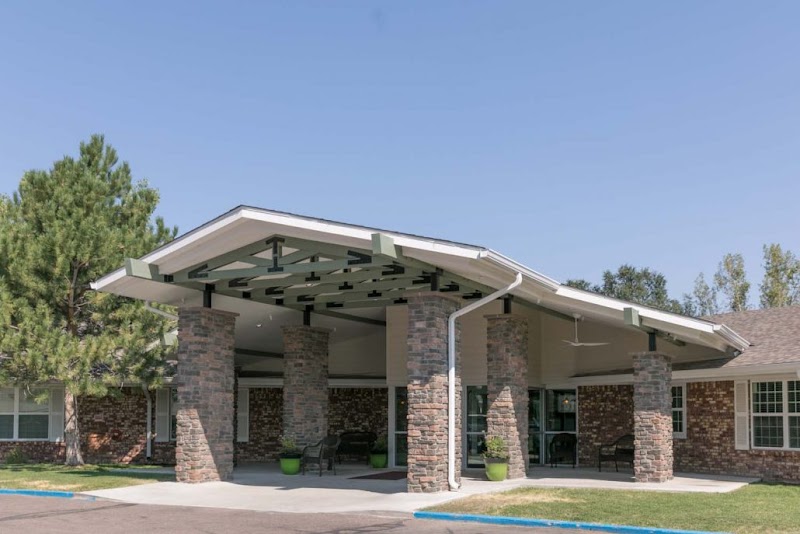
How is Rock Canyon Respiratory And Rehabilitation Center Staffed?

CMS rates ROCK CANYON RESPIRATORY AND REHABILITATION CENTER's staffing level at 1 out of 5 stars, which is much below average compared to other nursing homes. Staff turnover is 51%, compared to the Colorado average of 46%.

What Have Inspectors Found at Rock Canyon Respiratory And Rehabilitation Center?

State health inspectors documented 42 deficiencies at ROCK CANYON RESPIRATORY AND REHABILITATION CENTER during 2022 to 2025. These included: 1 Immediate Jeopardy (the most serious level, indicating potential for serious harm or death), 6 that caused actual resident harm, and 35 with potential for harm. Immediate Jeopardy findings are rare and represent the most serious regulatory concerns. They require immediate corrective action.
Who Owns and Operates Rock Canyon Respiratory And Rehabilitation Center?

ROCK CANYON RESPIRATORY AND REHABILITATION CENTER is owned by a for-profit company. For-profit facilities operate as businesses with obligations to shareholders or private owners. The facility is operated by THE ENSIGN GROUP, a chain that manages multiple nursing homes. With 151 certified beds and approximately 130 residents (about 86% occupancy), it is a mid-sized facility located in PUEBLO, Colorado.
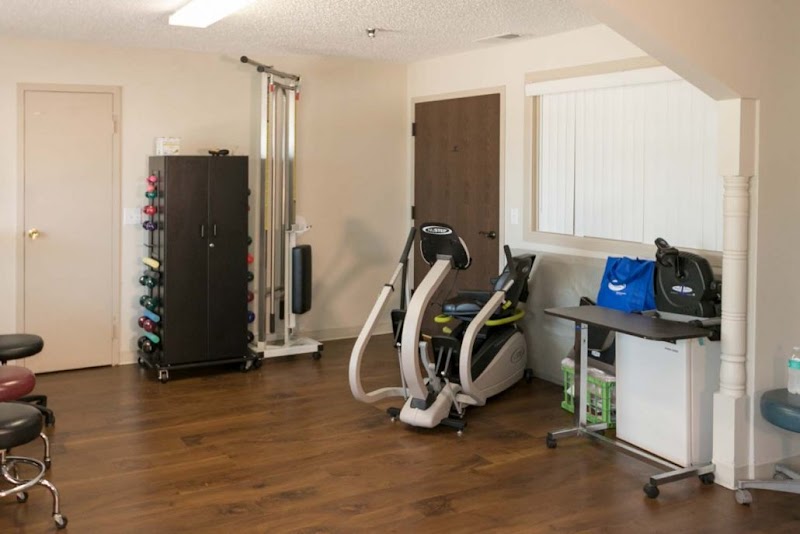
How Does Rock Canyon Respiratory And Rehabilitation Center Compare to Other Colorado Nursing Homes?

Compared to the 100 nursing homes in Colorado, ROCK CANYON RESPIRATORY AND REHABILITATION CENTER's overall rating (2 stars) is below the state average of 3.1, staff turnover (51%) is near the state average of 46%, and health inspection rating (2 stars) is below the national benchmark.

What Should Families Ask When Visiting Rock Canyon Respiratory And Rehabilitation Center?

Based on this facility's data, families visiting should ask: "What changes have been made since the serious inspection findings, and how are you preventing similar issues?" "What safeguards and monitoring systems are in place to protect residents from abuse or neglect?" "Can you walk me through typical staffing levels on day, evening, and night shifts?" "Can I visit during a mealtime to observe dining assistance and food quality?" These questions are particularly relevant given the facility's Immediate Jeopardy citations, the substantiated abuse finding on record, and the below-average staffing rating.

Is Rock Canyon Respiratory And Rehabilitation Center Safe?

Based on CMS inspection data, ROCK CANYON RESPIRATORY AND REHABILITATION CENTER has documented safety concerns. The facility has 1 substantiated abuse finding (meaning confirmed case of resident harm by staff or other residents). Inspectors have issued 1 Immediate Jeopardy citation (the most serious violation level indicating risk of serious injury or death). The facility has a 2-star overall rating and ranks #100 of 100 nursing homes in Colorado. Families considering this facility should ask detailed questions about what corrective actions have been taken since these incidents.

Do Nurses at Rock Canyon Respiratory And Rehabilitation Center Stick Around?

ROCK CANYON RESPIRATORY AND REHABILITATION CENTER has a staff turnover rate of 51%, which is about average for Colorado nursing homes (state average: 46%). Moderate turnover is common in nursing homes, but families should still ask about staff tenure and how the facility maintains care continuity when employees leave.

Was Rock Canyon Respiratory And Rehabilitation Center Ever Fined?

ROCK CANYON RESPIRATORY AND REHABILITATION CENTER has been fined $108,730 across 4 penalty actions. This is 3.2x the Colorado average of $34,166. Fines at this level are uncommon and typically indicate a pattern of serious deficiencies, repeated violations, or failure to correct problems promptly. CMS reserves penalties of this magnitude for facilities that pose significant, documented risk to resident health or safety. Families should request specific documentation of what issues led to these fines and what systemic changes have been implemented.

Is Rock Canyon Respiratory And Rehabilitation Center on Any Federal Watch List?

ROCK CANYON RESPIRATORY AND REHABILITATION CENTER is not on any federal watch list. The most significant is the Special Focus Facility (SFF) program, which identifies the bottom 1% of nursing homes nationally based on persistent, serious quality problems. Not being on this list means the facility has avoided the pattern of deficiencies that triggers enhanced federal oversight. This is a positive indicator, though families should still review the facility's inspection history directly.