PLAZA HEALTH AND REHAB

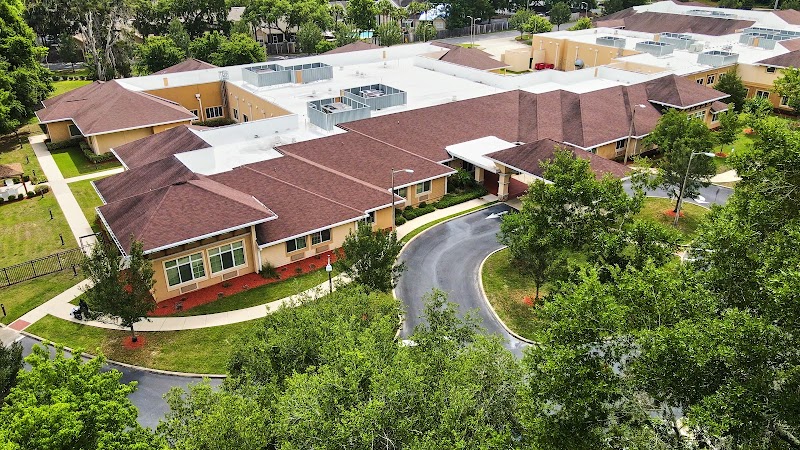
4842 SW ARCHER ROAD, GAINESVILLE, FL 32608 (352) 376-8821
For profit - Limited Liability company 180 Beds GOLD FL TRUST II Data: November 2025
Trust Grade
80/100
#92 of 690 in FL
Last Inspection: September 2025

Inspected within the last 6 months. Data reflects current conditions.

Overview

Plaza Health and Rehab in Gainesville, Florida has received a Trust Grade of B+, indicating it is above average and recommended for prospective residents. It ranks #92 out of 690 facilities in Florida, placing it in the top half, and is the top-rated facility out of 9 in Alachua County. The facility is showing an improving trend, having reduced its issues from 4 in 2024 to 3 in 2025. However, staffing is a concern with a low rating of 2/5 stars and a high turnover rate of 65%, significantly above the state average of 42%. While there are no fines recorded, indicating compliance with regulations, there are specific concerns including failure to adequately assess residents with newly diagnosed mental disorders and a lack of proper treatment for residents requiring intravenous care. Additionally, the facility has less RN coverage than 93% of Florida facilities, which may impact the quality of care.

Trust Score
B+
80/100
In Florida
#92/690
Top 13%
Safety Record
Low Risk
No red flags
Inspections
Getting Better
4 → 3 violations
Staff Stability
⚠ Watch
65% turnover. Above average. Higher turnover means staff may not know residents' routines.
Penalties
✓ Good
No fines on record. Clean compliance history, better than most Florida facilities.
Skilled Nurses
⚠ Watch
Each resident gets only 25 minutes of Registered Nurse (RN) attention daily — below average for Florida. Fewer RN minutes means fewer trained eyes watching for problems.
Violations
⚠ Watch
14 deficiencies on record. Higher than average. Multiple issues found across inspections.
★★★★★
5.0
Overall Rating
★★☆☆☆
2.0
Staff Levels
★★★★★
5.0
Care Quality
★★★★☆
4.0
Inspection Score
Stable
2024: 4 issues
2025: 3 issues

The Good

  • 5-Star Quality Measures · Strong clinical quality outcomes
  • Full Sprinkler Coverage · Fire safety systems throughout facility
  • No fines on record

Facility shows strength in quality measures, fire safety.

The Bad

Staff Turnover: 65%

19pts above Florida avg (46%)

Frequent staff changes - ask about care continuity

Chain: GOLD FL TRUST II

Part of a multi-facility chain

Ask about local staffing decisions and management

Staff turnover is elevated (65%)

17 points above Florida average of 48%

The Ugly 14 deficiencies on record

Sept 2025 2 deficiencies
CONCERN (D)

Potential for Harm - no one hurt, but risky conditions existed

Quality of Care (Tag F0684)

Could have caused harm · This affected 1 resident

Based on observation, interview, and record review, the facility failed to ensure residents received medications as ordered by physician for 1 of 6 residents reviewed for medication administration (Re...

Read full inspector narrative →
Based on observation, interview, and record review, the facility failed to ensure residents received medications as ordered by physician for 1 of 6 residents reviewed for medication administration (Resident #89).Findings include: Review of Resident #89's physician order dated 5/27/2025 read, Midodrine HCl Oral Tablet 2.5 MG [milligram] (Midodrine HCl), Give 1 tablet by mouth three times a day for Orthostatic hypotension, Hold for SBP [Systolic Blood Pressure] of greater than 130. Review of Resident #89's Medication Administration Record (MAR) for July 2025 for administration of Midodrine HCl 2.5 MG tablet showed the following documentation: X for BP (blood pressure) and pulse and code 9 (other- see nurse's notes) on 7/8/2025 at 1:00 PM, 142/65 (systolic/diastolic blood pressure) for BP and 96 for pulse and checkmark for administration of the medication on 7/14/2025 at 5:00 PM, and X for BP and pulse and code 4 (held per parameters) on 7/27/2025 at 9:00 AM. Review of Resident #89's medical records showed no progress notes related to Midodrine HCl 2.5 MG tablet on 7/8/2025 at 1:00 PM and all blood pressures for 7/8/2025 were documented as having a systolic blood pressure of less than 130. Further review showed no blood pressure and notes documented for Midodrine HCl 2.5 MG tablet on 7/27/2025 at 9:00 AM. Review of Resident #89's MAR for August 2025 for administration of Midodrine HCl 2.5 MG tablet showed the following documentation: NA (Not Applicable) for BP and pulse and checkmark for administration of the medication on 8/1/2025 at 5:00 PM, 132/69 for BP and 92 for pulse and checkmark for administration of the medication on 8/6/2025 at 5:00 PM, NA for BP and pulse and checkmark for administration of the medication on 8/12/2025 at 5:00 PM, 131/74 for BP and 78 for pulse and checkmark for administration of the medication on 8/17/2025 at 5:00 PM, 136/72 for BP and 78 for pulse and checkmark for administration of the medication on 8/18/2025 at 9:00 AM, 136/72 for BP and 78 for pulse and checkmark for administration of the medication on 8/17/2025 at 1:00 PM, 136/72 for BP and 78 for pulse and checkmark for administration of the medication on 8/17/2025 at 5:00 PM, and 132/64 for BP and 74 for pulse and checkmark for administration of the medication on 8/31/2025 at 5:00 PM. Review of Resident #89's MAR for September 2025 for administration of Midodrine HCl 2.5 MG tablet showed the following documentation: 131/66 for BP and 68 for pulse and checkmark for administration of the medication on 9/1/2025 at 5:00 PM, and 131/66 for BP and 68 for pulse and checkmark for administration of the medication on 9/2/2025 at 5:00 PM. Review of Resident #89's physician order dated 5/10/2025 read, Novolog FlexPen 100 UNIT/ML [milliliter] Solution pen-injector, Inject 8 unit subcutaneously before meals for DM [Diabetes Mellitus]. Review of Resident #89's MAR for June 2025 for injection of 8 units of Novolog FlexPen 100 unit/ml showed the following documentation: code 4 (held per parameters) on 6/1/2025 at 11:30 AM, pl (Sic.) on 6/2/2025 at 6:30 AM, no entries on 6/3/2025 at 6:30 AM, 14 (insulin coverage not needed) on 6/7/2025 at 6:30 AM, pl on 6/15/2025 at 6:30 AM, pl on 6/16/2025 at 6:30 AM, and 14 on 6/27/2025 at 6:30 AM. Review of Resident #89's medical records showed no progress notes related to injection of 8 units of Novolog FlexPen 100 unit/ml on 6/1/2025 at 11:30 AM, 6/2/2025 at 6:30 AM, 6/3/2025 at 6:30 AM, 6/7/2025 at 6:30 AM, 6/15/2025 at 6:30 AM, 6/16/2025 at 6:30 AM, and 6/27/2025 at 6:30 AM. Review of Resident #89's MAR for July 2025 for injection of 8 units of Novolog FlexPen 100 unit/ml showed the following documentation: no entries on 7/7/2025 at 6:30 AM, code 4 on 7/19/2025 at 11:30 AM, code 14 on 7/21/2025 at 6:30 AM, pl on 7/27/2025 at 6:30, and code 14 on 7/29/2025 at 6:30 AM. Review of Resident #89's medical records showed no progress notes related to injection of 8 units of Novolog FlexPen 100 unit/ml on 7/7/2025 at 6:30 AM, 7/19/2025 at 11:30 AM, 7/27/2025 at 6:30, and 7/29/2025 at 6:30 AM. Further review showed a note documenting blood sugar as 89 on 7/21/2025 at 6:30 AM, with no documentation regarding physician notification. Review of Resident #89's MAR for August 2025 for injection of 8 units of Novolog FlexPen 100 unit/ml showed the following documentation: code 14 on 8/4/2025 at 6:30 AM, code 14 on 8/5/2025 at 6:30 AM, code 4 on 8/7/2025 at 6:30 AM, pl on 8/17/2025 at 6:30 AM, code 14 on 8/18/2025 at 6:30 AM, no entries on 8/19/2025 at 11:30 AM, code 14 on 8/24/2025 at 11:30 AM, no entries on 8/29/2025 at 6:30 AM, and code 4 on 8/31/2025 at 11:30 AM. Review of Resident #89's medical records showed no progress notes related to injection of 8 units of Novolog FlexPen 100 unit/ml on 8/4/2025 at 6:30 AM, 8/5/2025 at 6:30 AM, 8/7/2025 at 6:30 AM, 8/18/2025 at 6:30 AM, 8/19/2025 at 11:30 AM, 8/24/2025 at 11:30 AM, 8/29/2025 at 6:30 AM, and 8/31/2025 at 11:30 AM. Further review showed a note documenting blood sugar as 108 on 8/17/2025 at 6:30 AM, with no documentation regarding physician notification. Review of Resident #89's MAR for September 2025 for injection of 8 units of Novolog FlexPen 100 unit/ml showed the following documentation: code 14 on 9/1/2025 at 6:30 AM, code 4 on 9/1/2025 at 11:30 AM, code 14 on 9/2/2025 at 6:30 AM, code 4 on 9/2/2025 at 11:30 AM, and code 14 on 9/3/2025 at 6:30 AM. Review of Resident #89's medical records showed no progress notes related to injection of 8 units of Novolog FlexPen 100 unit/ml on 9/1/2025 at 11:30 AM, 9/2/2025 at 6:30 AM, 9/2/2025 at 11:30 AM, and 9/3/2025 at 6:30 AM. Further review showed a note documenting blood sugar as 117 on 9/1/2025 at 6:30 AM, with no documentation regarding physician notification. Review of Resident #89's physician order dated 5/10/2025 read, Novolog FlexPen 100 UNIT/ML Solution pen-injector, Inject as per sliding scale; if 151-200= 2 units; 201-250= 4 units; 251-300= 6 units; 301-350= 8 units; 351-400= 10 units, subcutaneously before meals and at bedtime for DM.” Review of Resident #89's MAR for June 2025 for injection of 8 units of Novolog FlexPen 100 unit/ml per sliding scale showed the following documentation: no entries on 6/3/2025 at 6:00 AM, 196 for BS (blood sugar) and 3 (absent from building) on 6/19/2025 at 4:00 PM, 293 for BS and code 3 on 6/19/2025 at 9:00 PM, no entries on 6/24/2025 at 9:00 PM, and no entries on 6/26/2025 at 9:00 PM. Review of Resident #89's medical records showed no progress notes related to injection of 8 units of Novolog FlexPen 100 unit/ml per sliding scale on 6/3/2025 at 6:00 AM, 6/19/2025 at 4:00 PM, 6/19/2025 at 9:00 PM, 6/24/2025 at 9:00 PM, and 6/26/2025 at 9:00 PM. Review of Resident #89's MAR for July 2025 for injection of 8 units of Novolog FlexPen 100 unit/ml per sliding scale showed the following documentation: 205 for BS and code 15 (pulse below 60/minute) on 7/27/2025 at 6:00 AM. Review of Resident #89's medical records showed no progress notes related to injection of 8 units of Novolog FlexPen 100 unit/ml per sliding scale on 7/27/2025 at 6:00 AM. Review of Resident #89's MAR for August 2025 for injection of 8 units of Novolog FlexPen 100 unit/ml per sliding scale showed the following documentation: no entries on 8/1/2025 at 9:00 PM, 290 for BS and code 9 (other see nurse's notes) on 8/11/2025 at 6:00 AM, 152 for BS and pl on 8/17/2025 at 6:00 AM, and no entries on 8/29/2025 at 6:00 AM. Review of Resident #89's medical records showed no progress notes related to injection of 8 units of Novolog FlexPen 100 unit/ml per sliding scale on 8/1/2025 at 9:00 PM, 8/17/2025 at 6:00 AM, and 8/29/2025 at 6:00 AM. Further review showed a note for 8/11/2025 at 6:00 AM that read, “Blood Sugar 290. Sprint soft drink at bedside.” During an interview on 9/5/2025 at 8:42 AM, the Director of Nursing (DON) stated that if she held a scheduled dose of insulin because the blood sugar was low, she would call the doctor and document the order [to give or hold insulin]. It would be the same for blood pressure medications. During an interview on 9/5/2025 at 8:50 AM, Staff I, Licensed Practical Nurse (LPN), stated, Set doses [of insulin] at mealtimes are usually because the resident is expected to spike [their blood sugar with eating]. I would give the morning dose [of the scheduled insulin] right before their meal, and then do the sliding scale after they eat. If the blood sugar was low, I would reach out to the doctor. I would give the blood sugar result and get an order to hold or give the insulin. I would actually write a note [not just use number codes within the MAR]. I may check 9, but I would write a note saying, Don't give per MD [Medical Doctor], or get a one-time order to give [the insulin]. The note is also to communicate with everyone. I would call the doctor if a resident's blood pressure was above the parameter for [administering] Midodrine. I would still let them know. I would still reach out, even if I planned on giving the medication, but I would double check [the blood pressure]. During an interview on 9/5/2025 at 11:03 AM, Physician #1 stated, “[Resident #89's name] is a brittle diabetic. If they check the blood sugar in the morning and it is low, I expect to be called. If it [the blood sugar] is 50-60, I consider that too low, and I expect to be contacted. They would need to contact me to see whether to hold the insulin or do something else to prevent worsening hypoglycemia. For the Midodrine, if it [the systolic blood pressure] is 131, they should hold it per protocol and document it. If the blood pressure is low, they should reach out to me. If they are not giving Midodrine when the blood pressure is within the parameter, she could have worsening hypotension, and if they are holding it when it exceeds parameters, she could have hypertension. I would be more concerned if they are giving the Midodrine when it is above parameters, due to supine hypertension.” Review of the facility policy and procedure titled “Medication Administration” last reviewed on 1/15/2025 read, Policy: It will be the policy of this facility to administer medications in a timely manner and as prescribed by the physician, unless otherwise clinically indicated or necessitated by other circumstances such as lack of availability of medication of refusals of medication by the resident. Procedure: 3. Medications should be administered in a timely manner in accordance with the physician's orders.
CONCERN (E)

Potential for Harm - no one hurt, but risky conditions existed

PASARR Coordination (Tag F0644)

Could have caused harm · This affected multiple residents

**NOTE- TERMS IN BRACKETS HAVE BEEN EDITED TO PROTECT CONFIDENTIALITY** Based on record review and interview, the facility failed to coordinate assessments for the residents with newly diagnosed menta...

Read full inspector narrative →
**NOTE- TERMS IN BRACKETS HAVE BEEN EDITED TO PROTECT CONFIDENTIALITY** Based on record review and interview, the facility failed to coordinate assessments for the residents with newly diagnosed mental disorders for 2 of 3 residents reviewed (Residents #8 and #16).Findings include: 1) Review of Resident #8's admission record revealed the resident was initially admitted to the facility on [DATE] and readmitted on [DATE] with diagnoses including post-traumatic stress disorder (onset date of 12/20/2023), anxiety disorder (onset date of 9/19/2023), bipolar disorder (onset date of 4/22/2025), major depressive disorder (onset date of 4/22/2025), generalized anxiety disorder (4/22/2025), and brief psychotic disorder (onset date of 10/17/2023). Review of Resident #8’s Care Plan Note from mental health provider with the date of service 8/26/2025 read, “Rationale behind diagnosis: MDD [Major Depressive Disorder], Recurrent: The history suggests that this patient has suffered from episodes of depression lasting for more than 2 weeks. The symptoms have caused significant distress and functional impairment to the patient and they have occurred without any underlying substance use or organic brain pathology… Bipolar Disorder: The patient’s history suggests that the patient has chronic episodes of depression and manic-like symptoms. These symptoms cause significant distress and functional impairment to the patient. There is no consistent substance use or organic brain disorder to explain these consistent mood symptoms. As bipolar disorder is a lifelong disorder, mood stabilizer medicine needs to be continued on a long-term basis… PTSD (Post Traumatic Stress Disorder): The history suggests that this patient has suffered from significant trauma resulting into nightmares, flashbacks, and hypervigilance in the past. The symptoms have caused significant distress and functional impairment to the patient. The symptoms have lasted for more than one month and have occurred without any substance use or organic brain pathology.” Review of Resident #8’s Preadmission Screening and Resident Review (PASRR) dated 8/23/2023 showed it documented Resident #8’s secondary diagnosis as dementia. The PASSR documented, “No diagnosis of Suspicion of Serious Mental Illness or Intellectual Disability indicated. Level II PASRR evaluation not required.” under Section IV. PASRR Screen Completion. There was no updated PASRR form completed for Resident #8 with the diagnoses of bipolar disorder, major depressive disorder, and generalized anxiety disorder. During an interview on 9/5/2025 at 11:30 AM, the Social Services Director stated that the process regarding PASRRs was that for new admissions, the PASRR was reviewed for accuracy and if there were changes, the PASRR was updated. During an interview on 9/5/2025 at approximately 12:05 PM, the Social Services Director stated that they would be updating Resident #8's PASRR, and it should have been updated when new diagnoses were identified. 2) Review of Resident #16’s admission record showed the resident was most recently admitted on [DATE] with diagnoses including paranoid schizophrenia with onset date of 5/13/2024. Review of Resident #16’s psychiatry subsequent note with date of service 6/18/2024 read, “Rationale behind diagnosis… Schizophrenia (Not fully confirmed): The history of this patient shows that the patient has chronic and consistent psychosis. These symptoms cause significant distress and functional impairment to the patient. The patent has had a history of psychosis for more than one month, causing emotional and behavioral disturbance for six months or more. There is no consistent substance use or organic brain disorder to explain these chronic and consistent psychotic symptoms. The psychotic symptoms occur independent of exacerbation of other psychiatric comorbidities, and these psychotic symptoms cause severe distress to the patient.” Review of Resident #16’s PASRR dated 5/7/2024 showed it documented anxiety disorder and depressive disorder as mental illness under Section I. PASSR Screen Decision-Making. There was no psychotic disorder, paranoid schizophrenia or schizophrenia (not fully confirmed) documented. The PASSR documented, “No diagnosis of Suspicion of Serious Mental Illness or Intellectual Disability indicated. Level II PASRR evaluation not required.” under Section IV. PASRR Screen Completion. During an interview on 9/5/2025 at 9:30 AM, the Regional Nurse Consultant confirmed Resident #16’s PASRR did not document Residen#16’s diagnoses of psychotic disorder, paranoid schizophrenia or schizophrenia (not fully confirmed). Review of the facility policy and procedure titled Role of Admissions and Social Services in PASRR” last reviewed on 1/15/2025 read, “Policy: The facility will ensure each resident in a nursing facility is screened for a mental disorder (MD) or intellectual disability (ID) prior to admission and that individuals identified with MD or ID are evaluated and receive care and services in the most integrated setting appropriate to their needs by coordinating with the appropriate, State-designated authority. The facility will ensure that individuals with a mental disorder or intellectual disabilities continue to receive the care and services they need in the most appropriate setting, when a significant change in their status occurs.”
Jul 2025 1 deficiency
CONCERN (D) 📢 Someone Reported This

A family member, employee, or ombudsman was alarmed enough to file a formal complaint

Potential for Harm - no one hurt, but risky conditions existed

Food Safety (Tag F0812)

Could have caused harm · This affected 1 resident

Based on observation and interview, the facility failed to ensure food was served in a safe manner for 3 of 12 residents observed for meal service.Findings include:During a tour of the kitchen on 07/2...

Read full inspector narrative →
Based on observation and interview, the facility failed to ensure food was served in a safe manner for 3 of 12 residents observed for meal service.Findings include:During a tour of the kitchen on 07/24/2025 at 12:15 PM, three black serving trays were observed in the dish cleaning area. The three trays were chipped resulting in sharp jagged edges. During an interview on 7/24/25 at 12:15 PM, the Food Services Director stated, Trays [food trays] with jagged edges could cause bleeding to the residents with fragile skin and should not be used.During an observation on 07/24/2025 at 4:55 PM, the dinner trays were being passed out to residents residing on the F Villa. Three of the food trays that were taken to residents' rooms were observed to have chips out of them resulting in jagged edges. (Photographic Evidence Obtained)
Jun 2024 4 deficiencies
CONCERN (D)

Potential for Harm - no one hurt, but risky conditions existed

Assessment Accuracy (Tag F0641)

Could have caused harm · This affected 1 resident

**NOTE- TERMS IN BRACKETS HAVE BEEN EDITED TO PROTECT CONFIDENTIALITY** Based on record review and interview, the facility failed to ensure resident assessments accurately reflected the residents' sta...

Read full inspector narrative →
**NOTE- TERMS IN BRACKETS HAVE BEEN EDITED TO PROTECT CONFIDENTIALITY** Based on record review and interview, the facility failed to ensure resident assessments accurately reflected the residents' status for 1 of 3 residents reviewed for discharge, Resident #172. Findings include: Review of Resident #172's physician order dated 3/19/2024 read, [Resident #172's name] will discharge home to wife on 3/23/24. Review of Resident #172's Nursing Home Transfer and Discharge Notice dated 3/21/2024 showed the resident will be discharged home. Review of Resident #172's Discharge Interdisciplinary Summary signed on 3/25/2024 at 9:03 AM read, Home Health with hospital bed, 20-inch-high back wheelchair and Hoyer lift, discharged home. Review of Resident #172's Minimum Data Set (MDS) dated [DATE] read, A2105. Discharge Status . 04. Short Term General Hospital (acute hospital). During an interview on 6/19/2024 at 9:52 AM, the MDS Coordinator stated, The discharge status was coded wrong. It's an error. The patient was discharged home with home health and not the hospital. I should have coded the discharge status as 12, which would read home with home health care. During an interview on 6/29/2024 at 10:10 AM, the Director of Nursing stated, [Resident #172's name] was discharged home and the discharge status was coded wrong to read the resident went to the hospital.
CONCERN (D)

Potential for Harm - no one hurt, but risky conditions existed

Quality of Care (Tag F0684)

Could have caused harm · This affected 1 resident

**NOTE- TERMS IN BRACKETS HAVE BEEN EDITED TO PROTECT CONFIDENTIALITY** Based on observation, interview, and record review, the facility failed to ensure PICC (Peripherally Inserted Central Catheter) ...

Read full inspector narrative →
**NOTE- TERMS IN BRACKETS HAVE BEEN EDITED TO PROTECT CONFIDENTIALITY** Based on observation, interview, and record review, the facility failed to ensure PICC (Peripherally Inserted Central Catheter) line dressing was changed in accordance with professional standards of practice and intravenous (IV) site was assessed for 1 resident with PICC line, Resident #122 (Photographic evidence obtained). Findings include: Review of Resident #122's admission record showed the resident was admitted to the facility on [DATE] with diagnoses that include acute bronchitis, cellulitis of the left lower limb, sepsis, and pneumonia. During an observation on 6/17/2024 at 9:50 AM, Resident #122 had a midline IV line in his right arm. There was gauze under the transparent dressing covering the IV insertion site into the arm and the insertion site was not visible. The gauze had a small amount of dried red residue on it and the transparent dressing securing the IV and gauze to the arm was loose and raised from the arm at the bottom of the dressing. Review of Resident #122's physician order dated 6/13/2024 read, Insert midline. May use lidocaine one time only for antibiotics for 1 day. Review of the document titled IV ACCESS, INC. dated 6/13/2024 at 8:13 PM read, Patient Name: [Resident #122's name] . Reason for visit: New order, Midline . Line Placed: Y [Yes], Arm R [Right], Vein: Basilic. Review of Resident #122's physician order dated 6/13/2024 read, Ceftriaxone Sodium Injection Solution Reconstituted 1 GM [gram] (Ceftriaxone Sodium). Use 1 gram intravenously every 12 hours for Acute Bronchitis for 5 days. Review of Resident #122's physician order dated 6/14/2024 read, Normal Saline Flush Solution (Sodium Chloride Flush). Use 10 ml [milliliters] intravenously every shift for IV access. Review of Resident #122's physician order dated 6/14/2024 read, Monitor IV site for signs and symptoms of infection and report if redness, edema, warmth or drainage to MD [Medical Doctor]. every shift. Review of Resident #122's Medication Administration Record (MAR) showed that the resident received Ceftriaxone Sodium Injection Solution through the midline IV in the right arm on 6/15/2024 at 6:26 AM and 5:07 PM, on 6/16/2024 at 5:55 AM and 6:09 PM, and on 6/17/2024 at 5:31 AM. Review of Resident #122's MAR showed that the resident received Normal Saline Flush Solution through the midline IV in the right arm on 6/15/2024 at 12:12 AM, 4:01 AM, 7:54 AM, and 5:07 PM, on 6/16/2024 at 12:44 AM, 2:41 PM, 8:59 PM, and 6/17/2024 at 12:55 AM, and 2:25 PM. Review of Resident #122's MAR showed the order for changing midline dressing every shift and PRN (as needed) with the start date of 6/14/2024 and discontinuation date of 6/19/2024. There were no entries documented for 6/14/2024, 6/15/2024, and 6/16/2024 under PRN. Review of Resident #122's MAR showed staff initials indicating administration of monitoring IV site for signs and symptoms of infection on 6/14/2024 in the evening and night shifts, and on 6/15/2024, 6/16/2024, 6/17/2024, and 6/18/2024 in the day, evening and night shifts. During an interview on 6/19/2024 at 4:34 PM, Staff A, Licensed Practical Nurse (LPN), Unit Manager, stated, We go by the policy for PICC dressing changes. After the midline IV is inserted, the dressing needs to be changed and the gauze covering the IV entrance site needs to be removed after 24 hours. When the dressing is changed at 24 hours, they [the nurses] do not reapply the gauze over the IV entrance site. We cannot assess the site appropriately with the gauze covering the site because the entrance into the skin and the surrounding skin is not visible. During an interview on 6/20/2024 at 6:51 AM, Staff C, LPN, stated, He [Resident #122] had gauze covering the IV entrance site under the dressing, so I couldn't assess the site initially. The bottom end of the dressing was loose, so I lifted it a little so I could see the IV entrance into the skin. I couldn't assess the entrance site for redness, swelling, or kinks in the line when it was covered with gauze. During a telephone interview on 6/20/2024 at 10:38 AM, Staff B, Registered Nurse (RN), stated, The initial midline dressing needs to be changed after a day. With the gauze covering the entrance site, you can't see to assess for patency or infection. I guess I should have changed it [Resident #122's midline IV dressing] before I administered the medication or flushed the IV. Not changing the dressing when soiled or leaving the gauze in place increases the risk of infection and the gauze being left in place obstructs the view of the entrance site. You can't appropriately assess the site with the gauze in place. During an interview on 6/20/2024 at 11:17 AM, the Director of Nursing (DON) stated, Our policy for midline IVs is to change the dressing and remove the gauze 24 hours after initial placement. It is difficult to assess the entrance site of the IV with the gauze in place covering the site. Leaving the gauze in place after 24 hours creates an increased risk of infection. Review of the facility policy and procedure titled P&P PICC IV Line last reviewed on 1/17/2024 showed that it read, Policy: It will be the policy of this facility to adhere to IV/PICC line administration guidelines as set forth by infection control, state and federal regulations. Licensed nurses shall provide care according to state and federal law . Dressing changes: 1. Sterile dressing change using transparent dressings is performed: 24 hours post-insertion or upon admission if not dated upon admission; At least weekly; If the integrity of the dressing has been compromised (wet, loose, or soiled). 2. dressing changes will be documented in the clinical record.
CONCERN (D)

Potential for Harm - no one hurt, but risky conditions existed

Food Safety (Tag F0812)

Could have caused harm · This affected 1 resident

Based on observation, interview, and record review, the facility failed to ensure food was properly stored, covered, labeled, or discarded in the areas of the kitchen walk-in cooler and walk-in freeze...

Read full inspector narrative →
Based on observation, interview, and record review, the facility failed to ensure food was properly stored, covered, labeled, or discarded in the areas of the kitchen walk-in cooler and walk-in freezer, and failed to maintain sanitary standards in the walk-in cooler and walk-in freezer and for the kitchen equipment (Photographic evidence obtained). Findings include: During an observation while conducting the initial walk-through of the kitchen on 6/17/2024 at 9:00 AM with the Registered Dietician (RD), there was a large amount of ice buildup on the door and walls of the walk-in freezer and on two boxes of food stored on top shelf in the walk-in freezer. There was a large metal pan containing red gelatin with a serving scoop in the container. The pan of red gelatin was covered in a clear wrap with no identifying label or date. In the walk-in cooler, there was a large pot of a liquid substance with a clear plastic cover with no identifying label or date, a gallon of almond milk with initials of MB, and a large clear container with pasta type food with no identifying label with a date of 6/7. There were six 10-pound rolls of raw ground beef stored on sheet pan with no date, with a red colored substance on the sheet pan. There were two 5-gallon containers stored on the floor of the walk-in cooler. There was a pan with lettuce and slices of tomatoes in a clear pan partially covered with a clear wrap. There was a small plate of sliced cheese in the clear pan with the lettuce and sliced tomatoes with no label or date. There was a large clear pan of raw chicken wrapped in clear plastic with a date of 6/13. The pan of wrapped chicken was placed on top of 3 cases of sliced garlic Texas toast. In the dishwashing area, there was a wad of dirty gloves in the bottom of the sanitizing portion of the 3-compartment sink. During an interview on 6/17/2024 at 9:25 AM, the RD confirmed the buildup of ice in the freezer and stated he wasn't sure why there was an ice buildup. The RD confirmed that the scoop was left in the pan of red gelatin and stated utensils should not be left stored in the food pans. The RD confirmed items of the large pot, and large clear containers, and pan of lettuce, tomato slices and cheese did not have an identifying label or date and there should have been labels and dates on each of the containers. The RD stated he could not state whether the red substance on the sheet pan with the ground beef was blood or splashes from something. The RD confirmed the pan of raw chicken was stored on top of the cases of garlic toast and stated that the raw chicken should not have been stored on the boxes of ready to serve garlic toast and should have been discarded according to the 6/13 date. The RD confirmed the 5-gallon containers were not on a shelf and stated the 5-gallon containers should not have been on the floor. The RD confirmed the gloves in the 3-compartment sink and stated the dirty gloves should not have been left in the clean sanitizing sink. During an observation while conducting the follow up walk-through of the kitchen on 6/18/2024 at 6:38 AM with the RD, the ice machine had a black/gray substance around the opening of the ice machine. There was a sign reading Do Not Use on a 3-door reach-in cooler and a sign on the top convection oven, with no lockout tagout. The 3-compartment sink was overflowing with water and when the drain was opened, the water exited to the floor and not down a drainpipe affixed to the sink. There was standing water from the 3-compartment sink area extending into the kitchen floor area. During an interview on 6/18/2024 at 6:43 AM, the RD stated he was not sure why the equipment was not working. The RD confirmed the black/gray substance was visible around the opening of the ice machine. During an interview on 6/18/2024 at 6:45 AM, the Morning [NAME] stated the former dietary director had taken the shelves out of the oven, had cleaned the oven, and when it was turned back on, smoke was observed, so the sign was put on the oven. During an interview on 6/19/2024 at 12:03 PM, the Administrator stated she was not aware of the problems with the equipment in the kitchen. Review of the facility policy and procedure titled P&P Refrigerated Storage revised on 10/1/2023 read, Policy: Foods and Nutrition Services (FNS) staff should maintain safe refrigerated storage areas. Refrigerated items should be properly stored, labeled and maintained by dietary staff . Procedure . 3. Dietary staff will store raw food (e.g. beef, fish, lamb, pork, and poultry) separate from each and on shelves below fruit, vegetables, or other ready-to-eat foods to prevent meat juices from dripping onto these foods. 4. Dietary staff will label, date, and monitor refrigerated food, including but not limited to leftovers to ensure use by use-by-dates, or frozen (where applicable) or discarded. Review of the facility policy and procedure titled Standards and Guidelines: Ice Machine cleaning/sanitizing dated 11/22 read, Standard: It is the policy of this policy to ensure ice machines are cleaned and sanitized on a regular basis.
CONCERN (D)

Potential for Harm - no one hurt, but risky conditions existed

Medical Records (Tag F0842)

Could have caused harm · This affected 1 resident

**NOTE- TERMS IN BRACKETS HAVE BEEN EDITED TO PROTECT CONFIDENTIALITY** Based on record review and interview, the facility failed to ensure complete medical records were maintained for 2 of 3 resident...

Read full inspector narrative →
**NOTE- TERMS IN BRACKETS HAVE BEEN EDITED TO PROTECT CONFIDENTIALITY** Based on record review and interview, the facility failed to ensure complete medical records were maintained for 2 of 3 residents reviewed for laboratory result reporting, Residents #34 and #128. Findings include: Review of Resident #34's admission record showed the resident was admitted on [DATE] with diagnoses that include multiple sclerosis, other sequelae following unspecified cerebrovascular disease, hemiplegia and hemiparesis following unspecified cerebrovascular disease affecting right dominant side, stage 2 (mild) chronic kidney disease, unspecified combined systolic (congestive) and diastolic (congestive) heart failure, neuromuscular dysfunction of bladder, type 2 diabetes mellitus with diabetic chronic kidney disease, and unspecified dementia. Review of Resident #34's physician order dated 6/12/2024 read, U/A [urinalysis] with C&S [Culture and Sensitivity] one time only for odor. Review of Resident #34's lab results reported on 6/15/2024 at 12:18 PM read, Urine Culture: Growth/col [colony]/cnt [count]. Greater than 100,000 colony forming unit per ml [milliliter]. Organism. Providencia stuartii. Review of Resident #34's nursing progress notes from 6/15/2024 through 6/19/2024 showed no notes related to physician notification of urine culture results. During an interview on 6/19/2024 at 2:20 PM, the Director of Nursing (DON) stated, The doctor was actually here and reviewed the resident when he was notified of the blood sugar of 36. I was here that day, and I actually called the doctor about his urine test results and he didn't want them treated because he felt he was colonized and on hospice. I did not document my call to the doctor, and I really should have documented this in the record. Review of Resident #128's admission record showed the resident was admitted on [DATE] with the diagnoses that include hemiplegia and hemiparesis following cerebral infarction affecting right dominant side, type 2 diabetes mellitus with diabetic neuropathy, other seizures, unspecified osteoarthritis, major depressive disorder, sequelae of cerebral infarction, and urinary tract infection. Review of Resident #128's physician order dated 5/21/2024 read, U/A with C&S one time only for 1 day. Review of Resident #128's lab results reported on 5/24/2024 at 2:46 PM read, Urine Culture: Growth/col/cnt greater than 100,000 colony forming units per ml. Organism Escherichia coli. Review of Resident #128's nursing progress notes from 5/22/2024 through 5/28/2024 showed no notes related to physician notification of urine culture results. During an interview on 6/19/2024 at 2:29 PM, the Director of Nursing (DON) stated, The doctor told me he was aware of her urine culture, and I don't know why he decided to treat it after that. The nurse should have documented that she called him. I do expect the nurses to fully document any communication with the doctor. The DON stated there was no policy and procedure for documentation.
Feb 2023 7 deficiencies
CONCERN (D)

Potential for Harm - no one hurt, but risky conditions existed

Safe Environment (Tag F0584)

Could have caused harm · This affected 1 resident

Based on observation, interview, and record review, the facility failed to ensure resident care equipment was kept in a clean and sanitary manner for 1 of 6 residents (Resident #39) reviewed for tube ...

Read full inspector narrative →
Based on observation, interview, and record review, the facility failed to ensure resident care equipment was kept in a clean and sanitary manner for 1 of 6 residents (Resident #39) reviewed for tube feeding equipment. Findings include: An observation of tube feeding on 2/20/2023 at 10:11 AM showed residue on the Intravenous (IV) pole for Resident #39. An observation of tube feeding on 2/21/2023 at 6:27 AM showed residue on the IV pole for Resident #39. An observation of tube feeding on 2/22/2023 at 1:31 PM showed residue on the IV pole for Resident #39. During an interview on 2/24/2023 at 2:10 PM, Staff A, Licensed Practical Nurse (LPN), confirmed the IV pole was dirty from tube feeding spills and the pole should be cleaned and wiped down when the tube feeding was changed out or when spills were noticed. During an interview on 2/24/2023 at 2:30 PM, the Infection Preventionist (IP) stated, Housekeeping cleans the equipment if not in use and nursing cleans equipment while in use. Review of the policy titled Cleaning and Disinfection of Environmental Surfaces, last review 1/18/23, read, Policy Statement. Environmental surfaces will be cleaned and disinfected according to current CDC recommendations for disinfection of healthcare facilities and the OSHA [Occupational Safety and Health Administration] Bloodborne Pathogens Standard. Policy Interpretation and Implementation. 3. Devices that are used by staff but not in direct contact with residents, shall be cleaned and disinfected regularly by the environmental services staff and as needed by the nursing staff. 9. Housekeeping surfaces will be cleaned on a regular basis when spills occur and when these surfaces are visibly soiled. 10. Environmental surfaces will be disinfected (or cleaned) on a regular basis and when surfaces are visibly soiled.
CONCERN (D)

Potential for Harm - no one hurt, but risky conditions existed

Deficiency F0761 (Tag F0761)

Could have caused harm · This affected 1 resident

2. During an observation on 2/21/2023 at 11:12 AM, Resident #103 had a medication cup containing three pills on the bedside table. During an interview on 2/21/2023 at 11:12 AM, Resident #103 stated, ...

Read full inspector narrative →
2. During an observation on 2/21/2023 at 11:12 AM, Resident #103 had a medication cup containing three pills on the bedside table. During an interview on 2/21/2023 at 11:12 AM, Resident #103 stated, I'm sorry. I fell asleep and didn't take them. During an interview on 2/21/2023 at 11:17 AM, Staff A, Licensed Practical Nurse (LPN) stated, She [Resident #103] started taking them and I said I would come back and check on her, but I didn't. It was my fault. I should have stayed until she took them all. During a medication administration observation on 2/21/2023 at 5:23 PM, Staff H, LPN, placed Amiodarone Tablet 200 milligram (mg), Apixaban Tablet 5 mg, and Carvedilol Tablet 6.25 mg in a medication cup and placed the cup on top the medication cart. Staff H then left the cart unattended, walked around the corner of the hall to obtain a resident's blood pressure measurement. The medication cart was not in Staff H's line of vision. During an interview on 2/21/2023 at 5:23 PM, when Staff H, LPN, returned to the cart, she stated, I should not have left the medication on the cart. I would usually take the medicine with me or lock it in the cart, but I didn't. During a medication administration observation on 2/22/2023 at 8:50 AM, Staff C, Registered Nurse (RN), obtained an intravenous solution bag labeled Daptomycin Intravenous (IV) Solution and placed it on top of the medication cart. Staff C left the hall to gather supplies leaving Daptomycin solution on top of the cart. The medication cart was not in Staff C's line of vision. During an interview on 2/22/2023 at 8:50 AM, when Staff C, RN, returned to the cart, she stated, It is ok to leave it on the cart because I was going to use it right away. During an interview on 2/22/2023 at 6:00 PM, the Director of Nursing stated, Medications, whether pills or IV solutions, should not be left unattended. We expect our nurses will not leave medications unattended at the bedside or on top of the medication cart. Based on observation, interview, and record review, the facility failed to ensure that drugs and biologicals used in the facility were stored and labeled in accordance with currently accepted professional principles for 2 of 7 medication carts (B Villa Cart #1 and A Villa Cart #1) and failed to ensure medications were secured (photographic evidence obtained). Findings include: During an observation on 2/20/2023 at 9:41 AM of B Villa Medication Cart #1 with Staff B, License Practical Nurse (LPN), there was one open Lispro insulin pen without the original pharmacy package and one opened Wixela inhalation device with no open date or original pharmacy packaging. During an interview on 2/20/2023 at 9:47 AM, Staff B, LPN, stated, Medication should be dated when opened and kept in the original pharmacy package. During an observation on 2/20/2023 at 9:48 AM of A Villa Medication Cart #1 with Staff C, Registered Nurse (RN), there was one opened bottle of Dorzolamide eye drops with no opened date, two open bottles of Timolol Maleate Ophthalmic Solution with no open date, and one Latanoprost Ophthalmic Solution 0.005% with no open date. During an interview on 2/20/2023 at 9:55 AM, Staff C, RN, stated, Eye drops should be labeled with the date they are opened. During an observation on 2/20/2023 at 10:21 AM, Resident #18 was lying in bed. On the bedside table, there was an opened tube of zinc oxide ointment. During an observation on 2/20/2023 at 10:43 AM, Resident #118 was lying in bed. On the bedside table, there was a Spiriva Respimat inhalation spray next to the television remote control. During an interview on 2/20/2023 at 10:48 AM, Staff D, LPN, stated, [Resident #118's name] should not have medication in his room. During an interview on 2/21/2023 at 2:00 PM, the Director of Nursing stated, The staff should properly label and store all medications in their individual packaging. All medication that requires an opened date should be dated upon opening. The only way a resident can have medication in their room is if the resident has a self-administration order. The nurse must educate the resident and return demonstration from the resident on how and when to use medication should be performed. Review of the facility policy titled Labeling of Medication Containers, last reviewed on 1/18/2023, reads, Policy Statement: All medications maintained in the facility shall be properly labeled in accordance with current state and federal regulations . 3. Labels for individual drug containers shall include all necessary information, such as: a. The resident's name; b. The prescribing physician's name; c. The name, address, and telephone number of the issuing pharmacy; d. The name, strength, and quantity of the drug; e. The prescription number; f. The date the medication was dispensed; g. appropriate accessory and cautionary statements; h. The expiration date when applicable; and i. Directions for use. Review of the policy titled Medication Storage, last reviewed on 1/18/2023 reads, 1. General Guidelines: a. All drugs and biologicals will be stored in locked compartments (i.e., medication carts, cabinets, drawers, refrigerators, medication rooms) under proper temperature controls.
CONCERN (D)

Potential for Harm - no one hurt, but risky conditions existed

Medical Records (Tag F0842)

Could have caused harm · This affected 1 resident

**NOTE- TERMS IN BRACKETS HAVE BEEN EDITED TO PROTECT CONFIDENTIALITY** Based on interview and record review, the facility failed to ensure medical records were complete and accurate in accordance wit...

Read full inspector narrative →
**NOTE- TERMS IN BRACKETS HAVE BEEN EDITED TO PROTECT CONFIDENTIALITY** Based on interview and record review, the facility failed to ensure medical records were complete and accurate in accordance with professional standards of practice for 1 of 3 residents (Resident #203) reviewed for discharge. Findings include: Review of the admission record for Resident #203 documented the resident was admitted to the facility on [DATE]. Review of the electronic census record for Resident #203 showed stop billing date of 2/9/23. Review of the electronic medical record did not contain a transfer form or a discharge summary documenting the transfer/discharge to the hospital for Resident #203. During an interview on 2/22/23 at 12:47 PM, the Administrator stated, There was no transfer/discharge form completed for Resident #203. Review of the policy titled Transfer and Discharge (including AMA), last review 1/18/23, read, 10. For a transfer to another provider, for any reason, the following information must be provided to the receiving provider: a. Contact information of the practitioner who was responsible for the care of the resident; b. Resident representative information, including contact information; c. Advance directive information; d. All other information necessary to meet the resident's needs .11. Non-Emergency Transfers or Discharges. A. Document the reasons for the transfer or discharge in the resident's medical record .12. Emergency Transfers/Discharges. 12. Emergency Transfers/Discharges. d. The original copies of the transfer form and Advance Directives accompany the resident. Copies are retained in the medical record. f. Document assessment findings and other relevant information regarding the transfer in the medical record.
CONCERN (E)

Potential for Harm - no one hurt, but risky conditions existed

Assessment Accuracy (Tag F0641)

Could have caused harm · This affected multiple residents

**NOTE- TERMS IN BRACKETS HAVE BEEN EDITED TO PROTECT CONFIDENTIALITY** Based on observation, interview, and record review, the facility failed to ensure the assessment accurately reflected the reside...

Read full inspector narrative →
**NOTE- TERMS IN BRACKETS HAVE BEEN EDITED TO PROTECT CONFIDENTIALITY** Based on observation, interview, and record review, the facility failed to ensure the assessment accurately reflected the resident's status for 2 of 6 residents (Resident #117, Resident #122) reviewed for gastrostomy tubes. Findings include: 1. During an observation on 2/22/2023 at 9:18 AM with Staff F, License Practical Nurse (LPN), Resident #117 was lying in bed with a gastrotomy tube observed on the left side of abdomen with dressing dated 2/22/2023. Review of Resident #117's Minimum Data Set (MDS) Quarterly assessment dated [DATE], Section K, Swallowing/ Nutritional Status reads, K0510 Nutritional Approaches, B. Feeding tube-nasogastric or abdominal (PEG) [Percutaneous Endoscopic Gastrostomy] 2. While a Resident: 0. Not Checked (No). Locked and accepted on 02/03/2023. Review of Resident #117's MDS Medicare-5 Day assessment dated [DATE], Section K Swallowing/ Nutritional Status reads, K0510 Nutritional Approaches, B. Feeding tube-nasogastric or abdominal (PEG) [Percutaneous Endoscopic Gastrostomy] 2. While a Resident: 0. Not Checked (No). Locked and accepted on 01/10/2023. Review of Resident #117 physician's order dated 1/11/2023 reads, Enteral Feed Order five times a day Isosource 1.5 Cal @ [at] 1 can (250ml). Minimum volume to be infused 500 ml/d [milliliters per day] with flush of free water of 100ml [milliliters] before and after each bolus feeding via feeding tube. 2. During an interview on 2/22/2023 at 10:40 AM, Staff G, License Practical Nurse (LPN), confirmed Resident #122 had a gastrostomy tube on his left side of abdomen. Review of Resident #122's MDS Quarterly assessment dated [DATE], Section K Swallowing/ Nutritional Status reads, K0510 Nutritional Approaches, B. Feeding tube-nasogastric or abdominal (PEG) [Percutaneous Endoscopic Gastrostomy] 2. While a Resident: 0. Not Checked (No). Locked and accepted on 01/12/2023. Review of Resident #122's MDS discharged - Return Anticipated assessment dated [DATE], Section K Swallowing / Nutritional Status reads, K0510 Nutritional Approaches, B. Feeding tube-nasogastric or abdominal (PEG) [Percutaneous Endoscopic Gastrostomy] 2. While a Resident: 0. Not Checked (No). Locked and accepted on 11/18/2022. Review of Resident #122's physician order dated 11/30/2022 reads, Enteral Feed Order two times a day Isosource 1.5 Cal @ 60 ml/hr x 12 hrs/d from 1800-0600 [60 milliliters per hour times 12 hours per day from 6:00 PM - 6:00 AM]. Volume to be infused 720. During an interview on 2/22/2022 at 12:45 PM with Staff E, MDS Coordinator, stated, [Resident #117 name] and [Resident #122 name] definitely have gastrostomy tubes. I will get together with the MDS Director, I know they have to be corrected. Review of the policy titled MDS 3.0 Completion last reviewed on 1/18/2023 reads, Policy Explanation and Compliance Guidelines: 1. According to federal regulations, the facility conducts initially and periodically a comprehensive, accurate and standardized assessment of each resident's functional capacity, using the RAI (Resident Assessment Instrument) specified by the State.
CONCERN (E)

Potential for Harm - no one hurt, but risky conditions existed

Quality of Care (Tag F0684)

Could have caused harm · This affected multiple residents

**NOTE- TERMS IN BRACKETS HAVE BEEN EDITED TO PROTECT CONFIDENTIALITY** Based on observation, interview, and record review, the facility failed to ensure residents received treatment and care in accor...

Read full inspector narrative →
**NOTE- TERMS IN BRACKETS HAVE BEEN EDITED TO PROTECT CONFIDENTIALITY** Based on observation, interview, and record review, the facility failed to ensure residents received treatment and care in accordance with professional standards of practice for 2 of 4 residents reviewed for peripheral intravenous catheters (Resident #406 and Resident #413). Photographic evidence obtained. Findings include: (1) During an observation on 2/20/23 at 9:45 AM, Resident #406 had a peripheral intravenous (IV) catheter site to the left wrist. There was tape and clear dressing over the site, but no date noted. During an interview on 2/20/23 at 9:45 AM, Resident #406 stated, This [peripheral intravenous (IV) catheter] was put in by a paramedic before I came here. During an interview on 2/20/23 at 3:20 PM, the Assistant Director of Nursing (ADON)/ Infection Preventionist confirmed there was no date on the bandage and stated, I would expect an IV site to have a date on the bandage. The intravenous site bandage should be changed every three days. I cannot tell when this was last changed. Review of the admission record documented Resident #406 was readmitted to the facility on [DATE]. Review of the Medication Administration Record (MAR) and Treatment Administration Record (TAR) for Resident #406 from February 15, 2023 through February 20, 2023 revealed no record of care for the intravenous site. Review of the physician's orders for Resident #406 from February 15, 2023 through February 20, 2023, revealed no orders for an intravenous site or intravenous site care. Review of the readmission Nursing Assessment for Resident #406 dated 2/16/22 read, . Section 10 Integrity. A. Is the resident being admitted with impaired skin integrity? IF yes, please identify all areas below: Site: Other, left wrist. Type: IV/Sub q/Implanted Port [subcutaneous with implanted port]. Review of the policy titled Peripheral IV [Intravenous] Dressing Changes, last reviewed 1/18/23, read, Purpose: The purpose of this procedure is to prevent catheter-related infections associated with contaminated, loosened, or soiled catheter-site dressings . General Guidelines . 2. Change the dressing at the time of catheter site rotation (every 72 to 96 hours) or immediately upon observing that the integrity of the dressing has been compromised. Steps in the Procedure. 7. Label dressing with date, time, and initials. (2) During an observation on 2/20/23 at 2:00 PM, Resident #413 had a Peripherally Inserted Central Catheter (PICC) Line dressing on the left arm dated 2/8/23. During an interview on 2/20/23 at 3:30 PM, the ADON stated, The dressing is dated 2/8/23. PICC line dressings should be changed every seven days. This one has not been changed as it should. Review of the care plan for Resident #413 read, Concern: I have a peripherally inserted central catheter for medication administration. Goal: I will remain free of complications from intravenous therapy. Interventions: . My PICC line dressing will be changed per physician orders. Review of the physician's orders for Resident #413 dated 2/13/23 read, Change PICC line dressing every day shift every Thursday and as needed. Review of the MAR and TAR for February 2023 for Resident #413 read, Change PICC line dressing every day shift every Thursday. Start Date 2/16/23. There was no documentation for Thursday, February 16, 2023. Review of the policy and procedure titled PICC/Midline Dressing Changes, last reviewed 1/18/23, read, Purpose: The purpose of this procedure is to prevent catheter-related infections associated with contaminated, loosened, or soiled catheter-site dressings. General Guidelines: 1. Change catheter dressing every 5-7 days, or if it is wet, dirty, not intact or compromised in any way.
CONCERN (E)

Potential for Harm - no one hurt, but risky conditions existed

Unnecessary Medications (Tag F0759)

Could have caused harm · This affected multiple residents

Based on observation, interview and record review, the facility failed to ensure that the medication error rate was less than 5%. Thirty-eight medication administration opportunities were observed, an...

Read full inspector narrative →
Based on observation, interview and record review, the facility failed to ensure that the medication error rate was less than 5%. Thirty-eight medication administration opportunities were observed, and two errors were identified for 2 (Resident #78 and Resident #209) of 5 residents reviewed for medication administration. The medication error rate was 5.26%. Findings include: During an observation of medication administration on 2/22/23 at 8:50 AM, Staff C, Registered Nurse (RN), injected the Peripherally Inserted Central Catheter (PICC) line of Resident #78 with contents of a syringe labeled Heparin Lock Flush Solution and then immediately injected contents of second syringe labeled Saline Flush NaCl [Sodium Chloride]. Staff C did not aspirate for blood return. Staff C then connected tubing, which had been primed with medication. During an interview on 2/22/23 at approximately 8:55 AM, Staff C, RN, stated, I injected the Heparin lock and then the Saline before the antibiotic. That is how you do this. When asked if there was an order for Heparin, she stated, Yes, there is an order for the Heparin. During an interview on 2/22/23 at 6:00 PM, the Director of Nursing (DON) stated, I would expect the nurse to flush with saline before and after the medication administration. You would not use heparin unless it was specifically ordered for the patient. Review of the physician's orders for February 2023 for Resident #78 revealed no order for Heparin. Review of the policy titled 005-J Flushing Midline and Central Line IV Catheters, last reviewed on 1/18/23 read, Flushing when giving medication with SASH (saline, administer medications, saline, heparin) method for open ended (non-valved) catheters . 3. Connect 10 mL (milliliter) syringe containing preservative free .9% normal saline (amount as ordered or per facility protocol) to catheter via needleless connection device. 4. Aspirate slowly for blood return to ensure patency of catheter. 5. Flush with preservative free .9% normal saline (amount established by pharmacy or facility protocol) using push-pause method . 8. Administer medication. 9. Disconnect medication from needleless connection device . 11. Connect another 10 mL syringe containing normal saline (amount as ordered or per facility protocol) to catheter via needleless connection device. 12. Flush with preservative free .9% normal saline (amount established by pharmacy or facility protocol) . 16. Connect 10 mL syringe containing heparin (amount and/or concentration as ordered or per facility protocol) to catheter via injection or needleless connection device. 2. During an observation of medication administration on 2/22/23 at 8:25 AM, Staff C, RN, poured Polyethylene Glycol powder into a plastic drinking cup. The cup did not contain any markings for measuring the solution. Staff C, RN mixed water with the powder and administered it to Resident #209. During an interview on 2/22/23 at 8:25 AM following medication administration, Staff C, RN, stated, I do not need to use the lid to measure the medication. I can tell by looking in the drinking cup how much is in there. During an interview on 2/23/23 at 9:10 AM, the DON stated, We expect the nurse to measure liquid or other medications that are not pre-measured in the appropriate container, that might be a medicine cup or a syringe. For MiraLax [Polyethylene Glycol], the inside of the lid has the marking for the appropriate dose. I would expect the nurse to use that lid to measure the correct amount.
CONCERN (E)

Potential for Harm - no one hurt, but risky conditions existed

Food Safety (Tag F0812)

Could have caused harm · This affected multiple residents

Based on observation, interview, and record review, the facility failed to ensure food was stored in the kitchen and 2 of 4 nourishment rooms in accordance with professional standards for food service...

Read full inspector narrative →
Based on observation, interview, and record review, the facility failed to ensure food was stored in the kitchen and 2 of 4 nourishment rooms in accordance with professional standards for food service safety and maintain food preparation equipment in a clean, sanitary manner (Photographic evidence obtained). Findings include: An initial tour of the kitchen was conducted on 2/20/2023 at 9:15 AM with the Certified Dietary Manager (CDM). The walk-in cooler had a full size sheet pan with 2 large raw pork roasts with no label or date, one raw pork roast hanging off the pan above a bag of raw chicken, the bag of raw chicken was sitting in a large amount of blood that had no date or label and the bag was hanging over the edge of the pan, two bags of soup that were unlabeled and undated, three cases of thawed health shakes without a pulled from freezer or use by date, a box of approximately 56 raw shell eggs stored on the top shelf directly over 6 assorted cases of individual juices. There was a buildup of ice observed throughout the walk-in freezer on the walls, floor, shelves, and on the various boxes of food. The walk-in freezer had several open boxes that exposed food to the elements and potential freezer burn and compromising the integrity of the foods from the buildup of ice collected on the open food boxes. During an interview on 2/20/23 at 9:30 AM, the Certified Dietary Manager (CDM) verified raw meats should be placed on an appropriate sized pan or container without the raw product hanging over edge of the pan/container, that foods should be labeled and dated in the coolers, that all products should be labeled and dated for storage, pulled dates placed on health shakes when pulled from the freezer to thaw and that raw shell eggs should have been stored on the bottom shelf in the cooler and not over other food products. A follow up tour of the kitchen was conducted on 2/21/23 at 6:20 AM with the CDM. Six hood lights over the stove were not working, the microwave had a buildup of food particles on the back and top of the microwave, and the test strips had an expiration date of March 2021. During an interview on 2/21/23 at 6:20 AM, the CDM verified that six lights were not working under the stove hood, the test strips had an expiration date of March, 2021 and no other test strips were available for the pot and pan sink. A tour of the nourishment rooms was conducted with the CDM on 2/22/23 beginning at 8:30 AM. The F-unit nourishment room had an opened container of thickened nectar tea that was not labeled with an opened date. The A-unit nourishment room had 2 open containers of thickened cranberry juice stored in the refrigerator without an open date labeled on the containers. During an interview on 2/22/23 at 8:45 AM, the CDM confirmed F-unit nourishment room had an opened container of thickened nectar tea that was not labeled with an opened date and the A-unit nourishment room had 2 open containers of thickened cranberry juice stored in the refrigerator without an open date labeled on the containers. Review of the policy titled Floor Stock, last reviewed on 1/18/23 read, Procedure . 2. c. Rotate stock and remove outdated items. Review of the policy titled Food Storage,, last reviewed on 1/18/23, read, Policy: Sufficient storage facilities will be provided to keep foods safe, wholesome, and appetizing. Food will be stored in an area that is clean, dry, and free from contaminants. Foods will be stored at appropriate temperatures and by methods designed to prevent cross contamination or cross contamination. Review of the policy titled General Food Preparation and Handling, last reviewed on 1/18/23, read, Procedure. 3. Food Preparation. a. Meats, fish and poultry will be defrosted using safe thawing practices: in the refrigerator in a drip proof container, and in a manner that prevents cross contamination. Review of the policy titled General HACCP [Hazard, Analysis, Critical, Control, Points] Guidelines for Food Safety, last reviewed on 1/18/23, read, Procedure . 6. Safe Thawing Practices. a. Thaw meat, fish and/or poultry in a refrigerator in a drip proof container and in a way that prevents cross contamination (on a lower shelf with nothing underneath or near it). 11. Receiving. b. Label and date foods and put away promptly.
Understanding Severity Codes (click to expand)
Life-Threatening (Immediate Jeopardy)
J - Isolated K - Pattern L - Widespread
Actual Harm
G - Isolated H - Pattern I - Widespread
Potential for Harm
D - Isolated E - Pattern F - Widespread
No Harm (Minor)
A - Isolated B - Pattern C - Widespread

Questions to Ask on Your Visit

  • "Why is there high staff turnover? How do you retain staff?"
  • "Can I speak with families of current residents?"
  • "What's your RN coverage like on weekends and overnight?"

Our Honest Assessment

Strengths
  • • Grade B+ (80/100). Above average facility, better than most options in Florida.
  • • No major safety red flags. No abuse findings, life-threatening violations, or SFF status.
  • • No fines on record. Clean compliance history, better than most Florida facilities.
Concerns
  • • 14 deficiencies on record. Higher than average. Multiple issues found across inspections.
  • • 65% turnover. Above average. Higher turnover means staff may not know residents' routines.
Bottom line: Generally positive indicators. Standard due diligence and a personal visit recommended.

About This Facility

What is Plaza Health And Rehab's CMS Rating?

CMS assigns PLAZA HEALTH AND REHAB an overall rating of 5 out of 5 stars, which is considered much above average nationally. Within Florida, this rating places the facility higher than 99% of the state's 100 nursing homes. This rating reflects solid performance across the metrics CMS uses to evaluate nursing home quality.
How is Plaza Health And Rehab Staffed?

CMS rates PLAZA HEALTH AND REHAB's staffing level at 2 out of 5 stars, which is below average compared to other nursing homes. Staff turnover is 65%, which is 19 percentage points above the Florida average of 46%. High turnover can affect care consistency as new staff learn residents' individual needs. RN turnover specifically is 61%, which is notably high. RNs provide skilled clinical oversight, so turnover in this role can affect medical care quality.

What Have Inspectors Found at Plaza Health And Rehab?

State health inspectors documented 14 deficiencies at PLAZA HEALTH AND REHAB during 2023 to 2025. These included: 14 with potential for harm.
Who Owns and Operates Plaza Health And Rehab?

PLAZA HEALTH AND REHAB is owned by a for-profit company. For-profit facilities operate as businesses with obligations to shareholders or private owners. The facility is operated by GOLD FL TRUST II, a chain that manages multiple nursing homes. With 180 certified beds and approximately 171 residents (about 95% occupancy), it is a mid-sized facility located in GAINESVILLE, Florida.
How Does Plaza Health And Rehab Compare to Other Florida Nursing Homes?

Compared to the 100 nursing homes in Florida, PLAZA HEALTH AND REHAB's overall rating (5 stars) is above the state average of 3.2, staff turnover (65%) is significantly higher than the state average of 46%, and health inspection rating (4 stars) is above the national benchmark.

What Should Families Ask When Visiting Plaza Health And Rehab?

Based on this facility's data, families visiting should ask: "How do you ensure continuity of care given staff turnover, and what is your staff retention strategy?" "Can you walk me through typical staffing levels on day, evening, and night shifts?" "Can I visit during a mealtime to observe dining assistance and food quality?" "How do you handle medical emergencies, and what is your hospital transfer rate?" These questions are particularly relevant given the facility's high staff turnover rate and the below-average staffing rating.

Is Plaza Health And Rehab Safe?

Based on CMS inspection data, PLAZA HEALTH AND REHAB has a clean safety record: no substantiated abuse findings (meaning no confirmed cases of resident harm), no Immediate Jeopardy citations (the most serious violation level indicating risk of serious injury or death), and is not on the Special Focus Facility watch list (a federal program monitoring the lowest-performing 1% of nursing homes). The facility has a 5-star overall rating and ranks #1 of 100 nursing homes in Florida. While no facility is perfect, families should still ask about staff-to-resident ratios and recent inspection results during their visit.

Do Nurses at Plaza Health And Rehab Stick Around?

Staff turnover at PLAZA HEALTH AND REHAB is high. At 65%, the facility is 19 percentage points above the Florida average of 46%. Registered Nurse turnover is particularly concerning at 61%. RNs handle complex medical decisions and coordinate care — frequent RN changes can directly impact care quality. High turnover means new staff may not know residents' individual needs, medications, or preferences. It can also be disorienting for residents, especially those with dementia who rely on familiar faces. Families should ask: What is causing the turnover? What retention programs are in place? How do you ensure care continuity during staff transitions?

Was Plaza Health And Rehab Ever Fined?

PLAZA HEALTH AND REHAB has no federal fines on record. CMS issues fines when nursing homes fail to meet care standards or don't correct problems found during inspections. The absence of fines suggests the facility has either maintained compliance or corrected any issues before penalties were assessed. This is a positive indicator, though families should still review recent inspection reports for the full picture.

Is Plaza Health And Rehab on Any Federal Watch List?

PLAZA HEALTH AND REHAB is not on any federal watch list. The most significant is the Special Focus Facility (SFF) program, which identifies the bottom 1% of nursing homes nationally based on persistent, serious quality problems. Not being on this list means the facility has avoided the pattern of deficiencies that triggers enhanced federal oversight. This is a positive indicator, though families should still review the facility's inspection history directly.