AVIATA AT ORANGE PARK
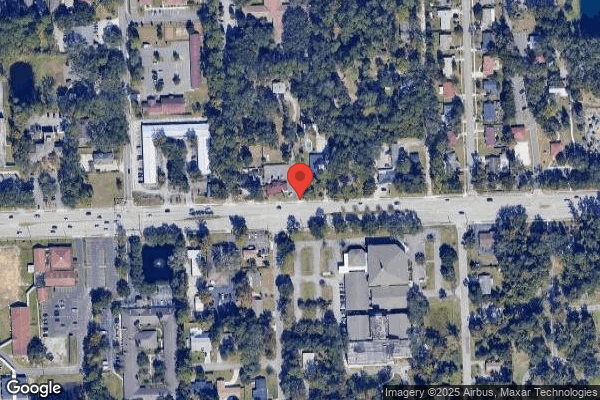

1215 KINGSLEY AVE, ORANGE PARK, FL 32073 (904) 269-8922
For profit - Corporation 120 Beds AVIATA HEALTH GROUP Data: November 2025
Trust Grade
70/100
#170 of 690 in FL
Last Inspection: November 2023

Within standard 12-15 month inspection cycle. Federal law requires annual inspections.

Overview

Aviata at Orange Park has a Trust Grade of B, which means it is considered a good option for families looking for care. It ranks #170 out of 690 nursing homes in Florida, placing it in the top half, and #6 out of 12 in Clay County, indicating that there are only a few better local choices. The facility is showing improvement, with issues decreasing from 3 in 2023 to just 1 in 2025. However, staffing is a concern, with a rating of 2 out of 5 stars and a high turnover rate of 57%, which is above the state average. While the facility has no fines on record, indicating compliance with regulations, there have been specific incidents related to sanitation and food handling, such as live roaches found in the kitchen and failure to address residents' food preferences and grievances. Overall, while there are strengths in its ranking and improvement trend, the facility needs to address staffing and cleanliness issues for better resident care.

Trust Score
B
70/100
In Florida
#170/690
Top 24%
Safety Record
Low Risk
No red flags
Inspections
Getting Better
3 → 1 violations
Staff Stability
⚠ Watch
57% turnover. Above average. Higher turnover means staff may not know residents' routines.
Penalties
✓ Good
No fines on record. Clean compliance history, better than most Florida facilities.
Skilled Nurses
⚠ Watch
Each resident gets only 20 minutes of Registered Nurse (RN) attention daily — below average for Florida. Fewer RN minutes means fewer trained eyes watching for problems.
Violations
⚠ Watch
15 deficiencies on record. Higher than average. Multiple issues found across inspections.
★★★★☆
4.0
Overall Rating
★★☆☆☆
2.0
Staff Levels
★★★★☆
4.0
Care Quality
★★★★☆
4.0
Inspection Score
Stable
2023: 3 issues
2025: 1 issues

The Good

  • 4-Star Quality Measures · Strong clinical quality outcomes
  • Full Sprinkler Coverage · Fire safety systems throughout facility
  • No fines on record

Facility shows strength in quality measures, fire safety.

The Bad

Staff Turnover: 57%

11pts above Florida avg (46%)

Frequent staff changes - ask about care continuity

Chain: AVIATA HEALTH GROUP

Part of a multi-facility chain

Ask about local staffing decisions and management

Staff turnover is elevated (57%)

9 points above Florida average of 48%

The Ugly 15 deficiencies on record

Jul 2025 1 deficiency
CONCERN (D) 📢 Someone Reported This

A family member, employee, or ombudsman was alarmed enough to file a formal complaint

Potential for Harm - no one hurt, but risky conditions existed

Free from Abuse/Neglect (Tag F0600)

Could have caused harm · This affected 1 resident

Based on record review and interviews, the facility failed to protect the resident's rights to be free from physical abuse for one (Resident #1) of three residents reviewed for abuse. The findings inc...

Read full inspector narrative →
Based on record review and interviews, the facility failed to protect the resident's rights to be free from physical abuse for one (Resident #1) of three residents reviewed for abuse. The findings include:A review of the medical record for Resident #1 revealed an admission date of 8/16/2021. His medical diagnoses included quadriplegia; major depressive disorder; chronic pain; anemia; neuromuscular dysfunction bladder; polyneuropathy; and diabetes mellitus. Resident #1 had a Brief Interview for Mental Status (BIMS) score of 15 out of 15, indicating intact cognition. Resident #1 required assistance of one staff member for most activities of daily living.A review of the nursing progress notes for Resident #1 revealed an entry dated 7/23/2025 08:32 - Between 0500-0545 this writer was working down 300 hall passing medication when police entered building asking who's the nurse and CNA for the resident, I had no idea what was going on at the time. CNA previously came down hall and told me she was gone for the shift and that she leaves early because of school. I didn't think anything of it because staff stated she always leaves early and had prior arrangements. Resident called 911 and reported abuse. Full body assessment was completed once notified by police and resident. Upon assessment there is bright red abrasions on right upper quadrant, right forearm, and right hand. Patient stated he's not in pain. VS are WNL- Temp: 98.2 BP 130/80 RR 18 HR 96 SPOs 98%. DON, administrator, and doctor notified of incident. Family made aware. A review of the Physician Progress Note for Resident #1 dated 7/23/2025 15:31- APRN (Advanced Practice Registered Nurse) was notified by DON that resident made allegations of physical abuse in regard to a nurse. Resident was examined sleeping in bed in no acute distress. APRN woke resident. Resident denies pain. Resident showed APRN his right hand. Erythema, dry flaking skin, and five small open abrasions were noted between resident's lateral wrist and lateral little finger MCP joint. No bleeding was noted. No scabbing noted. Additionally, on residence lateral right lower quadrant of his abdomen were six to seven straight lined excoriations. No open areas, and no bleeding. Resident has bilateral upper extremity contractures, including within his fingers. He is able to move his bilateral upper extremities with some movement in his fingers. Complete movement of fingers was not appreciated by APRN.During an interview conducted on 7/24/2025 at 9:20 AM with the Administrator, she said, I received a phone call from the DON that police was in the facility, that a resident had stated that he was physically assaulted because he asked for ice. The CNA has been suspended pending investigation.During an interview conducted on 7/24/2025 with Director of Nursing (DON), she said, When the nurse called the CNA, she said that she took the phone and put it on the dresser. That he used another phone to call 911. There were abrasions to the abdomen and scratches to the right hand. I had the nurse do a head-to-toe assessment.During an interview conducted on 7/24/2025 at 9:35 AM with Resident #1, he stated, It started during the night. That CNA always had a snotty attitude. I asked for a cup of ice. She told me the ice machine was broken, I told her the other CNAs go to the other side to get it, she said she wasn't. I told her I would write a grievance on her, and she sat the urinal unemptied back on my table, and started screaming at me, calling me a cripple. I told her I was recording her when I really wasn't. That's when she began trying to snatch my phone from me. There was a struggle. She hit me on the arm. She scratched me on my stomach and my hand. When she took my phone, she looked through it looking for the recording I said I took of her. She then put my phone on the dresser under the TV and said now I want to see your crippled ass go get it. I called 911 from the phone I play games on. (Photographic evidence obtained)During an interview conducted on 7/24/2025 at 9:45 AM with Resident #1's roommate, he was asked if he witnessed the incident. He said that he only heard what was going on because the curtain was between them but stated that it happened just as Resident #1 said.During an interview conducted on 7/24/2025 at 9:50 AM with Resident #2, she stated, Everybody here is very good. No problems with anyone. Nobody has complained about any of the staff. I heard him screaming at the CNA, he was saying that she hit him. He called her all kinds of names.During an interview conducted on 7/24/2025 at 9:55 AM with Assistant Director of Nursing (ADON), she said, The DON called at 7:30. The CNA had left and didn't tell anyone that anything had happened.Review of the policy and procedure titled Abuse, Neglect, Exploitation & Misappropriation, issue date of 11/30/2014, last approval date of 11/16/2022, reads, Policy: It is inherent in the nature and dignity of each resident at the center that he/she be afforded basic human rights, including the right to be free from abuse, neglect, mistreatment, exploitation and/or misappropriation of property. The management of the facility recognizes these rights and hereby establishes the following statements, policies, and procedures to protect these rights and to establish a disciplinary policy, which results in the fair and timely treatment of occurrences of resident abuse. Employees at the center are charged with a continuing obligation to treat residents so they are free from abuse, neglect, mistreatment, and/or misappropriation of property. No employee may at any time commit an act of physical, psychological, or emotional abuse, neglect, mistreatment, and/or misappropriation of property against any resident. Violation of this standard will subject employees to disciplinary action, including dismissal, provided herein.
Nov 2023 1 deficiency
CONCERN (F)

Potential for Harm - no one hurt, but risky conditions existed

Food Safety (Tag F0812)

Could have caused harm · This affected most or all residents

Based on kitchen food service observations, staff interviews, facility document review, and facility policy and procedure review, the facility failed to follow proper sanitation and food handling prac...

Read full inspector narrative →
Based on kitchen food service observations, staff interviews, facility document review, and facility policy and procedure review, the facility failed to follow proper sanitation and food handling practices to prevent the outbreak of foodborne illness, with the potential to affect all residents who consumed foods from the facility. The facility failed to maintain cleanliness and good repair of the walls in the chemical storage closet, kitchen floors, and baseboards. Live roaches were observed crawling on plastic drink lids and packages of bread. The facility failed to seal and date mark two open bundles of bread on the bread rack and failed to clean one of two microwaves located in the north unit nourishment room. Food handling and sanitation is important in health care settings serving nursing home residents. Unsafe food handling practices represent a potential source of pathogen exposure. The findings include: A tour of the kitchen was conducted on 11/06/23 at 7:25 a.m. During the tour, the kitchen floor tile was covered with food substance and grime. Floor tiles were cracked around the cook and prep area, in and around the utility room, and between the drink and ice machine area. Baseboards were cracked, filled with debris, and pulled away from the wall in the cook and prep area, the dish machine room, the utility room, and behind the drink machine next to the door entrance from the dining room. A utility cart holding plastic cups and lids had dark residue around the bottom shelf and a live roach crawling on the plastic container of lids. The wall panel was pulled away from the wall in the dish machine room and utility room. (Photographic evidence obtained) No date markings were observed on two open bundles of bread located on the bread rack in the dry storage room. A live insect was observed crawling in one open bundle of bread, which was provided to the Certified Dietary Manager (CDM) to discard. Another observation was made again on 11/07/2023 at 9:04 a.m. During this time, new observations of two open bundles of bread were on the bread rack in the dry storage room with no date marking. (Photographic evidence obtained) A follow-up tour of the kitchen was conducted on 11/8/23 at 11:30 a.m. New observations of black substances of unknown origin were spread over the walls and door in the chemical storage closet located in the dish room next to the utility room. The chemical storage closet floor tile was filled with loose dirt and debris. Used standing mop water was found sitting in a mop bucket in the utility room. Baseboards were cracked, filled with debris, and were pulled away from wall behind the drink machine next to the door entrance from the dining room and cracked and stained floor tiles were observed in the nourishment room on the north unit. (Photographic evidence obtained) On 11/08/23 at 11:45 a.m., the microwave in one of two nourishment rooms located on the north unit was observed to have food debris and black substances of unknown origin resembling biological growth on the inside top panel. (Photographic evidence obtained) An interview was conducted on 11/09/23 at 1:03 p.m. with Dietary Aide A, who confirmed that the Dietary Aides cleaned the floor areas in the tray line area, dish room, dry storage room, freezer, and refrigerator daily. The Cooks were responsible for cleaning the floor daily in the stove and prep area. She thought deep cleaning of the kitchen floor occurred monthly. She confirmed that the facility's policy for date marking leftover bread was to close the bread and label it with the date opened and use by date. When asked who was responsible for cleaning the nourishment room microwave, she replied Housekeeping. An interview was conducted on 11/09/23 at 1:20 p.m. with Dietary Aide B, who confirmed that all Dietary Aides were responsible for cleaning the floor in the kitchen. The floors were cleaned nightly. Deep cleaning of the kitchen floor was completed monthly but she was unaware of who completed the task. She confirmed that opened and used bread placed back on the bread rack was to be dated. When asked who was responsible for cleaning the nourishment room microwave, she replied, the dietary aides. An interview was conducted on 11/09/23 at 1:28 p.m. with [NAME] C, who stated the Dietary Aides were responsible for sweeping and mopping the entire kitchen floor. Maintenance /Housekeeping deep cleaned the floor monthly, overnight. Kitchen floors were cleaned twice daily. [NAME] C confirmed that opened and used bread placed back on the bread rack was to be dated and used wihint three days. When asked who was responsible for cleaning the nourishment room microwave, she stated the CDM (Certified Dietary Manager) cleaned the microwaves in the nourishment rooms. An interview was conducted on 11/09/23 at 1:46 p.m. with Maintenance Director D, who stated he received maintenance requests verbally or from the maintenance logbook located at each nursing station. Any staff could report or add to the logbook. He confirmed receiving maintenance requests from Dietary related to the missing floor tiles and grout. He also noticed the grout in the kitchen and stated he could repair it as soon as possible but needed to locate the tile pieces and schedule two evenings to complete the repairs. He stated kitchen staff were responsible for cleaning the kitchen floor at the end of each day and Housekeeping was responsible for deep cleaning the kitchen floor. An interview was conducted on 11/09/23 at 1:58 p.m. with Environmental Service Director E, who confirmed that Dietary cleaned the kitchen floors, and Environmental Services/Housekeeping provided a monthly deep cleaning of the kitchen floors. An interview was conducted on 11/09/23 at 2:00 p.m. with Dietary Aide E, who confirmed that the kitchen staff were responsible for cleaning the nourishment room refrigerators and microwave ovens. A review of the facility's policy and procedure titled Safety (dated 7/2014), revealed: The kitchen and associated equipment will be properly maintained and all Dining Services staff will follow safe operating practices. All kitchen and kitchen equipment issues will be promptly reported to facility staff and recorded according to facility protocol. (Copy obtained) Reference: FDA Food Code 2022. https://www.fda.gov/media/164194/download (Accessed on 11/14/2023) Page 156. Chapter 6. Physical Facilities. 6-5 Maintenance and Operation. 6-501 Premises, Structures, Attachments, and Fixtures - Methods. 6-501.11 Repairing. Physical Facilities shall be maintained in good repair. 6-501.12 Cleaning, Frequency and Restrictions. (A) Physical Facilities shall be cleaned as often as necessary to keep them clean. A review of the facility's policy and procedure entitled Preventing Foodborne Illness - Food Handling (dated 7/2014), revealed: Food will be stored, prepared, handled, and s.erved so that the risk of foodborne illness is minimized. Policy and procedure entitled Safety (dated 7/2014), revealed: The kitchen and associated equipment will be properly maintained and that all Dining Services staff follow safe operating practices. All kitchen and kitchen equipment issues will be promptly reported to facility staff and recorded according to facility protocol. (Copy obtained) Reference: FDA Food Code 2022. https://www.fda.gov/media/164194/download (Accessed on 11/13/2023) Annex 4. Equipment, Utensils, and Linens. 4-602.12. Cooking and Baking Equipment. Page 129. (B) The cavities and door seals of microwave ovens shall be cleaned at least every 24 hours by using the manufacturer's recommended cleaning procedure. 4-602.13 Nonfood-Contact Surfaces. Nonfood-Contact Surfaces of Equipment shall be cleaned at a frequency necessary to preclude accumulation of soil residues. Annex 5. Conducting Risk-Based Inspections Annex 5 - C. Intervention Strategies for Achieving Long-term Compliance. 4. Establish First-In-First-Out (FIFO) Procedures. Page 31. https://www.fda.gov/media/164194/download (Accessed on 11/13/2023): Product rotation is important for both quality and safety reasons. First-In-First Out (FIFO) means that the first batch of product prepared and placed in storage should be the first one sold or used. Date marking foods as required by the Food Code facilitates the use of a FIFO procedure in refrigerated, ready-to-eat, TCS foods. The FIFO concept limits the potential for pathogen growth, encourages product rotation, and documents compliance with time/temperature requirements. .
Sept 2023 1 deficiency
CONCERN (D) 📢 Someone Reported This

A family member, employee, or ombudsman was alarmed enough to file a formal complaint

Potential for Harm - no one hurt, but risky conditions existed

Deficiency F0727 (Tag F0727)

Could have caused harm · This affected 1 resident

Based on facility document review and staff interview, the facility failed to ensure a registered nurse (RN) worked at least eight consecutive hours a day, seven days a week on two (9/10/23 and 9/16/2...

Read full inspector narrative →
Based on facility document review and staff interview, the facility failed to ensure a registered nurse (RN) worked at least eight consecutive hours a day, seven days a week on two (9/10/23 and 9/16/23) of seven days reviewed. Nurse staffing in nursing homes has a substantial impact on the quality of care and outcomes that residents experience. Failure to staff a registered nurse for at least 8 hours a day could result in a negative impact on resident care. Review of the facility calculating state minimum nursing staff for long term-care facilities worksheet dated 9/10/23 through 9/16/23 revealed on 9/10/23 and 9/16/23 there were 0.00 hours documented in the R.N. hours column of the form. (Copy obtained) On 9/28/23 at 2:20 PM, an interview was conducted with the Administrator regarding the calculated staffing report. After reviewing the report, the Administrator acknowledged the lack of RN coverage on 9/10/23 and 9/16/23. He added that he would be working with their staffing coordinator, who is new to the role, to be sure there is an RN every day. .
Mar 2023 1 deficiency
CONCERN (D) 📢 Someone Reported This

A family member, employee, or ombudsman was alarmed enough to file a formal complaint

Potential for Harm - no one hurt, but risky conditions existed

Deficiency F0761 (Tag F0761)

Could have caused harm · This affected 1 resident

**NOTE- TERMS IN BRACKETS HAVE BEEN EDITED TO PROTECT CONFIDENTIALITY** Based on observations, interviews, record review, and facility policy and procedure review, the facility failed to ensure that d...

Read full inspector narrative →
**NOTE- TERMS IN BRACKETS HAVE BEEN EDITED TO PROTECT CONFIDENTIALITY** Based on observations, interviews, record review, and facility policy and procedure review, the facility failed to ensure that drugs and biologicals used in the facility were safely stored for 1 (Resident #4) of 4 sampled residents, demonstrated by medication left at the resident's bedside. The findings include: On 3/9/2023 at 12:50 PM, an observation of Resident #4's room was made. Upon entering the resident's room three stacks of several small pill cups were observed labeled with the resident's room # written in black marker at the resident's bedside. Two (2) of the cups contained several small round tablets. The tablets were dark brown, beige, and peach in color. Two (2) large round yellow wafers were observed in one of the pill cups. In addition, two (2) inhalers and a clear plastic cup filled with cough drops were also observed. (Photographic evidence obtained) Resident #4 was not in the room at this time. A review of Resident #4's clinical records revealed an admission date of 8/24/2021. The resident's diagnoses included cerebrovascular accident (CVA), chronic obstructive pulmonary disease (COPD), pain in right knee, atrial fibrillation (A-fib), anxiety disorder, malaise, constipation, and cognitive communication deficit. A review of the physician's orders for Resident #4 included: 8/25/21 Colace 100mg: give one capsule by mouth two times a day (may hold for loose stool) 8/26/21: Senna 8.6mg: give two tablets by mouth at bedtime for constipation 9/27/21: Eliquis 5mg: one tablet by mouth twice a day for A Fib 1/2/22: Trelegy Ellipta Aerosol powder 100-62.5-25 MCG/INH: 1 puff inhale orally one time a day for COPD 10/22/22: Tizanidine 2mg: one tablet by mouth four times a day for muscle spasm 3/4/23: Singulair oral chewable tablet 5mg: give one tablet by mouth twice a day for allergic rhinitis 11/29/21: Proventil HFA 108: one inhalation every 4 hours as needed for SOB On 3/9/3023 at 2:28 PM, a follow up visit was made to Resident #4's room. The resident was still not in his room. However, the medications previously observed at the resident's bedside remained. Also, at this time a small round white tablet had been placed in one of the pill cups. An interview was conducted with Resident #4 on 3/9/2023 at 3:27 PM. During this time all the pill cups containing medication remained at the resident's bedside. When the resident was asked about the pills, he confirmed the pills were his prescription medications. He stated that when the nurse brought them, he put them back in the cup. When asked what the pills were, he stated the pills were a mixture of laxatives and Singulair. He explained the laxatives upset his stomach and the Singulair raises his blood pressure. He had stomach pains the night before and didn't want to further upset his stomach, so he did not take the laxatives. He stated he's afraid to take the Singulair and that his doctor is adjusting the dosage, so it doesn't raise his blood pressure. He stated the round white tablet that had been added was his muscle relaxer, which he planned to take at a later time. (Photographic evidence obtained) A review of the quarterly minimum data set (MDS) assessment dated [DATE] revealed a brief interview for mental status (BIMS) score of 15, indication Resident #4 was cognitively intact. Further medical record review for Resident #4 revealed he did not have a doctor's order for self-administering of any medications. Review of Resident #4's care plan revealed no care plan related to independent medication administrator. On 3/9/2023 at 3:53 PM, the Administrator and Employee C, a Licensed Practical Nurse (LPN) Unit Manager entered Resident #4's room. They observed all the round tablets, except for two large yellow wafers, which were no longer present. Many of the pill cups were no longer present. Upon seeing the two yellow wafers, the LPN stated, Those look like TUMS, which shouldn't be here either. Prior to leaving the room several small tablets (dark brown, beige, and peach in color) were observed in a clear plastic bag in a small garbage receptacle located next to the resident's bed. The LPN and Administrator were directed to the clear bag in the garbage receptacle. The LPN confirmed the pills were medications. Looking closer into the bag she stated, This looks like Singular. When was asked about residents having medications at bedside, she stated, They would have to be assessed and if it was deemed safe, they would be given a lock box to keep the medications stored in in their rooms. She confirmed Resident #4 had not been assessed for self-administration of medication and therefore the medications should not have been at his bedside. When asked about the medications being in a clear bag in the garbage receptacle, she stated this should not have been done. When asked about proper medication disposal, she stated, The facility practice is to crush and dispose of unused medications. A review of the facility's policy and procedure titled Self-Administration of Medication at Bedside (Document name: N-872, with effective date on 11/30/2014 and revised on 8/22/2023) revealed: The resident may request to keep medications at bedside for self-administration in accordance with Resident Rights. Criteria must be met to determine if a resident is both mentally and physically capable of self-administering medication and to keep accurate documentation of these actions. Procedure: The MAR (medicine administration record) must identify meds that are self-administered and the medication nurse will need to follow up with resident as to documentation and storage of the medication during each med pass. If kept at bedside, medication must be kept in a locked drawer. (Photographic evidence obtained) .
Jan 2022 5 deficiencies
CONCERN (D)

Potential for Harm - no one hurt, but risky conditions existed

Comprehensive Care Plan (Tag F0656)

Could have caused harm · This affected 1 resident

**NOTE- TERMS IN BRACKETS HAVE BEEN EDITED TO PROTECT CONFIDENTIALITY** Based on observations, interviews, and record review, the facility facility failed to develop and implement a discharge care pla...

Read full inspector narrative →
**NOTE- TERMS IN BRACKETS HAVE BEEN EDITED TO PROTECT CONFIDENTIALITY** Based on observations, interviews, and record review, the facility facility failed to develop and implement a discharge care plan for one resident (#84) in a total sample of 44 residents. The findings include: On 01/18/22 at 2:45 PM, Resident #84 was observed accompanied by a staff member for one on one (1:1) supervision. In an interview on 01/18/22 at 2:55 PM, Resident #84 stated she did not want to be at the facility and had notified the staff about her willingness to leave but no one responded. While holding back tears, she continued to state that she came to the facility to stay with her husband who passed away in December. She added that since her husband's death her depression had increased. She also mentioned that her roommate passed away as well and she was now afraid to sleep. She requested a psychologist. A review of the clinical record revealed that Resident #84 was admitted to the facility on [DATE] with a primary diagnosis of polyneuropathy. Secondary diagnoses included schizoaffective disorder - bipolar type and anxiety disorder. A review of the January 2022 Physician's Order Sheets revealed current orders including buspirone 10 mg (milligrams) two times a day for anxiety, trazadone 50 mg at bed time and melatonin 5 mg at bedtime, both for insomnia. A review of the admission Minimum Data Set (MDS) assessment, dated 10/18/21, revealed the resident had a brief interview for mental status (BIMS) score of 15 out of a possible 15 points, indicating intact cognition. She was documented as independent for all actvities of daily living (ADLs). A review of the resident's care plan revealed that she demonstrated behaviors related to her diagnosis of schizoaffective disorder and anxiety as evidenced by confabulation, attempts to remove other residents' items from their rooms without permission, and entering into other residents' rooms uninvited. Resident is physically aggressive toward staff, as evidenced by pushing staff. Interventions included but were not limited to Resident on 1:1 supervision. There was no care plan available that was related to the resident's plan for discharge. (Copy obtained) On 01/20/22 at 12:11 PM, Licensed Practical Nurse (LPN)/Unit Manager K, stated the resident had been having increased behaviors of wandering from room to room, hence the 1:1 supervision. She added that the behaviors had increased after the resident's spouse's death, and that the facility's plan had been to have the resident placed in another facility, but she was not sure if the intervention was ever pursued. When asked about the resident's psychiatric evaluation, LPN K stated the resident was seen weekly by psychiatry and had been prescribed Zyprexa (antipsychotic medication), but she refused to take the medication and therefore it was discontinued. When asked if other interventions had been attempted, LPN K stated the resident was alert and oriented, and it had been difficult to get her to do anything she was unwilling to do. LPN K mentioned that psychiatry had been seeing her quite often and had not deemed a psychologist's visit necessary at this time. LPN K stated he was not sure what the resident's discharge plan was, as it was not outlined in her care plan. During another interview with Resident #84 on 01/20/22 at 12:44 PM, she stated she did not want to be in the facility. She reiterated that she was in the facility because of her husband and he had passed way. The facility was not making any progress on her plan for discharge. A review of the Social Services progress note dated 12/30/21 read, The administrator, the unit manager for [Resident 84's] unit, and I had a meeting with her today to discuss a few things that have been brought to our attention. A few residents on Resident 84's hall, 300 hall, as well as a few residents from the 200 hall, have been complaining about [Resident #84] wandering into their rooms, taking things from their rooms, and placing them in other rooms, moving things around in their rooms, and interrupting their conversations with each other. [Resident #84] denied all of these things. She accused the unit manager of lying about the accusations that other residents have made. The unit manager tried to explain that the residents on her unit came to her upset and trying to find a resolution to their problems. [Resident #84] became very upset and called the unit manager a liar. We also spoke with the resident about her hygiene. [Resident #84] is refusing showers and not allowing staff to assist her with her bathroom needs. Again [Resident #84] denies refusing help. We asked her what we can do to be more accommodating toward her, since she feels the unit manager doesn't like her and the residents on her unit are telling lies about her. [Resident #84] said she would like to move to an Assisted Living Facility (ALF) or Independent Living (IL). I told [Resident #84] I would look into those options for her, and I would keep her posted on the facilities I find for her, so we can work on a transition plan that will best suit her needs. In an interview on 01/20/22 at 1:58 PM, Social Services Assistant (SSA) L stated the resident had mentioned she would like to be discharged to another facility. SSA L confirmed that the request for placement was not followed up on. When asked about the discharge care plan, she stated the Social Services Director (SSD) was responsible for developing the care plan upon admission. She confirmed that Resident #84's care plan was never developed. On 01/20/22 at 4:02 PM, MDS Coordinator M stated discharge plans were initiated upon admission and evaluated as needed. When asked about the discharge care plan, she stated Social Services was responsible for that particular care plan. When asked about the discharge care plan for Resident #84, she confirmed it was missing. When asked if she conducted care plan audits, she stated she was new at the facility and planned to review all care plans quarterly for completeness. On 01/20/22 at 4:10 PM during an interview with the Director of Nursing (DON), he stated Resident #84 was placed on 1:1 supervision due to safety concerns. The resident had a behavior of going into other residents' rooms and did not remember having done it. He added that psychiatry and corporate would determine when it was safe to discontinue Resident #84's 1:1 supervision. When asked about the resident's discharge plan, the DON stated he was not sure about that and would check with corporate. He stated the resident wanted to return to her apartment, but the resident's son and sister-in-law stated she was not safe. The DON confirmed there was no documentation to verify that communication took place. A review of the facility's policy and procedure titled: Discharge Planning (effective 11/30/2014), revealed it was the facility's policy to evaluate the resident's health status and formulate the best plan of discharge for each resident. Discharge Planning begins the day of admission. The process involves the resident and family, Care Management/Social Services and other members of clinical team. Procedure: 1. An initial evaluation of a resident is completed upon admission. A discharge goal and length of stay will be established upon admission and reviewed/revised at plan of care conferences. The goal is based upon clinical findings, availability of community and family resources and resident/family goals. 2. Discharge planning record will be completed within seven (7) days after admission. Discharge planning is adjusted as appropriate. 3. All discharge plans will be reviewed after sixty (60) to ninety (90) according to level of care. ( Copy obtained). .
CONCERN (D)

Potential for Harm - no one hurt, but risky conditions existed

Quality of Care (Tag F0684)

Could have caused harm · This affected 1 resident

**NOTE- TERMS IN BRACKETS HAVE BEEN EDITED TO PROTECT CONFIDENTIALITY** Based on record review and staff and resident interviews, the facility failed to identify and provide needed care and services t...

Read full inspector narrative →
**NOTE- TERMS IN BRACKETS HAVE BEEN EDITED TO PROTECT CONFIDENTIALITY** Based on record review and staff and resident interviews, the facility failed to identify and provide needed care and services that are resident centered for one (Resident #61) of five residents reviewed for planning and set-up of follow-up appointments, from a total of 44 sampled residents. Specifically, the facility failed to ensure professional standards of practice with regard to a cardiology follow-up appointment as set out by admission documentation to the facility, and documented physician's orders. Additionally, the facility failed to ensure that the resident received or was receiving in-house cardiology services. The findings include: A review of Resident #61's medical record revealed that she was admitted on [DATE] with a primary diagnosis of heart failure. Additional diagnoses included HTN (hypertension), atherosclerotic heart disease of native coronary artery without angina pectoris, shortness of breath, pain, and presence of automatic (implantable) cardiac defibrillator. The resident was designated as a Full Code (in the event of cardiac/pulmonary arrest, cardiopulmonary resuscitation was to be initiated), and scored 15 out of a possible 15 points on her BIMS (brief interview for mental status), indicating no cognitive impairment. She underwent a R (right) heart catheterization on 11/23/21 prior to admission to the facility. An interview with Resident #61 was conducted on 01/18/22 at 12:41 PM. She verbalized concerns regarding follow-up appointments with her cardiologist and pulmonologist. She stated she still needed to be seen by each of those specialists. She stated she was admitted on [DATE] after having a defib put in. A cardiology consultation, dated 11/16/21 for elevated cardiac enzymes, documented that the resident had a history of Systolic Heart Failure (reported EF (ejection fraction) of 15-20% in 2019) and was being followed by a cardiology group with no recent documented outpatient visits. The resident's 12/3/21 hospital discharge form (3008) stated the resident had an internal cardiac defibrillator. A review of the 12/3/21 hospital discharge medical record documented a physician follow-up appointment was to be scheduled in 1-2 weeks, along with a cardiac-physio appointment in 1-2 weeks. A Social Services progress note dated 12/20/21, documented in part that they had followed up with [Resident #61] this morning about her DC (discharge) information. She informed me she is not going back to the previous place. The progress note also documented that the resident had spoken with facility staff about starting an application for her to become LTC (long term care). I let the resident know that I would follow up. A physician's order dated 12/4/21, documented a follow-up appointment with Cardiology-Electro physio in 1-2 weeks. A physician's order dated 12/4/21, documented an in-house pulmonary consult. Further review of the resident's medical record revealed no evidence of a cardiology follow-up/consult since the resident's admission on [DATE]. During an interview with the Director of Nursing (DON) on 1/21/22 at 3:06 PM regarding the follow-up appointment process, he stated once a resident was admitted to the facility, the Unit Coordinator/Transport Aide established a list of follow-up appointments for the resident and coordinated these with corporate transportation. This individual was currently unavailable at the facility, however. The DON verbalized that the team of clinicians, i.e.: Unit Manager and DON took on that responsibility in this instance. An interview with Unit Manager G was conducted on 1/21/22 at 3:24 PM. She stated Resident #61 had been seen by in-house cardiology every Tuesday and Thursday. She further stated with regard to the 12/3/21 discharge order and 12/4/21 physician's order to be seen by Cardioloy-Electro physio in 1-2 weeks, she would have to contact that physician to determine if she could continue being followed by the in-house cardiology physician. A request was made to review documentation of the in-house cardiology follow-up/consults, and Unit Manager G stated she would provide the documentation for review. At the completion of the recertification survey on 1/21/22 at 6:43 PM, no documented evidence of in-house cardiology follow-ups/consults were provided for Resident #61. .
CONCERN (D)

Potential for Harm - no one hurt, but risky conditions existed

Respiratory Care (Tag F0695)

Could have caused harm · This affected 1 resident

**NOTE- TERMS IN BRACKETS HAVE BEEN EDITED TO PROTECT CONFIDENTIALITY** Based on observations, interviews and record review, the facility failed to ensure that a resident who required respiratory care...

Read full inspector narrative →
**NOTE- TERMS IN BRACKETS HAVE BEEN EDITED TO PROTECT CONFIDENTIALITY** Based on observations, interviews and record review, the facility failed to ensure that a resident who required respiratory care, was provided such care, consistent with professional standards of practice, for two (Residents #73 and #355) of 44 sampled residents. The findings include: 1. On 1/18/2022 at 11:22 a.m., Resident #73 was observed sitting up in bed in his room, which was located on the COVID unit. The resident stated he was supposed to be receiving Oxygen (O2) but he had not received it. He stated when he was taken to the COVID unit, he was given an oxygen concentrator but it didn't work. He stated staff confirmed the concentrator was not working and removed it from his room. He stated it had not been replaced. On 1/19/2022 at 10:25 a.m., Resident #73 was observed to have been moved to another room. O2 still was not present in the resident's new room. Resident #73 stated he was told that someone would be bringing the O2 sometime today. On 1/19/2022 at 1:55 p.m., Resident #73 was observed resting in bed. O2 was still not present in the resident's room. He confirmed that the O2 had not been delivered. On 1/20/2022 at 3:21 p.m., Resident #73 was observed sitting up in bed. O2 was still not present. Again, the resident stated that no one had provided O2 as ordered. On 1/21/2022 at 12:10 p.m., Resident #73 was observed eating in bed. O2 was not observed in his room. He stated staff had not mentioned anything further about the O2 and confirmed that as of this interview, it had not been delivered. A review of Resident #73's medical record revealed he was admitted to the facility on [DATE]. His diagnoses included idiopathic peripheral autonomic neuropathy, type 2 diabetes mellitus, atherosclerotic heart disease of native coronary artery, acute kidney failure, retention of urine and chronic stage 3 kidney disease. A review of the physician's orders reveaeld an order effective 1/14/2021 for oxygen (O2) via nasal cannula. A review of the January 1, 2022 through January 20, 2022 medication administration record (MAR) and treatment administration record (TAR) revealed no order for O2, nor any orders for O2 monitoring, including checking the resident's O2 saturation level. A review of the resident's care plan, last reviewed on 12/8/2021, included interventions to: administer medications as ordered and assess oxygen saturations every shift. During an interview on 1/21/2022 at 12:22 p.m. with Licensed Practical Nurse (LPN)/Unit Manager G, she confirmed that O2 was not present and she could not explain why. She asked the resident about the O2 and he stated he had not had O2 since it was ordered. He explained to her that the initial O2 concentrator did not work, was removed from his room and was never replaced. He also advised the LPN that his O2 saturation levels were not being taken as ordered. She chuckled. LPN G did not respond to the resident's claims, but stated she would have to contact the physician regarding the order for O2. 2. On 1/18/2022 at 11:50 a.m., Resident #355 was observed lying in bed receiving O2 via nasal cannula (NC). The oxygen flow rate was observed to be set at 5 liters per minute (LPM). Resident #355 stated, The O2 is supposed to be at 5 LPM; it is at 5, right? Oh ok, yes that's where it's supposed to be, at 5. On 1/19/2022 at 12:00 p.m., Resident #355 was observed sitting in a chair receiving O2 via NC with a flow rate of 5 LPM. A review of the resident's medical record revealed an admission date of 1/12/2022 with diagnoses including hypotension, acute renal failure, and an order for oxygen saturation monitoring. The resident's admission form did not mention oxygen therapy, a flow rate or delivery device for administration of oxygen therapy. Oxygen therapy orders were not found anywhere in the resident's medical record (hard chart or electronic medical record). On 1/20/2022 at 2:04 p.m., LPN H was asked to find O2 therapy orders for Resident #355. She proceeded to search for the orders and then stated, I don't see the orders for oxygen therapy. I would know if a resident had orders for oxygen either by orders for it from the doctor, in the MAR, or from the morning report. I see the orders for the oxygen saturation monitoring, but I'll be honest, I didn't see orders for the oxygen orders themselves. Well, in case of no orders and a resident is on O2 but there are no orders, I will let my unit manager (LPN G) know and notify the doctor. On 1/20/2022 at 2:19 p.m., the physician gave verbal orders for respiratory therapy for Resident #355 as follows: Oxygen at 2 liters via nasal cannula - continuous. On 1/20/2022 at 3:17 p.m., Resident #355's O2 flow rate was set at 5 LPM. (Photographic evidence obtained) On 1/20/2022 at 3:19 p.m., LPN H asked, Did you see the new oxygen therapy orders for [Resident #355]? She was informed that the new order was reviewed for 2 LPM, however the resident's O2 remained set at 5 LPM. LPN H immediately went to Resident #355's room and adjusted the flow rate to 2 LPM. Resident #355 was informed of the physician's order and acknowledged the flow rate change. On 1/21/2022 at 9:49 a.m., the facility's Oxygen Therapy policy and procedure (effective 11/30/2014 and revised 08/28/2017) was reviewed. On page one under Procedures was documented, Physician's order for oxygen therapy shall include: Administration modality, FiO2 or liter flow, Continuous or PRN, PRN orders must include specific guidelines as to when the resident is to use oxygen. .
CONCERN (D)

Potential for Harm - no one hurt, but risky conditions existed

Pharmacy Services (Tag F0755)

Could have caused harm · This affected 1 resident

**NOTE- TERMS IN BRACKETS HAVE BEEN EDITED TO PROTECT CONFIDENTIALITY** Based on interviews and record reviews, the facility failed to ensure accurate acquiring, receiving, dispensing, and administrat...

Read full inspector narrative →
**NOTE- TERMS IN BRACKETS HAVE BEEN EDITED TO PROTECT CONFIDENTIALITY** Based on interviews and record reviews, the facility failed to ensure accurate acquiring, receiving, dispensing, and administration of medications for four (Residents #20, #201, #204, and #206) of a total sample of 44 residents. The findings include: 1. A review of facility records revealed an a allegation of misappropriation dated 11/30/21. The documentation stated that on 11/30/21, as Licensed Practical Nurse (LPN) P, assigned to Resident #20, prepared to change the resident's Fentanyl (narcotic pain medication) patch, she identified that there were no patches remaining and contacted the pharmacy. The Pharmacist reported patches were delivered to the facility on [DATE] at 8:41 PM and were signed as having been received by Registered Nurse (RN) Q. The Director of Nursing (DON) was notified. A review of Resident #20's medical record revealed an admission date of 08/02/19 and a re-entry date of 7/10/21 with a primary diagnosis of polyneuropathy. Secondary diagnoses included quadriplegia and chronic pain syndrome, contractures of the left leg, and pain at the knees. A review of the Quarterly Minimum Date Set (MDS) assessment, dated 10/11/21, revealed a Brief Interview for Mental Status (BIMS) score of 15 our of a possible 15 points, indicating intact cognition. The resident required extensive assistance for bed mobility and toileting. A review of the physician's orders revealed orders for: Fentanyl patch 25 micrograms per hour (mcg/hr), change patch every 72 hours, oxycodone 10 mg (milligrams) every 4 hours as needed for pain, gabapentin 600 mg three times a day, acetaminophen (Tylenol) 650 mg by mouth every 6 hours as needed for mild pain for a pain scale of 1-3/0-10. A review of the care plan revealed that Resident #20 had chronic pain related to spondylosis with myelopathy, morbid obesity, recent complaints of knee pain, and a decline in function. In an interview on 01/20/22 at 11:39 AM, Resident #20 denied having pain. He stated he received a pain patch and revealed one patch on his left upper shoulder. He added that there were a few days that the patch was missing and had been informed that the pharmacy had not delivered it. A review of the January 2022 electronic medication administration record (EMAR), revealed the fentanyl patch was not administered on 1/11/22 or 1/17/22 with a description that read, Awaiting order from pharmacy. (Copy obtained) On 01/20/22 at 11:56 AM, LPN N explained that medications were re-ordered when there was a 5-day stock to ensure that residents did not miss any medication. She stated the process of re-ordering medication was electronic and pharmacy would call the facility if and when there were issues with the re-ordering process. When asked what would happen if medication was not delivered on time, she replied, The first thing is to check if the medication is in the emergency kit and obtain pharmacy authorization for controlled drugs. If medications are not available, the physician would be notified of missed doses. When asked to explain the process for controlled medication reconciliation, she stated medications were signed off after administration, the oncoming and offgoing nurse counted the medication at the beginning of each shift, and when narcotics were received from the pharmacy, two nurses signed the narcotic sheet and also the manifest. In an interview on 01/20/22 at 12:07 PM , LPN K/Unit Manager stated the facility received the emergency drug kit (EDK) replacement daily. When asked about Resident #20's having missed the fentanyl medication on 1/11/22 and 1/17/21, she said, There is no reason for the resident to miss the medication, since medications are available in the EDK box. She added that if there were issues with the pharmacy delivery, the nurses should notify the manager to request an as soon as possible (STAT) delivery. LPN K stated she was on leave when the other medication went missing. When asked about the facility's process for receiving medications from the pharmacy, she stated two nurses should co-sign the controlled drugs and sign the manifest. A copy of the manifest was left at the facility and another copy was sent back to the pharmacy. She confirmed that at the time Resident #20's medication went missing, he staff on duty had not followed this policy. In an interview on 01/20/22 at 4:20 PM, the DON stated on 11/30/21, he was informed that Resident #20's fentanyl patches were missing. After contacting the pharmacy, he was informed that the medications were delivered on 11/28/21. He stated after an extensive search, the medication could not be located. When asked about the process for receiving medication from the pharmacy, he confirmed that on 11/28/21, the nurses on duty did not follow the policy. He added that education was provided to nursing about medication administration and controlled substance reconciliation, and that he conducted audits for controlled substances and missing medication. The DON could not provide a copy of the medication audit he stated he completed. He was asked about Resident #20's missed doses of fentanyl patches on 1/11/22 and 1/17/22. He confirmed that the medication was not administered and stated he would follow up with the nurses involved, as the medication had been available in the EDK. He also confirmed that the physician was not informed of the missed doses. A review of the facility's policy and procedure titled Inventory Control of Controlled substances, effective 12/01/07 and last revised on 01/01/13, revealed the following: The facility should maintain a separate, individual controlled substance record on all Schedule II medications and any medication with a potential for abuse or diversion in the form of a declining inventory using the Controlled Substance Declining Inventory Record. This record should include: Resident name: Prescription number, Medication name, strength, dosage form dosage: and Total quantity received by the facility. (Copy obtained) 2. A review of Resident #206's medical record revealed an admission date of 1/17/2022. Her primary medical diagnosis was novel coronavirus (COVID-19) with a secondary diagnosis of sepsis. A review of the admission Nursing Assessment, dated 1/17/2022, revealed Resident #206 was alert and oriented to person, place, and time. She required assistance from staff for activities of daily living (ADLs). On 1/18/2022 at 2:25 p.m., an interview was conducted with Resident #206. She explained that she had not received her intravenous (IV) antibiotics since being admitted to the facility. A review of Resident #206's physician's orders revealed an order dated 1/17/2022 for Zosyn 4.5 grams (gm) to be given intravenously every 8 hours for a diagnosis of sepsis. The first dose was scheduled to be given on 1/17/2022 at 9:00 p.m. (Photographic Evidence Obtained) A review of Resident #206's medication administration records (MARs) for January 2022, revealed the Zosyn (antibiotic) was not administered on 1/17/2022 9:00 p.m., on 1/18/2022 6:00 a.m., on 1/18/2022 2:00 p.m., on 1/18/2022 10:00 p.m., or on 1/19/2022 6:00 a.m. (Photographic Evidence Obtained) A review of the nursing progress notes revealed entries dated 1/17/2022 9:44 p.m. and 1/18/2022 at 5:59 a.m. which indicated the facility was awaiting delivery of the Zosyn from the pharmacy. The notes did not indicate that the resident's physician had been notified off the errors. (Photographic Evidence Obtained) On 1/20/2022 at 1:25 p.m., an interview was conducted with the Unit Manager. She confirmed that Resident #206 was ordered to receive Zosyn three times daily for a diagnosis of sepsis. The Unit Manager confirmed that the resident had not received any doses of Zosyn since admission on [DATE]. The Unit Manager explained that she called the pharmacy on 1/19/2022 and asked them to send the medication after she had been made aware the medication was not available. She further explained that she had to contact the pharmacy again on 1/20/2022 and ask again for the medication to be sent and that when she called the pharmacy on 1/20/2022, the pharmacy informed her that they did not have an order for the medication. When asked about the facility's processes for medications that were not available, the Unit Manager explained that the physician should be notified that the medication was not available for administration. She was not sure whether any of the assigned nurses on 1/17/2022, 1/18/2022, or 1/19/2022 had contacted the physician. She stated she notified the Infectious Diseases practitioner and new orders were obtained to extend the resident's dosages and obtain labs to ensure no harm had come to the resident. According to the Centers for Disease Control at https://www.cdc.gov/sepsis/what-is-sepsis.html (accessed on 1/21/2022 at 3:05 p.m.), Sepsis is the body's extreme response to an infection. It is a life-threatening emergency and without timely treatment, sepsis can rapidly lead to tissue damage, organ failure, and death. According to WebMD at https://www.webmd.com/drugs/2/drug-16577/zosyn-intravenous/details (accessed on 1/21/2022 at 3:15 p.m), Zosyn is a penicillin antibiotic that works by stopping the growth of bacteria. 3. A review of Resident #204's medical record revealed a readmission date of 1/12/2022. His primary diagnosis was urinary tract infection. Resident #204 required extensive to total assistance by staff for activities of daily living. A review of the resident's physician's orders revealed an order for vancomycin 750 milligrams (mg) to be given intravenously twice daily for the treatment of a urinary tract infection. (Photographic Evidence Obtained) A review of the medication administration records (MARs) for January 2022, revealed the vancomycin had not been administered on 1/13/2022 at 9:00 a.m., on 1/16/2022 at 9:00 a.m., on 1/17/2022 at 9:00 a.m., or on 1/19/2022 at 9:00 a.m. (Photographic Evidence Obtained) A review of Resident #204's nursing progress notes revealed no entries indicating the physician had been notified of the missed doses of vancomycin. On 1/21/2022 at 1:25 p.m., during an interview with the Unit Manager, she reviewed Resident #204's medication administration records and confirmed that the resident's vancomycin had not been administered on 1/13/2022 at 9:00 a.m., on 1/16/2022 at 9:00 a.m., on 1/17/2022 at 9:00 a.m., or on 1/19/2022 at 9:00 a.m. 4. A review of Resident #201's medical record, revealed an admission date of 1/17/2022. The resident's primary medical diagnosis was COVID-19. The admission Nursing Assessment, dated 1/17/2022, indicated the resident was alert and oriented to person, place, and time. Resident #201 required assistance by staff for activities of daily living. A review of Resident #201's physician's orders revealed an order for Levaquin 750 mg to be given once daily for a respiratory infection. The first dose was due to be given on 1/18/2022 at 9:00 a.m. (Photographic Evidence Obtained) A review of the medication administration record revealed that the 1/18/2022 9:00 a.m. dose had not been administered. The reason was marked as See Nurse's Notes. (Photographic Evidence Obtained) A review of Resident #201's nurses notes revealed an entry dated 1/18/2022 at 10:03 a.m. which indicated the Levaquin was not administered, but it did not specify a reason the medication was not administered. On 1/21/2022 at 1:25 p.m., during an interview with the Unit Manager, she reviewed Resident #201's medication administration records and confirmed that the resident's Levaquin had not been administered on 1/18/2022 at 9:00 a.m. According to WebMD at https://www.webmd.com/drugs/2/drug-14492-8235/levaquin-oral/levofloxacin-oral/details (accessed 1/21/2022 at 3:20 p.m.), Levaquin is an antibiotic medication used to treat bacterial infections. .
CONCERN (E)

Potential for Harm - no one hurt, but risky conditions existed

Deficiency F0565 (Tag F0565)

Could have caused harm · This affected multiple residents

Based on resident interviews, staff interviews, and record review, the facility failed to consider resident group views, and act promptly upon the grievances and recommendations of the group's concern...

Read full inspector narrative →
Based on resident interviews, staff interviews, and record review, the facility failed to consider resident group views, and act promptly upon the grievances and recommendations of the group's concerns regarding resident care and life in the facility. Specifically, the facility failed to act promptly to concerns regarding food preferences, timeliness of food service, and palatability of food. The facility failed to demonstrate its response and rationale for such response. The findings include: A review of the Food Committee minutes for 10/2021, revealed that residents had voiced concerns regarding not getting food that they like, Residents want more meat for breakfast., and Residents want more food, larger portions. These concerns were documented as having been forwarded to the registered dietitian. A review of the Food Committee minutes for 11/2021, revealed that residents stated the menu changed often, so they didn't know what was being served. The reason was identified that the food distributor had not sent or cancelled certain food items such as those for use in carrot cake or dutch apple pie recipes. Residents also stated the facility did not have enough food left over for second helpings or double portions, and meat was only offered at breakfast two or three times per week. Residents voiced concerns with repeated menu items, indicating they were tired of the same items. They stated overall, they felt dietary services had declined. No prior concerns with resolutions were documented. Continued review of the Food Committee minutes revealed that no minutes were completed for 12/2021 or 1/2022. A review of the Resident Council minutes from 10/2021 through 1/2022, revealed no documentation of the facility's resolution of any previous food complaints. Resident #42 was interviewed on 1/18/22 at 12:24 p.m. He stated the food was often served cold, and had no taste to it. Resident #61 was interviewed on 1/18/22 at 12:41 p.m. She stated the facility food was horrible. Resident #18 was interviewed on 1/18/22 at 2:10 p.m. He stated he had not received a beverage, utensils, condiments, or dessert. He further stated the food was often overcooked, like the potato wedges, which he said were hard and inedible. Resident #80 was interviewed on 1/18/22 at 2:10 p.m. He stated the facility food was always served cold because the staff delivered it too late. He further stated the certified nursing assistants (CNAs) helped to serve meals on other units first, he would be served his tray later. Resident #64 was interviewed on 1/19/22 at 10:00 a.m. She stated she was unaware that she could put her preferences on her meal ticket. She had eaten grits, toast, coffee, and juice for breakfast, but would have preferred a biscuit instead of toast. She said she often ordered out for pizza or Chinese food. The Registered Dietitian (RD) was interviewed on 1/21/22 at 4:40 p.m. She stated she had recently returned to work at the facility full-time. She restarting the Food Committee meetings, as she was unable to find minutes for the past few months. She stated she was beginning to communicate with the residents more directly. Over the past year, she had only assisted the Certified Dietary Manager (CDM) on a quarterly basis. She said she had been involved with resident food preferences in the past year, but was now going to take on more responsibility. She had redone some food preferences. She said she had not been privy to the past six months of Food Committee notes, or Resident Council meeting notes. She said if something was brought up to her, she would find out what the residents' preferences were and then meet with the residents. She said she spoke with the dietary staff, but they do come and go. She had also spoken with the kitchen staff to see whether there were any current concerns. She helped to resolve them if she was made aware. She believed that the resolution process for resident concerns was currently a broken system. She said the last CDM was no longer at the facility, and a lot of things fell off. She said she would now be here five days a week, perhaps not all day, but would try to get to the facility every day. She had given her phone number to the residents, so she could be informed if there were problems that required correction. She said some RDs did not want to work on food. The Activities Director (AD) was interviewed on 1/21/22 at 5:05 p.m. She stated she scribed the minutes during the Resident Council meetings. If there was a resident complaint, she wrote up a grievance and gave it to the appropriate department for follow up. In the next monthly meeting, she would ask if old business had been resolved. She said she was not involved in what the resolutions were. If there was a group grievance, she would not write it up, but would bring it to the following morning's stand-up meeting. The staff from the assigned department would then take ownership of the concern. Social Services would investigate for resolutions, but there had not been a Social Services Director at the facility for a few weeks. She said she did not oversee whether resolutions to concerns were completed/not completed, nor did she oversee/follow up if the residents continued to state the same concerns. The Administrator (NHA) was interviewed on 1/21/22 at 5:35 p.m. He stated grievances were discussed in the morning meetings. The departments would then discuss resolutions. If there were concerns or difficulties in the resolution process, he would develop a performance improvement plan. The facility's policy on Complaint/Grievance, initiated on 11/30/14 and last revised on 8/9/18, revealed: The intent of this guideline is to support each resident's right to voice grievances and to assure that after receiving a complaint/grievance, the center actively seeks a resolution and keeps the resident appropriately apprised of its progress toward resolution.
Feb 2020 6 deficiencies
CONCERN (D)

Potential for Harm - no one hurt, but risky conditions existed

ADL Care (Tag F0677)

Could have caused harm · This affected 1 resident

**NOTE- TERMS IN BRACKETS HAVE BEEN EDITED TO PROTECT CONFIDENTIALITY** Based on observation, record review and interview, the facility failed to provide activities of daily living (ADLs) necessary to...

Read full inspector narrative →
**NOTE- TERMS IN BRACKETS HAVE BEEN EDITED TO PROTECT CONFIDENTIALITY** Based on observation, record review and interview, the facility failed to provide activities of daily living (ADLs) necessary to maintain grooming and personal hygiene for one (Resident #91) of 39 residents. The findings include: On 2/03/2020 at 11:07 AM, Resident #91 was observed sitting in his wheelchair on the hallway near the dining room. His fingernails on both hands were long, brown in color and with a brown substance under some of the nails. An interview was conducted with Resident #91 at the time of the observation. He stated he would like to have his fingernails cut. On 2/04/2020 at 4:36 PM, Resident #91 was observed in bed. His fingernails were still long and appeared dark in color. Record review for Resident # 91, revealed he was admitted to the facility on [DATE] with a diagnosis of cerebral infraction and unspecified dementia without behavioral disturbance. Record review of the 1/15/2020 quarterly minimum data set for Resident # 91 revealed he had a brief interview mental status (BIMS) score of 9 out of 15. A review of Section E0800 revealed he had no behaviors of refusing care. A review of his functional status revealed he needed extensive assistance/one person physical assist for personal hygiene. Record review of the care plans for Resident # 91 found he was care planned for activities of daily living (ADL) self-care performance deficit related to Dementia, left sided weakness, and impaired balance. Record review of the interventions on the care plan found under the intervention of bathing and showering, Check nail length and trim and clean on bath day and as needed. During an interview on 2/6/2020 at 9:01 AM with the Unit Manager (Employee D) where Resident #91 resides, she stated the shower days for Residents are on the The [NAME]. She provided a copy of the [NAME]/ Certified Nursing Assistant Care Card . Record review of the [NAME] revealed Resident # 91's shower days were Tuesday, Thursday and Saturday during the evening shift. The Unit Manager confirmed the shower days and the shift responsible for the showers. The Unit Manager was asked for evidence of when Resident #91 had showers and baths. She provided documentation showing his last shower was on Saturday 2/1/2020 and on Tuesday 2/4/2020 he received a partial bath. During an interview with Resident #91's certified nursing assistant (CNA) Employee G on 2/06/2020 at 10:24 AM, she stated she has worked with Resident #91 for a couple of years. She stated he does not refuse care. She stated his showers are on the 3:00 PM to 11:00 PM shift, so she does not give the resident his showers. She stated, nail care is done at shower time and anytime they see it needs to be done. She was asked if Resident #91's nails were long and she stated, Yes, they need to be cut. On 2/06/2020 at 10:34 AM, the Director of Nursing (DON) and Unit Manager (Employee D) were observed on the hallway near the therapy room with Resident # 91. The Unit Manager (Employee D) was behind his wheelchair and the DON was in front of the resident. The DON was heard asking Resident #91 if she could see his fingernails. She examined his fingernails and informed Resident #91 his fingernails were dirty, and they were going to clean them up and cut them for him. She then looked at his fifth finger on his right hand and stated to the Unit Manager, Resident # 91's nails needed to be soaked and cut.
CONCERN (D)

Potential for Harm - no one hurt, but risky conditions existed

Deficiency F0692 (Tag F0692)

Could have caused harm · This affected 1 resident

**NOTE- TERMS IN BRACKETS HAVE BEEN EDITED TO PROTECT CONFIDENTIALITY** Based on record review and interview, the facility failed to ensure one (Resident #99) of three residents reviewed for nutrition...

Read full inspector narrative →
**NOTE- TERMS IN BRACKETS HAVE BEEN EDITED TO PROTECT CONFIDENTIALITY** Based on record review and interview, the facility failed to ensure one (Resident #99) of three residents reviewed for nutritional needs in a sample of 39 residents received nutritional supplements recommended by a Registered Dietitian. The findings include: A record review for Resident #99 revealed he was admitted to the facility on [DATE] with the diagnoses of unspecified protein calorie malnutrition. A record review of the 10/18/2019 admission minimum data set (MDS) assessment revealed Resident #99 had a brief interview for mental status (BIMS) score of 13 out of 15. Functional status: Extensive one-person physical assist. Swallowing/nutritional status 69 inches and 96 lbs. K0300 Weight loss: Loss of 5% or more in the last month or 10% or more in the last 6 months. Mechanical altered diet was only nutritional approach checked. A review of Resident #99's 1/8/2020 quarterly MDS assessment revealed a BIMS of 13 out of 15. Section I 15600 had a yes to malnutrition and Section K had a height of 69 inches. No weights were documented and weight loss was unknown. A review of the 10/16/2019 Nutritional admission Assessment revealed Resident #99 had a diagnosis of severe pro calorie malnutrition, low body mass index, starvation, dehydration, and arthritic jaw affecting meal intake. Resident #99's height was 69 inches, and his current weight was 96.4 pounds (lbs.). His usual body weight (UBW) was 120 lbs., ideal body weight (IBW) range was from 156 lbs. to 170 lbs., body mass index (BMI) was 14.4. The assessment noted a change in weight from a preadmission weight on 10/9/2019 54.5 kilograms (KG) 119 lbs. and a 19 % loss in 30 days. His caloric need was assessed as 1800-2000 calories a day. Nutrition plan/diet order: 1. Blenderize pureed meal to drink with straw. 2. Medpass 2.0 at 60 CC TID between meals. 3. Honor food choices as tolerated. 4. Adjust to facility's dining meals. 5. Multi Vitamin with minerals. 6. Observe further need for medical malnutrition interventions. 5. Multivitamin with minerals. A review of the 1/18/2020 nutritional assessment revealed no weights or weight trend. Current diet: pureed. Ability to chew/swallow: Good. Fluid intake 50-100%, Food intake 50-100%. Supplement intake 50-100%. Comments: Please continue with current plan of care. Will continue to monitor. The form was signed by the Certified Dietary Manager (Employee F). A review of the 2/2020 physician's orders for Resident #99 revealed dietary orders for pureed food, thin liquids and a straw with each meal. A review of the physician's orders in the resident record found no evidence of an order for a nutritional supplement. A review of the medication administration records (MARs) for February 2020, January 2020, December 2019 and November 2019 found no evidence that Resident #99 received a nutritional supplement. During an interview with the Registered Dietician (RD) (Employee C) on 2/04/20 11:06 AM, she was asked if Resident #99 was receiving a nutritional supplement. She stated as far as she knew he was getting it. She stated the nurses would keep track. She was asked how she informed the facility when she had a dietary recommendation for a resident. She stated the procedure for recommendations was to give the recommendations to the Unit Manager and for the Unit Manager to get the orders signed by the doctor. During further interview with the RD (Employee C) on 2/4/2020 at 11:13 AM, she was asked if she had any weights for Resident #99 since his first assessment. She stated she did not. She stated, she did not do the review for Resident #99 on 1/18/2020 and that is was done by the Certified Dietary Manager (CDM). She stated the last time she did an assessment on Resident #99 was on 10/11/2019. She added she was expecting the CDM to help her out and give her feedback. She was asked if there was a procedure to monitor a resident that was at risk for weight loss and refused weights. She stated the facility did not have one. The RD (Employee C) was asked on 2/4/2020 at 11:22 AM if she had seen, spoken to or herd anything about Resident #99 since her assessment. She stated she had not. In an interview with the Unit Manager (Employee D) on 2/04/2020 at 4:32 PM, she was asked what happened to the recommendation for the dietary supplements for Resident #99. She did not have an answer. She was asked if Resident #99 was getting a nutritional supplements. She stated he was not. During an interview on 2/04/2020 at 4:41 PM with the CDM (Employee F), he stated he could not recall his assessment for Resident #99. He stated when he did an assessment, he looked at the resident, his labs, and the intake books completed by the certified nursing assistants to see how the resident was eating. He stated he and the RD talked and she wrote what was going on in her RD notes. He stated if a resident was not getting weights, he talked to the RD about it and she took over. He stated he could not recall if he spoke to the RD about Resident #99. During an interview with Resident #99's C.N.A. (Employee P) on 2/05/2020 at 8:33 AM, she stated Resident #99 had to be fed. He could not chew. They put ice in his broth so he could suck it in a straw. She put milk in his oatmeal so he could drink it. He ate everything with a straw. He did not want to eat pureed food unless it could go through a straw. Resident #99 was interviewed a second time on 2/05/2020 at 9:00 AM. He was notified that when the RD saw him in October, she recommended that he have a nutritional supplement three times a day. He was asked if he would like that and he stated he would. During an interview with the Director of Nursing on 2/05/2020 at 12:21 PM, she stated the facility did not have any policy or procedure to follow when a resident refused weights. She stated she spoke to the RD and they would continue to check with the resident. She was asked if the facility had a written policy or procedure on the handling of recommendations for nutritional supplements and she stated the facility did not have one. During further interview with the Unit Manager (Employee D) on 2/06/2020 at 10:11 AM, she was asked again how dietary recommendations were relayed to the physician. She stated the RD would have given her the assessment sheet. She would have written out the orders and contacted the doctor. She stated she did not remember anything for Resident #99. .
CONCERN (D)

Potential for Harm - no one hurt, but risky conditions existed

Respiratory Care (Tag F0695)

Could have caused harm · This affected 1 resident

**NOTE- TERMS IN BRACKETS HAVE BEEN EDITED TO PROTECT CONFIDENTIALITY** Based on observation, interview, and record review, the facility failed to ensure that one (Resident #21) of one resident review...

Read full inspector narrative →
**NOTE- TERMS IN BRACKETS HAVE BEEN EDITED TO PROTECT CONFIDENTIALITY** Based on observation, interview, and record review, the facility failed to ensure that one (Resident #21) of one resident reviewed for respiratory care in a sample of 39 residents, was provided care and services which met professional standards. The facility administered oxygen (O2) to a resident without physician's orders, then after obtaining physician's orders, the facility failed to administer the oxygen according to the orders. The facility also failed to administer inhalation therapy to a resident with chronic obstructive pulmonary disease. The findings include: A record review for Resident #21 revealed she was admitted to the facility on [DATE] with several readmissions. Her most recent readmission was on 1/17/2020 after a hospitalization on 1/10/2020. She was diagnosed with acute respiratory failure, chronic obstructive pulmonary disease, oxygen dependency and acute and chronic heart failure. Further record review of the 1/21/2020 to 1/30/2020 medication administration (MAR) record revealed Resident #21 was receiving DuoNeb 0.5-3 milligrams2/2020 four times a day. A review of Resident #21's 2/2020 physician's orders and the 2/2020 medication administration record (MAR) found no evidence of the scheduled DuoNeb and no orders for oxygen. A review of the care plans for Resident #21 revealed the resident had a care plan for chronic obstructive pulmonary disease and obstructive sleep apnea that was last revised on 11/22/2019. The interventions listed included Oxygen Setting: O2 via nasal prongs @ A/O Humidified. The CP for O2 did not have an O2 level. Resident #21's O2 was not humidified. During an interview on 2/04/2020 at 3:48 PM with a nurse (Employee I), she was asked if Resident #21 was receiving the DuoNeb and for the orders for Resident #21's oxygen. Employee I and another nurse at the nurse's station (Employee J) looked at the 2/2020 MAR and physician's orders and confirmed the DuoNeb and oxygen orders were missing. Employee I was asked if she knew what level of oxygen Resident #21 should receive. She stated she believed it should be 2 liters per minute. In an interview on 2/4/2020 at 3:59 PM with Resident #21's Advanced Registered Nurse Practitioner, she was asked if Resident #21 should still be on the DuoNeb. She reviewed the medical record and stated the resident should still be receiving the DuoNeb and that it had not been discontinued. During an observation in Resident #21's room on 2/4/2020 at 4:15 PM, Resident #21 was observed in bed. She was using oxygen. Her oxygen concentrator was set between 1 and 1.5 liters. (Photographic evidence obtained) During a visit to see Resident #21 in her room on 2/06/2020 at 9:21 AM, Resident # 21 was observed in bed using oxygen. The O2 level was at 2.5 liters. (Photograpic evidence obtained) Resident #21 stated she did not know what level of oxygen she was on. During an interview with the Unit Manager (Employee D) on 2/06/2020 at 9:26 AM, she was asked if she obtained the oxygen orders. She provided the new orders dated 2/4/2020. A review of the order found it was for O2 at 3 liters via nasal cannula for shortness of breath and not 2 liters. Record review on 2/06/2020 at 9:28 AM of the 2/2020 MAR revealed the orders for oxygen were added on 2/4/2020 beginning with the 3:00 PM to 11:00 PM shift. The nurse on the 2/6/2020 7:00 AM to 3:00 PM shift initialed that the O2 was at 3 liters. During a visit to Resident #21's room on 2/06/2020 at 9:32 AM with the Unit Manager (Employee D), the Unit Manager confirmed the O2 was set at 2.5 liters. She stated it was a little low and adjusted it. .
CONCERN (D)

Potential for Harm - no one hurt, but risky conditions existed

Medication Errors (Tag F0758)

Could have caused harm · This affected 1 resident

**NOTE- TERMS IN BRACKETS HAVE BEEN EDITED TO PROTECT CONFIDENTIALITY** 2. A record review for Resident #33 revealed that he was admitted on [DATE]. admission diagnoses for Resident #33 included: othe...

Read full inspector narrative →
**NOTE- TERMS IN BRACKETS HAVE BEEN EDITED TO PROTECT CONFIDENTIALITY** 2. A record review for Resident #33 revealed that he was admitted on [DATE]. admission diagnoses for Resident #33 included: other sequelae of cerebral infarction, unspecified dementia with behaviors, peripheral vascular disease, presence of cardiac pacemaker, benign prostatic hyperplasia, unspecified hearing loss, atherosclerotic heart disease of native coronary artery, major depressive disorder and type 2 diabetes mellitus. Physician's orders for Resident #33 included: Risperidone 0.5 mg by mouth nightly, Atorvastatin 10 mg by mouth nightly, Carvedilol 6.25 mg by mouth twice a day, Duloxetine HCL 20 mg by mouth daily, Furosemide 20 mg by mouth daily, Gabapentin 100 mg by mouth nightly and Metformin HCL 1000 mg by mouth twice a day. Record review revealed that on 1/8/2020 the physician discontinued the Risperidone 0.5 mg and ordered Risperidone 0.25 mg by mouth nightly. During an interview and review of the medication administration record (MAR) on 2/05/2020 at 3:15 pm with Employee A, Licensed Practical Nurse (LPN), she stated she was familiar with Resident #33. She confirmed that on 2/04/2020 Resident #33 was administered 0.5 mg Risperidone by mouth by the assigned nurse. She also stated that he was scheduled to receive 0.5 mg on the evening of 2/5/2020. When asked how nurses were notified of changes to resident orders, she stated that the staff on the 11pm-7am shift performed the 24-hour chart checks, and if any orders had been changed, they checked it there and gave the information to the oncoming nurse in report. She also stated that the nurses conducted rounds with the nurses on the outgoing shifts and were to see any medication changes in the [NAME]. Employee A confirmed that nurses should be comparing the MAR with the orders in the residents' charts. She retrieved the medication card from her medication cart for the Risperidone for Resident #33 and it contained the 0.5 mg dosage. During an interview on 2/05/2020 at 3:57 pm with Employee B, LPN/Unit Manager, she confirmed that she signed the order to discontinue the Risperidone 0.5 mg on 1/08/2020 and Resident #33 was to begin receiving the Risperidone 0.25 mg on 1/8/2020. Based on interviews and record reviews, the facility failed to ensure one (Resident #99) of five residents reviewed for unnecessary medication, in a sample of 39 residents, received psychtropic medication according to physician's orders. The facility also failed to ensure that one (Resident #33) of 39 residents sampled, who received psychotropic drugs, received a gradual dose reduction. The findings include: 1. A record review for Resident #99 revealed he was admitted to the facility on [DATE] with a diagnosis of schizophrenia. Record review of the physician's orders for Resident #99 revealed a telephone order dated 1/29/2020 to discontinue Seroquel 25 milligrams (mg) at the hour of sleep and start Seroquel 100 mg at the hour of sleep for schizophrenia. A review of the medication administration record (MAR) for January 2020 found Resident #99 starting receiving the Seroquel 100 mg on 1/30/2020. During an interview with Unit Manager (Employee D) on 2/05/2020 at 8:30 AM, she was asked to read the 1/29/2020 orders. She confirmed the order was to discontinue the Seroquel 25 mg at the hour of sleep and start the Seroquel 100 mg at the hour of sleep. A review of the 2/2020 MAR for Resident #99 was attempted at 8:40 AM and it was no longer on the medication cart. A photocopy of the 2/2020 MAR was obtained from the Unit Manager (Employee D) on 2/5/2020 at 8:45 AM. A review of the 2/2020 MAR revealed Resident #99 continued to receive the Seroquel 100 mg on 2/1/2020, 2/2/2020, 2/3/2020 and 2/4/2020. Further review revealed the Seroquel 25 mg was also on the 2/2020 MAR. There were initials on 2/1/2020, 2/2/2020, 2/3/2020 and 2/4/2020 showing the resident received the 25 milligrams at 9:00 PM with the letters DC written over the intitials in dark ink along with the date of 1/29/2020. During an interview with the Director of Nursing (DON) on 2/06/2020 at 9:11 AM, she stated she did not know whether Resident #99 received both doses of the Seroquel. She stated she was trying to track when the Seroquel 25 mg was ordered or disposed of. She stated she did not have the documentation verifying when the medication was ordered and received. She added she did not have a disposal sheet because it was not a controlled medication. She stated that if the Seroquel was taken off the cart, the remaining mediction would be put in the medication room and it was not there. She added she did not have a record of the medication being picked up, so he may have completed them. On 2/06/2020 at 9:51 AM during a second interview with the DON, she provided the proof of delivery for the Quetiapine/Seroquel 25 mg and stated it was received on 1/4/2020, so they would have had enough for the resident to get it through 2/3/2020.
CONCERN (D)

Potential for Harm - no one hurt, but risky conditions existed

Deficiency F0761 (Tag F0761)

Could have caused harm · This affected 1 resident

**NOTE- TERMS IN BRACKETS HAVE BEEN EDITED TO PROTECT CONFIDENTIALITY** Based on observation, interview and record review, the facility failed to ensure that medications were not expired in one (200/3...

Read full inspector narrative →
**NOTE- TERMS IN BRACKETS HAVE BEEN EDITED TO PROTECT CONFIDENTIALITY** Based on observation, interview and record review, the facility failed to ensure that medications were not expired in one (200/300 hall medication cart) of two medication carts and one (GNR Wing) of two medication storage rooms observed for medication storage. The findings include: On [DATE] at 2:11 PM, an observation of the 200- 300 hall medication cart on the Geriatric and Rehab (GNR) Wing revealed an expired multi-dose Levemir insulin 100 units/Milliliter (ML) for Resident #55. The expiration date marked on the medication package was [DATE]. (Photographic evidence obtained) In a [DATE] interview with Employee E, Licensed Practical Nurse (LPN), at 2:15 PM, she stated multi-dose insulin expired 30 days after opening. She added that the nurse who opened the vial was responsible for writing the open date and expiration date on the medication package. Employee E confirmed that the expiration date on this package was [DATE]. A review of the February 2020 Medication Administration Record (MAR) for Resident #55, revealed that the resident received the medication on [DATE], [DATE] and [DATE]. An observation of the medication storage room on the GNR wing on [DATE] at 02:30 PM, revealed expired refrigerated Aplisol 5T Units/0.1 ml vial for Residents #36, #20 and #15. In a [DATE] interview with Employee D/Unit Manager for GNR Wing at 2:35 PM, she confirmed that the medications were expired. A review of the February MAR for Residents #21 and #36 revealed missed doses for the second step Purified Protein Derivative (PPD) skin test used for testing for tuberculosis (TB). Resident #36 missed both the first and second step PPD skin tests. During a [DATE] interview with the Director of Nursing (DON) at 02:39 PM, she stated expired medication should never be in the carts or refrigerator. She stated that nurses were supposed to check the carts daily and the unit managers were supposed to check the carts weekly. She added that all PPD skin tests should be administered within 48 hours of admission and unused doses should be returned to the pharmacy. A review of the policy entitled: 5.3 Storage and Expiration of Medication, Biologicals, Syringes and Needles Effective date: [DATE]. Revision Date: [DATE] 4. Facility should ensure that medication and biologicals: 4.1 Have an Expiration Date on the label 4.2 Have not been retained longer than the recommended by the manufacturer or supplier guidelines; or, 4.3 Have not been contaminated or deteriorated, are stored separate from other medications until destroyed or returned to the pharmacy or supplier 5. Once any medication or biologicals package is opened, Facility should follow manufacturer/supplier guidelines with the respect to expiration dates for opened medication. Facility staff should record the date opened on the medication container when the medication has a shortened expiration date once opened. 5.1 Facility staff may record the calculated expiration date based on the date opened on the medication container. 15. Facility should ensure that medications and biological for expired or discharged residents are stored separately away from use, until destroyed or returned to the provider. 16. Facility should destroy or return all discontinued, outdated/ expired, or deteriorated medications or biologicals in accordance with the pharmacy return /destruction guideline and other Applicable Law and in accordance with Policy 8.2 (Disposal/destruction of Expired or Discontinued Medication). 17. Facility personnel should inspect nursing station storage areas for proper storage compliance on a regular scheduled basis. A review of the policy entitled: 8.2 Disposal/ Destruction of Expired or Discontinued Medications Effective date [DATE] last revision date [DATE]. 2. Once an order to discontinue a medication is received, Facility staff should remove this medication from the resident's medication supply. 4. Facility should place all discontinued or out-date medication in a designated, secure location which is solely for discontinued medication or marked to identify the medications are discontinued and subject to destruction. .
CONCERN (D)

Potential for Harm - no one hurt, but risky conditions existed

Dental Services (Tag F0791)

Could have caused harm · This affected 1 resident

**NOTE- TERMS IN BRACKETS HAVE BEEN EDITED TO PROTECT CONFIDENTIALITY** Based on interviews and record reviews, the facility failed to obtain routine dental care for one (Resident #103) of one residen...

Read full inspector narrative →
**NOTE- TERMS IN BRACKETS HAVE BEEN EDITED TO PROTECT CONFIDENTIALITY** Based on interviews and record reviews, the facility failed to obtain routine dental care for one (Resident #103) of one resident sampled for dental services from a total sample of 39 residents. The findings include: On 02/03/20 during a tour of the facility at 11:13 AM, Resident #103 stated he was awaiting a dental consult to have some teeth pulled and was not sure what the hold up might be. A review of the clinical record revealed a 10/29/19 physician's order for a dental referral - Need tooth extractions. On 02/04/20 at 10:12 AM during an interview with the Director of Nursing (DON), she stated the facility's dental service was to see the resident this month. The service was in the facility last month to see residents, and she was not aware he was having any dental issues. When she was shown the physician's order from 10/29/19, she stated she was unaware of the order. She stated she would check with the scheduler to see when the order was actually referred to a dentist. On 02/04/20 at 10:40 AM during an interview with Resident #103, he stated he did have teeth pulled in his room about two weeks ago, but still needed his back teeth pulled. They are rotten. Further review of the clinical record revealed that Resident #103 was admitted to the facility on [DATE] with his most recent re-admission on [DATE]. His diagnoses included atrial fibrillation, hypertension, gastroesophageal reflux disease, arthritis, traumatic brain injury, anxiety, depression, psychotic disorder, chronic obstructive pulmonary disease, peripheral neuropathy and mood disorder. A review of the minimum data set (MDS) assessment dated [DATE], revealed a brief interview for mental status (BIMS) score of 15 out of a possible 15 points, indicating no cognitive impairment, and no dentures issue nor mouth or facial pain. A review of the MDS assessment dated [DATE], revealed a brief interview for mental status (BIMS) score of 15 out of a possible 15 points, indicating no cognitive impairment, and no dentures issue nor mouth or facial pain. A review of the Annual MDS assessment dated [DATE], revealed Obvious or likely cavity or broken natural teeth. A review of the baseline care plan, dated 10/8/19 at 2:00 PM, revealed nothing related to dental care/status. A review of the comprehensive care plan, initiated on 8/15/19, revealed: Oral/dental health problems, decaying teeth r/t poor oral hygiene: 10/29/19 referral for tooth extraction, coordinate arrangements for dental care, transportation as needed/as ordered, monitor/document/report as needed any s/sx of oral/dental problems needing attention. A review of the admission Nursing assessment dated [DATE], revealed: Moist lips, natural teeth, missing teeth, broken missing teeth, normal mucous membranes, no oral pain A review of the Social Services notes and evaluations dated dated 1/22/20 and 10/22/19, revealed nothing mentioned about dental status or tooth extraction. A review of the Consent for Dental Extractions signed by Resident #103 on 9/28/19, revealed that teeth #5, #7, #9, #10 and #11 were planned for extraction. A review of the facility's dental service's Dental Progress Report, dated 9/28/19, revealed that extractions were done as noted in the consent form and will follow up to check healing. A review of the nursing progress notes revealed that on 10/29/19, a new order was received for dental referral for tooth extraction. There was no indication of any communication with Social Services about the new order. A review of the physician's orders revealed the following orders: 10/11/19 - okay for dental clearance. pt prefers to wait until his antibiotic finishes (Bactrim DS x 10 days from 10/9 - 10/18) 10/29/19 - dental referral - need tooth extractions During an interview with the Social Services Director (SSD) on 02/06/20 at 4:15 PM, she confirmed that she was resonsible for arranging dental services for the residents. She stated the facility's dental service came out to see residents monthly. The service emailed the facility with a list of residents and the date the dentist would come out. If a resident not on the list needed to be seen, the SSD would email the service to add that person to the list. When the SSD was asked how she communicated with the nursing department about residents' dental needs, she explained that the resident or their family member told nursing that the resident had a dental need. Nursing verbally notified the SSD and she faxed or emailed the dental service immediately to make them aware that the resident would need to be seen on the next dental visit. When asked whether she documented her communication with the nursing department or the dental service, the SSD stated she kept all email communication with the dental service, so that she could refer to it. With regard to Resident #103, she said she had communicated with the dental service yesterday (02/05/20) and they were expected out this month. When she was asked for documented evidence of her communication with the dental service following the 10/29/19 physician's order for a dental referral, she was unable to do so. .
Understanding Severity Codes (click to expand)
Life-Threatening (Immediate Jeopardy)
J - Isolated K - Pattern L - Widespread
Actual Harm
G - Isolated H - Pattern I - Widespread
Potential for Harm
D - Isolated E - Pattern F - Widespread
No Harm (Minor)
A - Isolated B - Pattern C - Widespread

Questions to Ask on Your Visit

  • "Why is there high staff turnover? How do you retain staff?"
  • "Can I speak with families of current residents?"
  • "What's your RN coverage like on weekends and overnight?"

Our Honest Assessment

Strengths
  • • No major safety red flags. No abuse findings, life-threatening violations, or SFF status.
  • • No fines on record. Clean compliance history, better than most Florida facilities.
Concerns
  • • 15 deficiencies on record. Higher than average. Multiple issues found across inspections.
  • • 57% turnover. Above average. Higher turnover means staff may not know residents' routines.
Bottom line: Mixed indicators with Trust Score of 70/100. Visit in person and ask pointed questions.

About This Facility

What is Aviata At Orange Park's CMS Rating?

CMS assigns AVIATA AT ORANGE PARK an overall rating of 4 out of 5 stars, which is considered above average nationally. Within Florida, this rating places the facility higher than 99% of the state's 100 nursing homes. This rating reflects solid performance across the metrics CMS uses to evaluate nursing home quality.

How is Aviata At Orange Park Staffed?

CMS rates AVIATA AT ORANGE PARK's staffing level at 2 out of 5 stars, which is below average compared to other nursing homes. Staff turnover is 57%, which is 11 percentage points above the Florida average of 46%. High turnover can affect care consistency as new staff learn residents' individual needs. RN turnover specifically is 77%, which is notably high. RNs provide skilled clinical oversight, so turnover in this role can affect medical care quality.

What Have Inspectors Found at Aviata At Orange Park?

State health inspectors documented 15 deficiencies at AVIATA AT ORANGE PARK during 2020 to 2025. These included: 15 with potential for harm.

Who Owns and Operates Aviata At Orange Park?

AVIATA AT ORANGE PARK is owned by a for-profit company. For-profit facilities operate as businesses with obligations to shareholders or private owners. The facility is operated by AVIATA HEALTH GROUP, a chain that manages multiple nursing homes. With 120 certified beds and approximately 112 residents (about 93% occupancy), it is a mid-sized facility located in ORANGE PARK, Florida.

How Does Aviata At Orange Park Compare to Other Florida Nursing Homes?

Compared to the 100 nursing homes in Florida, AVIATA AT ORANGE PARK's overall rating (4 stars) is above the state average of 3.2, staff turnover (57%) is significantly higher than the state average of 46%, and health inspection rating (4 stars) is above the national benchmark.

What Should Families Ask When Visiting Aviata At Orange Park?

Based on this facility's data, families visiting should ask: "How do you ensure continuity of care given staff turnover, and what is your staff retention strategy?" "Can you walk me through typical staffing levels on day, evening, and night shifts?" "Can I visit during a mealtime to observe dining assistance and food quality?" "How do you handle medical emergencies, and what is your hospital transfer rate?" These questions are particularly relevant given the facility's high staff turnover rate and the below-average staffing rating.

Is Aviata At Orange Park Safe?

Based on CMS inspection data, AVIATA AT ORANGE PARK has a clean safety record: no substantiated abuse findings (meaning no confirmed cases of resident harm), no Immediate Jeopardy citations (the most serious violation level indicating risk of serious injury or death), and is not on the Special Focus Facility watch list (a federal program monitoring the lowest-performing 1% of nursing homes). The facility has a 4-star overall rating and ranks #1 of 100 nursing homes in Florida. While no facility is perfect, families should still ask about staff-to-resident ratios and recent inspection results during their visit.

Do Nurses at Aviata At Orange Park Stick Around?

Staff turnover at AVIATA AT ORANGE PARK is high. At 57%, the facility is 11 percentage points above the Florida average of 46%. Registered Nurse turnover is particularly concerning at 77%. RNs handle complex medical decisions and coordinate care — frequent RN changes can directly impact care quality. High turnover means new staff may not know residents' individual needs, medications, or preferences. It can also be disorienting for residents, especially those with dementia who rely on familiar faces. Families should ask: What is causing the turnover? What retention programs are in place? How do you ensure care continuity during staff transitions?

Was Aviata At Orange Park Ever Fined?

AVIATA AT ORANGE PARK has no federal fines on record. CMS issues fines when nursing homes fail to meet care standards or don't correct problems found during inspections. The absence of fines suggests the facility has either maintained compliance or corrected any issues before penalties were assessed. This is a positive indicator, though families should still review recent inspection reports for the full picture.

Is Aviata At Orange Park on Any Federal Watch List?

AVIATA AT ORANGE PARK is not on any federal watch list. The most significant is the Special Focus Facility (SFF) program, which identifies the bottom 1% of nursing homes nationally based on persistent, serious quality problems. Not being on this list means the facility has avoided the pattern of deficiencies that triggers enhanced federal oversight. This is a positive indicator, though families should still review the facility's inspection history directly.