PAVILION FOR HEALTH CARE, THE
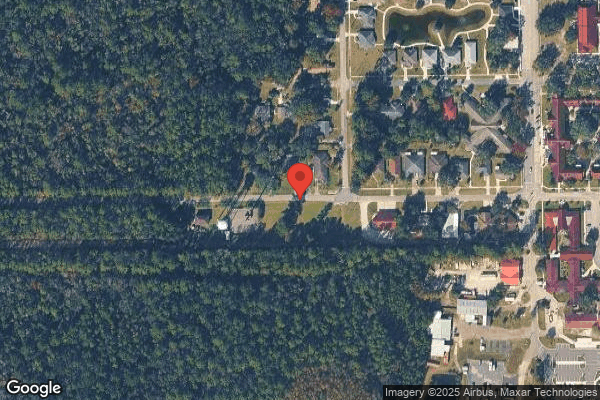
3465 CAROLINE BLVD, PENNEY FARMS, FL 32079 (904) 297-9700
Non profit - Corporation 50 Beds Independent Data: November 2025
Trust Grade
90/100
#89 of 690 in FL
Last Inspection: June 2024

Within standard 12-15 month inspection cycle. Federal law requires annual inspections.

Overview

Pavilion for Health Care in Penney Farms, Florida, has received a Trust Grade of A, indicating excellent quality and a high recommendation for families considering this nursing home. With a state ranking of #89 out of 690 facilities, they are in the top half of Florida options, and they rank #4 out of 12 in Clay County, meaning only three local facilities are rated higher. The facility is trending positively, with issues decreasing from two in 2022 to just one in 2024, demonstrating improvement in their operations. Staffing is a strong point, earning a 5-star rating with a turnover rate of 30%, which is lower than the state average, suggesting that staff are experienced and familiar with the residents. On the downside, there were some concerns noted during inspections, including cleanliness issues in the kitchen and a failure to maintain accurate medical records for a resident, raising potential risks for residents. Additionally, a medication error rate was slightly higher than the acceptable threshold, indicating some lapses in medication administration. Despite these weaknesses, the absence of fines and strong staffing metrics highlight the overall quality of care at this facility.

Trust Score
A
90/100
In Florida
#89/690
Top 12%
Safety Record
Low Risk
No red flags
Inspections
Getting Better
2 → 1 violations
Staff Stability
○ Average
30% turnover. Near Florida's 48% average. Typical for the industry.
Penalties
✓ Good
No fines on record. Clean compliance history, better than most Florida facilities.
Skilled Nurses
✓ Good
Each resident gets 49 minutes of Registered Nurse (RN) attention daily — more than average for Florida. RNs are trained to catch health problems early.
Violations
✓ Good
Only 4 deficiencies on record. Cleaner than most facilities. Minor issues only.
★★★★★
5.0
Overall Rating
★★★★★
5.0
Staff Levels
★★★★★
5.0
Care Quality
★★★★★
5.0
Inspection Score
Stable
2022: 2 issues
2024: 1 issues

The Good

  • 5-Star Staffing Rating · Excellent nurse staffing levels
  • 5-Star Quality Measures · Strong clinical quality outcomes
  • Full Sprinkler Coverage · Fire safety systems throughout facility
  • No fines on record
  • Staff turnover below average (30%)

    18 points below Florida average of 48%

Facility shows strength in staffing levels, quality measures, fire safety.

The Bad

Staff Turnover: 30%

16pts below Florida avg (46%)

Typical for the industry

The Ugly 4 deficiencies on record

Jun 2024 1 deficiency
CONCERN (D)

Potential for Harm - no one hurt, but risky conditions existed

Medical Records (Tag F0842)

Could have caused harm · This affected 1 resident

Based on observation, record review, staff interview, and policy and procedure review, the facility failed to maintain accurately documented medical records for one (Resident #13) of one resident revi...

Read full inspector narrative →
Based on observation, record review, staff interview, and policy and procedure review, the facility failed to maintain accurately documented medical records for one (Resident #13) of one resident reviewed for non-pressure related skin conditions. The findings include: An observation was made of Resident #13 on 6/18/24 at 10:00 AM. He had a large, tan colored, adhesive dressing on his left leg, dated 6/14/24. A review of the electronic medical record (EMR) revealed a physician's order dated 6/12/24, instructing nursing staff to cleanse the left leg below the knee skin tear with normal saline, apply antibiotic ointment, and cover with a Band-Aid once a day, every other day until healed. A review of the June 2024 treatment administration record (TAR) revealed that Registered Nurse (RN) A signed the treatment as having been completed per the physician's order on 6/16/24. An interview was conducted with RN A on 6/20/24 at 10:41 AM. She stated she worked on 6/16/24, and was assigned tasks including the completion of residents' ordered skin treatments. She reviewed the TAR and confirmed that her initials were signed for the 6/16/24 skin treatment for Resident #13. She stated placing her initials in the TAR meant the treatment was completed as ordered. She was not sure why the date on the dressing would have read 6/14/24 during the observation on 6/18/24. She stated she thought 6/16/24 was the day the resident's wife took him out, and he did not want the bandage changed before he left with his wife. RN A stated she was off duty by the time they returned. She further stated she should have gone back and documented that the treatment was not administered on 6/16/24. She stated the area was a scratch from a skin lesion. A review of the facility's policy for Charting and Documentation (revised 1/2018), revealed that all services provided to the resident, or any changes in the resident's medical or mental condition, would be documented in the resident's medical record. Documentation of procedures and treatments shall include care-specific details and shall include at a minimum: e. whether the resident refused the procedure/treatment. .
Sept 2022 2 deficiencies
CONCERN (D)

Potential for Harm - no one hurt, but risky conditions existed

Unnecessary Medications (Tag F0759)

Could have caused harm · This affected 1 resident

Based on observations, record reviews, and staff interviews, the facility failed to ensure a medication error rate of 5% or less, based on three errors out of 31 opportunities for error, resulting in ...

Read full inspector narrative →
Based on observations, record reviews, and staff interviews, the facility failed to ensure a medication error rate of 5% or less, based on three errors out of 31 opportunities for error, resulting in an error rate of 9.68%. This involved three (Residents #31 and #6 & #13) of five residents observed during medication administration, from a total sample of 18 residents. The findings include: During a medication administration observation for Resident #31 on 09/14/22 at 9:37 a.m., Licensed Practical Nurse (LPN) A obtained Amlodipine 10 milligrams (mg) and Losartan 100 mg. Both medications had special instructions to hold the medications if the resident's blood pressure (BP) was less than 120/80. LPN A popped the medications into the medication cup, performed hand hygiene and went into Resident #31's room. Before administering the medication, the nurse was asked for the resident's blood pressure. she stated it was 125/62 millimeters of mercury (mmHg). She was asked to verify the resident's blood pressure again before administering the medication. She again stated, The blood pressure is 125/62 mmHg and proceeded to administer the medication. (Copy of the medication administration record (MAR) obtained) During another observation on 09/14/22 at 9:48 a.m., LPN A was observed preparing medication for Resident #6. She obtained Aspirin 81 mg, Ativan 1 mg, Buspirone 15 mg, Ferrous sulfate 325 mg, and lisinopril 40 mg. All of the medications were popped into a medication cup. LPN A also obtained four ounces of Ensure (nutritional supplement), then proceeded into Resident #6's room. After performing hand hygiene, LPN A assisted the resident in taking the medication by pouring all of the pills into the resident's mouth. She then gave the resident the Ensure. After Resident #6 was finished drinking the Ensure, LPN A performed hand hygiene before administering eye drops. While she was performing hand hygiene, Resident#6 was observed taking a pill out of her mouth and dropping it on the floor. LPN A was made aware of the resident's behavior, and she picked the pill up from the floor. She then asked Resident #6 if she had additional pills in her mouth, and the resident spit out two additional pills. LPN A stated the medications spit out were Buspirone, Aspirin and ferrous sulfate. (Photographic evidence obtained) LPN A discarded the medication and notified the Director of Nursing (DON). The DON arrived and could be heard explaining to LPN A her next steps to take. In an interview on 09/14/22 at 9:49 a.m., LPN A was asked to review the physician's orders, which revealed the orders for Amlodipine 10 milligrams (mg) and Losartan 100 mg. Both medications had special instructions to hold the medications if the if the resident's blood pressure (BP) was less then 120/80. When asked if the medication should have been administered, she stated she went by the top number (systolic - 120) and not the bottom number (diastolic - 62). She stated she was not sure what the facility's policy said about that. When asked about Resident #6's behavior of pocketing her medication, LPN A confirmed that she should have checked the resident's mouth to ensure she had swallowed the medication. On 09/15/22 at 9:25 a.m., Registered Nurse (RN) B was observed preparing medications for Resident #13. After obtaining all the medication, she stated she needed to remove the lidocaine patch from Resident #13's right upper extremity. She performed hand hygiene, administered the medication to the resident, and walked out of the resident's room without removing the lidocaine patch. RN B proceeded to administer medication to the next resident. In an interview on 09/15/22 at 10:00 a.m., RN B was asked to review Resident #13's physician's orders, which showed an order for a lidocaine adhesive patch, 4%, apply one patch for approximately 12 hours to the right upper extremity (RUE) for pain/discomfort at 8:00 p.m., and remove the patch from the RUE in the morning at 10:00 a.m. RN B had already marked the Medication Administration Record (MAR) indicating the patch had been removed. (Copy of the MAR obtained) RN B was reminded by the clinical educator who was accompanying her during medication pass that she forgot to remove the patch. RN B walked back to the resident's room and removed the patch. In an interview on 09/15/22 at 11:45 a.m., the Director of Nursing (DON) and the Administrator were informed of the medication errors. They both verbalized understanding and stated education would be initiated. A review of the facility's policy and procedure titled, Medication Administration (revised August 2014), revealed that medications are administered as prescribed in accordance with good nursing principles and practices and only by persons legally authorized to do so. Personnel authorized to administer medications do so only after they have been properly oriented to the facility's medication distribution system (procurement, storage, handling and administration). The facility has sufficient staff and a medication distribution system to ensure safe administration. The administration procedure revealed that medications are to be administered in accordance with the written orders from the prescriber and administered without unnecessary interruptions. The resident is always observed after administration to ensure that the dose was completely ingested. If only a partial dose is ingested, this is noted in the MAR and action is taken as appropriate. The individual who administers the medication dose should record the administration on the resident's MAR directly after the medication is given. .
CONCERN (D)

Potential for Harm - no one hurt, but risky conditions existed

Deficiency F0760 (Tag F0760)

Could have caused harm · This affected 1 resident

**NOTE- TERMS IN BRACKETS HAVE BEEN EDITED TO PROTECT CONFIDENTIALITY** Based on observations, interviews, and record review, the facility failed to adhere to the parameters ordered by the physician f...

Read full inspector narrative →
**NOTE- TERMS IN BRACKETS HAVE BEEN EDITED TO PROTECT CONFIDENTIALITY** Based on observations, interviews, and record review, the facility failed to adhere to the parameters ordered by the physician for the administration of blood pressure medication for one (Resident # 31) of five residents observed during medication administration, from a total of 18 residents in the sample. The findings include: During a medication administration observation for Resident #31 on 09/14/22 at 9:37 a.m., Licensed Practical Nurse (LPN) A obtained Amlodipine 10 milligrams (mg) and Losartan 100 mg. Both medications had special instructions to hold the medications if the resident's blood pressure (BP) was less than 120/80. LPN A popped the medications into the medication cup, performed hand hygiene and went into Resident #31's room. Before administering the medication, the nurse was asked for the resident's blood pressure. She stated it was 125/62 millimeters of mercury (mmHg). She was asked to verify the resident's blood pressure again before administering the medication. She again stated, The blood pressure is 125/62 mmHg and proceeded to administer the medication. (Copy of the medication administration record (MAR) obtained) In an interview on 09/14/22 at 9:49 a.m., LPN A was asked to review the physician's orders, which revealed the orders for Amlodipine 10 milligrams (mg) and Losartan 100 mg. Both medications had special instructions to hold the medications if the if the resident's blood pressure (BP) was less then 120/80. When asked if the medication should have been administered, she stated she went by the top number (systolic - 120) and not the bottom number (diastolic - 62). She stated she was not sure what the facility's policy said about that. A review of Resident #31's medical record revealed that he was admitted to the facility on [DATE]. His diagnoses included hypertension (HTN), muscle weakness, repeated falls, and weakness. A review of his Care Plan, initiated on 8/13/21 and revised on 9/09/22, revealed that he was at Risk for Falls due to recent hospitalization, adapting to new surroundings, right lower extremity weakness, polyneuropathy, HTN and edema. The Care Plan further revealed that Resident #31 had falls on 8/23/21, 11/7/21, 12/16/21, 5/25/22, 6/11/22, and on 9/09/22. A review of the Physician's Orders, revealed an order dated 9/14/22 for Amlodipine 10 mg (milligrams) orally once a day: Hold if BP (blood pressure) is less than (<) 120/80. Another order, dated 9/14/22, was written for Losartan tablet 100 mg, 1 tablet orally once a day: Hold if BP<120/80. (Copy obtained) A review of the August 2022 and September 2022 MARs revealed that Resident #31 received Amlodipine and Losartan on 8/19/22 (BP 131/68), 8/25/22 (BP 139/79), 9/4/22 (BP 131/69), 9/13/22 (BP 166/77) and 9/14/22 (BP 125/62). (Copies of the MARs were obtained) In an interview on 09/15/22 at 11:45 a.m., the Director of Nursing (DON) and the Administrator were informed of the medication errors. They both verbalized understanding and stated education would be initiated. A review of the facility's policy and procedure titled Medication Administration (revised August 2014), revealed that medications are administered as prescribed in accordance with good nursing principles and practices and only by persons legally authorized to do so. Personnel authorized to administer medications do so only after they have been properly oriented to the facility's medication distribution system (procurement, storage, handling and administration). The facility has sufficient staff and a medication distribution system to ensure safe administration. The administration procedure revealed that medications are to be administered in accordance with the written orders from the prescriber and administered without unnecessary interruptions. According to the National Heart, Lung, and Blood Institute at https://www.nhlbi.nih.gov/health/low-blood-pressure#:~:text=If%20your%20blood%20pressure%20drops,a%20weak%20and%20rapid%20pulse (Accessed on 9/27/22 at 4:05 p.m.), If your blood pressure drops too low, your body ' s vital organs do not get enough oxygen and nutrients. When this happens, low blood pressure can lead to shock, which requires immediate medical attention. .
Apr 2021 1 deficiency
CONCERN (E)

Potential for Harm - no one hurt, but risky conditions existed

Food Safety (Tag F0812)

Could have caused harm · This affected multiple residents

Based on observations, staff interviews, and facility document review, the facility failed to store, prepare, distribute, and serve food in accordance with professional standards for food service safe...

Read full inspector narrative →
Based on observations, staff interviews, and facility document review, the facility failed to store, prepare, distribute, and serve food in accordance with professional standards for food service safety. The findings include: A tour of the kitchen began at 11:51am on 4/5/2021. A microwave and juice machine fountain, both located next to the entrance of the kitchen, were not clean. Dried food particles and miscellaneous stains were observed on the door, sides, base, and internal hood of the microwave, above the area where food is placed during heating. Thick, gel-like substances were splattered along the panel of the juice fountain above the spouts where the juice is dispensed. (Photographic evidence obtained). A tour of the nourishment room conducted on 4/5/2021 at 1:35pm, revealed that a microwave and a juice fountain used for residents were not clean. Dried food particles were on the base and internal hood of the microwave, above the area where food is placed during heating. Thick, gel-like substances were splattered along the panel of the juice fountain above the spouts where the juice is dispensed. (Photographic evidence obtained). During an interview with the Activities Director on 4/6/2021 at 10:07 am, she said that there is only one nourishment room in the facility for resident use. The juice fountain is used to provide residents with beverages, and that the microwave located in the nourishment room is also for resident use. The Certified Nurse Assistants (CNAs) and dietary staff work together to keep the nourishment room and equipment clean. During a second tour of the kitchen and the nourishment room conducted on 4/6/2021 at 2:21 pm, the microwaves and juice fountains in each area remained unclean. During an interview on 4/6/2021 at 2:23pm with Employee D, Licensed Practical Nurse (LPN), she confirmed that the residents receive their beverages from the juice fountain in the nourishment room. It is the responsibility of a CNA, who gets the assignment at the beginning of the shift, to ensure that the nourishment room is cleaned each shift. During a third tour of the kitchen and nourishment room conducted on 4/7/2021 at 12:38pm, the microwaves and juice fountains remained unclean in each area. Review of the CNA daily assignment sheet provided by Employee A, LPN, revealed that on 4/7/2021, two CNAs were assigned to clean the nourishment room on their allotted shift. During an interview conducted on 4/7/2021 at 12:55 pm with the Certified Dietary Manager (CDM), he stated that the kitchen staff are solely responsible for the daily cleaning of the microwave and juice fountain located in the kitchen, and that kitchen staff and dietary work together to ensure the nourishment room equipment is cleaned daily. He was directed to the microwaves and drink fountains in the kitchen and nourishment room. Upon observation, he confirmed that they were not clean and that they should have been. .
Understanding Severity Codes (click to expand)
Life-Threatening (Immediate Jeopardy)
J - Isolated K - Pattern L - Widespread
Actual Harm
G - Isolated H - Pattern I - Widespread
Potential for Harm
D - Isolated E - Pattern F - Widespread
No Harm (Minor)
A - Isolated B - Pattern C - Widespread

Questions to Ask on Your Visit

  • "Can I speak with families of current residents?"
  • "What's your RN coverage like on weekends and overnight?"

Our Honest Assessment

Strengths
  • • Grade A (90/100). Above average facility, better than most options in Florida.
  • • No major safety red flags. No abuse findings, life-threatening violations, or SFF status.
  • • No fines on record. Clean compliance history, better than most Florida facilities.
  • • Only 4 deficiencies on record. Cleaner than most facilities. Minor issues only.
Concerns
  • • No significant concerns identified. This facility shows no red flags across CMS ratings, staff turnover, or federal penalties.
Bottom line: Generally positive indicators. Standard due diligence and a personal visit recommended.

About This Facility

What is Pavilion For Health Care, The's CMS Rating?

CMS assigns PAVILION FOR HEALTH CARE, THE an overall rating of 5 out of 5 stars, which is considered much above average nationally. Within Florida, this rating places the facility higher than 99% of the state's 100 nursing homes. This rating reflects solid performance across the metrics CMS uses to evaluate nursing home quality.

How is Pavilion For Health Care, The Staffed?

CMS rates PAVILION FOR HEALTH CARE, THE's staffing level at 5 out of 5 stars, which is much above average compared to other nursing homes. Staff turnover is 30%, compared to the Florida average of 46%. This relatively stable workforce can support continuity of care.

What Have Inspectors Found at Pavilion For Health Care, The?

State health inspectors documented 4 deficiencies at PAVILION FOR HEALTH CARE, THE during 2021 to 2024. These included: 4 with potential for harm.

Who Owns and Operates Pavilion For Health Care, The?

PAVILION FOR HEALTH CARE, THE is owned by a non-profit organization. Non-profit facilities reinvest revenue into operations rather than distributing to shareholders. The facility operates independently rather than as part of a larger chain. With 50 certified beds and approximately 38 residents (about 76% occupancy), it is a smaller facility located in PENNEY FARMS, Florida.

How Does Pavilion For Health Care, The Compare to Other Florida Nursing Homes?

Compared to the 100 nursing homes in Florida, PAVILION FOR HEALTH CARE, THE's overall rating (5 stars) is above the state average of 3.2, staff turnover (30%) is significantly lower than the state average of 46%, and health inspection rating (5 stars) is much above the national benchmark.

What Should Families Ask When Visiting Pavilion For Health Care, The?

Based on this facility's data, families visiting should ask: "Can I visit during a mealtime to observe dining assistance and food quality?" "How do you handle medical emergencies, and what is your hospital transfer rate?" "Can I speak with family members of current residents about their experience?"

Is Pavilion For Health Care, The Safe?

Based on CMS inspection data, PAVILION FOR HEALTH CARE, THE has a clean safety record: no substantiated abuse findings (meaning no confirmed cases of resident harm), no Immediate Jeopardy citations (the most serious violation level indicating risk of serious injury or death), and is not on the Special Focus Facility watch list (a federal program monitoring the lowest-performing 1% of nursing homes). The facility has a 5-star overall rating and ranks #1 of 100 nursing homes in Florida. While no facility is perfect, families should still ask about staff-to-resident ratios and recent inspection results during their visit.

Do Nurses at Pavilion For Health Care, The Stick Around?

PAVILION FOR HEALTH CARE, THE has a staff turnover rate of 30%, which is about average for Florida nursing homes (state average: 46%). Moderate turnover is common in nursing homes, but families should still ask about staff tenure and how the facility maintains care continuity when employees leave.

Was Pavilion For Health Care, The Ever Fined?

PAVILION FOR HEALTH CARE, THE has no federal fines on record. CMS issues fines when nursing homes fail to meet care standards or don't correct problems found during inspections. The absence of fines suggests the facility has either maintained compliance or corrected any issues before penalties were assessed. This is a positive indicator, though families should still review recent inspection reports for the full picture.

Is Pavilion For Health Care, The on Any Federal Watch List?

PAVILION FOR HEALTH CARE, THE is not on any federal watch list. The most significant is the Special Focus Facility (SFF) program, which identifies the bottom 1% of nursing homes nationally based on persistent, serious quality problems. Not being on this list means the facility has avoided the pattern of deficiencies that triggers enhanced federal oversight. This is a positive indicator, though families should still review the facility's inspection history directly.