LIFE CARE CENTER OF POST FALLS

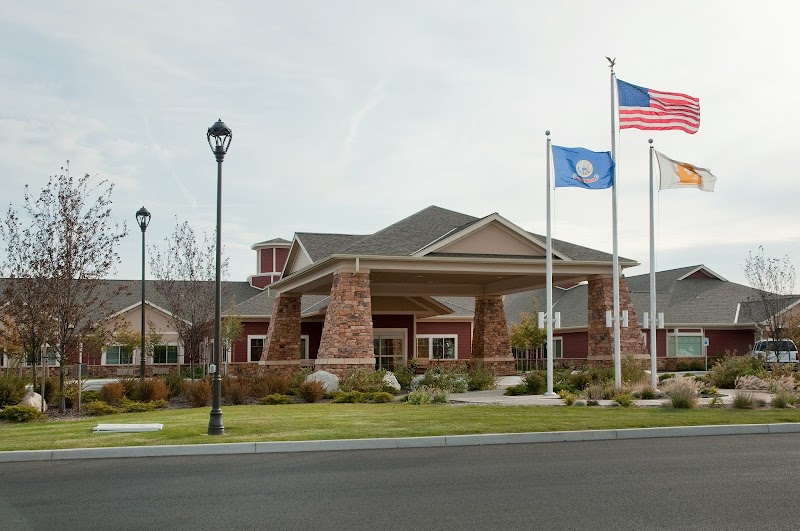
460 NORTH GARDEN PLAZA COURT, POST FALLS, ID 83854 (208) 777-0318
For profit - Limited Liability company 120 Beds LIFE CARE CENTERS OF AMERICA Data: November 2025
Trust Grade
90/100
#11 of 79 in ID
Last Inspection: August 2025

Inspected within the last 6 months. Data reflects current conditions.

Overview

Life Care Center of Post Falls has an excellent Trust Grade of A, indicating a high recommendation for families considering this facility. Ranking #11 out of 79 nursing homes in Idaho places it in the top half, and #2 out of 7 in Kootenai County suggests only one local option is better. However, the facility is facing a worsening trend, with the number of reported issues increasing from 1 in 2024 to 5 in 2025. Staffing is generally good, with a 4/5 star rating and a turnover rate of 37%, which is below the state average, although RN coverage has been inconsistent. Notably, there have been specific incidents where an RN was not on duty for eight hours, and medications were improperly left at residents' bedsides, which could lead to potential harm. While the facility has strengths in staffing and no fines, these recent concerns should be carefully considered by families.

Trust Score
A
90/100
In Idaho
#11/79
Top 13%
Safety Record
Low Risk
No red flags
Inspections
Getting Worse
1 → 5 violations
Staff Stability
○ Average
37% turnover. Near Idaho's 48% average. Typical for the industry.
Penalties
✓ Good
No fines on record. Clean compliance history, better than most Idaho facilities.
Skilled Nurses
✓ Good
Each resident gets 45 minutes of Registered Nurse (RN) attention daily — more than average for Idaho. RNs are trained to catch health problems early.
Violations
⚠ Watch
12 deficiencies on record. Higher than average. Multiple issues found across inspections.
★★★★★
5.0
Overall Rating
★★★★☆
4.0
Staff Levels
★★★★★
5.0
Care Quality
★★★★★
5.0
Inspection Score
Stable
2024: 1 issues
2025: 5 issues

The Good

  • 4-Star Staffing Rating · Above-average nurse staffing levels
  • 5-Star Quality Measures · Strong clinical quality outcomes
  • Full Sprinkler Coverage · Fire safety systems throughout facility
  • No fines on record
  • Staff turnover below average (37%)

    11 points below Idaho average of 48%

Facility shows strength in staffing levels, quality measures, fire safety.

The Bad

Staff Turnover: 37%

Near Idaho avg (46%)

Typical for the industry

Chain: LIFE CARE CENTERS OF AMERICA

Part of a multi-facility chain

Ask about local staffing decisions and management

The Ugly 12 deficiencies on record

Aug 2025 5 deficiencies
CONCERN (D)

Potential for Harm - no one hurt, but risky conditions existed

Deficiency F0554 (Tag F0554)

Could have caused harm · This affected 1 resident

**NOTE- TERMS IN BRACKETS HAVE BEEN EDITED TO PROTECT CONFIDENTIALITY** Based on observations, record review, interviews, and policy review, the facility failed to ensure medication was not left at be...

Read full inspector narrative →
**NOTE- TERMS IN BRACKETS HAVE BEEN EDITED TO PROTECT CONFIDENTIALITY** Based on observations, record review, interviews, and policy review, the facility failed to ensure medication was not left at bedside unless a medication administration assessment was conducted for one of one resident (Resident (R) 97) reviewed for medications at bedside of 25 sample residents. This failure had the potential to result in residents consuming excess medications. Findings include: Review of the admission Record located under the Profile tab of the electronic medical record (EMR) revealed R97 was admitted on [DATE] with diagnosis which included muscle weakness. Review of the admission Minimum Data Set (MDS) with an Assessment Reference Date (ARD) of 08/12/25 and located under the MDS tab of the EMR revealed a Brief Interview for Mental Status (BIMS) score of 15 out of 15 which indicated the resident was cognitively intact. Review of the EMR revealed there was no self-administration assessment completed for R97. Review of the Order Summary Report located under the Orders tab of the EMR, revealed an order, dated 08/08/25, for Tums Oral Tablet Chewable 500 mg (milligram). Give one tablet by mouth two times a day for indigestion. The Rolaids were not listed. During an observation and interview on 08/11/25 at 9:53 AM, R97 had a bottle of Tums, a small plastic medication cup with two Tums, and a container of menthol rub located on the resident's bedside table. R97 stated she took the Tums before her other medications, sometimes. She stated she had not taken it recently because her stomach was better. She confirmed the Tums, and the menthol rub were located on her bedside table. During an observation and interview on 08/12/25 at 4:08 PM, the resident had a half full bottle of Rolaids, and a container of menthol rub located on the bedside table. The resident was currently out of the room. When observed with Licensed Practical Nurse (LPN) 3, she stated they were not supposed to be there. LPN3 stated they confiscated medications on admission. LPN3 confirmed it should not have been here at bedside. She reviewed the resident's chart and stated the resident did not have a self-administration order. During an interview on 08/13/25 at 10:17 AM, the Director of Nursing (DON) stated there was an assessment form available in the EMR. The DON stated no medications were allowed at bedside without a self-administration assessment completed. Review of the facility's policy titled, Self-Administration of Medication, reviewed 09/16/24, revealed The facility will ensure that each resident who requests to self-administer medications is assessed by the interdisciplinary team (IDT) to determine if the resident is safe to self-administer medications.
CONCERN (D)

Potential for Harm - no one hurt, but risky conditions existed

Deficiency F0578 (Tag F0578)

Could have caused harm · This affected 1 resident

Based on record review, interviews, review of the facility's policies, the facility failed to ensure the code status of one resident of 25 sample residents (Resident (R) 99) was updated in the electro...

Read full inspector narrative →
Based on record review, interviews, review of the facility's policies, the facility failed to ensure the code status of one resident of 25 sample residents (Resident (R) 99) was updated in the electronic medical record (EMR) to match the code status ordered. The deficient practice could result in a resident receiving cardiopulmonary resuscitation that did not want to be resuscitated.Findings included:A review of R99's ''Profile'' screen located under the ''Profile'' tab and the ''Physician's Orders'' located under the ''Orders'' tab of the EMR on 08/11/25 at 4:33 PM revealed ''Full Code.'' The Profile screen of the EMR revealed R99 was her own responsible party.A review of R99's ''Idaho Physician's Orders for Scope of Treatment (POST)'' located under the ''MISC'' tab of the EMR, dated 08/11/25, had an ''X'' marked next to ''Do not resuscitate'' and was signed by both R99 and the physician. Review of R99's ''Brief Interview for Mental Status (BIMS)'' located under the ''Assessments'' tab of the EMR revealed a BIMS score of 8 out of 15 which indicated the resident had moderate cognitive impairment. Review of R99's care plan dated 08/11/25 revealed the resident's code status was ''Do not resuscitate.''Review of R99's EMR on 08/12/25 at 3:44 PM, still showed a code status of ''Full code'' and the ''POST'' was still marked ''Do Not Resuscitate [DNR].'' During an interview on 08/12/25 at 4:11 PM, Certified Nursing Assistant (CNA) 4 stated, ''[R99's] code status is Full code,'' while looking in the EMR.During an interview on 08/12/25 at 4:18 PM, Licensed Practical Nurse Unit Care Coordinator (LPNUCC) 2 stated ''We looked in POST binder - she is DNR,'' while looking in the POST binder.During an interview on 08/12/25 at 4:22 PM, Licensed Practical Nurse (LPN) 1 stated ''[R99] is a full code'' while looking in the EMR. Then LPN1 stated, ''We also look in the POST binder. Here she is DNR. The POST binder is the most accurate. Normally, the code status in the computer is updated by the resident care manager [RCM (LPNUCC2)]. It definitely needs to be updated. I will find the RCM to update.'' LPN1 then proceeded to locate the RCM in LPNUCC1's office. During an interview on 08/12/25 at 4:30 PM, LPNUCC1 stated, ''Normally social services would pass the code change to RCM to update order in computer since social services does not have the ability to update orders.'' Both RCMs (LPNUCC1 and LPNUCC2) were in the office updating the code status orders in the computer.During an interview on 08/12/25 at 4:33 PM, the Social Services Director (SSD) stated, ''We get the POST signed by the doctor, scan it in, and we email all of the nurse managers regarding the change. The email regarding [R99] was sent on 08/11/25 at 3:01 PM and the DON responded, 'thank you' at 3:13 PM.Review of the email revealed the Social Services Assistant (SSA) sent an email on 08/11/25 at 3:01 PM that stated ''[R99] has changed her status to DNR w/ [with] comfort measures. The provider here today has the POST and will get it signed.'' The DON responded at 3:11 PM ''Thank you [SSA].''A review of the ''Physicians Orders'' located under the ''Orders'' tab of the EMR revealed the order for ''DNR'' was entered on 8/12/25 at 4:27 PM.During an interview on 08/13/25 at 11:28 AM, the SSA stated, ''[R99's Power of attorney (POA)] came into the office on Monday, 08/11/25, and stated [R99] was requesting her code status to be changed to DNR. I consulted with [R99] regarding the change in code status as [R99] is her own responsible party.''During an interview on 08/13/25 at 11:49 AM, the Director of Nursing (DON) stated, ''We have to get a new POST signed by the physician. We now have a binder with POSTs, face sheets, and inventory sheets updated. If a POST isn't signed by physician, the order gets changed in [the EMR] at the time the POST is signed by the physician. If post has not yet been signed by the physician and something happens, then we would verify verbally with physician. We were notified by social services that [R99's] POST was updated. It was uploaded by social services on 8/11/25 on the day of the change. It should have been changed in [the EMR] on same day. Staff have been educated to verify code status in the POST book as the book is most accurate. Social services emails the change in the POST to the management team. When the email is sent regarding POST changes, we are not always at our email, so it should also be verbally communicated. Nurse on the cart or any manager could change the order in [the EMR]. I didn't see the email until the next day. Any manager should have changed the order. The manager should have responded to the email saying the order was updated and completed.'' The DON reviewed her emails and stated, ''The email was sent at 3:01 PM on 8/11 and I responded at 3:13 PM. One of the RCM's should have updated the order and responded. I should have followed up to ensure it was changed and updated in the computer. The RCM on the 200 hall is brand new so he may not have known what to do.''Review of the facility's policy titled, ''Advance Directives and Advance Care Planning'' revised 08/02/22, included ''Residents have the right to self-determination regarding their medical care. This includes the right of an individual to direct his or her own medical treatment, including the right to execute or refuse to execute an advance directive. Residents may revise an advance directive either orally or in writing. With an oral reversal, charting is due immediately, the physician is notified immediately, an immediate notation is made on the care plan, and an immediate entry is made in the medical record.''
CONCERN (D)

Potential for Harm - no one hurt, but risky conditions existed

Deficiency F0726 (Tag F0726)

Could have caused harm · This affected 1 resident

Based on observations, record review, policy review and interviews, the facility failed to ensure competencies were completed for Registered Nurse (RN) 2 to administer ordered medications to residents...

Read full inspector narrative →
Based on observations, record review, policy review and interviews, the facility failed to ensure competencies were completed for Registered Nurse (RN) 2 to administer ordered medications to residents for one of five nurses reviewed. The deficient practice resulted in one resident not receiving ordered insulin medication.Findings included:Review of R101's physician's orders, located under the EMR ''Orders'' tab, revealed an order dated 08/06/25 for ''Humalog injection solution, Inject as per sliding scale: . 211 - 240 = 4; 241 - 270 = 5; 271 - 300 = 6; 301 - 330 = 7; 331+ = 8, subcutaneously before meals and at bedtime related to type 2 diabetes mellitus without complications.Review of R101's August 2025 ''Medication Administration Record'' located in the EMR ''Orders'' tab revealed, R101's blood sugar on 08/09/25 at 3:48 PM was 229 and required Humalog sliding scale insulin of 4 units to be administered which was not administered. On 08/09/25 at 8:05 PM, R101's blood sugar was 317 and 7 units of Humalog insulin was administered in accordance with physician order. Review of R101's progress note dated 08/09/25 at 3:47 PM, Registered Nurse (RN) 2 documented ''Humalog not in facility.''During an interview on 08/14/25 at 1:58 PM, RN2 stated, ''I checked his [R101's] blood sugar at dinner time and his blood sugar was about 200. Fast acting insulin at 4:00 PM was not given because I didn't know that we had emergency stock insulin at the time. Another nurse on the floor just told me to just mark that it could not be given because it was not available. When I checked his blood sugar at 9:00 PM, it was higher about 300 and then a different nurse told me there was emergency stock, so I got the emergency stock insulin and gave him the dose according to the sliding scale. I hired on about a month ago and this was my first shift off orientation. I was not aware of any emergency stock medications available before to the 9:00 PM dose that was given.''During an interview on 08/14/25 at 2:59 PM, the Director of Nursing (DON) stated, ''The expectation is if the resident's insulin pen is not available, the medication is to be pulled from the emergency stock. Nurses should be oriented to emergency stock medications during orientation on the floor but I'm not sure if it's actually on the checklist. If not, it needs to be added.'' The DON obtained and reviewed [RN2's] nursing orientation checklist. The Nursing Orientation Checklist was signed by RN2, dated 08/14/25. The top rows of the Nursing Orientation Checklist had a date of ''07/25'' and the RN2's initials with arrows drawn down the columns including rows that did not have skills to be checked off. The checklist was not signed by any ''Trainers'' or the ''Orientation Coordinator.'' The ''Competency/Skills Checklist'' had a date completed of ''08/01/25,'' however, all spaces on the checklist were blank including ''Documentation - medication/PRN Med Sheets.'' Emergency stock medications was not included on the checklists.During an interview on 08/14/25 at 4:27 PM, RN2 stated, ''During orientation I was put with good nurses. The emergency medications never came up and so that was never discussed. There was an orientation checklist, but I did not see it. The nurse training me told me just to sign off that we went over it. There were some things that I was specifically oriented to but don't remember what specific things.''During an interview on 08/14/25 at 4:47 PM, the DON stated, ''I'm not able to confirm if [RN2] had completed any items on the competency checklist. No nurse had signed off the orientation checklist as completed. Only [RN2] signed the checklist. I reviewed the orientation checklist and that the checklist contained items such as ventilators and implanted ports that are not areas that our facility cares for. Items such as emergency medication access was not included on the checklist and I want it added to the checklist.''Review of the facility's policy titled, ''Competent Staff,'' dated 09/13/22, included ''The facility will have sufficient nursing staff with the appropriate competencies and skills needed to provide nursing and related services to assure resident safety and maintain the highest level of care. The facility will evaluate educational needs to achieve competency throughout the clinical orientation period utilizing the competency skills checklists . Competency in skills and techniques necessary to care for residents' needs includes but is not limited to competencies in areas such as: . Medication management. The Staff Development Coordinator/designee will be responsible for maintaining training records.''
CONCERN (D)

Potential for Harm - no one hurt, but risky conditions existed

Deficiency F0760 (Tag F0760)

Could have caused harm · This affected 1 resident

Based on record review, interviews, and facility policy review, the facility failed to ensure one of three residents reviewed for insulin of 25 sampled residents was free from significant medication e...

Read full inspector narrative →
Based on record review, interviews, and facility policy review, the facility failed to ensure one of three residents reviewed for insulin of 25 sampled residents was free from significant medication errors when Resident (R) 101 did not receive Humalog (insulin medicine) on one occasion. This failure resulted in elevated blood sugar for R101.Findings include:Review of the facility's ''Administration of Medication'' policy, dated 02/13/23, revealed ''The facility will ensure medications are administered safely and appropriately per physician Order to address residents' diagnoses and signs and symptoms . Significant medication error -This means one which causes the resident discomfort or jeopardizes his or her health and safety.''Review of R101's physician's orders, located under the EMR ''Orders'' tab, revealed an order dated 08/06/25 for ''Humalog injection solution, Inject as per sliding scale: if 0 - 120 = 0; 121 - 150 = 1; 151 - 180 = 2; 181 - 210 = 3; 211 - 240 = 4; 241 - 270 = 5; 271 - 300 = 6; 301 - 330 = 7; 331+ = 8, subcutaneously before meals and at bedtime related to type 2 diabetes mellitus without complications.Review of R101's August 2025 ''Medication Administration Record'' located in the EMR ''Orders'' tab revealed, R101's blood sugar on 08/09/25 at 3:48 PM was 229 and required Humalog sliding scale insulin of 4 units to be administered which was not administered. On 08/09/25 at 8:05 PM, R101's blood sugar was 317 and 7 units of Humalog insulin was administered in accordance with physician order. Review of R101's progress note dated 08/09/25 at 3:47 PM, Registered Nurse (RN) 2 documented ''Humalog not in facility.''During an interview on 08/14/25 1:05 PM, Licensed Practical Nurse (LPN) 7 verified in the medication cart that R101's Humalog insulin pen was available. Observation of R101's Humalog insulin pen revealed an open date of 08/10/25. LPN7 stated, ''[R101] has had insulin available since he has been on the 200 hall. Humalog is available in the emergency stock in the medication room if the resident's insulin pen is not available.'' Observation of the emergency stock kit revealed four vials of Humalog insulin in the clear locked box.Review of R101's resident census revealed the resident was transferred from the 300 hall to the 200 hall on 08/08/25.During an interview on 08/14/25 at 1:16 PM, the Director of Nursing (DON) stated, ''The pharmacy restocks emergency medications monthly. I am not aware of any resident being out of insulin and not having emergency stock insulin available. If insulin is removed from the emergency stock, it would be signed out on the sign out sheet.'' Observation of the emergency stock sign-out sheet on the 200 hall did not list R101 as having emergency stock insulin removed. During an interview on 08/14/25 at 1:58 PM, RN2 stated, ''If insulin was available, then I would pull from emergency stock. [R101] did not have his fast-acting insulin in stock. I went to the 300 hall to get Humalog insulin from emergency stock about 9:00 PM. I checked his blood sugar at dinner time, and his blood sugar was about 200. Fast acting insulin at 4:00 PM was not given because I didn't know that we had emergency stock insulin at the time. Another nurse on the floor just told me to just mark that it could not be given because it was not available. When I checked his blood sugar at 9:00 PM, it was higher about 300 and then a different nurse told me there was emergency stock, so I got the emergency stock insulin and gave him the dose according to the sliding scale. I hired on about a month ago and this was my first shift off orientation. I was not aware of any emergency stock medications available before to the 9:00 PM dose that was given.'' During an interview on 08/14/25 at 2:59 PM, the DON stated, ''The expectation is if the resident's insulin pen is not available, the medication is to be pulled from the emergency stock. Not administering insulin as ordered is considered a significant medication error.''
CONCERN (D)

Potential for Harm - no one hurt, but risky conditions existed

Deficiency F0761 (Tag F0761)

Could have caused harm · This affected 1 resident

**NOTE- TERMS IN BRACKETS HAVE BEEN EDITED TO PROTECT CONFIDENTIALITY** Based on observations, interviews, and policy review, the facility failed to ensure medications were labeled with open and disca...

Read full inspector narrative →
**NOTE- TERMS IN BRACKETS HAVE BEEN EDITED TO PROTECT CONFIDENTIALITY** Based on observations, interviews, and policy review, the facility failed to ensure medications were labeled with open and discard dates and expired medications were disposed of and not made available on the medication cart for one of three medication carts and two of two medication storage rooms reviewed. This had the potential to cause medication errors, adverse medication reactions, and residents to receive suboptimal therapeutic actions of medications.Findings include:The following observations were made during the review of medication carts and medication storage rooms throughout the facility.During a review of the medication cart on the 100 hall on 08/13/25 at 2:56 PM with Certified Medication Aide (CMA) 1, a tube of ''Skin Protectant Cream'' was found in the bottom drawer with other tubes of cream. The tube had a resident name written on it but did not have an open or discard date. The date stamped from the manufacturer on the tube stated ''Exp [DATE].'' CMA1 confirmed the date and stated ''The cream is expired and needs to be discarded.'' When asked where creams were stored, CMA1 stated ''They are kept in the central supply room.''During a review of the central supply room on 08/13/25 at 3:13 PM with Central Supply, the skin protectant cream was not found and Central Supply stated ''skin protectant cream is out of stock. It would normally be here (pointing to the spot on the shelf).'' A box of ''Pepto Bismol Tablets'' were found on the shelf with a date stamped on the box ''Exp [DATE].'' Central Supply verified the date and stated ''yes, those are expired!'' and through them in the trash. During a review of the medication storage room on the 200 hall on 08/13/25 at 3:42 PM with Licensed Practical Nurse (LPN) 6, a vial of tuberculin was found opened and not dated. LPN6 verified the vial was opened and not dated and stated, ''The vial needs to be discarded since there is no open date, and we do not know how long it has been opened. If I was opening a new vial, I would check the expiration date on the vial and write the opened date on the vial. The vial would be good for 30 days from opening. The Resident Care Managers (RCMs) are responsible for checking the medication carts and medication rooms for expiration dates.''During an interview on 08/13/25 at 4:17 PM, the Administrator deferred to the Director of Nursing (DON) regarding the labeling and expiration dates of medications including central supply. During an interview on 08/13/25 at 4:25 PM, the DON stated ''The skin protectant cream came from the hospital when the resident returned yesterday. The nurse did not verify the expiration date prior to placing the tube of cream in the medication cart. The weekend manager is responsible for reviewing all the carts every weekend, following the checklist, making sure everything is dated and verify there is nothing in the carts that shouldn't be there. During the state window [time period when facility is due for their annual survey by the state agency], I jump in and help verify carts as well. When vials are opened, the expectation is that the nurses date the vial. If the vial is not dated, the vial is discarded, and education is provided to the nurses. The Central Supply Director is responsible for central supply expiration dates.''Review of the facility's policy titled, ''Storage and Expiration Dating of Medications and Biologicals,'' with a revised date of 08/01/24 included ''Facility should ensure medications and biologicals that: have an expired date on the label; have been retained longer than recommended by manufacturer or supplier guidelines . are stored separate from other medications until destroyed or returned to the pharmacy or supplier. Facility staff should record the date opened on the primary medication container (i.e., vial, bottle, inhaler) when the medication has a shortened expiration date once opened or opened.''
Jul 2024 1 deficiency
CONCERN (F)

Potential for Harm - no one hurt, but risky conditions existed

Deficiency F0727 (Tag F0727)

Could have caused harm · This affected most or all residents

Based on policy review, review of the staffing record and staff interview, it was determined the facility failed to ensure an RN was on duty for eight consecutive hours per day. This failure created t...

Read full inspector narrative →
Based on policy review, review of the staffing record and staff interview, it was determined the facility failed to ensure an RN was on duty for eight consecutive hours per day. This failure created the potential for harm if routine and/or emergency nursing needs went unmet and had the potential to affect all 64 residents living in the facility. Findings include: The facility's Staffing policy, documented The facility maintains adequate staff on each shift to meet residents' needs, posts daily staffing data and furnishes staffing information to the state as specified in the Federal regulations. The Posting of Licensed and Unlicensed Direct Care Staff, dated 1/1/24 through 6/30/24, documented there was no RN coverage on 1/27/24, 2/4/24, 2/10/24, and 3/3/24. On 7/4/24 at 1:23 PM, the DON reviewed the timecard information and stated there was no RN on duty during the 24-hour period on 1/27/24, 2/4/24, 2/10/24, and 3/3/24. On 7/4/24 at 1:30 PM, the Administrator stated there were significant issues at the beginning of the year for RN coverage on every 24-hour period. The Administrator stated there were no RN scheduled to work on 1/27/24, 2/4/24, 2/10/24, and 3/3/24. The Administrator stated there should be an RN in the building on those days.
Mar 2023 6 deficiencies
CONCERN (D) 📢 Someone Reported This

A family member, employee, or ombudsman was alarmed enough to file a formal complaint

Potential for Harm - no one hurt, but risky conditions existed

Comprehensive Care Plan (Tag F0656)

Could have caused harm · This affected 1 resident

**NOTE- TERMS IN BRACKETS HAVE BEEN EDITED TO PROTECT CONFIDENTIALITY** Based on observation, record review, and staff interview, it was determined the facility failed to develop and implement a care ...

Read full inspector narrative →
**NOTE- TERMS IN BRACKETS HAVE BEEN EDITED TO PROTECT CONFIDENTIALITY** Based on observation, record review, and staff interview, it was determined the facility failed to develop and implement a care plan that is comprehensive and resident specific to include measurable objectives, interventions, and time frames for how staff will meet residents' needs. This was true for 1 of 16 residents (Resident #210) whose care plans were reviewed. This failure created the potential for the resident to receive inappropriate care. Finding include: Resident #210 was admitted to the facility on [DATE], with multiple diagnoses including Diabetes Mellitus, Chronic Obstructive Pulmonary Disease (COPD - inflammatory lung disease that causes obstructed airflow from the lungs), muscle weakness, difficulty walking, and systemic sclerosis (a connective tissue disease impacting skin, internal organs, cartilage, bones, tendons, ligaments). An admission MDS, dated [DATE], documented Resident #210 required extensive assistance of 2 staff for bed mobility, transfers, dressing, and toileting. The MDS also documented Resident #210 had a pressure relieving mattress. Resident #210's care plan documented, The resident will improve current level of function in (SPECIFY ADLS) through the review date. Resident will be able to (SPECIFY). The care plan did not specify goals for ADL self-care performance. Resident #210's care plan documented, Eating: the resident is able to (SPECIFY) . Personal Hygiene/Oral care: The resident is able to (SPECIFY) . Skin inspection: The resident requires SKIN inspection (SPECIFY FREQ) . Toilet use: The resident requires (SPECIFY assistance) by (X) staff for toileting . Transfer: The resident requires (SPECIFY what assistance) by (X) staff to move between surfaces (SPECIFY FREQ) and as needed. The care plan interventions did not specify the amount of assistance, number of staff needed, or frequency for the ADLs. On 3/21/23 at 9:19 AM, Resident #210 was observed lying on an air mattress. Resident #210's care plan did not specify the need or appropriate settings for the air mattress. On 3/23/23 at 5:03 PM, the DON was interviewed and Resident #210's care plan was reviewed in her presence. The DON stated the care plan was not resident specific. The facility failed to ensure Resident #210's care plan was comprehensive and resident specific for her ADLs.
CONCERN (D)

Potential for Harm - no one hurt, but risky conditions existed

Deficiency F0657 (Tag F0657)

Could have caused harm · This affected 1 resident

**NOTE- TERMS IN BRACKETS HAVE BEEN EDITED TO PROTECT CONFIDENTIALITY** Based on policy review, record review, and staff interview, it was determined the facility failed to ensure a resident's care pl...

Read full inspector narrative →
**NOTE- TERMS IN BRACKETS HAVE BEEN EDITED TO PROTECT CONFIDENTIALITY** Based on policy review, record review, and staff interview, it was determined the facility failed to ensure a resident's care plan was revised and updated as the resident's needs changed. This was true for 1 of 2 residents (Resident #58) whose records were reviewed for significant changes. This deficient practice placed residents with significant changes at risk for adverse outcomes if care and services were not provided appropriately due to a lack of information in the care plan. Findings include: The facility's Comprehensive Care Plans and Revisions policy, revised 8/17/22, stated when changes in the resident condition occur, the facility should review and update the plan of care to reflect the changes to care delivery. This policy was not followed. Resident #58 was initially admitted on [DATE] and readmitted on [DATE], with multiple diagnoses including acute respiratory failure and metabolic encephalopathy (a condition in which an illness or an improperly functioning organ causes a chemical imbalance in the blood resulting in problems with brain function). Resident #58 passed away on 12/26/22. An Annual MDS Assessment, dated 11/12/22, documented Resident #58 was severely cognitively impaired. Resident #58 was transferred from a hospital to the facility on [DATE]. Hospital Transfer Orders, dated 12/19/22, documented consultations for palliative care or hospice were ordered for Resident #58. Resident #58's record included a physician's visit summary, dated 12/20/22. Her physician documented Resident #58's Power of Attorney chose to begin comfort measures for her during her hospital stay. Resident #58's record included a physician's order, dated 12/20/22, for comfort measures to be implemented. Resident #58's record did not include documentation her care plan was updated to include interventions to address her comfort measures. On 3/23/23 at 2:15 PM, the DON was interviewed and Resident #58's record was reviewed in her presence. The DON stated Resident #58's care plan was not updated to include her comfort measures. She stated it should have been updated when the physician's order was received. The facility failed to ensure Resident #58's care plan was revised and updated to address her comfort measures.
CONCERN (D) 📢 Someone Reported This

A family member, employee, or ombudsman was alarmed enough to file a formal complaint

Potential for Harm - no one hurt, but risky conditions existed

Deficiency F0687 (Tag F0687)

Could have caused harm · This affected 1 resident

**NOTE- TERMS IN BRACKETS HAVE BEEN EDITED TO PROTECT CONFIDENTIALITY** Based on observation, policy review, record review, and staff interview, it was determined the facility failed to ensure residen...

Read full inspector narrative →
**NOTE- TERMS IN BRACKETS HAVE BEEN EDITED TO PROTECT CONFIDENTIALITY** Based on observation, policy review, record review, and staff interview, it was determined the facility failed to ensure residents received proper treatment and care to maintain good foot health. This was true for 2 of 15 residents (#26 and #49) reviewed for foot care. This failed practice created the potential for harm should residents experience complications from their medical condition related to the lack of foot care. Findings include: The facility's Nail Care policy, reviewed 8/22/22, directed staff to ensure residents' toenails were clean and trimmed to avoid injury and infection. This policy was not followed. 1. Resident #26 was admitted to the facility on [DATE], with multiple diagnoses including acute respiratory failure with hypoxia (low levels of oxygen in the body tissue), pneumonitis (inflammation of the lung tissue due to non-infectious causes) due to inhalation of food, vomiting, and stroke. On 3/20/23 at 2:20 PM, Resident #26's toenails were observed with the DON. Resident #26's toenails on her right second, third and fifth toes were long, thick, and whitish in color. The DON stated Resident #26 was not diabetic and CNAs should have provided her with nail care at least once a week during her showers. The DON stated if she was the nurse on duty she would prefer to attend to Resident #26's toenails herself because of the condition of the toenails. 2. Resident #49 was admitted to the facility on [DATE], with multiple diagnoses including dementia, chronic obstructive pulmonary disease (a chronic inflammatory lung disease that causes obstructed airflow from the lungs) and depression. On 3/23/23 at 3:09 PM, Resident #49's toenails were observed with the DON. Resident #49's toenails on his right first, second, third, and fourth toes were long, thick, and whitish in color. The DON stated Resident #49 was not diabetic and CNAs should have provided him with nail care at least once a week during his showers. The DON stated she would cut Resident #49's toenails herself. The facility failed to ensure Resident #26 and Resident #49 received care of their toenails.
CONCERN (D)

Potential for Harm - no one hurt, but risky conditions existed

Deficiency F0727 (Tag F0727)

Could have caused harm · This affected 1 resident

Based on review of facility staffing records and staff interview, it was determined the facility failed to ensure an RN was on duty at least 8 hours a day, 7 days a week. This was true for 2 of 21 day...

Read full inspector narrative →
Based on review of facility staffing records and staff interview, it was determined the facility failed to ensure an RN was on duty at least 8 hours a day, 7 days a week. This was true for 2 of 21 days reviewed. The failure created the potential for harm if routine and/or emergency nursing needs went unmet, and had the potential to affect all residents living in the facility. Findings include: The facility provided the nursing schedule for 2/26/23 to 3/18/23. The nursing schedule documented there was no RN coverage on 3/5/23. The time punches for 3/5/23 did not include documentation an RN was on duty. Additionally, the time punches on 3/12/23 documented an RN was on duty for 7.18 hours, less than the required 8 hours per day. On 3/24/23 at 12:54 PM, the facility's Regional [NAME] President was interviewed, and the time punches were reviewed in her presence. She stated the facility was unable to provide consistent RN coverage, 8 hours per day, 7 days a week, due to an RN leaving employment in February. She stated the RN position was not filled at the time of the survey and interviews with RN candidates were being performed. The facility failed to ensure an RN was on duty at least 8 hours a day, 7 days a week.
CONCERN (D) 📢 Someone Reported This

A family member, employee, or ombudsman was alarmed enough to file a formal complaint

Potential for Harm - no one hurt, but risky conditions existed

Infection Control (Tag F0880)

Could have caused harm · This affected 1 resident

Based on observation, policy review, and staff interview, it was determined the facility failed to ensure infection control measures were consistently implemented and maintained to provide a safe and ...

Read full inspector narrative →
Based on observation, policy review, and staff interview, it was determined the facility failed to ensure infection control measures were consistently implemented and maintained to provide a safe and sanitary environment during perineal care. This was true for 1 of 1 resident (Resident #49) whose perineal care was observed. This failure created the potential for negative outcomes by exposing a resident to the risk of infection and cross-contamination. Findings include: The CDC website, last reviewed on 1/30/20, and accessed on 3/27/23, included a topic on Hand Hygiene Recommendations, which documented hand hygiene should be performed when moving from a contaminated-body site to a clean-body site during patient care. The facility's Hand Hygiene policy, revised 7/15/22, documented It is important to make sure that hand hygiene is performed at the appropriate times before and after touching a resident, between residents and frequently during care. This policy and guidance were not followed. On 3/21/23 at 10:43 AM, CNA #1 and CNA #2 were observed providing perineal care to Resident #49. CNA #1 was wearing gloves and wiped feces from Resident #49's buttocks several times and then removed the soiled incontinence brief. CNA #1 then placed a clean incontinence brief next to Resident #49 and tucked it in under Resident #55. CNA #1 did not change her gloves or perform hand hygiene after cleaning Resident #49 and before she grabbed a clean brief. CNA #1 then flattened the incontinence brief by running her gloved hands over the brief, the same gloves she used when she wiped feces from Resident #49's buttocks. CNA #1 then placed her gloved left hand on Resident #49's left upper thigh and her gloved right hand on Resident #49's upper shoulder, and together with CNA #2 they assisted Resident #49 to turn onto his back and fastened his incontinence brief. On 3/21/23 at 10:59 AM, CNA #1 stated she did not change her gloves after she cleaned Resident #49's buttocks. CNA #1 stated she should have removed her gloves, performed hand hygiene and donned new gloves before applying the clean incontinence brief and touching Resident #49's skin. The facility failed to ensure staff performed hand hygiene during perineal care for Resident #49.
CONCERN (D) 📢 Someone Reported This

A family member, employee, or ombudsman was alarmed enough to file a formal complaint

Potential for Harm - no one hurt, but risky conditions existed

Deficiency F0886 (Tag F0886)

Could have caused harm · This affected 1 resident

Based on policy review and staff interview, it was determined the facility failed to ensure testing was conducted in a manner consistent with current standards of practice for conducting COVID-19 test...

Read full inspector narrative →
Based on policy review and staff interview, it was determined the facility failed to ensure testing was conducted in a manner consistent with current standards of practice for conducting COVID-19 tests. This was true for 1 of 1 staff (LPN #1) who self-tested in the facility. This failure created the potential for the development and transmission of COVID-19 in the facility. Findings include: The facility's COVID-19 (SARS-CoV-2) Healthcare Personnel Testing policy, revised 3/13/23, documented testing was conducted according to nationally recognized guidelines, outlined by the CDC. The CDC website, updated 3/29/21, and accessed on 3/27/23, included a topic on Performing Broad-Based Testing for COVID-19 in Congregate Settings, which documented, For indoor specimen collection activities, designate separate spaces for each specimen collection testing station, either rooms with doors that close fully or protected spaces removed from other stations by distance and physical barriers, such as privacy curtains and plexiglass. It also stated to prevent inducing coughing/sneezing in an environment where multiple people were present and could be exposed, avoid collecting specimens in open-style housing spaces with current residents or in multi-use areas where other activities are occurring. This policy and guidance were not followed. On 3/23/23 at 3:54 PM, LPN #1 placed a COVID-19 test card with the swab inside it on the counter inside the nurse's station and wrote her name on it. When asked where she performed the test, LPN #1 stated she tested herself in the nurse's station. Another test card was observed on the counter on the other side of the nurse's station. An unopened COVID-19 test kit was also observed on the counter. The RCM, who was also in the nurse's station, stated LPN #1 should not have performed her COVID-19 test in the nurse's station. The RCM stated staff should perform their COVID-19 test in the copy room. The RCM then took the unopened COVID-19 test kit away. The facility failed to ensure testing was conducted in a manner that was consistent with CDC guidance for conducting COVID-19 tests.
Understanding Severity Codes (click to expand)
Life-Threatening (Immediate Jeopardy)
J - Isolated K - Pattern L - Widespread
Actual Harm
G - Isolated H - Pattern I - Widespread
Potential for Harm
D - Isolated E - Pattern F - Widespread
No Harm (Minor)
A - Isolated B - Pattern C - Widespread

Questions to Ask on Your Visit

  • "Can I speak with families of current residents?"
  • "What's your RN coverage like on weekends and overnight?"

Our Honest Assessment

Strengths
  • • Grade A (90/100). Above average facility, better than most options in Idaho.
  • • No major safety red flags. No abuse findings, life-threatening violations, or SFF status.
  • • No fines on record. Clean compliance history, better than most Idaho facilities.
  • • 37% turnover. Below Idaho's 48% average. Good staff retention means consistent care.
Concerns
  • • 12 deficiencies on record. Higher than average. Multiple issues found across inspections.
Bottom line: Generally positive indicators. Standard due diligence and a personal visit recommended.

About This Facility

What is Life Of Post Falls's CMS Rating?

CMS assigns LIFE CARE CENTER OF POST FALLS an overall rating of 5 out of 5 stars, which is considered much above average nationally. Within Idaho, this rating places the facility higher than 99% of the state's 100 nursing homes. This rating reflects solid performance across the metrics CMS uses to evaluate nursing home quality.

How is Life Of Post Falls Staffed?

CMS rates LIFE CARE CENTER OF POST FALLS's staffing level at 4 out of 5 stars, which is above average compared to other nursing homes. Staff turnover is 37%, compared to the Idaho average of 46%. This relatively stable workforce can support continuity of care.

What Have Inspectors Found at Life Of Post Falls?

State health inspectors documented 12 deficiencies at LIFE CARE CENTER OF POST FALLS during 2023 to 2025. These included: 12 with potential for harm.

Who Owns and Operates Life Of Post Falls?

LIFE CARE CENTER OF POST FALLS is owned by a for-profit company. For-profit facilities operate as businesses with obligations to shareholders or private owners. The facility is operated by LIFE CARE CENTERS OF AMERICA, a chain that manages multiple nursing homes. With 120 certified beds and approximately 75 residents (about 62% occupancy), it is a mid-sized facility located in POST FALLS, Idaho.

How Does Life Of Post Falls Compare to Other Idaho Nursing Homes?

Compared to the 100 nursing homes in Idaho, LIFE CARE CENTER OF POST FALLS's overall rating (5 stars) is above the state average of 3.3, staff turnover (37%) is near the state average of 46%, and health inspection rating (5 stars) is much above the national benchmark.

What Should Families Ask When Visiting Life Of Post Falls?

Based on this facility's data, families visiting should ask: "Can I visit during a mealtime to observe dining assistance and food quality?" "How do you handle medical emergencies, and what is your hospital transfer rate?" "Can I speak with family members of current residents about their experience?"

Is Life Of Post Falls Safe?

Based on CMS inspection data, LIFE CARE CENTER OF POST FALLS has a clean safety record: no substantiated abuse findings (meaning no confirmed cases of resident harm), no Immediate Jeopardy citations (the most serious violation level indicating risk of serious injury or death), and is not on the Special Focus Facility watch list (a federal program monitoring the lowest-performing 1% of nursing homes). The facility has a 5-star overall rating and ranks #1 of 100 nursing homes in Idaho. While no facility is perfect, families should still ask about staff-to-resident ratios and recent inspection results during their visit.

Do Nurses at Life Of Post Falls Stick Around?

LIFE CARE CENTER OF POST FALLS has a staff turnover rate of 37%, which is about average for Idaho nursing homes (state average: 46%). Moderate turnover is common in nursing homes, but families should still ask about staff tenure and how the facility maintains care continuity when employees leave.

Was Life Of Post Falls Ever Fined?

LIFE CARE CENTER OF POST FALLS has no federal fines on record. CMS issues fines when nursing homes fail to meet care standards or don't correct problems found during inspections. The absence of fines suggests the facility has either maintained compliance or corrected any issues before penalties were assessed. This is a positive indicator, though families should still review recent inspection reports for the full picture.

Is Life Of Post Falls on Any Federal Watch List?

LIFE CARE CENTER OF POST FALLS is not on any federal watch list. The most significant is the Special Focus Facility (SFF) program, which identifies the bottom 1% of nursing homes nationally based on persistent, serious quality problems. Not being on this list means the facility has avoided the pattern of deficiencies that triggers enhanced federal oversight. This is a positive indicator, though families should still review the facility's inspection history directly.