NEIGHBORS HEALTH CENTER
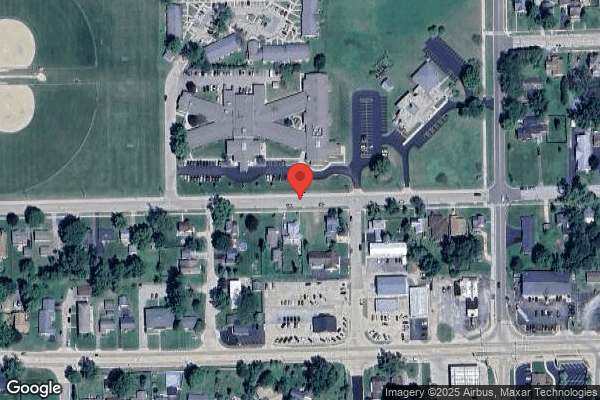
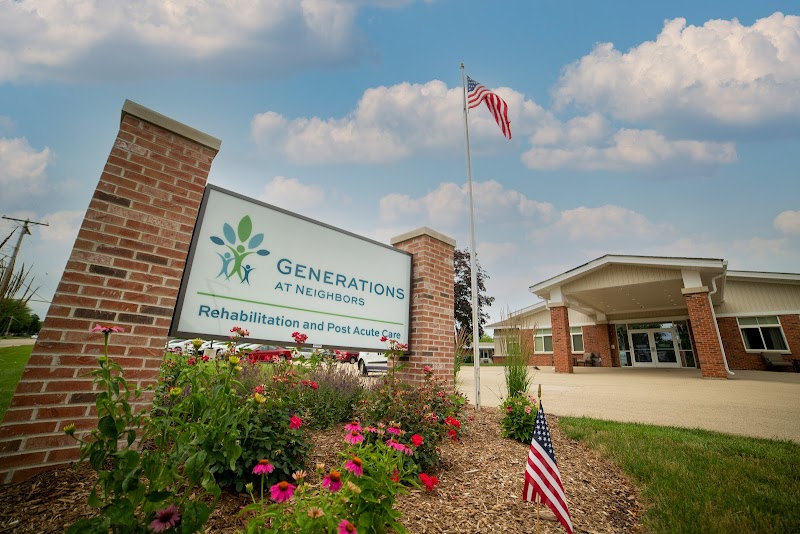
811 WEST 2ND, BYRON, IL 61010 (815) 234-2511
For profit - Limited Liability company 131 Beds GENERATIONS HEALTHCARE Data: November 2025
Trust Grade
33/100
#268 of 665 in IL
Last Inspection: September 2024

Within standard 12-15 month inspection cycle. Federal law requires annual inspections.

Overview

Neighbors Health Center in Byron, Illinois has a Trust Grade of F, indicating significant concerns about the quality of care provided. They rank #268 out of 665 nursing homes in Illinois, placing them in the top half, and #3 out of 6 in Ogle County, meaning only two other local facilities are rated higher. Unfortunately, the facility is worsening, with reported issues increasing from 5 in 2024 to 9 in 2025. Although staffing is rated average with a turnover rate of 48%, which aligns with the state average, they do provide good RN coverage, exceeding 78% of Illinois facilities. However, the facility has faced serious incidents, including a resident suffering a head injury from a fall caused by improper supervision and another resident being hospitalized due to inadequate monitoring of their blood glucose levels. Additionally, concerns were raised regarding the sanitary handling of water for residents, which poses a risk of cross-contamination. While there are some positive aspects, families should weigh these serious issues when considering this nursing home.

Trust Score
F
33/100
In Illinois
#268/665
Top 40%
Safety Record
High Risk
Review needed
Inspections
Getting Worse
5 → 9 violations
Staff Stability
⚠ Watch
48% turnover. Above average. Higher turnover means staff may not know residents' routines.
Penalties
✓ Good
$9,750 in fines. Lower than most Illinois facilities. Relatively clean record.
Skilled Nurses
✓ Good
Each resident gets 52 minutes of Registered Nurse (RN) attention daily — more than average for Illinois. RNs are trained to catch health problems early.
Violations
⚠ Watch
28 deficiencies on record. Higher than average. Multiple issues found across inspections.
★★★☆☆
3.0
Overall Rating
★★★☆☆
3.0
Staff Levels
★★★★★
5.0
Care Quality
★★☆☆☆
2.0
Inspection Score
Stable
2024: 5 issues
2025: 9 issues

The Good

  • 5-Star Quality Measures · Strong clinical quality outcomes
  • Full Sprinkler Coverage · Fire safety systems throughout facility
  • No fines on record

Facility shows strength in quality measures, fire safety.

The Bad

3-Star Overall Rating

Near Illinois average (2.5)

Meets federal standards, typical of most facilities

Staff Turnover: 48%

Near Illinois avg (46%)

Higher turnover may affect care consistency

Federal Fines: $9,750

Below median ($33,413)

Minor penalties assessed

Chain: GENERATIONS HEALTHCARE

Part of a multi-facility chain

Ask about local staffing decisions and management

The Ugly 28 deficiencies on record

2 actual harm
Jun 2025 1 deficiency
CONCERN (E) 📢 Someone Reported This

A family member, employee, or ombudsman was alarmed enough to file a formal complaint

Potential for Harm - no one hurt, but risky conditions existed

Food Safety (Tag F0812)

Could have caused harm · This affected multiple residents

Based on observation, interview, and record review the facility failed to provide water to residents in a sanitary manner. This applies to 5 of 8 (R1, R2, R3, R4, R5) in the sample of 11 reviewed for ...

Read full inspector narrative →
Based on observation, interview, and record review the facility failed to provide water to residents in a sanitary manner. This applies to 5 of 8 (R1, R2, R3, R4, R5) in the sample of 11 reviewed for dietary services. The findings include: On 6/30/2025 at 11:43AM, observations of residents being given ice water by V6 (Activity Aide). V6 used a scoop that was sitting on the water cart holding the cooler with water and ice. V6 opened the lid of the cooler to fill R5's and R2's cup with the scoop, placed the wet scoop back down on the cart, and took the cup back into the resident's room. V6 was observed holding R3, R4, and R1's water cup that was removed from the resident's room above the open water and ice cooler while filling the cup. On 6/30/2025 at 12:06AM, V7 (Food Service Director) said the scoop should not be placed back on the cart due to risk cross contamination. V7 said the resident's water cup shouldn't be held above the water cooler because of the risk of cross contamination. The facility provided Ice Dispensing policy revised 5/20/2014 states, the healthcare community stores, prepares, distributes and serves food in a sanitary manner to prevent foodborne illness.
May 2025 1 deficiency
CONCERN (D) 📢 Someone Reported This

A family member, employee, or ombudsman was alarmed enough to file a formal complaint

Potential for Harm - no one hurt, but risky conditions existed

Quality of Care (Tag F0684)

Could have caused harm · This affected 1 resident

**NOTE- TERMS IN BRACKETS HAVE BEEN EDITED TO PROTECT CONFIDENTIALITY** Based on interview and record review the facility failed to ensure a resident was assessed for a change of condition of 1 of 3 r...

Read full inspector narrative →
**NOTE- TERMS IN BRACKETS HAVE BEEN EDITED TO PROTECT CONFIDENTIALITY** Based on interview and record review the facility failed to ensure a resident was assessed for a change of condition of 1 of 3 residents (R3) reviewed for change of condition in the sample of 6. The findings include: R3's face sheet documents she was admitted to the facility on [DATE] with a primary diagnosis of pressure ulcer of sacral region, stage 4. She also had diagnosis of unspecified dementia, unspecified severity. The 10/6/24 quarterly resident assessment and care screening shows R3 to have severe cognitive impairment and required supervision/touch assistance for sit to stand and toilet transfers. The same assessment documents her to be occasionally incontinent of urine and frequently incontinent of bowel. On 5/23/25 at 1:40 PM, V10 (Certified Nursing Assistant/CNA) said R3, for the most part, she was confused, and she needed stand by assist. She was always trying to get up out of bed on her own, and she had alarms so we could know when she was moving. V10 said remembers, R3 she was just laying down. We would check on her and poke our heads in to check on her, and she did not get up once, that was unusual. V10 reported this to the nurse and left at the end of her shift. On 5/23/25 at 1:51 PM, V11 (CNA) said R3 was confused, but knew her name. She could let us know if she needed to go to the bathroom. She would be up and down to the bathroom every 4 minutes. She would put her light on and if you were not right there, she would just get up and go. V11 said she came in for 2nd shift, the day R3 was sent out to the hospital. She said during her afternoon shift, R3 did not get up, did not put on her call light, and would not sit up. She said the nurse on the unit was notified of the change. She recalled V5 (Licensed Practical Nurse/LPN) was the nurse on duty, but the only response the nurse had was her vital signs are fine. She said when the night shift nurse came in at 6:00 PM, she reported the changes to her, and R3 was immediately sent out to the hospital. R3's progress notes for 11/24/24 at 6:06 AM show staff reported possible blood in urine this morning. Difficult to tell due to large bowel movement. Will hand off to oncoming nurse. The progress notes show no further assessment or progress notes until 10:38 PM, when R3 was being sent out to the hospital. The vital sign results for 11/24/24 show V5 checked R3's vital signs at 10:28 AM, 2:13 PM, and 5:15 PM. On 5/23/25 at 2:45 PM, V5 (LPN) said she did not recall R3. She said she did not recall being told about possible blood in the urine. She did not recall why she took vital signs three times during her shift. She said she would not document anything if nothing was wrong, sometimes she just monitors residents. On 5/27/25 at 2:50 PM, V16 (Registered Nurse) said, if she received in report there was a resident experiencing a change of condition, off their baseline and having blood in their urine, she would frequently assess the resident, get vitals, and notify V18 (Nurse Practitioner) of any findings. V16 stated she would do a full head to toe assessment, document those assessments and notifications start to finish. V16 stated it would be important to do that to maintain full circle of communication for the care of the resident. If it isn't charted it didn't happen. On 5/27/25 at 3:21 PM, V18 (Nurse Practitioner) said if a resident possibly has blood in their urine, she should be informed about that. She would have checked for fever, vitals, chills, and/or pain. She said R3 had dementia could voice her concerns, maybe not 100 percent reliable but she could tell. She said she probably would have ordered a straight catheter to check the urine, but the nurse should have had some follow up. The nurse should have been documenting outputs if she was eating or drinking. After reviewing the charting and vital signs, she said it appears the nurse was concerned about something as it was not usual to check vital signs multiple times a shift and not have any documentation of an assessment. On 5/27/25 at 1:40 PM, V2 (Director of Nursing) said for any resident with a possible change of condition or concern, V18 should be notified. She recalls R3 to have behaviors of repeatedly getting up. If there was any change with her, she would expect the aides to report to the nurse, and the nurse to follow up an assessment. V2 said she does recall the situation and believes the aides on duty did get their mother (another nurse on duty) to look at R3, if that in fact did occur, there should have been documentation from her in the record. The facility's 2/2025 policy for Change in a Resident's condition or Status documents the objective as: Our facility shall promptly notify the resident, his or her attending physician, and representative of changes in the resident's condition and/or status. 5. The nurse will record in the resident's medical record any changes in the resident's medical condition or status.
May 2025 7 deficiencies 1 Harm
SERIOUS (G) 📢 Someone Reported This

A family member, employee, or ombudsman was alarmed enough to file a formal complaint

Actual Harm - a resident was hurt due to facility failures

Free from Abuse/Neglect (Tag F0600)

A resident was harmed · This affected 1 resident

**NOTE- TERMS IN BRACKETS HAVE BEEN EDITED TO PROTECT CONFIDENTIALITY** Based on interview and record review the facility failed to keep a resident free from physical abuse. This applies to 4 of 6 res...

Read full inspector narrative →
**NOTE- TERMS IN BRACKETS HAVE BEEN EDITED TO PROTECT CONFIDENTIALITY** Based on interview and record review the facility failed to keep a resident free from physical abuse. This applies to 4 of 6 residents (R1, R2, R3 & R4) reviewed for abuse in the sample of 41. This failure resulted in R1 being sent to the local hospital and diagnosed with a posterior head laceration and initial CTH with acute SDH (computed tomography with acute subdural hematoma) of the left frontal, parietal, and temporal lobes. The findings include: 1. The facility's final report to the state surveying agency regional office dated December 20, 2023, shows, It was immediately reported to Administrator (V1) that R1 sustained a fall with injury while in the memory care dining room. Staff reported that they heard a female resident say that a resident is moving the chair around and to leave it alone, when the one CNA (Certified Nursing Assistant) turned toward the resident she saw R1 and another male resident (R2) both had hold of the chair and due to the momentum of both residents tugging at the chair they both fell. R2 the other male resident landed on top of R1 which caused him to hit his head on the corner of the wall Conclusion: Based on a thorough investigation resident (R1) sustained a laceration to the back of his [head] requiring staples and had a small subarachnoid hematoma requiring no surgical interventions as a result of two dementia residents wanting to move the same chair around the table, they lost their balance and fell together On May 14, 2025, at 1:58 PM, V11 (CNA) stated, she witnessed the incident between R1 and R2 on December 20, 2023. She was in the dining room helping another resident with her back turned towards R1 and R2. R1 was sitting at a table in the dining room. R2 was up walking around. She heard R12 (another female resident) screaming, They are going to fight. They are going to fight. so she turned around to see R1 and R2. R1 was trying to stand up from the table as R2 had a chair and was shoving the chair towards R1. She tried to grab the chair but was not able too. R2 shoved the whole chair into R1 hitting him and causing him to fall back and hit his head on the corner of the wall. R1 hit the wall so hard there was pieces of plaster/dry wall on the floor. He was also bleeding badly. On May 15, 2025, at 8:03 AM, V3 (CNA) stated, R1 and R2 were fighting. R2 hit R1 and caused R1 to fall backward and hit his head hard on the wall. R2 was in an aggressive mood and wanted to still fight R1. R2 would get aggressive with staff but never the other residents. This was the first time he hit a resident that she knew of. R1's local hospital paperwork dated December 31, 2023, shows, History and Physical: .R1 was admitted to local hospital on [DATE] after a fall at his nursing home, he had an argument with another NH (nursing home) resident who pushed him backward against a wall and struck his head. He had a posterior head laceration and initial CTH with acute SDH (computed tomography with acute subdural hematoma) of the left frontal, parietal, and temporal lobes . R1's progress notes dated December 20, 2023, shows, The resident fell in the common area during breakfast and hit the back of his head on the corner of the wall. Bleeding was noted R2's progress notes dated December 20, 2023, shows, Resident fell in the common area during breakfast as a result of pushing a chair. Resident has no injury and was able to stand up by himself . 2. R3's progress notes written by V9 (Licensed Practical Nurse/LPN) dated December 7, 2023, shows, Resident had a disagreement with his roommate that had escalated between them. Decision was made to separate the roommates per both of their requests. On May 15, 2025, at 8:33 AM, V9 (LPN) stated, the incident with R3 and R4 happened in the middle of her shift, December 2023. R3 and R4 got into a fight. R3 and R4 both got up and were arguing. R3 tried to walk over to R4 and fell. R4 started kicking him. She broke them apart and separated them. V8 (CNA) was there also. She moved R3 into another room and called V1 (Administrator). She stated, V1 (Administrator) told her how to document the incident. On May 14, 2025, at 12:57 PM, V8 (CNA) stated, she heard commotion and went to R3 and R4's room. When she walked in R4 was kicking R3 pretty badly. She yelled for V9 (LPN). V9 came down and together they got them separated. R3's progress notes written by V1 (Administrator) dated December 8, 2023, shows, Administrator followed up with resident regarding his disagreement with his roommate. Resident explained that they were having a disagreement about the television being loud and when this resident went to get up to try to turn his roommate's television down, he said, my chair got away from me and I sat on the floor. He states that his roommate then laughed at him because he sat on the floor. Staff heard this resident asking for help and they assisted the resident back into his chair R3's progress notes written by V7 (Nurse Practitioner/NP) dated December 12, 2023, shows, CC (current concern): bruising, recent fall. HPI (history of presenting illness): Patient is reporting that on 12/7 he was pushing his wheelchair and it got away from him. He fell landing on his buttocks. He goes on to report that while he was on the floor, his roommate kicked me. He points to bruises to his right upper arm and elbow and the top of his head. He previously has denied any physical contact was made .Bruising noted to right hip and along right gluteal fold. Tenderness with palpation to right hip and low back. Right upper arm with resolving bruise and bruising noted at right elbow. Tender with palpation. Elbow with full ROM (range of motion). No BLE (bilateral lower extremity) edema. IMPRESSION/PLAN: 1. S/P Fall: x-ray right humerus, elbow, hip, pelvis, and lumbar/sacral spine. 2. Contusions: due to being on Brilinta and ASA increased bruising is expected and appears to be resolving. 3. Head contusion: denies LOC. No h/a. Resolving bruising. On May 14, 2025, at 12:16 PM, V6 (LPN) stated, R3 and R4 never really got along. She wasn't the nurse when they got into a fight in their room however she was the nurse a few days later. It was reported to her that R3 had some bruises on him. She asked him what the bruises were from. R3 told her that he had a fall and when he was on the ground R4 was kicking him. She reported that information to V1 (Administrator) and V7 (NP). R3 was alert and oriented x3. V7 ordered x-rays and when the x-rays came back R3 had a fracture on his lower spine. On May 14, 2025, at 12:28 PM, V7 (NP) stated, these two guys (R3 & R4) were rowdy guys. She was asked to see R3 because he had some bruising, and no one knew where it was from. She assessed R3 and thought his bruises were of a defensive nature. He had bruising on the back of his arms and covering his head. R3 told her his wheelchair got away from him and he fell on the floor. He was on R4's side of the room and R4 started kicking him. His statement was supportive with the bruising she assessed. R3 was not happy she put her documentation in of what she saw on R3. On May 19, 2025, at 12:01 PM, R4 stated, he remembered R3. R3 was threatening to kick his a**. He told him, No you won't. R3 came at him, and he knocked him down and started kicking him. I warned him. R4's electronic medical record does not show, any documented incidents with R3. The facility's final report to the state surveying agency regional office dated August 19, 2024 shows, Administrator received an anonymous call today reporting that some time back in December 2023 the two residents (R3 & R4) had a disagreement in their room and R4 made physical contact with R3. R3 no longer resides in the nursing home, he was discharged as of 6/6/2024. The caller refused to provide any additional information. Local police department was notified, and they provided a case number but because it was an anonymous call and no claim from the victim, they will not be investigating . R4's Minimum Data Set, dated [DATE], shows, he is cognitively intact. The facility's abuse prevention guidance dated October 2022 shows, Policy Statement: This facility affirms the right of our residents to be free from abuse, neglect, exploitation, misappropriation of property, deprivation of goods and services by staff or mistreatment. This facility therefore prohibits abuse, neglect, exploitation, misappropriation of property, and mistreatment of residents. In order to do so, the facility has attempted to establish a resident sensitive and resident secure environment. The purpose of this guidance is to assure that the facility is doing all that is within its control to prevent occurrences of abuse, neglect, exploitation, misappropriation of property, deprivation of goods and services by staff and mistreatment of residents Definitions: The following definitions are based on federal and state laws, regulations and interpretive guidelines. Abuse: Abuse means any physical or mental injury or sexual assault inflicted upon a resident other than by accidental means (210 ILCS 45/1-103). Abuse is the willful infliction of injury, unreasonable confinement, intimidation, or punishment with resulting physical harm, pain, or mental anguish to a resident (42 CFR 483.5)
CONCERN (D) 📢 Someone Reported This

A family member, employee, or ombudsman was alarmed enough to file a formal complaint

Potential for Harm - no one hurt, but risky conditions existed

Resident Rights (Tag F0550)

Could have caused harm · This affected 1 resident

Based on interview and record review the facility failed to ensure residents were treated in a dignified manner. This applies to 1 of 41 residents (R33) reviewed for dignity in the sample of 41. The ...

Read full inspector narrative →
Based on interview and record review the facility failed to ensure residents were treated in a dignified manner. This applies to 1 of 41 residents (R33) reviewed for dignity in the sample of 41. The findings include: On May 19, 2025, at 1:10 PM, V14 (Licensed Practical Nurse/LPN) stated, her, V9 (LPN) and V12 (Dietary Manager) got into a verbal altercation at the nurses' station. V9 and her work the night shift. They were giving report to the oncoming day shift when V12 (Dietary Manager) overheard them talking about their concerns with the dinner meal the night before. He was calling us wussies and telling us that the menu is planned out by a dietitian. V14 admitted to calling the dietitian a dumb b****. Another staff member (V22 Certified Nursing Assistant/CNA) saw what was happening and told her to stop and leave it alone. She admitted to saying 2 cuss words. R33 was up and sitting by the nurses' station. On May 19, 2025, at 1:43 PM, V22 (CNA) stated, V12 (Dietary Manager), V9 (LPN) and V14 (LPN) were arguing at shift change. V12 was punching in the time clock (which is right by the nurses' station) and overheard V9 and V14 were upset about the dinner the night before and residents were hungry. He got defensive and very aggressive verbally. He was saying the dietitian makes the menu and they follow the menu. V14 did swear and called her a stupid b****. I told V14 to walk away but she was mad. R33 was sitting by the nurses' station. On May 19, 2025, at 2:43 PM, V12 (Dietary Manager) stated, he got to work around 6:00 AM and heard the nurses talking about what was served for dinner the night before. I tried to let them know the menus are approved and sent to us through a dietitian. V14 (LPN) stated, the dietitian was a stupid b****. I was trying to talk with V9 (LPN) and V14 kept intervening our conversation. Even V22 (CNA) told her to stop the conversation was inappropriate. V14 stated, she didn't give a f***. He wasn't sure who exactly was sitting out by the nurses' station at the time of the argument, but it was 1 or 2 residents that were there. On May 20, 2025, at 10:58 AM, V10 (LPN) stated, she witnessed the argument with V9 (LPN), V14 (LPN) and V12 (Dietary Manager). It was awful. V12 (Dietary Manager) was instigating that. R33 was sitting up by the nurses' station. She is always up there. The facility's resident privacy and dignity policy dated October 2021 shows, Objective: This policy is intended to set out the values, principles and policies underpinning the facility approach to privacy and dignity Procedure: 2. Staff should remember the following: g) Never discuss private or personal issues with a resident in public, h) Avoid the use of patronizing or insulting language.
CONCERN (D) 📢 Someone Reported This

A family member, employee, or ombudsman was alarmed enough to file a formal complaint

Potential for Harm - no one hurt, but risky conditions existed

Report Alleged Abuse (Tag F0609)

Could have caused harm · This affected 1 resident

Based on interview and record review the failed to ensure an allegation of abuse was reported to the state surveying agency in a timely manner. This applies to 2 of 6 residents (R3 & R4) reviewed for ...

Read full inspector narrative →
Based on interview and record review the failed to ensure an allegation of abuse was reported to the state surveying agency in a timely manner. This applies to 2 of 6 residents (R3 & R4) reviewed for abuse in sample of 41. The findings include: On May 15, 2025, at 8:33 AM, V9 (Licensed Practical Nurse/LPN) stated, R3 & R4 got into a fight in their room, December 2023. R3's progress notes dated December 7, 2023, shows, Resident had a disagreement with his roommate that had escalated between them. Decision was made to separate the roommates per both of their requests. On May 19, 2025, at 12:01 PM, R4 stated, he remembered R3. R3 was threatening to kick his a**. He told him, No you won't. R3 came at him, and he knocked him down and started kicking him. I warned him. The facility did not report the incident to state surveying agency or local police department at the time of the incident. R3's progress notes written by V7 (Nurse Practitioner/NP) dated December 12, 2023, shows, CC (current concern): bruising, recent fall. HPI (history of presenting illness): Patient is reporting that on 12/7 he was pushing his wheelchair and it got away from him. He fell landing on his buttocks. He goes on to report that while he was on the floor, his roommate kicked me. He points to bruises to his right upper arm and elbow and the top of his head. He previously has denied any physical contact was made The facility did not report the incident following allegations made to V7 (NP) on December 12, 2023. The facility's final report to the state surveying agency regional office dated August 19, 2024 (8 months after the initial incident) shows, Administrator received an anonymous call today reporting that some time back in December 2023 the two residents (R3 & R4) had a disagreement in their room and R4 made physical contact with R3. R3 no longer resides in the nursing home, he was discharged as of 6/6/2024. The caller refused to provide any additional information. Local police department was notified, and they provided a case number but because it was an anonymous call and no claim from the victim, they will not be investigating . On May 14, 2025, at 11:27 AM, V1 (Administrator) stated, corporate received an anonymous phone call through their compliance hotline stating that two gentlemen back in December 2023 (R3 and R4). At the time of the initial incident, it was instantly determined that both gentlemen had no contact so she never reported the incident. When the anonymous call came in, then she reported it. She stated, she had a soft file but never provided anything other than the original report sent into the state surveying agency on August 19, 2024 (8 months after initial incident). The facility's abuse prevention guidance dated October 2022 shows, Policy Statement: This facility affirms the right of our residents to be free from abuse, neglect, exploitation, misappropriation of property, deprivation of goods and services by staff or mistreatment. This facility therefore prohibits abuse, neglect, exploitation, misappropriation of property, and mistreatment of residents. In order to do so, the facility has attempted to establish a resident sensitive and resident secure environment. The purpose of this guidance is to assure that the facility is doing all that is within its control to prevent occurrences of abuse, neglect, exploitation, misappropriation of property, deprivation of goods and services by staff and mistreatment of residents Procedures: V. Internal Reporting Requirements and Identification of Allegations: .Supervisors shall immediately inform the administrator or person designated to act in the administrator's absence of all reports of incidents, allegations or suspicion of potential abuse, neglect, exploitation, mistreatment or misappropriation of resident property. Upon learning of the report, the administrator or a designee shall initiate an incident investigation. Any allegation of abuse or any incident that results in serious bodily injury will be reported to the Illinois Department of Public Health immediately, but not more than two hours of the allegation of abuse. Any incident that does not involve abuse and does not result in serious bodily injury shall be reported within 24 hours
CONCERN (D) 📢 Someone Reported This

A family member, employee, or ombudsman was alarmed enough to file a formal complaint

Potential for Harm - no one hurt, but risky conditions existed

Quality of Care (Tag F0684)

Could have caused harm · This affected 1 resident

Based on interview and record review the facility failed to assess and treat a resident after the resident hit their head when their wheelchair flipped backwards. This applies to 1 of 3 residents (R34...

Read full inspector narrative →
Based on interview and record review the facility failed to assess and treat a resident after the resident hit their head when their wheelchair flipped backwards. This applies to 1 of 3 residents (R34) reviewed for quality of care in the sample of 41. The findings include: On May 20, 2025, at 11:17 AM, V34 (R34's daughter) stated, R34 had appointment at his orthopedic office. The facility transported R34 to the appointment and she met him there. She noticed a scrape on the crown of his head. R34 told her that the guy flipped him over on the way to the appointment. He stopped too fast and flipped him backwards and his head got scraped. She called the facility and asked what was going on. They said they got over booked and the maintenance man (V19) had to drive him to the appointment. The facility was going to have a nurse that previously worked in the neurology department at the hospital look at him. They checked him out and he was fine just had a scrape on the top of his head that was all she knew. On May 20, 2025, at 11:57 AM, R34 stated, he remembers the guy flipping him backwards in the van on the way to his appointment. I'm fine. On May 20, 2025, at 11:33 AM, V19 (former Maintenance Director) stated, he transported R34 to his appointment on April 15, 2025. He made sure he was strapped down and buckled in. He was at a stop light and when he went to go forward, R34's wheelchair fell backwards. He pulled over right away and picked him up. R34 told him he was fine. He has done a million of these transports and has never had any issues. This was the first time. He continued taking R34 to his appointment and waited for him until he was done. He did not call the facility and let them know because R34 said he was fine, and he was at the doctor's office. I didn't know, I'm just the maintenance guy just trying to get him to his appointment. On May 20, 2025, at 11:07 AM, V33 (Registered Nurse/RN) stated, R34 had an appointment and V19 (former Maintenance Director) took him to his appointment. Someone (she couldn't remember who) approached her and asked if she had heard what happened to R34 on the way to his appointment. Supposedly, R34's daughter (V34) called and was irate because she wasn't informed that her dad had an incident on the transport van. He flew backwards and hit his head. A little while later, V2 acting Director of Nursing/Assistant Director of Nursing (DON/ADON) was pushing R34 down the hall. She got R34 situated in the room and told V33 (RN) that she assessed him, and he was ok. She didn't need to worry about charting but to start doing neuro checks on him every hour. She stated, she got busy because she had 8 nursing students and did not do any neuro checks. She only did hourly charting (which was not in R34's electronic medical record). The incident happened on April 15, 2025. She did not call anyone and inform them of R34's incident. On May 20, 2025, at 12:13 PM, V2 (acting DON/ADON) stated, her understanding was that V34 (R34's daughter) called and said, R34 fell in the transport van on the way to his appointment. She was asked to check out R34 when he got back from his appointment. Once he returned, she took him to his room and assessed him. She used to work as an ICU (Intensive Care Unit) RN with a specialty in neurology trauma. She thought R34 was fine. She did not chart what she assessed, neuro checks or notified any physician about R34 falling backwards and hitting his head. She told V33 (RN) to do hourly neurology checks on him. She stated, doing neurology checks on someone after they hit their head would help determine if something is wrong. The facility's policy is to do neuro checks and document the incident. She also confirmed she is a Registered Nurse and not a Nurse Practitioner (NP) or Physician. On May 20, 2025, at 11:58 AM, V7 (NP) stated, she was not notified of R34's incident in the transport van. V2 (acting DON/ADON) checked him and said he was fine. R34's electronic medical record does not show any incidents have happened related to a fall in the transport van on the way to a follow up appointment with his orthopedic physician. There is no documentation related to R34's incident (progress notes, neuro checks, incident report, notification of physician). The facility's fall prevention and management dated December 2023 shows, Purpose: .Additionally, the program addresses a safe process to follow for supporting a resident who has experienced a fall event Documentation: In the medical record, document the vent, outcome, and initial and ongoing observations, and update fall risk assessment and care plan. Documentation includes notification of licensed independent practitioner and resident's representative. The facility's medical emergencies policy (no date) shows, 5. If head injury has occurred and resident is unable to communicate their physical status, notify physician for orders for immediate transport to the emergency room for further evaluation. If resident has the ability to communicate and assessment finds no abnormalities in neurological status and there are no visible signs of significant injury, monitor vital signs and neuro checks at least every four (4) hours for twenty- hour [four]24 hours, or until stable, or as otherwise ordered by physician.
CONCERN (D) 📢 Someone Reported This

A family member, employee, or ombudsman was alarmed enough to file a formal complaint

Potential for Harm - no one hurt, but risky conditions existed

Accident Prevention (Tag F0689)

Could have caused harm · This affected 1 resident

**NOTE- TERMS IN BRACKETS HAVE BEEN EDITED TO PROTECT CONFIDENTIALITY** Based on observation, interview, and record review the facility failed to ensure residents were transferred in safe manner with ...

Read full inspector narrative →
**NOTE- TERMS IN BRACKETS HAVE BEEN EDITED TO PROTECT CONFIDENTIALITY** Based on observation, interview, and record review the facility failed to ensure residents were transferred in safe manner with properly working equipment for 3 of 41 residents (R8, R36, R40) reviewed for safety in the sample of 41. The findings include: 1. On [DATE] at 9:55 AM, V22 (Certified Nursing Assistant/CNA) said on [DATE] she was toileting R36 using the sit to stand machine. V22 said she had R36 standing up with her arms above her head attached to the machine with the sling when she attempted to lower R36 to the toilet. V22 said the battery died and the machine wouldn't lower R36. V22 said she got other batteries and none of the batteries she tried were working. V22 said R36 was getting weak and starting to panic, so she tried to use the emergency release on the machine, and it wouldn't release. V22 said she had to put her knees under R36's bottom, and with a gait belt around R36's waist, manually lower R36 to the wheelchair. V22 showed this surveyor a mechanical lift in the resident hallway and pointed out the red emergency release ring was not connected to the shaft and slid up and down with no effect. V22 said this is broken, the emergency release should be connected to the shaft. V22 said they didn't have reliable equipment and staff have let the management know. V22 did not put a broken sign on the machine or remove the machine from the hallway. On [DATE] at 9:37 AM, V38 (CNA) said R36 is a mechanical lift. V38 said R36 has bad arthritis and pain in her knees and has dementia and doesn't know how to use the sit to stand machine. On [DATE] at 10:55 AM, V37 and V38 (CNAs) transferred R36 from her wheelchair to the bed. V38 said, while transferring R36, the emergency release doesn't work on this machine, they had just tried to use it on R8 (R36's roommate). V38 attempted to use the emergency release on the lift to show this surveyor and the release did not release. V37 and V38 continued transferring R36 to bed, provided incontinence care and then transferred R36 back to her wheelchair. V37 and V38 then transferred R8 from her bed to her wheelchair with the same mechanical lift machine. On [DATE] at 11:45 AM, V15 (Restorative Nurse) said she was notified that staff was doing a sit to stand transfer on R36 and the equipment malfunctioned. V15 said she told staff to always use a mechanical lift for R36. V15 said R36 is supposed to be a mechanical lift, but the girls were doing a trial with R36 on a sit to stand machine. V15 said she did not do an assessment on R36 to change R36's transfer status from a mechanical lift to a sit to stand. V15 said R36's cognition has been on the decline, and she is not appropriate for the sit to stand based on that. R36's Care Plan dated [DATE] shows R36 is at risk for activities of daily living decline related to generalized weakness and transfers via mechanical lift. Resident has inability to transfer self. Resident is a mechanical lift. Resident has impaired cognitive function/dementia or impaired thought processes i.e , memory/recall; orientation; decision making; delusional though content; etc., related to Alzheimer's, Dementia. 2. On [DATE] at 10:35 AM, V22 and V39 (CNAs) transferred R40 from the bed to his wheelchair using the same mechanical lift with the unattached emergency release lever. On [DATE] at 1:08 PM, V1 (Administrator) said V26 (Maintenance Director) did a sweep recently on all the mechanical lifts and we have new batteries on order. V1 said she was not sure if the lifts were safety checked. V1 said staff should not be using equipment if the emergency release is not working. V1 said staff should fill out a work order and place the lift by the maintenance room. On [DATE] at 2:45 PM, V26 (Maintenance Director) said about 2 days ago, he went through and checked out all the mechanical lifts, and they should now be in working order. V26 with this surveyor, found the mechanical lift with the unattached emergency release ring and said the ring should be attached. The facility's undated Maintenance Service Policy shows the maintenance department is responsible for maintaining the buildings, grounds, and equipment in a safe and operable manner at all times.
CONCERN (D) 📢 Someone Reported This

A family member, employee, or ombudsman was alarmed enough to file a formal complaint

Potential for Harm - no one hurt, but risky conditions existed

Medical Records (Tag F0842)

Could have caused harm · This affected 1 resident

**NOTE- TERMS IN BRACKETS HAVE BEEN EDITED TO PROTECT CONFIDENTIALITY** Based on observation, interview, and record review the facility failed to ensure residents records were up to date and accurate....

Read full inspector narrative →
**NOTE- TERMS IN BRACKETS HAVE BEEN EDITED TO PROTECT CONFIDENTIALITY** Based on observation, interview, and record review the facility failed to ensure residents records were up to date and accurate. This applies to 3 of 12 residents (R34, R35 & R36) reviewed for resident records in the sample of 41. The findings include: 1. On [DATE] at 11:17 AM, V34 (R34's daughter) stated, R34 was on his way to an appointment in the transport van and flipped backwards in his wheelchair and hit his head. On [DATE] at 11:33 AM, V19 (Former Maintenance Director) stated, R34 did flip backwards in the transport van on the way to an appointment. On [DATE] at 11:57 AM, R34 stated, he remembered the guy flipping him backwards in the van on the way to his appointment. R34's electronic medical record (EMR) does not show any documentation nor provide any documentation regarding R34's incident in the transport van. On [DATE] at 12:57 PM, V1 (Administrator) stated, the nurses should be documenting any incidents with a progress note and all assessments should be in medical record. The facility's fall prevention and management dated [DATE] shows, Documentation: In the medical record, document the vent, outcome, and initial and ongoing observations, and update fall risk assessment and care plan. Documentation includes notification of licensed independent practitioner and resident's representative. 2. On [DATE] at 9:22 AM, V36 (Licensed Practical Nurse/LPN) said R35 walked out the 500-hall dining room door and was outside of the building on the sidewalk. V36 said staff heard the alarm sound and went outside. V36 said staff were able to bring R35 back into the building and R35 did not have any injuries. V36 could not remember the date of the event, but said it was about one year ago. V36 said she notified V1 (Administrator) about what happened, and V1 told her to hold off on charting while they were trying to figure it out. V36 said V1 did not say why she was not supposed to chart, but this was something that should be charted. V36 said she did notify V40 (R35's Power of Attorney) about the event and V40 declined to move R35 to the memory care unit at that time. V36 said R35 was able to walk with a walker and did look for exits to go home. On [DATE] at 1:08 PM, V1 (Administrator) said she did not recall any event where R35 got out of the building. V1 said that would be something that would need to be charted in the progress notes. On [DATE] at 1:35 PM, R35 was sitting in her room with V40. V40 said R35 does like to wander around the facility. V40 said the facility did call her about a time when her mom got out of the building. On [DATE] at 11:10 AM, V16 (Social Service Director) said she was not aware of an incident with R35 going out of the building. V16 said that was something that should be charted and then investigated to make sure appropriate interventions are put in place for resident's safety. The facility was unable to provide any documentation regarding R35 exiting the building. The facility's Missing Residents Policy dated 5/17 shows Facility must report and investigate all reports of missing residents. It is the responsibility of all personnel to report any resident not authorized to leave the facility attempting to leave the premise or suspected of being missing to the charge nurse immediately. Upon return of the resident to the facility, the charge nurse should: complete and incident report and make appropriate notations in the resident's medical records. 3. On [DATE] at 9:55 AM, V22 (Certified Nursing Assistant/CNA) said on [DATE] she was toileting R36 using the sit to stand machine. V22 said she had R36 standing up with her arms above her head attached to the machine with the sling when she attempted to lower R36 to the toilet. V22 said the battery died and the machine wouldn't lower R36. V22 said she got other batteries and none of the batteries she tried were working. V22 said R36 was getting weak and starting to panic, so she tried to use the emergency release on the machine, and it wouldn't release. V22 said she had to put her knees under R36's bottom, and with a gait belt around R36's waist, manually lower R36 to the wheelchair. V22 said she told the nurse on duty. On [DATE] at 11:34 AM, V10 (LPN) said she was the nurse on duty on [DATE] when the sit to stand machine malfunctioned with R36. V10 said she told V16 (Social Service Director) who was the manager on duty about the incident. V10 was not sure if she charted anything. On [DATE] at 11:39 AM, V16 said she spoke with V10 and V22 that day about the incident and let V1 (Administrator) and V2 (Assistant Director of Nursing) know about it. V16 said she didn't chart anything about the incident. R36's medical records do not contain any documentation of an incident with R36 on [DATE] with a sit to stand machine. On [DATE] at 1:08 PM V1 (Administrator) said V16 did notify her of the incident with R36 and the sit to stand machine and there should have been a progress note made about the incident. The facility's undated Charting and Documentation Policy shows The purpose of charting and documentation is to provide: A complete account of the resident's care, treatment, response to the care, signs, symptoms, etc., as well as the progress of the resident's cares. Assistance in the development of a Plan of Care for each resident.
CONCERN (E) 📢 Someone Reported This

A family member, employee, or ombudsman was alarmed enough to file a formal complaint

Potential for Harm - no one hurt, but risky conditions existed

Room Equipment (Tag F0908)

Could have caused harm · This affected multiple residents

**NOTE- TERMS IN BRACKETS HAVE BEEN EDITED TO PROTECT CONFIDENTIALITY** Based on observation, interview, and record review the facility failed to ensure mechanical lift equipment was in good working o...

Read full inspector narrative →
**NOTE- TERMS IN BRACKETS HAVE BEEN EDITED TO PROTECT CONFIDENTIALITY** Based on observation, interview, and record review the facility failed to ensure mechanical lift equipment was in good working order for 5 of 5 residents (R8, R19, R36, R40, R41) reviewed for mechanical lifts in the sample of 41. The findings include: On [DATE] at 9:55 AM, V22 (Certified Nursing Assistant/CNA) said on [DATE] she was toileting R36 using the sit to stand machine. V22 said she had R36 standing up with her arms above her head attached to the machine with the sling when she attempted to lower R36 to the toilet. V22 said the battery died and the machine wouldn't lower R36. V22 said she got other batteries and none of the batteries she tried were working. V22 said R36 was getting weak and starting to panic, so she tried to use the emergency release on the machine, and it wouldn't release. V22 said she had to put her knees under R36's bottom, and with a gait belt around R36's waist, manually lower R36 to the wheelchair. V22 showed this surveyor a mechanical lift in the resident hallway and pointed out the red emergency release ring was not connected to the shaft and slid up and down with no effect. V22 said this is broken, the emergency release should be connected to the shaft. V22 said they didn't have reliable equipment and staff have let the management know. On [DATE] at 9:37 AM, V38 (CNA) said the batteries for the mechanical lifts don't stay charged. V38 said about 2 weeks ago, during a mechanical lift transfer with R8, the battery died while R8 was in the sling in the air over the bed. V38 said they had to try multiple batteries before they finally were able to get one that worked and complete the transfer. On [DATE] at 9:40 AM, V25 (CNA) said staff is very frustrated over having to run to get new batteries. V25 said you leave one person with resident up in sling and then one person runs to get new battery. V25 said some mechanical lifts have messed up wheels, and some the emergency release doesn't work. V25 said R19 and R41 use sit to stand machine for transfers. On [DATE] at 10:35 AM, V22 (CNA) said R40 is a mechanical lift for transfers. On [DATE] at 9:50 AM, R41 was sitting up in his wheelchair in his room watching TV. R41 said they use a sit to stand machine to help him move from the wheelchair to bed and back. R41 said there have been many times while he was attached and up in the machine that the battery dies, and they must get another to swap out. On [DATE] at 1:08 PM, V1 (Administrator) said V26 did a sweep recently on all the mechanical lifts and we have new batteries on order. V1 said she was not sure if the lifts were safety checked. V1 said staff should not be using equipment if the emergency release is not working. V1 said staff should fill out a work order and place the lift by the maintenance room. On [DATE] at 2:45 PM, V26 (Maintenance Director) said about 2 days ago, he went through and checked out all the mechanical lifts, and they should now be in working order. V26 with this surveyor, found the mechanical lift with the unattached emergency release ring and said the ring should be attached. The facility's undated Maintenance Service Policy shows the maintenance department is responsible for maintaining the buildings, grounds, and equipment in a safe and operable manner at all times.
Sept 2024 5 deficiencies
CONCERN (D)

Potential for Harm - no one hurt, but risky conditions existed

ADL Care (Tag F0677)

Could have caused harm · This affected 1 resident

**NOTE- TERMS IN BRACKETS HAVE BEEN EDITED TO PROTECT CONFIDENTIALITY** Based on observation, interview, and record review, the facility failed to provide activities of daily living (ADL) assistance t...

Read full inspector narrative →
**NOTE- TERMS IN BRACKETS HAVE BEEN EDITED TO PROTECT CONFIDENTIALITY** Based on observation, interview, and record review, the facility failed to provide activities of daily living (ADL) assistance to 2 of 3 residents (R63,R86) reviewed for activities of daily living in the sample of 20. The findings include: 1) R63's electronic face sheet printed on 9/5/24 showed R63 has diagnoses including but not limited to Alzheimer's disease, major depressive disorder, dementia with psychotic disturbance, and type 2 diabetes. R63's facility assessment dated [DATE] showed R63 has moderate cognitive impairment. R63's Restorative assessment dated [DATE] showed R63 requires maximum assistance for oral hygiene and personal hygiene. R63's care plan dated 3/9/23 showed, (R63) is at risk for ADL decline related to muscle weakness, dementia, and anxiety .dependent on staff for personal hygiene. On 9/4/24 at 8:50AM, V5 (Certified Nursing Assistant/CNA) provided morning care for R63. V5 provided incontinence care, dressing assistance, and brushed R63's hair. V5 did not provide or offer to brush R63's teeth or provide any oral care. R63 had facial hair on her chin, above her top lip, and around the sides of her mouth. V5 did not provide or offer any shaving assistance to R63. V5 stated residents receive oral care each morning and every night before bed. V5 stated residents receive shaving assistance (male and female) on shower days. V5 stated she is unsure why she did not provide oral care or shaving assistance to R63. On 9/4/24 at 10:05AM, Surveyor asked R63 if she preferred to have facial hair or if she was used to having it shaved. R63 then felt her face and stated, Oh my goodness! I need this taken care of. I do not like facial hair. The facility's undated policy titled, Activities of Daily Living (ADLs) showed, Residents will be provided with care, treatment, and services as appropriate to maintain or improve their ability to carry out ADL's .Residents who are unable to carry out activities of daily living independently will receive the services necessary to maintain good nutrition, grooming and personal and oral hygiene. Appropriate care and services will be provided for residents who are unable to carry out ADLs independently, with the consent of the resident and in accordance with the plan of care including appropriate support and assistance with: a. Hygiene (bathing, dressing, grooming, and oral care) . 2) R86's electronic face sheet printed on 9/5/24 showed R86 has diagnoses including but not limited to severe protein-calorie nutrition, and dementia with behaviors. R86's facility assessment dated [DATE] showed R86 has moderate cognitive impairment and is incontinent of bladder. R86's care plan dated 9/3/24 showed, Resident experiences incontinent episodes of bowel and bladder provide incontinent care after each incontinent episode. On 9/3/24 at 12:15PM, V6 (CNA) provided toileting assistance to R86. V6 removed R86's incontinence brief and stated it was wet with urine and had feces on it. V6 then applied a new incontinence brief to R86 and pulled her pants up without providing incontinence care. V6 stated she is a new aide and that R86 usually just wipes herself with toilet paper, so she didn't think she needed to wash her. On 9/5/24 at 10:46AM, V2 (Director of Nursing) stated, When a resident is incontinent, they should receive incontinence care for infection prevention, dignity, and cleanliness. It's standard of practice and all aides know this and are trained to do this. Morning care for all residents includes incontinence care (if they are incontinent), dressing, grooming (including coming hair, washing their face, and offering to help them brush their teeth), and anything else that the resident would ask for. All residents with facial hair, regardless of if they are male or female should be shaved on shower days and as needed if the resident is okay with it. The facility's policy titled, Incontinence Care dated 5/2017 showed, Objective: To keep the skin clean, dry, free of irritation and odor . The facility's undated policy titled, Perineal Care showed, Objective: 1. To cleanse the perineum. 2. To prevent infection and odors .
CONCERN (D)

Potential for Harm - no one hurt, but risky conditions existed

Incontinence Care (Tag F0690)

Could have caused harm · This affected 1 resident

**NOTE- TERMS IN BRACKETS HAVE BEEN EDITED TO PROTECT CONFIDENTIALITY** Based on observation, interview, and record review the facility failed to ensure an indwelling urinary drainage bag remained bel...

Read full inspector narrative →
**NOTE- TERMS IN BRACKETS HAVE BEEN EDITED TO PROTECT CONFIDENTIALITY** Based on observation, interview, and record review the facility failed to ensure an indwelling urinary drainage bag remained below the bladder level for 1 of 2 residents (R61) reviewed for catheters in the sample of 20. The findings include: R61's undated face sheet showed diagnoses including but not limited to cerebral infarction, heart disease, obstructive and reflux uropathy, benign prostatic hyperplasia, and urinary tract infection. R61's facility assessment dated [DATE] showed moderate cognitive impairment and the use of a urinary catheter. The same assessment showed total staff assistance required for transfers. R61's September 2024 physician order report showed the use of an indwelling catheter for urinary retention start dated 8/8/24. R61's August 2024 medication administration history report showed the use of cephalexin and levofloxacin (antibiotics) were given to treat a urinary tract infection (UTI). On 9/3/24 at 9:53 AM, R61 was lying in bed and was alert. R61's catheter bag was in the bed laying on top of his thighs, near the groin area. Yellow urine was visible in the tubing and bag. R61 stated he was waiting for the aide to return and transfer him from the bed to his wheelchair. At 10:06 AM, V2 (Director of Nurses/DON) and V7 (Certified Nursing Assistant) entered the room and transferred R61 using a mechanical lift. During the transfer V2 stated she would hold the bag to be sure it stays below his bladder. On 9/4/24 at 12:32 PM, V2 (DON) stated R61 needed antibiotics a few weeks ago due to a urinary tract infection. His catheter bag needs to be below his bladder to prevent the back flow of urine. The backflow can cause UTIs. The catheter bag should not be laying in his lap or in bed with him. The bag should be placed on the bed rail until care is provided. R61's care plan showed a focus area related to the use of an indwelling catheter. Interventions included: position bag below the level of the bladder. The facility's undated Closed Urinary Drainage policy states under the procedure section: 3. Attach drainage bag to bed frame, below level of resident's bladder, not touching the floor, to allow flow with gravity and avoid back flow of urine.
CONCERN (E)

Potential for Harm - no one hurt, but risky conditions existed

Deficiency F0692 (Tag F0692)

Could have caused harm · This affected multiple residents

**NOTE- TERMS IN BRACKETS HAVE BEEN EDITED TO PROTECT CONFIDENTIALITY** Based on interview and record review, the facility failed to ensure accurate weights were obtained and recorded for 5 of 5 resid...

Read full inspector narrative →
**NOTE- TERMS IN BRACKETS HAVE BEEN EDITED TO PROTECT CONFIDENTIALITY** Based on interview and record review, the facility failed to ensure accurate weights were obtained and recorded for 5 of 5 residents (R13, R47, R86, R95, R98) reviewed for nutrition in the sample of 20. The findings include: 1) R98's electronic face sheet printed on 9/5/24 showed R98 has diagnoses including but not limited to necrotizing fasciitis, cerebral infarction, diarrhea, cutaneous abscess of groin, and chronic pain. R98's weight log showed, 7/27/24 197.4lbs 7/28/24 175.6lbs (21.8lb weight loss in 1 day). 8/2/24 195.4lbs 8/3/24 188.4lbs (7lb weight loss in 1 day). 8/6/24 192.8lbs 8/8/24 182.8lbs (10lb weight loss in 2 days). R98's nursing progress notes for July-August 2024 showed no documentation that R98 was reweighed or that a physician was notified of any significant weight loss. On 9/5/24 at 10:46AM, V2 (Director of Nursing/DON) stated, When a significant weight change is identified, staff should get a reweigh on the resident to ensure the weight is accurate. As a nurse, I would say the standard of care would be 5 or more pounds in a day would constitute a reweigh. It could be that staff didn't subtract equipment, but they should be identifying the weight loss when they are entering it into the system. The facility's policy titled, Weight Management dated 03/22 showed, Objective: 1. It is the policy of this facility to monitor the nutritional status of all residents, including all significant or trending patterns of weight change to maintain acceptable parameters of nutritional status .4. All significant, unplanned, or trending weight changes must be investigated by the facility .5. In the case of a significant or trending weight change the following steps will be taken: 1. Determine the possible cause . 2) R47's electronic face sheet printed on 9/5/24 showed R47 has diagnoses including but not limited to hypertensive heart disease, major depressive disorder, peripheral vascular disease, atherosclerosis, pulmonary embolism, emphysema, anxiety disorder, and type 2 diabetes. R47's weight log showed, 6/19/24 228.4lbs 6/20/24 255lbs (26.6lb weight gain in 1 day). 6/21/24 254.1lbs 6/22/24 224.4lbs (29.7lb weight loss in 1 day). 8/5/24 238lbs 8/6/24 244lbs (6lb weight gain in 1 day). R47's nursing progress notes for June-August 2024 showed no documentation that R47 was reweighed or that a physician was notified of any significant weight changes. 3) R86's electronic face sheet printed on 9/5/24 showed R86 has diagnoses including but not limited to severe protein-calorie nutrition, and dementia with behaviors. R86's weight log showed, 7/17/24 99lbs 7/18/24 93.6lbs (5.4lb weight loss in 1 day). 7/21/24 98.8lbs 7/22/24 93.4lbs (5.4lbs weight loss in 1 day). 8/30/24 101.6lbs 9/1/24 94.6lbs (7lb weight loss in 1 day). R86's nursing progress notes for July-September 2024 showed no documentation that R86 was reweighed or that a physician was notified of a significant weight change. 4. R13's face sheet showed she was admitted to the facility on [DATE] with diagnoses to include Type 2 Diabetes, Cardiomyopathy, peripheral vascular disease, Chronic Congestive Heart Failure, and hypertensive heart disease. R13's September 2024 Physician Order Sheet showed an order started 7/6/23, daily weight. R13's July 2024 daily weights showed 7/1/24 she weighed 186 lbs. and on 7/2/24 she weighed 174.6 lbs. This shows an 11.4 lbs. weight loss in 1 day. R13's next weight 7/3/24 showed she weighed 185.6 lbs. which would be an 11 lbs. weight gain in 1 day. R13's 7/14/24 weight was 186.2 lbs. and on 7/15/24 she weighed 181.8 lbs. (4.4 lbs. weight loss in 1 day). R13's 7/16/24 weight was 183.6 lbs. and R13's 7/17/24 weight was 187 lbs. (3.4 lbs. weight gain in 1 day). R13's complete medical record was reviewed and showed no reweighs were completed. R13's August 2024 daily weights showed 8/6/24 she weighed 187.0 lbs. and 8/7/24 she weighed 197.2 lbs. This shows a 10.2 lbs. weight gain in 1 day. R13's complete medical record showed was reviewed and no reweighs were completed. On 9/05/24 at 9:52 AM, V3 (Assistant Director of Nursing/ADON) said notification to a physician of weight changes would depend on if the resident has an order for parameters to notify. V3 said some residents will have parameters on their order for daily weights. V3 said she would guess most of the residents that are daily weights have parameters noted on their orders for notification. V3 said if there is a large discrepancy when they get the resident's weight, she would expect the nurses to get a reweigh and anytime there is doubt in the accuracy of the weight they should reweigh. V3 reviewed R13's weights and said she would expect a reweigh with the changes in R13's weights that were noted. V3 said a 10 lbs. discrepancy would be inaccurate because there is no way someone could gain or lost 10 lbs. in one day. 5. The face sheet for R95 shows she was admitted to the facility with diagnoses to include obesity, depression, hypothyroidism, anxiety, and bipolar disorder. The facility assessment dated [DATE] shows R95 to be cognitively intact and requires moderate assistance from staff for her activities of daily living. The weights for R95 shows on 7/20/24 she weighed 191.8 pounds (lbs.) and on 7/23/24 her weight was 202.8 lbs. On 7/28/24 R95's weight was 200.8 lbs. and on 7/29/24 her weight was down to 190.8 lbs. No notification to the Physician of the changes to R95's weight could be found, and no re-weigh was documented. The weights for R95 on 8/12/24 showed her to weigh 191.8 lbs. and the next day she weighed 181.4 lbs. No notification of the weight changes was documented as being reported to the Physician and no re-weigh was obtained.
CONCERN (E)

Potential for Harm - no one hurt, but risky conditions existed

Deficiency F0761 (Tag F0761)

Could have caused harm · This affected multiple residents

Based on observation, interview, and record review the facility failed to securely store medications. This applies to 1 of 6 medication carts reviewed for medication storage. The findings include: On ...

Read full inspector narrative →
Based on observation, interview, and record review the facility failed to securely store medications. This applies to 1 of 6 medication carts reviewed for medication storage. The findings include: On 9/5/24 at 10:45 AM, V3 (Assistant Director of Nursing) was assisting this surveyor during medication storage review. V3 said she had to find the nurse on the hall to get the keys to the cart and walked away from the surveyor. When V3 returned to the medication cart she opened the narcotic count binder that was laying on the right side of the cart and the nurse's keys were laying just under the binder cover. V3 removed the keys from the binder and proceeded to open the medication cart. On 9/5/24 at 10:50 AM, V3 said the keys to the medication cart and medication rooms should be on the nurse and not laying on the medication cart. V3 said she did not know why the nurse would have left the keys on the cart. On 9/05/24 at 11:33 AM, V2 (Director of Nursing) said the keys to the medication cart should be with the nurse at all times. V2 said it is important to keep the medications secure and to make sure none of the residents get into the medication cart as they could possibly ingest medications. V2 said it is important to maintain secure medication storage to ensure both patient safety and medication control. The facility's policy and procedure with revision date of 8/2023 showed, Storage of Medications; Objective: Drugs and biologicals shall be stored in a safe, secure, and orderly manner .
CONCERN (E)

Potential for Harm - no one hurt, but risky conditions existed

Infection Control (Tag F0880)

Could have caused harm · This affected multiple residents

**NOTE- TERMS IN BRACKETS HAVE BEEN EDITED TO PROTECT CONFIDENTIALITY** Based on observation, interview, and record review, the facility failed to perform glove changes and hand hygiene during inconti...

Read full inspector narrative →
**NOTE- TERMS IN BRACKETS HAVE BEEN EDITED TO PROTECT CONFIDENTIALITY** Based on observation, interview, and record review, the facility failed to perform glove changes and hand hygiene during incontinence care for 1 resident (R61). The facility also failed to transport linens in a manner to prevent cross contamination on 1 of 5 units. These failures apply to 14 of 14 residents reviewed for infection control in the sample of 20. The findings include: 1. The facility roster dated [DATE] showed 13 residents residing on the unit where V5 (Certified Nursing Assistant/CNA) was working on [DATE]. On [DATE] at 8:50AM, V5 provided incontinence care to R63. R63's bed pad was saturated with urine when V5 picked up R63's soiled linen, held it against her body, and transported it down the hallway to the soiled linen container. V5 did not bag R63's soiled linen. V5 returned to R63's room, completed her cares, then left R63's room and went to the dining room to assist with the remainder of the breakfast meal. V5 did not change her clothing and stated she knows she should have put the soiled linens in a bag to transport it down the hall, but she was nervous. V5 stated she takes care of all the 13 residents on R63's unit throughout the day. V5 stated she does not have a change of clothes and intends to wear her soiled clothing for the remainder of the day. On [DATE] at 10:46AM, V2 (Director of Nursing) stated, It is our policy that the aides bring a soiled linen cart to the doorway of each resident's room when they are providing care, so they do not have to transport the soiled linens down the hall. If they are unable to bring the cart to the doorway, then they need to bag the soiled linens and transport them to the soiled linen cart that way. The way (V5) transported the linens is an infection control concern as the linen (V5) was carrying was soiled with urine. On [DATE] at 10:59AM, V4 (Infection Preventionist) stated, When staff are transporting soiled linens, they should be carried away from body and straight into the soiled linen bin. It is important to carry the linens away from their body for infection control purposes as they don't want to transfer anything to another resident. The facility's policy titled, Laundry Handling revised 02/2015 showed, Objective: Soiled linen contaminated with blood or other potentially infectious materials will be handled as little as possible and with a minimum of agitation .3. Contaminated laundry will be placed and transported in bags or containers . 2. R61's undated face sheet showed diagnoses including but not limited to cerebral infarction, heart disease, obstructive and reflux uropathy, benign prostatic hyperplasia, and urinary tract infection. R61's facility assessment dated [DATE] showed moderate cognitive impairment and the use of a urinary catheter. The assessment showed substantial/maximal staff assistance required for toileting and personal hygiene. The same assessment showed R61 is always incontinent of bowel. On [DATE] at 9:08 AM, V8 and V9 (CNAs) entered R61's room and donned PPE (personal protective equipment) to perform incontinence care. The CNAs put on gowns and gloves (as required for the enhanced barrier precaution). R61 was rolled to his side and was heavily incontinent of bowel. V8 steadied the resident while V9 cleansed the bowel movement off his lower back, buttocks, and inner thighs. V9 continued wearing the contaminated gloves and handed R61's catheter bag to V8. V9 opened the bedside table drawer and removed a tube of medicated skin cream. R61 was rolled onto his back while V9 cleansed the bowel movement off his groin area, catheter tubing, and leg strap. V9 continued wearing the soiled gloves while V8 exited the room for more incontinence supplies. V9 wore the same gloves while changing the bed pad under R61, using the bed remote, and leaning on the bed side rails. V9 finally changed her gloves and stated she does it between dirty and clean items. V9 said she waits until she is completely done with incontinence care before changing her gloves. V9 said she puts on clean gloves just before she helps R61 to get dressed. On [DATE] at 12:32 PM, V2 (Director of Nurses) stated gloves should be changed between dirty and clean areas. Soiled gloves should be removed, hands washed, and new gloves put on before touching anything. It is important for infection control. Germs, feces, and urine will transfer to clean areas if contaminated gloves are worn. Gloves need to be changed several times during incontinence care. It is incorrect to wait until the end to change them. The facility's undated Gloves policy states: 2. When gloves are indicated they shall be used only once and discarded into the appropriate receptacle.
Oct 2023 3 deficiencies
CONCERN (D)

Potential for Harm - no one hurt, but risky conditions existed

Deficiency F0554 (Tag F0554)

Could have caused harm · This affected 1 resident

Based on observation, interview, and record review the facility failed to re-evaluate a resident's ability to safely self-administer medications for 1 of 1 resident (R46) reviewed for self-administeri...

Read full inspector narrative →
Based on observation, interview, and record review the facility failed to re-evaluate a resident's ability to safely self-administer medications for 1 of 1 resident (R46) reviewed for self-administering of medications in the sample of 20. The findings include: On 10/16/23 at 08:56 AM, on R46's bedside table was a plastic medication cup that contained 4 pills. R46 said staff leave the pills for her to take when her meal tray is delivered to her room. On 10/16/23 at 11:23 AM, V3 (Licensed Practical Nurse- LPN) said R46's medications are left at her bedside to be self-administered. R46's Resident Progress Notes dated 10/16/23 showed, Resident self-administers medications on a daily basis. R46's Physician Order Report showed an order for medications to be left at R46's bedside to be self-administered. The order history report showed the order was entered on 10/16/23 at 11:29 AM. R46's Care Conference Note dated 5/30/23 showed it was determined R46 was safe to self-administered medication. The facility's Self Administration of Drugs policy with a reviewed date of 5/22 showed, Quarterly reviews during care plan conference will include a re-evaluation of the resident's continued ability to safely self-administer their medications or drugs. R46's Care Plan indicated the last care plan conference was done on 8/22/23 and indicated R46 preferred medications to be administered at noon and 9:00 PM. There were no indications R46 self-administered medications in the care plan. R46's Quarterly Care Conference Note dated 8/22/23 did not include a re-evaluation of R46 self-administrating medications. On 10/17/23 at 10:42 AM, V4 (Care Plan Coordinator) said R46 has not been re-evaluated to self-administer medications.
CONCERN (D)

Potential for Harm - no one hurt, but risky conditions existed

Accident Prevention (Tag F0689)

Could have caused harm · This affected 1 resident

**NOTE- TERMS IN BRACKETS HAVE BEEN EDITED TO PROTECT CONFIDENTIALITY** 2. R3's face sheet printed on 10/16/23 showed diagnoses to include but not limited to muscle wasting and atrophy, presence of ar...

Read full inspector narrative →
**NOTE- TERMS IN BRACKETS HAVE BEEN EDITED TO PROTECT CONFIDENTIALITY** 2. R3's face sheet printed on 10/16/23 showed diagnoses to include but not limited to muscle wasting and atrophy, presence of artificial knee joint bilateral, low back pain, and type two diabetes mellitus without complications. R3's care plan dated 9/19/23 showed activity of daily living decline related to muscle weakness, extensive assist for coming from a supine to a sitting position and boosting up in bed, (R3) is able to come from a sit to a stand with the use of a gait belt and her rolling walker or side rails and extensive one assist. (R3) is able to ambulate .with a gait belt her four wheeled walker (FWW) and limited one assist. Provide (R3) with safety device/appliance FWW, gait belt, wheelchair, side rails. Apply gait belt around (R3's) waist. If contraindicated, apply gait belt around chest/under arm pits. R3's minimum data set (MDS) dated [DATE] showed R3 is cognitively intact, R3 is extensive assist with bed mobility and toileting, and limited assist with transfers with assist of one. On 10/16/23 at 09:04 AM, R3 was sitting in her wheelchair inside the entry way of the bathroom V6 (CNA) positioned the wheelchair (w/c) next to the toilet and transferred R3 from her w/c to toilet without a gait belt. She scooped R3 up by locking her inner elbows and grabbing the back of R3's pants. V6 then assisted R3 to a seated position onto the toilet. On 10/16/23 03:29 PM, R3 said, I have to have help going to the bathroom. They help me get into my wheelchair and from the wheelchair to the toilet. No, they don't use a gait belt. I don't have any strength in my legs, I don't walk or stand. When I get out of bed, they have to help me also. They do under the arms when they transfer me. Only one CNA helps me. On 10/17/23 03:56 PM, V7 (License Practical Nurse) said I am familiar with [R3]. She uses a wheelchair, and she is a one assist to get in and out of her bed or to the toilet. They are supposed to use a gait belt. If she would start to go down, she could fall easier. V7 said they wouldn't have a way to slowly lower her to the floor if needed. If she were to go down/fall she could end up with an injury because she has bad arthritis. On 10/17/23 04:02 PM, V2 (Director of Nursing) said, The CNAs are to use a gait belt with transfers. If she is a one assist transfer a gait belt should have been used. She could get injured from a fall. There is potential for an injury to occur, but I can't say exactly what type of injury. On 10/18/23 08:26 AM, V10 (CNA) said we are to use a gait belt because they could fall if we don't use a gait belt. The facility's gait belt policy revised 5/17 showed 1. Nursing assistants will routinely have a gait belt immediately available to them during resident transfers .7. Apply gait belt ensuring two fingers are able to get beneath belt. Based on observation, interview, and record review the facility failed to ensure a fall prevention intervention was in place and failed to safely transfer a resident by not using a gait belt for 2 of 20 residents (R92 and R3) reviewed for safety in the sample of 20. The findings include: 1. R92's Care Plan indicated R92 was at risk for falls due to confusion, general weakness, and a history of repeated falls. Listed under approach was, Equip resident with a device that monitors rising. On 10/16/23 at 01:35 PM, R92 was in his room sitting in his reclining chair sleeping. There were no staff present in the room or visible in the hallway. There was a gray cord coming out of the seat portion of the reclining chair. The cord was resting on the floor and was not plugged into anything. On 10/16/23 at 02:22 PM, V5 (Certified Nursing Assistant/CNA) confirmed the cord was unplugged and the cord was for R92's chair/position alarm. V5 said the cord needed to be plugged into the alarm box for the chair/position alarm to work. R92's Progress Notes indicated R92 had falls on 9/6/23, 9/26/23, and 10/11/23. The 9/6/23 and 9/26/23 Progress Notes indicated R92 fell in his room and was found on the floor in front of the recliner.
CONCERN (D)

Potential for Harm - no one hurt, but risky conditions existed

Infection Control (Tag F0880)

Could have caused harm · This affected 1 resident

**NOTE- TERMS IN BRACKETS HAVE BEEN EDITED TO PROTECT CONFIDENTIALITY** Based on observation, interview, and record review the facility failed to provide incontinence care for dependent residents in a...

Read full inspector narrative →
**NOTE- TERMS IN BRACKETS HAVE BEEN EDITED TO PROTECT CONFIDENTIALITY** Based on observation, interview, and record review the facility failed to provide incontinence care for dependent residents in a manner to prevent cross contamination for 2 of 20 residents (R43 and R58) reviewed for infection control in the sample of 20. The findings include: 1. R43's face sheet showed she was admitted to the facility on [DATE] with diagnoses to include hypertensive, heart and chronic kidney disease, atherosclerotic heart disease of native coronary artery without angina pectoris, retention of urine, and diastolic heart failure. R43's facility assessment dated [DATE] showed she requires extensive assistance of one staff member for toileting needs and is always incontinent of urine and frequently incontinent of bowel. R43's care plan initiated 7/26/23 and revised 10/5/23 showed, [R43] is on contact isolation related to MDRO (multidrug resistant organism) . Use appropriate PPE (personal protective equipment) when providing care . R43's 7/28/23 Nurse Practitioner note showed, HPI (History of Present Illness): Patient returns from [acute care hospital] related to acute metabolic encephalopathy related to UTI (urinary tract infection) . On 10/16/23 at 9:50 AM, V8 (Certified Nursing Assistant/CNA) was assisting R43 to the bathroom. V8 removed R43's incontinence brief and stool were noted on R43's buttocks. R43 sat on the toilet. V8 wiped stool from R43's buttocks and front perineal area. V8 then pulled R43's clean incontinence brief and pants up. V8 did not change gloves at any time during R43's incontinence care. Once all care was completed V8 removed her gloves. 2. R58's face sheet showed he was admitted to the facility on [DATE] with diagnoses to include late onset Alzheimer's Disease, dysphagia, hypertension, polycystic kidney disease, benign neoplasm of colon, hypothyroidism, and type 2 diabetes mellitus. R58's facility assessment dated [DATE] showed he requires extensive assistance of 2 staff for toileting and is incontinent of bowel and bladder. On 10/16/23 at 10:25 AM, V6 and V8 (CNAs) assisted R58 to the toilet. V6 removed R58's incontinence brief and sat him onto the toilet. R58 urinated in the toilet. V6 then wiped R58's perineal area and buttocks. V6 and V8 then assisted R58 with a clean incontinence brief and pulled up his pants. V6 and V8 did not change gloves at any time during R58's cares. Once all care was completed V6 and V8 removed their gloves. On 10/18/23 at 10:10 AM, V9 (Assistant Director of Nursing) said gloves should be changed when going from dirty to clean. When entering the resident room they should wash their hands, don gloves, remove the old incontinence brief, provide pericare, once patient is clean, they should remove their gloves, perform hand hygiene, put new gloves on and then the clean incontinence brief should be put on. Once care is provided those gloves are dirty and we don't want to use dirty gloves to put on clean incontinence briefs and clothing. The facility's policy and procedure with revision date of 5/17 showed, Perineal Care; Objective: 1. To cleanse the perineum. 2. To prevent infection . Procedure: . 3. Wash hands and put on disposable gloves. 4. Wash perineal area with soap and water or perineal cleanser . 6. Remove gloves and wash your hands . The facility's policy and procedure with revision date of 05/17 showed, Gloves; Objective: 1. Gloves must be worn when handling blood, body fluids, secretions, excretions, mucous membranes and/or non-intact skin .
Sept 2023 2 deficiencies
CONCERN (D) 📢 Someone Reported This

A family member, employee, or ombudsman was alarmed enough to file a formal complaint

Potential for Harm - no one hurt, but risky conditions existed

Notification of Changes (Tag F0580)

Could have caused harm · This affected 1 resident

**NOTE- TERMS IN BRACKETS HAVE BEEN EDITED TO PROTECT CONFIDENTIALITY** Based on interview and record review the facility failed to ensure a resident's representative was notified of a resident's incr...

Read full inspector narrative →
**NOTE- TERMS IN BRACKETS HAVE BEEN EDITED TO PROTECT CONFIDENTIALITY** Based on interview and record review the facility failed to ensure a resident's representative was notified of a resident's increase in behaviors, a new skin tear, and bruising for 1 of 3 residents (R1) reviewed for notification in the sample of 9. The findings include: R1's face sheet showed she was admitted to the facility on [DATE] with diagnoses to include Chronic Obstructive Pulmonary Disease, Urinary Tract Infection, hypothyroidism, hypertension, major depressive disorder, and asthma. R1's facility assessment dated [DATE] showed she has moderate cognitive impairment and requires assistance from staff for all cares. On 9/17/23 at 9:31 AM, V11 (R1's Power of Attorney) said the biggest problem that she has with the facility is that they don't notify her when R1 is having behaviors. V11 said R1 had an episode that resulted in a skin tear and bruises. V11 said she had come into the facility for a visit on Sunday (7/23/23) and noticed R1 had a bandage on her arm and bruises. V11 said she asked the CNAs on duty at that time about it and no one knew what happened. V11 said she went in and spoke with (V2 Interim Director of Nursing) on Monday and spoke to her about not being notified that something had happened with R1 and V2 assured her she would take care of the problem. V11 said another incident happened over this past weekend and no one notified her until V2 called her on Monday (9/11/23). R1's 7/21/23 nursing progress note showed, 1930 (7:30 PM) Patient began going in and out of other patients' rooms, screaming at them to get out of bed. Staff tried to redirect her, and she started hitting and pinching them. She continued to go up and down hallway yelling and entering rooms. Behavioral Health NP (Nurse Practitioner) notified with a message, waiting for a reply. R1's 7/21/23 nursing progress note entered at 10:58 PM showed, Continuing to wait for a response from Behavioral Health to call back. Patient keeps entering rooms stating that she is supposed to go in and check on the people and that she doesn't have to listen to anyone but her boss . Patient then went to the end doors and was banging on them and screaming. R1's 7/22/23 nursing progress note entered at 3:42 AM showed, No response from behavioral health at this time. CNA notified this nurse that patient was continuing to go into rooms and yell that they were in her house. Staff was unable to get patient out of other residents' rooms and patient was yelling and screaming very loudly. Staff had to remove patient because she wouldn't cooperate and leave other residents' rooms. Patient was brought off the unit to the desk. She was attempting to bite, kick, hit, and pull hair of staff. Patient received a skin tear to right forearm during this. Patient continued to scream and state she was telling the Sheriff so we couldn't bandage it. Call placed to telehealth. During waiting period patient continued to be delusional and verbally and physically aggressive with staff. A call was then made to telehealth by phone. After 20 minutes waiting for return call, another call was made to telehealth. After 10 minutes a call was received from the on-call MD. A condition update was given, and new orders received. Patient finally started to calm down and talk to staff about her family. A snack was given and eventually after several more minutes she agreed to go back to her room and get her shoes. Patient went to bed with no problem. Patient has a history of these occasional outbursts but very infrequent. R1's 7/23/23 10:00 AM nursing note recorded as Late Entry on 7/24/23 at 10:55 AM showed, Niece, POA here for a visit and she is aware that resident had some behavior issues on Friday night. Niece said in the future she would like to be called and she would come and sit with her if necessary. R1's 8/15/23 nursing progress note entered at 8:05 PM showed, Patient was agitated this shift. She was going into other people's rooms and not wanting to leave them. She was very hard to redirect. (No notification to the Power of Attorney was documented.) R1's 9/9/23 nursing progress note entered at 11:33 PM showed, Patient shoving her bed in front of her bedroom door and refusing to let staff in the room. She appears very agitated and is hard to redirect. She will keep bothering her roommate and making hard for her to sleep. Patient refuses to come to the dayroom to watch TV so that her roommate can rest. (No notification to the Power of Attorney was documented.) R1's 9/11/23 nursing progress note showed, Call placed to resident POA (Power of Attorney) to update regarding recent behaviors. After speaking with [R1's POA] a request was made for a urinalysis. On 9/17/23 at 2:30 PM, V8 (Licensed Practical Nurse/LPN) said, . If there are extensive behaviors, we contact the behavioral health nurse practitioner and POA (Power of Attorney). If they are redirectable then we don't always make notifications . On 9/17/23 at 2:54 PM, V10 (LPN) said R1 gets anxious and territorial. V10 said R1 gets worked up and delusional and becomes hard to redirect. V10 said R1 does not have any PRN (as needed) medications to be given during these times because these behaviors are usually the result of a UTI (Urinary Tract Infection). V10 said R1 sustained a skin tear during one of her more recent behavioral outbursts because she was swinging her arms and punching at the CNAs (Certified Nursing Assistant). V10 said this last time she did not notify the POA of the behaviors because they happened in the middle of the night. On 9/18/23 at 12:40 PM, V2 (Interim Director of Nursing) said, I would encourage them to call (to update) POA because I would air on the side of caution. I can't say if notification needed to be made because I don't know the situation. R1's POA did express a desire to be notified which is why I touch base with her. The facility's policy and procedure reviewed 3/2003 showed, Change in Resident's Condition or Status, Objective: Our facility shall promptly notify the resident, his or her attending physician, and representative of changes in the resident's condition and/or status. Procedures: . 2. Unless otherwise instructed by the resident, the nurse will notify the resident's representative when: a: The resident is involved in any accident or incident including injuries of an unknown source. b. There is a significant change in the resident's physical, mental or psychosocial status .
CONCERN (D) 📢 Someone Reported This

A family member, employee, or ombudsman was alarmed enough to file a formal complaint

Potential for Harm - no one hurt, but risky conditions existed

Infection Control (Tag F0880)

Could have caused harm · This affected 1 resident

**NOTE- TERMS IN BRACKETS HAVE BEEN EDITED TO PROTECT CONFIDENTIALITY** Based on observation, interview, and record review the facility failed to provide incontinence care in a manner to prevent cross...

Read full inspector narrative →
**NOTE- TERMS IN BRACKETS HAVE BEEN EDITED TO PROTECT CONFIDENTIALITY** Based on observation, interview, and record review the facility failed to provide incontinence care in a manner to prevent cross contamination for 2 of 4 residents (R2, R4) reviewed for incontinence care in the sample of 9. The findings include: 1. R2's face sheet showed she was admitted to the facility on [DATE] with diagnoses to include hypertensive heart disease, chronic kidney disease, vascular dementia, major depressive disorder, paroxysmal atrial fibrillation, and osteoarthritis. R2's facility assessment dated [DATE] showed she has severe cognitive impairment and requires extensive assistance of staff for all cares. R2's care plan initiated 4/22/23 showed, . Toilet Use: [R2] is incontinent of her B&B (bowel and bladder). Extensive assist for toileting, peri care, and dependent for changing her lower body clothing . On 9/17/23 at 12:58 PM, R2 was being assisted to use the bathroom by V4 and V5 (Certified Nurse Assistants/CNAs). V4 and V5 wheeled R2 into the restroom and donned gloves. V4 and V5 performed a stand pivot transfer from the wheelchair to the toilet. During the transfer they pulled R2's pants down to sit her on the toilet. V4 placed her entire gloved hand directly on R2's backside to assist with pivoting her around to sit onto the toilet. V4 then used those same gloved hands to touch R2's wheelchair handles and armrests, the drawer pulls to the cabinet in the restroom, a clean towel, the faucet handles, and picked up a new incontinence brief. V4 wet a part of the towel with water and cleanser. V4 wiped R2's perineal area a couple of times with the wet end of the towel. V4 then pulled up R2's pants and flushed the toilet. V4 and V5 performed another stand pivot transfer for R2 into the wheelchair. V4 removed the gait belt from around R2 with the gloved hands. V4 and V5 then removed their gloves and exited the restroom without performing hand hygiene. V4 touched R2's wheelchair handles again, arm rests again, and straightened her clothing before pushing her wheelchair back into the common area. There were no glove changes or hand hygiene completed at any time during R2's cares. 2. R4's face sheet showed she was admitted to the facility on [DATE] with diagnoses to include dementia with other behavioral disturbance, muscle wasting and atrophy, muscle weakness, hypertension, irritable bowel syndrome without diarrhea, and osteoarthritis. R4's facility assessment dated [DATE] showed she has severe cognitive impairment and requires extensive assistance from staff for all cares. R4's care plan initiated 1/19/23 showed, ADLs (Activities of Daily Living) Functional Status . Toilet Use: [R4] is frequently incontinent of bowel and bladder. She is extensive assist for toileting, peri care, and changing clothing as needed . On 9/17/23 at 12:36 PM, V5 (CNA) assisted R4 out of the recliner and ambulated her into the bathroom. V5 assisted R4 to pull her pants down and then seated her on the toilet. V5 donned gloves and removed R4's urine-soaked incontinence brief which also had stool in it. V5 folded up the incontinence brief with her gloved hands and placed it in the trash bin. V5 then picked up a new incontinence brief with the same gloves on and placed the brief around R4's legs. V5 touched the faucet handles with the same gloved hands, turned the water on, grabbed a clean towel and wet the towel under the faucet. V5 picked up the cleanser bottle and squirted some onto the wet end of the towel. V5 then used the wet end of the towel and wiped R4's perineal area several times before she folded the towel over and used it to wipe R4's buttocks. V5 then took a clean dry towel with the same gloves and wiped R4's perineal area again and then wiped her buttocks. V5 opened the laundry bin and placed the dirty towels into the bin before she assisted R4 to stand and pull her wet pants back up. V5 then removed the gloves and immediately ambulated R4 back out of the bathroom into the common area. V5 did not perform hand hygiene of any kind after the gloves were removed. V5 assisted R4 into the recliner in the common area and covered her up with a blanket before moving on to assist another resident with repositioning in her reclining wheelchair. On 9/17/23 at 2:38 PM, V9 (CNA) said after her gloves get dirty, she should change them because that would be going from dirty to clean. V9 said hand hygiene should be performed after gloves are removed. On 9/18/23 at 12:40 PM, V2 (Interim Director of Nursing) said, Hand hygiene should be done before providing care, after removing gloves, and before putting on a clean brief because we don't want to contaminate their clean underwear or brief. The facility's policy and procedure with revision date of 05/17 showed, Gloves; Objective: 1. Gloves must be worn when handling blood, body fluids, secretions, excretions, mucous membranes and/or non-intact skin. Procedure: . a. If it is likely that the employee's hands will come in contact with blood, body fluids, secretions, excretions, mucous membranes and/or non-intact skin while performing the procedure; 8. Hand hygiene is necessary when gloves are removed . The facility's policy and procedure with revision date of 05/17 showed, Hand Hygiene; Objective: 1. Hand hygiene (handwashing or the use of Alcohol Based Hand Rub) is regarded by this organization as the single most important means of preventing the spread of infections . 1. All personnel will follow our established hand hygiene procedures to prevent the spread of infection and disease to other personnel, residents, and visitors . 2. Hand hygiene must be performed under the following conditions: g. Before and after assisting a resident with personal care; . q. After contact with a resident's blood mucous membranes, body fluids, excretions, or non-intact skin; . t. After moving gloves . 3. The use of gloves does not replace hand washing/hand hygiene . The facility's policy and procedure with revision date of 5/17 showed, Perineal Care; Objective: . 2. To prevent infection and odors . Procedure: 3. Wash hands and put on disposable gloves 6. Remove gloves and wash your hands .
Jul 2023 1 deficiency
CONCERN (D) 📢 Someone Reported This

A family member, employee, or ombudsman was alarmed enough to file a formal complaint

Potential for Harm - no one hurt, but risky conditions existed

Safe Environment (Tag F0584)

Could have caused harm · This affected 1 resident

Based on observation, interview, and resident review the facility failed to maintain a clean and comfortable environment for 3 of 6 residents (R1, R2, R5) reviewed for a clean, comfortable, homelike e...

Read full inspector narrative →
Based on observation, interview, and resident review the facility failed to maintain a clean and comfortable environment for 3 of 6 residents (R1, R2, R5) reviewed for a clean, comfortable, homelike environment in the sample of 6. The finding include: 1.) On July 24, 2023, at 7:57 AM, R1's bed was unmade, with a crumpled white sheet noted on the floor next to the bed. A large cloth pad was on R1's bed with a large circular bloody stain noted on the center of the pad. A commode full of urine and stool was noted next to R1's bed. On July 24, 2023, at 8:54 AM, R1 stated, I feel like the staff ignore me sometimes. They don't empty my commode or change my dirty sheets unless I ask them to. 2.) On July 24, 2023, at 8:05 AM, R2 was asleep in bed. A strong odor of urine was noted in R2's room. On July 24, 2023, at 8:32 AM, V6 (Certified Nursing Assistant/CNA) entered R2's room to provide cares. V6 repositioned R2 on her side. No incontinence brief was on R2. R2 had two large cloth pads underneath her, both pads were saturated with urine. When R2 was asked why she did not have an incontinence brief on, R2 stated, I don't like not having one on. They (staff) sometimes don't put one on me at night because they tell me they want to air my skin out. I hate that I just lay here in wet stuff. If they are not going to put a diaper on me, they should make sure my bedding is dry. 3.) On July 24, 2023, at 8:10 AM, R5's bed was unmade. A large, cloth pad was noted on R5's bed. Multiple stains of dried brown stool were noted on the pad. On July 24, 2023, at 1:30 PM, the facility's June 2023 Resident Council Meeting Minutes were reviewed with V15 (Manager of Housekeeping). The June 2023 minutes showed resident concerns related to the cleanliness of their rooms and shared bathrooms. V15 stated, In June (2023), a few residents had concerns about their bathrooms not being clean, specifically their toilets . Housekeeping is responsible for cleaning each room daily, which includes changing bedding. CNAs are responsible for emptying commodes and changing soiled bedding when providing cares. On July 24, 2023, at 12:40 PM, V1 (Administrator) stated, Housekeeping and nursing staff are to round multiple times a day to make sure residents have clean linens, clean rooms, and commodes are emptied .
Apr 2023 3 deficiencies
CONCERN (D) 📢 Someone Reported This

A family member, employee, or ombudsman was alarmed enough to file a formal complaint

Potential for Harm - no one hurt, but risky conditions existed

Transfer Requirements (Tag F0622)

Could have caused harm · This affected 1 resident

**NOTE- TERMS IN BRACKETS HAVE BEEN EDITED TO PROTECT CONFIDENTIALITY** Based on interview and record review the facility failed to re-assess and allow a resident to return to the facility during an i...

Read full inspector narrative →
**NOTE- TERMS IN BRACKETS HAVE BEEN EDITED TO PROTECT CONFIDENTIALITY** Based on interview and record review the facility failed to re-assess and allow a resident to return to the facility during an involuntary discharge appeal for 1 of 1 resident (R1) reviewed for discharges/transfers in the sample of 6. The findings include: R1's face sheet shows he was admitted to the facility on [DATE] with diagnoses including alcohol dependence with alcohol-induced persisting dementia. Unspecified mood disorder and Unspecified dementia with behavioral disturbances. R1's admission papers from a local community hospital show R1 had been brought to the emergency department on 5/30/2022 for threats to kill his spouse. He was then transferred and admitted at the facility on 6/6/22. R1's nursing progress notes dated 11/3/2022 at 7:35 AM, shows at 4:30 AM, R1 put his face into a new CNA's (Certified Nursing Assistant) face as he started hitting his palm with a closed fist stating this was going to be her face. At 4:35 AM, 911 was called and police and paramedics arrived at the facility and R1 was transported to a local community hospital emergency room for evaluation. On 4/3/23 at 10:00 AM, V6 (R1's representative) said she was contacted by phone on the morning of 11/3/22 from the facility that they sent R1 to the hospital and they were not going to allow him to return. She said she filed an appeal and R1 was still not allowed back to the facility. He had to remain at the hospital until they could find a new facility for him to go to which took until 11/21/22. V6 said the facility was not assisting the hospital to attempt to secure a new placement for R1 from 11/3/22 until the first appeal hearing happened on 11/18/22. At that hearing the judge told the facility they should be assisting with placement for R1. On 4/3/23 at 10:50 AM, V4 (Social Services) said she was made aware on 11/3/22 that R1 was issued an involuntary discharge from the facility. She said she was told R1 would not be allowed to return so she did not make further contact with the hospital about R1 until the hearing on 11/18/22, when she was asked to help send referrals to other facilities. On 4/3/23 at 12:05 PM, V5 (Ombudsman) said she was contacted on 11/14/22 about R1's involuntary discharge and appeal by the Social Worker (V14) at a local hospital. V5 said R1 was not allowed to return to the facility during the appeal of his involuntary discharge. On 4/3/23 at 1:30 PM, V1 (Administrator) said she was notified on the morning of 11/3/22 about the incident with R1 pinning a CNA against the wall. When she arrived at the facility, she consulted with the building owner and some other disciplines, and the decision was made there that they were giving R1 an involuntary discharge notice and he would not be allowed back to the facility. V1 said she contacted the hospital and R1's representative (V6) that day to inform them he will not be allowed to return. V1 said the facility did make the decision to deny R1 re-admission during the involuntary discharge appeal process. R1's involuntary discharge form shows it was issued by V1 on 11/3/2022 and faxed to the hospital. A hospital case manager note completed by V14 dated 11/14/22 at 9:27 AM, shows that (R1) Patient has been pleasant and is not displaying any behaviors at this time. (This surveyor attempted to contact V14 with no return call). R1's electronic medical record does not show that any re-assessment of R1's condition was done to allow R1 to return to the facility.
CONCERN (D) 📢 Someone Reported This

A family member, employee, or ombudsman was alarmed enough to file a formal complaint

Potential for Harm - no one hurt, but risky conditions existed

Transfer Notice (Tag F0623)

Could have caused harm · This affected 1 resident

**NOTE- TERMS IN BRACKETS HAVE BEEN EDITED TO PROTECT CONFIDENTIALITY** Based on interview and record review the facility failed to ensure involuntary transfer papers were documented in a resident's m...

Read full inspector narrative →
**NOTE- TERMS IN BRACKETS HAVE BEEN EDITED TO PROTECT CONFIDENTIALITY** Based on interview and record review the facility failed to ensure involuntary transfer papers were documented in a resident's medical record and sent to a resident representative for 1 of 3 residents (R1) reviewed for transfers in the sample of 6. The findings include: R1's nursing progress notes show he was sent out to a local community hospital emergency room on [DATE] due to behaviors including aggression and yelling out. R1's medical record and progress notes do not indicate a copy of his involuntary discharge and appeal papers were sent to V6 (R1's resident representative). R1's face sheet shows V6 is his representative and emergency contact. On 4/3/23 at 10:00 AM, V6 (R1's spouse and resident representative) said she was contacted by telephone, by the facility on 11/3/22 after R1 was sent to the hospital that they would not be taking him back and that copies of his involuntary transfer and appeal papers would be sent to her via mail which she never did receive. On 4/3/23 at 1:30 PM, V1 (Administrator) said R1 was sent to the emergency room on [DATE] for aggression and the decision had been made after she consulted with other disciplines and the building owner that he would not be allowed to return. V1 said she did complete R1's involuntary transfer papers and mailed a copy of the papers to V6 but had no documented proof of that.
CONCERN (D) 📢 Someone Reported This

A family member, employee, or ombudsman was alarmed enough to file a formal complaint

Potential for Harm - no one hurt, but risky conditions existed

Deficiency F0625 (Tag F0625)

Could have caused harm · This affected 1 resident

**NOTE- TERMS IN BRACKETS HAVE BEEN EDITED TO PROTECT CONFIDENTIALITY** Based on interview and record review the facility failed to ensure the bed hold policy was provided to the resident representati...

Read full inspector narrative →
**NOTE- TERMS IN BRACKETS HAVE BEEN EDITED TO PROTECT CONFIDENTIALITY** Based on interview and record review the facility failed to ensure the bed hold policy was provided to the resident representative for 1 of 3 residents (R1) reviewed for transfers in the sample of 6. The findings include: R1's nursing progress notes show he was sent out to a local community hospital emergency room on [DATE] due to behaviors including aggression and yelling out. R1's progress note does not indicate a bed hold was sent with him on transfer. R1's medical record does not document that a bed hold notice was ever sent to R1's spouse. R1's face sheet shows V6 is his representative and emergency contact. On 4/3/23 at 10:00 AM, V6 (R1's spouse and resident representative) said when R1 was transferred to the hospital she was never mailed or provided a copy of the bed hold and that is required for transfers. On 4/3/23 at 1:30 PM, V1 (Administrator) said R1 was sent to the emergency room on [DATE] for aggression and the decision had been made after she consulted with other disciplines and the building owner that he would not be allowed to return. V1 said a bed hold notification is routine and should be sent out with the resident on transfer. The facility provided Bed Reserve Policy Notification dated 01/2019 states, This bed reserve policy will be given to you at the time of admission and a copy will be given to you each time you are transferred from the facility.
Jan 2023 1 deficiency 1 Harm
SERIOUS (G) 📢 Someone Reported This

A family member, employee, or ombudsman was alarmed enough to file a formal complaint

Actual Harm - a resident was hurt due to facility failures

Quality of Care (Tag F0684)

A resident was harmed · This affected 1 resident

**NOTE- TERMS IN BRACKETS HAVE BEEN EDITED TO PROTECT CONFIDENTIALITY** Based on observation, interview, and record review the facility failed to monitor blood glucose for a diabetic resident for 1(R1...

Read full inspector narrative →
**NOTE- TERMS IN BRACKETS HAVE BEEN EDITED TO PROTECT CONFIDENTIALITY** Based on observation, interview, and record review the facility failed to monitor blood glucose for a diabetic resident for 1(R1) of 3 reviewed for diabetic care in the sample of 9. Due to this failure, R1's blood glucose level decreased to an abnormally low level of to 20 mg (milligrams)/dL (deciliter) and required being sent to the emergency room. The findings include: On 1/25/23 at 12:20 PM, R1 was sitting up in his wheelchair in therapy. R1 stated, They were evidently not checking my sugars because my sugar dropped too low, and I ended up at the hospital. I didn't know I was in the ambulance. I came to at the hospital. R1's Face sheet shows R1 was admitted on [DATE] with diagnosis of Type 2 diabetes mellitus. R1's Hospital Discharge After Visit Summary dated 1/17/23 shows, Check your blood sugars often. R1's Progress Note dated 1/21/23 at 8:15 AM, shows, Resident noted to be non-responsive when this nurse went to administer morning medications. Resident not responding to name being called or sternal rub. Eyes open with fixed stare. Extremities rigid Resident is full code. Call placed to 911. Fire department arrived to facility. Blood sugar 20 [mg/dL]. Emergency Medical Services started intraosseous [vascular access] to left shin to administer D5. Blood sugar rechecked and up to 90 [mg/dL] prior to leaving facility. On 1/25/23 at 10:00 AM, V5 (Registered Nurse) said, When a resident is admitted from the hospital you look at the hospital discharge summary for orders. If a resident is diabetic there should be orders for blood sugar monitoring and if not, then you should clarify with the Nurse Practitioner (NP). On 1/25/23 at 10:10 AM, V3 (Assistant Director of Nursing) said R1 was admitted from the hospital where they were checking his blood sugars before meals and at bedtime. V3 stated, The orders didn't carry over here. Somehow it didn't happen here. R1 had a hypoglycemic event which was able to be corrected and is now back at the facility. R1 now has blood sugar monitoring ordered before meals and at bedtime. On 1/25/23 at 11:15 AM, V2 (Director of Nursing) said she initially admitted R1 and did not clarify any orders for R1's blood glucose monitoring. V2 said R1's blood sugars were not being checked prior to R1 going out to the hospital for low blood sugar. V2 said the discharge orders check blood sugar often should have been clarified with the NP. R1's Medication Administration Record for blood glucose monitoring dated 1/7/23 to 1/25/23 shows R1's blood glucose was not documented until 1/21/23 at 5:00 PM (when R1 returned from the hospital). The facility's Management of Diabetes Mellitus Policy dated June 2022 shows blood sugar checks as ordered by physician.
Dec 2022 4 deficiencies
CONCERN (D)

Potential for Harm - no one hurt, but risky conditions existed

Quality of Care (Tag F0684)

Could have caused harm · This affected 1 resident

Based on observation, interview, and record review the facility failed to identify a new skin concern for a resident when it occurred and provide treatments as ordered for 1 of 3 residents (R35) revie...

Read full inspector narrative →
Based on observation, interview, and record review the facility failed to identify a new skin concern for a resident when it occurred and provide treatments as ordered for 1 of 3 residents (R35) reviewed for non-pressure related skin concerns in the sample of 21. The findings include: On 2/13/22 at 11:09 AM, R35 was sitting in her wheelchair in her room. R35 did not have any socks on, and her feet were resting on the floor. R3 had discoloration and swelling to her feet with a sore to her left second toe. R35 stated the sore to her left foot second toe had been there for at least three days. R35 stated the nurses are supposed to put skin prep on the top of her big toe every night but it had not been done the last three nights. R35 stated skin prep was to be applied to any sore on her toes to dry the area out. R35 stated she has peripheral neuropathy, so it is important to have it done. R35 stated she is supposed to have a dressing to her left ankle and the last time one was in place was last week. R35 stated she is supposed to have a dressing to the ankle to protect it. R35 did not have a dressing on her left ankle, the area had a white spot on it with flaky dry skin. On 12/14/22 at 11:38 AM, V4 (Licensed Practical Nurse/LPN) stated, R35 has sores on her toes. She has had them from her shoes rubbing. R35 refuses to keep her shoes off. The sores, they heal up and then they are rubbed raw again. I haven't seen any sores recently. I haven't been here for a couple of days. No one has told me about any sores to her toes. I haven't seen them today. She is very good with her own care. She will let the CNA (Certified Nursing Assistant) know and they will let us know as well if there are any problems. She was a nurse, and she is alert and oriented. I have not done any treatment to her toes on my shift. It's not done on my shift. Skin prep might be something she is thinking of that is done to her toes. V4 looked at R35's orders and stated, She has skin prep to the left great toe daily and a foam dressing to her left ankle. The foam dressing to her ankle is for protection. If the order is in there, then it should be completed. The foam dressing is done at 9:00 PM and the skin prep is done 6:00 PM - 6:00 AM. R35 also has an order to apply a wound dressing as needed. It should be documented in progress note if there are wounds or skin problems. V4 was asked if she would look at R35's feet with the surveyor after the resident was done with lunch and she agreed. On 12/14/22 at 1:30 PM, V4 (LPN) stated she went and looked at R35's feet and toes. V4 stated R35 had a dark area to her left foot second toe so she got an order to apply skin prep to that toe. V4 stated R35 already had an order for skin prep to her left foot great toe that the night shift does to toughen it up. V4 stated she was not sure if R35 had a circulation problem to her feet and that was causing the sores. V4 stated R35 does take her shoes off in her room. V4 stated she just put a progress note in R35's chart about the wound. V4 stated the progress notes are where any wounds or skin issues are documented and that there wasn't a note in there about the area on her left foot second toe until she documented it. V4 stated there wasn't any wound documentation for R35. V4 stated the last shower sheet in R35's chart was dated 11/30/22 and did not show any skin problems. V4 stated for any change in skin the CNA should notify her right away and it should be marked on the shower sheet. V4 stated she applied the foam dressing to R35's left ankle because there wasn't one in place but R35 did have a shower that morning. The Nurse's Note dated 12/14/22 at 1:11 PM for R35 showed, Scheduled medication given without difficulty. Resident voiced concern to a visitor that her left second toe is bothering her. Dark area noted to her left second toe. Resident states her shoes rub on her toes. Resident will take off her shoes while she is in her room. Skin prep order in place for residents second toe on her left foot. Dressing applied to her left ankle for protection. On 12/14/22 at 1:38 PM, V6 (CNA) stated, I have R35 today and I did her shower. I haven't done a shower sheet yet; I did notice sores on her toes. R35 is always having some issue to her toes. A lot of her toe injuries come from her wheelchair. When we transfer her to the toilet, she bangs her toe on the wheelchair. I don't know how long she has had these sores. I had her yesterday, but I didn't look at her skin. I am supposed to notify nurse about and skin problems. When V6 completed the shower sheet dated 12/14/22 for R35 she marked that the resident had a couple little sores to the toes on her left foot. On 12/15/22 at 9:49 AM, V2 (Director of Nursing/DON) stated if there are a new skin concerns the CNA's ideally should notify the nurse ideally as soon as possible. V2 stated staff are supposed to follow the physician's orders. The Physician Orders dated 12/14/22 for R35 showed, Apply skin prep to dark areas to left great toe daily; change foam dressing to left ankle three times per week once a day on Monday, Wednesday and Friday. Weekly skin check - once a day on Saturday. A new order was added on 12/24/22 to apply skin prep to darkened area on second toe on her left foot twice a day. R35's Care Plan dated 11/22/22 showed, R35 is at risk for cardiac complications related to congestive heart failure .hypertension .peripheral vascular disease Monitor for any signs and symptoms of skin problems related to peripheral vascular disease: redness, edema, blistering, itching, burning, bruises, cuts, other skin lesions. R35 is at risk for pressure injury/impaired skin integrity related to weakness, decreased mobility, peripheral vascular disease, diabetes mellitus and incontinence. There were no interventions in place related to R35's toes or the dressing to her left ankle. R35's MDS (Minimum Data Set) dated 11/9/22 showed no cognitive impairment. R35's Shower Sheets dated 11/30/22 and 12/7/22 did not show any skin problems. The facility's Management of Wounds policy (10/2022) showed, Our mission is to facilitate resident independence, promote resident comfort, and preserve dignity. The purpose of this policy is to accomplish that mission through effective wound management program, allowing our residents a means to receive necessary comfort, exercise greater independence, and enhance dignity and life involvement. We will achieve this goal through utilization of the following pertinent aspects: Assessing the resident, which includes ongoing skin assessment and assessment of risk factors for pressure injury. Assessing the local wound condition. Determine the etiology. Managing tissue loads. Weekly skin assessment to be done on all residents weekly by the CNA during the bath. Determine the wound etiology: pressure injuries is a lesion caused by unrelieved pressure that results in damage to underlying tissues. Diabetic (neuropathic) wounds of the lower extremity are caused by peripheral neuropathy Critical components of diabetic wound care requires .off-loading the injury site, foot evaluation and orthotic referral for proper footwear It is the policy of the facility to treat, along with the wound, any conditions that may contribute to the resident's risk of developing an injury and that may affect functional independence or alter the healing process.
CONCERN (D)

Potential for Harm - no one hurt, but risky conditions existed

Accident Prevention (Tag F0689)

Could have caused harm · This affected 1 resident

**NOTE- TERMS IN BRACKETS HAVE BEEN EDITED TO PROTECT CONFIDENTIALITY** Based on observation, interview, and record review the facility failed to ensure a resident with swallowing issues was supervise...

Read full inspector narrative →
**NOTE- TERMS IN BRACKETS HAVE BEEN EDITED TO PROTECT CONFIDENTIALITY** Based on observation, interview, and record review the facility failed to ensure a resident with swallowing issues was supervised during meals for 1 of 5 residents (R23) reviewed for safety and supervision in the sample of 21. The findings include: R23's face sheet printed on 12/14/22 showed diagnoses including but not limited to dysphagia (difficulty swallowing food or liquid), pneumonitis due to inhalation of food and vomit, respiratory failure, anxiety, and protein-calorie malnutrition. R23's facility assessment dated [DATE] showed no severe cognitive impairment or memory recall problems. R23's physician order report showed an order for a general, pureed diet started on 11/6/22. The same report showed an order for droplet/contact isolation due to Herpes Zoster (shingles) started on 11/29/22. On 12/14/22 at 8:54 AM, R23 was seated in a wheelchair alone in her room and the door was closed. R23 had her breakfast tray in front of her and all foods were a pureed texture. Half of the food had been eaten. R23 spooned yogurt into her mouth, paused to burp forcefully, and grimaced while swallowing the yogurt. R23 stated she has esophagus problems and cannot swallow properly. R23 said she eats all meals alone in her room. Staff bring a tray into her and then close the door because she is on isolation. R23 said she has choked on her food in the past and had surgery to try to fix the issue, but it still is a problem. On 12/14/22 at 9:30 AM, V8 (Licensed Practical Nurse/LPN) stated R23 has a swallow issue and needs pureed foods. She doesn't like it but needs it for safety reasons. On 12/15/22 at 8:52 AM, R23 was again in her room alone with the door closed. A tray of pureed breakfast foods was on the table in front of her. At 8:55 AM, V10 (Certified Nurse Aide) said R23 came back from the hospital with a pureed diet order. V10 said an evaluation was done and it was decided she needed it for swallowing issues. On 12/15/22 at 9:40 AM, V9 (Nurse Practitioner) stated R23 has a medical issue with her esophagus, and it makes it hard for her to swallow. R23 has a history of aspiration pneumonia. She needs to use a swallow technique to burb between each bite, so she swallows correctly. She is a high risk for choking issues. On 12/15/22 at 10:23 AM, V13 (LPN) stated anyone with swallow issues needs be sitting upright and eat with supervision. They need to be watched to ensure they don't choke while eating. Residents with dysphagia have a hard time swallowing and need supervision during meals. On 12/15/22 at 10:31 AM, V2 (Director of Nurses) stated residents with swallow issues need monitoring while eating. Anyone with a puree diet order has a high risk of choking and should always be supervised. If they are not supervised during meals, there is a big risk for choking or aspiration. The facility's undated Supervision of Resident Nutrition policy states: 5. Residents needing assistance in eating must be out in a supervised area or should be supervised if eating in their room.
CONCERN (D)

Potential for Harm - no one hurt, but risky conditions existed

Incontinence Care (Tag F0690)

Could have caused harm · This affected 1 resident

Based on observation, interview, and record review the facility failed to ensure a resident's indwelling urinary catheter tubing was secured, not on the floor, or obstructed for 1 of 2 residents (R62)...

Read full inspector narrative →
Based on observation, interview, and record review the facility failed to ensure a resident's indwelling urinary catheter tubing was secured, not on the floor, or obstructed for 1 of 2 residents (R62) reviewed for catheters in the sample of 21. The findings include: On 12/13/22 at 10:18 AM, R62 was sitting in a recliner in her room. R62 had an offloading boot on her right lower extremity. R62's catheter tubing was on the floor and her right foot with the offloading boot was laying on top of the tubing. R2's urine looked cloudy and there was sediment in the tubing. R62 moved her blanket over on her lap to show the catheter tubing and she did not have a catheter tubing stabilization device in place. R62 stated she had a shower, and another stabilization device was not applied. On 12/14/22 at 11:38 AM, V4 (Licensed Practical Nurse/LPN) stated catheter tubing should be on the bed rail or the bend of R62's chair and shouldn't be on floor for infection control. V4 stated the catheter tubing should not be occluded in any way. V4 stated catheter secure devices are supposed to be used. V4 stated R62 has multiple sclerosis and cannot feel when the tubing is pulling too much and then the catheter will come out with the bulb intact. On 12/15/22 at 9:49 AM, V2 (Director of Nursing/DON) stated catheter tubing should be positioned so urine can flow freely into the collection bag. V2 stated the patency of the tubing needs to be maintained so there isn't a backup of urine which can cause an infection. V2 stated the catheter tubing should not be on the floor for infection control reasons. The Face Sheet dated 12/14/22 for R62 showed diagnoses including multiple sclerosis, neuromuscular dysfunction of the bladder, urinary tract infection, enterocolitis due to clostridium difficile, hypertension and muscle weakness. R62's Physician Orders dated 12/14/22 showed indwelling urinary catheter - diagnosis of neurogenic bladder; catheter care every shift and as needed; catheter stabilization device - monitor every shift to ensure this in place. R62's Care Plan dated 9/27/22 showed, R62 requires an indwelling urinary catheter due to neuromuscular dysfunction related to multiple sclerosis. Avoid lying on top of tubing. Avoid obstructions in the drainage. The facility's Urinary Catheter Insertion & Maintenance policy (10/2022) showed, Adequately secure and anchor the catheter to prevent urethral and bladder-neck tension. Catheter stabilization devices should be in place and changed as needed when soiled or if the integrity of the device is compromised. Ensure that urine drainage is unobstructed and continuous by avoiding dependent loops, ensuring no kinks in tubing and bag is positioned below the bladder but not on the floor.
CONCERN (D)

Potential for Harm - no one hurt, but risky conditions existed

Infection Control (Tag F0880)

Could have caused harm · This affected 1 resident

**NOTE- TERMS IN BRACKETS HAVE BEEN EDITED TO PROTECT CONFIDENTIALITY** 2. On 12/15/22 at 10:56 AM, V12 (Registered Nurse) did the dressing change on R12's feet. V12 did not perform hand hygiene befor...

Read full inspector narrative →
**NOTE- TERMS IN BRACKETS HAVE BEEN EDITED TO PROTECT CONFIDENTIALITY** 2. On 12/15/22 at 10:56 AM, V12 (Registered Nurse) did the dressing change on R12's feet. V12 did not perform hand hygiene before putting on clean gloves. V12 removed R12's socks. With the same gloves and no hand hygiene performed, V12 applied skin prep on the second and third toe per orders. V12 placed the socks back on R12. V12 removed the used gloves. V12 did not perform any hand hygiene. V12 put a new set of clean gloves on. V12 removed the current dressing on the left foot. With the same gloves and no hand hygiene performed, V12 cleaned the wound with Dakin's solution, pulled out a piece of collagen from her supplies, applied it to the wound, and applied gauze roll to the wound. V12 removed the glove on her right hand, took a pen out of her pocket, and wrote a date on the dressing. V12 removed the other glove. V12 did not perform hand hygiene. V12 placed a new pair of gloves and then applied R12's shoes. V12 removed her gloves. No hand hygiene was performed.V12 talked with R12 with her hands on her hips, gathered her supplies and left the room. On 12/15/22, at 11:15 AM, V12 stated that she should have either washed her hands or used hand sanitizer before starting the procedure, before wearing a new set of gloves and after the procedure to prevent cross contamination and further potential infection. R12's face sheet showed his current admission to the facility was on 04/27/2021 with diagnoses to include unspecified dementia, diabetes mellitus, peripheral vascular disease, transient ischemic attack, and kidney failure. R12's facility assessment dated [DATE] showed he had mild cognitive impairment (BIMS Score 10), required either set-up or minimum assistance of one staff for Activities of Daily Living (ADL). 3. On 12/13/22, at 12:58 PM, V7 (CNA) and V11 (CNA) put on a pair of clean gloves and transferred R33 from the wheelchair to the bed using a mechanical lift. V7 rolled R33 to his right side and removed the sling from underneath R33. With the same used gloves, V7 took a clean basin out of the closet. V7 rolled R33 to his left side. V11 completed the perineal care from her side, removed the dirty incontinence brief and discarded it into a trash bin. With the same gloves on, V11 took the used basin with water, emptied in the sink, rinsed it, took R33's dirty cloths, and the garbage bag and left the room. In a few minutes, V11 returned to the room with no gloves on. On 12/13/22, at 01:20 PM, V11 stated that she did not want to touch R33's soiled cloths with her bare hands. V11 also stated that she should have discarded her used gloves, washed her hands, wore clean gloves, and taken the soiled cloths and the garbage. R33's face sheet showed his current admission to the facility was on 04/29/2020 with diagnoses to include chronic kidney disease, calculus of gall bladder, major depressive disorder, and unspecified dementia. R33's facility assessment dated [DATE] showed he had moderate cognitive impairment, required total assistance of two staff for Activities of Daily Living (ADL). Facility's policy on Gloves showed that 8. Hand hygiene is necessary when gloves are removed. Facility's policy on Hand Hygiene showed that 2. Hand hygiene must be . g. before and after . perineal care; j. before and dressing 3. The use of gloves . hand hygiene. Facility's policy on Perineal care showed that Procedure: . 3. Wash hands Disposable gloves 6. Remove gloves hands. Based on observation, interview, and record review the facility failed to perform hand hygiene during a dressing change and failed to prevent cross contamination of resident contact surfaces by not removing gloves and washing hands after providing care for 3 of 10 residents (R33, R12, & R65) reviewed for infection control in the sample of 21. The findings include: 1. On 12/13/22 at 10:42 AM, R65 was laying on her back in a bariatric bed in her room. V5 (Certified Nursing Assistant/CNA), V6 CNA and V7 CNA were at bedside to clean the resident and provide incontinence care. V5-V7 had gloves on. V5 took a washcloth and washed R65's armpits and under her breasts. V5 took a towel and dried R65's armpits and under her breasts. V5 washed and dried R65's abdomen. V5 took a washcloth and wiped R65's groin from right to left and across the pubis area. V5 washed R65's vaginal area. V5 took a towel and dried R65's groin and vaginal area. V5 did not remove her gloves, wash her hands and apply clean gloves. V5 assisted R65 onto her left side and held her leg and back and V7 wiped off R65's back. V5 walked over to the sink area in R65's room, grabbed a clean washcloth and towel and handed them to V7. V5 put the dirty linen in a plastic bag and tied it shut. V5 stated, I know I messed up. After I was done washing R65 I should have removed my gloves, washed my hands, and put new gloves on before touching anything else because of cross contamination. On 12/15/22 at 9:49 AM, V2 (Director of Nursing/DON) stated the expectation is handwashing will be done before all peri care and glove donning. Handwashing is performed again when doffing gloves and prior to touching any clean area/ surfaces. It's important for infection control and cross contamination. The Face Sheet dated 12/14/22 for R65 showed medical diagnoses including morbid (severe) obesity due to excess calories, body mass index of 70 or greater, paresthesia of the skin, lymphedema, cellulitis, supraventricular tachycardia, paroxysmal tachycardia, shortness of breath, and hypoxemia. The Minimum Data Set (MDS) dated [DATE] for R65 showed total dependence on staff for bed mobility, toilet use, and bathing ; extensive assistance needed for dressing, and personal hygiene; always incontinent of bowel and bladder. The Nurse Practitioner's Note for R65 dated 12/13/22 showed R65 is morbidly obese and admits she is now dependent for all activities of daily living except eating. R65 is bed bound and incontinent. The facility's Perineal Care policy (no date) showed, Wash hands and put on disposable gloves. Wash perineal area with soap and water or perineal cleanser. After cleansing is complete, rinse if necessary, and then dry the resident by patting skin gently with a clean bath towel. Remove gloves and wash hands. The facility's Hand Hygiene policy (no date) showed, All personnel will follow our established hand hygiene procedures to prevent the spread of infection and disease to other personnel, residents, and visitors. Hand hygiene must be performed under the following conditions: Before and after assisting a resident with personal care.
Understanding Severity Codes (click to expand)
Life-Threatening (Immediate Jeopardy)
J - Isolated K - Pattern L - Widespread
Actual Harm
G - Isolated H - Pattern I - Widespread
Potential for Harm
D - Isolated E - Pattern F - Widespread
No Harm (Minor)
A - Isolated B - Pattern C - Widespread

Questions to Ask on Your Visit

  • "What safeguards are in place to prevent abuse and neglect?"
  • "Can I speak with families of current residents?"
  • "What's your RN coverage like on weekends and overnight?"

Our Honest Assessment

Strengths
  • • Licensed and certified facility. Meets minimum state requirements.
Concerns
  • • Multiple safety concerns identified: Federal abuse finding, 2 harm violation(s). Review inspection reports carefully.
  • • 28 deficiencies on record, including 2 serious (caused harm) violations. Ask about corrective actions taken.
  • • Grade F (33/100). Below average facility with significant concerns.
Bottom line: This facility has a substantiated abuse finding. Extreme caution advised. Explore alternatives.

About This Facility

What is Neighbors's CMS Rating?

CMS assigns NEIGHBORS HEALTH CENTER an overall rating of 3 out of 5 stars, which is considered average nationally. Within Illinois, this rating places the facility higher than 99% of the state's 100 nursing homes. This mid-range rating indicates the facility meets federal standards but may have areas for improvement.

How is Neighbors Staffed?

CMS rates NEIGHBORS HEALTH CENTER's staffing level at 3 out of 5 stars, which is average compared to other nursing homes. Staff turnover is 48%, compared to the Illinois average of 46%.

What Have Inspectors Found at Neighbors?

State health inspectors documented 28 deficiencies at NEIGHBORS HEALTH CENTER during 2022 to 2025. These included: 2 that caused actual resident harm and 26 with potential for harm. Deficiencies causing actual harm indicate documented cases where residents experienced negative health consequences.
Who Owns and Operates Neighbors?

NEIGHBORS HEALTH CENTER is owned by a for-profit company. For-profit facilities operate as businesses with obligations to shareholders or private owners. The facility is operated by GENERATIONS HEALTHCARE, a chain that manages multiple nursing homes. With 131 certified beds and approximately 107 residents (about 82% occupancy), it is a mid-sized facility located in BYRON, Illinois.
How Does Neighbors Compare to Other Illinois Nursing Homes?

Compared to the 100 nursing homes in Illinois, NEIGHBORS HEALTH CENTER's overall rating (3 stars) is above the state average of 2.5, staff turnover (48%) is near the state average of 46%, and health inspection rating (2 stars) is below the national benchmark.

What Should Families Ask When Visiting Neighbors?

Based on this facility's data, families visiting should ask: "What safeguards and monitoring systems are in place to protect residents from abuse or neglect?" "Can I visit during a mealtime to observe dining assistance and food quality?" "How do you handle medical emergencies, and what is your hospital transfer rate?" "Can I speak with family members of current residents about their experience?" These questions are particularly relevant given the substantiated abuse finding on record.

Is Neighbors Safe?

Based on CMS inspection data, NEIGHBORS HEALTH CENTER has documented safety concerns. The facility has 1 substantiated abuse finding (meaning confirmed case of resident harm by staff or other residents). The facility has a 3-star overall rating and ranks #1 of 100 nursing homes in Illinois. Families considering this facility should ask detailed questions about what corrective actions have been taken since these incidents.

Do Nurses at Neighbors Stick Around?

NEIGHBORS HEALTH CENTER has a staff turnover rate of 48%, which is about average for Illinois nursing homes (state average: 46%). Moderate turnover is common in nursing homes, but families should still ask about staff tenure and how the facility maintains care continuity when employees leave.

Was Neighbors Ever Fined?

NEIGHBORS HEALTH CENTER has been fined $9,750 across 1 penalty action. This is below the Illinois average of $33,176. While any fine indicates a compliance issue, fines under $50,000 are relatively common and typically reflect isolated problems that were subsequently corrected. Families should ask what specific issues led to these fines and confirm they've been resolved.

Is Neighbors on Any Federal Watch List?

NEIGHBORS HEALTH CENTER is not on any federal watch list. The most significant is the Special Focus Facility (SFF) program, which identifies the bottom 1% of nursing homes nationally based on persistent, serious quality problems. Not being on this list means the facility has avoided the pattern of deficiencies that triggers enhanced federal oversight. This is a positive indicator, though families should still review the facility's inspection history directly.