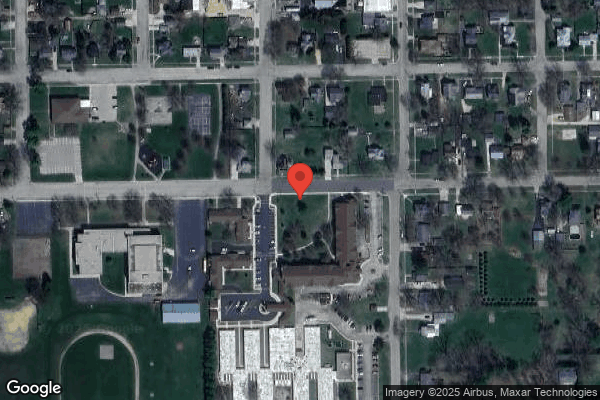
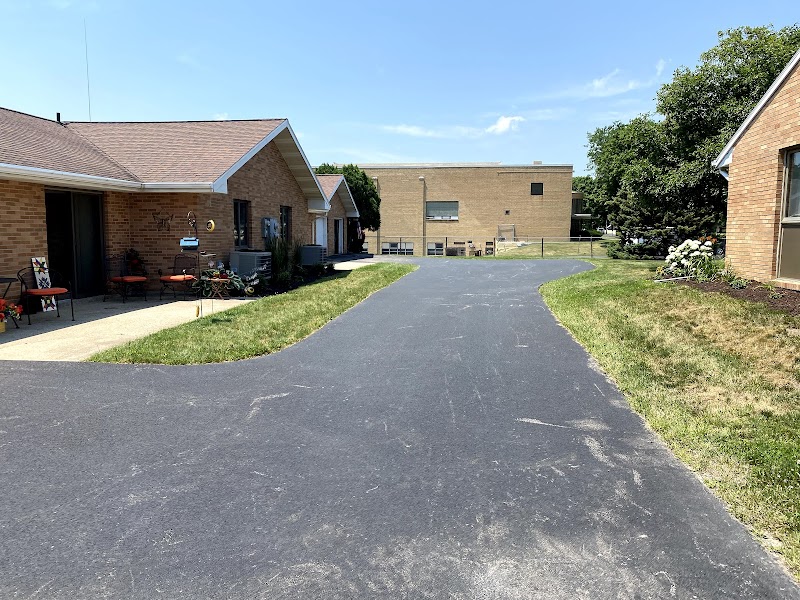
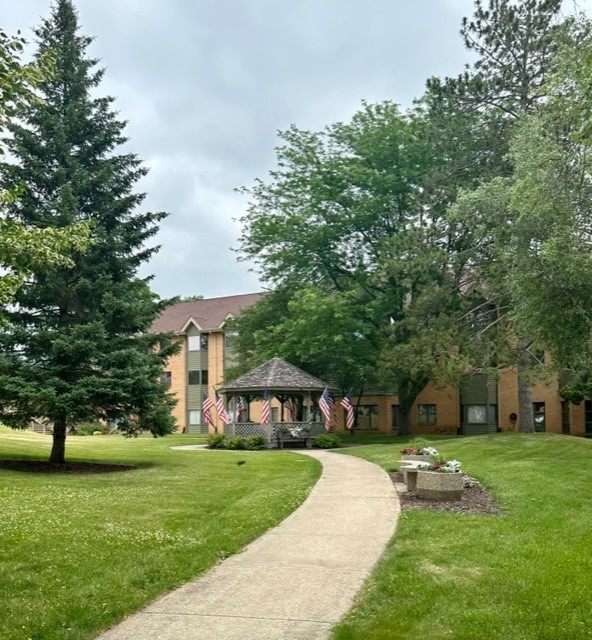
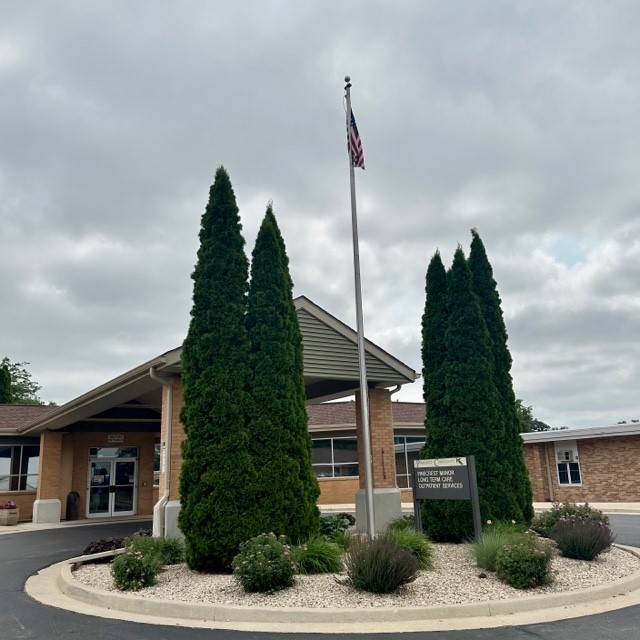
ALLURE OF PINECREST

414 SOUTH WESLEY AVENUE, MOUNT MORRIS, IL 61054 (815) 734-4103
For profit - Limited Liability company 125 Beds ALLURE HEALTHCARE SERVICES Data: November 2025 1 Immediate Jeopardy citation
Trust Grade
8/100
#212 of 665 in IL
Last Inspection: April 2025

Within standard 12-15 month inspection cycle. Federal law requires annual inspections.

Overview

Allure of Pinecrest in Mount Morris, Illinois has a Trust Grade of F, indicating significant concerns about the facility's quality of care. Ranking #212 out of 665 facilities in Illinois places it in the top half, while being #1 out of 6 in Ogle County suggests it is the best option locally. However, the facility's trend has been stable with 10 issues reported in both 2024 and 2025, which raises concerns about persistent problems. Staffing is a weakness, receiving a 2 out of 5 stars, with a turnover rate of 41%, which is below the state average but still indicates instability. Additionally, the facility has incurred $181,334 in fines, which is higher than 78% of other Illinois facilities, suggesting ongoing compliance issues. Specific incidents highlight serious concerns; for example, a resident was not provided necessary lab work, leading to a re-hospitalization for fluid overload and heart issues. Another resident experienced significant weight loss due to a failure to provide ordered nutritional supplements. While the facility does provide some RN coverage, it is below the majority of state facilities, indicating potential gaps in care that could put residents at risk. Overall, families should weigh these serious weaknesses against the facility's strengths and local ranking when considering Allure of Pinecrest for their loved ones.

Trust Score
F
8/100
In Illinois
#212/665
Top 31%
Safety Record
High Risk
Review needed
Inspections
Holding Steady
10 → 10 violations
Staff Stability
○ Average
41% turnover. Near Illinois's 48% average. Typical for the industry.
Penalties
✓ Good
$181,334 in fines. Lower than most Illinois facilities. Relatively clean record.
Skilled Nurses
○ Average
Each resident gets 30 minutes of Registered Nurse (RN) attention daily — about average for Illinois. RNs are the most trained staff who monitor for health changes.
Violations
⚠ Watch
27 deficiencies on record. Higher than average. Multiple issues found across inspections.
★★★☆☆
3.0
Overall Rating
★★☆☆☆
2.0
Staff Levels
★★☆☆☆
2.0
Care Quality
★★★☆☆
3.0
Inspection Score
Stable
2024: 10 issues
2025: 10 issues

The Good

  • Full Sprinkler Coverage · Fire safety systems throughout facility
  • No fines on record
  • Staff turnover below average (41%)

    7 points below Illinois average of 48%

Facility shows strength in fire safety.

The Bad

3-Star Overall Rating

Near Illinois average (2.5)

Meets federal standards, typical of most facilities

Staff Turnover: 41%

Near Illinois avg (46%)

Typical for the industry

Federal Fines: $181,334

Well above median ($33,413)

Significant penalties indicating serious issues

Chain: ALLURE HEALTHCARE SERVICES

Part of a multi-facility chain

Ask about local staffing decisions and management

The Ugly 27 deficiencies on record

1 life-threatening 5 actual harm
Aug 2025 1 deficiency
CONCERN (D) 📢 Someone Reported This

A family member, employee, or ombudsman was alarmed enough to file a formal complaint

Potential for Harm - no one hurt, but risky conditions existed

Accident Prevention (Tag F0689)

Could have caused harm · This affected 1 resident

**NOTE- TERMS IN BRACKETS HAVE BEEN EDITED TO PROTECT CONFIDENTIALITY** Based on interview and record review, the facility failed to ensure the safety and supervision was maintained for 2 of 3 residen...

Read full inspector narrative →
**NOTE- TERMS IN BRACKETS HAVE BEEN EDITED TO PROTECT CONFIDENTIALITY** Based on interview and record review, the facility failed to ensure the safety and supervision was maintained for 2 of 3 residents (R1, R2) reviewed for elopement in the sample of 3. The findings include:On 8/6/2025 R1 was observed in the activity room, sitting in a recliner. R1 looked at surveyor and smiled when surveyor waved at him. R1 was observed at 3:46 PM in the dining room in another activity. R1 was sitting at a table with other residents and their family. R1 was smiling while sitting at the table. R2 was observed on 8/6/2025 sleeping while sitting up, on a couch on the 300 wing. R2 was observed on 8/7/2025 during the lunch meal eating. V2 (unit coordinator/social services) was sitting next to R2 encouraging intakes. R2 was observed being assisted with walking to his room and being provided personal cares. R2 was resistive to care at first, but staff were able to convince R2 to allow them to assist him. On 8/6/2025 at 3:07 PM, V3 (Licensed Practical Nurse-LPN) said she was not working when the incidents occurred. V3 said she was told R1 and R2 both got off the memory care unit. V3 said R1 and R2 both have a wander guard in place. The wander guards work for the main entrance to the memory care unit. They do not work for the exit doors. V3 said at the beginning of her shifts, she checks to make sure all the exit doors are secure and do not open when she pushes on them. V3 said she makes sure the light is blinking; that means the door is secure and locked. V3 said she makes sure the alarm sounds when the handle is pushed in. V3 said R2 is new to the facility and staff. He has been at the facility for less than a week and staff are all getting to know him. He walks a lot. Today he has been pushing the door. It will make the initial sound, and he would walk away from it. He has done it at least once, maybe a couple times. V3 said it was on second shift that R2 got out. She is not sure what shift R1 got out. V3 stated, I am a floor nurse. my job is to keep the residents on the unit as safe as possible.On 8/6/2025 at 3:30 PM, V2 (Memory Care Coordinator/Social Services) said she was not at the facility for either incident. V2 said both incidents happened on second shift. V2 said she wasn't aware of what all happened, or how they both got out. V2 said the exit doors on the memory care unit have a dual alarm and the bar alarm. The dual alarm is on the door and goes off when the door is opened. The bar alarm goes off when the bar is pushed on the door handle. V2 said she does not know what happened to allow both R1 and R2 to get out without the doors alarming. V2 said she knows R2 had triggered the alarm earlier, but she does not know how much later it was before he got out of the building. V2 said she does not know if the door was alarmed or not. V2 said she asked the nurse about R2's incident. V2 said she asked if the door alarm was set. V2 said the nurse said it was flashing and when the handle was pushed in, it alarmed. V2 said she was not sure about the details of when R1 got out of the building. V2 identified V11 (LPN) as the nurse on duty when R2 got out of the building. V2 said V11 is new to the facility. V2 identified V5 (LPN) as the nurse on duty when R1 got out of the building. On 8/6/2025 at 3:50 PM, V5 (LPN) said R1 got out of the building on 7/3/2025, after dinner, between like 6:00 -7:00 PM. V5 said there were certain times where R1 would start having episodes of confusion. R1 would get agitated easily. R1 thought he was supposed to be going home to his wife. V5 said that day we had to redirect him more frequently. R1 went to the end of hall 1, took his walker, banged it up against the door and set the alarm off. V5 said he (V5) was passing medications on hall 300. I heard the Activity Aide say the alarm was off and someone is trying to get outside. V5 said he and V12 (CNA) ran to the door. It was open. V5 said R1 was about 10-15 feet from the door. on the sidewalk. (V12) and I ran out to R1. V5 said they were able to easily redirect R1 back into the building and gave him his after-dinner snack. V5 said he has been told during reports that R1 has tried to get out before by banging his walker against the door and set the alarm off. V5 said the nurse must manually reset the door alarm, after the door is opened and it alarms. V5 demonstrated how the door alarm is reset. V5 said the light could be red but not blinking if the latch is not all the way shut. To reset the alarm, you put the key in, turn it, then you make sure the latch is on the inside of the door, and push on the door to make sure it does not come open. You remove the key. the light will be red at first, then if set right, it will start blinking. V5 said you push the handle in, and the door will beep. At 4:20 PM, V5 came up to this surveyor and said the Aide yelled alarm going off, not alarm is off.On 8/7/2025 at 8/7/25 at 8:39 AM, V8 (Activity Aide) said she has been an activity aide on the Terrace unit since Mid-May. V8 said she was working on 7/3/2025 when R1 got out of the building. V8 said it was between 7:00-8:00 pm. V8 said after dinner we went to the TV room. At first, (R1) was fine, but he gets overstimulated. V8 said R1 gets mad and wants to leave. V8 said she let V5 (LPN) know that R1 wanted to leave the TV room and V5 told her to let him go down the hall and we will watch him. V8 said she saw R1 go down hall 1. She did not see him for about 5 minutes, so she asked V5 if he had seen R1. He said no. V8 said she started looking in resident rooms on hall 1. As she got to the end of the hall, she saw the exit door was opened a crack. V8 said the alarm was not sounding. V8 said she looked out and saw R1 near the end of the sidewalk by the parking lot. V8 said she had her foot holding the door open. she asked R1 what he was doing and R1 said I'm going home. V8 said she kept trying to get him to come in and he said no. V8 said she opened the exit door and yelled for help. V12 (CNA) and V5 (LPN) came out a minute later. They came out the visitor door by the terrace entrance and came around the building. V8 said it took about a minute after they came out to get R1 to come inV8 said R1 gets aggressive at times and punches at staff. V8 said she was not informed R1 was an elopement risk. I'm not aware of an elopement list for residents. V8 said after she got off work, she reported the incident. V8 said it was about two hours after the incident occurred and she does not believe V5 had reported the incident to V1 yet. V8 said I'm guessing someone turned the alarm off and did not reset it, because they got tired of hearing it. V8 said she has seen R2 try to get out. He will push on the door handle, it beeps, and staff redirect him. V8 said a resident is an elopement risk if they wander and talk about wanting to leave.On 8/7/2025 at 4:09 PM, V12 (CNA) said she was working the night R1 got out of the building. V12 said she thinks she was in with another resident providing care. She thinks she was going out of the room to get something and saw R1 outside as she was going past the window. V12 said she let V5 (LPN) know, and they both went out there immediately. V12 said the alarm was not sounding. V12 said she was not aware that R1 was exit-seeking. V12 said she had been employed at the facility for 5 months, but she floats all over the building. V12 said a resident is an elopement risk if they wander. V12 said once we saw R1, he was easily redirected back into the building. I believe he was wearing jeans and a flannel shirt and shoes. V12 said R1 was still on the sidewalk when we went out to get him.R1's progress note dated 7/03/2025 21:27 written by V5 (LPN) showed, While assisting other patients to their bedrooms and CNAs also provide care for other patients in their bedrooms. The tv room staff member monitoring the patients, suddenly she heard exit door alarm sound off. She noted that a patient set the alarm off at one of the exits on the unit by opening a door while exit seeking. The patient then wandered out the door onto the sidewalk outside the door. The patient was 15 steps out the door on the sidewalk. I the Nurse was updated by the CNA, so we then both ran outside to the patient. We then redirected patient to come back into the building and he agreed. Patient had on his shoes and was using his walker with a steady gait and no injuries. Patient is confused and states where am I. Assisted patient to a recliner in the TV room, where a staff member could supervise patient's behaviors and exit seeking attempts. Patient stated where am I, and when can I go home. Offered to toilet the patient and he stated No, I don't have to use the bathroom. Patient assisted back into building by using redirection. Educated the patient on safety and educated patient that exit when opened will set off alarms. Patient unable to learn d/t diminished cognitive skills. Assisted Back to his recliner. Re-locked exit door and set alarm again and alarm is activated and functional. Will continue to monitor. Please see nurse's notes for more details. R1's progress note dated 7/2/2025 showed he was exit-seeking. R1's facility assessment dated [DATE] showed he had severe cognitive impairment, had wandering behaviors daily, used a wheelchair or walker for ambulation, and required supervision or touching assist with walking. R1's care plan initiated on 12/6/2024 showed he was at risk for wandering/Elopement.R1's Elopement Risk Assessments dated 12/6/2024, 3/12/2025, 7/7/2025 and 8/6/2025 all showed he was at risk for elopement.R1's progress note dated 7/03/2025 21:27 written by V5 (LPN) showed, While assisting other patients to their bedrooms and CNAs also provide care for other patients in their bedrooms. The tv room staff member monitoring the patients, suddenly she heard exit door alarm sound off. She noted that a patient set the alarm off at one of the exits on the unit by opening a door while exit seeking. The patient then wandered out the door onto the sidewalk outside the door. The patient was 15 steps out the door on the sidewalk. I the Nurse was updated by the CNA, so we then both ran outside to the patient. We then redirected patient to come back into the building and he agreed. Patient had on his shoes and was using his walker with a steady gait and no injuries. Patient is confused and states where am I. Assisted patient to a recliner in the TV room, where a staff member could supervise patient's behaviors and exit seeking attempts. Patient stated where am I, and when can I go home. Offered to toilet the patient and he stated No, I don't have to use the bathroom. Patient assisted back into building by using redirection. Educated the patient on safety and educated patient that exit when opened will set off alarms. Patient unable to learn d/t diminished cognitive skills. Assisted Back to his recliner. Re-locked exit door and set alarm again and alarm is activated and functional. Will continue to monitor. Please see nurse's notes for more details. R1's progress note dated 7/2/2025 showed he was exit-seeking. R1's facility assessment dated [DATE] showed he had severe cognitive impairment, had wandering behaviors daily, used a wheelchair or walker for ambulation, and required supervision or touching assist with walking. R1's care plan initiated on 12/6/2024 showed he was at risk for wandering/Elopement.R1's Elopement Risk Assessments dated 12/6/2024, 3/12/2025, 7/7/2025 and 8/6/2025 all showed he was at risk for elopement.On 8/6/2025 at 4:25 PM, V6 and V7 (maintenance) tested the alarms on the four exit doors on the memory care unit. V7 said they have not figured out what happened when R1 got out. Maybe someone went out and forgot to reset the alarm. V7 said the exit door on wing 1 is not a normal passage door. V7 said they tested all the doors the next day on the unit and the alarms worked properly. V6 pushed on the handle to the exit door on wing 1 and the alarm beeped. When he opened the door, the alarmed sounded. The wing 1 exit door opened onto a sidewalk that went to the terrace entrance parking lot. Between 4:34 PM-4:40 PM the alarms for the exit doors on wings 2, 3, and 4 were observed. All the doors alarmed when the door was opened. Wing 4 exit door opened to a grassy area, then gravel area, then more grass that led up to the apartments next door. V7 said he is not sure where R2 was found, but it was somewhere between the exit door and the apartments next door. V6 said the facility has ordered new dual alarms because the only one that worked properly when maintenance checked the next day was the dual alarm on wing 1. V6 said the door alarms were working, but not the secondary alarms that were in place. Waiting on new alarms to be delivered. On 8/1:32 PM, V11 (LPN) said she was the nurse working on the terrace unit on 8/3/2025. V11 said R2 wanders. He has terminal restlessness. He can be exhausted and still walk. V11 said she heard the door alarm go off for hall 4. V11 said she reset the alarm, pushed on the door and the door did not give. the red light was blinking. V11 said later, she was informed by another nurse that someone from the apartments behind the terrace called and said an older man was walking behind the terrace. V11 said she went around the building and walked the perimeter. V11 said she saw R2 walking on the sidewalk about 10-15 feet from the hall 4 exit door. V11 said she is a terrible judge of distance. V11 said it was about halfway between hall 3 and hall 4 exit doors. V11 said R2 was just walking. He had on shoes. gray lounge pants and a t-shirt. V11 said it was probably between 7:30-8:00 PM. V11 said the alarm did not go off when R2 went out. V11 said the wing 4 door alarm was not working properly. V11 said she did not know if it was due to the heat/humidity that the door stuck in the jam. V11 said it was solid in the door jam, but there was a small space between the jam and the door and for some reason it knew the door was in the jam but not far enough to alarm. V11 said she walked with R2 around the courtyard and sat on the bench for a few minutes. V11 said R2 wanted to walk again so they walked and sat on the next bench. V11 said she knocked on the window and told a staff member to bring her a wheelchair. V11 said R2 always tries to get out of building to go home. To go to dinner with his kids, or to go to work. V11 said R2 is always going somewhere. On 8/7/2025 at 10:14 AM, V9 (CNA) said she works on the terrace unit 90% of the time. I worked on 8/3/2025 on the terrace. I left at 6:00 PM. V9 said R1 and R2 are both elopement risks. R1 has said he wants to go home. V9 said she has seen R2 push on the exit doors. V9 said she was not sure if there was a list on the terrace of residents at risk of elopement. V9 said R1 and R2 both have a wander guard. The wander guard only works on the main entrance to the Terrace unit. V9 said Sunday evening she got a message saying she had to get marked off on the door again. V9 said the last one time she recalls being marked off for training on the exit doors was about a year and a half ago, adding her timing could be off a little. R2's progress note dated 8/2/2025 showed he was ambulating all over unit, undressing and setting off door alarms. Very difficult to redirect. Did take his medications tonight. Would not stay put to eat any supper. R2's 7/30/2025 BIMS evaluation showed R2 had severe cognitive impairment. R2's 7/30/2025 Elopement assessment showed he had wandering behaviors that could affect the privacy of others, and he was at risk of elopement. R2's Elopement Risk Evaluation dated 7/30/2025 showed he was at risk of elopement. R2's care plan initiated 7/30/2025 showed he demonstrates behaviors that may be interpreted as wandering, pacing, roaming, exit-seeking. Symptoms are manifested by pacing, roaming, or wandering in and out of peers' rooms. R2's progress notes dated 8/3/2025 at 10:58 AM showed he was pacing the unit for extended periods of time, anxiousness, and being easily distracted impair his ability to sit for extended periods of time.R2's progress note dated 8/3/2025 showed a skilled evaluation was done for R2 at 9:39 PM. No documentation of R2's elopement was in the evaluation, or in the progress notes on 8/3/2025.The facility's investigation for R2's 8/3/2025 incident showed typed statements from V11 and V19 (CNA) saying the alarm had been sounding. Neither statement was signed by V11 or V19. Neither statement was handwritten by V11 or V19 (V11 said in interview with this surveyor that the alarm was not sounding). The facility's policy and procedure titled Elopements and Wandering Residents, with a revision date of 12/1/2024, showed, This facility ensures that residents who exhibit wandering behavior and/or are at risk for elopement receive adequate supervision to prevent accidents, and receive care in accordance with their person-centered plan of care addressing the unique factors contributing to wandering or elopement risk . The policy defines elopement as occurring when a resident leaves the premises. The policy showed 1. The facility is equipped with door locks/alarms to help avoid elopements. 2. Alarms are not a replacement for necessary supervision. Staff are to be vigilant in responding to alarms in a timely manner. the policy and procedure showed the procedure for locating a missing resident included a. Any staff member becoming aware of a missing resident will alert personnel using facility approved protocol. (e.g. internal alert code). B. The designated facility staff will look for the resident. C. If the resident is not located in the building or on the grounds, Administrator or designee will notify the police department and serve as the designated liaison between the facility and the police department. The Administrator or designee should also notify the company's corporate office. D. DON (Director of Nursing) or designee shall notify the physician and family member or legal representative. E. Police will be given a description and information about the resident; include any photos. F. All parties will be notified of the outcome once the resident is located. G. Appropriate reporting requirements to the State Survey agency shall be conducted.
Apr 2025 9 deficiencies
CONCERN (D)

Potential for Harm - no one hurt, but risky conditions existed

Deficiency F0582 (Tag F0582)

Could have caused harm · This affected 1 resident

Based on observation, interview, and record review the facility failed to ensure residents were issued an advanced beneficiary notice form. This applies to 3 of 3 residents (R9, R83, and R289) reviewe...

Read full inspector narrative →
Based on observation, interview, and record review the facility failed to ensure residents were issued an advanced beneficiary notice form. This applies to 3 of 3 residents (R9, R83, and R289) reviewed for beneficiary notices in the sample of 19. The findings include: 1. R9's NOMNC (Notice of Medicare Non-Coverage) form signed on 3/6/25 shows R9's last covered day of services from Medicare Part A was 3/8/25. Facility completed SNF (Skilled Nursing Facility) Beneficiary Protection Notification Review form for R9 shows that R9 was provided a NOMNC form but was not provided an ABN (Advance Beneficiary Notice) form. R9's census profile shows R9 still resides in the facility and is using personal insurance is R9's payer source. 2. R83's NOMNC (Notice of Medicare Non-Coverage) form signed on 2/21/25 shows R83's last covered day of services from Medicare Part A was 2/23/25. Facility completed SNF (Skilled Nursing Facility) Beneficiary Protection Notification Review form for R83 shows that R83 was provided a NOMNC form but was not provided an ABN (Advance Beneficiary Notice) form. R83's census profile shows R83 discharged from the facility on 2/28/25 and had a payer source of private pay from 2/24/25 until 2/27/25. 3. R289's NOMNC (Notice of Medicare Non-Coverage) form signed on 3/14/25 shows R9's last covered day of services from Medicare Part A was 3/16/25. Facility completed SNF (Skilled Nursing Facility) Beneficiary Protection Notification Review form for R289 shows that R289 was provided a NOMNC form but was not provided an ABN (Advance Beneficiary Notice) form. R289's census profile shows R289 still resides in the facility and is using private pay as R289's payer source. On 4/30/25 at 12:18 PM, V22 (Social Services Director) said V22 and V24 (Memory Care Coordinator/Social Services) provide the residents with the NOMNC forms. When this surveyor asked V22 and V24 about their ABN form, V22 stated that the form looked familiar, but V22 does not provide it to the residents and V24 stated V24 has never seen the ABN form before. V22 stated V23 (Business Office Manager) would be the one to go over the financial aspect of the discharge process with residents. On 4/30/25 at 12:26 PM, V23 said he does not complete or provide the residents with an ABN form. V23 did say he goes over the financial portion of the discharge, but V23 does not document these interactions anywhere. On 4/30/25 at 12:34 PM, V24 said when V24 provides the residents with the NOMNC form, V24 is not in attendance. Facility Advance Beneficiary Notices policy dated 12/23 states, It is the policy of this facility to provide timely notices regarding Medicare eligibility and coverage . 5. The current CMS (Centers for Medicare and Medicaid)-approved version of the forms shall be used at the time of issuance to the beneficiary (resident or resident representative). Contents of the form shall comply with related instructions and regulations regarding the use of the form. a. For Part A items and services, the facility shall use the Skilled Nursing Facility Advance Beneficiary Notice (SNFABN), Form CMS-1005.
CONCERN (D)

Potential for Harm - no one hurt, but risky conditions existed

ADL Care (Tag F0677)

Could have caused harm · This affected 1 resident

**NOTE- TERMS IN BRACKETS HAVE BEEN EDITED TO PROTECT CONFIDENTIALITY** Based on observation, interview, and record review, the facility failed to ensure activity of daily living (ADL) assistance was ...

Read full inspector narrative →
**NOTE- TERMS IN BRACKETS HAVE BEEN EDITED TO PROTECT CONFIDENTIALITY** Based on observation, interview, and record review, the facility failed to ensure activity of daily living (ADL) assistance was provided for a dependent resident for 1 of 19 residents (R40) reviewed for ADLs in the sample of 19. The findings include: R40's admission Record dated April 29, 2025, shows she was admitted to the facility on [DATE], with diagnoses including major depressive disorder, osteoarthritis, and alzheimer's disease. R40's Care Plan initiated January 6, 2025, shows R40 has an ADL self-care performance deficit. On April 28, 2025, at 10:06 AM, V4 and V5 Certified Nursing Assistants (CNA) went into R40's room to provide incontinence care. R40 told V4 and V5, I'm wet. V4 CNA told this surveyor that R40 was a get up. Meaning R40 should have been gotten up by night shift early in the morning. V4 removed R40's incontinence brief. There was a thick incontinence pad inside of R40's incontinence brief. Both the pad and R40's incontinence brief were saturated with dark urine from front to back. V4 said she did not know why R40 had an incontinence pad plus an incontinence brief on. V4 also said she does not know when R40's incontinence brief was last changed. On April 29, 2025, at 12:28 PM, V7 CNA said incontinence care should be done at least every two hours so the residents skin stays dry. It helps to prevent sores. V7 said an incontinence pad should not be place with an incontinence brief. R40's Minimum Data Set (MDS) dated [DATE], shows, she does not have any history of refusing cares. R40 is occasionally incontinent of urine and is dependent on staff for toileting and personal hygiene. The facility's Activities of Daily Living (ADLS) policy revised December 1, 2024, shows, A resident who is unable to carry out activities of daily living will receive the necessary services to maintain good nutrition, grooming, and personal and oral hygiene.
CONCERN (D)

Potential for Harm - no one hurt, but risky conditions existed

Quality of Care (Tag F0684)

Could have caused harm · This affected 1 resident

**NOTE- TERMS IN BRACKETS HAVE BEEN EDITED TO PROTECT CONFIDENTIALITY** Based on observation, interview and record review the facility failed to initiate a pre-surgical order for a resident prior to h...

Read full inspector narrative →
**NOTE- TERMS IN BRACKETS HAVE BEEN EDITED TO PROTECT CONFIDENTIALITY** Based on observation, interview and record review the facility failed to initiate a pre-surgical order for a resident prior to his abdominal surgery. The facility failed to implement treatment orders for a resident with compression fractures of her spine. These failures apply to 2 of 19 residents (R43 and R390) reviewed for quality of care in the sample of 19. The findings include: 1. R43's admission Record showed R43 was admitted to the facility on [DATE] with diagnoses of dementia, Alzheimer's Disease, atrial fibrillation (a-fib), and long-term use of anticoagulation medications. R43's current care plan showed R43 was cognitively impaired related to his diagnoses of dementia and Alzheimer's Disease. R43's December 2024 Medication Administration Record (MAR) showed R43 was prescribed Pradaxa 150mg (milligrams), give one tablet twice a day for anticoagulation therapy related to his diagnosis of a-fib. On 4/28/25 at 1:15 PM, V14 (Family of R43) stated, My biggest concern is the lack of communication at the facility. (R43) was a scheduled to have (abdominal) hernia surgery in December (2024). It was originally scheduled for December 11th (2024). When I visited him a few days before the surgery, I found out that they never stopped his blood-thinning medication. They were supposed to stop the medication for three days prior to his surgery. (V15 Nurse for R43's Surgeon) faxed all his pre-op (operation) orders and instructions to them (the facility) at the end of November (2024). Since they didn't stop his medication, we had to reschedule (R43's) surgery. A fax dated 11/27/24, sent from R43's surgeon's office to a fax number at the facility, contained R43's pre-op instructions, orders, and date of the surgery. It showed R43's hernia surgery was scheduled for 12/11/24. The fax showed, Surgery date and pre-op instructions .Please hold (R43's) Pradaxa for 3 days prior to surgery . A progress note dated 12/9/24 for R43 showed R43's hernia surgery was rescheduled for 12/13/24 due to R43's Pradaxa medication not being held three days prior (12/8/24-12/11/24) to his original surgery date of 12/11/24. R43's December 2024 MAR showed R43 was given both doses of his Pradaxa on 12/8/24 and 12/9/24. On 4/29/25 at 12:50 PM, V1 Administrator stated, As far as I can tell, it looks like the doctor's office faxed us (R43's) pre-op date and instructions on November 27th (2024) but we either couldn't find them or didn't get them. There are many (fax) machines here in the facility They re-faxed the orders to us on December 9th (2024) . On 4/30/25 at 10:52 AM, V8 Assistant Director of Nursing was shown the fax, dated 11/27/24 from R43's surgeons office, along with the number of the fax that R43's orders were sent to on that date. V8 stated, That's the fax number to the machine by where our receptionist sits. On 4/29/25 at 10:10 AM, V15 (Nurse for R43's Surgeon) stated she herself faxed R43's pre-op orders, instructions, and confirmed surgery date of 12/11/24 to the facility on [DATE]. On 4/30/25 at 8:23 AM, V15 (Nurse for R43's Surgeon) stated, I know someone from the facility had gotten my initial fax (on 11/27/24) because someone called from the facility on December 6th (2024) to schedule (R43's) two-week post-op appointment for his December 11th surgery. I have it documented in (R43's) chart . V15 was unable to remember the name of the employee from the facility that called on 12/6/24. V15 stated, On December 9th, (V14 Family of R43) called me to tell me they had never held his Pradaxa, so we had to reschedule his surgery. I called the facility and whoever I spoke with told me the fax that I had originally sent had gone to some reception desk at the facility. I then re-faxed the information I had initially sent to the facility on November 27th, which showed a new surgery date of December 13th . 2. R390's admission Record showed R390 was admitted to the facility on [DATE]. R390's hospital discharge instructions and orders dated 4/4/25 showed R390 had a diagnosis of compression fractures to her spine. The orders showed R390 was admitted to the facility with an order for R390 to wear a back brace, for treatment of her spinal fractures, when out of bed. R390's April 2025 Order Summary Report showed an order for R390 To wear back brace when OOB (out of bed) and active. Back brace to be off when in bed. On 4/28/25 at 8:57 AM, R390 was seated in the recliner in her room. No brace was noted to R390's back. On 4/28/25 at 12:30 PM, R390 remained seated in the recliner in her room. No brace was noted to R390's back. On 4/29/25 at 9:00 AM, R390 was seated in the recliner in her room, visiting with family. No brace was noted to R390's back. On 4/29/25 at 9:15 AM, V17 Licensed Practical Nurse stated, (R390) does have a brace for her back she is supposed to wear when she is out of bed. I believe it's because she has fractures in her back. The facility's Consulting Physician/Practitioner Orders (undated) showed, Consulting physician/practitioner orders are those orders provided to the facility by a physician/practitioner other than the resident's attending physician or physician/practitioner who is acting on behalf of the attending physician . For consulting physician/practitioner orders received in writing or via fax, the nurse in a timely manner will . Follow facility procedures for verbal or telephone orders including noting the order, submitting to pharmacy, and transcribing to medication or treatment administration record .
CONCERN (D)

Potential for Harm - no one hurt, but risky conditions existed

Accident Prevention (Tag F0689)

Could have caused harm · This affected 1 resident

**NOTE- TERMS IN BRACKETS HAVE BEEN EDITED TO PROTECT CONFIDENTIALITY** 2. R40's admission Record dated April 29, 2025, shows she was admitted to the facility on [DATE], with diagnoses including bilat...

Read full inspector narrative →
**NOTE- TERMS IN BRACKETS HAVE BEEN EDITED TO PROTECT CONFIDENTIALITY** 2. R40's admission Record dated April 29, 2025, shows she was admitted to the facility on [DATE], with diagnoses including bilateral osteoarthritis of knees, anemia, major depressive disorder, osteoporosis, and alzheimer's disease. R40's Care Plan initiated December 30, 2024, shows R40 has had an actual fall related to poor balance and unsteady gait. Sensor alarm place in chair and bed for safety. R40 's Fall Risk Evaluation dated March 24, 2025; shows she has had 1-2 falls in the past three months. R40's gait/balance is not checked and does not contain a total fall risk score. On April 28, 2025, at 10:06 AM, V4 and V5 Certified Nursing Assistants (CNAs) transferred R40 from her bed to her chair. V4 and V5 were holding onto a gait belt, but R40 did not bear any weight on her legs. V4 and V5 transferred R40 to her wheelchair by lifting R40 via the gait belt. R40 needed to be scooted back into the wheelchair and V4 and V5 lifted R40 back by holding under her arms and her legs. R40's bed alarm did not sound when R40 was transferred into her wheelchair nor was a wheelchair alarm applied to her chair. R40's Skin Wound Notes dated March 31, 2025, shows R40 experienced a skin tear during a transfer. R40's Nurses notes show on April 24, 2025, R40 was lowered to the ground by a (CNA) while in the resident bathroom. Resident states her knees quit working. On April 28, 2025, R40 lost her balance during a shower and had to be assisted back in her shower chair by the CNA and R40 experienced another skin tear. On April 30, 2025, at 10:02 AM, V3 CNA said if a resident seems weak before transferring, then she notifies the nurse. V3 said if residents are not bearing weight, then the nurse and therapy needs to re-evaluate them. V3 said if a resident is not bearing weight, then the resident or staff could get injured. V3 said the R40 does not bear weight to her legs. V3 said that R40 has been a very tough transfer. The facility's Safe Resident Handling/Transfers policy revised on December 1, 2024, shows, It is the policy of this facility to ensure that residents are handled and transferred safely to prevent or minimize risks for injury and provide and promote a safe, secure and comfortable experience for the resident while keeping the employees safe in accordance with current standards and guidelines. The resident's mobility needs will be addressed on admission and reviewed quarterly, after a significant change in condition or based on direct care staff observations or recommendation. Based on observation, interview and record review the facility failed to ensure residents were transferred in a safe manner for 2 of 19 residents (R30 and R40) reviewed for safety and supervision in the sample of 19. The findings include: 1. R30's Fall Risk Evaluation dated 4/15/25 showed R30 was at risk for falls due to her history of falls, decreased muscular coordination, and use of ambulatory assistive devices. R30's Restorative assessment dated [DATE] showed R30 required the assistance of one staff member for transfers and toileting. On 4/28/25 at 9:45 AM, R30 was seated in a recliner in her room. R30 told V18 Certified Nursing Assistant (CNA) that she needed to go to the bathroom. V18 CNA transferred R30 from the recliner to a wheelchair by holding onto the waistband of R30's pants and lifting R30 out of the recliner. V18 then wheeled R30 into the bathroom. V18 transferred R30 from the wheelchair to the toilet by holding onto the waistband of R30's pants. No gait belt was used by V18 CNA for either of R30's transfers. On 4/29/25 at 11:35 AM, V19 CNA stated R30 requires the assist of one person for all transfers which means we use a gait belt when transferring her. The facility's Use of Gait Belt policy (undated) showed, It is the policy of this facility to use gait belts with residents that cannot independently ambulate or transfer for the purpose of safety .
CONCERN (D)

Potential for Harm - no one hurt, but risky conditions existed

Deficiency F0744 (Tag F0744)

Could have caused harm · This affected 1 resident

**NOTE- TERMS IN BRACKETS HAVE BEEN EDITED TO PROTECT CONFIDENTIALITY** Based on observation, interview, and record review, the facility failed to ensure residents with dementia received the appropria...

Read full inspector narrative →
**NOTE- TERMS IN BRACKETS HAVE BEEN EDITED TO PROTECT CONFIDENTIALITY** Based on observation, interview, and record review, the facility failed to ensure residents with dementia received the appropriate treatment and services to attain or maintain his or her highest practicable physical, mental, and psychosocial well-being for 2 of 12 residents (R73 and R76) reviewed for dementia care in the sample of 19. The findings include: 1. R73's admission Record dated April 29, 2025, shows R73 was admitted to the facility on [DATE], with diagnoses including neurocognitive disorder with lewy bodies, alzheimer's disease with early onset, anxiety disorder, major depressive disorder, dementia, and a history of falling. R73's Care Plan revised on November 1, 2024, shows, R73 exhibits resistance to cares: (refusing/resisting medication, refusing/resisting activities of daily living assistance, refusing/resisting food and/or fluids; refusing requests to get out of bed, refusing to cooperate with care plan objectives) related to psychiatric illness, severe mental illness, dementia, fear/paranoia, misunderstanding caregiver requests. Create a warm, safe, and inviting environment for care. Emphasize dignity. Emphasize soothing, kind, slow, and compassionate speech. Give resident time to respond verbally and physically. If attempts to redirect are unsuccessful, try switching staff. Remind resident that they are safe, and staff will protect them. Staff to have a wheelchair with them when resident is showing signs of being resistive to cares. On April 28, 2025, at 11:14 AM, V5 Certified Nursing Assistant (CNA) said, Come on [R73] lets go to the bathroom. V5 held R73 hand and guided him to stand up. V4 CNA was standing behind R73. R73 was planting his feet and not walking. V5 was attempting to slowly guide R73 by holding his hand. V4 had both of her hands to R73's back and was pushing R73 towards the bathroom with both of her hands and her body. It took V4 and V5 more than a few minutes to walk R73 to the bathroom as he did not want to walk. On April 29, 2025, at 12:28 PM, V7 CNA said if R73 is not walking somewhere, then she would get a chair so he could sit down. V7 said time should be given to R73 and then re-approach him later. V7 said she sometimes offers R73 snacks or dances with him to help him reach his destination. V7 said it takes R73 a while to get to a destination, he just needs time. 2. R76's admission Record dated April 29, 2025, shows she was admitted to the facility on [DATE], with diagnoses including dementia, anxiety, contusion of scalp, restlessness and agitation, and dementia. R76's Care Plan initiated October 10, 2024, shows R76 may exhibit resistance to cares: Create a warm, safe, and inviting environment for care. Emphasize dignity. If attempts to redirect are unsuccessful, try switching staff. Staff will assist with ambulation as needed with use of assistive devices and give the resident as many choices as possible about care and activities was initiated September 27, 2024. On April 28, 2025, at 11:25 AM, R76 was sitting in the units dining room. R76 kept trying to stand up and walk. V4 CNA stood behind R76, place V4's hands onto R76's shoulders and said hey down and guided R76 to sit back down into the chair and walked away. At 11:29 AM, R76's was continuing to stand and try to walk. The unit manager took R76 for a walk around the unit and then brought R76 back to the dining room and R76 sat down to eat her lunch. On April 29, 2025, at 8:30 AM, V7 CNA was walking the unit with R76 because R76 was continuing to stand up and attempting to walk. On April 29, 2025, at 12:28 PM, V7 said if R76 is trying to stand then staff should try and involve R76 in an activity or take R76 for a walk. The facility's Dementia Care Policy dated December 1, 2024, shows, It is the policy of this facility to provide the appropriate treatment and services to every resident who displays signs of or is diagnoses with dementia, to meet his or her highest practicable physical, mental, and psychosocial well-being. Individualized, non-pharmacological approaches to care will be utilized, to include meaningful activities aimed at enhancing the resident's well-being.
CONCERN (D)

Potential for Harm - no one hurt, but risky conditions existed

Drug Regimen Review (Tag F0756)

Could have caused harm · This affected 1 resident

**NOTE- TERMS IN BRACKETS HAVE BEEN EDITED TO PROTECT CONFIDENTIALITY** Based on interview and record review, the facility failed to address an irregularity found by the pharmacist during the monthly ...

Read full inspector narrative →
**NOTE- TERMS IN BRACKETS HAVE BEEN EDITED TO PROTECT CONFIDENTIALITY** Based on interview and record review, the facility failed to address an irregularity found by the pharmacist during the monthly medication review for 1 of 5 residents (R73) reviewed for drug regimen review in the sample of 19. The findings include: R73's admission Record dated April 29, 2025, shows R73 was admitted to the facility on [DATE] with diagnoses including neurocognitive disorder with lewy bodies, alzheimer's disease with early onset, anxiety disorder, major depressive disorder, dementia, and a history of falling. R73's Medication Regimen Review Prescriber Recommendation (MRR) dated March 11, 2025, shows, Resident is receiving quetiapine and furosemide but has not had any recent labs evaluated. Please consider: CMP (Comprehensive Metabolic Panel) now and every six months thereafter. The recommendation was signed off by the physician and says the order was faxed to lab on March 21, 2025, by a licensed practical nurse. R73's Medication Regimen Review Prescribe Recommendation dated April 15, 2025, shows, Lab results missing: Prescriber checked to get CMP now and every six months per MRR recommendation from March 2025. However, results are not available, and lab order has not been entered. Please enter order if still indicated by provider. The facility's Advanced Practical Nurse signed off the order and wrote April 21, 2025: Schedule for next lab day if not already done. The facility staff signed, Ordered for April 23, 2025. R73's Order Summary Report dated April 30, 2025, +\| which includes discontinued orders show that no CMP lab draw was ordered in March 2025. An + 06.2 3++3602 |order for CMP to be completed next available lab day and every six months was entered on April 21, 2025. On April 30, 2025, at 10:45 AM, V8 Assistant Director of Nursing (ADON) said she did not see an order entered for R73's labs for March. V8 said the order was entered April 2025. The facility's Medication Regimen Review policy revised December 1, 2024, shows, Facility staff shall act upon all recommendations according to procedure for addressing medication regimen review irregularities.
CONCERN (D)

Potential for Harm - no one hurt, but risky conditions existed

Deficiency F0761 (Tag F0761)

Could have caused harm · This affected 1 resident

**NOTE- TERMS IN BRACKETS HAVE BEEN EDITED TO PROTECT CONFIDENTIALITY** Based on observation, interview, and record review, the facility failed to ensure a resident's medication labeling was legible f...

Read full inspector narrative →
**NOTE- TERMS IN BRACKETS HAVE BEEN EDITED TO PROTECT CONFIDENTIALITY** Based on observation, interview, and record review, the facility failed to ensure a resident's medication labeling was legible for 1 of 19 residents (R32) reviewed for medication storage and labeling in the sample of 19. The findings include: R32's Order Summary Report dated April 30, 2025, shows she was admitted to the facility on [DATE], with diagnoses including heart disease, unsteadiness on feet, convulsions, dementia, alzheimer's disease, and anxiety disorder. On April 30, 2025, at 9:53 AM, there was a blue bottle that contained white round pills in the locked memory care unit medication cart. R32's name was legible on the pill bottle label. The medication name was illegible and so was the full dispensed date. V20 Licensed Practical Nurse said she did not know what medication it was, but believed it was a hospice medication. On April 30, 2025, at 10:45 AM, V8 Assistant Director of Nursing (ADON) said medications should be legible and if they are not, then it should be replaced. The facility's Labeling of Medications and Biologicals Policy revised December 1, 2024, shows, All medications and biologicals used in the facility will be labeled in accordance with current state and federal regulations to facilitate consideration of precautions and safe administration of medications. Medication labels must be legible at all times. Any medication label that is soiled, incomplete, illegible, worn, of makeshift must be returned and replaced by the issuing pharmacy, not merely covered.
CONCERN (D)

Potential for Harm - no one hurt, but risky conditions existed

Infection Control (Tag F0880)

Could have caused harm · This affected 1 resident

Based on observation, interview, and record review the facility failed to ensure staff wore the required personal protective equipment (PPE) when providing care to a resident on enhanced barrier preca...

Read full inspector narrative →
Based on observation, interview, and record review the facility failed to ensure staff wore the required personal protective equipment (PPE) when providing care to a resident on enhanced barrier precautions for 1 of 19 residents (R63) reviewed for infection control in the sample of 19. The findings include: R63's face sheet printed on 4/28/25 indicated R63 had a feeding tube. On 04/28/25 at 09:35 AM, there was a sign on R63's door indicating R63 was on enhanced barrier precautions. The sign indicated staff must wear gloves and gowns for high-contact resident care activities such as changing an incontinence brief or assisting with toileting. On 04/28/25 at 09:35 AM, R63 was in bed connected to his tube feeding. V10 (Certified Nursing Assistant- CNA) and V11 (CNA) entered the room to provide incontinence care and changed R63's incontinence brief as it was soiled with urine. V10 and V11 had gloves on but no gown. V10 and V11 both touched the tubing of R63's tube feeding while providing incontinence care. On 04/28/25 at 10:01 AM, V10 said for a resident on enhanced barrier precautions staff should wear gloves and gowns when providing care. On 04/29/25 at 11:29 AM, V8 (Infection Control Nurse) said a resident with an implanted medical device such as a tube feeding would be on enhanced barrier precautions. V8 said staff should wear gloves and gowns when providing incontinence care to a resident on enhanced barrier precautions. R63's Care Plan with an initiated date of 5/7/24 showed R63 required enhanced barrier precautions because of a tube feeding. Listed under interventions was for staff to wear the necessary PPE when preforming high contact care activities. The facility's Enhanced Barrier Precautions policy with a reviewed date of 12/1/24 showed enhanced barrier precautions refer to an infection control intervention designed to reduce transmission of multidrug-resistance organisms that employs targeted gown, and gloves use during high contact resident care activities. High contact care activities included changing briefs.
CONCERN (E)

Potential for Harm - no one hurt, but risky conditions existed

Deficiency F0805 (Tag F0805)

Could have caused harm · This affected multiple residents

Based on observation, interview, and record review the facility failed to ensure pureed pork was pureed to a pudding-like consistency. This applies to 4 of 4 residents (R390, R60, R339, R1) reviewed f...

Read full inspector narrative →
Based on observation, interview, and record review the facility failed to ensure pureed pork was pureed to a pudding-like consistency. This applies to 4 of 4 residents (R390, R60, R339, R1) reviewed for pureed diets in the sample of 19. The findings include: Facility provided list of residents on a pureed diet shows R390, R60, R339, and R1 receive pureed diets. On 4/28/25 at 10:04 AM, V13 (Cook) started the puree process for the pureed pork. V13 measured out and weighed enough pork for four servings of pureed pork. V13 placed the pork into a blender pitcher with broth and started to puree the pork. At 10:09 AM, V13 stopped the blender and tested the consistency. V13 said it wasn't quite ready at that time and that the pork tends to be a little stringy and more difficult to puree. At 10:10 AM, V13 stopped the blender, tested it a second time and said it was much better. V13 placed the pureed pork into a food service pan and into the oven. On 4/28/25 at 10:11 AM, the first finished batch of pureed pork appeared to be lumpy as V13 scooped it into the food service pan. On 4/28/25 at 10:14 AM, V13 began the second batch of pureed pork and weighed out enough for three servings. V13 placed the pork into a blender pitcher with broth and started to puree the pork. At 10:15 AM, V13 stopped the blender and tested the pureed pork and said it was not quite ready. At 10:16 AM, V13 stopped the blender, tested the pureed pork again, and said it was good. On 4/28/25 at 9:58 AM, V13 said the consistency of the purees should be a pudding-like consistency. On 4/28/25 at 1:00 PM, the facility provided test tray of pureed pork was stringy, not fully blended, and required chewing. On 4/28/25 at 1:12 PM, V12 (Food Service Director) agreed that the pureed pork was stringy and not of an appropriate texture. Facility Puree Food Preparation policy dated 12/1/2023 states, . Puree means that all food has been ground, pressed and/or strained to a consistency of a soft, smooth, thick paste similar to a thick pudding.
Oct 2024 1 deficiency
CONCERN (D) 📢 Someone Reported This

A family member, employee, or ombudsman was alarmed enough to file a formal complaint

Potential for Harm - no one hurt, but risky conditions existed

Infection Control (Tag F0880)

Could have caused harm · This affected 1 resident

Based on observation, interview, and record review the facility failed to ensure staff wore the required personal protective equipment for a resident on enhanced barrier precautions for 2 of 3 residen...

Read full inspector narrative →
Based on observation, interview, and record review the facility failed to ensure staff wore the required personal protective equipment for a resident on enhanced barrier precautions for 2 of 3 residents (R2 and R3) reviewed for infection control in the sample of 3. The findings include: 1. R2's Face Sheet printed on 10/15/24 showed R2 had a diagnosis of skin cancer to his left ear. On 10/15/24 at 10:58 AM, V6 (Wound Care Nurse) provided wound care to R2's left ear. R2's left ear had a redden opened area smaller than a pea. R2 stated the wound on his left ear was from skin cancer. While providing wound care, V6 had on gloves but no gown. V6 cleansed the wound, applied the ordered cream, and covered the wound with a dressing. 2. R3's Order Summary Report printed on 10/15/24 showed R3 had an order for a cream to be applied to her right great toe and covered with a band aid. On 10/15/24 at 11:14 AM, V6 provided wound care to R3's right great toe. The bottom of R3's right great toe had a wound that was dark and smaller than 0.5 centimeters. While providing wound care, V6 had on gloves but no gown. V6 cleansed the wound, applied the ordered cream, and covered the wound with a band aid. On 10/15/24 at 12:47 PM, V9 (Infection Control Preventionist) stated residents with wounds, not including unopen surgical wounds, are on enhanced barrier precautions. V9 stated staff should wear gloves and gowns when providing wound care. The facility's Enhanced Barrier Precautions with an implemented date of 5/1/24 showed enhanced barrier precautions refer to infection control intervention designed to reduce transmission of organisms that employs targeted gown and gloves use during high contact resident care activities. The same policy showed high contact activities included wound care to any skin opening requiring a dressing.
Sept 2024 1 deficiency 1 Harm
SERIOUS (G) 📢 Someone Reported This

A family member, employee, or ombudsman was alarmed enough to file a formal complaint

Actual Harm - a resident was hurt due to facility failures

Quality of Care (Tag F0684)

A resident was harmed · This affected 1 resident

**NOTE- TERMS IN BRACKETS HAVE BEEN EDITED TO PROTECT CONFIDENTIALITY** Based on interview and record review the facility failed to obtain the necessary weights on residents (R1, R5) with diagnosis of...

Read full inspector narrative →
**NOTE- TERMS IN BRACKETS HAVE BEEN EDITED TO PROTECT CONFIDENTIALITY** Based on interview and record review the facility failed to obtain the necessary weights on residents (R1, R5) with diagnosis of congestive heart failure (CHF). The facility failed to obtain and complete the necessary lab work on resident (R1) with diagnoses of CHF and chronic kidney disease. These failures contributed to R1 being re-hospitalized with diagnoses of fluid overload and an exacerbation of CHF. These failures apply to 2 of 5 residents (R1, R5) reviewed for necessary care and services in the sample of 5. The findings include: 1. R1's hospital discharge instructions dated 12/20/23 showed R1 was hospitalized , from 12/10/23-12/20/23, due to bacterial endocarditis (infection around the heart) and respiratory failure. The discharge instructions also showed R1 had diagnoses of congestive heart failure (CHF) and chronic kidney disease. The instructions showed R1 was discharged to the facility on [DATE], for skilled therapy and rehab services, with an order for, Labs: CBC (complete blood count), Creatinine (measures kidney function), and ALT (measures liver function), every Monday. R1's was to have lab work done on Monday, 12/25/23. The instructions showed R1's hospital weight as 150.4 pounds (lbs). R1's admission order dated 12/20/24 showed R1 was to be weighed once a week, for 4 weeks. R1's Weights and Vitals Summary record showed no documented weight for R1, upon admission to the facility, on 12/20/23. The summary showed R1's first documented weight as 154.2 lbs on 12/27/23. R1's physician history and physical report dated 12/21/23 showed R1 was seen and examined by V4 (R1's Physician) in the facility. The note showed V4 found R1 to have no edema or swelling to her lower extremities. R1's electronic medical records dated 12/25/23 and 12/26/23 were reviewed and showed no lab work was completed on R1 on 12/25/23 or 12/26/23, as per R1's hospital discharge instructions. R1's nurses note dated 12/28/23 showed R1 had developed some edema to her bilateral feet and ankles. The note showed R1's physician (V4) was notified. R1's Order Reports dated 12/28/23 showed two new physician orders were placed on R1. These orders were: 1) Draw a CBC, CMP (metabolic panel), A1C (blood sugar level), and TSH (thyroid studies) on R1. The order showed to text V4 (R1's physician) with R1's lab results. 2) Weigh R1 daily for the next 7 days. Facility staff were to report R1's weights to V4 (R1's Physician). R1's electronic medical records dated 12/28/23 showed no lab work was drawn or completed on R1 on 12/28/23. R1's electronic medical records showed no labs were drawn on R1 until 1/3/24. R1's Weights and Vitals Summary record showed no documented weight for R1 on 12/28/23. R1's Physician/NP (Nurse Practitioner) progress note dated 12/29/23 showed R1 was seen and examined by V11 NP with V5 (Family of R1) in attendance. The note showed V11 NP found R1 to have mild edema to her feet and ankles. The note showed V5 (Family of R1) was very concerned about R1's lower leg swelling. V11 NP explained to (V5) that if the edema starts to creep up the leg, (R1) becomes increasingly short of breath, confused, etc., that this would be of concern . R1's nurses note dated 12/29/23 showed R1's oxygen saturation levels had decreased while on supplemental oxygen. The note showed R1 required an albuterol inhaler treatment and a brief increase in oxygen, from 3 liters to 5 liters via nasal cannula, to maintain R1's oxygen saturation levels within the prescribed parameters. R1's skilled evaluation nurses note dated 12/30/23 showed R1's weight had increased to 155.6 lbs on 12/29/23. The note showed the edema (swelling) to R1's lower extremities had increased (worsened) to +3 pitting edema. R1's Weights and Vitals Summary record showed no documented weights for R1 on 12/30/23 or 12/31/23. The summary showed R1 weighed 154.5 lbs on 1/1/24. R1's nurses note dated 1/2/24 showed R1 continued to have pitting edema to her bilateral lower extremities. R1's nurses note dated 1/3/24 showed staff found R1 to be more confused, with low oxygen saturation levels. The note showed R1 had lung crackles present with +3 pitting edema bilaterally to R1's lower extremities. R1 was sent emergently, via ambulance, to a local hospital for an evaluation. R1's hospital records dated 1/3/24 showed R1 was readmitted to the hospital due to an exacerbation of congestive heart failure. The hospital records showed R1 was brought back to the hospital due to increased confusion and was found to be fluid overloaded. On 9/18/24 at 1:35 PM, V11 NP stated weights should be obtained and monitored on residents with congestive heart failure because if the resident is putting on too much fluid, their condition could spiral into CHF and the resident could wind up back in the hospital. V11 stated, (R1's) weight really needed to be monitored due to her edema (to her lower extremities). V11 NP stated she noted R1 had mild edema to her lower extremities on 12/29/23. On 9/23/24 at 9:41 AM, V4 (R1's Physician) stated he ordered lab work on R1 on 12/28/23 to check her kidney function and electrolyte status. V4 stated no lab work was done on R1 on 12/28/23. V4 stated R1 had no lab work drawn, in the facility until 1/3/24, just prior to her being sent back to the hospital for a change in condition. V4 stated he ordered daily weights to be done on R1, starting 12/28/23, because R1 was becoming more edematous. When I saw her on December 21st (2023), she had no edema to her lower extremities. V4 stated, Labs and weights are to be done on residents as ordered. Residents, such as (R1), with CHF and/or kidney failure need to be monitored closely because if their kidneys worsen or CHF worsens, the resident can become more edematous. I (V4) monitor residents with CHF by examining them along with monitoring their weights and labs. If residents aren't weighed as ordered or labs aren't done, it can impede the way I (V4) medically manage the resident. If a resident is becoming more edematous and weights and labs are not done as ordered, that resident's health could deteriorate . On 9/23/24 at 10:36 AM, V3 Assistant Director of Nursing stated all residents should be weighed up admission and readmission to the facility to verify the accuracy of a resident's weight. V3 stated nursing is responsible for ensuring residents are weighed and lab work is completed, as per physician order. V3 stated the admitting nurse is responsible for reviewing all resident's hospital discharge instructions and physician orders to ensure these orders are put into place. The Director of Nursing (DON) would then double check the admitting orders to make sure nothing was overlooked. On 9/23/24 at 10:45 AM, V1 Administrator stated she didn't know why R1's weights and labs were not done as per physician order. V1 stated, (V12 Former DON) was overseeing the weights and labs for (R1) at that time. I (V1) don't know why they weren't done. V1 stated V12 (Former DON) no longer worked at the facility. On 9/23/24, this surveyor made two attempts to contact V12 (Former DON) via phone for an interview but was unsuccessful. The facility's Provision of Physician Ordered Services policy dated 12/1/23 showed, The purpose of this policy is to provide a reliable process for the proper and consistent provision of physician ordered services according to professional standards of quality . Facility will maintain a schedule of diagnostic tests (laboratory and radiology) in accordance with the physician's orders . Qualified personnel will submit timely requests for physician ordered services (laboratory, radiology, consultations) to the appropriate entity . 2. R5's admission Record dated 7/5/24 showed R5 was admitted to the facility with diagnosis of congestive heart failure (CHF). A physician order dated 8/7/24 for R5 showed for R5 to be weighed daily. The order showed staff were to report to R5's physician if R5 gained 3 lbs or more in one day or 5 lbs or more in one week. R5's Weight and Vitals Summary dated August 2024 and September 2024 showed no documented weights for R5 on 8/7/24-8/8/24, 8/15/24-8/17/24, 8/20/24-8/22/24, 8/25/24-8/27/24, 9/3/24, 9/7/24, or 9/8/24.
Sept 2024 1 deficiency
CONCERN (D) 📢 Someone Reported This

A family member, employee, or ombudsman was alarmed enough to file a formal complaint

Potential for Harm - no one hurt, but risky conditions existed

Resident Rights (Tag F0550)

Could have caused harm · This affected 1 resident

Based on observation, interview, and record review the facility failed to ensure residents were treated in a dignified manner. This applies to 2 of 13 residents (R12 & R14) reviewed for dignity in the...

Read full inspector narrative →
Based on observation, interview, and record review the facility failed to ensure residents were treated in a dignified manner. This applies to 2 of 13 residents (R12 & R14) reviewed for dignity in the sample of 13. The findings include: 1. On September 16, 2024, at 1:44 PM, R12 stated, V12 Certified Nursing Assistant (CNA) was short with residents. She has gotten to a point where she doesn't want to ask V12 CNA for anything, she does it herself if she can or will wait for someone else. On September 16, 2024, at 2:47 PM, R14 stated, V12 CNA walked into her room one day without knocking. R14 asked V12 CNA, do you let people walk into your room without knocking? V12 CNA responded, I'm not going to talk about that and walked out of R14's room. V12 CNA then refused to help her. On September 16, 2024, at 9:10 AM, V16 CNA stated, V12 CNA is very rude and always yelling at people. On September 16, 2024, at 9:42 AM, V3 CNA stated, V12 CNA has an attitude problem. On September 16, 2024, at 1:14 PM, V2 Assistant Director of Nursing (ADON) stated, V12 CNA has had lots of complaints about her attitude. Residents complain about how she talks to them and treats them. R12 told her that she doesn't ask V12 CNA for anything. V2 ADON stated, if R12 feels like she can't ask staff for things she needs that is a problem. 2. On September 16, 2024, at 3:53 PM, V7 CNA was sitting at the nursing station on her cell phone. On September 16, 2024, at 2:47 PM, R14 stated, staff are always on their phones. I don't think that's right. On September 16, 2024, at 3:25 PM, V1 Administrator stated, staff are not supposed to be on their cell phones. The facility's promoting/maintaining resident dignity dated December 1, 2023, shows, Policy: It is the practice of this facility to protect and promote resident rights and treat each resident with respect and dignity as well as care for each resident in a manner and in an environment, that maintains or enhances resident's quality of life by recognizing each resident's individuality. Compliance Guidelines: .10. Speak respectfully to residents; avoid discussions about residents that may be overheard. 11. Respect the resident's living space and personal possessions .
May 2024 7 deficiencies 1 IJ
CRITICAL (J)

Immediate Jeopardy (IJ) - the most serious Medicare violation

Quality of Care (Tag F0684)

Someone could have died · This affected 1 resident

**NOTE- TERMS IN BRACKETS HAVE BEEN EDITED TO PROTECT CONFIDENTIALITY** Based on interview and record review the facility failed to assess and monitor a resident that experienced a change in condition...

Read full inspector narrative →
**NOTE- TERMS IN BRACKETS HAVE BEEN EDITED TO PROTECT CONFIDENTIALITY** Based on interview and record review the facility failed to assess and monitor a resident that experienced a change in condition and failed to implement interventions as ordered by the physician resulting in the death of one of 18 residents (R93) reviewed for quality of care in the sample of 18. The Immediate Jeopardy began on April 27, 2024 at 11:00 AM when V9 CNA (Certified Nursing Assistant) reported a change in condition to V10 LPN (Licensed Practical Nurse) and V10 instructed V9 to wait until R93's lunch tray arrives. V1 Administrator was notified of the Immediate Jeopardy on May 9, 2024 at 11:08 AM. The surveyor confirmed by interview and record review that the Immediate Jeopardy was removed on May 10, 2024 at 10:00 AM, but non compliance remains at Level Two because additional time is needed to evaluate the implementation and effectiveness of the inservice training. The findings include: R93's admission Record shows he was admitted to the facility on [DATE] with diagnoses including mild intellectual disabilities, Parkinson's Disease, history of recurrent pneumonia, major depressive disorder, dementia, and dysphagia (trouble swallowing). R93's admission Record dated May 8, 2024 shows R93 was [AGE] years old. R93's Practitioner Order for Life-Sustaining Treatment Form dated March 7, 2024 shows R93 was a no CPR, comfort focused treatment. Comfort Focus Treatment includes maximizing comfort through symptom management. Allow Natural death. Use medication by any routes as needed. Use oxygen, suctioning and manual treatment of airway obstruction. Transfer to hospital only if comfort cannot be achieved in current setting. R93's Nurses Note dated April 27, 2024 at 1:25 AM shows around 1:00 AM, the CNA alerted the night shift nurse that R93 was clammy and had increased respirations. The night shift nurse went in to assess R93 and R93 said I feel great. The night shift nurse assessed R93's vital signs and noted his pulse and respirations were elevated. But all other vital signs were normal. V12 NP (Nurse Practitioner) was notified and stated R93 could be sent to the hospital if that was what R93's power of attorney wanted, otherwise to keep at the facility and keep R93 comfortable. A message was left on V11's (R93's Power of Attorney-POA/mother) voicemail asking to return the facility's call immediately. A Nurses Note entered by V10 LPN on April 27, 2024 at 9:50 AM, shows R93's lorazepam medication was held due to R93 still sedated. At 10:29 AM, V10 documented a nurses note that show R93's mother returned the phone call from the facility in regards to R93's health incident prior to and stated that if R93 were to become diaphoretic, increased pulse, and respirations, to go ahead and send R93 to the local emergency room. Another Nurses Note dated April 27 2024 at 1:08 PM entered by V10 shows R93 was coughing on food and had audible breathing sounds. R93's oxygen was 89% on room air, his respirations were 25, and V10 was not able to get R93's blood pressure with an automatic blood pressure machine. V12 NP was notified to obtain an order for a chest x ray. At this time, [V12] asked if [R93's] mom was on board with the plan of care. This nurse [V10] informed [V12] that the mom only wanted [R93] sent to the emergency room if he were to have another episode like the previous night. V10 then placed the order for the portable chest x ray. The next nurses note entered by V10 on April 27, 2024 at 2:45 PM shows, CNA went into [R93's] room to clean up resident for the chest x ray. CNA immediately called this nurse [V10] into the room. Resident had passed. Verified by this nurse. R93's nurses notes on April 27, 2024 shows that V12 NP was notified of R93's death at 2:47 PM and V11 R93's mother/POA was notified of R93's death at 2:50 PM. R93's Weights and Vitals Summary shows R93's oxygen levels ranged between 91-97% on room air during the month of April 2024. R93's breaths per minute ranged 16-28 for the month of April 2024. R93's respiration rate on April 26, 2024 at 2:18 AM was 28 breaths per minute. On May 7, 2024 at 1:22 PM, V10 LPN said on April 27, 2024, R93 was asleep in bed because R93 was still tired. V10 said she gave R93 his morning medications and that he swallowed those without difficulty. (R93's Medication Admin Audit Report dated May 8, 2024 shows V10 LPN administered R93's morning medications at 7:04 AM.) V10 said that when R93 woke up, V9 CNA attempted to feed R93 lunch and R93 was coughing on the liquids and food. V10 said a chest x ray was ordered because she could hear audible breathing sounds without her stethoscope. V10 said the second shift CNA (V13) went to clean R93 up for his chest x ray, when she came and got V10 and told V10 to bring her stethoscope. V10 said she listened to R93's chest and could not find any heart beat or any breath sounds. V10 said she took R93's vital signs when he was coughing on food and liquids and V10 could hear audible breath sounds coming from R93. V10 said that she was not able to obtain a blood pressure on R93 and V10 felt it was due because R93 was coughing so much. V10 said she did not call and tell V11 (R93's POA/mother) that R93's oxygen was low or that she was not able to get a blood pressure. On May 8, 2024 at 12:15 PM, V9 CNA said she went into R93's room at about 6:15 AM and R93 was still asleep. V9 said she went back into R93's room at about 8:00 AM and R93 was not able to be woken up. V9 said R93 just kind of mumbled when V9 changed R93. V9 said she went out of R93's room and told V10 that V9 was not able to wake R93 up. V10 told V9 that it was normal for R93 and to let him sleep until 10:00 AM or 11:00 AM and to try again later. V9 said she went into R93's room again around 10:00 AM and R93 was still sleeping but was clean and dry so V9 did not change R93's incontinence brief. V9 said she then went into R93's room around 11:00 AM-11:30 AM and tried to wake R93 up again but R93 was still not arousing. V9 said she even tried to sit R93 up but he would not open his eyes or respond to V9. V9 said she told V10 again that R93 would not wake up and V10 told V9 to wait for lunch time. V9 said, I was worried about [R93] at this time because [R93] was always up for lunch time. V9 said she brought R93's lunch tray to him around 12:30 PM and sat R93 up in bed. V9 said that R93 was still not awake but she tried to give him a small bite of gelato (ice cream). V9 said that R93 just kept it in his mouth and then started coughing. V9 said she went and got V10 and V10 came into R93's room and told V9 to give R93 another bite. V9 said she did and R93 started coughing again and turned a grayish color. V9 said that V10 then took over care of R93 because V9 had to get other residents back to their rooms from lunch. V9 said she then saw R93 again around 1:00 PM and R93 did not have oxygen on. V9 said that V10 told her she was calling 911 so V9 was surprised to still see R93 there but then V10 told V9 that R93 was getting a chest x ray instead. V9 said she left the unit at about 2:00 PM to work a different unit. V9 said she talked to V13 CNA at about 2:45 PM, and V13 told V9 that R93 died. On May 7, 2024 at 2:01 PM, V13 CNA said she came in to work her shift at 2:00 PM. V9 told V13 that R93 had been unresponsive. V9 said she passed out ice waters and clean linens and then went to give R93 a bed bath. V13 knew that R93 was going to get a x ray. V13 said when she went into R93's room, R93 was sitting straight up in bed with the head of the bed elevated and saw that R93's head was hanging down with drool coming from his mouth. V13 said that R93's left arm had a purple discoloration to it. V13 said she left R93's room to get V10 and told her to bring her stethoscope. On May 8, 2024 at 10:58 AM, V12 Nurse Practitioner said that V10 spoke with V12 on April 27, 2024 at about 1:00 PM and said they were going to proceed with a chest x ray. V12 said that V10 told her that R93's oxygen level was 89% on room air and that she could not get a blood pressure on R93. V12 said she told V10 to put oxygen on R93 and to take a manual blood pressure on R93. V12 said she received a second notification from V10 at 2:48 PM that R93 had passed away. V12 said she would expect the nurse to notify her if a residents blood pressure was abnormal. V12 said she did not know why V10 could not get a blood pressure on R93 with an automatic cuff. V10 said R93's POA should for sure be updated with any change in condition in R93 so that R93's POA could make the decision if she wanted R93 sent out to the hospital. On May 8, 2024 at 1:00 PM, V10 said that V12 did not give her any other orders beside the chest x ray. V10 said that V12 did not tell V10 to take a manual blood pressure nor to apply oxygen. V10 said she did not take a manual blood pressure on R93, did not apply oxygen, and did not attempt to suction R93. On May 8, 2024 at 3:00 PM, V12 said she was not told that R93 had a change in skin color. V12 said she depends on the nurses assessments for her orders as to what to do. V12 said she is not at the facility so she relies solely on the nurse and what the nurse reports to her. V12 said she was not aware that V10 did not follow the orders she gave V10 to take R93's manual blood pressure and place R93 on oxygen. On May 8, 2024 at 10:39 AM, V2 DON (Director of Nursing) said if the nurse gets report that a resident is not arousable, she would expect staff to do an assessment, notify the provider, and send the resident to the hospital. V2 said she was not aware of R93's change in condition. V2 said that R93 probably needed to go out to the hospital. At 1:25 PM, V2 said if the nurse cannot get a blood pressure with an automatic blood pressure machine, then she expects the nurses to try a different extremity or perform a manual blood pressure. If a resident is having trouble breathing and oxygen saturation is lower than normal, the nurse should place the resident on oxygen and call the nurse practitioner and see what the orders are. R93's State of Illinois Certificate of Death Worksheet shows R93's date of death as April 27, 2024. R93's cause of death is listed as Respiratory Failure, Aspiration Pneumonia, and Developmental Delay. The facility's Notification of Changes policy dated December 1, 2023 shows, The facility must inform the resident, consult with the resident's physician and/or notify the resident's family member or legal representative when there is a change requiring such notification. Circumstances requiring notification include: Significant change in the resident's physical, mental, or psychosocial condition such as deterioration in health, mental or psychosocial status. Resident incapable of making decisions: The representative would make any decisions that have to be made. The facility's Change in a Resident's Condition or Status policy revised May 2020 shows, Prior to notifying the Physician or healthcare provider, the nurse will make detailed observations and gather relevant and pertinent information for the provider. The nurse will record in the resident's medical record information relative to changes in the resident's medical/mental condition or status. The Immediate Jeopardy that began on April 27, 2024 was removed on May 10, 2024 at 10:00 AM, when the facility took the following actions to remove the immediacy: 1. The facility provided education in regards to ensuring their nursing staff are performing thorough assessments and the monitoring of resident with a change in condition. 2. The facility will ensure that physician orders are being implemented for resident with a change in condition. 3. A full house audit of all residents' physician orders started on May 9, 2024 at 11:20 AM. 4. Inservices in regards to facility policies on: Change in a resident's condition or status, conducting an accurate resident assessment, consulting physician/practitioner orders and notification of change of condition. 5. The licensed professional nurse will demonstrate competencies and complete knowledge checks after in servicing and ongoing then annually and as needed. 6. The Director of Nursing or designee will conduct rounds throughout the facility to ensure change of conditions are accurately monitored and accurate orders are implemented and report to the administrator daily. 7. Quality Assurance plans to monitor facility performance to make sure that corrective actions are achieved and are permanent.
SERIOUS (G)

Actual Harm - a resident was hurt due to facility failures

Deficiency F0692 (Tag F0692)

A resident was harmed · This affected 1 resident

**NOTE- TERMS IN BRACKETS HAVE BEEN EDITED TO PROTECT CONFIDENTIALITY** Based on observation, interview, and record review the facility failed to provide nutritional supplements as ordered for one of ...

Read full inspector narrative →
**NOTE- TERMS IN BRACKETS HAVE BEEN EDITED TO PROTECT CONFIDENTIALITY** Based on observation, interview, and record review the facility failed to provide nutritional supplements as ordered for one of three residents (R64) reviewed for weight loss in the sample of 18. This failure contributed to R64 experiencing a 11.41% weight loss in the last six months. The findings include: R64's Order Summary Report dated May 7, 2024, shows she was admitted to the facility on [DATE], with diagnoses including wandering, generalized anxiety disorder, history of falling, depression, alzheimer's disease, dementia, need for assistance with personal care, and difficulty walking. R64 has pudding with lunch ordered on December 15, 2023, and health shake three times per day ordered on October 3, 2023. R64's meal ticket shows for R64 should have received a mighty vanilla shake and a pudding cup at lunchtime. On May 7, 2024, at 12:10 PM, R64 was sitting at the lunch table for her lunch meal. R64 had a general diet food tray in front of her and was eating small bites of food with her fingers. There was a cup of water and cup of apple juice for R64's fluids. R64's apple juice was half gone. There was not a vanilla shake nor a pudding cup at R64's table. R64 left the dining room at 12:25 PM. On May 7, 2024, at 12:28 PM, V19 CNA (Certified Nursing Assistant) said health shakes and pudding is kept in the unit refrigerator. V19 said the dietary staff typically hand out the supplements to the residents. On May 7, 2024, at 12:29 PM, V14 Dietary staff said she passes out resident's health shakes when she hands out the resident's drinks. V14 said she didn't pass out R64's health shake because R64 was not sitting down and another resident that sits near R64 likes to grab things. R64's monthly weights show that R64 weighed 147.2 pounds on November 28, 2023, and weighed 130.4 pounds on May 7, 2024. This is a 11.41% weight loss in six months. On May 9, 2024, at 11:34 AM, V18 Dietitian said health shake and ice cream is ordered to increase R64's caloric intake because she has lost weight. V18 said if R64's supplements are not provided, then R64 may not be getting the calories she needs and may continue to lose weight. The facility's Weight Monitoring Policy revised on December 1, 2023, shows, The facility will utilize a systemic approach to optimize a resident's nutritional status. This process includes developing and consistently implementing pertinent approaches. Interventions will be identified, implemented, monitored and modified consistent with the resident's assessed needs, choices, preferences, goals and current professional standards to maintain acceptable parameters of nutritional status.
CONCERN (D)

Potential for Harm - no one hurt, but risky conditions existed

Deficiency F0688 (Tag F0688)

Could have caused harm · This affected 1 resident

**NOTE- TERMS IN BRACKETS HAVE BEEN EDITED TO PROTECT CONFIDENTIALITY** Based on observation, interview, and record review the facility failed to assess and implement interventions for a known contrac...

Read full inspector narrative →
**NOTE- TERMS IN BRACKETS HAVE BEEN EDITED TO PROTECT CONFIDENTIALITY** Based on observation, interview, and record review the facility failed to assess and implement interventions for a known contracture for 1 of 2 residents (R13) reviewed for range of motion in the sample of 18. The findings include: On 05/06/24 at 09:43 AM, R13 was sitting in the recliner in her room. R13's left hand fingers were curled into the palm of her hand. R13 stated I have a brace, but it hurts me, so I don't wear it. They tried putting a rag, it doesn't hurt but it falls out. I have used a carrot thing, but not lately. R13's most recent Care Plan contains no documentation of R13's contracture or range of motion/restorative needs. R13's Minimum Data Set, dated [DATE] shows R13 had functional limitation in range of motion of impairment to one side to upper extremity and lower extremity. On 05/07/24 at 09:30 AM, V6 Registered Nurse stated R13 has a contracture to her left hand. On 05/07/24 at 12:09 PM, V2 Director of Nursing stated she was not familiar with R13's hand contracture and she was not sure who is doing the assessments or where the assessments are documented. V2 stated there should be an order for devices to prevent contractures from worsening if determined by therapy. V2 stated R13's contracture should be part of her care plan. On 05/07/24 at 01:26 PM, V7 Assistant Director of Nursing stated contractures should be assessed quarterly and should be charted under assessments. V7 said the resident's Care Plan should also reflect the contracture and interventions. V7 stated R13 had a stroke affecting her left side and she has a contracture to her left hand. V7 stated Physical and Occupational Therapy does an evaluation of a resident's contracture and interventions needed including braces if needed. V7 stated these interventions will be reviewed with the physician and orders obtained and the residents plan of care is updated. V7 stated she didn't see any plan of care for R13's left hand contracture. On 05/07/24 at 01:44 PM, V8 Physical Therapy Director said R13 has not been seen by therapy since 2023. V8 said she has not known R13 to have a brace since she started working at the facility in June of 2023. V8 stated if R13 had used a brace as an intervention that should be in her care plan that a brace was tried. V8 said R13 should have assessments done on her contracture to make sure it is not getting worse. V8 said she has not done an assessment on R13 and was not sure who was doing them now. V8 said R13's last recommendation (according to the notes from Occupational Therapy) was a splint or carrot for her hand. R13's Occupational Therapy Discharge summary dated [DATE] shows Discharge recommendations: Patient to wear her splint or carrot on left hand to decrease contracture of hand. R13's most recent Rehab Assessment for Functional Status is dated 6/22/2022 and shows no impairment to upper or lower extremity. The facility's Prevention of Decline in Range of Motion Policy dated 12/1/23 shows The facility in collaboration with the medical director, director of nursing, and as appropriate, physical/occupational consultants shall establish and utilize a systematic approach for prevention of decline in range of motion, including the assessment, appropriate care planning, and preventative care.
CONCERN (D)

Potential for Harm - no one hurt, but risky conditions existed

Accident Prevention (Tag F0689)

Could have caused harm · This affected 1 resident

Based on interview and record review the facility failed to ensure a resident was safely transferred with a sit to stand lift for 1 of 18 residents (R14) reviewed for safety in the sample of 18. The ...

Read full inspector narrative →
Based on interview and record review the facility failed to ensure a resident was safely transferred with a sit to stand lift for 1 of 18 residents (R14) reviewed for safety in the sample of 18. The findings include: R14's Fall Incident Report dated 3/14/24 shows, CNA (Certified Nursing Assistant) reported resident was not standing on the stand lift during transfer to the toilet and started letting go of the grab bars. Lowered to the floor by stand lift. On 5/8/24 at 8:47 AM, V16 (CNA) said that she could not remember if she was transferring R14 on or off of the toilet but R14 was positioned by the toilet when she was being transferred with the sit to stand lift. V16 said that she was not standing up very well and kept letting go of the bars of the lift. V16 said that she was the only one in the room transferring her and she knew that she really needed to pull the call light to get help but could not reach it so she slowly lowered R14 to the floor. V16 said that she thinks R14 was changed to a mechanical sling lift after the incident for her safety. R14's Nurses Note date 3/16/24 shows, Does poor with stand lift transfers. Very frequently bends knees and needs constant cueing to stay standing up straight and not bending over. R14's Physical Therapy Evaluation dated 3/23/24 shows, Therapist consulted with nursing staff informing them of pt (patient) failure to allow for continued treatment and reminded that the staff can downgrade her to a (mechanical sling lift) if they feel it is in the best interest of the patient in order to prevent injury. R14's Fall Incident Report dated 3/25/24 shows, Walking past resident room and heard CNA talking with her stating put your feet back on, entered to observe CNA lowering resident to bed, resident was not positioned enough onto the bed and lowered to floor in sitting position. On 5/7/24 at 9:54 AM, V9 (CNA) said that she was getting R14 up in the morning using a sit to stand lift. V9 said that R14 did not want to get up because it was so early in the morning. V9 said that during the transfer R14 said, I am letting go and let go and slide through the sling and landed on the floor. V9 said that she did not have the strap to hold R14's legs in place applied. On 5/8/24 at 8:30 AM, V15 (Licensed Practical Nurse) said that she was walking down the hallway when she heard V9 telling R14 to put her feet back. V15 said that she walked into the room and R14 was on the stand lift and her left foot was off of the base of the stand lift. V15 said that they tried to get her to put her foot back onto the base but she wouldn't and then they tried to get her back onto the bed but could not do that either, so they lowered her to the ground. V15 said that V9 was the only staff member in the room when she walked into the room. On 5/7/24 at 1:26 PM, V8 (Therapy Director) said that all staff should be using two people to perform sit to stand transfers for the resident's safety. On 5/8/24 at 10:00 AM, V17 (CNA) said that two staff members should always be assisting with sit to stand transfers for the resident's safety. On 5/8/24 at 10:38 AM, V2 (Director of Nursing) said that sit to stand lifts require two staff members to perform. V2 said that if a resident is having trouble using the sit to stand lift, it would be common sense to change them to a mechanical sling lift for their safety.
CONCERN (D)

Potential for Harm - no one hurt, but risky conditions existed

Tube Feeding (Tag F0693)

Could have caused harm · This affected 1 resident

Based on observation, interview, and record review the facility failed to ensure a resident's head remained elevated above 30 degrees while a tube feeding was infusing for 1 of 1 residents (R393) revi...

Read full inspector narrative →
Based on observation, interview, and record review the facility failed to ensure a resident's head remained elevated above 30 degrees while a tube feeding was infusing for 1 of 1 residents (R393) reviewed for tube feedings in the sample of 18. The findings include: R393's face sheet showed R393 had dysphagia (difficulty swallowing), gastrostomy (tube feeding), and gastro-esophageal reflux disease. On 05/07/24 at 10:01 AM, V3 (Certified Nursing Assistant- CNA) and V4 (CNA) entered R393's room to provide incontinence care. R393 was connected to his tube feeding and the tube feeding pump was infusing at 50 milliliters per hour. V4 lowered R393's head of bed below 30 degrees. R393's head of bed was nearly flat. R393's tube feeding continued to infuse. V3 and V4 provided incontinence care as R393 was incontinent of stool. After providing incontinence care, V3 lowered R393's head of bed all the way down and repositioned R393 high up in bed. R393's tube feeding was not paused while his head of bed was lowered below 30 degrees when receiving incontinence care and being repositioned. On 05/07/24 at 10:11 AM, V5 (Registered Nurse-RN) said a tube feeding should be stopped/paused when a resident's head of bed is lowered less than 30 degrees to limit the possibility of the tube feeding going into a the resident's lungs. R393's Order Summary Report showed an order to elevate the head of bed 30 to 45 degrees at all times while tube feeding is infusing. R393's Care Plan for his tube feedings listed under interventions, The resident needs the [head of bed] elevated 45 degrees during and thirty minutes after tube feed. The facility's Care and Treatment of Feeding Tubes policy with a revised date of 12/1/23 showed, It is a policy of this facility to utilize feeding tubes in accordance with current clinical standards of practice, with interventions to prevent complications to the extent possible.
CONCERN (D)

Potential for Harm - no one hurt, but risky conditions existed

Infection Control (Tag F0880)

Could have caused harm · This affected 1 resident

Based on observation, interview, and record review the facility failed to ensure staff wore isolation gowns when providing high contact care to a resident on enhanced barrier precautions for 1 of 18 r...

Read full inspector narrative →
Based on observation, interview, and record review the facility failed to ensure staff wore isolation gowns when providing high contact care to a resident on enhanced barrier precautions for 1 of 18 residents (R393) reviewed for infection control in the sample of 18. The findings include: R393's face sheet showed R393 had a gastrostomy (tube feeding). On 05/07/24 at 10:01 AM, on the door to R393's room was a sign indicating R393 was on enhanced barrier precautions. The sign indicated staff were to wear gloves and gowns during high contact resident care activities. V3 (Certified Nursing Assistant- CNA) and V4 (CNA) entered R393's room to provide incontinence care. R393 was incontinent of stool and had his adult incontinence brief changed by V3 and V4. During the incontinence care, V4 assisted R393 to turn and held the tubing of the tube feeding. V3 and V4 did not wear isolation gowns when providing incontinence care. On 05/07/24 at 11:31 AM, V2 (Director of Nursing) said residents that have a catheter or implanted medical devices, such as a tube feeding, are placed on enhanced barrier precautions. V2 said when staff provide high contact care activities staff should wear gloves and gowns. V2 added that providing incontinence care is considered a high contact care activity. The facility Enhanced Barrier Precautions policy with an implemented date of 3/23/24 showed, enhanced barrier precautions refer to an infection control intervention designed to reduce transmission of multidrug-resistant organisms that employs targeted gown and glove use during high contact resident care activities. High contact resident care activities include providing hygiene and changing briefs.
CONCERN (E)

Potential for Harm - no one hurt, but risky conditions existed

Medication Errors (Tag F0758)

Could have caused harm · This affected multiple residents

5. R50's Order Summary Report showed an order for Lorazepam (psychotropic anti-anxiety medication) to be given every 6 hours as needed (PRN) that was started on 2/7/24. There was no duration associate...

Read full inspector narrative →
5. R50's Order Summary Report showed an order for Lorazepam (psychotropic anti-anxiety medication) to be given every 6 hours as needed (PRN) that was started on 2/7/24. There was no duration associated with the order. On 5/7/24 at 9:12 AM, V2 (Director of Nursing) said PRN psychotropic medications should have a duration/stop date. The facility's Use of Psychotropic Medication policy with a implemented date of 12/1/22 showed, PRN orders for all psychotropic drugs shall be used only when the medication is necessary to treat a diagnosed specific condition that is documented in the clinical record and for a limited duration (i.e. 14 days). If the attending physician or prescribing practitioner believes that it is appropriate for the PRN order to be extended beyond 14 days, he or she shall document their rationale in the resident's medical record and indicate the duration for the PRN order. 3. R28's Physician Orders dated 4/17/24 shows Lorazepam Oral Concentration 2 MG/ML Give 0.5 ml orally every 2 hours as needed for restlessness. The orders do not contain a stop date or duration. Based on interview and record review the facility failed to ensure as needed (PRN) psychotropic medications had a duration for 5 of 5 residents (R40, R26, R50, R28, R194) reviewed for psychotropic medications in the sample of 18. The findings include: 1. R40's Physician Orders dated 3/10/24 shows an order for Haloperidol Lactate Concentrate 2 MG/ML Give 0.25 ml my mouth every 2 hours as needed for mild restlessness related to unspecified dementia, moderate, with agitation and an order for Lorazepam Oral Concentrate 2 MG/ML Give 0.25 ml by mouth every 2 hours as needed for anxiety related to unspecified dementia, moderate, with agitation. The orders do not contain a stop date or duration. 2. R26's Physician Orders dated 1/27/24 shows an order for Lorazepam Concentrate 2 MG/ML Give 0.25 ml by mouth every 2 hours as needed for anxiety. The orders do not contain a stop date or duration. 4. R194's Physician's Order Sheet printed on 5/7/24 shows an order for Lorazepam 0.5 milligrams (mg)-Give 1 tablet by mouth every 12 hours as needed for anxiety. The order had a start date of 4/19/24 and there was no end date documented.
Nov 2023 2 deficiencies 1 Harm
SERIOUS (G) 📢 Someone Reported This

A family member, employee, or ombudsman was alarmed enough to file a formal complaint

Actual Harm - a resident was hurt due to facility failures

Accident Prevention (Tag F0689)

A resident was harmed · This affected 1 resident

**NOTE- TERMS IN BRACKETS HAVE BEEN EDITED TO PROTECT CONFIDENTIALITY** Based on observation, interview, and record review, the facility failed to ensure a resident's safety while using a mechanical s...

Read full inspector narrative →
**NOTE- TERMS IN BRACKETS HAVE BEEN EDITED TO PROTECT CONFIDENTIALITY** Based on observation, interview, and record review, the facility failed to ensure a resident's safety while using a mechanical stand lift machine for 1 of 3 residents (R1) reviewed for safety in the sample of 6. This failure resulted in R1 having a decline in the ability to raise her left arm, and R1's Physician diagnosing R1 with a complete rotator cuff tear. The findings include: R1's admission Record, printed by the facility on 11/8/23, showed she had diagnoses including enterocolitis due to clostridium difficile (C-diff), generalized osteoarthritis, hypertension, a history of falling, iron deficiency anemia, atrial fibrillation, chronic kidney disease, seizures, unsteadiness on feet, lack of coordination, and weakness. R1's care plan, with a revision date of 11/8/23, showed R1 requires sit to stand by staff to transfer. R1's alteration in skin integrity care plan, with a revision on 11/1/23, showed R1 received a skin tear measuring 0.5 cm (centimeters) x 0.3 cm. Skin is very fragile. Cleansed and dry dressing applied. Stand lift checked and no safety concerns noted. R1's Order Summary Report, printed by the facility on 11/8/23, showed the following order dated 10/31/23 Cleanse skin tear to LFA (left forearm) using normal saline. Pat dry. Apply dry dressing daily and as needed. The Order Summary Report also showed an order for Vancomycin HCL (hydrochloride) 125 mg by mouth two times a day for suspected C-diff for 14 days. R1's facility assessment dated [DATE], showed she was cognitively intact and required extensive assist of staff for toileting. On 11/7/23 at 5:21 PM, V8 (R1's daughter/POA-power of attorney) said a family member (V13) was in the facility on 11/1/23 and noticed that R1 was not moving her left arm. V8 said V13 asked R1 what happened. R1 told her that a CNA (Certified Nursing Assistant) was using the sit-to-stand lift, and she (R1) told the CNA that her arm was hurting, R1 told V13 that the Aide kept going and did not adjust the straps or anything. V8 said R1 told V13 that when the aide lowered R1 down, her whole left arm was hurting. V8 said the incident happened sometime during the night on 10/31/23 and 11/1/23 in the morning. V8 said other than some of the CNAs coming up and saying how sorry they are that it happened, and the Social Worker coming in asking what happened; No one else in management had talked to them about the incident. V8 said R1 also had a skin tear on her left arm. V8 said R1's Doctor came in to see R1 the next day or two and diagnosed R1 with a complete torn rotator cuff. V8 said R1 is not having any pain and was told by V7 (R1's Doctor) that R1 would not feel pain with a complete torn rotator cuff. V8 said an X-ray was done and the results showed no fracture or dislocation. V8 said R1 cannot move her left arm and is not able to feed herself like she used to. V8 said R1 will be [AGE] years old on Sunday and is not a candidate for surgery. V8 said she requested an MRI be completed. V8 said the MRI is scheduled to be done on 11/16/23. V8 said her sister (V9) goes to the facility almost every day to see R1. V8 said R1 had been weak due to her age, having C-diff (Clostridium difficile) infection, and the sit to stand lift is fairly new to R1. V8 said R1 is cognitively intact and able to give details about what happened. On 11/8/23 at 9:18 AM, R1 was in her room, sitting in her chair. V9 (R1's daughter) was in the room with R1. R1 was making potholders for her family, with the assistance of V9. R1 mostly used her right hand to make the potholders. V9 showed this surveyor a picture she had on her phone of R1 from 6/12/23. R1 was holding her left arm straight up in the air. V9 said R1 had been excited because she found her missing cell phone and she (V9) took a picture of her. V9 asked R1 if she could raise her arm up like she did in the picture. R1 tried to lift her arm but was only able to lift it a few inches off her lap. R1 leaned her upper body to the right side to try to get the arm up higher, with no success. R1 was also not able to move her left arm outwards, away from her body when prompted to do so by V9. R1 was alert and oriented. When asked how she got the skin tear on her left arm and why she is not able to move her arm like she was in the picture, R1 said she would say the girl did not know how to use the stand lift machine. R1 said it hurt when the CNA started lifting her up with the machine, adding I felt like I was being hung. R1 said she yelled at the girl, but she did not stop when she screamed that it hurt. On 11/8/23 at 10:49 AM, V2 and V3 (CNAs) transferred R1 from her recliner chair to the toilet using the sit-to--stand lift. R1 was not able to lift her left arm high enough to grab the handles, so V2 grabbed R1's left hand and placed it on the handle for her. R1 was then able to grip the handle. R1 stood up with the lift and followed V2's cues to stand up straight and tall during the transfer. At 11:16 AM, V2 said R1 had a change in her range of motion. V2 said R1 was able to move her arms above her head, put on her bra and shirt and feed herself. V2 said now staff have to help her get dressed on the left side and put her hand on the stand lift for transfers, because R1 cannot lift it. V2 said she worked a double shift from 10:00 PM on 10/29/23-2:00 PM on 10/30/23 and R1 was fine. V2 said the next time she worked was on 11/1/23 on the day shift. V2 said the third shift CNA reported that R1 complained about pain that night in her shoulder and that her arm and shoulder were sore. V2 said R1 told her that when the Aide was lifting her up, she was raising the stand-lift all the way up. V2 said R1 told her that she screamed that it hurt, and the aide kept lifting it up. V2 said she told the nurse; the Social Services person and she thinks the Director of Nursing. V3 CNA) was present during this surveyor's conversation with V2 and said she was the CNA for R1 on 10/31/23 during the day shift (6:00 AM-2:15 PM). V3 said R1 was fine on her shift, V3 said R1 was able to lift her arms, get dressed and had no complaints of pain during her shift. On 11/8/23 at 1:30 PM, V6 (Licensed Practical Nurse-LPN) said she was the nurse for R1 on 10/31/23 on second shift (2:00 PM-10:00 PM). V6 said no staff reported any concerns regarding a resident's report of pain during a stand-lift transfer. V6 said no CNA reported any concerns to her regarding R1 not being able to move her arm per her baseline. V6 said she is an agency nurse and is not familiar with the residents, however she does not recall anything being out of the normal that night. On 11/8/23 at 1:41 PM, V4 (CNA) said she worked on 10/31/23 from 2:00 PM-10:00 PM. V4 said she is new to the facility. V4 said she transferred R1 a couple of times that shift; The first time was without the stand lift machine. V4 said she did a stand pivot transfer and R1 kept trying to sit down. V4 said she was informed by another CNA that they use a stand-lift machine for R1. V4 said later she transferred R1 using the sit-to-stand lift machine. V4 said every time she would try to wipe R1, she (R1) would try to sit down. V4 said she (V4) would then lower the stand-lift. V4 said she got on the walkie-talkie and told V5 (CNA) that she needed help because she was having trouble with R1; adding, it was up and down, up, and down. V4 denied R1 complaining of any pain while she was in with her. V4 said V5 said they could just switch residents. On 11/8/23 at 2:22 PM, V5 (CNA) said she worked on 10/31/23 from 2:00 PM-10:00 PM. V5 said she transferred R1 from the chair to the toilet. V5 said R1 did not complain of pain when she transferred her to the toilet. V5 said she got R1 on the toilet and then V4 came in the room. V5 said Good you're here, can you take over? and V5 said V4 told her Sure. V5 said she had a resident that she was toileting at the same time across the hall. V5 said she went over to assist the resident across the hall, and she got a call on the walkie talkie from V4 to please come back. V5 said she went back and V4 complained that R1 kept lowering herself down. V5 said V4 told her that she (V4) said she would raise the stand-lift higher, and R1 would lower herself down again. V5 said when she went back into R1's bathroom, R1 said Thank God you're here, she was making my shoulders hurt. V5 said she told V4 that she would finish with R1 if V4 went over to take care of the other resident across the hall. V5 said she finished cleaning R1 up and transferred R1 from the toilet to her bed. V5 said that is when she noticed the skin tear on R1's left arm. V5 said R1 did not complain of pain while she was transferring her from the wheelchair to the toilet and from the toilet to the bed after toileting. On 11/9/23 at 6:10 AM, V11 (CNA) said she worked the overnight shift on 10/31/23 (10:00 PM-6:15 AM). V11 said during her shift R1 told her that the girl must not have known what she was doing on the previous shift, because She almost hung me. V11 said R1 had to use her right hand to raise her left arm, or she (V11) would help her lift it up to hold onto the stand-lift handles. V11 said the CNA that gave her report at the beginning of her shift informed her that she had to go in and help with R1, because V4 had the stand lift raised too high when toileting R1. V11 said she believes it may have been V5 that told her that during the shift report. V11 said it was not V4 that told her that. On 11/9/23 at 8:03 AM, V12 (Licensed Practical Nurse-LPN) said she worked the overnight shift on 10/31/23. V12 said no CNA reported any concerns regarding R1 having a decline to her range of motion of her left arm, or saying the previous shift CNA almost hung her. V12 said if they had, she would have called R1's doctor (V7). V12 said the second shift nurse reported R1's skin tear to her and asked her how to document it, so she instructed the nurse on how to do that. V12 said the nurse from the previous shift did not report R1 complaining of her shoulder hurting or a decline/change in R1's range of motion. V12 said when she went in during her shift to check on R1, she was asleep, so she did not voice any complaints of pain. On 11/9/23 at 9:04 AM, V10 (Registered Nurse-RN) said she was R1's nurse on 10/31/23 from 6:00 AM-10:00 AM. (The shift before R1 complaining that a CNA was hurting her shoulder when using a stand-lift). V10 said R1 had no difficulty with her left arm on her shift, and no complaints of pain to her left shoulder or arm on 10/31/23 when she was working. V10 said she was also the nurse for R1 on 11/1/23 from 6:00 AM-10:00 AM. V10 said one of the CNAs informed her that R1's family wanted to talk to her. V10 said R1's family was concerned that she was not able to move her arm. V10 said she assessed R1, and she was not able to move her left arm more than a short way away from her lap. V10 said she put it on the Doctor's Board because she was told the Nurse Practitioner was going to be in the facility that day. On 11/8/23 at 3:33 PM, V7 (R1's Physician) said from what he gathered, they were using a stand-lift and it was a new CNA trying to transfer R1 to the bathroom. V7 said It sounds like R1 kind of slipped down in the sling during the transfer and then got a skin tear on her left forearm and her left shoulder was affected. V7 said he thinks due to R1's loss of muscle control, and it is happening so quick, that before the sling was tight enough and in place, it allowed her to go down. V7 was informed about this surveyor's interviews with R1, V4 and V5. V7 said he guesses if the resident is trying to sit down and the lift is raised, that it could have caused the injury. V7 said with 85-[AGE] year-olds, there can be injuries with the slightest twist or movements due to their fragile tissues. V7 said R1 had a current C-diff (Clostridium difficile) infection and weakness, which makes falls more likely. V7 said he is not sure what the facility's policy says about 1 or 2 staff being needed for a stand-lift transfer. V7 said for a resident with a C-diff infection and weakness, it would be a good idea to have more than one staff present during transfers and toileting with a stand lift. V7 said something happened during the stand-lift transfer and toileting. V7 said he did not think an MRI was needed for the diagnoses of a complete tear in R1's rotator cuff, because R1 has the textbook signs of a complete rotator cuff tear. V7 said he went to the facility and assessed R1. V7 said he would bet a hundred dollars that it is a complete tear in her rotator cuff. V7 said there are very few things that would cause no pain and the resident not being able to move her arm. On 11/9/23 at 10:52 AM, R4 (resident that resides across the hall from R1) said she vaguely remembers having a resident yell out on Halloween night while she was in the bathroom using the toilet. R4 said she could not make out what they said, it was just a quick yell and that was it. R4 said the aide that was helping her (R4) had to go over and help the other girl after that. R1's incident report, dated 10/31/23, showed she obtained a 0.5 cm x 0.3 cm skin tear while transferring using the sit-to-stand. The report showed no complaints of pain or discomfort to the area. The report showed on 11/1/23 additional information was added in the notes section of the report showing 11/1/23 Resident complained of shoulder discomfort and not being able to complete full ROM (range of motion). The note showed V7 (R1's physician) was notified and came in and completed an in-person exam with the patient and then talked with R1's family. On 11/3/23 the notes showed R1's family requested an X-ray be completed. The X-ray was completed on 11/4/23 and the results showed mild degenerative joint disease with no fracture or dislocation noted. Suggested to consult with family about completing an MRI. MRI scheduled for 11/16/23. A hand-written note provided by V1 on 11/8/23, showed R1 asked to see staff on 11/1/23. Went and talked to (R1). She said the CNA was assisting her to use the restroom and (R1) told her that she was hurting her arm. Aide got her to the toilet and then another aide (V5) took over. V7's (R1's Physician) Progress Note date 11/2/23 showed Assessment/Plan .3. Left total rotator cuff tear-We are going to get an X-ray of this area just to make sure that there are no bony lytic lesions, or fractures, or dislocations; although all of that seems very unlikely given the physical exam findings. The progress note showed It does seem like there was a traction type injury in the (mechanical lift) that led to a complete tear. The facility's policy and procedure titled Safe Resident Handling/Transfer, dated 12/1/23, showed It is the policy of this facility to ensure that residents are handled and transferred safely to prevent or minimize risks for injury and provide and promote a safe, secure and comfortable experience for the resident while keeping the employees safe in accordance with current standards and guidelines. The policy showed 4. Mechanical lifts may include equipment such as full body lifts, sit to stand lifts, or ceiling track mounted lifts .10. Two staff members must be utilized when transferring residents with a mechanical lift. On 11/14/23 at 9:45 AM, V1 (Administrator) said the policy and procedure titled Safe Resident Handling/Transfer, dated 12/1/23 was 12/1/22, when the new company took over.
CONCERN (D) 📢 Someone Reported This

A family member, employee, or ombudsman was alarmed enough to file a formal complaint

Potential for Harm - no one hurt, but risky conditions existed

Report Alleged Abuse (Tag F0609)

Could have caused harm · This affected 1 resident

**NOTE- TERMS IN BRACKETS HAVE BEEN EDITED TO PROTECT CONFIDENTIALITY** Based on observation, interview, and record review, the facility failed to report a resident injury to the state agency for 1 of...

Read full inspector narrative →
**NOTE- TERMS IN BRACKETS HAVE BEEN EDITED TO PROTECT CONFIDENTIALITY** Based on observation, interview, and record review, the facility failed to report a resident injury to the state agency for 1 of 3 residents (R1) reviewed for injuries in the sample of 6. The findings include: R1's admission Record, printed by the facility on 11/8/23, showed she had diagnoses including enterocolitis due to clostridium difficile (C-diff), generalized osteoarthritis, hypertension, a history of falling, iron deficiency anemia, atrial fibrillation, chronic kidney disease, seizures, unsteadiness on feet, lack of coordination, and weakness. R1's care plan, with a revision date of 11/8/23, showed R1 requires sit to stand by staff to transfer. R1's Order Summary Report, printed by the facility on 11/8/23, showed an order for Vancomycin HCL (hydrochloride) 125 mg by mouth two times a day for suspected C-diff for 14 days. R1's facility assessment dated [DATE], showed she was cognitively intact and required extensive assist of staff for toileting. On 11/8/23 at 9:18 AM, R1 was in her room, sitting in her chair. V9 (R1's daughter) was in the room with R1. R1 was making potholders for her family, with the assistance of V9. R1 mostly used her right hand to make the potholders. R1 tried to lift her arm but was only able to lift it a few inches off her lap. R1 leaned her upper body to the right side to try to get the arm up higher, with no success. R1 was also not able to move her left arm outwards, away from her body when prompted to do so by V9. R1 was alert and oriented. R1 said she would say the girl did not know how to use the stand lift machine. R1 said it hurt when the CNA (Certified Nursing Assistant) started lifting her up with the machine, adding I felt like I was being hung. R1 said she yelled at the girl, but she did not stop when she screamed that it hurt. On 11/8/23 at 10:49 AM, V2 and V3 (CNAs) transferred R1 to the bathroom using a sit-to-stand mechanical lift. R1 was only able to raise her left hand a few inches. V2 assisted R1 by grabbing R1's hand and placing it on the handles of the sit-to-stand lift. During the transfer and toilet assist for R1, V2 cued her a couple of times to stand up straight and R1 followed V2's directions. At 11:16 AM, V2 said she worked a double shift from 10:00 PM on 10/29/23-2:00 PM on 10/30/23 and R1 was fine. V2 said R1 was able to lift her arms above her head and put on her shirt and bra. V2 said staff must do the left side now. V3 said she was the CNA for R1 on 10/31/23 on the day shift (6:00 AM-2:15 PM). V3 said R1 was fine during her shift. On 11/8/23 at 1:41 PM, V4 (CNA) said she worked on 10/31/23 from 2:00 PM-10:00 PM. V4 said she is new to the facility. V4 said every time she would try to wipe R1, she (R1) would try to sit down. V4 said she (V4) would then lower the stand-lift. V4 said she got on the walkie-talkie and told V5 (CNA) that she needed help because she was having trouble with R1. V4 said it was up and down, up, and down. V4 denied R1 complaining of any pain while she was in with her. On 11/8/23 at 2:22 PM, V5 (CNA) said she worked on 10/31/23 from 2:00 PM-10:00 PM. V5 said she transferred R1 from the chair to the toilet, then V4 took over so V5 could go across the hall and finish toileting another resident. V5 said V4 called her to come back to R1's room. V5 said V4 told her R1 kept lowering herself down. V5 said V4 told her that she (V4) said she would raise the stand-lift higher, and R1 would lower herself down again. V5 said R1 said Thank God you're here, she was making my shoulders hurt. V5 said she and V4 switched residents. V5 said when she got R1 back in bed, she noticed the skin tear on R1's left arm. V5 said R1 did not complain of pain while she was transferring her from the wheelchair to the toilet and from the toilet to the bed after toileting. On 11/8/23 at 3:33 PM, V7 (R1's Physician) said something happened during the stand-lift transfer and toileting. V7 said he did not think an MRI (magnetic resonance imaging) was needed for the diagnoses of a complete tear in R1's rotator cuff, because R1 has the textbook signs of a complete rotator cuff tear. V7 said he went to the facility and assessed R1. V7 said he would bet a hundred dollars that it is a complete tear in her rotator cuff. V7 said there are very few things that would cause no pain and the resident not being able to move her arm. On 11/8/23 at 9:23 AM, there was no incident reporting an injury to R1 sent to the state agency. At 12:02 PM, V1 (Administrator) said the facility did not report the incident because there was no CT (computed tomography), MRI or X-ray showing that R1 had a tear to her rotator cuff. V1 said the X-ray results showed degenerative joint disease and the MRI is scheduled for 11/16/23. At 10:17 AM, V1 said the facility had not had any injuries of unknown origin the last three months. On 11/9/23 at 2:08 PM, V1 said the facility is waiting for CT or MRI results to confirm the injury. On 11/9/23 at 3:00 PM, V1 provided the facility's policy on reporting serious injuries, which was part of the facility's 12/1/22 Compliance with Reporting Allegations of Abuse/Neglect/Exploitation policy. The policy showed 2. The Administrator or designee will: a. Notify the appropriate agencies immediately; as soon as possible, but no later than 24 hours after discovery of the incident. In the case of serious bodily injury, no later than 2 hours after discovery or forming the suspicion. V1 was asked if that means the injury should have been reported within 2 hours. V1 said after confirmation of a serious bodily injury.
Aug 2023 5 deficiencies 2 Harm
SERIOUS (G)

Actual Harm - a resident was hurt due to facility failures

Quality of Care (Tag F0684)

A resident was harmed · This affected 1 resident

2. R57's Face Sheet showed an original admission date of 9/15/22 with diagnoses to include: Dementia, Parkinson's, history of falling, weakness, and osteoarthritis of the right knee. R57's 6/6/23 Quar...

Read full inspector narrative →
2. R57's Face Sheet showed an original admission date of 9/15/22 with diagnoses to include: Dementia, Parkinson's, history of falling, weakness, and osteoarthritis of the right knee. R57's 6/6/23 Quarterly Minimum Data Set (MDS) showed severe cognitive impairment with a brief interview for mental status score of 1 out of 15. The MDS showed she required extensive assistance of two people for bed mobility, transfers, and toilet use. The MDS showed she did not walk during the assessment period. On 8/01/23 at 9:54 AM, R57 was near the entrance to the nurse's station in the activity/dining room on the locked memory care unit. R57 was in a high back reclining wheelchair. R57 was non-verbal. R57's Fall Note from 3/10/23 at 8:50 PM showed, 1515 (3:15 PM) Resident sitting at dining room table drinking apple juice. Stood from table with juice in hand and took steps toward nurse's station. LPN (Licensed Practical Nurse) heard crack while letting pharmacy staff off of unit. [LPN] returned and resident laying on back, on floor, at nurse's station door .Activity CNA (Certified Nursing Assistant) witnessed incident and stated, I was only 10 feet from her. She hit her head.BLE (Bilateral Lower Extremities; both legs) without any shortening or rotation .resident denies head pain, neck and back pain, and hip pain . (Note was authored by V9 LPN) R57's Nurses Note from 3/11/23 at 12:21 PM showed, Resident denies pain this shift, but has difficulty with transfers. Able to bear weight on BLE. Offered pain meds (medications), but resident declines. Will continue to monitor weight bearing status. R57's Medication Administration Note from 3/11/23 at 1:22 PM, showed R57 was given one 500 milligram tablet of as needed acetaminophen (non-narcotic pain medication). R57's Nurses Note from 3/11/23 at 4:26 PM showed, Resident favoring RLE (Right Lower Extremity; right leg). Swelling noted to right thigh and knee. Grimace with palpation (touch). Call to [V7 FNP, Family Nurse Practitioner] about getting mobile x-ray for right hip/knee. Orders received and noted. X-ray ordered and [V8, R57's Daughter and Power of Attorney] notified. (Note was authored by V10 LPN) R57's x-ray order, from the contracted mobile imaging company, showed a STAT (to be done immediately and without delay) order was entered by V10 on 3/11/23 at 3:40 PM. The order showed her right hip and right knee were to be imaged due to pain and swelling following a fall. The order showed the purpose of the imaging was to rule out a fracture. R57's Nurses note from 3/12/23 at 4:56 AM showed, Resident has been minimally restless in bed at various times throughout NOC (night) shift. Manipulating blankets with hands often. VSS (Vital Signs Stable). No c/o (complaints of) voiced [incomplete statement], resident nonverbal during assessment, staring at staff during questions. R57's Medication Administration Note from 3/12/23 at 8:16 AM, showed R57 was given one 500 milligram tablet of as needed acetaminophen. R57's Nurses Note from 3/12/23 at 9:45 AM showed, the mobile x-ray company was on site to image R57's right hip and right knee. (Imaging arrived 18 hours after orders were entered.) R57's Nurses Note from 3/12/23 at 10:04 AM showed the x-ray results had been received and R57 had a fractured right hip. The note showed V8 was contacted and V8 requested R57 be sent to the local area hospital; 911 was called. The facility's staff schedule showed V6 CNA worked first shift on 3/11/23. On 8/03/23 at 8:36 AM, V6 stated she recalled the time period between R57's fall and R57 being sent to the hospital. V6 stated R57 was having pain especially during care and repositioning as evidenced by facial grimacing. V6 stated she noticed swelling to the right hip and reported it to the nurse. On 8/03/23 at 12:06 PM, V10 LPN stated she recalled placing the order for R57's imaging. V10 stated the order was to be done STAT. V10 stated she was notified by the imaging company there may be a delay due to the weather. V10 stated, .They were going to try and get there that evening but I don't think they got there till the next day. Well, we weren't sure if there was going to be a delay or not, so I didn't call the [NP, Nurse Practitioner] to let them know. Stat x-ray normally should be done within a few hours. I was aware of the fall the day before. If they were not able to come out within that few hours' time frame, I would call the family and see if they wanted her (R57) to be sent out for evaluation then call the NP and let them know what the family wanted to do. I would have handed that over in report that we were waiting on a stat x-ray. I think we left her in bed because she was having pain and we didn't want to move her .In the back of my mind I was concerned she had a hip fracture. X-ray is the only way to really diagnose the hip fracture . On 8/03/23 at 9:04 AM, V7 FNP stated pain, swelling, and favoring a leg over another can be signs and symptoms of a fracture. V7 said, I would expect to be notified if it's (STAT x-ray) going to run into the next day or be several hours. I would expect to be notified because the resident is under my care; I want to make sure symptoms are managed; the family is updated; and the resident is getting the care they need. I would want to know if the resident is moving or having limited activity. With a hip fracture they are going to the ER anyway unless they are comfort focused care then it depends . V7 said the timeframe from 3/11/23 at 3:40 PM until 3/12/23 at 9:45 AM is too long for a STAT x-ray. On 8/03/23 at 9:29 AM, V7 said she reviewed her documentation regarding R57. V7 stated she was notified of the fall and of the x-ray results. V7 stated she was not notified of the x-ray delay. V7 said, Had I been notified of the delay in the stat x-ray I would have contacted the POA (Power of Attorney) and given them the option to keep her at the facility and make her comfortable if that was possible; or send her out to the emergency room for the x-ray. On 8/03/23 at 9:43 AM, V8 R57 POA/Daughter stated, .If I was given the option between keeping her (R57) there overnight or waiting till the next day for the x-ray, I would have told them to send her out to get the x-ray. I would have said send her out because she is fragile and with her Dementia, we don't really know how she is doing and I want her to feel safe and be comfortable. Sending her to the hospital would have made certain she was safe, comfortable, and getting the prompt care that she needed. R57 ' s Statutory Short Form Power of Attorney for Health Care showed V8 was R57 ' s Healthcare Power of Attorney due to V8 ' s brother had refused the Health Care Power of Attorney role. On 8/03/23 at 11:16 AM, V16 LPN stated a STAT x-ray should be done the same day even if it is ordered in the afternoon. V16 said, If it's been 4-6 hours, I would call the company and see why the delay and get an ETA (Estimated Time of Arrival) and verify the order was received. If they told me, it couldn't be done till mid-morning the next day, I would call the provider and see if they want me to send them (resident) out. 3:30 pm till 9:45 AM would not be a stat x-ray. On 8/03/23 at 10:55 AM, V2 Director of Nursing (DON) If a resident had a fall, then the next day, they were having pain with palpation, swelling, and favoring a leg with transfer my concern would be a hip fracture and the only way to definitively determine that would be with an x-ray so it would be important to get it done as soon as possible. The family may request to keep the resident here if the x-ray could not be done that day but that would be the family's choice. I would have that conversation with the family then notify the NP of the family's wishes to either keep them at facility or send them out. The facility's Diagnostic Testing Services Policy (Implemented 12/1/22) showed, In instances where diagnostic testing is not available to be performed on-site .the facility will work the resident and their family to secure appropriate transportation arrangements for such appointments. Based on observation, interview and record review the facility failed to ensure a resident (R12) with a change of condition was assessed and monitored after exhibiting an altered mental status. This failure resulted in R12 being admitted to the hospital with, hypoglycemia and sepsis related to a UTI (urinary tract infection). The facility also failed to ensure a resident received x-ray services without any delay for R57 following a fall. This failure resulted in R57 waiting 18 hours for an x-ray, and the x-ray showed a fractured hip requiring surgical intervention. This applies to 2 of 2 residents (R12, R57) reviewed for quality of care in the sample of 18. The findings include: 1. R12's admission record documents her admission date to be 5/12/23 with a most recent hospitalization of 7/15/23 to 7/24/23. The diagnoses list includes morbid obesity, need for assistance with personal care, and protein-calorie malnutrition. A diagnosis of hypoglycemia (low blood sugar) was added 7/24/23. The 7/13/23 office clinic notes for V15 FNP (Family Nurse Practitioner) documents R12 has had a history of frequent hospitalizations for weakness, hypoglycemia, and unable to care for herself. The same document shows the problem list/Past medical history of ongoing diagnoses includes hypoglycemia. The 7/28/23 facility quarterly assessment documents R12 to be cognitively intact, with no signs of delirium or other mental changes. The same assessment documents she requires extensive assistance with bed mobility and transfers. She is dependent upon staff for locomotion on and off the unit, using a wheelchair. R12's progress note dated 7/14/23 shows, at 10:00 AM R12 was acting weird, she will be alert to talk one minute and doze off the next. The MD (medical doctor) was notified and ordered to have her sent out. This note shows no vital signs or assessment of R12, including any oxygen saturation level or blood sugar. This note was authored by V3 LPN (Licensed Practical Nurse). At 10:09 AM, V4 RN (Registered Nurse) documents R12 reported she thinks she has a UTI (urinary tract infection) because her muscles are jumpy. V4 documented no assessment or vital signs. The vital signs summary sheet was reviewed and shows no results for 7/14/23. The nursing progress notes for R12 were reviewed and show no further assessments or vital signs for 7/14/23. On 08/03/23 at 11:33 AM, V3 said normally R12 does not like to get up for breakfast, so her medications are timed later in the morning as well. V3 said on the morning of 7/14/23, R12 was not acting right, she was not able to hold a glass of water and take her pills, and the CNA's (Certified Nursing Assistants) reported her urine had a strong odor. V3 said that day was not a routine lab day for the facility, so the physician ordered for R12 to be sent out to the ER (emergency room). V3 said R12 refused to go out to the ER, and she notified the physician, and he ordered an antibiotic and labs. V3 said she could not remember doing any vital signs or blood sugar levels as part of her assessment. V3 said she would not check a blood sugar level on R12 because there was no diagnosis of diabetes. V3 said she was unaware R12 had a diagnosis hypoglycemia. R12's progress note dated 7/15/23 shows at 5:42 AM, V3 documents R12's altered mental status continues, she will awaken to her name but not stay awake to finish the task at hand. The nursing progress note shows no physical assessment, vital signs, oxygen saturation level or blood sugar levels. At 6:51 AM, V4 documented R12 was seeing things that are not there, she is oriented x (times) 2 (normally oriented x 3) but slow to respond when questioned. R12 continued to state she has a UTI. The notes show at 7:18 AM 911 was dialed and R12 was sent to the ER per V15's orders. On 08/03/23 at 10:55 AM, V4 said on 7/14/23, V3 was the primary nurse for V12. She said when she saw her, R12 was at her baseline and responding normal. R12 thought she had a UTI but did not want to be sent out. V4 said the nurses can perform a urine dip to check for a UTI and arrange for a stat pick up if necessary. V4 said R12 was incontinent of urine and would have required a straight catheterization to obtain a clean urine sample. V4 said later that night and into the next morning R12 did continue to decline and ended up getting sent out due to her confusion being more exaggerated, she was rolling her eyes and not making any sense at all and talking weird. V4 said she completed vital signs but did not check a blood sugar since there was no diagnosis of diabetes, and V4 was not aware of any hypoglycemia diagnosis. V4 said R12 had declined to the point of needing oxygen, she was more lethargic and confused. V4 said she called V15 and updated her with R12's condition and received an order for transfer to the ER. R12's weights and vital summary sheet shows on 7/15/23 at 6:54 AM, R12's blood pressure was 98/52, temperature was 97 degrees Fahrenheit, pulse was irregular at 89 beats per minute, oxygen saturation level was 88% on oxygen. R12's nursing progress notes were reviewed and do not indicate when R12 was placed on oxygen, the number of liters, or what administration device was used: mask or cannula. R12's nursing progress notes dated 7/15/23 at 10:24 AM shows V4 received an update from the physician in the ER and reported R12's blood sugar was 34 mg/dl (milligrams per deciliter) upon arrival. The CDC.gov (Centers for Disease Control) documents low blood sugar occurs when the level drops below 70 mg/dl. At 1:18 PM, V4 documented R12 was admitted to the ICU (intensive care unit) with hypoglycemia, hypomagnesia, and sepsis related to UTI. On 08/03/23 at 8:45 AM, V13 LPN said when a resident has any change of condition the nurse should do a full assessment from head to toe, listen to their heart and lungs, check pulses, and perform a neurological check if there is any change in their cognition. The assessment should also include a set of vital signs, completed by the nurse herself, blood sugar check and oxygen level. V13 said if a resident as complaints of a UTI, then a urine dip can be performed by the nurse, and then encourage them to drink some cranberry juice and more fluids. She said all of the assessment and vital signs should be documented, and the resident monitored for further symptoms. On 08/03/23 at 11:12 AM, V15 FNP, stated she had received a call on 7/15/23 to send R12 out to the ER due to mental status changes. She said for any resident presenting with an altered mental state the nurse should be conducting a head-to-toe assessment, obtain vital signs, neurological check, blood sugar, and evaluate any recent medication changes. On 08/03/23 at 12:00 PM, V2 DON (Director of Nursing) said for a resident with a change of condition, the nurse should perform an overall assessment before contacting provider, include vitals, oxygen saturation levels. V2 said the nurses would not have thought to check R12's blood sugar because she was not on insulin. V2 said the symptoms of hypoglycemia would be similar to hypoxia (low oxygen level), such as lethargy or being not as alert. She said all of this information should be documented in the progress notes. R12 was in the hospital during this survey and unavailable for an interview.
SERIOUS (G)

Actual Harm - a resident was hurt due to facility failures

Pressure Ulcer Prevention (Tag F0686)

A resident was harmed · This affected 1 resident

**NOTE- TERMS IN BRACKETS HAVE BEEN EDITED TO PROTECT CONFIDENTIALITY** Based on observation, interview and record review, the facility failed to identify a pressure injury before becoming a Stage 2 o...

Read full inspector narrative →
**NOTE- TERMS IN BRACKETS HAVE BEEN EDITED TO PROTECT CONFIDENTIALITY** Based on observation, interview and record review, the facility failed to identify a pressure injury before becoming a Stage 2 or greater and failed to provide initial wound assessments for 2 of 4 residents (R14, R5) reviewed for pressure injuries in the sample of 18. This failure resulted in R14 developing two Stage 2 and one Stage 3 pressure injuries. The findings include: 1. On 8/1/23 (between breakfast and lunch), R14 was in his room in his wheelchair. At 12:22 PM, R14 was self-propelling in his wheelchair after leaving the dining room. On 8-/1-8/3/23, this surveyor had no observations of R14 in any other position than up in his chair. On 08/01/23 at 1:10 PM, V2 Director of Nursing (DON) said the facility could not provide a list of residents with wounds (pressure or non-pressure). V2 said the facility did not have a wound nurse and nobody did wound tracking at this time. It fell through the cracks during COVID and was to be a focus this August. V2 was unable to provide the date R14's wounds were first noted and any initial wound assessments on the date they were first noted. On 8/2/23 at 2:25 PM, V2 DON said R14's wound assessments would be in his contracted wound doctor visit notes. V2 said the facility must have known of R14's wounds (sites 3-5) and notified the wound doctor to look at them. V2 was unable to locate any wound assessments done or dates the wounds were identified by staff at the facility prior to the wound doctor evaluation. On 08/03/23 at 9:36 AM, V2 said she would expect a wound assessment to include measurements, a description of the wound, drainage, evidence of redness or edema. It's important to perform an initial assessment to have a baseline to know if a wound is improving/deteriorating and to monitor for signs and symptoms of infection. A resident could have a worsening of the wound, tunneling, undermining and signs and symptoms of infection if there is no baseline assessment to use for reference. Nurses should be doing daily skin checks and weekly wound assessment documentation. Residents should be evaluated for pressure relieving devices. If a wound doctor recommended any interventions, they should go into the resident's orders. The facility's repositioning protocol is every 2-4 hours. V2 said she did not see the wound doctor's recommendations, or she would have care planned them. V2 said she could not find any initial wound assessments for R14's 3 wounds (2-stage 2 and 1- stage 3). V2 was unable to determine the date R14's wound began in the facility due to the lack of documentation. On 08/03/23 at 11:18 AM, V11 facility medical director said he would expect an initial assessment to be documented on any wounds. Assessments should include dimensions, depth, surrounding erythema, vital signs, color, any eschar, tunneling, odor, and drainage. V11 said if there's no baseline assessment you don't know if it's a new wound or chronic wound. A baseline assessment helps gauge if there's healing or a decline in the wound and provides an opportunity to prevent additional skin breakdown. V11 said offloading, nutritional assessments and barrier creams would be appropriate interventions. V11 said he would expect any wound doctor recommendations to be implemented as interventions. R14's face sheet showed a [AGE] year-old male admitted to the facility on [DATE]. Diagnosis included heart failure, chronic obstructive pulmonary disease, history of Methicillin resistant staphylococcus aureus (MRSA) infection, cardiac pacemaker, and chronic kidney disease. R14's 5/19/23 pressure risk assessment showed he was at risk for developing pressure injuries. R14's 6/20/23 wound doctor note showed one wound, non-pressure to the left ear. R14's 6/27/23 wound doctor note showed a Stage 2 pressure wound of the right medial buttock (site 3) and a Stage 3 pressure wound of the left, upper, medial buttock (site 4). This note showed the doctor recommended to limit sitting to 60 minutes, off load the wound, reposition per facility protocol, and turn side to side in bed every 1-2 hours if able. These interventions are not in R14's care plan. R14's 7/18/23 wound doctor note showed a Stage 2 pressure wound of the left medial buttock (site 5). This note showed the doctor recommended to limit sitting to 60 minutes, off load the wound, reposition per facility protocol, and turn side to side in bed every 1-2 hours if able. These interventions are not in R14's care plan. R14's 7/6/23 facility assessment showed R14 was frequently incontinent of urine and bowel. R14's care plan showed he was totally dependent on staff to provide a bath or shower, extensive to total assistance to turn and reposition in bed, for personal hygiene, requires total assistance by staff for toileting, and extensive assistance of 1-2 staff to transfer. R14's care plan does not include to offload the wound, limit sitting to 60 minutes, turn side to side in bed every 1-2 hours, and to reposition per facility protocol as ordered by the wound doctor. There was no mention of R14's two stage 2 pressure injuries in his care plan and no offloading or repositioning interventions. Facility policies for pressure injury assessment, intervention, monitoring, and tracking were requested. On 08/02/23 at 2:25 PM, V2 said the policy for wound treatment management and pressure injury prevention was all the facility had. The facility's 12/1/22 Wound Treatment Management Policy showed to promote wound healing of various types of wounds, it is the policy of this facility to provide evidence-based treatments in accordance with current standards of practice and physician orders. Treatment decisions will be based on characteristics of the wound: pressure injury stage, size-including shape, depth, and presence or tunneling and/or undermining, volume and characteristics of exudate, presence of pain, presence of infection or need to address bacterial bioburden, condition of the tissue of the wound bed, and condition of the peri wound, location of the wound, and goals and preferences of the resident/representative. The National Institutes of Health website showed a wound assessment standard includes evaluation of the depth, length, and width of the wound. Evaluation of the wound bed for exposed bone, vessels, hardware, or subcutaneous fat. Survey for presence, type, and amount of exudate (drainage). Assess surrounding skin tissue for signs of injury. Check the wound margins. Evaluate for warmth, pain, odor, purulence, delayed healing, or other signs of infection. 2. R5's face sheet showed a [AGE] year-old female admitted to the facility on [DATE]. Diagnosis included a Stage 4 pressure injury to the back, chronic osteomyelitis, heart failure, high blood pressure, acquired absence of the left leg above the knee, major depressive disorder, morbid obesity, epilepsy, and cerebral infarction. On 8/1/23 at 11:54 AM, R5 was in the dining room seated in her wheelchair. On 8/2/23 after lunch, R5 was in her bed. The head of the bed was upright with her back against the mattress. During observations 8/1-8/3/23, R5 had no pressure relieving interventions to her wound in place. On 08/01/23 at 1:10 PM, V2 Director of Nursing (DON) said she couldn't find an initial wound assessment for R5's infected Stage 4 pressure injury to her back. On 8/2/23 at 2:25 PM, V2 said she put R5's weekly wound assessments in the progress notes once she got the wound vac put on which was the beginning of July 2023. R5's 6/13/23 admission skin assessment showed a wound to the mid/center back. This note had no description of the wounds shape, color, absence or presence of drainage, odor, slough, dressings, peri wound or wound color description or presence of pain. There were no wound measurements. R5's 6/15/23 at 10:05 PM skin/wound note showed the wound measured 4 centimeters (CM) x 3 cm (no depth). There was no description of the wound bed or peri wound, the type of wound was not indicated nor the stage. R5's 6/22/23 skin/wound notes showed no measurements or description of the wound drainage. R5's 6/20/23 facility assessment showed she was cognitively intact and required extensive assistance of two plus persons physical assistance for bed mobility, transfer, and toilet use. R5's care plan showed a Stage 4 pressure injury to the mid back from a back brace she wore at a previous facility. R5's care plan showed she required 6 weeks of intravenous antibiotics for treatment of osteomyelitis of thoracic region/spine Stage 4 ulcer. R5's care plan had no offloading or repositioning interventions in place. This care plan showed a wound vac was placed on the wound on 7/3/23.
CONCERN (D)

Potential for Harm - no one hurt, but risky conditions existed

Accident Prevention (Tag F0689)

Could have caused harm · This affected 1 resident

**NOTE- TERMS IN BRACKETS HAVE BEEN EDITED TO PROTECT CONFIDENTIALITY** Based on observation, interview and record review, the facility failed to ensure an at-risk resident with a history of falls was...

Read full inspector narrative →
**NOTE- TERMS IN BRACKETS HAVE BEEN EDITED TO PROTECT CONFIDENTIALITY** Based on observation, interview and record review, the facility failed to ensure an at-risk resident with a history of falls was safe by not providing supervision to prevent falls for 1 of 8 residents (R40) reviewed for falls in the sample of 18. The findings include: R40's face sheet showed a [AGE] year-old male admitted to the facility on [DATE], diagnosis include dementia, repeated falls, urinary incontinence, chronic kidney disease, and hypertension. On 8/1/23 at 12:50 PM, R40 was alone in his room in the recliner. There was a scabbed area noted to the top of his head. On 8/2/23 at 9:45 AM, R40 was alone in his room in a recliner. On 8/2/23 at 1:29 PM, V17, R40's spouse said she was concerned R40 had five falls here since admission. That's litigation level. V17 said she told the facility on admission R40 slept in a recliner at home and not a bed. V17 said R40 had numerous falls at home (prior to admission) and didn't think he (R40) was well supervised at the facility. On 08/03/23 at 10:22 AM, V2 Director of Nursing DON said when R40 is in a wheelchair and doesn't know what to do is when he self-transfers. V2 said (regarding the 6/27/23 care plan intervention), staff are to stay with the resident and keep him within sight, only applies when he is in his wheelchair. V2 confirms there were no supervision interventions for when R40 was in his room. Regarding R40's 7/20/23 fall (out of bed), V2 said there was agency or float pool staff that would not necessarily have been familiar with the resident. (Regarding the 7/29/23 fall) V2 said I don't know if memory wise he could recall instruction after some time. V2 acknowledged R40 had five falls within a month in his room and said I think the interventions (for fall prevention) are appropriate. V2 said they provide increased supervision, distraction, and activities. V2 said such interventions are not on his plan of care but we need to have those types of interventions in his care plan. The facility's 12/2/22 Fall Risk Assessment Policy showed it is the policy of the facility to provide supervision to each resident to prevent avoidable accidents. An at risk for falls care plan will include interventions, including adequate supervision, consistent with a resident's needs, goals, and current standards of practice in order to reduce the risk of an accident. R40's fall incidents showed 5 falls from 6/27-7/29/23. On 7/3/23 and 7/20/23, R40 fell out of bed. All five falls occurred in the resident's room. R40's room was not in sight of the nurse's station. R40's 6/27/23 10:40 PM fall report showed an unwitnessed fall in his room and a bruise was noted to his abdomen. The 7/3/23 2:55 AM fall report showed an unwitnessed fall as R40 rolled out of bed in his room and a skin tear was noted to the top of his scalp. The 7/9/23 at 2:58 AM fall report showed an unwitnessed fall in his room. The 7/20/23 at 4:40 PM fall report showed an unwitnessed fall (out of bed) and a skin tear to the left knee. The 7/29/23 at 4:35 PM fall report showed a fall in his room. R40's care plan intervention dated 6/27/23 showed staff was to be counseled on staying with the resident and keeping him within sight due to impaired cognition and safety awareness. The fall care plan showed the 7/3/23 and 7/20/23 fall occurred when R40 was trying to get out of bed. The 7/29/23 fall intervention showed to encourage the resident to wait for assistance from staff when attempting to transfer. R40's 6/30/23 facility assessment showed he was not cognitively intact. This assessment showed he required extensive assistance of two plus persons physical assistance to transfer, walk in his room and for toilet use.
CONCERN (E)

Potential for Harm - no one hurt, but risky conditions existed

Pharmacy Services (Tag F0755)

Could have caused harm · This affected multiple residents

Based on observation, interview, and record review the facility failed to ensure medication administration was observed for 1 of 1 resident (R20) reviewed for medication administration in the sample o...

Read full inspector narrative →
Based on observation, interview, and record review the facility failed to ensure medication administration was observed for 1 of 1 resident (R20) reviewed for medication administration in the sample of 18 and 3 residents (R66, R48, R6) outside of the sample. The findings include: 1. On 8/1/23 at 11:55 AM, residents were sitting in the dining rooms waiting for the noon meal. V5 (float RN - Registered Nurse) gave R66 a medication cup with his noon medications and walked away. R66 asked questions about the medications in the cup. V5 checked R66's pills and walked away again. R66 poured the medication into his hand and took them, unsupervised. V5 had already returned to the medication cart and was looking down to prepare medications for R48. At 12:10 PM, V5 (float RN) said she is a float nurse for the corporation and is not familiar with the residents. V5 stated, This is my first day working with these residents. V5 was looking at resident's pictures, asking the residents their names, and asking the dietary staff the residents' names. R66's Face Sheet dated 8/3/23 showed he had diagnoses to include early onset Alzheimer's, obstructive sleep apnea, dementia, Barrett's Esophagus (narrowing of the passage from the mouth to the stomach), and GERD (gastro-esophageal reflux disease). R66's August 2023 MAR (Medication Administration Record) showed R66 had a multivitamin and Omeprazole 20 mg (acid reducing medication) scheduled for 12:00 PM. R66's EMR (Electronic Medical Record) did not contain a medication self-administration assessment, nor did R66's Care Plan show that R66 could take his medications unsupervised. R66's Care Plan (imitated 4/20/23) did show that R66 had impaired cognitive function. On 8/3/23 at 9:56 AM, V13 (float LPN - Licensed Practical Nurse) said she is in the corporate float pool but has only come to the facility since February 2023. V13 said she knows the residents pretty well. V13 said the nurse should watch the resident take the medications. V13 stated, You don't know if they will drop it or someone else may pick it up. There are so many confused residents here. In school they told me, Don't deviate, and I haven't in all these years. I wouldn't walk away from a resident before they take their medication or leave the medication cup in their room. That's not the proper way to give medications. On 8/3/23 at 11:44 AM, V2 (DON - Director of Nursing) said there are not any residents that are allowed to self-administered pills at the facility. V2 said a few residents have saline nasal spray or eye drops and the physician will write an order that the resident may keep them at bedside. V2 said the nurse should be able to visualize the resident taking their medications. The nurse shouldn't turn their back to the resident or prepare the next resident's medications. V2 said it's a safety concern because the resident may drop their medications, stash the pills, or throw them away. V2 said the nurse wouldn't know for sure what medications the resident actually took. V2 said V5 (float RN) had only worked at the facility a couple days and wasn't familiar with the residents yet. The facility's Medication Administration Policy implemented 12/1/22 showed, Medications are administered by licensed nurses, or other staff who are legally authorized to do so in this state, as ordered by the physician and in accordance with professional standards of practice, in a manner to prevent contamination or infection. Policy Explanation and Compliance Guidelines: .15. Observe resident consumption of medication. 2. On 8/1/23 at 11:55 AM, V5 (float LPN) performed the noon medication pass in the dining room. V5 gave R66 his medications and returned to the cart to prepare R48's medication. V5 walked to R48 and handed her the medication cup. V5 turned and walked away, returning to the medication cart to prepare medications for the next resident. R48's Face Sheet dated 8/3/23 at 8:34 AM showed R48 had diagnoses to include, but not limited to polymyalgia, hyperlipidemia, Stage 3 chronic kidney disease, cataracts, low back pain, history of falls, open angle glaucoma, scoliosis, spinal stenosis, and asthma. R48's August MAR showed hydralazine (blood pressure medication) and tylenol were scheduled for the noon medication pass. R48's EMR did not contain a medication self-administration assessment, nor did R48's Care Plan show that R48 could take medications unsupervised. R48's ADL (Activity of Daily Living) self-care deficit Care Plan initiated 5/13/22 showed had confusion. 3. On 8/1/23 at 12:03 PM, V5 (float RN) took a mediation to R20's table. V5 turned away from the resident and returned to the medication cart. V5 did not observed R20 taking her medication. During the Resident Council meeting on 8/2/23 at 10:00 AM, R20 complained that the facility used to use more agency nurses and they didn't know the residents well. They have less of the agency, but now they have other nurses that don't know us. V2 stated, I think they work for company that bought the facility. They are better than agency, but they don't know us well either. That nurse just left me with my medication. She didn't even watch me take them. R20's Face sheet dated 8/3/23 showed diagnoses to include, but not limited to: bladder cancer, history of falling, coronary bypass surgery, lactose intolerance, stage 2 chronic kidney disease, ulcerative colitis, non-celiac gluten sensitivity, and iron deficiency anemia. R20's August 2023 MAR showed gabapentin 400 mg was ordered at 12:00 PM medication pass. R20's EMR did not contain a medication self-administration assessment, nor did R20's Care Plan show that R20 could take medications unsupervised. 4. On 8/1/23 at 12:10 PM, V5 (float RN) said she was a corporate float nurse, and this was her first day working at the facility. V5 was looking at resident's pictures, asking the residents their names, and asking the dietary staff the residents' names. At 12:14 PM V5 prepared R6's gabapentin 800 mg (a large, oval shaped pill) and took it to R6's table. V5 turned her back to R6 and walked back to the medication cart to prepare medications for R45. R6 picked up the medication cup and looked at the large pill. R6 set it back down and waited to take the medication. R6's Face Sheet printed 8/3/23 showed diagnoses to include, but no limited to: paroxysmal atrial fibrillation, Alzheimer's, major depressive disorder, insomnia, polyneuropathy, bilateral hearing loss, macular degeneration, and anxiety. R6's August 2023 MAR showed gabapentin 800 mg at 12:00 PM medication pass. R6's EMR did not contain a medication self-administration assessment, nor did R6's Care Plan show that R6 could take medications unsupervised. R6's Care Plan initiated 12/1/22 showed R6 had impaired cognitive function or impaired though processes related to Dementia.
CONCERN (F)

Potential for Harm - no one hurt, but risky conditions existed

Infection Control (Tag F0880)

Could have caused harm · This affected most or all residents

Based on observation, interview, and record review the facility failed to identify, implement, and document control measures to prevent the growth of opportunistic waterborne pathogens (such as Legion...

Read full inspector narrative →
Based on observation, interview, and record review the facility failed to identify, implement, and document control measures to prevent the growth of opportunistic waterborne pathogens (such as Legionella); failed to establish acceptable ranges for control measures; and failed to identify corrective actions for when control limits are not met. This applies to all residents residing in the facility. The findings include: The facility's CMS 672 Form dated 8/1/23 showed there were 71 residents residing in the facility. On 8/2/23 at 12:32 PM, V18 (IP - Infection Preventionist) said the facility had not had any Legionella outbreaks. V17 said maintenance does the water testing. There is not an outside company that comes in to do any water testing. The Facility's Water Management Program dated 2017 provided basic information about the facility's water sources, elements of a water management program, water flow diagrams, and identification of potential growth locations. This program did not include a list of residents more susceptible to Legionella infection, evidence of collaboration with the local water department, identification of control measures, acceptable ranges for the identified control measures, corrective actions to be taken when the control measure is abnormal, and documentation of all of the previously stated components. The facility's program contained only basic information to start a water management program, but did not represent a facility focused, functioning water management program. On 8/2/23 at 1:45 PM, V1 (Administrator) said she was sent to the room to ask what specific Legionella information was needed. The surveyor explained that the Water Management Plan provided did not identify or show documentation of the facility's control measures used to detect risk for Legionella (i.e., water testing, visual inspection, etc.). V1 stated, I gave you the binder, as far as I know, that's all we have. The surveyor explained the facility needed to provide documentation of monitoring their control measures. V1 paused and replied, Oh, ok. I'll have to see what I can find out. On 8/2/23 at 3:16 PM, V1 provided a large stack of [Facility] Daily Maintenance Rounds. These documents contained entries for the boiler temperature, wing water temperatures, and various other items. These documents did not contain any comments regarding Legionella control measures. The surveyor asked V1 (Administrator) if the facility had contacted the local water department to collaborate with development of their Water Management Plan. V1 replied, No, not that I am aware of, but I've only been here 4 months. And our policy doesn't say that we have to do that. On 8/3/23 at 10:27 AM, V1 (Administrator) and V12 (Maintenance Director) were interviewed. The surveyor reviewed the [Facility] Daily Maintenance Rounds dated 8/2/23 with V12. V12 said this is general maintenance testing, not specific testing for Legionella. V12 said the facility does not currently test for Legionella and no water samples had been taken. V12 explained the water temperatures are taken at various locations in the building, including the boiler and resident care areas. The document showed Wings 1, 3, and 4 had restroom and shower temperatures taken and Wing 6 had a restroom water temperature taken. This document does not show which restrooms were tested and there are no inspection comments associated with the readings. V12 said the facility does not test for chlorine levels in the water supply. V12 said Wing 4 and 7 are currently empty. The surveyor explained how stagnant water is the most likely source for Legionella growth. The surveyor asked if the facility had tested the water in these wings. V1 and V12 replied no. V12 said the hot water is on a recirculating system, but it's hard to say how well it circulates. V1 stated, I could see how Wing 4 could be a potential issue. We updated the rooms and are preparing to place new admissions in those rooms. Wing 4 would be a prime candidate to test the stagnant water because it's been out of use for a while. Wing 7 wouldn't be as big of a concern at this time. The surveyor opened the binder and reviewed facility's current Water Management Program. V12 stated, This vaguely looks familiar. but it looks very basic. I can see how this is the beginning of a water plan. It needs to be more detailed, and we will work on that plan. I looked this issue up and saw this is something new in 2022 and we just haven't gotten around to it. The surveyor asked if the facility identified Residents at Risk for Legionella. V1 (Administrator) looked at the surveyor blankly. (There was no list of residents at risk in the binder). V1 and V12 said they had not met with the city water department, nor were they sure of corrective actions that could be taken to mitigate their risk of developing Legionella in the facility water. V1 (Administrator) stated, I already started researching information when you asked for water testing. We haven't had any residents with Legionella infections, but I understand why it's important to get this program up and running. We don't want any of our residents to be at risk. The facility's Legionella Surveillance Policy dated 12/1/22 showed, It is the policy of this facility to establish primary and secondary strategies for the prevention and control of Legionella infections. Definitions: Legionella is a bacteria found in water that can cause a serious type of pneumonia, Legionnaires' disease. Primary prevention strategy refers to the approaches to prevention and control of Legionella infections in health care facilities with no identified cases . Policy Explanation and Compliance Guidelines: 1. Legionella surveillance is one component of the facility's water management plans for reducing the risk of Legionella and other opportunistic pathogens in the facility's water systems. 2. In the absence of Legionella infections for a period of at least one year, the facility shall implement primary prevention strategies . 4 Principles of Legionella transmission: a. To pose a health risk, Legionella has to grow in numbers and be aerosolized so people can breathe in small, contaminated water droplets. b. Legionella grows best in water temperatures of 77 - 108 degrees Fahrenheit, particularly in water that is not moving or that does not have enough disinfectant (i.e., pH 6.5-8.5) to kill germs. c. Legionella can make people sick when the germs spread in droplets small enough for people to breath in. Medical devices, cooling towers, showers, hot tubs, and fountains create aerosols . e. The incubation period for Legionnaires' disease is generally 2-10 days . Primary Prevention Strategies: . c. Physical controls: i. Cooling towers and portable water systems shall be routinely maintained. Non-portable water systems shall be routinely cleaned and disinfected . D. Temperature Controls: i. Cold water shall be stored and distributed below 68 degrees Fahrenheit. ii. Hot water shall be stored above 140 degrees Fahrenheit and circulated at a minimum return temperature of 124 degrees Fahrenheit .
Understanding Severity Codes (click to expand)
Life-Threatening (Immediate Jeopardy)
J - Isolated K - Pattern L - Widespread
Actual Harm
G - Isolated H - Pattern I - Widespread
Potential for Harm
D - Isolated E - Pattern F - Widespread
No Harm (Minor)
A - Isolated B - Pattern C - Widespread

Questions to Ask on Your Visit

  • "What changes have you made since the serious inspection findings?"
  • "Can I speak with families of current residents?"
  • "What's your RN coverage like on weekends and overnight?"

Our Honest Assessment

Strengths
  • • 41% turnover. Below Illinois's 48% average. Good staff retention means consistent care.
Concerns
  • • Multiple safety concerns identified: 1 life-threatening violation(s), 5 harm violation(s), $181,334 in fines. Review inspection reports carefully.
  • • 27 deficiencies on record, including 1 critical (life-threatening) violation. These warrant careful review before choosing this facility.
  • • $181,334 in fines. Extremely high, among the most fined facilities in Illinois. Major compliance failures.
  • • Grade F (8/100). Below average facility with significant concerns.
Bottom line: Trust Score of 8/100 indicates significant concerns. Thoroughly evaluate alternatives.

About This Facility

What is Allure Of Pinecrest's CMS Rating?

CMS assigns ALLURE OF PINECREST an overall rating of 3 out of 5 stars, which is considered average nationally. Within Illinois, this rating places the facility higher than 99% of the state's 100 nursing homes. This mid-range rating indicates the facility meets federal standards but may have areas for improvement.

How is Allure Of Pinecrest Staffed?

CMS rates ALLURE OF PINECREST's staffing level at 2 out of 5 stars, which is below average compared to other nursing homes. Staff turnover is 41%, compared to the Illinois average of 46%. This relatively stable workforce can support continuity of care.

What Have Inspectors Found at Allure Of Pinecrest?

State health inspectors documented 27 deficiencies at ALLURE OF PINECREST during 2023 to 2025. These included: 1 Immediate Jeopardy (the most serious level, indicating potential for serious harm or death), 5 that caused actual resident harm, and 21 with potential for harm. Immediate Jeopardy findings are rare and represent the most serious regulatory concerns. They require immediate corrective action.

Who Owns and Operates Allure Of Pinecrest?

ALLURE OF PINECREST is owned by a for-profit company. For-profit facilities operate as businesses with obligations to shareholders or private owners. The facility is operated by ALLURE HEALTHCARE SERVICES, a chain that manages multiple nursing homes. With 125 certified beds and approximately 89 residents (about 71% occupancy), it is a mid-sized facility located in MOUNT MORRIS, Illinois.

How Does Allure Of Pinecrest Compare to Other Illinois Nursing Homes?

Compared to the 100 nursing homes in Illinois, ALLURE OF PINECREST's overall rating (3 stars) is above the state average of 2.5, staff turnover (41%) is near the state average of 46%, and health inspection rating (3 stars) is at the national benchmark.

What Should Families Ask When Visiting Allure Of Pinecrest?

Based on this facility's data, families visiting should ask: "What changes have been made since the serious inspection findings, and how are you preventing similar issues?" "Can you walk me through typical staffing levels on day, evening, and night shifts?" "Can I visit during a mealtime to observe dining assistance and food quality?" "How do you handle medical emergencies, and what is your hospital transfer rate?" These questions are particularly relevant given the facility's Immediate Jeopardy citations and the below-average staffing rating.

Is Allure Of Pinecrest Safe?

Based on CMS inspection data, ALLURE OF PINECREST has documented safety concerns. Inspectors have issued 1 Immediate Jeopardy citation (the most serious violation level indicating risk of serious injury or death). The facility has a 3-star overall rating and ranks #1 of 100 nursing homes in Illinois. Families considering this facility should ask detailed questions about what corrective actions have been taken since these incidents.

Do Nurses at Allure Of Pinecrest Stick Around?

ALLURE OF PINECREST has a staff turnover rate of 41%, which is about average for Illinois nursing homes (state average: 46%). Moderate turnover is common in nursing homes, but families should still ask about staff tenure and how the facility maintains care continuity when employees leave.

Was Allure Of Pinecrest Ever Fined?

ALLURE OF PINECREST has been fined $181,334 across 3 penalty actions. This is 5.2x the Illinois average of $34,892. Fines at this level are uncommon and typically indicate a pattern of serious deficiencies, repeated violations, or failure to correct problems promptly. CMS reserves penalties of this magnitude for facilities that pose significant, documented risk to resident health or safety. Families should request specific documentation of what issues led to these fines and what systemic changes have been implemented.

Is Allure Of Pinecrest on Any Federal Watch List?

ALLURE OF PINECREST is not on any federal watch list. The most significant is the Special Focus Facility (SFF) program, which identifies the bottom 1% of nursing homes nationally based on persistent, serious quality problems. Not being on this list means the facility has avoided the pattern of deficiencies that triggers enhanced federal oversight. This is a positive indicator, though families should still review the facility's inspection history directly.