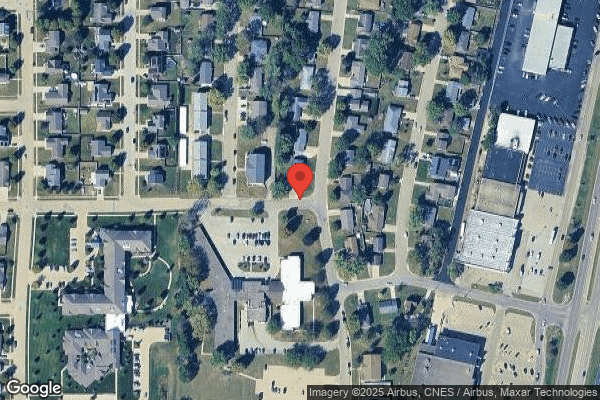
ARC AT CHILLICOTHE

1028 HILLCREST DRIVE, CHILLICOTHE, IL 61523 (309) 274-2194
For profit - Limited Liability company 106 Beds ARCADIA CARE Data: November 2025
Trust Grade
70/100
#106 of 665 in IL
Last Inspection: January 2025

Within standard 12-15 month inspection cycle. Federal law requires annual inspections.

Overview

ARC at Chillicothe has received a Trust Grade of B, indicating it is a good choice for nursing care, sitting in the top half of facilities in Illinois at #106 out of 665. Within Peoria County, it ranks #3 out of 10, meaning only two local options are rated higher. The facility is showing improvement, reducing issues from 12 in 2024 to 5 in 2025. However, staffing is a concern, with a low rating of 1 out of 5 stars, despite a relatively low turnover rate of 36%, which is better than the state average. Notably, there have been incidents where staff failed to ensure proper hygiene in the kitchen and did not provide palatable meals, with residents reporting overcooked food. On a positive note, there have been no fines recorded, and RN coverage is stable, but improvements in staff training and meal quality are needed.

Trust Score
B
70/100
In Illinois
#106/665
Top 15%
Safety Record
Low Risk
No red flags
Inspections
Getting Better
12 → 5 violations
Staff Stability
○ Average
36% turnover. Near Illinois's 48% average. Typical for the industry.
Penalties
✓ Good
No fines on record. Clean compliance history, better than most Illinois facilities.
Skilled Nurses
⚠ Watch
Each resident gets only 27 minutes of Registered Nurse (RN) attention daily — below average for Illinois. Fewer RN minutes means fewer trained eyes watching for problems.
Violations
⚠ Watch
25 deficiencies on record. Higher than average. Multiple issues found across inspections.
★★★★☆
4.0
Overall Rating
★☆☆☆☆
1.0
Staff Levels
★★★★★
5.0
Care Quality
★★★★☆
4.0
Inspection Score
Stable
2024: 12 issues
2025: 5 issues

The Good

  • 5-Star Quality Measures · Strong clinical quality outcomes
  • Full Sprinkler Coverage · Fire safety systems throughout facility
  • No fines on record
  • Staff turnover below average (36%)

    12 points below Illinois average of 48%

Facility shows strength in quality measures, fire safety.

The Bad

Staff Turnover: 36%

Near Illinois avg (46%)

Typical for the industry

Chain: ARCADIA CARE

Part of a multi-facility chain

Ask about local staffing decisions and management

The Ugly 25 deficiencies on record

Feb 2025 2 deficiencies
CONCERN (D) 📢 Someone Reported This

A family member, employee, or ombudsman was alarmed enough to file a formal complaint

Potential for Harm - no one hurt, but risky conditions existed

Deficiency F0773 (Tag F0773)

Could have caused harm · This affected 1 resident

**NOTE- TERMS IN BRACKETS HAVE BEEN EDITED TO PROTECT CONFIDENTIALITY** Based on observation, interview and record review the facility failed to ensure laboratory testing was completed as ordered for ...

Read full inspector narrative →
**NOTE- TERMS IN BRACKETS HAVE BEEN EDITED TO PROTECT CONFIDENTIALITY** Based on observation, interview and record review the facility failed to ensure laboratory testing was completed as ordered for 1 of 1 residents reviewed for medical testing in the sample of 5. The findings include: R1's admission record documents he was admitted to the facility on [DATE] with a primary diagnosis of acute respiratory failure with hypoxia (low levels of oxygen). The 1/23/25 follow up visit by V12 (Nurse Practitioner), shows R1 was to have stat lab work, and continue the antibiotic for pneumonia. The order summary sheet shows the lab order was placed in the computer to be completed on 1/24/25. R1 had no labs on record. Progress notes were reviewed and show no documented labs being drawn. On 2/11/25 at 9:53 AM, V3 (R1's daughter) said when R1 was admitted he had been complaining of a cough and sore throat. She said the symptoms were reported to nursing, and obtained an x-ray and he was diagnosed with pneumonia. V3 said she was advised R1 was to have labs done on 1/24/25. When she asked the nurse for his results, the nurse told her the labs were never done. V3 said the nurse offered to change the date of the labs. On 2/11/25 at 10:45 AM, V5 LPN (Licensed Practical Nurse) said when blood work is ordered, a paper form (carbon copy) is filled out and placed in the accordion file, and when lab arrives the day of the lab, they take a copy of the order, and another copy is left at the facility. V5 said the nurse is responsible to getting results and reporting them to the provider. On 2/11/25, at each nurses station, an accordion file was observed to have carbon copy lab slips filed by the date to be drawn. On 2/11/25, V2 DON (Director of Nursing) said the lab work ordered does not appear to be done, and it should have been drawn on 1/24/25. The facility's 10/2024 policy for physician notification of laboratory/radiology/diagnostic results documents its purpose is to assure physician ordered diagnostic test are performed, and to assure test results are reported to the physician so that prompt, appropriate action may be taken if indicated for the resident's care. A licensed nurse is responsible for assuring the laboratory is notified of physicians order for testing. A requisition is to be completed and lab to be drawn on the next scheduled lab draw day unless stat or same day order is received. A nurse is responsible for monitoring the receipt of test results.
CONCERN (D) 📢 Someone Reported This

A family member, employee, or ombudsman was alarmed enough to file a formal complaint

Potential for Harm - no one hurt, but risky conditions existed

Deficiency F0777 (Tag F0777)

Could have caused harm · This affected 1 resident

**NOTE- TERMS IN BRACKETS HAVE BEEN EDITED TO PROTECT CONFIDENTIALITY** Based on interview and record review the facility failed to ensure diagnostic testing results were reported and reviewed in a ti...

Read full inspector narrative →
**NOTE- TERMS IN BRACKETS HAVE BEEN EDITED TO PROTECT CONFIDENTIALITY** Based on interview and record review the facility failed to ensure diagnostic testing results were reported and reviewed in a timely manner for 1 of 1 residents reviewed for medical testing in the sample of 5. The findings include: R1's admission record documents he was admitted to the facility on [DATE] with a primary diagnosis of acute respiratory failure with hypoxia (low levels of oxygen). The 1/17/25 resident care and screening assessment documents R1 to have moderate cognitive impairment. On 1/13/25, V12 (Nurse Practitioner-NP) ordered R1 to have a repeat chest x-ray with a diagnosis of history of bilateral pleural effusions (fluid in the lung tissues). The order was noted by nursing two days later 1/15/25. The x-ray results of the 1/15/25 chest x-ray show right basilar opacity. Correlate clinically for atelectasis (collapse of a lung or section of a lung), chronic scarring, edema, and/or pneumonia. The 1/15/25 x-ray report shows it was reported on 1/15/25 at 9:24 AM, however, the report with orders shows on 1/21/25, V12 ordered an antibiotic due to a diagnosis of pneumonia. On 2/11/25 at 9:53 AM, V3 (R1's daughter) said when R1 was admitted he had been complaining of a cough and sore throat. She said the symptoms were reported to nursing, and nothing seemed to get done. The nurses were checking R1's lungs, and reporting they were clear. She said eventually a nurse ordered breathing treatments and some cold medication. It was not until she attended the care team meeting with the staff, she learned R1 had a chest x-ray on 1/15/25 that showed pneumonia, but she was not advised of an antibiotic starting until 1/21/25. She said R1 went 6 days without getting any medication. On 2/11/25 at 10:45 AM, V5 LPN (Licensed Practical Nurse) said when an x-ray is ordered, the order is placed in the computer, and it will go to the x-ray company, and they will do the exam and fax the results to the facility. She said the nurse is responsible to getting results and reporting them to the provider. She said if a resident had a result of pneumonia, she would just fax it to the NP. On 2/11/25 at 11:14 AM, V7 RN (Registered Nurse) said when an x-ray is ordered, the order is placed in the computer, and the nurse must call to schedule a time for the exam. When the exam is complete, results are reported right away. Those results are faxed to the NP, and we await orders. On 2/11/25, V2 DON (Director of Nursing) said all x-ray orders are called in and scheduled. Results are faxed typically within a couple of hours. It can be hit or miss as to what number the results are sent; we have educated the staff to forward results to the correct nursing station. When the faxed results are in, they are forwarded to the medical group for review, and they will give direction. They send back the same test results with orders pasted to the bottom of the page. V2 said the original x-ray order should have been processed and completed on 1/13/25 when it was written. V2 said if the x-ray and results were done and reviewed on 1/15/25, R1 could have started the antibiotic earlier. The facility's 10/2024 policy for physician notification of laboratory/radiology/diagnostic results documents its purpose is to assure physician ordered diagnostic test are performed, and to assure test results are reported to the physician so that prompt, appropriate action may be taken if indicated for the resident's care. A nurse is responsible for monitoring the receipt of test results. Test results should be reported to the physician or other practitioner who ordered them.
Jan 2025 3 deficiencies
CONCERN (D)

Potential for Harm - no one hurt, but risky conditions existed

Deficiency F0761 (Tag F0761)

Could have caused harm · This affected 1 resident

Based on record review, observation and interview the facility failed to secure a controlled substance medication in a double-locked location for one of one resident (R74) reviewed for medication stor...

Read full inspector narrative →
Based on record review, observation and interview the facility failed to secure a controlled substance medication in a double-locked location for one of one resident (R74) reviewed for medication storage. Findings include: The facility's Medication Storage policy dated 10/2024 documents, Controlled Substances Storage: 2. After receiving controlled substances and adding to inventory, Facility should ensure Schedule II-V substances are immediately placed into a secured storage area (i.e., a safe, self-locked cabinet, or locked room, .and double-locked inside a medication cart or locked box in locked medication room). On 1/30/25 at 11:55am, a plastic bag containing medications labeled with R74's name, included a medication bottle labeled Lorazepam 0.5mg/milligrams tablets, was in an unlocked cabinet in the facility's South Hall Medication Room. Lorazepam is a Schedule IV, controlled substance prescribed for anxiety. V2 DON/Director of Nursing stated the medication bottles in the bag were (R74's) medications from home. V2 stated, They should have been sent home with family when the resident was admitted . V2 stated the Lorazepam should have been counted by two Nurses, documented on the facility's Controlled Drug Record/Disposition Form and placed in the medication cart's double locked, controlled substance drawer or in the Medication Room, secured in a second locked location.
CONCERN (F)

Potential for Harm - no one hurt, but risky conditions existed

Food Safety (Tag F0812)

Could have caused harm · This affected most or all residents

Based on observation, interview, and record review, the facility failed to ensure the staff completely covered hair in a sanitary manner while in the kitchen; and failed to ensure a chemical product w...

Read full inspector narrative →
Based on observation, interview, and record review, the facility failed to ensure the staff completely covered hair in a sanitary manner while in the kitchen; and failed to ensure a chemical product was not stored in an unlocked lower cabinet in the dining room. These failures have the potential to affect 89 of the 90 residents who consume food in the facility (R75 was nothing by mouth/NPO). Findings include: The facility's Dietary-Staff Hygiene/Hair Nets Policy dated 9/2023 documents: Guidelines: 2.D. Hairnets or coverings shall be worn at all times in the Dietary Department and applied appropriately to keep hair from contacting exposed food, clean utensils and single-service/use items if unwrapped. The facility's Housekeeping Chemical Use Procedures Policy dated 11/1/12 documents: A. Chemical Use Rules 1. All chemicals must be in users line of sight at all times or stored in a locked cabinet or room. On 1/28/25 at 9:15am, V12 Dietary Manager was noted in the facility kitchen with dietary staff. V12's bangs at the front of her head were not covered. V12 stated, My hair slipped out; and I don't usually go into the kitchen but I am being the cook today. At this same time, V13 Dietary Aide wore a cap that did not cover her hair on the sides and back of her head. V14 Dietary Aide was doing dishes and had uncovered hair at the back and sides of her head. V14 stated that she did not realize all of her hair was not covered. V12, V13 and V14 stated that kitchen staff were supposed to have all their hair covered while in the kitchen. On 1/28/25 at 9:30 am, a full container of All Purpose Cleaner was located in an unlocked lower cabinet near the sink in the dining room. V12 Dietary Manager stated that the chemical was not supposed to be in the lower cabinet and was not sure who placed it there. V12 stated, The cabinet should have been locked to keep the product away from residents. The facility's Long-Term Care Facility Application for Medicare and Medicaid (Centers for Medicare and Medicaid Services/CMS 671) Form, dated 1/28/25, documents 90 residents reside in the facility.
MINOR (C)

Minor Issue - procedural, no safety impact

Deficiency F0577 (Tag F0577)

Minor procedural issue · This affected most or all residents

Based on observation, interview and record review, the facility failed to ensure the facility's annual State Survey Results were readily and easily accessible to residents for review. This failure has...

Read full inspector narrative →
Based on observation, interview and record review, the facility failed to ensure the facility's annual State Survey Results were readily and easily accessible to residents for review. This failure has the potential to affect all 90 residents residing at the facility. Findings include: The facility's Resident Rights Policy, dated 1/30/24 documents: Policy Statement: Staff shall treat all residents with kindness, respect, and dignity. 1. Federal and state laws guarantee certain basic rights to all residents of the (facility) community. These rights include the resident's right to: H. Be supported by the (facility) community in exercising their rights; M. Exercise rights not delegated to a legal representative; and W. Examine survey results. The facility's State Survey Results Binder was located in a cabinet drawer in the front foyer. The access to the front foyer was through double glass doors that were not wheelchair accessible; an electronic code was used by staff to open the glass doors to enter into the front foyer, which led to another set of glass doors to exit. Staff stated that residents did not have access to the electronic code. On 1/29/2025 at 1:00pm, Residents R8 and R21 attended the Resident Council Meeting. Both R8 and R21 indicated that V9 Activities Director informed them that the State Survey Results Binder was located at the East Wing Nursing Station. On 1/29/25 at 1:30pm, R8 asked V9 Activities Director to show (R8) the Binder at the East Wing Nursing Station. The Binder was not at that location. On 1/29/25 at 1:40pm, V9 Activities Director confirmed that she had informed the residents that the Binder was at the East Wing Nursing Station; stated that the Binder used to be at the East Wing Nursing Station prior to facility remodel in 2017 and that it (the Binder) probably was moved to the front foyer with the remodel. At this same time, V9 stated, None of the residents had asked to see the Survey Binder; they (residents) would have to ask to see it. On 1/29/25 at 1:30pm, V15 Licensed Practical Nurse/LPN stated: The Binder is in the front foyer; it has never been at the East Wing Nursing Station since the time I have worked here, five years. Residents cannot get out there (into foyer) unless someone gets them there. On 1/29/25 at 1:35pm, V1 Administrator stated they have always kept the Survey Results Binder in the drawer in the front foyer at the entrance. The facility's Long-Term Care Facility Application for Medicare and Medicaid (Centers for Medicare and Medicaid Services/CMS 671) Form, dated 1/28/25, documents 90 residents reside in the facility.
Aug 2024 2 deficiencies
CONCERN (D) 📢 Someone Reported This

A family member, employee, or ombudsman was alarmed enough to file a formal complaint

Potential for Harm - no one hurt, but risky conditions existed

Pressure Ulcer Prevention (Tag F0686)

Could have caused harm · This affected 1 resident

**NOTE- TERMS IN BRACKETS HAVE BEEN EDITED TO PROTECT CONFIDENTIALITY** Based on observation, interview, and record review the facility failed to apply the correct treatment to a wound for one (R6) of...

Read full inspector narrative →
**NOTE- TERMS IN BRACKETS HAVE BEEN EDITED TO PROTECT CONFIDENTIALITY** Based on observation, interview, and record review the facility failed to apply the correct treatment to a wound for one (R6) of three residents reviewed for wounds in a sample list of seven. Findings include: R6's Care Plan initiated 5/6/2024 includes the following diagnoses: Wedge Compression Fracture of Unspecified Lumbar Vertebra, Alzheimer's Disease, Difficulty In Walking, Symptoms And Signs Involving The Musculoskeletal System, and Protein-Calorie Malnutrition. R6's Pressure Ulcer Risk assessment dated [DATE] documents R6 is at moderate risk for skin breakdown. R6's Wound assessment dated [DATE] documents R6 has a facility acquired stage 4 pressure ulcer to the left buttock. R6's physician's order dated 8/12/24 written by V13 (R6's Physician) documents to cleanse the wound to the left buttock, pat dry, apply calcium alginate, and cover with an abdominal (ABD) pad every day and as needed. The Facility's Medication Administration Policy effective 03/2024 states in section II bullet one: Medications must be administered in accordance with the physician's order. On 8/20/24 at 8:18 AM, there was a hydrocolloid dressing on R6's left buttock. V5 (LPN) removed the hydrocolloid dressing from R6's left buttock. V5 then cleansed the wound, applied calcium alginate to the wound bed and covered with an ABD pad. On 8/20/24 at 8:52 AM, V5 confirmed R6's treatment order for the wound on the left buttocks is to cleanse the wound to the left buttock, pat dry, apply calcium alginate, and cover with an ABD pad every day and as needed. V5 stated that sometimes the ABD pad becomes soiled, and the other nurses often use the hydrocolloid to cover the wound. On 8/21/24 at 12:28 PM, V2 Director of Nursing stated all nurses are expected to follow the physician's orders.
CONCERN (D) 📢 Someone Reported This

A family member, employee, or ombudsman was alarmed enough to file a formal complaint

Potential for Harm - no one hurt, but risky conditions existed

Incontinence Care (Tag F0690)

Could have caused harm · This affected 1 resident

Based on interview and record review the facility failed to obtain a urinalysis in a timely manner for one of three residents (R1) reviewed for urinary tract infections in the sample of seven. Finding...

Read full inspector narrative →
Based on interview and record review the facility failed to obtain a urinalysis in a timely manner for one of three residents (R1) reviewed for urinary tract infections in the sample of seven. Findings Include: R1's Medical Diagnoses list dated 6/18/2024 documents Acute Kidney Failure, Type 2 Diabetes Mellitus with Hyperglycemia, Difficulty in Walking, and Lack of Coordination. R1's Physician Order written by V13 (R1's physician) dated 6/28/24 documents an order for a urinalysis. R1's Lab Services Urine Microbiology Results dated 7/5/24 document R1's urine was collected on 7/2/23 at 6:45 PM and was sent to the lab on 7/3/24 at 11:24 AM. R1's urine's microbiology results detected Escherichia coli Extended Spectrum Beta-Lactamase (ESBL) 50-100,000 colonies per milliliter. On 8/21/24 at 2:00 PM, V2 Director of Nursing confirmed R1 had received a physician order for a urinalysis. V2 stated V13 ordered a urinalysis to be completed on 6/28/24 at 7:24 AM and staff should have collected and sent the urine sample to the lab the same day or next day at the latest. V2 stated staff should not have waited more than 24 hours to collect the urine sample and if they were unable to collect the urine sample V13 should have been notified. V2 stated this delay subsequently delayed the urinalysis results and treatment for R1's urinary tract infection.
Mar 2024 1 deficiency
CONCERN (D) 📢 Someone Reported This

A family member, employee, or ombudsman was alarmed enough to file a formal complaint

Potential for Harm - no one hurt, but risky conditions existed

Quality of Care (Tag F0684)

Could have caused harm · This affected 1 resident

Based on observation, interview and record review the facility failed to perform hand hygiene and cleanse buttocks wound during wound care for one of three residents (R1) reviewed for wound care in a ...

Read full inspector narrative →
Based on observation, interview and record review the facility failed to perform hand hygiene and cleanse buttocks wound during wound care for one of three residents (R1) reviewed for wound care in a sample of three. Findings include: The facility's Dressing Change-(Clean/Non Sterile) policy, revised 11/2022, documents to wash hands, then prepare/open any necessary supplies and place on top of a clean barrier. This form documents to apply gloves, in the event that personal contamination is anticipated, personal protective equipment, such as gown or mask should be worn. Remove the soiled dressing and place in a plastic trash bag. Remove soiled gloves and place in the trash bag. Then wash hands, or if hands are not visibly soiled, and alcohol based hand gel may be used to decontaminate the hands. Apply clean gloves. Clean area/wound with solution specified in treatment order. Apply prescribed ointment and/or dressing per doctor order. R1's current POS, Physician Order Sheet, documents to cleanse R1's gluteal fold and buttocks, pat dry, apply Santyl (debridement ointment) to the upper edge of the wound, then apply a calcium alginate sheet, cover the wound with an abdominal pad. Change daily and as needed. R1's wound diagnosis was Necrotizing Fasciitis. On 3/19/24 at 11:00am, V3, Registered Nurse, donned gloves, then removed the saturated dressing that was hanging off R1's buttocks wound. V3 applied the Santyl (debridement ointment) with a cotton swab. V3 applied the calcium alginate sheet, then removed her gloves and used hand sanitizer. V3 donned gloves and covered the wound with an abdominal pad, secured it in place. V3 doffed the gloves and used hand sanitizer. On 3/19/24 at 11:15am, V3 verified she did not cleanse R1's buttocks wound prior to applying the medication. V3 also verified she did not perform hand hygiene after removing R1's saturated dressing. On 3/19/24 at 2:30pm, V4, R1's Family, stated when she observed R1's wound care the wound was not cleansed prior to the medication being applied.
Feb 2024 9 deficiencies
CONCERN (D)

Potential for Harm - no one hurt, but risky conditions existed

ADL Care (Tag F0677)

Could have caused harm · This affected 1 resident

Based on observation, interview and record review, the facility failed to provide residents with scheduled showers for two of two residents (R28, R323) reviewed for hygiene in the sample of 42. Findin...

Read full inspector narrative →
Based on observation, interview and record review, the facility failed to provide residents with scheduled showers for two of two residents (R28, R323) reviewed for hygiene in the sample of 42. Findings include: The facilities Bathing/Shower and Tub Bath policy, dated 8/2023, documents Purpose: To ensure resident's cleanliness to maintain proper hygiene and dignity. Guidelines: A shower, tub bath or bed/sponge bath will be offered according to resident's preference, no less than once per week or according to the resident's preferred frequency and as needed or requested. 1. On 2/5/24 at 1:03 PM, R28 was in his room sitting in a wheelchair. R28 had a strong stale urine like smell. R28's current care plan, dated 12/5/23, documents, The resident has an ADL (activities of daily living) self-care performance deficit related to recent cerebral infarction resulting in right sided weakness and contracture of right arm, require max assist with daily care needs. The resident requires assist of two staff members with bathing/showering. The facility's (undated) South Hall Shower Sheet documents R28 is to have scheduled showers on Mondays and Fridays each week. This same sheet documents Notify nurse of refusals immediately! Fill out shower sheet for showers, bed baths or refusals! R28's Shower sheets for the months of December 2023 and January 2024, documents R28 received two showers in December and three showers in January. No other shower sheets, progress notes or refusal of showers were documented during this time period. 2. On 2/5/24 at 10:15 AM, R323 was in his room sitting in a recliner chair. R323 noted to have a scruffy beard and stale dirty odor. On 2/7/24 at 11:00 AM, R323 was in his room sitting in a recliner chair. R323 stated he has not been getting showers like he is supposed to. R323 stated, I want to have them three days a week, but they missed one this Monday. Does not feel like I am getting them often enough. R323's current Care plan, dated 10/5/23, documents, The resident (R323) has an ADL (activities of daily living) self-care performance deficit related to Disease Process: weakness, congestive heart failure, anemia, weakness, impaired mobility. The resident requires assist of one staff member with bathing/showering. The facility's (undated) South Hall Shower Sheet documents R323 is to have scheduled showers on Monday, Thursday, and Saturday each week. This same sheet documents, Notify nurse of refusals immediately! Fill out shower sheet for showers, bed baths or refusals! R323's Shower sheet records for the month of January 2024, document R323 received a shower on 1/8/24. No other shower sheets, progress notes or refusal of showers were documented for the entire month of January. R323's Census Report, dated 2/7/24, documents R323 was hospitalized during the month of January from 1/18-1/23/24. This report documents the remainder of the month R323 was in the facility. On 2/7/24 at 12:40 PM, V2 (Director of Nursing) confirmed that there is not documentation to show R28 or R323 received scheduled showers during reviewed months or at minimum, weekly showers. V2 stated, They (staff) are supposed to fill out the shower sheets on scheduled days. The resident would typically complain if they don't get a shower. I know (R323) was out for a while in January. He was in the hospital (from 1/18-1/23/24) but when he came back, he was in isolation and very sick so he could've refused some then, but they should still be filling out a sheet for refusals and charting.
CONCERN (D)

Potential for Harm - no one hurt, but risky conditions existed

Quality of Care (Tag F0684)

Could have caused harm · This affected 1 resident

Based on observation interview and record review the facility failed to maintain aseptic technique during wound care for one of one resident (R274) reviewed for wound care in a sample of 42. Findings...

Read full inspector narrative →
Based on observation interview and record review the facility failed to maintain aseptic technique during wound care for one of one resident (R274) reviewed for wound care in a sample of 42. Findings include: The facility Dressing Change-(Clean/Non-Sterile)-Sample Guidelines, effective 08/2023, documents to wash hands, apply gloves. Remove soiled dressing and place in plastic trash bag. Remove soiled gloves and place in trash bag. Wash hands or if hands are not visibly soiled, and alcohol-based hand gel may be used to decontaminate the hands. If at a point during the dressing change hands become visibly soiled, hands must be washed instead of using hand gel to disinfect. Apply clean gloves. Clean area/wound with solution specified in treatment order. Apply prescribed ointment and/or dressing per doctor order. Follow manufactures recommendations for application of dressing/ointments/creme's/moisturizers, etc In the event more than one wound is present, each wound site is considered a separate treatment. A new pair of non-sterile gloves will be used for the cleansing of each site, as well as disinfecting hands using hand gel between each site. R274's Treatment Administration Record, dated 2/7/24, documents to cleanse R274's buttocks, rectal and gluteal folds with wound cleanser, pat dry and apply silver sulfadiazine cream every shift and as needed. On 2/7/24 at 9:50am, V7, Licensed Practical Nurse, washed her hands and applied gloves. V7 then cleansed R274's left buttock and rectal area with wound cleanser. R274's rectal area had liquid brown stool. V7 then opened the jar of silver sulfadiazine cream jar and put her first finger of her gloved hand into the jar, scooped out the medication. V7 rubbed the medication on R274's buttocks. V7 then removed her gloves and washed her hands. V7 applied clean gloves, then again put her finger into the jar of medicated cream and rubbed it on R274's right buttocks. V7 applied abdominal pads to R274's right and left buttocks, then washed her hands. V7 did not cleanse R274's right buttocks prior to applying the medicated cream. On 2/7/24 at 10:20am, V7 verified she did not perform hand hygiene or change her gloves after cleansing R274's buttocks. V7 stated she should not have put her fingers into the jar of medicated cream. V7 stated hand hygiene should be done when moving from a dirty area to a clean. V7 stated each wound should be cleaned individually. On 2/7/24 at 1:00pm, V2, Director of Nursing, verified R274 was admitted with multiple radiation burns to his buttocks and rectal area.
CONCERN (D)

Potential for Harm - no one hurt, but risky conditions existed

Deficiency F0688 (Tag F0688)

Could have caused harm · This affected 1 resident

**NOTE- TERMS IN BRACKETS HAVE BEEN EDITED TO PROTECT CONFIDENTIALITY** Based on observation, interview and record review, the facility failed to ensure a range of motion program was in place for a re...

Read full inspector narrative →
**NOTE- TERMS IN BRACKETS HAVE BEEN EDITED TO PROTECT CONFIDENTIALITY** Based on observation, interview and record review, the facility failed to ensure a range of motion program was in place for a resident with functional limitations in range of motion for one of four residents (R64) reviewed for range of motion in the sample of 42. Findings include: The facility's Restorative Nursing Program policy (revised 01/2019) documents the following: A maintenance program is established based on the resident specific needs for the program. A care plan is then initiated. A functional maintenance program may include range of motion provided during routine daily care such as dressing, grooming/hygiene, eating, transfers, etc. Range of Motion programs may include Active Assistive Range of Motion, Active Range of Motion or Passive Range of Motion. R64's Annual Minimum Data Set Assessment (dated [DATE]), Section GG 'Functional Limitation in Range of Motion,' documents R64 has impairment on both sides of her upper and lower extremities. This same section also documents the following: R64 is dependent with toileting hygiene, shower/bathing self, lower body dressing, putting on/taking off footwear; and R64 requires substantial/maximum assistance with upper body dressing and personal hygiene. R64's current care plan documents the following: I am at risk for an ADL (activities of daily living) Self Care Performance Deficit related to: requires extensive assist to total dependence with daily care needs, history of Covid-19 resulting in prolonged hospital stay and critical illness myopathy, other contributing factors include: congestive heart failure, COPD (Chronic Obstructive Pulmonary Disease), morbid obesity, RLS (Restless Leg Syndrome), polyneuropathy, limited ROM (range of motion) of bilateral upper and lower extremities. On [DATE] at 12:50 PM, R64 was sitting in an electric wheelchair in her room operating her cellular phone which was positioned on a cellular phone stand in front of her on a bedside table. Two upper 1/4 bedrails were attached to R64's bed and secured in the upright position. R64 stated she utilizes the bedrails often to reposition herself due to generalized weakness. R64 stated she, nearly died, after having Covid-19 some time ago, I was so weak. I have lost some of the use of my arms and legs. I've gotten some strength back, and hopefully can continue to regain more. I really lost a lot in my hands and fingers. R64 then lifted her right arm up and pointed out all four of her fingers that were maintained in a curved, rigid, claw-like position. R64 stated, I cannot straighten my fingers. They have been like this since I was so sick with Covid-19. R64 stated facility staff currently do not assist her to perform any type of range of motion exercises. R64 stated, I was receiving physical therapy and occupational therapy, but I am not right now. You know how they have to take you off therapy for a few months before they can put you back on. They took me off a little over month or so ago. R64 stated she is required to utilize a sit-to-stand lift to transfer due to her weakness. R64's medical record has no documentation of any type of range of motion program in place. On [DATE] at 11:20 AM, V8 (Minimum Data Set Coordinator/Registered Nurse) confirmed that R64 does not have any type of range of program in place, and stated R64 would benefit from range of motion exercises.
CONCERN (D)

Potential for Harm - no one hurt, but risky conditions existed

Incontinence Care (Tag F0690)

Could have caused harm · This affected 1 resident

Based on observation, interview and record review the facility failed to ensure a urinary catheter drainage bag was in a privacy bag and secured to prevent contact with the floor for one of one reside...

Read full inspector narrative →
Based on observation, interview and record review the facility failed to ensure a urinary catheter drainage bag was in a privacy bag and secured to prevent contact with the floor for one of one resident (R274) reviewed for urinary catheters in a sample of 42. Findings include: The facility's Urinary Catheter Care policy, dated 08/2023, documents to establish guidelines to reduce the risk of or prevent infections in resident with an indwelling catheter. This form documents the urinary drainage bags and tubing shall be positioned to prevent either from touching the floor directly. May place the drainage bag and excess tubing in a secondary vinyl bag or other similar device to prevent primary contact with floor or other surfaces. On 2/4/24 at 9:45am, R274 was in bed, sleeping. R274's uncovered urinary drainage bag was hanging on the lower aspect of the bed frame, with the drainage bag touching the floor. At 1:20pm, R274's urinary drainage bag remained in the same position. R274's urinary drainage bag was not in a privacy bag. 02/05/24 11:15am, R274's urinary drainage bag was again resting on the floor, uncovered. At 1:15pm, R274 was sitting in a wheelchair, with the urinary drainage bag hanging under the wheelchair, touching the floor and uncovered. On 2/6/24 at 11:45am, R274 was in the dining area. R274's urinary drainage bag was hooked under the wheelchair, with a blue cover over the back of the bag, the bottom of the urinary drainage bag was again touching the floor. On 2/7/24 at 9:40am, R274's urinary drainage bag had a blue privacy cover attached to it, but the bottom of the drainage bag was resting on the floor. On 2/7/24 at 10:20am, V7, Licensed Practical Nurse, verified that R274's urinary drainage bag is not to be touching the floor at all. V7 also stated that the urinary drainage bag is to be in a privacy bag at all times.
CONCERN (D)

Potential for Harm - no one hurt, but risky conditions existed

Tube Feeding (Tag F0693)

Could have caused harm · This affected 1 resident

Based on observation, interview and record review, facility staff failed to administer feeding tube flushes as required for one of one resident (R175) reviewed for feeding tubes in a sample of 42. FIN...

Read full inspector narrative →
Based on observation, interview and record review, facility staff failed to administer feeding tube flushes as required for one of one resident (R175) reviewed for feeding tubes in a sample of 42. FINDINGS INCLUDE: The facility policy, Medication Administration- Gastrostomy, dated (reviewed) 08/2000 directs staff, (Nurses) may administer medications through a (feeding) tube as allowed, after demonstrating competency. Administer medication: Use liquid preparations whenever possible. If more than one medication is being given at a dosing time, administer each medication separately, flushing the tube with approximately 10 ML (milliliters) of tepid water between medications, or enough to clear the tubing. R175's current Physician Order Sheet includes the following physician Orders: Guaifenesin Oral Liquid 100 MG (milligrams)/5 ML (milliliters) Give 10 ml via feeding tube four times a day; Hydralazine 100 MG Give 1 tablet via feeding tube every 8 hours; Famotidine 20 MG Give 1 tablet via feeding tube every morning and at bedtime; Sennosides Oral Syrup 8.8 MG/5 ML Give 10 ml via feeding tube every morning and at bedtime; Keppra Oral Solution 100 MG/ML Give 10 ml via feeding tube every morning and at bedtime; Valproic Acid Oral Solution 250 MG/5 ML Give 5 ml via feeding tube every morning and at bedtime; Gabapentin Oral Solution 250 MG/5 ML Give 100 mg via feeding tube three times a day; Omeprazole Oral Suspension 2 MG/ML Give 10 ml via feeding tube every morning and at bedtime. On 2/4/2024 at 9:29 A.M., V7/Licensed Practical Nurse (LPN) prepared to administer medications for R175. V7/LPN added Guaifenesin Oral Liquid 10 ml (milliliters) to a plastic cup; crushed one tablet Hydralazine 100 MG and placed it in a plastic cup with tap water, crushed one tablet of Famotidine 20 MG and placed it in a plastic cup; added Sennosides Oral Syrup 8.8 MG/5 ML 10 ml to a plastic cup; added Keppra Oral Solution 100 MG/ML Give 10 ml to a plastic cup; added Valproic Acid Oral Solution 250 MG/5 ML 5 ml to a plastic cup; added Gabapentin Oral Solution 250 MG/5 ML 100 mg to a plastic cup; added Omeprazole Oral Suspension 2 MG/ML 10 ml to another plastic cup and entered R175's room. V7/LPN administered each medication separately without flushing R175's feeding tube with the required 10 ML of water after each medication. On 2/4/2024 at 9:40 A.M., V7/Licensed Practical Nurse confirmed she had not administered the required 10 ML water flush after each medication.
CONCERN (D)

Potential for Harm - no one hurt, but risky conditions existed

Deficiency F0698 (Tag F0698)

Could have caused harm · This affected 1 resident

**NOTE- TERMS IN BRACKETS HAVE BEEN EDITED TO PROTECT CONFIDENTIALITY** Based on observation, interview and record review, the facility failed to provide ongoing communication with the dialysis center...

Read full inspector narrative →
**NOTE- TERMS IN BRACKETS HAVE BEEN EDITED TO PROTECT CONFIDENTIALITY** Based on observation, interview and record review, the facility failed to provide ongoing communication with the dialysis center and failed to develop a complete comprehensive care plan for one of one resident (R177) reviewed for dialysis, in a sample of 42. FINDINGS INCLUDE: The (undated) facility policy, Care of the Resident Receiving Hemodialysis, directs staff, Monitoring Procedures: Medications as ordered per physician- Notify Nephrologist of changes; Monitor dialysis site (every) shift and (upon) return from Dialysis, for bleeding or redness; Daily weights; Full set vitals per physician order; Lab (Laboratory) monitoring per physician orders; Do not access dialysis site or tamper with dressing without Dialysis Center consent; Follow dietary and fluid restrictions per order- Consult Dietician; Change of conditions to be notified to Dialysis Center/Nephrologist. Communications with Dialysis Center: The (Director of Nurses) will be designee for emergencies for Dialysis Center communication; Facility will use binder for communication forms; Dialysis Communications Sheet will be sent with resident for every treatment and entered in resident chart; Medications held, administered or discontinued will be communicated to Dialysis Center; Variances in weights or vitals will be notified to Dialysis Center. R177's current Physician Order Sheet, dated February 2024 documents that R177 was admitted to the facility on [DATE] and includes the following diagnosis: End Stage Renal Disease. This same form includes the following physician orders: Hemodialysis per physician order; Pre-Dialysis- Obtain V/S (Vital Signs) prior to dialysis treatments on scheduled dialysis days one time a day every Tuesday, Thursday; Post-Dialysis- Obtain V/S (Vital Signs) prior to dialysis treatments on scheduled dialysis days one time a day every Tuesday, Thursday; Check Bruit and Thrill of dialysis fistula every shift; Dialysis - Dialysis Treatments twice weekly at 10 (10:00) A.M., Phone #800-881-5101 Every Tuesday and Thursday via port AV (Arterial Venous) Shunt Access Location: left upper arm; Monitor dialysis catheter for bleeding, s/s (signs and symptoms) infection, warmth, redness every shift. R177's current Care Plan, dated 1/22/2024 includes the following Focus Areas, (R177) needs hemodialysis r/t (related to) renal failure. Also included are the following Interventions/Tasks, Check and change dressing daily at access site. Document: Check for bruit and thrill as ordered and prn (as needed); Do not draw blood or take B/P Blood Pressure) in arm with graft; Encourage resident to go for the scheduled dialysis appointments. Resident receives dialysis on Tuesday/Thursday; Monitor/document/report PRN (as needed) any s/sx (signs and symptoms) of infection to access site: Redness, Swelling, warmth or drainage. On 2/4/2024 at 9:50 A.M., R177 was lying on his left side in bed. A bandage was present to R177's upper. left arm. At that time R177 stated, I go to Dialysis two times a week. On 2/7/2024 at 10:26 A.M. V6/Assistant Director of Nurses (ADON) verified R177's electronic medical record did not contain any Dialysis Communication Tools for R177's dialysis treatments. At that time V6/ADON verified the facility policy includes the facility nurse completes a Dialysis Communication Tool prior to a resident leaving for dialysis and gives it to the resident to take to the dialysis appointment, the Dialysis Center nurse completes the form and gives it back to the resident who gives it to the facility nurse upon return to the facility. The facility nurse then scans the form into the resident's electronic medical record. On 2/7/2024 at 10:35 A.M., V7/Licensed Practical Nurse (LPN) stated, I have not seen a Dialysis Communication Tool. I haven't filled one out or sent one with (R177) when he goes to dialysis. On 2/7/2024 at 10:40 A.M., V8/Care Plan Coordinator verified that R177's Care Plan was not complete to address R177's dialysis status.
CONCERN (D)

Potential for Harm - no one hurt, but risky conditions existed

Medication Errors (Tag F0758)

Could have caused harm · This affected 1 resident

2. R39's diagnosis list, dated 2/7/2024, documents the following: Dementia without Behavioral Disturbances, Psychotic Episodes, Mood Disorder, and bipolar disorder. R39's Physician Order Sheet, dated ...

Read full inspector narrative →
2. R39's diagnosis list, dated 2/7/2024, documents the following: Dementia without Behavioral Disturbances, Psychotic Episodes, Mood Disorder, and bipolar disorder. R39's Physician Order Sheet, dated 2/1/2024 through 2/29/2024, documents the following: Aripiprazole (Antipsychotic) Oral 15MG (milligram) at bedtime for Bipolar. R39's Behavior Monitoring and Intervention Report, dated 12/1/2023 through 12/26/2023, documents, no behaviors or resident not available. This document does not have any specific behaviors for the use of Aripiprazole 15MG (milligrams) Antipsychotic drug for bipolar disorder. R39's Behavior Monitoring and Intervention Report, dated 1/1/2024 through 1/31/2024, documents, no behaviors or not applicable. This document does not document any specific behaviors for the use of the Antipsychotic Drug-Aripiprazole 15MG (milligram) for bipolar disorder. On 2/5/2024 at 12:05PM R39 was sitting in her wheelchair in the main dining room eating lunch. R39 was calm and quiet. No adverse behaviors noted. On 2/6/2024 at 1:30PM R39 was lying in bed resting and no adverse behaviors observed. On 2/7/2024 at 12:45PM R39 was laying in the bed with eyes closed and no adverse behaviors observed. On 2/7/2024 at 1:15PM V2/DON (Director of Nurses) stated, Yes, I do agree R39's behaviors need to be targeted and specific to her. (R39's) behavior tracking for the past 2 months does not indicate R39 has had any adverse behaviors. Based on observation, interview and record review, the facility failed to document an appropriate medical indication for the use of an Antipsychotic medication for one resident (R36) and failed to identify and monitor for target behaviors that warrant the use of an Antipsychotic medication for two of three residents (R36 and R39) reviewed for psychotropic medications in the sample of 42. Findings include: The facility's Psychotropic Medication-Gradual Dose Reduction Policy (Revised 02/2018) documents, Purpose: To ensure that residents are not given psychotropic drugs unless psychotropic drug therapy is necessary to treat a specific or suspected condition as per current standards of practice and are prescribed at the lowest dose therapeutic to treat such conditions. 1. R36's current Physician's Orders document the following medication orders: Venlafaxine Oral Capsule Extended Release (Antidepressant) 150 mg (milligrams) give one capsule by mouth in the morning related to Depression; and Aripiprazole Oral Tablet (Antipsychotic) 5 mg give one tablet by mouth in the morning related to anxiety disorder. R36's Consent for Psychotropic Medications (dated 11/17/23) documents R36 takes Aripiprazole for the following: Diagnosis/Indication for Use: Anxiety Disorder. On 02/05/24 at 01:20 PM, R36 was sitting in a chair in her room with her wheelchair nearby. R36 was dressed and groomed, and oral fluids and a call light were within her reach. R36 stated she does have a diagnosis of depression, but feels it is well-controlled at this time. No adverse behaviors were displayed by R36 at this time. On 02/06/24 at 12:15 PM, R36 was sitting in the dining room at the table eating lunch. R36 was conversing with her tablemates, and no adverse behaviors were displayed by R36 during the lunch meal. R36's current care plan has no mention of any target behaviors displayed by R36. R36's Behavior Monitoring and Interventions Report (dated 11/18/23 - 02/06/23) does not document or specify any target behaviors that R36 is being monitored for, and documents zero episodes of any adverse behaviors were displayed by R36 during this time frame. On 02/07/24 at 01:20 PM, V2 (Director of Nursing) stated R36 was admitted to the facility in November 2023 with an order for her antipsychotic, Aripiprazole, and has been taking it as prescribed while residing at the facility. V2 stated the medical indication documented for the use of R36's Aripiprazole is Anxiety, which is not an appropriate indication for the use of an antipsychotic medication. V2 stated R36, has never really displayed any behaviors, and therefore, indicated the facility has not identified any target behaviors to monitor R36 for. V2 stated, We have a generalized behavior sheet, and document any behavior a resident displays even if it hasn't been identified as a target behavior, being the reason for the use of the medication. V2 confirmed that if there are no target behaviors monitored, the facility cannot evaluate the effectiveness of R36's Aripiprazole to determine if a gradual dose reduction is appropriate. V2 then stated R36 is, pretty mellow, and is not a harm to herself or others. On 02/07/23 at 02:25 PM, V3 (Registered Nurse/Infection Preventionist) stated that R36, Came to us on her antipsychotic, Aripiprazole. V8 stated R36 has not displayed any behaviors since her admission, so the facility has not identified any target behaviors to monitor.
CONCERN (F)

Potential for Harm - no one hurt, but risky conditions existed

Deficiency F0804 (Tag F0804)

Could have caused harm · This affected most or all residents

Based on observation, interview and record review the facility failed to offer palatable meals. This failure has the potential to affect 80 residents residing in the facility. Findings include: The ...

Read full inspector narrative →
Based on observation, interview and record review the facility failed to offer palatable meals. This failure has the potential to affect 80 residents residing in the facility. Findings include: The facility's Week at a Glance Menu documents lunch for Sunday 2/4/24 is oven fried chicken, baked sweet potato with butter and brown sugar, roasted cauliflower and peach dump cake. Monday 2/5/24 documents lunch is Lasagna, tossed salad/dressing, fruit fluff, garlic bread. Tuesday 2/5/24 is baked turkey crunch, rice pilaf, vegetable medley and bread pudding. On 2/4/24 at 12:15pm, R10 stated he was finished eating. R10 had two pieces of oven fried chicken on his plate. R10 pulled the breading off the chicken and attempted to pull the meat off the bone. R10 stated the chicken was over cooked. The meat R10 pulled off the chicken bone was stringy and very dry. On 2/4/24 at 12:30pm, R16 stated he could not eat his chicken, because it was burnt. R16 had two pieces of chicken on his plate, untouched. R16 ate the rest of the meal. On 2/4/24 at 12:35pm, R18 stated the chicken was over cooked. There were two pieces of chicken untouched on R18's plate. The chicken leg was dark brown with black lines going down each side of it. On 2/4/24 at 12:40pm, R37 had a chicken breast, on her plate, with the skin pulled off. The meat was very dry and stringy. R37 stated all the food is always over cooked and tough. On 2/5/24 at 12:00pm, R10 stated the Lasagna was burnt. R10 did not eat the Lasagna on his plate. The edges of the Lasagna were black, and the noodles appeared to be dry and hard to cut. On 2/5/24 at 12:15pm, R24 stated the Lasagna was burnt, and she could not chew it. On 2/6/24 at 11:30am, a test lunch tray was received. The baked turkey crunch topping was dark brown and hard to chew. The rice and vegetable medley were palatable. At 12:15pm, R10 and R24 again stated the lunch was over cooked. On 2/6/24 at 12:30pm, V10, Certified Nursing Assistant, verified the chicken and the Lasagna were very over cooked. V10 stated most of the residents did not or could not chew it. V10 also verified the turkey bake topping was crunchy and hard for residents to chew. The facility's Long-Term Care Facility Application for Medicare and Medicaid form, dated 2/4/24, documents a census of 80.
CONCERN (F)

Potential for Harm - no one hurt, but risky conditions existed

Food Safety (Tag F0812)

Could have caused harm · This affected most or all residents

Based on observation, interview and record review the facility failed to perform hand hygiene and change gloves during meal service. This has the potential to affect 80 residents residing in the facil...

Read full inspector narrative →
Based on observation, interview and record review the facility failed to perform hand hygiene and change gloves during meal service. This has the potential to affect 80 residents residing in the facility. Findings include: The facility's Proper Hand Washing and Glove Use policy, dated 2020, documents that employees will wash hands before and after handling foods, after touching any part of the uniform, face, or hair, and before and after working with an individual resident. Gloves are to be changed any time hand washing would be required. This includes when leaving the kitchen for a break or go to another location in the building; after handling potentially hazardous food; or if gloves become contaminated by touching the face, hair, uniform, or other non-food contact surface, such as door handles and equipment. Staff should be reminded that gloves become contaminated just as hands do and should be changed often. When in doubt, remove gloves and wash hands again. On 02/05/24 at 12:00pm, V4, Dietary Aide/Cook grabbed a plate with her left hand then dished up the Lasagna, then grabbed a bread stick with her gloved hand, put it on the plate. After each plate served V4 would rub her gloved hand down the front of her uniform. V4 did not change her gloves or perform hand hygiene while serving. V4 set a plate on a tray to be served and the bread stick fell off onto the tray. V4 picked it up and put it back onto the plate. On 2/5/24 at 12:20pm, V5, Dietary Manager, verified that V4 is supposed to be using tongs to pick up the breadsticks not her hand. V5 also stated that V4 is to wash her hands and apply clean gloves after touching her uniform and other objects in the kitchen. The facility's Long-Term Care Facility Application for Medicare and Medicaid form, dated 2/4/24, documents a census of 80.
Dec 2022 7 deficiencies
CONCERN (D)

Potential for Harm - no one hurt, but risky conditions existed

Resident Rights (Tag F0550)

Could have caused harm · This affected 1 resident

**NOTE- TERMS IN BRACKETS HAVE BEEN EDITED TO PROTECT CONFIDENTIALITY** Based on observation, interview and record review the facility failed to ensure staff knocked on a resident's door prior to ente...

Read full inspector narrative →
**NOTE- TERMS IN BRACKETS HAVE BEEN EDITED TO PROTECT CONFIDENTIALITY** Based on observation, interview and record review the facility failed to ensure staff knocked on a resident's door prior to entering the room to provide cares for one resident (R52) of 17 residents reviewed for resident rights and dignity in a sample of 25. Findings Include: The Illinois Ombudsman Program Resident Rights, dated 11/2018, documents, Your facility must treat you with dignity and respect and must care for you in a manner that promotes your quality of life; and Facility staff must knock before entering your room. The facility's Resident Dignity Policy, Reviewed 9/2011, documents: All residents have the right to have their privacy maintained irrespective of their functional and cognitive status. Staff will respect this right in the following ways: 1. Knock on room door prior to entry and request permission to enter. R52's Minimum Data Set (MDS) dated [DATE], documents R52 has a BIMS (Brief Interview of Mental Status) score of 11. (MDS indicates that on a scale of 0 - 15, 13 to 15 cognitively intact and 8 to 12 moderate impairment). R52's current Care Plan documents I (R52) am alert and can make my needs known. On 11/30/22 at 12:40pm, V11 Registered Nurse (RN) and V12 Certified Nursing Assistant (CNA) entered R52's room to provide and/or assist with perineal care and wound treatment. With entry into the room, neither staff member knocked on R52's door prior to entry. Both V11 and V12 stated that they were supposed to knock on R52's door for entry. V11 stated, I forgot. When V12 was asked if there was a reason she did not knock on R52's door to enter, V12 stated, No. On 12/1/22 at 10:20 am, V2 Director of Nursing (DON) confirmed that staff were to knock on residents' doors prior to entry. V2 stated, It is expected that when staff are going to provide cares for residents, they should knock on the resident's door before going in.
CONCERN (D)

Potential for Harm - no one hurt, but risky conditions existed

Deficiency F0558 (Tag F0558)

Could have caused harm · This affected 1 resident

Based on observation, interview and record review, the facility failed to ensure a resident had access to a call light for one resident (R36) out of 17 residents reviewed for call lights in a sample o...

Read full inspector narrative →
Based on observation, interview and record review, the facility failed to ensure a resident had access to a call light for one resident (R36) out of 17 residents reviewed for call lights in a sample of 25. Findings include: The facility's Call Light policy dated 8/1/05, document Procedure: 7. Make certain call light is within resident's reach before leaving the room. On 11/29/22 at 10:45 AM, R36 observed lying in bed with no call light in reach. R36 stated, I don't know where my call light is. I had it before I took my shower, but I haven't seen it since I got back a few minutes ago. On 11/29/22 at 10:49 AM, V10, Licensed Practical Nurse (LPN) observed going into R36's room and searching for R36's call light. V10, LPN, found R36's call light behind his bed and stated, Oh, here it is. It must have fell. As V10, LPN, attempted to put R36's call light on his bed, she was unable to place it on R36's bed and stated, It won't reach. Why won't it reach? Oh, I see! It's tangled up with the fan cord. That's why it won't reach. V10, LPN, untangled the call light and placed it back on R36's bed. V10, LPN, stated, He does need his call light because he knows when he has to use the bathroom and requires assistance. On 11/30/22 at 12:04 PM V6, Care Plan Coordinator (CPC) stated (R36) is mostly continent of his bladder and he has the cognition to use his call light to ask for assistance to use the bathroom.
CONCERN (D)

Potential for Harm - no one hurt, but risky conditions existed

Deficiency F0583 (Tag F0583)

Could have caused harm · This affected 1 resident

**NOTE- TERMS IN BRACKETS HAVE BEEN EDITED TO PROTECT CONFIDENTIALITY** Based on observation, interview and record review the facility failed to ensure staff maintained and protected a resident's priv...

Read full inspector narrative →
**NOTE- TERMS IN BRACKETS HAVE BEEN EDITED TO PROTECT CONFIDENTIALITY** Based on observation, interview and record review the facility failed to ensure staff maintained and protected a resident's privacy while providing perineal care for one resident (R52) of 17 residents reviewed for privacy in a sample of 25. Findings Include: The Illinois Ombudsman Program Resident Rights, dated 11/2018, documents, Your facility must treat you with dignity and respect and must care for you in a manner that promotes your quality of life; and Your medical and personal care are private. Facility staff must respect your privacy when you are being examined or given care. The facility's Resident Dignity Policy, Reviewed 9/2011, documents: All residents have the right to have their privacy maintained irrespective of their functional and cognitive status. Staff will respect this right in the following ways: 4. Close drapes, privacy curtains and room doors as necessary to maintain privacy. The facility's Perineal Care Policy and Procedure, Revised 11/2016, documents: Resident privacy will be maintained while perineal care is being provided. R52's Minimum Data Set (MDS) dated [DATE], documents R52 has a BIMS (Brief Interview of Mental Status) score of 11. (MDS indicates that on a scale of 0 - 15, 13 to 15 cognitively intact and 8 to 12 moderate impairment). R52's current Care Plan documents I (R52) am alert and can make my needs known. On 11/30/22 at 12:40pm, V11 Registered Nurse (RN) and V12 Certified Nursing Assistant (CNA) entered R52's room to provide and/or assist with peri care and wound treatment. R52's room also housed two other residents. Neither V11 nor V12 pulled R52's privacy curtain around her when providing cares to R52. V12 stated, I forgot; usually do pull the curtains for privacy. On 12/1/22 at 10:20 am, V2 Director of Nursing (DON) stated, It is expected that when staff are going to provide cares for residents, the resident's privacy curtain should be around the resident with any kind of cares including treatments and peri care; and make sure the door to the resident's room is closed.
CONCERN (D)

Potential for Harm - no one hurt, but risky conditions existed

Quality of Care (Tag F0684)

Could have caused harm · This affected 1 resident

Based on observation and interview, the facility failed to ensure a resident's catheter bag and tubing were not laying on the floor for one resident (R44) out of three residents reviewed for catheters...

Read full inspector narrative →
Based on observation and interview, the facility failed to ensure a resident's catheter bag and tubing were not laying on the floor for one resident (R44) out of three residents reviewed for catheters in a sample of 25. Findings include: R44's physician order sheet dated 11/1/22 through 11/30/22 documents R44 as having an indwelling catheter. On 11/29/22 at 12:27 PM, R44 observed lying in bed with catheter bag and tubing laying on the floor. On 11/29/22 at 12:29 PM, V2, Director of Nursing (DON) stated, The bag and tubing aren't supposed to be on the floor. I'll have to figure out how to hang it from the bed since (R44) has a low air loss mattress and low bed. What probably happened is the CNA (Certified Nursing Assistant) hung the bag on the side of the bed, but when she lowered the bed, the bag hit the floor and popped off the bed. On 12/1/22 at 09:24 AM, V2, DON, stated, We don't have a policy telling the staff not to let the tubing or catheter bag touch the floor. It's just common sense that it's not supposed to.
CONCERN (D)

Potential for Harm - no one hurt, but risky conditions existed

Respiratory Care (Tag F0695)

Could have caused harm · This affected 1 resident

Based on observation, interview and record review, the facility failed to ensure a licensed nurse administered oxygen for one resident (R6) out of one resident reviewed for oxygen therapy in a sample ...

Read full inspector narrative →
Based on observation, interview and record review, the facility failed to ensure a licensed nurse administered oxygen for one resident (R6) out of one resident reviewed for oxygen therapy in a sample of 25. Findings include: The facility's Oxygen Administration policy revised 5/1/17 documents Oxygen is administered by an LPN (Licensed Practical Nurse) or RN (Registered Nurse) per physician orders. (Other staff may not regulate, start or discontinue oxygen.) R6's physician order sheet dated 11/1/22/ through 11/30/22 documents Oxygen (O2) at two - three liters per minute (L/M) to keep SpO2 (oxygen saturation) 91% or greater. On 11/29/22 at 01:40 PM V9, Certified Nursing Assistant (CNA) transferred resident, took oxygen tubing off the oxygen concentrator, hooked it to the portable oxygen tank hanging from R6's wheelchair and turned the oxygen to 2 L/M. V9, CNA verified she turned the oxygen to 2 L/M and stated Yeah, I just turned it to two liters because I know that's what she's on. On 12/1/22 at 09:00 AM, V2, Director of Nursing (DON) stated The CNAs aren't supposed to be administering oxygen. I did an in-service letting everyone know that only the nurses are supposed to be the ones administering the oxygen.
CONCERN (D)

Potential for Harm - no one hurt, but risky conditions existed

Deficiency F0726 (Tag F0726)

Could have caused harm · This affected 1 resident

Based on observation, interview and record review, the facility failed to ensure a resident's identity was verified prior to administering medication to one resident (R68) out of one resident reviewed...

Read full inspector narrative →
Based on observation, interview and record review, the facility failed to ensure a resident's identity was verified prior to administering medication to one resident (R68) out of one resident reviewed for competent nursing staff in a sample of 25. Finding Include: The facility's pharmacy Medication Pass Tips policy dated 1/2017 documents Prior to preparing medication, verify the resident's identity. Verify the drug against the eMAR (Electronic Medication Administration Record). The facility's resident roster by room dated 11/29/22 documents R36 and R68 are roommates. R68's medical record documents R68 as cognitively intact. R68's medical record dated 11/15/22 documents R68 arrived back from the hospital at 9:12 AM. R68's physician order sheet (POS) dated 11/1/22 through 11/30/22 documents Benefiber Powder (Wheat Dextrin) Give two tablespoons by mouth three times a day for constipation. Give at 6:00 AM, 10:00 AM and 4:00 PM. Tramadol Tablet 50 milligrams. Give one tablet by mouth three times a day for pain. Give at 8:00 AM, 2:00 PM and 8:00 PM. R68's narcotic medication administration record dated 11/15/22 documents one Tramadol was taken from the medication bubble pack at 8:00 PM. R68's eMAR dated 11/15/22 documents R68 received his Benefiber at 10:00 AM and 4:00 PM. R36's POS documents Lactulose Solution 10 grams (GM)/15 milliliters (ML). Give 15 ML by mouth four times a day R36's eMAR dated 11/1/22 through 11/30/22 documents Lactulose Solution 10 GM/15ML. Give 15 ml by mouth four times a day at 8:00 AM, 12:00 PM, 5:00 PM and 8:00 PM. 11/15/22 8:00 PM administered. On 11/29/22 at 10:39 AM, R68 stated, About two weeks ago I was given the wrong medication. The nurse gave me my roommate's (R36) medication. She said she thought I was still in the hospital and thought I was (R36). About two weeks ago I was sent to the hospital but came back the morning of the 15th (11/15). I was sitting in my room and (R36) was out of the room. The nurse came in and handed me a cup of medication that I put in my mouth and then handed me a cup that I thought was water. When I took a drink, I immediately spit everything out and said This isn't water. These aren't my pills. I spit everything all over the place. The nurse then asked, Aren't you (R36)? I said No, I'm (R68). She said, 'I thought you were in the hospital.' I told her I had been back from the hospital for about 12 hours. So, she left and came back with a new set of pills that were mine and I took those. No, the nurse never asked me my name, she just came in and handed me pills. She kept saying 'The computer says your still in the hospital.' I told her I've been back for the last 12 hours. On 11/29/22 at 11:00 AM, V10, Licensed Practical Nurse (LPN) verified R68 is cognitively intact and stated, I would say he's definitely able to recall something that happened two weeks ago. He was very accurate on his timeframe of when he went to the hospital and how long he had been back. He got back around 9:00 AM on 11/15, so yeah, he'd been back for about 12 hours. On 11/29/22 at 12:54 PM V7, Registered Nurse (RN) stated, I went into (R68)'s room and gave him his medication and handed him his water. He put all the medication in his mouth and when he started drinking the water, he spit everything out and said, 'These aren't my pills!', but I told him they were his. I had to go re-pull all his medication and give them a second time. What happened was that I didn't mix his Benefiber up correctly and that's why he spit everything out thinking they weren't his. Yes, I had to throw away all the pills and pull all his medications a second time. On 11/29/22 at 1:15 PM, V2, Director of Nursing (DON) reviewed R68's narcotic tracking sheet dated 11/15/22 for Tramadol and stated, I see what you're saying. If (V7, RN) had to pull his 8:00 PM medications twice, then we would see Tramadol signed out twice, but it's not. She only signed it out once at 8:00 PM. On 11/29/22 at 2:05 PM, R68 stated, The liquid the nurse gave me was not my Benefiber mix. I take that thing three times a day, so I know what it is. What she gave me was a thick syrupy liquid. I immediately spit it out because I don't take anything like that. After I spit it out, it was very sticky. I also know it wasn't my Benefiber drink because I don't get that at bedtime. On 11/29/22 at 2:05 PM, R36 stated, What (R68) is describing sounds just like what I take at bedtime. On 11/29/22 at 2:10 PM Director of Nursing (DON), stated, The Benefiber we use comes in a packet that mixes with water. It's clear and it's not thick or sticky. On 12/1/22 at 8:54 AM, V8, RN, observed pulling a brown bottle out of the medication cart and identifying it as R36's Lactulose medication and stating, I'm not sure if you can see, but it's a thick syrupy like liquid. It's sticky. 12/1/22 09:00 AM V2, DON, verified V7, RN should have verified R68's identity prior to giving him medication and stated, I don't think we have a medication administration policy or procedure that tells the nurse to identify the resident prior to administering medication. As nurses, we all know we have to identify the resident before giving them medication, especially since she (V7, RN) was an agency nurse new to the building and didn't know the residents. on 12/1/22 at 11:30 AM, V2, DON, stated, We didn't do a medication error report because (R68) never actually swallowed the wrong medication. He was able to spit them out. We banned (V7, RN) from returning to the facility.
CONCERN (F)

Potential for Harm - no one hurt, but risky conditions existed

Food Safety (Tag F0812)

Could have caused harm · This affected most or all residents

Based on observation, interview and record review, the facility failed to ensure open food products stored in the facility freezer were labeled and dated. This failure has the potential to transmit fo...

Read full inspector narrative →
Based on observation, interview and record review, the facility failed to ensure open food products stored in the facility freezer were labeled and dated. This failure has the potential to transmit food borne illness to all 67 residents residing in the facility. Findings include: The facility's Food Labeling and Dating policy dated 2/22 documents, The following procedures are to be used for proper food labeling. 1) Proper food labeling includes: name of product, date stored and in some cases, the time of the day. 2) The food must be labeled and dated if it is removed from its original container. 3) Leftover foods placed in a container must be cooled down properly, labeled and dated. On 11/29/22 at 09:22 AM, during a walkthrough of the kitchen freezer, two undated and unlabeled clear bags of food were observed sitting on the storage racks. Also observed was an open undated bag sitting in a cardboard box labeled as blueberries. The blueberries were not sealed and open to the freezer. On 11/29/22 at 09:23 AM, V5, Dietary Manager, stated, The clear bags are French fries and hash browns (tater tots). They should have a date written on the bag. The blueberries should not be open like this and it's supposed to also have a date. V5, Dietary Manager observed grabbing the bag of blueberries and closing the bag to seal the contents. CMS (Center for Medicare and Medicaid Service) form 672 signed by V6, Care Plan Coordinator, and dated 11/29/22 documents 67 residents residing in the facility.
Nov 2022 1 deficiency
CONCERN (D) 📢 Someone Reported This

A family member, employee, or ombudsman was alarmed enough to file a formal complaint

Potential for Harm - no one hurt, but risky conditions existed

Accident Prevention (Tag F0689)

Could have caused harm · This affected 1 resident

**NOTE- TERMS IN BRACKETS HAVE BEEN EDITED TO PROTECT CONFIDENTIALITY** Based on observation, interview and record review, the facility failed to secure and prevent tilting of a wheelchair during tran...

Read full inspector narrative →
**NOTE- TERMS IN BRACKETS HAVE BEEN EDITED TO PROTECT CONFIDENTIALITY** Based on observation, interview and record review, the facility failed to secure and prevent tilting of a wheelchair during transport for one (R1) of four residents reviewed for transportation. Findings include: R1's Minimum Data Set (MDS) (Dated 8/27/22) documents R1 has a BIMS (Brief Interview of Mental Status) score of 14. (MDS indicates that on a scale of 0 - 15, 13 to 15 cognitively intact; 8 to 12 moderate impairment; and 0 to 7 severe impairment.) R1's current Care Plan documents: I am at risk for falls, prior to admission I had a fall resulting in a fracture of my left Humerus. I also had a fall while in the facility. R1's Orthopedic Notes (Dated 3/3/22) documents R1 sustained a fracture to his left humerus on 2/7/22 prior to admission to the facility on 2/17/22. The facility's Witness Statement from R1 (Dated 3/9/22) regarding the 2/28/22 Incident documents: I (R1) was put into the van by (V6 Transport Driver); we went to downtown (city) to an ortho appointment. I think he (V6) was driving too fast, made a turn, and hit a curb all at the same time. My wheelchair tipped over into the window, my left arm was under me with my head resting on the window. R1 also stated that he went to (another appointment after 2/28/22 appointment) and it appeared (V6 Transport Driver) strapped me in differently than the first time. R1's Computerized Tomography (CT) exam/scan, dated 2/28/22, documents: History: [AGE] year-old for evaluation of closed blunt head trauma after hitting head on bus window. Impression: No acute intracranial abnormality by CT criteria. R1's Radiology Report, dated 3/3/22, documents: A proximal humeral diaphysis fracture is seen with mild displacement. There is osteopenia. Conclusion: 1. Proximal humerus fracture, presumed acute as pain is the only provided history. R1's Orthopedic x-ray report of left humerus, dated 3/3/22, documents: Findings: Two views left humerus demonstrate a widely displaced left proximal humerus fracture. R1's Orthopedic x-ray report of left humerus, dated 3/7/22 documents: Findings: Two views left humerus in (brace) demonstrate dramatic improvement of the humerus shaft fracture in the brace; and Impression: Stable well-aligned humerus shaft fracture in (brace). On 11/15/22 at 2:35pm, V18 Family Member to R1 stated that (R1) had fallen at home and sustained the fracture to his left humerus and was at the facility for rehab to go home. V18 stated that due to the 2/28/22 incident, that she feels this prolonged R1's stay at the facility and worsened his left humerus fracture. V18 stated, I don't know exactly if the van hit a curb or something or maybe took the turn too fast; (R1) said the turn was taken too fast and there was uneven pavement; maybe (R1) was not secured enough; they hit something and (R1) tipped enough (while in wheelchair) where he needed to be righted back up; and the left side of his head fell against the window, and also his left humerus above elbow and his shoulder. On 11/15/22 at 1:20pm, V6 Transport Driver stated he believed the holds and locks were appropriate and in place for the 2/28/22 transport for R1 to his appointment. V6 stated, I heard something in the back of van when I turned into the provider parking lot which had about a 2 ft incline; did not go too fast; I looked in the rearview mirror, (R1) was at an angle; chair was lopsided as if the wheelchair was on three wheels and (R1) was sitting up and his arm on the left was up against the window; and his head rested on the window on left (driver's side of van). The right front wheel of (R1's) wheelchair was off the ground about 2 to 3 inches; one of the straps just become loose; might have come loose and (R1's) wheelchair shifted; the other three straps remained in place. On 11/16/22 at 12:35pm, V6 confirmed that he made a wide turn to the right into the orthopedics parking lot during R1's transport to the orthopedics office on 2/28/22; confirmed that parking lot entryway came up really fast after he made the left turn onto the street; and the entryway was immediately on the right side; that the front wheel of (R1's) wheelchair was on top of the locking mechanism after he turned to get into the entryway; that somehow the hook came off the wheelchair and this could have happened when (V6) went up the incline into the parking lot and wheelchair may have shifted; that the wheelchair's right front wheel became unhinged; unhooked from the chair and at that time, in going up the incline the chair may have slid; two brakes were on (R1's) wheelchair. V6 stated that he did everything that he did and was supposed to do to secure the chair in place. The facility's Motor Vehicle Operation Policy (Dated 5/2015; signed by V6 Transport Driver on 4/28/21) documents: Purpose: This written Motor Vehicle Operation Policy establishes guidelines to ensure that we hire capable operators, only allow eligible operators to drive a covered motor vehicle, train and supervise operators, and maintain vehicle properly. A covered motor vehicle is a motor vehicle that is owned, leased, or rented by the company. On 11/16/22 at 8:30am and 3:30pm, V8 Receptionist/Medical Records stated at the Orthopedics office, that she had driven to the Orthopedic office well over 100 times as one of the facility's transport drivers in the past; that once the driver turns to go into the parking lot, would have to make a quick turn up an incline into the parking lot entry immediately after turning onto the street, and the driver would have to go slow to get into the parking lot. V8 stated that the incline was over two feet up from the street level. V8 stated, The van that was used to transport R1 in February was pretty rocky and old; we got the new van in October 2022 and have not used the old van since that time. On 11/16/22 at 3:30pm, V8 also stated, I am always careful going up the incline when I am going to that Orthopedic office; need to go slow to get up incline; I use caution and slowed down; that's just the way I am to be extra careful, especially if I have residents on board. V8 stated that if the q-string hooks used to secure the wheelchair for R1 was not tight enough around his wheelchair, it could have worked out of the q-string hook if there was slack in it; could have fallen off to cause the wheelchair to move. V8 stated, In a regular vehicle going up that incline, might have been okay but in a van, sharp right might be a problem.
Understanding Severity Codes (click to expand)
Life-Threatening (Immediate Jeopardy)
J - Isolated K - Pattern L - Widespread
Actual Harm
G - Isolated H - Pattern I - Widespread
Potential for Harm
D - Isolated E - Pattern F - Widespread
No Harm (Minor)
A - Isolated B - Pattern C - Widespread

Questions to Ask on Your Visit

  • "Can I speak with families of current residents?"
  • "What's your RN coverage like on weekends and overnight?"

Our Honest Assessment

Strengths
  • • No major safety red flags. No abuse findings, life-threatening violations, or SFF status.
  • • No fines on record. Clean compliance history, better than most Illinois facilities.
  • • 36% turnover. Below Illinois's 48% average. Good staff retention means consistent care.
Concerns
  • • 25 deficiencies on record. Higher than average. Multiple issues found across inspections.
Bottom line: Mixed indicators with Trust Score of 70/100. Visit in person and ask pointed questions.

About This Facility

What is Arc At Chillicothe's CMS Rating?

CMS assigns ARC AT CHILLICOTHE an overall rating of 4 out of 5 stars, which is considered above average nationally. Within Illinois, this rating places the facility higher than 99% of the state's 100 nursing homes. This rating reflects solid performance across the metrics CMS uses to evaluate nursing home quality.

How is Arc At Chillicothe Staffed?

CMS rates ARC AT CHILLICOTHE's staffing level at 1 out of 5 stars, which is much below average compared to other nursing homes. Staff turnover is 36%, compared to the Illinois average of 46%. This relatively stable workforce can support continuity of care.

What Have Inspectors Found at Arc At Chillicothe?

State health inspectors documented 25 deficiencies at ARC AT CHILLICOTHE during 2022 to 2025. These included: 24 with potential for harm and 1 minor or isolated issues.

Who Owns and Operates Arc At Chillicothe?

ARC AT CHILLICOTHE is owned by a for-profit company. For-profit facilities operate as businesses with obligations to shareholders or private owners. The facility is operated by ARCADIA CARE, a chain that manages multiple nursing homes. With 106 certified beds and approximately 85 residents (about 80% occupancy), it is a mid-sized facility located in CHILLICOTHE, Illinois.

How Does Arc At Chillicothe Compare to Other Illinois Nursing Homes?

Compared to the 100 nursing homes in Illinois, ARC AT CHILLICOTHE's overall rating (4 stars) is above the state average of 2.5, staff turnover (36%) is near the state average of 46%, and health inspection rating (4 stars) is above the national benchmark.

What Should Families Ask When Visiting Arc At Chillicothe?

Based on this facility's data, families visiting should ask: "Can you walk me through typical staffing levels on day, evening, and night shifts?" "Can I visit during a mealtime to observe dining assistance and food quality?" "How do you handle medical emergencies, and what is your hospital transfer rate?" "Can I speak with family members of current residents about their experience?" These questions are particularly relevant given the below-average staffing rating.

Is Arc At Chillicothe Safe?

Based on CMS inspection data, ARC AT CHILLICOTHE has a clean safety record: no substantiated abuse findings (meaning no confirmed cases of resident harm), no Immediate Jeopardy citations (the most serious violation level indicating risk of serious injury or death), and is not on the Special Focus Facility watch list (a federal program monitoring the lowest-performing 1% of nursing homes). The facility has a 4-star overall rating and ranks #1 of 100 nursing homes in Illinois. While no facility is perfect, families should still ask about staff-to-resident ratios and recent inspection results during their visit.

Do Nurses at Arc At Chillicothe Stick Around?

ARC AT CHILLICOTHE has a staff turnover rate of 36%, which is about average for Illinois nursing homes (state average: 46%). Moderate turnover is common in nursing homes, but families should still ask about staff tenure and how the facility maintains care continuity when employees leave.

Was Arc At Chillicothe Ever Fined?

ARC AT CHILLICOTHE has no federal fines on record. CMS issues fines when nursing homes fail to meet care standards or don't correct problems found during inspections. The absence of fines suggests the facility has either maintained compliance or corrected any issues before penalties were assessed. This is a positive indicator, though families should still review recent inspection reports for the full picture.

Is Arc At Chillicothe on Any Federal Watch List?

ARC AT CHILLICOTHE is not on any federal watch list. The most significant is the Special Focus Facility (SFF) program, which identifies the bottom 1% of nursing homes nationally based on persistent, serious quality problems. Not being on this list means the facility has avoided the pattern of deficiencies that triggers enhanced federal oversight. This is a positive indicator, though families should still review the facility's inspection history directly.