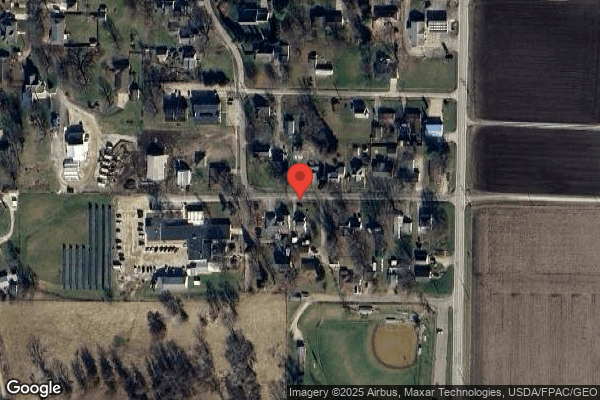
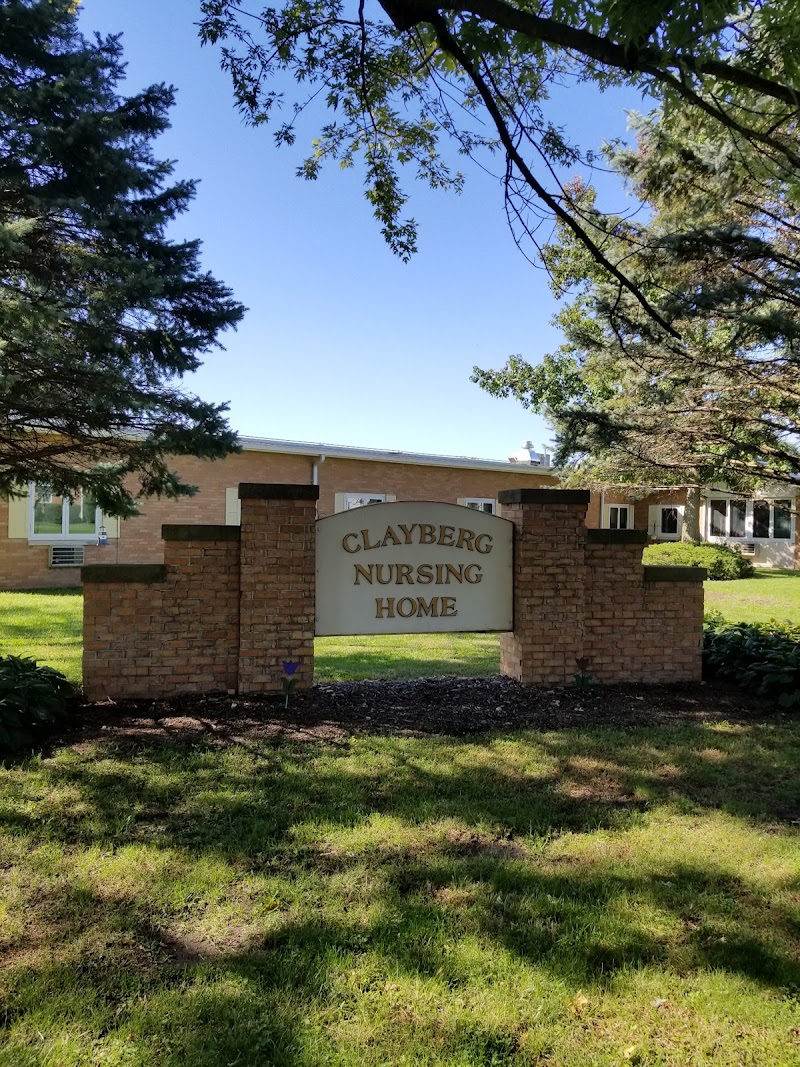
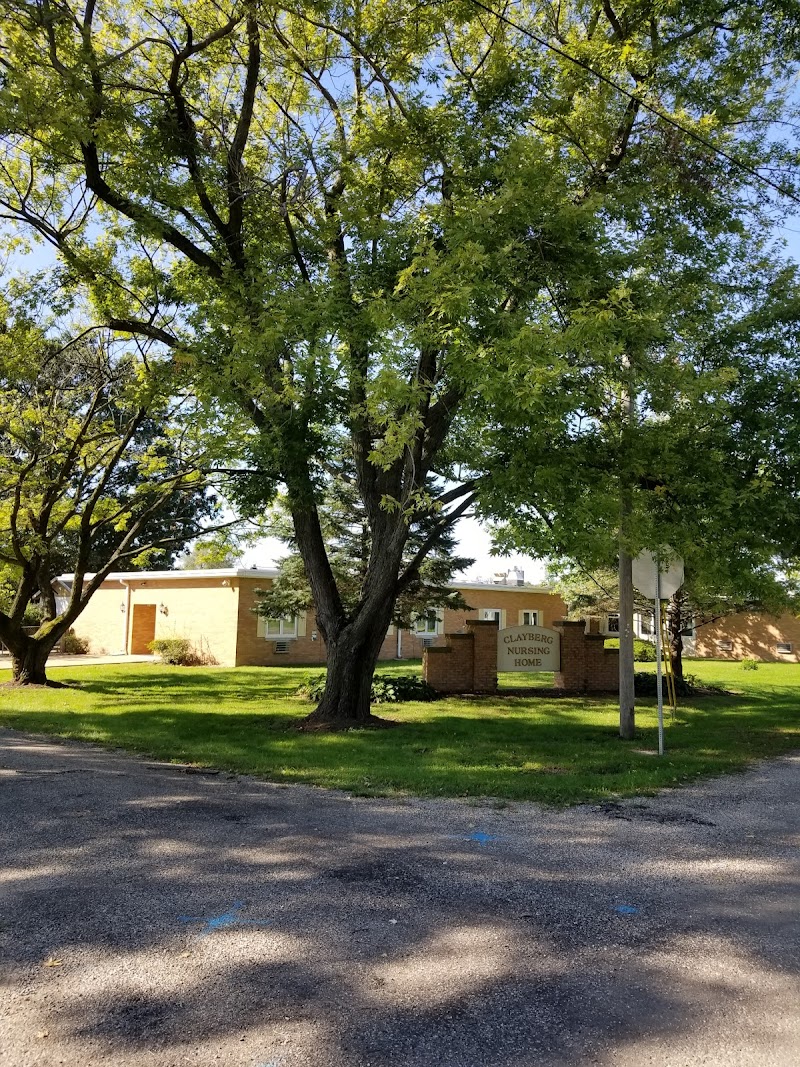
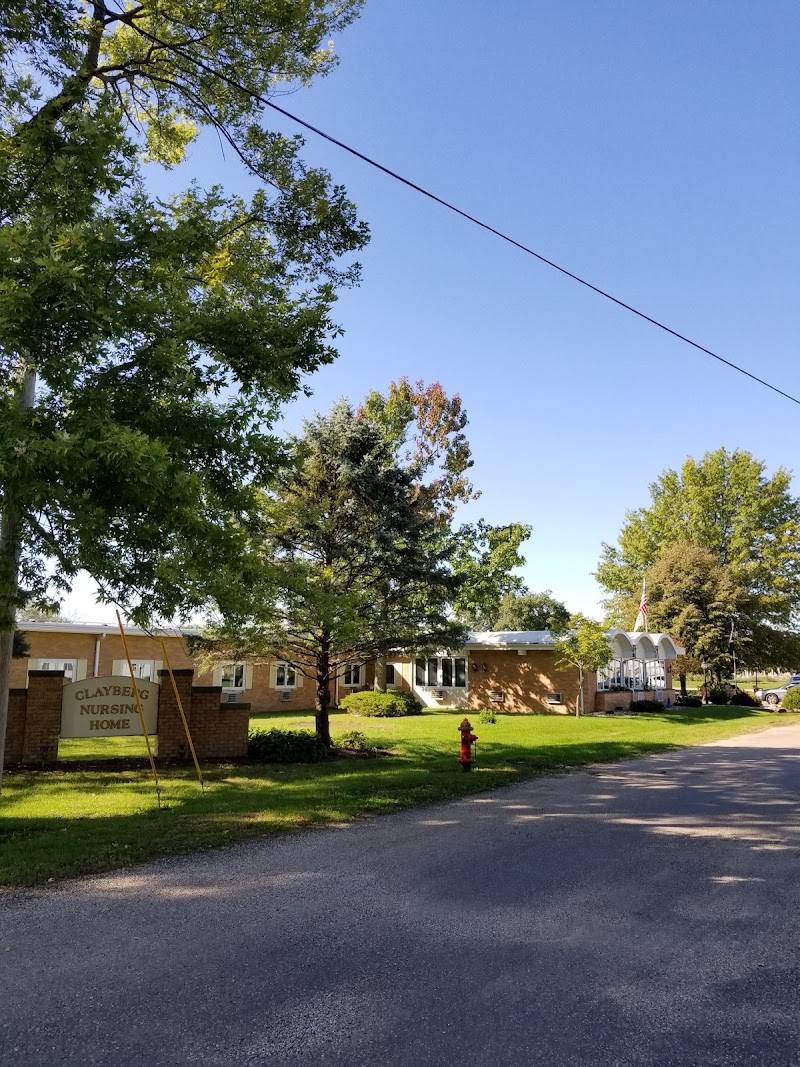

CLAYBERG, THE

625 EAST MONROE STREET, CUBA, IL 61427 (309) 785-5012
Government - County 49 Beds Independent Data: November 2025
Trust Grade
70/100
#131 of 665 in IL
Last Inspection: April 2025

Within standard 12-15 month inspection cycle. Federal law requires annual inspections.

Overview

Clayberg, The in Cuba, Illinois has received a Trust Grade of B, indicating it is a good facility and a solid choice for families researching nursing homes. It ranks #131 out of 665 nursing homes in Illinois, placing it in the top half of facilities in the state, and #3 out of 6 in Fulton County, meaning there are only two local options considered better. The facility is improving, having reduced its number of issues from 6 in 2024 to 3 in 2025, although it has had some concerning incidents. Staffing is rated average with a turnover of 38%, which is better than the state average, and there have been no fines, a positive sign for compliance. However, there have been specific incidents of concern, such as a resident suffering a fracture after slipping while ambulating barefoot and another resident being allowed to leave the building unsupervised. Additionally, staff did not consistently perform hand hygiene during medication administration, which could pose infection risks. Overall, while there are strengths in staffing stability and compliance, the facility does have areas that need improvement.

Trust Score
B
70/100
In Illinois
#131/665
Top 19%
Safety Record
Moderate
Needs review
Inspections
Getting Better
6 → 3 violations
Staff Stability
○ Average
38% turnover. Near Illinois's 48% average. Typical for the industry.
Penalties
✓ Good
No fines on record. Clean compliance history, better than most Illinois facilities.
Skilled Nurses
✓ Good
Each resident gets 43 minutes of Registered Nurse (RN) attention daily — more than average for Illinois. RNs are trained to catch health problems early.
Violations
⚠ Watch
13 deficiencies on record. Higher than average. Multiple issues found across inspections.
★★★★☆
4.0
Overall Rating
★★★☆☆
3.0
Staff Levels
★☆☆☆☆
1.0
Care Quality
★★★★★
5.0
Inspection Score
Stable
2024: 6 issues
2025: 3 issues

The Good

  • Full Sprinkler Coverage · Fire safety systems throughout facility
  • No fines on record
  • Staff turnover below average (38%)

    10 points below Illinois average of 48%

Facility shows strength in fire safety.

The Bad

Staff Turnover: 38%

Near Illinois avg (46%)

Typical for the industry

The Ugly 13 deficiencies on record

1 actual harm
Apr 2025 3 deficiencies
CONCERN (D)

Potential for Harm - no one hurt, but risky conditions existed

Pressure Ulcer Prevention (Tag F0686)

Could have caused harm · This affected 1 resident

Based on observation, interview, and record review, the facility failed to follow their plan of care for potential skin impairment for one (R40) of three residents reviewed for pressure ulcers/skin br...

Read full inspector narrative →
Based on observation, interview, and record review, the facility failed to follow their plan of care for potential skin impairment for one (R40) of three residents reviewed for pressure ulcers/skin breakdown in a sample of 29. Findings include: Facility policy For the Prevention and Treatment of Skin Breakdown, undated, documents, It is the policy to implement preventative measures. R40's list of diagnoses include the following: Pressure Ulcer of the right heel stage 4; and Personal history of Venous Thrombosis and Embolism. R40's current plan of care for April 2025 documents, I have a potential for skin impairment related to fragile skin, limited mobility, high blood pressure, edema/swelling, terminal diagnosis, and Anemia where I require bilateral heel protectors while in my wheelchair, with a date initiated on 07/23/2024. R40's current plan of care for April 2025 documents, Follow facility policies/protocols for the Prevention/Treatment of Skin Breakdown, with a date initiated on 12/31/2024, and a revision on 01/02/2025. On 4/2/25, continuous observations were made from 10:15 AM to 10:43 AM. R40 was up in her positioning wheelchair in the dining room for activities where she was alert and drinking juice, with no heel protectors on her bilateral heels. On 4/2/25 at 10:44 AM, V11, CNA/Certified Nurse Aide, stated, (R40) doesn't wear heel protectors when up in the wheelchair, she only has a wedge for her feet when in bed. (R40) has a history of heel wounds that are heeled right now. At that same time, V11 verified there were no heel protectors in R40's room. On 4/4/25 at 9:20 AM, R40 was up in her positioning wheelchair in her bedroom and had no heel protectors on her bilateral heels.
CONCERN (E)

Potential for Harm - no one hurt, but risky conditions existed

Infection Control (Tag F0880)

Could have caused harm · This affected multiple residents

Based on observation, record review, and interview, the facility failed to follow standard precautions and perform hand hygiene before or after administration of oral medications for eight residents (...

Read full inspector narrative →
Based on observation, record review, and interview, the facility failed to follow standard precautions and perform hand hygiene before or after administration of oral medications for eight residents (R2, R4, R6, R15, R21, R25, R29, and R33) and failed to not touch medications with bare hands (R21) out of nine residents reviewed for medication administration in a sample of 29. Findings include: The facility's Administering Oral Medications policy, dated 2010, under Steps in the Procedure documents the following steps: 1.) Wash your hands. e.) For tablets or capsules from a bottle .Do not touch the medication with your hands and after administration of the medication(s), 23.) Perform hand antisepsis. On 04/01/25 at 11:30am, during a medication pass, V9, RN/Registered Nurse, did not perform hand hygiene before or after oral medication administration for R2, R6, R25, R29, and R33. On 4/2/25 at 8:10am, during morning medication pass, V10, LPN/Licensed Practical Nurse, did not perform hand hygiene before or after oral medication administration for R4, R21 and R15. On 4/2/25 at 8:26am, V10, LPN, dropped R21's B-12 500 mcg/microgram tablet onto the surface of the medication cart. V10 then picked the tablet up with her bare hands, and placed it in the medicine cup, with several other oral medications already place in the medicine cup for R21. V10 then administered the oral medications in the medication cup to R21. On 4/4/25 at 8:50am, V2, DON/Director of Nursing, stated, Nurses are to perform hand hygiene between administration of medication for each resident and nursing staff are to perform hand hygiene before and after administering a resident's medications. On 4/4/25 at 1:05pm, V2, DON, stated when a nurse drops a tablet onto a surface, such as the medication cart, the medication is to be discarded, not administered.
MINOR (C)

Minor Issue - procedural, no safety impact

Staffing Information (Tag F0732)

Minor procedural issue · This affected most or all residents

Based on observation, interview, and record review, the facility failed to post the required staffing information to include the census and actual hours worked per shift for nursing staff. This has th...

Read full inspector narrative →
Based on observation, interview, and record review, the facility failed to post the required staffing information to include the census and actual hours worked per shift for nursing staff. This has the potential to affect all 45 residents who reside in the facility. Findings include: Facility policy Posting Direct Care Daily Staffing Numbers, revised July 2016, documents, Shift staffing information shall be recorded on The Nursing Staff Directly Responsible for Resident Care form for each shift. The information recorded on the form shall include: The resident census at the beginning of the shift. The actual time worked during that shift for each category and type of nursing staff. Total number of licensed and non-licensed nursing staff working for the posted shift. On 4/1/25 at 10:00 AM, 4/2/25 at 10:41 AM, and 4/4/25 at 10:14 AM, nursing daily staffing was posted, but did not have the census or actual hours worked per shift for the nursing staff. Facility nursing daily staffing sheets, dated 3/1, 3/8, 3/9, 3/15, 3/16, 3/22, 3/23, 3/29, and 3/30/25 did not have the census or actual hours worked per shift for RN's/Registered Nurses, LPN's/Licensed Practical Nurses, and CNA's/Certified Nurse Aides. On 4/4/25 at 10:09 AM, V2, DON/Director of Nursing, verified no census and no actual hours worked per shift were on the above staffing sheets. At that same time, V2 stated, We usually put the census on the staffing sheets; it is posted by the midnight staff which is mostly agency now, but we need to get back to that; and I have reminded and put a posting up for staff to indicate that but it doesn't always get done. The Facility's Resident Bed List Report, dated 4/1/25, documents 45 residents reside in the facility.
May 2024 1 deficiency
CONCERN (D) 📢 Someone Reported This

A family member, employee, or ombudsman was alarmed enough to file a formal complaint

Potential for Harm - no one hurt, but risky conditions existed

Accident Prevention (Tag F0689)

Could have caused harm · This affected 1 resident

**NOTE- TERMS IN BRACKETS HAVE BEEN EDITED TO PROTECT CONFIDENTIALITY** Based on interview and record review, the facility failed to train staff on how to properly use equipment to prevent a fall for ...

Read full inspector narrative →
**NOTE- TERMS IN BRACKETS HAVE BEEN EDITED TO PROTECT CONFIDENTIALITY** Based on interview and record review, the facility failed to train staff on how to properly use equipment to prevent a fall for one resident (R1) of three residents reviewed for falls in a sample of three. Findings include: The Falls and Fall Risk policy, dated 12/2007, documents, Based on previous evaluations and current data, the staff will identify interventions related to the resident's specific risks and causes to try to prevent the resident from falling and to try to minimize complications from falling. The Manufacturers User Manual for Alternating Pressure and Low Air Loss Mattress documents, Read all instructions before using. This manual should be used for the initial setup of the system and for reference purposes. Operating Instructions 10. Press the Static button to set it in static mode, and the Static indicator will come on. The static mode will be started within approximately 6 (six) minutes. Press the Static button again to switch back to alternating mode. Note! In the static mode, the mattress provides a firm surface that makes it easier for the patient to transfer or reposition. The Know the settings of the Low Air Loss Mattress (not dated), documents, if the Static button remains depressed and is on, the mattress is as firm as a regular mattress. Use this button to transfer patients in/out of bed. R1's current computerized medical record, documents R1 is an [AGE] year-old male admitted to the facility on [DATE] with diagnoses which included Cerebral Infarction, Paroxysmal Atrial Fibrillation, Systolic (Congestive) Heart Failure, Essential (Primary) Hypertension, Weakness, Epilepsy, and Anxiety Disorder. R1's MDS (Minimum Data Set), dated 4/25/24, documents a BIMS (Brief Interview for Mental Status) Score of 3/15, indicating severe mental impairment. R1 requires substantial help for toileting, is frequently incontinent of bowel/bladder, and is dependent on staff for transfers. V4's Witness Interview Form, dated 5/22/24 at 10:48 AM, documents R1 was hollering out for help while in his wheelchair. V4/CNA and V5/CNA transferred R1 with the (mechanical lift) and laid R1 down. V4 stayed by the bedside, R1 was lying on his right side in bed with his face towards V4. R1 then started to go over the edge. V4 could not catch R1. V5's Witness Interview Form, dated 5/22/24 at 12:00 PM, documents V5 was in the room with V4, and they were going to provide incontinent care for R1. V5 went to the bathroom to get some wet cloths and V4 was next to the bed by R1. While in the bathroom V5 heard R1 and V4 start yelling for help. V5 did not witness R1 roll out of bed. R1's Witnessed Fall Report, dated 5/22/24 at 11:33 AM, documents V15/Registered Nurse was called to R1's room by a CNA (Certified Nursing Assistant). R1 was lying beside the bed on his left side. R1 stated he fell out of bed. R1 had a skin tear to his left elbow. An intervention was put in place to push the static button on the bed that will equalize the air in the mattress before turning R1. Other info (R1) just received bed from hospice day prior. The Hospice Nurse (V6) informed staff that the static button on bed should be pushed when transferring or turning (R1) to level out mattress. (V6) stated that the air in the mattress was probably displaced and aided in (R1's) fall. R1's Incident Note, dated 5/22/24 at 1:21 PM, documents V15 was called to R1's room. R1 was lying beside the bed on his left side. R1 was assessed and had a skin tear to the left elbow. The intervention is when staff are turning R1, push the static button on the bed and that will equalize the air in the mattress. R1's Care Plan documents R1 is at risk for falls related to deconditioning, weakness, and impaired mobility. Staff will use the static button when positioning/turning R1 in bed. Date Initiated: 05/24/2024. After R1's fall on 5/22/24. On 5/30/24 at 8:38 AM, V1/Administrator stated R1 was given a new air mattress from Hospice. There were two CNAs in the room that were going to change R1. One of the CNA's went into the bathroom to get some washcloths and the other was still by R1's bed. The mattress shifted and R1 rolled out of bed on the side by the CNA. On 5/30/24 at 9:00 AM, V2/Director of Nursing/DON stated V4/Certified Nursing Assistant/CNA was next to R1's bed providing care for R1 when R1 fell out of bed. R1 had gotten a new air mattress the night before. The mattress was set up, but there were no instructions left with the mattress. V2 talked with V6/Hospice Nurse and found out there is a button that should be pushed to stabilize the bed. On 5/30/24 at 1:16 PM, V4/CNA stated she was going to give incontinent care to R1 with V5. R1 was on his right side facing V4. V5 had gone to get some gloves and washcloths. Suddenly R1 rolled out of bed. V4 does not know how R1 rolled out of bed it all happened quickly, and V4 could not hold R1. V4 was asked if the static button on the bed was on. V4 stated she did not know the static button should be on until V4 was in-serviced after R1 fell. On 5/30/24 at 12:23 PM, V5/CNA stated he had gone into the bathroom to get some washcloths and gloves. V4 was next to R1's bed. V5 then heard yelling and R1 had fallen out of bed. R1 had just got a new mattress the night before, and V5 did not know that the static button needed to be turned on before providing care for R1. Training on using the static button was not done until after R1 had rolled out of bed. V5 also stated, I try to do a good job and would like to know how I should do my job, so an accident doesn't happen. On 5/30/24 at 11:46 AM, V6/Hospice Nurse stated when R1 started on Hospice, he was given a low air loss mattress. There is a company that hospice has deliver the mattress, and they are to give training to someone at the facility on how to use it. It is important the static button is turned on any time staff is trying to move the resident in bed. Otherwise, the mattress will continue to have the air shift. If it is not on static the mattress is constantly moving. I was told that a couple of CNAs were providing care for (R1), and one went to get supplies. The other CNA could not hold (R1), and he rolled out of bed. I offered to have an in-service provided for them (the facility). (V2/DON) stated that they (the facility) would do an in-service. On 5/30/24 at 4:44 PM, V11/ Equipment Manager stated the air mattress was delivered on 5/21/24. V11 talked with V14/Equipment Delivery Driver, and V14 stated after he did the setup for the mattress, V14 showed staff that were in the room how the equipment worked. V11 also stated the static button should be turned on anytime care is being provided to the resident in bed. This would include a dressing change, repositioning, and incontinent care. Once the static button is turned on, it takes five to six minutes for the mattress to get firm. On 5/30/24 at 6:02 PM, V13/CNA stated she was in the room when V14/Equipment Delivery Driver set R1's air mattress up. V14 explained to V13 to make sure the static button is on before doing care. There were no paper instructions given; it was all verbal. V13 also stated as soon as the static button is turned on, care can start. On 5/31/24 at 6:44 AM, V15/Registered Nurse stated she was called to R1's room and R1 was on the floor on his left side. V4 was on the same side of the bed where R1 fell, but V4 could not stop R1 from falling. V15 called V6/Hospice Nurse to report the fall and see if V6 wanted to come in to assess R1. While telling V6 what had happened, V6 told V15 about the static button that needed to be turned on during care to level the bed. V15 also stated, Hearing about the static button was news to me. I had no idea that it needed turned on. There was no booklet to explain what needed to be done. On 5/30/24 at 9:59 AM, V1/Administrator stated when V2/DON did the in-service, V2 read the Know the settings of the Low Air Loss Mattress to the staff. The facility does not have the manual for the mattress. V1 was not aware after the static button was turned on, it took six minutes before care should begin.
May 2024 5 deficiencies
CONCERN (D)

Potential for Harm - no one hurt, but risky conditions existed

Transfer Notice (Tag F0623)

Could have caused harm · This affected 1 resident

2) R43's Medication Review Report, dated 5/14/24, documents he has diagnoses which include a history of Atrial Firbrillation, Chronic Kidney Disease, Dementia and Congestive Heart Failure. R43 was hos...

Read full inspector narrative →
2) R43's Medication Review Report, dated 5/14/24, documents he has diagnoses which include a history of Atrial Firbrillation, Chronic Kidney Disease, Dementia and Congestive Heart Failure. R43 was hospitalzied on 01/29/24, 01/31/24, 02/26/24 and 03/15/24. The facility provided a Bed hold notice for these dates regarding R43's hospitalizations however, did not provide notice of transfer or the reason for R43's hospitalization. Based on interview and record review, the facility failed to provide notice of transfer for two (R39 and R43) of two residents reviewed for hospitalization in the sample of 23. Findings include: The facility's Bed-Holds and Returns policy and procedure, revised 3/2017, documents, Prior to transfers and therapeutic leaves, residents or resident representatives will be informed in writing of the bed-hold and return policy. Prior to a transfer, written information will be given to the residents and the resident representatives that explains in detail; d. The details of the transfer (per the Notice of Transfer). 1. The Progress Note for R39, dated 9/13/23 at 1:07 pm, documents R39 was taken to the local hospital by facility van for evaluation. The local hospital then transferred R39 to another local hospital. There is no Progress Note documenting the Notice of Transfer was given to R39 or R39's Representative. On 5/12/24 at 6:50 am, R39 stated she had to go to the hospital because she had a stroke and does not recall if she or her family received any paper work from the facility. The EHR (electronic health record) for R39 does not include documentation or scanned forms indicating the Notice of Transfer was completed or provided to R39 or R39's representative. On 5/14/24 at 1:35 pm, V3, ADON (Assistant Director of Nursing), stated the facility only sends out a Bed Hold form with the resident and confirmed the Notice of Transfer is not something given to residents or family's. On 5/14/24 at 1:53 pm, V5, LPN (Licensed Practical Nurse)/Medical Records, stated the facility sends the Bed Hold form, Face Sheet, Physician Orders, Progress Notes, Insurance information and the POLST (Physician Orders for Life-Sustaining Treatment) form with a resident who transfers to the hospital. V5, LPN, confirmed she is not aware of a Notice of Transfer being given to residents or their family.
CONCERN (D)

Potential for Harm - no one hurt, but risky conditions existed

Pressure Ulcer Prevention (Tag F0686)

Could have caused harm · This affected 1 resident

Based on observation, interview, and record review, the facility to prevent cross contamination during a pressure ulcer treatment for one (R31) of one resident reviewed for pressure ulcers in the samp...

Read full inspector narrative →
Based on observation, interview, and record review, the facility to prevent cross contamination during a pressure ulcer treatment for one (R31) of one resident reviewed for pressure ulcers in the sample of 23. Findings include: The facility's undated Policy and Procedure for the prevention and treatment of skin breakdown, documents, It is the policy to properly identify and assess residents whose clinical conditions increase the risk for impaired skin integrity, and pressure ulcers; to implement preventative measures; and to provide appropriate treatment modalities for wounds according to industry standards of care. The facility's Standard Precautions policy and procedure, revised 1/2012, documents: Standard Precautions will be used in the care of all residents regardless of their diagnoses, or suspected or confirmed infection status. Standard Precautions presume that all blood, body fluids, secretions, and excretions (except sweat), non-intact skin and mucous membranes may contain transmissible infectious agents. Hand hygiene refers to handwashing with soap (anti-microbial or non-antimicrobial) or using alcohol-based hand rubs (gels, foams, rinses) that do not require access to water. Wash hands after removing gloves. Change gloves, as necessary, during the care of a resident to prevent cross-contamination from one body sit to another (when moving from a dirty site to a clean one). Remove gloves promptly after use, before touching non-contaminated items and environmental surfaces, and before going to another resident and wash hands immediately to avoid transfer of microorganisms to other residents or environments. On 5/13/24 at 9:49 am, V6, RN (Registered Nurse), and V7, CNA (Certified Nursing Assistant), entered R31's enhanced barrier precaution room with gown and gloves on. V6, RN, placed wound treatment supplies onto R31's bed. V6, RN, held R31 onto R31's right side while V7, CNA, provided incontinence care, removing stool from R31's buttock. V7, CNA (Certified Nursing Assistant), held R31 on his right side while V6, RN, picked up gauze and plastic cup from R31's bed, put the gauze into the cup, and sprayed the gauze with wound cleanser to soak gauze. Holding the cup of gauze with her left hand, V6, RN, reached in and pulled the saturated gauze from the cup with her right hand, and proceeded to clean R31's open coccyx wound. Holding the wet soiled gauze in the palm of her right hand, V6, RN, removed gloves off her bilateral hands and threw the gloves in the garbage can. Without performing hand hygiene, V6, RN, retrieved a second pair of gloves, put the gloves on and while holding the tube of ointment in her left hand, squeezed a small amount of the white cream from the tube onto her right index finger. V6, RN, spread the ointment over R31's open coccyx wound bed using her gloved finger, pulled a marking pen from her own uniform pocket, removed the lid, wrote the date on the dressing, put pen back in her pocket and then applied the dressing to R31's coccyx wound. V6, RN, removed her gloves, gathered treatment supplies, arranged R31's bedding, and placed R31's call light in reach, prior to performing hand hygiene. On 5/15/24 at 2:00 pm, V1, Administrator, confirmed V6, RN, should have performed hand hygiene after removing soiled gloves and before touching anything.
CONCERN (D)

Potential for Harm - no one hurt, but risky conditions existed

Deficiency F0761 (Tag F0761)

Could have caused harm · This affected 1 resident

Based on observation, interview, and record review, the facility failed to ensure an opened multi-dose diabetic insulin pen and an opened multi-dose insulin vial was labeled with the date opened for t...

Read full inspector narrative →
Based on observation, interview, and record review, the facility failed to ensure an opened multi-dose diabetic insulin pen and an opened multi-dose insulin vial was labeled with the date opened for two of two residents (R11 and R27) reviewed for storage and labeling of medications in a sample of 23. Findings include: The facility's Administration Medication Policy, dated 12/2012, documents, Policy Statement: Medications will be administered in a safe and timely manner, and as prescribed. Policy Interpretation and Implementation: 9.The expiration/beyond use date on the medication label must be checked prior to administering. When opening a multi-dose container, the date opened shall be recorded on the container. On 5/13/24 at 9:35 am, V4 (LPN/Licensed Practical Nurse) was standing at the medication cart passing medications in the dining room. V4 opened the top right drawer of the medication cart where residents' vials of opened insulin injector-pens and insulin vials were stored. In this drawer, R11's Toujeo (insulin glargine) 300 units/ml (milliliter) multi-dose pen, and R27's Lantus (insulin glargine) was open and without a label indicating the date opened. V4 verified R11's insulin pen and R27's insulin vial had no label with the date opened. On 5/15/24 at 10:02 am, V2 (DON/Director of Nursing) verified all insulin pens and insulin vials should be dated when opened.
CONCERN (D)

Potential for Harm - no one hurt, but risky conditions existed

Infection Control (Tag F0880)

Could have caused harm · This affected 1 resident

**NOTE- TERMS IN BRACKETS HAVE BEEN EDITED TO PROTECT CONFIDENTIALITY** Based on interview, observation, and record review, the facility failed to perform hand hygiene during incontinence care for one...

Read full inspector narrative →
**NOTE- TERMS IN BRACKETS HAVE BEEN EDITED TO PROTECT CONFIDENTIALITY** Based on interview, observation, and record review, the facility failed to perform hand hygiene during incontinence care for one of five residents (R3) reviewed for infection control in the sample of 23. Findings include: The facility's Standard Precautions policy, dated 01/2012, documents, Policy Statement: Standard Precautions will be used in the care of all residents regardless of their diagnoses or suspected or confirmed infection status. Standard Precautions presume that all blood, body fluids, secretions, and excretions (except sweat), non-intact skin and mucous membranes may contain infectious agents. Standard precautions include the following practices: 1 Hand hygiene. a) Hand hygiene refers to handwashing with soapy (anti-microbial or non-antimicrobial) or using alcohol-based hand rubs (gel, foams, rinses) that do not require access to water. d) Wash hands after removing gloves (see below). 2. Gloves. e) Change gloves, as necessary, during the care of a resident to prevent cross-contamination from one body site to another (when moving from a dirty site to a clean one). R3's current admission Record documents R3 was admitted on [DATE]. This same form documents R3 has a diagnosis of a Urinary Tract Infection starting on 5/3/24. R3's current Order Summary Report documents R3 is on contact isolation precautions due to ESBL/bacterial infection (Extended Spectrum Beta-Lactamase) in her urine. On 5/13/24 at 12:48 pm, V8 (CNA/Certified Nursing Assistant) and V9/CNA were preparing to perform incontinence care on R3. V9 had a bedside table prepared with a basin of water, soap, wash clothes, towels, gloves, and alcohol-based hand gel. V8 and V9 both washed their hands and applied gloves. V9 un-taped R3's incontinent brief and removed it. R3's incontinent brief was soiled with a medium amount of soft BM (bowel movement). V8 assisted holding open R3's legs while V9 wiped R3's perineal area from front to back with a wet soapy washcloth. V9 then removed her gloves, and without performing any hand hygiene, applied new gloves. V9 then took a regular wet washcloth and cleansed R3's perineal area, then grabbed a dry towel and dried R3's perineal area off. V9 then removed her gloves and without performing any hand hygiene applied new gloves. V8 then turned R3 onto R3's left side and V9 then began cleansing R3's rectal area with another wet soapy washcloth. V9 then removed her gloves and without performing hand hygiene applied new gloves. V9 took a regular wet washcloth and began cleansing R3's rectal area, then V9 took a dry towel and dried R3's rectal area off. V9 then removed her gloves and without performing hand hygiene applied new gloves. V9 then assisted V8 with applying a new incontinence brief on R3, getting R3 dressed, and repositioning R3. On 5/14/24 at 12:57 pm, V9/CNA verified she did not perform hand hygiene in between glove changes. V9 stated, I should have used my hand sanitizer (alcohol-based hand gel) in between removing my gloves and applying new gloves during (R3's) incontinence care, especially when going from a dirty to clean site.
CONCERN (E)

Potential for Harm - no one hurt, but risky conditions existed

Medication Errors (Tag F0758)

Could have caused harm · This affected multiple residents

3. R21's current admission Record documents R21 has an admission date of 4/10/2023. R21's Physician Orders, dated 9/27/23, documents R21 has received Seroquel (anti-psychotic medication) 50mg (milligr...

Read full inspector narrative →
3. R21's current admission Record documents R21 has an admission date of 4/10/2023. R21's Physician Orders, dated 9/27/23, documents R21 has received Seroquel (anti-psychotic medication) 50mg (milligrams) by mouth at bedtime for the diagnosis of Dementia with agitation. R21's MDS (Minimum Data Set) Assessment, dated 3/6/24, documents R21 is severely cognitively impaired and has no behavioral symptoms that impact the resident or others, cause significant risk of injury to herself or others, or interfered with R21's care. R21's Care Plan, dated 5/13/24, documents R21 receives Seroquel for Dementia with agitation. R21's Psychiatry Note, dated 4/8/24, documents R21 receives Seroquel for agitation related to Dementia. This same form documents R21's mood and behavior remain stable, and no symptoms of psychosis or mania were observed or reported. R21's Behavior Monitoring and Interventions Report, dated 2/1/24 to 4/30/24, documents R21 had only one behavior of grabbing others and being physically aggressive towards others on 2/1/24. This same report had no documentation of any other behaviors occurring during that time frame. On 5/12/24 at 8:00 am, R21 was sitting in R21's wheelchair at a table in the dining room. R21 was preparing to eat breakfast. R21 had no behaviors at this time. On 5/13/24 at 11:15 AM to 11:30 am, R21 was in R21's wheelchair at a table in the dining room. V15 (CNA/Certified Nursing Assisting) was assisting feeding R21 lunch. R21 had no behaviors at this time. On 5/13/24 at 11:35 am, V15/CNA stated she has not witnessed any aggressive behaviors from R21. On 5/13/24 at 1:00 pm, V9/CNA stated R21 has pinched and hit her a couple of times during transfers or cares, but it hasn't happened for a while. V9 stated, That is the only behaviors I have witnessed from (R21). 4. R42's admission Record documents R42 has an admission date of 10/17/2023. R42's Physician Orders, dated 5/7/24, documents R42 has received Olanzapine (anti-psychotic medication) 2.5mg (milligrams) by mouth at bedtime for the diagnosis of mood disorder. R42's MDS (Minimum Data Set) Assessment, dated 4/9/24 documents R42 is moderately cognitively impaired and has no behavioral symptoms that impact the resident or others, cause significant risk of injury to himself or others, or interfered with R42's cares. R42's Psychiatry Note, dated 5/6/24, documents R42 receives Olanzapine for Dementia with behaviors. This same form documents no mood or behavior concerns. R42's Care Plan, dated 5/7/24, documents R42 is being treated with Olanzapine (anti-psychotic medication) related to Major Depressive Disorder. This same care plan does not include the targeted behaviors or non-pharmacological interventions to address targeted behaviors for the use of R42's Olanzapine. R42's Behavior Monitoring and Interventions Report, dated 2/1/2024 to 4/30/2024, documents R42 had behaviors of being withdrawn on 3/15/24 and 4/6/24, refusing care on 2/6/24 and 4/6/24, and agitation, anxiousness, neglecting self-care, sad and tearful, and insomnia on 4/6/24. This same report had no documentation of any other behaviors occurring during that time frame. On 5/12/24 from 10:20 am to 10:30 am, R42 was sitting in his room in R42's recliner watching television. R42 had no behaviors during this time. On 5/13/24 from 11:45 am to 12:00 pm, R42 was sitting in a chair in the community room waiting to be transported to dialysis. R42 had no behaviors during this time. On 5/14/24 at 11:00 am, V1 (DON/Director of Nursing) stated, I have not witnessed or am I aware of (R42) having any behaviors or aggressiveness. On 5/16/24 at 10:05 am, V5 (LPN/Licensed Practical Nurse) stated, When (R42) first admitted to (the facility) he had some withdrawn behaviors. (R42) was here by himself and then they admitted his wife. (R42) has been much better and I have not witnessed him having those withdrawn behaviors. I have not witnessed any other behaviors from (R42). On 5/15/24 at 11:30 am, V11 (SSD/Social Service Director) stated, I do the mood/behavior care plan. I did not include targeted behaviors for (R42's) Olanzapine because (R42) hasn't been having any behaviors. Based on observation, interview, and record review, the facility failed to ensure residents receiving antipsychotic medications had relevant clinical indication and diagnosis for the use of antipsychotic medication for five residents (R21, R28, R30, R42, and R43), and failed to include targeted behaviors for one (R42) of five residents reviewed for unnecessary medications in the sample of 23. Findings include: An Antipsychotic Medication Use policy, revised December 201,6 under a section titled Policy Interpretation and Implementation the following: 7. Antipsychotic medications shall generally be used only for the following conditions/diagnoses as documented in the record, consistent with the definition(s) in the Diagnostic and Statistical Manual of Mental Disorders (current or subsequent editions: a. Schizophrenia; b. Schizo-affective disorder; c. Schizophreniform disorder; d. Delusional disorder; e. Mood disorders (example bipolar disorder, depression with psychotic features, and treatment refractory major depression); f. Psychosis in the absence of dementia; g. Medical illnesses with psychotic symptoms and/or treatment-related psychosis or mania (example, high-dose steroids); h. Tourette's Disorder; i. Huntington Disease; j. Hiccups (not induced by other medications); or k. nausea and vomiting associated with cancer or chemotherapy. 8. Diagnoses alone do not warrant the use of Antipsychotic medication In addition to the above criteria, antipsychotic medications will generally only be considered if the following conditions are also met a. The behavioral symptoms present a danger to the resident or others; AND: 1) symptoms are identified as being due to mania or psychosis (such as auditory, visual, or other hallucinations; delusions, paranoia or grandiosity); or 2) Behavioral interventions have been attempted and included in the plan of care, except in an emergency. 11. Antipsychotic medications will not be used if the only symptoms are one or more of the following: Wandering; b. Poor self-care; c. Restlessness; d. Impaired memory; e. Mild anxiety; f. Insomnia; g. Inattention or indifference to surroundings; h. Sadness or crying alone that is not related to depression or other psychiatric disorders; i. Fidgeting; j. Nervousness; or k. Uncooperativeness. 1. R30's Psychiatry Note, dated 05/06/24, documents a history of Mood Disorder, Generalized Anxiety Disorder, Insomnia, Dementia and Alzheimer's. R30's Psychiatry Note documents R30 is prescribed Aripiprazole 5 milligrams every evening for Mood Disorder, Buspirone 10 milligrams three times daily for Mood Disorder, Escitalopram 15 milligrams every morning for Mood Disorder and Lamotrigine 50 milligrams every morning for Mood Disorder. R30's Psychiatry Note documents, No signs of mania. No signs of psychosis. No problems tolerating medications. Per chart review, (R30) has now resumed her Aripiprazole. Staff document she has shown improvement in agitation, aggression, and resistance to cares since resuming med (medication). 2. R43's Psychiatry Note, dated 05/06/24, documents R4 has a psychiatric history of Dementia. R43's Psychiatry Note documents the order for the following medications: Divalproex Sprinkles 250 milligrams three times daily for behaviors related to Dementia, Quetiapine 12.5 milligrams twice daily for agitation related to Dementia and Quetiapine 50 milligrams every 12 hours as needed for 14 days for breakthrough agitation or aggression. R43's Psychiatry Note documents the following behaviors: Agitation, anxiety, resistance to cares, combativeness. R43's Psychiatry Note further documents, Director of Nursing reports (R43) is more alert since dose reduction and (R43) is very receptive to non-pharma logical interventions to de-escalate disruptive behaviors depending on the approach. On 5/15/24 at 11:22 am, V10, MDS Coordinator, and V11, SSD, stated they work on the psychotropic medications together, and antipsychotics should be used for residents with psychotic diagnoses like Schizophrenia and Bipolar. V10, MDS Coordinator, confirmed R30 and R43 do not have an appropriate diagnosis for the use of their antipsychotic medication and should have. 5. The Quarterly MDS (minimum data set) Assessment for R28, dated 4/16/24, documents R28 with severely impaired cognition with the following diagnoses: Medically Complex Conditions, Alzheimer's Disease, Non-Alzheimer's Dementia, Depression and Primary Insomnia and R28 received antipsychotic medication on a routine basis. The current Order Summary Report for R28 documents R28 receives the antipsychotic medication Quetiapine 50 mg (milligrams) three times daily for the diagnosis of Behavioral Disturbance. The current Care Plan for R28 documents R28 with impaired thought processes related to Alzheimer's Disease and is being treated for Dementia with behaviors and behavior management with the antipsychotic medication Quetiapine. On 5/12/24 at 9:00 am, R28 was talking continuously, exhibiting word salad with accusatory statements, and making frowning and furrowed brow faces at others and wandering the hallways. On 5/13/24 at 7:31 am, R28 was sitting in a chair near front lobby yelling as people walked by her, and words not making sense. On 5/14/24 at 9:02 am, R28 was sitting on a sofa in the activity area, talking out loud, words and sentences not making sense, asking questions with various words, and unable to determine what she is asking. The Social Service Note, dated 4/23/24 1:56 pm, R28 is alert to name, exhibits confusion to time, place, date and situation. Short- and long-term memory recall abilities are severely impaired. Communication skills are severely impaired as evidenced by word salad, conversation irrelevant and nonsensical. Exhibits short attention span. Is unable to complete interview. During observation period R28 wandered without leaving facility, had verbal outbursts of yelling and making disruptive sounds. R28 has not displayed and physical behaviors. The facility's Psychiatry service made a note, dated 5/6/24, documents R28 with a history of MDD (Major Depressive Disorder), Dementia, and Alzheimer's with past medical history of Alzheimer's disease, Overactive bladder, GERD, Hyperlipidemia, Type 2 diabetes mellitus, Hypertension, Asthma. On 5/15/24 at 11:22 am, V10, MDS Coordinator, and V11, SSD, stated they work on the psychotropic medications together and antipsychotics should be used for residents with psychotic diagnoses like Schizophrenia and Bipolar. V10, MDS Coordinator, confirmed R21, R28, R30, R42, and R43 do not have an appropriate diagnosis for the use of their antipsychotic medication, and should have.
Mar 2023 3 deficiencies 1 Harm
SERIOUS (G)

Actual Harm - a resident was hurt due to facility failures

Accident Prevention (Tag F0689)

A resident was harmed · This affected 1 resident

Facility failures resulted in two deficient practices. A. Based on interview, observation, and record review, the facility failed to ensure fall prevention interventions were in place and new fall pre...

Read full inspector narrative →
Facility failures resulted in two deficient practices. A. Based on interview, observation, and record review, the facility failed to ensure fall prevention interventions were in place and new fall prevention interventions were implemented following a fall for one of one resident (R31) reviewed for falls in the sample of 26. As a result, on 09/13/22, R31 was witnessed ambulating barefoot, and subsequently slipping and falling. R31 was transported to a local hospital for evaluation where she was diagnosed with sustaining a left clavicle fracture and a fracture of the left distal radius during the fall. B. Based on interview, observation and record review, the facility failed to prevent a resident identified as an elopement risk from eloping the building unsupervised. The facility also failed to conduct an investigation and notify the state agency as directed by their policy after an elopement occurred for one of two residents (R31) reviewed for elopement in the sample of 26. Findings include: A. R31's current Fall Risk Assessment (dated 02/16/23) documents a score of 70, indicating R31 is at high risk for falling. R31's current Fall Prevention Care Plan documents the following: I have a history of falls related to poor safety awareness, impaired gait. This same care plan documents the following interventions: Ensure that I am in the eyesight while awake (date initiated 05/04/22); Ensure that I am wearing shoes or non-skid socks when ambulating and at HS (bedtime) (date initiated 10/11/19); Please keep the door to my room open so that staff can check on me (date initiated 05/06/22); Staff to ensure area at bedside free of clutter (date initiated 04/29/20). On 02/27/23 at 12:10 PM, R31 was utilizing her walker near the front entry to the building. R31 was confused and approached this surveyor asking about the bathroom near the front entrance. An (elopement deterrent bracelet) was in place on R31's left ankle, and the facility's (elopement deterrent) alarm system was sounding while R31 was in close proximity to the front door. V3 (Licensed Practical Nurse) approached R31 at this time, and redirected her away from the door, and R31 began wandering down the facility's 200 hall. R31's Fall Investigation (dated 09/13/22) documents the following: CNA (Certified Nursing Assistant) called this nurse to resident's room at 5:40 AM. Resident was lying on the floor with walker in front of her. Assessed resident and observed skin tear. Cleaned area with wound cleaner and two steri-strips applied. Just below elbow, a puffy area that looks like fatty tissue, resident denies pain there. Resident is complaining of pain to left clavicle, she can only raise her arm part way up. Called (V11, R31's Physician) and received order to have portable x-ray done stat (immediately). Called (local x-ray company) and ordered x-ray. Resident was barefoot, staff needs to be sure she has on slipper socks at all times when in bed. R31's Follow-up Reportable (dated 09/16/22) documents the following: On 09/13/22 (R31) was in her room, the CNA (Certified Nursing Assistant) was in the room assisting roommate and observed resident fall, resident had book and dropped and appeared to try and pick it up and slipped on the book. CNA got nurse and nurse to room to assess resident. Assessment revealed skin tear left elbow and pain to left shoulder area and left lower arm area. Physician notified and resident sent to emergency room due to pain in shoulder area. In emergency room X-rays obtained left hip, pelvis, left elbow, left shoulder and left clavicle and a CT (computed tomography) of the clavicle related to not seen well on x-ray. CT showed left clavicle fracture. Resident returned to facility with sling. On 09/14/22 resident observed with darker bruising and warm to touch area to left wrist area. Physician notified and nurse requested x-ray of wrist area related to not being done in emergency room, Physician wanted resident sent back to emergency room for x-ray. X-ray showed a fracture of distal radius. Resident again returned with splint in place and follow up with orthopedic physician. R31's Progress Note (dated 09/13/22) documents the following: It was reported to this nurse this morning that (R31) had fallen early this morning and had increase difficulty raising her Lt (left) arm, this nurse and ADON (Assistant Director of Nursing) was assisting resident to restroom at this time and noticed that resident was c/o (complaining of) increase pain and having increase difficulty walking to restroom, upon assessment it was noted that resident had bump to Lt (left) shoulder with increase edema and bluish/purple discoloration to collar and neck on the Lt (left) side, resident sent to (local emergency department) for evaluation per nursing judgement to rule out possible fx (fracture), report called to (local emergency department) and HCPOA (Health Care Power of Attorney), and DON (Director of Nursing) notified of transport. (Local emergency department) called at this time to get update on resident, ER (emergency room) reported that resident had left clavicle fx (fracture) and was going to be discharged back to facility, HCPOA and DON notified of fx. Received call at this time from (local emergency department) with report on resident, she has left clavicle fx and UTI (urinary tract infection), start Keflex 500mg TID (three times per day) x 3 days awaiting culture, resident is to wear sling and apply ice off and on, and PT/OT (physical therapy/occupational therapy) to evaluate and treat, orders read back and verified. R31's Progress Note Text (dated 09/14/22): Resident recently had fall which resulted in fracture to left clavicle. Bruising noted to left shoulder down to breast on left side. Resident also noted to have bruising down left arm. Some swelling and warmth noted to left hand/wrist. This nurse placed call to physician on call. Message left on voicemail regarding resident's hand. No x-ray of hand or wrist done in ER (emergency room) on 09/13/22. This nurse requested order for x-ray. Resident has sling in place all of this shift. Will continue to monitor resident for any changes. R31's Progress Note (dated 09/14/22) document the following: Data: Resident had recent fall and was taken to the (local emergency department) yesterday and was diagnosed with a left fractured clavicle. No x-ray was obtained of her left wrist and hand at that time. Today it was noted that her left wrist and hand were red, swollen, and warm to the touch. Action: Doctor was notified, and new order was received to send resident to either Emergency Department or Convenient Care. Due to the time the order was received at 5:00 PM, resident was taken by transport to (local emergency department) to be evaluated. Response: X-Ray to left wrist was completed and resident has a left distal radius fracture. Her arm was placed in a velcro brace. Order to follow-up was received. R31's (Local Hospital) medical records (dated 09/13/22) document the following: Radiology Report. CT (Computed tomography) Cervical Spine. Impression: Displaced left clavicular head fracture with overlying soft tissue hematoma/contusion. R31's (Local Hospital) medical records (dated 09/14/22) document the following: Exam: X-ray left Wrist 4 Views. Impression: Nondisplaced fracture of the left wrist. R31's Progress Note (dated 09/16/22) documents the following: IDT (interdisciplinary team) reviewed incident and agree with intervention: slipper socks on while in bed. Staff re-educated about necessity for floor mats, frequent checks, and ensuring a safe environment for resident. On 03/02/23 at 11:20 AM, V7 (Care Plan Coordinator) stated, (R31) should not have been barefoot at the time of her fall. She already had the intervention in place for non-skid socks when ambulating and at bedtime. She should have had non-skid socks on. I am not sure why the IDT note agreed with the new intervention of slipper socks, as it was already in place at the time of (R31's) fall. V7 then confirmed that in addition to no new fall intervention implemented after R31's 09/13/22 fall, R31's care plan was never updated with R31's 09/13/22 fall or any new interventions following the fall. B. The facility's Wandering, Unsafe Resident policy (revised August 2014) documents, The facility will strive to prevent unsafe wandering while maintaining the least restrictive environment for residents who are at risk for elopement. This policy also documents, When the resident returns to the facility, the Director of Nursing Services or Charge Nurse shall: Examine the resident for injuries; Contact the Attending Physician and report findings and conditions of the resident; Notify the resident's legal representative; Notify search teams that the resident has been located; Complete and file an incident report; Document relevant information in the resident's medical record. The facility's Policy Regarding Missing Residents and Elopements (undated) documents the following: Definition- Elopement: Elopement occurs when a facility resident that has been properly identified as a wanderer and requires supervision leaves the building without the staff's awareness/supervision for any period of time. This policy also documents, Elopement Procedure. Missing Resident and Elopement: Elopement occurs when a resident that has been properly identified as a wanderer and requires supervision leaves the building without staff's awareness/supervision for any period of time; When a resident that has been properly identified as a wanderer, and requires supervision, leaves the building without the staff's awareness/supervision for any period of time, the charge nurse will be notified immediately. The charge nurse will notify the working staff, call the Administrator and the Director of Nurses, and then assign staff to call non-scheduled employees to come in and assist in searching for the resident. (Facility) will follow Disaster Plan regarding missing resident; If the resident is not found during a preliminary check of the property, the charge nurse will call 911 and report the resident missing to the authorities; The resident's Physician shall be notified; The resident's Power of Attorney, Guardian, or representative shall be notified; The charge nurse will stay in the building to manage incoming calls, and direct non-scheduled employees and volunteers to the command post set up by Fire and Rescue; Administrator or Designee will notify the (State Agency). This same policy documents the following: Following the Recovery of the Missing Resident. Immediately following the recovery, the missing resident will be evaluated objectively and subjectively for any injuries by available nursing staff or emergency personnel. Any injuries shall be treated and/or the resident shall be transported by ambulance if needed. If the resident does not have (elopement deterrent alert device), one shall be obtained from maintenance personnel and placed on resident's wrist or ankle as appropriate. Immediate evaluation of the door alarms shall be done by the maintenance supervisor/staff and the alarm system contractor shall be notified to check for any malfunction and correct any deficiency which may have enable the resident to leave the facility unescorted. R31's Wandering Risk Scale (dated 01/11/23) documents a score of 13, indicating R31 is a high risk of wandering. This same form also documents, (R31) has been assessed to be a high risk for wandering/exit-seeking behaviors. (Elopement deterrent alert device) is in place. R31's current Physician's Orders document the following order: Check (elopement deterrent alert device) placement every shift for exit seeking. R31's current care plan documents the following: I am a high risk for leaving the facility unattended related to a diagnosis of Alzheimer's/Dementia. My Wandering Risk Assessment score is 13 (high risk). My BIMS (Brief Interview for Mental Status) is 3 (severely cognitively impaired). On 02/27/23 at 12:10 PM, R31 was utilizing her walker near the front entry to the building. R31 was confused and approached this surveyor asking about the bathroom near the front entrance. An (elopement deterrent bracelet) was in place on R31's left ankle, and the facility's (elopement deterrent) alarm system was sounding while R31 was in close proximity to the front door. V3 (Licensed Practical Nurse) approached R31 at this time and redirected her away from the door. R31's Progress Note (dated 09/10/22) documents the following: Data: While this nurse was at lunch, it was reported to this nurse that resident noted to be outside walking on sidewalk. Action: Staff noticed resident by themselves and helped resident back in facility. (V9, R31's Power of Attorney) was notified of resident being outside. Response: (V9) will be in to have lunch with resident tomorrow. On 03/01/23 at 10:10 AM, V5 (Licensed Practical Nurse) stated she was the nurse working when R31 exited the building on 09/10/22. V5 verified writing the above progress note, and indicated that, One of the CNAs (Certified Nursing Assistant) reported this to me once I returned from lunch. I guess she was found walking alone outside the building. I reported this to the former DON (Director of Nursing) after it occurred and notified (V9, R31's Power of Attorney). On 03/01/23 at 11:30 AM, V6 (Certified Nursing Assistant) stated that she was the staff member that discovered R31 walking alone outside the building on 09/10/22. V6 stated, During the end of my lunch, I was outside with one of the activity girls and saw (R31) walking alone down the sidewalk. I don't know how she got out there, or how long she had been out there. I just know she was out there alone and that should never happen. I am guessing that she walked down the 200 hall and went out of the therapy doors because I don't think that door locks when someone wearing the (elopement deterrent device) approaches it like the other doors in the building do. I took (R31) back inside and told the nurses what had happened. I do remember this incident quite clearly. It stands out because this is not something you'd expect to see. On 03/01/23 from 1:20 PM - 1:40 PM, a tour through the facility to each exit door was conducted with V2 (Director of Nursing) and V12 (Maintenance). An (elopement deterrent device) was taken in close proximity to each exit door of the building, and the following doors secured and alarmed when approached with the (elopement determent device): the front entry door, the back door near the kitchen, and the door at the end of the 100 hall. The exit door at the end of the 200 hall did not alarm when approached with the (elopement deterrent device). On the 200 hall door, a large sticker was adhered in an area of high visibility above the push bar. This sticker stated the following: Push until alarm sounds. Door can be opened in 15 seconds. With the (elopement deterrent device) in close proximity, V2 pushed the push bar on the door, and the door began alarming, continued to alarm for 15 seconds, and then the alarm ceased, the door unlocked and was able to be opened. V12 stated the 200 hall door does not remain secured after the 15 second alarm sounds and it unlocks. V12 stated, The (elopement deterrent device) will not lock that door since you have to hold the push bar for 15 seconds to open it. R31's current care plan has no mention of R31 exiting the building on 09/10/22, or any new interventions implemented after the elopement occurred. On 03/02/23 at 10:40 AM, V2 (Director of Nursing) stated an investigation regarding R31's elopement from the building on 09/10/22 cannot be provided because, an investigation was not conducted. On 03/02/23 09:15 AM, V1 (Administrator) stated an investigation was not completed when R31 exited the building on 09/10/22, because (R31) never left the grounds. V1 stated the facility has cameras for video surveillance to access, but they cannot be accessed beyond 30 days. V1 then stated the facility did not notify the State Agency of the R31's 09/10/22 elopement.
CONCERN (D)

Potential for Harm - no one hurt, but risky conditions existed

Deficiency F0657 (Tag F0657)

Could have caused harm · This affected 1 resident

Based on interview and record review, the facility failed to revise a fall prevention care plan following a resident fall for one of 16 residents reviewed for care plan accuracy in the sample of 26. ...

Read full inspector narrative →
Based on interview and record review, the facility failed to revise a fall prevention care plan following a resident fall for one of 16 residents reviewed for care plan accuracy in the sample of 26. Findings include: R31's current Fall Risk Assessment (dated 02/16/23) documents a score of 70, indicating R31 is at high risk for falling. R31's current Fall Prevention Care Plan documents the following: I have a history of falls related to poor safety awareness, impaired gait. This same care plan documents the following interventions: Ensure that I am in the eyesight while awake (date initiated 05/04/22); Ensure that I am wearing shoes or non-skid socks when ambulating and at HS (bedtime) (date initiated 10/11/19); Please keep the door to my room open so that staff can check on me (date initiated 05/06/22); Staff to ensure area at bedside free of clutter (date initiated 04/29/20). R31's Fall Investigation (dated 09/13/22) documents the following: CNA (Certified Nursing Assistant) called this nurse to resident's room at 5:40 AM. Resident was lying on the floor with walker in front of her. Assessed resident and observed skin tear. Cleaned area with wound cleaner and two steri-strips applied. Just below elbow, a puffy area that looks like fatty tissue, resident denies pain there. Resident is complaining of pain to left clavicle, she can only raise her arm part way up. Called (V11, R31's Physician) and received order to have portable x-ray done stat (immediately). Called (local x-ray company) and ordered x-ray. Resident was barefoot, staff needs to be sure she has on slipper socks at all times when in bed. R31's current care plan has no mention of R31's 09/13/22 fall, or any new fall prevention interventions implemented following the fall. On 03/02/23 at 11:20 AM, V7 (Care Plan Coordinator) confirmed R31's care plan was never updated following R31's 09/13/22 fall, with mention of the fall or any new interventions implemented following the fall.
CONCERN (D)

Potential for Harm - no one hurt, but risky conditions existed

Medication Errors (Tag F0758)

Could have caused harm · This affected 1 resident

Based on interview, observation, and record review, the facility failed to attempt a gradual dose reduction of a psychotropic medication as ordered by the physician for one of three residents (R31) re...

Read full inspector narrative →
Based on interview, observation, and record review, the facility failed to attempt a gradual dose reduction of a psychotropic medication as ordered by the physician for one of three residents (R31) reviewed for psychotropic medications in the sample of 26. Findings include: The facility's Psychopharmacologic Drug Usage policy (revised 09/08) documents, Purpose: To provide appropriate assessment and monitoring of residents receiving these medications. To ensure residents receive gradual dose reductions and behavioral interventions in an effort to discontinue these medications and minimize adverse consequences. This policy also documents, Gradual Dose Reductions (GDR) must be attempted. For Sedatives/Hypnotics, a reduction should be attempted at least quarterly, unless clinically contraindicated. All other psychopharmacologic drugs must have a reduction attempt at least in two separate quarters during the first year (with at least one month between attempts) and then annually, unless clinically contraindicated. Reduction of medication must be done per physician's order. This same policy documents, Unsuccessful reduction of medication must be substantiated by documentation, including rationale from the physician as to why the medication cannot be reduced further. The ultimate goal of successful gradual dose reduction is to discontinue the medication, or to utilize the lowest possible dose of medication necessary for the benefit of the resident and to minimize adverse consequences. R31's current Physician's Orders document the following medication orders: Abilify (antipsychotic) 2 milligrams by mouth one time a day every Monday, Tuesday, Thursday, Saturday related to Persistent Mood Disorder; Ativan (anti-anxiety) 2 milligrams by mouth two times per day related to General Anxiety Disorder. R31's Behavior Monitoring Sheet (dated 01/31/23 - 03/01/23) documents R31 frequently displays the following behaviors: Anxious/Restless, Elopement/Exit Seeking, Sad/Tearful, and Wandering. On 02/27/23 at 12:10 PM, R31 was utilizing her walker near the front entry to the building. R31 was confused and approached this surveyor asking about the bathroom near the front entrance. An (elopement deterrent bracelet) was in place on R31's left ankle, and the facility's (elopement deterrent) alarm system was sounding while R31 was in close proximity to the front door. V3 (Licensed Practical Nurse) approached R31 at this time and redirected her away from the door. R31 began wandering towards the facility's 200 hall. R31's Psychiatry Note (dated 01/31/23) documents R31 was evaluated by (V8, Psychiatric Physician), and the following medication change was ordered: Lower Ativan to 1 milligram three times per day for gradual dose reduction. R31's Progress Note (dated 2/3/23) documents the following: (R31) was seen by (V8, Psychiatric Physician) and received new order to decrease Ativan order from 2 milligrams BID (twice daily) to 1 milligram TID (three times daily). (V9, R31's Power of Attorney) does not want medication changed. Facility will notify (V8). R31's Note to Attending Physician/Provider (dated 09/13/22) documents the following: Resident receives the following medication: Abilify 2 milligrams daily, omitting Sundays and Wednesdays. Pharmacist recommended dose reduction to: Abilify 2 milligrams at bedtime on Monday and Thursday, and 1 milligram all other days. This same form documents (V11, R31's Attending Physician) agreed and approved the gradual dose reduction that was suggested. A note written on the bottom of this form (dated 09/19/22) that documents, Received telephone order to continue current dose before the gradual dose reduction due to (V9, R31's Power of Attorney) request. R31's Progress Note (dated 01/23/23) documents the following: Pharmacy recommendation came through to do a GDR (gradual dose reduction) on (R31's) Abilify. (V9, R31's Power of Attorney) does not want (R31's) medication changed. (R31) has had GDR in the past and not successful. This nurse placed call to (V11, R31's Physician) and reported this. (V11) was ok with leaving medication as is. (V9) was notified. On 03/02/23 at 09:35 AM, V10 (Registered Nurse/Minimum Data Set Coordinator) stated the physician-ordered gradual dose reductions on R31's Abilify and Ativan were not completed due to (V9, R31's Power of Attorney) refusing the changes. V10 stated R31 frequently displays the following behaviors: Anxiety, Wandering, Exit Seeking, and Tearfulness. V10 stated R31 is not a harm to herself or others, and Most of the time she is easily redirected. (V9, R31's Power of Attorney) stated she would not sign the consent to change the medication dosages. We have tried to educate (V9), but she just refuses to allow us to make any changes to (R31's) medications. We have even explained that if the changes made do not work out, we can always increase the dose back to where it was.
Jan 2023 1 deficiency
CONCERN (D) 📢 Someone Reported This

A family member, employee, or ombudsman was alarmed enough to file a formal complaint

Potential for Harm - no one hurt, but risky conditions existed

Notification of Changes (Tag F0580)

Could have caused harm · This affected 1 resident

**NOTE- TERMS IN BRACKETS HAVE BEEN EDITED TO PROTECT CONFIDENTIALITY** Based on interview and record review, the facility failed to notify the physician and resident representative of a change in con...

Read full inspector narrative →
**NOTE- TERMS IN BRACKETS HAVE BEEN EDITED TO PROTECT CONFIDENTIALITY** Based on interview and record review, the facility failed to notify the physician and resident representative of a change in condition for one of three residents (R1) reviewed in the sample of five. Findings include: The facility's Change in Resident's Condition or Status policy, dated 2001, documents, Our facility shall promptly notify the resident, his or her attending physician, and representative (sponsor) of changes in the resident's medical/mental condition and/or status (e.g. changes in level of care, billing/payments, resident rights, etc). The nurse will notify the resident's Attending physician or physician on call when there has been a(an): significant change in the resident's physical/emotional/mental condition; need to alter the resident's medical treatment significantly. A significant change of condition is a major decline or improvement in the resident's status that: Will not normally resolve itself without intervention by staff or by implementing standard disease related clinical intervention (is not self-limiting); impacts more than one area of the resident's health status. Unless otherwise instructed by the resident, a nurse will notify the resident's representative when: There is a significant change in the resident's physical, mental, or psychosocial status. The facility's Standing Orders, dated 2021, document, Respiratory: Initiate and titrate supplemental Oxygen from 1-4 L/min (Liters/Minute) via nasal cannula prn (as needed) for dyspnea, hypoxia (oxygen saturation less than 88%) or acute angina to keep oxygen saturation greater than 88%; immediately update provider with nursing assessment. R1's Nurses' notes, dated [DATE] at 5:03 p.m. and signed by V12, Licensed Practical Nurse-LPN, documents, (R1) had a low grade temp. at 1:30 p.m., nurse (V6, RN-Registered Nurse) gave (R1) 650 mg (milligrams) of Tylenol . The facility Report sheet, dated [DATE], documents on the 6:00 a.m. to 2:00 p.m. shift, R1 had a fever of 100.4, was shaking, and Tylenol was administered at 1:30 p.m. R1's Nurses' notes, dated [DATE] at 4:54 a.m. and signed by V8, RN, documents, At 3:15 a.m. (R1) had awakened and was reporting SOB (shortness of breath), hip pain, and was shaking. She had pale lips and her general color was off. More pale than usual. Vital signs: 184/96 (blood pressure) 91 (pulse) 28 (respirations) 98.4 (temperature) 83% room air (pulse oximetry). Applied nasal cannula at 2 Liters. No response. Increased it to 3 l/nc (Liters/Nasal Cannula) and it only got up to 85%. Applied a mask and turned it up to 4.5 L. The oxygen saturation then increased to 94 %. After about 15 minutes reassessed her and her lips were pink, but she was still shaking. VS: 140/60 (Blood Pressure) 89 (pulse) 94% (pulse oximetry) on 3 L/mask 24 (respirations) 98.4 (temperature). R1's Nurses' notes, dated [DATE] at 8:35 a.m., document, (R1) continues with hypoxia, labored shallow breathing, dusky color, left lower side pain. Notified (V2, Director of Nursing) of resident altered state. R1's Nurses' notes, dated [DATE] at 8:40 a.m., documents, Call placed to 911 to transfer R1 to hospital. R1's emergency room Note Report, dated [DATE], documents, Chief Complaint Comments/Description: (R1) presents to the ED (Emergency Department) with worsening shortness of breath, altered mentation. EMS noted (R1) requiring oxygen through facemask to keep saturations at above 90%. Clinical Impression: Urosepsis, Obstructive uropathy, CHF (Congestive Heart Failure). R1's Urinalysis, dated [DATE], documents, Urine Protein 2+ (Normal=negative); Urine Glucose Trace (Normal=negative); Urine ketones Trace (Normal=negative); Urine Occult Blood 2+ (Normal=negative); Urine Leukocyte Esterase Trace (Normal=negative); Urine Microscopic Red Blood Cells 3-5 (Normal=negative); Urine WBC (White Blood Cells) Innumerable (Normal=negative); Urine WBC Clumps Present (Normal=negative); Urine Squamous Epithelial Cells 11-20 (Normal=negative); Urine Bacteria Trace (Normal=negative) R1's History and Physical, dated [DATE], documents, (R1) has not been feeling well. No particular complaints at the nursing home other than she just did not feel well. Then this morning had low oxygen saturation. Impression: Urinary tract infection with sepsis. She has evidence of ureteral obstruction and kidney stone, concerning for ascending infection. I had lengthy discussion with family about possible transfer to tertiary referral center where urology services might be available and they declined. Will initiate conservative approach of treatment including IV antibiotics, IV fluids. R1's Procalcitonin laboratory results, dated [DATE], document a result of 53.81 (High). The results also document, Greater than 2 high risk for progression to severe sepsis and/or septic shock. R1's Hospital Progress notes, dated [DATE], document, Subjective: (R1) is resting. Family is at bedside. They did report that they did report that they really would like her to have comfort measures but also treat her infection. Assessment: Acute Sepsis; Left pyelonephritis; Obstructive Uropathy; Ureterolithiasis, 7-mm stone with left-sided hydronephrosis; Bacteremia; Acute Kidney Injury. Plan: Family are at bedside, and they do continue to want IV antibiotics and comfort measures; therefore, both have been initiated. She has been doing well with IV Dilaudid for pain control and IV Ativan for anxiety. She seems to be stable with regards to her condition; however, her renal function has worsened. She has elevated liver tests as well, which could be signs of overwhelming sepsis. Family are aware and they do want her to be comfort measures still. I also offered Urology: if she does start to improve, she could consider urological evaluation for possible stent to relieve obstruction and hydronephrosis. Her condition currently, however, would not allow procedures. R1's Hospital Progress notes, dated [DATE], document, Assessment: Urinary tract infection. Sepsis. Acute Kidney Injury. Obstructive uropathy. I had a discussion with family at bedside. Reviewed her grim prognosis and they expressed understanding. R1's Blood Culture Result, dated [DATE], documents the specimen was collected on [DATE], and the culture result contained Klebseilla pneumonis/pneumonia. R1's Hospital Progress notes, dated [DATE], document, Objective: Respirations are quiet and labored and she is minimally responsive. Assessment and plan: End of life care. R1's Hospital Progress notes, dated [DATE], document, Assessment: End of life care. She still has IV fluids going at a KVO (Keep Vein Open) rate providing almost a liter a day. Unfortunately, I think that this is enough to prolong/delay her demise. We will cut back on that IV rate. R1's Death Certificate, dated [DATE], documents R1 expired on [DATE] with the cause of death being Acute Renal Failure as a consequence of septic shock and ureteral obstruction. On [DATE] at 12:27 p.m., V4 (CNA-Certified Nursing Assistant) stated, I took care of (R1) the day before she was sent out. That morning she refused to go down to breakfast when I asked her two different times because she didn't feel good. When I went into her room later that day, she was shaking and said she didn't feel good. I did her vitals, and she had a 100.4 degree temperature. I covered her up with blankets and let the nurse know. On [DATE] at 12:20 p.m., V6 stated, (R1) had a low-grade temp 100.4 ([DATE]) and chills. I gave her some Tylenol. I didn't do a full body assessment because it was the end of the shift and I reported it on to the next nurse. Spiking of temperature, pain out of ordinary, and vital signs abnormal I'd notify the physician. I didn't notify the doctor of (R1's) temperature of 100.4. On [DATE] at 1:20 p.m., V8 stated, I took care of (R1) on the evening of [DATE] and morning of [DATE]. I knew that she had a low-grade fever from the shift before that night. I noticed her changes when I was doing my rounds. Her color had changed, and her pulse oximetry was really low. I ended up putting her on a oxygen mask to get her oxygen level up to normal. After that she was resting. I did not notify the doctor or the family. This was a change for her. She did not wear oxygen on a regular basis, but she required it at the time to keep her oxygen level up. That morning when (V3) came in she started having the spell again of her oxygen level dropping so we decided something was going on and we needed to send her out to the hospital. On [DATE] at 10:35 a.m., V9 CNA stated, When I went into (R1's) room her color was weird looking, and she was gasping for air telling me she couldn't breathe. I didn't know (R1) because I'm an agency CNA, but I knew something was wrong especially if she couldn't breathe. I immediately got (V8) and told her (R1) couldn't breathe. (V8) acted like it wasn't a big deal. I did (R1's) vitals as well and her oxygen level was low. (V8) put oxygen on (R1) Multiple times that night I had to call (V8) into (R1's) room to tell her that (R1) couldn't breathe. I'm not a nurse, but I thought (R1) was bad enough that she probably should have went to the ER. (V8) kept saying, 'R1's fine. We are just going to watch her through the night. On [DATE] at 12:35 p.m., V5, CNA, stated, I took care of (R1) that morning they sent her out. (V13, CNA) and I were cleaning her up. We noticed she was really lethargic and complaining of her side hurting. Once we sat her up, she kind of yelled out about her side hurting. We laid her back down and went to get the nurse. On [DATE] at 10:45 a.m., V3, RN, stated, I got to work late at 8 am ([DATE]) and (R1) wasn't doing well. I got report from (V8) who worked 3rd shift. When I got there (V8) said let's go look at (R1). When I saw (R1), I said we need to send her in. I was told that she had a temperature the day before and throughout the night. She was laying [sic]in bed, alert, but more confused than normal. She was dusky in color, short of breath, and her blood pressure was all over the place. She was not herself. On [DATE] at 2:30 p.m., V11 (R1's POA-Power of Attorney) stated, I just don't understand how this all happened. The nurse (V12) called me on [DATE] and said (R1) was running a fever and they gave her Tylenol. She told me they would keep an eye on her. I figured I would go visit the following day to see how she was doing. When I got up that morning, I got a call from (V8) and she said she was calling 911 for (R1) because she wasn't doing well. I was so surprised that she got bad enough to go to the hospital. I went straight to the hospital. When I got to the ER, I went into her room joking with her. However, when I saw her, I was shocked! She looked like she was dying right there. I didn't think she would make it out of the ER. It didn't have to be this way! V11 began crying and had troubles speaking but stated, Had I got a call in the middle of the night with the first episode I would have had them send her to the ER right then. Why didn't she call me? Did (V10, R1's Physician) even know? He should have known about this as well. Everything that was going on through the night were the signs that she was going septic. The nurse should have known that and called me and the doctor. On [DATE] at 1:40 p.m., V2 (Director of Nursing) stated, I would have expected (V8) to notify the physician and (V11) when (R1) had her change of condition through the night. On [DATE] at 11:00 a.m. V10 stated, Yes the nurse should have notified me of (R1's) change of condition that night. Elderly residents' conditions change so rapidly and don't represent any symptoms. So, it's a good chance she didn't show symptoms prior to that day and by then she was septic. A temperature of 100.4 is a fever. The resident's overall condition would determine if I should be notified or not. If the resident was displaying symptoms that they didn't feel well and had a fever I would expect to be notified.
Understanding Severity Codes (click to expand)
Life-Threatening (Immediate Jeopardy)
J - Isolated K - Pattern L - Widespread
Actual Harm
G - Isolated H - Pattern I - Widespread
Potential for Harm
D - Isolated E - Pattern F - Widespread
No Harm (Minor)
A - Isolated B - Pattern C - Widespread

Questions to Ask on Your Visit

  • "Can I speak with families of current residents?"
  • "What's your RN coverage like on weekends and overnight?"

Our Honest Assessment

Strengths
  • • No fines on record. Clean compliance history, better than most Illinois facilities.
  • • 38% turnover. Below Illinois's 48% average. Good staff retention means consistent care.
Concerns
  • • 13 deficiencies on record, including 1 serious (caused harm) violation. Ask about corrective actions taken.
Bottom line: Mixed indicators with Trust Score of 70/100. Visit in person and ask pointed questions.

About This Facility

What is Clayberg, The's CMS Rating?

CMS assigns CLAYBERG, THE an overall rating of 4 out of 5 stars, which is considered above average nationally. Within Illinois, this rating places the facility higher than 99% of the state's 100 nursing homes. This rating reflects solid performance across the metrics CMS uses to evaluate nursing home quality.

How is Clayberg, The Staffed?

CMS rates CLAYBERG, THE's staffing level at 3 out of 5 stars, which is average compared to other nursing homes. Staff turnover is 38%, compared to the Illinois average of 46%. This relatively stable workforce can support continuity of care.

What Have Inspectors Found at Clayberg, The?

State health inspectors documented 13 deficiencies at CLAYBERG, THE during 2023 to 2025. These included: 1 that caused actual resident harm, 11 with potential for harm, and 1 minor or isolated issues. Deficiencies causing actual harm indicate documented cases where residents experienced negative health consequences.

Who Owns and Operates Clayberg, The?

CLAYBERG, THE is owned by a government entity. Government-operated facilities are typically run by state, county, or municipal agencies. The facility operates independently rather than as part of a larger chain. With 49 certified beds and approximately 46 residents (about 94% occupancy), it is a smaller facility located in CUBA, Illinois.

How Does Clayberg, The Compare to Other Illinois Nursing Homes?

Compared to the 100 nursing homes in Illinois, CLAYBERG, THE's overall rating (4 stars) is above the state average of 2.5, staff turnover (38%) is near the state average of 46%, and health inspection rating (5 stars) is much above the national benchmark.

What Should Families Ask When Visiting Clayberg, The?

Based on this facility's data, families visiting should ask: "Can I visit during a mealtime to observe dining assistance and food quality?" "How do you handle medical emergencies, and what is your hospital transfer rate?" "Can I speak with family members of current residents about their experience?"

Is Clayberg, The Safe?

Based on CMS inspection data, CLAYBERG, THE has a clean safety record: no substantiated abuse findings (meaning no confirmed cases of resident harm), no Immediate Jeopardy citations (the most serious violation level indicating risk of serious injury or death), and is not on the Special Focus Facility watch list (a federal program monitoring the lowest-performing 1% of nursing homes). The facility has a 4-star overall rating and ranks #1 of 100 nursing homes in Illinois. While no facility is perfect, families should still ask about staff-to-resident ratios and recent inspection results during their visit.

Do Nurses at Clayberg, The Stick Around?

CLAYBERG, THE has a staff turnover rate of 38%, which is about average for Illinois nursing homes (state average: 46%). Moderate turnover is common in nursing homes, but families should still ask about staff tenure and how the facility maintains care continuity when employees leave.

Was Clayberg, The Ever Fined?

CLAYBERG, THE has no federal fines on record. CMS issues fines when nursing homes fail to meet care standards or don't correct problems found during inspections. The absence of fines suggests the facility has either maintained compliance or corrected any issues before penalties were assessed. This is a positive indicator, though families should still review recent inspection reports for the full picture.

Is Clayberg, The on Any Federal Watch List?

CLAYBERG, THE is not on any federal watch list. The most significant is the Special Focus Facility (SFF) program, which identifies the bottom 1% of nursing homes nationally based on persistent, serious quality problems. Not being on this list means the facility has avoided the pattern of deficiencies that triggers enhanced federal oversight. This is a positive indicator, though families should still review the facility's inspection history directly.