MANOR COURT OF FREEPORT
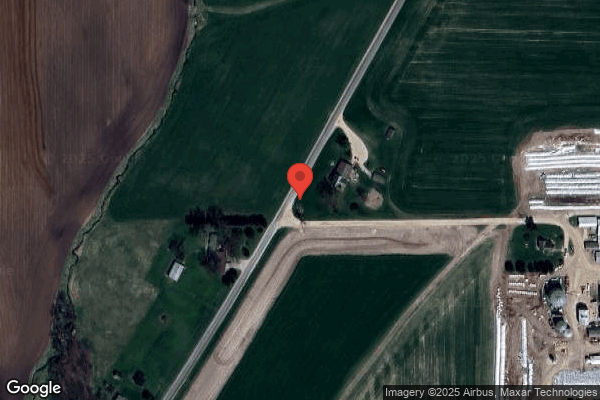
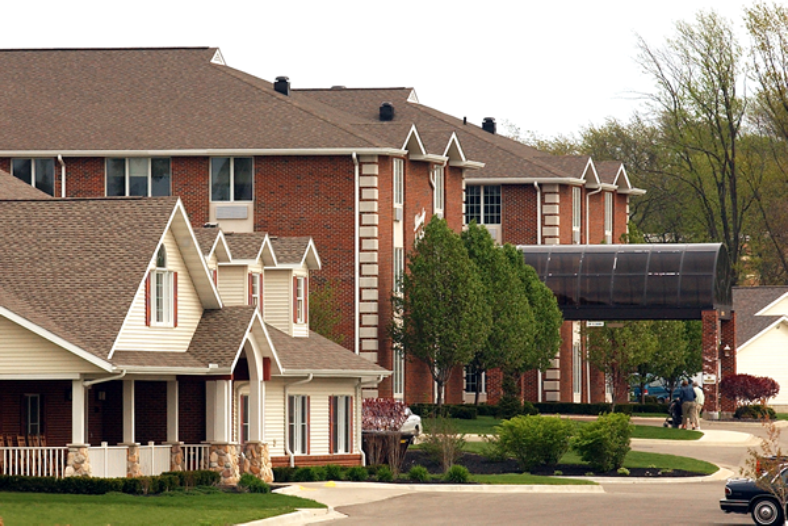
2170 WEST NAVAJO DRIVE, FREEPORT, IL 61032 (815) 233-2400
Non profit - Corporation 117 Beds RESIDENTIAL ALTERNATIVES OF ILLINOIS Data: November 2025
Trust Grade
30/100
#260 of 665 in IL
Last Inspection: August 2024

Within standard 12-15 month inspection cycle. Federal law requires annual inspections.

Overview

Manor Court of Freeport has received a Trust Grade of F, indicating significant concerns about the facility's quality of care. Ranking #260 out of 665 facilities in Illinois places them in the top half, while their county rank of #2 out of 5 suggests they are among the better options locally. The facility is improving, with issues decreasing from nine in 2024 to three in 2025. Staffing is rated average, with a turnover rate of 33%, which is better than the state average of 46%, meaning many staff members remain long-term. However, the facility has faced serious incidents, such as failing to administer sodium tablets to a resident, leading to a 15-day hospital stay, and not identifying advanced pressure wounds in two residents, which resulted in severe complications. Overall, while there are some areas of strength, such as improving trends and decent staffing retention, the facility's poor trust grade and serious incidents are significant red flags for families considering care options.

Trust Score
F
30/100
In Illinois
#260/665
Top 39%
Safety Record
High Risk
Review needed
Inspections
Getting Better
9 → 3 violations
Staff Stability
○ Average
33% turnover. Near Illinois's 48% average. Typical for the industry.
Penalties
⚠ Watch
$66,729 in fines. Higher than 85% of Illinois facilities, suggesting repeated compliance issues.
Skilled Nurses
✓ Good
Each resident gets 44 minutes of Registered Nurse (RN) attention daily — more than average for Illinois. RNs are trained to catch health problems early.
Violations
⚠ Watch
38 deficiencies on record. Higher than average. Multiple issues found across inspections.
★★★☆☆
3.0
Overall Rating
★★★☆☆
3.0
Staff Levels
★★★☆☆
3.0
Care Quality
★★★☆☆
3.0
Inspection Score
Stable
2024: 9 issues
2025: 3 issues

The Good

  • Full Sprinkler Coverage · Fire safety systems throughout facility
  • No fines on record
  • Staff turnover below average (33%)

    15 points below Illinois average of 48%

Facility shows strength in fire safety.

The Bad

3-Star Overall Rating

Near Illinois average (2.5)

Meets federal standards, typical of most facilities

Staff Turnover: 33%

13pts below Illinois avg (46%)

Typical for the industry

Federal Fines: $66,729

Above median ($33,413)

Moderate penalties - review what triggered them

Chain: RESIDENTIAL ALTERNATIVES OF ILLINOI

Part of a multi-facility chain

Ask about local staffing decisions and management

The Ugly 38 deficiencies on record

4 actual harm
Jul 2025 2 deficiencies
CONCERN (D) 📢 Someone Reported This

A family member, employee, or ombudsman was alarmed enough to file a formal complaint

Potential for Harm - no one hurt, but risky conditions existed

Notification of Changes (Tag F0580)

Could have caused harm · This affected 1 resident

**NOTE- TERMS IN BRACKETS HAVE BEEN EDITED TO PROTECT CONFIDENTIALITY** Based on observation, interview, and record review, the facility failed to ensure a physician was notified of a medication error...

Read full inspector narrative →
**NOTE- TERMS IN BRACKETS HAVE BEEN EDITED TO PROTECT CONFIDENTIALITY** Based on observation, interview, and record review, the facility failed to ensure a physician was notified of a medication error for 1 of 3 residents (R1) reviewed for notifications in the sample of 8. The findings include:R1's face sheet documents she was admitted to the facility on [DATE] and currently resided on the memory unit. The same document list multiple diagnoses including unspecified dementia without behavioral disturbance, and cognitive communication deficit.The 5/23/25, resident and care screening assessment documents R1 to have severe cognitive impairment. Her behaviors included wandering 1 to 3 days of a 7-day observation period.On 7/18/25 at 8:30 AM, R1 was attending activities on the memory care unit, ambulating on her own, alert, but confused. She took herself to the bathroom and washed her hands. She returned to the common area to resume activities. On 7/18/25 at 12:30 PM, V2, Director of Nursing, said V1, Administrator, had reported R1's family found a cup of pills in the room and returned them to the nurse on duty. V2 said she assumed the night shift nurse left them in R1s room the night before on 7/12/25, and V15 (R1s granddaughter) found the cup of pills and gave them to V6, LPN (Licensed Practical Nurse). V2 said she completed a medication error form, including notifying the physician. V2 said V6 should have notified the physician at the time of the occurrence, and complete a medication error form, but none of it was completed. On 7/18/25 at 1:00 PM, V6 stated on the afternoon of 7/13/25, V15 handed her a cup of medication with R1s name written on the side. She reviewed R1s medication orders and determined the pills were R1s evening medications from 7/12/25. V6 said she disposed of the pills, roughly 6 pills total. She did not document the incident and did not report it to anyone. She said she should have notified the physician of the missing dose of medication. On 7/18/25 at 1:44 PM, V2 said the facility has no policy for medication errors. It would be expected in this type of instance, medications not given, a medication error report should be completed. The document requires physician notification.
CONCERN (D) 📢 Someone Reported This

A family member, employee, or ombudsman was alarmed enough to file a formal complaint

Potential for Harm - no one hurt, but risky conditions existed

Pharmacy Services (Tag F0755)

Could have caused harm · This affected 1 resident

**NOTE- TERMS IN BRACKETS HAVE BEEN EDITED TO PROTECT CONFIDENTIALITY** Based on observation, interview, and record review, the facility failed to ensure medications were administered when prepared fo...

Read full inspector narrative →
**NOTE- TERMS IN BRACKETS HAVE BEEN EDITED TO PROTECT CONFIDENTIALITY** Based on observation, interview, and record review, the facility failed to ensure medications were administered when prepared for 1 of 3 residents (R1) reviewed for medication administration in the sample of 8. The findings include:R1's face sheet documents she was admitted to the facility on [DATE] and currently resided on the memory unit. The same document list multiple diagnoses including unspecified dementia without behavioral disturbance, and cognitive communication deficit.The 5/23/25 resident and care screening assessment documents R1 to have severe cognitive impairment. Her behaviors included wandering 1 to 3 days of a 7-day observation period.On 7/18/25 at 8:30 AM, R1 was attending activities on the memory care unit, ambulating on her own, alert, but confused. She took herself to the bathroom and washed her hands. She returned to the common area to resume activities. On 7/18/25 at 12:30 PM, V2, Director of Nursing, said V1, Administrator, had reported R1's family found a cup of pills in the room and returned them to the nurse on duty. V2 said she assumed the night shift nurse left them in R1s room the night before on 7/12/25, and V15 (R1s granddaughter) found the cup of pills on 7/13/25 and gave them to V6, LPN (Licensed Practical Nurse). V2 said she completed a medication error form, as V6 did not complete one when the medications were found.On 7/18/25 at 1:00 PM, V6 stated on the afternoon of 7/13/25, V15 handed her a cup of medication with R1s name written on the side. She reviewed R1s medication orders and determined the pills were R1s evening medications from 7/12/25. V6 said she disposed of the pills, roughly 6 pills total. She did not document the incident and did not report it to anyone. The 7/14/25 medication error report shows the date of error as 7/12/25, and it was a missed dose due to the nurse leaving the pills at the bedside. The medications ordered include alprazolam (anti-anxiety), aspirin, atorvastatin (cholesterol medication) carvediolol (blood pressure), clopidogrel (blood clot prevention) and Seroquel (anti-psychotic). The July 2025 MAR Medication Administration Record shows on 7/12/25, V13, LPN, documented R1's medications as given. There was no indication of missing doses or medication error.On 7/18/25 at 1:44 PM, V2 said the facility has no policy for medication errors. It would be expected in this type of instance, medications not given, a medication error report should be completed. The facility's undated policy for medication administration documents 7. In the event that a medication cannot be given, the reason must be documented in the Nurses Medication Notes on the MAR, and the time frame circled on the MAR. 11. Documentation of meds given will be done in a consistent manner by the nurse placing her initials in the appropriate space on the MAR. Documentation on the MAR will be done at the time of administration of the medication.
Jul 2025 1 deficiency 1 Harm
SERIOUS (G) 📢 Someone Reported This

A family member, employee, or ombudsman was alarmed enough to file a formal complaint

Actual Harm - a resident was hurt due to facility failures

Deficiency F0760 (Tag F0760)

A resident was harmed · This affected 1 resident

**NOTE- TERMS IN BRACKETS HAVE BEEN EDITED TO PROTECT CONFIDENTIALITY** Based on interview and record review, the facility failed to administer a resident's (R1) sodium tablets for 12 days following h...

Read full inspector narrative →
**NOTE- TERMS IN BRACKETS HAVE BEEN EDITED TO PROTECT CONFIDENTIALITY** Based on interview and record review, the facility failed to administer a resident's (R1) sodium tablets for 12 days following his admission to the facility. This failure resulted in R1 experiencing a critically low sodium level, confusion, hallucinations, and a 15 day hospital stay to correct his sodium levels. This applies to 1 of 3 residents reviewed for medications in the sample of 5. The findings include: R1's electronic face sheet printed on 7/8/25 showed R1 has diagnoses including but not limited to permanent atrial fibrillation, syndrome of inappropriate secretion of antidiuretic hormone (SIADH), chronic kidney disease, and malignant neoplasm of bladder. R1's census report showed R1 was admitted to the facility on [DATE], and discharged to a local hospital on 6/16/25. R1 did not return to the facility. R1's local hospital discharge orders, dated 6/5/25, showed, NEW: Sodium Chloride 1gm PO (oral) QID (4 times per day) .Discontinued: sodium chloride 1,000mg PO TID (3 times per day) . R1's physician's orders for June 2025 showed no orders for R1 to receive Sodium Chloride 1gm PO QID. R1's medication administration record for June 2025 showed no evidence R1 ever received Sodium Chloride during his stay at the facility from 6/5/25-6/16/25. R1's nurse practitioner visit note, dated 6/9/25, showed: 4. SIADH- chronic- managed with sodium chloride 1gm po qid . On 7/8/25 at 10:23AM, V4 (R1's son) stated, (R1) went to an appointment which required them to draw blood and his sodium level was 115. The facility called my sister to let her know because she was at a different appointment with (R1), and she took him to the emergency room. He went back to (local hospital) where they had to slowly increase his sodium levels back up to normal. When she got him to (local hospital), he was hallucinating and saying he was seeing people outside of his eyes and was completely disoriented. I have no idea how she even handled him at the appointment. He knew he wasn't right, and he told us he felt disoriented, and he knew he was hallucinating. It took 2 weeks in the hospital before they got his levels regulated again. The orders were clearly on his discharge paperwork so I'm unsure why (facility) never gave him his medications. On 7/8/25 at 9:48AM, V5 (R1's Nurse Practitioner) stated, SIADH is usually the reason we see someone on a sodium replacement and that's what (R1) was getting it for. 10 days without the sodium tabs could have detrimental effects and create a critically low sodium level which would put him at risk for nausea, vomiting, increased confusion, and potentially seizures depending how low his sodium was. I never saw what his labs were because he was out at an appointment at the time, and they drew the labs and got the critical lab value. I saw him on 6/9/25 and nobody ever reported to me that he wasn't getting his sodium tabs, so I assumed what I saw on the discharge report was being given because I certainly did not discontinue his sodium tabs. I never received any notification that there were any issues with getting the medication or entering it into the system. On 7/8/25 at 9:57AM, V3 (Licensed Practical Nurse) stated, If my name was next to the orders for admission then I must have been the nurse who admitted (R1), but I don't remember much about him. When I do an admission, I look at discharge paperwork and reconcile the orders. Sometimes the hospital will send the orders before the resident comes but it usually comes with the resident. I don't recall having any issues entering any medications or not being able to find medications. If I was the nurse that put the orders in, then there is another nurse from night shift that checks orders so someone besides me should have caught this. If a resident is not receiving sodium as ordered, they could potentially have cardiac effects. I can't really say much because I'm not a doctor or anything. On 7/8/25 at 10:07AM, V2 (Director of Nursing) stated, When a resident is admitted , the floor nurse enters the medications. Usually, it is the nurse from that hall but if another nurse is available, they will do it. Third shift nurses are then responsible for double checking the discharge orders from the hospital and reconciling it with our list. I remember (R1) a little bit, but he wasn't here long. He went to the hospital because of low sodium and change in mental status. He was out at an appointment at the time we got the call about his low sodium, so his daughter drove him to the hospital. I'm not even sure when the labs were done or what the level was. On 7/8/25 at 11:42AM, V2 stated, We were able to get the labs from the hospital and it showed (R1's) sodium levels were 115 when he got to the hospital, which is a critically low level. He was confused and hallucinating which are signs of low sodium. I have no idea how this order was missed when he was admitted to the facility because 2 nurses checked the orders so it should have been caught. This is a perfect example of a significant medication error. R1's local hospital records showed, 6/16/25 Sodium 115 (Critical Lab Value) 6/17/25 119 (Critical Lab Value) . The facility's policy titled, admission of A Resident revised 01/04 showed, Objective: 1. To facilitate the transition from prior living arrangement to long-term in a caring, professionally comprehensive manner .Procedure .13. Obtain physician's orders . The facility's policy titled, Medication Administration revised 02/04 showed, Objective: 1. To provide the resident with those medications deemed necessary by the physician to improve and/or stabilize specified diagnosis of the resident .Procedure .5. All physician's orders must be accurately transcribed to the MAR (medication administration record). 6. All medications must be administered to the resident in the manner and method prescribed by the physician. 7. In the event that a medication cannot be given, the reason must be documented in the Nurses Medication Notes on the MAR (Medication Administration Record) .
Aug 2024 9 deficiencies 2 Harm
SERIOUS (G)

Actual Harm - a resident was hurt due to facility failures

Pressure Ulcer Prevention (Tag F0686)

A resident was harmed · This affected 1 resident

Based on observation, interview, and record review, the facility failed to identify a pressure wound prior to becoming advanced stages, failed to identify deterioration of an existing pressure ulcer, ...

Read full inspector narrative →
Based on observation, interview, and record review, the facility failed to identify a pressure wound prior to becoming advanced stages, failed to identify deterioration of an existing pressure ulcer, failed to perform weekly wound assessments, failed to perform accurate wound assessments for 2 residents (R75, R63), failed to provide wound treatments, failed to maintain documentation of wound assessments for 1 resident (R16), and failed to ensure pressure ulcer prevention measures were in place for 1 resident (R63). These failures resulted in R75 experiencing sepsis requiring hospitalization, surgical debridement of his necrotic wound, and placement of a colostomy due to an infected wound. These failures also resulted in R63's bilateral heel wounds not being identified until they were unstageable wounds and becoming necrotic. These failures apply to 3 of 6 (R75, R63, R16) residents reviewed for pressure ulcers in the sample of 23. The findings include: 1. R75's electronic face sheet, printed on 8/29/24, showed R75 has diagnoses including but not limited to pressure ulcer stage 4, infection following sacral debridement, Parkinson's disease, Alzheimer's disease, dementia without behaviors, and colostomy. R75's care plan, dated 6/23/24, showed, Resident is at increased risk for pressure ulcers related to decreased mobility, generalized muscle weakness following recent illness and hospitalization . R75's admission nursing assessment, dated 7/17/24, showed R75 had no skin alterations upon admission. R75's care plan, dated 7/18/24, showed, (R75) has a colostomy related to sacral wound infection and need to keep the area clean. R75's facility assessment, dated 8/22/24, showed R75 has no cognitive impairment, has one stage 4 pressure ulcer, and utilizes and ostomy. R75's wound assessment report, dated 6/26/24, showed, dermatitis-7x6cm (centimeters). Red, open blisters to inner natal cleft. Scar tissue to coccyx and buttocks. Wound bed 50% slough and 50% granulated. Not recorded as pressure injury due to between skin folds. R75's wound assessment report, dated 7/3/24, showed, dermatitis-10x5cm-declining-macerated and excoriated scar tissue, grey in color. R75's nursing progress notes showed, 7/4/24 Writer was taking resident to supper and noted his face appeared red and flushed. Writer took temperature and temperature was 101.2. Resident had some confusion to what time it was and seemed a bit slower than usual to respond. (Physician on call) notified gave order to restart cefdinir 300mg (milligrams) bid (twice per day) x 5 more days and if resident worsens tonight may send to emergency room. 7/5/24 Power of Attorney here and concerned that (R75) has confusion and was not acting like himself. Vitals taken temperature was 101.4. He is on antibiotic for UTI (urinary tract infection) .911 called and took resident to local emergency room . R75's local hospital records, dated 7/5/24, showed, .brought in for evaluation from nursing home after developing fever and altered mental status again yesterday. Daughter states he appeared to have some labored breathing from time to time as well .evidence of sepsis with urinary catheter has a large unstageable sacral decubitus foul-smelling necrotic wound that requires debridement sepsis criteria likely secondary to wound to coccyx. R75's operative note, dated 7/6/24, showed, Reason for operation: sepsis with necrotic decubitus ulcer .findings: necrotic decubitus involving skin and subcutaneous tissue with purulence (drainage) .scalpel was used to excise necrotic infected tissue . R75's surgery progress note, dated 7/8/24, showed, May need to consider diverting ostomy as patient seems to be intermittently incontinent of stool .wound is approximately 8-9cm in diameter and 5-6cm in depth . R75's surgery progress note, dated 7/9/24, showed, Discussed with patient and daughter that we suggest additional debridement of wound as well as construction of diverting ostomy for stool incontinence. They are in agreement .surgery within 24-48 hours. (R75's ostomy surgery was completed on 7/10/24) R75's hospital physician note, dated 7/10/24, showed, Sacral ulcer: wound cultures reporting prevotella and morgnella (bacteria). On 8/27/24 at 11:40AM, R75 stated, I have a horrible sore on my bottom. I got it while I was here and needed surgery on it, and then they gave me this (pointing to colostomy) because the sore was so bad. On 8/28/24 12:30PM, V17 (Wound Care Nurse) stated, (R75) had dermatitis, but I'm not exactly sure when it started. We were watching it and he had some areas that were red. I guess it broke open. I was doing the wound assessments for (R75) at the time. I don't really recall much about him, but looking at the physician communication notes, he must have had some chapped skin that we were trying to soften up or something. It's strange that there are no wound assessments other than the physician communication forms. I'm not sure where they would be or even how to find them. I would think if the nurse saw a change in the wound, she would notify the physician for new orders and document that. I'm only here one day a week, so if there is something new with the wound, then that is up to the floor staff to notify the physician. On 8/28/24 at 12:38PM, V2 (Director of Nursing) stated, There are nursing skin assessments in (R75's) chart, dated 6/18/24 and 6/26/24, but they do not show any open areas. I don't see any full wound assessments documented in (R75's) chart. It is the expectation that (V17) does a full wound assessment including measurements and characteristics of every resident with a wound when she is in the facility. If a new wound is identified when she is not here, then the floor staff do the assessment and initiate orders. It is also the expectation that if a change is seen with a wound, the staff notify the physician for new orders. We now have a Wound Physician that comes once a week, but he started after all of this with (R75), so he did not start seeing him until 7/22/24. On 8/29/24 at 11:07AM, V26 (Wound Care Physician) stated, It's not normal to change from dermatitis to an unstageable wound. It might have started as a stage one and then progressed to a higher stage, but this was never dermatitis. When you have granulation and slough, you don't have dermatitis. There is no broken skin with dermatitis. From the wound assessments that were performed initially, this wound should have been classified as a pressure ulcer and treated as such. It should have been reclassified as soon as his skin broke open. With the slough and granulation present, I would have probably classified this as a Stage 3 pressure ulcer initially. A wound can become necrotic within a few days if not receiving the proper wound care. The nurses should have noticed the wound was necrotic and odorous, and he should have been seen by a Wound Care Physician as soon as possible. When a wound becomes necrotic, it becomes very dark and liquified and very noticeable. He was not receiving the proper treatments for this wound, which led to the complications he had. The facility's policy titled, Pressure Injury/Pressure Ulcer Prevention and Treatment Protocol, dated 10/24/22, showed, 6. When a resident is admitted to the facility or develops a pressure injury in the facility, the following will occur: A. Assess the pressure injury for location, size (measure length x width x depth), wound bed, drainage (amount, color, type), odor, tunneling, undermining or sinus tract, wound edges, surrounding tissue and pain at site. B. determine the injury's current stage of development: Stage 3 Pressure ulcer: full thickness skin loss: Full thickness loss of skin, in which subcutaneous fat is visible in the ulcer and granulation tissue and epibole (rolled wound edges) are often present. Slouch and/or eschar may be visible but does not obscure the depth of tissue loss .if slough or eschar obscures the wound bed, it is an unstageable pressure ulcer/injury . 2. R63's face sheet, printed on 8/29/24, showed R63 has diagnoses including but not limited to peripheral vascular disease, pneumonia, pressure-induced deep tissue damage of left hip, atherosclerosis, and anxiety disorder. R63's facility assessment, dated 6/25/24, showed R63 has mild cognitive impairment and has 1 unstageable pressure ulcer. R63's care plan, dated 11/22/23, showed, (R63) is at increased risk for pressure ulcers related to decreased mobility, generalized muscle weakness following recent illness and hospitalization. Pressure areas present to heel, foot and hip. Apply pressure reducing waffle boots to lower extremities when at rest .pressure reducing device in wheelchair and bed. R63's wound management detail report, dated 12/13/23, showed, Right heel pressure ulcer-unstageable 2.5 x 5cm, 100% eschar, dark purple or rusty discoloration. R63 did not have a wound assessment performed 12/20/23 and 12/27/23. R63's wound management detail report, dated 1/3/24, showed, Right heel pressure ulcer-unstageable deep tissue 2x5.8cm 100% necrotic eschar. On 8/27/24 at 11:02AM, R63 was laying in his bed with no heel protectors in place, and both of his heels were resting on the mattress. R63's heel protectors were observed on the spare bed in R63's room. On 8/27/24 at 11:26AM, V30 (hospice aide) provided incontinence care to R63, and stated R63 should always have his heel boots on because he has many wounds on his feet. V30 then transferred R63 to his wheelchair with no cushion in the chair. V30 stated R63 used to have a cushion, but she is unsure of where it is at. On 8/28/24 at 2:15PM, V2 (Director of Nursing) stated, All residents that are at risk for pressure ulcers and cannot reposition themselves should have heel protectors on at all times when they are in bed. If (R63) has that many wounds, then it is critical that all of the interventions are in place. I don't really know a lot about his wounds, but any wound should be identified as early as possible to allow for early intervention to try to heal the wounds. On 8/29/24 at 11:07AM, V26 (Wound Care Physician) stated, A deep tissue injury is intact skin with discoloration underneath. You cannot have a deep tissue injury with necrotic eschar. That is when the wound is open and becomes unstageable, so this assessment is incorrect. I wouldn't be surprised if that developed over a day or 2 without wearing heel protectors. If his skin was being assessed every day, this would have been caught when it was a red area; I would see a stage 1 red area. Wounds with eschar should be caught earlier and are signs that the wound is declining and is now open. 3. R16's 8/27/24 Wound Clinic assessment showed she had a Stage 3 pressure injury to her left heel and two unstageable pressure wounds to her right foot. On 8/27/24 at 3:45 PM, R16 stated she has wounds on both of her feet. R16 stated her pressure wounds developed after she fell and sustained a fracture to her right ankle. R16 stated some of the pressure injuries developed while she had the cast on, and were not discovered until the cast was removed. R16 stated the pressure ulcer dressings were changed at the wound clinic on 8/27/24; however, prior to this, they had not been changed since Friday, 8/23/24. On 8/27/24 at 4:02 PM, V28, R16's daughter, stated she attended R16's wound clinic appointment that day. R16 stated the dressing was dated 8/23/24. On 8/28/24 at 12:19 PM, V16 (Wound Clinic Registered Nurse) stated she was the nurse who removed R16's dressing. V16 stated the dressings to both of R16's feet were dated 8/23/24. V16 stated the date on the dressing means the date that it was last changed. On 8/28/24 at 1:28 PM, V2 (Director of Nursing) stated the facility does not have the assessments for R16's wounds because the assessments are done at the wound clinic. V2 stated she did not believe the facility needed to keep records of R16's wounds if the weekly assessments were done outside the facility. R16's August 2024 Treatment Administration History (provided on 8/28/24, Commonly referred to as a TAR, Treatment Administration Record) showed an order to provide treatment and dressings to the left heel every 3 days. The TAR showed the treatment due on Monday 8/26/24 was left blank. R16's August 2024 TAR showed an order to treat and dress the wounds to the right foot every other day. The TAR showed the treatment due on Monday 8/26/24 was left blank. R16's Progress Notes from 8/26/24 (Monday, when the dressing changes were scheduled to be completed.) showed she left for an appointment at an unknown time; however, she returned at 4:30 PM. The progress notes do not show a refusal for dressing change. On 8/28/24 at 1:20 PM, V17 (Wound Nurse) (facility's wound nurse) stated, The date on the dressing is the date that it was changed. The purpose of the dressing is to removed exudate, promote healing and prevent infection. After a dressing change is done, they should document in the treatment list that the dressing change is done. The floor nurses do dressing changes when I am not here. I am here Wednesday. The dressings to both heels should have been changed Monday. If she (R16) refused, it should have been documented. I didn't assess them (foot wounds) she went to the wound clinic (the wound clinic assesses the wounds). One of them was pressure the other was due to a cast, I think. V17 stated she does not assess R16's wounds. The facility's Pressure Injury/Pressure Ulcer Prevention and Treatment Protocol (revised 10/24/22) showed, .Weekly measurement will be conducted and entered in the chart under Wound Management .All treatments and charting of pressure ulcers/injuries will be done by licensed staff .
SERIOUS (G)

Actual Harm - a resident was hurt due to facility failures

Deficiency F0692 (Tag F0692)

A resident was harmed · This affected 1 resident

**NOTE- TERMS IN BRACKETS HAVE BEEN EDITED TO PROTECT CONFIDENTIALITY** 2. R70's electronic face sheet, printed on 8/29/24, showed R70 has diagnosed including but not limited to dementia without behav...

Read full inspector narrative →
**NOTE- TERMS IN BRACKETS HAVE BEEN EDITED TO PROTECT CONFIDENTIALITY** 2. R70's electronic face sheet, printed on 8/29/24, showed R70 has diagnosed including but not limited to dementia without behaviors, type 2 diabetes, peripheral vascular disease, and cognitive communication deficit. R70's care plan, dated 8/28/24, showed, Resident has experienced weight loss. Monitor and record intake of food. On 7/11/24, R70 weighed 125 lbs. On 8/10/24, R70 weighed 112 pounds which is a 10.40 % weight loss within 1 month. R70's progress notes, dated 8/15/24, showed, (Nurse Practitioner) noted weight loss. No new orders. R70's Registered Dietician note, dated 8/20/24, showed, Per nursing note 8/15 (Nurse Practitioner) notified of weight loss with no new orders. Recommend Hi calorie diet. Will continue current nutrition interventions. Will continue to monitor intakes, weight, skin, and plan of care. R70's meal intake record for July and August 2024 had no documentation of meal intakes. R70's progress notes, dated 8/27/24, showed, (Nurse Practitioner) agreed with Dietician's request to change diet to Hi calorie diet due to recent weight loss. (17 days after weight loss identified). 3. R83's electronic face sheet, printed on 8/29/24, showed R83 has diagnoses including but not limited to dementia with behaviors, hypertension, and anxiety disorder. R83's facility assessment, dated 6/11/24, showed R83 has experienced a weight loss of 5% or more within 1 month or 10% or more within 6 months. R83's care plan, dated 8/28/24, showed, Resident has experienced weight loss. Monitor and record intake of food. On 5/8/24, R83 weighed 124lbs. On 8/8/24, R83 weighed 101lbs, which is a 18.55% loss in three months. On 7/11/24, R83 weighed 115 lbs. On 8/8/24, R83 weighed 101lbs, which is a 12.17% loss in one month. R83's progress notes, dated 8/15/24, showed, (Nurse Practitioner) noted weight loss no new orders. R83's Registered Dietician note, dated 8/20/24, showed, Resident continues to drop significant weight. Recommend increasing protein supplement to 8 oz three times a day and weekly weights. Will continue current nutrition interventions. Will continue to monitor intakes, weight, skin, and plan of care. R83's meal intake record for July and August 2024 had no documentation of meal intakes. R83's progress notes, dated 8/27/24, showed, (Nurse Practitioner) agreed with Dietician's request to increase residents' protein supplements and to add weekly weights due to recent weight loss. On 8/28/24 at 3:46PM, V23 (Assistant Director of Nursing) stated, We do not have meal intakes for these residents. We only chart by exception typically, so the only thing we have documented on them is whether they consume their supplements. I guess it would be helpful to know how much our residents are eating over time, but that's not our policy to document meal intakes on all residents. The facility's policy titled, Weight Monitoring, dated 06/21, showed, Objective: To consistently assess residents for significant weight loss or gain .4. Licensed Staff will notify the physician of the following: A. 5% or more gain or loss in a 30-day period B. 7 1/2% or more gain or loss in a 90-day period C. 10% or more gain or loss in a 180-day period. 5. The weight committee will review all residents with significant weight gains or losses and other residents of concern and refer to the Registered Dietician as needed. 6. The Registered Dietician will review significant weight losses and any other residents referred by the weight committee on a monthly basis, and make recommendations to physicians as necessary. Based on observation, interview, and record review, the facility failed to implement interventions for residents with significant weight loss for 3 of 4 residents (R82, R70, R83) reviewed for weight loss in the sample of 24. These failures caused R82 to experience a 9.91% weight loss in 1 month, R70 to experience a 10.40% weight loss in 1 month, and R83 to experience a 12.18% weight loss in 1 month and a 18.55% weight loss in 3 months. The findings include: 1. R82's face sheet showed he was admitted to the facility on [DATE], with diagnoses to include chronic atrial fibrillation, congestive heart failure, pressure ulcer of sacral region, anxiety disorder, anemia in chronic kidney disease, and obstructive and reflux uropathy. On 8/28/24 at 9:12 AM, R82 said he has lost weight since he has been at the facility. R82 said he thinks maybe they may want him to lose weight. R82 said he is not on any nutritional supplements. R82's record showed on 7/11/2024, he weighed 212 lbs. (pounds) and on 8/08/2024, the resident weighed 191 pounds which is a 9.91 % weight loss in 30 days. R82's record showed the Nurse Practitioner was notified of the significant weight loss on 8/14/24 (6 days after the significant weight loss was identified). R82's Registered Dietitian Note dated 8/20/24 (12 days after the significant weight loss was identified) showed recommendations to complete weekly weights, nutritional shake twice daily, and continue to monitor intakes. R82's care plan for nutrition was started 8/28/24 (20 days after significant weight loss was identified). R82's care plan showed, Resident has experienced weight loss . Diet: Regular, high protein; encourage oral intake of food and fluids; monitor and record intake of food . There was not nutritional care plan in place prior to 8/28/24. On 8/28/24 at 3:46 PM, V3, ADON (Assistant Director of Nursing), said there are no meal intakes documented for R82. On 8/29/24 at 10:39 AM, V6 (Dietary Manager) said they have a few people who get fortified milk as a supplement, but they have no residents on fortified foods. V6 said if V27 (Registered Dietitian) recommends fortified foods, the resident would receive either mashed potatoes, soup, a cookie, or pudding. V6 said the CNAs get the weights and turn them in to him. He enters the weights and generates a report from the electronic health record which he gives to V2 (Director of Nursing), V3 (Assistant Director of Nursing), and V27 (Registered Dietitian, RD). V6 said the report is sent to V27 by email, since the facility does not have a permanent RD at this time. V6 said it has been about 4-6 months since they have had a permanent RD. V6 said the RD responds to let him know she received it and works on it at her convenience, whenever she has time. V6 said if V27 has recommendations, she emails them back to the DON to generate the changes. V6 said the nursing department puts the changes in to place and they change the diet card. V6 said R82 is on a high protein/high calorie diet and has no other nutritional supplements. V6 said the facility usually does an IDT (interdisciplinary team) meeting to discuss weights, but they have not had that meeting for the last few months since the kitchen has been short staffed. On 8/28/24 at 4:00 PM, V2, DON (Director of Nursing), said the facility does not start any nutritional supplements without a physician order. V2 said they notify the physician of weight changes, and they give the orders. The facility has no standing orders for nutritional supplements. On 8/29/24 at 12:09 PM, V2 said the RD does all her work remotely and does not come into the facility. V2 said she thinks the Registered Dietitian reviews residents with weight loss, new admissions, and those with their facility assessments coming up. V2 said she is not included in weight monitoring; all weights are given to V6, Dietary Manager. V2 said if the RD has recommendations, she writes it up and sends an email to her and to V6. V2 said recommendations are forwarded to the Nurse Practitioner, the resident's physician, or the Medical Director. V2 said those recommendations should be in place no later than 3 days after receiving them and they try and get them in place the same day or the next day. V2 said after the weight loss is identified, the RD should be reviewing as soon as possible. V2 said they don't monitor and document meal intakes on everyone, but they would do them for residents with weight loss. V2 said monitoring meal intakes would be put into place when the Dietary Manager enters the weight and identifies the weight loss. On 8/29/24 at 1:22 PM, V27 (Registered Dietitian) said she has been hired by the facility to cover until they find a permanent RD. V27 said she does all her work for the facility remotely, and was hired to work 8 hours per month. V27 said she lives out of state, and she goes in and enters notes on the residents she was referred to review every 2 weeks. V27 said V6 (Dietary Manager) sends her a list of residents to review, and she does a progress note for those. V27 said if she has recommendations, she writes those down and sends them to V6, Dietary Manger, and V2, DON. V27 said she would hope they would have those recommendations in place within the week of receiving them, but she would want interventions started right away. V27 said the gap between identifying the significant weight loss and starting interventions (18 days for R82) is too long because the residents could be losing more weight during that time. V27 said residents with a high protein/high calorie diet are supposed to receive fortified oatmeal at breakfast and fortified milk at all meals.
CONCERN (D)

Potential for Harm - no one hurt, but risky conditions existed

ADL Care (Tag F0677)

Could have caused harm · This affected 1 resident

**NOTE- TERMS IN BRACKETS HAVE BEEN EDITED TO PROTECT CONFIDENTIALITY** Based on observation, interview, and record review, the facility failed to provide hand hygiene for 1 of 1 resident (R64) in the...

Read full inspector narrative →
**NOTE- TERMS IN BRACKETS HAVE BEEN EDITED TO PROTECT CONFIDENTIALITY** Based on observation, interview, and record review, the facility failed to provide hand hygiene for 1 of 1 resident (R64) in the sample of 24. The findings include: On 8/27/24 at 1:18 PM, V18, R64's spouse, stated she wished the facility would clean R64's nails and hands. V18 said, He picks at his skin and I'm worried about him getting an infected wound from his dirty nails and all the picking he does. V18 then pointed out a scab on the middle of R64's forehead and stated he picks at the small wound often. On 8/27/24 at 1:18 PM, R64's nails and both hands had dirt and grime under all the nails. R64's hands were dirty with a dried red substance on his hands. R64 also had a small, pea sized, open, non-draining wound to the middle of his forehead. On 8/28/24 at 2:05 PM, R64's fingernails remained dirty; however, the red substance had been cleaned. On 8/28/24 at 2:42 PM, V20, Certified Nursing Assistant/CNA stated R64 does not refuse care and his is a good resident. V20 said, We wash hands anytime they are soiled and before meals. On 8/28/24 at 2:57 PM, V18 stated, I have told some of the nurses a few times to clean his nails. The surgeon said that he needed his nails trimmed and cleaned because of his picking, so I have told the nurses a few times, but it hasn't been done. On 8/28/24 at 2:46 PM, V2, Director of Nursing, stated, Staff should be washing resident hands before meals, when soiled, and after using the bathroom. V2 said staff should also be cleaning under the nails for cleanliness and infection control. On 8/28/24 at 2:56 PM, V2 observed R64's nails and stated his nails were dirty and they needed to be cleaned. R64's Quarterly Minimum Data Set (MDS), dated [DATE], showed he required substantial/maximal assistance for personal hygiene, which includes washing hands.
CONCERN (D)

Potential for Harm - no one hurt, but risky conditions existed

Quality of Care (Tag F0684)

Could have caused harm · This affected 1 resident

**NOTE- TERMS IN BRACKETS HAVE BEEN EDITED TO PROTECT CONFIDENTIALITY** Based on observation, interview, and record review, the facility failed to provide a dressing change in a manner to prevent cros...

Read full inspector narrative →
**NOTE- TERMS IN BRACKETS HAVE BEEN EDITED TO PROTECT CONFIDENTIALITY** Based on observation, interview, and record review, the facility failed to provide a dressing change in a manner to prevent cross contamination for 1 of 2 residents (R51) reviewed for quality of care in the sample of 24. The findings include: R51's face sheet showed he was admitted to the facility on [DATE], with diagnoses to include conversion disorder with seizures, gastrointestinal hemorrhage, bilateral inguinal hernia, severe morbid obesity, rash and other nonspecific skin eruption, and local infection of the skin and subcutaneous tissue. R51's physician order sheet showed, 8/26/24 Treatment for left side of scrotum: pack wound with iodoform and apply skin prep to surrounding skin and cover with band aid. change daily . On 8/27/24 at 2:08 PM, V5, LPN (Licensed Practical Nurse), and V29, CNA (Certified Nursing Assistant), were performing R51's dressing change to his scrotum. V29, CNA, was holding R51's scrotum for V5, LPN, to pack the wound. V5 was having a difficult time getting the packing into place. When V5 turned away to get some additional supplies, V29 using her same gloved hands which she was holding R51's scrotum with, reached to the buttons located on the footboard of the bed, and was attempting to adjust the height of the bed up. V29 touched all the buttons on the footboard of R51's bed as she was attempting to get the height of the bed adjusted. V29 then, using those same gloves, returned to R51 and started searching with her gloved hands to find the wound opening on R51's scrotum and touching the open area. When V5, LPN, turned back to continue attempting to pack the open wound she stated the bed was too high for her, and V29 then using those same gloved hands reached back down to the footboard and pushed the buttons to adjust the height, and again returned to R51 and began adjusting and readjusting his scrotum to find the open wound for V5 to continue the dressing change. On 8/29/24 at 12:03 PM, V2, DON (Director of Nursing), said if V29 was holding R51's scrotum, she should have taken the gloves off and washed her hands before touching the buttons on the bed. V2 said V29 should have then washed her hands and put on new gloves before touching him again. V2 said V29 would be contaminating both the resident and the buttons on the bed and potentially transmitting infection. The facility's policy and procedure with revision date of 03/04 showed, Wound Care . To protect the wound from contamination . Wounds are subject to infection . **Standard Precautions Must Be Followed During Care of Wounds. ** . All wound treatments should be done in an aseptic manner, employing standard precautions throughout .
CONCERN (D)

Potential for Harm - no one hurt, but risky conditions existed

Deficiency F0688 (Tag F0688)

Could have caused harm · This affected 1 resident

Based on interview and record review, the facility failed to provide restorative exercises to 1 of 2 residents (R63) reviewed for range of motion in the sample of 23. The findings include: R63's elect...

Read full inspector narrative →
Based on interview and record review, the facility failed to provide restorative exercises to 1 of 2 residents (R63) reviewed for range of motion in the sample of 23. The findings include: R63's electronic face sheet, printed on 8/29/24, showed R63 has diagnoses including but not limited to peripheral vascular disease, pneumonia, pressure-induced deep tissue damage of left hip, and anxiety disorder. R63's facility assessment, dated 6/25/24, showed R63 has mild cognitive impairment and receives restorative nursing programs for active range of motion, bed mobility, and dressing and/or grooming. R63's Therapy Recommendation/Communication), dated 1/1/24, showed, Suggested restorative programs: Transfers. R63's Functional Abilities/Restorative Programs, dated 2/26/24, showed, Does the resident have a need for restorative programs-yes. Reason for restorative program-physical limitations. Describe resident's goals and summary of findings-restorative programs to be initiated. R63's Functional Abilities/Restorative Programs, dated 6/24/24, showed, Reason for restorative assessments-physical limitations. Does the resident have a need for restorative programs-no. No restorative at this time. (R63) is enrolled in hospice. He is dependent for cares. R63's electronic medical record showed no documentation of R63 receiving restorative services from 2/2024 thru 8/2024. On 8/29/24 at 1:06PM, V22 (Minimum Data Set-MDS Coordinator) stated, I do all of the restorative assessments and set up the programming for all of the residents. Once the programming is entered into the resident's chart, then the aides perform the exercises. We don't have a Restorative Nurse or Restorative Aide; the floor staff perform all the programming. (R63) is not on a restorative program. I don't think he would really want to participate. He's hospice and does activity as he tolerates, he had no program prior to going hospice either. It's odd because I usually have them on everyone. I put a transfer restorative program and lower body exercises in on January I thought, but I don't see any documentation that it was ever completed by the staff. Of course, the one record you look at doesn't have any documentation. I must have missed this one. On 8/29/24 at 1:13PM, R63 stated, They haven't offered to do any exercises with me, I feel bad asking them to do more than they already do because they are so busy. They only have so much time in the day. I would probably try to do a little something a now and again if they offered. I'm not sure how much it will help, but it couldn't hurt. The facility's policy titled, Nursing Rehab, dated 11/06, showed, It is the policy of the facility to provide a program to assist the resident to achieve and maintain the maximum level of function physically, mentally and socially .Restorative nursing care shall be a part of every resident's individual care plan
CONCERN (D)

Potential for Harm - no one hurt, but risky conditions existed

Menu Adequacy (Tag F0803)

Could have caused harm · This affected 1 resident

**NOTE- TERMS IN BRACKETS HAVE BEEN EDITED TO PROTECT CONFIDENTIALITY** Based on observation, interview, and record review, the facility failed to ensure resident preferences were considered for 1 of ...

Read full inspector narrative →
**NOTE- TERMS IN BRACKETS HAVE BEEN EDITED TO PROTECT CONFIDENTIALITY** Based on observation, interview, and record review, the facility failed to ensure resident preferences were considered for 1 of 1 resident (R9) reviewed for food preferences. The findings include: R9's face sheet showed she was admitted to the facility on [DATE], with diagnoses to include chronic obstructive pulmonary disease, chronic atrial fibrillation, major depressive disorder, history of benign neoplasm of the brain, diarrhea, and unspecified nausea and vomiting. R9's facility assessment showed she is cognitively intact. On 8/28/24 at 10:39 AM, R9 said she has concerns regarding food at the facility. R9 had a log of the food concerns she had kept in a notebook. R9 expressed some of her food concerns, such as not receiving lemon with their iced tea, some specific food items that were overcooked and undercooked, food items not received, seasoning of food, temperature of food, and concerns regarding kitchen staff leaving immediately after they deliver the meals to the unit and residents being unable to ask for additional items from the kitchen. R9 said, These are all questions we want to ask the kitchen person, but they say they can't come to our food committee meetings because they are too busy. We hold the meeting monthly between 10:30 AM and 11:00 AM. The kitchen person has not been to our meeting for the last 3 months. The June, July, and August Food Committee meeting minutes were requested, but there were none available. The facility's March 2024 Food Committee Meeting Minutes showed the residents were requesting more fresh fruit, had concerns regarding the consistency of soups, receiving cold food, vegetables overcooked, and dry cake. The facility's April 2024 Food Committee Meeting Minutes showed the residents had concerns with the flavor of a soup and the seasoning of tomatoes. The facility's May 2024 Food Committee Meeting Minutes showed the residents had concerns with noodles being cold and undercooked, food being too cold, vegetables being over cooked, macaroni and cheese being overcooked, dry cakes, and staff leaving before finding out if the residents needed anything else. On 8/29/24 at 10:39 AM, V6 (Dietary Manager) said the facility has a specific Food Committee Meeting each month. V6 said he has not attended the meeting for the last three months because he hasn't had time since he has been cooking, due to being short staffed. V6 said the food committee meeting is a 30-minute meeting held right after the Resident Council meeting. V6 said someone should be in the meeting and bringing the residents' concerns to him verbally. The facility denied having a policy and procedure relating to their Food Committee Meeting. The facility's policy and procedure titled Menu Preference sheets was received but did not include anything regarding ensuring resident preferences are considered.
CONCERN (E)

Potential for Harm - no one hurt, but risky conditions existed

Resident Rights (Tag F0550)

Could have caused harm · This affected multiple residents

Based on observation, interview, and record review, the facility failed to ensure residents were treated with dignity for 3 of 3 residents (R57, R255, R51) reviewed for dignity in the sample of 24 and...

Read full inspector narrative →
Based on observation, interview, and record review, the facility failed to ensure residents were treated with dignity for 3 of 3 residents (R57, R255, R51) reviewed for dignity in the sample of 24 and 3 residents (R101, R256, R105) outside of the sample. The findings include: 1. On 8/27/24 on 9:18 AM, R255 stated, I heard a commotion this morning. I am hard of hearing, and I could still hear it. It was a lot of 'You said this!' and 'No I didn't.' It was raised voices and way more than was necessary. It sounded like they were in their faces. I wanted to get up and say do you want me to come out there. It actually woke me up it was so loud. I wasn't mad but I was frustrated. They had no regard for us trying to sleep and it woke me up.So then I turn on my light and they (Certified Nursing Assistants/CNAs) say 'What do you want?' On 8/27/24 at 9:11 AM, R101 stated, There was staff feuding this morning at around 3:00 AM. It was loud. They were arguing about the working environment, and they didn't want to be here. It was very disturbing. By disturbing I mean just to here it and the arguing. It was very loud and not appropriate. It lasted about a half an hour. Half the time they (CNAs) come in the room and say 'What do you want?' They can be very rude. On 8/27/24 at 9:50 AM, R256 stated he heard the staff argument in the hallway outside his room. R256 said, I didn't have my hearing aide in this morning, and it (argument) woke me up, but I couldn't make out what they were saying. It was around 3:00 AM this morning. It made me feel like I shouldn't be here. It felt disrespectful. It was in our hallway. It was really loud.She (CNA) is very rude. She walks in, stops, and says 'What do you want?' She is very rude. On 8/27/24 at 2:18 PM, R105 said I did hear the staff yelling in the hallway this morning. It woke me up. The staff don't care about you here. Also, you put on the call light, and they say, 'What do you want?' and then you tell them (what you want) and you never see them again. It's not a dignified way to treat someone. On 8/28/24 at 2:46 PM, V2, Director of Nursing, stated, In regard to the incident the morning of 8/27/24, a CNA was arguing with the shift coordinator about her assignment. The CNA was told to go home. They should not have been arguing in the hallway. They should have taken the argument somewhere else. The CNA should have realized that this is the residents' home and not been yelling like that and woken them up. V2 also said, The CNA should not say 'What do you want?' They should say 'What can I help you with? or 'What do you need?' The residents would take it (the statement What do you want?) like they (CNAs) don't have time (to help the residents). The State of Illinois Residents' Rights for People in Long-term Care Facilities (Rev 11/2018) showed, Your facility must treat you with dignity and respect and must care for you in a manner the promotes your quality of life. 2. On 8/27/24 at 9:45 AM, V12, Certified Nursing Assistant (CNA), was looking at a personal cellphone when this surveyor entered the wing to do the medication storage task with V2, Director of Nursing (DON). Immediately upon seeing us, V12 put the phone in her pocket. On 8/27/24 during the Resident Council task, R51, R57, R101, and R255 said staff are on their cellphones all the time in resident care areas. R255 said, When they're on their phones, they're not caring for us. At 1:56 PM, V2, DON, said, Staff should not have their cell phones on them or be using them during resident care or when in resident care areas. It takes their focus away from the residents. The 6/3/24 resident council meeting minutes showed Certified Nursing Assistants (CNAs) are still on their cell phones. The 8/5/24 resident council meeting minutes showed CNAs are on their cell phones in the dining room while feeding residents on the day shift. Staff are talking on their ear buds while assisting residents. Staff eating their meals at mealtime while assisting residents on day shift. The facility's 4/2/19 Cell Phone and Electronic Handheld device Usage Policy showed a ban of cell phones in a facility is not only warranted but mandated by the Health Insurance Portability and Accountability Act of 1996 (HIPPA). Employees may not use cell phones at work that can cause violations of privacy and breaches in confidentiality.
CONCERN (E)

Potential for Harm - no one hurt, but risky conditions existed

Deficiency F0761 (Tag F0761)

Could have caused harm · This affected multiple residents

Based on observation, interview, and record review, the facility failed to ensure resident medications were clearly labeled and stored in a manner to prevent impairment of the integrity of the medicin...

Read full inspector narrative →
Based on observation, interview, and record review, the facility failed to ensure resident medications were clearly labeled and stored in a manner to prevent impairment of the integrity of the medicines for two of three medication carts reviewed for medication storage. This has a potential to affect all of the residents with medication stored in the two medication carts. The findings include: On 8/27/24, an open insulin flex pen was in the medication cart drawer in the dementia unit. It could not be determined by V2, Director of Nursing (DON), or V4, Licensed Practical Nurse (LPN), when the pen was opened or who it belonged to. A second medication cart as observed by V2 and V5, LPN, had an open insulin flex pen in the drawer. There was no date to determine when the medication was opened and no resident identifiers. A 500 milliliter (ml) bottle labeled valproic acid 250 milligrams (mg) had a little over 300 ml of liquid in the bottle. The label did not show the full concentration of the medication, had no legible resident information on it, and no open date. Another drawer had a second 500 ml bottle of valproic acid liquid. This bottle was wet and stuck to the bottom of the cart drawer when pulled out. There was no open date or clear resident identifiers on the label. There were also four unidentified white medication tablets on the drawer bottom. 08/28/24 at 10:56 AM, V2, DON, stated, Staff have been in serviced. We are to replace medications or have a new label issued if the label becomes illegible. Insulin pens should be dated when opened and labels on all medications should be legible. If a label is disintegrated, we should send the medication back to pharmacy. It's important to be able to read a label to ensure medicine is given to the right resident, the right amount, and so it's charged to the right resident. If pills are dropped, they should be discarded. If something is spilled it should be cleaned up. The facility's 1/5/23 Pharmaceutical Procedures Policy showed, the label of each individual container filled by the pharmacist shall clearly indicate the resident's full name, physician's name, prescription number, name and strength of drug, directions for administration, date of issue, date of expiration of all time-dated drugs, the initials of the pharmacist filling the prescription, and amounts of medication contained in each prescription. In addition, the pharmacy's name, address, and phone number shall be on all prescriptions. Medication containers having soiled, damaged, incomplete, illegible, or makeshift labels shall be returned to the issuing pharmacist for relabeling or disposal. Medications in containers having no labels should be destroyed in accordance with state and federal regulations. Drug supplies for the facility shall be stored under proper conditions of sanitation, temperature, light, refrigeration, and moisture. Resident's medications shall be properly labeled. The medications of each resident shall be kept and stored in their originally received container. All discontinues, unlabeled, and expired medications shall be returned to the pharmacy for proper disposition, and crediting considerations.
CONCERN (F)

Potential for Harm - no one hurt, but risky conditions existed

Infection Control (Tag F0880)

Could have caused harm · This affected most or all residents

3. R63's electronic face sheet, printed on 8/29/24, showed R63 has diagnoses including but not limited to peripheral vascular disease, pneumonia, pressure-induced deep tissue damage of left hip, and a...

Read full inspector narrative →
3. R63's electronic face sheet, printed on 8/29/24, showed R63 has diagnoses including but not limited to peripheral vascular disease, pneumonia, pressure-induced deep tissue damage of left hip, and anxiety disorder. R63's facility assessment, dated 8/22/24, showed R63 has 1 unstageable wound and 5 venous ulcers. R63's care plan, dated 11/22/23, showed, (R63) is at increased risk for pressure ulcers .pressure areas present to heels, foot, and hip. Enhanced barrier precautions are in place . On 8/27/24 at 11:26AM, R63's door had a sign posted showing, Enhanced Barrier Precautions. Staff to wear gown, gloves, and eye protection (if necessary) during high contact resident care activities including transfers, personal hygiene . Outside R63's door was a cart with surgical masks, gowns, and gloves. V30 was in R63's room providing incontinence care, bathing assistance, and transfer assistance, with only a gown and gloves on. V30 stated R63 is not on any type of precautions that she is aware of. On 8/28/24 at 2:02PM, V2 (Director of Nursing) stated, All residents on Enhanced Barrier Precautions have a sign on their door instructing staff to wear gowns and gloves with high touch resident care activities, which does include transfers, toileting, and personal hygiene. This is not new information, and our staff know that. Even our contracted staff are in here all the time, so they know what our policy is. 4. R75's electronic face sheet, printed on 8/29/24, showed R75 has diagnoses including but not limited to pressure ulcer stage 4, infection following surgical debridement, and colostomy. R75's facility assessment, dated 8/22/24, showed R75 has 1 stage 4 pressure ulcer, utilizes a urinary catheter, and has a colostomy. On 8/27/24 at 7:58AM, R75's door had a sign posted showing, Enhanced Barrier Precautions. Staff to wear gown, gloves, and eye protection (if necessary) during high contact resident care activities including transfers, personal hygiene . Outside R75's door was a cart with surgical masks, gowns, and gloves. V24 and V25 (Certified Nursing Assistants) were providing personal cares and bathing assistance for R75, and only had gloves applied. V24 and V25 did not have a gown on. V25 stated, I didn't see any type of isolation sign out there before I came in. V24 stated, I don't think he's on any type of isolation. The facility's policy titled, Enhanced Barrier Precautions, dated 8/8/22, showed, It is the policy of the facility to use proper personal protective equipment (PPE) during high-contact resident care activities that provide opportunities for transfer of multi-drug resistant organisms (MDROs) to staff hands and clothing .1. EBP (Enhanced Barrier Precautions) are an infection control intervention designed to reduce transmission of resistant organisms that employs targeted gown and glove use during high contact resident care activities .Examples of high-contact resident care activities requiring gown and glove use for EBP include dressing, bathing/showering, transferring, providing hygiene, changing linens, changing briefs, or assisting with toileting, device care, wound care . 2. R44's 8/26/24 Nurse's Note from 3:07 AM showed [R44's Physician] saw resident on 8/25/24, ordered stool for stool [sample] for GI Pathogen Panel, stool for C-Diff (Clostridioides difficile). On 8/27/24 at 11:22 AM, R44 stated she had been having diarrhea for several days. R44 stated, I can't leave my room because my diarrhea is so bad. I'm afraid I will have an accident in the dining room. On 8/27/24 at 11:22 AM, R44's room showed no signage indicating she was in isolation. On 8/28/24 at 2:36 PM, R44's room showed no signage indicating she was in isolation. On 8/28/24 at 10:30 AM, V19, Certified Nursing Assistant (CNA), stated R44 was not in isolation. V19 said, If there is no sign on the door for PPE (personal protective equipment), then we don't have to wear any special PPE. [R44], she doesn't have a [PPE] bin or sign on her door, but I would wear gloves when I would clean her up, but not a gown. She has been having diarrhea, but she doesn't have C-diff, otherwise we would know, and we would wear a gown. On 8/28/24 at 10:22 AM, V2, Director of Nursing, stated she was not able to find any evidence R44's stool sample had been sent to the laboratory. V2 stated if the sample had been sent, the results were not available. V2 stated, (R44) should be in contact isolation pending the results of the test and only removed from isolation if the results are negative. The purpose of the preemptive isolation is due to (R44) exhibiting the signs and symptoms of C-diff and to prevent the spread of C-Diff to staff and residents if she should be positive. The facility's Infection Control policy (Revised 12/17/19) showed, The purpose of isolation techniques is to protect the resident and personnel from infection and to halt the spread of the infectious agent .Gowns are worn by all personnel when they enter a strict isolation room and by those coming in direct contact with residents who require airborne, droplet and contact precautions .Based on observation, interview, and record review, the facility failed to implement COVID-19 outbreak interventions, failed to implement contact isolation precautions, and failed to implement enhanced barrier precaution interventions. This failure has the potential to affect all residents residing in the facility. The findings include: 1. The CMS 671, dated 8/27/24, showed 111 residents reside in the facility. On 8/28/24 at 8:25 AM, V13, R43's spouse, walked down R43's hall to the dining room at the end of the hall with no mask on. V13 had a loose, non-productive cough. V13 pushed R43 in her wheelchair from the dining room table and down the hall. Neither V13 nor R43 wore source control. None of the residents on the wing wore source control. Residents were leaving the dining room on their own and were seated less than four feet from each other at the dining tables. Staff assisted resident out of the dining room and down the hall with residents not using source control. Staff did not ask residents to wear masks. On 08/28/24 at 08:57 AM, V13 said nobody asked him to wear a mask today until he left the dining room with his wife. The girl at the front desk was busy when I came in. V13 said he has visited his wife daily for five years. On 08/28/24 at 09:02 AM, R99 was in a wheelchair without a mask on and in front of the dementia unit door. R99 was having difficulty opening the door. This surveyor got the attention of V21, Certified Nursing Assistnat/CNA. V21 said R99 was fine to go through the door as her spouse lived there. R99 entered the dementia unit and self-propelled halfway to the end. R99 said, Why would I wear a mask? Nobody asked me to put one on. At 09:48 AM, V3, Infection Preventionist (IP)/Registered Nurse (RN), said, (V8, Certified Nursing Assistant /CNA), tested positive for COVID last night while on duty. (V8) worked 8/25, 8/26, and 8/27/24 until 10:00 PM. (V8) worked two different wings and we have staff, residents, and visitors wearing masks on those units. Visitors are stopped at front door; we find out where they are going and ask them to wear a mask if it's one of the two affected wings. (V13) should have been asked to put a mask on when he entered the building to protect himself and others. If the CNAs knew (R99) was going down that wing, they should have asked her to put a mask on. At 11:18 AM, V9 said, Right before breakfast, (V2, Director of Nursing/DON), told (V10, CNA), the residents only needed to wear a mask if they left the wing or attended activities. About 8:25 AM this morning, (V11, CNA) shift supervisor called the phone in the dining room and told me she had a box of masks as the residents needed to wear a mask when they were out of their rooms. I asked for clarification as that's not what (V2) instructed us to do, and I never received a call back. What good will it do anyway? The residents are sitting two feet apart. At 11:20 AM, V10 said, (V2) told me at 6AM today that someone tested positive for COVID, and staff needed to wear masks on this hall. Nothing was said about the residents at that time. At 10:56 PM, V2, DON, said, We are considered in outbreak status since the CNA tested positive for COVID (last night). Staff and residents should be wearing source control on the two units the CNA worked. The facility's 8/28/23 COVID-19 Policy showed the infection control program at this facility recognizes COVID-19 as a highly contagious virus and has a focus to reduce the risk of unnecessary exposures among residents, staff, and visitors. The facility will follow Centers for Disease Control and Prevention (CDC)/Centers for Medicare and Medicaid Services (CMS) recommendations regarding masking while in an outbreak. The CDC's 6/24/24 guidance showed source control is recommended more broadly as described in CDC's Core IPC Practices in the following circumstances: By those residing or working on a unit or area of the facility experiencing a SARS-CoV-2 or other outbreak of respiratory infection; universal use of source control could be discontinued as a mitigation measure once the outbreak is over (e.g., no new cases of SARS-CoV-2 infection have been identified for 14 days).
Oct 2023 8 deficiencies
CONCERN (D)

Potential for Harm - no one hurt, but risky conditions existed

Deficiency F0557 (Tag F0557)

Could have caused harm · This affected 1 resident

Based on observation, interview, and record review, the facility failed to treat residents in a dignified manner by staff eating personal food during the residents' lunch meal for two of 21 residents ...

Read full inspector narrative →
Based on observation, interview, and record review, the facility failed to treat residents in a dignified manner by staff eating personal food during the residents' lunch meal for two of 21 residents (R26, R30) reviewed for dignity in the sample of 21. The findings include: On October 2, 2023 at 12:10 PM, V5, CNA (Certified Nursing Assistant), and V6, CNA ,were feeding R26 and R30 their lunch meal. V6 was sitting next to R30 and assisting her to eat. R26 and R30 both had pureed meals in front of them. There was a white bowl with large chunks of meat directly in front of V6. At 12:16 PM, the bowl was gone. V6 said she did not know where the bowl of meat went. V5 lifted a piece of aluminum foil up that was located in the middle of the table, and the white bowl with large chunks of meat was underneath the foil. V6 said she did not know where the bowl of meat came from or who it was for. On October 2, 2023 at 12:57 PM, V5, CNA, said that V6 was eating out of the white bowl of meat while she was feeding R30. V5 said it may be typical for V6 to eat in front of other residents, but staff are not supposed to eat in front of other residents. On October 4, 2023 at 11:02 AM, V2, DON (Director of Nursing), said staff should not be eating in front of other residents. V2 said staff should be paying attention to the residents. V2 also said residents could grab the staff members food and eat it. The facility's Eating and Drinking in Dining Services Procedure, revised July 2020, shows, Employees must NEVER eat, drink, smoke, or chew gum or tobacco when: working or serving in dining rooms or satellite pantries. Employees may only eat, drink, smoke, or chew gum and tobacco in designated areas.
CONCERN (D)

Potential for Harm - no one hurt, but risky conditions existed

Pressure Ulcer Prevention (Tag F0686)

Could have caused harm · This affected 1 resident

**NOTE- TERMS IN BRACKETS HAVE BEEN EDITED TO PROTECT CONFIDENTIALITY** 2. R32's Care Plan showed R32 was at increased risk for pressure injuries. On 10/02/23 at 1:32 PM, R32 was in bed sleeping. On ...

Read full inspector narrative →
**NOTE- TERMS IN BRACKETS HAVE BEEN EDITED TO PROTECT CONFIDENTIALITY** 2. R32's Care Plan showed R32 was at increased risk for pressure injuries. On 10/02/23 at 1:32 PM, R32 was in bed sleeping. On the footboard of the bed was an air mattress pump. Near the power button of the pump was a on and standby light. The standby light was lit up with an orange/red light. The on light was not lit up. On 10/02/23 at 1:32 PM, V5 (Certified Nursing Assistant-CNA) said she did not know if the air mattress pump was on. V5 confirmed the red/orange stand by light was lit up. On 10/03/23 at 8:31 AM, the red/orange stand by light remained lit up. On 10/03/23 at 1:04 PM, V11 (CNA) said when the air mattress pump is on, the green light next to the word on is lit up, and the red/orange light by standby means the pump is off. V11 said the pump should be on when the resident is in bed, and the pump helps prevent pressure injuries. Based on observation, interview, and record review, the facility failed to ensure pressure wound treatments were in place, and failed to ensure pressure relieving interventions were in place for 2 of 7 residents (R76, R32) reviewed for pressure injuries in a sample of 21. The findings include: 1. R76's Face Sheet, printed on 10/3/23, showed R76 is a seventy two year old male resident readmitted to the facility on [DATE], with diagnoses which include: pressure ulcer to sacral region. R76's Wound Management Report, dated 9/27/23, showed R76 having a stage 3 pressure ulcer which was had not been healed/discontinued. On 10/3/23 at 9:45 AM, V16, Registered Nurse, checked R76's pressure wound (sacral area). The wound had no dressing or paste covering the wound. The wound had a nickel sized open area with yellowish slough in the middle of a baseball sized reddened area. R76 had stool on his lower coccyx at that time. V16 stated R76's wound should have a dressing to help prevent stool from getting into the wound. V16 stated R76 is usually incontinent with loose stools. V16 stated R76 has had a coccyx wound for a while, and had been treated with a dressing and barrier paste. R76's Physician Order Report, printed on 10/3/23, showed R76's previous orders for a silicone border dressing was discontinued on 9/17/23 (readmission date). R76 had no dressing order for pressure ulcer until 10/3/23.
CONCERN (D)

Potential for Harm - no one hurt, but risky conditions existed

Accident Prevention (Tag F0689)

Could have caused harm · This affected 1 resident

Based on observation, interview, and record review, the facility failed to ensure fall prevention interventions were in place, and failed to update fall prevention interventions after a resident's fal...

Read full inspector narrative →
Based on observation, interview, and record review, the facility failed to ensure fall prevention interventions were in place, and failed to update fall prevention interventions after a resident's fall, for one of six residents (R31) reviewed for safety supervision in the sample of 21. The findings include: R31's face sheet, printed 10/4/2,3 showed diagnoses to include but not limited to difficulty in walking, muscle weakness, unsteadiness on feet, long-term use of anticoagulants, and long standing persistent atrial fibrillation. R31's Minimum Data Set, printed on 10/4/23, showed R31 is severely cognitively impaired, bed mobility, transfers and toileting are extensive assist with one person physical assist, walking in room and in corridor/ unit is limited assist with one person physical assist. R31's fall risk assessment, dated 1/18/23, showed R31 as high risk for falls. R31's care plan, printed 10/4/2,3 showed, (R31 )is at risk for falling related to/t recent illness/hospitalization and new environment. Provide R31 with specialized equipment i.e. walker and wheelchair dated 1/18/23. There were no interventions noted for the fall on 6/19/23 in place. On 10/04/23 at 10:04 AM, V15 (License Practical Nurse) said R31 had a fall on 6/19/23. V15 said, (R31) was attempting to go the restroom by himself. Sometimes (R31) will use his call light and sometimes he won't. V15 said R31 said his legs gave out, and R31 obtained a skin tear on his right upper arm above the elbow. V15 said there were no new interventions put in place after the fall on 6/19/23. On 10/02/23 at 10:11 AM, R31 was lying in bed on his left side talking to V17, R31's spouse. On 10/02/23 at 10:14 AM, (V17) R31's POA (Power of Attorney) stated, He has had a fall and hurt his wrist. He may have fallen 2 times since he been here since January. On 10/04/23 at 9:57 AM, V13 (Certified Nursing Assistant) said R31 is a one assist with a gait belt, (R31) has had one fall. He was getting out of bed on his own when he fell. I don't think he had any serious injuries maybe some bruising. He may get up and take himself to the bathroom. He does self-transfer. He has a low bed always.
CONCERN (D)

Potential for Harm - no one hurt, but risky conditions existed

Pharmacy Services (Tag F0755)

Could have caused harm · This affected 1 resident

Based on interview and record review, the facility failed to ensure a diabetic medication was available for 1 of 21 residents (R52) reviewed for pharmacy services in the sample of 21. The findings inc...

Read full inspector narrative →
Based on interview and record review, the facility failed to ensure a diabetic medication was available for 1 of 21 residents (R52) reviewed for pharmacy services in the sample of 21. The findings include: R52's Resident Face Sheet showed R52 had a diagnosis of type 2 diabetes mellitus. On 10/02/23 at 11:37 AM, R52 said he was a diabetic. R52 said over the last few months he had missed two doses of semaglutide (diabetic medication). R52 said he takes semaglutide once a week, and when the nurse went to give R52 the semaglutide it was not available. According to R52, the facility failed to reorder the medication. R52's Physician Order Report showed semaglutide was to be given every Wednesday. R52's Medication Administration Record (MAR) for August 2023 indicated the 8/30/23 dose of semaglutide was not given because the medication was unavailable and was reordered. There was no dose given for the week of 8/27/23. R52's MAR for September 2023 indicated the 9/13/23 dose of semaglutide was not given because the medication was unavailable. There was no dose given for the week of 9/10/23. R52's Nurse Progress note, dated 9/13/23, showed semaglutide was unable to be given because there was none on hand. The same note showed on 9/6/23 the medication was.attempted . to be reordered. On 10/03/23 at 1:57 PM, V9 (Registered Nurse) said she was the nurse taking care of R52 on 8/30/23 and 9/13/23, and documented semaglutide was not available. V9 said when she went to give the medication on 8/30/23 and 9/13/23, there was none to be found. On 10/04/23 at 9:39 AM, V10 (Pharmacist) said semaglutide was delivered to the facility on 9/14/23 and 8/31/23 (one day after the doses were due). V10 said, What happened was the last dose was give,n and the facility failed to reorder the medication; that was why the semaglutide was not available. On 10/04/23 at 9:43 AM, V2 (Director of Nursing) said medications should be reordered before running out of the medication.
CONCERN (D)

Potential for Harm - no one hurt, but risky conditions existed

Deficiency F0760 (Tag F0760)

Could have caused harm · This affected 1 resident

**NOTE- TERMS IN BRACKETS HAVE BEEN EDITED TO PROTECT CONFIDENTIALITY** Based on observation, interview, and record review, the facility failed to ensue a resident received ordered medication for an e...

Read full inspector narrative →
**NOTE- TERMS IN BRACKETS HAVE BEEN EDITED TO PROTECT CONFIDENTIALITY** Based on observation, interview, and record review, the facility failed to ensue a resident received ordered medication for an enlarged prostate over a 10 month period, causing a significant medication error for 1 of 21 residents (R45) reviewed for pharmacy services in the sample of 21. The findings include: R45's Resident Face Sheet showed R45 had the diagnoses of benign prostatic hyperplasia with lower urinary tract symptoms and obstructive and reflux uropathy. On 10/03/23 at 9:47 AM, R45 was sitting in a reclining wheelchair. R45 had an indwelling urinary catheter in place. R45's hospital discharge orders from 10/23/22 showed an order for R45 to be on tamsulosin (medication to treat an enlarge prostate) daily. R45's Nursing Recommendations from a monthly pharmacy review, dated 8/20/23, showed tamsulosin was not being administered because the order was entered into the computer with the incorrect year for the start date. According to the document, several months of the medication administration records (MAR) were reviewed and tamsulosin had not been administered since R45 had returned from the hospital on [DATE] (10 months ago). The same document indicated the Pharmacist recommended to notify the prescriber the medication was not being administered since 10/23/22. R45's Progress Notes, dated 8/25/23, showed V8 (Nurse Practitioner) was contacted regarding the pharmacist recommendation and tamsulosin was to be restarted. R45's Physician Notification note, dated 10/4/23, showed R45 had not received his tamsulosin because the wrong start date was entered on the order when R45 returned from the hospital. On 10/03/23 at 9:59 AM, V8 said R45 still required the tamsulosin despite having the indwelling urinary catheter. R45's August 2023 MAR indicated R45 received a does of tamsulosin on 8/26/23 (307 days after tamsulosin was ordered on 10/23/22). On 10/04/23 at 9:43 AM, V2 (Director of Nursing) said the reason R45 missed his tamsulosin was because the nurse that entered the order on R45's return from the hospital entered the incorrect year for the start date. The facility's Pharmaceutical Procedures policy, with a revised date of 1/5/23, showed, The Physician's Orders shall be recorded legibly and include the following: date, name of medication, dosage, route, time of administration .
CONCERN (D)

Potential for Harm - no one hurt, but risky conditions existed

Deficiency F0805 (Tag F0805)

Could have caused harm · This affected 1 resident

Based on observation, interview, and record review, the facility failed to serve thickened liquids as ordered for a resident with dysphagia for one of three residents (R30) reviewed for altered diets ...

Read full inspector narrative →
Based on observation, interview, and record review, the facility failed to serve thickened liquids as ordered for a resident with dysphagia for one of three residents (R30) reviewed for altered diets in the sample of 21. The findings include: R30's Face Sheet, dated 10/4/23, shows her latest admission to the facility was on 2/6/23 with diagnoses including dysphagia and cognitive communication deficit. R30's Progress Note, dated 2/6/23, shows, Resident returned to the facility at 12:20 PM after a hospital stay .diet is a level five, with thickened liquids . R30's Discharge instructions from the local hospital, dated 2/6/23, shows, Diet: Thickened liquids-aspiration precautions, pureed. On 10/2/23 at 12:10 PM, R30 was drinking thin water out of a cup. R30 was coughing. V6, CNA (Certified Nursing Assistant), said R30 was drinking thin liquids, but should not have thin liquids. V6 said R30 should have thickened liquids. V5, CNA, retrieved a different cup of water from the refrigerator that contained thickened water. R30 did not cough while drinking the thickened water. On 10/2/23 at 1:31 PM, V3, Dietary Manger, said R30 should have nectar thickened liquids. At 1:45 PM, V4, Dietary Aide, said she keeps R30's thickened liquids in the refrigerator because R30 usually eats in her room and the CNAs retrieve the drinks from the refrigerator. V4 said the residents have an assigned seating chart. V4 said she pours the liquids and sets them at the residents' assigned spots at the lunch tables before the residents get to the tables. V4 said the CNAs know to get R30's thickened liquids out of the refrigerator. The facility's Liberalized Diets policy, revised June 2010, shows the purpose is increase ability to maintain acceptable weight and nutritional status, and improve, and improve quality of life for residents, improve residents nutritional status, improve dietary compliance, enhance caloric and nutrient intake and ultimately increase resident satisfaction.
CONCERN (E)

Potential for Harm - no one hurt, but risky conditions existed

Deficiency F0804 (Tag F0804)

Could have caused harm · This affected multiple residents

Based on observation, interview, and record review, the facility failed to follow the recipe for the noon pureed meal for four of four residents (R26, R30, R35, R250) reviewed for food in the sample o...

Read full inspector narrative →
Based on observation, interview, and record review, the facility failed to follow the recipe for the noon pureed meal for four of four residents (R26, R30, R35, R250) reviewed for food in the sample of 21. The findings include: On 10/2/23 at 9:36 AM, V7, Cook, took four boxes of rice pilaf and divided the rice into seven metal containers. At 9:48 AM, V7 poured two bags of pilaf seasoning divided into the seven metal containers. There was two bags of pilaf seasoning left over. V7 said he will save the two bag of pilaf seasoning for another meal, as they can use the seasoning with white rice. At 9:52 AM, V7 poured unmeasured hot water into each of the seven metal containers of rice with seasoning. V7 placed each of the metal containers into the steamer to cook after he stirred each container with a fork. V7 took the seven metal containers out of the steamer at 10:43 AM, and added more hot water to each container. V7 took one of the metal containers and pureed the cooked rice pilaf. On 10/2/23 at 10:45 AM, a test tray was sampled of the pureed rice pilaf. The pureed rice pilaf was very thick and very bland. At 11:09 AM, V3, Dietary Manager, tested the same pureed rice pilaf, and said the pureed rice pilaf was bland. The list provided by the facility shows R26, R30, R35, and R250 were all on pureed diets. On 10/2/23 at 12:47 PM, R250 said the pureed rice pilaf was very bland and there was no flavor. The Recipe for [NAME] Pilaf, dated 2023, shows, Follow package directions. The recipe for Pureed [NAME] Pilaf dated 2023 shows, Dissolve chicken base in water to make broth. Place prepared rice in a washed and sanitized food processor. Gradually add broth as needed and blend until smooth. The boxed directions for [NAME] Pilaf shows cooking directions: Ingredients water, butter, margarine or oil, rice, and seasoning. The cooking directions shows to add the entire package of seasoning to an entire box of rice with four ounces of butter, margarine or oil, and 2 3/4 quarts of water. There are no instructions for cooking the rice pilaf in the steamer. The facility's Menu Planning policy, revised September 2010, shows, To provide a variety of meals that are well balanced, palatable, attractive, satisfying and meet the recommended daily allowances. Cooks will follow each day's menu and prepare meals according to provided standardized recipes.
CONCERN (F)

Potential for Harm - no one hurt, but risky conditions existed

Infection Control (Tag F0880)

Could have caused harm · This affected most or all residents

**NOTE- TERMS IN BRACKETS HAVE BEEN EDITED TO PROTECT CONFIDENTIALITY** 2. R74's face sheet, printed 10/4/23, showed R74 was admitted to the facility on [DATE], with diagnoses to include but not limit...

Read full inspector narrative →
**NOTE- TERMS IN BRACKETS HAVE BEEN EDITED TO PROTECT CONFIDENTIALITY** 2. R74's face sheet, printed 10/4/23, showed R74 was admitted to the facility on [DATE], with diagnoses to include but not limited to enterocolitis due to clostridium difficile, chronic venous hypertension (idiopathic) with ulcer and inflammation of bilateral lower extremity, non-pressure chronic ulcer of left calf with fat layer exposed, cellulitis of right lower limb, cellulitis of left lower limb, and carrier or suspected carrier of methicillin resistant staphylococcus aureus-chronic R74's physicians order sheet (POS), printed on 10/4/23, showed Right and Left lower (RLE, LLE) extremities wounds cleanse with normal sterile saline and pat dry. Apply xeroform and ABD (Abdominal pad) to wound area(s). Secure dressings with kerlix ace wraps. Change daily and as needed for failure or compromise. R74's Minimum Data Set, dated [DATE], showed R74 is not cognitively intact. R74 requires extensive assistance with bed mobility, toileting, and transfers. On 10/02/2023 at 11:40 AM, there was an Enhanced barrier precaution sign on door. R74 was lying in bed with the head of bed elevated. R74 said, I have wounds to my legs, I have had this for two years. The wounds are from my plaque buildup. On 10/02/23 at, 11:52 AM, V12 (License Practical Nurse) LPN, went to the main dining room and applied a dressing (to the right wrist of a resident which showed bleeding) without gloves on, nor did he perform hand hygiene. V12 then went into R74's room and proceeded to remove her dressing without gloves on, nor did he sanitize or wash his hands. He proceeded with the dressing change to R74's bilateral lower extremities by removing R74's socks, and ace wraps off her RLE (Right lower extremity). When he started to remove the dressing, he was asked if he could speak with this surveyor, and excused himself from the treatment. After a discussion with V12 regarding hand hygiene and glove use, he put on gloves and finished removing the dressing from R74's RLE calf area. On 10/02/23 at 12:25 PM, V14 (Medical Doctor) MD, came into the R74's room to see the wound. After the treatment was complete, V14 said, The nurse should have had on gloves, but he took them off. He should have had someone handing him the supplies when he needed them. We can carry germs from room to room and can cause an infection if staff are not wearing gloves nor washing their hands. The dressing change was done poorly. On 10/02/23 at 12:50 PM, V12 (LPN) said, I did not sanitize my hands nor wear gloves between removing the old dressing, cleaning the wound and applying the new dressing. I did a poor dressing change. That could cause cross contamination and infection. On 10/04/23 at 10:21 AM, V2 (Director of Nursing) DON, said, Staff should not be doing a treatment in the dining room; that should be done in private. They should take off the dirty dressing, wash hands and put on clean gloves before they put on a new dressing. Staff hands should be washed or sanitized if coming from the dining room. At 11:55 AM, V2 (DON) said if the nurse did not have on gloves, he could spread an infection to that resident. The facility's standard precautions policy, revised on 08/2009, showed, Standard precautions will be used in the care of all residents regardless of any suspected or confirmed presence of an infectious agent. Standard Precautions are based on the principle that all blood, body fluids, secretions, excretions (except sweat), non-intact skin, and mucous membranes may contain transmissible infectious agents. C. hand hygiene should be performed immediately after gloves are removed, between resident contacts, and when otherwise indicated to avoid transfer of microorganisms to other residents or environment. Utilize hand hygiene between tasks and procedures on the same resident to prevent cross contamination of different body sites. 2. Gloves c. change gloves between tasks and procedures on the same resident after contact with material that may contain infectious agents. Based on observation, interview, and record review, the facility failed to ensure staff wore masks during a COVID-19 outbreak, and failed to ensure staff wore gloves and performed hand hygiene to prevent cross contamination during wound care. These failures have the potential to affect all residents in the facility. The findings include: 1. The Centers for Medicare and Medicaid document 671, dated 10/2/23, showed the facility census was 101 residents. The facility's September 2023 COVID-19 testing showed the facility's outbreak started on 9/2/23, with V18, Certified Nursing Assistant's, positive COVID-19 test result. This summary showed the facility's outbreak continuing with positive staff and/or resident on multiple dates through September. The last positive result was V20, MDS (Minimum Data Set) Coordinator, on 9/25/23. During the survey (10/2/23-10/4/23), Facility staff were not wearing masks through out the facility including therapy, housekeeping, office, kitchen, and care staff. On 10/4/23 at 12:30 PM, V2, Director of Nursing, stated staff should be wearing masks during an outbreak in the facility. The facility's COVID-19 Policy, dated 5/12/23, showed the facility will follow current Centers for Disease Control (CDC) and Centers for Medicare and Medicaid Services (CMS) recommendations regarding masking while in an outbreak. The facility's COVID-19 Testing Policy, dated 5/12/23, showed in an outbreak COVID-19 testing will continue until no new cases among staff or residents occur for at least 14 days since the most recent positive result.
Sept 2023 3 deficiencies
CONCERN (D) 📢 Someone Reported This

A family member, employee, or ombudsman was alarmed enough to file a formal complaint

Potential for Harm - no one hurt, but risky conditions existed

Quality of Care (Tag F0684)

Could have caused harm · This affected 1 resident

**NOTE- TERMS IN BRACKETS HAVE BEEN EDITED TO PROTECT CONFIDENTIALITY** Based on observation, interview, and record review, the facility failed to ensure dressing changes were being completed as order...

Read full inspector narrative →
**NOTE- TERMS IN BRACKETS HAVE BEEN EDITED TO PROTECT CONFIDENTIALITY** Based on observation, interview, and record review, the facility failed to ensure dressing changes were being completed as ordered for residents (R1 & R12) with non-pressure wounds in the sample of 12. The findings include: 1. R12's Face Sheet, dated 9/18/23, showed medical diagnoses including hypoxemia, pneumonia, right and left lower leg lacerations, dermatitis, permanent atrial fibrillation, atherosclerotic heart disease, congestive heart failure, chronic kidney disease, anorexia, inflammatory polyarthropathy, idiopathic gout, pain, insomnia, and aortocoronary bypass graft. R12's Physician Orders, dated September 2023 showed, Bilateral lower legs - apply silver sulfadiazine cream to wound bed, cover with oil emulsion non adherent pad, abdominal gauze pads, and secure with kerlix. Change daily until resolved. R12's Care Plan, dated 8/25/23, showed R12 is at increased risk for pressure ulcers related to decreased mobility, generalized muscle weakness following recent illness and hospitalization. R12 was admitted with skin tears to his bilateral shins and moisture associated skin disorder of the right buttock. Therapy as ordered. R12's Progress notes showed he was admitted to the facility on [DATE], with open areas to his bilateral shins that were documented as approximately 3 cm x 4 cm to anterior mid shins. 9/13/23 Wound Documentation for R12's shins showed: left shin - 4.5 cm x 2.5 cm, purple/red color, with serousanguinous exudate present, and total flap loss with entire wound bed exposed. Right shin - 0.5 cm x 0.3 cm, purple/red color, serous exudate, and total flap loss with entire wound bed exposed. On 9/16/23 at 2:32 PM, V6, LPN (Licensed Practical Nurse), went into R12's room to provide a dressing change to the wounds on his bilateral lower extremities (shin area). The old dressings that were on R12's legs were dated 9/14/23. V6 removed the dressings from R12's legs, and there was a mesh occlusive dressing with petrolatum and 3% bismuth tribromophenate on top of his shins. V6 stated the dressing changes were not done on 9/15/23 because the dressings were dated 9/14/23. V6 stated R12 was not supposed to have the mesh occlusive dressing with petrolatum and 3% bismuth tribromophenate on his legs; instead he was supposed to have a non adhering dressing with petrolatum emulsion in it. V6 stated R12's dressings to his legs were to be changed every day. R12's TAR (Treatment Administration Record), dated September 2023, showed, bilateral lower legs - apply silver sulfadiazine cream to wound bed, cover with oil emulsion non adherent pad, abdominal gauze pads, and secure with kerlix. Change daily until resolved. R12's TAR showed the dressing changes were not signed out as being completed on 9/3, 9/5, 9/7, 9/8, 9/12, and 9/13/23. R12's Progress Notes did not show he had dressing changes to his bilateral lower legs completed on 9/3, 9/5, 9/7, 9/8, 9/12, or 9/13/23. On 9/18/23 at 11:30 AM, V2, DON (Director of Nursing), stated the nurses are to look at a resident's TAR to see what treatment is ordered. V2 stated, The person completing the treatment should initial the resident's TAR when the treatment is completed. Treatments are to be completed as ordered. If the nurse can't do the treatment during their shift, then they can stay over to do the treatment. The nurse can ask someone with less of a load to do the treatment. The nurse can report to the next shift that the treatment was not done so the treatment can be completed. If the resident refuses the treatment, then the nurse needs to chart that. It is important to do the treatment as ordered to see if there is any change to the wound/pressure ulcer, if there is infection present and for monitoring of the wound/pressure ulcer. 2. R1's Face Sheet, dated 9/18/23, showed medical diagnoses including type 2 diabetes mellitus, non pressure chronic ulcer of left heel and midfoot limited to breakdown of skin, lymphedema, cellulitis of left lower limb, unspecified bacterial pneumonia, chronic obstructive pulmonary disease, congestive heart failure, permanent atrial fibrillation, long term use of anticoagulants, atherosclerotic heart disease, peripheral vascular disease, venous insufficiency, mixed hyperlipidemia, obstructive sleep apnea, benign prostatic hypertrophy, retention of urine, generalized anxiety disorder, cortical age related cataract, history of falling, elevated white blood cell count, weakness, and personal history of diabetic foot ulcer. R1's Progress Notes, dated 8/21/23, showed he was admitted to the facility on antibiotics for a diabetic ulcer to his left foot. R1's Physician Orders, dated August 2023, showed, foot diabetic ulcer -mesh occlusive dressing with petrolatum and 3% bismuth tribromophenate, 4x4 and ace wrap - keep wound clean and dry. Change as needed. Once a day. R1's TAR, dated August 2023, showed left foot diabetic ulcer -mesh occlusive dressing with petrolatum and 3% bismuth tribromophenate, 4x4 and ace wrap - keep wound clean and dry. Change daily and as needed. R1's TAR showed treatments were not done to his left foot diabetic ulcer on 8/24, 8/25, and 8/28/23. R1's Physician Orders, dated September 2023, showed, left dorsal foot - calcium alginate, cut to fit over wound and cover with bandaid. Change daily until resolved. R1's TAR, dated September 2023, showed left dorsal foot - calcium alginate cut to fit over wound and cover with bandaid. Change daily until resolved. R1's Tar showed the treatments were not done on 9/1 and 9/5/23. The facility's Wound Policy (no date) showed, Wound Care/ Documentation: 1. Follow physician's orders for wound care. Order should include specific instructions such as irrigating solution (if any), name of medication that is to be applied, frequency of treatment, and duration of treatment. 4. Documentation of wound care must be completed each time the treatment is done. This documentation will be done on the Treatment Sheet. 5. Current wound status must be documented no less than once per week and should be done on the Treatment Sheet, in the space provided or in the Nurse's Notes. This documentation must continue until wound is healed. 6. Wound changes and other pertinent observations must be documented in the Nurse's Notes as they occur. 7. The physician must be notified of change in the wound status. 8. The presence of the wound and interventions, being done, must be addressed in the Care Plan. The Physician's Order Sheet will reflect the treatment plan for wound care.
CONCERN (D) 📢 Someone Reported This

A family member, employee, or ombudsman was alarmed enough to file a formal complaint

Potential for Harm - no one hurt, but risky conditions existed

Pressure Ulcer Prevention (Tag F0686)

Could have caused harm · This affected 1 resident

Based on observation, interview, and record review, the facility failed to ensure dressing changes were being completed as ordered for residents (R2 & R3) with pressure ulcers in the sample of 12. The...

Read full inspector narrative →
Based on observation, interview, and record review, the facility failed to ensure dressing changes were being completed as ordered for residents (R2 & R3) with pressure ulcers in the sample of 12. The findings include: 1. R2's Face Sheet, dated 9/18/23, showed medical diagnoses including non st elevated myocardial infarction, cerebral infarction due to thrombosis of right middle cerebral artery, confusion of head, unspecified psychosis, pressure ulcer of right heel, stage 2, aphasia following cerebral infarction, type 2 diabetes mellitus, acute kidney failure, anemia, aortic valve stenosis, hypertension, chronic kidney disease, difficulty walking, aphasia, muscle weakness, vitamin D deficiency, pain, and edema. R2's MDS (Minimum Data Set) Assessment, dated 5/16/23, showed severe cognitive impairment; extensive assistance needed for bed mobility, transfers, dressing, toilet use, and bathing. R2's Wound Management Detail Report, dated 9/13/23, showed he has a unstageable right heel pressure ulcer that was 2.5 cm x 7 cm x 0.1 cm with light serous exudate, and necrotic tissue present. R2's TAR (Treatment Administration Record), dated September 2023, showed, right heel pressure injury. Hydrogel gauze to wound bed, cover with foam and secure with kerlix. Change daily until resolved, with a start date of 9/6/23. R2's TAR showed the dressing changes were not signed out as being completed on 9/15 & 9/16/23. R2's Care Plan, revised on 9/14/23, showed R2 is at increased risk for pressure ulcers related to decreased mobility, generalized weakness following recent illness and hospitalization. (/12/23 - R2 returned from the hospital with a diagnosis of a stage 2 pressure ulcer to his coccyx.) Per wound nurse, this area is scarred, and skin is currently intact. Treatment to stage 2 pressure ulcer on right heel per physician/nurse practitioner orders until resolved. Therapy as ordered. On 9/16/23, R2 was observed laying in bed with a dressing intact to his right heel. R2's heel was offloaded in a boot. V15, LPN (Licensed Practical Nurse), stated she had already done R2's dressing change to his right heel and it is to be done daily. 2. R3's Face Sheet, dated 9/18/23, showed medical diagnoses including pressure induced deep tissue damage of contiguous side of back, buttock and hip; gastroenteritis, acidosis, muscle weakness, thrombocytopenia, elevated serum creatinine, chronic kidney disease, difficulty walking, calculus of kidney, mixed incontinence, nausea and vomiting, shortness of breath, constipation, diarrhea, pain, and dysphagia. R3's MDS Assessment, dated 7/11/23, showed no cognitive impairment; limited assistance needed for bed mobility and transfers; extensive assistance needed for toilet use, dressing, and personal hygiene. R3's Wound Management Detail Report, dated 9/13/23, showed she had a stage III pressure ulcer to her gluteal fold that was 0.8 cm x 0.2 cm x 0.2 cm with light serous exudate and granulation tissue present. R3's Physician Orders, dated September 2023, showed, bilateral buttocks and posterior thighs - apply z (zinc skin protectant) paste twice a day until resolved. R3's TAR, dated September 2023, showed, bilateral buttocks and posterior thigh - apply z paste twice a day until resolved. R3's TAR showed the Z paste treatment was not signed out as being completed on 9/5, 9/8, 9/9, 9/12, 9/13 and 9/16/23 on the AM shift. The facility's Pressure Injury/Pressure Ulcer Prevention and Treatment Protocol (10/24/22) showed, 6. When a resident is admitted to the facility or develops a pressure injury in the facility, the following will occur: A. Assess the pressure injury for location, size (measure length x width x depth), wound bed, drainage (amount, color, type), odor, tunneling,undermining or sinus tract, wound edges/surrounding tissue and pain at site. B. Determine the injury's current stage of development. E. Care plan will be established for treatment of existing pressure ulcers/injuries. L. All treatments and charting of pressure ulcers/injuries will be done by licensed staff. The facility's Wound Policy (no date) showed, Wound Care/ Documentation: 1. Follow physician's orders for wound care. Order should include specific instructions such as irrigating solution (if any), name of medication that is to be applied, frequency of treatment, and duration of treatment. 4. Documentation of wound care must be completed each time the treatment is done. This documentation will be done on the Treatment Sheet. 5. Current wound status must be documented no less than once per week and should be done on the Treatment Sheet, in the space provided or in the Nurse's Notes. This documentation must continue until wound is healed. 6. Wound changes and other pertinent observations must be documented in the Nurse's Notes as they occur. 7. The physician must be notified of change in the wound status. 8. The presence of the wound and interventions, being done, must be addressed in the Care Plan. The Physician's Order Sheet will reflect the treatment plan for wound care.
CONCERN (D) 📢 Someone Reported This

A family member, employee, or ombudsman was alarmed enough to file a formal complaint

Potential for Harm - no one hurt, but risky conditions existed

Accident Prevention (Tag F0689)

Could have caused harm · This affected 1 resident

**NOTE- TERMS IN BRACKETS HAVE BEEN EDITED TO PROTECT CONFIDENTIALITY** Based on interview and record review, the facility failed to ensure safety and supervision were provided for a resident at risk ...

Read full inspector narrative →
**NOTE- TERMS IN BRACKETS HAVE BEEN EDITED TO PROTECT CONFIDENTIALITY** Based on interview and record review, the facility failed to ensure safety and supervision were provided for a resident at risk for falling for 1 of 3 residents (R1) reviewed for falls in the sample of 12. The findings include: R1's Face Sheet, dated 9/18/23, showed medical diagnoses including type 2 diabetes mellitus, non pressure chronic ulcer of left heel and midfoot limited to breakdown of skin, lymphedema, cellulitis of left lower limb, unspecified bacterial pneumonia, chronic obstructive pulmonary disease, congestive heart failure, permanent atrial fibrillation, long term use of anticoagulants, atherosclerotic heart disease, peripheral vascular disease, venous insufficiency, mixed hyperlipidemia, obstructive sleep apnea, benign prostatic hypertrophy, retention of urine, generalized anxiety disorder, cortical age related cataract, history of falling, elevated white blood cell count, weakness, and personal history of diabetic foot ulcer. R1's Care Plan, dated 8/22/23, showed, (R1) is at risk for falling related to recent illness/hospitalization and new environment. Instruct (R1) to call for assist before getting out of bed or transferring. Encourage (R1) to stand slowly, orient to room, surrounding areas, and use of the call light system. Encourage (R1) to use side rails/enablers as needed. Therapy to evaluate and treat as ordered. Provide (R1) with special equipment ie walker. Assist (R1) with activities of interest. R1's Minimum Data Set, dated [DATE], showed no cognitive impairment. The functional status on R1's MDS was not complete. R1's Physical Therapy Discharge form, dated 9/9/23, showed he was partial to moderate assist for for bed mobility, sitting on the side of the bed, transfers, and walking 10 - 50 ft. Mobility Score /Mobility Function Score (ranges from 0 - 12; 12 being the highest function) = 5. Self-Care Score /Self Care Function Score (score 0 - 12; 12 being the highest function) = 0. R1's Progress Note, dated 9/10/23 at 3:21 PM, showed, Resident requesting pain medication for back pain. This writer took tylenol per order to resident room, resident has 2 sisters in his room at this time and is telling sisters that I fell out of bed trying to go to breakfast because they wouldn't bring me breakfast and I laid on the floor for 30 minutes. One sister, is very aggressive, as this writer explained to her that resident did not fall from the bed. (R1) was leaning with his legs out of the bed and his feet on the floor. Two CNA's (Certified Nursing Assistants) staff members and this writer decided in an effort to keep the resident from falling, and safety for all involved to use the mechanical lift lift and lift him back into the bed. Resident told sister that this writer was not even his nurse this morning, however this writer has been on shift since 6:00 AM. R1's Progress Note, dated 9/10/23 at 4:25 PM, showed, (V5, RN (Registered Nurse)) told me that (R1's) son had called for ambulance to take (R1) to the hospital. She stated she did not get orders from the doctor. (R1's) son was saying (R1) has bruises that are new and redness to his back and that he fell this AM. Nurse stated to son that (R1) was sitting on the side of the bed and the staff used a mechanical lift to move him into the bed. The ambulance transferred (R1) to the stretcher and he left AMA (Against Medical Advice). On 9/16/23 at 10:12 AM, the complainant stated on 9/10/23, (R1) went to the hospital and was seen with signs consistent with a fall at the facility. (R1) said he got out of bed and fell on the floor. (R1's sister) went to the facility and was told (R1) was leaning on the right side of the bed with his legs crossed and hanging over the bed. The facility staff never said (R1) fell. It was reported to the nurse by the family, and the nurse stated it was the first that she had heard about it. (V1 (Administrator)) told them there was no fall report made so the incident did not happen. On 9/16/23 at 12:00 PM, V1 (Administrator) stated R1 told his family he fell out of bed and laid on the floor for 30 minutes. V1 stated he told R1's son what he had been told. V1 stated, I was told (R1) did not fall; he was trying to get out of bed and his butt was still in bed and his feet were on the floor. (R1's) son felt that the facility was lying. V1 (R1's) son talked to a nurse, and the next we knew, an ambulance took (R1) out of the facility. V1 stated 2 CNA's saw R1, called the nurse, and they used the mechanical lift to put R1 in bed. V1 stated staff changed his bed because he was wet, and was told R1 was combative. On 9/16/23 at 1:48 PM, V5, RN, stated she came on duty at 6:00 AM on 9/10/23, got report, and rounded on residents. At 7:00 AM - 7:15 AM, V10, CNA, came out and stated R1 was leaning out of bed. R1 was leaning to the side with his feet off to the side on the ground. V5 stated it would take three people to get him up, so they decided to use a mechanical lift to reposition R1 in bed, and to clean R1 and his bed because he was wet. V5 stated she gave R1 his medications between 7:45 AM and 8:15 AM. V5 stated R1 said he was angry because he laid on the floor for 1/2 hour before breakfast. V5 stated she told R1 he wasn't on the floor, he was in bed. V5 stated she told the CNA's to provide care in pairs for R1, and she updated his care plan for care to be provided in pairs. V5 stated at 3:00 PM, R1 complained of back pain. R1 stated he fell this morning and laid on the floor. V5 stated R1's sisters were present and he told them this happened. V5 told R1's sisters that it did not happen. V5 stated between 3:30 PM and 4:00 PM, R1's son and a female were at the facility, and called 911. V5 stated she called V7, to help her with he situation. On 9/16/23 at 12:21 PM, V7, LPN (Licensed Practical Nurse), stated she was not there in the morning and talked to V5, RN, who stated R1 was leaving against medical advice, and was leaving by ambulance to go to the hospital. V7 stated she did not work over where R1's room was. V7 stated the only thing they noticed was a little redness on R1's back. On 9/16/23 at 1:51 PM, V10, CNA, stated, (R1) was sitting on the side of the bed on his side with his legs out in front of him. I asked (R1) if he wanted breakfast and he refused breakfast. I left (R1's) room and he was sitting on the side of his bed. When I went back to (R1's) room, he was laying on the floor with a pillow under his head. V10 stated R1 was partially on his back and partially on his side. V10 stated she had to turn R1 onto his back to put a mechanical lift sling under him. V10 stated they made his bed because it was wet, and then used the mechanical lift to put R1 in bed. V10 stated V5, RN, was there and saw R1 on the floor. V10 stated V5 checked R1 before and after they used the mechanical lift to put him to bed. V10 stated she did not remember R1 complaining of any pain after the fall. V10 stated they used the mechanical lift because they couldn't pick R1 up off of the floor. V10 stated R1 is not supposed to transfer himself because he is at risk for falling. V10 stated she did not know if R1 had footwear on. On 9/16/23 at 2:58 PM, V8, CNA, stated, The only thing I knew is that (V10) saw (R1) on the floor, and that she needed all three of us to get (R1) up. I was serving breakfast when this happened. (V10) put the mechanical lift sling under (R1) while they were changing his bed. (R1) was saying ouch and be careful when (V10) was putting the sling under him. I had to leave (R1's) room to go and get the mechanical lift. (V10) said she had seen (R1) kneeling on the floor with a pillow under him and she put him on his back. V8 stated she thought R1 said his neck hurt but she wasn't sure. V8 stated V5 knew that R1 was on the floor. V8 and V10 put R1 back to bed using the mechanical lift. V8 stated, After a resident falls, we are to report it to the nurse. The nurse checks the resident out, helps get the resident up or tells them it is okay to get the resident up. On 9/18/23 at 3:14 PM, V2, DON (Director of Nursing), stated, The nurse should have done an event, assessed (R1), notified the doctor, and seen if the doctor wanted (R1) sent out. All we had was what (V5, RN) told us. V2 stated, If (R1) was on blood thinners, we would have sent him to the hospital after an unwitnessed fall. (R1's) fall was not handled appropriately. V2 stated there are many things that need to happen and be put in place after a resident falls for the resident's safety. The facility's Fall Information Acknowledgement (3/2012) showed, A fall is defined as an unintentional change in position coming to rest on the ground, floor or onto the next lower surface (e.g., onto a bed, chair or bedside mat). A previous fall, especially a recent fall (6 months), and falls with significant injury are the most important predictors of risk for future falls and injurious falls.All residents admitted to this facility are assessed for the risk of falls. Those residents, who fall, shall have the following steps taken: Notify the physician. Notify the POA (power of attorney) Obtain a treatment order, if needed. Evaluate the plan of care. The facility's Accident Incident Report (4/2019) policy showed, Objective: To document all accidents / incidents occurring to resident ' s, visitors, and employees. Procedure: A. Provide any necessary emergency care. B. Notify Charge Nurse, who then must notify physician and family. C. If there has been no apparent injury, follow-up must continue for 24 hours - vital signs, responsiveness, general condition, etc. D. If there is apparent or suspected injury, follow-up must continue for at least 72 hours - vital signs, responsiveness, general condition, changes observed in injury sites, etc. In All Cases there must be an exact description of the accident / incident: 1) Location; 2) Time, date; 3) Witnesses and statements, if any; 4) Level of consciousness; 5) Description of any injury; 6) Description of any emergency care given; 7) Vital signs for residents; and 8) Any persons notified of the incident.
May 2023 3 deficiencies 1 Harm
SERIOUS (G) 📢 Someone Reported This

A family member, employee, or ombudsman was alarmed enough to file a formal complaint

Actual Harm - a resident was hurt due to facility failures

Free from Abuse/Neglect (Tag F0600)

A resident was harmed · This affected 1 resident

**NOTE- TERMS IN BRACKETS HAVE BEEN EDITED TO PROTECT CONFIDENTIALITY** Based on interview and record review the facility failed to ensure residents were free from physical abuse for 2 of three resid...

Read full inspector narrative →
**NOTE- TERMS IN BRACKETS HAVE BEEN EDITED TO PROTECT CONFIDENTIALITY** Based on interview and record review the facility failed to ensure residents were free from physical abuse for 2 of three residents (R1, R3) reviewed in the sample of three. This failure resulted in R2 physically abusing R1 and R3 on 4/20/23 when R2 twisted R1's arm and caused a skin tear to her left hand. R2 sat on R3 while she was in bed and hit her. On 4/28/23 R2 hit R3 repeatedly with a call light. The findings include: 1. The Event Documentation dated 4/20/23 at 1:28 AM for R1 showed she was called into a resident's room by a CNA (Certified Nursing Assistant). R1 was lying in bed with a bloody gown covering her left hand. R1 had a skin tear on the top of her left hand that measured 4.5 cm. The edges were approximated, cleansed, (Brand) thin adhesive wound closure strips placed, and covered. When I asked what happened R1 stated, She squeezed my hand with her hands and told me to leave her house; she pushed on my chest really hard. The CNA stated around 1:00 AM he redirected R2 back to her room after he found her standing in the doorway of R1's room. R1 complained of pain; Ibuprofen given. On 5/2/23 at 9:00 AM, V1 (Administrator) stated on Thursday (4/27/23) V16 (R1's daughter/Power of Attorney) came in to visit R1 and reported to us that R1 had bruises and a skin tear from another resident. V16 asked what we were going to do about her mother's situation, and I had no idea what she was talking about until she told me. V1 stated V2 took over this incident. V1 stated that the incident was resident to resident abuse. On 5/2/23 at 11:01 AM, V4 (Registered Nurse/RN) stated she was called to the dementia unit. The CNA told her that R2 was standing in the doorway of R1's room. The CNA did not think to check R1 at that time or to tell her about it. V7 (Certified Nurse Assistant/CNA) went to do a bed check and came back saying R1 was bleeding. V4 stated R1 had a skin tear to her hand that she cleaned, applied (Brand) thin adhesive wound closure strips and a dressing to. V4 stated R1 told her someone pushed her on her chest. On 5/2/23 at 11:22 AM, V7 (CNA) stated, R2 was by R1's room and I told her to go back to her room. I called the nurse. I went to change R1 at bed check, and there was blood on the sheets. I screamed for my co-worker and the nurse. R1 had a skin tear to her left arm. The nurse talked to R1, and R1 told her that the lady (R2) was trying to fight her. R2 wanders in rooms and is difficult. R2 is very difficult to watch. R2 goes in other rooms thinking she is in her house. R2 constantly moves around. R2 gets irritated when you talk to her. R2 is hard to re-direct. On 5/2/23 at 11:38 AM, V6 (Certified Nurse Assistant/CNA) stated that she was in a resident's room when V7 (CNA) found R2 in the doorway of R1's room. At bed check, V7 screamed for her and V4 (RN) and said that R1 was bleeding. R1 said a lady came in and grabbed her. V6 stated that was all she knew. On 5/2/23 at 1:03 PM, V9 (Certified Nurse Assistant/CNA) stated R2 is a resident who wanders and can be combative. V9 stated R2 goes into other residents' rooms. V9 stated staff can redirect R2 unless she is really worked up. If R2 is worked up, they have to back off her and make sure no residents are around her. When R2 gets into her moods, she can be out of control. On 5/2/23 at 1:41 PM, V10 (Certified Nurse Assistant/CNA) stated she found out about R2 and R1 in report after the incident happened. R2 went into R1's room and caused a skin tear to her arm. V10 stated that all R1 said was that some lady did it. V10 stated after the incident with V2 and other residents on 4/20/23, the facility did not tell them to do anything different with R2. V10 stated no education was given and nothing was done. On 5/2/23 at 3:32 PM, V12 (Certified Nurse Assistant/CNA) stated she was not aware of anything happening between R2 and any other residents. V12 was not aware of R2 being a wanderer or needing any closer supervision. On 5/2/23 at 3:40 PM, R1 was sitting in a chair in the common area of the dementia unit. R1 had a long, curved, scabbed red line across her left hand. R1 had several bruises to her left arm and a bruise to her right hand. R1 stated, She cut me with her nail across here and pointed to her left hand. R1 stated, She was squeezing me and grabbed her left arm with her right hand to show how she was being squeezed. R1 stated it hurt when the lady did that. R1 stated that the lady hit her in her shoulder. R1 pointed to her right shoulder. R1 stated it was scary when the lady grabbed her arm and hit her. On 5/3/23 at 7:47 AM, V2 (Director of Nursing/DON) stated someone told her the next day that R2 had given R1 a skin tear. V2 stated the nurse on the night shift did not tell her that it happened. V2 stated she was not told about it until 4/21/23. V2 stated it was resident-to-resident abuse. V2 stated abuse training is done when staff are hired and annually. On 5/3/23 at 9:05 AM, V15 (Nurse Practitioner/NP) stated she has received paperwork about R2's behaviors, and for a while she was increasing R2's medications. V15 stated she was leery of increasing the medications too much because there needs to be some time in there to see how the medications are working. V15 stated sometimes residents with dementia will have behaviors because they are not being attended to. Residents will wander and get upset. V15 stated that for R2, she would expect staff to redirect R2 and spend more time with her. If R2 becomes aggressive then back off, remove other residents from the area if they can't move R2. V15 stated she would expect staff to keep other residents safe. They should be monitoring R2 closer and the types of behaviors she has. V15 stated she reviews the progress notes when she comes in. If there isn't any documentation of what was happening for the resident, then she would not know about it. On 5/3/23 at 9:16 AM, V16 (R1's daughter/Power of Attorney) stated, last Thursday, on 4/27/23, I came into the facility for my weekly visit. R1 was lying down, and I saw her arms and hand. R1's left forearm was swollen and bruised to her fingertips. R1 had a large cut that was nasty looking to her left hand. R1 had a bruise to her right hand. I asked R1 what happened, and she said someone came in her room in the middle of the night, squeezed her arms and it hurt really bad. I went out of the room and asked V10 (CNA) about R1's arms. She said I should talk to V5 LPN (Licensed Practical Nurse). I asked V5 what happened. She looked in the computer and said R1 was attacked by a resident. V5 said it happened on 4/20/21 between 1-1:30 AM. V5 said I should talk to V1 (Administrator) or V2 (DON). We just want our mom to be safe, feel safe, and be content. R1 is [AGE] years old and doesn't have much time left. If R1 didn't have dementia she would be horrified and have trauma. R1 maybe wouldn't be able to sleep because she would be worried it would happen again. R1 would probably want to leave. R2's Face Sheet dated 5/3/23 showed medical diagnoses including dementia, anxiety, type 2 diabetes mellitus, chronic kidney disease, post-traumatic stress disorder, unsteadiness on her feet, pain, fall, and disorientation. The Physician Order's for R2 dated 4/3/23 - 5/3/23 showed, walk with assistance and walker. The Progress Notes for R2 showed she was admitted to the facility on [DATE]. The MDS (Minimum Data Set) assessment dated [DATE] for R2 showed severe cognitive impairment; physical, verbal, and other behaviors; and no assessment of her functional status. The Care Plan for R2 dated 4/28/23 showed she has diagnoses of anxiety, dementia, and post-traumatic stress disorder. Due to these she is displaying physical behaviors, verbal behaviors and wandering. At times she wanders the unit or into other resident's rooms disturbing them. At times, it is difficult to redirect R2. The Care Plan was updated on 5/2/23 and did not show frequent monitoring. The Facility's Abuse Prohibition and Reporting policy (11/28/19) showed the purpose of the policy was to protect the residents from any kind of abuse such as verbal, sexual, mental, physical, including corporal punishment, involuntary seclusion, neglect, misappropriation of property, exploitation and any physical or chemical restraint not required to treat the resident's symptoms. Special attention will be given to identifying behavior that increases the resident's potential for abusing self or others or being a victim of abuse. These behaviors would include residents with a history of aggressive behaviors, residents who have behaviors such as entering other resident rooms, residents with self-injurious behaviors, residents with communication disorders, and those who require heavy nursing care and/or are totally dependent on staff. Appropriate interventions to address identified behaviors will be included on resident care plans and reviewed as/when change occurs. These interactions will be communicated to the direct care staff. If another resident is the suspected perpetrator of abuse, then the suspected resident shall be supervised 1:1 or kept physically separate from other residents until further orders. 2. The Nurse's Note dated 4/20/23 at 1:21 AM for R3 showed the nurse was called into R3's room by the CNA. The CNA stated she entered R3's room and her roommate (R2) was sitting on top of R3. R3 stated R2 was yelling at her; telling her to get out of her bed. R3 stated R2 punched her. R3 was pointing to the area just below her right clavicle. R3 stated she told R2 that it hurt and reached for her call light. R2 was removed from the room. On 5/2/23 at 11:01 AM, V4 (RN) stated she was called to the dementia unit on 4/20/23 around 1:00 AM or 1:30 AM by the CNAs. V4 stated she went to R3's room and R2 was sitting on top of R3. V4 stated she wasn't sure if she notified V1 (Administrator) or V2 (DON). V4 stated Sure and I don't know when she was asked if V1 (Administrator) and V2 (DON) are supposed to be notified of resident-to-resident abuse. On 5/2/23 at 11:22 AM, V7 (CNA) stated R2 was sitting on top of R3 and was trying to fight her. R2 was screaming to get R3 out of there. The nurse went in and talked to R2. On 5/2/23 at 11:38 AM, V6 (CNA) stated at some point in the night R2 was sitting on R3. V6 stated her and V7 saw it and told the nurse. V6 couldn't remember if R2 stated R3 had hit her or not. V6 stated R2 said that R3 talks and talks and wants to fight. On 5/2/23 at 1:51 PM, V1 (Administrator) stated he did not know anything about R2 sitting on R3 or hitting her on 4/20/23. V1 stated it was never reported to him and it should have been. V1 stated it was resident to resident abuse. On 5/3/23 at 7:47 AM, V2 (DON) stated no one told her about what happened between R3 and R2 on 4/20/23. V2 stated she was reading a note and R2 had hit and sat on R3. V2 stated she read about it the next day when she was looking at R2's information. V2 stated it was resident to resident abuse. The Facility's Abuse Prohibition and Reporting policy (11/28/19) showed the purpose of the policy was to protect the residents from any kind of abuse such as verbal, sexual, mental, physical, including corporal punishment, involuntary seclusion, neglect, misappropriation of property, exploitation and any physical or chemical restraint not required to treat the resident's symptoms. Special attention will be given to identifying behavior that increases the resident's potential for abusing self or others or being a victim of abuse. These behaviors would include residents with a history of aggressive behaviors, residents who have behaviors such as entering other resident rooms, residents with self-injurious behaviors, residents with communication disorders, and those who require heavy nursing care and/or are totally dependent on staff. Appropriate interventions to address identified behaviors will be included on resident care plans and reviewed as/when change occurs. These interactions will be communicated to the direct care staff. These interactions will be communicated to the direct care staff. If another resident is the suspected perpetrator of abuse, then the suspected resident shall be supervised 1:1 or kept physically separate from other residents until further orders. 3. On 5/3/23 at 1:03 PM, V9 (CNA) stated she saw R2 hit another resident. On Friday, 4/28/23, she stated she came into work in the morning and got report. At around 6:30 AM, there was a call light going off and she went to answer it. When she went into the room R2 had the call light and was hitting R3 with it. R3 was trying to get out of bed on her own to get away. V9 stated she yelled for help and V10 (CNA) came down. On 5/3/23 at 1:18 PM, V10 (CNA) stated on Friday 4/28/23 R3's call light went off and V9 (CNA) caught R2 whipping the call light at R3's back. R2 was in the first bed and R3 was in the second bed. V10 stated they cleaned R3 up and removed her from the room. On 5/3/23 at 2:35 PM, V1 (Administrator) stated V2 (DON) sent him a text message on Friday, 4/28/23 at 6:31 AM, that we needed to do something with R2 because she had been hitting people with a call light. It didn't get reported to IDPH. V1 stated it was abuse. V1 stated he thought it didn't get reported because they were busy with R1's daughter and what happened to R1. A review of R3's medical record did not show any documentation of her being hit by another resident on 4/28/23. The last Progress Note for R3 was dated 4/26/23. On 5/2/23 at 3:50 PM, V1 stated the last Progress Note in R3's chart was dated 4/26/23. V1 stated he asked V2 (DON) why the incident on 4/28/23 between R3 and R2 was not documented in the progress notes. V2 said V5 (Licensed Practical Nurse/LPN) should have documented it in the progress notes. On 5/3/23 at 7:47 AM, V2 (DON) stated the morning (4/28/23) that they said R2 hit R3 with a call light she sent a message to V1 (Administrator) and V14 (Social Services). V2 stated she told them R2 needed to be put in a different room, so they were aware of what happened. V2 stated V5 (LPN) should have put a note in the resident's medical record. V2 stated the incident was reported to her and she reported it to V1. V2 stated it was resident-to-resident abuse. On 5/3/23 at 8:45 AM, V5 (LPN) stated she was the nurse on duty on 4/28/23 on the dementia unit. V5 stated a CNA went to answer R3's call light. V5 stated she was told that R2 was over R3's bed, hitting R3 with the call light. V5 stated they got R3 dressed and out of the room. V5 stated she asked V14 (Social Services) to ask V1 (Administrator) how to chart the incident. V5 stated no one got back to her on charting. V5 stated another nurse had told her they wanted things charted a certain way. V5 stated she could have documented, but the day got away from her and she didn't do it. V5 stated she reported what happened to V2 (DON) because it was resident-to-resident abuse. The Facility's Abuse Prohibition and Reporting policy (11/28/19) showed the purpose of the policy was to protect the residents from any kind of abuse such as verbal, sexual, mental, physical, including corporal punishment, involuntary seclusion, neglect, misappropriation of property, exploitation and any physical or chemical restraint not required to treat the resident's symptoms. Special attention will be given to identifying behavior that increases the resident's potential for abusing self or others or being a victim of abuse. These behaviors would include residents with a history of aggressive behaviors, residents who have behaviors such as entering other resident rooms, residents with self-injurious behaviors, residents with communication disorders, and those who require heavy nursing care and/or are totally dependent on staff. Appropriate interventions to address identified behaviors will be included on resident care plans and reviewed as/when change occurs. These interactions will be communicated to the direct care staff. These interactions will be communicated to the direct care staff. If another resident is the suspected perpetrator of abuse, then the suspected resident shall be supervised 1:1 or kept physically separate from other residents until further orders. The following will be documented in the resident's medical record: a. The nature and extent of any injuries sustained or the condition resulting from the alleged incident. b. Whether the resident was sent to the hospital. c. Whether the resident's physician was called.
CONCERN (D) 📢 Someone Reported This

A family member, employee, or ombudsman was alarmed enough to file a formal complaint

Potential for Harm - no one hurt, but risky conditions existed

Report Alleged Abuse (Tag F0609)

Could have caused harm · This affected 1 resident

Based on interview and record review the facility failed to report allegations of abuse immediately to the abuse coordinator and failed to report allegations of abuse to Illinois Department of Public ...

Read full inspector narrative →
Based on interview and record review the facility failed to report allegations of abuse immediately to the abuse coordinator and failed to report allegations of abuse to Illinois Department of Public Health (IDPH) immediately but not later than 2 hours for 3 of 3 residents (R1, R2 & R3) reviewed for abuse in the sample of 3. The findings include: 1. The event documentation dated 4/20/23 at 1:28 AM for R1 showed she was called into a resident's room by a CNA (Certified Nursing Assistant). R1 was lying in bed with a bloody gown covering her left hand. R1 had a skin tear on the top of her left hand that measured 4.5 cm. The edges were approximated, cleansed, (Brand) thin adhesive wound closure strips placed, and covered. When I asked what happened, R1 stated, She squeezed my hand with her hands and told me to leave her house; she pushed on my chest really hard. The CNA stated around 1:00 AM, he redirected R2 back to her room after he found her standing in the doorway of R1's room. R1 complained of pain; Ibuprofen given. The event note showed the Nurse Practitioner was notified and was left blank where notification to the family would have been documented. The event note was written by V4 (Registered Nurse/RN). On 5/2/23 at 9:00 AM, V1 (Administrator) stated on Thursday (4/27/23) V16 (R1's daughter/Power of Attorney) came in to visit R1 and reported to us that R1 had bruises and a skin tear from another resident. V16 asked what we were going to do about her mother's situation, and I had no idea what she was talking about until she told me. V1 stated V2 (Director of Nursing/DON) took over this incident. V1 stated that the incident was resident to resident abuse, and it was not reported to IDPH. V1 stated this happened 8 days before it was reported to V1 and V2, so they did not report it to IDPH on Thursday (4/27/23) when they found out. V1 stated in hindsight they should have reported what happened to IDPH. V1 stated the nurse working should have reported the abuse to V1 and V2 right away. V1 stated the family was not notified about what happened and they should have been. On 5/2/23 at 12:47 PM, V8 (Licensed Practical Nurse/LPN) stated when resident to resident abuse happens residents are separated and made safe. V8 stated the supervisor, family and doctor are notified immediately of what has happened. On 5/2/23 at 11:01 AM, V4 (RN) stated she was called to the dementia unit. The CNA told her that R2 was standing in the doorway of R1's room. The CNA did not think to check R1 at that time or to tell her about it. V7 (CNA) went to do a bed check and came back saying R1 was bleeding. V4 stated R1 had a skin tear to her hand that she cleaned, applied (Brand) thin adhesive wound closure strips and a dressing to. V4 stated R1 told her someone pushed her on her chest. V4 stated sure and I don't know when she was asked if V1 (Administrator) and V2 (DON) were supposed to be notified of resident-to-resident abuse. On 5/3/23 at 7:47 AM, V2 (DON) stated someone told her the next day that R2 had given R1 a skin tear. V2 stated the nurse on the night shift did not tell her that it happened. V2 stated she was not told about it until 4/21/23. V2 stated it was resident-to-resident abuse. V2 stated they did not report it to IDPH, and she didn't know why. V2 stated it should have been reported because it was resident-to-resident abuse. V2 stated abuse training is done when staff are hired and annually. On 5/3/23 at 9:16 AM, V16 (R1's daughter/Power of Attorney) stated that last Thursday, 4/27/23, I came into the facility for my weekly visit. R1 was laying down and I saw her arms and hand. R1's left forearm was swollen and bruised to her fingertips. R1 had a large cut that was nasty-looking to her left hand. R1 had a bruise to her right hand. I asked R1 what happened, and she said someone came in her room in the middle of the night, squeezed her arms and it hurt really bad. I went out of the room and asked V10 CNA about R1's arms. She said I should talk to V5 LPN (Licensed Practical Nurse). I asked V5 what happened. She looked in the computer and said R1 was attacked by a resident. V5 said it happened on 4/20/21 between 1-1:30 AM. V5 said I should talk to V1 (Administrator) or V2 (DON). The Facility's Abuse Prohibition and Reporting policy (11/28/19) showed the facility employee or agent who becomes aware of alleged abuse or neglect of a resident should immediately report the matter to the facility administrator or designee. If the matter involves alleged abuse or results in serious bodily injury, the administrator, or designee shall provide the Illinois Department of Public Health with initial notice of the alleged abuse or serious bodily injury as soon as possible, but not more than 2 hours after the matter becomes known or no later than 24 hours if the allegation does not involve abuse and does not result in serious bodily injury. The administrator or designee shall notify the resident's representative of the alleged abuse. 2. The Nurse's Note dated 4/20/23 at 1:21 AM for R3 showed the nurse was called into R3's room by the CNA. The CNA stated she entered R3's room, and her roommate (R2) was sitting on top of R3. R3 stated R2 was yelling at her; telling her to get out of her bed. R3 stated R2 punched her. R3 was pointing to the area just below her right clavicle. R3 stated she told R2 that it hurt and reached for her call light. R2 was removed from the room. On 5/2/23 at 11:01 AM, V4 (RN) stated she was called to the dementia unit on 4/20/23 around 1:00 AM or 1:30 AM by the CNAs. V4 stated she went to R3's room and R2 was sitting on top of R3. V4 stated she wasn't sure if she notified V1 (Administrator) or V2 (DON). V4 stated Sure and I don't know when she was asked if V1 (Administrator) and V2 (DON) are supposed to be notified of resident-to-resident abuse. On 5/2/23 at 1:51 PM, V1 (Administrator) stated he did not know anything about R2 sitting on R3 or hitting her on 4/20/23. V1 stated it was never reported to him and it should have been. V1 stated it should have been reported to IDPH. On 5/3/23 at 7:47 AM, V2 (DON) stated no one told her about what happened between R3 and R2 on 4/20/23. V2 stated she was reading a note and R2 had hit and sat on R3. V2 stated she read a note about it the next day (4/21/23) when she was looking at R2's information. V2 stated the nurse should have reported it to her when it happened. V2 stated R3's power of attorney should have been notified right away and the notification documented in the progress notes. V2 stated it wasn't reported and she didn't know why. V2 stated it should have been reported to IDPH. The Facility's Abuse Prohibition and Reporting policy (11/28/19) showed the facility employee or agent who becomes aware of alleged abuse or neglect of a resident should immediately report the matter to the facility administrator or designee. If the matter involves alleged abuse or results in serious bodily injury, the administrator, or designee shall provide the Illinois Department of Public Health with initial notice of the alleged abuse or serious bodily injury as soon as possible, but not more than 2 hours after the matter becomes known or no later than 24 hours if the allegation does not involve abuse and does not result in serious bodily injury. The administrator or designee shall notify the resident's representative of the alleged abuse. 3. On 5/3/23 at 1:03 PM, V9 (Certified Nursing Assistant/CNA) stated she saw R2 hit another resident. On Friday, 4/28/23, she stated she came into work in the morning and got report. At around 6:30 AM, there was a call light going off and she went to answer it. When she went into the room, R2 had the call light and was hitting R3 with it. R3 was trying to get out of bed on her own to get away. V9 stated she yelled for help and V10 (CNA) came down. On 5/3/23 at 2:35 PM, V1 (Administrator) stated V2 (DON) sent him a text message on Friday, 4/28/23 at 6:31 AM, that we needed to do something with R2 because she had been hitting people with a call light. V1 stated it didn't get reported to IDPH. A review of R3's medical record did not show any documentation of her being hit by another resident on 4/28/23. There was no documentation to show the family was notified after the incident occurred. The last Progress Note for R3 was dated 4/26/23. On 5/2/23 at 3:50 PM, V1 stated the last Progress Note in R3's chart was dated 4/26/23. V1 stated he asked V2 (DON) why the incident on 4/28/23 between R3 and R2 was not documented in the progress notes. V2 said V5 (Licensed Practical Nurse/LPN) should have documented it in the progress notes. V1 stated no one had notified V17 (R3's Granddaughter/Power of Attorney) of the incidents that happened to R3 after they occurred. On 5/3/23 at 7:47 AM, V2 (DON) stated the morning (4/28/23) that they said R2 hit R3 with a call light, she sent a message to V1 (Administrator) and V14 (Social Services). V2 stated she told them R2 needed to be put in a different room, so they were aware of what happened. V2 stated V5 (LPN) should have put a note in the resident's medical record. V2 stated the incident was reported to her and she reported it to V1 (Administrator). V2 stated she didn't know why it wasn't reported to IDPH. On 5/3/23 at 8:39 AM, V14 (Social Services) stated when there is an allegation of abuse the allegation is taken to V1 and he investigates. V14 stated the family should be notified right after it is reported to V1 (Administrator). On 5/3/23 at 8:45 AM, V5 (LPN) stated she was the nurse on duty on 4/28/23 on the dementia unit. V5 stated a CNA went to answer R3's call light. V5 stated she was told that R2 was over R3's bed hitting R3 with the call light. V5 stated they got R3 dressed and out of the room. V5 stated she reported what happened to V2 (DON) because it was resident to resident abuse. V5 stated she did not notify R3's family. The Facility's Abuse Prohibition and Reporting policy (11/28/19) showed the facility employee or agent who becomes aware of alleged abuse or neglect of a resident should immediately report the matter to the facility administrator or designee. If the matter involves alleged abuse or results in serious bodily injury, the administrator, or designee shall provide the Illinois Department of Public Health with initial notice of the alleged abuse or serious bodily injury as soon as possible, but not more than 2 hours after the matter becomes known or no later than 24 hours if the allegation does not involve abuse and does not result in serious bodily injury. The administrator or designee shall notify the resident's representative of the alleged abuse.
CONCERN (D) 📢 Someone Reported This

A family member, employee, or ombudsman was alarmed enough to file a formal complaint

Potential for Harm - no one hurt, but risky conditions existed

Investigate Abuse (Tag F0610)

Could have caused harm · This affected 1 resident

Based on interview and record review the facility failed to complete a thorough investigation of abuse allegations for 3 of 3 residents (R1, R2 & R3) reviewed for abuse in the sample of three. The fin...

Read full inspector narrative →
Based on interview and record review the facility failed to complete a thorough investigation of abuse allegations for 3 of 3 residents (R1, R2 & R3) reviewed for abuse in the sample of three. The findings include: 1. The Event Documentation dated 4/20/23 at 1:28 AM for R1 showed she was called into a resident's room by a CNA (Certified Nursing Assistant). R 1 was lying in bed with a bloody gown covering her left hand. R1 had a skin tear on the top of her left hand that measured 4.5 cm. The edges were approximated, cleansed, (Brand) thin adhesive wound closure strips placed, and covered. When I asked what happened R1 stated, She squeezed my hand with her hands and told me to leave her house; she pushed on my chest really hard. The CNA stated around 1:00 AM he redirected R2 back to her room after he found her standing in the doorway of R1's room. R1 complained of pain; Ibuprofen given. The event note showed the nurse practitioner was notified and was left blank where notification to the family would have been documented. The event note was written by V4 (Registered Nurse/RN). On 5/2/23 at 9:00 AM, V1 (Administrator) stated on Thursday (4/27/23) V16 (R1's daughter/Power of Attorney) came in to visit R1 and reported to us that R1 had bruises and a skin tear from another resident. V16 asked what we were going to do about her mother's situation, and I had no idea what she was talking about until she told me. V1 stated V2 (Director of Nursing/DON) took over this incident. V1 stated he did not do an investigation. On 5/2/23 at 3:40 PM, R1 was sitting in a chair in the common area on the dementia unit. R1 had a long, curved, scabbed red line across her left hand. R1 had several bruises to her left arm and a bruise to her right hand. R1 stated, She cut me with her nail across here, and pointed to her left hand. R1 stated, She was squeezing me and grabbed her left arm with her right hand to show how she was being squeezed. R1 stated it hurt when the lady did that. R1 stated that the lady hit her in her shoulder. R1 pointed to her right shoulder. R1 stated it was scary when the lady grabbed her arm and hit her. On 5/3/23 at 7:47 AM, V2 (Director of Nursing/DON) stated someone told her the next day that R2 had given R1 a skin tear. V2 stated the nurse on the night shift did not tell her that it happened. V2 stated she was not told about it until 4/21/23. V2 stated an investigation was not done. The Facility's Abuse Prohibition and Reporting policy (11/28/19) showed, Investigation - interviews with all involved parties or potential witnesses will be completed. Signed statements from those persons who saw or heard information pertinent to the incident shall be obtained. Statements shall be taken from the suspect, the person making the accusations, the resident abused or neglected (if cognitive level permits), other staff or residents who may have witnessed the incident, and any other person who may have information related to the incident. The administrator shall keep copies of all notes from the interviews conducted by the administrator or other facility interviewer in the course of the investigation, The administrator shall be responsible for supervising the investigation and reporting results of the investigation to the Illinois Department of Public Health. 2. The Nurse's Note dated 4/20/23 at 1:21 AM for R3 showed the nurse was called into R3's room by the CNA. The CNA stated she entered R3's room, and her roommate R2 was sitting on top of R3. R3 stated R2 was yelling at her; telling her to get out of her bed. R3 stated R2 punched her. R3 was pointing to the area just below her right clavicle. R3 stated she told R2 that it hurt and reached for her call light. R2 was removed from the room. On 5/2/23 at 11:01 AM, V4 (RN) stated she was called to the dementia unit on 4/20/23 around 1:00 AM or 1:30 AM by the CNAs. V4 stated she went to R3's room and R2 was sitting on top of R3. V4 stated she wasn't sure if she notified V1 (Administrator) or V2 (DON). V4 stated sure and I don't know when she was asked if V1 (Administrator) and V2 (DON) are supposed to be notified of resident-to-resident abuse. On 5/2/23 at 1:51 PM, V1 (Administrator) stated he did not know anything about R2 sitting on R3 or hitting her on 4/20/23. On 5/3/23 at 7:47 AM, V2 (DON) stated no one told her about what happened between R3 and R2 on 4/20/23. V2 stated she was reading a note and R2 had hit and sat on R3. V2 stated she read a note about it the next day (4/21/23) when she was looking at R2's information. V2 stated no investigation was done. The Facility's Abuse Prohibition and Reporting policy (11/28/19) showed the facility employee or agent who becomes aware of alleged abuse or neglect of a resident should immediately report the matter to the facility administrator or designee. If the matter involves alleged abuse or results in serious bodily injury, the administrator, or designee shall provide the Illinois Department of Public Health with initial notice of the alleged abuse or serious bodily injury as soon as possible, but not more than 2 hours after the matter becomes known or no later than 24 hours if the allegation does not involve abuse and does not result in serious bodily injury. The administrator or designee shall notify the resident's representative of the alleged abuse. 3. On 5/3/23 at 1:03 PM, V9 (Certified Nursing Assistant/CNA) stated she saw R2 hit another Resident. On Friday, 4/28/23 she stated she came into work in the morning and got report. At around 6:30 AM there was a call light going off and she went to answer it. When she went into the room R2 had the call light and was hitting R3 with it. R3 was trying to get out of bed on her own to get away. V9 stated she yelled for help and V10 (CNA) came down. On 5/3/23 at 2:35 PM, V1 (Administrator) stated V2 (DON) sent him a text message on Friday, 4/28/23 at 6:31 AM, that we needed to do something with R2 because she had been hitting people with a call light. V2 stated an investigation was not done. A review of R3's medical record did not show any documentation of her being hit by another resident on 4/28/23. The last Progress Note for R3 was dated 4/26/23. On 5/3/23 at 7:47 AM, V2 (DON) stated the morning (4/28/23) that they said R2 hit R3 with a call light she sent a message to V1 (Administrator) and V14 (Social Services). V2 stated she told them R2 needed to be put in a different room, so they were aware of what happened. V2 stated an investigation was not done. On 5/3/23 at 8:39 AM, V14 (Social Services) stated that when there is an allegation of abuse, the allegation is taken to V1 and he investigates. The Facility's Abuse Prohibition and Reporting policy (11/28/19) showed the facility employee or agent who becomes aware of alleged abuse or neglect of a resident should immediately report the matter to the facility administrator or designee. If the matter involves alleged abuse or results in serious bodily injury, the administrator, or designee shall provide the Illinois Department of Public Health with initial notice of the alleged abuse or serious bodily injury as soon as possible, but not more than 2 hours after the matter becomes known or no later than 24 hours if the allegation does not involve abuse and does not result in serious bodily injury. The administrator or designee shall notify the resident's representative of the alleged abuse.
Mar 2023 2 deficiencies
CONCERN (D) 📢 Someone Reported This

A family member, employee, or ombudsman was alarmed enough to file a formal complaint

Potential for Harm - no one hurt, but risky conditions existed

Accident Prevention (Tag F0689)

Could have caused harm · This affected 1 resident

Based on interview and record review, the facility failed to ensure staff provided a safe transfer for one of three residents (R1) reviewed for safety and supervision in the sample of seven. The find...

Read full inspector narrative →
Based on interview and record review, the facility failed to ensure staff provided a safe transfer for one of three residents (R1) reviewed for safety and supervision in the sample of seven. The findings include: The Nurse's Notes dated 3/24/23 at 1:19 AM for R1 showed, staff requested this writer to come to Memory Care to check on a resident. This writer observed this resident was alert and oriented at this time. This writer asked her what was wrong and immediately teared up and began crying. Sitting on her bed, I informed her that she could tell me why she's so sad. Resident stated she was ruffed up tonight. This writer asked, Who did this to you? Resident stated, He was a large white man who was giving me a shower. On 3/31/23 at 8:25 AM, V1 (Administrator) stated V11 (Certified Nursing Assistant/CNA) had noticed bruises on R1 when she was doing a bed check. V11 reported the bruises to V4 (Agency Licensed Practical Nurse/Agency LPN). V4 did a body check on R1. V1 stated V4 called him to report the bruises, an investigation was initiated and reported. V1 stated R1 uses a mechanical lift for transfers. V1 stated V12 (Certified Nursing Assistant/CNA) told him that he was not aware that R1 had to be transferred using a mechanical lift. V12 told V1 that he transferred R1 by himself from her wheelchair to a shower chair. V12 stated R1 was combative in the shower. V1 stated he interviewed V15 (Certified Nursing Assistant/CNA) who stated R1 uses a mechanical lift for transfers. V1 stated he talked to V8 (Certified Nursing Assistant/CNA), and she stated R1 in a one-person transfer. V1 stated R1's care plan states she needs a mechanical lift for transfers. V1 stated staff should be using the mechanical lift for R1 for safety. V1 stated some of R1's bruises could be from improper transfers by staff. On 3/31/23 at 10:55 AM, R1 was sitting in a chair in her room. R1 was dressed but her arms were visible. R1 was alert and confused. R1 had small bruises to her left arm and one large bruise above her right wrist. On 3/31/23 at 11:18 AM, V6 (Certified Nursing Assistant/CNA) stated R1 is a mechanical lift and two people are used to provide a safe transfer for R1. On 3/31/23 at 11:28 AM, V7 (Licensed Practical Nurse/LPN) stated using the mechanical lift and two people to transfer R1 is what is safest for the resident. V7 stated if there is new staff on the unit, the staff leaving will go over transfers with the oncoming staff. On 3/31/23 at 12:46 PM, V10 (Certified Nursing Assistant/CNA) stated she told V12 (CNA) that R1 could not stand and uses a mechanical lift for transfers. V10 stated there wasn't a sling under R1 in her wheelchair and that this happens a lot. V10 stated staff don't transfer R1 the right way. On 3/31/23 at 1:47 PM, V12 (CNA) stated R1 was a mechanical lift for transfers, but he was told in report that she was a one-person assist for transfers. V12 stated R1 did not have a mechanical lift sling under her. V12 stated he had a gait belt around R1 and did a stand-pivot transfer from her wheelchair to the shower chair. V12 stated he did an improper transfer. R1's Face Sheet dated 3/1/23 showed diagnoses including Parkinson's disease, dementia, difficulty walking, hypertension, osteoarthritis, anxiety disorder, cognitive communication deficit, and inability to cope with activities of daily living. The Care Plan dated 1/24/23 for R1 showed, Resident Care Information: Safe resident handling procedures - transfer method: mechanical lift. R1's MDS (Minimum Data Set) dated 1/10/23 showed severe cognitive impairment; extensive assistance of two or more people needed for transfers. The facility's Safe Resident Handling policy (11/12) showed, our safe resident handling program is designed to meet the following goals: Standardize all lifting procedures and provide tools to lift safely. Protect staff and residents from injury. All residents will be assessed for safe resident handling and moving. The assessment will consider: the resident's need/rights and ability to participate with transfers or lifts; the variability in resident behaviors and cognition; staff and resident safety.
CONCERN (D) 📢 Someone Reported This

A family member, employee, or ombudsman was alarmed enough to file a formal complaint

Potential for Harm - no one hurt, but risky conditions existed

Deficiency F0744 (Tag F0744)

Could have caused harm · This affected 1 resident

**NOTE- TERMS IN BRACKETS HAVE BEEN EDITED TO PROTECT CONFIDENTIALITY** Based on interview and record review, the facility failed to ensure staff responded appropriately to combative behaviors from a...

Read full inspector narrative →
**NOTE- TERMS IN BRACKETS HAVE BEEN EDITED TO PROTECT CONFIDENTIALITY** Based on interview and record review, the facility failed to ensure staff responded appropriately to combative behaviors from a resident with dementia for 1 of 3 residents (R1) reviewed for dementia care in the sample of seven. The findings include: A facility report dated 3/29/23 for R1 showed on the evening of 3/23/23, a staff member (V12) gave a shower to a resident (R1). The resident became combative, grabbed V12's arm digging into his arm with her nails. V12 grabbed R1's arm to stop her from scratching. This was verified on the night of the incident by V15 (Certified Nursing Assistant/CNA). R1 bruises easily having past bruises due to self-propelling in her wheelchair or self-transferring. The Nurse's Notes dated 3/24/23 at 1:19 AM for R1 showed, staff requested this writer to come to Memory Care to check on a resident. This writer observed this resident was alert and oriented at this time. This writer asked her what was wrong and immediately teared up and began crying. Sitting on her bed I informed her that she could tell me why she's so sad. Resident stated she was ruffed up tonight. This writer asked, Who did this to you? Resident stated, He was a large white man who was giving me a shower. On 3/31/23 at 7:53 AM, V2 (Director of Nursing/DON) stated R1 had some bruising; she had some red spots and purple spots to her right arm. R1 had a bruise above her left wrist. R1 had a purple bruise behind her knee (didn't state which knee) and to her ankle (didn't state which ankle). V2 stated R1 had some older looking bruises to her legs. V2 stated that someone had said V12 (Certified Nursing Assistant/CNA) caused R1's bruises. V2 stated V12 doesn't normally work on the dementia unit and was filling in back there. V2 stated V12 was giving R1 a shower and R1 was digging her nails into his arm. V12 grabbed R1's arm to get her to let go. V2 stated this is what possibly caused the bruises to R1's arms. V2 stated R1 can be combative. V2 stated R1's bruises were found by the third shift CNA after V12 had left for the night. V2 stated R1 is [AGE] years old and has fragile skin. V2 stated V1 (Administrator) did an investigation for the incident. V2 stated R1's shower should have been done by someone that was familiar with R1 and her behaviors. V2 stated V12 was not familiar with R1. V2 stated that V12 should have noticed if R1 was becoming agitated and should have called for help. On 3/31/23 at 8:25 AM, V1 (Administrator) stated V11 (Certified Nursing Assistant/CNA) had noticed bruises on R1 when she was doing a bed check. V11 reported the bruises to V4 (Agency Licensed Practical Nurse/Agency LPN). V4 did a body check on R1. V1 stated V4 called him to report the bruises, an investigation was initiated and reported. V1 stated V8 (Certified Nursing Assistant/CNA) said she set up the shower room for R1's shower, left to go to the bathroom and V12 (CNA) came in and took over. V8 (CNA) stated she did not see bruises on R1 before her shower. The shower was given after supper and before bed. V2 (DON) stated R1 had grabbed and scratched V12 in the shower and V12 responded by pulling her arm off of his arm. V1 stated V12 had scratches to his arm. V1 stated he did not know if R1 had been agitated or had other behaviors in the shower. V1 stated staff are told when a resident becomes aggressive and combative, they should get help. V1 stated there is a cord in the bathroom that can be pulled for help or staff can yell for help. V1 stated the facility has training for agitation/combative behaviors. V1 stated staff should get help, walk away if possible and re-approach a resident. On 3/31/23 at 10:55 AM, R1 was sitting in a chair in her room. R1 was dressed but her arms were visible. R1 was alert and confused. R1 had small bruises to her left arm and one large bruise above her right wrist. On 3/31/23 at 11:28 AM, V7 (Licensed Practical Nurse/LPN) stated R1 has behaviors. If R1 says no, then she means no, and when that happens, staff have to leave R1 and try to re-approach her later. V7 stated R1 is combative when she doesn't want to do something and is leery of people she doesn't know. On 3/31/23 at 12:36 PM, V9 (Registered Nurse/RN) stated R1 was upset after V12 (CNA) gave her a shower because she did not want a shower. V9 stated R1 said she didn't like the guy that gave her a shower; she didn't like the way he talked to her. R1 did not say V12 hurt her or hit her. V9 stated R1 had a red mark to one hand, pink marks to her forearms that were blanchable. On 3/31/23 at 12:46 PM, V10 (Certified Nursing Assistant/CNA) stated V12 told her he pulled R1's clothes off in her wheelchair and gave R1 a shower. V10 stated when R1 is combative they give her a bed bath or use a mechanical lift and put R1 in a shower chair. V10 stated V12 (CNA) should have left R1 alone when she became combative. V10 stated how V12 approached R1 for her shower was not appropriate for a dementia resident. V10 stated they usually will tell the resident they are going to the toilet. Once the resident is in the bathroom, they will say, While we are in here, let's take a shower too. V10 stated V12 went about the shower the wrong way. On 3/31/23 at 1:26 PM, V11 (CNA) stated when she was doing her rounds, she noticed R1 had bruises, so she reported it to the nurse. V11 talked to some other CNAs, and they hadn't noticed the bruises on R1 before. V11 stated there were finger marks on one of R1's arms and a bruise on the other arm. If a resident has behaviors, they try to re-direct the resident or swap out with a co-worker. V11 stated if they are in the shower when the behavior happens, they should pull the call light, make sure the resident is in a safe position, take a step back, and wait for help. On 3/31/23 at 1:47 PM, V12 (CNA) stated he brought R1 into the shower, she became combative and scratched him and was digging into his arm. V12 thought R1 had behaviors because she didn't like the shower. V12 stated R1 asked him what he was doing when she was in the shower. V12 stated he tried to explain it to her. V12 stated if a resident becomes combative, they should ask the resident to stop. They should leave and come back later. V12 stated that he couldn't leave R1 in the shower because it wasn't safe, R1 was sitting on the bench in the shower. R1 was scratching him so he moved her arm. V12 finished R1's shower as quickly as he could and took R1 to her room. R1's Face Sheet dated 3/1/23 showed diagnoses including Parkinson's disease, dementia, difficulty walking, hypertension, osteoarthritis, anxiety disorder, cognitive communication deficit, and inability to cope with activities of daily living. The Care Plan dated 1/24/23 for R1 showed R1 has dementia and Parkinson's; takes antipsychotic medications. R1 has a history of displaying physical behaviors during cares. R1 displays increased agitation when not taking the medication. Allow R1 to move at her own pace. Offer R1 a snack before cares is attempted. Sit and talk to R1 for a few minutes before cares are started. R1's MDS (Minimum Data Set) dated 1/10/23 showed severe cognitive impairment; total dependence on two or more staff for bathing. The facility's Skilled Special Care Unit and Treatment policy (4/7/21) showed, Our Memory Care program is a Skilled Special Care Unit designed to meet the physical needs, emotional needs, and psychosocial well-being of individuals related to Alzheimer's disease/dementia diagnosis. Staff are trained to expect the unexpected with emphasis on using proactive interventions designed to prevent behaviors from occurring and to recognize individual signs that a resident is in stress. Emphasis is placed on perceiving behaviors as a means of communication by a resident and determining the trigger. Care and treatment of residents is provided in an atmosphere that maximizes the resident potential and increases their quality of life through consistent need-based services. The care plan is accessible to all Memory Lane staff and shall be utilized as a directive for all cares provided.
Dec 2022 3 deficiencies
CONCERN (D) 📢 Someone Reported This

A family member, employee, or ombudsman was alarmed enough to file a formal complaint

Potential for Harm - no one hurt, but risky conditions existed

Investigate Abuse (Tag F0610)

Could have caused harm · This affected 1 resident

Based on observation, interview, and record review, the facility failed to investigate injuries of unknown source. This applies to 1 of 3 residents (R2) reviewed for injuries in the sample of 3. The f...

Read full inspector narrative →
Based on observation, interview, and record review, the facility failed to investigate injuries of unknown source. This applies to 1 of 3 residents (R2) reviewed for injuries in the sample of 3. The findings include: R2's Face Sheet showed an admission date of 7/24/20 with diagnoses to include stroke with cognitive dysfunction; seizures; and communication deficit. R2's Minimum Data Set (MDS) from 7/19/22 shows severe cognitive impairment with a Brief Interview for Mental Status score of 2 out of 15. The MDS showed she is totally dependent on two staff for transfers, and she required extensive assistance of two staff for bed mobility, dressing, and toilet use. R2's MDS showed she uses a wheelchair for mobility and she requires staff assistance for wheelchair mobility. On 12/28/22 at 10:10 AM, R2 was in a reclining, high-back, wheelchair. R2 was pleasantly confused. R2 was transferred from her wheelchair to bed via a mechanical lift transfer. During the transfer, R2 was calm and showed no behaviors. R2's Nurse's Note from 10/8/22 at 3:46 PM showed, CNA (Certified Nursing Assistant) reported bruising to the R (Right) inner eye. Nurse noted a purple bruise measuring 2.5 cm (centimeters) x 0.6 cm to R eye, no swelling noted, resident denies pain and when asked she does not know how or when she got it . (Note authored by V5, Registered Nurse/RN) On 12/29/22 at 8:36 AM, V5 stated that, in regards to R2's bruising on 10/8/22, she could not recall who the CNA or CNAs were that reported the bruising. V5 stated, there were 3 CNAs that approached her and were questioning how R2 received the bruise to R2's eye. V5 stated she was unaware of the bruise at that time and there was no documentation in R2's chart regarding a black eye. V5 stated that one of the three CNAs reported that R2's black eye had been there for a few days. V5 stated R2 and the CNAs had no explanation for R2's black eye; it was unknown. V5 stated there is no protocol for notifying administration of injuries of unknown source. V5 stated the Assistant Director of Nursing (ADON) and the Director of Nursing (DON) review events weekly. R2's Nurse's Notes from 11/1/22 at 12:22 PM showed she had 3 skin tears. One to her left hand, left upper arm, and left forearm. The largest measuring 2.5 cm by 2 cm. The note showed, CNA stated it is unknown how client obtain(ed) the skin tears . (The note was authored by V13, Registered Nurse/RN.) On 12/29/22 at 1:10 PM, V13 stated she recalled R2's skin tears from 11/1/22. V13 stated that the CNA and the resident did not know the cause of the skin tears. V13 stated R2 has been bumped into doors when staff are pushing R2; however, V13 did not know if this was the cause of the skin tears for R2. On 12/29/22 at 10:32 AM, V2 (Director of Nursing/DON) stated she is responsible for injury of unknown origin/source investigations. V2 defines and injury of unknown origin as an injury that we have no idea how that resident got that injury. V2 said bruises and skin tears would be injuries. V2 said the purpose of investigating injuries of unknown origin is to make an attempt at determining the cause of the injury. V2 said injuries of unknown origin can be a sign of abuse and investigating the injuries will attempt to determine if that is the case. V2 was unable to state the source of R2's injuries and R2 was unable to recall if there was a formal investigation into these injuries. On 12/28/22 at 9:45 AM, three months of injury of unknown origin investigations were requested. None were provided for R2. The facility's Abuse Prohibition and Reported Policy (revised 11/28/19) showed under the heading Injuries of Unknown Sources that, suspicious injuries of unknown source, including, but not limited to, significant bruises, fractures, dislocations, lacerations, abrasions, contusions, lumps, and/or sever swelling shall be reported immediately to the shift nurse, the Director of Nursing and the Administrator .the shift nurse shall document the nature of the injury in the resident's record .the Administrator or designee shall investigate all serious injuries of unknown source .
CONCERN (D) 📢 Someone Reported This

A family member, employee, or ombudsman was alarmed enough to file a formal complaint

Potential for Harm - no one hurt, but risky conditions existed

Accident Prevention (Tag F0689)

Could have caused harm · This affected 1 resident

Based on observation, interview, and record review, the facility failed to provide a mechanical lift transfer to prevent injury and failed to transfer a resident according to their care plan. This app...

Read full inspector narrative →
Based on observation, interview, and record review, the facility failed to provide a mechanical lift transfer to prevent injury and failed to transfer a resident according to their care plan. This applied to 2 of 3 residents (R1, R2) reviewed for injuries in the sample of 3. The findings include: 1. R2's Face Sheet showed an admission date of 7/24/20 with diagnoses to include stroke with cognitive dysfunction; seizures; and communication deficit. R2's Minimum Data Set (MDS) from 7/19/22 shows severe cognitive impairment with a Brief Interview for Mental Status score of 2 out of 15. The MDS showed she is totally dependent on two staff for transfers, and she required extensive assistance of two staff for bed mobility, dressing, and toilet use. R2's MDS showed she uses a wheelchair for mobility and she requires staff assistance for wheelchair mobility. On 12/28/22 at 10:10 AM, R2 was in a reclining, high-back, wheelchair. R2 was pleasantly confused. R2 was transferred from her wheelchair to bed via a crane-type mechanical lift transfer. During the transfer, R2 was calm and showed no behaviors. R2's Nurse's Notes from 10/9/22 at 3:59 PM showed, 2 CNAs (Certified Nursing Assistants) reported accidentally bumping resident's forehead on [mechanical lift.] CNA states the [mechanical lift] started tipping when lifting resident into her w/c (wheelchair) from the bed .bump on head at this time . (The note was authored by V5, Registered Nurse/RN) On 12/29/22 at 8:36 AM, V5 stated that, in regards to the 10/9/22 incident, the CNAs said they lifted her up and that it fell forward and the crane arm hit her in the head .I don't know how a lift can cause an injury if it is being used properly . On 12/29/22 at 10:32 AM, V2 (Director of Nursing/DON) stated during a mechanical lift there should always be two staff members; one to operate the lift and one to manage the resident. V2 said, If you are doing it (mechanical lift transfer) correctly I don't know of a way that it can cause injury even if the resident is too large. No situation that I know of where a resident can be tipped over. That sounds like if you're not watching what you are doing, the arm you hook the sling too can hit you in the head if you are not watching what you are doing. The CNAs should know to watch out for that, if the CNAs are doing a proper and safe transfer that should not have happened. I don't see any way that the 10/9/22 incident should have happened if they were doing a safe and proper transfer. The facility's Safe Resident Handling policy revised 11/2012 showed all staff will be trained on the safe use of mechanical lift equipment. The policy showed, Staff is to report any concerns about transfers that may pose an unacceptable risk for injury to a resident or staff to DON. 2. On 12/29/22, at about 12:00 PM, R1's face sheet printed on 12/29/22, showed R1's current admission to the facility was on 10/4/21 with diagnoses to include unspecified dementia, mood disturbance, anxiety, benign prostatic hyperplasia, restlessness and agitation. R1's 10/11/22 Minimum Data Set (MDS) showed R1 had severe cognitive impairment and was unable to complete the BIMS (Brief Interview for Mental Status). The MDS also showed that R1 needed two persons assist for ADLs (activities of daily living). On 12/28/22, at 10:15 AM, V9 (RN-Registered Nurse), stated that R1 had dementia and had behavior issues at times like yelling, resisting care and trying to get out of bed. V9 stated that R1 is transferred via mechanical lift. V9 stated that she had been in-serviced on the use of mechanical lifts. V9 stated that two staff were required to use a mechanical lift. On 12/28/22, at 10:40 AM, V10 (Certified Nursing Assistant/CNA) stated that she was the regular CNA for R1. V10 stated that R1 is transferred via mechanical lift. V10 stated that she has been in-serviced on the use of mechanical lifts. On 12/28/22 at 2:20 PM, V3 (Certified Nursing Assistant/CNA) said, I normally stand and pivot transfer him (R1) and .I have him give me a hug and I turn and pivot him to the chair. (Commonly referred to as a bear-hug transfer.) On 12/29/22 at 10:32 AM, V2 (Director of Nursing/DON) stated R1 is a full mechanical lift transfer (crane type lift.) V2 stated R1's electronic health record shows he is a mechanical lift transfer, and that fact has not changed. V2 said if a person is a mechanical lift transfer, then that is the only method of transfer allowed for that resident. V2 state the method of transfer is developed by nursing or therapy and CNAs are not allowed to alter that assessment. V2 said care plans are reviewed and the method of transfer is a part of that review process. V2 said all CNAs have access to the method of transfer in their electronic charting. R1's Care Plan showed that R1 must be transferred using full mechanical lift with the assist of two persons. The facility's policy revised 11/2012, on Safe Resident Handling includes, 3. Residents are evaluated for the type of lift necessary for their needs and this evaluation is incorporated into the care plan .All staff members required to use the lifting devices will be oriented and trained on the proper use
CONCERN (D) 📢 Someone Reported This

A family member, employee, or ombudsman was alarmed enough to file a formal complaint

Potential for Harm - no one hurt, but risky conditions existed

Deficiency F0744 (Tag F0744)

Could have caused harm · This affected 1 resident

**NOTE- TERMS IN BRACKETS HAVE BEEN EDITED TO PROTECT CONFIDENTIALITY** Based on observation, interview, and record review, the facility failed to sustain physical and mental well-being of a resident ...

Read full inspector narrative →
**NOTE- TERMS IN BRACKETS HAVE BEEN EDITED TO PROTECT CONFIDENTIALITY** Based on observation, interview, and record review, the facility failed to sustain physical and mental well-being of a resident with dementia. This applies to 1 of 3 residents (R1) reviewed for dementia in the sample of 3. The findings include: On 12/28/22 at 11:00 AM, R1 was lying in bed turned to his left side with eyes closed. V10 (Certified Nursing Assistant/CNA) and V8 (Certified Nursing Assistant/CNA) provided perineal care for R1, changed his incontinence brief and turned him to his right side. During the turn, R1 was crying and complaining of pain. R1's eyes were tightly closed throughout the procedure. R1 had dark purple discoloration on the left abdominal flanks, pubis, penis, scrotum, both groins extending up to his anus and the posterior side of his left thigh up to the knees. R1's scrotum was swollen. On 12/28/22 at 10:15 AM, V9 (Registered Nurse/RN) stated that R1 had dementia and had behavior issues at times like yelling, resisting care and trying to get out of bed. On 12/28/22, at about 2:20 PM, V3 (Certified Nursing Assistant/CNA) said, On 12/17/22 at around 5:15 PM, R1 kept saying he didn't want to get up and that it hurt. R1 wouldn't say what hurt and that was unusual, and when we got out of the room, V4 said that earlier in the shift, R1 was trying to fight and V4 won that fight. On 12/28/22, at about 1:39 PM, V4 (Certified Nursing Assistant/CNA) said, On 12/17/22, at about 3:00 PM, during incontinence care, R1 was combative and grabbing on to the railing. That care was by myself. R1 refused to roll, so I had to pull his hand off of the railing. On 12/29/22, at about 10:32 AM, V2 (Director of Nursing/DON) stated that when a resident is combative, staff should not go in there alone so that the other person can protect against allegation of abuse. V2 (DON) stated that staff are aware of this precaution. V2 said that managing dementia residents who are combative is part of CNA training and V3 would have received that training. V2 (DON) stated, Staff should leave resident alone, reproach later and that gives that resident more time to calm down and forget why they are agitated and approach the resident more safely. V4 (CNA) had dementia care training and his post test answer was wrong about confronting residents. The DON stated that the answer was wrong. On 12/29/22, at about 12:00 PM, R1's face sheet printed on 12/29/22, showed R1's current admission to the facility was on 10/4/21 with diagnoses to include unspecified dementia, mood disturbance, anxiety, benign prostatic hyperplasia, restlessness and agitation. R1's facility assessment dated [DATE] showed R1 had severe cognitive impairment and was unable to complete BIMS (Brief Interview for Mental Status). Also, R1 needed two persons assist for ADLs (activities of daily living). Facility policy dated 11/28/22, on Abuse Prohibition and Reporting includes, .7. Special attention will be given to identifying behavior that increases the resident's potential for abusing self or others or being the victim of abuse. 8. Appropriate interventions to address identified behaviors will be included on resident care plans.
Nov 2022 7 deficiencies
CONCERN (D)

Potential for Harm - no one hurt, but risky conditions existed

Incontinence Care (Tag F0690)

Could have caused harm · This affected 1 resident

Based on observation, interview and record review, the facility failed to keep the indwelling urinary catheter drainage bag off the floor for 1 of 2 residents (R30) reviewed for catheters in the sampl...

Read full inspector narrative →
Based on observation, interview and record review, the facility failed to keep the indwelling urinary catheter drainage bag off the floor for 1 of 2 residents (R30) reviewed for catheters in the sample of 18. The findings include: On 11/01/22 at 10:08 AM, R30 was in a low bed with his indwelling urinary catheter drainage bag on the floor under his bed. Sediment was seen in the tubing of his indwelling urinary catheter. On 11/01/22 at 10:15 AM, V9 (Certified Nursing Assistant/CNA) stated, R30's catheter drainage bag should be covered, below the leg and not touching the floor; if it touches the floor its contaminated. V9 went to R30's room and saw his catheter drainage bag, with urine in it and laying on the floor under his bed. On 11/02/22 at 1:30 PM, V2 (Director of Nursing/DON) stated, The catheter drainage bag should not be touching the floor or laying on the floor. It is an infection control issue. The bag shouldn't be higher than the resident's bladder and the drainage bag should be covered. R30's Face Sheet printed 11/2/22 showed diagnoses including dementia with behavioral disturbance, BPH (benign prostatic hyperplasia) with lower urinary tract symptoms, retention of urine, infection and inflammatory reaction due to indwelling urethral catheter, anxiety disorder, and cerebral infarction. R30's Care Plan dated 10/25/22 showed he has an indwelling urinary catheter related to BPH and urinary retention. There were no interventions listed to keep the drainage bag off of the floor. The facility's Catheter Care policy (6/2005) showed, Attach drainage bag to the bed frame, below the level of the resident's bladder not touching the floor.
CONCERN (E) 📢 Someone Reported This

A family member, employee, or ombudsman was alarmed enough to file a formal complaint

Potential for Harm - no one hurt, but risky conditions existed

Safe Environment (Tag F0584)

Could have caused harm · This affected multiple residents

Based on observation, interview, and record review, the facility failed to provide a clean environment for 4 of 6 residents (R14, R29, R30, R31) reviewed for safe, clean, comfortable, homelike environ...

Read full inspector narrative →
Based on observation, interview, and record review, the facility failed to provide a clean environment for 4 of 6 residents (R14, R29, R30, R31) reviewed for safe, clean, comfortable, homelike environment in the sample of 18. The findings include: 1) On 11/1/22 at 10:15AM, observations of R14's room showed a large amount of small brown pieces of food scattered underneath and around his bed. Potato chips were scattered around R14's reclining chair and brown pieces of food were observed on top of R14's floor mats on both sides of his bed. An old cotton ball was observed underneath R14's bed, and the floor surrounding his bed was sticky. On 11/2/22 at 7:50AM, R14's room was in the same condition as the previous day and had not been cleaned or swept. On 11/3/22 at 8:05AM, R14's room continued to be in the same condition as the previous 2 days with no change in cleanliness. R14's room had a strong urine odor coming from the area of the bed. (R14 was not in his bed at this time). 2) On 11/1/22 at 11:42AM, R29's room had food crumbs scattered around the end of her bed. R29 stated she does not eat in her room normally and is unsure of how long the food crumbs have been around her bed. 3) On 11/1/22 at 10:08AM, R30 was lying in his bed with the catheter drainage bag on the floor under the low bed. R30 was laying on his right side in bed and there were floor mats on the floor. Under the end of his bed, there were dark yellow stains on the floor. 4) On 11/1/22 at 10:45AM, R31 stated, I think they could use more staff in all departments. My room is not cleaned very often, and when it is, they don't mop. I think we only have one housekeeper. The aides will throw my wet brief in the bathroom garbage and don't tie it. It would only take a second to tie it. It will leave a terrible urine smell in my room if it's just sitting in the open air. Resident Council Minutes for the past 3 months were reviewed, and showed each month the resident council has complaints of dirty resident rooms and common areas within the facility. On 11/1/22 at 10:15AM, V9 (Certified Nursing Assistant-CNA) stated, I don't know what that stain is under R30's bed. There isn't any housekeeping here anymore. The CNA's have to clean the rooms, and there really isn't any time to clean rooms and take care of your patients. They tell us to mop. We have one towel to wipe down the bathroom surfaces and one towel to wipe down the other surfaces. We try to do it when we can. We are supposed to mop after meals, but don't always have time. The laundry lady also comes out and helps to clean rooms. She also has laundry to do. We used to have someone that would go and collect the dirty linen for us and stock linen. But now we have to take dirty linen to the laundry and there will be stacks of it. Sometimes you can't find any clean towels to wash up your residents. The supplies are never stocked; they are available, but you have to run and go get them. It's been like this for the last 2-3 months, and it was never like this before. On 11/1/22 at 11:22AM, V7 (Laundry/Housekeeping Supervisor) stated, I only have one housekeeper working at the facility right now. I do both laundry and housekeeping because I don't have anyone hired that does laundry. I work pretty much every day, and they haven't been able to hire anyone to help us yet. On 11/1/22 at 11:37AM, V11 (Housekeeper) stated, I am currently the only housekeeper that works here besides the manager. Housekeeping deep cleaning doesn't get done at all because I work 6 days a week just to get the basic stuff done. Most of the rooms get mopped once a week, but I can't get them all done most of the time. Management staff have me do the common areas first and then the resident rooms, which doesn't make sense because it's their home and their space should get cleaned first. These residents shouldn't have to live like this. I never get help unless it's from my manager. On 11/2/22 at 12:49PM, V2 (Director of Nursing/DON) stated, I know we have ads out for housekeepers, we get someone hired and then they leave for better pay. We have had certified nursing assistants that have come in and helped clean and staff from other buildings help with laundry and housekeeping. It's not enough but it's something, I guess.
CONCERN (E)

Potential for Harm - no one hurt, but risky conditions existed

Comprehensive Assessments (Tag F0636)

Could have caused harm · This affected multiple residents

Based on interview and record review, the facility failed to complete initial MDS (Minimum Data Set) assessments for 1 of 1 residents (R55) in the sample of 18 and 8 residents (R13,R28,R51,R52,R53,R61...

Read full inspector narrative →
Based on interview and record review, the facility failed to complete initial MDS (Minimum Data Set) assessments for 1 of 1 residents (R55) in the sample of 18 and 8 residents (R13,R28,R51,R52,R53,R61,R64,R72) outside the sample who were reviewed for MDS assessments. The findings include: The facility's Resident MDS 3.0 Status Report dated 1/1/22-11/3/22 showed: R13's annual MDS is in process and was due 9/27/22. R28's annual MDS is in process and was due 9/27/22. R51 annual MDS is in process and was due 8/23/22. R52's annual MDS is in process and was due 8/16/22. R53's annual MDS is in process and was due 9/13/22. R55's annual MDS is in process and was due 8/23/22. R61's annual MDS is in process and was due 8/16/22. R64's annual MDS is in process and was due 8/16/22. R72's annual MDS is in process and was due 9/20/22 On 11/3/22 at 10:15AM, V4 (MDS/Care Plan Coordinator) stated, We have been in a COVID outbreak since July. When we have to do the COVID testing 2 times per week, I have to do the staff testing. We have no care plan coordinator, and I also help with referrals. I try to help out wherever and my job gets put on the back burner. It's important to get the MDS in time so we can receive payment, understand the needs of our residents and identify any declines in condition. The MDS assessment is what drives the care plan, so if MDS aren't getting completed, then care plans won't get updated with the residents' current needs. These assessments should have been done a long time ago, but I just haven't had time. On 11/3/22 at 10:26AM, V1 (Administrator) stated, We have a status meeting every morning and I have been told the MDS are getting a little behind, but I had no idea that V4 was as far behind as she is. She does do several jobs here, but the MDS position should come first. The assessments should be completed because they are financially generated, all other departments contribute, and care plans are generated and modified based upon these assessments.
CONCERN (E)

Potential for Harm - no one hurt, but risky conditions existed

Deficiency F0638 (Tag F0638)

Could have caused harm · This affected multiple residents

Based on interview and record review, the facility failed to complete quarterly MDS (minimum data set) assessments for 3 of 3 residents (R25, R29, R66) in the sample of 18 and 14 residents (R13, R17, ...

Read full inspector narrative →
Based on interview and record review, the facility failed to complete quarterly MDS (minimum data set) assessments for 3 of 3 residents (R25, R29, R66) in the sample of 18 and 14 residents (R13, R17, R19, R20, R21, R22, R23, R34, R38, R43, R47, R50, R58, R73) outside of the sample reviewed for MDS assessments. The findings include: The facility's Resident MDS 3.0 Status Report dated 1/1/22-11/3/22 showed: R13 has one quarterly MDS in process dated 10/25/22. R13's last MDS was completed 6/28/22. R17 has 2 quarterly MDS in process dated 9/20/22 and 10/24/22. R17's last MDS was completed 6/24/22. R19 has 2 quarterly MDS in process dated 9/20/22 and 10/22/22. R19's last MDS was completed 6/21/22. R20 has 1 quarterly MDS in process dated 8/16/22. R20's last MDS was completed 5/17/22. R21 has 2 quarterly MDS in process dated 9/6/22 and 10/22/22. R21's last MDS was completed 6/7/22. R22 has 1 quarterly MDS in process dated 8/16/22. R22's last MDS was completed 5/17/22. R23 has 1 quarterly MDS in process dated 9/26/22. R23's last MDS was completed 6/26/22. R25 has 1 quarterly MDS in process dated 9/6/22. R25's last MDS was completed 6/7/22. R29 has 1 quarterly MDS in process dated 8/16/22. R29's last MDS was completed 5/17/22. R34 has 1 quarterly MDS in process dated 9/20/22. R34's last MDS was completed 6/21/22. R38 has 2 quarterly MDS in procss dated 9/27/22 and 10/21/22. R38's last MDS was completed 6/28/22. R43 has 1 quarterly MDS in process dated 9/6/22. R43's last MDS was completed 6/7/22. R47 has 1 quarterly MDS in process dated 9/13/22. R47's last MDS was completed 6/14/22. R50 has 1 quarterly MDS in process dated 8/23/22. R50's last MDS was completed 6/7/22. R58 has 1 quarterly MDS in process dated 9/20/22. R58's last MDS was completed 6/20/22. R66 has 1 quarterly MDS in process dated 9/13/22. R66's last MDS was completed 6/14/22. R73 has 1 quarterly MDS in process dated 8/30/22. R73's last MDS was completed 6/6/22. On 11/3/22 at 10:15AM, V4 (MDS/Care Plan Coordinator) stated, We have been in a COVID outbreak since July. When we have to do the COVID testing 2 times per week, I have to do the staff testing. We have no care plan coordinator, and I also help with referrals. I try to help out wherever and my job gets put on the back burner. It's important to get the MDS in time so we can receive payment, understand the needs of our residents and identify any declines in condition. The MDS assessment is what drives the care plan, so if MDS aren't getting completed, then care plans won't get updated with the residents' current needs. These assessments should have been done a long time ago, but I just haven't had time. On 11/3/22 at 10:26AM, V1 (Administrator) stated, We have a status meeting every morning and I have been told the MDS are getting a little behind, but I had no idea that V4 was as far behind as she is. She does do several jobs here, but the MDS position should come first. The assessments should be completed because they are financially generated, all other departments contribute, and care plans are generated and modified based upon these assessments.
CONCERN (E)

Potential for Harm - no one hurt, but risky conditions existed

Pharmacy Services (Tag F0755)

Could have caused harm · This affected multiple residents

**NOTE- TERMS IN BRACKETS HAVE BEEN EDITED TO PROTECT CONFIDENTIALITY** 2) R72's electronic face sheet printed on 11/3/22 showed R72 has diagnoses including but not limited to COVID-19, right femur fr...

Read full inspector narrative →
**NOTE- TERMS IN BRACKETS HAVE BEEN EDITED TO PROTECT CONFIDENTIALITY** 2) R72's electronic face sheet printed on 11/3/22 showed R72 has diagnoses including but not limited to COVID-19, right femur fracture, mild cognitive impairment, and glaucoma. R72's physician's orders for November 2022 showed no physician's orders for R72 to self-administer medications. R72's electronic medical record showed no assessment documented for R72 to self-administer medications. On 11/3/22 at 7:59AM, V13 (Licensed Practical Nurse/LPN) entered R72's room with a cup of medications. V13 then came out of V13's room, and R72 waved to surveyor as she was self-administering her medications. V13 was down the hallway preparing the next resident's medications. V13 stated R72 is able to give herself medications and she thought she took them but stated R72 must have spit them out. V13 stated it is important to stay with the residents while they take their medication to ensure they get them all. 4. R20's Resident Face Sheet, provided by the facility on 11/3/22, showed she had diagnoses including generalized muscle weakness, malignant neoplasm of colon (colon cancer), dysphagia (difficulty swallowing food or liquids) and constipation, The Resident Face Sheet showed R20 was admitted to hospice on 10/3/22 due to diagnoses including congestive heart failure, hypertension and atrial fibrillation. R20's urinary incontinence care plan, last reviewed and revised on 6/22/22, showed Ensure adequate bowel elimination and Encourage fluids. On 11/1/22 at 1:32 PM a plastic cup, like the ones used by the nurses during medication administration, was sitting on R20's night stand. The cup was filled with an orange liquid. When asked what was in the cup, V18 (Licensed Practical Nurse-LPN) said it was R20's Citrucel (medication for constipation) from her morning medication pass. V18 said, R20 must not have drank her Citrucel. R20's Mediations Administration History dated 11/1/22-11/2/22, provided by the facility on 11/3/22, showed she had an order for Citrucel one teaspoon in 8 ounces of water every morning for constipation. R20's ADL (activities of daily living) care plan, last reviewed and revised on 6/22/22, showed Administer medications as ordered. The ADL care plan also showed R20 needed assistance for eating. R20's facility assessment dated [DATE], showed she had severe cognitive impairment and needed assistance from staff with eating and drinking. 3. R54's Resident face sheet shows she has the diagnoses to include hypertension, muscle weakness, malignant neoplasm of endometrium hypothyroidism and osteoarthritis. R54's BIMS (Brief Interview for Mental Status) score shows she scored a 13 which indicated she is cognitively intact. On 11/02/22 at 8:45 AM, R54 was leaving her room in her wheelchair with her medication cup, containing 7 medication (ferrous sulfate 325 mg, simethicone 80 mg chew tab, losartan 100 mg, metoprolol 50 mg, lasix 40 mg, calcium citrate 200 mg, and hydralazine 25 mg). There was no nurse in the area. On 11/02/22 at 8:45 AM, R54 said, the nurse left the pills with her (R54) in her room and left, but she (R54) needed to ask the nurse a question about one of the medications. On 11/02/22 at 9:00 AM, V2 (DON) said, the nurses should never leave the medication with the resident without watching the resident take the medication. V2 said, the facility can't be sure if the resident is hoarding the medication, or dumping them down the drain. V2 said, it's possible that another resident could take R54's medication. Based on observation, interview and record review, the facility failed to ensure residents took their medication at the time it was administered, by leaving a medication cup with medication in it at bedside or the dining room table for 4 of 4 residents (R49, R72, R54, & R20) reviewed for medications in the sample of 18. The findings include: 1. On 11/2/22 at 7:59 AM, R49 was sitting at a dining room table in the memory care unit for breakfast. R49 had a medication cup with pills in it left on the table in front of her. R49 picked the medication cup up, swirled the pills with her finger and sat the cup back down. R49 was sitting at the table with two other residents. On 11/2/22 at 8:03 AM, V10 (Licensed Practical Nurse/LPN) stated she normally leaves R49's pills with her and that R49 normally takes the medication. On 11/2/22 at 1:30 PM, V2 (Director of Nursing/DON) stated, The nurses are supposed to watch residents take medications, and they shouldn't be left for the residents to take. The medications shouldn't be left on the dining table for the resident to take. Someone other than the resident could have taken the medications. There are also a number of other things that could happen. The resident may not take the medication and say it was a blood pressure medication, and their blood pressure is elevated because everyone thinks the resident took the medication even though they didn't, and the doctor may increase the dose of the medication, and that could lead to a bad outcome. R49's Progress Notes dated 10/8/22 showed, R49 has had signs of a decline in memory. I gave her medication to her, and she asked what to do with it. I sat next to her and told her she had to put it in her mouth and swallow it and she said ok. She then took her medication and used her inhaler. This happens off and on that she will forget something. R49's Face Sheet printed 11/2/22 showed medical diagnoses including dementia, type 2 diabetes mellitus, chronic venous hypertension, osteoporosis, anemia, hypertensive chronic kidney disease, trigeminal neuralgia, pain, constipation, urinary tract infection, cellulitis, hypoxemia, and hypertension. The Physician Order report dated 11/1/22 for R49 showed in the morning she takes the following medications: clonidine (blood pressure), gabapentin (pain), acetaminophen (pain), furosemide (diuretic), ferrous sulfate, raloxifene (osteoporosis), allopurinol (gout), and vitamin B-6. R49's MAR (Medication Administration Report) for November 2022 showed on 11/2/22 R49 was given the following morning medications by V10 (Licensed Practical Nurse/LPN): acetaminophen, allopurinol, clonidine, ferrous sulfate, furosemide, gabapentin, vitamin B-6, ferrous sulfate, and raloxifene. The Care Plan dated 8/4/22 for R49 showed, she was admitted to the facility 12/22/20 after a hospitalization for pneumonia. Resident's care needs will be met on a daily basis. Administer medications as ordered. The facility's Medication Administration policy (2/2004) did not have anything in place regarding leaving medications at bedside, on a table or unattended.
CONCERN (F)

Potential for Harm - no one hurt, but risky conditions existed

Food Safety (Tag F0812)

Could have caused harm · This affected most or all residents

Based on observation, interview, and record review, the facility failed to clean kitchen equipment, failed to clean unit kitchenettes, failed to ensure food was stored in a manner to prevent foodborne...

Read full inspector narrative →
Based on observation, interview, and record review, the facility failed to clean kitchen equipment, failed to clean unit kitchenettes, failed to ensure food was stored in a manner to prevent foodborne illness, failed to maintain food storage areas. These failures have the potential to affect all residents in the building. The findings include: The facility's Census and Condition Report dated 11/2/22 showed 85 residents residing in the building. On 11/1/22 at 9:02AM, the facility's refrigerator contained 12 hardboiled eggs with no label or expiration date on them. The facility's freezer had a large amount of ice on the right side of the floor, large chunks of ice on top of food on the top shelf, and a bag of unlabeled food covered with an ice block. The dry storage area had 4 pie crusts unlabeled, a container of multiple gluten free items with no open date, 34 bags of cereal separated into plastic bags with no expiration date, 3 bags of gluten free pasta opened and uncovered, and 3 packs of hot dog buns with an expiration date of 10/26/22. On 11/1/22 at 9:33AM, observations of the kitchen showed clean pans stored on top of a food warmer. The pans were stored in 2 sheet pans that had crumbs and grease on them. The food warmer had grease splattered over the front door, the control knobs had a thick layer of grease, and the inside of each door had thick grease layering them. In the corner of the kitchen, there was a spice shelf with measuring cups laying on a paper towel with brown stains and crumbs on it. The spice shelf had crumbs, dust, and dried liquid throughout the entire shelf. The facility's portable warming carts had splatters of dried food, dust, and grease located on the sides and wheel bases. This surveyor's shoes were sticking to the floor of the kitchen near the food preparation area when food was not being prepared. On 11/1/22 at 9:26AM, V6 (Dining Services Supervisor) stated, All items we receive are marked with the date they are received, and then when we open them, we also put that date on there so we can track how long an item has been open. I think we have a form we can reference for how long items are good for, but I'm not sure where it's at. Normally, everything has an expiration date, but if it not, then we would refer to that form. All items in the storage areas should have a label on it so we know what they are, when they were opened, and when they expire in order to prevent serving expired foods. We go through our food storage areas every Monday to ensure all items are labeled correctly. Our freezer has had issues with ice in it, but I don't know what is being done about it. You would have to ask maintenance about that. On 11/1/22 at 9:41AM, V16 (Cook) was preparing the lunch meal. V16 took diced onion and celery out of the cooler to use for the lunch meal. The onion and celery were labeled, prepped 10/23/22 use by date 10/29/22, and the celery was partially brown. V16 proceeded to use the onion and celery to cook the lunch meal. V16 stated, It was only a few days old and seemed fine. On 11/1/22 at 11:58AM, observations of one of the residents' kitchenette's where meals are served showed a steamtable with clean dishes in one compartment that had food crumbs and chunks of food in it, opened bags of cereal with no expiration date, 2 bags of chips with no open or use by date. On 11/1/22 at 1:53PM, V6 stated, The cereal on the units would still be good. I'm not sure why they aren't labeled at all but they would be good as long as they aren't stale. V16 should not have used the celery if it was brown because that means it is no longer fresh. On 11/1/22 at 3:20PM, V8 (Maintenance Supervisor) stated, I'm not aware of any issues with the freezer in the kitchen. A company came here a few weeks ago and fixed it so maybe it just hasn't been cleaned up yet. If there are large amounts of ice build-up, then that can affect the functioning of the freezer. The facility's kitchen cleaning schedule was reviewed and did not show any time for the residents' hall kitchenette, warming carts, or shelving in the kitchen to be cleaned. The facility's policy titled, Food Storage and Labeling Procedure revised 9/22 showed, Objective: To provide staff with guidelines for food storage and labeling of foods .Keep open bags of food such as pasta, cake mix, gelatin mix closed with tape or rubber band or in a larger re-sealable bag .discard any item past the use-by-date or expiration date .Labeling of nonperishable food items removed from original container: nonperishable items removed from the original container should be placed in a covered container and marked with the name of the product and date opened.
CONCERN (F)

Potential for Harm - no one hurt, but risky conditions existed

Infection Control (Tag F0880)

Could have caused harm · This affected most or all residents

2) R338's electronic face sheet printed on 11/3/22 showed R338 has diagnoses including but not limited to dementia with anxiety, wedge compression fracture, falls, weakness, and malignant neoplasm of ...

Read full inspector narrative →
2) R338's electronic face sheet printed on 11/3/22 showed R338 has diagnoses including but not limited to dementia with anxiety, wedge compression fracture, falls, weakness, and malignant neoplasm of appendix. The facility's census roster dated 11/2/22 showed R338 resides in the COVID+ (positive) unit. On 11/2/22 at 12:49PM, V2 (Director of Nursing) stated, When staff enter the COVID unit they should have a mask and eyewear on at all times. When they enter a resident's room, they have to wear an N95 mask, eye protection, gown, and gloves. This is very basic for all of our staff at this point, and they know what they need to be wearing to prevent the spread of COVID-19. On 11/3/22 at 08:15AM, V14 (Certified Nursing Assistant/Unit Coordinator) delivered R338's breakfast tray into her room. V14 was not wearing eye protection in the room and had on her own personal glasses. V14 stated she does not wear eye protection because she has glasses and cannot see without them. V14 stated there are no other alternatives for her to wear eye protection that she is aware of. V14 stated that R338 is COVID+, and all staff should be wearing an N95 mask, gown, gloves, and eye protection into her room. The facility's policy titled, COVID-19 dated 10/21/22 showed, The Infection Control Program at this facility recognizes Novel Coronavirus (COVID-19) as a highly contagious virus and has a focus to reduce the risk of unnecessary exposures among residents, staff, and visitors. Measures are based on guidance from the CDC, Center for Medicare and Medicaid Services (CMS). Interventions focus on prevention of exposure, early detection of symptoms, effective triage and isolation of potentially infectious residents .Suspected of Confirmed COVID-19 residents: .c. Contact/Droplet precautions (N95 respirator) with eye protection will be initiated. 3) R72's electronic face sheet printed on 11/3/22 showed R72 has diagnoses including but not limited to COVID-19, right femur fracture, hypertension, difficulty in walking, and mild cognitive impairment. The facility's census roster dated 11/2/22 showed R72 resides in the COVID+ unit. On 11/3/22 at 7:59AM, V13 (Licensed Practical Nurse/LPN) entered R72's room to administer medications. V13 had an N95 mask and eye protection on. V13 did not have a gown or gloves on when V13 entered R72's room. V13 stated she entered R72's room without the proper personal protective equipment on because she thought R72 was going to fall out of her chair because she was sleeping. V13 stated she should have applied a gown and gloves on prior to entering the room. V13 stated it is important to wear the proper personal protective equipment to prevent the spread of COVID-19. V13 stated she is an agency nurse who doesn't normally work the COVID+ hall when she is at the facility. Based on observation, interview and record review, the facility failed to ensure staff wore personal protective equipment (PPE) per Centers for Disease Control (CDC) guidance to prevent the spread of COVID-19; failed to wear eye protection in a resident's room (R338) on contact/droplet precautions; failed to wear a gown and gloves in a resident's room (R72) on contact/droplet precautions; and failed to wear an N95 mask and gown when performing swab testing for Covid-19. These failures have the potential to affect all of the residents in the facility. The CMS 672 Resident Census and Conditions of Residents form dated 11/2/22 showed there were 85 residents residing in the facility. On 11/3/22 at 9:54 AM, V21 (MDS/Care Plan Coordinator) said the facility has been in outbreak status from Covid-19 since July of 2022. 1. On 11/3/22 at 10:12 AM, V17 (Infection Preventionist) was performing Covid-19 PCR (polymerase chain reaction-a test used to detect Covid-19) testing on V21 (Maintenance staff). V17 said she was almost done testing the facility staff members and then she was going to be testing the residents after that. V17 was wearing gloves, a surgical mask and goggles. V17 was not wearing a gown or an N95 mask while performing the nasal swab testing for Covid-19. On 11/3/22 at 12:50 PM, V17 was doing resident testing on the YY hall. When asked about PPE (personal protective equipment) used during PCR testing, V17 said originally she was told that she had to wear the N95 mask for testing only when the resident or staff member had symptoms. V17 said V1 (Administrator) just came out and told her that she had to wear an N95 mask and gown for testing all residents and staff and to change PPE in between every resident. V17 said V1 just gave her a copy of the facility policy for testing. On 11/3/22 at 1:00 PM, V2 (Director of Nursing-DON) said she brought V17 into her office and got V19 (the facility's Regional Nurse Consultant) on the phone. V2 said they were looking to see what V17 should be doing during testing. V2 said V17 should be wearing eye protection, an N95 mask, a gown and gloves when swab testing the residents and staff. V2 said when going from resident to resident to perform testing, the gown, gloves and N95 mask should be changed. V2 said you could make someone sneeze or cough and pass germs. V2 said you do not know if they are positive or not. V2 said for infection control, the procedure should be followed. The facility's policy and procedure titled Infection Control Communicable Disease Testing with a revision date of 10/21/22, showed 3. Trained licensed staff will be utilized to obtain the tests. a. Staff must wear N95 respirator, eye protection, gown and gloves for specimen collection.
Understanding Severity Codes (click to expand)
Life-Threatening (Immediate Jeopardy)
J - Isolated K - Pattern L - Widespread
Actual Harm
G - Isolated H - Pattern I - Widespread
Potential for Harm
D - Isolated E - Pattern F - Widespread
No Harm (Minor)
A - Isolated B - Pattern C - Widespread

Questions to Ask on Your Visit

  • "Can I speak with families of current residents?"
  • "What's your RN coverage like on weekends and overnight?"

Our Honest Assessment

Strengths
  • • 33% turnover. Below Illinois's 48% average. Good staff retention means consistent care.
Concerns
  • • Multiple safety concerns identified: 4 harm violation(s), $66,729 in fines. Review inspection reports carefully.
  • • 38 deficiencies on record, including 4 serious (caused harm) violations. Ask about corrective actions taken.
  • • $66,729 in fines. Extremely high, among the most fined facilities in Illinois. Major compliance failures.
  • • Grade F (30/100). Below average facility with significant concerns.
Bottom line: Trust Score of 30/100 indicates significant concerns. Thoroughly evaluate alternatives.

About This Facility

What is Manor Court Of Freeport's CMS Rating?

CMS assigns MANOR COURT OF FREEPORT an overall rating of 3 out of 5 stars, which is considered average nationally. Within Illinois, this rating places the facility higher than 99% of the state's 100 nursing homes. This mid-range rating indicates the facility meets federal standards but may have areas for improvement.
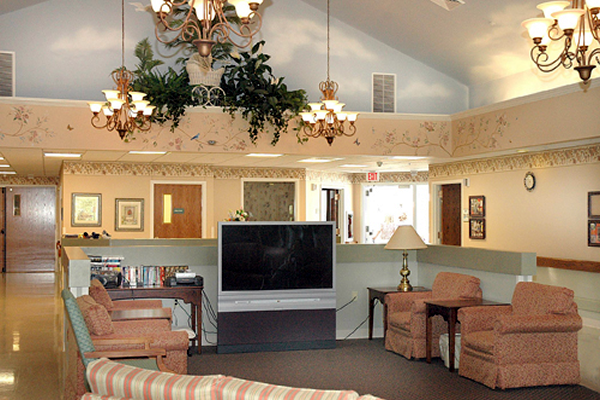
How is Manor Court Of Freeport Staffed?

CMS rates MANOR COURT OF FREEPORT's staffing level at 3 out of 5 stars, which is average compared to other nursing homes. Staff turnover is 33%, compared to the Illinois average of 46%. This relatively stable workforce can support continuity of care.

What Have Inspectors Found at Manor Court Of Freeport?

State health inspectors documented 38 deficiencies at MANOR COURT OF FREEPORT during 2022 to 2025. These included: 4 that caused actual resident harm and 34 with potential for harm. Deficiencies causing actual harm indicate documented cases where residents experienced negative health consequences.
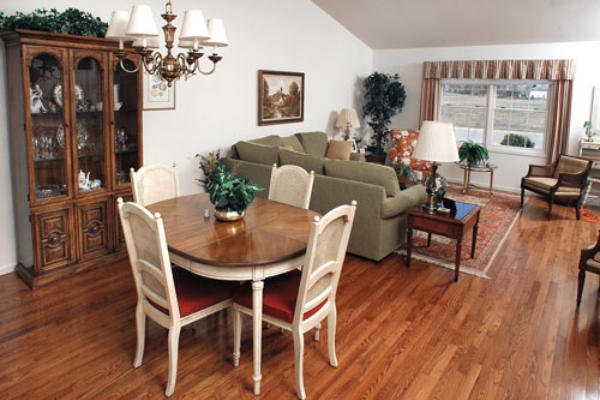
Who Owns and Operates Manor Court Of Freeport?

MANOR COURT OF FREEPORT is owned by a non-profit organization. Non-profit facilities reinvest revenue into operations rather than distributing to shareholders. The facility is operated by RESIDENTIAL ALTERNATIVES OF ILLINOIS, a chain that manages multiple nursing homes. With 117 certified beds and approximately 109 residents (about 93% occupancy), it is a mid-sized facility located in FREEPORT, Illinois.
How Does Manor Court Of Freeport Compare to Other Illinois Nursing Homes?

Compared to the 100 nursing homes in Illinois, MANOR COURT OF FREEPORT's overall rating (3 stars) is above the state average of 2.5, staff turnover (33%) is significantly lower than the state average of 46%, and health inspection rating (3 stars) is at the national benchmark.

What Should Families Ask When Visiting Manor Court Of Freeport?

Based on this facility's data, families visiting should ask: "Can I visit during a mealtime to observe dining assistance and food quality?" "How do you handle medical emergencies, and what is your hospital transfer rate?" "Can I speak with family members of current residents about their experience?"

Is Manor Court Of Freeport Safe?

Based on CMS inspection data, MANOR COURT OF FREEPORT has a clean safety record: no substantiated abuse findings (meaning no confirmed cases of resident harm), no Immediate Jeopardy citations (the most serious violation level indicating risk of serious injury or death), and is not on the Special Focus Facility watch list (a federal program monitoring the lowest-performing 1% of nursing homes). The facility has a 3-star overall rating and ranks #1 of 100 nursing homes in Illinois. While no facility is perfect, families should still ask about staff-to-resident ratios and recent inspection results during their visit.

Do Nurses at Manor Court Of Freeport Stick Around?

MANOR COURT OF FREEPORT has a staff turnover rate of 33%, which is about average for Illinois nursing homes (state average: 46%). Moderate turnover is common in nursing homes, but families should still ask about staff tenure and how the facility maintains care continuity when employees leave.

Was Manor Court Of Freeport Ever Fined?

MANOR COURT OF FREEPORT has been fined $66,729 across 3 penalty actions. This is above the Illinois average of $33,746. Fines in this range indicate compliance issues significant enough for CMS to impose meaningful financial consequences. Common causes include delayed correction of deficiencies, repeat violations, or care failures affecting resident safety. Families should ask facility leadership what changes have been made since these penalties.

Is Manor Court Of Freeport on Any Federal Watch List?

MANOR COURT OF FREEPORT is not on any federal watch list. The most significant is the Special Focus Facility (SFF) program, which identifies the bottom 1% of nursing homes nationally based on persistent, serious quality problems. Not being on this list means the facility has avoided the pattern of deficiencies that triggers enhanced federal oversight. This is a positive indicator, though families should still review the facility's inspection history directly.