The Citadel at Saint Joseph Village
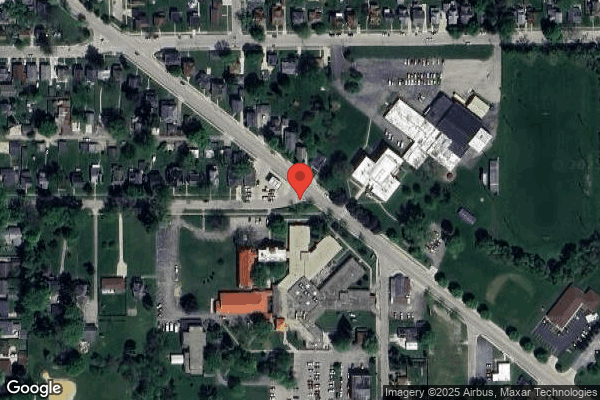
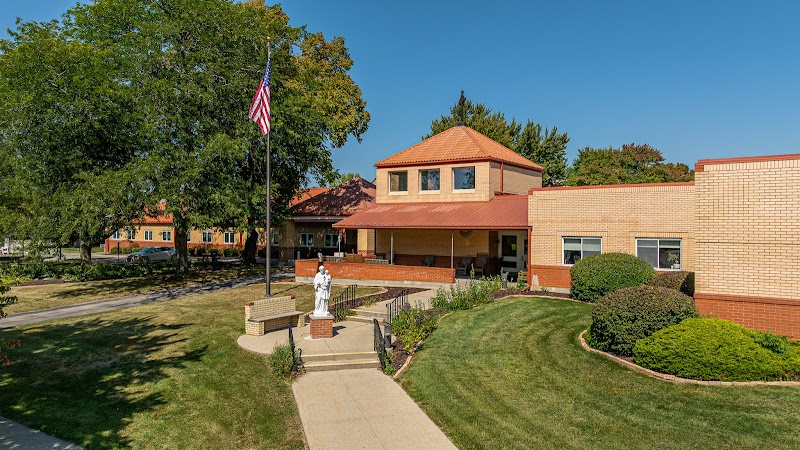
659 EAST JEFFERSON STREET, FREEPORT, IL 61032 (815) 232-6181
Non profit - Corporation 124 Beds ASCENSION LIVING Data: November 2025 1 Immediate Jeopardy citation
Trust Grade
0/100
#412 of 665 in IL
Last Inspection: December 2024

Within standard 12-15 month inspection cycle. Federal law requires annual inspections.

Overview

The Citadel at Saint Joseph Village has received a Trust Grade of F, indicating poor performance and significant concerns about care quality. Ranked #412 out of 665 facilities in Illinois, they fall in the bottom half, and only one other facility in Stephenson County is rated lower. Although the trend is improving, with issues decreasing from 20 in 2024 to 10 in 2025, the facility still has concerning staffing turnover at 59%, higher than the state average. Additionally, the facility has faced $380,569 in fines, which is a troubling amount compared to most Illinois facilities, pointing to ongoing compliance issues. Specific incidents include failures in wound care that led to serious infections and the improper repositioning of a resident that resulted in fractures, highlighting significant weaknesses in care quality despite an average RN coverage rating.
Trust Score
F
0/100
In Illinois
#412/665
Bottom 39%
Safety Record
High Risk
Review needed
Inspections
Getting Better
20 → 10 violations
Staff Stability
⚠ Watch
59% turnover. Above average. Higher turnover means staff may not know residents' routines.
Penalties
○ Average
$380,569 in fines. Higher than 66% of Illinois facilities. Some compliance issues.
Skilled Nurses
○ Average
Each resident gets 37 minutes of Registered Nurse (RN) attention daily — about average for Illinois. RNs are the most trained staff who monitor for health changes.
Violations
⚠ Watch
47 deficiencies on record. Higher than average. Multiple issues found across inspections.
★★☆☆☆
2.0
Overall Rating
★★★☆☆
3.0
Staff Levels
★★★★☆
4.0
Care Quality
★★☆☆☆
2.0
Inspection Score
Stable
2024: 20 issues
2025: 10 issues

The Good

  • 4-Star Quality Measures · Strong clinical quality outcomes
  • Full Sprinkler Coverage · Fire safety systems throughout facility
  • No fines on record

Facility shows strength in quality measures, fire safety.

The Bad

2-Star Overall Rating

Below Illinois average (2.5)

Below average - review inspection findings carefully

Staff Turnover: 59%

13pts above Illinois avg (46%)

Frequent staff changes - ask about care continuity

Federal Fines: $380,569

Well above median ($33,413)

Significant penalties indicating serious issues

Chain: ASCENSION LIVING

Part of a multi-facility chain

Ask about local staffing decisions and management

Staff turnover is elevated (59%)

11 points above Illinois average of 48%

The Ugly 47 deficiencies on record

1 life-threatening 5 actual harm
Jul 2025 3 deficiencies
CONCERN (D) 📢 Someone Reported This

A family member, employee, or ombudsman was alarmed enough to file a formal complaint

Potential for Harm - no one hurt, but risky conditions existed

Resident Rights (Tag F0550)

Could have caused harm · This affected 1 resident

Based on interview and record review the facility failed to ensure residents were treated in a dignified manner for 3 of 3 residents (R1-R3) reviewed for dignity in the sample of 5. The findings inclu...

Read full inspector narrative →
Based on interview and record review the facility failed to ensure residents were treated in a dignified manner for 3 of 3 residents (R1-R3) reviewed for dignity in the sample of 5. The findings include: On 7/21/25 at 9:02 AM, R1 stated, I had a shower last Tuesday (7/15/25). The aide that was with me was on her cell phone the whole time we were in the shower. I don't remember her name. She answered her phone and talked through her earphones. I felt like she wasn't really paying attention to me. I wasn't important. R1's shower records showed R1 did receive a shower on 7/15/25 by V8 Certified Nursing Assistant (CNA). On 7/21/25 at 8:35 AM, R2 stated during her shower on 7/12/25, the CNA that gave her a shower was on her phone. She had her earphones in and her cell phone rang. She answered it (while she was in the shower with R2) and started talking. R2 stated, Why was my bath not more important than her phone call? She has a job because I need help. R2 stated she was unable to remember the name of the CNA that showered her on 7/12/25. R2's shower records showed R2 did receive a shower on 7/12/25 by V9 CNA. On 7/21/25 at 8:45 AM, R3 stated staff are on their personal cell phones all the time. R3 stated she has seen staff on their phone in the hallways and in the main dining room during meals. R3 stated I don't need to much help, but I would not be happy if I needed help, and staff were too busy on their phones. The facility's Resident Council Meeting minutes dated April 2025-June 2025 were reviewed. The minutes showed resident concerns of staff being on their cell phones during work hours was identified during the facility meetings held in April 2025, May 2025, and June 2025. On 7/21/25 at 12:21 PM, V2 Director of Nursing (DON) stated staff are not to be on their cell phones at work and definitely not when providing cares to residents. V2 stated, Staff being on their personal phones at work has been an issue. The facility's Promoting/Maintaining Resident Dignity policy dated 11/2024 showed, It is the policy of this facility to protect and promote resident rights and treat each resident with respect and dignity as well as care for each resident in a manner and in an environment, that maintains or enhances resident's quality of life by recognizing each resident's individuality. All staff members are involved in providing care, directly and indirectly, to residents to promote and maintain resident dignity and respect resident rights. When interacting with the resident, pay attention to the resident as an individual. Encourage conversation that is resident focused and resident centered while providing care or assisting a resident.
CONCERN (D) 📢 Someone Reported This

A family member, employee, or ombudsman was alarmed enough to file a formal complaint

Potential for Harm - no one hurt, but risky conditions existed

ADL Care (Tag F0677)

Could have caused harm · This affected 1 resident

Based on interview and record review the facility failed to provide showers to a resident that required staff assistance to shower for 1 of 3 residents (R1) reviewed for activities of daily living (AD...

Read full inspector narrative →
Based on interview and record review the facility failed to provide showers to a resident that required staff assistance to shower for 1 of 3 residents (R1) reviewed for activities of daily living (ADLs) in the sample of 5. The findings include: R1's current care plan showed R1 required staff assistance and supervision for showering or bathing. On 7/21/25 at 9:02 AM, R1 stated he's supposed to get at least two showers per week but sometimes he only got one shower per week or none at all. R1's shower records dated 5/1/25-7/21/25 were reviewed. R1's records showed R1 received a shower on 6/27/25. The records showed R1 was not offered and did not receive another shower until 7/11/25 (13 days later). On 7/21/25 at 12:21 PM, V2 Director of Nursing (DON) stated staff are to offer and/or provide a shower or bath to residents twice a week. V2 stated the facility did not have a policy on how often a resident is to be showered/bathed.
CONCERN (D) 📢 Someone Reported This

A family member, employee, or ombudsman was alarmed enough to file a formal complaint

Potential for Harm - no one hurt, but risky conditions existed

Quality of Care (Tag F0684)

Could have caused harm · This affected 1 resident

Based on interview and record review the facility failed to follow up and obtain an ophthalmology appointment for a resident with vision loss for 1 of 3 residents (R1) reviewed for necessary care and ...

Read full inspector narrative →
Based on interview and record review the facility failed to follow up and obtain an ophthalmology appointment for a resident with vision loss for 1 of 3 residents (R1) reviewed for necessary care and services in the sample of 5. The findings include: R1's current care plan showed R1 was visually impaired which required him to wear eyeglasses. A physician order for R1, dated 12/17/24, showed, Ophthalmology consult and treatment as indicated. On 7/21/25 at 9:02 AM, R1 was seated in bed. R1 wore eyeglasses. R1 stated he felt like his vision had gotten worse recently even with wearing his glasses. R1 stated he had an appointment to see an eye doctor but the appointment was canceled. R1 stated he didn't know why the appointment had been canceled. R1 stated he had not been seen by an ophthalmologist and/or had his vision tested in over a year. The facility's resident outside appointment records dated 4/1/25-7/21/25 was reviewed. The records showed R1 had an appointment for an ophthalmology exam on 5/1/25 but the appointment had been canceled due to the ophthalmology office not accepting R1's insurance. The records showed no appointment for R1 to see another ophthalmologist had been scheduled from 5/1/25-7/21/25. On 7/21/25 at 2:17 PM, V2 Director of Nursing (DON) stated she was aware R1's 5/1/25 ophthalmology appointment had been canceled due to that ophthalmology office not accepting R1's insurance. V2 stated, I don't know why an eye appointment hasn't been rescheduled for him. We should have found a doctor that takes his insurance and scheduled an appointment as soon as possible. The facility's Transportation and/or Referrals, Social Services policy dated 12/2019 showed, Social Services associates/a community associate shall coordinate most resident referrals with outside agencies. Social services/community associate will collaborate with the nursing staff or other pertinent disciplines to arrange for services that have been ordered by the physician in a timely manner.
Jun 2025 1 deficiency
CONCERN (D) 📢 Someone Reported This

A family member, employee, or ombudsman was alarmed enough to file a formal complaint

Potential for Harm - no one hurt, but risky conditions existed

Quality of Care (Tag F0684)

Could have caused harm · This affected 1 resident

**NOTE- TERMS IN BRACKETS HAVE BEEN EDITED TO PROTECT CONFIDENTIALITY** Based on interview and record review the facility failed to ensure a surgical incision was cleansed per physician's order for 1 ...

Read full inspector narrative →
**NOTE- TERMS IN BRACKETS HAVE BEEN EDITED TO PROTECT CONFIDENTIALITY** Based on interview and record review the facility failed to ensure a surgical incision was cleansed per physician's order for 1 of 3 residents (R1) reviewed for physician's orders in the sample of 5. The findings include: R1's medical record showed she was admitted to the facility on [DATE] with diagnoses to include fibromyalgia, atherosclerotic heart disease, surgical aftercare following cardiac surgery, myocardial infarction, presence of aortocoronary bypass graft, asthma with acute exacerbation, chronic pain syndrome, muscle wasting, muscle weakness, hypertension, major depressive disorder, obstructive sleep apnea, and hypokalemia. R1's facility assessment dated [DATE] showed she had no cognitive impairments and required partial to moderate assist with most cares. R1's acute care hospital discharge packet dated 5/27/25 showed . Wound Care Orders . Monitor your wounds for signs and symptoms of infection, including redness, swelling, drainage, and odor. If you notice these symptoms call your surgeon's office. Wash incision daily with soap and water. Do not rub the site. Do not use lotions and/or ointments on incision . R1's May and June eTAR (electronic Treatment Administration Record) showed no order entered to wash her incision daily with soap and water. R1's record only included monitoring of the incision site. R1's medical record showed no evidence that her midline incision to her chest was cleaned during her stay from 5/28/25 through 6/9/25. On 6/13/25 at 3:03 PM, V3 (Registered Nurse/Wound Care Nurse) said when R1 was admitted to the facility she was told her incision was to be open to air. V3 said she gets report from the nurse that a resident has a wound upon admission and she will go through the admission paperwork to confirm wound care orders. V3 said she must have overlooked R1's order to wash her incision daily. V3 said there should have been an order entered to clean R1's incision site. V3 said the purpose of washing R1's incision daily would be to keep the area clean and free of germs and prevent infection. On 6/13/25 at 2:51 PM, V2 DON (Director of Nursing) said she was not aware there was an order for wound care. V2 said decisions on how to proceed with orders of that nature go through V3 the wound care nurse. V2 said V3 would typically review the orders and coordinate with either the facility's wound care doctor or nurse practitioner to determine a course of treatment. V2 said it is important to have someone following the wounds because there needs to be orders to ensure monitoring and making sure the wound is healing and having someone to communicate with for orders. The facility's policy and procedure with approval date of 01/2024 showed, Heath Care Provider Orders . Purpose: The purpose of this procedure is to establish uniform guidelines in the receiving and recording of medication orders. Supervision by a Physician; A. A current list of orders must be maintained in the clinical record of each resident . F. Treatment Orders - when recording treatment orders, specify the treatment, frequency, and duration of the treatment .
Jun 2025 1 deficiency
CONCERN (D) 📢 Someone Reported This

A family member, employee, or ombudsman was alarmed enough to file a formal complaint

Potential for Harm - no one hurt, but risky conditions existed

Pharmacy Services (Tag F0755)

Could have caused harm · This affected 1 resident

Based on observation, interview, and record review, the facility failed to administer medications as ordered by the physician for one of six residents (R1) reviewed for medications in the sample of si...

Read full inspector narrative →
Based on observation, interview, and record review, the facility failed to administer medications as ordered by the physician for one of six residents (R1) reviewed for medications in the sample of six. The findings include: R1's Face Sheet dated June 9, 2025 shows she was admitted to the facility with diagnoses including fibromyalgia, heart disease, myocardial infarction, presence of aortocoronary bypass graft, asthma, chronic pain syndrome, muscle weakness, hypothyroidism, major depressive disorder, mixed hyperlipidemia osteoarthritis, and generalized anxiety disorder. R1's Medication Record dated June 2025 shows levothyroxine ordered to be administered at 7:00 AM and an order for acetaminophen 500 mg (milligrams) one tablet by mouth four times per day. On June 9, 2025 at 9:18 AM, during the morning medication pass, V5 Licensed Practical Nurse (LPN) administered R1's levothyroxine that was ordered to be given at 7:00 AM and administered acetaminophen 500 mg two tablets instead of one tablet as ordered. On June 9, 2025 at 11:15 AM, R1 said that she has to take her levothyroxine at 7:00 AM because she has to wait to eat. The facility's Medication Administration: Person-Centered Care policy last revised January 2025 shows, Residents have the right to choose health care schedules consistent with their interest and preferences. The facility staff will follow the prescribed times for admissions or readmissions until a time that a review of the medications can be completed by the facility pharmacist for any recommendations and presented/reviewed during a care conference with the resident/responsible party.
May 2025 4 deficiencies
CONCERN (D) 📢 Someone Reported This

A family member, employee, or ombudsman was alarmed enough to file a formal complaint

Potential for Harm - no one hurt, but risky conditions existed

Report Alleged Abuse (Tag F0609)

Could have caused harm · This affected 1 resident

Based on interview and record review, the facility failed to identify and report the diversion of a resident's controlled substance. This applies to 1 of 3 residents (R5) reviewed for controlled subst...

Read full inspector narrative →
Based on interview and record review, the facility failed to identify and report the diversion of a resident's controlled substance. This applies to 1 of 3 residents (R5) reviewed for controlled substances in the sample of 6. The findings include: R5's May 2025 Medication Record (Medication Administration Record, MAR) showed an order for lorazepam (anxiety treatment medication) liquid 2 milligrams per milliliter (ml). The MAR showed 0.25 milliliters should be given under the tongue every four hours as needed for restlessness. R5's Lorazepam Controlled Drug Receipt/Record/Disposition Form (Count Sheet) showed the pharmacy delivered 30.0 ml of lorazepam on 3/28/25. The count sheet showed from 3/28/25 to 5/16/25, 8 doses of lorazepam at 0.25 ml were given. The count sheet showed, on 5/17/25 at 6:00 AM, the count was correct(ed) from 28.0 mls available to 24.0 mls available (a discrepancy of 4 mls). The count showed two nurses signed off on the correction. The count sheet showed, as of 5/27/27, no lorazepam had been dispensed since the correction on 5/17/25. On 5/27/25 at 11:19 AM, V3 Assistant Director of Nursing (ADON) stated that V9 Agency Nurse and V11 Registered Nurse were the nurses who signed the correction. V3 provided V9's phone number. On 5/27/25 at 11:47 AM, V9 was called, and a message was left. V9 was called again at 1:58 PM; no answer. V9 did not return the phone call prior to exiting the survey on 5/28/25 at 2:00 PM. On 5/27/25 at 11:10 AM, V11 stated she was the day nurse on 5/17/25. V11 said during the controlled substance count she noted the lorazepam to be at 24.0 mls. V11 stated that herself and the other nurse signed off on the correction, and she believed V9 would report the discrepancy. V11 did not know what happened to the 4.0 mls of R5's lorazepam. On 5/27/25 at 1:15 PM, V3 stated nurses should verify the accuracy of the controlled substance counts at the beginning and end of every shift. V3 stated the controlled substances are tightly controlled due to the risk of diversion. V3 stated lorazepam is a controlled substance. V3 stated the medications belong to the residents. V3 stated, while observing R5's lorazepam bottle, there was approximately 24.0 mls in the bottle. V3 stated staff should have reported the missing lorazepam to administration, and to the best of her knowledge, it had not been reported. V3 stated V2 Director of Nursing had resigned and was currently on paid time off until her last day of employment. On 5/27/25 at 1:45 PM, V1 Administrator stated she started working at the facility on 5/12/25. V1 stated she is the abuse coordinator. V1 stated the medications belong to the residents. V1 stated she should have been made aware of the drop in lorazepam, and it should have been reported to the state health department. The facility's Abuse Investigation and Reporting (Last Approved 12/2024) showed, All reports of resident abuse, neglect, exploitation, misappropriation of resident property, mistreatment, electronic mail, social media, videotaping, photographing, and other imaging of residents, and/or injuries of unknown source shall be promptly reported to local, state and federal agencies .
CONCERN (D) 📢 Someone Reported This

A family member, employee, or ombudsman was alarmed enough to file a formal complaint

Potential for Harm - no one hurt, but risky conditions existed

Pressure Ulcer Prevention (Tag F0686)

Could have caused harm · This affected 1 resident

Based on observation, interview, and record review, the facility failed to provide treatments for a pressure wound. This applies to 1 of 5 residents (R2) reviewed for wound care in the sample of 6. Th...

Read full inspector narrative →
Based on observation, interview, and record review, the facility failed to provide treatments for a pressure wound. This applies to 1 of 5 residents (R2) reviewed for wound care in the sample of 6. The findings include: R2's Face Sheet showed she had a stage four pressure injury above her buttocks. On 5/29/25 at 9:25 AM, V5 Wound Care Nurse provided R2's ordered wound care. The wound appeared to be the size as described in R2's 5/26/25 wound note. The wound bed was red and not actively draining. V5 provided wound care and applied a dressing. R2's April 2025 Treatment Record (Treatment Administration Record, TAR) showed an order for twice-daily wound care treatments for her stage four pressure injury. The TAR showed the evening treatments on 4/29/25 and 4/30/25 were not documented as being done. R2's May 2025 TAR showed her pressure injury wound care order carried over from April 2025. The TAR showed her evening 5/10/25 wound care treatment was not documented as being done. On 5/27/25 at 2:20 PM, V5 Wound Care Nurse stated the purpose of wound care treatments was to promote healing and to prevent infection. V5 said if the wound care was not documented, it was not done. V5 said if the residents refuse treatment or they are out of the facility, it would be noted on the TAR. The facility's policy Procedure: Pressure Injury Assessment/Treatment (Last Revised 7/2024) showed: Documentation: The following information should be recorded in the resident's medical record, treatment sheet or designated wound form: A. The date and time the dressing was changed .
CONCERN (D) 📢 Someone Reported This

A family member, employee, or ombudsman was alarmed enough to file a formal complaint

Potential for Harm - no one hurt, but risky conditions existed

Pharmacy Services (Tag F0755)

Could have caused harm · This affected 1 resident

Based on observation, interview, and record review, the facility failed to maintain an accurate disposition of controlled substances, failed to have procedures in place to accurately measure controlle...

Read full inspector narrative →
Based on observation, interview, and record review, the facility failed to maintain an accurate disposition of controlled substances, failed to have procedures in place to accurately measure controlled substances, and failed to maintain an accurate log of controlled substances. This applies to 1 of 3 residents (R5) reviewed for controlled substances in the sample of 6. The findings include: 1. R5's May 2025 Medication Record (Medication Administration Record, MAR) showed an order for lorazepam (anxiety treatment medication) liquid 2 milligrams per milliliter (ml). The MAR showed 0.25 milliliters should be given under the tongue every four hours as needed for restlessness. R5's Lorazepam Controlled Drug Receipt/Record/Disposition Form (Count Sheet) showed the pharmacy delivered 30.0 ml of lorazepam on 3/28/25. The count sheet showed from 3/28/25 to 5/16/25, 8 doses of lorazepam at 0.25 ml were given. The count sheet showed, on 5/17/25 at 6:00 AM, the count was correct(ed) from 28.0 mls available to 24.0 mls available (a discrepancy of 4 mls). The count showed two nurses signed off on the correction. On 5/27/25 at 11:19 AM, V3 Assistant Director of Nursing (ADON) stated that V9 Agency Nurse and V11 Registered Nurse were the nurses who signed the correction. V3 provided V9's phone number. On 5/27/25 at 11:47 AM, V9 was called, and a message was left. V9 was called again at 1:58 PM; no answer. V9 did not return the phone call prior to exiting the survey on 5/28/25 at 2:00 PM. On 5/27/25 at 11:10 AM, V11 stated she was the day nurse on 5/17/25. V11 said during the controlled substance count she noted the lorazepam to be at 24.0 mls. V11 stated that herself and the other nurse signed off on the correction, and she believed V9 would report the discrepancy. V11 did not know what happened to the 4.0 mls of R5's lorazepam. On 5/27/25 at 1:15 PM, V3 stated nurses should verify the accuracy of the controlled substance counts at the beginning and end of every shift. V3 stated the controlled substances are tightly controlled due to the risk of diversion. V3 stated lorazepam is a controlled substance. V3 stated V9 should not have signed off on R5's lorazepam count when the 4.0 ml discrepancy was identified. V3 stated V9 should have notified a nurse manager. V3 stated she was not aware of the discrepancy prior to it being brought to her attention on 5/27/25. V3 stated, while viewing R5's lorazepam, her best guess would be the bottle contained 24 mls. V3 stated that V2 Director of Nursing had resigned and V2 was on paid time off during this survey. 2. On 5/27/25 at 10:29 AM, V8 Licensed Practical Nurse (LPN) removed R5's liquid lorazepam bottle from the medication refrigerator. The glass bottle had a medicine dropper type cap. The label on the bottle showed it was delivered with 30 mls. The label also had graduation marks starting at 6 mls and ending at 22 mls; the graduations were in 2 ml increments. The level of the lorazepam was above the 22 ml mark. V8 LPN stated she could not determine how much lorazepam was in the bottle without looking at the controlled substance count sheet. V8 was asked to make a rough estimate of the amount of lorazepam in the bottle; V8 stated she was unable. On 5/27/25 at 1:15 PM, V3 Assistant Director of Nursing stated that it is difficult to get an accurate reading in the lorazepam bottle, especially given the bottle graduations stop at 22 mls and the bottle came filled with 30 mls. 3. R5's May 2025 MAR also showed an order for liquid morphine (narcotic pain medication) 20 milligrams per milliliter (ml). The order showed 0.25 milliliters should be given under the tongue every two hours as needed for pain. R5's liquid Morphine Controlled Drug Receipt/Record/Disposition Form (Count Sheet) showed 30 mls were delivered on 3/28/25. The count sheet showed 0.25 mls were dispensed on 3/29/25, 4/17/25, 4/23/25, 5/11/25, 5/20/25, and 5/24/25 at 4:33 PM. Following the 5/24/25 dose at 4:33 PM, there is 0.25 ml documented in the given column. This administration has no date, no time, no amount left, and no nurse signature. On 5/27/25 at 10:29 AM, V8 Licensed Practical Nurse (LPN), R5's nurse, stated she had not dispensed any morphine for R5 on her shift. V8 stated a controlled substance count is done at the beginning and the end of every shift. V8 stated any discrepancies should be taken to administration. On 5/27/25 at 1:15 PM, V3 Assistant Director of Nursing stated that she was not aware of R5's morphine dose that had no date, no time, and no nurse signature. V3 stated this error should have been identified at shift change and either corrected or brought to administration if it could not be corrected. R5's May 2025 Medication Record showed, as of 5/27/25, the last documented dose of morphine was on 5/24/25 at 4:34 PM. The facility's Controlled Substances policy (last approved 12/2024) showed: .I. Associates to count controlled medications at the end of each shift. The associate coming on duty and the associate going off duty are to make count together .the total number of controlled substances are counted and confirmed. Changes that occurred to the count are documented on the shift to shift count sheet .3. They must document and report any discrepancies to the Director of Nursing Services, or designee. a. The associate ending their shift is not to leave until Director of Nursing, or designee, gives approval.
CONCERN (E) 📢 Someone Reported This

A family member, employee, or ombudsman was alarmed enough to file a formal complaint

Potential for Harm - no one hurt, but risky conditions existed

Quality of Care (Tag F0684)

Could have caused harm · This affected multiple residents

Based on interview and record review, the facility failed to provide wound/skin treatments and failed to perform weekly skin checks. This applies to 4 of 5 (R4, R3, R1, R5) residents reviewed for impr...

Read full inspector narrative →
Based on interview and record review, the facility failed to provide wound/skin treatments and failed to perform weekly skin checks. This applies to 4 of 5 (R4, R3, R1, R5) residents reviewed for improper nursing care in the sample of 6. The findings include: 1.) R4's Face Sheet showed she had skin infections, morbid obesity, and congestive heart failure. On 5/27/25 at 12:50 PM, R4 said she may only receive her leg wound care one to two times per week, depending on the staff that are working. R4's 5/26/25 Wound Evaluation and Management Summary report showed she had a non-pressure wound to the left thigh measuring 0.3 centimeters (cm) by 0.7 cm by 0.2 cm deep. The wound report showed a second non-pressure wound to her right knee measuring 4.4 cm by 5.3 cm by 0.7 cm deep. The wound report showed another non-pressure wound to R4's left thigh measuring 0.5 cm by 1.9 cm by 0.1 cm. R4's April 2025 Treatment Record (Treatment Administration Record, TAR) showed weekly skin checks were not documented as being done on 4/6/25, 4/20/25, and 4/27/25. R4's April 2025 TAR showed three separate wound care orders: 1. Left leg to be done two times per week on Monday and Thursday. 2. Right knee wound treatment to be done three times per week. 3. Right lower leg wound to be done three times per week. R4's April 2025 TAR shows these wounds were not documented as being done on 4/21/25 and 4/28/25. R4's May 2025 TAR showed weekly skin checks, as of 5/27/25, were not documented as being done on 5/15/25 and 5/22/25. R4's May 2025 TAR showed two wound care treatments: 1. Left lower thigh wound care to be done twice a week. 2. Right upper leg wound treatment to be done twice a week. R4's May 2025 TAR showed these two treatments were not documented as being done on 5/19/25 and 5/22/25 (days they were ordered to be done). On 5/27/25 at 2:20 PM, V5 Wound Care Nurse stated the purpose of weekly skin checks is to identify skin concerns as early as possible and provide treatment. V5 said the Certified Nursing Assistants do check a resident's skin when providing care; however, nurses have the training to identify problem areas and to identify less obvious skin concerns. V5 said, The purpose of wound care is to promote healing to prevent infection. The only way we know it's done is if it's documented; it should be documented. Same with weekly skin checks, it should be documented if it is done. 2.) R3's 5/26/25 Wound Evaluation and Management Summary showed he had a non-pressure wound to the right upper buttock measuring 0.3 centimeters (cm) by 0.6 cm by 0.2 cm thick. The wound report showed a second wound to the left lower leg measuring 0.6 cm by 0.4 cm by 0.1 cm thick. On 5/27/25 at 9:00 AM, R3 stated he only receives wound care once a week when the wound care physician rounds on him. R3's April 2025 Treatment Record (Treatment Administration Record, TAR) showed weekly skin checks were not documented as being done on 4/7/25, 4/21/25, and 4/28/25. R3's April 2025 TAR showed a single treatment to be applied daily to both of his legs. The TAR showed it was not documented as being done on 4/12/25 and 4/13/25. R3's May 2025 TAR showed a weekly skin check was not documented as being done on 5/12/25. R3's May 2025 TAR showed a wound treatment to his right upper buttock to be done three times a week. The May TAR showed this treatment was not documented as being done on 5/16/25. On 5/27/25 at 2:20 PM, V5 Wound Care Nurse stated the purpose of weekly skin checks is to identify skin concerns as early as possible and provide treatment. V5 said the Certified Nursing Assistants do check a resident's skin when providing care; however, nurses have the training to identify problem areas and to identify less obvious skin concerns. V5 said, The purpose of wound care is to promote healing to prevent infection. The only way we know it's done is if it's documented; it should be documented. Same with weekly skin checks, it should be documented if it is done. 3.) R1's April 2025 Treatment Record (Treatment Administration Record, TAR) showed weekly skin checks were not documented as being done on 4/6/25, 4/13/25, and 4/20/25. R1's April 2025 TAR showed a protective skin preparation was ordered to be applied to his heels twice daily. R1's TAR showed the twice-daily treatments were not documented as being done on 4/3/25-4/6/25, 4/8/25-4/10/25, 4/17/25, 4/19/25, 4/24/25, and 4/30/25 (11 days, 22 applications for each heel). R1's May 2025 TAR showed the topical skin protection for his heels was ordered to be applied twice daily. The May TAR showed it was not documented as being done on 5/3/25, 5/4/25, 5/7/25-5/10/25, 5/12/25, 5/17/25, 5/18/25, and 5/21/25 (10 days or 20 treatments). On 5/27/25 at 2:20 PM, V5 Wound Care Nurse stated the purpose of weekly skin checks is to identify skin concerns as early as possible and provide treatment. V5 said the Certified Nursing Assistants do check a resident's skin when providing care; however, nurses have the training to identify problem areas and to identify less obvious skin concerns. V5 said the skin protectant for resident heels is to prevent skin breakdown. 4.) R5's April 2025 Treatment Record (Treatment Administration Record, TAR) showed a weekly skin check was not documented as being done on 4/28/25. R5's April 2025 TAR showed an order to apply a topical skin protectant to both heels twice daily. The morning treatment was not documented as being done on 4/3/25, 4/5/25, 4/8/25, 4/9/25, 4/17/25, 4/26/25, and 4/27/25. The TAR showed the evening treatments were not documented as being done on 4/4/25, 4/8/25, and 4/26/25. R5's May 2025 TAR showed her weekly skin check was not documented as being done on 5/5/25. R5's May 2025 TAR showed an order to apply a topical skin protectant to both heels twice daily. The TAR showed the morning treatments were not documented as being done on 5/10/25-5/12/25, and the evening treatments were not documented as being done on 5/8/25-5/10/25, 5/23/25, 5/24/25, and 5/26/25. On 5/27/25 at 2:20 PM, V5 Wound Care Nurse stated the purpose of weekly skin checks is to identify skin concerns as early as possible and provide treatment. V5 said the Certified Nursing Assistants do check a resident's skin when providing care; however, nurses have the training to identify problem areas and to identify less obvious skin concerns. V5 said the skin protectant for resident heels is to prevent skin breakdown. The facility's Skin Identification, Evaluation, and Monitoring policy (Last Approved 5/2025) showed: Weekly: A. Complete a general skin check to evaluate for changes in skin integrity. B. Document in the medical record the finding of the general skin check .
Mar 2025 1 deficiency 1 Harm
SERIOUS (G) 📢 Someone Reported This

A family member, employee, or ombudsman was alarmed enough to file a formal complaint

Actual Harm - a resident was hurt due to facility failures

Accident Prevention (Tag F0689)

A resident was harmed · This affected 1 resident

**NOTE- TERMS IN BRACKETS HAVE BEEN EDITED TO PROTECT CONFIDENTIALITY** Based on interview and record review, the facility failed to safely reposition a resident in bed for one of seven residents (R1)...

Read full inspector narrative →
**NOTE- TERMS IN BRACKETS HAVE BEEN EDITED TO PROTECT CONFIDENTIALITY** Based on interview and record review, the facility failed to safely reposition a resident in bed for one of seven residents (R1) reviewed for safety supervision in the sample of seven. This failure contributed to R1 experiencing multiple fractures which required a hospitalization. This past non compliance occurred from February 7, 2025 to March 8, 2025. The findings include: 1. R1's Face Sheet dated March 17, 2025 shows she was admitted to the facility with diagnoses including fibromyalgia, morbid obesity, spinal stenosis, cervical spine fusion, major depressive disorder, repeated falls, and pain. R1's Care Plan dated August 16, 2019 shows R1 is requiring almost total care by staff. Assist of two people for all transfers. R1's MDS (Minimum Data Set) dated February 3, 2025 shows R1 is cognitively intact. R1 requires substantial/maximal assistance for rolling left and right in bed. R1 has impairments on both sides of upper and lower extremities. R1's Fall Risk assessment dated [DATE] shows she has a significant risk of falling. R1's Departmental Notes dated February 8, 2025 at 1:51 AM shows, Patient was receiving care by CNA (Certified Nursing Assistant), when she rolled to her right side. She stated she could not hold on and fell onto the floor. When this nurse came to assess patient she was observed on the floor laying partially face down with half her body on the bottom of the bedside table. Patient has an injury noted to the left lower leg, bruise to the right lower leg and pain to the left upper shoulder. Range of motion severely limited to left arm related to fall. Patient was sent to emergency room by ambulance via stretcher at 12:30 AM. R1's Hospital Records dated February 8, 2025 shows, Fall at nursing home. Humerus shaft fracture, laceration of leg, pubic ramus fracture. On March 17, 2025 at 9:18 AM, R1 said the CNA was in a hurry the evening of her accident. It was an unnecessary accident. R1 gave the first name of the CNA (V6). R1 said that she was on a low air loss mattress. The girl was throwing me around. I fell on the floor hard. I fractured my left arm in two places and I injured my pelvis. I got stitches in my left leg. I fell to my right side off of the bed. Now I am afraid to be positioned on that side. I went down hard. She was on my left side and she pulled the pad up to help me turn and I rolled off of the bed. They usually use two people to turn me in bed. She was by herself. On March 17, 2025 at 12:36 PM, V5 CNA said she has taken care of R1 in the past. V5 said she has been taking care of R1 for a long time. V5 said she has never seen R1 require one person for assistance. V5 said R1 has always been a maximum assist with two people, even before her fall out of bed. On March 17, 2025 at 2:17 PM, V6 CNA said she was taking care of R1 when R1 fell. V6 said she woke R1 up and asked if she needed to be changed. V6 said she grabbed the pad underneath R1 to help her turn onto her right side. V6 said R1 rolled off of the bed onto the floor. V6 said R1 hit her left side on the bedside table. V6 said she tried to pull R1 back over, but it was too late. V6 said R1 was bleeding from her left leg and complained that her left shoulder was bothering her. V6 said she has taken care of R1 by herself many times before. On March 17, 2025 at 1:33 PM, V3 ADON (Assistant Director of Nursing) said R1 was being taken care of by the CNA when the CNA had R1 roll to the opposite side that the CNA was on and R1 went to the floor. V3 said R1 was transferred to the hospital and had fractures. V3 said prior to R1's fall, R1 was on a low air loss mattress, which means it should be two CNAs taking care of the resident on each side of the bed. V3 said that's facility policy. V3 said two assist due to residents risk of falls. V3 said she interviewed V6 in regards to R1's incident. V3 said V6 was not aware that if a resident is on a low air loss mattress, then two staff should be repositioning the residents. V3 said R1's fall could have been prevented had there been two staff in R1's room. V3 said that R1 was hospitalized for more than one day. R1's Safety Event Manager dated February 8, 2025 shows, Contributory Factors and Issues Leading to this Event: One CNA providing care on an air mattress. Prior to the survey date of March 18, 2025, the facility had taken the following actions to correct the noncompliance: 1. R1 was assessed by nursing staff on February 8, 2025 and sent to the emergency department. R1's Care Plan has been reviewed and updated. 2. Other resident residing in the facility as of February 8, 2025 who have air mattresses have the potential to be affected. These residents will be monitored for proper bed mobility by quality director on or before March 8, 2025. 3. Will ensure all staff is educated on the policy and procedure related to providing care for residents who utilize and air mattress. 4. Nursing staff will be re-educated on providing care for residents who utilize an air mattress by ADON on or before March 8, 2025 or prior to working their next scheduled shift. 5. The policy and procedure bed mobility has been reviewed and is deemed appropriate. 6. Quality Assurance Plans to monitor facility compliance to make sure that corrections are achieved and permanent. 7. Audits will be submitted and reviewed by the QAPI committee for management of ongoing compliance and will continue until otherwise determined by QAPI. 8. The administrator is responsible for ensuring ongoing compliance. Completion dated: March 8, 2025-all staff will be educated on policy and procedure for bed mobility for residents on an air mattress.
Dec 2024 7 deficiencies 1 Harm
SERIOUS (G)

Actual Harm - a resident was hurt due to facility failures

Deficiency F0694 (Tag F0694)

A resident was harmed · This affected 1 resident

Based on observation, interview, and record review the facility failed to provide physician ordered intervention that maintained the patency of a CVC-Central Venous Catheter for 1 of 1 resident (R2) r...

Read full inspector narrative →
Based on observation, interview, and record review the facility failed to provide physician ordered intervention that maintained the patency of a CVC-Central Venous Catheter for 1 of 1 resident (R2) reviewed for parental fluids in the sample of 18. This failure resulted in the occlusion of R2's catheter and the need for replacement. The findings include: R2's Current Minimum Data Set on 12/11/2024 shows, R2 is cognitively intact. On 12/11/24 at10:17AM, R2 pulled up her pant leg to reveal a CVC-Central Venous Catheter in her left upper thigh that had a blue colored locking cap labeled 3.6 milliliters and a red colored locking cap labeled 3.5 milliliters. The clear lumens of the red capped and blue capped catheter had dark red blood in the tubing. At 11:00AM, V21 RN (Registered Nurse) flushed R2's CVC and removed the blood from the two lumens. On 12/10/24 at 11:49 AM, R2 said, I had to get my catheter replaced again due to it being clogged. They are supposed to flush it and are not doing it, so it keeps getting clogged. On 12/11/24 at 10:18AM, R2 said, they flushed my line yesterday, they have not flushed it today. On 12/11/2024 at 10:21AM, V23 (LPN-Licensed Practical Nurse) said, I do not flush R2's femoral catheter. On 12/11/24 at 10:22AM, V21 (RN) said, LPN's do not flush CVC. R2's CVC is flushed with Normal Saline daily and as needed when there is blood in the line. On 12/11/24 at 11:17 AM, V2 (DON-Director of Nurses) said, there is no training for CVC flushing. If the staff are not confident with the procedure they will call the DON. We have a program in our computer system that provides instruction for CVC flushing. Any topic the nurse is uncertain the nurse can look up and it will provide education. R2's Medication Administration Record dated November 2024 shows, Normal Saline Flush 10 milliliter syringe flush CVC with 10 milliliters once daily every day. Start 10/30/2024. November 1st Not Administered. 7th Not Administered by V21 (RN). 8th Not Administered. 9th Not Administered. 10th Not Administered by V4 (LPN). 14th Not Administered. 15th Not Administered. 16th Not Administered. 17th Not Administered. 19th Not Administered. 20th Not Administered. 24th Not Administered. 25th Not Administered. 27th Not Administered. 28th Not Administered. 30th Not Administered. Heparin 500 unit per 5 milliliters Heparin Lock both Ports of CVC with 2.4 milliliters weekly with dressing change. Start date 07/26/24. October 1st Not Administered. 8th Not Administered. 15th Not Administered. 22nd Administered by V24 (LPN). 29th Not Administered. R2's Medication Administration Record dated December 2024 shows, Normal Saline Flush 10 milliliter syringe flush CVC-central venous catheter with 10 milliliters once daily every day at 8:00AM. Start 10/30/2024. December 1 Not Administered. 2nd Administered. 3rd Not Administered. 4th Not Administered. 5th Administered. 6th Not Administered. 7th Administered. 8th Not Administered. 9th Administered. On 12/11/24 at 1:15 PM, V4 (LPN) said, most likely the nurses that documented on 12/02, 12/05, 12/07, 12/09/2024, got click happy, the line occluded on 11/27/24 at 1:33PM, the nurse called the surgeon and was told not to continue flushing it. The nurse on those dates documented doing the flush but the flush was not done, they were, click happy with their documentation. R2's Departmental Notes dated 11/27/2024 at 1:33PM, shows, resident was flushed in AM. 6 milliliter flush due to resistance. Called surgeon which advised no more flushing. Dressing is saturated with blood and feels boggy to touch. Awaiting MD (Medical Doctor) phone call for further instruction. Signed by: (V25 LPN). R2's Central Venous Catheter Placement Narrative by V26 (Medical Doctor) dated 12/09/2024 at 2:30PM, shows, after local anesthesia was obtained, the retention cuff of the existing dialysis catheter was bluntly dissected free. It should be noted that the clear portions of both ports were noted to be completely filled with clot. This was noted on every catheter exchange indicating that this catheter is likely not being flushed and locked properly with being allowed to flow back into the lumen of the catheter where it clots. The catheter was aspirated and cleared of a large amount of soft clot. Contrast was infused which demonstrated some irregularity at the level of the catheter tip. The decision was made to place a slightly longer catheter. The remainder the catheter was removed over a wire. Conclusion: Again, noted is thrombus filling the clear portions of both lumens of the catheter indicating that this catheter is not being flushed and locked with heparinized saline correctly. Blood is being allowed to flow backward within the lumen of the catheter and clotting resulting in obstruction of the catheter.
CONCERN (D)

Potential for Harm - no one hurt, but risky conditions existed

Resident Rights (Tag F0550)

Could have caused harm · This affected 1 resident

**NOTE- TERMS IN BRACKETS HAVE BEEN EDITED TO PROTECT CONFIDENTIALITY** Based on observation, interview, and record review, the facility failed to treat a resident in a dignified manner for 1 of 18 re...

Read full inspector narrative →
**NOTE- TERMS IN BRACKETS HAVE BEEN EDITED TO PROTECT CONFIDENTIALITY** Based on observation, interview, and record review, the facility failed to treat a resident in a dignified manner for 1 of 18 residents (R9) reviewed for dignity in the sample of 18. The findings include: R9's Face Sheet shows she was admitted to the facility on [DATE] with diagnoses including parkinsons, chronic obstructive pulmonary disease, contusion of left ankle, and generalized anxiety disorder. R9's Care Plan with an admission date of May 28, 2021 shows R9 has emotional and spiritual distress due to hopelessness and lack of family support. R9's Care Plan dated February 9, 2022 shows to approach resident warmly and positively and in a calm manner, calmly talk with resident and offer reassurance prior to initiating cares. On December 9, 2024 at 10:14 AM, R9 went into her room and was asking to go into her bed. R9 was moaning and saying Oh my God. R9's moans were audible from across the hall. At 10:44 AM, V8 CNA (Certified Nursing Assistant) walked into R9's room and stood at the foot of R9's bed. V8 said, Stop, please stop. Nobody wants to hear that. At 10:46 AM, V9 CNA entered R9's room as well. R9 did not have her incontinence brief on. V8 and V9 were attempting to put R9's incontinence brief back on. R9 kept saying no. V9 went right up to R9's left ear and said loudly that they were going to replace her incontinence brief. R9 winced and looked at V9. On December 11, 2024 at 8:06 AM, V2 DON (Director of Nursing) said R9 is not hard of hearing. V2 said that R9 can hear without having to have someone come close to her ear. V2 said she expects staff to re-approach the resident at a later time if they are having any type of behavior. V2 said that V8 and V9's responses were not appropriate. The facility's Quality of Life-Dignity policy revised on December 2021 shows, Each resident shall be cared for in a manner that promotes and enhances quality of life, dignity, respect and individuality. Associates shall speak respectfully to residents at all times, including addressing the resident by his or her name of choice and not 'labeling' or referring to the resident by his or her room number, diagnosis, or care needs.
CONCERN (D)

Potential for Harm - no one hurt, but risky conditions existed

Accident Prevention (Tag F0689)

Could have caused harm · This affected 1 resident

Based on observation, interview and record review the facility failed to safely transfer a resident by using a gait belt for 1 of 18 residents (R36) reviewed for safety in the sample of 18. The findin...

Read full inspector narrative →
Based on observation, interview and record review the facility failed to safely transfer a resident by using a gait belt for 1 of 18 residents (R36) reviewed for safety in the sample of 18. The findings include: R36's Care Plan shows, Gait belt with all transfers .Transfers with assist of 1 person. On 12/9/24 at 1:01 PM, V18, Certified Nursing Assistant (CNA) brought R36 to his room. V18 positioned R36's wheelchair next to his bed. V18 assisted R36 to a standing position by lifting under his arm. V18 instructed R36 to turn while she guided his hips with her hands to the appropriate position to get into bed. V18 did not apply a gait belt on R36 during the transfer from his wheelchair to the bed. On 12/10/24 at 1:53 PM, V19 (CNA) said that R36 is a one person assist for transfers and staff should use a gait belt and his walker for the transfer. On 12/10/24 at 1:53 PM, V2 (Director of Nursing) said that gait belts should be use with all transfers for the resident's safety if they start to fall. The facility's Restorative Nursing-Transfer Program Policy revised on 12/2017 shows, Use gait belt and other appropriate transfer aids
CONCERN (D)

Potential for Harm - no one hurt, but risky conditions existed

Unnecessary Medications (Tag F0759)

Could have caused harm · This affected 1 resident

Based on observation, interview, and record review, the facility failed to administer medications as ordered. There were 37 opportunities with 4 errors resulting in a 10.81 % error rate. This applies ...

Read full inspector narrative →
Based on observation, interview, and record review, the facility failed to administer medications as ordered. There were 37 opportunities with 4 errors resulting in a 10.81 % error rate. This applies to 1 of 3 residents (R2) observed in the medication pass. The findings include: 1. R2's December Medication Administration Record (MAR) showed that R2 had an order for Diltiazem 30 milligrams (mg) to be given at 8:00 AM for hypertension. There was no hold parameters on the order. On 12/10/24 at 8:30 AM, V10 (Licensed Practical Nurse) administered R2's morning medications. R2's blood pressure was 160/75 and her pulse was 58. V10 did not administer R2's Diltiazem. V10 stated that she was going to hold R2's Diltiazem because her pulse was less than 70. R2's clinical records were reviewed on 12/11/24 and did not contain any documentation that the physician was notified that R2's Diltiazem was held on 12/10/24. 2. R2's December MAR shows an order for Timolol Maleate 0.5 % eye drops-one drop to left eye every morning at 8:00 AM due to changes in retinal vascular appearance. On 12/10/24 at 8:30 AM, V10 administered R2's Timolol Maleate 0.5 % eye drops into both eyes. 3. R2's December MAR shows an order for Milk of Magnesia-Take 15 milliliters (mL) every other day due to drug induced constipation. The MAR shows that it was given on 12/9/24 and is not due to be given on 12/10/24. On 12/10/24 at 8:30 AM, V10 administered Milk of Magnesia 30 mL to R2. 4. R2's December MAR shows an order for Vitamin D3 3,000 units to be given daily at 8:00 AM. On 12/10/24 at 8:30 AM, V10 did not administer R2's Vitamin D3 3,000 units as ordered. On 12/10/24 at 1:58 PM, V2 (Director of Nursing) said that all medications should be given as ordered. V2 said that if a nurse is holding a medication that does not have parameters, they should contact the physician to let them know why they are holding it and get approval to not give the medication. The facility's Administering Oral Medications Policy revised 12/2017 shows, Verify that there is a physician's medication order for this procedure Select the drug from the unit dose drawer or stock supply, check the label on the medication and confirm the medication name and dose with the MAR. Check the medication dose. Re-check to confirm the proper dose .
CONCERN (D)

Potential for Harm - no one hurt, but risky conditions existed

Deficiency F0760 (Tag F0760)

Could have caused harm · This affected 1 resident

Based on interview and record review the facility failed to ensure a resident received the correct insulins as ordered by an endocrinologist for 1 of 1 resident (R2) reviewed for significant medicatio...

Read full inspector narrative →
Based on interview and record review the facility failed to ensure a resident received the correct insulins as ordered by an endocrinologist for 1 of 1 resident (R2) reviewed for significant medication errors in the sample of 18. The findings include: On 12/9/24 at 9:25 AM, R2 said that the facility did not transcribe her insulin orders right from her endocrinology appointment a few months ago. R2's After Visit Summary (AVS) from her endocrinologist dated 9/24/24 shows, The following issue was addressed: Type 1 diabetes mellitus with polyneuropathy .Please change basaglar (long-acting insulin) dose to 10 units in the morning and 16 units in the evening. Adjust the meal time novolog (short-acting insulin) dose to 10 units with meals and continue the sliding scale R2's September MAR shows that on 9/24/24 an order was placed for: Insulin Glargine (long-acting insulin) 20 units in the AM and Insulin Lispro (short-acting insulin) 16 units in the evening. R2's MAR shows that she received the insulins until it was discontinued on 9/30/24. R2's September MAR shows that on 9/24/24 an order was placed for: Novolin N (Intermediate-acting insulin) 10 unit at meals. R2's MAR shows that she received the insulin until it was discontinued on 9/30/24. On 12/11/24 at 11:27 AM, V2 (Director of Nursing) said that the nurses should follow the medication orders on the AVS when transcribing new orders. V2 said that novolog and novolog N are two different types of insulin and are not interchangeable. V2 said that insulin's may be ordered under different brand names based on what the pharmacy carries but it should always be replaced with the same type of insulin. On 12/11/24 at 11:30 AM, V20 (Licensed Practical Nurse) said that she does medication audits for the residents at the end of each month. V20 said that she found R2's insulin ordering error during her medication audits and ordered the correct insulins.
CONCERN (E)

Potential for Harm - no one hurt, but risky conditions existed

Deficiency F0805 (Tag F0805)

Could have caused harm · This affected multiple residents

Based on observation, interview, and record review the facility failed to ensure pureed Swiss steak was a smooth, uniform texture that does not require chewing for 4 of 4 residents (R2, R35, R52, R78)...

Read full inspector narrative →
Based on observation, interview, and record review the facility failed to ensure pureed Swiss steak was a smooth, uniform texture that does not require chewing for 4 of 4 residents (R2, R35, R52, R78) reviewed for pureed diets in the sample of 18. The findings include: The facility provided list of residents on a pureed diet shows that R2, R35, R52, and R78 receive a pureed diet. On 12/9/24 at 11:28 AM, V11 (Cook) began pureeing the Swiss steak for lunch. V11 said the texture she is looking for with the pureed products is a consistency similar to mashed potatoes. V11 ran the food processor for a few short minutes before using a spatula to put the pureed Swiss steak into a steam table pan. The pureed Swiss steak appeared slightly chunky while V11 was transferring the product from the food processor into the steam table pan. V11 did not taste test the pureed Swiss steak when finished. On 12/9/24 at 1:12 PM, facility provided test tray of pureed Swiss steak, pureed broccoli, pureed mashed potatoes, and pureed bread pudding was reviewed. The pureed Swiss steak was gritty with small granules throughout the product, prompting the need to chew before swallowing. On 12/9/24 at 1:21 PM, V6 (Dietary Manager) tested the pureed Swiss steak from the facility provided test tray and V6 was noticeably chewing the pureed Swiss steak. V6 said the pureed Swiss steak was gritty and that staff should be taste testing the product every time before finishing the puree. Facility Modified Texture Foods policy dated 1/24 states, . Foods requiring modification to a puree texture will have a smooth texture.
CONCERN (E)

Potential for Harm - no one hurt, but risky conditions existed

Food Safety (Tag F0812)

Could have caused harm · This affected multiple residents

Based on observation, interview, and record review the facility failed to ensure a spatula and food processor components were washed and sanitized in a manner to prevent cross-contamination for 4 of 4...

Read full inspector narrative →
Based on observation, interview, and record review the facility failed to ensure a spatula and food processor components were washed and sanitized in a manner to prevent cross-contamination for 4 of 4 residents (R2, R35, R52, R78) reviewed for pureed diets in the sample of 18. The findings include: The facility provided list of residents on a puree diet shows that R2, R35, R52, and R78 receive a pureed diet. On 12/9/24 at 11:28 AM, the facility had approximately six food processor pitchers, two food processor lids, and three food processor blades for use at the puree station. On 12/9/24 at 11:28 AM, V11 (Cook) started to puree the Swiss steak for lunch. When V11 finished the Swiss steak, V11 placed the food processor pitcher with the blade and lid into the sink adjacent the puree prep station. V11 ran hot water into the pitcher and grabbed the spatula and ran it underneath the running hot water. V11 then grabbed a new food processor pitcher, blade, and lid and started to puree the mashed potatoes for lunch. When finished with the mashed potatoes, V11 used the spatula that was run under the water and used it to transfer the mashed potatoes from the pitcher to a steam table pan. At 11:34 AM, V11 grabbed the food processor blade from the first food processor blender that was in the sink under hot running water and placed it in a new food processor pitcher to begin pureeing the broccoli for lunch. V11 also continued the same process with the spatula, using the same spatula the entire time. When finished with the pureed broccoli, V11 used the contaminated spatula to transfer the pureed broccoli from the food processor blender to a steam table pan. At 11:37 AM, V11 grabbed a new food processor blender and a new food processor blade to begin the process for mechanical soft Swiss steak. V11 grabbed one of the previously used lids, ran it under the hot water in the sink, and placed it on top of the food processor to start the mechanical soft Swiss steak. On 12/10/24 at 9:37 AM, V6 (Dietary Manager) said when doing purees and mechanical soft foods, the cook should have either a new container with lid and blade for each item or they should be washing, rinsing, and sanitizing each component before using it again. V6 said this is done in order to reduce the risk of cross-contamination. Facility provided Cleaning of Food and Nonfood contact Surfaces policy dated 1/24 states, . To prevent cross-contamination, kitchenware and food-contact surfaces of equipment shall be washed, rinsed, and sanitized after each use and following any interruption of operation during which time contamination may have occurred.
Sept 2024 2 deficiencies 1 Harm
SERIOUS (G) 📢 Someone Reported This

A family member, employee, or ombudsman was alarmed enough to file a formal complaint

Actual Harm - a resident was hurt due to facility failures

Accident Prevention (Tag F0689)

A resident was harmed · This affected 1 resident

**NOTE- TERMS IN BRACKETS HAVE BEEN EDITED TO PROTECT CONFIDENTIALITY** Based on observation, interview, and record review the facility failed to safely transfer a resident (R1) for 1 of 4 residents r...

Read full inspector narrative →
**NOTE- TERMS IN BRACKETS HAVE BEEN EDITED TO PROTECT CONFIDENTIALITY** Based on observation, interview, and record review the facility failed to safely transfer a resident (R1) for 1 of 4 residents reviewed for safety in the sample of 6. This failure resulted in R1 falling, and hitting her head on the oxygen concentrator. R1's head laceration required 6 staples and 2 sutures for closure of the wound, in the emergency department. The findings include: On 9/10/24 at 10:05 AM, R1 was in wheelchair, being pushed to her room by a family member. There was dried blood and 6 stables on the top of R1's head, in her hairline. There was dried blood and scabbing along the staple line. The surveyor asked R1 if her head was sore and how it happened. R1 said her head hurt real bad when it first happened, but it was starting to get a little better. R1 said she has to take pain medication for the pain some days. R1 said on 8/27/24 she had taken a nap after lunch. R1 said she couldn't remember the CNA's (Certified Nurses Assistant) name. (Through investigation CNA identified as V13). R1 said the CNA came in to help her get up. R1 said she sat up on the side of the bed. R1 said V13 did not use a gait belt. R1 said the wheelchair was positioned to her right, parked near the foot of the bed, facing where she was seated. R1 said she stood with the walker in front of her and all she had to do was pivot to the right and sit down in the wheelchair. R1 said V13 was behind the wheelchair when she was pivoting and was not touching her. R1 said she doesn't really know what happened, but she lost her balance and fell forward. R1 said she didn't pass out or anything like that. R1 said she just fell forward and couldn't stop. R1 said she fell face first and hit her head on the oxygen tank (concentrator). R1 said there was blood everywhere and she was so scared. R1 said she went to the emergency room and they put staples and sutures in her head. R1 said sometimes her legs get weak and she loses her balance. R1 said there's a gait belt right there, pointing to a gait belt hanging on the wall, near her closet. R1 stated, I don't know why they weren't using it. They didn't use it before I fell, but they do now. If they don't use it, then I'm supposed to remind them. R1's Diagnosis/History printed 9/10/24 showed diagnoses to include, but not limited to: chronic kidney disease, morbid obesity, anxiety, insomnia, persistent atrial fibrillation, congestive heart failure, chronic obstructive pulmonary disease, generalized weakness, and other abnormalities of gait and mobility. R1's facility assessment dated [DATE] showed she was cognitively intact; had no behaviors; and required partial to moderate assistance to sit, stand, and transfer from the bed to chair. R1's Care Plan initiated 1/28/24 shoed R1 was at risk for falls due to new surroundings and poor balance. This care plan also showed R1 required limited/extensive assistance of one (staff member) for ADL (Activities of Daily Living) tasks due to weakness and poor balance. The interventions included, but were not limited to: Assist of 1 for all transfers. Use gait belt and walker. R1's Resident Incident Report showed the Fall occurred on 8/27/24 at 4:45 PM. This form showed R1 was transferring from the bed to the wheelchair with the CNA (V13), walker and gait belt. This document showed, (The) patient was in the standing position and turning around to sit in the wheelchair. Patient suddenly leaned forward and fell head first into the oxygen concentrator sitting on the floor next to her bed. CNA unable to stop patient from falling. Laceration noted to frontal area of head/scalp. Excessive bleeding noted. Pressure immediately applied to laceration. Skin tear noted to left forearm - 1.5 cm (centimeters) x 4 cm, skin approximated and dressing applied per protocol . Unable to assess laceration well . transported to ER for evaluation and treatment . R1's Incident Followup Report printed on 9/3/24 showed, .Resident admitted to [local hospital] for (atrial fibrillation with rapid ventricular response). Resident has 2 sutures and 6 staples and plan is to return to facility. On 9/10/24 at 9:22 AM, V7 (LPN - Licensed Practical Nurse) said R1 is alert and oriented. V7 said R1 is aware of what is happening around her and can express her needs. V7 said before R1 fell, therapy had been working with her and she was a super easy 1 assist for transfers. V7 said R1 does get very anxious. V7 said she was working the night R1 fell (8/27/24). V7 said she was not in the room when she fell. V7 said she heard V13 (CNA) yelling out. V7 said she went in the room and R1 was laying on the ground, next to her bed, face first. V7 stated, I think she hit her head on the oxygen concentrator knob. It bled a lot, which added to her anxiety. V7 said R1 just kept begging them to get her up. V7 said R1 was in the hospital a few days and came back with 6 staples and 2 sutures. V7 said R1 also had a half moon shaped skin tear to the left, outer elbow. On 9/10/24 at 10:58 AM, V13 (CNA) said she worked 8/27/24. V13 said she went into R1's room to get her up for dinner. V13 said R1 likes to lay down after each meal. V13 said R1 sat up, she placed the gait belt on her, had the walker in front of R1, and R1 stood up fine and pivoted to the the right. V13 said the wheelchair was behind her legs and all R1 had to do was sit down in the wheelchair. V13 stated, Next thing I know she is falling forward. V13 said she was standing behind R1's wheelchair and did not have a hold of the gait belt when R1 went forward. V13 said R1 hit the oxygen concentrator with her head. V13 said R1 never complained of being dizzy. V13 said there was blood everywhere and she yelled for the nurse. V13 said she couldn't remember exactly what R1 was saying, but remembers her repeating, I'm scared . I fell . V13 said she knows that she's supposed to have her hands on the gait belt at all times to help control the resident's movement, but she was so surprised by the fall. On 9/11/24 at 9:04 AM, V14 (Occupational Therapist/Director of Therapy) said a gait belt should be used any time the staff are transferring or ambulating with a resident. V14 said the gait belt should be properly placed and the staff's hands should remain on the gait belt at all times, during the transfer. V14 stated, You never know what could happen. Their knees may buckle or they lose their balance. V14 said the purpose of the gait belt is to assist the resident with balance and if the resident falls or loses their balance, to help guide the resident slowly to a safe landing. V14 said a resident may still end up on the floor, but the staff guiding them down with the gait belt should decrease the severity of any injuries and possibly prevent an injury from occurring. On 9/11/24 at 12:11 PM, V15 (Nurse Practitioner) said she would expect the facility to safely assist residents with transfers. V15 said she was trained to keep your hands on the gait belt throughout the transfer. V15 said she would expect staff to be using the gait belts properly. V15 said R1's scalp injury was directly related to her fall. On 9/12/24 at 12:22 PM, V2 (DON - Director of Nursing) said the staff should being using gait belts any time they transfer or ambulate a resident. V2 said there are gait belts in every resident room. V2 said the purpose of the gait belt is to assist the resident with balance and to guide them to a safe place if they lose their balance. V2 stated the proper use of a gait belt should help reduce the risk of injury. V2 said the staff hands should be on the gait belt at all times, during the transfer. The facility's undated Safety, Body Mechanics, Transfers and Gait Belt Procedures showed, Purpose: .4. To educate staff in appropriate transfer methods to ensure compliance with individual resident care plans. If the techniques demonstrated are followed, residents will be more comfortable and safe, risk to staff injury will be greatly reduced and work will be performed more efficiently. Procedures: A. Safety: 1. Primary concern is the safety and health of the residents. Residents who are properly transferred by staff help prevent common injuries such as fractures, skin tears, bruises, etc. Resident safety can be accomplished by doing the following: .e. Use a gait belt to assure firm grip on the resident. f. Get in a position so that you are in control .
CONCERN (D) 📢 Someone Reported This

A family member, employee, or ombudsman was alarmed enough to file a formal complaint

Potential for Harm - no one hurt, but risky conditions existed

Deficiency F0744 (Tag F0744)

Could have caused harm · This affected 1 resident

**NOTE- TERMS IN BRACKETS HAVE BEEN EDITED TO PROTECT CONFIDENTIALITY** Based on observation, interview, and record review the facility failed to provide care to a resident with dementia in a manner t...

Read full inspector narrative →
**NOTE- TERMS IN BRACKETS HAVE BEEN EDITED TO PROTECT CONFIDENTIALITY** Based on observation, interview, and record review the facility failed to provide care to a resident with dementia in a manner to prevent escalating agitation for 1 of 3 residents (R4) reviewed for dementia in the sample of 6. The finding include: On 9/11/24 at 10:52 AM, V22 (R4's POA - Power of Attorney for Healthcare) said there was an incident on July 13, 2024 with R4 and four facility staff members in the bathroom. V22 said she hates to use the word abuse, but feels that the facility staff could use more dementia care training. V22 said she was not present during the incident, but was notified by her sister (V21) that was present. V22 said she is an administrator at another facility and CNA (Certified Nursing Assistant), V22 said she is well-versed in Dementia Care and didn't feel like sending four people in to assist with care was appropriate. V22 said R4 is slow to respond, needs time to understand the instructions provided, and gets agitated when too many people are giving instructions and getting loud with him. V22 said it had to be overwhelming and scary for him. V22 said she saw R4 the next day and he had multiple bruises and a bump on the side of his head. V22 said the facility did call, that morning, and report that R4 had a fall. V22 said she thinks the bump on his head was from the incident in the bathroom. V22 said there was another concern with the care provided to R4 on 9/8/24. V22 said she had video footage and felt the CNAs turned R4 roughly and pulled on his sore knee. V22 said R4 has dementia, sometimes gets frustrated with me. V22 said sometimes he needs a break and try to re-approach him later. V22 said that video showed that he wasn't given any time, they just kept providing care. V22 said it was clear to her that the poop had been on R4 for a while and it wouldn't have hurt anything if they gave him a little while to calm down. On 9/12/24 at 8:45 AM, V21 (R4's family member) said she was at the facility with her sister on 7/13/24. V21 said it was after supper and R4 was getting tired. V21 said R4 said he had to go to the bathroom, so they notified the staff. V21 said R4 had dementia and it was tough for them to keep him occupied while they waited for facility staff. V21 said at first 2 CNAs showed up and started talking to him. V21 said it took R4 time to process what they were saying. V21 said the CNAs gave R4 instructions and if he didn't comply immediately, then they would repeat it again. They weren't giving him time to comply with their requests. V21 said you could see R4 was getting frustrated. V21 said the 2 CNAs got him into the wheelchair, transferred him into the bathroom, and closed the door. V21 said she couldn't see what was happening in the bathroom. V21 said 2 more CNAs and the nurse (V23 - LPN/Licensed Practical Nurse) came in. V21 said she didn't know the names of the CNAs, but knew the nurse's name (V23). V21 said she just heard a lot of commotion in the bathroom, like they were struggling. V21 said she heard different voices, at louder volumes, giving R4 instructions. V21 said you would hear R4 say, Ow; Don't touch that. That hurts. V21 stated, It had be confusing and overwhelming for him. Now I wish I would have done more, but I didn't know. V21 said at one point the door to the bathroom flew open and a CNA got his wheelchair. V21 said V23 (LPN) went into the bathroom, then came out and was trying to console them. They said it was very upsetting to them because they had never seen R4 act like this. V21 said the staff wasn't yelling at R4, but there voices were definitely louder. V21 stated ,It seemed like they thought if they were louder he would understand them better. You could hear the frustration. I heard someone say, We told you to do this or that. V21 said she heard R4 calling the staff bastards. V21 said one of the CNAs left the room and seemed to be upset. V21 said they got R4 to the bedside, in his wheelchair and he didn't want to transfer to the bed. V21 said the CNAs gave him more instructions, but he said he didn't want to. V21 said they didn't give him time to process or settle down. They just kept giving him instructions. V21 said all 3 CNAs were giving R4 directions. V21 said they were able to get R4 to a sitting position in the bed, but he needed to lay down. V21 said R4 said he didn't want to, then one of the CNAs grabbed his legs and the other used his arms. V21 said they quickly moved him from a seated position to lying in the bed. V21 said R4 yelled, Don't touch it that hurts. V21 said R4's knee was sore from falling at home. V21 said the whole thing was pretty traumatic. V21 said she didn't feel like the staff was being abusive, but stated, It's hard to know what to do. Some staff are so kind and others I just don't understand. On 9/11/24 at 2:52 PM, the surveyor viewed two video clips provided by the complaint. During these clips V5 and V6 (CNAs) are providing incontinence care to R4. The first video starts with R4 lying on his back in bed. V5 and V6 are explaining to R4 that they need to provide care. R4 is asking to be left alone and tensing his body. V5 and V6 abruptly turned R4 onto his right side. V6 was holding his left knee and hip area during the turn. R4 complained of pain and tensed his body, pushing against the CNAs. R4 stated, Cut it out. Gosh darn ya, and can be heard calling the CNAs bastards. R4 is moving his arms around and raised his left hand in the air in V5 and V6's direction. After that, R4 reached in the direction of a crucifix on the wall. R4 is tall and does have a long arm reach. V6 removed the crucifix and placed it on the dresser. R4 is soiled with dry, brown stool from his buttocks to his lower back. The CNAs continued to provide care while R4 continues to yell and try to strike the staff. V5 (CNA) holds R4's hand and knee. R4 moans in pain and asks why she's doing that. V5 explained, Because you're trying to hit me. V5 and V6 continued to provide care to R4 despite his continued agitation. R4's Diagnosis/History printed 9/11/24 showed he had diagnoses to include, but not limited to: Myelodysplastic syndrome, aplastic anemia, hypothyroidism, dementia with agitation, psychosis (not due to a substance or physiological condition), anxiety, osteoarthritis of his left knee, generalized muscle weakness, restlessness/agitation, and violent behavior. R4's facility assessment dated [DATE] showed he has severe cognitive impairment; required partial to moderate staff assistance for sit to lying, lying to sitting, sit to stand, chair to bed transfers, and toilet transfers; was dependent on staff for toilet hygiene; required substantial to maximal assistance for personal hygiene; had an indwelling catheter; and was continent of bowel. R4's Care Plan initiated 7/14/24 showed R4 required limited assistance of one for ADL (Activity of Daily Living) tasks due to weakness and dementia. R4's Cognition Care Plan initiated 7/16/24 showed R4 had impaired thought processes. This document showed approaches to include, but not limited to: Provide consistent caregiver on all shifts; approach resident warmly and positively in a calm manner. Always address resident by name; Calmly talk with resident an offer reassurance prior to initiating cares; and provide instruction to resident using clear voice, simple sentences. R4's Care Plan initiated 7/16/24 showed R4 had verbally abusive behavior, combative, and resistant with care. This document showed approaches to include, but not limited to: approach resident warmly and positively; provide consistency with direct care providers on all shifts; allow resident opportunity to make choices and participate in cares; and do not argue with the resident. R4's Progress Notes did not include an entry on 7/13/24 regarding the incident and behaviors that occurred. R4's Progress Notes did not include an entry on 9/8/24. R4's Psychiatric Provider Note dated 7/31/24 showed R4 was seen for agitation and aggression. This note showed, He recently moved to the facility after family was no longer able to care for him at home due to worsening dementia. Staff report that he has been having episodes of agitation, aggression with physical combativeness, paranoia, wandering and poor safety awareness. Attempts at redirection with verbal cueing or diversionary measures have been mostly ineffective and often times escalates his agitation/aggression. Staff report he has required 1:1 care at times. He is resistant to cares and becomes physically aggressive towards staff . He is variably compliant with medications. Mood has been labile, with frequent anxious outbursts. Quality described as chronic. Moderate to severe. Symptoms are intermittent but escalating. Nothing makes it better . Alert, confused, oriented to person only. Answers some simple questions appropriately. Delusions apparent. No anxiety or agitation during this exam . R4's Psychiatric Provider Note dated 8/28/24 showed R4 was seen for dementia with behavioral disturbance. This document showed, He continues to be resistant to cares and is verbally and physically aggressive towards staff . Mood has been unchanged, labile, with episodes of anxious and agitated outbursts . Assessment: Dementia with behavioral disturbances/psychosis/delusions/agitation/physical aggression-uncontrolled. Change/increase Seroquel to 50 mg BID (twice daily) and monitor as aggressive behaviors pose danger risk to himself and others . On 9/11/24 at 2:59 PM, V20 (CNA) said she worked 7/13/24 and was R4's assigned CNA. V20 said the family asked us to get R4 to the bathroom and then lay him down for the night. V20 said every transfer took 10-30 minutes with R4 and usually his daughter would help. V20 said she got V24 (CNA) to help because she was covering the rest of the hall. V20 said R4 was already sitting on the toilet when her and V24 arrived. V20 said R4 would go limp and be dead weight. V20 said there ended up being 4 CNAs in the bathroom and the nurse at one point. V20 said the bathroom was full and there wasn't enough room to move. V20 said they struggled in the bathroom with him for a long time. V20 said we were trying to give him instructions, but he was calling us names, kicking, screaming, and swinging at us. V20 said when they got back to his bedside, R4 stomped his feet down and said he didn't want to do it. V20 said R4 had two daughters in the room and they were upset and crying. V20 said R4 is always agitated. V20 said they didn't stop and give R4 time to calm down. On 9/12/24 at 9:39 AM, V25 (CNA) said R4's daughter came out and told her that R4 had to go the bathroom. V25 said she found a CNA to help her, but she wasn't aware of the name. V25 said 2 more CNAs came in while they were in the bathroom. V25 said R4 got more agitated when there were 4 CNAs in the bathroom. V25 said it was a struggle getting him on the toilet. V25 said R4 was swatting his hands and trying to hit them. V25 said R4 was telling them to let him do it himself. V25 said at some point V23 (LPN) came in and tried to calm him down, but he was still upset. V25 said after R4 was back to the bed, the other 3 CNAs (V20, V24 and V26) said they would handle it. V25 stated, I stepped out because I knew he wanted his space. V25 said she's taken care of R4 before and giving him time and re-approaching him had been successful. V25 stated, It just didn't stop and the other 3 kept going. I don't know what happened when I left the room. V25 said she for sure needed the assistance of 1 CNA, but probably not all 4. V25 said she just completed Dementia Training and learned it's good to step back, talk quieter, approach the resident from the front, and to try not to overwhelm dementia residents. V25 stated, I left because it just seemed like it was too much for him. There were too many people involved and too much going on. On 9/12/24 at 10:07 PM, V23 (LPN) said she was working 7/13/24 and saw a CNA moving quickly in the hallway. V23 said she isn't good with names, but when staff are moving quickly there is likely an issue. V23 said when she went in the room R4's two daughters were in his room, by his bed, and there were four CNAs in the bathroom with R4. V23 said she went in to try to defuse the situation and calm R4 down. V23 said R4 was already on the toilet and the CNAs told her, We got this. V23 said R4 didn't want anyone near him and he was beyond the point of talking reason. V23 said she went to talk to R4's family because they were upset. V23 said she went into R4's room later in the evening, checked his vital signs and did an assessment. V23 said she did not see any injuries. V23 said R4 had a bleeding disease and always seemed to have scattered bruises, but she didn't notice anything new. On 9/12/24 at 10:32 AM, V26 (CNA) said she helped in R4's room and remembers the situation, but not all the specifics. V26 said she was in the room with 2 other CNAs. V26 said she thought R4 had pain to his knee or some kind of injury to his leg that made it difficult for him to transfer. V26 said it took several attempts to transfer resident to chair, toilet, back to the chair, and back to bed. V26 said the nurse (V23) came in to help at some point. V26 said we offered the bedpan, but he refused. V26 stated, Our only option was to do what we could to get him from bed to the wheelchair, to the toilet, then back to the wheelchair and into bed. V26 said R4 bared minimal weight and was fighting against the staff most of the time. V26 said eventually they ended up transferring him with her under his legs and the other two CNAs under his arms. On 9/12/24 at 10:51 AM, V5 (CNA) said she provided care to R4 on 9/8/24. V5 said the nurse said R4 would receive his night medications around 7:00 PM and I should try to lay him down around 8:00 PM. V5 said she got V6 (CNA) to help her. V5 said at first she couldn't get him out of the wheelchair. V5 said it took 3 of them (herself, V6 (CNA) and the nurse (V7) to get R4 into the bed. V5 said, I told him what I was doing but he just got agitated. V5 said he had a bowel movement that had soaked through his pants and was on the wheelchair. V5 said when she tried to remove R4's pants, he got agitated. V5 said R4 was cussing and trying to hit them. V5 said at one point R4 did hit V6 (CNA), so I did hold his hands. V5 said he kept fighting us and trying to pinch us, tried to kick us, and was saying threatening things. Later he started reaching for a cross on the wall, so we removed it. We were worried he'd use it as a weapon. He's tall and could have reached it. V5 said they didn't step away and give R4 a break, in an effort to calm him down. V5 said R4 wasn't redirectable and they tried to explain what they were doing. The surveyor asked V5 why R4 was being turned and moved abruptly, without notice. V5 stated, He was just doing difficult [R4] stuff and I was trying to keep him from hurting us. He will ask for help, but when help comes, then he doesn't want it. On 9/12/24 at 11:41 PM, V6 (CNA) said she helped V5 with R4 on 9/8/24. V6 said she stayed over her shift to help V5 with R4. V6 said R4 was covered in poop and it was spilling onto his wheelchair. V5 said we had to clean him up. V6 said R4 was upset about it and the nurse had to help them transfer him to bed, but the nurse told us to clean him up. V6 said R4 was fighting them and calling them bastards. V6 said they had no other option than to change him. V6 said they tried to give him short breaks while they got washcloths, but they didn't stop the care and give him a break and try to re-approach later. V6 said after we were done, R4 said I'll stop fighting and go to bed. V6 said she's had dementia training and some strategies to de-escalate agitation would be to try to explain what is going on; stay calm, don't agitate them more; and to maybe leave them alone for a short time. V6 said it all depends on if the resident is safe. V6 said they did not give R4 a break and try to re-approach. V6 said the nurse told them to provide care. On 9/12/24 at 12:22 PM, V2 (DON/Director of Nurses) said multiple staff attempting to provide care to R4 on 7/13/24 only upset him more. We did provide an in-service on dementia care and discussed not overwhelming dementia care residents and only using the necessary number of staff. V2 said V22 (R4's POA) did make an abuse allegation regarding the care (on 9/8/24) on the morning of 9/10/24. V2 said she watched the video clips and didn't see abusive behavior. V2 said the CNAs needed to provide care and the resident was fighting them. V2 said the CNAs tried to explain what they were doing. V2 said they didn't leave R4 and try to re-approach later. V2 said she did not see the CNAs leave the room. The surveyor asked V2 why the CNAs moved R4 abruptly in the bed. V2 said that she didn't believe they were being forceful, but trying to avoid being injured. On 9/12/24 at 1:12 PM, V1 (Administrator) stated she was aware of there being a toileting issue with R4 on 7/13/24. V1 said V22 (R4's POA) said the staff needed more dementia training. V1 said there shouldn't have been so many staff, in a small area, trying to provide care. V1 said she can see how that would seem overwhelming to a dementia resident. V1 said she asked them, Would you want to be approached like that? [R4] has dementia, how do you think he felt? V1 said the staff was provided Dementia Care Inservcies on 7/24/24 and 9/11/24. V1 said she was notified by V22 (R4's POA) of an allegation of abuse (9/8/24) on the morning of 9/10/24. V1 said she viewed V22's footage and saw the 2 CNAs (V5 and V6) trying to provide incontinence care and R4 fighting them. V1 said she didn't feel that what she saw was abusive, but it was just a short clip (a few minutes of video footage). V1 said she asked V22 to see more footage and she replied, Oh you'll see it. V1 said she interviewed the CNAs and additional education was provided to the staff. V1 said she felt the CNAs were trying to explain and did give a brief break while obtaining washcloths. On 9/11/24 at 12:11 PM, V15 (NP - Nurse Practitioner) said she has seen R4 get agitated and aggressive when the staff tried to redirect him. V15 said she ordered a psychiatric consult and started him on Seroquel (an antipsychotic). V15 said if R4 became agitated and was trying to strike staff during incontinence care, then I would expect the staff to step back and allow R4 some time to calm down. V15 said this situation can be a gray area, because the incontinence care needs to be provided to prevent skin breakdown and risk of infections. On 9/13/24 at 1:47 PM, V27 (Psychiatric NP) said some de-escalating techniques would include verbal cueing, diversions, addressing a physiological need (such as toileting, pain, hunger, etc.) and re-approaching. V27 said every dementia resident has a different experience and it's important to determine what works for that resident. V27 said dementia residents should be approached from the front, given clear instructions, and allowed time to respond. V27 said 4 staff giving R4 instructions, in a small space (the bathroom) would have been overwhelming for him. V27 said R4 may need time to calm down, but staff must also consider his safety. V27 said if R4 didn't want to cooperate at that time, the staff should try to redirect, give the resident some time, and return with a different approach. V27 said she had seen R4 a couple times. V27 said R4 was alert to person only and couldn't appropriately answer questions. V27 was calm during my interactions with him, but the facility records and reports from nursing staff showed that he could be violent, aggressive, and exhibited wandering behaviors. V27 said R4's degree of agitation and aggression were severe and I made additional adjustments to his Seroquel (antipsychotic). V27 said R4 was a new admission to the facility in July. V27 said the first couple weeks can be a very difficult transition for dementia residents. V27 said the loss of independence, familiar surroundings, and frequent family interactions can cause more behaviors during the adjustment phase. V27 said having strange people try to provide private care can cause some fear. V27 said R4 seems to have more agitation with hands on care. The facility did not have a Dementia Care Policy. The facility's Behavioral Assessments, Interventions and Monitoring Policy reviewed 12/2019 showed, .Residents who display, or are diagnosed with, dementia will received appropriate treatment and services to attain or maintain his/her highest practicable, physical, mental, and psychosocial well-being .
Aug 2024 2 deficiencies 1 Harm
SERIOUS (G) 📢 Someone Reported This

A family member, employee, or ombudsman was alarmed enough to file a formal complaint

Actual Harm - a resident was hurt due to facility failures

Accident Prevention (Tag F0689)

A resident was harmed · This affected 1 resident

**NOTE- TERMS IN BRACKETS HAVE BEEN EDITED TO PROTECT CONFIDENTIALITY** Based on interview and record review the facility failed to ensure a resident was transferred in a safe manner to prevent injury...

Read full inspector narrative →
**NOTE- TERMS IN BRACKETS HAVE BEEN EDITED TO PROTECT CONFIDENTIALITY** Based on interview and record review the facility failed to ensure a resident was transferred in a safe manner to prevent injury. This failure resulted in R4 sustaining a fractured femur during a transfer on [DATE]. This applies to 1 of 3 residents (R4) reviewed for falls in a sample of 4. The findings include: R4's Facility Reported Incident dated [DATE] states, Resident, (R4) was lowered to the floor by CNA (Certified Nurses Assistant), (V9), after her knees buckled during a transfer. Resident was sent to (Local Hospital) for further evaluation. Resident returned to the facility with a diagnosis of periprosthetic fracture of the distal femur. R4's Radiographic Image of the knee, right dated [DATE] states, There is a total right knee prosthesis in place. There is a comminuted angulated periprosthetic fracture of the distal femur . On [DATE] at 8:55 AM V9 (CNA) stated, I got her (R4) cleaned up and dressed and we were transferring from the bed to the chair and her legs were giving out so I lowered her to the floor. She sat on her butt on my feet. I was not able to reach the call light so I asked her roommate to push her call light. It took her a minute but then she pushed it. Another CNA came to the door and he saw what happened and went to get the nurse, (V11- Registered Nurse/RN). She (V11) came to the room and assessed her and we got her up. I was able to get my feet out from under her and we lifted her from under her arms and put her in the chair. She was able to kick both of her legs and I heard her say she had some pain but I don't know where. I had never cared for her so I think she was just a 1 assist for transfer. I did not use a gait belt. She was sitting on the edge of the bed and I was standing in front of her. She stood and then she started to shake, almost like she was scared and she became very unsteady. She started to lose her balance so I said it's okay and I lowered her to the floor. I held on to her by her pants and she sat on her butt. On [DATE] at 9:30 AM V10 (Radiologist) stated, It is really hard for me to say what happened. It is all speculation. Per her x-ray (radiography) she had some osteopenia but it is not the most fragile bone. These type of fractures usually happen due to a fall, they do not cause the fall. It looks like there was some twisting motion involved and some energy involved with this fracture pattern. It is a pretty good fracture there. On [DATE] at 10:15 AM V12 (RN) stated, The fall happened before my shift started. (R4) is normally one that doesn't complain of pain and doesn't offer any information. She will answer yes and no questions about her pain. My tactic is to ask, is it tolerable or do you need me to help you with your pain. After breakfast the girls (CNA's) told me that (R4) was sitting in the wheelchair with her knees bent but the right knee was not all the way bent. I noticed after they got her in bed that even the slightest movement or palpation she was wincing, but when she was still she was smiling and seemed very comfortable. Her knee looked disjointed. I asked her if she had pain and she told me no. I gave her what I had for pain- Tylenol. I had already called the NP (Nurse Practitioner) and I called the POA (Power of Attorney) to see if they wanted her sent out. It took about 45 minutes for the transport to arrive and her leg was at about 15 degrees. She couldn't straighten it or bend it more than that. It looked a little greenish like maybe it was starting to bruise but nothing major. Over the last 3-4 weeks she has been better transferring with 2 assist than one. Some days she could stand really well and some days she was more unsteady. At one point she was ambulatory with restorative, so yes she could stand and bear weight. The fall happened about 10 minutes before I arrived and the nurse told me in report that there had been a fall- well kind of a fall because (R4) was lowered to the ground. (V11) had a lot of things going on that night and she was happy she got them all done and then this happened. (V11) asked me if I could call the POA- she had done all the paperwork, so I did. On [DATE] at 1:00 PM V11 (RN) stated, I was at the nurse's station and the call light was going off so the other CNA went to answer it. He came back and told me the resident was on the floor. I told the other nurse and then we went down there and when I walked in the room the resident was on the floor, on her butt with her knees bent and kind of to the side and she was leaning against the (V9's) legs. (V9) told me (R4's) legs gave out when she was trying to transfer her and (V9) lowered (R4) to the floor. I assessed (R4) and did her vital signs and then told her we were going to stand her up and put her in the chair and (R4) said ok. When she got in the chair I asked (R4) to raise her arms and then to move her legs. She was able to move both legs but her kicks were very weak and she was not able to move her legs very far. I asked her if she has pain and she said her right leg hurt but I didn't see any discoloration or deformity in the leg. She was not grimacing and did not show any other outward signs of pain. I went back to the nurse's station and the day shift nurse (V12-RN) was there. I told him what happened and asked him to call the POA. Then I faxed the NP with what had happened. (R4) does not get any medications through the night so I don't interact with her much other than to give (R4) her incentive spirometer. I have cared for her before and never had any problems with her. R4's EMR (Electronic Medical Record) shows that R4 expired in the facility under hospice care on [DATE] at 3:34 AM.
CONCERN (D) 📢 Someone Reported This

A family member, employee, or ombudsman was alarmed enough to file a formal complaint

Potential for Harm - no one hurt, but risky conditions existed

Quality of Care (Tag F0684)

Could have caused harm · This affected 1 resident

Based on observation, interview, and record review the facility failed to assess, treat, and document areas of skin damage to a resident's inner thigh and left knee. This applies to 1 of 3 residents (...

Read full inspector narrative →
Based on observation, interview, and record review the facility failed to assess, treat, and document areas of skin damage to a resident's inner thigh and left knee. This applies to 1 of 3 residents (R1) reviewed for skin alterations in a sample of 4. The findings include: On 7/31/24 at 10:30 AM V4 and V5 (Certified Nursing Assistants/CNAs) assisted R1 with perineal care. R1 was very particular with care and resistant to anything suggested to her. V5 stated, (R1) usually allows us to change her one time per shift. R1 stated, That is my choice. Because of this, V4 and V5 used a liner inside of the diaper. R1 stated she was last changed on night shift and her brief and liner were saturated with urine. One bed pad under her was also wet with urine. R1 stated that she does not like to be woken up at 2:00 AM to be changed and she would rather be left alone. R1's wet brief was removed and her skin was washed with skin cleanser and water. There was a foam patch on her coccyx that was swollen with urine, one on her left anterior thigh that also appeared saturated and another on her outer left knee area. V4 and V5 noticed the patches and stated they were going to leave the patches in place as they do not know what is under them and did not want to leave R1's skin exposed. R1 was unaware that the patches were on her skin and states she had no idea how long they have been in place or who put them on. On 7/31/24 11:05 AM V6 (Registered Nurse/RN- Wound Care) stated, R1 gets redness in her folds that come and go and we are using nystatin powder on them with interdry sheets and that seems to work pretty well. She also has the house stock silicone cream that the CNAs can apply anywhere they see an issue. I was not aware that the patches were on so I do not know what is under them either. R1 is very particular and she just came back from the hospital within the past week. Before she went to the hospital her skin was looking pretty good but now she seems to be having the same issues again. She has never had any wounds- just the slits in her skin from the moisture between her folds. At 12:03 PM after assessing R1's skin, V6 (RN- Wound Care) stated, She doesn't have any open areas on her buttocks under the patch. It was just on for protection. Her left knee that patch has a dried up fluid blister under it and she has some MASD (Moisture Associated Skin Damage) on her right interior thigh where the diaper sits and rubs. I put a duoderm (Hydocolloid dressing) on those. On 7/31/24 st 3:00 PM, V3 (Licensed Practical Nurse/LPN) stated, I did her skin assessment on admission and those bandages were not there. I don't know who put them on her. She did not have any open areas on admission. Just the excoriation to her folds. R1's EMR (Electronic Medical Record) shows that R1 was readmitted to the facility from the hospital on 7/28/24. R1's admission Skin Assessment Sheet dated 7/28/24 shows that R1 has excoriation under her abdominal folds, groin folds, knee folds and buttocks area folds. This form does not show that R1 has any open areas on her inner thigh or left knee. R1's Physician's Order Sheet dated July 2024 does not show any orders for open areas on R1's left inner thigh or left shin/knee. R1's Wound Assessment Report dated 8/1/24 shows that R1 has a new wound to her left inner thigh- front, medial, near peri area that measures 0.8 centimeters (cm) x 2.3 cm x 0.1 cm that was identified on 7/31/24. The cause of this wound is described as moisture. R1's second Wound Assessment Report dated 8/1/24 shows that R1 has a new wound to her left lateral shin, upper that measures 2.8 cm x 1.7 cm x 0.1 cm that was identified on 7/31/24. The facility policy entitled Skin Identification, Evaluation and Monitoring dated 11/2022 states, Licensed nursing associate will evaluate the skin integrity through a physical skin evaluation and use the Braden Skin at Risk tool. Upon admission, weekly for three weeks, quarterly and when a significant change is identified. The nursing assistant will observe the resident's skin when assisting with activities of daily living and report changes to the nurse.
May 2024 1 deficiency
CONCERN (D) 📢 Someone Reported This

A family member, employee, or ombudsman was alarmed enough to file a formal complaint

Potential for Harm - no one hurt, but risky conditions existed

Deficiency F0552 (Tag F0552)

Could have caused harm · This affected 1 resident

Based on observation, interview, and record review the facility failed to ensure a resident's medication choice was followed for 1 of 3 residents (R1) reviewed for medications in the sample of 3. The ...

Read full inspector narrative →
Based on observation, interview, and record review the facility failed to ensure a resident's medication choice was followed for 1 of 3 residents (R1) reviewed for medications in the sample of 3. The findings include: On 5/21/24 at 9:19 AM, R1 was asleep in her bed. On 5/21/24 at 10:30 AM, V2 (Director of Nursing/DON) said R1's current Physicians Orders (POS) contain orders for melatonin 3 mg (milligrams) every evening scheduled and also melatonin 3 mg PRN (as needed). V2 (after reviewing the printed POS in R1's chart) said this POS was printed on 5/14/24 and the family wrote on it not to give R1 the PRN dose of medication unless requested by the family. V2 said she was not sure what nurse printed or went over the medications with R1's family or if the Nurse Practitioner (NP) or Doctor was notified. V2 said currently R1 is still getting scheduled melatonin 3 MG daily. On 5/21/24 at 11:03 AM, V6 (R1's Power of Attorney/Emergency Contact) said on 5/14/24 she went over R1's medication list (POS) with the nurse on duty and wrote on the list to not give the scheduled melatonin and to only give the PRN dose if the family requests. V6 said the nurse said he would inform the doctor and make changes to the orders. V6 said on 5/15/24 in the evening, V7 (Licensed Practical Nurse/LPN) said she had just gave R1 her evening pill. V6 said she told V7 that R1 did not have any evening pills and V7 said she gave R1 her melatonin. V6 said she told V7 that R1 was only supposed to get melatonin as needed if the family requests. V6 said V7 went over the orders and said she saw the orders form where V6 had requested the melatonin to be stopped, but it looked like the scheduled dose was not discontinued. V7 said she would let the doctor know and take care of it. V6 said when her mom got melatonin in the hospital she became so sleepy she wasn't eating or drinking and was so out of it. On 5/21/24 at 11:47 AM, R1 was still asleep in her bed. On 5/21/24 at 11:48 AM, V8 (LPN) said R1 has been sleeping all morning and this was R1's normal routine. V8 said she worked the weekend and R1 did get up to eat on Saturday for meals but slept in between and then on Sunday R1 wouldn't get out of bed at all. On 5/21/24 at 11:52 AM, V8 asked R1 if she wanted to get up and have some lunch. R1 stated Don't want it. You ain't going to give nothing! I don't want to get up. On 5/21/24 at 12:09 PM, V9 (NP) said the nurse never mentioned the family wanted to talk to her about R1's medications and never showed her R1's POS that the family had written their request to discontinue the scheduled melatonin and only keep the PRN. V9 said if R1 or her POA (Power of Attorney) wanted melatonin PRN instead of scheduled she would change the order. R1's Medication Administration Record for May 2024 shows an undated order for melatonin 3 mg scheduled every evening and an undated order for melatonin 3 mg PRN. This same MAR shows R1 received melatonin on 5/14/24 and 5/16/24-5/20/24. R1's Physician Orders copy printed on 5/14/24 in the POS section of R1's chart shows Please no meds outside of those authorized by family doctor per family approval and w/out (without) family knowledge and consent. The same POS copy shows melatonin 3 mg once daily at bedtime crossed out and NO written by it and the melatonin 3 mg PRN order has a hand written note It is only to be given upon request by family if and as needed. It has side effects that make her sleep, not eat and not drink for hours. The facility's Resident Rights Policy dated 6/2022 shows residents are entitled to exercise their personal and legal rights and privileges to the fullest extent possible.
Feb 2024 8 deficiencies 1 Harm
SERIOUS (G)

Actual Harm - a resident was hurt due to facility failures

Pressure Ulcer Prevention (Tag F0686)

A resident was harmed · This affected 1 resident

**NOTE- TERMS IN BRACKETS HAVE BEEN EDITED TO PROTECT CONFIDENTIALITY** Based on observation, interview, and record review the facility failed to notify the physician of a new pressure wound, failed t...

Read full inspector narrative →
**NOTE- TERMS IN BRACKETS HAVE BEEN EDITED TO PROTECT CONFIDENTIALITY** Based on observation, interview, and record review the facility failed to notify the physician of a new pressure wound, failed to initiate a treatment upon identification of a new pressure area, and failed to complete weekly assessments after identification of a new pressure wound. This failure resulted in R31's pressure wound deteriorating to a stage 3 before a wound treatment was initiated. The findings include: R31's face sheet showed she was admitted to the facility on [DATE]. R31's facility assessment dated [DATE] showed her diagnoses to include non-traumatic brain dysfunction, coronary artery disease, hypertension, peripheral vascular disease, and dementia. The same assessment showed R31 has severe cognitive deficits. R31's care plan initiated 7/20/23 showed, [R31] is at risk for impaired skin integrity due to cognitive deficits, impaired mobility, incontinence, PVD (peripheral vascular disease) and advanced age Daily skin inspection; report any charges in skin or signs of possible skin breakdown or redness . R31's 10/28/23 Nursing Note showed, Found very small 1.2 cm x 1.3 cm x 0.2 cm to resident coccyx, resident stated her buttocks was hurting and examined, did wash with NS (normal saline) and allied foam dressing. Resident spends a lot of time in her recliner and will need to reposition more often. Will ask MD (physician) for TX (treatment) and plan. R31's 10/29/23 Shower Sheet showed a dressing was present to R31's sacral region. R31's October 2023 eTAR (electronic Treatment Administration Record) showed no treatment orders for the wound identified on 10/28/23 to her coccyx. R31's 11/17/23 Nursing Note showed, . Resident has an open area between buttock, seen by wound care nurse and will see wound care nurse practitioner on Tuesday 11/21/23 . R31's 11/17/23 Wound Assessment Report showed a Stage 3 pressure ulcer was identified to R31's coccyx measuring 1.3 cm x 1.20 cm x 0.4 cm. This assessment showed the wound to be 50% granulation tissue and 50% slough. R31's 11/21/23 Wound Nurse Practitioner visit note showed, . Pressure ulcer of sacral region, stage 3 . On 2/6/24 at 2:10 PM, R31 said, I have a dressing change either every day or every other day. Sometimes it is more often than they hope because the dressing will come off. On 2/7/24 at 12:59, R31's dressing to her sacral region was being changed by V30 (Wound Care Nurse) and V16 LPN (Licensed Practical Nurse). R31 stated she does not sleep in her bed. V30 replied to R31 and said, I know, that's probably why you have this wound. On 2/08/24 at 11:47 AM, V30 (Wound Care Nurse) said she was not aware that R31's pressure area had been identified originally on 10/28/24. V30 said she was not notified. V30 said the facility does weekly skin checks on everyone which is documented on the residents eTAR as completed. V30 said the CNAs (Certified Nursing Assistant) complete shower sheets with every shower and turn them into her. V30 said the nurses notify her immediately of any skin changes and a treatment is started right away when a wound is found. V30 said the facility has a protocol for new wounds that the nurses follow. V30 confirmed there were no wound assessments found between 10/28/24 and 11/17/24. On 2/08/24 at 12:54 PM, V2 DON (Director of Nursing) said she expects treatment to be started immediately when a wound is first identified. V2 said this is important for wound healing so they can get a treatment started and get the nurse practitioner seeing the resident to follow the wound. The facility's policy and procedure revised 11/2022 showed, Skin Identification, Evaluation and Monitoring, Purpose: The purpose of this policy is to outline a method of identification, evaluation, and monitoring for alterations in skin integrity. Communities will implement preventative measures and an individualized care plan will be formulated upon completion of findings A. Complete a general skin check to evaluate for changes in skin integrity. B. Document in medical record the finding of general skin check . 2. If new wound is identified: a. Initiate protective dressing b. Notify health care provider of findings and for further treatment orders. 3. Notification/Education of resident and resident representative of finding and physician orders . Skin Integrity Treatment Program. The treatment program will focus on the following strategies: A. Eliminate or reduce 1. the source of pressure using positioning techniques 2. other sources of skin injury by evaluating the cause and providing interventions B. Pain Control C. Preventative measures to reduce the risk of further tissue loss.
CONCERN (D)

Potential for Harm - no one hurt, but risky conditions existed

Resident Rights (Tag F0550)

Could have caused harm · This affected 1 resident

Based on observation, interview, and record review, the facility failed to treat 3 residents (R14, R60, R79) with dignity during mealtime. This applies to 3 of 3 resident's reviewed for dignity outsid...

Read full inspector narrative →
Based on observation, interview, and record review, the facility failed to treat 3 residents (R14, R60, R79) with dignity during mealtime. This applies to 3 of 3 resident's reviewed for dignity outside of the sample. The findings include: On 2/6/24 at 11:33AM, V24 (Certified Nursing Assistant) was sitting at a lunch table with R14, R60, and R79. V24 was eating pizza and drinking her own personal drink. R14 stated, Oh, that pizza looks really good. I wish I could have some. All residents at the table had not been served their lunch meal. V24 continued eating her pizza until she identified the surveyor in the dining room. V24 then left the dining room with her pizza and drink and did not return until after the 3 residents had been served their noon meal. On 2/8/24 at 12:16PM, V2 (Director of Nursing) stated, Staff should not eat at the table with resident's due to this being a dignity concern. This is completely unacceptable, especially because the residents did not receive the same meal and hadn't received their food. Staff are never allowed to eat at the table when assisting residents. (V24) has been removed from the schedule so she can complete some additional training in this area. The facility's policy titled, Quality of Life-Dignity revised on 12/2021 showed, Each resident shall be cared for in a manner that promotes and enhances quality of life, dignity, respect and individuality .A. Residents shall be treated with dignity and respect at all times. B. Treated with dignity means the resident will be assisted in maintaining or enhancing his or her self-esteem and self-worth.
CONCERN (D) 📢 Someone Reported This

A family member, employee, or ombudsman was alarmed enough to file a formal complaint

Potential for Harm - no one hurt, but risky conditions existed

Deficiency F0660 (Tag F0660)

Could have caused harm · This affected 1 resident

Based on interview and record review the facility failed to prepare a resident for discharge resulting in the resident exhausting his medication supply prior to his appointment with his primary physic...

Read full inspector narrative →
Based on interview and record review the facility failed to prepare a resident for discharge resulting in the resident exhausting his medication supply prior to his appointment with his primary physician. This applies to 1 of 3 residents (R80) reviewed for discharge in the sample of 21. The findings include: R80's Face Sheet showed an admission date of 12/23/23 and a discharge date of 1/23/24. The Face Sheet showed diagnoses to include respiratory failure, diabetes type 2, heart failure, and cellulitis (skin infection.) R80's Nurse's Note from 1/23/24 at 7:43 PM showed R80 was sent home with his mother and his remaining medications. (Note was authored by V20 Registered Nurse.) On 2/06/24 01:25 PM, V34 R80's Power of Attorney/Mother stated R80 was released at 3:00 PM on Tuesday and he was not given any medications for Wednesday. V34 stated R80 and herself were not aware R80 would not have enough medications to get R80 through until his doctor's appointment. V34 stated, R80 could not be seen by his primary doctor until the following Monday. V34 stated, R80 was able to get his medications filled by the home health agency on Thursday, however, R80 did not have his medications for Wednesday. R34 stated herself and R80 were not prepared, by the facility, for his medications needs on discharge. On 2/07/24 at 3:39 PM, V34 stated, R80 was ordered to take 14 medications and supplements upon discharge from the facility. V34 said of the 14 medications, 9 were new medications he had not taken before and were not available at his home on discharge. On 2/07/24 at 3:45 PM, R80 stated he was concerned about his medications on discharge from the facility due to an issue he experienced at the facility on admission, when there was a delay getting his pain medication. R80 stated, due to this issue, he informed the facility several days prior to his discharge, that he did not want any problems with his medications on discharge. R80 said, I told them I don't want anything like that to happen again. I knew I would have to see my primary to have them (medications) renewed but I was told to follow up in 1-2 weeks .I was told at 2:15 PM, they would send me home with some medications and I would need to make an appointment with my doctor to get more medications and get the prescriptions. I didn't realize until that night (Tuesday, 1/23/24), when I went to take the medications, that I only had enough to get me through that night. At that point how am I supposed to get in to see the doctor and get my prescriptions filled for Wednesday. They should have sent me home with more meds or told me (I only had enough for that night) or helped me get the prescriptions for Wednesday. R80's Discharge Summary Sheet for Home Bound Resident showed, Follow up with primary [care provider] in 1-2 weeks . The summary also showed he would be seen by home health care, no date for home health care visits provided. The summary showed he was discharged on Tuesday, 1/23/24, at 3:00 PM. On 2/06/24 at 3:25 PM, V20 Registered Nurse (R80's discharging nurse) stated residents are sent home with whatever medications are available. V20 stated, if the orders are to follow up with primary care provider in 1-2 weeks and there is not enough medication, then Social Services will speak with the resident to make sure the resident can see someone before they run out of medications. V20 stated, [R80] called me the day after [his discharge] because we did not send him with enough meds, and I told him we don't take care of their health after they leave. I don't know how much he was sent home with; we don't document that. I'm not sure that the residents are aware, prior to discharge, how many days' worth of meds they will be going home with . On 2/07/24 at 12:34 PM, V9 Social Service Director stated social services does not deal with medications on discharge and it is nursing staff responsibility. On 2/07/24 at 4:27 PM, V2 Director of Nursing stated she spoke with R80's Nurse Practitioner (NP). R80 is a new Nurse Practitioner, and she was not aware of the facility's process for resident discharge. V2 said she informed the NP residents being sent home may need new prescriptions sent with them or phoned into their pharmacy in preparation for their discharge. V2 said, continuity of medications from the facility to home is important for the care of the residents' medical needs. V2 stated, she can understand how R80 believed he would have enough medications to sustain him for 1-2 weeks if he was told by the facility to make an appointment to see his primary care provider in 1-2 weeks. The facility's policy Preparing a Resident for Transfer or Discharge (Reviewed 11/2022) showed, Nursing services is responsible for .preparing the medication to be discharged with the resident .
CONCERN (D)

Potential for Harm - no one hurt, but risky conditions existed

Accident Prevention (Tag F0689)

Could have caused harm · This affected 1 resident

**NOTE- TERMS IN BRACKETS HAVE BEEN EDITED TO PROTECT CONFIDENTIALITY** Based on observation, interview, and record review, the facility failed to perform a restorative assessment following a change i...

Read full inspector narrative →
**NOTE- TERMS IN BRACKETS HAVE BEEN EDITED TO PROTECT CONFIDENTIALITY** Based on observation, interview, and record review, the facility failed to perform a restorative assessment following a change in condition for a resident, failed to ensure a call light was available for a resident with a history of falls and failed to update a resident's care plan with updated fall interventions. These failures apply to 1 of 7 residents (R16) reviewed for falls in the sample of 21. The findings include: R16's electronic face sheet printed on 2/8/24 showed R16 has diagnoses including but not limited to dementia, diabetes, depression, hypertension, and hyperlipidemia. R16's facility assessment dated [DATE] showed R16 has severe cognitive impairment, utilizes a walker, requires set-up assistance for transfers and ambulation, and has a history of falls. R16's care plan dated 2/11/23 showed, Impaired mobility due to weakness .wheelchair for mobility leave foot pedals off as she likes to move her chair with her feet (discontinued: not using wheelchair), independent with walker. R16's care plan dated 8/3/23 showed, (R16) is at risk for falls due to advancing dementia .1/21/24 assist times one for all ambulation and transfers .keep walker within (R16's) reach at all times. R16's fall risk assessment dated [DATE] showed R16 is a moderate fall risk. R16's incident report log showed R16 has experienced 4 falls within the past 5 months. R16's incident reports showed, 11/22/23 Resident found sitting on her bottom in her room with her back against the bathroom door, legs in front, and arms at sides. Bump to back of head. 7x3.5x0.1cm skin tear with scattered bruising around left forearm; pink area appears to be bruising to left knee. 1/18/24 Resident got up unassisted and began walking in dining room unassisted and was witnessed falling back on her bottom. Did bump her left arm and obtained a skin tear 3x3x0.1cm. 1/21/24 Resident received shower after breakfast. After bath assisted into lounge area to watch tv with other residents. She was left in wheelchair. She stood unassisted from wheelchair and fell striking back of head on floor .assessed for injury, pressure applied to head wound. 1/23/24 Resident witnessed by certified nursing assistant (CNA) lying on her left side on the floor in her room. Hematoma with stitches to the back of her head. No new bleeding. Wearing pajamas with no socks or shoes. R16's Restorative Nursing Note dated 11/14/23 showed, (R16) continues to ambulate independently with the wheeled walker with a steady gait. She does forget to take her walker with her at times and needs reminders and frequent set up to use the walker as she is unsteady without it. She has been trialed on active range of motion with the bike .She walks to all destinations and needs guidance as to where she needs to be as far as meals, activities, room, etc. She will sit and take rest breaks briefly when encouraged by staff. On 2/6/24 at 9:14AM, R16 was lying in her bed with her call light under the head of her bed on the floor out of her reach. On 2/6/24 at 11:41AM, R16 was laying in her bed, both legs hanging over the side of the bed with her feet touching the floor and her call light under the head of her bed out of her reach. R16 was grabbing onto the side rail on the right side of her bed, attempting to pull herself out of bed. On 2/6/24 at 11:44AM, V24 and V26 (Certified Nursing Assistants) arrived to R16's room to provide transfer and toileting assistance for R16. V26 stated it depends on the day how R16 transfers, and they just see how she does. V24 and V26 both stated that R16 has had recent falls and is a high fall risk. R16 was transferred with 2 staff assist to her wheelchair with difficulty. R16 was unable to bear full weight and required full assistance from V24 and V26 for the transfer. On 2/7/24 at 7:29AM, R16 was lying in bed with the head of the bed at an approximate 45-degree angle. R16's bed was not low to the floor and her call light was on the floor under the head of her bed. On 2/7/24 at 12:56PM, R16 was sitting out in the common area in her wheelchair with no staff present. R16 put one leg out on each side of her wheelchair pedals and began trying to stand up unassisted. Staff found R16 in this position and put her legs back up on her foot pedals and walked away. At 1:12PM, R16 again put her legs on either side of the wheelchair foot pedals, lifted up her footrests, and began to stand on her own. Staff again arrived to assist her back into her wheelchair and then left again. On 2/8/24 at 11:59AM, V3 (Restorative Nurse) stated, (R16) has gotten weaker in the past few weeks. She is now a 1 assist for transfers and is in a wheelchair with foot pedals. She does need reminders to take her walker with her and her walker should be kept near her. The aides can determine how she transfers based upon how she is feeling that day and how weak she is. If they need to use a lift for her then that's what they need to do. They don't need me to tell them that, they are able to determine that. We are trying to keep her out in the lounge area to increase observations of her and try to prevent further falls. Sometimes she will use her call light, but it is earlier in the day before she is sun downing. Any new fall interventions are always put on the resident's care plan. Restorative assessments are completed quarterly for all resident's unless they have a change in ambulation or transfer status, then we do it with the change in status. I don't see where she has received a new assessment since November 2023, but she should have had one done so we could properly update the care plan. I didn't realize she was needing more help with transfers because the aides didn't tell me. She probably shouldn't have her walker with her and if she's attempting to get up on her own then we need to be offering an activity or to lay her down, so she doesn't try to get up on her own. She has had several falls and her condition is declining. On 2/8/24 at 12:16PM, V2 (Director of Nursing) stated, All fall interventions should be listed on the resident's care plan and updated with each fall. New interventions should be in place each time a fall occurs, and the care plan must be kept current with the resident's current status so that the care card for each resident is up to date for the direct care staff. If a resident is continuously trying to stand on their own and is a fall risk then staff should be offering activities, snacks, ambulation (if able), or for the resident to lay down. They shouldn't just keep placing them back in their wheelchair because that's not fixing the problem. The facility's policy titled, Falls revised on 07/2023 showed, The purposes of this procedure is to provide guidelines for evaluation of a resident in the event a fall occurred and to assist associates in identification of potential causes of the fall .The documentation of the identified interventions should be maintained in the resident clinical record and available to the direct care associates .
CONCERN (D)

Potential for Harm - no one hurt, but risky conditions existed

Incontinence Care (Tag F0690)

Could have caused harm · This affected 1 resident

**NOTE- TERMS IN BRACKETS HAVE BEEN EDITED TO PROTECT CONFIDENTIALITY** Based on observation, interview, and record review the facility failed to ensure a resident had care orders for an indwelling ca...

Read full inspector narrative →
**NOTE- TERMS IN BRACKETS HAVE BEEN EDITED TO PROTECT CONFIDENTIALITY** Based on observation, interview, and record review the facility failed to ensure a resident had care orders for an indwelling catheter for 1 of 2 residents reviewed for catheters in the sample of 21. The findings include: R66's face sheet shows he was re-admitted to the facility on [DATE]. The 1/28/24 admission assessment documents R66 to have an indwelling catheter. On 2/6/24, R66 was observed to be lying in bed with an indwelling catheter drainage bag hanging on the edge of the bed. On 2/6/24 at 11:17 AM, R66 said he has had the catheter for a while but does not know why. He denied any issues or concerns related to the catheter. R66's February 2024 physician order sheet was reviewed and has no order for the indwelling catheter, any care orders, the size of the catheter or when it would be changed. On 2/8/24 at 8:52 AM, V12 LPN (Licensed Practical Nurse) said when a resident returns from the hospital with a catheter, we get orders when getting report from the hospital. We would get when it was inserted and why and get orders for daily care. It would be important to have this information due to risk for infection and if there is no reason to keep the catheter, we will take it out. On 2/8/24 at 11:20 AM, V2 DON (Director of Nursing) said when a resident has an indwelling catheter they should have orders for daily care, changing orders, or what should be done if it is clogged. The order should also include the size of the catheter and output is monitored.
CONCERN (D)

Potential for Harm - no one hurt, but risky conditions existed

Respiratory Care (Tag F0695)

Could have caused harm · This affected 1 resident

**NOTE- TERMS IN BRACKETS HAVE BEEN EDITED TO PROTECT CONFIDENTIALITY** Based on observation, interview, and record review, the facility failed to identify a resident (R57) was utilizing a BiPap (bi-l...

Read full inspector narrative →
**NOTE- TERMS IN BRACKETS HAVE BEEN EDITED TO PROTECT CONFIDENTIALITY** Based on observation, interview, and record review, the facility failed to identify a resident (R57) was utilizing a BiPap (bi-level positive airway pressure) machine and failed to store a resident's BiPap mask in a sanitary manner for 1 resident (R57). The findings include: R57's electronic face sheet printed on 2/8/24 showed R57 has diagnoses including but not limited to cerebral infarction, obstructive sleep apnea, dyspnea, and chronic kidney disease. R57's facility assessment dated [DATE] showed R57 has no cognitive impairment and uses a non-invasive mechanical ventilator. R57's care plan dated 1/26/23 showed, (R57) has the potential for impaired gas exchange related to sleep apnea and requires continuous use of oxygen and/or CPAP (continuous positive airway pressure). 11/9/23 care plan reviewed continues to use CPAP when sleeping. No signs or symptoms of respiratory distress noted. Keep same plan of care. Change tubing and bubblers per protocol or as ordered. R57's physician's orders dated 1/26/23 showed, CPAP-use at hours of sleep. On 2/6/24 at 1:38PM, R57 was sitting in her recliner with her bi-pap (bi-level positive airway pressure machine) sitting on her bed, mask laying directly on her bed and uncovered. R57 stated she has had the bipap since she came to the facility a few years ago and staff have never done anything with it. R57 stated staff have never cleaned it or changed any tubing or the mask and have no idea what her settings are. R57 stated she is the only one who knows the settings and the facility has never asked about it. On 2/7/24 at 1:10PM, V22 (Licensed Practical Nurse) stated, CPAP and BI-PAP are 2 different types of machines. We should have orders in the system for (R57) if she has a bipap to include the type of device, settings, and cleaning and maintenance. Staff should be aware of her settings and how to maintain the device in case there is a time when (R57) can't do it herself. On 2/8/24 at 12:16PM, V2 (Director of Nursing) stated, If a resident is using a bi-pap machine then we should have orders in the system for a bi-pap, settings, and maintenance of the device. The mask should be kept covered at all times when not in use to that it is not exposed to any bacteria. This is standard of practice and any device or treatment should have a physician's order to accompany it. The facility's procedure titled, CPAP/BiPAP Support reviewed 09/2023 showed, BiPap delivers CPAP but allows separate pressure settings for expiration and inspiration .Review the physician's order to determine the oxygen concentration and flow, and the pressure for the machine .Cleaning: Masks, nasal pillows, and tubing: clean daily by placing in warm, soapy water and soaking/agitating for 5 minutes. Rinse with warm water and allow it to air dry between uses or may connect to a CPAP cleaning device .
CONCERN (D)

Potential for Harm - no one hurt, but risky conditions existed

Pharmacy Services (Tag F0755)

Could have caused harm · This affected 1 resident

Based on observation, interview, and record review the facility failed label insulin pens with an open date and discard date. This applies to 1 of 1 resident (R70) reviewed for medications in the samp...

Read full inspector narrative →
Based on observation, interview, and record review the facility failed label insulin pens with an open date and discard date. This applies to 1 of 1 resident (R70) reviewed for medications in the sample of 21 and one resident (R53) outside of the sample. The findings include: 1. R70's Physician Orders showed an active order since at least 1/17/24 for 11 units of long-acting insulin to be given daily. On 2/07/24 at 4:12 PM, V22 Licensed Practical Nursing (LPN) opened the medication cart for R70's unit. R70's insulin pen was not labeled with the date it was opened or discarded. The insulin pen showed there were approximately 80 units of insulin remaining. V22 stated the pen had been opened and used. On 2/07/24 at 4:27 PM, V2 Director of Nursing, stated she had seen R70's insulin pen and it was not labeled with an open date or discard date. V2 said the insulin pen had to be discarded because it was not known when it had been opened. V2 stated insulin pens need to be discarded within 28 days of being opened per manufacturer instructions. The facility's Procedure: Insulin Administration (Last Approved 1/2024) showed Steps in the Procedure: .check the expiration date, if drawing from an opened multi-dose vial. If opening a new vial, record date, opened expiration date, and on the vial . 2. R53's Physician Orders showed an order for sliding scale rapid acting insulin (dosing of insulin is dependent upon the person's blood sugar). The order was active since at least 1/17/24. On 2/07/24 at 4:12 PM, V22 Licensed Practical Nursing (LPN) opened the medication cart for R53's unit. R53's insulin pen was not labeled with the date it was opened or discarded. The insulin pen showed there were approximately 15 units of insulin remaining. V22 stated the pen had been opened and used. On 2/07/24 at 4:27 PM, V2 Director of Nursing, stated she had seen R53's insulin pen and it was not labeled with an open date or discard date. V2 said the insulin pen had to be discarded because it was not known when it had been opened. V2 stated insulin pens need to be discarded within 28 days of being opened per manufacturer instructions.
CONCERN (D)

Potential for Harm - no one hurt, but risky conditions existed

Infection Control (Tag F0880)

Could have caused harm · This affected 1 resident

**NOTE- TERMS IN BRACKETS HAVE BEEN EDITED TO PROTECT CONFIDENTIALITY** Based on observation, interview, and record review, the facility failed to wear personal protective equipment (PPE) into a COVID...

Read full inspector narrative →
**NOTE- TERMS IN BRACKETS HAVE BEEN EDITED TO PROTECT CONFIDENTIALITY** Based on observation, interview, and record review, the facility failed to wear personal protective equipment (PPE) into a COVID-19 positive resident's room. This applies to 1 of 5 residents (R8) reviewed for infection control in the sample of 21 and 1 resident (R4) outside of the sample. The findings include: 1) R4's electronic face sheet printed on 2/8/24 showed R4 has a current diagnosis of COVID-19. On 2/8/24 at 9:15AM, V29 (Dietary Aide) was collecting R4's room tray. V29 entered R4's room with only a surgical mask and no additional PPE on. V29 exited R4's room with her meal tray unwrapped and set it on the community cart. V29 stated, I didn't know she was on isolation. I am supposed to wrap the tray in a plastic bag. I'm not sure why I need to do that though. I should have been wearing more PPE I guess but I don't know what all I'm supposed to wear. 2) R8's electronic face sheet printed on 2/8/24 showed R8 has a current diagnosis of COVID-19. R8's facility assessment dated [DATE] showed R8 has no cognitive impairment. On 2/7/24 at 7:28AM, R8's room had a sign on her door stating, Special droplet/contact precautions. All healthcare personnel must clean hands before entering & when leaving room, wear a gown when entering room & remove before leaving, wear N95 or higher level respirator before entering the room and remove after exiting, wear eye protection (face shield or goggles), wear gloves when entering room & remove before leaving. On 2/7/24 at 8:34AM, V24 (Certified Nursing Assistant) entered R8's room with gloves, gown, surgical mask, and no eye protection. V24 did not apply an N95 mask. V24 removed all PPE prior to exiting R8's room except her surgical mask. V24 stated that R8 is on isolation because she tested positive for COVID. V24 stated she is to be wearing a gown, gloves, N95 mask, and eye protection in the COVID positive rooms. V24 stated she keeps her N95 mask hanging on the inside of R8's door and applies it over top of her surgical mask after she enters the room. V24 stated she does not use eye protection but should be wearing it. Surveyor looked on the other side of R8's door and only saw a surgical mask hanging on the hook. No N95 masks were present. On 2/7/24 at 10:40AM, R8 stated, The staff don't wear all the right 'gear' in here all the time. They are usually not wearing eye protection or the right mask. They don't leave masks in here that I know of. On 2/7/24 at 12:35PM, V25 (Certified Nursing Assistant) entered R8's room to deliver her noon meal tray with a gown, gloves, N95 mask with only the top strap secured leaving a space open between her chin and the mask, and no eye protection. R8 was coughing a deep, productive cough while V25 was within 6 feet of her, setting up her meal tray. V25 stated staff should be wearing a gown, mask, and gloves into COVID positive rooms. V25 stated she tries to wear the face shield, but they don't stay on, so she doesn't wear one. V25 stated she wears the N95 masks that are available outside the room, but she didn't hook the bottom strap because she was just going in the room to give R8 food. On 2/8/24 at 12:16PM, V2 (Director of Nursing) stated, We are currently in a COVID outbreak and staff should be very diligent about their PPE in order to prevent any further spread of infection. All staff entering any COVID positive room should be wearing an N95 mask, gown, shield, and gloves. It doesn't matter what the reason is for going into a room, the PPE is always the same. The facility's policy titled, Procedure: COVID-19 infection prevention and control guidelines revised 07/2023 showed, A Special Droplet Precautions sign is placed outside of the resident's room along with a precaution cart containing PPE and disinfecting supplies. a. Supplies: N95 mask, gown, gloves, eye protection, and dedicated equipment when possible.
Nov 2023 1 deficiency
CONCERN (D) 📢 Someone Reported This

A family member, employee, or ombudsman was alarmed enough to file a formal complaint

Potential for Harm - no one hurt, but risky conditions existed

Deficiency F0887 (Tag F0887)

Could have caused harm · This affected 1 resident

**NOTE- TERMS IN BRACKETS HAVE BEEN EDITED TO PROTECT CONFIDENTIALITY** Based on interview, and record review, the facility failed to ensure a resident refusing the COVID-19 vaccine did not receive it...

Read full inspector narrative →
**NOTE- TERMS IN BRACKETS HAVE BEEN EDITED TO PROTECT CONFIDENTIALITY** Based on interview, and record review, the facility failed to ensure a resident refusing the COVID-19 vaccine did not receive it for 1 of 1 resident (R6) reviewed for immunizations in the sample of 10. The findings include: R6's face sheet showed a [AGE] year old female admitted to the facility on [DATE]. R6's diagnosis included arthritis, hypertension, dysphagia, neuropathy, atrial fibrillation, and a history of falling. On 11/7/23 at 10:15 AM, V7 R6's power of attorney (POA) said R6 received a COVID booster after a refusal was signed. V7 said V2 Director of Nursing (DON) called her on 11/2 or 11/3/23 to notify her. I was so mad I couldn't remember her name (DON). At 10:33 AM, V2 said she was notified by V3 Quality Assurance Director that R6 received the vaccine and should not have. It was my first day here and I was asked to notify the POA. V2 said V3 was notified by the pharmacy of the error. R6 was the only resident identified as receiving the vaccine who had refused. On 11/7/23 at 11:31 AM, R6 was seated in the dining room. R6 was alert, neat with facial make up, and in no distress. R6 said it bothers her that she received the COVID vaccine because I didn't want it. R6 was alert and oriented to person, place, time, and situation. On 11/8/23 at 9:05 AM, V14 Pharmacist said she gave R6 the COVID vaccine on 10/27/23. V14 said they were going through a lot of people she did not have the consents with her. V14 said she either looked at the spreadsheets or administered what another person told her was indicated. V14 said on 11/3/23, V3 contacted her after discovering the error. R6 should not have received the COVID vaccine because there was a signed refusal on record. R6's 9/12/23 Vaccine History and Consent form showed she did not wish to receive the COVID vaccine. R6's Vaccine Administration Record showed she received a COVID vaccine on 10/27/23. An email dated 11/7/23 from the facility pharmacy's Consultant Pharmacist showed a COVID vaccine was administered to someone who was not supposed to get it. R6's 11/2/23 at 8:27 AM progress note authored by V3 showed R6 received her flu shot on 10/27/23 but she continues to refuse the COVID vaccination (received it 10/27/23). The facility's 7/2023 Vaccination of Residents (Example: Pneumococcal, Influenza, COVID-19) Policy showed residents/representatives may sign a consent/refusal for vaccinations. The resident or the resident representative may refuse vaccines for any reason. Refusals for any immunizations offered will be documented in the medical record indicating the date of the refusal.
Oct 2023 1 deficiency
CONCERN (D) 📢 Someone Reported This

A family member, employee, or ombudsman was alarmed enough to file a formal complaint

Potential for Harm - no one hurt, but risky conditions existed

Deficiency F0760 (Tag F0760)

Could have caused harm · This affected 1 resident

**NOTE- TERMS IN BRACKETS HAVE BEEN EDITED TO PROTECT CONFIDENTIALITY** Based on observation, interview and record review the facility failed to ensure a resident was free from a significant medicatio...

Read full inspector narrative →
**NOTE- TERMS IN BRACKETS HAVE BEEN EDITED TO PROTECT CONFIDENTIALITY** Based on observation, interview and record review the facility failed to ensure a resident was free from a significant medication error. This applies to 1 of 3 residents (R2) reviewed for medication administration in the sample of eight. The findings include: R2's face sheet shows she is a [AGE] year-old female with diagnosis including congestive heart failure, unspecified dementia, chronic obstructive pulmonary disease, hypertension, and major depressive disorder. R2's Incident Report dated 10/3/23 documents R2 was given another resident (R7's) methadone (opiate) 10 mg (milligrams) two tablets around 8:00 PM. V3 (LPN) was training V5 (RN) on medication administration. V3 handed a cup of pills to V5 and told her the name and the room number, but V3 told her the wrong room number. On 10/10/23 at 9:00 AM, R2 was observed in her room sitting in her wheelchair. She was alert to herself, but not oriented to time or place. When asked if she was in the hospital recently, she said no. R2 and R7's room were located next to each other. On 10/10/23 at 11:26 AM, V5 (Registered Nurse-RN) said it was their first day at the facility and she was supposed to be shadowing V3 (Licensed Practical Nurse-LPN). V3 handed me a cup of medications and told me to take it to R2's room. I gave the medications to R2 and then V3 said she mixed up the residents. Those medications were R7's. I know I should not have passed out the medications and should have verified the five rights of medication administration right patient, drug, time, route, and dose. On 10/10/23 at 2:13 PM, V3 (LPN) said she was orienting V5 on medication pass. I pulled up R7's EMAR (electronic medication administration record) and pulled her medications. I handed the medications to V5 and said these are R7's and told her to go to the room of R2's. V5 went to pass the medications and I realized I told her the wrong room. V5 gave R7's medications to R2. There were two methadone 10 mg in the cup. I notified the physician right away and received orders to monitor her vitals. R2 remained alert and stable, but I did not feel comfortable having R2 remain in the facility due to her age and R2 had not had anything stronger than Tylenol, as a precautionary measure she was sent out to the local hospital for observation. R2's hospital discharge summary note dated 10/4/23 documents (R2) was sent in from the local nursing home after she was administered the wrong medication. Per reports she was accidentally given methadone 20 mg at 8:30 PM .Poison control were contacted by ED physician, and it was recommended that she be admitted for overnight observation .accidental medication error -methadone 20mg once- admitted overnight, vitals stable .discharge back to nursing home with her current home medications. The facility's Administering Oral Medication Policy revised 12/2017, states, The purpose of this procedure is to provide guidelines for the safe administration of oral medications .Place the MAR within easy viewing distance .select the drug from the unit dose drawer or stock supply .check the label on the medication and confirm the medication name and dose with the MAR .check the medication dose. Re-check to confirm the proper dose .confirm the identity of the resident .
May 2023 1 deficiency
CONCERN (E) 📢 Someone Reported This

A family member, employee, or ombudsman was alarmed enough to file a formal complaint

Potential for Harm - no one hurt, but risky conditions existed

Deficiency F0602 (Tag F0602)

Could have caused harm · This affected multiple residents

Based on observation, interview and record review the facility failed to protect a resident's right to be free from misappropriation of resident medications for 11 of 12 residents (R2-12) reviewed for...

Read full inspector narrative →
Based on observation, interview and record review the facility failed to protect a resident's right to be free from misappropriation of resident medications for 11 of 12 residents (R2-12) reviewed for medication theft in the sample of 13. The findings include: On 5/9/23, this surveyor was given a plastic bag containing packaged prescription medications, empty packages, a paper medication cup and various loose unidentified pills. One connected strip of individual medication packets measured at least two feet in length. Included in the assortment were medications for R2-12. R2-12's medications in the bag were verified as matching with physician orders as of February 2023. On 5/9/23 at 9:16 AM, R5 said there was a nurse named ***** (V12's first name) she shouldn't have been here. I asked her if she was on drugs, and she laughed about it. She was having a problem getting our medications and giving them to us. She'd stress herself and then fall asleep. She's tell me she was going to lay down. I'd run out of Norco, and I didn't think I was supposed to. I checked on what pills she gave me. I got suspicious. On 5/9/23 between 12:00 PM and 1:00 PM, V3 Quality Assurance said on 5/4 or 5/5/23 V20, (V12's family member) brought in a coffee can containing a plastic bag with medications in it. V3 said she was told they were found in V12's home. V3 said she documented the medications brought in. On 5/9/23 at 1:22 PM, V20, V12's family member said her grandson and V12 cohabitated and had a child together. V20 said about two weeks ago, V12 was hospitalized after a suicide attempt. V12 was being discharged on a Friday so the grandson was searching the home to ensure there was no liquor hidden anywhere and that's when he found a coffee can with a bunch of medications in it. V20 said the grandson sent a photo of the medications to V20. V20 said she was a retired nurse and recognized the medications had come from a facility. V20 said the dates on the packages helped the grandson figure out where V12 was working at that time (February 2023). V20 said the grandson confronted V12 about the medications and was told they were accidentally put in her pocket. V20 said, I told my grandson that was b***sh***. She would need a suitcase for all of them. V20 said she contacted the facility, brought the medications in and the facility confirmed they were from there. On 5/9/23 at 3:27 PM, V19, (R13's daughter) said there were times she, her family and staff could not locate V12. V19 said on 2/4/23 V12 was acting funny, and her eyes were funny. On 2/5/23, V19 requested V12 give R13 a Norco (narcotic pain medication). V19 said she was at the medication cart with V12 and R13's Norco was already signed out as given at 7:00 PM but it was only 6:30 PM. V19 said V12 told her she gave medications to R13 at 3:00 PM but it wasn't documented on the medication form. V19 said V12 showed her the record. V19 said it was horrible and overwhelming. V19 said she was concerned the nurse needed help and there were red flags all weekend. On 5/10/23 at 10:00 AM, V2 Director of Nursing (DON) said taking a resident's medication home and not returning it would be considered misappropriation. Stealing someone's property deprived them of its use. The resident medications would not be ordered if it wasn't part of their plan of care. If a resident doesn't receive their prescribed medications, they could become ill and exacerbate their comorbidities. On 5/10/23 at 10:37 AM, V12 Registered Nurse (RN) said she put resident medications in her pocket when they refused them and found them when she did laundry at home. It was an oversight and not intentional. V12 said she did this over a period of about three weeks while employed at the facility. I wanted to dispose of them properly and return them to the facility. Over time, I forgot about them. My partner found them, and his grandmother returned them to the facility (approximately 3 months later). V12 said she was unsure if I documented that they were given or not. I was working a lot of shifts. V12 was unclear on details of prescription medications which she took home and did not administer. However, when asked about controlled medications that were refused, she had clear recollection that everything was done appropriately including documentation, wasting of medications etc. V12 said she owned the fact that she took resident medications home with her, forgot they were there and did not return them to the facility. The facility's 6/2022 Abuse Prevention Policy showed residents have the right to be free from misappropriation of resident property. Abuse includes the deprivation by an individual, including a caretaker, of goods or services that are necessary to attain or maintain physical, mental, and psychosocial well-being. The facility's reported incident to the state agency showed V12 was employed at the facility from 1/27/23 to 2/5/23. This report showed the medications brought in by V20 were validated as being delivered by the facility pharmacy. A 2/6/23 grievance investigation showed V19, R13's daughter was concerned a nurse (V12) appeared to be under the influence and the nurse was unsure if she gave R13's medications or not. The facility contacted the staffing agency to request V12 not return. The facility list of medications contained in the plastic bag included 8 medications for R2, 9 medications for R3, 9 medications for R4, 8 medications for R5, 5 medications for R6, 4 medications for R7, 1 medication for R8, 5 medications for R9, 2 medications for R10, 3 medications for R11, and 3 medications for R12. R2's physician order sheet showed diagnosis of dementia, Parkinson's disease, pain, anemia, anxiety disorder, and hypertension. R2's medications retrieved from V12 included treatment for hypertension and pain. R3's physician order sheet showed diagnosis of Parkinson's disease, hypertension, constipation, weakness, and major depressive disorder. R3's medications retrieved from V12 included treatment for constipation, Parkinson's disease, mental health conditions, and cardiac conditions. R4's physician order sheet showed diagnosis of acute kidney failure, lymphedema, partial seizure, and cellulitis. R4's medications retrieved from V12 included treatment for low potassium, urinary disease, lymphedema, and kidney disease. R5's physician order sheet showed diagnosis of fusion of cervical spine, Type 2 diabetes, chronic obstructive pulmonary disease, rheumatoid arthritis, peripheral vascular disease, anxiety disorder, and neuromuscular dysfunction of the bladder. R5's medications retrieved from V12 included treatment for urinary conditions, pain, and cardiac diseases. R6's physician order sheet showed diagnosis of heart failure, chronic obstructive pulmonary disease, Type 2 diabetes, hypertension, atherosclerotic heart disease, chronic kidney disease, osteoporosis, and hyperparathyroidism. R6's medications retrieved from V12 included treatment for high cholesterol. R7's physician order sheet showed diagnosis of erythema intertrigo, pain, Type 2 diabetes, long term use of insulin, spinal stenosis, hypertension, cardiac pacemaker, glaucoma, and artificial knee joints. R8's physician order sheets showed diagnosis of dementia, heart failure, chronic obstructive pulmonary disease, emphysema, anemia, major depressive disorder, hypertension, and venous insufficiency. R8's medications retrieved from V12 included treatment for anemia. R9's physician order sheet showed diagnosis of hypertension, benign prostatic hyperplasia, chronic obstructive pulmonary disease, emphysema, anemia, abnormalities of gait, saddle embolus of pulmonary artery with cor pulmonale, and lower extremity embolism/thrombosis. R9's medications retrieved from V12 included treatment for hypertension and blood clots. R10's physician order sheet showed diagnosis of heart failure, hypertension, chronic kidney disease, anemia, osteoarthritis, pain, and lymphedema. R10's medications retrieved from V12 included a cardiovascular drug. R11's physician order sheet showed diagnosis of Type 2 diabetes, dementia, chronic pulmonary disease, asthma, hypertension, and hyperlipidemia. R12's physician order sheet showed diagnosis of chronic obstructive pulmonary disease, malignant neoplasm of endometrium, chronic kidney disease, long term use of insulin, chronic bronchitis, hypothyroidism, and hyperlipidemia. R12's medications retrieved from V12 included treatment for hyperlipidemia, bronchitis and pulmonary disease. The facility's 12/2017 Storage of Medications Policy showed drugs shall be stored in an orderly manner in cabinets, drawers, carts or automatic dispensing systems. Each resident's medications shall be assigned to an individual cubicle, drawer, or other holding area to prevent the possibility of mixing medications of several residents.
Mar 2023 8 deficiencies
CONCERN (D)

Potential for Harm - no one hurt, but risky conditions existed

Notification of Changes (Tag F0580)

Could have caused harm · This affected 1 resident

**NOTE- TERMS IN BRACKETS HAVE BEEN EDITED TO PROTECT CONFIDENTIALITY** Based on observation, interview and record review the facility failed to ensure R313's loss of vision and increased headache was...

Read full inspector narrative →
**NOTE- TERMS IN BRACKETS HAVE BEEN EDITED TO PROTECT CONFIDENTIALITY** Based on observation, interview and record review the facility failed to ensure R313's loss of vision and increased headache was reported to the physician for one of twenty-one residents (R313) reviewed for Notify of Changes in the sample of twenty-one. The findings include: On 03/27/23 at 11:33 AM, R313 was in the hallway in his wheelchair going to his room. On 03/27/23 at 11:33AM, R313 said, I have been asking to see my doctor for the past two weeks. On 03/28/23 at 12:48AM, R313 was in a wheelchair at the nurses talking to V9 LPN-Licensed Practical Nurse. On 03/28/23 at 12:48AM, R313 said, I have attempted to make an appointment with my doctor for the past two weeks. I went blind in my right eye two weeks ago. I see the doctor that comes to the facility. I am just not making any progress; the nurses will not work with me. I was able to see out of the eye before, now I keep getting headaches on the same side of my head. On 03/28/23 at 12:50PM, V9 LPN said, I did not know about the head aches or the loss of vision. On 03/28/23 at 1:00PM, V21 CNA-Certified Nursing Assistant said, R313 talked about his loss of vision yesterday (03/27/23) and wanting to make an appointment to see his doctor. He complained about a headache and loss of vision to V9 LPN. He also complained to V11 LPN on Sunday (03/26/23) about the loss of vision. He wanted to make an appointment with his doctor. Review of R313's Medical Record on 03/28/23 shows, R313 did not have a history of vision loss. R313's Nurses Notes did not show his complaint of vision loss was reported to the physician. R313's Physician's Progress Notes did not show the physician addressed R313 complaint of vision loss. R313 Minimum Data Set, dated [DATE] shows, Brief Interview for Mental Status 12/15-Moderate Impairment.
CONCERN (D)

Potential for Harm - no one hurt, but risky conditions existed

Quality of Care (Tag F0684)

Could have caused harm · This affected 1 resident

**NOTE- TERMS IN BRACKETS HAVE BEEN EDITED TO PROTECT CONFIDENTIALITY** Based on observation, interview, and record review, the facility failed to identify, assess, and implement treatment interventio...

Read full inspector narrative →
**NOTE- TERMS IN BRACKETS HAVE BEEN EDITED TO PROTECT CONFIDENTIALITY** Based on observation, interview, and record review, the facility failed to identify, assess, and implement treatment interventions to an open skin wound for 1 of 5 residents (R67) with a history of skin breakdown in the sample of 21. The findings include: On 3/27/23 at 10:30 AM, V3, Certified Nursing Assistant (CNA) and V4, Restorative Aid, provided incontinence care to R67. An open area of skin was observed in R67's gluteal crease with redness to his buttocks. After all excrement was cleaned from R67's perineal area, no barrier cream was applied. On 3/27/23 at 2:14 PM, V5, Wound Care Nurse, said R67 had a stage II pressure ulcer on his coccyx which has healed. V5 said staff observe his skin daily and perform a formal skin check weekly. V5 said she is not currently seeing R67 for any skin care needs. V5 said if the CNA (Certified Nursing Assistants) find any residents with skin changes, they report them to the nurse. V5 said she or the nurse will assess any skin changes. On 03/27/23 at 2:34 PM, surveyor reported/inquired about the open area to R67's gluteal crease to which V5 replied, That's news to me. On 3/28/23 at 12:21 PM, V2, Director of Nursing, said all direct care staff need to report any abnormal skin changes such as redness, open areas, or a rash to the primary nurse right away so the nurse can intervene right away and initiate care immediately. They should not wait until the end of their shift to report skin changes. R67's Care Plan dated 3/28/23 shows he had an intergluteal cleft excoriation which was resolved 2/7/23. The same care plan shows R67 is incontinent of bowel and staff are to perform daily skin inspections and report any changes in skin or signs of possible skin breakdown or redness and to use a moisture barrier per protocol. R67's Minimum Data Set, dated [DATE] shows R67 has no ulcers, wounds, or skin problems. R67's Physician Orders for March 2023 shows staff are to apply barrier cream to R67's buttocks every shift and as needed. The facility's Skin Identification, Evaluation and Monitoring Policy (last approved 11/2022) shows, The nursing assistant will observe the resident's skin when assisting with activities of daily living and report changes to the nurse . and Apply barrier cream, as indicated.
CONCERN (D)

Potential for Harm - no one hurt, but risky conditions existed

Accident Prevention (Tag F0689)

Could have caused harm · This affected 1 resident

**NOTE- TERMS IN BRACKETS HAVE BEEN EDITED TO PROTECT CONFIDENTIALITY** Based on observation, interview and record review, the facility failed to implement care plan interventions for a resident at hi...

Read full inspector narrative →
**NOTE- TERMS IN BRACKETS HAVE BEEN EDITED TO PROTECT CONFIDENTIALITY** Based on observation, interview and record review, the facility failed to implement care plan interventions for a resident at high risk for falls for one(R51) of twenty-one residents reviewed for safety and supervision in a sample of twenty-one. This failure resulted in R51 falling and sustaining a left clavicle fracture. The findings include: On 3/29/23 at 9:31 AM, R51 was sitting in her reclining chair at chapel waiting for services to begin. R51 was unable to be interviewed. R51's Face Sheet printed on 3/29/23 showed diagnoses to include but not limited to Alzheimer's disease, dementia, repeated falls. R51's Minimum Data Set, dated [DATE] showed R51 has severe cognitive impairment. Bed mobility and toileting is extensive assist with two person physical assist, R51 transfer's with total dependence with two person physical assist. R51's fall risk assessment dated [DATE] showed R51 is at high risk for falls. R51's Care Plan showed R51 has poor safety awareness and poor balance standing, care plan dated 1/19/22 showed strongly encourage (R51) to sit in recliner in lounge instead of in her room. She does better around people. Care plan dated 9/20/22 showed assist resident into recliner after supper as this is where she likes to sit- she does not always like her feet up. R51's Nurses note dated 1/23/23 at 11:06 PM, showed (R51) was found on her right side on the floor in her room in front of her reclining chair at 4:00. VS 187/72 88 P 22 R 98.6 T 96 O2 on room air. Neurological check and range of motion ROM) was within normal limits (WNL). Power of Attorney (POA) and administrator was contacted. The nurse practitioner was faxed . R51's incident report dated 1/23/23 showed V22 (Certified Nursing Assistant) passed linen in (R51's) room at 3:00 PM. At 4:00 PM, the nurse was walking past the room and she (R51) was on the floor, laying on left side. R51's Nurses note dated 1/24/23 at 4:41 PM, showed (R51) had bruising to the posterior left upper shoulder, purple ten centimeter (cm) x seven centimeter (cm). Nurse practitioner was made aware . Orders received from NP for x-ray of cervical spine, L (left) clavicle, and shoulder x-ray. R51's Nurse practitioner visit note dated 1/24/23 showed, (R51) had a fall out of reclining chair last evening. Unsure exactly how she fell. Assessment/Plan 1.fall/ bruising left shoulder clavicle/chest area/ twitching . I spoke with the niece POA . ER evaluation for diagnostic purposes vs getting some imaging here and focusing on comfort. Discussed possible brain bleed or injury to cervical spine- however at patient age/ dementia and patient wishes, per niece patient would not want anything aggressive . R51's Nurses note dated 1/25/23 at 3:08 PM, showed R51 had a left clavicle fracture . On 3/28/23 at 1:21 PM, V13 (Registered Nurse) RN, said She normally does not have behaviors and she did not have anything in place that she could not be left in her room. On 3/28/23 at 1:32 PM, V14 (Certified Nursing Assistant) CNA said yes I am familiar with her, when she is left alone in her room she is to be reclined back. On 3/28/23 at 1:38 PM, V15 (Certified Nursing Assistant) CNA said I am familiar with (R51). The only thing I know she would do is take her feet off the foot rest and take her arms, and then the arm rest to pull forward. V15 said the nurses seen it and we also told them. The nurses even had to stop her from pulling forward. On 03/29/23 at 08:26 AM, V10 (Quality Assurance) QA said R51 was at high risk for falls. When asked if R51 should be left in her room alone V10 said, I think I had her not to be left in her room alone, and yes she was in her room alone. V10 said on the 24th of January. I made a whole new care plan but prior to that on 1/19/22 we should encourage her to sit in the recliner in the lounge instead of her room. She will go and sit in the lounge chair in the lounge. The facility Fall Prevention policy dated last revised 1/2022 showed, the intent of this policy is to provide an environment that is free from accident hazards, over which there is control, and provide supervision and intervention to residents to prevent avoidable accidents.
CONCERN (D)

Potential for Harm - no one hurt, but risky conditions existed

Incontinence Care (Tag F0690)

Could have caused harm · This affected 1 resident

**NOTE- TERMS IN BRACKETS HAVE BEEN EDITED TO PROTECT CONFIDENTIALITY** Based on observation, interview, and record review, the facility failed to completely clean all excrement from a resident and fa...

Read full inspector narrative →
**NOTE- TERMS IN BRACKETS HAVE BEEN EDITED TO PROTECT CONFIDENTIALITY** Based on observation, interview, and record review, the facility failed to completely clean all excrement from a resident and failed to maintain a urinary catheter drainage bag below the level of the bladder for 1 of 2 residents (R67) reviewed for incontinence and catheter care in the sample of 21. The findings include: On 3/27/23 at 10:30 AM, V3, Certified Nursing Assistant (CNA) and V4, Restorative Aid, were in with R67 to change him and transfer him from his bed to his recliner. R67's urinary catheter tubing had cloudy urine with sediment which was placed on top of the mattress during R67's care. Upon removing R67's brief, old, dried stool was noted to his scrotum and penis. Fresh, wet stool was observed in and around R67's gluteal crease but did not extend to his genital area. After completing incontinence care, V3 and V4 prepared to transfer R67 from his bed to the recliner using a mechanical lift. During the transfer, V4 hooked R67's urinary catheter bag to the curved bar on the mechanical lift, raising it well above the level of his bladder. On 03/28/23 at 12:21 PM, V2, Director of Nursing, said during incontinence care, staff should make sure the resident is clean with no residual stool remaining; they need to continue cleaning the resident until all excrement is gone. V2 said the urinary drainage bag should not be put on the bed. V2 said it should be below the bladder so there is no back flow in order to prevent the possibility of a urinary tract infection (UTI). R67's Care Plan dated 3/28/23 shows R67 is incontinent of bowel. The same care plan shows R67 has a history of UTI and staff are to keep the urinary catheter collection bag below bladder level. R67's Minimum Data Set, dated [DATE] shows R67 requires extensive assistance with toileting and personal hygiene. The facility's Catheter Care, Urinary Procedure (last approved 01/2022) shows under the heading Infection Control B. 5. Drainage bag should be kept below the level of the bladder. The facility's Diarrhea and Fecal Incontinence Policy (last approved 12/2021) shows, Wipe feces from resident's skin .Rinse well and pat dry.
CONCERN (D)

Potential for Harm - no one hurt, but risky conditions existed

Respiratory Care (Tag F0695)

Could have caused harm · This affected 1 resident

**NOTE- TERMS IN BRACKETS HAVE BEEN EDITED TO PROTECT CONFIDENTIALITY** Based on observation, interview and record review the facility failed to ensure R6 and R5's oxygen tubing was change weekly and ...

Read full inspector narrative →
**NOTE- TERMS IN BRACKETS HAVE BEEN EDITED TO PROTECT CONFIDENTIALITY** Based on observation, interview and record review the facility failed to ensure R6 and R5's oxygen tubing was change weekly and humidification of the oxygen was maintained for two of two residents (R5, R6) reviewed for respiratory services in the sample of twenty-one. The findings include: 1.On 03/27/23 at 9:36 AM, R6 was sitting in a wheelchair in her room using a nasal canula dated 03/18 connected to an empty humidification bottle on the oxygen concentrator set at 4.25 liters of oxygen per minute. Sitting on R6's over bed table was a bottle of saline nasal spray. The tip of the nasal spray was coated with dry blood. On 03/27/23 at 9:36AM, R6 said, I am supposed to have water for my oxygen concentrator, it is here on my table, but no one has attached it to my oxygen machine. On 03/28/23 at 10:31 AM, V9 LPN-Licensed Practical Nurse stated the water and tubing for the oxygen is changed weekly and as needed. The nurses need to maintain the water on the concentrators, if we don't, I will be dealing with a lot of residents with bloody noses. The facility's Oxygen Policy revised 10/2018 shows, check the mask, tank, humidifying jar, etc., to be sure they are good working order and are securely fastened. Be sure there is water in the humidifying jar and that the water level is high enough that the water bubbles and oxygen flows through. 2. R5's undated Physician Order sheet showed R5 is an [AGE] year old male resident with admitting diagnoses which include chronic obstructive pulmonary disease and emphysema. R5's Physician Order sheet shows orders including change the nasal cannula and humidifiers weekly .continue oxygen at 2L/NC . On 3/27/23 at 10:30 AM, R5 was in bed watching television. R5 stated he uses the oxygen every night when sleeping. R5's nasal cannula is hanging off of R5's bed rail. R5's nasal cannula had a light crusty debris on the nasal probes of the tubing. The tubing and humidifier bottle on R5's oxygen concentrator was dated 3/18/23. R5 stated they usually change it out every weekend. R5 stated I do not know why it was not changed this weekend. On 03/28/23 at 10:21 AM, V6 (LPN) stated the weekend night nurses are supposed to change the tubing and humidifiers for the residents. V6 pointed out the extra oxygen equipment storage. Multiple humidifier bottles and tubing in the storage. On 3/28/23 at 10:50 AM, V10 Infection Control Preventionist (ICP) stated resident oxygen tubing and humidifiers should be changed weekly on Saturday or Sunday night.
CONCERN (D)

Potential for Harm - no one hurt, but risky conditions existed

Unnecessary Medications (Tag F0759)

Could have caused harm · This affected 1 resident

2. On 3/27/23 at 9:28 AM, V11, Licensed Practical Nurse (LPN), prepared medications for R64. Each medication was in a single dose, labeled package. When V11 came to a medication labeled Pantoprazole E...

Read full inspector narrative →
2. On 3/27/23 at 9:28 AM, V11, Licensed Practical Nurse (LPN), prepared medications for R64. Each medication was in a single dose, labeled package. When V11 came to a medication labeled Pantoprazole EC 40 mg, she said she was not going to give it to R64 because it was not highlighted on the Medication Administration Record (MAR) on her computer screen. R64 did not remove the Pantoprazole from the package and put it back in the medication cart. R64 was observed administering R64's morning medications excluding the Pantoprazole 40 mg tablet. R64's Physician Orders for the month of March 2023 shows she is to receive Pantoprazole 40 mg daily by mouth. R64's Electronic MAR for March 2023 shows she is scheduled to receive Pantoprazole 40 mg by mouth daily at 7:00 AM. On 3/27/23 at 12:26 PM, V6, LPN, said the day shift nurse is responsible for administering the 7:00 AM medications. Based on observation, interview, and record review, the facility failed to administer medications as scheduled. There were twenty-seven opportunities with eleven errors resulting in a 40.74% error rate. This applies to two of two residents (R37, R64) observed in the medication pass. The findings include: 1.On 03/27/23 at 9:53AM, V9 LPN-Licensed Practical Nurse provided R37 with gabapentin 300 milligrams by mouth, docusate sodium 100 milligrams by mouth, baclofen 10 milligrams by mouth, metformin 500 milligrams by mouth, potassium chloride ten milliequivalents by mouth, Caltrate 600 milligrams by mouth, ferrous sulfate 325 milligrams by mouth, fluticasone propionate 100-50 by mouth, furosemide 40 milligrams by mouth, prednisone one milligram three tablets by mouth. R37's Medication Administration Record dated 03/27/23 shows, gabapentin 300 milligrams by mouth twice a day at 7:00AM and 12:00PM, docusate sodium 100 milligrams by mouth at 8:00AM and 4:00PM, baclofen 10 milligrams three times a day at 8:00AM, 4:00PM, and 8:00PM, metformin 500 milligrams by mouth at twice a day at 8:00AM and 4:00PM, potassium chloride ten milliequivalents twice a day by mouth at 8:00AM and 4:00PM, Caltrate 600 milligrams three times a day by mouth at 8:00AM and 4:00PM, ferrous sulfate 325 milligrams twice a day Monday, Wednesday and Friday at 8:00AM and 4:00PM, fluticasone propionate 100-50 inhale one puff twice a day at 8:00AM and 4:00PM, furosemide 40 milligrams twice a day at 8:00AM and 4:00PM, prednisone one milligram three tablets twice a day by mouth at 8:00AM and 4:00PM. On 03/29/23 11:49 AM, V2 DON-Director of Nursing said, Medication is provided an hour before or an hour after their scheduled times. The facility's Administering Medications revised 12/2021 shows, the Director of Nursing Services or designee will supervise and direct nursing personnel who administer medication and/or have related functions. Medications shall be administered in accordance with the orders.
CONCERN (D)

Potential for Harm - no one hurt, but risky conditions existed

Infection Control (Tag F0880)

Could have caused harm · This affected 1 resident

Based on observation, interview, and record review, the facility failed to ensure staff disinfected a contaminated over bed table prior to allowing a resident to use it for personal items and items me...

Read full inspector narrative →
Based on observation, interview, and record review, the facility failed to ensure staff disinfected a contaminated over bed table prior to allowing a resident to use it for personal items and items meant for consumption for 1 of 21 (R67) residents in the sample of 21 reviewed for infection control. The findings include: On 3/27/23 at 10:30 AM, V3, Certified Nursing Assistant (CNA) and V4, Restorative Aid, provided incontinence care to R67. V3 wiped stool from R67's backside and put the soiled washcloths on R67's bedside table. After completing care, removing soiled linens, and placing R67 in a recliner. V4, placed R67's over bed table next to him and put his fresh water, soda, phone, and mint candy on it. The bedside table was not disinfected. On 3/28/23 at 12:21 PM, V2, Director of Nursing (DON), said when staff are performing incontinence care, they need to determine where to put the soiled linens. V2 said we don't want to put them on the floor or the over bed table. V2 said if the soiled linens were put on the over bed table, staff would need to wipe it down with bleach wipes or disinfecting wipes to prevent cross contamination. V2 said residents eat their foods from the over bed table. The facility's Diarrhea and Fecal Incontinence Policy (last approved 12/2021) shows under the heading Steps in the Procedure, S. Clean the over bed table .
CONCERN (F)

Potential for Harm - no one hurt, but risky conditions existed

Food Safety (Tag F0812)

Could have caused harm · This affected most or all residents

Based on observation, interview, and record review the facility failed to ensure the kitchen, kitchenette, and fridges for resident food were maintained in a clean and sanitary manner to prevent food ...

Read full inspector narrative →
Based on observation, interview, and record review the facility failed to ensure the kitchen, kitchenette, and fridges for resident food were maintained in a clean and sanitary manner to prevent food borne illness for all 91 residents reviewed for kitchen sanitation. The findings include: The facility's Resident Census and Condition Form (CMS 672) dated 3/27/23 shows a facility census of 91 residents. On 03/27/23 at 08:54 AM, during the initial tour with V16 Dietary Manager, V17 Dishwasher was loading dirty dishes into the dishwasher. V17 without washing his hands, pulled a clean rack of dishes out of the dishwasher. V17 stated I haven't checked the temperature of the dishwasher yet today. I have been washing breakfast dishes. It should be tested in the beginning before starting dishes to make sure it's working properly. V17 put dirty dishes on a rack with a test strip into the machine to test. V17 without washing his hands, then grabbed clean dishes out of the clean tray and put cups and pitchers away. V16 told V17 to re-wash the dishes since he touched them with dirty hands. V17 took the test strip out of dishwasher machine and the strip remained white (no color change.) V17 said the strip is supposed to turn black, this means I'll have to change the water in the machine. V16 said the strip is supposed to turn black to indicate the water is at the correct temperature. At 9:05 am, the stove had a pot of soup cooking on a burner. The stove had dried oatmeal crusted on the burner next to the pot and other food debris on the cooking surface and burners. The oven handles and knobs were coated with dried on food debris. V23 [NAME] said this (pointing to the pot on the stove) is cream of celery soup for lunch today. V23 and V18, Prep Cooks, were preparing the noon meal on the prep tables. The shelves under the prep table containing food trays were littered with food crumbs and dried food bits. The bins underneath one of the prep tables, containing flour, sugar, and breadcrumbs had a film of food debris on the lid and handles of the bin. At 9:08 AM, V18 checked the sanitation bucket at the prep table he was working at. The test strip turned yellow and read 200 PPM. V18 said the level is supposed to be 400-600 PPM on the strip and the strip will change to green at that level. At 9:11 AM, the Salad/baker fridge cooler had carts containing condiments for the residents noon meal. The shelves of the carts and racks were dirty and scattered with various food debris. The floor of the cooler had food crumbs in various sizes and condiment packages. The dry food storage area had a jelly like substance dried on floor and food crumbs throughout. At 9:14 AM, the flaps of the walk in freezer doorway were dirty with a crusted substance right at the level of where you push the flaps aside to walk into the freezer. The freezer floor had several mountains of ice pyramids, a random muffin, food crumbs, and dried red-brown liquid resembling meat juice. Boxes and bags of frozen vegetables on shelves had ice drips. At 9:18 AM, in the walk in fridge there was a plastic bin containing milks and yogurts. The labels were wet, disfigured, and there was a yogurt that was open and had spilled yogurt on most of the containers in the bin. V16 stated I think this is from last night. They put ice in the bin and load it up with milk and yogurt for serving. They are supposed to put it away when done. They must have not done it last night. This should be all thrown away. At 9:25 AM, V17 was operating the dishwasher cleaning breakfast dishes. The dishwasher appeared dirty, and the doors had layers of food scum around the bottom edges. V17 used a test strip and checked the temperature of the machine. V17 attempted to open the dishwasher door mid cycle to check the strip and V16 stopped him and said you need to wait until the cycle is finished and then check the strip. V17 checked the strip at the end of the cycle and the strip turned black indicating the temperature was in the proper range. V17 stated I changed the water, so it cleans better now. The water needs to be changed twice per day. On 3/27/23 at 10:25 AM, the Kitchenette (serving area of the dining room) fridge contained dining carts with clean bowls and plates. All 3 shelves of the carts were dirty with various food debris. The top of the coffee maker was dirty, and the coffee decanters had dust, and food debris on them. On 3/27/23 at 10:32 AM, V18 checked the sanitation bucket by the prep sink and the strip was yellow and showed 200 PPM. V18 said it should be 400-600 PPM and he had changed the water not long ago. At 10:35 AM, V23 opened the oven by the dirty handles and loaded containers of food for the noon meal to be pureed onto a cart. The cart had a piece of raw bacon on the bottom shelf and pieces of lettuce and other food crumbs were on all of the shelves. V18 pureed each of the containers and placed them back on the dirty cart. On 3/27/23 at 10:56 AM, there was note by time clock in the kitchen that showed dietary staff are responsible to check temperatures of the fridges on resident units. The B wing nourishment room fridge contained applesauce, protein supplements, and an expired yogurt dated 3/4/23. There was an unlabeled fast food bag containing french fries. The temperature log on the wall next to the fridge showed the temperature had only been checked on March 1, 10,11,12,13, 21 and 23, 2023. The A wing nourishment room fridge contained protein supplements, cranberry juice, and pudding. The temperature log on the wall next to the fridge showed the temperature had only been checked on March 1, 4, 5, 8, 10, 15, 17, 18, and 22, 2023. At 11:11 AM, V5 Registered Nurse stated dietary is supposed to check the temperatures of the fridges to make sure the food doesn't spoil. We keep resident food, and protein supplements in there. At 11:13 AM, the fridge in the D wing nourishment room contained protein supplements, yogurt, jello, pudding, juice, fruit cup, and an unlabeled fast food cup. The temperature log on the wall next to the fridge showed the temperature had only been checked on March 1-9, 2023. At 11:17 AM, V17 brought a cart with dishes into the kitchenette in the dining room. The cart contained plates and bowls for the noon meal. The shelves of the cart were dirty with food crumbs and splattered with dried liquid. The cart containing the resident trays for serving had a brown powdered substance on the edge where the trays were stacked. The circular edge of the plate warmer where the resident plates are dispensed was dirty with food debris. The plastic bins containing resident bowls and mugs had food debris in the bottom. The coffee pots and coffee decanters remained dirty, and residents were served coffee during the noon meal. On 3/27/23 at 1:36 PM, V20 Dishwasher stated, you are supposed to wash your hands between touching dirty and clean dishes. On 3/27/23 at 1:40 PM, V16 said she believes dietary is supposed to check the temperature of the fridges on the units. V16 said the dishwasher temperature test strip should turn black when the dishwasher is running correctly. V16 said V17 should have washed his hands after touching the dirty dishes, before touching the clean dishes. V16 said she was aware of the dirty kitchen areas and that the areas should be clean when preparing and serving resident food to prevent illness. V16 said they haven't been using a cleaning schedule since she has been here. On 03/28/23 at 11:23 AM, V16 stated we were using the wrong test strips for the sanitation buckets. We are training the staff on temperature and chemical requirements when preparing the sanitation buckets. The sanitation buckets are used to clean surfaces used when making the resident food and should be tested to ensure the sanitation level is correct. The facility's Sanitation and Infection Prevention/Control Hand Hygiene Policy dated 1/23 shows In the Food and Nutrition Services Department: All associates with the handling of food shall wash hands. Hands are washed with soap and water at the following times: before handling food or clean utensils/dishes/equipment after handling soiled silverware/utensils. The facility's Sanitation and Infection Prevention/Control Sanitizing Food Contact Policy dated 1/23 shows sanitizer solution must be at 200 PPM for the J512 Sanitizer sanitize food contact surfaces after they have been washed and rinsed. The facility's Sanitation and Infection Prevention/Control Dish machine Temperatures Policy dated 1/23 shows Dish machine wash and rinse water should be maintained at temperatures that meet the guidelines established by the Food and Drug Administration test strip must verify that the surface temperature reached 160 degrees Fahrenheit. The facility's Dishwasher test strip shows at 160 degrees Fahrenheit the test strip turns black. The facility's sanitizer test strips copy shows the kitchen was not using test strips for the J512 Sanitizer. The facility's Plan of Correction Form shows During the previous weekend the cook had spilled oatmeal on the stove and didn't clean it up It was found that for 12 plus months cleaning checklists either haven't been used or not used on a consistent basis .twice during the survey the sanitation bucket test strips were reading too little .after further checking V16 found the employees were using water that was too hot or too cold and found that the test strips used were not the correct ones V16 ordered the correct strips. The facility's Foods brought by Resident Representative/Visitors and Personal Refrigerators Policy dated 11/22 shows the kitchenette refrigerators shall be monitored by the Nutrition and Dining Services Associates for outdated/expired food and these associates should monitor refrigerator/freezer temperatures.
Mar 2023 2 deficiencies
CONCERN (D) 📢 Someone Reported This

A family member, employee, or ombudsman was alarmed enough to file a formal complaint

Potential for Harm - no one hurt, but risky conditions existed

Pharmacy Services (Tag F0755)

Could have caused harm · This affected 1 resident

Based on observation, interview, and record review, the facility failed to ensure a resident (R9) had medications available and failed to keep an accurate count of a resident's (R8) narcotic medicatio...

Read full inspector narrative →
Based on observation, interview, and record review, the facility failed to ensure a resident (R9) had medications available and failed to keep an accurate count of a resident's (R8) narcotic medication. These failures apply to 2 of 5 residents reviewed for medications in the sample of 9. The findings include: 1) R9's electronic face sheet printed on 3/20/23 showed R9 has diagnoses including but not limited to anemia, weakness, hypertension, and osteoarthritis. R9's physician's orders for March 2023 showed R9 receives Norco 5/325mg 1 tablet at 6AM and 2PM, 2 tablets at 8PM and between 12AM-1AM. R9's nurse practitioner visit note dated 3/10/23 showed, Nurse reports she called to report medication error as pain pill missed yesterday . R9's facility document titled, Individual Controlled Substance Record for March 2023 showed R9 received her scheduled Norco 3 hours past the scheduled administration time on 3/9/23. R9's facility document titled, Individual Controlled Substance Record for March 2023 showed R9 ran out of her Hydrocodone 5/325mg tabs at 1:00AM on 3/20/23. On 3/20/23 at 10:45AM, V5 (Licensed Practical Nurse) stated, When there are facility nurse's working, we don't have any issues with having medications; however, when agency nurses are working, I find that residents are either almost out or completely out of some medications. It doesn't happen all the time and we have an emergency medication system we can pull out of, but I know that isn't best practice. It is our normal policy to reorder medications when there are about 5 pills left so we have time to get a prescription if we need one. I currently have one resident that I have to reorder Norco for because she ran out in the night, and I had to call the pharmacy and get a code to pull them from the emergency box. On 3/20/23 at 11:37AM, V7 (Nurse Practitioner) stated, I am in the facility at least 3 days a week every week so the staff are able to get prescriptions from me while I am here, or I am available by phone 24/7 for them to call if they need a prescription sent into the pharmacy. I am not aware of any residents currently out of medications or needing prescriptions, but I haven't completed all of my rounds yet. It is important for residents to maintain their medication regimen, especially with pain medications so they remain comfortable. Staff should be keeping an accurate count of narcotics, so they know the resident received the medication and to keep track for reordering purposes. 2) R8's electronic face sheet printed on 3/20/23 showed R8 has diagnoses including but not limited to bipolar disorder, osteoarthritis, chronic pain, and Parkinson's disease. R8's physician's orders for March 2023 showed, 10/26/22 Clonazepam 0.5mg daily at 4PM. R8's facility document titled, Individual Controlled Substance Record for January 2023 showed on 1/24/23 thirty tablets of Clonazepam 500mcg were received for R8. On 1/29/23, one Clonazepam pill was signed out and showed 28 tabs remaining. (1 less tab than there should have been remaining). The narcotic medication count was not corrected for the remainder of the month leaving one Clonazepam unaccounted for. R8's nursing progress notes showed no documentation related to R8 refusing or missing a dose of Clonazepam in January 2023.
CONCERN (D) 📢 Someone Reported This

A family member, employee, or ombudsman was alarmed enough to file a formal complaint

Potential for Harm - no one hurt, but risky conditions existed

Deficiency F0760 (Tag F0760)

Could have caused harm · This affected 1 resident

**NOTE- TERMS IN BRACKETS HAVE BEEN EDITED TO PROTECT CONFIDENTIALITY** Based on interview, and record review, the facility failed to ensure a resident was free from a significant medication error for...

Read full inspector narrative →
**NOTE- TERMS IN BRACKETS HAVE BEEN EDITED TO PROTECT CONFIDENTIALITY** Based on interview, and record review, the facility failed to ensure a resident was free from a significant medication error for 1 of 5 residents (R1) reviewed for medications in the sample of 9. The findings include: R1's electronic face sheet printed on 3/20/23 showed R1 has diagnoses including but not limited to congestive heart failure, chronic obstructive pulmonary disease, type 1 diabetes, dysphagia, and hypertension. R1's facility assessment dated [DATE] showed R1 has no cognitive impairment. R1's nursing care plan 6/9/22 showed, (R1) has the potential for pain as reported by (R1) or as observed by changes in activities of daily living or behavior .Initiate intervention as ordered by physician. On 3/20/23 at 9:20AM, R1 stated, I use 2 different Fentanyl patches. I use a 25mcg and 12mcg patch that they change every 3 days. A few weeks ago, one of the nurse's put the wrong dose on me and I was out of it for a day or 2. Nothing else happened, I was just really tired. The nurse didn't look at the box and gave me another resident's patch. R1's physician's orders for March 2023 showed, Fentanyl 25mcg/hr patch replace 1 patch transdermal with a 12mcg patch for a total of 37mcg every 3 days. On 3/20/23 at 11:37AM, V7 (Nurse Practitioner) stated, Yes, (R1) did get the incorrect dose of her Fentanyl patches applied about a month ago. When I came in to do rounds on 2/14/23, the nurse informed me that she found a 75mcg and a 12mcg patch on R1's body. I immediately went and assessed (R1), removed both patches, contacted the pharmacist, and had the nurse obtain her vitals. Everything was within normal limits for her, and the pharmacist concurred to monitor (R1) and if any changes developed, to send her to the emergency room. Those were the directives I gave to the nurse. (R1) never went to the hospital and when I visited her the following day, she was alert with no complaints. It was an unfortunate medication error but thankfully she had no significant effects. R1's nurse practitioner visit notes dated 2/15/23 showed, Problems: 1. Accidental medication error .medication error: nurse will apply correct dosing of fentanyl patch this afternoon of 25mcg plus 12 mcg patch to equal 37mcg/hr and change every 72 hours History of Present Illness Details: On 2-13 a fentanyl 75mcg plus 12mcg/hr was accidentally applied rather than 25mcg plus 12mcg to equal 37mcg/hr. 75 mcg and 12mcg/hr patch removed yesterday afternoon around 1635. Orders given to leave patch off x 24 hours .alert/awake this morning and has on specific complaints. The facility's policy titled, Adverse Effects and Medication Errors dated 12/2021 showed, E. A medication error is defined as the preparation or administration of drugs or biological which is not in accordance with physician's orders, manufacturer specifications, or accepted professional standards and principles of the professional(s) providing services. F. Example of medication errors include .3. Wrong dose.
Jan 2023 4 deficiencies 1 IJ
CRITICAL (J) 📢 Someone Reported This

A family member, employee, or ombudsman was alarmed enough to file a formal complaint

Immediate Jeopardy (IJ) - the most serious Medicare violation

Pressure Ulcer Prevention (Tag F0686)

Someone could have died · This affected 1 resident

**NOTE- TERMS IN BRACKETS HAVE BEEN EDITED TO PROTECT CONFIDENTIALITY** I. Based on observation, interview, and record review, the facility failed to document wound assessments for a resident (R1), fa...

Read full inspector narrative →
**NOTE- TERMS IN BRACKETS HAVE BEEN EDITED TO PROTECT CONFIDENTIALITY** I. Based on observation, interview, and record review, the facility failed to document wound assessments for a resident (R1), failed to notify a physician of a resident's worsening pressure wound (R1), failed to obtain new treatment orders for a resident's pressure wound (R1), failed to identify signs of infection for a resident's pressure wound (R1), failed to provide wound care in a manner to prevent infection for a resident (R1), failed to identify three pressure wounds for a resident caused by a medical device (R4). These failures contributed to R1's pressure wound advancing from a Stage 2 to an unstageable wound that became infected and required hospitalization, surgical debridement, and placement of a wound vac (negative pressure wound therapy). These failures also resulted in R4 obtaining two stage 3 pressure wounds and one unstageable pressure wound. These failures apply to 2 of 7 residents reviewed for pressure ulcer prevention and treatment in the sample of 19. The findings include: The Immediate Jeopardy began on 10/21/22 when R4 obtained two Stage 3 pressure ulcers and one unstageable pressure ulcer as the result of a medical device. V1 (Administrator) was notified of the Immediate Jeopardy on 1/12/23 at 1:27PM. The surveyor confirmed by observation, interview, and record review that the Immediate Jeopardy was removed on 1/16/23, but noncompliance remains at a Level Two because additional time is needed to evaluate the implementation and effectiveness of the in-service training. 1) R4's electronic face sheet printed on 1/12/23 showed R4 has diagnosis including but not limited to displaced fracture of right lower leg, fall, malignant neoplasm of prostate, weakness, and history of pulmonary embolism. R4's facility assessment dated [DATE] showed R4 has no cognitive impairment, 2 unstageable pressure ulcers, and 1 unstageable deep tissue injury. R4's nursing care plan dated 9/20/22 showed, Risk for impaired skin integrity due to decreased mobility and incontinence. R4's care plan update on 10/21/22 showed, (R4) has 3 pressure injuries caused by CAM (Controlled Ankle Motion) boot. Daily skin inspection; report any changes in skin or signs of possible skin breakdown or redness. R4's Orthopedic visit note dated 10/4/22 showed, CAM boot-skin checks. R4's daily skilled nursing notes showed, 10/8/22 staples removed, right ankle healing, dressing dry and intact. 10/10/22 excoriation to right foot related to CAM boot. 10/18/22 no new skin issues. (At this time, no wound assessments had been completed for R4.) R4's physician's orders for October 2022 showed, 10/10/22 apply gauze to right medial ankle, apply foam dressing to top of right foot, change daily. R4's nursing progress note dated 10/8/22 showed, Skin warm & dry with bruising to right lateral ankle, covered with (support bandage) under CAM boot, did not tolerate assessment of area well . R4's weekly skin checks for October 2022 showed, 10/13/22 treatment ordered for right foot. R4's weekly skin checks for the month of October were completed with no identification of 3 pressure wounds until 10/21/22. R4's wound assessment report for 10/21/22 showed, Pressure wound to right heel identified 10/21/22. Unstageable due to suspected deep tissue injury. 4.0x2.5cm. Injury caused by CAM boot. Area of injury is very firm. Cover with absorbent pad and gauze. Pressure wound to right medial malleolus identified 10/21/22. Unstageable due to slough and eschar. 2.0x1cm. 10/21/22 Pressure wound to right top of foot identified 10/21/22. Unstageable due to slough and eschar. 1.0x3.0cm. (All wounds received the same treatment as the right heel). R4's wound assessment notes from the local wound center showed, 11/7/22 Right proximal dorsal foot Stage 3 pressure ulcer acquired 10/18/22 and measures 0.9x2.2x0.1cm with scant serosanguineous (pale red or pink) drainage. Right ankle stage 3 pressure injury acquired 10/18/22 and measures 1x1.1x0.1cm after surgical debridement. Right heel unstageable pressure injury obscured full-thickness skin and tissue loss acquired 10/18/22 and measures 2.1x2.5x0.1cm. R4 continues to receive treatment at the local wound center for his pressure injuries. On 1/12/23 at 2:16PM, V12 (R4's Nurse Practitioner) stated, (R4's) CAM boot caused his pressure ulcers. When a resident is wearing a CAM boot, skin should be assessed at least daily, ideally twice a day with application and removal of the CAM boot. All new skin concerns should be identified immediately and reported to the physician immediately. I know therapy will sometimes help do application and removal of the device, but they don't do skin checks. That is the nurse's responsibility to make sure the skin checks are completed. A Deep tissue injury is a discoloration (purple, dark purple coloring) and should be easy to identify. If the nurses were doing daily dressing changes, then they should have identified these 3 areas well before they started. I'm guessing they did not do skin assessments with application and removal of the CAM boot. On 1/12/23 at 3:44PM, V13 (Wound Care Nurse) stated, (R4) obtained 3 pressure ulcers from his CAM boot. Those things are notorious for causing pressure sores, so you have to be careful and diligent with them and monitor skin closely. I went through his skin checks and saw they were doing them weekly for him. If I was working as a floor nurse, I would be checking his skin daily at a minimum. I don't see any orders or documentation of his skin being checked more than weekly. I agree they should have caught it earlier but there are a lot of agency nurse's working the floor right now. The facility's policy titled, Prevention of Pressure Injuries Protocol revised on 01/2018 showed, C. Pressure can also come from splints, casts, bandages, and wrinkles in the bed linens. If pressure injuries are not treated when discovered, they quickly get larger, become very painful for the resident, and often times becomes infected. 2) R1's electronic face sheet printed on 1/12/23 showed R1 has diagnoses including but not limited to pressure ulcer of sacral region, unstageable, Alzheimer's disease, Dementia without behaviors, and type 2 diabetes. R1's facility assessment dated [DATE] showed R1 has mild cognitive impairment and has no current pressure ulcers. R1's nursing care plan dated 9/20/21 showed, Risk for impaired skin integrity due to decreased mobility, urinary incontinence, and moisture under body folds. I also lean in my wheelchair, and this could cause skin breakdown. (R1) has a pressure injury. Daily skin inspection, pressure reducing pad in my recliner if needed. 12/29/22 air mattress applied. A review of R1's pressure ulcer wound assessments showed: 11/30/22 coccyx wound resolved. Left medial buttock resolved with skin intact. 2.4x2cm (centimeter) dark red/light purple area where wound used to be. Discontinue collagen dressing and use foam dressing daily for protection. 12/7/22 left medial buttock no changes. Apply allevyn dressing for protection and change daily. 12/14/22 left medial buttock resolved. 12/16/22 sacral pressure ulcer 5.5x4.0cm unstageable pressure injury obscured full-thickness skin and tissue loss. Moderate amount of purulent (white, yellow) drainage, 51-75% slough. On 1/11/23 at 2:33PM, V2 (Director of Nursing) and V10 (Clinical Specialist) stated, Skin assessments should be documented on the resident's shower sheet and entered into the skin inspection report in the resident's electronic medical record. We typically do these weekly and as needed. V13 (Wound Care Nurse) assessed (R1's) wounds on 12/16/22 but we cannot find any other assessments after that one. We have been trying to create our own timeline to determine what happened with (R1's) wound but haven't been able to determine anything yet. After 12/16/22 the only other documentation about (R1's) wound is for her to be a direct admission to the local hospital for an infected decubitus ulcer. We would expect (V13) or floor staff to complete weekly assessments on all wounds. If (V13) is not here, then the floor nurses should be doing it. When staff are performing wound care, they should never put their hand inside the wound and should be cleaning from the center of the wound and wipe to the outer edges to prevent infection. You wouldn't want the bacteria being pushed back to the center of the wound. That is standard practice in wound care and our nurses know that. R1's wound assessment documentation entered on 1/12/23 showed, Late entry for 12/16/22 new wound to left buttock, 3.0x1.5cm, purple discoloration, possible deep tissue injury and coccyx, 1.25x0.75cm Stage 2 with epithelial tissue in the bed. (Wound care) representative contacted, and treatment orders received. Resident educated on the importance of relieving pressure to the buttocks and encouraged to lay in bed between meals. However, she does choose to participate in activities in the afternoon. (This wound assessment contradicts prior wound assessment documented on 12/16/22). Late entry for 12/20/22 Wound has deteriorated. Left buttocks is 5.5x2.5cm and is unstageable due to slough. Coccyx is 2.5x1.5cm, Stage 3, slough and granulation. Resident continues to be encouraged to lay down in between meals. Late entry for 12/27/22 Two wounds have now merged into one, measuring 5.5x5.5cm and unstageable to slough. Surrounding tissue has a purple discoloration and appears somewhat blistered. No documentation was present in R1's electronic medical record showing notification to a physician of R1's worsening pressure wound. R1's local hospital records showed, 12/29/22 showed, Yesterday I was contacted about the ulcer and today I saw a picture of the ulcer. It is necrotic and has a gangrenous smell. Unstageable at this time but obviously there is dead tissue on top that needs to be debrided .sacral area has a 7cm ulcer with satellite smaller ulcers of less than a cm . Wound culture shows gram negative bacteria .will continue ceftriaxone and doxycycline as well just in case the MRSA (Methicillin-resistant Staphylococcus aureus) from her nares is present in her wound and did not appear in her wound culture. 12/30/22 Ulcer consists of necrotic tissue with possible involvement of sacral bone. Polymicrobial cultures growing Escherichia coli and proteus mirabilis. 1/3/23 Post-operative day 4- ulcer measures 7x11x3.5cm. 1/5/23 infected decubitus ulcer with necrosis secondary to debridement and application of wound vac. On 1/11/23 at 11:06AM, V5 (Licensed Practical Nurse) was providing wound care for R1. V5 removed R1's wound vac dressing, changed her gloves, and then stuck her gloved finger around the inner side of R1's sacral wound wiping drainage from one area to another along the inside of the wound. V5 then measured R1's wound and obtained a measurement of 10.5x11.75cm. V5 stated she was unable to determine the depth of the wound as she did not have the appropriate supplies with her. V5 then poured saline into R1's wound and wiped from the outer edges of the wound towards the center of the wound. V5 made repetitive statements throughout the wound care that she has not changed a wound vac dressing in at least 3-4 years. V5 stated the staff had not been trained on the care of R1's wound vac and that the wound care nurse has been off on leave. V5 stated, I just watched a video on my phone before we came in to try and refresh my memory. On 1/11/23 at 1:52PM, V5 stated, When cleansing wounds, you should always clean from the center of the wound and continue to the outside of the wound to prevent infection. I guess I didn't do it that way because her wound is so big, and I felt like I was just throwing saline in there and wiping it up with gauze. I definitely should have done a better job. On 1/12/23 at 2:16PM, V12 (R1's Nurse Practitioner) stated, The wound care nurse should be assessing weekly and if she's not there I would think the floor nurses would do it. New orders should be obtained at the time that they see the wound is worsening. There's not an exact timeline but I would say if a wound isn't improving after a week then new orders should be obtained. (R1's) wound initially started in September with a small open area, we followed her closely through October. Her wound was improving, and we talked to the family about her going to the wound center and they did not want to do that due to it being too hard on her because she would have to go out weekly and be lifted. We talked to (R1) about a catheter, and she wasn't completely on board and then the wound improved so we didn't talk about it again. The wound continued to improve, and I was told at the end of November that it had improved and that it had healed in December. I looked at her wound on 12/19/22 with (V13-Wound Care Nurse) and the wound care consultant. The wound at that time was a dry, yellow slough with dark areas. It was an unstageable wound. When you touched it on top it felt like a scab. I typically call and have a conversation with the family but on that day, I did ask the nurse to contact the daughter to notify her. That is the last time I saw the wound before she went to the hospital. (R1's Physician) went to the facility twice the week I was off, and he did not have a chance to look at the wound and then called (V5-LPN) and based on what she said he had (R1) sent to the emergency room. It would not be my expectation that there would be 10 days between a change in wound care orders if the wound was worsening. I don't know what the staffing was like during that time or if it was consistent or not that they would notice a difference in her wound. Someone should have seen that it was different with the daily dressing changes and notified me or (R1's Physician). Her wound got very bad, very fast so it should have been closely monitored. On 1/12/23 at 3:44PM, V13 (Wound Care Nurse) stated, (R1's) pressure ulcer prevention measures were repositioning, dietary consult, liquid protein, encouraging her to lay down in bed to offload pressure as much as possible. At one time she was a safety concern, so she didn't have an air mattress applied. She had a wide bed, and we couldn't give her an air mattress. The staff were concerned when they rolled her for repositioning and incontinence care she would roll out of bed. She finally got her air mattress on 12/29/22. She is now in a regular bed with the air mattress and is doing fine with it. (R1) had a few wounds and she actually healed out on 12/12/22 but I kept her in wound assessment manager just to track her. On 11/30/22 her wounds measured 0x0, but I wanted to keep tracking her due to her high risk for pressure ulcers. Then on 12/16/22 it looked like she had a 3x1.5cm purple area that I thought possibly could be a deep tissue injury on the left buttock and what looked like a stage 2 on her coccyx. I called the wound care rep and told her what was going on and she gave me recommendations. (V12-Nurse Practitioner) signed off on 12/16/22 for the orders. On 12/19/22, (V12) and the wound care representative came in to look at the wound with me. I did not document that assessment. I did go into (R1's) chart and put in late entries today for the wound assessments I did in December. I was lax in doing my documentation in a timely manner. I usually wait 2 weeks at least before I change the treatment orders. (V5-LPN) contacted (R1's physician) on the 29th or 30th I'm not sure which date. I didn't talk to (V12) or (R1's physician) from 12/19-12/29. I don't feel like anything could have been done differently with (R1). On 1/13/22 at 8:39AM, V13 (Wound Care Nurse) stated, On 12/29/22 we noticed purulent drainage coming from (R1's) wound. Up until then it wasn't anything unusual. I don't know why the documentation was different on the wound assessment for 12/16/22. As far as I know the physician was not contacted from the 19th to the 29th. When I do my assessments and the wound is worsening, I would notify the provider. It was getting bigger, but we were using the silver and covering with the antimicrobial. I wanted to give the new treatment a chance to work before I contacted the provider and obviously it didn't work. When you go from a stage 2 to a stage 3 there is a presence of granulation tissue and slough. It doesn't necessarily mean the wound is getting deeper. I haven't seen a wound go from a stage 3 to an unstageable because usually when the wound is a stage 3 the resident will go for a debridement and then there's slough and eschar. I did document that (R1's) wound had deteriorated because it did. I really wanted the treatment to work for her but in this case it did not. I know I should have documented (R1's) wound assessments when I did them and there's no excuse for why I didn't, I was just lax about it. I was keeping an eye on her wounds, so I knew when it was worsening, the floor staff didn't really need to see that documentation because I was there. The facility's policy titled, Wound care/dressing change revised on 12/2017 showed, The purpose of this procedure is to provide guidelines for dressing changes of wounds in a sterile and non-sterile technique to promote healing .M. Cleanse wound with damped gauze using the one swipe method. One circular motion with each gauze 4x4 starting at the center and working to outer edge of wound .The following information should be recorded in the resident's medical record: .E. Any change in the resident's condition. F. All assessment data (i.e., wound bed color, size, drainage, etc.) obtained when inspecting the wound. Complications related to the wound. The facility's policy titled, Prevention of Pressure Injuries Protocol revised on 01/2018 showed, The purpose of this procedure is to provide information regarding identification of pressure injury risk factors and interventions for specific risk factors .General Guidelines .E. Once a pressure injury develops, it can be extremely difficult to heal. Pressure injuries are a serious condition for the resident. F. The community should have system/procedure to assure assessments are timely and appropriate and changes in condition are recognized, evaluated, reported to the practitioner, physician, and family .J. Routinely assess and document the condition of the resident's skin per community wound and skin care program for any signs and symptoms of irritation or breakdown. Immediately report any signs of a developing pressure injury to the supervisor .Interventions and Preventive Measures: SKIN. A. Surface selection .1. Select surface based on resident/clinical assessment .b. Preventable surface/foam mattress for all residents, including Stage 1 and Stage 2 wounds. The Immediate Jeopardy that began on 10/21/22 was removed on 1/16/23 when the facility took the following actions to remove the immediacy. Immediate Jeopardy Removal Plan: 1.R1 and R4 were assessed by the wound nurse for new pressure areas on 1/13/23. 2. Current residents with pressure injuries and/or medical devices will be assessed by wound care nurse, licensed nursing staff and Quality director (LPN). This will be completed on or before 1/16/23. 3. Current licensed and direct care nursing staff were re-educated by the Director of Nursing or designee on identification of wounds, notification to physician for worsening wounds, pressure injury prevention, medical device application and removal, skin evaluations for residents with medical devices, signs/symptoms of worsening wounds and process for reporting new or worsened wounds. Completed on or before 1/16/23 or prior to working their next scheduled shift. 4. The Wound Care Nurse was re-educated by the Director of Clinical Operations on skin/wound champion training including, wound champion role/responsibilities, skin care & pressure injury prevention, wound assessments, wound treatments, and skin/wound documentation. Completed 1/16/23. 5.Interdisciplinary Team (IDT) reviewed the (facility) Skin Identification, Evaluation and Monitoring policy and procedure and it is in compliance with the CMS (Centers for Medicare & Medicaid) regulation F686. Completed 1/16/23. 6. Residents with new or changed pressure injuries or medical devices will be reviewed by the IDT during the daily clinical meeting for completion of skin evaluation, physician notification, and wound treatment orders. 7. During weekly Resident-at-Risk meetings, IDT will review the clinical record of residents with new or changed pressure injuries or medical devices. The review will be documented in the Resident's clinical record. 8.The Director of Nursing or designee will review weekly wound assessments for completion and complete random weekly observations of medical device application and removal, skin evaluations for residents with medical devices and pressure injury treatments. Results will be part of the plan of correction audit binder and will be reviewed weekly or as needed during IDT clinical meetings. 9. Quality Assurance plans to monitor facility compliance to make sure that correction is achieved and permanent. Monthly review of completed observation and skin/wound evaluation results and trends will be completed by the Director of Nursing or designee and reported to the facility's QAPI (Quality Assurance Performance Improvement) committee for the next three months and then re-evaluated to determine if further monitoring is indicated. Completion Date: 1/16/23 On 1/17/23, a review of the facility's in-service documentation showed 72% of the facility's core staff and 21 agency staff members had been educated regarding the new wound identification, reporting, and monitoring process. The remainder of staff and any new agency staff will be educated prior to the start of their next shift. Interviews with staff working on 1/17/23 showed staff have received the education and were able to verbalize the education they had received that aligned with the facility's abatement plan. II. Based on observation, interview, and record review, the facility failed to notify a physician of a resident's worsening pressure wound (R16), failed to obtain new treatment orders for a resident's pressure wound (R16), failed to identify pressure wounds for 3 residents (R17,R18,R19) prior to a stage 2, failed to obtain treatment orders for a residents pressure wound (R14,R16) and failed to identify a resident's pressure wound prior to a stage 3 (R16). This applies to 5 of 7 residents (R14, R16, R17, R18 and R19) reviewed for pressure ulcer prevention and treatment in the sample of 19. The findings include: 1) R16's electronic face sheet printed on 1/17/23 showed R16 has diagnoses including but not limited to dementia, peripheral vascular disease, major depressive disorder, and anxiety disorder. R16's facility assessment dated [DATE] showed R16 has two unstageable pressure ulcers. R16's nursing care plan initiated 7/15/13 showed, (R16) is at risk for pressure injury onset and delayed wound healing due to impaired mobility related to left above the knee amputation, and history of pressure ulcers. R16's undated nursing care plan showed, Unstageable pressure ulcer to right buttock/ischium, stage 3 pressure ulcer to left buttock/ischium. R16's wound assessment reports showed, 12/2/22 Right buttock/ischium Stage 3 pressure ulcer identified on 11/25/22 and measures 5.0x4.0x0.3cm with scant serous drainage. Padded foam dressing applied. 12/9/22 Right buttock/ischium deteriorated and is now an unstageable pressure ulcer measuring 5.0x4.0x0.3cm with scant serous drainage. R16's treatment administration record for December 2022 showed, 12/9/22 Right ischial wound: cleanse, cover with 2x2 hydrogel gauze and then silicone cover dressing, change daily. (14 days after R16's pressure ulcer was identified). No previous orders were identified on R16's treatment administration records for November 2022 for her right buttock/ischial pressure wound. R16's wound assessment reports for her right buttock/ischium pressure ulcer showed, 12/16/22 wound unchanged measuring 5.0x4.0x0.3cm with scant, serous drainage. Continue current treatment. 12/23/22 wound deteriorated measuring 5.0x5.0cm with wound bed 100% covered with slough and larger. 12/30/22 wound deteriorated measuring 5.0x6.0cm. 1/3/23 wound deteriorated measuring 5.0x6.0cm with 20% eschar. Wound drainage has become purulent. New order for wound treatment received. R16's wound assessment reports for her coccyx wound showed, 12/8/22 irritation/excoriation to coccyx identified 4/18/22 now measuring 4.0x5.0x2.0cm with small serosanguinous drainage. New treatment orders received. 12/15/22 wound unchanged measuring 4.0x5.0x2.0cm. No new orders. 12/22/22 wound unchanged measuring 4.0x5.0x2.0cm. No new orders. 12/29/22 wound deteriorated and measures 4.5x7.5x3.0cm with moderate serosanguineous drainage, wound is larger and deeper and undermining continues all the way around edges. R16's physician's orders and treatment administration records for December 2022 and January 2023 showed R16's wound care orders had not been adjusted despite R16's wounds deteriorating from 12/9/22 to 1/3/23 (24 days). No documentation was present in R16's electronic medical record showing that R16's physician had been notified of R16's wounds deteriorating. R16's wound assessment report for 1/16/23 showed, Stage 3 pressure ulcer to left buttock/ischium identified on 1/16/23 measuring 2.0x2.0x0.3cm with scant, serous drainage. R16's wound assessment reports for January 2023 showed no documentation of any previous wound to R16's left buttock/ischium. On 1/17/23 at 2:32PM, V13 (Wound Care Nurse) stated, (R16's) right buttock/ischium pressure wound started on 11/25/22. I'm sure I initiated a treatment for her but if it's not documented on the treatment administration record, it would be considered not done and that's a problem because her wound did get worse. Her coccyx wound is a pressure ulcer, but I didn't change it to a pressure ulcer in the wound management system. I am able to change the staging of a wound, but I didn't change it because it will be too confusing. If a wound is not documented correctly then someone looking at it may not see that she has a pressure ulcer, just excoriation. (R16) now has a stage 3 pressure ulcer to her left buttock/ischium that was found yesterday. It's a good question if it should have been found before a stage 3, probably should have but in her case, she is falling apart rapidly. She still eats a little bit; we just really don't know how she is getting so many wounds. It's hard to keep up with her skin. I would think the staff would be really paying attention to her skin at least daily, if not every shift because her condition is declining. I did not change wound care orders for (R16's) right buttock/ischial wound between 12/9/22-1/3/23 nor do I recall notifying the physician that her wound was deteriorating. I would have documented that on the wound assessment or in progress notes. The ideal time frame to see if a treatment is working is 2 weeks. I see now that is a problem because I waited too long. The wounds did not show any signs of improvement and actually deteriorated a little bit. 2.) R14's electronic face sheet printed on 1/17/23 showed R14 has diagnoses including but not limited to urinary tract infection, acute kidney failure, end stage renal disease, and morbid obesity. R14's facility assessment dated [DATE] showed R14 has no cognitive impairment and has two stage 2 pressure injuries. R14's nursing care plan dated 12/16/22 showed, Risk for impaired skin integrity due to decreased mobility. (R14) has a pressure injury that was present upon admission. R14's nursing care plan dated 1/16/23 showed, Pressure Ulcer: Sacrum stage 2 on admission. Administer treatment per physician's orders. R14's wound assessment report showed, 12/16/22 Stage 2 pressure ulcer to sacrum measuring 3.0x0.5cm. Stage 2 pressure ulcer to right buttock measuring 1.0x1.0cm. Wounds assessed, measured and allevyn dressing applied. R14's treatment administration record for December 2022 showed, 12/24/22 Apply allevyn to coccyx/buttock area-change daily and as needed. (8 days after R14's two Stage 2 pressure ulcers were identified.) On 1/17/23 at 2:32PM, V13 (Wound Care Nurse) stated, It looks like (R14's) wounds were identified upon her admission to the facility on [DATE]. I know I called the physician for treatment orders on 12/16/22 but I guess the order never made it to the treatment administration record for the floor nurses to complete the treatment on a daily basis. I think we initiated standing wound care orders for her wound care. I can see how it would look like they weren't done but I'm sure they were, the nurses just didn't have anywhere to document it being done. 3.) R17's electronic face sheet printed on 1/17/23 showed R17 has diagnoses including but not limited to Alzheimer's Disease, Dementia, chronic obstructive pulmonary disease, and major depressive disorder. R17's facility assessment dated [DATE] showed R17 has mild cognitive impairment and has no pressure ulcers. R17's nursing care plan dated 1/6/22 showed, Risk for impaired skin integrity due to incontinence and limited mobility. Daily skin inspection; report any changes in skin or signs of possible skin breakdown or redness. The facility was unable to provide evidence of daily skin inspections being performed. R17's weekly skin assessments showed R17's skin was intact from 12/3/22-1/7/22. R17's wound assessment report dated 1/12/23 showed, Stage 2 pressure ulcer right buttock/right of the intragluteal cleft measuring 1.5x3.0x0.01cm identified on 1/12/23. On 1/17/23 at 2:32PM, V13 stated, (R17) has a stage 2 pressure ulcer to her right buttock that was identified on 1/12/23. She should have had her wound identified prior to stage 2. There's no excuse as to why it wasn't identified prior to the skin breaking open. She was not getting daily skin assessments that I am aware of, or we would have caught this earlier. 4.) R18's electronic face sheet printed on 1/17/23 showed R18 has diagnoses including but not limited to systolic congestive heart failure, chronic obstructive pulmonary disease, hypertension and chronic kidney disease. R18's facility assessment dated [DATE] showed R18 has no current pressure ulcers. R18's nursing care plan dated 8/15/18 showed, Risk for impaired skin integrity due to decreased mobility, incontinence, peripheral vascular disease, and colitis with diarrhea. On 1/17/23 at 12:18PM, R18 stated, Someone that works here checked my skin the other day and they found a sore on my bottom. I don't know how bad it is, but it hurts. R18's wound assessment report dated 1/12/23 showed, Stage 2 pressure ulcer left buttock/left gluteal cleft measuring 1.30x1.30x0.01cm identified on 1/12/23. On 1/17/23 at 2:32PM, V13 stated, (R18) has a stage 2 pressure ulcer to her left buttock that was identified on 1/12/23. Her wound should have been found prior to this, especially since she is hospice and gets more visits and opportunities for additional staff to see her skin. 5.) R19's electronic face sheet printed on 1/17/23 showed R19 has diagnoses including but not limited to heart failure, prostate cancer, atherosclerotic heart disease, and anemia. R19's facility assessment dated [DATE] showed R19 has moderate cognitive impairment and has no current pressure injuries. R19's nursing care plan dated 12/21/21 showed, Risk for impaired skin integrity due to limited mobility and incontinence. On 1/17/23 at 2:06PM, R19 stated, I got a sore on my butt from sitting too much. They do[TRUNCATED]
CONCERN (D) 📢 Someone Reported This

A family member, employee, or ombudsman was alarmed enough to file a formal complaint

Potential for Harm - no one hurt, but risky conditions existed

Resident Rights (Tag F0550)

Could have caused harm · This affected 1 resident

**NOTE- TERMS IN BRACKETS HAVE BEEN EDITED TO PROTECT CONFIDENTIALITY** Based on observation, interview, and record review, the facility failed to honor a resident's (R2) rights by prohibiting her fro...

Read full inspector narrative →
**NOTE- TERMS IN BRACKETS HAVE BEEN EDITED TO PROTECT CONFIDENTIALITY** Based on observation, interview, and record review, the facility failed to honor a resident's (R2) rights by prohibiting her from obtaining a personal medical alert system. This failure applies to 1 of 3 residents reviewed for resident's rights in the sample of 19. The finding include: R2's electronic face sheet printed on 1/11/23 showed R2 has diagnoses including but not limited to history of healed traumatic fracture, weakness, heart failure, and type 2 diabetes. R2's facility assessment dated [DATE] showed R2 has no cognitive impairment. On 1/10/23 at 11:00AM, R2 stated, I want an alert button that alerts the staff or my son if something happens and I can't reach my call light. I don't want it to call the fire department or emergency medical services, just the staff or my son. We made this request months ago and the facility keeps dragging it out and not making a decision. I have lived here for 5 years and haven't had any problems until recently. I recently had a fall and laid on the floor for 30 minutes before staff found me. The only reason they came to my room was because a resident across the hall heard me banging on the door with my walker. I couldn't reach my call light because I was on the floor outside of my bathroom. This is a perfect example of when I would use my medical alert button to get someone's attention to hopefully get someone to help me sooner rather than later. This is strictly for my own peace of mind, not to prevent anything from happening. On 1/11/23 at 8:19AM, V9 (R2's son/Power of Attorney) stated, Back in October 2022, my mother and I requested a medical alert button for her to wear if she falls or needs assistance and can't reach her call light. We have talked to the facility several times and they just keep putting us off and tell us they are working on it. The medical alert button would notify me if she falls or needs something and then I would call the facility and attempt to reach someone to hopefully get her assistance sooner. We understand this is not a guarantee that she will receive help faster or prevent a fall, but I don't see the harm in an extra layer of notification. The facility would have no financial responsibility and I would be the one maintaining the alert system. All of the liability would be on me, not the facility. She still uses her call light when she is able to so it wouldn't be replacing that alert system. I'm just not sure why we have been waiting 3 months for a definitive answer or resolution. On 1/11/23 at 2:12PM, V11 (Social Services) stated, (R2) and her family requested a medical alert button for her at her last care plan meeting. This is the first time I had heard about it, but I know they requested it prior to this because that was mentioned in the meeting. They told us they want it in case she falls. I did explain to her that she has an actual call light, but I think she wants the medical alert button because of her fear of falling. I offered to move her room closer to the nurse's station and they didn't want to do that because she likes her room at the end of the hall and keeps her door closed. She's a very independent person and keeps to herself most of the time. I passed their concerns onto (V1-Administrator) for him to handle. I think he already knew about it because the family expressed, they had already gone to him with their request. On 1/11/23 at 3:04PM, V1 stated, (R2's) family told me they requested a medical alert button well before I started here in January 2022. The family asked me about the medical alert button in October 2022. (R2) is her own person and she doesn't want the button. (R2) told me yesterday that she doesn't want a pendant or anything, so we gave her a bell to keep on her walker. It is not a good idea to have a 3rd party involved in this situation if it's going to call a central office and corporate feels it is too much of a liability. It is not a fall prevention or fall protection device so it's not necessary for her to have it. When a resident requests something out of the ordinary we will always take it into consideration but in this case, we just can't honor this request. The last communication I had with V9 (R2's son) was yesterday. I advised him that I had been off for a week and am getting caught up on my e-mails. On 1/11/23 at 3:35PM, R2 stated, I never told (V1) that I did not want a medical alert device. He gave me bells that are zip tied to my walker yesterday and it's a joke. The whole point of the alert button I am requesting is that I will be wearing it and it will be easily accessible. This is getting ridiculous that this is such a big ordeal. I just want the peace of mind that I will be wearing something that I can alert my family if I need help so they can call the facility when I can't reach my call light. I don't feel like this is an outrageous request. At this time, R2's walker had a string of 3 bells on it attached to her walker with a zip tie. Surveyor was unable to shake the bells enough to make a significant amount of noise that would be loud enough to alert staff for assistance. The facility's policy titled, Resident Rights with a review date of 07/2018 showed, It is the policy of (facility) to promote and protect the rights of residents residing in our ministry .2. Residents are entitled to exercise their personal and legal rights and privileges to the fullest extent possible. 3. Our ministry will make every effort to assist the resident in exercising his/her rights and to assure that the resident is always treated with respect, kindness and dignity. The facility's admission agreement was reviewed and showed no evidence that the facility will deny or prohibit a resident from obtaining a personal medical alert pendant.
CONCERN (D) 📢 Someone Reported This

A family member, employee, or ombudsman was alarmed enough to file a formal complaint

Potential for Harm - no one hurt, but risky conditions existed

Quality of Care (Tag F0684)

Could have caused harm · This affected 1 resident

Based on observation, interview, and record review, the facility failed to assess and monitor a residents (R5) wound for 1 of 3 residents reviewed for non-pressure wounds in the sample of 19. The find...

Read full inspector narrative →
Based on observation, interview, and record review, the facility failed to assess and monitor a residents (R5) wound for 1 of 3 residents reviewed for non-pressure wounds in the sample of 19. The findings include: R5's electronic face sheet printed on 1/12/13 showed R5 has diagnoses including but not limited to atrial fibrillation, type 2 diabetes, congestive heart failure, and bradycardia. R5's nursing care plan dated 2/11/18 showed, (R5) is at risk for impaired skin integrity, pressure ulcer/injury onset and delayed healing due to impaired mobility and frequent incontinent episodes, related to pervious cerebrovascular accident/weakness, heart disease, diabetes, and chronic kidney disease. R5's physician's orders for December 2022 showed, 12/24/22 Left buttock small area cover with allevyn (foam dressing) and change daily. R5's treatment administration record for December 2022 showed R5 received the treatment to her buttocks beginning 12/24/22. R5's weekly skin assessments showed, 12/21/22, 12/28/22, and 1/4/23 skin is intact. As of 1/11/23, R5's electronic medical record showed no wound assessments had been completed for a wound on her buttocks. On 1/11/23 at 10:57AM, V5 (Licensed Practical Nurse-LPN) stated, (R5) has a wound on her left buttocks. I think the wound nurse assessed her, but I don't see any assessments in her chart. She had it when she got back from the hospital, but it looks more like shearing than pressure to me. On 1/11/23 at 12:30PM, V5 performed wound care for R5. V5 stated, This wound is worse than the last time I saw it. We change her dressing every day. We just cleanse the area and put a foam pad on it. Her order just says to put a new foam dressing on, but I know I'm supposed to clean it too. On 1/11/23 at 1:52PM, V5 stated, (R5's) wound is more open, deeper, and more red than it was before. I don't know any previous measurements and I didn't measure it today so I can't say how much worse it has gotten. I would still consider it shearing though because she scoots down in her wheelchair, and we are always having to pull her back up to a seated position. On 1/11/23 at 2:33PM, V2 (Director of Nursing) and V10 (Clinical Nurse Specialist) stated, Our wound nurse handles all pressure and non-pressure wounds. Whenever the floor staff identify a new wound, they should be notifying (V13-wound nurse). There is no wound assessment in her chart, so we agree it was not done. She is getting a protective cream and foam dressing on the area as of right now. We can't say if the wound has deteriorated or not because we have no baseline measurements. On 1/13/23 at 8:39AM, V13 stated she was unaware of any wounds for R5. V13 stated all new skin concerns should be assessed and reported to her. If she is not in the building, then treatment orders should be obtained until she can assess the wound. The facility's policy titled, Skin Identification, Evaluation, and Monitoring dated 11/2022 showed, The purpose of this policy is to outline a method of identification, evaluation, and monitoring for alterations in skin integrity. Communities will implement preventative measures and an individualized care plan will be formulated upon completing of findings .Upon admission: The licensed nursing associate: A. Complete physical skin evaluation, document findings. If a skin condition is present upon admission .4. Document evaluation in medical record .weekly: The licensed nursing associate: A. Complete a general skin check to evaluate for changes in skin integrity. B. Document in medical record the finding of general skin check. 1. If wound is present and previously identified: a. document integumentary findings. i. appearance of the wound, including measurements. ii. Treatment applied/initiated per health care provider order in the medical record.
CONCERN (E) 📢 Someone Reported This

A family member, employee, or ombudsman was alarmed enough to file a formal complaint

Potential for Harm - no one hurt, but risky conditions existed

Unnecessary Medications (Tag F0759)

Could have caused harm · This affected multiple residents

Based on observation, interview, and record review, the facility failed to administer medications at ordered times. There were 17 opportunities with 9 errors resulting in a 52.9% medication error rate...

Read full inspector narrative →
Based on observation, interview, and record review, the facility failed to administer medications at ordered times. There were 17 opportunities with 9 errors resulting in a 52.9% medication error rate. This applies to 5 of 9 residents (R5, R6, R7, R12, R13) observed in the medication pass. 1) R5's electronic face sheet printed on 1/11/23 showed R5 has diagnoses including but not limited to chronic atrial fibrillation, presence of cardiac pacemaker, bradycardia, chronic systolic congestive heart failure, and type 2 diabetes. R5's medication administration record for January 2023 showed R5 is to receive Humalog Insulin 5 units at 8AM, 12PM, and 4PM, Hydralazine 10mg at 8AM, 12PM, and 4PM. On 1/1/23 at 6:34PM, V2 (Director of Nursing) was administering medications to R5. V2 administered Humalog 5 units and Hydralazine 10mg to R5. (2 hours and 34 minutes past the scheduled administration time). On 1/1/23 at 6:36PM, V2 stated, I know these medications are late, but we had a nurse leave before her relief got here so I came in at 4:30PM. I got really behind with my medication pass really fast. There are other nurse's working but I don't know if they would have had time to help me. I didn't ask them. We are supposed to give medications either an hour before or an hour after their scheduled time per physician's orders otherwise they are considered late. The facility's policy titled, Administering Medications with a revision date of 12/2021 showed, Medications shall be administered in a safe and timely manner, and as prescribed .C. Medications shall be administered in accordance with the orders. 2) R6's electronic face sheet printed on 1/11/23 showed R6 has diagnoses including but not limited to chronic obstructive pulmonary disease, cellulitis of left lower limb, chronic systolic congestive heart failure, and type 2 diabetes. R6's medication administration record for January 2023 showed R6 is to receive carvedilol 6.25mg at 8AM and 4PM. On 1/1/23 at 6:43PM, V2 was administering medications to R6. V2 administered R6's carvedilol 6.25mg. (2 hours and 43 minutes past the scheduled administration time). 3) R7's electronic face sheet printed on 1/11/23 showed R7 has diagnoses including but not limited to cerebral infarction, hypertension, seizures, anxiety disorder, and major depressive disorder. R7's medication administration record for January 2023 showed R7 is to receive fluoxetine 40mg at 8AM and 4PM and Levetiracetam 500mg at 8AM and 4PM. On 1/1/23 at 6:41PM, V2 was administering R7's medications. V2 administered R7's fluoxetine 40mg and Levetiracetam 500mg. (2 hours and 41 minutes past the scheduled administration time). 4) R12's electronic face sheet printed on 1/11/23 showed R12 has diagnoses including but not limited to hypertension, dementia, major depressive disorder, and anxiety disorder. R12's medication administration record for January 2023 showed R12 is to receive Trazadone 50mg at 8PM. On 1/1/23 at 7:11PM, V4 (Licensed Practical Nurse) was administering R12's medications. V4 administered R12's Trazadone and then R12 spit the medication back out. V4 then scooped the medication back onto the spoon and threw it in the garbage. V4 documented given on R12's medication administration record. V4 stated, I tried to give it and she spit it out. I can't confirm that she didn't get any of the medication, so I marked it as given. The facility's policy titled, Administering Medications with a review date of 12/2021 showed, Q. If a drug is withheld, refused, or given at a time other than the scheduled time, the individual administering the medication shall document on the MAR (Medication Administration Record) for that drug and dose. 5) R13's electronic face sheet printed on 1/11/23 showed R13 has diagnoses including but not limited to Parkinson's disease, polyneuropathy, peripheral vascular disease, hypertension, and major depressive disorder. R13's medication administration record for January 2023 showed R13 is to receive Tylenol 650mg at 8AM and 4PM and Hydroxyzine 25mg at 8AM, 12PM, and 4PM. On 1/1/23 at 7:25PM, V4 was administering R13's medications. V4 administered R13's Tylenol 650mg and Hydroxyzine 25mg. (3 hours and 25 minutes past the scheduled administration time).
Understanding Severity Codes (click to expand)
Life-Threatening (Immediate Jeopardy)
J - Isolated K - Pattern L - Widespread
Actual Harm
G - Isolated H - Pattern I - Widespread
Potential for Harm
D - Isolated E - Pattern F - Widespread
No Harm (Minor)
A - Isolated B - Pattern C - Widespread

Questions to Ask on Your Visit

  • "What changes have you made since the serious inspection findings?"
  • "Why is there high staff turnover? How do you retain staff?"
  • "Can I speak with families of current residents?"
  • "What's your RN coverage like on weekends and overnight?"

Our Honest Assessment

Strengths
  • • Licensed and certified facility. Meets minimum state requirements.
Concerns
  • • Multiple safety concerns identified: 1 life-threatening violation(s), 5 harm violation(s), $380,569 in fines, Payment denial on record. Review inspection reports carefully.
  • • 47 deficiencies on record, including 1 critical (life-threatening) violation. These warrant careful review before choosing this facility.
  • • $380,569 in fines. Extremely high, among the most fined facilities in Illinois. Major compliance failures.
  • • Grade F (0/100). Below average facility with significant concerns.
Bottom line: Trust Score of 0/100 indicates significant concerns. Thoroughly evaluate alternatives.

About This Facility

What is The Citadel At Saint Joseph Village's CMS Rating?

CMS assigns The Citadel at Saint Joseph Village an overall rating of 2 out of 5 stars, which is considered below average nationally. Within Illinois, this rating places the facility higher than 0% of the state's 100 nursing homes. A rating at this level reflects concerns identified through health inspections, staffing assessments, or quality measures that families should carefully consider.
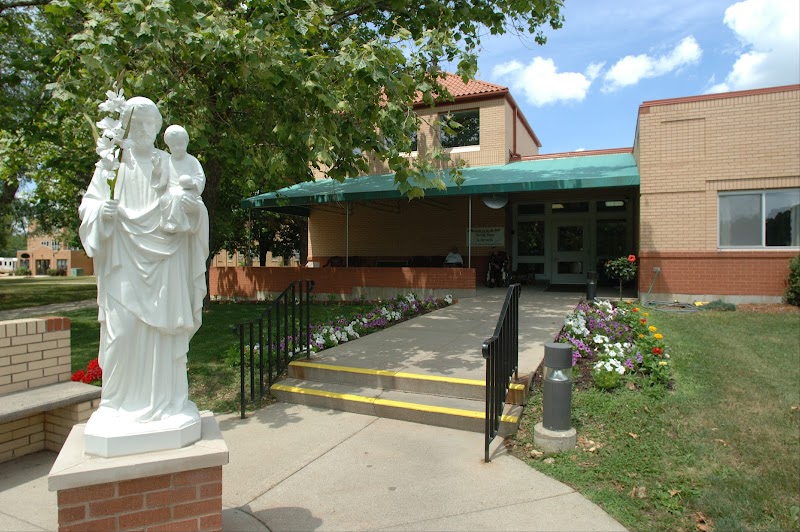
How is The Citadel At Saint Joseph Village Staffed?

CMS rates The Citadel at Saint Joseph Village's staffing level at 3 out of 5 stars, which is average compared to other nursing homes. Staff turnover is 59%, which is 13 percentage points above the Illinois average of 46%. High turnover can affect care consistency as new staff learn residents' individual needs. RN turnover specifically is 56%, which is notably high. RNs provide skilled clinical oversight, so turnover in this role can affect medical care quality.

What Have Inspectors Found at The Citadel At Saint Joseph Village?

State health inspectors documented 47 deficiencies at The Citadel at Saint Joseph Village during 2023 to 2025. These included: 1 Immediate Jeopardy (the most serious level, indicating potential for serious harm or death), 5 that caused actual resident harm, and 41 with potential for harm. Immediate Jeopardy findings are rare and represent the most serious regulatory concerns. They require immediate corrective action.

Who Owns and Operates The Citadel At Saint Joseph Village?

The Citadel at Saint Joseph Village is owned by a non-profit organization. Non-profit facilities reinvest revenue into operations rather than distributing to shareholders. The facility is operated by ASCENSION LIVING, a chain that manages multiple nursing homes. With 124 certified beds and approximately 80 residents (about 65% occupancy), it is a mid-sized facility located in FREEPORT, Illinois.

How Does The Citadel At Saint Joseph Village Compare to Other Illinois Nursing Homes?

Compared to the 100 nursing homes in Illinois, The Citadel at Saint Joseph Village's overall rating (2 stars) is below the state average of 2.5, staff turnover (59%) is significantly higher than the state average of 46%, and health inspection rating (2 stars) is below the national benchmark.

What Should Families Ask When Visiting The Citadel At Saint Joseph Village?

Based on this facility's data, families visiting should ask: "What changes have been made since the serious inspection findings, and how are you preventing similar issues?" "How do you ensure continuity of care given staff turnover, and what is your staff retention strategy?" "Can I visit during a mealtime to observe dining assistance and food quality?" "How do you handle medical emergencies, and what is your hospital transfer rate?" These questions are particularly relevant given the facility's Immediate Jeopardy citations and the facility's high staff turnover rate.

Is The Citadel At Saint Joseph Village Safe?

Based on CMS inspection data, The Citadel at Saint Joseph Village has documented safety concerns. Inspectors have issued 1 Immediate Jeopardy citation (the most serious violation level indicating risk of serious injury or death). The facility has a 2-star overall rating and ranks #100 of 100 nursing homes in Illinois. Families considering this facility should ask detailed questions about what corrective actions have been taken since these incidents.

Do Nurses at The Citadel At Saint Joseph Village Stick Around?

Staff turnover at The Citadel at Saint Joseph Village is high. At 59%, the facility is 13 percentage points above the Illinois average of 46%. Registered Nurse turnover is particularly concerning at 56%. RNs handle complex medical decisions and coordinate care — frequent RN changes can directly impact care quality. High turnover means new staff may not know residents' individual needs, medications, or preferences. It can also be disorienting for residents, especially those with dementia who rely on familiar faces. Families should ask: What is causing the turnover? What retention programs are in place? How do you ensure care continuity during staff transitions?

Was The Citadel At Saint Joseph Village Ever Fined?

The Citadel at Saint Joseph Village has been fined $380,569 across 6 penalty actions. This is 10.3x the Illinois average of $36,885. Fines at this level are uncommon and typically indicate a pattern of serious deficiencies, repeated violations, or failure to correct problems promptly. CMS reserves penalties of this magnitude for facilities that pose significant, documented risk to resident health or safety. Families should request specific documentation of what issues led to these fines and what systemic changes have been implemented.

Is The Citadel At Saint Joseph Village on Any Federal Watch List?

The Citadel at Saint Joseph Village is not on any federal watch list. The most significant is the Special Focus Facility (SFF) program, which identifies the bottom 1% of nursing homes nationally based on persistent, serious quality problems. Not being on this list means the facility has avoided the pattern of deficiencies that triggers enhanced federal oversight. This is a positive indicator, though families should still review the facility's inspection history directly.