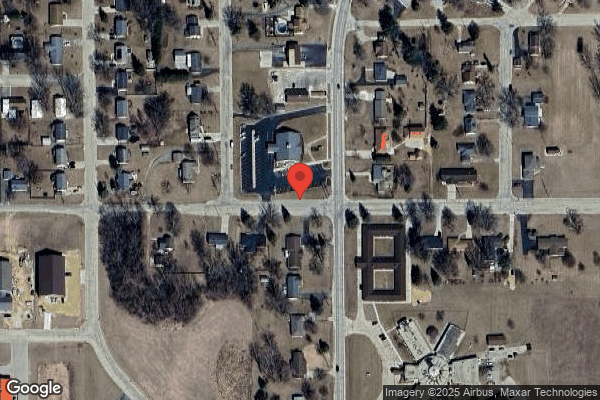

LENA LIVING CENTER

1010 SOUTH LOGAN STREET, LENA, IL 61048 (815) 369-4561
For profit - Individual 92 Beds Independent Data: November 2025
Trust Grade
45/100
#160 of 665 in IL
Last Inspection: March 2025

Within standard 12-15 month inspection cycle. Federal law requires annual inspections.

Overview

Lena Living Center has a Trust Grade of D, indicating it is below average with some concerns about its care quality. It ranks #160 out of 665 facilities in Illinois, placing it in the top half, and is the highest-ranked facility among five in Stephenson County. The facility is improving, having reduced its issues from 12 in 2024 to 10 in 2025. Staffing is average with a 3/5 rating and a turnover rate of 56%, which is close to the state average. However, the center has faced significant fines totaling $90,772, which is concerning. Notably, there have been serious incidents, including one where a resident suffered multiple fractures and a laceration due to improper assistance for bed mobility, and another where a resident at risk of falls did not receive adequate help with transfers. Additionally, there were concerns about food safety practices, as cooked foods were not cooled properly, posing potential health risks for all residents. While the facility has some strengths, such as its overall rating of 4/5 stars, these incidents highlight areas needing improvement.

Trust Score
D
45/100
In Illinois
#160/665
Top 24%
Safety Record
High Risk
Review needed
Inspections
Getting Better
12 → 10 violations
Staff Stability
⚠ Watch
56% turnover. Above average. Higher turnover means staff may not know residents' routines.
Penalties
⚠ Watch
$90,772 in fines. Higher than 87% of Illinois facilities, suggesting repeated compliance issues.
Skilled Nurses
✓ Good
Each resident gets 48 minutes of Registered Nurse (RN) attention daily — more than average for Illinois. RNs are trained to catch health problems early.
Violations
⚠ Watch
35 deficiencies on record. Higher than average. Multiple issues found across inspections.
★★★★☆
4.0
Overall Rating
★★★☆☆
3.0
Staff Levels
★★☆☆☆
2.0
Care Quality
★★★★☆
4.0
Inspection Score
Stable
2024: 12 issues
2025: 10 issues

The Good

  • Full Sprinkler Coverage · Fire safety systems throughout facility
  • No fines on record

Facility shows strength in fire safety.

The Bad

Staff Turnover: 56%

Near Illinois avg (46%)

Frequent staff changes - ask about care continuity

Federal Fines: $90,772

Well above median ($33,413)

Moderate penalties - review what triggered them

Staff turnover is elevated (56%)

8 points above Illinois average of 48%

The Ugly 35 deficiencies on record

2 actual harm
Mar 2025 10 deficiencies
CONCERN (D)

Potential for Harm - no one hurt, but risky conditions existed

Deficiency F0657 (Tag F0657)

Could have caused harm · This affected 1 resident

**NOTE- TERMS IN BRACKETS HAVE BEEN EDITED TO PROTECT CONFIDENTIALITY** Based on interview and record review, the facility failed to perform interdisciplinary care plan conferences for 1 of 1 resident...

Read full inspector narrative →
**NOTE- TERMS IN BRACKETS HAVE BEEN EDITED TO PROTECT CONFIDENTIALITY** Based on interview and record review, the facility failed to perform interdisciplinary care plan conferences for 1 of 1 residents (R44) reviewed for care plans in the sample of 26. The findings include: R44's electronic face sheet printed on 3/26/25 showed R44 has diagnoses including but not limited to cerebral infarction, hemiplegia & hemiparesis affecting left dominant side, dementia with anxiety, and dementia with behaviors. R44's facility assessment dated [DATE] showed R44 has severe cognitive impairment. On 3/25/25 at 10:10AM, V13 (R44's power of attorney) stated, I have been leaving voicemails for about 3 weeks at the facility to figure out (R44's) finances and I am getting very angry because you can never reach anyone. When they call me, I answer or call back. A few weeks ago, I went to see (R44), and I wanted to be able to sit down with someone and ask questions about his care. I have never heard of a care plan meeting, and we have never had one. R44's care plan attendance records showed, 6/18/24 no family attendance, 9/11/24 no family attendance, and 12/18/24 no family attendance. On 3/26/25 at 1:33PM, V12 (Social Service Director) stated, (R44) is a tough situation because he was kind of just dropped off here, so he didn't have a lot of family involvement but now his (family) have been coming around more to see him, so they'll begin to be invited to care plan meetings. R44's nursing progress notes showed the facility has contacted the family 6 times since R44's admission to the facility on 5/20/24 and have never invited R44's family to a care plan meeting. On 3/26/25 at 2:05PM, V12 stated, (R44's) power of attorney is (V13). She became his power of attorney in December 2024. Invitations for care plan meetings are not documented, we just call families. There is a lot of family drama with (R44), but someone should still be invited to the meetings. (R44) is due for a care plan meeting by the end of the month but I have not reached out to his family yet to invite them. I typically reach out at least a week prior to when the meeting is scheduled. (Only 5 days are left in the month) The facility was unable to provide a policy regarding family/healthcare power of attorney attendance at care plan meetings or documentation of invitations to care plan meetings.
CONCERN (D)

Potential for Harm - no one hurt, but risky conditions existed

ADL Care (Tag F0677)

Could have caused harm · This affected 1 resident

**NOTE- TERMS IN BRACKETS HAVE BEEN EDITED TO PROTECT CONFIDENTIALITY** Based on observation, interview, and record review the facility failed to perform incontinence care and activities of daily livi...

Read full inspector narrative →
**NOTE- TERMS IN BRACKETS HAVE BEEN EDITED TO PROTECT CONFIDENTIALITY** Based on observation, interview, and record review the facility failed to perform incontinence care and activities of daily living care for 1 of 1 residents (R35) reviewed for activities of daily living in the sample of 26. The findings include: R35's electronic face sheet printed on 3/27/25 showed R35 has diagnoses including but not limited to need for personal care, muscle wasting and atrophy, morbid obesity, and edema. R35's facility assessment dated [DATE] showed R35 has mild cognitive impairment and requires partial/moderate assistance with toileting hygiene. R35's care plan dated 7/27/22 showed, I have an ADL (activities of daily living) self-care performance deficit related to activity intolerance, limited mobility .personal hygiene: limited assist x 1 at times. On 3/25/25 at 10:46AM, R35 was walking down the hallway and had wet marks on the back of his pants. V14 (Certified Nursing Assistant) took R35 to his bathroom and removed his wet pants and incontinence brief. V14 confirmed R35's incontinence brief was wet with urine. V14 applied a clean incontinence brief and pants onto R35 without performing incontinence care. After V14 left R35's room, V14 stated, He will usually ask for incontinence care but since he didn't then I didn't provide it. I guess I could have offered to him, but he probably would have said no. Sometimes he doesn't like us to help him. On 3/26/25 at 11:10AM and 3/27/25 at 9:42AM, R35 continued to wear the same shirt and pants that he was wearing on 3/25/25. R35's nursing progress notes were reviewed and showed no documentation that R35 refused to change his clothes or receive incontinence care on 3/25, 3/26, or 3/27. On 3/27/25 at 11:29AM, V2 (Director of Nursing) stated, (R35) needs assistance with personal care. When a resident has a brief that is wet with urine it should be removed and followed up with incontinence care to prevent skin breakdown and provide cleanliness. Staff should be offering and trying to do incontinence care and asking him to change his clothes and if he refuses, it should be documented. The facility's policy titled, Incontinent Care-with or without a catheter dated 1/1/23 showed, It is the policy of this center to provide incontinent care to residents in a manner which provides privacy, promotes dignity and ensures no cross contamination .
CONCERN (D)

Potential for Harm - no one hurt, but risky conditions existed

Pressure Ulcer Prevention (Tag F0686)

Could have caused harm · This affected 1 resident

**NOTE- TERMS IN BRACKETS HAVE BEEN EDITED TO PROTECT CONFIDENTIALITY** Based on observation, interview and record review the facilty failed to ensure a healed pressure injury did not reopen for 1 (R4...

Read full inspector narrative →
**NOTE- TERMS IN BRACKETS HAVE BEEN EDITED TO PROTECT CONFIDENTIALITY** Based on observation, interview and record review the facilty failed to ensure a healed pressure injury did not reopen for 1 (R40) of 6 residents reviewed for pressure injury in the sample of 26. The findings include: R40's admission record shows he was admitted to the facility on [DATE] with multiple diagnoses including congestive heart failure, and need for assistance with personal care. His 2/18/25 resident assessment and care screening documents moderate cognitive impairment. The same assessment documents he requires partial to moderate assistance with rolling side to side, sitting to stand, and transfers. He is occasionally incontinent of urine, and he was admitted with a Stage 3 pressure wound. R40's Wound evaluation and management summary of 2/24/25 documents a Stage 3 pressure wound to the left upper medial buttock was resolved. The 3/10/25 wound evaluation and management summary documents the same Stage 3 wound re-opened and the initial measurements were 2.2 cm (centimeters) (length) x 1.4 cm (width) x 0.2 cm (depth). On 3/26/25 at 12:51 PM, V3 RN (Registered Nurse) stood R40 up with a walker, and pulled down his incontinence brief. At the top of his left inner buttock was an open irregular shaped wound with a white paste covering. V3 said the wound originally was 2 open areas that became one. She said R40 was incontinent of urine, mostly at night, during the day he will ask for assistance with the bathroom. On 3/27/25 at 11:51 AM, V2 DON (Director of Nursing) said the nurses do weekly skin checks, and the aides should be doing skin checks for redness and open areas when providing care. After consulting with V8 Wound nurse, V2 said the current wound is a re-opening of the prior Stage 3, and it should have been noted and reported prior to becoming open again at that size. The facility's 1/2025 policy for pressure ulcers documents 3. The facility will ensure that all residents at risk for pressure ulcers are identified to be at risk and given care to prevent the development of pressure ulcers. 4. The facility will ensure that a resident with pressure ulcers receives necessary treatment and services to promote healing, prevent infection and prevent new sores from developing.
CONCERN (D)

Potential for Harm - no one hurt, but risky conditions existed

Accident Prevention (Tag F0689)

Could have caused harm · This affected 1 resident

**NOTE- TERMS IN BRACKETS HAVE BEEN EDITED TO PROTECT CONFIDENTIALITY** Based on observation, interview, and record review, the facility failed to ensure fall prevention measures were in place for 1 o...

Read full inspector narrative →
**NOTE- TERMS IN BRACKETS HAVE BEEN EDITED TO PROTECT CONFIDENTIALITY** Based on observation, interview, and record review, the facility failed to ensure fall prevention measures were in place for 1 of 3 residents (R19) reviewed for safety and supervision in the sample of 26. The findings include: R19's electronic face sheet printed on 3/27/25 showed R19 has diagnoses including but not limited to femur fracture, dysphagia, osteoarthritis, dementia with behaviors, and major depressive disorder. R19's facility assessment dated [DATE] showed R19 has severe cognitive impairment and utilizes a bed and chair alarm daily. R19's physician's orders dated 3/25/25 showed, Ensure bed/chair alarm in place & functioning at all times. R19's care plan dated 9/22/23 showed, I had an actual fall 2/17/25 .utilize bed/chair alarms, bolstered mattress, (non-slip pad) when up in wheelchair. R19's care plan dated 10/16/23 showed, I require bed/chair alarm related to I have a history of falls with attempted independent transfers and ambulation. On 3/25/25 at 9:18AM, R19 was laying in her bed with her bed alarm cord laying in a basin. The alarm box was sitting out in plain view with no cord attached to it and no blinking light showing any function on the alarm. On 3/25/25 at 9:32AM, V10 (Licensed Practical Nurse) stated, (R19's) orders do not show that she needs a bed alarm, so I don't think she uses one. If it's in her room, I would think she uses it though and it should be plugged in. If it is not plugged in, then it is not on and will not alert us if she tries to get up on her own. On 3/25/25 at 10:59AM, V11 (Certified Nursing Assistant) stated R19 uses a bed alarm and is unsure of why it was not plugged in. On 3/27/25 at 11:29AM, V2 (Director of Nursing) stated, (R19) uses a bed and chair alarm and they should be plugged in at all times. We re-instated her alarms after her fall last month because we weren't sure if she slid out of her chair or was trying to get up. The facility's policy titled, Fall Management-Evaluation dated 1/1/23 showed, It is the policy of this center to evaluate residents for their fall risk and develop interventions for prevention .
CONCERN (D)

Potential for Harm - no one hurt, but risky conditions existed

Medication Errors (Tag F0758)

Could have caused harm · This affected 1 resident

Based on interview and record review the facility failed to show a resident was assessed for a psychotropic gradual dose reduction. This applies to 1 of 5 (R33) residents in the sample of 26. The find...

Read full inspector narrative →
Based on interview and record review the facility failed to show a resident was assessed for a psychotropic gradual dose reduction. This applies to 1 of 5 (R33) residents in the sample of 26. The findings include: R33's admission Record (Face Sheet) showed an admission date of 5/14/22. R33's Physician Orders showed, as of 3/27/25, she was taking quetiapine (antipsychotic medication) and sertraline (antidepressant). The diagnosis for quetiapine was anxiety and major depression with psychotic symptoms. The diagnosis for sertraline was major depression with psychotic symptoms. R33's Order Listing Report for quetiapine showed she had been taking quetiapine since her admission. R33's Order History showed she had been taking 25 milligrams twice daily since 8/3/23. On 3/26/25 at 2:50 PM, R33's most recent gradual dose reduction (GDR, a lowering of a resident's psychotropic medication) attempt or decline documentation was requested from V2 Director of Nursing. On 3/27/25 at 8:21 AM, V2 Director of Nursing stated V7 Psychiatrist would like to speak over the phone regarding R33's quetiapine GDR. (The facility had not yet produced GDR documentation.) V7 stated, it was his understanding, that if a GDR was attempted for one psychotropic medication and the resident failed the GDR, GDRs for all other psychotropics did not need to be attempted or the reason for the declination did not need to be documented. V7 stated R33 had a failed sertraline GDR in September 2024, which would cover R33's quetiapine GDR attempt. R33's 3/10/25 Psychiatry note showed a list of GDR(s). The last documented GDR for quetiapine was 7/10/23 (20 months ago) when the dose was lowered to 12.5 milligrams twice a day. The document showed she failed the GDR. The facility's Drug Regimen-Gradual Dose Reduction policy (revision 1/2025) showed, For any resident who is receiving an antipsychotic drug to treat a psychiatric disorder other than behavioral symptoms related to dementia, the GDR may be considered contraindicated if: a) The continued use is in accordance with relevant current standards of practice and the physician has documented the clinical rationale for why any attempted dose reduction would be likely to impair the resident's function or cause psychiatric instability by exacerbating an underlying psychiatric disorder; or b) The resident's target symptoms returned or worsened after the most recent attempt at a GDR within the facility and the physician has documented the clinical rationale for why any additional attempted dose reduction at that time would likely impair the resident's function or cause psychiatric instability by exacerbating an underlying medical or psychiatric disorder.
CONCERN (D)

Potential for Harm - no one hurt, but risky conditions existed

Deficiency F0761 (Tag F0761)

Could have caused harm · This affected 1 resident

**NOTE- TERMS IN BRACKETS HAVE BEEN EDITED TO PROTECT CONFIDENTIALITY** Based on observation, interview, record review the facility failed to follow manufacturer instructions regarding the expiration ...

Read full inspector narrative →
**NOTE- TERMS IN BRACKETS HAVE BEEN EDITED TO PROTECT CONFIDENTIALITY** Based on observation, interview, record review the facility failed to follow manufacturer instructions regarding the expiration date of in use insulin. This applies to 2 of 2 residents (R47, R27) reviewed for insulin in the sample of 26. The findings include: 1. On [DATE] at 10:00 AM, R47's insulin glargine (long-acting insulin) was in the E hall cart. The insulin vial had a label which showed an open date of [DATE] and a discard date of [DATE]. The cart had no other opened insulin glargine for R47. R47's [DATE] Medication Administration Record (MAR) showed he was to receive 8 units of insulin glargine at bedtime. The MAR showed the insulin glargine was documented as being given on [DATE]. The manufacturer's instructions Learn How to Inject [insulin glargine] showed, The [insulin] vials you are using should be thrown away after 28 days, even if it still has insulin in it. On [DATE] at 12:32 PM, V2 (Director of Nursing) stated the facility follows manufacturer instructions regarding the storage and use of insulin. V2 said R47 should not have been given the insulin from the expired vial on [DATE]. V2 said the purpose of disposal after 28 days in use is due to a risk of contamination after prolonged use of the insulin vial as well as decreased potency of the insulin. The facility's Insulin Administration policy (dated [DATE]) showed, Procedure: .5. Check expiration date, if drawing from an opened multi-dose vial. If opening a new vial, record expiration date and time on the vial (follow manufacturer recommendations for expiration after opening.) 2. On [DATE] at 10:00 AM, R27's insulin aspart (fast-acting insulin) pen was in the E hall cart. The pen had a facility applied yellow oval label with two spaces for a date opened and a discard date. The label said discard 28 days after opening. The sticker was blank; no dates had been documented. The insulin pen showed approximately half the insulin had been used. On [DATE] at 12:32 PM, V2 (Director of Nursing) stated insulin pens should be dated once they are removed from the refrigerator. V2 said the purpose of labeling the pen is to keep track of when the pen needs to be discarded. The facility's Insulin Administration policy (dated [DATE]) showed, Procedure: .5. Check expiration date, if drawing from an opened multi-dose vial. If opening a new vial, record expiration date and time on the vial (follow manufacturer recommendations for expiration after opening.)
CONCERN (D)

Potential for Harm - no one hurt, but risky conditions existed

Infection Control (Tag F0880)

Could have caused harm · This affected 1 resident

**NOTE- TERMS IN BRACKETS HAVE BEEN EDITED TO PROTECT CONFIDENTIALITY** Based on observation, interview, and record review, the facility failed to perform glove changes and hand hygiene during inconti...

Read full inspector narrative →
**NOTE- TERMS IN BRACKETS HAVE BEEN EDITED TO PROTECT CONFIDENTIALITY** Based on observation, interview, and record review, the facility failed to perform glove changes and hand hygiene during incontinence care for 1 of 8 residents (R5) reviewed for infection control in the sample of 26. The findings include: R5's electronic face sheet printed on 3/27/25 showed R5 has diagnoses including but not limited to chronic kidney disease stage 4, urinary tract infection, and anxiety disorder. R5's facility assessment dated [DATE] showed R5 has moderate cognitive impairment and is dependent on staff for personal hygiene. On 3/25/25 at 12:07PM, V5 and V14 (Certified Nursing Assistants) provided incontinence care to R5. V14 cleansed feces off R5's buttocks with toilet paper, handed the toilet paper to V14 to throw away. This occurred 4 times between V5 and V14 throughout R5's incontinence care. V5 and V14 then applied a clean incontinence brief, touched the mechanical lift remote, R5's bed controls, and R5's wheelchair without removing their soiled gloves. V14 stated gloves are not removed until all care is completed with a resident. V5 and V14 were unable to verbalized when gloves should be changed, and hand hygiene performed during incontinence care. On 3/27/25 at 11:29AM, V2 (Director of Nursing) stated, Whenever the aides are going from a dirty to clean task they should remove their gloves, perform hand hygiene, and apply new gloves to prevent contamination and the spread of infection. These are taught in classes and observed during competencies, so all aides know the correct procedure. This is not a new procedure and staff should know this. The facility's policy titled, Incontinent Care- with or without catheter dated 1/1/23 showed, If is the policy of this center to provide incontinent care to residents in a manner which provides privacy, promotes dignity and ensures no cross contamination .re-glove prior to touching clean linens/adult brief .
CONCERN (D)

Potential for Harm - no one hurt, but risky conditions existed

Deficiency F0883 (Tag F0883)

Could have caused harm · This affected 1 resident

Based on interview and record review the facility failed to offer a resident the flu vaccine for the 2024/2025 flu season. This applies to 1 of 5 residents (R7) reviewed for vaccinations in the sample...

Read full inspector narrative →
Based on interview and record review the facility failed to offer a resident the flu vaccine for the 2024/2025 flu season. This applies to 1 of 5 residents (R7) reviewed for vaccinations in the sample of 26. The findings include: R7's admission Record (Face Sheet) showed an original admission date of 2/8/24 with diagnoses to include dementia without behavioral disturbance, influenza, and covid-19. R7's Immunization History (as of 3/27/25) showed she did not receive the 2024/2025 flu vaccine. On 3/26/25 at 1:46 PM, V2 (Director of Nursing/DON) stated R7's Power of Attorney was in the Intensive Care Unit the end of October 2024, and he was not reachable. V2 said R7's (family) was not willing to make decisions for R7. V2 said R7 was not given the flu shot and R7 did have flu early in 2025. On 3/26/25 at 2:50 PM, V2 said if a resident has a diagnosis of dementia, they do not allow the resident to sign consents, only the power of attorney. On 3/26/25 at 3:17 PM, R7 was oriented to date, city, and her medical history. R7 said, Early this year I was sick with both flu and covid; I had the double decker. I was not feeling well. R7 said, I always get the flu shot .I would like to make my own decision about my vaccines. R7's 2/12/24, 10/24/24, and 2/23/25 Minimum Data Sets (MDSs) showed she was cognitively intact with a brief interview for mental status (BIMS) score of 15 out of 15. R7's 10/3/24 Nurse Practitioner note showed, Orientation: Yes alert, awake and oriented x3 (oriented to person, place, and time) R7's 11/11/24 Psychiatry Note showed, .No evidence of psychosis such as mania, paranoia, or delusional thoughts .Insight: Fair, Judgement: Fair . R7's 12/4/24 Fall Risk Evaluation showed she was alert and oriented to person, place and time. On 3/27/25 at 8:39 AM, V2 said, If they are diagnosed with dementia the POA (Power of Attorney) is activated. If someone has dementia, we go to the POA to sign their consents. That's what I've always done. It is possible that a resident can have a diagnosis of dementia and they are alert, oriented, they know their health history, and are aware of their health status. If a resident has dementia, we don't have anything in place to assess a resident's cognition at the time of singing their paperwork. V2 stated her concern with dementia resident's signing consents is, The resident could come back at a later time and say they didn't sign that paperwork. V2 said R7 was not hospitalized when she had the flu and covid; and she made a full recovery. R7's Power of Attorney paperwork (signed by R7 on 4/18/23) showed, I authorize my agent to: Make decisions for me starting now and continuing after I am no longer able to make them for myself. While I am still able to make my own decisions, I can still do so if I want to. On 3/27/25 at 9:49 AM, V6 (Ombudsman) stated he is well acquainted with resident rights. V6 stated, regarding not allowing dementia residents to sign consents, I've heard a few facilities say that, but my response to that is dementia is not one thing it is a spectrum. Someone can be mildly forgetful or be very advanced. In one case they may be perfectly capable of making decisions and signing consents and the other resident may not be able to sign. Both those people would have the same dementia diagnosis. (R7's POA statement above was read to V6 verbatim.) I understand that statement to mean that, if she is able to make her own decisions, she can still do so if she wants to. On 3/26/25 at 4:14 PM, V2 stated the facility did not have a specific flu vaccination policy.
CONCERN (D)

Potential for Harm - no one hurt, but risky conditions existed

Deficiency F0887 (Tag F0887)

Could have caused harm · This affected 1 resident

Based on interview and record review the facility failed to offer a resident the covid vaccine for the 2024/2025 covid season. This applies to 1 of 5 residents (R7) reviewed for vaccinations in the sa...

Read full inspector narrative →
Based on interview and record review the facility failed to offer a resident the covid vaccine for the 2024/2025 covid season. This applies to 1 of 5 residents (R7) reviewed for vaccinations in the sample of 26. The findings include: R7's admission Record (Face Sheet) showed an original admission date of 2/8/24 with diagnoses to include dementia without behavioral disturbance, influenza, and covid-19. R7's Immunization History (as of 3/27/25) showed she did not receive the 2024/2025 covid booster. On 3/26/25 at 1:46 PM, V2 (Director of Nursing) stated R7's Power of Attorney was in the Intensive Care Unit the end of October 2024, and he was not reachable. V2 said R7's (family) was not willing to make decisions for R7. V2 said R7 was not given the covid booster and R7 did have covid early in 2025. On 3/26/25 at 2:50 PM, V2 said if a resident has a diagnosis of dementia, they do not allow the resident to sign consents, only the power of attorney. On 3/26/25 at 3:17 PM, R7 was oriented to date, city, and her medical history. R7 said, Early this year I was sick with both flu and covid; I had the double decker. I was not feeling well. R7 said, .I should probably get the covid vaccine. I would like to make my own decision about my vaccines. R7's 2/12/24, 10/24/24, and 2/23/25 Minimum Data Sets (MDSs) showed she was cognitively intact with a brief interview for mental status (BIMS) score of 15 out of 15. R7's 10/3/24 Nurse Practitioner note showed, Orientation: Yes alert, awake and oriented x3 (oriented to person, place, and time) R7's 11/11/24 Psychiatry Note showed, .No evidence of psychosis such as mania, paranoia, or delusional thoughts .Insight: Fair, Judgement: Fair . R7's 12/4/24 Fall Risk Evaluation showed she was alert and oriented to person, place and time. On 3/27/25 at 8:39 AM, V2 said, If they are diagnosed with dementia the POA (Power of Attorney) is activated. If someone has dementia, we go to the POA to sign their consents. That's what I've always done. It is possible that a resident can have a diagnosis of dementia and they are alert, oriented, they know their health history, and are aware of their health status. If a resident has dementia, we don't have anything in place to assess a resident's cognition at the time of singing their paperwork. V2 stated her concern with dementia resident's signing consents is, The resident could come back at a later time and say they didn't sign that paperwork. V2 said R7 was not hospitalized when she had the flu and covid; and she made a full recovery. R7's Power of Attorney paperwork (signed by R7 on 4/18/23) showed, I authorize my agent to: Make decisions for me starting now and continuing after I am no longer able to make them for myself. While I am still able to make my own decisions, I can still do so if I want to. On 3/27/25 at 9:49 AM, V6 (Ombudsman) stated he is well acquainted with resident rights. V6 stated, regarding not allowing dementia residents to sign consents, I've heard a few facilities say that, but my response to that is dementia is not one thing it is a spectrum. Someone can be mildly forgetful or be very advanced. In one case they may be perfectly capable of making decisions and signing consents and the other resident may not be able to sign. Both those people would have the same dementia diagnosis. (R7's POA statement above was read to V6 verbatim.) I understand that statement to mean that, if she is able to make her own decisions, she can still do so if she wants to. On 3/26/25 at 4:14 PM, V2 stated the facility did not have a specific covid vaccination policy.
CONCERN (F)

Potential for Harm - no one hurt, but risky conditions existed

Food Safety (Tag F0812)

Could have caused harm · This affected most or all residents

Based on observation, interview, and record review the facility failed to ensure cooked foods were cooled in a manner to limit the growth of potentially dangerous pathogens. The failure has the potent...

Read full inspector narrative →
Based on observation, interview, and record review the facility failed to ensure cooked foods were cooled in a manner to limit the growth of potentially dangerous pathogens. The failure has the potential to affect all residents in the facility. The findings include: The CMS 671, dated 3/25/25, showed 52 residents reside in the facility. On 3/25/25 at 9:05 AM, the facility's reach-in freezer had several left-over food items to include but not limited to: 1.) Spaghetti Sauce prepared on 3/18/25 and use by date of 4/18/25 2.) Taco meat prepared on 3/3/25 and use by date of 4/3/25 3.) Beef Barley soup prepared on 3/25/25 and use by date of 3/27/25 4.) Meat Balls prepared on 3/19/25 and use by date of 4/19/25. The facility's reach-in refrigerator had leftover chicken noodle soup with a prepared date of 3/24/25. On 3/27/25 at 11:35 AM, V9 (Dietary Manager) stated the facility does serve leftover foods to the residents. V9 said the leftover chicken noodle soup in the refrigerator and the leftovers in the freezer are for all the residents. V9 said the soups are on the alternative menu and served to the residents per their request. V9 said the leftovers, like the pasta sauce and taco meat, will be used the next time that food item is on the menu. On 3/26/25 at 8:59 AM, V9 Dietary Manager stated the cooling logs for the leftover items in the freezer should be posted on the reach-ins. (V9 pointed to the doors of the reach-ins in the kitchen.) V9 said, We don't have any cooling logs for the leftovers. V9 said the leftovers must be cooled quickly enough so the food does not linger in the danger zone, which is a temperature range where pathogens will grow more rapidly. The facility's General HACCP (Hazard Analysis and Critical Control Points) Guidelines for Food Safety policy showed, .Limit the time that food is in the temperature danger zone. The policy showed the danger zone is 135 degrees Fahrenheit (F) to 41 F. The policy showed cooked food should be cooled from 135 F to 70 F in 2 hours then from 70 F to 41 F within 4 hours. The policy showed if these times and temperatures were not met, then the food should be reheated to 165 F and the process restarted.
Sept 2024 1 deficiency
CONCERN (D) 📢 Someone Reported This

A family member, employee, or ombudsman was alarmed enough to file a formal complaint

Potential for Harm - no one hurt, but risky conditions existed

Deficiency F0557 (Tag F0557)

Could have caused harm · This affected 1 resident

**NOTE- TERMS IN BRACKETS HAVE BEEN EDITED TO PROTECT CONFIDENTIALITY** Based on interview and record review the facility failed to treat a resident with respect and dignity. This applies to 1 of 6 re...

Read full inspector narrative →
**NOTE- TERMS IN BRACKETS HAVE BEEN EDITED TO PROTECT CONFIDENTIALITY** Based on interview and record review the facility failed to treat a resident with respect and dignity. This applies to 1 of 6 residents (R1) reviewed for resident rights in the sample of 6. The findings include: R1's face sheet shows he is a [AGE] year-old male admitted to the facility on [DATE] with diagnoses including cellulitis, COPD, weakness, and dehydration. On 9/30/24 at 10:55 AM, V7 (Certified Nursing Assistant-CNA) said on 9/19/24 she was receiving report from V5 (CNA). V5 told her rudely, she took away R1's call light last night because his call light was going off frequently. V5 reported R1 had soft touch call light that kept going off and she was not going to go in his room every 15 minutes. When she went to get R1 up from his bed. R1 said the girl last night (V5) took his call light away from him. He said what if I needed help and couldn't get it. R1's call light was under his bed on the floor. Staff should make sure a residents call light is within reach before leaving the room. On 9/30/24 at 12:00 PM, V6 (CNA Supervisor) said she was helping staff transfer R1 with the mechanical lift. R1 reported V5 the night CNA threw his call light under the bed because she was frustrated and took it away. She found R1's call light under his bed. Call lights should be within reach of the resident. On 9/30/24 at 11:44 AM, V2 (DON) said she was notified about the incident regarding R1. She interviewed R1 and his call light was removed out of his reach. R1 was alert and oriented and needed staff assistance with ADL's. After interviewing the staff, they confirmed the same story and R1's call light was found under his bed. V5 was terminated for poor customer service. That is not proper care or treatment of a resident. The Facility's Incident Report dated 9/24/24 documents on Wednesday September 18th, 2024, V5 (CNA) was assigned to the C/D hall and the care of R1. V5 stated R1 had access to a sensitive call light, and it is her belief that she should have moved it out of the space where it could be accidentally bumped yet had it close enough that he could use it. On 09/20/2024, R1 stated that his call light was turned on multiple times throughout the evening and about 50% of them were by accident. This resident has a touch button call light available to him. The resident also stated that V5 was getting agitated with him due to the excessive calls and she said something along the lines of I'm taking this, there's no excuse. R1 stated that he doesn't remember where his call light was after it was taken away from his close reach. The conclusion of the facility investigation: 09/23/24 V5's employment as a Certified Nurse Aide was terminated based on inappropriate conduct. The Facility's Quality of Life Dignity, Resident Rights Policy states, each resident shall be cared for in a manner that promotes and enhances quality of life, dignity, respect and individuality. Resident rights will be maintained during care in our facility. Any potential resident rights notification will be reported immediately to the administrator .staff shall speak respectfully to residents at all times .
Aug 2024 1 deficiency
CONCERN (D) 📢 Someone Reported This

A family member, employee, or ombudsman was alarmed enough to file a formal complaint

Potential for Harm - no one hurt, but risky conditions existed

Deficiency F0760 (Tag F0760)

Could have caused harm · This affected 1 resident

**NOTE- TERMS IN BRACKETS HAVE BEEN EDITED TO PROTECT CONFIDENTIALITY** Based on interview and record review the facility failed to administer a Physician prescribed medication as ordered. This applie...

Read full inspector narrative →
**NOTE- TERMS IN BRACKETS HAVE BEEN EDITED TO PROTECT CONFIDENTIALITY** Based on interview and record review the facility failed to administer a Physician prescribed medication as ordered. This applies to one of three residents (R1) reviewed for medication administration in the sample of six. The findings include: The facility face sheet shows R1 was admitted to the facility with diagnoses to include Type 2 Diabetes Mellitus, congestive heart failure and hypertension. The facility assessment dated [DATE] shows R1 to be cognitively intact and requires moderate assistance with his activities of daily living. On 8/27/24 at 9:30 AM, V2 (Director of Nursing) said she was the nurse working the floor on 8/18/24. V2 said she was having a very busy night with another resident having a change in condition. V2 said she was running behind in her bedtime medication pass and was also trying to give a shift to shift report to the oncoming nurse. V2 said she looked at the Medication Administration Record (MAR) and saw the order for R1's scheduled insulin and she prepared that and then drew up 40 units of R1's regular sliding scale insulin and gave the injections to R1. V2 said she quickly realized she had given R1 his regular sliding scale insulin when it wasn't needed and had also given 40 units. V2 said the scheduled insulin was for 40 units as well and she must have had the 40 units in her head. V2 said R1's blood glucose level was 103 and R1 did not need any sliding scale insulin. V2 said she never should have been trying to give a report to the oncoming nurse while passing medications to the residents. V2 said when passing medications to a resident, the nurses focus should be on the medications. On 8/27/24 at 9:45 AM, V5 (Certified Nursing Assistant/CNA) said she worked the day shift on 8/19/24 and saw R1 in bed most of the day but did eat lunch and supper. V5 said R1 acted tired. On 8/27/24 at 9:50 AM, V4 (Registered Nurse/RN) said she was working the day shift on 8/19/24, the day after R1 received too much insulin. V4 said R1 was tired that day but was up for his meals. V4 said R1 had one emesis in the hall as he was walking but denied feeling sick and only apologized for making a mess. On 8/27/24 at 9:55 AM, V6 (CNA) said she was working the day shift on 8/19/24 and said R1 never complained of anything but did vomit one time. R1's gait was steady and he felt bad for vomiting on the floor. On 8/27/24 at 10:06 AM, V3 (RN) said she was the nurse receiving report from V2 on the night of 8/18/24. V3 said V2 had had a bad shift and was very busy and running late with the bed time medication pass. V2 was telling me about the change in another's resident's condition as she was drawing up the insulins. V3 said V2 told her right away what she had done by giving R1 regular sliding scale insulin when it wasn't necessary and that 40 units had been given. V3 said V2 called the Physician right away and also called the POA (Power of Attorney). On 8/27/24 at 12:20 PM, V1 (Administrator) said he expects the nursing staff to have their full attention on the medication pass and never try to do anything else at the same time. V1 said he heard V2 was talking to another nurse while preparing R1's medications. The Physician Order Sheet (POS) dated August 2024 for R1 shows an order for Insulin Glargine-Lixisenatide inject 40 units subcutaneously at bedtime. The same POS also shows an order for blood glucose monitoring two times a day. The POS shows an order for Insulin Lispro injection to be given per sliding scale. If blood sugar is 151-200 give 4 units, if blood sugar 201-250 give 6 units insulin, if blood sugar is 251-300 give 8 units insulin, if blood sugar is 310-350 give 10 units insulin, if blood sugar is 351-400 give 12 units insulin and call the Physician if the blood sugar is over 401. The Medication Administration Record (MAR) dated August 2024 shows R1's blood sugar was 103 at the time of his insulin administration. (According to the sliding scale insulin instructions, R1 did not need any sliding scale insulin.) The MAR shows the insulin was administered and to see R1's nursing progress note. The nursing progress note dated 8/18/24 at 10:07 PM shows accidental lantus (insulin) administration given to the resident The facility policy for Insulin Administration dated 3/4/2020 shows it is the policy of this center to assure that residents with diabetes mellitus, who are ordered to have insulin to control their blood glucose levels, will receive the medications correctly. The procedure shows to 3. check the blood glucose per Physician orders or facility protocol 8. check and re-check that the type of insulin on the vial matches the type of insulin ordered. 9. check the order for the amount of insulin.
Aug 2024 1 deficiency 1 Harm
SERIOUS (G) 📢 Someone Reported This

A family member, employee, or ombudsman was alarmed enough to file a formal complaint

Actual Harm - a resident was hurt due to facility failures

Accident Prevention (Tag F0689)

A resident was harmed · This affected 1 resident

**NOTE- TERMS IN BRACKETS HAVE BEEN EDITED TO PROTECT CONFIDENTIALITY** Based on interview and record review, the facility failed to perform safe bed mobility for 1 resident (R1) reviewed for safety a...

Read full inspector narrative →
**NOTE- TERMS IN BRACKETS HAVE BEEN EDITED TO PROTECT CONFIDENTIALITY** Based on interview and record review, the facility failed to perform safe bed mobility for 1 resident (R1) reviewed for safety and supervision. This failure resulted in R1 sustaining a nasal bone fracture, a femoral neck fracture, and a 4x4cm (centimeter) laceration to her forehead that was repaired with 9 sutures. This applies to 1 of 3 residents reviewed for safety and supervision in the sample of 3. The findings include: R1's electronic face sheet printed on 8/1/24 showed R1 has diagnoses including but not limited to intracapsular fracture of right femur, localization-related idiopathic epilepsy and epileptic syndrome with seizures, laceration of head, dementia with agitation, and osteoporosis. R1's facility assessment dated [DATE] showed R1 has severe cognitive impairment and requires 2+ staff assist for bed mobility. R1's ADL (Activities of Daily Living) assessment dated [DATE] showed R1 requires 2+ staff physical assist for bed mobility. R1's local hospital records dated 7/28/24 showed, Patient is bedridden at baseline and lives at (facility), was getting bed bath done today by staff with bed raised high, patient rolled out of bed resulting in a 3x3cm laceration to forehead, blood from nares, right leg pain with hip flexion .Head exam- 4x4cm linear laceration over the frontal area of the skull through the epidermis .patients imaging studies were reviewed .there is questionable chip fracture of the nasal bone, a displaced sub capital fracture of the right femoral neck .Procedures: laceration wound explored, irrigated extensively, deep structures intact, size: 4cm, number of sutures: 9. On 8/1/24 at 8:57AM, V6 (Certified Nursing Assistant) stated, (R1) has a hip fracture, a broken nose, a cut on her forehead and some bruising. I don't know what happened to her. She has always been a 2 assist for bed mobility because she doesn't help very much so if you were to use one person you would really have to give some momentum to get her over on her side. She can be very unpredictable and she has had seizures before so you have to have 2 people with her no matter what. On 8/1/24 at 9:35AM, V4 (Certified Nursing Assistant) stated, I was giving (R1) cares and washing her buttocks and had her rolled on her side with one of my hands on her hip and cleaning her with the other hand. She had a jerking movement and the momentum flung her forward and she landed on the floor on her stomach. I had the bed at about my waist level so it wasn't all the way up but it definitely wasn't low to the floor. I immediately went and got the nurse and she had me hold pressure on (R1's) forehead while she called 911 and we stayed with her until the ambulance arrived. I was scheduled on the hall by myself but I know to ask for help, I just didn't. This was so scary and I never anticipated anything like this would happen. I was just trying to get her cleaned up by myself and I didn't know she would jerk forward like that. I know she is supposed to be a 2 person assist for bed mobility but I did it by myself anyway. On 8/1/24 at 11:23AM, V2 (Director of Nursing) and V3 (Assistant Director of Nursing) stated, (V4) definitely should have had another aide helping her with (R1's) bed mobility. There were several other aides in the building at the time and we all have walkie talkies to call someone for help when we need it. Even the nursing administration has the walkie talkies so we can help when needed. If a resident requires 2 people for bed mobility then it's obviously not safe to use 1 person because they have been assessed as needing 2 people. This was a bad judgement call for (V4) and we have in-serviced her and the other aides on bed mobility assistance. This could have been prevented if she would have asked another aide for help. The facility's policy titled, Activities of Daily Living dated 2/17/20 showed, It is the policy of this center to assure residents have their activities of daily living needs met in a person-centered manner. The center will strive to assure residents maintain and or improve their current level of ADL function.
Apr 2024 8 deficiencies
CONCERN (D)

Potential for Harm - no one hurt, but risky conditions existed

Deficiency F0692 (Tag F0692)

Could have caused harm · This affected 1 resident

**NOTE- TERMS IN BRACKETS HAVE BEEN EDITED TO PROTECT CONFIDENTIALITY** Based on observation, interview, and record review the facility failed to reassess for preferences and nutritional needs after a...

Read full inspector narrative →
**NOTE- TERMS IN BRACKETS HAVE BEEN EDITED TO PROTECT CONFIDENTIALITY** Based on observation, interview, and record review the facility failed to reassess for preferences and nutritional needs after a resident was readmitted with a diet change for 1 of 1 resident (R22) reviewed for dietary services. The findings include: R22's face sheet showed he was admitted to the facility on [DATE] (65 days ago) with diagnoses to include dementia without behavioral disturbance, candidal esophagitis, gastro-esophageal reflux disease, atherosclerosis, and a non-pressure chronic ulcer of part of the foot. R22's April 2024 Physician Order Sheet showed, . 4/2/24 Regular diet, Full Liquid texture, thin consistency . Dietary Supplements: House Supplement three times a day, 237 mililiters (1 carton) three times a day . R22's care plan initiated 2/9/24 showed, The resident is on a regular diet . Administer medications as ordered. Monitor/Document for side effects and effectiveness. Provide and serve diet as ordered. No changes were made to R22's care plan after his diet change to a liquid diet. R22's dietary card provided by V5 (Dietary Manger) showed, Diet Order: Full Liquid, *Standard Diet, - Fluids thin . Breakfast: 6 fluid ounces chicken broth (x2), 4 fluid ounces fruit juice, 8 fluid ounces of milk 2% . Lunch: 4 fluid ounces of lemonade, 8 fluid ounces of milk 2%, ½ cup of pudding, 4 fluid ounces of tomato juice (soup x 2) . Dinner: 4 fluid ounces lemonade, 8 fluid ounces milk 2%, ½ cup pudding, 4 fluid ounces tomato juice (soup x 2). R22's dietary card showed no dietary supplements being provided. On 4/10/24 at 1:13 PM, R22 was in the resident group meeting with the surveyor. R22 said he is on a liquid diet and can only eat liquids and tomato soup. R22 said he did not know why he is on a liquid diet but knows he has to go see a GI (gastrointestinal doctor). On 4/11/24 at 10:51 AM, V5 (Dietary Manger) said R22 had a choking incident and went out to the hospital. V5 said R22's diet is considered full liquid. V5 said she has not looked into what R22 can eat that would be considered a liquid diet. V5 said R22 he has been asking for certain things and the cooks have it all memorized. V5 said she thinks R22 has been on this new diet for about 2 weeks now and he goes in for another appointment with someone but does not know when. V5 said the appointment is probably in the next couple of weeks. V5 said she has not really spoken with R22 since he returned from the hospital with the new diet order but that she did talk to him when he was originally admitted and he said he was not a fussy eater so he would eat about anything. V5 said R22 has told them he will be on this diet until he gets his whatever done. V5 said the Registered Dietitian will be in the facility on 4/12/24. On 4/11/24 at 10:55 AM, V6 (Cook) said he has offered R22 pudding and yogurt but he has refused it. V6 said for breakfast R22 has chicken broth, for lunch he has tomato soup, and for supper he usually has 2 tomato soups to make sure he gets enough. V6 said last night R22 did ask for pudding too. The facility's policy and procedure dated 3/8/2020 showed, Nutritional Intervention . Policy: It is the policy of this center that residents, who have been identified as being at nutritional risk, will be monitored for nutritional status and assessed by a consultant dietitian for individual nutritional needs . The Director of Nursing/designee will notify the Consultant Dietitian within 72 hours after a significant change is identified, a resident is admitted or readmitted with a tube feeding and or unusual/complex diet order, physician ordered consult or any other dietary issue or concern .
CONCERN (D)

Potential for Harm - no one hurt, but risky conditions existed

Deficiency F0712 (Tag F0712)

Could have caused harm · This affected 1 resident

**NOTE- TERMS IN BRACKETS HAVE BEEN EDITED TO PROTECT CONFIDENTIALITY** Based on observation, interview, and record review the facility failed to ensure a resident was assessed by a physician within t...

Read full inspector narrative →
**NOTE- TERMS IN BRACKETS HAVE BEEN EDITED TO PROTECT CONFIDENTIALITY** Based on observation, interview, and record review the facility failed to ensure a resident was assessed by a physician within the first 30 days after admission for 2 of 2 residents (R22, R9) reviewed for physician visits outside of the sample. The findings include: R22's face sheet showed he was admitted to the facility on [DATE] (65 days ago) with diagnoses to include dementia without behavioral disturbance, atherosclerosis, and a non-pressure chronic ulcer of part of the foot. R22's record showed he was seen by a Nurse Practitioner on 2/15/24, 3/18/24, and 4/1/24. On 4/10/24 at 1:13 PM, R9 and R22 were in the group with the surveyor. R22 said he was upset that the facility does not have a doctor that comes in and sees the residents. R22 said he and R9 have only been seen by a nurse practitioner. R22 said the facility staff told him a nurse practitioner is a doctor. On 4/11/24 at 11:46 AM, V10 RN said the facility has nurse practitioners that come in every week. V10 said R9 and R22's physician does come into the facility maybe every couple of months. V10 said she knows there are certain people who he needs to see. V10 said V17 (Clinical Coordinator) keeps track of and schedules the resident's appointments. On 4/11/24 at 11:50 AM, V17 (Clinical Coordinator) said she created a spreadsheet so I could keep up with the appointments. V17 said she has a spreadsheet for each of the physicians that come in and see residents. V17 said the physician has to see each resident within the first 30 days of admission. V17 said the nurse practitioners that come into the facility for each physician keep track of whether or not they can do the visit with the resident or if the physician needs to be the one. V17 said when a physician comes in to see a resident they fax the facility a copy of their visit notes and those get uploaded into the resident's medical record. On 4/11/24 at 12:04 PM, V17 said she checked with the Nurse Practitioner and verified that both R22 and R9 had not yet been seen by the physician since admission. The facility's policy and procedure dated 3/8/2020 showed, Physician Services; Policy: It is the policy of this center that all residents will have a primary physician upon admission to the center . Procedure: . 10. A physician may not delegate a task when the regulations specify that the physician must perform it personally, or when the delegation is prohibited under State law or by the center's own policies. 11. The DON/Administrator will be responsible to monitor physician visits to assure that the resident is receiving appropriate care and services. 12. Physician visit will be made within the first 30 days after a resident is admitted . 2. R9's face sheet showed she was admitted to the facility on [DATE] with diagnoses to include anxiety, mood disorder, bipolar disorder, hydrocephalus, gastro-esophageal reflux disease without esophagitis, constipation, spinal stenosis, urinary tract infection, and chronic kidney disease. R9's facility assessment dated [DATE] showed she has no cognitive impairment. On 4/10/24 at 1:13 PM, R9 said she has not been seen by a physician since her admission to the facility. R9's record showed she was seen by a Nurse Practitioner on 2/15/24 and 3/18/24. There was no evidence found in R9's record of being assessed by a physician since her admission to the facility on 2/8/24.
CONCERN (D)

Potential for Harm - no one hurt, but risky conditions existed

Pharmacy Services (Tag F0755)

Could have caused harm · This affected 1 resident

**NOTE- TERMS IN BRACKETS HAVE BEEN EDITED TO PROTECT CONFIDENTIALITY** Based on interview and record review the facility failed to ensure a scheduled medication was available for administration for 1...

Read full inspector narrative →
**NOTE- TERMS IN BRACKETS HAVE BEEN EDITED TO PROTECT CONFIDENTIALITY** Based on interview and record review the facility failed to ensure a scheduled medication was available for administration for 1 of 1 resident (R10) reviewed for medications in the sample of 23. The findings include: R10's face sheet showed she was admitted to the facility on [DATE] with diagnoses to include unspecified dementia without behavioral disturbance, pain in right leg, muscle wasting and atrophy, lack of coordination, anxiety disorder, need for assistance with personal care, hypertension, chronic kidney disease, and osteoarthritis. R10's facility assessment dated [DATE] showed she has severe cognitive impairment and is requires moderate to substantial assistance from staff for all cares. R10's care plan initiated 5/23/23 showed, I use anti-anxiety medications related to anxiety disorder . Administer Anti-Anxiety medications as ordered by physician. Monitor for side effects and effectiveness every shift. R10's August 2023 Physician Order Sheet showed and order dated 5/22/23 for Alprazolam 0.25 milligrams to be administered three times per day. R10's 8/24/23 Order Administration Note entered at 1:17 PM showed R10's Alprazolam was not given due to narc (narcotic) box on med cart is not opening and [the convenience supply] is not working. R10's 8/25/23 Order Administration Note entered at 4:18 PM showed R10's Alprazolam was not given due to med unavailable and unable to access [convenience supply]. R10's 8/26/23 Order Administration Note entered at 4:45 AM showed R10's Alprazolam was not given due to being on order. On 8/26/23 at 4:56 PM an order administration note showed Alprazolam not given due to medication not delivered from pharmacy. R10's 8/28/23 Order Administration Note entered at 3:58 PM showed, This RN (Registered Nurse) called [pharmacy] and left voicemail asking about refill for Xanax [Alprazolam] TID (three times daily) and resident has been out of medication since Friday 8/25/23. R10's 8/28/23 Behavior Note entered at 4:04 PM showed, Resident has been attempting to get out of chair, CNA (Certified Nursing Assistant) reported to this RN that she attempted to put resident to bed after lunch and had to get her back up in chair. Resident has been out of Xanax [Alprazolam] since Friday 8/25/23. R10's 8/28/23 Communication with Physician Note entered at 4:14 PM showed notification was made to the Nurse Practitioner of need for continuance of therapy prescription. R10's 8/29/23 Nurses Note entered at 2:35 PM showed, This RN called [pharmacy] and spoke with [pharmacist] asking why the Alprazolam for resident was not received last night because provider was going to send script and resident has been out of medication since last Friday. [Pharmacist] informed this RN that provider needs to send script and pharmacy will send medication . R10's 8/30/23 Progress Note entered at 11:07 AM showed, Notified [Nurse Practitioner] to send prescription for Alprazolam 0.25 mg tab to [pharmacy]. R10's 8/31/23 Order Administration Note entered at 4:28 AM showed R10's Alprazolam was not given due to being on order. R10's August 2023 eMAR (electronic medication administration record) showed her Alprazolam was not administered from 8/25/23 at 12:00 PM through 8/31/23 at 5:00 AM resulting in 18 missed doses. On 4/11/24 at 2:11 PM, V2 ADON (Assistant Director of Nursing) said she would expect the medication to be documented as to why it was missed. If the medication is not available V2 said the nurse should call the pharmacy and get a stat (as soon as possible) delivery. V2 said if the medication is still not received there should be follow up phone calls in order ensure the medication gets sent. V2 said she would also contact the physician to see if there is anything else they can do to get the medication and take care of the resident while they wait for the medication. V2 said if a new prescription is needed they should contact the doctor and follow up as needed. V2 said nursing staff could reach out to administrative nurses for help obtaining the medication as well. V2 said Alprazolam is an anxiety medication, so we obviously would want to control their anxiety and they could experience withdrawals. The facility's policy and procedure dated 2/17/2020 showed, Medication Administration . Policy: It is the policy of this home that medications will be administered and documented as ordered by the physician and in accordance with state regulations. Procedure: .
CONCERN (D)

Potential for Harm - no one hurt, but risky conditions existed

Deficiency F0804 (Tag F0804)

Could have caused harm · This affected 1 resident

Based on observation, interview and record review the facility failed to ensure vegetables were not overcooked, leaving them with a soft mushy texture and a bland flavor. This applies to 2 of 2 reside...

Read full inspector narrative →
Based on observation, interview and record review the facility failed to ensure vegetables were not overcooked, leaving them with a soft mushy texture and a bland flavor. This applies to 2 of 2 residents (R1, and R13) reviewed for food preparation in a sample of 23. The findings include: On 04/11/24 at 11:48 AM, This surveyor sampled the mixed vegetables from the kitchen as V6 (Cook) was serving them to the residents. This surveyor found the vegetables too soft and was able to masticate (smash up) using my tongue and the roof of my mouth. The vegetables had a bland taste. On 04/11/24 at 12:44 PM, trays throughout the dining area had most of the vegetable uneaten after the residents left the table. 04/10/24 at 01:04 PM, V6 said, he cooks the mixed vegetables by boiling them for 45 minutes in water, then he removes them from the water a puts them in the oven at 275 degrees Fahrenheit to keep them warm. On 4/11/24 at 1:30 PM, V5 (Dietary Manager) said, we don't put salt in like the recipe says to because a lot of residents are on a low sodium diet. On 4/10/24 at 2:00 PM, R13 said, she does not eat the vegetables because they cook them to the point of being mushy and flavorless. I won't eat them. On 4/09/24 03:39 PM, R1 said, The veggies are cooked until they're mushy. I like my veggies firmer. 04/11/24 at 8:45 AM V3 (Dietitian), said, vegetable should not be boiled until mushy. The 9/12/23 recipe for cooking mixed vegetables shows to add salt, pepper, and margarine. It does not mention how long to cook the vegetables. The menu for Tuesday 4/9/24 shows winter mixed vegetables and for Wednesday 4/10/24 shows California vegetables. R1's care plan shows that R1 should eat 75% of her ordered diet every day. The Intervention shows to modify R1's diet as appropriate according to her food preferences. R13's care plan shows that R1 should eat 75% of her ordered diet every day. The Intervention shows to modify R13's diet as appropriate according to her food preferences.
CONCERN (D)

Potential for Harm - no one hurt, but risky conditions existed

Infection Control (Tag F0880)

Could have caused harm · This affected 1 resident

Based on observation, interview, and record review the facility failed to ensure the correct personal protective equipment (PPE) was worn while providing care for resident in contact isolation with a ...

Read full inspector narrative →
Based on observation, interview, and record review the facility failed to ensure the correct personal protective equipment (PPE) was worn while providing care for resident in contact isolation with a multi drug resistant organism (MDRO). This applies to 1 of 8 (R54) residents reviewed for infection control in the sample of 23. The findings include: R54's admission Record showed an original admission date of 3/28/24 with diagnoses to include a MRSA (an MDRO) (onset date 4/6/24), an abscess, and diabetes. R54's 4/10/24 Infection/Viral Charting showed she was ordered two antibiotics for her MRSA infection. R54's Care Plan showed Contact precautions maintained. Date initiated: 4/6/24. On 4/10/24 at 1:06 PM, V15 Registered Nurse performed wound care for R54's abscess to her upper/middle back. The dressing had bloody and yellow discharge on the dressing. The wound had a 2 inch incision from the 7 O'clock to 1 O'clock position. The wound appeared as if it had been a large abscess that had been surgically drained. The skin surrounding the incision was dark maroon/purple in color and was the size of a large orange. The wound had undermining of the boarders and required packing. On 4/10/24 at 11:00 AM, R54's room had signage on her door showing she was in contact isolation and gown and gloves were required. V15 entered R54's room without a gown to check R54's blood sugar. R54 was in bed. V15 then removed her gloves, exited the room, and prepared R54's insulin. V15 then entered R54's room with the insulin syringe. During the insulin administration, V15's scrub pants came in contact with R54's bedding. On 4/10/24 at 3:09 PM, V2 Infection Preventionist/Assistant Director of Nursing stated the PPE required for contact isolation is gown and gloves. V2 stated she believed R54 was in contact isolation for the MRSA infection to the abscess on her back. V2 said gown and gloves are required whenever staff enter a contact isolation room. V2 said nursing staff need to wear gown and gloves when checking blood sugars and administering insulin to residents in contact isolation. V2 said the purpose of PPE is to prevent the spread of infection to staff and to other residents. The facility's Infection Control-Precaution and Notices (Infection control policy, dated 3/3/2020) showed, In addition to Standard Precautions, Contact Precautions must be implemented for residents known or suspected to be infected or colonized with microorganisms that can be transmitted by direct contact with the resident or indirect contact with environmental surfaces or patient care items in the resident's environment . The National Institutes of Health published study from 2015 titled Transmission of MRSA to Healthcare Personnel Gowns and Gloves during Care of Nursing Home Residents showed, when staff provided care to MRSA positive residents, MRSA was transferred to staff gowns 7 percent of the time during medication pass and 24 percent of the time during linen changes. The Centers for Disease Control website titled Methicillin-Resistant Staphylococcus Aureus (MRSA) (reviewed 1/31/19) showed How is MRSA spread? People who have MRSA germs on their skin or who are infected with MRSA may be able to spread the germ to other people. In addition to being passed to patients directly from unclean hands of healthcare workers or visitors, MRSA can be spread when patients contact contaminated bed linens, bed rails, and medical equipment. The policy continued, How can doctors prevent it? To prevent MRSA infections, healthcare personnel: .use contact precautions when caring for patients with MRSA .Healthcare providers will put on gloves and wear a gown over their clothing while taking care of patients with MRSA .
CONCERN (E)

Potential for Harm - no one hurt, but risky conditions existed

Accident Prevention (Tag F0689)

Could have caused harm · This affected multiple residents

**NOTE- TERMS IN BRACKETS HAVE BEEN EDITED TO PROTECT CONFIDENTIALITY** 2) R3's electronic face sheet printed on 4/11/24 showed R3 has diagnoses including but not limited to muscle weakness, history o...

Read full inspector narrative →
**NOTE- TERMS IN BRACKETS HAVE BEEN EDITED TO PROTECT CONFIDENTIALITY** 2) R3's electronic face sheet printed on 4/11/24 showed R3 has diagnoses including but not limited to muscle weakness, history of falling, insomnia, dementia with behaviors, and Alzheimer's disease. R3's facility assessment dated [DATE] showed R3 has severe cognitive impairment, use a walker, requires partial assistance to go from sitting to standing, and has a history of falls. R3's fall risk assessment dated [DATE] showed R3 is at risk for falls. R3's care plan dated 3/4/24 showed, I had an actual fall due to poor balance, poor communication/comprehension, and unsteady gait. Falls on 10/3/23, 11/29/23, 1/8/24, 1/16/24, 2/13/24, and 2/26/24. A (non-slip pad) was placed in recliner to aide in non-slipping. R3's nursing progress notes dated 1/9/24 showed, Resident observed sitting on her buttocks in front of her recliner with recliner chair up. Interventions: (non-slip pad) placed in recliner chair to prevent sliding. On 4/9/24 at 10:22AM, R3 was sitting up in her recliner in her room. R3 leaned over in the chair and showed surveyor there was not a non-slip pad underneath of her. On 4/11/24 at 11:42AM, R3's recliner did not have a non-slip pad in the chair to prevent her from sliding out. On 4/10/24 at 9:09AM, V8 (Certified Nursing Assistant) stated R3 should have a non-slip pad in her recliner if that is what her care plan says because it is one of her fall interventions. On 4/11/24 at 11:52AM, V10 (Registered Nurse) stated, (R3) has a history of falls and has had a fall out of her recliner so she should have the (non-slip pad) underneath of her anytime she is in the recliner to prevent falls. (R3) has been ambulating independently so she is able to get herself to her room and sit herself in the recliner. On 4/11/24 at 12:20PM, V2 (Assistant Director of Nursing) stated, If (R3) has an intervention to put a (non-slip pad) in her recliner then that is what staff should be doing for her safety. She has had several falls and has many interventions in place and if we don't follow them then we are putting her at risk for more falls. All residents that have fall interventions ordered and on their care plan should have those interventions in place to prevent further falls from occurring. The facility's policy titled, Fall Management-Evaluation dated 3/3/20 showed, It is the policy of this center to evaluate residents for their fall risk and develop interventions for prevention. 3) R20's electronic face sheet printed on 4/11/24 showed R20 has diagnoses including but not limited to lack of coordination, muscle weakness, dementia with behaviors, and need for assistance with personal cares. R20's facility assessment dated [DATE] showed R20 requires assistance with transfers and utilizes a bed and chair alarm daily. R20's fall risk assessment dated [DATE] showed R20 has had 1-2 falls in the past 3 months and is at risk for falls. R20's physician's orders dated 11/20/23 showed, Ensure bed/chair alarm are in place and functioning at all times. R20's care plan dated 11/25/22 showed, I am at risk for falls related to deconditioning and gait/balance problems. R20's care plan dated 10/16/23 showed, I require a bed/chair alarm related to I have a history of falls with attempted ambulation. Bed/Chair alarm at all times while in chair, wheelchair, and bed. On 4/10/24 at 9:09AM, V8 and V9 (Certified Nursing Assistants) transferred R20 from her wheelchair to her bed. When R20 rose from her wheelchair, there was no alarm underneath of her. After V8 and V9 transferred R20 to her bed, covered her up, and verbalized they were finished with cares and moving onto the next resident, surveyor questioned if R20 required an alarm while she was in bed. V9 then stated, Yes, she is supposed to have an alarm on while she is in the wheelchair and in bed because she has had falls in the past and is a high fall risk. I would have forgotten to put the alarm under her if you hadn't said anything. V9 then obtained R20's bed alarm from the spare bed in her room and placed it underneath of her. V9 stated all residents that are ordered to have alarm should have them in place to alert staff when resident is trying to get up so they can go an provide assistance to them and prevent falls from occurring. 4) R50's electronic face sheet printed on 4/11/24 showed R50 has diagnoses including but not limited to pneumonia, difficulty in walking, unsteadiness on feet, dementia without behaviors, repeated falls, and syncope and collapse. R50's facility assessment dated [DATE] showed R50 has severe cognitive impairment and utilizes a bed and chair alarm daily. (Surveyor interviewed R50 on 4/10/24 and determined that R50 was interviewable based on his ability to recall his name, location, and time of day as well as what he ate at his last meal and why he was in the facility). R50's fall risk assessment dated [DATE] showed R50 has had 1-2 falls within the past 3 months and is at risk for falls. R50's care plan dated 11/9/23 showed, I require a bed/chair alarm related to I have a history of falls with attempted independent transfers and ambulation. Bed/chair alarm at all times while in chair, wheelchair, and bed. On 4/9/24 at 11:45AM, R50 was sitting up in his wheelchair in the dining room with no chair alarm in place. On 4/10/24 at 11:38AM, R50 was wheeling himself to the dining room and had no chair alarm in place on his wheelchair. R50 stated he transferred himself from his bed to his wheelchair. On 4/10/24 at 10:03AM, R50 stated, I am supposed to have the alarm hooked onto the back of my wheelchair when I am up in it but they rarely put it on me. Based on observation, interview, and record review the facility failed to prevent a resident from falling from a broken beauty shop chair and failed to implement interventions to prevent falls for 4 of 5 residents (R43, R3, R20, R50) reviewed for falls in the sample of 23. The findings include: 1. R43's face sheet showed she was admitted to the facility on [DATE] with diagnoses to include dementia with agitation, lack of coordination, need for assistance with personal care, muscle weakness, difficulty walking, depressive episodes, and history of falls. R43's facility assessment dated [DATE] showed she has moderate cognitive impairment and requires partial to moderate assistance with most cares. R43's 3/19/24 initial fall note showed, Resident was in beauty shop chair and chair broke and resident fell backward and hit head on floor . Interventions: Make sure someone is in the room at all times with residents and fix the chair . R43's 3/22/24 Progress Note showed, Chair that was previously out of service due to potential mechanical fail was evaluated and determined to be fully functioning with no impairment. Chair back in use. R43's care plan initiated 11/21/22 showed, Cognition/Moderate Memory Impairment . [R43] is an adult with impaired cognitive function; poor memory recall; becomes easily confused, overwhelmed, and disoriented; and this may negatively impact level of alertness, and ability to complete decision making tasks and responsibilities . Provide me with the level of supervision that I require and provide me with assistance in decision making tasks . On 4/11/24 at 9:23 AM, V24 RN (Registered Nurse) said she responded to a fall on 3/19/24 in the beauty shop. V24 said V16 (Beautician) told her she left the beauty shop to go to the bathroom and when she came back R43 had fallen backwards and hit her head on the floor. V24 said something on the chair broke. V24 said R43 always has confusion. V24 said the chair itself, where the back goes, broke in half. V24 said the beautician told her the chair was falling apart but wasn't broke yet prior to the incident. On 4/11/24 at 1:04 PM, V16 (Beautician) said R43 was in the beautician chair. V16 said she just got her started and told R43 she was going to run to the bathroom. V16 said R43 had rollers in her hair for a perm and a towel wrapped around her head which is what she thinks really helped her. V16 said when she came back from the bathroom R43 was tipped over backwards with her body in the chair and her head on the floor. V16 said in her opinion the chair should never have reclined back like that. V16 said she has never seen a beautician chair recline all the way back to the floor. V16 said she keeps that chair in the corner in the shop now because she won't use it. V16 said R43 told her she was not hurt that the fall just really scared her. V16 said the chair should only recline to maybe 45 degrees. V16 said she had spoken with maintenance about the chair before but he said the chair was fine. V16 said even after it happened, he looked at it again and said the chair was fine. V16 said the maintenance man at the time said R43 must have pulled the lever but V16 said she does not think R43 would have been able to do that because it would have been difficult to reach the lever while sitting in the chair. On 4/11/24 at 9:12 AM, V1 (Administrator) provided surveyor with his investigation into the incident R43 had in the beauty salon. The investigation included one employee statement. The employee statement provided was a written statement by V1 Administrator (himself) and showed, Investigation concluded that resident or person accidentally pushed lever on chair, resulting in the incident that occurred with [R43]. V1 said this was all he had for the investigation because the investigation was complete by their previous maintenance person and there is no record of the investigation he did. V1 said the chair was not broken. On 4/11/24 at 1:41 PM, V1 (Administrator) entered the Beauty Salon with two surveyors. V1 said they are not using that chair anymore because he does not trust the chair and cannot put residents at risk. V1 said the maintenance guy looked at it and said it is not broken. The surveyor sat in the chair and the back of the chair slowly reclined backwards without pulling the lever. With no one in the chair the surveyor pulled the lever and the backrest of the chair reclined completely backward until the top of the backrest was against the floor. The facility's policy and procedure related to maintenance of facility equipment was requested and not received.
CONCERN (E)

Potential for Harm - no one hurt, but risky conditions existed

Respiratory Care (Tag F0695)

Could have caused harm · This affected multiple residents

**NOTE- TERMS IN BRACKETS HAVE BEEN EDITED TO PROTECT CONFIDENTIALITY** Based on observation, interview, and record review, the facility failed to obtain physician's orders for a resident on CPAP (Con...

Read full inspector narrative →
**NOTE- TERMS IN BRACKETS HAVE BEEN EDITED TO PROTECT CONFIDENTIALITY** Based on observation, interview, and record review, the facility failed to obtain physician's orders for a resident on CPAP (Continuous Positive Airway Pressure) therapy for 1 resident (R410), failed to store nebulizer and CPAP masks in a sanitary manner for 4 residents (R6, R24, R50, R410). These failures apply to 4 of 8 residents reviewed for respiratory care in the sample of 23. The findings include: 1) R410's electronic face sheet printed on 4/11/24 showed R410 has diagnoses including but not limited to pneumonia, history of COVID-19, anxiety disorder, and gastroesophageal reflux disease. On 4/9/24 at 9:58AM, R410 had a CPAP machine on his bedside table with the CPAP mask laying out on top of the table, uncovered. R410 stated his machine came from home and the staff assist him to apply it every night before bed. R410 stated he is unsure of what the settings are supposed to be but thought staff at the facility knew what they were. R410's physician's orders showed no active orders for R410 to utilize a CPAP machine or any CPAP settings. R410's admission nursing assessment dated [DATE] showed no documentation related to R410 utilizing a CPAP machine. R410 had no care plan related to CPAP and the facility assessment had not yet been completed due to R410 being a new admission to the facility. On 4/11/24 at 11:52AM, V10 (Registered Nurse) stated, All residents with respiratory equipment should have the masks or cannulas stored in a plastic bag for infection control and to prevent any bacteria from getting onto the respiratory supplies. (R410) should have orders in his chart for him to utilize his CPAP machine as well as the settings so that when the nurse applies it she can ensure the resident is getting the respiratory assistance he needs. On 4/11/24 at 12:20PM, V2 (Assistant Director of Nursing) stated, All residents that are receiving nebulizer treatments or CPAP therapy should have the masks stored in a plastic bag and ideally placed inside their bedside table to protect the masks from bacteria. This is especially important with residents who have a respiratory infection because we don't want them to get more bacteria inside their body. (R410) should have orders for his CPAP settings so we can ensure he is getting the right treatment. That is a treatment that requires a physician's order just like any other respiratory therapy. The facility's policy titled, Respiratory-BiPAP/CPap dated 2/17/20 showed, It is the policy of this center that Bi-level Positive Airway Pressure (BiPap) and/or Continuous Positive Airway Pressure (CPAP) will be set up by a respiratory therapist with a physician's order. 2) R6's electronic face sheet printed on 4/11/24 showed R6 has diagnoses including but not limited to dementia without behaviors, urinary tract infection, altered mental status, and attention deficit hyperactivity disorder. R6's physician's orders showed, 4/8/24 cefpodoxime proxetil 200mg twice daily for upper respiratory infection, 4/5/24 azithromycin 250mg one time a day for upper respiratory infection, 500mg on day 1 and 250mg on day 2-5, ipratropium-albuterol 0.5-2.5mg/3ML four times a day for upper respiratory infection . On 4/10/24 at 9:58AM, R6's nebulizer mask was sitting out on her bedside table open to air and not covered. The facility's policy titled, Respiratory Therapy Equipment dated 3/22/20 showed, It is the policy of this center that residents on respiratory therapy will have appropriate treatment. Only trained licensed staff will administered respiratory therapy. Respiratory equipment used to provide therapy will be maintained appropriately .Medication Nebulizers/Continuous Aerosol .8. Store circuit in plastic bag, marked with date and resident's name, between uses. 3) R24's electronic face sheet printed on 4/11/24 showed R24 has diagnoses including but not limited to sepsis, dementia with behaviors, and respiratory syncytial virus (RSV). R24's physician's orders dated 4/1/24 showed, Albuterol sulfate inhalation solution 2.5mg/3ML 0.083% inhale 1 vial 3 times daily for RSV. R24's care plan dated 3/30/24 showed, I have RSV. Maintain droplet precautions, emphasize good handwashing techniques for all direct care staff. On 4/10/24 at 8:06AM, R24's nebulizer mask was laying out on his over the bed table, uncovered and open to air. 4) R50's electronic face sheet printed on 4/11/24 showed R50 has diagnoses including but not limited to pneumonia, difficulty in walking, unsteadiness on feet, dementia without behaviors, repeated falls, and syncope and collapse. R50's physician's orders dated 10/25/23 showed, Ipratropium-albuteraol inhalation solution 0.25-2.5mg/3ML 1 inhalation every 4 hours as needed for cough/wheezing. On 4/9/24 at 9:42AM, R50's nebulizer mask was laying out on his over the bed table, exposed to air and uncovered.
CONCERN (F)

Potential for Harm - no one hurt, but risky conditions existed

Deficiency F0868 (Tag F0868)

Could have caused harm · This affected most or all residents

Based on interview and record review the facility failed to ensure the Director of Nursing and Infection Preventionist attended the quarterly Quality Assurance and Performance Improvement (QAPI) meeti...

Read full inspector narrative →
Based on interview and record review the facility failed to ensure the Director of Nursing and Infection Preventionist attended the quarterly Quality Assurance and Performance Improvement (QAPI) meetings. This applies to all residents in the facility. The findings include: The CMS 671 dated 4/11/24 shows 56 residents residing in the facility. On 4/11/24 at 12:55PM, V1 (Administrator) said the facility has a formal QAPI meeting quarterly. V1 said the Medical Director, Administrator, a leader from nursing, and dietary are required to attend the quarterly meetings. V1 said there were a couple meetings the DON had to cover the floor and couldn't attend. V1 did not identify that the Director of Nursing and Infection Preventionist should attend all quarterly meetings. On 4/11/24 at 1:15PM, V2 (Assistant Director of Nursing) said she is the Infection Preventionist. V2 said she has attended the quarterly QAPI meetings, but it's been awhile. She would attend if they were scheduled on the days she was in the building, working. If I attended the meeting, I would sign the sheet. I was off for a while on maternity leave. V2 said she was not sure who attended for nursing. V2 said when she was here full time she was expected to attend. She would look at infections, such as UTI, and CDiff and look for creative ways to educate staff to get them to follow through when not being watched. V2 reviewed the quarterly QAPI Agenda - Attendance sign in sheets for 4/27/23, 8/30/23, 11/27/23, and 3/19/24 and verified her name was not on the sheet. V10 (RN- previous Director of Nursing) said she was the previous Director of Nursing. V10 said she resigned as the DON in March after being the DON for 2 years. V10 said she attended most of the quarterly QAPI meetings. She said she may have missed some if she was working the floor as a nurse, or if she worked the night before. She scheduled the meetings and planned to attend. V10 reviewed the quarterly QAPI Agenda - Attendance sign in sheets for 4/27/23, 8/30/23, 11/27/23, and 3/19/24. V10's signature was only on the 11/27/23 sign in sheet. V10 verified she also attended the 4/27/23. (No DON attended the 8/30/23 or 3/19/24 quarterly meeting.) On 4/11/24 at 3:56PM, V1 reviewed the QAPI Agenda - Attendance sheets for 4/27/23, 8/30/23, 11/27/23, and 3/19/24. V1 verified an Infection Control Preventionist only attended the 8/30/23 and 11/27/23 quarterly meeting. The undated facility Quality Assurance and Performance Improvement (QAPI) policy states: It is the policy of the facility to develop a QAPI plan .to describe how the facility will address clinical care, resident quality of life and residents' choice and is based on the scope and complexity of services defined by the Facility Assessment. 5. The QAPI Committee consists at a minimum of: a. The Director of Nursing b. The Medical Director or his/her designee c. At least three other members of the facility's staff, at least one of who must be the administrator, owner, a board member, or other individual in a leadership role d. The infection preventionist. 6. QAPI meetings will be held monthly but at a minimum of quarterly .
Jan 2024 1 deficiency
CONCERN (D) 📢 Someone Reported This

A family member, employee, or ombudsman was alarmed enough to file a formal complaint

Potential for Harm - no one hurt, but risky conditions existed

Deficiency F0578 (Tag F0578)

Could have caused harm · This affected 1 resident

**NOTE- TERMS IN BRACKETS HAVE BEEN EDITED TO PROTECT CONFIDENTIALITY** Based on interview and record review, the facility failed to ensure a copy of a resident's (R1) advanced directive was present i...

Read full inspector narrative →
**NOTE- TERMS IN BRACKETS HAVE BEEN EDITED TO PROTECT CONFIDENTIALITY** Based on interview and record review, the facility failed to ensure a copy of a resident's (R1) advanced directive was present in the medical record, and failed to ensure a residents care plan was updated with current code status. This applies to 1 of 3 residents reviewed for advanced directives in the sample of 9. The findings include: R1's electronic face sheet printed on [DATE] showed R1 had diagnoses including but not limited to urinarty tract infection, hemiplegia and hemiparesis following cerebral infarction affecting right side, dementia without behaviors, hyperglycemia, and major depressive disorder with psychotic symptoms. R1's nursing care plan dated [DATE] showed, Education on advanced directives, end of life care options, and establishing a health care representative was provided. Pursuant to resident rights, (R1) has selected the advanced directive of Full Code .As indicated, my advanced directives code status will be documented on my physician order sheet in the electronic medical system and be clearly identified on my electronic medical record so that the facility personnel working with me will know my advanced directives code status. R1's Practitioner Order for Life Sustaining Treatment (POLST) form dated [DATE] showed, No CPR. Selective Treatment; Primary goal is treating medical conditions with limited medical measures. DO NOT intubate or use invasive mechanical ventilation. May use non-invasive forms of positive airway presssure, intravenous fluids, antibiotics, vasopressors, and antiarrythmics as indicated. Transfer to the hospital if indicated. (R1's POLST form was not scanned into her medical record until [DATE]-the day she expired) R1's nurse practitioner note dated [DATE] showed, At approximately 12:47 PM, staff came to tell me she was no longer breathing. Quickly I walked into her room, placed my stethoscope on her chest and checked her radial pulse. There was no pulse and I immediately started chest compressions because we had no POLST in the building. Granddaughter was at bedside who called her mother and ordered to stop compressions. Compressions were stopped and time of death was 12:49 PM. (Nurse practitioner was unable to be reached during this investigation) On [DATE] at 9:57 AM, V5 (Registered Nurse) stated, I honestly don't know what (R1's) code status was. I know the nurse practitioner was looking for (R1's) POLST form but I was really busy that day as we were short nurse's so she told me she would handle everything. On [DATE] at 12:49 PM, V2 (Director of Nursing) stated, We get a resident's code status from the paperwork they bring in with them from the hospital. Social services follows up and gets the forms signed for the advanced directives. She didn't have to do anything with (R1) because we already had the paperwork from the hospital from [DATE] it just never got scanned into her chart. I don't know why but we had it in the building and (V15-Nurse Practitioner) saw it and also verified it in the hospital system so I have no idea why she started chest compressions. This was very messy and I'm not sure why it even happened this way. We should have had the paperwork in the chart and that would have helped direct the treatment route. The facility's policy titled, Advance Directive dated [DATE] showed, It is the policy of this center to honor the resident wishes concerning end of life choices .3. Admitting charge nurse will obtain an order for code status .If DNR (Do Not Resuscitate) is present, the charge nurse will obtain a telephone order for Do Not Resuscitate and will enter the order in the EHR (electronic health record). 4. Social Service Director will meet with the newly admitted resident within 72 hours of admission to verify code status and document the discussion in the EHR. The social worker will also ensure that there is a copy uploaded in EHR .
May 2023 10 deficiencies 1 Harm
SERIOUS (G)

Actual Harm - a resident was hurt due to facility failures

Accident Prevention (Tag F0689)

A resident was harmed · This affected 1 resident

**NOTE- TERMS IN BRACKETS HAVE BEEN EDITED TO PROTECT CONFIDENTIALITY** 4. R10's electronic face sheet printed on 5/25/23 showed R10 has diagnoses including but not limited to dementia without behavio...

Read full inspector narrative →
**NOTE- TERMS IN BRACKETS HAVE BEEN EDITED TO PROTECT CONFIDENTIALITY** 4. R10's electronic face sheet printed on 5/25/23 showed R10 has diagnoses including but not limited to dementia without behaviors, unsteadiness on feet, restlessness & agitation, hypertension, generalized anxiety disorder, and depression. R10's facility assessment dated [DATE] showed R10 has moderate cognitive impairment and requires 2+ staff assist for transfers. R10's care plan dated 5/16/22 showed, Risk for injury- a bed alarm is being used while I am in bed due to I don't always use my call light for assistance and have had falls related to self-transferring. Be sure my call light is within reach and encourage me to use it for assistance as needed. I need prompt response to all requests for assistance. Make sure my alarm is in place and turned on when in use. R10's fall risk assessment dated [DATE] showed R10 is a fall risk. On 5/23/23 at 1:22PM, V9 (Certified Nursing Assistant) had assisted R10 onto the toilet. V9 told R10 she had to leave to get another staff member to help her get him up. V9 then left R10 on the toilet unattended, closed the door to his room and was gone for 3 minutes. V9 then came back into the room, told R10 she was still trying to find help and again left R10 on the toilet unsupervised. V9 stated R10 is a fall risk but he doesn't try to get up on his own and hasn't had falls that she is aware of. On 5/25/23 at 9:53AM, V8 (Certified Nursing Assistant) stated, Residents that are a fall risk should not be left on the toilet alone. (R10) is a fall risk so I wouldn't leave him by himself because if he tries to stand up he could fall and get injured. On 5/25/23 at 10:38AM, V2 (Director of Nursing) stated, (R10) is a high fall risk and he's declining so he definitely should not be left on the toilet by himself. 5) R34's electronic face sheet printed on 5/25/23 showed R34 has diagnoses including but not limited to seizures, anxiety disorder, intellectual disabilities, personal history of healed traumatic fracture, and muscle weakness. R34's facility assessment dated [DATE] showed R34 has mild cognitive impairment, is a 1 person transfer assist and has had falls since her admission to the facility. R34's nursing progress notes showed R34 has sustained 5 falls within the past 5 months. R34's incident reports showed, 1/14/23 slid out of recliner after attempting to stand up on her own. 1/27/23 resident sitting on floor in doorway of her bathroom in her room with wheelchair behind her. 3/30/23 Resident was ambulating with her walker in her room and fell backwards onto her buttocks. 4/17/23 Patient found on floor in her room screaming and crying with bleeding to the scalp above left ear. Nickel sized skin tear noted with heavy bleeding. She was next to her wheelchair that had the lock on only on the right side. 5/17/23 Resident trying to self-transfer from recliner to wheelchair and slid out on floor. Urine & stool on floor. R34's care plan dated 1/23/23 showed, The resident has had actual falls due to gait imbalance and history of hip fracture. 1/23/23 remind me to use my call light. 4/3/23 remind and encourage me to walk even when I want to be in the wheelchair. On 5/25/23 at 10:38AM, V2 (Director of Nursing) stated, We discuss falls in morning meeting after any fall. The interventions we put in place depends on the situation and who it is. (R34's) sister says falling is a behavior for her and then all of a sudden she pretends she doesn't know how to walk. She knows how to call for assistance and will when she wants to. We don't have any specific interventions in place for her but we try to keep an eye on her as much as we can. Based on observation, interview, and record review the facility failed to provide supervision to a resident with repeated falls (R55). This resulted in R55 having an two unwitnessed falls, the first fall resulted in a left femur fracture requiring surgical intervention and the second fall resulting in a right humerus fracture. The facility failed to ensure a resident at risk for falls was supervised (R59). This resulted in R59 experiencing an unwitnessed fall and fracturing her lumbar one, spinal vertebrae (lower back fracture). The facility failed to implement their fall protocol and assess a resident for falls (R40), resulting in an unwitnessed fall in R40's room. The facility failed to ensure residents with a history of falls were supervised (R34, R10) and failed to transfer a resident with a gait belt (R11). This applies to 6 of 11 residents (R55, R59, R40, R34 , R10, R11) reviewed for falls in the sample of 20. The findings include: 1. On 05/23/23 at 9:28 AM, R55 was sleeping in a low recliner, in her room, with a sling to her right arm. R55 did not recall what happened to her arm. The facility's Incident Report dated 12/24/22 to 5/24/23 showed R55 had six unwitnessed falls (3/17, 3/31, 4/16, 4/24, 4/26 and 5/13). The facility's Fall Report dated 5/19/23 showed R55 fell on 5/13/23, around 4:30 AM. A noise was heard by nursing staff in the hallway. Upon entering R55's room, R55 was observed on her right side. R55 was unable to stated how she fell when asked by V20 and V22 (CNAs - Certified Nursing Assistants). V25 (LPN - Licensed Practical Nurse) assessed R55. R55 had pain to her right shoulder. R55 was sent to the emergency room for evaluation and R55 had a fractured right shoulder (humerus). The facility Fall Report dated 3/27/23 showed, R55 was found next to her bed on 3/17/23, around 1:30 AM (during rounds). R55 was unable to provide details of the fall. R55 was incontinent of stool and had a bruise to her right chest. R55 denied pain and her ROM (range of motion) was within normal limits, so R55 was assisted back to bed by staff. Around 8:15 AM, R55 reported pain with movement and pain medication was administered. R55 had increased confusion, incontinence, and pain. An order was obtained to send R55 to the emergency room. R55 was admitted to the hospital for a left femoral neck fracture and had surgery on her left hip. R55's Face sheet dated 5/24/23 showed diagnoses to include, but not limited to: muscle wasting and atrophy; lack of coordination; need for assistance with personal care; generalized muscle weakness; difficulty walking; hypertension; history of falling; left femur fracture; hypothyroidism; and dementia. R55's facility assessment dated [DATE] showed R55 had severe cognitive impairment; had no behaviors; required extensive assistance of 2 or more staff members for bed mobility, transfers, dressing, toilet use, and personal hygiene; was not steady without staff to stabilize and was frequently incontinent of urine. R55's Care Plan initiated 10/02/22 showed R55 was at risk for falls due to deconditioning and gait/balance problems. The interventions included, Anticipate and meet my needs; and Be sure my call light is within reach and encourage me to use it for assistance as needed. I need prompt response to all requests for assistance. R55's Care Plan initiated 3/17/23 showed, I had an actual fall d/t (due to) poor balance, poor communication/comprehension, and unsteady gait . The interventions included, Continue interventions on the at-risk plan; educate me regarding risk for falls; make sure I'm wearing non slip/gripper socks while in bed; make sure my call light is within reach . Remind me that I am in a different room and reiterate the call light use for assistance; and remind me to use my call light. R55's Fall Risk Evaluation dated 3/23/23 showed R55 was At Risk with a score of 15. This document showed R55 had intermittent confusion and had 1-2 falls in the past 3 months. This document showed R55 had 1-2 predisposing disease. R55's Incident Audit Report dated 5/13/23 showed, R55 was found lying on her right side and complained of right shoulder pain. R55 was unable to describe what happened, but denied she hit her head. R55 was transferred to the emergency room for evaluation. This document showed R55 was alert and oriented to person and situation and was ambulatory with an assistive device. This document showed the following predisposing factors: a wet floor, gait imbalance, impaired memory, incontinent, and recent room change. The facility's Employee Statement dated 5/13/23 for V22 (CNA) showed, At about 4 AM, I was doing bed checks. I heard a crash noise and went to see what it was. I saw [R55's] door almost all the way shut, which I keep them all open, so when I went in the room she was laying on the floor. She said she was trying to get up, to get dressed. Prior to this I had observed her lying in bed sleeping and had assisted her to the bathroom [ROOM NUMBER] times, previously. The facility's Employee Statement dated 5/14/23 by V20 (CNA) showed, Approximately 4:00 AM on 5/13 I was coming from A hall to B hall when [V22] asked me if I heard something. I had not, but I started helping her check rooms where we found [R55] on the floor. Resident was laying flat on her back and there was liquid all over the floor. Initially we thought it was urine but it turned out to be a spilled water pitcher, which is most likely the loud noise [V22] heard. [V22] stayed to assess and assist the resident while I went to get the nurse. The nurse rushed back to assess and assist. The resident wasn't able to move her right arm and was in a great deal of pain. Nurse instructed us to leave resident on the floor as she was calling the ambulance . R55's Hospital records dated 5/13/23 showed R55 was seen for a humeral neck fracture. R55's Hospital X-ray report dated 5/13/23 showed, Impacted comminuted displaced humeral head fractures as above . R55's Skin Only Evaluation dated 5/13/23 at 10:55 AM, showed R55 had 4 cm x 4 cm bruise to her right deltoid; a 7 cm x 4 cm bruise to her right forearm; and a 11.2 cm x 3 cm bruise to her right wrist. R55's Orthopedic Office Visit dated 5/16/23 showed R55 was seen for discussion of her Right Proximal Humerus Fracture. This document showed that the family and orthopedic surgeon discussed R55's fracture and decided to treat in a non-operative manner. R55 was provided gentle exercises, but instructed not to lift anything over 1 pound and no over-head activities. R55's 5/13/22 Progress Note showed R55 returned to the facility at 8:25 AM with orders for pain medications and a sling to her right arm. R55 rated her pain at a 5 on a 1-10 scale (10 is worst pain ever felt). R55's 5/22/23 Progress Note showed R55's right had was very swollen with +1 pitting edema, yellow bruising was noted to right hand, sling was on her right arm, and Tylenol was given for shoulder pain. R55's right hand was elevated on a pillow. R55's 5/20/23 Progress Notes showed R55 stayed in her room for all activities and complained of right shoulder pain. On 5/24/23 at 2:47 PM, V18 (RN - Registered Nurse) said R55 fell a couple weeks ago and fractured her right shoulder. She was in the hospital for a few hours, but didn't have surgery. R55 returned to the facility with a sling on her right arm. Now she has yellow bruising, that is fading and swelling in her right hand. R55 has an appointment with Ortho next week. I wasn't here for the fall or when she fell and broke her hip. V18 stated, I believe both falls happened on night shift. V18 said R55 was ambulatory prior to the first fall in March 2023. Now R55 is mostly in a wheelchair because of the shoulder fracture. R55 can transfer with one assistance, but she can't put weight on her arm to use the walker. On 5/25/23 at 9:16 AM, V31 (RN) said R55's confusion, impulsivity, and getting up without assistance makes her a fall risk. On 5/25/23 at 9:48 V25 (LPN) said R55 was able to ambulate without a walker, before she fell and broke her hip. Then she needed a walker, but she wouldn't always use it. R55 insisted on wearing these sloppy, floppy shoes. V25 continued to stated, Sometimes she would use her call light, but that night (5/13/23) she didn't turn on her call light. I tried to encourage her to use the call light, but she'd forget and needed constant reminders. I encouraged the CNAs to leave the doors open, so they can look in on her, every time the pass by her room. That night we heard a loud noise. The CNAs went to investigate. They told me that [R55] had fallen. By the time I got in the room, she (R55) was on her back. I'm not sure what her initial position was. I think one of the CNA statements said she was on her right side. So she might have rolled over, before I got to the room. She was in obvious pain. She kept saying, It hurts! It hurts! and complained of right shoulder pain. There was no bruising at that time, maybe a little swelling. I called 911 and sent her out. She was in big time pain, so I was sure there was a fracture there. She (R55) fell around 4:00 AM, but she didn't return from the hospital during my shift. The emergency room did find a fracture in her right shoulder. On 5/25/23 at 10:30 AM, V22 (CNA/Scheduler) said she does pick up shifts when needed. V22 stated, I was here when [R55] fell. I was doing bed checks and was in another resident's room, when I heard a crash. I went in the hall to see what it was. R40 was up and moving around his room, but he hadn't fallen. I kept walking down the hall and noticed [R55's] door was almost closed and I usually keep it open, so I can keep an eye on her. When I tried to go in the room, her overbed table was up against the door, I think that's why it was almost shut. I noticed [R55] on the floor and she said she was trying to get up and get dressed. Her water pitcher had spilled all over the floor. [R55] was lying between the two beds, across (perpendicular to the direction of the beds). The overbed table was at the end of the bed, up against the door. I think she must have gotten up, leaned against the overbed table, it moved, and she fell. I had been toileting her throughout the evening. This happened during my last rounds, around 4:00 AM. She was complaining about right shoulder pain. I yelled down for help and V25 (LPN) came to check her. [V25] told us not to get [R55] up, so I put a pillow under hear head and got a blanket to keep her comfortable. The ambulance came and took her to the hospital. She really doesn't use the call light. She thinks she can still do things on her own, but she does have a lot of shoulder pain. On 5/25/23 at 11:38 AM, V2 (DON - Director of Nursing) said she understood that the facility's efforts to prevent falls, an actual fall, and fall risk assessments must be documented in the EMR (Electronic Medical Record). V2 stated, I understand. If it's not there, then it didn't happen. It sucks that the documentation isn't there. All falls should be documented in the facility assessments and the care plans should be resident-centered and updated with each change in condition or fall. The facility's Fall Management Evaluation Policy dated 1/1/2023 showed, It is the policy of this center to evaluate residents for their fall risk and develop interventions for prevention . Residents should be evaluated for their fall risk: on admission/re-admission to the center; following any change of status that may affect balance, mobility, or safety; following a fall; and quarterly. Risk Factors Associated with a Fall: .Gait and balance disorders, muscular weakness (particularly of the lower extremities); dizziness or vertigo; confusion; incontinence; . Previous falls; Current medications such as: Antipsychotics, Sedatives and hypnotics, tricyclic antidepressants, anxiolytics, and certain antihypertensives . and The use of 5 or more different medications . Procedure: Upon Admission, the nursing staff/interdisciplinary care team should determine if a resident is at risk for falls and develop appropriate interventions based on the evaluation. The goal is to prevent falls if possible and avoid any injury related to falls . 2. On 5/23/23 at 9:49 AM, R59 was sitting up in bed and stated, I'm not feeling the best today. I just fell blah and I don't know why. I thought today was my boyfriend's birthday and we were supposed to go out. I was worried I wasn't going to feel up to it, but the nurse told me that I have the days messed up. So, I'm going to rest today. R59's head of the bed is elevated all the way and she was leaning forward in a tripod position. R59 had oxygen in place, via nasal cannula, with long tubing coiled on the bed and on the floor beside the bed. At 12:30 PM, R59 was in her room. V5 (CNA) delivered R59's lunch tray to her room, spoke with R59 briefly and left the room. The surveyor saw R59 self-transfer from the bed to her wheelchair. R59's wheelchair was parked next to the bed, between her bed and her roommates bed. R59's lunch tray was sitting on her overbed table, in front of her wheelchair. R59 stood slowly, reached down to the arm of the wheelchair with her right, shaky hand, and slowly shuffled over to the wheelchair. R59's legs and arms were shaking during the transfers and she was not picking up her feet, but shuffled them across the floor. R59 sighed loudly and stated, Whew, that was harder than usual. R59 had two chicken legs, cheesy potatoes, and mixed veggies on her lunch tray. On 5/24/23 at 11:07 AM, R59 was sleeping in bed with her legs hanging over the side of the bed. R50 awakened to name, but was lethargic and kept falling asleep mid-sentence. R59's pupils were pinpoint and her eyes were glassy. The surveyor asked her how she was feeling. R59 replied, I've been better. I just feel a little off. It's hard to explain. R59 denied pain and said she wasn't sure if she had pain medication recently. R59 did not recall speaking to the surveyor on 5/23/23. R59 stated, I talked to you? I don't remember you. I don't know what's going on with me. I thought about asking to go to the hospital last night, but I didn't. R59 fell asleep again with her legs still hanging over the edge of the bed. The surveyor walked directly to the nurses' station and reported concerns to V18 (RN). V18 said she had already called the Nurse Practitioner and she ordered a UA and some labs. R59's Face Sheet dated 5/24/23 showed diagnoses to include, but not limited to: COPD (Chronic Obstructive Pulmonary Disease), lack of coordination, need for assistance with personal cares, generalized muscle weakness, difficulty walking, sacral pressure ulcer, wedge compression fracture of the first lumbar vertebra, colon cancer, lung cancer, acute respiratory failure, dysphagia, and abnormalities of gait and mobility. The Facility Fall Report dated 12/24/23 to 5/24/23 showed an unwitnessed fall on 2/3/23 at 3:45 PM. R59's facility assessment showed she had moderate cognitive impairment; had no behaviors; required extensive assistance of one staff member for transfers; and required staff assistance to stabilize. R59's EMR [NAME] dated 5/24/23 showed R59 required one assist with a gait belt and walker for transfers. R59's Incident Report dated 2/3/23 showed the nurse walked by room and saw the resident was falling. R59 landed on her left hip and shoulder, but did not hit her head. R59's Hospital H&P dated 2/5/23 showed R59 fell at the facility and was having low back pain since. R59 had not been able to ambulate without assistance since she fell on 2/3/23. R59 was given pain medications (oxycodone 5 mg and toradol 30 mg). The MRI of Lumbar Spine showed: Moderate, acute to subacute vertebral body compression fracture deformity of L1 with approximately 40% vertebral body height loss, new since 1/22/2023. Pt continued to complain of lower back pain and was given fentanyl intravenously (IV). R59's undated Facility Report showed on 2/3/23 at 3:45 PM, V26 (Nurse) reported witnessing R59 falling to the floor onto the left lateral recumbent position. The resident reported she was reaching forward to try to lift something off the floor. The initial assessments showed no evidence of injury or pain. However, during night shift R59's pain increased to the low back and Tylenol was not effective. The provider was notified and an X-ray was completed at the facility. The results concluded no acute fracture or dislocation seen by plain film examination. On 2/5/23 R59 was transported to the emergency room and an MRI was completed. This showed an acute fracture of the first lumbar vertebra. R59's Safety Care Plan initiated 1/30/23 does not provide any resident specific information. The interventions for this care plan are: encourage use of prescribed assistive devices (not resident specific devices); perform safety risk evaluation on admission and as needed and upon changes in condition; and safety measures - including strategies to reduce the risk of infection, falls, injury initiated as appropriate. (This care plan does not include what R59's needs are). R59's Fall Care Plan imitated 2/3/23 showed, I had an actual fall with injury d/t poor balance and unsteady gait. The interventions include: continue interventions for at-risk plan; remind me to ask for assistance when wanting to pick up objects from the floor; and remind me to use my call light for assistance. On 5/24/23 at 2:58 PM, V18 (RN) said I think R59 is feeling a little better now. I think the pain medication was getting to her when you talked to her earlier. R59 is usually pretty alert and oriented. She normally knows the date and month, but today she struggled a little with that. She's been having a lot of pain under her right breast and her lower back. I'm not sure what it's from. R59 has a wheelchair and transfers with assistance. Today she's a little more weak and needs more help. On 5/25/23 at 9:36 AM, V31 (RN) said she works the night shift and R59 will get up and ambulate by herself. R59 is usually pretty steady, but had been declining and went to the hospital yesterday. She's had some changes over the last couple of days. She's been short of breath, lethargic, and confused. This morning when I tried to wake her up, she was still very confused. Normally she is pretty with it and independent. R59 is not normally lethargic and shaky. If she was, then she shouldn't have been self-transferring. She could fall and get hurt. R59 should have been a fall risk because she had a fall prior to admission to the facility. On 5/25/23 at 9:48 AM, V25 (LPN) said R59 could be a fall risk because she has the long oxygen tubing and she could get tangled up in it. R59 would get up at night and walk out into the hallway with no oxygen or she'd walk in the bathroom with her oxygen, and that tubing is long. On 5/25/23 at 10:30 AM, V22 (CNA/Scheduler) said R59 should not be getting up by herself. R59 needs one staff assist with a gait belt. If she's lethargic and shaking, then she could fall and get injured. On 5/25/23 at 11:38 AM, V2 (DON) said the facility does use agency staff. R59's Care Plan should be individualized and explain the care that R59 needs. R59 has been declining this week and should not have been self-transferring. She already fell and fractured her lumbar spine. She could get hurt again if she falls. 3. On 5/23/23 at 9:32 AM, R40 was sitting in his recliner with his shoes on. R40 said he fell and was pointing in the direction of the window and his closet. At first R40 said he was trying to get away from the Indians. Later he said he was trying to kill some ants. R40 said he was over by his closet. There was a single chair sitting over between the window and his closet door. R40 said he was trying to kill some ants and lost his balance. He said he fell backwards onto his butt. R40 is pleasant, but confused. During this interview, V18 (RN) entered R40's room with medications. V18 confirmed that R40 was trying to kill ants, lost his balance, and fell by the closet. V18 stated, I'm just coming in to do his follow-up assessments. V18 obtained vital signs and performed a Neuro check on R40. V18 stated, He denies pain; his VS and neurochecks are normal, but he said his neck was hurting a little and he bumped the back of his head. I don't feel any bumps or bruises on his head. V18 finished her assessment and left the room. R40 started talking about his previous job, stood up and walked to the pictures under his TV. R40 did not use his walker. There was a rolling walker parked, next to R40. V19 (CNA) saw R40 standing and came in the room to assist him back to the recliner. The facility fall list showed that R40 had an unwitnessed fall on 5/23/23 at 9:00 AM. R40's Face Sheet dated 5/24/23 showed diagnoses to include: dementia, stroke, osteoarthritis, benigh prostatic hypertrophy, anxiety, insomnia, unsteadiness on feet, lack of coordination, CHF (Congestive Heart Failure), respiratory failure, and fall. R40's facility assessment dated [DATE] showed he had severe cognitive impairment; no behaviors; required supervision for bed mobility; and required setup and supervision for transfers and walking in his room. R40's only Fall Risk Evaluation was completed on 7/22/22. This document showed R40 was to have Fall Risks completed upon admission and quarterly. This document showed that R40 was disoriented; had fallen 1-2 times in the past 3 months; required assistive devices; and had 1-2 predisposing conditions. R40's Progress Notes dated 5/23/23 showed, resident was in room, bending over to kill a few ants on the floor. He lost balance and sat on floor. Resident got up himself before the nurse got to the room and was sitting in the recliner. R40 reported his neck twisted and hit back on the wall. He denies pain and is able to move neck without difficulty. On 5/24/23 at 2:47 PM, V18 (RN) said R40 was doing good. Normally he walks to the bathroom himself and gets dressed himself. He hasn't had any falls recently. R40 did not have any injuries and is doing well. On 5/25/23 at 9:41 AM, V31 (RN) said R40 had some behaviors in the past, but had been adjusting well. He's supposed to use a wheelchair when he's out of his room. He's another resident that should ask for help, but doesn't and takes himself to the bathroom. He should ask for help, so he doesn't fall and get hurt. On 5/15/23 at 9:48 AM, V25 (LPN) said she wasn't sure who completed the Fall Risk Assessments or how often they should be completed. R40 normally ambulates by himself, without the walker. He has a walker in his room, but the won't use it. He's supposed to. On 5/25/23 at 11:38 AM, V2 (DON) said the facility does use agency staff. R59's Care Plan should be individualized. V2 said the only Fall Risk she saw for R40 was dated 7/22/22, but he was supposed to have a quarterly completed. V2 observed the red font on the computer that showed R40's Fall Risk Assessment was due in March 2023 and had not been completed. These risk assessments are important to ensure we have the most up to date interventions in place for the resident's safety. 6. On 5/23/23 at 9:36 AM, V11 CNA took R11 in her wheelchair to the bathroom. V11 had a gait belt around her waist but did not apply the belt around R11. R11 was attempting to grab onto the bars in front of her and V11 brought R11 to a standing position by pulling upwards on the back of the resident's pants. V11 guided R11 to the toilet. R11 flopped down on the toilet seat. V12 CNA walked into R11's room and V11 stated she was going to need help with peri care and the transfer. V11 and V12 provided incontinence care for R11. No gait belt was applied to R11 prior to a stand pivot transfer back to her wheelchair. On 5/24/23 at 12:25 PM, V2 DON (Director of Nursing) stated the girls will look at the resident's [NAME] to see how they transfer. V2 looked in R11's electronic medical record and stated R11 was a 1-2 assist for transfers. V2 stated staff can look at the [NAME] and report hand off sheet for a resident's transfer status. V2 stated staff were supposed to use gait belts when transferring residents for the resident's safety. V2 stated it was not okay to use the back of a resident's pants to help them stand. On 5/25/23 at 10:18 AM, V13 CNA stated gait belts were to be used when transferring or walking residents that need assistance. V13 stated it was for the safety of staff and residents. The Face Sheet dated 5/24/23 for R11 showed medical diagnoses including type 2 diabetes mellitus, dysphagia, second degree burn of the trunk, major depressive disorder, anxiety disorder, atherosclerosis, hyperlipidemia, osteoporosis, macular degeneration, insomnia, muscle weakness, rectal polyp, diverticulosis, constipation, bilateral hearing loss, hemorrhage of anus and rectum, hypertension, urinary incontinence, amnesia and sleep disorder. The MDS (Minimum Data Set) dated 4/26/23 for R11 showed severe cognitive impairment; extensive assistance of two or more people required for bed mobility, transfer, dressing, toilet use, and personal hygiene. The Care Plan dated 5/4/23 for R11 showed she is at risk for falls and to follow the facility's fall protocol. The activity of daily living and mobility care plan for R11 showed she has deficits related to weakness and cognition. Limited assistance of one person for transfers and extensive assistance for toileting. The facility's Gait Belt policy (1/1/23) showed, It is the policy of this center that when the gait belt is used with a resident, the correct procedure will be followed to promote safety for the resident and employee. Apply the gait belt: Always use the gait belt when the resident requires hands on assistance to ambulate or transfer.
CONCERN (D)

Potential for Harm - no one hurt, but risky conditions existed

Resident Rights (Tag F0550)

Could have caused harm · This affected 1 resident

**NOTE- TERMS IN BRACKETS HAVE BEEN EDITED TO PROTECT CONFIDENTIALITY** 2. On 5/23/23 at 12:08 PM, R28 was sitting in her wheelchair at the first table in the main dining room. R28 was visiting with a...

Read full inspector narrative →
**NOTE- TERMS IN BRACKETS HAVE BEEN EDITED TO PROTECT CONFIDENTIALITY** 2. On 5/23/23 at 12:08 PM, R28 was sitting in her wheelchair at the first table in the main dining room. R28 was visiting with another resident. There were several other residents seated in the dining room, waiting for the noon meal. V14 (CNA) briskly walked into the dining room, turned to V21 (CNA) and loudly stated, Why is she sitting here? She's a feeder. She can't sit here! V21 replied, She was visiting with her friend. V14 replied, She can't sit here, and pulled R28's wheelchair from the back to move her to the feeder table, in the rear of the dining room. R28 put her head down, looked at the floor, and frowned. After moving R28 to the feeder table, V14 bent over and said something to R28. R28 sat at the table with her head down, not speaking to anyone. R28's Face Sheet printed 5/24/23 showed diagnoses to include, but not limited to dementia, generalized muscle weakness, major depressive disorder, Alzheimer's, and heart failure. R28's facility assessment dated [DATE] showed she had severe cognitive impairment; had no difficulty swallowing; and required supervision for eating. On 5/25/23 at 11:38 AM, V2 (DON) said she strongly encourage the residents to eat in the dining rooms and most of them are now. The surveyor described V14 (CNA) announcing R28 was a feeder loudly in the dining room and moving her to the feeder table. V2 stated, That shouldn't have happened like that. That's a dignity issue. [R28] doesn't even need feeding assistance. We move her to that table, so the staff can keep a closer eye on her and she is away from her husband. He kept taking her food off her plate, before she had a chance to eat it. That's why she was moved. On 5/24/23 at 12:03 PM, V1 (Administrator), said the facility does not have a Resident Rights Policy. V1 stated, We use this and pointed to the Residents' Rights Pamphlet by the Long-Term Care Ombudsman Program. This document showed, Your rights to dignity and respect. You have the right to make your own choices. Your facility must treat you with dignity and respect and must care for you in a manner that promotes quality of life . Your rights to privacy and confidentiality. You have a right to privacy and confidentiality of your personal and medical records. Your medical and personal care are private . Based on observation, interview and record review the facility failed to ensure dignity was provided for 1 of 2 residents (R1) reviewed for dignity in the sample of 20 and 1 resident (R28) outside of the sample. The findings include: 1. On 5/23/23 at 9:18 AM, R1 was sitting in a recliner in her room. R1 stated she came to the facility for therapy after a broken leg. R1 stated she is tired of being in a nursing home. R1 stated being in a nursing home has changed a lot and she doesn't like it. R1 stated it will take staff a half an hour to answer a call light. R1 stated she can't wait a half an hour to go to the bathroom. R1 stated she has had accidents while waiting for someone to toilet her and it makes her feel bad. On 05/24/23 at 12:25 PM, V2 DON (Director of Nursing) stated call lights were to be answered as soon as possible. V2 stated there wasn't a policy with a set time for answering call lights V2 stated it was not okay for a resident to wait 30 minutes for their call light to be answered and be incontinent because of it. V2 stated that was a dignity issue for the resident. The Face Sheet dated 5/24/23 for R1 showed medical diagnoses including femur fracture, lack of coordination, need for assistance with personal care, muscle weakness, difficulty walking, hypertension, paroxysmal atrial fibrillation, atherosclerosis, pneumonia, and non-pressure chronic left heel ulcer. The MDS (Minimum Data Set) dated 2/22/23 for R1 showed no cognitive impairment; extensive assistance needed for bed mobility, transfer, dressing, toilet use and personal hygiene. The Care Plan dated 5/4/23 for R1 showed, I am at risk for falls related to deconditioning, gait/balance problems. History of falls prior to and after admission. Be sure my call light is within reach and encourage me to use it for assistance as needed. I need prompt response to all requests for assistance. The facility's Residents' Rights policy (5/18) showed, Your rights to dignity and respect. Your facility must treat you with dignity and respect and must care for you in a manner that promotes your quality of life.
CONCERN (D)

Potential for Harm - no one hurt, but risky conditions existed

ADL Care (Tag F0677)

Could have caused harm · This affected 1 resident

**NOTE- TERMS IN BRACKETS HAVE BEEN EDITED TO PROTECT CONFIDENTIALITY** Based on observation, interview, and record review, the facility failed to provide nail care and facial care to 1 of 2 residents...

Read full inspector narrative →
**NOTE- TERMS IN BRACKETS HAVE BEEN EDITED TO PROTECT CONFIDENTIALITY** Based on observation, interview, and record review, the facility failed to provide nail care and facial care to 1 of 2 residents (R10) reviewed for activities of daily living (ADL) care in the sample of 20. The findings include: R10's electronic face sheet printed on 5/25/23 showed R10 has diagnoses including but not limited to Dementia without behaviors, unsteadiness on feet, restlessness & agitation, hypertension, generalized anxiety disorder, and depression. R10's facility assessment dated [DATE] showed R10 has moderate cognitive impairment and requires 2 staff assist with personal hygiene. R10's care plan dated 1/26/22 showed, I have an ADL self-care performance deficit related to dementia .personal hygiene assist x 1. R10's shower sheets dated 4/30/23-5/21/23 showed R10 did not receive nail care. On 5/24/23 at 8:45AM, R10's fingernails had black and orange matter stuck underneath them and were long past his fingertips. R10 stated he only likes to keep 1 of his thumbnails long so that he can pick up papers when they fall on the floor. R10 stated his daughter typically cuts his fingernails but she wasn't able to do it for a while. R10's facial hair was grown out and R10 stated he likes to shave on a daily basis but can't use an electric shaver because the hair on his face is too long. R10 stated the staff tell him they are too busy to shave him every day so usually only do it one time per week. On 5/25/23 at 9:52AM, R10's facial hair and nails continued to be long past his desired level and he stated he had not been offered to be shaved or have his nails cut. On 5/25/23 at 9:53AM, V8 (Certified Nursing Assistant) stated, Shaving residents is part of daily care, and we trim nails weekly with the resident's shower and as needed. Activities usually has a nail day for them so they pretty much take care of it for us. If someone needed them done though I would do it for them. On 5/25/23 at 10:38AM, V2 (Director of Nursing) stated, The aides provide nail care on a weekly basis with each resident's shower if the activity aide doesn't do them during nail days. Typically the nail days are for female residents who want their nails painted but they do offer to cut men's fingernails for them. Shaving a resident is part of daily care and should be done either in the morning or at night depending on the resident's preference. Not all resident's get shaved daily but if that's their preference then that's what we should be doing. The facility was unable to provide an ADL policy specific to nail care and shaving.
CONCERN (D)

Potential for Harm - no one hurt, but risky conditions existed

Quality of Care (Tag F0684)

Could have caused harm · This affected 1 resident

**NOTE- TERMS IN BRACKETS HAVE BEEN EDITED TO PROTECT CONFIDENTIALITY** Based on interview and record review, the facility failed to obtain and monitor weights for a resident with Congestive Heart Fai...

Read full inspector narrative →
**NOTE- TERMS IN BRACKETS HAVE BEEN EDITED TO PROTECT CONFIDENTIALITY** Based on interview and record review, the facility failed to obtain and monitor weights for a resident with Congestive Heart Failure (CHF) for 1 of 2 residents (R16) reviewed for quality of care in the sample of 20. The findings include: R16's electronic face sheet printed on 5/25/23 showed R16 has diagnoses including but not limited to acute combined systolic & diastolic congestive heart failure, chronic kidney disease, edema, atrial fibrillation, and hypertension. R16's facility assessment dated [DATE] showed R16 has mild cognitive impairment. R16's care plan dated 4/10/23 showed, I am on diuretic therapy related to edema. R16's physician's order dated 4/17/23 showed, check weights weekly. R16's weight log showed, 5/1/23 195.4lbs, 5/5/23 154.3lbs (41lb weight loss in 1 week with no reweigh completed) 5/18/23 186.5lbs. (No weight had been obtained for 13 days and no reweigh had been completed for a 22lb weight gain) R16's progress notes dated 5/11/23 showed, Resident has unusual weights and needs to be reweighed .Weighed 195 lbs. at her last clinic visit and now weighs 157 lbs. for facility .Reweigh today . (No weight was obtained for 5/11/23 as ordered by physician) On 5/24/23 at 8:55AM, R16 stated, My legs are always swollen because I have problems with my heart. They weigh me here but not every day, they were doing it once a week but now I think it's less than that. I know the doctor has been working on my medicine to help with the swelling. On 5/25/23 at 10:00AM, V29 (Registered Nurse) stated, If residents have edema we monitor weights per doctors' orders. Typically the aides give us the weights and we enter them into the computer. If I received a weight that was a large difference I would have them reweigh the resident right away to ensure it was accurate. The weights are a key indicator of how much fluid the resident is retaining, if any. On 5/25/23 at 10:38AM, V2 (Director of Nursing) stated, We weigh each resident per physician's orders. Residents should be reweighed that day if a large discrepancy is noted. We have had some chaos with our scales and we are now getting a baseline on (R16). It is important to have accurate weights on residents with CHF to ensure we are not doing any unnecessary medication changes and to keep an eye on their disease process. If a physician orders weights to be done that day then we need to be doing them that day. We were monitoring (R16's) weights for the first 4 weeks during our weekly weight meeting but then she stabilized so we weren't monitoring her anymore. It would have been up to the nurse's on the floor to catch her weight discrepancies when they entered them into the computer. The facility's policy titled, Weight System dated 3/4/2020 showed, It is the policy of this center to ensure resident's weight and height are monitored in a timely manner, to identify residents with significant weight change .3. Any resident with significant weight loss and or gain will be reweighed within 24 hours .5. Weight variances will be reviewed at the weekly risk review meeting (weight gain- contributing conditions: CHF .)
CONCERN (D)

Potential for Harm - no one hurt, but risky conditions existed

Menu Adequacy (Tag F0803)

Could have caused harm · This affected 1 resident

Based on observation, interview and record review the facility failed to ensure a resident received their prescribed pureed diet instead of a regular textured diet for 1 of 2 residents (R15) reviewed ...

Read full inspector narrative →
Based on observation, interview and record review the facility failed to ensure a resident received their prescribed pureed diet instead of a regular textured diet for 1 of 2 residents (R15) reviewed for diets in the sample of 20. The findings include: On 5/23/23 at 12:14 PM staff were passing trays in the dining room and gave R15 her lunch tray. R15 was given a regular tray that had chicken on the bone, au gratin potatoes and mixed vegetables. At 12:19 PM V5 CNA (Certified Nursing Assistant) looked at R15's meal tray that was in front of her and looked upset. At 12:22 PM, R15 was eating the meat off a chicken leg. V2 DON (Director of Nursing) came over to R15 and told her she needed to swap out her lunch tray. There was a menu card next to the resident on the table that stated she was to have a pureed, low concentrated sweets diet with thin liquids. V2 confirmed that the ticket was R15's and she should have had a pureed diet. V2 took the food tray away but left the chicken leg on the bone with R15 who continued to eat it after her tray was taken away. On 5/23/23 at 12:27 PM, V5 came back with a pureed diet tray for R15. The chicken on the tray looked as if it were ground meat and not pureed. At 12:32 PM, R15 was feeding herself the chicken and coughed after eating some of the chicken. On 5/23/23 at 12:33 PM, V5 CNA stated she did not give R15 her lunch tray; she had walked down the hall to give another resident her tray. V5 stated when she came back to the dining room, she noticed R15 had the wrong tray; she didn't have the right diet. V5 stated they normally look at the diet tickets when they give food trays to the residents because they have food allergies and special diets. V5 stated they need to know who is on thickened liquids, pureed diets, and has food allergies. V5 stated it is important for R15 to have the right diet otherwise she could choke or could aspirate. On 5/24/23 at 12:25 PM, V2 DON (Director of Nursing) stated there were several CNA's clustered around talking about R15 getting the wrong lunch tray. V2 stated one of them notified her of what happened. V2 stated R15 was on a pureed diet. V2 stated R15 had a speech evaluation and her diet had been downgraded to pureed. V2 stated R15 has dysphagia, and it was important for her to get the right diet, so she doesn't choke. On 5/24/23 at 11:29 AM, R15 was sitting in a wheelchair in her room after V9 CNA had provided care. V9 stated she helps pass out food trays. The meal tray has a slip on it that tells you what diet the resident gets. V9 stated she checks the meal slip every time she hands out a food tray. V9 stated she does this because someone could be on a pureed diet or have thickened liquids, so she must be very cautious. V9 stated if a resident on a pureed diet received a regular diet, she would take the tray away immediately, so the residents doesn't choke on the food. V9 stated R15 was on a pureed diet because she has difficulty swallowing and a general diet could make her choke On 5/24/23 at 11:36 AM, V10 (R15's daughter/Power of Attorney) stated, R15 was on a pureed diet because she chokes quite easily. R15 has a problem swallowing. They changed her diet quite some time ago. The Face Sheet dated 5/24/23 for R15 showed medical diagnoses including dementia, dysphagia, anxiety disorder, muscle weakness, pressure ulcer, urinary tract infection, influenza, hypokalemia, gastrointestinal hemorrhage, diverticulosis, cognitive communication deficit, repeated falls, melena, cholangitis, hyperlipidemia, type 2 diabetes mellitus, major depressive disorder, vitamin D deficiency, gastroesophageal reflux disease, dizziness, weakness, osteoarthritis, and hypertension. R15's MDS (Minimum Data Set) dated 4/17/23 showed severe cognitive impairment; supervision needed for eating; coughing or choking during meals or when swallowing medications; complaints of difficulty or pain when swallowing; and mechanically altered diet. The Physician Order's dated 5/24/23 for R15 showed an active order for low concentrated sweet diet, pureed texture, thin consistency. The Care Plan dated 5/4/23 for R15 showed she is on a pureed diet and to serve diet as ordered. The facility's Therapeutic Diets Policy & Procedure Manual (2019) When necessary, the facility will provide a therapeutic diet that is individualized to meet clinical needs and desires of a patient/resident to achieve outcomes/goals of care. Available therapeutic diets should coincide with the therapeutic diets on the facility's menu extensions. Diets will be offered as ordered by the physician or designee.
CONCERN (D)

Potential for Harm - no one hurt, but risky conditions existed

Deficiency F0805 (Tag F0805)

Could have caused harm · This affected 1 resident

**NOTE- TERMS IN BRACKETS HAVE BEEN EDITED TO PROTECT CONFIDENTIALITY** Based on observation, interview, and record review the facility failed to ensure meat was pureed per resident's needs for 3 of 3...

Read full inspector narrative →
**NOTE- TERMS IN BRACKETS HAVE BEEN EDITED TO PROTECT CONFIDENTIALITY** Based on observation, interview, and record review the facility failed to ensure meat was pureed per resident's needs for 3 of 3 residents (R15, R43, R373) reviewed for pureed diets. The findings include: R15's face sheet showed she was admitted to the facility on [DATE] with diagnoses to include dementia, need for assistance with personal care, dysphagia, and diverticulosis of the intestine. R15's current Physician Order Sheet showed an order dated 2/14/22 for, Diet: Low Concentrated Sweets, Pureed Texture, Thin Consistency. R43's face sheet showed she was admitted to the facility on [DATE] with diagnoses to include Alzheimer's Disease, need for assistance with personal care, and altered mental status. R43's current Physician order sheet showed an order dated 3/16/23 for Diet: Pureed texture, Thin Consistency . R373's face sheet showed she was admitted to the facility on [DATE] with diagnoses to include cerebral infarction, hemiplegia, hyperlipidemia, and hypertension. R373's Physician Order Sheet showed an order for, Diet: Pureed Texture, Thin Consistency, No straws. The facility's menu for May 2023 showed the meal for 5/23/23 as baked chicken, AuGratin potatoes, Italian vegetables, and a lemon bar. The recipe provided by the facility for the pureed baked chicken showed to use the baked chicken, food thickener, and either water or chicken stock to prepare the pureed chicken. On 5/23/23 at 11:10 AM, V7 (Cook) was preparing the pureed chicken. V7 placed chicken in the blender and added some chicken broth. V7 blended the chicken for a while before adding some more chicken broth. V7 transferred the chicken into the steam tray container. The chicken had a dry appearance and visible pieces of chicken. On 5/23/23 at 1:00 PM, the facility provided a test tray of pureed diet. The chicken was more of a mechanical soft or ground meat consistency. There were visible pieces of chicken. On 05/24/23 10:45 AM, V4 (Dietary Manager) said, The pureed chicken looked dry and it didn't look like puree. The problem is we don't have a Robocoupe (commercial grade blender) because it broke. The one we are using is a household blender. We have been through several of the household blenders now. We don't have any kind of procedure that I know of for the making the pureed diets, it just says make sure its mashed potato or pudding consistency. The facility's policy and procedure dated 2021 titled Guidelines for Pureed Preparation showed, The pureed diet provides food with a semi-liquid to semi-solid consistency (i.e. pudding-like) . To prepare pureed meat, cooked meat may be ground as the first step in pureeing. If the pureed food appears to be thick you may add more liquid or if it appears to be thin you may add more thickener until desired consistency is achieved .
CONCERN (D)

Potential for Harm - no one hurt, but risky conditions existed

Infection Control (Tag F0880)

Could have caused harm · This affected 1 resident

Based on observation, interview and record review the facility failed to prevent cross contamination of resident contact surfaces by not removing gloves and washing hands after providing incontinence ...

Read full inspector narrative →
Based on observation, interview and record review the facility failed to prevent cross contamination of resident contact surfaces by not removing gloves and washing hands after providing incontinence care for 1 of 4 residents (R11) reviewed for infection control in the sample of 20. The findings include: On 5/23/23 at 9:36 AM, R11 was sitting in a wheelchair in her room and her pants were soaked and there was a strong odor of urine in the room. V11 CNA (Certified Nursing Assistant) had gloves on, took R11 and transferred her to the toilet. V11 removed R11's wet incontinence brief and wet pants. V11 put a clean pair of black pants on R11's lower legs while she was sitting on the toilet. V12 CNA came into R11's room and V11 stated she was going to need help with peri care and R11's transfer. V12 put a clean incontinence brief on R11's lower legs and above her pants. V11 washed R11's vaginal area and buttocks. V11 did not remove or change her gloves. V11 pulled R11's brief and pants up. V11 pulled R11's wheelchair into the bathroom. V11 held onto R11's arm and shirt while sitting her down in a wheelchair that was still wet with urine. V11 stated she should have changed her gloves and washed her hands after providing incontinence care. V11 and V12 were asked if R11's wheelchair should have been cleaned prior to placing her back in her chair. V11 replied, Yes. On 5/24/23 at 12:25 PM, V2 DON (Director of Nursing) stated staff should change their gloves and wash their hands when going from dirty to clean. V2 stated gloves should be removed and hand hygiene done before touching anything else. V2 stated it was important for infection control. V2 stated R11's wheelchair should have been cleaned after her incontinence episode for infection control. The Face Sheet dated 5/24/23 for R11 showed medical diagnoses including type 2 diabetes mellitus, dysphagia, second degree burn of the trunk, major depressive disorder, anxiety disorder, atherosclerosis, hyperlipidemia, osteoporosis, macular degeneration, insomnia, muscle weakness, rectal polyp, diverticulosis, constipation, bilateral hearing loss, hemorrhage of anus and rectum, hypertension, urinary incontinence, amnesia and sleep disorder. The MDS (Minimum Data Set) dated 4/26/23 for R11 showed severe cognitive impairment; extensive assistance of two or more people required for bed mobility, transfer, dressing, toilet use, and personal hygiene. The Care Plan dated 5/4/23 for R11 showed she had an activity of daily living and mobility care plan. R11's care plan showed she has deficits related to weakness and cognition. Limited assistance of one person for transfers and extensive assistance for toileting. The facility's Incontinence Care policy (3/3/20) showed, Beginning steps. Wash hands. Wear gloves and follow standard precautions if contact with blood or body fluids is likely. Cleanse the peri area with wipes going front to back/clean to dirty. Discard soiled gloves, sanitize hands. Re-glove prior to touching clean linens/adult brief.
CONCERN (D)

Potential for Harm - no one hurt, but risky conditions existed

Deficiency F0883 (Tag F0883)

Could have caused harm · This affected 1 resident

**NOTE- TERMS IN BRACKETS HAVE BEEN EDITED TO PROTECT CONFIDENTIALITY** Based on interview and record review, the facility failed to offer pneumococcal vaccinations for 3 of 5 residents (R31,R47,R55) ...

Read full inspector narrative →
**NOTE- TERMS IN BRACKETS HAVE BEEN EDITED TO PROTECT CONFIDENTIALITY** Based on interview and record review, the facility failed to offer pneumococcal vaccinations for 3 of 5 residents (R31,R47,R55) reviewed for immunizations in the sample of 20. The findings include: 1) R31's electronic face sheet printed on 5/24/23 showed R31 was admitted to the facility on [DATE]. R31's electronic immunization record showed R31 had not refused or received the pneumococcal vaccination. R31's immunization history report dated 3/15/23 showed, Shots overdue: pneumococcal vaccine. On 5/24/23 at 2:33PM, V2 (Director of Nursing) stated, We just offered the pneumonia vaccine to R31 today. I don't know why it wasn't offered on admission but we need to make sure we are doing that to prevent residents from getting pneumonia and infecting other residents. The facility's policy titled, Infection Control Immunization for Residents Influenza and Pneumococcal dated 3/1/2020 showed, .The facility will offer residents a Pneumococcal immunization unless immunization is medically contraindicated or the resident has already been immunized .3. The resident's medical record will include documentation that indicates the education provided and that the resident either received the immunizations, refused the immunizations, or the resident had a medical contraindication to the immunization .Centers for Disease Control recommends two pneumococcal vaccines for all adults 65 years or older. You should receive a dose of the PCV13 first, followed by a dose of the PPSV23, ideally 6 to 12 months later . 2) R47's electronic face sheet printed on 5/24/23 showed R47 was admitted to the facility on [DATE]. R47's electronic immunization record showed R47 received PCV13 on 10/16/2015 and never received or refused his PPSV23 vaccination. R47's was not offered the Pneumococcal vaccination until 5/24/23. 3) R55's electronic face sheet printed on 5/24/23 showed R55 was admitted to the facility on [DATE]. R55's electronic immunization record showed R55 received PCV13 on 12/22/2014 and never received or refused her PPSV23 vaccination. R55's immunization history report dated 3/15/23 showed, shots overdue: Pneumococcal vaccination.
CONCERN (E)

Potential for Harm - no one hurt, but risky conditions existed

Deficiency F0804 (Tag F0804)

Could have caused harm · This affected multiple residents

Based on observation, interview, and record review the facility failed to provide residents with palatable food for 3 of 3 residents (R40, R47, R59) reviewed for food in the sample of 20 and 3 residen...

Read full inspector narrative →
Based on observation, interview, and record review the facility failed to provide residents with palatable food for 3 of 3 residents (R40, R47, R59) reviewed for food in the sample of 20 and 3 residents outside the sample (R6, R19, R27). The findings include: On 5/23/23 at 10:03 AM, R47 was lying in his bed. R47 stated, The food sucks here! The meat is so tough, most of the time I can't eat it and I try. If I can't cut it with my knife, then I won't be able to chew it with my teeth. And they won't give me a butcher knife. I still have my own teeth. Last night they served pork and it was so tough I couldn't eat it and I wasn't the only one. I eat in the dining room with other people. Most of the guys at my table couldn't eat it. On 5/23/23 at 12:30 PM, R59 said the food isn't great here. R59 open the lid to her lunch tray. There were two chicken legs with the skin still on them that appeared gray and dry; cheesy potatoes; a vegetable medley; and a slice of cake. R59 stated, This actually looks better than usual. R59 picked up a chicken leg, but this is hard to eat. R59 was unable to bite through the skin of the chicken leg. R59 placed the chicken leg on her plate and used her fork to attempt to remove meat from the chicken leg. R59 had great difficulty removing pieces of meat from the chicken leg and stated, Man this is dry! On 5/23/23 at 12:38 PM, R40 was seated in the recliner, in his room, with his lunch tray in front of him. R40 was attempting to take a bite of one of his chicken legs. R40 stated, It's hard to get the meat off this chicken leg. It's tough and dry. Maybe they cooked it too long? R40 picked at the chicken leg and stated, I'm hungry, so I'll keep trying. On 5/23/23 at 12:48 PM, the surveyor observed the noon meal in the E hall dining room. R47 was seated at a table with R6, R27, and R19. R47 was scowling and had a pile of chicken bones with meat left on the bone. R47 stated, It wasn't edible! R47 was conversing with the his tablemates. V15 (CNA - Certified Nursing Assistant) was documenting the residents' meal intakes on a document. At 1:01 PM, R47 pointed at the pile of chicken in front of him and started complaining to V5 (CNA). R47 stated, Look at this! (pointing to the pile of chicken at bones). The surveyor was unable to understand what R47 was stating about the chicken bones, then R47's volume became louder and he stated, Why would they give these people chicken with all the bones like this? Some people shouldn't be having these bones and I don't think the chicken was done. Look at this! I had a hard time getting much of the meat off the bone and I need to eat. And the skin was still on it. I ate as much a I could, but it wasn't much. R47 leaned forward and lifted napkins that were covering the plates of R27 and R6. R47 stated, They didn't even try to eat it. And he (pointing to R6) didn't even try either. R27 had already left the table and ambulated back to his room with a rolling walker. R6 was agitated and yelling about notifying the Health Department. R6 said he couldn't even eat the chicken and didn't feel it was served according to the health code. R6 was removed from the dining room by a staff member. R19 said the chicken was still pink and stated, I didn't even try to eat it. V30 (COTA - Certified Occupational Therapy Assistant) was standing near the table. V30 said she wasn't sure what R6 was so upset about, but he used to work in a butcher shop. R9 stated, He's mad about the food they served us. That chicken was not cooked and had all the bones and the skin. R47 replied, I used to butcher my own meat and I did a hell of a lot better than this! The chicken was bad, but the potatoes were worse. I don't think they cooked those at all. How is a cooked potato hard? I've never seen such a thing! They shouldn't be allowed to serve us food like this! The facility roster provided on 5/23/23 showed R6, R19, R27, R40, R47, and R59 were residents of the facility. On 5/24/23 at 10:45 AM, V4 (Dietary Manager) said there are certain meats that the residents complain about. V4 stated, We have switched cooks, but some of the cooks overcook the meat. I know they complained about the chicken fried steak before. I will probably take it off the menu because that one is so iffy when you cook it in the oven. It's either not done or too done. Sometimes the meat is pink in the middle. The chicken came up to temp. I'm going to talk to our corporate boss and see if we can switch to chicken breasts. I'm not sure why the chicken came up to temp and was still pink? The surveyor asked when V4 calibrated her kitchen thermometer. V4 replied, I'm not quite sure how to calibrate that thermometer. I know she left the (chicken) breasts in until we were ready to serve because they weren't done. The residents should be able to cut their meat. The chicken fried steak was definitely overdone. They (the residents) complained about how hard it was. The facility Menu showed Monday (5/22/23) at the noon meal the residents were served: pork chops, baked beans, corn, a roll, and mandarin oranges. On Tuesday (5/23/23) at the noon meal the residents were served: baked chicken, au gratin potatoes, Italian veggies, and a lemon bar. The Resident Council Meeting Minutes were reviewed for food complaints. On 10/19/22 the residents complained that the chicken breasts were tough and dry. On 11/16/22 the residents complained the chicken was dry. On 12/28/22 the residents complained the veggies weren't cooked enough. On 1/18/23 the residents complained that the meals are cold most of the time and the milk is warm. The facility's Complaint Log showed on 1/13/23 a resident complained of cold food and on 3/9/23 residents complained the brownies were too hard. The facility's Food Palatability - Hot Food Temperatures Policy dated 2021 showed The healthcare community prepares and serves food and beverages that are palatable, attractive and at safe and appetizing temperature .
CONCERN (F)

Potential for Harm - no one hurt, but risky conditions existed

Food Safety (Tag F0812)

Could have caused harm · This affected most or all residents

Based on observation, interview, and record review the facility failed to ensure food in the refrigerator was dated, failed to ensure expired food was discarded, and failed to ensure a freezer was mon...

Read full inspector narrative →
Based on observation, interview, and record review the facility failed to ensure food in the refrigerator was dated, failed to ensure expired food was discarded, and failed to ensure a freezer was monitored. This applies to all 67 residents residing in the facility. The facility Census and Condition of Residents form #672 dated 5/23/23 documents there are 67 residents residing in the facility. On 5/23/23 at 9:15 AM, there was a tub of cottage cheese with an expiration date of 5/2/23 in the refrigerator and a plastic container labeled pork gravy which was undated. During the kitchen tour there was a storage area which had a chest freezer containing cookie dough. The freezer had a significant amount of ice visible. There was no log of temperature monitoring for the freezer. On 5/23/23 at 9:15 AM, V4 said, That is the activity department's freezer. I don't do anything with it. I don't have a log and I'm sure she doesn't either. It needs defrosted. On 5/24/23 at 11:45 AM, V4 said, There was no log for the activities freezer so I gave her one to start filling out. I told her she needs to defrost that freezer too. Items in the refrigerator should be labeled with the date that it is put in there. The cottage cheese was expired but nobody has been eating it so that's why nobody been looking at it I should have checked it out first. The facility's policy and procedure dated 2019 titled Food Storage showed, Policy: Sufficient storage facilities will be provided to keep foods safe, wholesome, and appetizing. Food will be stored in an area that is clean, dry, and free from contaminants. Food will be stored, at appropriate temperatures and by methods designed to prevent contamination or cross contamination . Stored food is handled to prevent contamination and growth of pathogenic organisms . Frozen food is stored at a temperature that keeps them frozen solid. All time and temperature control for safety foods should be labeled, covered, and dated when stored . Perishable foods with expiration dates are used prior to the use by date on the package.
Mar 2023 3 deficiencies
CONCERN (D) 📢 Someone Reported This

A family member, employee, or ombudsman was alarmed enough to file a formal complaint

Potential for Harm - no one hurt, but risky conditions existed

ADL Care (Tag F0677)

Could have caused harm · This affected 1 resident

**NOTE- TERMS IN BRACKETS HAVE BEEN EDITED TO PROTECT CONFIDENTIALITY** Based on observation, interview, and record review, the facility failed to provide incontinence care for 1 of 3 residents (R1) r...

Read full inspector narrative →
**NOTE- TERMS IN BRACKETS HAVE BEEN EDITED TO PROTECT CONFIDENTIALITY** Based on observation, interview, and record review, the facility failed to provide incontinence care for 1 of 3 residents (R1) reviewed for incontinence care in the sample of 13. The findings include: R1's electronic face sheet printed on 3/22/23 showed R1 has diagnoses including but not limited to Alzheimer's disease, need for assistance with personal care, Dementia without behaviors, and bipolar disorder. R1's facility assessment dated [DATE] showed R1 has moderate cognitive impairment and requires 2+ staff assistance with personal hygiene and toileting assistance. R1's care plan dated 1/7/22 showed, I have an activities of daily living self-care performance deficit related to activity intolerance. Toileting - extensive assistance x 2, personal hygiene - extensive assistance x 2. On 3/21/23 at 9:59AM, V7 (Certified Nursing Assistant/CNA) and V8 (CNA) were providing incontinence care to R1. V7 stated, We got (R1) up today a little before 7:00AM. That was the last time she was given incontinence care. She should be changed at least every 2 hours because she can't tell us when she needs to be changed and her bottom is getting really red. V8 removed R1's incontinence brief that was heavily saturated with urine. R1's buttocks was bright red and excoriated with small chunks of cream and ointment scattered on her buttocks. On 3/21/23 at 11:37AM, V6 (Wound Care Nurse) stated, (R1) does not currently have any open areas but is a high risk for skin breakdown. Her buttocks are very red right now so we need to be diligent with her incontinence care. Three hours is too long for her to go without being changed and repositioned. She needs to be checked and changed at least every 2 hours, if not more often due to her fragile skin. On 3/21/23 at 11:55AM, V2 (Director of Nursing) stated, All residents are checked and changed if incontinent at a minimum of every 2 hours. Residents with skin breakdown should be checked more often if possible due to their fragile skin. The facility's Incontinent Care - with or without catheter policy, dated 3/3/20 showed, It is the policy of this center to provide incontinent care to residents in a manner which provides privacy, promotes dignity, and ensures no cross contamination.
CONCERN (D) 📢 Someone Reported This

A family member, employee, or ombudsman was alarmed enough to file a formal complaint

Potential for Harm - no one hurt, but risky conditions existed

Deficiency F0760 (Tag F0760)

Could have caused harm · This affected 1 resident

**NOTE- TERMS IN BRACKETS HAVE BEEN EDITED TO PROTECT CONFIDENTIALITY** Based on observation, interview, and record review, the facility failed to ensure a resident (R7) was free from a significant me...

Read full inspector narrative →
**NOTE- TERMS IN BRACKETS HAVE BEEN EDITED TO PROTECT CONFIDENTIALITY** Based on observation, interview, and record review, the facility failed to ensure a resident (R7) was free from a significant medication error. This applies to 1 of 4 residents reviewed for medications in the sample of 13. The findings include: R7's electronic face sheet printed on 3/22/23 showed R7 has diagnoses including but not limited to type 2 diabetes, bipolar disorder, mental disorder, hallucinations, and heart failure. R7's facility assessment dated [DATE] showed R7 has severe cognitive impairment. R7's care plan dated 2/24/21 showed, I have diabetes mellitus .diabetes medication as ordered by doctor. R7's physician's orders dated 3/15/22 showed, Novolog Solution 100 unit/ml. Inject as per sliding scale .before meals related to diabetes mellitus type 2. On 3/21/23 at 8:36AM, V4 (Registered Nurse) administered Novolog 8units to R7. V4 did not ask staff or R7 if she had eaten breakfast prior to administering R7's insulin. V4 stated that R7's blood sugar was obtained prior to her shift by the night shift and that was the blood sugar reading she was using to select the dose for R7's sliding scale insulin. V4 stated she was unable to get to R7 before she ate breakfast and that is why her insulin is being given late. V4 stated residents should be getting their medications as ordered by a physician. On 3/21/23 at 11:37AM, V6 (Wound Care Nurse) stated, Insulin administration depends on the resident. You don't know how much they are going to eat so sometimes you might give it after meals. You should follow the physician's order though and notify them if you have concerns about the order or if residents aren't eating enough to keep their blood sugar levels up. Facility Insulin Administration policy dated 3/4/20 showed, It is the policy of this center to assure that residents with diabetes mellitus, who are ordered to have insulin to control their blood glucose levels, will receive the medications correctly.
CONCERN (E) 📢 Someone Reported This

A family member, employee, or ombudsman was alarmed enough to file a formal complaint

Potential for Harm - no one hurt, but risky conditions existed

Pressure Ulcer Prevention (Tag F0686)

Could have caused harm · This affected multiple residents

**NOTE- TERMS IN BRACKETS HAVE BEEN EDITED TO PROTECT CONFIDENTIALITY** Based on observation, interview, and record review, the facility failed to perform initial wound assessments for 1 resident, fai...

Read full inspector narrative →
**NOTE- TERMS IN BRACKETS HAVE BEEN EDITED TO PROTECT CONFIDENTIALITY** Based on observation, interview, and record review, the facility failed to perform initial wound assessments for 1 resident, failed to perform weekly wound assessments for 4 residents, failed to perform wound care in a manner to prevent infection for 1 resident, failed to follow physician's orders for wound care for 2 residents, and failed to implement pressure ulcer prevention measures for 1 resident. These failures apply to 5 of 5 residents (R2, R3, R4, R9, R13) reviewed for pressure ulcers in the sample of 13. The findings include: 1. R2's electronic face sheet printed on 3/22/23 showed R2 has diagnoses including but not limited to pressure ulcer of right heel stage 3, pressure ulcer of sacral region stage 2, cellulitis of right lower limb, and muscle weakness. R2's care plan dated 12/29/22 showed, Risk for impaired skin integrity .utilize pressure relieving devices on appropriate surfaces. R2's facility document titled Braden Scale for Predicting Pressure Ulcer Risk dated 3/13/23 showed R2 is at risk for skin breakdown. R2's facility wound assessments showed no weekly wound assessments had been performed by facility staff for the past month. R2's wound physician note dated 3/20/23 showed, Stage 3 pressure wound of the right heel .dressing treatment plan: Dakin's apply three times per week as wound cleanser. Collagen sheet w/silver apply 3 times per week .Apply skin prep three times per week. R2's physician's orders dated 3/20/23 showed, Right heel - cleanse with Dakin's, pat dry, follow with collagen with silver, cover with 4x4 and rolled gauze every other day and as needed. On 3/21/23 at 10:04AM, V5 (Registered Nurse) stated, When wounds are identified, we immediately notify the wound care nurse. If she is not here, then we text her to let her know about it. We then measure and assess the wound and obtain interim treatment orders until the wounds can be assessed by either the wound nurse or wound physician. Treatment should begin immediately to prevent worsening of the wound. The wound nurse typically does the treatments 2-3 days per week and then the floor nurses do it the other days. I'm assuming whatever orders are in the system are what the wound physician has ordered so that's what we follow. On 3/21/23 at 10:40AM, V2 (Director of Nursing) stated, New admissions with wounds or current residents with new wounds identified should receive an assessment as soon as possible by either the floor nurse or wound care nurse if she is here. The floor nurses do not stage the wounds, just assess, measure, and notify the physician and obtain treatment orders. Treatment should begin immediately to prevent worsening of the wound. We have identified some issues with wound care and are working to fix them. On 3/21/23 at 11:37AM, V6 (Wound Care Nurse) stated, When residents are admitted to the facility, the nurse should be documenting and measuring the wounds and entering the information under the skin report assessment. I can tell you the nurses have missed some and we are working on that. We have a wound physician that comes every Monday, so we don't enter our own wound assessments. We just scan his notes in for our weekly assessment. All wounds should be identified and assessed as soon as possible to prevent further skin breakdown. They should at least get some sort of treatment and protective covering until the wound doctor can get here to see them and tell us what treatments he wants. On 3/21/23 at 1:14PM, R2 was lying in her bed with her heel suspension boots laying on her bedside table. R2's feet were flat on the bed with no space between her heels and the mattress. V9 (Certified Nursing Assistant) arrived to the room and stated R2 should have her heel boots on and if R2 refuses them, that should be documented. V9 stated to her knowledge, R2 had not refused her heel boots when being assisted to bed this afternoon. On 3/22/23 at 9:01AM, V6 (Wound Care Nurse) stated, If a resident sees the wound physician, then I do not do an assessment, which is redundant, so we stopped doing it a few months ago and corporate is currently changing our policy to reflect that. I enter the orders for the wound care as the wound physician orders them. We talked to him about doing every other day for people instead of 3x/week because sometimes the dressings fall off and staff don't notify the nurse. He said it was fine but I didn't document that conversation anywhere. Technically, we are doing it more often than he is telling us so it's better. Doing it every other day is still 3x/week. I'm not sure what the problem is. On 3/22/23 at 11:05AM, V2 (Director of Nursing) stated, We have side conversations with the wound doctor, but we don't always document them. I guess I don't see the problem with doing the wound care every other day instead of 3x/week. Either way, it is getting done 3x/week so we are technically following his orders. We know what conversations we have had with him so we know what the care is supposed to be for the residents. We wouldn't document our own weekly assessment when he is already doing a weekly assessment for the resident. That seems redundant and corporate has approved for us to do it this way. The facility Skin Preventative Guidelines policy dated 3/8/20 showed, It is the policy of this center that a resident who enters the center without a pressure injury will not develop a pressure injury .Pressure relief: 5. Position body with pillows, foam wedges, and/or other support devices turning resident at angles to avoid pressure over bony prominences. The facility Skin-Clean Dressing policy dated 2/17/20 showed, It is the policy of this center to provide clean dressing changes utilizing standard precautions .12. Clean wound from least contaminated area to the most contaminated area (usually from the center outward). 2. R3's electronic face sheet printed on 3/22/23 showed R3 has diagnoses including but not limited to pressure ulcer of elbow stage 3, pressure ulcer of sacral regions stage 3, pressure ulcer of right buttock stage 3, pressure ulcer of left buttock stage 3, pressure ulcer of other site stage 3, and peripheral vascular disease. R3's facility document titled Braden Scale for Predicting Pressure Ulcer Risk dated 3/18/23 showed R3 is at risk for skin breakdown. R3's admission document titled Skin Only Evaluation dated 3/17/23 showed no measurements or characteristics of all 5 of R3's wounds. R3's wounds were not assessed until 3/20/23 (3 days after admission) by the wound physician. On 3/22/23 at 9:41AM, V6 (Wound Care Nurse) was providing wound care to R3. R3 rolled over in his bed and several spots of dried blood were observed on his sheets. V6 pointed to R3's elbows that had 2 open areas present and uncovered and stated, Those must have reopened. They were scabs and we were just doing skin prep to them but now I'll have to notify the wound physician that they are open again. V6 did not assess or place a dressing on R3's elbow wounds. V6 cleansed the wounds and applied skin prep to the areas. V6 removed the soiled dressings from 4 of R3's leg and buttocks wounds. V6 then cleansed R3's left and right buttock wounds from the top of the wound to the bottom of the wound with 3 sweeping motions with the same side of gauze over each wound. V6 began cleansing R3's right posterior leg wound from the top of the wound bed to the bottom of the wound bed with 5 sweeping motions with the same side of the gauze. V6 did not cleanse any of R3's wounds from the center of the wound towards the outside of the wound. At 10:15AM, V6 stated, How I clean wounds depends on the size of them. For smaller wounds, I will clean across the wound and for larger ones I clean from the inside out. Clearly his elbow wounds have been open for a while now because that blood on his bed was dried and you can tell it's been there for a while. The staff should have notified the nurse as soon as they saw that so she could assess and treat the areas. 3. R4's electronic face sheet printed on 3/22/23 showed R4 has diagnoses including but not limited to Alzheimer's disease, pressure ulcer of right heel stage 4, pressure ulcer of other site stage 1, pressure ulcer of other site stage 2, and osteomyelitis. R4's facility assessment dated [DATE] showed R4 has severe cognitive impairment and has current pressure ulcers. R4's wound physician note dated 3/20/23 showed R4 has a Stage 4 pressure wound of the right heel and an unstageable deep tissue injury of the left heel. R4 had no weekly wound assessments documented by the facility for the past month. 4. R9's electronic face sheet printed on 3/22/23 showed R9 has diagnoses including but not limited to sepsis, urinary tract infection, unstageable pressure ulcer of the sacral region, and acute kidney failure. R9's facility assessment dated [DATE] showed R9 has no cognitive impairment and has a pressure injury. R9 had no weekly wound assessments documented by the facility for the past month. 5. R13's electronic face sheet printed on 3/22/23 showed R13 has diagnoses including but not limited to pressure ulcer of sacral region stage 2, chronic kidney disease stage 3, hereditary and idiopathic neuropathy, and muscle weakness. R13's facility assessment dated [DATE] showed R13 has no cognitive impairment, has no pressure injuries, and is not at risk for pressure injuries. R13's wound physician note dated 3/20/23 showed, Stage 2 pressure wound to coccyx .zinc ointment every shift (3x/day) and as needed . R13's physician's orders dated 2/13/23 showed, Barrier cream to the coccyx and buttock twice daily for protection. R13 had no weekly wound assessments documented by the facility for the past 2 weeks. On 3/22/23 at 11:15AM, V2 (Director of Nursing) stated, (R13's) barrier cream order is entered that way because we only have 2 shifts, so that's the only way we can enter the order.
Understanding Severity Codes (click to expand)
Life-Threatening (Immediate Jeopardy)
J - Isolated K - Pattern L - Widespread
Actual Harm
G - Isolated H - Pattern I - Widespread
Potential for Harm
D - Isolated E - Pattern F - Widespread
No Harm (Minor)
A - Isolated B - Pattern C - Widespread

Questions to Ask on Your Visit

  • "Why is there high staff turnover? How do you retain staff?"
  • "Can I speak with families of current residents?"
  • "What's your RN coverage like on weekends and overnight?"

Our Honest Assessment

Strengths
  • • Licensed and certified facility. Meets minimum state requirements.
Concerns
  • • Multiple safety concerns identified: 2 harm violation(s), $90,772 in fines, Payment denial on record. Review inspection reports carefully.
  • • 35 deficiencies on record, including 2 serious (caused harm) violations. Ask about corrective actions taken.
  • • $90,772 in fines. Extremely high, among the most fined facilities in Illinois. Major compliance failures.
  • • Grade D (45/100). Below average facility with significant concerns.
Bottom line: Trust Score of 45/100 indicates significant concerns. Thoroughly evaluate alternatives.

About This Facility

What is Lena Living Center's CMS Rating?

CMS assigns LENA LIVING CENTER an overall rating of 4 out of 5 stars, which is considered above average nationally. Within Illinois, this rating places the facility higher than 99% of the state's 100 nursing homes. This rating reflects solid performance across the metrics CMS uses to evaluate nursing home quality.

How is Lena Living Center Staffed?

CMS rates LENA LIVING CENTER's staffing level at 3 out of 5 stars, which is average compared to other nursing homes. Staff turnover is 56%, which is 10 percentage points above the Illinois average of 46%. High turnover can affect care consistency as new staff learn residents' individual needs.

What Have Inspectors Found at Lena Living Center?

State health inspectors documented 35 deficiencies at LENA LIVING CENTER during 2023 to 2025. These included: 2 that caused actual resident harm and 33 with potential for harm. Deficiencies causing actual harm indicate documented cases where residents experienced negative health consequences.

Who Owns and Operates Lena Living Center?

LENA LIVING CENTER is owned by a for-profit company. For-profit facilities operate as businesses with obligations to shareholders or private owners. The facility operates independently rather than as part of a larger chain. With 92 certified beds and approximately 52 residents (about 57% occupancy), it is a smaller facility located in LENA, Illinois.

How Does Lena Living Center Compare to Other Illinois Nursing Homes?

Compared to the 100 nursing homes in Illinois, LENA LIVING CENTER's overall rating (4 stars) is above the state average of 2.5, staff turnover (56%) is near the state average of 46%, and health inspection rating (4 stars) is above the national benchmark.

What Should Families Ask When Visiting Lena Living Center?

Based on this facility's data, families visiting should ask: "How do you ensure continuity of care given staff turnover, and what is your staff retention strategy?" "Can I visit during a mealtime to observe dining assistance and food quality?" "How do you handle medical emergencies, and what is your hospital transfer rate?" "Can I speak with family members of current residents about their experience?" These questions are particularly relevant given the facility's high staff turnover rate.

Is Lena Living Center Safe?

Based on CMS inspection data, LENA LIVING CENTER has a clean safety record: no substantiated abuse findings (meaning no confirmed cases of resident harm), no Immediate Jeopardy citations (the most serious violation level indicating risk of serious injury or death), and is not on the Special Focus Facility watch list (a federal program monitoring the lowest-performing 1% of nursing homes). The facility has a 4-star overall rating and ranks #1 of 100 nursing homes in Illinois. While no facility is perfect, families should still ask about staff-to-resident ratios and recent inspection results during their visit.

Do Nurses at Lena Living Center Stick Around?

Staff turnover at LENA LIVING CENTER is high. At 56%, the facility is 10 percentage points above the Illinois average of 46%. High turnover means new staff may not know residents' individual needs, medications, or preferences. It can also be disorienting for residents, especially those with dementia who rely on familiar faces. Families should ask: What is causing the turnover? What retention programs are in place? How do you ensure care continuity during staff transitions?

Was Lena Living Center Ever Fined?

LENA LIVING CENTER has been fined $90,772 across 1 penalty action. This is above the Illinois average of $33,987. Fines in this range indicate compliance issues significant enough for CMS to impose meaningful financial consequences. Common causes include delayed correction of deficiencies, repeat violations, or care failures affecting resident safety. Families should ask facility leadership what changes have been made since these penalties.

Is Lena Living Center on Any Federal Watch List?

LENA LIVING CENTER is not on any federal watch list. The most significant is the Special Focus Facility (SFF) program, which identifies the bottom 1% of nursing homes nationally based on persistent, serious quality problems. Not being on this list means the facility has avoided the pattern of deficiencies that triggers enhanced federal oversight. This is a positive indicator, though families should still review the facility's inspection history directly.