ALDEN ESTATES CTS OF HUNTLEY
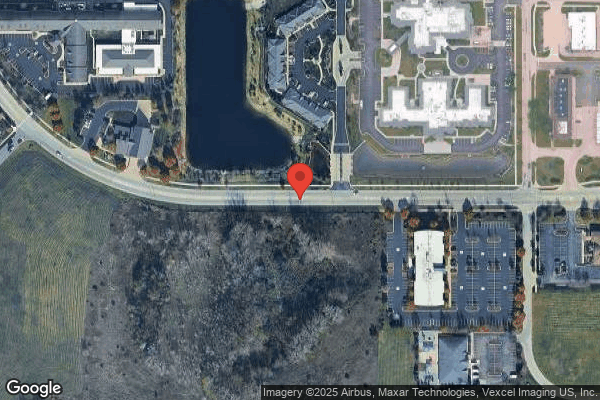

12140 REGENCY PARKWAY, HUNTLEY, IL 60142 (847) 961-7500
For profit - Corporation 170 Beds THE ALDEN NETWORK Data: November 2025 3 Immediate Jeopardy citations
Trust Grade
0/100
#305 of 665 in IL
Last Inspection: March 2025

Within standard 12-15 month inspection cycle. Federal law requires annual inspections.

Overview

Alden Estates CTS of Huntley has received a Trust Grade of F, indicating significant concerns about their care and operations. Ranking #305 out of 665 facilities in Illinois places them in the top half, but their performance is still below average. The facility is showing an improving trend, with issues decreasing from 13 in 2024 to 12 in 2025, but they still have a long way to go to ensure the safety of residents. Staffing is a relative strength, with a turnover rate of 0%, which is much lower than the state average, and they provide more RN coverage than 87% of facilities in Illinois. However, the facility has been fined $167,437, which is average but raises concerns about repeated compliance issues. Specific incidents of concern include a resident suffering second-degree burns from hot liquids due to improper service practices, and another resident who experienced a choking episode that led to hospitalization and eventual death because the facility did not provide the required supervision or follow the prescribed diet modifications. While there are some positive aspects, such as staffing stability, the serious deficiencies in care and safety highlight the need for families to carefully consider this facility.

Trust Score
F
0/100
In Illinois
#305/665
Top 45%
Safety Record
High Risk
Review needed
Inspections
Getting Better
13 → 12 violations
Staff Stability
○ Average
Turnover data not reported for this facility.
Penalties
⚠ Watch
$167,437 in fines. Higher than 96% of Illinois facilities. Major compliance failures.
Skilled Nurses
✓ Good
Each resident gets 66 minutes of Registered Nurse (RN) attention daily — more than 97% of Illinois nursing homes. RNs are the most trained staff who catch health problems before they become serious.
Violations
⚠ Watch
40 deficiencies on record. Higher than average. Multiple issues found across inspections.
★★☆☆☆
2.0
Overall Rating
★★☆☆☆
2.0
Staff Levels
★★★☆☆
3.0
Care Quality
★★☆☆☆
2.0
Inspection Score
Stable
2024: 13 issues
2025: 12 issues

The Good

  • Full Sprinkler Coverage · Fire safety systems throughout facility
  • No fines on record

Facility shows strength in fire safety.

The Bad

2-Star Overall Rating

Below Illinois average (2.5)

Below average - review inspection findings carefully

Federal Fines: $167,437

Well above median ($33,413)

Significant penalties indicating serious issues

Chain: THE ALDEN NETWORK

Part of a multi-facility chain

Ask about local staffing decisions and management

The Ugly 40 deficiencies on record

3 life-threatening 2 actual harm
Jul 2025 3 deficiencies
CONCERN (D) 📢 Someone Reported This

A family member, employee, or ombudsman was alarmed enough to file a formal complaint

Potential for Harm - no one hurt, but risky conditions existed

Infection Control (Tag F0880)

Could have caused harm · This affected 1 resident

Based on observation, interview and record review, the facility failed to ensure staff were wearing the right personal protective equipment to follow enhance barrier (EBP) precautions to 1 of 3 reside...

Read full inspector narrative →
Based on observation, interview and record review, the facility failed to ensure staff were wearing the right personal protective equipment to follow enhance barrier (EBP) precautions to 1 of 3 residents (R6) reviewed for EBP in the sample of 23. The findings include:R6's electronic face sheet show R6 has diagnoses of benign prostatic hyperplesia, retention of urine, and suprapubic catheter. R6's Physician Order Sheet dated 7/25 documents EBP For Device Care or Use of Urinary Catheter. On 7/21/25 at 9AM, a sign outside R6's room show EBP: wear gown and gloves for a high contact resident care activities V11 (Certified Nursing Assistant-CNA) was with R6 providing morning care, incontinence care/hygiene and changing R6's incontinent brief. V11 (CNA) was only wearing gloves and was not wearing a gown. V12 (License Practical Nurse (LPN) was with this surveyor. V12 said R6 was on EBP due to R6 having a suprapubic catheter. Staff including V11 (CNA) should be wearing gown and gloves when providing care to R6. Wearing the right PPE can prevent the spread of infection or cross contamination. The Facility Policy entitled Enhanced Barrier Precautions (EBP) dated 12/24 show, EBP are on infection control intervention designed to reduce transmission of multidrug resistant organism (MDRO) in nursing homes. As well as to prevent MDRO acquisition of those with an increased risk of acquiring MDROs including residents with a chronic wound or an indwelling medical device. 1. High contact resident care activities include the following: providing bathing, hygiene changing briefs. 2. Residents that have indwelling medical devices, regardless of MDRO status, will be on EBP.
CONCERN (E) 📢 Someone Reported This

A family member, employee, or ombudsman was alarmed enough to file a formal complaint

Potential for Harm - no one hurt, but risky conditions existed

Respiratory Care (Tag F0695)

Could have caused harm · This affected multiple residents

Based on observation, interview, and record review the facility failed to ensure residents oxygen equipment was changed and labeled for 4 of 5 residents (R6, R7, R12, R19) reviewed for oxygen use in t...

Read full inspector narrative →
Based on observation, interview, and record review the facility failed to ensure residents oxygen equipment was changed and labeled for 4 of 5 residents (R6, R7, R12, R19) reviewed for oxygen use in the sample of 23. The findings include: On 7/21/25 at 9AM, R6 was in bed with oxygen via nasal cannula connected to an oxygen concentrator. R6's oxygen tubing was not dated. V12 (License Practical Nurse-LPN) said oxygen tubing should be labelled and dated to know when they will be changed. R6's July Physician orders shows Oxygen per nasal cannula 2-5 liters per minute continuous related to COPD (Chronic Obstructive Pulmonary Disease). Oxygen Tubing - Change monthly night shift and as needed. 2. On 7/21/25 at 8:45 AM, R7 was in bed with oxygen via nasal cannula connected to a concentrator. R7's oxygen tubing was not dated. V15 Certified Nursing Assistant-CNA who was at bedside said she does not know who changes and dates/label the oxygen tubing, maybe the nurses. R7's July Physician orders shows Oxygen per nasal cannula 2-4 liters per minute continuous. Oxygen Tubing - Change monthly night shift and as needed. 3. On 7/21/25 at 9:15 AM, R12 was in bed wearing oxygen via nasal cannula that was undated. R12's July Physician orders shows Oxygen per nasal cannula 2-5 liters per minute as needed. Oxygen Tubing - Change monthly night shift and as needed. 4. On 7/21/25 at 8:41 AM- R19 was sitting in dining room. Oxygen on via portable tank. Oxygen tubing was not dated or labeled. R19's July Physician orders shows Oxygen per nasal cannula 2-5 liters per minute as needed. Oxygen Tubing - Change monthly night shift and as needed. R19's July Physician orders shows Oxygen per nasal cannula 2-4 liters per minute as needed. Oxygen Tubing - Change monthly night shift and as needed. On 7/22/25 at 8:50 AM, V17 (Registered Nurse-RN) said oxygen tubing should be labeled and dated to show when they were changed. They are to be changed monthly. On 7/21/25 at 10:11 AM, V4 (Assistant Director of Nursing) Nurses are responsible for dating and changing oxygen tubing some are weekly some monthly depending. V4 stated I do 2nd floor and the former DON (V3) did 3rd floor. We do audit floors and tubing. V3 left last Friday 7/18/25 so 3rd floor might have got missed. Night shift should change out tubing. The facility policy on Oxygen Therapy Devices-nasal cannula documents, oxygen delivered per nasal cannula will be used to prevent or reverse hypoxia and improve tissue oxygenations. 4. A nasal cannula will be changed monthly and PRN (as needed).
CONCERN (E) 📢 Someone Reported This

A family member, employee, or ombudsman was alarmed enough to file a formal complaint

Potential for Harm - no one hurt, but risky conditions existed

Deficiency F0761 (Tag F0761)

Could have caused harm · This affected multiple residents

**NOTE- TERMS IN BRACKETS HAVE BEEN EDITED TO PROTECT CONFIDENTIALITY** Based on observation, interview and record review the facility failed to ensure insulin pens were labeled and dated when opened ...

Read full inspector narrative →
**NOTE- TERMS IN BRACKETS HAVE BEEN EDITED TO PROTECT CONFIDENTIALITY** Based on observation, interview and record review the facility failed to ensure insulin pens were labeled and dated when opened and disposed of when expired, and failed to ensure the medication refrigerator temperature was checked twice a day for 4 of 4 residents (R11, R14, R22 and R23) reviewed for medication storage in the sample of 23. The findings include: On [DATE] at 8:55 AM the 3rd floor medication cart for residents in rooms 3117-3128 was checked with this surveyor and V10 (Licensed Practical Nurse/LPN). Inside the cart was an open Novolog insulin pen labeled as belonging to R14. There was a sticker on the outside of the insulin pen to write the open and expiration dates on but those were blank. Inside the same medication cart was a Novolog insulin pen belonging to R11 the expiration date on the pen was listed as [DATE]. On [DATE] at 8:58 AM, V10 said insulin pens should be dated when they are open and have an expiration date of 28 days. V10 said someone must have opened the insulin pen for R14 and forgot to label it. V10 also said that insulin pens should be disposed of when it is past the expiration date. R11's Medication Administration summary shows he received Novolog insulin at least daily between 7/14-[DATE]. On [DATE] at 9:09 AM, the medication room was on the 3rd floor was checked with this surveyor and V2 (Director of Nursing/DON). There was a refrigerator in the room that had a Medication Refrigerator Temperature Log hanging on the outside of it. The log shows that temperatures for the refrigerator should be checked twice daily. The log sheet shows one signature per day from [DATE]-[DATE], and nothing documented after [DATE]th. Inside the refrigerator were numerous Novolog insulin pens belonging to R11 and R14. Also inside were Humalog Lispro insulin pens belonging to R22 and Aspart insulin pens belonging to R23.On [DATE] at 9:12 AM, V2 (DON) said the refrigerator in the medication room is primarily used to store insulins and other liquid medications that require refrigeration. V2 said the refrigerator temperature should be checked by the nurses and documented 2 times a day to ensure that medications are being stored at the proper temperature. The facility provided Prefilled Insulin Multi-Dose Pen policy dated 3/2021 shows insulin pens should be dated when open and include an expiration date and staff initials and discarded when expired.
Apr 2025 3 deficiencies
CONCERN (D) 📢 Someone Reported This

A family member, employee, or ombudsman was alarmed enough to file a formal complaint

Potential for Harm - no one hurt, but risky conditions existed

Notification of Changes (Tag F0580)

Could have caused harm · This affected 1 resident

Based on interview and record review the facility failed to notify a resident and a resident's primary care physician (PCP) of missed medication doses for 1 of 4 residents (R1) reviewed for notificati...

Read full inspector narrative →
Based on interview and record review the facility failed to notify a resident and a resident's primary care physician (PCP) of missed medication doses for 1 of 4 residents (R1) reviewed for notification in the sample of 4. The findings include: R1's admission Record showed R1 is an eighty-two-year-old male resident originally admitted to the facility with diagnoses which include: peripheral vascular disease and a history of pulmonary embolism (blood clot in lungs). R1's March 2025 Medication Administration Record (MAR) showed from March 24 through March 27,2025, R1 did not receive their Warfarin (blood thinner) doses. The MAR showed no order for Warfarin in R1's record for March 24th through March 27th. The MAR showed R1 had an order placed on 3/28/25 with a new order for Warfarin 3mg to give 1 tablet at bedtime related to personal history of pulmonary embolism. On 4/30/25 at 10:05 AM, R1 stated they knew they were on a blood thinner. R1 stated he did not remember anyone telling him he missed any of his medication doses. On 4/30/25 at 10:20 AM, V4 R1's PCP (Primary Care Physician) stated he did not receive a call or text for a Warfarin order on 3/28/25. V4 stated they were reviewing their records during the interview. V4 stated he gave an order for 3mg of Warfarin on 3/24/25, and a new order for 3.5mg on 3/31/25. V4 stated he had not been notified R1 had missed any doses of their Warfarin between 3/24/25 and 3/31/25. V4 stated if he were contacted about any missed doses, he would have ordered labs to be drawn, and a new order based on the lab results. On 4/30/25 at 11:30 AM, V8 R1's Emergency Contact (Family) stated the facility has contacted them in the past when R1 has gone to the hospital and when R1 was put on isolation. V8 stated they have not been notified R1 had any missed medication doses. R1's progress notes dated 3/28/25 at 7:47 PM showed V9 placed an order was for Warfarin 3mg. This progress note has no reference regarding notifying R1's physician at that time for not being admistered the physician ordered medication doses. On 4/30/25 at 12:40 PM, V2 Director of Nursing stated, the physician should have been notified about the missed medication doses when it was realized R1 did not receive them.
CONCERN (D) 📢 Someone Reported This

A family member, employee, or ombudsman was alarmed enough to file a formal complaint

Potential for Harm - no one hurt, but risky conditions existed

Pharmacy Services (Tag F0755)

Could have caused harm · This affected 1 resident

Based on interview and record review the facility failed to ensure a physician ordered medication was continued for a resident with a history of pulmonary embolisms. This applies to 1 of 4 residents (...

Read full inspector narrative →
Based on interview and record review the facility failed to ensure a physician ordered medication was continued for a resident with a history of pulmonary embolisms. This applies to 1 of 4 residents (R1) reviewed for pharmacy services in the sample of 4. The findings include: R1's admission Record showed R1 is an eighty-two-year-old male resident originally admitted to the facility with diagnoses which include: peripheral vascular disease and a history of pulmonary embolism (blood clot in lungs). R1's Progress notes dated 3/24/25 at 5:58 PM showed V9 Licensed Practical Nurse (LPN) related the blood thinner lab result (PT/INR) to V4 R1's Primary Care Physician (PCP), and received an order to continue R1's blood thinner (Warfarin) at 3 milligrams (mg). R1's Progress Notes dated 3/28/25 at 7:47 PM showed V9 entered an order for Warfarin 3mg. The order was entered 4 days later. R1's March 2025 Medication Administration Record (MAR) showed no order for Warfarin at 3mg was entered on 3/24/25. R1's MAR showed R1 missed 4 doses of Warfarin from 3/24/25 through 3/27/25. R1's MAR showed an order for Warfarin 3mg was entered on 3/28/25 which R1 started receiving. On 3/30/25 at 9:30 AM, V6 LPN stated if there is a problem with a medication order (dose, wrong time, allergy, etc) the physician should be contacted to verify the order. If a resident has received an wrong dose or missing doses of medications the physician should be called to verify a new order and/or if a residents medication order needs to be changed. V6 stated for Warfarin orders there is a binder at the desk we use to verify the current order, when we contact the physician, lab results, verification of the new order, and what date the new order is entered into the computer. On 4/30/25 at 10:20 AM, V4 R1's PCP (Primary Care Physician) stated he did not receive a call or text for a Warfarin order on 3/28/25. V4 stated they were reviewing their records during the interview. V4 stated he gave an order for 3mg of Warfarin on 3/24/25, and a new order for 3.5mg on 3/31/25 for a PT/INR of 1.7. On 3/30/25 at 12:40 PM, V2 Director of Nursing stated they were not sure why R1's Warfarin orders were not continued from 3/24/25 through 3/27/25. V2 stated R1 did not receive their blood thinners for those dates.
CONCERN (D) 📢 Someone Reported This

A family member, employee, or ombudsman was alarmed enough to file a formal complaint

Potential for Harm - no one hurt, but risky conditions existed

Deficiency F0760 (Tag F0760)

Could have caused harm · This affected 1 resident

Based on interview and record review the facility failed to ensure a resident was free from a significant medication error by missing doses of a blood thinner (Warfarin) which applies to 1 of 4 reside...

Read full inspector narrative →
Based on interview and record review the facility failed to ensure a resident was free from a significant medication error by missing doses of a blood thinner (Warfarin) which applies to 1 of 4 residents (R1) reviewed for significant medication error in a sample of 4. The findings include: R1's admission Record showed R1 is an eighty-two-year-old male resident originally admitted to the facility with diagnoses which include: peripheral vascular disease and a history of pulmonary embolism (blood clot in lungs). R1's March 2025 Warfarin Worksheet showed on 3/24/25 V4 R1's Primary Care Physician was notified of R1's Protime results and an order to continue the order for Warfarin 3 milligrams (mg) was given. R1's March 2025 Medication Administration Record (MAR) showed no order for Warfarin 3mg was entered on 3/24/25. R1's MAR showed R1 missed 4 doses of Warfarin from 3/24/25 through 3/27/25. R1's MAR showed the next order for Warfarin was entered on 3/28/25 for the same dosage of 3mg. On 3/30/25 at 9:30 AM, V6 LPN stated Warfarin needs to have lab draws to monitor if it is therapeutic or not. Protime/INR blood tests are used to monitor the medication. We have a binder at the desk we use to verify the current order, when we contact the physician, lab results, verification of the new order, and what date the new order is entered into the computer. V6 stated if someone misses doses of their blood thinner they are at a higher risk for developing blood clots. R1's March Warfarin Worksheet showed an entry for 3/24/25 with a Protime/INR result of 21.5/2.8, V4 R1's Primary Care Provider (PCP) was notified, and a new order for Warfarin 3mg to be continued. This worksheet showed on 3/31/25 R1's Protime/INR was 16.5/1.7, and a new order was given by V4 for Warfarin 3.5mg. There was not entry for an order, physician contact, or lab result dated 3/28/25. On 4/30/25 at 10:20 AM, V4 R1's PCP (Primary Care Physician) stated he did not receive a call or text for a Warfarin order on 3/28/25. V4 stated they were reviewing their records during the phone interview. V4 stated he gave an order for 3mg of Warfarin on 3/24/25, and a new order for 3.5mg on 3/31/25 for a PT/INR of 16.5/1.7. V4 stated therapeutic levels for Warfarin should be an INR of 2.0 to 3.0. V4 stated the lab result is consistent with R1 missing several doses of blood thinners. V4 stated by not taking Warfarin regularly it can put someone at a higher risk for developing blood clots. R1 has been on Warfarin for a long time for previously having pulmonary embolisms. On 3/30/25 at 12:40 PM, V2 Director of Nursing stated R1's Warfarin order were not continued from 3/24/25 through 3/27/25. V2 stated R1 did not receive their blood thinners for those dates. If a resident misses their blood thinners it puts them at risk for developing blood clots. The facility's Medication Administration Policy dated 9/2020 stated medications will be administered in accordance with the established polices and procedures.
Mar 2025 6 deficiencies
CONCERN (D)

Potential for Harm - no one hurt, but risky conditions existed

Deficiency F0658 (Tag F0658)

Could have caused harm · This affected 1 resident

Based on observation, interview, and record review, the facility failed to follow professional standards of practice for the administration of oxygen for 1 of 5 residents (R38) reviewed for respirator...

Read full inspector narrative →
Based on observation, interview, and record review, the facility failed to follow professional standards of practice for the administration of oxygen for 1 of 5 residents (R38) reviewed for respiratory care in the sample of 29. The findings include: R38's electronic face sheet printed on 3/6/25 showed R38 has diagnoses including but not limited to acute respiratory failure with hypoxia, sepsis, chronic diastolic congestive heart failure, and dysphagia. R38's physician's orders dated 2/20/25 showed, Oxygen per nasal cannula at 2-4 liters per minute continuous. R38's care plan dated 12/30/24 showed, (R38) requires oxygen therapy .administer oxygen per physician's orders. On 3/4/25 at 9:53AM, V9 and V10 (Certified Nursing Assistants-CNA's) provided personal cares to R38. Upon completion of personal cares, V10 applied oxygen via nasal cannula at 4L to R38. V9 and V10 stated the CNAs are allowed to administer oxygen and it is not a physician's order. V10 stated the CNAs are able to look in their task list to see what liter flow the residents are supposed to be on. On 3/6/25 at 10:15AM, V7 (Registered Nurse) stated, (R38) is on continuous oxygen due to her congestive heart failure. The nurse's usually set and apply oxygen for the residents, but I think the CNA's can do it as well. Usually, they come and ask the nurses to verify the liter flow, but I don't see any reason why they can't do it. It's a simple procedure. On 3/6/25 at 11:41AM, V2 (Director of Nursing) stated, Oxygen is to be applied by the nurse's only because it's out of the CNA's scope of practice. The nurse is the only one who can ensure the oxygen is set at the correct liter flow according to physician's orders. The facility's policy titled, Oxygen therapy devices-nasal cannula dated 02/11 showed, 1. Verify physicians order .these guidelines are not meant to be excusive or exhaustive. Guidelines are meant to leave room for the exercise of professional judgement based on individual circumstances.
CONCERN (D)

Potential for Harm - no one hurt, but risky conditions existed

Quality of Care (Tag F0684)

Could have caused harm · This affected 1 resident

**NOTE- TERMS IN BRACKETS HAVE BEEN EDITED TO PROTECT CONFIDENTIALITY** 3. On 3/4/25 at 9:15 AM, V16 CNA (Certified Nursing Assistant) and V17 CNA were at R86's bedside to provide incontinence care. R...

Read full inspector narrative →
**NOTE- TERMS IN BRACKETS HAVE BEEN EDITED TO PROTECT CONFIDENTIALITY** 3. On 3/4/25 at 9:15 AM, V16 CNA (Certified Nursing Assistant) and V17 CNA were at R86's bedside to provide incontinence care. R86 had a wet incontinence brief. V16 opened R86's incontinence brief and his scrotum was reddened. V16 used disposable wipes to clean R86's groin, penis and scrotum. When V16 was wiping R86's scrotum he complained of pain and hissed. R86 stated it was cold and painful. At 9:25 AM, V18 RN (Registered Nurse) came into R86's room, applied a zinc ointment to R86's buttocks but not to his reddened scrotum and then left the room. V17 asked V16 if the nurse was going to apply the ointment to R86's scrotum. V16 did not reply. V16 and V17 put a clean incontinence brief on R86, changes his bed, changes his gown, repositioned him to a sitting position, and covered him. The Progress Notes for R86 dated 3/4/25 did not show any documentation of redness to his scrotum or any treatments applied. The Physician Orders dated 3/5/25 for R86 showed Zinc Oxide Ointment 20%; Apply to buttocks topically every shift for skin condition (use house stock) and apply to buttocks topically as needed for skin condition (use house stock) with an order date of 3/14/24. Nystatin powder 100000 unit/GM, apply to groin topically as needed for skin conditions. Cleanse area with normal saline prior to application. On 3/5/25 at 1:58 PM, V19 CNA (Certified Nursing Assistant/Unit Manager) stated if a resident has redness to their skin it is to be reported to the nurse immediately. The nurse will come in and depending on what the nurse think needs to be done they will put a cream on maybe zinc or whatever the wound nurse thinks is best to apply on resident. On 3/5/25 at 2:06 PM, V2 DON (Director of Nursing) stated if a CNA saw that the resident had a reddened scrotum they would notify the nurse to make sure she is aware. The nurse assess what's going on and would see if there are any orders for that. V2 stated he was not sure what happened or why the nurse did not apply cream or anything for R86's reddened scrotum. V2 stated he would go and check R86's scrotum. On 3/5/25 at 2:14 PM, V2 stated he went and looked at R86's scrotum and it was red but not that red. R86 stated he was fine and it only hurts with cleaning. V2 stated he would do some education on it. The Face Sheet dated 3/5/25 for R86 showed diagnoses including type 2 diabetes mellitus, chronic kidney disease, malignant neoplasm of the prostate, and unspecified protein-calorie malnutrition. The MDS (Minimum Data Set) dated 2/21/25 for R86 showed he is dependent for toileting hygiene and shower/bathing. The Care Plan dated 2/27/25 showed, R86 has the potential for alteration in skin integrity related to need for assistance with care, impaired mobility, and contributing medical diagnosis of type 2 diabetes mellitus, chronic kidney disease, asthma, and long term use of aspirin. R86 is noncompliant with turning and repositioning and poor nutritional intake. R86 prefers to stay in bed. Barrier cream to areas exposed to moisture/incontinence. Inspect skin daily with care. The facility's Prevention and Treatment of Pressure Injury and other Skin Alterations policy (3/2/21) showed non-pressure skin alterations i.e.: skin tears, abrasions, surgical wounds, moisture associated skin dermatitis, lesions and rashes, will be documented weekly on a skin progress note: if you are using electronic health record or on TAR (Treatment Administration Records) if using paper chart. Develop a care plan for either actual or potential alteration in skin integrity and change as needed. At least daily, staff should remain alert for potential changes in the skin condition during resident care. Moisture barrier may be applied as needed. Revise care plan approaches as needed based on resident's response and outcomes. 2. R242's admission Record, printed by the facility on 3/6/25, showed she had diagnoses including, but not limited to, displaced intertrochanteric fracture of right femur with subsequent encounter for closed fracture with routine healing (right hip fracture and surgical procedure to repair), anxiety disorder, muscle weakness, presence of left artificial knee joint, primary osteoarthritis, and glaucoma. The admission Record showed no diagnosis of dementia, Alzheimer's disease, or other cognitive dysfunction. On 3/4/25 at 9:40 AM, R242 was sitting up in bed. R242 was alert and oriented. R242 said she had been at the facility for five days. R242 said the dressing to her right hip has not been changed since she was admitted to the facility. R242 said the dressing should have been changed. At 12:14 PM V14 (Certified Nursing Assistant/CNA) assisted R242 with rolling onto her left side and pulling down her pants so an observation of her right hip dressings could be observed. R242's right hip had two areas with white dressings. A large (transparent) dressing covered the entire surgical area. R242 said that is the bandage that was put on in the hospital. V14 agreed and said that is the same dressing R242 was admitted with. R242's March 2025 TAR (Treatment Administration Record) showed an order to change R242's right hip dressing 3 days after surgery, daily, on day shift. V8 signed off as having done the dressing change to R242's right hip on 3/1/25 and 3/2/25 on the day shift. On 3/5/25 at 8:49 AM, R242 said one of the nurses changed the dressing to her right hip yesterday and did an assessment. R242 said it was the first time it was done since her admission. On 3/5/25 at 4:27 PM, V8 (Registered Nurse-RN) said she was R242's nurse on 3/1/25 and 3/2/25. V8 said she changed the dressing to R242's right hip on 3/1/25 and 3/2/25. V8 was asked what the treatment was to R242's right hip. V8 said she thinks it was a large island dressing. V8 described the dressing as a large white dressing with softer material in the middle and adhesive around the edges. V8 was asked if she did an assessment of R242's surgical wound and documented the assessment. V8 said she assessed R242's surgical wound but did not document an assessment of the wound site. V8 was asked what the surgical site looked like. V8 said she charts by exception and did not see anything concerning that she would need to notify R242's doctor for. V8 said she did not know if she was the first one to remove the dressing from the hospital, and did not know if there was a documented full assessment of the wound site prior to her changing the dressing on 3/1/25. V8 said she did not measure the surgical site. V8 was asked if sutures or staples were used to hold the surgical incision together. V8 said she did not recall, but thinks it was staples. On 3/5/25 at 1:29 PM, V11 (Wound Nurse/RN) said initially the admitting nurse does the initial assessment. They go through the resident's AVS (after visit summary from the hospital) and do a reconciliation with the resident's physician. At 1:33 PM, V11 said if any changes were made to the wound treatments, it would either be documented in the initial assessment, or in the resident's progress notes. On 3/6/25 at 9:08 AM, V8 entered R242's room carrying supplies for her right hip dressing change. V8 had a large white bordered dressing with adhesive edges. R242 had three incisions to her right hip/upper-thigh area from the hip surgery. Staples were used to hold the surgical incisions together. V8 cleaned the areas, then went to apply the dressing. V8 was asked if that was the same type of dressings she used when she did the dressing changes on 3/1/25 and 3/2/25. V8 replied yes. The large white dressing did not cover all three incisions. V8 had to fold over the end of the dressing and go out of the room to get another dressing. V8 returned to R242's room and placed another partial dressing that she had cut over the bottom incision. On 3/6/25 at 9:59 AM, V11 (Wound Nurse) said treatment supplies are kept in the treatment carts. V11 said she was not sure if the facility had any large tegaderm or large transparent dressings. V11 said the facility usually does not get them for stock supplies. V11 identified V24 (Unit Manager/CNA) as the staff responsible for ordering house-stock supplies. V11 said wound assessments are initially done when the patient first arrives. Skin checks are part of the initial assessment. V11 said We do not normally document surgical wounds. V11 said she did an assessment of R242's surgical wound on 3/4/25 (the day the annual survey was initiated). V11 said the information from R242's after visit summary from the local hospital showed her dressing was to remain in place for three days after surgery. V11 said typically there should be an assessment completed and documented the first time the dressing is removed. V11 was asked what day R242's surgery was done. V11 said she would have to look to see when her surgery was done. V11 said if R242's surgery was done on 2/25/25, then the first dressing change should have probably been done on 2/28/25. On 3/6/25 between 10:12 AM-10:30 AM, this surveyor reviewed the treatment carts and medication rooms on the second and third floors with V11. No large tegaderm or transparent dressing were found. V11 said the only large transparent dressings she is aware of are in sealed wound vac kits. V11 said none of the nurses have requested a large transparent dressing from her. V11 said R242's treatment order does not call for a large transparent dressing. During that same period (at 10:16 AM) a review of the facility's central supply room was conducted with V24 (Unit Manager/CNA). V24 said she orders supplies such as bandages, tape, syringes, etc. V24 said the only supplies she cannot order are for IVs (intravenous lines). V24 said the only bandages they have for surgical hip wounds are bordered gauze w/adhesive border. V24 showed this surveyor the dressings. they were the same dressings that V8 placed on R242's right hip during the previously observed dressing change. V24 said she keeps track of the supplies in the central supply room and the facility had not had any large transparent dressings recently. At 10:30 AM, V11 (Wound Nurse) said it is important to assess wounds as soon as possible, so we can monitor progression, or identify any issues such as dehiscence (a surgical complication where a wound partially or completely separates along the incision line) or signs of infection. On 3/6/25 at 1:05 PM, V2 (Director of Nursing/DON) said the dressing changes should be completed as ordered. R242's 2/27/25 after visit summary from a local hospital showed Keep dressing in place for 3 days after surgery, after which you may remove and subsequently cover with clean, dry dressings and change as needed. R242's hospital documents, provided by the facility on 3/6/25, showed her hip surgery was performed on 2/25/25. The operative report from R242's surgical procedure was filed by the surgeon at 10:31 AM on 2/25/25. R242's March 2025 Treatment Administration Record (TAR) showed an order dated 2/27/25 to change R242's dressing on her right hip 3 days after surgery, every day shift. The TAR showed V8 signed off as having done the dressing change on 3/1/25 and 3/2/25. The TAR showed no dressing change was signed off as being completed on 3/3/25. R242's February 2025 TAR showed no dressing change was signed off as being completed on 2/28/25. R242's progress notes were reviewed from 2/27/25-present. The only full assessment of R242's surgical wound was done on 3/4/25 at 1:04 PM (after the start of the annual survey) by V11 (Wound Nurse). The progress note showed Resident's surgical dressing changed. Site is well-approximated. Three incision sites, staples present. Nine staples to proximal incision approximately 5 x 0 x 0. Three staples to next incision approximately 3 x 0 x 0, and three staples to distal incision approximately 3 x 0 x 0. Site is free of signs of infection. No drainage, bleeding, redness, or warmth noted. R242's notes showed no new order to change the date of the dressing change to 3/1/25. R242's Initial Nursing assessment dated [DATE] showed Wound/Skin Condition: Unable to see due to dressing covered. The facility's 3/4/2021 policy and procedure titled Wound Care (Surgical) showed 6. Inspect wound for appearance, drainage, and integrity. Any sutures, staples and how many used .12. Follow MD (Doctor's) orders and apply new dressing .13. Daily evaluate resident for complaints of increasing pain, site for redness, changes in drainage amount, increase in temperature, swelling or induration (an inflammatory process that can make the skin feel firmer or thicker than normal), Report to Surgeon or Physician for further management if applicable.Based on observation, interview, and record review, the facility failed to obtain daily weights for a resident (R38) with congestive heart failure, failed to assess and perform dressing changes for a resident with a surgical wound (R242), failed to provide skin care for a resident with reddened skin (R86). These failures apply to 3 of 4 residents reviewed for quality of care in the sample of 29. The findings include: 1. R38's electronic face sheet printed on 3/6/25 showed R38 has diagnoses including but not limited to acute respiratory failure with hypoxia, sepsis, chronic diastolic congestive heart failure, and dysphagia. R38's physician's orders dated 2/21/25 showed, Daily weight notify physician if patient gains more than 5lbs (pounds) in a week. R38's care plan dated 2/21/25 showed, (R38) has a diagnosis of CHF (Congestive heart failure), has potential for impaired gas exchange, edema, and respiratory distress .(R38) utilizes diuretic to manage edema and is therefore with a potential for dehydration .monitor for fluid excess (weight gain, elevated blood pressure .monitor weight as ordered . R38's progress notes dated 12/28/24 showed, admitted to facility from local hospital due to CHF exacerbation, BLE (bilateral lower extremity) swelling .on fluid restriction . R38's weight log showed R38's weight was not obtained on 2/27/25. R38's weight on 2/28/25 was 164.2lbs which was a 5.4lb weight gain within 48 hours. Additionally, R38's weight was not obtained on 2/23/25 or 3/2/25 as ordered by R38's physician. On 3/6/25 at 10:15AM, V7 (Registered Nurse) stated, (R38) has congestive heart failure and she has orders for daily weights to be performed and we should notify her physician if she gains more than 5lbs in a week. If daily weights are not done, she could go into fluid overload and experience CHF exacerbation. The weights are a starting point for us so if there is an increase in weight, we would do further assessments on her to ensure she is not in exacerbation. On 3/6/25 at 11:41AM, V2 (Director of Nursing) stated, The CNA's (Certified Nursing Assistants) and nurse's work together to obtain the weights. Either staff member can enter the weights but for a CHF resident, the nurse will have to enter it on the medication administration record because it is a physician's order. As managers we make sure the weights are getting done. It is important to obtain weights on a resident with CHF to ensure they are not going into fluid overload or becoming dehydrated. On 3/6/25 at 12:13PM, V4 (R38's physician) stated, If a resident has an acute decompensation, then we would need the daily weights to determine their fluid status and to ensure they do not become dehydrated or overloaded with fluid. I would prefer they would do it as ordered but it's not a huge jump for her when they missed a day. I would like them to obtain consistent weights to determine their trend. If you lose the consistency, then you can't see the trend. The facility's policy titled, Weights dated 09/2020 showed, Residents will be weighed to establish baseline weights and identify trends of weight loss or weigh gain.
CONCERN (D)

Potential for Harm - no one hurt, but risky conditions existed

Incontinence Care (Tag F0690)

Could have caused harm · This affected 1 resident

**NOTE- TERMS IN BRACKETS HAVE BEEN EDITED TO PROTECT CONFIDENTIALITY** Based on observation, interview, and record review the facility failed to ensure R74's indwelling urinary drainage bag was maint...

Read full inspector narrative →
**NOTE- TERMS IN BRACKETS HAVE BEEN EDITED TO PROTECT CONFIDENTIALITY** Based on observation, interview, and record review the facility failed to ensure R74's indwelling urinary drainage bag was maintained in a manner to prevent contamination and kept below the level of the bladder for 1 of 2 residents (R74) reviewed for catheters in the sample of 29. The findings include: On 3/4/25 at 10:10 AM, R74 was sitting in a motorized wheelchair in her room. R74's catheter tubing was visible an had cloudy, yellow urine present with sediment. R74 had a dignity cover on her drainage bag that covered the top half of the drainage bag. The lower half of the drainage bag was visible and laying on her [NAME] rest behind her feet. R74 stated the drainage bag slips out the bottom all of the time. Discussed the drainage bag laying on her foot rests and R74 stated no one ever told her that it should not be there or explained anything related to infection control. R74 stated she wished there was a way to keep the drainage bag completely covered. R74 stated the drainage bag was on her foot rest because she doesn't like to keep it attached to the arm of her wheelchair because her catheter doesn't drain like it should. R74 stated the drainage bag is attached to the armrest of her wheelchair when she goes to meals. On 3/4/25 at 11:38 AM, R74 was sitting in her motorized wheelchair in the dining room. The catheter drainage bag was attached to the armrest of her wheelchair and was not below the level of the bladder. The Progress Notes for the Month of February 2025 through 3/5/25 did not show any education given to the resident related to her indwelling urinary catheter and infection control such as keeping the bag off the foot rests and floor or to keep the bag below the level of the bladder. The Face Sheet dated 3/5/35 for R74 showed diagnoses including acute kidney failure, methicillin resistant staphylococcus aureus, cellulitis of right lower limb, type 2 diabetes mellitus, muscle weakness, abnormalities of extremities and gait, chronic venous hypertension, anemia, chronic kidney disease, peripheral vascular disease, hypertension, and congestive heart failure. The Physician Orders dated 3/5/25 for R74 showed, may use indwelling urinary catheter size 16, size 10 balloon due to urine retention per urologist; indwelling urinary catheter care daily and as needed; may change catheter bag as required due to sediment, staining, or contamination. The MDS (Minimum Data Set) dated 1/13/25 for R74 showed no cognitive impairment; dependence for toileting hygiene and lower body dressing; and substantial/maximal assistance needed for upper body dressing. The Care Plan dated 1/19/25 for R74 showed, R74 requires the use of an indwelling catheter. Catheter care per orders. Keep drainage bag covered to promote privacy. The care plan did not show any intervention related to keeping the drainage bag below the level of the bladder and to keep the drainage bag off the floor/foot rests. The facility's Indwelling Catheter Policy (9/2020) showed, Place drainage bag below the level of the resident's bladder to facilitate drainage and minimize stasis of urine. A sterile, continuously closed drainage system will be maintained for indwelling and suprapubic catheter systems.
CONCERN (D)

Potential for Harm - no one hurt, but risky conditions existed

Infection Control (Tag F0880)

Could have caused harm · This affected 1 resident

**NOTE- TERMS IN BRACKETS HAVE BEEN EDITED TO PROTECT CONFIDENTIALITY** Based on observation, interview and record review, the facility failed to perform a dressing change for a resident with a surgic...

Read full inspector narrative →
**NOTE- TERMS IN BRACKETS HAVE BEEN EDITED TO PROTECT CONFIDENTIALITY** Based on observation, interview and record review, the facility failed to perform a dressing change for a resident with a surgical incision in a manner to prevent cross-contamination, and failed to ensure enhanced barrier precaution (EBP) signage was on or near the doorway to a resident's room for a resident with an IV (intravenous) midline for to two of two residents (R242 and R130) reviewed for infection control in the sample of 29. The findings include: 1. R242's admission Record, printed by the facility on 3/6/25, showed she had diagnoses including, but not limited to, displaced intertrochanteric fracture of right femur with subsequent encounter for closed fracture with routine healing (right hip fracture and surgical procedure to repair), anxiety disorder, muscle weakness, presence of left artificial knee joint, primary osteoarthritis, and glaucoma. The admission Record showed no diagnosis of dementia, Alzheimer's disease, or other cognitive dysfunction. R242's initial Nursing assessment dated [DATE] showed she was alert and oriented to person, place and time with no confusion. On 3/6/25 at 9:08 AM, V8 (Registered Nurse-RN) performed a dressing change to the surgical wound on R242's right hip. V8 applied saline to all 3 wounds and then used the same gauze, and the same section of gauze to dab the lower incision, then the middle incision, then the upper incision. V8 used the same gauze, same section of gauze to go back and dab the middle and lower incisions, and then back up to dab the middle and upper incisions again. V8 did not use a different gauze for each site, and did not change gloves, or perform hand hygiene between incisions. On 3/6/25 at 9:59 AM, V11 (Wound Nurse) said whenever you do a dressing change, the wound should be cleaned with normal saline or soap and water. You clean one incision site then discard the gauze. V11 said a clean gauze should be used for each incision to prevent infection and cross-contamination. R242's March 2025 Treatment Administration Record, showed an order dated 2/27/25 to change the dressing on R130's right hip three days after surgery, daily on day shift. The facility's 3/4/2021 policy and procedure titled Wound Care (Surgical) showed sterile dressing and sterile technique should be used for fresh post op-patients. Often the original dressing applied in the operating room is left in place for the first 48 hours .Thereafter 1. Utilize clean/aseptic technique .3. Undress and expose only one area at a time. 4. Change dressings in order from clean to dirty. 5. After performing hand hygiene, with clean gloves, remove dressings one layer at a time, observing appearance and drainage on dressing. 6. Inspect wound for appearance, drainage, and integrity. Any sutures or staples and how many were used . 9. Perform hand hygiene. 10. Cleanse area following doctor's orders. 11. Perform hand hygiene. 12. Follow doctor's orders and apply new dressing. 13. Perform hand hygiene. 2. R130's admission Record, printed by the facility on 3/6/25, showed she had diagnoses including, but not limited to, chronic obstructive pulmonary disease, acute and chronic respiratory failure with hypercapnia (occurs when the body cannot remove excess carbon dioxide from the bloodstream, causing it to build up), and hypoxia (a condition in which the body or a region of the body is deprived of adequate oxygen supply at the tissue level), bronchiectasis (a disease in which there is permanent enlargement of parts of the airways of the lung-symptoms can include a chronic cough with mucus production, shortness of breath, coughing up blood, and chest pain), severe protein-calorie malnutrition, essential (primary) hypertension, atherosclerotic heart disease, atrial fibrillation, atrial flutter, emphysema, and dependence on supplemental oxygen. R130's Order Summary Report, printed by the facility on 3/6/25, showed she had an IV (intravenous) midline. The report showed an active order dated 2/27/25 for EBP for device care or use of midline. The report also showed an order for Piperacillin Sod-Tazobactam So Solution Reconstituted 4-0.5 GM. Use 4.5 gram intravenously every 6 hours for pneumonia for 4 Days start 3/5/25. end date 3/9/25. R130's 2/15/25 facility assessment showed she was cognitively intact. On 3/4/25 at 9:19 AM, R130 was in her room sitting up in bed receiving a nebulizer treatment. An IV pole was positioned next to R130's bed. No signage showing R130 was on enhanced barrier precautions was posted on or near R130's doorway. At 10:40 AM, when surveyor left the second floor, there was still no EBP signage on R130's doorway. At 12:17 PM, when surveyor went back up to the second floor to watch V12 (Licensed Practical Nurse-LPN) remove the completed antibiotic medication that had been administered through R130's IV midline, signage was now posted on R130's doorway showing she was on EBP precautions. At 12:27 PM, V12 performed hand hygiene and put on the appropriate PPE (personal protective equipment). V12 removed the tubing for the empty antibiotic bag. Prior to exiting R130's room, V12 removed the gown and gloves and was looking around R130's room and bathroom for an isolation bin to dispose of the PPE. After V12 exited the room, R130 said the nurse's usually do not wear a gown when they are doing anything with her IV. R130 said they wear a face mask and gloves. On 3/5/25 at 8:43 AM, there was no sign showing R130 was on EBP on or near her doorway again. At 9:15 AM, the signage was back up on R130's doorway. V1 (Administrator) was asked what would qualify a resident to be on enhanced barrier precautions. V1 said a resident is placed on EBP precautions if they have a catheter, an IV, a draining wound that cannot be contained. V3 (Infection Preventionist/Assistant Director of Nursing) walked up and added if a resident has recurrent ESBL and cannot be contained, or a chronic wound they would also be placed on EBP precautions. V3 was informed that there was no signage on R130's doorway in the morning the previous day, then around noon signage was observed on R130's doorway, and again that morning (3/5/25) there was no signage on R130's doorway when this surveyor arrived on the second floor. V3 said R130 changed rooms yesterday and the census had not been updated. V3 said she removed the sign, then did an audit that morning (3/5/25) and put the signage back up. On 3/5/25 at 9:25 AM, V13 (Registered Nurse-RN) confirmed that the EBP signage was not on R130's door when she started her shift at 7:00 AM that morning (3/5/25). V13 said V3 put the sign on R130's door around 9:00 AM. On 3/6/25 at 8:55 AM, V3 (Infection Preventionist/ADON) said R130 was on EBP precautions due to having a midline IV. The facility's 12/2024 policy and procedure titled Enhanced Barrier Precautions showed Enhanced Barrier Precautions (EBP) are an infection control intervention designed to reduce transmission of multidrug-resistant organisms (MDROs) in nursing homes. As well as to prevent multidrug-resistant organism acquisition of those with an increased risk of acquiring MDROs including residents with a chronic wound or an indwelling medical device .1. EBP involves gown and gloves use during high-contact resident care activities for residents known to be infected or colonized with MDROs when contact precautions do not otherwise apply. As well as residents with a chronic wound and/or indwelling medical device. The policy showed Residents that have indwelling medical devices, regardless of MDRO status, will be on EBP.
CONCERN (E)

Potential for Harm - no one hurt, but risky conditions existed

Resident Rights (Tag F0550)

Could have caused harm · This affected multiple residents

**NOTE- TERMS IN BRACKETS HAVE BEEN EDITED TO PROTECT CONFIDENTIALITY** 2. On 3/5/25 at 10:30 AM during the Resident Council Group Meeting they stated when sitting at their table for meals one person ...

Read full inspector narrative →
**NOTE- TERMS IN BRACKETS HAVE BEEN EDITED TO PROTECT CONFIDENTIALITY** 2. On 3/5/25 at 10:30 AM during the Resident Council Group Meeting they stated when sitting at their table for meals one person maybe served and then 45 minutes later another person at the table will get served. They stated they were all at the table at the same time when this happens. They stated their food should be served at the same time so they can eat together. On 3/6/25 at 11:19 AM, R24 was sitting in her wheelchair at the dining room table and was served her lunch. At 11:22 AM, R62 arrived at the dining room in her wheelchair and sat at the table with R24. At 11:26 AM, R25 came into the dining room in her wheelchair and sat at the table with R24 and R62. At 11:29 AM, R120 walked into the dining room and sat in a chair at the dining room table with R24 and R62. At 11:39 AM, R62 was served her drinks and lunch. At 11:41 AM, R25 was served her lunch and drinks. At 11:47 AM, R120 was served her drinks, her main meal of spaghetti and vegetables. R120 did not receive her mashed potatoes or dessert. R120 did not have any silverware. On 3/6/25 at 11:48 AM, V21 (Activity Aide) stated the first people into dining room get served first. Then it gets busy and sometimes it takes longer. It also takes longer if we don't have enough of the dishes for someone that orders something else. Today some dishes needed to go down to be cleaned. They didn't get cleaned from this morning; so there aren't enough dishes. R120 is waiting for her mashed potatoes and fruit because there aren't enough plates/bowls to serve it. This happens frequently. Sometimes one person at a table will get food and then 30 minutes later someone else will get their food. I have had people complain about it so I told V6 (Dietary Supervisor). It tends to happen more at dinner. On 3/6/25 at 11:51 AM, R24, R25, R62 and R120 stated they should get served at the same time and did not like being served at different times. They stated they wanted to be able to eat their meals together. R120 continued to wait for silverware. R24 stated they did not have enough clean dishes to give R120 her food (mashed potatoes and dessert). At 11:53 AM, R120 stood up and walked to the middle of the dining room. V22 (Activity Aide) asked R120 if she was okay and if she needed anything. R120 replied that she needed silverware. At 12:03 PM, R24 called V22 over to the dining room table to remind V22 that R120 still had not received her mashed potatoes. At 12:05 PM, V22 brought R120 her mashed potatoes. R120 still did not receive her dessert. R120's meal ticket dated 3/6/25 for the lunch meal showed she was supposed to receive cookies as a dessert. At 12:11 PM, V22 was asked if R120 could get her dessert. V22 looked at R120's meal ticket and stated she is supposed to receive cookies for dessert. At 12:12 PM, V22 brought R120 her cookies. The meal ticket dated 3/6/25 for R120 showed she was supposed to receive spaghetti, vegetable, mashed potato, desert, water, gingerale and fruit. R120 never received any fruit. On 3/6/25 at 12:17 PM, V6 (Dietary Supervisor) stated meals times are 7:00 AM for breakfast, 11:00 AM for lunch, and 4:30 PM for dinner. V6 stated anyone that comes into the dining room first is served first V6 stated they start doing the room trays. They try to get through as quickly and accurately as possible. V6 stated there are standing orders on residents meal tickets. V6 stated they can flip the meal ticket over to the other side and circle what they want for meals. V6 stated staff will read the ticket and they serve the food according to what is on the ticket as long as it follows the residents dietary recommendations. V6 stated he was not aware of residents waiting for food unless they were residents that needed to be fed. V6 stated he was not aware of not having enough clean dishes to serve food to residents. V6 stated he was aware that residents seated at a table together wanted to be served together at the same time. The MDS (Minimum Data Set) dated 1/13/25 for R120 showed no cognitive impairment. The MDS dated [DATE] for R25 showed no cognitive impairment. The MDS dated [DATE] for R62 showed no cognitive impairment. The MDS dated [DATE] for R24 showed no cognitive impairment. The facility's Dining Room Meal Service policy (3/18) showed food will be served in a manner that is appealing to the senses. meals are delivered to the resident by the assigned staff for the dining room. The policy did not show all residents at a table would be served together. The Residents' Right for People in Long-term Care Facilities brochure by the Illinois Long Term Care Ombudsman Program ( 4/24) showed, you have the right to safety and good care. Your facility must provide services to keep your physical and mental health, and sense of satisfaction. Your facility must make reasonable arrangements to meet your needs and choices. Based on observation, interview, and record review the facility failed to ensure a video posted to a staff member's personal social media account did not include identifiable resident images and the facility failed to ensure residents at a dining table were served at approximately the same time. This failure applies to five residents R77, R24, R25, R62 and R120 reviewed for resident rights on the total sample list of 29. The findings include: 1. R77's admission Record (Face Sheet) documents an admission date of 3/10/2020 with diagnoses including senile degeneration of the brain, anxiety, and depression. R77's 2/13/25 Quarterly Minimum Data Set (MDS) showed he had moderate cognitive impairment with a Brief Interview for Mental Status (BIMS) score of 9 out of 15. On 3/6/25 at 11:08 AM, V15 Memory Care Executive Director confirmed that V23 Memory Care Director posted a video of a code blue drill to his personal social media account. V15 stated that while the video was intended to feature V23, it also depicted R77. V15 confirmed the facility did not authorize the posting and that such posting to a personal social media account is not an approved use under the facility's consent policy. V15 expressed concern regarding resident dignity. On 3/6/25 at 11:27 AM, V1 Administrator stated she was aware of the incident with R77. V1 stated she did not view the video, she understood it depicted a resident. V1 said she did not believe it was V23's intent to show a resident in the video and it was an accident. V1 said, I don't think anyone should be scrolling through and see a family member in a social media post. V1 said posting a video to a staff member's personal social media account, which shows resident's, would not be respecting the resident's dignity. V1 said V23 should have been more careful. On 3/6/25 at 11:42 AM, V23 said he posted the video of the code blue drill to his personal social media account. V23 said he was notified by staff that they did not want to be in the video, so the video was deleted. V23 said the R77's face was not visible; however, the side profile of his face was visible in the video. V23 said he did not believe there was a policy stating he could not post videos of residents to her personal social media page. V23 said, twice, I would have to get the resident or family's permission and if I did get that permission, I could post it [a video with residents] to my own personal [social media video] page. The facility's Social Media Policy (undated) showed, Employees may not use or disclose any resident identifiable information of any kind on any social media site. This includes photographs of residents. Even if an individual is not identified by name within the information you wish to use or disclose, if there is a reasonable basis to believe that the person could still be identified from that information, then its use or disclosure could constitute a violation of the Health Insurance Portability and Accountability Act. On 3/6/25 at 12:18 PM, stated the facility uses the Ombudsman program resident right pamphlet as their dignity policy. The State of Illinois Residents' Rights for People in Long-term Care Facilities showed, Your facility may not give information about you or your care to any unauthorized person(s) without your permission. R77's [The Facility's] Photo Consent, signed 3/10/2020, showed I give [the facility] consent to use my loved one's likeness to be used for Activity Photo Purposes and to be sent out via Family Newsletter. The consent does not show staff's personal social media pages as an accepted posting site.
CONCERN (E)

Potential for Harm - no one hurt, but risky conditions existed

Food Safety (Tag F0812)

Could have caused harm · This affected multiple residents

Based on observation, interview, and record review the facility failed to ensure food preparation was completed in a manner to prevent cross contamination. This applies to 15 of 15 residents (R4, R14,...

Read full inspector narrative →
Based on observation, interview, and record review the facility failed to ensure food preparation was completed in a manner to prevent cross contamination. This applies to 15 of 15 residents (R4, R14, R79, R119, R36, R61, R5, R97, R52, R449, R3, R107, R82, R70, R240) reviewed for cross contamination in the sample of 29. The findings include: On 3/6/25 at 1:00 PM, the facility provided a list of residents on a pureed diet which included R4, R14, R79, R119, R36, R61, R5, R97, R52, R449, R3, R107, R82, R70, and R240. On 3/4/25 at 10:40 AM, V5 (Executive Chef) was preparing the pureed foods for service. V5 placed a glove on his right hand and scooped servings of meatballs into a container to take to the blender. V5 took the container of meatballs to the blender and used his gloved hand to scoop the meatballs into the blender. V5 removed the glove from his right hand. No hand hygiene was completed. V5 completed the puree process pushing the buttons on the blender, touching the containers, the lid to the blender, and the handles of the utensils. V5 then scooped the servings of pureed meatballs into separate containers for the steam table. V5 went to the other side of the counter and removed a magnetic folding thermometer off the vent hood. V5 used his bare hands to open the thermometer (touching the thermometer probe) and placed the probe directly into the pureed meatballs without wiping the probe. V5 touched his uniform to remove a marker from his pocket and label the pureed meatballs. V5 started pureeing the noodles, touching the utensils and the containers, pulling at his uniform and touching his mask. Once completed, V5 went across to the other side of the counter and took another thermometer off the vent hood. Again, V5 used his bare hands to open the folding thermometer, touching the probe and not wiping the probe with alcohol prior to checking the temperature of the pureed noodles. V5 again touched his uniform to remove a marker from his pocket and label the pureed noodles. V5 proceeded to puree the vegetables in the same manner. No hand hygiene was performed during the duration of the puree process or temping of the pureed foods. On 3/6/25 at 11:06 AM, V6 (Dietary Supervisor) said handwashing or hand hygiene should be done in between tasks, anytime they are going from one task to another and all thermometers should be wiped with alcohol prior to introducing them into food products to prevent cross contamination. The facility's policy and procedure with review date of 3/18 showed, Handwashing . To reduce the risk of food borne illness through cross contamination . The facility's policy and procedure with review date of 7/2018 showed, Taking Temperatures of Food . Purpose: To reduce the risk of food borne illness from undercooking or improper holding . After taking the temperature of any food, sanitize the probe to reduce the risk of cross contamination.
Oct 2024 2 deficiencies 2 IJ
CRITICAL (J) 📢 Someone Reported This

A family member, employee, or ombudsman was alarmed enough to file a formal complaint

Immediate Jeopardy (IJ) - the most serious Medicare violation

Accident Prevention (Tag F0689)

Someone could have died · This affected 1 resident

**NOTE- TERMS IN BRACKETS HAVE BEEN EDITED TO PROTECT CONFIDENTIALITY** Based on interview and record review, the facility failed to provide 1:1 supervision for a resident (R2) during mealtimes after ...

Read full inspector narrative →
**NOTE- TERMS IN BRACKETS HAVE BEEN EDITED TO PROTECT CONFIDENTIALITY** Based on interview and record review, the facility failed to provide 1:1 supervision for a resident (R2) during mealtimes after R2 experienced a choking episode. This failure resulted in R2 experiencing a second choking episode with cyanosis, low oxygen levels, and hospitalization. R2 expired in the local hospital on [DATE] from complications of aspiration pneumonia and choking on food. This applies to 1 of 3 residents reviewed for safety and supervision in the sample of 8. This failure resulted in an Immediate Jeopardy. The Immediate Jeopardy began on 9/19/24 when R2 experienced a choking episode and R2's nurse practitioner ordered for R2 to have 1:1 supervision until he was evaluated by speech therapy. V1 (Administrator) was notified of the Immediate Jeopardy on 10/16/24 at 1:30PM. While the immediacy was removed on 10/17/24, noncompliance remains at a Level Two due to additional time needed to evaluate the implementation and effectiveness of the in-service training. The findings include: R2's electronic face sheet printed on 10/16/24 showed R2 has diagnoses including but not limited to Parkinson's disease, dementia without behaviors, dysphagia, congestive heart failure, and muscle weakness. R2's facility assessment dated [DATE] showed R2 has moderate cognitive impairment. R2's nursing care plan dated 7/25/24 showed, (R2) requires nutritional support .feed slowly. Give resident time to chew and swallow, meal monitoring and recording as indicated. R2's speech therapy Discharge summary dated [DATE] showed, Supervision for oral intake= distant supervision (resident able to feed self, supervision in dining room). R2's nursing progress notes dated 9/19/24 showed, Resident was choking at dinnertime, and he was able to remove all the food. (V7-Nurse Practitioner) here and saw resident at the time after he was done with episode of choking. (V7) referred resident to re-evaluate for swallow study. R2's nurse practitioner visit note dated 9/19/24 showed, Dysphagia-discussed with nursing to repeat speech evaluation, continue 1:1 feeding. Slow feeding. On 10/16/24 at 3:08PM, V6 (Speech Therapist) stated, When a resident has a supervision level of distant supervision that means the resident needs to eat in the dining room with staff present. (R2) was still a risk for choking as he has a diagnosis of dysphagia and just recently had his diet upgraded from a mechanical soft diet to a regular diet. On 10/16/24 at 11:53AM, V15 (Certified Nursing Assistant) stated, I was working the day (R2) had his first choking incident. A resident yelled he's choking! so I ran into the dining room and began patting (R2's) back and at first, he wasn't breathing. I kind of froze and didn't know what else to do other than pat his back so I yelled for the nurse. One of the nurse's looked into the dining room and stated, 'That's not my resident, I'll go get his nurse.' I couldn't believe she just left me there alone in the dining room with a resident that was choking. There was nobody else in the dining room and I was the only one that responded. I was shocked nobody was in there supervising any of the residents. By the time (R2's) nurse came to the dining room, he had already coughed up what he was choking on and then the nurse took over. On 10/15/24 at 2:09PM, V7 (Nurse Practitioner) stated, I saw (R2) after his initial choking incident. I recommended for a speech evaluation and ordered 1:1 feeding at a slow rate. 1:1 feeding means staff are sitting with the resident and providing constant, close supervision and cues for safe swallowing. (R2) has a history of swallowing difficulties and had dysphagia so he is at a higher risk for choking. If staff were not supervising (R2), it put him at increased risk for choking which led to his pulmonary complications. On 10/16/24 at 9:51AM, V14 (Licensed Practical Nurse-LPN) stated, On 9/19/24 one of the aides notified me that (R2) was coughing while he was eating and looked like he was choking. I had (V7) assess him and she wanted me to have staff sit with (R2) while he ate but I didn't realize nobody knew that. I told (V8 - LPN) about (R2) coughing, but I did not report any of (V7's) orders to him so he would have no way of knowing what (R2) needed. There is always 1 person in the dining room, but we can't spare a staff member to provide 1:1 assistance for feeding, we don't have the staff for that during mealtimes because it's a busy time of day. Looking back, I should have called the kitchen right away and notified them to downgrade (R2's) diet to mechanical soft and I should have entered the orders and notified the CNAs (Certified Nursing Assistants) to provide 1:1 supervision. The orders should have also been entered into the medical record so all staff were aware, but I was just busy and thought it would be okay to do it the next day. R2's nursing progress notes dated 9/20/24 showed, Resident noted in dining room eating breakfast, nurse on duty noted to be observing residents in the dining room. Resident noted to be coughing while eating, nurse went to assess resident and decided to start the Heimlich maneuver. Resident noted to expectorate chewed up food from his mouth. Oxygen was administered to resident via non-rebreather mask at 10 liters, oxygen saturation noted at 68% with rapid breaths. 911 was called .resident transported to hospital for further evaluation . On 10/16/24 at 9:00AM, V8 (LPN) stated, I worked the overnight shift on 9/19/24 and was still on the unit on 9/20/24 during (R2's) choking incident. I was sitting at the nurse's station charting and (V5-LPN) was passing medications outside of the dining room when she began yelling Help! Help! I looked in and (R2) was blue and looked lifeless. I ran over and started the Heimlich while (V5) went and got oxygen. (R2) looked like he was recovering so I went to call 911 and then (V5) called out for help again so I put the phone down and ran back over and helped her get (R2) to his room. We took him to his room and then I went to the nurse's station to call 911. His oxygen was in the 60's and he looked bad. There were no staff members near him when we ran into the dining room so there couldn't have been anyone providing 1:1 assistance. I didn't know there had been a choking incident the night before or that he needed a downgraded diet or 1:1 supervision. This is the first I'm hearing about this as it was never provided to me in nursing report. That is a significant event that should have been reported to me so that I could monitor him closely and make sure the correct interventions were implemented. From what I remember, (R2) had regular food on his plate and had been choking on sausage that was not ground up. On 10/15/24 at 11:07AM, V5 (LPN) stated, If a physician or nurse practitioner orders a resident to have 1:1 supervision, then that means staff are to be sitting next to the resident during mealtimes supervising them. If staff are not sitting with the resident and providing them cues or assistance, they could choke. I was working the day that (R2) had his choking incident. I was outside of the dining room passing medications and when I looked in, (R2) was blue. I called for help and (V8) ran in to help me and performed the Heimlich. We got (R2) to his room as fast as we could to finish caring for him while 911 was on their way. From what I remember, there were no staff members feeding (R2) otherwise they would have yelled for help when he started choking. On 10/15/24 at 1:30PM, V6 (Speech Therapist) stated, 1:1 supervision is provided to residents that are at high risk for swallowing difficulties that could result in choking. I would consider a resident that has had a recent choking incident at high risk for another episode. (R2) should have been provided 1:1 supervision as ordered until we could evaluate him and clear him. I remember walking in on 9/20/24 and (R2) was being wheeled out to the ambulance so we never even had a chance to evaluate him. On 10/16/24 at 2:54PM, V11 (CNA) stated, (R2) was on my assignment for 9/20/24 but I did not take him to the dining room. Night shift gets him up and takes him to the dining room, but nobody told me that he needed 1:1 supervision at meals. That wasn't normal for him, and I wasn't aware there had been an incident the day before with his swallowing. R2's death certificate dated 10/1/24 showed, Cause of death: complications from aspiration pneumonia, choking on food. On 10/16/24 at 2:42PM, V24 (Corporate Registered Nurse) stated, We didn't know (V7) gave orders to the nurse until you told us. It never came out in our investigation. It is absolutely unacceptable that the nurse didn't enter the orders or tell the oncoming nurse of the changes with (R2). If a resident is supposed to have a mechanically altered diet or receive 1:1 supervision at meals, then that is what we must provide for them. The facility's policy titled, Physician's Orders dated 05/15 showed, 1. Verbal telephone orders may be accepted form each resident's attending physician/Nurse Practitioner/Physician's Assistant by licensed nurses or pharmacists. Verbal orders must always be based on actual conversations with the prescribing practitioner or on approved written protocols .Verbal orders are documented in the resident's medical record with the date, time, and signature of the person receiving the order. As of 10/17/24, the facility was unable to provide a policy regarding supervision of residents at mealtimes. The surveyor confirmed through observation, interview, and record review that the facility took the following actions to remove the immediate jeopardy: (Facility) respectfully submits this Removal Plan which also represents the facility's allegation of compliance for F689 and on this date 10/16/2024. The facility requests the immediacy be removed as of 10/16/2024. Submitted on 10/16/2024. Residents who have suffered, or are likely to suffer, a serious adverse outcome because of the non-compliance: F689. o The facility failed to provide 1:1 supervision for R2 during mealtimes. o The facility failed to ensure that order for 1:1 supervision was input and carried out. o This failure had the potential to impact all residents who require 1:1 supervision during mealtimes. Action the facility will take: F689. On 9/20/2024 education listed below was started by (V2-Director of Nursing), with all nursing staff that were working and those that were scheduled to work upcoming shifts on 9/20/2024. Education will continue to be conducted prior to the start of the next shift for each nursing staff and on an ongoing basis until all nurses scheduled to work have been educated and demonstrate understanding of the education through written quizzes and/or return demonstration of competency. Education will focus on all nursing staff with the potential to be impacted by the non-compliance and not limited to staff involved in the actual incident. · On 09/20/2024, a review of all residents who are at risk for aspiration, choking and/or noted with swallowing difficulty was conducted. · All nursing staff were educated by (V2), or designee on the facility's Diet Consistency/Texture Change Protocol policy. Completed 10/16/24- ongoing for incoming staff. · All nursing staff were educated by (V2), or designee on 1:1 supervision for meals. Completed 10/16-ongoing for incoming staff. · All nursing staff were educated by (V2), or designee on ensuring interventions were established to prevent further choking episodes based on root cause analysis/assessment. Initiated 9/20- completed 9/21. -All residents who are high risk for aspiration/choking will be monitored at all meals by managers, nurses, CNAs. Initiated 9/20/24-ongoing. Systems, Policies and Procedure: F689 On 9/20/2024, (V2) and (V1-Administrator) reviewed policies and procedures on choking, diets, change in condition, and physician orders with the medical director. This review included but is not limited to staffing, addressing risk factors, assessing changes in conditions related to swallowing ability. The following policies were reviewed with no changes made. -Diet Consistency/Texture Change Protocol policy -Choking -Meal monitoring policy Monitoring, Audits, QAPI, and Facility Assessment. · (V1) and (V2) conducted a review of compliance using Quality Assurance Audit tool for monitoring resident change in ability to swallow and/or requiring 1:1 supervision. An audit of residents at high risk for aspiration/choking was started on 9/20/2024. The audit will be done for 5 residents three times a week for four weeks, then weekly for four weeks. The results of the QA Audits shall be reviewed monthly by the Facility QAPI team to determine any necessary changes. · The QA meeting is held at least quarterly and PRN. An emergency QA meeting was held on 10/16/2024 by (V1) with the Interdisciplinary Care Team and Medical Director. Topics included residents at risk for choking, diet downgrades, and in services for physician orders and shift to shift report. The Medical Director and IDT approved this removal plan. This will be monitored by V1, V2, V3 (Assistant Director of Nursing).
CRITICAL (J) 📢 Someone Reported This

A family member, employee, or ombudsman was alarmed enough to file a formal complaint

Immediate Jeopardy (IJ) - the most serious Medicare violation

Deficiency F0808 (Tag F0808)

Someone could have died · This affected 1 resident

**NOTE- TERMS IN BRACKETS HAVE BEEN EDITED TO PROTECT CONFIDENTIALITY** Based on interview and record review, facility staff failed to implement physician's orders for a resident's (R2's) downgraded d...

Read full inspector narrative →
**NOTE- TERMS IN BRACKETS HAVE BEEN EDITED TO PROTECT CONFIDENTIALITY** Based on interview and record review, facility staff failed to implement physician's orders for a resident's (R2's) downgraded diet to mechanical soft, resulting in R2 experiencing a second choking episode. R2 expired in the local hospital on [DATE] from complications of aspiration pneumonia and choking on food. This applies to 1 of 3 residents reviewed for specialized diets in the sample of 8. This failure resulted in an Immediate Jeopardy. The Immediate Jeopardy began on 9/19/24 when R2 experienced a choking episode and R2's nurse practitioner ordered for R2 to receive a mechanical soft diet until he was evaluated by speech therapy. V1 (Administrator) was notified of the Immediate Jeopardy on 10/16/24 at 1:30PM. While the immediacy was removed on 10/17/24, noncompliance remains at a Level Two due to additional time needed to evaluate the implementation and effectiveness of the in-service training. The findings include: R2's electronic face sheet printed on 10/16/24 showed R2 has diagnoses including but not limited to Parkinson's disease, dementia without behaviors, dysphagia, congestive heart failure, and muscle weakness. R2's facility assessment dated [DATE] showed R2 has moderate cognitive impairment and does not receive a mechanically altered diet. R2's physician's orders audit report for 9/20/24 showed, Mechanical soft texture, thin liquids. (This order was entered on 9/20/24 at 3:55PM after R2 was sent to the hospital following a choking episode). R2's nursing progress notes dated 9/19/24 showed, Resident was choking at dinnertime, and he was able to remove all the food. (V7-Nurse Practitioner) here and saw resident at the time after he was done with episode of choking. (V7) referred resident to re-evaluate for swallow study. R2's nurse practitioner visit note dated 9/19/24 showed, Patient seen and examined RN (Registered Nurse) requested he be seen due to choking during mealtime this PM. Seen sitting upright in wheelchair. He is currently being fed 1:1 with nursing staff. He remains aspiration risk. Patient on a modified diet .assessment: dysphagia discussed with nursing staff repeat speech therapy evaluation. Continue 1:1 feeding. Slow feeding. On 10/15/24 at 2:09PM, V7 (Nurse Practitioner) stated, I saw (R2) after his initial choking incident and staff were told to feed (R2) a mechanical soft diet until speech therapy could evaluate him the next day. I was very specific with the nurse on what I ordered so I'm not sure why none of my orders made it into his chart until after (R2) was hospitalized . On 10/17/24 at 9:00AM, V8 (Licensed Practical Nurse-LPN) stated, I worked on 9/20/24 and was present during (R2's) choking incident. I was sitting at the nurse's station charting and (V5-LPN) was passing medications outside of the dining room when she began yelling Help! Help! I looked in and (R2) was blue and looked lifeless .I didn't know there had been a choking incident the night before or that he needed a downgraded diet or 1:1 supervision. This is the first I'm hearing about this as it was never provided to me in nursing report. That is a significant event that should have been reported to me so that I could monitor him closely and make sure the correct interventions were implemented. From what I remember, (R2) had regular food on his plate and had been choking on sausage that was not ground up. On 10/16/24 at 9:51AM, V14 (LPN) stated, On 9/19/24 one of the aides notified me that (R2) was coughing while he was eating and looked like he was choking. I had (V7) assess him and she wanted me to downgrade his diet to a mechanical soft diet, but I never entered the order because I got busy. I was going to enter it in the morning when I came back so I thought it wasn't a big deal. I told (V8) about (R2) coughing, but I did not report any of (V7's) orders to him so he would have no way of knowing what (R2) needed. Looking back, I should have called the kitchen right away and notified them to downgrade (R2's) diet to mechanical soft .The orders should have also been entered into the medical record, so all staff were aware. R2's death certificate dated 10/1/24 showed, Cause of death: complications from aspiration pneumonia, choking on food. On 10/16/24 at 2:42PM, V24 (Corporate Registered Nurse) stated, We didn't know (V7) gave orders to the nurse until you told us. It never came out in our investigation. It is absolutely unacceptable that the nurse didn't enter the orders or tell the oncoming nurse of the changes with (R2). If a resident is supposed to have a mechanically altered diet or receive 1:1 supervision at meals, then that is what we must provide for them. The facility's policy titled, Physician's Orders dated 05/15 showed, 1. Verbal telephone orders may be accepted form each resident's attending physician/Nurse Practitioner/Physician's Assistant by licensed nurses or pharmacists. Verbal orders must always be based on actual conversations with the prescribing practitioner or on approved written protocols .Verbal orders are documented in the resident's medical record with the date, time, and signature of the person receiving the order. The facility's policy titled, Diet Consistency/Texture Change Protocol dated 09/2020 showed, Licensed nursing staff, after thorough assessment, may use their discretion in ordering the following diets for residents, without initial physician order. 2. Modification in texture (puree, mechanical soft) .A diet modified in texture may be provided on a short-term basis as requested by speech therapy or a licensed nurse. The surveyor confirmed through observation, interview, and record review that the facility took the following actions to remove the immediate jeopardy: (Facility) respectfully submits this Removal Plan which also represents the facility's allegation of compliance for F808 on this date 10/16/2024. The facility requests the immediacy be removed as of 10/16/2024. Submitted on 10/16/2024. Residents who have suffered, or are likely to suffer, a serious adverse outcome because of the non-compliance: F808. o A verbal order to downgrade diet for R2 was not carried out by the nurse. o The nurse failed to relay new orders at shift-to-shift report. o This failure had potential to impact all residents with a change in diet orders. Action the facility will take: F808. On 9/20/2024 education listed below was started by (V2-Director of Nursing), with all nursing staff that were working and those that were scheduled to work upcoming shifts on 9/20/2024. Education will continue to be conducted prior to the start of the next shift for each nursing staff and on an ongoing basis until all nurses scheduled to work have been educated and demonstrate understanding of the education through written quizzes and/or return demonstration of competency. Education will focus on all nursing staff with the potential to be impacted by the non-compliance and not limited to staff involved in the actual incident. · On 9/20/2024, a review of all residents who are at risk for aspiration, choking and/or noted with swallowing difficulty was conducted. · All nursing staff were educated by (V2) or designee on the facility's Diet Consistency/Texture Change Protocol policy. Initiated 9/20-ongoing. · All nursing staff were educated by (V2) or designee on facility's policy physician orders. Initiated 10/16- ongoing. -Physician orders audited by (V2) or (V3-Assistant Director of Nursing) or designee. Initiated 9/20-ongoing. -Shift to shift will be audited by (V2) and (V3) daily to ensure completion. Audit tool will be utilized to ensure compliance. Initiated 10/16/24. Systems, Policies and Procedure: F808 On 09/20/2024 the facility DON, and Administrator reviewed policies and procedures on shift-to-shift report and physician orders with the medical director. This review included but is not limited to staffing, addressing risk factors, assessing changes in conditions related to swallowing ability. The following policies were reviewed with no changes made. · Diet Consistency/Texture Change Protocol policy · Physician Orders -Shift to shift report Monitoring, Audits, QAPI, and Facility Assessment. · (V2) and (V3) conducted a review of compliance using Quality Assurance Audit tool for monitoring of implementing physician orders. The audits will be done for 5 residents three times a week for four weeks, then weekly for four weeks by (V2) or (V3) until compliance is maintained. An audit of shift-to-shift report will be completed by (V2) or (V3) for 10 residents 5 days per week for 4 weeks. The results of the QA Audits shall be reviewed monthly by the Facility QAPI team to determine any necessary changes. · The QA meeting is held at least quarterly and PRN. An emergency QA meeting was held on 10/16/2024 by the Administrator with the Interdisciplinary Care Team and Medical Director. Topics included residents at risk for choking, diet downgrades, and in services for physician orders and shift to shift report. The Medical Director and IDT approved this removal plan. This will be monitored by the Administrator, DON, ADON.
Oct 2024 2 deficiencies 1 IJ (1 facility-wide)
CRITICAL (L) 📢 Someone Reported This

A family member, employee, or ombudsman was alarmed enough to file a formal complaint

Immediate Jeopardy (IJ) - the most serious Medicare violation

Accident Prevention (Tag F0689)

Someone could have died · This affected most or all residents

⚠️ Facility-wide issue

**NOTE- TERMS IN BRACKETS HAVE BEEN EDITED TO PROTECT CONFIDENTIALITY** Based on observation, interview, and record review the facility failed to ensure hot liquids were safely served; failed to ensur...

Read full inspector narrative →
**NOTE- TERMS IN BRACKETS HAVE BEEN EDITED TO PROTECT CONFIDENTIALITY** Based on observation, interview, and record review the facility failed to ensure hot liquids were safely served; failed to ensure a process was in place for service of hot liquids; and failed to identify safe hot liquid temperature. These failures resulted in R1 sustaining a first degree burn to his left forearm and a second degree burn to his left inner thigh. These failures have the potential to affect all residents residing in the facility. The Immediate Jeopardy started on 9/20/24 at 8:36 PM when R1 sustained burns to his left forearm and left inner thigh from spilled coffee. V1 (Administrator) was notified of the Immediate Jeopardy on 10/2/24 at 3:54 PM. The surveyor confirmed by observation, interview, and record review that the Immediate Jeopardy was removed on 10/2/24, but noncompliance remains at Level Two because additional time is needed to evaluate the implementation and effectiveness of the in-services and the process changes. The findings include: The facility Data Sheet dated 10/1/24 showed there were 148 residents residing in the facility. On 10/1/24 at 11:33 AM, R1 was sitting on the toilet. R1 was wearing a long-sleeved shirt, but was exposed from the waist down. V8 (Wound Care Nurse) and V17 (CNA) assisted him to a standing position. R1's left inner thigh had a dark red area, the size of an irregularly shaped baseball. The skin was peeling and there were open areas. V8 said R1 had a change to his wound today and she had ordered a Wound Care Consult. V8 said coffee was spilled on R1 and he had redness to his left forearm and left inner thigh. V8 said R1's forearm had healed, but his thigh wound was worsening. R1 said the server guy spilled coffee on the table and it went on me and burned me. R1 said it wasn't my fault, I can't move that fast any more and boy did it hurt. R1 said his arm doesn't hurt anymore, but his leg does. R1's dressing came off during the transfer and V8 (Wound Care Nurse) obtained more supplies. When V8 applied the Medi-honey treatment, R1 complained of pain. V8 administered Tylenol. R1's Face sheet showed he had diagnoses to include, but not limited to: right sided weakness following a stroke; congestive heart failure; pulmonary hypertension; chronic atrial fibrillation; other epilepsy; other epilepsy; and Brown-Sequard Syndrome (a rare spinal disorder from injury to one side of the spinal cord). R1's facility assessment dated [DATE] showed R1 needed partial to moderate assistance for eating. R1's BIMS (Brief Interview for Mental Status) assessment dated [DATE] showed he was cognitively intact. R1's Risk Management Report dated 9/20/24 at 8:36 PM showed, staff reported a cup of coffee spilled on the dining room table while being served to resident and the coffee went from the tabletop to the resident's lap. This document showed R1 had redness to his left forearm and left thigh. R1's Progress Notes dated 9/20/24 at 8:48 PM showed, Staff reported he slipped the coffee cup and opened the lid of hot coffee on the table and (the coffee was) dripping down onto the resident. Resident stated, It wasn't my fault, I could not get up fast enough. Removed the resident from the table and assessed the area. (There was) redness noted to left forearm ad left inner thigh at that time . This note doesn't include the size or measurements of the wound. R1's Post Occurrence Documentation dated 9/21/24 at 3:50 AM showed R1 had redness and blisters. (This note contains no further details). R1's Order Note for MAR dated 9/21/24 at 6:53 PM showed, Redness and blister noted to left inner thigh, skin intact. No open wound. R1's Skin/Wound Progress Note dated 10/1/24 at 9:54 AM, showed R1 had an open area to the left inner thigh. R1's Physician Order Sheet dated 10/1/24 showed an order for Silver Sulfadiazine cream 1%. Apply to inner left thigh topically every day and night for skin condition, burn area. This record also showed a new order for a Medihoney Wound/Burn Dressing Paste to be applied to R1's left inner thigh and cover with a dressing daily. R1's EMR (Electronic Medical Records) did not show that R1 had been seen by the facility's Wound Care NP (Nurse Practitioner) between 9/20/24 and 10/1/24. On 10/1/24 at 10:23 AM, V15 (RN) said she was familiar with R1. V15 said he is alert to person, place, and time, but will be forgetful from time to time. V15 said R1 is able to make his needs known and communicate effectively. V15 said R1 had a stroke and had weakness to one side of his body. The surveyor asked what the nurse could tell her about R1's wound. V15 replied, Are you talking about the burn? V15 said she was not present the day of the incident, but her understanding was that a cup of coffee was spilled and landed on R1. On 10/1/24 at 10:42 AM, V17 (CNA) said the CNAs ensure the residents are in the dining room for meals, but the dietary staff handles the meal service. V17 said if a resident asks for a cup of coffee and dietary is not available, then the nursing staff can obtain a cup of coffee from the automatic coffee machines in the kitchenettes. On 10/1/24 at 11:01 AM, V19 (Server) said he serves the residents coffee. V19 said he checks the temperature of the coffee from the machine before each meal service. V19 said the temperature is written on the log. V19 said he didn't know if there was a temperature that they were supposed to report. V19 said he did not know if there was too high of a temperature. V19 said he usually serves it in a styrofoam cup with a lid. On 10/1/24 at 11:12 AM, V6 (Dietary Supervisor) used the facility's digital thermometer to check the temperature of the coffee from the automatic machine, on the 2nd floor. The temperature was 158 degrees. The Coffee Temperature Log was posted on the corkboard. This document showed on 10/1/24 at Breakfast the temperature was 172 degrees (Fahrenheit) and the Lunch Temp was 167 degrees. V6 said the automatic coffee machine temperatures are checked before each meal service (three times a day). V6 said the coffee machine does not display the temperature. V6 said only the service technician can see the temperature. V6 said that's why we check the temperatures. V6 said the coffee/hot liquids are not served to the resident right away. V6 said he doesn't re-check the temperature of the hot liquids before serving them to the residents. V6 said the coffee shouldn't be served above 155 degrees. At 11:12 AM, V6 used the facility's digital thermometer to check the automatic coffee machine, on the 3rd floor. The temperature was 173 degrees. There were no trays of prepared coffee or hot liquids that were sitting to cool, before service. A hot liquid temperature was not checked before coffee was served to the residents. V25 (Server) obtained coffee directly from the coffee machine, into white coffee cups and delivered to the resident table. The hot liquid was not set aside to cool. On 10/1/24 at 11:21 AM, V21 (Dietary Aide) said he puts the food on the plates and the servers usually handle the tray delivery and beverage service. V21 said he wasn't sure if coffee temperatures were checked. V21 said the coffee is made to order, so it stays hot. V21 said he is unsure if there is temperature that is too high. On 10/1/24 at 2:32 PM, V6 (Dietary Supervisor) calibrated the digital thermometer in an ice bath. The coffee temperatures were obtained. The 2nd floor coffee temperature was 158 degrees. The 3rd floor coffee temperature was 172 degrees. V6 said he calibrates the thermometers every day in an ice bath. V6 said the thermometers used today were calibrated before checking the temperatures. V6 said he was not in the building the evening of 9/20/24, but he was notified coffee was spilled on R1 by V12 (Server). V6 said he was not sure if the temperatures were adjusted after R1 was burned. V6 said he did not call the service company for temperatures to be adjusted, maybe V7 (Building Manager) did. V6 said the hot liquid temperatures are taken to ensure they won't cause burns or scalding. On 10/2/24 at 7:47 AM, V6 was preparing room trays for R2, R5, R7, R8, and R9. R2's tray had a styrofoam cup of coffee with a plastic lid on top. The surveyor asked V6 to obtain a coffee temperature from the machine. The temperature was 158. V6 continued assembling R5, R7, R8 and R9's trays. V6 obtained hot liquid from the automatic dispenser, into a styrofoam cup, placed a lid on top, and placed the beverages on the trays. At 8:04 AM, V6 left the kitchenette to deliver the trays. There were no cooling or pre-prepared hot liquids in the kitchenette. At 8:02 AM, R10 was seated in a high back wheelchair. R10 was positioned in a slightly reclined position. R10 had a steaming cup of coffee on the upper right corner of her tray. There was no lid on the coffee. There was no staff present in the dining room. V27 (Server) left the kitchenette to deliver room trays. R10 rocked her body and reached toward the cup of coffee, but was unable to reach it. R10 repeated this rocking motion a couple times, but was unsuccessful in reaching her coffee. At 8:09 AM, R11 was seated at a table, drinking from a steaming cup of coffee from a Styrofoam cup. On 10/2/24 at 8:12 AM, V28 (Server) obtained a coffee temperature from the automatic machine. The temperature was 168. There were no pre-prepared or cooling hot beverages in the kitchenette. V25 (Server) was preparing room trays, obtaining hot liquids from the automatic machine and placing them on the trays. On 10/1/24 at 12:46 PM, V9 (LPN - Licensed Practical Nurse) said she was R1's nurse on 9/20/24. V9 said she was on break when the coffee was spilled on R1. V9 said V10 (LPN) was in the dining room and provided immediate care. V9 said R1 is able to make his needs known and so nice. V9 said she feels bad about what happened to R1. V9 said R1 told her the server guy' spilled coffee on the table and it dripped onto him. V9 said R1 said, It's not my fault. He said it really hurt. V9 said she did a skin assessment. V9 said R1's left arm was slightly reddened. V9 said R1's left inner thigh was angry red and raised a little bit. V9 said she did not measure R1's burns. V9 said she notified V4 (R1's PCP), V8 (Wound Care Nurse) and R1's POA. On 10/2/24 at 9:42 AM, V10 (LPN) said she was in the dining room the evening of 9/20/24, assisting another resident with eating. V10 said she heard R1 yell, OUCH! V10 said when she looked up V12 (Server) was standing next to R1. V10 said V12 told her coffee spilled on the table and dripped into R1's lap. V10 said she removed R1 from the dining room and immediately removed his clothing and assessed his skin. V10 said R1 had pain and redness to his left forearm and left inner thigh. On 10/2/24 at 10:45 15 AM, V12 (Server) said the resident food order is taken and they go get it. V12 said he doesn't take coffee temperatures. V12 said the machine has a preset temperature. V12 said he puts the coffee in the cup and takes it directly to the resident. V12 stated, It's pretty quick delivery. V12 said R1 was in the dining room on 9/20/24. V12 said he was delivering R1's dinner tray and coffee. V12 said as he was sitting the coffee down on the table, he must have squeezed the Styrofoam cup too hard and the lid popped off. V12 said the coffee dripped on his hand and then spilled on the table. V12 said the coffee ran off the table onto R1. V12 said the nurse was in the dining room and responded right away. On 10/1/24 at 12:08 PM, V8 (Wound Care Nurse) said she was on call 9/20/24 (when R1 was burned). V8 said V9 (LPN) notified her via telephone. The nurse told me that the dietary staff had spilled coffee and it had landed on R1. She said he had redness to his left forearm and left inner thigh. V8 said R1 told her that the Server spilled coffee on the table and it fell in R1's lap. V8 said R1's left forearm redness had already resolved, but he still had the wound to his left inner thigh. V8 said R1 had not seen the Wound Care Provider, but she had ordered a consult today because R1's wound was open and had slough. V8 said she's not sure what degree of burns R1's would be considered. V8 said the Wound Care Provider will see him the next time they round and they will make that determination. V8 said she did not measure R1's wounds because they weren't open. On 10/1/24 at 2:54 PM, V4 (R1's PCP) said R1 is a nice gentlemen. He is decisional, his mood fluctuates, and he is considered stable at this time. V4 said if a hot liquid spills on the skin and redness or pain occurs this would be considered a first degree burn. V4 said if the underlying flesh is exposed, the area blisters or opens then it would be considered a second degree burn. V4 said the facility notified her on 9/20/24 that coffee was spilled on R1. V4 said R1's burns to his left forearm and left inner thigh were caused by the coffee being spilled on him. V4 said she would expect the facility to serve hot liquids at a temperature that is safe for the residents. On at 10/1/24 1:42 PM, V23 (Coffee Machines Customer Service) said the facility had just called in a service ticket today 10/1/24. V23 said the facility requested the temperature be turned down to 135 degrees for two automatic coffee dispensing systems. V23 said the facility did not make a request for service between 9/20/24 (when R1 was burned) and today. V23 said she can see the service history and the last time the technician was at the facility for repairs was 3/21/24. On 10/1/24 at 3:31 PM, V26 (Dietician) said the corporation does not have a set maximum hot liquid temperature. V26 said she was reviewing the corporation policy's and does not see a maximum temperature for hot liquids. V26 said that she knows the food service temperature should be around 120 degrees and the hot liquids should be similar. V26 said she would expect the hot liquids to be served at a safe temperature to avoid burns. V26 said coffee temperatures of 160-170 definitely sounds too high. On 10/1/24 at 3:20 PM, V1 (Administrator) said the facility does not own the coffee machines. V1 said the coffee company loans them to us for using their coffee. V1 said the coffee company services the machines. V1 said she did not call the service company. V1 said she was aware V12 (Server) had spilled coffee over, it ran off the table, and came into contact with R1. V1 said she would expect V6 (Dietary Supervisor) to report any high temperature concerns to her, but he had not. V1 said the hot water temperatures should be kept below 165. V1 said the facility's hot liquid policy says it is the resident's preference. There is no exact temperature identified as safe. On 10/2/24 at 9:13 AM, V32, Coffee Machine's Regional Field Service Manager, said there is a contract with the facility. V32 said the facility is responsible for checking hot liquid temperatures and calling for service if there is an issue. V32 said the machines do not have a visible temperature reading. They would have to check the temperature of the hot liquid. V32 said the facility protocols determine the safe hot water temperatures and if they have a concern or need adjustments made, then they should call in a service request. V32 said the facility is responsible for ensuring the hot beverages is safely served to the residents. V32 said there is a low temperature kit, available for the coffee machines to keep the temperature below 145 degrees. V32 said this kit is used primarily by the healthcare industry for resident safety concerns. V32 said the low temperature kits are an available option for purchase. V32 said there are no routine services provided by his company, but they treat service as on demand. V32 stated, When they call us, we come. On 10/2/24 at 10:45 AM, V7 (Building Manager) said he had worked at the facility three months and had not called the service company for the coffee machines. The facility's Coffee Temperature Logs for September and October 2024 showed results of 152 to 172 degrees. This form does not show a safe hot temperature parameter or how the staff should respond. The facility's At Risk Hot Food & Beverage Temperature Policy dated 3/24 showed, Policy: Food and Beverages will be served at a temperature that is safe and palatable. Purpose: To reduce the risk of injury . 4. Coffee held at lower temperature will be placed in a carafe with a label reading, low temp coffee/liquid. Coffee temperatures are all based on resident preference and can change from day to day and resident need . The Coffee Machine service reports were requested, but not received. The Immediate Jeopardy that began on 9/20/24 was removed on 10/2/24 when the facility took the following actions to remove the immediacy. On 10/2/24 education listed below was reinforced by the Administrator and Assistant Administrator, with all staff that were working and those that were scheduled to work upcoming shifts thereafter. Education will continue to be conducted prior to the start of the next shift for each nursing and dietary staff member and on an ongoing basis until all employees scheduled to work have been educated and demonstrate an understanding of the education through pop quizzes and/or return demonstration of competency. Education will focus primarily on dietary staff with the potential to be impacted by the non-compliance and not limited to staff involved in the actual incident. 1. All residents were reviewed for conditions that may make them more at risk for the unsafe handling and distribution of hot beverages. Completed 10/2/24. Care Plans and assessments updated as needed. Completed 10/2/24. 2. All dietary and nursing staff were educated on safe handling of hot beverages, safe vessels to hold hot beverages, temperature checking of coffee prior to serving, and notification to appropriate vendors of equipment malfunction. Completed 10/2/24 and ongoing for all oncoming staff not on duty today. 3. The coffee vendor was called on 10/1/24 to verify that all coffee makers are functioning properly and are producing coffee at the lowest safe temperature that the machine can brew. Completed 10/2/24. On 10/2/24, the facility Administrator and IDT reviewed policies and procedures on serving hot beverages and food to residents. The review included but is not limited to resident BIMS scores, beverage service, environment, addressing risk factors. The following policies were reviewed: At Risk Food Temperature Policy; Hot Water Temperature Policy; Incidents & Accidents; Coffee Machines Owner's Manual; A Cool Liquid Program was developed. All were completed 10/2/24. The Administrator and Assistant Administrator completed a QA audit tool for the Dietary Department to ensure that taking temperatures of hot beverages is occurring prior to the serving of coffee each meal. Coffee shall be served for the general population between 120-140 degrees and below 120 degrees for the at risk population. The results of the QA Audits shall be reviewed monthly by the Facility QAPI team to determine any necessary changes. Completed 10/2/24 and ongoing for QA monitoring. An Emergency QA meeting was held by the Administrator with the IDT and Medical Director on 10/2/24 to review the removal plan. The QA Committee shall meet monthly thereafter and review the results of the QA audits. Changes to the policy and procedure shall be made as indicated by the QA results. The Medical Director and IDT approved this Removal Plan. This will be monitored by the Administrator and Assistant Administrator. Completed 10/2/24 and ongoing for QA monitoring.
CONCERN (D) 📢 Someone Reported This

A family member, employee, or ombudsman was alarmed enough to file a formal complaint

Potential for Harm - no one hurt, but risky conditions existed

Quality of Care (Tag F0684)

Could have caused harm · This affected 1 resident

Based on observation, interview, and record review the facility failed to ensure measurements were obtained and tracked for a resident with burns from spilled coffee for 1 of 3 residents (R1) reviewed...

Read full inspector narrative →
Based on observation, interview, and record review the facility failed to ensure measurements were obtained and tracked for a resident with burns from spilled coffee for 1 of 3 residents (R1) reviewed for quality of care in the sample of 11. The findings include: On 10/1/24 at 11:33 AM, R1 was sitting on the toilet. R1 was wearing a long-sleeved shirt, but was exposed from the waist down. V8 (Wound Care Nurse) and V17 (CNA) assisted him to a standing position. R1's left inner thigh had a dark red area, the size of an irregularly shaped baseball. The skin was peeling and there were open areas. V8 said R1 had a change to his wound today and she had ordered a Wound Care Consult. V8 said coffee was spilled on R1 and he had redness to his left forearm and left inner thigh. V8 said R1's forearm had healed, but his thigh wound was worsening. R1 said the server guy spilled coffee on the table and it went on me and burned me. R1 stated, It wasn't my fault, I can't move that fast any more and boy did it hurt. My arm doesn't hurt anymore, but his leg does. R1's dressing came off during the transfer and V8 (Wound Care Nurse) obtained more supplies. When V8 applied the Medi-honey treatment, R1 complained of pain. V8 administered Tylenol. At 12:08 AM, V8 non-pressure wounds are assessed weekly to assess the wound's progress and determine if the treatments are effective. V8 said R1's burns would be considered a non-pressure wound. V8 said the wound appearance should be described. V8 said initially R1's left inner thigh wound was not opened, it was just redness, but now it is opened. V8 said she called the doctor and obtained an order for a Wound Care Consult and new treatments orders because R1's wound was not open and had slough in the wound bed. V8 said she did not perform measurements on R1's burns because they were not open. The surveyor asked V8 how she was able to track the progress of R1's wounds without wound measurements. V8 did not provide an answer. The surveyor asked what degree R1's burns were considered. V8 said she was not sure. The surveyor asked if the facility had a policy for care of a burn. V8 said she wasn't sure. V8 said the Wound Care consult was entered 10/1/24 (R1's burns occurred 9/20/24). V8 said the Wound Care Provider had not seen R1 prior, but would see him the next time rounds were completed. R1's Facesheet showed diagnoses to include, but no limited to: right side weakness following a stroke; dysarthria; congestive heart failure; pulmonary hypertension; chronic atrial fibrillation; epilepsy; and Brown-Seguard Syndrome (rare spinal disorder resulting from injury to one side of the spinal cord). R1's BIMS (Brief Interview Mental Status) assessment completed 9/25/24 showed he was cognitively intact. R1's Physician Order Sheet dated 10/1/24 showed an order for Silver Sulfadiazine cream (used for treatment of burns) started on 9/20/24. This document showed new orders for Medihoney Wound/Burn Dressing Paste to left inner thigh daily started on 10/1/24. R1's Care Plan initiated 10/1/24 showed R1 had an open area to his left inner thigh. This care plan showed R1 was at increased risk for delay in wound healing due to need for assistance with care, impaired mobility, occasional incontinence, and contributing medical conditions. This R1's Progress Notes dated 9/20/24 at 8:48 PM showed, Staff reported he slipped the coffee cup and opened the lid of hot coffee on the table and it (dripped) down onto the resident. Resident stated, It was not my fault, I could not get up fast enough . This note showed R1 had redness to his left forearm and left inner thigh. There were no measurements of the wounds. R1's Progress Notes showed on 9/21/24 R1 had redness to his left upper arm; and had redness and blistering to his left inner thigh. These notes do not contain any wound measurements. On 9/23/24 V8 completed a Skin/Wound Note. This assessment does not contain wound measurements. R1's 9/27/24 Skin/Wound Progress Note does not include measurements. This notes showed that R1 does refuse treatment at times and his POA was notified. R1's Skin/Wound Progress Note dated 10/1/24 did not contain wound measurements, but showed, While administering treatment ordered, noted with open area to left inner thigh at this time, notified wound NP, obtained new orders, PCP also notified, [R1's son] called and updated on skin alteration and plan of care . R1's EMR (Electronic Medical Records) did not show that R1 had been seen by the Wound Care Provider between 9/20/24 and 10/1/24. On 10/2/24 at 10:09 AM, V33 (Wound Care Nurse Practitioner) said she had not seen R1 yet. V33 said she just received a consult for R1's wounds yesterday (10/1/24). V33 said the staff mentioned there was a coffee spill and initially R1 just had redness, but now the skin had opened and there was slough in the wound bed and the wound wasn't improving. V33 said a description of the wound on R1's left inner thigh was provided and it sounds like a second degree. V33 said she will see R1 10/3/24. V33 said the coffee was spilled on R1 if he had redness and pain in the area, that would be considered a 1st degree burn (left forearm). V33 said some residents are more sensitive to hot liquids and more cautions must be taken. V33 said measurements of a burn must be completed to determine the severity and track the progress of the wound and treatments being provided. The facility's Prevention and Treatment of Pressure Injury and Other Skin Alterations dated 3/2/21 showed, Policy: .2. Identify the presence of pressure injuries and/or other skin alterations. 3. Implement preventative measures and appropriate treatment modalities for pressure injuries and/or other skin alterations through individualized care plan. Procedure: .4. Non-pressure skin alterations ie: skin tears, abrasions, surgical wounds, MASD (moisture associated skin damage), lesions and rashes, will be documented weekly on a Skin Progress Note .
Sept 2024 2 deficiencies
CONCERN (D) 📢 Someone Reported This

A family member, employee, or ombudsman was alarmed enough to file a formal complaint

Potential for Harm - no one hurt, but risky conditions existed

Pharmacy Services (Tag F0755)

Could have caused harm · This affected 1 resident

**NOTE- TERMS IN BRACKETS HAVE BEEN EDITED TO PROTECT CONFIDENTIALITY** Based on interview and record review the facility failed to ensure a physician ordered medicated cream was applied for 1 of 3 re...

Read full inspector narrative →
**NOTE- TERMS IN BRACKETS HAVE BEEN EDITED TO PROTECT CONFIDENTIALITY** Based on interview and record review the facility failed to ensure a physician ordered medicated cream was applied for 1 of 3 residents (R2) reviewed for medications in the sample of 5. The findings include: R2's face sheet showed he was admitted to the facility on [DATE] with diagnoses to include metabolic encephalopathy, absence epileptic syndrome, Type 2 Diabetes, paraplegia, and morbid obesity. R2's facility assessment dated [DATE] showed he has no cognitive impairment. R2's September 2024 eMAR (electronic Medication Administration Record) showed Nystatin Cream was documented as see other progress notes on 9/17/24, 9/19/24, and 9/20/24. R2's Progress Note dated 9/20/24 at 10:19 PM, showed, . Nystatin External Cream . Apply to BILATERAL BUTTOCKS topically every shift for SKIN CONDITION . on order R2's Progress Note dated 9/18/2024 at 12:24 AM showed, . Nystatin External Cream . Apply to BILATERAL BUTTOCKS topically every shift for SKIN CONDITION . in process to be delivered R2's Progress Note dated 9/19/24 at 10:43 PM showed, . Nystatin External Cream . Apply to BILATERAL THIGHS topically every shift for SKIN CONDITION . ordered in pharmacy. R2's Progress Note dated 9/18/2024 at 6:25 AM showed, . Nystatin External Cream . Apply to BILATERAL THIGHS topically every shift for SKIN CONDITION . in process to be delivered R2's 9/20/24 nursing note entered at 11:11 PM showed, Resident complaining of neglect, writer asked why and resident replied with 'I haven't gotten my Nystatin cream, I want to speak to the DON (Director of Nursing)' writer explained it was reordered this morning. Endorsed concerns to night shift nurse . On 9/25/24 at 11:16 AM, R2 said, . Nystatin cream, several doses I didn't get it because they ran out of it. They said they needed to order it. They ran out on my morning dose and then it took over another full day for it to come. They commented that I use it so much that it ran out. It is their responsibility to order it when they apply it and see it is going to be out . The facility's policy and procedure with revision date of 01/2022 showed, Reordering Medications . Policy/Purpose: Medications are ordered in advance so as not to have lapses in therapy . Medications should be reordered when, in the judgement of the nurse, a 2-day supply of medication remains . The facility's policy and procedure with revision date of 09/2020 showed, Medication Administration; Policy: Medications will be administered in accordance with the established policies and procedures. Procedure: 1. Drugs must be administered in accordance with the written orders of the attending physician .
CONCERN (D) 📢 Someone Reported This

A family member, employee, or ombudsman was alarmed enough to file a formal complaint

Potential for Harm - no one hurt, but risky conditions existed

Infection Control (Tag F0880)

Could have caused harm · This affected 1 resident

Based on observation, interview, and record review the facility failed to ensure proper PPE (Personal Protective Equipment) was worn into a COVID positive resident's room for 2 of 3 residents (R6, R7)...

Read full inspector narrative →
Based on observation, interview, and record review the facility failed to ensure proper PPE (Personal Protective Equipment) was worn into a COVID positive resident's room for 2 of 3 residents (R6, R7) reviewed for transmission based precautions in the sample of 7. The findings include: The facility's infection control log for COVID positive residents showed R6 and R7 tested positive for COVID on 9/20/24 and were put on Transmission Based Precautions for COVID. R6 and R7's room had signage posted for Transmission Based Precautions and a sign with a large red X on the door. On 9/25/24 at 2:40 PM, R1 said she has concerns with infection control at the facility because there is an outbreak on their floor and the staff are not all wearing masks. R1 said some of the nurses do not wear masks and the dietary staff are not usually wearing masks. R1 said she is immunocompromised due to chemotherapy and feels the staff are not clear on what precautions should be in place because they are not consistent. On 9/25/24 at 12:04 PM, R3 said she had been diagnosed with COVID a couple of weeks ago and had recently come off of isolation. R3 said during her quarantine period not all staff wore the same PPE. Some people wore the plastic suits and looked like spacemen but not everyone did. They did have some sort of PPE, just not the same PPE. On 9/25/24 at 11:12 AM, V6 (Dietary Aide) entered R6 and R7's room wearing a gown, gloves, and a surgical mask. V6 said the large red X lets them know the resident is on isolation for COVID. V6 said they have to wear a gown, gloves, and mask into the room and they have the option to wear either a surgical mask, an N95 mask, or a face shield. On 9/26/24 at 10:36 AM, V4 (Infection Preventions) said staff are expected to wear a gown, gloves, an N95 mask, and face shield. The facility's policy with revision date of 1/5/24 showed, Management of Residents with Confirmed or Suspected COVID-19 Infection or Identified as a Close Contact . Policy: The facility will manage residents with confirmed or suspected COVID-19 infection in accordance with recommendations from the CDC, state, and local health department . staff wearing N95 respirator, eye protection, gown, and gloves upon entry to the room .
Jul 2024 1 deficiency 1 Harm
SERIOUS (G) 📢 Someone Reported This

A family member, employee, or ombudsman was alarmed enough to file a formal complaint

Actual Harm - a resident was hurt due to facility failures

Accident Prevention (Tag F0689)

A resident was harmed · This affected 1 resident

**NOTE- TERMS IN BRACKETS HAVE BEEN EDITED TO PROTECT CONFIDENTIALITY** Based on observation, interview, and record review the facility failed to stop providing ADL-Activity of Daily Living care to pr...

Read full inspector narrative →
**NOTE- TERMS IN BRACKETS HAVE BEEN EDITED TO PROTECT CONFIDENTIALITY** Based on observation, interview, and record review the facility failed to stop providing ADL-Activity of Daily Living care to prevent a fall when a resident exhibited known dementia related behaviors on a memory care unit for 1 of 5 residents (R1) reviewed for falls in the sample of 5. This resulted in R1 fracturing her left hip and losing the ability to ambulate independently. The findings include: On 07/22/2024 at 11:50AM, R1 was lying in bed. R1 was calling out and complaining of pain. R1's current Care Plan on 07/22/2024 shows, multiple diagnosis including Wandering Diseases, Dementia, Behavioral Disturbance, Parkinson's, Anxiety Disorder, and Alzheimer's. On 07/22/24 at 11:58AM, V7 RN-Registered Nurse said, R1 was in the wheelchair with family this morning. R1 started crying, complaining of left hip pain, she then requested to go back to bed. R1 transfers with extensive one person assists. R1 is using a wheelchair that the staff must propel. Prior to R1's fall she was able to ambulate with a walker. R1 only needed verbal cues to remember to use her walker. On 07/22/24 at 12:14PM, V5 CNA-Certified Nursing Assistant said, I provided R1 with a shower on the day the resident fell. I put R1's shoes on. R1 became anxious and wanted to get out. R1 stood up as I was trying to finish. The back part of R1's shoe was folded over. I tried to get R1 to sit down so I could fix it, she wanted to leave. As I fixed the back of her shoe she stepped away and fell onto the floor. R1 did not have her walker when she fell. After R1 fell, I pulled the call light for help. The other CNA and the Nurse helped me. On 07/22/2024 at 12:38PM, V4 R1's POA said, I do not know why they did not have her sit down before messing with her shoe. That contributed to her fall. R1 was able to walk before the fall; she is not able to walk now. Therapy says she has too much pain for rehabilitation. On 07/22/24 at 2:46PM, V4 Restorative Nurse said, R1 is currently a two persons assist. R1 no longer initiates movement on her own. R1 will not get out of bed independently which is what she did prior to her falling. The new intervention to reduce the risk of falls for R1 is to ensure her shoes are on properly. On 07/22/24 at 3:25PM, V6 R1's Primary Physician said, after the fall R1 was sent to the hospital. Imaging shows a femur fracture post fall. R1 received surgical intervention to repair the fracture. On 07/23/24 at 11:30AM, V2 DON-Director of Nursing said, it is an expectation the CNA's know the resident's fall risk and precautions. R1 has a history of impulsive behavior. The CNA was adjusting R1's footwear and R1 fell. R1 is a Memory Care Dementia resident. The CNA was familiar with resident. R1 was independent. We have had conversations with V5 CNA and explained the need to have the resident sit down to adjust shoes. R1's Fall Risk assessment dated [DATE] shows, At Risk for falls. R1's Care Plan shows, At risk for falls initiated 03/21/23. Encourage appropriate use of walker. Monitor for changes in ability to navigate the environment. Provide proper, well-maintained footwear. R1's Fall Investigation Report dated 06/11/2024 at 2:20PM, shows, Notes: dated 06/19/2024 shows, R1 has a history of Parkinson's disease, Alzheimer's disease, Anxiety, and Wandering disease. Resident is impulsive. On 06/11/2024 at 2:20PM, nurse noted resident with clothes on, One Shoe Off, lying on her left lateral side. New Intervention-CNA to ensure shoes on properly prior to resident walking.
Apr 2024 6 deficiencies 1 Harm
SERIOUS (G)

Actual Harm - a resident was hurt due to facility failures

Accident Prevention (Tag F0689)

A resident was harmed · This affected 1 resident

**NOTE- TERMS IN BRACKETS HAVE BEEN EDITED TO PROTECT CONFIDENTIALITY** Based on interview and record review, the facility failed to ensure a resident was safely positioned in a wheeled recliner for o...

Read full inspector narrative →
**NOTE- TERMS IN BRACKETS HAVE BEEN EDITED TO PROTECT CONFIDENTIALITY** Based on interview and record review, the facility failed to ensure a resident was safely positioned in a wheeled recliner for one of 28 residents (R82) reviewed for safety in the sample of 28. This failure contributed to R82 falling out of the wheeled recliner and obtaining a subdural hematoma. The findings include: R82's admission Record shows she was admitted to the facility on [DATE] with diagnoses including traumatic subdural hemorrhage, dementia, major depressive disorder, and generalized anxiety disorder. R82's Fall Risk assessment dated [DATE] shows R82 is at risk for falling. R82's Care Plan initiated November 29, 2023 shows she is at risk for falls. Interventions include audio monitoring to prevent unassisted transfers, provide an environment clear of clutter. R82's Psychiatry Note dated April 16, 2024 at 9:16 AM, shows staff reporting increased agitation and behaviors. R82 was seen in her wheelchair after eating lunch and is unfocused and very restless. The facility's Occurrence Report dated April 16, 2024 shows R82 was observed on the floor next to the nurses station. R82 stated she did not know what happened and upon assessment swelling was noted to the back of R82's head. R82 complained of pain. 911 was called and R82 was taken to the local hospital. R82's Progress Notes dated April 16, 2024 at 5:55 PM written by V20 LPN (Licensed Practical Nurse) shows, R82 was place in a (high back reclining) wheeled chair. R82 tipped backwards out of the chair and hit her head. R82 had a lump on the back of her head and a hematoma was forming. R82 was sent out to the local hospital via 911. R82's Progress Note dated April 16, 2024 at 9:28 PM shows R82 was admitted to the local hospital with a subdural hematoma. R82's Hospital Records dated April 17, 2024 shows R82 presented to the emergency department with a chief complaint of a fall. It shows R82 to be leaning too far back in her recliner causing her to fall. R82 struck the back of her head. R82's CT Scan results show that R82 had a right sided subdural hematoma and a moderate soft tissue hematoma to the back right of R82's head. R82's Assessment shows neurosurgery was consulted and recommended intensive care unit admission for neuro checks every hour and aggressive blood pressure control. R82 was a do not resuscitate code status and after talking with R82's power of attorney, and R82's daughter, the family decided they were not going to pursue any aggressive interventions including operative plans. On April 24, 2024 at 10:59 AM, V20 LPN said R82's fall was a frustrating one for me. It has bothered me since it happened. V20 said it was around dinner time and V20 was in the dining room helping residents. V20 said that V21 CNA (Certified Nursing Assistant) was assisting R82 and another resident to eat. V20 said she did not realize that V21 placed R82 in the high back wheeled recliner and near the nurses' station. V20 said next thing she knew, R82 was flipped backwards. V20 said R82's high back wheeled recliner was flipped backwards, and the back rest was laying on the floor. V20 said she did not see it happen. V20 said that V21 must have walked away. V20 said that she ran to R82 and R82's head was on the ground. V20 said she asked R82 if anything hurt and R82 pointed to her head. V20 said she could see a bump on the back of R82's head. V20 said she asked V21 what she did and V21 told V20 that V21 reclined R82 in her high back wheeled recliner and placed a wheelchair under R82's feet rest. V20 said she told V21 that she couldn't do that because it was a restraint. V20 said that she always tries to keep a close eye on R82 because R82 constantly tries to get up. R82 is restless and anxious. Someone has to be around R82 to watch her. On April 24, 2024 at 11:39 AM, V5 said that she performed the investigation in regards to R82's fall. V5 said V21 was with R82 at the nurses' station and then walked away to assist another resident. V5 said based on her investigation, they believe R82 was moving around in the chair, and it was tipped. V5 said she did not know if the chair was tipped backwards or sideways. V5 said that V21 no longer works at the facility. V5 said that V21 has had issues with tardiness. V5 said she did not get reports that a wheelchair was used as well, but V5 said there was a wheelchair nearby R82. On April 24, 2024 at 12:00 PM, V2 DON (Director of Nursing) said he was not sure if her recliner got tipped. V2 said that R82 must have gotten herself out of the recliner. V2 said he did not get any reports of a wheelchair being used as well. V2 said that V21 no longer works at the facility due to attendance issues. V2 said that V21's late date of employment with the facility was April 16, 2024 which was also the same date of R82's fall. On April 24, 2024 at 12:30 PM, V21 said R82 was trying to climb out of her chair. V21 said she did not witness R82's fall. I think she just climbed. The facility's Fall Management Program dated August 2020 shows, The facility is committed to minimizing resident falls and/or injury. While preventing all resident fall is not possible, it is the facility's policy to act in a proactive manner to identify and assess those residents at risk for falls, plan for preventative strategies and facilitate a safe environment.
CONCERN (D) 📢 Someone Reported This

A family member, employee, or ombudsman was alarmed enough to file a formal complaint

Potential for Harm - no one hurt, but risky conditions existed

Resident Rights (Tag F0550)

Could have caused harm · This affected 1 resident

Based on observation, interview, and record review the facility failed to maintain a resident's dignity by not assisting the resident to the bathroom prior to the resident becoming incontinent of stoo...

Read full inspector narrative →
Based on observation, interview, and record review the facility failed to maintain a resident's dignity by not assisting the resident to the bathroom prior to the resident becoming incontinent of stool for 1 of 28 residents (R287) reviewed for dignity in the sample of 28. The findings include: R287's progress notes dated 4/22/24 described R287 as being alert, oriented, understood and followed commands. The same notes indicated R287 had a fall at home resulting in a fractured hip. On 04/22/24 at 9:20 AM, when entering R287's room there was a noticeable smell of stool. R287 was sitting in bed. R287 said this morning (4/22/24) she put her call light on at 8:15 AM because she needed help from staff to go to the bathroom. R287 said she had to have a bowel movement. R287 said she did not get help to go to the bathroom until 8:50 AM. R287 said by the time staff helped her to the bathroom it was too late and she had an accident of stool. R287 said it was .embarrassing . R287 said she normally was continent of stool but wears an adult incontinence brief for occasional urinary incontinence. R287 said she was incontinent of stool one other time on 4/20/24 because staff were too slow assisting her to the bathroom. R287 added that after the first incontinent event on 4/20/24 she makes sure she does not wait until the last minute to ask for help going to the bathroom. R287 said she came to the facility for therapy after falling at home and fracturing her hip. On 4/22/24 at 10:04 AM, V8 (Certified Nursing Assistant- CNA) said R287 is alert and aware of what was going on. V8 said when R287 needs to have a bowel movement she puts her call light on and is continent of bowel movements. V8 said R287 had an accident of stool on the morning of 4/22/24. R287's bowel continence task documentation going back to R287's admission date (4/16/24) showed R287 was continent of stool and was incontinent of stool one time on 4/20/24 (the date R287 said she was incontinent because staff were slow on assisting her to the bathroom). On 4/24/24 at 10:23 AM, V16 (CNA) said a resident that is continent of stool should receive help going to the bathroom before they become incontinent. On 4/23/24 at 12:40 PM, V2 (Director of Nursing) said staff should respond to call lights within 3-8 minutes. On 4/22/24 at 9:57 AM, V1 (Administrator) said the facility is unable to track when a call light was turned on or off. The State of Illinois Department on Aging Residents' Rights for People in Long-term Care Facilities booklet given to residents on admission showed, Your facility must provide services to keep your physical and mental health, and sense of satisfaction.
CONCERN (D)

Potential for Harm - no one hurt, but risky conditions existed

Deficiency F0558 (Tag F0558)

Could have caused harm · This affected 1 resident

**NOTE- TERMS IN BRACKETS HAVE BEEN EDITED TO PROTECT CONFIDENTIALITY** Based on observation, interview, and record review the facility failed to accommodate a resident's need for an alternative call ...

Read full inspector narrative →
**NOTE- TERMS IN BRACKETS HAVE BEEN EDITED TO PROTECT CONFIDENTIALITY** Based on observation, interview, and record review the facility failed to accommodate a resident's need for an alternative call light for 1 of 28 residents (R285) reviewed for accommodation of needs in the sample of 28. The findings include: R285's face sheet showed R285 admitted to the facility on [DATE]. The face sheet indicated R285 was a [AGE] year old female with the diagnoses of osteoarthritis and chronic gout. R285's Functional Abilities and Goals admission assessment done on 4/22/24 showed R285 had range of motion impairments to her upper extremities because of discomfort. The assessment also showed R285 had a contracture to her left hand. R285's progress notes dated 4/20/24 showed R285 was alert and oriented. On 4/22/24 at 9:40 AM, R285 was in bed. R285 had a regular call light lying in bed next to her. There was no alternative call light. R286 (R285's roommate) was sitting in a wheelchair next to R285's bed. R285 said she struggles to push the button for her call light because of her hand strength. R285 said she has arthritis and gout. R285 said at times she could not physically push the call light button and would ask R286 to push the call light. R286 said she has to push the call light button .all the time . for R285. R285 said on the first few days she arrived at the facility, she informed staff she was having issues pushing the call light button. On 4/22/24 at 9:46 AM, the call light outside of R285's room was on. V7 (Certified Nursing Assistant) responded to the call light. R285 informed V7 that she was uncomfortable. V7 repositioned R285. On 4/22/24 at 9:53 AM, R286 said she pushed R285's call light button at R285's request because R285 was uncomfortable. On 4/22/24 at 9:57 AM, V7 said earlier in her shift R286 had pushed the call light button for R285. V7 added that R285 could not push the call light button because of her hands. V7 confirmed R285 had a history of not being able to use the call light. On 04/23/24 at 12:40 PM, V2 (Director of Nursing) said if a resident had difficulties pushing the call light button an alterative call light such as a soft touch call light should be provided. V2 added that a soft touch call light can be provided by maintenance. R285's care plan for activities of daily living list as an intervention to, Encourage the use of call light for assistance when needed.
CONCERN (D)

Potential for Harm - no one hurt, but risky conditions existed

Quality of Care (Tag F0684)

Could have caused harm · This affected 1 resident

**NOTE- TERMS IN BRACKETS HAVE BEEN EDITED TO PROTECT CONFIDENTIALITY** 2. On 4/23/2024 at 1:58 PM, V2, Director of Nursing (DON) said residents with congestive heart failure (CHF) get daily weights. ...

Read full inspector narrative →
**NOTE- TERMS IN BRACKETS HAVE BEEN EDITED TO PROTECT CONFIDENTIALITY** 2. On 4/23/2024 at 1:58 PM, V2, Director of Nursing (DON) said residents with congestive heart failure (CHF) get daily weights. V2 said weights are completed for CHF patients daily to monitor fluid shifts, gains or losses. V2 said if the weights are ordered daily for a resident they should be obtained daily by staff. R59's admission Record shows a diagnosis of chronic diastolic (congestive) heart failure entered on 3/8/2024. R59's Order Summary Report active orders as of 4/23/2024 show an order for daily weight every day shift starting on 3/9/2024. R59's Weights and Vitals Summary dated 3/24/2024 to 4/23/2024 shows no weight entered on 4/15/2024, 4/12/2024, and 3/25/2024. The facility provided Weights policy dated 9/2020 shows, Residents will be weighed to establish baseline weights and identify trends of weight loss or weight gain. Based on interview and record review the facility failed to obtain daily weights on residents with orders for daily weights with congestive heart failure (CHF) for two of 28 residents (R93, R59) reviewed for quality of care. The finding include: 1. R93's admission Record shows he was admitted to the facility on [DATE] with diagnoses including acute respiratory failure with hypoxia, lymphedema, Parkinson's disease, dementia, and acute on chronic diastolic congestive heart failure. R93's Care Plan initiated October 12, 2023 shows weigh monthly and as otherwise ordered by physician. V22's Nurse Practitioner Progress Note date April 4, 2024 shows, Follow up cardiology. Nursing tells me he was hospitalized for acute hypoxemia respiratory failure from March 9, 2024-March 12, 2024, at which time he also has a new diagnosis of CHF. Daily weights ordered, trending down. Late entry: BLE (Bilateral lower extremity edema) daily weights ordered X 4 weeks (total), trending down. V17's MD (Medical Doctor) note dated April 5, 2024 shows, Assessment and plan: HF hospitalized (at local hospital) for acute exacerbation 3/9-3/12. Dose of furosemide recently reduced to 20 mg twice a day. Cardio on board. Daily weight. R93's Hospital Records dated March 12, 2024 shows, Daily weights. Tracking your weight will be done one time every day. R93's Weights and Vitals Summary shows R93 was not weighed from April 9, 2024-April 17, 2024. R93's weight on April 9, 2024 was 208.4 and his weight on April 17, 2024 was 210.6. On April 24, 2024 at 9:58 AM, V23 RN (Registered Nurse) said R93's original daily weight order was for four weeks and that why the order disappeared. V23 said V17 came to see R93 and saw that daily weight was not ordered and so V17 re-ordered daily weights for R93. V23 said it is important to obtain daily weights for residents with congestive heart failure because weight gain is a sign of pulmonary edema or congestive heart failure exacerbation.
CONCERN (D)

Potential for Harm - no one hurt, but risky conditions existed

Pharmacy Services (Tag F0755)

Could have caused harm · This affected 1 resident

Based on observation, interview and record review the facility failed to ensure a resident's medication was administered as ordered an not left at the bedside for 1 of 28 residents (R189) reviewed for...

Read full inspector narrative →
Based on observation, interview and record review the facility failed to ensure a resident's medication was administered as ordered an not left at the bedside for 1 of 28 residents (R189) reviewed for medications in the sample of 28. The findings include: On 4/22/24 at 10:14 AM, R189 had a medication cup sitting on his bedside table with medication in the cup. R189 said that he did not know what the medication was or how long it had been on his bedside table. On 4/22/24 at 10:14 AM, V18 (Registered Nurse) said that the medication looked like R189's Carbidopa-Levodopa. V18 said that she is not sure when they medication was supposed to be administered because she gave him his morning medications in the dining room. On 4/24/24 at 8:36 AM, V19 (Licensed Practical Nurse) said that medications should never be left at the bedside. V19 said that if they are left at the bedside, you can not ensure that the resident took them. V19 said that they could get lost, dropped or not taken. R189's April Medication Administration Record shows that he receives: Carbidopa-Levodopa ER 25-100 mg-three tablets by mouth three times a day for Parkinson's disease at 8:00 AM, 2:00 PM and 8:00 PM. R189's Electronic Medical Record does not document that R189 is allowed to self-administer his medications.
CONCERN (D)

Potential for Harm - no one hurt, but risky conditions existed

Infection Control (Tag F0880)

Could have caused harm · This affected 1 resident

Based on observation, interview, and record review the facility failed to change gloves and perform hand hygiene in a manner to prevent cross contamination for two of 28 residents (R3, R109) reviewed ...

Read full inspector narrative →
Based on observation, interview, and record review the facility failed to change gloves and perform hand hygiene in a manner to prevent cross contamination for two of 28 residents (R3, R109) reviewed for infection control in the sample of 28. The findings include: 1. R3's Care Plan initiated November 23, 2020 shows R3 experiences functional bowel and bladder incontinence. On April 22, 2024 at 10:13 AM, V3 CNA (Certified Nursing Assistant) provided incontinence care to R3. V3 wiped R3's front peri area. There was stool noted to the wet wipe when V3 wiped R3's front peri area. V3 helped R3 to turn onto her side and touched R3's body and gown. V3 then wiped R3's buttocks area. V3 did not change her gloves or perform hand hygiene when going from dirty to clean surfaces. 2. R109 's Care Plan shows R109 is incontinent of both bowel and bladder. On April 23, 2024 at 11:29 AM, V3 and V4 CNAs (Certified Nursing Assistants) provided incontinence care to R109. There was urine noted in R109's incontinence brief. V3 wiped R109's front peri area, touched R109's body to help her turn and placed a new incontinence brief without changing her gloves or performing hand hygiene. On April 24, 2024 at 10:02 AM, V24 said gloves should be changed and hand hygiene should be perform after soiled items are touched and prior to touching clean items. The facility's Hand Washing and Hand Hygiene policy dated June 5, 2020 shows, Appropriate hand hygiene is essential in preventing the spread of infectious organisms in healthcare settings. Hand hygiene must be performed after touching blood, body fluids, secretions, excretions, and contaminated items.
May 2023 9 deficiencies
CONCERN (D)

Potential for Harm - no one hurt, but risky conditions existed

ADL Care (Tag F0677)

Could have caused harm · This affected 1 resident

Based on observation, interview, and record review the facility failed to ensure residents that required assistance with grooming and toileting (activities of daily living- ADL) received the assistanc...

Read full inspector narrative →
Based on observation, interview, and record review the facility failed to ensure residents that required assistance with grooming and toileting (activities of daily living- ADL) received the assistance for 2 of 23 residents (R23 and R21) reviewed for ADL in the sample of 23. The findings include: 1. R23's face sheet showed she was a female resident. On 05/15/23 at 10:35 AM, R23 had thick white/gray hair around her chin/jaw. The hairs were about a 1/8 of an inch long. R23 said she needed to be shaved and looked like a, Gorilla because of her facial hair. R23 could not recall the last time she was shaved. R23 said her facial hair did not grow to its current length over night and she needed help to shave. On 05/16/23 at 10:25 AM, V14 (Certified Nursing Assistant- CNA) said she was familiar with R23. V14 said R23 did not refuse care, needed reminders to complete tasks, and needs assistance with ADL. A facility assessment done on 05/01/23 showed R23 required limited assistance with shaving. R23's care plan showed R23 was impaired with ADL for facial hygiene and had a deficit with performing ADL. R23's care plan for ADL deficit listed, Assist with ADL tasks as needed. The facility's Morning Care, General Guidelines policy dated 9/20 showed, Morning care is provided to the resident to refresh, provide cleanliness, comfort and neatness, to prepare residents for the day and for meal (breakfast), to assess her/his condition and needs, to promote psychosocial well-being, and to maintain and improve quality of life. 2. R21's resident assessment showed R21 was totally dependent on staff for toileting and transfers. The assessment showed R21 was severely cognitively impaired and always incontinent of bowel and bladder. On May 15, 2023, at 9:44 AM, R21 was seated in a wheelchair, in the activity room. A cloth mechanical lift sling was noted under R21, in the wheelchair. At 10:15 AM, R21 remained in her wheelchair in the activity room. At 10:45 AM, R21 remained in her wheelchair in the activity room. At 11:05 AM, staff wheeled R21 into the dining room, from the activity room. The cloth mechanical lift sling remained under R21, in the wheelchair. At 11:40 AM, R21 was asleep in her wheelchair, in the dining room. At 11:50 AM, R21 remained in the dining room, in her wheelchair. At 12:30 PM, R21 was asleep in her wheelchair, in the dining room. The cloth mechanical lift sling remained under R21, in the wheelchair. At 1:10 PM, V14 Certified Nursing Assistant (CNA) and V18 Registered Nurse (RN) wheeled R21 into her room and transferred her to the bed. When V14 CNA and V18 RN pulled down R21's incontinence brief, a strong odor of urine was noted. R21's incontinence brief was saturated with brown urine. R21's buttocks and bilateral upper thigh areas were bright red in color. On May 15, 2023, at 1:23 PM, V17 CNA stated she was the CNA assigned to R21 that day. V17 stated, I got (R21) up around 7:30 AM today. She is a hoyer (mechanical) lift. I did incontinence care on her at 7:30 AM. She hasn't been changed since then. On May 16, 2023, at 11:07 AM, V20 RN stated, Incontinence care should be provided every 2 hours. It also should be provided before and after meals .
CONCERN (D)

Potential for Harm - no one hurt, but risky conditions existed

Pressure Ulcer Prevention (Tag F0686)

Could have caused harm · This affected 1 resident

**NOTE- TERMS IN BRACKETS HAVE BEEN EDITED TO PROTECT CONFIDENTIALITY** Based on observation, interview, and record review, the facility failed to ensure a pressure injury treatment was functioning fo...

Read full inspector narrative →
**NOTE- TERMS IN BRACKETS HAVE BEEN EDITED TO PROTECT CONFIDENTIALITY** Based on observation, interview, and record review, the facility failed to ensure a pressure injury treatment was functioning for one of six residents (R11) reviewed for pressure injuries in the sample of 23. The findings include: R11's Order Summary Report dated 5/16/23 shows he was admitted to the facility on [DATE] with diagnoses including history of falling, malnutrition, pressure injury of left buttock stage 4, pressure injury of sacral region stage 4, hemiplegia, and sepsis. An order for Sodium Chloride Solution 0.9 % apply to sacrum topically every day shift every Tuesday, Thursday, and Saturday for skin condition. Cleanse wound with normal saline then apply wound vacuum assisted closure device at 100 mmHg, continuous pressure and change dressing three times and week and as needed until healed. On 5/15/23 at 10:52 AM, V8 and V5 CNAs (Certified Nursing Assistants) provided incontinence care to R11. V5 CNA removed the incontinence brief from R11's buttocks. The brief was stuck to the dressing of the vacuum assisted closure device. V5 removed the brief and R11's vacuum assisted closure device began beeping with an alert. R11's vacuum assisted closure device was not intact near R11's coccyx. V5 said the vacuum assisted closure device was reading that there was a leak. V5 and V8 then used a mechanical lift to place R11 in his wheel chair. V8 CNA said she has to tell the nurse that R11's device is beeping. R11 was still in his wheel chair and the device was still beeping at 12:09 PM, 12:12 PM, 12:29 PM, 12:55 PM, and 1:02 PM. R11's Care Plan initiated 4/8/23 shows R11 has an actual skin alteration in skin integrity related to pressure injury to sacrum. Treatment as ordered. On 5/15/23 at 12:12 PM, V6 LPN (Licensed Practical Nurse) said she has to wait for R11 to get back into bed before she can fix R11's vacuum assisted closure device. On 5/15/23 at 2:04 PM, V10 Corporate Nurse said that R11's tape on his dressing was peeling. V10 said that R11's dressing needed to be reinforced. V10 said that R11's vacuum assisted closure device did not have full suction when she reinforced the dressing. V10 said the CNAs should let the nurse know within 30 minutes if a residents vacuum assisted closure device is not functioning. The facility's Prevention and Treatment of Pressure Injury and other Skin Alterations dated 3/2/21 shows, Implement preventative measures and appropriate treatment modalities for pressure injuries and/or other skin alterations through individualized resident care plan.
CONCERN (D)

Potential for Harm - no one hurt, but risky conditions existed

Deficiency F0692 (Tag F0692)

Could have caused harm · This affected 1 resident

Deficiency Text Not Available

Read full inspector narrative →
Deficiency Text Not Available
CONCERN (D)

Potential for Harm - no one hurt, but risky conditions existed

Deficiency F0697 (Tag F0697)

Could have caused harm · This affected 1 resident

Based on observation, interview and record review the facility failed to ensure pain medication was administered for 1 of 23 residents (R3) reviewed for pain the sample of 23. The findings include: ...

Read full inspector narrative →
Based on observation, interview and record review the facility failed to ensure pain medication was administered for 1 of 23 residents (R3) reviewed for pain the sample of 23. The findings include: R3's face sheet shows she has diagnoses including: fibromyalgia, type 2 diabetes, calculus of the ureter, chronic kidney disease, unspecified dementia and generalized anxiety disorder. On 5/15/23 at 1:15 PM, R3 was in her room sitting in her wheelchair. She was holding her head in her hands and appeared to be tired. R3 said she had been sitting up in her wheelchair for hours, she has a sore on her bottom and it hurts her when she is up in her wheelchair for a longer time. V22 and V23 both Certified Nursing Assistants (CNA's) came into the room to put R3 into bed. At 1:28 PM, R3 asked V23 if she could please go tell the nurse she needed something because she was having extreme pain. V23 responded she would go let the nurse know. R3's Order Summary Report shows she has active orders for the following PRN (as needed) pain medication: Acetaminophen 325 milligrams (mg.) 2 tablets every 6 hours as needed, Norco 5-325 mg 1 tablet every 8 hours as needed for pain, Tramadol HC 50 mg, every 6 hours as needed. R3's 5/1/23-5/31/23 Medication Administration Summary (MAR) shows R3 received Norco on the following dates: 5/3, 5/6, 5/7, 5/8, 5/10 and 5/12. She received Tramadol at 10:17 AM on 5/16. No PRN Tylenol is documented as given in May of 2023. On 5/17/23 at 8:30 AM, V25 (Registered Nurse/RN) checked the last time R3 was given PRN pain medication, and verified it was given last on 5/12/23 and nothing was administered to R3 on 5/15/23. V25 said R3 does know what pain medications she gets and knows which ones to ask for. The facility provided Pain Management Evaluation policy dated 9/2020 states, Our mission is to facilitate resident independence, promote resident comfort and preserve resident dignity.
CONCERN (D)

Potential for Harm - no one hurt, but risky conditions existed

Pharmacy Services (Tag F0755)

Could have caused harm · This affected 1 resident

Based on observation, interview, and record review the facility failed to ensure medications were not left unattended at a resident's bedside when administering medications for 1 of 23 residents (R70)...

Read full inspector narrative →
Based on observation, interview, and record review the facility failed to ensure medications were not left unattended at a resident's bedside when administering medications for 1 of 23 residents (R70) reviewed for pharmacy services in the sample of 23. The findings include: A facility assessment done on 04/14/23 showed R70's cognition was intact. On 05/15/23 at 10:58 AM, R70 was in her room. There were no nurses present in R70's room. On R70's bedside table was a clear plastic medication cup that contained a pill. The pill was a capsule and dark in color. According to R70, the pill was potassium. R70 said the potassium pill is given to her with her morning medications and she sets it aside to take with her lunch. R70 added sometimes she does not take the potassium. R70's Medication Administration Record showed for 05/15/23 the potassium pill was given at its scheduled time of 9:00 AM. On 05/15/23 at 12:26 PM, V13 (Licensed Practical Nurse) said when administering medications it is basic nursing care to stay with the resident until the resident takes the medication. V13 said staying with the resident is done to ensure the resident takes the medications. V13 added that medications should not be left unattended on a resident's bedside table. On 05/16/23 at 10:20 AM, V3 (Director of Nursing) said for a resident to self-administer medications they need to be assessed and there needs to be an order. V3 confirmed R70 was not assessed to self-administer medications and there was no order for R70 to self-administer medications.
CONCERN (E)

Potential for Harm - no one hurt, but risky conditions existed

Quality of Care (Tag F0684)

Could have caused harm · This affected multiple residents

**NOTE- TERMS IN BRACKETS HAVE BEEN EDITED TO PROTECT CONFIDENTIALITY** Based on observation, interview and record review the facility failed to implement additional interventions to prevent a wound f...

Read full inspector narrative →
**NOTE- TERMS IN BRACKETS HAVE BEEN EDITED TO PROTECT CONFIDENTIALITY** Based on observation, interview and record review the facility failed to implement additional interventions to prevent a wound from worsening, and failed to ensure skin and wound assessments were documented weekly for a resident (R7) with a wound, and failed to record daily weights for residents with congestive heart failure according to their orders for 3 residents (R256, R13, and R457). This applies to 4 of 23 residents reviewed for nursing services in the sample of 23. The findings include: 1.) R7's face sheet shows he has diagnoses including: Alzheimer's Disease, altered mental status and osteoarthritis. R7's active care plan initiated on 9/16/22 shows R7 is cognitively impaired due to having Alzheimer's Disease, has a wound to his right index finger, he is receiving hospice care, he is noted to bite/chew on his fingers causing open areas, and is noted to remove dressing to his fingers. R7's Progress notes show the following pertaining to R7's right index finger wound: 1/14/23 (Nurses Note)- WCN (Wound Care Nurse) notified of wound to right middle finger hospice to assess. 2/1/23-(Nurses Note) Message sent to hospice nurse regarding inflammation of right index finger knuckle adjacent to the nail area and some bleeding with discomfort. Area cleansed with normal saliene and bacitracin ointment and dressing applied. {R7} has history of biting/nibbling this finger on and off. 2/1/23- (Antibiotic Note)- R7 was started on an antibiotic (Amoxicillin) for 7 days for right index finger infected. 2/7/23- (Antibiotic Note)- still swollen and red and small amount of pus from right index finger observed. Dressing changed because he kept biting the sock from his right had that POA put on. nibbling/biting of right finger is baseline. 2/28/23- (Antibiotic Note)- Bactrim DS (Antibiotic) for 10 days started for right finger infection. 3/8/23- (Antibiotic Note)- right index finger infected still with redness and swelling. Slow improvement. Hospice nurse usually follows up {R7's} wound weekly on Thursday. Still observed several times with dressing on putting the wrapped finger into his mouth. 3/15/23- (Orders Note) Right index finger wound cleanse with NS (Normal Saliene) and paint with betadine and apply dry dressing. May use sock to right hand to prevent patient from removing dressing. 4/6/23- (Skin/Wound Progress Note)- Resident noted with 2 wounds to right index finger from resident behavior of biting his fingers. Resident with Dementia and often times is unable to be redirected to not bite his fingers. He is noted to remove the dressings at times. Patient is under hospice care. 4/7/23- (Antibiotic Note) signs and symptoms of infection to right finger, redness and swelling start Bactrim DS (antibiotic) for 10 days. 5/9/23- (Skin/Wound Progress Note)- Assessment done of right index finger. No wounds noted on fingers at this time. Nail Missing. Resident has behavior of chewing on dressing and removing them and then chewing on his fingers. 5/9/23- (Nurses Note)- This nurse, hospice nurse, and facility wound care consultant came to see {R7} and re evaluate his wound. Still swollen and red. Nail is off/hospice nurse said last week the nail is still there but the nail bed is dry. Right finger appeared to be shorter and pointing outside direction. Hospice nurse said ok to wound care from the facility. At this time the same treatment and antibiotic prophylaxis. 5/9/23- (Nurses Note) POA {V28) here visiting updated on the appearance of the right finger and still swollen and red and tender to touch, the wound care consultant to have another person look at it and what we can do for more comfort. On 5/15/23 at 11:04 AM, R7 was sitting in the dining area. He had a non skid sock over his right hand. V27 (Resident Assistant) said R7 has a sock over his bandages because he bites on his fingers and has a sore on one. V27 said R7 will bite his fingers even with the sock. On 5/15/23 at 12:35 PM, V28 (R7's spouse) said she has concerns about a wound to R7's right index finger. She said the wound continues to get infections in it because R7 is constantly putting his fingers in his mouth and biting on the finger even with the bandages and sock on it. V28 said R7 is able to pull the sock and the bandages off. On 5/15/23 at 11:49 AM and at 1:01 PM, R7 was observed putting his right hand with the sock on it in his mouth. on 5/16/23 at 10:04 AM, V21 (Assistant Director of Nursing/ADON) V21 said R7's hospice nurse was managing the wound care and she had recommended the facility wound care team assess and treat R7's finger wound. She said the facility wound NP did see R7 recently but did not document it. V21 said the facility's wound NP will not take on R7 because the finger wound is not a true wound and her interventions would be for a cream. V21 said as far as she knows the hospice nurse (V22) is doing R7's weekly wound charting of his finger. V21 said she has been wanting to sit down with (V22) and see what can be done different to prevent R7 from biting the wound on his finger. On 5/16/23 at 11:00 AM, V21 unwrapped the dressing on R7's finger. His right index finger was shorter and fatter than his other fingers. The nail was gone, and the top layer of skin under the nail bed around the side and palm of his finger was slightly pink, appeared to be rolled back and the top layer was not intact. R7's current treatment was for betadine and ace wraps. V21 said no additional interventions besides the dressing, the sock and protective arm sleeves have been added to prevent R7 from biting his wound which could cause it to be infected again. V21 was not aware that R7's wounds were not being documented on weekly and said it is the expectation for weekly assessments and documentation. On 5/16/23 at 1:24 PM, V22 (Hospice Nurse) said when she first started treating R7's wound it began from a skin tear. R7 kept biting down on his right index finger causing more areas to open and become infected. V22 said when she saw R7's finger last week the nail was gone but it didn't look as bad as today's description. V22 said R7's wound has required several antibiotics and he is now preventatively on one for his finger. She said she referred R7 to the facility's wound care team because she was having an issue how to come up with a solution to keep the wound dry and from deteriorating again, however they will not pick up R7 due to it not being a true wound. V22 said the facility staff should be doing the weekly wound assessment charting for R7 because the wound treatment is scheduled at night. On 5/17/23 at 9:58 AM, V10 (Corporate nurse) said the facility is trying to collaborate with hospice about R7's wound. The facility wound NP did see R7 but will not pick up R7 for wound management of his finger because she would prescribe an ointment and it was not safe because he could ingest it. V10 said R7 does pull off the bandages and sock on his right hand and did earlier that morning. V10 said she thought the hospice nurse was charting the weekly wound assessments. V10 said some charting for R7's finger is done on the facility's antibiotic notes but weekly assessment charting is the expectation. On 5/17/23 at 10:05 AM, V3 (Director of Nursing) said he is not sure what else to try for R7 to prevent him from biting on his wound because they are worried about it being a dignity issue. V3 said he had though of a mitt, or a solution that would leave a bad taste but again was worried about a dignity issue. R7's hospice notes show V22 assessed and documented on R7's wound on 2/2/23, 4/7/23 and 4/10/23. Notes for 4/13/23, 4/17/23, 4/24/23, 4/27/23 and 5/1/23 show R7's finger wound was not assessed by her and state, Not ordered at this visit, or caregiver completed care. R7's hospice notes dated 5/9/2023 shows the V22 had received a call from the facility that the patient has been chewing on fingers and they have been trying to cover hands but it continues to get worse. R7's skin and wound notes show assessment and documentation on R7's right finger wound was completed with measurements by the facility on 4/6/23 and not again until 5/9/23 was a skin and wound note documented for R7's index finger. The facility's Prevention and Treatment of Pressure Injury and Other Skin Alterations policy dated 3/2/21 states, Non-pressure skin alterations ie. skin tears, abrasions, surgical wounds, MASD, lesions and rashes, will be documented weekly on a Skin Progress Note. Develop a Care Plan for either Actual or Potential Alteration in skin integrity and change as needed. 2. R256's face sheet showed he had the diagnosis of congestive heart failure (CHF). R256's CHF care plan showed under interventions to monitor weight as ordered and to notify the doctor of changes as indicated. R256's Order Summary Report showed and order for, Daily weight before breakfast. The same order showed to notify the doctor of a gain of 2 pounds or more overnight or more than 5 pounds in a week. R256's Medication Administration Record (MAR) showed R256's weights were to be done daily starting on 5/3/23. On the MAR, from 5/3/23-5/15/23, there was one numerical value recorded for R256's weight done on 05/07/23. The rest of the dates had a check mark without a recorded numerical value or indicated to see progress notes for 05/09/23, 05/13/23, and 05/14/23. R256's progress notes for 05/09/23, 05/13/23, and 05/14/23 did not indicate a weight was recorded. R256's Weights and Vital Summary report showed three weights were recorded from 5/3/23-5/15/23. The recorded weights were done on 05/07/23, 5/12/23, and 05/15/23. There were no weights recorded for 5/3/23, 5/4/23, 5/5/23, 5/6/23, 5/8/23, 5/9/23, 5/10/23, 5/11/23, 5/13/23, and 5/14/23 (10 days). A facility assessment done on 5/9/23 showed R256's cognition was intact. On 05/15/23 at 12:47 PM, R256 said he had not been getting weighed every day. 3. R13's Order Summary Report shows an order for daily weight: Please notify physician if patient gains more than (no number listed) LBS in a week entered on 4/21/23. R13 was admitted to the facility on [DATE] with diagnosis including congestive heart failure. R13's Weight Summary Report shows R13 was weighed 15 times since April 20/2023. R13 gained five pounds from 5/3/23-5/4/23 and gained 9.2 pounds from 4/29/23-4/30/23. R13's electronic medication administration record notes show Daily weight not completed on 5/6/23, 5/7/23, and 5/8/23. 4. R457's Order Summary report dated 5/16/23 shows he was admitted to the facility on [DATE] with diagnoses including dependence on supplemental oxygen and chronic systolic congestive heart failure. An order for daily weight; Please notify physician if patient gains more than 5 pounds in a week was entered on 5/5/23. R457's Care Plan initiated 5/8/23 shows [R457] has a diagnosis of congestive heart failure, has potential for impaired gas exchange, edema, and respiratory distress. He utilizes diuretic to manage edema and is therefore with a potential for dehydration. R457's Weights and Vitals Summary dated 5/16/23 shows R457 was weighed on 5/5/23, 5/8/23, 5/10/23, 5/12/23, and 5/14/23. On 5/16/23 at 1:19 PM, V15 RN (Registered Nurse) said residents are weighed at least monthly. Residents that have a diagnosis of congestive heart failure should be weighed daily to monitor for weight gain because that could indicate fluid overload. The facility's Weights policy dated 9/2020 shows, Residents will be weighed to establish baseline weights and identify trends of weight loss or weight gain.
CONCERN (E) 📢 Someone Reported This

A family member, employee, or ombudsman was alarmed enough to file a formal complaint

Potential for Harm - no one hurt, but risky conditions existed

Food Safety (Tag F0812)

Could have caused harm · This affected multiple residents

Based on observation, interview, and record review the facility failed to ensure kitchen and resident dining area were clean and sanitary. This applies to all 46 residents residing in the dementia uni...

Read full inspector narrative →
Based on observation, interview, and record review the facility failed to ensure kitchen and resident dining area were clean and sanitary. This applies to all 46 residents residing in the dementia unit. The findings include: The facilities Midnight Census Report for the Dementia (Courts) building for 5/15/23 shows a resident census of 46. On 5/15/23 at 1:05 PM, the pantry area (where resident food is served from) in the C-1 wing of the dementia unit had dried food debris and dried on spilled food on the floor around the cabinets and baseboards. The wall and baseboards was splattered with brown dried on debris. On 5/15/23 at 1:21 PM, in the pantry area of the C-2 wing of the dementia unit there was food debris along the base of the cabinets around the oven, the fridge and by the doorway. On 5/15/23 at 1:25 PM, in the pantry area of the C-3 wing of the dementia unit there was food debris along the baseboards of the walls and under the cabinets. The coffee maker had dirty/debris on it, the counter by the condiment storage container contained a dried jelly like substance, and the condiment storage container has crumbs in the base of several compartments. On 5/15/23 at 1:28 PM, V31 Building Manager with this surveyor, (in the C-1 pantry area) stated those are ants there along the wall, we can't keep them away if they don't keep the area clean. The dietary department is supposed to clean these areas. On 05/17/23 at 08:45 AM, V33 Dietary Manager said cleaning in pantry units should be done daily moping should be done after every meal service. The dementia unit of the facility is in a separate building which contains its own kitchen, 3 Pantry (food serving areas), and 3 Resident Dining Rooms which serve all 46 residents residing in the dementia unit building. The facility's Floor Washing Policy dated 1/18 shows Dietary Department will maintain a clean floor to reduce the risk of pests in the kitchen.
CONCERN (E)

Potential for Harm - no one hurt, but risky conditions existed

Infection Control (Tag F0880)

Could have caused harm · This affected multiple residents

**NOTE- TERMS IN BRACKETS HAVE BEEN EDITED TO PROTECT CONFIDENTIALITY** 5. On May 15, 2023, at 10:50 AM, R74 was asleep in bed, lying on his left side. V18 RN entered R74's room. V18 RN donned gloves ...

Read full inspector narrative →
**NOTE- TERMS IN BRACKETS HAVE BEEN EDITED TO PROTECT CONFIDENTIALITY** 5. On May 15, 2023, at 10:50 AM, R74 was asleep in bed, lying on his left side. V18 RN entered R74's room. V18 RN donned gloves and pulled R74's bedding down. V18 RN placed her left index finger into R74's incontinence brief, by R74's buttocks, to check to see if R74 was incontinent. V18 RN stated, He's had a BM (bowel movement). I'm going to have to change him. Without removing her soiled gloves, V18 RN repositioned R74 on his back, touching V18 and V18's bedding with her soiled gloves. On May 16, 2023, at 11:07 AM, V20 RN stated, Gloves should be changed when soiled. Don't touch anything clean with soiled gloves. The facility's Glove Use policy dated September 2020, showed, Gloves will be used to prevent the spread of infection and disease to other residents, personnel, and visitors . Based on observation, interview, and record review the facility failed to ensure staff wore required PPE (personal protective equipment) during care for residents on enhance barrier precautions and failed to change their gloves and perform hand hygiene during incontinence care to prevent cross contamination for five of 23 residents (R11, R51, R76, R457, R74) reviewed for infection control in the sample of 23. Then findings include: 1. R11's Order Summary Report dated 5/16/23 shows he was admitted to the facility on [DATE] with diagnoses including ileostomy, ulcerative colitis, pressure injury of left buttock stage 4, pressure injury of sacral region stage 4, sepsis, and infection of the skin and subcutaneous tissue. An order for enhance barrier precautions for chronic wound was entered on 4/19/23. On 5/15/23 at 11:15 AM, R11 had a sign on his door that showed enhanced barrier precautions. V7 RN (Registered Nurse) changed R11's ileostomy (stoma of small intestine) bag was leaking and had a large amount of liquid stool noted in the bag. V7 changed R11's ileostomy bag. V7 did not have a gown on during this procedure. On 5/15/23 at 11:31 AM, V5 and V8 CNAs (Certified Nursing Assistant) provided incontinence care to R11. R11's incontinence brief was saturated with urine. V5 wiped R11's front peri area. V5 touched R11 body to assist him to turn, R11's pressure injury dressing was attached to R11's incontinence brief and did not change her gloves or perform hand hygiene. V5 nor V8 had gowns on. 2. R51's Order Summary Report dated 5/16/23 shows R51 was admitted to the facility on [DATE] with diagnoses including urinary retention, malnutrition, encounter for attention to gastrostomy, and Escherichia Coli. An order for Enhance Barrier Precaution for device care or use of feeding tube was entered on 4/22/23. On 5/16/23 at 10:20 AM, R51 had a sign on her door that read Enhanced Barrier Precautions. V16 RN (Registered Nurse) provided nutrition to R51 via her percutaneous endoscopic gastrostomy tube. V16 did not have a gown on. 3. R76's Order Summary Report dated 5/16/23 shows he was admitted to the facility on [DATE] with diagnoses including metabolic encephalopathy, heart failure, urinary tract infection, and encounter for attention to cystostomy. Orders for enhanced barrier precautions for chronic wound and for device care or use of urinary catheter was entered on 4/10/23 and 4/11/23. On 5/15/23 at 10:19 AM, there was a sign on R76's door that showed enhance barrier precautions. V5 and V8 CNAs (Certified Nursing Assistant) provided incontinence care to R76. V5 wiped R76's front peri area. There was urine in R76's incontinence brief. V5 touched R76's gown, his body, and his clean brief without changing her gloves or performing hand hygiene. V5 nor V8 did not have a gown on. On 5/16/23 at 1:35 PM, V3 Infection Control Preventionist said enhanced precautions are for residents with chronic wounds, feeding tubes, and urinary drainage devices. Staff are to use gown and gloves when providing care. On 5/16/23 1:19 PM V15 RN (Registered Nurse) said enhanced barrier precautions are used with residents have urinary drainage devices, chronic wounds, ostomy, or intravenous access. Staff should be wearing gown and gloves on when doing direct patient care. 4. R457's Order Summary Report dated 5/5/23 shows he was admitted to the facility on [DATE] with diagnoses including chronic systolic congestive heart failure and pneumonitis. On 5/15/23 at 9:55 AM, V5 CNA wiped loose stool from R457's front peri area and then touched R457's body to help turn him. R457 did not change her gloves or perform hand hygiene. On 5/16/23 at 1:23 PM, V9 CNA/unit manager said gloves should be changed when touching dirty/soiled items and before touching clean items because you don't want to get the clean area dirty. The facility's Enhanced Barrier Precautions Policy dated 4/10/23 shows, In addition to standard precautions, enhanced barrier precautions will be implemented during high contact resident care activities when caring for resident with a novel or targeted MDRO, chronic wounds or indwelling medical devices. High contact resident care activities include: dressing, bathing, transferring, providing hygiene, changing linens, changing briefs or assisting with toileting, device care or use: central line, urinary catheter, feeding tube,ventilator, wound care. Post clear signage on the door/wall outside resident room indicating enhanced barrier precautions are needed when providing high contact care activities along with what personal protective equipment is required gown and gloves prior to the high contact care activity. The facility's glove use policy dated 9/2020 shows, gloves will be used to prevent the spread of infection and disease to other residents, personnel, and visitors. The facility's Hand Washing and Hand Hygiene policy dated 6/4/2020 shows, Appropriate hand hygiene is essential in preventing the spread of infectious organisms in healthcare setting. Hand hygiene must be performed after touching blood, body fluids, secretions, excretions, and contaminated items.
CONCERN (E) 📢 Someone Reported This

A family member, employee, or ombudsman was alarmed enough to file a formal complaint

Potential for Harm - no one hurt, but risky conditions existed

Deficiency F0925 (Tag F0925)

Could have caused harm · This affected multiple residents

Based on observation, interview, and record review the facility failed to ensure kitchen and resident dining area were free from pests. This applies to all 46 residents in the dementia unit. The findi...

Read full inspector narrative →
Based on observation, interview, and record review the facility failed to ensure kitchen and resident dining area were free from pests. This applies to all 46 residents in the dementia unit. The findings include: The facilities Midnight Census Report for the Dementia (Courts) building for 5/15/23 shows a resident census of 46. On 5/15/23 at 1:05 PM, the pantry area (where resident food is served from) in the C-1 wing of the dementia unit had ants crawling along the baseboard along the wall and the cabinets. On the outside of the pantry door in the resident dining area there were ants along the baseboards under a window and under a resident table within 4 feet of the wall. V29 Dietary Aid stated the ants have been here for at least 3 days or so. I told V32 Executive Director of Courts about it, I think it was last week, but nothing has been done. On 5/15/23 at 1:20 PM, V32 said she was not aware of any pests or ants in the kitchen areas. On 5/15/23 at 1:21 PM, in the resident dining area of the C-2 wing of the dementia unit there were ants crawling along the baseboard of the wall by the door of the pantry area, within 3 feet of resident dining table. The pantry area had ants along the baseboards near the door. On 5/15/23 at 1:25 PM, in the pantry area of the C-3 wing of the dementia unit there were what appeared to be dead ants in the corner next to the sink. On 5/15/23 at 1:28 PM, V31 Building Manager with this surveyor, used the flashlight of his phone to look at the ants in the corner of the C-3 pantry area and stated Yes those are ants. V31 said C-2 was bad with ants about a month or so ago, but it was addressed and he was not informed of any new issues. V31 (in the C-1 pantry area) stated those are ants there along the wall, we can't keep them away if they don't keep the area clean. Pest Control is due to come tomorrow, I will make sure they address this. The dementia unit of the facility is in a separate building which contains its own kitchen, 3 Pantry (food serving areas), and 3 Resident Dining Rooms which serve all 46 residents residing in the dementia unit building. The facility's Pest Control Policy dated 1/23 shows All employees will maintain the Pest Control Program by communicating and documenting pest sightings, maintaining a clean environment, and eliminating conditions conducive to pest harborage.
Apr 2023 1 deficiency
CONCERN (D) 📢 Someone Reported This

A family member, employee, or ombudsman was alarmed enough to file a formal complaint

Potential for Harm - no one hurt, but risky conditions existed

Accident Prevention (Tag F0689)

Could have caused harm · This affected 1 resident

**NOTE- TERMS IN BRACKETS HAVE BEEN EDITED TO PROTECT CONFIDENTIALITY** Based on interview, and record review the facility failed to ensure a resident with dysphagia was supervised during meals for 1 ...

Read full inspector narrative →
**NOTE- TERMS IN BRACKETS HAVE BEEN EDITED TO PROTECT CONFIDENTIALITY** Based on interview, and record review the facility failed to ensure a resident with dysphagia was supervised during meals for 1 of 3 residents reviewed for safety in the sample of 4. The findings include: On 4/26/23 at 12:10 PM, V16 R1's daughter stated dad transferred to the facility on 4/14/23 and I came later after school got done and his lunch was still sitting in his room open and untouched. He said no one came to help him. I came the next morning and his breakfast was sitting on his tray table and no one was helping him. At the hospital they were doing one on one feeding with him because he had swallowing issues due to the respiratory failure from Covid. He was aspirating his food. The facility did not supervise dad, they just dumped his food and left. R1's After Visit Summary from the hospital dated 4/14/23, shows regular diet, mildly thick liquids, no straws, and constant supervision during meals. R1's Physician Orders (POS) shows R1 was admitted to the facility on [DATE] with a diagnosis of dysphagia. The same POS shows an order dated 4/14/23 (admission) for general diet, regular texture, nectar consistency. On 4/26/23 at 10:20 AM, V11 Licensed Practical Nurse said R1 needed setup help with meals but could not recall R1 being 1:1 supervision. On 4/26/23 at 11:17 AM, V4 Therapy Director/ Speech Therapist said R1 on admission should have been on 1:1 supervision with meals per the hospital orders. V4 said Speech Therapy did an evaluation 4/17/23 and R1 still needed to be on 1:1 supervision with meals. R1's POS shows R1's diet order changed to 1:1 supervision on 4/17/23 (3 days after admission).
Mar 2023 1 deficiency
CONCERN (D) 📢 Someone Reported This

A family member, employee, or ombudsman was alarmed enough to file a formal complaint

Potential for Harm - no one hurt, but risky conditions existed

Accident Prevention (Tag F0689)

Could have caused harm · This affected 1 resident

**NOTE- TERMS IN BRACKETS HAVE BEEN EDITED TO PROTECT CONFIDENTIALITY** Based on observation, interview, and record review the facility failed to ensure a resident was positioned safely in her wheelch...

Read full inspector narrative →
**NOTE- TERMS IN BRACKETS HAVE BEEN EDITED TO PROTECT CONFIDENTIALITY** Based on observation, interview, and record review the facility failed to ensure a resident was positioned safely in her wheelchair during a transfer to the dining room. This applies to 1 of 7 residents (R1) reviewed for safety in the sample of 7. The findings include: R1's incident report dated March 1, 2023 documented, Incident Description: Nursing Description: Activity Aide: reported this in her own words. R1 did not have footrests (foot pedals) on or in her room and not on her wheelchair. Wheeled her out for dinner she was able to lift the feet off the ground and on our way she said 'Ouch.' I stopped right away. Observed that her feet got caught on the floor. Immediate Action Taken: Description: Nurse assessed both ankles and feet. During ROM (Range of Motion) did not observe verbal or nonverbal pain. No skin discolorations. During assessment she asked the nurse to check her left elbow because she felt burning. Observed nonbleeding skin tear with full skin flap. Asked R1 what happened and she responded 'I think I rubbed it against the wheel chair arm.' On March 6, 2023 at 11:40 AM, R1 had a quarter size skin tear on her left outer elbow covered with a steri-strip. R1's care plan, date initiated January 17, 2023, showed, Focus: R1 preferences include not having wheelchair legs on her wheelchair at times due to her using her legs to self propel through the unit/room. Interventions/Tasks: 3/2/23: encourage staff to monitor closely when assisting during staff assisted mobility to lessen the chance injury. On March 6, 2023 at 11:38 AM, V4 (Certified Nursing Assistant/CNA) stated R1 never refuses for her. R1 wears her leg rests all the time. On March 6, 2023 at 11:39 AM, V5 (CNA) stated R1 has never refused to wear her footrests. R1 always wears her footrests. On March 6, 2023 at 2:08 PM, R1 stated she always wears her leg rests. She does not refuse them. She can't use her legs or hold them up well. That is why she needs the leg rests. R1's Electronic Medical Record did not show R1 refused to wear her leg rests on March 1, 2023 (day of the incident). R1's Minimum Data Set, dated [DATE] showed she scored a 12 on the BIMS (Brief Interview for Mental Status). A score of 13-15 is cognitively intact. A score of 8-12 is moderately impaired cognition. A score of 0-7 is severely impaired cognition. The same assessment showed R1 requires extensive assist of one person for locomotion on and off the unit. The facility did not provide a policy on leg rests. The facility did provide a fall management program dated August 2020 that shows, Policy: The facility is committed to minimizing resident falls and/or injury so as to maximize each resident's physical, mental and psychosocial wellbeing. While preventing all resident falls is not possible, it is the facility's policy to act in a proactive manner to identify and assess those residents at risk for falls, plan for preventive strategies and facilitate a safe environment.
Mar 2023 3 deficiencies
CONCERN (D) 📢 Someone Reported This

A family member, employee, or ombudsman was alarmed enough to file a formal complaint

Potential for Harm - no one hurt, but risky conditions existed

Resident Rights (Tag F0550)

Could have caused harm · This affected 1 resident

**NOTE- TERMS IN BRACKETS HAVE BEEN EDITED TO PROTECT CONFIDENTIALITY** Based on observation, interview, and record review, the facility failed to ensure residents were cared for in a dignified manner...

Read full inspector narrative →
**NOTE- TERMS IN BRACKETS HAVE BEEN EDITED TO PROTECT CONFIDENTIALITY** Based on observation, interview, and record review, the facility failed to ensure residents were cared for in a dignified manner for three of three residents (R1, R2, R3) reviewed for dignity in the sample of three. The findings include: 1. R2's Order Summary Report dated 2/28/23 shows he was admitted to the facility on [DATE] with diagnoses including poor urinary stream, palliative care, anxiety disorder, benign prostatic hyperplasia with lower urinary tract symptoms, depressive disorders, and dementia. R2's Care Plan initiated on 10/19/2020 shows R2 has an ADL self care performance deficit related to hospice due to terminal diagnosis. Provide assistance for toileting, provide dignity to related to use of incontinence products, provide incontinence care after each incontinent episode. R2's Minimum Data Set (MDS) dated [DATE] shows R2 is not cognitively intact, requires extensive two person assistance for bed mobility, transferring, and dressing. R2 requires extensive one person assist with personal hygiene and toilet use. R2 is always incontinent of bowel and bladder. On 2/28/23 at 9:18 AM, R2 was in bed on his back. There was a brown stain noted to the inside of R2's right sleeve. There was a foul odor noted in R2's room. At 9:20 AM, V4 (Certified Nursing Assistant/CNA) said she was the only CNA in the unit. V4 said she was unable to get R2 changed or provide incontinence care to R2, because he requires a two person assist. V4 said her shift started at 6:00 AM and she is leaving at 10:00 AM for the day. At 9:47 AM, R2 was still in bed with the same shirt on. V4 said that R2 had not been changed yet. On 2/28/23 at 10:10 AM, V6 (CNA) came in for her shift. At 11:42 AM, V5 (CNA) and V6 (CNA) provided incontinence care to R2. The entire right side of R2's shirt was saturated with a light brown substance. V6 said the substance was urine. R2 said his back was itching, said his right arm itches, and his groin was sore. The incontinence pads (two) and R2's flat sheet were saturated up to his shoulder blades. There were red dots on R2's back and arms. R2 kept asking V5 and V6 to scratch his back. There was bowel movement noted to R2's buttocks. R2's left side of his back was not washed. R2's bed was not disinfected. A new sheet was applied to R2's bed and R2 was laid back onto his back. 2. R3's Order Summary Report dated 2/28/23 shows she was admitted to the facility on [DATE] with diagnoses including deep vein thrombosis, epilepsy, generalized edema, Alzheimer's disease, major depressive disorder, and dementia. R3's Care Plan initiated 6/11/2020 shows R3 has an ADL self care performance deficit related to weakness and cognition. She requires extensive assistance with transfer, bed mobility and toileting. Interventions include assist with ADL tasks as needed, assist with personal hygiene as needed, assist with toileting needs as necessary, barrier cream with incontinence care, and pericare after incontinent episodes. R3's MDS dated [DATE] shows R3 is not cognitively intact. R3 requires extensive assistance with two person assist for bed mobility, transfer, dressing, and toilet use. R3 requires extensive one person assist with personal hygiene. R3 is frequently incontinent of urine and always incontinent of bowel. On 2/28/23 at 9:18 AM, R3 was laying in bed with the lights off. R3 was asleep. At 9:20 AM, V4 (CNA) said she was the only CNA in the unit. V4 said she was unable to get R3 changed or provide incontinence care to R3, because she requires a two person assist. V4 said her shift started at 6:00 AM and she is leaving at 10:00 AM for the day. On 2/28/23 at 10:44 AM, V5 and V6 (both CNAs) came into R3's room to provide incontinence care. R3's entire incontinence brief was saturated with urine from front to back. R3's fitted sheet was saturated with a tan substance all the way up to R3's back. There was a darker ring surrounding the saturation. V6 said the discoloration was urine. There was a strong urine smell noted in R3's room. R3 said her skin was itchy. R3 was attempting to itch her buttocks. V5 said that R3 is usually up for breakfast. 3. R1's Order Summary Report dated 2/28/23 shows he was admitted to the facility on [DATE] with diagnoses including osteoarthritis, muscle wasting and atrophy, diaper dermatitis, Parkinson's disease, and dementia. R1's Care Plan initiated 7/22/21 shows R1 has an ADL self care performance deficit related to fractured arm, Parkinson's disease, dementia, osteoarthritis, muscle wasting/atrophy, muscle weakness, abnormalities of gait and mobility. Assist with ADL tasks as needed and provide needed level of assistance and support to complete activities of daily living. R1's MDS dated [DATE] shows R1 is not cognitively intact. R1 requires extensive two person assist with bed mobility, transfer, and toilet use. R1 requires extensive one person assist with dressing and personal hygiene. R1 is frequently incontinent of urine and bowel. On 2/28/23 at 9:22 AM, V4 (CNA) came into R1's room to transfer him to the toilet via a stand lift. V4 said this was the first time she was toileting R1. V4 said her shift started at 6:00 AM. The two incontinence pads that were under R1 were saturated with urine. The bottom of R1's shirt was wet. V4 said it was urine. R1's fitted sheet was wet up to R1's back. R1 said, My back itches like a b*t*h! R1 was transferred to the toilet via the stand lift. R1's incontinence brief was saturated from front to back with urine. R1 said, I just want to stop itching. V7 (Registered Nurse/RN) itched R1's back. V7 wiped R1's buttocks. R1's front peri area was not washed or wiped. A new incontinence brief was applied. R1 was placed in his wheelchair and taken to the dining room for breakfast. On 2/28/23 at 9:47 AM, V4 (CNA) said R1 was last cleaned up at about 5:40 AM per night shift report. V4 said that R1 is a heavy wetter. V4 said most of the time there are two CNAs, but at times there is only one CNA. V4 said when there is only one CNA, she is not able to change all the residents. V4 said she has to prioritize which resident to cleaned up first. V4 said the residents that require two person assist are usually cleaned up last. V4 said when there is two CNAs on the unit, then all the residents are usually up out of bed by 8:30 AM. V4 said that night shift tries to get the residents that require two assist for ADL care done later in their shift so that the residents don't have to wait as long to get cleaned up in the morning. On 2/28/23 at 10:30 AM, V6 (CNA) said incontinence care is done at least every two hours if not more. V6 said incontinence is important for skin breakdown prevention. V6 said it is also done for the residents' dignity. Who wants to be laying in urine and feces? V6 said all soiled areas of residents' bodies should be washed because if it's not, skin breakdown can occur. The Illinois Department on Aging Residents' Rights for People in Long-term Care Facilities dated 3/17 shows, Your facility must provide services to keep your physical and mental health, and sense of satisfaction. Your facility must make reasonable arrangements to meet your needs and choices.
CONCERN (D) 📢 Someone Reported This

A family member, employee, or ombudsman was alarmed enough to file a formal complaint

Potential for Harm - no one hurt, but risky conditions existed

ADL Care (Tag F0677)

Could have caused harm · This affected 1 resident

**NOTE- TERMS IN BRACKETS HAVE BEEN EDITED TO PROTECT CONFIDENTIALITY** Based on observation, interview, and record review, the facility failed to provide ADL (Activities of Daily Living) assistance f...

Read full inspector narrative →
**NOTE- TERMS IN BRACKETS HAVE BEEN EDITED TO PROTECT CONFIDENTIALITY** Based on observation, interview, and record review, the facility failed to provide ADL (Activities of Daily Living) assistance for residents that require extensive assistance for three of three residents (R1, R2, R3) reviewed for ADL care in the sample of three. The findings include: 1. R2's Order Summary Report dated 2/28/23 shows he was admitted to the facility on [DATE] with diagnoses including poor urinary stream, palliative care, anxiety disorder, benign prostatic hyperplasia with lower urinary tract symptoms, depressive disorders, and dementia. R2's Care Plan initiated on 10/19/2020 shows R2 has an ADL self care performance deficit related to hospice due to terminal diagnosis. Provide assistance for toileting, provide dignity to related to use of incontinence products, provide incontinence care after each incontinent episode. R2's Minimum Data Set (MDS) dated [DATE] shows R2 is not cognitively intact, requires extensive two person assistance for bed mobility, transferring, and dressing. R2 requires extensive one person assist with personal hygiene and toilet use. R2 is always incontinent of bowel and bladder. On 2/28/23 at 9:18 AM, R2 was in bed on his back. There was a brown stain noted to the inside of R2's right sleeve. There was a foul odor noted in R2's room. At 9:20 AM, V4 (Certified Nursing Assistant/CNA) said she was the only CNA in the unit. V4 said she was unable to get R2 changed or provide incontinence care to R2, because he requires a two person assist. V4 said her shift started at 6:00 AM and she is leaving at 10:00 AM for the day. At 9:47 AM, R2 was still in bed with the same shirt on. V4 said that R2 had not been changed yet. On 2/28/23 at 10:10 AM, V6 (CNA) came in for her shift. At 11:42 AM, V5 (CNA) and V6 (CNA) provided incontinence care to R2. The entire right side of R2's shirt was saturated with a light brown substance. V6 said the substance was urine. R2 said his back was itching, said his right arm itches, and his groin was sore. The incontinence pads (two) and R2's flat sheet were saturated up to his shoulder blades. There were red dots on R2's back and arms. R2 kept asking V5 and V6 to scratch his back. There was bowel movement noted to R2's buttocks. R2's left side of his back was not washed. R2's bed was not disinfected. A new sheet was applied to R2's bed and R2 was laid back onto his back. 2. R3's Order Summary Report dated 2/28/23 shows she was admitted to the facility on [DATE] with diagnoses including deep vein thrombosis, epilepsy, generalized edema, Alzheimer's disease, major depressive disorder, and dementia. R3's Care Plan initiated 6/11/2020 shows R3 has an ADL self care performance deficit related to weakness and cognition. She requires extensive assistance with transfer, bed mobility and toileting. Interventions include assist with ADL tasks as needed, assist with personal hygiene as needed, assist with toileting needs as necessary, barrier cream with incontinence care, and pericare after incontinent episodes. R3's MDS dated [DATE] shows R3 is not cognitively intact. R3 requires extensive assistance with two person assist for bed mobility, transfer, dressing, and toilet use. R3 requires extensive one person assist with personal hygiene. R3 is frequently incontinent of urine and always incontinent of bowel. On 2/28/23 at 9:18 AM, R3 was laying in bed with the lights off. R3 was asleep. At 9:20 AM, V4 (CNA) said she was the only CNA in the unit. V4 said she was unable to get R3 changed or provide incontinence care to R3, because she requires a two person assist. V4 said her shift started at 6:00 AM and she is leaving at 10:00 AM for the day. On 2/28/23 at 10:44 AM, V5 and V6 (both CNAs) came into R3's room to provide incontinence care. R3's entire incontinence brief was saturated with urine from front to back. R3's fitted sheet was saturated with a tan substance all the way up to R3's back. There was a darker ring surrounding the saturation. V6 said the discoloration was urine. There was a strong urine smell noted in R3's room. R3 said her skin was itchy. R3 was attempting to itch her buttocks. V5 said that R3 is usually up for breakfast. 3. R1's Order Summary Report dated 2/28/23 shows he was admitted to the facility on [DATE] with diagnoses including osteoarthritis, muscle wasting and atrophy, diaper dermatitis, Parkinson's disease, and dementia. R1's Care Plan initiated 7/22/21 shows R1 has an ADL self care performance deficit related to fractured arm, Parkinson's disease, dementia, osteoarthritis, muscle wasting/atrophy, muscle weakness, abnormalities of gait and mobility. Assist with ADL tasks as needed and provide needed level of assistance and support to complete activities of daily living. R1's MDS dated [DATE] shows R1 is not cognitively intact. R1 requires extensive two person assist with bed mobility, transfer, and toilet use. R1 requires extensive one person assist with dressing and personal hygiene. R1 is frequently incontinent of urine and bowel. On 2/28/23 at 9:22 AM, V4 (CNA) came into R1's room to transfer him to the toilet via a stand lift. V4 said this was the first time she was toileting R1. V4 said her shift started at 6:00 AM. The two incontinence pads that were under R1 were saturated with urine. The bottom of R1's shirt was wet. V4 said it was urine. R1's fitted sheet was wet up to R1's back. R1 said, My back itches like a b*t*h! R1 was transferred to the toilet via the stand lift. R1's incontinence brief was saturated from front to back with urine. R1 said, I just want to stop itching. V7 (Registered Nurse/RN) itched R1's back. V7 wiped R1's buttocks. R1's front peri area was not washed or wiped. A new incontinence brief was applied. R1 was placed in his wheelchair and taken to the dining room for breakfast. On 2/28/23 at 9:47 AM, V4 (CNA) said R1 was last cleaned up at about 5:40 AM per night shift report. V4 said that R1 is a heavy wetter. V4 said most of the time there are two CNAs, but at times there is only one CNA. V4 said when there is only one CNA, she is not able to change all the residents. V4 said she has to prioritize which resident to cleaned up first. V4 said the residents that require two person assist are usually cleaned up last. V4 said when there is two CNAs on the unit, then all the residents are usually up out of bed by 8:30 AM. V4 said that night shift tries to get the residents that require two assist for ADL care done later in their shift so that the residents don't have to wait as long to get cleaned up in the morning. On 2/28/23 at 10:30 AM, V6 (CNA) said incontinence care is done at least every two hours if not more. V6 said incontinence is important for skin breakdown prevention. V6 said it is also done for the residents' dignity. Who wants to be laying in urine and feces? V6 said all soiled areas of residents' bodies should be washed because if it's not, skin breakdown can occur. On 2/28/23 at 2:30 PM, V3 (Corporate Nurse Consultant) said incontinence care is done every two hours and as needed. Incontinence care is done to promote cleanliness and prevent infection. If residents' sheets and clothing are soiled, V3 expects the staff to change the sheets and to clean the residents' skin that was soiled too. The facility's Perineal Policy dated 9/2020 shows, Purpose: To cleanse the perineum, to prevent infection and odor, and to maintain skin integrity.
CONCERN (D) 📢 Someone Reported This

A family member, employee, or ombudsman was alarmed enough to file a formal complaint

Potential for Harm - no one hurt, but risky conditions existed

Deficiency F0725 (Tag F0725)

Could have caused harm · This affected 1 resident

**NOTE- TERMS IN BRACKETS HAVE BEEN EDITED TO PROTECT CONFIDENTIALITY** Based on observation, interview, and record review the facility failed to ensure sufficient staffing was provided to provide ADL...

Read full inspector narrative →
**NOTE- TERMS IN BRACKETS HAVE BEEN EDITED TO PROTECT CONFIDENTIALITY** Based on observation, interview, and record review the facility failed to ensure sufficient staffing was provided to provide ADL (Activities of Daily Living) assistance for three of three residents (R1, R2, R3) reviewed for staffing in the sample of three. The findings include: 1. R2's Care Plan initiated on 10/19/2020 shows R2 has an ADL self care performance deficit related to hospice due to terminal diagnosis. Assist with ADL tasks as needed and provide needed level of assistance and support to complete activities of daily living. Care Plan intervention initiated 1/17/23 shows pericare after incontinent episodes. R2 requires the use of a mechanical lift for transfers. Provide two staff for transferring. R2 experiences bladder and bowel incontinence. Change clothing as needed after incontinent episodes, check residents for incontinence. Provide assistance for toileting, provide dignity to related to use of incontinence products, provide incontinence care after each incontinent episode. R2's Minimum Data Set (MDS) dated [DATE] shows R2 is not cognitively intact, requires extensive two person assistance for bed mobility, transferring, and dressing. R2 requires extensive one person assist with personal hygiene and toilet use. R2 is always incontinent of bowel and bladder. On 2/28/23 at 9:18 AM, R2 was in bed on his back. There was a brown stain noted to the inside of R2's right sleeve. There was a foul odor noted in R2's room. At 9:20 AM, V4 (Certified Nursing Assistant/CNA) said she was the only CNA in the unit. V4 said she was unable to get R2 changed or provide incontinence care to R2, because he requires a two person assist. V4 said her shift started at 6:00 AM and she is leaving at 10:00 AM for the day. At 9:47 AM, R2 was still in bed with the same shirt on. V4 said that R2 had not been changed yet. On 2/28/23 at 10:10 AM, V6 (CNA) came in for her shift. At 11:42 AM, V5 (CNA) and V6 (CNA) provided incontinence care to R2. The entire right side of R2's shirt was saturated with a light brown substance. V6 said the substance was urine. R2 said his back was itching, said his right arm itches, and his groin was sore. The incontinence pads (two) and R2's flat sheet were saturated up to his shoulder blades. There were red dots on R2's back and arms. R2 kept asking V5 and V6 to scratch his back. There was bowel movement noted to R2's buttocks. R2's left side of his back was not washed. R2's bed was not disinfected. A new sheet was applied to R2's bed and R2 was laid back onto his back. 2. R3's Care Plan initiated 6/11/2020 shows R3 has an ADL self care performance deficit related to weakness and cognition. She requires extensive assistance with transfer, bed mobility and toileting. Interventions include assist with ADL tasks as needed, assist with personal hygiene as needed, assist with toileting needs as necessary, barrier cream with incontinence care, and pericare after incontinent episodes. R3's MDS dated [DATE] shows R3 is not cognitively intact. R3 requires extensive assistance with two person assist for bed mobility, transfer, dressing, and toilet use. R3 requires extensive one person assist with personal hygiene. R3 is frequently incontinent of urine and always incontinent of bowel. On 2/28/23 at 9:18 AM, R3 was laying in bed with the lights off. R3 was asleep. At 9:20 AM, V4 (CNA) said she was the only CNA in the unit. V4 said she was unable to get R3 changed or provide incontinence care to R3, because she requires a two person assist. V4 said her shift started at 6:00 AM and she is leaving at 10:00 AM for the day. On 2/28/23 at 10:44 AM, V5 and V6 (both CNAs) came into R3's room to provide incontinence care. R3's entire incontinence brief was saturated with urine from front to back. R3's fitted sheet was saturated with a tan substance all the way up to R3's back. There was a darker ring surrounding the saturation. V6 said the discoloration was urine. There was a strong urine smell noted in R3's room. R3 said her skin was itchy. R3 was attempting to itch her buttocks. V5 said that R3 is usually up for breakfast. 3. R1's Care Plan initiated 7/22/21 shows R1 has an ADL self care performance deficit related to fractured arm, Parkinson's disease, dementia, osteoarthritis, muscle wasting/atrophy, muscle weakness, abnormalities of gait and mobility. Assist with ADL tasks as needed and provide needed level of assistance and support to complete activities of daily living. R1's MDS dated [DATE] shows R1 is not cognitively intact. R1 requires extensive two person assist with bed mobility, transfer, and toilet use. R1 requires extensive one person assist with dressing and personal hygiene. R1 is frequently incontinent of urine and bowel. On 2/28/23 at 9:22 AM, V4 (CNA) came into R1's room to transfer him to the toilet via a stand lift. V4 said this was the first time she was toileting R1. V4 said her shift started at 6:00 AM. The two incontinence pads that were under R1 were saturated with urine. The bottom of R1's shirt was wet. V4 said it was urine. R1's fitted sheet was wet up to R1's back. R1 said, My back itches like a b*t*h! R1 was transferred to the toilet via the stand lift. R1's incontinence brief was saturated from front to back with urine. R1 said, I just want to stop itching. V7 (Registered Nurse) itched R1's back. V7 wiped R1's buttocks. R1's front peri area was not washed or wiped. A new incontinence brief was applied. R1 was placed in his wheelchair and taken to the dining room for breakfast. On 2/28/23 at 9:47 AM, V4 (CNA) said R1 was last cleaned up at about 5:40 AM per night shift report. V4 said that R1 is a heavy wetter. V4 said most of the time there are two CNAs, but at times there is only one CNA. V4 said when there is only one CNA, she is not able to change all the residents. V4 said she has to prioritize which resident to clean up first. V4 said the residents that require two person assist are usually cleaned up last. V4 said when there is two CNAs on the unit, then all the residents are usually up out of bed by 8:30 AM. V4 said that night shift tries to get the residents that require two assist for ADL care done later in their shift so that the residents don't have to wait as long to get cleaned up in the morning. The facility daily staffing and sign in sheet dated 2/28/23 shows V4 (CNA) was the only CNA scheduled until 10:00 AM on the 200 unit and V5 and V6 (CNAs) were coming in at 10:00 AM.
Jan 2023 1 deficiency
CONCERN (D) 📢 Someone Reported This

A family member, employee, or ombudsman was alarmed enough to file a formal complaint

Potential for Harm - no one hurt, but risky conditions existed

Incontinence Care (Tag F0690)

Could have caused harm · This affected 1 resident

**NOTE- TERMS IN BRACKETS HAVE BEEN EDITED TO PROTECT CONFIDENTIALITY** Based on observation, interview, and record review the facility failed to provide timely care for a resident after indwelling ca...

Read full inspector narrative →
**NOTE- TERMS IN BRACKETS HAVE BEEN EDITED TO PROTECT CONFIDENTIALITY** Based on observation, interview, and record review the facility failed to provide timely care for a resident after indwelling catheter removal and failed to put orders and interventions in place for a resident with an indwelling catheter on admission for 2 of 3 residents (R2, R5) reviewed for catheters. The findings include: 1. R2's face sheet showed she was admitted to the facility on [DATE] with diagnoses to include displaced bicondylar fracture of left tibia, injury of peroneal artery, retention of urine, hypertension, and encounter for fitting and adjust of urinary device. R2's 1/22/23 nursing note showed, Alert and oriented x 4 . Foley in place for retention . R2's care plan initiated 1/22/23 showed, [R2] requires the use of an indwelling catheter . R2's January 2023 Physician Order Sheet (POS) showed a new order entered 1/23/23 at 6:01 PM for Bladder Scan Standard Order: scan bladder every shift and document every shift. If greater than 150 cc, reinsert catheter. On 1/31/23 at 10:04 AM, V2 (Director of Nursing/DON) said R2's catheter was removed at 6:00 PM on 1/23/23. R2's 1/24/23 nursing note entered at 3:30 AM (9 1/2 hours after the catheter was removed) showed, Resident complains of urinary pressure. Unable to void. Bladder scanned for 841 cc. Straight cath approximately 1000 cc . no longer feels any pressure. R2's 1/24/23 nursing note entered at 10:07 AM showed, Patient has not voided since being catheterized on night shift .catheter inserted without difficulty and 600 cc of clear yellow urine return. Patient stated that she was very uncomfortable during the night and upset that nursing staff had not helped her earlier. Report received from [night nurse] that she had straight catheterized patient during the night and had received 1000 cc of urine. R2's 1/24/23 Physician Progress Note showed, .Patient states she has been doing well. She had issues last night with her bladder as the [catheter] was removed and she was unable to urinate; the [catheter] has since been reinserted . On 1/27/23 at 11:15 AM, R2 said, It was Monday night. I was ok for a bit after they removed it, but I couldn't pee. I called them and told them I felt pressure. I called them repeatedly for 3 hours telling them I could not pee and was uncomfortable. They told me I needed to learn to pee on my own and they weren't allowed to put it (the catheter) back in. When they finally scanned my bladder, they catheterized me, and oh my God, it was such a relief. On 1/27/23 at 11:30 AM, V4 (Registered Nurse/RN) said R2's catheter had been removed at some point on Monday during the day or Monday evening, she was not sure when. V4 said, Usually after about 7 hours if the resident has had no urination we would straight catheterize them. We would do a bladder scan to see how much urine is in the bladder; in her case if she had greater than 400 cc of urine in her bladder the foley catheter should be reinserted. [R2] said she was very uncomfortable and had needed to urinate for many hours. [R2] told me she called the nurse multiple times for help. I asked [R2] if she had urinated since she was straight cathed and she said no. I put in a foley catheter and drained 700 cc out of her bladder. I don't understand what happened overnight; that was just bad nursing care. When [R2] started saying she was uncomfortable I would have scanned her bladder and reinserted her foley catheter. On 1/31/23 at 10:04 AM, V2 (DON) said, We don't have a set policy on bladder training, scanning, or voiding trials. So we would just follow the doctor's order as far as what they want to do with bladder scanning, straight catheterizing, etc. If a catheter has been removed and the resident complains of pain and pressure, if there is an order, I would expect the nurse to bladder scan them, reach out to the provider, and possibly reinsert the foley. If the resident is uncomfortable, I would expect the bladder scan to be done within 30 minutes of the resident complaining because we don't want them obviously sitting in pain. We have a bladder scanner available to nurses. We should use our nursing judgement for sure and bladder scan them based on signs and symptoms. If a resident is admitted with a catheter in place, the nurses would enter a batch order set for catheters which includes cleaning daily, ensuring a diagnosis, replacement of the catheter, and as needed orders in case of a malfunction. They would check the resident's diagnoses to make sure they have an appropriate diagnosis. 2. R5's face sheet showed she was admitted to the facility on [DATE] with diagnoses to include aftercare following surgery for neoplasm, basal cell carcinoma of skin of nose, chronic obstructive pulmonary disease, emphysema, pulmonary fibrosis, acute and chronic respiratory failure, Type 2 Diabetes, major depressive disorder, hypertension, chronic congestive heart failure, gout, stage 4 kidney disease, hypoxemia, and dependence on oxygen. On 1/27/23 at 10:59 AM, R5 was in her room sitting up in her wheelchair. R5's face was bandaged extensively from a recent surgical procedure. R5's catheter bag was hung on the bottom rail of her wheelchair. R5's 1/21/23 and 1/22/23 Medicare/Managed Care notes showed, .Alert and oriented x 3, understood, understands, obeys commands . These assessments are also checked no to the question regarding whether or not R5 has an indwelling catheter in place. R5's 1/26/23 Indwelling Catheter Evaluation showed, .No medical issues to keep (indwelling) catheter. RN on shift notified. R5's January 2023 POS showed a new order entered on 1/27/23 to change her catheter monthly, provide indwelling catheter care daily and as needed, change catheter bag as required due to sediment, staining, or contamination, and may use indwelling urinary catheter. R5's January 2023 TAR (Treatment Administration Record) showed no documentation of catheter care prior to 1/27/23 (8 days after admission with the catheter in place). On 1/27/23 at 10:59 AM, R5 said, .I've had my catheter since I got here. The staff here empty the bag. When I was in the hospital the hospital staff cleaned it, but no one has cleaned it here. The only cleaning they have done here is when I have a bowel movement and I'm on the commode, they wipe me in the back . On 1/31/23 at 10:04 AM, V12 (DON) said, The CNAs (Certified Nursing Assistants) do catheter care daily and as needed. Catheter care is important for cleanliness and to prevent infections. The facility's policy titled Indwelling Catheter with revision date of 09/20 showed, Policy: Indwelling catheters will be utilized to facilitate urinary drainage when medically necessary. Procedure: 1. Obtain physician's order for indwelling catheter . 7. Complete indwelling catheter cares by cleansing catheter insertion site daily and as needed .
Understanding Severity Codes (click to expand)
Life-Threatening (Immediate Jeopardy)
J - Isolated K - Pattern L - Widespread
Actual Harm
G - Isolated H - Pattern I - Widespread
Potential for Harm
D - Isolated E - Pattern F - Widespread
No Harm (Minor)
A - Isolated B - Pattern C - Widespread

Questions to Ask on Your Visit

  • "What changes have you made since the serious inspection findings?"
  • "Can I speak with families of current residents?"
  • "What's your RN coverage like on weekends and overnight?"

Our Honest Assessment

Strengths
  • • Licensed and certified facility. Meets minimum state requirements.
Concerns
  • • Multiple safety concerns identified: 3 life-threatening violation(s), 2 harm violation(s), $167,437 in fines. Review inspection reports carefully.
  • • 40 deficiencies on record, including 3 critical (life-threatening) violations. These warrant careful review before choosing this facility.
  • • $167,437 in fines. Extremely high, among the most fined facilities in Illinois. Major compliance failures.
  • • Grade F (0/100). Below average facility with significant concerns.
Bottom line: This facility has 3 Immediate Jeopardy findings. Serious concerns require careful evaluation.

About This Facility

What is Alden Estates Cts Of Huntley's CMS Rating?

CMS assigns ALDEN ESTATES CTS OF HUNTLEY an overall rating of 2 out of 5 stars, which is considered below average nationally. Within Illinois, this rating places the facility higher than 0% of the state's 100 nursing homes. A rating at this level reflects concerns identified through health inspections, staffing assessments, or quality measures that families should carefully consider.

How is Alden Estates Cts Of Huntley Staffed?

CMS rates ALDEN ESTATES CTS OF HUNTLEY's staffing level at 2 out of 5 stars, which is below average compared to other nursing homes.

What Have Inspectors Found at Alden Estates Cts Of Huntley?

State health inspectors documented 40 deficiencies at ALDEN ESTATES CTS OF HUNTLEY during 2023 to 2025. These included: 3 Immediate Jeopardy (the most serious level, indicating potential for serious harm or death), 2 that caused actual resident harm, and 35 with potential for harm. Immediate Jeopardy findings are rare and represent the most serious regulatory concerns. They require immediate corrective action.

Who Owns and Operates Alden Estates Cts Of Huntley?

ALDEN ESTATES CTS OF HUNTLEY is owned by a for-profit company. For-profit facilities operate as businesses with obligations to shareholders or private owners. The facility is operated by THE ALDEN NETWORK, a chain that manages multiple nursing homes. With 170 certified beds and approximately 135 residents (about 79% occupancy), it is a mid-sized facility located in HUNTLEY, Illinois.

How Does Alden Estates Cts Of Huntley Compare to Other Illinois Nursing Homes?

Compared to the 100 nursing homes in Illinois, ALDEN ESTATES CTS OF HUNTLEY's overall rating (2 stars) is below the state average of 2.5 and health inspection rating (2 stars) is below the national benchmark.

What Should Families Ask When Visiting Alden Estates Cts Of Huntley?

Based on this facility's data, families visiting should ask: "What changes have been made since the serious inspection findings, and how are you preventing similar issues?" "Can you walk me through typical staffing levels on day, evening, and night shifts?" "Can I visit during a mealtime to observe dining assistance and food quality?" "How do you handle medical emergencies, and what is your hospital transfer rate?" These questions are particularly relevant given the facility's Immediate Jeopardy citations and the below-average staffing rating.

Is Alden Estates Cts Of Huntley Safe?

Based on CMS inspection data, ALDEN ESTATES CTS OF HUNTLEY has documented safety concerns. Inspectors have issued 3 Immediate Jeopardy citations (the most serious violation level indicating risk of serious injury or death). The facility has a 2-star overall rating and ranks #100 of 100 nursing homes in Illinois. Families considering this facility should ask detailed questions about what corrective actions have been taken since these incidents.

Do Nurses at Alden Estates Cts Of Huntley Stick Around?

ALDEN ESTATES CTS OF HUNTLEY has not reported staff turnover data to CMS. Staff turnover matters because consistent caregivers learn residents' individual needs, medications, and preferences. When staff frequently change, this institutional knowledge is lost. Families should ask the facility directly about their staff retention rates and average employee tenure.

Was Alden Estates Cts Of Huntley Ever Fined?

ALDEN ESTATES CTS OF HUNTLEY has been fined $167,437 across 2 penalty actions. This is 4.8x the Illinois average of $34,753. Fines at this level are uncommon and typically indicate a pattern of serious deficiencies, repeated violations, or failure to correct problems promptly. CMS reserves penalties of this magnitude for facilities that pose significant, documented risk to resident health or safety. Families should request specific documentation of what issues led to these fines and what systemic changes have been implemented.

Is Alden Estates Cts Of Huntley on Any Federal Watch List?

ALDEN ESTATES CTS OF HUNTLEY is not on any federal watch list. The most significant is the Special Focus Facility (SFF) program, which identifies the bottom 1% of nursing homes nationally based on persistent, serious quality problems. Not being on this list means the facility has avoided the pattern of deficiencies that triggers enhanced federal oversight. This is a positive indicator, though families should still review the facility's inspection history directly.