COUNTRYSIDE CARE CENTER
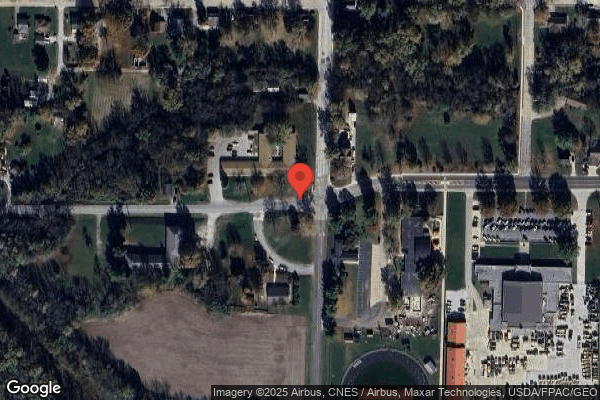
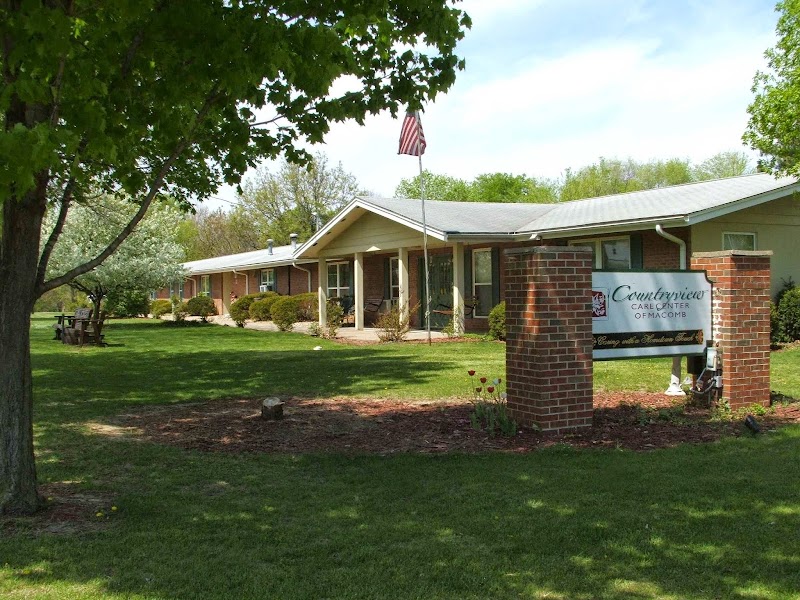
400 WEST GRANT STREET, MACOMB, IL 61455 (309) 837-2386
For profit - Corporation 62 Beds STERN CONSULTANTS Data: November 2025 1 Immediate Jeopardy citation
Trust Grade
0/100
#496 of 665 in IL
Last Inspection: November 2024

Within standard 12-15 month inspection cycle. Federal law requires annual inspections.

Overview

Countryside Care Center in Macomb, Illinois, has a Trust Grade of F, indicating significant concerns about the quality of care provided. Ranking #496 out of 665 facilities in Illinois places it in the bottom half, and #4 out of 4 in McDonough County means it is the least favorable option locally. The facility's performance is worsening, with issues increasing from 8 in 2024 to 13 in 2025, suggesting ongoing problems. Although staffing is rated poorly with a turnover rate of 69%, which is much higher than the state average, they have average RN coverage, meaning they have some registered nurses on staff to catch issues. Notably, there have been serious incidents, including a cognitively impaired resident leaving the facility unnoticed for hours, and another resident suffering a significant injury that required emergency care, highlighting critical safety concerns. While there are some quality measures rated good, the overall picture suggests families should be cautious when considering this facility.

Trust Score
F
0/100
In Illinois
#496/665
Bottom 26%
Safety Record
High Risk
Review needed
Inspections
Getting Worse
8 → 13 violations
Staff Stability
⚠ Watch
69% turnover. Above average. Higher turnover means staff may not know residents' routines.
Penalties
⚠ Watch
$260,571 in fines. Higher than 82% of Illinois facilities, suggesting repeated compliance issues.
Skilled Nurses
○ Average
Each resident gets 35 minutes of Registered Nurse (RN) attention daily — about average for Illinois. RNs are the most trained staff who monitor for health changes.
Violations
⚠ Watch
66 deficiencies on record. Higher than average. Multiple issues found across inspections.
★☆☆☆☆
1.0
Overall Rating
★☆☆☆☆
1.0
Staff Levels
★★★★☆
4.0
Care Quality
★★☆☆☆
2.0
Inspection Score
Stable
2024: 8 issues
2025: 13 issues

The Good

  • 4-Star Quality Measures · Strong clinical quality outcomes
  • Full Sprinkler Coverage · Fire safety systems throughout facility
  • No fines on record

Facility shows strength in quality measures, fire safety.

The Bad

1-Star Overall Rating

Below Illinois average (2.5)

Significant quality concerns identified by CMS

Staff Turnover: 69%

23pts above Illinois avg (46%)

Frequent staff changes - ask about care continuity

Federal Fines: $260,571

Well above median ($33,413)

Significant penalties indicating serious issues

Chain: STERN CONSULTANTS

Part of a multi-facility chain

Ask about local staffing decisions and management

Staff turnover is elevated (69%)

21 points above Illinois average of 48%

The Ugly 66 deficiencies on record

1 life-threatening 7 actual harm
Sept 2025 3 deficiencies 2 Harm
SERIOUS (G) 📢 Someone Reported This

A family member, employee, or ombudsman was alarmed enough to file a formal complaint

Actual Harm - a resident was hurt due to facility failures

Quality of Care (Tag F0684)

A resident was harmed · This affected 1 resident

Based on interview and record review the Facility failed to monitor and treat acute medical conditions for two of seven Residents (R4 and R9) reviewed for quality of care in a sample of nine. This fai...

Read full inspector narrative →
Based on interview and record review the Facility failed to monitor and treat acute medical conditions for two of seven Residents (R4 and R9) reviewed for quality of care in a sample of nine. This failure resulted in R4 and R9 requiring hospitalization.Findings include:The Facility Physician Orders Policy, revised 2/14/23, documents: to provide guidance to ensure physician orders are transcribed and implemented in accordance with the professional standards.The Facility Acute Respiratory Illness Policy, initiated 1/31/25, documents: the Facility follows current guidelines and recommendations for managing acute respiratory illness; and is defined by two of the following signs and symptoms (shortness of breath/difficulty breathing, which may manifest as increased fatigue and low oxygen saturation in the blood (normal levels are between 95 percent and 100 percent, but may vary for people with certain medical conditions).The Facility Registered Nurse Job Description, undated, documents: ability to work independently or part of a group; direct day-to-day functions of the nursing assistants in accordance with current rules, regulations and guidelines that govern long-term care; ensure that all nursing personnel assigned to you comply with the written policies and procedures established by the Facility; responsible for complying with Facility policies and procedures; cooperate with other Resident services when coordinating nursing services to ensure that Resident's total regimen of care is maintained; participate in the development, maintenance and implementation of the Facility's Quality Assurance Program; perform all tasks in accordance with established policies and procedures and as instructed by supervisor; sign and date all entries made in the Resident medical record; charts nurses' notes in an informative, relevant, concise and descriptive manner that reflects the care provided to the Resident, as well as Resident's response to the care; provides direct Resident care; review the Resident chart for specific treatment and medication orders as necessary; implement and maintain established nursing objectives and standards; educates the Resident through use of nursing knowledge and skills according to their needs and promote their mental and physical well-being; responsible for interpretation and execution of Physician orders and calling Physician as indicated; make periodic rounds to observe and evaluate Resident's physical and emotional status and to ensure the continuing quality Resident care; assess the total needs of the Residents and adjust care plans as needed; reviews care plan daily to ensure that appropriate care is being rendered; responsible for accurate observation, evaluation and reporting of Residents symptoms and change of condition reactions and progress to the Physician and shift supervisor; assures Resident care delivery is in accordance with the Facility policies and procedures; notifies Resident's attending Physician and family when the Resident is involved in an occurrence or change in condition; responsible for administering and documenting medications according to the Physician order and plan of care; responsible for competent administration of care and treatments according to the Physician orders and Facility policy and procedure at a minimum; responsible for administration and control of narcotics and controlled drugs according to state and federal regulations, Facility policies and procedures; ensure that Residents who are unable to call for help are checked frequently; make periodic checks to ensure that prescribed treatments are being properly administered by nursing assistants; Resident Rights in regards to psychosocial needs and caring for aged, ill, disabled and cognitively impaired, Communication/Personal skills and Medication rights; ensure that all Residents are treated fairly and with kindness, dignity and respect; knowledgeable to all Residents' Rights according to Facility policy and Regulations; and ensure that call lights are answered by all employees of the Facility, regardless of the department.The Facility Resident Council Notes, dated 7/2023, document Nursing Department issues with Residents stating, a male nurse on night shift (V8/Agency Registered Nurse/RN) is still missing wound treatments and that V8 (RN) told the Resident Council member that it is the day nurse's job to do the wound treatment, not his. Residents also have concerns that V8 (RN) skips their medication pass (med pass) every time he works.The Facility Concern/Grievance Form, dated 7/2025, documents a concern with male nurse on night shift (V8/RN-Registered Nurse). The review and action taken documents that the Facility quit using (employing) V8 (Agency RN).1.R9's Physician Order Sheet/POS, dated 8/30/25, documents R9's diagnoses including Generalized Anxiety, Hypertension, Congestive Heart Failure, Obesity, Mitral Valve Stenosis, Repeated Falls, Cardiomyopathy, Recurrent Moderate Chronic Obstructive Pulmonary Disease/COPD, Emphysema, Anemia, Cerebral Infarction, Chronic Kidney Disease Stage Three and Chronic Respiratory Failure with Hypercapnia.R9's POS, dated 8/30/25, also documents Physician Orders for a breathing machine (Bi-pap), keep head of bed elevated at 30 degrees as needed for shortness of breath, Oxygen therapy at four liters per nasal cannula, Nebulizer treatment (Proventil, Ipratropium and Albuterol) and medications (Apixaban, Spironolactone and Bumetanide for Congestive Heart Failure and Wellbutrin for Depression).R9's current Care Plan documents: to observe for presence of respiratory infection symptoms and shortness of breath that is unrelieved and report to Physician; Advance Directive status of Full Code; has alteration to ability to care for self and to report any declines to Physician; alteration to Respiratory System due to Chronic Respiratory failure and to monitor vital signs; administer medications and treatments ordered by Physician and monitor for side effects and effectiveness of current medication regimen; assess and monitor respirations and breath sounds noting rate and sounds; assist me to assume a position of comfort, educate me on breathing techniques; monitor for change in condition and notify the Physician; monitor for signs and symptoms of asthma attack; and monitor vital signs that they are in acceptable range.R9's Nursing Note, dated 7/3/25 at 6:24 am, documents an entry by V3 (Licensed Practical Nurse/LPN) stating when getting report from the night shift nurse (V8/RN), it was reported that (R9) was having trouble breathing and (R9's) pulse oximeter (SPO2) as at 78 percent. (V8) stated that (V8) gave (R9) two breathing treatments and now (R9) is in the 80's. (V3) went to assess (R9) and found (R9) lying in bed with a breathing treatment on and pulse ox/oxygen level at 82 percent and (R9) was mouth breathing and stomach breathing. (R9) was pale and clammy and complained of left arm pain. (V3/LPN) called Emergency Services/EMT and (R9) was transported to the local hospital Emergency Department for evaluation and treatment. The Nurses Note also document when EMTs arrived, they put (R9) on ten liters of oxygen on a re-breather bag and (R9's) oxygen saturation level increased to 92 percent. R9's Nursing Notes do not document entries from V8/RN for vital signs, breathing difficulties or nebulizer treatments.R9's Nursing Note, dated 7/3/25 at 9:56 am, documents R9 is admitted to Hospital Intensive Care Unit for fluid overload, exacerbation of COPD and Pneumonia.R9's Medication Administration Record, dated 7/3/25, does not document R9's respiratory status, medication therapy or administration of nebulizer treatments.R9's Hospital Summary, dated 7/6/25 through 7/16/25, document that R9 was admitted to the local hospital on 7/3/25 and transported to a larger hospital for diagnoses including Respiratory Distress, Pneumonia, COPD exacerbation, Congestive Heart Failure, Atrial Fibrillation, Acute Kidney Injury and Respiratory Failure with Hypoxia. R9 was admitted to the Intensive Care Unit, sedated and intubated with an endotracheal tube. The Hospital notes also document that R9 was placed on a feeding tube. 2.R4's Physician Order Summary Report/POS, dated 9/2/25, documents diagnoses including Schizophrenia, Bipolar Disorder, Hypertension, Borderline Personality Disorder, Depression, Insomnia, Generalized Anxiety Disorder, Congestive Heart Failure, Panic Disorder and Episodic Paroxysmal Anxiety. The POS also documents an order for the monitoring of Anti-Anxiety, Anti-Psychotic, Sedative/Hypnotic and Anti-Depression Medication.R4‘s Medication Administration Record, dated 7/8/25, documents V8's (RN) signature for administration of Depression medication (Fluvoxamine), Schizophrenia medication (Olanzapine) and Anxiety medication (Hydroxyzine Hydrochloride and Clonazepam) for the scheduled administration time of 6:00 am.R4's Medication Administration Audit Report, dated 8/30/25, documents that on 7/8/25, V8 (Registered Nurse/RN) signed out (administered) Depression medication (Fluvoxamine), Schizophrenia medication (Olanzapine) and Anxiety medication (Hydroxyzine Hydrochloride and Clonazepam).R4's current Care Plan documents: Advance Director of Full Code; dependent on staff for meeting emotional and physical needs and staff to converse while providing care; has self-care deficits and need assistance to complete quality of care and has shortness of breath with panic attacks, anxiety, educate on self-care needs; impaired physical mobility related to Congestive Heart Failure, COPD and increased weakness; check for breath sounds and monitor/document labored breathing; administer medications as ordered and monitor/document for side effects and effectiveness; maintain consistent routine to insure compliance and avoid confusion; uses anti-anxiety medication and monitor every shift for safety; unexpected side effects of medication (Hydroxyzine and Clonazepam) are mania, hostility, rage, aggressive or impulsive behavior and monitor/record occurrence document per protocol; uses anti-psychotic medications (Olanzapine) and administer as ordered by Physician and monitor/report adverse reactions and behavior symptoms; uses anti-depressant medication (Fluvoxamime) and administer per Physician order and monitor/document and report adverse and behavior symptom; and has chronic arthritis pain and monitor and observe for changes in usual routine.R4's Nursing Note, dated 7/8/25 at 6:19 am, documents an entry by V13 (Registered Nurse/RN) stating met in full blown anxiety, jittery, exasperated and sweating profusely at resumption (5:55 am). On checking the (electronic medical record), all 5:00 am medications were given, though (R4) kept asking for (R4's) medications that (R4) has not gotten them. The Nursing Note also documents it has been numerously stated by most Residents that the nurse in question (V8/Agency Registered Nurse/RN) rarely give them medications nor attends to needs by request if (V8's) assigned Certified Nursing Assistants ask him.R4's Nursing Note, dated 7/8/25 at 6:49 am, documents that R4 continues to be anxious and that no anti-anxiety medications can be given or are scheduled. Emergency Services was called and R4 was transported to the local hospital for evaluation.R4's Nursing Note, dated 7/8/25 at 2:38 pm, documents that R4 returned from the local hospital Emergency Department.R4's local hospital Emergency Department notes, dated 7/8/25, documents R4 is having shakiness, rapid breathing and wheezing. Per Emergency Medical Services, the Nursing Home (Facility) staff reported that usually once (R4) receives his medications all these symptoms resolve. The Medication Administration Record shows that (R4's) medications were given at 5:11 am but (R4) states that (R4) did not receive his medications.On 8/29/25 at 11:52 am, R7 stated, I did not always get my medication when (V8) worked.On 8/29/25 at 11:30 am, R4 stated, I did go the hospital when I did not get my medicine that morning. I get anxious and I need to get my medicine.On 8/29/25 at 2:13 pm, V22 (Insurance Representative) stated, I have to go to the Facility and check on my Residents and when I arrived that morning on 7/8/25, (R4) was sweating through (R4's) clothes and having a really hard time breathing. (R4) kept saying that (R4) did not get (R4's) medications. (R4) deserves more credit, even though (R4) has issues, but I truly believe that (R4) did not get the 6:00 am medications and (R4's) anxiety got out of control. They even sent him to the hospital because of it.On 8/31/25 at 6:55 am, V9 (Certified Nursing Assistant/CNA) stated, I would rarely see (V8/RN) down the hallways passing medications. I know that some nurses are faster than others, but if I did see (V8) passing medications, (V8) got done way quicker than the other nurses. I went to (V19/Former Director of Nursing) and (V5/Assistant Director of Nursing) multiple times complaining about (V8) not doing (V8's) job and nothing ever came of it. I was furious having to work with (V8/RN) and I told (V19) and (V5) that I will not work with (V8) anymore if (V8) was in the building. Also, (V8) would leave the premises and be gone for over an hour and on night shift, the nurse is not allowed to the leave the premises in the event of an emergency. I would tell (V8) that a Resident needed help from a nurse or something needed looked at, and (V8) would never follow up. I would work 1:00 am to 1:00 pm, when I worked and on 7/9/25, I came on to my shift, (R9) was having trouble breathing and gasping for air. (R9's) oxygen was down around 78 percent and it should be in the nineties. Even though (R9) had COPD (Chronic Obstructive Pulmonary Disease), I knew that (R9) was in distress. I went to (V8/RN) and told (V8) that (R9's) vital signs and pulse ox (oxygen level) was extremely low and (V8) did not even go look at (R9) and (V8) said ‘she has COPD, she is going to have trouble breathing' and just shook it off. I even called one of the bosses (V19 and V5) but I could not get ahold of them because they were probably sleeping. At the end of our shift, around 6:00 am, I think he finally went down and gave (R9) a breathing treatment, but by the time the day shift nurse came on, they sent (R9) out immediately to the hospital and (R9) was admitted to the Intensive Care Unit at the hospital. My co-workers and I were furious, we heard (V8/RN) giving report to the day shift nurse and (V8) told them in report that (R9) had just started acting like this and I spoke up and told them that (V8) was lying because (R9) had been like that since I came on shift at 1:00 am. I would tell (V8) that someone would need a pain pill or that they needed something and (V8) would never follow up. All (V8) would do, was sit on (V8's) (electronic device) and watch movies.On 8/31/25 at 8:19 am, V24 (Certified Nursing Assistant/CNA) stated, I worked with (V8/RN) a lot on night shift and I would never see (V8/RN) doing a full medication pass or taking the medication cart down the hallways passing medications. When I work with other nurses, they always take the medication cart down the hallways. That 6:00 am medication pass usually takes the night shift nurse quite a long time to complete it, and I would never see (V8/RN) doing that medication pass. When (V8/RN) worked, I always had Residents tell me that they did not get their treatments or medication, (R1, R8, R11 and R12) were just the ones off of the top of my head that I can remember. Basically, (V8/RN) would sit at the nurse's desk and watch movies all night. The CNA's would go to him when a Resident needed something from him and (V8/RN) would never check on the Residents. I even asked (V8/RN) how (V8) got (V8's) stuff done and was always able to sit at the nurse's station and (V8) told me that (V8) pulls all of the medications at the beginning of (V8's) shift. I never even seen him do that or spend that much time at the medication cart. I know that a lot of us complained to management about (V8), but (V8) just kept coming back to work and nothing was done, until I think they fired him.On 8/29/25 at 9:40 am, V15 (Activity Assistant) stated The Resident Council does have specific complaints about several Residents complaining that the night shift male nurse (V8) does not do treatments and does not give medications. They have also complained that (V8) is not recording stuff right in their charts. I even had one Resident complain that (V8) told him that it is not my job to treat your wounds, it is day shift's job. I think that (V8) did lose (V8's) job here because of all of the complaints.On 8/29/25 at 9:46 am, V16 (Activity Director) stated I used to be in charge of the Grievances, but they took them away from a few months ago, but now I just got the Grievance Book back two days ago, and I am not sure what happened to my copies of Grievances from before. I am not sure who was doing them (Grievances) until now, but I do remember complaints from Resident's about the male night shift nurse (V8) not recording stuff right and not doing their job. I think they finally got rid of (V8).On 8/29/25 at 12:43 pm, V3 (Licensed Practical Nurse/LPN) stated, I was the day shift nurse that relieved (V8/RN) on night shift. I got so sick of coming onto shift and (V8/RN) not taking care of the Residents at night, I was always coming into a mess when I follow (V8). On 7/3/25, I came on shift and immediately found (R9) having a very hard time breathing. In Report (V8) told me that the breathing issues just started and the CNAs came up to me and told me that (R9) had been having breathing issues the entire night shift, and had me go look at (R9) right away. (R9) had a nebulizer mask on and (R9's) oxygen saturation was in the low 80's. I immediately sent (R9) out to the hospital and (R9) was admitted to the intensive care unit. I had reported (V8/RN) multiple times to management (V5/ADON) and (V1/Administrator) and nothing seemed to happen. Every time I followed (V8) I would have multiple Resident's complain about not getting medications or getting taken care of. From what I have heard, and I know it is only hearsay, but (V8) would sit at the Nurse's Station the entire shift and watch movies. I got so sick of Resident's complaining about (V8). Finally, staff were starting to want to call off if (V8) was working. I cannot tell you how many complaints I got from Residents that their blood sugars were not being checked (R7), treatments were not getting done and I even had a dialysis Resident (R10), tell me that (R10) did not get the right medications on the 6:00 am medication pass when (V8) worked. We did not have a DON (Director of Nursing) for some of that time, our former DON (V19) was no longer here, so no one was really in charge. (V8) was always sitting at the Nurse's Station when I got in to work and from what I hear on the morning of 7/3/25, the CNAs (V9) said the (V8) had been sitting at the Nurse's Station since 3:30 am. I would check the computer after I would get all these complaints from Resident's and (V8) had always signed everything out so it was hard to prove anything, although I could not find that (R9's) nebulizer treatment was signed out. When multiple staff members, get multiple complaints from Residents, over and over again on the same nurse (V8), I feel that it is warranted and needed checked in to.On 8/29/25 at 10:15 am, V13 (RN) stated, I work First Shift and (V8/RN) worked Third Shift, which means that I started my shift at 6:00 am and took report from (V8/RN). (V8/RN) was temporarily employed here for a few months through an Agency and was not one of our actual employees. On 7/8/25, when I came on to my shift, the CNAs were complaining that (R4) was having increased anxiety, sweating really bad and having trouble breathing. (R4) kept asking for (R4's) medication. I checked the electronic medical administration record and it was documented that (V8/RN) gave (R4's) medications, but (R4) kept asking for the medications and saying that (R4) did not get them. The nighttime staff would tell me that (V8/RN) was not helping (R4) on the Night Shift. (R4) does have psychological diagnoses but (R4) knows better if (R4) gets (R4's) medication or not. I knew that something was wrong with (R4) because he was sweating and having trouble breathing, so I immediately called Emergency Services (911) and sent R4 out for evaluation at the hospital for (R4's) anxiety. I believe that (R4) did not get (R4's medications that day, even though (V8/RN) signed them out. I have taken care of R4 for over three years, and I know that if (R4) gets (R4's) scheduled medication, that it is effective for (R4). Every time that I followed (V8/RN), multiple Residents would complain that they did not get their medications or treatments from (V8/RN) on night shift. The CNAs would complain to me that (V8/RN) would not take care of the Residents when they had to approach (V8/RN) with a nursing need for a particular Resident. They also complained that (V8/RN) would do nothing but sit at the nursing station and watch movies on (V8's) phone, and that they never saw (V8) take the medication cart up and down the hallway for the heavy 6:00 am medication pass or passing medications. I think that (V8) was very strategic with certain Resident's depending on their cognition as far as not giving medications. I told V1 (Administrator), V19 (Former Director of Nursing/DON), V5 (Assistant Director of Nursing/ADON) multiple times about (V8) not doing the job, then I would come on shift and have to clean everything up and deal with it. (V8) should have given medications and sent out (R4) and (R9) to the hospital way before us first shift nurses got in. Those poor Residents sat there for hours without (V8) monitoring or helping them.On 8/30/25 at 11:44 am, V8 (Agency Registered Nurse/RN) stated They came to me about (R9) not breathing well, but (R9) had COPD for gosh sakes, so (R9) was not going to be breathing well. I did give (R9) a nebulizer that morning, but I did not sign it out. (R4) was so confused, did anyone take into consideration that (R4) probably does not remember getting his medications. Honestly, does it really matter on medications if a dose, here or there, does get missed. As far as I am concerned, if I signed it, I gave it.On 9/2/25 at 9:54 am, V4 (Ombudsman) stated, I heard they had problems with a night shift nurse over there, from the Residents. Something with medications and not sending people out to the hospital.On 8/29/25 at 11:10 am, V5 (Assistant Director of Nursing/ADON) stated, I did hear the staff and Residents complaining about (V8) not doing his job. We needed our third shifts covered and needed him still to come in. I am not quite sure if (V19/Former DON) was still working here or not, so I am not sure who really took care of the issues. (V8) was in charge of the entire building on night shift, since there was only one nurse on duty. I would hear that he would leave sometimes for lunch and that definitely was not allowed. We ended up terminating (V8) through the Agency due to all of these issues.On 8/29/25 at 10:10 am, V1 (Administrator) stated, (V8) was employed through an Agency and because we were aware that (V8) was not performing the job duties, so we ‘DNR'd/Do Not Rehire. (V8), so basically (V8) was terminated.
SERIOUS (G) 📢 Someone Reported This

A family member, employee, or ombudsman was alarmed enough to file a formal complaint

Actual Harm - a resident was hurt due to facility failures

Accident Prevention (Tag F0689)

A resident was harmed · This affected 1 resident

**NOTE- TERMS IN BRACKETS HAVE BEEN EDITED TO PROTECT CONFIDENTIALITY** Based on observation, interview, and record review the facility failed to prevent an injury for one of three residents (R1) revi...

Read full inspector narrative →
**NOTE- TERMS IN BRACKETS HAVE BEEN EDITED TO PROTECT CONFIDENTIALITY** Based on observation, interview, and record review the facility failed to prevent an injury for one of three residents (R1) reviewed for accidents in a sample of nine. This failure resulted in R1 receiving a large hematoma under both eyes and across the bridge of R1's nose causing R1 pain and requiring R1 be sent to the Emergency Room.Findings include:Resident Rights Handbook documents Your rights to safety Your facility must provide services to keep your physical and mental health, at their highest practical levels. Your facility must be safe, clean, comfortable, and homelike.The Fall Reduction Policy dated 10/30/24, documents Purpose: to provide an environment that remains as free of accident hazards as possible. Definition of Fall: A fall is defined as a sudden, uncontrolled, unintentional, downward displacement of the body to the ground or other object, excluding falls resulting from violent blows or other purposeful actions. A near fall is a sudden loss of balance that does not result in a fall or other injury. This can include a person who slips, stumbles or trips but is able to regain control prior to falling. R1's computerized Medical Record documents that R1 is a [AGE] year-old female that admitted to the facility on [DATE] with diagnoses which included Systemic Lupus Erythematosus, Organ and System Involved Unspecified, Personal History of Transient Ischemic Attack, and Cerebral Infarction without Residual Deficits, Chronic Kidney Disease, Stage 3, Age-Related Osteoporosis without Current Pathological Fracture, Essential (Primary) Hypertension, and Generalized Anxiety Disorder.R1's MDS (Minimum Data Set) assessment dated [DATE] documents a BIMS (Brief Interview for Mental Status) of 15, indicating (cognition intact). R1 has no upper or lower extremity impairment, uses no devices for mobility, is independent for activities of daily living, bed mobility, and transfers. R1's Care Plan printed 8/30/25 documents (R1) currently has an alteration to her Integumentary System d/t (due to) Bruising. Date Initiated: 8/5/2025.On 8/28/25 at 11:20 AM, R1 was sitting in the dining room. R1 had a purplish/green bruising under both eyes and across the bridge of her nose. R1 stated several weeks ago R1 was going to her room on C Hall after supper and tripped over a rug. R1 did not fall to the floor but her head hit a door. R1 did not tell anyone although she did have pain. When R1 got up the next morning a nurse (V13/Registered Nurse/RN) noticed bruising on R1's face. R1 was sent to the hospital to be evaluated. R1 is currently getting Tylenol for pain. R1 also stated The rug was starting to come up on one end. There have been other people to trip over it (the mat). We (R2/Resident Council President and R1) complained that someone was going to get hurt. They (the facility) removed the rug after I got hurt.R1's Nursing Note dated 8/5/25 at 6:30 AM, documents (R1) was ambulating towards nurses' desk, as staff noticed (R1) to have her left eye swollen and black, and continued from her left eyebrow up to her hairline. When staff questioned (R1) as to what had happened, (R1) replied that she had tripped over the corner of the rug that is in front of the back door and the break room door. (R1) stated that (R1) didn't fall, (R1) had caught herself and apparently hit her head on the doorway. (R1) did not report to any staff as she stated she didn't think it was that bad. Neuro checks initiated. R1's Telehealth Note dated 8/5/25 at 7:00 AM, documents that a nurse reported that R1 experienced a fall last night after tripping over a rug and struck her head. Swelling and bruising were noted around the left eye, extending from the left eyebrow to the hairline. R1 was referred to the emergency room for further evaluation and treatment.R1's Incident Report dated 8/5/25 at 6:30 AM, documents (R1) was walking by nurses' station and nurses noted (R1) had a black, swollen eye and a bruised area to the top of her left side of head. (R1) stated after supper on 8/4/25 at around 7:30 PM (R1) walked out of the dining room and down the hall, when (R1) walked through the doorway (R1) hit the corner of the rug and tripped over it, (R1) states (R1) tried to catch herself and hit her eye and head on the break room doorway and door frame. Action Taken - R1 was assessed and sent to the Emergency Department for evaluation and treatment. Injury type - left eye. Predisposing Environmental Factors- Rugs/CarpetingR1's Emergency Department Notes dated 8/5/25 at 11:23 AM, document History of Present Illness - R1 presents following a fall at (the facility) 16 hours ago. The fall was described as tripped (over floor mat). Location: Left head (forehead eye (s). The character of symptoms is pain and swelling. The degree at present is 7/10 (Severe pain). A CT/Computed Tomography of R1's head, cervical spine, and facial bones were done. Findings A prominent left frontal scalp hematoma hyper attenuating therefore acute measuring about 4 (four) by 1 (one) cm (centimeters). Prominent Soft Tissue Hematoma in the left supraorbital and frontal scalp. Therapy today: over the counter medications including Tylenol and Naproxen. Associated symptoms: headache. Plan - Follow up with primary care physician and continue prescribed Tylenol and Naproxen for pain. R1's Nursing Note dated 8/8/25 at 8:27 AM, documents (R1) up for breakfast, bilateral bruising to eyes from previous incident. (R1's) left eye has increased redness.R1's Wound Log printed 8/31/25 documents the following injuries were acquired in the facility. 8/8/25 - left eye 5 cm (centimeter) x (by) 3 cm bruise, right eye 6 cm x 4 cm bruise, bridge of nose 5 cm x 2 cm bruise, forehead 2 cm x 2 cm bruise. 8/15/25- left eye 4 cm x 3 cm bruise, right eye 5.5 cm x 3 cm bruise, bridge of nose 3 cm x 1 cm bruise, forehead 1 cm x 1 cm bruise. 8/22/25 - left eye 3 cm x 2 cm bruise, right eye 4 cm x 3 cm bruise, bridge of nose 3.5 cm x 1.5 cm bruise. 8/29/25- left eye 2.5 cm x 1.5 cm bruise, right eye 3 cm x 2 cm bruise, bridge of nose 3.5 cm x 1.5 cm bruise. Supply Invoice dated 8/4/25 documents that one Loop Edge Mat was ordered. The Fall Tracking Report dated August 2025 documents that R1 fell 8/5/25. On 8/28/25 at 12:22 PM, R2/Resident Council President stated (R1) tripped on a rug and messed her face up. (R1) looked rough. It was a mat coming from the hall into the TV (television) room. The mat was there to wipe feet on when you come in from outside. There was a section at the end of the rug that was turned up. It was sticking up enough to trip on just on the end. I believe I told (V1/Administrator) about the rug before (R1) fell. Whenever there is a complaint, I take it to (V1) to see what they will do about it. R2 also stated After (R1) fell they (the facility) took the rug up right away. Why did it take someone to get hurt before they took it up? It (the rug) had been bad for several weeks.On 8/28/28 at 1:40 PM, V3/Licensed Practical Nurse stated that prior to R1's fall, a residents family member (unidentified) came to take a resident out for the day, and the family member tripped on the mat but did not fall. Since it was a weekend V13/Registered Nurse/RN wrote a note and slipped it under the door of the office where Maintenance would see it. V3 also stated We knew the rug was a problem and reported it. The rug was not removed until (R1) tripped and hit her head. (R1's) accident should have never happened.On 8/28/25 at 1:56 PM, V13/RN stated that on 8/5/25 V13 was sitting at the nurse's desk around 6:30 AM and R1 walked past. V13 saw R1's eye was black. R1 told V13 that she (R1) tripped on the mat in front of the staff breakroom after supper on 8/4/25 and hit her head on the closed door. It hurt but R1 thought she was OK and did not report the incident. V13 assessed R1, R1 was complaining of pain and there was a bruise under R1's left eye. V13 gave R1 Tylenol and R1 was sent to the emergency room for evaluation. At first the bruising was grayish/black under the left eye then it was a dark purple under both eyes. The bruising continued to get worse and was eventually under both of R1's eyes and across R1's nose. V13 also stated That carpet has been a hazard. It was between seven to nine days before (R1) tripped that a visitor tripped. When the first incident happened, it was a weekend. I wrote a note and put it under the office door for the rug to be fixed or removed. Days later I talked to (V1/Administrator) and said that it (the rug) was a trip hazard. (V1) said he was going to tell corporate and get a new one. (Adhesive tape) was put on the corner of the mat to keep it flat. It lasted a couple of days then it rolled back up again.On 8/28/25 at 4:45 PM V4/Ombudsman stated that she had come into the facility and saw R1's face was bruised under both eyes and across R1's nose. R1 told V4 that she (R1) had tripped over a rug. V4 also stated that she was told by R2/Resident Council President that management was made aware of the rug being a trip hazard before R1 fell.On 8/29/25 at 10:05 AM, V1/Administrator stated that there was a nine foot long by four-foot-wide nonskid mat in front of the entry door. The mat extended past the front of the staff breakroom. The weekend before R1 fell on Tuesday 8/5/25 the residents had complained to V13/Registered Nurse that the rug was in disrepair and needed replaced. V13 told V1 about the residents' complaints. A new mat was ordered on 8/4/25 but the worn mat was not removed until after R1 tripped and hit her head on the staff breakroom door. After R1's injury on 8/5/25 the rug was removed to prevent any other accidents.On 8/29/25 at 11:36 AM, V14/Maintenance stated that a few days before R1 tripped they (staff) had talked about removing the rug. They were saying Someone is going to trip over it then (R1) did. I carried it (the mat) to the dumpster the same day that (R1) fell.
CONCERN (D) 📢 Someone Reported This

A family member, employee, or ombudsman was alarmed enough to file a formal complaint

Potential for Harm - no one hurt, but risky conditions existed

Pharmacy Services (Tag F0755)

Could have caused harm · This affected 1 resident

Based on interview and record review the Facility failed to identify, reconcile, document and investigate a missing controlled substance drug for one of seven Residents (R5) reviewed for controlled su...

Read full inspector narrative →
Based on interview and record review the Facility failed to identify, reconcile, document and investigate a missing controlled substance drug for one of seven Residents (R5) reviewed for controlled substances in a sample of nine.Findings include:The Facility Registered Nurse Job Description, undated, documents: ensure that all nursing personnel assigned to you comply with the written policies and procedures established by the Facility; responsible for complying with Facility policies and procedures; cooperate with other Resident services when coordinating nursing services to ensure that Resident's total regimen of care is maintained; dispose of drugs and narcotics as required, and in accordance with established procedures; perform all tasks in accordance with established policies and procedures and as instructed by supervisor; documents accurately in Resident chart any significant changes in care and services; sign and date all entries made in the Resident medical record; charts nurses' notes in an informative, relevant, concise and descriptive manner that reflects the care provided to the Resident; reports all discrepancies noted concerning physician orders or charting errors to the Director of Nursing; review the Resident chart for specific treatment and medication orders as necessary; implement and maintain established nursing objectives and standards; responsible for interpretation and execution of Physician orders and calling Physician as indicated; assures Resident care delivery is in accordance with the Facility policies and procedures; responsible for administering and documenting medications according to the Physician order and plan of care; responsible for competent administration of care and treatments according to the Physician orders and Facility policy and procedure at a minimum; responsible for administration and control of narcotics and controlled drugs according to state and federal regulations, Facility policies and procedures; and Resident Rights in regards Medication rights.The Facility Medication Error Management Policy and Procedure, revised 11/5/19, documents: to establish and follow a uniform process of medication error management; it is the responsibility of every employee to report any unknown, suspected or potential medication error and the responsibility of nursing administration to monitor these reports and initiate any appropriate action; each medication error or potential error identified will be investigated by nursing administration and be classified by their severity (Level Zero -non-medication error to Level Six -error occurred that resulted in death); accumulated medication error points in a rolling calendar year will be acted upon; and all actions will be accordance with the Facility's progressive disciplinary policy and may be modified according to the nature and effect of each error.The Facility Dispensing Controlled Substance Policy and Procedure, revised 8/23/22, documents: drugs listed as Schedule II, III, IV and V of the Federal Comprehensive Drug Abuse Prevention and Control Act of 1970 shall not be accessible to any personnel other licensed nursing, pharmacy and medical personnel designated by the Facility; the Director of Nursing is designated by the Facility to be responsible for the control of such drugs; the Controlled Dangerous Substance Act of 1970 replaces existing laws regarding labeling, handling and accountability of narcotics, sedatives, stimulants and other drugs; Morphine is a Schedule II drug; a declining inventory sheet will be provided with each dispensed prescription for controlled dangerous substances and will contain the Resident name, medication (name, strength and dosage), name of prescriber, quality dispensed, prescription number and date dispensed; when the medication is administered, in addition to following proper procedure for the charting of medications, the nurse must document on the declining inventory sheet the date of administration, quantity administered, amount of medication remaining and his/her initials; an inventory count of the medications shall be performed at each change of shift by the outgoing and incoming nurse and will sign the inventory count; if a medication is lost or cannot be accounted for, the Director of Nursing must be notified immediately; the nurse/nurses discovering the loss must complete an incident Report indicating the circumstances surrounding the discovery and any steps taken to locate/verify the loss and will be forwarded to the Nursing Office; the Facility will complete a Report of Theft or Loss of Controlled Substance form and the form will be forwarded to the Pharmacy for reporting to appropriate agencies; and the Facility will investigate the loss if deemed necessary.R5's Physician Order Sheet, dated 8/29/25, documents: a Hospice Order (dated 4/25/25); Ativan 0.5 milligram/mg four times a day for restlessness; Fentanyl 12 microgram/mcg Transdermal 72 hour patch every three days for pain; Morphine Sulfate 0.25 milliliter/ml every two hours for mild pain (1-3/10), Morphine Sulfate 0.5 every two hours for moderate pain (4-6/10), Morphine Sulfate 1 .0 ml every two hours for severe pain (7-10/10); and Morphine Sulfate 0.5 ml by mouth four times a day for pain.R5's Nursing Progress Notes, dated 8/10/25 through 8/12/25, do not document V6's entries for the administration of Morphine Sulfate for R5's behaviors or pain status.R5's Medication Administration Record/MAR, dated 8/1/25 through 8/29/25, does not document V6's administration of R5's Morphine Sulfate for the dates of 8/10/25 through 8/12/25. R5's MAR documents R5's pain level on 10/8/25 (0/10 at 11:00 pm), 10/9/25 (5/10 at 11:00 pm and 0/10 at 5:00 am), 10/10/25 (0/10 at 11:00 pm and 5:00 am), and 8/11/25 (0/10 at 5:00 am).On 8/29/25 at 9:30 am, the Facility could not produce Medication Error Reports, dated 5/1/25 through 8/29/25. V1 (Administrator) provided a handwritten note, undated, that documented no medication errors.On 8/29/25 at 10:15, V1 (Administrator) stated, I do not have any Medication Errors during that time.On 8/29/25 at 11:05 am, V23 (Corporate Nurse) stated, We do not have any Medication Error Reports.On 8/30/25 at 10:30 am, V1 and V23 provided a typewritten copy of investigation. The investigation does not document the Resident's name (R5). The Investigation documents a statement from V3 (Licensed Practical Nurse/LPN) that on 8/10/25 when V3 took the medication cart, 13 milliliters/ml of Morphine were in the bottle for R5. When V3 counted on 8/10/25 the count was 12 ml, after V3 administered 1.0 ml (two 0.5 ml doses) on the shift. V3 then states that on 8/11/25, V3 noticed that the bottle was not in the locked draw and was not in a pharmacy box. V3 confronted V6 (LPN), V6 stated that the new Morphine bottle was taken from back-up because R5 yelled all night and that V6 administered the remaining 12 ml on the night shift. The investigation included V6's (LPN) statement, dated 8/12/25, that V6 reported on change of shift to V3, that V6 emptied the bottle (Morphine 12 ml) and that V6 noticed that the stack of papers that V6 put the completed narcotic count sheet on, had been scattered on the desk and V6 may have thrown the count sheet away. V6 also documents that R5 received 1 ml of Morphine almost every hour during V6's shift. V6 documented that R5 tends to yell out through the night and keeps other Residents awake. The Narcotic Count sheet, dated 7/9/25 at 5:30 pm, documents a count correction due to leaking bottle and on 7/9/25 at 9:00 pm a dosage error.R5's Controlled Substance Proof of Use/Count Forms, dated 7/1/25 through 8/29/25, generated by the Facility Pharmacy documents controlled substance date, time, quantity used, quantity remaining and the nurse's signature for all dates except 8/9/25 through 8/11/25. The Count Form, for the dates 8/9/25 through 8/11/25, were on a separate sheet of paper, not produced by the Facility Pharmacy for specific the dates 8/9/25 through 8/11/25 and did not provide the medication (Morphine) name of prescriber, quality dispensed, prescription number and date dispensed.V6's Employee File documents four separate Personnel Disciplinary Notices. V6's Disciplinary Notice, dated 8/4/25, document an incident with a duplicate medication administered by V6. V6's Disciplinary Notice, dated 8/4/25, documents a Resident fall that occurred on 8/1/25, was not documented. V6's Disciplinary Notice, dated 8/12/25, documents V6 not signing as needed/PRN orders out on Medication Administration Record. V6's Disciplinary Notice, dated 8/15/25, documents V6 had issues with documentation and attitude with co-workers and that V6's contract was not going to be renewed.On 8/29/25 1:50 pm, V5 (Assistant Director of Nursing/ADON) stated (V19/Former Director of Nursing) put her notice in and I think her last day was 6/10/25, then we went without a Director of Nursing for a while. (V6) was on a thirteen-week contract, but (V6) got terminated for multiple reasons. (V6) was not documenting falls and medications, although (V6) was asked to several times. I know there was an issue with (R5's) Morphine because almost a whole bottle went missing on V6's shift and the Morphine was not documented by (V6), they never found the narcotic count sheet or the bottle of Morphine. I am not sure who investigated that, I never heard much more about it.On 8/30/25 at 10:30 am, V23 (Corporate Nurse) stated, (V6/Contracted LPN) was a contracted employee on a 13-week contract, but we terminated the contract on 8/11/25. We did not do an entire investigation on this missing Morphine. I cannot see where Pharmacy, Physician, Residents or other employees were interviewed. We never found the empty bottle of Morphine either.
Jun 2025 7 deficiencies
CONCERN (D) 📢 Someone Reported This

A family member, employee, or ombudsman was alarmed enough to file a formal complaint

Potential for Harm - no one hurt, but risky conditions existed

Pressure Ulcer Prevention (Tag F0686)

Could have caused harm · This affected 1 resident

Based on observation, interview, and record review the facility failed to implement hand hygiene and apply new gloves between dirty to clean wound dressing changes and failed to apply pressure ulcer t...

Read full inspector narrative →
Based on observation, interview, and record review the facility failed to implement hand hygiene and apply new gloves between dirty to clean wound dressing changes and failed to apply pressure ulcer treatments as ordered by the physician for one of three residents (R1) reviewed for pressure ulcers in the sample of 38. Findings include: The facility's Wound Care policy and procedure dated 11/9/19 documents the following guidelines for wound care, 1. Verify Order. 2. Explain procedure to the residents. 3. Gather equipment. 4. Place items on a clean surface. 5. Hand hygiene. 6. DON (put on) PPE (Personal Protective Equipment). 7. Remove dressing to be changed and discard. 8. Remove gloves and discard, (perform) hand hygiene. DON new gloves. 9. Clean wound bed per order. 10. Remove gloves and discharge. 11. Place new dressing. 12. Remove gloves and discard. Hand hygiene. 13. Reposition resident and bed covers. 14. Call light within reach. 15. Remove unused supplies from overbed table and place in appropriate place. 16. Document treatment. The facility's Skin Prevention, Assessment, and Treatment policy and procedure dated 10/23 documents, The goals of wound treatment are to protect the ulcer from contamination. The facility's Weekly Wound Tracking Log dated 6/13/25 documents R1 was admitted to the facility with a stage three pressure ulcers to the right thigh and right heel. R1's Physician's Order Sheets and Treatment Administration Records dated 6/1/25 to 6/20/25 document, Start date 5/9/25 cleanse right heel with normal saline Dakin's (wound disinfectant) wet to dry dressing to be changed BID (twice daily) and PRN (as needed) every shift for right heel wound. Start date 4/7/24 cleanse right posterior thigh with normal saline or wound cleanser, apply Dakin's moistened flat gauze to wound bed, cover with abdominal pad and change BID and PRN every shift to promote wound healing. R1's Treatment Administration Record dated 6/1/25 to 6/20/25 document R1's physician's ordered treatments to the right heel and right posterior thigh were not completed on the evening shifts on 6/9/25 and 6/10/25. On 6/20/25 at 10:01 AM R1 was sitting on the side of her bed in her room. R1 had a boot observed to her right foot. R1's dressings were dated for 6/20/25 to her right heel and right thigh. R1 stated, (V4/RN/Registered Nurse) and night shift nurses do not do my wound treatments at times. On 6/20/25 at 1:35 PM V8/Registered Nurse prepared wound treatment for R1's right upper thigh wound and right heel wound. V8/RN donned gloves and a gown and set up treatment supplies on a treatment cart. V8 removed all R1's old wound dressings to all R1's wounds at this time. V8 then removed her gloves and without washing her hands placed new gloves on. V8 then took gauze and normal saline and cleansed R1's right heel. V8 then (without washing her hands or changing gloves) grabbed clean gauze and soaked it in Dakin's solution and packed R1's right heel wound. V8 then placed dry gauze over the top. Without changing gloves or washing her hands, V8 then placed rolled gauze around the dry dressing and secured it with tape. V8 then removed her gloves and without washing her hands donned new gloves on. V8 then cleansed the right thigh wound with gauze soaked in normal saline and then threw the gauze away. Without changing her gloves or washing her hands, V8 applied clean gauze soaked in Dakin's solution and applied it to the wound. V8 then covered R1's right thigh wound with clean gauze over the top and then secured it with a border gauze. V8 never washed/sanitized her hands throughout the entire wound treatments between dirty to clean dressings, or between each wound treatment. 6/20/25 at 3:01 PM V8/RN confirmed she should have changed gloves and hand sanitized in between touching clean and dirty dressings and between each wound treatment. On 6/21/25 at 11:10 AM V2/Director of Nursing confirmed R1's wound treatments weren't signed out for night shift on June 9th and June 10th indicating R1's wound treatments were not completed.
CONCERN (D) 📢 Someone Reported This

A family member, employee, or ombudsman was alarmed enough to file a formal complaint

Potential for Harm - no one hurt, but risky conditions existed

Infection Control (Tag F0880)

Could have caused harm · This affected 1 resident

**NOTE- TERMS IN BRACKETS HAVE BEEN EDITED TO PROTECT CONFIDENTIALITY** Based on observation, interview, and record review the facility failed to implement Enhanced Barrier Precautions (EBPs) and fail...

Read full inspector narrative →
**NOTE- TERMS IN BRACKETS HAVE BEEN EDITED TO PROTECT CONFIDENTIALITY** Based on observation, interview, and record review the facility failed to implement Enhanced Barrier Precautions (EBPs) and failed to change gloves and complete handwashing after performing catheter care for one of four residents (R1) reviewed for infection control practices in a sample of 38. Findings include: The facility's Enhanced Barrier Precautions Policy, date 10/28/24, documents Policy: It is this Facilities policy that EBPs are used to prevent transmission of infectious organisms spread by direct or indirect contact with the patient or the patient's environment. They are a strategy in nursing homes to decrease transmission of CDC (Centers for Disease Control and Prevention)-targeted and epidemiologically important MDRO's (Multidrug-Resistant Organisms) when contact precautions do not apply. EBP is used during high-contact care activities for residents with chronic wounds or indwelling medical device, regardless of MDRO status, in addition to residents who have an infection or colonization with CDC-targeted or other epidemiologically important MDRO when contact precautions do not apply. Facilities may have some discretion when implementing EBP and balancing the need to maintain a homelike environment for residents. Definition: High-contact resident care activities include but are not limited to: Dressing, bathing/showering, transferring, providing hygiene, changing linens, changing briefs, or assisting with toileting, device care or use: central line, urinary catheter, feeding tube, tracheostomy/ventilator, wound care; any skin opening requiring a dressing. Indwelling medical device- Examples include but are not limited to, central lines, urinary catheters, feeding tubes, and tracheostomies. A peripheral inserted central catheter is not considered an indwelling medical device for the purpose of EBP. Procedure: Personal Protective Equipment: 2. Gowns- Staff will wear a clean, non-sterile gown to protect skin and prevent soiling of clothing during procedures and resident care activities that are likely to generate splashes or sprays of blood or bodily fluids, secretions, or excretions and during specific high-contact resident care activities. The facility's Indwelling Catheter Policy, dated 12/23/25, documents Purpose: To provide for and maintain constant urinary drainage, to monitor the kidney functions of the seriously ill resident, and to obtain a urine specimen for diagnostic purposes. Catheter Care: 7. Perform perineal/incontinence per facility policy prior to catheter care. The facility's Perineal/Incontinence Care Policy, dated 9/11/2020, documents Purpose: to provide cleanliness and comfort to the resident, prevent infections and skin irritation, and observe the resident's skin condition. Procedure: 9. Use a clean area of cloth for each area cleansed. Use multiple cloths, if necessary, to maintain infection control practices. 10. Assure all areas affected by incontinence have been cleansed. 14. Remove gloves and perform hand hygiene. 15. Apply clean brief and reapply clothing. R1's admission Record, dated 6/20/25, documents R1 is a [AGE] year-old female who was admitted to the facility on [DATE] with the following, but not limited to, diagnoses: Spina Bifida, Paraplegia, Retention of Urine, and Overactive Bladder. R1's Order Summary Report, dated 6/20/25, documents R1 has a Physician ordered Suprapubic Catheter 16fr (French)/10 ml (milliliter). This same Order Summary Report documents, Infection Precautions: Enhanced barrier: staff wear gown/gloves when in direct patient contact every shift. Signage on door. Gown and gloves required for the following high-contact care activities: Dressing, Bathing/Showering, Transfer, Changing Linens, Providing Hygiene, Changing Briefs/Assist with Toileting, Device Care/Use and/or Wound Care. On 6/20/25 at 10:26 AM V9/CNA (Certified Nursing Assistant) and V10/CNA were preparing to perform R1's Suprapubic catheter care. V9 put her supplies on R1's overbed table. V9 donned gloves and with a soapy rag began R1's catheter care. After V9 completed the washing, rinsing, and drying of the catheter tubing and R1's peri area, V9 (with the same gloves on), applied a new clean incontinence brief on R1, then rearranged R1 in the bed. V9 never changed her gloves or washed/sanitized her hands before applying R1's new incontinence brief or re-arranging R1 in bed. V9 also never wore a gown while performing R1's catheter care. On 6/20/25 at 2:57 PM V9/CNA verified she should have worn a gown during catheter care and should have changed gloves and washed/sanitized hands prior to applying R1's clean incontinence brief and rearranging R1 in bed. On 6/21/25 at 11:08 AM V2/Director of Nursing stated, Any staff member performing high contact care on a resident with an indwelling catheter should wear a gown. V2 stated V9/CNA should have worn a gown while performing R1's catheter care and should have washed her hands and changed her gloves after performing R1's catheter care and prior to applying R1's new incontinence brief.
CONCERN (E) 📢 Someone Reported This

A family member, employee, or ombudsman was alarmed enough to file a formal complaint

Potential for Harm - no one hurt, but risky conditions existed

Accident Prevention (Tag F0689)

Could have caused harm · This affected multiple residents

Based on observation, interview, and record review the facility failed to ensure mechanical lift machines used to transfer dependent residents were safe and in good repair for five of five residents (...

Read full inspector narrative →
Based on observation, interview, and record review the facility failed to ensure mechanical lift machines used to transfer dependent residents were safe and in good repair for five of five residents (R1, R4, R27, R38, and R39) reviewed for accidents in the sample of 38. Findings include: The Manufacturer's User Instruction Manual for the (Mechanical Lift) HPL700 dated 2024 documents, 9. Maintenance Schedule and Daily Checklist-Operate the hand control to confirm the boom raises and lowers satisfactorily. The Manufacturer's User Manual for the (Mechanical Lift) 450/600 dated 2022 documents, Caster Base: Inspect monthly for missing hardware. Inspect casters and axle bolts for tightness. Inspect casters for a smooth swivel and roll. On 6/21/25 at 11:30 AM V2 (Director of Nursing) provided a list of residents who use a mechanical lift for transfers which included R1, R4, R27, R38, and R39. ` On 6/21/25 at 9:50 AM V18 (CNA/Certified Nursing Assistant) was transferring R1 from the wheelchair to the bed using a mechanical lift model number HPL700. During this transfer, the mechanical lift was wobbling from one leg to the other leg. R1 stated, This lift squeaks and wobbles. It gets a little scary at times. On 6/21/25 at 10:00 AM V18 (CNA) demonstrated using the model HPL700 mechanical lift without a resident. This mechanical lift's casters were not rolling smoothly, and the lift was wobbling back and forth from one leg to the other leg. There was a bolt at the bottom right-side axle of the mechanical lift that had been altered with a bolt that did not fit correctly and was not a bolt used by this lift's manufacturer. V18 then demonstrated using the remote on the mechanical lift model 450/600. This remote stopped working during the demonstration and V18 wiggled the cord to get the remote to work. On 6/21/25 at 10:15 AM V18 (CNA) stated, 'Both mechanical lifts we use here are not good. The (HPL700) lift wobbles back and forth and the rollers (casters) do not roll right. The bolt at the bottom (axle) was replaced a while ago and is not even a bolt that is the right size for the mechanical lift. The other mechanical lift's remote (450/600) quits sometimes mid-air whenever we are transferring the residents. The remote must be wiggled to get it to work. The wiring for the remote is bad. On 6/21/25 at 11:00 AM V21 (Maintenance) stated, I just started coming to this building to help out. I work at the other building most of the time. This building does not have a maintenance supervisor. No one has told me the (mechanical lifts) were broke. On 6/21/25 at 12:15 PM V14 (Regional Administrator) stated, Staff should have reported the (mechanical lifts) being broke. The lifts need to be taken out of commission.
CONCERN (E) 📢 Someone Reported This

A family member, employee, or ombudsman was alarmed enough to file a formal complaint

Potential for Harm - no one hurt, but risky conditions existed

Deficiency F0761 (Tag F0761)

Could have caused harm · This affected multiple residents

Based on observation, interview, and record review the facility failed to ensure medications were stored in their original packaging until administered for 18 of 18 residents (R1, R2, and R8-R23) revi...

Read full inspector narrative →
Based on observation, interview, and record review the facility failed to ensure medications were stored in their original packaging until administered for 18 of 18 residents (R1, R2, and R8-R23) reviewed for medication storage in the sample of 38. Findings include: The facility's Administering Medication Policy and Procedure dated 10/15/2023 documents, Purpose: To ensure safe and effective administration of medication in accordance with physician orders and state/federal regulations. Medications may not be prepared in advance. Medications that are removed from their original packaging and not immediately administered must be destroyed in accordance with facility policy. The facility's Storage, Labeling of Over the Counter Medication, Destruction and Disposal of Medication dated 11-9-21 documents, Purpose: To ensure that medications and biologicals are stored in a safe, secure storage and safe handling. Medications will be stored in the containers in which they are received. Transfer between containers is performed only by the issuing pharmacy. R1's Order Summary Report and MAR (Medication Administration Record), dated June 1st through June 20th, 2025, document R1 receives the following medications at 8:00 AM daily: Ferrous Fumarate 325 mg (milligrams) one tablet, Multivitamin with Minerals one tablet, Oxybutynin Chloride Extended Release 24 hour 15 mg one tablet, Potassium Chloride Extended Release 10 meq (milliequivalents) two tablets, Protonix 40 mg one tablet, and Wellbutrin Extended Release 24 hour 150 mg one tablet. R8's Order Summary Report and MAR dated June 1st through June 20th, 2025, document R8 receives the following medications at 8:00 AM daily: Chlorpromazine HCL (Hydrochloride) 25 mg one tablet, Chlorpromazine HCL 200 mg one tablet, Chlorpromazine HCL 10 mg one tablet, Prochlorperazine Maleate 10 mg one tablet, Clonidine HCL 0.2 mg one tablet, Levetiraceta 750 mg one tablet, Topiramate 50 mg one tablet, Gabapentin 300 mg one capsule, and Hydroxyzine HCL 25 mg one tablet. R9's Order Summary Report and MAR dated June 1st through June 20th, 2025, document R9 receives the following medications at 8:00 AM daily: Aspirin 81 mg one tablet, Dapagliflozin Propanediol 10 mg one tablet, Famotidine 40 mg one tablet, Jardiance 25 mg, Levothyroxine Sodium 175 mcg (micrograms) one tablet, Losartan Potassium Hydrochlorithizide50-12.5 mg one tablet, Plavix 75 mg one tablet, Venlafaxine HCL Extended Release 150 mg one capsule, Calcium Carbonate 500 mg one tablet, Carvedilol 12.5 mg one tablet, Glipizide 10 mg two tablets, and Pregabalin 100 mg one capsule. R10's Order Summary Report and MAR dated June 1st through June 20th, 2025, document R10 receives the following medications at 8:00 AM daily: Aspirin 81 mg one tablet, Atenolol 25 mg one tablet, Clozapine 100 mg one tablet, Escitalopram 20 mg one tablet, Folic Acid 1 mg one tablet, Januvia 100 mg one tablet, Jardiance 25 mg one tablet, Omeprazole 20 mg one capsule, Pioglitazone 45 mg one tablet, Vitamin D3 50 mcg one tablet, and Metformin 1000 mg one tablet. R11's Order Summary Report and MAR dated June 1st through June 20th, 2025, document R11 receives the following medications at 8:00 AM daily: Vitamin D3 10 mcg one tablet, Amlodipine 5 mg one tablet, Aspirin 81 mg one tablet, Cerovite Senior one tablet, Citalopram Hydrobromide 40 mg one tablet, Folic Acid 1 mg one tablet, Levothyroxine 150 mcg one tablet, Oyster Shell 500 mg three tablets, Sodium Chloride 1 GM (Gram) one tablet, and Phenytoin 100 mg one capsule. R12's Order Summary Report and MAR dated June 1st through June 20th, 2025, document R12 receives the following medication at 8:00 AM daily: Metformin 500 mg one tablet. On 6/20/25 at 8:40 AM V4 (RN/Registered Nurse) opened the top drawer of the B/C Hallways medication cart. In the top drawer of this cart was six medication cups with loose medication tablets/capsules inside the cups and resident names (R1, R8-R12) written in marker on the outside of the cups. V4 verified at this time R1's Ferrous Fumarate 325 mg one tablet, Multivitamin with Minerals one tablet, Oxybutynin Chloride Extended Release 24 hour 15 mg one tablet, Potassium Chloride Extended Release 10 meq two tablets, Protonix 40 mg one tablet, and Wellbutrin Extended Release 24 hour 150 mg one tablet, R8's Chlorpromazine HCL 25 mg one tablet, Chlorpromazine HCL 200 mg one tablet, Chlorpromazine HCL 10 mg one tablet, Prochlorperazine Maleate 10 mg one tablet, Clonidine HCL 0.2 mg one tablet, Levetiraceta 750 mg one tablet, Topiramate 50 mg one tablet, Gabapentin 300 mg one capsule, and Hydroxyzine HCL 25 mg one tablet, R9's Aspirin 81 mg one tablet, Dapagliflozin Propanediol 10 mg one tablet, Famotidine 40 mg one tablet, Jardiance 25 mg, Levothyroxine Sodium 175 mcg one tablet, Losartan Potassium Hydrochlorithizide50-12.5 mg one tablet, Plavix 75 mg one tablet, Venlafaxine HCL Extended Release 150 mg one capsule, Calcium Carbonate 500 mg one tablet, Carvedilol 12.5 mg one tablet, Glipizide 10 mg two tablets, and Pregabalin 100 mg one capsule, R10's Aspirin 81 mg one tablet, Atenolol 25 mg one tablet, Clozapine 100 mg one tablet, Escitalopram 20 mg one tablet, Folic Acid 1 mg one tablet, Januvia 100 mg one tablet, Jardiance 25 mg one tablet, Omeprazole 20 mg one capsule, Pioglitazone 45 mg one tablet, Vitamin D3 50 mcg one tablet, and Metformin 1000 mg one tablet, R11's Vitamin D3 10 mcg one tablet, Amlodipine 5 mg one tablet, Aspirin 81 mg one tablet, Cerovite Senior one tablet, Citalopram Hydrobromide 40 mg one tablet, Folic Acid 1 mg one tablet, Levothyroxine 150 mcg one tablet, Oyster Shell 500 mg three tablets, Sodium Chloride 1 GM one tablet, and Phenytoin 100 mg one capsule, and R12's Metformin 500 mg one tablet) were removed from their original packaging and placed in the medication cups to be administered at a later time. On 6/20/25 at 8:50 AM V4 (RN) stated, I pulled these residents (R1, R8-R12) morning medications out of their original packaging and put them in medication cups. I labeled the medication cups with (R1, R8-R12's) names on the cups. It is quicker to give (R1, R8-R12) their medications if I just pull them up early and give the medications to the residents when I see them. I know I am not supposed to do it that way. On 6/20/25 at 9:30 AM V2 (Director of Nursing) stated, The nurses have been told numerous times that they are not to pull medications up and out of their original packaging ahead of time. They (nurse) know better. R2's Order Summary Report and MAR, dated June 1st through June 20th, 2025, document R2 receives the following medications at 12:00 PM: Glipizide 5mg (milligram) tablet and Hydrocodone/Acetaminophen 7.5-325 mg tablet. These same documents indicate R2 receives the following medications at 5:00 PM: Pregabalin 75mg tablet, Risperidone 0.25mg (3 tablets), Glipizide 5mg tablet, Hydrocodone/Acetaminophen 7.5-325mg tablet, Cranberry 500mg tablet, Lorazepam 0.5mg tablet, and Metformin 500mg tablet. R13's Order Summary Report and MAR, dated June 1st through June 20th, 2025, document R13 receives the following medications at 12:00 PM: Buspar 10mg tablet, Carbidopa-Levodopa 25-100mg tablet, Gabapentin 300mg tablet, and Tylenol Extra Strength 500mg tablet. These same documents indicate R13 receives the following medications at 5:00 PM: Atorvastatin Calcium Oral 40mg tablet. R14's Order Summary Report and MAR, dated June 1st through June 20th, 2025, document R14 receives the following medications at 12:00 PM: Gabapentin 300mg capsule, Tylenol Extra Strength 500mg tablet, and Gas Relief 80mg tablet. These same documents indicate R14 receives the following medications at 5:00 PM: Tylenol Extra Strength 500mg tab and Gas Relief 80mg tablet. R15's Order Summary Report and MAR, dated June 1st through June 20th, 2025, documents R15 receives the following medications Lasix 40mg tablet and Glipizide 10mg tablet at 11:00 AM and Ascorbic Acid tablet 500mg, Multivitamin tablet, and Dapagliflozin Propanediol 10mg tablet at 12:00 PM. These same documents indicate R15 receives the following medications at 5:00 PM: Escitalopram Oxalate 20mg tablet and Simvastatin 20mg tablet. R16's Order Summary Report and MAR, dated June 1st through June 20th, 2025, document R16 receives the following medication at 12:00 PM: Ativan 0.5 mg tablet. These same documents indicate R16 receives the following medication at 5:00 PM: Ativan 0.5mg tablet. R17's Order Summary Report and MAR, dated June 1st through June 20th, 2025, document R17 receives the following medication at 12:00 PM: Tylenol Extra Strength 500mg tablet. These same documents indicate R17 receives the following medications at 5:00 PM: Buspar 10mg tablet and Tylenol Extra Strength 500mg tablet. R18's Order Summary Report and MAR, dated June 1st through June 20th, 2025, document R18 receives the following medications at 12:00 PM: Tylenol Extra Strength 500mg. R19's Order Summary Report and MAR, dated June 1st through June 20th, 2025, document R19 receives the following medications at 12:00 PM: Augmentin 500-125mg tablet and Oxybutynin Chloride 5mg tablet. These same documents indicate R19 receives the medications at 5:00 PM: Oxybutynin Chloride 5mg tablet and Atorvastatin 40mg tablet. R20's Order Summary Report and MAR, dated June 1st through June 20th, 2025, document R20 receives the following medications at 12:00 PM: Tylenol Extra Strength 500mg tablet (2 tablets) and Lorazepam 2mg tablet. R21's Order Summary Report and MAR, dated June 1st through June 20th, 2025, document R21 receives the following medications at 12:00 PM: Gabapentin 300mg capsule, Tramadol 50mg tablet, and Acetaminophen 650mg tablet. These same documents indicate R21 receives the following medications at 5:00 PM: Acetaminophen 650mg tablet and Metformin 1000mg tablet. R22's Order Summary Report and MAR, dated June 1st through June 20th, 2025, document R22 receives the following medication at 12:00 PM: Gabapentin 400mg capsule. These same documents indicate R22 receives the following medication at 5:00 PM: Metformin 1000mg tablet. R23's Order Summary Report and MAR, dated June 1st through June 20th, 2025, document R23 receives the following medication at 12:00 PM: Carbamazepine 200mg (2 tablets). These same documents indicate R23 receives the following medications at 5:00 PM: Clonidine 0.3mg (Give 0.45mg) and Metformin 500mg. On 6/20/25 at 8:55 AM, V8/RN (Registered Nurse) was standing at the A/C medication cart. V8 opened the top drawer, where 12 cups of medication were set up for administration for R2, R13, R14, R15, R16, R17, R18, R19, R20, R21, R22, and R23 labeled for 12:00 PM. V9 verified at this time R2's 12 PM Glipizide 5mg tablet and Hydrocodone/Acetaminophen 7.5-325 mg tablet, R13's Buspar 10mg tablet, Carbidopa-Levodopa 25-100mg tablet, Gabapentin 300mg tablet, and Tylenol Extra Strength 500mg tablet, R14's Gabapentin 300mg capsule, Tylenol Extra Strength 500mg tablet, and Gas Relief 80mg tablet, R15's Lasix 40mg tablet, Glipizide 10mg tablet, Ascorbic Acid 500mg tablet, Multivitamin tablet, and Dapagliflozin Propanediol 10mg tablet, R16's Ativan 0.5 mg tablet, R17's Tylenol Extra Strength 500mg tablet, R18's Tylenol Extra Strength 500mg, R19's Augmentin 500-125mg tablet and Oxybutynin Chloride 5mg tablet, R20's Tylenol Extra Strength 500mg tablet (2 tablets) and Lorazepam 2mg tablet, R21's Gabapentin 300mg capsule, Tramadol 50mg tablet, and Acetaminophen 650mg tablet, R22's Gabapentin 400mg capsule, and R23's Carbamazepine 200mg (2 tablets) were removed from their original packaging and placed in the medication cups to be administered at 12:00 PM. In the top of the A/C medication cart 10 other cups of medication were set up for administration for R2, R13, R14, R15, R16, R17, R19, R21, R22, and R23 labeled for 5:00 PM. V9 verified at this time R2's Pregabalin 75mg tablet, Risperidone 0.25mg (3 tablets), Glipizide 5mg tablet, Hydrocodone/Acetaminophen 7.5-325mg tablet, Cranberry 500mg tablet, Lorazepam 0.5mg tablet, and Metformin 500mg tablet, R13's Atorvastatin Calcium Oral 40mg tablet, R14's Gabapentin 300mg capsule, Tylenol Extra Strength 500mg tablet, and Gas Relief 80mg tablet, R15's Escitalopram Oxalate 20mg tablet and Simvastatin 20mg tablet, R16's Ativan 0.5mg tablet, R17's Buspar 10mg tablet and Tylenol Extra Strength 500mg tablet, R19's Oxybutynin Chloride 5mg tablet and Atorvastatin 40mg tablet, R21's Acetaminophen 650mg tablet and Metformin 1000mg tablet, R22's Metformin 1000mg tablet, and R23's Clonidine 0.3mg (Give 0.45mg) and Metformin 500mg were removed from their original packaging and placed in the medication cups to be administered at 5:00 PM. V8/RN stated, I typically prepare all of my medications ahead of time for the whole day and keep them in the top of the medication cart for each resident in individual medication cups. Sometimes I must leave the facility, so I like to have all my medications already popped out and ready to go in the medication cups. I give my keys to the nursing managers if I must leave the building so they would have access to my medication cart. I know I shouldn't prepare and pop medications out of ahead of time.
CONCERN (F) 📢 Someone Reported This

A family member, employee, or ombudsman was alarmed enough to file a formal complaint

Potential for Harm - no one hurt, but risky conditions existed

Deficiency F0804 (Tag F0804)

Could have caused harm · This affected most or all residents

Based on observation, interview, and record review the facility failed to prepare and serve palatable food. This failure has the potential to affect all 47 residents residing in the facility. Finding...

Read full inspector narrative →
Based on observation, interview, and record review the facility failed to prepare and serve palatable food. This failure has the potential to affect all 47 residents residing in the facility. Findings include: The facility's Daily Census dated 6/19/25 documents 47 residents currently reside within the facility. The facility's [NAME] Job Description, undated, documents, Job Summary: The primary purpose of this position is to prepare, serve, and maintain food safety with current federal, state, and local standards, guidelines, and regulations, facility established policies and procedures, and as directed by the dietary manager, to ensure on-going program of food safety and to assist with resident food preferences. Main Duties: Prepare foods in a safe and palatable manner that meets the appearance, taste, and quality expectations of the residents. The facility's 4/3/25 Resident Council Minutes document, Resident say the food is getting worse (eggs are burnt food is watery, food under/overcooked). On 6/20/25 between 11:50 AM through 12:30 PM the residents were served tuna patties. The bottom of the tuna patties was hard and overdone. On 6/20/25 at 9:50 AM R1 stated, The food we get here is burned 30 percent of the time. Most of the time the chicken, tuna patties, and eggs are burned so bad that you cannot eat them. On 6/20/25 at 2:00 PM V12 (CNA/Certified Nursing Assistant) stated, The food is burned almost every other day. On 6/20/25 at 1:55 PM R6 stated, The food is usually burnt when I get it. On 6/20/25 at 2:55 PM R2 stated, The eggs are always burnt. On 6/20/25 at 3:00 PM R21 stated, At least once a day I get served something that is burnt. On 6/20/25 at 3:10 PM R22 stated, The eggs are burnt every day. The food is just terrible. The tuna patty today was like eating a hockey puck. On 6/20/25 at 3:15 R36 stated, The food is always burnt. On 6/20/25 at 8:45 PM V20 (CNA) stated, I have worked at the facility for four to five months and I work second and third shift. The residents do not get offered a bedtime snack every day. On 6/21/25 at 9:45 AM V22 (Dietary Manager) stated, Ever since before this company took over in November 2024, the regulators in the ovens do not work and the oven burns the food. On 6/21/25 at 10:00 AM V25 (Cook) stated, The oven here has burned the food ever since I have worked here. I have been here for over 30 days. On 6/21/25 at 10:20 AM V18 (CNA) stated, The food served here is usually burnt.
CONCERN (F) 📢 Someone Reported This

A family member, employee, or ombudsman was alarmed enough to file a formal complaint

Potential for Harm - no one hurt, but risky conditions existed

Deficiency F0809 (Tag F0809)

Could have caused harm · This affected most or all residents

Based on record review and interview the facility failed to offer bedtime snacks daily. This failure has the potential to affect all 47 residents residing in the facility. Findings include: The facil...

Read full inspector narrative →
Based on record review and interview the facility failed to offer bedtime snacks daily. This failure has the potential to affect all 47 residents residing in the facility. Findings include: The facility's Daily Census dated 6/19/25 documents 47 residents currently reside within the facility. The facility's Frequency of Meals policy and procedure dated 12/30/24 documents, Evening snacks will be offered routinely to all residents not on diets prohibiting bedtime nourishment. On 6/20/25 at 3:30 PM V2 (Director of Nursing) provided a list of residents with the diagnoses of Diabetes which included R2, R5, R6, R9, R10, R12, R13, R15, R18, R19, R21, R22, R23, R24, R25, R26, R27, R28, R29, R30, R31, R32, and R34. On 6/20/25 at 9:50 AM R1 stated, Staff do not offer me a bedtime snack. On 6/20/25 at 1:55 PM R6 stated, I would like a snack at bedtime. I never get one. On 6/20/25 at 2:55 PM R2 stated, I don't get a snack at bedtime. I am diabetic and want one. On 6/20/25 at 3:00 PM R21 stated, I never get offered a snack at bedtime. I have diabetes. On 6/20/25 at 3:10 PM R22 stated he never gets a bedtime snack. On 6/20/25 at 3:15 R36 and R37 both stated they do not get offered snacks at bedtime. R37 stated she has diabetes and never gets a bedtime snack. On 6/20/25 at 3:45 PM V14 (Regional Administrator) stated, All residents should get offered a bedtime snack. On 6/20/25 at 8:45 PM V20 (CNA/Certified Nursing Assistant) stated, I have worked at the facility for four to five months and I work second and third shift. The residents do not get offered a bedtime snack every day.
CONCERN (F) 📢 Someone Reported This

A family member, employee, or ombudsman was alarmed enough to file a formal complaint

Potential for Harm - no one hurt, but risky conditions existed

Room Equipment (Tag F0908)

Could have caused harm · This affected most or all residents

Based on observation, interview, and record review the facility failed to ensure the kitchen ovens were maintained and in operating condition. This has the potential to affect all 47 residents residin...

Read full inspector narrative →
Based on observation, interview, and record review the facility failed to ensure the kitchen ovens were maintained and in operating condition. This has the potential to affect all 47 residents residing in the facility. Findings include: The facility's Daily Census dated 6/19/25 documents 47 residents currently reside within the facility. The facility's Maintenance Director Job Description, undated, documents, The primary purpose of this position is to maintain the orderly functioning of all equipment in the facility including the kitchen, laundry heating, air conditioning, and elevators as well as purchasing necessary supplies for repairs, maintenance, and emergencies within budgetary guidelines. Assure the proper maintenance and running condition of all equipment in the building including all kitchen appliances and machinery. Supervise repairs and routine maintenance of the building and all the departmental equipment. The facility's Equipment and Supplies policy and procedure dated 11/5/19 documents, Purpose: To ensure the facility provides and maintains routinely to meet the needs of the residents. Formulary supplies and equipment must be available and in good working condition for use at all times to meet the needs of the residents. Equipment in disrepair will be removed from service until in safe and proper working condition. The facility's Food Service Director Job Description, undated, documents, Main duties: Assure proper maintenance of all food service equipment in all kitchen areas in conjunction with the maintenance director. On 6/20/25 between 11:50 AM through 12:30 PM the residents were served tuna patties. The bottom of the tuna patties was hard and overdone. On 6/20/25 at 9:50 AM R1 stated, The food we get here is burned 30 percent of the time. Most of the time the chicken, tuna patties, and eggs are burned so bad that you cannot eat them. On 6/20/25 at 2:00 PM V12 (CNA/Certified Nursing Assistant) stated, The food is burned almost every other day. On 6/20/25 at 1:55 PM R6 stated, The food is usually burnt when I get it. On 6/20/25 at 2:55 PM R2 stated, The eggs are always burnt. On 6/20/25 at 3:00 PM R21 stated, At least once a day I get served something that is burnt. On 6/20/25 at 3:10 PM R22 stated, The eggs are burnt every day. The food is just terrible. The tuna patty today was like eating a hockey puck. On 6/20/25 at 3:15 R36 stated, The food is always burnt. On 6/21/25 at 9:45 AM V22 (Dietary Manager) stated, Ever since before this company took over in November 2024, the regulators in the ovens do not work and the oven burns the food. On 6/21/25 at 10:00 AM V25 (Cook) stated, The oven here needs replaced. It does not work correctly. On 6/21/25 at 11:00 AM V21 (Maintenance) stated, I just started coming to this building to help out. I work at the other building most of the time. This building does not have a maintenance supervisor. No one has told me the ovens do not work here.
Apr 2025 2 deficiencies 1 Harm
SERIOUS (G) 📢 Someone Reported This

A family member, employee, or ombudsman was alarmed enough to file a formal complaint

Actual Harm - a resident was hurt due to facility failures

Accident Prevention (Tag F0689)

A resident was harmed · This affected 1 resident

**NOTE- TERMS IN BRACKETS HAVE BEEN EDITED TO PROTECT CONFIDENTIALITY** Based on record review and interview, the facility failed to check the temperature of a hot beverage before serving and failed t...

Read full inspector narrative →
**NOTE- TERMS IN BRACKETS HAVE BEEN EDITED TO PROTECT CONFIDENTIALITY** Based on record review and interview, the facility failed to check the temperature of a hot beverage before serving and failed to assist and supervise a resident dependent with eating for one of three residents (R1) reviewed for quality of care in the sample of three. These failures resulted in R1 spilling hot chocolate on herself and sustaining a second degree burn on her left hip/thigh causing R1 pain. Findings include: The Safety and Supervision of Residents policy dated 11/5/19 documents Our facility strives to make the environment as free from accident hazards as possible. Resident safety and supervision and assistance to prevent accidents are facility-wide priorities. Policy Interpretation and Implementation Facility-Oriented Approach to Safety 1. Our facility-oriented approach to safety addresses risks for groups of residents. 4. Employees shall be trained and in-serviced on potential accident hazards and how to identify and report accident hazards and try to prevent avoidable accidents. Resident-Oriented Approach to Safety 1. Our resident-oriented approach to safety addresses safety and accident hazards for individual residents 2. Staff shall use various sources to identify risk factors for residents, including the information obtained from the medical history, physical exam, observation of the resident, and the MDS (Minimum Data Set assessment). Systems Approach to Safety 2. Resident supervision is a core component of the systems approach to safety. The type and frequency of resident supervision is determined by the individual resident's assessed needs and identified hazards in the environment. Resident Risk and Environmental Hazards 1. Due to their complexity and scope, certain resident risk factors and environmental hazards are addressed in dedicated policies and procedures. These risk factors and environmental hazards include h. Water Temperatures. The Serving Food policy dated 11/5/19 documents Food shall be prepared and served in a manner that meets the individual needs of each resident. Policy interpretation and implementation 2. Residents Requiring Full Assistance c. Residents who cannot feed themselves will be fed with attention to safety, comfort, and dignity. 3. Dining Room Residents: c. Residents who cannot feed themselves will be fed with attention to safety, comfort, and dignity. R1's electronic Medical Record documents R1 was admitted to the facility on [DATE] with the following, but not limited to, diagnoses: Unspecified Sequelae of Cerebral Infarction, Schizophrenia, Bipolar Disorder, Other Disorders of Physiological Development, Unspecified Focal Traumatic Brain Injury without Loss of Consciousness, Sequela, Heart Failure, Other Pulmonary Embolism without Acute or Cor Pulmonale, Pulmonary Hypertension, and Muscle Weakness (generalized). R1 was admitted to Hospice Care on 12/19/24 due to terminal diagnosis Unspecified Sequelae of Cerebral Infarction. R1's Minimum Data Set (MDS) assessment dated [DATE] documents R1 had a Brief Interview for Mental Status/BIMS of 4 (severe cognitive impairment). R1 is Dependent on staff for eating. Helper does All of the effort. Resident does none of the effort to complete the activity. R1's current Care Plan documents R1 is dependent on staff for meeting emotional, intellectual, physical, and social needs related to Schizophrenia, Traumatic Brain Injury, Bipolar Disorder, Developmental Delay, Cognitive Deficits. Date Initiated 5/20/24. R1 has self-care deficit and needs supervision and/or assist to complete quality care and or poorly motivated to complete activities of daily living. Related to poor motivation, poor regard for personal hygiene, and impaired mobility. Interventions: Assist with hands on feeding if R1 is unable or unwilling to complete the task. Date Initiated 5/20/24. R1 has risk factors that require monitoring and intervention to reduce potential for self-injury. R1 will follow safety suggestions and limitations with supervision and verbal reminders for better control of risk factors. Intervention: Remind of safety precautions and limitations as necessary. Date Initiated 5/20/24. Interventions: R1 will have all drinks covered with a lid. Date initiated 3/17/25. R1 has reddened area from spilled hot chocolate noted to left hip with blistering. R1 to be served tepid, not hot drinks. Date Initiated 3/17/25. R1 currently has an infection due to wound infection of left hip. Date Initiated 3/28/25. R1's current diet is Regular, Dysphasia mechanical texture, regular thin liquids. Interventions: I (R1) will be fed by staff since I am unable to feed myself. Date Initiated 2/25/25. The Hospice Plan of Care signed by V10/Hospice Nurse dated 3/12/25 at 8:20 AM documents Interventions: Feed (R1) if visit is during a meal. Goals: Absence of injury, as evidenced by safe environment maintained to accommodate neurological deficits. (R1) will maintain a pain score of 4 (four) or less, per patient/family preference, on a scale of 0 (zero)-10. R1's Nursing Note written by V8/Licensed Practical Nurse/LPN dated 3/16/25 at 9:35 AM documents Observed (R1) in (high back wheelchair) with water pitcher tipped over on lap. (R1) stating that it was burning her. Water pitcher had hot chocolate in it. (R1) taken to room and skin assessment was complete. Writer (V8) noted red area to left hip. Area not raised or blistered at this time. The Accident statement of V14/Cook taken by V15/Dietary Manager not dated documents that on Sunday 3/16/25 a CNA/Certified Nursing Assistant requested hot chocolate for R1. V14 asked the nurse if it was OK, and the nurse said yes. V14 made the hot chocolate, put it in a cup, and put the lid on it. V14 set the drink on the counter but the CNA was no longer there so V14 took the drink to (R1) and set it on the table. R1's Nursing Note written by V2/Director of Nursing dated 3/17/25 at 9:54 AM documents Red areas with slight blistering noted to (R1's) left waist area and left upper thigh area. V11/R1's Primary Care Physician was notified of R1's blistering and Silvadene or alternate cream was requested to apply to R1. The Weekly Wound Log dated 3/17/25 documents there were four burn wounds to R1's left hip from spilled hot chocolate on 3/16/25. The wounds measured length 2.5 cm (centimeters) by width 0.5 cm, length 4.0 cm by width 3.0 cm, length 2.0 cm by width 1.0 cm, and length 15 cm by 3 cm. Pain was documented as slight discomfort. R1's Nursing Note written by V3/LPN dated 3/17/25 at 2:14 PM documents that V10/Hospice Nurse assessed R1, and new orders were given by V20/Hospice Physician for Silvadene two times a day to the blistered area on R1's left hip for seven days. The Hospice Certification of Terminal Illness signed by V20/Hospice Physician dated 3/17/25 at 3:48 PM documents (R1) is chair bound, and tends to lean forward, putting herself off balance. Speech is limited to a vocabulary of 6 (six) or less words in a conversation. Staff assist (R1) to eat, as she is unable to manage utensils. (R1) is totally dependent for bed mobility, dressing, grooming, toileting, eating, and transfers. The Hospice Visit Note signed by V10/Hospice Nurse dated 3/24/25 at 9:43 AM documents R1 has burns to left hip/thigh causing pain Soreness, Tender and pain is an active problem. Facility nurse called and stated that she believed that (R1's) burns were getting infected. (V10) completed PRN (as needed) visit. Burn areas look to be healing. Spoke with (V20/Hospice Physician) who gave orders to continue Silvadene cream 1% (percent) BID (twice a day) for 7 (seven) days. Cover area with (dressing) and secure with tape. RN (Registered Nurse) also ordered Norco 5/325 (milligrams) give one tab every 4 (four) hours PRN for pain. Discussed with facility nurse (V3/LPN) about giving Norco before dressing changes due to (R1) having pain during dressing change. R1's Medication Administration Record/MAR dated 3/1/25 - 3/31/25 documents Hydrocodone-Acetaminophen Oral Tablet 5-325 mg (milligrams) to give one tablet by mouth every four hours as needed for pain related to burn on left hip/thigh. Start date 3/24/25. R1's Nursing Note written by V18/Registered Nurse/RN dated 3/24/25 at 12:23 AM documents (R1) has extensive burn to right hip. Order to clean with wound cleanser and apply Silvadene and cover. Areas are red and blistered with open areas covered in slough. R1's Nursing Note written by V3/LPN dated 3/24/25 at 4:13 PM documents that V10/Hospice RN was in to see R1. V20/Hospice Physician gave a new order to continue Silvadene to the burn on R1's left hip/thigh, cover with (dressing) and secure with tape twice a day for seven days. Give Norco 5-325 mg one tab by mouth every four hours as needed for pain related to R1's burn. The Hospice Skilled Visit Note signed by V10/Hospice Nurse dated 3/25/25 at 11:45 AM documents R1's wound is 18 cm (centimeters) by 9 cm, slough in wound bed with small amount of Serosanguinous drainage and mild odor. Visit Plan: Contacted doctor to obtain new order for antibiotic. R1's Nursing Note written by V8/LPN dated 3/25/25 at 12:04 PM documents that V10/Hospice Nurse was at the facility today to see R1. New order received for Clindamycin 300 mg twice a day for seven days for left hip wounds. R1's Nursing Note written by V18/RN dated 3/26/25 at 12:30 AM documents that R1 continues to have extensive burns to her left hip and buttocks. All areas are opaque and covered in slough with small black areas scattered throughout. V18 faxed a request to hospice requesting to change from Silvadene to Medi honey. R1's Dietary Note written by V21/Registered Dietician dated 3/31/25 at 8:28 AM documents that during an on-site visit on 3/31 V21 was notified that R1 had a skin issue being treated that was caused by a hot liquid spillage. V21 reviewed R1's diet due to R1's burn and weight loss. V21 recommended that all drinks are to have a lid. V21 noted poor intakes. (R1) needs supervision at meals. R1's Medical Record does not include a hot liquid risk assessment. R1's Medication Administration Record dated 3/1/25 - 3/31/25 documents Silvadene External Cream 1% (percent) (silver Sulfadiazine) Apply to left hip affected area topically every shift for blistered area. Start date 3/19/25. R1's Treatment Administration Record dated 3/1/25 - 3/31/25 documents Apply Silvadene cream BID (twice a day) to affected areas on left hip and cover with non-adherent pads for seven days every shift for blisters on skin. Start date 3/18/25 discontinue 3/23/25. R1's Treatment Administration Record dated 3/1/25 - 3/31/25 documents Apply Silvadene cream BID (twice a day) to affected areas on left hip and cover with non-adherent pads for seven days every shift for blisters on skin. Start date 3/24/25 discontinue 3/28/25. R1's Treatment Administration Record dated 3/1/25 - 3/31/25 documents Clean area to left hip with wound cleanser; apply Medi honey and cover with (dressing) and secure with tape daily until healed every day shift for wound healing. Start date 3/29/25. R1's Medication Administration Record dated 3/1/25 - 3/31/25 and 4/1/25 - 4/30/25 documents there is to be a pain assessment every shift on days and nights. Start date 12/8/24. (Pain is based on a 0 -10 scale) Pain was documented as follows; 3/17 both shifts 3 (three), 3/18 days 1 (one), nights 3, 3/22 days 7 (seven), 3/23 both shifts 5 (five), 3/24 both shifts 7, 3/26 both shifts 6 (six), 3/29 both shifts 6, 3/30 days 4 (four), 3/31 both shifts 5, 4/1 both shifts 4, 4/2 nights 3. (3/4/25 was the only time that pain was documented before the burn incident, and it was rated at a 3) The Food Temperature Chart for 3/16 to 3/22/25 does not document any temperatures for the Hot Coffee or Hot Tea. On 4/18/25 at 10:22 AM, V3/LPN stated I was not working the day of the accident, but I heard about it. (R1) was dependent on staff and should not have been handling a hot drink by herself. (R1) sits at the table where staff feed the residents. I was told that (R1) wanted hot [NAME]. The kitchen staff made it in the microwave. (V14/Cook) took it to the nurse's station to let it cool down and (V8/LPN) told (V14) to take it to (R1). (R1) was not able to hold her own cup or silverware. There were three burns, and they were large areas on (R1's) left hip in the front. They were nasty burns. They were painful for (R1). On 4/18/25 at 10:40 AM, V2/DON stated I was off and when I came in on Monday, I was told that (R1) spilled hot chocolate in her lap. There were four areas, three were pink and one had blisters. I did the assessment and called (V5/R1's Power of Attorney), the doctor, and talked to hospice. Staff had put the hot chocolate in a pitcher (large cup) that had a straw and a handle. (R1) could feed herself some but (R1) sits at a table to be assisted during meals. This was not at mealtime, and I don't know that anyone was there to help (R1) with the drink. I have no idea why it was so hot. They (kitchen staff) were not checking temperatures at that time. That process was not in place but evidently needed to be. On 4/18/25 at 10:50 AM, V4/Dietary Aide stated A CNA came to the kitchen and said that (R1) wanted some hot chocolate. We microwaved the water then added the ingredients. (V14/Cook) was who made the drink for (R1). (V14) took the drink to the nurse's station for it to cool down. (V14) was told to go ahead and take it to (R1). (V14) put the drink on the table in front of (R1). (R1) needed help with the drink because (R1) shakes. During meals (R1) sits at a table where staff can help (R1). Since this was not at mealtime, I don't think there were staff around to help (R1). On 4/18/25 at 11:23 AM, V5/R1's Power of Attorney stated (R1) was burned on 3/16/25 by spilling hot chocolate on herself. (R1) should have had someone help her with the drink. (R1) has Dementia, Bipolar, Schizophrenia, and physical limitations. (R1) is on hospice because of her declining health that required (R1) to have assistance or at least supervision. (V10/Hospice Nurse) told me the burns were not looking good with one of them being 19 cm by 9 cm in size and they were causing (R1) pain. I was upset because from what I was told by the facility the burns were minor, this does not seem minor to me. I know that accidents happen, but this is not acceptable. If there had been someone close by at least supervising (R1) they would have been able to quickly get the cup picked up so the burn area would not have been as large. I did not get good answers to how this accident happened and why there was no supervision. On 4/18/25 at 1:53 PM, V10/Hospice RN stated (R1) got a burn on her hip/thigh area from spilling hot chocolate on herself. When I saw the wound the areas had blistered then the blisters opened. There was slough in the wound bed. (R1) was started on a prophylactic antibiotic to prevent infection. The first treatment was Silvadene cream for seven days then it was changed to Medi honey. The burn was through the second layer of skin. (R1) was having pain due to the burn especially during dressing changes. Hydrocodone was ordered for pain relief and was to be given before dressing changes and as needed every 4 hours. V10 also stated (R1) needed supervision and help with all her activities of daily living including eating and drinking. On 4/18/25 at 2:04 PM, V11/R1's Primary Care Physician stated that R1's burn was a second degree burn and there is some degree of pain with any burn. The pain may range from moderate to severe. On 4/18/25 at 3:08 PM, V8/LPN stated I was at the nurse's desk when the kitchen brought out hot chocolate in a bedside cup for (R1). I told the kitchen staff to take the drink to (R1). Later I heard a commotion in the dining room. (R1) had spilled the hot chocolate on her leg. I took (R1) to her room and looked at her leg. It was just pink at the time. I called (V1/Administrator) and reported it. V8 also stated that at times R1 could eat and drink on her own. V8 was asked how it was determined if R1 was able to feed herself or needed assistance. V8 stated If there is a fork there and (R1) picks it up then she can feed herself. V8 also stated that she does not remember there being any staff in the dining room when R1 spilled the drink. On 4/18/25 at 3:19 PM V13/RN stated I was at the nurse's station when (R1) spilled the hot chocolate. It depends on the day if (R1) could feed herself. I don't remember there being any staff in the dining room with (R1). V13 also stated The wounds were not good; they were red then blistered and broke open. They were substantial. On 4/18/25 at 4:59 PM, V14/Cook stated I made the hot chocolate for (R1). I made it in the microwave. I don't know how hot it was. I did not take the temperature. That was not the protocol at the time. It was put in a blue cup with measurement lines on the side. The cup had a handle on it but no lid. I took the drink to the nurse's station and put it on the counter. The nurse said to give it to (R1). I did not know anything about how (R1) drinks, so I put it (hot chocolate) on the table instead of giving it to (R1). I don't remember there being any staff in the dining room. On 4/19/25 at 10:43 AM, V15/Previous Dietary Manager stated I was told that (R1) asked for hot chocolate. The kitchen staff asked the nurse if (R1) could have hot chocolate and the nurse said it was ok. The water for the drink was put in the microwave to get it hot. I don't know how hot it was. We were not temp testing the drinks or logging what the temp was. On 4/19/25 at 1:36 PM, V1/Administrator stated they did not have a hot liquid assessment for R1. On 4/19/25 at 1:42 PM, V17/CNA stated that she has worked at the facility for three years and was familiar with caring for R1. R1 ate at the assisted table and needed supervision when eating or drinking. Most days R1 was not with it enough to help herself and R1 was shaky.
CONCERN (D) 📢 Someone Reported This

A family member, employee, or ombudsman was alarmed enough to file a formal complaint

Potential for Harm - no one hurt, but risky conditions existed

Notification of Changes (Tag F0580)

Could have caused harm · This affected 1 resident

Based on interview and record review the facility failed to notify family, physician, and Illinois Department of Public Health/IDPH of an injury for one of three residents (R1) reviewed for quality of...

Read full inspector narrative →
Based on interview and record review the facility failed to notify family, physician, and Illinois Department of Public Health/IDPH of an injury for one of three residents (R1) reviewed for quality of care in the sample of three. Findings include: The Accident and Incident Investigation policy dated 4/3/24 documents To ensure all accidents, incidents and allegations of abuse involving residents, visitors, or employees are investigated and reported to the facility administration. Procedure 4. The assigned nurse or nursing supervisor shall complete an assessment and provide medical interventions as warranted. 5. Reporting of incident, accident and abuse to state and federal agencies shall be in compliance in accordance with agency guidelines. 7. The assigned nurse or nursing supervisor shall: b. As determined notify the attending physician or medical director of the occurrence. c. Follow the physician orders as instructions for rendering care. f. Date and time the physician/responsible party notification. The Reporting policy dated 11/6/24 documents Policy: Incident report requirements Policy Explanation and Compliance Guidelines: Incidents and Accidents B) The facility shall notify the Department of any serious incident or accident. For purposes of this Section, serious means any incident or accident that causes physical harm to a resident. C) The facility shall, by fax or phone, notify the Regional Office within 24 hours after each reportable incident or accident. If the facility is unable to contact the Regional Office, it shall notify the Department's toll-free complaint registry hotline. The facility shall send a narrative summary of each reportable accident or incident to the Department within seven days after the occurrence. Let's take a look at the changes: IDPH has (finally) clarified the nature of the incident that requires reporting. Serious incidents only, with serious defined as having caused physical harm or injury to the resident. R1's Nursing Note written by V8/Licensed Practical Nurse/LPN dated 3/16/25 at 9:35 AM documents Observed (R1) in (high back wheelchair) with water pitcher tipped over on lap. (R1) stating that it was burning her. Water pitcher had hot chocolate in it. (R1) taken to room and skin assessment was complete. Writer (V8) noted red area to left hip. Area not raised or blistered at this time. R1's Nursing Note written by V2/Director of Nursing/DON dated 3/17/25 at 9:54 AM documents Red areas with slight blistering noted to (R1's) left waist area and left upper thigh area. V11/R1's Primary Care Physician/PCP was notified of R1's blistering and Silvadene or alternate cream was requested to apply to R1. R1's Nursing Note written by V2/DON dated 3/17/25 at 10:27 AM documents that V5/R1's Power of Attorney/POA was notified of the blistering areas. On 4/18/25 at 10:40 AM, V2/DON stated I was off and when I came in on Monday (3/17/25), I was told that (R1) spilled hot chocolate in her lap (3/16/25). I did an assessment and found there were four areas, three were pink and one had blisters. I then called (V5/R1's POA), (V11/R1's PCP) and talked to hospice. They did not know about the burn until I called them, and no treatment had been ordered. (V8/LPN) said that she had called (V5) and (V11) but there was no documentation that she did. Anytime a resident has an accident notification should be done immediately. On 4/18/25 at 11:23 AM, V5/R1's POA stated (R1) was burned on 3/16/25 by spilling hot chocolate on herself. I was not notified by the facility until 3/17/25. On 4/18/25 at 2:04 PM, V11/R1's PCP stated that he was not notified that R1 had gotten burnt until the next day. He thought that either him or the hospice doctor should have been notified immediately so they could have made the decision on what to do and how to treat R1. On 4/18/25 at 2:25 PM, V1/Administrator stated that R1 had asked for hot chocolate. The hot chocolate was made, and V14/Cook sat it on the table in front of R1. R1 pulled the drink off the table, and it fell on R1's leg. V8/LPN called V1 and said that the area was red. The area was found to have blistered the next day. That is when V2/DON called V11/R1's PCP, Hospice, and V5/R1's POA. On 4/19/25 at 1:05 PM, V1/Administrator stated that R1's burn accident was not reported to IDPH. After the burn blistered and medication was needed V1 asked Corporate if the accident needed to be reported and V1 was told No.
Mar 2025 1 deficiency
CONCERN (D) 📢 Someone Reported This

A family member, employee, or ombudsman was alarmed enough to file a formal complaint

Potential for Harm - no one hurt, but risky conditions existed

Deficiency F0726 (Tag F0726)

Could have caused harm · This affected 1 resident

**NOTE- TERMS IN BRACKETS HAVE BEEN EDITED TO PROTECT CONFIDENTIALITY** Based on interview and record review the facility failed to correctly enter and follow a physician's order for one resident of t...

Read full inspector narrative →
**NOTE- TERMS IN BRACKETS HAVE BEEN EDITED TO PROTECT CONFIDENTIALITY** Based on interview and record review the facility failed to correctly enter and follow a physician's order for one resident of three residents (R1) reviewed for steroid injections in the sample of three. Findings include: The Administering Medication policy dated 10/15/23 documents Purpose: To ensure safe and effective administration of medication in accordance with physician orders and state/federal regulations. Procedure: 3. Medications shall be administered according to physician's written/verbal orders upon verification of the right medication, dose, route, time, and positive verification of the resident's identity when no contraindications are identified, and the medication is labeled according to accepted standards. 20. Should a dosage seem excessive considering the resident's age and medical condition, or a medication order seems to be unrelated to the resident's current diagnosis or medical condition, the person preparing/administering the medication shall contact the resident's attending physician or the facility's medical director for further instructions. The Medication Errors policy dated 11/5/19 documents Purpose; It is the policy of this Facility to establish and follow a uniform process of medication error management, in regards to reporting medication errors and ensuring accurate and appropriate use of medications. Policy interpretation and implementation: The nurse that has noted the Med Error will contact the Director of Nursing, Physician, Resident/POA (Power of Attorney)/Guardian and the Facility Pharmacy. This Facility feels that reporting of errors or potential errors will help us to identify and remediate problem processes or to identify areas of needed staff or individual staff education. Medication Errors include A. Wrong person B. Wrong drug C. Wrong dosing D. Wrong time E. Wrong route. The Registered Nurse Job Description (not dated) documents Responsibility for complying with facility policies and procedures and making recommendations for revisions. Receives and transcribes written, verbal and telephone orders to the chart, MAR (Medication Administration Record), TAR (Treatment Administration Record), etc. (etcetera), and assures execution of same. Responsible for interpretation and execution of physician's orders and calling physicians as indicated. Is responsible for administering and documenting medications according to the physician's order, pharmacy policy, plan of care. Review medication cards for completeness of information, accuracy in the transcription of the physician's order, and adherence to stop orders. Is responsible for competent administration of care and treatments according to physician orders and facility policy. R1's Face Sheet documents R1 is a [AGE] year-old male admitted to the facility on [DATE] with the diagnoses which included Other Pulmonary Embolism without Acute Cor Pulmonale, Coronary Artery Dissection, Depression, Cerebral Vascular Disease, Essential (Primary) Hypertension, Hyperlipidemia, Type 2 Diabetes Mellitus without Complications, Osteoarthritis, Generalized Anxiety Disorder, and Other Chronic Pain. R1's Medication Administration Record dated 2/1/25 - 2/28/25 documents Kenalog 40 Injection Suspension (Triamcinolone Acetonide) Inject 1 (one) mg (milligram)/ml (milliliter) intramuscularly as needed for Pain - Severe related to Unspecified Osteoarthritis, Unspecified Site to shoulder joint administered by MD (Medical Doctor) during rounds intraarticular. Start date 2/25/25 discontinued 2/27/25. (this order was not given) R1's Physicians Order dated 2/27/25 at 7:42 PM, documents Kenalog-40 Injection Suspension 40 MG/ML (Triamcinolone Acetonide) 40 mg/ml intra-articular Monthly every 1 month(s) starting on the 4th for 28 day(s) for Pain related to Other Chronic Pain to Be Administered by (V7/Nurse Practitioner-NP). R1's Medication Administration Record dated 3/1/25 - 3/31/25 documents Kenalog 40 Injection Suspension 40 MG/ML (Triamcinolone Acetonide) 40 mg/ml intra-articular Monthly every 1 month(s) starting on the 4th for 28 day(s) for Pain related to Other Chronic Pain to Be Administered by (V7/NP) Start date 3/4/25 Discontinued 3/4/25. This was signed as given by V3/Registered Nurse-RN on 3/4/25. R1's Nursing Note written by V7/NP dated 3/4/25 at 2:16 PM, documents (R1) is seen in his room today. He is resting in bed following breakfast and reports his chronic shoulder pain. Nursing staff report there has been no medication received at the facility as previously ordered to complete the steroid injection to (R1's) left shoulder. Upon further inquiry, nursing staff report there was an issue with the way in which the medication was ordered thus why it was not received. Nursing staff previously entered the order as monthly dosing, and (R1) should actually only receive a steroid injection every three months as needed. Orders have been clarified to indicate this and confirm it is an intra-articular injection versus IM (intramuscular) as the previous nurse entered it. R1's Nursing Note written by V7/NP dated 3/11/25 at 1:06 PM, documents (R1) is seen in the dining room today. (V8/Medical Director) has ordered fentanyl patches to assist with his pain. (R1) reports ongoing discomfort related to his chronic shoulder pain. We may need to reorder the Kenalog and lidocaine for the intra-articular shoulder injection for his left shoulder as the medication was given to (R1) in IM form by nursing staff. Staff report the verbal order initially entered was inadvertently entered as an IM injection. On 3/21/25 at 10:27 AM, V5 RN stated I was working when (V7/NP) came in to give a steroid injection to (R1). The medication couldn't be found. I called the pharmacy and was told that it had been delivered and signed for by (V3/RN). I asked (V3) if she knew anything about where the medication was and (V3) said that she gave it. I said we can't give a steroid because they are intra-articular. (V3) said that she gave it intramuscular. On 3/21/25 at 1:04 PM, V2/Director of Nursing/DON stated It was told to me the order read IM (intramuscular) so (V3/RN) gave it. (V6/RN) wrote the order. (R1) got the injection for pain in the shoulder. It would not be quite as effective as if given in the joint. (V7/NP) said it would be a couple of weeks before it could be given again because it could not be given back-to-back. On 3/21/25 at 2:22 PM, V9/Pharmacist stated The last order we got was on 3/1/25. It said to give intra-articular. The medication was delivered on 3/4/24 and signed for by (V3/RN). According to this order the medication should not have been given intramuscularly. On 3/21/25 at 2:25 PM, V2/DON stated I found the order did say it was to be given intra-articular. (V3/RN) gave it on 3/4/25 IM so that is a med error. On 3/21/25 at 2:37 PM, V7/NP stated (R1) had shoulder pain and was to have Kenalog injected in his shoulder joint. I think that V8/Medical Director was at the facility doing rounds and (V6/RN) was with him. (V8) said to order Kenalog intra-articular for (R1), and (V8) would give the injection. When (V6) put the order in (V6) put it in as IM instead of intra-articular. Then another nurse got the medication in and administered the medication IM. I went to the facility to give the injection and could not find the medication. I was told later that (V3/RN) gave the injection IM. I was not thrilled that it happened. On 3/22/25 at 2:36 AM, V3/RN stated I was working the night shift and (R1's) pain medication came in from pharmacy. On the MAR (Medication Administration Record) it said to give intramuscular. I did not click on the rounds additional comments to see that it was to be given by the doctor. It's not like I can call someone at 1:00 AM in the morning to check on an order. The next morning, I told (V6/RN) that I had given (R1) his injection IM. (V6) said that it was not to be given that way. On 3/21/25 at 5:15 PM, V8/Medical Director stated The injection was supposed to be intra-articular but was given by a nurse IM. It would not have been as effective. On 3/22/25 at 9:37 AM, V2/DON stated I did not catch that one order said 1 mg/ml and the other order said 40 mg/ml. It should have been the 40 mg/ml. The order that said IM was the wrong dose and wrong route. On 3/22/25 at 9:43 AM, V6/RN stated (V7/NP) gave me a verbal order to put Kenalog in as intra-articular but that was not an option in the computer, so I put the order in as IM with instructions for (V7) to give the injection. The pharmacy did not send the order because I had put it in as PRN (as needed). The pharmacy said it could not be entered that way and also told me how to put the order in so it would show as intra-articular.
Nov 2024 7 deficiencies
CONCERN (D)

Potential for Harm - no one hurt, but risky conditions existed

Deficiency F0554 (Tag F0554)

Could have caused harm · This affected 1 resident

Based on observation, interview and record review the facility failed to ensure a resident ingested his medications for one resident (R2) of 24 residents reviewed during a routine medication pass obse...

Read full inspector narrative →
Based on observation, interview and record review the facility failed to ensure a resident ingested his medications for one resident (R2) of 24 residents reviewed during a routine medication pass observation. Findings Include: The Facility's Administering Medication policy dated 3/19/2020 documents the purpose of the policy and procedure is to ensure safe and effective administration of medication in accordance with physician orders and state/federal regulations. The Facility's Administering Medication policy also documents Medications will remain secured in a locked cabinet/cart unless in direct view of the individual administering the medication. Self administration of drugs is permitted when approved by the attending physician and the interdisciplinary care planning team. R2's Medication Administration Record for November 2024 lists his medications scheduled at 7:00 AM as Famotidine 20 mg (milligrams), Lacosamide 50 mg, Pregabalin 100 mg, Levetiracetam 750 mg, Topiramate 100 mg, Oyster Shell Calcium 1500 mg, Potassium Chloride (Extended Release), Vitamin D3-50, and Acetaminophen 500 mg. On 11/20/24 at 8:15 AM R2 was in the main dining room eating his breakfast. On the table next to R2 was a clear medicine cup with 2 oblong white pills in it. R2 stated The nurse gave those to me earlier, I am working on them. On 11/20/24 at 8:20 AM V3 (Licensed Practical Nurse) confirmed that she had given R2 his medications a little bit ago and V3 stated that she should have stayed with R2 until he took all of his medications. He gets a lot of pills in the morning; I think those two pills are his (acetaminophen) or his calcium. On 11/21/24 at 1:00 PM V2 (Director of Nursing) stated that all residents should be observed taking all of their medications unless they have been assessed and care planned to self-administer their own medications. V2 confirmed that R2 had not been assessed or approved to self-administer medications.
CONCERN (D)

Potential for Harm - no one hurt, but risky conditions existed

Deficiency F0661 (Tag F0661)

Could have caused harm · This affected 1 resident

**NOTE- TERMS IN BRACKETS HAVE BEEN EDITED TO PROTECT CONFIDENTIALITY** Based on record review and interview the facility failed to have a completed discharge summary for one (R48) of one resident rev...

Read full inspector narrative →
**NOTE- TERMS IN BRACKETS HAVE BEEN EDITED TO PROTECT CONFIDENTIALITY** Based on record review and interview the facility failed to have a completed discharge summary for one (R48) of one resident reviewed for discharge in a total sample of twenty four. Findings Include: The Facility's Transfer/Discharge policy dated 11/05/2023 documents The interdisciplinary team and or physician, in consult with the resident or his/her Power of Attorney for healthcare, may recommend transfers or discharges. Information vital for discharges to home include: a. Interdisciplinary discharge summary. R48's Interdisciplinary Discharge Summary for resident dated 10/16/2024 is filled out for Nursing Service Summary. The following areas on the Interdisciplinary Discharge Summary are blank : medications, social service summary, dietary service summary, activity service summary and rehab service summary. On 11/21/24 at 1:30 PM V2 (Director of Nursing) confirmed R48's Discharge summary dated [DATE] was incomplete.
CONCERN (D)

Potential for Harm - no one hurt, but risky conditions existed

Quality of Care (Tag F0684)

Could have caused harm · This affected 1 resident

Based on observation, interview and record review, the facility failed to ensure residents were transported to appointments as needed for one (R17) of three residents reviewed for transportation, fail...

Read full inspector narrative →
Based on observation, interview and record review, the facility failed to ensure residents were transported to appointments as needed for one (R17) of three residents reviewed for transportation, failed to assess, document and provide appropriate treatment for a fungal infection for one (R8) of three residents reviewed for non-pressure skin impairments and failed to utilize a wheelchair positioning cushion for one (R8) of 14 residents reviewed for positioning in a total sample of twenty four. Findings Include: 1. The Transportation of Residents policy, dated 11/1/15, documented the facility will assist the resident in making transportation arrangements to and from the source of a service if the resident needs assistance. The Transportation calendar dated November 2024 documented R17 had a dental appointment on 11/19/24 at 11:15 AM. On 11/19/24 at 9:30 AM, R17 stated he was supposed to have a dentist appointment today at 11:15 AM, although, it was canceled due to the facility not having transportation staff available. On 11/20/24 at 11:32 AM, V5 (R17's family member) stated R17 had been waiting for this dental appointment for six months and was not aware the appointment was canceled due to transportation. V5 stated If I would have known, I would have taken him myself (to the appointment). On 11/20/24 at 12:15 PM, V2 (Director of Nursing/DON) stated the facility did not have transportation available to take R17 to his dentist appointment. V2 stated a calendar with the resident's appointments written on it was reviewed daily by the social worker or the Minimum Data Set (MDS) coordinator and they make transportation arrangements. On 11/21/24 at 9:34 AM, V17 (Ombudsman) stated she has been notified by residents during the last Resident Council Group (November 2024) that there have been ongoing transportation issues to medical appointments at the facility. 2. Facility Policy/Medication and Treatment Orders dated 11/5/2019 documents: A current list of orders will be maintained in the clinical record of each resident. Treatment Orders: Orders should contain the required components of a complete order- Date and time of receipt of order; Name of practitioner providing the order; Name and strength of product; Quantity or specific duration; Dosage and frequency of administration; Route of administration; Indication/diagnosis for which the product is given; Facility Policy/Skin Prevention, Assessment and Treatment dated 5/2/2022 documents: Treatment Guidelines: Any skin impairments, including pressure ulcers, non-pressure ulcers, surgical wounds, skin tears, abrasions, etc., should be assessed and documented weekly by the wound nurse, or designee, in the Medical Record. Documentation should cover all pertinent characteristics of existing ulcers, including location, size, depth, maceration, color of the ulcer and surrounding tissues, and a description of any drainage, eschar, necrosis, odor, tunneling, or undermining. Progress Note dated 10/30/24 at 4:25pm indicates CNA (Certifed Nurse Aid) reports that R8 has red, smelly groin. On assessment found (R8) has excoriated, angry red, slick, yeasty smelling pannus and redness goes down inside of both thighs. Physician notified with request for Fluconazole (oral antifungal). (V2, DON) suggests also using antifungal powder. Awaiting return call. Progress Note dated 10/31/24 at 2:50pm indicates Fluconazole ordered times three days for angry red, yeast smelling spots on groin area. Physician's Orders indicate R8 received Fluconazole(oral antifungal) 100mg (milligrams) daily for 3 days for Yeast Infection. Physician's Orders indicate R8 received Fluconazole (oral antifungal) 150mg (milligrams) daily for 5 days then one time per week for 6 weeks for Yeast Infection. On 11/19/24 at 1:40pm R8 was in bed and noted to have a bright, deep red skin excoriation between inner buttocks, up thru R8's perineum and into groin area and inner thighs which also had a musty fungal odor. R8's right leg was noted to rotate inward causing more friction and contact between R8's thighs. R8 stated the reddened area does hurt and itch. No residual topical cream or treatment was observed on the affected areas. At that time V15, CNA (Certified Nurse Assistant) stated that she had changed R8 earlier and doesn't know if any topical cream was applied by the nurse. V3, LPN (Licensed Practical Nurse) stated that she had seen R8's fungal skin area earlier in the morning and had applied cream to the area. V3 stated ointment is supposed to be put on the affected areas after each incontinent change. TAR (Treatment Administration Record) dated 11/1/24 - 11/30/24 indicates R8 receives Weekly skin checks and nurses are to document: C=Clear, R=Rash, O=Other, P=Pressure, S=Skin Tear. TAR dated 11/11/24 and 11/18/24 indicates R (Rash) on those dates. No corresponding documentation was found or presented that described R8's skin impairment characteristics. On 11/21/24 at 12:20pm V2, DON (Director of Nursing) stated staff were not documenting weekly skin assessments. V2 stated We hope to do better when we start electronic charting. TAR (Treatment Administration Record) indicates R8 receives Nystatin (antifungal) Cream to groin area at each incontinent change and as needed. Diagnosis: Yeast infection (groin area). dated 10/31/24. TAR indicates R8 received administration of treatment on all days of the month except 11/4, 11/5, 11/12 and 11/14. Physician's Orders dated 10/1/24 through 11/20/24 do not include orders for Nystatin Cream. On 11/20/24 at 10:10am V6, LPN looked through the treatment cart for R8's tube of Nystatin and couldn't find any treatment with R8's name. V6 stated Nystatin has to come from the pharmacy and there is no order. There hasn't been an order. I don't know who wrote that on the treatment sheet. It shouldn't have been written in there like that. I don't know what they've been using. I didn't put it on because there is no order. On 11/21/24 at 11:35am V14, Medical Doctor stated R8 also needs topical anti-fungal treatment and some type of barrier to prevent skin-to-skin contact. They should call me if the (affected areas) are not improving. It doesn't sound like the area has improved since starting the Diflucan. I'm going to order Nystatin to use in conjunction with the Diflucan. 3. Facility Policy/Turning and Positioning dated 11/5/2019 documents: To provide comfort to the resident, to prevent skin irritation and breakdown, and to promote good body alignment. Place pillows behind the resident's back to keep his/her body in proper alignment. Current Physician's Orders indicate R8 was admitted to the facility 8/9/24 and has diagnoses that include Cerebral Palsy, Osteoarthritis and Osteoporosis. Seating Mobility Evaluation (undated) indicates Limitations that may affect care: R8 leans to left side; upright sitting has decreased significantly. On 11/19/24 at 1:40pm R8 was sitting in her wheelchair in her room. R8 was leaning over the side arm of the wheelchair to her left side. The wheelchair arm was only minimally padded with a vinyl-like material on the top of the arm. The remainder of the arm was metal. No pillows or other type of padding or cushion was in R8's wheelchair to prevent R8 from leaning over the chair arm. R8 stated that she was waiting to be assisted into bed and that her left side gets sore when she is leaning into the side arm. R8 stated that she is waiting on a new, special wheelchair that will be better for her positioning but the chair she is in now does not accommodate her positioning needs. On 11/20/24 at 9:15am R8 was noted sitting in the dining room leaning to the left over the side arm of the wheelchair. No cushions, pillows or other positioning device was in place in R8's chair at that time. On 11/21/24 at 9:30am V7, Director of Rehab stated R8 is supposed to have a cushion under her left hip when sitting in her wheelchair to keep her curved spine in a more upright position. On 11/21/24 at 10am V7 stated she found R8's cushion in another resident's room and placed it under R8's left hip in her wheelchair. At that time, R8 was noted to be sitting upright and not leaning to either side in her wheelchair. V7 stated that R8 had several room changes and R8's hip cushion was not moved with her into her current room. V7 stated either staff or R8 should tell V7 if the cushion is missing because R8 cannot sit upright without it. R8's current care plan does not include the hip/seat positioning cushion for R8's wheelchair. Care Plan does indicate to Maintain good body alignment to prevent contractures. Use braces and splints as ordered. Use assistive devices recommended by OT (Occupational Therapy.
CONCERN (D)

Potential for Harm - no one hurt, but risky conditions existed

Deficiency F0699 (Tag F0699)

Could have caused harm · This affected 1 resident

Based on record review and interview the facility failed to identify triggers for PTSD (Post Traumatic Stress Disorder) and develop and care plan interventions related to PTSD for one (R31) of two res...

Read full inspector narrative →
Based on record review and interview the facility failed to identify triggers for PTSD (Post Traumatic Stress Disorder) and develop and care plan interventions related to PTSD for one (R31) of two residents reviewed for PTSD in a total sample of twenty four. Findings Include: R31's current medical record includes a Trauma Informed Care Screen, dated 2/26/24, documents R31 answered Yes when asked if he has experienced traumatic events. This trauma screen also documents R31 answered Yes when asked if has had nightmares about the event(s) and if (he) has tried hard not to think about the event(s), and if R31 went out of (his) way to avoid situations that reminded (him) of the event(s). The section of R31's Trauma Informed Screen, titled Potential Trigger(s) that May Cause a Reaction from Trauma Event is left blank, with no potential triggers documented nor interventions for the triggers. R31's current Careplan does not include PTSD triggers, nor interventions for R31's PTSD triggers. R31 declined to be interviewed. On 11/22/24 at 10:15am V19 and V21 RNs/Registered Nurses stated R31 has aggressive behaviors but they were not aware R31 has PTSD. On 11/21/24 at approximately 11:00am V2 DON/Director of Nurses stated that R31's medical record does not include PTSD triggers nor care planned interventions, but a PTSD Careplan should have been created when R31's PTSD was identified.
CONCERN (D)

Potential for Harm - no one hurt, but risky conditions existed

Antibiotic Stewardship (Tag F0881)

Could have caused harm · This affected 1 resident

**NOTE- TERMS IN BRACKETS HAVE BEEN EDITED TO PROTECT CONFIDENTIALITY** Based on record review and interview, the facility failed to ensure the antibiotic stewardship program accurately monitored infe...

Read full inspector narrative →
**NOTE- TERMS IN BRACKETS HAVE BEEN EDITED TO PROTECT CONFIDENTIALITY** Based on record review and interview, the facility failed to ensure the antibiotic stewardship program accurately monitored infections and antibiotic use per policy for three of three residents (R7, R17, R25) reviewed in a sample of 46 residents. Findings include: The Infection Prevention and Control Program Standards policy dated 11/1/15 documented the Antibiotic Stewardship Committee will assess residents for infection using standardized tools and criteria, assess and reassess appropriateness and necessity, factoring in results of diagnostic tests, laboratory reports and/or changes in the clinical status of the resident, will develop and maintain a system to monitor antibiotic use which includes a review of antibiotics prescribed to residents upon admission or transfer to the facility or an antibiotic prescribed by a practitioner who is not part of the facility's staff. 1. The Hospitalization record documented R7 was admitted to the hospital with a diagnosis of acute urinary tract infection (UTI) on 11/3/24. The record documented a past urine culture dated 10/24/24 that grew Escherichia coli and the sensitivity (test to determine appropriate antibiotic to treat infection) indicated Bactrim (antibiotic) should treat the infection. R7 was discharged back to the facility on [DATE] with a prescription and instructions to take Bactrim for seven days. The Hospital's Physician Progress Note dated 11/4/24 documented Evidenced on UA (urinalysis). Culture is positive for gram negative infection, but final ID (identification) and sensitivities are pending. The facility's medical record lacked documentation that on 10/24/24, R7 was sent to the hospital, the reason for the visit and/or the emergency department visit's findings. The Medication Record showed R7 was treated with Bactrim for 7 days. 2. The Emergency Department's urinalysis with urine culture report dated 9/6/24 documented R17 had a positive urine culture with greater than 100,000 Enterobacter cloacae complex (significant gram-negative, facultatively-anaerobic, rod-shaped bacterium associated with an increased mortality rate). 3. R25's Emergency Department Progress Note dated 10/14/24 documented R25 was transferred to the hospital for an evaluation after a fall at the facility. The Hospital's Discharge summary dated [DATE] documented R25 had a urinalysis on 10/11/24 that showed an acute urinary tract infection and a positive culture for ESBL producing Klebsiella (extended-spectrum beta-lactamase which is an enzyme produced by some bacteria that makes them resistant to many antibiotics). A repeat urine culture was conducted in the Emergency Department on 10/14/24 and was growing gram negative rods and expected to grow Klebsiella Pneumonia. On 10/15/24, R25 was discharged back to the facility on Intravenous antibiotics for two weeks. The R25's facility's medical record lacked documentation that a urine for urinalysis and culture was obtained, the reason for the urinalysis, and any results from the test. The Medication Record showed R25 was treated with Meropenem (antibiotic) intravenously 10/15/24 through 10/25/24. The Monthly Infection and Antibiotic Tracking log available for review was dated 9/23/24 through 11/20/24. The following required information fields were blank: R7's 10/24/24 urinary tract infection; R7's 11/3/24 urinary tract infection's date of infection was incorrect, did not identify the source of culture or test, white blood cell count, colony count for urine, culture results and the prescribing physician's name; R17's 9/6/24 urinary tract infection; R25's 10/11/24 urinary tract infection; R25's 10/15/24 white blood cell count, colony count and culture results. On 11/20/24 at 11:00 AM, V2 (Director of Nursing) stated there was not a monthly infection and antibiotic tracking log prior to October 2024. V2 stated she was not aware of R7's 10/24/24 hospitalization and R7's 10/24/24, R17's 9/6/24 and R25's 10/11/24 urinary tract infection diagnosis. V2 stated hospitalization records and test results should have been obtained and documented on the Monthly Infection and Antibiotic tracking log. On 11/21/24 V2 provided R7's 10/24/24 urinalysis results and the hospital notes from the 10/24 hospital visit.
CONCERN (F)

Potential for Harm - no one hurt, but risky conditions existed

Deficiency F0801 (Tag F0801)

Could have caused harm · This affected most or all residents

Based on record review, observation and interview, the facility failed to employ a Dietary Manager with the appropriate competencies and skill to carry out the functions of Food Service Director. This...

Read full inspector narrative →
Based on record review, observation and interview, the facility failed to employ a Dietary Manager with the appropriate competencies and skill to carry out the functions of Food Service Director. This failure has the potential to affect all 46 residents currently residing in the facility. Findings include: The facility's Resident Roster dated 11/19/24 documents 46 residents reside in the facility. The facility's job description for Food Service Director documents the following :Qualifications: 1. Bachelor of Science degree in Foods and Nutrition from an accredited college or university. 2. Graduation from a course in food service supervision which meets the established by the American Dietetic Association or graduate of another course in foods service supervision with ninety (90) or more hours in classroom instruction with on-the-job counseling by a dietician. On 11/19/24 at approximately 9:15am there was no Food Service Certification available or posted in the Dietary Manager's office. On 11/19/24 09:15am V9 (Dietary Manager) stated she did not have a Dietary Management Certificate and was not qualified to do the job of Dietary Manager. V9 stated, I do not have the certificate and I have told the Administrator. They are definitely aware of it. On 11/19/24 at 9:55am V9 stated she was not prepared to manage the kitchen or Dietary Department. V9 stated she was placed in this position approximately 1 month ago by the prior administration and has had no training for the Dietary Manager position. On 11/20/24 at approximately 10:30am V9 stated she has not taken any Food Service or Dietary Management classes. On 11/20/21 at approximately 10:45am V1 (Administrator) stated she was aware the facility's current Dietary Manager V9 did not meet the facility's qualifications for Food Service Director.
CONCERN (F)

Potential for Harm - no one hurt, but risky conditions existed

Infection Control (Tag F0880)

Could have caused harm · This affected most or all residents

3. The Facility's Enhanced Barrier Precautions Policy dated 10/28/2024 documents It is this facility's policy that Enhanced Barrier Precautions (EBP) are used to prevent transmission of infectious org...

Read full inspector narrative →
3. The Facility's Enhanced Barrier Precautions Policy dated 10/28/2024 documents It is this facility's policy that Enhanced Barrier Precautions (EBP) are used to prevent transmission of infectious organisms spread by direct or indirect contact with the patient or the patient's environment. They are a strategy in nursing homes to decrease transmission of CDC (Center for Disease Control) targeted and epidemiologically important MDROS (Multi Drug Resistant Organisms) when contact precautions do not apply EBP is used during high-contact activities for residents with chronic wounds or indwelling medical device, regardless of MDRO status. In addition to residents who have an infection or colonization with a CDC targeted or other epidemiologically important MDRO when contact precautions do not apply Facilities may have some discretion when implementing EBP and balancing the need to maintain a homelike environment for residents.' The Enhanced Barrier Precautions policy also documents High-contact resident care activities include but are not limited to: dressing, bathing/showering, transferring, providing hygiene, changing linens, changing briefs or assisting with toileting, device care or use: central line, urinary catheter, feeding tube, tracheostomy/ventilator, wound care, any skin opening requiring a dressing. Wounds-chronic wounds, not shorter-lasting wounds (skin breaks or skin tears covered with an adhesive bandage or similar dressing. Chronic wounds include but are not limited to, pressure ulcers, diabetic foot ulcers, unhealed surgical wounds, and venous stasis ulcers. R1's current care plan documents that as of 06/13/2024 R1 has an open area related to surgical site to right hip. Throughout the survey R1's door had a sign on it that indicated R1 was on Enhanced Barrier Precautions. On 11/20/24 at 9:30 AM V6 (Licensed Practical Nurse) performed R1's wound care as ordered by the physician to her right hip. V6 only wore gloves for PPE (Personal Protective Equipment). On 11/20/24 at 2:30 PM V6 confirmed that R1 is in Enhanced Barrier Precautions and that V6 should have worn gloves, gown and eye protection and she did not. The facility's Resident Roster dated 11/19/24 documents 46 residents reside in the facility. Based on record review, observation and interview, the facility failed to ensure appropriate infection control practices were utilized in the Laundry Room, failed to ensure Legionella Risk Assessments were conducted annually and accurately with the designated team members, and failed to utilize Enhanced Barrier Precautions during a wound treatment for one (R1) of two residents reviewed for wound care in a sample of 24 residents. These failures have the potential to affect all residents who reside in the facility with a current census of 46 residents. Findings include: 1. The Handling Linens and Laundry policy, dated 11/1/15, documented to wash hands after handling soiled linen and before handling clean linen, consider all soiled linen to be potentially infectious and employees sorting or washing linens shall wear a gown/apron, gloves and if aerosolization occurs, a mask. The Hand Hygiene Policy, dated 11/1/15, documented Procedure and Implementation 1. Roll down paper towel. 7. Wipe hands dry with a clean single use paper towel. 8. Turn off the water with a paper towel and dispose of the towel. On 11/20/24 at 11:20 AM, the Laundry Room was observed to not have gowns or masks available for use and towels for hand hygiene (Personal Protective Equipment (PPE). On 11/20/24 at 11:25 AM, V4 (Housekeeping Supervisor) stated that resident's laundry who are on transmission-based precautions (TBP) is placed in a black bag and in a separate laundry bin. V4 stated V4 wears gloves when handling TBP laundry, although does not wear a gown. On 11/21/24 at 9:15 AM, V2 (Director of Nursing) stated laundry staff should be wearing gloves and gowns when handling all linen and paper towels should be available for hand washing. 2. The Infection Control Binder's section titled Legionella's policy documented the facility will perform an environmental assessment of the facility to identify where Legionella and other pathogens can grow and spread in the facility water system; the facility shall adopt a legionella prevention plan for their potable water system that identifies sites in the facility's water system that are susceptible and reviewed annually. The Legionella Policy and Procedure, no date, documented water temperatures and conditions are monitored to prevent the risk of Legionnaires Disease and to check hot and cold-water temperatures after water has been running for one minute weekly. The Legionella Management Procedure dated 8/10/18 documented the Legionella Management Team consisted of the Corporate Maintenance Director, Administrator and the Maintenance Personnel. The risk assessment shall be conducted on all storage tanks, calorifiers and associated pipework which are susceptible to colonization of Legionella. The risk assessment should take into account temperature of stored water, dimensions of water tanks, pipe distribution system, condition of showers and shower heads, water temperatures at hot and cold outlets after specified running times and susceptible residents. On completion of the risk assessment a monitoring regime will be formatted and inserted in the logbook, The facility shall have personnel who have been instructed, trained and who are competent to carry out weekly, monthly and quarterly monitoring. On 11/20/24 at 12:00 PM, V2 (Director of Nursing) provided a note that documented No Legionella testing because no standing water empty rooms per Admin (V1/Administrator) 11/20/24 11:41 PM (AM). Two facility Legionella Risk Assessments were reviewed, one dated 2016 and the other dated 11/5/24. The Legionella Environmental Assessment Form dated 11/5/24 completed by V1 (administrator) and V20 (Regional Maintenance Director) documented 10. Are there any cooling towers? No 23. Are cisterns and/or water storage holding tanks used to store potable water before it's heated? No 27. Are thermostatic mixing valves used? NO 28. How is the hot water system configured to deliver hot water to each building? Water heater with storage tank area served Laundry/Kitchen Appendix B. Cooling Tower ID (Identification) Chiller- by generator cools all except E and F hall and Appendix B pages three, four, five and six questions regarding General Cooling Tower Disinfection, Operation and Maintenance Characteristics were not completed. On 11/21/24 at 2:45 PM, V10 (Maintenance Director) stated that he did not know if there was a Water Management Plan and had not participated in a Legionella Risk Assessment. V10 reviewed the 11/5/24 Legionella Risk Assessment and stated three boilers were installed approximately two years ago to provide hot water to the A, B and C halls, the boilers stored water, the boilers have mixing valves and the facility did not have a chilling tower nor an E or F hall. V10 stated I think this (risk assessment) must have been from another facility.
May 2024 1 deficiency 1 Harm
SERIOUS (G) 📢 Someone Reported This

A family member, employee, or ombudsman was alarmed enough to file a formal complaint

Actual Harm - a resident was hurt due to facility failures

Deficiency F0760 (Tag F0760)

A resident was harmed · This affected 1 resident

Based on observation, interview and record review, the facility failed to accurately administer physician ordered GlucaGen (injectable medication to increase blood sugar) according to the physician or...

Read full inspector narrative →
Based on observation, interview and record review, the facility failed to accurately administer physician ordered GlucaGen (injectable medication to increase blood sugar) according to the physician order for a resident with Type II Diabetes Mellitus and already elevated blood glucose (sugar) levels, for one of three residents (R1) reviewed for Medications in the sample of three. This failure resulted in R1's hyperglycemia worsening and requiring R1 to be transferred to the emergency room for treatment to lower her blood glucose. Findings Include: The facility's Adverse Drug Reactions and Medication Discrepancy policy, dated 10/2006, documents A medication discrepancy/error has been made when one of the following occurs: Wrong medication administered, Wrong dose administered, Medication administered by wrong route, Medications administered to wrong resident, Medication administered at wrong time, Medication not administered. R1's current Care Plan, dated 4/15/24, documents The resident has Diabetes Mellitus Type II. Monitor/document/report as needed any signs or symptoms of hyperglycemia: increased thirst and appetite, frequent urination, weight loss, fatigue, dry skin, poor wound healing, muscle cramps, abdominal pain, kussmaul (rapid, deep breaths) breathing, acetone breath (smells fruity), stupor, coma. R1's Current Physician Order sheet, dated 5/7/24 documents R1 has orders for Blood glucose monitoring four times a day. Novolog Regular (insulin) 100 units/ milliliter, inject seven units as needed four times daily if blood sugar greater than 350 (milligrams per deciliter, mg/dl). This same order sheet documents R1 has an order for GlucaGen one milligram (mg) injection, inject one mg intramuscularly one time as needed for low blood glucose. On 5/13/24 at 10:30 AM, R1 was laying in her bed in her room. R1 confirmed she was taken to the hospital recently. R1 recalled before she went to the hospital, she remembered feeling dizzy. R1 could not recall any other events that occurred that day before being sent to the hospital. R1's Nursing progress note, dated 5/5/24 at 6:40 PM and signed by V4 (Licensed Practical Nurse, LPN) document At 6:05 PM (R1) was acting off in the dining room, dropping liquids and seeming not quite right. Blood sugar assessed at 432 (mg/dl). Writer asked nurse on days (V8, Registered Nurse) and she stated she checked her sugar and gave sliding scale insulin per the doctor's order. 6:10 PM, resident non-responsive in the dining room. Blood glucose reading High. Intramuscular GlucaGen administered by writer and (emergency medical services) called. LPN (V4) administering medication realized the error and notified Medical Doctor (V9, R1's Physician). R1's Medication Discrepancy Report, dated 5/5/24 and signed by V4 documents GlucaGen injection was given to R1 and realized after injecting that it was an error. This report documents Possible effects to the resident: Elevating already high blood glucose. On 5/13/24 at 10:15 AM, V5 (Ambulance Paramedic) confirmed he responded to the facility for R1's transfer to the hospital. V5 stated The ambulance was called due to (R1) having increased blood sugar levels and being unresponsive. Our glucose meter reads up to 600 (mg/dl) and then it will just say high. Our reading of her blood sugar in the ambulance was high. The facility called us and initially said she was in the 500 (mg/dl) reading and then they got a high reading and they said they gave GlucaGen. I told them that GlucaGen raises the blood sugar and the nurse walked away and stated I messed up, I messed up several times. I did not catch the nurse's name. She (R1) became responsive to pain in the ambulance, but it was a moan and then back to unresponsive. She never woke up fully before arriving at the hospital. On 5/13/24 at 1:54 PM, V8 (Registered Nurse) stated I was working that day (5/5/24) and getting ready to leave. It was supper time. (R1) was having high blood sugar. She was tired and so I checked her blood sugar. I had to go back to see her again, she was almost asleep at the table. (R1) said she was dizzy. I checked her blood sugar and it said High. (V4) was already working and I didn't think (R1) was hypoglycemic (low blood sugar). I was trying to get staff to get her back to bed. (V4) checked her and said, Oh she is not feeling well and I said I know, and she is not low, she is showing signs of being septic. (V4) got GlucaGen and said, Sometimes you can show signs of high (blood sugar) when you're low. I think almost immediately she realized it was wrong because she came back to the nurse's station and said, I just made a rookie mistake. We didn't give any more insulin again. Initially (V4) was talking about giving orange juice and such, I said (R1) can't be low. I had just checked her blood sugar. After the GlucaGen was given, we then called the ambulance. (V4) realized it pretty quick. At that point we knew she would need to be sent to the hospital for care. R1's Emergency Department notes, dated 5/5/24, documents R1 was evaluated in the emergency room and later admitted to a tertiary hospital (higher level of care) for associated diagnoses of Septic shock, Urinary tract infection, Acute Kidney injury and Hyperglycemia. This note also documents on 5/5/24 at 6:49 PM in the emergency room, R1's laboratory value of blood glucose was 713 mg/dl. On 5/13/24 at 1:10 PM, V9 (R1's Physician) confirmed R1's blood sugar being over 350 mg/dl is high (hyperglycemia) and requires insulin medication to lower the level of glucose in the blood. V9 also confirmed that GlucaGen increases blood sugar and is meant for hypoglycemia (low blood sugar, below 60 mg/dl). V9 stated Once they (facility) gave her the extra injection of glucose (GlucaGen) it would cause the hyperglycemia to become worse and elevate the (R1's) blood sugar levels further. V9 confirmed R1 was sent to the hospital and treated for hyperglycemia as well as other medical conditions on 5/5/24.
Oct 2023 10 deficiencies 1 Harm
SERIOUS (G)

Actual Harm - a resident was hurt due to facility failures

Deficiency F0697 (Tag F0697)

A resident was harmed · This affected 1 resident

**NOTE- TERMS IN BRACKETS HAVE BEEN EDITED TO PROTECT CONFIDENTIALITY** Based on observation, interview, and record review, the facility failed to administer pain medication as ordered and assess pain...

Read full inspector narrative →
**NOTE- TERMS IN BRACKETS HAVE BEEN EDITED TO PROTECT CONFIDENTIALITY** Based on observation, interview, and record review, the facility failed to administer pain medication as ordered and assess pain on a daily basis following a fall that resulted in a fracture for one of one resident (R30) reviewed for pain in the sample of 23. These failures resulted in R30 having intractable pain related to a new rib fracture. Findings include: The facility's Pain Prevention & Treatment policy, dated 12/7/17, documents, It is the facility policy to assess for, reduce the incidence of and the severity of pain in an effort to minimize further health problems, maximize ADL (Activities of Daily Living) functioning and enhance quality of life. Assessment of pain will be completed with changes in the resident's condition, self reporting of pain or evidence of behavioral cues indicative of the presence of pain and documented in the nurses notes or on the Pain Management Flow Sheet. This will include, but is not limited to, date, rating, treatment, intervention and resident response. The Pain Management Flow Sheet will be initiated for those residents with but not limited to: routine pain medication, daily pain, diagnosis that may anticipate pain (i.e. arthritis, wounds, fractures, etc.). Information collected on the Pain Assessment Form will be used to formulate and implement a resident specific Pain Treatment Plan documented in the resident's care plan. On 10/15/23 at 11:10 AM, R30 was alert lying in bed with oxygen on at 4 L/min (Liters/minute). R30 stated, I fell a few days ago. I was walking with my walker to the bathroom, and my walker got caught on my oxygen tubing. It pulled me back and I fell onto my bed and the footboard of my bed. I instantly felt cracks and had lots of pain. I went to the ER (Emergency Room) and they said I have rib fractures. R30 had to stop speaking several times due to the pain it was causing her to speak and each breath she took. Grimacing repeatedly R30 stated, The pain is awful. I'd say it's an '8' (on a scale of 0-10) right now. It's always sharp and stabbing. If I move my arms or my body, I can't take it the pain is so bad. On 10/18/23 at 10:45 AM, R30 was drowsy and falling asleep as she stated, I sleep a lot, but that doesn't mean I'm not in pain. I'm just always so drowsy especially since I came back from the hospital. They don't wake me up at night to give me any pills. I want to be woke up because I end up waking up in the morning, and my pain is awful. I can't take the pain. My pain is still at an '8' especially when I'm trying to talk to you. It's a constant sharp stabbing pain into my chest. R30's (Quarterly) Pain Assessment, dated 7/2/23, documents that R30 has occasional pain with the worst in the previous five days being a 4 on a scale of 0-10. R30's Hospital History and Physical, dated 10/8/23, documents, Chief Complaint: Fell out of bed unwitnessed, (R30) states that she has right sided rib pain, unsure if she hit her head. History of present illness: (R30) states she was in her usual state of health today and had gotten up to use the bathroom with her walker. Unfortunately, her walker wheels were stuck in her oxygen tubing which resulted in a fall. She hit her right side of the chest and the hip. She could not get up and was in excruciating pain. She heard some crack according to (R30). She was brought to ER and work-up revealed right anterior ninth rib fracture. She was given Norco and fentanyl and was further admitted for intractable pain. A Facility Reported Incident, dated 10/13/23, documents, (R30) with a BIMS (Brief Interview of Mental Status) of 14 (Cognitively Intact) had an alleged fall. After interviewing the resident, it was determined that (R30) got out of bed to go to the toilet. She started ambulating with her walker towards the bathroom, as she approached the end of the bed. She tripped on her oxygen tubing resulting in her falling over the end of her bed and falling to the floor. Complaining of right sided pain she thought she heard a bone crack. Sent to ER x-ray results show a 9th rib fracture. She was admitted to the hospital for intractable pain. Returned to the facility on [DATE]. R30's Physician's orders, dated 10/9-10/31/23, documents that a new order was obtained on 10/11/23 for Norco (narcotic pain medication) 5/325 mg (milligrams) one tablet by mouth every four hours. The orders also document that R30 receives Norco 5/325 mg one tablet by mouth every six hours as needed for pain. R30's MAR, dated 10/9/23-present, documents that on 10/11/23 at 12:00 p.m., R30's scheduled every four hours Norco began. The MAR also documents that R30's 12:00 a.m. dose is circled as not given for each day 10/11-10/17/23. The MAR has no documentation of a daily pain assessment with the administration of R30's scheduled pain medication. R30's Quarterly Pain Assessment, dated 10/9/23, documents that R30 is having almost constant pain that makes it hard to sleep at night and limits her day-to-day activities. The assessment also documents that in the last five days the worst her pain was on a scale of 0-10 was a 10. On 10/18/23 at 10:25 AM, V4 (Registered Nurse) stated, The nurses are circling that they are not giving (R30) her 12:00 a.m. dose because she is sleeping at those times. She hasn't refused the Norco. We just don't want to wake her up to give her the medications since she is sleeping. V4 confirmed that R30 receives a scheduled pain narcotic, and when it is administered there is no formal pain assessment that is completed. On 10/18/23 at 12:22 PM, V2 (Director of Nursing) stated pain assessments are to be completed with every med pass and after each PRN administration. R30's pain assessment should be done before each scheduled Norco that they administer. I'm not sure where they should be documenting those pain assessments. The purpose of around the clock is to try and keep the pain down. V2 confirmed that R30's 12:00 a.m. dose of Norco has repeatedly not been given.
CONCERN (D)

Potential for Harm - no one hurt, but risky conditions existed

Free from Abuse/Neglect (Tag F0600)

Could have caused harm · This affected 1 resident

Based on interview and record review, the facility failed to prevent resident to resident physical abuse for two of two residents (R20, R25) reviewed for abuse in the sample of 23. Findings include: T...

Read full inspector narrative →
Based on interview and record review, the facility failed to prevent resident to resident physical abuse for two of two residents (R20, R25) reviewed for abuse in the sample of 23. Findings include: The facility's Abuse policy states This facility affirms the right of our residents to be free from abuse, neglect, misappropriation of resident property, and exploitation as defined below. Physical Abuse includes hitting, slapping, pinching, kicking, and controlling behavior through corporal punishment. R25's Nurses Notes dated 8/13/23 at 4:10 p.m. and documented by V7 (Registered Nurse) states (R25) got aggravated by another resident (R20) sitting on her preferred chair in the dining area thus (R25) started kicking, hitting, and dragging (R20), who called for help and never fought back. (The staff) intervened by separating them and 15-minute checks commenced, and other due protocols observed. V2's (Director of Nursing) handwritten witness statements (date unknown) document the following: Incident in the (dining room) Sunday 8/13/23 at 4:10 p.m. (between R25 and R20). V7/Registered Nurse reported R25 was trying to get her preferred chair and hit R20. R20 was very unstable but did connect (hit R20) a couple of times; R11 (witness) reported that R25 hit R20 to get him out of her chair. R25 was screaming at R20; R92 (witness) reported R25 was trying to drag R20 out of the chair. R20 got up to run from R25. V2 documented R25 was educated to contact staff with issues over her seating concerns. R25's Quality Assurance Progress Notes dated 8/14/23 at 10:00 a.m. and documented by V2 (Director of Nursing) state QA (Quality Assurance) team met to review resident to resident incident. (R25) upset that (R20) was sitting in chair that she considered 'hers.' (R20 and R25) were immediately separated and started 15-minute checks (on R25) for 24 hours. Educated (R25) to ask for staff for assistance if she is upset about seating arrangement. On 10/18/23 at 1:30 p.m., V2 (Director of Nursing) confirmed R25's nurses notes documented R25 physically hit and kicked R20. V2 stated she remembered talking to V7 (Registered Nurse) and V7 witnessed R25 hitting and kicking R20. V2 stated she also obtained witness statements from R11 and R92 who were sitting in the dining room at the time of the incident between R20 and R25 on 8/13/23.
CONCERN (D)

Potential for Harm - no one hurt, but risky conditions existed

Report Alleged Abuse (Tag F0609)

Could have caused harm · This affected 1 resident

Based on interview and record review, the facility failed to report an incident of physical abuse to the State Agency for two of two residents (R20, R25) reviewed for abuse in the sample of 23. Findin...

Read full inspector narrative →
Based on interview and record review, the facility failed to report an incident of physical abuse to the State Agency for two of two residents (R20, R25) reviewed for abuse in the sample of 23. Findings include: The facility's Abuse policy dated 11/28/16, states The facility must ensure that all alleged violations involving mistreatment, exploitation, neglect or abuse, including injuries of unknown source, misappropriation of resident property, and reasonable suspicion of a crime are reported immediately to the administrator or the facility and to other officials in accordance with State law through established procedures. The report must be made not later than 24 hours after forming the suspicion. The Administrator or designee is then responsible for forwarding a final written report of the results of the investigation to the (State Agency) within five working days of the reported incident. R25's Nurses Notes dated 8/13/23 at 4:10 p.m. and documented by V7 (Registered Nurse) state (R25) got aggravated by another resident (R20) sitting on her preferred chair in the dining area thus (R25) started kicking, hitting, and dragging (R20), who called for help and never fought back. (The staff) intervened by separating them and 15-minute checks commended, and other due protocols observed. On 10/18/23 at 2:00 p.m., V1 (Administrator in Training) stated he had no evidence that the report of physical abuse between R25 and R20 on 8/13/23 had been reported to the State Agency. V1 stated he was not the Administrator on 8/13/23 and had no way to verify a report had been sent to the State Agency by the previous Administrator. There is no documented evidence that the facility notified the State Agency of the physical abuse between R25 and R20 on 8/13/23.
CONCERN (D)

Potential for Harm - no one hurt, but risky conditions existed

Comprehensive Care Plan (Tag F0656)

Could have caused harm · This affected 1 resident

Based on observation, interview, and record review, the facility failed to develop a comprehensive care plan for the use of an anticoagulant, use of insulin, a UTI (Urinary Tract Infection), and a new...

Read full inspector narrative →
Based on observation, interview, and record review, the facility failed to develop a comprehensive care plan for the use of an anticoagulant, use of insulin, a UTI (Urinary Tract Infection), and a new fracture/pain for two of 13 residents (R6, R30) reviewed for care plans in the sample of 23. Findings include: The facility's Comprehensive Care Planning policy, dated 7/20/22, documents, It is the policy of the facility to comprehensively assess and periodically reassess each resident admitted to this facility. The results of this resident assessment shall serve as the basis for determining each resident's strengths, needs, goals, life history and preferences to develop a person centered comprehensive plan of care for each resident that will describe the services that are to be furnished to attain or maintaining the resident's highest practicable physical, mental, and psychosocial well-being. 1. On 10/16/23 at 09:11 AM, R6 was alert lying in bed with oxygen on at 2 L/min (Liters/minute). R6 stated she has been feeling bad, and she thinks it's because of the new antibiotic she was on because of her UTI. R6's POS (Physician's Orders Sheet), dated 10/23, documents that R6 has the diagnosis of Diabetes Mellitus, and R6 has orders to receive Novolog (insulin) 7 units subcutaneous three times daily with meals, Lantus 25 units subcutaneous at bedtime, Eliquis (anticoagulant) 5 mg (milligrams) by mouth twice a day for the diagnosis of CVA (Cerebrovascular Accident), and Levofloxacin (antibiotic) 750 mg by mouth daily for five days for the diagnosis of UTI. R6's UA (Urinalysis) results, dated 10/11/23, document that R6 had greater than 100,000 cfu/ml of Proteus mirabilis in her urine. R6's Current Care plan, dated 2/14/23, has no documentation of a comprehensive care plan addressing R6's current UTI that she is being treated for, the use of an anticoagulant nor the use of insulin for the diagnosis of Diabetes Mellitus. 2. The facility's Pain Prevention & Treatment policy, dated 12/7/17, documents, It is the facility policy to assess for, reduce the incidence of and the severity of pain in an effort to minimize further health problems, maximize ADL (Activities of Daily Living) functioning and enhance quality of life. Assessment of pain will be completed with changes in the resident's condition, self reporting of pain or evidence of behavioral cues indicative of the presence of pain and documented in the nurses notes or on the Pain Management Flow Sheet. This will include, but is not limited to, date, rating, treatment, intervention and resident response. The Pain Management Flow Sheet will be initiated for those residents with but not limited to: routine pain medication, daily pain, diagnosis that may anticipate pain (i.e., arthritis, wounds, fractures, etc.). Information collected on the Pain Assessment Form will be used to formulate and implement a resident specific Pain Treatment Plan documented in the resident's care plan. On 10/15/23 at 11:10 AM, R30 was alert lying in bed with oxygen on at 4 L/min. R30 stated, I fell a few days ago. I was walking with my walker to the bathroom, and my walker got caught on my oxygen tubing. It pulled me back and I fell onto my bed and the footboard of my bed. I instantly felt cracks and had lots of pain. I went to the ER (Emergency Room), and they said I have rib fractures. R30 had to stop speaking several times due to the pain it was causing her to speak and each breath she took. Grimacing repeatedly, R30 stated, The pain is awful. I'd say it's an '8' right now. It's always sharp and stabbing. If I move my arms or my body, I can't take it the pain is so bad. R30's Hospital History and Physical, dated 10/8/23, documents, Chief Complaint: Fell out of bed unwitnessed, R20 states that she has right sided rib pain, unsure if she hit her head. History of present illness: R30 states she was in her usual state of health today and had gotten up to use the bathroom with her walker. Unfortunately, her walker wheels were stuck in her oxygen tubing which resulted in a fall. She hit her right side of the chest and the hip. She could not get up and was in excruciating pain. She heard some crack according to R30. She was brought to ER and work-up revealed right anterior ninth rib fracture. She was given Norco and fentanyl and was further admitted for intractable pain. R30's Physician's orders, dated 10/9-10/31/23, documents that a new order was obtained on 10/11/23 for Norco (narcotic pain medication) 5/325 mg one tablet by mouth every four hours. The orders also document that R30 receives Norco 5/325 mg one tablet by mouth every six hours as needed for pain. R30's current care plan has no documentation of a comprehensive care plan addressing R30's development of a new fracture and pain. On 10/18/23 at 12:50 p.m., V1 (Administrator in Training) stated that he is the acting Administrator as well as the care plan coordinator. V1 confirmed that R30 did not have a comprehensive care plan addressing R30's constant pain related to her rib fracture from a fall on 10/8/23. V1 also confirmed that R6 did not have a comprehensive care plan for the use of insulin, anticoagulant, or R30's current UTI.
CONCERN (D)

Potential for Harm - no one hurt, but risky conditions existed

Deficiency F0657 (Tag F0657)

Could have caused harm · This affected 1 resident

**NOTE- TERMS IN BRACKETS HAVE BEEN EDITED TO PROTECT CONFIDENTIALITY** Based on observation, interview, and record review, the facility failed to implement new interventions following a fall with a f...

Read full inspector narrative →
**NOTE- TERMS IN BRACKETS HAVE BEEN EDITED TO PROTECT CONFIDENTIALITY** Based on observation, interview, and record review, the facility failed to implement new interventions following a fall with a fracture for one of three residents (R30) reviewed for falls in the sample of 23. Findings include: On 10/15/23 at 11:10 AM, R30 was alert, but drowsy lying in bed with oxygen on at 4 L/min (liters/minute). During conversation, R30 would fall asleep while talking, and then wake up quickly with an immediate grimace each time. R30 stated, I fell a few days ago. I was walking with my walker to the bathroom, and my walker got caught on my oxygen tubing. It pulled me back and I fell onto my bed and the footboard of my bed. I instantly felt cracks and had lots of pain. I went to the ER (Emergency Room), and they said I have rib fractures. R30 had to stop speaking several times due to the pain it was causing her to speak and each breath she took. R30's Quality Care Reporting Form, dated 10/8/23, documents that R30 fell on [DATE] at 9:45 a.m. in her room. A Facility Reported Incident, dated 10/13/23, documents, R30 with a BIMS (Brief Interview of Mental Status) of 14 (cognitively intact) had an alleged fall. After interviewing the resident, it was determined that R30 got out of bed to go to the toilet. She started ambulating with her walker towards the bathroom, as she approached the end of the bed. She tripped on her oxygen tubing resulting in her falling over the end of her bed and falling to the floor. Complaining of right sided pain she thought she heard a bone crack. Sent to ER (Emergency Room) x-ray results show a 9th rib fracture. She was admitted to the hospital for intractable pain. Returned to the facility on [DATE]. R30's Hospital History and Physical, dated 10/8/23, documents, Chief Complaint: Fell out of bed unwitnessed, R30 states that she has right sided rib pain, unsure if she hit her head. History of present illness: R30 states she was in her usual state of health today and had gotten up to use the bathroom with her walker. Unfortunately, her walker wheels were stuck in her oxygen tubing which resulted in a fall. She hit her right side of the chest and the hip. She could not get up and was in excruciating pain. She heard some crack according to R30. She was brought to ER and work-up revealed right anterior ninth rib fracture. She was given Norco and fentanyl and was further admitted for intractable pain. R30's Fall Care plan, dated 9/1/23, documents, R30 has risk factors that require monitoring and intervention to reduce potential for self injury. Risk factors include poor respiratory status, decreased mobility, Depression. R30's care plan has no documentation of revision following R30's fall on 9/1/23. On 10/18/23 at 12:50 p.m., V1 (Administrator in Training) stated that he is the acting Administrator as well as the care plan coordinator. V1 confirmed that R30's fall care plan was not revised to include R30's fall on 10/8/23 that resulted in a fracture.
CONCERN (D)

Potential for Harm - no one hurt, but risky conditions existed

Medication Errors (Tag F0758)

Could have caused harm · This affected 1 resident

**NOTE- TERMS IN BRACKETS HAVE BEEN EDITED TO PROTECT CONFIDENTIALITY** Based on observation, interview, and record review, the facility failed to document justification for the increase of an antipsy...

Read full inspector narrative →
**NOTE- TERMS IN BRACKETS HAVE BEEN EDITED TO PROTECT CONFIDENTIALITY** Based on observation, interview, and record review, the facility failed to document justification for the increase of an antipsychotic, and document behaviors to warrant the use of an antipsychotic for one of five residents (R30) reviewed for psychotropics in the sample of 23. Findings include: The facility's Psychotropic Medication Policy, dated 7/12/22, documents, It is the policy of this facility that residents shall not be given unnecessary drugs. Unnecessary drug is any drugs used: In an excessive dose, including in duplicative therapy; without adequate indications for its use. The policy also documents, The facility may not justify the use of a drug prescribed outside these guidelines solely on the basis of 'the doctor ordered it.' The rationale must be based on sound risk benefit analysis of the resident's symptoms and potential adverse effect of the drug. On 10/15/23 at 11:10 AM, R30 was alert, but drowsy lying in bed with oxygen on at 4 L/min (liters/minute). During conversation, R30 would fall asleep while talking, and then wake up quickly with an immediate grimace each time. On 10/18/23 at 10:45 AM, R30 was drowsy and falling asleep as she stated, I sleep a lot, but that doesn't mean I'm not in pain. I'm just always so drowsy especially since I came back from the hospital. R30 was pleasant and not displaying any behaviors. R30's Physician's orders, dated 10/9-10/31/23, document that R30 has an order to receive Seroquel (antipsychotic) 100 mg (milligrams) by mouth twice a day. R30's Behavior Care plan, dated 8/8/22, documents, R30 is known/has history of displaying inappropriate behavior and/or resisting care/services. Specific behavior exhibited self isolation, sadness as expressed by self, refusal of cares. Related diagnosis/condition Depressive disorder. R30's Psychotropic Drugs care plan, dated 8/8/22, documents, R30 requires use of Psychotropic medication to manage mood and/or behavior issues. Candidate for gradual dose reduction. Needs monitored for drug related complications. Class of drug antidepressant, antipsychotic. Related diagnosis Depressive disorder. Behaviors exhibited refusal of cares, self isolation, sadness as expressed by self. R30's Psychotropic Medication Quarterly Evaluation, dated 6/2/23, documents that R30 takes Seroquel for Bipolar Depression. The evaluation has no target behaviors documented for the use of the Seroquel. R30's Psychotropic Medication Consent, dated 10/10/23, documents that R30 gave the facility consent to administer Seroquel 100 mg twice a day. The consent has no behaviors or diagnoses documented for the use of the Seroquel. R30's Behavior Tracking Records, dated 10/23, documents that R30 is being tracked for the following behaviors: self isolates, directs anxious feelings thru verbal manipulation, refusing showers, urinating in inappropriate places, false accusations towards staff. R30's Pharmacy Consultation Report, dated 3/20/23, documents a recommendation to decrease R30's Seroquel 25 mg at bedtime to 12.5 mg at bedtime. The report also documents that on 3/23/23 the doctor accepted the recommendation. R30's Nurses' notes, dated 3/23/23 at 2:00 p.m., document, New order: attempt gradual dose reduction of Seroquel to 12.5 mg at bedtime. R30's MAR (Medication Administration Record), dated 5/23, documents that R30's Seroquel was increased to 50 mg twice a day on 5/17/23. R30's Behavior Tracking Records, dated 5/23, around the time span that R30's Seroquel was increased the only behavior that R30 displayed was self isolating. R30's Nurses' notes, dated 5/10-5/22/23, have no documentation of any change or increase in R30's behaviors. R30's Physician's orders, dated 9/1-9/30/23, documents that an order was obtained on 9/20/23 to change Seroquel from 50 mg twice a day to 100 mg by mouth every night. R30's MAR, dated 10/1-10/8/23, document that R30 received Seroquel 100 mg one time a day. R30's Physician's orders, dated 10/9-10/31/23, document that R30 was readmitted from the hospital on [DATE], and she has an order to receive Seroquel (antipsychotic) 100 mg two times a day. R30's MAR, dated 10/9-current, documents that R30 is receiving Seroquel 100 mg twice a day. On 10/18/23 at 10:25 AM, V4 (Registered Nurse) stated, She has been receiving Seroquel 100 mg twice a day since she got back from the hospital. I don't know that she's had any change in behaviors. She used to have anger outbursts getting mad at staff and making false accusations towards them. She also likes to just stay in her room. On 10/18/23 at 12:22 PM, V2 (Director of Nursing) stated, (R30) is on Seroquel for Mood Disorder. She had an increase in her Seroquel in May for auditory hallucinations. We did not have any documentation of those behaviors occurring. She saw the psychiatrist and that's when the dosage was increased. We weren't able to do anything non-pharmacologically because we didn't know about the behaviors. I wasn't aware of (R30's) increase in Seroquel when she came back from the hospital. That is a lot. It is not her norm to be falling asleep during conversation. I don't know why they would have increased it.
CONCERN (D)

Potential for Harm - no one hurt, but risky conditions existed

Dental Services (Tag F0791)

Could have caused harm · This affected 1 resident

Based on observation, interview, and record review, the facility failed to ensure dental services were provided to a resident for one of one resident (R30) reviewed for dental services in the sample o...

Read full inspector narrative →
Based on observation, interview, and record review, the facility failed to ensure dental services were provided to a resident for one of one resident (R30) reviewed for dental services in the sample of 23. Findings include: The facility's Ancillary Services Policy, dated 9/27/17, documents, It is the policy of the facility to offer access to necessary routine and emergency dental, ophthalmology, and audiology services to maintain resident dental, ophthalmic, and audiology health. Residents are required to receive an oral inspection annually. A consultant licensed Dentist is retained by the facility and shall be responsible for: Providing consultation to physicians and providing services relative to dental matters; Assuring dental services are available to all residents. When dental problems arise (including lost or damaged dentures) the facility will make a referral to the Dentist within three business days. On 10/15/23 at 11:10 AM, R30 was alert lying in bed. R30 had no upper teeth and one tooth on the bottom of her mouth. R30 stated, I've been asking to go to the dentist ever since I got here. Do you see this? R30 opened her mouth to show her mouth. R30 stated, All of these teeth are broken off, and they hurt. I can't hardly chew anything. I just want to see the dentist or something. Do you think I've seen the dentist? No, not at all. R30's Nurses' notes, dated 3/8/23 at 2:10 a.m., document, Resident started antibiotic for dental. R30's Nurses' notes, dated 4/30/23 at 4:00 a.m., documents, R30 is complaining of tooth pain right side of jaw is swollen. R30's Nurses' notes, dated 5/2/23 at 8:00 a.m., document, initial dose of antibiotic for jaw pain given this morning. R30's Physician's orders, dated 10/9-10/31/23, document that R30 has an order to receive a mechanical soft diet. R30's Dental Care plan, dated 8/8/22, documents, Potential need for dental care. Intervention: Obtain dental consult prn (as needed). R30's Nurses' notes, dated 4/30/23 at 4:00 a.m., documents, R30 is complaining of tooth pain (right) side of jaw is swollen. R30's Dietary notes, dated 5/18/23, document, Antibiotic for tooth pain. Nurse reports resident to have dental consult. On 10/17/23 01:56 PM, V1 (Administrator in training) stated that R30 had not seen a dentist since she was admitted to the facility. On 10/18/23 at 12:22 PM, V2 (Director of Nursing) stated, She's been treated for infections in her mouth several times, but she's never seen the dentist.
CONCERN (F)

Potential for Harm - no one hurt, but risky conditions existed

Deficiency F0800 (Tag F0800)

Could have caused harm · This affected most or all residents

Based on observation, interview, and record review, the facility failed to perform and document the food cooling process of a hazardous food. This failure had the potential to affect all 40 residents ...

Read full inspector narrative →
Based on observation, interview, and record review, the facility failed to perform and document the food cooling process of a hazardous food. This failure had the potential to affect all 40 residents residing in the facility. Findings include: The facility's Food Cooling log, dated 3/18, documents, It is the policy of the facility that TCS (Time Temperature Control for Safety) foods will be cooled properly to prevent the outbreak of food borne illness. Hot foods will be cooled to 70 degrees F (Fahrenheit) or below within the first two hours, the food needs to be thrown out or reheated on time only to 165 degrees F for 15 seconds. The cooling process will start over, using an alternate method to cool from what failed initially. If the food does not reach 70 degrees F or below the second time, the food item must be discarded. Use the Food Cooling Log for temperature monitoring and recording. On 10/15/23 at 09:19 AM, The facility cheese/egg refrigerator had a storage container of barbeque chicken with no label or date. On 10/15/23 at 09:25 AM, V5 (cook) confirmed the storage container of leftover barbeque chicken in the refrigerator. V5 stated, The barbeque chicken is something we have served. We don't have a cool down log. The only time I take a temperature is when I put them on the food table. On 10/18/23 at 08:38 AM, V3 (Dietary Manager) stated, We do not store leftovers. So, we don't do cool downs or have a cool down log. There shouldn't have been cooked chicken in the refrigerator. The facility's Resident Census and Conditions of Residents form, signed by V1 (Administrator in Training) and dated 10/15/23, documents that 40 residents reside in the facility.
CONCERN (F)

Potential for Harm - no one hurt, but risky conditions existed

Food Safety (Tag F0812)

Could have caused harm · This affected most or all residents

Based on interview, observation and record review, the facility failed to label, and date opened food items in the kitchen, monitor food temperatures, monitor the sanitizer levels of the dishwasher pr...

Read full inspector narrative →
Based on interview, observation and record review, the facility failed to label, and date opened food items in the kitchen, monitor food temperatures, monitor the sanitizer levels of the dishwasher prior to washing dishes, and monitor refrigerator freezer temperatures. This has the potential to affect all 40 residents residing in the facility. Findings include: The facility's Storage policy, dated 10/2020, documents, It is the policy of the facility that food shall be stored on shelves in areas that provide the best preservation. Food shall be stored at the proper temperature and for appropriate lengths of time to protect quality of food and food cost. Shelves in all areas shall be kept at least 6 off the floor and 18 from the ceiling to allow for proper ventilation and sanitation. Store leftovers in covered, labeled, and dated containers under refrigeration or frozen. When using only part of a product, the remaining product should be in the original package or airtight container and labeled and dated. The facility's Equipment Temperatures policy, dated 9/2008, documents, It is the policy of the facility that all refrigerators and freezers shall be monitored regularly to ensure that they are working properly and to correct any mechanical difficulties quickly to prevent food spoilage. Monitor all refrigerators and freezers daily to ensure that they maintain the correct temperatures. Record the temperatures on the refrigerator temperature chart. Record the temperature on the freezer temperature chart. The Food Service Manager will monitor the records to ensure their completion. The facility's Food Temperatures policy, dated 4/2017, documents, It is the policy of the facility to ensure that food is served at a temperature that is proper to prevent the growth of harmful bacteria and other food borne illness. The cook is responsible for taking and recording the temperatures of all hot and cold food at each meal. The cook is responsible for taking the temperature of hot food after removing the hot food from the oven to ensure the appropriate temperature. Food temperatures should be taken prior to the meal service and recorded on the Food Temperature Chart. On 10/15/23 at 09:17 AM, the facility juice cooler had four small bowls of mixed fruit that were not covered or dated. On 10/15/23 at 09:19 AM, The facility cheese/egg refrigerator had the following items that were opened and undated: two containers of mustard, container of relish, container of sweet and sour sauce, container of cottage cheese, large bag of mozzarella cheese, jar of caramel, storage container of sliced ham, and a storage container of barbeque chicken. One of the containers of mustard had the expiration date of 4/24/06 and the other one had the expiration date of 4/17/21. The opened bag of mozzarella had an expiration date of 10/2/23. On 10/15/23 at 09:25 AM, V5 (cook) confirmed the opened, uncovered, and undated items in the refrigerator as well as the expired items. On 10/15/23 at 09:31 AM, the facility dry storage room had a box of rolls and a box of hamburger buns sitting on the floor. V5 stated, We aren't supposed to have those on the floor. On 10/15/23 at 09:32 AM, the facility dishwasher had multiple soiled dishes sitting in front of it. V5 stated, Our dishwasher is an electric dishwasher. I don't have to check anything before I wash the dishes. I've started the breakfast dishes. We have chemicals that make sure the dishes are washed. V5 provided all the logs the dietary staff use to check refrigerator/freezer temperatures and dishwasher sanitizer as well as the food temperature logbook. V5 confirmed all the results that were not documented. V5 also confirmed that September week 4 (9/24/23-9/30/23) was not in the book. The facility's two freezer and two refrigerator temperature logs, each dated 10/2023, have no documentation of temperatures being check on 10/14/23 or 10/15/23. The facility's Dishwasher Temperature/Sanitizer log, dated 10/2023, has no documentation of the sanitizer/temperature being checked on 10/14/23-10/15/23 at breakfast, 10/1/23-10/14/23 at lunch, and 10/14/23 at supper. The log also documents, Record temperatures or test strip results before washing dishes after each meal. The facility's Food Temperature Chart dated September Week three-9/17-9/23/23, has no documentation of food temperatures being checked on 9/21/23 dinner, 9/22/23 all three meals, and 9/23/23 all three meals. The facility's Food Temperature Chart dated October Week 2-10/8-10/14/23, has no documentation of food temperatures being checked for the entire week all three meals. On 10/18/23 at 08:38 AM, V3 (Dietary Manager) stated, When items are opened or put in containers they should be dated, and expiration dates should be checked. The dishwasher sanitizer should be checked before they wash dishes. Food temperatures should be checked for each meal, and refrigerator/freezer temperatures are to be checked twice a day. Maintenance should be cleaning our air conditioners on a regular basis. The facility's Resident Census and Conditions of Residents form, signed by V1 (Administrator in Training) and dated 10/15/23, documents that 40 residents reside in the facility.
CONCERN (F)

Potential for Harm - no one hurt, but risky conditions existed

Deficiency F0947 (Tag F0947)

Could have caused harm · This affected most or all residents

Based on interview and record review, the facility failed to ensure Certified Nursing Assistants were provided with Dementia training yearly. This failure has the potential to affect all 40 residents ...

Read full inspector narrative →
Based on interview and record review, the facility failed to ensure Certified Nursing Assistants were provided with Dementia training yearly. This failure has the potential to affect all 40 residents residing in the facility. Findings include: The facility's Facility Assessment Tool, dated 9/12/23, documents the facility is equipped to care for residents with multiple diagnoses including but not limited to Alzheimer's and Dementia. This tool also documents Staff training and competencies are required for all departments upon hire and annually. General training topics (this is not an inclusive list): Dementia and behavioral de-escalations/redirecting techniques. Required in-service training for nurse aides. In-service training must (see mandatory in-service list). The facility's Annually Mandated In-services sheet, dated 2022, documents a training category of Alzheimer's Dementia Management. The date scheduled, start and end time and presenter are all blank. The facility's Annually Mandated In-services sheet, dated 2023, documents a training category of Alzheimer's. The date scheduled, start and end time and presenter are all blank. The facility's in-service book and Certified Nursing Assistant individualized training logs from 10/2022-10/2023 were reviewed and did not including any CNA training related to Alzheimer's or Dementia. On 10/18/23 at 11:30 AM, V2 (Director of Nursing) confirmed there is no documentation of dementia training in the past 12 months for CNAs. V2 stated I cannot find anything. Those trainings were probably overlooked or missed. The facility's Resident Census and Conditions of Residents, dated 10/15/23 and signed by V1 (Administrator in Training) documents 40 residents reside in the facility.
Aug 2023 6 deficiencies 1 IJ (1 affecting multiple)
CRITICAL (K) 📢 Someone Reported This

A family member, employee, or ombudsman was alarmed enough to file a formal complaint

Immediate Jeopardy (IJ) - the most serious Medicare violation

Accident Prevention (Tag F0689)

Someone could have died · This affected multiple residents

**NOTE- TERMS IN BRACKETS HAVE BEEN EDITED TO PROTECT CONFIDENTIALITY** Based on observation, interview and record review, the facility failed to monitor and supervise a cognitively impaired resident ...

Read full inspector narrative →
**NOTE- TERMS IN BRACKETS HAVE BEEN EDITED TO PROTECT CONFIDENTIALITY** Based on observation, interview and record review, the facility failed to monitor and supervise a cognitively impaired resident (R1) with an identified elopement history from exiting the building during the deactivation of the facility door alarms. R1 was missing from the facility for hours and was found sleeping under a bush at a gas station on a busy street one mile from the facility. R1 was transported back to the facility by the local Police Department without injury. This failure has the potential to affect all eight Elopement Risk Residents residing in the Facility (R1, R2, R3, R4, R5, R6, R7 and R8). These failures resulted in an Immediate Jeopardy. While the Immediate Jeopardy was removed on 8/23/23, the facility remains out of compliance at a severity level two. Additional time is needed to monitor the effectiveness of the implementation of protocols and oversight visits. Findings include: Facility Elopement/Missing Resident Policy and Procedure, dated 7/2017, documents: it is the policy of the Facility that reasonable precautions are taken to prevent Resident Elopement; reasonable precautions include, but are not limited to, door alarms, wrist alarms and staff intervention; and all staff shall be trained and in-serviced on an annual basis in how to operate and respond to alarms, proper intervention and search techniques. Facility Missing Resident Policy, dated 7/2017, documents: it is the Facility policy to demand immediate response to elopement attempts, door alarm activation and participation in search attempts in the event that a resident is deemed missing; a Resident shall be defined as missing when initial reasonable search of the Facility interior and immediate grounds has not rendered physical evidence of the Resident's person; and no evidence of the Resident's whereabouts upon examination of documents including but not limited to the medical record, calendar of events and sign out books/sheets and after questioning of facility staff and Residents evidence of whereabouts remains uncertain; notify the Law Enforcement Officials; facilitate/coordinate staff assistance in investigation/search under direction of the Law; the Director of Nursing/DON's responsibility is to conduct a thorough investigation using the 'Investigative Report of Missing Resident: and report the findings to the Quality Assurance Committee with a time of occurrences, interventions and responses; prepare a summary of staff performance and policy/procedure strengths and weakness; and report as required by the State and Federal regulation to appropriate regulatory agencies. Facility Door Alarm Policy, dated 7/2017, documents: it is the policy of the Facility to ensure Resident safety and security through the use of door alarms; all doors leading to the outside, MUST meet these requirements; the alarm must only be disengaged at the door itself, either by push button code or key; no alarm may be disengaged from the nurses station or any other location without physical evidence gathered by a staff member or reason for trigger reported to the person silencing the alarm; the alarm must ring continuously until physically disengaging through key or code; testing, including actual activation, and documentation of testing will be completed weekly; and any malfunctions are to be reported to the Administrator and repaired as quickly as possible. The Facility Assessment Tool, dated 6/20/22, documents: the tool is organized in three parts, Resident Profile including diseases/conditions and physical/cognitive disabilities; services and care offered are based on Resident needs; and to provide competent care for Residents, including staff, staffing plan, staff training/education and competencies, education and training, physical environment and building needs; the Facility may accept Residents with Psychosis, Impaired Cognition, Mental Disorders, Anxiety and Behavior that needs interventions; and provide person centered/directed care to prevent abuse and neglect and identify hazards and risks for Residents. Facility Psychiatric Contracted Behavioral Health Source 6/23/22, documents: the purpose of this agreement services shall include psychiatric evaluation and medication management, psychological evaluation and testing therapy and counseling sessions; shall provide licensed Psychiatrists, Psychologists, Nurse Practitioners and other mental health care professionals; Facility shall provide the Contracted Behavioral Health Source with appropriate referrals for services; and each party shall comply with the Federal, State and Local laws, rules and regulations. R1's Physician Order Sheet/POS, dated 6/1/23 through 6/30/23, documents that R1 admitted to the facility on [DATE]. R1's POS documents that R1's medications include Buspar (Anti-Anxiety), Haloperidol (Psychosis), Chlorpromazine (Anti-Anxiety), Seroquel (Psychosis) and Trazadone (Anti-Anxiety). The POS also documents diagnoses including: Dementia, Psychosis, History of Alcohol Abuse, History of Encephalopathy, Elevated Hepatitis, Tardive Dyskinesia, Hallucinations, Paranoia and Anxiety. R1's Letter of Office/Guardian of Estate of Person Form, dated 3/16/23, documents that R1 is a disabled person and has a Court Appointed Guardian (V12/R1's Mother). 1. R1's Nursing Note, dated 6/15/23 at 2:00 am, documents that R1 climbed out the window and ran down the street and that R1 was unable to be redirected back to the Facility by staff and the Police were called and R1 taken to the emergency room (ER). R1's Nursing Note, dated 6/15/23 at 5:35 am, documents a telephone call from local Hospital Emergency Department that R1 was being discharged back to the Facility. R1's local Medical Hospital Emergency Department notes, dated 6/15/23 at 2:16 am, document: R1 presents from Facility due to a mental health evaluation with the local Police Department; staff (at the Facility) report that R1 removed a screen of the window and ran away; and that R1 is alert and not oriented at baseline. R1's Police Report, dated 6/15/23 at 1:30 am, documents V10's (Police Officer) Narrative and that V10 was dispatched and responded to a call for a [AGE] year old male (R1) that had jumped out of a window' (from the Facility). R1's Police Report/Report, dated 6/15/23, documents: at 1:31 am, R1 was identified at a nearby park; at 1:38 am, V10 (Police Officer) requested Emergency Medical Services/EMS for R1; at 2:06 am, R1 was taken to the local Hospital Emergency Department, R1 was confused and was left in the care of the Hospital Emergency staff for a mental evaluation. R1's local Hospital History and Physical/H&P, dated 6/15/23, documents that R1 admitted for a Mental Evaluation to the local Emergency Department at 3:16 am and was discharged back to the Facility at 6:57 am. The H&P documents that R1 was seen by a Behavioral Health Screener and deemed appropriate for return back to the Facility and that a Psychiatric follow-up is recommended. R1's Nursing Notes and Physician Order Sheets, dated 6/15/23 through 8/18/23, do not document a scheduled Psychiatric Evaluation appointment or screening order. On 8/18/23 at 10:40 am, V2 (Director of Nursing) stated, (R1) was identified upon his 4/24/23 admission to the Facility, as an Exit Seeker, and has continued throughout his stay. In the early morning of 6/15/23, (R1) climbed out of (R1's) window in (R1's) room and staff followed him down the road. They were unable to get him to come back to the Facility, so the local Police Department was called, and the Police took him the Hospital for an evaluation. On 8/23/23 at 2:48 pm, V2 (DON) stated, Our contact at our behavioral health psychiatric services (V13) has been out on medical leave for at least two months and that no contact person had been coming to the Facility in her place and I have no idea when (V13) is coming back. On 8/24/23 at 8:25 am, V17 (behavioral health psychiatric services) stated, We received a referral for (R1) but when we were going to do the initial screen, we did not have a signed Consent and (R1) was in the hospital and we never got another referral until 8/24/23, so (R1) has not been seen yet. (R1) is now scheduled for an initial assessment on either Monday (8/28/23) or Tuesday (8/29/23). We just received a signed Consent on 8/24/23, the Facility could never send us a signed Consent prior to this. R1's Nursing Note, dated 4/23/23 at 2:17 pm, documents that R1 admitted to the Facility and that R1 was placed on one-on-one observations. R1's Nursing Note, dated 4/25/23 at 1:00 am, documents that R1 has been exit seeking throughout the evening. R1's Nursing Note, dated 4/25/23 at 7:30 pm, documents that at 6:00 pm, R1 was exit seeking. R1's Nursing Note, dated 4/25/23 at 7:35 pm, documents that R1 exited the building eight times between 4:00 pm and 5:30 pm. and R1 believes R1 is residing in another town and became angry with staff and V12 (R1's Mother). R1's Nursing Note, dated 4/26/23 at 6:40 pm, documents that R1 has left the Facility three times and Facility staff has initiated one-on-ones with the Resident for the Resident's safety. The Nursing Note documents that V1 (Administrator) and V2 (Director of Nursing) were notified. R1's Nursing Note, dated 4/30/23 at 11:00 am, documents that R1 remained on one-on-one watch. R1's Nursing Note, dated 5/13/23 at 2:00 am, document R1 trying to find car and became agitated and argued with staff. R1's Nursing Note, dated 5/25/23 at 2:45 am, documents that R1 was trying to find car keys and go home. R1 was argumentative with staff and went out the back door. R1's Nursing Note, dated 6/2/23 at 7:30 am, documents that R1 was looking for his car keys and house keys and was hoarding cigarettes in pocket. R1's Nursing Note, dated 6/7/23 a 5:00 am, documents that R1 went to bed at this time and was up all night exit seeking. R1's Nursing Note, dated 6/8/23 at 5:00 am, documents that R1 went to bed at this time, was up all night, exit seeking. R1's Interdisciplinary Team/IDT Progress Notes, dated 6/15/23 at 9:00 am, document that the IDT team met to review R1's elopement attempt and that R1 was placed on one-on-one observations while awake for 24 hours until re-evaluation of elopement risk. R1's Interdisciplinary Team/IDT Progress Notes, dated 6/16/23 at 9:00 am, document that the IDT team met to review and re-evaluate R1's risk of elopement and that one-on-one observations were discontinued. 2. Facility local Health Department State Agency Notification Form/Notification Form, dated 6/17/23, documents that R1 has a Brief Interview for Mental Status (BIMS) score of 10/15 (cognitively impaired) and diagnoses including Dementia, Psychosis and Paranoia. The Notification Form documents that R1 was last seen, by staff on 6/16/23, during the hours of 10:00 pm and 6/17/23, at 1:00 am. The Notification Form documents that R1 exited the Facility unsupervised and was returned with no injuries. The local Police Department was notified. The Notification Form also documents In-Service Training forms to check door alarms were performed on 6/19/23. The Facility local Health Department State Agency Notification Form, dated 6/17/23, documents a written timeline statement from V6 (RN) stating, on 6/17/23, at 12:30 am, R1 was last seen by V6/RN sleeping on couch and R1 seen walking back to room. On 6/17/23, at 1:00 am, R1 was not in R1's room and V6 notified all staff in Facility to search all rooms, bathrooms and closets, and R1 was not in the Facility. V6 then notified the local Emergency (911), V1 (Administrator) and V2 (DON). On 6/17/23, at 1:40 am, V1 (Administrator) and V2 (DON) came to the Facility to help search for Resident. On 6/17/23, at 2:03 am, V10 (local Police Department) or V11 (local Police Department) called the Facility for R1's diagnosis, name and date of birth . On 6/17/23, at 3:00 am, all capable staff called into Facility to help search for Resident and at 4:15 am, R1 was still missing. Facility local Health Department State Agency Notification Form, dated 6/17/23, documents interviews with V6 (Registered Nurse/RN), V7 (Certified Nursing Assistant/CNA), V8 (Registered Nurse/RN) and V9 (Unit Aide). The Facility local Health Department State Agency Notification Form documents: that V7 stated, I was at the Nurses Station and (V6/RN) asked why the lights on the panel were blinking C Door, Front Door and Back Door. Saw they were off and (V9/Unit Aide) turned them back on. Around 11:30 pm, (on 6/16/23), (V6) asked where (R1) was, because (R1) was not in (R1's) assigned room. (V6) asked if (V9) and myself could check A Hall and B Hall while (V6) checks C Hall and (R1) was nowhere to be found. It had to be between 10:00 pm and 11:30 pm. (on 6/16/23); V8 (RN) stated, At 12:25 am (on 6/17/23), I went out to smoke and put in the code (door alarm code), and nothing happened. I said man, I can come in and out and alarm is not going off' and he (R1) heard it; V9 (Unit Aide) stated, (V6) was doing rounds and asked where (R1) was at. I told (V6) probably in room [ROOM NUMBER] or room [ROOM NUMBER] and (V6) said she had already checked them, so I said we will double check. Then I said we will check all single male beds, then I checked inside and outside the Facility. I checked for any broken screens but did not find any. (R1) is always trying to find his next escape route; V9 stated that V9 last saw R1 in the hallway between 10:30 pm and 11:30 pm.; a written timeline statement from V6 (RN) stating, on 6/17/23, at 12:30 am, R1 was last seen by V6 sleeping on couch and R1 was seen walking back to room.; on 6/17/23, at 1:00 am, R1 was not in R1's room and V6 notified all staff in Facility to search all rooms, bathrooms and closets, and R1 was not in the Facility. V6 then notified the local Emergency (911), V1 (Administrator) and V2 (DON).; on 6/17/23, at 1:40 am, V1 (Administrator) and V2 (DON) came to the Facility to help search for Resident. On 6/17/23, at 2:03 am, V10 (local Police Department Officer) or V11 (local Police Department Officer) called the Facility for R1's diagnosis, name and date of birth ; on 6/17/23, at 3:00 am, all capable staff called into Facility to help search for Resident and at 4:15 am, R1 was still missing. R1's Police Report, dated 6/17/23 at 12:59 am, documents that the local Police Department was notified that R1 had left the building and was going west bound on Grant Street. On 6/17/23, during the hours of 1:05 am to 1:30 am, all Units checked area. On 6/17/23 at 1:45 am, R1 was entered into the system as a Missing Person and at 1:48 am, the Police Department contacted the local State Police (Illinois State Police) and requested a dog to search for R1. R1's Police Report, documents V10's (Police Officer) Narrative and that V10 was dispatched to the facility on 6/17/23 at 12:59 am. V10 went back to the Facility to talk with employees and was informed that the missing person was R1 who I am familiar with through previous contact of him running away from the Facility. V10 stated that staff was unsure of when R1 escaped the Facility and was last seen around 11:00 pm inside of the building. The staff were unsure how R1 was able to leave the building but did state that the alarm system had been disabled for several hours due to a death in the Facility. V10 stated that R1 had been placed into the system (LEADS) as a missing person and that Patrol Officers have continued to search area parks and high probability areas throughout the shift with negative results. On 6/17/23 at 8:09 am, V11's (Police Officer) Narrative documents that on 6/17/23 at approximately 6:30 am, V11 was dispatched to the possible location (200 block of North [NAME] Street, [NAME], Illinois) in search of R1. R1 was located at a gas station and stated he went for a walk to clear his mind and get some exercise. V11 brought R1 back to the Facility. Google Driving directions shows the distance from 200 N. [NAME] to the nursing home is 1.2 miles driving distance. R1's Nursing Note, dated 6/17/23 at 1:00 am, documents R1 not in his room or the room or the room he likes to sleep in and that staff immediately searched all rooms and (R1) not in Facility. R1's Interdisciplinary Team/IDT Progress Notes, dated 6/19/23 at 9:40 am, document that the IDT team reviewed R1's elopement from the weekend (6/17/23) and that one-on-one observations were immediately put into action and is on-going. R1's Behavior Tracking, dated 6/1/23 through 7/31/23, documents exit seeking behaviors and verbal aggression. The Facility could not provide Behavior Tracking Forms for April 24, 2023, through 5/31/23. R1's Care Plan documents that R1 has very poor memory, both short and long term, frequently exit seeks and wanders stating R1 is looking for various people or places and requires supervision. R1's Care Plan also documents that R1 is a High Elopement Risk and is known to wander and may seek to leave. R1's Care Plan also documents: an intervention on 5/14/23, that one-on-one observations and constant or continuous visual monitoring when R1 is agitated and not easily redirected from exits and wandering; R1 is known to wander and seek to leave the Facility due to diagnoses (Dementia, Psychosis, Hallucinations, Paranoia and Anxiety) and determine plan of care and need for location monitoring device and one-on-one and constant monitoring when R1 is agitated and not easily redirected from exits and wandering; and initiate behavior monitoring program to attempt to identify patterns, precursors and causes of behavior and attempt to understand the meaning of the behavior. R1's Sign Out/Acceptance of Responsibility for Leave of Absence does not document any signatures of R1 leaving the building or returning to the building. R1's Community Survival Skills Assessment, dated 4/25/23 and 8/2/23, documents: that R1 is not sufficiently oriented and coherent; is not able to navigate/negotiate safely on the community streets; does not know the Facility address, location or how to contact the Facility; is not able to refrain from self-harmful and/or socially inappropriate behavior; does not have knowledge of potentially dangerous situations, such as walking alone after dark, straying into alley, accepting rides from strangers or carrying valuable items; is not able to adhere to pass privilege, permission to leave, signing out or respecting time parameters and curfews; and is not able to behave with respect while in the community and there have been no problems/concerns with conduct over the past 30 days. R1's Elopement Evaluation, dated 4/23/23 and 6/15/23, documents: R1 is physically able to the leave the building; verbalized desire or plan to leave without proper supervision; level of agitation requires supervision; medical disorders which may lead to leaving unattended; attempts to leave undetected or without properly signing out; wandering in vicinity of exit doors; and is a high risk of elopement. On 8/18/23, at 9:00 am, the Facility Identified Resident Elopement Binder located at the Nurses Station, included documented Elopement Risk Evaluations for R1, R2, R3, R4, R5, R6, R7 and R8. On 8/18/23 at 2:00 pm, V5 (Maintenance Director) stated, (R1) got out of the building on 6/16/23 through the parking lot Exit Door. The Nurses had turned off the alarm system that night. After that, I added a momentary switch that can no longer shut it completely off, it just has like a 15 second delay. (R1) had gotten out a window right before this incident and I had to go to every exterior window in the entire building and screw the windows so that they can only open four inches. I also had to fix the [NAME] Patio Door because that door sensor needed replaced. Facility Maintenance Work Order, dated 6/19/23, documents that the East Patio door alarm sensor was not working and the wires are broken and the [NAME] Patio door alarm is not working due to wires are broken. Facility Maintenance Work Order, dated 7/5/23, documents a maintenance issue with the knobs on the door alarms and alarm toggles at the Nurses Station. Facility Maintenance Work Order, dated 7/28/23, document that the alarm toggles were replaced at the Nurses Station. On 8/18/23, 8/22/23 and 8/24/23, during the survey hours R1 had a staff member (V4) for one-on-one observations. On 8/18/23 at 9:48 am, R1, was lying in bed. R1 was talkative and moderately confused. R1 stated, I really do not remember why I left that night, but they brought me back here. I do not know how long I was gone. They did not take me to the hospital, they just checked me back in here. On 8/18/23 at 10:05 am, R2 stated, I did leave out of here, right after I came here. My daughters dumped me here about a month ago and I have not seen them since. I left out of the door, but they caught me at the picnic table and told me not to leave again. I did not know anyone here and I did not have any friends, but I am better now. I have not tried to get out since. On 8/18/23 at 9:18 am, R3 stated, There was one was one guy with a beard, named (R1), that got out of here a couple times. On 8/18/23 at 9:15 am, R9 stated, (R1) has gotten out of here more than once. I do not know where he went, but he gets out all of the time. On 8/18/23, at 9:09 am, V4 (Resident Aide) stated, I was hired to do one-on-one observations with (R1) because (R1) got out the door, over a month ago, and they ended up finding him sleeping under a bush at a gas station. From what I understand, the door alarm was off and (R1) got out of the door, so now we have to watch him all the time. We have to leave his door cracked, so I can see (R1), because before he got out the main door, he also climbed out of his bedroom window. On 8/18/23 at 9:50 am, V3 (Registered Nurse) stated, I was (R1's) nurse when (R1) was brought back by the Police that morning of 6/17/23. They found (R1) at a gas station about a mile from here and (R1) was sleeping under a bush. I did a complete body audit upon his return and (R1) did not have any injury. (R1) has gotten out of the building multiple times, now they have hired staff to watch him 24 hours a day, seven days a week. (R1) even got out of his window and was walking down the block, so now all the windows in the Facility only go up for inches because of him. On 8/18/23 at 10:40 am, V2 Director of Nursing (DON) stated, (R1) got out of the building on the night of 6/16/23, and was last seen about 10:30 pm, and the staff noticed (R1) missing on 6/17/23 around 1:00 am. My staff called me right away to tell me that they could not find (R1), and I immediately came to the building. V3 (Registered Nurse) and V8 (Registered Nurse) were working. V8 is no longer employed here now. We asked if there were any open windows, because (R1) had climbed out of a window recently and we had to get the police involved with the incident also. We looked all over the grounds and could not find him. We called the police and they found him sleeping under a bush at a gas station about 1.1 miles from here, right when it was starting to get daylight, then they brought him back here and we assessed him. We did not send (R1) to the hospital. We are not sure how (R1) got out, but the alarm was shut off at the panel or the door could have not been completely latched, and we think (R1) just pushed the door open and got out. We have cameras in the building, but most of them were not working that night and the one that was working did not record, but we have fixed all of them now. We have also fixed the door alarms to a push button, instead of a toggle, after (R1) got out the last time on 6/16/23. We now have hired staff that watch specifically (R1) with one-on-one's. V2 stated, The Elopement Binder at the nurses station has eight Residents that are elopement risks. On 8/22/23 at 9:00 am V2 (DON) stated, It was Care Planned that (R1's) intervention for the 6/15/23 elopement, was that (R1) be put on one-on-one observations, but I do not have any documentation of those one-on-one observations. After the 6/16/23 elopement, that is when we hired staff to specifically watch only (R1). The Immediate Jeopardy was identified to have started on 6/17/23, when R1, exited an unalarmed exit door and was missing from the Facility for hours. V2 (Director of Nursing/DON) was notified of the Immediate Jeopardy on 8/22/23 at 8:44 am. The surveyor confirmed through observation, interview, and record review that the facility took the following actions to remove the Immediate Jeopardy: 1. During the survey 8/18/23 through 8/24/23 R1 had an assigned staff member for the one-on-one observations. Facility Monitoring Logs, dated 6/17/23 through 8/23/23, were reviewed. 2. All Residents residing in the Facility had Elopement Risk Assessments completed. Residents were documented in the Elopement Risk Binder at the Nurse's Station. 3. The Facility Quality Assurance Team revised Care Plans for each at risk Elopement Resident. 4. Staff were in-serviced on Facility Exit Door Alarms, Elopement Policy and Procedures, Door Panel at Nurse's Station and doors that are inactivated or need repair. 5. Facility Maintenance Director is doing random door checks to ensure they are engaged and will do alarm checks.
CONCERN (D) 📢 Someone Reported This

A family member, employee, or ombudsman was alarmed enough to file a formal complaint

Potential for Harm - no one hurt, but risky conditions existed

Deficiency F0742 (Tag F0742)

Could have caused harm · This affected 1 resident

**NOTE- TERMS IN BRACKETS HAVE BEEN EDITED TO PROTECT CONFIDENTIALITY** Based on observation, interview and record review the facility failed to provide person centered treatment for Behavioral Health...

Read full inspector narrative →
**NOTE- TERMS IN BRACKETS HAVE BEEN EDITED TO PROTECT CONFIDENTIALITY** Based on observation, interview and record review the facility failed to provide person centered treatment for Behavioral Health Services for one (R1) of three Residents reviewed for Mental Health Disorders, in a sample of three. Findings include: Facility Psychiatric Contracted Behavioral Health Source Agreement, dated 6/23/22, documents: the purpose of this agreement services shall include psychiatric evaluation and medication management, psychological evaluation and testing therapy and counseling sessions; shall provide licensed Psychiatrists, Psychologists, Nurse Practitioners and other mental health care professionals; Facility shall provide the Contracted Behavioral Health Source with appropriate referrals for services; and each party shall comply with the Federal, State and Local laws, rules and regulations. The Facility Assessment Tool, dated 6/20/22, documents: the purpose of the Assessment is to determine what resources are necessary to care for Resident's competently during both day-to-day operations and emergencies; use this Assessment to make decisions about your direct care staff needs, as well as your capabilities to provide services to the Residents in your Facility; using a competency based approach focuses on ensuring that each Resident is provided care that allows the Resident to maintain or attain their highest practicable physical, mental and psychosocial well-being; Facility Resources needed to provide competent care for Residents including other resources, including agreements with third parties; Psychiatric/Mood Disorders (Psychosis, Hallucinations, Anxiety and behaviors that need interventions) require complex medical care and management; provide person centered care/directed care for psychological support by preventing abuse/neglect and identify hazards and risks for residents; identify other health care professionals and medical practitioners that are needed to provide support and care for Residents; and consider behavioral and mental health providers needed to care for your Resident population and psychiatric services and mental health providers. R1's Physician Order Sheet/POS, dated 6/1/23 and 8/2023, documents that R1 admitted to the facility on [DATE]. The POS's document diagnoses including Dementia, Psychosis, History of Alcohol Abuse, Hallucinations, Paranoia, Adjustment Disorder and Anxiety. R1's POS, dated 6/1/23 through 6/30/23, documents R1's psychotropic medications including Buspar (30 milligram/mg tablet twice daily); Haloperidol (five mg tablet twice daily); Chlorpromazine (25 mg tablet four times a day); Seroquel (200 mg tablet once daily); and Trazadone (50 mg tablet as needed). R1's Care Plan documents that R1 has very poor memory, both short and long term, frequently exit seeks and wanders stating R1 is looking for various people or places and requires supervision. R1's Care Plan also documents that R1 is a High Elopement Risk and is known to wander and may seek to leave. R1's Care Plan also documents: an intervention on 5/14/23, that one-on-one observations and constant or continuous visual monitoring when R1 is agitated and not easily redirected from exits and wandering; R1 is known to wander and seek to leave the Facility due to diagnoses (Dementia, Psychosis, Hallucinations, Paranoia and Anxiety) and determine plan of care and need for location monitoring device and one-on-one and constant monitoring when R1 is agitated and not easily redirected from exits and wandering; and initiate behavior monitoring program to attempt to identify patterns, precursors and causes of behavior and attempt to understand the meaning of the behavior. R1's Nursing Note, dated 4/23/23 at 2:17 pm, documents that R1 admitted to the Facility and that R1 was placed on one-on-one observations. R1's Nursing Note, dated 4/25/23 at 1:00 am, documents that R1 has been exit seeking throughout the evening. R1's Nursing Note, dated 4/25/23 at 7:30 pm, documents that at 6:00 pm, R1 was exit seeking. R1's Nursing Note, dated 4/25/23 at 7:35 pm, documents that R1 exited the building eight times between 4:00 pm and 5:30 pm. and R1 believes R1 is residing in another town and became angry with staff and V12 (R1's Mother). R1's Nursing Note, dated 4/26/23 at 6:40 pm, documents that R1 has left the Facility three times and Facility staff has initiated one-on-ones with the Resident for the Resident's safety. The Nursing Note documents that V1 (Administrator) and V2 (Director of Nursing) were notified. R1's Nursing Note, dated 4/30/23 at 11:00 am, documents that R1 remained on one-on-one watch. R1's Nursing Note, dated 5/13/23 at 2:00 am, document R1 trying to find car and became agitated and argued with staff. R1's Nursing Note, dated 5/25/23 at 2:45 am, documents that R1 was trying to find car keys and go home. R1 was argumentative with staff and went out the back door. R1's Nursing Note, dated 6/2/23 at 7:30 am, documents that R1 was looking for his car keys and house keys and was hoarding cigarettes in pocket. R1's Nursing Note, dated 6/7/23 a 5:00 am, documents that R1 went to bed at this time and was up all night exit seeking. R1's Nursing Note, dated 6/8/23 at 5:00 am, documents that R1 went to bed at this time, was up all night, exit seeking. R1's Nursing Note, dated 6/15/23 at 2:00 am, documents that R1 climbed out the window and ran down the street and that R1 was unable to be redirected back to the Facility by staff and the Police were called and R1 taken to the emergency room (ER). R1's Nursing Note, dated 6/15/23 at 5:35 am, documents a telephone call from the ER that R1 was being discharged back to the Facility. R1's Nursing Note, dated 6/17/23 at 1:00 am, documents R1 not in his room or the room he likes to sleep in and that staff immediately searched all rooms and (R1) not in Facility. R1's Behavior Tracking, dated 6/1/23 through 7/31/23, documents exit seeking behaviors and verbal aggression. The Facility could not provide Behavior Tracking Forms for April 24, 2023, through 5/31/23. R1's local Hospital History and Physical/H&P, dated 6/15/23, documents that R1 admitted for a Mental Evaluation to the local Emergency Department at 3:16 am and was discharged back to the Facility at 6:57 am. The H&P documents that R1 was seen by a Behavioral Health Screener and deemed appropriate for return back to the Facility and that a Psychiatric follow-up is recommended. R1's Police Report, dated 6/15/23 at 1:30 am, documents V10's (Police Officer) Narrative and that V10 was dispatched and responded to a call for a [AGE] year old male (R1) that had jumped out of a window' (from the Facility). R1's Police Report, dated 6/15/23 at 1:31 am, documents V10's (Police Officer) Narrative, that R1 was identified at a nearby park. R1's Police Report, dated 6/15/23 at 1:38 am, documents V10's (Police Officer) Narrative that V10 requested Emergency Medical Services/EMS for R1. R1's Police Report, dated 6/15/23 at 2:06 am, documents V10's (Police Officer) Narrative that R1 was taken to the local Hospital Emergency Department. R1's Police Report, dated 6/15/23 at 4:33 am, documents V10's (Police Officer) Narrative that R1 was confused and was taken to the local Hospital Emergency Department for a mental evaluation and was left in the care of the Hospital Emergency staff. R1's Police Report, dated 6/17/23 at 2:41 am, documents that V10's (Police Officer) Narrative was familiar with R1 through previous contact of him running away from the Facility. R1's local Hospital History and Physical/H&P, dated 6/15/2, documents that R1 admitted for a Mental Evaluation to the local Emergency Department at 3:16 am and was discharged back to the Facility at 6:57 am. The H&P documents that R1 was seen by a Behavioral Health Screener and deemed appropriate for return back to the Facility and that a Psychiatric follow-up is recommended. R1's Nursing Notes and Physician Order Sheets, dated 6/15/23 through 8/18/23, do not document a Psychiatric Evaluation follow-up appointment or screening, as ordered on R1's H&P, dated 6/15/23. On 8/23/23 at 2:48 pm, V2 (DON) stated, Our contact at our behavioral health psychiatric services (V13) has been out on medical leave for at least two months and that no contact person had been coming to the Facility in her place and I have no idea when (V12) is coming back. We are hoping to be starting a tele-health (virtual appointment) with the behavioral health psychiatric services and (R1) is on the list to be seen. When (R1) returned from the hospital on 6/15/23, they referred (R1) for a Psychiatric evaluation, so we tried to make (R1) an appointment but the place we called could not see (R1). So (R1) has still not been seen by any psychiatric services. On 8/24/23 at 8:25 am, V17 (Contracted Behavioral Health Source) stated, We received a referral for (R1) but when we were going to do the initial screen, we did not have a signed Consent and (R1) was in the hospital and we never got another referral until 8/24/23, so (R1) has not been seen yet. (R1) is now scheduled for an initial assessment on either Monday (8/28/23) or Tuesday (8/29/23). We just received a signed Consent on 8/24/23, the Facility could never send us a signed Consent prior to this. On 8/24/23 at 11:41 am, V14 (Medical Director/R1's Physician) stated, I am not sure quite sure that anything specifically has been done for (R1's) psychiatric issues. Since (V13/Psychiatric Nurse Practitioner) has been out for months on medical leave and not available, I actually spoke with the Facility and recommended a different place to refer (R1) to (Contracted Behavioral Health Source-different), but I do not know that they referred (R1) to him. This place I referred them to also actually has Psychiatrists that actually respond specifically to psychiatric issues.
CONCERN (F) 📢 Someone Reported This

A family member, employee, or ombudsman was alarmed enough to file a formal complaint

Potential for Harm - no one hurt, but risky conditions existed

Administration (Tag F0835)

Could have caused harm · This affected most or all residents

Based on observation, interview and record review the Facility failed to staff a full-time Licensed Administrator. This failure has the potential to affect all 40 Residents residing in the Facility. F...

Read full inspector narrative →
Based on observation, interview and record review the Facility failed to staff a full-time Licensed Administrator. This failure has the potential to affect all 40 Residents residing in the Facility. Findings include: Facility Resident Roster, dated 8/18/23, documents 40 Residents residing in the Facility. Facility Job Description Administrator, undated, documents: The Administrator is responsible for managing, planning, organizing, staffing, directing, coordinating, reporting, budgeting and the physical management of the Facility, Residents and equipment in a way that the purpose of the Facility shall be maintained in accordance with all established practices, policies, laws and applicable State Regulations. The Administrator will manage and conduct the business of the Facility in a manner that protects the Facility license and certification at all times. The major goal of the Administrator is to provide an atmosphere in which Residents may achieve their highest physical, mental and social wellbeing; the Administrator is responsible for directing day-to-day functions of the Facility in accordance with current federal, state and local standards, guidelines and regulations that govern long-term care facilities to assure that appropriate care is provided to the Resident's in the Facility; and participate in Facility surveys made by authorized government agencies. The Facility Assessment Tool, updated 6/20/22, documents: the purpose of the Assessment is to determine what resources are necessary to care for Residents competently during both day-to-day operations and emergencies; use this Assessment to make decisions about your direct care staff needs as well as your capabilities to provide services to the Residents in your Facility; to ensure the required thoroughness, individuals involved in the Facility Assessment should, at a minimum, include the Administrator; and persons involved in completing assessment are the Administrator. The Facility Assessment documents that the Staffing Plan include a full-time Administrator. On 8/18/23 through 8/24/23, during the survey hours, the Facility did not have a full time Administrator and no Administrator was present in the building. On 8/18/23 at 9:15 am, V9 (Unit Aide) stated, (V1/Administrator) left a while ago, we do not have a boss right now. On 8/18/23, at 9:09 am, V4 (Resident Aide) stated, I was hired to do one-on-one observations with (R1) because (R1) got out the door, over a month ago, but I have not seen (V1) in the building for the last few weeks. On 8/18/23 at 2:00 pm, V5 (Maintenance Director) stated, We do not have an Administrator right now, (V1) decided to go back to teaching. On 8/18/23 at 9:50 am, V3 (Registered Nurse) stated, We do not have an Administrator (V1) right now, (V1) decided to go back to teaching. On 8/22/23 at 11:35 am, V16 (Business Office Manager) stated, I think that (V1's/Administrator) last day was around 8/11/23. On 8/18/23 at 8:45 am, V2 (Director of Nursing/DON) stated, We do not have an Administrator right now, our old Administrator (V1) quit here and went back to teaching. From what I understand, they have interviewed four people for the job though and hopefully will start soon. On 8/18/23, at 11:00 am, V2 (DON) stated, I was not sure where to the find the Facility Assessment because since (V1/Administrator) has been gone, it has not been updated, so I just wrote in an 'updated date of 8/4/23, on the front page,' but it has not been updated since June of 2022, and it looks like it was due for an annual update in June of 2023. The Facility Assessments are supposed to be updated annually.
CONCERN (F) 📢 Someone Reported This

A family member, employee, or ombudsman was alarmed enough to file a formal complaint

Potential for Harm - no one hurt, but risky conditions existed

Deficiency F0837 (Tag F0837)

Could have caused harm · This affected most or all residents

Based on observation, interview and record review the Facility Owners and Chief Executor Officers failed to be consistently engaged and involved in the management and operation of the Facility. The Fa...

Read full inspector narrative →
Based on observation, interview and record review the Facility Owners and Chief Executor Officers failed to be consistently engaged and involved in the management and operation of the Facility. The Facility Owners and Chief Executive Officers failed to establish and implement policies related to Facility operations and management of the Facility. The Governing Body has the responsibility to monitor the facility for the appointment of a Licensed Administrator. The Governing Body failed to ensure that the facility investigate and report accidents to the local State Agency, updates the Facility Assessment, provide Psychiatric services for Psychiatric Residents and monitor the Quality Assurance/QAPI meetings. This failure has the potential to affect all 40 residents residing in the facility. Findings include: Resident Census and Conditions Report, dated 8/18/23, documents that 40 residents reside in the facility. The Facility Assessment Tool, dated 6/20/22, documents on page 20: to establish a process for updating the assessment in one year or earlier if there are substantive changes; and that the Administrator or Designated individual assigns a person to lead the Facility Assessment process; reviews the Regulation for the Facility assessment requirements; the leader identifies and invites team members to be on the Assessment team, including Administrator, Representative of the Governing Body, Medical Director and Director of Nursing. On 6/15/23 and 6/17/23, R1 eloped from the Facility requiring the local Police Department intervention. On the 6/17/23, elopement, R1 required local emergency room observation. The Facility's last identified Quality Assurance Meeting was held on 1/30/23. On, 8/18/23 through 8/24/23, during the hours of survey, the Facility did not have a licensed Administrator. V2 (Director of Nursing) had sole responsibility of the Facility during the survey. During the survey, no persons functioning as the Facility Operations were present during the survey. On 8/18/23 at 9:15 am, V9 (Unit Aide), (V1/Administrator) left a while ago, we do not have a boss right now. On 8/18/23, at 9:09 am, V4 (Resident Aide) stated, I was hired to do one-on-one observations with (R1) because (R1) got out the door, over a month ago, but I have not seen (V1) in the building for the last few weeks. On 8/18/23 at 2:00 pm, V5 (Maintenance Director) stated, (V1) is not here anymore, (V1) went back to teaching. On 8/18/23 at 9:50 am, V3 (Registered Nurse) stated, We do not have an Administrator (V1) right now, (V1) decided to go back to teaching. On 8/18/23 at 8:45 am, V2 (Director of Nursing/DON) stated, We do not have an Administrator right now, our old Administrator (V1) quit here and went back to teaching. From what I understand, they have interviewed four people for the job though and hopefully will start soon. We have had two QA (Quality Assurance) meetings this year. One in January of 2023 and one in April of 2023, but I was not able to make the April QA meeting because I had worked the night before. On 8/18/23 at 11:00 am, V2 (DON) stated, I found a copy of the Facility Assessment, but it has not been updated, so I literally just wrote in an updated date of 8/4/23, on the front page, but it really has not been updated since June of 2022, and it looks like it was due for an annual update in June of 2023. On 8/22/23 at 11:35 am, V16 (Business Office Manager) stated, I think that (V1's/Administrator) last day was around 8/11/23. On 8/24/23, at 8:45 am, V2 (DON) stated, I am the only one here and trying to do a lot of different jobs, including the Administrator job, I am trying to keep things together.
CONCERN (F) 📢 Someone Reported This

A family member, employee, or ombudsman was alarmed enough to file a formal complaint

Potential for Harm - no one hurt, but risky conditions existed

Deficiency F0838 (Tag F0838)

Could have caused harm · This affected most or all residents

Based on interview and record review the Facility failed to annually update the Facility Assessment. This failure has the potential to affect all 40 Residents residing in the Facility. Findings includ...

Read full inspector narrative →
Based on interview and record review the Facility failed to annually update the Facility Assessment. This failure has the potential to affect all 40 Residents residing in the Facility. Findings include: The Facility Census Roster, dated 8/18/23, documents that 40 Residents reside in the Facility. The Facility Assessment Tool, dated 6/20/22, documents on page three, the update date of the Assessment, as 6/20/22. The Facility Assessment Tool, dated 6/20/22, documents on page 20: to establish a process for updating the assessment in one year or earlier if there are substantive changes; and that the Administrator or Designated individual assigns a person to lead the Facility Assessment process; reviews the Regulation for the Facility assessment requirements; the leader identifies and invites team members to be on the Assessment team, including Administrator, Representative of the Governing Body, Medical Director and Director of Nursing. On 8/18/23, at 8:45 am, upon entrance during the request for policies and documents, V2 (Director of Nursing/DON) stated, I am not sure where to the find the Facility Assessment because (V1/Administrator) took another job and went back to teaching full-time and I am not sure where it is at. On 8/18/23 at 11:00 am, V2 (DON) stated, I found a copy of the Facility Assessment, but it has not been updated, so I literally just wrote in an updated date of 8/4/23, on the front page, but it really has not been updated since June of 2022, and it looks like it was due for an annual update in June of 2023. I think the Facility Assessment is supposed to be updated annually.
CONCERN (F) 📢 Someone Reported This

A family member, employee, or ombudsman was alarmed enough to file a formal complaint

Potential for Harm - no one hurt, but risky conditions existed

Deficiency F0868 (Tag F0868)

Could have caused harm · This affected most or all residents

Based on interview and record review, the Facility failed to conduct quarterly Quality Assurance/QA meetings with the required staff consisting of the Medical Director, Administrator, Director of Nurs...

Read full inspector narrative →
Based on interview and record review, the Facility failed to conduct quarterly Quality Assurance/QA meetings with the required staff consisting of the Medical Director, Administrator, Director of Nursing and Infection Preventionist. This failure has the potential to affect all 40 residents residing in the facility. Findings include: Facility Resident Census Roster, dated 8/18/23, documents 40 Residents residing in the Facility. The Facility Assessment Tool, dated 6/20/22, documents on page three as the most recent update of QAA/QAPI (Quality Assurance and Performance Improvement) as 6/20/22; the Facility determines equipment, supplies and physical environment by review of Resident medical records and quarterly Quality Improvements; the areas QAPA Initiatives/Performance Improvement Project; and what trends identified in the Facility Assessment suggest areas where we need to improve the quality of our care. Facility QAPI Plan, undated, documents that services provided to residents are implemented at the Interdisciplinary Team level, ensuring that the individual resident's needs are met through Quarterly Quality Assurance/QA meetings. Facility Quality Assurance Plan Policy, undated, documents: the Facility continuously improve the way residents are cared for, safety and operations within the Facility through the Quality Assurance process. Quality Assurance activities are to be completed continuously and objectively to provide a comprehensive review of the Facility's activities; to identify problems or potential problems; improve quality of resident care and overall safety in the Facility; conduct quarterly meetings (at a minimum); and review patterns or trends, areas identified for improvement and make recommendations as needed. Facility List of QA Committee Members, undated, documents that meetings are to be held quarterly and should be documented with a date and time. For the dates of 1/1/23 through 8/24/23, the Facility has two Quality Assurance/QA Committee meetings documented. The Quality Assurance/QA Committee Fourth Quarter 2022 Sign-In Sheet, dated 1/30/23 and the QA Sign-in Sheet, dated 4/12/23. The QA Assurance/QA Committee meeting, dated 4/12/23, does not document a Director of Nursing or Infection Preventionist in attendance. On 8/22/23 at 10:55 am, V2 (Director of Nursing/DON) stated, These are the only sign in sheets that I could find for the QA meetings. I do not think we have been having regular Quarterly meetings. I was not at the 4/12/23 meeting because I worked the floor the night before.
Jun 2023 1 deficiency
CONCERN (D) 📢 Someone Reported This

A family member, employee, or ombudsman was alarmed enough to file a formal complaint

Potential for Harm - no one hurt, but risky conditions existed

Free from Abuse/Neglect (Tag F0600)

Could have caused harm · This affected 1 resident

**NOTE- TERMS IN BRACKETS HAVE BEEN EDITED TO PROTECT CONFIDENTIALITY** Based on interview and record review the facility failed to prevent resident-to-resident physical abuse for two of two residents...

Read full inspector narrative →
**NOTE- TERMS IN BRACKETS HAVE BEEN EDITED TO PROTECT CONFIDENTIALITY** Based on interview and record review the facility failed to prevent resident-to-resident physical abuse for two of two residents (R1, R4) reviewed for abuse in a sample of four. Findings include: An Abuse Prevention Program policy dated as revised 11/28/2016 states, The purpose of this policy is to assure that the facility is doing all that is within its control to prevent occurrences of mistreatment, exploitation, neglect or abuse of our residents. In addition, this policy defines abuse as including, verbal abuse, sexual abuse, physical abuse, and mental abuse, and instructs that, Willful, as used in this definition of abuse, means the individual must have acted deliberately, not that the individual must have intended to inflict injury or harm. R1's Physician's Orders Sheet (POS) documents R1 has diagnoses to include Schizophrenia, Psychosis, Anxiety, Bipolar/Manic Disorder, and Mood Disorder. R1's Behavior tracking dated 6/2023 documents R1 is being monitored for behaviors including Inappropriate touching to staff/peers, and Hitting other resident. R1's Minimum Data Set (MDS) assessment dated [DATE] documents R1 is cognitively intact but has worsening of behaviors. R1's current care plan intervention dated 5/7/21 instructs staff to Intervene as needed with other residents to prevent altercation. R4's POS documents R4 has diagnoses which include Schizophrenia, Major Depressive Disorder, Anxiety. R4's MDS assessment dated [DATE] documents R4 is moderately cognitively impaired with cognitive patterns which include disorganized thinking on a continuous basis. This same MDS documents R4 can walk and is independently mobile. R4's current care plan documents R4 has a problem with anxious mood, agitation, depressive mood, and anxiety which include symptoms of repetitive paranoid statements, obsessive worries, pacing, wandering as evidenced by R4 frequently asking or stating, they took my check/money. A Final Notification abuse investigation dated 6/2/23 states that on that date R4 followed R1 into R1's room while repeating where's my check? This investigation documents that R1 responded by telling R4 he didn't have R4's check then R1 proceeded to swing his fist hitting R4 in the head. The notification documents this was a physical abuse investigation. R4's nursing progress notes dated 6/2/23 document, (R1) got into an altercation with another resident (R4) over being in his room and accusing (R1) of (taking) his check {which is typical of him} thus punching (R4) on the left side of his head. On 6/13/23 at 11:10a.m. V1 (Administrator) stated she is the facility's Abuse Coordinator. V1 stated that she investigated the altercation that occurred between R1 and R4 on 6/2/23. V1 stated that R4 has a habit of walking around the facility making repetitive statements about losing his check or accusing staff and residents of taking his check. V1 stated this can be annoying to other residents. V1 stated that recently, R1 has been having increased behaviors and the facility has been working with R1's psychiatric practitioners to stabilize R1's mood. V1 stated when R4 followed R1 into his room asking where his check was, R1 told R4 he didn't have R4's check then punched R4 on the side of his head. V1 stated that R4 reported the incident to staff after it occurred. V1 stated that R1 admitted to punching R4. V1 stated that when R4 was making repetitive statements and wandering around the facility on 6/2/23, staff should have redirected R4 to keep him from following R1 into R1's room resulting in R1 punching R4.
Apr 2023 1 deficiency
CONCERN (D) 📢 Someone Reported This

A family member, employee, or ombudsman was alarmed enough to file a formal complaint

Potential for Harm - no one hurt, but risky conditions existed

Deficiency F0692 (Tag F0692)

Could have caused harm · This affected 1 resident

**NOTE- TERMS IN BRACKETS HAVE BEEN EDITED TO PROTECT CONFIDENTIALITY** Based on observation, interview and record review, the facility failed to implement their Hydration Program for one resident (R1...

Read full inspector narrative →
**NOTE- TERMS IN BRACKETS HAVE BEEN EDITED TO PROTECT CONFIDENTIALITY** Based on observation, interview and record review, the facility failed to implement their Hydration Program for one resident (R1) reviewed for hydration and infection in a sample of three. Findings include: The facility Hydration Program (revised 2/08) documents, Policy: It is the policy of (Company name) to assess individual residents who are at risk for dehydration and to provide adequate fluids to all residents to maintain proper fluid balance, prevent skin breakdown, reduce infections and to maintain resident's current level of function. Procedures: 1. Complete Hydration Assessment for residents within 24 hours of admission, quarterly and when there is a significant change. 2. Note on care plan if the resident is determined to be at risk for dehydration. 3. Establish individual interventions to prevent dehydration. 4. Record the amount of fluids resident consumes at meals and any other specified times, on meal/fluid intake log. 5. Develop an identifying mechanism that will be used at meals to alert the nursing staff to the residents who are at high risk for dehydration. This will prompt staff to pay special attention to these identified residents and encourage or assist them in consuming adequate fluids (e.g., colored trays, colored glasses, colored napkins). The National Library of Medicine (www.ncbi.nlm.nih.gov) published the article titled, Reducing urinary tract infections in care (nursing) homes by improving hydration (7/10/2019). This article cites, Dehydration may increase the risk of urinary tract infections (UTIs), which can lead to confusion, falls, acute kidney injury and hospital admission. We aimed to reduce the number of UTIs in care (nursing) home residents which require admission to hospital. The principal intervention was the introduction of seven structured drink rounds every day accompanied by staff training and raising awareness. UTIs requiring antibiotics reduced by 58% and UTIs requiring hospital admissions reduced by 36%, when averaged across the four care homes. Care home residents benefited from greater fluid intake, which in turn may have reduced infection. Structured drink rounds were a low-cost intervention for preventing UTIs and implemented easily by care staff. The article concludes that Accurate fluid charts are critical to improving hydration. On 4/04/23 at 1:21 pm, R1 was in bed in his room. R1's left hand was flaccid, and his right hand was tucked under the blanket by his stomach with the call light in his grip. R1 stated that he can use his call light to alert staff that he needs something. R1 stated he can give himself fluids, but he needs someone to feed him. R1 was asked to demonstrate his ability to drink independently, by picking up the cup of tea with a straw that was on his bedside table. R1 was unable to grasp the cup long enough to pull it up to his mouth for a drink. R1's Physician's Orders, dated 3/01/23, document R1 has the current diagnoses of History of Stroke with Hypoxia, Left Sided Weakness, Urinary Tract Infection and Acute Kidney Injury. A Minimum Data Set Assessment, dated 3/04/23, documents R1 has a BIMS (Brief Interview for Mental Status) score of 11 (having moderate cognitive impairment) and requires the extensive assistance of one person for nourishment and hydration. A Hydration assessment dated [DATE] and 3/30/23, documents R1 meets the requirements for the implementation of the facility's Hydration Program, based on his risk factors and potential signs/symptoms of dehydration. The 2nd page of the Hydration Assessment provides a Summary of Plan Initiated checklist, which includes the following interventions: Fluid plan developed, Staff notified of interventions, MD (Medical Doctor) notified, Intake and Output initiated, and Identifying mechanism established; however, none of those interventions are checked off as being implemented on 2/19/23 or 3/30/23. A Hospital History and Physical, dated 3/27/23, documents R1 was treated on 1/10/23, 2/10/23 and 3/27/23 for recurrent UTI. R1's current Plan of Care (no date) fails to identify that R1 was determined to be high risk for dehydration or establish individualized intervention to prevent dehydration, as directed in the facility's Hydration Program. On 4/04/23 at 2:17 pm, V11 (Certified Nursing Assistant) stated R1 does need help with hydration, as he can't always grab and hold the cup by himself. V11 stated the staff just rely on R1 to use the call light when he is thirsty, and they will go give him a drink. V11 stated they don't monitor all of R1's fluid input. On 4/04/23 at 12:40 pm, V4 (Certified Nursing Assistant) stated there is no scheduled hydration for anyone in the facility really. V4 indicated R1 will just use the call light when he is wanting something to drink, and they don't monitor all of R1's input. On 4/05/23 at 12:52 pm, V2 (Director of Nursing) indicated the Hydration Program had not been implemented for R1 as outlined in the facility's policy. V2 concluded it is the responsibility of the nursing staff to notify her that a resident has met the requirements for the facility's Hydration Program, so all of the appropriate procedures to help prevent dehydration can be identified and implemented. V2 stated R1 would benefit from participating in the Hydration Program, given his inability to always give himself fluids and recurrent UTI's.
Feb 2023 1 deficiency
CONCERN (D) 📢 Someone Reported This

A family member, employee, or ombudsman was alarmed enough to file a formal complaint

Potential for Harm - no one hurt, but risky conditions existed

Pharmacy Services (Tag F0755)

Could have caused harm · This affected 1 resident

Based on interview and record review, the facility failed to administer medications per physician orders for two of three residents (R1 and R2) reviewed for medication administration in the sample of ...

Read full inspector narrative →
Based on interview and record review, the facility failed to administer medications per physician orders for two of three residents (R1 and R2) reviewed for medication administration in the sample of three. Findings Include: The Pharmacy Products and Services Agreement (not dated) documents on page two, 1.2 Delivery Schedule: Pharmacies shall deliver Pharmacy Products to Facility pursuit to the delivery schedule set forth in Schedule 3.1 or as otherwise mutually agreed by the parties. In the event that Pharmacy does not make any delivery required hereunder, Facility may obtain such delivery from a third-party pharmacy provider, but only as to such failed delivery. 1.3 Emergency Drug Services: (a) If permitted by Applicable law and requested by Facility, Pharmacy shall provide, maintain and replenish, in a prompt and timely manner, an emergency drug supply (E-Kit). E-Kits shall be the property of Pharmacy as prescribed by Applicable Law. All withdrawals from E-Kits by Facility personnel shall be pursuant to a valid physician order in compliance with Applicable Law. (b) Pharmacy shall provide any Pharmacy Product needed on an emergency basis as promptly as is reasonably practicable. In the event Pharmacy cannot furnish a Pharmacy Product ordered on an emergency basis in a reasonable prompt manner, Pharmacy shall use its best efforts to determine whether another pharmacy provider is capable of providing such Pharmacy Products to Facility more promptly than Pharmacy. If so, Pharmacy shall make arrangements with such other pharmacy provider to provide such Pharmacy Products to Facility. Pharmacy shall notify Facility of any such arrangements. (c) STAT deliveries will be considered timely if delivered within four (4) hours of an Actionable Order being received by Pharmacy; provided, however, if circumstances outside of the control of Pharmacy result in STAT deliveries of Pharmacy Product being made later than four (4) hours after an Actionable Order is received by Pharmacy, such STAT delivery shall not be deemed late, In the event that Pharmacy does not make any deliveries required hereunder, Facility may obtain such delivery from a third-party pharmacy provider, but only as to such failed delivery. Actionable Order is defined as an order which is a complete, legible, and actionable order meeting their requirements to dispense under Applicable Law. Medication Administration policy, dated 11/18/17, documents Drugs and biologicals are administered only by physicians and licensed nursing personnel. Medication must be identified by using the seven rights of administration: Right resident, Right drug, Right dose, Right consistency, Right time, Right route, Right documentation. If the medication is not available for a resident, call the pharmacy and notify the physician when the drug is expected to be available. Notify the physician as soon as practical when a scheduled dose of a medication has not been administered for any reason. 1. R1's Hospital Discharge Prescription dated 2/11/23 documents to give Macrobid 100 milligrams (mg) oral capsule twice a day for seven days. R1's Medication Administration Record dated for February 2023 documents an order dated 2/11/23 for Macrobid 100 mg, one capsule twice a day (7:00 AM and 8:00 PM) for seven days. The first time the facility gave the medication was at 7:00 AM on 2/13/23 (one day late). R1's Nursing Note dated 2/11/23 at 9:45 PM, documents that R1 returned from the hospital with a prescription for Macrobid 100 mg, twice a day for seven days. R1's Nursing Note dated 2/12/23 at 2:50 PM, documents Awaiting Macrobid from pharmacy. R1's Nursing Note dated 2/13/23 at 8:00 AM, documents the antibiotic was started and given with morning medication. The medication was pulled from the backup box. On 2/21/23 at 1:58 PM, V11 (R1's Primary Physician) stated that there should not have been a delay in R1 getting Macrobid. If the facility was having a problem getting the medication from the contract pharmacy, V11 would have called the local pharmacy for the medication. On 2/22/23 at 11:28 AM, V2 (Director of Nursing) stated that the nurses didn't think the process through. V2 does not know why R1's Macrobid order was put on the MAR to start on 2/13/23 when the order was written on 2/11/23. V2 also stated, We can get medication any day it is needed. On 2/23/23 at 10:25 AM, V4 (Licensed Practical Nurse/LPN) stated, The Macrobid should have been given starting the morning of 2/12/23. I should have looked at the Order and MAR (Medication Administration Record) better. Since the MAR was marked to start on (2/13/23) it was not given on (2/12/23). On 2/23/22 at 2:52 PM, V6 (Agency LPN) stated that she put the start date of R1's Macrobid to start on 2/13/23 at 7:00 AM, because she thought the (Contract Pharmacy) would not deliver on Sunday (2/12/23). V6 was asked if the backup box had Macrobid in it. V6 stated, I forgot all about that. 2. R2's current POS (Physician Order Sheet) documents a written order on 2/7/23 for Keflex 500 mg (milligrams) twice daily for 10 days signed by V2 (Director of Nursing). R2's progress notes dated 2/7/23 at 6:25 AM and signed by V2 (Director of Nursing) documents, Keflex 500 milligrams twice daily for 10 days due to bilateral leg edema and +2 pitting edema. R2's MAR (Medication Administration Record) documents the order for Keflex on 2/8/23 (1 day late) and was not signed of as being administered until 2/9/23 at 8 AM (2 days after the order). On 2/23/23 at 10:45 AM, V1 (Administrator) stated, The medication (Keflex) should have been given to R2 on 2/7/23, and it would have been available. On 2/23/23 at 11:50 AM, V2 (Director of Nursing) stated, I wrote the order but don't know why it was on the MAR dated 2/8/23 unless it was late third shift when I took the order. V2 then verified she wrote in the progress notes the order for Keflex on 2/7/23 at 6:25 AM and the medicine should have been given to R2 at that time, but it wasn't given until 2 days later. V2 also verified medications can be received if not in backup by calling the pharmacy and using backup Pharmacy and all medications can and should be given on the day prescribed.
Sept 2022 26 deficiencies 2 Harm
SERIOUS (G)

Actual Harm - a resident was hurt due to facility failures

Resident Rights (Tag F0550)

A resident was harmed · This affected 1 resident

Based on observation, interview, and record review the facility failed to honor residents' right of refusal of hospital transfer and failed to treat with dignity and respect for one (R23) of 43 reside...

Read full inspector narrative →
Based on observation, interview, and record review the facility failed to honor residents' right of refusal of hospital transfer and failed to treat with dignity and respect for one (R23) of 43 residents reviewed for resident rights in the sample of 43. These failures resulted in R23 being distressed, feeling humiliated and exhibiting anxiety. Findings include: The Illinois Long-Term Care Ombudsman Program Residents' Rights for People in Long-term Care Facilities, documents Your facility must treat you with dignity and respect and must care for you in a manner that promotes you quality of life. You must not be abused, neglected, or exploited by anyone - financially, physically, verbally, mentally or sexually. The facility must ensure that you are free from retaliation and discrimination, in exercising your rights. You may ask any visitor to leave your personal living area at any time. Your facility must try to keep your property from being lost or stolen. The undated Director of Nursing Job Description documents, Resident Rights: 1. Maintain the confidentiality of all resident care information. 2. Monitor nursing care to ensure that all residents are treated fairly and with kindness, dignity and respect. 3. Ensure that all nursing service personnel are knowledgeable of the residents' responsibilities and rights including the right to refuse treatment. 4. Review complaints and grievances made by the resident and make a written/oral report to the Administrator indicating what action(s) were taken to resolve the complaint or grievance. Follow facility's established procedures. 5. Maintain a written record of the resident's complaints and/or grievances that indicates the action taken to resolve the complaint and the current status of the complaint. 6. Report and investigate all allegations of resident abuse and/or misappropriation of resident property. 7. Ensure that nursing staff personnel honor the resident's refusal of treatment request. Ensure that such requests are in accordance with the facility's policies governing advance directives. R23's Cognitive Assessment, dated 8/12/22 documents a score of 15 out of 15 which indicates R23 is cognitively intact, with no problems with short-term or long-term memory and no signs or symptoms of delirium. R23's Behavior Tracking Record, does not document R23 with any behaviors prior to 9/20/22. On 9/20/22 V30 Housekeeping/Laundry Supervisor documented the only entry on R23's Behavior Tracking Record under Target Behavior: Physical Aggression/Throwing items when upset and interventions were successful in stopping the behavior. R23's current Care Plan documents R23 is to use a wheeled walker for ambulation. R45's Cognitive Assessment, dated 7/5/22, documents a score of 99 which indicates R45 is unable to complete the interview due to impairment and has severely impaired cognition. R45's Behavior Tracking Record documents a Target Behavior for R45 as Taking objects that belong to others (especially food) with Goal: Reduce wandering behavior to other residents rooms. This record documents 14 out of 20 days of continuous episodes of R45 wandering into other rooms and behavior increased with interventions. This record documents behavior on 9/20/22 with increased behaviors with attempted interventions. R45's current Care Plan documents R45 is known/has history of displaying inappropriate behavior and Resident known to take items that belong to others. R45 walks independently with a steady gain and Needs additional monitoring to insure respect of other resident rights. On 9/20/22 at 9:30 am, R23 was sitting on the side of her bed in front of her overbed table when R45 entered R23's room. R23 raised her voice and told R45 to get out of her room. V30 Housekeeping/Laundry Supervisor and V24 Activity Director entered R23's room and V31 Unknown Staff Member exited R23's room with R23's cane and V24 Activity Director sat in a chair just outside of R23's room. On 9/20/22 at 9:40 am, V24 Activity Director stated she was assigned to sit outside R23's for one-to-monitoring of R23. On 9/20/22 at 9:45 am, the local ambulance service arrived at the facility and entered R23's room with a stretcher. R23 began yelling profanities and asking Why the F*** do I have to go out? (R45) was the one who came into my room. I didn't F***ing do anything wrong. R23 was noticeably upset and angry. The local ambulance service staff assisted R23 onto the stretcher and exited the facility with R23. On 9/20/22 at 10:30 am, V3 RCC (Resident Care Coordinator) stated R45 was escorted out of R23's room, R23's cane was taken from her, and V24 Activity Director sat outside of R23's room and did one-to-one monitoring of R23 until the ambulance came to take R23 to the local hospital for an evaluation. V3 confirmed that R45 did not have any visible injuries. On 9/20/22 at 1:40 pm, R23 entered the conference room in acute distress with anguished facial expression and visible anxiety and asked to speak with surveyors. R23 stated she just got back from the hospital emergency room because the facility sent her there to be evaluated because she was yelling at R45 to get out of her room and tapped him with her cane to stop him from taking her cereal off her table and out of her room. R23 stated she has never had altercations with anyone at the facility. R23 stated they took my cane away, sent me to the hospital and did nothing with (R45) and they know he goes in other peoples' rooms. On 9/21/22 at 9:30 am, R23 stated she used to use a wheelchair but the facility took it away and she was using a walker, then they took that away and gave her a cane to use. R23 stated, They have not given me back my cane so now what do I use. R23 stated R45 still walks all over the place by himself and goes in and out of everyone's room and they know it and haven't done anything about it. R23 stated I feel so humiliated and made out to be the bad guy and I didn't do anything wrong. R23's Nurses Notes do not include documentation or an A.I.M. (Assess. Intercommunicate, Manage.) for Wellness form, documenting the 9/20/22 incident or that R23's Physician or Guardian were notified. The Nurses Note, dated 9/20/22 at 1:10 pm, documents Resident back to facility from mental health evaluation, no significant management care formulated or directed. We will continue to monitor, and all due care rendered. R23's Social Service Notes do not include any documentation regarding this incident. R23's Physician's Orders and Telephone Orders do not include a Physician Order for 9/20/22 for R23 to be sent out to the local hospital for an evaluation. R45's Nursing Notes do not include documentation or an AIM for Wellness form, documenting the 9/20/22 incident or that R45's Physician or Guardian were notified of the incident. R45's Social Service Notes do not include any documentation on 9/20/22 regarding this incident. On 9/21/22 at 2:30 pm, V1 AIT (Administrator in Training) stated she was aware of the incident with R23 and R45 and that R45 has been known to go into other resident rooms and try to take things.
SERIOUS (G)

Actual Harm - a resident was hurt due to facility failures

Pressure Ulcer Prevention (Tag F0686)

A resident was harmed · This affected 1 resident

**NOTE- TERMS IN BRACKETS HAVE BEEN EDITED TO PROTECT CONFIDENTIALITY** 2. The facility's Nursing admission Assessment Policy, undated, states, Each resident upon initial assessment and re-admission t...

Read full inspector narrative →
**NOTE- TERMS IN BRACKETS HAVE BEEN EDITED TO PROTECT CONFIDENTIALITY** 2. The facility's Nursing admission Assessment Policy, undated, states, Each resident upon initial assessment and re-admission to the facility will have a Nursing admission Assessment completed. Responsibility: Admitting Nurse. Procedure: Nursing Assessment must be completed within 24 hours of admission. Complete all sections as indicated on the form. R150's Nursing admission Assessment documents R150 was admitted to the facility on [DATE]. The remainder of this form is blank, including the area Skin Inspection. As of 9/20/22, R150's Pressure Ulcer Risk Assessment was located in R150's medical record and was blank. On 9/19/22 at 9:45 AM, V26 (Licensed Practical Nurse) stated that V26 was the admitting nurse for R150 on 9/7/22. V26 stated R150 was anxious upon arrival to the facility and went on an outing right away to help calm R150 down. V26 denied completing any of R150's admission paperwork, including an admission skin assessment or pressure ulcer risk assessment. V26 verified these forms should be completed upon admission. Based on observation, interview, and record review the facility failed to complete new admission skin assessments (R150), failed to reposition a resident to prevent pressure ulcers, failed to complete pressure ulcer risk assessments, failed to notify a resident's physician of a pressure ulcer, failed to obtain and provide wound treatments, and failed to perform hand hygiene during wound assessment and dressing application for two (R41 and R150) of two residents reviewed for pressure ulcers in the sample of 43. These failures resulted in R41 obtaining pressure ulcers which worsened to R41's left lateral foot, left malleolus (ankle), left heel, left lateral bunion, and left elbow. Findings include: The facility's Preventative Skin Care policy and procedure, Revised 1/2018, documents Policy: It is the facility's policy to provide preventative skin care through repositioning and careful washing, rinsing, drying, and observation of the resident's skin condition to keep them clean, comfortable, well groomed, and free from pressure ulcers. Responsibility: All nursing staff. Procedures: 1. All residents will be assessed using the Braden Pressure Ulcer Scale at the time of admission and weekly x 4 then will be reassessed at least quarterly and/or as needed. 2. Staff on every shift and as necessary will provide skin care . 5. Any resident identified as being at high risk for potential skin breakdown shall be turned and repositioned at a minimum of every two (2) hours . 7. Pillows and/or bath blankets may be used between two (2) skin surfaces or to slightly elevate bony prominence's/pressure areas off the mattress. Pressure relieving devices may be used to protect heels and elbows. The facility Pressure Sore Prevention Guidelines policy and procedure, Revised 1/2018, documents It is the facility's policy to provide adequate interventions for the prevention of pressure ulcers for residents who are identified as HIGH or MODERATE risk for skin breakdown as determined by the Braden Scale. After the four weeks of skin assessments the skin assessments must then be done with an annual. quarterly and significant change MDS (minimum data set) or in the event a pressure ulcer develops. Any resident scoring a High or Moderate risk for skin breakdown will have scheduled skin checks on the Treatment Record. Skin checks will be completed and documented by the nurse. The facility's Turning and Positioning Program policy and procedure, Reviewed 1/2018, documents To ensure residents at risk for pressure ulcers are turned and positioned per the plan of care in an organized system .1. Turning schedule will occur as indicated by the resident's plan of care. The facility's Decubitus Care/Pressure Areas policy and procedure, Revised 1/2018, documents Policy: It is the policy of this facility to ensure a proper treatment program has been instituted and is being closely monitored to promote the healing of any pressure ulcer. Responsibility: Licensed Nursing Personnel. Procedure: 1) Upon notification of skin breakdown, the QA (Quality Assurance) form for Newly Acquired Skin condition will be completed and forwarded to the Director of Nurses. 2) The pressure area will be assessed and documented on the Treatment Administration Record or the Wound Documentation Record. 30 Complete all areas of the Treatment Administration Record or Wound Documentation Record . 4) Notify the physician for treatment orders . 5) Documentation of the pressure area must occur upon identification and at least once each week on the TAR (treatment administration record) or Wound Documentation Form. The facility's Hand Hygiene policy and procedure, Revised 12/7/2018, documents, All staff will wash hands, as washing hands as promptly and thoroughly as possible after resident contact and after contact with blood, body fluids, secretions, excretions, and equipment or articles contaminated by them is an important component of the infection control and isolation precautions . If soap and water are not available alcohol gel/rub to clean your hands. The Shower Sheet for R41, dated 8/24/22, documents an open area to R41's right foot near the bunion area and signed off by V11 CNA and V26 LPN. The Shower Sheet, dated 8/31/22, documents open area to R41's left lateral foot and was signed off by V11 CNA but not a Nurse The Shower Sheet, dated 9/6/22, documents Has old small, scabbed area that is on top and sides of both feet and is signed off by V11 CNA and V33 LPN. The Shower Sheet, dated 9/7/22, documents open area on side of left foot and left ankle red area. This sheet is signed off by V11 CNA but not a Nurse. The Shower Sheet, dated 9/14/22, documents small open areas to left foot and red area on ankle. This form is signed off by V11 CNA but not a Nurse. R41's Cumulative Diagnosis Log, dated 2/1/22 includes the following diagnoses: Right Distal Carotid Occlusion, Right Cerebral Hemisphere Infarction, Malignant Cerebral Edema of Right Hemisphere - bone flap and Peg (feeding) Tube, and Dysphagia (difficulty swallowing.) R41's Physician Orders, dated 9/1/22 through 9/30/22 also lists Protein/Calorie Malnutrition as a diagnosis. On 09/18/22 at 6:24 am, 8:16 am, and 11:00 am, R41 was lying on his back with his left leg bent at the knee with his left leg underneath his extended right leg with his left foot near his right buttock cheek. R41's left foot, left leg and left elbow were lying directly on the mattress. There was no pressure relieving positioning devices noted under R41's legs, feet or under R41's left elbow. On 09/19/22 at 8:35 am, R41 was lying on his back with his left leg bent at the knee with his left leg and foot lying directly on the mattress underneath R41's extended right leg with his left foot near R41's buttock cheek. R41's left arm and elbow were also lying directly on the bed mattress. There were no pillows or other devices in place to help relieve pressure at this time. On 09/19/22 at 11:00 am R41 was lying on his back and his position was unchanged from 8:35 am as V5 LPN (Licensed Practical Nurse) donned gloves and performed a skin assessment of R41's left foot revealing open wounds to R41's left inner foot, left lateral malleolus, left lateral foot, and left heel. V6 and V7 CNA's (Certified Nursing Assistants) entered R41's room to assist with positioning during this assessment. During this skin assessment V5 LPN cleansed and measured each of R41's left foot wounds with the same pair of gloves on and used the same plastic measuring device to measure each of R41's left foot wounds. V5 LPN did not change her gloves, use hand sanitizer, or wash her hands during this task. On 9/19/22 at 11:05 am, V5 LPN stated she was concerned about R41's skin yesterday but didn't get a chance to assess him as it was her first day working at the facility. V5 LPN stated there are no treatment orders for the wounds on R41's left inner foot, left lateral malleolus, left lateral foot, or left heel. On 9/19/22 at 11:06 am, V6 CNA stated R41 is not able to move around in his bed by himself. On 9/19/22 at 12:00 pm V3 RCC (Resident Care Coordinator) and V8 CNA entered R41's room and turned R41 onto his right side to assess R41's back and buttocks, revealing very reddened and barely blanchable skin to R41's buttock and coccyx areas. V3 RCC and V8 CNA turned R41 onto his right side, revealing a large circular area to R41's left elbow that is covered with thick sloughing and unblanchable redness surrounding the open wound. During turning R41 hollered out that staff were killing him. R41 was positioned back onto to his back. On 9/19/22 at 12:00 pm, during R41's cares, V3 RCC stated R41 will be put back on the wound doctor list to be seen, R41's family will be notified, and treatment orders will be obtained. V3 RCC stated residents should be turned and repositioned every two hours. On 9/19/22 at 12:29 pm, R41 remained lying on his back with his left leg bent at the knee and underneath his extended right leg directly on the bed mattress and R41's left elbow remained lying directly on the bed mattress. On 9/19/22 at 1:19 pm, R41 remained lying on his back and position had not been changed. V9 and V10 CNA's provided R41 with incontinence care and when finished positioned R41 back onto his back and placed a pillow under R41's left leg raising left foot off the mattress. During positioning of R41's left leg an area to R41's left lateral bunion was noted that was burgundy and purple in color and did not blanch when touched. V10 CNA lifted R41's left arm to place a pillow under it and R41's left open elbow wound remained without a treatment or dressing covering it. V10 CNA then placed R41's left arm on top of a pillow with open area laying on the pillow. On 9/19/22 at 1:29 pm, V10 CNA stated R41 cannot turn and position himself, is dependent for all of his cares, and will holler out went positioned any other way than his back. V10 CNA stated R41 cannot move his left arm or left leg. On 9/19/22 at 1:11 pm, V3 RCC stated there is not a pressure ulcer risk assessment for R41, confirmed R41 is a high risk for skin breakdown, and will complete the pressure ulcer risk assessment for R41 and get it put in R41's chart. V3 also stated the facility does not currently have a wound nurse so the nurses should measure wounds. On 9/19/22 at 2:30 pm, R41 remained lying in bed on his back with his left leg bent at his knee underneath his extended right leg with his left foot near his right buttock cheek and still had no treatment or bandage to R41's left elbow. On 9/20/22 at 8:30 am, V11 CNA stated she does all the resident showers on day shift, unless she gets pulled to work the floor as a CNA. V11 stated she documented and reported R41's foot wounds on 8/24/22 to V26 (Licensed Practical Nurse) and to V33 (Agency LPN) on 8/31/22, 9/6/22, and 9/7/22. V11 stated V11 didn't report the wounds on 9/14/22 because she thought they already knew about them. V33 no longer works at the facility and is unable to be interviewed. As of 9/19/22 at 12:00 PM, R41's medical record did not document notification or orders for treatments to R41's physician regarding R41's pressure ulcers. On 9/21/22 at 2:30 pm, V1 AIT (Administrator in Training) stated she was not aware that R41 had any wounds to his left foot or elbow until 9/19/22 when V5 LPN found them and was not aware that the wounds had been documented by V11 CNA on R41's Shower Sheets. V1 AIT confirmed R41 should be turned and repositioned every two hours and treatment orders should have been obtained when R41's wounds were first identified.
CONCERN (D)

Potential for Harm - no one hurt, but risky conditions existed

Report Alleged Abuse (Tag F0609)

Could have caused harm · This affected 1 resident

Based on observation, interview, and record review the facility failed to report a potential allegation of abuse to the State Agency involving two (R23 and R45) of two residents reviewed for abuse in ...

Read full inspector narrative →
Based on observation, interview, and record review the facility failed to report a potential allegation of abuse to the State Agency involving two (R23 and R45) of two residents reviewed for abuse in the sample of 43. Findings include: The facility's Abuse Prevention Program, Revised 11/28/2016, documents External Reporting of Potential Abuse: 1. Initial Reporting of Allegations. The facility must ensure that all alleged violations involving mistreatment, exploitation, neglect or abuse, including injuries of unknown source, misappropriation of resident property, and reasonable suspicion of a crime, are reported immediately to the administrator of the facility and to other officials in accordance with State law through established procedures. A written report shall be sent to the (State Agency) . The written report should contain the following information, if known at the time of the report: Name, age, diagnosis and mental status of the resident allegedly abused or neglected; Type of abuse reported (physical, sexual, theft, neglect, exploitation, verbal or mental abuse); Date, time, location and circumstances of the alleged incident; any obvious injuries or complaints of injury; and, Steps the facility has taken to protect the resident. On 9/20/22 at 9:30 am, R45 was witnessed walking into R23's room and R23 was yelling for R45 to get out of her room. V24 Activity Director sat outside of R23's room in a chair monitoring R23 and R23 was yelling she didn't do anything and R45 was trying to take her cereal. On this same date at 9:45 am, the ambulance service arrived at the facility and took R23 out of the facility on a stretcher. On 9/20/22 at 10:30 am, V3 RCC (Resident Care Coordinator) stated R23 hit R45 with her cane because R45 was in her room and trying to take her food. V3 RCC R45 was escorted out of R23's room, R23's cane was taken from her, V24 Activity Director did one-on-ones with R23 until the ambulance service arrived and took R23 to the local hospital for an evaluation. V3 RCC stated R45 did not have any injuries. On 9/21/22 at 2:30 pm, V1 AIT (Administrator in Training) stated she was aware of the incident with R23 and R45. R45 was in R23's room trying to take food and that R23 hit R45 with her cane, and R23's cane being taken away. V1 AIT stated R45 has been known to go into other resident rooms and try to take things. V1 AIT was unable to provide confirmation that the altercation between R23 and R45 was reported to the State Agency. On 9/21/22 at 3:00 pm, The State Agency confirmed they have not received any notification of a reportable incident for R23 and R25 for 9/20/22.
CONCERN (D)

Potential for Harm - no one hurt, but risky conditions existed

Investigate Abuse (Tag F0610)

Could have caused harm · This affected 1 resident

Based on observation, interview, and record review the facility failed to supervise and prevent a resident to resident altercation between an alert resident (R23) a known confused/wandering resident (...

Read full inspector narrative →
Based on observation, interview, and record review the facility failed to supervise and prevent a resident to resident altercation between an alert resident (R23) a known confused/wandering resident (R45) of two residents reviewed for abuse in the sample of 45. Findings include: The facility's Abuse Prevention Program, Revised 11/28/2016, documents The facility affirms the right of our residents to be free from abuse, neglect, misappropriation of resident property, and exploitation . The purpose of this policy is to assure that the facility is doing all that is within its control to prevent occurrences of mistreatment, exploitation, neglect or abuse or our residents. This will be done by: . Establishing an environment that promotes resident sensitivity, resident security and prevention of mistreatment, exploitation, neglect, and abuse of residents and misappropriation of resident property . Identifying occurrences and patterns of potential mistreatment, exploitation, neglect, and abuse of residents and misappropriation of resident property . Immediately protecting residents involved in identified reports of possible abuse. This policy defines: Physical Abuse includes hitting, slapping, pinching, kicking, and controlling behavior through corporal punishment and Misappropriation of resident property means the deliberate misplacement, exploitation, or wrongful, temporary, or permanent use of a resident's belongings or money without the resident's consent. This policy also documents: Protection of Residents: The facility will take steps to prevent mistreatment, exploitation, neglect, and abuse of residents and misappropriation of resident property while the investigation is underway. Residents who allegedly mistreat or abuse another resident or misappropriate resident property will be removed from contact with that resident during the course of the investigation. The accused resident's condition shall be immediately evaluated to determine the most suitable therapy, care approaches and placement considering his or her safety, as well as the safety of other residents and employees of the facility. R23's Cognitive Assessment, dated 8/12/22 documents R23 is cognitively intact. R45's Cognitive Assessment, dated 7/5/22 documents R45 has severely impaired cognition. R45's Care Plan documents R45 is known/has history of displaying inappropriate behavior and Resident known to take items that belong to others. Needs additional monitoring to ensure respect of other resident rights. On 9/20/22 at 9:30 am, R45 entered R23's room and R23 began yelling for R45 to get out of her room, staff intervened, and walked R45 out of R23's room. On 9/20/22 at 10:30 am, V3 RCC (Resident Care Coordinator) stated R23 hit R45 with her cane because R45 went into R23's room was trying to take R23's food. V3 RCC stated R45 was escorted out of R23's room, and R23's cane was taken from her. V24 Activity Director did one-on-ones with R23 until the ambulance service arrived and took R23 to the local hospital for an evaluation. V3 RCC stated R45 did not have any injuries and was placed in a chair in the television room. V3 RCC confirmed nothing else was done for R45. On 9/20/22 at 1:40 pm, R23 stated the staff know that R45 wanders into resident rooms and tries to take things and they don't do anything about it. R45's Nursing Notes do not include documentation or an AIM for Wellness form, documenting the 9/20/22 incident or that R45's Physician or Guardian were notified of the incident. R45's Social Service Notes do not include any documentation on 9/20/22 regarding this incident. On 9/21/22 at 2:30 pm, V1 AIT (Administrator in Training) stated R45 has been known to go into other resident rooms and try to take things that don't belong to him, especially food.
CONCERN (D)

Potential for Harm - no one hurt, but risky conditions existed

Comprehensive Care Plan (Tag F0656)

Could have caused harm · This affected 1 resident

Based on observation, interview, and record review the facility failed to develop a plan of care for two (R41 and R43) of 13 residents reviewed for care planning in the sample of 43. Findings include:...

Read full inspector narrative →
Based on observation, interview, and record review the facility failed to develop a plan of care for two (R41 and R43) of 13 residents reviewed for care planning in the sample of 43. Findings include: The facility Comprehensive Care Planning policy and procedures, Revised 7/20/22, documents It is the policy of (the facility) to comprehensively assess and periodically reassess each Resident admitted to this facility. The results of this Resident assessment shall serve as the basis for determining each Resident's strengths, needs, goals, life history, and preferences to develop a person centered comprehensive plan of care for each Resident that will describe the services that are to be furnished to attain or maintaining the Resident's highest practicable physical, mental, and psychosocial well-being. There Resident Assessment Instrument (RAI) shall be the guide utilized for all comprehensive assessments, care area assessments and care planning. Care Plan - Plan of care describing a need/problem, and indicating approaches/interventions to be instituted to assist the Resident in maintaining/receiving care in relation to the need/problem. Program Plan - A structured program designed to change a specific need/problem. The Program Plan consists of, at a minimum: a. Statement of the targeted problem/need. b. Goal stating the expected outcome of the reduction of the targeted problem. c. Interventions/Approaches aimed at reducing the causative factors of the targeted problem. The Comprehensive Care Plan shall strive to be person centered. 1. R41's Cumulative Diagnosis Log, dated 2/1/22 includes the following diagnoses: Right Distal Carotid Occlusion, Right Cerebral Hemisphere Infarction, Malignant Cerebral Edema of Right Hemisphere - bone flap and Peg (feeding) Tube, and Dysphagia (difficulty swallowing.) R41's Physician Orders, dated 9/1/22 through 9/30/22 also lists Protein/Calorie Malnutrition as a diagnosis. On 9/18/22 at 6:24 am, R41 was lying in bed on his back with his left leg bent at the knee which was positioned underneath R41's right extended leg with his foot near his right hip and left arm was lying on the mattress. R41 had a gastrostomy (opening in abdomen) feeding tube that was being infused with Glucerna (nutritional feeding). On 8:16 am, 11:00 am, 9/19/22 at 8:35 am, 11:00 am, 12:00 pm, and 12:32 pm, and on 9/20/22 at 8:30 am, 10:08 am, 10:34 am, 2:30 pm, and 3:15 pm, R41 was lying on his back with his left leg bent at the knee and underneath his right extended leg with his foot near his right hip. On 9/19/22 at 1:29 pm V10 CNA (Certified Nursing Assistant) stated R41 cannot turn and position himself and is dependent for cares and will holler out went positioned any way other than his back. V10 stated R41 admitted to the facility with his left leg contracted at the knee and has not been able to move his left leg or his left arm while at the facility. The admission MDS (Minimum Data Set) Assessment, dated 6/8/22, documents R41 has impaired upper and lower extremity range of motion to one side of his body. R45's current Care Plan does not include a Care Plan having been developed for R41's left leg knee fixed contracture or R41's inability to move his left leg or left arm. 2. R43's POS (Physician's Order Sheet), dated 9/1/22 through 9/30/22 includes the following diagnoses for R43: Schizoaffective Disorder - Bipolar Type, Presbyopia and Boils. This same POS documents Physician orders for left arm pit wound on 9/9/22 and 9/12/22. On 9/18/22 at 9:49 am and 9/21/22 at 1:00 pm R43 had a dry dressing noted to her left armpit. On 9/19/22 at 11:13 AM R43 stated she has an open boil in her arm pit and is taking an antibiotic for it and the Nurses just recently started putting a dressing on it. R43 stated she has had boils many times before. On 9/21/22 at 1:00 pm, V26 LPN (Licensed Practical Nurse) removed a dressing from R43's right armpit and removed packing strips from the wound which revealed a deep circular wound. V26 LPN stated R43 has a history of boils and the open area to R43's left armpit started out as a boil. V26 LPN stated R43 was just recently seen by V32 Wound Doctor and that V32 had said It might be an over productive adrenal gland. The Nurses Notes for R43, dated 9/4/22 at 7:00 pm, documents the initial armpit wound for R43 as: Resident has yeast like rash under bilateral under arms. The left area under her arm, in the crease, R43 has a wound that is approximately 0.5 x (by) 0.5 cm (centimeters) round that has pus like bloody drainage. Area was cleaned and resident is put on list for wound Dr (doctor). R43's current Care Plan, does not include a skin condition Care Plan having been developed for R43's left arm pit wound, being on an antibiotic or having a history of boils to her skin.
CONCERN (D)

Potential for Harm - no one hurt, but risky conditions existed

Deficiency F0657 (Tag F0657)

Could have caused harm · This affected 1 resident

Based on observation, interview, and record review the facility failed to revise the plan of care for two (R41 and R43) of 13 residents reviewed for care planning in the sample of 43. Findings include...

Read full inspector narrative →
Based on observation, interview, and record review the facility failed to revise the plan of care for two (R41 and R43) of 13 residents reviewed for care planning in the sample of 43. Findings include: The facility Comprehensive Care Planning policy and procedures, Revised 7/20/22, documents The CCP (Comprehensive Care Plan) shall be reviewed after each Annual, Significant Change and Quarterly MDS (Minimum Data Set) and revised as necessary to reflect the resident's current medical, nursing, and mental and psychosocial needs as identified by the IDT (Interdisciplinary Team). the Care Plan shall be revised as necessary when the needs/problems and care and services specified in the plan of care no longer reflect those of the Resident. 1. R41's Cumulative Diagnosis Log, dated 2/1/22 includes the following diagnoses: Right Distal Carotid Occlusion, Right Cerebral Hemisphere Infarction, Malignant Cerebral Edema of Right Hemisphere - bone flap and Peg (feeding) Tube, and Dysphagia (difficulty swallowing), Type II Diabetes, GERD (Gastroesophageal Reflux Disease), Emphysema, and Depression. R41's Physician Orders, dated 9/1/22 through 9/30/22, also lists Protein/Calorie Malnutrition as a diagnosis. On 9/18/22 at 6:24 am, R41 was lying in bed on his back with his left leg bent at the knee which was positioned underneath R41's right extended leg with his foot near his right buttock and left arm was lying on the mattress. R41 also had a gastrostomy (opening in abdomen) feeding tube that was being infused with Glucerna (nutritional feeding). R41's appearance is emaciated and malnourished with bones visible under skin. On 8:16 am, 11:00 am, 9/19/22 at 8:35 am, 11:00 am, 12:00 pm, and 12:32 pm, and on 9/20/22 at 8:30 am, 10:08 am, 10:34 am, 2:30 pm, and 3:15 pm, R41 was lying on his back with his left leg bent at the knee and underneath his right extended leg with his foot near his right buttock. R41's current Pressure Ulcer Care Plan, documents R41 is At risk for Pressure Ulcer per (facility skin) risk assessment s/p (status post) CVA (stroke) with limited mobility, incontinence of B&B (bowel and bladder) control, non-ambulatory, mobile per w/c (wheelchair). Nutritional support via g-tube (gastrostomy feeding tube) and PO (by mouth) diet. An intervention is listed to monitor meal intake and document on log, report changes in appetite or food intake to nurse for follow up. On 9/18/22 from 6:00 am through 12:00 pm and 9/19/22 through 9/21/22 from 9:00 am through 3:00 pm R41 received nutritional feeding via G-tube only. R41's current Cognition Care Plan, documents R41 with moderately impaired cognition. R41's admission MDS (Minimum Data Set) assessment documents R41's cognition score 99 indicating R41 was unable to complete assessment and cognition is severely impaired. R41's current ADL (activities of daily living) Care Plan, documents Restorative Nursing Program - Range of Motion goal as: R41 will allow CNA (Certified Nursing Assistant) to perform Passive Range of Motion with no resistance or evidence of pain. On 9/19/22 at 11:00 am, 12:00 pm, and 1:19 pm, R41 hollered out in pain and stated You're killing me when his left leg or left arm were moved or positioned. R41 has a contracture of his left knee that has his left foot positioned near his left buttock underneath is right extended leg. R41's Care Plan was not revised to include R41's left knee contracture. On 9/21/22 at 10:00 am V6 and V7 CNA's transferred R41 into a wheelchair with a mechanical lift and R41's left leg remained contracted at the knee. V6 CNA stated R41's left knee will not straighten out to stay on the wheelchair foot rest. R41's current Nutrition Care Plan, documents Resident with G-tube (gastrostomy feeding tube) and lists intervention as: Prepare fluids to recommended consistency of Speech Therapist and ordered by MD. R41's POS (Physician Order Sheet) dated 9/1/22 through 9/30/22 documents physician orders as: Glucerna 1.0 7.5ml (milliliters)/HR (hour) per G-tube, 100ml H20(water) flush four times daily, NPO (nothing by mouth) and meds per G-tube. On 9/18/22 from 6:00 am through 12:00 pm and 9/19/22 through 9/21/22 from 9:00 am through 3:00 pm R41 received nutritional feeding via G-tube only. R41's current Fall Care Plan documents an intervention to Use 2 assist and gait belt for transfers. On 9/21/22 at 10:00 am, V6 and V7 CNA's transferred R41 with a mechanical lift and confirmed R41 is not able to stand and bear weight and a mechanical lift is used for transfers. R41's current Feeding Tube Care Plan, documents Assess/record complications including nose irritation, self extubation, tube dysfunction, and/or tube dislodgement. On 9/18/22 from 6:00 am through 12:00 pm and on 9/19/22 through 9/21/22 from 9:00 am through 3:00 pm R41 had a gastrostomy tube in place to his abdomen and did not have a nasogastric tube in his nose. R41's current Hydration Maintenance Care Plan, documents goal for R41 as: Will consume all of fluids provided at meals daily with encouragement from staff. Interventions listed as: Offer fluids between meals. On 9/18/22 from 6:00 am through 12:00 pm and on 9/19/22 through 9/21/22 from 9:00 am through 3:00 pm R41 had emaciated appearance with sunken dry eyes and received all nutrition and fluids through his G-tube and received nothing by mouth. R41's current Comfort/Pain Care Plan, documents Potential for Alteration in Comfort/Pain related to CVA with mild-moderate sensory loss, is aware of being touched, pulls right lower extremity up frequently. This Care Plan does not document R41's pain concerns with left knee contracture or right arm movement. On 9/18/22 from 6:00 am through 12:00 pm and on 9/19/22 through 9/21/22 from 9:00 am through 3:00 pm R41 hollered out in pain and cried out You're killing me whenever he was turned and repositioned, transferred, or wound treatments were being done. R41's current Diabetes Care Plan, documents interventions for R41 as: Receiving oral hypoglycemic medication 1/2 hour before meals. Monitor labs as ordered, fasting glucose and; or HGBA1C (lab testing for average blood sugar level over several months), Monitor and record daily meal intakes, Liberalized diet and mealtimes as possible, and offer HS (nighttime) nourishment and record intakes. On 9/18/22 from 6:00 am through 12:00 pm and on 9/19/22 through 9/21/22 from 9:00 am through 3:00 pm R41 did not receive any medications orally or food orally per physician order to be NPO. 2. R43's Physician Orders, dated 9/1/22 through 9/30/22, includes the following diagnoses for R43: Schizoaffective Disorder-Bipolar type, Insomnia, Migraines, Type II Diabetes, Anxiety, Panic Disorder, and Boils. R43's current Care Plan, documents R43 is On Droplet/Contact Precautions due to highly contagious respiratory illness. R43 is not in isolation at this time. R34 does not currently have a care plan for R43's history of boils or open boil wound to her left armpit. R43's Nurses Notes, dated 12/29/21 through 9/21/22 do not document or indicate R43 has been in isolation and no documented infections requiring isolation. On 9/18/22 at 9:30 am, V1 AIT (Administrator in Training) stated V27 MDS (Minimum Data Set) Coordinator travels to our facilities and does all of our MDS's. V27 comes to the facility every two to three months to work on our MDS's. On 9/21/22 at 1:10 pm, V27 MDS Coordinator stated he comes to the facility every so often and does the MDS's for the facility. V27 stated the facility staff update the resident care plans themselves when something new needs added or removed and he tries to help them when he is in the facility to do the MDS's and confirmed the isolation should have been removed from R43's current Care Plan.
CONCERN (D)

Potential for Harm - no one hurt, but risky conditions existed

Deficiency F0676 (Tag F0676)

Could have caused harm · This affected 1 resident

Based on observation, interview and record review the facility failed to provide ADLs (activities of daily living) for two (R41 and R43) of 13 residents reviewed for ADL's in the sample of 43. Findin...

Read full inspector narrative →
Based on observation, interview and record review the facility failed to provide ADLs (activities of daily living) for two (R41 and R43) of 13 residents reviewed for ADL's in the sample of 43. Findings include: The facility's undated, Contract Between Resident and (the facility) documents Basic Services and Costs include Nursing Care -24 hours/day. The Illinois Long-Term Care Ombudsman Program Residents' Rights for People in Long-Term Care Facilities documents Your facility must provide equal access to quality care regardless of diagnosis, condition, or payment source. The facility Bath/Shower policy and procedure, Reviewed 1/2018, documents Policy: To ensure adequate hygiene needs are met. A bath/shower is scheduled for all residents in the facility at least weekly . Report any pertinent observations to the resident's Charge Nurse. Notify Charge Nurse if resident refused bath/shower and why. 1. R41's admission MDS (Minimum Data Set) assessment, dated 6/8/22, documents R41 is a totally dependent of two staff for bathing and dressing and requires total assist of one for personal hygiene. On 9/18/22 at 6:24 am, R41 was lying in bed on his back in a gown. R41's left leg was bent at the knee, underneath R41's right extended leg with his left foot near his right buttock cheek. R41 appeared unkempt with overgrown facial hair and dried brown and white substance noted to the corners of his mouth. On this same date at 8:16 am and 11:00 am, R41 remained unchanged. On 9/19/22 at 8:35 am 11:00 am, 12:00 pm, 12:32 pm, 1:19 pm, R41 continued to lay on his back with left leg bent at the knee and underneath R41's right extended leg with his left foot near his right buttock cheek. R41 continues to be unshaven and is wearing a gown with dried brown and white substance noted to the corners of his mouth. The facility Shower Sheets for R41, dated 8/24/22, 8/31/22, and 9/5/22 were the only showers R41 received between August and September. The Shower Sheet, dated 9/6/22, documents R41 received a bed bath and documents the last time R41 was shaved. The Shower Sheet, dated 9/14/22, documents R41 received a bed bath and was not shaved. On 9/20/22 at 8:30 am, V 11 CNA (Certified Nursing Assistant) stated she is the Shower Aide and gives residents their scheduled showers unless she has to work the floor as a CNA. 2. R43's Annual MDS assessment, dated 7/2/22, documents R43 requires supervision and set-up assistant with bathing and dressing. On 9/18/22 at 8:20 am, R43 was sitting up in dining room chair with black slacks on and a black and white blouse with holes at the neckline. On 9/19/22 at 10:30 am through 3:00 pm, on 9/20/22 at 9:05 am through 3:00 pm, and on 9/21/22 at 10:00 am, R43 had the same black slacks and black and white blouse with small holes at neck line. On 9/21/22 at 12:59 pm, R43's closet contained multiple slacks and shirts. On 9/21/22 at 10:00 am, R43 stated she falls asleep at night in her clothes and sometimes needs a little help. R43 stated Nobody else has said anything to me or asked me if I needed help. On 9/21/22 at 1:00 pm, V26 LPN (Licensed Practical Nurse) stated R43 has to have help with her bathing and showers but can usually get dressed by herself, but staff will help her if she needs it. The facility was unable to provide any Shower Sheets for R43 for August through September 2022.
CONCERN (D)

Potential for Harm - no one hurt, but risky conditions existed

ADL Care (Tag F0677)

Could have caused harm · This affected 1 resident

Based on observation, interview, and record review the facility failed to provide oral care to one (R41) dependent resident of 13 residents reviewed for activities of daily living in the sample of 43....

Read full inspector narrative →
Based on observation, interview, and record review the facility failed to provide oral care to one (R41) dependent resident of 13 residents reviewed for activities of daily living in the sample of 43. Findings include: R41's Cumulative Diagnosis Log, dated 2/2/22, includes the following diagnoses: Right Cerebral Hemisphere Infarction, Malignant Cerebral Edema of Right Cerebral Hemisphere - bone flap status post tracheostomy and peg (feeding) tube, Depression, Dysphagia, Diabetes, and Emphysema. R41's Physician's Order Sheet, dated 9/1/22 through 9/30/22, documents R41 with diagnosis of Protein and Calorie Malnutrition. R41's admission MDS (Minimum Data Set) assessment, dated 6/8/22, documents R41 is a totally dependent of two staff for bathing and dressing and requires total assist of one for personal hygiene. On 9/18/22 at 6:24 am, R41 was lying in bed with dried brown and white substance noted to the corners of his mouth. On this same date at 8:16 am and 11:00 am, the substance remained to R41's mouth. On 9/19/22 at 8:35 am 11:00 am, 12:00 pm, 12:32 pm, 1:19 pm, R41 continued to lay in bed with dried brown and white substance noted to the corners of his mouth. The facility Shower Sheets for R41 for August through September document R41 received a shower on 8/24/22, 8/31/22, and 9/5/22 and was given a bed bath on 9/6/22 and 9/14/22. The facility was unable to provide any other documentation for R41's activities of daily living. On 9/20/22 at 8:30 am, V 11 CNA (Certified Nursing Assistant) stated she is the Shower Aide and gives residents their scheduled showers unless she has to work the floor as a CNA. On 9/19/22 at 1:11 pm, V3 RCC (Resident Care Coordinator) stated all residents are to be given showers twice a week and bathed on all other days and assisted as needed.
CONCERN (D)

Potential for Harm - no one hurt, but risky conditions existed

Quality of Care (Tag F0684)

Could have caused harm · This affected 1 resident

Based on observation, interview, and record review the facility failed to provide left armpit wound treatment for one (R43) of three residents reviewed for skin conditions in the sample of 43. Findin...

Read full inspector narrative →
Based on observation, interview, and record review the facility failed to provide left armpit wound treatment for one (R43) of three residents reviewed for skin conditions in the sample of 43. Findings include: The facility's Preventative Skin Care policy and procedure, Revised 1/2018, documents Policy: It is the facility's policy to provide preventative skin care through repositioning and careful washing, rinsing, drying, and observation of the resident's skin condition to keep them clean, comfortable, well groomed, and free from pressure ulcers . Procedures: 3 After thorough cleansing of the skin, lotion or other approved skin protectant is to be applied and observation of any reddened areas will be reported to the Charge Nurse. On 9/18/22 at 9:49 am, R43 had a dressing in place to her left armpit. On 9/19/22 at 11:13 am R43 stated she has an infected wound in her left arm pit that she is taking an antibiotic for. R43 stated it is painful at times and the Nurses just recently started putting a dressing on it. On 9/21/22 at 1:00 pm, V26 LPN (Licensed Practical Nurse) removed the bandage and packing to R43's left armpit revealing a deep open wound with serosanguinous drainage. On 9/21/22 at 1:00 pm, V26 LPN stated R43 has a history of having boils on her skin and the wound to R43's armpit is an open boil. V26 stated V32 Wound Doctor just recently saw R43 and V32 said It could be caused by over productive adrenal glands. R43's current Care Plan does not include a wound to R43's left armpit or history of R43 having skin concerns regarding boils. The Nurses Notes for R43, dated 9/4/22, documents,Resident has yeast like rash under bilateral under arms. The left area under her arm, in the crease, she has a wound that is approx (approximately) 0.5 x 0.5 cm round that has pus like bloody drainage. Area was cleaned and resident is put on list for wound doctor. The Nurses Notes for R43, dated 9/5/22 at 9:25 am, includes documentation: (R43) Does complain of pain to left armpit. Dressing to area of armpit dry and intact. Does not impede use of arm. Up and about as usual. The Nurses Notes, dated 9/5/22 at 1:20 pm, documents Residents details was faxed over to (local) wound care, to be seen by Dr (wound Dr) upcoming Monday 9/12/22. The Nurses Notes for R43, dated 9/9/22 at 2:00 pm, documents, N.O. (new order) for ABT (antibiotic)/Left armpit infection. The Note at 8:45 pm, documents Dressing change to left armpit completed. There was a small amt of purulent drainage noted to round wound in crease under left armpit. The Nurses Notes or R43, dated 9/11/22 at 6:25 pm, documents Resident remains on Antibiotic therapy for left armpit purulent open skin discharge, no adverse, not any effects noted. Wound dressing change previously done. The Nurses Notes for R43, dated 9/12/22 at 1:00 pm, documents Wound doctor saw resident for opened boil lower left armpit. New orders rec'd (received) and processed. See pos. The POS for R43, dated 9/1/22 through 9/30/22, documents a physician order on 9/9/22 for Clindamycin 300 mg take i po (by mouth) TID (three times daily) x (for) 7 days for left armpit infection and Border dressing w (with)/ calcium alginate to left arm pit daily. The POS for R43, dated 9/1/22 through 9/30/22, documents V32 Wound Doctor physician order on 9/12/22 Add additional 3 days to Clindamycin order making order Clindamycin 300 mg cap (capsule) i (one) po TID x total of 10 days. D/C (discontinue) p (after) 19th. Start Probiotic i cap daily x 30 days. Change current tx (treatment) to Left armpit to cleanse with wound cleanser, pack loosely with iodoform packing strips, cover with dry dressing dly (daily) and prn (as needed) until healed. The TAR (Treatment Administration Record) for R43, dated 9/1/22 through 9/30/22, documents Weekly Skin Check: Tuesdays. This TAR has Weekly Skin Checks highlighted to be completed on Tuesday 9/6/22, 9/13/22, 9/20/22 and all dates are blank. This TAR does not include the physician order from 9/9/22 and does not have any wound treatments documented or having been done prior to 9/12/22. On 9/21/22 at 2:30 pm, V1 AIT (Administrator in Training) stated she was not aware that R43's left armpit wound appeared on 9/4/22 and confirmed R43's physician should have been notified and a treatment ordered at that time.
CONCERN (D)

Potential for Harm - no one hurt, but risky conditions existed

Deficiency F0688 (Tag F0688)

Could have caused harm · This affected 1 resident

Based on interview and record review the facility failed to provide scheduled Activities of Daily Living Restorative Services for three (R1, R18 and R20) of 16 residents reviewed for Range of Motion i...

Read full inspector narrative →
Based on interview and record review the facility failed to provide scheduled Activities of Daily Living Restorative Services for three (R1, R18 and R20) of 16 residents reviewed for Range of Motion in a sample of 43. Findings include: Facility Restorative Nursing Program Policy, reviewed 9/27/2017, documents: it is the policy of the Facility to facilitate resident independence in Activities of Daily Living and assist the resident reach and maintain his/her highest practicable physical, mental and psychosocial needs through the use of Restorative Nursing Programs where appropriate; and documentation of a participation record as established by program type, monthly note while program is optional and completed by anyone familiar with the resident's response to the program and a progress note will be written by a Licensed Nurse addressing the resident progress, participation and response/tolerance to the program every 90 days. 1. R1's current Care Plan documents that R1 is participating in a Restorative Nursing Program, twice a day, for Active Range of Motion, Dressing and Grooming. R1's Restorative Program Documentation Forms, dated 7/1/22 through 9/20/22, document that R1 is receiving an Active Range of Motion Program and a Continence Program. The Documentation Forms do not document that R1 received twice daily services for the dates of 7/6/22, 7/7/22, 7/9/22, 7/11/22, 7/12/22, 7/13/22, 7/22/22, 7/26/22, 7/27/22, 7/31/22, , 8/1/22, 8/3/22, 8/5/22, 8/22/22, 8/23/22, 8/24/22, 8/27/22, 9/2/22 9/5/22, 9/7/22, 9/14/22 and 9/19/22. R1's Progress Notes do not document a Program type for Dressing and Grooming or R1's progress, participation, and response/tolerance. 2. R18's current Care Plan documents that R18 is receiving a Restorative Program to increase opportunity for movement/interaction, see restorative program.' The Care Plan does not document a program type or frequency. R18's Restorative Program Documentation Forms, dated 8/1/22 through 9/19/22, document that R18 is receiving an Active Range of Motion Program, Turning and Positioning Program and Communication Program. R18's Turning and Positioning every two hours Turning and Positioning Program Documentation Form does not document that R18 received services for 8/2/22, 8/3/22, 8/4/22, 8/5/22, 8/6/22, 8/7/22, 8/8/22, 8/13/22, 8/22/22, 8/23/22, 8/24/22, 8/27/22, 8/29/22, 8/30/22 and 8/31/22. R18's Active Range of Motion and Communication Program Documentation Forms, dated 8/1/22 through 9/20/22, do not document restorative services on 8/1/22, 8/2/22, 8/3/22, 8/4/22, 8/5/22, 8/6/22, 8/7/22, 8/8/22, 8/13/22, 8/22/22, 8/23/22, 8/24/22 and 8/27/22, 9/1/22, 9/2/22, 9/5/22, 9/6/22, 9/7/22, 9/8/22, 9/9/22, 9/11/22, 9/12/22, 9/13/22, 9/14/22, 9/15/22 9/16/22 and 9/19/22. R18's Progress Notes do not document a progress, participation, and response/tolerance. 3. R20's current Care Plan documents that R18 is receiving a Restorative Program to increase opportunity for movement/interaction, see restorative program. The Care Plan does not document a program type or frequency. R20's Restorative Program Documentation Forms, dated 7/1/22 through 9/19/21, document that R20 is receiving a Dressing Program and an Ambulation Program. R20's Dressing and Ambulation Program Documentation Forms do not document that R20 received services on 7/6/22, 7/7/22, 7/9/22, 7/11/22, 7/12/22, 7/22/22, 7/23/22, 7/26/22, 7/29/22, 8/3/22, 8/5/22, 8/22/22, 8/23/22, 8/24/22, 8/27/22, 9/2/22, 9/5/22, 9/7/22 and 9/19/22. R20's Progress Notes do not document a progress, participation, and response/tolerance. On 9/18/22, at 8:47 am, R1 stated (oriented) stated, They never do any type of therapy with me that I know of. I have not gotten that for a long time. On 9/19/22, at 7:49 am, R20 (oriented) stated, I cannot remember that last time I got any type of therapy. On 9/19/22, at 7:25 am, V3 (Resident Care Coordinator) stated We do not have a designated Restorative Aide, so I am not even sure that we are doing any scheduled Restorative Programs like we should.
CONCERN (D)

Potential for Harm - no one hurt, but risky conditions existed

Accident Prevention (Tag F0689)

Could have caused harm · This affected 1 resident

The facility's Door Alarm Policy, revised 10/06, documents, It is the policy of (facility company name) to ensure resident safety and security through the use of door alarms. Facility Procedure: All d...

Read full inspector narrative →
The facility's Door Alarm Policy, revised 10/06, documents, It is the policy of (facility company name) to ensure resident safety and security through the use of door alarms. Facility Procedure: All doors leading to the outside MUST meet these requirements: 1. The alarm must only be disengaged at the door itself, either by push button code or key. No alarm may be disengaged from the nurse's station or any other location without physical evidence gathered by a staff member of reason for trigger reported directly to the person silencing the alarm. 2. The alarm must ring continuously until physically disengaging through key or code. Staff Procedure: 5. Testing (including actual activation) and documentation of testing will be completed weekly. Any malfunctions are to be reported to the Administrator and repaired as quickly as possible. The facility's Risk of Elopement/Wanderers, dated 9/20/22, documents R15, R25 and R45 at risk for wandering/elopement. 2. R15's Face sheet documents R15 with a diagnosis of Schizophrenia. R15's Elopement Evaluation, dated 7/20/22, documents R15 as high risk for elopement. This same form documents the following: R15 is physically able to exit the building independently; physical impairments require R15 to need physical assistance once outside the building; R15 has poor decision making skills and an inability to identify safety needs; R15 exhibits a medical disorder which may lead to R15 leaving the facility unattended; and R15 has verbalized the desire or plan to leave without proper sign out/supervision. R15's Care Plan states, (R15) known to wander may seek to leave the home. Related diagnosis include Schizoaffective Disorder. Resident specific information: (R15) has been known to exit seek r/t (related to) delusional thoughts. In the past (R15) has stated that he was going to New York or that he is going to someone's house down the road. 3. R19's Elopement Evaluation, dated 8/5/22, documents R19 as high risk for elopement. This same form documents the following: R19 is physically able to exit the building independently; physical impairments require R19 to need physical assistance once outside the building; R19 has poor decision making skills and an inability to identify safety needs; and R19 exhibits a medical disorder which may lead to R19 leaving the facility unattended. An intervention of door alarm is circled on the form. R19's Care Plan documents R19 is able to ambulate independently and requires the use of psychotropic medications for diagnoses of: Bipolar Affective Disorder, Borderline Personality Disorder, Depression and Social Anxiety. 4. R45's Face sheet documents R45 with diagnoses of dementia and Schizophrenia. R45's Elopement Evaluation, dated 7/5/22, documents R45 as high risk for elopement. This same form documents the following: R45 is physically able to exit the building independently; R45 has poor decision making skills and an inability to identify safety needs; altered perception of awareness leading to seeking exit/escape; level of agitation has required supervision; R45 exhibits a medical disorder which may lead to R45 leaving the facility unattended; attempts to leave undetected or without properly signing out; and wandering in the vicinity of exit doors. Intervention of door alarm/bracelet/anklet is checked as applicable. R45's Care Plan documents R45 with a history of displaying inappropriate behavior such as anxious concerns, pacing, and wandering related to diagnoses of Bipolar, Depression, Anxiety and Post-Traumatic Stress Disorder. Throughout the course of the survey 9/18/22-9/21/22, R45 was seen wandering throughout the facility, independently. On 9/18/22 at 6:00 AM, the main entrance/exit door off of the parking lot was opened upon entering the facility. No alarm sounded anywhere in the facility, signaling that the door had been opened. On 9/19/22 at 12:01 PM, the main entrance/exit door off of the parking lot was opened upon exiting the facility. No alarm sounded anywhere in the facility, that signaled the door had been opened. On 9/19/22 at 3:00 PM, the main entrance/exit door off of the parking lot was opened. At this time, V1 (Administrator in Training) confirmed the door alarm did not sound and stated, I don't know if it (door alarm) has been reset or not. On 9/20/22 at 10:21 AM, a tour of the facility and a check of all the exit door alarms was completed with V22 (Maintenance Director). The main entrance/exit door referred to by V22 as the parking lot door was opened to test for a sounding alarm. No alarm sounded at the door itself or at the panel at the Nurses' Station. At this time V22 stated, There's an electrical issue with the keypad, we blew a circuit. We were supposed to have an electrician come in and either replace or repair the keypad. At this time, V22 verified no alarm was sounding at the door or at the Nurses' Station as it should. V22 stated, We turned the switch off here (the panel at the nurses' station) because the keypad isn't working to disable the alarm. That door is used so much that it would be constantly alarming here otherwise. V22 stated that the keypad on this parking lot door has been broken for three or four days. On 9/20/22 at 10:25 AM, the sliding glass door leading to the outside courtyard was noted to be unlocked. V22 opened the door and no alarm sounded when the door was opened. At the rear of the courtyard, on the left hand side, an exit leading to the parking lot was observed. V22 verified that the courtyard does have an exit outside of the facility. V22 stated, This door is supposed to be locked at all times when no one is outside. This (sliding glass) door was replaced before I started in May (2022). When the door was replaced, the installers cut the line (for the previous door alarm). You just reminded me that I was supposed to get a temporary magnetic door alarm and I forgot. I will go do that today. Based on observation, interview and record review, the facility failed to ensure facility exit door alarms were activated and in functioning working order for three residents at high risk for elopement (R15, R19 and R45), facility failed to increase wandering supervision (R45), failed to thoroughly investigate falls and failed to implement new fall prevention interventions after a fall (R31) for four of ten residents reviewed for accidents and supervision in the sample of 43. This failure resulted in R31 continuing to fall and sustaining a bruised lip and a laceration to the right eye. Findings include: 1. The Fall Prevention policy dated 11/10/2018 documents the policy is to provide for resident safety and to minimize injuries related to falls; decrease falls and still honor each resident's wishes/desires for maximum independence and mobility. The Fall Prevention policy documents Immediately after any resident fall the unit nurse will assess the resident and provide any care or treatment needed for the resident. A fall huddle will be conducted with staff on duty to help identify circumstances of the event and appropriate interventions. The unit nurse will place documentation of the circumstances of a fall in the nurses notes or an AIM for Wellness form along with any intervention deemed to be appropriate at the time. The unit nurse will also place any new intervention on the CNA assignment worksheet. 1. R31's AIM for Wellness form dated 4/1/2022 shows that R31 had a witnessed fall and hit her head. R31's medical record does not include any root cause analysis or new intervention after this fall. R31's AIM for Wellness form dated 5/24/22 shows R31 fell while pulling pants up. R31's medical record does not include any new intervention after this fall. R31's AIM for Wellness form dated 5/29/22 shows R31 fell while washing her hands at the sink. R31's medical record does not include any root cause analysis or new intervention after this fall. R31's Progress Notes, dated 6/3/22, documents Resident had change of plane, see AIM form. R31's AIM for Wellness form dated 6/3/22 shows bruised lip. Neither the AIM form nor the nurses note describe a fall, any root cause analysis or new interventions after this fall. R31's Progress Notes, dated 6/8/22, documents Resident had change of plane, see AIM form. R31's AIM for Wellness form dated 6/8/22 shows laceration to upper eye, right. Neither the form nor the nurses notes ever describe a fall, any root cause analysis or new interventions after this fall. On 9/20/22 V12 (Regional RN) confirmed no investigations into falls are available for review. 5. The Cumulative Diagnosis Log for R45, includes the following diagnoses: Anxiety, Bipolar, Dementia, Non-traumatic Intracerebral Hemorrhage, PTSD (Post Traumatic Stress Disorder), Schizophrenia, and Depression. The Cognitive Assessment for R45, dated 7/5/22, documents a score of 99 which indicates R45 is unable to complete the interview due to impairment and has severely impaired cognition. The current Care Plan for R45, documents new behavioral area was added on 2/17/21: Problem/Need: Resident known to take items that belong to others. Goal: Safely assist Resident and reduce wandering behavior to other Resident's rooms. Interventions: 15 minute checks. Redirect with food to table in dining area, Work with Family/POA (Power of Attorney) to individualize activities to keep Resident occupied. Implement activities. The current Care Plan for R45, documents 12/6/2017 Problem/Need: Resident has conviction history-drug related. Needs additional monitoring to insure respect of other resident rights. Resident specific information: (R45) has a conviction history of Aggravated Discharge of a firearm, DUI/Drug intoxication, Eluding Police and Reckless driving. He is a Moderate risk per CHAR (Criminal History Arrest Record) rating. This plan of care documents an intervention as: Minimize opportunity for Resident to be in other Resident's room. Remind Resident of this restriction as needed for compliance. 15 minute checks. The current Care Plan for R45, documents new Psychosocial area was added on 2/17/21: Problem/Need: Impaired psychosocial Well-Being-alteration in participation in interpersonal relationships and/or altered leisure planning. Evidenced by Self isolation, pacing, anxious concerns. Resident specific information: . Taking objects that belong to others, especially food. New intervention added 2/17/21 to Utilized family/POA for assistance in finding fulfilling activities for (R45) to enjoy. Implement those activities for redirection. The Behavior Tracking Record for R45, dated September 2022, Target behavior: Taking objects that belong to others, especially food. Goal: Reduce wandering behavior to other residents rooms. Interventions: 1. Monitor for items in (R45's) view. 2. Reorient that these items are not his. 3. Redirect to activities. 4. Redirect in a positive manner with food to dining area. This record documents continuous targeted behaviors occurred 14 out of 20 days in the month of September on 9/1/22 through 9/5/22, 9/7/22 through 9/8/22, 9/10/22 through 9/12/22, 9/14/22 through 9/15/22, 9/17/22 and 9/20/22 on the day shift and behavior increased with interventions attempted. On 9/18/22 at 6:42 am, R45 was sitting in the television common area with other residents and no visible staff around. On 9/18/22 at 11:45 am, R45 was walking with V7 CNA (Certified Nursing Assistant) towards the dining room. On 9/20/22 at 9:30 am, R45 was wandering the C hall and walked into R23's room and attempted to take R23's cereal off of her overbed table. R23 raised her voice and began yelling at R45 to get out of her room. On 9/20/22 at 9:40 am, V24 Activity Director stated she was assigned to sit outside of R23's room for one-to-one monitoring of R23 and R45 is sitting in the television common area. On 9/20/22 at 9:45 am, the local ambulance service arrived at the facility and entered R23's room with a stretcher. R23 began yelling profanities and asking Why the F*** do I have to go out? (R45) was the one who came into my room. I didn't F***ing do anything wrong. On 9/20/22 at 10:30 am, V3 RCC (Resident Care Coordinator) stated R45 wandered into R23's room and was trying to take her food and R23 hit him with her cane. V3 RCC stated R45 was escorted out of R23's room and taken to the television common area. V3 RCC confirmed there were no other interventions put into place for R45. On 9/20/22 at 9:45 am, the local ambulance service arrived at the facility and entered R23's room with a stretcher. R23 began yelling profanities and asking Why the F*** do I have to go out? (R45) was the one who came into my room. I didn't F***ing do anything wrong. On 9/20/22 at 1:40 pm, R23 stated she was sent to the local hospital for yelling at R45 to not take her cereal out of her room and R45 gets to just walk all over the place, and they have known R45 goes in other peoples' rooms, and they don't do anything about it. The Nurses Notes for R45 do not include any documentation or an AIM (Assess, Intercommunicate, Manage) for Wellness form (facility incident/accident form) of R45 wandering into R23's room, being hit with R23's cane, R45 injuries, or R45's Physician and Guardian being notified of the incident. The Social Service Notes for R45 do not include any documentation of the incident that occurred on 9/20/22 or interventions that were taken for R45 due to wandering into other resident rooms. On 9/21/22 at 2:30 pm, V1 AIT (Administrator in Training) stated R45 has been known to go into other resident rooms and try to take things and confirmed there were no other interventions added for R45 and should have been.
CONCERN (D)

Potential for Harm - no one hurt, but risky conditions existed

Tube Feeding (Tag F0693)

Could have caused harm · This affected 1 resident

Based on observation, interview, and record review the facility failed to ensure correct nutritional feeding and feeding pump was infusing for one (R41) of one resident reviewed for enteral gastrostom...

Read full inspector narrative →
Based on observation, interview, and record review the facility failed to ensure correct nutritional feeding and feeding pump was infusing for one (R41) of one resident reviewed for enteral gastrostomy feeding tube in the sample of 43. Findings include: The facility's Enteral Feedings policy and procedure, Revised 4/2016, documents: Purpose: To ensure a safe, nutritionally appropriate product which provides a source of complete nutrition in a form that will pass through a tube into the digestive system and which will maintain nutritional status as designated. Responsibility: All Licensed Nurses and RD/LDN (Registered Dietician/Licensed Dietary Nutritionist). Procedure: 1. A physician order will be obtained for all tube feedings prior to initiation of the feeding . 4. Continuous tube feedings shall be calculated to run for 23 hours per day, unless otherwise ordered, to allow for down time for medication administration, water flushes, repositioning, toileting, bathing, etc. 5. The dietician will provide a tube feeding assessment and any applicable recommendations to nursing staff at the facility . Nursing staff will relay the dietician's recommendations to the physician. 6. The dietician will assess the resident's calorie, protein, and fluid needs, calculate the nutrients supplied by the enteral order and make recommendations as appropriate . 9. Physician order will be obtained for all infusion orders prior to initiation of feeding . 20. Weights will be monitored according to the Resident Weight Monitoring policy, or as specified by the dietician, nursing department or physician. 21. Lab assessment will be ordered by the physician and should include minimally quarterly review of CBC (complete blood count), Comprehensive Metabolic Profile (Chem.12) and lipids. The Dietary Services Communication form, dated 8/24/22, documents V34 RD/LDN (Registered Dietician/Licensed Dietary Nutritionist) documented Recommend CMP (Complete Metabolic Profile-blood draw) due to no labs since admission. This recommendation was approved and signed by V34 (R1's PCP/Primary Care Physician) on 9/9/22. There are no laboratory results in R41's medical record and facility was unable to provide any laboratory results from the facility's laboratory service company. The POS (Physician's Order Sheet), dated 9/1/22 through 9/30/22, includes the following diagnoses for R41: Rt Carotid Occlusion, Rt Cerebral Hemi Infarction, Malignant Cerebral Edema, DM II, BPH (Benign Prostatic Hypertrophy), Hx of MI, S/P CABG (Coronary Artery Bypass Graft) , A-fib, GERD, Emphysema, HLD (Hyperlipidemia), HX alcohol Abuse, Tobacco use, Depression, Agitation, HX of peptic ulcer, Aspiration Pneumonia, Pneumothorax, Protein/Calorie Malnutrition. This same POS documents a physician order Diet Order: Glucerna 1.0 at 75ml (milliliters)/ hour per G-tube (gastrostomy feeding tube). 100ml H20 (water) flush four times daily. NPO (nothing by mouth), Meds (medications) per G-tube. This same POS does not list any physician orders for laboratory testing. R41's Report of Monthly Weight and Vitals form, Revised 10/2015, documents the following dates and weights for 2022: February 220.0 pounds, March 149.6 pounds, April 153.4 pounds, May 146.4 pounds. There are no documented weights for R41 during June, July, August, or September and no other weights are documented in R41's medical record. On 9/18/22 at 6:24 am, R41 was lying in bed and his G-tube pump was infusing a 1000 ml (milliliter) bottle of Glucerna 1.2 at 75 cc (cubic centimeters) per hour. The bottle was dated 9/17/22 at 10:55 pm, with approximately 500 ml left in the bottle and the spiked tube is not dated. On 9/19/22 at 8:35 am, R41's G-tube pump was infusing Glucerna 1.2 at 75 cc per hour. On 9/20/22 at 8:30 am R41 was lying in bed on his back. R41's G-tube pump was beeping. The 1000 ml bottle of Glucerna 1.2 was hanging from the pole and spike tubing was connected to R41's abdominal tube. The pump was beeping and flashing 75 ml/hour but was not infusing. There was 400 ml of feeding left in the bottle that was dated 9/19/22 at 7:20 pm. This 1000 ml bottle should have been empty at 8:20 am and a new bottle of feeding hung at 8:20 am. During this time V23 Housekeeper was standing just outside of R41's room at her housekeeping cart, the pump was heard beeping, and V23 did not notify the Nurse that R41's G-tube was beeping. On 9/20/22 at 9:30 am, Resident G-tube pump is still beeping with same 400 ml left in the bottle. R17 (R41's roommate) was sitting in a chair next to his bed and stated That thing has been beeping all morning. It was beeping long before I went to breakfast at 7:30 am. On 9/20/22 at 10:08 am and 10:34 am R41's G-tube pump was still beeping with the same 400 ml in the bottle. During these same times, V24 Activity Director was sitting in a stationary chair in the hallway one room down from R41's room where beeping could be heard and V24 did not notify the Nurse. On 9/20/22 at 10:40 am, V3 RCC (Resident Care Coordinator) was at the Nurses Station charting and stated she was last in R41's room around 7:00 am because R41 got a shower this morning and V3 was providing care. V3 RCC stated No one told me his pump was beeping. I will take care of it as soon as possible. On 9/21/22 at 1:20 pm, V1 AIT (Administrator in Training) stated the facility ran out of R41's formula type and had to borrow a different kind.
CONCERN (D)

Potential for Harm - no one hurt, but risky conditions existed

Medication Errors (Tag F0758)

Could have caused harm · This affected 1 resident

**NOTE- TERMS IN BRACKETS HAVE BEEN EDITED TO PROTECT CONFIDENTIALITY** 2. R150's Nursing admission Assessment documents R150 was admitted to the facility on [DATE]. R150's Physician Order Sheet/POS, ...

Read full inspector narrative →
**NOTE- TERMS IN BRACKETS HAVE BEEN EDITED TO PROTECT CONFIDENTIALITY** 2. R150's Nursing admission Assessment documents R150 was admitted to the facility on [DATE]. R150's Physician Order Sheet/POS, dated 9/7/22-9/30/22, documents R150's admission date as 9/7/22. This same POS documents orders for the following medications: Seroquel 25 milligrams (mg) take one tablet by mouth two times a day for Dementia with Behavioral Disturbances; Aricept 10 mg take one tablet by mouth in the evening for a diagnosis of Dementia; and Celexa 20 mg take one tablet daily for a diagnosis of Depression. R150's current Care Plan does not include documentation of behaviors specific to R150's use of psychotropic medication. As of 9/21/22, R150's medical record did not contain documentation of the following: R150's signed consent for R150's use of psychotropic medication; R150's Psychotropic Medication Evaluation/Assessment, or behavior tracking sheet/logs with targeted behaviors specific to R150. On 9/19/22 at 9:45 AM, V26 (Licensed Practical Nurse) stated that V26 was the admitting nurse for R150 on 9/7/22. V26 stated R150 was anxious upon arrival to the facility and went on an outing right away to help calm R150 down. V26 denied completing any of R150's admission paperwork, including obtaining consents for R150's psychotropic medication. V26 stated that R150 was not back from the outing prior to the end of V26's shift. V26 stated, I assumed the next nurse would do all that, but it doesn't look like anyone did. At this time, V26 verified R150's medical record did not contain psychotropic medication consents, evaluations, or behavior tracking logs and it should. Based on record review and interview the facility failed to identify and track behaviors related to the use of psychotropic medications, failed to obtain consent for the use of psychotropic medications and failed to initiate a psychotropic medication evaluation upon admission per facility's policy for two of five residents (R31 and R150) reviewed for unnecessary medication in the sample of 43. Findings Include: The Psychotropic Medication Policy, revised 6/17/2022, states, It is the policy of this facility that residents shall not be given unnecessary drugs. Unnecessary drug is any drug used: 1. In an excessive dose, including in duplicative therapy 2. For excessive duration 3. Without adequate monitoring 4. Without adequate indications for its use 5. In the presence of adverse consequences that indicate the drugs should be reduced or discontinued. The policy defines psychotropic medication as: Medication that is used for or listed as used for antipsychotic, antidepressant, antimonic, antianxiety, behavior modification, or behavior management purposes. The policy defines an antipsychotic drug as a neuroleptic drug that is helpful in the treatment of psychosis and has a capacity to ameliorate thought disorders. This same policy states, Procedure: 1. Attempt to rule out social and environmental factors as causative agents of the maladapted behavior 2. Psychotropic medications shall not be prescribed prior to attempted non-pharmalogical interventions to decrease behavior. 4. Initiate a Psychotropic Medication Quarterly Evaluation within 14 days of admission for those residents currently receiving psychotropic medication. 5. Psychotropic medication shall not be prescribed or administered without the informed consent of the resident, the resident's guardian, or other authorized representative. 7. Any resident receiving such medications shall have a psychiatric diagnosis or documented evidence of maladaptive behavior, which can be considered harmful to themselves or others, destructive to property or if emotional problems exist which cause the resident frightful distress. 8. The Behavioral Tracking sheet of the facility will be implemented to ensure behaviors are being monitored. 1. R31's Physician Order Sheet dated September 2022 documents resident takes Lamotrigine 200 mg (milligrams) every day, Ziprasidone 40 mg every day and Trazadone 50 mg every night. R31's undated Care Plan does not include documentation of behaviors or interventions specific to R31's care. On 9/20/22 at 11:00 A.M. V12 (Registered Nurse) confirmed there were no resident specific behaviors addressed on R31's Care Plan. V12 also confirmed there were no Behavior Tracking Logs for R31. V12 stated Everyone who is on any type of psychotropic medications should have behavior monitoring in place and (R31) does not. 3. On 9/18/22 at 6:35 and 8:20 am, R43 was sitting in stationary chair in the dining room with her eyes closed. On 9/21/22 at 10:00 am, R43 stated she fell asleep in her clothes and sometimes needs a little help especially when I am sleepy like today. On 9/21/22 at 12:00 pm, R43 stated she does not know what medications she is currently taken and does not know why she is so tired all the time. R43's POS (Physician's Order Sheet), dated 9/1/22 through 9/30/22 includes the following diagnoses: Schizoaffective Disorder, Bipolar, Anxiety Disorder, Panic Disorder, and Tardive Dyskinesia. The POS dated 9/1/22 through 9/30/22 documents the following physician orders: Aripiprazole 15 mg (milligrams) one tablet by mouth once daily. Aristada ER (extended release) 882 mg /3.2 ml (milliliters), inject 3.2 ml's intramuscularly every month. Lithium 300 mg one capsule by mouth daily at 12 noon. Benzotropine 0.5 mg one tablet by mouth twice daily. Lithium 600 mg one capsule by mouth daily. Risperidone 4 mg one tablet by mouth twice daily. Sertraline 50 mg one tablet by mouth twice daily. Topiramate 100 mg one tablet by mouth every am and bedtime. Clonazepam 1 mg one tablet by mouth at bedtime. Trazodone 100 mg one tablet by mouth at bedtime. Trazodone 50 mg take one and a half tablets by mouth at bedtime. The Medication Administration Record for R43, documents R43 has been receiving all the above medications routinely. The facility was unable to provide education given to R43 for the above psychotropic medications for possible side effects and benefits and diagnoses to R43. There is only one document signed and dated 5/17/22 for Sertraline 50 mg twice daily. The facility provided one local pharmacy medication regimen review, dated 2/4/22, documenting (R43) has received the antipsychotics Risperidone 3 mg po (by mouth) BID (twice daily), Ariprpraole 15 mg po once daily, and Aristada ER 882 mg IM (intramuscularly) for Schizophrenia since December 2021 when the Risperidone was increased. Recommendation: Please attempt a gradual dose reduction (GDR) for the above medications, perhaps by reducing the oral Aripiprazole to 10 mg po once daily, while concurrently monitoring for reemergence of target and/or withdrawal symptoms. This document is signed and dated by V34 (R43's) PCP (Primary Care Physician) on 2/15/22. On 9/19/22 at 1:10 pm, V3 RCC (Resident Care Coordinator) stated R43 only has education and consent for the Sertraline. On 9/21/22 at 2:25 pm, V1 AIT (Administrator in Training) stated she was unable to find any resident education or consent for R43's psychotropic medications except for R43's Sertraline.
CONCERN (D)

Potential for Harm - no one hurt, but risky conditions existed

Deficiency F0761 (Tag F0761)

Could have caused harm · This affected 1 resident

Based on observation, interview and record review the facility failed to secure and lock a controlled substance (Lorazepam) for one (R20) resident of 16 residents reviewed for medications in a sample ...

Read full inspector narrative →
Based on observation, interview and record review the facility failed to secure and lock a controlled substance (Lorazepam) for one (R20) resident of 16 residents reviewed for medications in a sample of 43. Findings include: Facility Controlled Substances Policy, revised 11/6/2018, documents: it is the policy of the facility that all drugs listed as Schedule II drugs are subject to specified handling and storage; and Schedule II drugs are to be kept under two separate locks requiring two separate keys. This same policy also states, 6. The drugs in other schedules deemed necessary for control are placed under the same restrictions as schedule II drugs by the pharmacist. R20's Physician Order Sheet, dated 9/2/2022 through 9/21/22, documents an order Lorazepam oral solution 2 milligrams/mg per milliliter, take 0.25 mg by mouth every two hours as needed for secretions. On 9/19/22, at 10:25 am, during an observation of the Facility's Medication Room and R20's Controlled Substance (unopened Lorazepam 30 milliliters liquid bottle/2 milligram/milliliter dosage) was in the Medication Room refrigerator. The door to the Medication Room was locked and the refrigerator was unlocked. On 9/20/22, at 10:27 am, V3 (Resident Care Coordinator) was in the Facility Medication Room and verified that R20's Controlled Substance was in the unlocked refrigerator. V3 stated, I worked here before and when I came back to work here in November, I noticed that the refrigerator lock was no longer on the refrigerator, it used to be locked. I told (V2/Director of Nursing) that it should be double locked because there was controlled medications in there and (V2) just blew me off. It has not been locked since I have been back. On 9/20/22, at 1:37 pm, V21 (Registered Nurse/RN) unlocked the Facility's Medication Room and R20's Controlled Substance (unopened Lorazepam 30 milliliters liquid bottle/2 milligram/milliliter dosage) was in the Medication Room unlocked refrigerator. On 9/20/22, at 1:37 pm, V21 (Registered Nurse) stated, There is no lock on the refrigerator door and that medication should not be in there without a second lock. On 9/21/22, at 9:48 am, the Medication Room refrigerator was unlocked and R20's Controlled Substance (unopened Lorazepam 30 milliliters liquid bottle/2 milligram/milliliter dosage) was in the Medication Room unlocked refrigerator. On 9/21/22, at 9:48 am, V5 (Licensed Practical Nurse) verified that R20's Controlled Substance was not doubled locked, and that Medication Room refrigerator was unlocked.
CONCERN (D)

Potential for Harm - no one hurt, but risky conditions existed

Infection Control (Tag F0880)

Could have caused harm · This affected 1 resident

Based on observation, interview, and record review the facility failed to perform hand hygiene during incontinence care for one (R41) of one resident reviewed for urinary incontinence in the sample of...

Read full inspector narrative →
Based on observation, interview, and record review the facility failed to perform hand hygiene during incontinence care for one (R41) of one resident reviewed for urinary incontinence in the sample of 43. Findings include: The facility's Hand Hygiene policy and procedure, Revised 12/7/2018, documents, All staff will wash hands, as washing hands as promptly and thoroughly as possible after resident contact and after contact with blood, body fluids, secretions, excretions, and equipment or articles contaminated by them is an important component of the infection control and isolation precautions . If soap and water are not available alcohol gel/rub to clean your hands. On 9/19/22 at 1:19 pm, V9 and V10 CNA's (Certified Nursing Assistants) donned gloves to provide incontinence care to R41's frontal groin and penis. V9 reached into the disposable wipes container and pulled wipes out of the container and wiped urine from R41's penis shaft and scrotum, reached back into the container with same soiled gloved hand and pulled two wipes out and cleansed R41's penis opening. Without changing gloves or performing hand hygiene V9 assisted V10 in turning R41 onto his left side and V9 held R41 onto his side. V10 reached into the disposable wipes container, pulled out a wipe and began wiping stool from R41's buttock. V10 repeatedly reached into the wipes container pulling out wipes and continued to wipe stool from R41's buttock and rectal area a total of eight times due to R41's stool continued to smear. V10 placed the soiled wipes into R41's soiled brief that was tucked underneath R41, rolled the brief and taped it close and handed it to V9. V9 grasped the soiled brief and placed it into the bedside garbage can. At this time V10 removed her soiled gloves, reached into her uniform pants, retrieved two clean gloves, put the gloves on her soiled hands, and assisted V10 with turning R41 from left to right to remove R41's soiled bed pad and to place clean bed pad and clean brief. V9 and V10 CNA's placed pillows under R41's left foot and open left elbow wound and adjusted R41's head pillow, sheet and blanket. V9 with same soiled gloves attached R41's call light to his sheet. No hand hygiene was completed by either V9 or V10 throughout the task. There is no sink or hand sanitizer in R41's room. On 9/19/22 at 1:31 pm, V10 CNA stated she would normally wash her hands or use hand sanitizer between the soiled and clean areas but there is no sink or hand sanitizer in R41's room. V10 CNA stated staff have to leave R41's room to wash their hands or to use hand sanitizer on the hall. On 9/21/22 at 1:20 pm, V1 AIT (Administrator in Training) confirmed V9 and V10 CNA's should have performed hand hygiene and changed their gloves.
CONCERN (D)

Potential for Harm - no one hurt, but risky conditions existed

Deficiency F0883 (Tag F0883)

Could have caused harm · This affected 1 resident

Based on record review and interview the facility failed to offer residents Influenza and/or Pneumococcal vaccinations and failed to maintain Influenza and Pneumococcal vaccination status for three of...

Read full inspector narrative →
Based on record review and interview the facility failed to offer residents Influenza and/or Pneumococcal vaccinations and failed to maintain Influenza and Pneumococcal vaccination status for three of 13 residents (R20, R35, R41) reviewed for immunizations in a total sample of 43. Findings Include: The Facility's Immunizations of Residents policy, dated 1/23/20, documents (This Facility) will offer immunizations and vaccinations that aid in the prevention of infectious diseases unless medically contraindicated or otherwise ordered by the resident's attending physician or the facility's medical director. Verify the date of the last vaccination. Obtain proof of previous Pneumococcal and Influenza vaccination for the residents when able. Assess all newly admitted residents' Pneumococcal and influenza vaccination status upon admission and record last known immunization on the resident's Immunization Record. 1.R20's Immunization Record does not include any information regarding Pneumococcal vaccination. 2. R35's Immunization Record is entirely blank, no Influenza or Pneumococcal vaccination information is documented. 3. R41's Immunization Record is entirely blank, no Influenza or Pneumococcal vaccination information is documented. On 9/18/22 at 10:15 AM, V3 (Licensed Practical Nurse/Resident Care Coordinator) stated I don't know who tracks the vaccinations, it will probably end up being me, but I haven't even begun to audit the immunizations.
CONCERN (E)

Potential for Harm - no one hurt, but risky conditions existed

Deficiency F0692 (Tag F0692)

Could have caused harm · This affected multiple residents

**NOTE- TERMS IN BRACKETS HAVE BEEN EDITED TO PROTECT CONFIDENTIALITY** 4. Facility 30 Day Weight Grid, dated 10/6/21 through 9/30/22, does not document a weight for R1 for 12/2021, 1/2022, 3/2022, 4/...

Read full inspector narrative →
**NOTE- TERMS IN BRACKETS HAVE BEEN EDITED TO PROTECT CONFIDENTIALITY** 4. Facility 30 Day Weight Grid, dated 10/6/21 through 9/30/22, does not document a weight for R1 for 12/2021, 1/2022, 3/2022, 4/2022, 5/2022 or 6/2022. The Weight Grid documents R1's 2/2022 weight as 185.0 pounds/lbs, R1's 8/2022 weight as 171.60 and R1's 9/2022 weight as 170.0 lbs (a 15 pound/lb weight loss). R1's Report of Monthly Weight and Vitals, dated 1/2022 through 12/2022, does not document a weight for 4/2022, 5/2022 or 6/2022. R1's Nutritional Assessment, dated 6/20/22, does not document that R1 is on a regular diet with thin liquids; no dietary intakes available; that a significant weight loss was noted at 11.45 percent (%) and is trending down; weight loss is below acceptable weight range; and that R1 has poor intake. No other Nutritional Assessments, dated 6/21/22 through 9/21/22, could be provided by the Facility. R1's Dietary Progress Notes, dated 1/26/2022 through 9/21/2022, do not document a Dietary Note or Registered Dietician Note for 3/2022, 5/2022, 7/2022, 8/2022 or 9/2022. The Notes also do not document the monitoring of R1's 15 pound/lb weight loss. R1's Progress Notes and Dietary Notes, dated 1/1/2022 through 9/21, 2022, do not document notification to the Physician or Resident Representative of the weight loss. 5. Facility 30 Day Weight Grid, dated 10/6/21 through 9/30/22, does not document a weight for R18 for 12/2021, 1/2022, 3/2022, 4/2022 or 6/2022. The Weight Grid documents R18's 8/2022 weight as 222.80 pounds/lbs and R18's 9/2022 weight as 215.40 lbs (6.5 pound/lb weight loss). On 9/18/22, at 8:05 am, during a chart review, R18's Report of Monthly Weight and Vitals, dated 1/2022 through 12/2022, did not document R18's weight for the months of 2/2022, 3/3022, 4/2022, 5/2022 or 6/2022. On 9/19/22, the Facility provided R18's Report of Monthly Weight and Vitals, dated 1/2022 through 12/2022, and 2/2022, 3/2022 and 5/2022, were documented but does not document a weight for 4/2022 or 6/2022. R18's Dietary Progress Notes, dated 1/26/2022 through 9/21/2022, do not document a Dietary Note or Registered Dietician Note for the dates 1/26/22 through 9/21/22. On 09/19/22, at 10:06 am, V4 (Dietary Manager) stated, I am just now entering the September weights, I am not sure why those residents did not get weighed during those months. Based on observation, interview and record review, the facility failed to report significant weight loss to a resident's physician and to the Registered Dietitian (R31) and failed to obtain weights per the facility's policy (R1, R18, R31, R41, R43, R150) for six of ten residents reviewed for weights in the sample of 43. Findings include: The facility's Resident Weight Monitoring policy, revised 3/19, states, It is the policy of (name of facility organization) that resident weights are recorded and monitored at least monthly. Procedure: 1. New admission weight is obtained within 24 hours of admit and on the following two consecutive days after admission by CNA as directed by nurse. 2. Monthly weights are obtained by CNAs or designated staff by the 5th of the month. 3. Monthly weights are entered in the computer in batch by the Dietary Manager, Care Plan Coordinator or designee. 4. The monthly weight report is printed and reviewed by the Dietary Manager and DON/Director of Nursing by the 8th of the month. 5. If the monthly weight shows a significant change in 30 days (i.e. 5%/five percent +/-/loss or gain) the resident will be reweighed. Reweights are done by the CNA or designated staff. Re-weights are again reviewed and entered in the computer by the Dietary Manager, Care Plan Coordinator or designee. The monthly weight report is finalized and printed by the 10th of the month. 6. Monthly weights are recorded by designated staff on the Report of Monthly Weight and Vitals form in the progress section of the medical record. 7. If there is actual significant weight change (i.e. +/-/loss or gain 5% x 1/time one month, +/- 7.5% x 3/times three months, +/- 10% x 6/times six months), the resident, POAHC/Power of Attorney for Health Care/family/guardian, physician and dietitian are notified. The physician shall be notified use the MD notification of weight change form. 8. The Food Service Manager and interdisciplinary team review the resident's weights and nutritional status and make recommendations for intervention. 9. The Dietitian shall review and document all significant weight changes along with any recommended nutritional interventions in the dietary progress notes in the medical record monthly. 10. Nursing contacts the physician to convey recommendations from the interdisciplinary team and/or dietitian, and obtains any new orders. 11. Significant weight changes are reviewed in the weekly Weight Committee Meeting. The Weight Committee will also identify and trends of gradual weight loss or gain. Significant weight changes in weights are documented in the care plan with goals and approaches/interventions listed. 12. Residents who have been determined by the Weight Committee to be at increased risk for weight loss will be put on weekly weights for at least four weeks. After four weeks, if weight has stabilized, monthly weights will be re-established. 13. All new admissions and re-admissions will be weighed weekly for at least four weeks. If weight is stable, weight will be monitored monthly. The facility's Nursing admission Assessment Policy, undated, states, Each resident upon initial assessment and re-admission to the facility will have a Nursing admission Assessment completed. Responsibility: Admitting Nurse. Procedure: Nursing Assessment must be completed within 24 hours of admission. Complete all sections as indicated on the form. 1. R150's Nursing admission Assessment documents R150 was admitted to the facility on [DATE]. The remainder of this form is blank, including the area Nutrition/Hydration. The area specifies height, current weight, usual weight, and recent weight loss with no responses documented. R150's Report of Monthly Weight and Vitals form documents R150's admission date as 9/7/22. This form is blank and does not contain any documented weights for R150. On 9/19/22 at 9:45 AM, V26 (Licensed Practical Nurse) stated that V26 was the admitting nurse for R150 on 9/7/22. V26 stated R150 was anxious upon arrival to the facility and went on an outing right away to help calm R150 down. V26 denied completing any of R150's admission paperwork, including obtaining a weight. On 9/18/22 at 7:15 AM, V4 (Dietary Manager) stated that V4 receives the weights from the CNAs/Certified Nursing Assistants and then enters them in electronically on a spreadsheet to monitor weight loss. At this time, V4 stated that V4 had not yet entered any of the weights electronically for the month of September. On 9/19/22 at 10:06 AM, V4 stated that weights were just obtained for R150 and entered onto the electronic weight spreadsheet. V4 verified no weights were obtained for R150 prior to 9/19/22. 6. R31's Medical Record does not contain any documentation of any weights V4 (Dietary Manager) provided a weight spreadsheet. The weight spreadsheet documents R31 was 156.6 pounds in August 2022 and 140.2 in September. These weights display a significant weight loss of -10.47% in one month. On 9/20/22 V4 (Dietary Manager) stated I haven't even gotten a chance to look at those weights or document them in each residents chart. V4 confirmed that R31 was not reweighed and that the doctor and registered dietician had not been notified of this weight loss. The facility Enteral Feedings policy and procedure, Revised 4/2016, documents 5. The dietician shall be notified of each new admission or re-admission of tube-fed residents (Refer to Initial Tube Feeding Assessment). The dietician will provide a tube feeding assessment and any applicable recommendations to nursing staff at the facility within 72 hours of admission. Nursing staff will relay the dietitian's recommendations to the physician (Refer to Dietary Services Communication form.) . 20. Weights will be monitored according to the Resident Weight Monitoring policy, or as specified by the dietitian, nursing department or physician. Significant weight fluctuations will be reported to the physician and dietitian for evaluation of appropriateness of feeding. 21. Lab assessment will be ordered by the physician and should include minimally quarterly review of CBC (Complete Blood Count), Comprehensive Metabolic Profile (Chem. 12) and Lipids. 22. The dietitian will reassess all tube-fed residents on at least a monthly basis. 23. Residents receiving a tube feeding shall have an appropriate care plan developed. 2. R41's Medical Record documents R41 admitted to the facility on [DATE]. R41's POS (Physician's Order Sheet) for September 2022 includes the following diagnoses for R41: Rt (right) Carotid Occlusion, Right Cerebral Hemisphere Infarction, Malignant Cerebral Edema, Type 2 Diabetes, BPH (Benign Prostatic Hyperplasia), MI (Myocardial Infarction), Atrial Fibrillation, GERD (Gastroesophageal Reflux Disease), Emphysema, Depression, Agitation, Aspiration Pneumonia, Pneumothorax, and Protein/Calorie Malnutrition. On 9/18/22 at 6:24 am and 9/19/22 at 8:53 am, R41 was lying in bed with a G-tube (gastrostomy feeding tube) infusing Glucerna 1.2 at 75 cc (cubic centimeters) per hour. R41 appeared emaciated with bones visible under his dry skin and eyes were sunken. R41's Report of Monthly Weight and Vitals form, Revised 10/2015, documents the following dates and weights for 2022: February 220.0 pounds, March 149.6 pounds, April 153.4 pounds, May 146.4 pounds. There are no documented weights for R41 during June, July, August, or September and no other weights are documented in R41's medical record. On 9/20/22 at 12:52 pm, V11 CNA (Certified Nursing Assistant) obtained a weight for R41 using the mechanical lift which read 145.2 pounds. V11 stated she is the Shower Aide and today was the first day that she has been asked to do the weights. 3. R43's Medical Record documents R43 admitted to the facility on [DATE] and R43's POS (Physician Order Sheet) for September 2022 included the following diagnoses for R43: Schizoaffective Disorder - Bipolar type, Type 2 Diabetes, Anxiety/Panic Disorder, COPD (Chronic Obstructive Pulmonary Disease), Hyperthyroidism, Boils and Tardive Dyskinesia. R43's Report of Monthly Weight and Vitals form, Revised 10/2015, documents the following dates and weights for 2022: February 262.0 pounds, March 259.0 pounds. There were no weights listed for January, July, August and September. A request was made for a copy of this form. The facility provided copy with added weights documented: January 267.0 pounds, July 261.6 pounds, August 258.6 pounds, and September 258.6 pounds. There are no weights listed for April, May, or June for R43.
CONCERN (E)

Potential for Harm - no one hurt, but risky conditions existed

Food Safety (Tag F0812)

Could have caused harm · This affected multiple residents

Based on observation, interview and record review the facility failed to store residents' personal food in a sanitary environment for eight residents (R2, R4, R19, R20, R31, R32, R33 and R45) of 41 re...

Read full inspector narrative →
Based on observation, interview and record review the facility failed to store residents' personal food in a sanitary environment for eight residents (R2, R4, R19, R20, R31, R32, R33 and R45) of 41 residents reviewed for food storage in a sample of 43. Findings include: Facility Food From Outside Sources/Personal Food Storage Policy, revised 4/2017, documents: it is the policy of the facility to obtain food for resident consumption from sources approved or considered satisfactory by Federal, State or local authorities; all residents have the right to accept food brought to the facility by any visitor, however, the food must be handled in a way to ensure resident safety; foods that do not require refrigeration may be stored in the resident's room in closed storage containers provided by residents and/or resident's responsible party; foods and beverages brought in from outside sources wil be checked by dietary staff members; any suspicious or obviously contaminated food or beverage will be discarded; food will be labeled with the resident's name, food item and date; and will be placed on a designated tray/shelf. On 9/20/22, at 1:37 pm, R2's, R4's, R19's, R20's, R31's, R32's, R33's and R45's snacks were stored on the Facility's Medication Storage Room floor. There were approximately five six -packs of bottled soda, an open container with two of six cupcakes remaining, eight bags of potato chips, one open bag of popcorn, six boxes of snack cakes, three opened boxes of snack cakes and one of five bags of candy bars that was opened. The Medication Room floor had a moderate amount of debris, including popcorn from the open bag, and staining to the floor. Multiple items were not labeled with the resident name or open date. On 9/20/22, at 1:37 pm, V21 (Registered Nurse) stated, The only reason that all of these snacks are on the floor, is because the old storage cart broke and we told management over three weeks ago that we needed a new storage cart for the Resident's personal food, but they still have not gotten one. I agree, storing the food on this dirty floor is not good. I am not sure the last time this floor has been cleaned either. V21 confirmed R2's, R4's, R19's, R20's, R31's, R32's, R33's and R45's food/snacks were stored on the Medication Room floor and were not labeled with Resident names and dates. On 9/20/22, at 2:45 pm, V25 (Regional Director) stated, That food should not be on the Medication Room floor, it will be taken care of. On 9/21/22, at 9:50 am, R2's, R4's, R19's, R20's, R31's, R32's, R33's and R45's food/snacks were stored on the Facility's Medication Storage Room floor. The same items that were stored on the 9/20/22 date, remained on the Medication Storage Room floor, in addition to a new open container of six cupcakes. On 9/21/22, at 9:49 am, V5 (Licensed Practical Nurse) verified that R2's, R4's, R19's, R20's, R31's, R32's, R33's and R45's food/snacks remained on the contaminated Medication Room floor and stated, That food should not be stored on the floor. On 9/21/22, at 10:21 am, V1 (Administrator) verified that the personal Resident food items should not be stored on the contaminated Medication Room floor and should have been removed when they were identified, as early as 9/19/22.
CONCERN (F)

Potential for Harm - no one hurt, but risky conditions existed

Deficiency F0727 (Tag F0727)

Could have caused harm · This affected most or all residents

Based on record review and interview the facility failed to have a Registered Nurse/RN eight hours a day seven days a week and failed to have a Director of Nursing. These failures have the potential t...

Read full inspector narrative →
Based on record review and interview the facility failed to have a Registered Nurse/RN eight hours a day seven days a week and failed to have a Director of Nursing. These failures have the potential to affect all 41 residents who reside in the facility. Findings Include: The Facility Assessment, revised 6/20/22, documents the facility will staff a Director of Nursing full-time. The undated DON Job Description, documents DON Job Summary: To plan, organize, develop and direct the overall operation of our Nursing Service Department in accordance with current federal, state and local standards, guidelines, and regulations that govern our facility and as my be directed by the Administrator and the Medical Director to ensure that the highest degree of quality care is maintained at all times. During the facility survey, on 9/18/22 through 9/21/22 the facility did not have a Director of Nursing on site. On 9/21/22 at 2:30 pm, V1 AIT (Administrator in Training) stated V2 DON (Director of Nursing) last day worked was on 8/30/22, was suspended and was terminated from employment on 9/20/22. The Nursing Schedule for September 5th through September 18th, 2022, documents there was not a RN (Registered Nurse) scheduled to work eight hours in the 24 hour period for seven out of fourteen days reviewed: 9/7/22, 9/8/22, 9/12/22, 9/12/22, 9/16/22, 9/17/22 and 9/18/22. The Resident Census and Conditions of Residents dated 9/19/22 documents 41 residents currently reside in the facility.
CONCERN (F)

Potential for Harm - no one hurt, but risky conditions existed

Deficiency F0801 (Tag F0801)

Could have caused harm · This affected most or all residents

Based on interview and record review, the facility failed to keep dietary worker certifications up to date. This failure has the potential to affect all 41 residents who consume food in the facility e...

Read full inspector narrative →
Based on interview and record review, the facility failed to keep dietary worker certifications up to date. This failure has the potential to affect all 41 residents who consume food in the facility except R41 who is NPO (Nothing By Mouth). Findings include: The facility's Diet Aide job description, revised 10/16, states, Qualifications: 7. Must have passed the sanitation test or be willing to take the course approved by the state the facility is in. 8. Must receive food handler training within 30 days of employment. The local state agency website https://dph.illinois.gov/topics-services/food-safety/food-handler-training.html states, Food employee or food handler means an individual working with unpackaged food, food equipment or utensils, or food-contact surfaces. This same website states, Food Handler Training: Food Handler Training is still required for ALL paid employees who meets the definition of a food handler in both restaurants and non-restaurants within 30 days of hire, unless that food handler has a valid Certified Food Protection Manager (CFPM) certification. The ANSI (American National Standards Institute) food handler training certificates are good for three years and those taking other types of trainings that work in restaurants and other non-restaurant facilities, such as nursing homes, licensed day care homes and facilities, hospitals, schools and long-term care facilities, are good for three years. The facility's list of Dietary Staff provided on 9/19/22 documents V16 (Cook) with a start date of 8/2/22, V28 (Dietary Aide) with a start date of 7/21/22 and V29 (Dietary Aide) with a start date of 8/16/22. On 9/18/22 at 7:00 AM, V4 (Dietary Manager) stated that there is some newer dietary staff and V4 is working on getting everyone's Food Protection Manager/Food Handler Certifications up to date. On 9/19/22 at 10:00 AM, V1 (Administrator in Training) verified that V16, V28, and V29 have worked in the facility for more than 30 days and V1 stated that V16, V28, and V29 did not have any Food Handler Certifications on file. The Resident Census and Conditions of Residents signed and dated by V27 (Minimum Data Set/MDS Assessment Coordinator) on 9/19/22 documents 41 residents currently reside in the facility.
CONCERN (F)

Potential for Harm - no one hurt, but risky conditions existed

Administration (Tag F0835)

Could have caused harm · This affected most or all residents

Based on observation, interview and record review, the facility failed to ensure that its wound care program was administered in a manner to ensure services to residents were provided as ordered; fail...

Read full inspector narrative →
Based on observation, interview and record review, the facility failed to ensure that its wound care program was administered in a manner to ensure services to residents were provided as ordered; failing to screen, assess, and prevent the development of pressure ulcers for residents in the facility and failed to effectively manage operations to ensure the facility was staffed with required management staff. The facility is operating without a Director of Nursing (DON), Care Plan Coordinator, Wound/Treatment Nurse or Infection Control Preventionist. This failure has the potential to affect all 41 residents who reside in the facility. Findings Include: Throughout the course of the survey, 9/18/22-9/21/22, concerns were identified with the following: failure to document skin assessments on admission; failure to assess residents risk of pressure ulcers; failure to provide repositioning of a resident to prevent pressure ulcers; failure to notify a physician of pressure ulcers; failure to provide wound treatments; and failure to develop and implement individualized care plans for residents with known pressure ulcers and wounds. The facility's Job Description Administrator, undated, states, Job Summary: The Administrator is responsible for managing, planning, organizing, staffing, directing, coordinating, reporting, budgeting and the physical management of the facility, residents and equipment in a way that the purpose of the facility shall be maintained in accordance with all established practices, policies, laws, and applicable State Regulations. The Administrator will manage and conduct business of the facility in a manner that protects the facility license and certification at all times. The major goal of the Administrator is to provide an atmosphere in which residents may achieve their highest physical, mental and social well being. The facility's Administrator policy, undated, states, Job Summary: The Administrator is responsible for directing day-to-day functions of the facility in accordance with current federal, state, and local standards, guidelines, and regulations that govern long-term care facilities to assure that appropriate (care) is provided to the residents in the facility. The Administrator or responsible for delegating the administrative authority, responsibility necessary for carrying out the assigned duties. Responsibilities: I. Administrative Functions: 1. Plan, develop, organize, implement and direct the facility's programs and activities. 5. Interpret the policies and procedures to employees, residents, family members, visitors, government agencies as necessary. 6. Ensure that all employees, residents and visitors follow established policies and procedures. 10. Make routine inspections of the facility to assure that established policies and procedures are being implemented and followed. II. Committee Functions 2. Assist the Quality Assurance Committee in developing and implementing appropriate plans of action to correct identified quality deficiencies. III. Personnel Functions 1. Assist in the recruitment and selection of competent department directors. 3. Delegate administrative authority, responsibility and accountability to other staff personnel as deemed necessary to perform their assigned duties. 4. Consult with department managers concerning the operation of their departments to assist in eliminating/correcting problem areas and/or improvement of services. 5. Ensure that an adequate number of appropriately trained professional and auxiliary personnel are on duty at all times to meet the needs of the residents. The Director of Nursing Job Description, undated, states, Administrative Functions: Plan, develop, organize, implement, evaluate, and direct the nursing service department, as well as its programs and activities, in accordance with current rules, regulations, and guidelines that govern the long-term care facility, 2. Make written and oral reports/recommendations to the Administrator, as necessary/required, concerning the operation of the nursing department. 3. Develop methods for coordination of nursing services with other services to ensure the continuity of the residents' total regimen of care. 4. Develop, implement, and maintain an ongoing quality assurance program for the nursing service department. 5. Participate in surveys made by authorized government agencies. 6. Assist the Quality Assurance Committee in developing and implementing appropriate plans of action to correct identified deficiencies. 7. Assist in planning the nursing services portion of the resident's discharged plan. 8. Perform administrative duties such as completing medical forms, reports, evaluations, studies, charting, etc., as necessary. Nursing Care: 2. Provide the Administrator with information relative to the nursing needs of the resident and the nursing service department's ability to meet those needs. 13. Implement and monitor programs (falls, skins, weights, etc.,) in accordance with our established policies and procedures. Staff Development: Ensure that in-services are conducted to address the recognized annual mandatory training required. Safety and Equipment: 7. Implement and maintain the facility program for monitoring communicable and/or infectious diseases, including TB (Tuberculosis), among the residents and personnel. The Infection Control Surveillance and Monitoring Policy, dated 4/11/22, documents It is the policy of the facility to do routine surveillance and monitoring of the facility to determine if compliance with the infection control practices is maintained. The Facility shall employ, at a minimum, a part time Infection Control Preventionist. These duties maybe performed by the Director of Nursing with an approved Infection Control Certification. The Facility Assessment, dated 6/20/22, documents the facility will staff a Director of Nursing full-time and documents This same assessment documents the facility is licensed for 62 beds and the average daily census is 47. The facility's QAPI (Quality Assurance and Performance Improvement) Plan, states, Purpose: To take a proactive approach to improve the way we care for and engage with our residents, caregivers and partners so that we may realize our vision to offer superb healthcare, to enable residents to attain optimal well being. This same policy states, Aspects of services and care are measured against established performance goals. Key monitors are measured and trended on a quarterly basis. The QAPI Committee analyzes performance to identify and follow up on areas of opportunity. The facility's Decubitus Care/Pressure Areas policy and procedure, Revised 1/2018, documents Policy: It is the policy of this facility to ensure a proper treatment program has been instituted and is being closely monitored to promote the healing of any pressure ulcer. Responsibility: Licensed Nursing Personnel. Procedure: 1) Upon notification of skin breakdown, the QA (Quality Assurance) form for Newly Acquired Skin condition will be completed and forwarded to the Director of Nurses. On 9/18/22 at 7:34 A.M., V1 (Administrator in Training) stated the current Director of Nursing/DON has been on a suspension since 8/30/22. V1 stated V3 (Licensed Practical Nurse/Resident Care Coordinator) has been assisting with DON duties and verified that no Registered Nurse has been appointed in her place. V1 stated that the facility currently does not have a wound/treatment nurse. V1 stated that the facility was recently cited for concerns with pressure ulcers. V1 stated the facility recognizes a need for a wound treatment nurse but the facility is currently without one. V1 stated it would be the responsibility of the wound nurse to round with the wound physician and ensure wound treatments are implemented/completed. V1 stated that the wound physician comes weekly and wound measurements would be obtained at those visits by the physician, not the nurses. V1 stated, If the wound doctor was ever to not round for some reason, the wounds weren't getting measured. V1 stated the nurses are responsible for completing wound treatments. V1 stated the facility is currently without an Infection Control Preventionist and no one is overseeing this role. On 9/18/21, at 8:10 am, V3 (Resident Care Coordinator/Licensed Practical Nurse) stated the facility does not currently have a Director of Nursing or Infection Control Preventionist. V3 stated, We do not currently have a wound nurse and no one oversees the wounds in the building. On 9/19/22, at 9:10 am, V1 (Administrator in Training) stated, I just started this job in June, I used to be in Social Services, so I am just learning this job. I currently do not have a Director of Nursing (V2), (V2) was suspended on 8/30/22. I also do not have an Infection Preventionist. We do not have a Care Plan Nurse right now, so we are just trying to write in the Resident's care areas on our own. On 9/18/22 at 10:15 AM, V3 (Licensed Practical Nurse/LPN) stated V3 has not been informed of who is tracking immunizations or acting as the Infection Control Preventionist. On 9/20/22 at 11:55 am, V25 (Regional Director) stated, I do not oversee the day to day operations while I am here. I do not come here very frequently, and I have multiple other buildings, so I cannot answer any of your questions regarding the facility. We currently do not have a Director of Nursing or Infection Preventionist and I am not sure who is overseeing the Nursing Department. On 9/20/22 at 10:05 am, V1 (Administrator in Training) stated Quality Assurance meetings were not being held quarterly prior to V1 starting in June. The facility was not able to provide sign-in sheets for quarterly meetings. V1 stated V1 held a meeting for all the previous months after V1 started in June. V1 verified QA meetings should be held quarterly. On 9/21/22 at 2:30 P.M. V1 (Administrator in Training) stated that V2 was officially terminated on 9/20/22. V1 stated, I am not a nurse and I am not medical, but with all of these issues that were found, it is clear that (V2/Director of Nursing) was not doing her job. I need someone who is going to help me with the medical side of things since that is not my area. On 9/21/22 at 1:10 pm, V27 (Minimum Data Set Assessment Coordinator) stated V27 is not staffed at the facility full-time and that V27 floats between other facilities. V27 stated the facility staff update the resident care plans themselves when something new needs added or removed and V27 tries to help them when he is in the facility to do the MDSs. On 9/19/22 at 9:45 AM, V26 (Licensed Practical Nurse) stated the facility is currently without a DON or wound nurse. V26 stated V26 does not know who is overseeing wounds in the facility. Throughout the course of the survey, 9/18/22-9/21/22, the facility did not have a Director of Nursing, Infection Control Preventionist, Care Plan Coordinator, or Wound Treatment Nurse. The Resident Census and Conditions of Residents signed and dated by V27 (Minimum Data Set/MDS Assessment Coordinator) on 9/19/22 documents 41 residents currently reside in the facility.
CONCERN (F)

Potential for Harm - no one hurt, but risky conditions existed

Deficiency F0837 (Tag F0837)

Could have caused harm · This affected most or all residents

Based on observation, interview and record review the Facility Owners and Chief Executor Officers failed to be consistently engaged and involved in the management and operation of the Facility, failed...

Read full inspector narrative →
Based on observation, interview and record review the Facility Owners and Chief Executor Officers failed to be consistently engaged and involved in the management and operation of the Facility, failed to implement policies related to Facility operations and resident care management, failed to appointment of a Registered Nurse-Director of Nursing, Infection Preventionist and appoint a Licensed Administrator to oversee the AIT/Administrator in Training, failed to ensure that the facility has daily Registered Nurse coverage, investigates abuse, identifies and treats pressure ulcers/skin conditions, investigate and monitors falls, monitors the facility's vaccination program and monitor the Quality Assurance and QAPI meetings. This failure has the potential to affect all 41 residents residing in the facility. Findings include: Resident Census and Conditions Report, dated 9/19/22, documents that 41 residents reside in the facility. On, 9/18/22 through 9/21/22, during the hours of survey, the Facility did not have a Director of Nursing, Infection Preventionist, Restorative Rehabilitation Nurse, Minimum Data Set/MDS Nurse, Care Plan Nurse or licensed Administrator. On 9/18/21, at 8:10 am, V3 (Resident Care Coordinator/Licensed Practical Nurse) stated, We do not currently have a Director of Nursing or Infection Preventionist. I go to Quality Assurance Meetings (QA) but I think I have only went to one all year long. We do not currently have a Wound Nurse and no one oversees the wounds in the building. On 9/19/22, at 9:10 am, V1 (Administrator in Training) stated, I just started this job in June, I used to be in Social Services, so I am just learning this job, and I am not a licensed Administrator. I currently do not have a Director of Nursing (V2), (V2) was suspended on 8/30/22, for drug diversion. I also do not have an Infection Preventionist. We do not employ a full time MDS nurse and we do not have a Care Plan Nurse right now, so we are just trying to write in the Resident's care areas on our own. On 9/20/22 at 11: 55 am, V25 (Regional Director) stated, I do not oversee the day to day operations while I am here. I do not come here very frequently, and I have multiple other buildings, so I cannot answer any of your questions regarding the facility. We currently do not have a Director of Nursing or Infection Preventionist and I am not sure who is overseeing the Nursing Department.
CONCERN (F)

Potential for Harm - no one hurt, but risky conditions existed

Deficiency F0868 (Tag F0868)

Could have caused harm · This affected most or all residents

Based on interview and record review, the facility failed to conduct quarterly Quality Assurance/QA meetings. This failure has the potential to affect all 41 residents residing in the facility. Findin...

Read full inspector narrative →
Based on interview and record review, the facility failed to conduct quarterly Quality Assurance/QA meetings. This failure has the potential to affect all 41 residents residing in the facility. Findings include: Facility QAPA Plan, undated, documents that services provided to residents are implemented at the interdisciplinary team level, ensuring that the individual resident's needs are met through Quarterly Quality Assurance/QA meetings. Facility List of QA Committee Members, undated, documents that meetings are to be held quarterly and should be documented with a date and time. Facility Quality Assurance/QA Committee Agenda Fourth Quarter 2021 and Quality Assurance Committee Agenda First Quarter 2022 do not document a meeting date or itinerary. The Facility did not document or could not produce copies of QA Committee Agendas for dates after the First Quarter 2022 through 9/21/22. On 9/20/22 at 10:05 am, V1 (Administrator in Training) stated, I have only been here since June, I cannot find any QA sign in sheets prior to my hire. When I talked to the former Administrator, he told me that I need to do one for all the prior months combined because they were not being done. I think that they were not doing them because of COVID. The Resident Census and Conditions of Residents signed and dated by V27 (Minimum Data Set/MDS Assessment Coordinator) on 9/19/22 documents 41 residents currently reside in the facility.
CONCERN (F)

Potential for Harm - no one hurt, but risky conditions existed

Deficiency F0882 (Tag F0882)

Could have caused harm · This affected most or all residents

Based on record review and interview the facility failed to have an Infection Preventionist on staff. This failure has the potential to affect all 41 residents who currently reside in the facility. F...

Read full inspector narrative →
Based on record review and interview the facility failed to have an Infection Preventionist on staff. This failure has the potential to affect all 41 residents who currently reside in the facility. Findings Include: The Infection Control Surveillance and Monitoring Policy, dated 4/11/22, documents It is the policy of the facility to do routine surveillance and monitoring of the facility to determine if compliance with the infection control practices is maintained. The Facility shall employ, at a minimum, a part time Infection Control Preventionist. These duties maybe performed by the Director of Nursing with an approved Infection Control Certification. The field Persons (names/titles) involved in completing assessment: for Infection Control is blank on the Facility Assessment, dated 6/20/22. On 9/18/22 V1 (Administrator in Training) stated V5 (Licensed Practical Nurse/Resident Care Coordinator) is the Infection Preventionist. When V1 was asked for V5's certificate of completion of the Infection Preventionist Course V1 stated, Well she hasn't been through that yet. On 9/19/22 V1 (Administrator in Training) stated Our previous DON (Director of Nursing) was our Infection Preventionist and her last day was 8/30/2022. So, we do not have an Infection Preventionist on staff at this time. The Resident Census and Conditions of Residents signed and dated by V27 (Minimum Data Set/MDS Assessment Coordinator) on 9/19/22 documents 41 residents currently reside in the facility.
CONCERN (F)

Potential for Harm - no one hurt, but risky conditions existed

Deficiency F0888 (Tag F0888)

Could have caused harm · This affected most or all residents

Based on record review and interview the facility failed to maintain a record for all staff COVID-19 immunization status. This failure has the potential to affect all 41 residents who reside in the fa...

Read full inspector narrative →
Based on record review and interview the facility failed to maintain a record for all staff COVID-19 immunization status. This failure has the potential to affect all 41 residents who reside in the facility. Findings Include: COVID-19 Vaccine Policy and Procedure dated 6/28/22 documents the purpose of the policy is to establish a process to comply with Federal mandate that all staff are vaccinated against COVID-19 unless they have a medical or religious exemption to help reduce the risk residents and staff have of contracting and spreading COVID-19. The COVID-19 Vaccine Policy and Procedure defines staff as any individuals that work or volunteer in the facility, regardless of clinical responsibility or resident contact. The COVID-19 Vaccine Policy and Procedure states, The facility will maintain documentation for all residents and staff on COVID-19 vaccination, including the primary series, boosters and additional doses. For staff, the information is documented on facility tracking form, NHSN (National Healthcare Safety Network) Staff Tracking Tool or the COVID-19 Vaccination Matrix. The Employee Vaccination form/list shows no immunizations for V12 Housekeeper, V13 Housekeeper, V14 Certified Nursing Assistant/CNA, V15 CNA, V16 Cook, V17 Unit Aide, V18 Unit Aide, V19 CNA, or V20 Cook. On 9/20/22 V1 (Administrator in Training) confirmed there are nine staff members with no vaccination status available. The Resident Census and Conditions of Residents signed and dated by V27 (Minimum Data Set/MDS Assessment Coordinator) on 9/19/22 documents 41 residents currently reside in the facility.
CONCERN (F)

Potential for Harm - no one hurt, but risky conditions existed

Deficiency F0925 (Tag F0925)

Could have caused harm · This affected most or all residents

Based on observation, interview, and record review the facility failed to ensure the facility was free of flies. This failure has the potential to affect all 41 residents residing in the facility. Fi...

Read full inspector narrative →
Based on observation, interview, and record review the facility failed to ensure the facility was free of flies. This failure has the potential to affect all 41 residents residing in the facility. Findings include: The facility's undated, Insect and Pest Control Policy, documents Policy: It is the policy of (the facility) to contract with a duly licensed exterminating service to protect and/or control against infestations of insects and rodents. A preventative treatment, both interior and exterior, shall be applied at least once every month. Treatments will be applied more often if required . Procedure: The following procedures shall apply regarding pest control: 1. Any employee observing insects or rodents of any kind shall inform their supervisor giving the exact location and type of infestation. 2. The employee shall fill out a work order form and give it to the maintenance person. 3. The maintenance person shall contact the contracted pest control company for eradication. The POS (Physician's Order Sheet) for R41, dated 9/1/22 through 9/30/22, includes the following diagnoses for R41: Rt (right) Carotid Occlusion, Rt Cerebral Hemi Infarction, Malignant Cerebral Edema, Diabetes Mellitus II, BPH (Benign Prostatic Hypertrophy), Hx (history) of MI (Myocardial Infarction), S/P CABG (status post Coronary Artery Bypass Graft), Atrial Fibrillation, GERD (Gastroesophageal Reflux Disease), Emphysema, Hyperlipidemia, HX alcohol Abuse, Tobacco use, Depression, Agitation, HX of peptic ulcer, Aspiration Pneumonia, Pneumothorax, Protein/Calorie Malnutrition. On 9/18/22 from 6:00 am through 11:00 am, 9/19/22 from 8:30 am through 3:00 pm, 9/20/22 from 9:00 am through 3:00 pm, and 9/21/22 from 9:00 am through 2:00 pm, there were visible flies and gnats noted in R41's room flying in the vicinity of R41's left foot wound and left elbow wound. On 9/19/22 at 8:35 am, a fly was noted to be on R41's face. On 9/18/22 from 6:00 am through 11:00 am, 9/19/22 9:00 am to 3:00 pm, 9/20/22 from 9:00 am to 3:00 pm, and 9/21/22 from 9:00 am to 3:00 pm, flies and gnats were seen throughout the facility dining room, resident rooms, common areas and conference room. On 9/19/22 at 10:00 am, group meeting was held with R35 Resident Council President, R34 Resident Council [NAME] President, R12, R13, R15, R29, R36, and R44. All of these eight residents complained about flies and gnats being inside the facility. R35 Council President stated the door handle is broken on the patio door so they have to leave the door cracked open so they can get back into the facility and this has been part of the problem with the flies and gnats getting in. R35 also stated the facility knows it is broken, and they haven't fixed it yet. R35 stated The flies are so annoying and all other seven residents agreed. On 9/20/22 at 10:28 am, V22 Maintenance Director stated the patio glass sliding door was replaced new last year and I think what happened was someone grabbed the handle too hard and broke it off. V22 stated I've known about it for about a week, and just keep forgetting to get a new handle when I am out and no one has complained to me about not being able to get back into the facility from the patio. V22 stated The residents usually leave the door wide open when they go out there and for thirty minutes when they go out to smoke. The door being open probably has contributed to the flies and gnats in the facility and the residents have complained about the flies and I tell them not to leave the door open. On 9/19/22 at 1:32 pm, V9 and V10 CNA's stated Flies have been a big problem in (R41's) room and we try to keep them out. It's hot out and his roommate has open food in here. It's hard to keep the flies out. On 9/20/22 The facility provided a Maintenance Work Order, after one was requested, dated 9/20/22, documenting Location - facility, Description of Maintenance - Flies in facility with V22 to notify Pest Control company. The Resident Census and Condition of Residents (Centers for Medicare and Medicaid Services/CMS 672) form, dated 9/19/22, documents 41 residents currently reside in the facility.
Understanding Severity Codes (click to expand)
Life-Threatening (Immediate Jeopardy)
J - Isolated K - Pattern L - Widespread
Actual Harm
G - Isolated H - Pattern I - Widespread
Potential for Harm
D - Isolated E - Pattern F - Widespread
No Harm (Minor)
A - Isolated B - Pattern C - Widespread

Questions to Ask on Your Visit

  • "What changes have you made since the serious inspection findings?"
  • "Why is there high staff turnover? How do you retain staff?"
  • "Can I speak with families of current residents?"
  • "What's your RN coverage like on weekends and overnight?"

Our Honest Assessment

Strengths
  • • Licensed and certified facility. Meets minimum state requirements.
Concerns
  • • Multiple safety concerns identified: 1 life-threatening violation(s), 7 harm violation(s), $260,571 in fines. Review inspection reports carefully.
  • • 66 deficiencies on record, including 1 critical (life-threatening) violation. These warrant careful review before choosing this facility.
  • • $260,571 in fines. Extremely high, among the most fined facilities in Illinois. Major compliance failures.
  • • Grade F (0/100). Below average facility with significant concerns.
Bottom line: Trust Score of 0/100 indicates significant concerns. Thoroughly evaluate alternatives.

About This Facility

What is Countryside's CMS Rating?

CMS assigns COUNTRYSIDE CARE CENTER an overall rating of 1 out of 5 stars, which is considered much below average nationally. Within Illinois, this rating places the facility higher than 0% of the state's 100 nursing homes. A rating at this level reflects concerns identified through health inspections, staffing assessments, or quality measures that families should carefully consider.
How is Countryside Staffed?

CMS rates COUNTRYSIDE CARE CENTER's staffing level at 1 out of 5 stars, which is much below average compared to other nursing homes. Staff turnover is 69%, which is 23 percentage points above the Illinois average of 46%. High turnover can affect care consistency as new staff learn residents' individual needs.

What Have Inspectors Found at Countryside?

State health inspectors documented 66 deficiencies at COUNTRYSIDE CARE CENTER during 2022 to 2025. These included: 1 Immediate Jeopardy (the most serious level, indicating potential for serious harm or death), 7 that caused actual resident harm, and 58 with potential for harm. Immediate Jeopardy findings are rare and represent the most serious regulatory concerns. They require immediate corrective action.
Who Owns and Operates Countryside?

COUNTRYSIDE CARE CENTER is owned by a for-profit company. For-profit facilities operate as businesses with obligations to shareholders or private owners. The facility is operated by STERN CONSULTANTS, a chain that manages multiple nursing homes. With 62 certified beds and approximately 45 residents (about 73% occupancy), it is a smaller facility located in MACOMB, Illinois.
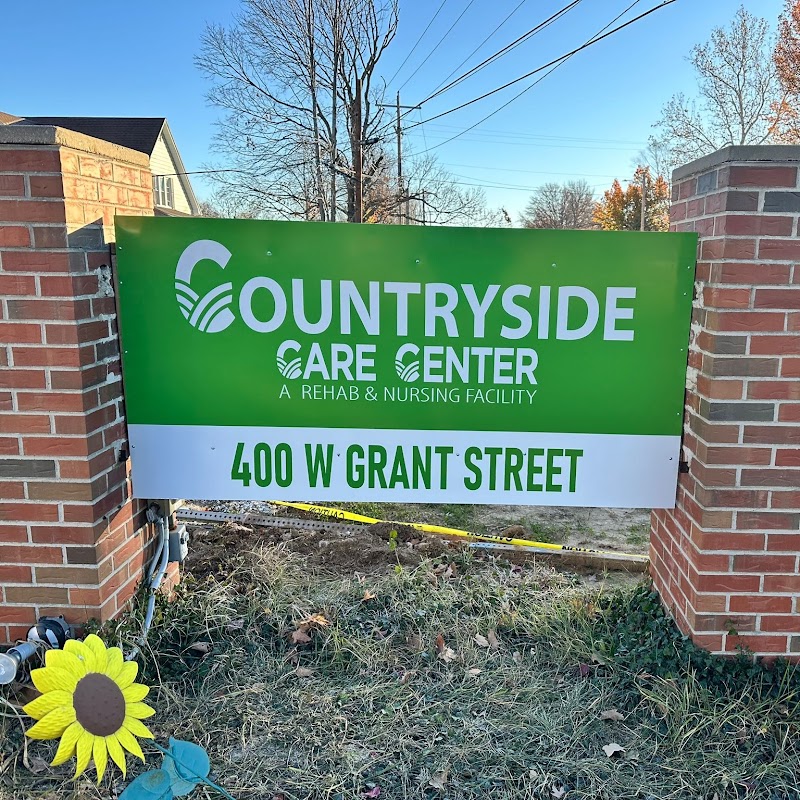
How Does Countryside Compare to Other Illinois Nursing Homes?

Compared to the 100 nursing homes in Illinois, COUNTRYSIDE CARE CENTER's overall rating (1 stars) is below the state average of 2.5, staff turnover (69%) is significantly higher than the state average of 46%, and health inspection rating (2 stars) is below the national benchmark.

What Should Families Ask When Visiting Countryside?

Based on this facility's data, families visiting should ask: "What changes have been made since the serious inspection findings, and how are you preventing similar issues?" "How do you ensure continuity of care given staff turnover, and what is your staff retention strategy?" "Can you walk me through typical staffing levels on day, evening, and night shifts?" "Can I visit during a mealtime to observe dining assistance and food quality?" These questions are particularly relevant given the facility's Immediate Jeopardy citations, the facility's high staff turnover rate, and the below-average staffing rating.

Is Countryside Safe?

Based on CMS inspection data, COUNTRYSIDE CARE CENTER has documented safety concerns. Inspectors have issued 1 Immediate Jeopardy citation (the most serious violation level indicating risk of serious injury or death). The facility has a 1-star overall rating and ranks #100 of 100 nursing homes in Illinois. Families considering this facility should ask detailed questions about what corrective actions have been taken since these incidents.

Do Nurses at Countryside Stick Around?

Staff turnover at COUNTRYSIDE CARE CENTER is high. At 69%, the facility is 23 percentage points above the Illinois average of 46%. High turnover means new staff may not know residents' individual needs, medications, or preferences. It can also be disorienting for residents, especially those with dementia who rely on familiar faces. Families should ask: What is causing the turnover? What retention programs are in place? How do you ensure care continuity during staff transitions?

Was Countryside Ever Fined?

COUNTRYSIDE CARE CENTER has been fined $260,571 across 4 penalty actions. This is 7.3x the Illinois average of $35,685. Fines at this level are uncommon and typically indicate a pattern of serious deficiencies, repeated violations, or failure to correct problems promptly. CMS reserves penalties of this magnitude for facilities that pose significant, documented risk to resident health or safety. Families should request specific documentation of what issues led to these fines and what systemic changes have been implemented.

Is Countryside on Any Federal Watch List?

COUNTRYSIDE CARE CENTER is not on any federal watch list. The most significant is the Special Focus Facility (SFF) program, which identifies the bottom 1% of nursing homes nationally based on persistent, serious quality problems. Not being on this list means the facility has avoided the pattern of deficiencies that triggers enhanced federal oversight. This is a positive indicator, though families should still review the facility's inspection history directly.