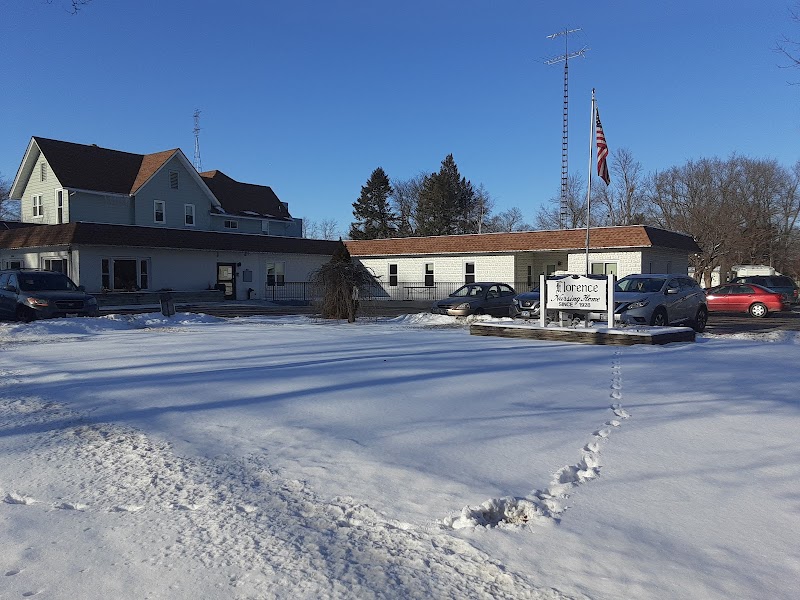
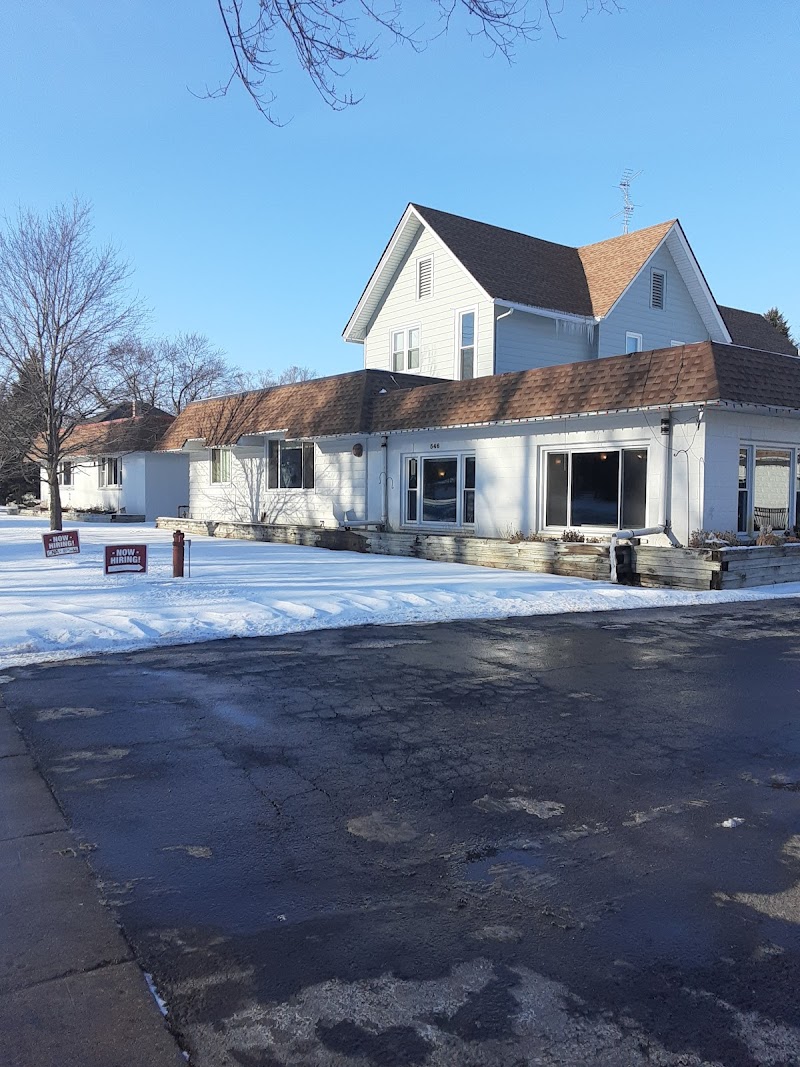
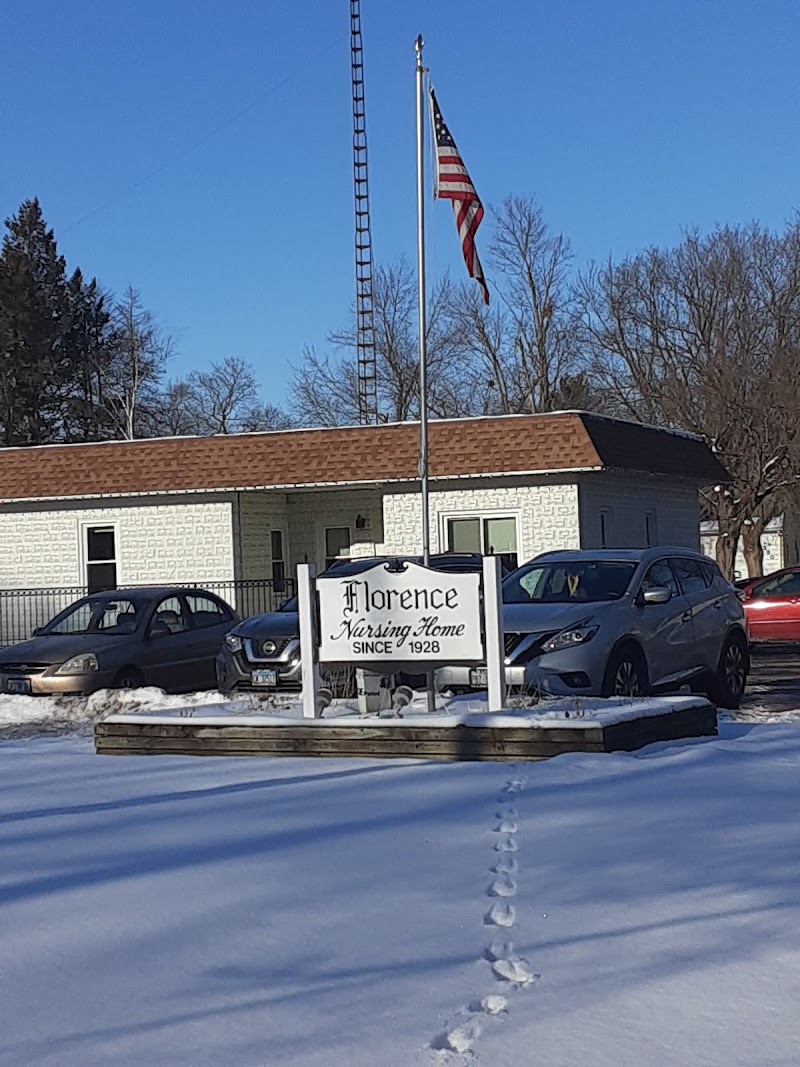
FLORENCE NURSING HOME
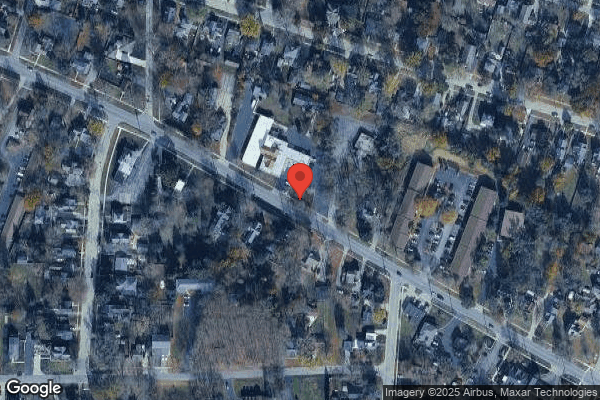

546 EAST GRANT HIGHWAY, MARENGO, IL 60152 (815) 568-8322
For profit - Limited Liability company 56 Beds Independent Data: November 2025
Trust Grade
78/100
#143 of 665 in IL
Last Inspection: May 2025

Inspected within the last 6 months. Data reflects current conditions.

Overview

Florence Nursing Home in Marengo, Illinois, has a Trust Grade of B, indicating it is a good choice, though not without some concerns. It ranks #143 out of 665 facilities in Illinois, placing it in the top half, and #4 out of 10 in McHenry County, meaning only three local options are better. The facility is improving, having reduced its issues from four in 2024 to two in 2025. Staffing is a mixed bag; while the turnover rate is low at 37%, the staffing rating is only 2 out of 5 stars, suggesting there may not be enough staff available at times. The home has $3,168 in fines, which is average, and it provides more RN coverage than 77% of Illinois facilities, ensuring better oversight of resident care. However, there are some notable concerns. For instance, staff failed to use proper personal protective equipment while providing care to residents with feeding tubes and catheters, risking infection. Additionally, a resident requiring assistance was improperly transferred without a gait belt, raising safety concerns. Lastly, incontinence care was performed without proper hygiene protocols, leading to potential cross-contamination. Overall, while there are strengths in staffing stability and RN oversight, families should be aware of the care practices and incidents that have occurred.

Trust Score
B
78/100
In Illinois
#143/665
Top 21%
Safety Record
Low Risk
No red flags
Inspections
Getting Better
4 → 2 violations
Staff Stability
○ Average
37% turnover. Near Illinois's 48% average. Typical for the industry.
Penalties
⚠ Watch
$3,168 in fines. Higher than 88% of Illinois facilities, suggesting repeated compliance issues.
Skilled Nurses
✓ Good
Each resident gets 51 minutes of Registered Nurse (RN) attention daily — more than average for Illinois. RNs are trained to catch health problems early.
Violations
○ Average
9 deficiencies on record. Average for a facility this size. Mostly minor or procedural issues.
★★★★☆
4.0
Overall Rating
★★☆☆☆
2.0
Staff Levels
★☆☆☆☆
1.0
Care Quality
★★★★★
5.0
Inspection Score
Stable
2024: 4 issues
2025: 2 issues

The Good

  • Full Sprinkler Coverage · Fire safety systems throughout facility
  • No fines on record
  • Staff turnover below average (37%)

    11 points below Illinois average of 48%

Facility shows strength in fire safety.

The Bad

Staff Turnover: 37%

Near Illinois avg (46%)

Typical for the industry

Federal Fines: $3,168

Below median ($33,413)

Minor penalties assessed

The Ugly 9 deficiencies on record

May 2025 2 deficiencies
CONCERN (D)

Potential for Harm - no one hurt, but risky conditions existed

Accident Prevention (Tag F0689)

Could have caused harm · This affected 1 resident

**NOTE- TERMS IN BRACKETS HAVE BEEN EDITED TO PROTECT CONFIDENTIALITY** Based on observation, interview, and record review the facility failed to transfer a resident in a safe manner. This applies to ...

Read full inspector narrative →
**NOTE- TERMS IN BRACKETS HAVE BEEN EDITED TO PROTECT CONFIDENTIALITY** Based on observation, interview, and record review the facility failed to transfer a resident in a safe manner. This applies to one of two residents (R13) reviewed for safety in the sample of 23. The findings include: The face sheet for R13 shows she was admitted to the facility with diagnoses to include Alzheimer's, hypertension and muscle weakness. The facility assessment dated [DATE] shows her to have severe cognitive impairment and requires maximum staff assistance with transfers. On 5/6/2025 at 9:12 AM, R13 was observed being transferred from her wheelchair to her bed by V3 Certified Nursing Assistant (CNA). V3 who was wearing a gait belt around her waist, lifted R13 up from her wheelchair by placing her arms under R13's arms, pivoted her to the bed and lowered her onto her bed. On 5/7/2025 at 1:52 PM, V3 said a gait belt should have been used to transfer R13 from the chair to her bed. On 5/7/2025 at 1:48 PM, V2 Director of Nursing (DON) said a gait belt should always be used during a transfer for the safety of the resident and the staff. The undated facility gait belt policy shows to assure the safety of the residents and staff when assisting with a transfer or ambulation a gait belt will be used. 2. All residents who require assist with transfers and do not require an electric lift will utilize a gait belt with all transfers unless contraindicated.
CONCERN (D)

Potential for Harm - no one hurt, but risky conditions existed

Infection Control (Tag F0880)

Could have caused harm · This affected 1 resident

**NOTE- TERMS IN BRACKETS HAVE BEEN EDITED TO PROTECT CONFIDENTIALITY** Based on observation, interview, and record review the facility failed to provide incontinence care in a manner to prevent cross...

Read full inspector narrative →
**NOTE- TERMS IN BRACKETS HAVE BEEN EDITED TO PROTECT CONFIDENTIALITY** Based on observation, interview, and record review the facility failed to provide incontinence care in a manner to prevent cross-contamination for 2 of 3 residents (R1, R23) reviewed for infection control in the sample of 23. The findings include: 1. On 5/6/25 at 9:34 AM, V3 and V4 (Certified Nursing Assistants - CNAs) used a total mechanical lift to transfer R1 into bed. They turned R1 side to side to removed the sling. V4 (CNA) opened R1's incontinence brief to provide care. V4 said R1's brief was wet and used wipes to cleanse the urine from R1's perineal area. V4 used the same (contaminated) gloves to obtain a clean brief and remove R1's glasses. Then V4 used a wipe to clean R1's bottom, applied barrier cream, turned R1 and closed the clean brief. V4 covered R1 with a blanket. V4 was wearing the same contaminated gloves throughout the observation. R1's Facesheet dated 5/8/25 showed R1 had diagnoses to include, but not limited to: osteoarthritis, palmar facial fibromatosis, Alzheimer's Disease, hypertension, contracture of her left hand, diarrhea, and mixed obsessional thoughts and acts. R1's facility assessment dated [DATE] showed she had severe cognitive impairment; required substantial to maximal staff assistance for personal hygiene; was dependent on staff for toileting, transfers, and bed mobility; and was always incontinent of bowel and bladder. V1 said V4 should not have worn the same gloves throughout R1's incontinence care due to the risk of cross-contamination. V1 said V4 should have changed her gloves and performed hand hygiene when moving from dirty to clean tasks. V1 said there will be in-services for this. The facility's Incontinence Policy dated 2024 showed, Based on the resident's comprehensive assessment, all residents that are incontinent will receive appropriate treatment and services . The facility's Personal Protective Equipment - Using Gloves Policy dated 2010 showed, Purpose: To guide use of gloves. Objectives: 1. To prevent the spread of infection . Miscellaneous . 4. Use non-sterile gloves primarily to prevent the contamination of the employee's hands when providing treatment or services to the patient and when cleaning contaminated surfaces. 5. Wash hands after removing gloves . 2. On 5/6/25 at 10:12 AM, V4 (CNA) and V5 (Hospice Nurse) transferred R23 to bed using a mechanical lift. V4 and V5 rolled R23 side to side to remove the lift sling. V4 (CNA) opened R23's incontinence brief and said it was wet. V4 threw the soiled incontinence brief at the foot of R23's bed. The brief was opened and landed on R23's bed linens. V4 provided incontinence care and applied barrier cream to R23's bottom before changing her gloves. V4 applied a clean brief, covered R23, and removed the soiled brief from R23's bed linens. R23's Facesheet dated 5/8/25 showed diagnoses to included, but not limited to: diabetes, stroke with right sided weakness, Chronic Obstructive Pulmonary Disease (COPD), hypothyroidism, mild protein-calorie malnutrition, and a history of C. diff (Clostridium difficile colitis - inflammation of the colon caused by a bacteria) and urinary tract infections. R23's facility assessment showed she had severe cognitive impairment; was dependent on staff for personal hygiene, toileting, transfers, and bed mobility; and was always incontinent of bowel and bladder. On 5/8/25 at 10:28 AM, V1 (Administrator) said she is the Infection Preventionist for the facility and she takes that role very seriously. V1 said V4 has been a CNA for a long time. The surveyor asked V1 if a soiled incontinence brief should be thrown at the foot of the resident's bed. V1 replied, Absolutely not, the soiled brief should be placed in a trash bag and not contact the resident's bedding. It's a cross-contamination risk.
Apr 2024 3 deficiencies
CONCERN (D)

Potential for Harm - no one hurt, but risky conditions existed

Pressure Ulcer Prevention (Tag F0686)

Could have caused harm · This affected 1 resident

**NOTE- TERMS IN BRACKETS HAVE BEEN EDITED TO PROTECT CONFIDENTIALITY** Based on observation, interview, and record review, the facility failed to have pressure relieving devices in place for one of o...

Read full inspector narrative →
**NOTE- TERMS IN BRACKETS HAVE BEEN EDITED TO PROTECT CONFIDENTIALITY** Based on observation, interview, and record review, the facility failed to have pressure relieving devices in place for one of one resident (R3) with high risk of pressure injuries in the sample of 12. The findings include: R3's Transfer Discharge report dated April 1, 2024 shows R3 was admitted to the facility on [DATE] with diagnoses including acquired absence of right foot, pressure injury of left heel, and congestive heart failure. R3's Care Plan shows R3 has potential for pressure injury development related to peripheral vascular disease, advanced age, poor safety awareness, and chronic pain. Follow facility policies/protocols for the prevention/treatment of skin breakdown. R3's Scale for Predicting Pressure Injury Risk for that R3 has a moderate risk for developing pressure injuries. R3's Wound Weekly Observation Tool dated March 20, 2024 shows that R3 had a pressure injury to his coccyx that healed. R3's Wound Weekly Observation Tool dated April 1, 2024 shows that R3 developed a stage II pressure injury to his coccyx. R3 Wound Weekly Observation Tool dated March 27, 2024 shows that R3 has a wound to his left heel. Special equipment/Preventative Measures include air mattress and foot protectors. R3's Treatment Medications dated March 1, 2024-March 31, 2024 shows an order for prevalon boot-continue to wear at all times. On April 1, 2024 at 9:16 AM, R3 was laying in bed. There was a heel boot noted to his night stand next to the head of his bed. R3 was laying on his left side with his left foot directly on the bed. At 11:58 AM, V6 and V10 CNAs (Certified Nursing Assistants) performed peri care to R3. There was an air mattress pump at the foot of R3's bed that was not buzzing, nor were there any lights on to indicate the air mattress was on. R3's heel boot was still on the night stand. R3's left foot had a dressing present. There was a small open area noted to R3's coccyx. At 2:24 PM, V5 LPN (Licensed Practical Nurse) came into R3's room. The air mattress pump at the foot of R3's bed still had no on indicator lights on. There was a medical grade surge protector at the head of R3's bed. The plug of the air mattress was halfway out of the outlet. V5 pushed the plug in and a green light turned on on the pump. V5 said the air mattress was off. On April 3, 2024 at 10:22 AM, V5 said that R3 should have foot protection on and an air mattress. V5 said if the air mattress is off, then the mattress will deflate. V5 said the light on the pump is green when the mattress is turned on. The facility's Pressure Injury Prevention Guidelines dated June 1, 2023 shows Policy: To prevent the formation of avoidable pressure injuries and to promote healing of existing pressure injuries, it is the policy of this facility to implement evidence-based interventions for all residents who are assess at risk or who have a pressure injury present. Interventions will be implemented in accordance with physician order, including the type of prevention devices to be used and, for tasks, the frequency for performing them. Prevention devices will be utilized in accordance with manufacturer recommendation (e.g., heel flotation devices, cushions, mattresses).
CONCERN (D)

Potential for Harm - no one hurt, but risky conditions existed

Accident Prevention (Tag F0689)

Could have caused harm · This affected 1 resident

**NOTE- TERMS IN BRACKETS HAVE BEEN EDITED TO PROTECT CONFIDENTIALITY** Based on interview and record review, the facility failed to safely perform ADL (Activities of Daily Living) assistance for one ...

Read full inspector narrative →
**NOTE- TERMS IN BRACKETS HAVE BEEN EDITED TO PROTECT CONFIDENTIALITY** Based on interview and record review, the facility failed to safely perform ADL (Activities of Daily Living) assistance for one of 12 residents (R21) reviewed for safety in the sample of 12. The findings include: R21's Transfer/Discharge Report dated April 3, 2023 shows R21 was admitted to the facility on [DATE] with diagnoses including acute kidney failure, muscle wasting and atrophy, cognitive communication deficit, fall, morbid obesity, and dementia. R21's Care Plan shows R21 requires extensive assistance by two staff to turn and reposition in bed. R21's Monthly Nursing Screen dated December 19, 2023 shows R21 requires extensive assistance with two staff members for bed mobility. R21's Progress Note dated December 23, 2023 at 5:45 AM shows, the nurse was told by CNA (Certified Nursing Assistant) R21 had a fall and had two skin tears. R21's right elbow and left forearm had a skin tear. R21 had a large knot on his forehead. 911 was called, the paramedics came. R21's Progress Note dated December 23, 2023 at 10:15 AM, shows R21 returned to the facility with a head contusion noted to the right side. R21 was alert to his name and able to verbalize that he fell this morning and hurt his head. The facility Incident/Accident Report dated December 23, 2023 shows, CNA reported resident had fallen from the bed during cares. This writer assessed resident and found skin tear to left forearm, right elbow, left knee abrasion, redness to right forehead. Cat scan head and neck no abnormalities, CNA counseled, staff in-serviced. On April 3, 2024 at 9:43 AM, V2 DON (Director of Nursing) said that V7 CNA was performing cares and getting R21 ready for the morning. V2 said that R21 was rolled onto his side when V7 went to grab washcloths and R21 rolled out of the bed. V2 said the bed was elevated and there was no floor mats in place because V7 was performing cares. V2 said that V7 was performing cares on R21 by himself. Two attempts were made to interview V7 (R21's CNA) and V8 (R21's nurse) on April 3, 2024 unsuccessfully. The facility's Safe Resident Handling/Transfers policy dated 2023 shows, It is the policy of this facility to ensure that residents are handled and transferred safely to prevent or minimize risks for injury and provide and promote a safe, secure and comfortable experience for the resident while keeping the employees safe in accordance with current standards and guidelines. Resident lifting and transferred will be performed according to the resident's individual plan of care.
CONCERN (F)

Potential for Harm - no one hurt, but risky conditions existed

Infection Control (Tag F0880)

Could have caused harm · This affected most or all residents

Based on observation, interview, and record review the facility failed to implement an Enhanced Barrier Precautions Procedure which applies to all 30 residents in the facility. The findings include: T...

Read full inspector narrative →
Based on observation, interview, and record review the facility failed to implement an Enhanced Barrier Precautions Procedure which applies to all 30 residents in the facility. The findings include: The federal form 671 completed by the facility on 4/1/24 showed the facility census was 30 residents. On 4/1/24 the facility had no Enhanced Barrier Precautions (EBP) signs up or Personal Protective Equipment (PPE) carts out for EBP residents. The facility's EBP list dated 4/1/24 showed R13, R16, and R26 had feeding tubes. R3, R23, R30, and R83 had indwelling urine catheters. R3 also has a daily wound dressing change. On 4/1/24 at 11:20 AM, V6 and V10 Certified Nursing Assistants (CNAs) provided incontinence care to R16 without wearing PPE gowns during care. No EBP sign was noted on the door at that time. On 4/1/24 at 11:58 AM, V6 and V10 provided peri care for R3. At that time, V5 Licensed Practical Nurse entered R3's room to provide wound care. V5, V6, and V10 did not wear gowns while providing cares for R3. No EBP sign was posted at the time of the cares. On 4/2/24 at 8:50 AM, V9 Registered Nurse said they had not received any education prior to 4/2/24 in regards to EBP. On 4/2/24 at 1:00 PM, V1 Administrator said the facility did not utilize EBP prior to the 4/1/24 implementation date. V1 stated, We do not have a EBP procedure in place at this time. We have a policy and staff education which will be in place by 4/8/24. On 4/3/24 at 9:56 AM, V2 Director of Nursing stated, We will be educating staff on EBP procedures for PPE for residents who should be on EBP. We did not have procedures in place on 4/1/24. The facility's Enhanced Barrier Precautions Policy revised on 4/1/24 showed residents with indwelling medical devices should be on EBP. This Policy showed medical devices include: central lines, urinary catheters, feeding tubes, and tracheotomy/ventilator tubes.
Jan 2024 1 deficiency
CONCERN (D) 📢 Someone Reported This

A family member, employee, or ombudsman was alarmed enough to file a formal complaint

Potential for Harm - no one hurt, but risky conditions existed

Notification of Changes (Tag F0580)

Could have caused harm · This affected 1 resident

Based on interview and record review, the facility failed to notify a resident's legal representative of a change in condition for 1 of 3 residents (R1) reviewed for notification in the sample of 6. ...

Read full inspector narrative →
Based on interview and record review, the facility failed to notify a resident's legal representative of a change in condition for 1 of 3 residents (R1) reviewed for notification in the sample of 6. The findings include: R1's Illinois Statutory Short Form Power of Attorney for Health Care (POAHC) shows R1 designated V6 as her legal POAHC on 6/6/2017. R1's IDPH Uniform Practitioner Order for Life-Sustaining Treatment (POLST) Form dated 8/7/21 shows V6 signed as R1's legal representative. R1's Incident/Accident Report dated 10/13/23 shows V3 (Licensed Practical Nurse/LPN) notified V7 (R1's son) when R1 was found on the floor in her room. R1's admission Record (Face Sheet) dated 8/1/23 shows R1's first emergency contact is V6. On 1/2/23 at 10:26 AM, V3 said she notified V7 (R1's son) when R1 was found on the floor and planned to send R1 to the hospital. V3 said she notified V7 and not V6 because V7 was the first emergency contact, and he knew more about R1. V3 said V7 would tell them to notify him first for everything regarding R1 and he would notify the rest of the family. On 1/2/23 at 11:23 AM, V2 (Director of Nursing) said the POAHC is always the first person to contact in the event of a resident fall or other change in condition. V2 said the POAHC is determined by the advanced directive paperwork. V2 said they would notify the POAHC quite rapidly after an incident and would not wait a day. On 1/2/23 at 12:53 PM, V1 (Administrator) said Social Services goes through the resident's legal papers and puts the information on the resident's Face Sheet so staff know who the POAHC is for them to contact that person with any changes or concerns regarding the resident. V1 said V6 is the POAHC for R1. On 1/2/23 at 10:52 AM, V4 (Registered Nurse) said she will contact the resident's POAHC for any changes in a resident's condition. V4 said the POAHC is listed on the resident's Face Sheet. V4 said she would only contact the POAHC for privacy. V4 said the POAHC can inform any further family members. The facility's Notification of Physician and Responsible Party for Resident Condition Change Policy (undated) shows the resident's responsible party is to be informed in the event of an accident involving the resident.
May 2023 3 deficiencies
CONCERN (D)

Potential for Harm - no one hurt, but risky conditions existed

ADL Care (Tag F0677)

Could have caused harm · This affected 1 resident

**NOTE- TERMS IN BRACKETS HAVE BEEN EDITED TO PROTECT CONFIDENTIALITY** Based on observation, interview, and record review the facility failed to ensure a resident's oral appliance was applied correct...

Read full inspector narrative →
**NOTE- TERMS IN BRACKETS HAVE BEEN EDITED TO PROTECT CONFIDENTIALITY** Based on observation, interview, and record review the facility failed to ensure a resident's oral appliance was applied correctly for a resident who requires extensive assist with personal hygiene/oral care. This applies to 1 of 12 (R29) residents reviewed for activities of daily living in the sample 12. The findings include: R29's face sheet shows she is an [AGE] year-old with diagnosis including bilateral osteoarthritis of first carpometacarpal joints, hemiplegia affecting left and right side, and contractures to left and right hand. R29's Minimum Data Sheet assessment dated [DATE] shows she requires extensive assist with transfers, personal hygiene, eating, and has limited range of motion to both upper extremities. On 5/15/23 at 12:50 PM, R29 was in the dining room during the noon meal. She was served chopped pot roast, potatoes, and broccoli. V6 (Certified Nursing Assistant/CNA) was feeding R29 her noon meal. R29 said to V6 something is stuck in the back of my throat, it's scaring me. V6 wheeled R29 to her room. V6 said R29 reported the glue from her dentures is stuck in her mouth. V6 asked R29 to open her mouth and the adhesive from her top dentures was oozing out from the back of her upper palate. A clump of adhesive was removed from the back of her tongue. V6 stated, Oh my gosh, a lot was in there. V6 removed R29's dentures and removed another round globe of adhesive. V5 (Licensed Practical Nurse) entered the room with a mouth swab and removed two additional chunks of adhesive from R29's mouth. R29 said when the staff put in her dentures and pressed down the glue was coming out, they used too much glue, it was all over my tongue, It's scary. On 5/15/23 at 1:50 PM, V6 (CNA) said staff apply R29's dentures because she cannot use her hands. Whoever put on her dentures put too much adhesive. V6 said she did not apply R29's dentures. On 5/15/23 at 2:08 PM, V2 (Director of Nursing) said R29 had an excessive amount of adhesive in her mouth, and it was uncomfortable for her. She explained to the staff when applying the adhesive to place four small pea size amounts on the dentures and it will expand when you apply it to the gums securing it in place. R29's current care plan shows she has a self-care performance deficit related to osteoporosis and the unable to use her bilateral upper extremities with interventions for staff to assist her personal hygiene and oral care. The facility's Care of Dentures Policy dated May 2023, states, 1. Determine which nursing staff member will provide denture care. It is usually the nurse aide assigned to the resident .11. Some residents use an adhesive to seal dentures in place. Apply a thin layer to undersurface before inserting. 12. If the residents needs help inserting the dentures, moisten upper dentures and press firmly to seal it in place. Ask the resident if dentures feel comfortable.
CONCERN (D)

Potential for Harm - no one hurt, but risky conditions existed

Food Safety (Tag F0812)

Could have caused harm · This affected 1 resident

Based on observation, interview, and record review the facility failed to handle ready to eat foods according to professional food safety standards. This applies to 2 (R12 and R13) of 12 residents rev...

Read full inspector narrative →
Based on observation, interview, and record review the facility failed to handle ready to eat foods according to professional food safety standards. This applies to 2 (R12 and R13) of 12 residents reviewed for food safety in the sample of 12. The findings include: On 5/15/2023 at 12:15 PM, V3 (Dietary Manager) requested bread for R12 and R13 from V4 (Cook). V4 reached into the bread package without gloves, grabbed two slices of bread, and placed them into a plastic bag. V3 served the bread to R12 and R13. On 5/15/2023 at 12:20 PM, V3 said that gloves should be used to serve bread and other ready to eat foods. Facility Bare Hand Contact with Ready-To-Eat Foods policy (no date) states, The Food Service Sanitation Rules & Regulations state that food employees cannot handle ready-to-eat foods with their bare hands. Ready-to-eat foods are foods that will be consumed without additional washing, cooking, or preparation. What are some examples of ready-to-eat foods? Fresh fruits and vegetables served raw, bread, toast, rolls, and baked goods .
CONCERN (D)

Potential for Harm - no one hurt, but risky conditions existed

Deficiency F0883 (Tag F0883)

Could have caused harm · This affected 1 resident

**NOTE- TERMS IN BRACKETS HAVE BEEN EDITED TO PROTECT CONFIDENTIALITY** Based on interview and record review the facility failed to offer and administer pneumonia vaccines (pneumococcal conjugate vacc...

Read full inspector narrative →
**NOTE- TERMS IN BRACKETS HAVE BEEN EDITED TO PROTECT CONFIDENTIALITY** Based on interview and record review the facility failed to offer and administer pneumonia vaccines (pneumococcal conjugate vaccine [PCV15] and Pneumococcal polysaccharide vaccine [PPSV23]) for 2 of 5 residents (R6 and R29) reviewed for vaccines in the sample of 12. The findings include: 1. R6's face sheet shows R6 is [AGE] years old and was admitted to the facility on [DATE]. R6's Immunization Report provided on 5/16/2023 showed R6 received the PCV13 (pneumococcal conjugate vaccine [PCV13] vaccine on 9/22/2017 and did not receive the PPSV23 vaccine. On 5/17/2023 at 9:00 AM, V2 (Director of Nurses) said that R6 was not offered the second dose of the pneumonia vaccine. V2 believed that there should be five years between administration of the PCV13 vaccine and the PPSV23 vaccine. 2. R29's face sheet shows R29 is [AGE] years old and was admitted to the facility on [DATE]. R29's Immunization Report provided on 5/16/2023 showed R29 received the PCV13 vaccine on 8/13/2019 and did not receive the PPSV23 vaccine. On 5/16/2023 at 3:07 PM, V2 provided a signed pneumonia vaccine consent form for R29 dated on 3/31/2023. V2 said the vaccine was ordered from the pharmacy but no additional follow up was done to provide the consented vaccination to R29. On 5/16/2023 at 1:43 PM, V2 said the pneumonia vaccine is offered upon admission and they will use the Centers for Disease Control and Prevention (CDC) guidelines along with the resident's health records to offer and provide the correct sequence of pneumonia vaccines depending on the age of the resident. The facility's Vaccine Information Statement (no date) provided to residents with the pneumococcal vaccine states, . Adults 65 years who have not already received a pneumococcal conjugate vaccine should receive either: a single dose of PCV15 followed by a dose of PPSV23, or a single dose of PCV20. The facility's Pneumococcal Disease Prevention Policy revised 7/2022 states, In order to reduce the disease-morbidity and mortality associated with pneumococcal disease, pneumococcal vaccines are offered to all residents. Procedures: . B. Nurse will use CDC PneumoRecs Vax Recommendation to verify correct Pneumonia Vaccine needed. C. Residents will be offered a pneumococcal vaccine (such as the pneumococcal conjugate vaccine PCV15 or PCV20) in accordance with the CDC recommended immunization schedule .
Understanding Severity Codes (click to expand)
Life-Threatening (Immediate Jeopardy)
J - Isolated K - Pattern L - Widespread
Actual Harm
G - Isolated H - Pattern I - Widespread
Potential for Harm
D - Isolated E - Pattern F - Widespread
No Harm (Minor)
A - Isolated B - Pattern C - Widespread

Questions to Ask on Your Visit

  • "Can I speak with families of current residents?"
  • "What's your RN coverage like on weekends and overnight?"

Our Honest Assessment

Strengths
  • • No major safety red flags. No abuse findings, life-threatening violations, or SFF status.
  • • $3,168 in fines. Lower than most Illinois facilities. Relatively clean record.
  • • 37% turnover. Below Illinois's 48% average. Good staff retention means consistent care.
Concerns
  • • No major red flags. Standard due diligence and a personal visit recommended.
Bottom line: Generally positive indicators. Standard due diligence and a personal visit recommended.

About This Facility

What is Florence's CMS Rating?

CMS assigns FLORENCE NURSING HOME an overall rating of 4 out of 5 stars, which is considered above average nationally. Within Illinois, this rating places the facility higher than 99% of the state's 100 nursing homes. This rating reflects solid performance across the metrics CMS uses to evaluate nursing home quality.
How is Florence Staffed?

CMS rates FLORENCE NURSING HOME's staffing level at 2 out of 5 stars, which is below average compared to other nursing homes. Staff turnover is 37%, compared to the Illinois average of 46%. This relatively stable workforce can support continuity of care.

What Have Inspectors Found at Florence?

State health inspectors documented 9 deficiencies at FLORENCE NURSING HOME during 2023 to 2025. These included: 9 with potential for harm.
Who Owns and Operates Florence?

FLORENCE NURSING HOME is owned by a for-profit company. For-profit facilities operate as businesses with obligations to shareholders or private owners. The facility operates independently rather than as part of a larger chain. With 56 certified beds and approximately 31 residents (about 55% occupancy), it is a smaller facility located in MARENGO, Illinois.
How Does Florence Compare to Other Illinois Nursing Homes?

Compared to the 100 nursing homes in Illinois, FLORENCE NURSING HOME's overall rating (4 stars) is above the state average of 2.5, staff turnover (37%) is near the state average of 46%, and health inspection rating (5 stars) is much above the national benchmark.

What Should Families Ask When Visiting Florence?

Based on this facility's data, families visiting should ask: "Can you walk me through typical staffing levels on day, evening, and night shifts?" "Can I visit during a mealtime to observe dining assistance and food quality?" "How do you handle medical emergencies, and what is your hospital transfer rate?" "Can I speak with family members of current residents about their experience?" These questions are particularly relevant given the below-average staffing rating.

Is Florence Safe?

Based on CMS inspection data, FLORENCE NURSING HOME has a clean safety record: no substantiated abuse findings (meaning no confirmed cases of resident harm), no Immediate Jeopardy citations (the most serious violation level indicating risk of serious injury or death), and is not on the Special Focus Facility watch list (a federal program monitoring the lowest-performing 1% of nursing homes). The facility has a 4-star overall rating and ranks #1 of 100 nursing homes in Illinois. While no facility is perfect, families should still ask about staff-to-resident ratios and recent inspection results during their visit.

Do Nurses at Florence Stick Around?

FLORENCE NURSING HOME has a staff turnover rate of 37%, which is about average for Illinois nursing homes (state average: 46%). Moderate turnover is common in nursing homes, but families should still ask about staff tenure and how the facility maintains care continuity when employees leave.

Was Florence Ever Fined?

FLORENCE NURSING HOME has been fined $3,168 across 1 penalty action. This is below the Illinois average of $33,111. While any fine indicates a compliance issue, fines under $50,000 are relatively common and typically reflect isolated problems that were subsequently corrected. Families should ask what specific issues led to these fines and confirm they've been resolved.

Is Florence on Any Federal Watch List?

FLORENCE NURSING HOME is not on any federal watch list. The most significant is the Special Focus Facility (SFF) program, which identifies the bottom 1% of nursing homes nationally based on persistent, serious quality problems. Not being on this list means the facility has avoided the pattern of deficiencies that triggers enhanced federal oversight. This is a positive indicator, though families should still review the facility's inspection history directly.