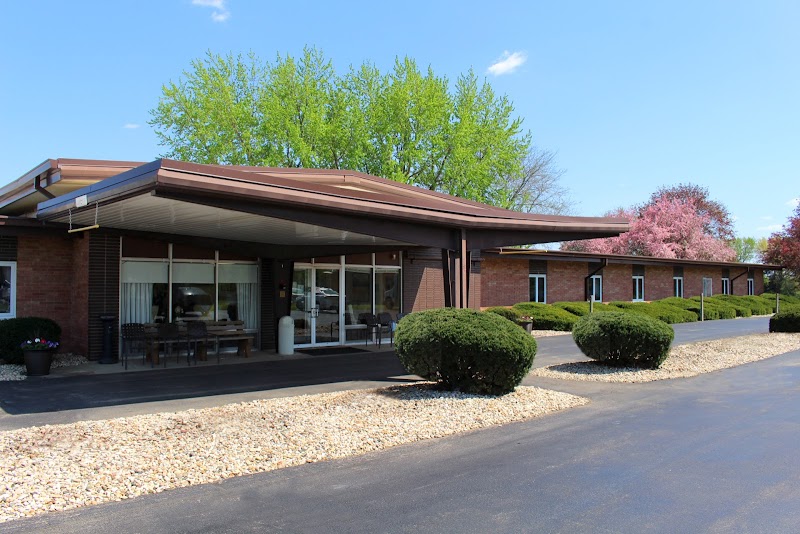
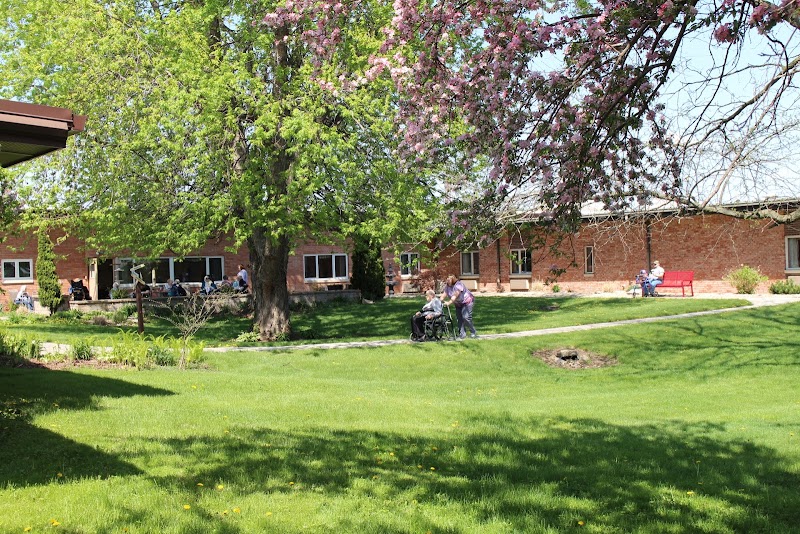
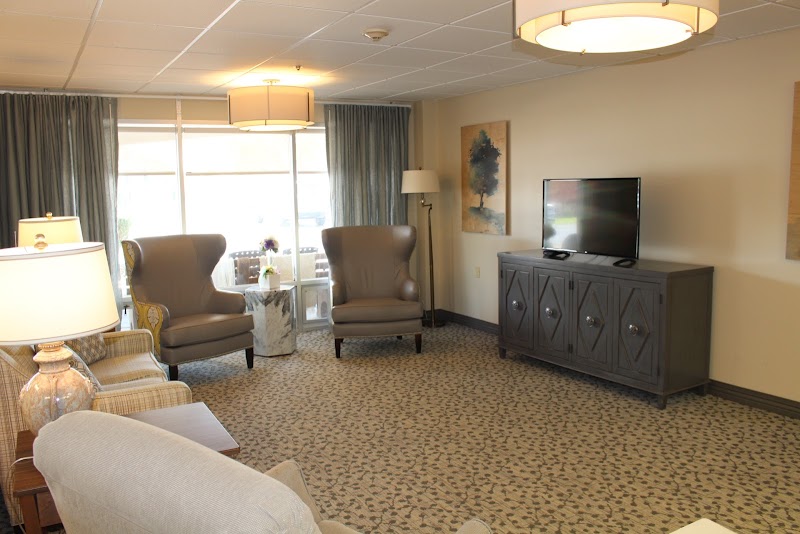
ALLURE OF MENDOTA

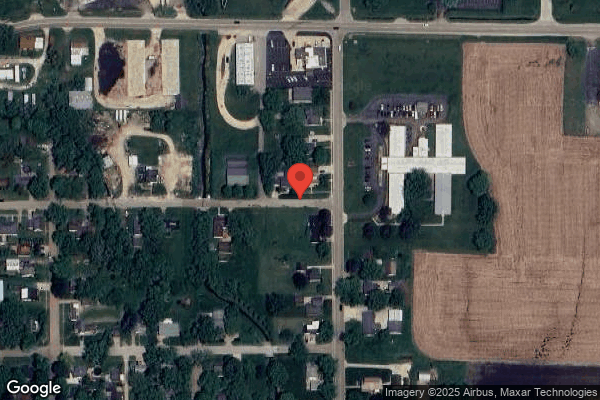
1201 FIRST AVENUE, MENDOTA, IL 61342 (815) 539-6745
For profit - Limited Liability company 85 Beds ALLURE HEALTHCARE SERVICES Data: November 2025
Trust Grade
35/100
#211 of 665 in IL
Last Inspection: November 2024

Within standard 12-15 month inspection cycle. Federal law requires annual inspections.

Overview

Allure of Mendota has received a Trust Grade of F, indicating significant concerns about the quality of care provided. Ranking #211 out of 665 facilities in Illinois places it in the top half, and it ranks #6 out of 9 in La Salle County, meaning only two local options are better. The facility is improving, with issues decreasing from 7 in 2024 to 2 in 2025, but it still faces serious concerns, including four incidents that caused harm to residents. Staffing is relatively stable with a turnover rate of 31%, which is below the state average, and RN coverage is average, suggesting some consistency in care. However, the facility has been fined $28,259, which is concerning, and there are serious incidents such as residents suffering fractures from improper transfers and a failure to communicate changes in condition, highlighting areas that still need urgent attention.

Trust Score
F
35/100
In Illinois
#211/665
Top 31%
Safety Record
High Risk
Review needed
Inspections
Getting Better
7 → 2 violations
Staff Stability
○ Average
31% turnover. Near Illinois's 48% average. Typical for the industry.
Penalties
✓ Good
$28,259 in fines. Lower than most Illinois facilities. Relatively clean record.
Skilled Nurses
✓ Good
Each resident gets 44 minutes of Registered Nurse (RN) attention daily — more than average for Illinois. RNs are trained to catch health problems early.
Violations
⚠ Watch
23 deficiencies on record. Higher than average. Multiple issues found across inspections.
★★★☆☆
3.0
Overall Rating
★★★☆☆
3.0
Staff Levels
★★☆☆☆
2.0
Care Quality
★★★☆☆
3.0
Inspection Score
Stable
2024: 7 issues
2025: 2 issues

The Good

  • Full Sprinkler Coverage · Fire safety systems throughout facility
  • No fines on record
  • Staff turnover below average (31%)

    17 points below Illinois average of 48%

Facility shows strength in fire safety.

The Bad

3-Star Overall Rating

Near Illinois average (2.5)

Meets federal standards, typical of most facilities

Staff Turnover: 31%

15pts below Illinois avg (46%)

Typical for the industry

Federal Fines: $28,259

Below median ($33,413)

Moderate penalties - review what triggered them

Chain: ALLURE HEALTHCARE SERVICES

Part of a multi-facility chain

Ask about local staffing decisions and management

The Ugly 23 deficiencies on record

4 actual harm
May 2025 2 deficiencies
CONCERN (D) 📢 Someone Reported This

A family member, employee, or ombudsman was alarmed enough to file a formal complaint

Potential for Harm - no one hurt, but risky conditions existed

Report Alleged Abuse (Tag F0609)

Could have caused harm · This affected 1 resident

**NOTE- TERMS IN BRACKETS HAVE BEEN EDITED TO PROTECT CONFIDENTIALITY** Based on interview and record review the facility failed to report an injury of unknown origin to Illinois Department of Public ...

Read full inspector narrative →
**NOTE- TERMS IN BRACKETS HAVE BEEN EDITED TO PROTECT CONFIDENTIALITY** Based on interview and record review the facility failed to report an injury of unknown origin to Illinois Department of Public Health (IDPH) for a resident with bruises to her inner thigh area for 1 of 3 residents (R1) reviewed for injury of unknown origin in the sample of 6. The findings include: The Nurses Note dated [DATE] at 12:01 AM for R1 showed, the aides took the resident to the bathroom and had noticed scattered bruising to her inner thighs (yellow, green, and purple bruises). The certified nursing assistant (CNA) stated they were not sure how long they have been there due to resident being a standby assist and taking herself to the bathroom. Resident also refuses cares at times. When I asked the resident stated, it's from these and pointed to her depends. No pain or discomfort noted to the area of bruising. The facility did not report the bruises to R1's inner thighs to Illinois Department of Public Health (IDPH). On [DATE] at 10:11 AM, V1 (Administrator) stated, injuries of unknown origin could be bruises and if they can't find a reason or a conclusion as to how the bruises happened then she would investigate the bruises as an injury of unknown origin. V1 stated R1 had a bruise to her left thigh and a small mark to her right thigh. On Thursday ([DATE]) morning the nurse documented that R1 had bruises to her thighs. V1 stated they investigated the bruises and R1 would bump into things. V1 stated they thought that R1 would bump into the foot board of her bed when she was trying to get snacks that were located on a credenza at the end of her bed. V1 stated the bruises were to R1's inner thigh area on the left and a small one to inner thigh on the right. On Friday ([DATE]) night R1 fell; she was on hospice. R1 didn't break her fall, was sent to the hospital, and came back on Saturday ([DATE]) with a diagnosis of a urinary tract infection (UTI). V1 stated that same day R1 complained of chest pain; she was restless and was acting out. Hospice was contacted and they said to send her to the hospital. V1 stated she pulled up the pictures that the hospital had in R1's chart of the bruises to her inner thigh and they did not look the same as what she saw when she observed R1's bruises. They looked different from Thursday to Friday ([DATE]). When R1 went back to the hospital on Saturday ([DATE]) they got her up to the commode, she stood up, collapsed, they put her in bed, and she died. V1 stated she looked at the hospital records and the doctor documented that she possibly died from an aortic dissection or aortic aneurysm, and this would explain the bruising. She also did have low vitamin B level and bruised easily. On [DATE] at 1:14 PM, V1 stated an injury of unknown origin is an injury that can't be explained as far as the cause or there are no witnesses to the injury. A bruise that shows up that can't be explained would be investigated. V1 confirmed if a bruise were in an unusual place they would investigate it as injury of unknown origin. V1 stated she should have reported to IDPH. The Face Sheet dated [DATE] for R1 showed diagnoses including Alzheimer's disease, palliative care, dementia with behavioral disturbance, type 2 diabetes mellitus, acute cystitis without hematuria, deficiency of B vitamins, hypomagnesemia, unspecified behavioral syndromes, anxiety disorder, and essential hypertension. The facility's Unexplained Injuries policy ([DATE]) showed, all unexplained injuries, including bruises, abrasions, and injuries of unknown source will be investigated. An injury should be classified as an injury of unknown source when both of the following conditions are met: A, the source of the injury was not observed by any person, or the source of the injury could not be explained by the resident; and b. The injury is suspicious because of i. The extent of the injury or ii. The location of the injury (e.g., the injury is located in an area not generally vulnerable to trauma) Reporting and investigation procedures shall be implemented in accordance with the facility's abuse policies and procedures. The facility's Abuse, Neglect, and Exploitation policy (2025) showed, possible indicators f abuse include, but are not limited to: physical marks such as bruises or patterned appearances such as a handprint, belt or ring mark on a resident's body. Physical injury of a resident, of unknown source. Reporting of all alleged violations to the Administrator, state agency, adult protective services and other required agencies (e.g., law enforcement when applicable) within specified time frames: a. Immediately, but not later than 2 hours after the allegation is made, if the events that cause the allegation involve abuse or result in serious bodily injury, or b. Not later than 24 hours if the events that cause the allegation do not involve abuse and do not result in serious bodily injury.
CONCERN (D) 📢 Someone Reported This

A family member, employee, or ombudsman was alarmed enough to file a formal complaint

Potential for Harm - no one hurt, but risky conditions existed

Investigate Abuse (Tag F0610)

Could have caused harm · This affected 1 resident

**NOTE- TERMS IN BRACKETS HAVE BEEN EDITED TO PROTECT CONFIDENTIALITY** Based on interview and record review the facility failed to ensure a thorough investigation was done by interviewing additional ...

Read full inspector narrative →
**NOTE- TERMS IN BRACKETS HAVE BEEN EDITED TO PROTECT CONFIDENTIALITY** Based on interview and record review the facility failed to ensure a thorough investigation was done by interviewing additional residents when a resident had an injury of unknown origin that consisted of bruising to her inner thighs for 1 of 3 residents (R1) reviewed for injury of unknown origin in the sample of 6. The findings include: The Nurses Note dated [DATE] at 12:01 AM for R1 showed, the aides took the resident to the bathroom and had noticed scattered bruising to her inner thighs (yellow, green, and purple bruises). The certified nursing assistant (CNA) stated they were not sure how long they have been there due to resident being a standby assist and taking herself to the bathroom. Resident also refuses cares at times. When I asked the resident stated, it's from these and pointed to her depends. No pain or discomfort noted to the area of bruising. The facility did not report the bruises to R1's inner thighs to Illinois Department of Public Health (IDPH). On [DATE] at 10:11 AM, V1 (Administrator) stated, injuries of unknown origin could be bruises and if they can't find a reason or a conclusion as to how the bruises happened then she would investigate the bruises as an injury of unknown origin. V1 stated R1 had a bruise to her left thigh and a small mark to her right thigh. On Thursday ([DATE]) morning the nurse documented that R1 had bruises to her thighs. V1 stated they investigated the bruises and R1 would bump into things. V1 stated they thought that R1 would bump into the foot board of her bed when she was trying to get snacks that were located on a credenza at the end of her bed. V1 stated the bruises were to R1's inner thigh area on the left and a small one to inner thigh on the right. On Friday ([DATE]) night R1 fell; she was on hospice. R1 didn't break her fall, was sent to the hospital, and came back on Saturday ([DATE]) with a diagnosis of a urinary tract infection (UTI). V1 stated that same day R1 complained of chest pain; she was restless and was acting out. Hospice was contacted and they said to send her to the hospital. V1 stated she pulled up the pictures that the hospital had in R1's chart of the bruises to her inner thigh and they did not look the same as what she saw when she observed R1's bruises. They looked different from Thursday to Friday ([DATE]). When R1 went back to the hospital on Saturday ([DATE]) they got her up to the commode, she stood up, collapsed, they put her in bed, and she died. V1 stated she looked at the hospital records and the doctor documented that she possibly died from an aortic dissection or aortic aneurysm, and this would explain the bruising. She also did have low vitamin B level and bruised easily. On [DATE] at 1:14 PM, V1 stated an injury of unknown origin is an injury that can't be explained as far as the cause or there are no witnesses to the injury. A bruise that shows up that can't be explained would be investigated. V1 confirmed if a bruise were in an unusual place they would investigate it as injury of unknown origin. V1 stated residents were not interviewed as part of their investigation and should have been. V1 stated they only interviewed staff. The Face Sheet dated [DATE] for R1 showed diagnoses including Alzheimer's disease, palliative care, dementia with behavioral disturbance, type 2 diabetes mellitus, acute cystitis without hematuria, deficiency of B vitamins, hypomagnesemia, unspecified behavioral syndromes, anxiety disorder, and essential hypertension. The facility's Unexplained Injuries policy ([DATE]) showed, all unexplained injuries, including bruises, abrasions, and injuries of unknown source will be investigated. An injury should be classified as an injury of unknown source when both of the following conditions are met: A, the source of the injury was not observed by any person, or the source of the injury could not be explained by the resident; and b. The injury is suspicious because of i. The extent of the injury or ii. The location of the injury (e.g., the injury is located in an area not generally vulnerable to trauma) Reporting and investigation procedures shall be implemented in accordance with the facility's abuse policies and procedures. The facility's Abuse, Neglect, and Exploitation policy (2025) showed, possible indicators f abuse include, but are not limited to: physical marks such as bruises or patterned appearances such as a handprint, belt or ring mark on a resident's body. Physical injury of a resident, of unknown source. Investigation of alleged abuse, neglect, and exploitation - an immediate investigation is warranted when suspicion of abuse, neglect or exploitation, or reports of abuse, neglect or exploitation occur. Identifying and interviewing all involved persons, including the alleged victim, alleged perpetrator, witnesses, and others who may have knowledge of the allegations.
Dec 2024 1 deficiency
CONCERN (D) 📢 Someone Reported This

A family member, employee, or ombudsman was alarmed enough to file a formal complaint

Potential for Harm - no one hurt, but risky conditions existed

Deficiency F0578 (Tag F0578)

Could have caused harm · This affected 1 resident

**NOTE- TERMS IN BRACKETS HAVE BEEN EDITED TO PROTECT CONFIDENTIALITY** Based on record review and interview, the facility failed to verify a resident's code status prior to starting CPR/Cardio-Pulmon...

Read full inspector narrative →
**NOTE- TERMS IN BRACKETS HAVE BEEN EDITED TO PROTECT CONFIDENTIALITY** Based on record review and interview, the facility failed to verify a resident's code status prior to starting CPR/Cardio-Pulmonary Resuscitation for one of three residents (R1) reviewed code status in the sample of three. Findings include: The facility's undated Residents' Rights Regarding Treatment and Advance Directives policy documents, Upon admission, should the resident have an advance directive, copies will be made and placed on the chart as well as communicated to staff. The facility's undated Communication of Code Status policy states: It is the facility's policy to adhere to residents' rights to formulate advance directives. In accordance with these rights, the facility will implement procedures to communicate a resident's code status to those individuals who need to know. Designated sections of the medical record are: miscellaneous tab under Advanced Directives. Additional means of communication of code status include: PCC/Point Click Care (the facility's electronic medical record data system) under resident's name is code status. R1's medical record documents R1 was admitted to the facility from the hospital on [DATE] with the following diagnoses: Acute Respiratory Failure with Hypoxia; Chronic Obstructive Pulmonary Disease; Chronic Kidney Disease; Congestive Heart Disease; Hypertension and Diabetes Mellitus Type 2. R1's medical record included a POLST/Physicians Order for Life Sustaining Treatment Form, signed and dated [DATE] by R1 and V16 (R1's Physician). This POLST documented R1's code status was, Do Not Attempt Resuscitation/DNR. R1's Health Status Note by V4 RN/Registered Nurse, dated [DATE] at 3:25pm, documented R1 was admitted by V4 on [DATE] at 3:25pm. V4 documented R1 was alert and oriented, able to answer all questions appropriately. V4 documented R1's code status as Full Code. R1's Health Status Note by V5 LPN/Licensed Practical Nurse, dated [DATE] at 2:25am, documents V5 found R1 unresponsive, pulseless, without respirations, and unable to auscultate an apical pulse. On [DATE] at 1:41pm, V5 LPN stated, during shift change on [DATE], V14/LPN reported that R1's code status was DNR/Do Not Resuscitate. V5 stated he did not check R1's electronic medical record for verification of R1's code status or POLST form at that time. V5 stated when they found R1 unresponsive, pulseless and without respirations, V5 did not start Cardio-Pulmonary Resuscitation/CPR, based on the verbal report V5 received when coming on duty. V5 stated he called V6 RN/Registered Nurse on a separate hall, to verify R1's death and attempted to notify R1's POA/Power of Attorney and family members of her passing. V5 stated he then called the on-call Nurse (V4 RN) to report (R1's) death. V3 ADON/Assisted Director of Nursing then called the facility and told V5 R1's code status was Full Code. At that time, V5 stated he called 9-1-1 (emergency services) and directed V6 RN, V7 and V8 CNAs to start CPR. V5 stated V2 DON/Director of Nursing called the facility shortly after CPR was started and informed V5 that R1's code status is DNR. V5 stated he then located R1's POLST/Physicians Order for Life-Sustaining Treatment Form in R1's electronic medical record documenting R1's DNR code status and informed staff to stop CPR. On [DATE] at 10:45am, V4 stated she was the admitting nurse for R1 on [DATE]. V4 stated she called the admitting hospital for report from R1's nurse, who stated R1's code status was a Full Code. V4 stated R1 did not voice her code status to V4 during the admission process. V4 stated on [DATE], she passed on during report to V15/LPN/Licensed Practical Nurse, the oncoming night shift nurse, that R1's code status was a Full Code. V4 confirmed R1's code status was a DNR, and she had passed on incorrect information after admitting R1. V4 stated CPR was started when R1's code status was DNR per R1's POLST form. V4 stated she did not verify R1's code status by checking R1's POLST form sent with R1 on admission. On [DATE] at 11:05am, V12 MDS/Minimum Data Set Coordinator stated R1's POLST form that R1 admitted with on [DATE] documented R1 as a DNR. On [DATE] at 11:12am V13 Social Services Director stated R1 was admitted to the facility from the hospital on [DATE] with transfer orders and a signed POLST Form documenting R1's code status as (Do Not Resuscitate) DNR. V13 stated R1 was alert and oriented when she met with R1 upon admission to the facility and confirmed R1's DNR code status with R1, personally. V13 stated R1 confirmed her code status as DNR.
Nov 2024 2 deficiencies
CONCERN (D)

Potential for Harm - no one hurt, but risky conditions existed

Incontinence Care (Tag F0690)

Could have caused harm · This affected 1 resident

Based on observation, interview, and record review, the facility failed to ensure a resident's indwelling urinary catheter bag included a privacy cover and the catheter tubing was off the floor for on...

Read full inspector narrative →
Based on observation, interview, and record review, the facility failed to ensure a resident's indwelling urinary catheter bag included a privacy cover and the catheter tubing was off the floor for one (R22) of one resident reviewed for indwelling urinary catheters in a sample of 26. Findings include: The facility's undated Catheter Care policy documents, Policy: It is the policy of this facility to ensure that residents with indwelling catheters receive appropriate catheter care and maintain their dignity and privacy when indwelling catheters are in use. Policy Explanation: 2. Privacy bags will be available and catheter drainage bags will be covered at all times while in use. R22's current Physician Order Sheet/POS documents R22 has an indwelling urinary catheter due to urinary retention. On 11/12/24, at 10:23am, R22 sat in his room with no privacy cover on his indwelling urinary catheter bag. On 11/12/24, at 12:40pm, R22 sat at a dining room table with no privacy bag on his indwelling urinary catheter bag and the catheter tubing was touching the floor. On 11/12/24, at 1:07pm, V6 Certified Nursing Assistant/CNA confirmed that R22's indwelling catheter bag is not in a privacy bag and should be covered. V6 also confirmed that R22's catheter tubing was touching the floor and should not be. On 11/13/24, at 8:30am and 11:58am, R22 sat at a dining room table with an indwelling catheter bag hanging underneath his wheelchair. R22's catheter bag did not contain a privacy covering. On 11/14/24, at 1:21pm, V2 Director of Nursing/DON stated that catheter bags are to be covered with privacy covers and catheter tubing should not be touching the floor.
CONCERN (D)

Potential for Harm - no one hurt, but risky conditions existed

Unnecessary Medications (Tag F0759)

Could have caused harm · This affected 1 resident

Based on observation, interview, and record review, the facility failed to ensure medications were administered according to physician orders and medication instructions for two (R6 and R56) of seven ...

Read full inspector narrative →
Based on observation, interview, and record review, the facility failed to ensure medications were administered according to physician orders and medication instructions for two (R6 and R56) of seven residents reviewed during Medication Administration. This failure resulted in two medication errors out of 26 opportunities resulting in a 7.69% (percent) medication error rate. Findings include: The facility's undated Medication Administration policy documents, Policy: Medications are administered by licensed nurses, or other staff who are legally authorized to do so in this state, as ordered by the physician and in accordance with professional standards of practice, in a manner to prevent contamination or infection. Policy Explanation and compliance Guidelines: 10. Ensure that the six rights of medication administration are followed: a. Right resident b. Right drug c. Right dosage d. Right route e. Right time f. Right documentation. 1. On 11/13/24, at 8:45am, R56 sat on her bed. V5 Registered Nurse/RN administered Vitamin D 25mcg (micrograms) one tablet to R56. R56's current Physician Order Sheet/POS documents an order for Vitamin D3 oral tablet give 125mcg by mouth in the morning. On 11/13/24, at 2:40pm, V5 RN confirmed that V5 gave the wrong medication to R56, that V5 pulled the wrong Vitamin D from the drawer of the medication cart. 2. On 11/13/24, at 9:04am, R6 was in bed. V4 RN gave R6 his Albuterol inhaler in which R6 inhaled two puffs orally. Next V4 gave R6 his Arnuity Ellipta 50mcg (micrograms) inhaler and R6 inhaled one puff orally. This inhaler was followed by his Stiolto 2.5mg (milligrams) inhaler in which R6 inhaled two puffs. V4 took the three inhalers and left R6's room. R6's current Physician Order Sheet/POS documents an order for Arnuity Ellipta Inhalation Aerosol Powder Breath Activated 50 mcg/act (micrograms/actuation) (Fluticasone Furoate (Inhalation) one puff inhale orally in the morning related to Chronic Obstructive Pulmonary Disease, Unspecified. The facility's undated Full Prescribing Information for Arnuity Ellipta documents Dosage and Administration: Administration: After inhalation, the patient should rinse his/her mouth with water without swallowing to help reduce the risk of oropharyngeal candidiasis. On 11/13/24, at 2:43pm, V4 RN confirmed that V4 should have had R6 rinse and spit after inhaling the Arnuity Ellipta as it is a steroid.
Nov 2024 3 deficiencies 2 Harm
SERIOUS (G) 📢 Someone Reported This

A family member, employee, or ombudsman was alarmed enough to file a formal complaint

Actual Harm - a resident was hurt due to facility failures

Quality of Care (Tag F0684)

A resident was harmed · This affected 1 resident

**NOTE- TERMS IN BRACKETS HAVE BEEN EDITED TO PROTECT CONFIDENTIALITY** Based on observation, interview, and record review the facility failed perform assessments, failed to continue to monitor a resi...

Read full inspector narrative →
**NOTE- TERMS IN BRACKETS HAVE BEEN EDITED TO PROTECT CONFIDENTIALITY** Based on observation, interview, and record review the facility failed perform assessments, failed to continue to monitor a resident's change of condition, failed to communicate changes in a resident's condition, and failed to provide treatment of a fracture in a timely manner for 1 of 3 residents (R1) reviewed for quality of care in the sample of 7. These failures resulted in experiencing continued pain after a fall on 8/23/24 and a delay in her being sent to the hospital for evaluation and treatment. R1 was transferred to the hospital on 9/5/24 (2 weeks after she fell) and had surgery for a right hip fracture. The findings include: On 11/6/24 at 10:44 AM, R1 was lying in bed. R1 said there were two CNAs (Certified Nursing Aides) putting her back to bed, after lunch (on 8/23/24). R1 said the wheelchair was parked, facing the bed, near the middle of the bed. R1 said the CNAs applied the sling under her arm, she held onto the grab bar, and they used the lift to stand her up. R1 stated, I don't know what the problem was, but they were taking too long, and I told them I couldn't stand anymore. They pushed the lift over near the bed, but my legs weren't against the bed. They were trying to take of my pants, so I could lay down. It was taking too long, and I told them. Then my legs just gave out. I was hanging there, by my arms. The sling was pulling under my armpits and shoulder, and I was hanging on to the handles. They tried to sit me on the edge of the bed, but I was slipping. I landed on my butt on the floor. My right arm was sore right away and later on my right hip stated to really hurt. R1 said a nurse did not complete a head to toe assessment after she fell. R1 said the CNAs used the total lift to get her back in bed without the nurse checking her first. R1 said the facility did X-rays a couple days after she fell, but they told her there wasn't a fracture. R1 said she was having hip pain for two weeks before she was sent to the hospital. R1 said she had to have her hip repaired surgically. R1 said she wasn't able to do her regular therapy because her right hip was hurting too bad. R1 said she tried the sit to stand one more time, but it hurt so bad, and they had to stop. R1 said after that, she only did therapy in her bed, and it hurt when she did the leg exercises. R1 stated, I think someone made a mistake. I don't like to think about the fall. It was such an awful experience. I was just hanging from that sit to stand lift, by my arms for a long time and then I fell on my butt. R1's Facesheet dated 11/6/24 showed diagnoses to include, but not limited to: right hip fracture and orthopedic aftercare (9/9/24); CHF (Congestive Heart Failure); COPD (Chronic Obstructive Pulmonary Disease); peripheral venous insufficiency; stroke with right sided weakness; major depressive disorder; morbid obesity; lymphedema; GERD (Gastro-Esophageal Reflux Disease); chronic pain syndrome; pain in right shoulder and right hip (9/9/24); reduced mobility; unsteadiness on feet; generalized muscle weakness; lack of coordination; and need for assistance with personal care. R1's facility assessment dated [DATE] showed she was cognitively intact; and was dependent on staff for toileting, shower/bathing, and transfers. R1's Progress Notes and Assessments were reviewed for 8/23/24. There were no notes or assessments (vital signs, neuro checks, ROM, pain, skin check) completed by R1's nurse (V18 - Agency RN). There were late entries created on 8/30/24 by V2 (DON - Director of Nursing) and V30 (MDS Coordinator). R1's Post Fall Evaluation dated 8/23/24 showed R1 had a witnessed fall in her room when she was being transferred to bed with a sit to stand mechanical lift, by V19 and V20 (CNAs). R1's Progress Note dated 8/25/24 showed, Resident complained of pain with ROM (Range of Motion) to right shoulder, right hip, and right lower extremity . The doctor was notified and orders for X-rays were obtained. (This note was 2 days after R1's fall). R1's portable Right hip X-ray report 8/25/24 showed there was no fracture or dislocation seen and she had moderate degenerative changes. R1's Health Status Note dated 9/5/24 showed R1 continued to complain of right hip pain after a fall on 8/23/24. The doctor was notified, and orders were received to send R1 to the hospital. R1's progress notes do not show continued assessments of R1 after her fall. R1's notes do not reflect that she was unable to bear weight in therapy, could no longer use the sit to stand lift, had pain with ROM/exercises with right leg, and was complaining of right hip pain from 8/25/24 until 9/5/24 (when she was sent to the hospital for continued right hip pain after a fall on 8/23/24.) R1's August and September 2024 MARs showed R1 took Norco (opioid pain medication) 5-325 mg 1 tablet 2-4 times a day for pain rated 3-9 on a 1-10 scale. R1's Occupation Therapy Notes dated 8/23/24 (before she fell) showed R1 was currently using the sit to stand machine for lifts and was completing tasks to increase her upper arm strength. On 8/26/24 R1's notes showed the therapist discussed attempting to get R1 up with a sit to stand lift tomorrow and R1 said she would try and wanted to work towards using the sit to stand again. R1's note on 8/27/24 showed she was a total lift transfer. R1's Physical Therapy Discharge summary dated [DATE] to 9/6/24 showed R1's prior equipment was a sit to stand lift and wheelchair. This summary showed R1 was discharged to the hospital. This note showed, .Progress & Response to Treatment: The patient had been demonstrating good stability on the sit to stand lift for functional transfers but had fallen off the lift when transferring with the CNAs in her room. Patient had been complaining of RLE (right lower extremity) pain, was admitted to the hospital . R1's Physical Therapy Recertification, Progress Report and Updated Therapy Plan dated 8/20/24 to 9/29/24 showed R1 was able to perform bed to wheelchair transfers with sit to stand lift with good stability but required more skilled therapy to ensure safety on sit to stand lift and to trial toilet transfers with sit to stand lift for safety. R1's Physical Therapy Progress notes dated 8/22/24 (before she fell) showed she performed a sit to stand from the bed to the wheelchair and the wheelchair to the bathroom. R1's Physical Therapy notes do not include R1's sit to stand performance after the fall on 8/23/24. R1's Orthopedic Pre-operative Report dated 9/8/24 showed R1 had a surgical nailing of her right hip to repair the fracture. This note showed R1 fell at the nursing home 2 weeks ago and continues to have pain in her right hip and inability to perform ADLs (Activities of daily living) including sitting to stand and stand to sit. The document showed, . The X-rays at the time of the nursing home showed a minimally displaced greater trochanteric hip fracture. The patient was then admitted to the hospital for continued right hip pain in order to get an MRI of the right hip. MRI of the right hip was done yesterday (9/7/24) which showed a greater trochanteric hip fracture with intertrochanteric extension to greater than 50% of the intertrochanteric region. The fracture was due to a combination of trauma from a fall and pathologic bone due to osteoporosis . On 11/7/24 at 12:01 PM, V18 (Agency RN) said she was R1's nurse on 8/23/24 but she had no idea R1 fell. V18 said the CNAs didn't tell her R1 fell. V18 said she was charting at the nurses' station, and she was approached by therapy. V18 said therapy reported that R1 had a rough transfer. V18 said she went to R1's room about 30 minutes later. V18 said the CNAs were in R1's room and she asked if there was an incident. They said it was a rough transfer. V18 said no one reported a fall to her, she didn't complete an assessment of R1 after the fall, and there wasn't any documentation because she wasn't aware R1 fell. V18 stated, If I knew about a fall, then I would have started the assessments and paperwork immediately. If you're going to have a fall, a witnessed fall is the easier one to have. It's less paperwork. All R1 said was she didn't want to use the sit to stand anymore, she stated, I don't want to do that again. Then I heard a few days later she told someone else she fell, and she was sent out to the hospital. V18 said she didn't take care of R1 again until she returned from the hospital after she had surgery on her broken hip. On 11/7/24 at 9:55 AM, V23 (PTA - Physical Therapy Assistant) said prior to R1 falling, they had been working training with the sit to stand. V23 said a sit to stand lift was performed in the therapy gym successfully and he had completed in room training with the CNAs on sit to stand transfers for R1. V23 said R1 was doing well with the training and could bear weight for several minutes during the transfer. V23 said he was surprised when he heard there was a rough transfer on 8/23/24 (Friday). V23 said he saw R1 the following Monday or Tuesday and attempted the sit to stand lift and R1 could not bear weight. V23 said R1 complained of right hip pain and demanded to stop. V23 said he should have documented that in his notes. V23 said he didn't attempt the sit to stand lift with R1 again and after that her therapy consisted of exercises in the bed or wheelchair and the staff used a total lift for transfers. V23 said R1 often had pain with ROM and exercises with her right leg. V23 said he did not communicate R1's complaints of right hip pain with ROM/exercises and inability to bear weight to the nursing staff. V23 stated, I thought since the X-ray didn't show a fracture that her pain would eventually go away. I was under the assumption that the nurses' knew about her right hip pain. That's my fault. I thought they knew, but I should have told them. She was doing pretty good with the sit to stand transfers before the incident, but after the failed sit to stand attempt, her therapy consisted of more seated or in the bed exercises due to her pain in the right leg. On 11/7/24 at 11:03 AM, V26 (RN - Registered Nurse) said she was familiar with R1 and verified that she had worked R1's hallway between 8/23/24 (R1's fall) and 9/5/24 (R1's transfer to hospital - 2 weeks later). V26 said R1 was alert and oriented. V26 said R1 had chronic issues of pain and had complained of hip pain occasionally. V26 said she gave R1 Norco and tried to stay on top of her pain. V26 said she was not aware that R1 was not able to bear weight in therapy and was having right hip pain with movement of her right leg. V26 stated, They don't always tell us stuff. If I knew R1 fell and she was having those problems, I'd assume her hip was broken and call the doctor to send her to the hospital as soon as possible. But no one told me that. On 11/7/24 at 8:54 AM, V22 (RN) said she was working 9/5/24 (when R1 was sent to the hospital). V22 said she was not assigned to R1 but was the supervisor working that day. V22 said V25 (R1's nurse) came to her because she didn't know what to do. V22 said V25 reported R1 had a fall on 8/23/24 and was complaining of right hip pain rated at a 10 on a 1-10 scale. V22 said she told her to call the nurse and helped call 911. V22 said that's why she entered a note on 9/5/24. V22 said if a resident had a fall and is complaining of severe hip pain, they need to be sent out as soon as possible because there may be a fracture. On 11/7/24 at 1:02 PM, V2 (DON) said she was at the facility on 8/23/24. V2 said she didn't witness R1's fall, was not in R1's room after the fall and didn't not complete an assessment on R1 on 8/23/24. V2 said the CNAs did not report a fall. V2 said she was in the hall and overheard V19 talking. V2 said V19 reported a rough transfer, but not a fall. V2 said she didn't ask any other questions and went to deal with another issue. V2 said on 8/25/24 she got a call from V1 (Administrator). V2 said she was told R1 was having pain all over, and was asked if there had been an incident. V2 stated, I told her that I heard there was a rough transfer but wasn't aware of an incident. She (V1) said [R1] did go on the floor and that's considered a fall. They got orders for X-rays. I didn't come in that day or do an assessment. The nurses should be documenting a fall and their assessment in the progress notes. The purpose is to ensure there is continuity of care and communicate with other staff what has been happening with the resident. On 8/30/24 we had a fall meeting and were reviewed R1's documentation and realized there was no charting on 8/23/24 about the fall. V2 said, If a resident is complaining of pain with ROM after falling, then the resident shouldn't be moved and sent out 911 to the hospital. I don't have X-ray vision. I can't tell if there is a fracture by looking at them. The nurses should have charted all of that information, but the CNAs didn't report a fall. V2 said the nurses should have performed and documented continued assessments of R1 after she fell to ensure there wasn't an injury. V2 said she was not aware that R1 was having pain with movement of the right leg and was no longer able to bear weight. V2 said therapy did not report that to her. V2 said if she had known, then she would have sent R1 out to the hospital sooner for further evaluation. V2 said R1's progress notes and assessments should reflect a timeline of R1's injuries and complaints. V2 said R1's progress notes did not contain the pertinent nursing assessments to demonstrate a thorough assessment. V2 said the purpose of continued assessments, documentation of findings, and interdisciplinary communication of resident's change of condition is to ensure the resident is receiving proper care and continuity of care can be maintained. On 11/7/24 at 11:26 PM, V27 (NP - Nurse Practitioner) said she is familiar with R1 and took care of her before she was admitted to the facility. V27 said she would expect the staff to complete a head to toe assessment after a fall, continued assessments of the resident, and to document their assessments. V27 said the nurses will notify her or the physician of falls. V27 said if there is an injury then they call right away, but if not, injury they may send a message. V27 said she wasn't sure when she was notified of R1's fall. V27 said she doesn't document her phone communication with the facility. V27 stated, The facility is responsible for maintaining that documentation. V27 said she had not done an assessment on R1 between 8/23/24 - 9/5/24. V27 said she expects the staff to perform and assessment and notify her of any changes in the resident condition. V27 said she isn't an orthopedic doctor, but inability to bear weight, increased pain upon palpation of the right hip area, or increased pain with movement of the right leg could be indications of a fracture. V27 said she would expect the staff to notify her immediately with these symptoms, so the resident can be transferred to the hospital for further evaluation. V27 said it's possible that R1's fall on 8/23/24 contributed to her right hip fracture, but she was not an orthopedic doctor. On 11/7/24 at 3:08 PM, V28 (Orthopedic Surgeon) said it's very likely that the initial portable X-ray completed on 8/25/24 did not capture the fracture due to R1's body size and positioning with portable X-ray machines. V28 said an MRI would be needed for more sensitive results. V28 said inability to bear weight, pain in the hip area, or pain with ROM/movement of the affected limb are signs of a fracture. V28 said the facility should report these concerns to the physician and obtain an order to send the resident to the hospital for further evaluation. V28 said he wasn't clear how R1 fell. The surveyor explained the fall from the sit to stand lift. V28 replied, It's very likely that caused her fracture, and the original X-ray missed it. If she was complaining of continued pain and hadn't returned to baseline physical functioning, they should have sent her to the hospital. She ended up having surgery to repair her hip. The pain she was having was likely from the fracture and she needed stabilization (surgery) on her hip to reduce the pain. The facility's undated Safe Resident Handling/Transfers Policy showed, It is the policy of this facility to ensure that residents are handled and transferred safely to prevent or minimize risks for injury and provide and promote a safe, secure, and comfortable experience for the resident while keeping the employees safe in accordance with current standards and guidelines . The facility's undated Fall Prevention Program showed, Each resident will be assessed for fall risk and will receive care and services in accordance with their individualized level of risk to minimize the likelihood of falls. Definitions: A fall is an event in which an individual unintentionally comes to rest on the ground, floor, or other level, but not as a result of an overwhelming external force (e.g. resident pushes another resident). The event may be witnessed, reported, or presumed when a resident is found on the floor or ground, and can occur anywhere . 9. When any resident experiences a fall, the facility will: a. Assess the resident. b. Complete a post-fall assessment. c. Complete an incident report. d. Notify physician and family. e. Review the resident's care plan and update as indicated. f. Document all assessments and actions. g. Obtain witness statements in the case of injury. The facility's undated Fall Checklist showed, #1. Complete assessment/VS, initial neuro checks as indicated. If any injury noted or suspected keep resident still and do not transfer to bed or chair. Contact 911 and send to ED for evaluation and treat .
SERIOUS (G) 📢 Someone Reported This

A family member, employee, or ombudsman was alarmed enough to file a formal complaint

Actual Harm - a resident was hurt due to facility failures

Accident Prevention (Tag F0689)

A resident was harmed · This affected 1 resident

**NOTE- TERMS IN BRACKETS HAVE BEEN EDITED TO PROTECT CONFIDENTIALITY** Based on observation, interview, and record review the facility failed to safely perform a mechanical lift transfer and failed t...

Read full inspector narrative →
**NOTE- TERMS IN BRACKETS HAVE BEEN EDITED TO PROTECT CONFIDENTIALITY** Based on observation, interview, and record review the facility failed to safely perform a mechanical lift transfer and failed to follow their policy and procedure after a fall for 1 of 3 residents (R1) reviewed for safe transfers in the sample of 7. This failure resulted in R1 falling to the floor, sustaining a right hip fracture, and requiring surgical repair of the fracture. The findings include: On 11/6/24 at 10:44 AM, R1 was lying in bed. R1 said there were two CNAs (Certified Nursing Aides) putting her back to bed, after lunch (on 8/23/24). R1 said the wheelchair was parked, facing the bed, near the middle of the bed. R1 said the CNAs applied the sling under her arm, she held onto the grab bar, and they used the lift to stand her up. R1 stated, I don't know what the problem was, but they were taking too long, and I told them I couldn't stand anymore. They pushed the lift over near the bed, but my legs weren't against the bed. They were trying to take of my pants, so I could lay down. It was taking too long, and I told them. Then my legs just gave out. I was hanging there, by my arms. The sling was pulling under my armpits and shoulder, and I was hanging on to the handles. They tried to sit me on the edge of the bed, but I was slipping. I landed on my butt on the floor. My right arm was sore right away and later on my right hip stated to really hurt. R1 said a nurse did not complete a head to toe assessment after she fell. R1 said the CNAs used the total lift to get her back in bed without the nurse checking her first. R1 said the facility did X-rays a couple days after she fell, but they told her there wasn't a fracture. R1 said she was having hip pain for two weeks before she was sent to the hospital. R1 said she had to have her hip repaired surgically. R1 said she wasn't able to do her regular therapy because her right hip was hurting too bad. R1 said she tried the sit to stand one more time, but it hurt so bad, and they had to stop. R1 said after that, she only did therapy in her bed, and it hurt when she did the leg exercises. R1 stated, I think someone made a mistake. I don't like to think about the fall. It was such an awful experience. I was just hanging from that sit to stand lift, by my arms for a long time and then I fell on my butt. R1's Facesheet dated 11/6/24 showed diagnoses to include, but not limited to: right hip fracture and orthopedic aftercare (9/9/24); CHF (Congestive Heart Failure); COPD (Chronic Obstructive Pulmonary Disease); peripheral venous insufficiency; stroke with right sided weakness; major depressive disorder; morbid obesity; lymphedema; GERD (Gastro-Esophageal Reflux Disease); chronic pain syndrome; pain in right shoulder and right hip (9/9/24); reduced mobility; unsteadiness on feet; generalized muscle weakness; lack of coordination; and need for assistance with personal care. R1's facility assessment dated [DATE] showed she was cognitively intact; and was dependent on staff for toileting, shower/bathing, and transfers. R1's Progress Notes and Assessments were reviewed for 8/23/24. There were no notes or assessments (vital signs, neuro checks, ROM, pain, skin check) completed by R1's nurse (V18 - Agency RN). There were late entries created on 8/30/24 by V2 (DON - Director of Nursing) and V30 (MDS Coordinator). R1's Post Fall Evaluation dated 8/23/24 showed R1 had a witnessed fall in her room when she was being transferred to bed with a sit to stand mechanical lift, by V19 and V20 (CNAs). R1's Progress Note dated 8/25/24 showed, Resident complained of pain with ROM (Range of Motion) to right shoulder, right hip, and right lower extremity . The doctor was notified and orders for X-rays were obtained. (This note was 2 days after R1's fall). R1's portable Right hip X-ray report 8/25/24 showed there was no fracture or dislocation seen and she had moderate degenerative changes. R1's Health Status Note dated 9/5/24 showed R1 continued to complain of right hip pain after a fall on 8/23/24. The doctor was notified, and orders were received to send R1 to the hospital. R1's Orthopedic Pre-operative Report dated 9/8/24 showed R1 had a surgical nailing of her right hip to repair the fracture. This note showed R1 fell at the nursing home 2 weeks ago and continues to have pain in her right hip and inability to perform ADLs (Activities of daily living) including sitting to stand and stand to sit. The document showed, . The X-rays at the time of the nursing home showed a minimally displaced greater trochanteric hip fracture. The patient was then admitted to the hospital for continued right hip pain in order to get an MRI of the right hip. MRI of the right hip was done yesterday (9/7/24) which showed a greater trochanteric hip fracture with intertrochanteric extension to greater than 50% of the intertrochanteric region. The fracture was due to a combination of trauma from a fall and pathologic bone due to osteoporosis . On 11/6/24 at 2:59 PM, V20 (CNA) said R1 was in the wheelchair, and we were trying to get her back to bed, after lunch. V20 said V19 (CNA) was helping her. V20 said R1 was seated in the wheelchair, the sling was placed under her arms, and they started to use the sit to stand lift to raise R1's bottom out of the wheelchair. V20 said they were having difficulty with R1's wheelchair being in the way and the transfer was taking a little longer than usual. V20 said R1 can't stand on the sit to stand platform very long. V20 said they moved R1 toward the bed as fast as they could, but R1's right side gave out. V20 said R1 is a large lady and part of her bottom was on the bed. V20 said she was managing the lift and from where she was standing, she thought R1 was on the edge of the bed. V20 said V19 told her that she was trying to hold the resident in place with her knee and she needed to get help. V20 said she ran to the hall for help. V20 stated, It was chaos. Everyone was busy V20 said R1 was hanging from the sit to stand lift by her arms, with her hands still holding on to the hand grips, and her arm stretched over her head. V20 said R1 was hanging like that for a couple of minutes. V20 said V21 (CNA) came to help. V20 said V19 (CNA) was on R1's right side, using her knee to wedge R1 into the bed and keep her from slipping, but it was getting too hard, and they had to lower her to the floor. V20 said R1 just slipped to the floor. V20 said R1 still was holding onto the handles, the sling was still attached to the lift, and R1's bottom was on the floor. V20 said they didn't think it was a fall because she slipped from the bed to the floor. V20 said they removed R1's sit to stand sling and used a sling to lift R1 off the floor and back into bed. V20 did not report the fall to the nurse immediately and the nurse did not assess R1 before she was removed from the floor. V20 said she didn't work for a couple weeks after R1's fall. On 11/6/24 at 3:46 PM, V19 (CNA) said she was the CNA helping V20 transfer R1 to bed on 8/23/24. V19 said they were transferring R1 from her wheelchair to bed and tried to change her incontinence brief before sitting her down on the edge of the bed. V19 said R1 said she couldn't hold herself up any longer, her legs went week, and she collapsed. V19 said she placed her knee behind R1 to try to keep her from sliding off the bed. V19 said some of her bottom was on the bed, but not all of it. V19 said she told V20 to get help because she couldn't hold R1 for long, her knee was starting to hurt. V19 said V20 thought we could push R1 into the bed, but I told her that wouldn't work, and we needed help. V19 stated, [V20] left the room to go get help. I don't how long she was gone but felt like a long time. I told [R1] we were going to have to lower her to the floor because my knee was hurting. We lowered her to a seated position on the floor. One of her legs was in an awkward position. It was a little twisted. I don't remember which one. She seemed scared because we got scared. She was complaining of pain, but I don't remember exactly what she said. She was hanging from the lift for quite a while. All of it was so sudden. She said, I can't, my feet. By the time [V20 and V21 (CNAs)] came back in the room, I was already lowering R1 to the floor. [V20] and I got the total lift, and we got her back to bed. The nurse didn't come in and assess her before we got her back to bed. [V20] and we got write ups for this. I was surprised the nurse didn't come. [V20] said the nurse isn't coming because she's pregnant. I know we shouldn't have gotten her up until the nurse assessed her. On 11/7/24 at 8:38 AM, V21 (CNA) said she was providing care to another resident when V20 said they needed help in R1's room. V21 said when she went in the room, V19 had her knee underneath R1 and R1 was hanging from the sit to stand lift. V21 stated, There's no way [V19] could have held R1 for long. V21 said she and V20 help lower R1 to the floor. V21 said she left R1's room after that. V21 said when a resident falls the nurse should be notified right away. V21 said the nurse does an assessment and tells us if it's safe to transfer the resident. V21 said we don't want to hurt the resident if they have injuries already. On 11/7/24 at 12:01 PM, V18 (Agency RN) said she was R1's nurse on 8/23/24 but she had no idea R1 fell. V18 said the CNAs didn't tell her R1 fell. V18 said she was charting at the nurses' station, and she was approached by therapy. V18 said therapy reported that R1 had a rough transfer. V18 said she went to R1's room about 30 minutes later. V18 said the CNAs were in R1's room and she asked if there was an incident. They said it was a rough transfer. V18 said no one reported a fall to her, she didn't complete an assessment of R1 after the fall, and there wasn't any documentation because she wasn't aware R1 fell. V18 stated, If I knew about a fall, then I would have started the assessments and paperwork immediately. If you're going to have a fall, a witnessed fall is the easier one to have. It's less paperwork. All R1 said was she didn't want to use the sit to stand anymore, she stated, I don't want to do that again. Then I heard a few days later she told someone else she fell, and she was sent out to the hospital. V18 said she didn't take care of R1 again until she returned from the hospital after she had surgery on her broken hip. On 11/7/24 at 9:55 AM, V23 (PTA - Physical Therapy Assistant) said prior to R1 falling, they had been working training with the sit to stand. V23 said a sit to stand lift was performed in the therapy gym successfully and he had completed in room training with the CNAs on sit to stand transfers for R1. V23 said R1 was doing well with the training and could bear weight for several minutes during the transfer. V23 said he was surprised when he heard there was a rough transfer on 8/23/24 (Friday). V23 said he saw R1 the following Monday or Tuesday and attempted the sit to stand lift and R1 could not bear weight. V23 said R1 complained of right hip pain and demanded to stop. V23 said he didn't attempt the sit to stand lift with R1 again and after that her therapy consisted of exercises in the bed or wheelchair and the staff used a total lift for transfers. V23 said R1 often had pain with ROM and exercises with her right leg. On 11/7/24 at 12:42 PM, V30 (MDS Coordinator) said she did not witness R1's fall, nor did she assess R1 on 8/23/24. On 11/7/24 at 1:02 PM, V2 (DON) said she was at the facility on 8/23/24. V2 said she didn't witness R1's fall, was not in R1's room after the fall and didn't not complete an assessment on R1 on 8/23/24. V2 said the CNAs did not report a fall. V2 said she was in the hall and overheard V19 talking. V2 said V19 reported a rough transfer, but not a fall. V2 said she didn't ask any other questions and went to deal with another issue. V2 said on 8/25/24 she got a call from V1 (Administrator). V2 said she was told R1 was having pain all over, and was asked if there had been an incident. V2 stated, I told her that I heard there was a rough transfer but wasn't aware of an incident. She (V1) said [R1] did go on the floor and that's considered a fall. They got orders for X-rays. I didn't come in that day or do an assessment. The nurses should be documenting a fall and their assessment in the progress notes. The purpose is to ensure there is continuity of care and communicate with other staff what has been happening with the resident. On 8/30/24 we had a fall meeting and were reviewed R1's documentation and realized there was no charting on 8/23/24 about the fall. V2 said after a fall she expects the CNAs to report the fall immediately, the nurse to perform a full head to toe assessment of the resident and determine if it is safe to transfer the resident from the floor. If a resident is complaining of pain with ROM after falling, then the resident shouldn't be moved and sent out 911 to the hospital. I don't have X-ray vision. I can't tell if there is a fracture by looking at them. The nurses should have charted all of that information, but the CNAs didn't report a fall. On 11/7/24 at 3:08 PM, V28 (Orthopedic Surgeon) said it's very likely that the initial portable X-ray completed on 8/25/24 did not capture the fracture due to R1's body size and positioning with portable X-ray machines. V28 said an MRI would be needed for more sensitive results. V28 said inability to bear weight, pain in the hip area, or pain with ROM/movement of the affected limb are signs of a fracture. V28 said the facility should report these concerns to the physician and obtain an order to send the resident to the hospital for further evaluation. V28 said he wasn't clear how R1 fell. The surveyor explained the fall from the sit to stand lift. V28 replied, It's very likely that caused her fracture, and the original X-ray missed it. If she was complaining of continued pain and hadn't returned to baseline physical functioning, they should have sent her to the hospital. She ended up having surgery to repair her hip. The pain she was having was likely from the fracture and she needed stabilization (surgery) on her hip to reduce the pain. V19 and V20's Employee Disciplinary Forms dated 8/29/24 showed R1's fall was not reported to the nurse. They were provided education and in-servicing. The facility's undated Safe Resident Handling/Transfers Policy showed, It is the policy of this facility to ensure that residents are handled and transferred safely to prevent or minimize risks for injury and provide and promote a safe, secure, and comfortable experience for the resident while keeping the employees safe in accordance with current standards and guidelines . The facility's undated Fall Prevention Program showed, Each resident will be assessed for fall risk and will receive care and services in accordance with their individualized level of risk to minimize the likelihood of falls. Definitions: A fall is an event in which an individual unintentionally comes to rest on the ground, floor, or other level, but not as a result of an overwhelming external force (e.g. resident pushes another resident). The event may be witnessed, reported, or presumed when a resident is found on the floor or ground, and can occur anywhere . 9. When any resident experiences a fall, the facility will: a. Assess the resident. b. Complete a post-fall assessment. c. Complete an incident report. d. Notify physician and family. e. Review the resident's care plan and update as indicated. f. Document all assessments and actions. g. Obtain witness statements in the case of injury. The facility's undated Fall Checklist showed, #1. Complete assessment/VS, initial neuro checks as indicated. If any injury noted or suspected keep resident still and do not transfer to bed or chair. Contact 911 and send to ED for evaluation and treat .
CONCERN (F) 📢 Someone Reported This

A family member, employee, or ombudsman was alarmed enough to file a formal complaint

Potential for Harm - no one hurt, but risky conditions existed

Deficiency F0725 (Tag F0725)

Could have caused harm · This affected most or all residents

**NOTE- TERMS IN BRACKETS HAVE BEEN EDITED TO PROTECT CONFIDENTIALITY** Based on interview and record review the facility failed to provide sufficient staffing to meet resident's needs. This has the p...

Read full inspector narrative →
**NOTE- TERMS IN BRACKETS HAVE BEEN EDITED TO PROTECT CONFIDENTIALITY** Based on interview and record review the facility failed to provide sufficient staffing to meet resident's needs. This has the potential to affect all residents in the building. The findings include: The facility's resident roster dated 11/6/24 showed 67 residents reside in the facility. R1's face sheet dated 11/6/24 showed diagnoses including but not limited to right femur fracture, orthopedic after care, right side paralysis, morbid obesity, and history of falls. R1's facility assessment dated [DATE] showed no cognitive impairment and total staff assistance for transfers and toileting. The same assessment showed R1 is always incontinent of urine and bowel. R3's face sheet dated 11/7/24 showed diagnoses including but not limited to urinary tract infection, clostridium difficile, use of an ostomy bag (for collection of stool via the intestines), and muscle wasting. R3's facility assessment dated [DATE] showed no cognitive impairment and total staff assistance for transfers and toileting. The same assessment showed R1 is frequently incontinent of urine. R5's face sheet dated 11/7/24 showed diagnoses including but not limited to diabetic peripheral angiopathy, lumbar region disc degeneration, peripheral venous insufficiency, chronic kidney disease, osteoarthritis of knee, and muscle wasting. R5's facility assessment dated [DATE] showed moderate cognitive impairment and total staff assistance for transfers and toileting. The same assessment showed R5 is frequently incontinent of urine and bowel. R7's face sheet dated 11/7/24 showed diagnoses including but not limited to diverticulosis of intestine, obesity, gastric ulcer, osteoarthritis, malaise, and muscle weakness. R7s facility assessment dated [DATE] showed no cognitive impairment and total staff assistance for transfers and toileting. The same assessment showed R7 is frequently incontinent of urine and occasionally incontinent of bowel. On 11/6/24 at 10:44 AM, R1 was lying in her bed. R1 said sometimes she must wait over two hours for her call light to be answered. R1 said it's worse at night. R1 said if they don't come in time then we just have to go to the bathroom in our pants. R1 stated, It's so embarrassing. On 11/6/24 at 11:08 AM, R6 self-propelled her wheelchair down the hall, into her room. R6 said the staff that works at the facility is wonderful, but they need more help and more slings. R6 stated, I blame that on the owners. They should make sure there is enough people working and enough slings. The other night I was stuck in bed all day and night because they didn't have the help or a sling to get me up. I have to use a total lift. On 11/6/24 at 11:30 AM, R3 was lying on her bed and stated the aides take too long to answer my call light. R3 said, Sometimes it is over an hour. I have to wait so long I end up going to the bathroom in my pants. Sometimes I just transfer to the toilet alone. They (staff) frown on that but I can't wait any longer. It takes a long time to get help to change me too. It seems like there is a lot of staff calling off and not coming in to work. There isn't any one particular shift that is bad, they are all bad. There just isn't enough help. On 11/7/24 at 9:10 AM, R5 was lying in bed and stated she needs help to walk or get out of bed. R5 said, They (staff) make me wait around to get me up or lay me down. I just have to lay here and wait till someone shows up. Most of the time I have already wet or went number two in my pants. They take too long to get me out of bed and into the bathroom. On 11/6/24 at 2:35 PM, R7 was seated in an upright recliner and stated call light response time varies depending on what is going on in the building. R7 said it is frequently a long wait time and many times she goes to the bathroom in her pants. R7 said there are a lot of times more CNAs (Certified Nurse Aides) are needed so she isn't sitting and waiting so much. R7 said staff leave her on the toilet way too long and it gets annoying. R7 said the evening wait times are even longer. She can't get into bed when she wants to. R7 stated she uses a mechanical sit to stand to transfer. Aides do it with only one person a lot of the time because they can't find a second aide to help. R7 said only one aide is used at least 50% of the time. On 11/6/24 at 2:40 PM, V9 (CNA) and V10 (CNA) were interviewed together. V9 stated it is difficult to find coworkers to help with resident care at times. V9 said a few disappear when call lights go off. V9 said two CNAs are required for all mechanical lift transfers. On 11/7/24 8:38 AM, V21 (CNA) said she comes in at 5:00 AM for the day shift. V21 said there are days that are very hectic, and many residents are soiled (in urine or feces) when she comes in. V21 said she doesn't work nights, so she doesn't know what it's like. V21 said maybe there were call offs. On 11/7/24 at 9:50 AM, V13 (CNA) stated there is absolutely not enough staff for resident care. V13 said CNA staffing numbers were reduced by administration about three weeks ago, but it has been a problem since early spring. V13 stated some aides are forced to transfer residents without two people. The evening cares can't get done on time. Wet or soiled residents have to wait longer until they can be changed. V13 said the overnight rounds don't get done on time because there isn't enough staff. V13 said several other CNAs are having the same issues. Three other evening or night CNAs were attempted to be reached for interview. Calls were not returned before the end of the survey. On 11/7/24 at 11:00 AM, V2 (Director of Nurses) stated it is a facility expectation that call lights are answered in 3-5 minutes. V2 said, Staff should at least be addressing the resident and let them know they will be back if they are busy. It is a safety thing. They can't know if it is an emergency if they don't go check on the resident. It is unsafe to be transferring residents without two staff and unsafe for residents to do it by themselves. It is embarrassing for residents to have to go to the bathroom in their briefs. It makes them feel horrible, like anyone would feel. V2 stated long call light response times could be an indication more staff are needed. The facility was unable to provide any policy related to staffing. The facility's Resident Rights policy last review dated 7/1/24 stated under the respect and dignity section: c. The right to reside and receive services in the facility with reasonable accommodation of resident needs and preferences, except when to do so would endanger the health or safety of the resident or other residents. The policy stated under the self-determination section: b. The resident has the right to make choices about aspects of his or her life in the facility that are significant to the resident.
Sept 2024 1 deficiency 1 Harm
SERIOUS (G) 📢 Someone Reported This

A family member, employee, or ombudsman was alarmed enough to file a formal complaint

Actual Harm - a resident was hurt due to facility failures

Accident Prevention (Tag F0689)

A resident was harmed · This affected 1 resident

Based on observation, interview, and record review the facility failed to ensure safe resident transfers for two (R1 and R2) of three residents reviewed for falls with transfers in a sample of three. ...

Read full inspector narrative →
Based on observation, interview, and record review the facility failed to ensure safe resident transfers for two (R1 and R2) of three residents reviewed for falls with transfers in a sample of three. This failure resulted in R1 and R2 being sent out to the hospital. R1 suffered from pain and a left hip fracture requiring surgery. R2 suffered from pain and a left hip sprain and sacral contusion. Findings include: The facility's undated Safe Resident Handling/Transfers policy documents, Policy: It is the policy of this facility to ensure that residents are handled and transferred safely to prevent or minimize risks for injury and provide and promote a safe, secure and comfortable experience for the resident while keeping the employees safe in accordance with current standards and guidelines. Policy Explanation: All residents require safe handling when transferred to prevent or minimize the risk for injury to themselves and the employees that assist them. While manual lifting techniques may be utilized dependent upon the resident's condition and mobility, the use of mechanical lifts are a safer alternative and should be used. Compliance Guidelines: 3. Mechanical lifting equipment or other approved transferring aids will be used based on the resident/s needs to prevent manual lifting except in medical emergencies. 4. Mechanical lifts may include equipment such as full body lifts, sit to stand lifts, or ceiling track mounted lifts (add any others that may apply). 5. Handling aids may include gait belts, transfer boards, and other devices (specify as applies). The facility's undated Use of Gait Belt policy documents, Policy: It is the policy of this facility to use gait belts with residents that cannot independently ambulate or transfer for the purpose of safety. Policy Explanation and Compliance Guidelines: 1. Each nursing department employee will be given a gait belt during orientation .3. It will be the responsibility of each employee to ensure they have it available for use at all times when at work. The facility's undated Fall Prevention Program policy documents, Policy: Each resident will be assessed for fall risk and will receive care and services in accordance with their individualized level of risk to minimize the likelihood of falls. 1. R1's current Face Sheet documents diagnoses including, but not limited to: Fracture of Unspecified part of neck of left femur; Diabetes Mellitus Type II; Unspecified Dementia, Unspecified severity with other behavioral disturbance; Weakness; History of falling; and Unsteadiness on feet. R1's Fall Risk Evaluation, dated 7/30/24, documents R1 is a high risk for falls. R1's Minimum Data Set/MDS Assessment, dated 7/30/24, documents R1 is cognitively intact and is dependent on staff for toilet transfers. R1's current Care Plan includes but is not limited to (R1) requires extensive assist of 1 (one) with toileting and ileostomy cares and (R1) is at risk for falls related to Confusion, Gait/balance problems, and Unaware of safety needs . R1's Fall Nursing Progress note, dated 8/31/24 at 10:30am by V7 Licensed Practical Nurse/LPN, documents, Fall occurred on 8/31 at 9:45am in the resident's bathroom. Resident (R1) was transferring from toilet to sink with gb (grab bar) and walker. While transferring, (R1's) left leg gave out and (V6 Certified Nursing Assistant/CNA) caught resident's head from hitting the floor. Resident landed on L (left) hip. When nurse (V7) walked in the room, resident (R1) was sitting on her bottom laying against the bathroom wall. Full assessment initiated. Full range of motion in upper and lower extremities. Resident able to move both legs up and down along with her arms. Slight pain noted in L (left) hip. (V6 CNA) and nurse (V7) helped resident (R1) up to walker, no complaints of pain during that time. Resident (R1) walked back to her bed from bathroom. VS (vital signs) WNL (within normal limits). (V6) CNA denies resident hitting her head. No visible injuries noted at the time. Assisted resident back to bed. R1's Progress note, dated 8/31/24 at 3:00pm by V7 LPN, documents, Reassessed resident's pain and rates 8/10 pain. Noted pain in L (left) groin area. Notified V12 R1's Nurse Practitioner/NP and new order to obtain STAT (immediate) x-ray of L (left) hip/femur and Tramadol 50mg (milligrams) TID (three times per day) x (times) 3 days. R1's Progress note, dated 8/31/24, at 7:40pm by V7 LPN, documents, X-ray results came back and noted L (left) femoral neck fracture. Notified (V12) NP. Administered Tramadol 50mg for pain. New order to send resident to ER (Emergency Room) for evaluation and treatment. R1's Progress note, dated 9/5/24, documents, Resident arrived to facility via ambulance from (named hospital) at 5:45pm, primary diagnosis closed left hip fracture, WBAT (weight bearing as tolerated) to LLE (left lower extremity). C/o (complains of) pain 8/10, received PRN (as needed) Tramadol at 6:30pm. Resident received a Norco prior to arrival at 4:25pm. Colostomy changed today at hospital. Surgical incision to left lateral thigh with 9 staples, dry blood on dressing . The facility's Reportable for R1's fall on 8/31/24, documents V6 CNA's statement as, (V6) states resident was transferring from toilet to sink with grab bar and walker. While transferring (R1's) left leg gave out and I caught her head from hitting the floor. (R1) landed on her left hip/leg. (V6) states the nurse did a full ROM (range of motion) assessment and resident c/o (complained of) minimal soreness. (R1) was pulling and trying to get up so they assisted (R1) and (R1) said I have no pain and ambulated with no difficulty. R1's radiology report of left femur, dated 8/31/24, documents, Results: There is a fracture involving the left femoral neck with minimal to no displacement. The joint shows no dislocation. Pubic rami are intact. Osteopenia is present. R1's Witness Fall Investigation report, dated 8/31/24, documents, Resident was transferring from toilet to sink with gb (grab bar) and walker. While transferring, her left leg gave out and CNA caught resident's head from hitting the floor. Resident landed on L hip. When nurse walked in the room, resident was sitting on her bottom laying against the bathroom wall. Full assessment initiated. Full range of motion in upper and lower extremities. Resident able to move both legs up and down along with her arms. Slight soreness noted in L hip. CNA and nurse helped resident up to walker due to resident insisting on getting up and was pulling at that time we assisted to prevent further incident, no complaints of pain during that time. Resident walked back to her bed from bathroom. VS WNL. CNA denies resident hitting her head. No visible injuries noted at the time. Assisted resident back to bed. Administered PRN (as needed) Tylenol for pain. 'I turned too fast, and my leg gave out.' On 9/10/24 at 11:25am, R1 sat in a wheelchair in the therapy room. R1 stated the following occurred on 8/31/24: I went to the bathroom with (V6 Certified Nursing Assistant/CNA) and my walker. (V6) did not put a gait belt on me. There were none in my room and (V6) did not bring one with him. He stayed in the bathroom with me while I was on the toilet. I stood up holding the grab bars and (V6) pulled my pants up. I went to use hand sanitizer and he asked if I wanted to wash my hands. I turned around and did that. I shook my hands off. Then I think I turned too quickly to get paper towels and I hit the wall with my back. I slid down and couldn't grab the bar. I slid down the wall and hit the floor. (V6) caught my head as it was only about six inches from the stone floor. I couldn't get up and needed two people, so he (V6) and a nurse (V7 Licensed Practical Nurse/LPN) got me up and walked with me to the bed. Later, I went to the lobby, but by 4pm I couldn't take the pain. I went to the (local) hospital then they transferred me to (named) hospital for surgery for a left hip fracture. On 9/10/24 at 3:05pm, V6 CNA stated the following: She (R1) needed to use the restroom and empty her colostomy bag. She was in her wheelchair, and we went down to her room. (R1) was dumping out her stool into a measuring cup and I said, 'hey, let's wash our hands' and I got her up to the sink. I tried to reposition the wheelchair behind her while she washed her hands. I was in visual view of her but was hands off. She turned and then did a weird jerk and I said, 'oh snap'. (R1) fell on her left side. I was able to catch her head. The moment (R1) was on the floor I went to get my nurse (V7 LPN). (R1) insisted she could get up on her own and with a walker, so we helped her. I should not have let go of (R1) to get the wheelchair. I should have grabbed the (mechanical lift) instead of letting her walk to the wheelchair after the fall. Protocol is we (mechanical lift) after a fall. (R1) insisted and felt good to get up. V6 could not recall for sure if V6 used a gait belt for R1's transfer. On 9/10/24 at 3:19pm, V7 LPN stated the following, I did not witness (R1's) fall (on 8/31/24). I was doing med pass and (V6 CNA) came and grabbed me. (V6) explained that (R1) turned around to wash her hands too fast and went down. (V6) said he caught (R1's) head before hitting the floor. I went with him and assessed (R1). I should have used a (mechanical lift) to get (R1) up, but (R1) insisted on getting up with me and (V6's) help. V7 confirmed that gb in the progress note V7 wrote meant grab bar. V7 said, (R1) was not wearing a gait belt. After the fall we got her up without a gait belt by going under her arms to lift her up then walked her to her bed. A gait belt would be ideal, give resident more time to wash her hands, not let go of her or have her out of site. If I'd known she had that injury I would have used the (mechanical lift). (V1) told me we are a no lift facility which means everybody is a (mechanical lift) after a fall. I did know that, but in the heat of the moment we thought it was just easier to help her up. (R1's) transfer status was a stand-by one assist so a gait belt should be used. On 9/10/24 at 11:35am, V4 Physical Therapy Assistant/PTA stated that prior to (R1's) fall on 8/31/24, (R1) was receiving therapy and was a one assist with walker. (R1) was walking 75-100 feet. V4 confirmed that a gait belt is to be used for transfers and is the house-wide facility policy. On 9/11/24 at 9:25am, R1 was lying in bed with a mechanical lift sling under her. V5 and V11 CNAs prepared to transfer R1. V5 brought the mechanical lift into R1's room. V5 and V11 hooked the lift to the sling, V5 supported R1's left leg while they lifted her up then lowered her into her wheelchair. R1 grimaced and stated her left hip hurts right where the staples are. On 9/11/24, at 12:30pm, V1 Administrator confirmed a gait belt should have been used for R1's transfer. V1 stated that after a resident fall the staff are to use a mechanical lift to get the resident up. V1 confirmed that when V6 and V7 didn't use a mechanical lift they should have then used a gait belt to assist R1 to get off the floor. V1 stated, We are a no lift facility, and we train staff to use a mechanical lift and they understand that. 2. R2's current Facesheet documents diagnoses including, but not limited to Diabetes Mellitus Type II; Unspecified Dementia, Unspecified severity; Obesity; Unsteadiness on feet; and Muscle Weakness (generalized). R2's Fall Risk Evaluation, dated 7/3/24, documents R2 is a high risk for falls. R2's Minimum Data Set/MDS Assessment, dated 7/3/24, documents R2 is moderately cognitively impaired; uses a wheelchair and walker; requires substantial/maximal assistance for sit to lying - the ability to move from sitting on side of bed to lying flat on the bed; and partial/moderate assistance for chair/bed-to-chair transfer - the ability to transfer to and from a bed to a chair (or wheelchair). R2's current Care Plan documents R2 has an ADL (Activities of Daily Living) self-care performance deficit related to Limited Mobility, confusion, multiple comorbidities and Dementia with interventions including but not limited to Transfer: Requires extensive assist of 1-2 with gait belt and wheeled walker for stand and pivot transfers and (R2) is at risk for falls related to Confusion and Gait/balance problems. R2's Progress note, dated 9/3/24 and signed by V8 Licensed Practical Nurse/LPN, documents, Summoned to the resident room on 9/2/24 at 7:10pm. (V9) CNA (Certified Nursing Assistant) was transferring resident stand and pivot from wheelchair. When CNA was moving wheelchair out of the way resident slid out of bed onto left side of the floor and did not hit head. This note states that V12 (R2's Nurse Practitioner) ordered to send (R2) to ER (Emergency Room) to evaluate and treat .Resident was transferred with the assist of four to stretcher and left for ER at this time. R2's Progress note, dated 9/3/24 at 00:10am by V8 LPN, documents, Resident returned from (named ER) had left hip and lumbar spine (back) x-ray with DX (diagnoses): left hip sprain and contusion of sacrum. No complaints of pain or discomfort at this time. R2's Witness Fall Investigation report, dated 9/2/24, documents, Resident was transferring to bed and was sitting on the side of bed. CNA (V9) moved the wheelchair out of the way to help resident put legs in bed. When CNA was moving the wheelchair, resident slip out of the bed onto her left side. Complained of left hip pain .Resident unable to give description. This report documents V9's statement as, I was transferring resident to bed from the wheelchair stand and pivot. Resident was sitting on the side of the bed, and I moved the wheelchair out of the way so I could help resident get her legs in bed. As I was moving the wheelchair resident slid off bed and landed on her left side. Did not hit her head. On 9/10/24 at 3:48pm, V8 Licensed Practical Nurse/LPN stated the following, I was getting report and (V9 CNA) came up to me and said (R2) just fell. (V9) said she was transferring and (R2) was sitting on her bed. (V10 Registered Nurse/RN) and I went down there. (R2) complained of a lot of pain, back, hip and whole left side which she was laying on. (V9) did not use a gait belt and (V9) should have. (R2) is a stand and pivot. (V9) had (R2) on the bed and went to move the wheelchair to make room for (R2's) legs and as (V9) moved the wheelchair (R2) went down. (V9) should not have left (R2) to move the wheelchair. (V9) could have just pushed it out of the way. The wheelchair was over by the closet door when I walked in. (R2) had a sprain of the hip and a contusion to the sacrum. We had ordered her Tylenol 1000 mg every 6 hours as needed and I felt she needed something stronger, so we got an order for Norco. On 9/11/24 at 10:13am, V9 CNA stated the following: I had taken (R2) back to bed and had her on the bed sitting. (R2) usually has to scoot back a little bit when she sits on the bed. We hadn't got back to that part. I pulled the wheelchair away to the end of the bed. Maybe she was reaching for the remote or something. (R2) fell off the bed. I turned a little bit, but was right next to her, but the wheelchair was in front of me. I helped transfer (R2) from her wheelchair to her bed. I did not have a gait belt on her. I should have used it and usually do. I had left it in the resident's room prior. When I use a gait, I usually keep my hands on the gait belt. I could have kept the wheelchair there or given her the remote. (R2's) legs were bad that day and (R2) has a hard time standing. Possibly could have prevented (this fall) if I wouldn't have taken my eyes off her. I hadn't taken care of her for a long time either. V9 confirmed that the facility policy is to use gait belts on all transfers. V9 stated, (R2) self-transfers but needs one assist and that's where the use of the gait belt comes in. I don't trust her. I feel awful. I stayed with her until ambulance came and got her. She had pain at first in one of the hips. R2's hospital After Visit Summary, dated 9/2/24, documents, Reason for visit: fall. Diagnoses: Fall in elderly patient; Hip sprain, left, initial encounter; Contusion of sacrum, initial encounter. Imaging Tests: Left Hip X-ray, Lumbar Spine (Back) X-ray. R2's September 2024 Medication Administration Record/MAR documents R2 received Tylenol 650 mg (milligrams) on 9/3/24 at 5:49am for 10/10 pain and Tramadol HCl (Hydrochloride) 50 mg at 7:35pm for 9/10 hip pain. On 9/10/24, at 10:40am, R2 sat in a wheelchair in her room. R2 stated that she had fallen off the bed. R2 said, I must have wanted to get up to go to the bathroom or something. The ambulance came and took me away. I hurt my buns. It still hurts when I sit. On 9/11/24, at 12:30pm, V1 Administrator stated that a gait belt should have been used for R2's transfer; (V9 CNA) got written up for not using a gait belt. The facility's Employee Disciplinary Form, dated 9/2/24, documents that V9 CNA received a verbal warning for Transferred a stand a pivot resident without the use of a gait belt.
Oct 2023 10 deficiencies 1 Harm
SERIOUS (G)

Actual Harm - a resident was hurt due to facility failures

Pressure Ulcer Prevention (Tag F0686)

A resident was harmed · This affected 1 resident

**NOTE- TERMS IN BRACKETS HAVE BEEN EDITED TO PROTECT CONFIDENTIALITY** Based on observation, interview and record review, the facility failed to implement pressure ulcer prevention interventions for ...

Read full inspector narrative →
**NOTE- TERMS IN BRACKETS HAVE BEEN EDITED TO PROTECT CONFIDENTIALITY** Based on observation, interview and record review, the facility failed to implement pressure ulcer prevention interventions for a resident identified at risk of skin breakdown and failed to complete weekly skin assessments for one of one resident (R8) reviewed for pressure ulcers in the sample of 24. This failure resulted in R8 developing unstageable pressure ulcers to R8's bilateral heels. Findings include: The facility's undated Pressure Injury Prevention and Management Policy documents, Policy - This facility is committed to the prevention of avoidable pressure injuries, unless clinically unavoidable, and to provide treatment and services to heal the pressure ulcer/injury, prevent infection and the development of additional pressure ulcers/injuries. Avoidable is defined as, The resident developed a pressure ulcer/injury and that the facility did not do one or more of the following: evaluate the resident's clinical condition and risk factors; define and implement interventions that are consistent with resident needs, resident goals, and professional standards of practice; monitor and evaluate the impact of the interventions; or revise the interventions as appropriate. A section titled Policy Explanation and Compliance Guidelines documents, 2. The facility shall establish and utilize a systematic approach for pressure injury prevention and management, including prompt assessment and treatment; intervening to stabilize, reduce or remove underlying risk factors; monitoring the impact of the interventions; and modifying the interventions as appropriate. 3. Assessment of Pressure Injury Risk: a. Licensed nurses will conduct a pressure injury risk assessment, using the (Pressure Ulcer Risk Assessment) tool, on all residents upon admission/re-admission, weekly x (times) four weeks, then quarterly or whenever the residents' condition changes significantly. 4. Interventions for Prevention and to Promote Healing a. After completing a thorough assessment/evaluation, the interdisciplinary team shall develop a relevant care plan that includes measurable goals for prevention and management of pressure injuries with appropriate interventions. b. Interventions will be based on specific factors identified in the risk assessment, skin assessment, and any pressure injury assessment (e.g., moisture management, impaired mobility, nutritional deficit, staging, wound characteristics). c. Evidenced based interventions for prevention will be implemented for all residents who are assessed at risk or who have a pressure injury present. Basic or routine care interventions could include but are not limited to: i. Redistribute pressure (such as repositioning, protecting and/or offloading heels, etc.); ii. Minimize exposure to moisture and keep skin clean, especially of fecal contamination; iii. Provide appropriate, pressure-redistributing, support surfaces; iv. Provide non-irritating surfaces; and v. Maintain or improve nutrition and hydration status, where feasible. f. Interventions will be documented in the care plan and communicated to all relevant staff. g. Compliance with interventions will be documented in the weekly summary charting. 5. Monitoring: a. The RN (Registered Nurse) Unit Manager, or designee, will review all relevant documentation regarding skin assessments, pressure injury risks, progression towards healing, and compliance at least weekly, and document a summary of findings in the medical record. The facility's undated Skin Assessment Policy documents, It is our policy to perform a full body skin assessment as part of our systematic approach to pressure injury prevention and management. This policy includes the following procedural guidelines in performing the full body skin assessment. This policy further documents Compliance Guidelines as, 1. A full body, or head to toe, skin assessment will be conducted by a licensed or registered nurse upon admission/re-admission, daily for three days, and weekly thereafter. R8's admission Record documents R8 was most recently admitted to the facility on [DATE] with diagnoses to include: Type 2 Diabetes Mellitus, Age-Related Osteoporosis, Need for Assistance with Personal Care, Unspecified Dementia, Chronic Kidney Disease Stage 3B, Heart Failure, Unspecified Urinary Incontinence and Weakness. R8's Minimum Data Set Assessment, dated 8/23/23 documents, R8 has moderately impaired cognition; is at risk of developing pressure ulcers/injuries; requires extensive assistance by two (plus) persons physical assist in the areas of bed mobility, transferring, dressing, toileting, and personal hygiene. R8's current Care Plan documents, R8 is at risk for skin breakdown due to limited mobility, incontinence, diagnosis of diabetes and chronic kidney disease; R8 has an ADL (Activities of Daily Living) self-care performance deficit related to Dementia, Impaired balance, Limited Mobility, Disc Degeneration, Osteoporosis and Osteoarthritis; Needs assist to turn and reposition at least every two hours and as needed; Requires extensive assistance of one to reposition in recliner chair; R8 has cognitive impairment; and is malnourished. R8's Predicting Pressure Ulcer Risk Evaluation, dated 7/21/23, documents R8 is at risk for developing pressure ulcers. This same Pressure Ulcer Assessment contains Clinical Suggestions for pressure ulcer prevention interventions to be implemented. R8's clinical suggestions are all blank and not marked as implemented on this evaluation tool. R8's Predicting Pressure Ulcer Risk Evaluation, dated 8/22/23, documents R8 is at moderate risk for developing pressure ulcers. A section titled Activity documents R8 is Chairfast: Ability to walk severely limited or non-existent. Cannot bear own weight and/or must be assisted into chair or wheelchair. A section titled Mobility documents R8 is Very limited: Makes occasional slight changes in body or extremity position but unable to make frequent or significant changes independently. A section titled Nutrition documents R8 Probably Inadequate: Rarely eats a complete meal and generally eats only about 1/2 of any food offered. Protein intake includes only 3 servings of meat or dairy products per day. A section titled Friction and Shear documents Problem: Requires moderate to maximum assistance in moving. Complete lifting without sliding against sheets is impossible. Frequently slides down in bed or chair, requiring frequent repositioning with maximum assistance. This Pressure Ulcer Assessment has Clinical Suggestions for pressure ulcer prevention interventions to be implemented. R8's clinical suggestions are all blank and not marked as implemented on this evaluation tool. R8's Mini Nutritional assessment dated [DATE] documents the following: R8 is bed/chair bound and R8 is with severe dementia or depression. R8's Progress Note dated 9/11/23 at 1:21 am documents, (R8) continues to receive (hospice) services for heart failure. Periods of lethargy. Dependent upon all aspects of care. Transfers per (two) staff assist and (mechanical) lift. Mobility and positioning per (geriatric)-chair propelled by staff. (Two) staff assist required with bathing, personal hygiene, dressing, toileting, and post-use hygiene cares. (Bowel and bladder) incontinence with brief worn. Staff assist of one with feeding. Intake varies. R8's Progress Note dated 10/16/23 and written by V14 (Registered Nurse) documents R8 continues with (local hospice) for CHF (Congestive Heart Failure); transfers with two assist and (mechanical lift); Uses (reclining chair with wheels) for mobility, assist of one to two with bathing, dressing, and grooming; Assist of two with toilet use and post-use hygiene; Incontinent of bowel and bladder with brief worn at all times. R8's Client Coordination Notes Report dated 10/17/23 and written by V12 (Hospice Aide) documents, During this (visit, I) found a very large blister on (R8's) left hill (heel), black in the middle . (Manager, V13) notified of changes. R8's Client Coordination Notes Report dated 10/18/23 and written by V13 (Hospice RN) documents, (R8) is a [AGE] year-old living (at present facility) with primary diagnosis of CHF (Congestive Heart Failure) with senile degeneration of the brain. This same note documents (R8) was asleep in her (mobility) chair; R8 would mumble occasionally; R8 is a total assist with her ADLs (Activities of Daily Living); R8 will not eat without being fed, and even then, only taking in 25% (percent). (V12) had called earlier and said (R8's) left heel had a blister on it from pressure. Heel protectors were ordered and new wound care order. It was covered with Hydrogel at this visit. R8's Progress note written by V14 (Registered Nurse) on 10/17/23 at 7:44 pm documents, Hospice CNA (V12) summoned this nurse to (R8's) room. Hospice CNA (V12) notified Hospice RN (V13) awaiting call back. (R8) presents with a left (heel) ulcer black colored noted to heal (heel). Treatment in place for foam boarder dressing M/W/F (Monday, Wednesday, Friday) and PRN (as needed) until healed. (Pressure Ulcer Preventative soft boots) in place for left foot. R8's Wound Observation Tool dated 10/17/23 documents, R8 has a (facility) acquired ulcer measuring four centimeter by three centimeter area to R8's left heel. R8's Care Plan was revised on 10/18/23 to include R8 had a wound to R8's left heel. There are no interventions added for pressure relieving device to R8's heel(s). R8's Physician Order Sheet dated October 2023 documents an order for (pressure relieving) boots at all times to left foot with an order start date of 10/17/23. R8's Progress Note dated 10/19/23 at 7:25 pm states, (Hospice) CNA/Certified Nursing Assistant noted a pressure sore starting to R8's right heel when giving (R8) a bath. Dark soft area (one centimeter in diameter) noted with surrounding skin red. Hospice to bring air mattress and (pressure relieving boot) applied with new order for skin prep. R8's Wound Observation Tool dated 10/19/23 documents R8 developed a (facility) acquired pressure area to R8's right heel discovered on 10/19/23. This same Tool documents R8's pressure ulcer as a dark circle measuring one centimeter by one centimeter. On 10/17/23 at 10:35 am, R8 was observed in R8's bedroom, sitting upright in a (wheeled mobility) chair with R8's knees bent and R8's feet flat, directly on the chair rest. No chair cushion was noted to R8's chair or pressure relieving interventions were noted to R8's bilateral heels. On 10/17/23 at 12:06 pm, R8 was observed in R8's (wheeled mobility) chair inside her room. R8 remained upright in her chair with her knees bent and feet resting directly on the footrest. R8 appeared asleep and did not respond when surveyor knocked on her open door. No chair cushion was noted to R8's chair or pressure relieving interventions were noted to R8's bilateral heels. On 10/17/23 at 2:30 pm, R8 was observed lying in bed on her back. R8's feet were not elevated off the bed and no pressure relieving devices were in place. On 10/18/23 at 10:30 am, R8 was noted to be in R8's (wheeled mobility) chair. R8 was sitting slightly reclined with her knees bent and feet flat on the footrest of her chair. No chair cushion was noted to R8's chair or pressure relieving interventions were noted to R8's bilateral heels. On 10/19/23 at 11:28 am, R8 was noted to be in bed with facility staff performing incontinence care. At this time, an approximate two centimeter by one centimeter open area was noted to R8's right heel. 10/19/23 at 1:23 pm V2 (Director of Nursing) confirmed R8 is at moderate risk for developing pressure ulcers; R8's left heel pressure ulcer was discovered on 10/17/23; R8 was ordered a heel protector for R8's left foot only; R8 developed a new pressure ulcer to R8's right heel on 10/19/23; pressure reducing interventions had not been implemented prior to R8's bilateral heel skin breakdown; and R8 did not have a chair cushion to offload pressure when R8 was out of bed. V2 stated V2 ordered offloading supplies today (10/19/23) and R8 now has bilateral heel protectors. At this time, V2 verified skin assessments should be performed by the nurses weekly. V2 verified V2 was only able to provide one Weekly Skin Assessment conducted by a licensed nurse which was dated 8/27/23. As of 10/20/23, R8's medical record did not contain documentation that weekly skin assessments were completed on R8 since R8's admission to the facility other than the one obtained on 8/27/23 and R8's medical record did not contain documentation that pressure ulcer prevention interventions were implemented for R8's bilateral heels prior to the development of R8's pressure ulcers.
CONCERN (D)

Potential for Harm - no one hurt, but risky conditions existed

Resident Rights (Tag F0550)

Could have caused harm · This affected 1 resident

Based on observation, interview, and record review, the facility failed to assist with a resident's need for toileting in a timely manner for one (R5) of 18 residents reviewed for resident rights in a...

Read full inspector narrative →
Based on observation, interview, and record review, the facility failed to assist with a resident's need for toileting in a timely manner for one (R5) of 18 residents reviewed for resident rights in a sample of 24. Findings include: The facility's undated policy, Helping a Resident with Toileting Needs documents: Policy: It is the practice of this facility to assist residents with toileting needs in order to maintain the resident's dignity as well as proper hygiene. The facility's undated Resident Rights policy documents, Resident Rights. The resident has the right to a dignified existence, self-determination, and communication with and access to persons and services inside and outside the facility. 2. Planning and implementing care. The resident has the right to be informed of, and participate in, his or her treatment, including: b. iv. The right to receive the services and/or items included in the plan of care. On 10/17/23, at 10:56am, R5 was in bed and stated, On second and third shift I have to wait two hours or even three for the bed pan then same amount of time to get off. It's ridiculous. I feel like a two-year-old sh***ing the bed. It happened a couple of months ago .I can hear them giggling and laughing in the hall until I pull the cord, then silence. If you bang on things it takes longer because it makes them mad, I guess. R5's Minimum Data Set/MDS assessment, dated 9/11/23, documents R5 is cognitively intact, requires extensive assist of two for toileting, and is frequently incontinent of bowel. R5's current Care plan documents, (R5) has an ADL (Activities of Daily Living) Self Care Performance Deficit related to Impaired balance, Limited Mobility, obesity, COPD (Chronic Obstructive Pulmonary Disease) osteoarthritis and weakness. Interventions include: TOILET USE: Requires extensive assist of 1-2 with toileting. The facility's Resident Council meeting minutes, dated 5/18/23, document, Old business: Any unresolved issues from last month: Waiting for bathroom after meals can take time. The facility's Resident Council meeting minutes, dated 7/25/23, document, New Business: Waiting for the bathroom at times can take a long time. The facility's Resident Council meeting minutes, dated 8/24/23, document, New Business: Bathroom waits are long than hoped. The facility's Resident Council meeting minutes, dated 9/28/23, document, Old Business: Bathroom wait times ongoing especially after mealtime. New Business: Nursing - longer waits for toileting after meals especially at night. They don't see night crew in evenings. On 10/19/23, at 10:45 am, V2 Director of Nursing/DON confirmed the Resident Council meeting minutes state there is an ongoing issue with bathroom wait time. V2 stated that the expectation is for the call device to be answered and acknowledged in five minutes, 15 minutes top for answering it to assist with a need like toileting.
CONCERN (D)

Potential for Harm - no one hurt, but risky conditions existed

Deficiency F0657 (Tag F0657)

Could have caused harm · This affected 1 resident

Based on observation, interview, and record review, the facility failed to revise resident Care Plans for two (R17 and R59) of 18 residents reviewed for Care Plans in a sample of 24. Findings include:...

Read full inspector narrative →
Based on observation, interview, and record review, the facility failed to revise resident Care Plans for two (R17 and R59) of 18 residents reviewed for Care Plans in a sample of 24. Findings include: The facility's undated Comprehensive Care Plans policy, documents, Policy: It is the policy of this facility to develop and implement a comprehensive person-centered care plan for each resident, consistent with resident rights, that includes measurable objectives and timeframes to meet a resident's medical, nursing, and mental and psychosocial needs that are identified in the resident's comprehensive assessment .Policy Explanation and Compliance/Guidelines: 3. The comprehensive care plan will describe, at a minimum, the following: a. The services that are to be furnished to attain or maintain the resident's highest practicable physical, mental, and psychosocial well-being. 1. On 10/17/23, at 10:44am, R17 was lying in bed with oxygen flowing per nasal cannula via oxygen concentrator with a humidifier bubbler in use. R17's current POS includes a diagnosis of Chronic Diastolic (Congestive) Heart Failure with an order dated 3-22-23 for oxygen as needed. R17's current Care plan does not include any cares for R17's oxygen humidifier and tubing. On 10/20/23, at 11:12am, V4 Care Plan Coordinator stated the cares for R17's oxygen is not on R17's Care Plan and should be. 2. The current Order Summary Report for R59 documents a physician order, dated 7/24/23 for antipsychotic medication Quetiapine 37.5 mg (milligrams) at bedtime related to Mood Affective Disorder. The Pharmacy Recommendation for R59, dated 8/8/23, documents, Antipsychotic Justification needed for R59's use of Quetiapine. An appropriate diagnosis must accompany each antipsychotic order, and it must also have documented justification for continued use. This recommendation lists new diagnosis as: Behavioral and Psychological Symptoms of Dementia (BPSD). The current Care Plan for R59 documents, R59 is receiving an antipsychotic medication related to mood disorder. On 10/20/23 at 11:15 am, V4 CPC (Care Plan Coordinator) confirmed R59's current Antipsychotic Care Plan documents a diagnosis of Mood Disorder. V4 CPC stated she was unaware of the 8/8/23 Pharmacy Recommendation with new diagnosis for R59's Quetiapine. V4 CPC stated V2 DON (Director of Nursing) does all the Pharmacy Recommendations and did not notify her of the new diagnosis or she would have updated it.
CONCERN (D)

Potential for Harm - no one hurt, but risky conditions existed

Deficiency F0688 (Tag F0688)

Could have caused harm · This affected 1 resident

Based on observation, interview, and record review, the facility failed to ensure a physician ordered assistive device was used for a resident's contracted hand for one (R36) of one resident reviewed ...

Read full inspector narrative →
Based on observation, interview, and record review, the facility failed to ensure a physician ordered assistive device was used for a resident's contracted hand for one (R36) of one resident reviewed for contractures in a sample of 24. Findings include: On 10/17/23 at 10:29am and 10/18/23 at 11:44am, R36 sat in a wheelchair of her doorway without any assistive device in R36's contracted right hand. R36's current Physician Order Sheet/POS includes an order dated 6/28/22: Place rolled up washcloth to right hand BID (twice per day) as tolerated. On 10/19/23 at 11:18am, V8 Certified Nursing Assistant/CNA confirmed that V8 was taking care of R36 yesterday and the day before. V8 stated she didn't know R36 needed any assistive device in R36's hand. V8 stated, I'm a float and work prn (as needed). V8 stated she did not place one in R36's hand or offer it either of those days that V8 took care of R36. R36's Treatment Order Administration/TAR sheet, dated 10/1/23-10/31/23, does not include any direction for signing off on R36 wearing an assistive device in her right hand. On 10/19/23 at 11:25am, V3 Assistant Director of Nursing/ADON, stated, (R36) will refuse the assistive device at times, but staff should still offer it. (R36) should be wearing it or at least at least attempted to be worn by staff offering it.
CONCERN (D)

Potential for Harm - no one hurt, but risky conditions existed

Deficiency F0692 (Tag F0692)

Could have caused harm · This affected 1 resident

**NOTE- TERMS IN BRACKETS HAVE BEEN EDITED TO PROTECT CONFIDENTIALITY** 3. R366's current Face sheet documents R366 admitted to the facility on [DATE]. R366's Weights and Vitals Summary documents weig...

Read full inspector narrative →
**NOTE- TERMS IN BRACKETS HAVE BEEN EDITED TO PROTECT CONFIDENTIALITY** 3. R366's current Face sheet documents R366 admitted to the facility on [DATE]. R366's Weights and Vitals Summary documents weights were obtained on the following days: 10/3/23, 10/4/23, and 10/6/23. As of 10/19/23, R366's medical record did not contain documentation that a third daily weight was obtained on 10/5/23 or that weekly weights were obtained thereafter. Based on interview and record review, the facility failed to follow its policy and procedure for obtaining weights on new admissions for three of three residents (R116, R117 and R366) reviewed for new admissions in the sample of 24. Findings include: The facility's undated admission of a Resident policy and procedure documents, The admission process is intended to obtain all the information possible about the resident, for the development of comprehensive plans of care, and to assist the resident in becoming comfortable in the facility. Residents are admitted to the facility under orders of the attending physician. The facility's undated admission Checklist documents upon arrival to the facility the CNA (Certified Nursing Assistant) get HT (height) and weight and Weight daily x3 (times three) days then weekly x4 (times four) weeks, then monthly in the computer task area. The facility's undated Weight Monitoring policy and procedure documents, A comprehensive nutritional assessment will be completed upon admission on residents to identify those at risk for unplanned weight loss/gain or compromised nutritional status. Assessments should include the following information: a. General appearance (e.g., robust, thin, obese, or cachectic). b. Height. c. Weight. d. Food and fluid intake. e. Fluid loss or retention. f. Laboratory/Diagnostic Evaluation. A weight monitoring schedule will be developed upon admission for all residents and Newly admitted residents - monitor weight weekly for 4 weeks. On 10/19/23 at 1:21 pm, V2 DON (Director of Nursing) stated new admission residents should be weighed every day for three days, then weekly for four weeks, and then monthly. Weights are documented on the MAR (Medication Administration Record) or in the Vital and Weight tab in the computer system. 1. The Face Sheet for R116 documents R116 was admitted to the facility on [DATE]. The Weight and Vitals Summary for R116, documents a weight was obtained for R116 on 10/10/23, 10/11/23 and 10/18/23. This Summary does not include a day three admission weight on 10/12/23. On 10/19/23 at 1:21 pm, V2 DON (Director of Nursing) stated there should be more weights than what is documented in R116's medical record. V2 DON stated, (R116) is a new admission and should have had weights done for the first three days and then weekly. 2. The Face Sheet for R117, documents R117 admitted to the facility on [DATE]. The current Order Summary Report for R117, documents a physician order dated 9/27/23 to do Weekly weights x4 (times four) weeks every Wednesday for 4 (four) weeks. The MAR dated 9/1/23 through 9/30/23 and the Weight Summary for R117, documents there were no weights obtained during the first three days of R117's admission to the facility. The Weight and Vitals Summary for R117 documents the initial weight for R117 was obtained on 9/30/23, four days after R117 admitted to the facility. On 10/19/23 at 1:22 pm, V2 DON confirmed R117 was not weighed until day four of being admitted to the facility.
CONCERN (D)

Potential for Harm - no one hurt, but risky conditions existed

Respiratory Care (Tag F0695)

Could have caused harm · This affected 1 resident

Based on observation, interview, and record review, the facility failed to follow its oxygen policy for changing oxygen equipment and failed to ensure a resident's oxygen humidity bottle was not empty...

Read full inspector narrative →
Based on observation, interview, and record review, the facility failed to follow its oxygen policy for changing oxygen equipment and failed to ensure a resident's oxygen humidity bottle was not empty while in use for one resident (R17) of two residents reviewed for oxygen in a sample of 24. Findings include: The facility's undated Oxygen Administration policy documents, 5. Change humidifier bottle when empty, every 72 hours or per facility policy, or as recommended by the manufacturer. Use only sterile water for humidification. The facility's undated Oxygen Concentrator policy documents, Policy: The purpose of this policy is to establish responsibilities for the care and use of oxygen concentrators. Policy Explanation and Compliance Guidelines: 5. Care of the Concentrator: c. Nurse responsibilities: i. Change oxygen tubing and mask/cannula weekly and as needed if it becomes soiled or contaminated. ii. Change humidifier bottle when empty, every seventy-two hours, or as recommended by the manufacturer. On 10/17/23, at 10:44am, R17 was in bed with oxygen infusing per nasal cannula at two liters per minute via oxygen concentrator. R17's oxygen humidity bottle is dated 10-4-23 and is empty. R17's current Physician Order Sheet/POS includes a diagnosis of Chronic Diastolic (Congestive) Heart Failure with an order dated 3-22-23 for oxygen as needed. On 10/17/23, at 11:09am, V4 Care Plan Coordinator confirmed that R17's humidity bottle is dated 10-4-23 and empty. V4 stated that it should not be empty and denied knowing the timeframe for changing out oxygen humidity bottles.
CONCERN (D)

Potential for Harm - no one hurt, but risky conditions existed

Deficiency F0698 (Tag F0698)

Could have caused harm · This affected 1 resident

Based on observation, interview, and record review the facility failed to assess a dialysis access site; failed to monitor a dialysis resident's weight per physician order; and failed to ensure commun...

Read full inspector narrative →
Based on observation, interview, and record review the facility failed to assess a dialysis access site; failed to monitor a dialysis resident's weight per physician order; and failed to ensure communication between the dialysis center and the facility was maintained for one (R116) of one resident reviewed for dialysis in the sample of 24. Findings include: The facility's undated Hemodialysis policy and procedure documents, This facility will provide the necessary care and treatment, consistent with professional standards of practice, physician orders, the comprehensive person-centered care plan, and the resident's goals and preferences, to the meet the special medical, nursing, mental, and psychosocial needs of residents receiving Hemodialysis. This will include: Ongoing assessment and oversight of the resident before, during and after dialysis treatments, including monitoring of the resident's condition during treatments, monitoring for complications, implementation of appropriate interventions, and using appropriate infection control practices; and Ongoing communication and collaboration with the dialysis facility regarding dialysis care and services. The licensed nurse will communicate to the dialysis facility via telephonic communication or written format, such as a dialysis communication form or other form, that will include, but not limit itself to: a. Timely medication administration (initiated, held or discontinued) by the nursing home and/or dialysis facility; b. Physician/treatment orders, laboratory values, and vital signs; c. Advance Directives and code status; specific directives about treatment choices; and any changes or need for further discussion with the resident/representative, and practitioners; d. Nutritional/fluid management including documentation of weights, resident compliance with food/fluid restrictions or the provision of meals before, during and/or after dialysis and monitoring intake and output measurements as ordered; e. Dialysis treatment provided and resident's response, including declines in functional status, falls, and the identification of symptoms that may interfere with treatments; f. Dialysis adverse reactions/complications and/or recommendations for follow up observations and monitoring, and/or concerns related to the vascular access site; g. Changes and/or declines in condition unrelated to dialysis; h. The occurrence or risk of falls and any concerns related to transportation to and from the dialysis facility. The Nurse will monitor and document the status of the resident's access site(s) upon return from the dialysis treatment to observe for bleeding or other complications. The nurse will ensure that the dialysis access site (e.g., AV (arteriovenous) shunt or graft) is checked before and after dialysis treatments and every shift for patency by auscultating for a bruit and palpating for a thrill. If absent, the nurse will immediately notify the attending physician, dialysis facility and/or nephrologist. On 10/17/23 at 2:00 pm, R116 was sitting up in a stationary chair in his room with a visible shunt to his left arm. R116 stated he goes to the dialysis center three times a week on Monday, Wednesday and Fridays and pointed to the visible shunt to his left arm. R116 stated R116 is supposed to be weighed in the mornings before R116 goes to dialysis. R116 stated the nurses at the dialysis center take care of his shunt. On 10/19/23 at 10:03 am, R116 stated no one at the facility does anything with his dialysis shunt or checks it for bruit and thrill. R116 stated, Only dialysis does that when I go. The current Order Summary Report for R116, dated 10/1/23 through 10/31/23, documents the following physician orders obtained on 10/10/23 and to start on 10/18/23: Assess Dialysis access sight to left arm before and after treatment for Patency by Auscultating for a bruit and palpate for a thrill. If either are absent notify physician and (Dialysis Center) two times a day every Monday, Wednesday, Friday; Assess Fistula to left arm for redness, swelling or phone after dialysis treatment at bedtime every Monday, Wednesday, Friday; Weight 3x (three times) per week in the morning every Monday, Wednesday, Friday. This same Order Summary Report documents a physician order dated 10/10/23: Weight 3x (Three times) per week in the morning every Monday, Wednesday and Friday. The Weight and Vitals Summary for R116, documents weights were obtained for R116 on 10/10/23, 10/11/23 and 10/18/23. This Summary does not include R116's dialysis weights were obtained on 10/13/23 or 10/16/23. The MAR (Medication Administration Record) for R116, dated 10/1/23 through 10/31/23 documents the start date of assessing R116's shunt, checking for bruit and thrill, and obtaining R116's weight as 10/18/23. As of 10/18/23 at 3:00 pm, R116's MAR did not contain documentation that assessments of R116's dialysis shunt, checking of bruit or thrill, or weights have been completed or documented. On 10/19/23 at 1:01 pm, V1 Administrator provided and confirmed the undated Dialysis Communication Form is the form the facility uses for communication between the facility and the Dialysis center on dialysis days. The Medical Record for R116 does not include any Dialysis Communication Forms having been completed for R116 or returned from the Dialysis Center. On 10/19/23 at 12:24 pm, V2 DON confirmed the physician order for R116's dialysis care was entered on 10/10/23 with a start date of 10/18/23. V2 DON stated the orders were entered incorrectly and should have started on 10/10/23 which is why it wasn't done until 10/18/23. On 10/19/23 at 1:21 pm, V2 DON stated there should be more weights than what is documented in the weight tab or on R116's MAR because R116 is a new admission and should have had weights done for the first three days, then weekly and then on dialysis days and should be documented in the weight tab and on the MAR. On 10/19/23 at 2:55 pm, V2 DON stated she has not been able to locate any Dialysis Communication forms for R116 and cannot say if the form was sent or returned to the facility. V2 DON confirmed the form should be sent with R116 when he leaves for his treatment and returned when R116 comes back from the center.
CONCERN (D)

Potential for Harm - no one hurt, but risky conditions existed

Deficiency F0760 (Tag F0760)

Could have caused harm · This affected 1 resident

**NOTE- TERMS IN BRACKETS HAVE BEEN EDITED TO PROTECT CONFIDENTIALITY** Based on observation, interview, and record review the facility failed to ensure physician ordered medications were administered...

Read full inspector narrative →
**NOTE- TERMS IN BRACKETS HAVE BEEN EDITED TO PROTECT CONFIDENTIALITY** Based on observation, interview, and record review the facility failed to ensure physician ordered medications were administered as ordered for two (R59 and R117) of four residents reviewed for medication administration in the sample of 24. Findings include: The facility's undated, Medication Administration policy and procedure documents, Medications are administered by licensed nurses, or other staff who are legally authorized to do so in this state, as ordered by the physician and in accordance with professional standards of practice, in a manner to prevent contamination or infection. Review MAR (Medication Administration Record) to identify medication to be administered. Compare medication source (bubble pack, vial, etc.) with MAR to verify resident name, medication name, form, dose, route, and time. Administer medication as ordered in accordance with manufacturer specifications. Correct any discrepancies and report to nurse manager. The facility's undated, Medication Errors policy and procedure documents, It is the policy of this facility to provide protections for the health, welfare, and rights of each resident by ensuring residents receive care and services safely in an environment free of significant medication errors. Significant medication error means one which causes the resident discomfort or jeopardizes his/her health and safety. To prevent medication errors and ensure safe medication administration, nurses should verify the following information: a. Right medication, dose, route, and time of administration; b. Right resident and right documentation. 1. On 10/17/23 at 9:30 am, R59's bedroom door held a Contact/Droplet Isolation sign with a bin of PPE (Personal Protective Equipment) to the left of the entrance of R59's room. R59 was lying in bed watching television. The Face Sheet for R59 documents, a diagnosis of COVID-19 with onset date of 10/12/23. The Point of Care Testing Log documents, R59 tested positive for COVID-19 on 10/12/23. The Progress Note for R59, dated 10/12/23, documents, Facility testing done today. (R59) was rapid COVID tested, and results were positive. (R59) has had increase in confusion and congestion. R59 was moved to another room and placed in transmission-based isolation and a new medication order was obtained. The current Order Summary Report for R59 documents a physician order, dated 10/13/23 to administer Molnupiravir 200 mg (milligrams); Give 4 (four) capsules by mouth two times a day every 5 (five) day(s) for COVID until 10/18/23 taken orally every 12 hours of 5 days. The pharmacy Packing Slip, dated 10/13/23, documents the pharmacy sent 40 (forty) capsules of Molnupiravir 200 mg capsules to the facility for R59. The medication cart held a medication bottle for R59 labeled with quantity of 40 Molnupiravir 200 mg capsules with directions to administer four capsules (800 mg) by mouth twice daily for five days. The MAR (Medication Administration Record) for R59, dated 10/1/23 through 10/31/23, documents, Molnupiravir Oral Capsule 200 mg; Give 4 capsules by mouth two times a day every 5 day(s) for COVID until 10/18/23 taken orally every 12 hours of 5 days. This MAR documents R59 received 4 capsules on 10/13/23 and 10/18/23. On 10/18/23 at 4:00 pm, a prescription bottle for R59, labeled Molnupiravir 200 mg capsules, quantity of 40 capsules and instructions to give four capsules twice a day for 5 days was noted. The capsules inside the prescription bottle were counted with V2 DON (Director of Nursing); 32 capsules were remaining in the bottle. V2 DON confirmed the pharmacy sent 40 capsules and confirmed the label directions and stated that R59 should have gotten four capsules twice a day for 5 days and only received four capsules one time on the first day on 10/13/23 and four capsules this morning (10/18/23). V2 DON stated she called R59's physician who stated the medication is out of the time frame to be given for COVID-19 and does not want the medication restarted. 2. The Face Sheet for R117, documents R117 admitted to the facility on [DATE] with diagnoses of aftercare following joint replacement surgery, Osteonecrosis, Sepsis due to Methicillin susceptible Staphylococcus Aureus, Bacterial Pneumonia, Bacteremia and COVID-19 with onset date of 10/12/23. The current Order Summary Report for R117 documents a physician order, dated 9/27/23 as: Heparin Sodium Injection Solution 5000 units/ml (milliliter); Inject 1 ml subcutaneously every 8 hours for Post procedure for 28 days with stop date of 10/25/23. The MAR (Medication Administration Record) for R117, dated 9/1/23 through 9/30/23 and 10/1/23 through 10/31/23, document R117 to receive Heparin 5000 unit/ml; Inject 1 ml subcutaneously every 8 hours for Post procedure for 28 days at 12:00 am, 8:00 am, and 4:00 pm. These MARs indicate R117 did not receive the physician ordered Heparin at 12:00 am on 9/29/23, 9/30/23, 10/1/23, and 10/13/23 through 10/17/23. On 10/20/23 at 12:55 pm, V2 DON (Director of Nursing) reviewed R117's current Order Summary Report, September, and October MARs, and confirmed R117 should be getting Heparin three times a day at midnight, 8:00 am, and 4:00 pm. V2 DON stated she was not aware that R117 was not receiving his midnight dose of Heparin, looks like there were two nurses who were not giving it, and would investigate these as medication errors.
CONCERN (D)

Potential for Harm - no one hurt, but risky conditions existed

Infection Control (Tag F0880)

Could have caused harm · This affected 1 resident

**NOTE- TERMS IN BRACKETS HAVE BEEN EDITED TO PROTECT CONFIDENTIALITY** Based on observation, interview, and record review the facility failed to perform hand hygiene prior to exiting a positive COVID...

Read full inspector narrative →
**NOTE- TERMS IN BRACKETS HAVE BEEN EDITED TO PROTECT CONFIDENTIALITY** Based on observation, interview, and record review the facility failed to perform hand hygiene prior to exiting a positive COVID-19 resident room for one (R48) of five residents reviewed for transmission-based precautions in the sample of 24. Findings include: The facility's undated Standard Precautions Infection Control policy and procedure documents, All staff are to assume that all residents are potentially infected or colonized with an organism that could be transmitted during the course of providing resident care services. Therefore, all staff shall adhere to Standard Precautions to prevent the spread of infection to residents, staff and visitors. Standard Precautions refer to the infection prevention practices that apply to all residents, regardless of suspected or confirmed diagnosis or presumed infection status. This includes hand hygiene, selection and use of PPE (e.g., gloves, gowns, facemasks, respirators, eye protection), respiratory hygiene and cough etiquette, safe injection practices, environmental cleaning and disinfection, and reprocessing of reusable resident medical equipment. Hand hygiene is a general term for cleaning our hands by handwashing with soap and water or the use of an antiseptic hand rub, also known as alcohol-based hand run (ABHR). Personal protective equipment, or PPE, refers to protective items or garments worn to protect the body or clothing from hazards that can cause injury and to protect residents from cross-transmission. The facility's undated, Hand Hygiene policy and procedures documents, All staff will perform proper hand hygiene procedures to prevent the spread of infection to other personnel, residents, and visitors. This applies to all staff working in all locations within the facility. Hand hygiene is a general term for cleaning your hands by handwashing with soap and water or the use of an antiseptic hand rub, also known as alcohol-based hand rub (ABHR). 1. Staff will perform hand hygiene when indicated, using proper technique consistent with accepted standards. 2. Hand hygiene is indicated and will be performed under the conditions listed in, but not limited to, the attached hand hygiene table. The use of gloves does not replace hand hygiene. If your task requires gloves, perform hand hygiene prior to donning gloves, and immediately after removing gloves. The undated, hand hygiene table, documents hand hygiene is to be performed After touching blood, body fluids, secretions, excretions, contaminated items; before and after removing PPE; between resident contacts; and before meals and after using the restroom. The Face Sheet for R48, documents R48 admitted to the facility on [DATE] and COVID-19 was added to Diagnosis Information with an onset date of 10/13/23. The COVID-19 Rapid point of care test result for R48 documents, R48 tested positive for COVID-19 on 10/13/23. The current Order Summary Report for R48 documents a physician order, dated 10/13/23, Strict Isolation - Droplet and Contact for COVID-19 positive. On 10/17/23 at 10:26 am, R48 was sitting in a wheelchair in her room with a wheeled walker in front of her. R48's bedroom door held a Contact/Droplet Sign with a bin of PPE (personal protective equipment) just outside of R48's room. V7 Physical Therapist, dressed in an isolation gown, N95 mask, face shield and gloves was providing R48 with therapy services. After transferring R48 from a wheelchair to the recliner, V7 walked to the open door, removed her PPE (in order of: gloves, gown, face shield, and N95 mask) and exited R48's room without performing hand hygiene. V7 reached into the PPE bin outside of R48's room, retrieved a non-surgical mask, applied the mask and proceeded to walk down the hallway, passing two hand sanitizer containers positioned on the right side of the hallway wall and one hand sanitizer container on the left side of the hallway wall without using. V7 Physical Therapist turned right off the hallway and entered the therapy room where other staff were working. On 10/17/23 at 10:45 am, V7 Physical Therapist stated she worked with R48 on transfers this morning in R48's room. V7 stated R48 is in isolation for COVID-19 and confirmed she did not wash her hands after removing her soiled PPE or prior to leaving R48's room and should have.
CONCERN (F)

Potential for Harm - no one hurt, but risky conditions existed

Deficiency F0882 (Tag F0882)

Could have caused harm · This affected most or all residents

Based on observation, interview, and record review the facility failed to ensure the designated Infection Control Preventionist completed the specialized training in infection prevention and control. ...

Read full inspector narrative →
Based on observation, interview, and record review the facility failed to ensure the designated Infection Control Preventionist completed the specialized training in infection prevention and control. This failure has the potential to affect all 66 residents residing in the facility. Findings include: The facility's current Infection Control Line List for COVID-19 documents, as of 10/14/23, 14 residents have tested positive for COVID-19 with outbreak beginning on 10/8/23. As of 10/19/23 there are 18 residents who have tested positive for COVID-19. On 10/17/23 at 9:00 am, signage was posted on the facility entrance door indicating the facility was experiencing an outbreak of COVID-19. A table to the right of the facility entrance held surgical masks and an automatic dispenser of hand sanitizer was positioned next to the table. On 10/17/23 at 9:15 am, V1 Administrator stated the facility is in a COVID-19 outbreak and V3 ADON (Assistant Director of Nursing) was the designated facility's ICP (Infection Control Preventionist). V3 ADON/ICP was responsible for the facility's Antibiotic Stewardship Program. On 10/20/23 at 9:22 am, V3 ADON stated she is the Infection Preventionist for the facility and does all the antibiotic stewardship and tracking of infections. V3 stated she has not taken the Infection Control Class yet. On 10/20/23 at 10:16 am, V2 DON stated she did take the Infection Control Course but has not yet taken the exam. On 10/20/23 at 9:55 am, V1 Administrator stated the ICP Certificates are in the Infection Control Book. V1 Administrator stated V3 ADON/ICP has not signed up for the class yet and V2 DON took the class and has not yet taken the test. The facility's Infection Control Logbook does not contain an Infection Control Infection Preventionist Certificate for V3 ADON/ICP. The Resident Census and Condition of Residents (Centers for Medicare and Medicaid Services/CMS 672) form, dated 10/17/23, documents 66 residents reside in the facility.
Sept 2022 4 deficiencies
CONCERN (D)

Potential for Harm - no one hurt, but risky conditions existed

Accident Prevention (Tag F0689)

Could have caused harm · This affected 1 resident

**NOTE- TERMS IN BRACKETS HAVE BEEN EDITED TO PROTECT CONFIDENTIALITY** Based on interview and record review, the facility failed to use a gait belt while transferring a dependent resident for one of ...

Read full inspector narrative →
**NOTE- TERMS IN BRACKETS HAVE BEEN EDITED TO PROTECT CONFIDENTIALITY** Based on interview and record review, the facility failed to use a gait belt while transferring a dependent resident for one of five residents (R220) reviewed for falls, in the sample of 22. Findings include: The facility policy, Gait Belt Policy and Procedure, dated (revised) 6/15/09 directs staff, It is the policy of this facility to provide a safe environment for all residents. Using gait belts enables the facility to better provide security for the resident during standard non-mechanical assisted weight bearing transfers and assisted weight bearing ambulation. Gait belt use reduces the potential for injury to both the resident and staff, and allows the most effective use of correct body mechanics. This belt is used as an assuasive device and safety measure during non-mechanical assisted weight bearing transfers and assisted weight bearing ambulation. R220's current Physician Order Sheet, dated September 2022 documents that R220 was admitted to the facility on [DATE] with the following diagnoses: Difficulty in Walking and Weakness. R220's admission Progress Note, dated 9/9/22 documents R1's mobility status as, (R220) ambulates with 1 (staff) assist. R220's admission Fall Risk Assessment documents, High Risk For Falls. R220's admission Care Plan, dated 9/13/22 includes the following Focus Area: Safety. And the following Interventions: Ensure gait belt is used during transfers. R220's Nursing Progress Notes, dated 9/15/22 at 7:28 P.M. documents, (V4/Certified Nursing Assistant/CNA) summoned this nurse to (R220's) bathroom where (R220) was sitting on buttocks in front of sink, legs fully extended towards door. (V4/CNA) stated she was with (R220) and when (R220) went to pull up pants she lost her balance. V4/CNA stated she assisted with lowering (R220) to the ground but (V4/CNA) did not have a gait belt on her at the time. The (Facility) Employee Disciplinary Action Form, dated 9/15/22 documents, (V4/Certified Nursing Assistant). Description of Violation: Transferring (R220) off of the toilet without gait belt. (R220) lost her balance pulling up her pants and staff lowered her to the ground. Plan For Improvement: Gait belt worn at all times for all transfers. On 9/21/22 at 9:10 A.M., V3/Registered Nurse/Fall Investigator stated, I did investigate (R220's) fall that happened (on 9/15/22). The cause of the fall was (V4/CNA) did not use a gait belt during a transfer and (R220) fell. (V4/CNA) was disciplined for her actions. On 9/21/22 at 10:25 A.M., V4/Certified Nursing Assistant stated, I was with (R220) when she fell in her bathroom. I had stood her up to pull her pants up and she lost her balance and fell. I did not use a gait belt, I should have.
CONCERN (E)

Potential for Harm - no one hurt, but risky conditions existed

Deficiency F0744 (Tag F0744)

Could have caused harm · This affected multiple residents

2. R13's Physician Order Sheet, dated 9/21/2022, documents, Psychotic Disturbances, Avascular Dementia, Anxiety, and Unspecified Behavioral Syndrome. R13's current Care Plan, dated 9/21/2022, documen...

Read full inspector narrative →
2. R13's Physician Order Sheet, dated 9/21/2022, documents, Psychotic Disturbances, Avascular Dementia, Anxiety, and Unspecified Behavioral Syndrome. R13's current Care Plan, dated 9/21/2022, documents, R13 uses an antipsychotic R/T Avascular Dementia. R13's current Care Plan, dated 9/21/2022, does not document the target interventions and specific goals for the diagnosis of Dementia. On 9/21/2022 at 3:30PM V3/ADON (Assistance Director of Nurses), Stated The interventions in the Care Plan for R13 are not specific for the diagnosis Avascular Dementia. 3. R38's Physician Order Sheet dated 9/21/2022, documents, Dementia with Behavioral Disturbances, Hallucinations, Anxiety Disorder, Adjustment Disorder, Unspecified. R38's Care Plan Dated, 9/21/2022 documents, R38 uses an antipsychotic medicine for a diagnosis of Dementia with behavioral disturbances. R38's current Care Plan, dated 9/2022, does not document target interventions and specific goals for the diagnosis of Dementia with Behavioral Disturbances. On 9/21/2022 at 3:30PM V3/ADON (Assistant Director of Nurses), stated, The interventions on R38's careplan are not specific for R38's diagnosis of Dementia. 4. R64's current Physician's Order Sheet dated, 9/21/2022, documents, Unspecified Dementia with Behavioral Disturbances, Anxiety, Major Depression. R64's Care Plan dated, 6/23/2022, documents,R64 uses an antipsychotic for the use of Dementia with Behaviors R64's Care Plan dated, 8/29/2022, does not document the target interventions and specific goals for the diagnosis of Dementia. On 9/21/2022 V3/ADON stated, This care plan does not have interventions that are specific for (R64's) diagnosis of Dementia. Based on record review and interview, the facility failed to develop a comprehensive dementia plan of care for four of five residents (R13, R21, R38 and R64) reviewed for dementia care in the sample of 66. Findings include: The facility's Care Plan Process policy dated 11/2017 documents the following: A comprehensive person-centered care plan shall be developed and implemented to meet the resident's preferences and goals, and address the resident's medical, physical, mental and psychosocial needs, while honoring resident rights to choose. This care plan shall include goals, measurable objectives, and interventions to meet identified resident needs. 1. R21's electronic medical record documents R21 has the following diagnosis: Unspecified Dementia without behavioral disturbance, mood disturbance, anxiety, psychotic disturbance, mood disturbance, Alzheimer's disease, major depressive disorder. R21's current care plan does not document Dementia as a focus area with goals and interventions. On 9/21/2022 at 1:11 PM V2, DON, (Director of Nursing) and V3, ADON (Assistant Director of Nursing) verified R21's care plan does not document Dementia as a focus area with goals and interventions.
CONCERN (E)

Potential for Harm - no one hurt, but risky conditions existed

Medication Errors (Tag F0758)

Could have caused harm · This affected multiple residents

3. R38's Physician's Order Sheet dated, 9/21/2022, documents Geodon (antipsychotic) 40MG (milligram) twice daily for Psychosis/Delusions and Hallucinations, Buspirone Tablet 10MG (milligrams) for Anxi...

Read full inspector narrative →
3. R38's Physician's Order Sheet dated, 9/21/2022, documents Geodon (antipsychotic) 40MG (milligram) twice daily for Psychosis/Delusions and Hallucinations, Buspirone Tablet 10MG (milligrams) for Anxiety, Trazodone Tablet 50MG by mouth at bedtime for insomnia, Melatonin 3MG by mouth at bedtime for sleep, Ativan 0.5MG three times a day for anxiety, and Depakote Sprinkles capsule 125MG twice a day Unspecified Dementia, Hallucinations. R38's Psychiatric Services progress note, dated 6/22/2022, documents, Psychiatric History: Hallucinations. Under assessment documents: Unspecified Dementia with behavioral Disturbances, Adjustment Behavior with Disturbance of conduct, Anxiety disorder, and Hallucinations. R38's Care Plan dated, 4/29/2022, documents, R38 uses antipsychotics medications r/t Dementia with Behavioral Disturbances and Hallucinations. R38's Behavior Tracking Sheet, dated 8/23/2022 - 9/21/2022, documents behaviors being monitored, kicking/hitting, hitting, grabbing, pinching/scratching/spitting, crying, abusive behavior, wandering and, rejection of care. On 9/19/2022 at 11:00AM R38 was observed sitting at the nurses' station sleeping. On 9/20/2022 at 10:30AM during resident care, R38 was calm with no behaviors noted. On 9/21/2022 at 2:30PM V2/DON (Director of Nurses) stated, I understand the behaviors being monitored are not specific for the diagnosis of Psychosis/Delusions, and hallucinations. 4. R13's Physician Order Sheet, dated 9/21/2022, documents the following diagnosis: Anxiety Disorder, Unspecified Psychosis, Mood Affective Disorder, Major Depressive Disorder and Dementia with Behavioral Disturbances. R13's current Medication Administration Record dated, documents the following medications: Quetiapine Fumarate (antipsychotic) tablet 25MG (milligrams) one tablet by mouth twice a day for Vascular Dementia, Mirtazapine Tablet 15MG one tablet at bedtime (antidepressant) R13's Care Plan, dated 7/12/2022, documents,R13 uses an antipsychotic medication related to depression. R13's Behavior Tracking Sheet, dated 8/24/2022-9/21/2022, documents, None of the above observed. On 9/19/2022 at 1:00PM R13 is observed sitting in R13's room talking with roommate. No behaviors noted. On 9/20/22 at 12 noon R13 was observed eating lunch and talking with the other residents. R13 was in a good mood. On 9/21/2022 at 2:230PM V2/DON (Director of Nurses) stated, I understand the behaviors need to be specific for R13's diagnosis of Vascular Dementia and the behaviors are not targeted behaviors to support the use of an antipsychotic. 5. R64's Physician's Order Sheet, dated 9/21/2022, documents the following diagnosis: Unspecified Dementia with Behavioral Disturbances, Anxiety, Major Depression. R64's Medication Administration Record, dated 9/1/2022-9/30/2022, documents the following medications: Risperdal (Antipsychotic) 0.25MG one by mouth twice a day, Zoloft 150MG in the morning for depression, Clonazepam 0.5MG three times a day for Anxiety. R64's Careplan, dated documents, R64 uses an antipsychotic medication related to Mood Disorder.R64 can become frustrated and use abusive language towards staff. R64's Psychiatric Service progress notes, dated 7/27/2022, documents under assessment: Anxiety Disorder, Unspecified Mood disorder, Major Depressive Disorder. R64's Behavior Tracking Sheet dated 8/24/2022-9/21/2022, documents None of the above was observed. On 9/19/2022 at 12:30PM R64 was observed watching television, no behaviors noted. On 9/21/2022 at 3:30PM V2/DON (Director of Nurses stated, I do understand that there has to be the appropriate behaviors for the antipsychotic medication. Based on observation, interview and record review, the facility failed to document clinical indications and behaviors to warrant the use of an antipsychotic medication for five of six residents (R13, R18, R21, R38, R64) reviewed for antipsychotic's in the sample of 66. Findings include: The facility's Psychotropic Medication policy dated 11/18/2017 documents the following: Intent: Residents are free from unnecessary psychotropic medication use. Psychotropic medication is any drug that affects the brain activity associated with mental processes and behavior. These medications are to be given to treat a specific condition/medical symptom that is diagnosed and documented in the clinical record. Specific condition/medical symptoms alone are not enough to justify pharmacological use. An evaluation must be done to determine other possible physical, mental, behavioral, psychosocial needs. A) Indications for use for psychotropic medication may include but not limited to 1) Expressions or indications of distress 2) Symptoms are clinically significant that is causing a functional decline 3) Non-pharmacological approaches were implemented and not effective or were clinically contraindicated. Additionally, Antipsychotic medication may be indicated for use if 1) Behavioral symptoms present a danger to the residents or others; 2) Expressions or indications of distress that are significant distress to the resident; 3) If not clinically indicated, multiple non-pharmacological approaches have been attempted but did not relieve the symptoms which are presenting a danger or significant distress; and/or 4) GDR (gradual dose reduction) was attempted, but clinical symptoms returned. 1. R18's medical record documents the following diagnoses: Cognitive Communication Deficit, Generalized Anxiety disorder, Major Depressive Disorder, Dementia with Behavioral Disturbances, Psychosis not due to a substance or known physiological condition. R18's Medication Administration Record dated September 2022 documents R18 receives the following medications: Celexa 20 mg (milligrams) in the morning related to Major Depressive Disorder, Risperdal (antipsychotic) 0.5 mg two times a day related to Unspecified Dementia with Behavioral Disturbance, Psychosis not due to a substance or known Physiological condition. R18's current care plan documents the following: Focus-(R18) has the potential for a psychosocial well-being problem related to Anxiety, Dependent behavior, Cognitive Communication Deficit, inability to meet role expectations, pain, repeated accidents/falls, difficulty in walking/generalized muscle weakness, need for assistance for personal care; (R18) has the potential to demonstrate verbally aggressive behaviors, such as yelling at staff, cursing, loud vocalizations related to Dementia, poor impulse control, and tearfulness. (R18) receives antidepressant and antipsychotic medication to help manage her condition. R18's Behavior Symptoms dated 8/23/2022-9/20/2022 document the following behaviors are being monitored: Yelling/screaming, wandering, repeats movement, abusive language. On 9/21/2022 at 1:11 PM V2, DON (Director of Nursing) and V3, ADON (Assistant Director of Nursing) stated R18's diagnosis for the use of Risperdal is depression, with behaviors of agitation, frustration, yelling at staff and in the past she would cry. V2, DON and V3, ADON stated R18 is not a danger to herself and others. V3, ADON stated this medication is not appropriate, I must have missed this one. 2. R21's electronic medical record documents R21 has the following diagnosis: Unspecified Dementia without behavioral disturbance, mood disturbance, anxiety, psychotic disturbance, Alzheimer's disease, major depressive disorder. R21's Medication Administration Record dated September 2022 documents R21 receives the following medication: Aripiprazole (antipsychotic) 5 mg (milligrams), 1 tablet by mouth at bedtime related to Major Depressive Disorder, Escitalopram Oxalate 5 mg in the morning related to Major Depressive Disorder, Memantine HCL (hydrochloride) 10 mg by mouth two times a day related to Dementia without Behavioral Disturbance, Alzheimer's Disease with late onset. R21's current care plan documents the following: Focus: (R21) uses an antipsychotic for Depression. R21's Behaviors Symptoms record dated 8/23/2022-9/20/2022 document, none of the above observed. On 9/19/2022-9/21/2022 at various times between 9 am and 2 PM R21 was observed in the hallways and her room. R21 was pleasant with no adverse behaviors observed. On 9/19/2022 at 11:49 am R21 denied any concerns and was able to answer questions appropriately with no behaviors displayed. On 9/21/2022 at 1:11 PM V2, DON (Director of Nursing) and V3, ADON (Assistant Director of Nursing) stated R21 was admitted with Aripiprazole for a diagnosis of a history of depression. V2 and V3 stated R21's behaviors are withdrawn and lacks motivation and is not a danger to or self or others.
CONCERN (F)

Potential for Harm - no one hurt, but risky conditions existed

Deficiency F0727 (Tag F0727)

Could have caused harm · This affected most or all residents

Based on interview and record review, the facility failed to ensure a Registered Nurse (RN) worked eight hours a day seven days a week. This has the potential to affect all 67 residents residing in th...

Read full inspector narrative →
Based on interview and record review, the facility failed to ensure a Registered Nurse (RN) worked eight hours a day seven days a week. This has the potential to affect all 67 residents residing in the facility. Findings include: The facility's Direct Care Staffing Requirements Policy and Procedure, revised 1-16-18, documents Policy: (Named facility), owned and managed facilities will meet the staffing needs of the resident population as outlined in Section 300.1220 Supervision of Nursing Services. 1. There shall be at least one registered nurse on duty seven days per week, 8 consecutive hours, in a skilled nursing facility. The facility's Employee Schedules - Weekly, dated 8-28-22 to 9-3-22 and 9-11-22 to 9-17-22, do not have RN coverage on 9-2-22 or 9-16-22. On 9-21-22, at 9:40 am, V6 Certified Nursing Assistant/CNA/Scheduler stated the following: V6 fills in RN (Registered Nurses) coverage with agency RNs. On 9-2-22 and 9-16-22 the RN was (V7) from agency. On 9-21-22, at 10:10am, V2 Director of Nursing/DON stated that V7 is an LPN (Licensed Practical Nurse). V6 stated at this time that V6 was unaware that V7 is an LPN. V2 confirmed that V2 oversees the schedule and RN coverage. V2 stated I overlooked it. The facility's Resident Census and Conditions of Residents, dated 9-19-22, documents 67 residents currently reside in the facility.
Understanding Severity Codes (click to expand)
Life-Threatening (Immediate Jeopardy)
J - Isolated K - Pattern L - Widespread
Actual Harm
G - Isolated H - Pattern I - Widespread
Potential for Harm
D - Isolated E - Pattern F - Widespread
No Harm (Minor)
A - Isolated B - Pattern C - Widespread

Questions to Ask on Your Visit

  • "Can I speak with families of current residents?"
  • "What's your RN coverage like on weekends and overnight?"

Our Honest Assessment

Strengths
  • • 31% turnover. Below Illinois's 48% average. Good staff retention means consistent care.
Concerns
  • • Multiple safety concerns identified: 4 harm violation(s), $28,259 in fines, Payment denial on record. Review inspection reports carefully.
  • • 23 deficiencies on record, including 4 serious (caused harm) violations. Ask about corrective actions taken.
  • • $28,259 in fines. Higher than 94% of Illinois facilities, suggesting repeated compliance issues.
  • • Grade F (35/100). Below average facility with significant concerns.
Bottom line: Trust Score of 35/100 indicates significant concerns. Thoroughly evaluate alternatives.

About This Facility

What is Allure Of Mendota's CMS Rating?

CMS assigns ALLURE OF MENDOTA an overall rating of 3 out of 5 stars, which is considered average nationally. Within Illinois, this rating places the facility higher than 99% of the state's 100 nursing homes. This mid-range rating indicates the facility meets federal standards but may have areas for improvement.

How is Allure Of Mendota Staffed?

CMS rates ALLURE OF MENDOTA's staffing level at 3 out of 5 stars, which is average compared to other nursing homes. Staff turnover is 31%, compared to the Illinois average of 46%. This relatively stable workforce can support continuity of care.

What Have Inspectors Found at Allure Of Mendota?

State health inspectors documented 23 deficiencies at ALLURE OF MENDOTA during 2022 to 2025. These included: 4 that caused actual resident harm and 19 with potential for harm. Deficiencies causing actual harm indicate documented cases where residents experienced negative health consequences.

Who Owns and Operates Allure Of Mendota?

ALLURE OF MENDOTA is owned by a for-profit company. For-profit facilities operate as businesses with obligations to shareholders or private owners. The facility is operated by ALLURE HEALTHCARE SERVICES, a chain that manages multiple nursing homes. With 85 certified beds and approximately 64 residents (about 75% occupancy), it is a smaller facility located in MENDOTA, Illinois.

How Does Allure Of Mendota Compare to Other Illinois Nursing Homes?

Compared to the 100 nursing homes in Illinois, ALLURE OF MENDOTA's overall rating (3 stars) is above the state average of 2.5, staff turnover (31%) is significantly lower than the state average of 46%, and health inspection rating (3 stars) is at the national benchmark.

What Should Families Ask When Visiting Allure Of Mendota?

Based on this facility's data, families visiting should ask: "Can I visit during a mealtime to observe dining assistance and food quality?" "How do you handle medical emergencies, and what is your hospital transfer rate?" "Can I speak with family members of current residents about their experience?"

Is Allure Of Mendota Safe?

Based on CMS inspection data, ALLURE OF MENDOTA has a clean safety record: no substantiated abuse findings (meaning no confirmed cases of resident harm), no Immediate Jeopardy citations (the most serious violation level indicating risk of serious injury or death), and is not on the Special Focus Facility watch list (a federal program monitoring the lowest-performing 1% of nursing homes). The facility has a 3-star overall rating and ranks #1 of 100 nursing homes in Illinois. While no facility is perfect, families should still ask about staff-to-resident ratios and recent inspection results during their visit.

Do Nurses at Allure Of Mendota Stick Around?

ALLURE OF MENDOTA has a staff turnover rate of 31%, which is about average for Illinois nursing homes (state average: 46%). Moderate turnover is common in nursing homes, but families should still ask about staff tenure and how the facility maintains care continuity when employees leave.

Was Allure Of Mendota Ever Fined?

ALLURE OF MENDOTA has been fined $28,259 across 2 penalty actions. This is below the Illinois average of $33,361. While any fine indicates a compliance issue, fines under $50,000 are relatively common and typically reflect isolated problems that were subsequently corrected. Families should ask what specific issues led to these fines and confirm they've been resolved.

Is Allure Of Mendota on Any Federal Watch List?

ALLURE OF MENDOTA is not on any federal watch list. The most significant is the Special Focus Facility (SFF) program, which identifies the bottom 1% of nursing homes nationally based on persistent, serious quality problems. Not being on this list means the facility has avoided the pattern of deficiencies that triggers enhanced federal oversight. This is a positive indicator, though families should still review the facility's inspection history directly.