RESTHAVE HOME-WHITESIDE COUNTY

408 MAPLE AVENUE, MORRISON, IL 61270 (815) 772-4021
Non profit - Corporation 70 Beds Independent Data: November 2025
Trust Grade
65/100
#182 of 665 in IL
Last Inspection: April 2025

Within standard 12-15 month inspection cycle. Federal law requires annual inspections.

Overview

Resthave Home in Morrison, Illinois has a Trust Grade of C+, indicating it is slightly above average but still has room for improvement. It ranks #1 out of 7 facilities in Whiteside County, placing it among the best local options, and is in the top half at #182 out of 665 facilities in Illinois. However, the facility's trend is worsening, as the number of issues reported has increased from 6 in 2024 to 12 in 2025. Staffing is a strength, with a 4/5 star rating and a turnover rate of 36%, which is below the state average, suggesting that many staff members stay long-term and are familiar with the residents. While the facility currently has no fines, there have been concerning incidents, such as a serious medication error where a resident received another resident’s medications, and instances of improper food handling and lack of sanitation during meal service. Overall, while Resthave Home has some strengths, families should be aware of its recent challenges and incidents.

Trust Score
C+
65/100
In Illinois
#182/665
Top 27%
Safety Record
Moderate
Needs review
Inspections
Getting Worse
6 → 12 violations
Staff Stability
○ Average
36% turnover. Near Illinois's 48% average. Typical for the industry.
Penalties
✓ Good
No fines on record. Clean compliance history, better than most Illinois facilities.
Skilled Nurses
✓ Good
Each resident gets 50 minutes of Registered Nurse (RN) attention daily — more than average for Illinois. RNs are trained to catch health problems early.
Violations
⚠ Watch
24 deficiencies on record. Higher than average. Multiple issues found across inspections.
★★★★☆
4.0
Overall Rating
★★★★☆
4.0
Staff Levels
★★☆☆☆
2.0
Care Quality
★★★★☆
4.0
Inspection Score
Stable
2024: 6 issues
2025: 12 issues

The Good

  • 4-Star Staffing Rating · Above-average nurse staffing levels
  • Full Sprinkler Coverage · Fire safety systems throughout facility
  • No fines on record
  • Staff turnover below average (36%)

    12 points below Illinois average of 48%

Facility shows strength in staffing levels, fire safety.

The Bad

Staff Turnover: 36%

Near Illinois avg (46%)

Typical for the industry

The Ugly 24 deficiencies on record

1 actual harm
Apr 2025 10 deficiencies
CONCERN (D)

Potential for Harm - no one hurt, but risky conditions existed

Resident Rights (Tag F0550)

Could have caused harm · This affected 1 resident

**NOTE- TERMS IN BRACKETS HAVE BEEN EDITED TO PROTECT CONFIDENTIALITY** Based on interview and record review the facility failed to ensure a resident was treated in a dignified manner for one of one r...

Read full inspector narrative →
**NOTE- TERMS IN BRACKETS HAVE BEEN EDITED TO PROTECT CONFIDENTIALITY** Based on interview and record review the facility failed to ensure a resident was treated in a dignified manner for one of one resident (R6) reviewed for dignity in the sample of 32. The findings include: R6's admission Record dated April 9, 2025 shows she was admitted to the facility on [DATE] with diagnoses including difficulty in walking, history of falling, and insomnia. R6's MDS (Minimum Data Set) dated March 17, 2025 shows R6 is cognitively intact. R6 requires moderate assistance with toileting hygiene. R6's Care Plan shows R6 requires staff assistance with hygiene/oral care. R6 requires staff assistance for toileting. R6 has bladder incontinence related to history of urinary tract infection, physical limitations related to right hip fracture and recent surgery. R6 uses disposable briefs, change every two hours and as needed, clean peri-area with each incontinence episode. On April 7, 2025 at 10:43 AM, R6 said she was bothered by an incident that happened over the weekend. R6 said her incontinence brief was soaked in the early morning hours of Sunday (April 6, 2025) at about 1:00 AM. R6 said she pressed her call light for assistance, a CNA (Certified Nursing Assistant) came in her room and said she was not R6's CNA so she couldn't change her. R6 said this CNA was rude. R6 said she pressed her call light again a while later and this same CNA came into R6's room and told R6 that R6's CNA was busy so she would change R6. R6 said the CNA was not nice at all. It made me feel so bad and so mad. On April 8, 2025 at 11:53 AM, V2 DON (Director of Nursing) said she got the report of R6 saying she had a rude CNA. V2 said that R6 said the CNA refused to help R6 with personal cares early this passed Sunday morning. V2 said R6 wears an incontinence brief at night because R6 does not want to go to the bathroom during the night. V2 said if staff go into R6's room to check her, R6 can tell them if her brief is wet or not. V2 said that R6 said that she pressed her call light for assistance. This CNA asked R6 what she needed. The CNA told R6 I'm not your CNA and then left R6's room. The same CNA came back a short time later and told R6 that her CNA was busy and changed R6. V2 reported that R6 told her that the CNA was rude. V2 asked R6 for this particular CNA's description. V2 said she believes the CNA was from another hall, but V2 did not know who the CNA was yet. V2 said she was going to find out who the CNA was. V2 said that R6 is alert and oriented. R6's Health Status Note dated April 6, 2025 at 12:14 PM shows, Resident being monitored for increase of trazodone at bedtime, resident tearful this am stating that she had a rough night. Unsure of how she had slept. No adverse reaction noted. The facility's Resident Rights Policy dated November 28, 2016 shows, Employees shall treat all residents with kindness, respect, and dignity. [Facility Name] will make every effort to assist each resident in exercising his/her rights to assure that the resident is always treated with respect, kindness, and dignity.
CONCERN (D)

Potential for Harm - no one hurt, but risky conditions existed

Deficiency F0554 (Tag F0554)

Could have caused harm · This affected 1 resident

Based on observation, interview, and record review the facility failed to assess and obtain an order for a resident to keep medications at bedside and to self-administer medications for 1 of 1 residen...

Read full inspector narrative →
Based on observation, interview, and record review the facility failed to assess and obtain an order for a resident to keep medications at bedside and to self-administer medications for 1 of 1 resident (R54) reviewed for self-administering medications in the sample of 32. The findings include: R54's Face Sheet printed on 4/8/25 showed R54 had the following diagnoses: chronic obstructive pulmonary disease, malignant neoplasm of the lungs or bronchus, and pneumoniae. A facility assessment done on 3/28/25 showed R54's cognitive abilities were intact. On 04/07/25 at 9:21 AM, R54 was in his room lying in bed. There were no staff present in R54's room. On the bedside table was an albuterol sulfate inhaler. R54 said the inhaler was kept at his bedside and he uses it as needed. R54 added that he uses the inhaler without staff reminding him. R54 said he started keeping the inhaler at bedside about 1 week ago. On 4/7/25 at 11:28 AM, V9 (Registered Nurse) said she was the nurse taking care of R54 and R54 did not self-administer medications. On 4/7/25 at 1:18 PM, V2 (Director of Nursing) said for a resident to keep medications at the bedside the doctor would assess the resident and staff would obtain an order. V2 added the care plan would also indicate if a resident could keep medications at the bedside. V2 said R54 keeps his inhaler at bedside and uses it as needed. V2 looked at R54's orders and confirmed R54's inhaler was scheduled and not as needed. R54's Order Summary report printed on 4/7/25 at 4:27 PM, showed an order for an albuterol sulfate Inhaler to be taken four times a day for to prevent bronchospasms. R54's Progress Note dated 4/7/25 at 1:34 PM (after the surveyor had observed the medication at bedside), showed the facility contacted R54's Nurse Practitioner to obtain an order for R54 to keep the medication at bedside. On 4/7/25 at 11:30 PM, R54's electronic medical record did not have an assessment to self-administer medications or to store medications at bedside. R54's care plan printed on 4/7/25 did not indicate R54 could keep the inhaler at the bedside. The facility's Self-Administration of Medications policy with a revised date of 3/2/21 showed if the resident wishes to self-administer medications, the facility's interdisciplinary team will assess the resident's cognitive, communication, visual and physical functions to determine if the resident may do so. Should the interdisciplinary team determine that the resident is able to carry out the responsibility, a physician's order will be obtained.
CONCERN (D)

Potential for Harm - no one hurt, but risky conditions existed

Deficiency F0692 (Tag F0692)

Could have caused harm · This affected 1 resident

**NOTE- TERMS IN BRACKETS HAVE BEEN EDITED TO PROTECT CONFIDENTIALITY** Based on observation, interview, and record review the facility failed to ensure nutritional supplements were provided to a resi...

Read full inspector narrative →
**NOTE- TERMS IN BRACKETS HAVE BEEN EDITED TO PROTECT CONFIDENTIALITY** Based on observation, interview, and record review the facility failed to ensure nutritional supplements were provided to a resident. This applies to 1 of 3 residents (R28) reviewed for nutrition in the sample of 32. The findings include: R28's face sheet shows she is a [AGE] year old female with diagnoses including parkinson's,congestive heart failure, depression, anxiety, history of transient attack and cerebral infarction. R28's Nutrition Note dated 10/10/24 shows her weight 117 lb (pounds) BMI (body mass index) 18.9; BMI is within normal but on the low side. R28 would benefit from a little bit more weight gain. Offer extra butter or peanut butter on meal trays. Supplements health shake, whole milk, resident drink with all meals and magic cup with lunch and dinner. R28's Nutrition Note dated 01/09/25 shows her weight 115 lb, BMI-18.6; Supplements health shake, whole milk, resident drink with all meals and magic cup with lunch and dinner. BMI is within normal limits but on the low side, would benefit from more weight gain. R28's diet card shows health shake, magic cup coffee, whole milk and resident drink with meals. The diet card does not show to offer peanut butter or butter with meals. On 4/07/25 at 12:02 PM, R28 was observed during the noon meal. R28 was seated in the main dining room, her eyes were closed with her head down. She was served country fried steak, mashed potatoes and green beans, she ate approximately 20 % of her noon meal. Her fluids were served in a handled cup with a lid and straw. Staff did not assist her during the noon meal or encourage her to eat. She was not provided her magic cup or health shake. On 4/08/25 at 11:35 AM, R28 was in the dining room during the noon meal. R28 was served her noon meal, with juice, health shake and water. She was not served her magic cup or milk. She had tremors to her hands and ate less than 20 % of her meal, staff did not assist her or encourage her to eat. On 4/08/25 at 10:56 AM, V11 (Licensed Practical Nurse-LPN) said R28 is alert to self and forgetful, she has a poor appetite, and needs cueing to eat, she will eat more when staff assist or encourage her to eat. She likes to eat junk food. On 4/09/25 at 9:47 AM, V4 (Dietary Manager) said R28 refuses her magic cup and health shake and would give them to her tablemate's. We don't offer them to her anymore because she would give them away to her tablemate's. On 4/9/25 at 12:11 PM, V4 (Dietitian) said if a resident triggers for weight loss we implement nutritional supplements. She thinks at one point staff verbally reported R26 was refusing some supplements. She will try a different intervention if the resident is not taking a supplement like extra peanut butter or butter with meals and would document what supplements are not working. The staff should still offer the magic cup, health shake and milk if it still listed as a supplement for the resident. R28's weights from October 2024 to April 2025 shows her weight from 117 lb to 113 lb. The facility's Weight Monitoring Policy states, To provide an ongoing evaluation of weight to ensure appropriate and timely nutritional intervention registered dietitian will review weight loss/gains completion during visit each month .Registered Dietitian and Dietary Supervisor will add supplements or calorie dense foods, i.e. whole milk, margarine, extra portions, and/or supplements on an individualized basis.
CONCERN (D)

Potential for Harm - no one hurt, but risky conditions existed

Unnecessary Medications (Tag F0759)

Could have caused harm · This affected 1 resident

**NOTE- TERMS IN BRACKETS HAVE BEEN EDITED TO PROTECT CONFIDENTIALITY** Based on observation, interview, and record review the facility failed to ensure medications were administered at the prescribed...

Read full inspector narrative →
**NOTE- TERMS IN BRACKETS HAVE BEEN EDITED TO PROTECT CONFIDENTIALITY** Based on observation, interview, and record review the facility failed to ensure medications were administered at the prescribed time. There were 27 opportunities with 6 errors, resulting in a 22.22% error rate. The findings include: 1. R58's admission Record dated April 8, 2025 shows she was admitted to the facility on [DATE] with diagnoses including pneumonia, metabolic encephalopathy, diabetes mellitus type II, chronic kidney disease, muscle wasting and atrophy, and dementia. R58's Medication Administration Record dated April 1, 2025-April 30, 2025 shows an order for blood sugar checks two times per day at 7:30 AM and 4:00 PM, insulin aspart sliding scale at 7:30 AM and 4:00 PM, insulin 70/30 20 units at 7:30 AM, isosorbide mononitrate extended release scheduled at 8:00 AM and 5:00 PM, metoprolol tartrate scheduled at 8:00 AM and 5:00 PM, and omeprazole delayed release scheduled at 8:00 AM and 5:00 PM. On April 7, 2025 at 9:55 AM (after breakfast) V6 LPN (Licensed Practical Nurse) checked R58's blood sugar level. It was 346. At 10:02 AM, V6 administered R58's insulin, isosorbide, metoprolol tartrate, and omeprazole. 2. R15's admission Record dated April 8, 2025 shows she was admitted to the facility on [DATE] with diagnoses including idiopathic progressive neuropathy, local infection of the skin and subcutaneous tissue, pressure ulcer of right hip, polyarthritis, personal history of traumatic fracture, alzheimer's disease, age related osteoporosis, and history of falling. R15's Medication Administration Record dated April 1, 2025-April 30, 2025 shows orders for tramadol 50 mg two times a day for pain management scheduled at 7:00 AM and 8:00 PM. On April 7, 2025 at 9:38 AM, V6 LPN went into R15's room. R15 complained of generalized pain. V6 administered R15's 7:00 AM scheduled tramadol. On April 8, 2025 at 11:53 AM V2 DON (Director of Nursing) said medications can be given an hour before and up to a hour after they are scheduled to not be considered late. V2 said omeprazole is typically scheduled at 5:00 AM. V2 said that resident blood sugars should be checked prior to residents eating meals. If the blood sugar is checked after meals, it may be inaccurate. If insulin is given, then it could make the residents' blood sugars go too low. The facility's Medication Pass policy dated February 3, 2019 shows, Medication pass should be completed within one hour before and after scheduled times and document reason for medications that are not given in electronic medical record.
CONCERN (D)

Potential for Harm - no one hurt, but risky conditions existed

Deficiency F0760 (Tag F0760)

Could have caused harm · This affected 1 resident

**NOTE- TERMS IN BRACKETS HAVE BEEN EDITED TO PROTECT CONFIDENTIALITY** Based on observation, interview, and record review the facility failed to ensure a significant medication error did not occur fo...

Read full inspector narrative →
**NOTE- TERMS IN BRACKETS HAVE BEEN EDITED TO PROTECT CONFIDENTIALITY** Based on observation, interview, and record review the facility failed to ensure a significant medication error did not occur for one of three residents (R58) reviewed for medications in the sample of 32. The findings include: R58's admission Record dated April 8, 2025 shows she was admitted to the facility on [DATE] with diagnoses including pneumonia, metabolic encephalopathy, diabetes mellitus type II, chronic kidney disease, muscle wasting and atrophy, and dementia. R58's Medication Administration Record dated April 1, 2025-April 30, 2025 shows an order for blood sugar checks two times per day at 7:30 AM and 4:00 PM, insulin aspart sliding scale at 7:30 AM and 4:00 PM, and insulin 70/30 20 units at 7:30 AM. On April 7, 2025 at 9:55 AM (after breakfast) V6 LPN (Licensed Practical Nurse) checked R58's blood sugar level. It was 346. At 10:02 AM, V6 administered R58's insulin. On April 8, 2025 at 11:53 AM V2 DON (Director of Nursing) said said that resident blood sugars should be checked prior to residents eating meals. If the blood sugar is checked after meals, it may be inaccurate. If insulin is given, then it could make the residents' blood sugars go too low. The facility's Medication Pass policy dated February 3, 2019 shows, Medication pass should be completed within one hour before and after scheduled times and document reason for medications that are not given in electronic medical record.
CONCERN (D)

Potential for Harm - no one hurt, but risky conditions existed

Infection Control (Tag F0880)

Could have caused harm · This affected 1 resident

**NOTE- TERMS IN BRACKETS HAVE BEEN EDITED TO PROTECT CONFIDENTIALITY** Based on observation, interview, and record review, the facility failed to ensure a resident was placed on enhanced barrier prec...

Read full inspector narrative →
**NOTE- TERMS IN BRACKETS HAVE BEEN EDITED TO PROTECT CONFIDENTIALITY** Based on observation, interview, and record review, the facility failed to ensure a resident was placed on enhanced barrier precautions for one of seven residents (R22) reviewed for infection control in the sample of 32. The findings include: R22's admission Record dated April 8, 2025 shows he was admitted to the facility on [DATE] with diagnoses including heart disease, atrial fibrillation, personal history of urinary tract infections, and alzheimer's disease. On April 7, 2025 at 11:31 AM, V7 and V8 CNAs (Certified Nursing Assistant) went into R22's room to perform peri care. There was a foam dressing in place to R22's sacrum. The bottom end of the foam dressing was not intact to R22's skin. V7 nor V8 had gowns on. There was no isolation signs on R22's door. There was no enhanced barrier precaution sign on R22's door. R22's Order Summary Report dated April 8, 2025 shows an order was placed on April 8, 2025 for enhanced barrier precautions in place due to a wound. R22's Care Plan shows R22 requires the use of enhanced barrier precautions due to a wound. A sign will be placed on resident room door indicating the type of precautions and the required PPE (personal protective equipment). Precautions to remain in place for the duration of the resident's stay in facility or until the resolution of the wound or discontinuation of the indwelling medical device. Staff will wear gowns and gloves during high contact resident care activities which include: dressing, bathing/showering, transferring, providing hygiene, changing linens, changing briefs or assisting with toileting, device care or use, and wound care. On April 8, 2025 at 11:53 AM, V2 Director of Nursing said that R22 should be on enhanced barrier precautions. V2 said that R22 has a pressure injury to his coccyx. V2 said staff should wear gowns and gloves when doing cares. The facility's Policy and Procedure for Preventing the Spread of Multidrug Resistant Organisms (MDROs) dated January 19, 2025 shows, Nursing home residents with wound and indwelling medical devices are at especially high risk of both acquisition and colonization with MDROs. The use of gown and gloves for high-contact resident care activities is indicated, when contact precautions do not otherwise apply, for nursing home residents with wounds and/or indwelling medical devices regardless of MDRO colonization as well as for residents with MDRO infection or colonization.
CONCERN (D)

Potential for Harm - no one hurt, but risky conditions existed

Deficiency F0883 (Tag F0883)

Could have caused harm · This affected 1 resident

**NOTE- TERMS IN BRACKETS HAVE BEEN EDITED TO PROTECT CONFIDENTIALITY** Based on interview and record review the facility failed to ensure residents received the pneumococcal vaccine for 2 of 5 reside...

Read full inspector narrative →
**NOTE- TERMS IN BRACKETS HAVE BEEN EDITED TO PROTECT CONFIDENTIALITY** Based on interview and record review the facility failed to ensure residents received the pneumococcal vaccine for 2 of 5 residents (R15 and R40) reviewed for immunizations in the sample of 32. The findings include: 1. R40's Face Sheet shows that he admitted to the facility on [DATE] with diagnoses of: diabetes mellitus, chronic kidney disease, hypertension, congestive heart failure, obstructive sleep apnea, atrial fibrillation and cardiomyopathy R40's Authorization and Release for Pneumococcal Vaccine Form signed on 8/9/22 shows that he consents to the administration of the vaccine. R40's Immunization Report printed on 4/8/25 does not document that he as ever received a pneumococcal vaccine. 2. R15's Face Sheet shows that she admitted to the faciltiy on 8/27/21 and has diagnoses of: progressive neuropathy, polyarthritis, alzheimer's disease, hypothyroidism and history of covid-19. R15's Immunization Report printed on 4/8/25 does not document that she has ever received a pneumococcal vaccine. On 4/8/25 at 1:01 PM, V2 (Director of Nursing) said that immunizations are discussed and reviewed by social services with the resident upon admission. V2 said that social services will also review the records to see if they are due for the pneumonia vaccine and it would be administered if they consent to receiving it. V2 said that they follow the CDC (Centers for Disease Control and Prevention) recommendations. On 4/9/25 at 9:31 AM, V14 (Social Service Director) said that immunizations are reviewed with the resident by social services upon admission. V14 said that the resident is asked their history and if they say they have not had something, they have the resident review the education about the vaccine and sign the consent to have it administered or decline it. V14 said that if they say that they have had the pneumonia vaccine, they document the date in the immunizations section of the computer. The facility's Influenza and Pneumococcal Immunizations Policy revised on 11/28/16 shows, The pneumococcal immunization is offered on admission if no prior history is available. The CDC's Pneumococcal Vaccine Timing for Adults Table dated 10/2024 shows that adults 50 and over who has not reveiced a pneuonia vaccine in the past or has only received PPSV23 or PCV13, they should receive a PCV 20 vaccine. The table also shows that if they did receive the PPSV23 and the PCV13 vaccines, the PCV 20 should be given after 5 years.
CONCERN (E)

Potential for Harm - no one hurt, but risky conditions existed

Drug Regimen Review (Tag F0756)

Could have caused harm · This affected multiple residents

Based on interview and record review the facility failed to ensure monthly medication reviews were acted on by the physician and failed to ensure the facility had a process in place to ensure the mont...

Read full inspector narrative →
Based on interview and record review the facility failed to ensure monthly medication reviews were acted on by the physician and failed to ensure the facility had a process in place to ensure the montly medications reviews were addressed in timely manner. This applies to 4 of 5 residents (R40, R28, R48 and R5) reviewed for medication review in the sample of 32. The findings include: 1. R40's Note to Attending Physician/Prescriber document from the monthly medication review dated 10/15/24 showed R40 has a current order for Zoloft 25 mg (milligrams) daily (dx: depression) and has not had a gradual dose reduction (GDR). If a gradual dose reduction attempt is not clinically contraindicated, clinical rationale MUST be documented as to why a GDR is likley to: with options for the provider to check below. This section is left blank and not signed by the provider. R40's Pharmacist's Medication Review Regime (MRR) Recommendations dated 11/19/24 showed 2nd request, MRR dated 12/17/24 3rd request, MRR dated 1/13/25 4th request, with same recommendations that Zoloft 25 mg daily has not had a GDR .a clinical rational MUST be documented as to why the GDR is likley to: with options for the provider to check below .this section is left blank. 2. R28's Note to Attending Physician/Prescriber document from the monthly medication review dated 10/15/24 showed R28 has a current order or Lexapro 10 mg daily (dx: generalized anxiety), and has not had a GDR . If a gradual dose reduction attempt is not clinically contraindicated, clinical rationale MUST be documented as to why a GDR is likley to: with options for the provider to check below. This section is left blank and not signed by the provider. R28's Consultant Pharmacist's Medication Regime Review Recommendations dated 11/19/24 2nd request, MRR dated 12/17/24 3rd request, MRR dated 1/14/25 4th request with same recommendations that Lexapro 10 mg daily has not had a GDR .a clinical rational MUST be documented as to why the GDR is likley to: with options for the provider to check below .this section is left blank. On 4/9/25 at 11:42 AM, V2 (Director of Nursing) said the previous DON left abruptly and when she took over as the DON she did not know what the MMR forms were or what to do with them. V10 (Pharmacist) reached out to her and asked if she needed help with the forms. There were times when the forms piled up and sat on the back burner for a bit. Now she knows they need to be addressed timely. 3. R48's Consultant Pharmacist's Medication Regiment Review document dated 10/15/24 showed hydroxyzine (medication that can treat anxiety, nausea, vomiting, and itching) was to be discontinued based on a response to a previous pharmacy recommendation. However, the order appeared to still be active and to discontinue the order. The form had Recommendations to NURSING stamped on it. R48's Consultant Pharmacist's Medication Regimen Review document dated 11/19/24 showed the same recommendation was made as the 10/15/24 Consultant Pharmacist's Medication Regiment Review. R48's Pharmacy Consultant Medication Regimen Review document dated 12/17/24 showed a third request was sent to stop the hydroxyzine and the recommendation was sent to nursing. R48's Pharmacy Consultant Medication Regimen Review document dated 1/14/25 showed a fourth request was sent to stop the hydroxyzine and the recommendation was sent to nursing and the doctor. 4. R5's Note to Attending Physician/Prescriber document from the monthly pharmacy review dated 11/19/24 showed R5 had an as needed lorazepam order that did not have a criteria in place for use beyond 14 days. The section for Physician/Prescriber Response was blank. R5's Note to Attending Physician/Prescriber document from the monthly pharmacy review dated 12/17/24 showed, 2nd request that R5 had an as needed lorazepam order that did not have a criteria in place for use beyond 14 days. On 04/08/25 at 12:05 PM, V2 (Director of Nursing) said she receives the monthly pharmacy recommendations. V2 said she distributes the recommendations to the providers and once the providers respond, she enters the orders. 04/08/25 at 12:54 PM, V10 (Pharmacist) said if there is a recommendation made from the monthly pharmacy reviews, the recommendations should be addressed before the next monthly pharmacy review. If the recommendations are not acted on he will repeat the recommendations the following month. V10 said for R5 and R48 the recommendations were not acted on so he repeated the recommendations. The facility's Pharmacist Consultant Policy and Procedure with a revised date of 1/17 showed it is the facility's responsibility to assure that the identified party (i.e. - physician or nurse) responds to every pharmacist recommendation report. The identified party is not required to agree with the pharmacist's recommendation, but must respond to it.
CONCERN (E)

Potential for Harm - no one hurt, but risky conditions existed

Medication Errors (Tag F0758)

Could have caused harm · This affected multiple residents

**NOTE- TERMS IN BRACKETS HAVE BEEN EDITED TO PROTECT CONFIDENTIALITY** Based on interview and record review the facility failed to ensure gradual dose reductions requests were implemented for residen...

Read full inspector narrative →
**NOTE- TERMS IN BRACKETS HAVE BEEN EDITED TO PROTECT CONFIDENTIALITY** Based on interview and record review the facility failed to ensure gradual dose reductions requests were implemented for residents on psychotropic medications and failed to ensure there was a stop date on an as needed psychotropic medication. This applies to 5 of 5 residents (R40, R28, R48, R5, R18) reviewed for unnecessary medications in the sample of 32. The findings include: 1. R40's Note to Attending Physician/Prescriber document from the monthly medication review dated 10/15/24 showed R40 has a current order for Zoloft 25 mg (milligrams) daily (dx: depression) and has not had a gradual dose reduction (GDR). If a gradual dose reduction attempt is not clinically contraindicated, clinical rationale MUST be documented as to why a GDR is likely to: with options for the provider to check below. This section is left blank and not signed by the provider. R40's Pharmacist's Medication Review Regime (MRR) Recommendations dated 11/19/24 showed 2nd request, MRR dated 12/17/24 3rd request, MRR dated 1/13/25 4th request with same recommendations that Zoloft 25 mg daily has not had a GDR .a clinical rational MUST be documented as to why the GDR is likely to: with options for the provider to check below .this section is left blank. R40's MRR form dated 2/11/25 shows Zoloft dose decreased to 12.5 mg per GDR recommendations. R40's Physician Order Sheets shows orders for Zoloft 25 mg daily. On 4/9/25 at 11:42 AM, V2 (DON) said she addresses the GDR's with the physician. When she receives the forms she gives them to the provider and they are supposed to give them back to her and not to the nurse on the floor. V2 confirmed R40's zoloft did not get decreased. 2. R28's Note to Attending Physician/Prescriber document from the monthly medication review dated 10/15/24 showed R28 has a current order or Lexapro 10 mg daily (dx: generalized anxiety), and has not had a GDR . If a gradual dose reduction attempt is not clinically contraindicated, clinical rationale MUST be documented as to why a GDR is likely to: with options for the provider to check below. This section is left blank and not signed by the provider. R28's Consultant Pharmacist's Medication Regime Review Recommendations dated 11/19/24 2nd request,, MRR dated 12/17/24 3rd request, MRR dated 1/14/25 4th request with same recommendations that Lexapro 10 mg daily has not had a GDR .a clinical rational MUST be documented as to why the GDR is likely to: with options for the provider to check below .this section is left blank. On 4/9/25 at 11:42 AM, V2 (DON) said the previous DON left abruptly and when she took over as the DON she did not know what the MRR forms were or what to do with them. V10 (Pharmacist) reached out to her and asked if she needed help with the forms. There were times when the forms piled up and sat on the back burner for a bit. Now she knows they are not recommendations and need to be addressed timely V2 said she addresses the GDR's with the physician. When she receives the forms she gives them to the provider and they are supposed to give them back to her and not to the nurse on the floor. 5. R18's admission Record dated April 8, 2025 shows she was admitted to the facility on [DATE] with diagnoses including malnutrition, encounter for palliative care, dementia, restless legs syndrome, muscle weakness, and anxiety disorder. R18's Order Summary Report dated April 9, 2025 shows an order for lorazepam (antianxiety medication) every two hours as needed ordered on March 18, 2025. There was no stop date placed on this order. On April 8, 2025 at 11:53 AM, V2 DON (Director of Nursing) said as needed psychotropics/anxiety medications should have a 14 day stop date. Floor nurses have been educated that any time an as needed psychotropic medication is ordered, it needs a stop date. 3. R5's Order Summary Report printed on 4/7/25 showed an order for lorazepam (psychotropic medication) to be given as needed. There was no stop date with the order. 4. R48's Order Summary Report printed on 4/7/25 showed an order for lorazepam (psychotropic medication) to be given as needed. There was no stop date with the order.
CONCERN (E)

Potential for Harm - no one hurt, but risky conditions existed

Menu Adequacy (Tag F0803)

Could have caused harm · This affected multiple residents

Based on observation, interview and record review the facility failed to follow the menu to ensure nutritional adequacy for residents on a pureed diet. This applies to 6 of 6 residents (R5, R18, R27, ...

Read full inspector narrative →
Based on observation, interview and record review the facility failed to follow the menu to ensure nutritional adequacy for residents on a pureed diet. This applies to 6 of 6 residents (R5, R18, R27, R34, R48, and R267) reviewed for menus in the sample of 32. The findings include: An undated facility provided list showed that R5, R18, R27, R34, R48 and R267 were on a pureed diet. On 4/7/25 at 10:26 AM, V13 (Cook) made six servings of pureed chicken. V13 placed six pieces of chicken breast, chicken broth and 2 pieces of bread into a blender and pureed it. V13 stated, We mix the bread serving into the meat and vegetables. On 4/7/25 11:08 AM , V13 used an ivory scoop (#10-3.25 ounces) to serve the pureed chicken. V13 stated, I am using a 3 ounce scoop because all residents should get 3 ounces of protein with their meals. The Diet Spreadsheet for the noon meal shows that a #8 scoop (4 ounces) should be used for the chicken breast and a #20 scoop (1 5/8 ounces) for the bread. On 4/9/25 at 9:33 AM, V5 (Dietary Manager) said that the diet spreadsheet should be followed and the staff should be serving what it says on the spreadsheet. V5 said that the spreadsheet and portion size is followed to ensure the resident receives the appropriate amount of protein and vegetables for nutrition. V5 said that since they add the bread serving to the meats and vegetables, they should be making the puree and then measuring the volume and reviewing the chart to determine the appropriate scoop size to use. The Recipe for Pureed Italian Chicken shows that a #8 scoop (4 ounces) should be used and includes the ingredients of: chicken breast, chicken broth and thickener.
Feb 2025 2 deficiencies
CONCERN (D) 📢 Someone Reported This

A family member, employee, or ombudsman was alarmed enough to file a formal complaint

Potential for Harm - no one hurt, but risky conditions existed

Notification of Changes (Tag F0580)

Could have caused harm · This affected 1 resident

**NOTE- TERMS IN BRACKETS HAVE BEEN EDITED TO PROTECT CONFIDENTIALITY** Based on observation, interview, and record review the facility failed to immediately notify a resident's Power of Attorney (POA...

Read full inspector narrative →
**NOTE- TERMS IN BRACKETS HAVE BEEN EDITED TO PROTECT CONFIDENTIALITY** Based on observation, interview, and record review the facility failed to immediately notify a resident's Power of Attorney (POA) after the resident experienced a fall and a skin tear. This applies to 1 of 3 residents (R1) reviewed for falls in the sample of 5. The findings include: R1's admission Record (Face Sheet) showed an admission date of 1/16/25 with diagnoses to include but not limited to partial paralysis following a stroke; cognitive communication deficits; and mobility abnormalities. R1's 1/22/25 Minimum Data Set (MDS) showed she had moderate cognitive impairment. R1's Incident Note from 2/20/25 at 1:36 PM showed, Resident found lying on floor between bed and [fall mat]. Small skin tear noted to left elbow. Resident able to move all extremities. Fax sent to [R1's Primary [NAME] Physician]. POA to be notified in AM. Vital signs stable. R1's Order Note from 2/20/25 at 10:06 AM, showed Resident c/o (complains of) pain in right shoulder and right elbow. Bruising noted on right elbow. Resident had a fall out of bed last night. Resident stated 'My arm hurts so bad, its broken' repeatedly this morning. Resident was able to move that arm and squeeze this nurse's hand .POA notified and agreed to order . (An X-ray was ordered and no injuries were identified.) R1's Unwitnessed Fall incident report from 2/20/25 at 1:00 AM showed only R1's physician was notified. On 2/25/25 at 11:00 AM, R1 was at the nurses' station in her wheelchair. R1 had a 1 inch by 1/8-inch wound to her left elbow that was open to air. R1 also had significant bruising to her right forearm. R1 was pleasantly confused and talkative. On 2/25/25 at 9:25 AM, V4 R1's (POA) stated, while reviewing his call log, he was not notified of R1's fall until 9:46 AM on 2/20/25. V4 stated R1 has had numerous falls and the facility routinely notifies him late after these falls. V4 stated he expects to be notified day or night when R1 falls, especially when she has an injury like a skin tear. V4 said he expects to be notified so he can make better informed and more timely decisions regarding R1's care. On 2/25/25 at 2:18 PM, V2 Director of Nursing (DON) stated if a fall occurs during the night the third shift nurse is supposed to notify the family at the end of their shift (6:00 AM). V2 stated this policy has been in place prior to her being the DON and the nurse on duty the morning of 2/20/25 was well aware of this policy. V2 said the purpose of notifying the family of falls is so they are kept informed of resident changes and so they can make better decisions regarding resident care. The facility's Family/Responsible Party Notification of Resident Change of Condition policy (effective 2/10/12) showed notification for change in condition does not need to be made until 10:00 AM if the event occurred during the night. The facility's Fall Management Policy (Rev 2/13/19) showed no mention of family notification.
CONCERN (D) 📢 Someone Reported This

A family member, employee, or ombudsman was alarmed enough to file a formal complaint

Potential for Harm - no one hurt, but risky conditions existed

Accident Prevention (Tag F0689)

Could have caused harm · This affected 1 resident

Based on observation, interview, and record review the facility failed to ensure a resident with history of falls was assessed after a reported fall. The facility also failed to ensure staff were awar...

Read full inspector narrative →
Based on observation, interview, and record review the facility failed to ensure a resident with history of falls was assessed after a reported fall. The facility also failed to ensure staff were aware of a residents fall history and fall interventions in place for R1. The facility failed to implement appropriate fall interventions, and failed to ensure fall interventions were implemented correctly. This applies to 1 of 3 residents (R1) reviewed for falls in the sample of 5. The findings include: R1's admission Record (Face Sheet) showed an admission date of 1/16/25 with diagnoses to include but not limited to partial paralysis following a stroke; cognitive communication deficits; and mobility abnormalities. On 2/25/25 at 11:00 AM, R1 was at the nurses' station in her wheelchair. R1 had a 1 inch by 1/8-inch wound to her left elbow that was open to air. R1 also had significant bruising to her right forearm. R1 appeared confused but was talkative. The facility's Fall/Incident log, provided on 2/25/25 at 9:00 AM, showed R1 had falls on 1) 1/21/25 at 7:30 AM 2) 2/13/25 at 12:00 AM (Midnight) 3) 2/20/25 at 1:00 AM. The fall log showed all three falls were Roll out of bed. The log showed no documented fall on 2/16/25. R1's Incident Note showed a fourth potential fall on 2/24/25 at 3:28 PM. The note showed she rolled out of bed onto her fall mat and was complaining of left sided abdominal pain and she had bruising to that area. The incident note showed V4 R1's Power of Attorney (POA/Family) was notified, and he was alarmed at the number of times R1 was climbing out of bed and being found out of bed. On 2/25/25 at 9:25 AM, V4 stated he arrived at the facility on 2/16/25 at approximately 4:00 PM. V4 stated he heard (R1) calling out as he entered her room. V4 stated R1 was between her bed and the fall mat on the floor. V4 stated he and V5 (V4's Family) transferred R1 back to bed. V4 stated the facility did not have adequate interventions in place to prevent R1's fall such as a bed alarm. On 2/25/25 at 10:07 AM, V5 stated she was with V4 at the facility 2/16/25 around 4:00 PM. V5 stated as they rounded the corner for R1's hallway, V5 could hear R1 calling for help. V5 stated as they entered R1's room (R1) was on the floor between the fall mat and the bed. V5 stated R1 was complaining of right arm and right shoulder pain. V5 stated herself and V4 transferred R1 off the floor to the bed. V5 stated V3 Registered Nurse (RN) and V8 Certified Nursing Assistant (CNA) were in the room during the transfer and were aware of the fall. On 2/25/25 at 1:38 PM, V8 (CNA) stated he worked 3:00 PM to 3:00 AM beginning on Sunday 2/16/25. V8 stated he only works Saturday, Sunday, and Monday. V8 stated he recalled 2/16/25 and stated R1 was out of bed on the fall mat. V8 stated another CNA told him R1 was on the floor or fall mat. V8 stated when he went in the room the family had transferred R1 back to bed. V8 stated he notified V3 that R1 had fallen and the family was upset. V8 stated he assumed R1 had a previous fall based on a scab on her forehead; however, he was not for certain how often she had fallen or her tendencies for falling. V8 stated he should be aware of residents that are a fall risk and how they typically fall so he can better monitor residents for those tendencies. V8 stated he would get this information in report. V8 stated he was not given this information in report. V8 said interventions for residents who fall frequently would be to leave the door open, frequent rounding, and keeping the resident at the nurses' station when they are awake. V8 said he only works weekends and there are many things that happened during the week that he is not aware of. On 2/25/25 at 2:00 PM, V9 (CNA) stated she was also assigned to R1 on 2/16/25 at 4:00 PM. V9 stated she had heard R1 had fallen out of bed. V9 stated she assumed R1 had a history of falls due to the scab on her forehead; however, she was not aware how R1's falls had occurred. V9 said, Prior to this I was not aware of how she had fallen. I was not aware her falls were out of bed on 2/13/25 and 1/21/25. She probably should have had an alarm (bed alarm) on 2/16/25. There should be a mechanism in place for us CNAs to be made aware of how residents have fallen [in the past]. V9 stated interventions for frequent falling residents would be to keep the door open, frequent rounding, and keeping the resident at the nurses' station. V9 said she did not know if these interventions were in place for R1. V9 said R1 was in a skilled nursing bed, and she does not think of those residents as being high fall risk residents. On 2/25/25 at 11:35 AM, V3 (RN) stated she recalls working on 2/16/25 and stated she recalled V4 being upset. V3 stated she was not aware R1 fell, or she was on the fall mat on 2/16/25. V3 said if there was a fall she would have documented it and assessed R1. R1's Nursing Note from 2/16/25 at 5:00 PM, showed Family concerned about patient and type of rails on bed. Patient is able to maneuver out of bed to large bean bag. Family is requesting tabs alarm for safety. Family voiced their concerns with nurse and requested to visit with Social Worker and Administrator. Attempted to explain alternatives to mattress and potential closer room to nurses station. (The note does not mention a reported fall.) On 2/25/25 at 2:18 PM, V2 (Director of Nursing) stated, following a fall, residents should have a head-to-toe assessment and the fall should be documented in the medical record. V2 stated she was not aware R1 had a reported fall on 2/16/25. V2 said it is the nurses' responsibility to determine if a fall occurred. V2 said a fall is defined as a person going from one plane to a lower plane. V2 said if V3 was not able to observe R1's position due to family putting her back to bed, V3 should have taken the most conservative route and treated the incident as a fall. V2 said V3 should have assessed R1 for injuries and documented the incident. V2 said the purpose of the assessment is to determine if there is an injury, which may require intervention. V2 said CNAs should be aware of residents who fall frequently, and the CNAs should be aware of the residents' common tendencies for falls. V2 said this information would be important for the CNAs so they could monitor for these tendencies and possibly prevent falls. V2 said typical interventions for frequent falling residents would be to leave the door open, frequent rounding, and keeping the residents with staff when awake. V2 said staff should have also been using pillows around R1 for positioning and to assist in keeping her in bed. V2 said these interventions should be in R1's care plan and staff should be aware. R1's fall risk care plan lacked the following interventions: keeping her out of her room when awake, leaving her door open, frequent fall monitoring rounds, and using pillows for positioning. R1's 2/20/25 Incident Note from 1:36 AM showed, Resident found lying on floor between bed and [an oversized mattress resembling a square bean bag, used by facility as a plush fall mat for R1]. Small skin tear noted to left elbow. Resident able to move all extremities . On 2/26/25 at 8:45 AM, V2 stated if R1's fall mat was used correctly, the resident should not fall between the mat and the bed and be on the floor. V2 said R1's large fall mat should be tucked in under R1's mattress to prevent this from happening. (V3 and V4's statements also show R1 was on the floor, between the square bean bag/plush fall mat and her mattress, on 2/16/25.) The facility's Fall Management policy (revision 2/13/19) showed, If a fall occurs the Charge Nurse completes an incident report and assesses the resident's condition. The policy showed continued fall monitoring will continue for 48 hours. The policy showed the Director of Nursing and other administration staff will review the incident report and determine the root cause of the fall. The policy showed staff will then develop and implement fall interventions .in an effort to prevent recurrences.
Mar 2024 3 deficiencies
CONCERN (D)

Potential for Harm - no one hurt, but risky conditions existed

Deficiency F0692 (Tag F0692)

Could have caused harm · This affected 1 resident

Based on observation, interview, and record review the facility failed to notify the dietitian and failed to provide weekly weights for a resident with significant weight loss. This applies to 1 of 4 ...

Read full inspector narrative →
Based on observation, interview, and record review the facility failed to notify the dietitian and failed to provide weekly weights for a resident with significant weight loss. This applies to 1 of 4 residents (R25) reviewed for weight loss in the sample of 16. The findings include: R25's admission Record (Face Sheet) showed an original admission date of 5/23/24 with diagnoses to include dementia, need for assistance with personal care, anxiety, and epilepsy. R25's 2/13/24 Minimum Data Set showed she had severe cognitive impairment with a brief interview for mental status (BIMS) score of 3 out of 15. The MDS showed she weighed 123 pounds and had experienced a greater than 5 percent weight loss. The MDS showed she required substantial or maximal assistance with eating (helper does more than half the work.) On 3/20/24 at 12:26 PM, R25's spouse was providing feeding assistance for R25's entire meal. R25 ate 33 percent of her noon meal. R25's Weights and Vitals Summary showed she weighed 139 pounds on 1/4/24. R25's next documented weight was 123 pounds on 2/13/24. The summary showed this was a weight loss of 11.5 percent. R25's February and March 2024 dietitian assessments were requested; only one was provided from 2/8/24. R25's 2/8/24 Nutritional Note (authored by V7 dietitian) showed R25's weight was 139 pounds, from 1/4/24, and her intakes were fair-good. On 3/21/24 at 9:38 AM, V1 Administrator stated the Certified Nursing Assistants weigh the residents, provide those weights to the nurses, and then monthly she will send a report to the residents' physician regarding any weight loss or gain they may have experienced. V1 stated the responsibility for notifying the dietitian of weight loss belongs to the dietary manager, V3. V1 stated residents with significant weight loss are weighed weekly for close tracking of their weight. On 3/21/24 at 9:59 AM, V3 stated R25 was started on fortified cereal in the morning and fortified mashed potatoes in the evening. V3 stated these interventions can be initiated by the kitchen and were started on 2/20/24. V3 stated she believed she contacted V7 regarding the weight loss; however, she was unable to provide documentation of the notification. V3 said R25's last dietitian assessment was on 2/8/24 (now one month past R25's documented weight loss and no further documented assessments.) On 3/21/24 at 10:19 AM, V7 Registered Dietitian stated, If a resident has significant weight loss, I should be notified shortly after the weights are obtained. If there was an 11 percent weight loss, I should be notified. That is pretty significant. V7 said she is responsible for assessing for weight loss and making recommendations to reverse the weight loss. V7 said, while checking her cell phone, she has no record of being notified of weight loss for R25 on or about 2/13/24 through 2/20/24. V7 said, if she is notified of weight loss, she begins weekly documentation for that resident on a report form that is sent to the facility. V7 said, her weekly report shows no documentation for R25 on 2/17/24 and 2/25/24. V7 said weekly weights can be beneficial for tracking residents with significant weight loss. On 3/21/24 at 10:20 AM, V1 stated she does not have weekly weight documentation for R25. The facility's Weight Monitoring policy (Revised 10/20/18) showed, .the Dietary Supervisor will be notified of weights. Dietary Supervisor will then inform Director of Nursing and Dietitian of any insidious weight changes or 5 percent gain or loss in 30 days; those residents will be added to the weekly weight schedule and will remain on weekly weights until weights are stable .
CONCERN (D)

Potential for Harm - no one hurt, but risky conditions existed

Deficiency F0776 (Tag F0776)

Could have caused harm · This affected 1 resident

Based on interview and record review the facility failed to provide timely diagnostic services for a resident experiencing symptoms of a blood clot. This applies to 1 of 3 residents (R4) reviewed for ...

Read full inspector narrative →
Based on interview and record review the facility failed to provide timely diagnostic services for a resident experiencing symptoms of a blood clot. This applies to 1 of 3 residents (R4) reviewed for hospitalizations/diagnostic services in the sample of 16. The findings include: R4's admission Record (Face Sheet) showed an original admission date of 9/7/22 with diagnoses to include venous thrombosis (blood clot, onset date of 1/23/24), long term use of anticoagulants (onset date 1/23/24), venous insufficiency (veins in legs do not allow blood to flow back to heart). R4's 1/19/24 (Friday) Health Status Note from 8:07 PM showed, Aid reported increased swelling to LLE (Left Lower Extremity) . The note showed she had discomfort in her left foot and the pulse in her left foot (pedal pulse) was weaker compared to the right foot. The note showed V5 Nurse Practitioner was notified and a venous doppler (ultrasound of the veins) was ordered. The note showed the imaging company only performed venous dopplers Monday through Friday and the imaging company will call and schedule. R4's 1/22/24 (Monday) Health Status Note from 1:37 PM showed, R4 continued to experience swelling to her left leg. The note showed, .Waiting on [imaging company] to come to facility and complete Venous Doppler study (VDS). Called [imaging company] and they stated they would get ahold of tech doing study and have him call facility when he is coming . R4's 1/22/24 Health Status Note from 10:25 PM, (more than three days after resident experienced symptoms of blood clot and more than three days after an order for a venous doppler) showed, [Imaging company] representative states they do not come after 1700 (5:00 PM) unless it was scheduled. Explained that VDS was scheduled and rep. (representative) was to call back with ETA (estimated time of arrival.) No CB (call back) received .POA (Power of Attorney) wants resident sent to ER (emergency room) . R4's 1/23/24 Health Status Note from 10:29 PM, showed Resident returned from [local area hospital] .resident was diagnosed with extensive acute DVT (deep vein thrombosis, blood clot) LLE .resident is currently a full code . On 3/20/24 at 3:14 PM, V5 Nurse Practitioner stated signs and symptoms of a DVT are swelling to one leg, redness, warmth, and weak pedal pulses. V5 said the possible complications of a DVT could be reduced circulation to the limb resulting in tissue death and/or a portion of the clot could break free resulting in a pulmonary embolism (PE, a blood clot in the lungs.) V5 stated DVT's can be life threatening. V5 said a venous doppler would be the method to definitively diagnose a blood clot. On 3/21/24 at 8:55 AM, V2 Director of Nursing stated the signs and symptoms of a DVT are swelling, warmth, redness, and weak pedal pulses to the affected limb. V2 said DVT's are an acute, serious condition that could lead to tissue death or a pulmonary embolism, which can be life threatening. V2 said DVT's are diagnosed by venous doppler. V2 said R4's venous doppler should have been done Monday before she was sent out. On 3/21/24 at 9:38 AM, V1 Administrator stated the facility does not have an imaging policy, only the facility's contract with the imaging company.
CONCERN (F)

Potential for Harm - no one hurt, but risky conditions existed

Food Safety (Tag F0812)

Could have caused harm · This affected most or all residents

Based on observation, interview and record review the facility failed to cover foods being delivered to the residents' rooms, failed to change gloves during food service and failed to have a cleaning ...

Read full inspector narrative →
Based on observation, interview and record review the facility failed to cover foods being delivered to the residents' rooms, failed to change gloves during food service and failed to have a cleaning schedule in place. This applies to all residents in the facility. The findings include: The CMS (Center for Medicare and Medicaid) 671 dated 3/19/24 shows there are 62 residents in the facility. On 3/19/24 at 9:19 AM the facility kitchen was observed to have dried food, dust and grime on the shelves of the kitchen and steam table, on the sides of the plate warmers and the sides of the appliances. At 11:35 AM, V8 [NAME] was observed serving the noon meal. V8 was wearing gloves as she was serving the food. V8 walked away from the steam table to prepare a bowl of soup for a resident. V8 touched the counter, the microwave and opened a drawer. V8 then went back to the steam table without changing her gloves and picked up a baked potato with her dirty gloved hand, scooped broccoli onto the potato and used her hand to mold the broccoli on top of the potato. At 11:37 AM, V9 Dietary Aide took a cart of food from the kitchen to the resident care areas. The desserts on the cart were not covered. On 3/20/24 at 9:27 AM, V3 Dietary Manager said the staff asked her how to cover the desserts yesterday and she was worried the foil would take the good part of the dessert off. V3 said she knows the foods have to be covered when they leave the kitchen and travel in the halls. V3 said she was not aware V8 was wearing gloves during the meal service and said V8 should always change her gloves when walking away from the steamtable and should not be touching the resident's food. V3 said the kitchen staff used to have a cleaning schedule, but they have gotten away from following it and each staff just cleans up after themselves. V3 said a cleaning schedule needs to be followed to keep the kitchen clean and sanitary. The undated facility policy for meal service, meal assembly shows trays served to other than the dining room must have all food covered. The undated facility policy for personal hygiene shows plastic gloves or utensils are to be used whenever handling food itself or food contact surfaces. The facility policy with a revision date of 4/7/2011 for dietary daily and weekly cleaning shows to maintain a clean and safe dietary department. It is the responsibility of the dietary staff to complete assigned daily and weekly cleaning duties. The dietary manager will monitor. .
Jan 2024 3 deficiencies
CONCERN (D) 📢 Someone Reported This

A family member, employee, or ombudsman was alarmed enough to file a formal complaint

Potential for Harm - no one hurt, but risky conditions existed

Pressure Ulcer Prevention (Tag F0686)

Could have caused harm · This affected 1 resident

**NOTE- TERMS IN BRACKETS HAVE BEEN EDITED TO PROTECT CONFIDENTIALITY** Based on observation, interview, and record review, the facility failed to notify the nurse of a new open skin wound for 1 of 3 ...

Read full inspector narrative →
**NOTE- TERMS IN BRACKETS HAVE BEEN EDITED TO PROTECT CONFIDENTIALITY** Based on observation, interview, and record review, the facility failed to notify the nurse of a new open skin wound for 1 of 3 residents (R3) reviewed for pressure wounds in the sample of 8. The findings include: R3's face sheet showed an [AGE] year-old female with diagnosis of intrahepatic duct carcinoma, palliative care, Type 2 Diabetes, chronic obstructive pulmonary disease, atherosclerotic heart disease, heart failure, osteoarthritis, hypertension, and a history of falling. On 1/2/24 at 9:00 AM, V9 Certified Nursing Assistant (CNA) and V12 CNA performed incontinence care for R3. There was an open area to the right coccyx/buttock area and V12 said it's open now. The area around the open area was macerated. R3 was unresponsive during care and was using accessory muscles to breathe. At 2:40 PM, V19, R3's daughter said she had not been notified of any change in condition since about 3-5 days ago when R3 became unresponsive. At 3:20 PM, V7 Licensed Practical Nurse (LPN) said she was not notified of any open areas to R3's skin. R3's 8/17/23 physician order sheet showed to admit to hospice services. R3's 1/2/24 4:08 PM wound assessment showed a Stage 2 acquired pressure injury to the coccyx first noted 1-2-24. The facility's 3/5/23 Prevention and Treatment of Skin Breakdown Policy showed skin will be observed daily with cares by the nursing assistant. If any skin concerns are noted, they are to be reported immediately to the designated nurse. The facility's 3/5/23 Daily Cares Policy showed to notify charge nurse of any red/open areas. The facility's 1/20/22 Perineal Care Policy showed to report to the nurse any significant assessments, such as, redness, swelling, discharge, excoriation, and/or open areas.
CONCERN (D) 📢 Someone Reported This

A family member, employee, or ombudsman was alarmed enough to file a formal complaint

Potential for Harm - no one hurt, but risky conditions existed

Accident Prevention (Tag F0689)

Could have caused harm · This affected 1 resident

**NOTE- TERMS IN BRACKETS HAVE BEEN EDITED TO PROTECT CONFIDENTIALITY** Based on observation, interview, and record review, the facility failed to implement interventions to prevent falls for 3 of 3 r...

Read full inspector narrative →
**NOTE- TERMS IN BRACKETS HAVE BEEN EDITED TO PROTECT CONFIDENTIALITY** Based on observation, interview, and record review, the facility failed to implement interventions to prevent falls for 3 of 3 residents (R2, R3, R4) reviewed for falls in the sample of 8. The findings include: 1. R4's face sheet showed a [AGE] year-old male with diagnosis of history of falling, unsteadiness on feet, muscle weakness, atherosclerotic heart disease, history of urinary tract infections, fatigue, difficulty walking, hypertension, heart failure, peripheral vascular disease, and benign prostatic hyperplasia. On 1/2/24 at 7:56 AM, V7 LPN said R4 is at risk for falls. I make sure he is put in his recliner after meals. On 1/2/24 at 8:50 AM, R4 was in his wheelchair near the nurse's desk. His right shoe was untied, and his foot was on the floor. R4's left foot was half off the back of the foot pedal. R4 was moving his wheelchair with his right foot. At 9:17 AM, R4 remained near the nurses' desk unattended. At 9:22 AM V13 Hospice Nurse sat next to R4 and talked with him. At 9:45 AM, V13 left R4's side. At 9:50 AM, V13 returned to R4 and said goodbye, leaving him unattended. At 10:03 AM, V6 CNA and V12 CNA brought R4 into his room. R4 was not toileted. R4 was transferred to a recliner using a mechanical lift. V12 said they'd be back in about an hour to get him for lunch. At 12:19 PM, V2 Director of Nursing (DON) said if there is a care plan intervention, it should be followed. R4's care plan showed a self-care deficit related to weakness, impaired balance, and history of frequent falls. Interventions included to assist R4 to the recliner between meals to rest and assist with toileting immediately after each meal. R4's care plan showed impaired cognition or impaired thought processes related to impaired decision making and memory loss. R4's fall care plan showed a high risk and to be toileted and placed in recliner between meals. A 9/8/23 note showed he becomes more restless and impulsive with self-transferring when incontinent or needing to toilet. R4 had fall incidents reported on 6/12/23 twice (reopened skin tear to left elbow), 6/27/23 (hit head causing blood to drip down over eye after falling forward from wheelchair while being pushed), 6/28/23 unwitnessed in room due to improper footwear, 7/5/23 found on floor, alarm not sounding, 7/16/23 found on foot pedal of chair in hall, 7/25/23 found on floor, no gripper socks and alarm not turned on, 8/1/23 at 11:08 AM found on floor in room, at 7:15 PM, found on floor by nurses desk, 8/23/23 found on floor skin tear right elbow, 8/29/23 on floor in room, 8/30/23 found on floor, scratch to left flank and bruise to lower back, 9/8/23 fall in room left temple laceration, 10/4/23 found on floor, 11/25/23 found on floor laceration to left side of head. The facility's 6/27/17 Fall Management Policy showed resident's transfer ability and need for extra monitoring are noted in their care plan. 2. R3's face sheet showed an [AGE] year-old female with diagnosis of history of falling, intrahepatic duct carcinoma, palliative care, Type 2 Diabetes, chronic obstructive pulmonary disease, atherosclerotic heart disease, heart failure, osteoarthritis, and hypertension. On 1/2/24 at 9:00 AM, R3 was in bed, unresponsive, and using accessory muscles to breathe. There were no signs of discomfort during care and no signs of injury. On 1/2/24 at 11:50 AM, V16 Certified Nursing Assistant (CNA) said on 12/27/23 she was assisting R3 to walk from the bathroom to her bed. R3 lost her balance, her sock must have slipped or something, and she (R3) slowly laid down to the floor. V16 said R3 did not require a gait belt at that time, and she did not use a gait belt during the transfer. At 12:19 PM, V2 said if we have a hand on a resident, we should have a gait belt on them. R3's 12/24/23 fall incident showed R3 on the floor in her room. R3 reported she was trying to transfer from the wheelchair to the recliner and slipped out of the wheelchair. R3 stated she was upset she was left in her wheelchair and just wanted to get into her recliner. There were no injuries. R3's 12/27/23 fall incident showed resident was sitting on floor beside the bed. This report showed R3 was alert and oriented to person, place and time. R3's care plan showed she required 1 staff assist to transfer and had limited physical mobility related to weakness. The facility's 1/20/22 Use of Gait Belt Policy showed to assure the safety of the residents and staff when assisting with a transfer or ambulation a gait belt will be used. All residents who require assistance with transfers and do not require mechanical lift will utilize a gait belt for transfers. 3. R2's face sheet showed an [AGE] year-old male with diagnosis of difficulty in walking, Parkinson's Disease, muscle weakness, abnormalities of gait and mobility, history of urinary tract infections, traumatic fracture, calculus in the bladder and kidney, anxiety disorder, and macular degeneration. On 1/2/24 at 9:10 AM, R2 was brought into his room in his wheelchair by V20 (Therapy Staff.) V20 said R2 said he had to use the bathroom and now that he's here he doesn't have to go. V20 left the room. R2 began saying help, help after staff left the room. At 9:17 AM, V8 (Activity Aide) entered R2's room and invited him to an activity and he declined. V8 left the room. At 9:23 AM, V12 CNA entered R2's room. V12 and V6 CNA transferred R2 using a mechanical lift from his wheelchair to his recliner. V12 and V6 left the room. R2's call light was on his bed (not within reach). This surveyor summoned V7 Licensed Practical Nurse (LPN) to R2's room. V7 confirmed the call light was not within reach and said R2 must have his call light in his hand. Thank you for telling me. He (R2) will get anxiety if he doesn't have it. V7 placed the call light in R2's hand. At 12:19 PM, V2 said R2 needs his call light. He cannot move. He needs it to call in case he needs something or is in pain. If he doesn't have it, it could make him a higher risk for falls. R2's 1/2/24 fall risk assessment showed he was at risk for falls, was chair bound, and had intermittent confusion. R2's care plan showed he was a high risk for falls. R2's 12/28/23 fall incident showed an unwitnessed fall in his room. R2 was found on the floor. R2 had a 3-centimeter (cm) laceration behind his left ear and was incontinent. This report showed R2 was oriented to only person and situation.
CONCERN (D) 📢 Someone Reported This

A family member, employee, or ombudsman was alarmed enough to file a formal complaint

Potential for Harm - no one hurt, but risky conditions existed

Incontinence Care (Tag F0690)

Could have caused harm · This affected 1 resident

**NOTE- TERMS IN BRACKETS HAVE BEEN EDITED TO PROTECT CONFIDENTIALITY** Based on observation, interview, and record review, the facility failed to handle a urinary drainage bag in a manner to prevent ...

Read full inspector narrative →
**NOTE- TERMS IN BRACKETS HAVE BEEN EDITED TO PROTECT CONFIDENTIALITY** Based on observation, interview, and record review, the facility failed to handle a urinary drainage bag in a manner to prevent cross contamination for 1 of 4 residents (R1) reviewed for urinary tract infections in the sample of 8. The findings include: R1's face sheet showed a [AGE] year-old female with diagnosis of metachromatic leukodystrophy, fatigue, neuromuscular dysfunction of the bladder, narcolepsy, major depressive disorder, anxiety disorder, attention deficit hyperactivity disorder, obstructive sleep apnea and hypertension. On 1/2/24 at 9:33 AM, V6 Certified Nursing Assistant (CNA) and V12 CNA transferred R1 using a total mechanical lift from the wheelchair to bed. To prepare for the transfer, V12 hung the urinary drainage bag from one of the lift sling loops causing it to remain above the level of the bladder during the transfer. At 10:30 AM, V6 and V7 Licensed Practical Nurse (LPN) assisted this surveyor to observe R1's bottom. After the observation was done, R1 was covered, and her bed was positioned low. R1's catheter drainage bag was in contact with the floor and V6 and V12 left the room. At 12:19 PM, V2 Director of Nursing (DON) said urinary drainage bags should remain below the level of the bladder and off the floor to prevent the reflux of urine back into the bladder and to prevent urinary tract infections. R1's 12/6/23 hospital document showed admission due to a urinary tract infection. R1's 12/23/23 emergency room documentation showed diagnosis of pyelonephritis. R1's care plan showed she had an indwelling catheter due to neurogenic bladder. The facility's 3/4/23 Catheter Care Policy showed the purpose of the policy was to prevent urinary tract infection. Do not let catheter bag touch the floor anytime. Catheter bag is never to be held above the level of the bladder.
Mar 2023 1 deficiency 1 Harm
SERIOUS (G) 📢 Someone Reported This

A family member, employee, or ombudsman was alarmed enough to file a formal complaint

Actual Harm - a resident was hurt due to facility failures

Deficiency F0760 (Tag F0760)

A resident was harmed · This affected 1 resident

**NOTE- TERMS IN BRACKETS HAVE BEEN EDITED TO PROTECT CONFIDENTIALITY** Based on interview and record review the facility failed to administer the correct medications to a resident. This failure resul...

Read full inspector narrative →
**NOTE- TERMS IN BRACKETS HAVE BEEN EDITED TO PROTECT CONFIDENTIALITY** Based on interview and record review the facility failed to administer the correct medications to a resident. This failure resulted in R1 having to be admitted to the hospital's intensive care unit for intravenous fluids and blood pressure support medications. This applies to one of four residents (R1) reviewed for medications. The findings include: The facility face sheet for R1 shows diagnoses to include atrial fibrillation, Alzheimer's disease and hypertension. The facility assessment dated [DATE] shows R1 to have severe cognitive impairment and require the assistance of one staff for care. The facility medication error report dated 3/22/23 shows R1 received another residents medications at 6:30 AM. The medications R1 received in error included allopurinol (a uric acid reducer), aspirin (nonsteroidal anti-inflammatory and blood thinner), diltiazem (for high blood pressure), isosorbide (angina prevention), Jardiance (antidiabetic), lisinopril (antihypertensive), magnesium (dietary supplement), metoprolol (antihypertensive), vitamin B-12 (vitamin supplement), spironolactone (antihypertensive). These medications were meant for R10. The error report also shows a question that asked how could this error have been prevented and the nurse answered double checking resident with medications. On 3/28/23 at 8:45 AM, V3 Licensed Practical Nurse (LPN) said she was the nurse that gave R1 the wrong medications. V3 said she was starting her medication pass early as she has a lot of residents to give medications to. V3 said she was standing outside R1's door with her medication cart but had R10's Medication Administration Record (MAR) open and was answering the COVID monitoring questions. V3 said she then prepared the medication from that MAR but gave the medications to R1 instead. V3 said she did not realize an error had been made at that time. V3 said later in the morning around 8AM, V1 began acting strange while sitting on the toilet with staff in the room. He was having trouble sitting up. V3 said she got R1 back to bed and checked his blood pressure (B/P) which was 66/45. (Normal blood pressure is 120/80) V3 said R1's doctor was in the building, so she went and got him, and he instructed her to monitor the blood pressure, push fluids and keep R1 in bed with his feet elevated. V3 said she did not realize her error until she went to give R10 his medications after 8AM. V3 said she continued to monitor R1's B/P and when it was not coming back to normal, she contacted the doctor and R1 was sent to the emergency room. V3 said R1's B/P remained low and was 78/48 when he left the facility. The hospital records dated 3/23/23 shows R1 was seen at the local hospital emergency room but was then transferred to a hospital with an intensive care unit for closer monitoring. R1 was given intravenous fluids and dopamine (a medication to treat symptoms of shock by improving blood flow). R1 was diagnosed with hypotension (low B/P) secondary to accidental overdose. On 3/28/23 at 12:00PM, V4 LPN said when passing medications, it is important to double and triple check the medications to be given against the resident receiving the medications. On 3/28/23 at 10:05 AM, V2 Director of Nursing said she expects the nurses to give the correct medications to the residents. The nurses should be checking the medications against the MARs numerous times and verifying they have the correct resident before giving any medication. On 3/28/23 at 1:10 PM, V9 Physician Assistant (on call for R1's regular Physician) said when nurses are administering medications to the residents, they need to verify the resident name by checking the MAR, checking name bands and looking at the picture. V9 said the medications R1 received could have caused severe low blood pressure, low blood sugar and heart arrhythmia. R1 required a stay at the hospital due to the accidental overdose of medications not prescribed for him. The nursing progress notes for R1 shows on 3/22/23 the wrong medications were given to R1. Later that same day a nursing note showing R1 was transferred to an intensive care unit due to low blood pressure. The facility policy dated 2/3/2019 for medication pass, right resident, right drug, right time, right route, right dose shows Medication administration: a.) all medications should be checked against the MAR prior to administration .b.) identify resident by picture, name c.) med pass should be completed within one hour before and after scheduled times.
Feb 2023 5 deficiencies
CONCERN (D)

Potential for Harm - no one hurt, but risky conditions existed

Deficiency F0583 (Tag F0583)

Could have caused harm · This affected 1 resident

Based on observation, interview, and record review, the facility failed to ensure a resident was provided privacy during care for 1 of 1 resident (R22) reviewed for privacy in the sample of 16. The fi...

Read full inspector narrative →
Based on observation, interview, and record review, the facility failed to ensure a resident was provided privacy during care for 1 of 1 resident (R22) reviewed for privacy in the sample of 16. The findings include: On 02/14/23 at 09:08 AM, R 22 was transferred from a high back reclining chair to her bed by V7 Certified Nursing Assistant (CNA) and V8 CNA using a total mechanical lift. V7 and V8 then undressed R22 from the waist down and provided incontinence care cleaning her perineal and buttock areas. During the transfer and care, the blinds in R22's room remained open. R22's bed was located next to the windows. On 02/15/23 at 11:37 AM, V2 Director of Nursing (DON) said window coverings should always be closed during care to provide privacy for the resident. The State of Illinois Department on Aging Residents' Rights for People in Long Term Care Facilities 8/21 booklet showed your medical and personal care are private. The facility's 11/28/16 Resident Rights Policy showed Federal and state laws guarantee certain basic rights to all residents of this facility. These rights include privacy and confidentiality.
CONCERN (D)

Potential for Harm - no one hurt, but risky conditions existed

Pressure Ulcer Prevention (Tag F0686)

Could have caused harm · This affected 1 resident

**NOTE- TERMS IN BRACKETS HAVE BEEN EDITED TO PROTECT CONFIDENTIALITY** Based on observation, interview, and record review the facility failed to identify an area of pressure prior to becoming unstage...

Read full inspector narrative →
**NOTE- TERMS IN BRACKETS HAVE BEEN EDITED TO PROTECT CONFIDENTIALITY** Based on observation, interview, and record review the facility failed to identify an area of pressure prior to becoming unstageable for a resident at risk for pressure, failed to complete an assessment of the wound in a timely manner (R51), and failed to reposition a resident (R16) for 5 hours with a stage 4 pressure ulcer. This applies to two of five residents in the sample of 16 reviewed for pressure. The findings include: 1. The facility face sheet shows R51 has diagnoses to include chronic obstructive pulmonary disease, congestive heart failure, and a history of COVID-19. The facility assessment dated [DATE] shows R51 to have moderate cognitive impairment and requires assistance with all activities of daily living. The Braden Scale for predicting pressure ulcer risk dated 12/2/2022 shows R51 to be at a high risk for developing pressure ulcers. The February POS (Physicians Order Sheet) for R51 shows an order for a skin check weekly was started on 11/4/2022. The TAR (Treatment Administration Record) shows a skin check was completed on 12/3/2022 with no documentation of a wound being found to R51's coccyx. On 2/14/2023 at 1:20 PM, R51 was observed being transferred into her bed. A dressing to her coccyx was observed. V5 CNA (Certified Nursing Assistant) said R51 has a pressure ulcer to her coccyx. A skin observation tool dated 12/4/2022 for R51 shows an unstageable pressure ulcer measuring 5 CM (Centimeters) by 2 CM by 0.3 CM was identified on R51's coccyx. The wound evaluation tool used by the facility dated 12/21/2022 and completed by the DON (Director of Nursing) shows this was the first assessment completed on the pressure ulcer to R51's coccyx. (17 days after the wound was first found) The area was measured at 4.5 CM by 0.4 CM and 0.2 CM and the stage was listed as partial with slough present. On 2/16/2023 at 8:10 AM, V2 DON said her nurses are not allowed to stage a pressure ulcer, that is done by the Physician or the Nurse Practitioner. V2 said when a new pressure ulcer is identified, the nurse is to start a treatment, notify the Physician, and the wound nurse. V2 said the nurse who identified R51's pressure ulcer was an agency nurse, and she probably did not notify the wound nurse of the new pressure ulcer, and this is why there was a delay in an assessment of the wound. V2 said the Physician was aware of the pressure ulcer and he has assessed it. V2 said she remembers the area that was first identified on 12/4/2022 being closed and not needing any treatment. V2 said she thought it was the same week it was first identified. V2 said she would expect the facility to find an area of pressure prior to becoming unstageable. The facility policy for Prevention and Treatment of skin breakdown with a revision date of 1/20/22 shows it is the policy to properly identify and assess residents whose clinical conditions increase the risk for impaired skin integrity, and pressure injuries; to implement preventative measures; and to provide appropriate modalities for wounds according to industry standards of care. 2. Monitoring of skin integrity: a. skin will be observed daily with cares by the nursing assistant. If any skin concerns are noted, they are to be reported immediately to the designated nurse. Treatment of pressure injuries: 11. Initiate wound documentation which will include: type of wound, location, date, stage 2. On 02/14/23 at 08:38 AM, R16 was in bed positioned to her right side with a pillow behind her upper body. Both heels had boots on which were in contact with the air mattress. At 11:25 AM, 12:25 PM, and 1:14 PM, R16's position remained unchanged. R16 was non-verbal. On 02/15/23 at 11:37 AM, V2 Director of Nursing (DON) said residents with current pressure injuries are at high risk of developing more. Residents should be repositioned every two hours, so they don't develop more wounds and to keep the pressure off other areas. R16's 2/14/23 wound note showed R16 had a Stage 4 pressure injury to the coccyx and R16 was on a turning/repositioning program. R16's 2/1/23 pressure injury assessment showed a very high risk for developing pressure. The facility's 5/4/17 Pressure Injury Prevention Precautions Policy showed if a resident is at high or very high risk for pressure wound development (assessment score of 14 or lower) and if they're bed/chair bound, reposition every two hours and elevate heels off bed surface. The facility's 1/20/22 Prevention and Treatment of Skin Breakdown Policy showed It is the policy of the facility to identify and assess residents whose clinical conditions increase the risk for impaired skin integrity and to implement preventative measures according to industry standards of care. If a resident has a history of skin breakdown/pressure injury, the resident should be considered high risk and high-risk interventions should be put into place. Update the care plan for skin integrity with skin concerns, appropriate risk factors, turning intervals, and interventions as appropriate.
CONCERN (D)

Potential for Harm - no one hurt, but risky conditions existed

Incontinence Care (Tag F0690)

Could have caused harm · This affected 1 resident

Based on observation, interview, and record review, the facility failed to ensure a resident's urinary drainage bag was positioned in a manner to prevent cross contamination for 1 of 4 residents (R20)...

Read full inspector narrative →
Based on observation, interview, and record review, the facility failed to ensure a resident's urinary drainage bag was positioned in a manner to prevent cross contamination for 1 of 4 residents (R20) reviewed for catheters in the sample of 16. The findings include: On 02/14/23 at 9:45 AM, R20 was in his room in a recliner with a blanket over his head. R20's urinary drainage bag was lying on the floor. R20 said hey, I don't have my call light. This surveyor went to the hall and told V9 Certified Nursing Assistant (CNA) R20 requested his call light. V9 entered R20's room and put the call light within reach. V9 then moved a garbage can with trash in it closer to R20's recliner and hung the urinary drainage bag over the edge of the garbage can before exiting the room. On 02/15/23 at 11:37 AM, V2 Director of Nursing (DON) said a resident's urinary catheter drainage bag should not be in contact with the floor or hung on a garbage can. The catheter is a direct portal into a resident's body and for infection control purposes you don't want it in contact with bacteria on the floor and on garbage cans. R20's physician orders dated 9/1/22 and 3/11/22 showed antibiotics were ordered for urinary tract infections. The facility's 12/14/17 Catheter -Application of Leg Bag/Bed Bag Policy showed the policy's purpose was to prevent urinary tract infections and reduce irritation. Ensure bed bag does not touch the floor anytime. The facility's 2/14/19 Catheter Care-Cleaning of Urinary Drainage Bags showed to prevent urinary tract infections while maintaining the dignity of residents with catheters. Do not let catheter bag touch the floor anytime.
CONCERN (D)

Potential for Harm - no one hurt, but risky conditions existed

Respiratory Care (Tag F0695)

Could have caused harm · This affected 1 resident

**NOTE- TERMS IN BRACKETS HAVE BEEN EDITED TO PROTECT CONFIDENTIALITY** Based on observation, interview, and record review the facility failed to have a Licensed Nurse administer oxygen to a resident....

Read full inspector narrative →
**NOTE- TERMS IN BRACKETS HAVE BEEN EDITED TO PROTECT CONFIDENTIALITY** Based on observation, interview, and record review the facility failed to have a Licensed Nurse administer oxygen to a resident. This applies to one of one resident (R51) in the sample of 16 reviewed for oxygen. The findings include: The facility face sheet shows R51 has diagnoses to include chronic obstructive pulmonary disease. congestive heart failure, and history of COVID-19. The facility assessment dated [DATE] shows R51 to have moderate cognitive impairment and requires assistance with all activities of daily living. The Physicians order sheet for R51 shows an order for oxygen per nasal cannula, titrate to keep oxygen saturation above 90%. On 2/14/23 at 1:20 PM, V5 CNA (Certified Nursing Assistant) was assisting R51 into bed after lunch. V5 turned off the portable oxygen, removed the tubing from the cannister, attached the tubing to the oxygen concentrator, and turned the concentrator on. V5 said she always does this when the resident is on oxygen. On 2/15/23 at 12:15 PM, V2 DON (Director of Nursing) said she really did not know if the CNAs were allowed to switch over the oxygen tubing and turn the oxygen on and off. V2 said they always do it. On 2/15/23 at 12:50 PM, V4 LPN (Licensed Practical Nurse) said oxygen should be started, stopped, and switched over to portable by the nurse only. The facility policy revised on 1/15/2018 for oxygen administration shows oxygen administration will be carried out with a physicians order. A licensed nurse will be responsible for the correct administration of oxygen to the resident.
CONCERN (D)

Potential for Harm - no one hurt, but risky conditions existed

Infection Control (Tag F0880)

Could have caused harm · This affected 1 resident

**NOTE- TERMS IN BRACKETS HAVE BEEN EDITED TO PROTECT CONFIDENTIALITY** Based on observation, interview, and record review the facility failed to dispose of soiled linens in a manner to prevent cross ...

Read full inspector narrative →
**NOTE- TERMS IN BRACKETS HAVE BEEN EDITED TO PROTECT CONFIDENTIALITY** Based on observation, interview, and record review the facility failed to dispose of soiled linens in a manner to prevent cross contamination (R51) and failed to remove gloves after providing incontinence care (R51) and after removing a soiled wound dressing (R12). This applies to two of two residents in the sample of 16 reviewed for infection control. The findings include: 1.The facility face sheet shows R51 has diagnoses to include chronic obstructive pulmonary disease, congestive heart failure, and history of COVID-19. The facility assessment dated [DATE] shows R51 to have moderate cognitive impairment and requires assistance with all activities of daily living. On 2/14/23 at 1:20 PM, V5 CNA (Certified Nursing Assistant) and V6 NA (Nursing Assistant) were assisting R51 with incontinence care. R51 had been incontinent of stool. V5 cleaned the stool from the front and the back of R51 and threw the soiled linens onto the floor. V5 did not remove her soiled gloves until after assisting R51 with putting on a clean brief and positioning her on her side. V5 did not wash her hands until leaving R51's room. V5 said she was not prepared before providing incontinence care to R51 and had no place to dispose of the soiled linens, so she tossed them on the floor. V5 said she should have removed her gloves after cleaning up the stool and she should have washed her hands. On 2/15/23 at 12:50 PM, V4 LPN (Licensed Practical Nurse) said soiled linens should never be thrown on the floor. V4 also said gloves should be changed when they become soiled and after providing incontinence care and before doing anything else. On 2/15/23 at 1:25 PM, V2 DON (Director of Nursing) said due to infection control, linens should never be thrown on the floor and gloves should be changed after cleaning the dirty and before going to the clean for infection control purposes. The facility policy with a revision date of 3/24/15 for linen handling procedure shows bag soiled linen at the point of use. Do not place soiled linen on furniture, floor or other surfaces. The facility policy with a revision date of 4/6/11 for standard precautions shows to establish guidelines to follow on the prevention and control of infections to the extent possible. Hand washing is the most important procedure for preventing cross contamination. After touching blood, body fluids, secretions and contaminated items and immediately after removing gloves.2. On 2/14/23 at 1:04 PM V3 LPN (Licensed Practical Nurse) removed R12's soiled dressing, dated 2/13/23 with her right hand and stated her right hand was going to be her soiled hand, and her left hand was clean. After cleaning the wound with her left hand, V3 picked up the clean bandage from the table and used her right soiled hand to remove the plastic backing of the bandage. With the same soiled glove, she grabbed the edge of the bandage to place it over the wound. On 2/15/23 at 11:48 AM, V2 said during dressing changes, gloves should be changed after removing dirty/soiled dressings, then the nurse should wash their hands and put clean gloves on before touching the new dressing. The facility's 10/10/15 policy for dressing change, sterile, documents the purpose of the policy/procedure is to protect open wound from contamination and to prevent infection and spread of infection. The procedure includes: 5. Remove soiled dressing and discard in plastic bag. 6. Remove gloves and discard in plastic bag. 7. Put on second pair of sterile gloves.
Understanding Severity Codes (click to expand)
Life-Threatening (Immediate Jeopardy)
J - Isolated K - Pattern L - Widespread
Actual Harm
G - Isolated H - Pattern I - Widespread
Potential for Harm
D - Isolated E - Pattern F - Widespread
No Harm (Minor)
A - Isolated B - Pattern C - Widespread

Questions to Ask on Your Visit

  • "Can I speak with families of current residents?"
  • "What's your RN coverage like on weekends and overnight?"

Our Honest Assessment

Strengths
  • • No fines on record. Clean compliance history, better than most Illinois facilities.
  • • 36% turnover. Below Illinois's 48% average. Good staff retention means consistent care.
Concerns
  • • 24 deficiencies on record, including 1 serious (caused harm) violation. Ask about corrective actions taken.
Bottom line: Mixed indicators with Trust Score of 65/100. Visit in person and ask pointed questions.

About This Facility

What is Resthave Home-Whiteside County's CMS Rating?

CMS assigns RESTHAVE HOME-WHITESIDE COUNTY an overall rating of 4 out of 5 stars, which is considered above average nationally. Within Illinois, this rating places the facility higher than 99% of the state's 100 nursing homes. This rating reflects solid performance across the metrics CMS uses to evaluate nursing home quality.

How is Resthave Home-Whiteside County Staffed?

CMS rates RESTHAVE HOME-WHITESIDE COUNTY's staffing level at 4 out of 5 stars, which is above average compared to other nursing homes. Staff turnover is 36%, compared to the Illinois average of 46%. This relatively stable workforce can support continuity of care.

What Have Inspectors Found at Resthave Home-Whiteside County?

State health inspectors documented 24 deficiencies at RESTHAVE HOME-WHITESIDE COUNTY during 2023 to 2025. These included: 1 that caused actual resident harm and 23 with potential for harm. Deficiencies causing actual harm indicate documented cases where residents experienced negative health consequences.

Who Owns and Operates Resthave Home-Whiteside County?

RESTHAVE HOME-WHITESIDE COUNTY is owned by a non-profit organization. Non-profit facilities reinvest revenue into operations rather than distributing to shareholders. The facility operates independently rather than as part of a larger chain. With 70 certified beds and approximately 65 residents (about 93% occupancy), it is a smaller facility located in MORRISON, Illinois.
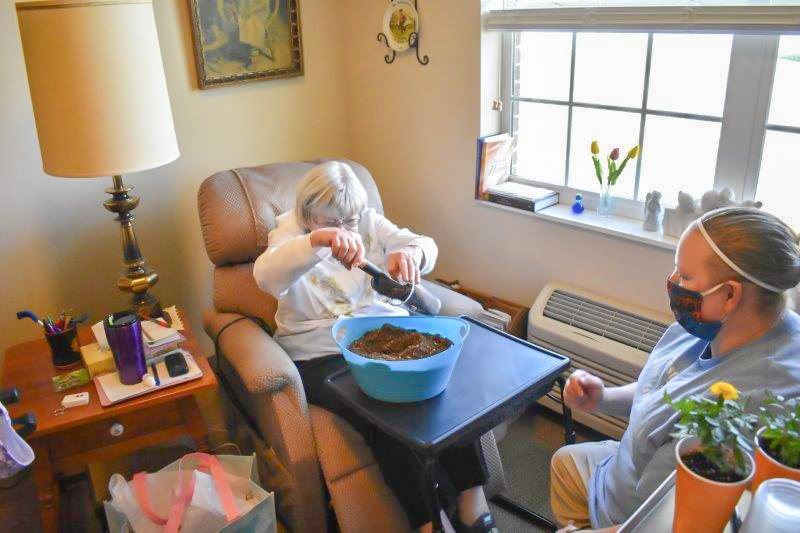
How Does Resthave Home-Whiteside County Compare to Other Illinois Nursing Homes?

Compared to the 100 nursing homes in Illinois, RESTHAVE HOME-WHITESIDE COUNTY's overall rating (4 stars) is above the state average of 2.5, staff turnover (36%) is near the state average of 46%, and health inspection rating (4 stars) is above the national benchmark.

What Should Families Ask When Visiting Resthave Home-Whiteside County?

Based on this facility's data, families visiting should ask: "Can I visit during a mealtime to observe dining assistance and food quality?" "How do you handle medical emergencies, and what is your hospital transfer rate?" "Can I speak with family members of current residents about their experience?"

Is Resthave Home-Whiteside County Safe?

Based on CMS inspection data, RESTHAVE HOME-WHITESIDE COUNTY has a clean safety record: no substantiated abuse findings (meaning no confirmed cases of resident harm), no Immediate Jeopardy citations (the most serious violation level indicating risk of serious injury or death), and is not on the Special Focus Facility watch list (a federal program monitoring the lowest-performing 1% of nursing homes). The facility has a 4-star overall rating and ranks #1 of 100 nursing homes in Illinois. While no facility is perfect, families should still ask about staff-to-resident ratios and recent inspection results during their visit.

Do Nurses at Resthave Home-Whiteside County Stick Around?

RESTHAVE HOME-WHITESIDE COUNTY has a staff turnover rate of 36%, which is about average for Illinois nursing homes (state average: 46%). Moderate turnover is common in nursing homes, but families should still ask about staff tenure and how the facility maintains care continuity when employees leave.

Was Resthave Home-Whiteside County Ever Fined?

RESTHAVE HOME-WHITESIDE COUNTY has no federal fines on record. CMS issues fines when nursing homes fail to meet care standards or don't correct problems found during inspections. The absence of fines suggests the facility has either maintained compliance or corrected any issues before penalties were assessed. This is a positive indicator, though families should still review recent inspection reports for the full picture.

Is Resthave Home-Whiteside County on Any Federal Watch List?

RESTHAVE HOME-WHITESIDE COUNTY is not on any federal watch list. The most significant is the Special Focus Facility (SFF) program, which identifies the bottom 1% of nursing homes nationally based on persistent, serious quality problems. Not being on this list means the facility has avoided the pattern of deficiencies that triggers enhanced federal oversight. This is a positive indicator, though families should still review the facility's inspection history directly.