HICKORY CREEK AT CONNERSVILLE
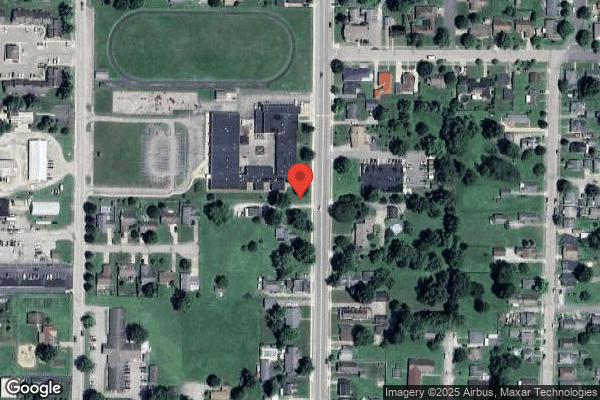
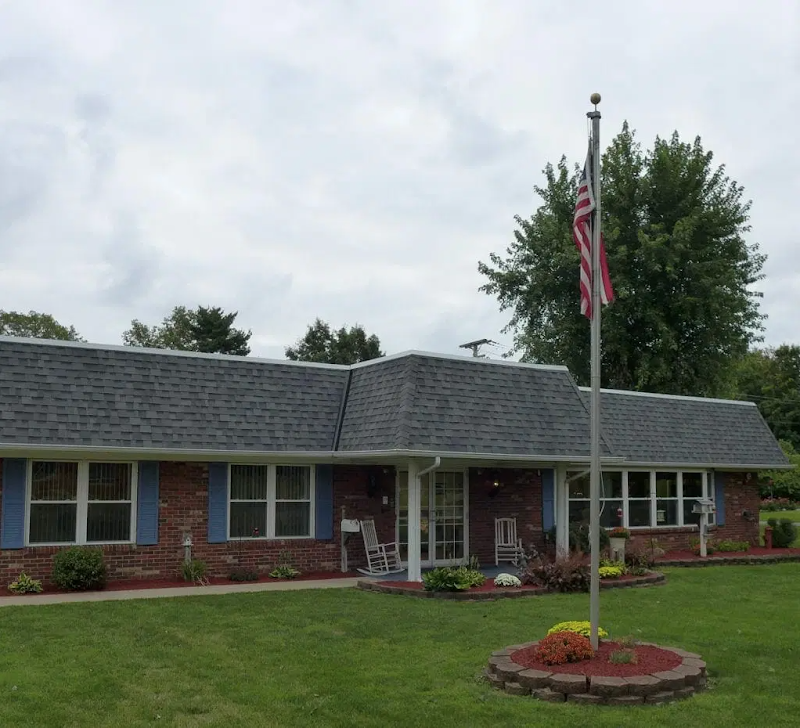
2600 N GRAND AVE, CONNERSVILLE, IN 47331 (765) 825-9771
For profit - Corporation 36 Beds AMERICAN SENIOR COMMUNITIES Data: November 2025
Trust Grade
90/100
#51 of 505 in IN
Last Inspection: September 2024

Within standard 12-15 month inspection cycle. Federal law requires annual inspections.

Overview

Hickory Creek at Connersville has received a Trust Grade of A, indicating it is considered excellent and highly recommended compared to other nursing homes. It ranks #51 out of 505 facilities in Indiana, placing it in the top half, and #3 out of 4 in Fayette County, meaning there is only one local option rated higher. The facility’s trend is stable, with only one reported issue in both 2024 and 2025, but the staffing rating is below average at 2 out of 5 stars, with a turnover rate of 55%, slightly above the state average. On a positive note, there have been no fines reported, and the facility has more registered nurse coverage than 93% of Indiana facilities, which can help catch potential issues early. However, there have been concerns noted during inspections, including a failure to monitor a security alarm, allowing a resident with cognitive impairments to leave the facility without staff knowledge, and incidents related to unauthorized recording of a resident, which raised issues about mental abuse and the adherence to abuse-related policies. While the facility has strengths in nurse coverage and overall ratings, these incidents highlight areas needing improvement to ensure resident safety and compliance with care standards.

Trust Score
A
90/100
In Indiana
#51/505
Top 10%
Safety Record
Low Risk
No red flags
Inspections
Holding Steady
1 → 1 violations
Staff Stability
⚠ Watch
55% turnover. Above average. Higher turnover means staff may not know residents' routines.
Penalties
✓ Good
No fines on record. Clean compliance history, better than most Indiana facilities.
Skilled Nurses
✓ Good
Each resident gets 51 minutes of Registered Nurse (RN) attention daily — more than average for Indiana. RNs are trained to catch health problems early.
Violations
○ Average
9 deficiencies on record. Average for a facility this size. Mostly minor or procedural issues.
★★★★★
5.0
Overall Rating
★★☆☆☆
2.0
Staff Levels
★★★★★
5.0
Care Quality
★★★★★
5.0
Inspection Score
Stable
2024: 1 issues
2025: 1 issues

The Good

  • 5-Star Quality Measures · Strong clinical quality outcomes
  • Full Sprinkler Coverage · Fire safety systems throughout facility
  • No fines on record

Facility shows strength in quality measures, fire safety.

The Bad

Staff Turnover: 55%

Near Indiana avg (46%)

Higher turnover may affect care consistency

Chain: AMERICAN SENIOR COMMUNITIES

Part of a multi-facility chain

Ask about local staffing decisions and management

The Ugly 9 deficiencies on record

Jul 2025 1 deficiency
CONCERN (D) 📢 Someone Reported This

A family member, employee, or ombudsman was alarmed enough to file a formal complaint

Potential for Harm - no one hurt, but risky conditions existed

Accident Prevention (Tag F0689)

Could have caused harm · This affected 1 resident

Based on interview and record review, the facility failed to check outside of the door when a security alarm was sounding off and a resident (Resident B) was identified outside of the facility without...

Read full inspector narrative →
Based on interview and record review, the facility failed to check outside of the door when a security alarm was sounding off and a resident (Resident B) was identified outside of the facility without staff knowledge for 1 of 3 residents reviewed for the risk of elopement. (Resident B) Findings include: The clinical record for Resident B was reviewed on 7/7/2025 at 1:30 p.m. The diagnoses included, but were not limited to, metabolic encephalopathy and vascular dementia. A Significant Change in Status Minimum Data Set assessment, dated 5/13/2025, indicated Resident B was cognitively impaired, was physically aggressive to others, did not exhibit wandering, but did reject care. During the assessment reference period, Resident B needed only supervision or touch assistance for staff for walking 10, 50, and 150 feet with the ability to make two turns. A care plan, initiated on 5/13/2025 and revised on 6/30/2025, indicated an intervention, dated 5/13/2025, of using a wanderguard as ordered (WanderGuard system is a wander management system used in healthcare facilities to protect residents who may wander, especially those with cognitive impairments. These systems use wearable devices, like bracelets, and strategically placed sensors to monitor resident movement and alert staff when a resident approaches a restricted area). An elopement assessment, dated 5/20/2025, indicated Resident B exhibited wandering behaviors, attempted to open the exit doors, and utilized a security bracelet. A physician's order, dated 5/30/2025, indicated for Resident B to use a WanderGuard and check placement every shift for being at risk of elopement. A maintenance report, dated 6/24/2025, indicated all external doors had operational locking mechanisms. Review of the Medication Administration Record (MAR) for Resident B indicated the last documented behavior for Resident B was, on 6/25/2025 at 8:27 p.m., recorded as very anxious. A nursing progress note, dated 6/29/2025 at 3:25 p.m., indicated Resident B was brought back from a leave of absence. A statement written by Certified Nurse Aide (CNA) 2, dated 6/29/2025, indicated on 6/29/2025 she had heard the front door alarm going off. At the time, Resident C was standing by the door. Another staff member turned the alarm off while she escorted Resident C to her room. A statement written by Registered Nurse (RN) 3, dated 6/29/2025, indicated at 3:30 p.m. on 6/29/2025, she had turned off the door alarm after Resident C had been up to it. At 3:45 p.m. on 6/29/2025, she received a call that Resident B was at a house across the street. During an interview with the Administrator, on 7/7/2025 at 2:35 p.m., she confirmed staff did not check outside when the alarm was sounding because they believed it was from Resident C. A timeline of incidents, provided by the Administrator on 7/7/2025 at 1:20 p.m., indicated that on 7/1/2025 the Maintenance Director had noticed the magnetic lock on the front door did not sound like it was making the normal connection. It was then discovered the door was not locking consistently. Vendor 4 was contacted and made an emergency service call on 7/1/2025 at 4:15 p.m. A loose wire was found on the internal mechanism and fixed during that timeframe. A letter from Vendor 4, dated 7/3/2025, indicated the magnetic locking mechanism had a loose power wire which was causing it to be working only intermittently. A procedure, entitled Door Alarm Response, was provided by the Administrator on 7/7/2025 at 1:20 p.m. The procedure indicated . Unlock front door, physically OPEN the door, and look in the immediate vicinity . This Federal tag relates to Complaint IN00462575. 3.1-45(a)(1) 3.1-45(a)(2)
Jun 2023 3 deficiencies
CONCERN (D) 📢 Someone Reported This

A family member, employee, or ombudsman was alarmed enough to file a formal complaint

Potential for Harm - no one hurt, but risky conditions existed

Free from Abuse/Neglect (Tag F0600)

Could have caused harm · This affected 1 resident

Based on interview and record review, the facility failed to protect the resident ' s right to be free from mental abuse by taking a video on a cell phone without authorization by the facility of 1 of...

Read full inspector narrative →
Based on interview and record review, the facility failed to protect the resident ' s right to be free from mental abuse by taking a video on a cell phone without authorization by the facility of 1 of 4 residents reviewed for abuse. (Resident B and Nurse Aide (NA) 3 Findings include: On 6-26-23 at 11:23 a.m., the Executive Director (ED) provided a copy of a facility reported incident that had been reported to the Indiana Department of Health via email on 6-12-23 alleging the facility ED had received a video posted to social media depicting a staff member, NA 3, in a facility bathroom with Resident B, in the image. The report indicated the facility launched an investigation into this on 6-12-23, including statements from staff and residents. The employee was suspended, pending investigation results. The family and attending physician were notified of the incident. The report indicated the social services director would follow-up with Resident B and all residents to ensure mobile devices were not being used during care provided by staff. An addendum on 6-18-23 indicated staff re-education was conducted on the facility's abuse policy, mobile device policy and social media policy, as well as a QAPI (quality assurance improvement plan) was put into place for interviewing staff and residents regarding mobile devices and recordings. In an interview with the ED on 6-26-23 at 1:05 p.m., she indicated the manner in which she learned of the video was the ED of another facility contacted her regarding receiving the video from one of that ED's former employees. The former employee had sent the video to the other ED, thinking it was one of their employees, because of the type of uniform in the video worn by the staff member. The ED indicated the video had been placed on a social media platform. She sent it to me thinking it might be one of our employees and it was. What I saw on the video was of the aide taking a selfie and kind of turned the camera just a little bit and all you could see was someone with a hat on, couldn't see their face, but you could tell they (aide and resident) were in one of our bathrooms. It took me a while to figure out whose hat it was, but I figured out it was [name of Resident B]. The ED indicated NA 3 had completed the CNA training, but has not taken her written exam yet. She indicated NA 3 had been employed by the facility since March, 2023. I know I personally do the new staff orientation for the abuse prevention portion and I go over the no pictures or video portion of the training, as well as reporting [guidelines]. [Name of NA 3] told me the phone that the video was on was one that she had given to a friend of hers and the video was under her memories, but the video had been taken by her. She said the person who she gave the phone to was the person who actually posted the video on social media, not her. I don't know how well she understood the training conducted from orientation about pictures and social media .I did terminate her, due to her not following our policies about not taking pictures of residents without written consent to do so and having her phone with her on the floor. In an interview with Resident B on 6-26-23 at 12:05 p.m., she indicated she is treated well by the facility staff and feels safe there. She indicated she does not recall ever being photographed with a camera or phone at the facility without her permission. In 15 staff interviews conducted on 6-26-23, none indicated they had ever witnessed other staff members using their cell phones or mobile devices to photograph residents. In a review of the facility's post-incident investigation, it indicated 0 of 29 staff members interviewed had witnessed NA 3 using her phone to take pictures or videos of residents and 0 of 12 residents indicating they had witnessed any staff using their phone to take pictures or videos of residents. In a review of NA 3's employee file, her hire dated was listed as 4-21-23. Her Nurse Aide In-Training Class File indicated her class start date as 4-23-23. A criminal background check indicated she did not have any criminal record. She had two references, one personal and one professional, verified by the Business Office Manager. Her General Orientation, document was signed as completed on 4-21-23. The training with this document included, but was not limited to, Resident Rights, Resident Abuse and Reporting, Elder Justice education and receipt of the employee handbook. It indicated she had completed six hours of dementia education by 4-27-23. An Employee Communication Form, indicated an incident on 6-12-23, included a violations of the facility's mobile device policy, social media and associated abuse policy. Administrator was sent of video of employee in [name of facility] bathroom [abbreviation for with] resident on the toilet. Suspended pending investigation. Post investigation termination 6-19-23. This document signed by NA 3, the Assistant Director of Nursing and the ED. On 6-26-23 at 10:30 a.m., the ED provided a copy of a policy entitled, Abuse Prohibition, Reporting, and Investigation. This policy had a revision date of January, 2023, and was indicated to be the policy utilized by the facility. This policy indicated, It is the policy of American Seniors Communities to provide each resident with an environment that is free from abuse, neglect, misappropriation of resident property, and exploitation. This includes but is not limited to verbal abuse, sexual abuse, physical abuse, mental abuse, corporal punishment, and involuntary seclusion .American Senior Communities will prohibit employees from taking pictures or recordings in any manner which would demean or humiliate a resident(s) and/or from taking unauthorized photographs .Mental abuse also includes what is facilitated or caused by staff taking or using photographs or recordings in any manner that would demean, humiliate, or dehumanize a resident(s). This includes any type of equipment (cameras, smart phones, or other electronic devices) to take, keep, or distribute photographs and recordings. Demeaning or humiliating photographs or videos include nudity, sexual and intimate relations, bathing, showering, exposed body parts, or of posting examples of bodily functions such as toileting, provision of incontinence care, exposing perineal/rectal areas and/or fecal matter on body parts and/or bedding . On 6-27-23 at 12:45 p.m., the ED provided a copy of information she indicated was utilized for post-incident staff education and was located in the facility's employee's handbook. In the portion entitled, Photographs and Video or Audio Recordings, it indicated, The Company prohibits recordings which violate applicable laws. To protect the privacy of our residents and prevent wrongful disclosure of individually identifiable health information and other Confidential information .including by unauthorized photography, the use of cameras or camera phones (or any other picture taking or image generating devices) for photographing, recording or videotaping residents, or Confidential information is prohibited unless specifically authorized by the Company . This Federal tag relates to Complaints IN00410663 and IN00410764. 3.1-27(a)(1)
CONCERN (D) 📢 Someone Reported This

A family member, employee, or ombudsman was alarmed enough to file a formal complaint

Potential for Harm - no one hurt, but risky conditions existed

Abuse Prevention Policies (Tag F0607)

Could have caused harm · This affected 1 resident

Based on interview and record review, the facility failed to: A. ensure abuse-related policies were implemented involving avoidance of mental abuse of 1 of 4 residents reviewed for abuse. (Resident B)...

Read full inspector narrative →
Based on interview and record review, the facility failed to: A. ensure abuse-related policies were implemented involving avoidance of mental abuse of 1 of 4 residents reviewed for abuse. (Resident B) B. ensure abuse-related policies were implemented for timely submit of the initial report of abuse allegations for 3 abuse allegations. (Facility Incident Numbers 196, 197 and 198) Findings include: A. On 6-26-23 at 11:23 a.m., the Executive Director (ED) provided a copy of a facility reported incident that had been reported to the Indiana Department of Health via email on 6-12-23 alleging the facility ED had received a video posted to social media depicting a staff member, NA 3, in a facility bathroom with Resident B, in the image. The report indicated the facility launched an investigation into this on 6-12-23, including statements from staff and residents. The employee was suspended, pending investigation results. The family and attending physician were notified of the incident. The report indicated the social services director would follow-up with Resident B and all residents to ensure mobile devices were not being used during care provided by staff. An addendum on 6-18-23 indicated staff re-education was conducted on the facility's abuse policy, mobile device policy and social media policy, as well as a QAPI (quality assurance improvement plan) was put into place for interviewing staff and residents regarding mobile devices and recordings. In an interview with the ED on 6-26-23 at 1:05 p.m., she indicated the manner in which she learned of the video was the ED of another facility contacted her regarding receiving the video from one of that ED's former employees. The former employee had sent the video to the other ED, thinking it was one of their employees, because of the type of uniform in the video worn by the staff member. The ED indicated the video had been placed on a social media platform. She sent it to me thinking it might be one of our employees and it was. What I saw on the video was of the aide taking a selfie and kind of turned the camera just a little bit and all you could see was someone with a hat on, couldn't see their face, but you could tell they (aide and resident) were in one of our bathrooms. It too took me a while to figure out whose hat it was, but I figured out it was [name of Resident B]. The ED indicated NA 3 had completed the CNA training, but has not taken her written exam yet. She indicated NA 3 had been employed by the facility since March, 2023. I know I personally do the new staff orientation for the abuse prevention portion and I go over the no pictures or video portion of the training, as well as reporting [guidelines]. [Name of NA 3] told me the phone that the video was on was one that she had given to a friend of hers and the video was under her memories, but the video had been taken by her. She said the person who she gave the phone to was the person who actually posted the video on social media, not her. I don't know how well she understood the training conducted from orientation about pictures and social media .I did terminate her, due to her not following our policies about not taking pictures of residents without written consent to do so and having her phone with her on the floor. In an interview with Resident B on 6-26-23 at 12:05 p.m., she indicated she is treated well by the facility staff and feels safe there. She indicated she does not recall ever being photographed with a camera or phone at the facility without her permission. In 15 staff interviews conducted on 6-26-23, none indicated they had ever witnessed other staff members using their cell phones or mobile devices to photograph residents. In a review of the facility's post-incident investigation, it indicated 0 of 29 staff members interviewed had witnessed NA 3 using her phone to take pictures or videos of residents and 0 of 12 residents indicating they had witnessed any staff using their phone to take pictures or videos of residents. In a review of NA 3's employee file, her hire dated was listed as 4-21-23. Her Nurse Aide In-Training Class File indicated her class start date as 4-23-23. A criminal background check indicated she did not have any criminal record. She had two references, one personal and one professional, verified by the Business Office Manager. Her General Orientation, document was signed as completed on 4-21-23. The training with this document included, but was not limited to, Resident Rights, Resident Abuse and Reporting, Elder Justice education and receipt of the employee handbook. It indicated she had completed six hours of dementia education by 4-27-23. An Employee Communication Form, indicated an incident on 6-12-23, included a violations of the facility's mobile device policy, social media and associated abuse policy. Administrator was sent of video of employee in [name of facility] bathroom [abbreviation for with] resident on the toilet. Suspended pending investigation. Post investigation termination 6-19-23. This document signed by NA 3, the Assistant Director of Nursing and the ED. On 6-26-23 at 10:30 a.m., the ED provided a copy of a policy entitled, Abuse Prohibition, Reporting, and Investigation. This policy had a revision date of January, 2023, and was indicated to be the policy utilized by the facility. This policy indicated, It is the policy of American Seniors Communities to provide each resident with an environment that is free from abuse, neglect, misappropriation of resident property, and exploitation. This includes but is not limited to verbal abuse, sexual abuse, physical abuse, mental abuse, corporal punishment, and involuntary seclusion .American Senior Communities will prohibit employees from taking pictures or recordings in any manner which would demean or humiliate a resident(s) and/or from taking unauthorized photographs .Mental abuse also includes what is facilitated or caused by staff taking or using photographs or recordings in any manner that would demean, humiliate, or dehumanize a resident(s). This includes any type of equipment (cameras, smart phones, or other electronic devices) to take, keep, or distribute photographs and recordings. Demeaning or humiliating photographs or videos include nudity, sexual and intimate relations, bathing, showering, exposed body parts, or of posting examples of bodily functions such as toileting, provision of incontinence care, exposing perineal/rectal areas and/or fecal matter on body parts and/or bedding . On 6-27-23 at 12:45 p.m., the ED provided a copy of information she indicated was utilized for post-incident staff education and was located in the facility's employee's handbook. In the portion entitled, Photographs and Video or Audio Recordings, it indicated, The Company prohibits recordings which violate applicable laws. To protect the privacy of our residents and prevent wrongful disclosure of individually identifiable health information and other Confidential information .including by unauthorized photography, the use of cameras or camera phones (or any other picture taking or image generating devices) for photographing, recording or videotaping residents, or Confidential information is prohibited unless specifically authorized by the Company . B. On 6-27-23 at 1:45 p.m., the Executive Director (ED) provided copies of the facility's three (3) most recent abuse allegations investigations and their associated email confirmation forms for Facility Incident Numbers 196, 197 and 198. Facility Incident Number 196 email confirmation form indicated the Actual or Identified Date and Time of incident as 6-12-23 at 11:30 a.m., and the date and time of submission to IDOH as 6-12-23 at 6:48 p.m. It indicated this incident was submitted by the ED. Facility Incident Number 197 email confirmation form indicated the Actual or Identified Date and Time of incident as 6-13-23 at 3:01 p.m., and the date and time of submission to IDOH as 6-13-23 at 6:02 p.m. It indicated this incident was submitted by the ED. Facility Incident Number 198 email confirmation form indicated the Actual or Identified Date and Time of incident as 6-18-23 at 4:01 p.m., and the date and time of submission as to IDOH 6-18-23 at 10:11 p.m. It indicated this incident was submitted by the ED. In an interview with the ED on 6-27-23 at 2:20 p.m., during the exit conference, she indicated it is very difficult to get the initial report of an abuse allegation submitted to IDOH State within the two hour time frame as there is so much information that needs to be included in that, especially if it happens to be on a weekend. On 6-26-23 at 10:30 a.m., the ED provided a copy of a policy entitled, Abuse Prohibition, Reporting, and Investigation. This policy had a revision date of January, 2023, and was indicated to be the policy utilized by the facility. This policy indicated, It is the policy of American Seniors Communities to provide each resident with an environment that is free from abuse, neglect, misappropriation of resident property, and exploitation. This includes but is not limited to verbal abuse, sexual abuse, physical abuse, mental abuse, corporal punishment, and involuntary seclusion .It is the responsibility of the Administrator/Director of Nursing to report the abuse, or allegations of abuse, immediately, within 2 hours to the Indiana State Department of Health via the IDOH (Indiana Department of Health) gateway system .An incident report will be initiated within 2 hours of the allegation, following the guidelines for Unusual Occurrence Reporting via ISDH gateway portal .The Executive Director will ensure that if the alleged violation involves abuse or results in serious bodily injury, it must be reported immediately but no later than 2 hours [sic] to the Long Term Care Division of the Indiana State Department of Health via the Gateway Portal. This Federal tag relates to Complaints IN00410663 and IN00410764. 3.1-28(a)
CONCERN (D) 📢 Someone Reported This

A family member, employee, or ombudsman was alarmed enough to file a formal complaint

Potential for Harm - no one hurt, but risky conditions existed

Report Alleged Abuse (Tag F0609)

Could have caused harm · This affected 1 resident

Based on interview and record review, the facility failed to report an allegation of mental abuse to the State Survey Agency, the Indiana Department of Health's Long-Term Care Division (IDOH), within ...

Read full inspector narrative →
Based on interview and record review, the facility failed to report an allegation of mental abuse to the State Survey Agency, the Indiana Department of Health's Long-Term Care Division (IDOH), within two (2) hours of becoming aware of the abuse allegation for 3 of 3 allegations of abuse. (Facility Incident Numbers 196, 197 and 198) Findings include: On 6-27-23 at 1:45 p.m., the Executive Director (ED) provided copies of the facility's three (3) most recent abuse allegations investigations and their associated email confirmation forms for Facility Incident Numbers 196, 197 and 198. Facility Incident Number 196 email confirmation form indicated the Actual or Identified Date and Time of incident as 6-12-23 at 11:30 a.m., and the date and time of submission to IDOH as 6-12-23 at 6:48 p.m. It indicated this incident was submitted by the ED. Facility Incident Number 197 email confirmation form indicated the Actual or Identified Date and Time of incident as 6-13-23 at 3:01 p.m., and the date and time of submission to IDOH as 6-13-23 at 6:02 p.m. It indicated this incident was submitted by the ED. Facility Incident Number 198 email confirmation form indicated the Actual or Identified Date and Time of incident as 6-18-23 at 4:01 p.m., and the date and time of submission as to IDOH 6-18-23 at 10:11 p.m. It indicated this incident was submitted by the ED. In an interview with the ED on 6-27-23 at 2:20 p.m., during the exit conference, she indicated it is very difficult to get the initial report of an abuse allegation submitted to IDOH State within the two hour time frame as there is so much information that needs to be included in that, especially if it happens to be on a weekend. On 6-26-23 at 10:30 a.m., the ED provided a copy of a policy entitled, Abuse Prohibition, Reporting, and Investigation. This policy had a revision date of January, 2023, and was indicated to be the policy utilized by the facility. This policy indicated, It is the policy of American Seniors Communities to provide each resident with an environment that is free from abuse, neglect, misappropriation of resident property, and exploitation. This includes but is not limited to verbal abuse, sexual abuse, physical abuse, mental abuse, corporal punishment, and involuntary seclusion .It is the responsibility of the Administrator/Director of Nursing to report the abuse, or allegations of abuse, immediately, within 2 hours to the Indiana State Department of Health via the IDOH (Indiana Department of Health) gateway system .An incident report will be initiated within 2 hours of the allegation, following the guidelines for Unusual Occurrence Reporting via ISDH gateway portal .The Executive Director will ensure that if the alleged violation involves abuse or results in serious bodily injury, it must be reported immediately but no later than 2 hours [sic] to the Long Term Care Division of the Indiana State Department of Health via the Gateway Portal. This Federal tag relates to Complaints IN00410663 and IN00410764. 3.1-28(c)
Jun 2022 5 deficiencies
CONCERN (D)

Potential for Harm - no one hurt, but risky conditions existed

Quality of Care (Tag F0684)

Could have caused harm · This affected 1 resident

**NOTE- TERMS IN BRACKETS HAVE BEEN EDITED TO PROTECT CONFIDENTIALITY** Based on observation, interview and record review the facility failed to implement a treatment for two diabetic ulcer toes for 9...

Read full inspector narrative →
**NOTE- TERMS IN BRACKETS HAVE BEEN EDITED TO PROTECT CONFIDENTIALITY** Based on observation, interview and record review the facility failed to implement a treatment for two diabetic ulcer toes for 9 days for 1 of 1 resident reviewed for non-pressure skin (Resident 27). Finding include: Review of the record of Resident 27 on 5/8/22 at 2:30 p.m., indicated the resident's diagnoses included, but were not limited to, uncontrolled type 2 diabetes mellitus, gangrene of both feet, acquired absence of other left toes, non-pressure chronic diabetic ulcer of other part of right foot with necrosis of muscle, osteomyelitis of the right foot. The resident was admitted to the facility on [DATE]. The diabetic ulcer assessment for Resident 27, dated 5/24/22, right second toe measuring 2 centimeters (cm) by 2 cm. The wound tissue was necrotic with 100 % eschar. The diabetic ulcer assessment for Resident 27, dated 5/3122, right second toe measuring 2 centimeters (cm) by 2 cm. The wound tissue was necrotic with 100 % eschar. The diabetic ulcer assessment for Resident 27, dated 6/7/22, right second toe measuring 2 centimeters (cm) by 2 cm. The wound tissue was necrotic with 100 % eschar. The diabetic ulcer assessment for Resident 27, dated 5/24/22, right third toe measuring 2 centimeters (cm) by 2 cm. The wound tissue was necrotic with 100 % eschar. The diabetic ulcer assessment for Resident 27, dated 5/3122, right third toe measuring 2 centimeters (cm) by 2 cm. The wound tissue was necrotic with 100 % eschar. The diabetic ulcer assessment for Resident 27, dated 6/7/22, right third toe measuring 2 centimeters (cm) by 2 cm. The wound tissue was necrotic with 100 % eschar. The admission Minimum Data Set (MDS) assessment for Resident 27, dated 5/31/22, indicated the resident had a diabetic foot ulcer. The wound doctor orders for Resident 27, dated 6/1/22 at 10:45 a.m., indicated the resident was ordered povidone- iodine solution to the right foot second and third toe daily. The Treatment Administer Record (TAR) for Resident 27, dated May 2022 and June 2022, indicated the resident did not receive any treatment to his right foot diabetic ulcers on the second and third toe until 6/2/22. During an interview with the Director of Nursing (DON) on 6/9/22 at 11:02 a.m., indicated Resident 27 did not have a treatment on his right foot second and third necrotic toes when he was admitted . The Wound Nurse discovered he did not have a treatment on 5/31/22 and scheduled him to go to the Wound doctor on 6/1/22 and now he had a treatment. The DON indicated the admitting nurse was responsible to call the physician when Resident 27 admitted to obtain a treatment order for the diabetic ulcers. During an observation on 6/9/22 at 12:40 p.m., LPN 6 applied povidone-iodine solution swab sticks to the second and third toe on the right foot of Resident 27. Both toes were black and necrotic. The resident indicated he had pain in both toes but could not feel it when the povidone-iodine swabs were applied. The skin management program provided by the DON on 6/9/22 at 2:20 p.m., indicated alterations in skin integrity would be reported to the physician/Nurse Practitioner and a treatment order would be obtained from the physician or Nurse Practitioner. 3.1-37(a)
CONCERN (D)

Potential for Harm - no one hurt, but risky conditions existed

Accident Prevention (Tag F0689)

Could have caused harm · This affected 1 resident

Based on observation, interview and record review the facility failed to implement fall interventions for a resident at high risk for falls for 1 of 3 residents reviewed for accidents (Resident 17). ...

Read full inspector narrative →
Based on observation, interview and record review the facility failed to implement fall interventions for a resident at high risk for falls for 1 of 3 residents reviewed for accidents (Resident 17). Finding include: During an observation on 6/8/22 at 11:52 a.m., CNA 3 and CNA 5 assisted Resident 17 from the bed to the wheelchair using a gait belt. The resident had leaned over posture, stiff and required extensive assistance with the transfer. The resident did not have hipsters on and did not have a dycem on the top of his wheelchair cushion or under his wheelchair cushion. The resident was transported from his room to the dining room. Review of the record of Resident 17 on 6/8/22 at 1:35 p.m., indicated the resident's diagnoses included, but were not limited to, vascular dementia with behavioral disturbance, chronic obstructive pulmonary disease, type 2 diabetes mellitus with unspecified complications, muscle weakness (generalized) and history of falling. The Quarterly Minimum Data Set (MDS) assessment for Resident 17, dated 5/11/22, indicated the resident was severely cognitively impaired for daily decision making and required extensive assistance of two people for transfers. The resident had a history falls and had fell in the last 2-6 months. The plan of care for Resident 17, dated 5/26/22, indicated the resident was at risk for falls related to impaired mobility and a history of falls. The interventions included, but were not limited to, cushion would be placed in the wheelchair with a dycem on top and under the cushion (2/14/22) and hipsters to be worn at all times (1/17/22). The fall risk assessment for Resident 17, dated 6/1/22 at 2:36 p.m., indicated the resident was at high risk for falls. During an observation on 6/08/22 2:05 p.m., Resident 17 was in bed asleep. The resident did not have on hipsters and did not he have a dycem on top of his wheelchair cushion or underneath the wheelchair cushion. During an interview and observation with the Director of Nursing (DON) on 6/8/22 at 3:39 p.m., verified Resident 17 did not have on hipsters and did not have a dycem on top or under his wheelchair cushion. The DON indicated it was the CNA's responsibility to ensure these fall interventions were in place. The CNAs were communicated to what fall interventions were to be in place by the CNA assignment sheet. The DON indicated she would locate the hipsters and the dycem pads and put them in place. The CNA assignment sheet provided by the DON on 6/9/22 at 2:20 p.m., indicated Resident 17's fall interventions included, but were not limited to, dycem on top of wheelchair cushion and underneath the wheelchair cushion and hipsters to be worn at all times. The fall management program provided by the DON on 6/9/22 at 2:22 p.m., indicated the facility must implement comprehensive, resident-centered fall prevention plans for each resident at risk for falls or with a history of falls. Residents who are categorized as moderate to high risk should have fall interventions implemented based on the resident specific risk factors. 3.1-45(a)
CONCERN (D)

Potential for Harm - no one hurt, but risky conditions existed

Incontinence Care (Tag F0690)

Could have caused harm · This affected 1 resident

Based on observation, interview, and record review, the facility failed to ensure a dignity bag was present over a urinary catheter bag for 1 of 1 resident reviewed for urinary catheters. (Resident 22...

Read full inspector narrative →
Based on observation, interview, and record review, the facility failed to ensure a dignity bag was present over a urinary catheter bag for 1 of 1 resident reviewed for urinary catheters. (Resident 22) Findings include: The clinical record for Resident 22 was reviewed on 6/9/22 at 10:00 a.m. The diagnoses included, but were not limited to, neuromuscular dysfunction of bladder and benign prostatic hyperplasia. The following observations were conducted to where Resident 22's urinary catheter bag was noted without a dignity bag and a yellow substance was observed from the entryway of Resident 22's room: 6/7/22 at 11:33 a.m., 6/7/22 at 12:37 p.m., 6/7/22 at 1:15 p.m., & 6/7/22 at 2:04 p.m. A urinary catheter care plan, start date of 12/20/21, listed an approach to provide catheter care every shift and cover the catheter drainage bag. An interview conducted with the Director of Nursing (DON), on 6/10/22 at 11:03 a.m., indicated a resident with an indwelling catheter should have a dignity bag over their drainage bag. A policy titled Bowel, Bladder, Urinary Indwelling Catheter Programs, revised 12/8/21, was provided by the DON on 6/9/22 at 2:22 p.m. The policy indicated catheter bags should be stored in a dignity bag. 3.1-41(a)(2)
CONCERN (D)

Potential for Harm - no one hurt, but risky conditions existed

Deficiency F0761 (Tag F0761)

Could have caused harm · This affected 1 resident

Based on observation, interview, and record review, the facility failed to ensure insulin pens were labeled with an open date for 3 insulin pens observed in 1 of 2 medication carts observed. (Resident...

Read full inspector narrative →
Based on observation, interview, and record review, the facility failed to ensure insulin pens were labeled with an open date for 3 insulin pens observed in 1 of 2 medication carts observed. (Resident 16, 21, and 27) Findings include: An observation conducted of the back medication cart with Registered Nurse (RN) 2, on 6/7/22 at 10:42 a.m., noted 3 Lantus pens that were opened but did not have an open date listed on the pen for Resident 16, Resident 21, or Resident 27. RN 2 indicated she worked day shift and Lantus was typically administered in the evening time. She would not be the one to date or label those insulin pens in question. An interview with the Director of Nursing (DON), on 6/10/22 at 11:03 a.m., indicated there should be an open date and/or label on the insulin pens when they are opened. A policy titled Storage and Expiration of Medications, Biologicals, Syringes and Needles, revised 10/31/16, was provided by the DON on 6/10/22 at 12:45 p.m. The policy indicated the following, .5. Once any medication or biological package is opened, Facility should follow manufacturer/supplier guidelines with respect to expiration dates for opened medications. Facility staff should record the date opened on the medication container when the medication has a shortened expiration date once opened 3.1-25(j) 3.1-25(k)(6)
CONCERN (D)

Potential for Harm - no one hurt, but risky conditions existed

Infection Control (Tag F0880)

Could have caused harm · This affected 1 resident

Based on observation, interview, and record review, the facility failed to ensure hand hygiene was performed after making direct contact with an antigen test for a staff member without the use of glov...

Read full inspector narrative →
Based on observation, interview, and record review, the facility failed to ensure hand hygiene was performed after making direct contact with an antigen test for a staff member without the use of gloves. Findings include: An observation was conducted at the nurses' station with Registered Nurse (RN) 2, on 6/7/22 at 10:45 a.m., of her picking up what appeared to be an antigen test for COVID-19 testing that was lying flat on the surface of the desk at the nurses' station. RN 2 was commenting on why it was lying there as she had it in her hands without gloves on. She laid it back down on the desk and proceeded to open the front medication cart to show writer the contents of the medication cart and then went to open the back medication cart without performing hand hygiene after handling medications in the top drawer of each medication cart. RN 2 went back to the nurses' station and picked up the antigen test again and indicated, to writer, that the test had Dietary Staff 4's name on it. She gets tested on a regular basis. The test appeared negative. An interview with the Director of Nursing (DON), on 6/10/22 at 11:03 a.m., indicated the COVID tests should not just be out in the open where people can come in contact with it. A policy titled Hand Hygiene Policy, revised 12/2021, was provided by the DON on 6/10/22 at 12:45 p.m. The policy indicated the following, .Procedure .Healthcare personnel should use an alcohol-based hand rub or wash with soap and water for the following clinical indications .After contact with blood, bodily fluids, or contaminated surfaces 3.1-18(l)
Understanding Severity Codes (click to expand)
Life-Threatening (Immediate Jeopardy)
J - Isolated K - Pattern L - Widespread
Actual Harm
G - Isolated H - Pattern I - Widespread
Potential for Harm
D - Isolated E - Pattern F - Widespread
No Harm (Minor)
A - Isolated B - Pattern C - Widespread

Questions to Ask on Your Visit

  • "Can I speak with families of current residents?"
  • "What's your RN coverage like on weekends and overnight?"

Our Honest Assessment

Strengths
  • • Grade A (90/100). Above average facility, better than most options in Indiana.
  • • No major safety red flags. No abuse findings, life-threatening violations, or SFF status.
  • • No fines on record. Clean compliance history, better than most Indiana facilities.
Concerns
  • • No significant concerns identified. This facility shows no red flags across CMS ratings, staff turnover, or federal penalties.
Bottom line: Generally positive indicators. Standard due diligence and a personal visit recommended.

About This Facility

What is Hickory Creek At Connersville's CMS Rating?

CMS assigns HICKORY CREEK AT CONNERSVILLE an overall rating of 5 out of 5 stars, which is considered much above average nationally. Within Indiana, this rating places the facility higher than 99% of the state's 100 nursing homes. This rating reflects solid performance across the metrics CMS uses to evaluate nursing home quality.
How is Hickory Creek At Connersville Staffed?

CMS rates HICKORY CREEK AT CONNERSVILLE's staffing level at 2 out of 5 stars, which is below average compared to other nursing homes. Staff turnover is 55%, compared to the Indiana average of 46%.

What Have Inspectors Found at Hickory Creek At Connersville?

State health inspectors documented 9 deficiencies at HICKORY CREEK AT CONNERSVILLE during 2022 to 2025. These included: 9 with potential for harm.
Who Owns and Operates Hickory Creek At Connersville?

HICKORY CREEK AT CONNERSVILLE is owned by a for-profit company. For-profit facilities operate as businesses with obligations to shareholders or private owners. The facility is operated by AMERICAN SENIOR COMMUNITIES, a chain that manages multiple nursing homes. With 36 certified beds and approximately 33 residents (about 92% occupancy), it is a smaller facility located in CONNERSVILLE, Indiana.
How Does Hickory Creek At Connersville Compare to Other Indiana Nursing Homes?

Compared to the 100 nursing homes in Indiana, HICKORY CREEK AT CONNERSVILLE's overall rating (5 stars) is above the state average of 3.1, staff turnover (55%) is near the state average of 46%, and health inspection rating (5 stars) is much above the national benchmark.

What Should Families Ask When Visiting Hickory Creek At Connersville?

Based on this facility's data, families visiting should ask: "Can you walk me through typical staffing levels on day, evening, and night shifts?" "Can I visit during a mealtime to observe dining assistance and food quality?" "How do you handle medical emergencies, and what is your hospital transfer rate?" "Can I speak with family members of current residents about their experience?" These questions are particularly relevant given the below-average staffing rating.

Is Hickory Creek At Connersville Safe?

Based on CMS inspection data, HICKORY CREEK AT CONNERSVILLE has a clean safety record: no substantiated abuse findings (meaning no confirmed cases of resident harm), no Immediate Jeopardy citations (the most serious violation level indicating risk of serious injury or death), and is not on the Special Focus Facility watch list (a federal program monitoring the lowest-performing 1% of nursing homes). The facility has a 5-star overall rating and ranks #1 of 100 nursing homes in Indiana. While no facility is perfect, families should still ask about staff-to-resident ratios and recent inspection results during their visit.

Do Nurses at Hickory Creek At Connersville Stick Around?

HICKORY CREEK AT CONNERSVILLE has a staff turnover rate of 55%, which is 9 percentage points above the Indiana average of 46%. Moderate turnover is common in nursing homes, but families should still ask about staff tenure and how the facility maintains care continuity when employees leave.

Was Hickory Creek At Connersville Ever Fined?

HICKORY CREEK AT CONNERSVILLE has no federal fines on record. CMS issues fines when nursing homes fail to meet care standards or don't correct problems found during inspections. The absence of fines suggests the facility has either maintained compliance or corrected any issues before penalties were assessed. This is a positive indicator, though families should still review recent inspection reports for the full picture.

Is Hickory Creek At Connersville on Any Federal Watch List?

HICKORY CREEK AT CONNERSVILLE is not on any federal watch list. The most significant is the Special Focus Facility (SFF) program, which identifies the bottom 1% of nursing homes nationally based on persistent, serious quality problems. Not being on this list means the facility has avoided the pattern of deficiencies that triggers enhanced federal oversight. This is a positive indicator, though families should still review the facility's inspection history directly.