WESLEYAN HEALTH CARE CENTER
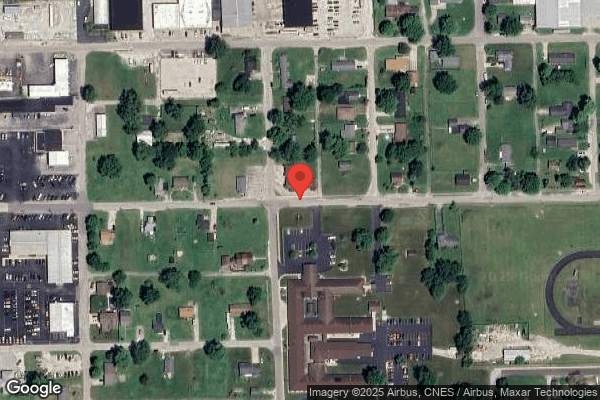
729 WEST 35TH ST, MARION, IN 46953 (765) 674-3371
Non profit - Corporation 139 Beds TLC MANAGEMENT Data: November 2025
Trust Grade
48/100
#313 of 505 in IN
Last Inspection: December 2024

Within standard 12-15 month inspection cycle. Federal law requires annual inspections.

Overview

Wesleyan Health Care Center has a Trust Grade of D, which means it is below average and has some significant concerns. It ranks #313 out of 505 facilities in Indiana, placing it in the bottom half, and #3 out of 6 in Grant County, indicating that only two local options are better. The facility is experiencing a worsening trend, with issues increasing from 7 in 2023 to 9 in 2024. Staffing is rated average with a 48% turnover rate, which is similar to the state average, and the RN coverage is also average. However, the facility has $8,824 in fines, which is concerning and higher than 79% of Indiana facilities, suggesting ongoing compliance problems. Specific incidents raise red flags: one resident fell and fractured their knee because they were not assisted by the required two staff members during bed mobility, while another resident required hospitalization due to a blocked catheter that was not monitored correctly. Additionally, a choking incident occurred during mealtime when a resident was not adequately supervised, resulting in them needing emergency medical care. Despite some strengths, like a good quality measures rating, these serious issues could impact the safety and well-being of residents.

Trust Score
D
48/100
In Indiana
#313/505
Bottom 39%
Safety Record
High Risk
Review needed
Inspections
Getting Worse
7 → 9 violations
Staff Stability
⚠ Watch
48% turnover. Above average. Higher turnover means staff may not know residents' routines.
Penalties
✓ Good
$8,824 in fines. Lower than most Indiana facilities. Relatively clean record.
Skilled Nurses
○ Average
Each resident gets 40 minutes of Registered Nurse (RN) attention daily — about average for Indiana. RNs are the most trained staff who monitor for health changes.
Violations
⚠ Watch
17 deficiencies on record. Higher than average. Multiple issues found across inspections.
★★★☆☆
3.0
Overall Rating
★★★☆☆
3.0
Staff Levels
★★★★★
5.0
Care Quality
★★☆☆☆
2.0
Inspection Score
Stable
2023: 7 issues
2024: 9 issues

The Good

  • 5-Star Quality Measures · Strong clinical quality outcomes
  • Full Sprinkler Coverage · Fire safety systems throughout facility
  • No fines on record

Facility shows strength in quality measures, fire safety.

The Bad

3-Star Overall Rating

Near Indiana average (3.1)

Meets federal standards, typical of most facilities

Staff Turnover: 48%

Near Indiana avg (46%)

Higher turnover may affect care consistency

Federal Fines: $8,824

Below median ($33,413)

Minor penalties assessed

Chain: TLC MANAGEMENT

Part of a multi-facility chain

Ask about local staffing decisions and management

The Ugly 17 deficiencies on record

3 actual harm
Dec 2024 6 deficiencies 1 Harm
SERIOUS (G) 📢 Someone Reported This

A family member, employee, or ombudsman was alarmed enough to file a formal complaint

Actual Harm - a resident was hurt due to facility failures

Accident Prevention (Tag F0689)

A resident was harmed · This affected 1 resident

Based on interview and record review, the facility failed to ensure services for bed mobility were provided with two staff members present to a dependent resident who required total assistance of two ...

Read full inspector narrative →
Based on interview and record review, the facility failed to ensure services for bed mobility were provided with two staff members present to a dependent resident who required total assistance of two staff for bed mobility for 1 of 3 residents reviewed for falls. (Resident 99) This deficient practice resulted in Resident 99 falling from the bed and sustaining a fracture left knee joint. Findings include: Resident 99's clinical record was reviewed on 12/13/14 at 11:29 a.m. Diagnoses included, but were not limited to, quadriplegia (a severe medical condition characterized by the partial or total loss of function in all four limbs and the torso), left elbow contracture, left shoulder contracture, left wrist contracture, left hand contracture, right shoulder contracture, right wrist contracture, right hand contracture, major depressive disorder, bipolar disorder, restless leg syndrome, and generalized anxiety disorder. A current care plan, dated 3/1/24, revised on 5/28/24, and reviewed on 12/2/24, indicated Resident 99 required assistance with activities of daily living (ADLs) related to quadriplegia. Interventions included a total assist of two staff members with bed mobility. She required a total assist of 1-2 staff when toileting and required a total assist of one to two staff members with bathing. A quarterly Minimum Data Set (MDS) assessment, dated 8/20/24, indicated she had upper and lower extremity impairment on both sides. She was dependent on toileting hygiene, shower/bathing, upper and lower body dressing, eating, and rolling to the left and right in bed. She was cognitively intact. The resident did not have any falls since the prior assessment. A Significant Change MDS assessment, dated 11/18/24, indicated she had upper and lower extremity impairment on both sides. She was dependent on toileting hygiene, shower/bathing, upper and lower body dressing, eating, and rolling to the left and right in bed. She was cognitively intact. An MDS progress note, dated 11/18/24 at 3:40 p.m., indicated Resident 99 had complaints of frequent neck pain and overall generalized discomfort in the past five days. The worst pain was a five on a 0-10 pain scale. The resident received routine and as needed pain medications which she stated was effective. The resident voiced occasional shortness of breath with exertion and at rest. The resident was non-ambulatory and used a mechanical lift for transfers. The resident was totally incontinent of bowel and bladder and utilized incontinence products and moisture barrier cream. A nursing progress note, dated 11/29/24 at 8:30 p.m., indicated the CNA reported assisting Resident 99 in her bed without assistance. He rolled her to the left side of the bed to adjust the bed sheets and incontinence pad, when the residents right leg went over the side of the bed. The resident stated she went onto the floor and hit her head. The resident ended up developing a skin tear to her sacrum that was 2 centimeters (cm) long by 0.2 cm width with no depth. Range of motion was normal per resident's current physical condition. Neurological checks were initiated, within defined limits, and she was alert and oriented times four. Four staff members assisted in getting the resident off the floor and back into her bed. There were no progress notes documented between 11/29/24 at 8:30 p.m., when the fall occurred, and 11/30/24 at 6:36 a.m., when the resident had complaints of pain. A nursing progress note, dated 11/30/24 at 6:36 a.m., indicated the CNA notified the nurse that the resident was experiencing 10/10 pain following her fall the previous night. Her left leg and back caused the majority of her pain. Upon assessment, the resident's left leg was extremely swollen and painful to touch. The nurse spoke with both the resident and family who indicated they wanted her sent to the emergency room (ER) for evaluation A nursing progress note, dated 11/30/24 at 7:08 a.m., indicated the resident's representative arrived at the facility and Emergency Medical Services (EMS) was contacted for transport. A hospital imaging service report, dated 11/30/24 at 10:03 a.m., indicated findings of a depressed medical tibial plateau fracture. A nursing progress note, dated 11/30/24 at 12:37 p.m., indicated the resident returned from the emergency room with a diagnosis of medial tibial plateau (concave part of the tibial plateau, which is the flat top of the tibia bone in the knee) fracture and a urinary tract infection (UTI). A nursing progress note, dated 12/2/24 at 1:11 p.m., indicated the resident requested for her bed to be put back the way it was prior to her fall, so she could see out the window and watch her television. The DON was notified. An Interdisciplinary Team (IDT) note, dated 12/2/24 at 1:52 p.m., indicated the root cause of her fall was that the resident's leg rolled over further than the staff member expected. Since the resident had no control over her body, the momentum pulled her to the floor. Other contributing factors included quadriplegia, other cord compression, chronic pain syndrome, muscle spasms, spinal stenosis, chronic obstructive pulmonary disease, major depression, anxiety, sick sinus syndrome, critical illness myopathy, and contractures. Interventions in place prior to fall included her call light and personal items were within reach and to remind the resident to change position slowly. New education included proper ADL care of the resident and resident requested to have her bed moved up against the wall to make her feel safer. The fall care plan had been reviewed and updated. Current physician orders, on 12/13/24, included amitriptyline (antidepressant) 25 milligram (mg) daily, aripiprazole (atypical antipsychotic) 10 mg daily, Eliquis (anticoagulant) 5 mg daily, gabapentin (anticonvulsant) 200 mg twice daily, and oxycodone-acetaminophen (narcotic) 7.5-325 mg every six hours. A current care plan, dated 9/6/24 and revised on 12/2/24, indicated the resident was at risk for falls related to immobility, use of narcotics, use of psychotropics, and pain. An intervention, dated 9/6/24, indicated the resident would have her personal items within reach. An intervention, dated 9/6/24, indicated her call light would be within reach. An intervention, dated 9/6/24, indicated she needed to be reminded to change her position slowly. A post fall intervention, dated 12/1/24, indicated she would have her bed against the wall as it made her feel safe. The resident had chosen to move her bed away from the wall in order for her to look out of her window, dated 12/1/24. A post fall intervention, dated 12/2/24, indicated the resident was to wear proper footwear or non-slip footwear when she was up. A current care plan, initiated 11/30/24 and revised on 12/6/24, indicated the resident had a traumatic fracture to her left depressed medical tibial plateau due to fall. An intervention, dated 11/30/24, indicated the implementation of her pain care plan. A current care plan, initiated 3/1/24 and revised on 12/6/24, indicated the resident has chronic pain syndrome, osteoarthritis right knee, and osteoporosis. She was at risk for acute pain related to surgical site left lower quadrant abdominal and left umbilicus, muscle spasm, Chronic Obstructive Pulmonary Disease (COPD), spinal stenosis, constipation, and urinary retention, irritable bowel syndrome, gastroesophageal reflux disease (GERD), depression and left depressed medical tibial plateau fracture on 11/30/24. Interventions, dated 3/1/24, indicated her pain medication would be administered as ordered, observe for increased sedation, constipation, and respiratory depression, staff would observe to determine if she was experiencing non-verbal signs of pain, and when she was experiencing pain to check for decrease external stimulation as much as possible. A current care plan, initiated 3/6/24 and revised on 7/3/24, indicated the resident was totally incontinent and not a candidate for a bowel program due to irritable bowel syndrome. Interventions included applying barrier cream as indicated, receive medications as ordered, check for incontinence every two hours, and more frequently as needed and assist the resident with incontinence care. During a random observation, on 12/11/24 at 10:54 a.m., Resident 99 was lying in bed on her back, covered with a sheet. A small travel pillow was around her neck for support. The bed was located away from the wall. During a random observation, on 12/11/24 at 2:36 p.m., Resident 99 was lying on her back in bed with her eyes closed, covered with a sheet. A small travel pillow was around her neck for support. The bed was located away from the wall. During a random observation, on 12/12/24 at 10:49 a.m., Resident 99 was lying on her back in bed, covered with a sheet. The bed was located away from the wall. During a random observation, on 12/12/24 at 2:17 p.m., Resident 99 was lying on her back in bed with her eyes closed. The bed was elevated and a touch call pad was within reach. A small travel pillow was around her neck for support. The bed was located away from the wall. During an interview, on 12/13/24 at 2:08 p.m., Resident 99 indicated, on 11/29/24, that CNA 4 had changed her bed sheets and incontinence pad. The resident advised CNA 4 that he needed to have a second staff member help with changing her incontinence pad and bedding. CNA 4 assured her that he could do it by himself. CNA 4 rolled her back and forth a few times. She was lying on her left side at the edge of the bed, her right leg went forward off the bed, causing her to roll off the bed. She hit her head and upper back on the chair beside her bed. During an interview, on 12/13/24 at 2:30 p.m., Resident 99 indicated, on 11/29/24, she had been lying flat in bed during incontinence care. Her bed was away from the wall. She was on her left side, on the edge of the bed. She felt like both of her legs ended up sliding off the bed, which caused the rest of her body to fall off the bed. It happened so fast she didn't have time to say anything to the staff member before falling off the bed. Her upper bed rails were up, and she flipped over the top bedrail. She hit the back of her head and the top part of her back on the chair at her bedside. She had back pain after the fall occurred. The following morning, she was sent out to the hospital where she was diagnosed with a left knee fracture. She saw the orthopedic physician today, and he would see her back in 4 weeks for a follow-up appointment. When provided care, she usually scrunched up in a ball, as she was contracted in her extremities. Being rolled around in bed caused her to be in pain. During an interview, on 12/13/24 at 2:40 p.m., LPN 3 indicated facility staff knew to use two people when assisting the resident with care. However, if they were familiar with her, one person could provide care for her. Everyone who worked for this facility used two people for her care. During an interview, on 12/13/24 at 3:33 p.m., CNA 4 indicated, on 11/29/24, he had assisted Resident 99 when she needed cleaned up and her bedding changed. CNA 4 had rolled the resident onto her left side, which was on the opposite side of the bed from the CNA. When he rolled Resident 99 over to change her brief, her right leg went over the side of the bed where he was standing. He had his hand on her side, near her waist, and was able to keep her from fully falling off the bed. He was able to run around the bed, get behind the resident, and lowered her to the ground. He didn't feel like the resident's knees touched the floor. He was able to get right up behind her and lowered her to the ground. He was unsure how she hurt her knee. He was told by other staff members that it was easy to provide incontinence care to the resident, but just to be careful as she was contracted. The resident was not scrunched up or contracted while he was providing care. The nurse was right outside her door when the fall occurred. Resident 99 was not hollering or calling out. He denied the resident hit her head or back on anything. The nurse assisted him with lowering the resident to the floor. He indicated he did not have access to the facility's computer system. During an interview, on 12/13/14 at 4:04 p.m., RN 5 indicated, on 11/29/24, she was outside the resident's door when the fall occurred. She heard the resident scream. When she entered the room, Resident 99 was already on the floor. The resident was a two-person physical assist during care. CNA 4 was from another facility, and they had informed him that the resident was a two-person physical assist before providing care. RN 5 didn't feel CNA 4 could have lowered the resident to the floor by himself. RN 5 felt the resident slid out of the bed. The resident preferred to have her bed elevated. RN 5 did not see any swelling or redness to the resident's knee during the assessment after her fall. Later that next morning, the resident was sent out to the ER for complaints of knee pain. She was diagnosed with a fracture of her left knee. A point of care task, retrieved on 12/13/24 at 4:25 p.m., indicated staff members documented Resident 99 required one person assist with bed mobility 10 out of 11 days prior to her fall from 11/18/24 to 11/29/24, and 10 out of 14 days after her medial tibial plateau fracture, from 12/1/24 to 12/13/24. During an interview, on 12/16/24 at 8:40 a.m., CNA 6 indicated Resident 99 was a two-person physical assist for bed mobility and incontinence care due to her contractures. During an interview, on 12/16/24 at 8:41 a.m., CNA 7 indicated Resident 99 was a two-person physical assist with care. One person could do it on their own, but CNA 7 wouldn't recommend it due to the resident being a quadriplegic and contracted. During an interview, on 12/16/24 at 9:53 a.m., the DON indicated, on 11/29/24, she interviewed Resident 99 and CNA 4 once the resident returned from the hospital. The resident indicated that CNA 4 was trying to turn Resident 99 over in bed and that the resident was close to the edge of the bed. CNA 4 had his hand on Resident 99's waist. CNA 4 indicated Resident 99's knees went off the bed and the momentum pulled Resident 99 to the ground. CNA 4 tried to stop the resident from falling. The DON talked to the resident regarding an intervention of moving her bed against the wall so she would feel safe during care. Resident 99 was agreeable, but later wanted her bed moved back to where it was originally located. The DON provided education to all staff members that Resident 99 was a two-person physical assist with bed mobility. CNA 4 had access to the facility computer system. She verified that the resident was a two-person assist for bed mobility, and it did show that information on the care plan. During an interview, on 12/16/24 at 1:30 p.m., the Corporate Nurse provided documentation of CNA 4 accessing the clinical record from November 11, 2024 through December 5, 2024. During an interview, on 12/17/24 at 10:23 a.m., the DON indicated that CNA 4 was toileting (incontinence care) Resident 99 at the time of her fall. Her care plan indicated she was a 1-2 staff member assistance for toileting (incontinence care) and bathing. She was unsure why she was marked as a two-person assist for bed mobility. She was in the process of changing the resident's care plan to two-person assist for toileting (incontinence care) and bathing. During an interview, on 12/17/24 at 10:37 a.m., CNA 9 indicated Resident 99 was a two person assist with bed mobility. Bed mobility included rolling from left to right and providing During an interview, on 12/17/24 at 10:49 a.m., the DON indicated all staff members have been educated that Resident 99 was a two person assist for incontinence care and that Resident 99 was agreeable with using bolsters while in bed. During an interview, on 12/17/24 at 10:58 a.m., Resident 99 indicated she was incontinent and used a brief. When staff toileted her, they changed her brief and bed pad. During an interview, on 12/17/24 at 11:00 a.m., LPN 10 indicated Resident 99 was incontinent and unable to use the bedpan due to quadriplegia with contractures. The resident did not have any feeling from her upper chest down to her toes. She could move her arms enough to hit her call light, but she was unable to grasp or pull. During an interview, on 12/17/24 at 11:24 a.m., CNA 9 indicated Resident 99 was fully paralyzed and unable to tell when she needed to use the restroom. They used a disposable bed pad for her. She was unable to wear briefs due to her contractures. When they were providing toileting care, they were rolling her to either side of the bed. A current policy, titled Fall Investigation and Risk Evaluation, provided by the Corporate Nurse, on 12/16/24 at 3:52 p.m., indicated the following: .It is the policy of the facility to provide an environment that is free from accident hazards over which the facility has control and provides supervision and assisted devices to prevent avoidable accidents 3.1-45(a)
CONCERN (D)

Potential for Harm - no one hurt, but risky conditions existed

Deficiency F0558 (Tag F0558)

Could have caused harm · This affected 1 resident

Based on observation and interview, the facility failed to ensure a resident's call light was within reach for 1 of 3 residents reviewed for environment. (Resident 39) Findings include: During a rando...

Read full inspector narrative →
Based on observation and interview, the facility failed to ensure a resident's call light was within reach for 1 of 3 residents reviewed for environment. (Resident 39) Findings include: During a random observation, on 12/11/24 at 10:50 a.m., Resident 39 was propelled in a high-backed wheelchair to his room by a staff member. The resident was left facing his television. His call light was not in reach. During an interview, on 12/11/24 at 11:55 a.m., Resident 39 indicated his call light was not within his reach. He was waiting for someone to place him in his bed so he could lay down. He had been waiting for over an hour for assistance. During a random observation, on 12/11/24 at 2:50 p.m., Resident 39 was lying in bed. The call light was sitting on top of his roommate's nightstand, located between his bed and his roommates' bed, not within his reach. During an interview, on 12/11/24 at 2:50 p.m., the resident indicated he was unsure where his call light was located. During an interview, on 12/11/24 at 2:54 p.m., LPN 11 went down to the resident's room to look for his call light. She indicated it was sitting on top of his roommate's nightstand located between their beds and not within his reach. She thought staff forgot to put it back within his reach when they replaced his bedsheets earlier in the day. Resident 39's clinical record was reviewed on 12/13/24 at 9:29 a.m. Diagnoses included flaccid hemiplegia affecting his left nondominant side, vascular dementia, unspecified severity, with other behavioral disturbance, nontraumatic intracerebral hemorrhage, unspecified, and unspecified tremor. A quarterly Minimum Data Set (MDS) assessment, dated 9/5/24, indicated he was cognitively intact. His upper extremity had impairment on one side and his lower extremities had impairment on both sides. He was dependent on oral hygiene, toileting, shower/bathing, lower body dressing and rolling to the left and right. He required substantial/ maximal assistance for upper body dressing and personal hygiene. A care plan, dated 9/11/19 and revised on 9/9/24, indicated the resident was at risk for falls related to his history of falls, left sided hemiplegia, use of total mechanical lift, use of anti-depressants and anti-anxiety medications. Interventions included having his call light within reach while in his room. During an interview, on 12/17/24 at 2:54 p.m., the DON indicated call lights were to be within the reach of residents. A current policy, titled Call Lights: Accessibility and Timely Response, provided by the Corporate Nurse, on 12/16/24 at 3:52 p.m., indicated the following: .1. All staff will be educated on the proper use of the resident call system, including how the system works and ensuring resident access to the call light. 5. Staff will ensure the call light is within reach of resident and secured, as needed 3.1-3(v)(1)
CONCERN (D)

Potential for Harm - no one hurt, but risky conditions existed

Safe Environment (Tag F0584)

Could have caused harm · This affected 1 resident

Based on observation, record review, and interview, the facility failed to maintain a homelike environment by failing to repair a damaged wall for 1 of 3 residents reviewed for environment. (Resident ...

Read full inspector narrative →
Based on observation, record review, and interview, the facility failed to maintain a homelike environment by failing to repair a damaged wall for 1 of 3 residents reviewed for environment. (Resident 103) Findings include: Resident 103's clinical record was reviewed on 12/13/24 at 10:09 a.m. Diagnoses included multiple sclerosis, atherosclerosis, peripheral vascular disease, and major depressive disorder. An annual Minimum Data Set (MDS) assessment, dated 9/7/24, indicated the resident was cognitively intact and independent with eating, oral hygiene, and bed mobility. She required minimal assistance with toileting hygiene, showering, and personal hygiene. During an observation of Resident 103's room on 12/11/24 at 11:47 a.m., something blue could be seen at the bottom left corner of the heating/cooling unit. During an interview with Resident at the same time, she indicated the blue glove(s) had been pushed into the hole by an x-ray technician who was performing an x-ray on her. She could not provide a date, but indicated the technician felt cold air coming through the hole and plugged it up. The original unit had caulking around it which sealed the unit from the outside air. However, the unit had been replaced and no caulking had been applied around the new unit. The unit was on a north-facing wall and a lot of cold air came through on cold days. She had asked, one more than one occasion, for the hole to be repaired. She could not remember the dates of the requests. She had asked TLC management to repair the hole. During an interview with the administrator on 12/13/24 at 12:14 p.m., she indicated there had been no work orders submitted to fix the hole in the residents wall. She did not know anything about a hole. She went to the resident's room to observe the hole in the wall. The blue glove(s) used to plug the hole would not have come from the facility because they did not use blue glove(s) in the facility. During an interview with the administrator on 12/17/24 at 8:48 a.m., she indicated there was no work order to indicate the heating/cooling had been replaced, but it had, indeed, been replaced. During an interview with the maintenance director on 12/17/24 at 9:08 a.m., he indicated the unit must have been replaced before 6/2/24 because the resident's room received a deep clean on 6/2/24. He provided a picture, dated 6/2/24, of the heating/cooling unit in Resident 103's room. The lower left corner of the unit was not visible, but he was able to identify it as a new unit based on the type of plug visible in the picture. During an interview with the administrator on 12/17/24 at 2:03, she indicated it was impossible a hole in a wall would have been ignored. She put much effort into keeping the facility in good condition and there was no way she would have left a hole in the wall. She rounded the facility often and would have seen the hole. It was obvious from the surrounding environment that great effort was put into making the facility look nice and filling in a hole was an easy fix. At that time, a hole in the wall of the Director of Nursing's office was noted on the wall behind the DON's desk. During an interview with the corporate nurse on 12/17/24 at 2:05 p.m., she indicated the facility had a massive guardian angel program, the wound nurse saw the resident regularly for wound dressing changes, and other nurses provided daily care as well. Someone would have seen the hole. During an interview with the administrator on 12/17/24 at 2:08 p.m., she indicated the facility did not have a policy pertaining to maintenance or upkeep of the physical property or resident's rooms.
CONCERN (D)

Potential for Harm - no one hurt, but risky conditions existed

ADL Care (Tag F0677)

Could have caused harm · This affected 1 resident

Based on observation, record review, and interview, the facility failed to provide daily grooming assistance for 1 of 3 residents reviewed for activities of daily living (ADLs). (Resident 112) Finding...

Read full inspector narrative →
Based on observation, record review, and interview, the facility failed to provide daily grooming assistance for 1 of 3 residents reviewed for activities of daily living (ADLs). (Resident 112) Findings include: During an observation, on 12/11/24 at 11:03 a.m., Resident 112 sat in a chair in the dining/activity area and participated in a kick ball type activity. He was not shaved. During an observation, on 12/12/24 at 8:13 a.m., Resident 112 sat at the dining table feeding himself breakfast. He was not shaved. During an observation, on 12/16/24 at 8:14 a.m., Resident 112 sat at the dining table feeding himself breakfast. He was not shaved. During an observation, on 12/16/24 at 10:08 a.m., Resident 112 sat in a chair in the dining/activity area participating in exercises. He was not shaved. His facial hair length was the length of the thickness of two quarters stacked upon each other. Resident 112's clinical record was reviewed on 12/13/24 at 8:08 a.m. Diagnoses included Alzheimer's disease, unspecified and unspecified dementia, unspecified severity, without behavioral disturbance, psychotic disturbance, mood disturbance, and anxiety. Physician's orders included quetiapine fumarate (antipsychotic) 25 milligrams (mg) - give 12.5 mg by mouth at bedtime for 14 days - started 12/11/24. A 10/24/24 quarterly Minimum Data Set (MDS) assessment indicated the resident was severely cognitively impaired. He required supervision/touching assistance with personal hygiene. He received restorative therapy in range of motion and dressing and grooming seven days of the seven-day assessment period. A care plan initiated on 9/24/24 and last reviewed on 11/3/24 indicated the resident needed assistance with his ADLs related to a change in his mobility and his cognitive status. The clinical record lacked resident refusals for ADL care/assistance or behaviors in the past 14 days. During an interview, on 12/16/24 at 10:36 a.m., CNA 16 indicated both men and women were shaved at least one time a week. Resident 112 required the staff to shave him. He did have some beard growth. She shaved him with showers, and he was due for a shower tomorrow. During an interview, on 12/16/24 at 10:42 a.m., CNA 17 indicated men and women residents were generally shaved on shower days and not between times. During an interview, on 12/16/24 at 11:01 a.m., CNA 18 indicated shaving of the men and women residents was performed on shower days. For men residents she shaved them at least every other day if it was needed. During an interview, on 12/16/24 at 3:34 p.m., the Director of Nursing (DON) indicated the staff should attempt to shave male residents daily. She was unable to locate documentation of Resident 112's refusals or behaviors with ADL care/assistance. A facility policy, dated 6/2013 and last revised 6/2021, provided by the Nurse Consultant, titled Personal Hygiene indicated the following: .Personal hygiene will be performed 2 times daily in the morning and before bed .Personal hygiene may include, but is not limited to: .Shaving 3.1-38(a)(3)(D)
CONCERN (D)

Potential for Harm - no one hurt, but risky conditions existed

Deficiency F0790 (Tag F0790)

Could have caused harm · This affected 1 resident

Based on observation, interview, and record review, the facility failed to arrange dental appointments for a resident who misplaced or lost their dentures for 1 of 1 resident reviewed for dental servi...

Read full inspector narrative →
Based on observation, interview, and record review, the facility failed to arrange dental appointments for a resident who misplaced or lost their dentures for 1 of 1 resident reviewed for dental services. (Resident B) Findings include: During observations on 12/11/24 at 3:39 p.m., 12/12/24 at 2:48 p.m., and 12/13/24 at 2:40 p.m., the resident's top denture was visible when she smiled, but the lower denture plate was not present. During an interview with Resident B's representative, on 12/12/24 at 9:34 a.m., they indicated Resident B was admitted in February of 2023. At that time, the resident had a full set of dentures (top and bottom plates). Within approximately 3 months, the bottom plate went missing. The facility recommended Company A, which they used for dentures. An appointment was made for Resident B. After a significant delay,which the facility could explain, the bottom plate never arrived. By September of 2023, the resident still did not have a lower denture. The family canceled the insurance with Company A and decided to take the resident to Company C to get the denture replaced. Within 3 weeks, the resident had the new lower denture. In December of 2023, the lower plate went missing again. Five months later, in May of 2024, a social services representative indicated the facility would arrange an appointment to have the denture replaced. Twelve months later, in December of 2024, the resident still had no lower plate denture. The representative indicated the facility had left it to the family to get a replacement. Social services was supposed to be working on it, but nothing had transpired to date. Resident B's clinical record was reviewed on 12/13/24 at 3:41 p.m. Diagnoses included, but were not limited to, hypertension, heart failure, unspecified dementia, chronic obstructive pulmonary disease, and depression. Review of the resident's personal inventory, dated 3/2/23, indicated the resident had both upper and lower dentures. A Minimum Data Set (MDS) annual assessment, dated 11/6/24, indicated the resident had a diagnosis of dementia and was severely cognitively impaired. Resident B's care plan lacked indication of the use of dentures. A progress note, dated 4/5/23, indicated the dentist from Company A had made a house-call for the initial placement of both the upper and lower dentures. A dental note, dated 5/13/23, indicated the resident was informed by a dentist from Company A that she had a minimal lower ridge and might need to use adhesive on her lower dentures for a proper fit. Upper and lower impressions were taken and shipped to the lab. A dental note, dated 8/14/23, indicated no upper or lower removable appliances were present upon examination by the dentist from Company A. The resident was edentulous (without teeth). The resident wanted a new set of dentures. She was a good candidate for dentures because she previously had worn dentures. A reprint was sent in that day to make a new upper and lower denture set. The reprint was necessary because the previous set of dentures, made by Company A, had been lost in the mail. The clinical record lacked documentation to indicate the replacement dentures were received by the facility or provided to Resident B. A social service note, dated 9/15/23 at 10:15, indicated the resident had felt like crying on 9/12/23 but had been easily redirected when she heard her dentures would be delivered soon. During an interview with the Social Services Director, on 12/16/24 at 10:26 a.m., she indicated the resident had twice misplaced her lower set of dentures. The resident often removed them. She still had her upper dentures. The SSD did not know how long Resident B had been without the lower denture, but it was a simple fix to get it replaced. The SSD had spoken to Resident B's representative in recent months but had no documentation of any conversations with him, nor from the resident's record regarding dentures. During an interview with LPN 20 on 12/16/24 at 11:51 a.m., she indicated Resident B had not had her lower denture for awhile, but did not know for how long. She could not find documentation about the resident's dentures in the clinical record. During an interview with the Administrator on 12/17/24 at 8:50 a.m., she indicated she did not understand why new dentures would be purchased because the resident took out the lower plate and refused to wear it. She did not know if the repeated removal of the lower plate was because it did not fit properly. The facility would not continue to replace a denture for someone who refused to wear it. During an interview with the SSD, on 12/17/24 at 4:31 p.m., she provided a document from Company A. The document, dated 8/14/23, indicated the dentures had been lost in the mail. There was a hand-written note on the document that indicated the resident's representative refused to accept a spare set of dentures. The SSD indicated the administrator had written the note. There was no statement from the company to indicate the spouse had refused to accept the dentures. A Cancellation of (Company A) Insurance document, dated 10/7/23, was provided by the DSS on 12/17/24 at 4:31 p.m. The document indicated the insurance policy for Resident B had been canceled, with an effective date of 9/30/23. A current facility policy, dated 3/5/24 and titled Dental Services, provided by the Corporate Nurse Consultant on 12/16/24 at 3:52 p.m., indicated the following: .It is the policy of this facility to assist residents in obtaining routine (to the extent covered under the State plan) and emergency dental care. Definitions: Routine dental services - means an annual inspection of the oral cavity for signs of disease, diagnosis of dental disease, dental radiographs as needed, dental cleaning, fillings (new and repairs), minor partial or full denture adjustments. Policy Explanation and Compliance Guidelines - 1) The dental needs of each resident are identified through the physical assessment and MDS assessment processes, and are addressed in each resident's plan of care . b) Oral care and denture care shall be provided in accordance with identified needs and as specified in the plan of care. Staff shall be mindful of resident dentures when providing care and alert to situations where dentures may be displaced, such as common with residents with dementia or those known to remove dentures at will and place them in areas other than the denture cup. c) Referrals to .dental provider shall be made as appropriate .5) The facility will not be responsible for lost or broken dentures unless it is determined that it was the fault of the facility. a) A blanket policy of facility non-responsibility for the loss or damage of dentures is prohibited. b) The facility shall determine responsibility for the loss or damage of dentures on a case-by-case basis, considering the circumstances surrounding the loss/damage, resident characteristics, and the resident's plan of care. 6) For residents with lost or damaged dentures, the facility will refer the resident for dental services within three days .d) The resident and/or resident representative shall be kept informed of all arrangements .8) For residents or resident representatives who do not wish to be referred for dental services .c) The resident's plan of care will be revised to reflect preferences. 9) All actions and information regarding dental services, including any delays related to obtaining dental services, will be documented in the resident's medical record This citation relates to Complaint IN00448390. 3.1-24(a)(3)
CONCERN (D)

Potential for Harm - no one hurt, but risky conditions existed

Infection Control (Tag F0880)

Could have caused harm · This affected 1 resident

Based on observation, record review, and interview, the facility failed to ensure infection prevention and control strategies for transmission-based precautions were followed for 2 of 2 residents revi...

Read full inspector narrative →
Based on observation, record review, and interview, the facility failed to ensure infection prevention and control strategies for transmission-based precautions were followed for 2 of 2 residents reviewed for COVID-19 isolation precautions. (Resident 35 and 67) Findings include: 1. During a random observation, on 12/16/24 at 8:22 a.m., Resident 35's door was closed with an over-the-door organizer containing gown, gloves, and N95 masks hanging on the door. The organizer lacked face shields, and the door lacked a sign indicating what precautions were required. During a random continuous observation, on 12/16/24 at 12:11, RN 12 applied a gown, gloves, and an N95 mask and entered Resident 35's room. She wore regular glasses. The door lacked a sign indicating what precautions were required, and the organizer did not contain face shields. During an interview, upon leaving Resident 35's room, RN 12 indicated the resident was on isolation for COVID-19 though there was no sign on the door. She had not applied a face shield because she wore glasses and had been told if glasses were worn, no face shield was required. During a random observation, on 12/16/24 at 1:25 p.m., Resident 35's door was closed. The door lacked a sign indicating what precautions were required. The over-the-door organizer lacked face shields. During a random observation, on 12/16/24 at 3:45 p.m., Resident 35's door was closed. The door lacked a sign indicating what precautions were required. The over-the door organizer lacked face shields. Resident 35's record was reviewed on 12/16/24 at 10:02 a.m. A physician's order for the resident to be in strict single isolation due to positive COVID test every shift for 10 days was started on 12/15/24. A care plan initiated on 12/15/24, with a revision on 12/16/24, indicated the resident required strict single room isolation related to COVID-19. During an interview, on 12/16/24 at 3:47 p.m., QMA 13 indicated Resident 35 was in isolation for COVID-19. The door typically would have a sign indicating what personal protective equipment (PPE) was required. For COVID-19 isolation, she wore a gown, N95 mask, gloves, and a face shield to enter the room. During an interview, on 12/16/24 at 3:51 p.m., RN 5 indicated when a resident was on COVID-19 isolation, a gown, N95 mask, gloves and a face shield were required to enter the room. She wore a face shield with her glasses. During an interview, on 12/16/24 at 3:57 the Infection Preventionist (IP) Nurse indicated a sign indicating the precautions required would typically be on a resident's door in isolation. Face shields were required with glasses unless the glasses were goggles to enter a COVID-19 isolation room. 2. During a continuous random observation, on 12/16/24 at 12:15 p.m., CNA 15 placed an N95 mask over her surgical mask, applied gloves and gown, and then entered Resident 67's room to deliver a meal tray. LPN 3 spoke briefly to CNA 15 before she entered the room. On Resident 67's door was a sign that indicated the resident required contact and droplet isolation. During an interview, after leaving the room, CNA 15 indicated she normally put the N95 mask on first. She had done it backwards and knew the N95 mask should not go over the surgical mask. LPN 3 had told her the N95 mask should not be placed over the surgical mask. CNA 15 wanted to make sure meals were delivered in a timely manner. Resident 67's clinical record was reviewed on 12/16/24 at 1:34 p.m. A physician's order for the resident to be in strict single isolation due to positive COVID test every shift for 10 days was started on 12/13/24. A care plan initiated on 12/13/24 indicated the resident required strict single room isolation related to COVID-19. During an interview, on 12/16/24 at 3:57 p.m., the IP nurse indicated the N95 mask should not have been placed over the surgical mask when CNA 15 entered a COVID-19 isolation room. Infection Control Guidance: SARS-CoV-2 (June 2024) was retrieved on 12/19/24 from the Centers for Disease Control and Prevention (CDC) website on 12/19/24. The guidance included the following .HCP [health care providers] who enter the room of a patient with suspected or confirmed SAR-CoV-2 infection should adhere to Standard Precautions and use a NIOSH [National Institute for Occupational Safety and Health] Approved particulate respirator with N95 filters or higher, gown, gloves, and eye protection (i.e., goggles or a face shield that covers the front and sides of the face) How to Use Your N95 Respirator (May 2023) was retrieved on 12/19/24 from the National Institute for Occupational Safety and Health website. The guidance included the following . N95 respirators must form a seal to the face to work properly A facility policy, implemented 11/1/23 and revised on 5/29/24, provided by the Nurse Consultant on 12/16/24 at 3:52 p.m., titled COVID-19 Prevention, Response and Reporting, indicated the following: HCP who enter the room of a resident with suspected or confirmed SARS-CoV-2 infection should adhere to standard precautions and use a NIOSH-approved particulate respirator with N95 filters or higher, gown, gloves, and eye protection 3.1-18(a)
May 2024 3 deficiencies 1 Harm
SERIOUS (G) 📢 Someone Reported This

A family member, employee, or ombudsman was alarmed enough to file a formal complaint

Actual Harm - a resident was hurt due to facility failures

Incontinence Care (Tag F0690)

A resident was harmed · This affected 1 resident

Based on observation, interview, and record review, the facility failed to ensure urinary catheter outputs were monitored and documented for 3 of 3 residents reviewed for urinary catheters (Residents ...

Read full inspector narrative →
Based on observation, interview, and record review, the facility failed to ensure urinary catheter outputs were monitored and documented for 3 of 3 residents reviewed for urinary catheters (Residents D, H, and J), resulting in Resident D being transferred to the hospital with a large amount of urine retained from a blocked urinary catheter. Findings include: 1. Resident D's clinical record was reviewed on 5/2/24 at 1:22 p.m. Diagnoses included, but were not limited to, neuromuscular dysfunction of bladder, unspecified focal traumatic brain injury (TBI) with loss of consciousness greater than 24 hours without return to pre-existing conscious level with patient surviving, and need for assistance with personal care. The physician's orders included, but were not limited to, cefdinir (antibiotic to treat urinary tract infections) 300 mg via gastrostomy tube for five days, change catheter bag every 30 days and as needed, flush catheter with 30 ml (milliliters) daily and as needed (1/31/24), and flush catheter with 100 cc (cubic centimeter) daily and as needed for sediment (3/7/24). A 1/30/24, admission, Minimum Data Set (MDS) assessment indicated Resident D was rarely/never understood, and was dependent on staff for personal care and toileting. He had a urinary catheter. A current care plan indicated a problem of an indwelling catheter related to neurogenic bladder related to TBI (1/27/24). Interventions included change catheter system when clinically indicated or ordered (1/27/24), staff would care for his catheter, personal hygiene needs and proper positioning of the drainage bag (1/27/24), and staff to observe for changes in the color, consistency, and odor of urine, changes in mental status, changes in amount of urine produced, and pain in lower back or lower abdomen (1/27/24). Resident D's February and March 2024 urinary output documentation indicated the following: On 2/27/24 at 3:33 a.m., 250 cc (cubic centimeters)[a unit of measure] urine output and at 9:59 p.m., 500 cc urine output, totaling 750 cc of urine output for the day. On 2/29/24 at 5:16 a.m., 200 cc urine output. The clinical record lacked documentation of additional urine output. On 3/1/24 at 4:41 a.m., 300 cc urine output. The clinical record lacked documentation of additional urine output. On 3/3/24, the clinical record lacked urine output documentation. On 3/4/24, the clinical record lacked urine output documentation. On 3/5/24, the clinical record lacked urine output documentation. On 3/6/24 at 5:29 a.m., 650 cc urine output and at 1:59 p.m., 750 cc urine output, totaling 1400 cc of urine output for the day. The history and physical note from a local hospital, dated 3/4/24 at 10:08 p.m., indicated Resident D was in the hospital with respiratory failure and was agitated. In the emergency department, it was discovered that Resident D's urinary catheter was clogged and upon changing the catheter, over a liter and a half (1500 cc) of urine had came out and Resident D felt a lot more comfortable. He would be admitted to the hospital with a urinary tract infection and started on Rocephin (antibiotic). The hospitalist impression/plan was (1) acute hypoxic respiratory failure, this was transient in nature and likely secondary to urine backup. (2) urinary tract infection (UTI), initiated Rocephin intravenously twice daily. (3) pressure ulcer, this was a known chronic entity. (4) encephalomacia (damaged brain tissue due to inflammation or bleeding); Resident D was chronically aphasic (unable to speak) secondary to TBI and subsequent encephalomalacia. The clinical record lacked indication of reason for transfer to the hospital on 3/4/24. During an interview with the DON, while reviewing Resident D's urinary output documentation, on 5/3/24 at 1:26 p.m., she indicated there was no documented urinary output for Resident D on 3/3/24. Resident D went out to the hospital on 3/4/24 at 5:30 a.m., and returned to the facility on 3/5/24 at 1:00 p.m. Sometimes, staff did not document the resident's urinary outputs. Resident D was non-responsive, but moaned at times during care. He tracked staff with his eyes at times. He had been in and out of the hospital for UTIs and respiratory problems. 2. Resident H's clinical record was reviewed on 5/6/24 at 10:31 a.m. Diagnoses included quadriplegia and retention of urine. The current physician's orders included 16 French Foley catheter (urinary catheter) with 30 cc balloon change once every 30 days, change catheter bag as needed every 30 day(s), change catheter as needed for occlusion and/or dislodgement every 24 hours as needed for replace catheter (2/29/24), change catheter bag as needed for if leaking (3/1/24), and urine output every shift at end of shift (5/6/24). A quarterly MDS assessment, dated 4/1/24, indicated Resident H was moderately cognitively impaired and required from substantial/maximal assistance to total dependence on staff for personal care. A current care plan indicated a problem of an indwelling catheter related to urinary retention/wounds (3/1/24). Interventions included change catheter system when clinically indicated or ordered (3/1/24), she would receive teaching on how to care for my catheter, personal hygiene needs, and proper positioning of the drainage bag (3/1/24), she would report and would observe for changes in the color, consistency, and odor of urine, changes in mental status, changes in amount of urine produced, and pain in the lower back or lower abdomen (3/1/24). Resident H's April and May 2024 urinary output documentation indicated the following: On 4/21/24 at 11:34 a.m., 600 cc urine output. On 4/22/24 at 3:40 a.m., 1000 cc urine output and at 9:58 p.m., 800 cc output, totaling 1800 cc of urine output for the day. On 4/23/24 at 5:23 a.m., 150 cc urine output and at 9:03 p.m., 1400 cc output, totaling 1550 cc of urine output for the day. The clinical record lacked urine output documentation for 4/24/24 through 4/27/24. On 4/28/24 at 7:03 a.m., 900 cc urine output and at 4:49 p.m., 1000 cc output, totaling 1900 cc of urine output for the day. On 4/29/24 at 12:20 p.m., 600 cc urine output and at 9:59 p.m., 725 cc output, totaling 1325 cc of urine output for the day. On 4/30/24 at 5:09 a.m., she had 950 cc urine output and at 8:16 p.m., she had 1000 cc output totaling 1950 cc of urine output. The clinical record lacked urine output documentation for 5/1/24 through 5/4/24. On 5/5/24 at 5:59 a.m., she had 950 cc urine output and at 1:52 p.m., she had 600 cc output totaling 1550 cc of urine output. 3. Resident J's clinical record was reviewed on 5/6/24 at 1:15 p.m. Diagnoses included, but were not limited to, other artificial openings of urinary tract status, neuromuscular dysfunction of bladder, benign prostatic hyperplasia without lower urinary tract symptoms, retention of urine, calculus of kidney, and hydronephrosis with renal and ureteral calculous obstruction. The current physician's orders included change catheter bag monthly and as needed, maintain suprapubic catheter 20 French/10 cc bulb and urine output every shift at end of shift (5/6/24). An admission MDS assessment, dated 3/7/24, indicated she was cognitively intact and was dependent on staff for personal care. Resident J had a care plan problem of a suprapubic catheter related to neurogenic bladder and urinary obstruction (6/22/22). Interventions included change catheter system when clinically indicated or ordered (8/7/23), consult with MD/NP as indicated (11/14/23), he would have extra fluids offered with medications (8/7/23), and he would report and staff would observe for changes in the color, consistency, and odor of urine, changes in mental status, changes in amount of urine produced, and pain in lower back or lower abdomen (6/11/22). Resident J's urinary output documentation indicated the following: On 4/21/24 at 5:59 a.m., he had 1700 cc urine output and at 10:44 p.m., he had 600 cc output totaling 2300 cc of urine output. On 4/22/24 at 3:28 a.m., he had 1200 cc urine output and at 5:17 p.m., he had 550 cc output totaling 1750 cc of urine output. On 4/23/24 at 5:21 a.m. he had 700 cc urine output. The clinical record lacked urine output documentation for the remainder of the day. The clinical record lacked urinary output documentation for 4/24/24 and 4/25/24. On 4/26/24 at 5:50 a.m., he had 675 cc urine output. The clinical record lacked urine output documentation for the remainder of the day. On 4/28/24 at 4:48 a.m., he had 900 cc urine output and at 9:59 p.m., he had 800 cc output totaling 1700 cc of urine output. On 4/30/24 at 5:59 a.m., he had 2650 cc urine output and at 12:53 p.m., he had 600 cc output totaling 3250 cc of urine output. On 5/1/24 at 4:29 a.m., he had 900 cc urine output and at 1:59 p.m., he had 500 cc output totaling 1400 cc of urine output. The clinical record lacked urinary output documentation for 5/2/24 and 5/3/24. On 5/4/24 at 5:57 a.m., he had 650 cc urine output and at 9:59 p.m., he had 900 cc output totaling 1550 cc of urine output. On 5/5/24 at 5:59 a.m., he had 2000 cc urine output and at 11:55 a.m., he had 1100 cc output totaling 3100 cc of urine output. During an interview with LPN 34, on 5/3/24 at 3:36 p.m., she indicated the urinary catheters were to be emptied and the output amount documented every eight hours by the CNAs. The CNAs would notify the nurse if there was a concern with little to no output or if the urine was dark or foul smelling. The nurses checked to see if outputs were documented. During an interview with QMA 15, on 5/3/24 at 4:00 p.m., she indicated anyone could empty a catheter. The CNAs documented the outputs, and the catheters were emptied every shift and as needed. She would report discoloration, smell, or blood in the urine and if there was no to low urine output, to a nurse. During an interview with LPN 13, on 5/6/24 at 3:35 p.m., she indicated she forgot how to check the charting for urinary output, but Unit Manager 5 checked the charting to make sure it was completed. During an interview with RN 27, on 5/6/24 at 3:45 p.m., she indicated CNAs emptied the catheter bags and documented the urinary outputs. The nurses checked to make sure the documentation was completed and thought when it was not documented it will turn up red on the charting. During an interview with Unit Manager 5, on 5/6/24 at 3:39 p.m., she indicated herself and the nurses checked the CNAs' documentation. She checked day shift while she was working and then checked the other shifts' charting the following morning. If the urinary outputs were not documented, she would go to the resident's room first to make sure the catheter drainage bag wasn't full so it wasn't backing up into the resident's bladder, then she would counsel the staff for not documenting the outputs. A current facility policy, titled Catheter Care, provided by the DON on 5/6/24 at 12:33 p.m., indicated the following: .Policy Explanation .8. Empty drainage bag every shift .Document care and report any concerns noted to the nurse on duty This citation relates to Complaint IN00432308. 3.1-41(a)(2)
CONCERN (D) 📢 Someone Reported This

A family member, employee, or ombudsman was alarmed enough to file a formal complaint

Potential for Harm - no one hurt, but risky conditions existed

Quality of Care (Tag F0684)

Could have caused harm · This affected 1 resident

Based on interview and record review, the facility failed to administer insulins as ordered and scheduled for 2 of 3 residents reviewed for insulin administration (Resident B and C). Findings include...

Read full inspector narrative →
Based on interview and record review, the facility failed to administer insulins as ordered and scheduled for 2 of 3 residents reviewed for insulin administration (Resident B and C). Findings include: 1. Resident B's clinical record was reviewed on 5/2/24 at 1:06 p.m. Diagnoses included type 2 diabetes mellitus without complications and type 2 diabetes mellitus with diabetic neuropathy. The current physician's orders included insulin glargine (long-acting insulin) 30 units subcutaneously at bedtime, tirzepatide (improve blood sugars) 10 mg (milligram) every seven days, and insulin aspart (short-acting insulin) per sliding scale subcutaneously before meals. The Medication Administration Records (MAR) indicated the following: Insulin glargine 30 units was scheduled for 3/23/24 at 8:00 p.m. and was administered on 3/23/24 at 11:44 p.m. Insulin glargine 30 units was scheduled for 3/24/24 at 8:00 p.m. and was administered on 3/25/24 at 1:41 a.m. Insulin glargine 30 units was scheduled for 4/20/24 at 8:00 p.m. and was administered on 4/20/24 at 11:37 p.m. Insulin aspart 4 units was scheduled for 4/21/24 at 5:30 p.m. and was administered on 4/21/24 at 10:33 p.m. 2. Resident C's clinical record was reviewed on 5/2/24 at 2:40 p.m. Diagnoses included type 2 diabetes mellitus with unspecified diabetic retinopathy without macular, type 2 diabetes mellitus with diabetic polyneuropathy, and type 2 diabetes mellitus with hyperglycemia. The March and April 2024 physician's orders included insulin glargine 25 units at bedtime. The MAR indicated the following: Insulin glargine 25 units was scheduled for 3/2/24 at 8:00 p.m. and was administered on 3/3/24 at 2:29 a.m. Insulin glargine 25 units was scheduled for 3/23/24 at 8:00 p.m. and was administered on 3/23/24 at 11:20 p.m. Insulin glargine 25 units was scheduled for 3/24/24 at 8:00 p.m. and was administered on 3/25/24 at 1:08 a.m. Insulin glargine 25 units was scheduled for 4/21/24 at 8:00 p.m. and was administered on 4/22/24 at 4:01 a.m. During an interview with the DON, on 5/3/24 at 1:26 p.m., she indicated the residents were given insulins on time, but the nurses were not documenting it at them time it was administered. A current facility policy, titled Timely Administration of Insulin, provided by the DON on 5/6/24 at 2:57 p.m., indicated the following: .Policy: It is the policy of this facility to provide timely administration of insulin in order to meet the needs of each resident and to prevent adverse effects on a resident's condition. Policy Explanation and Compliance Guidelines: 1. All insulin will be administered in accordance with physician's orders .5. Procedure .e. Administer insulin at appropriate times. f. Document on the medication administration record the time and location of the insulin injection This citation relates to Complaint IN00432015. 3.1-37(a)
CONCERN (D) 📢 Someone Reported This

A family member, employee, or ombudsman was alarmed enough to file a formal complaint

Potential for Harm - no one hurt, but risky conditions existed

Respiratory Care (Tag F0695)

Could have caused harm · This affected 1 resident

Based on observation, record review, and interview, the facility failed to ensure a resident received supervision per physician order and facility policy during the administration of a nebulized medic...

Read full inspector narrative →
Based on observation, record review, and interview, the facility failed to ensure a resident received supervision per physician order and facility policy during the administration of a nebulized medication for 1 of 1 resident during a random observation. (Resident G) Findings include: During a random observation on 5/2/24 at 12:37 p.m., Resident G was lying in bed with a nebulizer mask on her face. A nebulizer machine was sitting on her bedside table and was in operation. There was no nurse present in the room, nor in the hallway. At 12:41 p.m., Nurse Manager 9 was passing hall trays for lunch and passed Resident G's room. At 12:44 p.m., Nurse Manager 9 entered Resident G's room, placed her tray on her overbed table, turned off the nebulizer machine, and placed the nebulizer mask on top of the machine. Resident G's clinical record was reviewed on 5/6/24 at 12:55 p.m. Diagnoses included, but were not limited to, morbid (severe) obesity with alveolar hypoventilation, obstructive sleep apnea, acute respiratory failure with hypoxia, acute respiratory failure with hypercapnia, chronic obstructive pulmonary disease with (acute) exacerbation and acute on chronic diastolic (congestive) heart failure. The current physician's orders included budesonide 0.5 mg (milligram)/2ml (milliliter) inhale orally twice daily to be administered by clinician and ipratropium-albuterol inhale 3 ml twice daily to be administered by clinician. During an interview with Nurse Manager 9, on 5/2/24 at 12:51 p.m., she indicated Resident G should have been supervised during the nebulizer treatment. During an interview with LPN 13, on 5/6/24 at 3:35 p.m., she indicated she was supposed to supervise Resident G while receiving the nebulizer treatment, but another resident down the hall needed help with his shoes. A current facility policy, titled Nebulizer Therapy, provided by the DON, on 5/6/24 at 2:57 p.m., indicated the following: Care of the Resident .14. Observe resident during the procedure for any change in condition 3.1-47(a)(6)
Dec 2023 5 deficiencies
CONCERN (D)

Potential for Harm - no one hurt, but risky conditions existed

Accident Prevention (Tag F0689)

Could have caused harm · This affected 1 resident

**NOTE- TERMS IN BRACKETS HAVE BEEN EDITED TO PROTECT CONFIDENTIALITY** Based on observation, record review, and interview, the facility failed to implement care plan interventions to reduce the risk ...

Read full inspector narrative →
**NOTE- TERMS IN BRACKETS HAVE BEEN EDITED TO PROTECT CONFIDENTIALITY** Based on observation, record review, and interview, the facility failed to implement care plan interventions to reduce the risk of falls for 1 of 3 residents reviewed for accidents. (Resident 95) Findings include: During an observation, on 11/28/23 at 11:17, Resident 95 was in his room, seated in his wheel chair. A record review performed on 11/29/23 at 1:18 p.m. indicated the following: Review of Resident 95's clinical record was completed on 11/29/23 at 1:18 p.m. Diagnoses included vascular dementia without behavioral disturbance, transient ischemic attack (TIA), and type 2 diabetes mellitus with diabetic polyneuropathy. The resident's care plan, initiated on 9/20/23, indicated he was at risk for falls related to impaired balance, moderate cognitive deficits, and use of psychotropic medications. A progress note, dated 10/14/23 at 2:45 p.m., indicated the resident tried to transfer to the restroom without his walker. The immediate intervention was to remind the resident to use his walker when up, use his call light, and to wait for help to walk to the bathroom. A sign was posted in the room to remind the resident to call for help. An interdisciplinary team (IDT) note, dated 10/16/23 at 2:07 p.m., indicated a new intervention to make sure non-slip socks were on the resident at all times. A progress note, dated 11/21/23 at 12:31 p.m., indicated the IDT determined the fall to be related to the resident's loss of balance. CNA 3 was reminded she should have another staff member with her when transferring the resident. An IDT progress note, dated 11/22/23 at 11:09 a.m., indicated the resident was to have two staff members to assist with his transfers. A progress note, dated 11/23/23 at 10:06 a.m., indicated the resident was assisted to the restroom by one staff member, CNA 3. During the transfer, he lost his balance and fell. A progress note, dated 11/30/23 at 8:19 p.m., indicated the resident was found lying on the floor next to his bed. The immediate intervention was to replace the resident's regular socks with non-skid socks (which was previously developed on 10/16/23). During an interview with CNA 3, on 12/4/23 at 9:30 a.m., she indicated the fall on 11/23/23 happened when the resident had initially refused to go to the restroom when she offered assistance. His daughter was present at the time and encouraged him to go ahead and let the CNA take him to the restroom. It was during the transfer to the restroom that the resident fell. During an interview with the Director of Nursing (DON), on 12/4/23 at 1:40 p.m., she indicated the resident had dementia and was very impulsive. He tried to get up by himself repeatedly and, as a result, she had implemented many interventions. The resident had been educated about the need to ask for assistance when transferring. He could be educated, but did not remember the education later. The staff was updated on interventions using a [NAME] system. The [NAME] system was available in a hard copy and electronically. The unit manager also updated staff about changes to the care plan. The CNA had been updated on the intervention to provide two staff members present when assisting the resident. CNA 3 had found the resident already in the restroom and was just trying to help the resident when the fall occurred. The CNA was more concerned about helping him at the moment than trying to find another staff to assist her with the transfer. Regarding the lack of non-skid socks when the resident fell on [DATE], he had been wearing shoes and socks. After dinner, he had taken off his shoes and put himself in bed. When he fell out of his bed, he had been wearing the regular socks. A facility document, titled Fall Investigation and Risk Evaluation, with a revised date of 6/22, was provided by the DON. The policy indicated the following: .It is the policy of this facility to provide an environment that is free from accident hazards over which the facility has control and provides supervision and assisted devices to prevent avoidable accidents .All residents will have a care plan developed that includes the resident's complications and risks, an attainable and measurable goal, and individualized interventions to decrease their risk of falls 3.1-45(a)(2)
CONCERN (D)

Potential for Harm - no one hurt, but risky conditions existed

Medication Errors (Tag F0758)

Could have caused harm · This affected 1 resident

Based on observation, record review, and interview, the facility failed to ensure a resident did not receive an antipsychotic without an indication of use for 1 of 5 residents reviewed for unnecessary...

Read full inspector narrative →
Based on observation, record review, and interview, the facility failed to ensure a resident did not receive an antipsychotic without an indication of use for 1 of 5 residents reviewed for unnecessary medications (Resident 31). Findings include: During an observation, on 11/29/23 at 1:50 p.m., Resident 31 was sitting in his room. During a wound observation, on 12/1/23 at 2:03 p.m., the resident was cooperative with care. His clinical record was reviewed on 11/28/23 at 2:03 p.m. Diagnoses included major depressive disorder, recurrent, mild and anxiety disorder. Current physician orders included observe for side effects (antipsychotic, antidepressant, antianxiety, hypnotic) (3/24/22), Seroquel (antipsychotic) 50 mg tablet, give half tablet (25 mg) two times a day for depression(7/26/23), lorazepam (antianxiety) oral concentrate 2 mg/ml, give 0.25 ml for 0.5 mg every evening for anxiety (8/4/23), and Zoloft (antidepressant) 25 mg tablet, give one tablet once a day for major depressive disorder, recurrent, mild (8/17/23). A 10/24/23 significant change MDS (Minimum Data Set) assessment indicated he was cognitively intact. He had verbal behavioral symptoms directed towards others (example; threatening others, screaming at others, cursing at others). Behavior of this type had occurred one to three days during assessment period. This behavior did not put him at significant risk for illness or injury, did not significantly interfere with his care or his participation in activities or social interactions. He had rejection of care for one to three days of the assessment period. There had not been a change in his behavior or other symptoms since the prior MDS assessment. He had received an antipsychotic, antianxiety, and antidepressant. A current care plan, with a revision date of 11/9/23, indicated he was at risk for side effects related to the use of antidepressants, antianxiety and antipsychotics. His goal was he would not have adverse effects from the use of his medication for his mental health and psychological well being. Interventions included he would report and staff would observe for adverse side effects related to the need for an antidepressant, and for adverse side effects related to the need for an antipsychotic to treat his mental health, his psychotropic medications would be reviewed quarterly by a pharmacist and the interdisciplinary team to ensure the need for continued use and the appropriateness for a gradual dose reduction, he would be educated of the risks of refusing care, the benefits of care, and his rights to choose would be respected, if he started yelling and cursing, set boundaries, tell him staff would return in a certain number of minutes, staff would return within the given timeframe and report behaviors to the nurse or social services, redirected with quick intervention when behavior began as to avoid escalation. A current care plan, with a revised date of 11/13/23, indicated he utilized antianxiety medication for a diagnosis of anxiety. His symptoms included, rushing others, restlessness, worry, nervousness, and repetitive phrases. The goal indicated he would have less than two episodes a week of anxiousness and anxiety would be calmed within five minutes of staff interventions. Interventions included staff answered his questions and met his immediate care needs, invited him to food related and special event activities related to his preference, listened to his feelings and reframed his thoughts to positive such as talking about what I used to do, and provided reassurance. A current care plan, with a revised date of 11/9/23, indicated he utilized an antipsychotic medication and an antidepressant medication for the diagnosis of depression and major depressive disorder. It was displayed in frustration/anger, resisting care, threats, unrealistic expectations of care, and repetitive movements or phrases. The goal indicated he would have less than two episodes a week of mood distress and mood distress would be calmed within five minutes of staff intervention. Interventions included he would be allowed to express his feelings, he was educated on signs, symptoms, care, and treatment options, encouraged to actively participate in his activities of daily living, he received his medications as ordered, he reported and staff observed for changes in his depression symptoms. A Behavior Sheet note, dated 10/15/23 at 5:31 a.m., indicated Resident 31 had been verbally aggressive and threatened staff he would have them fired. A staff member explained to him that everyone was doing their best. He continued to yell and curse. A Behavior Sheet note, dated 10/15/23 at 4:34 p.m., indicated he had yelled out of his door for help and his call light was on. A staff member explained to him that they had quite a few residents and only so many staff members, and told him as soon as they were done they would make sure they came to him. He indicated his light had been on since 1:30 p.m. and staff member explained they didn't arrive until 2:00 p.m. A Behavior Sheet note, dated 12/1/23 at 8:09 a.m., indicated he had repetitive verbalizations and yelling/screaming that had been moderate in intensity. Staff approached him in a calm manner and validated his feelings, which improved his behavior. A review of behaviors in the look-back report of his clinical record indicated on 10/22/23 at 1:59 p.m., he had behaviors of yelling/screaming, abusive language, and threatening behavior. Interventions had been refused. A Geri-Psych Note, dated 10/26/23 at 1:00 a.m., indicated his PHQ-9 (Patient Health Questionnaire) for depression on 10/26/23 was zero out of 27, with no self-reported depressive symptoms. During the session, he presented as neutral with flat affect. Supportive therapy, cognitive stimulation, empathetic listening, and emotional support to help explore and promote adaptive management of negative affect and mood were provided. Psychological services were recommended to monitor cognitive changes and related behavioral issues. A Geri-Psych Note, dated 11/9/23 at 12:00 a.m., indicated he had been referred for psychological evaluation and treatment to establish care for ongoing monitoring and management of mood and behaviors. He had a history of depression and anxiety. During the session, he presented as depressed with flat affect. Supportive therapy, cognitive stimulation, empathetic listening, and emotional support to help explore and promote adaptive management of negative affect and mood were provided. Psychological services were recommended to monitor cognitive changes and related behavioral issues. The long term goal for his depression was to reduce the frequency, intensity, and degree of impairments related to depression symptoms to improve his daily functioning. An Interdisciplinary Team note, dated 11/9/23 at 9:39 a.m., indicated the team had reviewed and adjusted his behavioral, mood, and cognitive care plans to meet his current needs. He had been noted to be content without concerns. A Behavior Management Team Review, dated 11/24/23 at 9:17 a.m., indicated he had been placed back on behavior management for increased demanding/verbal aggression behavior. In the past 30 days, he had experienced three occurrences and two alerts. Medical considerations for behaviors included stroke, dementia. Participating and contributing factors lacked patterns. Medications were reviewed and included Zoloft 25 mg daily, Seroquel 25 mg twice a day, and lorazepam 0.5 mg every evening. A Geri-Psych Note, dated 11/28/23 at 12:00 a.m., indicated he was seen for a follow up to assess his current psychiatric status and review psychotropic medications. The SSD had reported he was at his baseline. Staff had indicated he continued to refuse care at times and had verbal aggression towards staff when approached. He continued to receive Seroquel and Zoloft for depression as well as lorazepam for anxiety. He was observed in his room, lying in bed with his eyes closed. He appeared to be calm and comfortable. He had three behaviors in the past month and two alerts, per the SSD. Staff were to observe for significant changes in mood/behaviors including sadness, anhedonia (lack of interest, enjoyment or pleasure from life's experiences), tearfulness, hopelessness, isolating in room, feelings of guilt, and decreased appetite. A Geri-Psych Note, dated 11/30/23 at 12:00 a.m., indicated he had been referred for psychological evaluation and treatment to establish care for ongoing monitoring and management of mood and behaviors. He had a history of depression and anxiety. The session summary included SSD (Social Service Director) had indicated he had some irritability and agitation recently. During the session, he presented as depressed with flat affect, he was sleepy and in bed. His affect, tone, and demeanor indicated depression. Supportive therapy, cognitive stimulation, empathetic listening, and emotional support to help explore and promote adaptive management of negative affect and mood were provided. Psychological services were recommended to monitor cognitive changes and related behavioral issues. A Social Service Behavior note, dated 12/1/23 at 12:11 p.m., indicated he had been noted for yelling and cussing at staff, called them names, and demanded a lift chair from the facility. Interventions included staff redirected him and validated his feelings. He was transferred into his bed where he was more comfortable and was able to calm down. During an interview, on 12/4/23 at 10:50 a.m., LPN 5 indicated Resident 31 occasionally had behaviors of hollering out if he thought care had not been provided timely and redirection was effective. During an interview, on 12/4/23 at 10:56 a.m., CNA 12 indicated he yelled and screamed if his light didn't get answered right away. The interventions used included leave and re-approach and try another care-giver During an interview, on 12/4/23 at 11:06 a.m., QMA 7 indicated he he yelled out and resisted care at times. During an interview, on 12/4/23 at 11:07 a.m., the ASSD (Assistant Social Service Director) indicated the resident believed his care should be a priority above others and was non-complaint with care. He had different responses to different staff, if staff explained they needed to tend to another resident and would be right back that was effective at times. During an interview, on 12/4/23 at 11:13 a.m., the SSD indicated the resident was monitored for verbal aggression and demanding behaviors. He was not a patient person, interventions included to reassure him, give him time frames, divert his attention, and engage him in conversation. He was seen by a geri-psych service, a counselor came twice a month and the nurse practitioner came one a month. For the monthly behavior meetings they reviewed behavior sheets and behavior alerts, they summarized what had happened during the month to see if new interventions were needed. He received an antianxiety medication for anxiety, an antidepressant for depression, and an antipsychotic for depression as an adjunct to the antidepressant. His life history included not being a patient person and had a bad temper. Review of a current facility policy, titled PSYCHOACTIVE MEDICATIONS/GRADUAL DOSE REDUCTION (GDR)/UNNECESSARY MEDICATIONS POLICY, with a revised date of 4/23 and provided by the DON on 12/4/23 at 11:49 a.m., indicated the following: .Policy: It is the policy of this facility that a resident will receive medications and psychoactive medications only when it is necessary to improve the resident's overall psychosocial health status .14. UNNECESSARY DRUGS - Every resident's drug regimen is to be free from unnecessary drugs. An unnecessary drug is any drug when used: .Without adequate indications for its use; * Medication is prescribed for a diagnosed condition and not being used for convenience or discipline. * Medication is clinically indicated to manage a resident's symptoms or condition where other causes have been ruled out. * Signs, symptoms, or related causes are persistent or clinically significant enough (e.g., causing functional decline) to warrant the initiation or continuation of medication therapy Review of the FDA (Food and Drug Administration) website, https://www.accessdata.fda.gov/drugsatfda_docs/label/2013/020639s061lbl.pdf, indicated the following indications and uses for Seroquel: schizophrenia, bipolar disorder, and special considerations in treating pediatric schizophrenia and bipolar I disorder. 3.1-48(a)(4)
CONCERN (D)

Potential for Harm - no one hurt, but risky conditions existed

Deficiency F0883 (Tag F0883)

Could have caused harm · This affected 1 resident

Based on interview and record review, facility failed to ensure residents received accurate, up-to-date information on currently available vaccinations for 3 or 5 residents reviewed for immunizations ...

Read full inspector narrative →
Based on interview and record review, facility failed to ensure residents received accurate, up-to-date information on currently available vaccinations for 3 or 5 residents reviewed for immunizations (Residents 7, 22, 82). Findings include: 1. The clinical record for Resident 22 was reviewed on 11/29/23 at 1:14 p.m. Diagnoses included Parkinson's disease without dyskinesia, chronic obstructive pulmonary disease, acute and chronic respiratory failure without hypercapnia. She was hospitalized for double pneumonia in June 2023. Resident 22 had received pneumococcal polysaccharide vaccine (PPSV) 23 on 12/28/04 and pneumococcal conjugate vaccine (PCV) 13 on 10/7/15. She was not educated on the new PCV 20 vaccination, which came out on 6/8/21. CDC recommendations indicated to give one dose of PCV 20 at least 5 years after the last pneumococcal vaccine dose. 2. The clinical record for Resident 82 was reviewed on 11/28/23 at 2:16 p.m. The diagnoses included chronic obstructive pulmonary disease and type 2 diabetes. Resident 82 was educated and declined PPSV 23 on 3/23/22. He was not educated or offered the new PCV 20 vaccination. 3. The clinical record for Resident 7 was reviewed on 11/28/23 at 2:17 p.m. The diagnoses included type 2 diabetes, immunodeficiency due to conditions elsewhere, and Parkinson's disease without dyskinesia. Resident 7 was educated and declined PPSV 23 on 7/16/19. He was not educated or offered the new PCV 20 vaccination. During an interview, on 12/4/23 at 2:55 p.m., DON indicated they have not offered the PVC 20 vaccine to any residents who previously had the PCV 13 or PPSV 23. The facility had gone to the PCV 20 vaccinations for new residents wanting the vaccine on admission. A current facility policy, titled RESIDENT VACCINATION POLICY, last revised on 6/2023 and provided by the DON on 11/27/23 at 10:13 a.m., indicated the following: .Policy All residents will be offered recommended vaccinations annually at minimum (Influenza, Pneumococcal, COVID) per CDC recommendations to encourage and promote benefits to protect against these illnesses to assist in reducing this populations significant risks .Policy Implementation .3. Pneumococcal vaccines may be offered and received at any time deemed necessary. A review of the resident's vaccine history on currently recommended pneumococcal vaccines will be done and if deficient, CDC recommended vaccines will be offered 3.1-13(a)
CONCERN (E)

Potential for Harm - no one hurt, but risky conditions existed

Deficiency F0680 (Tag F0680)

Could have caused harm · This affected multiple residents

Based on interview and record review, the facility failed to ensure the activity director completed the required education to meet the qualifications for an activity director. Finding includes: Emplo...

Read full inspector narrative →
Based on interview and record review, the facility failed to ensure the activity director completed the required education to meet the qualifications for an activity director. Finding includes: Employee records were reviewed on 11/29/23 at 4:00 p.m. The records lacked documentation of the required training for the Activity Director. During an interview on 11/30/23 at 10:19 a.m., the Administrator indicated the Activity Director began her position on 9/28/23. She was not currently certified. During an interview on 11/30/23 at 10:25 a.m., the Activity Director indicated she had registered for the Activity Director course on 11/30/23. Review of a current job description for the Activity Director, revision date 5/1/09, and provided by the Nurse Consultant on 12/4/23 at 3:30 p.m., indicated the following: .Desired qualifications include: Being a graduate of a state approved Activity Director course preferred, but not required
CONCERN (F)

Potential for Harm - no one hurt, but risky conditions existed

Deficiency F0882 (Tag F0882)

Could have caused harm · This affected most or all residents

**NOTE- TERMS IN BRACKETS HAVE BEEN EDITED TO PROTECT CONFIDENTIALITY** Based on interview and record review, the facility failed to ensure the Infection Preventionist (IP) had sufficient time to perf...

Read full inspector narrative →
**NOTE- TERMS IN BRACKETS HAVE BEEN EDITED TO PROTECT CONFIDENTIALITY** Based on interview and record review, the facility failed to ensure the Infection Preventionist (IP) had sufficient time to perform IP responsibilities by requiring the full-time DON to assume the (at minimum) part-time IP role with a facility census of 96 residents. This deficient practice had the potential to affect 96 of 96 residents who resided at the facility. Finding includes: During an interview, on 11/27/23 at 10:13 a.m., the DON indicated she was both the full-time DON and the infection preventionist for the facility. The facility census provided on 11/27/23 at 10:13 a.m. by the DON, indicated the facility census was 96. During an interview, on 12/4/23 at 2:55 p.m., the DON indicated she oversaw the infection prevention and control program at the facility. The unit managers turned in individual infection sheets daily as needed. She transferred those to her surveillance sheets and facility maps of infections. She gathered much of her daily information at morning meetings. She monitored infections daily. She was unable to account for times she functioned as the DON or the IP as she did not document such and was uncertain of the breakdown of times. She was the only facility staff person with the required infection control and prevention training. The facility had not offered the pneumococcal conjugate vaccine (PCV) 20 (for pneumonia) to residents who had previously received the pneumococcal conjugate vaccine (PCV) 13 (for pneumonia) or the pneumococcal polysaccharide vaccine (PPSV) 23 (for pneumonia) as recommended by the Centers for Disease Control and Prevention (CDC). According to the CDC website page Adult Immunization Schedule, https://www.cdc.gov/vaccines/schedules/hcp/imz/adult.html#note-pneumo, accessed on 12/5/23 at 10:39 a.m., indicated for those [AGE] years of age or older: 1. If previously received only the PCV13 then one dose of PCV20 or one dose of PPSV23 should be given at least one year after the administration of the PCV13. 2. If previously received only the PPSV23 then one dose of pneumococcal conjugate vaccine (PCV) 15 or one dose of the PCV20 should be administered at least one year after the administration of the PPSV23. 3. If both the PCV13 and the PPSV23 were received, but no PPSV23 was received after the age of 65 years or older then one dose of PCV20 should be administered or one PPSV23 should be administered at least five years after the last vaccine dose. 4. If both PCV13 and PPSV23 were administered, and PPSV23 was received at 65 years or older, then based on shared clinical decision-making, one dose of PCV at least five years after the last pneumococcal vaccine dose should be given. A current facility job description for Infection Preventionist, revised 1/17/20, provided by the Consultant Nurse on 12/4/23 at 3:30 p.m., indicated the IP must provide the following: .Oversight of the IPCP [infection prevention and control program], which includes .a system for preventing, identifying, reporting, investigating, and controlling infections and communicable diseases for all residents, staff, volunteers, visitors .following accepted national standards .assess the need for, develop, and present IPCP in-service education for individual departments, general orientation, and annual review as needed; education includes but is not limited to .Resident immunization programs The working conditions included, .At times needed to work beyond normal working hours such as weekends/holidays and on other shifts A current facility job description for the Director of Clinical Services (also called the DON), revised on 12/5/19, provided by the Consultant Nurse on 12/4/23 at 3:30 p.m., indicated .The primary purpose of this position is to set resident care standards for all direct care standards for all direct care providers and provide complete supervision/management for the nursing department. This position includes planning, organizing, implementing, evaluating and directing the overall operation of Nursing Services within the guidelines of the facility policies and with strict adherence to all local, state and federal regulations . The working conditions included .At times needed to work beyond normal working hours such as weekends/holidays and on other shifts
Oct 2023 1 deficiency
CONCERN (E) 📢 Someone Reported This

A family member, employee, or ombudsman was alarmed enough to file a formal complaint

Potential for Harm - no one hurt, but risky conditions existed

Quality of Care (Tag F0684)

Could have caused harm · This affected multiple residents

**NOTE- TERMS IN BRACKETS HAVE BEEN EDITED TO PROTECT CONFIDENTIALITY** Based on interview and record review, the facility failed to ensure timely administration of insulin per physician orders for 4 ...

Read full inspector narrative →
**NOTE- TERMS IN BRACKETS HAVE BEEN EDITED TO PROTECT CONFIDENTIALITY** Based on interview and record review, the facility failed to ensure timely administration of insulin per physician orders for 4 of 4 residents reviewed for insulin administration (Resident B, C, D and E). Findings include: 1. Resident B's clinical record was reviewed on 10/12/23 at 8:57 a.m. Diagnoses included type 2 diabetes mellitus without complications and type 2 diabetes mellitus with diabetic neuropathy. A quarterly Minimum Data Set (MDS), dated [DATE], indicated he was cognitively intact. He had a current care plan for fluctuating blood glucose levels related to diagnosis of diabetes (2/21/23). His interventions included he would receive his insulin as ordered (9/15/23) and he preferred to have his insulin before breakfast (revised 10/12/23). His Medication Administration Records (MAR) indicated the following: Insulin glargine (long-acting insulin) 30 units was scheduled to be administered on 9/4/23 at 9:30 p.m., and was administered on 9/4/23 at 6:48 p.m. Insulin glargine 30 units was scheduled to be administered on 9/16/23 at 9:30 p.m., and was administered on 9/17/23 at 1:08 a.m. Insulin glargine 30 units was not administered on 9/17/23 or 9/23/23 at 9:30 p.m. Novolog (short acting insulin) per sliding scale was scheduled to be administered on 9/2/23 at 8:00 a.m., and was administered on 9/2/23 at 10:04 a.m. Novolog per sliding scale was scheduled to be administered on 9/15/23 at 8:00 a.m., and was administered on 9/15/23 at 9:51 a.m. During an interview with Resident B, on 10/12/23 at 9:49 a.m., he indicated he was considered a brittle diabetic. His meal trays were delivered to his room, and he had to wait to receive his insulin before he ate. By then, his food was cold. 2. Resident C's clinical record was reviewed on 10/12/23 at 9:27 a.m. Diagnoses included type 2 diabetes mellitus with hyperglycemia and morbid (severe) obesity due to excess calories. A significant change MDS, dated [DATE], indicated he was cognitively intact. He had a current care plan for fluctuating blood glucose levels related to diagnosis of diabetes (4/23/21). His interventions included he would receive his insulin as ordered (4/23/21). His Medication Administration Records (MAR) indicated the following: Insulin glargine 70 units was scheduled to be administered on 9/3/23 at 7:00 a.m., and was administered on 9/3/23 at 12:46 p.m. Humalog (short acting insulin) 8 units and per sliding scale was scheduled to be administered on 9/3/23 at 7:30 a.m. Both were administered on 9/3/23 at 12:45 p.m. Insulin glargine 70 units was scheduled to be administered on 9/12/23 at 7:00 a.m., and was administered on 9/12/23 9:51 a.m. Insulin glargine 70 units was scheduled to be administered on 9/16/23 at 7:00 a.m., and was administered on 9/16/23 at 9:51 a.m. Insulin glargine 50 units was scheduled to be administered on 9/16/23 at 8:00 p.m., and was administered on 9/17/23 at 2:19 a.m. Insulin glargine 70 units was scheduled to be administered on 9/23/23 at 7:00 a.m., and was administered on 9/23/23 at 9:03 a.m. Humalog 8 units was scheduled to be given on 9/23/23 at 5:30 p.m., and was administered on 9/23/23 at 7:42 p.m. Insulin glargine 50 units was not administered on 9/23/23 at bedtime. Insulin glargine 70 units was scheduled to be administered on 10/10/23 at 7:00 a.m., and was administered on 10/10/23 at 8:48 a.m. Humalog 8 units and per sliding scale was scheduled to be administered on 10/11/23 at 11:30 a.m. Both were administered on 10/11/23 at 1:40 p.m. Insulin glargine 70 units was scheduled to be administered on 10/12/23 at 7:00 a.m., and was administered on 10/12/23 at 9:31 a.m. Humalog 8 units and per sliding scale was scheduled to be administered on 10/12/23 at 7:30 a.m. Both were administered on 10/12/23 at 9:28 a.m. During an interview with Resident C, on 10/12/23 at 3:20 p.m., he indicated he liked to receive his pills and insulin before breakfast. Sometimes his insulin was not given to him before meals, and he had to ask for the insulin to be given. The staff would give him excuses as to why they had not given it to him and said they were too busy. 3. Resident D's clinical record was reviewed on 10/12/23 at 11:14 a.m. Diagnoses included type 2 diabetes mellitus with diabetic neuropathy, type 2 diabetes mellitus with unspecified diabetic retinopathy without macular edema and morbid (severe) obesity due to excess calories. A quarterly MDS, dated [DATE], indicated he was cognitively intact. He had a current care plan for being at risk for his blood sugars to fluctuate related to diabetes mellitus. He preferred regular pop, many snacks outside of diet, fast food, chips, etc. His blood sugar ran high due to his choices (12/9/22). His interventions included he would receive insulin per orders (12/12/22). His Medication Administration Records (MAR) indicated the following: Insulin glargine 45 units was scheduled to be administered on 10/1/23 at 3:00 p.m., and was administered on 10/1/23 at 5:07 p.m. Insulin glargine 45 units was scheduled to be administered on 10/2/23 at 3:00 p.m., and was administered on 10/2/23 at 5:15 p.m. Insulin glargine 45 units was scheduled to be administered on 10/4/23 at 3:00 p.m., and was administered on 10/4/23 at 5:05 p.m. Insulin glargine 45 units was scheduled to be administered on 10/5/23 at 7:00 a.m., and was administered on 10/5/23 at 10:58 a.m. Humalog per sliding scale was scheduled to be administered on 10/5/23 at 7:30 a.m., and was administered on 10/5/23 at 9:24 a.m. Insulin glargine 45 units was scheduled to be administered on 10/6/23 at 7:00 a.m., and was administered on 10/6/23 at 8:56 a.m. Insulin glargine 45 units was scheduled to be administered on 10/7/23 at 3:00 p.m., and was administered on 10/7/23 at 5:10 p.m. Insulin glargine 45 units was scheduled to be administered on 10/9/23 at 7:00 a.m., and was administered on 10/9/23 at 9:45 a.m. Humalog per sliding scale was scheduled to be administered on 10/10/23 at 7:30 a.m., and was administered on 10/10/23 at 9:37 a.m. Insulin glargine 45 units was scheduled to be administered on 10/11/23 at 7:00 a.m., and was administered on 10/11/23 at 9:58 a.m. 4. Resident E's clinical record was reviewed on 10/12/23 at 3:45 p.m. Diagnoses included anemia in chronic kidney disease, end stage renal disease, type 2 diabetes mellitus with diabetic neuropathy, and morbid (severe) obesity due to excess calories. A quarterly MDS, dated [DATE], indicated he was cognitively intact. He had a care plan for fluctuating blood glucose levels related to diagnosis of diabetes. He often ordered fast food and had snacks in his room (11/18/14). His interventions included he preferred to take his insulin after his meal instead of before my meals at times (4/10/23). His Medication Administration Records (MAR) indicated the following: Humalog per sliding scale were scheduled to be administered on 9/10/23 at 5:30 p.m., and was administered on 9/10/23 at 9:02 p.m. Insulin glargine 20 units was scheduled to be administered on 9/10/23 at 8:00 p.m., and was administered on 9/11/23 at 1:51 a.m. Insulin glargine 20 units was not administered on 9/23/23 at bedtime. Insulin glargine 20 units was scheduled to be administered on 10/7/23 at 8:00 p.m., and was administered on 10/8/23 at 1:10 a.m. Insulin glargine 20 units was not administered on 10/8/23 at bedtime. During an interview with Resident E, on 10/12/23 at 3:36 p.m., he indicated he was getting his insulin after meals and he didn't know why. During an interview with QMA 12, on 10/12/23 at 12:31 p.m., she indicated when she worked up front (Fireside hall), she would have the Fireside hall, the long hall of [NAME] and the Assisted Living hall. She tried to make it to [NAME] hall by 9:00 a.m. During an interview with RN 4, on 10/12/23 at 2:04 p.m., she indicated at times, a resident's blood sugar was low and she would see how much the resident ate before giving them insulin. Sometimes the resident was maybe in therapy and she would not go to therapy to give them insulin. During an interview with the DON, on 10/12/23 at 2:29 p.m., she indicated she felt the staff were not giving medications late, they were just documenting late. She had some staff who would document the medications given after the medication pass. Everyone knew medications should be documented as soon as they were administered. During an interview with LPN 13, on 10/12/23 at 2:47 p.m., she indicated medications could be documented at late because multiple residents may need assistance, or she would get stopped during her medication pass. Medications were always given on time especially her insulin's. It was her responsibility to document medications were given as soon as the medications were given. A current facility policy, titled Medication Administration, provided by the DON, on 10/12/23 at 2:43 p.m., indicated the following: .a. Documentation is completed on the MAR/eMAR immediately after medication(s) ingested by the resident This citation relates to Complaint IN00417630. 3.1-37(a)
Aug 2023 1 deficiency 1 Harm
SERIOUS (G) 📢 Someone Reported This

A family member, employee, or ombudsman was alarmed enough to file a formal complaint

Actual Harm - a resident was hurt due to facility failures

Accident Prevention (Tag F0689)

A resident was harmed · This affected 1 resident

**NOTE- TERMS IN BRACKETS HAVE BEEN EDITED TO PROTECT CONFIDENTIALITY** Based on record review and interview, the facility failed to ensure supervision during dining for 1 of 4 residents reviewed for ...

Read full inspector narrative →
**NOTE- TERMS IN BRACKETS HAVE BEEN EDITED TO PROTECT CONFIDENTIALITY** Based on record review and interview, the facility failed to ensure supervision during dining for 1 of 4 residents reviewed for accidents. (Resident B) This deficient practice resulted in the resident choking and requiring placement on a ventilator at the hospital. Findings include: Review of a facility self-reportable to the State Agency, dated 8/5/23 at 7:01 p.m., indicated Resident B had an episode of choking at dinner time. The resident had a diet of pureed, and mechanical soft upon request, and was currently receiving speech therapy. During dinner, a table mate gave the resident a sandwich, which the resident began eating, and staff noticed the resident began choking. The nurse was notified and the resident required the Heimlich maneuver and suctioning to be done in the dining room. He was sent to the hospital. Resident B's clinical record was reviewed on 8/10/23 at 11:08 a.m. His diagnoses included chronic obstructive pulmonary disease (COPD), vascular dementia, oropharyngeal dysphagia, and hoarding disorder. A Minimum Data Set (MDS) assessment, dated 7/22/23, indicated he was severely cognitively impaired and required extensive assistance of one staff member for eating. Current physician orders, dated 4/6/22, indicated his diet was regular, pureed texture, with thin consistency liquids, and may have mechanical soft food items upon request with close supervision. A current careplan, dated 8/2/19, indicated his eating ability was at risk for decline related to his dementia diagnosis. Intervention approaches included to alternate solids and liquids: 3 to 1, cue me to pick up glass/cup and take a drink, cue me to pick up utensil and take a bite, cue me to take small bites/sips, lingual sweep and swallow, swallow completely before taking next bite, and finish meal with a liquid wash. An activities of daily living (ADL) careplan, dated 8/31/15, indicated he required assistance related to his dementia diagnosis. Intervention approaches included requiring supervision with set up for eating. A current cognition care plan, dated 7/12/22, indicated he would eat food off other people's trays. A current Discharge summary, dated [DATE], indicated Resident B was hospitalized after a choking incident. The pulmonologist note included the diagnosis of acute left mainstem bronchus occlusion with food particle or foreign body (food stuck in his lung). The resident remained intubated (tube placed to assist with breathing) and transferred to a secondary hospital for further care and possible surgery options to remove the food obstruction. During an interview, on 8/11/23 at 10:15 a.m., QMA 2 indicated staff had been told multiple times to watch Resident B while eating. He would take food from other people's tray and hide food items in his pockets to eat. She had caught him before with food that did not follow his diet order. The dining room assignment was supposed to be filled out daily so staff would be able to assist both in the dining room and with the residents remaining on the hall for meals. There should be two CNAs and one QMA from [NAME] Lane, and one CNA from [NAME] Lane, at lunchtime in the dining room. Review of an 8/11/23 at 12:22 p.m. incident report and investigation of Resident B's choking, provided by the DON, indicated three staff members in the dining room during the meal service - CNA 3, CNA 4 and RN 5. The DON's interview with CNA 4 indicated he had transported residents back to their rooms and was not present in the dining room when Resident B choked. The investigation report lacked interviews with the two remaining employees present in the dining room at the time of the resident's choking. During an interview, on 8/11/23 at 12:26 p.m., the DON indicated she had confirmed the meal tray served to Resident B was pureed. The kitchen staff had served a ham sandwich to another resident, per request, who was sitting at the same table during dinner. During an interview, on 8/11/23 at 12:37 p.m., the DON indicated the care plan interventions requiring supervision during eating for Resident B were old and he no longer required those interventions. Resident B's speech therapy evaluation, dated for certification period 7/21/23-8/19/23, provided by the DON on 8/11/23 at 1:19 p.m., indicated the following recommendations: close supervision of oral intake, cues to slow rate of eating, and to alternate bites/sips frequently. During a phone interview, on 8/11/23 at 1:00 p.m., CNA 3 indicated she was assisting someone at the table for dependent residents, and had a view of Resident 14's profile at another table across the room. She did not remember what was on the tray in front of Resident B, but he had been seated with his roommate and another resident, or maybe two. CNA 4 and RN 5 had left the dining room prior to the resident choking. There were no staff members sitting at the table with Resident 14. CNA 4 and RN 5 were not available for interview during the survey. The National Dysphagia Diet, reviewed on 8/14/23 at 2:30 p.m., at https://www.[NAME]-[NAME].org/health-library/tests-and-procedures/d/dysphagia-diet-level-1.html., indicated that patients with dysphagia diagnosis should eat only pureed food and avoid coarse foods. This Federal tag relates to Complaint IN00414590. 3.1-45(a)(2)
Oct 2022 1 deficiency
CONCERN (D)

Potential for Harm - no one hurt, but risky conditions existed

Accident Prevention (Tag F0689)

Could have caused harm · This affected 1 resident

Based on observation, record review and interview, the facility failed to provide adequate supervision to prevent falls for 1 of 4 residents reviewed. (Resident 8) Findings include: During an observat...

Read full inspector narrative →
Based on observation, record review and interview, the facility failed to provide adequate supervision to prevent falls for 1 of 4 residents reviewed. (Resident 8) Findings include: During an observation, on 10/19/22 at 2:07 p.m., Resident 8 was in his room sitting in a recliner. On 10/20/22 at 10:00 a.m., he was sitting in the recliner with the television on. His clinical record was reviewed on 10/19/22 at 2:49 p.m. Diagnoses included, but were not limited to, Parkinson's disease and age-related debility. Current physician orders included, but were not limited to the following: a. Side rail as an enabler, the order date was 5/9/22. b. May have bed against the wall. A 7/20/22 quarterly MDS (Minimum Data Set) assessment indicated Resident 8 had moderate cognitive impairment, he required extensive assistance with bed mobility, transfers, toilet use, dressing, personal hygiene, with locomotion on and off the unit. Since his prior MDS assessment, he had one fall without injury and two falls with injury. A current care plan, dated 5/9/22, indicated he was at risk for falls related to impaired balance, poor coordination, Parkinson's disease, memory loss, visual deficit and history of falls. Interventions included, but were not limited to, proper footwear or non-slip footwear worn when he was up. He had been educated to use the call light for assistance with transfers, initiated date was 7/18/22, chair alarm to device resident was sitting in, initiated date was 8/16/22, laid down after supper in bed or in recliner, initiated date was 9/25/22, he turned off alarms at times and needed his meal offered first in the dining room, both initiated 9/26/22. A progress note, dated 8/5/22 at 4:31 a.m., indicated he had raised his bed from the low position and attempted to get out of bed and into his wheel-chair and had fallen. No injury had been noted. The immediate intervention indicated he had been educated on use of call light and 15 minute safety checks had been initiated. A Fall IDT (Interdisciplinary Team) Note, dated 8/5/22 at 9:27 a.m., indicated the root cause of the fall had been he had elevated the bed with the remote control, Parkinson's disease and age-related debility. Intervention updated: staff placed remote to bed out of his reach. The intervention was not listed on the care plan. A progress note, dated 8/16/22 at 7:25 p.m., indicated he had fallen when he tried to transfer from the recliner to wheel-chair without assistance, call light beside him when he had been found on the floor and had been activated. No injury had been noted. The immediate intervention indicated neurological checks had been initiated, skin assessment had been completed, he had been assisted off the floor and he denied pain. No other intervention to prevent falls was listed. A Fall IDT Note, dated 8/17/22 at 9:39 a.m., indicated the root cause of the fall had been an unsteady gait, recent surgery, Parkinson's and he desired to remain as independent as possible. Intervention updated: voice activated chair alarm that reminded him to wait for assistance. The intervention was not listed on the care plan. A progress note, dated 9/3/22 at 12:30 a.m., indicated he had fallen in the bathroom. He had been found lying in a fetal position in front of the toilet with his head against the wall, lying on his right side. No injury had been noted. The immediate intervention indicated his wheel-chair was kept out of his reach and he was educated to utilize call light and to wait for staff assistance with transfers. A Fall IDT Note, dated 9/7/22 at 3:12 p.m., indicated to root cause of the fall was Parkinson's disease, tried to remain independent with transfers and he had a recent hip fracture that made him unsteady during standing and transferring. He had moderate cognitive impairment and forgot things sometimes and forgot to ask for assistance and had alteration in balance and an unsteady gait. Intervention updated: toileting program changed to include toileting during the night. A progress note, dated 9/9/22 at 7:20 a.m., indicated he had been found on the floor in the bathroom with his wheel-chair nearby. No injury had been noted. The immediate intervention indicated he had been educated on using call light and to ask for staff assistance. A Fall IDT Note, dated 9/14/22 at 9:40 a.m., indicated the root cause of the fall was his attempts to self transfer. Intervention updated: he had been educated about asking for assistance when going to the restroom. A progress note, dated 9/25/22 at 2:32 p.m., indicated he had been observed lowering himself to the floor and had indicated he had become weak during the self transfer. No injury had been noted. The immediate intervention indicated he was assisted to bed or recliner after dinner meal. A Fall IDT Note, dated 9/26/22 at 2:42 p.m., indicated the root cause of the fall was an unsteady gait, Parkinson's disease and he desired to remain as independent as possible. Intervention updated: he was to be assisted into recliner or bed after the dinner meal. There was not a new intervention attempted realted to this fall. A progress note, dated 9/26/22 at 7:00 p.m., indicated he had been found on the floor on his buttocks in front of his wheel-chair. No injury had been noted. The clinical record did not indicate an immediate intervention had been initiated. A Fall IDT Note, dated 9/27/22 at 9:27 a.m., indicated the root cause of the fall included he self propelled himself in the wheel-chair after the meal and he took longer to consume meals. Intervention updated: he received his meal first in the dining room. During an interview, on 10/24/22 at 9:55 a.m., the Unit Manager indicated the resident was impulsive, impatient and his posture was rigid related to Parkinson's disease. He was not steady to walk on his own. She did not indicate why the care plan was not updated for interventions nor why new interventions were not attempted with each fall. Review of a current facility policy, Fall Investigation and Risk Evaluation, with a revised date of 6/22 and provided by the Director of Nursing on 10/24/22 at 11:15 a.m., indicated .Supervision/Adequate Supervision refers to an intervention and means of mitigating the risk of an accident. Facilities are obligated to provide adequate supervision to prevent accidents 3.1-45(a)
Understanding Severity Codes (click to expand)
Life-Threatening (Immediate Jeopardy)
J - Isolated K - Pattern L - Widespread
Actual Harm
G - Isolated H - Pattern I - Widespread
Potential for Harm
D - Isolated E - Pattern F - Widespread
No Harm (Minor)
A - Isolated B - Pattern C - Widespread

Questions to Ask on Your Visit

  • "Can I speak with families of current residents?"
  • "What's your RN coverage like on weekends and overnight?"

Our Honest Assessment

Strengths
  • • Licensed and certified facility. Meets minimum state requirements.
Concerns
  • • Multiple safety concerns identified: 3 harm violation(s). Review inspection reports carefully.
  • • 17 deficiencies on record, including 3 serious (caused harm) violations. Ask about corrective actions taken.
  • • Grade D (48/100). Below average facility with significant concerns.
Bottom line: Trust Score of 48/100 indicates significant concerns. Thoroughly evaluate alternatives.

About This Facility

What is Wesleyan Health's CMS Rating?

CMS assigns WESLEYAN HEALTH CARE CENTER an overall rating of 3 out of 5 stars, which is considered average nationally. Within Indiana, this rating places the facility higher than 0% of the state's 100 nursing homes. This mid-range rating indicates the facility meets federal standards but may have areas for improvement.
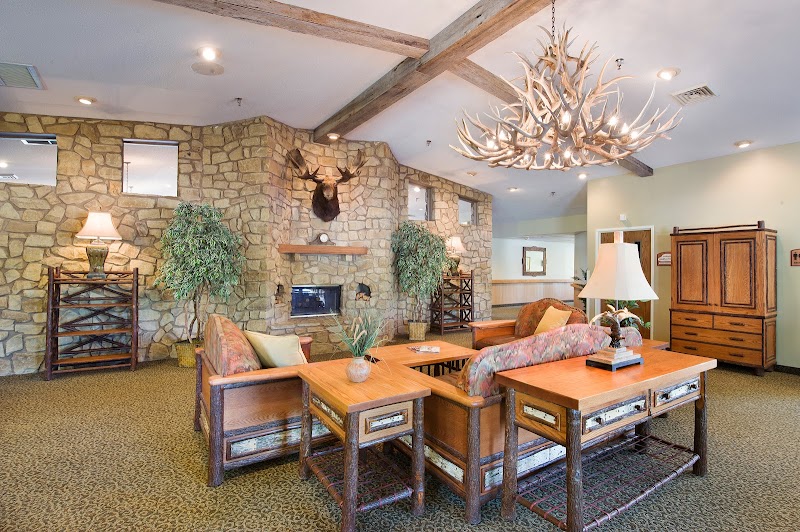
How is Wesleyan Health Staffed?

CMS rates WESLEYAN HEALTH CARE CENTER's staffing level at 3 out of 5 stars, which is average compared to other nursing homes. Staff turnover is 48%, compared to the Indiana average of 46%.

What Have Inspectors Found at Wesleyan Health?

State health inspectors documented 17 deficiencies at WESLEYAN HEALTH CARE CENTER during 2022 to 2024. These included: 3 that caused actual resident harm and 14 with potential for harm. Deficiencies causing actual harm indicate documented cases where residents experienced negative health consequences.
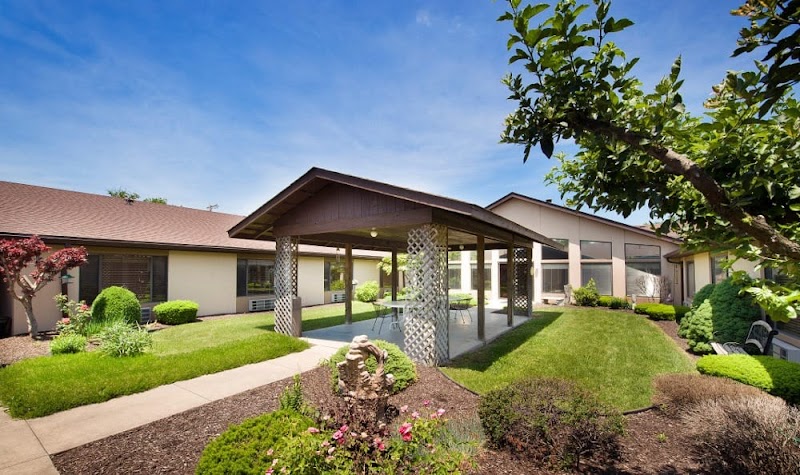
Who Owns and Operates Wesleyan Health?

WESLEYAN HEALTH CARE CENTER is owned by a non-profit organization. Non-profit facilities reinvest revenue into operations rather than distributing to shareholders. The facility is operated by TLC MANAGEMENT, a chain that manages multiple nursing homes. With 139 certified beds and approximately 104 residents (about 75% occupancy), it is a mid-sized facility located in MARION, Indiana.
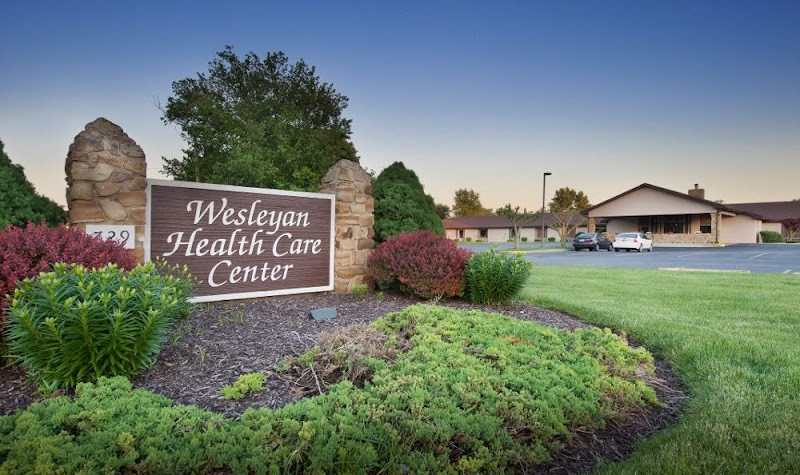
How Does Wesleyan Health Compare to Other Indiana Nursing Homes?

Compared to the 100 nursing homes in Indiana, WESLEYAN HEALTH CARE CENTER's overall rating (3 stars) is below the state average of 3.1, staff turnover (48%) is near the state average of 46%, and health inspection rating (2 stars) is below the national benchmark.

What Should Families Ask When Visiting Wesleyan Health?

Based on this facility's data, families visiting should ask: "Can I visit during a mealtime to observe dining assistance and food quality?" "How do you handle medical emergencies, and what is your hospital transfer rate?" "Can I speak with family members of current residents about their experience?"

Is Wesleyan Health Safe?

Based on CMS inspection data, WESLEYAN HEALTH CARE CENTER has a clean safety record: no substantiated abuse findings (meaning no confirmed cases of resident harm), no Immediate Jeopardy citations (the most serious violation level indicating risk of serious injury or death), and is not on the Special Focus Facility watch list (a federal program monitoring the lowest-performing 1% of nursing homes). The facility has a 3-star overall rating and ranks #100 of 100 nursing homes in Indiana. While no facility is perfect, families should still ask about staff-to-resident ratios and recent inspection results during their visit.

Do Nurses at Wesleyan Health Stick Around?

WESLEYAN HEALTH CARE CENTER has a staff turnover rate of 48%, which is about average for Indiana nursing homes (state average: 46%). Moderate turnover is common in nursing homes, but families should still ask about staff tenure and how the facility maintains care continuity when employees leave.

Was Wesleyan Health Ever Fined?

WESLEYAN HEALTH CARE CENTER has been fined $8,824 across 1 penalty action. This is below the Indiana average of $33,167. While any fine indicates a compliance issue, fines under $50,000 are relatively common and typically reflect isolated problems that were subsequently corrected. Families should ask what specific issues led to these fines and confirm they've been resolved.

Is Wesleyan Health on Any Federal Watch List?

WESLEYAN HEALTH CARE CENTER is not on any federal watch list. The most significant is the Special Focus Facility (SFF) program, which identifies the bottom 1% of nursing homes nationally based on persistent, serious quality problems. Not being on this list means the facility has avoided the pattern of deficiencies that triggers enhanced federal oversight. This is a positive indicator, though families should still review the facility's inspection history directly.