SUMMIT HEALTH AND LIVING
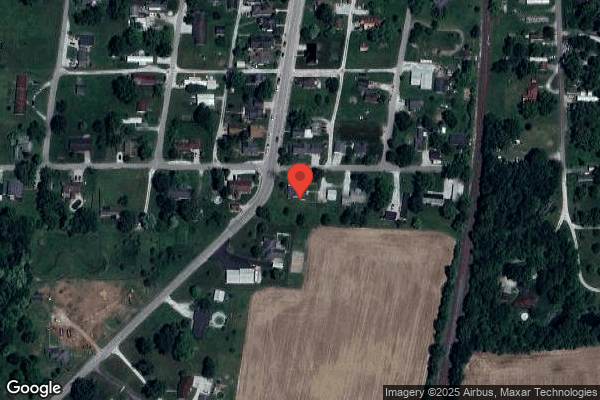
701 S MAIN ST, SUMMITVILLE, IN 46070 (765) 203-2671
Non profit - Corporation 34 Beds Independent Data: November 2025
Trust Grade
83/100
#192 of 505 in IN
Last Inspection: September 2024

Within standard 12-15 month inspection cycle. Federal law requires annual inspections.

Overview

Summit Health and Living has a Trust Grade of B+, which means it is above average and generally recommended for families considering care options. It ranks #192 out of 505 nursing homes in Indiana, placing it in the top half of facilities statewide, and #6 out of 11 in Madison County, indicating that there are only a few local options that are rated higher. The facility is improving, having reduced issues from three in 2024 to just one in 2025. Staffing is a strength with a 4/5 rating and a low turnover rate of 27%, significantly better than the state average of 47%, which means that staff are likely familiar with residents' needs. However, there are concerns regarding RN coverage, as it is less than that of 79% of Indiana facilities, and there have been specific incidents, such as a failure to implement a resident's care plan during a transfer, resulting in a fall, and issues with the management of narcotics by the Director of Nursing, leading to unaccounted medications. Overall, while the facility shows promise in some areas, families should be aware of the weaknesses and specific incidents that have occurred.

Trust Score
B+
83/100
In Indiana
#192/505
Top 38%
Safety Record
Low Risk
No red flags
Inspections
Getting Better
3 → 1 violations
Staff Stability
✓ Good
27% annual turnover. Excellent stability, 21 points below Indiana's 48% average. Staff who stay learn residents' needs.
Penalties
✓ Good
No fines on record. Clean compliance history, better than most Indiana facilities.
Skilled Nurses
○ Average
Each resident gets 31 minutes of Registered Nurse (RN) attention daily — about average for Indiana. RNs are the most trained staff who monitor for health changes.
Violations
○ Average
7 deficiencies on record. Average for a facility this size. Mostly minor or procedural issues.
★★★★☆
4.0
Overall Rating
★★★★☆
4.0
Staff Levels
★★★☆☆
3.0
Care Quality
★★★★☆
4.0
Inspection Score
Stable
2024: 3 issues
2025: 1 issues

The Good

  • 4-Star Staffing Rating · Above-average nurse staffing levels
  • Low Staff Turnover (27%) · Staff stability means consistent care
  • Full Sprinkler Coverage · Fire safety systems throughout facility
  • No fines on record
  • Staff turnover is low (27%)

    21 points below Indiana average of 48%

Facility shows strength in staffing levels, staff retention, fire safety.

The Bad

No Significant Concerns Identified

This facility shows no red flags. Among Indiana's 100 nursing homes, only 1% achieve this.

The Ugly 7 deficiencies on record

Aug 2025 1 deficiency
CONCERN (D) 📢 Someone Reported This

A family member, employee, or ombudsman was alarmed enough to file a formal complaint

Potential for Harm - no one hurt, but risky conditions existed

Free from Abuse/Neglect (Tag F0600)

Could have caused harm · This affected 1 resident

Based on interview and record review, the facility failed to prevent the neglect of a dependent resident when CNA 1 did not implement the resident's care plan interventions nor follow manufacture's gu...

Read full inspector narrative →
Based on interview and record review, the facility failed to prevent the neglect of a dependent resident when CNA 1 did not implement the resident's care plan interventions nor follow manufacture's guidelines for the operation of a mechanical lift, resulting in a resident fall when the mechanical lift tipped over during a transfer for 1 of 3 residents reviewed for mobility transfers utilizing a mechanical lift. (Resident B)Findings include:Resident B's clinical record was reviewed on 8/20/25 at 10:10 a.m. Diagnoses included cerebral infarction, vascular dementia, hemiplegia and hemiparesis affecting left non-dominate side, type 2 diabetes, chronic kidney disease, hypertension, anticoagulant use, depressive disorder, and chronic pain syndrome. A current care plan, dated 1/18/21, indicated the resident had an activity of daily living deficit. Interventions included two staff member participation for mobility transfers. The most current quarterly MDS (Minimum Data Set) Assessment, dated 7/10/25, indicated the resident was dependent for transfers to and from a bed to a chair or wheelchair. An undated facility CNA Assignment Sheet indicated Resident B required two-person assist for transfers. A facility self-reportable, dated 7/26/25, indicated, at approximately 4:05 p.m. on 7/26/25, CNA 2 entered Resident B's room. Resident B was in the mechanical lift and lifted high in the air. The only other person in the room was CNA 1. CNA 2 indicated CNA 1 had been transferring the resident from the bed to a high-backed, reclining wheelchair chair alone. CNA 2 called for assistance from the nurses. When LPN 3 entered the room, they observed Resident B on the floor, the mechanical lift tipped over on its side, and CNA 1 and CNA 2 standing nearby. The resident was assessed and sent to the hospital for evaluation and treatment.A written interview between the DON and CNA 1, dated 7/26/25, indicated CNA 1 started the mechanical lifting process without assistance from another staff member. In a written statement, dated 7/26/25, CNA 2 indicated she was searching for the mechanical lift. She entered Resident B's room and saw the resident lifted into the air via the mechanical lift with only one operator present. CNA 1 pushed the machine forward, and the resident fell to the floor. CNA 2 indicated CNA 1 never asked for assistance with the transfer.In a written statement, dated 7/26/25, LPN 3 indicated she heard staff yelling for RN 4. She went to the room and found Resident B on the floor with CNA 1 and CNA 2 standing nearby. The resident was assessed and returned to bed. LPN 3 indicated she had never seen CNA 1 attempt to use the mechanical lift without assistance. However, after the incident, she became aware CNA 1 had attempted the transfer without assistance. In a written statement, dated 7/26/25, RN 4 indicated she heard staff calling her name. When she arrived at Resident B's room, she observed the resident on the floor and was told he fell from the mechanical lift. CNA 2 told her when she entered the room, the resident was already in the mechanical lift sling, and it was elevated to the highest position. The machine tipped over, causing the resident to fall to the floor. During an interview on 8/20/25 at 10:54 a.m., the DON indicated CNA 1 was no longer an employee of the facility. CNA 1was not available for interview during this survey.During an interview on 8/20/25 at 11:02 a.m., Resident B indicated he was dropped from the mechanical lift. The resident was unable to remember who was involved or specifics about the incident. The resident indicated he had a bad headache and was sent to the hospital. TDuring an interview on 8/20/25 at 11:14 a.m., CNA 5 indicated staff have always been required to use two people to operate mechanical lifts.During an interview on 8/20/25 at 11:23 a.m., the Maintenance Supervisor indicated the mechanical lift was checked after the incident and they were unable to find anything wrong with the function of the lift. During an interview on 8/20/25 at 11:25 a.m., CNA 6 indicated staff always used two staff members to operate a mechanical lift. She denied any problems finding someone to help. Staff used CNA assignment sheets to see what type of care the residents needed.During an interview on 8/20/25 at 11:40 a.m., RN 4 indicated she heard staff yelling for her. When she arrived at the resident's room, she observed the resident on the floor with the lift pad under him. Staff used the lift pad to move the resident closer to the bed and lift him back onto the bed. The resident was assessed for injuries and sent to the hospital. After the incident, RN 4 was informed that the resident was already in the mechanical lift and elevated when the CNA 2 arrived at the room. To operate a mechanical lift in this facility, there must be two people present.During an interview on 8/20/25 at 12:03 p.m., CNA 2 indicated she entered the resident's room and observed Resident B up in the air. The resident was positioned over a high-backed, reclining wheelchair. The chair was not positioned in a laid-back position appropriate for transfers. The resident started to fall, and the machine tipped over. CNA 2 indicated she tried to reach the resident but was unsuccessful. The resident complained of a headache. He was sent to the hospital. There should always be two people present to operate the mechanical lift.During an interview on 8/20/25 at 1:00 p.m., the Administrator indicated the facility recently amended their transfer policy to indicate the use of two staff members when using a mechanical lift. The Administrator indicated prior to the policy amendment; the facility used the manufacturer's recommendation which indicated the use of two staff members. Review of the manufacture's guidelines indicated the following: . Invacare recommends that two (2) assistants be used for ALL lifting preparation, transferring from and transferring to procedures. The use of one (2) assistant is totally based on the evaluation of the heath care professional for each individual case. Review of a current facility policy, last revised 7/28/25, titled Safe Resident Handling/Transfers and provided by the DON on 8/20/2025 at 11:58 a.m. indicated the following: . Compliance Guidelines .15. Staff will perform mechanical lifts/transfers according to the manufacturer's instructions for use of the device. This citation is related to complaint 2572653.3.1-27(a)(3)
Sept 2024 3 deficiencies
CONCERN (D)

Potential for Harm - no one hurt, but risky conditions existed

Deficiency F0578 (Tag F0578)

Could have caused harm · This affected 1 resident

**NOTE- TERMS IN BRACKETS HAVE BEEN EDITED TO PROTECT CONFIDENTIALITY** Based on interview and record review, the facility failed to ensure the resident's advance directives were completed by the resi...

Read full inspector narrative →
**NOTE- TERMS IN BRACKETS HAVE BEEN EDITED TO PROTECT CONFIDENTIALITY** Based on interview and record review, the facility failed to ensure the resident's advance directives were completed by the resident with decisional capacity for 1 of 16 residents reviewed for advance directives. (Resident 4) Finding includes: Resident 4's clinical record was reviewed on [DATE] at 9:04 a.m. Diagnoses included atherosclerotic heart disease of native coronary artery without angina pectoris (thickening and hardening of the artery without chest pain) and paroxysmal atrial fibrillation (irregular heartbeat that lasts a short time and usually returns to normal). Current physician's orders included no CPR (cardiopulmonary resuscitation), dated [DATE]. An Indiana Physician Orders for Scope of Treatment (POST) form was completed on [DATE]. In the instructions, the form indicated if the patient lacked decisional capacity, the legal representative or a proxy may complete the POST on behalf of the patient. Section E indicated in order for the POST form to be effective the patient, legally appointed representative, or proxy must sign and date the form. The resident representative had signed the form on [DATE]. Section F indicated the relationship of the representative or proxy identified in Section E and indicated if the patient does not have capacity. The form was signed by the nurse practitioner on [DATE]. An admission Minimum Data Set (MDS) assessment completed on [DATE] indicated the resident was cognitively intact. A care plan, initiated on [DATE] and revised on [DATE], indicated the resident was a no code (do not resuscitate) per her desire. A Social Service progress note, dated [DATE] at 12:09 p.m., indicated the resident was her own responsible person. During an interview, on [DATE] at 2:14 p.m., RN 3 and LPN 4 indicated the nurses went over advance directives with the residents or their representatives on admission. If a resident was mentally competent, he/she should sign the advance directives. During an interview, on [DATE] at 2:16 p.m., QMA (qualified medication aide) 5 indicated the resident was alert and oriented. During an interview, on [DATE] at 2:22 p.m., LPN 6 indicated the resident knew the staff by name and seemed oriented. If a resident was oriented, then advance directives would be signed by the resident. She thought the resident had wanted her representative to sign the advance directives. During an interview, on [DATE] at 3:09 p.m., the DON indicated the resident's daughter had signed the POST as the resident had refused to sign her admission paperwork. The daughter had signed everything. She was uncertain if the resident had been reapproached to sign advance directives or if the resident's record contained documentation of the resident's refusal to sign paperwork. During an interview, on [DATE] at 3:55 p.m., the DON had been unable to locate the resident's refusal to sign paperwork during the admission process or attempts to reapproach the resident later. She provided a statement signed by the Office Manager on [DATE] that indicated the resident refused to sign paperwork on her own and insisted the representative sign for her due to not being in a well enough state. During an interview, on [DATE] at 4:52 p.m., the Administrator indicated she had been unable to locate the facility policy on advance directives. She had reached out to her corporate consultant and was still waiting for the policy. 3.1-4(f)(7)
CONCERN (D)

Potential for Harm - no one hurt, but risky conditions existed

Deficiency F0744 (Tag F0744)

Could have caused harm · This affected 1 resident

**NOTE- TERMS IN BRACKETS HAVE BEEN EDITED TO PROTECT CONFIDENTIALITY** Based on observation, record review, and interview, the facility failed to ensure a resident was not started on a routine antips...

Read full inspector narrative →
**NOTE- TERMS IN BRACKETS HAVE BEEN EDITED TO PROTECT CONFIDENTIALITY** Based on observation, record review, and interview, the facility failed to ensure a resident was not started on a routine antipsychotic medication without indication for 1 of 5 residents reviewed for dementia care (Resident 82). Finding includes: During an observation, on 9/4/24 at 11:00, Resident 82 sat in a wheelchair in his room while his representative shaved him. He kept his eyes closed throughout the procedure and had to be roused for questions. During an observation, on 9/5/24 at 1:18 p.m., the resident sat outside the facility in a wheelchair with a visitor sitting at his side. During an observation, on 9/9/24 at 8:34 a.m., the resident sat in a wheelchair in his room and spoke about his wife. During an observation, on 9/9/24 at 1:54 p.m., the resident propelled himself in a wheelchair down the hallway using the siderails to pull himself and smiled as other residents, staff, and visitors talked to him. Resident 82's clinical record was reviewed on 9/6/24 at 8:23 a.m. He was admitted on [DATE]. Diagnoses included Alzheimer's disease, dementia in other diseases classified elsewhere, moderate, with other behavioral disturbance, and unspecified symptoms and signs involving cognitive functions and awareness. Current physician's orders included donepezil (for Alzheimer's disease) 10 mg daily, memantine (for Alzheimer's disease) 10 mg daily, and quetiapine (antipsychotic) 50 mg daily at bedtime. An admission Minimum Data Set (MDS) assessment completed on 8/19/24 indicated the resident was severely cognitively impaired. He exhibited physical symptoms not directed toward others for one to three days during the assessment period. The symptoms did not significantly interfere with the resident's care and did not put others at significant risk of physical injury. He did not exhibit wandering or rejection of care behaviors. A current care plan, initiated on 8/20/24 and revised on 8/26/24, indicated the resident had a behavior problem related to: He refused care, yelled, threatened staff, and wanted to find wife. His cognitive ability was worse in the evening and night where he became more confused and acted out. His interventions included the following: Administer medications as ordered. Monitor/document for side effect and effectiveness (8/20/24); Caregivers to provide opportunity for positive interaction and attention. Stop and talk with the resident as passing by (8/20/24); Intervene as necessary to protect the rights and safety of others. Approach/Speak in a calm manner. Divert his attention. Remove the resident from the situation and take to an alternate location as needed (8/20/24); Minimize potential for the resident's disruptive behaviors by offering tasks which divert attention such as a busy box, snack, or talking about his family (8/20/24) and Monitor behavior episodes and attempt to determine underlying cause. Consider location, time of day, persons involved, and situations. Document behavior and potential causes (8/20/24). A Nurses Note, dated 8/15/24 at 2:00 a.m., indicated the resident yelled out repeatedly. He wanted to know where he was, where his wife was, and what happened to his leg. His questions were answered. He was given reassurance. Five minutes later, the resident continued to yell and awakened others. The resident exhibited the yelling behavior several times. A Nurses Note, dated 8/22/24 at 3:17 a.m., indicated the resident yelled out and demanded to go home. The resident threatened staff with physical harm. His confusion triggered the behavior. The resident was clean and dry with no sign or symptoms of distress. He was agitated. Interventions attempted included the following: Fluids and snacks were offered; Assistance to the wheelchair to sit up for a while was offered; and Assistance to turn on and watch television was offered. The interventions were refused. The resident was reminded he was at the facility for therapy, and it was the middle of the night. The resident indicated he did not care. The resident was given incontinence care and was quiet. A Nurse Note, dated 8/23/24 at 6:17 a.m., indicated the resident yelled out most of the night wanting to know where his wife was, why he was at the facility and where his leg was. Staff attempted to redirect and were not very successful. His confusion and dementia triggered the behavior. The staff assisted the resident up into his wheelchair. He sat at the nurses' station, was given a snack, and interacted with the staff. The resident began to fall asleep and was assisted back to his bed. The resident slept for about an hour and a half and began to yell out again. A Nurse Note, dated 8/26/24 at 11:59 p.m., indicated the resident yelled out and wanted the police called. The resident indicated he was at his home. The resident was reminded he was at the nursing home. He wanted the police called and wanted his wife to be with him. Staff reminded him of his location, situation, time of night and that his wife had been there earlier and was currently sleeping. He did not accept the staff's reminders. A Nurse Note, dated 8/27/24 at 12:07 a.m., indicated the triggers for the above behaviors was the resident saw or heard staff pass by his room. He indicated it was too noisy. He was confused and unaware of the situation, location, time, and date. Reassurance was not effective. He became argumentative and agitated. The resident was reminded of the location and his situation. He was offered food and fluids. The staff attempted to reposition him in bed. The television was turned off. A light at bedside was turned on. A Nurses Note, dated 8/27/24 at 11:05 a.m., indicated the resident's representative had spoken to the resident's neurologist about the resident's yelling and behaviors at night. A prescription was sent for quetiapine 50 mg daily at bedtime related to moderate dementia with behavioral disturbance. The Nurse Practitioner (NP) was updated. The resident's representative brought the medication to the facility. The physician's orders lacked orders for psychoactive medications upon admission and prior to the initiation of the quetiapine order. A Nurses Note, dated 8/31/24 at 1:16 p.m., indicated the resident's representative reported the resident had been having increased evening and daytime sleepiness the last few days. The resident had napped on and off throughout the shift but was easily awakened. A Nurse Note, date 9/2/24 at 11:03 p.m., indicated the resident had started quetiapine and it was not effective. He yelled out, argued with staff, and wanted the police called. During an interview, on 9/9/24 at 1:58 p.m., CNA 10 indicated the resident had urinated on the floor today. He had yelled out for assistance after he urinated on the floor. She had not been told any special interventions for the resident for any behaviors. During an interview, on 9/9/24 at 2:02 p.m., CNA 9 indicated the resident liked to call out. His behaviors got worse after supper when his wife left because he was sundowning (his confusion increased late in the afternoon into the night). The staff gave the resident snacks, took him to the bathroom often, because he liked to use the bathroom a lot and that helped a little. He also enjoyed talking to other residents. She thought the resident was lonely at times. During an interview, on 9/9/24 at 2:09 p.m., CNA 11 indicated the resident became anxious at night when his wife was gone. He tried to redirect the resident by talking about his wife. Later in the night, he got worse. Usually, the staff could talk to him and give him ice cream and that helped. For the most part, he was sweet. During an interview, on 9/9/24 at 2:17 p.m., QMA 5 indicated she met the resident in the moment for his behaviors and that seemed to work. During an interview, on 9/9/24 at 2:18 p.m., LPN 6 indicated the staff had to get the resident out of bed sometimes. The resident believed the facility was his house and often asked why the staff were in his house. Sometimes he would sleep for several hours in bed. She thought the resident's representative had reached out to the resident's dementia doctor. She had attempted to call the resident's representative, but the resident's representative did not answer her calls, so she called another member of the resident's family. That was when the resident's representative contacted the resident's neurologist. She was uncertain if the facility had contacted the neurologist to discuss the resident's recent order for quetiapine. During an interview, on 9/9/24 at 3:04 p.m., the DON indicated she had not spoken with the neurologist or his office. The facility did not typically start with antipsychotic medication for behaviors. They worked with the doctor and the psychological services NP. She knew the resident was having behaviors. The resident's representative had called the neurologist and already had the bottle of the medication when she told the facility. The NP had been notified, and had said it was okay. A description of the interactions between the neurologist's office and the resident's representative from the neurologist's office, provided by the Administrator on 9/9/24 at 4:20 p.m., indicated the neurologist had been contacted by the resident's representative on 8/26/24 at 8:49 a.m. The resident's representative indicated the resident was residing at the facility for rehabilitation and physical therapy. He had been in the hospital for a week for Respiratory Syncytial Virus (RSV) and a urinary tract infection. He was getting worse. His sundowning had worsened. He was not sleeping at night. The neurologist ordered quetiapine 50 mg daily at bedtime on 8/26/24 at 9:41 a.m. The resident representative was notified, on 8/26/24 at 9:50 a.m., of the new order and requested the order to be sent to a nearby pharmacy. An NP progress note, dated 8/27/24, provided by the Administrator on 9/9/24 at 4:20 p.m., indicated the resident had been seen for an admission follow up. He had been sundowning and at night, had not been sleeping well, and had become agitated. The resident's representative had reached out to the resident's neurologist. The resident had a history of dementia now with increasing behavioral disturbance. The neurologist prescribed the resident quetiapine 50 mg at bedtime to help with the insomnia and behaviors. Otherwise, the resident had been adjusting better during the daytime hours. A facility policy, dated 10/2022, provided by the Administrator on 9/9/24 at 4:20 p.m., titled Psychotropic Medication Policy, indicated the following: .Based on a comprehensive assessment of a resident, the facility must ensure: Residents who have not used psychotropic drugs are not given these drugs unless the medication is necessary to treat a specific condition as diagnosed and documented in the clinical record .Facility will use extreme caution in utilizing antipsychotic medications in the elderly. The following will be considered prior to initiation of antipsychotic medication. 1. Behavioral symptoms present a danger to the resident or others. 2. Expression or indications of distress that are significant distress to the resident. 3. If not clinically contraindicated, multiple non-pharmacological approaches have been attempted, but did not relieve the symptoms which are presenting a danger or significant distress 3.1-37(a) 4.1-48(b)(1)
CONCERN (D)

Potential for Harm - no one hurt, but risky conditions existed

Deficiency F0883 (Tag F0883)

Could have caused harm · This affected 1 resident

Based on interview and record review, facility failed to ensure residents received offered vaccinations available for 1 of 5 residents reviewed for immunizations (Resident 8). Findings include: Reside...

Read full inspector narrative →
Based on interview and record review, facility failed to ensure residents received offered vaccinations available for 1 of 5 residents reviewed for immunizations (Resident 8). Findings include: Resident 8's clinical record was reviewed on 9/6/24 at 9:24 a.m. Diagnoses included dementia without behavioral disturbance, psychotic disturbance, anxiety, post- traumatic stress disorder, major depressive disorder and pneumonia. Resident 8 had received pneumococcal polysaccharide vaccine (PPSV) 23 on 7/12/16, and pneumococcal conjugate vaccine (PCV) 13 on 7/16/15. CDC recommendations indicated to give one dose of PCV 20 at least 5 years after the last pneumococcal vaccine dose. Resident 8 was educated on PCV 20 and consented for the vaccine on 5/18/24. A written interdisciplinary team (IDT) note on the vaccination consent form, dated 5/19/24, received from the DON on 9/9/24 at 10:00 a.m., indicated the resident was currently ill and he had a past reaction to the vaccine. At this time, Prevnar 20 was not required, and they would reassess in the future. During an interview, on 9/9/24 at 11:51 a.m., the DON indicated she would check with the resident to see if he still wanted the Prevnar 20 vaccination. A current facility policy, titled Infection Control; Influenza and Pneumococcal Vaccinations, last revised on 7/28/21 and provided by the DON on 9/9/24 at 4:15 p.m., indicated Policy: Essential Senior Health and Living must develop policies and procedures to ensure that all residents in the facility receive the Influenza Vaccination between October 1 thru March 31 annually and the Pneumococcal Vaccination at least once or is either medically contraindicated or has previously been immunized. All residents admitted to the facility will have physician's order for influenza and pneumococcal vaccinations from their physicians, if not current and not medically contraindicated. 3.1-13(a)
Mar 2023 1 deficiency
CONCERN (E) 📢 Someone Reported This

A family member, employee, or ombudsman was alarmed enough to file a formal complaint

Potential for Harm - no one hurt, but risky conditions existed

Deficiency F0602 (Tag F0602)

Could have caused harm · This affected multiple residents

Based on record review and interview, the facility failed to ensure Schedule II narcotics were not diverted by the Director of Nursing for 5 of 8 residents reviewed for misappropriation of property (R...

Read full inspector narrative →
Based on record review and interview, the facility failed to ensure Schedule II narcotics were not diverted by the Director of Nursing for 5 of 8 residents reviewed for misappropriation of property (Residents B, C, D, E and F). Findings include: Review of a Facility Reported Incident, dated 2/15/23 at 10:52 a.m., indicated the narcotic count was not accurate for Resident B because the DON (Director of Nursing) had taken two cards of hydrocodone that contained 30 tablets on each card. The Administrator-in-Training had entered the DON's office and found one card of hydrocodone tablets, but not the other card. The investigation revealed additional Level 2 narcotics had been unaccounted for. A review of Schedule II narcotics, provided by the Consultant Administrator on 3/2/23, indicated the following: 1. Resident B's hydrocodone 7.5 mg (milligram) with 325 mg acetaminophen had 35 tablets unaccounted for and 26 tablets of hydrocodone 10 mg with 325 mg acetaminophen unaccounted for. 2. Resident C's Percocet 5 mg with 325 mg acetaminophen had 83 tablets unaccounted for and Percocet 7.5 mg with 325 mg acetaminophen had 62 tablets unaccounted for. 3. Resident D's hydrocodone 5 mg with 325 mg acetaminophen had 33 tablets unaccounted for. 4. Resident E's hydrocodone 5 mg with 325 mg acetaminophen had 28 tablets unaccounted for. 5. Resident F's hydrocodone 5 mg with 325 mg acetaminophen had 25 tablets unaccounted for. During an interview, on 3/2/23 at 10:00 a.m., the Administrator indicated the DON had been terminated. The investigation concluded the DON had been removing the medications from the cart on the premise of destroying them, after new medication orders were received. The staff didn't question her actions. During an interview on 3/2/23 at 11:00 a.m., the Infection Prevention Nurse indicated two nurses were required to destroy Schedule II medications. Review of a current facility policy, titled DISPOSAL OF MEDICATIONS AND MEDICATION-RELATED SUPPLIES, dated January 2007 and provided by the Infection Prevention Nurse on 3/2/23 at 11:02 a.m., indicated .Policy Medications included in the Drug Enforcement Administration (DEA) classification as controlled substances are subject to special handling, storage, disposal, and recordkeeping in the facility in accordance with federal and state laws and regulations .C. Schedule II medications remaining in the facility after a resident has been discharged , or the order discontinued, are disposed of by two licensed nurses as directed by state laws, regulations, and/or the DEA This Federal tag relates to complaint IN00401812. 3.1-28(a)
Nov 2022 2 deficiencies
CONCERN (D)

Potential for Harm - no one hurt, but risky conditions existed

Report Alleged Abuse (Tag F0609)

Could have caused harm · This affected 1 resident

Based on record review and interview, the facility failed to ensure an allegation of abuse had been reported timely for 2 of 2 residents reviewed (Resident 15 and Resident 8). Findings include: 1. Dur...

Read full inspector narrative →
Based on record review and interview, the facility failed to ensure an allegation of abuse had been reported timely for 2 of 2 residents reviewed (Resident 15 and Resident 8). Findings include: 1. During an interview, on 11/1/22 at 1:37 p.m., Resident 15 indicated he had come from a family of 10 brothers and he wasn't bothered by the other residents. During an observation, on 11/1/22 at 3:41 p.m., he was sitting in a wheel-chair in the library with a staff member and two other male residents. His clinical record was reviewed on 11/2/22 at 9:55 a.m. Diagnoses included, but were not limited to, dementia with behavioral disturbance and delusional disorders. A 9/29/22 admission MDS (Minimum Data Set) assessment indicated he had moderate cognitive impairment. A current care plan, initiated 9/23/22, indicated he had the potential to demonstrate verbally abusive behaviors related to dementia, poor impulse control, adjustment disorder and trouble adjusting to the facility. The goal, with a target date of 12/21/22, indicated he demonstrated effective coping skills through the review date. Interventions included assessed resident's understanding of a situation and allowed time for him to express himself and his feelings about the situation. A progress note, dated 10/28/22 at 9:00 a.m., indicated Resident 15 was in the library yelling for help, he told a staff member another resident (Resident 8) told him he was going to blow his head off. The resident was removed from the library, assisted to the nurses station and was able to repeat what had been said to him. 2. During an interview, on 10/31/22 at 10:58 a.m., Resident 8 indicated he attended some activities and had been treated well. During an observation, on 11/1/22 at 3:40 p.m., he was sitting in a wheel-chair in his room talking with his wife. Resident 8's clinical record was reviewed on 111/1/22 at 2:33 p.m. Diagnoses included, but were not limited to, dementia without behavioral disturbance, PTSD (Post-Traumatic Stress Disorder), homicidal ideation and violent behavior. An 8/8/22 quarterly MDS assessment indicated he had moderate cognitive impairment. A current care plan, initiated 8/4/22, indicated he was seen by psych services for PTSD in Vietnam, certain things triggered him to have homicidal ideation. The goal, with a target date of 1/10/23, indicated he would continue to speak with psych services for the benefit of his mental health through the review. Interventions included, allowed to discuss his feelings, medication per physician recommendation and provided reassurance when he felt down. A progress note, dated 10/28/22 at 9:10 a.m., indicated another resident (Resident 15) had alleged he was going to blow that resident's head off. He had shook his head no, and indicated he may have implied it or said something about a pistol, the other resident bumped into him with his wheel-chair and it made him mad. Resident 8 was reminded that it was not appropriate to have said that and he needed to ask for staff assist with his needs. Residents had been separated and 15 minute safety checks had been started. During an interview, on 11/1/22 at 12:45 p.m., the Administrator indicated she did not report the allegation and didn't feel it needed to be reported. Review of a current facility policy, titled ABUSE, NEGLECT, AND EXPLOITATION, with a revised date of 10/2022 and provided by the Director of Nursing on 11/3/22 at 10:23 a.m., indicated .1. The Abuse Coordinator in the facility is the Director of Nursing, Administrator, or facility appointed designee. Report allegations or suspected abuse, neglect, or exploitation immediately to: Administrator, Other Officials in accordance with State Law, State Survey and Certification agency through established procedures 3.1-28(c)
CONCERN (D)

Potential for Harm - no one hurt, but risky conditions existed

Assessment Accuracy (Tag F0641)

Could have caused harm · This affected 1 resident

Based on record review and interview, the facility failed to accurately code medications on the Minimum Data Set (MDS) assessment for 2 of 16 sampled residents (Residents 11 and 24). Findings include:...

Read full inspector narrative →
Based on record review and interview, the facility failed to accurately code medications on the Minimum Data Set (MDS) assessment for 2 of 16 sampled residents (Residents 11 and 24). Findings include: 1. Resident 11's clinical record was reviewed on 11/3/22 at 9:43 a.m. Diagnoses, included but were not limited to, major depressive disorder. A 10/3/22 quarterly MDS assessment indicated the resident received an antipsychotic medication. A gradual does reduction (GDR) was attempted on 6/28/22. Physician's orders during the MDS assessment period lacked an order for an antipsychotic medication. During an interview, on 11/3/22 at 2:40 p.m., the MDS coordinator indicated the resident did not take antipsychotic medications. She indicated the MDS was coded incorrectly; the resident received an antidepressant medication and not an antipsychotic medication. The GDR date was for the reduction in the antidepressant medication. 2. Resident 24's clinical record was reviewed on 11/2/22 at 12:58 p.m. Diagnoses included, but were not limited to, Alzheimer's disease, psychotic disorder with delusions due to known physiological condition, dementia with behavioral disturbance, major depressive disorder and anxiety disorder. A 10/24/22 quarterly MDS assessment indicated the resident did not receive antipsychotic medications. Current physician's medication orders included, quetiapine fumarate (antipsychotic) 100 mg daily ordered on 9/28/22. During an interview, on 11/3/22 at 2:35 p.m., the MDS Coordinator indicated the coding in the MDS was an input error. The resident received an antipsychotic medication during the MDS assessment period. During an interview, on 11/3/22 at 3:32 p.m., the MDS Coordinator indicated the Resident Assessment Instrument (RAI) manual was used as the facility's policy for the MDS assessments. The current RAI manual indicated, .Review the resident's medication administration records to determine if the resident received an antipsychotic medication since admission/entry or reentry or the prior OBRA assessment, whichever is more recent. Code 1, yes: if antipsychotics were received on a routine basis only .
Understanding Severity Codes (click to expand)
Life-Threatening (Immediate Jeopardy)
J - Isolated K - Pattern L - Widespread
Actual Harm
G - Isolated H - Pattern I - Widespread
Potential for Harm
D - Isolated E - Pattern F - Widespread
No Harm (Minor)
A - Isolated B - Pattern C - Widespread

Questions to Ask on Your Visit

  • "Can I speak with families of current residents?"
  • "What's your RN coverage like on weekends and overnight?"

Our Honest Assessment

Strengths
  • • Grade B+ (83/100). Above average facility, better than most options in Indiana.
  • • No major safety red flags. No abuse findings, life-threatening violations, or SFF status.
  • • No fines on record. Clean compliance history, better than most Indiana facilities.
  • • 27% annual turnover. Excellent stability, 21 points below Indiana's 48% average. Staff who stay learn residents' needs.
Concerns
  • • No significant concerns identified. This facility shows no red flags across CMS ratings, staff turnover, or federal penalties.
Bottom line: Generally positive indicators. Standard due diligence and a personal visit recommended.

About This Facility

What is Summit Health And Living's CMS Rating?

CMS assigns SUMMIT HEALTH AND LIVING an overall rating of 4 out of 5 stars, which is considered above average nationally. Within Indiana, this rating places the facility higher than 99% of the state's 100 nursing homes. This rating reflects solid performance across the metrics CMS uses to evaluate nursing home quality.

How is Summit Health And Living Staffed?

CMS rates SUMMIT HEALTH AND LIVING's staffing level at 4 out of 5 stars, which is above average compared to other nursing homes. Staff turnover is 27%, compared to the Indiana average of 46%. This relatively stable workforce can support continuity of care.

What Have Inspectors Found at Summit Health And Living?

State health inspectors documented 7 deficiencies at SUMMIT HEALTH AND LIVING during 2022 to 2025. These included: 7 with potential for harm.

Who Owns and Operates Summit Health And Living?

SUMMIT HEALTH AND LIVING is owned by a non-profit organization. Non-profit facilities reinvest revenue into operations rather than distributing to shareholders. The facility operates independently rather than as part of a larger chain. With 34 certified beds and approximately 31 residents (about 91% occupancy), it is a smaller facility located in SUMMITVILLE, Indiana.

How Does Summit Health And Living Compare to Other Indiana Nursing Homes?

Compared to the 100 nursing homes in Indiana, SUMMIT HEALTH AND LIVING's overall rating (4 stars) is above the state average of 3.1, staff turnover (27%) is significantly lower than the state average of 46%, and health inspection rating (4 stars) is above the national benchmark.

What Should Families Ask When Visiting Summit Health And Living?

Based on this facility's data, families visiting should ask: "Can I visit during a mealtime to observe dining assistance and food quality?" "How do you handle medical emergencies, and what is your hospital transfer rate?" "Can I speak with family members of current residents about their experience?"

Is Summit Health And Living Safe?

Based on CMS inspection data, SUMMIT HEALTH AND LIVING has a clean safety record: no substantiated abuse findings (meaning no confirmed cases of resident harm), no Immediate Jeopardy citations (the most serious violation level indicating risk of serious injury or death), and is not on the Special Focus Facility watch list (a federal program monitoring the lowest-performing 1% of nursing homes). The facility has a 4-star overall rating and ranks #1 of 100 nursing homes in Indiana. While no facility is perfect, families should still ask about staff-to-resident ratios and recent inspection results during their visit.

Do Nurses at Summit Health And Living Stick Around?

Staff at SUMMIT HEALTH AND LIVING tend to stick around. With a turnover rate of 27%, the facility is 19 percentage points below the Indiana average of 46%. Low turnover is a positive sign. It means caregivers have time to learn each resident's needs, medications, and personal preferences. Consistent staff also notice subtle changes in a resident's condition more quickly.

Was Summit Health And Living Ever Fined?

SUMMIT HEALTH AND LIVING has no federal fines on record. CMS issues fines when nursing homes fail to meet care standards or don't correct problems found during inspections. The absence of fines suggests the facility has either maintained compliance or corrected any issues before penalties were assessed. This is a positive indicator, though families should still review recent inspection reports for the full picture.

Is Summit Health And Living on Any Federal Watch List?

SUMMIT HEALTH AND LIVING is not on any federal watch list. The most significant is the Special Focus Facility (SFF) program, which identifies the bottom 1% of nursing homes nationally based on persistent, serious quality problems. Not being on this list means the facility has avoided the pattern of deficiencies that triggers enhanced federal oversight. This is a positive indicator, though families should still review the facility's inspection history directly.