MAJESTIC CARE OF DEMING PARK
3300 POPLAR ST, TERRE HAUTE, IN 47803 (812) 235-6281
For profit - Limited Liability company 86 Beds MAJESTIC CARE Data: November 2025 1 Immediate Jeopardy citation
Trust Grade
43/100
#265 of 505 in IN
Last Inspection: June 2024

Within standard 12-15 month inspection cycle. Federal law requires annual inspections.

Overview

Majestic Care of Deming Park has received a Trust Grade of D, indicating below-average performance with some concerns about care quality. The facility ranks #265 out of 505 nursing homes in Indiana, placing it in the bottom half of state facilities, and ranks #5 out of 9 in Vigo County, suggesting only four local options are better. While the facility is showing improvement, having reduced issues from 10 in 2024 to 3 in 2025, it still faces challenges. Staffing ratings are concerning, with a 50% turnover rate, which is average but still indicates instability. Additionally, the facility has accumulated $49,917 in fines, which is higher than 97% of Indiana facilities, hinting at ongoing compliance problems. On the positive side, the facility has a strong 5-star rating for quality measures and offers more RN coverage than most state facilities, which is beneficial for catching potential health issues. However, specific incidents raise alarms, such as a resident experiencing a critical lack of follow-up care for a urinary catheter, leading to hospitalization in septic shock. Another resident reported not receiving promised showers for an extended period, while equipment for nebulizer treatments was left unbagged and undated, posing hygiene risks. Families should weigh these strengths and weaknesses carefully when considering this facility.

Trust Score
D
43/100
In Indiana
#265/505
Bottom 48%
Safety Record
High Risk
Review needed
Inspections
Getting Better
10 → 3 violations
Staff Stability
⚠ Watch
50% turnover. Above average. Higher turnover means staff may not know residents' routines.
Penalties
✓ Good
$49,917 in fines. Lower than most Indiana facilities. Relatively clean record.
Skilled Nurses
○ Average
Each resident gets 34 minutes of Registered Nurse (RN) attention daily — about average for Indiana. RNs are the most trained staff who monitor for health changes.
Violations
⚠ Watch
30 deficiencies on record. Higher than average. Multiple issues found across inspections.
★★★☆☆
3.0
Overall Rating
★★☆☆☆
2.0
Staff Levels
★★★★★
5.0
Care Quality
★★☆☆☆
2.0
Inspection Score
Stable
2024: 10 issues
2025: 3 issues

The Good

  • 5-Star Quality Measures · Strong clinical quality outcomes
  • Full Sprinkler Coverage · Fire safety systems throughout facility
  • No fines on record

Facility shows strength in quality measures, fire safety.

The Bad

3-Star Overall Rating

Near Indiana average (3.1)

Meets federal standards, typical of most facilities

Staff Turnover: 50%

Near Indiana avg (46%)

Higher turnover may affect care consistency

Federal Fines: $49,917

Above median ($33,413)

Moderate penalties - review what triggered them

Chain: MAJESTIC CARE

Part of a multi-facility chain

Ask about local staffing decisions and management

The Ugly 30 deficiencies on record

1 life-threatening
Jun 2025 3 deficiencies
CONCERN (D) 📢 Someone Reported This

A family member, employee, or ombudsman was alarmed enough to file a formal complaint

Potential for Harm - no one hurt, but risky conditions existed

Deficiency F0558 (Tag F0558)

Could have caused harm · This affected 1 resident

Based on observation, record review, and interview, the facility failed to ensure a resident's call light was kept within their reach for 1 of 24 residents reviewed for call lights (Resident B). Findi...

Read full inspector narrative →
Based on observation, record review, and interview, the facility failed to ensure a resident's call light was kept within their reach for 1 of 24 residents reviewed for call lights (Resident B). Findings include: On 6/19/25 at 11:24 a.m., Resident B was observed lying in bed. The resident's call light was hanging off the side of the bed, nearly touching the floor. At the same time, the resident indicated she was not sure where the call light was or how she would call for assistance if needed. On 6/23/25 at 9:04 a.m., Resident B was observed lying in bed with the call light within reach. At the same time, the resident indicated she used the call light to call for assistance when needed and grabbed the call light to demonstrate. On 6/25/25 at 9:21 a.m., Resident B was observed lying in bed. The resident's call light was hanging off the side of the bed, approximately halfway to the floor. At the same time, the resident indicated she was not sure where her call light was and felt around with her right hand but was unable to find it. Resident B's record was reviewed on 6/24/25 at 1:37 p.m. Diagnosis on the resident's profile included, but were not limited to, multiple sclerosis (chronic, debilitating disease that affects the central nervous system). A quarterly Minimum Data Set (MDS) assessment, dated 5/20/25, indicated the resident had a moderate cognitive impairment and was dependent for activities of daily living (ADLs). A care plan, initiated on 6/3/25, indicated the resident was at risk for falls. Interventions included, but were not limited to, keep call light within reach. During an interview, on 6/25/25 at 9:23 a.m., Licensed Practical Nurse (LPN) 7 indicated the resident was able to use the call light to call for assistance, and it should have been kept within her reach. During an interview, on 6/25/25 at 9:56 a.m., the Administrator indicated call lights should have been kept within reach. On 6/25/25 at 10:48 a.m., the Administrator provided a document titled, Call Lights, dated 1/2/24, and indicated it was the policy currently being used by the facility. The policy indicated, .5. Staff will ensure the call light is within reach of resident and secured, as needed This citation relates to Complaint IN00460327. 3.1-3(v)(1)
CONCERN (D) 📢 Someone Reported This

A family member, employee, or ombudsman was alarmed enough to file a formal complaint

Potential for Harm - no one hurt, but risky conditions existed

Deficiency F0561 (Tag F0561)

Could have caused harm · This affected 1 resident

**NOTE- TERMS IN BRACKETS HAVE BEEN EDITED TO PROTECT CONFIDENTIALITY** 2. During the initial pool interview, on 6/19/25 at 11:12 a.m., Resident E indicated he was supposed to get two showers a week a...

Read full inspector narrative →
**NOTE- TERMS IN BRACKETS HAVE BEEN EDITED TO PROTECT CONFIDENTIALITY** 2. During the initial pool interview, on 6/19/25 at 11:12 a.m., Resident E indicated he was supposed to get two showers a week and had not had any this current week and only one the week before. The aides were asking him to sign off the shower sheet even though he was not getting one. Resident E's record was reviewed on 6/23/25 at 10:11 a.m. The profile indicated the resident had been admitted to the facility on [DATE], for diagnoses which included, but were not limited to, hemiplegia and hemiparesis due to cerebral infarction (weakness or paralysis on one side of the body caused by damage to the brain from a stroke). An admission Minimum Data Set (MDS) assessment, dated 6/6/25, indicated the resident had no cognitive deficit and no documentation for refusal of care. A care plan, dated 6/11/25, indicated the resident required assistance with activities of daily living (ADLs-basic tasks that individuals perform to maintain their daily life and care for themselves). Interventions included, but were not limited to, required staff assistance with bathing/showering and personal hygiene. An activity interview for daily and activity preferences document, dated 6/6/25, indicated the resident felt it was very important to choose between a tub bath, shower, bed bath, or sponge bath. A resident preference task document indicated the resident showers preference were on Tuesday and Friday evenings. The point of care (POC) documentation in the medical record (documentation recorded by the Certified Nursing Assistant [CNA] which documented the care that was provided to the resident), indicated the resident was scheduled to have 7 showers administered from 6/1/25 to 6/24/25. The record indicated the resident had received 3 completed showers, had refused 2 showers, and had 1 shower marked NA (not applicable) with no justification for the mark of NA. Review of shower sheets, provided by the Administrator, on 6/24/25 at 2:10 p.m., indicated the following: a. 6/2/25: The document indicated the resident had refused the shower request. The resident had signed the document. b. 6/6/25: The document indicated the resident had refused the shower request. The document lacked a signature from the resident. c. 6/10/25: The document indicated the resident had refused the shower request. The resident had signed the document. d. 6/12/25: The document indicated the resident had refused the shower request. The resident had signed the document. e. 6/13/25: The document indicated the resident had received a shower. The resident had signed the document. f. 6/17/25: The document indicated the resident had refused the shower request. A handwritten note on the document indicated the resident had refused due to the preference of aide. The document indicated the resident had refused to sign. g. 6/19/25: The document indicated the resident had received a shower. The resident had signed the document. h. 6/20/25: The document indicated the resident had refused the shower request. The document lacked a signature from the resident. 3. During observation of the lunch meal service, on 6/19/25 at 12:50 p.m., Resident C was observed with dark debris under her fingernails. Resident C's record was reviewed on 6/23/25 at 11:14 a.m. The record indicated the resident's diagnoses included, but were not limited to, paroxysmal atrial fibrillation (where episodes of irregular heart rhythm start and stop suddenly, either on their own or with treatment, and typically last for less than 7 days) and congestive heart failure (CHF-when the heart muscle doesn't pump blood as efficiently as it should, leading to a buildup of fluid [congestion] in the body). A significant change Minimum Data Set (MDS) assessment, dated 1/17/25, indicated the resident had moderate cognitive deficit and had no documented rejection of care behaviors. A care plan, with a revision dated of 2/5/25, indicated the resident required assistance with activities of daily living (ADLs-basic tasks that individuals perform to maintain their daily life and care for themselves). Interventions included, but were not limited to, required staff assistance with bathing/showering and personal hygiene. A resident preference task document indicated the resident preference was for bed baths on Mondays day shift and a shower on the day shift every Friday. The point of care (POC) documentation in the medical record (documentation recorded by the Certified Nursing Assistant [CNA] which documented the care that was provided to the resident), indicated the resident was scheduled to have 9 bed baths/showers administered from 5/26/25 to 6/23/25. The record indicated the resident had received 5 bed baths and 2 showers during that time period. The record lacked documentation of any refusals of care. Review of shower sheets, provided by the Administrator, on 6/24/25 at 2:10 p.m., indicated the following: a. 6/2/25: The document indicated the resident had received a bed bath, was shaved, and linens were changed. The resident had refused a shower, nail care or having her hair washed. The document indicated the resident was unable to provide a signature. b. 6/6/25: The document indicated the resident had received a bed bath, nail care, and linens were changed. The resident had refused a shower or having her hair washed. The document indicated the resident was unable to provide a signature. c. 6/9/25: The document indicated the resident had received a bed bath. The resident had refused a shower or having her hair washed. The document indicated the resident was unable to provide a signature. d. 6/13/25: The document indicated the resident had received a bed bath. The resident had refused a shower or having her hair washed. The document indicated the resident was unable to provide a signature. e. 6/16/25: The document indicated the resident had received a bed bath, nail care, and linens were changed. The resident had refused a shower or having her hair washed. The document indicated the resident was unable to provide a signature. f. 6/20/25: The document indicated the resident had received a bed bath, nail care, had her hair washed, and linens were changed. The document indicated the resident was unable to provide a signature. The record lacked documentation that the resident had not had her hair washed from 5/26/25 to 6/16/25. The record lacked documentation that the resident had nail care completed from 5/26/25 to 6/13/25. During an interview, on 6/23/25 at 3:18 p.m., the ADM indicated the shower sheets, completed by the CNA's were not a part of the medical record , but were kept separately for internal tracking. During an interview, on 6/24/25 at 9:10 a.m., CNA 5 indicated the aides complete both a shower sheet and would also put the information in the POC system. The dates for the shower sheets and the POC should always match the dates the residents received their showers or bed baths and other care was provided. During an interview, on 6/24/25 at 9:22 a.m., CNA 6 indicated the CNAs would put the shower/bed bath information on both shower sheets and into the POC system. Nail care, washing the resident's hair, and changing bed linen, were all part of the shower/bed bath process. During an interview, on 6/24/25 at 9:46 a.m., Unit Manager 7 indicated the resident were all scheduled for 2 showers a week, but if they requested more, the staff would make sure they received what they wanted. On 6/24/25 at 10:40 a.m., the Director of Nursing (DON) provided a document, dated 1/2/24, titled, Showers, and indicated it was the policy currently being used by the facility. The policy indicated, .Procedure: 1. Residents will be provided showers as per request or as per facility schedule protocols This citation relates to Complaint IN00460327. 3.1-3(u)(1) Based on record review and interview, the facility failed to ensure showers were provided to residents based on their preferences for 3 of 24 residents reviewed for choices (Residents B, E, and C). Findings include: 1. Resident B's record was reviewed on 6/24/25 at 1:37 p.m. Census information indicated the resident was admitted to the facility on [DATE]. Diagnosis on the resident's profile included, but were not limited to, multiple sclerosis (chronic, debilitating disease that affects the central nervous system) and nondisplaced transverse fracture (a break in a bone where the two pieces remain aligned and haven't moved out of place) of left patella (knee cap). A care plan, initiated on 5/3/25, indicated the resident required assistance with ADLs. A quarterly Minimum Data Set (MDS) assessment, dated 5/20/25, indicated the resident had a moderate cognitive impairment and was dependent for activities of daily living (ADLs). A physician's order, dated 5/22/25, indicated the resident was to receive a bed bath only, no showers. The current bathing tasks section of the resident's electronic medical record indicated the resident was scheduled for a shower on Tuesdays and Fridays on day shift. The bathing task history, dated June 2025, lacked documentation the resident received any showers. Shower Sheets indicated the resident received a bed bath on 6/3/25, 6/6/25, 6/13/25, 6/17/25, 6/20/25, and a shower on 6/10/25. Progress notes, dated June 2025, lacked documentation the resident refused showers. During an interview, on 6/24/25 at 2:08 p.m., the Director of Nursing (DON) indicated the physician's order for the resident to receive bed baths only was old and should have been removed from the chart. It was in place after the resident was admitted due to her being being post operative after the repair of her patella fracture, but she was cleared by the orthopedic doctor to shower. The DON indicated they asked each resident or their representative how often and what shift the resident wanted to be showered and updated the information in the tasks section of the electronic medical record. The shower schedule in the tasks portion of the chart was the resident's stated preference. During an interview, on 6/25/25 at 9:23 a.m., Licensed Practical Nurse (LPN) 7 indicated the resident was not scheduled for showers and received bed baths only. She did not indicate why the resident's stated preference indicated she wanted showers twice weekly in the tasks section of the chart if she only received bed baths. During an interview, on 6/25/25 at 9:56 a.m., the Administrator indicated there was no specific facility policy for how resident preferences were documented, but the tasks section of the record should have been consistent with the resident's stated bathing preference.
CONCERN (D) 📢 Someone Reported This

A family member, employee, or ombudsman was alarmed enough to file a formal complaint

Potential for Harm - no one hurt, but risky conditions existed

ADL Care (Tag F0677)

Could have caused harm · This affected 1 resident

Based on observation, record review, and interview, the facility failed to ensure nail care was provided for a resident who required assistance with activities of daily living (ADLs) for 1 of 24 resid...

Read full inspector narrative →
Based on observation, record review, and interview, the facility failed to ensure nail care was provided for a resident who required assistance with activities of daily living (ADLs) for 1 of 24 residents reviewed for ADLs (Resident B). Findings include: On 6/19/25 at 11:23 a.m., Resident B was observed lying in bed. The resident's fingernails on both hands were untrimmed with dark debris underneath them. At the same time, the resident indicated the staff did not clean her nails very often. On 6/23/25 at 9:04 a.m., Resident B was observed lying in bed. The resident's fingernails on both hands were untrimmed with dark debris underneath them. On 6/25/25 at 9:21 a.m., Resident B was observed lying in bed. The resident's fingernails on both hands were untrimmed with dark debris underneath them. Resident B's record was reviewed on 6/24/25 at 1:37 p.m. Diagnosis on the resident's profile included, but were not limited to, multiple sclerosis (chronic, debilitating disease that affects the central nervous system). A care plan, initiated on 5/3/25, indicated the resident required assistance with ADLs. Interventions included, but were not limited to, nail care on bath day and as necessary. A quarterly Minimum Data Set (MDS) Assessment, dated 5/20/25, indicated the resident had a moderate cognitive impairment and was dependent for ADLs. Shower sheets indicated the resident was bathed on 6/3/25, 6/6/25, 6/10/25, 6/13/25, 6/17/25, and 6/20/25. The shower sheets indicated the resident received nail care on 6/3/25, 6/13/25, and 6/17/25. The shower sheets, dated 6/6/25, 6/10/25, and 6/20/25, lacked documentation nail care was offered or refused. Progress notes, dated June 2025, lacked documentation the resident refused nail care. During an interview, on 6/25/25 at 9:23 a.m., Licensed Practical Nurse (LPN) 7 indicated nail care should have been done with each bath and as needed. On 6/25/25 at 9:48 a.m., the Administrator provided a document titled, Fingernails/Toenails, Care of, revised in February of 2018, and indicated it was the policy currently being used by the facility. The policy indicated, .Purpose: The purposes of this procedure are to clean the nail bed, to keep nails trimmed, and to prevent infections .General Guidelines: 1. Nail care includes daily cleaning and regular trimming .Steps in the Procedure .10. Gently, remove the dirt from around and under each nail with an orange stick .Documentation: The following information should be recorded in the resident's medical record: 1. The date and time that nail care was given This citation relates to Complaint IN00460327. 3.1-38(a)(3)(E)
Aug 2024 1 deficiency
CONCERN (D) 📢 Someone Reported This

A family member, employee, or ombudsman was alarmed enough to file a formal complaint

Potential for Harm - no one hurt, but risky conditions existed

Accident Prevention (Tag F0689)

Could have caused harm · This affected 1 resident

Based on record review and interview, the facility failed to ensure a resident was transferred in a safe manner for 1 of 1 residents reviewed for transfers (Resident C). Findings include: Resident C's...

Read full inspector narrative →
Based on record review and interview, the facility failed to ensure a resident was transferred in a safe manner for 1 of 1 residents reviewed for transfers (Resident C). Findings include: Resident C's record was reviewed on 8/20/24 at 10:47 a.m. The profile indicated the resident's diagnoses included, but were not limited to, traumatic subdural hemorrhage (a type of traumatic brain injury [TBI] that occurs when blood leaks into the subdural space between the brain and the skull after a head injury), history of motor vehicle accident with multiple injuries, and generalized muscle weakness. A quarterly Minimum Data Set (MDS) assessment, dated 7/22/24, indicated the resident had no cognitive deficit and required the extensive assistance of 2 or more persons with transfers. A care plan, dated 12/31/23, indicated the resident required assistance with activities of daily living (fundamental skills required to independently care for oneself, such as eating, bathing, and mobility) due to limited mobility related to multiple fractures related to a motor vehicle collision. Interventions included, but were not limited to, staff assistance with transfers and use Pivot Disk (a device that helps individuals with limited mobility transfer from one chair to another with minimal physical effort) to maximize independence with transferring. A functional abilities and goals assessment, dated 4/25/24, indicated the resident was substantial/maximal assistance with chair to bed or bed to chair transfers. Review of the Point of Care (POC) Response History (documents the amount of transfer support provided to the resident), dated 7/22/24 through 8/19/24, indicated out of 69 documented transfer attempts, 41 transfers were documented as 2-person transfers, 3 transfers were documented a 1-person transfer, and 25 attempts were documented as activity did not occur. A CNA Assignment sheet, with an updated date of 8/9/24, indicated the resident required extensive assistance and Pivot Disk with transfers. A risk management fall document was provided by the Director of Nursing (DON) on 8/20/24 at 2:26 p.m. The document, dated 7/25/24 at 6:28 p.m., indicated a CNA was transferring the resident from bed to wheelchair when the resident became unsteady, and the CNA attempted to her regain her balance. The CNA lost his balance and attempted to pivot back to the bed, but the bed moved causing both the resident and CNA to fall. A skin tear on the resident had been measured and covered. The resident's family, physician, and the DON had been notified. The document lacked any documentation of 2 staff providing the transfer assistance or of a Pivot Disk being used during the transfer. During an interview, on 8/20/24 at 12:01 p.m., CNA 3 was in Resident E's room at the time of the interview. She indicated they had problems with the older beds locking for transfers. At the same time, she gave a demonstration of Resident E's bed lock mechanism, and the bed locking mechanism failed to lock into place. She had reported that many of the bed locks were not working properly, but she was not sure anything had ever been done. She indicated that Resident C was to be a 2-person transfer. She denied ever using the Pivot Disk when transferring Resident C. During an interview, on 8/20/24 at 12:05 p.m., CNA 4 indicated she too had problems with some of the beds not locking into place. She had worked with Resident C in the past and explained that the resident was an assist of 2 with transfers and the use of a gait belt. She had never used a pivoting device when transferring the resident. During an interview, on 8/20/24 at 12:08 p.m., Resident C indicated the CNAs don't use the pivot device when transferring her. At the same time, the wheels on the resident's bed were observed to be in the locked position, and the locking mechanism was functional. During an interview, on 8/20/24 at 1:05 p.m., the Maintenance Director indicated he had only been working at the facility for a few weeks. In that time, he had been notified of and repaired one bed lock. He indicated often the lock pins sheer off due to the beds being so old. He would repair any that would be brought to his attention by a work order. During an interview, on 8/20/24 at 2:27 p.m., the DON indicated the resident was a 2-person transfer. On some days she would be strong enough for 1 person to assist her. The staff no longer used the pivot device because the resident was not steady enough to use the device safely. She was not aware about concerns that the beds were not locking appropriately. During a telephone interview, on 8/20/24 at 2:59 p.m., Certified Occupational Therapy Assistant (COTA) 9 indicated the therapy staff had trained the nursing staff on use of the Pivot Disk. However, the resident would only allow the therapy staff to use the device on her. She was fearful about allowing anyone else to use the device with her. During an interview, on 8/20/24 at 3:28 p.m., the Administrator (ADM) indicated staff should always use the proper number of staff designated for a resident, when transferring the resident. If the MDS assessment indicated the resident was a two-person transfer, two persons should be used. On 8/20/24 at 3:05 p.m., the ADM provided a document, dated 12/12/23, titled, Transfer & Mechanical Lifts, and indicated it was the policy currently being used by the facility. The policy indicated, .Policy: It is the policy of this facility to ensure that residents are handled and transferred safely to prevent or minimize the risk of injury and to provide and promote a safe, secure, and comfortable experience for the resident .Procedure: .5. Handling aids may include gait belt, transfer boards, and other devices .14. Resident lifting and transferring will be performed according to the resident's individual plan On 8/20/24 at 3:05 p.m., the ADM provided a document, dated July 2017, titled, Safe Lifting and Movement of Residents, and indicated it was the policy currently used by the facility. The policy indicated, .Policy Interpretation and Implementation .3. Nursing staff in conjunction with the rehabilitation staff, shall assess individual residents need for transfer assistance on an ongoing basis .4. Staff responsible for direct resident care will be trained in the use of .lifting devices This citation relates to complaint IN00439730. 3.1-45(a)(2)
Jun 2024 7 deficiencies
CONCERN (D)

Potential for Harm - no one hurt, but risky conditions existed

Incontinence Care (Tag F0690)

Could have caused harm · This affected 1 resident

Based on observation, record review, and interview, the facility failed to ensure an indwelling urinary catheter (a flexible tube used to empty the bladder and collect urine in a drainage bag) bag and...

Read full inspector narrative →
Based on observation, record review, and interview, the facility failed to ensure an indwelling urinary catheter (a flexible tube used to empty the bladder and collect urine in a drainage bag) bag and tubing were prevented from contact with the floor for 1 of 2 residents reviewed for catheter/UTI (urinary tract infection-an infection in any part of the urinary system)(Resident 56), and to ensure that indwelling urinary catheter care (clean the area where the catheter exits your body and the catheter itself with soap and water every day) was for 2 of 2 residents reviewed for catheter/UTI documented (Residents 56 and 41). Findings include: 1. During a random observation, on 6/3/24 at 1:16 p.m., the resident was sitting in the hallway next to the smoking area. Her catheter bag was in contact with the floor. During a random observation, on 6/5/24 at 10:38 a.m., the resident was propelling herself in the 100 hall outside of the dining room. Her catheter tubing was dragging the floor. During a random observation, on 6/5/24 at 4:07 p.m., the resident was sitting outside in the smoking area. Her catheter tubing was in contact with the ground. During a random observation, on 6/6/24 at 8:36 a.m., the resident was sitting in the hallway waiting to go out to smoke. Her catheter bag was in contact with the floor. During a random observation, on 6/6/24 at 10:22 a.m., the resident was sitting at a table in the dining room eating a snack. Her catheter bag and tubing were in contact with the floor. During a random observation, on 6/6/24 at 9:12 a.m., the resident was outside sitting in the smoking area with the smoking group. Her catheter bag and tubing were in contact with the ground. During a random observation, on 6/7/24 at 8:43 a.m., the resident was in her bed asleep, lying on her right side. The bed was observed in a lower position and the catheter bag was in contact with the floor. Resident 56's record was reviewed on 6/5/24 at 12:09 p.m. The profile indicated the resident's diagnoses included, but were not limited to, obstructive and reflux uropathy (a disorder of the urinary tract that occurs due to obstructed urinary flow and can be either structural or functional). A 5-day Minimum Data Set (MDS) assessment, dated 2/5/24, indicated the resident had moderate cognitive deficits, required extensive assistance with 2 plus (+) persons with her activities of daily living (ADLs-activities related to personal care), and had a urinary catheter. A care plan, dated 1/31/24, and revised on 5/13/24, indicated the resident was at risk for infections/complications related to an indwelling urinary catheter. A physician's order, dated 1/31/24 with an end date of 2/21/24, indicated to perform catheter care every shift. The resident's February 2024, Treatment Administration Record (TAR) lacked documentation of catheter care being completed on the day shifts of 2/6/24 and 2/14/24, and on the evening shifts of 2/2/24, 2/9/24. 2/13/24, and 2/16/24. The resident's TARs lacked documentation of orders for catheter care from 2/21/24 to 3/1/24. A physician's order, dated 3/1/24, indicated to perform catheter care every shift and document milliliters (mls) output. The resident's March 2024, TAR lacked documentation of catheter care being completed on the day shift of 3/2/24. The resident's April 2024, TAR lacked documentation of catheter care being completed on the evening shifts of 4/12/24, 4/19/24, 4/20/24, and 4/24/24. The resident's May 2024, TAR lacked documentation of catheter care being completed on the day shift of 5/12/24, and on the evening shifts of 5/3/24 and 5/4/24. 2. Resident 41's record was reviewed on 6/5/24 at 9:34 a.m. The profile indicated the resident's diagnoses included, but were not limited to, hemiplegia and hemiparesis following cerebral infarction (hemiplegia is defined as paralysis of partial or total body function on one side of the body, whereas hemiparesis is characterized by one-sided weakness, but without complete paralysis) and neuromuscular dysfunction of the bladder (when a person lacks bladder control due to brain, spinal cord or nerve problems). An admission Minimum Data Set (MDS) assessment, dated 4/12/24, indicated the resident had moderate cognitive deficit, required extensive assistance of 2 + with her activities of daily living (ADLs-activities related to personal care) and had an indwelling urinary catheter. A care plan, dated 4/2/24 and revised on 5/14/24, indicated the resident was at risk for infection/complications related to an indwelling urinary catheter. Interventions included, but were not limited to, catheter care at least every shift and as needed. A physician's order, dated 4/2/24, with an end date of 5/14/24, indicated to perform catheter care every shift every shift for neurogenic bladder and document milliliters (mls) output. A physician's order, dated 5/14/24, with an end date of 5/30/24, indicated to perform catheter care every shift every shift for neurogenic bladder and document mls output. A physician's order, dated 5/30/24, indicated to perform catheter care every shift every shift for neurogenic bladder and document mls output. The resident's May 2024, TAR lacked documentation of catheter care being completed on the day shifts of 5/1/24, 5/7/24, and 5/19/24, and on the evening shift of 5/23/24. During an interview, on 6/5/24 at 11:06 a.m., the Infection Preventionist (IP) indicated she had noted an increase in the number of UTIs in February and March of 2024. She had not determined a specific root cause for the increase. Education to the nursing staff on catheter care had been provided on 12/20/23. During an interview, on 6/5/24 at 2:07 p.m., Certified Nursing Assistant (CNA) 6 indicated when catheter care was completed, the procedure should be documented in the medical record. During an interview, on 6/5/24 at 2:16 p.m., CNA 7 indicated any procedure, including catheter care, should always be documented when it was completed. During an interview, on 6/5/24 at 2:18 p.m., CNA 8 indicated catheter care should be documented in the medical record when completed. On 6/5/24 at 12:20 p.m., the IP provided a document, with a revision date of September 2014, titled, Catheter Care, Urinary, and indicated it was the policy currently being used by the facility. The policy indicated, .Infection Control .2 .b. Be sure that catheter tubing and drainage bag are kept off the floor .Documentation. The following information should be recorded in the resident's medical record: 1. The date and time that catheter care was given 3.1-41(a)(2)
CONCERN (D)

Potential for Harm - no one hurt, but risky conditions existed

Deficiency F0698 (Tag F0698)

Could have caused harm · This affected 1 resident

A. Based on interview and record review, the facility failed to ensure a dialysis (a procedure to remove waste products and excess fluid from the blood when the kidneys stop working properly) resident...

Read full inspector narrative →
A. Based on interview and record review, the facility failed to ensure a dialysis (a procedure to remove waste products and excess fluid from the blood when the kidneys stop working properly) resident received a tray for meals missed while at dialysis for 1 of 1 residents reviewed for dialysis (Resident 27). B. Based on record review and interview, the failed to ensure documentation of an assessment of a residents arteriovenous (AV) dialysis fistula (a connection that's made between an artery and a vein for dialysis access) for 1 of 1 residents observed for dialysis (Resident 27). Findings include: Resident 27's record was reviewed on 6/6/24 at 1:27 p.m. The profile indicated the resident's diagnoses included, but were not limited to, end stage renal disease (a medical condition in which a person's kidneys cease functioning on a permanent basis leading to the need for a regular course of long-term dialysis or a kidney transplant to maintain life) and arteriovenous dialysis fistula. An admission Minimum Data Set (MDS) assessment, dated 3/1/24, indicated the resident had no cognitive deficit, was supervision with set-up for eating, had no nutritional issues, and received dialysis. A care plan, dated 3/1/24, indicated the resident required adequate nutrition to promote overall good health related to risk of weight changes and fluid changes due to dialysis services three days a week on Monday, Wednesday, and Friday. A care plan, dated 3/19/24, indicated the resident received dialysis due to end stage renal disease. Interventions included, but were not limited to assess AV dialysis fistula located in right arm, every shift for bruit (the abnormal sound generated by turbulent flow of blood in an artery due to either an area of partial obstruction or a localized high rate of blood flow through an unobstructed artery) and thrill (a thrill or buzz is like a vibration caused by blood flowing through the fistula and can be felt by placing your fingers just above your incision line), swelling, pain, change in temperature, or bleeding. A. During an interview, on 6/4/24 at 11:23 a.m., Resident 27 indicated he did not get his lunch trays when he returned from dialysis. A physician's order, dated 3/14/24, indicated the resident was to receive a regular diet with mechanical soft texture and thin consistency. A Dietician assessment, dated 3/1/24, indicated the resident was able to feed self after tray set-up. He tolerated his diet with a good intake and had no chewing or swallowing issues. The resident required adequate nutrition to promote overall good health, strength and stamina. During an interview, on 6/7/24 at 8:44 a.m., the Dietary Manager indicated the resident was able to make his needs known and had chosen to eat 2 soft fried eggs for every meal. He often would come to the kitchen doorway and ask for 2 cartons of milk to take back to his room with him. She understood that he went to dialysis 3 days a week. She had spoken with her staff and determined that the resident was not getting his lunch meal when he returned from dialysis. She and her staff were not made aware when the resident returned from dialysis. During an interview, on 6/7/24 at 8:54 a.m., the Executive Director (ED) indicated residents should be provided meals any time they were out of the building and missed a meal service. On 6/7/24 at 8:54 a.m., the ED provided a document, with a revision date of February 2023, titled, Frequency of Meals, and indicated it was the policy currently used by the facility. The policy indicated, .Policy Explanation and Compliance Guidelines: .2. Alternative mealtimes will be specified .in accordance with the resident's need, preferences, and requests B. A physician's order, dated 2/26/24, indicated to assess the dialysis AV fistula, located in the right arm, every shift for thrill and bruit, swelling, pain, change in temp and/or bleeding. Review of the resident's Treatment Administration Records (TARs) from March, April, and May 2024, indicated the following: a. The March 2024 TAR lacked documentation of the assessment of the resident's dialysis AV fistula on the day shifts of 3/14/24 and 3/24/24. b. The April 2024 TAR lacked documentation of the assessment of the resident's dialysis AV fistula on the evening shift of 4/25/24. c. The May 2024 TAR lacked documentation of the assessment of the resident's dialysis AV fistula on the day shift of 5/19/24 and the evening shift of 5/23/24. During an interview, on 6/7/24 at 10:40 a.m., the Director of Nursing Services (DNS) indicated she had observed there were holes in the TARs and they were looking into the situation through their QAPI program. On 6/7/24 at 10:40 a.m., the DNS provided a document, with a revision date of February 2023, titled, Hemodialysis, and indicated it was the policy currently being used by the facility. The policy indicated, .Compliance Guidelines: .14. The nurse will ensure that the dialysis access site .is checked before and after dialysis treatments and every shift for patency by auscultating for a bruit and palpating for a thrill 3.1-37(a)
CONCERN (D)

Potential for Harm - no one hurt, but risky conditions existed

Unnecessary Medications (Tag F0759)

Could have caused harm · This affected 1 resident

Based on observations, record reviews, and interviews, the facility failed to ensure proper administration of inhaled medication during the medication administration pass for 2 of 4 residents observed...

Read full inspector narrative →
Based on observations, record reviews, and interviews, the facility failed to ensure proper administration of inhaled medication during the medication administration pass for 2 of 4 residents observed, resulting in a medication error rate of 11.54 percent and 3 errors out of 26 opportunities for errors (Resident 8 and 13). Findings include: 1. During a medication administration observation, on 6/5/24 at 9:07 a.m., Registered Nurse (RN) 13 was administering a Symbicort (contains an inhaled corticosteroid know as budesonide to reduce inflammation in the lungs) inhaler (small handheld devices that allows you to breath medicine through your mouth, directly to your lungs) to Resident 8. The resident handed the inhaler back to the nurse and the nurse immediately gave the resident an Incruse Ellipta (inhaled medication that works by relaxing the muscles around the airways in the lungs to help you breathe easier) inhaler to use. The resident did not rinse and spit with water after the use of the first inhaler nor did the nurse wait in between administering the two inhaled medications. Resident 8's record was reviewed on 6/5/24 at 9:45 a.m. The profile indicated the resident's diagnosis included, but were not limited to, chronic obstructive pulmonary disease (COPD- a group of diseases that cause airflow blockage and breathing related problems). A physician order, dated 12/2/23, indicated to administer Symbicort Aerosol 160-4.5 mcg (micrograms) two puffs inhale orally two times a day for cough/congestion. Rinse mouth after each use. A physician order, dated 11/3/23, indicated to administer Incruse Ellipta 62.5 mcg one puff inhale orally one time a day for COPD. A care plan, dated 11/2/23, indicated the resident was at risk for respiratory distress related to COPD. Interventions included, but were not limited to, administer medications as ordered and observe for effectiveness and adverse side effects. 2. During a medication administration observation, on 6/5/24 at 9:30 a.m., Registered Nurse (RN) 13 was administering Trelegy Ellipta (a combination of 3 medications which includes a corticosteroid in one inhaler that helps control symptoms of chronic obstructive pulmonary disease [COPD]) to Resident 13. The resident did not rinse and spit with water after use of the inhaler. Resident 13's record was reviewed on 6/5/24 at 10:00 a.m. The profile indicated the resident's diagnosis included, but were not limited to, chronic obstructive pulmonary disease (COPD- a group of diseases that cause airflow blockage and breathing related problems). A physician order, dated 12/6/23, indicated to administer Trelegy Ellipta 100-62.5-25mcg (micrograms) one puff inhale orally one time a day for COPD. A care plan, dated 5/21/24, indicated the resident was at risk for respiratory distress related to COPD. Interventions included, but were not limited to, administer medications as ordered. During an interview, on 6/5/24 at 9:45 a.m., Licensed Practical Nurse (LPN) 12 indicated the resident should rinse and spit with water after use of inhaled medications and the nurse should wait several minutes in between administering inhaled medications to the same resident. During an interview, on 6/5/24 at 9:49 a.m., LPN 11 indicated the nurse should wait 5 minutes in between administering inhaled medications to the same resident and the resident should rinse and spit with water after use of the inhaled medications. On 6/5/24 at 10:35 a.m., the Assistant Director of Nursing Services (ADNS), provided an undated document as a current facility policy, titled, Administration of Metered-Dose Inhaler. The policy indicated, .16. If a resident is using a corticosteroid, allow resident to rinse and gargle with water .to remove medication from mouth and back of throat .17. If resident is using a corticosteroid and a bronchodilator, administer the bronchodilator first then wait 5 minutes before administering the corticosteroid 3.1-48(c)(1)
CONCERN (D)

Potential for Harm - no one hurt, but risky conditions existed

Deficiency F0761 (Tag F0761)

Could have caused harm · This affected 1 resident

Based on observations, interviews, and record reviews, the facility failed to ensure medications were labeled properly and the facility failed to ensure expired medications were disposed of for 2 of 2...

Read full inspector narrative →
Based on observations, interviews, and record reviews, the facility failed to ensure medications were labeled properly and the facility failed to ensure expired medications were disposed of for 2 of 2 medication storage rooms reviewed for medication storage (Resident 43). Findings include: 1. On 6/5/24 at 9:52 a.m., the 200-hall medication storage room refrigerator contained an undated and opened multi- use vial of Aplisol (a clear, colorless solution for injection as an aid in the diagnosis of tuberculosis) solution. The label on the medication box indicated it was for facility stock and was delivered to the facility on 2/14/24 from the pharmacy. During an interview, on 6/5/24 at 9:55 a.m., Licensed Practical Nurse (LPN) 11 indicated she was not aware of how long the Aplisol solution was good for once the vial was opened but indicated it should contain and open date once opened for use. During an interview, on 6/5/24 at 10:02 a.m., Registered Nurse (RN) 13 indicated she was not aware of how long the Aplisol solution was good for once opened. During an interview, on 6/5/24 at 10:03 a.m., Unit Manager 14 indicated she was not aware of how long the Aplisol solution was good for once opened. During an interview, on 6/5/24 at 10:05 a.m., LPN 11 indicated she had spoken with management and the Aplisol was good for 30 days once opened. 2. On 6/5/24 at 10:03 a.m., the 100-hall medication storage room refrigerator contained a COVID vaccine (helps our bodies develop immunity to the virus that causes COVID-19 without us having to get the illness). The pharmacy bottle contained a label that indicated it was for Resident 43. The bottle also contained a pharmacy label that indicated the vaccine expired on 3/27/24. During an interview, on 6/5/24 at 10:04 a.m., Unit Manager 14 indicated the vaccine was expired and the Infection Preventionist (IP) nurse was the one that handled the vaccines and Aplisol solutions for the facility. The vaccine should have been disposed of. On 6/5/24 at 11:12 a.m., the Assistant Director of Nursing Services (ADNS), provided an undated document as a current facility policy, titled, Aplisol. The policy indicated, .Vials in use more than 30 days should be discarded due to possible oxidation and degradation which may affect potency On 6/5/24 at 11:13 a.m., the ADNS, provided a document as a current facility policy, titled, Medication Administration, revised date of 10/30/18. The policy indicated, .Policy: To ensure all prescription drugs/medications are labeled appropriate expiration dates according to manufacturer recommendations and in compliance with State and Federal regulations and that all expired drugs/medications are removed from medication storage areas for proper disposal . i. Expired medication(s) will be removed from use and destroyed per facility policy and procedure 3.1-25(j) 3.1-25(o)
CONCERN (E)

Potential for Harm - no one hurt, but risky conditions existed

Deficiency F0561 (Tag F0561)

Could have caused harm · This affected multiple residents

**NOTE- TERMS IN BRACKETS HAVE BEEN EDITED TO PROTECT CONFIDENTIALITY** 2. During the initial interview with Resident 14, on 6/3/24 at 1:48 p.m., she indicated staff had not been providing her showers...

Read full inspector narrative →
**NOTE- TERMS IN BRACKETS HAVE BEEN EDITED TO PROTECT CONFIDENTIALITY** 2. During the initial interview with Resident 14, on 6/3/24 at 1:48 p.m., she indicated staff had not been providing her showers very often, and her last shower was on 5/27/24. Her shower days were supposed to be in the evenings on Tuesdays and Saturdays. At one point she had gone about a month without a shower because staff would tell her they would return to give her one, and never came back. Resident 14's record was reviewed on 6/6/24 at 9:48 a.m. Her diagnoses included, but were not limited to, dementia (loss of cognitive functioning such as thinking, remembering, and reasoning, to such an extent that it interferes with a person's daily life and activities), Alzheimer's disease (brain disorder that slowly destroys memory and thinking skills and, eventually, the ability to carry out the simplest tasks) with late onset, unspecified lack of coordination (poor muscle control that causes clumsy movements that can affect walking and balance), and unsteadiness on feet (a pattern of walking that is unstable). A care plan, dated 11/28/23, indicated staff would honor the personal preferences the resident had indicated to be important to her. The interventions included, but were not limited to, Resident 14 preferred to have a shower on Tuesdays and Saturdays in the evenings. A Minimum Data Set (MDS) assessment completed for payment assessment, dated 5/20/24, indicated Resident 14's brief interview for mental status (BIMS) score was 11, which indicated moderate cognitive impairment. The MDS assessment indicated that she had not exhibited behaviors for rejecting care. 3. During the initial interview with Resident 11, on 6/4/24 at 9:53 a.m., he indicated that he only received showers when staff thought he should, not when he wanted to. Staff would tell him they were going to give him a shower, and then never did. He indicated his shower days were Mondays and Thursdays. Resident 11's record was reviewed on 6/6/24 at 9:17 a.m. His diagnoses included, but were not limited to, difficulty walking, repeated falls, need for assistance with personal care, dizziness and giddiness (a feeling of being unbalanced or lightheaded), Alzheimer's disease with late onset (brain disorder that slowly destroys memory and thinking skills and, eventually, the ability to carry out the simplest tasks), and fusion of the spine, lumbar region (a surgery technique that connects two or more pieces of the lower back bones). A care plan, dated 8/17/23, indicated staff would honor the personal preferences the resident had indicated to be important to her. The interventions included, but were not limited to, Resident 11 preferred to have a shower on Mondays and Thursdays in the evenings. A quarterly Minimum Data Set (MDS) assessment, dated 4/10/24, indicated Resident 11's brief interview for mental status (BIMS) score was 13, which indicated he was cognitively intact. The MDS assessment indicated that he had not exhibited behaviors for rejecting care. On 6/5/24 at 3:45 p.m., the Assistant Director of Nursing (ADON) provided shower records reports from 3/7/24 to 6/5/24 and indicated all shower/bath documentation was completed electronically. The record lacked documentation of shower/bath completion, or refusal, for 4/4/24 and 5/9/24. During an interview with Unit Manager 14, she indicated that if there were blanks in the shower records, it could have been missed charting, not necessarily that they missed the shower entirely. If a resident had refused their shower, they were to document three attempt refusals. Resident council meeting minutes, dated 3/25/24, indicated that showers were still an issue in old business. In the new business, multiple residents had concerns about not getting showers and bed baths. The response from the department manager, signed by the Administrator (ADM) on 3/30/24 and the Director of Nursing Services (DNS) on 4/1/24, indicated they would look into individual complaints of no showers and that residents should fill out individual grievances. Resident council meeting minutes, dated 4/29/24, indicated that multiple residents had concerns about not getting showers. The response from the department manager, signed by the ADM and DNS on 5/15/24, indicated shower audits were being conducted. Resident council meeting minutes, dated 5/28/24, indicated that multiple residents had concerns about not getting showers. The response from the department manager, signed by the DNS on 5/29/24, indicated individual shower complaints needed to be made and grievance forms were to be handled individually. On 6/6/24 at 1:57 p.m., the DNS provided an undated document, titled, Resident Rights, and indicated it was the policy currently being used by the facility. The policy indicated, .Policy Explanation and Compliance Guidelines . 2. Planning and implementing care . b. The right to participate in the development and implementation of his or her person-centered plan of care, including but not limited to . iv. The right to receive the services and/or items included in the plan of care 3.1-3(u)(1) Based on interview and record review, the facility lacked documentation of showers being provided related to resident preferences for 3 of 24 residents reviewed for choices (Residents 57, 14, and 11). Findings include: 1. During an interview, with Resident 57's wife, on 6/3/24 at 2:05 p.m., she indicated the resident was not getting the number of showers that he and she preferred. He should be getting 2 showers a week but most often he had only been getting 1 per week. Resident 57's record was reviewed on 6/6/24 at 11:09 a.m. The profile indicated the resident had been admitted on [DATE], for diagnoses which included, but were not limited to, fracture of the right pubis (a type of crack or break in a person's pelvis), cerebral infarction (damage to tissues in the brain due to a loss of oxygen to the area), and Alzheimer's disease (a brain disorder that slowly destroys memory and thinking skills and, eventually, the ability to carry out the simplest tasks). An admission Minimum Data Set (MDS) assessment, dated 4/17/24, indicated the resident had severe cognitive deficit and required extensive assistance with his activities of daily living (ADLs-activities related to personal care). The MDS lacked documentation of any behaviors for rejection of care. A care plan, with a revision date of 6/4/24, indicated the resident had personal preferences. A goal with a target date of 8/13/24, indicated staff would honor the resident's preferences. Interventions included, but were not limited to, the resident would like a shower on Monday and Friday evenings, as he prefers. The resident's April and May 2024 shower sheets lacked documentation of any showers being provided or of any refusals of care. The shower sheets indicated the following: a. A bed bath without washing the resident's hair was provided on 4/12/24. b. A bed bath without washing the resident's hair was provided on 4/19/24. c. A bed bath without washing the resident's hair was provided on 4/22/24. d. A bed bath without washing the resident's hair was provided on 4/29/24. e. A bed bath without washing the resident's hair was provided on 5/6/24. On 6/6/24 at 10:45 a.m., review of the March through May 2024, Resident Council meeting minutes indicated concerns had been raised by the Council members about residents not receiving their showers. During an interview, on 6/6/24 at 11:56 a.m., Unit manager 14 indicated the resident did not wish to get out of bed for a shower, so he was given a bed bath. She was not aware why the shower sheets did not indicate he had refused to get out of bed. She believed the staff needed to be educated on how to accurately document shower sheets. During an interview, on 6/7/24 at 2:19 p.m., the Executive Director (ED) indicated that the issue of the resident's showers had been taken on as a performance improvement project (PIP) for the Quality Assurance Performance Improvement (QAPI) committee as an area of concern.
CONCERN (E)

Potential for Harm - no one hurt, but risky conditions existed

Respiratory Care (Tag F0695)

Could have caused harm · This affected multiple residents

B2. During an initial interview with Resident 54 on 6/4/24 at 11:00 a.m., observed her nebulizer (device that can change liquid medication into a mist) machine on the nightstand table, the assembled m...

Read full inspector narrative →
B2. During an initial interview with Resident 54 on 6/4/24 at 11:00 a.m., observed her nebulizer (device that can change liquid medication into a mist) machine on the nightstand table, the assembled mouthpiece and tubing were observed to be sitting on top of the table, unbagged and undated. The resident indicated she had recently received a nebulizer treatment and staff retrieved the mouthpiece and tubing from her when she was finished and placed it on the table. The resident indicated she was unable to reach the nightstand or get out of bed without assistance. On 6/5/24 at 12:01 p.m., observed Resident 54's assembled nebulizer mouthpiece and tubing on the nightstand table, unbagged and undated. On 6/6/24 at 11:56 a.m., observed Resident 54's assembled nebulizer mouthpiece and tubing on the nightstand table, unbagged and undated. On 6/7/24 at 10:07 a.m., observed Resident 54's assembled nebulizer mouthpiece and tubing on the nightstand table, unbagged and undated. On 6/7/24 at 10:59 a.m., observed Resident 54's assembled nebulizer tubing and mouthpiece on the nightstand table with the IP, she indicated that she could not find a dated label or bag for the mouthpiece and tubing, and it should have had both. Resident 54's record was reviewed on 6/6/24 at 2:37 p.m. Her diagnoses included, but were not limited to, chronic obstructive pulmonary disease (COPD- a group of diseases that cause airflow blockage and breathing related problems), and shortness of breath). A physician's order, dated 1/23/24, indicated to administer albuterol sulfate (a medication used to treat COPD and shortness of breath) nebulization solution, 2.5 milligrams (mg)/ 3 milliliters (ml) 0.083%. Administer 3 ml, inhale orally via nebulizer every six hours as needed for shortness of breath. A physician's order, dated 1/24/24, indicated to replace and date nebulizer tubing and mouthpiece/mask every night shift every Sunday. A care plan, dated 12/31/23, indicated Resident 54 was at risk for respiratory distress related to COPD and inability to lie flat due to causing shortness of breath. Interventions included, but were not limited to, nebulizer treatments as ordered. A quarterly Minimum Data Set (MDS) assessment, dated 4/25/24, indicated Resident 54's brief interview for mental status (BIMS) score was 15, which indicated she was cognitively intact. The MDS indicated the resident required extensive assistance, requiring physical assistance of two or more persons, for transfers. During an interview with Unit Manager 14 on 6/6/24 at 10:30 a.m., she indicated that when nebulizer and oxygen tubing get replaced, staff should put the date on the bag for when it was changed, and the tubing will have tape on it with the date it was changed. During an interview with the Infection Preventionist on 6/7/24 at 10:46 a.m., she indicated that staff should know how to maintain nebulizer and oxygen equipment. Education was provided by method of forms and demonstration for where to put the equipment, how to hook everything up, and how to date everything. The dates were to be written on tape and placed on the tubing. The tubing, masks, and mouth pieces were to be put in the plastic respiratory bag, that were to also be dated. All oxygen and nebulizer supplies were replaced every Sunday evening for all residents. On 6/5/24 at 10:35 a.m., the Director of Nursing Services (DNS) provided an undated document, titled, Nebulizer Therapy, and indicated it was the policy currently being used by the facility. The policy indicated, .It is the policy of this facility for nebulizer treatments, once ordered, to be administered by nursing staff as directed using proper technique and standard precautions . Care of Equipment . 3. Disassemble parts after every treatment. 4. Rinse the nebulizer cup and mouthpiece with sterile or distilled water. 5. Shake off excess water. 6. Air dry on an absorbent towel. 7. Once completely dry, store the nebulizer cup and the mouthpiece in a zip lock bag. 8. Change nebulizer tubing every seventy-two hours or per facility policy. C. During an initial interview with Resident 14 on 6/3/24 at 1:48 p.m., she was observed sitting up in bed receiving oxygen via nasal cannula. The oxygen concentrator was observed to be set at 3 Liters (L). Her assembled nebulizer mask, and separate mouthpiece were observed sitting on the lamp table at the foot of the bed, unbagged and undated. The resident indicated she could not get out of bed without assistance and that staff were responsible for giving her breathing treatments. On 6/5/24 at 1:34 p.m., observed Resident 14's assembled nebulizer mask, machine, and tubing sitting on the foot of the bed, unbagged and undated. The mouthpiece was observed to be sitting on the lamp table at the foot of the bed. The oxygen concentrator was observed to be on and delivering 3 L of oxygen to the resident via nasal cannula. She indicated she had only received oxygen since her last trip to the hospital the week before. On 6/6/24 at 10:19 a.m., observed Resident 14's assembled nebulizer mask, mouthpiece, and tubing sitting on the lamp table at the foot of the bed, unbagged and undated. On 6/7/24 at 11:04 a.m., observed Resident 14's assembled nebulizer mask, mouthpiece, and tubing sitting on the lamp table at the foot of the bed with the IP, she indicated that she could not find a dated label or bag or tubing, and it should have had both. The resident was no longer wearing oxygen. Resident 14's record was reviewed on 6/6/24 at 9:48 a.m. Her diagnoses included, but were not limited to, chronic obstructive pulmonary disease (COPD- a group of diseases that cause airflow blockage and breathing related problems), and shortness of breath) and chronic diastolic heart failure (your heart's main pumping chamber becomes stiff and unable to fill properly). A physician's order, dated 4/28/24, indicated to administer ipratropium-albuterol solution 0.5-2.5, 3 milligrams (mg)/ 3 milliliters (ml). Administer 3 ml, inhale orally every four hours as needed for shortness of breath or wheezing, via nebulizer. Resident 14's record lacked documentation of a physician's order for oxygen administration. Resident 14's care plan, dated 11/15/23, indicated she was at risk for respiratory distress related to COPD. Interventions included, but were not limited to, nebulizer treatments as ordered with a goal that she would be free from respiratory distress through the next review date. A Minimum Data Set (MDS) assessment completed for payment assessment, dated 5/20/24, indicated Resident 14's brief interview for mental status (BIMS) score was 11, which indicated moderate cognitive impairment. The MDS assessment indicated that she had not exhibited behaviors for rejecting care. During an interview with Unit Manager 14 on 6/6/24 at 10:30 a.m., she indicated that when nebulizer and oxygen tubing get replaced, staff should put the date on the bag for when it was changed, and the tubing will have tape on it with the date it was changed. During an interview with the Nurse Practitioner (NP) on 6/6/24 at 2:58 p.m., she indicated the resident went to the emergency room on 5/29/24, she would consider orders to be obtained as soon as practicable to be within one week. On 6/5/24 at 10:35 a.m., the Director of Nursing Services (DNS) provided an undated document, titled, Nebulizer Therapy, and indicated it was the policy currently being used by the facility. The policy indicated, .It is the policy of this facility for nebulizer treatments, once ordered, to be administered by nursing staff as directed using proper technique and standard precautions . Care of Equipment . 3. Disassemble parts after every treatment. 4. Rinse the nebulizer cup and mouthpiece with sterile or distilled water. 5. Shake off excess water. 6. Air dry on an absorbent towel. 7. Once completely dry, store the nebulizer cup and the mouthpiece in a zip lock bag. 8. Change nebulizer tubing every seventy-two hours or per facility policy. On 6/6/24 at 1:57 p.m., the DNS provided an undated document, titled, Oxygen Administration, and indicated it was the policy currently being used by the facility. The policy indicated, .Policy: Oxygen is administered to residents who need it, consistent with professional standards of practice, the comprehensive person-centered care plans, and the resident's goals and preferences . Policy Explanation and Compliance Guidelines: 1. Oxygen is administered under orders of a physician, except in the case of an emergency. In such case, oxygen is administered and orders for oxygen are obtained as soon as practicable when the situation is under control 3.1-47(a)(6) A. Based on observations, record reviews, and interviews, the facility failed to complete a respiratory assessment on a resident prior to receiving a nebulizer treatment for 1 of 1 resident observed (Resident 8) B. Based on observations, record reviews, and interviews, the facility failed to ensure proper storage of respiratory equipment for 3 of 3 residents reviewed for respiratory care. (Residents 8, 14, and 54). C. Based on observations, record reviews, and interviews, the facility failed to obtain a physician order for oxygen supplementation for 1 of 3 residents reviewed for respiratory care (Resident 14). Findings include: A. During a medication administration observation, on 6/5/24 at 9:15 a.m., Registered Nurse (RN) 13 administered an albuterol nebulization solution (medication used to treat wheezing and shortness of breath caused by breathing problems such as asthma) breathing treatment to Resident 8. The RN did not complete a respiratory assessment prior to administering the nebulizer treatment. Resident 8's record was reviewed on 6/5/24 at 9:45 a.m. The profile indicated the resident's diagnosis included, but were not limited to, chronic obstructive pulmonary disease (COPD- a group of diseases that cause airflow blockage and breathing related problems). A quarterly Minimum Data Set (MDS) assessment, dated 4/27/24, did not indicate the resident was receiving respiratory treatments. A care plan, dated 11/2/23, indicated the resident was at risk for respiratory distress related to COPD. Interventions included, but were not limited to, administer medications as ordered and observe for effectiveness and adverse side effects, administer nebulizer treatments as ordered, and notify medical doctor of changes in respiratory status. A physician order, dated 12/2/23, indicated to administer albuterol sulfate nebulization solution, 2.5 milligrams (mg)/ 3 milliliters (ml) 0.83%., 1 vial orally via nebulizer three times a day. A physician order, dated 11/2/23, indicated to document pulse, respiratory rate, breath sounds, oxygen saturation, and minutes before and after the nebulizer treatment every 6 hours as needed. Resident 8's Medication Administration Record (MAR) lacked documentation of pre and post assessments being completed for the month of May and June 2024. During an interview, on 6/5/24 at 10:00 a.m., Licensed Practical Nurse (LPN) 12 indicated the nursing staff should assess a resident's lungs prior to and after administering a breathing treatment. During an interview, on 6/5/24 at 11:00 a.m., Resident 8 indicated the nursing staff did not assess her lungs before or after administering a breathing treatment. On 6/5/24 at 10:35 a.m., the Assistant Director of Nursing Services (ADNS), provided an undated document as a current facility policy, titled, Nebulizer Therapy. The policy indicated, .6. Obtain resident's vital signs and perform respiratory assessment to establish a baseline .Documentation .4. Resident vital signs and respiratory assessment. 5. Resident's response to treatment B1. On 6/5/24 at 11:00 a.m., Resident 8's unbagged nebulizer mouthpiece and tubing were observed on her bed next to the nebulizer machine. The resident was sitting in her wheelchair next to her bed. On 6/5/24 at 1:26 p.m., Resident 8's unbagged nebulizer mouthpiece and tubing were observed on her bed next to the nebulizer machine. The resident was not currently in her room. On 6/5/24 at 2:59 p.m., Resident 8's unbagged nebulizer mouthpiece and tubing were observed on her bed next to the nebulizer machine. The resident was sitting in her wheelchair next to her bed. On 6/7/24 at 8:44 a.m., Resident 8's unbagged nebulizer mouthpiece and tubing were observed on her bed next to the nebulizer machine. The resident was sitting in her wheelchair next to her bed. On 6/7/24 at 11:57 a.m., Resident 8's unbagged nebulizer mouthpiece and tubing were observed on her bed next to the nebulizer machine. The resident was not currently in her room. Resident 8's record was reviewed on 6/5/24 at 9:45 a.m. The profile indicated the resident's diagnosis included, but were not limited to, chronic obstructive pulmonary disease (COPD- a group of diseases that cause airflow blockage and breathing related problems). A care plan, dated 11/2/23, indicated the resident was at risk for respiratory distress related to COPD. Interventions included, but were not limited to, administer medications as ordered and observe for effectiveness and adverse side effects, administer nebulizer treatments as ordered, and notify medical doctor of changes in respiratory status. A physician order, dated 12/2/23, indicated to administer albuterol sulfate nebulization solution, 2.5 milligrams (mg)/ 3 milliliters (ml) 0.83%, 1 vial orally via nebulizer three times a day. During an interview, on 6/5/24 at 10:00 a.m., Licensed Practical Nurse (LPN) 12 indicated respiratory equipment should be stored in a clear plastic bag after use.
CONCERN (E)

Potential for Harm - no one hurt, but risky conditions existed

Food Safety (Tag F0812)

Could have caused harm · This affected multiple residents

Based on observation, record review, and interview, the facility failed to ensure refrigerator temperatures were up to date, and outdated food was discarded during 2 of 3 kitchen observations. Findin...

Read full inspector narrative →
Based on observation, record review, and interview, the facility failed to ensure refrigerator temperatures were up to date, and outdated food was discarded during 2 of 3 kitchen observations. Findings include: During the initial kitchen tour with [NAME] 2, on 6/3/24 at 7:20 a.m., observed the June temperature logs posted on the outside of each unit for the potato freezer, vegetable and meat freezer, and the ice cream freezer. The records lacked both a.m. and p.m. temperature log documentation for 6/1/24 and 6/2/24. During a follow up kitchen tour with the Dietary Manager, on 6/3/24 at 8:34 a.m., observed the reach-in refrigerator with an opened gallon of milk that had an expiration date of 6/2/24, and hard-boiled eggs dated 5/29/24. When asked, the Dietary Manager indicated that the milk had passed the expiration date, and the hard-boiled eggs were passed the use by date, then indicated that was enough and shut the door preventing further observations inside the refrigerator. Observed, for the second time, the June temperature logs for the potato freezer, vegetable and meat freezer, and ice cream freezer, the missing documentation had been filled in. The Dietary Manager indicated that the temperatures were to be logged twice daily, and the temperatures did not get written down anywhere else besides the logs on the outside of each refrigerator or freezer unit. During an interview on 6/5/24 at 10:52 a.m., the Dietary Manager indicated that she had instructed [NAME] 2 to fill in the missing June temperature logs with [NAME] 20's initials for 6/1/24 and 6/2/24. When asked how she knew what the temperatures were for those dates, the Dietary Manager indicated it was an educated guess, and since the refrigerators and freezers had been working, she did not think it would hurt. On 6/6/24 at 1:56 p.m., the Director of Nursing Services (DNS) provided an undated document, titled, Monitoring of Cooler/Freezer Temperature, and indicated it was the policy currently being used by the facility. The policy indicated, .Policy Explanation and Compliance Guidelines .1 .a. Temperatures will be checked and logged at least twice per day by designated personnel .11. Refrigerated food shall be labeled, dated, and monitored so that it is used by the use by date, frozen, or discarded, whichever is applicable On 6/6/24 at 1:56 p.m., the DNS provided an undated document, titled, Date Marking for Food Safety, and indicated it was the policy currently being used by the facility. The policy indicated, .The facility adheres to a date marking system to ensure the safety of ready-to-eat, time/temperature control for safety food .Policy Explanation and Compliance Guidelines for Staffing .2. The food shall be clearly marked to indicate the date or day by which the food shall be consumed or discarded . 6. The Head Cook, or designee, shall be responsible for checking the refrigerator daily for food items that are expiring, and shall discard accordingly 3.1-21(i)(3)
Mar 2024 2 deficiencies 1 IJ
CRITICAL (J) 📢 Someone Reported This

A family member, employee, or ombudsman was alarmed enough to file a formal complaint

Immediate Jeopardy (IJ) - the most serious Medicare violation

Incontinence Care (Tag F0690)

Someone could have died · This affected 1 resident

**NOTE- TERMS IN BRACKETS HAVE BEEN EDITED TO PROTECT CONFIDENTIALITY** Based on interview and record review, the facility failed to assess and treat a resident's urinary catheter and follow-up on con...

Read full inspector narrative →
**NOTE- TERMS IN BRACKETS HAVE BEEN EDITED TO PROTECT CONFIDENTIALITY** Based on interview and record review, the facility failed to assess and treat a resident's urinary catheter and follow-up on continued hematuria resulting in immediate jeopardy when the resident with a history of UTI and septic shock did not have a follow-up with a Urologist for continued hematuria and blood clots, had a change in condition with his urinary catheter, and was sent to the hospital several hours later in septic shock and respiratory failure for 1 of 5 residents reviewed for change in condition (Resident B). The immediate jeopardy began on [DATE] when Resident B, with a history of urinary catheter, severe sepsis with septic shock, and urinary tract infection (UTI) on [DATE], had a distended abdomen and low urine output in the foley drain bag on [DATE] at 10:19 p.m. The catheter was changed, and bloody urine was returned. The physician was not notified, and no assessment or vital signs were obtained. On [DATE] at 4:30 a.m. Resident B had black emesis, blood clots from the catheter, and bloody urine. The resident's vital signs were blood pressure of 68/49, pulse of 107, and temperature of 96.9. Resident B was sent to the hospital at 5:10 a.m. At the hospital Resident B was diagnosed with septic shock, respiratory failure, UTI, bladder hemorrhage with probable cystitis, pneumonia, and anemia. Resident B had to be intubated to protect the airway due to massive amount of projectile vomiting. Resident B expired on [DATE] at 1:15 a.m. The Executive Director (ED) and the Director of Nursing were notified of the immediate jeopardy at 1:20 p.m. on [DATE]. The immediate jeopardy was removed on [DATE], but noncompliance remained at the lower scope and severity level of isolated, no actual harm with potential for more than minimal harm that is not immediate jeopardy. Findings include: On [DATE] at 3:00 p.m., Resident B's medical record review was reviewed. Resident B was admitted to the facility on [DATE]. Diagnoses included but were not limited to, chronic obstructive pulmonary disease (COPD) (a group of diseases that cause airflow blockage and breathing-related problems) added [DATE], breakdown (mechanical) of other urinary catheter (a thin, flexible catheter used especially to drain urine from the bladder) added on [DATE], severe sepsis with septic shock (a serious condition in which the body responds improperly to an infection causing a dramatic drop in blood pressure that can damage the lungs, kidneys, liver, and other organs) added on [DATE], neuromuscular dysfunction of bladder unspecified (issues with urinating are referred to as bladder and bowel dysfunction), [DATE], hematuria (blood in the urine) added on [DATE], and urinary tract infection (infection of the bladder) added on [DATE]. An annual Minimum Data Set (MDS) assessment, dated [DATE], indicated Resident B was cognitively intact and had an indwelling urinary catheter. Physician orders, dated [DATE], ordered Flomax 0.4 milligrams (mg) 1 capsule daily for urinary retention. Physician orders, dated [DATE], ordered anticoagulant medication staff to observe discolored urine and black tarry stools. Foley catheters care every shift and may change foley catheter PRN (as needed) for dislodgement/occlusion as needed for foley catheter. May irrigate Foley Catheter with 10 ml sterile H20 (water) or normal saline as needed. Physician orders, dated [DATE], ordered aspirin low dose 81 milligrams (mg) tablet chewable 1 tablet daily for anticoagulant (blood thinner). Physician orders, dated [DATE], ordered Eliquis oral tablet 2.5 mg 1 tablet two times per day for A-Fib (irregular heart rate) and history of CVA, (Cerebral vascular accident, stroke). Physician orders, dated [DATE], change foley catheter once monthly with 30 ml (milliliters)/20 Fr (French) (indicates the size of the catheter) Foley urinary catheter (a thin, flexible catheter used especially to drain urine from the bladder), every night shift every 30 day(s) for urinary retention, A care plan, dated [DATE], indicated the resident was at risk for complications related to indwelling catheter, intervention included but was not limited to notifying Medical Doctor (MD) of abnormal findings. A care plan, dated [DATE], indicated the resident was at risk for abnormal bleeding secondary to anticoagulant therapy. Interventions included but were not limited to, observing for signs of abnormal bleeding, coffee ground emesis, blood tinged or frank blood in urine. The care plan interventions were revised on [DATE] to include document abnormal findings and notify MD (Medical Doctor). A care plan, dated [DATE], indicated the resident had a urinary tract infection, resolved [DATE]. A care plan, dated [DATE], indicated the resident had a urinary tract infection and was in isolation for Klebsiella Oxytoca which was resolved [DATE]. A care plan, dated [DATE], indicated the resident had a urinary tract infection that was resolved on [DATE]. On [DATE] at 9:15 a.m., the DNS provided a copy of the urinary output record for February 1-28, 2024, for Resident B. The record indicated the total daily 24 hr. output for Resident B was the following: 2/1 - 1100 milliliters (ml) 2/2 - 750 ml. No output was recorded for the night shift. 2/3 - 650 ml. No output was recorded for the night shift. 2/4 - 970 ml 2/5 - 700 ml. No output was recorded for the night shift. 2/6 - 650 ml 2/7 - 1290 ml 2/8 - 1150 ml 2/9 - 1150 ml 2/10 - 1000 ml 2/11 - 750 ml. No output was recorded for the night shift. 2/12 - 750 ml. No output was recorded for the night shift. 2/13 - 840 ml 2/14 - 250 ml. No output was recorded for the night shift. 2/15 - 2300 ml 2/16 - 500 ml. No output was recorded for the night shift. 2/17 - 800 ml. No output was recorded for the night shift. 2/18 - 1400 ml. No output was recorded for the night shift. 2/19 - 850 ml 2/20 - 200 ml. No output was recorded for the night shift. 2/21 - 1360 ml 2/22 - 500 ml. No output was recorded for the night shift. 2/23 - 1800 ml 2/24 - 940 ml 2/25 - 250 ml. No output was recorded for the night shift. 2/26 - 1650 ml 2/27 - 950 ml. No output was recorded for the night shift. 2/28 - 240 ml On [DATE] at 10:19 p.m., the Nurse Progress Note indicated Resident B's abdomen was distended over the bladder. Resident B complained of some pain when touched, very little output in foley drain bag (the urine that drains through the catheter is connected to a bag). The nurse attempted to adjust the catheter and attempted to irrigate the catheter with no success. Documentation indicated the nurse removed the catheter and inserted and anchored a new catheter. The new catheter returned 650 ml of bloody urine. Resident B stated he felt better. Documentation lacked a complete assessment of the resident's condition including vital signs, abdominal assessment, or pain assessment. The physician was not notified of the difficulty with catheter irrigation, and increased blood in the urine. On [DATE] at 10:43 p.m., a Nurse Progress note lacked any follow up note regarding blood in urine or notification of the physician. The note indicated Resident B was resting in bed with no complaints, call light within reach. Documentation lacked follow-up assessments of the resident's condition including vital signs assessment, abdominal distention, or pain assessments. On [DATE] at 4:30 a.m., a Nurses' Note Summary Report was initiated. Resident B's vital signs included blood pressure of 68/49, pulse of 107 regular, respirations 16 breaths per minute, temperature 96.9, pulse oximetry 92% (indicates the oxygen levels in the blood). Blood was in the resident's urine and blood clots were coming from around penis and in the catheter tubing. The resident was vomiting dark brown, black emesis. The primary care provider was notified (the nurse practitioner), and an order received for the resident to be sent to ER (emergency room) for evaluation. On [DATE] at 6:22 a.m., a Nurse Progress Note indicated the Foley urinary catheter had been draining bloody urine. A large amount of blood clots noted in catheter tubing. The resident was vomiting brown, black emesis. Blood pressure was 68/49, faint pulse was 107 beats per minute, respirations 16 breaths per minute, and oxygen saturation 92%. Resident was pale and drowsy, and somewhat lethargic. Ambulance service was called, and the nurse was instructed to call 911 for transportation. The resident was transferred to the hospital at 5:10 a.m. The documentation indicated the resident had an acute change of condition at 10:19 p.m., on [DATE]. The physician was not notified until 4:30 a.m., on [DATE], 5 hours 11 minutes after the change in condition was identified. After the order to send to the ER was obtained, the resident was not sent to the ER for 40 minutes. Review of Resident B's medical record the record lacked documentation of communication between the facility and the urologist or the urology office, regarding the increased blood in the urine or a request to have the urologist change the catheter. The record lacked documentation of Resident B being followed by a Urologist for the blood in his urine. The nurse's progress note record lacked documentation of the NP visit and examination of the resident on [DATE]. A hospital consultation report, dated [DATE], indicated a computed tomography (CT) scan of the abdomen showed urinary bladder hemorrhage with inflammation of the bladder and bilateral pneumonia likely from aspiration. A hospital discharge note, dated [DATE], indicated Resident B presented to the ER with hypotension and hypoxia. The urinary analysis (UA) suggested a UTI. Resident B had dark brown, or coffee ground emesis and hematuria Resident B was put on oxygen per nasal cannula but had massive amount of projectile vomiting and required intubation to protect his airway and was put on a ventilator in the ER and moved to the intensive care unit. He was placed on intravenous vasopressin to increase blood pressure. The POA was informed of poor prognosis and Resident B was moved to comfort care. Resident B expired on [DATE] at 1:15 a.m. During an interview on [DATE] at 11:47 a.m., LPN 10 indicated Resident B had an indwelling foley catheter and was recently admitted to the hospital due to sepsis infection and respiratory issue. Resident B was sent to the hospital on [DATE]. She indicated the resident had been seeing a urologist due to blood in his urine. If a resident had blood in urine, she would notify the physician. She would assess the resident and obtain vital signs and if there was a Registered Nurse (RN) available she would ask the RN to assess the resident as well. During an interview on [DATE] at 12:50 p.m., the DNS indicated the nurse called her late on the night of [DATE]. She did not get the call because she was asleep. She did not find out about the condition of Resident B until the next morning. The resident was sent to the hospital due to excess bleeding around the catheter and vomiting black emesis. She indicated it was not unusual for him to have blood in his urine. She did not know why the nurse did not call the doctor the evening before. She indicated the NP had seen the resident on [DATE] and had noted he had blood in the urine. If the issue was the same, it would not be a change of condition and they would not necessarily call the doctor. On [DATE] at 1:00 p.m., the DNS provided a copy of the NP notes with a service date of [DATE]. Documentation on the note indicated it was electronically signed by the NP on [DATE] and uploaded into the medical record on [DATE]. The NP indicated she saw the resident due to hematuria (blood in urine) and dysuria (painful urination). She indicated the resident had been seen by a urologist and the catheter is normally changed by him monthly. She indicated the catheter was irrigating fine, but the resident was having penile pain and passing lots of clots through the catheter as well as around the catheter and out the urethra (the tube through which urine leaves the body). The NP Progress Note indicated Resident B had been sent to the ER on [DATE] for catheter complications and per the ER notes the nursing home facility was unable to remove the Foley catheter, was bleeding from the catheter site and having severe pain. Resident B was diagnosed with sepsis and released from the hospital on [DATE]. On [DATE] the NP saw Resident B and sent him to the hospital to see Urologist 18 to change his catheter. On [DATE] the patient was seen by the NP and the note indicated Resident B was going to be seen by Urologist 18 for a catheter change on [DATE]. She indicated the staff were trying to reach the urology office to see if Urologist 18 would like to see the resident to change the catheter. Resident B's medical record lacked documentation Urologist 18's office was contacted and lacked a response from the urologist's office. Documentation from Resident B's urologist appointments was requested from the DNS on [DATE] at 1:45 p.m. During a phone interview on [DATE] at 3:23 p.m., LPN 13 indicated she provided care to Resident B on [DATE] through the morning of [DATE]. She indicated she had assessed the resident and obtained vital signs. She did not notify the physician because this was nothing new. She indicated she assessed the resident through the night. The resident was alert and talking until she sent him to the hospital. On [DATE] at 11:06 a.m., LPN 13's a written statement, dated [DATE] at 2:45 p.m., was provided and indicated LPN 13 called the nursing manager on-call to alert of event, then she called NP 17 who told LPN 13 that due to Resident B's Do Not Resuscitate (DNR) status to ask if the family wanted to send Resident B to the hospital, and if they family requested it LPN 13 could send him to the hospital. LPN 13 was unable to reach family after a few attempts, so she called the nursing manager back. LPN 13, the nurse manager, and Resident B, who was alert and coherent, determined the resident would like to go to (Name of Hospital) for evaluation. LPN 13 then attempted to set transportation through the non-emergent transportation, but they were not available. So, LPN 13 sent Resident B via 911 to the hospital. Transfer paperwork including the out hospital DNR. During an interview on [DATE] at 11:50 a.m., Certified Nurse Aide (CNA) 11 explained how she emptied and measured the catheter output. CNA 11 indicated she dried the end of the drain tube which the urine was emptied from the drain bag the tip with a paper towel. She did not clean off the tube with anything else and did not clean with alcohol swab. She completed catheter care if the resident had a bowel movement. And she would provide catheter care for the resident before she leaves for the day. During an interview on [DATE] at 12:05 p.m., Resident A indicated the staff did not provide catheter care routinely. On [DATE] at 10:12 a.m., during an interview with Certified Nurse Aide (CNA) 12, the CNA indicated she provided catheter care every two hours for a resident when she changed the resident's incontinent brief or after personal care as needed. She indicated she emptied the Foley drain bag as needed. She unclipped the drain tube, which was attached to the drain bag, emptied the urine from the bag and wiped the drain tubing with a paper towel. She indicated she did not clean the tube with anything else. She clipped the tube closed and inserted it into the bag holder. During an interview on [DATE] at 11:06 a.m., the Regional Nurse for the facility indicated Resident B had hematuria since December. She indicated the facility had called the urologist several times. The resident was sent out to the hospital for the Urologist to change Resident B's catheter in the past. During an interview on [DATE] at 11:06 a.m., the NP indicated Urologist 18 changed Resident B's catheter if there were issues with the facility staff changing it. The NP indicated when she saw Resident B on [DATE] she had reached out to Urologist 18's office to see if the urologist wanted to change Resident B's catheter. She was unsure if there was a response from the urologist's office. The NP indicated she also contacted Resident B's physicians at the local veteran's hospital regarding the anticoagulant while having hematuria but did not receive a response. During a phone interview on [DATE] at 1:38 p.m., Urologist 18 indicated Resident B was not his patient. He only had his catheter changed by them 2 times. Once when the resident was at another local hospital his catheter was stuck and could not be removed. The other hospital transferred Resident B to the local hospital Urologist 18 worked. Urologist 18 saw Resident B in the ER and changed his catheter. Resident B came to the office to have catheter changed on [DATE] after the nursing facility and Resident B asked the office to change the catheter for them. Resident B was never his patient. Urologist 18 was not his physician, he was not familiar with Resident B's care, did not oversee Resident B's conditions, and had only seen him twice to have the catheter changed. On [DATE] at 9:35 a.m., during an interview, the DNS indicated Resident B was admitted to the facility with an indwelling foley catheter for neurogenic bladder. The primary care physician was following the resident for management of the catheter. When he was admitted from another nursing facility his discharge records indicated he was to be followed by Urologist 20. When she called the number for Urologist 20, she was told the resident was to see Urologist 18. She assumed Urologist 18 had taken over the practice for Urologist 20. She indicated the resident was a patient of Urologist 18. She acknowledged he had been seen by Urologist 18 at the hospital when he had been in the ER. There were no urologist notes for Resident B besides the hospital ER notes. On [DATE] at 1:00 p.m., the DNS provided a document, titled, Change of condition, dated [DATE], and indicated it was the policy currently being used by the facility. The policy indicated, .Purpose: to ensure timely interventions for a change in a resident's condition .2. Acute change in condition .a. Any sudden or serious change in a resident's condition will be communicated to the physician .3. Non-urgent change in condition .a all symptoms and unusual signs will be documented in the medical chart and communicated to the attending physician/NP. Non-urgent changes are a minor change in physical and mental behavior, abnormal laboratory and x-ray results that are not life threatening .b. The charge nurse is responsible for notification of physician .prior to the end of the shift On [DATE] at 1:00 p.m., the DNS provided an undated document, titled, Catheter Care, and indicated it was the policy currently being used by the facility. The policy indicated, .Policy .It is the policy if this facility to ensure that residents with indwelling catheters receive appropriate catheter care .1. Catheter care will be performed every shift and as needed by nursing personnel On [DATE] at 9:58 a.m., the DNS provided a document, titled, Emptying a urinary drainage bag, dated [DATE], and indicated it was the policy currently being used by the facility. The policy indicated, .Purpose .The purpose of this procedure are to prevent drainage bag from becoming full and allowing urine to flow back into the bladder, to measure output, and to obtain a sterile specimen .Steps in the procedure .6. Remove the drain tube from its holder .7. Open the drainage bag and let the urine flow into the measuring container .8. After the drainage bag has emptied, close the drain .9. Wipe the drain with an alcohol sponge or swab .replace the drain tube back into its holder The immediate jeopardy that began on [DATE] was removed on [DATE] when the facility assessed all residents with urinary catheters for signs and symptoms of infection, nursing staff were in-serviced on catheter care and urinary tract infections, staff were educated on assessment and change of condition with urinary catheters. The noncompliance remained at the lower scope and severity level of no actual harm with the potential for more than minimal harm that is not immediate jeopardy because of the facility's need for continued monitoring. This citation relates to Complaint IN00429806. 3.1-41(a)(1) 3.1-41(a)(2)
CONCERN (D) 📢 Someone Reported This

A family member, employee, or ombudsman was alarmed enough to file a formal complaint

Potential for Harm - no one hurt, but risky conditions existed

Accident Prevention (Tag F0689)

Could have caused harm · This affected 1 resident

Based on observation, interview, and record review the facility failed to follow policy and procedure for safe mechanical lift transfer for 1 of 2 residents observed for transfers (Resident K). Findi...

Read full inspector narrative →
Based on observation, interview, and record review the facility failed to follow policy and procedure for safe mechanical lift transfer for 1 of 2 residents observed for transfers (Resident K). Findings Include: On 3/5/24 at 11:14 a.m., during observation and interview with Resident K, the resident was sitting up in wheelchair and she was alert and oriented. She recalled an event which occurred about a week prior. She indicated Certified Nurse Aide (CNA) 5 placed her in a lift pad and attached the pad to the mechanical lift. CNA 5 left the room and did not return. The resident indicated CNA 5 was the only staff person in the room at the time. She was unsure of the time she remained in the pad. She was asleep when the therapist came in to check on her. She indicated she was told by the staff it had not been very long. She indicated at times there was only one CNA available to get her up in the mechanical lift and at other times there were two staff members to help. On 3/5/24 at 11:30 a.m., clinical record was reviewed for Resident K. Diagnoses include but were not limited to acute chronic congestive heart failure (a condition that develops when your heart doesn't pump enough blood for your body's needs), muscle weakness, and unsteadiness on feet. Physician orders lacked documentation of an order to use mechanical lift for transfers. The medical record lacked evidence of a care plan for use of mechanical lift. A quarterly Minimum Data Set, (MDS) (a standardized assessment tool that measures health status in nursing home residents), dated 2/6/24 indicated the resident was cognitively intact, she had an indwelling foley catheter and was dependent for transfers. During an interview on 3/5/24 at 11:54 a.m., Licensed Practical Nurse (LPN) 4 acknowledged she was called to the resident's room to assist the Occupational Therapist (OT) 3 to transfer the resident into her wheelchair. When she entered the resident's room she observed Resident K, lying asleep in a lift pad which was attached to a mechanical lift. Resident K was in the lift pad and the lift was attached to the mechanical device, ready to be lifted and transported. The transfer was completed by the therapist and LPN 4. The resident was assessed for any injuries. No injuries were indicated but the resident complained of some minor leg pain. She acknowledged CNA 5, had assisted the resident, left the room, and assisted other residents. CNA 5 did not return to the resident's room to complete the transfer. The timeline was determined to be around 15 minutes and she acknowledged the resident was left un-attended during that time. LPN 4 indicated if the resident was a two person assist the staff member would prepare the resident to be transferred into the mechanical lift. If a second person was not available they would find another staff person to assist with the transfer. During an interview on 3/5/24 at 11:56 a.m. with the Director of Rehabilitation Services and Therapist 3, Therapist 3 indicated he went to Resident K's room to take her to therapy. The resident was lying in the mechanical lift pad and was asleep. The pad was attached to the lift. He asked LPN 4 to assist him to transfer the resident. The resident told him she had been in the pad for a while but was not sure of how long it was because she fell asleep. Both, the Director of Rehabilitation Services and Therapist 3, indicated any resident being transferred with a mechanical lift must have two persons to assist. During an interview on 3/5/24 at 12:05 p.m., the Director of Nursing Services (DNS) indicated the mechanical lift procedure was a two persons to assist, but it depended on the resident. Ideally they wanted two persons the entire process, but once the resident was lifted up in the air they must have two persons to assist. She was not sure what the current mechanical lift policy stated. During an interview on 3/6/24 at 9:45 a.m., Licensed Practical Nurse (LPN) 9 indicated the staff would place a lift pad under the resident. They did not attach the pad until there was a second person available to begin the lift. On 3/6/24 at 9:47 a.m., during an interview with LPN 8, she indicated the care plans were updated as a condition changes or a new intervention was needed. Any resident who required assistance to transfer by mechanical lift would have a care plan in place. On 3/7/24 at 10:12 a.m., during interview with Certified Nurse Aide (CNA) 12, the CNA indicated she had provided mechanical lift transfers with two staff persons. She would ask for assistance first and would use two persons to help place the pad under the resident. She would attach the lift pad to the mechanical lift. She acknowledged she would not place a resident in a lift pad and attach it to the lift before a second person was there to assist and she would not leave the resident unattended once they were in the pad because it was not safe, and anything could happen. On 3/6/24 at 9:15 a.m., the DNS provided a document titled, Lifting machine, using a mechanical, dated July 2017, and indicated it was the policy currently being used by the facility. The policy indicated, .General guidelines .2. Staff must be trained and demonstrate competency using the specific machines or devices utilized in the facility .Steps in the procedure .10. Place the sling under the resident .11. Lower the sling bar closer to the resident .12. Attach sling straps to sling bar according to manufacturer's instructions On 3/6/24 at 9:15 a.m., the DNS provided an undated document titled, Comprehensive Care Plans, and indicated it was the policy currently being used by the facility. The policy indicated, .Policy .It is the policy of this facility to develop and implement a comprehensive person-centered care plan for each resident .1. The care planning process will include an assessment of the resident's strengths and needs and will incorporate the residents personal and cultural preferences in developing goals of care .a. the services that are to be furnished to attain or maintain the resident's highest practicable physical, mental, and psychosocial well-being .5. The comprehensive care plan will be reviewed and revised by the interdisciplinary team after each comprehensive assessment and quarterly MDS assessment .6. Alternative interventions will be documented, as needed On 3/6/24 at 9:41 a.m., the DNS provided a document, titled, Lifting machine, using a mechanical, dated July 2017, and indicated it was the policy currently being used by the facility. The policy indicated, .General guidelines .1. At least two (2) nursing assistants/nurse are needed to safely move a resident with a mechanical lift This citation relates to Complaint IN00429213. 3.1-45(a)
Apr 2023 6 deficiencies
CONCERN (D)

Potential for Harm - no one hurt, but risky conditions existed

Deficiency F0655 (Tag F0655)

Could have caused harm · This affected 1 resident

Based on record review and interview, the facility failed to ensure a baseline care plan was developed for the diagnosis of dementia and the baseline care plan for rehabilitation potential and special...

Read full inspector narrative →
Based on record review and interview, the facility failed to ensure a baseline care plan was developed for the diagnosis of dementia and the baseline care plan for rehabilitation potential and special services was accurate for 1 of 3 new admission residents' care plans reviewed (Resident 96). Finding includes: Resident 96's record was reviewed on 4/4/23 at 9:55 a.m. Census information indicated the resident was admitted to the facility, on 3/30/23, with diagnoses included, but not limited to, dementia (mental disorder in which a person loses the ability to think, remember, learn, make decisions, and solve problems) and cerebral palsy (condition marked by impaired muscle coordination [spastic paralysis] typically caused by damage to the brain before or at birth). Review of Resident 96's care plans lacked documentation a dementia care plan had been created and the rehabilitation potential and special services care plan indicated the resident was receiving hospice (end of life care) and dialysis (process of removing excess water, solutes, and toxins from the blood in persons whose kidneys can no longer perform these functions naturally) services. During an interview, on 4/4/23 at 11:20 a.m., the Social Services Director (SSD) indicated Resident 96 should have a dementia care plan, since the resident had a dementia diagnosis. The resident was not receiving hospice service nor dialysis service and the services should not have been added to the resident's care plan. The services were added to the care plan by mistake. On 4/4/23 at 12:28 p.m., the Director of Nursing (DON) provided and identified a document as a current facility policy, titled Care Planning - Interdisciplinary Team, dated 9/28/17. The policy indicated, .3. A baseline care plan for each resident, within 48 hours of their admission, which includes the instructions needed to provide effective and person-centered care that meets professional standards of quality care 3.1-35(b)(1) 3.1-35(d)(2)(B)
CONCERN (D)

Potential for Harm - no one hurt, but risky conditions existed

Deficiency F0657 (Tag F0657)

Could have caused harm · This affected 1 resident

**NOTE- TERMS IN BRACKETS HAVE BEEN EDITED TO PROTECT CONFIDENTIALITY** Based on interview and record review, the facility failed to ensure care plan meetings were conducted for 1 of 16 residents revi...

Read full inspector narrative →
**NOTE- TERMS IN BRACKETS HAVE BEEN EDITED TO PROTECT CONFIDENTIALITY** Based on interview and record review, the facility failed to ensure care plan meetings were conducted for 1 of 16 residents reviewed for timing of care plan meetings (Resident 27). Findings include: During an interview, on [DATE] at 10:36 a.m., Resident 27 indicated she could not remember ever attending a care plan meeting. She was unsure if her nephew had attended, but he had not mentioned anything about it and he doesn't live in town. Resident 27's record was reviewed on [DATE] at 9:51 a.m. The profile indicated resident's diagnoses included, but were not limited to, bilateral (both) primary osteoarthritis of knee (wearing down of the protective tissue at the ends of bones), muscle weakness, hypertension (elevated blood pressure), and unspecified dementia (mental disorder in which a person loses the ability to think, remember, learn, make decision, and solve problems). An Annual Minimum Data Set (MDS) assessment, dated [DATE], indicated the resident had a moderate cognitive impairment. A care plan, with an initiated date of [DATE] and an expired goal date of [DATE], indicated the resident was dependent on staff for meeting emotional, intellectual, physical, and social needs. During an interview on [DATE] at 8:39 a.m., the Social Service Director (SSD) indicated she had forgotten to open the interdisciplinary team (IDT) note for the care plan meetings. She was unable to provide documentation that a care plan meeting had been conducted for Resident 27. The SSD further indicated Resident 27's family member was not involved in her care and did not attend care plan meetings. On [DATE] at 12:28 p.m., the Director of Nursing (DON) provided a document, with a revised dated of [DATE], titled, Care Planning-Interdisciplinary Team and indicated it was the policy currently being used by the facility. The policy indicated, .6. Every effort will be made to schedule care plan meeting at the best time of date for the resident and family 3.1-35(c)(2)(B)
CONCERN (D)

Potential for Harm - no one hurt, but risky conditions existed

Deficiency F0761 (Tag F0761)

Could have caused harm · This affected 1 resident

**NOTE- TERMS IN BRACKETS HAVE BEEN EDITED TO PROTECT CONFIDENTIALITY** Based on observation, interview, and record review, the facility failed to ensure opened insulin vials and an insulin pen were n...

Read full inspector narrative →
**NOTE- TERMS IN BRACKETS HAVE BEEN EDITED TO PROTECT CONFIDENTIALITY** Based on observation, interview, and record review, the facility failed to ensure opened insulin vials and an insulin pen were not stored past their expiration date for 2 of 2 medication carts reviewed for medication storage. Findings include: On [DATE] at 8:45 a.m., the 100-hall medication cart was observed to have a multi dose insulin vial, dated [DATE], and multi dose vial, dated [DATE], and an opened insulin pen without a medication label, no date opened, or a resident name recorded on the insulin pen. During an interview, on [DATE] at 8:55 a.m., Licensed Practical Nurse (LPN) 18 indicated, the facility policy for expired insulin vials and insulin pens was 30 days, and the insulin pen should have had a label with the resident's name and an opened date. LPN 18 indicated the two vials of expired insulin had been administered [DATE] and the insulin pen was for Resident 8 and should have had the resident's name and a date opened. On [DATE] at 9:05 a.m., the 200-hall medication cart was observed with an insulin pen with a date opened on [DATE]. During interview with LPN 19 indicated the expiration date for the opened insulin vials and pens was 30 days and the pen insulin had been administered on [DATE]. On [DATE] at 1:40 p.m., the Regional Nurse Consultant provided and identified a document as a current facility policy, titled Medication Administration Expiration Dating, dated [DATE]. The policy indicated, .Procedure: .d. ii, Multidose vials that have been opened or accessed should be dated when opened and discarded within 28 days unless the manufacturer specifies a different (shorter or longer) date for opened vial 3.1-25(j) 3.1-25(m) 3.1-25(n)
CONCERN (D)

Potential for Harm - no one hurt, but risky conditions existed

Food Safety (Tag F0812)

Could have caused harm · This affected 1 resident

Based on observation, interview, and record review, the facility failed to obtain refrigerator and freezer temperatures for 7 out of 7 logs observed during the initial kitchen tour and the facility fa...

Read full inspector narrative →
Based on observation, interview, and record review, the facility failed to obtain refrigerator and freezer temperatures for 7 out of 7 logs observed during the initial kitchen tour and the facility failed to ensure proper handling of food during 1 of 2 dining observations. Findings include: 1. During an initial tour observation of the kitchen with the Dietary Manager (DM), on 3/31/23 at 9:56 a.m., there was missing temperatures and staff initials on the refrigerator and freezer logs for 7 out of 7 logs posted on the refrigerators and freezers. The DM indicated dietary staff should be obtaining and recording temperatures for refrigerators and freezers twice daily, once on day shift and once on evening shift. She indicated the logs were incomplete and had holes. On 3/31/23 at 10:18 a.m., the DM provided equipment temperature logs for the month of March. The logs indicated the following: a. Supplement Freezer, the record lacked documentation that a temperature had been measured on 3/4 during dayshift. The record lacked documentation that the temperatures had been measured on 3/24, 3/25, 3/26, 3/27, 3/28, and 3/29 for evening shift. b. Prep Reach in refrigerator, the record lacked documentation that a temperature had been measured on 3/4 during dayshift. The record lacked documentation that the temperatures had been measured on 3/24, 3/25, 3/26, 3/27, 3/28, and 3/29 for evening shift. c. Potato Freezer, the record lacked documentation that a temperature had been measured on 3/4 and 3/14 during dayshift. The record lacked documentation that the temperatures had been measured on 3/17, 3/18, 3/19, 3/20, 3/21, 3/22, 3/24, 3/25, 3/26, 3/27, 3/28, 3/29, and 3/30 for evening shift. d. Vegetable Freezer, the record lacked documentation that a temperature had been measured on 3/4 and 3/14 during dayshift. The record lacked documentation that the temperatures had been measured on 3/17, 3/18, 3/19, 3/20, 3/21, 3/22, 3/24, 3/25, 3/26, 3/27, 3/28, 3/29, and 3/30 for evening shift. e. Ice Cream Freezer, the record lacked documentation that a temperature had been measured on 3/4, 3/14, and 3/19 during dayshift. The record lacked documentation that the temperatures had been measured on 3/17, 3/18, 3/19, 3/20, 3/21, 3/22, 3/24, 3/25, 3/26, 3/27, 3/28, 3/29, and 3/30 for evening shift. f. Pie Freezer, the record lacked documentation that a temperature had been measured on 3/14 and 3/19 during dayshift. The record lacked documentation that the temperatures had been measured on 3/17, 3/18, 3/19, 3/20, 3/21, 3/22, 3/24, 3/25, 3/26, 3/27, 3/28, 3/29, and 3/30 for evening shift. g. Walk in refrigerator, the record lacked documentation that a temperature had been measured on 3/4 and 3/20 during dayshift. The record lacked documentation that the temperatures had been measured on 3/21, 3/22, 3/24, 3/25, 3/26, 3/27, 3/28, 3/29, and for evening shift. On 3/31/23 at 10:18 a.m., the DM provided a document, dated October 2018, titled, Equipment Temperature and Monitoring, and indicated it was the policy currently being used by the facility. The policy indicated, .Temperatures of refrigeration/freezer equipment will be monitored twice per day . Thermometers in each location will be checked twice daily and recorded on the equipment monitoring log 2. During a dining observation, on 3/31/23 at 12:18 p.m., LPN 7 served a resident her tray of food. LPN 7 picked up the resident's sandwich bun with bare hands and placed a condiment on her sandwich. LPN 7 then placed the bun back on the resident's sandwich with bare hands. During an interview, on 4/4/23 at 2:11 p.m., the DM indicated staff should not be touching residents food with their bare hands. On 4/4/23 at 2:50 pm., the DM provided a document, with a revised date of April 2019, titled, Food Service/Distribution, and indicated it was the policy currently being used by the facility. The policy indicated, .6. Bare hand contact with food is prohibited. Gloves are worn when handling food directly and changed between tasks 3.1-21(i)(3)
CONCERN (E)

Potential for Harm - no one hurt, but risky conditions existed

Safe Environment (Tag F0584)

Could have caused harm · This affected multiple residents

**NOTE- TERMS IN BRACKETS HAVE BEEN EDITED TO PROTECT CONFIDENTIALITY** Based on interview and record review, the facility failed to ensure comfortable hot water temperatures for 18 of 45 rooms review...

Read full inspector narrative →
**NOTE- TERMS IN BRACKETS HAVE BEEN EDITED TO PROTECT CONFIDENTIALITY** Based on interview and record review, the facility failed to ensure comfortable hot water temperatures for 18 of 45 rooms reviewed for water temperatures. Findings include: During an initial pool family interview, on 3/31/23 at 2:59 p.m., Resident 7's family member indicated the water in the resident's shower took a long time to get warm and never got hot. She had reported it to the administration and was told that they had a valve issue. At the same time, the family member asked the resident how long it took for the water, in her shower, to get hot. The resident indicated it took up to 20 minutes, just to be warm enough to get under it, On 3/31/23 at 3:01 p.m., the water in the shower was manually inspected. The water was run for more than 2 minutes and never felt warm to the touch. During an interview, on 3/31/23 at 3:19 p.m., the Administrator (ADM) indicated they had been working on a mixing valve on one of the two facility water heaters. She was unsure which water heater was responsible for heating which area of the facility and of what the water temperatures had been running throughout the facility. She had called the Maintenance Director and requested he perform a full temperature check for each room of the facility. On 4/3/23 at 9:30 a.m., the Maintenance Director provided documents, dated 4/1/23 and 4/2/23, titled, Hot Water Temperature Log, and indicated the temperatures on the log were the result of facility-wide room water temperature checks performed on the dates listed on the documents. At the same time, the Maintenance Director indicated he believed the proper temperature range for comfortable and safe water, was 100 degrees Fahrenheit (F) to 120 degrees F. Review of the hot water temperature log, dated 4/1/23, indicated the following: a. room [ROOM NUMBER] water temperature measured 85 degrees F. Review of the hot water temperature log, dated 4/2/23, indicated the following: a. room [ROOM NUMBER] water temperature measured 93 degrees F. b. room [ROOM NUMBER] water temperature measured 93 degrees F. c. room [ROOM NUMBER] water temperature measured 99 degrees F. d. room [ROOM NUMBER] water temperature measured 99 degrees F. e. room [ROOM NUMBER] water temperature measured 97 degrees F. f. room [ROOM NUMBER] water temperature measured 95 degrees F. g. room [ROOM NUMBER] water temperature measured 97 degrees F. h. room [ROOM NUMBER] water temperature measured 94 degrees F. i. room [ROOM NUMBER] water temperature measured 99 degrees F. j. room [ROOM NUMBER] water temperature measured 95 degrees F. k. room [ROOM NUMBER] water temperature measured 92 degrees F. l. room [ROOM NUMBER] water temperature measured 96 degrees F. m. The Central Bath room water temperature measured 96 degrees F. During an interview, on 4/4/23 at 12:25 p.m., the Regional Director of Facilities indicated he had been notified of water feeling cold when turned all the way over to hot. The facility had been adjusting the mixing valve and the water continued to read cold. The hot water temperatures in bathrooms, located in the front of building were reading at 68 degrees F. During an interview, on 4/5/23 at 2:40 p.m., Certified Nursing Assistant (CNA) 14 indicated that a lot of the time it had been taking time for the water in the resident's room to get warm. This was especially in the rooms towards the front of the building. During an interview, on 4/5/23 at 2:45 p.m., Licensed Practical Nurse (LPN) 15 indicated there had been an issue with the water in some of the resident's rooms getting warm. On 4/4/23 at 12:53 p.m., the Maintenance Director provided a document, dated 2/1/22, titled, Safe Water Temperatures, and indicated it was the policy currently being used by the facility. The policy indicated, Policy: It is the policy of this facility to maintain appropriate water temperatures in resident care areas. Policy Explanation and Compliance Guidelines: .5. Water temperatures will be set to a temperature of .100 degrees F to 120 degrees F, or the state's allowable .water temperature 3.1-19(r)(1) 3.1-19(r)(2)
CONCERN (E)

Potential for Harm - no one hurt, but risky conditions existed

Accident Prevention (Tag F0689)

Could have caused harm · This affected multiple residents

**NOTE- TERMS IN BRACKETS HAVE BEEN EDITED TO PROTECT CONFIDENTIALITY** Based on observation, interview, and record review, the facility failed to ensure hot water temperatures were maintained within ...

Read full inspector narrative →
**NOTE- TERMS IN BRACKETS HAVE BEEN EDITED TO PROTECT CONFIDENTIALITY** Based on observation, interview, and record review, the facility failed to ensure hot water temperatures were maintained within safe range for 3 of 3 residents reviewed for accidents (Residents 17, 97, and 196). Findings include: 1. During an observation on 3/31/23 at 2:27 p.m. Resident 17's bathroom sink was too hot to hold hands under the water for more than a few seconds without burning the skin. Resident 17's record was reviewed on 4/5/23 at 1:09 p.m. An admission Minimum Data Set (MDS) assessment, dated 3/9/23, indicated Resident 17 had a moderate cognitive impairment and required a one-person physical assist with bed mobility, transfers, and toilet use. The profile indicated the resident's diagnoses included, but were not limited to, congestive hear failure (a chronic condition in which the heart doesn't pump blood as well as it should), hypoxemia (a low level of oxygen in the blood), peripheral vascular disease (a circulatory condition in which narrowed blood vessels reduce blood flow to the limbs), and left humerus (bone in upper arm) facture. During an interview on 3/31/23 at 2:27 p.m., Resident 17 indicated he had noticed the water temperature was often too hot and he would have to turn on the cold water to mix with the hot water. He further indicated he had not told anyone about the hot water temperature. 2. During an observation on 3/31/23 at 2:50 p.m., Resident 97's bathroom sink was too hot to hold hands under the water for more than a few seconds without burning the skin. The Administrator (ADM) checked the water temperature on 3/31/23 at 3:00 p.m., and indicated that she could feel the heat on the pipe of the bathroom sink. The facility's thermometer indicated a temperature of 133 degrees Fahrenheit (F). The ADM indicated the temperature was too hot and should be less than 120 degrees F. Resident 97's record was reviewed on 4/5/23 at 2:57 p.m. An admission MDS assessment dated [DATE], indicated Resident 97 had a moderate cognitive impairment and requires a one-person physical assist with his activities of daily living. The profile indicated the resident's diagnoses included, but were not limited to, cerebral infarction (result of disrupted blood flow to the brain due to problems with the blood vessels that supply it), rhabdomyolysis (a breakdown of muscle tissue that releases a damaging protein in the blood), dysphagia (difficulty swallowing), and chronic respiratory failure with hypoxia (a condition that occurs when the lungs cannot get enough oxygen into the blood or eliminate enough carbon dioxide from the body). During an interview on 3/31/23 at 2:50 p.m., Resident 97 indicated he required assistance for all his care from staff and he did not use his bathroom sink. 3. During an observation on 3/31/23 at 2:55 p.m., Resident 196's bathroom sink was too hot to hold hands under the water for more than a few seconds without burning the skin. The ADM checked the water temperature on 3/31/23 at 3:02 p.m., the facility's thermometer indicated a temperature of 129.8 degrees F. The ADM indicated the temperature was too hot and should be less than 120 degrees F. Resident 196's record was reviewed on 4/5/23 at 2:09 p.m. An admission MDS assessment, dated 3/27/23, indicated Resident 196 was cognitively intact and requires a two-person physical assist for all his activities of daily living. The profile indicated resident's diagnoses included, but were not limited to, facture of sacrum (break of the shield shaped bony structure that is located a the base of the lumber vertebrae that is connect to the pelvis), end stage renal disease (a medical condition in which a person's kidneys cease functioning on a permanent basis leading to the need for a regular course of long term dialysis), paroxysmal atrial fibrillation (a heart's upper chambers beat our of coordination with the lower chambers), and type II diabetes (a chronic condition that affects the way the body processes blood sugar). During an interview on 3/31/23 at 2:55 p.m., Resident 196 indicated he requires assistance for his care from staff and he did not use his bathroom sink. During an interview, on 3/31/23 at 3:00 p.m., the ADM indicated she was not aware of the maintenance supervisor working on anything in the facility dealing with hot water temperatures. She indicated he randomly checked hot water temperatures weekly throughout the facility. She further indicated they had replaced the hot water heater about a year ago. During an interview, on 3/31/23 at 3:17 p.m., the ADM indicated she had called the heating and cooling company and they would be on their way to assess the hot water temperatures. She indicated the maintenance supervisor would be coming back to the facility to check the hot water temperatures with the facility thermometer. She further indicated the staff would not be giving showers until the water was within a safe temperature range. The Maintenance supervisor provided a hot water temperature log dated 3/31/23 at 5:30 p.m., the log indicated several rooms throughout the facility had elevated hot water temperatures. The log indicated the following: a. room [ROOM NUMBER]'s bathroom sink hot water temperature measured 122 degrees F. b. room [ROOM NUMBER]'s bathroom sink hot water temperature measured 129 degrees F. c. room [ROOM NUMBER]'s bathroom sink hot water temperature measured 131 degrees F. d. room [ROOM NUMBER]'s bathroom sink hot water temperature measured 127 degrees F. e. room [ROOM NUMBER]'s bathroom sink hot water temperature measured 122 degrees F. f. room [ROOM NUMBER]'s bathroom sink hot water temperature measured 125 degrees F. g. room [ROOM NUMBER]'s bathroom sink hot water temperature measured 126 degrees F. h. room [ROOM NUMBER]'s bathroom sink hot water temperature measured 121 degrees F. i. room [ROOM NUMBER]'s bathroom sink hot water temperature measured 130 degrees F. During an interview, on 4/3/23 at 1:39 p.m., the maintenance supervisor indicated the heating and cooling company had ordered a new mixing valve and the new valve would be at facility on 4/4/23. During an interview, on 4/4/23 at 2:00 p.m., the ADM indicated the heating and cooling company was at facility to replace the mixing valve. On 4/3/23 at 9:30 a.m., the maintenance supervisor provided a document, with a revised date of December 2009, titled, Water Temperatures, Safety of, and indicated it was the policy currently being used by the facility. The policy indicated, . 1. Water heaters that service resident rooms, bathrooms, common areas, and tub/shower areas shall be set to temperature of no more than 120 F 3.1-45(a)(1) 3.1-45(a)(2)
Jan 2022 11 deficiencies
CONCERN (D)

Potential for Harm - no one hurt, but risky conditions existed

Grievances (Tag F0585)

Could have caused harm · This affected 1 resident

Based on interview and record review, the facility failed to ensure grievances were filed and followed up on for missing property for 1 of 1 residents reviewed for personal property (Resident 4). Find...

Read full inspector narrative →
Based on interview and record review, the facility failed to ensure grievances were filed and followed up on for missing property for 1 of 1 residents reviewed for personal property (Resident 4). Findings include: During an interview, on 1/18/22 at 2:42 p.m., Resident 4's family member indicated they crocheted the resident a personal lap blanket which had been missing for two to three months. They reported to the staff the blanket was missing, but they were unable to find it. The staff had not offered to replace the blanket. They had not been provided any follow up after the blanket was reported missing. Resident 4's record was reviewed on 1/24/22 at 9:29 a.m. A significant change Minimum Data Set (MDS) assessment, dated 1/5/22, indicated the resident had a severe cognitive impairment. The facility's grievance log was reviewed and included, but was not limited to, a print-out of the facility wide communication section of the electronic health record. The print-out included a note, dated 10/21/21, and indicated Resident 4, .MISSING crochet blanket zig-zag pattern, purple, green, black colors . The word, found, was handwritten next to the note, but lacked documentation of who found the blanket, if the resident's family was notified it had been found, and where the blanket was at that time. The log lacked documentation a grievance form was filed, tracked, and followed up on in order to resolve the issue of the missing blanket. During an interview, on 1/24/22 at 10:05 a.m., the Administrator indicated the nurse who put the message in the communication area of the electronic health record should have filed a grievance regarding the missing blanket, but she thought they found the blanket the same day. She was not aware the blanket was still missing and would follow up. During an interview, on 1/24/22 at 10:42 a.m., the Administrator indicated she spoke with housekeeping, and they were currently unable to find the missing crochet blanket. If there had been a grievance filed when the blanket was originally missing it would have triggered follow up regarding the missing blanket and with the resident's family member who reported it missing. She was uncertain if the blanket was missing the whole time or was found and went missing again. There was not a grievance filed to monitor the missing item. During an interview, on 1/25/22 at 10:25 a.m., the Housekeeping Supervisor indicated she found the crochet blanket in the resident's roommate's closet. She looked there yesterday but had not found it. On 1/24/22 at 11:02 a.m., the Administrator provided a document titled, Grievance Reporting Policy, and indicated it was the policy currently being used by the facility. The policy indicated, .Policy Statement: Residents and their representatives have the right to file grievances, either orally or in writing, to the facility staff or agency designated to hear grievances .The administrator and staff will make prompt efforts to resolve grievances to the satisfaction of the resident and/or representative. Policy Interpretation and Implementation: 1. Any resident, family member, or appointed resident representative may file a grievance or complaint concerning .theft of property .5. Grievances and/or complaints may be submitted orally or in writing .8. Upon receipt of a grievance and/or complaint, the grievance officer will review and investigate the allegations and submit a written report of such findings to the administrator within five (5) working days of receiving the grievance and/or complaint .11. The administrator will review the findings with grievance officer to determine what corrective actions, if any, need to be taken. 12. The resident, or person filing the grievance and/or complaint on behalf of the resident, will be informed (verbally or in writing) of the findings of the investigation and the actions that will be taken to correct any identified problems .b. A written summary of the investigation will also be provided to the resident, and a copy will be filed in the business office .14. The results of all grievance files, investigated and reported will be maintained on file for a minimum of three years from the grievance decision 3.1-7(b)
CONCERN (D)

Potential for Harm - no one hurt, but risky conditions existed

ADL Care (Tag F0677)

Could have caused harm · This affected 1 resident

**NOTE- TERMS IN BRACKETS HAVE BEEN EDITED TO PROTECT CONFIDENTIALITY** Based on observation, record review, and interview, the facility failed to ensure nail care was provided for 2 of 16 residents r...

Read full inspector narrative →
**NOTE- TERMS IN BRACKETS HAVE BEEN EDITED TO PROTECT CONFIDENTIALITY** Based on observation, record review, and interview, the facility failed to ensure nail care was provided for 2 of 16 residents reviewed for activities of daily living (ADL) care (Residents 27 and 23) and a resident was shaved for 1 of 16 residents reviewed for activities of daily living (ADL) care (Resident 4). Findings include: 1. On [DATE] at 11:00 a.m., Resident 27 was observed in the dining room, fingernails on bilateral hands were long, untrimmed, jagged, with dark debris underneath them. On [DATE] at 2:11 p.m., Resident 27 was observed in her room, fingernails on bilateral hands were long, untrimmed, jagged, with dark debris underneath them. On [DATE] at 10:07 a.m., Resident 27 was observed in the dining room, fingernails on bilateral hands were long, untrimmed, jagged, with dark debris underneath them. Resident 27's record was reviewed on [DATE] at 2:59 p.m. Diagnoses on the resident's profile included, but were not limited to, age related cognitive decline and need for assistance with personal care. A quarterly Minimum Data Set (MDS) assessment, dated [DATE], indicated the resident had a severe cognitive impairment and required extensive assistance of one staff member for personal hygiene. Progress notes, dated [DATE] to [DATE], lacked documentation fingernail care was offered, provided, or refused. Shower assessment reports, dated [DATE], [DATE], [DATE], [DATE], and [DATE], lacked documentation fingernail care was offered, provided, or refused. A care plan, goal target dated [DATE], indicated the resident had a history of cerebrovascular accident (CVA) with some residual deficits. Interventions included but were not limited to provide assistance with ADL's as necessary. During an interview, on [DATE] at 11:00 a.m., Qualified Medication Aide (QMA) 17 indicated Resident 27 did not refuse fingernail care. 2. On [DATE] at 11:31 a.m., Resident 23 was observed lying in bed, fingernails on bilateral hands were long, untrimmed, jagged, with dark debris underneath them. On [DATE] at 2:08 p.m., Resident 23 was observed lying in bed, fingernails on bilateral hands were long, untrimmed, jagged, with dark debris underneath them. On [DATE] at 10:03 a.m., Resident 23 was observed lying in bed, fingernails on bilateral hands were long, untrimmed, jagged, with dark debris underneath them. Resident 23's record was reviewed on [DATE] at 1:18 p.m. A quarterly Minimum Data Set (MDS) assessment, dated [DATE], indicated the resident was cognitively intact and required extensive assistance of two staff members for personal hygiene. Diagnoses on the resident's profile included, but were not limited to, need for assistance with personal care, unspecified dementia (a group of conditions characterized by impairment of at least two brain functions, such as memory loss and judgment) without behavioral disturbance, and type two diabetes mellitus (a chronic condition that affects the way the body processes blood sugar). Progress notes, dated [DATE] to [DATE], lacked documentation fingernail care was offered, provided, or refused. Shower assessment reports, dated [DATE], [DATE], [DATE], and [DATE], lacked documentation fingernail care was offered, provided, or refused. A shower assessment report, dated [DATE], indicated fingernail care was provided. A care plan, expired goal target date [DATE], indicated the resident had impaired activity of daily living (ADL) self-care performance. During an interview, on [DATE] at 11:00 a.m., Qualified Medication Aide (QMA) 17 indicated fingernail care should have been done whenever they were able to do it, and on shower days. Resident 23's fingernail care had to be done by the nurse because she was a diabetic, and she did not normally refuse. Fingernail care should have been documented on the shower assessment reports. On [DATE] at 8:56 a.m., the Director of Nursing (DON) provided a document titled, Care of Fingernails . and indicated it was the policy currently being used by the facility. The policy indicated, .Purpose: The purposes of this procedure are to clean the nail bed, to keep the nails trimmed .General guidelines: 1. Nail care includes daily cleaning and regular trimming 3. On [DATE] at 11:11 a.m., Resident 4 was observed up in the wheelchair, in his room, unshaved, with beard and mustache growth. On [DATE] at 2:09 p.m., Resident 4 was observed lying in bed, unshaved, with beard and mustache growth. On [DATE] at 10:05 a.m., Resident 4 was observed up in the wheelchair in his room unshaved, with beard and mustache growth noted. Resident 4's record was reviewed on [DATE] at 9:29 a.m. Diagnoses on the resident's profile included, but were not limited to, unspecified dementia (a group of conditions characterized by impairment of at least two brain functions, such as memory loss and judgment) without behavioral disturbance. A significant change Minimum Data Set (MDS) assessment, dated [DATE], indicated the resident had a severe cognitive impairment and required extensive assistance of one staff member for personal hygiene. Progress notes, dated [DATE] to [DATE], lacked documentation shaving was offered, provided, or refused. Shower assessment reports, dated [DATE], [DATE], [DATE], [DATE], and [DATE], lacked documentation shaving was offered, provided, or refused. A care plan, goal target dated [DATE], indicated the resident had impaired activities of daily living (ADL) function. Interventions included, but were not limited to, resident was dependent upon staff for completion of ADL care. During an interview, on [DATE] at 2:48 p.m., Resident's 4's family member indicated the resident wanted to be shaved regularly and did not like to have beard and mustache growth. During an interview on [DATE] at 11:00 a.m., Qualified Medication Aide (QMA) 17 indicated shaving should have been done daily. The resident refused shaving at times, but usually allowed it to be done if he was re-approached. Refusals were reported to the nurse and documented. On [DATE] at 10:42 a.m., the Administrator provided a document titled, Shaving the Resident, and indicated it was the policy currently being used by the facility. The policy indicated, Purpose: The purpose of this procedure is to promote cleanliness and to provide skin care .Documentation: The following information should be recorded in the resident's medical record: 1. The date and time that the procedure was performed .5. If the resident refused the treatment, the reason(s) why and the intervention taken .Reporting: 1. Notify the supervisor if the resident refuses the procedure 3.1-38(a)(3)(E) 3.1-38(a)(3)(D)
CONCERN (D)

Potential for Harm - no one hurt, but risky conditions existed

Pressure Ulcer Prevention (Tag F0686)

Could have caused harm · This affected 1 resident

**NOTE- TERMS IN BRACKETS HAVE BEEN EDITED TO PROTECT CONFIDENTIALITY** 2. Resident 21's record was reviewed on 1/21/22 at 11:38 a.m. A five day Minimum Data Set (MDS) assessment, dated 12/6/21, indic...

Read full inspector narrative →
**NOTE- TERMS IN BRACKETS HAVE BEEN EDITED TO PROTECT CONFIDENTIALITY** 2. Resident 21's record was reviewed on 1/21/22 at 11:38 a.m. A five day Minimum Data Set (MDS) assessment, dated 12/6/21, indicated the resident was cognitively intact, was at risk for pressure ulcer (injury to skin and underlying tissue resulting from prolonged pressure on the skin) development, and had an unhealed unstageable (an ulcer covered by necrotic tissue and unable to be staged) pressure ulcer not present upon admission. The resident's profile indicated the resident was admitted to the facility on [DATE], and diagnoses included, but were not limited to, pressure induced deep tissue injury to unspecified site. A progress note, dated 12/6/21, indicated a new treatment order was received and discussed with the resident. A physician's order, dated 12/7/21 and discontinued on 1/19/22, indicated cleanse the wound to the coccyx (the area of the tailbone) with wound cleanser, pat dry, apply anasept (an antimicrobial wound treatment) to the wound, cover with foam, and change every day for pressure injury. A treatment administration record (TAR), dated December 2021, lacked documentation the anasept treatment to the coccyx was completed or refused on 12/7/21, 12/8/21, 12/13/21, 12/16/21, 12/19/21, 12/20/21, 12/21/21, 12/22/21, 12/24/21, and 12/27/21. A TAR, dated January 2022, lacked documentation the anasept treatment to the coccyx was completed or refused on 1/5/22, 1/8/22, 1/9/22, 1/12/22, and 1/15/22. A care plan, goal target dated 1/27/22, indicated the resident had actual skin impairment to the coccyx related to pressure. During an interview, on 1/21/22 at 1:33 p.m., Registered Nurse (RN) 3 indicated she was the facility's wound nurse. There were days on the TAR for December 2021, and January 2022, where treatments were not documented as completed or refused. Treatments should have been documented on the TAR when they were completed by the nurse. On 1/21/22 at 1:51 p.m., RN 3 provided a document titled, Wound Care, and indicated it was the policy currently being used by the facility. The policy indicated, Purpose: The purpose of this procedure is to provide guidelines for the care of wounds to promote healing .Documentation: The following information should be recorded in the resident's medical record: 1. The type of wound care given. 2. The date and time the wound care was given. 3. The position in which the resident was placed. 4. The name and title of the individual performing the wound care. 5. Any change in the resident's condition. 6. All assessments .obtained when inspecting the wound. 7. How the resident tolerated the procedure. 8. Any problems or complaints made by the resident related to the procedure. 9. If the resident refused the treatment and the reason(s) why. 10. The signature and title of the person recording the data 3.1-40(a)(2) Based on record review and interview, the facility failed to ensure documented evidence that wound treatments had been completed for 2 of 3 residents reviewed for pressure ulcers (Residents 30 and 21). Findings include: 1. Resident 30's record reviewed on 1/20/22 at 9:36 a.m. The profile indicated the resident's diagnoses included but were not limited to type 2 diabetes mellitus (an impairment in the way the body regulates and uses sugar [glucose] as a fuel) and pressure ulcer of unspecified buttocks (pressure ulcers are localized areas of tissue necrosis that typically develop when soft tissue is compressed between a bony prominence and an external surface for a long period of time). The quarterly Minimum Data Set (MDS) assessment, dated 12/17/21, indicated the resident was at risk for pressure ulcer development and had an actual stage 3 pressure ulcer (Full thickness tissue loss. Subcutaneous fat may be visible, but bone, tendon, or muscle are not exposed). A care plan, initiated on 6/18/21 and revised on 11/29/21, indicated the resident had an actual impairment to skin integrity of the superior intergluteal cleft (the groove between the buttocks that runs from just below the sacrum to the perineum, commonly referred to as the butt crack) related to a stage 3 pressure ulcer. Interventions included, but were not limited to, follow facility protocols for treatment of injury. A physician's order, dated 1/19/22, indicated every day shift to cleanse the superior intergluteal cleft with normal saline, apply Anasept gel (a clear, hydrogel that helps maintain a moist wound environment that is conducive to healing to periwound), cut and pack Cutimed Sorbact (a range of non-medicated dressings that has a unique bacterial binding) into wound, cover with super absorbent dressing. The December 2021 Treatment Administration Record (TAR) lacked documentation that treatments had been completed on 12/1/21, 12/10/21, 12/20/21, 12/21/21, 12/22/21, 12/24/21, 12/27/21, and 12/31/21. The January 2022 TAR, lacked documentation that treatments had been completed on 1/7/22, 1/9/22, 1/12/22, and 1/14/22.
CONCERN (D)

Potential for Harm - no one hurt, but risky conditions existed

Deficiency F0698 (Tag F0698)

Could have caused harm · This affected 1 resident

Based on interview and record review, the facility failed to ensure a care plan had been developed for a resident who received dialysis (the process of removing excess water, solutes, and toxins from ...

Read full inspector narrative →
Based on interview and record review, the facility failed to ensure a care plan had been developed for a resident who received dialysis (the process of removing excess water, solutes, and toxins from the blood in people whose kidneys can no longer perform these functions naturally) and to ensure documented evidence of assessment of the resident's dialysis fistula (a connection that's made between an artery and a vein for dialysis access), for 1 of 1 residents reviewed for dialysis (Resident 42). Findings include: During an interview, on 1/19/22 at 10:12 a.m., Resident 42 indicated he had a fistula site in his right upper arm for his dialysis. He received dialysis 3 days a week. The dialysis center staff always checked and listened to the fistula site, but he could not remember anyone at the facility ever assessing it. Resident 42's record was reviewed on 1/24/22 at 9:48 a.m. The profile indicated the resident's diagnoses included, but were not limited to, end-stage renal disease or hypertensive stage 5 chronic kidney disease (when the kidneys are failing or close to failing). The admission nursing assessment, dated 12/22/21, lacked any documentation that the resident required dialysis services or that he had any dialysis access site. The resident's baseline care plan, dated 12/23/21, lacked documentation that the resident required dialysis services or that he had any dialysis access site. Review of the resident's care plans indicated no care plan had been developed related to the resident requiring dialysis services or that he had any dialysis access site. An admission Minimum Data Set (MDS) assessment, dated 12/28/21, indicated the resident had no cognitive deficit and received dialysis services. Review of the December 2021 and January 2022, Medication Administration Record (MAR) and the Treatment Administration Record (TAR) lacked documentation of any orders to monitor or assess the fistula site. During an interview, on 1/24/22 at 10:56 a.m., Registered Nurse (RN) 11 indicated the resident had a fistula in his right upper arm. She assesses the fistula for bruit (a swishing noise heard with a stethoscope when over a fistula in good condition) and thrill (a gentle vibration felt when placing the fingertips on a fistula site which indicates the site is in good condition) daily, but there was not anywhere to document the findings. During an interview, on 1/24/22 at 11:35 a.m., the Director of Nursing (DON) indicated there should have been a physician's order related to assessing the resident's fistula site and a care plan should have been developed. On 1/21/22 at 3:40 p.m., the Administrator (ADM) provided a document, dated 1/16/19, titled, Care Plans, Goals, and Objectives. and indicated it was the policy currently being used by the facility. The policy indicated, .Care plans shall incorporate goals and objectives that lead to the resident's highest obtainable level of independence .3. Care plan goals and objectives are derived from information contained in the resident's comprehensive assessments On 1/24/22 at 12:01 p.m., the Administrator (ADM) provided a document dated 2/1/17, titled, Hemodialysis Access Care, and indicated it was the policy currently being used by the facility. The policy indicated, .Care of Arterio-venous fistula (AVF) .1 .d. Check for signs of infection .at the access site when performing routine care or at regular intervals .h. Check patency of the site at regular intervals. Palpate the site to feel the thrill, or use a stethoscope to hear the .bruit .The general medical nurse should document in the resident's medical record every shift 3.1-37(a)
CONCERN (D)

Potential for Harm - no one hurt, but risky conditions existed

Deficiency F0740 (Tag F0740)

Could have caused harm · This affected 1 resident

Based on interview and record review, the facility failed to ensure behaviors were tracked and managed for 1 of 2 residents reviewed for behaviors (Resident 23). Findings include: During an interview,...

Read full inspector narrative →
Based on interview and record review, the facility failed to ensure behaviors were tracked and managed for 1 of 2 residents reviewed for behaviors (Resident 23). Findings include: During an interview, on 1/18/22 at 11:24 a.m., Resident 23 indicated the previous Thursday a Certified Nursing Assistant (CNA) ate some food off the resident's tray, then fed the resident with the same spoon. Resident 23 reported this to staff, the Director of Nursing (DON) discussed with the CNA, and the CNA came back and yelled at Resident 23 for getting her in trouble. She was unsure of the CNA's name. The CNA had not taken care of her since. During an interview, on 1/18/22 at 12:06 p.m., the Administrator indicated she became aware of an issue between Resident 23 and CNA 18 when CNA 18 contacted her and requested to discuss concerns she had regarding Resident 23. Resident 23 had not reported any concerns to any staff that she was made aware of. The issue was not believed to be abuse, but a behavior, because the resident frequently made false allegations against staff and her own family. There was a care plan in place for the resident making false allegations. Resident 23's record was reviewed on 1/20/22 at 1:18 p.m. Diagnoses on the resident's profile included, but were not limited to, bipolar disorder (a disorder associated with episodes of mood swings ranging from depressive lows to manic highs) and unspecified dementia (a group of conditions characterized by impairment of at least two brain functions, such as memory loss and judgment) without behavioral disturbance. A quarterly Minimum Data Set (MDS) assessment, dated 12/2/21, indicated the resident was cognitively intact and had no behaviors during the assessment period. A care plan, expired goal target dated 12/2/21, indicated the resident made false allegations about her care and feelings. Interventions included, but were not limited to, if reasonable discuss behaviors and explain or reinforce why the behavior was inappropriate and/or unacceptable to the resident and intervene as necessary to protect the rights and safety of others, approach and speak in a calm manner, divert attention, remove from the situation and take to an alternate location as needed. A grievance binder lacked documentation of any grievance filed related to the resident's allegation towards CNA 18. Reviewed progress notes, dated 1/10/22 to 1/18/22, and lacked documentation regarding the behavior of resident making false allegations towards CNA 18, any interventions attempted for the resident's behavior, and the result of any interventions. During an interview, on 1/21/22 at 10:08 a.m., the Administrator indicated she considered this issue with Resident 23 to be a behavior. CNA 18 contacted the Administrator, in the evening, to talk with her about some things that were bothering her. CNA 18 was scheduled to be off work until 1/23/22. The Administrator reported to work the following day, 1/14/22, and was notified by the staff nurse Resident 23 made an allegation regarding CNA 18. The Administrator spoke with the staff nurse who remembered observing CNA 18 assist Resident 23 to eat lunch, and the staff nurse did not remember there being any problems. Resident 23's roommate told the Administrator there were no issues that she saw between Resident 23 and CNA 18. The behavior of a false allegation should have been documented in the resident's record, in order to monitor and intervene for behavior management. She reviewed the behavior and progress notes for the dates discussed and was unable to find any documentation of a false allegation behavior. On 1/21/22 at 11:15 a.m., the Administrator provided a document titled, Behavioral Assessment, Intervention, and Monitoring, and indicated it was the policy currently being used by the facility. The policy indicated, .Policy Statement: 1. Behavioral symptoms will be identified using facility-approved behavioral screening tools and the comprehensive assessment .Monitoring: 1. If the resident is being treated for altered behavior or mood, the IDT will seek and document any improvements or worsening in the individual's behavior, mood, and function .3. Interventions will be adjusted based on the impact on behavior and other symptoms including any adverse consequences related to treatment 3.1-37(a)
CONCERN (D)

Potential for Harm - no one hurt, but risky conditions existed

Deficiency F0757 (Tag F0757)

Could have caused harm · This affected 1 resident

Based on record review and interview, the facility failed to ensure a blood sugar level was re-checked as ordered by the physician for 1 of 5 residents reviewed for unnecessary medications (Resident 1...

Read full inspector narrative →
Based on record review and interview, the facility failed to ensure a blood sugar level was re-checked as ordered by the physician for 1 of 5 residents reviewed for unnecessary medications (Resident 194). Findings include: Resident 194's record was reviewed on 1/19/22 at 2:43 p.m. Diagnoses on the resident's profile included, but were not limited to, type two diabetes mellitus (adult onset diabetes). A quarterly Minimum Data Set (MDS) assessment, dated 11/8/21, indicated the resident had a severe cognitive impairment and received insulin (a hormone that lowers blood sugar) injections seven days of the assessment period. A physician's order, dated 11/27/21, indicated Novolog (a fast acting insulin), inject per sliding scale before meals and at bedtime. If blood sugar was greater than 501, notify the physician and re-check in one hour related to type two diabetes mellitus. A physician's order, dated 12/8/21, indicated Novolog 100 units (u)/milliliter (ml), inject 10 u subcutaneously (SQ) (an injection into the fatty layer under the skin) one time only for hyperglycemia (high blood sugar), and re check blood sugar in one hour. A physician's order, dated 12/15/21, indicated Novolog, inject five u SQ before meals for blood sugar control. A Medication Administration Record (MAR), dated December 2021, indicated the resident's blood sugar was 529 on 12/10/21 at 11:00 a.m., 527 on 12/11/21 at 11:00 a.m., and 518 on 12/14/21 at 11:00 a.m. The MAR lacked documentation the blood sugars were re-checked in an hour. Progress notes, dated 12/10/21, lacked documentation the blood sugar was re-checked in an hour after the elevated blood sugar. Progress notes, dated 12/11/21, lacked documentation the blood sugar was re-checked in an hour after the elevated blood sugar. Progress notes, dated 12/14/21, lacked documentation the blood sugar was re-checked in an hour after the elevated blood sugar. A MAR, dated January 2022, indicated the resident's blood sugar was 561 on 1/9/22 at 7:00 a.m. and 555 on 1/19/22 at 7:00 a.m. Progress notes, dated 1/9/22, lacked documentation the blood sugar was re-checked in an hour after the elevated blood sugar. Progress notes, dated 1/19/22, lacked documentation the blood sugar was re-checked in an hour after the elevated blood sugar. During an interview, Registered Nurse (RN) 11 indicated blood sugar re-checks should have been documented in the progress notes. On 1/20/22 at 1:31 p.m., the Director of Nursing (DON) provided a document titled, Diabetes Clinical Protocol, and indicated it was the policy currently being used by the facility. The policy indicated, .Monitoring and Follow-Up .2. As indicated, the Physician will order appropriate lab tests (for example, periodic finger sticks .) and adjust treatments based on these results and other parameters .9. The staff will incorporate such parameters into the Medication Administration Record 3.1-48(a)(3)
CONCERN (D)

Potential for Harm - no one hurt, but risky conditions existed

Medication Errors (Tag F0758)

Could have caused harm · This affected 1 resident

2. Resident 194's record was reviewed on 1/19/22 at 2:43 p.m. A quarterly Minimum Data Set (MDS) assessment indicated the resident had a severe cognitive impairment. Diagnoses on the resident's profil...

Read full inspector narrative →
2. Resident 194's record was reviewed on 1/19/22 at 2:43 p.m. A quarterly Minimum Data Set (MDS) assessment indicated the resident had a severe cognitive impairment. Diagnoses on the resident's profile included, but were not limited to, anxiety disorder unspecified. A care plan, initiated 5/13/21, indicated the resident used antianxiety medication related to having an anxiety disorder and might pace or look for certain people. Interventions included, but were not limited to, monitor for and record the occurrence of target behavior symptoms. A physician's order, dated 12/1/21 and discontinued 12/15/21, indicated to give 1 tablet, 0.5 milligrams (mg), lorazepam (antianxiety medication) by mouth every six hours as needed for anxiety. A physician's order, dated 12/17/21 and discontinued 1/15/22, indicated to give lorazepam concentrate 2 mg/1 milliliter (ml), 0.5 ml by mouth every six hours as needed for anxiety. A Medication Administration Record (MAR), dated December 2021, indicated the resident received lorazepam 0.5 mg tablet once on 12/2/21, twice on 12/3/21 once on 12/5/21, once on 12/6/21, once on 12/9/21, and once on 12/12/21. The resident received lorazepam concentrate 2 mg/ml, 0.5 ml once on 12/19/21, once on 12/21/21, once on 12/23/21, twice on 12/25/21, twice on 12/26/21, once on 12/27/21, once on 12/29/21, once on 12/30/21, and once on 12/31/21. The MAR lacked documentation of what symptoms of anxiety the resident experienced and what interventions were attempted prior to the medication administration. Progress notes, dated 12/1/21 to 12/31/21, lacked documentation of what symptoms of anxiety the resident experienced and what interventions were attempted prior to the medication administration on 12/2/21, 12/3/21, 12/5/21, 12/6/21, 12/9/21, 12/12/21, 12/19/21, 12/21/21, 12/23/21, 12/25/21, 12/26/21, 12/27/21, 12/29/21, 12/30/21, and 12/31/21. A physician's order, dated 1/15/22, indicated to give lorazepam concentrate 2 mg/ml, 0.5 ml every one hour as needed for agitation and anxiety. A MAR, dated January 2022, indicated the resident received lorazepam concentrate 2 mg/ml, 0.5 ml once on 1/2/22, once on 1/3/22, once on 1/4/22, once on 1/5/22, once on 1/6/22, three times on 1/7/22, once on 1/11/22, once on 1/12/22, once on 1/14/22, once on 1/16/22, once on 1/17/22, once on 1/18/22, and once on 1/19/22. The MAR lacked documentation of what symptoms of anxiety the resident experienced and what interventions were attempted prior to the medication administration. Progress notes, dated 1/1/22 to 1/31/22, lacked documentation of what symptoms of anxiety the resident experienced and what interventions were attempted prior to the medication administration on 1/2/22, 1/3/22, 1/4/22, 1/5/22, 1/6/22, 1/7/22, 1/11/22, 1/12/22, 1/14/22, 1/16/22, 1/17/22, 1/18/22, and 1/19/22. During an interview, on 1/20/22 at 11:28 a.m., Qualified Medication Aide (QMA) 17 indicated if the resident needed an as needed antianxiety medication she would communicate with the nurse. The reason for the administration, the resident's symptoms or behaviors, and interventions attempted before administration should have been documented. During an interview, on 1/20/22 at 11:40 a.m., Registered Nurse (RN) 11 indicated if an as needed antianxiety medication needed to be administered behaviors and interventions attempted prior to administration should have been documented. During an interview, on 1/20/22 at 2:51 p.m., the Administrator indicated there was no facility policy for the administration of as needed antianxiety medications. If they were administered, the staff should have tried two interventions and documented them prior to administration. The behavior or symptoms should have been documented also. 3.1-48(a)(3) Based on record review and interview, the facility failed to ensure documented physician rationale for the declination of pharmacy recommended gradual dose reduction (GDR) for antipsychotic medication (medication used to treat certain types of mental health problem whose symptoms include psychotic experiences) for 1 of 5 residents reviewed for unnecessary medications (Resident 31), and to ensure documentation for administration of as needed antianxiety medication (medication used for the treatment of anxiety disorder and its related psychological and physical symptoms) for 1 of 5 residents reviewed for unnecessary medications (Resident 194). Findings include: 1. Resident 31's record reviewed on 1/91/22 at 2:23 p.m. The profile indicated the resident's diagnoses included, but were not limited to, psychotic disorder with delusions (a type of serious mental illness in which a person cannot tell what is real from what is imagined), and disorder of adult personality and behavior (variety of conditions and behavior patterns of clinical significance which tend to be persistent and appear to be the expression of the individual's characteristic lifestyle and mode of relating to himself or herself and others). An annual Minimum Data Set (MDS) assessment, dated 12/17/21, indicated the resident had severe cognitive deficit and received antipsychotic medications on a routine basis. No gradual dose reduction (GDR) had been attempted. A care plan, initiated 6/18/21, indicated the resident used psychotropic medications (antipsychotic) related to psychotic disorder with delusions. Interventions included, but were not limited to, consult with pharmacy and physician to consider dosage reduction when clinically appropriate, at least quarterly. A physician's order, dated 4/30/21, indicated to give risperidone (Risperdal) (antipsychotic medication) half 0.25 milligrams (mg) tablet (0.125mg) by mouth one time a day. A pharmacy recommendation, dated 1/6/21, indicated the pharmacist recommended to change and discontinue if possible current order for Risperdal 0.125 mg at bedtime for psychosis with delusions. The physician had checked the line on the document that indicated, Past reduction attempts have caused the resident to pose danger to self or others. The document lacked a written physician rationale as required by regulation. The physician had signed and dated the document on 1/12/21. A pharmacy recommendation, dated 7/3/21, indicated the pharmacist recommended to change and discontinue if possible current order for Risperdal 0.125 mg at bedtime for psychosis with delusions. The physician had checked the line on the document that indicated, Past reduction attempts have caused the resident to pose danger to self or others. The document lacked a written physician rationale as required by regulation. The physician had signed and dated the document on 7/7/21. During an interview, on 1/20/22 at 2:02 p.m., the Director of Nursing (DON) indicated she understood that the physician was required to document rationales on the pharmacy recommendations documents. She was unable to say why the recommendations for the resident's GDR's failed to have written physician rationales. On 1/20/22 at 1:31 p.m., the DON provided a document, dated 1/19/18, titled, Tapering Medications and Gradual Dose Reduction, and indicated it was the policy currently being used by the facility. The policy indicated, .Policy Interpretation and Implementation .12. For any individual who is receiving antipsychotic medication .the GDR may be clinically contraindicated if: .b. The physician has documented the clinical rationale for why any additional attempted dose reduction at that time would likely impair the resident's function or increase distressed behavior
CONCERN (D)

Potential for Harm - no one hurt, but risky conditions existed

Infection Control (Tag F0880)

Could have caused harm · This affected 1 resident

Based on observation, interview, and record review, the facility failed to ensure proper infection control and hand hygiene procedures were maintained, during 1 of 2 observations of medication adminis...

Read full inspector narrative →
Based on observation, interview, and record review, the facility failed to ensure proper infection control and hand hygiene procedures were maintained, during 1 of 2 observations of medication administrations. Findings include: On 1/24/22 at 9:26 a.m., Qualified Medication Aide (QMA) 13, was observed administering with her bare hands an eye medication into Resident 35's left eye, without donned gloves nor did the QMA wash her hands before the instillation of the eye medication. During an interview, QMA 13, on 1/24/22 at 9:30 a.m., indicated she should have sanitized her hands and donned gloves before instilling the eye drop medication into the resident's eye. On 1/24/22 at 10:04 a.m., the Administrator (ADM) indicated staff should wash their hands and don gloves for instillation of eye medication. At that time the ADM provided and identified a document as a current facility policy, titled Instillation of Eye Drops, dated January 2014, which indicated, .The purpose of this procedure is to provide guidelines for instillation of eye drops to treat medical conditions, eye infections, and dry eyes .Steps in the procedure .Wash and dry hands thoroughly .Put on gloves .Gently pull the lower eyelid down. Instruct the resident to look up .Drop the medication into the mid lower eyelid (fornix) .Remove gloves and discard into designated container 3.1-18(l)
CONCERN (D)

Potential for Harm - no one hurt, but risky conditions existed

Deficiency F0883 (Tag F0883)

Could have caused harm · This affected 1 resident

**NOTE- TERMS IN BRACKETS HAVE BEEN EDITED TO PROTECT CONFIDENTIALITY** Based on record review and interview, the facility failed to ensure a resident received an influenza vaccine as requested for 1 ...

Read full inspector narrative →
**NOTE- TERMS IN BRACKETS HAVE BEEN EDITED TO PROTECT CONFIDENTIALITY** Based on record review and interview, the facility failed to ensure a resident received an influenza vaccine as requested for 1 of 5 residents reviewed for immunizations (Resident 25). Findings include: Resident 25's record was reviewed on 1/25/22 at 10:14 a.m. A quarterly Minimum Data Set (MDS) assessment, dated 1/1/22, indicated the resident was cognitively intact. The resident's profile indicated the resident admitted to the facility on [DATE] and discharged on 1/19/22. A Vaccine Screening Questionnaire, Consent, and Administration Record, signed by the resident on 12/14/21, indicated the resident consented to and requested to receive the influenza vaccine. The form lacked documentation the influenza vaccine was administered to the resident. A Medication Administration Record, dated December 2021, lacked documentation the influenza vaccine was administered to the resident. The resident's immunization report lacked documentation the resident received the influenza vaccine. An email, dated 12/15/21, indicated the Administrator provided the pharmacy with the resident's consent form for the influenza vaccine, but lacked documentation of any follow up after the initial notification. During an interview, on 1/25/22 at 9:59 a.m., Registered Nurse (RN) 3 indicated she was the facility's infection preventionist. Resident 25 consented to the influenza vaccine on 12/14/21, but discharged from the facility on 1/19/22, prior to receiving the vaccine. She was unsure why the pharmacy had not sent the vaccine or what the expected time frame to receive vaccines was. It was an issue getting vaccines from the pharmacy at times. During an interview, on 1/25/22 at 11:46 a.m., the Administrator indicated she used to be able to get vaccines from the pharmacy within a week of the consent form being signed. Lately, it had started to take longer. She sent an email about Resident 25's influenza vaccine to the pharmacy, but the facility never received the vaccine. During an interview, on 1/25/22 at 1:16 p.m., the Administrator indicated she was unable to find any additional communication with the pharmacy regarding Resident 25's influenza vaccine. Normally, after a few days if the vaccine was not received, she would have followed up. On 1/18/22 at 2:00 p.m., the Administrator provided a document titled, Influenza Vaccine, and indicated it was the policy currently being used by the facility. The policy indicated, .Policy Statement: All residents .who have no medical contraindications to the vaccine will be offered the influenza vaccine annually to encourage and promote the benefits associated with vaccinations against influenza .Policy Interpretation and Implementation: 1. Between October 1st and March 31st each year, the influenza vaccine shall be offered to residents .unless the vaccine is medically contraindicated or the resident .has already been immunized .11. Administration of the influenza vaccine will be made in accordance with current Centers for Disease Control and Prevention (CDC) recommendations at the time of the vaccination 3.1-13(a)(1)
CONCERN (E)

Potential for Harm - no one hurt, but risky conditions existed

Deficiency F0657 (Tag F0657)

Could have caused harm · This affected multiple residents

4. Resident 23's record was reviewed on 1/20/22 at 1:18 p.m. A quarterly Minimum Data Set (MDS) assessment, dated 12/2/21, indicated the resident was cognitively intact. The resident's comprehensive ...

Read full inspector narrative →
4. Resident 23's record was reviewed on 1/20/22 at 1:18 p.m. A quarterly Minimum Data Set (MDS) assessment, dated 12/2/21, indicated the resident was cognitively intact. The resident's comprehensive care plan included care plans not reviewed and revised to reflect a current goal date: a. A care plan, initiated 6/2/21 and an expired goal target date 9/2/21, indicated the resident had a port-a-cath (a port to a vein, beneath the skin). b. A care plan, last revised 6/15/21 and an expired goal target date 9/2/21, indicated the resident had a diagnosis of bradycardia (low heart rate) related to ventricular premature depolarization (a condition leading to left ventricular dysfunction and heart failure). c. A care plan, last revised 6/15/21 and an expired goal target date 9/2/21, indicated the resident required a Level II (an evaluation to determine if a resident has mental illness or intellectual disability). d. A care plan, last revised 6/15/21 and an expired goal target date 9/2/21, indicated the resident required an antidepressant medication related to a diagnosis of depression. e A care plan, last revised 6/15/21 and an expired goal target date 9/2/21, indicated the resident preferred 1/4 side rails to assist with mobility. f. A care plan, last revised 6/15/21 and an expired goal target date 9/2/21, indicated the resident required an anticoagulant (blood thinner) related to a cerebrovascular accident (stroke), transient ischemic attack (mini stroke), and pulmonary embolism (blood clot in lungs) or deep vein thrombosis (a blood clot). g. A care plan, last revised 6/15/21 and an expired goal target date of 9/2/21, indicated the resident had gastroesophageal reflux disease. h. A care plan, last revised 6/15/21 and an expired goal target date of 9/2/21, indicated the resident had a diagnosis of hypothyroidism (low functioning thyroid). i. A care plan, last revised 6/15/21 and an expired goal target date 9/2/21, indicated the resident was at risk for poor oxygenation related to chronic obstructive pulmonary disease (COPD) (a group of lung diseases that block airflow and make it difficult to breathe). j. A care plan, last revised 6/15/21 and an expired goal target date 9/2/21, indicated the resident had heightened nutritional needs due to skin compromise and abnormal nutritional indicators. k. A care plan, last revised 6/15/21 and an expired goal target date 9/2/21, indicated the resident was a do not resuscitate (no cardiopulmonary resuscitation) status. l. A care plan, last revised 6/15/21 and an expired goal target date 9/2/21, indicated the resident was at risk for impaired circulation related to atherosclerotic heart disease (clogged arteries) and hyperlipidemia (high lipids in the blood). m. A care plan, last revised 6/15/21and an expired goal target date 9/2/21, indicated the resident was at risk for complications of anticoagulant therapy. n. A care plan, last revised 6/18/21 and an expired goal target date 9/2/21, indicated the resident used psychotropic medications, antipsychotic (medications to manage psychosis), related to behavior management. o. A care plan, last revised 9/20/21 and an expired goal target date 12/2/21, indicated the resident could make false allegations about care and feelings. p. A care plan, last revised 10/19/21 and an expired goal target date 12/3/21, indicated the resident was at risk for ineffective tissue perfusion related to congestive heart failure (CHF) (a chronic condition in which the heart does not pump as well as they should) and hypertension (high blood pressure). q. A care plan, last revised 10/19/21 and an expired goal target date 12/3/21, indicated the resident was at risk for constipation. r. A care plan, last revised 10/19/2 and an expired goal target date 12/3/21, indicated the resident was at risk for hypo/hyperglycemia related to diabetes mellitus. s. A care plan, last revised 10/19/21 and an expired goal target date 12/3/21, indicated the resident was at risk for impaired oxygenation related to anemia (a condition in which the blood does not have enough healthy red blood cells). t. A care plan, last revised 10/19/21 and an expired goal target date 12/3/21, indicated the resident was at risk for injury related to seizure activity. u. A care plan, last revised 10/19/21 and an expired goal target date 12/3/21, indicated the resident had chronic pain with acute breakthrough pain related to impaired mobility and diagnosis of neuropathy (nerve pain). v. A care plan, last revised on 10/19/21 and an expired goal target date 12/3/21, indicated the resident had impaired activities of daily living (ADL) self-care performance related to activity intolerance, COPD, respiratory failure, CHF, seizures, and overall decline in health. w. A care plan, last revised on 10/19/21 and an expired goal target date 12/3/21, indicated the resident was at high risk for falls related to deconditioning, psychoactive drug use, opioid use, and seizure disorder. x. A care plan, last revised 10/19/21 and an expired goal target date 12/3/21, indicated the resident required hospice services. During an interview, on 1/21/22 at 10:28 a.m., the MDS Coordinator indicated care plans should have been reviewed and updated with a future goal target date when the MDS assessments were completed. Each care plan had to be individually manually updated so some may have gotten missed. 5. Resident 31's record was reviewed on 1/19/22 at 2:23 p.m. The profile indicated the resident's diagnoses included, but were not limited to, need for assistance with personal care, psychotic disorder with delusions (a type of serious mental illness in which a person cannot tell what is real from what is imagined), and disorder of adult personality and behavior. A care plan, with an initiated date of 1/3/20 and an expired goal target date of 12/31/21, indicated the resident had port-a-cath (an implanted device which allows easy access to a patient's veins) in her right mid-chest. A care plan, with an initiated date of 6/18/21 and an expired goal dated of 8/8/21, indicated the resident used antipsychotic medications (a class of psychotropic medication primarily used to manage psychosis) related to her psychotic disorder with delusions. 6. During an interview, on 1/18/22 at 11:32 a.m., Resident 11 indicated she could not remember having ever attending a care plan meeting. She was unsure if her son had attended or not, but he had not mentioned anything to her about it. Resident 11's record was reviewed on 1/21/22 at 9:22 a.m. The profile indicated the resident's diagnoses included but were not limited to type 2 diabetes mellitus with diabetic chronic kidney disease (over time, poorly controlled diabetes can cause damage to blood vessel clusters in the kidneys that filter waste from the blood). An admission Minimum Data Set (MDS) assessment, dated 4/12/21, indicated the resident had no cognitive deficit. A late entry care plan progress note, dated 7/7/2021 at 12:39 p.m., indicated a care plan meeting had been held in the resident's room, per her request. The record lacked documentation of any other care plan meetings being conducted after the meeting of 7/7/21. On 1/24/22 at 9:02 a.m., the Social Services Director (SSD) placed a call to the resident's son to asked if he had been invited to or participated in a care plan meeting for his mother. He denied ever being invited or having participated in a care plan meeting for his mother. At the same time, the SSD indicated there had not been anyone in the SSD position in the facility for a short time. She believed this had been the likely reason the resident's care plan meeting had been missed. On 1/21/22 at 3:40 p.m., the Administrator (ADM) provided a document, dated 1/16/19, titled, Care Plans, Goals, and Objectives. and indicated it was the policy currently being used by the facility. The policy indicated, .Care plans shall incorporate goals and objectives that lead to the resident's highest obtainable level of independence .5. Goals and objectives are reviewed and revised: .d. At least quarterly On 1/24/22 at 10:42 a.m., the Administrator (ADM) provided an undated document, titled, Care Planning-Interdisciplinary Team. and indicated it was the policy currently being used by the facility. The policy indicated, .3. The resident, the resident's family .are encouraged to participate in the development of and revisions to the resident's care plan. 4. Every effort will be made to schedule care plan meetings 3.1-35(d)(2)(B) Based on record review and interview, the facility failed to ensure care plans were revised in a timely manner for 5 of 15 residents' care plans reviewed (Residents 13, 29, 39, 23, and 31), and the facility failed to ensure a care plan meeting was provided for 1 of 15 residents' care plans reviewed (Resident 11). Findings include: 1. Resident 13's record was reviewed on 1/19/22 at 2:08 p.m. Diagnoses included but were not limited to, anxiety (feelings of worry, nervousness, or unease) and depression (a mood disorder that causes a persistent feeling of sadness and loss of interest and can interfere with daily functioning). The resident's comprehensive care plan included care plans not reviewed and revised to reflect a current goal date: a. A care plan, initiated on 6/18/21 and expired target goal dated 8/13/21, indicated Resident 13's Advanced Directives (written statement of a person's wishes regarding medical treatment)included a code status of Do Not Resituate (DNR) through next review date. b. A care plan, initiated on 5/20/21 and expired target goal dated 12/13/21, indicated the resident was dependent on staff for meeting emotional, intellectual, physical, and social needs with a goal of the resident would participate in activities of choice three times a week and the resident would maintain involvement in cognitive stimulation, social activities as desired through the next review date. c. A care plan, initiated on 7/20/21 and expired target goal dated 12/13/21, indicated the resident was expected to have long term placement in a facility with a goal of the resident's wants and needs would be met while residing in the facility. d. A care plan, initiated on 7/20/21 and expired target goal dated 12/13/21, indicated the resident had the potential for behaviors or negative mood due to diagnoses of anxiety and depression with a goal of the resident would exhibit indicators of depression, anxiety, or sad mood less than daily by the review date. e. A care plan, initiated on 7/20/21 and expired target goal dated 12/13/21, indicated the resident had psychosocial well-being problems with a goal of the resident would not have indications of psychosocial well-being through the review date. f. A care plan, initiated on 7/20/21 and expired target goal dated 12/13/21, indicated the resident had impaired visual function with a goal of the resident would not have indications of acute eye problems through the review date. On 1/21/22 at 3:40 p.m. the Administrator (ADM) indicated Resident 13's care plans goals and objectives should have been reviewed and revised at least quarterly. On 1/24/22 at 10:31 a.m., the Minimum Data Set assessment (MDS) Coordinator indicated she was behind in getting Resident 13's care plans updated. Care plans should be updated every three months. 2. Resident 29's record was reviewed on 1/20/22 at 1:51 p.m. Diagnoses included but were not limited to, anxiety (feelings of worry, nervousness, or unease) and depression (a mood disorder that causes a persistent feeling of sadness and loss of interest and can interfere with daily functioning). The resident's comprehensive care plan included care plans not reviewed and revised to reflect a current goal date: a. A care plan, initiated on 9/15/21 and expired target goal dated 12/21/21, indicated the resident had depression and anxiety with a goal of the resident would exhibit indicators of depression, anxiety, or sad mood less than daily by the review date. b. A care plan, initiated on 8/27/21 and expired target goal dated 12/21/21, indicated Resident 29 had a suprapubic catheter for urinary retention with a goal of the resident's catheter would remain patent and free from complications and infection through the next review date. c. A care plan, initiated on 9/20/21 and expired target goal dated 12/21/21, indicated the resident had episodes of refusing care from staff with a goal of the resident would not experience negative outcomes and improve tolerance to care from staff through the next review date. On 1/21/22 at 3:42 p.m. the Administrator indicated Resident 29's care plans goals and objectives should have been reviewed and revised at least quarterly. On 1/24/22 at 10:30 a.m., the Minimum Data Set assessment (MDS) Coordinator indicated she was behind in getting Resident 29's care plans updated. Care plans should be updated every three months. 3. Resident 39's record was reviewed 1/21/22 at 9:59 a.m. Diagnosis included but was not limited to, dementia (a chronic or persistent disorder of the mental processes caused by brain disease or injury and marked by memory disorders, personality changes, and impaired reasoning). The resident's comprehensive care plan included care plans not reviewed and revised to reflect a current goal date: a. A care plan, initiated on 5/4/21 and expired target goal dated 10/15/21, indicated Resident 39's advanced directives (written statement of a person's wishes regarding medical treatment, often including a living will, made to ensure those wishes are carried out should the person be unable to communicate them to a doctor) of full code status through next review date. b. A care plan, initiated on 5/4/21 and expired target goal dated 10/15/21, indicated the resident was at risk for mood disturbance related to the diagnosis of dementia with a goal of the resident would display no mood changes through next review. c. A care plan, initiated on 5/4/21 and expired target goal dated 10/15/21, indicated Resident 39 had episodes of fixation towards male caregivers with a goal of the resident would not have episodes of fixation through next review. d. A care plan, initiated on 5/4/21 and expired target goal dated 10/15/21, indicated the resident had episodes of delusional thinking with the goal of the resident would not have episodes of delusional thinking through next review. e. A care plan, initiated on 5/4/21 and expired target goal dated 10/15/21, indicated the resident had cognitive loss related to diagnosis of dementia with the goal of the resident would not have adverse outcomes through next review. f. A care plan, initiated on 5/4/21 and expired target goal dated 10/15/21, indicated the resident had vitamin deficiencies with the goal of the resident would not have complications of vitamin deficiencies through the next review. g. A care plan, initiated on 5/4/21 and expired target goal dated 10/15/21, indicated the resident had natural teeth with an upper partial plate with the goal of the resident would not have complications in dental status through next review. h. A care plan, initiated on 5/4/21 and expired target goal dated 10/15/21, indicated the resident had a developmental disability with the goal of the resident would not have a negative psycho-social impact through next review. i. A care plan, initiated on 5/4/21 and expired target goal dated 10/15/21, indicated the resident had impaired communication related to the diagnosis of dementia with the goal of the resident would not have any adverse outcomes related to the impaired cognition through next review. j. A care plan, initiated on 5/4/21 and expired target goal dated 10/15/21, indicated the resident had episodes of declining or resisting care with the goal of the resident would not have episodes of declining or resisting care through next review. k. A care plan, initiated on 5/4/21 and expired target goal dated 10/15/21, indicated the resident was dependent on staff for meeting emotional, intellectual, physical, and social needs with the goal of the resident would attend/participate in activities of choice as desired by the next review date. l. A care plan, initiated on 5/4/21 and expired target goal dated 10/15/21, indicated the resident had an ADL (activities of daily living) self-care performance deficit related to impaired mobility with a goal of the resident would maintain current level of function through next review date. m. A care plan, initiated on 5/4/21 and expired target goal dated 10/15/21, indicated the resident had episodes of refusing medications with a goal of the resident would have fewer episodes of refusing medications through the next review. n. A care plan, initiated on 5/4/21 and expired target goal dated 10/15/21, indicated the resident planned to remain long term in the facility with the goal of the resident's wishes to be honored through next review. o. A care plan, initiated on 5/4/21 and expired target goal dated 10/15/21, indicated the resident had impaired circulatory status with the goal of the resident would be free from signs or symptoms of complications of impaired circulation through next review. p. A care plan, initiated on 5/4/21 and expired target goal dated 10/15/21, indicated the resident was at risk for falls with the goal of the resident would be free of fall through the next review. q. A care plan, initiated on 5/4/21 and expired target goal dated 10/15/21, indicated the resident had diagnosis of anxiety and received psychotropic medication with the goal of the resident would be free from side effects and/or adverse reactions through the review date. r. A care plan, initiated on 5/4/21 and expired target goal dated 10/15/21, indicated the resident had unplanned/unexpected weight loss related to poor food intake with the goal of the resident would consume 50%-75% of two or three meals a day. On 1/21/22 at 3:45 p.m. the Administrator indicated Resident 39's care plans goals and objectives should have been reviewed and revised at least quarterly. On 1/24/22 at 10:33 a.m., the Minimum Data Set assessment (MDS) Coordinator indicated she was behind in getting Resident 39's care plans updated. Care plans should be updated every three months.
MINOR (B)

Minor Issue - procedural, no safety impact

Assessment Accuracy (Tag F0641)

Minor procedural issue · This affected multiple residents

Based on record review and interview, the facility failed to ensure Minimum Data Set (MDS) assessments were accurate for 3 of 14 residents' MDS assessments reviewed (Residents 23, 31, and 11). Finding...

Read full inspector narrative →
Based on record review and interview, the facility failed to ensure Minimum Data Set (MDS) assessments were accurate for 3 of 14 residents' MDS assessments reviewed (Residents 23, 31, and 11). Findings include: 1a. Resident 23's record was reviewed on 1/20/22 at 1:18 p.m. A significant change Minimum Data Set (MDS) assessment, dated 6/2/21, indicated the resident had an indwelling catheter (a tube inserted into the bladder to drain urine) and was always incontinent of bladder. Diagnoses on the resident's profile included, but were not limited to, retention of urine unspecified. A physician's order, dated 4/20/21 and discontinued on 6/21/21, indicated the resident had a Foley catheter (a tube inserted into the bladder to drain urine) and care was provided each shift. During an interview, on 1/21/22 at 11:27 a.m., the MDS Coordinator indicated she reviewed the significant change MDS assessment, dated 6/2/21, and the resident had a Foley catheter at the time of the assessment. The assessment should not have coded the resident as always incontinent of bladder. On 1/21/22 at 11:28 a.m., the MDS Coordinator provided a document, dated October 2019, titled, The Center for Medicare and Medicaid Services (CMS) Resident Assessment Instrument (RAI) Version 3.0 Manual, and indicated it was the policy currently being used by the facility. The policy indicated .SECTION H: BLADDER AND BOWEL .Coding Instructions: .H0100A, indwelling catheter .H0300: Urinary Continence .Select the one category that best describes the resident .9. Not rated, resident had a catheter 1b. Resident 23's record was reviewed on 1/20/22 at 1:18 p.m. A quarterly Minimum Data Set (MDS) assessment, dated 12/2/21, indicated the resident did not have a disease or chronic condition which may result in a life expectancy of less than six months and received hospice services. A physician's order, dated 6/1/21, indicated the resident received hospice services. During an interview, on 1/21/22 at 11:27 a.m., the MDS Coordinator indicated she reviewed the quarterly MDS assessment, dated 12/2/21, and the assessment was coded incorrectly. The assessment should have indicated the resident had a disease or chronic condition that may result in a life expectancy of less than six months. The resident received hospice services. On 1/21/22 at 11:28 a.m., the MDS Coordinator provided a document, dated October 2019, titled, The Center for Medicare and Medicaid Services (CMS) Resident Assessment Instrument (RAI) Version 3.0 Manual, and indicated it was the policy currently being used by the facility. The policy indicated .J1400: Prognosis: .Steps for Assessment: .3. Review the medical record to determine whether the resident is receiving hospice services .Coding Instructions: .Code 1, yes: .2) the resident is receiving hospice services 2. During an interview with Resident 31's Power of Attorney (POA), on 01/18/22 at 2:41 p.m., the POA indicated the resident was not receiving hospice services and that no one ever had spoken to her about hospice care for the resident. Resident 31's record was reviewed on 1/19/22 at 2: 23 p.m. The profile indicated the resident's diagnoses included, but were not limited to, unspecified sequelae of nontraumatic intracerebral hemorrhage (bleeding into the substance of the brain in the absence of trauma or surgery). An annual Minimum Data Set (MDS) assessment, dated 12/17/21, indicated the resident had a condition or chronic disease that may result in a life expectancy of less than 6 months (physician documentation required) and received hospice services. Review of the resident's historical physician's orders indicated no order for hospice services had been written. Review of the resident's care plans indicated no care plan related to hospice services. During an interview, on 1/25/22 at 10:55 a.m., the MDS Coordinator indicated Sections J and O of the resident's annual MDS assessment had not been coded correctly. The resident had not received hospice services and she was unable to locate physician documentation of a terminal prognosis. On 1/25/22 at 10:56 a.m., the MDS Coordinator provided a document, dated October 2019, titled, The Center for Medicare and Medicaid Services (CMS) Resident Assessment Instrument (RAI) Version 3.0 Manual, and indicated it was the policy currently being used by the facility. The policy indicated .J1400: Prognosis .Coding Instructions .Code 0, no: if the medical record does not contain physician documentation that the resident is terminally ill and the resident was not receiving hospice services On 1/25/22 at 10:56 a.m., the MDS Coordinator provided a document, dated October 2019, titled, The Center for Medicare and Medicaid Services (CMS) Resident Assessment Instrument (RAI) Version 3.0 Manual, and indicated it was the policy currently being used by the facility. The policy indicated .O0100: Special Treatments. Procedures, and Programs .o0100K, Hospice care: Code residents identified as being in a hospice program for terminally ill persons where an array of services in provided for the palliation and management of terminal illness 3. Resident 11's record was reviewed on 1/19/22 at 10:44 a.m. The profile indicated the resident's diagnoses included, but were not limited to, atherosclerotic heart disease of native coronary artery without angina (due to the buildup of plaque, the coronary arteries narrow, limiting blood flow to the heart) and coronary angioplasty status (angioplasty uses a tiny balloon catheter that is inserted in a blocked blood vessel to help widen it and improve blood flow to the heart). A physician's order, dated 11/26/21, indicated clopidogrel bisulfate tablet (a medication that interferes with the normal function of blood platelets and thereby reduces the tendency for blood to clot; commonly called an antiplatelet or blood thinner) 75 milligrams (mg). One tablet was to be given by mouth one time a day. Section N of the resident's quarterly Minimum Data Set (MDS) assessment, dated 10/18/21, indicated the resident was taking an anticoagulant medication (chemical substances that prevent or reduce coagulation of blood, prolonging the clotting time). A historical review of the resident's medications orders indicated the clopidrogrel had been originally ordered on 4/6/21, as 75 mg, 1 by mouth daily, until discontinued on 11/26/21, when the order documented above was put into place. The review indicated no order for an anticoagulant medication had been written. A care plan, dated 5/3/21 and revised on 1/4/22, indicated the resident was receiving an anticoagulant medication related to the presence of cardiac stents (angioplasty). Interventions included, but were not limited to, administer anticoagulant medications as ordered by physician. During an interview, on 1/25/22 at 10:55 a.m., the MDS Coordinator indicated she had noticed that clopidogrel had been coded as an anticoagulant a couple of months ago on several MDS assessments. She had been working on changing the coding, as she would come across the coding errors when updating MDS assessments. The antiplatelet medication had been coded incorrectly as anticoagulant medication on the MDS assessment. On 1/25/22 at 10:56 a.m., the MDS Coordinator provided a document, dated October 2019, titled, The Center for Medicare and Medicaid Services (CMS) Resident Assessment Instrument (RAI) Version 3.0 Manual, and indicated it was the policy currently being used by the facility. The policy indicated, .N0410: Medications Received .N0410E, Anticoagulant (e.g., warfarin, heparin, or low-molecular weight heparin): Record the number of days an anticoagulant medication was received by the resident at any time during the 7-day look-back period .Do not code antiplatelet medications such as aspirin/extended release .or clopidogrel here 3.1-31(a) 3.1-31(c)(1)(6)
Understanding Severity Codes (click to expand)
Life-Threatening (Immediate Jeopardy)
J - Isolated K - Pattern L - Widespread
Actual Harm
G - Isolated H - Pattern I - Widespread
Potential for Harm
D - Isolated E - Pattern F - Widespread
No Harm (Minor)
A - Isolated B - Pattern C - Widespread

Questions to Ask on Your Visit

  • "What changes have you made since the serious inspection findings?"
  • "Can I speak with families of current residents?"
  • "What's your RN coverage like on weekends and overnight?"

Our Honest Assessment

Strengths
  • • Licensed and certified facility. Meets minimum state requirements.
Concerns
  • • Multiple safety concerns identified: 1 life-threatening violation(s), $49,917 in fines. Review inspection reports carefully.
  • • 30 deficiencies on record, including 1 critical (life-threatening) violation. These warrant careful review before choosing this facility.
  • • $49,917 in fines. Higher than 94% of Indiana facilities, suggesting repeated compliance issues.
  • • Grade D (43/100). Below average facility with significant concerns.
Bottom line: Trust Score of 43/100 indicates significant concerns. Thoroughly evaluate alternatives.

About This Facility

What is Majestic Care Of Deming Park's CMS Rating?

CMS assigns MAJESTIC CARE OF DEMING PARK an overall rating of 3 out of 5 stars, which is considered average nationally. Within Indiana, this rating places the facility higher than 0% of the state's 100 nursing homes. This mid-range rating indicates the facility meets federal standards but may have areas for improvement.
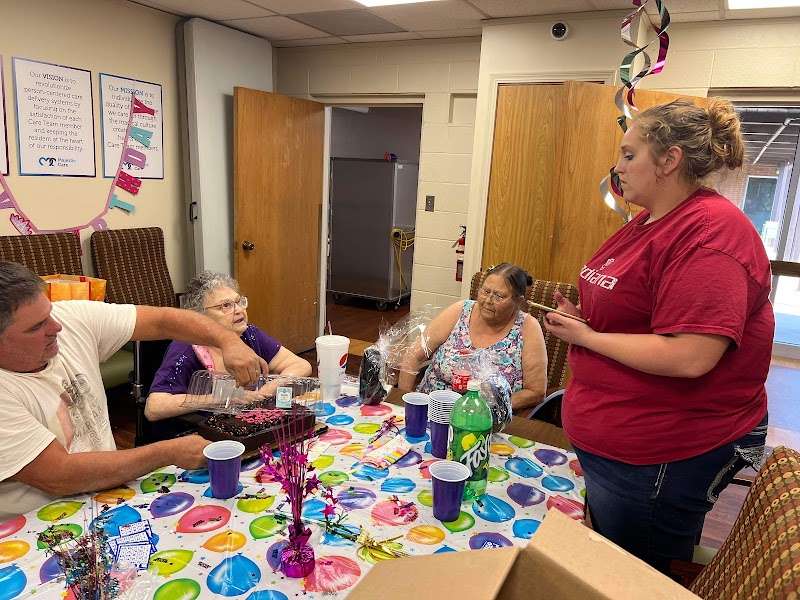
How is Majestic Care Of Deming Park Staffed?

CMS rates MAJESTIC CARE OF DEMING PARK's staffing level at 2 out of 5 stars, which is below average compared to other nursing homes. Staff turnover is 50%, compared to the Indiana average of 46%.

What Have Inspectors Found at Majestic Care Of Deming Park?

State health inspectors documented 30 deficiencies at MAJESTIC CARE OF DEMING PARK during 2022 to 2025. These included: 1 Immediate Jeopardy (the most serious level, indicating potential for serious harm or death), 28 with potential for harm, and 1 minor or isolated issues. Immediate Jeopardy findings are rare and represent the most serious regulatory concerns. They require immediate corrective action.
Who Owns and Operates Majestic Care Of Deming Park?

MAJESTIC CARE OF DEMING PARK is owned by a for-profit company. For-profit facilities operate as businesses with obligations to shareholders or private owners. The facility is operated by MAJESTIC CARE, a chain that manages multiple nursing homes. With 86 certified beds and approximately 63 residents (about 73% occupancy), it is a smaller facility located in TERRE HAUTE, Indiana.

How Does Majestic Care Of Deming Park Compare to Other Indiana Nursing Homes?

Compared to the 100 nursing homes in Indiana, MAJESTIC CARE OF DEMING PARK's overall rating (3 stars) is below the state average of 3.1, staff turnover (50%) is near the state average of 46%, and health inspection rating (2 stars) is below the national benchmark.

What Should Families Ask When Visiting Majestic Care Of Deming Park?

Based on this facility's data, families visiting should ask: "What changes have been made since the serious inspection findings, and how are you preventing similar issues?" "Can you walk me through typical staffing levels on day, evening, and night shifts?" "Can I visit during a mealtime to observe dining assistance and food quality?" "How do you handle medical emergencies, and what is your hospital transfer rate?" These questions are particularly relevant given the facility's Immediate Jeopardy citations and the below-average staffing rating.

Is Majestic Care Of Deming Park Safe?

Based on CMS inspection data, MAJESTIC CARE OF DEMING PARK has documented safety concerns. Inspectors have issued 1 Immediate Jeopardy citation (the most serious violation level indicating risk of serious injury or death). The facility has a 3-star overall rating and ranks #100 of 100 nursing homes in Indiana. Families considering this facility should ask detailed questions about what corrective actions have been taken since these incidents.

Do Nurses at Majestic Care Of Deming Park Stick Around?

MAJESTIC CARE OF DEMING PARK has a staff turnover rate of 50%, which is about average for Indiana nursing homes (state average: 46%). Moderate turnover is common in nursing homes, but families should still ask about staff tenure and how the facility maintains care continuity when employees leave.

Was Majestic Care Of Deming Park Ever Fined?

MAJESTIC CARE OF DEMING PARK has been fined $49,917 across 1 penalty action. The Indiana average is $33,578. While any fine indicates a compliance issue, fines under $50,000 are relatively common and typically reflect isolated problems that were subsequently corrected. Families should ask what specific issues led to these fines and confirm they've been resolved.

Is Majestic Care Of Deming Park on Any Federal Watch List?

MAJESTIC CARE OF DEMING PARK is not on any federal watch list. The most significant is the Special Focus Facility (SFF) program, which identifies the bottom 1% of nursing homes nationally based on persistent, serious quality problems. Not being on this list means the facility has avoided the pattern of deficiencies that triggers enhanced federal oversight. This is a positive indicator, though families should still review the facility's inspection history directly.