SOUTHWOOD HEALTHCARE CENTER
2222 MARGARET AVE, TERRE HAUTE, IN 47802 (812) 232-2223
For profit - Corporation 121 Beds COMMUNICARE HEALTH Data: November 2025 1 Immediate Jeopardy citation
Trust Grade
26/100
#482 of 505 in IN
Last Inspection: December 2024

Within standard 12-15 month inspection cycle. Federal law requires annual inspections.

Overview

Southwood Healthcare Center in Terre Haute, Indiana, has received a Trust Grade of F, indicating significant concerns about the facility's care and operations. With a state rank of #482 out of 505, they are in the bottom half of Indiana facilities, and #9 out of 9 in Vigo County, meaning there are no better local options available. While the facility has shown an improving trend in reducing issues from 18 in 2024 to 4 in 2025, it still faces serious challenges, including $14,518 in fines, which is higher than 84% of Indiana facilities, indicating ongoing compliance problems. Staffing is a concern, with only 1 out of 5 stars and a turnover rate of 54%, which is average but suggests instability; there is also less RN coverage than 88% of other facilities, which is troubling. Specific incidents include a critical failure to supervise a resident who went missing for 20 hours before law enforcement was notified, and a lack of adequate staffing in the dementia care unit, affecting the daily activities of residents. Overall, while there are some signs of improvement, families should be cautious and weigh both the strengths and weaknesses of this facility.

Trust Score
F
26/100
In Indiana
#482/505
Bottom 5%
Safety Record
High Risk
Review needed
Inspections
Getting Better
18 → 4 violations
Staff Stability
⚠ Watch
54% turnover. Above average. Higher turnover means staff may not know residents' routines.
Penalties
✓ Good
$14,518 in fines. Lower than most Indiana facilities. Relatively clean record.
Skilled Nurses
⚠ Watch
Each resident gets only 19 minutes of Registered Nurse (RN) attention daily — below average for Indiana. Fewer RN minutes means fewer trained eyes watching for problems.
Violations
⚠ Watch
51 deficiencies on record. Higher than average. Multiple issues found across inspections.
★☆☆☆☆
1.0
Overall Rating
★☆☆☆☆
1.0
Staff Levels
★★☆☆☆
2.0
Care Quality
★☆☆☆☆
1.0
Inspection Score
Stable
2024: 18 issues
2025: 4 issues

The Good

  • Full Sprinkler Coverage · Fire safety systems throughout facility
  • No fines on record

Facility shows strength in fire safety.

The Bad

1-Star Overall Rating

Below Indiana average (3.1)

Significant quality concerns identified by CMS

Staff Turnover: 54%

Near Indiana avg (46%)

Higher turnover may affect care consistency

Federal Fines: $14,518

Below median ($33,413)

Minor penalties assessed

Chain: COMMUNICARE HEALTH

Part of a multi-facility chain

Ask about local staffing decisions and management

The Ugly 51 deficiencies on record

1 life-threatening
Sept 2025 2 deficiencies
CONCERN (D) 📢 Someone Reported This

A family member, employee, or ombudsman was alarmed enough to file a formal complaint

Potential for Harm - no one hurt, but risky conditions existed

Investigate Abuse (Tag F0610)

Could have caused harm · This affected 1 resident

Based on record review and interview, the facility failed to ensure a thorough investigation of abuse allegations was conducted and a record of the investigation was maintained for 3 of 3 residents re...

Read full inspector narrative →
Based on record review and interview, the facility failed to ensure a thorough investigation of abuse allegations was conducted and a record of the investigation was maintained for 3 of 3 residents reviewed for abuse (Residents H, G, and F). Findings include:1. An Indiana Department of Health (IDOH) reportable incident investigation file was reviewed on 9/3/25 at 2:31 p.m. The file included an IDOH incident report dated 6/14/25. The report indicated Residents H and G had an altercation in the dining room. Resident H pushed Resident G's wheelchair across the dining room. There was no physical touch or harm. The staff immediately separated the residents, and an investigation was initiated. The report indicated the investigation would include resident statements. The incident file included two statements from staff members who witnessed the incident and three days of psychosocial follow-up for Residents H and G. The incident file lacked documentation of resident statements, including interviews to determine if other residents had experienced negative interactions with Resident H. Resident H's record was reviewed on 9/3/25 at 2:47 p.m. Diagnoses on the resident's profile included, but were not limited to, schizophrenia (a disorder that affects a person's ability to think, feel, and behave clearly) unspecified. A quarterly Minimum Data Set (MDS) assessment, dated 7/9/25, indicated the resident had moderate cognitive impairment. The resident's electronic health record, including progress notes, lacked documentation of the incident on 6/14/25. 2. Resident G's record was reviewed on 9/4/25 at 10:28 a.m. Diagnoses on the resident's profile included, but were not limited to, unspecified dementia (general term for loss of memory, language, problem-solving and other thinking abilities that are severe enough to interfere with daily life) with behavioral disturbance. A quarterly Minimum Data Set (MDS) assessment, dated 7/14/25, indicated the resident had severe cognitive impairment. The resident's electronic health record, including progress notes, lacked documentation of the incident on 6/14/25. During an interview, on 9/4/25 at 10:50 a.m., the Executive Director (ED) indicated normally they interviewed other residents to determine if there were any other abuse concerns during investigations. She was not sure if this was done and would look for further information. During an interview, on 9/4/25 at 11:15 a.m., the ED indicated the information regarding the altercation should have been documented in the residents' electronic health record. During an interview, on 9/4/25 at 11:38 a.m., the ED indicated she was not able to find further documentation for the incident file, including interviews with other residents, at this time. 2. An Indiana Department of Health incident report document, dated 8/17/25 at 9:52 a.m., indicated staff had reported to the Executive Director (ED) that Certified Nurse Aide (CNA) 3 had made contact with Resident C on the facility's Memory Care unit resulting in Resident C sustaining a skin tear to his right forearm. The CNA had been suspended pending the investigation of the incident. Resident C's record was reviewed on, 9/3/25 at 10:33 a.m. The profile indicated the resident's diagnoses included, but were not limited to, unspecified dementia (a diagnosis given when a person experiences cognitive decline and symptoms of dementia, but the specific underlying cause or type of dementia cannot be identified through testing or observation). A quarterly Minimum Data Set (MDS) assessment, dated 7/28/25, indicated the resident had severe cognitive deficit and had no documented behaviors. A care plan, dated 7/20/23, indicated the resident had ADL (activities of daily living-the basic, routine tasks of self-care that most healthy individuals perform daily without assistance) deficit and required substantial to maximal assistance with ADLs. A care plan, dated 7/21/23, indicated the resident was at risk for altered skin integrity. A weekly skin check form, dated 8/15/25 at 5:38 a.m., indicated the resident had no new skin area issues. A weekly skin check forms, dated 8/22/25 at 5:38 a.m. and 8/22/25 at 6:25 a.m., indicated the resident had no new skin area issues. Weekly skin check form, dated 8/22/25 at 6:28 a.m., indicated the resident had a new skin area noted, but that area was not new since last skin check. The form lacked documentation of where the new skin area was located and what type of skin issue it was. The weekly skin check forms lacked documentation that any skin check was completed on 8/17/25, the date of the reported incident. Review of the nurse progress notes, dated 8/15/25 to 8/22/25, lacked documentation of any incident resulting in a skin tear to the resident's forearm. A Wound Nurse Practitioner progress note, dated 8/22/25, lacked documentation of a skin tear to the resident right forearm. A 30-day CNA Point of Care form, dated 8/5/25 through 9/3/25, lacked documentation of any observations of new skin area concerns. Review of the facility's incident investigation documentation, on 9/4/25 at 9:05 a.m., indicated the following: a. An undated statement from CNA 3. The statement lacked documentation of any situation where the resident was contacted by the CNA, any fall, or other reason where a skin tear would have been received by the resident. b. An interview of Resident C, dated 8/17/25, conducted by the ED and the Regional Director of Clinical Operations (RDCO). The interview document indicated the resident was not sure how he received the skin tear. He denied being afraid of any staff on the unit and that he felt safe on the unit. The document also included a statement which indicated that the ED and RDCO had interviewed the staff on the unit who had been working at the time of the incident. The statement lacked documentation of the names, titles, and individual statements by the staff who were interviewed. During an interview, with the ED and the RDCO, on 9/4/25 at 9:49 a.m., the ED indicated she and the RDCO were in the building when the incident happened, and the staff immediately notified her. She made the decision to suspend the CNA at that time. She indicated a skin assessment should have been done after the resident received the skin tear. She was unsure why there was not an assessment completed until 8/22/25. At the same time, the RDCO indicated they interviewed staff who had been working on the unit at the time of the incident. The staff indicated they could not determine that any type of abuse had been committed. He thought they had obtained individual statements from the staff who were interviewed but were not able to locate them. On 9/4/25 at 10:57 a.m., the ED provided a written statement from a housekeeper who indicated she was not on the unit during the time of the incident. No other statements were presented. During an interview, on 9/4/25 at 11:38 a.m., the ED indicated they had not been able to find any further documentation for this investigation. The nurse on the unit during the incident with the CNA had been interviewed and a statement was written. However, they could not find a copy of this statement. She had contacted the nurse, via telephone, and the nurse remembered writing a statement, but she did not have a copy of it. On 9/3/25 at 11:14 a.m., the ED provided an undated document, titled, “Indiana Abuse & Neglect & Misappropriation of Property,” and indicated it was the policy currently being used by the facility. The policy indicated, “…Investigation of Incidents…1…e. Statements will be obtained from the resident or from the reporter of the incident…g. Documentation of the facts and findings will be completed in each resident medical record…2. Suspected Abuse…d. Statements will be obtained from staff related to the incident, including victim, person reporting the incident, accused perpetrator and witnesses. This statement should be in writing, signed, and dated at the time written….” This citation relates to Intake 2591628. 3.1-28(d)
CONCERN (D) 📢 Someone Reported This

A family member, employee, or ombudsman was alarmed enough to file a formal complaint

Potential for Harm - no one hurt, but risky conditions existed

Medical Records (Tag F0842)

Could have caused harm · This affected 1 resident

**NOTE- TERMS IN BRACKETS HAVE BEEN EDITED TO PROTECT CONFIDENTIALITY** Based on record review and interviews, the facility failed to accurately document wound description upon admission to the facili...

Read full inspector narrative →
**NOTE- TERMS IN BRACKETS HAVE BEEN EDITED TO PROTECT CONFIDENTIALITY** Based on record review and interviews, the facility failed to accurately document wound description upon admission to the facility for 1 of 3 residents reviewed for wounds (Resident B), and failed to ensure medications were documented according to physician orders for administration of insulin for 1 of 3 residents reviewed for medication administration (Resident D). Findings include: 1. On 9/3/25 at 11:00 a.m., the medical record of Resident B was reviewed. The resident was admitted to the facility on [DATE]. admission diagnosis included but were not limited to paraplegia (paralysis that occurs in the lower half of the body), and type 2 diabetes (a disease that occurs when your blood glucose, also called blood sugar, is too high). A physician order, dated 8/11/25, indicated to administer Medi honey Wound/Burn Dressing External Gel to coccyx wound topically every dayshift for pressure ulcer care cover with ABD pad and secure. A physician order, dated 8/10/25, indicated administer Miconazole Nitrate 2 % Cream to perimeter of coccyx wound topically two times a day for fungal. A physician order, dated 8/13/25, indicated apply Santyl (a prescription ointment that removes dead tissue from wounds to help them heal) external ointment to coccyx wound daily for wound care. A physician order, dated 8/10/25, indicated to perform daily coccyx wound assessment and document abnormalities in progress notes every shift for Wound Management. A physician order, dated 8/10/25, indicated the resident was on a pressure reducing/relieving mattress every shift for pressure reducing/relieving. A care plan, dated 8/10/25, indicated the resident had impaired skin integrity and was at risk for further altered skin integrity related to dependent on staff for turning/repositioning, peri care after incontinent episodes, has an unstageable wound to coccyx. Interventions included but were not limited to complete skin at risk assessment upon admission/readmission, encourage resident to turn and reposition or assist as needed as resident allows, provide appropriate off-loading mattress and off-loading cushion if applicable, and treatments as ordered. An admission MDS assessment, dated 8/14/25, indicated the resident was cognitively intact and dependent upon the staff for personal care. On 9/4/25 at 9:05 a.m., during an interview the Minimum Data Set Assessment (MDS) coordinator indicated she would measure wounds and would stage the wounds at the time of admission. She indicated she entered the wound measurements in centimeters. She indicated when she measured Resident B's wound on admission she measured the wound in centimeters she acknowledged the measurement of 4 x 4 was in centimeters not in inches. She indicated the resident informed her when he was at the hospital he was left in one position for several hours and he developed a wound on his bottom. On 9/4/25 at 10:15 a.m., during phone interview with outside wound center facility (Nurse at wound center), indicated the resident was seen on 8/7/25. This was 3 days prior to the resident admission to the facility on 8/10/25. The wound center record indicated the sacral wound measured 6.1cm x 8.8 cm x 0.1 cm. The resident was seen by the wound center on 8/14/25, the day the resident was discharged from the facility. The wound center nurse indicated their record indicated the sacral wound measurements were 10.7 cm x 13.5 cm x 0.1 cm. The medical record indicated the wound had deteriorated prior to the resident's admission to the facility. On 9/4/25 at 10:31 a.m., during interview the DON indicated the initial measurements should be made by the RN or the MDS Coordinator. The wound nurse would follow up with the resident. She did not know if they were allowed to stage a wound. She indicated the nurse should measure wound in centimeters not in inches. On 9/4/25 at 10:50 a.m., the Director of Nursing (DON) provided a document, titled, “Measuring a Wound,” dated12/19/24, and indicated it was the policy currently being used by the facility. The policy indicated, “ .Dimensions 1. Measure length, width, depth, undermining and tunneling in centimeters….” 2. Resident D's record was reviewed on 9/3/25 at 1:15 p.m. The profile indicated the resident's diagnosis included, but were not limited to, type 2 diabetes mellitus with hyperglycemia (occurs when a person with diabetes has persistently high blood sugar levels due to insulin resistance and/or insufficient insulin production). A quarterly Minimum Data Set (MDS) assessment, dated 7/16/25, indicated the resident had moderate cognitive deficit and was on insulin injections. A care plan, dated 2/2/24, indicated the resident had diabetes and was at risk of complications. Interventions included but were not limited to, administer medication per provider's orders and observe for side effects and effectiveness. A physician order, dated 4/17/24, indicated to administer Lispro (insulin medication) subcutaneous (under the skin) solution pen injector 100 unit/ml (milliliter), inject 10 units subcutaneously before meals for type 2 diabetes mellitus at 7:30 a.m., 11:30 a.m., and 4:30 p.m. A physician order, dated 4/16/24, indicated to administer Glargine (insulin medication) subcutaneous pen injector 100 unit/ml, inject 30 units subcutaneously in the evening for dates at 9:00 p.m. Review of August 2025 MAR (medication administration record) indicated the Lispro insulin medication was documented as administered at the following times: a. On 8/3/25 the 7:30 a.m. dose was documented as administered at 11:47 a.m. b. On 8/4/25 the 7:30 a.m. dose was documented as administered at 8:50 a.m. c. On 8/5/25 the 4:30 p.m. dose was documented as administered at 10:08 p.m. d. On 8/6/25 the 7:30 a.m. dose was documented as administered at 8:47 a.m. e. On 8/6/25 the 4:30 p.m. dose was documented as administered at 6:47 p.m. f. On 8/10/25 the 4:30 p.m. dose was documented as administered at 6:03 p.m. g. On 8/11/25 the 11:30 a.m. dose was documented as administered at 3:17 p.m. h. On 8/10/25 the 4:30 p.m. dose was documented as administered at 6:07 p.m. i. On 8/12/25 the 7:30 a.m. dose was documented as administered at 8:40 a.m. j. On 8/12/25 the 4:30 p.m. dose was documented as administered at 11:32 p.m. k. On 8/13/25 the 11:30 a.m. dose was documented as administered at 1:25 p.m. l. On 8/15/25 the 7:30 a.m. dose was documented as administered at 9:30 a.m. m. On 8/15/25 the 11:30 a.m. dose was documented as administered at 1:34 p.m. n. On 8/15/25 the 4:30 p.m. dose was documented as administered at 10:10 p.m. o. On 8/18/25 the 7:30 a.m. dose was documented as administered at 8:39 a.m. p. On 8/18/25 the 4:30 p.m. dose was documented as administered at 7:56 p.m. q. On 8/21/25 the 7:30 a.m. dose was documented as administered at 8:39 a.m. r. On 8/26/25 the 7:30 a.m. dose was documented as administered at 9:49 a.m. s. On 8/28/25 the 7:30 a.m. dose was documented as administered at 8:39 a.m. t. On 8/31/25 the 4:30 p.m. dose was documented as administered at 5:42 p.m. Review of August 2025 MAR indicated the Glargine insulin medication was documented as administered at the following times: a. On 8/3/25 the 9:00 p.m. dose was documented as administered on 8/4/25 at 1:10 a.m. b. On 8/5/25 the 9:00 p.m. dose was documented as administered at 10:09 p.m. c. On 8/8/25 the 9:00 p.m. dose was documented as administered at 11:09 p.m. d. On 8/10/25 the 9:00 p.m. dose was documented as administered at 11:29 p.m. e. On 8/11/25 the 9:00 p.m. dose was documented as administered at 10:06 p.m. f. On 8/15/25 the 9:00 p.m. dose was documented as administered at 11:02 p.m. g. On 820/25 the 9:00 p.m. dose was documented as administered on 8/21/25 at 12:50 a.m. h. On 8/27/25 the 9:00 p.m. dose was documented as administered at 11:18 p.m. i. On 8/15/25 the 9:00 p.m. dose was documented as administered at 11:49 p.m. Review of September 2025 MAR indicated the Lispro insulin medication was documented as administered at the following times: a. On 9/1/25 the 7:30 a.m. dose was documented as administered at 9:02 a.m. b. On 9/2/25 the 4:30 p.m. dose was documented as administered at 6:10 p.m. During an interview, on 9/4/25 at 10:00 a.m., Licensed Practical Nurse (LPN) 5 indicated that the nurses would have to administer insulins to the residents on the halls that had a Qualified Medication Aide (QMA) working because QMAs were not allowed to give insulin injections. LPN 5 indicated it could be hard to administer the insulin medication on time if the nurse didn't prioritize her time management properly. During an interview, on 9/4/25 at 10:10 a.m., Registered Nurse (RN) 6 indicated that she would often get the insulin medications administered on time, but she would not always get the insulin documented at the time of administration; therefore, on the medication administration record it would appear as if the medication was administered late. During an interview, on 9/4/25 at 10:31 a.m., the Director of Nursing (DON) indicated staff should document the administration of medications when they were administered to the residents to ensure adequate documentation. On 9/4/25 at 10:48 a.m., the DON provided a document, dated 12/2/24, titled, Medication Administration, and indicated it was the currently policy being used by the facility. The policy indicated, .MAR: Medication Administration Record - the legal documentation for medication administration .f. Observe the five rights in giving each medication: .ii. the right time .dd. Medications will be charted when given .a. Documentation of medication will be current for medication administration b. Documentation of medications will follow accepted standards of nursing practice This citation relates to Intake 2602845. 3.1-50(a)(2) 3.1-50(f)
Apr 2025 2 deficiencies
CONCERN (D) 📢 Someone Reported This

A family member, employee, or ombudsman was alarmed enough to file a formal complaint

Potential for Harm - no one hurt, but risky conditions existed

Infection Control (Tag F0880)

Could have caused harm · This affected 1 resident

Based on observation, interview, and record review, the facility failed to ensure enhanced barrier precautions were followed during a dressing change for 1 of 3 residents reviewed for pressure ulcers ...

Read full inspector narrative →
Based on observation, interview, and record review, the facility failed to ensure enhanced barrier precautions were followed during a dressing change for 1 of 3 residents reviewed for pressure ulcers (Resident G). Findings include: During a continuous observation, on 4/10/25 from 9:56 a.m. to 10:16 a.m., the following was observed. Licensed Practical Nurse (LPN) 7 performed hand hygiene, donned gloves and a gown, and completed the dressing change to Resident G's sacrum (bone at the base of the spine). Near the end of the sacrum dressing change, Certified Nurse Aide (CNA) 11 entered the room to assist LPN 7. CNA 11 did not perform hand hygiene after entering the room. CNA 11 donned gloves but did not put on a gown. CNA 11 held up Resident G's left heel so LPN 7 could complete the dressing change to that area. CNA 11 removed the dressing from Resident G's left heel and continued to hold up the resident's leg. CNA 11 did not perform hand hygiene or change gloves after she removed the resident's dressing. On 4/10/25 at 10:16 a.m., the continuous observation was completed. At the same time, LPN 7 indicated CNA 11 should have performed hand hygiene before she put on her gloves. CNA 11 should have worn a gown and should not have removed the dressing from Resident G's heel. Resident G required enhanced barrier precautions (strategic use of gown and gloves during high-contact resident care activities) during his wound care. Resident G's record was reviewed on 4/9/25 at 2:33 p.m. Diagnoses on the resident's profile included, but were not limited to, stage four (deep wound that extends into all underlying tissues such as muscles, tendons, and bones) pressure ulcer (local injury to the skin and underlying tissues caused by prolonged pressure) of the sacral region. A quarterly Minimum Data Set (MDS) assessment, dated 3/10/25, indicated the resident was cognitively intact and required pressure ulcer care. A physician's order, dated 1/7/25, indicated the resident required enhanced barrier precautions related to wounds. A physician's order, dated 3/24/25, indicated to cleanse the resident's left heel wound with wound cleanser, pat dry with gauze, apply skin prep (skin barrier) around the wound, apply collagen (promotes wound healing) to the wound bed, and cover with bordered gauze daily. A physician's order, dated 4/7/25, indicated to cleanse the resident's sacrum wound with wound cleanser, pat dry with gauze apply skin prep around the wound, apply Hydrofera Blue (absorbent foam wound dressing) to wound bed, cover with an abdominal (ABD) pad (dressing that manages moderately draining wounds), and secure with tape daily. On 4/10/25 at 11:30 a.m., the Nurse Consultant provided an undated document titled, Skin Care & Wound Management Overview, and indicated it was the policy currently being used by the facility. The policy indicated, .Policy .Skin care and wound management program includes, but is not limited to .Application of treatment protocols based on clinical 'best practice' standards for promoting wound healing On 4/10/25 at 11:30 a.m., the Nurse Consultant provided an undated document titled, Enhanced Barrier Precautions, and indicated it was the policy currently being used by the facility. The policy indicated, .Definitions .PPE [personal protective equipment] required-gowns and gloves .Policy: Enhanced Barrier Precautions (EBP) refer to an infection control intervention designed to reduce transmission of multi-drug resistant organisms that employs hand hygiene, targeted gown and glove use during high contact resident care activities that include .Wound care: any skin opening requiring a dressing .EBP are indicated for residents with any of the following .Wounds .even if the resident is not know to be infected or colonized with a MDRO [multi-drug resistant organisms] During an interview, on 4/10/25 at 11:38 a.m., the Nurse Consultant indicated there was no specific facility policy for dressing changes. She indicated she provided the applicable policies. This citation relates to Complaint IN00455170. 3.1-18(b)(1)
CONCERN (E) 📢 Someone Reported This

A family member, employee, or ombudsman was alarmed enough to file a formal complaint

Potential for Harm - no one hurt, but risky conditions existed

Deficiency F0760 (Tag F0760)

Could have caused harm · This affected multiple residents

**NOTE- TERMS IN BRACKETS HAVE BEEN EDITED TO PROTECT CONFIDENTIALITY** 3. During an interview on 4/9/25 at 11:20 a.m., Resident B indicated it was always a 50/50 shot whether he received his insulin ...

Read full inspector narrative →
**NOTE- TERMS IN BRACKETS HAVE BEEN EDITED TO PROTECT CONFIDENTIALITY** 3. During an interview on 4/9/25 at 11:20 a.m., Resident B indicated it was always a 50/50 shot whether he received his insulin (a hormone produced by the pancreas that helps regulate blood sugar levels) injections on time. On this date he had just received his 8:00 a.m. injection just prior to the beginning of the interview. Resident B's record was reviewed on 4/9/25 at 10:51 a.m. The profile indicated the resident's diagnoses included, but were not limited to, type 2 diabetes mellitus with hyperglycemia (a chronic condition that happens when a person has persistently high blood sugar levels). An admission Minimum Data Set (MDS) assessment, dated 3/12/25, indicated the resident had no cognitive deficit, no documented behaviors for rejection of care, and received insulin injections. The resident's care plans lacked documentation of the resident having care plans related to his diagnosis of diabetes or that he received insulin injections. A physician's order, dated 3/6/25, indicated to administer insulin Lispro (a rapid-acting insulin used to lower blood sugar levels in people with diabetes) injection solution 100 units/milliliter (ml), subcutaneously (below the skin) before meals and at bedtime, (at 8:00 a.m., 11:00 a.m., 4:00 p.m., and 9:00 p.m.) for diabetes, per the following sliding scale: if blood sugar of 151 - 199 = 2 units; blood sugar of 200 - 249 = 4 units; blood sugar of 250 - 299 = 6 units; blood sugar of 300 - 349 = 8 units; blood sugar of 350 - 399 = 10 units; blood sugar of 400 - 449 = 12 units; blood sugar of 450 - 499 = 14 units; blood sugar of 500 - 549 = 16 units; blood sugar of 550 - 599 = 18 units. If blood sugar was greater than 599 call the physician. Review of the March 2025 Medication Administration Audit Report, the resident's Lispro administrations had been administered late on the following dates: a. The 8:00 a.m., dose was documented as administered late on, 3/7/25, 3/8/25, 3/9/25, 3/11/25, 3/14/25, 3/16/25, 3/18/25, 3/21/25, 3/22/25, 3/24/25, 3/26/25, 3/29/25, 3/30/25, and 3/31/25. b. The 11:00 a.m., dose was documented as administered late on, 3/7/25, 3/8/25, 3/9/25, 3/10/25, 3/12/25, 3/13/25, 3/14/25, 3/15/25, 3/17/25, 3/18/25. 3/19/25, 3/20/25, 3/21/25, 3/22/25, 3/23/25, 3/24/25, 3/25/25, 3/26/25, 3/28/25, 3/30/25, and 3/31/25. c. The 4:00 p.m., dose was documented as administered late on, 3/6/25, 3/7/25, 3/8/25, 3/10/25, 3/11/25, 3/12/25, 3/13/25, 3/15/25, 3/16/25, 3/17/25, 3/18/25, 3/19/25, 3/21/25, 3/22/25, 3/23/25, 3/24/25, 3/25/25, 3/28/25, 3/29/25, 3/30/25, and 3/31/25. d. The 9:00 p.m., dose was documented as administered late on, 3/6/25, 3/10/25, 3/16/25, 3/17/25, 3/20/25, 3/21/25, 3/23/25, and 3/2/5/25. Review of the April 2025 Medication Administration Audit Report, the resident's Lispro administrations had been administered late on the following dates: a. The 8:00 a.m., dose was documented as administered late on, 4/1/25, 4/4/25, 4/7/25, and 4/9/25. b. The 11:00 a.m., dose was documented as administered late on, 4/2/25, 4/4/25, 4/7/25, and 4/9/25. c. The 4:00 p.m., dose was documented as administered late on, 4/1/25, 4/2/25, 4/6/25, 4/7/25, 4/8/25, and 4/9/25. d. The 9:00 p.m., dose was documented as administered late on, 4/2/25, 4/4/25, 4/5/25, and 4/6/25. A physician's order, dated 3/6/25, indicated to administer 35 units of insulin Glargine (a synthetic version of human insulin) subcutaneous solution 100 units/ml, two times daily for diabetes, at 7:00 a.m., and 9:00 p.m. Review of the March 2025 Medication Administration Audit Report, the resident's Glargine administrations had been administered late on the following dates: a. The 9:00 p.m., dose was documented as administered late on, 3/10/25, 3/16/25, 3/17/25, and 3/20/25. Review of the April 2025 Medication Administration Audit Report, the resident's Glagine administrations had been administered late on the following dates: a. The 7:00 a.m., dose was documented as administered late on, 4/18/25, 4/26/25, and 4/29/25. b. The 9:00 p.m., dose was documented as administered late on, 4/10/25, 4/16/25, 4/17/25, and 4/20/25. 4. Resident E's record was reviewed on 4/10/25 at 8:53 a.m. The profile indicated the resident diagnoses included, but were not limited to, type 2 diabetes with diabetic chronic kidney disease (a chronic condition that happens when a persons high blood sugar levels damage the kidneys so that they cannot filter blood effectively). A quarterly Minimum Data Set (MDS) assessment, dated 3/28/25, indicated the resident had no cognitive deficit, no documented behaviors of refusals of medications, and the resident received insulin injections. A care plan, revised on 3/20/22, indicated the resident had a potential for complications related to her diagnoses of diabetes. Interventions included, but were not limited to, administer diabetes medication as ordered by the doctor. A physician's order, dated 11/4/24, indicated to administer 50 units of Lantus solution (a a long-acting man-made-insulin used to control high blood sugar in adults) 100 units/ml, subcutaneously two times a day for diabetes, at 8:00 a.m., and 8:00 p.m. Review of the March 2025 Medication Administration Audit Report, the resident's Lantus administrations had been administered late on the following dates: a. The 8:00 a.m., dose was documented as administered late on, 3/2/25, 3/3/25, 3/4/25, 3/6/25, 3/13/25, 3/14/25, 3/16/25, 3/18/25, 3/21/25. 3/22/25, 3/24/25, 3/26/25, 3/29/25, 3/30/25, and 3/31/25. b. The 8:00 p.m., dose was documented as administered late on, 3/1/25, 3/4/25, 3/5/25, 3/6/25, 3/8/25, 3/10/25, 3/12/25, 3/13/25, 3/16/25, 3/19/25, 3/20/25, 3/21/25, 3/23/25, 3/24/25, and 3/25/25. Review of the April 2025 Medication Administration Audit Report, the resident's Lantus administrations had been administered late on the following dates: a. The 8:00 a.m., dose was documented as administered late on, 4/3/25, 4/4/25, 4/7/25, 4/9/25, and 4/10/25. b. The 8:00 p.m., dose was documented as administered late on, 4/1/25 and 4/5/25. A physician's order, dated 11/21/24, indicated to administer insulin Lispro (a rapid-acting insulin used to lower blood sugar levels in people with diabetes) solution Pen-injector (an injection device used to deliver preloaded insulin into the subcutaneous [under the skin] tissue) 100 units/milliliter (ml). Inject 22 unit subcutaneously before meals for diabetes, at 7:30 a.m., 11:30 a.m., and 4:30 p.m. Review of the March 2025 Medication Administration Audit Report, the resident's Lispro administrations had been administered late on the following dates: a. The 7:30 a.m., dose was documented as administered late on, 3/1/25, 3/2/25, 3/3/25, 3/4/25, 3/5/25, 3/6/25, 3/9/25, 3/13/25, 3/14/25, 3/16/25, 3/17/25, 3/18/25, 3/19/25, 3/20/25, 3/21/25, 3/22/25, 3/24/25, 3/26/25, 3/27/25, 3/28/25, 3/29/25, 3/30/25, and 3/31/25. b. The 11:30 a.m., dose was documented as administered late on, 3/2/25, 3/6/25, 3/8/25, 3/9/25, 3/10/25, 3/12/25, 3/13/25, 3/14/25, 3/15/25, 3/19/25, 3/21/25, 3/22/25, 3/23/25, 3/24/25, 3/26/25, 3/30/25, and 3/31/25. c. The 4:30 p.m., dose was documented as administered late on, 3/1/25, 3/3/25, 3/4/25, 3/6/25, 3/8/25, 3/10/25, 3/11/25, 3/12/25, 3/13/25, 3/14/25, 3/15/25, 3/16/25, 3/18/25, 3/21/25, 3/22/25, 3/23/25, 3/24/25, 3/29/25, 3/30/25, and 3/31/25. Review of the April 2025 Medication Administration Audit Report, the resident's Lispro administrations had been administered late on the following dates: a. The 7:30 a.m., dose was documented as administered late on, 4/2/25, 4/3/25, 4/4/25, 4/7/25, 4/8/25, 4/9/25, and 4/10/25. b. The 11:30 a.m., dose was documented as administered late on, 4/3/25, 4/4/25, 4/7/25, and 4/9/25. c. The 4:30 p.m., dose was documented as administered late on, 4/1/25, 4/8/25, and 4/9/25. During an interview, on 4/9/25 at 1:40 p.m., Licensed Practical Nurse (LPN) 7 indicated she was late administering insulin to residents because she was administering insulin to residents on three different halls and was completely overwhelmed. During interview, on 4/10/25 at 7:10 a.m., Registered Nurse (RN) 8 indicated she would document medications at the time she administered them. If the medication was scheduled for morning or bedtime she would administer the medication within two hours. If a medication was scheduled for a specific time she would give it according to the scheduled administration time. During interview, on 4/10/25 at 7:30 a.m., LPN 7 indicated she administered medications according to the administration times. If she was late documenting the administration of a medication, she would change the administration time to the actual time she administered the medication. On 4/10/25 at 9:00 a.m., the Regional Nurse Consultant provide a document, dated 2013, titled, Medication Administration, and indicated it was the policy currently being used by the facility. The policy indicated , .Procedure: I. General Procedures: 1 a. Administer medications only as prescribed by the provider .f. Observe the five rights in giving medication: .ii. the right time .ff. Medications will be administered within the time frame of one hour before up to one hour after time ordered .IV. Documentation: a. Documentation of medication will be current for medication administration. b. Documentation of medication will follow accepted standards of nursing practice This citation relates to Complaint IN00456945. 3.1-48(c)(2) 2. Resident F's record was reviewed on 4/10/25 at 11:00 a.m. The profile indicated the resident's diagnosis included but were not limited to, type 2 diabetes mellitus with hyperglycemia (occurs when a person with diabetes has persistently high blood sugar levels [hyperglycemia] due to insulin resistance and/or insufficient insulin production). A quarterly Minimum Data Set (MDS) assessment, dated 1/24/25, indicated the resident had moderate cognitive deficit and was on insulin injections. A care plan, initiated on 2/2/24 and revised on 2/24/24, indicated the resident had diabetes and was at risk of complications. Interventions included but were not limited to, administer medication per provider's orders and observe for side effects and effectiveness. A physician order, dated 4/17/24, indicated to administer Lispro (insulin medication) subcutaneous (under the skin) solution pen injector 100 unit/ml (milliliter), inject 10 units subcutaneously before meals for type 2 diabetes mellitus at 7:30 a.m., 11:30 a.m., and 4:30 p.m. Review of March 2025 MAR indicated the Lispro insulin medication was documented as administered at the following times: a. On 3/1/25 the 7:30 am. dose was documented as administered at 6:37 p.m. b. On 3/1/25 the 11:30 a.m. dose was documented as administered at 3:11 p.m. c. On 3/1/25 the 4:30 p.m. dose was documented as administered at 9:48 p.m. d. On 3/2/25 the 7:30 a.m. dose was documented as administered at 2:07 p.m. e. On 3/2/25 the 11:30 a.m. dose was documented as administered at 2:07 p.m. f. On 3/3/25 the 4:30 p.m. dose was documented as administered at 8:36 p.m. g. On 3/6/25 the 7:30 a.m. dose was documented as administered at 9:23 a.m. h. On 3/6/25 the 4:30 p.m. dose was documented as administered at 9:30 p.m. i. On 3/7/25 the 7:30 a.m. dose was documented as administered at 10:24 a.m. j. On 3/7/25 the 11:30 a.m. dose was documented as administered at 1:18 p.m. k. On 3/8/25 the 11:30 a.m. dose was documented as administered at 1:08 p.m. l. On 3/9/25 the 7:30 a.m. dose was documented as administered at 11:39 a.m. m. On 3/10/25 the 7:30 a.m. dose was documented as administered at 11:29 a.m. n. On 3/10/25 the 4:30 p.m. dose was documented as administered at 11:15 p.m. o. On 3/11/25 the 7:30 a.m. dose was documented as administered at 9:42 a.m. p. On 3/11/25 the 4:30 p.m. dose was documented as administered at 5:58 p.m. q. On 3/12/25 the 7:30 a.m. dose was documented as administered at 9:01 a.m. r. On 3/13/25 the 11:30 a.m. dose was documented as administered at 1:39 p.m. s. On 3/14/25 the 11:30 a.m. dose was documented as administered at 1:16 p.m. t. On 3/14/25 the 4:30 p.m. dose was documented as administered at 7:47 p.m. u. On 3/25/25 the 11:30 a.m. dose was documented as administered on 3/17/25 at 5:20 p.m. v. On 3/15/25 the 4:30 p.m. dose was documented as administered at 9:10 p.m. w. On 3/16/25 the 7:30 a.m. dose was documented as administered at 9:14 a.m. x. On 3/16/25 the 4:30 p.m. dose was documented as administered at 7:20 p.m. y. On 3/17/25 the 4:30 p.m. dose was documented as administered at 7:08 p.m. z. On 3/18/25 the 4:30 p.m. dose was documented as administered at 9:33 a.m. aa. On 3/19/25 the 7:30 a.m. dose was documented as administered at 9:22 a.m. bb. On 3/21/25 the 7:30 a.m. dose was documented as administered at 9:15 a.m. cc. On 3/21/25 the 4:30 p.m. dose was documented as administered at 10:53 p.m. dd. On 3/23/25 the 11:30 a.m. dose was documented as administered at 1:23 p.m. ee. On 3/24/25 the 7:30 a.m. dose was documented as administered at 10:25 a.m. ff. On 3/24/25 the 11:30 a.m. dose was documented as administered at 12:50 p.m. gg. On 3/24/25 the 4:30 p.m. dose was documented as administered at 9:50 p.m. hh. On 3/25/25 the 11:30 a.m. dose was documented as administered at 4:41 p.m. ii. On 3/25/25 the 4:30 p.m. dose was documented as administered at 6:12 p.m. jj. On 3/26/25 the 7:30 a.m. dose was documented as administered at 3:42 p.m. kk. On 3/26/25 the 11:30 a.m. dose was documented as administered at 3:43 p.m. ll. On 3/26/25 the 4:30 p.m. dose was documented as administered on 3/27/25 at 9:49 a.m. mm. On 3/27/25 the 7:30 a.m. dose was documented as administered at 9:17 a.m. nn. On 3/28/25 the 11:30 a.m. dose was documented as administered at 1:04 p.m. oo. On 3/29/25 the 4:30 p.m. dose was documented as administered at 6:16 p.m. pp. On 3/30/25 the 7:30 a.m. dose was documented as administered at 9:26 a.m. qq. On 3/31/25 the 4:30 p.m. dose was documented as administered at 8:13 p.m. A physician order, dated 4/16/24, indicated to administer Glargine (insulin medication) solution pen injector 100unit/ml, inject 30 units subcutaneously in the evening for diabetes at 9:00 p.m. Review of March 2025 MAR indicated the Glargine insulin medication was documented as administered at the following times: a. On 3/2/25 the 9:00 p.m. dose was documented as administered on 3/12/25 at 2:05 p.m. b. On 3/10/25 the 9:00 p.m. dose was documented as administered at 11:15 p.m. c. On 3/16/25 the 9:00 p.m. dose was documented as administered on 3/17/25 at 7:21 p.m. d. On 3/17/25 the 9:00 p.m. dose was documented as administered on 3/18/25 at 10:16 a.m. e. On 3/21/25 the 9:00 p.m. dose was documented as administered at 10:53 p.m. Review of April 2025 MAR indicated the Lispro insulin medication was documented as administered at the following times: a. On 4/1/25 the 4:30 p.m. dose was documented as administered at 9:47 p.m. b. On 4/3/25 the 7:30 a.m. dose was documented as administered at 10:58 a.m. c. On 4/6/25 the 11:30 a.m. dose was documented as administered at 1:20 p.m. d. On 4/9/25 the 7:30 a.m. dose was documented as administered at 10:10 a.m. e. On 4/9/25 the 11:30 a.m. dose was documented as administered at 12:57 p.m. During an interview, on 4/10/25 at 11:41 a.m., Resident F indicated she sometimes received her insulin before meals and sometimes it was much later. She indicated the insulin administration times were all over the place. Based on observation, record review, and interview, the facility failed to ensure medications were administered and documented according to physician orders for administration of insulin for 4 of 4 residents reviewed for medication administration (Residents, D, F, B, and E). Findings include: 1. On 4/9/25 at 10:00 a.m., during an initial observation and interview of Residents D and E. The residents indicated they had received their insulin. They were not sure of times of administration and indicated it was administered at breakfast. On 4/9/25 at 1:40 p.m., observed Licensed Practical Nurse (LPN) 7, at the medication administration cart. The LPN indicated she was not usually late administering insulin. On 4/9/25 at 1:05 p.m. during interview with Resident D. She indicated she received her insulin around 12:30 p.m., She indicated she did not eat breakfast that a.m. but she did receive insulin. She did not know what time it was administered. She indicated she usually got her insulin before she ate but it did vary. On 4/9/25 at 2:10 p.m., during interview with Resident E, the resident indicated she thought her insulin was administered before meals, but she did not know the times it was administered. On 4/10/25 at 7:00 a.m., observed Registered Nurse (RN) 9, administering medications to residents. The employee indicated she had not administered insulin to residents and would administer insulins with their breakfast. On 4/10/25 at 10:40 a.m., the medical record of Resident D was reviewed. The resident was admitted to the facility on [DATE]. Admitting diagnosis included, but were not limited to, type 2 diabetes mellitus (a disease that occurs when your blood glucose, also called blood sugar, is too high), with diabetic neuropathy (a type of nerve damage that can occur if you have diabetes). A care plan, dated 10/7/20, indicated the resident had diabetes mellitus and was at risk for complications. Interventions included but were not limited to, diabetes medication as ordered by doctor. A Minimum Data Set (MDS) assessment, dated 3/31/25, indicated the resident was cognitively intact and received insulin injections during the look back period. A physician order, dated 3/3/25 and 3/19/25, indicated to administer insulin, Aspart Flex Pen 100 unit/ml solution pen-injector, inject 10 unit subcutaneously (under the skin) before meals for diabetes mellitus. Administration times were 7:30 a.m., 11:30 a.m., and 4:30 p.m. A physician order, dated 3/3/25, indicated to administer insulin glargine solostar subcutaneous solution pen-injector 100 unit/ml (Glargine), inject 30 unit subcutaneously one time a day for diabetes. Administration time was indicated as AM. A physician order, dated 3/19/25, indicated to administer Lantus SoloStar 100 unit/ml Solution pen-injector, inject 30 unit subcutaneously at bedtime for Diabetes Mellitus. Administration time was indicated as HS (hour of sleep). The medical record lacked documentation of administration Lantus insulin on 3/26/25. A physician order, dated 3/21/25 at 10:15 p.m., indicated to administer insulin lispro subcutaneous solution pen injector 100 unit/ml (Insulin Lispro), inject 15 unit subcutaneously STAT (immediately) for hyperglycemia (high blood sugar). The medical record lacked documentation of administration of insulin. A physician order, dated 3/22/25, indicated to administer insulin lispro, injection solution 100 unit/ml (Insulin Lispro) inject subcutaneously before meals and at bedtime for diabetes mellitus as per sliding scale. (Sliding scale insulin is units of insulin that is administered according to the range of the residents blood sugar reading): For blood sugar of 100 - 150 = 0 units; blood sugar of 151 - 200 = 2 units; blood sugar of 201 - 250 = 4 units; blood sugar of 251 - 300 = 6 units; blood sugar of 301 - 350 = 8 units; blood sugar of 351 - 400 = 10 units; and blood sugar of 401 - 999 = 12 units. Administration times were 7:00 a.m., 11:00 a.m., 4:00 p.m., and 9:00 p.m. From 3/3/25 to 3/11/25, Glargine insulin was scheduled to be administered at 7:00 a.m., the record indicated the insulin was administered at the following times: 3/3/25 - 9:32 a.m. 3/4/25 - 11:48 a.m. 3/6/25 - 9:40 a.m. 3/8/25 - 9:25 a.m. 3/9/25 - 9:38 a.m. 3/10/25 - 9:28 a.m. 3/11/25 - 11:01 a.m. From 3/1/25 to 3/31/25, Aspart insulin was to be administered at 7:30 a.m. the MAR indicated the insulin was administered at the following times. 3/4/25 - 11:47 a.m. 3/6/25 - 9:40 a.m. 3/7/25 - 11:13 a.m. 3/8/25 - 9:30 a.m. 3/9/25 - 9:42 a.m. 3/10/25 - 9:24 a.m. 3/11/25 - 10:48 a.m. 3/20/25 - 9:01 a.m. 3/21/25 - 9:32 a.m. 3/22/25 - 10:17 a.m. 3/24/25 - 10:32 a.m. 3/26/25 - 9:38 a.m. 3/29/25 - 11:32 a.m. 3:30/25 - 9:35 a.m. 3/31/25 - 9:39 a.m. From 3/1/25 to 3/31/25, Aspart insulin was to be administered at 11:30 a.m. the MAR indicated the insulin was administered at the following times. 3/8/25 - 2:03 p.m. 3/10/25- 1:50 p.m. 3/20/25 - 1:12 p.m. 3/23/25 - 1:26 p.m. 3/25/25 - 7:10 p.m. 3/26/25 - 2:08 p.m. From 3/1/25 to 3/31/25, Aspart insulin was to be administered at 4:30 p.m., the MAR indicated the insulin was administered at the following times. 3/3/25 - 8:48 p.m. 3/6/25 -10:25 p.m. 3/10/25 - 11:29 p.m. From 3/21/25 to 3/31/25, Aspart insulin was to be administered at 5:30 p.m., the MAR indicated the insulin was administered at the following times. 3/21/25 - 10:37 p.m. 3/23/25 - 10:21 p.m. 3/24/25 - 9:56 p.m. 3/30/25 - 8:00 p.m. 3/31/25 - 8:21 p.m. On 3/22/25, 3/23/25, 3/24/25, 3/25/25, 3/26/25, 3/27/25, 3/28/25, 3/29/25, 3/30/25, 3/32/25 and 4/1/25. Lispro insulin sliding scale, was not documented as administered. From 4/1/25 to 4/10/25, Aspart insulin was to be administered at 7:30 a.m., the MAR indicated the insulin was administered at the following times. 4/3/25 - 10:47 a.m. 4/4/25 - 3:23 p.m. 4/7/25 - 9:24 a.m. 4/9/25 - 9:56 a.m. From 4/1/25 to 4/10/25, Aspart insulin was to be administered at 11:30 a.m., the MAR indicated the insulin was administered at the following times. 4/4/25 - 3:24 p.m. 4/9/25 - 1:44 p.m. From 4/1/25 to 4/10/25, Aspart insulin was to be administered at 4:00 p.m., the MAR indicated the insulin was administered at the following times. 4/7/25 - 7:25 p.m. 4/8/25 - 6:49 p.m. From 4/1/25 to 4/10/25, Aspart insulin was to be administered at 5:30 p.m., the MAR indicated the insulin was administered at the following times. 4/1/25 - 9:53 p.m. 4/7/25 - 7:25 p.m. 4/9/25 - 7:12 p.m. From 4/1/25 to 4/10/25 Lispro insulin was to be administered at 7:00 a.m., the MAR indicated the insulin was administered at the following times. 4/2/25 - 8:42 a.m. 4/3/25 - 10:47 a.m. 4/4/25 - 9:22 a.m. 4/7/25 - 9:24 a.m. 4/9/25 - 9:51 a.m. From 4/1/25 to 4/10/25 Lispro insulin was to be administered at 11:30 a.m., the MAR indicated the insulin was administered at the following times. 4/4/25 - 3:24 p.m. From 4/1/25 to 4/10/25 Lispro insulin was to be administered at 4:00 p.m., the MAR indicated the insulin was administered at the following times. 4/7/25 - 7:25 p.m. 4/8/25 - 6:49 p.m. On 4/10/25 at 7:10 a.m., during an interview RN 8, indicated, if the medication was late being administered the Medication Administration Record (MAR) would indicate it was late. The MAR was green when it was ready to be administered, it turned yellow when it was close to the end of the administration time and red when it was past the administration time. She indicated she documented medications at the time she administered them. On 4/10/25 at 1:05 p.m., during interview the Nurse Consultant indicated the staff did not administer Lispro insulin according to the physician order, dated 3/22/25, from 3/22/25 to 4/1/25. She indicated the order had not been confirmed by the nurse in the medical record and was not entered into the EMAR (electronic medical record) until 4/2/25. She indicated the nurse did administer the STAT order on 3/21/25 however the nurse indicated she did not document the administration of the medication.
Dec 2024 2 deficiencies
CONCERN (E) 📢 Someone Reported This

A family member, employee, or ombudsman was alarmed enough to file a formal complaint

Potential for Harm - no one hurt, but risky conditions existed

Deficiency F0725 (Tag F0725)

Could have caused harm · This affected multiple residents

3. On 12/28/24 at 5:22 p.m., during observation. The posted schedule indicated that Licensed Practical Nurse (LPN) 8 was working on the 100 unit. Qualified Medication Aide (QMA) 10 was working on 200-...

Read full inspector narrative →
3. On 12/28/24 at 5:22 p.m., during observation. The posted schedule indicated that Licensed Practical Nurse (LPN) 8 was working on the 100 unit. Qualified Medication Aide (QMA) 10 was working on 200-B hall from 2 p.m. to 6:30 p.m., QMA 12 was scheduled to work on 200 A hall and 200 B hall from 6:30 p.m. to 10:30 p.m., QMA 15 was working on 500 hall. LPN 8 was working on the 600 hall and 200 B Hall. The schedule lacked documentation of a nurse covering the 400 unit. On 12/28/24 at 5:25 p.m., LPN 8 indicated she was scheduled on 100 unit and overseeing the QMA's on all of the units except 600 unit. She indicated she was very overwhelmed because a resident had fallen on another hall, and she was trying to send the resident to the hospital and still oversee the QMA's. She indicated the facility often had QMA's scheduled, and one nurse oversaw them on all of the halls except 600 hall. She indicated a nurse was scheduled for the 600 hall. On 12/28/24 at 5:51 p.m., during a phone interview Resident B indicated at times there was only one nurse and two aides for the whole building. She indicated this was more prevalent on the weekends. On 12/30/24 at 2:49 p.m., during interview LPN 8 indicated she covers 400 and 500 hall and when she worked there was always a nurse on 600 hall. She indicated she covered 3 halls plus worked on 100 hall. On 12/31/24 at 10:00 a.m., during an interview Certified Nurse Aide (CNA) 9 indicated she found her assignment on the assignment board each day and it indicated what hall she was scheduled to work on. On 12/31/24 at 10:07 a.m., during an interview LPN 14 indicated she understood the daily schedule, but the new people did not understand it and she had to explain to them where they were working. On 12/31/24 at 10:00 a.m., a review of the daily nursing schedules the following was indicated. a. On 12/10/24 on 2:00 p.m., to 10:00 p.m., shift LPN 8 was scheduled to work on 100 hall and overseeing 400 hall, 500 hall and 200 A hall till 6:00 p.m. LPN 17 was assigned to work from 6:00 p.m. to 10:00 p.m. on 600 hall and 200 B hall. QMA 11 was scheduled to work on 500 hall and 200 A hall. The record lacked evidence of nurse coverage for 200 B hall before 6:00 p.m., or coverage for 200 A hall, 400 hall and 500 hall after 6:00 p.m. b. On 12/13/24 on 2:00 p.m., to 10:00 p.m., shift. LPN 8 was scheduled to work on 100 hall, 400 hall and 500 hall. LPN 16 was scheduled to work 600 hall, part of 200 B hall and oversee 200 A hall. QMA 12 was scheduled to work on 500 hall and part of 200 A hall. c. On 12/20/24 on 2:00 p.m., to 10:00 p.m., shift. LPN 14 was scheduled to work on 100 hall till 3:15 p.m., LPN 8 was scheduled to work on 100 hall from 8:30 p.m., to 10:30 p.m. LPN 17 was scheduled to work on 200 A hall and 200 B hall and oversee 600 hall. QMA 18 was scheduled to work on 200 B hall and 600 hall. QMA 11 was scheduled to work on 500 hall. The record lacked evidence of nurse coverage for 400 hall or nurse coverage for 100 hall from 3:15 p.m. to 8:30 p.m. d. On 12/27/24 on 2:00 p.m., to 10:00 p.m., shift. LPN 8 was scheduled to work 100 hall and oversee 200 A hall, 400 hall and 500 hall till 6:00 p.m. LPN 17 was scheduled to work at 6:00 p.m., on 200 A hall and 200 B hall. LPN 16 was scheduled to work 600 hall. QMA 11 was scheduled to work on 400 hall and 500 hall. The record lacked evidence of a nurse overseeing 400 hall and 500 hall after 6:00 p.m. e. On 12/27/24 on 2:00 p.m., to 10:00 p.m., shift. LPN 8 was scheduled to work 100 hall. LPN 16 was scheduled to work 200 B hall and 600 hall. QMA 15 was scheduled to work on 500 hall. The record lacked evidence of nurse coverage for 400 hall and lacked an LPN overseeing 200 A and 500 hall. On 12/31/24 at 2:00 p.m., the Regional Director of Clinical Operations indicated if a nurse was scheduled to work on 100 hall and had to oversee the QMA's. The nurse would not be assigned to work a cart so the nurse would be free to administer insulins and other medications for the QMA's. She indicated the facility did not have a policy for staffing. This citation relates to Complaint IN00449502. 3.1-17(a) 2. During an interview, on 12/31/24 at 10:52 a.m., Resident F indicated there were times when she was not given her insulin medications, and she missed doses. The resident indicated she had noticed it had happened more often on the evening shift. Resident F's record was reviewed on 12/30/24 at 1:10 p.m. The profile indicated the resident's diagnosis included, but were not limited to, systemic lupus erythematosus (an illness that occurs when the immune system attacks healthy tissue and organs) and diabetes mellitus (a group of diseases that result in too much sugar in the blood). A quarterly Minimum Data Set (MDS) assessment, dated 11/8/24 indicated the resident was cognitively intact and was on insulin medication. A care plan, dated 10/7/20, indicated the resident had diabetes mellitus and had potential for complications. Interventions included, but were not limited to, diabetes medication as ordered by doctor and educate regarding medications and importance of compliance. Review of daily staffing sheets for December 10 through December 28, 2024, indicated the following: a. On 12/10/24 Qualified Medication Aide (QMA) 11 was assigned to work on the 2A unit from 2-10:30 p.m., which Resident F resided on. Licensed Practical Nurse (LPN) 8 was assigned to cover QMA until 6 p.m. Review of December Medication Administration Record (MAR) indicated the record lacked documentation of Fiasp (insulin medication) was administered to Resident F on 12/10/24 at 4:30 p.m. and Exenatide (insulin medication) at 4:00 p.m. The record also lacked documentation of the resident's refusal. b. On 12/13/24 a former QMA was assigned to work the 2A unit from 2-10:30 p.m., which Resident F resided on. The record lacked which nurse was covering the QMA for the evening shift. Review of December MAR indicated the record lacked documentation of Fiasp was administered to Resident F on 12/13/24 at 4:30 p.m., Exenatide at 4:00 p.m., and Basaglar (insulin medication) at 9:00 p.m. The record also lacked documentation of the resident's refusal. c. On 12/25/24 QMA 12 was assigned to work on the 2A unit from 6-10 p.m., which Resident F resided on. The record lacked which nurse was to cover the QMA from 6-10 p.m. Review of December MAR indicated the record lacked documentation of an accu check (used by people with diabetes to monitor their blood glucose (known as blood sugar) levels) was obtained on 12/25/24 at 9:00 p.m., or Basaglar was administered at 9:00 p.m. The record also lacked documentation of the resident's refusal. d. On 12/27/24 QMA 10 was assigned to work on the 2A unit from 2-6:30 p.m. LPN 8 covered QMA until 6:30 p.m. Review of December MAR indicated the record lacked documentation of Exenatide being administered at 4:00 p.m. and Fiasp on 12/27/24 at 9:00 p.m. The record also lacked documentation of the resident's refusal. e. On 12/28/24 QMA 12 was assigned to work on the 2A unit from 6-10:30 p.m. The record lacked which nurse was assigned to cover the QMA'a for the evening shift. Review of December MAR indicated the record lacked documentation of an accu check being obtained on 12/28/24 at 4:30 p.m., Exenatide being administered at 4:00 p.m., Fiasp at 4:30 p.m., and Basaglar at 9:00 p.m. The record also lacked documentation of the resident's refusal. During an interview, on 12/31/24 at 9:44 a.m., Registered Nurse (RN) 3 indicated staff had to look at the daily staffing schedule to see what hall they were working on and if they were covering QMA's. RN 3 indicated to a new employee the schedule can be a little confusing to understand, but she was used to it. During a confidential interview, on 12/31/24 at 10:00 a.m., the employee indicated there had been times when she would have to cover the whole building due to only QMA'a and her being scheduled. She indicated she was able to get her work completed but it could be difficult. During an interview, on 12/31/24 at 11:14 a.m., the Regional Director of Clinical Operations (RDCO) indicated she thought the nurses were administering the insulin medications but forgot to document on the MAR that they were given. She indicated the management team had been aware of the documentation issues and they were re-educating the nursing staff. The cooperation did employee QMA's and they could perform the accu checks but they were not able to administer the insulin medications, and they had to be administered by the nurse. Based on interview and record review, the facility failed to ensure adequate nurse staffing for 5 of 6 units schedules reviewed (units 100, 200 A, 200 B, 400, and 500). Findings include: 1. During an interview, on 12/31/24 at 9:25 a.m., Resident K indicated there were sometimes when she had not been given her insulin. She understood that the nurses were human and were really busy, but she was a Registered Nurse in her career and knows that insulin needs to be given as ordered. She would never refuse any of her insulin, it was too important for her to have it. Resident K's record was reviewed on 12/31/24 at 8:29 a.m. The profile indicated the resident resided on the 400 unit of the facility. Her diagnoses included, but were not limited to, type 2 diabetes mellitus (a chronic disease that occurs when the body doesn't produce enough insulin [a hormone that regulates blood sugar levels] or doesn't use it properly, resulting in high blood sugar levels) with hyperglycemia (high blood sugar). A significant change Minimum Data Set (MDS) assessment, dated 10/28/24, indicated the resident had moderate cognitive deficit and required insulin injections (medication that is used to take the place of insulin that is normally produced by the body). A care plan, with a revised date of 2/14/24, indicated the resident was at risk for complications due to diabetes. Interventions included, but were not limited to, administer medications per medical provider's orders. A physician's order, dated 4/16/24, indicated to administer 30 units of Glargine insulin (used to control blood sugars in persons with diabetes) subcutaneous (SQ-under the skin) every evening at 9:00 p.m., for type 2 diabetes. A physician's order, dated 4/17/24, indicated to administer 10 units of Lispro insulin (used to control blood sugars in persons with diabetes) subcutaneous (SQ-under the skin) before meals on 7:30 a.m., 11:30 a.m., and 4:30 p.m., for type 2 diabetes. Review of the daily 400 unit nursing staff schedule, for 12/10/24 through 12/28/24, indicated the following: a. The 12/10/24 400 unit schedule lacked documentation of any nurse or Qualified Medication Aide (QMA) scheduled for the day shift (6:00 a.m., to 2:30 p.m.). Review of the December 2024 medication administration record (MAR) lacked documentation that Resident K's 7:30 a.m., and 11:30 a.m., doses of Lispro insulin had been administered on 12/10/24, and lacked documentation of any refusal by the resident. b. The 12/20/24 400 unit schedule lacked documentation of any nurse or QMA scheduled for the day shift and the evening shift. Review of the December 2024 MAR lacked documentation that Resident K's 4:30 p.m., dose of Lispro insulin and the 9:00 p.m., dose of Glargine insulin had been administered on 12/20/24, and lacked documentation of any refusal by the resident. c. The 12/25/24 400 unit schedule indicated LPN 14 was assigned to the 400 unit on the day shift. The 400 unit schedule lacked documentation that any nurse or QMA had been scheduled for the evening shift. Review of the December 2024 MAR lacked documentation that Resident K's 11:30 a.m., dose of Lispro insulin had been administered on 12/25/24, and lacked documentation of any refusal by the resident. d. The 12/27/24 400 unit schedule indicated that QMA 11 was assigned to the hall on the evening shift. LPN 8 was to cover the hall until 6:00 p.m. The schedule lacked documentation of any nurse assigned to cover the hall after 6:00 p.m. Review of the December 2024 MAR lacked documentation that Resident K's 4:30 p.m., dose of Lispro insulin and the 9:00 p.m., dose of Glargine insulin had been administered on 12/27/24, and lacked documentation of any refusal by the resident. e. The 12/28/24 400 unit schedule lacked documentation of any nurse or QMA scheduled for the evening shift. Review of the December 2024 MAR lacked documentation that Resident K's 4:30 p.m., 9:00 p.m., dose of Glargine insulin had been administered on 12/28/24, and lacked documentation of any refusal by the resident. During an interview, on 12/31/24 at 10:46 a.m., the Regional Director of Clinical Operations (RDCO) indicated she believed the nurses were administering the insulin medications but had failed to document on the MAR that they were given.
CONCERN (E) 📢 Someone Reported This

A family member, employee, or ombudsman was alarmed enough to file a formal complaint

Potential for Harm - no one hurt, but risky conditions existed

Deficiency F0760 (Tag F0760)

Could have caused harm · This affected multiple residents

**NOTE- TERMS IN BRACKETS HAVE BEEN EDITED TO PROTECT CONFIDENTIALITY** 3. On 12/28/24 at 5:22 p.m., during observation and staff interview. The posted schedule indicated there were 2 Licensed Practic...

Read full inspector narrative →
**NOTE- TERMS IN BRACKETS HAVE BEEN EDITED TO PROTECT CONFIDENTIALITY** 3. On 12/28/24 at 5:22 p.m., during observation and staff interview. The posted schedule indicated there were 2 Licensed Practical Nurses (LPN) scheduled, and 3 Qualified Medication Aide's (QMA) scheduled. On 12/28/24 at 5:25 p.m., LPN 8 indicated she was scheduled on 100 hall and scheduled to oersee the QMA's on all of the halls except 600 hall. She indicated she was very overwhelmed because a resident had fallen on another hall, and she was trying to send the resident to the hospital and still oversee the QMA's. She indicated the facility often has QMA's scheduled, and one nurse oversees them on all of the halls except 600 hall. She indicated a nurse is scheduled for the 600 hall. On 12/28/24 at 5:30 p.m., during interview with QMA 15, she indicated she was working on the 400 and 500 hall with 2 Certified Nurse Aide's (CNA). The employee indicated she tells the nurse if there is an issue on the hall and if medications need to be administered by the nurse. On 12/28/24 at 5:51 p.m., during a phone interview with Resident B. The resident indicated she was diabetic and was taking insulin. She indicated staff refused to administer her insulin till after she ate, though her blood sugar was not low. Resident B indicated residents told her they did not receive their insulin more often when a QMA instead of a nurse was scheduled on the hall. On 12/28/24 at 6:00 p.m., during interview LPN 16 indicated she was working on the 600 hall and was covering the QMA on 200 B hall. She indicated at times it is a challenge to oversee several halls. On 12/30/24 at 10:32 a.m., during interview QMA 7 indicated she was not allowed to administer insulin. The nurse overseeing her administered the insulin. She indicated she checked the residents blood sugar level with a glucometer (a small, portable device that measures the amount of glucose (sugar) in the blood) and reported the results to the nurse. She indicated she entered the blood sugar results into the residents Medication Administration Record (MAR). On 12/30/24 at 10:38 a.m., during interview Registered Nurse (RN) 3 indicated she oversees the QMA's at times and obtains the residents blood sugar and administers insulin for residents who are assigned a QMA. On 12/30/24 at 2:49 p.m., during interview LPN 8 indicated the QMA had to come to her to tell her what the blood glucose readings were. She told the QMA to write them on paper then she went to the halls and administered insulin. She indicated she was able to administer insulin within the prescribed administration time. She indicated the QMA could enter the blood glucose reading, but the nurse must administer and sign off the insulin after it was administered. LPN 8 indicated when she administered insulin she signed it off in the MAR at the same time. On 12/30/24 at 2:00 p.m., the medical record of Resident H was reviewed. The resident was admitted to the facility on [DATE]. There had been no hospitalizations since admission. Diagnosis included but were not limited to, chronic obstructive pulmonary disease, (a group of diseases that cause airflow blockage and breathing-related problems) COPD, type 2 diabetes (a disease that occurs when your blood glucose, also called blood sugar, is too high), anxiety disorder (a feeling of fear, dread, and uneasiness. It might cause you to sweat, feel restless and tense, and have a rapid heartbeat. It can be a normal reaction to stress), congestive heart failure (a condition that develops when your heart doesn't pump enough blood for your body's needs). Physician orders included but not limited to. a. A physician order dated 11/24/23, indicated to administer Lantus insulin100 units/milliliter solution. Inject 50 unit subcutaneously (under the skin) two times a day for diabetes. On 12/13/24 the record lacked documentation the resident received Lantus insulin at 8:00 p.m., on 12/20/24 at 8:00 p.m., and on 12/28/24 at 8:00 p.m. b. A physician order dated 11/21/24, indicated to administer Lispro insulin inject 22 unit subcutaneously before meals for diabetic. Review of the December Medication Administration Record (MAR) indicated the record lacked documentation the resident received Lispro insulin on 12/10/24 at 4:30 p.m., on 12/13/24 at 4:30 p.m., and 12/27/24 at 4:30 p.m. c. A physician order dated 10/2/24, indicated to obtain blood sugar levels before meals and at bedtime for DM (diabetes mellitus) A quarterly Minimum Data Set (MDS) assessment dated [DATE], indicated the resident was cognitively intact and required minimal assistance for activities of daily living (ADL) care. A care plan dated 10/7/24 indicated the Resident had diabetes mellitus and had potential for complications. Interventions included but not limited to. Diabetes medication as ordered by doctor. Monitor/document for side effects and effectiveness. On 12/31/24 at 9:49 a.m., during interview, Resident H indicated she did not remember if she had not been administered insulin. She indicated she had refused her insulin a few times if her blood sugar was too low. On 12/31/24 at 11:49 a.m., the Regional Director of Clinical Operations RDCO provided an undated document, titled, Injectable Medication Administration, dated, 09/2018 and indicated it was the policy currently being used by the facility. The policy indicated, .Document administration site used, and any unusual reactions. Notify the physician of reactions occur .16. Document the injection on the MAR along with the site used On 12/31/24 at 11:53 a.m., the Regional Director of Clinical Operations RDCO provided a document, titled, Qualified Medication Aide Scope of Practice, and indicated it was the policy currently being used by the facility. The policy indicated, .15. Conduct finger stick blood glucose testing (specific to the glucose meter used), reporting result to the licensed nurse This citation relates to Complaint IN00449477. 3.1-48(c)(2) Based on record reviews, and interviews, the facility failed to ensure inulin medications were administered as ordered for 3 of 3 residents reviewed for insulin medications (Residents F, K, and H). Findings include: 1. Resident F's record was reviewed on 12/30/24 at 1:10 p.m. The profile indicated the resident's diagnosis included, but were not limited to, systemic lupus erythematosus (an illness that occurs when the immune system attacks healthy tissue and organs) and diabetes mellitus (a group of diseases that result in too much sugar in the blood). A quarterly Minimum Data Set (MDS) assessment, dated 11/8/24 indicated the resident was cognitively intact and was on insulin medication. A care plan, dated 10/7/20, indicated the resident had diabetes mellitus and had potential for complications. Interventions included, but were not limited to, diabetes medication as ordered by doctor and educate regarding medications and importance of compliance. a. A physician order, dated 4/6/24, indicated to administer Fiasp (insulin medication) 100 unit/ml (milliliter). Inject 20 units subcutaneously (under the skin) before meals. Review of December 2024 Medication Administration Record (MAR), indicated that the record lacked documentation Resident F received the Fiasp insulin injection on 12/10/24 at 4:30 p.m., 12/13/24 at 4:30 p.m., 12/19/24 at 11:30 a.m., 12/27/24 at 4:30 p.m., and 12/28/24 at 4:30 p.m. b. A physician order, dated 9/8/22, indicated to administer Exenatide (insulin medication) 10mcg (microgram)/0.4ml. Inject 10 mcg subcutaneously two times a day. Review of December 2024 MAR, indicated that the record lacked documentation Resident F received Exenatide injection on 12/10/24 at 4:00 p.m., 12/13/24 at 4:00 p.m., 12/27/24 at 4:00 p.m., and 12/28/24 at 4:00 p.m. c. A physician order, dated 3/1/24, indicated to administer Basaglar (insulin medication) 100 unit/ml. Inject 50 units subcutaneously every morning and at bedtime. Review of December 2024 MAR, indicated that the record lacked documentation Resident F received Basaglar injection on 12/13/24 at 9:00 p.m., 12/25/24 at 9:00 p.m., and 12/28/24 at 9:00 p.m. d. A physician order, dated 10/9/24, indicated to obtain accu checks (used by people with diabetes to monitor their blood glucose (known as blood sugar) levels) before meals and at bedtime. Review of December 2024 MAR, indicated that the record lacked documentation Resident had her accu check completed on 12/19/24 at 7:30 a.m., 11:30 a.m., 12/25/24 at 9:00 p.m., and 12/28/24 at 4:30 p.m. During an interview, on 12/31/24 at 10:52 a.m., Resident F indicated there were times when she was not given her insulin medications, and she missed doses. The resident indicated she had noticed it had happened more often on evening shift. During an interview, on 12/31/24 at 11:14 a.m., the Regional Director of Clinical Operations (RDCO) indicated she thought the nurses were administering the insulin medications but forgot to document on the MAR that they were given. She indicated the management team had been aware of the documentation issues and they were re-educating the nursing staff. The cooperation did employee Qualified Medication Aides (QMA) and they could perform the accu checks but they were not able to administer the insulin medications, and they had to be administered by the nurse. 2. Resident K's record was reviewed on 12/31/24 at 8:29 a.m. The profile indicated the resident's diagnoses included, but were not limited to, type 2 diabetes mellitus (a chronic disease that occurs when the body doesn't produce enough insulin [a hormone that regulates blood sugar levels] or doesn't use it properly, resulting in high blood sugar levels) with hyperglycemia (high blood sugar). A significant change Minimum Data Set (MDS) assessment, dated 10/28/24, indicated the resident had moderate cognitive deficit and required insulin injections (medication that is used to take the place of insulin that is normally produced by the body). A care plan, with a revised date of 2/14/24, indicated the resident was at risk for complications due to diabetes. Interventions included, but were not limited to, administer medications per medical provider's orders. a. A physician's order, dated 4/16/24, indicated to administer 30 units of Glargine insulin (used to control blood sugars in persons with diabetes) subcutaneous (SQ-under the skin) every evening at 9:00 p.m., for type 2 diabetes. Review of the December 2024 medication administration record (MAR) lacked documentation that the Glargine insulin had been administered on 12/20/24, 12/27/24, and 12/28/24, and lacked any documentation of a refusal by the resident. b. A physician's order, dated 4/17/24, indicated to administer 10 units of Lispro insulin (used to control blood sugars in persons with diabetes) SQ before meals on 7:30 a.m., 11:30 a.m., and 4:30 p.m., for type 2 diabetes. Review of the December 2024 MAR lacked documentation that the Lispro insulin had been administered on the 7:30 a.m., dose on 12/10/24, the 11:30 a.m., dose on 12/10/24, the 4:30 p.m., dose on 12/20/24, the 11:30 a.m., dose on 12/25/24, and the 11:30 a.m., dose on 11/27/24, and lacked any documentation of a refusal by the resident. During an interview, on 12/31/24 at 10:46 a.m., the Regional Director of Clinical Operations (RDCO) indicated she believed the nurses were administering the insulin medications but had failed to document on the MAR that they were given.
Dec 2024 10 deficiencies
CONCERN (D)

Potential for Harm - no one hurt, but risky conditions existed

Deficiency F0578 (Tag F0578)

Could have caused harm · This affected 1 resident

Based on observation, interview, and record review, the facility failed to ensure the code status (a medical term that indicates a patient's wishes regarding what life-saving measures should be taken ...

Read full inspector narrative →
Based on observation, interview, and record review, the facility failed to ensure the code status (a medical term that indicates a patient's wishes regarding what life-saving measures should be taken if their heart stops beating or breathing stops) was documented and readily available to staff for 1 of 24 residents reviewed for advanced directives ( a written document that tells the health care providers who should speak for a resident and what medical decisions they should make if the resident becomes unable to speak for themselves) (Resident 152). Findings include: Resident 152's record was reviewed on 12/3/24 at 9:51 a.m. The profile indicated the resident's diagnoses included, but were not limited to, atherosclerotic heart disease of the native coronary artery (a condition where plaque [a buildup of cholesterol, fat, blood cells, and other substances in the walls of the heart arteries] builds up in the coronary arteries, cardiomegaly (enlarged heart), and history of myocardial infarction (heart attack). An admission Minimum Data Set (MDS) assessment, dated 11/18/24, indicated the resident had severe cognitive deficit. Review of the resident physician orders lacked an order of an established code status for the resident. The resident's electronic medical record (EMR) lacked documentation of an established code status for the resident. During an interview, on 12/3/24 at 10:33 a.m., Licensed Practical Nurse (LPN) 3 indicated the resident's code status should be documented in the EMR and in the physician's orders. At the same time, the LPN was unable to locate the resident's code status in the EMR. On the third attempt to locate the resident's code status, the LPN looked in the hard chart (the medical record with paper documents) and found the resident's POST (Physician Orders for Scope of Treatment) document in the record. At the same time, the LPN indicated it should not have been so difficult and time consuming to find the code status for the resident. During an interview, on 12/3/24 at 10:39 a.m., the Regional Director of Clinical Operations (RDCO) indicated the expectation was that the code status should be a physician's order and appear on the first page of the EMR. The POST form would be kept in the hard chart and scanned into the EMR, and available for the staff to locate. The nurses were all educated to first look in the hard chart during a code situation. During an interview, on 12/3/24 at 10:42 a.m., the Director of Nursing (DON) indicated she was not sure why the resident did not have an established code status in her EMR and/or a physician's order for her code status. It was the expectation that a code status would be easily available for staff in the resident's record. A care plan, dated 12/3/24, indicated the resident had a DNR (Do Not Resuscitate) code status. Interventions included, but were not limited to, code status will be established at time of admission and/or re-admission and would be reviewed quarterly and as needed. On 12/3/24 at 10:45 a.m., the RDCO provided a document, dated 2/3/23, titled, Advanced Directives (Resident's Right to Choose), and indicated it was the policy currently being used by the facility. The policy indicated, .Policy Explanation and Compliance Guidelines .2. On admission, the facility will review any medical orders for life-sustaining treatment that the resident may have in place .4. Upon admission .copies will be made and placed on the .medical record as well as communicated to the staff .10. Any decision making regarding the resident's choices in their medical order for life-sustaining treatment .will be documented in the resident's medical record 3.1-4(f)(5)
CONCERN (D)

Potential for Harm - no one hurt, but risky conditions existed

Transfer Notice (Tag F0623)

Could have caused harm · This affected 1 resident

Based on record review and interview, the facility failed to ensure notification of a resident discharge had been reported to the Ombudsman (a person who investigates and resolves complaints and repre...

Read full inspector narrative →
Based on record review and interview, the facility failed to ensure notification of a resident discharge had been reported to the Ombudsman (a person who investigates and resolves complaints and represents or protects the interests of another person or group) for 1 of 2 residents reviewed for hospitalization (Resident 6). Findings include: Resident 6's record was reviewed on 12/3/24 at 3:47 p.m. The profile indicated the resident's diagnoses included, but were not limited to, hemiplegia and hemiparesis (hemiplegia refers to a severe or complete loss of strength, whereas hemiparesis refers to a relatively mild loss of strength) following a cerebral infarction (stroke), chronic obstructive pulmonary disease (COPD-a common lung disease that makes it difficult to breathe), and congestive heart failure (CHF-a condition where the heart is unable to pump enough blood to the body's tissues). A change of condition assessment, dated 10/1/24, indicated the resident complained of new or worsening abdominal pain, shortness of breath, and had abnormal vital signs. A transfer document, dated 10/1/24, indicated the resident's physician had been notified of the change in condition and an order was obtained to send the resident to the hospital for evaluation and treatment related to abdominal pain. The resident had been sent out emergently, on 10/1/24 at 11:43 a.m. The record lacked documentation of the Ombudsman having been notified of the resident's discharge to the hospital. During an interview, on 12/5/24 at 9:51 a.m., the Social Services Director (SSD) indicated she had just come into her position in late November. She had completed and sent the November 2024 Ombudsman discharge notification on the first of December. She was not in her position during the time when the October 2024 notification was to be sent out. During an interview, on 12/5/24 at 11:10 a.m., the Regional Director of Clinical Operations (RDCO) indicated she had spoken with the SSD and they had determined that the notification for October 2024 had not been completed and sent. During an interview, on 12/6/24 at 11:24 a.m., the Ombudsman indicated she had not received an October 2024 notification of discharge document from the facility. On 12/5/24 at 11:18 a.m., the RDCO provided an undated document, titled, Bed Hold Policy, and indicated it was the policy currently being used by the facility. The policy indicated, .Procedure: .1a. The nurse or designee will present the Acute Transfer Letter at time of transfer with a copy going to the resident and a copy going to the Business Office Manager. The designee will scan to the Ombudsman 3.1-12(a)(6)(A)(iv)
CONCERN (D)

Potential for Harm - no one hurt, but risky conditions existed

MDS Data Transmission (Tag F0640)

Could have caused harm · This affected 1 resident

Based on record reviews and interviews, the facility failed to ensure Minimum Data Set (MDS) resident assessments were completed timely for 2 of 2 residents reviewed for MDS records over 120 days old ...

Read full inspector narrative →
Based on record reviews and interviews, the facility failed to ensure Minimum Data Set (MDS) resident assessments were completed timely for 2 of 2 residents reviewed for MDS records over 120 days old (Residents 42 and 2). Findings include: 1. On 12/4/24 at 9:32 a.m., Resident 42's record was reviewed. She was discharged on 8/10/24, and the record indicated her return was not anticipated. The record lacked documentation of a discharge MDS assessment being completed. On 12/9/24 at 2:13 p.m., Resident 42's record indicated that a discharge MDS assessment had been signed and completed on 12/9/24 with an export ready status. During an interview on 12/9/24 at 2:33 p.m., Employee 19 indicated they did an audit every few months and so did the corporate office. She was not aware they had missed completing the discharge MDS assessment in a timely manner for Resident 42 until 12/9/24 when the corporate office called and let her know. The corporate office maintained an audit log, but she did not, she would just go through and check things. 2. On 12/9/24 at 2:23 p.m., Resident 2's record was reviewed. She was discharged on 8/27/24, and the record indicated her return was not anticipated. The record indicated the discharge MDS assessment was not signed and completed until 12/2/24 and was not accepted until 12/3/24. During an interview on 12/9/24 at 2:33 p.m., Employee 19 indicated they did an audit every few months and so did the corporate office. The corporate office maintained an audit log, but she did not, she would just go through and check things. She was not familiar with Resident 2's discharge MDS situation, but knew the corporate office was the one who discovered it had not been completed in a timely manner. On 12/5/24 at 2:20 p.m., the Regional Director of Clinical Operations (RDCO) provided a copy of Section J of the Centers for Medicare and Medicaid Services (CMS) Resident Assessment Instrument (RAI) Version 3.0 Manual, dated October 2023, .Discharge Assessment-Return Not anticipated .must be completed when the resident is discharged from the facility and the resident is not expected to return to the facility within 30 days. Must be completed .within 14 days after the discharge date .must be submitted within 14 days after the MDS completion date
CONCERN (D)

Potential for Harm - no one hurt, but risky conditions existed

Pressure Ulcer Prevention (Tag F0686)

Could have caused harm · This affected 1 resident

**NOTE- TERMS IN BRACKETS HAVE BEEN EDITED TO PROTECT CONFIDENTIALITY** Based on record review and interview, the facility failed to obtain and implement treatment orders upon admission for a stage 4 ...

Read full inspector narrative →
**NOTE- TERMS IN BRACKETS HAVE BEEN EDITED TO PROTECT CONFIDENTIALITY** Based on record review and interview, the facility failed to obtain and implement treatment orders upon admission for a stage 4 pressure ulcer (full thickness tissue loss with exposed muscle and/or bone) for 1 of 1 resident reviewed for pressure ulcers (Resident K). Findings include: On 12/9/24 at 11:00 a.m., the medical record of Resident K was reviewed. The resident was admitted to the facility on [DATE]. Admitting diagnosis included but not limited to, paraplegia (paralysis that occurs in the lower half of the body), osteomyelitis (an inflammation or swelling that occurs in the bone), enterocolitis (inflammation of the colon) to clostridium (bacterial infection in the colon), and pressure ulcer (bed sore) sacral (tail bone) region stage 4 (full thickness ulcer with the involvement of the muscle or bone). A Physician order, dated 10/28/24, indicated the following wound treatment was to be applied on day shift every Monday, Wednesday, Friday, and as needed. Staff were to cleanse the wound on the sacrum with wound cleanser, apply skin prep (application of a disinfectant to the skin) surrounding tissue or peri wound (skin directly around the wound), apply black foam (solid treatment foam) to wound bed (inside of the wound) and undermining area (areas under the skin surrounding the wound), cover with wound vacuum (a medical device that uses suction to help heal wounds by applying negative pressure to the wound area with a special dressing that creates a vacuum over a wound to aid in healing process), and apply drape (dressing). Staff were to bridge (join to another section) disc from hip to base of the wound, and secure with continuous 125mmhg (suction). A Physician order, dated 10/28/24, indicated if wound vacuum came off staff were to cleanse wound with wound cleanser, apply skin prep to surrounding tissue, apply calcium alginate (wound dressing) to wound bed and cover with super absorbent ABD pads and retention tape. Staff were to change the dressing daily. An admission Minimum Data Set (MDS) assessment, dated 10/31/24, indicated the resident was cognitively intact with a diagnosis of stage 4 wound which was present upon admission to the facility. A care plan, dated 10/29/24, indicated the resident had impaired skin integrity, or at risk for altered skin integrity. Interventions included but not limited to, encourage resident to turn and reposition or assist as needed and as resident allowed, provide appropriate off-loading mattress and off-loading cushion, if applicable. The care plan lacked documentation of an updated care plan reflecting medical treatment or presence of a stage 4 pressure wound. The medical record indicated that the resident was admitted to the facility on [DATE] with a stage 4 pressure wound on the sacrum. A physician order for treatment to the wound using a wound vacuum was obtained on 10/28/24. The wound treatment orders included an order to apply the wound vacuum as needed. The wound vacuum treatment was started on 10/30/24. The record lacked documentation of wound treatment for five days. The wound was assessed by the wound care provider on 10/28/24. The wound measured 7.5 cm (centimeters) long x (by) 5.60 cm x 3.10 cm. Wound evaluation was completed on 11/4/24. Wound measurements were 7.50 cm long x 5.60 cm wide x 2.50 cm deep. On 12/9/24 at 1:00 p.m., during an interview, Licensed Practical Nurse (LPN) 33 indicated the wound vacuum was discontinued due to continual contamination. The employee indicated the facility provided wound vac education as needed, and nurses had been trained in treatment and application of the wound vacuum. On 12/9/24 at 2:16 p.m., during interview, LPN 6 indicated Resident K was not admitted from the hospital with a wound vacuum device, and indicated the hospital usually discharged the resident with a dressing over the wound and the facility would contact the physician and obtain wound care orders. If the Nurse Practitioner (NP) was in the facility at the time of admission, the NP would enter an order for wet to dry wound dressing until the wound vacuum arrived. LPN 6 acknowledged the admitting nurse must contact the physician or NP and receive orders for wound care at the time of admission. The wound vacuum order was obtained and entered into the medical record on 10/28/24. It took 1 to 4 hours for delivery of the wound vacuum to the facility. The LPN acknowledged the documentation indicated the treatment was not started until 10/30/24 as per the schedule of Monday, Wednesday, Friday. LPN 6 indicated the medical record of Resident K contained a physician order to apply the wound vacuum as needed. If a treatment was completed as ordered the nurse would sign the treatment record. LPN 6 acknowledged the order was not signed as being completed in the medical record. On 12/9/24 at 3:08 p.m., the Regional Director of Clinical Operations (RDCO) provided an undated document, titled, Skin Care and Wound Management Overview, and indicated it was the policy currently being used by the facility. The policy indicated, .Policy: Application of treatment protocols based on clinical best practice standards for promoting wound healing .Treatment .3. Obtain a physician's order .5. Document treatment in the Treatment Administration Record (TAR) This citation relates to Complaint IN00446509. 3.1-40(a)(2)
CONCERN (D)

Potential for Harm - no one hurt, but risky conditions existed

Deficiency F0725 (Tag F0725)

Could have caused harm · This affected 1 resident

Based on record review and interview, the facility failed to ensure there was sufficient weekend staffing for 1 of 4 fiscal year quarters reported for sufficient and competent nurse staffing (4/1/24-6...

Read full inspector narrative →
Based on record review and interview, the facility failed to ensure there was sufficient weekend staffing for 1 of 4 fiscal year quarters reported for sufficient and competent nurse staffing (4/1/24-6/30/24). Findings include: On 12/2/24 at 11:00 a.m., the staffing data report was reviewed. The facility had reported low weekend staffing for the third fiscal year quarter (4/1/24-6/30/24). During an interview on 12/4/24 at 1:43 p.m., Certified Nursing Assistant (CNA) 13 indicated staff did not have enough time to complete their daily assignments, they needed more staff, and the biggest problem at the facility was with retaining staff. The facility asked her to stay late or work overtime nearly every day, but she declined because she wanted to avoid burnout. During an interview on 12/4/24 at 2:42 p.m., Licensed Practical Nurse (LPN) 15 indicated the facility did not have enough staff to do everything that needed to be done, and the staff they did have struggled to get things done. Each CNA had up to 2 halls on day and evening shifts, and on weekend shifts they were staffed even shorter. On 12/9/24 at 11:08 a.m., the staffing schedules were reviewed. The scheduling sheets for April, May, and June of 2024 did not include census, required number of staff, or assigned number of staff. During an interview with the Nurse Staff Scheduler on 12/9/24 at 1:09 p.m., she indicated they have had weekends with low weekend staffing and were aware that they triggered for low weekend staffing in the third fiscal year quarter. Since the third quarter, she was sure they had additional weekends with low weekend staffing. When she first started back in June, the scheduling template was different, now it included the daily census, required number of staff, and number of staff scheduled for each discipline and area. They had been trying to hire more staff, specifically for the night shift. They always keep the nursing staff requirements the same, and only changed CNA staffing based on census information. She indicated the low weekend staffing was usually due to CNA's. On 12/9/24 at 2:16 p.m., the Regional Director of Clinical Operations (RDCO) indicated they did not have a policy related to staffing. 3.1-17(a)
CONCERN (D) 📢 Someone Reported This

A family member, employee, or ombudsman was alarmed enough to file a formal complaint

Potential for Harm - no one hurt, but risky conditions existed

Deficiency F0726 (Tag F0726)

Could have caused harm · This affected 1 resident

Based on observation, interview, and record review, the facility failed to ensure staff was competent in completing tasks accurately for 2 of 5 residents reviewed for medication administration (Reside...

Read full inspector narrative →
Based on observation, interview, and record review, the facility failed to ensure staff was competent in completing tasks accurately for 2 of 5 residents reviewed for medication administration (Residents 51 and M). Findings include: 1a. During the medication administration observation, on 12/6/24 at 7:50 a.m., Licensed Practical Nurse (LPN) 23 obtained a glucometer machine from the top of her medication cart and wiped it with an alcohol pad from front to back, she then placed it back down on the medication cart, she grabbed a lancet (medical tool for drawing blood and a cutting instrument used in surgery), test strip (a small disposable plastic strip that measures blood sugar levels), and a alcohol pad and proceeded into Resident 51's room. Upon entering the resident's room, she set the glucometer machine on the bedside table without a barrier underneath. The nurse put on gloves. She attempted to use the glucometer machine but had an error message and was unable to use it. She exited the resident's room and obtained a second glucometer machine from a different medication cart and wiped it down front to back with an alcohol pad. She entered back into the resident's room and set the second glucometer down on the bedside table without a barrier underneath. She obtained the resident's blood sugar and threw the lancet into the trash can in the resident's room. She left the room and placed both glucometers on the medication cart, one on top of the other with no barrier underneath. During the time the nurse was in the resident's room both medication carts were left unlocked in the hallway and the computer on top of the medication cart was left on and opened to the resident's information that contained her name, room number, and mediation orders. During an interview, on 12/6/24 at 7:52 a.m., LPN 23 indicated she wasn't sure if she needed to wipe down the glucometer machine and then grabbed an alcohol wipe and proceeded to wipe down the machine. The nurse indicated the residents do not have their own glucometer machines and they must share them between residents. 1b. During an observation, on 12/6/25 at 8:10 a.m., LPN 23 entered Resident 51's room to administer oral medications and left a medication cart unlocked along with the computer screen open to the resident's medication record. The record included the resident's name, room number, and medication orders. During an interview, on 12/6/24 at 8:16 a.m., LPN 3 indicated that bleach wipes should be used when cleaning the glucometer machines. Staff should also use a barrier when placing the glucometer on a bedside table since they are not clean. The nurse also indicated that a lancet should always be placed in a sharp container after use. LPN 3 indicated medication carts should always be locked when not in use and computers should be closed. During an interview, on 12/6/24 at 11:30 a.m., the Regional Director of Clinical Operations indicated LPN 23 was sent home for the remainder of her shift and would not return to the nursing schedule until she could complete nursing competency to prove she was able to care for the residents according to policy and procedure. 2. During an interview, on 12/9/24 at 2:13 p.m., Licensed Practical Nurse (LPN) 3 indicated Resident M was not cognitively intact and he would have to administer her medication in pudding. He indicated Resident M would spit out the medication if they were given in applesauce. The nurse was not aware of anyone administering the mediation in coffee or other liquids. During an interview, on 12/9/24 at 2:16 p.m., LPN 31 indicated she would never put medications in liquid, she would only use pudding or applesauce. During an interview, on 12/9/24 at 2:23 p.m., Qualified Medication Aide (QMA) 30 indicated she typically worked the evening shift and would crush Resident M's bedtime medications in coffee because that was the only way he would take her medication for her. She indicated another staff member had told her to administer the medication in coffee, but she couldn't recall who it was. She had been administering the medications to the resident in coffee since she first started working as a QMA. The QMA indicated she had not been licensed for long as a QMA and wasn't aware if she was doing anything wrong giving the resident medications in coffee. During an interview, on 12/9/24 at 2:40 p.m., QMA 30 indicated she did add milk to the coffee so that it wasn't too hot for the resident to drink. If the resident didn't finish the coffee, she would throw out the remaining liquid. Resident M's record was reviewed on 12/9/24 at 2:58 p.m. The profile indicated the resident's diagnoses included, but were not limited to, unspecified fracture of right femur (a broken right thigh bone where the exact fracture is not specified), unspecified dementia (a condition in which a person loses the ability to think, remember, learn, make decisions, and solve problems), and major depressive disorder (mental health disorder characterized by persistently depressed mood or loss of interest in activities, causing significant impairment in daily life). A quarterly Minimum Data Set (MDS) assessment, dated 10/4/24, indicated the resident was rarely understood. A physician order, dated 6/23/23, indicated may crush meds unless contraindicated. A physician order, dated 3/27/24, indicated to administer Depakote (medication used to treat seizures and bipolar disorder) ER (extended release) 24-hour 250 mg (milligrams) by mouth at bedtime for manic episodes. Review of nursing schedules indicated QMA 30 had worked on the unit Resident M resides on 6 times in the last 30 days. Review of QMA 30's license indicated she had been active since 7/25/24 as a QMA and was originally hired by the facility on 6/26/23 as a certified nurse's assistant. During an interview, on 12/9/24 at 3:10 p.m., the Regional Director of Clinical Operations indicated Depakote ER was on the list of do not crush medications and the QMA should not have crushed the medication in coffee. She indicated the QMA would be educated on the proper procedure. Review of pharmacy reference guide dated 8/24, indicated a list of medications that should not be crushed. Depakote ER tablet was on the list. On 12/6/24 at 11:59 a.m., the RDCO provided an undated document, titled, Staff Education and Competency Testing, and indicated it was the policy currently being used by the facility. The policy indicated, .Safety is the primary concern for out residents, staff and visitors. Education needs and competencies are evaluated/measured through clinical observation/skill demonstrations to maintain safe and effective nursing practice skills in care delivery to residents. Competency testing includes knowledge, skills, and ability and may be measured through a variety of methods including but not limited to direct observation knowledge testing, case studies, or other acceptable methods of academic learning .3) Infection control and prevention safety for PPE .a) Medication administration safe practices for nurses This citation relates to Complaint IN00448806. 3.1-14(i)
CONCERN (D)

Potential for Harm - no one hurt, but risky conditions existed

Medication Errors (Tag F0758)

Could have caused harm · This affected 1 resident

**NOTE- TERMS IN BRACKETS HAVE BEEN EDITED TO PROTECT CONFIDENTIALITY** Based on record reviews and interviews, the facility failed to ensure the correct supporting diagnosis was used to prescribe an ...

Read full inspector narrative →
**NOTE- TERMS IN BRACKETS HAVE BEEN EDITED TO PROTECT CONFIDENTIALITY** Based on record reviews and interviews, the facility failed to ensure the correct supporting diagnosis was used to prescribe an antipsychotic for 1 of 5 residents reviewed for unnecessary medications (Resident 1), and failed to attempt a Gradual Dose Reduction (GDR) or provide evidence to support the denial of a GDR for 2 of 5 residents reviewed for unnecessary medications (Resident 48). Findings include: 1. On 12/5/24 at 9:02 a.m., Resident 1's record was reviewed for unnecessary medications. Her diagnoses included, but were not limited to, major depressive disorder (a mental health condition that can cause persistent low mood and loss of interest in activities), psychotic disorder with delusions (serious mental illness where people lose touch with reality and have abnormal thinking, and have false beliefs), agoraphobia (fear of being in places that may be difficult to escape or help would not be available) with panic disorder (anxiety that causes repeated unexpected panic attacks). On 12/5/24 at 9:36 a.m., Resident 1's pharmacy recommendations were reviewed. A pharmacy recommendation, dated 11/21/24, indicated the resident received Invega 9 mg daily for schizophrenia (a chronic mental illness that affects a person's thoughts, feelings, and behaviors, making it hard to function in daily life). A physician's order, dated 9/3/24, indicated to administer Invega (paliperidone)(a medication used to treat psychotic disorders), 9 milligrams (mg) extended release (ER) 24-hour tablet (medication is released slowly over a 24-hour period), 1 tablet by mouth in the morning for mood/schizophrenia. A historical physician's order, dated 5/30/24, indicated to administer paliperidone ER 6 mg, one tablet by mouth at bedtime for schizophrenia. On 10/5/24 at 10:37 a.m., Resident 1's Minimum Data Set Assessment, dated 10/20/24, was reviewed. The records assessment lacked documentation of a diagnosis for schizophrenia. A quarterly psychotropic medication evaluation form, dated 11/27/24, indicated that Resident 1 was being assessed for the use of an antipsychotic, Invega, and the supporting diagnosis was psychosis. Resident 1's electronic and paper records, lacked documentation for a diagnosis of schizophrenia. During an interview on 12/5/24 at 3:40 p.m., the Regional Director of Clinical Operations (RDCO) indicated the diagnosis was incorrect and she could not find any information indicating that the resident had a diagnosis of schizophrenia. She changed the order to match the psychiatric notes from when it was prescribed. When she looked at the order, she indicated that it looked like a nurse put in the previous medication order with the diagnosis and when it was changed the next nurse followed suit. 2. On 12/4/24 at 1:00 p.m., the medical record of Resident 48 was reviewed. Diagnosis included but not limited to, unspecified dementia (the loss of cognitive functioning thinking, remembering, and reasoning to such an extent that it interferes with a person's daily life and activities) with anxiety (a feeling of fear, dread, and uneasiness), anxiety disorder, schizoaffective disorder (a chronic mental health condition that involves symptoms of both schizophrenia and a mood disorder like major depressive disorder or bipolar disorder), bipolar type (a mental illness that causes unusual shifts in a person's mood), dependent personality disorder (a mental health condition where a person has an excessive need to be taken care of by others), major depressive disorder recurrent, severe with psychotic symptoms (a group of symptoms that indicate a loss of contact with reality), and obsessive compulsive disorder (a mental disorder that causes people to have unwanted, recurring thoughts and repetitive behaviors that they can't control). A care plan, dated 6/9/22, indicated the resident had a diagnosis of schizoaffective disorder and took an anti-psychotic medication. Intervention included but not limited to, non-pharmacological interventions to encourage resident to participate in activities of interest. Encourage to discuss feelings and staff to offer support and reassurance, and provide a calm environment. A care plan, dated 5/24/23 indicated the resident used anti-psychotic medication for schizoaffective disorder. Interventions included but not limited to, consult with pharmacy/medical provider to consider dosage reduction when clinically appropriate and provide anti-psychotic medication per medical provider's orders. A care plan, dated 8/8/23, indicated the resident had major depressive recurrent severe psychotic features, other specified obsessive compulsive and related disorder, dependent personality disorder, unspecified anxiety disorder, and visual hallucinations. Interventions included but were not limited to, monitor medication administration, notify medical health professional(s) if refusals occur, and ongoing evaluation of the effectiveness of current psychotropic medications on target symptoms. Physician Orders, dated 11/11/23, ordered 1 tablet olanzapine 10 mg (milligrams) by mouth in the morning. A quarterly Minimum Data Set (MDS) assessment, dated 9/13/24, indicated the resident was not coded as to having bi-polar or psychosis disorder. The assessment indicated the resident was on psychotropic medication. The assessment was coded as GDR contraindicated. The assessment indicated that the resident was not cognitively intact and required assistance from the staff for all care needs. The medical record indicated pharmacy reviews had been completed monthly. On 1/6/24 a pharmacy review of psychotropic medication included a physician note indicating the resident had failed gradual dose reductions in the past. A review of psychotropic medication was completed in 7/21/24 and indicated a GDR was refused due to resident having positive mood behaviors. A progress note, dated 7/24/24, indicated a team meeting discussing the GDR for psychotropic medication was completed and the team disagreed with a dose reduction. The record lacked documentation of behaviors presented by the resident supporting the use of psychotropic medication or of clinical GDR related to psychotropic drug use. On 12/4/24 at 2:10 p.m., during an interview, the Psychologist providing care to Resident 48 indicated a Gradual Dose Reduction (GDR) was not attempted for the resident due to failed previous GDR attempts. He indicated when the facility attempted to change the resident's medications the resident's family would take her home and discontinue all medications and then return the resident to the facility. He indicated this was considered a failed GDR. He indicated the resident continued to be symptomatic and acknowledged the supporting documentation was poor. On 12/4/24 at 2:21 p.m., during interview, Licensed Practical Nurse (LPN) 3 indicated the resident was at times fixed on different things, sometimes bodily functions and sometimes a runny nose. The resident wanted to talk about those issues, and she was difficult to re-direct at times. LPN 3 did not know if the resident had any reduction in medication. The documentation of behaviors was under the behavior tab in the medical record. They would also put a narrative in the nurses' notes and it would be recorded as a behavior note. On 12/4/24 at 2:25 p.m., during an interview, Certified Nurse Aide (CNA) 17 indicated documented behaviors would be entered into the Point of Care (POC) charting. The CNA indicated she had not noted any behaviors other than the resident yelled out and they would ask what she needed then she may yell out again. She indicated the resident yelled out instead of using the call light. She indicated the CNA [NAME], which was the assignment record, would indicate what behaviors the resident was being monitored for. On 12/5/2024 at 11:46 p.m., the Regional Director of Clinical Operations (RDCO)provided a document, titled, Medication Management, dated8/2020, and indicated it was the policy currently being used by the facility. The policy indicated, .Procedures .a. For Antipsychotics: If a resident is admitted on an antipsychotic medication or the facility initiates antipsychotic therapy, the facility should attempt a GDR in two separate quarters (with at lease one month between the attempts) within the first year, unless clinically contraindicated. After the first year the GDR must be attempted at least annually, unless clinically contraindicated .ii. The continued use is in accordance with relevant current standards of practice and the physician document the clinical rational for why any additional attempted dose reductions would likely impair the resident's function, increase distressed behavior, or cause psychiatric instability by exacerbating ab underlying medical or psychiatric disorder 3.1-48(b)
CONCERN (D)

Potential for Harm - no one hurt, but risky conditions existed

Deficiency F0761 (Tag F0761)

Could have caused harm · This affected 1 resident

Based on observation, interview, and record review, the facility failed to ensure medication was labeled properly for 1 of 3 medication carts reviewed for medication storage (Resident 51). Findings i...

Read full inspector narrative →
Based on observation, interview, and record review, the facility failed to ensure medication was labeled properly for 1 of 3 medication carts reviewed for medication storage (Resident 51). Findings include: On 12/6/24 at 8:13 a.m., the 200 B hall (front) medication cart contained an undated and opened Novolog (medication used to lower blood sugar) insulin pen. The insulin pen contained a label that indicated it was for Resident 51 and was delivered to the facility on 9/11/24. During an interview, on 12/6/24 at 8:14 a.m., Licensed Practical Nurse (LPN) 23 indicated insulin was good for 30 days once opened and she was not aware of how long the Novolog pen for Resident 51 had been opened. During an interview, on 12/6/24 at 8:16 a.m., Licensed Practical Nurse (LPN) 3 indicated insulin pens should have an open date placed on them when they are used. LPN 3 indicated insulin was good for 28 days once opened. Resident 51's record was reviewed on 12/6/24 at 9:00 a.m. The profile indicated the resident's diagnosis included, but were not limited to, type 2 diabetes mellitus (a chronic condition that affects the way the body processes blood sugar) with diabetic neuropathy (a type of nerve damage that occurs with diabetes). A physician order, dated 4/17/24, indicated to administer Novolog FlexPen (insulin medication) insulin pen 100 unit/ml (milliliter). Inject 15 units subcutaneously (under the skin) before meals. On 12/6/24 at 10:10 a.m., the RDCO (Regional Director of Clinical Operations) provided and identified a document as a current facility policy, titled, Storage of Medications, with a revised date 8/24. The policy indicated, .5. When the manufacturer has specified a usable duration after opening ( .beyond use date), the nurse shall place a open date sticker on the medication and record the date opened and the new date of expiration 3.1-25(j)
CONCERN (D)

Potential for Harm - no one hurt, but risky conditions existed

Infection Control (Tag F0880)

Could have caused harm · This affected 1 resident

2. On 12/6/24 at 2:15 p.m., during a laundry room observation with the Infection Preventionist Nurse and Laundry Supervisor, mechanical lift slings hung in the soiled linen area next to a washer. On ...

Read full inspector narrative →
2. On 12/6/24 at 2:15 p.m., during a laundry room observation with the Infection Preventionist Nurse and Laundry Supervisor, mechanical lift slings hung in the soiled linen area next to a washer. On 12/6/24 at 2:16 p.m., mop heads and cleaning linens were observed on an uncovered metal cart in the soiled linen area of the laundry room. Two bags of soiled linen were on the floor next to the uncovered cart. On 12/6/24 at 2:18 p.m., during an interview, the Laundry Supervisor indicated the slings were clean and indicated once they were washed they were hung in a covered laundry cart. She acknowledged they were on the soiled linen side of the laundry room. The supervisor indicated the mop heads and cleaning linens were clean but acknowledged they were in the soiled linen area. On 12/6/24 at 2:30 p.m., the Regional Director of Clinical Operations (RDCO) provided a document, titled, Infection Control Practices for Laundry Services, dated 2/24/22, and indicated it was the policy currently being used by the facility. The policy indicated, .Procedure: 1. Laundry personnel will .a. Provide the storage, handling and processing of linen activities following practices to decrease the risk of spreading infection and exposure to blood borne pathogens . Folding and Transporting of Clean Linen .Clean linens shall be in a separate room area from soiled linen areas .Laundry area . a. In the laundry, the soiled linen processing area shall be clearly separated from areas where clean linen is handled 3.1-18(a) 3.1-18(b) 3.1-18(b)(1) Based on observation, interview, and record review, the facility failed to ensure proper handling of the glucometer (small portable machine that's used to measure how much glucose [type of sugar] is in the blood) meter during medication administration pass for 1 of 4 residents reviewed during medication administration (Resident 51) and the facility failed to maintain a separation of clean and dirty mechanical lift pads and mop heads supplies in the laundry room for 1 of 1 laundry room observations. Findings include: 1. During the medication administration observation, on 12/6/24 at 7:50 a.m., Licensed Practical Nurse (LPN) 23 obtained a glucometer machine from the top of her medication cart and wiped it with an alcohol pad from front to back, she then placed it back down on the medication cart, she grabbed a lancet (medical tool for drawing blood and a cutting instrument used in surgery), test strip (a small disposable plastic strip that measures blood sugar levels), and a alcohol pad and proceeded into Resident 51's room. Upon entering the resident's room, she set the glucometer machine on the bedside table without a barrier underneath. The nurse put on gloves. She attempted to use the glucometer machine but had an error message and was unable to use it. She exited the resident's room and obtained a second glucometer machine from a different medication cart and wiped it down front to back with an alcohol pad. She entered back into the resident's room and set the second glucometer down on the bedside table without a barrier underneath. She obtained the resident's blood sugar and threw the lancet into the trash can in the resident's room. She left the room and placed both glucometers on the medication cart, one on top of the other with no barrier underneath. During an interview, on 12/6/24 at 8:16 a.m., LPN 3 indicated that bleach wipes should be used when cleaning the glucometer machines. Staff should also use a barrier when placing the glucometer on a bedside table since they are not clean. The nurse also indicated that a lancet should always be placed in a sharp container after use. Resident 51's record was reviewed on 12/6/24 at 9:00 a.m. The profile indicated the resident diagnosis included but were not limited to, type II diabetes mellitus (a chronic condition that affects the way the body processes blood sugar). A quarterly Minimum Data Set (MDS) assessment, dated 11/14/24, indicated Resident 51 had severe cognitive impairment and had received insulin injections in the last 7 days. Review of blood sugar logs indicated the nursing staff had obtained Resident 51's blood sugars four times a day. During an interview, on 12/6/24 at 11:30 a.m., the Regional Director of Clinical Operations (RDCO) indicated staff should use bleach wipes to clean glucometer machines and a barrier should be placed underneath when setting them down on a bedside table. On 12/6/24 at 11:14 a.m., the RDCO provided an undated document, titled, Cleaning & Disinfection of Glucose Meter, and indicated it was the policy currently being used by the facility. The policy indicated, .This facility uses shared devices for glucose testing and will perform cleaning and disinfection procedures for each resident .i. One meter may be in use while the other meter is undergoing disinfection with the high-level antimicrobial wipe for wet contact time per the manufacture's guidelines .iii. Place the wrapped meter in a clean cup on the med cart for the appropriate length of time. iv. Allow meter to air dry prior to use .g. Place all used sharps immediately in the sharps safety disposal box .e. Place a clean barrier on resident bedside table, over bed table or other hard surface area when testing .i. Do not place a contaminated glucometer on top of the medication cart or other surface without a clean protective barrier
CONCERN (E)

Potential for Harm - no one hurt, but risky conditions existed

Food Safety (Tag F0812)

Could have caused harm · This affected multiple residents

Based on observation, interview, and record review, the facility failed to ensure proper handwashing during 2 of 2 dining observations and 1 of 1 kitchen observations and the facility failed to ensure...

Read full inspector narrative →
Based on observation, interview, and record review, the facility failed to ensure proper handwashing during 2 of 2 dining observations and 1 of 1 kitchen observations and the facility failed to ensure adequate dishwashing temperatures were maintained for 1 of 1 kitchen observations. Findings include: 1a. During a dining observation, on 12/2/24 at 11:59 a.m., Central Supply Aide washed her hands at the sink and tore off a piece of paper towel by unraveling it from a commercial size roll that was on the counter. She left drops of water on the top of the paper towel roll from where she ripped it off with her wet hands. She dried her hands and proceeded to turn off the water faucet with the same paper towel she dried her hands with. She then went to the kitchen window and obtained a tray to serve to a resident. During a dining observation, on 12/2/24 at 12:01 p.m., Certified Nurse's Assistant (CNA) 35 washed her hands at the sink and tore off a piece of paper towel by unraveling it from a commercial size roll that was on the counter. She obtained the paper towel with wet hands and the roll is now wet on top and wet down the side. She threw away the paper towel after drying her hands and lifted the lid of the trashcan with her bare hands, she then proceeded to obtain a lunch tray from the kitchen staff and served it to a resident. During a dining observation, on 12/2/24 at 12:06 p.m., CNA 35 washed her hands at the sink and tore off a piece of paper towel by placing her arm against the roll and ripping the paper towel with her other wet hand. She went to the kitchen window and obtained a tray to serve a resident their lunch. During a dining observation, on 12/2/24 at 12:08 p.m., Licensed Practical Nurse (LPN) 7 washed her hands at the sink and tore off a piece of paper towel by unraveling it from a commercial size roll that was on the counter. She dried her hands and turned off the water faucet with the same paper towel she dried her hands with. She proceeded to throw away the paper towel by lifting the lid of the trash can with her bare hands. She went to the kitchen staff and obtained a lunch tray and served a resident. During a dining observation, on 12/2/24 at 12:13 p.m., Central Supply Aide washer her hands at the sink and tore off a piece of paper towel by unraveling it from a commercial size roll, she dried her hands and turned off the water faucet with the same paper towel she dried her hands with. The paper towel roll contained drops of water on the top of the roll and was discolored on top where it had been previously wet and now dried. 1b. During a dining observation, on 12/5/24 at 11:43 a.m., CNA 35 washed her hands at the sink and tore off a piece of paper towel by holding to top of the roll with her left hand and ripping off a piece of paper towel with her right hand. The paper towel roll was wet on top where she touched it. She threw away the paper towel and began to serve coffee and juice to the residents. During an interview, on 12/5/24 at 11:47 a.m., CNA 35 indicated the facility had a supply issue and was not able to get the sheets of paper towel that was used in the holder, they had to use the big rolls of paper towel for the last few days. During an interview, on 12/5/24 at 1:12 p.m., the Director of Nursing indicated she was not aware the staff were using a commercial paper towel roll in the dining room. She indicated it should not be used in the dining room because it would not be appropriate for proper hand hygiene. During an interview, on 12/5/24 at 1:44 p.m., the Regional Director of Clinical Operations indicated they had ordered the sheets of paper towel for the holder on 12/2/24 but it had not been delivered to the facility yet. She indicated staff should have used hand sanitizer in the dining room to serve trays to prevent contamination, the paper towel roll should not have been used for proper hand hygiene. 2. During observation of pureed food (food prepared in a smooth, thick manner with no lumps that doesn't require chewing or biting before swallowing) preparation, with [NAME] 27, on 12/6/24 at 9:31 a.m., the [NAME] was observed performing handwashing. When he finished hand washing, he was observed to tear a piece of paper towel from a commercial size roll sitting on the counter next to the handwash sink. He touched the paper towel roll with his wet hands and wet marks were observed on the side and top of the paper towel roll. He then was observed to turn off the faucet with the same towel as he used to dry his hands. During an interview, on 12/6/24 at 9:33 a.m., the Dietary Manager (DM) indicated the paper towels for the dispenser were not available. She understood they had been ordered but had not yet been delivered. On 12/5/24 at 3:37 p.m., the Regional Director of Clinical Operations (RDCO) provided a document, with a review date of 6/24/2021, titled, Standard Precautions, and indicated it was the policy currently being used by the facility. The policy indicated, .Policy: .Practicing hand hygiene is a simple but effective way to prevent the spread of infections .This facility will adhere to CDC (Centers for Disease Control) guidelines and recommendations for hand hygiene .Procedure: .III. Procedure for Hand Hygiene .B. Using liquid soap and water .6. Dry hands thoroughly with clean paper towel. 7. Turn off faucet with clean, dry paper towel-discard 3. During the initial kitchen tour, on 12/2/24 at 9:51 a.m., the Dietary Manager (DM) indicated the facility used a high temperature dish machine. Observation of the dish machine indicated the wash temperature measured 148 degrees Fahrenheit (F) and the rinse temperature measured 155 F. At the same time, Dishwasher 26 indicated the temperature requirements for the dish machine were 150 F or above for the wash and 180 F for the rinse. The dish machine temperature gauges indicated a proper wash temperature of a minimum of 150 F and a rinse temperature of a minimum of 180 F. A second observation of the dish machine temperatures indicated a wash temperature of 155 F and a rinse temperature of 158 F. During an interview, on 12/4/24 at 2:09 p.m., the DM indicated she had contacted the dish machine company on 12/2/24, and they came to the facility to look at the machine. The repair man indicated to her that the temperature had been hit and miss, at staying at the proper temperature. The temperature gauges were replaced. On 12/6/24 at 8:10 a.m., the Regional Director of Clinical Operations (RDCO) provided a service request document, dated 12/2/24. The document indicated the dish machine had been inspected and was found to have significant lime buildup. The temperature gauges were also inspected. A handwritten note, dated 12/2/24, by the DM, indicated the dish machine company had been contacted to inspect the dish machine. The temperature gauge had been replaced. on 12/5/24 at 11:46 a.m., the RDCO provided a document, with a revision dated of 9/2017, titled, Warewashing, and indicated it was the policy currently used by the facility. The policy indicated, .Procedures .2. All dish machine water temperatures will be maintained in accordance with manufacturer recommendations for high temperature .machines 3.1-21(a)(3)
Jun 2024 1 deficiency
CONCERN (D) 📢 Someone Reported This

A family member, employee, or ombudsman was alarmed enough to file a formal complaint

Potential for Harm - no one hurt, but risky conditions existed

Deficiency F0744 (Tag F0744)

Could have caused harm · This affected 1 resident

Based on record review and interview, the facility failed to supervise, monitor, and initiate interventions for a dementia resident with a known history of intrusive wandering behaviors, Resident B, w...

Read full inspector narrative →
Based on record review and interview, the facility failed to supervise, monitor, and initiate interventions for a dementia resident with a known history of intrusive wandering behaviors, Resident B, which resulted in her being hit by another resident, for 1 of 3 residents reviewed for abuse (Residents B and C). Findings include: An Indiana State Department of Health (ISDH) Survey System report, dated 5/27/24 at 9:40 a.m., submitted by the facility indicated Resident B went into Resident C's room. Resident C made contact with Resident B's right side of her face. Resident B sustained a reddened area on her right temple measuring 2 centimeters (cm) by 3 cm. Resident B was one-on-one observation with staff at the time of the incident and staff had tried to redirect the resident. Resident C was trying to get Resident B out of his personal space with no intent to harm. Resident B was transferred to an inpatient psychiatric facility. The physician, the police department, and responsible parties were notified of the incident. On 6/3/24 at 10:21 a.m., Licensed Practical Nurse (LPN) 7 indicated Resident B had been one-on-one with staff at the time of the incident, on 5/27/24, until she was sent to the psychiatric facility on 5/28/24. Resident B had behaviors of pacing and fighting with staff. Resident C did not normally have any behaviors. He had dementia and sometimes got confused and lost as to where he was. On 6/3/24 at 11:07 a.m., Registered Nurse (RN) 6 indicated, on 5/27/24, Certified Nursing Aide (CNA) 4 notified RN 6 that Resident B had entered Resident C's room and Resident C had slapped Resident B. RN 6 completed skin, pain, and change of condition assessments for both residents. Resident B had a red mark, 2 cm by 3 cm, above her temple next to her right eye. RN 6 notified the Director of Nursing (DON), the physician, and the residents' families of the event. On 6/3/24 at 11:15 a.m., the Social Services Director (SSD) indicated Resident B was at an inpatient psychiatric facility, because of a resident-to-resident incident of Resident B's and Resident C's altercation in Resident C's room, where Resident C slapped Resident B. Resident B had been one-on-one with staff for couple of weeks, due to dementia with accelerated mania. Resident C did not normally have behaviors, but Resident B must have gotten in his face to cause him to slap her. On 6/4/24 at 10:45 a.m., CNA 4 indicated she had worked in the memory care unit for about a year and had been one-on-one with Resident B for about a month or two. Resident B had behaviors. She irritated the other memory care residents by taking their food in the memory unit dining room during mealtimes and was very emotional. Resident B would touch other residents and did not understand personal space, especially with the male residents. Resident B would touch their shoulders or stroke their head and did not understand that she should not overstep the boundaries of personal space. On 5/26/24 and 5/27/24, CNA 4 was assigned one-on-one with Resident B from 10:00 p.m. to approximately 10:00 a.m. Resident B and CNA 4 walked the memory care unit hall often and the resident enjoyed snacks. Resident B enjoyed classical music, talking and interacting with the other residents with hands on attention. There was no documentation of the resident's specific interventions, like classical music, but staff had gotten to know the resident and found out that she responded to the music, it calmed and relaxed the resident. Resident B had not slept the night of 5/26/24 and was not acting herself, being restless, eating snacks, playing music, and putting her in bed did not work. Resident B was aggressive and combative with CNA 4. CNA 4 kept a safe space between herself and the resident, but close enough to be right with the resident. Resident B was so restless and tired that the mania was overcoming her. We were walking the unit, and the resident was manic, then all of a sudden, Resident B walked into Resident C's room. CNA 4 tried to redirect Resident B to get a snack. Resident B was right in Resident C's face, and he smacked her with an opened hand, not a fist. Resident B was distraught and started to cry. CNA 4 was then able to escort Resident B out of Resident C's room. CNA 4 notified LPN 6 of the incident. Resident B would often dart into the male residents' rooms. Resident B did not understand that she could not go into the other residents' rooms. The staff did not get interventions for the residents who resided on the memory care unit. If a new staff worked the memory unit, the other staff would verbally fill them in on the residents' likes and dislikes. The male residents on the memory unit, did not like Resident B around them, with her constantly touching them and taking their food and drinks. She had been like this for at least a couple of years. CNA 4 indicated once the 5/27/24 event between Resident B and Resident C had happened, the facility assigned the CNA 4 to another unit. The Residents' electronic record told the staff about all the residents' activities of daily living (ADL) and showers. It would be nice to have something that showed the residents' likes, dislikes, and interventions to help care for the residents in the memory care unit. The next day after Resident B was hit by Resident C, she was sent to the psychiatric facility. Resident B had not slept during the CNA's one-on-one shift with the resident, not even a nap. Resident B was consistently manically running up and down the memory care unit hallway. On 6/4/24 at 11:35 a.m., the Administrator (ADM) indicated, to her knowledge, Resident B had not hit any other residents, just the staff. Resident B's clinical record was reviewed on 6/3/24 at 1:30 p.m. Diagnoses included but were not limited to, Alzheimer's dementia disease (type of dementia that affected memory, thinking, and behavior), schizoaffective disorder (illness characterized by hallucinations, delusions and disintegration of the personality), bipolar disorder (mental health condition characterized by extreme shifts in mood, energy, and activity levels), and other manic episodes (mood: abnormally upbeat, jumpy, or wired with a heightened, often frenzied emotional state). A quarterly Minimum Data Set (MDS) assessment and a state optional assessment, both assessments, dated 4/18/24, indicated Resident B had a severe cognitive impairment, had rejection of care and wandering behaviors for 4 to 6 days of the 7-day assessment period, was an extensive assistance of one-person for bed mobility, supervision of one-person physical assist for transfers, supervision of one-person physical assist for eating, and was an extensive assistance of two-persons physical assistance for toilet use. A care plan, initiated on 10/7/20 and revised on 12/17/21, indicated Resident B had a mood problem related to the diagnoses of bipolar, mania, schizophrenia, panic disorder, obsessive compulsive disorder, and disease process dementia with psychosis. Interventions on the care plan included but were not limited to, to assist with the development and provide resident with a program of activities that were meaningful and of interest, snacks, taking walks outside or off unit, one-on-one conversation, date initiated 10/7/20; assist the resident, family, and caregivers to identify strengths, positive coping skills and reinforce these, date initiated 10/7/20 and revised on 3/21/22. The care plan goal target, dated 7/23/24, of the resident will have improved mood state as evidenced by happier and a calmer appearance through the review date. The care plan lacked resident specific person-centered interventions. A care plan, initiated on 10/7/20, indicated the resident had the behavior of she tended to notice failings of others, but did not recognize her own behaviors. She had a history of exhibiting behaviors of being intrusive, seeking out staff, going into other's rooms if she hears talking and assumed others were talking about her, however, did not like when someone else entered her room. The resident did not adjust well to change, worried when not having a roommate, worried when receiving a new roommate until getting used to that person in her environment. The resident would seek attention repeatedly through the day and would become short with others if she did not hear the response she was looking for. She attempted to be helpful, wanted to push wheelchairs or help with someone else's walker but did not want others to help her. The resident needed frequent reassurance, asked to call son multiple times daily. She had a diagnosis of Alzheimer's with very poor short-term recall, with interventions, dated 10/7/20, of staff to observe the resident's whereabouts and redirect to her own room if entering other resident's room, encourage her to walk slowly up and down hall to relax, offer positive reinforcement and hugs if accepting frequently through shift, suggest walking outdoors when the weather was nice, invite resident to walk with staff when delivering carts back to the kitchen or similar to help the resident feel useful and wanted, offer her the opportunity for helping within activities such as passing out supplies such as paper or songbooks, with the target goal, dated 7/23/24, of the resident will demonstrate happiness with daily routine and will not create emotional distress for herself or others related to intruding on their space through the next review period. The care plan lacked resident specific person-centered interventions. A care plan, initiated on 2/1/22 and revised on 5/13/22, indicated Resident B required a secured unit for behaviors, elopement risk, and poor cognition with interventions included but not limited to, educate the resident and resident's representative of the need for a secured unit to maintain the resident's safety. The target goal, dated 7/23/24, of the resident will exhibit a decrease in behaviors due to the benefits of a secured environment and Resident B would remain without injury related to placement on a secured unit through target date. The care plan lacked resident specific person-centered interventions. A care plan, initiated on 9/26/22 and revised on 6/2/23, indicated the resident had a behavior problem related to dementia diagnosis. The resident would get flirtatious, sit close and attempted to kiss male residents and staff, placing hands and rubbing hand on others, tearfulness, excessive sleeping, sad expression, and negative statements. Interventions on the care plan, included but were not limited to, one-on-one, dated 4/23/24; engage resident in conversation one-on-one, take a walk outdoors, offer praise for accomplishments, offer a hug if accepting every shift for behaviors, dated 6/2/23, with the goal target, dated 7/23/24, of the resident will have fewer episodes of behaviors through the next review date. The care plan lacked resident specific person-centered interventions. A care plan, initiated on 3/20/23, indicated the resident was at risk for disruption of psychosocial well-being related to a resident to resident incident with care plan interventions, dated 12/27/23, included but not limited to, observe the resident for signs and symptoms of new onset of psychosocial issues and initiated resident specific interventions with the goal target, dated 7/23/24, of the resident would feel safe, comfortable, and well cared for and the resident would report decreased feelings of social isolation by next review date. The care plan lacked resident specific person-centered interventions. A care plan, initiated on 1/11/24, indicated the resident was at risk for impaired psychosocial wellbeing, related to personal health practices, beliefs/values, cultural needs/preferences, and/or linguistic needs/preferences. Interventions on the care plan included, but were not limited to, to approach the provision of care and services for those residents with cultural differences with dignity and respect, honor specific preferences, and promote effective communication between staff and the resident, with the goal target dated 7/23/24. The care plan lacked resident specific person-centered interventions and resident specific preferences. A physician's order, dated 1/11/24, indicated Resident B resided on the memory care unit. A physician's order, dated 1/11/24, indicated to monitor Resident B for behaviors of 1. Accelerated thought and movement, 2. Paranoia, 3. Panic Attack, 4. Aggression, 5. Invaded others personal space. She was a person that liked to touch others for comfort. Non-Pharmacological Interventions were: 1. Reassure with hugs if accepting, 2. Validate her feelings, 3. Suggest she take slow walks up and down the hallway to dissipate energy, 4. Introduce to new residents on the unit to aid with friendships, 5. Staff to intervene and redirect every shift. A May 2024 Medication Administration Record (MAR) for Resident B, indicated a physician's order, initiated on 1/11/24, indicated staff were to monitor for target behaviors, related to behaviors of accelerated thought and movement, paranoia, panic attack, aggression, and invasion of others' personal space. Resident B liked to touch others for comfort. Non-pharmacological interventions included to reassure Resident B with hugs if accepting, validate the resident's feelings, suggest the resident to take slow walks up and down the hallway to dissipate energy, introduce the resident to new residents on the unit to aid with friendships, and staff to intervene and redirect Resident B every shift. The May 2024 MAR was checked off by staff as completed but lacked documentation of the resident's specific behaviors, interventions implemented, and lacked documentation of efficacy of interventions. The May 2024, titled, Documentation Survey Report v2, created on 5/22/24, was provided by the Administrator, on 6/4/24 at 2:24 p.m. The report indicated staff were to document behavior monitoring and interventions every shift and indicated the resident had behaviors on: the day shift (6:00 a.m. to 2:00 p.m.) on May 3, 4, 5, 6, 8, 9, 13, 14, 15, 23, 24, and 27, 2024; the evening shift (2:00 p.m. to 10:00 p.m.) on May 1, 2, 3, 4, 6, 7, 8, 9, 11, 15, 16, 21, 22, 23, and 27, 2024; the night shift (10:00 p.m. to 6:00 a.m.) on May 27, 2024. The report lacked documentation of the interventions implemented and lacked documentation of efficacy of the interventions. A nursing behavior progress note, dated 4/24/24 at 10:25 p.m., indicated Resident B became very agitated this evening and hit the aide who was with her multiple times and attempted several times to hit other residents. The resident was one-on-one staff supervision and staff continued to monitor for behaviors. A nurse practitioner's (NP) progress note, dated 4/25/24 at 1:00 a.m., indicated Resident B was seen by the NP for physical aggression towards the nursing staff. Resident B resided in the memory care unit and had a full-time staff member with her 24/7 (24 hours/7 days a week) for staff and resident safety. The resident had displayed increased nervousness, anxiety and mumbling. She walked and wandered during the waking hours and staff reported during night hours as well. A physician's order, dated 4/29/24, indicated one-on-one staff supervision for every shift. An NP's progress note, dated 4/30/24 at 1:00 a.m., indicated at the time of the assessment Resident B was with her dedicated staff and was anxious but not agitated. She had been physically aggressive and combative with staff. The resident required a dedicated staff to stay with her 24/7 for intense redirection. When told to speak slowly, the resident could answer questions appropriately and coherently. The resident continued to pace and wander into other resident's rooms but followed commands when instructed to come out of the room. An aggressive behavior was observed today with the resident becoming agitated when staff would not let her go out one of the doors. Resident B grabbed and pulled on the CNA and would not let go of their clothing. Other staff had assisted with getting the resident to let go of the CNA's clothing. A nursing behavior progress note, dated 4/30/24 at 7:52 p.m., indicated Resident B had been very agitated and was hitting, pinching, smacking, and kicking anyone within arm's reach. A nursing behavior progress note, dated 5/1/24 at 4:54 p.m., indicated Resident B had been pacing, scratching, pinching, hitting, and scratching staff that had been near her. The resident was also attempting to make contact with other residents. Resident B was already one-on-one staff supervision. A psychologist report, dated 5/1/24, indicated Resident B was still so manic that she was completely on the go for days until she simply crashed. A nursing behavior progress note, dated 5/2/24 at 1:21 p.m., indicated Resident B had been smacking, kicking, punching, and attempting to pull staffs' hair. Contact was made by the resident several times with staff. A nursing behavior progress note, dated 5/2/24 at 9:57 p.m., indicated Resident B had been smacking, punching, pinching, scratching, and kicking staff. Resident B was one-on-one with staff supervision, continued to be monitored, and kept away from the other residents due to her attempting to make contact with the other residents. A psychologist report, dated 5/22/24, indicated Resident B continued to struggle with being quite manic. A restorative progress note, dated 5/23/24 at 2:38 p.m., indicated Resident B was receiving active range of motion (AROM) and dressing/grooming in the restorative program. The staff played upbeat music during AROM to try and keep the resident's attention. She was not able to follow any verbal cues due to her confusion. The staff provided maximum assistance. When dressing, Resident B was a two person assist. One staff would cue the resident, while the other staff dressed her. She was not able to follow cues due to her confusion. A nursing progress note, dated 5/24/24 at 3:37 p.m., indicated Resident B had made contact with another resident's walker, when she was exiting her room into the hallway on the memory care unit. The residents were immediately separated. Both received a head-to-toe assessment including pain and skin. Staff were to keep Resident B at arm's length with other residents. The resident's family and the physician were notified. A nursing progress note, dated 5/25/24 at 1:25 p.m., indicated Resident B continued with physical aggression towards staff, but at this time the resident was resting in bed comfortably. She remained with one-on-one staff observation. A nursing progress note, dated 5/27/24 at 10:29 a.m., indicated Resident B had gone into another resident's room in the memory care unit. The other resident made contact with this resident leaving a mark on the right temple resulting in a 2 cm by 3 cm reddened area. Both residents were immediately separated and received a head-to-toe assessment including skin and pain. Resident B was found to be without pain and the reddened area was fading. Staff continued to monitor the resident for concerns or needs. Resident B remained on one-on-one staff supervision observation. The physician and family were notified. An e-interact summary for providers progress note, dated 5/27/24 at 10:51 a.m., indicated Resident B had a change in condition of behavioral symptoms of agitation and psychosis with nursing observations of the resident was more agitated and anxious than usual and fast pacing up and down the hall and darting in other residents' rooms. The primary care provider feedback with a recommendation of continue to observe the resident and without any new testing orders nor any new interventions orders. A psychologist report, dated 5/28/24, indicated the resident's mania had continued to be pronounced enough and distressing enough that a possible psychiatric facility placement was considered to try and stabilize the resident. A Social Service Director (SSD) progress note, dated 5/28/24 at 10:50 p.m., indicated SSD had spoken with Resident B's family regarding Resident B's increased behaviors and discussed possible inpatient psychiatric stay needed and family agreed. Resident B remained one-on-one observation with staff. An Internal Disciplinary Team (IDT) incident follow up nursing progress note, dated 5/28/24 at 11:03 a.m., indicated the date of incident and reviewed, on 5/27/24, for a resident-to-resident altercation, when Resident B entered another resident's room. The one-on-one staff supervision was unable to redirect Resident B. The other resident was upset and made contact with Resident B. The root cause of the incident was Resident B was wandering with an intervention put into place, due to the increased wandering, behaviors and invasiveness, of psychiatric services recommended and staff reached out to neuropsychic services for an evaluation of Resident B. The resident's care plan was updated. An SSD progress note, dated 5/28/24 at 1:32 p.m., indicated Resident B was accepted and transported to a psychiatric facility. On 6/4/24 at 10:45 a.m., the Corporate Registered Nurse Consultant (RN) 3, indicated all residents should have resident specific person-centered care plan interventions. RN 3 provided and identified an undated document as a current facility policy titled, Subject: Dementia Care Resident Rights and Privileges. The policy indicated, .It is the policy of this facility to provide resident centered care that meets the psychological, physical and emotional needs and concerns of the residents. Safety is a primary concern for our residents, staff and visitors .II. Assessments .a. Initial and period reviews of the resident will be conducted for the purpose of continued placement on a locked unit, initial placement on a locked unit, medication regime changes and other therapeutic modes of care .c. Individual goals will be addressed on the care plan that meet the needs of the resident for quality of life and quality of care including safety and maximize independence and functioning This citation relates to Complaint IN00435352. 3.1-37
May 2024 1 deficiency
CONCERN (D) 📢 Someone Reported This

A family member, employee, or ombudsman was alarmed enough to file a formal complaint

Potential for Harm - no one hurt, but risky conditions existed

Pharmacy Services (Tag F0755)

Could have caused harm · This affected 1 resident

**NOTE- TERMS IN BRACKETS HAVE BEEN EDITED TO PROTECT CONFIDENTIALITY** Based on observation, interview, and record review, the facility failed to maintain a system for the reconciliation of narcotic ...

Read full inspector narrative →
**NOTE- TERMS IN BRACKETS HAVE BEEN EDITED TO PROTECT CONFIDENTIALITY** Based on observation, interview, and record review, the facility failed to maintain a system for the reconciliation of narcotic medications resulting in two separate occasions of drug diversion for 1 of 3 residents reviewed for medication reconciliation (Resident C). Findings include: 1. An Indiana State Department of Health (ISDH) Survey System report, dated 4/22/24 at 1:30 a.m., submitted by the facility indicated one card of Resident C's Norco (narcotic medication used to relieve moderate to severe pain) was missing. Qualified Medication Aide (QMA) 6 and Registered Nurse (RN) 5 were suspended pending investigation. The pharmacy and Police Department were notified of the missing narcotic medication. On 5/14/24 at 9:32 a.m., the Administrator (ADM) indicated the facility could not prove who took the missing narcotic medication card of Norco. On 5/14/24 at 11:55 a.m., the Director of Nursing (DON) indicated she did part of the investigation of the missing narcotic card and the Corporate Registered Nurse Consultant (RN) 4 did part of the investigation. She was typing up the investigation timeline of the Norco missing narcotic medication card and missing narcotic count sheet incident. Resident C's clinical record was reviewed, on 5/14/24 at 3:10 p.m. Resident C was admitted to the facility on [DATE] and discharged to home on 4/29/24. The diagnoses included, but were not limited to, diabetes mellitus (high blood sugar), hypertension (high blood pressure), and fibromyalgia (chronic disorder characterized by widespread pain). An admission Minimum Data Set (MDS) assessment, dated 4/23/24, indicated the resident was cognitively intact and prescribed an as needed pain medication regimen, his pain frequency was occasional, and the pain intensity was rated a 4 out of 10, with 10 being the worst pain experienced. A care plan, dated 4/17/24, indicated the resident had complaints of acute/chronic pain or was at risk for pain. Interventions included, but were not limited to, follow physician's order for complaint of pain. A 4/17/24 physician's order indicated Resident C was prescribed acetaminophen (Tylenol) oral tablet 500 milligrams (mg), 1 tablet by mouth every 6 hours as needed for pain. A 4/17/24 physician's order indicated Resident C was prescribed hydrocodone-acetaminophen (APAP) oral tablet 5-325 mg, 1 tablet by mouth every 4 hours as needed for moderate pain (4-10). A 4/25/24 physician's order indicated Resident C was prescribed tramadol hydrochloride (HCL) oral tablet 100 mg, 1 tablet by mouth every 6 hours as needed for post-surgical pain for 10 days. A 4/17/24 pharmacy invoice indicated the resident had 24 tablets of hydrocodone-APAP 5-325 mg delivered to the facility. A 4/22/24 pharmacy invoice indicated the resident had 6 tablets of hydrocodone-APAP 5-325 mg delivered to the facility. A 4/26/24 pharmacy invoice indicated the resident had 30 tablets of tramadol 100 mg delivered to the facility. On 5/15/24 at 11:20 a.m., DON provided the documentation of the investigation timeline of Resident C's missing Norco narcotic medication card and missing Norco narcotic count sheet. She indicated, on 4/22/24 at about 1:30 a.m., Registered Nurse (RN) 5 reported to Licensed Practical Nurse/Unit Manager (LPN) 7 a whole medication card with 24 tablets of Norco and the narcotic count sheet were missing for Resident C. On 4/22/24 at about 8:30 a.m., LPN 7 reported to the DON that the medication card and narcotic count sheet were missing. Staff did a facility search of the medication carts, narcotics books, pharmacy records, and Resident C's electronic medical record to try to match the orders and observed what was missing until about 9 p.m. and staff could not find anything. On 4/24/24, DON notified the facility's corporate office RN 4 of the missing narcotic card and missing narcotic count sheet and that staff were unable to determine where the missing narcotic card and narcotic count sheet went. On 5/16/24 at 9:00 a.m., RN 4 indicated when the facility found a drug diversion, they should do a facility wide search for the narcotic itself in the medication room, medication carts, offices, and overflow to see if the drug was misplaced. If staff did not find it, the corporation was notified, and the corporation offered guidance of how to handle the drug diversion investigation. Typically, the DON made an investigation timeline and documented interviews and any residents' assessments on the timeline. Staff documented when notification was given to the State, police, the resident and family, and the Medical Director. The corporation advised the facility to do a 3-day lookback of what led up to the event. If staff found concerns further back, the facility would have started the investigation from that lookback point. RN 4 indicated the facility and DON would have included all residents that received narcotics and all staff members that would have information regarding the event. RN 4 was notified the narcotics were missing and told DON to start the investigation, advised to notify police, notify the resident and family, interview all employees who had access to the medication cart, complete pain assessments on all the residents who received narcotic pain medications, and ensure all residents received their pain medications as ordered. RN 4 indicated she had interviewed Qualified Medication Aide (QMA) 9 about the missing narcotic medication care and narcotic count sheet situation. QMA 9 told RN 4 that she did not have the medication cart, on Friday 4/19/24, but did have the medication cart on 4/20/24. QMA 9 indicated she did not have pain medications to pass and did not get into the narcotics drawer on 4/20/24. The count in the narcotics book was 7 medication cards and 6 narcotic count sheets and that was what was counted on the previous shift. So, QMA 9 did not assume anything was wrong. On Sunday 4/21/24 at 6 a.m. the count was still the same for QMA 9 and LPN 16. On Sunday 4/21/24 at 10:00 p.m., the count was done with RN 8 and QMA 9 and was the same count as before. Resident C had requested a pain pill from QMA 9. So, she went to the medication cart and did not find the card nor the count sheet for the medication. QMA 9 went to RN 5 and asked if the Resident C's order for Norco had been discontinued or was an active order. RN 5 notified LPN 7 of the missing narcotic drug card and missing narcotic count sheet of Norco. LPN 7 and RN 5 searched the facility medication rooms and medication carts. RN 5 instructed QMA 9 to give Resident C a Tylenol. QMA 9 indicated that seemed to help with his pain. QMA 9 had looked at the narcotic book and noticed the count had changed on 4/19/24 and had previously been 8 narcotic medication cards and 7 narcotic medication count sheets. There was no documented removal on the narcotic card nor narcotic count sheet for Resident C's Norco. The narcotic count record had changed on 4/19/24 from 8 narcotic cards and 7 narcotic count sheets to 7 narcotic cards and 6 narcotic count sheets without documentation of removal from the medication cart. The DON was to interview staff and investigate the drug diversion. The facility set up an event call with the corporation to let them know the status of the situation and what needed to be done from that point forward. On 4/24/25, the DON was instructed to contact the pharmacy about the Norco and let them know it was missing and have the Nurse Practitioner (NP) assess Resident C for pain and his needs. The NP changed the resident's order from Norco to tramadol. RN 5 and QMA 6 were suspended pending investigation, the pharmacy and Police Department were notified of the missing narcotic medication card and narcotic count sheet. The 2 staff members were brought back to work after the 5-day suspension because the facility could not determine who had taken the narcotic. The corporation advised the facility to complete in-service education of narcotics handling and storage, and review how to fully complete the narcotic count and inventory sheet. The facility was advised by corporate that the number of narcotic cards, narcotic count sheets, and validating the electronic medication administration record (EMAR) should be completed daily. On 5/16/24 at 12:05 p.m., RN 5 indicated she did not take the narcotic medication. On 4/19/24, she worked from 2:00 p.m. to 4/20/24 at 6:00 a.m. She was originally assigned 100 hall and then switched to 200-back hall, which included Resident C. RN 5 administered to Resident C at about 8:30 p.m. on 4/19/24, a Norco tablet. RN 5 finished the residents' medication pass for the 200-back hall and at 10:00 p.m. RN went back to the 400 and 500 halls to work. On 4/22/24, QMA 9 had notified RN 5 that there was a missing narcotic's card of Norco medication for Resident C. LPN 7 was notified that night of the missing medication card and narcotic count sheet. RN 5 indicated she did not take the narcotics medication card. On 4/19/24, the narcotic book count sheet showed RN 5's initials, but she indicated she had not signed the narcotic count sheet, because she had forgotten to initial the document and someone else had placed her initials on the narcotic count sheet. The next day, on 4/20/24, RN 5 indicated she was talking with QMA 12 and QMA 12 had indicated she gave Resident C a Norco on 4/20/24 in the morning. RN 5 indicated she sometimes forgot to document when an as needed medication was administered to a resident in the electronic medication administration record (EMAR). On 5/16/24 at 1:05 p.m., ADM reviewed the 4/19/24 narcotic count sheet and indicated that RN 5's initials on the narcotic count sheet did not match the other times RN 5 had signed the narcotic count sheets. ADM indicated she did not believe RN 5 had taken the narcotic medication card and narcotic count sheet, but she was unable to determine where the medication card and count sheet went. On 5/16/24 at 2:08 p.m., DON indicated staff had notified Resident C of the missing Norco medication. She had handwritten the notification of the missing Norco medication to Resident C, dated 4/25/24, but the information was not documented in the resident's electronic health record. On 5/16/24 at 2:38 p.m., QMA 6 indicated she did not take any medications from the facility. She came to work on 4/19/24 from 6:00 p.m. to 10:00 p.m. and worked on the 400 and 500 halls medication cart, then at 10:00 p.m., she was assigned to work all the medication carts from 10:00 p.m. to 6:00 a.m., including 200-back hall medication cart. On 4/19/24, she was assigned the 200-back hall cart from RN 5 and the narcotics card count was right at 8 medication cards and 7 medication count sheets, when she came on at 10:00 p.m. On 4/20/24 at 6:00 a.m., she was the off nurse and put her initials and the date of 4/20 on the Shift Change/Controlled Substance Inventory Tracker and left the remainder of the document, the time and card/sheet count, were blank when she left the facility, because the oncoming nurse, QMA 12, was in the bathroom throwing up due to morning sickness. QMA 6 indicated she had called off sick on 4/21/24 and on Monday 4/22/24, she was off work. When she came back to work, on Tuesday 4/23/24, somebody had filled out the narcotics count sheet for 4/20/24 at 6:00 a.m. of 7 medication cards and 6 medication count sheets. QMA 6 indicated she did not get into the narcotics drawer nor administered Resident C any Norco pain medication. No one had access to the medication cart keys while on her shift. She did not realize, at the time, that she had left the narcotics card, and the narcotics count sheet blank, and it did not dawn on her to go back and complete the narcotics count sheet documentation. Someone else had filled it in, on 4/20/24 at 6:00 a.m., the time and the narcotics cards and narcotics count sheet of 7 and 6. She did not take the narcotics. On 5/15/24 at about 7:00 p.m., the DON called QMA 6 and indicated to QMA 6 that she was suspended with pending investigation from work, because QMA 6 had signed out a narcotics card of Resident C's tramadol, on 4/30/24 at 2:00 p.m., with LPN 13 and the entire medication card of Resident C's tramadol was missing. On 5/16/24 at 3:45 p.m., DON indicated the facility had submitted to ISDH a reportable with incident dated: 5/15/2024 and incident time: 6:15 p.m., of Resident C's missing card of tramadol medication with 24 tablets. The corporation told the facility staff not to mention the submitted ISDH reportable for the same resident, Resident C. 2. An Indiana State Department of Health (ISDH) Survey System report, dated 5/15/24 at 6:15 p.m., submitted by the facility indicated one card of Resident C's tramadol (narcotic medication used to relieve moderate to severe pain) was missing. QMA 6 and LPN 13 were suspended pending investigation. The pharmacy and Police Department were notified of the missing narcotic medication. On 5/17/24 at 8:35 a.m., ADM indicated the facility had put in a plan of action in place to have all clinical managers check daily all the narcotics medication cards and all narcotic medication count sheets reviewed for a minimum of 30 days and then see how the audits went from there. On 5/17/24 at 9:25 a.m., RN 4 indicated, staff could not find the tramadol medication destruction sheet and that was the reason the facility had submitted a reportable on it to ISDH. The DON should have, but was not completing disposition logs of medications destroyed at the facility. She was not able to locate any discharge medication documentation for Resident C's discharge to home on 4/29/24 in Resident C's medical record. On 5/17/24 at 10:20 a.m., DON and RN 4 provided the ISDH 5/15/24 reportable and the timeline for Resident C's missing narcotic tramadol investigation documentation, completed thus far. The timeline indicated, on 5/15/24 at 1:00 p.m., the DON was notified by LPN 17 and LPN 18 of Resident C's missing tramadol medication card and count sheet. A facility search was initiated, including clinical offices, medication rooms, overstock medications, medication carts, clean and soiled utility rooms, shred-it boxes, and the inventory sheet with the tramadol narcotic medication was not able to be located. At 1:46 p.m., the DON notified the ADM and RN 4 of the missing narcotic tramadol medication card and the controlled drug administration record for Resident C. RN 4 directed the DON to continue with the facility search, obtain statements from nursing staff from 4/29/24 to 5/1/24 working on the 200-back hall cart responsible for medication administration to Resident C and also conduct pain audits and assessments on all residents receiving narcotics in the facility. Upon the DON's investigation, it was discovered that Resident C's tramadol was signed as removed by LPN 13 and QMA 6. DON then notified Human Resources (HR) at 5:00 p.m., of LPN 13 and QMA 6 suspensions pending investigation. On 5/16/24 at 2:00 p.m., RN 4 interviewed QMA 6. QMA 6 indicated she worked, on 4/19/24 at 6:00 p.m., on the 400 and 500 halls until 10:00 p.m. QMA 6 counted with QMA 12, and the count was correct. She assumed the keys for all the medication carts for the whole building at 10:00 p.m. She counted with all the off-going nurses and the medication counts were right. RN 5 was on break, so QMA 6 counted 200-back hall by herself. QMA 6 noticed Resident C's Norco medication tab needed to be signed out, so RN 5 signed it when she came back. QMA 6 did not give Resident C a pain pill but remembered having some in the medication cart for him. At 6:00 a.m., QMA 12 took the 200-back hall medication cart but did not count the medication cards and count sheets because she was having morning sickness from being pregnant. QMA 6 got tired of waiting for QMA 12, so she left. At 2:10 p.m., when QMA 6 came back QMA 12 was already gone, and RN 8 had counted with QMA 12. RN 8 told QMA 6 she would keep the medication cart. At 10:00 p.m., QMA 6 worked the floor as a Certified Nursing Aide (CNA). On Sunday, 4/21/24, QMA 6 called into work sick. The narcotic count book, on 4/20/24, was not in her handwriting for the date and time but that was her signature. QMA 6 indicated she did not work again until Tuesday 4/23/24. She had all the medication carts, and the medication sheet counts were right. On 5/1/24, QMA 6 was assigned 200-back hall medication administration and took the medication cart from LPN 11. LPN 11 handed QMA 6 the 200-back hall medication cart keys and said she was tired and went home around 8:30 p.m. or 9:00 p.m. QMA 6 counted the medication narcotic cards and narcotic count sheets by herself, and the count was correct. Resident C's tramadol was not on the medication cart as far as she could remember. On 5/1/24, the signature in the medication narcotic book was not hers because she did not get to the building until 10:00 p.m. On 5/17/24 at 9:01 a.m., ADM provided QMA 6's timecard for 5/1/24 and the ADM indicated QMA 6 worked on 5/1/24 from 6:05 p.m. to 5/2/24 at 6:40 a.m. On 5/16/24 at 4:45 p.m., during the staff interview with LPN 11, she indicated, on 5/1/24, LPN 11 took the 200-back hall medication cart from LPN 13. LPN 11 completed the medication narcotics count with LPN 13 and the narcotics count was correct. LPN 11 worked four hours until 6:00 p.m. and then gave the medication cart to QMA 6. LPN 11 was not aware that QMA 6 had indicated in her interview that on 5/1/24 QMA 6 did not take the medication cart keys from LPN 11 until 8:30 p.m. to 9:00 p.m. with LPN 11 stating to QMA 6 that she was tired and going home and did not count the medication cart together. LPN 11 indicated she did count the narcotic medication cards and narcotic medication count sheets with QMA 6. QMA 6 took the medication cart keys at 6:00 p.m. and the medication narcotics count and count sheets were correct. LPN 11 could not recall giving any as needed pain medications on that shift, could not recall anyone giving her any empty cards nor asking her to remove any cards from the medication carts for discontinued orders. Her process for taking over a medication cart was giving report and counting the narcotic medications with another staff. If LPN 11 was coming on to a shift, she counted the number of pills and the off going staff says the number on the inventory sheet. We counted the number of cards and the number of sheets. When a narcotic medication card needed to be removed from the medication cart, then LPN 11 and another manager would remove it from the cart and take the medication card to the DON. On 5/15/24, we realized Resident C's card of tramadol was missing. We searched every medication cart, medication room, shred-it box, and refrigerator and could not locate the medication. We then initiated an investigation. The ADM, on 5/14/24 at 11:45 a.m., indicated the facility could not prove who took the missing narcotic medication cards and the ADM provided and identified an undated document as a current facility policy, titled, Medication Controlled Drugs and Security. The policy indicated, .Policy: It is the policy of this facility to provide resident centered care that meets the psychosocial, physical and emotional needs and concerns of the residents .narcotics will be kept under double lock and will be counted by on-coming and off-going nurse at the end of each shift and before keys are passed to next shift. The purpose of this policy is to provide direction for the nurse regarding processes of operation for the administration and control of narcotics, depressants, and stimulant drugs and to provide maximum safety for residents and nursing personnel .Procedure: I. Controlled drug distribution is for use of residents only .b. A record is retained for all drugs destroyed by licensed personnel and by individual state guidelines .d. Drug diversion will be treated as misappropriation of Resident Property and the Board of Nursing will be notified as appropriate for known drug diversions or suspected drug diversion after careful review and evidence collection .II. The Narcotic Box .a. A separate locked compartment for controlled drugs is provided within a locked cabinet .b. The compartment has a special lock and key and must be kept locked at all times when not being immediately accessed by the nurse or qualified medication aide .III. The Narcotic Key .a. The narcotic key shall be in the possession of the nurse or qualified medication aide where applicable, during the entire tour of duty .b. Narcotic keys will be transferred after the narcotic count is completed and verified current whether the transfer of key occurs end of shift or during a shift .c. Narcotic keys are to remain on the unit in the possession of licensed personnel to count and hold the keys .d. Narcotics will be counted at change of shift and upon being relieved from duty, the licensed personnel shall transfer the key to the qualified staff accepting responsibility for the count .e. The narcotic key is not to be given to others; the nurse is accountable for the location of the key at all times .IV. The Narcotic Count and Inventory .a. Controlled drugs as well as the controlled drug count sheets and cards, are counted every shift change by the nurse reporting on duty with the nurse reporting off duty .b. The inventory of the controlled drugs count sheets and number of cards must be recorded on the narcotic records and signed for correctness of count .c. The controlled drug record must be signed by the nurse coming on duty and going off duty to verify that the count of all controlled drugs is correct after the count has been completed .V. Discrepancy in Count .a. In the event a discrepancy is found, check the resident's medication sheets and chart to see if a narcotic has been administered and not recorded .b. Check previous recordings on the control sheets for mistakes in arithmetic .c. If the cause of the discrepancy cannot be located and/or the count does not balance, report the matter to the supervisor for immediate investigation .d. Nurses or qualified medication aide may not leave the unit until directed to do so by the immediate supervisor .e. The incident will be investigated and reported to the Administration leadership .VI. Irregularities during Count .d. Any suspicion of substitution or tampering with controlled drugs must be reported to the DON immediately .e. DON will notify consultant pharmacist and administrator immediately for further action .VII. Discontinuing Narcotics/Controlled Substances .a. When the prescribed drug is discontinued, or the resident discharged , the container and control sheet must be removed for drug destruction This citation relates to Complaint IN00433635. 3.1-25(a) 3.1-25(b)(1) 3.1-25(c)
Apr 2024 2 deficiencies
CONCERN (D) 📢 Someone Reported This

A family member, employee, or ombudsman was alarmed enough to file a formal complaint

Potential for Harm - no one hurt, but risky conditions existed

Resident Rights (Tag F0550)

Could have caused harm · This affected 1 resident

Based on interview and record review, the facility failed to ensure a resident was transferred to a doctor's appointment in a dignified manner for 1 of 3 residents reviewed for dignity concerns (Resid...

Read full inspector narrative →
Based on interview and record review, the facility failed to ensure a resident was transferred to a doctor's appointment in a dignified manner for 1 of 3 residents reviewed for dignity concerns (Resident B). Finding includes: A confidential interview, during the survey, indicated Resident B was brought to the urology office for a scheduled appointment on 3/21/24 at 11:15 a.m. The resident was transported to the office from a local long term care facility by an ambulance service. He was brought in by stretcher wrapped in only a sheet covered in feces (poop), underneath the sheet he was wearing only an adult diaper. His catheter was falling out of his urethra (the tube that lets urine leave your bladder and your body). His colostomy bag (collection of poop) was full and leaking feces all over his body. His skin was red and excoriated (a place where your skin is scraped or abraded) by his stoma (an opening on the abdomen that can be connected to either your digestive or urinary system to allow waste to be diverted out of your body) and his back. On 4/2/24 at 11:45 a.m., Resident B's record was reviewed. His diagnoses included, but were not limited to, volvulus (an obstruction due to twisting or knotting of the gastrointestinal tract), neuropathic bladder (number of urinary conditions in people who lack bladder control due to a brain, spinal cord, or nerve problem), autistic disorder (a group of developmental disabilities that can cause significant social, communication, and behavioral problems), profound intellectual disabilities (when a person has a severe learning disability and other disabilities that significantly affect their ability to communicate and be dependent). An admission Minimum Data Set (MDS) assessment, dated 3/2/24, indicated Resident B was not able to complete a BIMS (brief interview for mental status) assessment and was dependent on care from staff. The MDS also indicated the resident had a colostomy (an opening in the large intestine, or the surgical procedure that creates one) and an indwelling catheter (a catheter drains urine from your bladder in a bag outside of your body). Resident B was not coded on MDS for having any episodes of rejection of care towards staff. The record lacked a care plan that indicated the resident was resistive to care from staff. The record lacked a care plan that indicated the resident pulled out his indwelling foley catheter. The record lacked a care plan that indicated the resident pulled off his colostomy bag. A physician order, dated 3/14/24, indicated Resident B had a doctor's appointment at the Urology office on 3/21/24 at 11:15 a.m. Review of nurse's' note, dated 3/21/24 at 10:11 a.m., indicated Resident B had become agitated and restless. The resident was crawling around on the floor and had ripped his colotomy bag off after being placed back in bed for his doctor's appointment. During an interview, on 4/2/24 at 2:07 p.m., Licensed Practical Nurse (LPN) 3 indicated Resident B was a difficult resident to care for because he was resistive to care from staff because he was nonverbal and blind. She indicated when the transport team arrived at the facility to transport the resident to his doctor's appointment, the resident had dried feces on him and was not clean. She indicated staff had tried to clean him up but were unable to. She was unaware if he had any clothes with him from the group home. The LPN indicated the resident often pulled off his colostomy bag and they went through several bags a day. During an interview, on 4/2/24 at 3:26 p.m., Certified Nurse's Assistant (CNA) 4 indicated Resident B was resistive to care and would often rip off his colostomy bag and pull at his catheter. The CNA was working the day the resident needed transported to a doctor's appointment, but she was not aware he had an appointment. CNA 4 indicated she went to the laundry room to grab the resident some clothes to wear but when she arrived to the resident's room, the transport team already had the resident on the stretcher to go to his appointment. CNA 4 indicated that the transport team would not allow her to clean up the resident before they left for his appointment. She indicated the resident was wearing a hospital gown. Review of an ambulance care report, dated 3/21/24, indicated dispatch was notified on 3/20/24 at 8:20 a.m. of Resident B needed transport to a doctor's appointment on 3/21/24. The report indicated the transport team arrived at the long-term care facility on 3/21/24 at 10:31 a.m. Resident B was lying in his feces on a mattress on the floor. The resident was noted to be agitated upon their arrival. A CNA came into the resident's room and handed the transport team the paperwork for his appointment and indicated the resident was difficult to care for due to him being autistic. The report indicated that due to the resident's condition and mental status, crew lifted him onto the cot and was taken to ambulance for evaluation. Resident B was noted to have a foley (indwelling) catheter and colostomy bag that was pulled off. The resident's adult diaper was saturated with feces and his skin was severely irritated and redness was noted to the right side of his abdomen by the stoma and his buttocks. There was no urine output noted in the resident's urine drainage bag. The resident was taken to his urology appointment, and they arrived at 11:11 a.m. During an interview, on 4/3/24 at 8:36 a.m., the Director of Nursing (DON) indicated doctor appointments were placed in the electronic medical record for nursing staff to sign off on when the resident went out. The appointments were placed in the computer like a physician order. The doctor's appointments were also placed on a calendar at each nurse's station as well. It was the expectation of the facility that staff make sure a resident was clothed properly and cleaned up before they were transported to a doctor's appointment. If a resident did not have clothing items at the facility, they did have extra clothing items that were donated that a resident could wear. A hospital gown was not used to go out to the doctor unless that was the resident's preference and they were care planned for that. During a confidential interview, during the survey, indicated they had visited Resident B at the long-term care facility on the morning of his appointment on 3/21/24 at 9:15 a.m. They indicated the resident was laying on a mattress on the floor, he only had an adult diaper on. They indicated the mattress looked wet. A CNA had walked into the room and placed a gown on the resident and indicated she had just cleaned him up. The confidential interviewee had spoken with LPN 3 about the resident and his care. LPN 3 informed them about the resident having a doctor's appointment that day at the urology office and that he had no clothes at the facility. The confidential interviewee indicated the resident was not known for removing his clothes or pulling on his colostomy bag at the group home where he had originally resided. They indicated it was not normal behavior for him to resist care. During an interview, on 4/3/24 at 2:59 p.m., CNA 10 indicated she was working that day that Resident B was sent out to a doctor's appointment. She indicated she was not aware that he had an appointment that day. When the transport team arrived to the facility the resident had already ripped off his colostomy bag that she had just replaced. The transport team already had the resident on the stretcher, and she was unable to clean him up before they left. Resident B was wearing a hospital gown. On 4/3/24 at 8:55 a.m., the DON provided an undated document titled, Resident Rights, and indicated it was the policy currently being used by the facility. The policy indicated, .1. Residents will be treated with dignity, and respect .1. Personal care includes but not limited to a. Bathing, dressing, grooming This citation relates to Complaints IN00431026 and IN00431065. 3.1-3(t)
CONCERN (D) 📢 Someone Reported This

A family member, employee, or ombudsman was alarmed enough to file a formal complaint

Potential for Harm - no one hurt, but risky conditions existed

Medical Records (Tag F0842)

Could have caused harm · This affected 1 resident

Based on record review and interview, the facility failed to ensure medical records were accurately documented for 1 of 3 residents reviewed for intravenous medication administration (Resident D). Fin...

Read full inspector narrative →
Based on record review and interview, the facility failed to ensure medical records were accurately documented for 1 of 3 residents reviewed for intravenous medication administration (Resident D). Findings include: On 4/2/24 at 11:35 a.m. Resident D's record was reviewed. His diagnoses included, but were not limited to, metabolic encephalopathy (a problem in the brain. It is caused by a chemical imbalance in the blood), acute kidney failure (kidneys suddenly stopped working properly), presence of cardiac pacemaker (a device used to control an irregular heart rhythm implanted into the heart), type 2 diabetes (blood sugar disorder), atrial fibrillation (heart rate irregularity), bacteremia (presence of bacteria in the bloodstream), bilateral sensorineural hearing loss (damage either to the tiny hair cells in your inner ear or to the nerve pathways that lead from your inner ear to the brain causing hearing loss), and congestive heart failure (the heart's capacity to pump blood cannot keep up with the body's need). A physician order, dated 1/29/24, indicated to administer cefazolin sodium injection solution, reconstituted 2 grams, intravenously (IV) (into the vein) every 8 hours at 6:00 a.m., 2:00 p.m., and 10:00 p.m. for urinary tract infection (UTI) (bacteria in the urine tract) until 2/9/24. The February 2024 medication administration record (MAR) lacked documentation of IV medication administration on 2/3/24 at 10:00 p.m., and 2/9/24 at 2:00 p.m. On 2/15/24 the dosing times were changed to 7:00 a.m., 3:00 p.m., and 11:00 p.m. the MAR further lacked documentation of medication administration on 2/17/24 at 11:00 p.m. The record lacked documentation for omission or resident refusal. A physician order, dated 1/29/24, indicated to administer heparin sodium lock flush IV solution 10 unit/milliliter (mL) (used to keep IV catheters open and flowing freely), 5 mL intravenously every 8 hours for IV usage until 2/9/24. Flush port/lumen (vein access) before and after each usage. The February 2024 MAR lacked documentation of medication administration on 2/3/24 at 10:00 p.m., 2/9/24 at 2:00 p.m., and 2/17/24 at 11:00 p.m. The record lacked documentation for omission or resident refusal. A physician order, dated 1/29/24, indicated to administer sodium chloride flush intravenous solution 0.9% (fluid used to clear/rinse the IV), 10 mL IV every 8 hours for IV usage until 2/29/24. Flush port/lumens before and after each usage. The February 2024 MAR lacked documentation of medication administration on 2/3/24 at 10:00 p.m., 2/9/24 at 2:00 p.m., and 2/17/24 at 11:00 p.m. The record lacked documentation for omission or resident refusal. Review of nurse's note, dated 2/14/24 at 12:02 p.m., indicated Resident D's wife was concerned the resident might have been missing doses of his intravenous (IV) antibiotics. Registered Nurse (RN) 12 indicated administration was scheduled for 6:00 a.m., 2:00 p.m., and 10:00 p.m., which were due right at shift changes. The RN indicated he changed the administration times to 7:00 a.m., 3:00 p.m., and 11:00 p.m. so oncoming nurses would not miss administration times and asked to pass along in report that if Resident D was down to a 24-hour supply of IV antibiotic, to contact the pharmacy and reorder. A care plan, dated 1/31/24, indicated Resident D had an infection, was admitted with IV antibiotics for UTI until 2/29/24, and was at risk for complications. Interventions included, but were not limited to, administration of antibiotics per medical provider's orders. Report abnormal findings to the medical provider, resident/resident representative. During an interview on 4/3/24 at 1:30 p.m., Licensed Practical Nurse (LPN) 8 and LPN 9 indicated that they did not understand the blanks in Resident D's MAR and that it should not have been blank. If the resident was out on leave of absence it would still be entered, and they would use the number coding system to indicate code three for not being given if they were out or absent from home/facility. If the medication was on backorder, they were to select option nine for other and it required a nurses' note to be put in and should be associated with it. Code zero indicated the medication was given. During an interview on 4/3/24 at 2:45 p.m., the Regional Director of Clinical Operations (RDCO) indicated that normally a hole in the MAR indicated the nurse did not document it. During an interview on 4/3/24 at 3:02 p.m., the Director of Nursing (DON) indicated that if the resident was out of the facility during the scheduled administration time, but returned within two hours of the scheduled dose, he should have received his medications. If he did not receive a dose of the IV medications, they would have been required to call telehealth, notify the family, and document the reason. Leave of absence records were provided by the Administrator (ADM) on 4/3/24 at 2:50 p.m. The records indicated Resident D signed out for leave of absence on 2/3/24 at 4:00 p.m. and indicated it was for a few hours. On 2/9/24 at 2:55 p.m. after the scheduled IV administration at 2:00 p.m. There was no documentation for leave of absence on 2/17/24. On 4/4/23 at 8:37 a.m., the DON provided an undated document, titled, Medication Administration, and indicated it was the policy currently being used by the facility. The policy indicated, .Procedure: I. General Procedures .dd. Medications will be charted when given .ff. medications will be administered within the time frame of one hour before and up to one hour after the time ordered .gg. Medications that are refused or withheld or not given will be documented. i. Critical medications that are refused including insulin, warfarin, heparin, or other anticoagulants will be followed up with physician contact This citation relates to Complaint IN00427932. 3.1-50(a)(2)
Jan 2024 2 deficiencies
CONCERN (D) 📢 Someone Reported This

A family member, employee, or ombudsman was alarmed enough to file a formal complaint

Potential for Harm - no one hurt, but risky conditions existed

Quality of Care (Tag F0684)

Could have caused harm · This affected 1 resident

**NOTE- TERMS IN BRACKETS HAVE BEEN EDITED TO PROTECT CONFIDENTIALITY** Based on observation, interview and record review, the facility failed to ensure 1 of 3 residents received care and services rel...

Read full inspector narrative →
**NOTE- TERMS IN BRACKETS HAVE BEEN EDITED TO PROTECT CONFIDENTIALITY** Based on observation, interview and record review, the facility failed to ensure 1 of 3 residents received care and services related to skin impairment (Resident D). Findings include: During an interview on [DATE] at 1:37 p.m., Resident D indicated she had gaulding (chafing or irritation) to abdominal folds. She asked the staff to clean her and apply medication. She asked the Certified Nurse Aides (CNA) to tell the nurse she needed to have treatment applied and they did not do it. She asked for pain medication yesterday and had to wait for a long time to get it. She called several times to ask for medicine and had to wait for 2.5 hours to get her pain medication. She had no nystatin powder. It happened a lot and she did not understand why she was out when they did not use it very much. The resident indicated the treatment to abdominal folds had not been administered for several days. The resident indicated she had been seen by the Nurse Practitioner on [DATE] and was given an order for Diflucan due to the worsening gaulding of the abdominal folds. On [DATE] at 2:04 p.m., observation of treatment cart indicated nystatin powder was not in the treatment cart. During an interview Licensed Practical Nurse (LPN) 6 acknowledged the medication was not on the cart or the medication cart for the 400/500 halls and the treatment had not been completed. During an interview, on [DATE] at 3:15 p.m., LPN 5indicated the resident was almost out of Nystatin powder on [DATE]. She was not able to locate the medication today. During an interview on [DATE] at 3:55 p.m., the wound nurse LPN 8 indicated the resident was out of the nystatin powder, and she gave the resident a bottle of nystatin powder from a resident who had died. The bottle was new and had not been opened. She indicated she kept bottles of unused nystatin powder and would give it a nurse to be used for a resident. She did not do the treatment on [DATE] for Resident D. LPN 8 acknowledged she gave the nurse an unused bottle of Nystatin powder on [DATE]. She acknowledged if the treatment was done every day for Resident D, the resident's skin would clear up. On [DATE] a review of the medical chart indicated, diagnosis included but were not limited to: Chronic respiratory failure, venous insufficiency (a condition in which the veins have problems sending blood from the legs back to the heart), chronic pancreatitis (inflammation of the pancreas that can cause swelling, pain, and changes in how an organ or tissues work), type 2 diabetes mellitus (a disease that occurs when your blood glucose, also called blood sugar, is too high), neuropathy (when nerve damage leads to pain, weakness, numbness or tingling in one or more parts of your body), cellulitis (a common bacterial skin infection that causes redness, swelling, and pain in the infected area of the skin), and congestive heart failure (a condition that develops when your heart doesn't pump enough blood for your body's needs). Physician's orders included but were not limited to: Pregabalin 75 milligrams (mg) capsule give 1 capsule by mouth three times a day for neuropathy, oxycodone-acetaminophen 10-325 mg tablet give 1 tablet up to four times a day as needed for pain, and Nystatin Powder apply to abdominal folds and under breasts topically every day and evening shift for fungal infection. A care plan, dated [DATE], indicated resident had impaired skin integrity and was at risk for further altered skin integrity. Approaches included but were not limited to administer medications as ordered, and administer treatments as ordered by the medical provider. A care plan dated [DATE] indicated, resident presented with a MASD (moisture associated skin disorder) between folds on back. Approaches included but were not limited to, treatment as ordered, wash and dry skin folds daily. The MAR and TAR (treatment administration record) for the months of [DATE] and [DATE] lacked administration documentation several times of the treatment administration. On [DATE] at 9:32 a.m., the DON provided a document, titled, Topical Medication administration dated 08-2020, and indicated it was the policy currently being used by the facility. The policy indicated, . Policy .Medications will be administered in a safe and effective manner .Procedures .22. Note administration of the treatment by recording initials, date, and time in the appropriate area on the MAR or TAR On [DATE] at 9:32 a.m., the DON provided an undated document, titled, Medication administration, and indicated it was the policy currently being used by the facility. The policy indicated, . Policy .Medication Administration .General Procedures .y .Do not share or borrow medications from others .z .Do not administer medication if the label is not legible or missing .ee .Narcotics will be signed out when given .gg .medications that are refused or withheld or not given will be documented .IV .Documentation .a. Documentation of medication will be current for medication administration .b. Documentation of medications will follow accepted standards of nursing practice This citation relates to Complaint IN00421680. 3.1-37
CONCERN (D) 📢 Someone Reported This

A family member, employee, or ombudsman was alarmed enough to file a formal complaint

Potential for Harm - no one hurt, but risky conditions existed

Pharmacy Services (Tag F0755)

Could have caused harm · This affected 1 resident

**NOTE- TERMS IN BRACKETS HAVE BEEN EDITED TO PROTECT CONFIDENTIALITY** Based on interview, and document review, the facility failed to implement a system to monitor and reconcile narcotic medications...

Read full inspector narrative →
**NOTE- TERMS IN BRACKETS HAVE BEEN EDITED TO PROTECT CONFIDENTIALITY** Based on interview, and document review, the facility failed to implement a system to monitor and reconcile narcotic medications for 1 of 3 residents reviewed for medications, and failed to ensure medications were available and administered in accordance with physician orders for 1 of 3 residents reviewed medications (Resident D). Findings include: 1. During an interview on [DATE] at 1:37 p.m., Resident D indicated, she asked for pain medication on [DATE] around 10:00 a.m. and had to wait for a long time to get it. She called several times to ask for medications and had to wait for 2.5 hours to receive pain medication. On [DATE] at 3:30 p.m., Licensed Practical Nurse (LPN) 3 and LPN 4, indicated, if they did not have a medication, they got it out of the emergency drug kit (EDK). If not available in the EDK, they call the pharmacy and order the medication. On [DATE] at 3:45 pm during interview with the DON. The DON indicated if medication was not available the nurse would obtain the medications from the EDK, if medications were not in the EDK the nurse would notify the physician, contact pharmacy, and order medications. On [DATE] at 3:50 p.m., during phone interview with Registered Nurse 9, the nurse indicated she administered Percocet to the resident and signed the medication out on the narcotic record but not the medication administration record (MAR). On [DATE] a review of the medical record of resident D, indicated, diagnosis included but were not limited to: Chronic respiratory failure, venous insufficiency (a condition in which the veins have problems sending blood from the legs back to the heart), chronic pancreatitis (inflammation of the pancreas that can cause swelling, pain, and changes in how an organ or tissues work), type 2 diabetes mellitus (a disease that occurs when your blood glucose, also called blood sugar, is too high), neuropathy (when nerve damage leads to pain, weakness, numbness or tingling in one or more parts of your body), cellulitis (a common bacterial skin infection that causes redness, swelling, and pain in the infected area of the skin), and congestive heart failure (a condition that develops when your heart doesn't pump enough blood for your body's needs). Physician's orders included but were not limited to, Oxycodone-Acetaminophen 10-325 mg tablet administer 1 tablet up to four times a day as needed for pain and tramadol 100 mg administer three times a day for chronic pain. A care plan, dated [DATE], indicated Resident D had complaints of acute/chronic pain related to cirrhosis of liver, malignant neoplasm of uterus and thyroid, arthritis and neuropathy and was at risk for complications. Approaches included, resident will be able to verbalize relief of pain, through target date. Administer non-pharmacological interventions (repositioning, diversion activities, snacks and fluids, ice / heat, music therapy, relaxation techniques, imagery), complete pain assessment on admission/re-admission, quarterly, significant change, and as needed (PRN), provide medication per orders, monitor for signs and symptoms of side effects, and evaluate effectiveness of medication. On [DATE] at 3:15 p.m., review of the medication administration record (MAR) and the narcotic count record both records lacked documentation of medication administration at any time on [DATE]. The narcotic count sheet (which records the date and time a narcotic is removed from the bottle or medication card) indicated the last entry was on [DATE] at 8:30 a.m. The narcotic count sheet documentation indicated there were 20 tablets remaining. The MAR for the months of [DATE] and [DATE] lacked administration documentation several times of narcotic medications. On [DATE] at 1:00 p.m., the DON indicated the nurse came into the facility and signed the narcotic record on [DATE] at 4:20 p.m. On [DATE] at 9:32 a.m., the DON provided a document, titled, Controlled Substances, and indicated it was the policy currently being used by the facility. The policy indicated, . Policy .Medications classified as controlled substances by the Drug Enforcement Administration (DEA) are subject to special handling, storage, disposal, and record keeping in the facility in accordance with state and federal laws and regulations .Procedures .5. Accurate inventory of all controlled medications is maintained at all times. When a controlled substance is administered, the licensed nursing personnel administering the medication immediately enters the following information in the accountability record and the medication administration record (MAR) .a. Date and time of administration .b. Amount administered (accountability Record) .c. Remaining quantity (Accountability Record) 2. During an interview on [DATE] at 1:37 p.m., Resident D indicated, she had gaulding (chafing or irritation) to abdominal folds. She asked the staff to clean her and apply medication. She asked the Certified Nurse Aides (CNA) to tell the nurse she needed to have treatment applied and they did not do it. She had no nystatin powder. It happened a lot and she did not understand why she was out when they did not use it very much. The resident indicated the treatment to abdominal folds had not been administered for several days. On [DATE] at 2:04 p.m., observation of treatment cart indicated nystatin powder was not in the treatment cart. During an interview Licensed Practical Nurse (LPN) 6 acknowledged the medication was not on the cart or the medication cart for the 400/500 halls and the treatment had not been completed. During an interview, on [DATE] at 3:15 p.m., LPN 5 indicated the resident was almost out of Nystatin powder on [DATE]. She was not able to locate the medication today. During an interview on [DATE] at 3:55 p.m., the wound nurse LPN 8 indicated the resident was out of the nystatin powder, and she gave the resident a bottle of nystatin powder from a resident who had died. The bottle was new and had not been opened. She indicated she kept bottles of unused nystatin powder and would give it a nurse to be used for a resident. She did not do the treatment on [DATE] for Resident D. LPN 8 acknowledged she gave the nurse an unused bottle of Nystatin powder on [DATE]. On [DATE] at 3:30 p.m., Licensed Practical Nurse (LPN) 3 and LPN 4 indicated if they did not have a medication, they got it out of the emergency drug kit (EDK). If not available in the EDK, they called the pharmacy and ordered the medication. During an interview on [DATE] at 3:45 p.m., the DON indicated if medication was not available the nurse would obtain the medications from the EDK. If medications were not in the EDK the nurse would notify the physician, contact pharmacy, and order medications. She indicated the wound nurse kept spare bottles of Nystatin to use for residents. She indicated the pharmacy sent them to her. On [DATE] a review of the medical chart of resident D indicated, diagnosis included but were not limited to: Chronic respiratory failure, venous insufficiency (a condition in which the veins have problems sending blood from the legs back to the heart), chronic pancreatitis (inflammation of the pancreas that can cause swelling, pain, and changes in how an organ or tissues work), type 2 diabetes mellitus (a disease that occurs when your blood glucose, also called blood sugar, is too high), neuropathy (when nerve damage leads to pain, weakness, numbness or tingling in one or more parts of your body), cellulitis (a common bacterial skin infection that causes redness, swelling, and pain in the infected area of the skin), and congestive heart failure (a condition that develops when your heart doesn't pump enough blood for your body's needs). Physician's orders included but were not limited to: Nystatin Powder apply to abdominal folds and under breasts topically every day and evening shift for fungal infection. A care plan, dated [DATE], indicated resident had impaired skin integrity and was at risk for further altered skin integrity. Approaches included but were not limited to administer medications as ordered, administer treatments as ordered by the medical provider. A care plan dated [DATE] indicated, resident presented with a MASD (moisture associated skin disorder) between folds on back. Approaches included but were not limited to, treatment as ordered, wash and dry skin folds daily. The MAR and TAR (treatment administration record) for the months of [DATE] and [DATE] lacked administration documentation several times of the treatment administration. On [DATE] at 9:32 a.m., the DON provided a document titled, Topical Medication administration, dated 08-2020, and indicated it was the policy currently being used by the facility. The policy indicated, . Policy .Medication Administration .General Procedures .y .Do not share or 'borrow' medications from others .z .Do not administer medication if the label is not legible or missing .ee .Narcotics will be signed out when given .gg .medications that are refused or withheld or not given will be documented .IV .Documentation .a. Documentation of medication will be current for medication administration .b. Documentation of medications will follow accepted standards of nursing practice This citation relates to Complaint IN00421680. 3.1-25(a)
Oct 2023 11 deficiencies
CONCERN (D)

Potential for Harm - no one hurt, but risky conditions existed

Deficiency F0561 (Tag F0561)

Could have caused harm · This affected 1 resident

Based on interview and record review, the facility failed to ensure a resident was provided showers as preferred for 1 of 3 residents reviewed for choices (Resident 25). Finding includes: During an ...

Read full inspector narrative →
Based on interview and record review, the facility failed to ensure a resident was provided showers as preferred for 1 of 3 residents reviewed for choices (Resident 25). Finding includes: During an interview, on 10/3/23 at 8:58 a.m., Resident 25 indicated she had requested to receive two showers a week but there were times she would go a whole week without a shower. Resident 25's record was reviewed on 10/6/23 at 9:34 a.m. A quarterly Minimum Data Set (MDS) assessment, dated 9/16/23, indicated the resident was cognitively intact and required a one-person physical assist with bathing. A care plan, dated 10/28/21 and revised on 2/24/23, indicated the resident had self-care performance deficit, required assistance with ADL (activities of daily living) related to shortness of breath and weakness. Intervention included, but were not limited to, resident preferred to take a shower during evening shift on Tuesday and Friday. Review of resident council minutes, dated 8/8/23, indicated the residents had concerns about not receiving their showers per residents' preferences. Review of point of care documentation, dated August 2023, indicated Resident 25 did not receive a shower during the dates of 8/16 through 8/28. The record lacked documentation that a shower was given during the 12-day period. Review of point of care documentation, dated September 2023, indicated Resident 25 did not receive a shower on Tuesday 9/5 or Friday 9/15. During an interview, on 10/6/23 at 10:45 a.m., Certified Nursing Aide (CNA) 16 indicated she has always tried to make time to get the residents showers completed during her shift. During an interview, on 10/6/23 at 10:50 a.m., CNA 17 indicated she usually had time to complete the residents' showers during her shift. During an interview, on 10/6/23 at 11:00 a.m., the Director of Nursing (DON) indicated showers were completed per residents' preferences and they were asked on admission what their preferences are. On 10/6/23 at 11:39 a.m., the DON provided an undated document, titled, Resident Rights, and indicated it was the policy currently being used by the facility. The policy indicated, .Policy: It is the policy of this facility to provide resident centered care that meets the psychosocial, physical, and emotional needs and concerns of the residents .5. To take part in development of a care plan 3.1-3(u)(3)
CONCERN (D)

Potential for Harm - no one hurt, but risky conditions existed

Report Alleged Abuse (Tag F0609)

Could have caused harm · This affected 1 resident

Based on interview and record review, the facility failed to ensure an allegation of missing money was reported and handled as an allegation of misappropriation, and failed to report the allegation to...

Read full inspector narrative →
Based on interview and record review, the facility failed to ensure an allegation of missing money was reported and handled as an allegation of misappropriation, and failed to report the allegation to the Indiana Department of Health completed for 1 of 1 resident reviewed for missing personal property (Resident 39). Findings include: On 10/03/23 10:19 a.m., Resident 39 indicated her monthly facility payment went missing 6/25/23, in the amount of $837.00 cash. On 10/05/23 at 12:23 p.m., Resident 39 indicated when the money went missing, before she went to dialysis 6/26/23. She told an unknown male Certified Nursing Aide (CNA) and CNA 15 she believed it was another unknown CNA, who had dirty-blonde hair in a bun, that took the money. She indicated a police report was not filed, and she was not sure if anything else had been done. Record review completed on 10/04/23 at 2:03 p.m., indicated Resident 39's record lacked documentation of an investigation or outcomes. In an interview on 10/05/23 at 2:25 p.m., the Social Service Director (SSD) indicated that she had known about Resident 39's missing money from the business office because the resident could not pay her bill, but food was being delivered from the grocery store. SSD did not have any record of an investigation, complaint, or grievance. In an interview on 10/05/23 at 2:31 p.m., the Business Office Manager (BOM) indicated that Resident 39 had told them the money was missing, and the SSD had looked into it. The resident had a large grocery order delivered that same day. The resident had not been able to make her payment for June 2023 in full, and the resident wanted to negotiate patient liability with Medicaid. The BOM had a copy of the grocery receipt in a file, dated 6/27/23. The bill was $120.30 for grocery delivery that had been paid electronically. In an interview on 10/05/23 at 2:59 p.m., the Administrator (ADM) indicated that everything for Resident 39 had been located. There had been a big yard sale the weekend prior to the money being reported missing and staff could not verify that the money was ever there to begin with. They had encouraged residents to use the trust fund account to make their payments, but Resident 39 refused. The ADM searched on her computer and indicated that Resident 39 did not have that kind of money missing this year, and indicated things were not adding up. She indicated she had looked through all of her reportable files and that staff could not verify that Resident 39 had the money to begin with. She indicated the missing money was a reportable, she would have had to have one, and suggested to talk with the SSD. When advised that the SSD did not have a report, the ADM indicated Resident 39 had Medicaid liability and the resident had been short on her liability payments because she bought extra food, she had been ordering food and used door dash. She indicated the resident was her own responsible person. The resident received the money and was responsible for paying her bill at the facility. During the interview with the ADM and BOM, on 10/05/23 at 3:15 p.m., the BOM indicated Resident 39 paid her monthly facility bills with cash. She had gone into the resident's room the day before it was due, and Resident 39 told her she would get it to her the day after the yard sale. They only received $43.00 of the 6/2023 payment. The Resident told her she did not know where the money was and that it could be anywhere inside or outside. The BOM explained Medicaid liability was like a deductible, all the resident's income, except $52.00 per month, gets paid to the facility. In Resident 39's case, the money went directly to her personal account, and she was supposed to pay the facility with the money provided by Medicaid, and she refused to use the trust fund that was offered. When asked if Medicaid was aware, the ADM indicated Medicaid did not care, the facility would write stuff like this off. The BOM indicated they have tried to have the receptionist collect money when the resident gets back with it and the resident had refused. The BOM indicated that the resident pays electronically for her groceries and no bank statement was obtained from the resident to confirm there was or was not a possibility the money had been in her room, and the resident had not seemed upset about it. On 10/05/23 at 3:20 p.m., the ADM indicated there should have been a grievance. On 10/02/2023 at 10:00 a.m., the Director of Nursing (DON) provided an undated document, titled, INDIANA Abuse and Neglect and Misappropriation of Property and indicated it was the policy currently being used by the facility. The policy indicated, .IV. Identification of incidents and allegations .2. The following procedures will assist the staff in the identification of incidents and direct them to appropriate steps of intervention. a. Each occurrence of resident incident, bruise, abrasion, or injury of unknown source; or report of alleged abuse, neglect or misappropriation of funds will be identified and reported to the supervisor and investigated timely. b. The supervisor or designee will notify the Director of Nursing and Executive Director of the incident or allegation immediately. Required notification of agencies, physician, and resident representatives will be completed. c. The Executive Director will direct the investigation. V. Investigation of incidents. 1. In the event a situation is identified as abuse, neglect, or misappropriation, an investigation by the executive leadership will immediately follow up. a. The Director of Nursing (DON) and Executive Director (ED) receives reports of resident incidences. The Executive Director determines when an investigation is required and directs the investigation .e. Statements will be obtained from the resident or from the reporter of the incident, in writing whenever possible but the Executive Director or designee. g. documentation of the facts and findings will be completed in each resident medical record .VII. Reporting of Incidents and Facility Response. 1. All alleged violations involving abuse, neglect, exploitation or mistreatment, including injuries of unknown source and misappropriation of resident property, are reported immediately .2. The results of the facility's investigation must be reported to the survey agency, the ED/designee and other officials in accordance with state law, within five working days of the incident 3.1-28(c)
CONCERN (D)

Potential for Harm - no one hurt, but risky conditions existed

Investigate Abuse (Tag F0610)

Could have caused harm · This affected 1 resident

Based on interview and record review, the facility failed to assess, document, and conduct a thorough investigation after a resident alleged missing money for 1 of 1 resident reviewed for resident pro...

Read full inspector narrative →
Based on interview and record review, the facility failed to assess, document, and conduct a thorough investigation after a resident alleged missing money for 1 of 1 resident reviewed for resident property (Resident 39). Findings include: On 10/03/23 10:19 a.m., Resident 39 indicated her monthly facility payment went missing 6/25/23, in the amount of $837.00 cash. On 10/05/23 at 12:23 p.m., Resident 39 indicated before she went to dialysis on 6/26/23, she told an unknown male Certified Nursing Aide (CNA) and CNA 15 that she believed another unknown CNA, with dirty-blonde hair in a bun, took the money. She indicated a police report was not filed, and she was not sure if anything else had been done. A record review, completed on 10/04/23 at 2:03 p.m., indicated Resident 39's record lacked documentation of an investigation or outcomes. In an interview on 10/05/23 at 2:25 p.m., the Social Service Director (SSD) indicated that she had known about Resident 39's missing money from the business office because the resident could not pay her bill. SSD did not have any record of an investigation, complaint, or grievance. In an interview on 10/05/23 at 2:31 p.m., the Business Office Manager (BOM) indicated that Resident 39 had told them the money was missing, and the SSD had looked into it. In an interview on 10/05/23 at 2:59 p.m., the Administrator (ADM) indicated she searched on her computer and Resident 39 did not have that kind of money missing this year. She had looked through all her reportable files and that staff could not verify that Resident 39 had the money to begin with. When informed that the SSD did not have a report, the ADM indicated Resident 39 had Medicaid liability and the resident had been short on her liability payments because she bought extra food, she had been ordering food and used door dash. The resident was her own responsible person. The resident received the money and was responsible for paying her bill at the facility. During the interview with the ADM and BOM, on 10/05/23 at 3:15 p.m., the BOM indicated Resident 39 paid her monthly facility bills with cash. She had gone into the resident's room the day before it was due, and Resident 39 told her she would get it to her the day after the yard sale. They only received $43.00 of the June 2023 payment. The Resident told her she did not know where the money was and that it could be anywhere inside or outside. The BOM indicated that the resident paid electronically for her groceries and no bank statement was obtained from the resident to confirm there was or was not a possibility the money had been her room, and the resident had not seemed upset about it. On 10/06/23 at 9:08 a.m., the ADM indicated that Resident 39 had told the Regional Nurse Consultant that her computer was hacked by someone from the outside and they had used her personal bank account to open an electronic payment method account for $800.00. The ADM indicated that was her personal property and the facility was not allowed to manage that. Resident 39 told her that if she found out who did it, she was going to press charges, but the resident had not wanted to call the police. The resident's facility payments were due by the 7th of each month. The ADM did not know what future plans were for Resident 39 since she was her own responsible person. On 10/02/2023 at 10:00 a.m., the Director of Nursing (DON) provided an undated document titled, INDIANA Abuse and Neglect and Misappropriation of Property and indicated it was the policy currently being used by the facility. The policy indicated, .IV. Identification of incidents and allegations .2. The following procedures will assist the staff in the identification of incidents and direct them to appropriate steps of intervention. a. Each occurrence of resident incident, bruise, abrasion, or injury of unknown source; or report of alleged abuse, neglect or misappropriation of funds will be identified and reported to the supervisor and investigated timely. b. The supervisor or designee will notify the Director of Nursing and Executive Director of the incident or allegation immediately. Required notification of agencies, physician, and resident representatives will be completed. c. The Executive Director will direct the investigation. V. Investigation of incidents. 1. In the event a situation is identified as abuse, neglect, or misappropriation, an investigation by the executive leadership will immediately follow up. a. The Director of Nursing (DON) and Executive Director (ED) receives reports of resident incidences. The Executive Director determines when an investigation is required and directs the investigation .e. Statements will be obtained from the resident or from the reporter of the incident, in writing whenever possible but the Executive Director or designee. g. documentation of the facts and findings will be completed in each resident medical record .VII. Reporting of Incidents and Facility Response. 1. All alleged violations involving abuse, neglect, exploitation or mistreatment, including injuries of unknown source and misappropriation of resident property, are reported immediately .2. The results of the facility's investigation must be reported to the survey agency, the ED/designee and other officials in accordance with state law, within five working days of the incident 3.1-28(c) 3.1-28(d) 3.1-28(e)
CONCERN (D)

Potential for Harm - no one hurt, but risky conditions existed

Deficiency F0657 (Tag F0657)

Could have caused harm · This affected 1 resident

Based on observation, record review, and interview, the facility failed to ensure care plans were revised for 2 of 24 residents reviewed for care plans (Residents, 98 and 65). Findings Include: 1. On ...

Read full inspector narrative →
Based on observation, record review, and interview, the facility failed to ensure care plans were revised for 2 of 24 residents reviewed for care plans (Residents, 98 and 65). Findings Include: 1. On 10/03/23 at 10:51 a.m., while observing Resident 65, in the designated smoking area. The resident dropped ashes several times on her lap blanket. She indicated she had never had a smoking blanket or apron to wear when smoking and she was unable to feel sensation below her waist due to an auto accident resulting in injury to her spine. The Maintenance Technician provided one to one supervision for Resident 65 and indicated smoking blankets or aprons were not provided for the residents. Resident 154 indicated smoking blankets or apron were not available for her to use. Observation of the smoking area lacked evidence of a smoking apron or smoking blanket. On 10/5/23 at 11:15 a.m., during an interview the Regional Nurse Consultant indicated if a resident wanted to smoke, they were assessed for safe smoking and if they dropped ashes on themselves, they were to be wearing a smoking apron. The Director of Nursing (DON) indicated the resident was very non-compliant with care. On 10/5/23 at 12:00 p.m., the Regional Nurse Consultant indicated they would have a smoking apron available in 30 minutes. On 10/5/23 at 2:19 p.m., observed staff placing a smoking blanket over Resident 65's lap. The resident removed the smoking blanket and refused to allow the staff to place it on her lap. She then flipped her cigarette ash onto her lap. Resident 65's medical record review on 10/05/23 a.m., diagnosis's included but were not limited to diffuse traumatic brain injury (the shearing of the brain's long connecting nerve fibers that happens when the brain is injured as it shifts and rotates inside the bony skull), chronic obstructive pulmonary disease (a group of diseases that cause airflow blockage and breathing-related problems), hypertension (also known as high or raised blood pressure, is a condition in which the blood vessels have persistently raised pressure), muscle weakness, schizoaffective disorder (a chronic mental health condition that involves symptoms of both schizophrenia and a mood disorder like major depressive disorder or bipolar disorder). A quarterly Minimum Data Set (MDS) assessment, dated 9/5/23, indicated the resident required extensive assistance of two persons to assist with activities of daily living (ADL) dressing, bathing, and transfers. A care plan, dated 10/7/2020, for Resident 65 indicated the resident wished to smoke and had been assessed as an independent smoker. The resident was at risk for potential for burns, related to history of smoking, related to strength. Resident would verbalize understanding regarding centers policy for designated smoking areas and smoking material. Interventions were to complete smoking assessment, reassess resident quarterly, annually, and with change of condition that affects the ability to smoke. The care plan lacked documentation of an intervention of smoking blanket/apron for resident when smoking. On 10/5/23 at 2:21 p.m., the Director of Nursing (DON) provided an undated document titled, Resident Smoking Guidelines and indicated it was the policy currently being used by the facility. The policy indicated, .Procedure 1 .a. Complete the Smoking Assessment upon admission, quarterly, and with a significant change in condition .2 .d. Assessment of ability to smoke safely .5. Smokers will be permitted to smoke only in designated smoking areas .8. Facility staff will .a. Secure smoking materials in locked area when not in use by the resident/patient for both independent and supervised smokers .9. Smoking safety instructions for all smokers will include .a. All-smoking materials will be maintained by the facility staff and provided to the resident/patient on request .10. Safe designated smoking area(s) will include immediate access to .a. Smoking blanket 2. On 10/6/23 review of medical record of Resident 98 indicated resident diagnoses included but were not limited to, displaced fracture of first cervical vertebrae (a fracture or break in the bone of the neck), Type 2 diabetes (a disease that occurs when your blood glucose, also called blood sugar, is too high), Dementia (the loss of cognitive functioning thinking, remembering, and reasoning to such an extent that it interferes with a person's daily life and activities), chronic obstructive pulmonary disease (COPD) a group of diseases that cause airflow blockage and breathing-related problems. Medical record for Resident 98 indicated, on 10/2/23 at 5:40 a.m., he was reaching for his television remote when he rolled out of the bed onto the floor. A post fall assessment was completed at the time of the fall and indicated there was no injury from the fall. An admission Minimum Data Set (MDS) assessment, dated 8/3/23, indicated the resident required extensive assistance of two persons to assist with activities of daily living (ADL) dressing, bathing, and total assistance for transfers. A care plan, dated 7/31/23, indicated the resident was at risk for falls. Interventions were to assess risk for falls on admission, readmission, quarterly, and as needed, bed in lowest position, educate resident's representative regarding safety with transfers. A care plan revision, on 8/4/2023, indicated interventions ensure all frequently used items were on bedside table and bedside table was within reach, ensure resident was wearing appropriate non-skid footwear. A care plan, revised on 8/04/2023, interventions included to ensure that the bed locks were engaged, observe medication for side effects that may increase risk for falls, place call bell within reach, and remind resident to call for assistance. The care plan lacked documentation of updated intervention after the fall on 10/2/23. On 10/6/23 at 2:00 p.m., the Director of Nursing (DON) indicated all care plans were updated within 24 hours after a fall and after review by the interdisciplinary (IDT) team. The MDS coordinator updates the care plans. The IDT review note was in the progress notes. The medical record lacked documentation of IDT review. The facility did not provide a policy related to care plan revision. 3.1-35(d)(2)(B)
CONCERN (D)

Potential for Harm - no one hurt, but risky conditions existed

ADL Care (Tag F0677)

Could have caused harm · This affected 1 resident

Based on observation, record review, and interview, the facility failed to ensure nail care was provided to a dependent resident for 1 of 32 residents reviewed for activities of daily living (ADL) (Re...

Read full inspector narrative →
Based on observation, record review, and interview, the facility failed to ensure nail care was provided to a dependent resident for 1 of 32 residents reviewed for activities of daily living (ADL) (Resident 13). Finding includes: On 10/3/23 at 10:34 a.m., Resident 13 was observed lying in bed with long, untrimmed fingernails with dark debris underneath the fingernails on bilateral (both) hands. On 10/4/23 at 2:01 p.m., Resident 13 was observed lying in bed with long, untrimmed fingernails with dark debris underneath the fingernails on both hands, while lying in bed watching television. On 10/5/23 at 9:05 a.m., Resident 13 was observed lying in bed with long, untrimmed fingernails with dark debris underneath the fingernails on both hands, while lying in bed watching television. On 10/5/23 at 9:00 a.m., Resident 13 was observed lying in bed with long, untrimmed fingernails with dark debris underneath the fingernails on both hands, while lying in bed watching television. Resident 13's record was reviewed, on 10/4/23 at 2:12 p.m. The resident's diagnoses included, but were not limited to, hemiplegia and hemiparesis following cerebral infarction (one-sided muscle paralysis or weakness due to a stroke [disrupted blood flow to the brain]), contractures of muscles at multiple sites, and edema. A quarterly Minimum Data Set (MDS) assessment, dated 9/14/23, indicated Resident 13 was cognitively intact, required extensive assistance of two persons for bed mobility, personal hygiene, and bathing, was total dependence of two persons for bathing, and had functional limitation in range of motion (ROM) impairments on both sides of the lower extremities and one side of the upper extremities. A current care plan, initiated on 10/7/20 and revised on 6/11/21, indicated the resident had an ADL self-care performance deficit related to stroke, activity intolerance, limited mobility, right side hemiplegia and pain. Interventions included, but were not limited to, provide assistance with activities of daily living and the resident preferred to have nail care done every two weeks and prn (as needed). Review of Resident 13's clinical record for September 2023 and October 2023 lacked documentation the resident had refused nail care. On 10/5/23 at 9:14 a.m., Resident 13 was observed lying in bed with long, untrimmed fingernails with dark debris underneath the fingernails on both hands, while lying in bed watching television. The resident indicated staff had not completed nail care and she had never refused to nail care. At the same time, the Director of Nursing (DON) observed Resident 13's long, untrimmed fingernails and indicated, Resident 13's fingernails were too long and needed to be cleaned and trimmed. The DON, on 10/5/23 at 11:30 a.m., provided and identified an undated document as a current facility policy, titled, Nail and Hair Hygiene Services. The policy indicated, .It is the policy of this facility to promote resident centered care by attending to the physical, emotional, social, and spiritual needs and honor resident lifestyle preferences while in the care of this facility .This facility will provide routine care for the resident for hygienic purposes and for the psychosocial well-being of the resident .Routine care also includes nail hygiene services including routine trimming, cleaning, and filing 3.1-38(a)(3)(E)
CONCERN (D)

Potential for Harm - no one hurt, but risky conditions existed

Deficiency F0688 (Tag F0688)

Could have caused harm · This affected 1 resident

Based on observation, interview, and record review, the facility failed to ensure a hand splint intervention was provided for a resident with a hand contracture (fixed tightening of muscle, tendons, l...

Read full inspector narrative →
Based on observation, interview, and record review, the facility failed to ensure a hand splint intervention was provided for a resident with a hand contracture (fixed tightening of muscle, tendons, ligaments, or skin) and a compression sleeve intervention was provided for the resident with edema (swelling caused by too much fluid trapped in the body's tissues) for 1 of 1 resident reviewed for limitation in range of motion (ROM) (Resident 13). Findings include: On 10/3/23 at 10:34 a.m., Resident 13 was observed lying in bed with a contracted right hand. The right hand had long, untrimmed fingernails and was in a tightly closed fist. No compression sleeve nor a hand splint device were observed on the resident. On 10/4/23 at 2:01 p.m., Resident 13 was observed lying in bed with a contracted right hand. The right hand had long, untrimmed fingernails and was in a tightly closed fist. No compression sleeve nor a hand splint device were observed on the resident. On 10/5/23 at 9:00 a.m., Resident 13 was observed lying in bed with a contracted right hand. The right hand had long, untrimmed fingernails and was in a tightly closed fist. No compression sleeve nor a hand splint device were observed on the resident. Resident 13's record was reviewed on 10/4/23 at 2:12 p.m. The resident's diagnoses included, but were not limited to, hemiplegia and hemiparesis following cerebral infarction (one-sided muscle paralysis or weakness due to a stroke [disrupted blood flow to the brain]), contractures of muscles at multiple sites, and edema. A quarterly Minimum Data Set (MDS) assessment, dated 9/14/23, indicated Resident 13 was cognitively intact, required extensive assistance of two persons for bed mobility, personal hygiene, and bathing, was total dependence of two persons for bathing, and had functional limitation in ROM impairments on both sides of the lower extremities and one side of the upper extremities. A current care plan, initiated on 12/28/20 and revised on 2/9/22, indicated the resident had left sided hemiplegia (paralysis) related to CVA (stroke) and monoplegia to the right side and was at risk for complications. Interventions included, but were not limited to, administer medications per medical providers orders, and provide assistance with activities of daily living (ADL), and provide ROM with resident care. An active physician's order, dated 4/19/22, indicated for the resident to have a compression sleeve to the right upper extremity, every shift, for the diagnosis of edema. The October 2023 Medication Administration Record indicated, Resident 13's compression sleeve to the right upper extremity had been applied to the resident for all three shifts, on October 1, 2, 3, and 4, 2023, had been applied on the day and night shifts on October 5, 2023, and applied on the day shift for October 6, 2023. Progress notes, dated October 2023, lacked documentation the resident refused nail care, refused the compression sleeve, participated in active ROM, or refused use of a hand splint device. Current physician's orders lacked documentation of an order for active ROM or a hand splint device. On 10/5/23 at 9:14 a.m., Resident 13 was observed lying in bed with a contracted right hand, without a hand splint device, with long fingernails and without a compression sleeve on her right arm. The resident indicated, staff had not completed nail care and she had never refused to wear a hand splint nor refused a compression sleeve. At the same time, the Director of Nursing (DON) observed Resident 13's contracted right hand, retrieved a hand splint from Resident 13's dresser drawer, and asked Resident 13 if she could apply the hand splint to the resident's right contracted hand. The DON indicated, Resident 13's fingernails were too long and needed to be cleaned and trimmed and the resident should have a splint on the right hand for the contracture and a compression sleeve on the right arm for the edema. The DON, on 10/5/23 at 11:00 a.m., provided and identified an undated document as a current facility policy, titled, Restorative Program. The policy indicated, .It is the policy of this facility to provide resident centered care that meets the psychosocial, physical and emotional needs and concerns of the residents .The purpose of this policy is to provide direction and guidance to the clinical team to assess and implement a plan of action for resident-specific care to maintain or improve mobility 3.1-42(a)(2)
CONCERN (D)

Potential for Harm - no one hurt, but risky conditions existed

Respiratory Care (Tag F0695)

Could have caused harm · This affected 1 resident

Based on observation, interview, and record review, the facility failed to ensure proper storage of respiratory equipment for 2 of 2 residents reviewed for respiratory care (Residents 25 and 254). Fi...

Read full inspector narrative →
Based on observation, interview, and record review, the facility failed to ensure proper storage of respiratory equipment for 2 of 2 residents reviewed for respiratory care (Residents 25 and 254). Findings Include: 1. On 10/3/23 at 9:04 a.m., Resident 25's unbagged nebulizer (turns liquid medicine into a mist that can be easily inhaled) mouthpiece and tubing was observed hanging off the nebulizer machine. The resident was resting in bed. On 10/4/23 at 9:45 a.m., Resident 25 was asleep in bed and her unbagged nebulizer mouthpiece and tubing were observed hanging down the side of her bedside table almost touching the floor. On 10/5/23 at 10:03 a.m., Resident 25 was sitting up in her wheelchair and her unbagged nebulizer mouthpiece and tubing was observed sitting on top of her nebulizer machine. A clear substance was noted to be in the medication chamber of the mouthpiece. On 10/5/23 at 2:55 p.m., Resident 25's unbagged nebulizer mouthpiece and tubing were observed to be sitting on top of her nebulizer machine and a clear substance was noted to be in the medication chamber of the mouthpiece. The resident was sitting up in her wheelchair combing her hair. On 10/6/23 at 8:38 a.m., Resident 25's unbagged nebulizer mouthpiece and tubing were observed to be sitting on top of her nebulizer machine and a clear substance was noted to be in the medication chamber of the mouthpiece. The resident was asleep in bed. Resident 25's record was reviewed on 10/6/23 at 9:34 a.m. The profile indicated the resident diagnosis included, but were not limited to, chronic obstructive pulmonary disease (COPD- a group of diseases that cause airflow blockage and breathing related problems). A quarterly Minimum Data Set (MDS) assessment, dated 9/16/23, indicated the resident was cognitively intact and received oxygen therapy. A care plan, dated 2/24/23, indicated the resident had oxygen therapy related to COPD and is at risk for complications. Interventions included, but were not limited to, administer medications as ordered by physician. A physician's order, dated 9/21/23, indicated ipratropium-albuterol solution (a medication that can help people with lung problems, like asthma or obstructive pulmonary disease, breathe easier) 0.5-2.5 milligrams (mg)/3 milliliters (ml) inhale orally via nebulizer four times a day for wheezing and or shortness of breath. During an interview on 10/6/23 at 8:28 a.m., Licensed Practical Nurse (LPN) 10 indicated the nebulizer mouthpiece and medication chamber were to be rinsed out after use and once dried it should be placed in a bag until used again. The nebulizer mouthpiece and tubing should not be left out unbagged when not in use. 2. On 10/3/23 at 9:34 a.m., Resident 254's unbagged nebulizer mask (face mask) and tubing were observed on the resident's bedside table. There was a clear substance in the medication chamber of the mouthpiece. The resident was sitting up in bed watching tv. On 10/4/23 at 9:44 a.m., Resident 254's unbagged nebulizer mask and tubing were observed on the resident's bedside table. There was a clear substance in the medication chamber of the mouthpiece. The resident was sitting up in bed watching tv. On 10/5/23 at 10:01 a.m., Resident 254's unbagged nebulizer mask and tubing were observed on top of the nebulizer machine. The resident was resting in bed. On 10/6/23 at 9:17 a.m., Resident 254's unbagged nebulizer mask and tubing were observed on top of the nebulizer machine. The resident was sitting up in bed. Resident 254's record was reviewed on 10/6/23 at 8:59 a.m. The profile indicated the resident diagnoses included, but were not limited to, COPD, and acute and chronic respiratory failure (acute failure happens quickly and without much warning, often caused by a disease or injury that affects your breathing. Chronic respiratory failure develops slowly). A care plan, dated 9/22/23, indicated the resident has Emphysema (develops over time and involves the gradual damage of lunch tissue), history of respiratory failure and pulmonary disease and was unable to lie flat without shortness of breath related to COPD. Interventions included, but were not limited to, give aerosol (a substance enclosed under pressure and able to be released as a fine spray) or bronchodilators (type of medication that makes breathing easier) as ordered. A physician's order, dated 9/22/23, indicated ipratropium-albuterol solution 0.5-2.5 milligrams (mg)/3 milliliters (ml) inhale orally via nebulizer three times a day for COPD. During an interview, on 10/6/23 at 9:20 a.m., the Regional Nurse Consultant (RNC) indicated nebulizer equipment should be rinsed out after use and should be stored in a plastic bag when not in use. During an interview, on 10/6/23 at 10/6/23 at 1:27 p.m., the RNC indicated she was unable to find a policy in regard to nebulizer equipment storage but that it was the expectation that staff would store the nebulizer in plastic bags when not in use. 3.1-47(a)(6)
CONCERN (D)

Potential for Harm - no one hurt, but risky conditions existed

Medical Records (Tag F0842)

Could have caused harm · This affected 1 resident

2. Resident 60's record was reviewed on 10/5/23 at 9:25 a.m. The profile indicated the resident's diagnoses included, but were not limited to, unspecified dementia (the loss of cognitive functioning t...

Read full inspector narrative →
2. Resident 60's record was reviewed on 10/5/23 at 9:25 a.m. The profile indicated the resident's diagnoses included, but were not limited to, unspecified dementia (the loss of cognitive functioning thinking, remembering, and reasoning to such an extent that it interferes with a person's daily life and activities), anxiety disorder (a feeling of fear, dread, and uneasiness), hyperlipidemia (an excess of lipids or fats in your blood), major depressive disorder (an illness characterized by persistent sadness and a loss of interest in activities that you normally enjoy, accompanied by an inability to carry out daily activities), and hypothyroidism (a common condition where the thyroid doesn't create and release enough thyroid hormone into your bloodstream), schizoaffective disorder (a chronic mental health condition that involves symptoms of both schizophrenia and a mood disorder like major depressive disorder or bipolar disorder), hypertension (also known as high or raised blood pressure, is a condition in which the blood vessels have persistently raised pressure), and insomnia. A quarterly Minimum Data Set (MDS) assessment, dated 8/1/23, indicated the resident received antipsychotic medication (medications used to treat psychosis), anti-anxiety medication (used to treat symptoms of anxiety), and scheduled pain medication. a. A physician's order, dated 7/17/23, indicated to administer Risperidone 0.5 mg (milligram) a medication used to treat schizoaffective disorder, two times daily. The August 2023 medication administration record (MAR) lacked documentation of the 8:00 p.m., dose of the medication having been administered on August 18th and 19th. The September medication administration record (MAR) lacked documentation of the 8:00 p.m., dose of the medication having been administered on September 16, 2023. b. A physician's order, dated 12/2/22, indicated to administer Lovastatin 20 mg a medication used to treat high cholesterol, at 8:00 p.m., daily. The August 2023 medication administration record (MAR) lacked documentation of the 8:00 p.m., dose of the medication having been administered on August 18th and 19th. The September 2023 medication administration record (MAR) lacked documentation of the 8:00 p.m., dose of the medication having been administered on September 16th. c. A physician's order, dated 11/24/23, indicated to administer Melatonin 5 mg. The August 2023 medication administration record (MAR) lacked documentation of the 8:00 p.m., dose of the medication having been administered on August 19th. d. A physician's order, dated 11/23/22, indicated to administer Trazadone 75 mg. The August 2023 medication administration record (MAR) lacked documentation of the 9:00 p.m., dose of the medication having been administered on August 18th and 19th. The September 2023 medication administration record (MAR) lacked documentation of the 9:00 p.m., dose of the medication having been administered on September 12th and 16th. e. A physician's order, dated 5/4/23, indicated to administer Bio freeze External Gel. The August 2023 medication administration record (MAR) lacked documentation of the 8:00 p.m., dose of the medication having been administered on August 18th and 19th. The September 2023 medication administration record (MAR) lacked documentation of the 8:00 p.m., dose of the medication having been administered on September 16th. f. A physician's order, dated 5/12/23, indicated to administer Acetaminophen 500 mg. The August 2023 medication administration record (MAR) lacked documentation of the 9:00 p.m., dose of the medication having been administered on August 18th and 19th. The September 2023 medication administration record (MAR) lacked documentation of the 3:00 a.m., dose of the medication having been administered on September 12th, and 19th, and the 9:00 p.m., dose having been administered on September 16th. g. A physician's order, dated 11/24/22, indicated to administer Levothyroxine 25 mcg (microgram), used to treat hypothyroidism, daily at 6:00 a.m. The September 2023 medication administration record (MAR) lacked documentation of the 6:00 a.m., dose of the medication having been administered on September 9th. On 10/5/23 at 2:05 p.m., the Regional Nurse Consultant provided an undated document, titled, Medication Administration, and indicated it was the policy currently being used by the facility. The policy indicated, .Procedure: .IV. Documentation .a. Documentation of medication will be current for medication administration 3.1-50(a)(1) 3.1-50(a)(2) Based on record review and interview, the facility failed to ensure documented evidence of medication administration for 2 of 5 residents reviewed for unnecessary medications (Resident 33 and 60). Findings include: 1. Resident 33's record was reviewed on 10/4/23 at 1:50 p.m. The profile indicated the resident's diagnoses included, but were not limited to, hyperlipidemia (an excess of lipids [fats] in the blood), manic episodes (a state of mind characterized by high energy, excitement, and euphoria over a sustained period of time), anxiety disorder (persistent and excessive worry that interferes with daily activities) and major depressive disorder (mood disorder that causes a persistent feeling of sadness and loss of interest). A significant change Minimum Data Set (MDS) assessment (a standardized assessment tool that measures health status in nursing home residents), dated 8/20/23, indicated the resident had severe cognitive deficit and received antipsychotic medication (a type of psychiatric medication which are available on prescription to treat psychosis) and antidepressant medication (medication used to treat depressive symptoms). A care plan, dated 10/7/20 and revised on 2/18/22, indicated the resident received psychotropic medication. Interventions included, but were not limited to, administer the medication as ordered. a. A physician's order, dated 12/1/22, indicated atorvastatin calcium (used to lower cholesterol and fat levels in the blood) 10 milligram (mg) tablet, administer 1 tablet by mouth at bedtime for hyperlipidemia. The resident's August 2023 medication administration record (MAR) lacked documentation of the 8:00 p.m., dose of the medication having been administered on 8/18/23 and 8/19/23. The resident's September 2023 MAR lacked documentation of the 8:00 p.m., dose of the medication having been administered on 9/16/23. b. A physician's order, dated 1/13/23, indicated risperidone tablet (a medication used to treat certain mental/mood disorders) 1 mg, administer 1 tablet by mouth two times a day for manic episodes. The resident's August 2023 MAR lacked documentation of the 9:00 p.m., dose of the medication having been administered on 8/18/23 and 8/19/23. The resident's September 2023 MAR lacked documentation of the 9:00 p.m., dose having been administered on 9/12/23 and 9/16/23. c. A physician's order, dated 2/8/23, indicated polyethyl glycol-propyl glycol gel 0.4%-0.3% (provides relief of dry eye symptoms and prevents further irritation, thus protecting the eye from injury), instill 2 drops in both eyes three times daily for dry eyes. The resident's August 2023 MAR lacked documentation of the 3:00 p.m. dose of the medication having been administered on 8/19/23, and the 9:00 p.m., dose of the medication having been administered on 8/18/23 and 8/19/23. The resident's September 2023 MAR lacked documentation of the 9:00 p.m., dose having been administered on 9/12/23 and 9/16/23. d. A physician's order, dated 7/26/23, indicated trazodone HCl tablet (a medication used in the management and treatment of major depressive disorder) 50 mg, administer 0.5 tablet by mouth one time daily. The resident's August 2023 MAR lacked documentation of the 9:00 p.m., dose of the medication having been administered on 8/18/23 and 8/19/23. The resident's September 2023 MAR lacked documentation of the 9:00 p.m., dose having been administered on 9/12/23 and 9/16/23. e. A physician's order, dated 8/10/23, indicated cyproheptadine hydrochloride (HCl) oral syrup (a medication used to treat allergy symptoms and sometimes used to stimulate appetite) 2 mg/5 milliliters (ml), administer 5 ml by mouth at bedtime for decreased appetite. The resident's August 2023 MAR lacked documentation of the 9:00 p.m., dose of the medication having been administered on 8/18/23 and 8/19/23. The resident's September 2023 MAR lacked documentation of the 9:00 p.m., dose having been administered on 9/12/23 and 9/16/23. During an interview, on 10/6/23 at 10:47 a.m., Licensed Practical Nurse (LPN) 10 indicated the expectation of the nurses was that all medications administered would be documented in the MAR. If the medication was not administered as ordered, the reason why must be documented. During an interview, on 10/6/23 at 10:57 a.m., the Director of Nursing (DON) indicated it was expected that the nurses would document the administration of all medications at the time they were administered. If there was a refusal, late administration, or any other reason why a medication was not administered, this would be documented in the MAR as well.
CONCERN (E)

Potential for Harm - no one hurt, but risky conditions existed

Accident Prevention (Tag F0689)

Could have caused harm · This affected multiple residents

2. On 10/05/23 at 12:15 p.m., during an interview with Resident 39, observed 4 pills in medication cup located on bedside table labeled with her handwritten last name. On 10/05/23 12:20 p.m., asked R...

Read full inspector narrative →
2. On 10/05/23 at 12:15 p.m., during an interview with Resident 39, observed 4 pills in medication cup located on bedside table labeled with her handwritten last name. On 10/05/23 12:20 p.m., asked Resident 39 whose medication was sitting in the cup on her bedside table, she indicated they were her medications and that she waited to take them until noon, and then took them. Record review completed on 10/04/23 at 2:03 p.m., review of Resident 39's care plan dated 1/28/22, indicated Resident 39 hoards medication and was at risk for complications, with interventions that included, but were not limited to, nurses were to follow protocol of medication administration. Review of Resident 39's assessments, orders, care plan and progress notes indicated there was no documentation to indicate the resident had been assessed for self-administration of medications. During an interview with LPN 7 on 10/05/23 at 2:17 p.m., when asked if Resident 39 had an order or assessment to self-administer medications, she indicated she knew why that question was being asked and that the resident did not have a medication self-administration assessment. She indicated the resident picked what medications she wanted to take and that she had only taken part of them. When asked what medications were left in the medicine cup at 12:15 p.m., LPN 7 indicated they were the 8 a.m. medications that included one Amiodarone HCl 100 mg oral tablet (to treat irregular heartbeat), one Folic Acid 1 mg oral tablet (a supplement), one Loratadine 10 mg oral tablet (for allergies), and one Oxcarbazepine 300 m oral tablet (treats seizures). She indicated that the resident knew she was supposed to take them but should not have medications at bedside because she had dropped them and lost them in the bed. They had gone over this with her before, she had refused to let the nurse take any leftover medications out of the room. At the end of the interview, LPN 7 indicated she should have done a medication self-administration assessment. Based on observation, interview, and record review the facility failed to ensure residents had safe smoking materials provided for 1 of 1 resident reviewed for accidents (Resident 65), failed initiate fall follow-up protocols for 1 of 1 resident reviewed for accidents (Resident 25), and failed to ensure safe medication storage for 2 of 4 residents reviewed for accidents (Residents 39 and 254). Findings include: 1. On 10/03/23 at 10:51 a.m., while observing Resident 65, in the designated smoking area. The resident dropped ashes several times on her lap blanket. She indicated she had never had a smoking blanket or apron to wear when smoking and she was unable to feel sensation below her waist due to an auto accident resulting in injury to her spine. The Maintenance Technician provided one to one supervision for Resident 65 and indicated smoking blankets or aprons were not provided for the residents. Resident 154 indicated smoking blankets or apron were not available for her to use. Observation of the smoking area lacked evidence of a smoking apron or smoking blanket. On 10/5/23 at 11:15 a.m., during an interview the Regional Nurse Consultant indicated if a resident wanted to smoke, they were assessed for safe smoking and if they dropped ashes on themselves, they were to be wearing a smoking apron. The Director of Nursing (DON) indicated the resident was very non-compliant with care. On 10/5/23 at 12:00 p.m., the Regional Nurse Consultant indicated they would have a smoking apron available in 30 minutes. On 10/5/23 at 2:19 p.m., observed staff placing a smoking blanket over Resident 65's lap. The resident removed the smoking blanket and refused to allow the staff to place it on her lap. She then flipped her cigarette ash onto her lap. Resident 65's medical record review on 10/05/23 a.m., diagnosis's included but were not limited to diffuse traumatic brain injury (the shearing of the brain's long connecting nerve fibers that happens when the brain is injured as it shifts and rotates inside the bony skull), chronic obstructive pulmonary disease (a group of diseases that cause airflow blockage and breathing-related problems), hypertension (also known as high or raised blood pressure, is a condition in which the blood vessels have persistently raised pressure), muscle weakness, schizoaffective disorder (a chronic mental health condition that involves symptoms of both schizophrenia and a mood disorder like major depressive disorder or bipolar disorder). A quarterly Minimum Data Set (MDS) assessment, dated 9/5/23, indicated the resident required extensive assistance of two persons to assist with activities of daily living (ADL) dressing, bathing, and transfers. A care plan, dated 10/7/2020, for Resident 65 indicated the resident wished to smoke and had been assessed as an independent smoker. The resident was at risk for potential for burns, related to history of smoking, related to strength. Resident would verbalize understanding regarding centers policy for designated smoking areas and smoking material. Interventions were to complete smoking assessment, reassess resident quarterly, annually, and with change of condition that affects the ability to smoke. On 10/5/23 at 2:21 p.m., the Director of Nursing (DON) provided an undated document titled, Resident Smoking Guidelines and indicated it was the policy currently being used by the facility. The policy indicated, .Procedure 1 .a. Complete the Smoking Assessment upon admission, quarterly, and with a significant change in condition .2 .d. Assessment of ability to smoke safely .5. Smokers will be permitted to smoke only in designated smoking areas .8. Facility staff will .a. Secure smoking materials in locked area when not in use by the resident/patient for both independent and supervised smokers .9. Smoking safety instructions for all smokers will include .a. All-smoking materials will be maintained by the facility staff and provided to the resident/patient on request .10. Safe designated smoking area(s) will include immediate access to .a. Smoking blanket 3. On 10/3/23 at 9:34 a.m., Resident 254 was observed to be sitting up in bed watching tv. The resident's nebulizer medication was observed to be lying next to her nebulizer machine unopened. On 10/4/23 at 9:44 a.m., Resident 254 was asleep in bed and an unopened nebulizer medication was observed lying on the resident's bedside table. Resident 254's record was reviewed on 10/6/23 at 8:59 a.m. The profile indicated the resident diagnoses included but were not limited to chronic obstructive pulmonary disease (COPD- a group of diseases that cause airflow blockage and breathing related problems), and acute and chronic respiratory failure (acute failure happens quickly and without much warning, often caused by a disease or injury that affects your breathing). A care plan, dated 9/22/23, indicated the resident has Emphysema (develops over time and involves the gradual damage of lunch tissue), history of respiratory failure and pulmonary disease and was unable to lie flat without shortness of breath related to COPD. Interventions included, but were not limited to, give aerosol (a substance enclosed under pressure and able to be released as a fine spray) or bronchodilators (type of medication that makes breathing easier) as ordered. A physician's order, dated 9/22/23, indicated ipratropium-albuterol solution (used to prevent and treat wheezing and shortness of breath caused by breathing problems) 0.5-2.5 milligrams (mg)/3 milliliters (ml) inhale orally via nebulizer three times a day for COPD. The record lacked any documentation of a medication self-administration assessment. During an interview on 10/6/23 at 8:38 a.m., Licensed Practical Nurse (LPN) 10 indicated nebulizer medication should not be left at bedside. On 10/6/23 at 3:36 p.m., the Administrator provided a document with a revised date of 8/20, titled, Bedside Medication Storage, and indicated it was the policy currently being used by the facility. The policy indicated, .All nurses and aides are required to report to the charge nurse on duty any medications found at bedside not authorized for beside storage 4. On 10/3/23 at 9:00 a.m., Resident 25 was observed to be sitting up in bed and had bruising under her left eye and cheek along with swelling to the area. During an interview, on 10/3/23 at 9:01 a.m., Resident 15 indicated she fell about a week ago and hit her face on the floor. She did not remember much of what happened, but knew she was turning the tv off and the rest was a blank. She woke up in a pool of blood from her face. She was sent out to the emergency room and had an orbital fracture (a break in one of the bones surrounding the eyeball). Resident 25's record was reviewed on 10/6/23 at 9:34 a.m. The profile indicated the resident diagnoses included, but were not limited to, COPD and repeated falls. A quarterly Minimum Data Set (MDS) assessment, dated 9/16/23, indicated the resident was cognitively intact and required a one-person physical assist with bathing, toilet use, and transfers. Review of nurses noted, dated 9/21/23 at 10:45 p.m., indicated the nurse was called into the resident's room by a staff member. Resident 25 was found lying on the floor in her room with a large amount of red blood on the floor next to her. Resident 25 was able to speak and requested to go the hospital with complaints of pain to her face and jaw. Vitals were obtained per note. Review of nurses note, dated 9/22/23 at 2:30 a.m., indicated Resident 25 had returned from the emergency room and had a left orbital fracture and facial contusion (bruise) from the fall. A care plan, dated 10/28/2 and revised on 8/29/22, indicated the resident was at risk for falls related to weakness, shortness of breath, use of oxygen, muscle weakness, and anemia. Interventions included, but were not limited to, educate the resident on safety with transfers. The care plan lacked any updated interventions related to her fall on 9/21/23. The clinical record lacked any documentation that the Interdisciplinary Team (IDT) had met or discussed the resident's fall from 9/21/23. The record lacked a root cause analysis being completed. The clinical record lacked a fall follow up assessment being completed on the resident after her 9/21/23 fall. The clinical record lacked a fall risk assessment being completed on the resident after her 9/21/23 fall. During an interview, on 10/6/23 at 2:03 p.m., LPN 10 indicated when there was an unwitnessed fall or any fall the nursing staff had a communication book that could be used to help them know the steps they need to follow when a fall occurs. The communication book could be found at all the nurses' stations in the building. The staff member should first assess the resident for injuries, initiate neuro checks (assessing mental status and level of consciousness, pupillary response, motor strength, sensation, and gait) for 72 hours if they hit their head or unwitnessed, notify medical doctor, notify resident representative, complete a post fall assessment, complete a fall follow up assessment, pain assessment, and a fall risk assessment. During an interview, on 10/6/23 at 3:14 p.m., the Director of Nursing (DON) indicated the MDS coordinator updates the care plans within 24 hours of incident and should place new interventions in the care plans. The IDT notes were found in the progress noted when completed. On 10/6/23 at 2:42 p.m., the DON provided a document, with a revised date of 6/1/22, titled, Fall Prevention and Management, and indicated it was the policy currently being used by the facility. The policy indicated, .Complete the Post Fall Assessment . Complete the fall follow up at least twice each day times 3 days unless the resident's condition is such that it should be continued longer .Update the care plan with the new interventions 3.1-45(a)
CONCERN (E)

Potential for Harm - no one hurt, but risky conditions existed

Deficiency F0761 (Tag F0761)

Could have caused harm · This affected multiple residents

**NOTE- TERMS IN BRACKETS HAVE BEEN EDITED TO PROTECT CONFIDENTIALITY** Based on observation, interview, and record review, the facility failed to ensure expired insulin medications were disposed of p...

Read full inspector narrative →
**NOTE- TERMS IN BRACKETS HAVE BEEN EDITED TO PROTECT CONFIDENTIALITY** Based on observation, interview, and record review, the facility failed to ensure expired insulin medications were disposed of properly for 2 of 3 medication carts reviewed for medication storage (Residents 57 and 79) and the facility failed to ensure insulin medication was labeled properly for 1 of 3 medications carts reviewed for medication storage (Resident 97). The facility failed to ensure proper storage of insulin medication for 2 of 3 medication carts reviewed for medication storage (Residents 57 and 88). Findings include: 1. On 10/5/23 at 9:05 a.m., the 100-hall medication cart contained 2 insulin pens (an injection device with a needle that delivers insulin into the subcutaneous [under the skin] tissue) that were expired. The pens were labeled for Residents 57 and 79. Resident 57's insulin pen had an open date of 8/24/23 and Resident 79's insulin pen had an open date of 8/30/23. During an interview, on 10/5/23 at 9:10 a.m., Licensed Practical Nurse (LPN) 4 indicated the insulin pens were good for somewhere around 14 to 30 days once opened. She would need to check with her supervisor to find out for sure. She was not sure of the manufacturer guidelines. a. Resident 57's record was reviewed on 10/5/23 at 10:00 a.m. The profile indicated the resident's diagnosis included, but were not limited to, Type 1 diabetes mellitus (a chronic condition in which the pancreas produces little or no insulin). A physician order, dated 6/22/23, indicated Aspart Flexpen (insulin medication) 100 unit/ml (milliliter), inject as per sliding scale, subcutaneously before meals and at bedtime for Diabetes. b. Resident 79's record was reviewed on 10/5/23 at 10:15 a.m. The profile indicated the resident's diagnosis included, but were not limited to, Type II diabetes mellitus (a chronic condition that affects the way the body processes blood sugar). A physician order, dated 9/15/23, indicated Novolog Flexpen (insulin medication) 100 unit/ml, inject as per sling scale, subcutaneously after meals and at bedtime for Diabetes. During an interview, on 10/5/23 at 9:55 a.m., the Director of Nursing (DON) indicated insulin was good for 28 days once opened after that date, it should be discarded. 2. On 10/5/23 at 9:05 a.m., the 100 hall mediation cat contained an insulin pen that had been used with no open date label. The medication was labeled for Resident 97. Resident 97's record was reviewed on 10/5/23 at 10:30 a.m. The profile indicated the resident's diagnosis included, but were not limited to, Type II diabetes mellitus. A physician order, dated 6/23/23, indicated Lantus Solostar solution pen injector, inject 62 units subcutaneously one time a day for diabetes. During an interview, on 10/5/23 at 9:20 a.m., LPN 6 indicated insulin medication should have an open date label on it once opened for use. She indicated insulin was good for 28 days once opened. 3. On 10/5/23 at 9:05 a.m., the 100-hall medication cart contained an unopened vial of insulin medication and was labeled for Resident 57. The insulin medication was not stored in the refrigerator. During an interview, on 10/5/23 at 9:10 a.m., LPN 4 indicated the insulin vial was delivered from the pharmacy to the facility on [DATE] and should have been stored in the refrigerator until opened. A physician order, dated 9/15/23, indicated Insulin Glargine solution 100 unit/ml, inject 10 units subcutaneously two times a day for diabetes. 4. On 10/5/23 at 9:17 a.m., the back 200 hall medication cart contained an insulin pen that was not opened and not stored in the refrigerator. The pen was labeled for Resident 88. During an interview on 10/5/23 at 9:20 a.m., LPN 6 indicated the insulin pen should have been refrigerated until opened for use. She indicated the medication was delivered to the facility on 9/15/23 from the pharmacy. Resident 88's record was reviewed on 10/5/23 at 10:45 a.m. The profile indicated the resident's diagnosis included, but were not limited to, type II diabetes mellitus. A physician order, dated 9/18/23, indicated Humalog KwikPen 100 unit/ml pen injector, inject as per sliding scale, subcutaneously before meals and at bedtime for diabetes. On 10/5/23 at 11:28 a.m., the DON provided a document, with a revised date of 8/20, titled, Storage of Medications, and indicated it was the policy currently used by the facility. The policy indicated, .11. Refrigerated medications are kept in closed and labeled containers .a. the nurse shall place a date opened sticker on the medication and record the date opened and the new date of expiration .7. No expired medication will be administered to a resident .8. All expired medications will be removed from the active supply and destroyed in accordance with facility policy On 10/5/23 at 11:27 a.m. the Regional Nurse Consultant provided a document, with a date of 10/20, titled, Open insulin Dating Manufacturer Guidelines, and indicated it was the policy currently used by the facility. The policy indicated, .Opened vials and pens of Lantus, Humalog, and Novolog, were good for 4 weeks 3.1-25(j) 3.1-25(m) 3.1-25(o)
CONCERN (E)

Potential for Harm - no one hurt, but risky conditions existed

Food Safety (Tag F0812)

Could have caused harm · This affected multiple residents

Based on observation, interview, and record review, the facility failed to ensure the cleanliness and sanitation of the kitchen and food preparation and storage areas for 2 of 2 kitchen observations. ...

Read full inspector narrative →
Based on observation, interview, and record review, the facility failed to ensure the cleanliness and sanitation of the kitchen and food preparation and storage areas for 2 of 2 kitchen observations. Findings include: 1. During the initial kitchen tour with the Dietary Manager (DM), on 10/2/23 at 10:20 a.m., the following was observed: a. The flooring in the dry storage room was sticky when walked upon and observed with a heavy soilage buildup and dingy with dried food particles, fresh food items, and small pieces of paper debris, including salt/pepper packets, jelly packets, bread ties, and paper towel pieces. b. The light cover above the stove and ovens was soiled with a heavy buildup of dust debris and grease. c. The stove hood filter vent was soiled with a heavy buildup of dust debris and grease. d. The conventional oven and the convection oven were soiled with burnt food debris. e. The steamer had a heavy lime buildup and soiled with burnt food debris. f. The sanitizer bucket water appeared used and soiled. The DM tested the sanitizer solution with a test strip and indicated the water tested zero parts per million (ppm) for sanitizer solution but should have been at least two hundred ppm and the DM was unable to locate a log for tracking the sanitizer bucket solution. The DM, on 10/2/23 at 10:41 a.m., indicated, the kitchen equipment and the dry storage room floor were soiled and should have been cleaned and mopped daily. The facility had a company clean the hood filter vent in April 2023 and the company was scheduled to clean the hood vent sometime in October, but the hood vent was dirty. The DM was unable to provide a kitchen cleaning log schedule for October 2023. 2. During an observation of the kitchen, on 10/5/23 at 9:35 a.m., the light cover above the stove, the hood vent above the stove, and the storage room floor were observed with heavy soiled and grease buildup. The DM tested the sanitizer solution in two sanitizer buckets and indicated the solution in both buckets had tested zero ppm but should have tested at least two hundred ppm. On 10/5/23 at 11:09 a.m., the DM indicated the facility had a company inspect the sanitizer solution equipment and there was a sensor for the sanitizer water soap dispenser that needed to be replaced to have the appropriate amount of detergent in the sanitizer solution bucket and the dietary staff had not used the correct test strips to test the solution in the buckets. The DM, on 10/5/23 at 11:10 a.m., provided and identified a document, as a current facility policy titled, Environment Dining Services Policy and Procedure Manual, dated 9/2017. The policy indicated, .All food preparation areas, food service areas, and dining areas will be maintained in a clean and sanitary condition .Procedures .1. The Dining Services Director will ensure that the kitchen is maintained in a clean and sanitary manner, including floors, walls, ceilings, lighting, and ventilation .4. The Dining Services Director will ensure that a routine cleaning schedule is in place for all cooking equipment, food storage areas, and surfaces The DM, on 10/5/23 at 11:10 a.m., provided and identified a document, as a current facility policy, titled, Equipment Dining Services Policy and Procedure Manual, dated 9/2017. The policy indicated, .Policy Statement .All food service equipment will be clean, sanitary, and in proper working order .Procedures .1. All equipment will be routinely cleaned and maintained in accordance with manufacturer's directions and training materials The DM, on 10/5/23 at 11:10 a.m., provided and identified an undated document, as a current facility policy, titled, Healthcare Services Group Sanitizing. The policy indicated, .Sanitizing .Sanitizing follows cleaning. Sanitizing is the application of heat or chemicals to a properly cleaned (and thoroughly rinsed) food-contact surface. This reduces the number of microorganisms on a clean surface to safe levels .Sanitizer solution must be kept in an easily identifiable bucket that is not used for food storage .Sanitizer solution should be tested for correct PPM frequently .You must change your sanitizing solutions every two hours or when it becomes soiled. Follow manufacturer instructions for the specific chemical used in your facility 3.1-21(i)(1) 3.1-21(i)(3)
Aug 2023 1 deficiency
CONCERN (D) 📢 Someone Reported This

A family member, employee, or ombudsman was alarmed enough to file a formal complaint

Potential for Harm - no one hurt, but risky conditions existed

Medical Records (Tag F0842)

Could have caused harm · This affected 1 resident

Based on observation, record review and interview, the facility failed to ensure documented evidence of physician treatment orders being completed for 1 of 3 residents reviewed for nursing services (R...

Read full inspector narrative →
Based on observation, record review and interview, the facility failed to ensure documented evidence of physician treatment orders being completed for 1 of 3 residents reviewed for nursing services (Resident B). Finding includes: During an initial observation, on 8/26/23 at 7:30 p.m., Resident B was observed in her bed watching television (TV). She was positioned on her back, facing right, with a positioning pillow under her left side. No pillow support was observed under the resident's heels or between bony prominence's (areas which are under the most pressure and are at greatest risk for developing pressure sores). During a random observation, on 8/28/23 at 9:50 a.m., Resident B was observed in her bed. The resident had a positioning pillow on her left side, but her body was not in contact with the pillow. The resident was positioned on her back. No pillow support for her heels or in between her bony prominence's were observed. During a random observation, on 8/28/23 at 12:05 p.m., Resident B was observed in her bed positioned on her back with the head of her bed elevated, eating her lunch meal. No support pillows were observed under her heels or in support of her bony prominence's. During a random observation, on 8/28/23 at 2:00 p.m., the resident was observed in her bed, still positioned on her back. No pillows were observed under her legs to float her heels or for support between her bony prominence's. Resident B's record was reviewed on 8/28/23 at 10:00 a.m. The profile indicated the resident's diagnoses included, but were not limited to, hemiplegia and hemiparesis following a cerebral infarction affecting the left non-dominant side (paralysis of partial or total body function on one side of the body, whereas hemiparesis is characterized by one-sided weakness, but without complete paralysis), peripheral vascular disease (the reduced circulation of blood to a body part, other than the brain or heart, due to a narrowed or blocked blood vessel), and dementia (the loss of cognitive functioning - thinking, remembering, and reasoning - to such an extent that it interferes with a person's daily life and activities). An annual minimum data set (MDS) assessment (a standardized assessment tool which measures health status in nursing home residents), dated 3/20/23, indicated the resident had moderate cognitive deficit, required extensive assistance of 2-plus with bed mobility (moving from one bed position to another), and was at risk for developing pressure ulcers (skin and soft tissue injuries that form as a result of constant or prolonged pressure exerted on the skin). A care plan, dated 10/7/20 and revised on 8/4/21, indicated the resident had a diagnosis of left hemiplegia and required assistance from staff. Interventions included, but were not limited to, reposition as tolerated and at least every 2 hours. A care plan, dated 8/24/22 and revised on 8/29/22, indicated the resident had a history of wounds. Interventions included, but were not limited to, turn, and reposition as tolerated, utilize pillows to float heels as tolerated, and utilize pillows to support bony prominences as tolerated. A physician's treatment order, dated 8/24/22, indicated ensure resident has been turned and repositioned as tolerated, every shift for skin prevention. The resident's July and August 2023 Treatment Administration Record (TAR) were reviewed and indicated the following: a. The July 2023 TAR lacked documentation the order had been completed on, 7/1/23 (evening and night shifts), 7/2/23 (day, evening, and night shifts), 7/4/23 (night shift), 7/7/23 (night shift), 7/8/23 (night shift), 7/9/23 (night shift), 7/16/23 (night shift), 7/27/23 (evening shift), 7/29/23 (night shift), and 7/30/23 (night shift). b. The August 2023 TAR lacked documentation the order had been completed on, 8/11/23 (evening and night shifts), 8/12/23 (night shift), 8/18/23 (night shift), 8/21/23 (evening shift), and 8/25/23 (night shift). A physician's treatment order, dated 8/24/22, indicated float heels using pillows as tolerated, every shift for skin prevention. The resident's July and August 2023 Treatment Administration Record (TAR) were reviewed and indicated the following: a. The July 2023 TAR lacked documentation the order had been completed on, 7/1/23 (evening and night shifts), 7/2/23 (day, evening, and night shifts), 7/4/23 (night shift), 7/7/23 (night shift), 7/8/23 (night shift), 7/9/23 (night shift), 7/16/23 (night shift), 7/27/23 (evening shift), 7/29/23 (night shift), and 7/30/23 (night shift). b. The August 2023 TAR lacked documentation the order had been completed on, 8/11/23 (evening and night shifts), 8/12/23 (night shift), 8/18/23 (night shift), 8/21/23 (evening shift), and 8/25/23 (night shift). A physician's order, dated, 7/20/23, indicated ensure resident has been turned and repositioned every shift for wound healing. The resident's July and August 2023 Treatment Administration Record (TAR) were reviewed and indicated the following: a, The July 2023 TAR lacked documentation the order had been completed on, 7/27/23 (evening shift), 7/29/23 (night shift) and 7/30/23 (night shift). b. The August 2023 TAR lacked documentation the order had been completed on, 8/11/23 (evening and night shifts), 8/12/23 (night shift), 8/18/23 (night shift), 8/21/23 (evening shift), and 8/25/23 (night shift). During an interview, on 8/28/23 at 10:36 a.m., the Wound Nurse Practitioner (NP) indicated she had treated the resident for a coccyx wound, which had recently been resolved. The resident was not able to turn and reposition herself without staff assistance. She was at risk for developing pressure areas because of her condition. It was important for the resident to have her bony areas cushioned with pillows and her heels floated, due to her being thin and having slight choreic movements (a movement disorder which causes sudden, unintended, and uncontrollable jerky movements of the arms, legs, and facial muscles). During an interview, on 8/28/23 at 2:16 p.m., Unit Manager 16 indicated she was the manager for the 200-hall. She was not aware there was an order to float the resident's heels and placed pillows on her bony prominence's. The resident was supposed to be turned and repositioned every 2 hours. During an interview, on 8/29/23 at 9:25 a.m., the Administrator indicated it was expected the nursing staff would follow physician's orders as they were written. On 8/29/23 at 8:38 a.m., the Administrator provided an undated document, titled, Physician Orders, and indicated it was the policy currently being used by the facility. The policy indicated .Procedure .III. Execution of Order and Notifications: a. The nurse .will be responsible for executing the order This Federal tag relates to Complaint IN00413169. 3.1-50(a)(1) 3.1-50(a)(2)
May 2023 3 deficiencies 1 IJ
CRITICAL (J) 📢 Someone Reported This

A family member, employee, or ombudsman was alarmed enough to file a formal complaint

Immediate Jeopardy (IJ) - the most serious Medicare violation

Accident Prevention (Tag F0689)

Someone could have died · This affected 1 resident

**NOTE- TERMS IN BRACKETS HAVE BEEN EDITED TO PROTECT CONFIDENTIALITY** Based on interview and record review, the facility failed to ensure supervision of a moderately cognitively impaired resident wi...

Read full inspector narrative →
**NOTE- TERMS IN BRACKETS HAVE BEEN EDITED TO PROTECT CONFIDENTIALITY** Based on interview and record review, the facility failed to ensure supervision of a moderately cognitively impaired resident with a history of diabetes, mental illness, illicit drug use, and new onset aphasia; and failed to follow the facility elopement policy resulting in a delay in contacting the police for approximately 20 hours after the resident had gone missing for 1 of 4 residents reviewed for quality of care (Resident B). The immediate jeopardy begun on 3/30/23 at 8:30 p.m., after Resident B was witnessed by her peers to be upset and tearful and left the facility without signing out as she usually did. Staff became aware Resident B was missing at approximately 8:30 p.m. when she was unable to be located for her evening medication administration. Although an initial search was conducted by nursing and administrative staff, the search was stopped at 11:45 p.m. without locating the resident. Law enforcement was not notified until 3/31/23 at 4:22 p.m., approximately 20 hours after Resident B went missing. Ultimately, a body presumed by law enforcement to be Resident B was later found on 4/17/23 less than half a mile from the facility. The [NAME] President of Risk Management and Performance Improvement (VP, RM-PI), Regional Director of Clinical Operations (RDCO), Administrator (ADM), and the Director of Nursing (DON), were notified of the immediate jeopardy on 4/28/23 at 5:01 p.m. The immediate jeopardy was removed, and the deficient practice corrected, on 3/31/23, prior to the start of the survey and was therefore Past Noncompliance. Findings include: During a confidential interview with one of Resident B's peers, it was indicated Resident B had been upset in the days leading up to her elopement. She had recently had a stroke and could no longer talk except for repeating the word, well, over and over. The peer indicated they were with her on the smoking patio the night of 3/30/23 when she left the facility. She had been very upset, inconsolable, and cried. The peer was unable to determine why she was upset because all she could say was, well, well, well, well. Resident B did not want to go back inside when the peer did, but the peer told a nurse that Resident B was still upset and outside crying. During a confidential interview with another of Resident B's peers, it was indicated Resident B was on the smoking patio the evening of 3/30/23 and was uncontrollably crying. The peer was not able to understand Resident B because she could only repeat the words, Well, well, well. When the peer was done smoking, they tried to get Resident B to come inside with them, but she was not done with her cigarette yet. It was getting dark, and it was cold. She was still crying. The peer was worried about Resident B so when they went back inside they told one of the nurses that Resident B was still outside in the smoking area, upset and crying. During a confidential interview with a third peer, it was indicated Resident B was very different after her stroke. She was mad and frustrated about everything that happened, and could only repeat, well, well, well, well. She got stuck on that word and it made her so mad she would start to cry. There was a rumor that her son had been in trouble with the law, and the peer thought maybe she was upset about that. The peer indicated, Resident B would go out LOA all the time, but was always back by midnight. During a confidential interview, a peer who had been one of Resident B's roommates indicated it was obvious that Resident B was different after her stroke, she could not talk anymore which made her angry and upset, she screamed and cried a lot more after the stroke. During a confidential interview, one of Resident B's peers indicated, they were in their room which had a window that overlooked the smoking patio. They observed Resident B outside with two peers on the evening of 3/30/23, and Resident B was clearly upset. When the two other peers came back inside, they decided to go outside and smoke one more time before night. In a span of 15 seconds, with their back turned to get an E-cigarette, Resident B was there, and then gone. She had a red walker. During a confidential interview with a family member, it was indicated, Resident B was trying to get better so she could leave the facility and live on her own again. Before she had the stroke, she complained that she did not receive her insulin, but after her stroke all she could say was, well, well, well. The family member worried about how the resident would communicate and staff would understand if the resident needed something or missed more of her insulin. After Resident B's body was found, the family was told she left the facility because she wanted to leave. But she did not take her identification (ID), phone, wallet, bus pass, or other items she would need or that she would always take with her when she went on Leave of Absence (LOA). The family member indicated Resident B had a history of mental illness which included bipolar disorder (a mental illness that causes unusual shifts in a person's mood, energy, activity levels, and concentration) and was impulsive. Along with her mental illness she had used illicit drugs in the past to cope, and because of her history and behaviors she needed additional supervision and help with her medical management. This was why she was in a nursing home in the first place. During a confidential interview with a family member, it was indicated, they got a call around 9:00 p.m., on the evening of 3/30/23. It was a nurse from the facility asking the family member if they had heard from or knew where Resident B was. The family member indicated, no, they had not, and asked what was wrong. The family member was told Resident B had left the facility and not returned yet. They told the family member not to worry and they would call back with an update, but never did. The family member never knew Resident B was missing or potentially in danger until a detective called them on 4/20/23. The detective told her they found a body with similar characteristics as Resident B. Until DNA could confirm the identity of the deceased , it was assumed to be Resident B due to identification makers of surgically amputated toes, and a unique tattoo on her back. The family member indicated they were shocked and angry because the family was never called back with an update from the facility when she did not return to the facility the next day. If they had been notified, the family member would have come to help with the search. During a confidential interview, a staff member indicated Resident B had been at the facility for close to a year. She had been pleasant and engaged with other residents before her stroke. After her stroke she kept more to herself and was unable to talk with her friends anymore which made her upset. Resident B was a bad diabetic, her sugar would drop all the time. Half the time she would eat, but other times she would not. Although Resident B had a bit of a past, and had used Meth and other drugs, since being at the facility she was clean and worked hard to get better so she could leave. Resident B was a resident that smoked, she knew the code to the smoking patio, which was the same as the front door code, so she could leave anytime she wanted. She would occasionally forget to sign out, but most of the time she did use the LOA book and signed herself in and out. After her stroke, maybe she had more difficulty remembering to do that. It was indicated the staff member knew Resident B very well, and she never heard her make statements that she was going to leave. She did go out of the facility a lot, but she always came back by midnight. During an interview on 4/27/23 at 1:00 p.m., Unit Manager (UM) 16 indicated Resident B was friendly and outgoing. She liked to socialize with the other residents, mostly the other smokers, and she would go to the smoking patio a lot. Since Resident B was an independent smoker, she was able to take herself in and out for smoke breaks, but the policy of the facility was no smoking between the hours of 10:00 p.m. and 6:00 a.m., for resident safety. After her stroke she remained independent with her smoking and was compliant with the smoking policies. On the night of 3/30/23 UM 16 got a call from the DON around 10:00 p.m., who asked her to come to the facility and help find Resident B. UM 16 arrived to the facility around 10:15 p.m., and begun to assist in a search for Resident B. A resident count was completed, and the entire facility was searched. Additionally, UM 16 and the Scheduler got in their vehicles and drove through some surrounding neighborhoods. They were unable to locate Resident B. Around 11:45 p.m., the search concluded, and staff were dismissed to go home. During an interview on 4/27/23 at 2:16 p.m., the Scheduler indicated Resident B enjoyed being outside with her friends and smoked quite a bit. In the days leading up to 3/30/23, she had been her normal self until the day before or the day of when she had been upset over some news regarding her son. On the evening of the 30th, she got a call from the DON to come assist with the search, but they were unable to find Resident B. Around 11:30 to 11:45 p.m., they stopped searching and were told to go home. During an interview on 4/27/23 at 2:20 p.m., the DON indicated she was hands on with the residents of the facility and knew Resident B well. Resident B was an independent smoker and compliant with the facility's policy. Resident B did have the code to the smoking patio, which was the same as the front door, and it was common for her to leave LOA for hours and sometimes days at a time. Resident B also utilized the LOA book to sign herself out, but sometimes she forgot. During an interview on 4/27/23 at 2:39 p.m., Registered Nurse (RN) 21 indicated she was the nurse working on the evening of 3/30/23. She did not notice Resident B was gone until she went to her room to give her evening medication between 8:00 and 9:00 p.m. She looked around but could not find Resident B, so she asked some other staff to help her. When they were unable to locate Resident B she called the DON. RN 21 indicated Resident B sometimes forgot to sign herself out LOA, so they thought that was what happened that night. During an interview on 4/27/23 at 3:30 p.m., the ADM indicated she received a call around 9:30 p.m. on 3/30/23. She was notified that staff were unable to locate Resident B. She rushed to the facility. During the drive in the ADM made a call to her supervisor and the RDCO and VP-RM/IP. When she got to the building, all staff conducted what she called a Fire Watch, wherein every door in the facility was opened. A resident count and search of the grounds was conducted. Some staff members even went in their own cars to look for her in the surrounding neighborhoods. The ADM tried to call Resident B since she was her own representative, but Resident B did not answer. When the ADM looked in Resident B's room, they did not find her phone, but did find her wallet with her ID. The search was concluded around 11:30 or 11:45 p.m. as the staff assumed she must have gone LOA and forgot to sign out. She probably walked to a friend's house. The ADM returned early the next morning and learned Resident B still had not returned, which was when they decided to contact the police. The ADM indicated the police came and took a statement, but they did not search her room of the facility/grounds, they did not ask for specific medical conditions, or request a recent photo of Resident B. The ADM printed off Resident B's face sheet and provided a copy to the officer. During an interview on 4/28/23 at 12:01 p.m., the facility's attending Psychiatrist indicated, He knew of Resident B from a previous stay in another nursing home and found her to be unreceptive to psychiatric care, she was not very open. After Resident B admitted to the current facility, he saw her twice before she left. An initial face-to-face visit and assessment was conducted on 2/15/23 and he determined psychiatric services were needed due to her bipolar disorder and polysubstance abuse. In his opinion and professional judgement, Resident B needed a mood-stabilizing medication, in the worst way, but Resident B was unaccepting of his recommendation. When asked if Resident B exhibited behaviors related to her bipolar disorder he indicated, Constantly! She had no impulse control; her mood swings were erratic. She was going to do something stupid. When asked if her behaviors were problematic enough to require increased supervision and medical management, he indicated, of course she needs more supervision that's why she's there, she's a mess. When asked if Resident B would be considered cognitively impaired, he indicated, it was difficult to determine as a comprehensive cognitive exam of her baseline status due to her refusal to answer questions and non-compliance with a medication regimen. He indicated the notes he documented for her were rather short and general due to the fact she was unreceptive to the service. During an interview on 4/28/23 at 1:40 p.m., Occupational Therapist (OT) 23 indicated she had conducted Resident B's initial OT assessment when she returned after her stroke on 3/16/23. At that point, in the first several days after her return, she was very impulsive and could only say, well, well, well. She would forget to lock her wheelchair breaks when she stood up, forget to use her walker, and needed a lot of reminders to slow down. During an interview on 4/28/23 at 1:55 p.m., Physical Therapist (PT) 24 indicate Resident B had a distinct and significant decline in her physical and cognitive function after her stroke. Before she had been nearly independent with all her ADLs (activities of daily living) but after her stoke she needed a lot more assistance and could only repeat the word, well. She had poor safety awareness and was impulsive which increased her risk for accidents. She would get very frustrated when she could not communicate, I could see it on her face, and she would cry. During an interview on 4/28/23 at 2:35 p.m. the Detective assigned to Resident B's case, indicated the investigation was ongoing and although they were waiting for DNA conformation, the body found near the facility was very similar to the missing person reported from the facility. The detective indicated a walker was located approximately 1600 feet away from the facility, and the body was located approximately 1000 feet from the walker. It was assumed that she had been wearing shoes, but only one tennis shoe was found, and she only wore a t-shirt with a pair of black sweatpants type pants. The detective indicated the missing person report was filed on 3/31/23 at 4:22 p.m. During an interview on 4/28/23 at 2:52 p.m., the ADM indicated the facility's elopement procedure was to first determine if the resident had eloped or was gone LOA. An elopement was any resident that was not cognitively intact, or confused, and left without signing LOA. At the time, the ADM and her supporting staff, did not consider Resident B as eloped because she often left LOA without signing out. The only reason they had decided to do a search for her was because of her history of drug abuse. They did not consider her a missing person until she had not returned the next day. On 4/27/23 at 11:25 a.m., Resident B's medical record was reviewed. She had diagnoses which included, but were not limited to, type II diabetes (a blood sugar disorder) with neuropathy (numbness, tingling and/or pain in the extremities and hyperglycemia (high blood sugar), other stimulant abuse, severe and reoccurring major depressive disorder. A quarterly Minimum Data Set (MDS) assessment, dated 1/16/23, indicated Resident B was moderately cognitively impaired with a BIMS score of 12. She was admitted on [DATE] after an acute hospital stay in which she was treated for severe burns to her toes. They became infected and required amputation. She re-admitted to the facility on [DATE]. A Pre-admission Screen and Resident Review (PASRR), dated 12/5/22, indicated Resident B was considered mentally ill and met PASRR criteria with the diagnoses of bipolar disorder and schizophrenia. A nursing progress note, dated 1/18/23 at 2:14 p.m., indicated Resident B called a cab to be picked up and was going to stay with her daughter. She had signed the LOA book. The corresponding pages from Resident B's LOA book indicated she had signed herself out on 1/18/23 at 12:13 p.m. The time planned to return was after a few hours, but the return date and time were left blank. The record lacked documentation of when Resident B returned. The next nursing progress note in Resident B's file was not until 1/20/23 at 3:00 p.m., which was a change of condition notification due to the resident's unusual behavior. A corresponding Nurse Practitioner, (NP) note, dated 1/20/23 at 4:29 p.m., indicated the NP had been in to see Resident B for a follow up to her toe amputation but was found sitting on the floor of her room wearing only a bra. She was observed to have uncontrolled gross motor clonic-type (repeated/violent muscle spasms) movements of arms and legs. She had a drug pipe in between her breasts that fell out of the bra when she rolled over. She was observed to have uncontrolled tongue thrusting, erratic speech and behaviors. She was resistive to staff care and admitted to using Meth. The NP gave an order to send the resident to the hospital due to stimulant intoxication for detox. Resident B's sign-out log was reviewed between the dates of 12/1/22-3/24/23. The log indicated Resident B's compliance with the LOA policy as it was evident, she consistently signed herself out, at least several times a month, even after her stroke. The record lacked however, any documentation of her inability and/or refusals to follow LOA policy. Resident B's comprehensive care plan was reviewed and although Resident B's history of illicit drug use was well known, and stimulant abuse was one of her admitting diagnoses in April 2022, care plans for substance abuse were not initiated until January 2023. A care plan, initiated 1/3/23 indicated Resident B had a substance use disorder disease process related to use of Meth and was at risk for complications. An intervention added to the plan of care after she returned on 1/23/23 was a referral to a substance abuse treatment facility to which Resident B was willing to do. The Social Service Director (SSD) placed a referral to a local facility who would have a bed available on 1/25/23, however on 1/24/23 the treatment center called the SSD back and indicated at that time Resident B was too medically complex for their program. A second care plan initiated 1/20/23 indicated Resident B had substance abuse behavior. Interventions for the plan of care included 1:1 supervision. An Interdisciplinary Team (IDT) progress note, dated 2/6/23 at 9:49 a.m., indicated Resident B was removed from one on one (1:1) supervision, however the care plan was not revised to remove the 1:1 supervision and a new intervention in its place was not added. A change of condition nursing progress note, dated 3/12/23 at 3:38 p.m., indicated Resident B had experienced an acute change of condition as evident by .Resident observed with slurred speech et mumbling, drooping right side of face, weak right arm/hand A nursing progress note, dated 3/13/23 at 6:13 a.m., indicated Resident B was admitted to the hospital after a stroke and new diagnosis of expressive aphasia. An admission nursing assessment was completed on 3/16/23 at 7:16 p.m. and indicated Resident B's cognitive status was not assessed due to aphasia. A brief smoking and elopement sections were included as a part of the overall admission assessment and had not changed since her last assessment. Further, a PTSD (post-traumatic stress disorder) screening asked if the resident had a history of drug use which was selected yes, but the type of drug used and dated of last use were not recorded, (admitted Meth use and transfer to the hospital on 1/20/23 for detox). The admission assessment's psychological assessment was detailed, depressed of her situation. A full hospital discharge summary note, dated 3/16/23 at 2:39 p.m., indicated Resident B had been admitted to the hospital and diagnosed with an acute CVA, expressive aphasia, receptive aphasia and a new diagnosis of PFO (patent foramen ovale- a hole between the left and right atria (upper chambers) of the heart, which increased the risk of stroke). Upon her readmission, Resident B was assessed and placed on Speech Therapy (ST), Occupational Therapy (OT), and Physical Therapy (PT). The corresponding notes were reviewed and revealed the following: Speech Therapy treatment notes as follows: On 3/14/23 at 12:20 p.m., .patient remains aphasic and only answers with well. Patient was able to follow basic commands of sit up and squeeze fingers. Attempted yes/no and picture identification for communication board, patient responses are 50% . do not feel patient has the receptive ability to use communication board at this time On 3/15/23 at 11:22 a.m., .patient remains aphasic . patient more frustrated today and was able to say, oh man. Patient completed yes/no questions with 20% accuracy today On 3/16/23 at 3:10 p.m., .patient declined sitting on the edge of the bed. Patient was able to sequence task of brushing hair and washing face with no cues. Cardiology entered room and patient was able to follow the commands given from the Dr with no cues. Patient then became very tearful and covered her face The ST evaluation and additional analysis, dated 3/23/23, indicated, patient returned from hospital with diagnoses of acute CVA, receptive and expressive aphasia. Attempted to administer BIMS [a test to determine cognitive status] and portions of the SLUMS [another test to determine cognitive status] however patients expressive language disorder impeded participation. Informal assessment of receptive/expressive language abilities indicated that patient responds to yes/no questions with 80% accuracy, follows 1-step directions with 25% accuracy, identifies basic nouns in pictures given a verbal prompt with 60% accuracy, identified numbers with 100% accuracy and identified 1 letter out of 5 prompts . When prompted to write her own name, she wrote number 1-3. Patient attempted to name pictures and engage in conversation; however, the majority of speech output was, well repeated over and over with conversational intonation and gestures. Patient demonstrates limited awareness of this phenomena during conversation; however, she was aware of difficulty with structured tasks as evidence by increased frustration, teary eyes, and refusals A ST daily note, dated, 3/21/23 indicated, .patient was able to identify numbers five a field of 10, however was unable to identify pictures of functional needs . she was able to repeat nouns when given verbal models and picture stimulus cars with less than 25% accuracy. Words observed include, well, no, mmhmm, okay, three and four. A ST daily note, dated, 3/22/23 indicated, .patient observed with lunch tray for 10 minutes. Patient demonstrated an increase in mastication [chewing food enough to be able to swallow]. Patient requires cues to swallow before and after a liquid wash . SLP [speech language pathologist] recommends diet order for mechanical soft with thin liquids and discussed with staff . patient attempts to participate in simple conversation but responds with well well, or oh my. SLP provided simple one step directions. Patient unable to independently complete at this time A ST daily note, dated, 3/24/23 indicated, .SLP educated patient about communication board. SLP provides visual models for three images that are going to be targeted. SLP prompts patient to identify pictures. Patient demonstrates difficulty with comprehension, so SLP attempts to provide hand over hand assistance. Patient is resistant. Patient has difficulty following one-step directions A ST daily note, dated, 3/28/23 indicated, .SLP educates patient about using picture communication board to increase communication skills with staff. Patient demonstrates difficulty with comprehension . Patient demonstrated severe receptive language deficits at this time. Patient becomes emotional because she is unable to communicate with others . A ST daily note, dated, 3/30/23 indicated, .patient is education about picture communication board. Patient is not able to identify any images when prompted . SLP provides visual models and verbal cues. Patient demonstrated decreased activity participation . patient demonstrated difficulty following simple one step directions on the tablet The OT initial assessment and evaluation, dated 3/17/23, indicated, .patient is easily distracted, requires consistent instruction, requires consistent supervision and impulsive. Patient was walking around her room naked upon entering the room to complete the evaluation. Patient answers all questions and speech consists of well well well only . patient presents with a significant change in status from her prior level of functioning due to recent CVA with subsequent weakness and expressive/receptive aphasia . she was highly impulsive during ADL and transfers completion and was attempting to walk around her room without and clothing . risk factors: due to the documented impairments and associated functional deficits, the patient is at risk for compromised general health, decreased ability to return to prior level of supervision, decreased level of mobility, decreased leisure task participation, decreased participation with functional tasks, falls, further decline in function, increased dependency upon caregivers and muscle atrophy An OT daily note, dated, 3/30/23 indicated, .patient safety awareness is fair, but she is impulsive and needs almost constant reminders to perform tasks without rushing The PT initial assessment and current referral narrative, dated 3/17/23, indicated .patient referred to PT due to new onset of decrease in strength decrease in functional mobility, decrease in transfers, reduced ability to safely ambulate, reduced balance, reduced functional activity tolerance, decreased coordination, decreased motor control, cognitive deficits and an increased need for assistance from others placing patient at risk for contractures, decreased ability to return to prior level of assistance depression and falls . at this time of evaluation, patient presents with cognitive decline, aphasia, right facial droop right sided weakness and pain but is unable to rate and locate pain (due to aphasia). Patient also exhibits weakness deficits in right lower extremity coordination, reduced work tolerance and decreased safety awareness resulting in an increased risk for falls and increased dependence from others for functional gait and mobility A PT daily note, dated, 3/23/23 indicated, . patient demonstrates decreased safety awareness at this time . A PT daily note, dated, 3/24/23 indicated, . patient able to follow [cuing] but struggles with impulsivity which limits her safety ' A PT daily note, dated, 3/27/23 indicated, .patient has cognitive deficit (aphasia), is impulsive and had decreased safety awareness at this time. Patient's cognitive deficit is a big barrier to progress in therapy When Resident B was noted missing on 3/30/23 she was unable to receive the following medications which increased the risk of accidents putting her in immediate danger. a. Glargine Insulin, pen-injector 100 unit/mL Inject 55 units subcutaneously (under the skin) at bedtime for Type 2 diabetes mellitus (adult-onset blood sugar disorder) to stabilize her blood sugar and prevent complications of hyper/hypoglycemia. b. Buspirone (anti-anxiety) oral tablet, 15 mg. Give 1 tablet by mouth three times a day for to stabilize and maintain her mental/mood status. c. Quetiapine fumarate (anti-psychotic), oral tablet 25 mg. Give 0.5 tablet by mouth at bedtime to stabilize and maintain her mental/mood status. d. Clonidine (anti-hypertensive) oral tablet 0.1 mg. Give 1 tablet by mouth and at bedtime for hypertension (high blood pressure) to help stabilize her blood pressure. e. Apixaban (to prevent strokes or blood clots), oral tablet 5 mg. Give 1 tablet by mouth and at bedtime for circulation issues. f. FreeStyle Libre Reader Device (continuous blood glucose system receiver). Apply 1 application transdermal (through the skin) at bedtime for diabetes, to stabilize her blood sugar. Additional medications she missed the morning on 3/31/23 included: a. Lispro Insulin, injection solution 100 unit/mL Inject 20 unit subcutaneously with meals for diabetes mellitus. b. Buspirone oral tablet, 15 mg. Give 1 tablet by mouth three times a day for mental/mood status. c. Quetiapine fumarate, oral tablet 25 mg. Give 0.5 tablet by mouth every morning for mental/mood status. d. Clonidine, oral tablet 0.1 mg. Give 1 tablet by mouth every morning for hypertension (high blood pressure). e. Apixaban, oral tablet 5 mg. Give 1 tablet by mouth every morning for circulation issues. f. Paroxetine (treats depression, anxiety, obsessive-compulsive (OCD), oral tablet 20 mg. Give 1 tablet by mouth in the morning for depression. According to the National Weather Service, on 3/31/23, the day after the resident went missing, the local surrounding area experienced severe weather.thunderstorms developed along and ahead of a strong cold front on the evening of March 31, 2023. These storms produced 10 tornadoes along with widespread wind damage. Some fatalities were reported along with multiple injuries. This was part of a larger outbreak that produced a total of 23 tornadoes in Indiana alone. This makes the event the fifth largest tornado outbreak in Indiana history Additionally, weather archives for the night of the 3/30/23, and into 3/31/23 detailed dropping temperatures into the 50's, increased cloud coverage, wind and rain as severe weather moved into the area. By 9:00 p.m., on the 3/31/23 wind gusts as high at 52 miles per hour were recorded. On 2/27/23 at 2:04 p.m., the RDCO provided a copy of current, but undated, facility policy titled, Resident Leave of Absence. The policy indicated, .definition: Leave of Absence/LOA: leaving the facility with the appropriate authorization and notification to do so. Policy: . a resident/patient who is cognitively intact with independent decision making with a physician's order may sign themselves out for a LOA. In the event the resident/patient exits the facility without signing out on the log, the facility will initiate an investigation in an attempt to locate the resident. Upon the resident/patient return to the facility, appropriate re-education for the leave of absence will be completed On 2/27/23 at 2:04 p.m., the RDCO provided a copy of current, but undated, facility policy titled, Elopement Prevention and Management Overview. The policy indicated, .definition: Elopement is defined as when a resident/patient leaves the premises or safe area without authorization and/or any necessary supervision and places the resident/patient at harm or injury . Procedure: . 2. Determine elopement risk factors which may include, but are not limited to: a. Acute or chronic confusion/disorientation, b. Anxiety . e. new admission with adjustment difficulties, or a desire to return to previous living situation On 2/27/23 at 2:04 p.m., the RDCO provided a copy of current, but undated, facility policy titled, Elopement Preven[TRUNCATED]
CONCERN (D) 📢 Someone Reported This

A family member, employee, or ombudsman was alarmed enough to file a formal complaint

Potential for Harm - no one hurt, but risky conditions existed

Comprehensive Care Plan (Tag F0656)

Could have caused harm · This affected 1 resident

Based on interview and record review, the facility failed to ensure a comprehensive plan of care was created for a resident (Resident B), who had a history of mental illness, to ensure appropriate sup...

Read full inspector narrative →
Based on interview and record review, the facility failed to ensure a comprehensive plan of care was created for a resident (Resident B), who had a history of mental illness, to ensure appropriate supervision, monitoring and interventions were in place to prevent the potential for accidents for 1 of 4 residents reviewed for comprehensive care plans. Findings include: On 4/27/23 at 11:25 a.m., Resident B's medical record was reviewed. Upon her admission in April of 2022, she had diagnoses which included, but were not limited to, type II diabetes (a blood sugar disorder) with neuropathy (numbness, tingling and/or pain in the extremities and hyperglycemia (high blood sugar), other stimulant abuse, severe and reoccurring major depressive disorder. A Pre-admission Screen and Resident Review (PASRR), dated 12/5/22, indicated Resident B was considered mentally ill and met PASRR criteria with the diagnoses of bipolar disorder and schizophrenia. An initial Psychiatrist evaluation and assessment, dated 2/115/23 indicated, .mood variability is present . having problems with a literal host of medical, psychiatric, and substance abuse issues . Diagnosis: Poly-substance abuse and Bipolar Disorder Type I, mixed During an interview on 4/27/23 at 10:05 a.m., the Activity Director (AD), indicated Resident B was engaged with activities, especially the ones she liked. That was how she was, independent and did what she wanted to do, when she wanted to do it. During an interview on 4/27/23 at 1:00 p.m., Unit Manager, (UM) 16 indicated Resident B was pleasant and outgoing, even after her stroke, but she would need constant reminders to use her walker or wheelchair. She was impulsive and would basically just do what she wanted to do. During an interview on 4/27/23 at 2:16 p.m., with the Director of Nursing (DON) and Schedular present, the Scheduler indicated Resident B had behaviors such as not being compliant with her care, and she was going to do what she wanted to do. During an interview on 4/28/23 at 12:01 p.m., the facility's attending Psychiatrist indicated he knew of Resident B from a previous stay in another nursing home and found her to be unreceptive to psychiatric care, she was not very open. After Resident B admitted to the current facility, he saw her twice before she left. An initial face-to-face visit and assessment was conducted on 2/15/23 and he determined psychiatric services were needed due to her bipolar disorder and polysubstance abuse. In his opinion and professional judgement, Resident B needed a mood-stabilizing medication, in the worst way, but Resident B was unaccepting of his recommendation. When asked if Resident B exhibited behaviors related to her bipolar disorder he indicated, Constantly! She had no impulse control; her mood swings were erratic. She was going to do something stupid. When asked if her behaviors were problematic enough to require increased supervision and medical management, he indicated, of course she needs more supervision that's why she's there, she's a mess. When asked if Resident B would be considered cognitively impaired, he indicated, it was difficult to determine as a comprehensive cognitive exam of her baseline status due to her refusal to answer questions and non-compliance with a medication regimen. He indicated the notes he documented for her were rather short and general due to the fact she was unreceptive to the service. The record lacked documentation that bipolar disorder had been added as a diagnosis, and therefore, no comprehensive care plan had been created for her diagnosis of bipolar disorder. The record lacked documentation that her history of schizophrenia had been recognized, and therefore, no comprehensive care plan had been created. The record lacked documentation of her impulsive behaviors, and therefore lacked a comprehensive plan of care. During an interview on 4/28/23 at 2:52 p.m., with the Administrator (ADM) and [NAME] President of Risk Management and Performance Improvement, (VP, RM-PI), the ADM indicated, when Resident B could not be located on 3/30/23 the police were not immediately contacted because it was normal for her to forget to sign out, she was impulsive and did what she wanted to do. The VP, RM-PI, indicated, when new diagnoses were added from the psychiatrist, it would need to be discussed with the Social Service Director who would initiate a plan of care. On 4/27/23 at 2:04 p.m., the RDCO provided a copy of current, but undated, facility policy titled, Resident Rights. The policy indicated, .It is the policy of this facility to provide resident centered care that meets the psychosocial, physical and emotional needs and concerns of the residents. Safety of residents, visitors and employees is a top priority of care This Federal tag related to Compliant IN00407302. 3.1-35(a)
CONCERN (D) 📢 Someone Reported This

A family member, employee, or ombudsman was alarmed enough to file a formal complaint

Potential for Harm - no one hurt, but risky conditions existed

Deficiency F0657 (Tag F0657)

Could have caused harm · This affected 1 resident

Based on interview and record review, the facility failed to ensure comprehensive care plans were revised in a timely manner for a resident (Resident B), who had a history of mental illness, to ensure...

Read full inspector narrative →
Based on interview and record review, the facility failed to ensure comprehensive care plans were revised in a timely manner for a resident (Resident B), who had a history of mental illness, to ensure appropriate supervision, monitoring and interventions were in place and updated as needed, to prevent the potential for accidents for 1 of 4 residents reviewed for comprehensive care plans. Findings include: On 4/27/23 at 11:25 a.m., Resident B's medical record was reviewed. Upon her admission in April of 2022, she had diagnoses which included, but were not limited to, type II diabetes (a blood sugar disorder) with neuropathy (numbness, tingling and/or pain in the extremities and hyperglycemia (high blood sugar), other stimulant abuse, severe and reoccurring major depressive disorder. Although Resident B had a care plan, initiated 1/3/23 which addressed her use of an antidepressant medication, however, lacked person-centered documentation of her formal diagnosis of her severe and recurrent major depressive disorder. The care plan included an intervention to monitor for the side effects of the medication, but was not revised to include person-centered interventions to observe for increased signs or symptoms of depression and/or what that looked like for Resident B. Resident B had a care plan, initiated 1/3/23 which addressed her use of an antipsychotic medication, however, lacked person-centered documentation of her formal diagnosis, an/or description of her history of bipolar disorder and schizophrenia. The care plan included an intervention to monitor for the side effects of the medication, but was not revised to include person-centered interventions to observe for increased signs or symptoms of bipolar and schizophrenia and what that looked like for Resident B. Resident B had a care plan, initiated, 1/3/23 which indicated, Resident B was at risk for complications due to her noncompliance with care regarding medications, treatments and ADLs (activities of daily living). An intervention added on 1/30/23 indicated, Resident B remained on 1:1 supervision. Resident B had a care plan initiated, 1/20/23 which indicated, Resident B exhibited substance abuse behavior. An intervention added on 1/20/23 indicated, Resident B was on 1:1 supervision. A corresponding nursing progress note, dated 2/6/23 at 4:23 p.m., indicated, Resident B was removed from one on one (1:1) supervision, but was educated on, no visitors allowed in room. The care plan lacked revision that 1:1 supervision had been completed and education was provided for not allowing visitors in her room. A Pre-admission Screen and Resident Review (PASRR), dated 12/5/22, indicated Resident B was considered mentally ill and met PASRR criteria with the diagnoses of bipolar disorder and schizophrenia. A comprehensive care plan for Resident B's PASRR qualification was not added until 3/1/23, further, the care plan lacked revision to include her person-centered diagnosis of bipolar disorder and schizophrenia. Resident B had a care plan initiated on 1/3/23 which indicated she used nicotine products and understood the facility's smoking policy. A goal for this plan of care indicated, she would be able to go outdoors to smoke with staff supervision. The goal was resolved on 3/22/23 but was the care plan was not revised to specify is she was appropriate to continue smoking independently. Further, an intervention for the plan of care indicated, staff needed to accompany Resident B to smoke at all times, which was also resolved on 3/22/23, but was note revised to specify her appropriate smoking status. During an interview on 4/28/23 at 2:52 p.m., the [NAME] President of Risk Management and Performance Improvement, (VP, RM-PI), indicated, resident's diagnoses should be care planned through social services as needed. On 4/27/23 at 2:04 p.m., the RDCO provided a copy of current, but undated, facility policy titled, Resident Rights. The policy indicated, .It is the policy of this facility to provide resident centered care that meets the psychosocial, physical, and emotional needs and concerns of the residents. Safety of residents, visitors and employees is a top priority of care This Federal tag related to Compliant IN00407302. 3.1-35(d)(2)(B)
Jan 2023 1 deficiency
CONCERN (E) 📢 Someone Reported This

A family member, employee, or ombudsman was alarmed enough to file a formal complaint

Potential for Harm - no one hurt, but risky conditions existed

Pressure Ulcer Prevention (Tag F0686)

Could have caused harm · This affected multiple residents

**NOTE- TERMS IN BRACKETS HAVE BEEN EDITED TO PROTECT CONFIDENTIALITY** Based on observation, record review, and interview, the facility failed to ensure pressure ulcer treatments had been implemented...

Read full inspector narrative →
**NOTE- TERMS IN BRACKETS HAVE BEEN EDITED TO PROTECT CONFIDENTIALITY** Based on observation, record review, and interview, the facility failed to ensure pressure ulcer treatments had been implemented as indicated by physician orders for 3 of 3 residents reviewed for quality of treatment and services to promote healing of pressure ulcers. (Residents D, E, and F) Findings include: 1. Resident D's clinical records were reviewed on January 10, 2023 at 11:10 a.m. Diagnoses included, but were not limited to anemia, hypertension, history of wound infection, aphasia, asthma, and traumatic brain injury. The quarterly Minimum Data Set (MDS) assessment, dated October 20, 2022, indicated Resident D was totally dependent on nursing staff for activities of daily living. She had one stage 2 pressure ulcer (partial thickness tissue loss) and seven stage 3 pressure ulcers (full thickness tissue loss), with some injuries having been present since admission [DATE]) and some injuries having developed in house. A current care plan (non-dated) with focus of wounds indicated a goal (non-dated) that wounds would show signs of healing by next review. Staff treatment interventions to achieve goal indicated, but were not limited to, Perform treatments as ordered. a. Resident D's record indicated the following for the right posterior thigh, stage 3 pressure ulcer: The most current Nurse Practitioner Wound Evaluation, dated January 04, 2023, indicated current measurements of wound length at 12.69 centimeters (cm) and width at 7.61 cm, for a total wound size of 39.32 cm. The pressure injury had improved since last review, dated December 28, 2022. Review of Treatment Administration Records (consistent with physician orders) indicated the following: Right posterior thigh: Apply calcium alginate (provide a dry physiologically moist wound environment to promote granulation tissue formation) to wound and cover with foam dressing every Monday, Wednesday, and Friday. Treatment records had not been signed as completed on January 01 and 04, 2023. b. Resident D's record indicated the following for the left foot, bottom stage 3 pressure ulcer: The most current Nurse Practitioner Wound Evaluation, dated January 04, 2023, indicated current measurements of wound length at 1.7 cm and width at 2.35 cm, for a total wound size of 1.26 cm. The pressure injury had been stable since last review dated December 28, 2022. Review of Treatment Administration Records (consistent with physician orders) indicated the following: Left foot, bottom: apply Medihoney (supports autolytic debridement/breakdown of damaged tissue and a moist wound healing environment) and cover with bordered gauze (for wounds with minimal to moderate drainage to aid in absorption of drainage and provide a low-adherent layer to protect the wound surface) every day. Treatment records had not been signed as completed on December 19 and 30, 2022 and January 01, 02, 04, 07, and 08, 2023. c. Resident D's record indicated the following for the left buttock, stage 3 pressure ulcer: The most current Nurse Practitioner Wound Evaluation, dated January 04, 2023, indicated current measurements of wound length at 7.54 cm and width at 7.69 cm, for a total wound size of 22.94 cm. The pressure injury had been stable since last review, dated December 28, 2022. Review of Treatment Administration Records (consistent with physician orders) indicated the following: Left buttock: apply collagen particles (encourage cell proliferation to promote wound healing) and cover with foam dressing every Monday, Wednesday, and Friday. Treatment records had not been signed as completed on December 10, 19, and 30, 2022. d. Resident D's record indicated the following for the left gluteal fold, stage 3 pressure ulcer: The most current Nurse Practitioner Wound Evaluation, dated January 04, 2023, indicated current measurements of wound length at 4.32 cm and width at 3.06 cm, for a total wound size of 8.68 cm. The pressure injury had improved since last review; dated December 28, 2022. Review of Treatment Administration Records (consistent with physician orders) indicated the following: Left gluteal fold: apply collagen (encourage cell proliferation to promote wound healing) and cover with Bordered foam dressing (for wounds with minimal to moderate drainage to aid in absorption of drainage and provide a low-adherent layer to protect the wound surface) every Monday, Wednesday, and Friday. Treatment records had not been signed as completed on December 19 and 30, 2022 and January 02 and 04, 2023. e. Resident D's record indicated the following for the left groin, stage 3 pressure ulcer: The most current Nurse Practitioner Wound Evaluation, dated January 04, 2023, indicated current measurements of wound length at 1.67 cm and width at 3.93 cm, for a total wound size of 2.70 cm. The pressure injury had been stable since last review; dated December 28, 2022. Review of Treatment Administration Records (consistent with physician orders) indicated the following: Left groin: apply triad cream (wound healing) twice a day. Treatment records had not been signed as completed on January 01, 02, 04, 07 and 08, 2023. f. Resident D's record indicated the following for the right heel, stage 3 pressure ulcer: The most current Nurse Practitioner Wound Evaluation, dated January 04, 2023, indicated current measurements of wound length at 2.33 cm and width at 2.60 cm, for a total wound size of 3.43 cm. The pressure injury had been stable since last review dated December 28, 2022. Review of Treatment Administration Records (consistent with physician orders) indicated the following: Right heel: apply Medihoney (supports autolytic debridement/breakdown of damaged tissue and a moist wound healing environment), and cover with bordered gauze (for wounds with minimal to moderate drainage to aid in absorption of drainage and provide a low-adherent layer to protect the wound surface) every Monday, Wednesday, and Friday. Treatment records had not been signed as completed on December 30, 2022 and January 02 and 04, 2023. g. Resident D's record indicated the following for the right upper lateral thigh, stage 2 pressure ulcer: The most current Nurse Practitioner Wound Evaluation, dated January 04, 2023, indicated current measurements of wound length at 1.13 cm and width at 4.76 cm, for a total wound size of 3.11 cm. The pressure injury had improved since last review dated December 28, 2022. Review of Treatment Administration Records (consistent with physician orders) indicated the following: Right heel: apply collagen (encourage cell proliferation to promote wound healing) and cover with Bordered foam dressing (for wounds with minimal to moderate drainage to aid in absorption of drainage and provide a low-adherent layer to protect the wound surface) Treatment records had not been signed as completed on December 10, 2022 and January 02 and 04, 2023. On January 10, 2023 from 10:00 a.m. through 11:15 a.m., Unit Manager 2 (interim wound nurse) was interviewed. During the interview, Resident D's December 2022 and January 2023 Treatment Administration Records were reviewed. Unit Manager 2 verified the above treatments for Resident D had not been signed off as completed. The records were blank. 2. Resident F's clinical records were reviewed on January 10, 2023 at 11:10 a.m. Diagnoses included but were not limited to type 2 diabetes mellitus and cardiac sick sinus syndrome. The admission Minimum Data Set assessment, dated December 02, 2022, indicated Resident F required extensive assistance to being totally dependent on staff for activities of daily living. She had two stage 2 pressure ulcers (partial thickness tissue loss), one stage 3 pressure ulcer (full thickness tissue loss), and 3 unstageable pressure ulcers that had been present on admission. A current care plan (non-dated) with a focus impaired skin integrity indicated a goal (non-dated) that wounds would show signs of healing by review date. Staff treatment interventions to achieve goal indicated, but were not limited to, Administer treatments as ordered by medical provider. a. Resident F's record indicated the following for the Coccyx, stage 4 pressure ulcer (full thickness of tissue loss with exposed bone): The most current Nurse Practitioner Wound Evaluation, dated January 04, 2023, indicated current measurements of wound length at 6.90 cm and width at 7.42 cm, for a total wound size of 33.88 cm. The pressure injury had improved since last review dated December 28, 2022. Review of Treatment Administration Records (consistent with physician orders) indicated the following: Coccyx: apply Dankins (agent to promote wound healing) and cover with Bordered gauze (for wounds with minimal to moderate drainage to aid in absorption of drainage and provide a low-adherent layer to protect the wound surface) daily. Treatment records had not been signed as completed on December 06, 07, 14, 19, 20 and 27, 2022 and January 04, 05, 06 and 07, 2023. b. Resident F's record indicated the following for the Right gluteal fold, unstageable pressure ulcer: The most current Nurse Practitioner Wound Evaluation, dated January 04, 2023, indicated current measurements of wound length at 2.80 cm and width at 3.97 cm, for a total wound size of 7.91 cm. The pressure injury had remained stable since last review; dated December 28, 2022. Review of Treatment Administration Records (consistent with physician orders) indicated the following: Right gluteal fold: apply Dankins (agent to promote wound healing) and cover with Bordered gauze (for wounds with minimal to moderate drainage to aid in absorption of drainage and provide a low-adherent layer to protect the wound surface) daily. Treatment records had not been signed as completed on December 06, 07, 14, 19, 20, 22, and 27, 2022 and January 04, 05, 06, and 07, 2023. c. Resident F's record indicated the following for the Left heel, unstageable pressure ulcer: The most current Nurse Practitioner Wound Evaluation, dated January 04, 2023, indicated current measurements of wound length at 1.62 cm and width at 1.87 cm, for a total wound size of 1.96 cm. The pressure injury had remained stable since last review; dated December 28, 2022. Review of Treatment Administration Records (consistent with physician orders) indicated the following: Right gluteal fold: apply Betadine and cover with Bordered gauze (for wounds with minimal to moderate drainage to aid in absorption of drainage and provide a low-adherent layer to protect the wound surface) twice a day. Treatment records had not been signed as completed on December 06, 07, 14, and 19, 2022 and January 04, 06, and 07, 2023. On January 10, 2023 from 10:00 a.m. through 11:15 a.m., Unit Manager 2 (interim wound nurse) was interviewed. During the interview, Resident F's, December 2022 and January 2023, Treatment Administration Records were reviewed. Unit Manager 2 verified the above treatments for Resident F had not been signed off as completed. The records were blank. The observation of wound care, on January 09, 2023 at 2:30 p.m., indicated wound treatments were implemented without identified concerns. Wounds had been consistent with assessments completed on January 04, 2023. 3. Resident E's clinical records were reviewed on January 10, 2023 at 11:00 a.m. Diagnoses included, but were not limited to hypertension with heart failure, ischemic cardiomyopathy, obstructive pulmonary disease, type I diabetes mellitus, systolic heart failure and physical debility. The quarterly Minimum Data Set assessment, dated December 15, 202, indicated Resident E required extensive assistance from nursing staff for activities of daily living. He had one, stage 3 pressure sore (full thickness tissue loss) on his left heel, that had been present upon admission [DATE]). A current care plan (non-dated) with a focus of left heel stage 3 wound indicated a goal (non-dated) that the wound would improve by next review. Staff treatment interventions to achieve goal indicated, but were not limited to, Treatments as ordered. The most current Nurse Practitioner Wound Evaluation, dated January 04, 2023, indicated a left heel stage 3 pressure ulcer. Current measurements indicated a wound length of 5.22 cm and width of 2.13 cm, for a total wound size of 7.90 cm. The pressure injury had improved since last review, dated December 28, 2022. Review of Treatment Administration Records (consistent with physician orders) indicated the following: Heel: apply Medihoney (supports autolytic debridement/breakdown of damaged tissue and a moist wound healing environment), and cover with bordered gauze (for wounds with minimal to moderate drainage to aid in absorption of drainage and provide a low-adherent layer to protect the wound surface) every day. Treatment records had not been signed as completed on December 19 and 20, 2022 and January 01, 2023. On January 10, 2023 from 10:00 a.m. through 11:15 a.m., Unit Manager 2 (interim wound nurse) was interviewed. During the interview, Resident E's, December 2022 and January 2023, Treatment Administration Records were reviewed. Unit Manager 2, verified the above treatments for Resident E had not been signed off as completed. The records were blank. On January 10, 2023 at 1:55 p.m.; Unit Manager 2 (interim wound nurse) provided a copy of the facilities Clinical Documentation Standards policy and procedure (non-dated). A review of the policy indicated, .Policy: .A complete record contains . enough information to show that the status of the individual resident is known Nurses will follow the basic standard of practice for documentation including but not limited to providing a timely and accurate account of resident information in the medical record. Procedure: 1. Basic Nursing Standards of Documentation: a. The primary purpose of the medical record(s) is to provide continuity of care. I. Other reasons also include: 1. Clinical evidence of care and treatment records as evidence of care . This Federal tag relates to Complaint IN00398056. 3.1-40(a)(2)
Jul 2022 13 deficiencies
CONCERN (D)

Potential for Harm - no one hurt, but risky conditions existed

Free from Abuse/Neglect (Tag F0600)

Could have caused harm · This affected 1 resident

Based on record review and interview, the facility failed to prevent resident to resident altercations resulting in injury for 3 of 3 residents reviewed for abuse (Residents 87, 98, and 101). Finding...

Read full inspector narrative →
Based on record review and interview, the facility failed to prevent resident to resident altercations resulting in injury for 3 of 3 residents reviewed for abuse (Residents 87, 98, and 101). Findings include: 1. Resident 87's record was reviewed 7/21/22 at 10:12 a.m. A quarterly Minimum Data Set (MDS) assessment, dated 6/16/22, indicated the resident had a severe cognitive impairment. Diagnoses on the resident's profile included but were not limited to Alzheimer's disease (a progressive disease that destroys memory and other important mental functions), unspecified psychosis (a mental disorder characterized by a disconnection from reality) not due to a known physiological condition, anxiety disorder unspecified, and intermittent explosive disorder (repeated, sudden episodes of impulsive, aggressive, violent behavior or angry verbal outbursts). A Medication Administration Record (MAR), dated January 2022, indicated the resident required one on one staff supervision each shift. A nurse's note, dated 1/18/22, indicated the nurse removed Resident 87 from his room related to an altercation with his roommate, Resident 98. Resident 98 stated Resident 87 attempted to take his stuff, and there was a disagreement which escalated. Resident 87 had a small abrasion to the left hand. A non-pressure skin note, dated 1/18/22, indicated the abrasion on the resident's left hand was bruised and bleeding. An Indiana Department of Health (IDOH) incident report, dated 1/18/22, indicated Residents 87 and 98 had a disagreement where Resident 87 allegedly made contact with Resident 98's chin, and Resident 98 allegedly made contact with Resident 87's left hand. The residents were immediately separated and no longer roommates. Follow-up indicated Resident 87's medications were reviewed and adjusted, and he remained on one on one staff supervision. An interdisciplinary team (IDT) follow up note, dated 1/19/22, indicated the resident had an altercation with his roommate while trying to take his belongings. Residents were separated, and Resident 87 was on one on one supervision. A nurse's note, dated 2/27/22, indicated the resident was aggressive with toileting, punched the aides, and was resistant to care. A MAR, dated 3/1/22 to 3/20/22, indicated the resident required one on one staff supervision each shift. A nurse's note, dated 3/19/22 at 11:00 a.m., indicated Resident 87 was ambulating in the dining room when he was approached by Resident 101. Resident 87 made contact with Resident 101. The residents were immediately separated, and both residents had to be sat down on the floor. Resident 87 had no injuries. A nurse's note, dated 3/19/22 at 1:08 p.m., indicated the resident scratched, bent wrist backwards, and spit on staff who attempted to separate the resident altercation. An IDOH incident report, dated 3/19/22, indicated Resident 87 was ambulating down the hall with staff when Resident 101 walked towards him, and he made contact with her shoulder and hand. Staff was present and immediately separated the residents. Resident 101 had discoloration to the shoulder and hand. Follow-up indicated Resident 87 was referred for inpatient psychiatric services. A care plan, goal target dated 10/16/22, indicated the resident had the potential to yell out at staff, use inappropriate language, throw items, be resistive to care, refuse to put on shoes, argumentative with other residents and staff related to intermittent explosive disorder and unspecified psychosis not due to a known physiological condition. Interventions included but were not limited to use one on one supervision until further notice and when resident became agitated intervene before agitation escalated by guiding away from source of distress, if response was aggressive staff to calmly walk away and approach later. 2. Resident 98's record was reviewed on 7/25/22 at 10:00 a.m. An annual Minimum Data Set (MDS) assessment, dated 1/15/22, indicated the resident was cognitively intact. A nurse's note, dated 1/18/22, indicated the nurse intervened when Resident 98 and his roommate, Resident 87, got into an altercation that started with arguing and escalated to shouting and injury. The resident had a small abrasion to his chin. The roommate was trying to take Resident 98's belongings. 3. Resident 101's record was reviewed on 7/25/22 at 10:30 a.m. A quarterly Minimum Data Set (MDS) assessment, dated 2/3/22, indicated the resident had a severe cognitive impairment. A nurse's note, dated 3/19/22, indicated Resident 101 was ambulating in the dining room, approached Resident 87, and he made contact with her. Both residents had to be sat down on the floor and separated. Bruising was noted to Resident 101's right hand and left clavicle. During an interview, on 7/22/22 at 10:12 a.m., the Executive Director (ED) indicated Resident 87 was not involved in any further resident to resident altercations since March 2022. The altercation in March 2022 was witnessed, and staff immediately separated the residents. The resident remained on one on one supervision. He was normally pleasant but became explosive quickly and without much warning. During an interview, on 7/22/22 at 11:46 a.m., the Resident Services Director indicated Resident 87 was on one on one staff supervision at the time of the resident to resident altercation in March 2022. He required one on one supervision related to previous aggressive behaviors. Staff informed her there had been an altercation between Resident 87 and Resident 101 which occurred quickly. The staff member assigned to one on one with the resident immediately intervened, and Resident 87 was also aggressive with that staff member. The resident was referred for inpatient psychiatric treatment. The resident was social at times but became aggressive suddenly. During an interview, on 7/22/22 at 2:25 p.m., Qualified Medication Aide QMA 14 indicated she witnessed the altercation between Residents 87 and 101 in March 2022. There was a staff member assigned to Resident 87 for one on one supervision that day related to his intermittent explosive disorder. She was not sure who was assigned to him. The residents were in the dining room, Resident 87 stood up suddenly, and reached out running into Resident 101. He often reached out and grabbed at people. On 7/18/22 at 2:00 p.m., the ED provided a document titled, INDIANA Abuse & Neglect ., and indicated it was the policy currently being used by the facility. The policy indicated, .Definitions: .Abuse: In Indiana, the willful infliction of injury .resulting in physical harm .Physical Abuse: In Indiana, is defined as a willful act against a resident by another resident .Policy: .It is the intent of this facility to prevent abuse, mistreatment .of residents .Procedure: .V. Investigation of Incidents: .f. In the event the alleged abuse involves a resident-to-resident altercation, the residents will be placed in separate areas by the staff and the appropriate physical assessments will be completed on each resident 3.1-37(a)(1)
CONCERN (D)

Potential for Harm - no one hurt, but risky conditions existed

Accident Prevention (Tag F0689)

Could have caused harm · This affected 1 resident

**NOTE- TERMS IN BRACKETS HAVE BEEN EDITED TO PROTECT CONFIDENTIALITY** Based on record review and interview, the facility failed to ensure cleaning chemicals were safely managed to prevent a resident...

Read full inspector narrative →
**NOTE- TERMS IN BRACKETS HAVE BEEN EDITED TO PROTECT CONFIDENTIALITY** Based on record review and interview, the facility failed to ensure cleaning chemicals were safely managed to prevent a resident from ingesting them for 1 of 4 residents reviewed for accidents (Resident 41). Findings include: Resident 41's record was reviewed on 7/20/22 at 10:39 a.m. A quarterly Minimum Data Set (MDS) assessment, dated 5/20/22, indicated the resident had a severe cognitive impairment. Diagnoses on the resident's profile included, but were not limited to, non-Alzheimer's dementia (a group of thinking and social symptoms that interferes with daily functioning) and psychotic disorder other than schizophrenia (a mental disorder characterized by a disconnection from reality). Census information indicated the resident admitted to the facility on [DATE] to the general resident area and moved to the dementia unit on 5/25/22. A nurse practitioner (NP) note, dated 1/10/22, indicated the NP was notified by nursing staff the resident had eaten her own stool after having repeated bowel movements. A care plan, initiated 1/14/22, indicated the resident had pica (craving and chewing substances that have no nutritional value) and was at risk for complications. The care plan lacked documentation of any interventions to keep cleaning chemicals away from the resident. A Medication Administration Record (MAR), dated March 2022, indicated a behavior monitoring record was initiated, on 3/17/22, related to resident was unable to control the impulse to place unusual items in her mouth. Interventions included offer food and fluids when resident was roaming and to encourage the resident to participate in activities. The record lacked documentation the resident was monitored for this behavior prior to 3/17/22. A nursing note, dated 3/17/22 at 10:14 a.m., indicated the resident was observed to have eaten her own feces and the physician was notified. An interdisciplinary team (IDT) follow up note, dated 3/17/22 at 11:32 a.m., indicated an incident occurred on 3/17/22 at 9:00 a.m. The resident entered the dining area, picked up a bucket of cleaning water, attempted to drink it, and spilled it down the front of her shirt. The root cause of the incident was poor safety awareness and an oral fixation of putting unusual items into her mouth. Interventions to prevent further occurrence were offer food and fluids when roaming and encourage participation in activities. Staff intervened and removed the bucket from the area. The kitchen staff were provided education regarding leaving items in the dining room. A nursing note, dated 3/17/22 at 11:36 a.m., indicated the resident was in the dining room, wheeling about, picked up a bucket of cleaning solution, attempted to drink, and spilled it down the front of her shirt. The staff was unable to determine if the resident ingested the cleaning solution. No oral concerns were noted. Poison control was notified and determined fluid was diluted enough it should not have affected the resident. The kitchen staff was educated regarding environmental safety. During an interview, on 7/20/22 at 2:40 p.m., the Executive Director (ED) indicated at the time of the incident, on 3/17/22, a kitchen staff member was cleaning up the dining room after a meal. There was a bucket of diluted chemical used to wipe and sanitize the tables. During that time Resident 41 was able to grab the bucket. During an interview, on 7/21/22 at 9:40 a.m., the Director of Nursing (DON) indicated the resident had a history of putting nonfood items in her mouth prior to the incident in March 2022. There was a care plan initiated for pica in January 2022. The resident had eaten her own feces and diaper rash ointment, and often put things in her mouth. The behavior monitoring on the MAR was not initiated until the incident on 3/17/22. She was not sure of any safety measures put into place when the pica care plan was initiated in January 2022. On 7/20/22 at 3:06 p.m., the ED provided the safety data sheet for, FOOD CONTACT QUAT SANITIZER, and indicated it was the chemical being used to clean in the dining room on 3/17/22. The sheet indicated, .Signal Word: Danger. Hazard Statements: Harmful if swallowed or in contact with skin. Causes severe skin burns and eye damage On 7/21/22 at 11:50 a.m., the Regional Director of Clinical Operations (RDCO) provided a document titled, Hazardous Materials Storage, and indicated it was the policy currently being used by the facility. The policy indicated, .Policy: .The purpose of this policy is to provide guidance for the use of the handling and storage of hazardous materials on the nursing unit .Safe hazard storage in the provision of care and services by staff may include but is not limited to proper handling/disposal of hazardous materials, chemicals, and waste. Supervision and/or containment of hazards are needed to protect residents from harm caused by environmental hazards .Procedure: I. Hazardous materials: a. Hazardous materials include any item (chemical, physical .) that poses a threat and/or potential harm to humans .b. Hazardous materials may include but are not limited to: i. Chemicals: 1. Cleaning and disinfecting products ( .liquids) .II. General care of hazardous materials in the facility: a. Hazardous materials will be stored according to manufacturer's recommendation including but not limited to: .iii. Out of reach of those who are unfamiliar with the material or who might inadvertently become exposed or injured .b. Discussion will include limiting cognitively impaired resident access to areas that contain potentially dangerous materials and the need for locked storage for safety 3.1-45(a)(1)
CONCERN (D)

Potential for Harm - no one hurt, but risky conditions existed

Respiratory Care (Tag F0695)

Could have caused harm · This affected 1 resident

3. During the initial pool observation, on 7/18/22 at 1:43 p.m., Resident 60's nebulizer (a drug delivery device used to administer medication in the form of a mist inhaled into the lungs) mask was un...

Read full inspector narrative →
3. During the initial pool observation, on 7/18/22 at 1:43 p.m., Resident 60's nebulizer (a drug delivery device used to administer medication in the form of a mist inhaled into the lungs) mask was unbagged and sitting on top of the resident's personal refrigerator. During a random observation, on 7/19/22 at 1:24 p.m., the resident's nebulizer mask was unbagged and sitting on top of the resident's personal refrigerator. During a random observation, on 7/20/22 at 2:24 p.m., the resident's nebulizer mask was unbagged and sitting on top of the resident's personal refrigerator. During a random observation, on 7/21/22 at 2:18 p.m., the resident's nebulizer mask was unbagged and sitting on top of the resident's personal refrigerator. During a random observation, on 7/25/22 at 9:07 a.m., the resident's nebulizer mask was unbagged and sitting on top of the resident's personal refrigerator. At the same time, the resident was observed to have an oxygen concentrator (a device that concentrates the oxygen from a gas supply by selectively removing nitrogen to supply an oxygen-enriched product gas stream), set at 2 liters (L) being administered to the resident by nasal cannula (NC) (a device used to deliver supplemental oxygen or increased airflow to a patient or person in need of respiratory help). Resident 60's record reviewed on 7/21/22 at 11:17 a.m. The profile indicated the resident's diagnoses included, but were not limited to, chronic obstructive pulmonary disease (COPD) (a group of lung diseases that block airflow and make it difficult to breathe) and asthma (a condition in which a person's airways become inflamed, narrow and swell, and produce extra mucus, which makes it difficult to breathe). A significant change Minimum Data Set (MDS) assessment, dated 6/18/22, indicated the resident had moderate cognitive deficit, had diagnoses which included, but were not limited to, COPD and asthma, and became short of breath (SOB) while lying flat. A care plan, dated 11/16/21 and revised on 2/25/22, indicated the resident was at risk for complications related to COPD with SOB while lying flat and asthma. Interventions included, but were not limited to administer medications per medical provider's orders, observe for side effects and effectiveness. A physician's order, dated 7/2/22, indicated Albuterol Sulfate nebulization solution (2.5 milligrams (MG)/3 milliliters (ML) 0.083%. Inhale 3 ml orally via nebulizer every 6 hours as needed for wheezing (a high-pitched whistling sound made while breathing). A physician's order, dated 7/2/22, indicated nebulizer pre-assessment and record findings using code. Pre-breath Sound Code: 1=clear, 2=diminished, 3=rhonchi (low-pitched wheezes or coarse crackles, are non-repetitive, nonmusical, low-pitched sounds frequently produced during early inspiration and expiration), 4=crackles(the clicking, rattling, or crackling noises that may be made by one or both lungs of a human with a respiratory disease during inhalation), 5=wheezing, 6=other and explain in progress note. Every 6 hours as needed for nebulizer usage. A physician's order, dated 7/2/22, indicated nebulizer post-assessment record findings using code and record number of minutes spent on assessment and treatment. Pre/Post breath sound code: 1=clear, 2=diminished, 3=rhonchi, 4=crackles, 5=wheezing, 6=other and explain in progress note. Every 6 hours as needed for nebulizer usage. A review of the July 2022 medication administration record (MAR) and treatment administration record (TAR) indicated the resident had received an administration of the nebulizer solution on 7/5/22. The records lacked documentation of the pre and post respiratory assessment being completed as ordered. During an interview, on 7/25/22 at 1:58 p.m., the Regional Director of Clinical Operations (RDCO) indicated the facility had a policy which indicated all nebulizer masks should be cleaned and bagged in between uses. The staff should always follow physician's orders and the facility policy related to nebulizer procedures. On 7/25/22 at 11:14 a.m , the Director of Nursing (DON) provided a document, dated 8/25/17, titled, Nebulizer Treatments, and indicated it was the policy currently being used by the facility. The policy indicated, .Procedure: .II. Preparation for treatment. a. Obtain ordered medication and supplies .c. Review order per standard nursing procedure for medication administration .e. Collect data for respirations, pulse, and breath sounds pre-treatment .III. Administering Treatment .e. Treatment may take up to five (5) minutes to administer .iii. Repeat collection of data for respirations, pulse, and lung sounds post treatment On 7/25/22 at 2:02 p.m., the DON provided a document, dated 5/2/14 and revised 12/3/21, titled, Continuous Aerosol Therapy, and indicated it was the policy currently being used by the facility. The policy indicated, .Procedure: .V. Clinical Consideration: .c. Aerosol tubing and mask should be placed in patient set-up bag when not in use. d. Provide respiratory assessment before and after treatment 3.1-47(a)(6) Based observation, interview, and record review, the facility failed to ensure proper cleaning and storage of nebulizer equipment and failed to ensure resident's breath sounds, Sp02 (oxygen saturation reading), heart rate, and respiratory rate were assessed before and after a nebulizer treatment for 3 of 3 residents reviewed for respiratory care (Residents 37, 100, and 60). Findings include: 1. On 7/18/22 at 2:41 p.m., Resident 37's spouse indicated Resident 37 received nebulizer treatments (a drug delivery device used to administer medication in the form of a mist inhaled into the lungs) at 5:30 p.m. daily and she assisted him with the breathing treatments. The nebulizer machine was observed on the nightstand table in the resident's room with the nebulizer mask unbagged, lying on top of the nebulizer machine. On 7/20/22 at 2:14 p.m., Resident 37 was observed lying in bed awake and visiting with his spouse. The unbagged nebulizer mask was observed sitting on top of the nebulizer machine on the nightstand table. Spouse indicated Resident 37 usually got one nebulizer treatment a day, before she left the facility for the day. On 7/21/22 at 11:56 a.m., Resident 37 was observed lying in bed, eating a popsicle with his spouse at the bedside. The unbagged nebulizer mask was observed sitting on top of the nebulizer machine on the nightstand table. On 7/22/22 at 11:11 a.m., Resident 37 was observed lying in bed with eyes closed. The unbagged nebulizer mask was observed sitting on top of the nebulizer machine on the nightstand table. Resident 37's record was reviewed on 7/22/22 at 11:48 a.m. Diagnoses included but were not limited to hemiplegia and hemiparesis following cerebral infarction affecting the left dominant side (paralysis of partial or total body function on one side of the body due to damage to the brain from interruption of blood supply) and chronic obstructive pulmonary disease (COPD) (a group of lung diseases that block airflow and make it difficult to breathe.) A quarterly Minimum Data Set (MDS) assessment, dated 7/2/22, indicated the resident had a severe cognitive impairment, was total dependence of two persons for bed mobility and transfers, had upper and lower impairments on one side of his body, and became short of breath (SOB) while lying flat. A care plan, dated 10/7/20 and revised on 5/10/22, indicated the resident was at risk for complications related to COPD with SOB while lying flat and asthma. Interventions included but were not limited to, administer aerosol or bronchodilators medications per medical provider's orders and monitor/document any side effects and effectiveness. The medical record lacked documentation of a physician's order for a nebulizer treatment for Resident 37. During an observation with the Director of Nursing (DON), on 7/25/22 at 9:52 a.m., Resident 37 was observed lying in bed with the unbagged nebulizer mask observed sitting on top of the nebulizer machine on the nightstand table. The DON indicated the nebulizer mask should have been covered or bagged and Resident 37 should have a physician's order for nebulizer treatments with pre and post assessments completed for the nebulizer treatments. During an interview, on 7/25/22 at 2:14 p.m., Licensed Practical Nurse (LPN) 27 indicated Resident 37 had a prn (as needed) physician's order for the nebulizer treatment was added today. Nebulizer mask should be bagged after usage, and a pre/post assessment of the resident's respiratory, respirations, O2 SAT, and lung sounds in the assessments should be documented. On 7/25/22 at 2:47 p.m., the Regional Director of Clinical Operations (RDCO) indicated Resident 37 did not have an active physician's order for the ipratropium-albuterol solution nebulizer treatment as needed every 6 hours until today, 7/25/22. Resident 37 had a physician's nebulizer treatment order, dated 5/8/22, for 10 days and it was discontinued on 5/18/22. Resident 37 must have had extra nebulizer medications for the staff to utilize when Resident 37 received the nebulizer treatments. Resident 37 did not have pre/post assessments for the July treatments. Resident 37 should have had a physician's order to do the nebulizer treatments. Staff were aware of the resident's previous nebulizer order and were not aware the nebulizer treatment order was discontinued. 2. On 7/18/22 at 11:17 a.m., Resident 100's unbagged nebulizer mask was observed on the bed side table in a plastic tub container, next to a hairbrush and colored pencils. The nebulizer machine was observed on the floor next to the bed and bedside table. On 7/18/22 at 3:03 p.m., Resident 100's unbagged nebulizer mask was observed on the bed side table in a plastic tub container, next to a hairbrush and colored pencils. The nebulizer machine was observed on the floor next to the bed and the bedside table. On 7/19/22 at 9:23 a.m., Resident 100's unbagged nebulizer mask was observed on the bed side table in a plastic tub container, next to a hairbrush and colored pencils. The nebulizer machine was observed on the floor next to the bed and the bedside table. On 7/20/22 at 2:19 p.m., Resident 100's unbagged nebulizer mask was observed on the bed side table in a plastic tub container, next to a hairbrush and colored pencils. The nebulizer machine was observed on the floor next to the bed and the bedside table. On 7/21/22 at 11:47 a.m., Resident 100's unbagged nebulizer mask was observed on the bed side table in a plastic tub container, next to a hairbrush and colored pencils. The nebulizer machine was observed on the floor next to the bed and the bedside table. On 7/22/22 at 11:14 a.m., Resident 100's unbagged nebulizer mask was observed on the nightstand table. The nebulizer machine was observed on the floor next to the bed and the bedside table. On 7/25/22 at 9:41 a.m., Resident 100's unbagged nebulizer mask was observed on the nightstand table. The nebulizer machine was observed on the floor next to the bed and the bedside table. During an observation with the Director of Nursing (DON), on 7/25/22 at 9:54 a.m., the DON indicated Resident 100's nebulizer machine should not have been on the floor and the nebulizer mask should have been cleaned and then bagged after usage. During an interview, on 7/25/22 at 10:50 a.m., the Administrator (ADM) indicated all nebulizer masks should be cleaned and bagged between uses and changed weekly and the nebulizer machine should never be placed on the floor. Resident 100's record was reviewed, on 7/22/22 at 12:41 p.m., diagnosis included but were not limited to Chronic Obstructive Pulmonary Disease (COPD) (a group of lung diseases that block airflow and make it difficult to breathe). A quarterly Minimum Data Set (MDS) assessment, dated 7/1/22, indicated the resident was cognitively intact, required extensive assistance of two persons for bed mobility and transfers, received oxygen therapy, and became short of breath (SOB) while lying flat. A care plan, dated 10/28/21 and revised on 2/16/22, indicated the resident was at risk for complications related to COPD with SOB while lying flat and asthma. Interventions included but were not limited to administer medications per medical provider's orders, observe for side effects and effectiveness. A physician's order, dated 2/8/22, indicated Budesonide Suspension 0.5 mg (milligrams)/2 mL (milliliters) nebulization solution vial to inhale 1 vial orally via nebulizer two times a day for COPD.
CONCERN (D)

Potential for Harm - no one hurt, but risky conditions existed

Deficiency F0698 (Tag F0698)

Could have caused harm · This affected 1 resident

Based on interview and record review, the facility failed to ensure a resident received dialysis services as indicated by physician orders and failed to ensure ongoing communication with the dialysis ...

Read full inspector narrative →
Based on interview and record review, the facility failed to ensure a resident received dialysis services as indicated by physician orders and failed to ensure ongoing communication with the dialysis facility for 1 of 1 resident reviewed for dialysis care. (Resident 9) Findings include: Resident 9's clinical records were reviewed on July 20, 2022 at 11:55 a.m. Diagnoses included but were not limited to end-stage renal disease (a medical condition in which a person's kidneys cease functioning on a permanent basis leading to the need for a regular course of long-term dialysis or process of removing toxins from the blood). A physician open ended order, start date May 06, 2022, indicated Resident 9 was to received dialysis three times a week. The most current quarterly Minimum Data Set Assessment, dated April 08, 2022, indicated Resident 9 was cognitively intact and understood communication with clear comprehension. Progress notes, dated July 14, 2022 through July 20, 2022, lacked documentation of dialysis care. The clinical record lacked documentation of pre-dialysis and post-dialysis communication information. On July 19, 2022 at 11:15 a.m. Resident 9 was interviewed. During the interview, Resident 9 indicated recently on 2 separate days she did not go to dialysis due to transportation not being available. On July 20, 2022 at 1:45 p.m. the central supply/transportation staff was interviewed. During the interview, the staff indicated Resident 9 had missed dialysis 2 times last week, because we did not have transportation. If they can't get transportation, [resident] does not go. On July 20, 2022 at 2:40 p.m. transportation documentation was reviewed. The documentation indicated on Wednesday July 13, 2022, the driver had called in and the agents did not have the time to rework the trip to secure another driver. On Friday July 15, 2022, vehicle issues were reported. Interview and documentation indicated Resident 9 had gone from Wednesday July 13, 2022 through Monday July 18, 2022, having received no dialysis treatment. On July 21, 2022 at 9:45 a.m. the Dialysis Communication Book was reviewed. One, un-dated, Communication Form was present in the book. Interview, at the time of the dialysis communication review, the Director of Nursing indicated she would look for additional documentation. On July 26, 2022 at 11:15 a.m., the Administrator indicated no additional documentation was available. Upon entrance; on July 18, 2022; the Administrator provided the facility's current Hemodialysis Care and Monitoring Policy dated November 01, 2013 and revised on March 23, 2018. A review of the policy indicated, .Definitions . Hemodialysis: the use of a dialysis filtering machine that connects to the resident by way of a vascular access device that removes the blood from the resident, filters the blood through an artificial kidney filtration process to remove toxic waste .and returns the newly filtered blood back to the resident by way of the vascular device .It is the policy of this facility to provide resident centered care that meets the .physical .concerns of the residents .The facility remains responsible for the overall quality of care the resident receives . Pre-Dialysis a. Evaluation completed within four (4) hours of transportation to dialysis to include but not limited to: i. Accurate weight ii. Blood Pressure, Pulse, Respirations, and Temperature b. Medications administered or medication(s) withheld prior to dialysis . d. Send copy of nursing evaluation with resident to dialysis center i. Include MAR [Medication Administration Record} ii. Emergency contact and facility contact information Post-Dialysis a. Nurse to review notes from dialysis center i. Review resident tolerance to treatment ii. Review medications that may have been given during dialysis iii. Review if blood transfusion was given 1. Check labs for hemoglobin/hematocrit values iv. Post dialysis notes will be uploaded into EHR [electronic health record] or placed on hard medical record . A 24 hours per day communication method is established to communicate resident clinical status between the dialysis center and the facility 3.1-37(a)
CONCERN (D)

Potential for Harm - no one hurt, but risky conditions existed

Deficiency F0744 (Tag F0744)

Could have caused harm · This affected 1 resident

Based on observation, record review, and interview, the facility failed to ensure adequate staffing on the dementia care unit to complete daily scheduled activities with the potential to affect 20 of ...

Read full inspector narrative →
Based on observation, record review, and interview, the facility failed to ensure adequate staffing on the dementia care unit to complete daily scheduled activities with the potential to affect 20 of 20 residents who resided on the dementia care unit, and to ensure adequate staffing on the main area of the building to provide necessary daily care to the residents with the potential to affect 86 of 86 residents who resided in all other areas of the building (Residents 46, 92, 37, 25, 11, and 9). Findings include: 1. During multiple observations of the dementia care unit, activities were not provided as scheduled by the Certified Nursing Assistants (CNAs). During an interview, on 7/26/22 at 10:35 a.m., the Activity Director indicated all of the activity staff worked in the main part of the building. No activity staff was assigned to the dementia care unit. There had not been an activity aide employed back there for a long time to her knowledge. The Resident Services Director and CNAs were assigned to ensure activities were provided as scheduled on the dementia care unit. Cross reference F744. 2. During a family interview, on 7/18/22 at 10:50 a.m., a family member indicated Residents 46 and 92 were her parents. There was not enough staff, especially at mealtimes. During an interview, on 7/18/22 at 2:30 p.m., Resident 37 indicated the facility was always short on staff and his wife had to go out in the hall to find assistance. During an interview, on 7/18/22 at 2:51 p.m., Resident 25 indicated there was not enough staff for his hallway. There was usually only one CNA scheduled. During an interview, on 7/19/22 at 9:43 a.m., Resident 11 indicated there was not enough staff at the facility. During an interview, on 7/19/22 at 11:37 a.m., Resident 9 indicated she needed two staff members for transfer assistance, and this was not always available. During the resident council meeting, on 7/21/22 at 10:33 a.m., 13 residents attended and indicated there was not enough staff available to meet their needs. Residents who required a Hoyer (mechanical) lift especially had to wait a long time for assistance because the lift required two staff members to operate it. The staff often had to cover another hall, and residents had to wait on staff to return to get what they needed. The facility assessment, dated November 2021 through October 2022, indicated a staffing plan of 6 Licensed Practical Nurses (LPNs) or Registered Nurses (RNs) on first shift, 6 LPNs or RNs on second shift, and 3 LPNs or RNs on third shift for a total of 15 per day. Direct care staff was 14 CNAs first shift, 14 CNAs second shift, and 6 CNAs third shift for a total of 34 per day. The plan did not address Qualified Medication Aides (QMAs). A review of daily census, allotted hours, and the daily staffing schedules, dated 7/11/22 to 7/25/22 indicated: a. 7/11/22, facility census of 107, warranted 26 CNAs and 16 nurses. The daily schedule indicated 2 QMAs 22.5 CNAs and 14 nurses worked. b. 7/12/22, facility census of 107, warranted 26 CNAs and 16 nurses. The daily schedule indicated 1 QMA, 29 CNAs and 14.5 nurses worked. c. 7/13/22, facility census of 107, warranted 26 CNAs and 16 nurses. The daily schedule indicated 2 QMAs, 25 CNAs, and 13.5 nurses worked. d. 7/14/22, facility census of 107, warranted 26 CNAs and 16 nurses. The daily schedule indicated 2 QMAs, 20 CNAs, and 12.5 nurses worked. e. 7/15/22, facility census of 105, warranted 26 CNAs and 16 nurses. The daily schedule indicated 2 QMAs, 24 CNAs, and 14.5 nurses worked. f. 7/16/22, facility census of 106, warranted 26 CNAs and 13 nurses. The daily schedule indicated 4 QMAs, 27.5 CNAs, and 7.5 nurses worked. g. 7/17/22, facility census of 106, warranted 26 CNAs and 13 nurses. The daily schedule indicated 4 QMAs, 27 CNAs, and 8 nurses worked. h. 7/18/22, facility census of 106, warranted 26 CNAs and 16 nurses. The daily schedule indicated 4 QMAs, 23.5 CNAs, and 13.5 nurses worked. j. 7/19/22, facility census of 102, warranted 25 CNAs and 16 nurses. The daily schedule indicated 2 QMAs, 22 CNAs, and 13 nurses worked. k. 7/20/22, facility census of 101, warranted 25 CNAs and 15 nurses. The daily schedule indicated 2 QMAs, 28 CNAs, and 16.5 nurses worked. l. 7/21/22, facility census of 102, warranted 25 CNAs and 16 nurses. The daily schedule indicated 2 QMAs, 24.5 CNAs, and 14.5 nurses worked. m. 7/22/22, facility census of 102, warranted 25 CNAs and 16 nurses. The daily schedule indicated 2 QMAs, 26 CNAs, and 13 nurses worked. n. 7/23/22, facility census of 102, warranted 25 CNAs and 12 nurses. The daily schedule indicated 4 QMAs, 22 CNAs, and 9.5 nurses worked. p. 7/24/22, facility census of 102, warranted 25 CNAs and 12 nurses. The daily schedule indicated 4.5 QMAs, 22 CNAs, and 10 nurses worked. q. 7/25/22, facility census of 107, warranted 26 CNA's and 16 nurses. The daily schedule indicated 3 QMAs, 24 CNAs, and 11.5 nurses worked. During an interview, on 7/26/22 at 10:08 a.m., the Scheduler indicated the number of staff scheduled was determined by census. Nurses and CNA hours were counted separately, and QMA hours were part of the CNA hour total, even though QMAs passed medications. Acuity and resident behaviors were not considered when staff numbers were determined. She was not aware there was a facility assessment or that it provided guidance as to how much staff was required to meet the residents' needs. She thought she was normally able to meet what was required based on census, but there were call ins at times, and they were difficult to fill. The wound nurses, two unit managers, and a hospitality aide also counted into the hours she was allotted to schedule Monday through Friday. If a name was circled on the daily schedule the staff member called in for their shift. If there was a slash mark and name written on either side, that person worked half a shift. During an interview, on 7/26/22, at 10:20 a.m., the Scheduler indicated she scheduled based on census per patient day (PPD) (number of hours of direct care staff per resident) from a PPD spread sheet she was provided. She cross referenced the daily census columns titled weekday hours per day or weekend hours per day as indicated and divided that number by 7.5 hours for CNAs and 8 hours for nurses. The result after dividing was the total number of CNAs or nurses she was allowed to schedule for that day. During an interview, on 7/26/22 at 10:45 a.m., the Scheduler reviewed the facility assessment staffing information, and indicated she was never instructed to use those numbers to guide scheduling staff. During an interview, on 7/26/22 at 11:00 a.m., LPN 20 indicated the unit she was working had one CNA assigned, and another CNA splitting her hall and a second hall. Sometimes there were two full CNAs scheduled on the unit, but not always. There were three residents who were in bed for breakfast who required assistance to eat, and it was difficult to provide this with the staff available. They were not able to get them up and to the dining room for breakfast, so they had to be assisted in their rooms. During an interview, on 7/26/22 at 11:02 a.m., CNA 21 indicated she was assigned to the unit with LPN 20. There were three residents who required Hoyer lift transfers, which took two staff members to complete. Sometimes they were unable to get the residents who required Hoyer lift transfers out of bed because there was not enough staff. When the residents were not out of bed, they had to be assisted to eat meals in their room which was also difficult to get done with the number of staff available. During an interview, on 7/26/22 at 11:06 a.m., CNA 22 indicated she was the only CNA assigned to her unit. There were 3 or 4 residents on the unit who required a Hoyer lift transfer, but she was not normally able to get them up because she was the only CNA assigned to the unit. There was not enough staff to get everything done. During an interview, on 7/26/22 at 11:18 a.m., the Executive Director (ED) indicated she was not sure where the staffing numbers in the facility assessment came from, but they staffed according to the PPD calculation, which would not have equated what was indicated in the facility assessment. She was unaware of the specific staffing numbers in the assessment. During an interview, on 7/26/22 at 11:46 a.m., the ED reviewed the allotted hours sheet provided by the Scheduler and indicated it was not current. The numbers on the sheet did not reflect the current budgeted PPD. The Scheduler should have been aware of what the current numbers were, they have regular meetings to go over. Acuity was not considered in staffing. On 7/26/22 at 11:42 a.m., the ED provided a document titled, Nurse Staffing Information, and indicated it was the policy currently being used by the facility. The policy indicated, .Policy: It is the policy of this facility to provide resident centered care that meets the psychosocial, physical, and emotional needs and concerns of the residents. The facility will provide sufficient number of staff to care for the resident population. Daily nurse staffing requirements will vary based upon resident census, acuity and safety needs 3.1-17(a)
CONCERN (D)

Potential for Harm - no one hurt, but risky conditions existed

Medication Errors (Tag F0758)

Could have caused harm · This affected 1 resident

Based on record review and interview, the facility failed to ensure pharmacy recommendations were signed by the physician and included documented clinical rationale for the declination of the recommen...

Read full inspector narrative →
Based on record review and interview, the facility failed to ensure pharmacy recommendations were signed by the physician and included documented clinical rationale for the declination of the recommendations for 3 of 5 residents reviewed for unnecessary medications (Residents 88, 11, and 94). Findings include: 1. Resident 88's record reviewed on 7/20/22 at 10:16 a.m. The profile indicated the resident's diagnoses included, but were not limited to bipolar disorder (a disorder associated with episodes of mood swings ranging from depressive lows to manic highs) and major depressive disorder (a disorder characterized by persistently depressed mood or loss of interest in activities, causing significant impairment in daily life). An annual Minimum Data Set (MDS) assessment, dated 5/1/22, indicated the resident had no cognitive deficit, and received medications which included, but were not limited to antipsychotics (a type of psychiatric medication which are available on prescription to treat psychosis [a disconnection from reality]) on a routine basis. A gradual dose reduction (GDR) of the medication had been attempted on 2/24/22, and had been declared clinically contraindicated by the physician. A care plan, dated 10/7/20, indicated the resident received psychotropic medication (medication to treat psychiatric disorders) and was at risk for drug related side effects. A care plan, dated 10/7/20, and revised on 2/9/22, indicated the resident was at risk for complications due to the diagnoses bipolar disorder and major depressive disorder. Interventions included, but were not limited to, consult with pharmacy for medication review as needed, physician to consider dosage reduction when clinically appropriate, monitor for changes that may suggest dose may need reduction, discontinuation or increasing, and communicate changes and any pharmacy/interdisciplinary team recommendations to resident's physician. Review of the July 2022 medication administration record (MAR), indicated a physician's order, dated 6/8/21, for paliperidone extended release (ER) (antipsychotic medication) tablet 9 milligrams (mg). Staff were to administer 1 tablet by mouth one time a day for Bipolar disorder. A pharmacy recommendation, dated 8/25/21, indicated a recommendation for consideration for a GDR of palperidone 9 mg daily for bipolar disorder. The psychologist declined the recommendation and documented the resident had a failed reduction attempt in the past. The psychologist had signed the recommendation form. The form lacked documentation by the resident's physician. During an interview, on 7/21/22 at 10:44 a.m., the Social Services Director (SSD) indicated all pharmacy recommendations should be reviewed and signed by the physician. During an interview, on 7/21/22 at 2:35 p.m., the psychologist indicated he had addressed the pharmacy recommendation and assumed that the facility would have presented it to the physician for signature. As a psychologist, he was not a medical doctor, and could not sign the order.2. Resident 11's record was reviewed on 7/21/22 at 1:46 p.m., diagnoses included but were not limited to, depression (a mood disorder that causes a persistent feeling of sadness and loss of interest) and anxiety (intense, excessive, and persistent worry and fear about everyday situations). A quarterly Minimum Data Set (MDS) assessment, dated 4/18/22 indicated the resident was cognitively intact, received medications which included, but were not limited to antidepressants and antianxiety medications on a routine basis. A care plan, dated 10/7/20 and revised on 1/5/22, indicated the resident received an antianxiety medication (medication to treat anxiety) and was at risk for drug related side effects. Interventions included, but were not limited to consult with pharmacy for medication review as needed, physician to consider dosage reduction when clinically appropriate, monitor for changes that may suggest dose may need reduction, discontinuation or increasing, and communicate changes and any pharmacy/interdisciplinary team recommendations to resident's physician. Review of the July 2022 Medication Administration Record (MAR), indicated a physician's order, dated 12/13/21, for lorazepam tablet 1 mg two times a day for anxiety. A pharmacy recommendation, dated 10/20/21, indicated a recommendation for consideration for a GDR (gradual dose reduction) of lorazepam 1 mg two times a day for anxiety. The physician declined the recommendation and indicated a GDR was contraindicated as continued use is in accordance with current relevant standards of practice AND the following clinical rationale (write below). The physician signed the recommendation, on 10/24/21, but did not provide a clinical rationale for the declination. During an interview, on 7/21/22 at 10:40 a.m., the Social Services Director (SSD) indicated the physician should have written a clinical rationale for a declination of the pharmacy recommendation for the lorazepam medication. 3. Resident 94's record was review on 7/20/22 at 11:21 a.m. Diagnosis included, but was not limited to, unspecified dementia with behavioral disturbance (a mental disorder in which a person loses the ability to think, remember, learn, make decisions, and solve problems). A quarterly Minimum Data Set (MDS) assessment, dated 6/27/22, indicated the resident had a moderate cognitive deficit, received medication which included, but was not limited to, antipsychotic (a type of psychiatric medication which were available by prescription to treat psychosis (a disconnection from reality) on a routine basis. A care plan, dated 12/31/20 and revised on 2/23/22, indicated the resident received a psychotropic medication (medication to treat a psychiatric disorder) and was at risk for drug related side effects. Interventions included, gut were not limited to, completed AIMS (abnormal involuntary movements) on admission, quarterly and prn (as needed) and consult with pharmacy/medical provider to consider dosage reduction when clinically appropriate. An Abnormal Involuntary Movement Scale (AIMS) assessment was completed for Resident 94 on 12/23/21 and 4/4/22. Review of the July 2022 Medication Administration Record (MAR) indicated a physician's order, dated 4/4/22, for Risperdal (risperidone) tablet (psychotropic medication) 0.25 milligrams (mg). Staff were to administer 0.25 mg by mouth two times a day for psychosis. A pharmacy recommendation, dated 10/20/21, indicated the resident received risperidone a medication which may cause involuntary movements including tardive dyskinesia (TD), but an AIMS assessment was not documented in the resident record within the previous 6 months with a recommendation to monitor involuntary movement by performing an AIMS test now and then at least every six months thereafter. The physician signed the pharmacy recommendation on 12/23/21 and an AIMS was completed for Resident 94 on 12/23/22 at 3:44 p.m. During an interview, on 7/21/22 at 10:47 a.m., the Social Services Director (SSD) indicated the physician should have signed the pharmacy recommendations and the AIMS test should have been completed in a timely manner, not addressed by the physician and the resident's AIMS assessment completed two months later. On 7/21/22 at 3:30 p.m., the Director of Nursing (DON) provided and identified a document as a current facility policy titled, Policies and Standard Procedures Subject: Medication Regimen Review, dated 9/23/19. The policy indicated, .It is the policy of this facility to provide resident centered care that meets the psychosocial, physical and emotional needs and concerns of the residents .The monthly medication review will be performed by a licensed pharmacist according to Federal and State regulations meeting current standards of practice .The pharmacist will report any irregularities to the attending physician, the facility's medical director and director of nursing, and these reports must be acted upon in a timely manner that meets the needs of the residents .4. Attending Physician Responsibilities: .a. The resident's attending physician must document in the medical record that the identified irregularity has been reviewed, and what, if any action has been taken to address it .b. If there is to be no change in the medication, the attending physician must document his/her rationale in the resident's medical record .c. The irregularity report is considered part of the medical record and the physician may document their rationale upon it .d. If the attending physician fails to address the irregularity in a timely manner the director of nursing will escalate the concern to the medical director 3.1-48(b)(2)
CONCERN (D)

Potential for Harm - no one hurt, but risky conditions existed

Dental Services (Tag F0791)

Could have caused harm · This affected 1 resident

**NOTE- TERMS IN BRACKETS HAVE BEEN EDITED TO PROTECT CONFIDENTIALITY** Based on observation, interview, and record review, the facility failed to ensure residents received routine dental services for...

Read full inspector narrative →
**NOTE- TERMS IN BRACKETS HAVE BEEN EDITED TO PROTECT CONFIDENTIALITY** Based on observation, interview, and record review, the facility failed to ensure residents received routine dental services for 2 of 3 residents reviewed for dental services (Residents 55 and 14). Findings include: 1. On 7/19/22 at 11:07 a.m., Resident 55 was observed to be missing several teeth. At the same time, Resident 55 indicated she had not seen a dentist. Resident 55's record was reviewed on 7/25/22 at 11:55 a.m. A quarterly Minimum Data Set (MDS) assessment, dated 6/7/22, indicated the resident was cognitively intact. Census information indicated the resident was admitted to the facility on [DATE]. A general healthcare services consent form, signed on 2/15/20, indicated the resident consented to dental services. The resident's clinical record lacked documentation the resident had seen a dentist since her admission to the facility. A care plan, initiated 10/7/20, indicated the resident had oral and dental health problems related to broken and missing teeth due to poor oral hygiene. Interventions included, but were not limited to coordinate arrangements for dental care and transportation as needed. During an interview, on 7/26/22 at 9:14 a.m., the Director of Nursing (DON) reviewed the dental consent form, and indicated it was signed in 2020. The resident probably should have seen a dentist by now. They did not currently have a dental service who would come into the facility. The resident was able to go out to see the dentist, but required a bariatric (large) stretcher and ambulance transportation which was difficult to accommodate. 2. Resident 14's clinical records were reviewed on July 21, 2022 at 10:30 a.m. The most current annual Minimum Data Set (MDS) assessment, dated August 11, 2021, indicated Resident 14 was without natural teeth. The most recent quarterly Minimum Data Set assessment, dated April 20, 2022, indicated Resident 14 cognition was at the low end of intact, having scored an 11 out of 15. Their speech was unclear. They had difficulty communicating some words or finishing thoughts, but was able if prompted or given time. They usually understood others. They missed some part or intent of a message, but comprehended conversations. Resident 14 was without natural teeth. A Social Service note, dated June 06, 2022 at 11:04 a.m., indicated, [Resident 14's name] is wanting to get her dentures replaced. [name] received her first pair of dentures in 2010 . she reports she lost them during her MVA [multi-vehicle accident]. set up consultation on Monday June 20th at 2:30 p.m. Social services will fill out transport sheet. The clinical record lacked documentation of Resident 14 having gone to the dental appointment and/or any follow up from a dental appointment. On July 18, 2022 at 2:30 p.m.; Resident 14 was interviewed. During the interview, Resident 14 indicated she did not have teeth nor dentures. She was suppose to go to see a dentist, but had not gone. On July 21, 2022 at 10:30 a.m. the Social Service Director (SSD) was interviewed. During the interview, the SSD indicated on June 20, 2022, when transportation came Resident 14 did not want to go, because she did not have someone to go with her. No one and/or staff member had been scheduled to go with her. Currently, the appointment had not been rescheduled. On July 26, 2022 at 9:20 a.m.; the Director of Nursing provided a current copy of the facility's Dental Services policy dated effective October 31, 2018 and Revised on April 25, 2018. A review of the policy indicated, . Routine dental services for the purpose of this policy . inspection of the oral cavity . cleaning, fillings, minor partial, or full denture adjustments, smoothing of broken teeth, . taking impressions for dentures and fitting dentures. Dental and Oral health can impact the physical as well as the mental/emotional and psychological health of a resident. Poor dentition and/or poor oral health may impact nutritional and weight loss status. The facility will assist the resident in obtaining routine Dental Services . Making appointments, Arranging for transportation to and from the dental service location, Promptly, within three (3) days refer residents with lost or damaged dentures for dental services 3.1-24(a)(1)
CONCERN (D)

Potential for Harm - no one hurt, but risky conditions existed

Food Safety (Tag F0812)

Could have caused harm · This affected 1 resident

2. During a continuous dementia dining room observation, on 7/18/22, from 12:06 p.m. to 12:25 p.m., lunch service was observed. Certified Nursing Assistant (CNA) 12 placed a clothing protector on a re...

Read full inspector narrative →
2. During a continuous dementia dining room observation, on 7/18/22, from 12:06 p.m. to 12:25 p.m., lunch service was observed. Certified Nursing Assistant (CNA) 12 placed a clothing protector on a resident, then went to a laundry cart to retrieve a second clothing protector and placed on the same resident's lap while touching her arm, then served a tray to another resident. CNA 12 retrieved a coffee cart, and served coffee to 4 of 17 residents in the dining room. During the coffee service CNA 12 fed Resident 68 a bite of food, then continued to serve coffee. CNA 12 touched her own face mask bare handed and touched a resident's walker. After the coffee service, CNA 12 washed her hands. She then went back to Resident 68, touched her bare handed, assisted her to sit back down, and handed her a cup to get a drink. CNA 12 then assisted Resident 87 to take a bite of food. CNA 12 continued to alternate between Resident 68 and 87, handing them cups and giving them bites of food. Resident 68 stood up several times during the observation and CNA 12 assisted her to sit down bare handed, and also touched Resident 68's back. No additional hand hygiene was observed. During an interview, on 7/25/22 at 9:13 a.m., CNA 12 indicated hand hygiene should have been done between tray passes and anytime something is touched, such as residents or food. On 7/25/22 at 10:13 a.m., the Director of Nursing (DON) provided a document titled, Standard Precautions, and indicated it was the policy currently being used by the facility. The policy indicated, .Procedure: .When to perform Hand Hygiene: A. Before eating/before feeding or assisting in dining room and tray pass. B. Before and after direct contact with a resident's intact skin .D. After contact with inanimate objects .in the immediate vicinity of the residents 3.1-21(i)(3) Based on observation, interview, and record review, the facility failed to ensure a cook, with visible facial hair, wore a beard restraint while preparing food for a lunch meal for 1 of 2 kitchen observations, and failed to ensure staff performed hand hygiene during meal service on the Memory Care Unit for 1 of 2 dining observations. Findings include: 1. During the initial kitchen tour, on 7/18/22 at 10:03 a.m., [NAME] 24 was observed with a visible beard showing below his medical facemask. He was not wearing a beard restraint. He proceeded to removed a large pan of meatloaf from the oven and, while standing directly over the meatloaf, sliced the meatloaf as preparation for the lunch service. At the same time, the [NAME] indicated he usually was clean shaven, but had not shaved over the past weekend. During an interview, on 7/18/22 at 11:25 a.m., the Dietary Manager indicated the [NAME] 24 should have been wearing a beard restraint while preparing the resident's food. The [NAME] was usually clean shaven, but apparently had not shaved over the weekend prior to reporting for work. On 7/21/22 at 11:40 a.m., the Regional Director of Clinical Operations (RDCO) provided a document, dated 5/2014 with a revision dated of 9/2017, titled, Staff Attire, and indicated it was the policy currently being used by the facility. The policy indicated, .All employees wear approved attire for the performance of their duties .Procedures. 1. All staff members will have their hair off of the shoulders, confined in a hair net or cap, and facial hair properly restrained
CONCERN (E)

Potential for Harm - no one hurt, but risky conditions existed

Resident Rights (Tag F0550)

Could have caused harm · This affected multiple residents

Based on observation, interview, and record review, the facility failed to ensure residents' dignity while dining for 4 randomly observed residents during dining (Residents 2, 33, 68, and 87) and the ...

Read full inspector narrative →
Based on observation, interview, and record review, the facility failed to ensure residents' dignity while dining for 4 randomly observed residents during dining (Residents 2, 33, 68, and 87) and the facility failed to ensure a resident's dignity when care was being provided for 1 randomly observed resident during a shower (Resident 33). Findings include: 1a. Resident 33's clinical records were reviewed on July 26, 2022 at 11:00 a.m. Resident 33's diagnoses included but were not limited to cerebral palsy. The most current quarterly Minimum Data Set (MDS) assessment, dated May 13, 2022, indicated Resident 33 was moderately cognitively impaired and required extensive assistance of 1 staff to eat. During an observation of meal assistance, on July 18, 2022 at 12:00 p.m., a Certified Nursing Assistant (CNA) was assisting Resident 33 while eating. Resident 33 was in their room and seated in a wheelchair. The CNA stood while assisting with food intake. No other seating was observed to be present in the resident's room. During an observation of meal assistance, on July 22, 2022 at 12:00 p.m., a Licensed Practical Nurse (LPN) was assisting Resident 33 while eating. Resident 33 was in their room and seated in a wheelchair. The LPN stood while assisting with food intake. No other seating was observed to be present in the resident's room. 1b. Resident 2's clinical records were reviewed on July 26, 2022 at 11:15 a.m. Resident 2's diagnoses included, but were not limited to, Huntington's disease. The most current quarterly Minimum Data Set Assessment; dated April 11, 2022; indicated Resident 2 was moderately cognitively impaired and required extensive assistance of 1 staff to eat. During an observation of meal assistance, on July 22, 2022 at 7:45 a.m., a CNA. was assisting Resident 2 while eating. Resident 2 was in their room and positioned in a low to the floor bed. The head of the bed was raised. The CNA stood while assisting with food intake. No other seating was observed to be present in the resident's room. 1c. During a continuous dementia dining room observation, on 7/18/22 from 12:06 p.m. to 12:25 p.m., Certified Nursing Assistant (CNA) 12 assisted Residents 87 and 68 to eat. Residents 87 and 68 were sitting at the same table. CNA 12 stood between them and alternated assisting them with bites of food. CNA 12 did not sit down during this observation but remained standing. During an interview, on 7/25/22 at 9:13 a.m., CNA 12 indicated she normally worked the dementia unit. She should have sat down next to residents as she assisted them to eat, but sometimes there were not enough chairs available in the dining room. During an interview on July 25, 2022 at 11:05 a.m., the Director of Nursing (DON) indicated staff were to be seated while assisting residents to eat their meals. Training for dignity while dining was provided to the staff. On July 25, 2022 at 11:15 a.m.; the DON provided the facility's current Nurse Aide Orientation/Training Guide (un-dated). A review to the guide indicated, on page 5, orientation and/or dignity while dining training was taught. 2. Resident 33's clinical records were reviewed on July 26, 2022 at 11:00 a.m. Resident 33's diagnoses include but were not limited to cerebral palsy. The most current quarterly Minimum Data Set (MDS) assessment, dated May 13, 2022, indicated Resident 33 was moderately cognitively impaired and required staff assistance for bathing/showers. During an observation on, July 21, 2022 at 11:20 a.m., indicated a staff opened the 200 hall shower room door, stood at the opened door and loudly requested to a second staff, nearby the nurse station, to bring (Resident 33's first name) brief and butt cream. 3.1-3(a)
CONCERN (E)

Potential for Harm - no one hurt, but risky conditions existed

Deficiency F0761 (Tag F0761)

Could have caused harm · This affected multiple residents

Based on observation, interview, and record review, the facility failed to ensure opened Emergency Drug Kits (EDK) had been closed and resealed for 5 of 5 EDKs observed in 1 of 3 medication storage ro...

Read full inspector narrative →
Based on observation, interview, and record review, the facility failed to ensure opened Emergency Drug Kits (EDK) had been closed and resealed for 5 of 5 EDKs observed in 1 of 3 medication storage rooms reviewed for medication storage. Findings include: During an observation, on July 19, 2022 at 1:55 p.m. of the medication storage room for the 200A hall, 5 opened and unsealed EDK boxes were observed. An interview, at the time of the observation, with the Director of Nursing indicated the boxes were opened and not resealed. No other staff/nurses were observed in the medication storage room nor came in during the observation. The boxes had been left unattended. On July 21, 2022 at 11:40 a.m., the Clinical Nurse Consultant provided the current copy of the facility's Emergency Kits Policy effective date of September 2018 with a revised date of August 2020. A review of the policy indicated, Emergency pharmacy service is available 24 hours a day. Emergency needs for medication are met by using the facility's approved emergency medication supply .The provider pharmacy supplies emergency medication including emergency drugs, antibiotics, controlled substances, and products for infusion in limited quantities in portable, sealed containers in compliance with applicable state regulations .When removing medication from the emergency kit: Open the kit by breaking the green seal .Close and re-seal the emergency kit with red zip tie 3.1-25(m)
CONCERN (E)

Potential for Harm - no one hurt, but risky conditions existed

Infection Control (Tag F0880)

Could have caused harm · This affected multiple residents

2. On 7/20/22 at 10:24 a.m., Housekeeper 23 was observed cleaning Resident 95's room. There was a pair of soiled pants laying in the hall, outside of the resident's room, on the floor, not bagged. Hou...

Read full inspector narrative →
2. On 7/20/22 at 10:24 a.m., Housekeeper 23 was observed cleaning Resident 95's room. There was a pair of soiled pants laying in the hall, outside of the resident's room, on the floor, not bagged. Housekeeper 23 indicated the pants belonged to Resident 95, and she found them behind the chair when cleaning the room. She removed her gloves, picked up the pants bare handed, the soiled pants made contact with her uniform, carried them to the utility room, opened the door, and placed the pants inside the room. No hand hygiene was observed. During an interview, on 7/25/22 at 9:10 a.m., Certified Nursing Assistant (CNA) 16 indicated soiled linen should have been placed in a bag before it was taken out of the room. Hand hygiene should have been completed and linen placed in the soiled laundry area. On 7/25/22 at 11:14 a.m., the Director of Nursing (DON) provided a document titled, Infection Control Practices for Laundry/Linen, and indicated it was the policy currently being used by the facility. The policy indicated, .Procedure: .III. Transportation of Linen: .b. Soiled linen shall be transported in covered carts or closed bags; if transporting in closed bags, the bags should not touch the floor during transport 3.1-18(b) Based on observation, interview, and record review, the facility failed to ensure a community point of care glucose monitor was sanitized between residents as indicated by manufacturer's recommendations for 1 of 1 resident observed for glucose monitoring in a sample of 6 community residents (Resident 9, 44, 13, 25, 77, and 351) and the facility failed to ensure soiled linen was was transported in a sanitary manner for 1 random observation (Resident 95). Findings include: 1. On July 21, 2022 at 11:20 a.m., LPN 6 was observed implementing point of care glucose monitoring. LPN 6 obtained supplies and a glucose monitor. She opened an alcohol wipe, wiped the monitor down, and proceeded to Resident 13's room. During an interview, at the time of the observation, LPN 6 indicated she was using a community monitor for the 200A hall and had been instructed by other nurses to utilize an alcohol wipe to cleanse the monitor. LPN 6 then entered the nurse station and obtained a container of sani-wipes from a back desk for use. During an interview on July 21, 2022 at 11:55 p.m., the Administrator indicated 6 residents on the 200A hall utilized the same glucose monitor, Residents 9, 44, 13, 25, 77, and 351. On July 21, 2022 at 1:30 p.m.; the residents' clinical records were reviewed. Resident 77 had a diagnosis of metabolic syndrome, which placed them at risk for diabetes. An open ended physician order, with start date of June 13, 2022, indicated their blood sugars were to be monitored each day before meals and at bedtime. Resident 25 had a diagnosis of diabetes. An open ended physician order, with start date of May 13, 2022, indicated their blood sugars were to be monitored twice daily. Resident 13 had a diagnosis of diabetes. An open ended physician order, with start date of June 27, 2022, indicated their blood sugars were to be monitored daily before meals. Resident 351 had a diagnosis of diabetes. An open ended physician order, with start date of July 01, 2022, indicated their blood sugars were to be monitored as needed. Resident 44 had a diagnosis of diabetes. An open ended physician order, with start date of June 10, 2022, indicated their blood sugars were to be monitored each night or as needed. Resident 9 had a diagnosis of diabetes. An open ended physician order, with start date of February 15, 2022, indicated their blood sugars were to be monitored once daily. On July 21, 2022 at 1:27 p.m.; the Director of Nursing provided the current copy of the facility's Cleaning & Disinfection of Glucose Meter. A review of the policy indicated, .Each cart will have at least two (2) glucose meters that are shared by residents. One meter may be in use while the other meter is undergoing disinfection with the high-level antimicrobial wipe for wet-contact time per the manufactures recommendation. Shared glucometers must undergo cleaning and disinfection after each resident use . Follow the manufacturer's recommendation for cleaning and disinfecting the device used. Disinfect the glucometer immediately before re-use with an EPA approved wipe . On July 21, 2022 at 1:30 p.m. the product label of the sanitizing wipes was reviewed. The label indicated, TO CLEAN, DISINFECT . thoroughly wet surface must remain visibly wet for a full four (4) minutes. Use additional wipes if needed to assure continuous four (4) minute wet contact time. Let air dry
CONCERN (F)

Potential for Harm - no one hurt, but risky conditions existed

Deficiency F0725 (Tag F0725)

Could have caused harm · This affected most or all residents

Based on observation, record review, and interview, the facility failed to ensure adequate staffing on the dementia care unit to complete daily scheduled activities with the potential to affect 20 of ...

Read full inspector narrative →
Based on observation, record review, and interview, the facility failed to ensure adequate staffing on the dementia care unit to complete daily scheduled activities with the potential to affect 20 of 20 residents who resided on the dementia care unit, and to ensure adequate staffing on the main area of the building to provide necessary daily care to the residents with the potential to affect 86 of 86 residents who resided in all other areas of the building (Residents 46, 92, 37, 25, 11, and 9). Findings include: 1. During multiple observations of the dementia care unit, activities were not provided as scheduled by the Certified Nursing Assistants (CNAs). During an interview, on 7/26/22 at 10:35 a.m., the Activity Director indicated all of the activity staff worked in the main part of the building. No activity staff was assigned to the dementia care unit. There had not been an activity aide employed back there for a long time to her knowledge. The Resident Services Director and CNAs were assigned to ensure activities were provided as scheduled on the dementia care unit. Cross reference F744. 2. During a family interview, on 7/18/22 at 10:50 a.m., a family member indicated Residents 46 and 92 were her parents. There was not enough staff, especially at mealtimes. During an interview, on 7/18/22 at 2:30 p.m., Resident 37 indicated the facility was always short on staff and his wife had to go out in the hall to find assistance. During an interview, on 7/18/22 at 2:51 p.m., Resident 25 indicated there was not enough staff for his hallway. There was usually only one CNA scheduled. During an interview, on 7/19/22 at 9:43 a.m., Resident 11 indicated there was not enough staff at the facility. During an interview, on 7/19/22 at 11:37 a.m., Resident 9 indicated she needed two staff members for transfer assistance, and this was not always available. During the resident council meeting, on 7/21/22 at 10:33 a.m., 13 residents attended and indicated there was not enough staff available to meet their needs. Residents who required a Hoyer (mechanical) lift especially had to wait a long time for assistance because the lift required two staff members to operate it. The staff often had to cover another hall, and residents had to wait on staff to return to get what they needed. The facility assessment, dated November 2021 through October 2022, indicated a staffing plan of 6 Licensed Practical Nurses (LPNs) or Registered Nurses (RNs) on first shift, 6 LPNs or RNs on second shift, and 3 LPNs or RNs on third shift for a total of 15 per day. Direct care staff was 14 CNAs first shift, 14 CNAs second shift, and 6 CNAs third shift for a total of 34 per day. The plan did not address Qualified Medication Aides (QMAs). A review of daily census, allotted hours, and the daily staffing schedules, dated 7/11/22 to 7/25/22 indicated: a. 7/11/22, facility census of 107, warranted 26 CNAs and 16 nurses. The daily schedule indicated 2 QMAs 22.5 CNAs and 14 nurses worked. b. 7/12/22, facility census of 107, warranted 26 CNAs and 16 nurses. The daily schedule indicated 1 QMA, 29 CNAs and 14.5 nurses worked. c. 7/13/22, facility census of 107, warranted 26 CNAs and 16 nurses. The daily schedule indicated 2 QMAs, 25 CNAs, and 13.5 nurses worked. d. 7/14/22, facility census of 107, warranted 26 CNAs and 16 nurses. The daily schedule indicated 2 QMAs, 20 CNAs, and 12.5 nurses worked. e. 7/15/22, facility census of 105, warranted 26 CNAs and 16 nurses. The daily schedule indicated 2 QMAs, 24 CNAs, and 14.5 nurses worked. f. 7/16/22, facility census of 106, warranted 26 CNAs and 13 nurses. The daily schedule indicated 4 QMAs, 27.5 CNAs, and 7.5 nurses worked. g. 7/17/22, facility census of 106, warranted 26 CNAs and 13 nurses. The daily schedule indicated 4 QMAs, 27 CNAs, and 8 nurses worked. h. 7/18/22, facility census of 106, warranted 26 CNAs and 16 nurses. The daily schedule indicated 4 QMAs, 23.5 CNAs, and 13.5 nurses worked. j. 7/19/22, facility census of 102, warranted 25 CNAs and 16 nurses. The daily schedule indicated 2 QMAs, 22 CNAs, and 13 nurses worked. k. 7/20/22, facility census of 101, warranted 25 CNAs and 15 nurses. The daily schedule indicated 2 QMAs, 28 CNAs, and 16.5 nurses worked. l. 7/21/22, facility census of 102, warranted 25 CNAs and 16 nurses. The daily schedule indicated 2 QMAs, 24.5 CNAs, and 14.5 nurses worked. m. 7/22/22, facility census of 102, warranted 25 CNAs and 16 nurses. The daily schedule indicated 2 QMAs, 26 CNAs, and 13 nurses worked. n. 7/23/22, facility census of 102, warranted 25 CNAs and 12 nurses. The daily schedule indicated 4 QMAs, 22 CNAs, and 9.5 nurses worked. p. 7/24/22, facility census of 102, warranted 25 CNAs and 12 nurses. The daily schedule indicated 4.5 QMAs, 22 CNAs, and 10 nurses worked. q. 7/25/22, facility census of 107, warranted 26 CNA's and 16 nurses. The daily schedule indicated 3 QMAs, 24 CNAs, and 11.5 nurses worked. During an interview, on 7/26/22 at 10:08 a.m., the Scheduler indicated the number of staff scheduled was determined by census. Nurses and CNA hours were counted separately, and QMA hours were part of the CNA hour total, even though QMAs passed medications. Acuity and resident behaviors were not considered when staff numbers were determined. She was not aware there was a facility assessment or that it provided guidance as to how much staff was required to meet the residents' needs. She thought she was normally able to meet what was required based on census, but there were call ins at times, and they were difficult to fill. The wound nurses, two unit managers, and a hospitality aide also counted into the hours she was allotted to schedule Monday through Friday. If a name was circled on the daily schedule the staff member called in for their shift. If there was a slash mark and name written on either side, that person worked half a shift. During an interview, on 7/26/22, at 10:20 a.m., the Scheduler indicated she scheduled based on census per patient day (PPD) (number of hours of direct care staff per resident) from a PPD spread sheet she was provided. She cross referenced the daily census columns titled weekday hours per day or weekend hours per day as indicated and divided that number by 7.5 hours for CNAs and 8 hours for nurses. The result after dividing was the total number of CNAs or nurses she was allowed to schedule for that day. During an interview, on 7/26/22 at 10:45 a.m., the Scheduler reviewed the facility assessment staffing information, and indicated she was never instructed to use those numbers to guide scheduling staff. During an interview, on 7/26/22 at 11:00 a.m., LPN 20 indicated the unit she was working had one CNA assigned, and another CNA splitting her hall and a second hall. Sometimes there were two full CNAs scheduled on the unit, but not always. There were three residents who were in bed for breakfast who required assistance to eat, and it was difficult to provide this with the staff available. They were not able to get them up and to the dining room for breakfast, so they had to be assisted in their rooms. During an interview, on 7/26/22 at 11:02 a.m., CNA 21 indicated she was assigned to the unit with LPN 20. There were three residents who required Hoyer lift transfers, which took two staff members to complete. Sometimes they were unable to get the residents who required Hoyer lift transfers out of bed because there was not enough staff. When the residents were not out of bed, they had to be assisted to eat meals in their room which was also difficult to get done with the number of staff available. During an interview, on 7/26/22 at 11:06 a.m., CNA 22 indicated she was the only CNA assigned to her unit. There were 3 or 4 residents on the unit who required a Hoyer lift transfer, but she was not normally able to get them up because she was the only CNA assigned to the unit. There was not enough staff to get everything done. During an interview, on 7/26/22 at 11:18 a.m., the Executive Director (ED) indicated she was not sure where the staffing numbers in the facility assessment came from, but they staffed according to the PPD calculation, which would not have equated what was indicated in the facility assessment. She was unaware of the specific staffing numbers in the assessment. During an interview, on 7/26/22 at 11:46 a.m., the ED reviewed the allotted hours sheet provided by the Scheduler and indicated it was not current. The numbers on the sheet did not reflect the current budgeted PPD. The Scheduler should have been aware of what the current numbers were, they have regular meetings to go over. Acuity was not considered in staffing. On 7/26/22 at 11:42 a.m., the ED provided a document titled, Nurse Staffing Information, and indicated it was the policy currently being used by the facility. The policy indicated, .Policy: It is the policy of this facility to provide resident centered care that meets the psychosocial, physical, and emotional needs and concerns of the residents. The facility will provide sufficient number of staff to care for the resident population. Daily nurse staffing requirements will vary based upon resident census, acuity and safety needs 3.1-17(a)
CONCERN (F)

Potential for Harm - no one hurt, but risky conditions existed

Deficiency F0838 (Tag F0838)

Could have caused harm · This affected most or all residents

Based on record review and interview, the facility failed to ensure the facility assessment was utilized when making staffing determinations as indicated in the assessment with the potential to affect...

Read full inspector narrative →
Based on record review and interview, the facility failed to ensure the facility assessment was utilized when making staffing determinations as indicated in the assessment with the potential to affect 106 of 106 residents who resided in the facility. Findings include: On 7/26/22 at 11:13 a.m., the facility assessment, dated November 2021 through October 2022, indicated a staffing plan of 6 Licensed Practical Nurses (LPNs) or Registered Nurses (RNs) on first shift, 6 LPNs or RNs on second shift, and 3 LPN's or RNs on third shift for a total of 15 per day. Direct care staff was 14 CNAs first shift, 14 CNAs second shift, and 6 CNAs third shift for a total of 34 per day. The plan did not address Qualified Medication Aides (QMAs). During an interview, on 7/26/22 at 10:45 a.m., the Scheduler indicated she was not aware there was a facility assessment that contained staffing information. She had never been instructed to staff according to the guidance in the facility assessment. During an interview, on 7/26/22 at 11:18 a.m., the Executive Director (ED) reviewed the facility assessment, and indicated she was not sure where the staffing numbers came from. The number of staff was determined based on per patient day (PPD) (amount of hours per resident per day) calculations. During an interview, on 7/26/22 at 11:46 a.m., the ED indicated there was no facility policy regarding the facility assessment. Cross reference F725.
Understanding Severity Codes (click to expand)
Life-Threatening (Immediate Jeopardy)
J - Isolated K - Pattern L - Widespread
Actual Harm
G - Isolated H - Pattern I - Widespread
Potential for Harm
D - Isolated E - Pattern F - Widespread
No Harm (Minor)
A - Isolated B - Pattern C - Widespread

Questions to Ask on Your Visit

  • "What changes have you made since the serious inspection findings?"
  • "Can I speak with families of current residents?"
  • "What's your RN coverage like on weekends and overnight?"

Our Honest Assessment

Strengths
  • • Licensed and certified facility. Meets minimum state requirements.
Concerns
  • • Multiple safety concerns identified: 1 life-threatening violation(s). Review inspection reports carefully.
  • • 51 deficiencies on record, including 1 critical (life-threatening) violation. These warrant careful review before choosing this facility.
  • • $14,518 in fines. Above average for Indiana. Some compliance problems on record.
  • • Grade F (26/100). Below average facility with significant concerns.
Bottom line: Trust Score of 26/100 indicates significant concerns. Thoroughly evaluate alternatives.

About This Facility

What is Southwood Healthcare Center's CMS Rating?

CMS assigns SOUTHWOOD HEALTHCARE CENTER an overall rating of 1 out of 5 stars, which is considered much below average nationally. Within Indiana, this rating places the facility higher than 0% of the state's 100 nursing homes. A rating at this level reflects concerns identified through health inspections, staffing assessments, or quality measures that families should carefully consider.
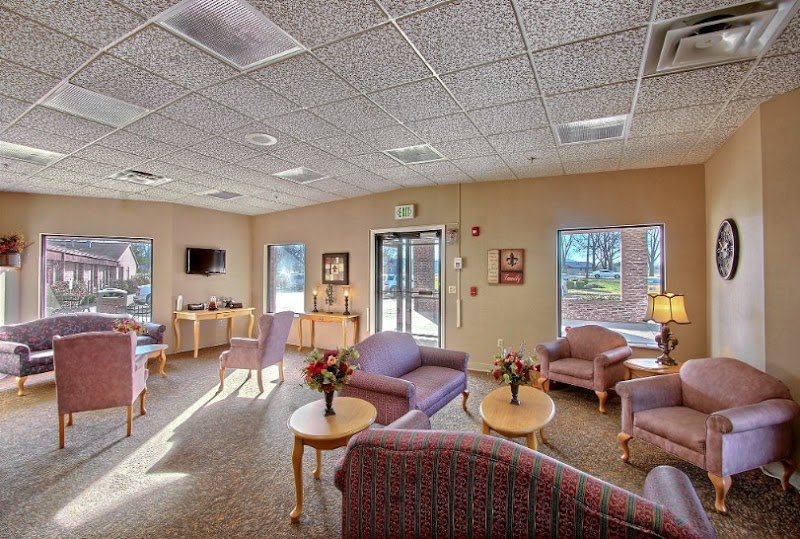
How is Southwood Healthcare Center Staffed?

CMS rates SOUTHWOOD HEALTHCARE CENTER's staffing level at 1 out of 5 stars, which is much below average compared to other nursing homes. Staff turnover is 54%, compared to the Indiana average of 46%. RN turnover specifically is 78%, which is notably high. RNs provide skilled clinical oversight, so turnover in this role can affect medical care quality.

What Have Inspectors Found at Southwood Healthcare Center?

State health inspectors documented 51 deficiencies at SOUTHWOOD HEALTHCARE CENTER during 2022 to 2025. These included: 1 Immediate Jeopardy (the most serious level, indicating potential for serious harm or death) and 50 with potential for harm. Immediate Jeopardy findings are rare and represent the most serious regulatory concerns. They require immediate corrective action.
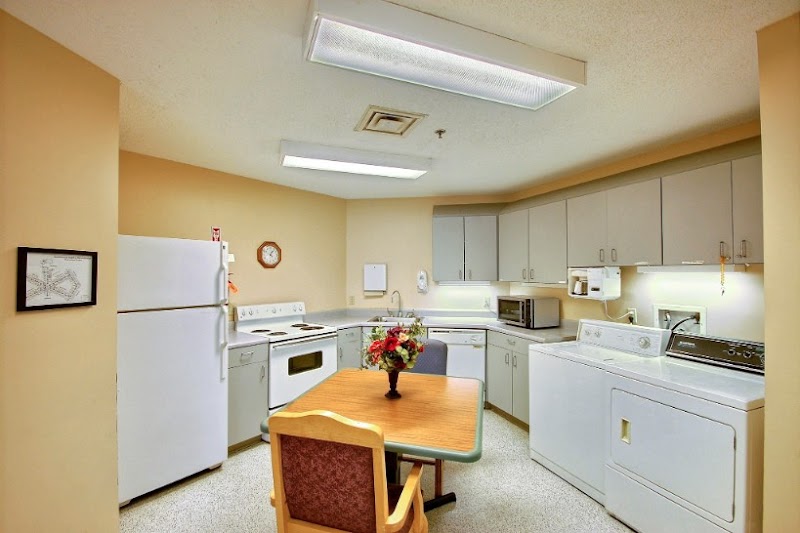
Who Owns and Operates Southwood Healthcare Center?

SOUTHWOOD HEALTHCARE CENTER is owned by a for-profit company. For-profit facilities operate as businesses with obligations to shareholders or private owners. The facility is operated by COMMUNICARE HEALTH, a chain that manages multiple nursing homes. With 121 certified beds and approximately 94 residents (about 78% occupancy), it is a mid-sized facility located in TERRE HAUTE, Indiana.
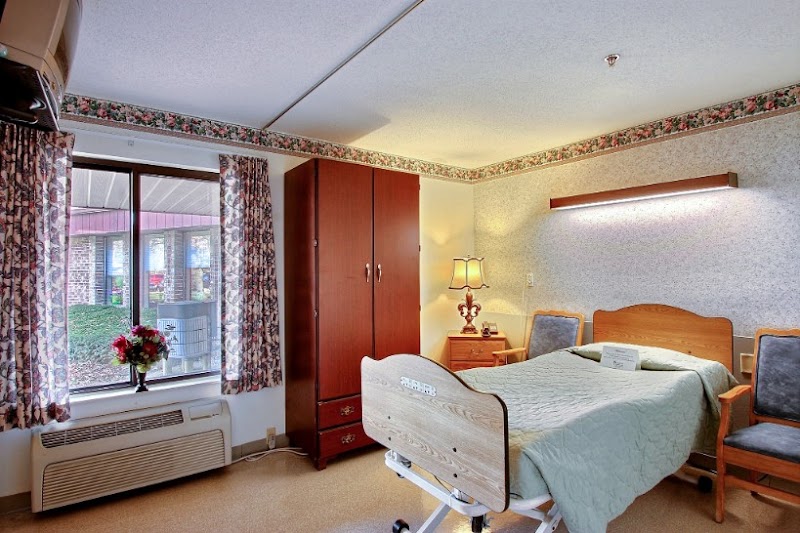
How Does Southwood Healthcare Center Compare to Other Indiana Nursing Homes?

Compared to the 100 nursing homes in Indiana, SOUTHWOOD HEALTHCARE CENTER's overall rating (1 stars) is below the state average of 3.1, staff turnover (54%) is near the state average of 46%, and health inspection rating (1 stars) is much below the national benchmark.

What Should Families Ask When Visiting Southwood Healthcare Center?

Based on this facility's data, families visiting should ask: "What changes have been made since the serious inspection findings, and how are you preventing similar issues?" "Can you walk me through typical staffing levels on day, evening, and night shifts?" "Can I visit during a mealtime to observe dining assistance and food quality?" "How do you handle medical emergencies, and what is your hospital transfer rate?" These questions are particularly relevant given the facility's Immediate Jeopardy citations and the below-average staffing rating.

Is Southwood Healthcare Center Safe?

Based on CMS inspection data, SOUTHWOOD HEALTHCARE CENTER has documented safety concerns. Inspectors have issued 1 Immediate Jeopardy citation (the most serious violation level indicating risk of serious injury or death). The facility has a 1-star overall rating and ranks #100 of 100 nursing homes in Indiana. Families considering this facility should ask detailed questions about what corrective actions have been taken since these incidents.

Do Nurses at Southwood Healthcare Center Stick Around?

SOUTHWOOD HEALTHCARE CENTER has a staff turnover rate of 54%, which is 8 percentage points above the Indiana average of 46%. Moderate turnover is common in nursing homes, but families should still ask about staff tenure and how the facility maintains care continuity when employees leave.

Was Southwood Healthcare Center Ever Fined?

SOUTHWOOD HEALTHCARE CENTER has been fined $14,518 across 1 penalty action. This is below the Indiana average of $33,224. While any fine indicates a compliance issue, fines under $50,000 are relatively common and typically reflect isolated problems that were subsequently corrected. Families should ask what specific issues led to these fines and confirm they've been resolved.

Is Southwood Healthcare Center on Any Federal Watch List?

SOUTHWOOD HEALTHCARE CENTER is not on any federal watch list. The most significant is the Special Focus Facility (SFF) program, which identifies the bottom 1% of nursing homes nationally based on persistent, serious quality problems. Not being on this list means the facility has avoided the pattern of deficiencies that triggers enhanced federal oversight. This is a positive indicator, though families should still review the facility's inspection history directly.