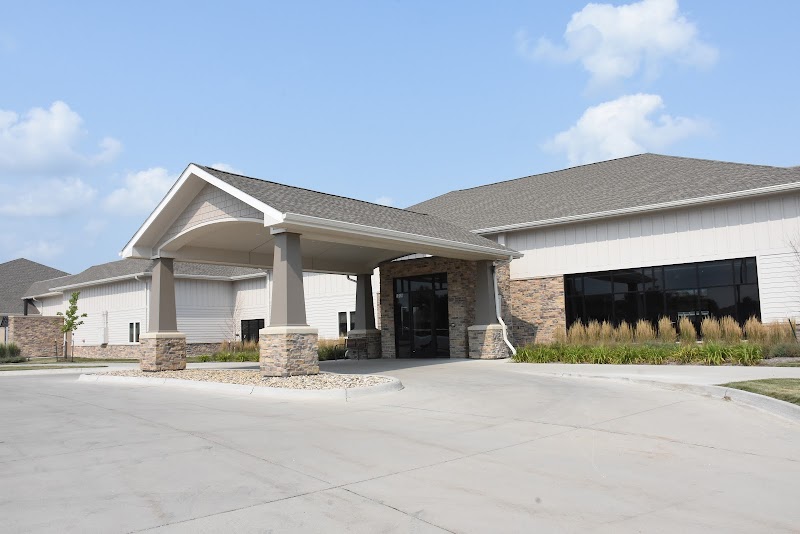
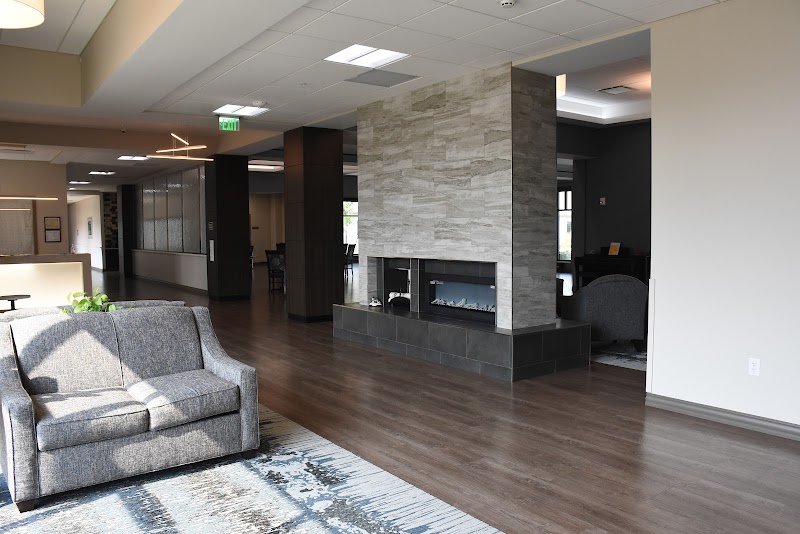
Spurgeon Manor

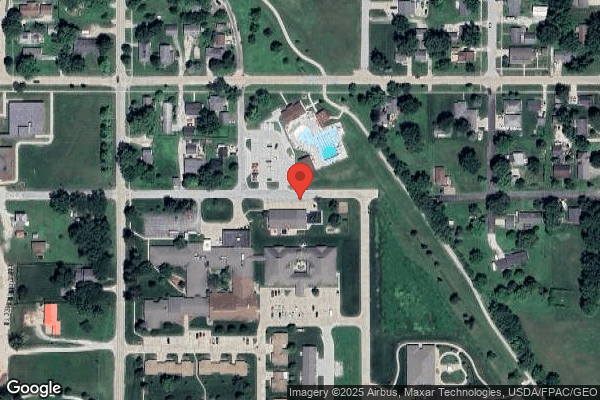
1204 LINDEN STREET, DALLAS CENTER, IA 50063 (515) 992-3735
Non profit - Corporation 55 Beds Independent Data: November 2025
Trust Grade
90/100
#71 of 392 in IA
Last Inspection: November 2024

Within standard 12-15 month inspection cycle. Federal law requires annual inspections.

Overview

Spurgeon Manor in Dallas Center, Iowa, has received an excellent Trust Grade of A, indicating a high level of quality and care. Ranked #71 out of 392 facilities in Iowa, they sit comfortably in the top half, and they are the second-best option among ten facilities in Dallas County. The facility is improving, with reported issues decreasing from five in 2023 to three in 2024. Staffing is a strength, with a perfect score of 5/5 stars and a turnover rate of 39%, which is below the state average, suggesting experienced staff who are familiar with the residents. However, there have been some concerns, including a failure to prevent a pressure ulcer for one resident and inadequate posting of survey results and ombudsman information, which could limit transparency for families. Overall, while Spurgeon Manor has notable strengths, families should be aware of these weaknesses when considering care for their loved ones.

Trust Score
A
90/100
In Iowa
#71/392
Top 18%
Safety Record
Low Risk
No red flags
Inspections
Getting Better
5 → 3 violations
Staff Stability
○ Average
39% turnover. Near Iowa's 48% average. Typical for the industry.
Penalties
✓ Good
No fines on record. Clean compliance history, better than most Iowa facilities.
Skilled Nurses
✓ Good
Each resident gets 59 minutes of Registered Nurse (RN) attention daily — more than average for Iowa. RNs are trained to catch health problems early.
Violations
○ Average
8 deficiencies on record. Average for a facility this size. Mostly minor or procedural issues.
★★★★★
5.0
Overall Rating
★★★★★
5.0
Staff Levels
★★★★★
5.0
Care Quality
★★★★☆
4.0
Inspection Score
Stable
2023: 5 issues
2024: 3 issues

The Good

  • 5-Star Staffing Rating · Excellent nurse staffing levels
  • 5-Star Quality Measures · Strong clinical quality outcomes
  • Full Sprinkler Coverage · Fire safety systems throughout facility
  • No fines on record
  • Staff turnover below average (39%)

    9 points below Iowa average of 48%

Facility shows strength in staffing levels, quality measures, fire safety.

The Bad

Staff Turnover: 39%

Near Iowa avg (46%)

Typical for the industry

The Ugly 8 deficiencies on record

Nov 2024 2 deficiencies
CONCERN (D)

Potential for Harm - no one hurt, but risky conditions existed

Comprehensive Care Plan (Tag F0656)

Could have caused harm · This affected 1 resident

**NOTE- TERMS IN BRACKETS HAVE BEEN EDITED TO PROTECT CONFIDENTIALITY** 3. Resident #7's Minimum Data Set (MDS) dated [DATE] assessment identified a Brief Interview for Mental Status (BIMS) score of 1...

Read full inspector narrative →
**NOTE- TERMS IN BRACKETS HAVE BEEN EDITED TO PROTECT CONFIDENTIALITY** 3. Resident #7's Minimum Data Set (MDS) dated [DATE] assessment identified a Brief Interview for Mental Status (BIMS) score of 12, indicating moderately impaired cognition. The MDS identified Resident #7 required substantial/maximal assistance with bed mobility, and was dependent on staff for transfers and toileting. Resident #7's MDS included diagnoses of hypertension (high blood pressure), renal disease (kidney), and anxiety disorder. A Physician order dated 8/5/24 directed staff to administer Lasix (diuretic) 20 mg (milligrams) one tablet two times a day for bilateral lower extremity edema and coarse crackles in the lungs. A Physician order dated 4/17/24 directed staff to administer Apixaban (anticoagulant) 5 mg one tablet two times a day for anticoagulation, which contained an alert black box warning. A Physician order dated 3/19/24 directed staff to administer Sertraline HCL (antidepressant) 25 mg one time a day for anxiety. Review of Resident #7's Care Plan with a revision date of 10/1/24 lacked information about the usage of the diuretic, anticoagulant and/or antidepressant medications, potential side effects and what to monitor for while taking the high risk medications. On 11/6/24 at 3:15 PM, the MDS Coordinator acknowledged and verified the high risk medication for Resident #7 were not addressed on the care plan. She stated she must have missed adding those medications to the care plan. On 11/6/24 at 3:32 PM, the ADON (Assistant Director of Nursing) reported she would expect the care plans to address the usage of high risk medications and respiratory care/services. A facility policy titled Care Plan Revision Upon Status Change 10/12/2023 documented the purpose of the procedure was to provide a consistent process for reviewing and revising the care plan for those residents experiencing a status change. The policy further documented the comprehensive care plan to be reviewed, and revised as necessary, when a resident experiences a status change. The policy directed the following procedure for reviewing and revising the care plan when a resident experiences a status change: a. Upon identification of a change in status, the nurse will notify the MDS Coordinator, the physician, and the resident representative, if applicable. b. The MDS Coordinator and the Interdisciplinary Team will discuss the resident condition and collaborate on intervention options. c. The team meeting discussion will be documented in the nursing progress notes. d. The care plan will be updated with the new or modified interventions. e. Staff involved in the care of the resident will report resident response to new or modified interventions. f. Care plans will be modified as needed by the MDS Coordinator or other designated staff member. g. The Unit Manager or other designated staff member will communicate care plan interventions to all staff involved in the resident ' s care. h. The Unit Manager or other designated staff member will conduct an audit on all residents experiencing a change in status, at the time the change in status is identified, to ensure care plans have been updated to reflect current resident needs. Based on resident record review, staff interview, and facility policy review the facility failed to develop and implement a comprehensive person-centered care plan to include a resident's repeated hospitalizations for pneumonia for 1 resident (Resident #36) and high-risk medications for 2 residents (Resident #7 and #35) of 15 residents reviewed for care plans. The facility reported a census of 49 residents. Findings include: 1. The Minimum Data Set (MDS) for Resident #36, dated 8/29/24, included diagnoses of pneumonia, Coronary Obstructive Pulmonary Disease, and respiratory failure. A Brief Interview for Mental Status (BIMS) score of 15, indicated no cognitive impairment for decision-making. Resident #36's hospital admission records documented resident admitted to the hospital on [DATE] for pneumonia of left lower lobe due to infectious organism and sepsis (infection in blood). Resident #36's hospital records documented resident admitted to the hospital on [DATE] for an abscess of left lung with pneumonia. Review of Resident #36's Care Plan initiated 11/27/23, lacks inclusion of repeated hospitalizations for pneumonia and monitoring of respiratory failure. 2. The Quarterly MDS for Resident #35, dated 9/19/24, included diagnoses of diabetes, anxiety disorder, and neurocognitive disorder with lewy bodies (a type of progressive dementia that leads to a decline in thinking, reasoning, and independent function). A BIMS score of 4, indicated severe cognitive impairment for decision-making. Resident #35's Order Summary Report documented the resident received Lantus(insulin)injections 1 time daily for diabetes with start date of 8/15/24, and Sertraline (antidepressant medication) for anxiety and negative behavior with start date of 8/8/24. Review of Resident #35's Care Plan, initiated 3/12/24 with revisions on 9/3/24, lacked documentation of focus for diabetes with use of insulin and monitoring for high and low blood sugars, and for the use of an antidepressant with monitoring for side effects and usage.
CONCERN (D)

Potential for Harm - no one hurt, but risky conditions existed

Pressure Ulcer Prevention (Tag F0686)

Could have caused harm · This affected 1 resident

**NOTE- TERMS IN BRACKETS HAVE BEEN EDITED TO PROTECT CONFIDENTIALITY** Based on observations, record review, staff interviews and facility policy the facility failed to properly prevent an unstageabl...

Read full inspector narrative →
**NOTE- TERMS IN BRACKETS HAVE BEEN EDITED TO PROTECT CONFIDENTIALITY** Based on observations, record review, staff interviews and facility policy the facility failed to properly prevent an unstageable pressure ulcer to bilateral heels consistent with professional standards of practice for 1 of 1 residents reviewed (Resident #28). The facility reported a census of 49 residents. The MDS (Minimum Data Set) assessment identifies the definition of pressure ulcers: Stage I is an intact skin with non-blanchable redness of a localized area usually over a bony prominence. Darkly pigmented skin may not have a visible blanching; in dark skin tones only it may appear with persistent blue or purple hues. Stage II is partial thickness loss of dermis presenting as a shallow open ulcer with a red or pink wound bed, without slough (dead tissue, usually cream or yellow in color). May also present as an intact or open/ruptured blister. Stage III Full thickness tissue loss. Subcutaneous fat may be visible but bone, tendon or muscle is not exposed. Slough may be present but does not obscure the depth of tissue loss. May include undermining and tunneling. Stage IV is full thickness tissue loss with exposed bone, tendon or muscle. Slough or eschar (dry, black, hard necrotic tissue). may be present on some parts of the wound bed. Often includes undermining and tunneling or eschar. Unstageable Ulcer: inability to see the wound bed. Other staging considerations include: Deep Tissue Pressure Injury (DTPI): Persistent non-blanchable deep red, maroon or purple discoloration. Intact skin with localized area of persistent non-blanchable deep red, maroon, purple discoloration due to damage of underlying soft tissue. This area may be preceded by tissue that is painful, firm, mushy, boggy, warmer or cooler as compared to adjacent tissue. These changes often precede skin color changes and discoloration may appear differently in darkly pigmented skin. This injury results from intense and/or prolonged pressure and shear forces at the bone-muscle interface. The Annual Minimum Data Set (MDS) assessment tool dated 9/19/24, for Resident #28 documented diagnoses that included Non-Alzheimer's dementia, arthritis, anxiety and depression. The MDS showed a Brief Interview for Mental Status (BIMS) score of 9, indicating moderate cognitive impairment. The MDS identified the resident as at risk for pressure ulcers. The MDS also identified the facility had placed a pressure reducing device in the resident's chair and pressure reducing device for the bed. The MDS identified Resident #28 is dependent on transfers, bed mobility, toileting and dressing. Resident #28's care plan revised on 5/10/24 contained the following information; a. Resident #28 is at risk for impaired skin integrity related to limited mobility and catheter tubing. The care plan directed staff to: apply lotion to bilateral upper extremities two times daily as I allow assist with bathing at least two times per week. encourage to call for assistance to help with bed positioning geri-sleeves or long sleeves at all times as I will allow a pressure reducing mattress on my bed. have an gel cushion in my recliner The resident's Care Plan lacked preventative interventions to help prevent the unstageable pressure areas specific to the right and left heels. The Resident's Care Plan Identified risk for impaired skin integrity related to limited mobility with initiated date of 10/09/2023. The facility provided Braden Scale dated 9/18/24 showed Resident #28 scored a 15 which indicates at risk for pressure ulcers. Review of Resident #28's progress notes revealed the following; 1. On 10/27/24 at 11:55 AM, Resident #28 complained of right heel pain, noting two small areas on the right heel, the area is red to brown in color. New interventions started to apply bunny boots while sitting and lying down and to float heels at all times. Skin prep applied per geriatric protocol. 2. On 10/28/24 at 3:07 PM, Resident #28 continues to have sore areas on both heels. Received fax back with an ok to apply skin prep twice a day and float heels. 3. On 11/4/24 at 12:30 PM revealed Resident #28 was seen by a Nurse Practitioner stating the pressure ulcer of right heel and left heel are unstageable, continue skin prep twice a day to both heels, float heels at all time when sitting/lying down and utilize bunny boots when in bed/chair. The facility provided Skin & Wound Evaluation revealed the following area measurements; 10/28/24 Left heel - 1 centimeters (cm) x 1 cm (length x width) 10/30/24 Left heel - 0.8 cm x 1.0 cm 11/7/24 Left heel - 0.9 cm x 1.0 cm 10/27/24 Right heel - 1.2 cm x 0.8 cm 10/30/24 Right heel - 1.4 cm x 0.8 cm 11/7/24 Right heel - 1.3 cm x 0.5 cm The evaluations documented unknown as to how long the in house acquired pressure wounds had been present to the right and left heels. Review of [NAME] Manor fax sheet dated 10/28/24 revealed new orders from physician as to follow geri protocol, apply skin prep twice daily on both heels, float heels all times when sitting/lying down and apply bunny boots to bilateral heels. Review of wound physician Doctor [NAME]'s progress notes dated 11/6/24 revealed right heel measures 1 cm x 1 cm, skin is intact with purple/maroon discoloration. Left heel measures 2 cm x 2 cm, skin intact with purple/maroon discoloration. New order to do betadine twice daily for 30 days with gauze island with border apply twice daily for 30 days. Interview on 11/6/24 at 3:30 PM with Doctor (Dr) [NAME] stated Resident #28 was a new patient and the facility asked to consult today. Dr. [NAME] reported that Resident #28 has two deep tissue injury (DTI's) to her right and left heel. Dr. [NAME] reported the areas are not open, one is softer than the other one. Dr. [NAME] reported she gave new orders to do betadine with border gauze and hopefully in a week the betadine will dry up and I will be able to peel off the scab area. Dr. [NAME] reported we figured out that Resident #28 was putting pressure down on the foot stool and in the wheelchair. Dr. [NAME] stated if she did have to say she thought they were unavoidable. Facility provided a policy named Skin and Wound Protocol with an effective date of 10/10/24 revealed the purpose is to identify residents at risk for potential breakdown or ulcerations, to prevent breakdown of tissue ulcerations and to provide treatment that promotes prevention and healing of skin issues. Staff will institute a plan for any resident who has potential for skin breakdown or whose condition is deteriorating. This may include: a. Turn and reposition every 2 hours as appropriate b. Pressure reduction surfaces for beds, wheelchairs when appropriate c. Floating areas of concern such as heels when appropriate d. Separation of body prominences with a pillow or other pressure reduction device when side lying or as appropriate e. Use of elbow or heel protectors when appropriate f. Promotion of clean, dry, and well moisturized skin g. Following Registered Dietician recommendations (such as the NIP Program) to promote optimum nutrition when possible h. Reduction of shearing force by using appropriate body mechanics when moving, turning, or repositioning a resident. The nurse aides will report any clothing, shoes, braces, and splints that may not be fitting properly to the supervisor or floor nurse. Do not massage any areas of concern as this may cause further tissue damage and breakdown. Encourage residents to change position frequently and ambulate as capable. Keep the bed as free from wrinkles as possible. Nurse aides will complete body audits with bathing and care and report changes in skin condition to the nurse. The nurse will determine if the skin condition is new or needs further intervention. Interview on 11/06/24 at 1:07 PM with ADON stated they talk about skins in a multidisciplinary rounding meeting four times a week and they put interventions in place by that information. ADON revealed interventions that were in place before these areas to Resident #28's heels. ADON stated that Resident #28 had been wearing shoes and put her heels into the recliner. ADON revealed we are now floating and applying bunny boots to her heels. Interview on 11/7/24 at 11:41 PM with the ADON revealed they look at resident's mobility and try to keep them active. We got therapy involved with Resident #28 because she used to ambulate. We have used lotions, and we will utilize a pillow to float their heels if the resident will allow it.
Aug 2024 1 deficiency
CONCERN (D) 📢 Someone Reported This

A family member, employee, or ombudsman was alarmed enough to file a formal complaint

Potential for Harm - no one hurt, but risky conditions existed

Deficiency F0577 (Tag F0577)

Could have caused harm · This affected 1 resident

Based on observation, family interview, staff interview, and policy review the facility failed to properly post past survey results and ombudsman information in a readily accessible area for residents...

Read full inspector narrative →
Based on observation, family interview, staff interview, and policy review the facility failed to properly post past survey results and ombudsman information in a readily accessible area for residents, family members of residents, and legal representatives. The facility reported a census of 48 residents. Findings include: During an interview 8/5/23 at 10:07 AM Resident #1's family member revealed that the facility does not have the survey results or ombudsman notification information in the facility. The family member further revealed that the only place where an ombudsman information sheet was located was by the locked unit and it was outdated. During an observation 8/5/24 from 11:25 AM until 11:40 AM only one copy of ombudsman information was noted on an easel by the southeast entrance of the facility. This ombudsman information was covered by another document and was not readable. During this observation no past survey results were located. During an observation 8/5/24 at 1:05 PM with the Administrator revealed past survey results were in a binder in a hallway across from the kitchen. This binder was noted to have a faded label that was barely legible. During an interview 8/5/24 at 1:05 PM with the Administrator revealed her expectation would be for survey results, and ombudsman information to be easily accessible for residents, family of residents, and legal representatives to obtain without asking. Review of a facility policy revealed that there was no policy to review for having past survey results and ombudsman information in an accessible area in the facility.
Oct 2023 2 deficiencies
CONCERN (D)

Potential for Harm - no one hurt, but risky conditions existed

Deficiency F0657 (Tag F0657)

Could have caused harm · This affected 1 resident

**NOTE- TERMS IN BRACKETS HAVE BEEN EDITED TO PROTECT CONFIDENTIALITY** Based on clinical record review, staff interview, and facility policy review the facility failed to update Care Plans in a timel...

Read full inspector narrative →
**NOTE- TERMS IN BRACKETS HAVE BEEN EDITED TO PROTECT CONFIDENTIALITY** Based on clinical record review, staff interview, and facility policy review the facility failed to update Care Plans in a timely manner to reflect the resident's condition for 2 of 5 residents reviewed (Residents #19 and #39). Findings include: 1. Resident #19's Minimum Data Set (MDS) assessment dated [DATE] identified a Brief Interview of Mental Status (BIMS) score of 15, indicating no cognitive impairment. The MDS included diagnoses of stroke, cancer, coronary artery disease (narrowing of the arteries in the heart), diabetes mellitus, and hyperlipidemia (an elevated form of cholesterol). Resident #19's Clinical Physician's Orders included an order dated 7/8/23 for Plavix (medication used to prevent clots that can increase the risk for bleeding) oral tablet 75 milligrams (mg). Give one tablet once a day for anticoagulant (blood thinner). Resident #19's Care Plan with a completion date of 7/19/23 lacked information regarding use of medications that can increase the risk of bleeding. Review of Resident #19's EHR page titled Care Plans revealed no further updates. 2. Resident #39's MDS assessment dated [DATE] listed an entry date of 8/4/23 from an acute hospital stay. Resident #39's Clinical Physician's Orders listed an order dated 8/16/23 for a 16 French (size) indwelling catheter. The admission Note dated 8/4/23 at 12:32 PM indicated that Resident #39 had a urinary catheter. The Nurses Note dated 8/24/23 at 7:35 PM include a note that the nurse removed Resident #39's urinary catheter as ordered by the physician before she got out of bed for the day. After she voided around 1:40 PM the physician gave an order to discontinue the placement of the urinary catheter. Resident #39's Care Plan Focus revised 8/14/23 reflected that she had an indwelling Foley catheter related to a diagnosis of urinary retention. The Care Plan lacked addition updates after 8/14/23. On 10/10/23 at 2:51 PM the Administrator explained that she expected the Care Plans to be revised in a timely manner. On 10/10/23 at 3:06 PM the facility's Care Plan Coordinator reported that she missed Plavix on the Care Plan and she is expected to revise the Care Plans in a timely manner. On 10/11/23 at 2:59 PM the Director of Nursing (DON) reported that the facility did not have a policy on Care Plans or Care Plan revisions. In addition, the DON said that they are currently writing new policies and procedures. They do not have a Care Plan policy at that time, but she expected revisions for the Care Plans happen in a timelier manner.
CONCERN (D) 📢 Someone Reported This

A family member, employee, or ombudsman was alarmed enough to file a formal complaint

Potential for Harm - no one hurt, but risky conditions existed

Infection Control (Tag F0880)

Could have caused harm · This affected 1 resident

Based on observation, policy review, manufacturer's instruction, and staff interview the facility failed to properly clean and disinfect a shared glucometer (medical device to measure the amount of gl...

Read full inspector narrative →
Based on observation, policy review, manufacturer's instruction, and staff interview the facility failed to properly clean and disinfect a shared glucometer (medical device to measure the amount of glucose in the blood) to maintain standard precautions for infection control. The facility reported a census of 42 residents. Findings include: On 10/11/23 at 11:28 AM observed Staff A, Registered Nurse (RN), used a facility glucometer and completed an accucheck (blood placed on strip into device to check blood sugar) on a resident. Staff A then took the supplies back to the medication cart, wiped off the glucometer with a Sani-Cloth, laid the glucometer on the tray. Within one minute the glucometer dried. Staff A said she thought the contact time (time required for a device to remain wet after cleaned to properly disinfect) for the glucometer to remain wet was 2 minutes and agreed the glucometer did not remain wet for the 2-minute contact time. Staff A reported that she usually just wipes off the glucometer with the Sani-Cloth and allows the glucometer to dry. Staff A explained that it is a facility glucometer and they use it for other residents on the unit. Review of Sani-Cloth manufacturer's instructions revealed to disinfect nonfood contact surfaces thoroughly wet surface and allow treated surface to remain wet for 2 minutes. Review of undated facility policy Standard Precautions, directed to ensure that reusable equipment is not used for the care of another patient until it has been cleaned and sanitized properly. On 10/11/23 at 4:04 PM, the Director of Nursing reported that she expected staff to clean the glucometer with a Sani-Cloth after each resident's use, then have the glucometer remain wet for 2 minutes for the required 2-minute contact time to disinfect.
Feb 2023 3 deficiencies
CONCERN (D) 📢 Someone Reported This

A family member, employee, or ombudsman was alarmed enough to file a formal complaint

Potential for Harm - no one hurt, but risky conditions existed

Abuse Prevention Policies (Tag F0607)

Could have caused harm · This affected 1 resident

**NOTE- TERMS IN BRACKETS HAVE BEEN EDITED TO PROTECT CONFIDENTIALITY** Based on record review, facility investigative file review, staff interviews and facility policy review the facility failed to i...

Read full inspector narrative →
**NOTE- TERMS IN BRACKETS HAVE BEEN EDITED TO PROTECT CONFIDENTIALITY** Based on record review, facility investigative file review, staff interviews and facility policy review the facility failed to implement their policy and procedures after an allegation of abuse for 1 of 3 residents (Resident #2) reviewed. On 12/3/22 (Saturday) a Certified Nurse Aide (CNA) reported concerns of abuse to her charge nurse about another CNA. After the charge nurse learned of the allegation, she sent a nonspecific text message to the on-call leadership staff. In addition, the charge nurse failed to assess Resident #2 for injuries following the allegation of abuse. Due to the nonspecific nature of the text message, the on-call leadership did not respond, evaluate, or report the incident to the Iowa Department of Inspections and Appeals (IDIA) within two hours. The facility failed to report the allegation of abuse to IDIA or assess Resident #2 for injuries until 12/5/23 (Monday). The facility reported a census of 45 residents. Findings include: The Minimum Data Set (MDS) dated [DATE] documented Resident #2 had severely impaired cognitive skills for daily decision making. The MDS indicated that Resident #2 required extensive assistance of two persons for transfers, walking in her room, walking in the corridor, and with toilet use. She utilized a walker and wheelchair for mobility. The MDS included diagnoses of dementia, hyperlipidemia, anxiety, delirium, and hearing loss. The facility's investigative file included the following summary: -Incident on 12/3/22 at 5:45 AM with Resident #2 -12/3/22 at 5:45 AM Staff A, Certified Nursing Assistant (CNA), went to help Staff B, Licensed Practical Nurse (LPN), perform incontinence care on Resident #2. Staff A stated that she and Staff B cleaned up Resident #2 and transferred her back to her wheelchair. Resident #2 became combative with the transfer. As Staff A cleaned the toilet, she stated that she witnessed Staff B hit (later described as small slap) Resident #2's left shoulder blade and told her do not hit me. Staff A stated she did not think it was meant to hurt Resident #2, but rather more of a reaction to her hitting him. Staff A finished cleaning up and told Staff C, LPN, who was the charge nurse on the other unit. -12/3/22 at 6:26 AM Staff C stated Staff A brought the incident with Staff B and Resident #2 to her attention. Staff C told Staff A to write a statement regarding what happened. Staff C sent a text message to the Leadership by cell phone on 12/3/23 at 6:26 AM stating Staff A reported a situation to her, wrote a statement, and put it under the Director of Nursing's (DON) door. The Assistant Director of Nursing (ADON) was on call at the time. Via text Staff C stated that Staff A was pretty upset and provided the ADON with her number. In a follow-up interview on 12/5/22 at 8:05 AM Staff C told the Director of Nursing (DON) she knew of the abuse policy and the protocol to report immediately. The DON instructed Staff C to call the leadership phone rather than text, if no answer, then call the personal phone of the DON or Administrator until she could contact someone. -12/5/22 at 8:35 AM the ADON completed a head-to-toe skin assessment with no injuries noted to Resident #2's left shoulder blade area. -The Administrator immediately re-educated all other staff to call immediately with suspected abuse until contact with leadership is made. The review of the Self-Report Notification report provided by the facility, the facility reported to the State Agency of an incident on 12/5/22 at 11:13 AM that involved Resident #2. On 2/14/23 at 2:17 PM Staff C explained that Staff A came up to her during report, indicating she wanted to speak with her. After Staff C finished report she met Staff A in the hallway and who indicated they had a situation. Staff A told Staff C that Staff B and her assisted Resident #2 to the toilet when she struck out at Staff B and he smacked her back. Staff A added that he struck her hard enough that her body moved. Staff C advised Staff A to write a statement. Staff C explained that she would call the on-call nurse to let them know about that situation and to have them call Staff A. She sent a text to the on-call phone because of the time of day. She stated the text was brief that said hey there's been a situation with Staff A and that they needed to get ahold of her. She did not leave specifics on a text because it was a text message. Later that day the ADON sent her a text asking if she needed to call Staff A. Staff C messaged her back and indicated it would be a good idea. On that Monday, the DON called her and Staff C explained the situation. The DON informed her that she should have not sent a text, and that she should have called someone about the situation. Staff C stated her thought process was since she reported it to the on-call nurse via test they would take it from there. She knew they had 2 hours to report the incident to the State Agency and she sent a message to her supervisor (on-call at the time) about it. Staff C was asked if she completed an assessment on Resident #2, she indicated Staff A had told her the resident was ok. Staff C's thought process was since she sent the text to the on-call phone they would take it from there. On 2/14/23 at 2:53 PM the ADON stated she was on-call the week Staff C sent a text but could not remember what was sent, something with Staff A being upset. She stated their reporting policy encouraged the staff who are reporting abuse to get a hold of their manager on duty within two hours. It should be reported right away because the facility has to report to the State Agency within two hours of the incident taking place. All the ADON knew was Staff A was upset. When asked if Staff C should have completed an assessment after Staff A had reported the allegation to her, she stated more follow-up should have been done on her part. The ADON indicated she completed the head to toe assessment and found no injuries. She asked Resident #2 what had happened but due to her dementia she could not say. On 2/15/23 at 9:17 AM Staff D, CNA, stated she would report an allegation of abuse to her nurse and/or Administrator. When asked what she would do on the weekend if an allegation of abuse needed to be reported she stated she would call the nurse and/or Administrator until she spoke with them to get guidance on what to do next. She stated report, report, report. On 2/15/23 at 9:18 AM Staff E, Registered Nurse (RN), stated she would report to management if an allegation was reported to her. When asked what she would do if the allegation took place on a weekend she stated she would keep calling management until they answered the phone. She added that she knows that they have two hours to report to the State Agency so she would make sure she spoke to someone about the reported allegation. On 2/15/23 at 10:00 AM the DON stated she was not on call that week, she came to work on Monday and was alerted in some shape or form that something had happened that she needed to follow-up on. She called Staff C and she indicated Staff A was upset that Staff B allegedly struck Resident #2 on the back. Staff C sent a text to the on-call phone about Staff A being upset and to follow up with Staff A. The DON indicated Staff C should have called the on-call number instead of texting; hindsight she knew she should have called. If they are unable to get a hold of the on-call person, they should keep calling until they reach someone. They need to make contact with someone. The DON was asked if Staff C should have completed an assessment after the allegation was reported to her, she indicated should have completed one. On 2/15/23 at 10:08 AM Staff A stated before shift change, her and Staff B assisted Resident #2 to the bathroom and completed care for her. Staff A stated Resident #2 tried to swing at Staff B to hit him and Staff B smacked the resident on her left shoulder blade and said don't hit me. Staff A stated he smacked her hard enough that her upper body moved forward, the resident just looked at Staff B, but she did not say anything. Staff A stated she reported this to Staff C after she gave a report to the on-coming CNAs. Staff C advised her to write up a statement and put it under the DON's office door. Staff A indicated Staff C sent a text to the on-call nurse. The facility's Nursing Facility Abuse Prevention, Identification, Investigation and Reporting Policy dated October 2022 indicated all allegations of resident abuse, neglect, exploitation, mistreatment, injuries of unknown origin and misappropriation should be reported immediately to the charge nurse. The charge nurse is responsible for immediately reporting the allegation of abuse to the Administrator or designated representative. All allegations of resident abuse shall be reported to the Iowa Department of Inspections and Appeals no later than two hours after the allegation is made. The policy also stated should an incident or suspected incident of resident abuse be reported or observed the Administrator or designee will designate a member of management to investigate the alleged incident. The Administrator or designee will complete documentation of the allegation of resident abuse and collect any supporting documents relative to the alleged incident. Staff are to: review documentation in the resident record (including review of assessment if resident has an injury) and assess the resident for injury if the allegation involves physical or sexual abuse.
CONCERN (D) 📢 Someone Reported This

A family member, employee, or ombudsman was alarmed enough to file a formal complaint

Potential for Harm - no one hurt, but risky conditions existed

Report Alleged Abuse (Tag F0609)

Could have caused harm · This affected 1 resident

**NOTE- TERMS IN BRACKETS HAVE BEEN EDITED TO PROTECT CONFIDENTIALITY** Based on record review, facility investigative file review, staff interviews and facility policy review the facility failed to r...

Read full inspector narrative →
**NOTE- TERMS IN BRACKETS HAVE BEEN EDITED TO PROTECT CONFIDENTIALITY** Based on record review, facility investigative file review, staff interviews and facility policy review the facility failed to report an allegation of abuse within two hours to the Iowa Department of Inspections and Appeals (IDIA) for 1 of 3 residents (Resident #2) reviewed. On 12/3/23 (Saturday) a Certified Nurse Aide (CNA) reported to her charge nurse a concern with another CNA hitting a resident. The charge nurse sent a nonspecific text to the on-call leadership after learning of the allegation. The on-call leadership failed to follow up with the facility staff following the text message. On 12/5/23 (Monday) after completing an investigation the facility notified IDIA of the allegation of abuse. The facility reported a census of 45 residents. Findings include: The Minimum Data Set (MDS) dated [DATE] documented Resident #2 had severely impaired cognitive skills for daily decision making. The MDS indicated that Resident #2 required extensive assistance of two persons for transfers, walking in her room, walking in the corridor, and with toilet use. She utilized a walker and wheelchair for mobility. The MDS included diagnoses of dementia, hyperlipidemia, anxiety, delirium, and hearing loss. The Care Plan Focus dated 9/28/22 indicated that Resident #2 had impaired cognitive function related to an age-related cognitive decline. She has dementia, inappropriate behaviors, and resides in the memory care unit. Her behaviors included hitting, pinching, spitting, bending staff fingers backwards, licking, biting, scratching, use of different foul, and swear words. The interventions directed the following a. Staff should talk to her in a calm voice when her behaviors are disruptive. b. Reduce any distractions, provide her with necessary cues but stop and return if she is agitated. c. Staff were also encouraged to use redirection techniques when her actions or comments become inappropriate: one-on-one, an activity, food, drink, walk, or change of environment as she allows. The Care Plan Focus dated 10/25/22 listed that Resident #2 needed assistance with her activities of daily living (ADLs) due to her limited mobility and diagnosis of dementia. The interventions instructed that a. Resident #2 has a tendency to refuse help with her ADLs and care. Staff were encouraged to approach her calmly from the front. Provide simple verbal cues and prompting with all of her care as able. If she refuses, staff are to ensure her safety and re-approach at a later time. The facility's investigative file included the following summary: -Incident on 12/3/22 at 5:45 AM with Resident #2 -12/3/22 at 5:45 AM Staff A, Certified Nursing Assistant (CNA), went to help Staff B, Licensed Practical Nurse (LPN), perform incontinence care on Resident #2. Staff A stated that she and Staff B cleaned up Resident #2 and transferred her back to her wheelchair. Resident #2 became combative with the transfer. As Staff A cleaned the toilet, she stated that she witnessed Staff B hit (later described as small slap) Resident #2's left shoulder blade and told her do not hit me. Staff A stated she did not think it was meant to hurt Resident #2, but rather more of a reaction to her hitting him. Staff A finished cleaning up and told Staff C, LPN, who was the charge nurse on the other unit. -12/3/22 at 6:26 AM Staff C stated Staff A brought the incident with Staff B and Resident #2 to her attention. Staff C told Staff A to write a statement regarding what happened. Staff C sent a text message to the Leadership by cell phone on 12/3/23 at 6:26 AM stating Staff A reported a situation to her, wrote a statement, and put it under the Director of Nursing's (DON) door. The Assistant Director of Nursing (ADON) was on call at the time. Via text Staff C stated that Staff A was pretty upset and provided the ADON with her number. -12/5/22 at 8:35 AM the ADON completed a head-to-toe skin assessment with no injuries noted to Resident #2's left shoulder blade area. -The Administrator immediately re-educated all other staff to call immediately with suspected abuse until contact with leadership is made. The review of the Self-Report Notification report provided by the facility, the facility reported to the State Agency of an incident on 12/5/22 at 11:13 AM that involved Resident #2. On 2/14/23 at 2:17 PM Staff C explained that Staff A told her that when she and Staff B assisted Resident #2 to the toilet. Resident #2 she struck out at Staff B and he smacked her back. Staff A added that he struck her hard enough that her body moved. Staff C advised Staff A to write a statement. Staff C explained that she would call the on-call nurse to let them know about that situation and to have them call Staff A. She sent a text to the on-call phone because of the time of day. She stated the text was brief that said hey there's been a situation with Staff A and that they needed to get ahold of her. She did not leave specifics on a text because it was a text message. Later that day the ADON sent her a text asking if she needed to call Staff A. Staff C messaged her back and indicated it would be a good idea. On that Monday, the DON called her and Staff C explained the situation. The DON informed her that she should have not sent a text, and that she should have called someone about the situation. Staff C stated her thought process was since she reported it to the on-call nurse via test they would take it from there. She knew they had 2 hours to report the incident to the State Agency and she sent a message to her supervisor (on-call at the time) about it. On 2/14/23 at 2:53 PM the ADON stated she was on-call the week Staff C sent a text but could not remember what it said, something about Staff A being upset. She stated their reporting policy encouraged the staff who are reporting abuse to get a hold of their manager on duty within two hours. The ADON explained that it should be reported right away because the facility has to report to the State Agency within two hours of the incident taking place. The ADON said that all she knew was that Staff A was upset. On 2/15/23 at 9:17 AM Staff D, CNA, stated she would report an allegation of abuse to her nurse and/or Administrator. When asked what she would do on the weekend if an allegation of abuse needed to be reported she stated she would call the nurse and/or Administrator until she spoke with them to get guidance on what to do next. She stated report, report, report. On 2/15/23 at 9:18 AM Staff E, Registered Nurse (RN), stated she would report to management if an allegation was reported to her. When asked what she would do if the allegation took place on a weekend she stated she would keep calling management until they answered the phone. She added that she knows that they have two hours to report to the State Agency so she would make sure she spoke to someone about the reported allegation. On 2/15/23 at 10:00 AM the DON stated she was not on call that week. When she came to work on Monday, she learned that something had happened that she needed to follow-up on. She called Staff C who indicated that Staff A was upset that Staff B allegedly struck Resident #2 on the back. The DON explained that Staff C sent a text to the on-call phone about Staff A being upset and to follow up with Staff A. The DON indicated Staff C should have called the on-call number instead of texting; in hindsight she knew she should have called. If they are unable to get a hold of the on-call person, they should keep calling until they reach someone. The DON expressed that they need to make contact with someone. On 2/15/23 at 10:08 AM Staff A stated before shift change, she and Staff B assisted Resident #2 to the bathroom and completed care for her. Staff A stated Resident #2 tried to swing at Staff B to hit him and Staff B smacked her on her left shoulder blade and said don't hit me. Staff A stated he smacked her hard enough that her upper body moved forward, Resident #2 just looked at Staff B, but she did not say anything. Staff A stated she reported this to Staff C after she gave report to the on-coming CNAs. Staff C advised her to write a statement and put it under the DON's office door. Staff A indicated Staff C sent a text to the on-call nurse. The facility's Nursing Facility Abuse Prevention, Identification, Investigation and Reporting Policy dated October 2022 indicated all allegations of resident abuse, neglect, exploitation, mistreatment, injuries of unknown origin and misappropriation should be reported immediately to the charge nurse. The charge nurse is responsible for immediately reporting the allegation of abuse to the Administrator or designated representative. All allegations of resident abuse shall be reported to the Iowa Department of Inspections and Appeals no later than two hours after the allegation is made.
CONCERN (D) 📢 Someone Reported This

A family member, employee, or ombudsman was alarmed enough to file a formal complaint

Potential for Harm - no one hurt, but risky conditions existed

Quality of Care (Tag F0684)

Could have caused harm · This affected 1 resident

**NOTE- TERMS IN BRACKETS HAVE BEEN EDITED TO PROTECT CONFIDENTIALITY** Based on record review, facility investigative file review, staff interviews and facility policy review the facility failed to a...

Read full inspector narrative →
**NOTE- TERMS IN BRACKETS HAVE BEEN EDITED TO PROTECT CONFIDENTIALITY** Based on record review, facility investigative file review, staff interviews and facility policy review the facility failed to assess 1 of 3 residents (Resident #2) following an allegation of abuse. On 12/3/22 (Saturday) a Certified Nurse Aide (CNA) reported concerns of abuse to her charge nurse about another CNA. Following the allegation, the clinical record lacked documentation of an assessment on Resident #2 to determine if any injuries occurred. The facility reported a census of 45 residents. Findings include: The Minimum Data Set (MDS) dated [DATE] documented Resident #2 had severely impaired cognitive skills for daily decision making. The MDS indicated that Resident #2 required extensive assistance of two persons for transfers, walking in her room, walking in the corridor, and with toilet use. She utilized a walker and wheelchair for mobility. The MDS included diagnoses of dementia, hyperlipidemia, anxiety, delirium, and hearing loss. The Care Plan Focus dated 9/28/22 indicated that Resident #2 had impaired cognitive function related to an age-related cognitive decline. She has dementia, inappropriate behaviors, and resides in the memory care unit. Her behaviors included hitting, pinching, spitting, bending staff fingers backwards, licking, biting, scratching, use of different foul, and swear words. The interventions directed the following a. Staff should talk to her in a calm voice when her behaviors are disruptive. b. Reduce any distractions, provide her with necessary cues but stop and return if she is agitated. c. Staff were also encouraged to use redirection techniques when her actions or comments become inappropriate: one-on-one, an activity, food, drink, walk, or change of environment as she allows. The Care Plan Focus dated 10/25/22 listed that Resident #2 needed assistance with her activities of daily living (ADLs) due to her limited mobility and diagnosis of dementia. The interventions instructed that a. Resident #2 has a tendency to refuse help with her ADLs and care. Staff were encouraged to approach her calmly from the front. Provide simple verbal cues and prompting with all of her care as able. If she refuses, staff are to ensure her safety and re-approach at a later time. The facility's investigative file included the following summary: -Incident on 12/3/22 at 5:45 AM with Resident #2 -12/3/22 at 5:45 AM Staff A, Certified Nursing Assistant (CNA), went to help Staff B, Licensed Practical Nurse (LPN), perform incontinence care on Resident #2. Staff A stated that she and Staff B cleaned up Resident #2 and transferred her back to her wheelchair. Resident #2 became combative with the transfer. As Staff A cleaned the toilet, she stated that she witnessed Staff B hit (later described as small slap) Resident #2's left shoulder blade and told her do not hit me. Staff A stated she did not think it was meant to hurt Resident #2, but rather more of a reaction to her hitting him. Staff A finished cleaning up and told Staff C, LPN, who was the charge nurse on the other unit. -12/3/22 at 6:26 AM Staff C stated Staff A brought the incident with Staff B and Resident #2 to her attention. Staff C told Staff A to write a statement regarding what happened. Staff C sent a text message to the Leadership by cell phone on 12/3/23 at 6:26 AM stating Staff A reported a situation to her, wrote a statement, and put it under the Director of Nursing's (DON) door. The Assistant Director of Nursing (ADON) was on call at the time. Via text Staff C stated that Staff A was pretty upset and provided the ADON with her number. In a follow-up interview on 12/5/22 at 8:05 AM Staff C told the Director of Nursing (DON) she knew of the abuse policy and the protocol to report immediately. The DON instructed Staff C to call the leadership phone rather than text, if no answer, then call the personal phone of the DON or Administrator until she could contact someone. -12/5/22 at 8:35 AM the ADON completed a head-to-toe skin assessment with no injuries noted to Resident #2's left shoulder blade area. On 2/14/23 at 2:17 PM Staff C explained that Staff A told her that when she and Staff B assisted Resident #2 to the toilet. Resident #2 she struck out at Staff B and he smacked her back. Staff A added that he struck her hard enough that her body moved. When asked if she completed an assessment on Resident #2, Staff C indicated that Staff A had told her that Resident #2 was ok. Staff C's thought process was since she sent the text to the on-call phone they would take it from there. Resident #2 ' s progress notes lacked documentation of a skin assessment following the allegation of abuse on 12/3/22 until 12/5/22. On 2/14/23 at 2:53 PM the ADON stated she was on-call the week Staff C sent a text but could not remember what it said, something about Staff A being upset. When asked if Staff C should have completed an assessment after Staff A had reported the allegation to her, she stated more follow-up should have been done on her part. The ADON indicated she completed the head to toe assessment and found no injuries. She asked Resident #2 what had happened but with her dementia she was unable to say. On 2/15/23 at 10:00 AM when asked if Staff C should have assessed Resident #2, the DON reported that Staff C should have completed an assessment after learning of the allegation. On 2/15/23 at 10:08 AM Staff A stated before shift change, she and Staff B assisted Resident #2 to the bathroom and completed care for her. Staff A stated Resident #2 tried to swing at Staff B to hit him and Staff B smacked her on her left shoulder blade and said don't hit me. Staff A stated he smacked her hard enough that her upper body moved forward, Resident #2 just looked at Staff B, but she did not say anything. Staff A stated she reported this to Staff C after she gave report to the on-coming CNAs. Staff C advised her to write a statement and put it under the DON's office door. Staff A indicated Staff C sent a text to the on-call nurse. The facility's Nursing Facility Abuse Prevention, Identification, Investigation and Reporting Policy dated October 2022 directed staff to review documentation in the resident ' s record (including review of assessment if resident has an injury) and assess the resident for injury if the allegation involves physical or sexual abuse.
Understanding Severity Codes (click to expand)
Life-Threatening (Immediate Jeopardy)
J - Isolated K - Pattern L - Widespread
Actual Harm
G - Isolated H - Pattern I - Widespread
Potential for Harm
D - Isolated E - Pattern F - Widespread
No Harm (Minor)
A - Isolated B - Pattern C - Widespread

Questions to Ask on Your Visit

  • "Can I speak with families of current residents?"
  • "What's your RN coverage like on weekends and overnight?"

Our Honest Assessment

Strengths
  • • Grade A (90/100). Above average facility, better than most options in Iowa.
  • • No major safety red flags. No abuse findings, life-threatening violations, or SFF status.
  • • No fines on record. Clean compliance history, better than most Iowa facilities.
  • • 39% turnover. Below Iowa's 48% average. Good staff retention means consistent care.
Concerns
  • • No significant concerns identified. This facility shows no red flags across CMS ratings, staff turnover, or federal penalties.
Bottom line: Generally positive indicators. Standard due diligence and a personal visit recommended.

About This Facility

What is Spurgeon Manor's CMS Rating?

CMS assigns Spurgeon Manor an overall rating of 5 out of 5 stars, which is considered much above average nationally. Within Iowa, this rating places the facility higher than 99% of the state's 100 nursing homes. This rating reflects solid performance across the metrics CMS uses to evaluate nursing home quality.

How is Spurgeon Manor Staffed?

CMS rates Spurgeon Manor's staffing level at 5 out of 5 stars, which is much above average compared to other nursing homes. Staff turnover is 39%, compared to the Iowa average of 46%. This relatively stable workforce can support continuity of care.

What Have Inspectors Found at Spurgeon Manor?

State health inspectors documented 8 deficiencies at Spurgeon Manor during 2023 to 2024. These included: 8 with potential for harm.

Who Owns and Operates Spurgeon Manor?

Spurgeon Manor is owned by a non-profit organization. Non-profit facilities reinvest revenue into operations rather than distributing to shareholders. The facility operates independently rather than as part of a larger chain. With 55 certified beds and approximately 50 residents (about 91% occupancy), it is a smaller facility located in DALLAS CENTER, Iowa.

How Does Spurgeon Manor Compare to Other Iowa Nursing Homes?

Compared to the 100 nursing homes in Iowa, Spurgeon Manor's overall rating (5 stars) is above the state average of 3.1, staff turnover (39%) is near the state average of 46%, and health inspection rating (4 stars) is above the national benchmark.

What Should Families Ask When Visiting Spurgeon Manor?

Based on this facility's data, families visiting should ask: "Can I visit during a mealtime to observe dining assistance and food quality?" "How do you handle medical emergencies, and what is your hospital transfer rate?" "Can I speak with family members of current residents about their experience?"

Is Spurgeon Manor Safe?

Based on CMS inspection data, Spurgeon Manor has a clean safety record: no substantiated abuse findings (meaning no confirmed cases of resident harm), no Immediate Jeopardy citations (the most serious violation level indicating risk of serious injury or death), and is not on the Special Focus Facility watch list (a federal program monitoring the lowest-performing 1% of nursing homes). The facility has a 5-star overall rating and ranks #1 of 100 nursing homes in Iowa. While no facility is perfect, families should still ask about staff-to-resident ratios and recent inspection results during their visit.

Do Nurses at Spurgeon Manor Stick Around?

Spurgeon Manor has a staff turnover rate of 39%, which is about average for Iowa nursing homes (state average: 46%). Moderate turnover is common in nursing homes, but families should still ask about staff tenure and how the facility maintains care continuity when employees leave.

Was Spurgeon Manor Ever Fined?

Spurgeon Manor has no federal fines on record. CMS issues fines when nursing homes fail to meet care standards or don't correct problems found during inspections. The absence of fines suggests the facility has either maintained compliance or corrected any issues before penalties were assessed. This is a positive indicator, though families should still review recent inspection reports for the full picture.

Is Spurgeon Manor on Any Federal Watch List?

Spurgeon Manor is not on any federal watch list. The most significant is the Special Focus Facility (SFF) program, which identifies the bottom 1% of nursing homes nationally based on persistent, serious quality problems. Not being on this list means the facility has avoided the pattern of deficiencies that triggers enhanced federal oversight. This is a positive indicator, though families should still review the facility's inspection history directly.