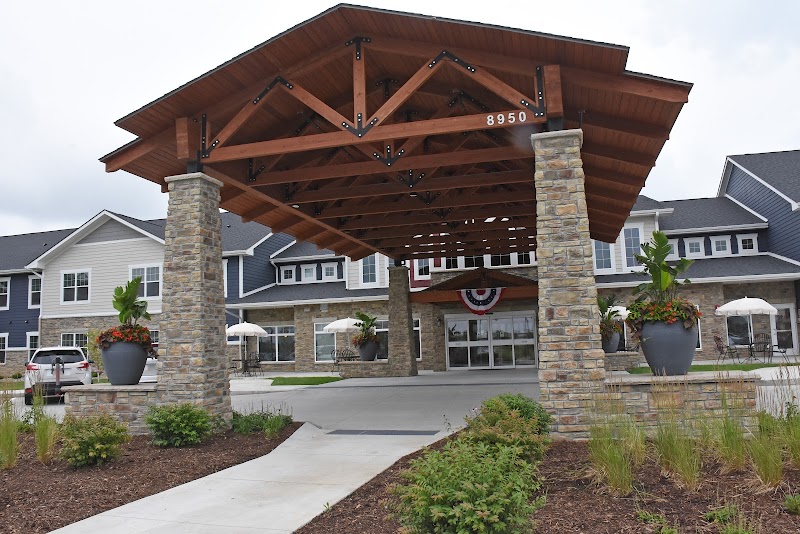

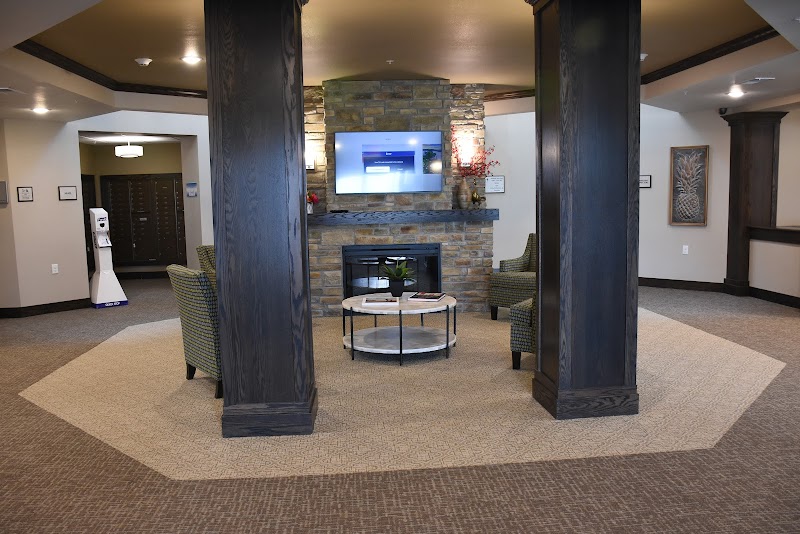

Cedar Ridge Village

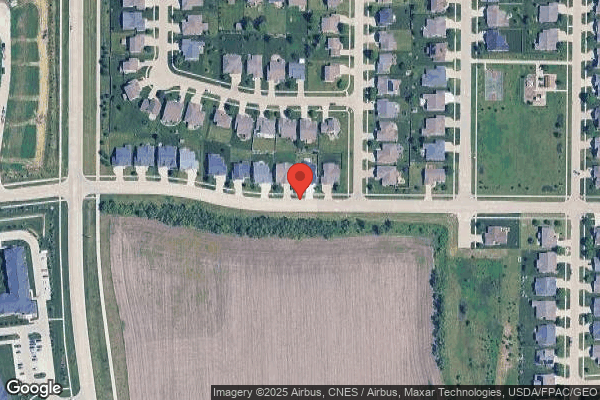
8950 Coachlight Drive, West Des Moines, IA 50266 (515) 369-2100
For profit - Corporation 40 Beds PIVOTAL HEALTH CARE Data: November 2025
Trust Grade
85/100
#9 of 392 in IA
Last Inspection: August 2025

Inspected within the last 6 months. Data reflects current conditions.

Overview

Cedar Ridge Village in West Des Moines, Iowa has earned a Trust Grade of B+, which means it is above average and recommended for potential residents. It ranks #9 out of 392 nursing homes in Iowa, placing it in the top half, and is the best option out of 10 facilities in Dallas County. However, the facility is experiencing a worsening trend, with the number of reported issues increasing from 2 in 2024 to 7 in 2025. Staffing is a strong point, rated 5 out of 5 stars, but with a turnover rate of 48%, which is average for the state, suggesting some instability. Notably, there have been no fines reported, indicating compliance with regulations, but recent inspections revealed concerns such as improper food storage and staff not following hygiene protocols, which could pose risks to resident safety. Overall, while Cedar Ridge Village has strengths in staffing and overall ratings, families should be aware of the recent issues affecting care quality.

Trust Score
B+
85/100
In Iowa
#9/392
Top 2%
Safety Record
Low Risk
No red flags
Inspections
Getting Worse
2 → 7 violations
Staff Stability
⚠ Watch
48% turnover. Above average. Higher turnover means staff may not know residents' routines.
Penalties
✓ Good
No fines on record. Clean compliance history, better than most Iowa facilities.
Skilled Nurses
✓ Good
Each resident gets 79 minutes of Registered Nurse (RN) attention daily — more than 97% of Iowa nursing homes. RNs are the most trained staff who catch health problems before they become serious.
Violations
⚠ Watch
20 deficiencies on record. Higher than average. Multiple issues found across inspections.
★★★★★
5.0
Overall Rating
★★★★★
5.0
Staff Levels
★★★★★
5.0
Care Quality
★★★☆☆
3.0
Inspection Score
Stable
2024: 2 issues
2025: 7 issues

The Good

  • 5-Star Staffing Rating · Excellent nurse staffing levels
  • 5-Star Quality Measures · Strong clinical quality outcomes
  • Full Sprinkler Coverage · Fire safety systems throughout facility
  • No fines on record

Facility shows strength in staffing levels, quality measures, fire safety.

The Bad

Staff Turnover: 48%

Near Iowa avg (46%)

Higher turnover may affect care consistency

Chain: PIVOTAL HEALTH CARE

Part of a multi-facility chain

Ask about local staffing decisions and management

The Ugly 20 deficiencies on record

Aug 2025 7 deficiencies
CONCERN (D)

Potential for Harm - no one hurt, but risky conditions existed

Deficiency F0582 (Tag F0582)

Could have caused harm · This affected 1 resident

Based on clinical record review, staff interview, and facility policy review, the facility failed to provide the required beneficiary notifications to residents upon discharge for 1 of 3 residents sam...

Read full inspector narrative →
Based on clinical record review, staff interview, and facility policy review, the facility failed to provide the required beneficiary notifications to residents upon discharge for 1 of 3 residents sampled (Resident #50). The facility reported a census of 38. Findings include: The discharge Minimum Data Set (MDS) for Resident #50, completed 06/05/2025, documented the resident entered the facility on 05/20/2025 and discharged from the facility on 06/05/2025. An email from the Social Services coordinator, received on 08/05/2025 at 03:36 PM, contained the Beneficiary Notifications for two residents as requested by the surveyor, but did not contain the Beneficiary Notifications for Resident #50. In an interview on 08/05/2025 at 03:37 PM with the Social Services Coordinator, she stated she had been hired by the facility in June of 2025. When she was hired she was asked to begin auditing the work of her predecessor and discovered that for some residents, the Advanced Beneficiary Notification (ABN) and Notice of Medicare Non-Coverage (NOMNC), had not been provided to residents discharging from the facility as required by Federal regulation. As a result, she had initiated a performance improvement plan to ensure this did not happen again. She acknowledged the notifications are required. In an interview on 08/07/2025 at 02:35 PM with the Director of Nursing (DON), he acknowledged he knew that several required notifications had not been provided to residents as they discharged from the facility. He stated his expectation is for notifications to be granted in accordance with Federal regulation, but also acknowledged that he does not oversee this process as it is outside of his job responsibilities. A facility policy regarding ABN/NOMNCs was requested, but in an email received on 08/07/2025 at 10:42 AM from the facility Administrator, she stated there was no policy but the facility follows the Centers for Medicare/Medicaid Services (CMS) guidelines.
CONCERN (D)

Potential for Harm - no one hurt, but risky conditions existed

Deficiency F0605 (Tag F0605)

Could have caused harm · This affected 1 resident

**NOTE- TERMS IN BRACKETS HAVE BEEN EDITED TO PROTECT CONFIDENTIALITY** Based on clinical record review, staff interviews, and policy review the facility failed to ensure staff documented non-pharmaco...

Read full inspector narrative →
**NOTE- TERMS IN BRACKETS HAVE BEEN EDITED TO PROTECT CONFIDENTIALITY** Based on clinical record review, staff interviews, and policy review the facility failed to ensure staff documented non-pharmacological interventions attempted prior to the administration of anti-anxiety medication (AA) for one of five residents reviewed for unnecessary medications (Resident #35). The facility reported a census of 38 residents. Findings Include: The admission Minimum Data Set (MDS) assessment dated [DATE] revealed Resident #35 admitted to the facility on [DATE] and had diagnosis of anxiety disorder. The MDS revealed the resident took an antianxiety (AA) medication during the seven day look-back period. The MDS recorded the resident had no behaviors. The Care Plan revised 4/23/25 lacked information related to Resident #35 taking an AA medication and the non-pharmacological interventions used or attempted prior to administration of the AA medication. The Order Summary revealed clonazepam (an AA medication) 0.5 milligrams (mg) by mouth every 8 hours as needed (PRN) started on 6/27/25. The Medication Administration Record (MAR) revealed clonazepam 0.5 mg by mouth every 8 hours as PRN administered the following: 6/1/25 to 6/30/25: 21 times7/1/25 to 7/31/25: 25 times. The record lacked non-pharmacological interventions attempted prior to administration of clonazepam medication. In an interview on 8/6/25 at 7:50 AM, Staff G, Registered Nurse (RN), reported she documented on the MAR whenever a PRN AA medication administered. The computer system prompted her to document a note about the non-pharmacological interventions attempted. This note then showed up in the progress notes. In an interview on 8/7/25 at 12:18 PM, the MDS Coordinator reported the process for documentation of PRN medication and the nonpharmacological interventions had been updated in the past 2 weeks. The non-pharmacological interventions added on the electronic MAR whenever a PRN medication administered. After clicking on the PRN medication displayed on the EMAR, click on supplemental documentation, and pick the interventions that were tried. The system prompted staff to choose the interventions that were used. Prior to a couple of weeks ago, nothing was in place for documenting the non-pharmacological interventions attempted. She worked with the Director of Nursing (DON) and the Corporate staff to get the interventions added to the system. At the time, the MDS Coordinator checked the MAR for Resident #35 and reported a y was indicated for interventions but did not document the specific interventions tried. In an interview 8/7/25 at 12:43 PM, the DON reported they did not have a policy for psychotropic medication and the use of nonpharmacological interventions.
CONCERN (D)

Potential for Harm - no one hurt, but risky conditions existed

Comprehensive Care Plan (Tag F0656)

Could have caused harm · This affected 1 resident

**NOTE- TERMS IN BRACKETS HAVE BEEN EDITED TO PROTECT CONFIDENTIALITY** Based on clinical record review, staff interview, and policy review, the facility failed to ensure that a comprehensive, person-...

Read full inspector narrative →
**NOTE- TERMS IN BRACKETS HAVE BEEN EDITED TO PROTECT CONFIDENTIALITY** Based on clinical record review, staff interview, and policy review, the facility failed to ensure that a comprehensive, person-centered care plan that includes measurable objectives and timetables to meet the resident's physical, psychosocial and functional needs is developed and implemented for 2 of 5 residents investigated for unnecessary medications (Resident #21 and #35). The facility reported a census of 38.Findings include:1. The Care Plan initiated on 7/15/24 lacked documentation indicating Resident #21 was on an antidepressant and directives for staff related to monitoring side effects of medication. The Physician’s Orders indicated that Resident #21 was started on Lexapro 10 milligram (mg) daily for depression on 7/9/25. During an interview on 8/7/25 at 12:18 PM, Minimum Data Set (MDS) coordinator stated she has worked at this facility in the MDS role since 1/27/25. States she updates care plans whenever any medication changes or assistive level of care changes, and with admission or discharges. Stated she usually adds things to the care plan within 24 hours. States she looks at the dashboard on Point Click Care (PCC) to see if any new medications are prescribed. Stated that for Resident #21, she was not on an antidepressant when she came back from the hospital but then it was added. Stated she did not get it back on the care plan. 2. The admission MDS assessment dated [DATE] revealed Resident #35 had diagnoses of anxiety disorder and depression. The MDS revealed the resident took an antianxiety (AA) medication and an antidepressant medication during the seven-day look-back period. The Care Plan revised 4/23/25 revealed Resident #35 took an antidepressant medication. The Care Plan lacked information related to taking an AA medication and the non-pharmacological interventions used or attempted prior to administration of an AA medication. The Care Plan also lacked information about medication side effects, and the signs and symptoms to monitor related to taking an AA medication. The Order Summary revealed an order for clonazepam (AA medication) 0.5 milligrams (mg) every 8 hours as needed (PRN) for anxiety started on 6/27/25. In an interview on 8/7/25 at 12:18 PM, the MDS Coordinator reported she updated the residents' care plans whenever a resident had a medication change or changes in their assistive level of care. New information was added to the care plans typically within 24 hours, unless it was over the weekend. The MDS Coordinator reported she looked at the dashboard on the computer to see if a resident had a new medication such as an AA or an antibiotic medications. At the time, the MDS Coordinator confirmed AA medication not listed on Resident #35’s care plan. The MDS Coordinator stated she would add the information to the resident’s care plan. The facility policy titled, A Comprehensive Person-Centered Care Plan, revised 7/2024 revealed a comprehensive person-centered care plan developed and implemented for each resident. The care plan was derived from a thorough analysis of information gathered as part of the comprehensive assessment, and revised as information about the resident and any condition changes.
CONCERN (D)

Potential for Harm - no one hurt, but risky conditions existed

Quality of Care (Tag F0684)

Could have caused harm · This affected 1 resident

**NOTE- TERMS IN BRACKETS HAVE BEEN EDITED TO PROTECT CONFIDENTIALITY** Based on clinical record review, observations, resident interview, staff interviews, and policy review, the facility failed to e...

Read full inspector narrative →
**NOTE- TERMS IN BRACKETS HAVE BEEN EDITED TO PROTECT CONFIDENTIALITY** Based on clinical record review, observations, resident interview, staff interviews, and policy review, the facility failed to ensure staff appropriately completed a resident assessment and provide timely intervention for one resident with Lower Extremity Edema ([NAME]) for 1 of 1 resident reviewed for edema (Resident #21) and 1 of 4 residents sampled for skin conditions (Resident #1). The facility reported a census of 38.Findings include:1. The Minimum Data Set (MDS) dated [DATE] revealed that Resident #21 had diagnoses of coronary artery disease, hypertension, heart failure, localized edema and acute respiratory failure with hypoxia. The Care Plan initiated on 7/15/24 lacked documentation of [NAME] hose use for [NAME]. The Electronic Health Record (EHR) indicated that Resident #21 is having significant weight gain and [NAME] despite elevation and compression hose. It further indicated that Resident #21 is wearing [NAME] hose daily from 6/30/25 through 7/28/25 despite being discontinued on 6/30/25. The Electronic Medication Administration Record (EMAR) indicated that Resident #21 refused [NAME] hose 3 times in June of 2025 and none in May 2025. The Physician’s Orders indicated [NAME] hose on in the morning and off and bedtime that was initiated on 4/25/25 and discontinued on 6/30/25. Observations revealed the following: a. On 8/4/25 at 3:11 PM, Resident #21 was noted to have [NAME] and wearing regular socks. b. On 8/5/25 at 1:16 PM, Resident #21 was noted to have [NAME] and wearing regular socks. c. On 8/5/25 at 1:20 PM, Staff A, CNA found [NAME] hose on the table next to Resident #21’s chair and put on her bilateral lower extremities. d. On 8/5/25 at 4:00 PM, Resident #21 was noted to have [NAME] hose on bilateral lower extremities. e. On 8/6/25 at 2:00 PM, Resident #21 was resting in her chair with legs elevated and [NAME] hose on bilateral lower extremities. During an interview on 8/5/25 at 1:18 PM, Resident #21 stated she usually has socks on up to her knees but had regular socks on currently. During an interview on 8/5/25 at 1:20 PM, Staff A, CNA stated she was not sure if Resident #21 has compression socks or ted hose. She then said that she was pretty sure that she does wear [NAME] hose and found them on the table next to her chair. During and interview on 8/5/25 at 1:50 PM, Staff C, LPN stated that CNA's know how to care for residents by looking at the Kardex on their iPads. The nurse stated Resident #21 used to have [NAME] hose continuously but she refused often and now only has them on if she tolerates them. When informed the CNA put the hose on Resident #21 she stated that it was good she let them be put on. During an interview on 8/5/25 at 4:08 PM, Staff B, RN stated [NAME] hose on Resident #21 were discontinued as she refused them frequently. Stated refusals were documented in the Electronic Medication Administration Record (EMAR). Showed this surveyor that she no longer has them as there was no order. When questioned why they were currently on Resident #21, she stated that maybe the CNA's are documenting on her. Checked the CNA charting and noted that they are not charting on it. In an interview on 8/6/25 at 8:25 AM, Staff H, LPN stated that Resident #21 does wear [NAME] hose and currently has them on. Stated she does not refuse often but does sometimes remove them by herself. Stated family concerned about her edema. Stated CNAs do not chart on [NAME] hose but the nurse does in the EMAR. She noted that it does not appear to be in the EMAR when checked. After questioning about discontinuation on 6/30/25, stated that this surveyor was correct that they had been discontinued. In an interview on 8/7/25 at 1:30 PM, the DON stated that [NAME] hose use does require an order and would be on the Care Plan. Stated Resident #21 came back from the hospital with no mention of [NAME] hose so they were discontinued. Stated reached out to Hospice yesterday to obtain an order for [NAME] hose. Stated should not have had [NAME] hose after the discontinuation of the order. Stated not sure if has been getting [NAME] hose despite assessments because after the first assessment, the subsequent assessments have data carried over and must be unchecked if no longer correct. They have had a recent education on this topic. 2. The MDS for Resident #1, dated 07/14/2025, revealed the following relevant diagnoses: Atrial Fibrillation (A-Fib), coronary artery disease (heart disease impacting the coronary artery), heart failure, hypertension, myocardial infarction type 2 (heart attack), ischemic cardiomyopathy (reduced heart function due to loss of blood flow), and long term use of anti-coagulants. It failed to document the presence of purpura (minor bleeding under the skin) or other skin conditions resulting from the cardiac conditions and use of anti-coagulation therapies. The Care Plan for Resident #1, last revised on 07/10/2025, failed to document lasting bruises on the residents forearms and hands, but instructed staff members to monitor the resident for bruises due to his long term use of anti-coagulant therapy. The Medication Administration Record (MAR), for July 2025, documented the use of apixaban (generic for Eliquis) oral tablet, 5mg, twice a day and warned staff the resident was using anti-coagulant therapy and instructed staff members to document side effects such as bruising on the MAR. The MAR for June and August 2025 lacked any documentation of bruising or other side effects. Review of the Nursing Progress Notes dated from 07/10/2025 to 08/07/2025 documented only scattered bruising on the arms on 07/10/2025 with no further documentation of bruising. In an interview on 08/04/2025 at 01:23 PM with Resident #1, he stated the bruising on his forearms and hands had been there for years, since he started his anti-coagulant therapy. He was unsure if the facility was monitoring the bruising. In an interview on 08/07/2025 at 10:24 AM with Staff I, CNA, she stated she was aware Resident #1 had significant bruising to his forearms and the tops of his hands, and they had been present upon admission. She stated she does not track the bruises as she is a CNA, but believes nursing staff track the bruising. She stated things like bruising and special precautions were tracked on a resident's plan of care. In an interview on 08/07/2025 at 10:50 AM with Staff A, CNA, she stated she was unsure if Resident #1 had arm bruising, but noted the facility keeps a care plan book at the nurses station in addition to a pocket care plan that makes staff aware of all special precautions such as monitoring that needs to be done. She stated she was unaware of any special precautions Resident #1 required. In an interview on 08/07/2025 at 11:03 AM with Staff G, RN, she stated she was aware of the purple bruise-like coloration on Resident #1's forearms and hands, but noted there was no task to track it, so she had been excluding it from skin assessments as it was not flagged as a problem and was present on admission. In an interview on 08/07/2025 at 11:24 AM with the MDS Coordinator, RN, she acknowledged she is responsible for creating care plans, tasks related to care plans, and for completing MDS for each resident. She gathers her data and adds it to the care plan, including tracking tasks, based on the initial resident assessment. These initial assessments flag the creation of tracking tasks in her system to monitor localized bruising over time. She noted Resident #1's initial assessment lacked the location of bruising and did not note the purple coloration of his forearms and hands, which would have prompted a task to track the progress of the coloration. In an interview on 08/07/2025 at 02:17 PM with the Social Services Coordinator, RN, she confirmed she was the person who performed the initial intake assessment for Resident #1. She acknowledged she had missed the purple discoloration on Resident #1's skin during the initial assessment, and marked only scattered bruising on the initial assessment. She acknowledges that as a result of this the purple coloration on his arms were not tracked. In an interview on 08/07/2025 at 02:35 PM with the Director of Nursing (DON), he stated his expectation is for all potential issues to be noted on the initial intake assessment and for issues such as potential bruising to be tracked by staff members. He acknowledged that without a proper initial assessment, it is much harder to track things like worsening arm bruising. A policy regarding skin assessments or initial skilled assessments was requested but was not provided.
CONCERN (D)

Potential for Harm - no one hurt, but risky conditions existed

Accident Prevention (Tag F0689)

Could have caused harm · This affected 1 resident

**NOTE- TERMS IN BRACKETS HAVE BEEN EDITED TO PROTECT CONFIDENTIALITY** Based on direct observation, clinical record review, staff interview, and facility policy review, the facility failed to follow ...

Read full inspector narrative →
**NOTE- TERMS IN BRACKETS HAVE BEEN EDITED TO PROTECT CONFIDENTIALITY** Based on direct observation, clinical record review, staff interview, and facility policy review, the facility failed to follow care planned interventions to prevent and mitigate falls for 1 of 3 residents sampled (Resident #6). The facility reported a census of 38. Findings include: The Significant Change Minimum Data Set (MDS) for Resident #6, dated 07/21/2025, documented the residents Brief Interview for Mental Status score (BIMS) as 9, indicating moderately impaired cognition. It documented the following relevant diagnoses: Atrial Fibrillation (A fib), Cerebrovascular Accident (Stroke), displaced fracture of the neck of the right femur (broken femur), and senile degeneration of the brain (lost of cognitive ability due to age). It further documented her as dependent on staff for mobility and documented her as unable to walk. The significant change MDS, dated [DATE], documented the resident as ambulatory and only requiring supervision while ambulating. The Care Plan for Resident #6, last revised on 07/15/2025, documented she has a history of falls. It documented the following interventions: Non-skid rubber soled footwear on at all times, utilizes a wheelchair when off unit, ensuring the call light is within reach at all times, ensuring her room is free from clutter, her bed to be in the lowest position while the resident is in bed, and for fall mats to be on both sides of the bed while the resident was in bed. It noted the fall mats and bed in the lowest position were put into place on 07/15/2025 after the resident had fallen and fractured her femur. The visual/Bedside Kardex Report, printed on 08/07/2025, documented a requirement to have fall mats in place while Resident #6 is in bed. A direct observation on 08/04/2025 at 01:18 PM in which Resident #6 was in her bed. Her footwear could not be assessed, but her bed was noted to be in the lowest position. Fall mats were not seen during this observation. During an observation of medication administration on 08/06/2025 at 11:23 AM, the resident was again observed in her bed without fall mats present. Staff G, Registered Nurse (RN), did not intervene or place mats upon noting they were not present. A direct observation on 08/07/2025 at 08:10 AM again revealed Resident #6 to be laying in her bed without bed mats in place, a picture was taken at this time and the Director of Nursing (DON) was notified. When asked if Resident #6 required bed mats he confirmed she did, and proceeded to place them in her room on both sides of her bed. In an interview on 08/07/2025 at 10:24 AM with Staff I, Certified Nurse Aide (CNA), She stated she did not believe that Resident #6 required any special cares such as fall mats. She stated the care plan informs CNA's and other staff members of the precautions that need to be taken to ensure a resident is receiving appropriate cares, and requires those providing those cares to sign off on them in the electronic health record (EHR) pocket care plan/Kardex. She stated in addition to the EHR, the care plans for every resident is located in a binder at the nurses station. In an interview on 08/07/2025 at 10:50 AM with Staff A, CNA, she stated Resident #6 requires a number of special precautions, including fall mats and for her bed to be placed in the lowest position. She confirmed the EHR requires them to document the precautions were put into place. In an interview on 08/07/2025 at 11:24 AM with the MDS Coordinator/RN, she showed the surveyor the care plan requires several different fall precautions for Resident #6 including fall mats, she stated CNAs are responsible for putting that intervention into place. In an interview on 08/07/2025 at 02:35 PM with the Director of Nursing (DON), he acknowledged the care plan for Resident #6 was not being followed when he observed her earlier in the day. He stated his expectation is for staff members to put care planned interventions into place to prevent harm, and noted that it was frustrating to see her care plan had not been followed. He stated not following the care plan could result in harm to residents, and noted she already had a broken femur. Review of a facility provided document titled Fall Prevention Program, with a creation day of July 2024, states that the nursing team will convene to discuss interventions that will be beneficial to reduce falls and mitigate fall damage and communicate with the team what interventions to put into place for all residents who have had actual falls.
CONCERN (D)

Potential for Harm - no one hurt, but risky conditions existed

Respiratory Care (Tag F0695)

Could have caused harm · This affected 1 resident

**NOTE- TERMS IN BRACKETS HAVE BEEN EDITED TO PROTECT CONFIDENTIALITY** Based on clinical record review, observation, staff interviews, and policy review, the facility failed to ensure safe and accura...

Read full inspector narrative →
**NOTE- TERMS IN BRACKETS HAVE BEEN EDITED TO PROTECT CONFIDENTIALITY** Based on clinical record review, observation, staff interviews, and policy review, the facility failed to ensure safe and accurate delivery of oxygen therapy for one of two residents reviewed for respiratory care (Resident #21). The facility reported a census of 38 residents. Findings include:1. The Minimum Data Set (MDS) dated [DATE] revealed that Resident #21 had diagnoses of coronary artery disease, hypertension, heart failure, localized edema and acute respiratory failure with hypoxia. The Care Plan initiated on 7/15/24 indicated that Resident #21 has altered cardiovascular status, difficulty breathing and altered respiratory status requiring oxygen at 2-3 liters via nasal cannula (NC) to keep oxygen saturation greater than 88%. The Physician's Orders included an order oxygen continuous at 2-3 liters via NC to keep oxygen saturation greater than 88%. Observations revealed the following:a. On 8/4/25 at 3:11 PM Resident #21 had her oxygen concentrator set at 1 1/2 liters via NC. b. On 8/5/25 at 9:09 AM Resident #21 had her oxygen concentrator set at 1 3/4 liters via NC. c. On 8/5/25 at 1:16 PM Resident #21 was sitting in her recliner without oxygen on. Her oxygen concentrator was off with the tubing wrapped up and stuck under the handle on top. The oxygen tank that was on the back of her wheel chair was also noted to be off. Resident #21 put on her call light for staff to put oxygen on. d. On 8/5/25 at 1:25 PM Staff A, Certified Nursing Assistant (CNA) turned on Resident #21's oxygen concentrator and applied oxygen via nasal cannula to her. e. On 8/5/25 at 4:00 PM Resident #21 noted to have her oxygen on with the oxygen concentrator set at 1 3/4 liters. During and interview on 8/5/25 at 1:20 PM Staff A, CNA stated that this surveyor should check with the nurse to find out if Resident #21's oxygen was supposed to be continuous. She also stated that she does not adjust the dial on the oxygen concentrator she just turns it on or off. During an interview on 8/5/25 at 4:08 PM, Staff B, Registered Nurse (RN) stated she checks oxygen setting on Resident #21 at the beginning of her shift. Stated she just checked and it is on 2 liters. Staff B, RN showed this surveyor the reading of 2 liters on the oxygen concentrator. She was standing above and slightly to the side. After looking straight at the concentrator directly in front of it, she stated that it was on 1 3/4 liters and turned it up to 2 liters.
CONCERN (D)

Potential for Harm - no one hurt, but risky conditions existed

Infection Control (Tag F0880)

Could have caused harm · This affected 1 resident

**NOTE- TERMS IN BRACKETS HAVE BEEN EDITED TO PROTECT CONFIDENTIALITY** Based on clinical record review, observations, staff interviews, and policy review, the facility failed to utilize enhanced barr...

Read full inspector narrative →
**NOTE- TERMS IN BRACKETS HAVE BEEN EDITED TO PROTECT CONFIDENTIALITY** Based on clinical record review, observations, staff interviews, and policy review, the facility failed to utilize enhanced barrier precautions (EBP's) and infection control practices for 1 of 4 residents sampled on EBP's (Resident #34). The facility also failed to ensure staff followed infection control practices to protect against cross-contamination and potential spread of infection for a resident on droplet precautions for 1 of 4 residents on droplet/contact precautions (Resident #4). The facility reported a census of 38 residents. Findings include: 1.The Minimum Data Set (MDS) assessment dated [DATE] revealed Resident #34 had a diagnosis of obstructive uropathy. The MDS indicated the resident had an indwelling catheter. The Care Plan revised 6/30/25 revealed the resident had a catheter due to urinary retention. The Care Plan directed staff to use EBP’s per facility guidelines. During observation on 8/6/25 at 1:50 PM, Staff E, certified nursing assistant (CNA) stood in the bathroom as Resident #34 sat on the toilet. The resident had a catheter that was attached to a leg bag. The leg bag was strapped to the resident's right thigh. An EBP sign was posted on the wall in the bathroom and a plastic bin with drawers had a supply of gowns and gloves inside. The plastic bin was just beneath the EBP’s signage. Staff E washed her hands and donned a pair of gloves. Staff E placed a graduate container on a paper towel on the floor, opened the drain port on the leg bag and drained the urine contents into the graduate container. Staff E placed the graduate on a paper towel on the floor. A small amount of urine dripped from the drain port onto the floor before Staff E closed the drain port on the leg bag. Staff E took an alcohol swab and cleansed the end of the port. Staff E had the resident stand up by the toilet, then Staff E emptied the graduate into the toilet. Staff E assisted the resident to pull her brief and pants up. Staff E removed her gloves and washed her hands. At 1:55 PM, Staff E donned a pair of gloves, took a paper towel and wiped up the floor by the toilet, then bagged up the trash and removed her gloves. Staff E took the bag of trash to the soiled utility room down the hall from the resident’s room and washed her hands. In an interview 8/6/25 at 2:00 PM, Staff E reported EBP used whenever a resident had influenza, COVID, or c-diff (clostridium difficile) (bacteria that caused diarrhea), or someone had been exposed to influenza (flu) or COVID. Staff E stated she would wear a gown, mask and gloves whenever a resident was on EBP’s. In an interview 8/6/25 at 2:40 PM, Staff F, CNA, reported EBP’s used if there was an EBP sign posted in the resident’s room. She used PPE depending on the type of isolation a resident was in. Staff F reported she would use a gown and gloves whenever she handled or took care of a resident with a catheter. In an interview on 8/6/25 at 2:53 PM, the Infection Preventionist reported she expected staff wear a gown and gloves whenever they handled a resident’s catheter. The Infection Preventionist stated the floor should be disinfected with a purple top wipe or germicidal surface wipes, or staff should call housekeeping to clean and disinfect the contaminated area because there could be bacteria present. The Infection Preventionist reported the contact time to properly disinfect the area was 2 minutes. Wiping the contaminated surface with a paper towel would not effectively disinfect the surface. The facility’s “EBP’s” policy dated 3/27/24 revealed EBP’s designed to reduce the transmission of multidrug-resistant organisms (MDRO). Gown and gloves used during high contact resident care activities that provide opportunities for transfer of MDRO’s to staff hands and clothing. EBP’s are indicated whenever staff provided cares for residents with an indwelling medical devices 2. The Care Plan initiated 8/22/22 lacked documentation that Resident #4 was having symptoms of respiratory illness or was in Transmission Based Precautions. The Care Plan was updated on 8/5/25 to indicate that Resident #4 had a diagnosis of Parainfluenza Type 2 and was placed in Droplet precautions per facility guidelines. The Electronic Health Record (EHR) indicated: a. On 8/2/25, Resident #4 began having nasal congestion and drainage while out for dinner with his wife. It was believed to be allergies per his wife and nasal spray was reordered. b. On 8/3/25, Resident #4 continued to have increased nasal congestion and drainage with lethargy and appeared to be swallowing hard. c. On 8/4/25, Resident #4 continued to have increased symptoms including flushed face, tachypnea (fast respirations), pulse oximetry of 90% on room air, drooling, crackles in lungs and temperature of 99.9 degrees Fahrenheit. Orders for respiratory panel and Chest X-ray (CXR) were obtained. d. On 8/4/25, the chest X-ray results showed nodular opacities in left lower lung that were likely infection or aspiration. The respiratory panel showed Resident #4 was positive for Parainfluenza virus and was sent to the Emergency Department (ED). Observations revealed the following: a. On 8/4/25 at 12:10 PM, Resident #4 was sitting in the dining room eating lunch. b. On 8/5/25 at 9:10 AM, Resident #4 was noted to be in droplet isolation precautions In an interview on 8/5/25 at 11:31 AM, Staff C, LPN Stated Resident #4 was placed in Transmission-Based Precautions (TBP) this morning after returning from the ED at approximately 7:45 AM. Stated Resident #4 started having symptoms on 8/2/25 and was getting worse each day until she sent him to the ED on 8/4/25. Stated she was not sure why Resident #4 was not in isolation prior to 8/5/25. Stated Resident #4 was out to meals 8/4/25. In an interview on 8/7/25 at 4:00 PM, Staff D, RN stated that when a resident develops signs and symptoms of respiratory illness they should be isolated and put up precaution signs on the door and get a respiratory panel. When results are in they would change or discontinue isolation based on test results. Stated that if signs and symptoms of COVID, residents would be placed in Airborne precautions and wear N95 mask, face shield, gown and gloves. Stated she would have expected Resident #4 to be placed in TBP when symptoms started. Stated Resident #4 was placed in Droplet precautions after talking with the corporate office. Also stated this was the guideline from the Centers for Disease Control (CDC) she had for Influenza. When this surveyor corrected that the diagnosis was Parainfluenza, she looked in the CDC guidance and noted that the isolation recommended was Contact isolation with Standard precautions. In an interview on 8/7/25 at 4:25 PM the DON stated Resident #4 was placed in Droplet isolation after talking with the Corporate office and they noted that Parainfluenza is transmitted through droplets when coughing or sneezing. The CDC guidelines for TBP for Parainfluenza is Contact isolation with Standard Precautions for the duration of the Illness. Those guidelines can be found at https://www.cdc.gov/infection-control/hcp/isolation-precautions/appendix-a-type-duration.html#P In a policy titled Infection Prevention and Control dated 2001, it states that an infection prevention and control program is established and maintained to proved a safe, sanitary and comfortable environment and to help prevent the development and transmission of communicable diseases and infections.
Aug 2024 2 deficiencies
CONCERN (D)

Potential for Harm - no one hurt, but risky conditions existed

Menu Adequacy (Tag F0803)

Could have caused harm · This affected 1 resident

**NOTE- TERMS IN BRACKETS HAVE BEEN EDITED TO PROTECT CONFIDENTIALITY** Based on observation, staff interview and facility policy review, the facility's Dietary Staff failed to perform the proper func...

Read full inspector narrative →
**NOTE- TERMS IN BRACKETS HAVE BEEN EDITED TO PROTECT CONFIDENTIALITY** Based on observation, staff interview and facility policy review, the facility's Dietary Staff failed to perform the proper functions of food and nutrition services for the pureed food process for 3 of 3 residents requiring a pureed diet. The facility reported a census of 40 residents. Findings include: During an observation on 7/31/24 at 11:00 AM, Staff A, Cook, began the process to puree chicken fried steak by placing four pieces of chicken fried steak into the robot coupe, adding an unmeasured amount of beef broth three times during the pureeing. Staff A placed the pureed meat into a metal container, unmeasured. Staff A stated the green scoop would be used to serve residents for the amount. Staff A acknowledged uncertainty as to how it was determined the green scoop was used to measure the amount to serve residents. Staff A advised not being trained on the puree process. Staff A then began the process to puree corn, placing an unmeasured amount of corn into the robot coupe and added thickener to the robot coupe, unmeasured. Staff A placed the pureed corn into a container, the pureed corn was not measured and the graph to determine scoop size was not used. Staff A then began the puree process for the strawberry shortcake desert. Staff A placed 3 pieces of shortcake into the robot coupe and then added strawberries, unmeasured. Staff A added milk to the coupe, unmeasured. Staff A placed the pureed desert into a metal container, the pureed desert was not measured and the graph was not used to determine the scoop size. During an interview 7/31/24 at 2:30 PM, Staff B, VP of Culinary, advised kitchen staff should follow the recipe from [NAME] Brothers when pureeing, which includes the exact amount of food to add, the exact amount of fluid and thickener to add and what size scoop for the exact recipe. Staff B stated if kitchen staff change the amount of food added, fluids or thickener, they need to use the graph to determine the scoop size and then let staff who are serving the food know if the scoop size has changed. Staff B stated an expectation kitchen staff follow the recipe from [NAME] Brothers when completing the puree process and use the graph if they do not follow the recipe. Review of the facility policy Appealing Pureed Foods, undated, documented under the preparation of pureed foods section to follow correct amounts of food as noted on recipe.
CONCERN (E)

Potential for Harm - no one hurt, but risky conditions existed

Food Safety (Tag F0812)

Could have caused harm · This affected multiple residents

Based on observation, staff interview and policy review, the facility failed to ensure open items were dated, covered and labeled. The facility further failed to ensure potentially hazardous food item...

Read full inspector narrative →
Based on observation, staff interview and policy review, the facility failed to ensure open items were dated, covered and labeled. The facility further failed to ensure potentially hazardous food items were stored separately; thawing meat was stored above other food items in the refrigerator. The facility reported a census of 40 residents. Findings include: Observation 7/29/24 at 11:10 AM in the main kitchen with the Dietary Manager (DM) present revealed the following: a. Open undated bag of approximately 25 pounds of planko crumbs b. Open undated bag of approximately 25 pounds of sugar c. Two opened undated boxes of approximately 24 ounces of pancake mix d. Open undated package of hard taco shells e. Open undated package of soft taco shells f. A tray of frozen meat on a middle shelf in the walk in refrigerator thawing, with pie placed under the shelf During an interview 7/29/24 at 11:20 AM, the DM stated an expectation that dry food be stored in sealed containers and open food sealed, labeled and dated. The DM further acknowledged thawing meat should have been placed separately from other food items and placed to thaw on the bottom shelf to prevent cross contamination. Review of facility Food Receiving and Storage policy, revised October 2018, documented dry foods that are stored in bins will be removed from original packaging, labeled and dated (use by date), and uncooked and raw animal products and fish will be stored separately in drip-proof containers and below fruits, vegetables and other ready-to-eat foods. The policy further documented opened containers must be dated and sealed or covered during storage.
Dec 2023 9 deficiencies
CONCERN (D)

Potential for Harm - no one hurt, but risky conditions existed

Employment Screening (Tag F0606)

Could have caused harm · This affected 1 resident

**NOTE- TERMS IN BRACKETS HAVE BEEN EDITED TO PROTECT CONFIDENTIALITY** Based on personnel file review, facility record review, facility policy review, and staff interview the facility failed to compl...

Read full inspector narrative →
**NOTE- TERMS IN BRACKETS HAVE BEEN EDITED TO PROTECT CONFIDENTIALITY** Based on personnel file review, facility record review, facility policy review, and staff interview the facility failed to complete the background record check evaluation process for a new employee, prior to employment, for 1 of 5 staff reviewed (Staff K, Certified Nurse Aide CNA). The facility reported a census of 31 residents. Findings: The untitled and undated facility form documented the facility hired Staff K on 5/16/23. Staff K's Single Contact License & Background Check, submitted on 5/17/23 at 2:32 PM, instructed to initiate record check evaluation process by completing form [PHONE NUMBER] (additional information required to determine eligibility to work in the nursing home) and submitting to Department of Human Services for Child Abuse Registry. The facility's payroll record for Staff K, listed the first day she worked at the facility as 5/18/23 at 10:04 AM. The Background Check Process policy, dated 10/7/22, directed the facility as required to complete state and federal background checks on all offered candidates as part of the pre-employment process. On 12/11/23 at 12:30 PM, the Administrator confirmed the facility did not complete record check evaluation form [PHONE NUMBER]. The Administrator expected the facility to complete a background check prior to hire and followed-up when additional information needed.
CONCERN (D)

Potential for Harm - no one hurt, but risky conditions existed

Assessment Accuracy (Tag F0641)

Could have caused harm · This affected 1 resident

Based on clinical record review, staff interview, and policy review the facility failed to complete an accurate assessment for a resident with a Preadmission Screening and Resident Review (PASRR) cond...

Read full inspector narrative →
Based on clinical record review, staff interview, and policy review the facility failed to complete an accurate assessment for a resident with a Preadmission Screening and Resident Review (PASRR) condition for one of one resident reviewed (Resident #12). Findings include: Resident #12's Minimum Data Set (MDS) assessment, dated 10/19/23, listed an admission date of 10/26/22. The MDS indicated that Resident #12 did not have a level II PASSR that indicated that she had a serious mental illness and/or intellectual disability or related condition. The MDS included diagnoses of schizophrenia and depression. The MDS reflected that Resident #12 did not take an antipsychotic medication. Resident #12's PASRR Level I Screen form dated 8/26/22, documented an exempted hospital discharge 30-day approval with diagnosis of schizoaffective. The form indicated Resident #12 had a serious mental health determined PASRR condition. Resident #12's November 2023 Medication Administration Records included an order with a start date of 3/16/23 for Invega (antipsychotic medication) 156 milligrams (mg) per milliliters (ml) injection monthly for schizophrenia. The Minimum Data Set Documentation policy reviewed 9/15/21, instructed information on the MDS must be complete, accurate, and supported by documentation in the patient's medical record. On 12/6/23 at 11:56 AM, the Director of Nursing confirmed Resident #12 did not have a accurate MDS completed. The DON expected the facility to complete an accurate MDS assessment.
CONCERN (D)

Potential for Harm - no one hurt, but risky conditions existed

Deficiency F0645 (Tag F0645)

Could have caused harm · This affected 1 resident

Based on clinical record review, staff interview, and policy review the facility failed to refer a resident to the appropriate state-designated authority for a Level I Status Change Preadmission Scree...

Read full inspector narrative →
Based on clinical record review, staff interview, and policy review the facility failed to refer a resident to the appropriate state-designated authority for a Level I Status Change Preadmission Screening and Resident Review (PASRR) evaluation and determination for a resident with a documented PASARR condition and an exempted hospital discharge 30-day approval for one of one resident reviewed (Resident #12). Findings include: Resident #12's Minimum Data Set (MDS) assessment, dated 10/19/23, listed an admission date of 10/26/22. The MDS indicated that Resident #12 did not have a level II PASRR that indicated that she had a serious mental illness and/or intellectual disability or related condition. The MDS included diagnoses of schizophrenia and depression. Resident #12's PASRR Level I Screen form dated 8/26/22, documented an exempted hospital discharge 30-day approval with diagnosis of schizoaffective. The form indicated Resident #12 had a serious mental health determined PASRR condition. The form directed that Resident #12 required a rescreening by or before the 30th day if expected to remain in the facility beyond the authorization. Resident #12's November 2023 Medication Administration Records included an order with a start date of 3/16/23 for Invega (antipsychotic medication) 156 milligrams (mg) per milliliters (ml) injection monthly for schizophrenia. The admission Criteria policy revised March 2019 directed the facility screen all new admissions and readmissions for mental disorders (MD), intellectual disabilities (ID) or related disorders (RD) per the PASRR process. The facility conducts a Level I PASRR screen for all potential admissions to determine if the individual meets the criteria for a MD, ID, or RD. If the level I screen indicates that the individual may meet the criteria for a MD, ID, or RD, the facility must submit a referral to the state PASRR representative for the Level II (evaluation and determination) screening process. On 12/6/23 at 11:56 AM, the Director of Nursing (DON) confirmed that Resident #12 did not have a new PASRR completed after 30-day approval. The DON expected the facility to complete status change when required.
CONCERN (D)

Potential for Harm - no one hurt, but risky conditions existed

Deficiency F0657 (Tag F0657)

Could have caused harm · This affected 1 resident

**NOTE- TERMS IN BRACKETS HAVE BEEN EDITED TO PROTECT CONFIDENTIALITY** Based on resident and family interviews, clinical record review, policy review and staff interview, the facility failed to provi...

Read full inspector narrative →
**NOTE- TERMS IN BRACKETS HAVE BEEN EDITED TO PROTECT CONFIDENTIALITY** Based on resident and family interviews, clinical record review, policy review and staff interview, the facility failed to provide care plan conferences to enable resident/family participation in two (Resident ##17 and Resident #22) of two residents reviewed. Findings include: 1. Resident #17's Minimum data set (MDS) assessment dated [DATE] listed an admission date of 1/31/23. The MDS identified a Brief Interview for Mental Status (BIMS) score of 0, indicating severe cognitive impairment for decision-making. The MDS included diagnoses of Alzheimer's disease and depression. During an interview on 12/4/23 at 3:17 PM, Resident #17's wife stated she attended 1 care plan conference and spoke to management about another care conference. She still hadn't heard back from them about another care conference meeting. 2. Resident #22's MDS assessment dated [DATE] listed an admission date of 10/3/22. The MDS listed a BIMS score of 13, indicating intact cognition. The MDS included diagnoses of anxiety disorder, hypertension (high blood pressure), and depression. During an interview on 12/4/23 at 2:12 PM, Resident #22 stated she and her son attended 1 care conference and she couldn't recall any others. The Care Plans, Comprehensive Person-Centered revised January 2023 instructed the interdisciplinary team in conjunction with the resident and his/her family, develops and implements a comprehensive, person-centered care plan for each resident. Interview on 12/7/23 at 11:00 AM, the Director of Nursing (DON) reported the facility didn't have care conferences with residents and families since May 2023 due to lack of personnel. The DON said they expected to hold care conferences quarterly.
CONCERN (D)

Potential for Harm - no one hurt, but risky conditions existed

Deficiency F0688 (Tag F0688)

Could have caused harm · This affected 1 resident

**NOTE- TERMS IN BRACKETS HAVE BEEN EDITED TO PROTECT CONFIDENTIALITY** Based on clinical record review, family interview, and staff interview, the facility failed to have a restorative program and pr...

Read full inspector narrative →
**NOTE- TERMS IN BRACKETS HAVE BEEN EDITED TO PROTECT CONFIDENTIALITY** Based on clinical record review, family interview, and staff interview, the facility failed to have a restorative program and provide restorative services for one (Resident ##17) of one resident reviewed. Findings include: 1. Resident #17's Minimum data set (MDS) assessment dated [DATE] listed an admission date of 1/31/23. The MDS identified a Brief Interview for Mental Status (BIMS) score of 0, indicating severe cognitive impairment for decision-making. Resident #17 required extensive assistance of two persons with bed mobility, transfers, and toilet use. In addition, he required limited assistance of one person with eating. The MDS included diagnoses of Alzheimer's disease and depression. Resident #17's Physical Therapy (PT) Discharge Summary signed 5/10/23, documented discharge reason of maximum potential achieved. The PT referred Resident #17 to the restorative nursing program (RNP). Resident #17's Restorative Recommendation, dated 5/10/23, listed a walking program 3-5 times a week, Sci Fit bike (a total body exerciser) 2-5 times a week, with lower and upper extremity exercises 2-5 times a week. During an interview on 12/4/23 at 3:25 PM, Resident #17's wife said he didn't receive restorative services as the facility didn't have a restorative program at that time. Interview on 12/6/23 at 3:00 PM, Staff H, PT Assistant, explained that they couldn't refer residents for a restorative program at that time due to the facility's lack of staff to complete the restorative services. Interview on 12/7/23 at 4:30 PM, the Administrator stated the facility did not have any restorative services since July 2023. They expected the facility to provide restorative services for residents as recommended by therapy.
CONCERN (D)

Potential for Harm - no one hurt, but risky conditions existed

Deficiency F0868 (Tag F0868)

Could have caused harm · This affected 1 resident

Based on record review and staff interview, the facility failed to ensure the Quality Assessment and Assurance committee (QAA) was attended by the required members to include: 1) the Nursing Home Admi...

Read full inspector narrative →
Based on record review and staff interview, the facility failed to ensure the Quality Assessment and Assurance committee (QAA) was attended by the required members to include: 1) the Nursing Home Administer (NHA) or representative; 2) Director of Nursing (DON); 3) the Medical Director (MD) or representative; 4) the Infection Preventionist; and 5) two other members of the facility's staff present on a minimum of a quarterly basis. The facility reported a census of 31. Findings include: A facility document titled Quality Assurance Meeting Minutes, dated 7/27/23 lacked attendance signatures for the Executive Director (ED or NHA) and the DON. A facility document titled Quality Assurance Meeting Minutes, dated 8/17/23 lacked attendance signatures for the DON, the Infection Preventionist, and the MD. A facility document titled Quality Assurance Meeting Minutes, dated 9/28/23 lacked attendance signatures for the Infection Preventionist and the MD. On 12/4/23 at 10:55 AM, the Administrator and DON reported the DON as the facility's designated Infection Preventionist. On 12/7/23 at 12:15 PM, the Administrator and DON stated the Infection Preventionist qualification certificate was not available and could not be located. The Quality Assessment & Performance Improvement Manual, revised 3/28/23, indicated the QAA committee would consist of department managers, the Administrator, the DON, the Infection Control Preventionist, the MD, the consulting pharmacist, and three additional direct care or service staff members.
CONCERN (D)

Potential for Harm - no one hurt, but risky conditions existed

Infection Control (Tag F0880)

Could have caused harm · This affected 1 resident

Based on observations, staff interview, clinical record review, and policy review the facility failed to implement appropriate infection control practices to prevent cross contamination. In addition, ...

Read full inspector narrative →
Based on observations, staff interview, clinical record review, and policy review the facility failed to implement appropriate infection control practices to prevent cross contamination. In addition, the facility failed to perform on-going infection control surveillance. The facility reported a census of 31 residents. Findings include: On 12/5/23 at 7:40 AM, Staff A, Licensed Practical Nurse (LPN), explained that Resident #35 tested positive for COVID-19. The Nurse's Note dated 12/5/23 at 4:34 AM indicated that Resident #35 returned to the facility at 4:00 AM by ambulance. Resident #35 tested positive for COVID-19 and started transmission-based precautions. On 12/5/23 at 8:18 AM, observed Staff B, Certified Nurse Aide (CNA), not wearing a face mask while transporting a resident to the dining area. On 12/5/23 at 9:34 AM observed Personal Protective Equipment (PPE) outside of Resident #35's room with no precautions sign posted. On 12/5/23 at 10:55 AM, witnessed Staff C, Housekeeper, wearing an ear loop face mask below her nose. On 12/6/23 at 5:55 AM, observed Staff D, CNA, without a face mask on hall one (1) walking toward the nurses' station. She stated the facility policy directed staff to wear a face mask when any resident is COVID-19 positive. On 12/6/23 at 5:59 AM, watched Staff E, CNA, sitting at the Hall 2 lounge table without a face mask. He stated the facility required staff to wear PPE consisting of a N-95 face mask, a gown, and gloves only when going in an isolation room or only if there is an outbreak. He stated they facility did not require PPE at any other time. On 12/6/23 at 6:02 AM, Staff F, Registered Nurse (RN), reported two addition residents, Residents #36 and #37, tested positive for COVID-19. On 12/6/23 at 7:25 AM, observed Staff G, Occupational Therapist (OT), exiting Resident #36's room wearing an ear loop face mask. She grabbed a gown hanging from the upper edge of the open door to Resident #37's room. She put on the gown and gloves then entered the room wearing the same ear loop face mask and no eye protective PPE. On 12/6/23 witnessed an isolation cart outside of Residents #35, #36, and #37's room. On 12/6/23 at 4:25 PM, the Administrator (Adm) and Director of Nursing (DON) reported that they always expected the staff to wear an ear loop face mask while in the facility with any COVID-19 positive residents. In addition, they required the staff to wear a N-95 mask and protective eye PPE while in a resident positive with COVID-19's room. The Personal Protective Equipment (PPE) policy revised October 2023 indicated the facility staff should use PPE for source control. It defined source control as the application of respirators or well-fitting masks to cover a person's mouth and nose to prevent spread of respiratory secretions when they breathe, talk, sneeze, or cough. It also included recommendations for those residing or working on a unit or area of the community experiencing a SARS-CoV-2 (COVID-19) or other outbreak of respiratory infection wear a NIOSH-approved respirator (N95), gown, gloves, and eye protection (i.e., goggles or face shield that covers the front and sides of the face), then remove and discard masks or respirators after caring for an infected resident. On 12/7/23 at 1:00 PM, the DON could not provide on-going surveillance monitoring documentation for August 2023 through November 2023. On 12/7/23 at 1:50 PM, the Administrator and DON explained the facility didn't consistently complete the infection control surveillance. The Surveillance for Infections policy revised 5/11/23 indicated surveillance should include infection control rounds or interviews. It also directed staff to record detailed information daily about the resident and infection on an individual infection report form, collect information monthly from the individual resident infection reports, and enter the line listing of infections by resident for the entire month. On 12/11/23 at 11:43 AM, the Administrator confirmed the facility did not enter tracking data into the software used instead of the infection report form.
CONCERN (D)

Potential for Harm - no one hurt, but risky conditions existed

Deficiency F0882 (Tag F0882)

Could have caused harm · This affected 1 resident

Based on record review, staff interviews, and policy review the facility failed to designate a qualified Infection Preventionist responsible for the facility's Infection Control and Prevention program...

Read full inspector narrative →
Based on record review, staff interviews, and policy review the facility failed to designate a qualified Infection Preventionist responsible for the facility's Infection Control and Prevention program. The facility reported a census of 31 residents. Findings include: On 12/4/23 at 10:55 AM, the Administrator and Director of Nursing (DON) reported the DON as the facility's designated Infection Preventionist. On 12/7/23 at 12:15 PM, the Administrator and DON stated they did not have and could not locate the Infection Preventionist qualification certificate. A policy titled Infection Preventionist revised September 2022 indicated the Infection Preventionist obtained specialized Infection Prevention and Control (IPC) training beyond initial professional training or education prior to assuming the role. It also indicated the certificate of completion or equivalent document as evidence of training.
CONCERN (E)

Potential for Harm - no one hurt, but risky conditions existed

Food Safety (Tag F0812)

Could have caused harm · This affected multiple residents

Based on observation, policy review, and staff interview, the facility failed to serve food under sanitary conditions by touching the prepared food with their bare hands and the eating surface of the ...

Read full inspector narrative →
Based on observation, policy review, and staff interview, the facility failed to serve food under sanitary conditions by touching the prepared food with their bare hands and the eating surface of the plates during meal service. The facility reported a census of 31 residents. Findings include: 1. Observation on 12/5/23 starting at 9:02 AM, Staff I, Certified Nurse Aide, assisted a resident to eat. She picked up the resident's strip of bacon with her bare hand and gave the resident a bite of the bacon. Then with the same bare hand touched her mask, the table surface, and then proceeded to touch another resident's strip of bacon to provide that resident a bite. 2. During continuous observation on 12/6/23, starting at 12:12 PM - 12:42 PM, Staff J, Dietary Aide, without completing hand hygiene, she started the service of the lunch meal. During the service, Staff J used her bare hands, repeatedly touching the eating surface of several residents' plates with her thumb, touched her face mask, and touched the eating service of the plates. In addition, as Staff J leaned over to scoop food, the bulky part of her sleeve on her right arm touched the inside of a scoop. Without cleaning the scoop Staff J proceeded to use the same scoop to dish up spaghetti bake to serve a resident. The Preventing Foodborne Illness-Employee Hygiene and Sanitary Practices policy dated October 2018, directed employees must wash their hands before encountering any food surfaces, after engaging in activities that contaminate their hands, and contact between food. The policy prohibited the use of bare (ungloved) hands. Interview on 12/7/23 at 1:15 PM, the Dietary Manager stated expectation to wash hands prior to service, wash hands after touching their mask, the bottom side of plate to serve, and not use bare hands to touch food items. The 2013 Food Code, published by the Food and Drug Administration and considered a standard of practice for the food service industry, included the following requirements: A. Use of single-use gloves are for only one task, such as working with ready-to-eat food and for no other purpose, and discarded when damaged or soiled, or when interruptions occur in the operation. b. Prohibits food employees from bare hand contact with ready-to-eat food (unless washing fruits and vegetables) and requires food employees to wash their hands immediately before engaging in food preparation, including before donning gloves for working with food, to prevent cross contamination when changing tasks.
Aug 2023 2 deficiencies
CONCERN (D) 📢 Someone Reported This

A family member, employee, or ombudsman was alarmed enough to file a formal complaint

Potential for Harm - no one hurt, but risky conditions existed

Investigate Abuse (Tag F0610)

Could have caused harm · This affected 1 resident

**NOTE- TERMS IN BRACKETS HAVE BEEN EDITED TO PROTECT CONFIDENTIALITY** Based on interviews, clinical record review, and facility policy review the facility failed to thoroughly investigate bruises an...

Read full inspector narrative →
**NOTE- TERMS IN BRACKETS HAVE BEEN EDITED TO PROTECT CONFIDENTIALITY** Based on interviews, clinical record review, and facility policy review the facility failed to thoroughly investigate bruises and skin issues of unknown origin for 2 of 3 residents reviewed (Residents #2 and #3). Both residents had bruising and/or skin issues that lacked an explanation of cause or an investigation. Findings include: 1. Resident #2's Minimum Data Set (MDS) assessment dated [DATE], identified a Brief Interview for Mental Status (BIMS) score of 7, indicating severely impaired cognition. Resident #2 required extensive assistance of two persons for transfers, dressing, and toilet use. The MDS included diagnoses of non-Alzheimer's dementia, and Parkinson's disease. The N Adv - Long Term Care Evaluation Note dated 5/23/23 at 10:33 AM indicated that Resident #2 had the following new skin issues: a. Skin Issue: #001: New scab to the right shin that measures 0.8 centimeters (cm) in length and 0.2 cm in width. The wound had no order or tunneling. b. Skin Issue: #002: New scattered scratches to Resident #2's right hip. c. Skin Issue: #003: New bruising to Resident #2's right finger(s) that measured 1.2 cm in length and 0.8 cm in width. The note reflected that the new skin issues did not cause Resident #2 pain. The N Adv - Long Term Care Evaluation Note dated 6/6/23 at 1:46 PM indicated that Resident #2 had the following new skin issues: a. Skin Issue: #004: New bruising to his right anterior elbow that measured 2.2 cm length by 1.1 cm in width. b. Skin Issue: #005: New bruising to his right forearm that measured 3 cm in length and 2.5 cm in width. c. Skin Issue: #006: New bruising to his right anterior (inner) wrist that measured 2 cm in length and 1 cm in width. d. Skin Issue: #007: New bruising to his left anterior wrist that measured 3 cm in length and 1.5 cm in width. e. Skin Issue: #008: New bruising to his left forearm that measured 3.6 cm in length and 3 cm in width. The note reflected that the new skin issues did not cause Resident #2 pain. The clinical record lacked documentation of the cause or investigation of the skin issues for 5/23/23 or 6/6/23. 2. Resident #3's MDS assessment dated [DATE] identified a BIMS score of 13, indicating intact cognition. Resident #3 required extensive assistance of two persons for bed mobility, transfers, and dressing. The MDS included a diagnosis of Parkinson's disease. The N Adv - Skin Only Evaluation Note dated 6/12/23 at 10:53 AM indicated that Resident #3 had warm and dry skin. The note listed the following skin issues: a. Skin Issue: #001 : Needs Review. Bruising to her left posterior (back side) hand. b. Skin Issue: #002 : Needs Review. Bruising to her right posterior upper arm that measured 20 cm in length by 7 cm in width. c. Skin Issue: #003 : Needs Review. Bruising to her lower back. d. Skin Issue: #004 : Needs Review. Bruising to her left lower arm. The clinical record lacked documentation of the cause or investigation of the bruises found on 6/12/23. On 8/2/23 at 4:30 p.m., the Director of Nursing (DON) reported that she could not find additional information about Resident #3's bruises from 6/12/23. The facility did not document on it. She added that the facility did not have further information documented on the possible causes of the bruise. Resident #3 could have hit her arm on the toilet hand rail and her back on the back of the toilet, which could have caused the bruising. The Administrator and the DON provided only two incidents that happened in the last three months that involved skin, bruising, skin tears, scratches, etc. One for Resident #2 on 5/18/23 and one for Resident #3 dated 7/15/23. When questioned if that was all the incidents they had in the past three months for skin, they both said yes, and added that they had been very fortunate. On 8/3/23 at 3:30 p.m., Staff A, Registered Nurse (RN), explained that she documented in the progress notes, did an incident report, and knew the etiology behind the scratches on Resident #2 from 7/15/23. When asked about the other bruises on 5/23/23 and 6/6/23, she stated she didn't know anything about them. When asked if she knew anything about the bruising on Resident #3's lower back and arm, she stated she didn't work that hall. On 8/3/23 at 4:20 p.m., the Administrator acknowledged the concerns with lack of investigation bruises on these 2 residents. The facility could not provide further documentation for either of the residents' bruising related to the incidents above. The Investigating Resident Injuries policy revised April 2021, directed that all resident injuries are investigated. The Policy Interpretation and Implementation section instructed the following: a. The director of nursing services or a designee assesses all resident injuries and documents findings in the medical record. b. Documentation includes information relevant to risk factors and conditions that could cause or predispose someone to similar signs and symptoms (e.g., receiving anticoagulants, having osteoporosis, having a movement disorder that results in thrashing movement, etc.). - Descriptions in the medical record must be objective and sufficiently detailed (e.g., dimensions and location of bruises) and should not speculate about causes. c. If an incident/accident is suspected, a nurse or nurse supervisor completes the facility- approved accident/incident form. d. The completed form is shared with the appropriate individuals, for example the administrator and director of nursing services. e. The nurse or nurse supervisor shall discuss the situation with the attending physician or medical director to consider whether medical conditions or other risk factors could account for the findings. f. The medical director or attending physician shall review and verify conclusions about the possibility of a medical or other similar cause of the findings. g. If the nursing and medical assessment determines an injury of unknown source the investigation will follow the protocols set forth in our facility's established abuse investigation guidelines. h. Injury of unknown source is defined as an injury that meets both of the following conditions: The source of the injury was not observed by any person or the source of the injury could not be explained by the resident; and the injury is suspicious because of: (1) the extent of the injury; or (2) the location of the injury (e.g., the injury is located in an area not generally vulnerable to trauma); or (3) the number of injuries observed at one particular point in time; or (4) the incidence of injuries over time.
MINOR (B) 📢 Someone Reported This

A family member, employee, or ombudsman was alarmed enough to file a formal complaint

Minor Issue - procedural, no safety impact

Deficiency F0868 (Tag F0868)

Minor procedural issue · This affected multiple residents

Based on interview and record review, the facility failed to have the required members at their quarterly Quality Assessment and Assurance (QA) Committee. The facility did not have the Medical Directo...

Read full inspector narrative →
Based on interview and record review, the facility failed to have the required members at their quarterly Quality Assessment and Assurance (QA) Committee. The facility did not have the Medical Director in attendance at the June quarterly meeting. Findings include: The Quality Assurance Meeting attendance sheet for the meeting on 6/22/23 reflected that the Medical Director did not attend. In an email sent on 8/7/23 at 1:17 p.m., the Administrator indicated that they attached the QA sheets with the Medical Director signatures. The note listed that they need to review the June meeting minutes with him the coming Thursday due to him being on vacation during the time of the Quality Assurance and Performance Improvement (QAPI) meeting. The note continued indicating that they planned to talk with him about the minutes that week. The Quality Assessment and Performance Improvement Manual reviewed 3/28/23 under Guidelines for Governance and Leadership instructed that the department managers, the Administrator, the Director of Nursing, Infection Control Preventionist, Medical Director, Consulting Pharmacist and three additional staff members will provide QAPI leadership by being on the QAA committee. The QAA committee will meet monthly. QAPI activities and outcomes will be communicated to staff through huddles and a QAPI project and outcomes board in staff area/s. QAPI activities and outcomes will be shared with residents and family members through resident council and a monthly newsletter.
Understanding Severity Codes (click to expand)
Life-Threatening (Immediate Jeopardy)
J - Isolated K - Pattern L - Widespread
Actual Harm
G - Isolated H - Pattern I - Widespread
Potential for Harm
D - Isolated E - Pattern F - Widespread
No Harm (Minor)
A - Isolated B - Pattern C - Widespread

Questions to Ask on Your Visit

  • "Can I speak with families of current residents?"
  • "What's your RN coverage like on weekends and overnight?"

Our Honest Assessment

Strengths
  • • Grade B+ (85/100). Above average facility, better than most options in Iowa.
  • • No major safety red flags. No abuse findings, life-threatening violations, or SFF status.
  • • No fines on record. Clean compliance history, better than most Iowa facilities.
Concerns
  • • 20 deficiencies on record. Higher than average. Multiple issues found across inspections.
Bottom line: Generally positive indicators. Standard due diligence and a personal visit recommended.

About This Facility

What is Cedar Ridge Village's CMS Rating?

CMS assigns Cedar Ridge Village an overall rating of 5 out of 5 stars, which is considered much above average nationally. Within Iowa, this rating places the facility higher than 99% of the state's 100 nursing homes. This rating reflects solid performance across the metrics CMS uses to evaluate nursing home quality.

How is Cedar Ridge Village Staffed?

CMS rates Cedar Ridge Village's staffing level at 5 out of 5 stars, which is much above average compared to other nursing homes. Staff turnover is 48%, compared to the Iowa average of 46%.

What Have Inspectors Found at Cedar Ridge Village?

State health inspectors documented 20 deficiencies at Cedar Ridge Village during 2023 to 2025. These included: 19 with potential for harm and 1 minor or isolated issues.

Who Owns and Operates Cedar Ridge Village?

Cedar Ridge Village is owned by a for-profit company. For-profit facilities operate as businesses with obligations to shareholders or private owners. The facility is operated by PIVOTAL HEALTH CARE, a chain that manages multiple nursing homes. With 40 certified beds and approximately 36 residents (about 90% occupancy), it is a smaller facility located in West Des Moines, Iowa.

How Does Cedar Ridge Village Compare to Other Iowa Nursing Homes?

Compared to the 100 nursing homes in Iowa, Cedar Ridge Village's overall rating (5 stars) is above the state average of 3.1, staff turnover (48%) is near the state average of 46%, and health inspection rating (3 stars) is at the national benchmark.

What Should Families Ask When Visiting Cedar Ridge Village?

Based on this facility's data, families visiting should ask: "Can I visit during a mealtime to observe dining assistance and food quality?" "How do you handle medical emergencies, and what is your hospital transfer rate?" "Can I speak with family members of current residents about their experience?"

Is Cedar Ridge Village Safe?

Based on CMS inspection data, Cedar Ridge Village has a clean safety record: no substantiated abuse findings (meaning no confirmed cases of resident harm), no Immediate Jeopardy citations (the most serious violation level indicating risk of serious injury or death), and is not on the Special Focus Facility watch list (a federal program monitoring the lowest-performing 1% of nursing homes). The facility has a 5-star overall rating and ranks #1 of 100 nursing homes in Iowa. While no facility is perfect, families should still ask about staff-to-resident ratios and recent inspection results during their visit.

Do Nurses at Cedar Ridge Village Stick Around?

Cedar Ridge Village has a staff turnover rate of 48%, which is about average for Iowa nursing homes (state average: 46%). Moderate turnover is common in nursing homes, but families should still ask about staff tenure and how the facility maintains care continuity when employees leave.

Was Cedar Ridge Village Ever Fined?

Cedar Ridge Village has no federal fines on record. CMS issues fines when nursing homes fail to meet care standards or don't correct problems found during inspections. The absence of fines suggests the facility has either maintained compliance or corrected any issues before penalties were assessed. This is a positive indicator, though families should still review recent inspection reports for the full picture.

Is Cedar Ridge Village on Any Federal Watch List?

Cedar Ridge Village is not on any federal watch list. The most significant is the Special Focus Facility (SFF) program, which identifies the bottom 1% of nursing homes nationally based on persistent, serious quality problems. Not being on this list means the facility has avoided the pattern of deficiencies that triggers enhanced federal oversight. This is a positive indicator, though families should still review the facility's inspection history directly.