DENNETT REHAB CENTER
1113 MARY DRIVE, OAKLAND, MD 21550 (301) 334-8700
For profit - Limited Liability company 99 Beds Independent Data: November 2025 2 Immediate Jeopardy citations
Trust Grade
6/100
#156 of 219 in MD
Last Inspection: November 2024

Within standard 12-15 month inspection cycle. Federal law requires annual inspections.

Overview

Dennett Rehab Center in Oakland, Maryland, has received a Trust Grade of F, indicating significant concerns about the quality of care provided. Ranked #156 out of 219 facilities in Maryland, they fall in the bottom half, and they are #3 out of 4 in Garrett County, meaning only one local option is better. While the facility's trend is improving, having reduced issues from 25 in 2024 to 3 in 2025, they still face serious challenges. Staffing is a positive aspect here, with a 3-star rating and 0% turnover, suggesting that employees are stable and familiar with residents. However, they have concerning fines totaling $32,938, which is higher than 80% of facilities in the state, and there have been critical incidents, including failures that led to a choking death of a resident and two others eloping from the facility, highlighting serious lapses in care and safety.

Trust Score
F
6/100
In Maryland
#156/219
Bottom 29%
Safety Record
High Risk
Review needed
Inspections
Getting Better
25 → 3 violations
Staff Stability
○ Average
Turnover data not reported for this facility.
Penalties
○ Average
$32,938 in fines. Higher than 55% of Maryland facilities. Some compliance issues.
Skilled Nurses
✓ Good
Each resident gets 48 minutes of Registered Nurse (RN) attention daily — more than average for Maryland. RNs are trained to catch health problems early.
Violations
⚠ Watch
63 deficiencies on record. Higher than average. Multiple issues found across inspections.
★★☆☆☆
2.0
Overall Rating
★★★☆☆
3.0
Staff Levels
★★☆☆☆
2.0
Care Quality
★★☆☆☆
2.0
Inspection Score
Stable
2024: 25 issues
2025: 3 issues

The Good

  • Full Sprinkler Coverage · Fire safety systems throughout facility
  • No fines on record

Facility shows strength in fire safety.

The Bad

2-Star Overall Rating

Below Maryland average (3.0)

Below average - review inspection findings carefully

Federal Fines: $32,938

Below median ($33,413)

Moderate penalties - review what triggered them

The Ugly 63 deficiencies on record

2 life-threatening 3 actual harm
Mar 2025 3 deficiencies
CONCERN (D) 📢 Someone Reported This

A family member, employee, or ombudsman was alarmed enough to file a formal complaint

Potential for Harm - no one hurt, but risky conditions existed

Deficiency F0602 (Tag F0602)

Could have caused harm · This affected 1 resident

Based on the review of a facility reported incident #MD00214913, #MD00214911 and #MD00213420, medical record review, interview with facility staff and review of facility policies, it was determined th...

Read full inspector narrative →
Based on the review of a facility reported incident #MD00214913, #MD00214911 and #MD00213420, medical record review, interview with facility staff and review of facility policies, it was determined that the facility failed to ensure that residents medications were secure, maintained and free from misappropriation. This was evident for 2 of 3 (#1 and #17) residents reviewed for medication misappropriation. This was identified a D of past non-compliance for facility reported incidents MD00214913 and MD00214911 for F602. The findings include: Review on 3/3/25 at 10:30 AM of the facility reported incidents #MD00214913 and #MD00214911 revealed concerns related to narcotic discrepancies and misappropriation. According to facility reported incident #MD00213420 occurring on 1/9/25, a family brought medications from home to the facility for Resident #302, which included Ativan (sedative). Unfortunately, about a week or so after they were discharged home, they alleged that the Ativan bottle they brought home no longer contained Ativan but metformin (diabetic medication). They called the facility and complained. The facility did an investigation and was unable to determine if there was a mix-up with the medication but did implement new policies for residents bringing in medications from home. This also initiated the first round of education provided to the nurses regarding narcotic medications and the increase in audits of the narcotic logs by the Assistant Director of Nursing (ADON) and Director od Nursing (DON). Interview on 3/3/35 at 11:21 AM with the facility ADON revealed that the administration started to notice a pattern with a specific nurse, so they started to watch her and the narcotic logbook closely. It was during this audit that the DON and ADON found a questionable signature on a narcotic log from 1/3/25 that LPN #14 forged. 'A pattern of incorrect documentation, missing forms, missing medication, and false documentation was identified by DON and ADON and later identified to only occur on the days when staff LPN #14 worked and completed the forms. They realized that the pharmacy sheets that came in and out were not matching and they found a pattern only where this specific nurse worked.' According to the facility investigation packet, reviewed on 3/3/25, LPN #14 was interviewed regarding the DON's findings and initially denied any wrongdoing but had confirmed that she signed another nurse's signature on one of the pharmacy narcotic forms. The facility's investigation determined that there was Tramadol (narcotic for moderate-severe pain) taken from Resident #1 and Gabapentin (anticonvulsant/nerve pain medication) from Resident #17. The facility implemented an ad hoc quality assurance and performance improvement meeting on 1/13/25 related to this concern of drug diversion with LPN #14. The plan included: Educate all nurses on the floor Do not accept any medications from a resident's home stock Two nurses need to sign for all narcotics that come into the building from pharmacy. Only the management team can destroy any controlled medications. The shift-to-shift count sheet must be completed every time the keys change hands even if the nurse leaves and goes out of the building for lunch. We are to use BLACK ink only DO not scratch out or write over any mistake made on the count sheets or shift to shift report. Cross out the mistake with one line initial and write error. DO not write over any numbers. If you write the wrong number put one line through it, initial it, write error and write the correct number. The shift-to-shift count sheets need to stay in the binders until collected by management. The controlled substance sheets, when completed need placed in the med room, in the allotted spot. Education for all nurses was completed on 2/28/25 according to the sign in log Observation of the narcotic logs with the ADON on the 100 unit on 3/3/25 at approximately 11:45 AM noted no concerns with the narcotic logs or the signatures. There were no noted holes or discrepancies for March or February for this log. On 3/4/25 at 8:35 AM Agency LPN #9 was interviewed regarding the process of completing the narcotic log, sign in and sign out with another nurse. She stated that you count the cards and the pills in the card and sign with the nurse. There was a new narcotic log implemented as per the ad hoc meeting and there were no concerns or holes or errors noted. This surveyor asked the process for discrepancies, and LPN #9 stated that they recount, look for the medication then immediately report to the ADON or DON. Interview with the DON on 3/5/25 at 10:37 AM regarding what initiated that concern with LPN #14 and the discrepancies. She stated the same as the ADON, that around 2/12/25 something seemed off. When they came in on 2/17/25 they did an audit and looked at the nurses' signatures and it appeared that one of the signatures was not that nurse's actual signature and that was the straw' then they realized paper was missing and others were remade by LPN #14. LPN #14 was terminated from the facility on 2/21/25.
CONCERN (D) 📢 Someone Reported This

A family member, employee, or ombudsman was alarmed enough to file a formal complaint

Potential for Harm - no one hurt, but risky conditions existed

Infection Control (Tag F0880)

Could have caused harm · This affected 1 resident

Based on observation, interviews, record reviews, and policy reviews, the facility failed to follow infection control and prevention guidelines as follows: The facility staff did not don (put on) pers...

Read full inspector narrative →
Based on observation, interviews, record reviews, and policy reviews, the facility failed to follow infection control and prevention guidelines as follows: The facility staff did not don (put on) personal protective equipment (PPE) prior to entering a resident room and providing hands on care. This was evident during the random observation of staff to resident interactions and patient care. This failure had the potential to affect the spread of infections and involved Resident (39) The findings include: During the tour of the facility and observation of resident and staff practices, on 3/3/25 at approximately 12:45 PM, this surveyor observed LPN #3 in the room of Resident #39, with Resident #39 and GNA #4. Resident #39 was due for nutrition to be administrated via the gastrostomy tube (medical device that provides a direct route to the stomach for nutrition and medication). At this time s/he was very active and not responsive to the requests from LPN #3 to sit and let her administer the fluid bolus. GNA #4 was attempting to hold Resident #39's right arm and they both hollered for assistance. GNA #5 then came to the room to assist with the feeding administration. When LPN #3 saw this surveyor at the door observing the event in Resident #39's room, she yelled for the door to be closed. This surveyor waited outside the door until all 3 staff members exited the room. Upon exiting the room, this surveyor asked what PPE the 3 of the staff wore while providing care. LPN #3 stated we had our gloves and masks on, did you see he was flailing trying to head butt me? It was reviewed at that time that there was an Enhanced Barrier Precaution sign on Resident #39's door and no one was wearing the appropriate PPE, which included according to the sign and the facility policy to the donning of gowns prior to the interaction with Resident #39s' gastrostomy tube, especially if they knew the potential of his/her behaviors and potential rejection of care that LPN #3 reported upon exiting the room. The DON and NHA were notified of the observations during the survey and again during exit on 3/5/25.
CONCERN (E) 📢 Someone Reported This

A family member, employee, or ombudsman was alarmed enough to file a formal complaint

Potential for Harm - no one hurt, but risky conditions existed

Free from Abuse/Neglect (Tag F0600)

Could have caused harm · This affected multiple residents

Based on observation, interview, review of facility reported incidents and facility policy, it was determined that the facility failed to treat a vulnerable resident with respect and free from verbal ...

Read full inspector narrative →
Based on observation, interview, review of facility reported incidents and facility policy, it was determined that the facility failed to treat a vulnerable resident with respect and free from verbal abuse. This was evident during a complaint survey and a random observation of staff and resident interactions (Resident #39). The findings include: 1. During the tour and observation of resident care and staff activities on 3/3/25, Resident # 39 was observed at different times either rolling up and down the halls on all units in his/her wheelchair or scooting around on the floor on his/her buttocks. When the resident was observed on his/her buttocks previously staff had guided him/her back to his/her respective room where the resident stayed for a time before coming back out again scooting along the floor. This activity would occur repeatedly throughout the day. At approximately 1:06 PM Resident #39 was observed scooting up the hall from his/her room towards the nursing station. Staff GNA #5 at this time was heard saying here he comes again, he needs to be 1:1. At this time Resident #39 was in front of the nurse's station along with staff Licensed Practical Nurse (LPN) #3 and Geriatric Nursing Assistant (GNA) #4 and GNA #5. GNA #5 continued to state, Every freakin' hour, 365 (referring to Resident #39). Resident #39 was then picked up by GNA #5 and placed in his/her wheelchair. GNA #5 then stated, and off [s/he] goes to cause destruction to someone else, put [her/him] in the office to crawl around, [resident] will be fine, as Resident #39 turned and wheeled down the hallway. There was also another resident sitting in the immediate area, later identified as Resident #309 The Director of Nursing (DON) and the Nursing Home Administrator (NHA) were immediately notified of the observations that occurred with GNA #5 and Resident #39. Record review on 3/3/25 at 2:00 PM revealed Resident #39 has a diagnosis including cerebral palsy, and unspecified intellectual disabilities. On 7/13/24 Resident #39 was assessed and documented as non-verbal. This was also observed throughout the survey. Review of the medical record for Resident #309 revealed diagnoses including cancer and adjustment disorder. A brief interview for mental status was conducted on 2/14/25 which revealed a score of 15 meaning that s/he is cognitively intact at the time of the incident. A review of GNA #5's employee file revealed that he had annual in-service training on abuse 11/11/24 and re-in-services that were held facility wide on 12/12/24. The concern related to GNA #5's outward verbalization of frustration related to the behaviors of Resident #39 and the lack of GNA #5's ability to provide appropriate interventions and interactions with Resident #39 secondary to his/her diagnosis of cerebral palsy was reviewed with the facility during exit on 3/5/25.
Nov 2024 20 deficiencies 1 IJ
CRITICAL (J) 📢 Someone Reported This

A family member, employee, or ombudsman was alarmed enough to file a formal complaint

Immediate Jeopardy (IJ) - the most serious Medicare violation

Accident Prevention (Tag F0689)

Someone could have died · This affected 1 resident

**NOTE- TERMS IN BRACKETS HAVE BEEN EDITED TO PROTECT CONFIDENTIALITY** Based on review of a facility reported incident, medical record review, observation and interview, it was determined facility st...

Read full inspector narrative →
**NOTE- TERMS IN BRACKETS HAVE BEEN EDITED TO PROTECT CONFIDENTIALITY** Based on review of a facility reported incident, medical record review, observation and interview, it was determined facility staff failed to prevent residents assessed to be at risk for elopement from eloping from the facility (Resident #202 and #204). This was evident for 2 of 7 residents reviewed for elopement. This resulted in an immediate jeopardy for the residents at risk for elopement on 2/15/23 and again on 2/6/24. After the elopement for both incidents, the facility put a plan in place to ensure that no other residents eloped from the facility. Review of the facility's plan of correction, implemented immediately after the facility gained knowledge of the elopements on 2/15/23 and 2/6/24, resulted in the citation being cited as past noncompliance. After removal of the immediacy, the deficient practice continued with a scope and severity of D with potential for more than minimal harm for the remaining residents. The findings include: 1. Review of Facility Reported Incident MD00189063 revealed Resident #202 eloped from the facility on 2/15/23. Review of Resident #202's medical record revealed on 2/15/23 at 12:15 AM the Resident was found in the facility truck in the parking lot by Staff #2 while she was on break. The facility's investigation revealed the facility staff located the Resident's wheelchair in the hallway and believed the Resident exited out of an employee entrance. The Resident was assessed and had no injuries. Observation of all exit doors on 11/18/24 at 11:00 AM with the Maintenance Director revealed a closed employee door that was off the facility's main hallway. Through the employee door there was an employee time clock and past the time clock was a locked set of double doors with a key pad that led to the outside. Also in the main hallway was a closed door with a sign that said laundry. Through the laundry door was a locked set of double doors with a keypad that led to the outside. During an interview with the Maintenance Director on 11/18/24 at 11:00 AM, he stated after the Resident was found in the truck, the facility installed keypads on both sets of employee doors. The Maintenance Director stated before the Resident eloped the employee time clock and laundry exit doors did not have locks and were not locked. The Maintenance Director stated all other doors were locked with keypad codes prior to the incident on 2/15/23. During an interview with the Maintenance Director on 11/19/24 at 7:15 AM, he stated he immediately put a temporary motion alarm in place until the new locks were installed on the 2 employee doors. During interview with Staff #2 on 11/19/24 at 4:51 PM, Staff #2 stated she went out the employee exit on 2/15/23 for a break and saw Resident #202 sitting in a truck on the facility parking lot. Staff #2 stated she stayed with the Resident while contacting staff to assist in returning the Resident inside the facility. Staff #2 stated the Resident seemed fine and not injured. Staff #2 stated the Resident ' s wheelchair was located outside the doors in the main hallway that led to the employee exit. Review of the facility's plan of correction on 11/19/24 provided by the Administrator revealed after Resident #202 eloped on 2/15/23 the facility completed the following interventions: 1) head count for all residents in the facility 2) placed alarms on all exit doors 3) reassessed all residents at risk for elopement 4) staff educated on elopement assessment and prevention and 5) the incident was included in the facility's QAPI (Quality Assurance and Performance Improvement) plan. Interview with the Administrator on 11/19/24 at 7:36 AM confirmed Resident #202 was at risk for elopement on 2/15/23 and did elope from the facility on 2/15/23. The Administrator confirmed alarms were immediately placed on 2/15/23 and the facility was in compliance when all education was completed on 4/10/23. 2. Review of Facility Reported Incident MD00202296 revealed Resident #204 eloped from the facility on 2/6/24. Review of Resident #204's medical record on 11/18/24 revealed Resident #204 was admitted to the facility on [DATE]. On 2/1/23 a Social Services note stated the Resident had some incidents of wandering since last review. He/she continued to wear the wanderguard to provide him/her with a safe environment. Further review of Resident #204's medical record revealed a nurse's note on 11/14/23 at 3:19 AM that stated the Resident has been wandering this shift. He/she is walking all over the building. When asked where he/she is going he/she says, I'm getting out Staff is within sight of him/her at all times. Review of the facility investigation revealed on 2/6/24 at 6:30 PM the facility staff could not locate the Resident during dinner service. The facility staff called the police who arrived at the facility and were given a picture identification of the Resident and a description of the clothes the Resident was wearing. The police notified the facility on 2/6/24 at 8:30 PM that the Resident had been found in the woods and transported to the hospital without injury. Review of the facility investigation found the exit door on the 700 unit was not completely latched after a delivery of a chair earlier that day. During an interview with the Maintenance Director on 11/18/24 at 11:15 AM, he stated after the incident he created a log to show that he checks that each of the 10 exit doors are checked every morning when he comes in and again prior to him leaving each day. During an interview with the Administrator on 11/18/24 at 12:45 PM, the Administrator stated she has been the Administrator of the facility since February 2024 and there have been no additional elopements since 2/6/24. During an interview with the Maintenance Director on 11/19/24 at 7:10 AM, he was asked why the alarm didn't sound if the 700 unit exit door was ajar, the Maintenance Director stated once the code is put in the alarm does not reset until the door is shut. During interview with Staff #12 on 11/19/24 at 4:41 PM, Staff #12 stated she was working on 2/6/24 and saw the Resident sitting in a chair by the nurses' station about 30 minutes prior to delivering his/her dinner tray. Staff #12 stated when she went to deliver his/her dinner tray and the Resident wasn't in his/her room, she immediately started looking for the Resident and asking staff if they had seen him/her. Staff #12 stated when we couldn't find the Resident the facility staff began looking outside for the Resident and that is when I saw footprints outside the 700 unit exit door. Review of the facility's plan of correction on 11/19/24 provided by the Administrator revealed after Resident #204 eloped on 2/6/24 the facility completed the following interventions: 1) all facility entry and exit ways and windows were checked for security, penetration and proper function 2) head count for all residents in the facility to ensure all residents were accounted for 3) all residents reassessed for elopement 4) facility elopement binders checked for accurateness and in use wanderguards were checked for function 5) staff educated on elopement and maintenance educated on daily checks of entry and exit door ways for security, penetration and proper function 6) The incident was included in the facility's QAPI (Quality Assurance and Performance Improvement) plan. Interview with the Administrator on 11/19/24 at 7:40 AM confirmed Resident #204 was at risk for elopement on 2/6/24 and did elope from the facility on 2/6/24. The Administrator confirmed the facility was in compliance when all education was completed on 2/12/24.
CONCERN (D) 📢 Someone Reported This

A family member, employee, or ombudsman was alarmed enough to file a formal complaint

Potential for Harm - no one hurt, but risky conditions existed

Deficiency F0558 (Tag F0558)

Could have caused harm · This affected 1 resident

Based on observation, medical record review, and interview, the facility staff failed to honor the needs and preferences of a resident. This was evident for 2 (#205, #1) of 41 residents reviewed durin...

Read full inspector narrative →
Based on observation, medical record review, and interview, the facility staff failed to honor the needs and preferences of a resident. This was evident for 2 (#205, #1) of 41 residents reviewed during an annual/complaint survey. The findings include: 1) Review of Resident #205's medical record on 11/19/24 revealed the Resident was admitted to the facility in October 2021 and the Resident resided in the same room his/her entire stay until April 2024. Interview with Resident #205's representative (RP) on 11/19/24 at 1:30 PM, the RP stated on 2/19/24 the facility notified him/her the facility was going to move the Resident's bed away from the wall due to the State making them. At that time the RP told the facility they did not want the bed moved. The RP stated the Resident had slept with bed against the wall at home and since the Resident was admitted to the facility the bed had been against the wall. The RP also stated the Resident's chair was arranged so the Resident could look out the window at the birds. The RP stated he/she arrived at the facility because he/she knew the Resident would be upset. The RP stated when he/she arrived at the facility the facility staff was moving the Resident's bed and chair. At that time the facility also packed up the Resident's belongings in cardboard boxes and put on floor. The RP stated the facility staff did not include the Resident or the Resident's representative in the decision-making process of moving any of the Resident's furniture or belongings. The RP stated he/she had many discussions with the Administrator to please put the Resident's bed and chair back in the original position. During interview with the Administrator on 11/19/24 at 5:25 PM, the Administrator was asked why the Resident's bed was moved. The Administrator stated we were doing a trial of moving all beds that were against the wall away from the wall. The Administrator was asked if the Resident and RP were involved in that decision. The Administrator stated I did not make the call to the RP but I was the one to move the Resident's furniture back after talking to the RP. Interview with Staff #18 on 11/20/24 at 8:07 AM, Staff #18 stated the Resident had his/her bed against the wall and chair facing the bed and he/she liked it that way. Staff #18 stated the Resident's eye sight was not that good but he/she was able to get up to the bathroom on his/her own and could look out the window from his/her chair before the bed and chair were moved. Observation of the Resident's room at that time, Staff #18 explained the placement of Resident #205's bed when it was against the wall and the Resident's chair at that time. During interview with the Director of Rehabilitation (DOR) on 11/20/24 at 8:15 AM, the DOR was asked if she remembered when Resident #205's bed was moved away from the wall. The DOR stated yes. The DOR was asked why it was moved. The DOR stated we were doing a trial to see how it went but the Resident didn't like it so we moved him/her back. The DOR was asked how long the bed was away from the wall. The DOR stated she did not remember. During interview with the Administrator on 11/20/24 at 8:21 AM, the Surveyor reviewed the concern of moving Resident #205's bed and chair against the Resident and RP's wishes. The Administrator at that time confirmed the Surveyor's findings. Further interview with Resident #205's RP on 11/20/24 at 8:58 AM, the RP stated the Resident had his/her bed away from the wall and chair in the corner for approximately one month with multiple emails to the facility to request it be moved back until it finally was. The Surveyor reviewed the findings with the Regional Director of Clinical Operations on 11/20/24 at 9:25 AM.2) On 11/20/24 at 9:10 AM observation was made of Resident #1 sitting in a wheelchair by a desk in the room. Resident #1 was holding his/her private area stating that he/she had to go to the bathroom. The surveyor asked Resident #1 if he/she pushed the call bell to call for staff. Resident #1 pointed to the other side of the room and said the call bell was over there on the floor. Observation was made of the call bell on the floor between the wall and the bed. At that time the surveyor pushed the call bell button and geriatric nursing assistant (GNA) #4 responded. GNA #4 was informed that Resident #1 could not reach the call bell and had to go to the bathroom. GNA #4 stated that the call bell was supposed to be next to the resident when the resident was up in the wheelchair. Review of Resident #1's care plan, at risk for falls related to paraplegia, cognitive deficit had the intervention, maintain call light within reach when resident in room. Reinforce use of call light to call for assistance when he/she needs to move from bed, chair, wheelchair, toilet, etc. On 11/20/24 at 10:45 AM The Nursing Home Administrator and Director of Nursing were informed of the observation.
CONCERN (D) 📢 Someone Reported This

A family member, employee, or ombudsman was alarmed enough to file a formal complaint

Potential for Harm - no one hurt, but risky conditions existed

Free from Abuse/Neglect (Tag F0600)

Could have caused harm · This affected 1 resident

2. Review of facility reported incident MD00206050 on 11/18/24 revealed a Visitor on 5/26/24 witnessed a facility staff verbally abuse Resident #202. Review of Resident #202's medical record on 11/18...

Read full inspector narrative →
2. Review of facility reported incident MD00206050 on 11/18/24 revealed a Visitor on 5/26/24 witnessed a facility staff verbally abuse Resident #202. Review of Resident #202's medical record on 11/18/24 revealed the Resident was admitted to the facility in March 2022 with a diagnosis to include Alzheimer's disease. Alzheimer's disease is a brain disorder that gradually destroys memory and thinking skills, and eventually leads to dementia. Review of the facility investigation provided by the Administrator on 11/18/24 revealed a written statement from the Administrator that stated she spoke to the Visitor on 5/26/24. At that time the Visitor told the Administrator while visiting another resident, he/she overheard Staff #32 tell Resident #202 that he was going to put the Resident in a f---ing cage. The Visitor stated he/she looked out and saw Staff #32 call the Resident a f---ing b-----d. The Visitor told the Administrator she believed it was because Staff #32 was trying to get the Resident to leave another resident's room and Resident #202 would not lift his/her legs. Further review of Resident #202's medical record revealed the Resident was assessed by psych services on 5/30/24 and documented the Resident did not recall the incident due to poor cognition. During interview with the Visitor on 11/19/24 at 11:00 AM, the Visitor stated he/she had been sitting in a family member's room by the door when he/she heard a resident in the next room yell to Staff #32 to get Resident #202 out of their room. The Visitor stated he/she heard Staff #32 talk to Resident #202 harshly and say he was going to put the Resident in a f---ing cage. At that time the Visitor looked out into the hallway and saw Staff #32 trying to get the Resident's feet up and the Resident wasn't doing it. The Visitor stated that is when he/she saw Staff #32 lean down and call the Resident a f---ing b-----d, and yelled at the Resident, well you just stay here then Interview with the Regional Director of Clinical Services on 11/18/24 at 5:14 PM confirmed the facility substantiated the verbal abuse of Resident #202 by Staff #32 and the facility reported Staff #32 to the Board of Nursing in May 2024. Based on medical record review, facility documentation review, and interviews, it was determined the facility staff failed to protect a resident from verbal abuse from facility staff. This was evident for 2 (#213, #202) of 16 facility reported incidents reviewed during an annual/complaint survey. The findings include: On 11/18/24 at 4:30 PM a review of Resident #213's medical record revealed the resident was admitted to the facility in March 2018 with diagnoses that included but were not limited to cerebral infarction (stroke) with hemiplegia and hemiparesis affecting the left non-dominate side, chronic obstructive pulmonary disease, and depression. Review of facility reported incident MD00180784 revealed on 1/2/22 at 5:35 PM LPN #10 and geriatric nursing assistant (GNA) #9 overheard GNA #29 coming out of Resident #213's room cussing verbally at Resident #213. Review of the investigative packet that was given to the surveyor revealed a written statement from GNA #9 that documented she was walking down the hall and heard GNA #29 and Resident #213 arguing and heard GNA #29 say to Resident #213 that she was not putting up with his/her bleeping bleep tonight and Resident #213 said, bleep you and GNA #29 said, right back at you. Review of LPN #10's written statement documented that she heard GNA #29 yelling at Resident #213 from the hallway. It was documented that GNA #29 stated to Resident #213, I'm not dealing with your f .ing s t (expletive language) tonight. GNA #29 then walked up the 400 hallway toward the nurse's station with GNA #9 and she was telling GNA #9 that Resident #213 told her, f k you (expletive language) and she said, right back at you, because I'm done taking your s t (expletive language). Further review of the investigation revealed GNA #29 was suspended for 5 days and would have to complete abuse/dignity training before returning to work. Review of an in-service training report revealed on 1/7/22 GNA #29 received abuse, resident rights, and dignity training from the previous Staff Developer, Staff #30. On 11/18/24 at 4:53 PM a call was placed for LPN #10 and a message left. LPN #10 did not return the surveyor's call. On 11/18/24 at 4:55 PM a call was placed to GNA #9, and a message was left. GNA #9 did not return the surveyor's call On 11/19/24 at 11:25 AM Staff #30 was interviewed about the incident. Staff #30 stated that she did not remember the incident specifically, but remembered GNA #29 and stated, She was always not a very good employee. She was mouthy. That is the only time she was that way with the residents that I know of. She was that way with the staff members. The resident was a difficult patient, but [he/she] didn't deserve to be talked to that way. On 11/19/24 at 11:45 AM the incident was discussed with the Nursing Home Administrator (NHA) and the Regional Director of Clinical Operations. Both confirmed the surveyor findings and they both stated they were not employed at the facility at the time of the incident.
CONCERN (D) 📢 Someone Reported This

A family member, employee, or ombudsman was alarmed enough to file a formal complaint

Potential for Harm - no one hurt, but risky conditions existed

Report Alleged Abuse (Tag F0609)

Could have caused harm · This affected 1 resident

Based on review of facility reported incidents with documentation and interview, it was determined the facility failed to report allegations of abuse within 2 hours of the allegation to the regulatory...

Read full inspector narrative →
Based on review of facility reported incidents with documentation and interview, it was determined the facility failed to report allegations of abuse within 2 hours of the allegation to the regulatory agency, the Office of Health Care Quality (OHCQ). This was evident for 1 (#213) of 16 facility reported incidents reviewed during an annual and complaint survey. The findings include: On 11/18/24 at 4:30 PM a review of facility reported incident MD00180784 was conducted and revealed on 1/2/22 at 5:35 PM LPN #9 and geriatric nursing assistant (GNA) #9 overheard GNA #29 coming out of Resident #213's room cussing verbally at Resident #213. Review of the investigative packet that was given to the surveyor revealed a failed fax confirmation sheet dated 1/3/22 at 9:56 AM. Also, the date at the top left of the Comprehensive and Extended Care Facilities Self-Report Form was dated 1/3/22 at 9:33 AM. There were no other fax or email confirmation sheets included in the investigation. The incident was not reported within 2 hours of the alleged verbal abuse and there was no documentation of when the final 5-day report was sent to the state agency. On 11/19/24 at 11:45 AM the Nursing Home Administrator (NHA) and the Regional Director of Clinical Operations stated there was no other documentation they could provide to the surveyor. Both confirmed the surveyor findings and they both stated they were not employed at the facility at the time of the incident.
CONCERN (D) 📢 Someone Reported This

A family member, employee, or ombudsman was alarmed enough to file a formal complaint

Potential for Harm - no one hurt, but risky conditions existed

Investigate Abuse (Tag F0610)

Could have caused harm · This affected 1 resident

Based on review of a facility reported incident investigation and staff interview, it was determined the facility failed to thoroughly investigate an incident of alleged verbal abuse. This was evident...

Read full inspector narrative →
Based on review of a facility reported incident investigation and staff interview, it was determined the facility failed to thoroughly investigate an incident of alleged verbal abuse. This was evident for 1 (#213) of 16 facility reported incidents reviewed during an annual and complaint survey. The findings include: On 11/18/24 at 4:30 PM a review of facility reported incident MD00180784 was conducted and revealed on 1/2/22 at 5:35 PM LPN #10 and geriatric nursing assistant (GNA) #9 overheard GNA #29 coming out of Resident #213's room cussing verbally at Resident #213. Review of the investigative packet that was given to the surveyor revealed a written statement from GNA #9 and LPN #10. There were no other staff interviews and there were no resident interviews about the care they received from GNA #29 or if GNA #29 was ever verbally abusive to those residents. On 11/19/24 at 11:45 AM the Nursing Home Administrator (NHA) and the Regional Director of Clinical Operations stated there was no other documentation they could provide to the surveyor. Both confirmed that the investigation was incomplete, and they both stated they were not employed at the facility at the time of the incident.
CONCERN (D)

Potential for Harm - no one hurt, but risky conditions existed

Assessment Accuracy (Tag F0641)

Could have caused harm · This affected 1 resident

**NOTE- TERMS IN BRACKETS HAVE BEEN EDITED TO PROTECT CONFIDENTIALITY** Based on record review, interview, and review of the Centers for Medicare and Medicaid Services (CMS) Resident Assessment Instru...

Read full inspector narrative →
**NOTE- TERMS IN BRACKETS HAVE BEEN EDITED TO PROTECT CONFIDENTIALITY** Based on record review, interview, and review of the Centers for Medicare and Medicaid Services (CMS) Resident Assessment Instrument (RAI) User Manual Version 3.0, the facility failed to ensure one out of 41 sampled residents (Resident (R) 73) had an accurately coded Minimum Data Set (MDS) discharge assessment. Failure to code the MDS correctly led to an inaccurately coded discharge assessment. Findings include: Review of the CMS RAI User Manual Version 3.0, dated 10/01/24, revealed .Chapter 3 MDS Items [A] .A2105: Discharge Status .Item Rationale This item documents the location to which the resident is being discharged at the time of discharge. Knowing the setting to which the individual was discharged helps to inform discharge planning .Steps for Assessment 1. Review the medical record including the discharge plan and discharge orders for documentation of discharge location. Coding Instructions Select the two-digit code that corresponds to the resident's discharge status. Code 01, Home/Community: if the resident was discharged to a private home, apartment, board and care, assisted living facility, group home, transitional living, or adult foster care. A community residential setting is defined as any house, condominium, or apartment in the community, whether owned by the resident or another person; retirement communities; or independent housing for the elderly . Review of R73's undated admission Record located in the resident's electronic medical record (EMR) under the Profile tab indicated the resident was admitted to the facility on [DATE]. Review of R73's Nursing Progress Note, dated 09/04/24 and located in the EMR under the Prog Note tab, revealed A Discharge Note has been completed for [R73]. Will discharge to an Assisted Living Facility. discharge date and Time: 09/04/2024 10:00 AM. Resident accompanied by Ambulance/Medical Transport Staff . Review of R73's discharge MDS with an Assessment Reference Date (ARD) of 09/04/24 and located in the EMR under the MDS tab indicated under Section A, A2105 Discharge Status was coded as 04 Short Term General Hospital. During an interview on 11/20/24 at 9:32 AM, the MDS Coordinator (MDSC) verified she coded R73's discharge assessment that she/he went to the hospital and would not be returning to the facility. The MDSC stated she should have coded Item A2105 discharge status as a discharge to home/community for she/he was discharged to an assisted living facility according to the progress note on 09/04/24. The MDSC stated she used the RAI Manual to code the MDS assessments. During an interview on 11/20/24 at 9:48 AM, the Administrator stated she expected the MDSC to code the MDS assessment correctly per the RAI manual. During an interview on 11/20/24 at 10:19 AM, the Social Services Director (SSD) stated she would send the MDSC an email of the residents that were discharged and they would discuss the residents that were discharging from the facility in the Medicare Meetings. The SSD acknowledged R73 was sent via an ambulance to an assisted living facility on 09/04/24.
CONCERN (D) 📢 Someone Reported This

A family member, employee, or ombudsman was alarmed enough to file a formal complaint

Potential for Harm - no one hurt, but risky conditions existed

Quality of Care (Tag F0684)

Could have caused harm · This affected 1 resident

**NOTE- TERMS IN BRACKETS HAVE BEEN EDITED TO PROTECT CONFIDENTIALITY** Based on medical record review and interview, the facility staff failed to provide treatment and services in accordance with pro...

Read full inspector narrative →
**NOTE- TERMS IN BRACKETS HAVE BEEN EDITED TO PROTECT CONFIDENTIALITY** Based on medical record review and interview, the facility staff failed to provide treatment and services in accordance with professional standards of practice (Resident #203). This was evident for 1 of 41 residents reviewed during an annual/complaint survey. The findings include: Review of Resident #203's medical record on [DATE] revealed the Resident was admitted to the facility on [DATE] at approximately 11:00 AM from the hospital with diagnosis to include chronic obstructive pulmonary disease (COPD) and chronic respiratory failure. Review of the Resident's admission physician orders revealed the Resident was ordered 4 different respiratory inhalers that were flagged as potential allergy and the LPN #5 messaged the Medical Director with the allergy concerns. Review of the facility investigation provided by the Administrator of the Resident's care revealed a message was sent to the Medical Director on [DATE] at 2:46 PM. Further review of Resident #203's medical record revealed a nurse's note on [DATE] at 9:35 PM that stated, Resident's family member called wondering where the Resident's medications were. The family member stated dayshift nurse (LPN #5) told him/her and the Resident she had sent a message to the doctor and they had to be patient. Upon reviewing the message sent by dayshift nurse, this writer (LPN#6) saw it was expired. This writer called the Medical Director at the local hospital emergency to see if he was working and spoke to the Medical Director. At that time the Medical Director stated he was sleeping earlier and he saw the message. LPN #6 reviewed the respiratory inhaler allergies with the Medical Director and the Medical Director ordered the Resident to start Albuterol nebulizer treatments every 4 hours. During interview with LPN #6 on [DATE] at 8:43 AM, LPN #6 stated Resident #203 was not in respiratory distress but after receiving the Albuterol nebulizer treatment, the Resident stated it helped him/her. Interview with the Administrator and Director of Nursing on [DATE] at 10:00 AM confirmed the delay in getting Resident #203's physician orders clarified and administering an alternative medication for the Resident.
CONCERN (D)

Potential for Harm - no one hurt, but risky conditions existed

Pressure Ulcer Prevention (Tag F0686)

Could have caused harm · This affected 1 resident

**NOTE- TERMS IN BRACKETS HAVE BEEN EDITED TO PROTECT CONFIDENTIALITY** Based on observation, interview, record review, and facility policy review, the facility failed to implement a pressure injury i...

Read full inspector narrative →
**NOTE- TERMS IN BRACKETS HAVE BEEN EDITED TO PROTECT CONFIDENTIALITY** Based on observation, interview, record review, and facility policy review, the facility failed to implement a pressure injury intervention per the physician's orders and care plan for a stage two pressure ulcer and did not document treatment was provided for seven days for one of two residents (Resident (R) 3) reviewed for pressure ulcers out of 41 sampled residents. This failure had the potential to result in wound treatment and interventions not provided for the residents. Findings include: Review of the facility's undated policy titled, Wound Care, provided by the facility, revealed .Documentation The following information should be recorded in the resident's medical record: 1. The type of wound care given. 2. The date and time the wound care was given. 3. The position in which the resident was placed. 4. The name and title of the individual performing the wound care . Review of the facility's policy titled, Care Plans, Comprehensive Person-Centered, revised March 2022 and provided by the facility, revealed Policy Statement A comprehensive, person-centered care plan that includes measurable objectives and timetables to meet the resident's physical, psychosocial and functional needs is developed and implemented for each resident. Review of R3's undated admission Record located in the electronic medical record (EMR) under the Profile tab, revealed R3 was admitted to the facility on [DATE] with diagnoses that included Alzheimer's disease, malnutrition, and osteoarthritis. Review of R3's Care Plan, dated 05/22/24 and located in the EMR under the Care Plan tab, indicated R3 is at risk for altered skin integrity including pressure injury .stage II to left heel with interventions Apply treatment to left heel as ordered (Date Initiated: 10/30/24) .Float heels when in bed and/or Geri chair (Date Initiated: 10/30/24) . Review of R3's Nurse Aide [NAME], dated November 2024, revealed the task of floating heels while in bed was marked as completed daily. There were no other tasks related to the stage II pressure ulcer on the left heel. Review of R3's Physician's Orders, located in the EMR under the Orders tab, revealed an order for Cleanse stage II to left heel with normal saline, apply skin prep and leave open to air every day shift for protection dated 11/12/24 and to float heels while in Geri chair and bed related to left heel pressure area every day and night shift dated 10/29/24. Review of R3's Treatment Administration Record (TAR), dated November 2024 and located in the EMR under the Orders tab, revealed the treatment ordered for the stage II pressure ulcer on the left heel was not documented as completed from 11/12/24 to 11/18/24. To float heels while in the Geri chair and bed was not documented as completed from 10/29/24 to 11/18/24. Review of R3's Nurse Practitioner Progress Note, dated 11/04/24 and located in the EMR under the Prog Note tab, revealed .Visit Type: Skin and Wound Note .Wound Assessment: Wound: 2 Location: left heel Primary Etiology: Pressure Stage/Severity: Stage 2 Wound Status: New Size: 1.5 cm [centimeters] x 1.2 cm x 0 cm. Calculated area is 1.8 sq [square] cm . Review of R3's Nurse Practitioner Progress Note, dated 11/18/24, located in the EMR under the Prog Note tab, revealed .Visit Type: Skin and Wound Note .Wound Assessment: Wound: 2 Location: left heel Primary Etiology: Pressure Stage/Severity: Stage 2 Wound Status: Improving without complications Size: 0.5 cm x 0.5 cm x 0.1 cm. Calculated area is 0.25 sq cm . During an observation on 11/19/24 at 11:39 AM with Registered Nurse (RN) 4, R3 was sitting in a geriatric chair with socks on her feet and heels lying on the end of the footrest in her room. Continued observation revealed Registered Nurse (RN) 4 performed wound treatment to R3's left heel and then RN4 placed a blue bootie on his/her left foot. During an interview on 11/19/24 at 11:40 AM, RN4 confirmed there was an order in the EMR for R3's left heel to be floated when in the geriatric chair to relieve pressure but the treatment was not shown on the TAR to mark as completed by the nurse. During an interview on 11/19/24 at 11:44 AM, Geriatric Nurse Aide (GNA) 2 stated she was assigned to R3 and was not aware that he/she was ordered for his/her heels to be floated while in the geriatric chair. GNA2 confirmed the nurse aide care plan did not state to float R3's heels while in the Geri chair. GNA2 also stated she observed R3 in the geriatric chair in his/her room with his/her heels not floating but lying against the footrest at 8:00 AM. GNA2 also stated she observed R3 at 11:30 AM with his/her heels still lying on the footrest in the geriatric chair. During an interview on 11/19/24 at 12:02 PM, GNA3 stated RN3 told her to float R3's heels when in the geriatric chair to prevent pressure ulcers last week. GNA3 also stated floating the heels while in the geriatric chair was not listed as a task on R3's nurse aide care plan. During an interview on 11/19/24 at 11:57 AM, the Assistant Director of Nursing (ADON) stated the nurses should ensure R3's heels were floated when in the geriatric chair or they could delegate the intervention, but the nurse was responsible for documenting it on the TAR. The ADON also stated she expected the nurses to implement the pressure ulcer relieving interventions per the care plan and physician's orders. The ADON indicated R3's pressure ulcer had improved since it developed on 11/04/24. During an interview on 11/19/24 at 2:35 PM, the Administrator verified R3's pressure ulcer treatment and intervention for floating the heels in the geriatric chair was not visible to the nurses on the TAR in the EMR due to someone entering the orders incorrectly. The Administrator stated she was not aware of the issue until today and the orders were revised. The Administrator also stated she expected the nurses to follow the care plan and physician's order to heal R3's pressure ulcer. During an interview on 11/19/24 at 6:27 PM, Licensed Practical Nurse (LPN) 2 stated that she completed R3's wound treatment to his/her left heel when she was assigned to him/her last week and knew to float his/her heels when in the geriatric chair. LPN2 also stated she thought she documented the treatment and intervention on the TAR in the EMR. During an interview on 11/19/24 at 6:21 PM, RN2 stated she provided wound care to R3's left heel last week and checked to ensure R3's heels were elevated when he/she was in the geriatric chair. RN2 stated she was not certain where she documented the wound care and intervention provided in the EMR. During an interview on 11/19/24 at 6:23 PM, LPN3 stated the orders to provide wound care to R3's left heel and to elevate the heels when in the geriatric chair were on the TAR in the EMR.
CONCERN (D) 📢 Someone Reported This

A family member, employee, or ombudsman was alarmed enough to file a formal complaint

Potential for Harm - no one hurt, but risky conditions existed

Deficiency F0692 (Tag F0692)

Could have caused harm · This affected 1 resident

Based on medical record review and interview, the facility staff failed to intervene in a timely manner for a resident with weight loss (Resident #205). This was evident for 1 of 3 residents reviewed ...

Read full inspector narrative →
Based on medical record review and interview, the facility staff failed to intervene in a timely manner for a resident with weight loss (Resident #205). This was evident for 1 of 3 residents reviewed for nutrition concerns during an annual survey. The findings include: Review of Resident #205's medical record on 11/19/24 revealed the Resident was admitted to the facility in October 2021 with diagnosis to include dementia. Dementia is a general term for a decline in mental abilities that affects a person's daily life. Review of Resident's weights documented in the electronic medical record revealed on 10/23/23 the Resident weighed 110 pounds. On 11/1/23 the Resident weighed 102 pounds. Further review of Resident #205's medical record revealed the Resident was not assessed by the former Dietitian until 11/13/23, 12 days after the noted weight loss. Review of a dietary note on 11/13/23 at 1:59 PM states: Significant Weight Change, Supplements: none, Recommendation: re-weigh. Further review of the Resident's weights revealed the Resident was not reweighed until 12/1/23 and at the time the facility staff documented the Resident's weight as 103 pounds. The Resident was not assessed by the former Dietitian until 12/22/23 and the Dietitian documented no new recommendations. Further review of the Resident's weights revealed the facility staff documented on 1/1/24 the Resident weighed 102 pounds. The Resident was assessed by the former Dietitian at that time and documented: noted with poor intakes, will reach out to family for any updates on preferences. Further review of the Resident's weights revealed the facility staff documented on 2/2/24 the Resident weighed 99 pounds. The Resident was assessed by the former Dietitian on 2/2/24 and recommended a snack order for 2 PM and 8 PM and documented Supplements: none. During interview with the facility's current Dietitian on 11/20/24 at 8:30 AM, the Dietitian stated she was not the Dietitian that assessed the Resident and she began her position in August 2024. The Surveyor and Dietitian reviewed Resident #205's electronic medical record and at that time the Dietitian stated the Resident should have been reweighed and assessed in a more timely manner after the 11/1/23 documented 8 pound weight loss. The Dietitian also stated at the time of the weight loss, she would have included interventions such as fortified foods and snacks first and then supplements such as a house shake if the increase in fortified foods and snacks were not effective interventions for the Resident. Interview with the Regional Director of Clinical Operations on 11/20/24 at 9:25 AM confirmed the facility staff failed to intervene in a timely manner for Resident #205's weight loss.
CONCERN (D)

Potential for Harm - no one hurt, but risky conditions existed

Respiratory Care (Tag F0695)

Could have caused harm · This affected 1 resident

**NOTE- TERMS IN BRACKETS HAVE BEEN EDITED TO PROTECT CONFIDENTIALITY** Based on observation, interview, record review, and facility policy review, the facility failed to ensure oxygen tubing and nasa...

Read full inspector narrative →
**NOTE- TERMS IN BRACKETS HAVE BEEN EDITED TO PROTECT CONFIDENTIALITY** Based on observation, interview, record review, and facility policy review, the facility failed to ensure oxygen tubing and nasal cannula were stored in a clean and sanitary manner for one of one resident (Resident (R) 47) reviewed for respiratory care of 41 sample residents. This failure had the potential to lead to oxygen equipment not properly maintained. Findings include: Review of the facility's policy titled, Oxygen Administration, dated 10/2010 (sic), revealed, Purpose: The purpose of this procedure is to provide guidelines for safe oxygen administration. Preparation: 1. Verify that there is a physician's order for this procedure. Review the physician's orders or facility protocol for oxygen administration . General Guidelines: 1. Oxygen therapy is administered by way of an oxygen mask, nasal cannula, and/or nasal catheter .b. The nasal cannula is a tube that is placed approximately one-half inch into the resident's nose. It is held in place by an elastic band placed around the resident's head . Further review of the policy reveals it failed to address the proper storage of the nasal cannula and tubing when not in use. Review of R47's undated admission Record located in the electronic medical record (EMR) under the Profile tab, revealed R47 was admitted to the facility on [DATE], with diagnosis including chronic obstructive pulmonary disease. Review of R47's quarterly Minimum Data Set (MDS) with an Assessment Reference Date (ARD) of 09/18/24, revealed the resident had a Brief Interview for Mental Status (BIMS) score of 15 out of 15 which indicated the resident was cognitively intact. Review of R47's Physician Order, dated 02/05/23 and located under the Orders tab in the EMR revealed an order for administer oxygen at 3 lpm [liters per minute] via nasal cannula related to respiratory failure with hypoxia. During an observation on 11/18/24 at 10:53 AM, R47 was seated in his/her wheelchair and was not wearing his/her oxygen cannula. The oxygen tubing and nasal cannula were found to be unbagged and lying on the floor next to his/her bed. During an observation and interview on 11/20/24 at 9:40 AM Registered Nurse (RN) 4 confirmed finding R47's nasal cannula unbagged and lying on the floor in his/her room. RN4 stated, the tubing should not be on the floor, it should be placed in a bag when not in use and placed on the nightstand beside the bed. This tubing needs to be replaced.
CONCERN (D) 📢 Someone Reported This

A family member, employee, or ombudsman was alarmed enough to file a formal complaint

Potential for Harm - no one hurt, but risky conditions existed

Deficiency F0697 (Tag F0697)

Could have caused harm · This affected 1 resident

**NOTE- TERMS IN BRACKETS HAVE BEEN EDITED TO PROTECT CONFIDENTIALITY** Based on medical record review and interview, the facility staff failed to administer pain medications to manage a resident's pa...

Read full inspector narrative →
**NOTE- TERMS IN BRACKETS HAVE BEEN EDITED TO PROTECT CONFIDENTIALITY** Based on medical record review and interview, the facility staff failed to administer pain medications to manage a resident's pain in a timely manner (Resident #203). This was evident for 1 of 41 residents reviewed during an annual/complaint survey. The findings include: Review of Resident #203's medical record on 11/19/24 revealed the Resident was admitted to the facility on [DATE] at approximately 11:00 AM from the hospital with diagnosis to include chronic pain. Further review of Resident #203's medical record revealed a physician order for Hydrocodone-Acetaminophen 10-325 mg 1 tablet every 4 hours as needed for pain. Hydrocodone and acetaminophen combination is used to relieve pain severe enough to require opioid treatment. Interview with Resident #203 on 11/19/24 at 9:04 AM stated he/she was upset when he/she couldn't get his/her pain medication after admission to the facility. During interview with LPN #5 on 11/19/24 at 9:13 AM, LPN #5 stated she was the nurse when the Resident was admitted and sent the orders for the pain medication to the pharmacy. LPN #5 stated the pharmacy notified the facility they needed clarification from the physician. LPN #5 stated she sent a message to the Medical Director but he did not answer. LPN #5 stated Resident #203 was asking for his/her pain medication but she didn't have it. LPN #5 stated she contacted the Director of Nursing at that time and asked her to contact the Medical Director but doesn't believe she got in touch with him. LPN #5 stated she reported this to LPN #6 she was unable to administer the Resident pain medication at change of shift. Review of LPN #6's nurse's note on 4/12/24 at 9:35 PM stated LPN #6 called the Medical Director to clarify the Resident's admission orders and then LPN #6 contacted the pharmacy. LPN #6 stated the pharmacy said everything the Resident needed for the night was in the Ebox. LPN #6 stated when Resident asked for pain medication, he pulled it from the Ebox and administered the pain medication to the Resident. Interview with LPN #6 on 11/20/24 at 8:43 AM confirmed he remembers Resident #203 asking for pain medication and him calling the Medical Director and then getting the medication from the Ebox to give to the Resident. Review of Resident #203's Medication Administration Record (MAR) for April 2024 revealed LPN #6 documented he administered Hydrocodone-Acetaminophen 10-325 mg 1 tablet to the Resident on 4/12/24 at 10:34 PM Further review of Resident #203's medical record revealed on 4/13/24 at 7:10 AM, LPN #5 documented Resident's pain level as a 5 out of 10. A pain level of 5 indicates moderately strong pain. Review of Resident #203's April 2024 MAR revealed the Resident did not receive any pain medication and transferred from the facility on 4/13/24 after 8 AM. Interview with the Administrator and Director of Nursing on 11/19/24 at 10:00 AM confirmed the facility staff failed to administer Resident #203's pain medication in a timely manner.
CONCERN (D)

Potential for Harm - no one hurt, but risky conditions existed

Infection Control (Tag F0880)

Could have caused harm · This affected 1 resident

**NOTE- TERMS IN BRACKETS HAVE BEEN EDITED TO PROTECT CONFIDENTIALITY** Based on observation, interviews, record reviews, and policy reviews, the facility failed to follow infection control and preven...

Read full inspector narrative →
**NOTE- TERMS IN BRACKETS HAVE BEEN EDITED TO PROTECT CONFIDENTIALITY** Based on observation, interviews, record reviews, and policy reviews, the facility failed to follow infection control and prevention guidelines as follows: 1. The facility staff did not don (put on) personal protective equipment (PPE) prior to entering two resident's rooms for two of two residents (Residents (R) 1 and R19), that were on droplet and contact precautions and had COVID. 2. The facility staff did not wash their hands and change gloves after removing the dressing and cleaning the pressure ulcers during a wound care observation for R26. 3. The facility staff did not review the Legionella policies annually. This failure had the potential to affect the spread of infections. Findings include: 1. Review of the facility-provided policy titled, Isolation - Categories of Transmission-Based precautions, revised September 2022, revealed Transmission-based precautions are initiated when a resident develops signs and symptoms of a transmissible infection, arrives for admission with symptoms of an infection; or has a laboratory confirmed infection; and is at risk of transmitting the infection to other residents .Droplet Precautions 1. Droplet precautions are implemented for an individual documented or suspected to be infected with microorganisms transmitted by droplets (large-particle droplets larger than 5 microns in size] that can be generated by the individual coughing, sneezing, talking, or by the performance of procedures such as suctioning). 2. Residents on droplet precautions are placed in a private room if possible .3. Masks are worn when entering the room. 4. Gloves, gown and goggles are worn if there is risk of spraying respiratory secretions . a. Review of R1's undated admission Record located in the electronic medical record (EMR) under the Profile tab, revealed R1 was admitted to the facility on [DATE] and was re-admitted on [DATE], with diagnoses including paraplegia, and asthma. Review of R1's Treatment Administration Record (TAR) dated 11/12/24 and located under the Orders tab in the EMR, revealed an order for Initiate and maintain strict droplet and contact COVID-19 isolation with use of N95 mask for 10 days. All services and care rendered in resident's room. Every shift for COVID positive for 10 days. Review of R1's quarterly Minimum Data Set (MDS) with an Assessment Reference Date (ARD) of 08/22/24, revealed the resident had a Brief Interview for Mental Status (BIMS) score of 10 out of 15, which indicated the resident had moderately impaired cognition. Observation on 11/18/24 at 12:33 PM revealed Hospitality Aide (HA) 1 walked into R1's room to deliver her lunch tray. HA1 failed to properly don any personal protective equipment (PPE) prior to entering the room. Isolation posters/notices for droplet and contact precautions were displayed on the wall next to R1's doorway. During an interview on 11/18/24 at 12:35 PM, HA1 stated, R1 is under isolation, and I should have donned the proper PPE before entering the room. The signage posted by the door indicates that the resident is under isolation, and I should have put on PPE before I went in, and I didn't put it on. b. Review of R19's undated admission Record located in the EMR under the Profile tab, revealed he was admitted to the facility on [DATE] with a diagnosis of chronic respiratory failure. Additionally, a diagnosis of COVID-19 was added on 11/11/24. Review of R19's Physician's Orders, dated 11/12/24 and located in the EMR under the Orders tab, revealed an order to Initiate and maintain strict Droplet and Contact COVID-19 isolation with use of N95 mask x [times] 10 days. All services and care rendered in resident's room. every shift for COVID-19 Positive for 10 Days. Review of R19's comprehensive Care Plan, dated 11/16/24, and located in the EMR under the Care Plan tab, revealed a focus of [R19] requires special droplet/contact precautions in addition to standard precautions r/t [related to] known or suspected infection with Coronavirus (COVID-19) with an intervention of Staff and [R19] will comply with infection control practices until such time transmission based precautions can be discontinued. During an observation on 11/18/24 at 11:07 AM droplet and contact precaution signs were posted on the wall on the left side of R19's room door. The droplet precaution sign stated Everyone must: Clean their hands, including before entering and when leaving the room. Make sure their eyes, nose and mouth are fully covered before room entry or remove face protection before room exit. The contact precaution sign stated Everyone must: Clean their hands, including before entering and when leaving the room. Providers and Staff must also: Put on gloves before room entry. Discard gloves before the room exit. Put on gown before room entry. Discard gown before the room exit. Do not wear the same gown and gloves for the care of more than one person. Use dedicated or disposable equipment. Clean and disinfect reusable equipment before use on another person. Continued observation revealed a three-pocket hanger on the outside of the door that contained surgical face masks, N95 masks, face shields, gowns, gloves, and sanitizer. During an observation and interview on 11/18/24 at 11:09 AM, Housekeeper (HSK) 1 was mopping the floor inside R19's room by the door wearing a black surgical mask covering her nose and mouth and blue gloves on her hands. HSK1 stated the droplet and contact precaution signs were next to the door because R19 was receiving oxygen and he did not have COVID, so she did not have to wear a gown, or N95 mask. HSK1 also stated she was not providing care for him; she was just cleaning his room. HSK1 stated she had been educated on wearing PPE by the former supervisor but did not recall when she received the training. During an interview on 11/20/24 at 8:23 AM, the Housekeeping (HSK) Supervisor stated she was new to the position as of last week and had verbally warned HSK1 on 11/12/24 to wear the appropriate PPE prior to entering the resident's rooms that had COVID. The HSK Supervisor acknowledged the droplet and contact precaution signs were posted on the wall by R19's door and the pocket hanger contained PPE on the outside of the door. During an interview on 11/20/24 at 8:32 AM, the Infection Preventionist (IP) stated she expected staff to follow the droplet and contact precaution signs on the outside of R19's door to prevent the spread of COVID. During an interview on 11/20/24 at 10:02 AM, the Administrator stated she expected staff to wear the appropriate PPE as trained and to don and doff (take off) it correctly per the infection control policy. 2. Review of the facility-provided undated policy titled, Wound Care, revealed Purpose The purpose of this procedure is to provide guidelines for the care of wounds to promote healing . Steps in the Procedure . 4. Put on exam glove. Loosen tape and remove dressing. 5. Pull glove over dressing and discard into appropriate receptacle. wash and dry hands thoroughly . Review of R26's undated admission Record located in the EMR under the Profile tab revealed R26 was admitted to the facility on [DATE] with diagnosis of unspecified dementia. Review of R26's Physician's Orders, dated 09/17/24 and located in the EMR under the Orders tab, revealed an order to Cleanse open area to sacrum with NS [normal saline] or wound cleanser and pat dry. Apply med-honey followed by calcium alginate with border foam until healed every day shift for wound treatment. Review of R26's comprehensive Care Plan, dated 06/14/24 and located in the EMR under the Care Plan tab, revealed a focus area of [R26] is at risk for pressure injury and other altered skin integrity related to decreased mobility, incontinence, diabetes, peripheral venous insufficiency, aspirin use . with an intervention to Apply treatment to sacrum as ordered (revised 10/23/24). During an observation of a pressure ulcer treatment on 11/19/24 at 1:02 PM in R26's room revealed Licensed Practical Nurse (LPN) 1 removed the old dressing from the wound on the sacrum, cleansed the open area on the sacrum with wound cleanser and gauze, applied med-honey and calcium alginate to the wound, applied a bordered foam dressing, discarded the soiled dressing and gauze in the trash can, and then removed his gloves and washed his hands. During an interview on 11/19/24 at 1:13 PM, LPN1 acknowledged he did not remove his gloves and wash his hands after removing the dressing from the wound and cleansing the wound. LPN1 stated he should have removed his gloves, washed his hands, and applied new gloves after he cleansed the wound to keep the wound clean so it would not get infected. During an interview on 11/19/24 at 1:16 PM, the IP stated staff should remove their gloves, wash their hands, and apply new gloves after removing the dirty dressing and cleansing the wound to prevent the wound from becoming infected. During an interview on 11/19/24 at 2:31 PM, the Administrator stated she expected staff to follow infection control guidelines from start to finish during wound care. 3. Review of the facility's policy titled, Legionella Water Management Program revealed it was the facility's policy to review the water management program at least once a year. Review of this policy revealed it was last revised in July 2017. On 11/20/24 at 11:05 AM, the Maintenance Director provided an additional policy titled Water Management Program with a last reviewed date of 02/18. During an interview on 11/20/24 at 11:05 AM, the Maintenance Director stated he had been the Maintenance Director for the past two years and he could not remember anyone ever reviewing the water management policies. During an interview on 11/20/24 at 11:24 AM, the Administrator verified the water management policies had last been reviewed in 2018. She stated she had it on the agenda for the next safety committee meeting.
CONCERN (D)

Potential for Harm - no one hurt, but risky conditions existed

Safe Environment (Tag F0921)

Could have caused harm · This affected 1 resident

**NOTE- TERMS IN BRACKETS HAVE BEEN EDITED TO PROTECT CONFIDENTIALITY** Based on observation, interviews, record review, and facility policy review, the facility failed to ensure one of twenty-two bas...

Read full inspector narrative →
**NOTE- TERMS IN BRACKETS HAVE BEEN EDITED TO PROTECT CONFIDENTIALITY** Based on observation, interviews, record review, and facility policy review, the facility failed to ensure one of twenty-two baseboard heater covers was in good repair on the 100 Hall of the East Wing for one of one resident (Resident (R) 17) of 41 sample residents. This failure had the potential to cause injury to the residents. Findings include: Review of the facility's policy titled, Homelike Environment, revised February 2021 and provided by the facility, revealed Policy Statement Residents are provided with a safe, clean, comfortable and homelike environment and encouraged to use their personal belongings to the extent possible. Review of R17's undated admission Record located in the electronic medical record (EMR) under the Profile tab, revealed R17 was admitted to the facility on [DATE]. Review of R17's quarterly Minimum Data Set (MDS) located under the MDS tab of the EMR, with an Assessment Reference Date (ARD) of 10/04/24, revealed a Brief Interview for Mental Status (BIMS) score of 14 out of 15 which indicated R17 was cognitively intact. Review of the facility provided document titled, Preventive Maintenance Checklist, dated week of November 18, 2024, showed the heaters had been checked in the hallways on 11/18/24 and 11/19/24. During observation on 11/19/24 at 9:29 AM with the Maintenance Director in the hallway outside of R17's room, located on the 100 Hall of the East Wing, the edge of the baseboard heater's metal cover was sharp and protruding from the wall. Continued observation of the facility revealed there were 22 baseboard heaters in the hallways of the building. During an interview on 11/19/24 at 9:32 AM, the Maintenance Director stated he was not aware that the baseboard heater's metal cover edge was protruding from the wall next to R17's room but he had repaired a lot of them due to staff pushing the food carts and medication carts into them. The Maintenance Director also stated all the baseboard heaters had damage to the metal covers, he had tried to order new heater covers in the past, but the former owners of the facility denied his request. The Maintenance Director indicated no residents had been harmed by the metal covers and he made daily preventive maintenance checks on the heaters to ensure a homelike and safe environment. During an interview on 11/20/24 at 9:55 AM, the Administrator stated she was not aware of any resident injuries because of the heaters, and she expected the Maintenance Director to monitor them during daily rounds on the environment.
CONCERN (E)

Potential for Harm - no one hurt, but risky conditions existed

Resident Rights (Tag F0550)

Could have caused harm · This affected multiple residents

Based on observation, interview, record review, and facility policy review, the facility failed to promote a dignified dining experience by serving food on disposable plates to residents at meals for ...

Read full inspector narrative →
Based on observation, interview, record review, and facility policy review, the facility failed to promote a dignified dining experience by serving food on disposable plates to residents at meals for four of six hallways (100, 200, 600 and 700 Hallways) and failed to serve meals at the same time to residents who were seated at the same dining room table for one of two dining rooms (Far East dining room) for four of 41 sample residents (Resident (R) 31, R27, R28, and R47). This failure had the potential to affect all residents who were served meals prepared in the facility's one of one kitchen. Findings include: Review of the facility's policy titled, Dignity, revised 02/21, indicated Policy Statement Each resident shall be cared for in a manner that promotes and enhances his or her sense of well-being, level of satisfaction with life, feelings of self-worth and self-esteem .5. When assisting with care, residents are supported in exercising their rights. For example, residents are .e. provided with a dignified dining experience. 1. Observation on 11/18/24 from 6:00 PM to 6:44 PM of staff serving meals to residents on the facility's 100, 200, 600, and 700 hallways revealed residents who received regular texture diets were served cookies on paper plates as part of their evening meal. Review of the facility's Order Listing Report, dated 11/20/24 and provided by the facility, revealed there was a total of 51 residents, who resided in the facility, with orders to receive a regular texture diet. During an interview on 11/19/24 at 1:10 PM, the facility's Dietary District Manager (DDM) stated staff should not have served cookies to residents on paper plates during the evening meal of 11/18/24. The DDM stated the kitchen's dish machine was working properly and there were enough regular dessert plates available for the cookies to be served on regular dishware. The DDM stated the facility's prior dietary manager allowed staff to utilize disposable products for the resident meal service and he was in the process of retraining the staff to only use disposable products at meals when the kitchen's dish machine was not functioning properly or in emergency situations. During an interview on 11/19/24 at 1:45 PM, the Administrator stated the residents' food should not be served on paper plates at meals because this was a dignity issue. 2. During an observation in the far East Wing dining room on 11/18/24 at 6:13 PM, R15 already had their dinner tray in front of them and R31 was sitting to the left side of R15 without a meal tray in front of them. Continued observation revealed R31 was served their dinner meal tray at 6:27 PM and they stated the food was warm and tasted good. During an interview on 11/19/24 at 9:11 AM, R31 stated they were hungry while they were waiting for dinner to be served, and the food was always passed late but not that late. 3. During an observation in the far East Wing dining room on 11/18/24 at 6:14 PM, R12 and R61 were seated at the table eating dinner while R27 and R28 were waiting for their food to be served to them. Continued observation revealed R27 was served their dinner meal at 6:27 PM and R28 was served their dinner meal at 6:22 PM. 4. During an observation in the far East Wing dining room on 11/18/24 at 6:25 PM, R59 and R47 were seated at a table while R59 was eating food from the meal tray and R47 was waiting for their meal tray to be served to them. Continued observation revealed R47 received the meal tray at 6:29 PM and stated their food was warm. During an interview on 11/19/24 at 5:23 PM, the Assistant Director of Nursing (ADON) stated she expected the staff to pass the meal trays at the same time to the residents seated at the same table. ADON also stated watching other residents eat while you are waiting for your food was a dignity issue. During an interview on 11/19/24 at 7:27 PM, the Business Office Manager (BOM) confirmed she did not serve the residents at the same table during the dinner meal service on 11/18/24 because the trays were not on the meal cart, and she had to find them on other meal carts. The BOM also stated it was a dignity issue when the meals were not served at the same time to each resident at the same table. During an interview on 11/20/24 at 9:51 AM, the Administrator stated she expected the facility staff to deliver the meal trays in sequence at the table, so the residents did not have to wait for their meals.
CONCERN (E)

Potential for Harm - no one hurt, but risky conditions existed

Deficiency F0804 (Tag F0804)

Could have caused harm · This affected multiple residents

Based on observation, record review, interview, test tray review, and facility policy review, the facility failed to serve food that was palatable for two of six residents (Residents (R) 16, and R59) ...

Read full inspector narrative →
Based on observation, record review, interview, test tray review, and facility policy review, the facility failed to serve food that was palatable for two of six residents (Residents (R) 16, and R59) reviewed for food palatability of 41 sample residents. This had the potential to affect 74 of 75 residents who consumed food that was prepared from the facility's kitchen. Findings include: Review of the facility's policy titled, Food Quality and Palatability, with a revision date of 02/23, indicated Food shall be prepared by methods that conserve nutritive value, flavor and appearance. Food will be palatable, attractive and served at a safe and appetizing temperature. Food and liquids are prepared and served in a manner, form, and texture to meet residents' needs .1. The Dining Service Director and Cook(s) are responsible for food preparation. Menu items are prepared according to the menu, production guidelines, and standardized recipes .4. The Cook(s) prepare food in accordance with recipes, and season for region and/or ethnic preferences, as appropriate. Cook(s) use proper cooking techniques to ensure color and flavor retention. 1. Observations on 11/18/24 from 12:27 PM to 12:50 PM revealed staff were serving residents their lunch meals in the facility's main dining room. Observations of four randomly observed residents, who were eating in the main dining room and whose meal tray slip specified they were to receive a dysphagia advanced diet, revealed they were served a scoop of an unidentifiable food item on their plate which had a very dry appearance. During an interview on 11/18/24 at 12:46 PM, the Dietary District Manager (DDM) identified the scoop of dry food served on the plates of the four randomly observed residents eating in the dining room as the ground meat chicken pot pie. The DDM confirmed the chicken pot pie served to these four residents was very dry. The DDM stated the cook made this menu item too thick and it needed to be moistened. During an interview on 11/18/24 at 1:30 PM, the DDM stated the cook did not follow the recipe when preparing the chicken pot pie that was served to residents on ground meat or dysphagia advanced diets at lunch. The DDM stated that when preparing the chicken pot pie, the cooks should have moistened this menu item to get it to the desired consistency as specified in the recipe. Review of the facility's diced chicken pot pie recipe, provided by the DDM, specified, For Ground: Measure desired # [number] of servings into food processor. Grind to appropriate consistency. If needed, add gravy or broth to moisten meat. During an interview on 11/19/24 at 1:45 PM. the Administrator stated her expectation was for staff to follow recipes and for resident meals to be palatable and hot. 2. Review of R16's quarterly Minimum Data Set (MDS) with an Assessment Reference Date (ARD) of 08/21/24, located in the resident's electronic medical record (EMR) under the MDS tab revealed a Brief Interview for Mental Status (BIMS) score of 15 out of 15, which indicated the resident was cognitively intact. Review of R16's physician's orders, located in the EMR under the Orders tab, revealed the resident had a current order to receive a regular diet. During an interview on 11/18/24 at 1:01 PM, R16 stated the food served at meals was usually cold and did not always taste good. The resident stated this happened too often and it depended on who was cooking if the food tasted good at meals. 3. Review of R59's quarterly MDS with an ARD of 10/07/24, located in the resident's EMR under the MDS tab revealed a BIMS score of 15 out of 15, which indicated the resident was cognitively intact. Review of R59's physician's orders, located in the EMR under the Orders tab, revealed the resident had a current order to receive a regular diet. During an interview on 11/18/24 at 3:03 PM, R59 stated the food served at the facility could be improved. R59 specified the food served at meals lacked seasoning and she/he would like the food better if it were seasoned. During an observation on 11/19/24, in response to residents' complaints about food, a test tray was requested to be sent on the last meal delivery cart to the facility's East hallway (100 and 200 hallways) for the evening meal. Observation revealed, before the test tray left the kitchen at 6:27 PM, temperature monitoring of food being served from the kitchen's tray line revealed the food was at acceptable levels, of greater than 135 degrees Fahrenheit (F). The meal trays were placed on an open cart with no heating element. The meal cart with the test tray was observed to arrive in the East hallway at 6:29 PM. Staff were observed to complete the resident meal pass at 6:35 PM when staff served and set up a resident's evening meal in his/her room on the facility's 200 hallway. At this time, the foods and beverages on the test tray were sampled in the presence of the facility's DDM and Visiting Dietary Manager (VDM). The VDM utilized a calibrated facility thermometer to obtain the temperatures of the foods and beverages on the test tray. The VDM also tasted foods and beverages served on the requested test tray with the surveyor. Observation and tasting of the food on the test tray revealed the following concerns: -The country style tomatoes served on the test tray tasted bitter. The VDM tasted the tomatoes and confirmed they tasted bitter. -The mashed potatoes served on the test tray tasted very bland and lacked seasoning. The VDM tasted the mashed potatoes and confirmed they tasted very bland and lacked seasoning. During an interview on 11/19/24 at 6:40 PM, the VDM stated she assisted in the preparation of the food served to residents during the evening meal of 11/19/24 including the country style tomatoes and mashed potatoes. The VDM stated the country style tomatoes were not prepared with any sugar or flour. The VDM explained the mashed potatoes were prepared by adding only water and margarine to the dry potato mix. During an interview on 11/19/24 at 6:55 PM, the DDM provided the recipes for the country style tomatoes and mashed potatoes served during the evening meal of 11/19/24. The DDM stated the staff did not follow the recipe when preparing the country style tomatoes because they did not prepare this menu item with white sugar and flour as specified in the recipe. The DDM stated the mashed potato recipe only specified for staff to combine dry mashed potato mix, water, and margarine when preparing this menu item.
CONCERN (F) 📢 Someone Reported This

A family member, employee, or ombudsman was alarmed enough to file a formal complaint

Potential for Harm - no one hurt, but risky conditions existed

Deficiency F0725 (Tag F0725)

Could have caused harm · This affected most or all residents

Based on review of complaints, interview, and documentation review, it was determined that the facility failed to have sufficient nursing staff to meet the needs of the residents. This was evident for...

Read full inspector narrative →
Based on review of complaints, interview, and documentation review, it was determined that the facility failed to have sufficient nursing staff to meet the needs of the residents. This was evident for 9 of 21 complaints submitted to the Office of Health Care Quality (OHCQ), the regulatory agency. This deficient practice had the potential to affect all residents. The findings include: 1) Nine out of twenty-one complaints that the Office of Health Care Quality (OHCQ) received and reviewed on this survey alleged the facility did not having sufficient nursing staff to provide essential care to the residents that resided at the facility. Complaints consisted of geriatric nursing assistants (GNAs) having up to 20-27 residents to take care of during any given shift. There were concerns that the residents were not receiving timely care, not receiving showers, and were not getting changed or toileted every 2 hours, only twice per shift. 2) Review of the Resident Census and Conditions CMS 672 form that was completed by the Nursing Home Administrator upon request from the surveyor documented that 75 of the 75 residents in the building were either totally dependent on staff or required the assistance of 1 to 2 staff for bathing and eating. It was documented that 64 of the 75 residents were either totally dependent or required the assistance of 1 to 2 staff for dressing and 53 of the 75 residents were either totally dependent or required the assistance of 1 or 2 staff members for toilet use. 3) Staff Interviews were conducted during the 3-day survey which began on 11/18/24 and concluded on 11/20/24. On 11/18/24 at 9:49 AM an interview was conducted with the scheduler, staff #1 who stated they use agency every day and that they staff to census. Staff #1 stated they try to get as close to 3.0 PPD (per patient per day hours); that is our goal. GNA #4 was interviewed and stated they work short and can only do 2 rounds on residents during the night with 4 aides. There usually is 1 geriatric nursing assistant (GNA) for 27 residents. GNA #4 stated, it happened this past Saturday on the Far East wing. I took care of them by myself. We go in in the morning and only 2 GNAs in the building for night shift. The residents are supposed to get showers 2 times per week, and you have to take people to the bathroom. You can't get 6 showers done when you are by yourself. I can get them up but when it is time to change them, I have to find someone to help me. If I can't give a shower, I document N/A (not applicable). I did some showers the day before because I figured I would be by myself on Saturday. This past week I was by myself on Monday and Wednesday, and I split between east and new wing. They keep taking new admissions. GNA #31 was interviewed and stated there were heavier people on west wing and there was only 1 GNA on the day shift 7/7/24 and 7/24/24 Note: The surveyor validated that claim by reviewing the assignment sheets for those 2 days that were provided by the scheduler. There were 25 residents on the unit. There were residents that did not get turned and changed. Everyone got 1 round done. Just last week it was only 2 GNAs and 3 nurses. Everyone got 2 rounds that night and the nurses answered call bells. I feel we do everything we can, but I think the residents would get better care if we could get better staffing. The Nursing Home Administrator (NHA) was interviewed and stated that they did mandate staff to stay over. The NHA stated they had a STAR system and people know if they will have to stay over. They take turns. They just initiated a bonus program, use agency and just signed more contracted agency. Registered Nurse #24 was interviewed and stated, staffing is awful. Nurses call out and GNAS call out and showers aren't getting done. Sometimes showers are made up on the weekends. GNA #25 was interviewed and stated, today I have 29 residents. I can't get to bathe the residents or do all the rounds I need to do. Meals are late. Water is not passed. I can't do last rounds. Now that we have a hospitality aide that helps. Sometimes I can only do 2 rounds on residents. Interview of a complainant stated things have not gotten better since the last surveyor was out in January. I don't know how they slice it. Define 3 hours per day care or define adequate care. They can't provide the proper care. I hope you can fix this mess. There is 1 aide per floor at least 4 nights a week. GNA #14 was interviewed and stated, we work short daily. If you have help you have 12 residents each that is a good day. They will schedule me with 24 residents, and I refuse to do that. They will pull people. If we have time to do showers we will. Sometimes you have 7 to 8 showers and 2 meals, and you can't do it all. I put either N/A or partial as my documentation for showers. Partial is face, armpit, stomach and butt. We can't give the residents the care they need. We are supposed to do 4 rounds. Most of the time it is 2 or 3. GNA #15 was interviewed and stated, we work short all the time. Twenty residents on most of the East wing. Sometimes an aide will split the hall. I do what I can do by myself and then I ask one of the other girls for help. Showers are not given all the time. I document N/A if don't have time to give a shower. The administration says we can't have more staff with no applicants. But we still keep getting new admissions. GNA #26 was interviewed and stated, we work short. It is good if we only have 12 residents. It is hard when we have 27 each and that happens a lot. Weekends are hard. On night shift there is 1 GNA per hall. It is hard because we have rehab patients, bedpans, dementia. The residents don't get as much care, and we don't have time to offer as many fluids. RN #27 was interviewed and stated, sometimes we are short, and showers are a real issue. LPN #28 was interviewed and stated, we don't have enough staff. Sometimes I am both the nurse and the aide. I come to work at 6:30 PM at night and the aide doesn't show up. Sometimes I am the only nurse with no aide. There are a lot of 2 assist. They are harder and they are groggy. We do the best you can. There are a lot of times the residents can't get showers. When it is med pass time, I can't give narcotics and do GNA work both at the same time. If they are giving a shower and there is no other aide on the floor it is hard. There are 27 residents with 1 aide. On the schedule it says 2 aides, but 1 aide doesn't show up and is not replaced. LPN #21was interviewed and stated, the residents do not get the proper care. It is always rushed to care for them. Sometimes I am the other aide. We will shower the whole floor on the weekends if we can't get to them during the week. 4) Review of the facility assessment on 11/20/24 at 8:31 AM documented the following: Facility Assessment and Staffing Needs: This facility assessment will be used to: Inform staffing decision to ensure that there are a sufficient number of staff with the appropriate competencies and skill sets necessary to care for its residents' needs as identified through resident assessments and plans of care. Review of the relevant information about the residents documented 55 required medical management, 13 were special high care, 13 were clinically complex, 12 had behavioral symptoms and cognitive performance, 27 had reduced physical functioning, 18 required respiratory treatments, 53 had behavioral/mental health, 76 had medication management, 14 on isolation and 14 for wound care. This was for the time period 7/23/24. For the time period 1/1/24 to 7/23/24 the average daily census was 80.55 with 69.15 being LTC (long term care) and 11.4 being skilled. The total number of nursing adjusted hours per resident day according to the facility assessment was 2.8115 per patient per day. Note that this does not meet the state minimal standards for 3.0 PPD. 5) Review of the actual worked nursing schedules for July 2024 and August 2024 revealed the facility did not meet the state minimal 3.0 PPD for 27 of 31 days reviewed in July and for 19 of 21 days reviewed for August 2024. 6) Review of Resident #1's ADLs (activities for daily living) for bathing for the time period 10/26/24 to 11/19/24; the resident had no showers and 8 bed baths. The remaining documentation was either partial or N/A. Review of Resident #31 ADLs for bathing for the time period 10/26/24 to 11/19/24; the resident had 3 showers on 10/28/24, 11/4/24, and 11/14/24. The resident's shower days were listed as Monday and Thursday. The resident did not have any complete bed baths during that time period. The remaining documentation was either partial or N/A. Review of Resident #11 ADLs for bathing for the time period 10/26/24 to 11/19/24; the resident had no showers and 3 bed baths on 10/26/24, 10/30/24, and 11/16/24. The resident's care plan documented the resident prefers no showers and only wants bed baths. The remaining documentation was either partial or N/A. Review of Resident #12's ADLs for bathing for the time period 10/26/24 to 11/19/24; the resident had 2 showers on 11/1/24 and 11/12/24, and 1 bed bath on 10/30/24. The resident's care plan documented the resident only wants showers on Friday but would be offered on Tuesday and Friday. Resident #12 did not receive a shower on 11/8/24 or 11/15/24. The remaining documentation was either partial or N/A. Review of Resident #54's ADLs for bathing for the time period 10/26/24 to 11/19/24; the resident had 3 showers on 11/1/24, 11/12/24, and 11/15/24. The resident had a bed bath on 10/30/24 and 11/5/24. The resident's shower days were Wednesday and Saturday. The remaining documentation was either partial or N/A. On 11/20/24 at 10:45 AM the NHA and Director of Nursing were informed of the staffing concerns.
CONCERN (F)

Potential for Harm - no one hurt, but risky conditions existed

Deficiency F0801 (Tag F0801)

Could have caused harm · This affected most or all residents

Based on interview, and facility policy review, the facility failed to employ either a full-time Registered Dietitian (RD) or a qualified Dietary Manager (DM) to carry out the functions of the food an...

Read full inspector narrative →
Based on interview, and facility policy review, the facility failed to employ either a full-time Registered Dietitian (RD) or a qualified Dietary Manager (DM) to carry out the functions of the food and nutrition service department. This failure had the potential to affect all 75 residents who resided in the facility. Findings include: Review of the facility's policy titled, Professional Staffing, revised 10/22, indicated The Dining Services Department will employ sufficient staff, with appropriate competencies and skill sets to carry out the functions of food and nutrition services, taking into consideration the resident assessments, individual plans of care and the number, acuity and diagnosis of the resident population. This includes a qualified dietitian or other clinically qualified nutrition professional, either full time or part time. If the qualified dietitian or other qualified nutrition professional is not employed full time, a director of food and nutrition services who meets the necessary qualifications will be employed .A 'qualified director of food and nutrition services' is one who: In states that have established standards for food service manager or dietary managers, meets state requirements for food service managers or dietary managers and receives frequently scheduled consultations from a qualified dietitian or other clinically qualified nutrition professional. In addition, the director will need to meet the conditions of one of the following five options: Has two or more years of experience in the position of a director of food and nutrition services, and has completed a minimum course of study in food safety, by no later than October 1, 2023, that includes topics integral to managing dietary operations such as, but not limited to, foodborne illness, sanitation procedures, food purchasing/receiving, etc.; or Is a certified dietary manager, or, Is a certified food service manager, or Has a similar national certification for food service management and safety from a national certifying body, or Has an associate's or higher degree in food service management or in hospitality, if the course of study includes food service or restaurant management, from an accredited institution of higher learning, and Procedures 1. The qualified dietitian, or other clinically qualified nutrition professional, will provide guidance and oversight to the Dining Services department for the consistent preparation and service of all regular and therapeutic diets, the training and supervision of all department staff, the purchase of food and supplies for the department and insuring all practices are in full compliance with current standards of practice and all regulatory requirements. 2. The qualified dietitian, or other qualified nutrition professional, will oversee training for nutrition services staff, and as indicated the interdisciplinary team, for developing and implementing resident centered meal planning . During an interview on 11/18/24 at 10:10 AM, the facility's Dietary District Manager (DDM) stated a DM was not currently employed at the facility. The DDM explained the facility's prior dietary manager's last day was around the first of November 2024 and the facility was in the process of attempting to hire a new dietary manager. The DDM stated the facility's consultant Registered Dietitian (RD) worked remotely and had not been onsite since the prior DM left. During an interview on 11/20/24 at 1:25 PM, the Administrator confirmed the facility's DM position was currently vacant and the facility's RD worked remotely on a consultation basis. The Administrator stated the prior DM's last day of employment with the facility was on 10/21/24 and the facility was in the process of hiring a new DM. The Administrator stated the facility was advertising for the open DM position and hoped to hire a DM as soon as possible, but no viable candidates had applied for this position thus far.
CONCERN (F)

Potential for Harm - no one hurt, but risky conditions existed

Deficiency F0802 (Tag F0802)

Could have caused harm · This affected most or all residents

Based on observation, interview, record review, review of the facility's meal schedule, and facility policy review, the facility failed to have sufficient competent dietary staff to ensure food was pr...

Read full inspector narrative →
Based on observation, interview, record review, review of the facility's meal schedule, and facility policy review, the facility failed to have sufficient competent dietary staff to ensure food was prepared in a sanitary environment for one of one kitchen and food was served as scheduled for the main dining room, the Far East dining room, the East dining room and for two of two residents (Resident (R) 16 and R59) reviewed for timeliness of meals in accordance with professional standards for food safety. The lack of competent dietary staff had the potential to affect 74 residents of 75 residents who consumed meals that were prepared from the facility's kitchen. Findings include: Review of the facility's policy titled, Education and Training, revised 10/22, indicated All employees will be provided education and training upon hire and ongoing to ensure that they have the appropriate competencies, and skill sets to carry out the functions of the food and nutrition services, taking into consideration the needs of the resident population. Review of the facility's 2023-2024 Dining Services Training Catalog which included an undated policy entitled, Process for Onboarding & Training Employees, which indicated, Health Services Group Inc, and its subsidiaries begin its venture into quality assurance and performance improvement with the onboarding of employees .Dining-specific content covered during onboarding includes: Cross Contamination, Glove Usage, Garbage and Trash Disposal, Food Code- Health Reporting Responsibilities, Personal Protective Equipment, Common Causes of Foodborne Illness and Prevention, Cleaning and Sanitizing, Service Line Procedures, Stocking a Cart . Review of the facility's undated policy titled, Meal Times, indicated the resident evening meal service was scheduled to begin at the following times: Dinner 5:15 PM Main Dining Room 5:30 PM Far East (600 and 700 hallways) 5:45 PM [NAME] (400 and 500 hallways) 6:00 PM East (100 and 200 hallways) 1. Observation during the initial kitchen inspection on 11/18/24 from 10:15 AM to 10:50 AM revealed the kitchen was not clean. Kitchen food preparation and service equipment, including the mixer, convection oven, grill spill pan, shelf, wall, and reach-in refrigerator were unclean with visible food debris or spilled liquids. Opened and leftover food was not labeled, dated, and/or covered when stored. Cross-reference F812. During an interview on 11/19/24 at 1:10 PM, the Dietary District Manager (DDM) stated the kitchen had cleaning schedules available, but staff were not completing them to keep the kitchen equipment and environment clean. The DDM stated the only vacant dietary position was the Dietary Manager's (DM) position. The DDM stated he believed there were sufficient dietary staff available, but many of the staff had been employed at the facility for less than six months, so they needed to be properly trained. The DDM stated since the first of November and in the absence of the facility having a Dietary Manager (DM) he had worked with the dietary staff to train and retrain them on issues including kitchen sanitation, proper food storage, food preferences, and properly preparing resident meals by utilizing recipes. 2. Observation of the resident meal service during the evening meal of 11/18/24 revealed the kitchen delivered resident meals later than scheduled at the following times: a. Observation on 11/18/24 at 5:41 PM revealed resident evening meals were delivered to the facility's main dining room in an enclosed cart which was 26 minutes later than scheduled. During an interview on 11/18/24 at 5:42 PM, Geriatric Nurse Aide (GNA) 8, who was assisting residents in the main dining room, confirmed the resident evening meals were delivered later than scheduled from the kitchen to the dining room at 5:41 PM. GNA8 stated all meals were delivered later than scheduled from the kitchen. b. Observation on 11/18/24 at 6:00 PM revealed resident evening meals were delivered to the facility's Far East unit in an enclosed cart which was 30 minutes later than scheduled. During an interview on 11/18/24 at 6:00 PM, GNA10, who received the Far East meal delivery cart from the kitchen, confirmed the Far East unit's resident evening meal trays were delivered later than scheduled at 6:00 PM. c. Observation on 11/18/24 at 6:28 PM revealed resident evening meals were delivered to the facility's East unit in an enclosed cart which was 28 minutes later than scheduled. During an interview on 11/18/24 at 6:32 PM, GNA1, who was serving resident meals on the East unit, confirmed the East unit's resident evening meal trays were delivered later than scheduled to this unit. GNA1 stated resident meals were always served later than scheduled from the kitchen. d. Observation on 11/18/24 at 6:44 PM revealed staff served the last resident on the East hallway her evening meal. During an interview on 11/18/24 at 6:44 PM, GNA1 confirmed the last resident was served her evening meal on 11/18/24 at 6:44 PM. During an interview on 11/19/24 at 1:10 PM, the DDM confirmed that resident meals were served later than scheduled during the evening meal of 11/18/24. During an interview on 11/19/24 at 1:45 PM, the Administrator stated she expected resident meals would be served on time as scheduled. 3. Review of R16's quarterly Minimum Data Set (MDS) with an Assessment Reference Date (ARD) of 08/21/24, located in the resident's electronic medical record (EMR) under the MDS tab revealed a Brief Interview for Mental Status (BIMS) score of 15 out of 15, which indicated the resident was cognitively intact. During an interview on 11/18/24 at 1:01 PM, R16, who resided on the facility's 700 hallway (Far East unit), stated meals were served later than scheduled, especially the lunch and evening meals. R16 specified that the evening meal sometimes was not served until around 7:00 pm. 4. Review of R59's quarterly MDS with an ARD of 10/07/24, located in the resident's EMR under the MDS tab revealed a BIMS score of 15 of 15, which indicated the resident was cognitively intact. During an interview on 11/18/24 at 3:03 PM, R59, who resided on the facility's 700 hallway (Far East unit), stated meals were often served later than scheduled, especially the evening meal which was not served until after 6:00 PM. 5. Observation on 11/19/24 at 6:05 PM revealed [NAME] (C) 1, who was preparing resident evening meals from the kitchen tray line, ran out of Rancher's Chicken Thighs which was the main entrée for this meal with three resident meals left to prepare. The DDM and a Visiting Dietary Manager (VDM) began to prepare additional pieces of chicken for the three remaining resident meal trays that were not yet served. During an interview on 11/19/20 at 6:10 PM the VDM stated staff had production sheets for each meal to know how much food to prepare, but at this meal staff must have used too many of the regular chicken thighs when they prepared the pureed meat which caused staff to run out of this entrée item during the evening tray line and caused a delay in completing the meal service. Observation on 11/19/24 at 6:29 PM revealed dietary staff delivered the three resident meal trays to the East hallway which was 29 minutes later than scheduled. The last resident was observed to be served his evening meal at the East unit at 6:35 PM which was verified by the VDM.
CONCERN (F)

Potential for Harm - no one hurt, but risky conditions existed

Food Safety (Tag F0812)

Could have caused harm · This affected most or all residents

Based on observation, interview, and facility policy review, the facility failed to ensure food stored in the kitchen was labeled, dated, and/or covered, kitchen equipment and kitchen walls were clean...

Read full inspector narrative →
Based on observation, interview, and facility policy review, the facility failed to ensure food stored in the kitchen was labeled, dated, and/or covered, kitchen equipment and kitchen walls were clean, cookies on resident meal trays were covered when delivered from meal delivery carts to resident rooms, and pudding was served from the kitchen's tray line at an internal temperature of 41 degrees Fahrenheit (F.) or below. This had the potential to affect 74 of 75 residents who consumed food prepared in the facility's kitchen. Findings include: Review of the facility policy titled, Food Storage: Cold Foods, with a revision date of 02/23, indicated 5. All foods will be stored wrapped or in covered containers, labeled and dated, and arranged in a manner to prevent cross contamination. Review of the facility's policy titled, Equipment, with a revision date of 09/17, indicated Policy Statement All foodservice equipment will be clean, sanitary, and in proper working order. Procedures 1. All equipment will be routinely cleaned and maintained in accordance with the manufacturer's directions and training materials. 2. All staff will be properly trained in cleaning and maintenance of all equipment. 3. All food contact equipment will be cleaned and sanitized after every use. 4. All non-food contact equipment will be cleaned and free of debris. Review of the facility's policy titled, Environment, with a revision date of 09/17, indicated Policy Statement All food preparation areas, food service areas, and dining areas, will be maintained in a clean and sanitary condition. Procedures 1. The Dining Service Director will ensure that the kitchen is maintained in a clean and sanitary manner, including walls, ceilings, lighting, and ventilation. 2. The Dining Services Director will ensure that all employees are knowledgeable in the proper procedures for cleaning and sanitizing of all food service equipment and surfaces. 3. All food contact surfaces will be cleaned and sanitized after each use. 4. The Dining Services Director will ensure that a routine cleaning schedule is in place for all cooking equipment, food storage areas, and surfaces. Review of the facility's policy titled, Meal Distribution, with a revision date of 02/23, indicated Policy Statement Meals transported to the dining locations in a manner that ensures proper temperature, maintenance, protects against contamination, and are delivered in a timely and accurate manner .3. All foods that are transported to dining areas that are not adjacent to the kitchen will be covered. Review of the facility's policy titled, Food: Preparation, with a revision date of 02/23, indicated, Policy Statement All foods are prepared in accordance with the FDA [Food and Drug Administration] Food Code. Procedures .13. All foods will be held at appropriate temperatures, greater than 135 [degrees] F [Fahrenheit] (or as state regulations requires) for hot holding, and less than 41 [degrees] F for cold food holding. 1. Observation on 11/18/24 from 10:15 AM to 10:50 AM, during the initial kitchen inspection, with the Dietary District Manager (DDM) present, revealed the following food storage concerns: a. Observation of food stored in the kitchen's walk-in refrigerator revealed two undated bowls of fruit cocktail, one undated pan of peaches and pears, one undated pan of prepared pudding, one opened and undated gallon container of mayonnaise, one partially covered pan of leftover tomato soup, one partially covered pan of leftover pumpkin cream cheese, two partially covered slices of Swiss cheese with an expired discard date of 11/15/24, and one five pound bag of parmesan cheese was stored completely opened to air and unprotected from possible contamination. b. Observation of food stored in the kitchen's walk-in freezer revealed one 29.7-pound box of frozen biscuits and a twenty-pound box of frozen cookie dough that were opened to air and unprotected from possible contamination. c. Observation of food stored in the kitchen's dry storage room revealed a scoop was stored in a large bin of flour. The scoop's handle was observed to be embedded in the flour stored in the bin. During an interview on 11/18/24 at 10:35 AM, the DDM confirmed the opened and undated foods observed stored in the kitchen's walk-in refrigerator and walk-in freezer, and the scoop observed stored in the flour bin in the kitchen's dry storage area. The DDM stated food should be completely covered, labeled, and dated when stored and the scoop should not be stored in the flour bin. 2. Observation on 11/18/24 from 10:15 AM to 10:50 AM, during the initial kitchen inspection, with the DDM present, revealed the following concerns with the cleanliness of the food preparation equipment and walls in the kitchen: a. The kitchen's mixer was stored with dried food splatter on the front of the mixer's base and on the mixer whip attachment that was stored in the mixer's bowl, a kitchen cabinet shelf where food processor attachments were stored was unclean with an accumulated dried yellow substance, the grill top's spill pan was unclean with a very heavy accumulation of burned on food spills, the kitchen's convection oven had a heavy accumulation of burned on food spills on its interior bottom shelf and a buildup of a dried brown substance on the interior of its two doors, and the kitchen's reach in refrigerator had an accumulation of spilled liquids pooled on its interior bottom shelf. b. The wall next to the kitchen's stove top was very unclean with numerous dried and multicolored food splatters. During an interview on 11/18/24 at 10:50 AM, the DDM confirmed the observed unclean kitchen equipment and unclean kitchen wall. The DDM stated kitchen equipment should be kept clean per the kitchen's cleaning schedule or as needed. The DDM stated the unclean kitchen wall observed with the numerous dried food splatters was where a garbage can was stored should be kept clean by staff. 3. Observation on 11/18/24 from 6:00 PM to 6:44 PM of staff serving meals to residents on the facility's 100, 200, 600 and 700 hallways revealed residents were served two cookies that were uncovered on their evening meal trays. Staff were observed taking resident meal trays, which contained two uncovered cookies, from the enclosed food carts, which were parked near the East and Far East nursing stations and delivering the meal trays down the hallways to resident rooms. During an interview on 11/18/24 at 6:32 PM, Geriatric Nurse Aide (GNA) 1, who was delivering meal trays to resident rooms on the East and Far East units, stated the kitchen frequently served uncovered food on resident meal trays. During an interview on 11/19/24 at 1:10 PM, the DDM stated the cookies served on the resident meal trays during the evening meal of 11/18/24 should have been covered. During an interview on 11/19/24 at 1:45 PM, the Administrator stated she expected food to be covered on resident meal trays. 4. Observation on 11/19/24 from 5:20 PM to 5:38 PM of food and beverages being served from the kitchen's evening tray line revealed bowls of pudding were being served from a metal sheet pan that was not refrigerated or contained any ice. The DDM was requested to monitor the internal temperature of one of these bowls of pudding with a facility calibrated thermometer. The internal temperature of the bowl of pudding was found to be elevated to 52.2 degrees F. During an interview on 11/19/24 at 5:38 PM, Dietary Aide (DA) 1 stated he prepared the pudding being served at this meal. DA1 stated he prepared the pudding by adding milk to the pudding mix. DA1 stated he did not monitor the temperature of the pudding prior to it being served from the tray line. During an interview on 11/19/24 at 5:40 PM, the DDM stated staff should have monitored the temperature of the pudding before it was served from the evening tray line. The DDM stated the pudding should have been maintained at a temperature of 41 degrees F. or below when served from the kitchen's tray line.
MINOR (C)

Minor Issue - procedural, no safety impact

Staffing Data (Tag F0851)

Minor procedural issue · This affected most or all residents

Based on record review, interview, and facility policy review, the facility failed to submit the required staffing information based on payroll data in a uniform format by the required deadline. The f...

Read full inspector narrative →
Based on record review, interview, and facility policy review, the facility failed to submit the required staffing information based on payroll data in a uniform format by the required deadline. The facility failed to submit data for quarter three (April 1-June 30, 2024) of the federal fiscal year. Findings include: Review of the facility's policy titled, [Facility Name] Reporting Direct Care Staffing Information (Payroll-Based Journal), dated 08/2022 (sic), revealed Policy Statement: Direct care staffing information is reported electronically to Centers for Medicare & Medicaid Services (CMS) through the Payroll-Based Journal system. Policy Interpretation and Implementation: 1. Complete and accurate direct care staffing information is reported electronically to CMS through the Payroll-Based Journal (PBJ) system in a uniform format specified by CMS. 2. Direct care staff are those individuals who, through interpersonal contact with residents or resident care management, provide care and services to allow residents to attain or maintain their highest practicable physical, mental, and psychosocial well-being .9. Direct care staffing information is submitted on the schedule specified by CMS, but no less frequently than quarterly. 10. Staffing information is collected daily and reported for each fiscal quarter no later than 45 days after the end of the reporting quarter. Dates are as follows .Fiscal Quarter 3, Date Range April 1 - June 30, Submission Deadline August 14 . A review of the facility's Payroll Based Journal report from CMS revealed the facility failed to submit data within the required timeline for quarter three of 2024. During an interview on 11/20/24 at 12:40 PM, the Administrator stated, I was not aware the Payroll Based Journal (PBJ) report was not submitted on time. Our Regional Office handles the reporting of the information for us. I do not have a record of when it was submitted.
Feb 2024 5 deficiencies 1 IJ
CRITICAL (J) 📢 Someone Reported This

A family member, employee, or ombudsman was alarmed enough to file a formal complaint

Immediate Jeopardy (IJ) - the most serious Medicare violation

Quality of Care (Tag F0684)

Someone could have died · This affected 1 resident

**NOTE- TERMS IN BRACKETS HAVE BEEN EDITED TO PROTECT CONFIDENTIALITY** Based on observation, interviews, and record review, it was determined that the facility failed to provide treatment and care in...

Read full inspector narrative →
**NOTE- TERMS IN BRACKETS HAVE BEEN EDITED TO PROTECT CONFIDENTIALITY** Based on observation, interviews, and record review, it was determined that the facility failed to provide treatment and care in accordance with the physician's order to administer a pureed diet with honey-thickened liquids to Resident #1 and failed to follow standards of care following a life-threatening choking event. The facility's failure resulted in Immediate Jeopardy when Resident #1 on 12/20/23, suffered a choking episode and subsequently died. This was identified for 1 of 6 residents reviewed during a complaint survey. On 01/25/24 an Immediate Jeopardy (IJ) was identified. The facility Administrator received the IJ template on 01/25/24 at 4:10 PM and was notified that there was Immediate Jeopardy (IJ) identified due to the above failures. The facility IJ abatement plan was accepted on 01/24/24 at 9:45 PM. The findings include: The State Survey Agency (SA) received a complaint (MD00201673) indicating that Resident #1 had choked on food and died in December 2023. Review of Resident #1's closed medical record revealed a Speech and Language Pathologist's (SLP) assessment summary of Resident #1 ability to safely swallow, dated 01/16/20, that indicated: SLP is recommending continuing with a pureed diet with honey-thickened liquids. It is not recommended to give resident cookies or finger foods by request, as this does not follow the LRD (least restrictive diet). Other options for safe and optimal nutrition may need to be considered in the future. Risk Factors: Due to the documented physical impairments and associated functional deficits, the patient is at risk for anxiety, aspiration, behavioral outbursts, compromised general health, dehydration, and further decline in function. In an interview with Staff #8, the former SLP, on 01/23/24 at 3:51 PM, Staff #8 stated that she recalled Resident #1 and the SLP consult results from 01/16/20. Staff #8 stated that Resident #1 should have had nothing but pureed foods and honey-thickened liquids. Review of Resident #1's care plans on 01/22/24 revealed the nursing staff developed an ADL (activities of daily living) self-care deficit care plan on 02/22/22 to address Resident #1 history of cerebral palsy, epilepsy, hydrocephalus, hemiplegia, and contractures of the arms and legs. The nursing interventions documented for eating were, 1.) I eat with the help of one assistant with meals, and 2.) I require staff assistance from one to help me by spoon feeding me my meal. Further review of Resident #1's closed medical record on 01/22/24 revealed physician orders dated 07/03/23, for a regular diet, dysphagia pureed texture, with honey thick liquids. (A puree is a very smooth or blended food - like applesauce or mashed potatoes. To puree something is to blend, chop, mash, or strain a food until it reaches this soft consistency. You do not need to chew a pureed diet). A review of the cognition section of Resident #1's annual Minimum Data Set Assessment (MDS) review, with an assessment date of 12/07/23, revealed the question if Resident #1 should have a Brief Interview for Mental Status conducted. The facility administrator completed this section on 12/08/23 with a no answer due to Resident #1's being rarely/never understood. The facility MDS coordinator, staff #20, confirmed the annual assessment and submitted the annual MDS assessment for Resident #1 to CMS on 12/18/23. Resident #1 was dependent upon the facility staff for all aspects of his/her care. Record documentation revealed that on 12/20/23 at 12:30 PM, Resident #1 was observed by staff #4 coughing and banging on his/her chest while seated in his/her wheelchair in the west wing dining room. Resident #1 was seated at the first table on the right as you entered the west wing dining room. Staff #4 called for help and attempted to perform the Heimlich maneuver on Resident #1. More staff arrived and also attempted the Heimlich maneuver. Staff moved Resident #1 to the main hallway and lowered him/her to the floor. At that time, Resident #1 became cyanotic and limp. Staff attempted to suction Resident#1's oral cavity and continued to perform the Heimlich maneuver. Staff were unsuccessful at clearing Resident #1's airway. The former Director of Nursing (DON) attempted to obtain a radial pulse and a heartbeat with the use of a stethoscope. Resident #1 was pronounced dead at the facility at 1:01 PM by the former DON (Staff #3). In an interview with staff #4 on 01/22/24 at 2:25 PM with the acting DON in attendance, staff #4 stated that on 12/20/23 during the lunch meal, Resident #1 was seated in his/her wheelchair and facing the wall at the first table of the west wing dining room. Resident #1 was seated alone at the dining table. Staff #4 stated that the new CNA, staff #5, had placed the lunch meal tray in front of Resident #1 on 12/20/23. Staff #4 stated that she had served Resident #1 his/her meal trays in the past and would assist with cutting up his/her food. Staff #4 stated that Resident #1 was ordered a pureed diet with thickened liquids but would often ask for pizza and Pepsi. Staff #4 stated she was in the process of passing out the lunch meal trays to residents when she observed Resident #1 wheezing. Staff #4 stated that she called for help and lowered the back of Resident #4's wheelchair and stood him/her up. Nothing came out of Resident #1's mouth at that time. Staff #4 stated she got behind Resident #1 and attempted the Heimlich maneuver ten times. Staff #4 stated that she handed Resident #1 over to Staff #13. The former DON (Staff #3) and Resident #1's nurse, staff #6, arrived to assist. As other staff members had brought the crash cart and set up a suction machine, Staff #4 stated that the former DON (Staff #3) continued to perform the Heimlich maneuver while Resident #1 was lying on the ground. Someone checked Resident #1's medical record and stated that he/she had a do-not-resuscitate (DNR) order. Staff #4 stated that she does not get involved in assisting with CPR on residents in the facility. Nurses are the staff that perform CPR on residents. Staff #4 stated that no one asked for 911 to be called during Resident #1's choking incident on 12/20/23. In an interview with staff #5 on 01/22/24 at 4:11 PM, staff #5 stated that she had just recently completed the class to become a Geriatric Nursing Assistant (GNA) on 10/27/23. Staff #5 stated she had been working on the nursing units independently since completing the class. Staff #5 stated that someone served Resident #1 pizza that was not cut up and no staff members were paying attention to Resident #1 while he/she was eating lunch on 12/20/23. Staff #5 stated that no one instructed her to call 911. In an interview with Resident #1's 12/20/23 Licensed Practical Nurse (LPN) #6, on 01/22/24 at 4:34 PM, staff member #6 stated she was alerted to someone calling her name for assistance. Staff #6 stated she arrived as staff members were performing the Heimlich maneuver. Staff #6 stated that she observed Resident #1 turning blue as she arrived to assist. Staff #6 stated that she performed a mouth sweep on Resident #1 but the food was too far down his/her throat. Staff #6 stated that someone mentioned that Resident #1 was given a whole piece of pizza at lunch and that it was not cut up. Staff #6 stated that she did not recall hearing requests to call 911 but did hear someone say that Resident #1 had a DNR order. In an interview with Resident #1's court appointed guardian on 01/24/24 at 12:16 PM, Resident #1's guardian stated that he was not aware of signing or being aware of any documentation that Resident #1 was able to deviate from the physician's ordered pureed diet and honey thicken liquids. In an interview with staff #14 on 01/24/24 at 12:40 PM, Staff #14 stated that she witnessed Staff #5 serve Resident #1 his/her lunch meal on 12/20/23. Staff #14 stated that in the past she would purposefully remove any food item off of Resident #1's meal tray if the food item was not in a pureed consistency. Staff member #14 stated that she had spoken to Staff #5, days before the choking incident, about also doing the same. Staff #14 stated that Resident #1 was a resident who required staff to feed him/her. In an interview with the facility medical director on 01/24/24 at 1:15 PM, the facility medical director stated that he did not know why Resident #1 was getting pizza. The medical director stated that he was made aware of Resident #1's 12/20/23 choking episode after the fact. The facility medical director also stated that he was not asked to participate in the ad hoc, quality assurance meeting the facility staff conducted on 12/27/23. In an interview with the acting DON (Staff #2), on 01/25/2024 at 11:15 AM, the facility followed the Maryland Board of Nurses 120-day Ruling for Geriatric Nursing Assistants (GNA) in long term care. After the Certified Nursing Assistant (CNA) passes the initial GNA class and is waiting to take the State GNA exam, MBON stipulates that the CNA then may work as a nursing assistant performing all duties expected of a GNA while awaiting to take their GNA examination and the results. The total time to complete all requirements is 120 days. The facility indicated that the CNA would follow the usual nursing hierarchy and would be supervised by the licensed nursing staff during that 120-day period. The Plan of Removal for the Immediate Jeopardy was accepted on 01/26/24 at 12:30 AM and included the following: Step 1: A root cause analysis of the event was completed on 12/27/23. The facility completed a review of events and the medical records of Resident #1. All facility residents' dietary orders were verified against meal tickets to ensure accuracy. Step 2: The facility will complete the below audits on 01/25/24 to prevent residents from receiving food in a form that poses a risk to their health. A house wide audit will be completed on 01/25/24 by the Director of Nursing (DON) to ensure the residents ordered diet and consistency/form are listed correctly on order, Plan of Care/[NAME], and Dietary Manager will ensure it is correct on the meal ticket. A house audit will be completed on 01/25/24 by the Nursing Home Administrator (NHA) on the next meal service to ensure proper diet and form is maintained for those on specialized formed diets and are being followed. The facility will complete the following audits on 01/25/24 to ensure processes are in place to involve emergency services. A house audit of residents MOLSTs will be completed on 01/25/24 by a QAPI nurse to ensure a MOLST is on file, and it is completed in its entirety. The MOLST Binder (located at each nurse's station) which lists residents in alphabetical order and contains a hard copy of their MOLST. An additional copy is scanned in the PointClickCare (PCC) documents module. It is noted on the care plan. The Social worker will audit to ensure the Binder MOLST is an identical match of the PCC loaded MOLST and care plan. Step 3: The facility will begin education on 01/25/24 with staff as follows. Identified staff will receive education prior to the next shift work with all identified staff receiving education by 01/26/24. The current working staff will receive immediate education on 01/25/24. Nursing staff will be educated by DON on following physician's dietary orders/form to ensure proper diet is ordered and is reflected in the resident's Plan of Care/[NAME]. Dietary staff will be educated by NHA on ensuring physician ordered diet/form is reflected on meal tickets. Dietary staff, nursing staff, and activities staff will be educated by NHA on meal consistency/form levels. Staff will be educated by QAPI Nurse on ensuring the meal served on resident's tray is the accurate consistency/form according to dietary meal ticket. Nursing staff will be educated by DON on ensuring the meal assistance level needed as listed on resident's Plan of Care and/or [NAME] is followed. Staff will be educated by NHA on the process of involving emergency services based on professional standards of care. Staff will be educated that resident's code status can be found through PCC Document Module or also located in an alphabet MOLST binder found at each nurse's station. Step 4: The facility will implement monitoring as follows to ensure continued compliance. An ongoing audit of new admissions will be completed by the DON to ensure the residents ordered diet and consistency/form are listed correctly on order, Plan of Care/[NAME], and Dietary Manager will ensure accuracy of meal ticket weekly x 4 weeks then monthly x 3 months. An ongoing audit of 10 residents on specialized diets will be completed by the NHA on the next meal service to ensure proper diet and form is maintained for those on specialized formed diets are being followed weekly x 4 weeks then monthly x 3 months. An ongoing audit will be completed by the NHA on all emergent health events to ensure emergency services are called if appropriate, weekly x 4 weeks then monthly x 3 months. An ongoing audit will be completed on all new admissions and readmissions by the Social Worker to ensure the binder MOLST at the nurse's stations match the PCC document loaded MOLST. Step 5: All results will be tracked and trended at facility monthly QAPI meetings. The Medical Director will be in attendance. On 02/02/2024, based on review of credible evidence, resident medical records, and interviews, it was determined that the facility completed the plan to remove the immediacy on 02/02/2024.
SERIOUS (G) 📢 Someone Reported This

A family member, employee, or ombudsman was alarmed enough to file a formal complaint

Actual Harm - a resident was hurt due to facility failures

Accident Prevention (Tag F0689)

A resident was harmed · This affected 1 resident

Based on policy review, job description review, medical record review, observations, and interviews, the facility failed to provide the needed assistance and supervision with meals. The facility's fai...

Read full inspector narrative →
Based on policy review, job description review, medical record review, observations, and interviews, the facility failed to provide the needed assistance and supervision with meals. The facility's failure resulted in harm when Resident #1 was left alone and choked after consuming a slice of pizza. This was identified for 1 of 6 residents reviewed during a complaint survey. The findings include: The State Survey Agency (SA) received complaint allegation (MD00201673) indicating that Resident #1 had choked on food and died in December 2023. Review of Resident #1's closed medical record revealed a Speech and Language Pathologist's (SLP) assessment summary of Resident #1 ability to safely swallow, dated 01/16/20, that indicated: SLP is recommending continuing with a pureed diet with honey-thickened liquids. It is not recommended to give resident cookies or finger foods by request, as this does not follow the LRD (least restrictive diet). Other options for safe and optimal nutrition may need to be considered in the future. Risk Factors: Due to the documented physical impairments and associated functional deficits, the patient is at risk for anxiety, aspiration, behavioral outbursts, compromised general health, dehydration, and further decline in function. In an interview with Staff #8, the former SLP, on 01/23/24 at 3:51 PM, Staff #8 stated that she recalled Resident #1 and the SLP consult results from 01/16/20. Staff #8 stated that Resident #1 should have had nothing but pureed foods and honey-thickened liquids. Review of Resident #1's care plans on 01/22/24 revealed the nursing staff developed an ADL (activities of daily living) self-care deficit care plan on 02/22/22 to address Resident #1 history of cerebral palsy, epilepsy, hydrocephalus, hemiplegia, and contractures of the arms and legs. The nursing interventions documented for eating were, 1.) I eat with the help of one assistant with meals, and 2.) I require staff assistance from one to help me by spoon feeding me my meal. Further review of Resident #1's closed medical record on 01/22/24 revealed physician orders dated 07/03/23, for a regular diet, dysphagia pureed texture, with honey thick liquids. (A puree is a very smooth or blended food - like applesauce or mashed potatoes. To puree something is to blend, chop, mash, or strain a food until it reaches this soft consistency. You do not need to chew a pureed diet). A review of the cognition section of Resident #1's annual Minimum Data Set Assessment (MDS) review, with an assessment date of 12/07/23, revealed the question if Resident #1 should have a Brief Interview for Mental Status conducted. The facility administrator completed this section on 12/08/23 with a no answer due to Resident #1's being rarely/never understood. The facility MDS coordinator, staff #20, confirmed the annual assessment and submitted the annual MDS assessment for Resident #1 to CMS on 12/18/23. Resident #1 was dependent upon the facility staff for all aspects of his/her care. Record documentation revealed that on 12/20/23 at 12:30 PM, Resident #1 was observed by staff #4 coughing and banging on his/her chest while seated in his/her wheelchair in the west wing dining room. Resident #1 was seated at the first table on the right as you entered the west wing dining room. Staff #4 called for help and attempted to perform the Heimlich maneuver on Resident #1. More staff arrived and also attempted the Heimlich maneuver. Staff moved Resident #1 to the main hallway and lowered him/her to the floor. At that time, Resident #1 became cyanotic and limp. Staff attempted to suction Resident#1's oral cavity and continued to perform the Heimlich maneuver. Staff were unsuccessful at clearing Resident #1's airway. The former Director of Nursing (DON) attempted to obtain a radial pulse and a heartbeat with the use of a stethoscope. Resident #1 was pronounced dead at the facility at 1:01 PM by the former DON (Staff #3). In an interview with staff #4 on 01/22/24 at 2:25 PM with the acting DON in attendance, staff #4 stated that on 12/20/23 during the lunch meal, Resident #1 was seated in his/her wheelchair and facing the wall at the first table of the west wing dining room. Resident #1 was seated alone at the dining table. Staff #4 stated that the new CNA, staff #5, had placed the lunch meal tray in front of Resident #1 on 12/20/23. Staff #4 stated that she had served Resident #1 his/her meal trays in the past and would assist with cutting up his/her food. Staff #4 stated that Resident #1 was ordered a pureed diet with thickened liquids but would often ask for pizza and Pepsi. Staff #4 stated she was in the process of passing out the lunch meal trays to residents when she observed Resident #1 wheezing. Staff #4 stated that she called for help and lowered the back of Resident #4's wheelchair and stood him/her up. Nothing came out of Resident #1's mouth at that time. Staff #4 stated she got behind Resident #1 and attempted the Heimlich maneuver ten times. Staff #4 stated that she handed Resident #1 over to Staff #13. The former DON (Staff #3) and Resident #1's nurse, staff #6, arrived to assist. As other staff members had brought the crash cart and set up a suction machine, Staff #4 stated that the former DON (Staff #3) continued to perform the Heimlich maneuver while Resident #1 was lying on the ground. Someone checked Resident #1's medical record and stated that he/she had a do-not-resuscitate (DNR) order. Staff #4 stated that she does not get involved in assisting with CPR on residents in the facility. Nurses are the staff that perform CPR on residents. Staff #4 stated that no one asked for 911 to be called during Resident #1's choking incident on 12/20/23. In an interview with staff #5 on 01/22/24 at 4:11 PM, staff #5 stated that she had just recently completed the class to become a Geriatric Nursing Assistant (GNA) on 10/27/23. Staff #5 stated she had been working on the nursing units independently since completing the class. Staff #5 stated that someone served Resident #1 pizza that was not cut up and no staff members were paying attention to Resident #1 while he/she was eating lunch on 12/20/23. Staff #5 stated that no one instructed her to call 911. In an interview with Resident #1's 12/20/23 Licensed Practical Nurse (LPN) #6, on 01/22/24 at 4:34 PM, staff member #6 stated she was alerted to someone calling her name for assistance. Staff #6 stated she arrived as staff members were performing the Heimlich maneuver. Staff #6 stated that she observed Resident #1 turning blue as she arrived to assist. Staff #6 stated that she performed a mouth sweep on Resident #1 but the food was too far down his/her throat. Staff #6 stated that someone mentioned that Resident #1 was given a whole piece of pizza at lunch and that it was not cut up. Staff #6 stated that she did not recall hearing requests to call 911 but did hear someone say that Resident #1 had a DNR order. In an interview with Resident #1's court-appointed guardian on 01/24/24 at 12:16 PM, Resident #1's guardian stated that he was not aware of signing or being aware of any documentation that Resident #1 was able to deviate from the physician's ordered pureed diet and honey thicken liquids. In an interview with Staff #14 on 01/24/24 at 12:40 PM, Staff #14 stated that she witnessed Staff #5 serve Resident #1 his/her lunch meal on 12/20/23. Staff #14 stated that in the past she would purposefully remove any food item off of Resident #1's meal tray if the food item was not in a pureed consistency. Staff member #14 stated that she had spoken to Staff #5, days before the choking incident, about also doing the same. Staff #14 stated that Resident #1 was a resident who required staff to feed him/her. In an interview with the facility medical director on 01/24/24 at 1:15 PM, the facility medical director stated that he did not know why Resident #1 was getting pizza. The medical director stated that he was made aware of Resident #1's 12/20/23 choking episode after the fact. The facility medical director also stated that he was not asked to participate in the ad hoc, quality assurance meeting the facility staff conducted on 12/27/23. In an interview with the acting DON (Staff #2), on 01/25/2024 at 11:15 AM, the facility followed the Maryland Board of Nurses 120-day Ruling for Geriatric Nursing Assistants (GNA) in long-term care. After the Certified Nursing Assistant (CNA) passes the initial GNA class and is waiting to take the State GNA exam, MBON stipulates that the CNA then may work as a nursing assistant performing all duties expected of a GNA while awaiting to take their GNA examination and the results. The total time to complete all requirements is 120 days. The facility indicated that the CNA would follow the usual nursing hierarchy and would be supervised by the licensed nursing staff during that 120-day period.
CONCERN (D) 📢 Someone Reported This

A family member, employee, or ombudsman was alarmed enough to file a formal complaint

Potential for Harm - no one hurt, but risky conditions existed

Notification of Changes (Tag F0580)

Could have caused harm · This affected 1 resident

**NOTE- TERMS IN BRACKETS HAVE BEEN EDITED TO PROTECT CONFIDENTIALITY** Based on medical record review and staff interview, it was determined the facility staff failed to immediately notify a resident...

Read full inspector narrative →
**NOTE- TERMS IN BRACKETS HAVE BEEN EDITED TO PROTECT CONFIDENTIALITY** Based on medical record review and staff interview, it was determined the facility staff failed to immediately notify a resident's physician and representative when a resident was observed pocketing food. This was evident for 1 (Resident #4) of 6 residents reviewed during a complaint survey. The findings include: Oropharyngeal dysphagia is a term that describes swallowing problems occurring in the mouth and/or the throat. These swallowing problems most commonly result from impaired muscle function, sensory changes, or growths and obstructions in the mouth or throat. During an extended survey on 02/01/24, a review of Resident #4's medical record revealed a speech and language pathologist (SLP), staff member #26, progress note, dated 01/28/24 at 11:54 AM, indicating Resident #4 was observed by therapy staff member #16 pocketing food during mealtimes. SLP #26 documented Resident #4 was pocketing food and coughing with thin liquids. In an interview with SLP #26 on 02/01/24 at 12:37 PM, SLP #26 stated that she is only working as a PRN - as needed employee through the contracted therapy company. I have no mandatory on-site hours. SLP #26 stated that Resident #4 was admitted on [DATE] on a regular diet with thin liquids. SLP #26 stated that he/she assessed Resident #4 on 01/05/24 during the admission process but did not actually observe Resident #4 eating a meal and that his/her admission assessment was based on case history and chart review. SLP #26 stated that she also assessed Resident #4 on 01/28/24 and downgraded his/her diet to a Dysphagia Advanced texture with thin liquids. SLP #26 stated that she had not received any phone calls regarding Resident #4 pocketing food from any staff member. In an interview with therapy staff member #16 on 02/02/24 at 1:53 PM, therapy staff member #16 stated that she walked in one morning and observed Resident #4 holding eggs in his/her cheek. Therapy staff member #16 stated that no staff member was in the room assisting Resident #4 to eat and that Resident #4's breakfast tray was still sitting in front of him/her. Resident #4 was not coughing or choking on the food but was pocketing the eggs in his/her cheek. Therapy staff member #16 stated Resident #4 was able to clear (swallow) the eggs with some cueing. Therapy staff #16 stated that she believed that she spoke to Resident #4's nurse at the time. Therapy staff member #16 stated that she wrote a note on a piece of scratch paper, dated 01/24/24, requesting the SLP therapist evaluate Resident #4 for pocketing food and placed the note in the therapy department file cabinet. Therapy staff member #16 stated that she did not notify Resident #4's physician or representative about the pocketing episode. Further review of Resident #4's medical record revealed a nurse's progress note, dated 01/24/24 at 11:57 PM, indicating Resident #4 was receiving an Altered Diet Texture with thickened liquids. During the extended survey, the facility administrator supplied the nurse surveyor with a diet description list, on 01/26/24 at 10:12 AM, of every resident's current physician ordered diet. Review of Resident #4's 01/26/24 current physician diet list revealed that Resident #4 was currently receiving a Regular textured diet with thin liquid consistency. The facility administrator and director of nurses were made aware of the findings during the exit conference on 02/02/24 at 2:03 PM. Cross reference F 805
CONCERN (D) 📢 Someone Reported This

A family member, employee, or ombudsman was alarmed enough to file a formal complaint

Potential for Harm - no one hurt, but risky conditions existed

Deficiency F0805 (Tag F0805)

Could have caused harm · This affected 1 resident

**NOTE- TERMS IN BRACKETS HAVE BEEN EDITED TO PROTECT CONFIDENTIALITY** Based on medical record review and staff interview, it was determined the facility staff failed to take steps to 1) address a ch...

Read full inspector narrative →
**NOTE- TERMS IN BRACKETS HAVE BEEN EDITED TO PROTECT CONFIDENTIALITY** Based on medical record review and staff interview, it was determined the facility staff failed to take steps to 1) address a change in a resident's ability to swallow, 2) follow the resident's care plan and assist resident with meals, and 3) document the resident's meal percentage consumed for each meal. This occurred when a resident was observed pocketing food. This was evident for 1 (Resident #4) of 6 residents reviewed during a complaint survey. The findings include: Oropharyngeal dysphagia is a term that describes swallowing problems occurring in the mouth and/or the throat. These swallowing problems most commonly result from impaired muscle function, sensory changes, or growths and obstructions in the mouth or throat. During an extended survey on 02/01/24, a review of Resident #4's medical record revealed a speech and language pathologist (SLP), staff member #26, progress note, dated 01/28/24 at 11:54 AM, indicating Resident #4 was observed by therapy staff member #16 pocketing food during mealtimes. SLP #26 documenting Resident #4 was pocketing food and coughing with thin liquids. In an interview with SLP #26 on 02/01/24 at 12:37 PM, SLP #26 stated that she is only working as a PRN - as needed employee through the contracted therapy company. I have no mandatory on-site hours. SLP #26 stated that Resident #4 was admitted on [DATE] on a regular diet with thin liquids. SLP #26 stated that he/she assessed Resident #4 on 01/05/24 during the admission process but did not actually observe Resident #4 eating a meal and that his/her admission assessment was based on case history and chart review. SLP #26 stated that she also assessed Resident #4 on 01/28/24 and downgraded his/her diet to a Dysphagia Advanced texture with thin liquids. SLP #26 stated that she had not received any phone calls regarding Resident #4 pocketing food from any staff member. In an interview with therapy staff member #16 on 02/02/24 at 1:53 PM, therapy staff member #16 stated that she walked in one morning and observed Resident #4 holding eggs in his/her cheek. Therapy staff member #16 stated that no staff member was in the room assisting Resident #4 to eat and that Resident #4's breakfast tray was still sitting in front of him/her. Resident #4 was not coughing or choking on the food but was pocketing the eggs in his/her cheek. Therapy staff member #16 stated Resident #4 was able to clear (swallow) the eggs with some cueing. Therapy staff #16 stated that she believed that she spoke to Resident #4's nurse at the time. Therapy staff member #16 stated that she wrote a note on a piece of scratch paper, dated 01/24/24, requesting the SLP therapist evaluate Resident #4 for pocketing food and placed the note therapy department file cabinet. Therapy staff member #16 stated that she did not notify Resident #4's physician or representative about the pocketing episode. Further review of Resident #4's medical record revealed a nurse's progress note, dated 01/24/24 at 11:57 PM, indicating Resident #4 was receiving an Altered Diet Texture with thickened liquids. During the extended survey, the facility administrator supplied the nurse surveyor with a diet description list, on 01/26/24 at 10:12 AM, of every resident's current physician ordered diet. Review of Resident #4's 01/26/24 current physician diet list revealed that Resident #4 was currently receiving a Regular textured diet with thin liquid consistency. On 01/28/24, SLP #26 assessed Resident #4 and downgraded Resident #4's physician ordered diet to a Regular diet, Dysphagia Advanced texture, with thin consistency. Review of Resident #4's care plans on 02/01/24 revealed a care plan for Actual Alteration in Nutrition Status related to confusion and disorientation along with poor appetite. Resident #4 is malnourished related to a severe decrease in food intake in the past 3 months, is bed or chair bound, has suffered psychological stress or acute disease in the past 3 months The goal of the care plan is that Resident #4 will not have any significant weight changes per MDS parameters (i.e. 5% x 30 days, 7.5% x 90 days, or 10% x 180 days) through next review date. Nursing interventions included: date initiated: 01/07/2024, record meal percentages, and date initiated: 01/17/2024, with special feeding instructions to Assist resident with meals. A review of Resident #4's documented meal percentages for January 2024 revealed that only 29 of 72 meals staff documented what Resident #4 consumed. In an interview with staff member #15 on 02/01/24 at 2:03 PM, staff member #15 confirmed that on 01/22/24 at 11:07 AM, he/she documented that Resident #4 was observed holding food in his/her mouth. This documentation was observed in the GNA documentation survey report where staff document care and observations of resident care provided. Staff member #15 stated that he/she could not recall if he/she had notified the nurse of the observation. The facility administrator and director of nurses were made aware of the findings during the exit conference on 02/02/24 at 2:03 PM.
CONCERN (D) 📢 Someone Reported This

A family member, employee, or ombudsman was alarmed enough to file a formal complaint

Potential for Harm - no one hurt, but risky conditions existed

Medical Records (Tag F0842)

Could have caused harm · This affected 1 resident

Based on medical record review and interview, it was determined the facility failed to maintain complete and accurate medical records in accordance with accepted professional standards. This was evide...

Read full inspector narrative →
Based on medical record review and interview, it was determined the facility failed to maintain complete and accurate medical records in accordance with accepted professional standards. This was evident for 2 (Residents #3 and #4) of 6 residents reviewed during a complaint survey. The findings include. A medical record is the official documentation of a healthcare organization. As such, it must be maintained in a manner that follows applicable regulations, accreditation standards, professional practice standards, and legal standards. All entries to the record should be legible and accurate. 1) A review of Resident #2's medical record on 01/25/24 revealed 2 different Resident MOLST forms (Residents #2 and #3) had been scanned into Resident #2 electronic medical record. This could pose a problem if Resident #3's MOLST form was sent with Resident #2 to the hospital or doctor's appointment. 2) Review of Resident #4's medical record on 01/25/24 revealed a completed MOLST form, dated 01/04/24, that indicated Resident #4's physician completed section 6 and 7 by checking 2 different lines, both 6a, 6b and 7a, 7b, which may confuse staff as to how much of a restriction for antibiotics (as medically indicated or do not give intravenous or intramuscular antibiotics) and artificially administered fluids and nutrition (if medically indicated or just as a trial). The facility administrator and director of nurses were made aware of the findings during the exit conference on 02/02/24 at 2:03 PM.
Jul 2019 16 deficiencies 1 Harm
SERIOUS (G)

Actual Harm - a resident was hurt due to facility failures

Accident Prevention (Tag F0689)

A resident was harmed · This affected 1 resident

**NOTE- TERMS IN BRACKETS HAVE BEEN EDITED TO PROTECT CONFIDENTIALITY** Based on medical record review, facility documentation review and staff interview, it was determined that the facility staff fai...

Read full inspector narrative →
**NOTE- TERMS IN BRACKETS HAVE BEEN EDITED TO PROTECT CONFIDENTIALITY** Based on medical record review, facility documentation review and staff interview, it was determined that the facility staff failed to protect a resident (Resident #94), who was totally dependent on staff for all aspects of activities of daily living, from an accident with injury. The failure of staff to follow the resident's person-centered care plan after transferring the resident from the bed to the wheelchair, by not securing the vest restraint and having the second staff member stay in the room until the vest restraint was secure, resulted in the resident falling face forward onto the floor and sustaining a laceration which required 4 sutures and a likely non-displaced nasal bone fracture. Additionally, the staff failed to follow physician's orders and a care plan for a second resident (Resident #28) who was a fall's risk. This was evident for 2 (#94, #28) of 4 residents reviewed for accidents. The findings include: Review of Resident #94's medical record on 7/10/19 revealed that Resident #94 was admitted to the facility in May 2018 from an assisted living facility where the resident had a history of falls. The resident had diagnoses which included dementia with behavioral disturbance, early onset Alzheimer's and anxiety. The 5/29/18 admission note documented, coming to this facility d/t (due to) increasing dementia. The admission note also documented that the resident wore a seat belt and that the resident had a fall on 5/19/18 with head injury. The emergency room report, dated 5/19/18, documented the resident fell from a seated position out of a wheelchair and sustained an abrasion to the scalp and a neck sprain. Subsequent nursing notes, dated 9/19/18 and 9/20/18, documented that the resident was totally dependent on staff for all care and that the resident tended to lean to the right in the wheelchair and often required repositioning. The resident had a July 2018 physician's order for a vest restraint to be used when in the chair or wheelchair. A vest restraint is a vest with straps that is designed to secure a patient to a seated position. Observations were made during the survey of residents wearing vest restraints where the vest was worn around the chest and the straps were wrapped around the back of the wheelchair and secured to the frame of the wheelchair. This resident was not observed as the resident was no longer in the facility. A 10/1/18 nursing note documented that the resident was in the tub room with Geriatric Nursing Assistant (GNA) #20. GNA #20 was behind the resident's wheelchair, untying the vest restraint, when the resident leaned forward and fell to his/her knees on the floor in front of the chair and then to the right side. GNA #20 was waiting for another GNA to help transfer the resident to a shower chair. It was documented that the resident's nurse that evening explained to staff, after the fall, that 2 staff members should be present when untying the resident's vest restraint. A 10/2/18 fall's investigation note documented had falls meeting with staff and discussed the event and the care plan interventions. Staff member was untying Resident #94's vest restraint getting Resident #94 ready for his/her bath when Resident #94 leaned forward and was on the floor. Two staff persons will be present when the restraint is untied. The resident had no injuries from the fall. A nursing progress note, dated 1/19/19 at 7:30 AM, documented, staff noted to place Resident #94 in his/her wheelchair and after placing him/her in wheelchair staff noted to turn to get his/her hair brush and Resident #94 lunged forward and went to the floor face first. The note continued, noted to have a laceration to forehead above left eyebrow and nose noted to be displaced. The resident was sent to the emergency room after the fall and returned to the facility later that morning. The hospital discharge summary documented the discharge as, fall; nasal bridge contusion/abrasion; forehead laceration; likely non-displaced nasal bone fracture. The emergency room report documented that he/she had a 1.5 cm (centimeter) laceration over the left eyebrow gaping 3 mm (millimeter) on tension and that the resident winced with cleaning and numbing of the forehead wound in clear response to pain. The report documented that the laceration was repaired with (4) 4-0 Nylon sutures. While at the hospital, the resident had a CT scan of the head that was performed due to trauma and the findings were, an old stroke in the right occipital lobe. No evidence of intracranial bleed. The report also documented, Neuro: orientation: severe dementia. no report of AMS (altered mental status) per nursing home. He/She answers every question with 'no.' Continued review of Resident #94's medical record revealed a third fall on 3/5/19 at 5:55 PM. The GNA stated that she attempted to take the resident to the bathroom by herself, untied the vest restraint, then opened the door to call for help with standing the resident. The resident pushed him/herself forward in the wheelchair and slid out of the wheelchair on to his/her buttocks on the bathroom floor. The resident did not have any injuries. The facility's daily falls review, dated 3/6/19, documented that interventions already in place were, 2 aides, 1 staff to stand in front and 1 staff behind until vest restraint is tied and 2 staff present before untying vest restraint. The falls review documented that the fall was, preventable and if care plan had been followed this may have been avoided. Review of Resident #94's care plan for falls, which was initiated on 8/29/18, had the intervention, I want Resident #94 to have a vest restraint on at all times while in wheelchair with a pommel cushion which was initiated on 9/24/18 and a second intervention, have 2 staff members present before untying vest restraint when he/she is in the wheelchair with an implementation date of 10/1/18. A third intervention, which was implemented on 1/21/19, after the fall with a laceration to the forehead, stated, I want one staff member to stand in front of mother/father and one behind mother/father until his/her Vest restraint is tied. Review of the quarterly MDS (Minimum Data Set) with an assessment reference date (ARD) of 1/1/9, Section G, documented that the resident was an extensive assist with 2 or more staff members for bed mobility, transfer, dressing, toilet use and personal hygiene, and was a total assist with 2 or more staff members for bathing. The MDS also was coded that the resident was not steady during transfer and was only able to stabilize with staff assistance. On 7/10/19 at 1:49 PM, Staff #7 stated that she was the resident's primary GNA on 1/19/19. She stated, between 7:00 AM and 8:00 AM, we were getting him/her up for breakfast, I washed him/her up by myself, but Staff #6 came over to help me get him/her up because he/she was a 2 assist. I was supposed to tie the vest protector before anything else. I reached for a hair brush and when I turned around, he/she was on the ground. Staff #6 was at the bathroom door, on her way out. It is supposed to be tied before we put him/her in the chair. On 7/10/19 at 2:20 PM, the Quality Assurance Nurse (QA) was interviewed and stated, we monitor restraints every 3 to 6 months. The QA nurse was asked if the staff were being monitored for following the care plan and the response was, as far as monitoring, I don't know how you would monitor it. We discuss restraints in QA. The QA nurse stated that, after the 10/1/18 fall, unit staff were educated, and the QA nurse acknowledged that 2 staff must be present until the vest restraint is tied. The 1/19/19 fall was discussed, and the QA nurse stated that all units were educated. When asked if QA monitored afterwards, the response was, how would I monitor that? When asked if anyone went on units and observed the care given to resident's with vest restraints, the response was, no. I didn't do that. The QA nurse was asked about the effectiveness of the education after the 1/19/19 fall due to the resident having a third fall on 3/5/19. The QA nurse stated, what can I do. I am only 1 person. I am QA. I can't be out on the units. They hired a staff development person in November, and I think that will help as she can go out and educate one on one. On 7/11/19 at 3:16 PM, Staff#9 was asked about the 3/5/19 fall. Staff #9 stated, we were serving dinner trays and I found out he/she had to go to the bathroom, and I told the other aide that he/she had to go, and the other aide asked if I needed help and I told her no, which was bad on my part. He/She was not my resident and I had not taken care of him/her before. I was new, and I was just trying to help because it was dinner time. I was educated by QA and the educator. I was trained during orientation to look at the back of the door to see the documents, but for this incident I was just taking him/her to the bathroom. Discussed with the Director of Nursing on 7/11/19 at 1:12 PM. 2) Review of the medical record for Resident #28 on 7/12/19 revealed documentation, dated 4/30/19 at 9:00 PM which stated, Resident's roommate yelling for help as resident had fallen, resident had been in bed prior to fall, pressure pad did not activate, tab alarm was not in place. Resident found lying on his/her left side, assessed for injury with none noted. The 5/1/19 facility investigation of the fall documented, Staff reports they heard Resident #28's roommate yell, staff went into room, and found Resident #28 on the floor by his/her bed. His/her alarms did not sound, were not in place. Non-skid socks were not on at time of fall. The investigation ended with, Met with 7-3 and 3-11 GNA's, the falls care plan was gone over, aides reminded to make sure interventions are in place when in bed. Review of Resident #28's physician's orders stated, Mobility clip alarm at all times for safety related to inability to comprehend safety and history of falls and Pressure pad alarm at all times related to attempted unassisted ambulation, inability to comprehend safety boundaries and falls. Review of Resident #28's care plan, at risk for falls due to dx (diagnosis) of dementia, h/o (history of) falls, muscle weakness, arthritis, decreased vision and history of hip fracture. I am ordered a diuretic, analgesic, narcotic, and an antihypertensive had the interventions, [name] would like Resident #28 to have alarms per orders: mobility clip alarm at all times with String shortened, pressure pad alarm at all times. The care plan was initiated on 8/10/18. The falls review document was reviewed on 7/16/19 and the new intervention post fall was, aide was counseled/disciplined to place alarms as ordered. Staff #19 was interviewed on 7/16/19 at 10:16 AM about the fall and stated, it was my second 16 hour shift. I was doing (2) 16 hr. shifts and an 8 hour shift and it got overwhelming. I usually don't put him/her to bed. That night he/she was assigned to me. I put him/her to bed but was not used to putting him/her to bed, so I forgot his/her alarms and grippy socks. That night I was tired, and I just lost my train of thought. After this incident I got talked to about it and I signed a paper that I was educated.
CONCERN (D)

Potential for Harm - no one hurt, but risky conditions existed

Deficiency F0578 (Tag F0578)

Could have caused harm · This affected 1 resident

**NOTE- TERMS IN BRACKETS HAVE BEEN EDITED TO PROTECT CONFIDENTIALITY** Based on medical record review and staff interview, it was determined the facility staff failed to follow a resident's MOLST for...

Read full inspector narrative →
**NOTE- TERMS IN BRACKETS HAVE BEEN EDITED TO PROTECT CONFIDENTIALITY** Based on medical record review and staff interview, it was determined the facility staff failed to follow a resident's MOLST form related to medical tests. This was evident for 1 (#11) of 1 residents reviewed for hospice and end of life care. The findings include: On [DATE] at 2:21 PM, Resident #11's medical record was reviewed. Review of Resident #11's MOLST (Maryland Medical Order for Life Sustaining Treatment that documents a person's wishes regarding cardiopulmonary resuscitation (CPR) and other life-sustaining treatments), dated [DATE], revealed that Resident #1 elected No CPR, Option B, Palliative and Supportive care and, Option 5c, Do not perform any medical tests for diagnosis or treatment, indicating the resident did not want routine medical tests. However, further review of Resident #11's medical record revealed evidence the resident had multiple laboratory (lab) tests done. Review of Resident #11's lab results revealed: on [DATE], the resident had a CMP (comprehensive metabolic panel) and a thyroid profile done, on [DATE], a CBC (complete blood count) was done and on [DATE], the resident had a BMP (basic metabolic profile) and a thyroid profile done. A review Resident #11's physician orders revealed a [DATE] lab order for a BMP, T4 (thyroid), TSH (thyroid stimulating hormone) every 3 months and a [DATE] lab order for a CMP every 6 months. The orders indicated that Resident #11 should have routine lab blood work every 3 months and every 6 months. The completed lab tests and the physician orders for routine lab tests were in contravention to Resident #11's MOLST which documented the resident did not want medical tests for diagnosis or treatment. On [DATE] at 8:13 AM, the Director of Nurses was made aware of these findings.
CONCERN (D)

Potential for Harm - no one hurt, but risky conditions existed

Deficiency F0624 (Tag F0624)

Could have caused harm · This affected 1 resident

Based on medical record review and staff interview, it was determined the facility failed to document what preparation and orientation was given to residents to ensure an orderly transfer to an acute ...

Read full inspector narrative →
Based on medical record review and staff interview, it was determined the facility failed to document what preparation and orientation was given to residents to ensure an orderly transfer to an acute care facility. This was evident for 2 (#64, #94) of 4 residents reviewed for hospitalization following a fall. The findings include: Review of the medical record for Resident #94 on 7/10/19 documented that, on 1/19/19 at 7:30 AM, Resident #94 fell and was sent to the emergency room. Review of the medical record for Resident #64 on 7/15/19 documented that, on 5/18/19 at 6:30 PM, Resident #64 was unable to move right leg due to pain and was to be transferred to the emergency room for hip pain. There was no written documentation found in the medical record that Resident #94 and Resident #64 were oriented and prepared for the transfer in a manner that each resident could understand and there was no documentation of the resident's understanding of the transfer. Discussed with the Director of Nursing on 7/16/19 at 12:20 PM who confirmed the findings.
CONCERN (D)

Potential for Harm - no one hurt, but risky conditions existed

Comprehensive Care Plan (Tag F0656)

Could have caused harm · This affected 1 resident

Based on resident representative and resident interview, observation, medical record review and staff interview, it was determined that the facility failed to develop and implement comprehensive perso...

Read full inspector narrative →
Based on resident representative and resident interview, observation, medical record review and staff interview, it was determined that the facility failed to develop and implement comprehensive person-centered care plans. This was evident for 1 (#5) of residents reviewed for respiratory. The findings include: A care plan is a guide that addresses the unique needs of each resident. It is used to plan, assess and evaluate the effectiveness of the resident's care. On 7/9/19 at 2:04 PM, Resident #5 was observed wearing nasal cannula (n/c) oxygen tubing which was connected to an oxygen (02) concentrator set at 2 liters/min (l/m). During an interview, Resident #5 stated that he/she wore the oxygen continuously. On 7/11/19 at 10:18 AM, Resident #5's medical record was reviewed. Review of Resident #5's physician orders revealed the resident had an order since 4/9/19 for oxygen to run continuously at 2 l/m for shortness of breath. Review of Resident #5's progress notes revealed on 2/15/19 at 1:55 PM, the nurse wrote that Resident #5 had a cough, thick sputum, shortness of breath (SOB) at times and rhonchi (low pitched, rattling lung sounds) in the left lower lobe, the doctor was notified and antibiotic for bronchitis was ordered. On 2/24/19, at 5:43 PM, the nurse wrote that Resident #5's respiratory problems continued, the physician was notified, and an antibiotic was ordered. On 6/22/19 at 2:13 PM, the nurse documented that Resident #5 had a congested, nonproductive cough with crackles the left lung base and rhonchi in the upper bronchi, the doctor was notified and ordered for an antibiotic and breathing treatments. Review of Resident #5's February 2019 MAR (medication administration record) documented the resident received Azithromycin (Zithromax) (antibiotic) by mouth, once a day from 2/16/19 to 2/20/19 for bronchitis and documented the resident received Azithromycin by mouth, once a day from 2/24/19 to 2/28/19 for bronchitis. Resident #5's June 2019 MAR documented the resident received Zithromax by mouth, once a day from 6/22/19 to 6/26/19 for acute bronchitis. Review of Resident #5's care plans failed to reveal a resident centered plan of care with measurable goals and interventions that addressed the resident's respiratory status, the resident's history of bronchitis and continuous use of oxygen. The Director of Nurses was made aware of these findings and confirmed the findings on 7/11/19 at 4:17 PM. Cross Reference F 695
CONCERN (D)

Potential for Harm - no one hurt, but risky conditions existed

Respiratory Care (Tag F0695)

Could have caused harm · This affected 1 resident

Based on medical record review, observation and staff interview, it was determined the facility failed to 1) develop a respiratory, resident centered care plan for a resident requiring continuous oxyg...

Read full inspector narrative →
Based on medical record review, observation and staff interview, it was determined the facility failed to 1) develop a respiratory, resident centered care plan for a resident requiring continuous oxygen and 2) failed to label oxygen tubing when initiated. This was evident for 1 (#5) of 1 resident's reviewed for respiratory and 1 (#7) of 1 resident's reviewed for personal property. The findings include: 1) On 7/9/19 at 2:04 PM, Resident #5 was observed wearing nasal cannula (n/c) tubing connected to an oxygen concentrator set at 2 liters/minute (l/m). The oxygen tubing was not labeled with the date. At that time, the resident stated that he/she wore the oxygen continuously. Continued review of the medical record failed to reveal an order to change the tubing or to label the tubing. 0n 7/11/19 at 10:18 AM, review of Resident #5's medical record revealed a 4/9/19 physician order for oxygen to run continuously at 2 l/m for shortness of breath (SOB). Review of Resident #5's progress notes revealed Resident #5 had a history of bronchitis and shortness of breath. Review of the resident's MAR's (medication administration records) revealed that, in February 2019, the resident received an antibiotic by mouth once a day from 2/16/19 to 2/20/19 for bronchitis and the resident received an antibiotic by mouth, once a day from 2/24/19 to 2/28/19 for bronchitis. Resident #5's June 2019 MAR documented that the resident received an antibiotic by mouth, once a day from 6/22/19 to 6/26/19 for acute bronchitis. Review of Resident #5's care plans failed to reveal a respiratory care plan that addressed the resident's respiratory status, history of bronchitis, and continuous use of oxygen. 2) On 7/10/19 at 10:20 AM, Resident #7 was observed wearing nasal cannula oxygen tubing that was not labeled with the date and was connected to an oxygen concentrator. On 7/11/19 at 12:30 PM, a second observation of Resident #7 revealed that he/she was wearing oxygen tubing that was not labeled with the date. On 7/11/19 at 12:30 PM, during an interview, a nurse, Staff #4 stated that oxygen tubing is changed once a month, on the 1st by the night shift or changed more frequently if needed. When asked how he/she would know if the oxygen tubing had been changed, and not labeled with a date, Staff #4 indicated he/she would not know. On 7/11/19 at 1:00 PM, during an interview, the Director of Nurses (DON) was made aware of the above finding and stated the oxygen tubing is changed once a month and the tubing should be labeled with the date. The Director of Nurses was made aware of these findings on 7/11/19 at 4:17 PM
CONCERN (D)

Potential for Harm - no one hurt, but risky conditions existed

Deficiency F0710 (Tag F0710)

Could have caused harm · This affected 1 resident

Based on medical record review and staff interview, it was determined the physician failed to monitor changes related to a resident's weight during monthly visits. This was evident for 1 (#48) of 2 re...

Read full inspector narrative →
Based on medical record review and staff interview, it was determined the physician failed to monitor changes related to a resident's weight during monthly visits. This was evident for 1 (#48) of 2 residents reviewed for nutrition. The findings include: Review of the medical record on 7/10/19 revealed that resident #48 had experienced excessive weight gain since admission to the facility in February 2019. Review of the registered dietitian's notes revealed ongoing documentation related to resident #48's weight gain. On 3/7/19, the dietitian documented that the resident had a weight gain of 7 pounds over the last month. Dietitian note of 4/11/10 indicated the resident had gained 18 pounds since admission. The dietitian's progress note of 4/27/19 revealed that the dietitian was notified of resident #48's significant weight gain. The 4/27/19 note indicated that the resident had gained 35 pounds since admission. The dietitian's note of 5/5/19 indicated the resident had lost 15 pounds over the last week related to fluid shifts and edema. The 5/5/19 note indicated that the resident had bilateral lower extremity pitting edema. Review of resident #48's care plans revealed a plan of care identified problem related to excessive weight gain that was initiated on 2/13/19 with a goal for resident to lose weight. The resident's attending physician wrote a note dated 5/6/19. The monthly visit note did not reveal documentation related to the noted weight fluctuations that resident #48 was experiencing. The attending physician documented the resident's weight was stable and the resident's weight was 144 (This was a 20-pound weight gain since admission). Interview of the dietitian (staff #20) on 7/12/19 at 12:28 PM revealed that she would have been informed by the nursing staff of the resident having pitting edema when she documents edema in her notes. She revealed that nursing staff normally communicate with the doctors related to fluctuations in weight. The resident had continued to have weight gain increasing to 184 pounds documented on 6/29/19. As of 7/10/19, there was not any other physician documentation in resident #48's medical record since 5/6/19. The physician failed to monitor the resident's excessive weight gain.
CONCERN (D)

Potential for Harm - no one hurt, but risky conditions existed

Deficiency F0761 (Tag F0761)

Could have caused harm · This affected 1 resident

**NOTE- TERMS IN BRACKETS HAVE BEEN EDITED TO PROTECT CONFIDENTIALITY** Based on observation, staff interview and facility documentation review, it was determined the facility staff failed to label me...

Read full inspector narrative →
**NOTE- TERMS IN BRACKETS HAVE BEEN EDITED TO PROTECT CONFIDENTIALITY** Based on observation, staff interview and facility documentation review, it was determined the facility staff failed to label medications when opened and discard medications when expired. This was evident for 1 of 4 medication carts observed. The findings include: Observation was made on [DATE] at 11:20 AM of the medication cart in the [NAME] unit medication room. Resident #78's opened bottle of Timolol eye drops, for glaucoma, had a date opened of [DATE]. According to the manufacturer's website the eye drops were only good for 30 days once opened. Resident #95's Breo Ellipta 200/25 inhaler was opened with no date opened documented anywhere on the inhaler. According to the manufacturer's website, the inhaler was only good for 6 weeks once opened. Resident #7's Levemir FlexPen (insulin) was opened with no date opened anywhere on the FlexPen. Resident #85's Lantus Flexpen had a date opened of [DATE], and should have been discarded on [DATE] as the Lantus was only good for 28 days once opened. Staff #10 was with the surveyor at the time of observation and acknowledged that the medications either failed to have a date opened or had expired. The Director of Nursing (DON) gave the surveyor a copy of the Medication Storage Policy which documented, when the original seal of a manufacturer's container or vial is initially broken, the container or vial will be dated. The nurse shall place a date opened sticker on the medication and enter the date opened and/or the new date of expiration. The DON was advised of the medication storage issues on [DATE] at 12:15 PM.
CONCERN (D)

Potential for Harm - no one hurt, but risky conditions existed

Deficiency F0775 (Tag F0775)

Could have caused harm · This affected 1 resident

Based on medical record review and staff interview, it was determined the facility staff failed to have laboratory reports filed in the resident's clinical record. This was evident for 1 (#11) of 1 re...

Read full inspector narrative →
Based on medical record review and staff interview, it was determined the facility staff failed to have laboratory reports filed in the resident's clinical record. This was evident for 1 (#11) of 1 resident's reviewed for hospice services and end of life care. The findings include: On 7/10/19 at 2:21 PM, Resident #11's medical record was reviewed. Review of Resident #11's laboratory (lab) results revealed a lab form dated 5/4/19 and labeled General Lab Report Final indicated that Resident #11 had a culture (test to identify bacteria from a sample of a blood, body fluid or other part of the body) done on 5/3/19 and to see a separate report for the results. The form did not identify where Resident #11's culture sample was from. On 5/3/19, in a progress note, the nurse documented that a physician's order had been given to get a culture Resident #11's right eye. Further review of the medical record failed to reveal the lab results of Resident #11's eye culture. On 7/11/19 at 8:13 AM, the Director of Nurses (DON) confirmed that a lab report of Resident #11's eye culture result was not in the resident's medical record and stated that the facility was waiting to get the results from the lab. On 7/11/19 at 8:55 AM, the social worker provided the surveyor with a copy of Resident #11's eye culture lab results for the culture obtained on 5/3/19.
CONCERN (D)

Potential for Harm - no one hurt, but risky conditions existed

Medical Records (Tag F0842)

Could have caused harm · This affected 1 resident

**NOTE- TERMS IN BRACKETS HAVE BEEN EDITED TO PROTECT CONFIDENTIALITY** Based on a complaint allegation (MD00139328), medical record review and staff interview, it was determined that the facility fai...

Read full inspector narrative →
**NOTE- TERMS IN BRACKETS HAVE BEEN EDITED TO PROTECT CONFIDENTIALITY** Based on a complaint allegation (MD00139328), medical record review and staff interview, it was determined that the facility failed to keep complete and accurate medical records. This was evident for 1 (#11) of 1 resident reviewed for hospice and end of life care and 1 (#145) reviewed for a complaint allegation. The findings include: 1) On [DATE] at 2:21 PM, Resident #11's medical record was reviewed. Review of Resident #11's MOLST (Maryland Medical Order for Life Sustaining Treatment that documents a person's wishes regarding cardiopulmonary resuscitation (CPR) and other life-sustaining treatments), dated [DATE], revealed that Resident #1 elected No CPR, Option B, Palliative and Supportive care, indicating if cardiac and/or pulmonary arrest occurred, do not attempt resuscitation (No CPR) and allow death to occur naturally. Review of Resident #11's medical record revealed on [DATE], in a progress note, social services documented that Resident #11's MOLST is a full code, indicating that if cardiac and/or pulmonary arrest occurred, CPR should be attempted. This was inaccurate as Resident #11's MOLST documented that the resident did not want CPR if cardiac and/or pulmonary arrest occurred. The Director of Nurses was made aware of these findings on [DATE] at 8:13 AM 2) Review of resident #145's medical record on [DATE] revealed no documentation to indicate that resident #145 had received prescribed medications for the evening of [DATE]. Review of the medication and treatment administration record on [DATE] did not reveal that the following medications were signed off as given: Astrovastin, Neurontin, hydroxyzine, Tamsulosin, Ultram, hydrocortisone, NovoLog insulin, and Lotrimin cream. The director of nursing was notified of the lack of signed off medications on [DATE] at 1:40 PM. Upon her review, the director of nursing confirmed there was not any indication in the chart to know whether the medications were given and not charted, or not given as indicated by a lack of nurse initials on the medication administration record.
CONCERN (D)

Potential for Harm - no one hurt, but risky conditions existed

Infection Control (Tag F0880)

Could have caused harm · This affected 1 resident

**NOTE- TERMS IN BRACKETS HAVE BEEN EDITED TO PROTECT CONFIDENTIALITY** Based on observation and staff interview, it was determined that the facility staff failed to follow infection control practices...

Read full inspector narrative →
**NOTE- TERMS IN BRACKETS HAVE BEEN EDITED TO PROTECT CONFIDENTIALITY** Based on observation and staff interview, it was determined that the facility staff failed to follow infection control practices and guidelines to prevent the development and transmission of disease by failing to label and store resident care equipment in a manner to prevent development and transmission of disease and infection. This was evident for 1 (room [ROOM NUMBER]) of 4 rooms in the 500 hall observed during the survey. The findings include: On 7/9/19 at 2:23 PM, a white, plastic specipan (a specimen collection unit for urine and stool samples), was observed on the top of the toilet tank of room [ROOM NUMBER]'s shared bathroom. The specipan, which had brown streaks inside it, was not covered to prevent the transmission of infection and was not labeled with a resident's name. On 7/11/19 at 12:30 PM, a second observation of room [ROOM NUMBER]'s shared bathroom revealed, on top of the toilet tank, there was a white, plastic specipan with brown streaks inside it, that was not covered to prevent the spread of infection and was not labeled with a residents a second observation of room [ROOM NUMBER]'s shared bathroom revealed . On 7/11/19 at 12:30 PM, accompanied by a nurse, Staff #4, the surveyor returned to room [ROOM NUMBER]'s shared bathroom and observed the specipan was in a plastic bag which was not labeled with a resident's name. At that time, Staff #3, a GNA (geriatric nursing assistant), who was in room [ROOM NUMBER], confirmed to the surveyor and Staff #4, that he/she observed the specipan uncovered, and put the specipan in a bag after he/she saw the surveyor leave the room.
CONCERN (E)

Potential for Harm - no one hurt, but risky conditions existed

Safe Environment (Tag F0584)

Could have caused harm · This affected multiple residents

**NOTE- TERMS IN BRACKETS HAVE BEEN EDITED TO PROTECT CONFIDENTIALITY** Based on observation and staff interview during facility environmental observations, it was determined that the facility staff f...

Read full inspector narrative →
**NOTE- TERMS IN BRACKETS HAVE BEEN EDITED TO PROTECT CONFIDENTIALITY** Based on observation and staff interview during facility environmental observations, it was determined that the facility staff failed to provide housekeeping and maintenance services necessary to maintain a sanitary, orderly, and comfortable interior. This was observed on all nursing units. The findings include: Environmental observations were made during the survey from 7/9/19 to 7/16/19 of the following: Resident #6 had a 2 inch tear in the vinyl of the right wheelchair armrest with the underneath padding exposed. Resident #25 had torn vinyl on the left front wheelchair armrest and on the left outside armrest, with the underneath padding exposed. Resident #39 had torn vinyl on the top of the right wheelchair armrest, approximately 2 1/2 inches long, with the underneath padding exposed. The vinyl was torn on the wheelchair armrests of Resident #6, Resident #39 and Resident #25. In room [ROOM NUMBER], the plastic grate cover on the radiator was loose with missing pieces of the grate on the left side. In room [ROOM NUMBER], there were stains on the privacy curtain by the door. The privacy curtain between the beds was torn at the top, approximately 8 inches at the edge. In room [ROOM NUMBER], the bathroom door handle was loose on the interior and exterior of the door. In room [ROOM NUMBER], the wall next to the sink was missing spackle in 2 areas. One area was 8 inches wide and the other area was 5 inches wide with the gray corner beading exposed. In room [ROOM NUMBER], there were stains on the privacy curtain by the door and the netting on the top of the curtain was torn. In room [ROOM NUMBER], there were stains on the privacy curtain by the door. In room [ROOM NUMBER], the grate on the radiator was missing. In room [ROOM NUMBER], there was a slat that was missing on the radiator along with debris inside the grate. In room [ROOM NUMBER], the ceiling near the sink area had 2 areas of spackle that had not been painted over. Staff #14 stated they had a busted pipe about a month ago in that room. In room [ROOM NUMBER] there was an area on the ceiling that was spackled but was not painted. In room [ROOM NUMBER], there was a hole in the bathroom door on the bottom right approximately 1 inch by 2 inches. The radiator cover was missing grid slats. The ceiling tiles in the 700 hallway did not fit into the ceiling tile grids. There were gaps and the edges and corners of some of the ceiling tiles were torn and tattered. There were 3 tiles that had brown stains. On 7/11/19 at 11:30 AM, Staff #10 and Staff #11 were asked what they do when something is broke and needs repair on the unit and/or something needs to be clean. Both staff members stated that, if it is emergent, like a patient bed, side rail, etc. they will go get maintenance, but otherwise they will fill out a maintenance form and put it on the maintenance door. If something needs to be cleaned, they or the GNA will clean it, or if it is more of a larger issue they will call housekeeping. A tour was conducted on 7/16/19 at 11:17 AM with Staff #14 of the maintenance department and Staff #14 was shown all areas of concern. The areas of concern were also reviewed with the Director of Maintenance.
CONCERN (E)

Potential for Harm - no one hurt, but risky conditions existed

Deficiency F0711 (Tag F0711)

Could have caused harm · This affected multiple residents

Based on medical record review and staff interview, it was determined that the physician progress notes and/or history and physicals were not in the medical record after each visit. This was evident f...

Read full inspector narrative →
Based on medical record review and staff interview, it was determined that the physician progress notes and/or history and physicals were not in the medical record after each visit. This was evident for 1 (#94) of 1 resident reviewed for edema, 1 (#93) of 4 residents reviewed for accidents, 1 (#48) 2 residents reviewed for nutrition, 1 (#24) of 1 resident reviewed for pain, and 1 (#3) of 5 residents reviewed for unnecessary medications. The findings include: 1) Review of the medical record for Resident #94 on 7/11/19 revealed that the physician's progress note, dated 4/2/19, was not placed in the medical record until 4/23/19, and the 1/8/19 progress note was not placed in the medical record until 2/5/19. 2) Review of the medical record for Resident #93 on 7/11/19 revealed that the physician's progress notes, dated 1/31/19, 2/28/19 and 3/13/19, were not placed in the medical record until 4/17/19. Staff #13 stated on 7/16/19 at 10:00 AM, as soon as I get the progress notes from the physician's office, I scan them into the medical record. Staff #13 stated, they are scanned in immediately or at least within 24 hours, but I usually do it immediately. We do have a problem with getting the physician's progress notes sent to us. 3) Review of the medical record for Resident #48 on 7/11/19 revealed that the physician documented examining a resident on 2/8/19. The physician wrote See my H and P (history and physical) at Oakland Rehab and Nursing dated 1/12/19. The director of nursing was made aware of the physician's documentation at 4:50 PM on 7/11/19. Interview of the nursing home administrator on 7/12/19 at 10:45 AM revealed that the facility was unable to get the History and physical documentation from the other nursing home facility. Additionally, there was a progress note, dated 4/2/19, that was not placed in the medical record until 4/23/19. 4) Review of the medical record for resident #3 on 7/11/19 revealed that the physician's progress notes dated 1/30/19, 2/27/19, and 3/31/19 were placed in the medical record on 4/30/19. On 7/11/19 at 12:53 PM, the Director of Nursing indicated that 4/30/19 is the date that medical records received the notes. 5) Review of the medical record for resident #24 on 7/12/19 revealed that the physician's progress note, dated 10/3/18, was not placed into the medical record until 10/16/18 and the Physicians progress notes dated 1/30/19, 2/27/19, and 3/31/19 were placed in the medical record on 4/30/19.
CONCERN (E)

Potential for Harm - no one hurt, but risky conditions existed

Deficiency F0712 (Tag F0712)

Could have caused harm · This affected multiple residents

**NOTE- TERMS IN BRACKETS HAVE BEEN EDITED TO PROTECT CONFIDENTIALITY** 2) Review of Resident #8's medical record on 7/15/19 revealed documentation of physician progress notes dated 10/3/18, 1/8/19 an...

Read full inspector narrative →
**NOTE- TERMS IN BRACKETS HAVE BEEN EDITED TO PROTECT CONFIDENTIALITY** 2) Review of Resident #8's medical record on 7/15/19 revealed documentation of physician progress notes dated 10/3/18, 1/8/19 and 4/2/19 There were no other physician notes found in the electronic or paper medical record. There was a lapse of 97 days between the 10/3/18 and 1/8/19 visit and 84 days between the 1/8/19 and 4/2/19 visits. Both the Quality Assurance nurse and the Director of Nursing confirmed that the resident switched primary physicians after [DATE] and was not seen by the new physician until 1/8/19. Based on medical record review and staff interview, it was determined that the facility failed to assure that residents are seen by a physician at least once every 30 days for the first 90 days, and at least once every 60 days thereafter. This was evident for 1 (#48) of 2 residents reviewed for nutrition and 1 (#8) of 3 residents reviewed for dementia care. The findings include. 1) Resident #48 was admitted to the facility on [DATE]. Review of the medical record on 7/11/19 revealed that the resident's attending physician examined the resident on 2/8/19. The next physician visit was documented on 4/2/19, a lapse of 52 days between the two visits during the resident's first 90 days of her/his admission to the facility. Besides the next documented physician visit of 5/6/19, there were no other physician and/or nurse practitioner notes found in the electronic or paper medical record. On 07/11/19 at 5:29 PM, the director of nursing confirmed that there was not any other physician documentation for this resident.
CONCERN (E)

Potential for Harm - no one hurt, but risky conditions existed

QAPI Program (Tag F0867)

Could have caused harm · This affected multiple residents

Based on review of facility documentation and interviews with the facility staff, it was determined the facility failed to ensure that effective quality assessment and assurance performance improvemen...

Read full inspector narrative →
Based on review of facility documentation and interviews with the facility staff, it was determined the facility failed to ensure that effective quality assessment and assurance performance improvement interventions were implemented to address deficiencies from a previous survey. This was evident during review of the Quality Assurance program. The findings include: Review of the Quality Assessment and Assurance (QAA) Program with the Quality Assurance Coordinator (staff #8) on 7/16/19 at 2:50 PM revealed that effective processes were not put in place regarding repeat deficiencies. The development of comprehensive care plans was cited on the last annual survey, dated 4/26/18. Free from accident hazards/supervision/devices was cited on the last survey dated 4/26/18. Physician visits-Review Care/Notes/order was a repeat citation from surveys dated 2/2017, and 4/26/18. The corrective actions that the facility implemented after the last annual survey failed to effectively correct these deficiencies and resulted in a continuation of the deficient practices.
CONCERN (F)

Potential for Harm - no one hurt, but risky conditions existed

Deficiency F0730 (Tag F0730)

Could have caused harm · This affected most or all residents

Based on review of Geriatric Nursing Assistant (GNA) personnel files and staff interview, it was determined the facility failed to conduct yearly performance reviews at least every 12 months for 3 out...

Read full inspector narrative →
Based on review of Geriatric Nursing Assistant (GNA) personnel files and staff interview, it was determined the facility failed to conduct yearly performance reviews at least every 12 months for 3 out of 3 personnel files reviewed. The findings include: A review was conducted of GNA personnel files on 7/11/19: 1) Review of Staff #5's employee personnel file documented a date of hire (DOH) of 12/15/93. A yearly performance review was not found in the personnel file. 2) Review of Staff #6's employee personnel file documented a DOH of 5/11/92. A yearly performance review was not found in the personnel file. 3) Review of Staff #7's employee personnel file documented a DOH of 11/15/07. A yearly performance review was not found in the personnel file. Staff #18 stated on 7/11/19 at 4:15 PM, I have only just started doing yearly competencies in January 2019. It is the CMS test that I am doing with the GNAs. The Director of Nursing (DON) stated on 7/11/19 at 4:17 PM, We have never yearly reviews for GNAs. We do the yearly education and dementia training but not yearly performance reviews.
CONCERN (F)

Potential for Harm - no one hurt, but risky conditions existed

Deficiency F0801 (Tag F0801)

Could have caused harm · This affected most or all residents

Based on interview of facility staff, it was determined the facility staff failed to ensure a full-time qualified dietetic service supervisor for oversight of food preparation and daily kitchen operat...

Read full inspector narrative →
Based on interview of facility staff, it was determined the facility staff failed to ensure a full-time qualified dietetic service supervisor for oversight of food preparation and daily kitchen operation. The findings include: On initial tour of the facilities kitchen on 7/9/19 at 10:25 AM, revealed that the full time Food Service Manager (staff # 12) was not clinically qualified as per Federal and state regulations. The Food Service Manager indicated she was receiving education to become a Certified Dietary Manager. During the survey, it was determined that the facility had a part time dietitian. Interview of the dietitian (staff #20) on 7/12/19 at 12:28 PM revealed that she was generally at the facility at least one day of the week. The dietitian acknowledged that she was primarily clinical and did not have any supervisory oversight of the facilities kitchen.
Apr 2018 19 deficiencies 1 Harm
SERIOUS (G)

Actual Harm - a resident was hurt due to facility failures

Accident Prevention (Tag F0689)

A resident was harmed · This affected 1 resident

**NOTE- TERMS IN BRACKETS HAVE BEEN EDITED TO PROTECT CONFIDENTIALITY** Based on medical record review, staff interview and facility documentation review it was determined that the facility staff fail...

Read full inspector narrative →
**NOTE- TERMS IN BRACKETS HAVE BEEN EDITED TO PROTECT CONFIDENTIALITY** Based on medical record review, staff interview and facility documentation review it was determined that the facility staff failed to protect a resident, who was totally dependent on staff for all aspects of activities of daily living, from an accident with injury. The failure of staff to follow the resident's person-centered care plan while turning a resident in bed resulted in the resident rolling out of bed and sustaining bilateral nasal fractures. This was evident for 1 (#33) of 7 residents reviewed for accidents. The findings include: Review of Resident #33's medical record on 4/25/18 revealed the resident had a fall on 8/24/17 and sustained bilateral nasal fractures. A nursing progress note dated 8/24/17 at 14:38 (2:38 PM) documented resident had a fall from bed during care and landed face down on floor, bleeding from facial area, resident not moved, nurse wiped blood away from nose and mouth without moving resident to aide in breathing. Resident did not lose consciousness, moaning. Physician called and new order to send to ER. Review of the emergency room documentation revealed a Discharge summary dated [DATE] which documented diagnosis facial contusion due to falling out of bed; bilateral nasal fracture with angulation due to fall out of bed. The special notes documented patient needs neuro checks every 2 hours once back to nursing home. Normal medications and meals. Has bilateral nasal fractures from the fall out of bed - there is some angulation so she may need ear, nose and throat physician follow up as an outpatient in the next 1-2 weeks. Resident #33 had a diagnosis of severe Alzheimer's disease with parkinsonian syndrome. Resident #33 was unable to communicate and was severely demented. Review of the MDS (Minimum Data Set) assessment with an assessment reference date (ARD) of 8/15/17, Section C, Cognitive Patterns was coded severely impaired. Section G, Functional Status, was coded total dependence with 2+ assistance for bed mobility, transfer, dressing, personal hygiene and bathing. Review of Resident #33's care plan Resident is dependent on staff for all ADL's (activities of daily living) r/t perceptual/cognitive impairment, associated with Alzheimer's dementia, impaired mobility, visual deficit, disease progression and impaired ability to communicate had the approaches 2 ½ siderails up when in bed, 2 assist with incontinence and the falls care plan resident at risk for injury due to falling r/t has poor safety awareness, poor body control, is b/c (bed/chair) confined and uses psychotropic drugs, history of falls had the intervention 2 half siderails up when in bed at all times and when providing care in bed. On 4/25/18 at 4:09 PM the surveyor requested a copy of the facility's investigation into the fall. The Quality Assurance Nurse (QA) and the Nursing Home Administrator (NHA) brought in documentation and explained that the Geriatric Nursing Assistant (GNA) did not follow the care plan which required 2 people to turn and position the resident. The NHA stated the GNA thought she could do it herself and she turned the resident too close to the edge of the bed and the resident fell out of the bed, face first onto the floor. The NHA advised the surveyor that the GNA had been terminated during the investigation. The QA nurse indicated that all staff were educated and there is now a blue card in resident rooms to indicate the number of staff for care and transfers. The QA nurse stated they did a RCA (root cause analysis). Review of the falls investigation of 8/24/17 revealed the nurse was called to the resident's room at 1:45 PM. When the nurse arrived, the resident was found face down on the floor in a pool of blood. The resident was moaning. The nurse cleared blood from the airway without moving the resident's head or neck or back. The nurse documented I inched under face just enough to clear airway because she was bleeding from nose going into mouth. Her feet were hung up on the edge of the bed. The nurse called for assistance of another nurse to do all arrangements. Staff stayed with the resident, vital signs were taken, and the resident was moaning the entire time. The GNA stated I turned the resident, her head went off the bed and I couldn't hold her. The side rail was down on my side. The side rail was up on the opposite side. The nurse, Staff #1, was not available for interview in the facility. A phone message was left for Staff #1 on 4/26/18 at 1:56 PM, however as of 4/27/18 a return call had not been received. A daily falls review was done on 8/25/17 with 6 staff members. New interventions consisted of staff education (full building). The surveyor requested a copy of the signatures of the staff that attended the education. The surveyor was given a typed memo which stated Attention all staff, All residents will now have a blue index card on their cork board letting staff know how many assist the resident is with turning and repositioning in bed. This will signify what is on the resident's care plan and should be maintained anytime you are turning or repositioning a resident in bed. B0 means the resident needs no assistance, B1 means 1 assist and B2 means the resident needs 2 assist with T&P in bed. Please ask if you have any questions. The date of the memo was 8/29/17, which was 5 days after the accident. The surveyor was supplied with 2 signed memos, 1 with 14 signatures and 1 with 17 signatures. On 4/25/18 at 6:00 PM the surveyor requested to know how many personnel were in the nursing department and the NHA advised 75 current. The NHA stated it has fluctuated between 60 and 75 staff. The Director of Nursing (DON) was asked how do you know that all staff members are aware of this memo and the DON stated I don't really. The memos are in the communication book on each unit. The DON was unable to find the memo on 1 of the units as of 6:00 PM 4/25/18.
CONCERN (D)

Potential for Harm - no one hurt, but risky conditions existed

Report Alleged Abuse (Tag F0609)

Could have caused harm · This affected 1 resident

On 4/26/18, a review of facility reported incident MD00120109 revealed that Resident #293's daughter reported that Resident #293 had three articles of clothing missing. The incident was reported to OH...

Read full inspector narrative →
On 4/26/18, a review of facility reported incident MD00120109 revealed that Resident #293's daughter reported that Resident #293 had three articles of clothing missing. The incident was reported to OHCQ (Office of Health Care Quality) on 6/15/17. The facility staff failed to notify OHCQ of their investigative findings of the allegation of missing personal property. The Administrator confirmed the findings on 4/26/18 at 6:00 PM. Based on review of facility records and interview with staff it was determined that he facility failed to report the results of their investigation of an allegation of abuse within 5 working days to the state agency. This was evident for 1 (#59) of 4 residents reviewed for abuse and 1 (#293) of 3 residents reviewed for missing personal property. The findings include: On 4/24/18 1:55 PM a review was conducted of facility reported incident MD00123807 related to an allegation of abuse involving Resident #59 on 2/27/18. The facility documentation indicated that the alleged incident was reported to the state agency on 2/27/18 and that an investigation was conducted by the facility. The facility failed however to forward the results of their investigation to the state agency until 3/15/18. During an interview on 4/24/18 Staff #10 confirmed that the follow up was not sent until 3/15/18. The above findings were reviewed with Staff #10 and #11 on 4/26/18 at 3:00 PM.
CONCERN (D)

Potential for Harm - no one hurt, but risky conditions existed

Comprehensive Assessments (Tag F0636)

Could have caused harm · This affected 1 resident

**NOTE- TERMS IN BRACKETS HAVE BEEN EDITED TO PROTECT CONFIDENTIALITY** Based on medical record review and staff interview it was determined that the facility failed to conduct a comprehensive assessm...

Read full inspector narrative →
**NOTE- TERMS IN BRACKETS HAVE BEEN EDITED TO PROTECT CONFIDENTIALITY** Based on medical record review and staff interview it was determined that the facility failed to conduct a comprehensive assessment timely for 1 of 7 new admissions to the facility. (Resident #141) The findings include. The Minimum Data Set (MDS) is part of the U.S. federally mandated process for clinical assessment of all residents in Medicare or Medicaid-certified nursing homes. It is a core set of screening, clinical and functional status elements, including common definitions and coding categories, which forms the foundation of a comprehensive assessment. At a minimum, facilities are required to complete a comprehensive assessment of each resident within 14 calendar days after admission to the facility. Resident #141 was admitted to the facility on [DATE]. Review of resident #141's medical record on 4/26/18 revealed, the admission MDS assessment was not completed. The assessment was still in progress. Interview of the MDS assessment coordinators (Staff # 3 and #4) at 8:45 AM on 4/26/18 confirmed that the assessment was still in progress. Staff #4 confirmed that the assessment to be timely should have been completed by 4/23/18.
CONCERN (D)

Potential for Harm - no one hurt, but risky conditions existed

Assessment Accuracy (Tag F0641)

Could have caused harm · This affected 1 resident

Based on observation, medical record review and staff interview, it was determined the facility staff failed to ensure Minimum Data Set (MDS) assessments were accurately coded. This was evident for 1 ...

Read full inspector narrative →
Based on observation, medical record review and staff interview, it was determined the facility staff failed to ensure Minimum Data Set (MDS) assessments were accurately coded. This was evident for 1 (#30) of 5 residents reviewed for unnecessary medications. The findings include: The MDS is part of the Resident Assessment Instrument that was Federally mandated in legislation passed in 1986. The MDS is a set of assessment screening items employed as part of a standardized, reproducible, and comprehensive assessment process that ensures each resident's individual needs are identified, that care is planned based on those individualized needs, and that the care is provided as planned to meet the needs of each resident. Review of Resident #30's quarterly MDS with an assessment reference date (ARD) of 2/9/18 revealed Section JI900. Number of falls since admission/entry or re-entry or prior assessment, whichever is more recent, A. No Injury was coded 1, B. Injury (except major) was coded 0, and C. Major injury was coded 0, indicating Resident #30 had 1 fall without an injury. This was inaccurate. On 4/24/18, review of Resident 30's medical record revealed between 11/9/17, the resident's prior MDS assessment and 2/9/18, the resident's most recent MDS assessment, Resident #30 had 1 fall with an injury and 2 falls without an injury, On 12/2/17 at 9:19 AM, in a progress note, the nurse wrote that Resident #30 had a fall and sustained a hematoma (a collection of blood outside a blood vessel) to the left knee. On 12/24/17 at 10:00 PM, in a progress note, the nurse indicated that Resident #30 had a fall without an injury and on 1/19/18 at 8:52 AM, in a progress note, nurse documentation indicated that the resident had a fall without injury. On 4/25/18 at 11:00 AM, during an interview, the MDS coordinator confirmed the MDS inaccuracy.
CONCERN (D)

Potential for Harm - no one hurt, but risky conditions existed

Deficiency F0657 (Tag F0657)

Could have caused harm · This affected 1 resident

Based on resident and staff interview and medical record review it was determined the facility failed to accurately evaluate and revise resident care plans. This was evident for 1 (#71) of 2 residents...

Read full inspector narrative →
Based on resident and staff interview and medical record review it was determined the facility failed to accurately evaluate and revise resident care plans. This was evident for 1 (#71) of 2 residents reviewed for altered skin integrity. The findings include: A care plan is a guide that addresses the unique needs of each resident. It is used to plan, assess and evaluate the effectiveness of the resident's care. On 4/23/18 at 1:32 PM Resident #71 was asked if there were any open areas or sores on the back or buttocks. The resident stated on my bottom since I have been here. Review of Resident #71's skin sheet on 4/24/18 documented that on 3/17/18 the buttocks were bright pink with no open areas. The weekly skin assessment of 3/24/18 and 3/31/18 documented the skin issue was moisture associated skin damage and cream was applied. The 4/7/18, 4/14/18 and 4/21/18 skin assessments documented generalized pinkness. Review of the April 2018 physician's orders stated apply Pinxav cream topically to buttocks BID (twice per day) and prn (when necessary) to red/pink areas on buttocks. A second order Zinc to be applied to the peri-area for healing and protection TID (three times per day) and Nystatin-triamcinolone ointment: 100,000-0.1 unit/gram % topical, apply topically to pink/red areas on back and buttocks until healed with the diagnosis of MASD (Moisture Associated Skin Damage) BID. Review of the physician's visit dated 3/29/18 documented red rash on buttocks. The MDS (Minimum Data Set) assessment with an assessment reference date (ARD) of 3/22/18 documented MASD. Review of the care plan has potential for impaired skin integrity related to impaired mobility had approaches which started on 12/19/17, however did not have any approaches related to the treatment to the area. The care plan also was not updated to reflect actual impaired skin integrity. The evaluation that was done on 3/27/18 stated has no red or open areas. The evaluation did not mention the status of the MASD. Discussed with the Director of Nursing on 4/25/18 at 9:25 PM.
CONCERN (D)

Potential for Harm - no one hurt, but risky conditions existed

Deficiency F0679 (Tag F0679)

Could have caused harm · This affected 1 resident

Based on observations, medical record review and staff interview it was determined the facility failed to implement an ongoing resident centered activities program for 1 (#33) of 3 residents reviewed ...

Read full inspector narrative →
Based on observations, medical record review and staff interview it was determined the facility failed to implement an ongoing resident centered activities program for 1 (#33) of 3 residents reviewed for activities. The findings include: Observation was made on 4/23/18 at 11:19 AM of Resident #33 sitting in the hallway in geriatric chair (geri-chair). Additional observations made on 4/24/18 at 8:15 AM revealed resident in the hallway in a geri-chair and on 4/24/18 at 9:56 AM in the geri-chair in the resident's room at the edge of the doorway. At that time the resident appeared restless. At 11:05 AM the resident was observed lying in bed. On 4/25/18 at 9:15 AM the resident was sitting in the hallway. During the entire survey the resident was never observed in an activity. The resident was either in the geri-chair in the hallway, in bed or in the dining room being fed. Review of the activities care plan for Resident #33 documented spends limited time out of room, needs assistance to and from activities r/t debilitation, impaired mobility, confusion/dementia, needs structured environment, can be disruptive to others. The goal stated, will attend at least one out of room activity weekly and receive daily social contact during next review. The resident received daily social contact by the nursing staff. The goal was not resident specific. The approaches were not resident centered as this resident was severely demented and did not communicate. Approaches on Resident #33's care plan such as encourage resident to become involved with activities, inform resident of upcoming activities by providing activity calendar, verbal reminders, escort, encouragement, mail delivery, offer resident opportunities to get to know others through activities such as shared dining, afternoon refreshments, monthly birthday parties, and reminiscence groups was not resident centered for Resident #33. An interview was conducted with the Activities Director (AD) on 4/26/18 at 9:50 AM. The AD stated the resident goes to pre dining activity, however review of the activity log documented that the last time the resident had any activity was on 4/16/16. There was no other documentation on the activity log regarding the radio or television being on or of daily contact. The entire 4 day observation there was no television or radio on for the resident when the resident was in the room. The resident sat in silence either in the room or in the hallway. Review of the March 2018 activity log documented the resident was taken into the pre-meal activity 8 times out of 31 day and 1 religious activity. Nothing noted on the log about radio or television. Review of the February 2018 activity log documented the resident had 3 pre-meal activities, and 5 other. There was no documentation regarding radio, tv, family visits, or daily staff visits. Discussed with the Nursing Home Administrator on 4/26/18 at 3:00 PM.
CONCERN (D)

Potential for Harm - no one hurt, but risky conditions existed

Deficiency F0700 (Tag F0700)

Could have caused harm · This affected 1 resident

Based on surveyor observation review of the medical record and interview with facility staff it was determined that the facility failed to ensure that the residents are properly assessed prior to use ...

Read full inspector narrative →
Based on surveyor observation review of the medical record and interview with facility staff it was determined that the facility failed to ensure that the residents are properly assessed prior to use of bed rails by failing to assess a resident for risk of entrapment, review the risks and benefits of bed rails with the resident or representative and obtain informed consent prior to instillation. This was evident for 1 (#46) of 3 residents reviewed for accidents. The findings include: During an interview with Resident #46 on 4/23/18 12:11 PM the surveyor observed ½ bed rails on both sides of the resident's bed. Review of the resident's record on 4/26/18 at 1:06 PM revealed nursing fall investigation documentation dated 4/16/18 which noted that the Resident and family member would like to have side rails added to his/her bed to help him/her reposition him/herself in bed, that the doctor was notified, and bed rails were placed on the bed. Further review of Resident #46's record failed to reveal that the facility had completed a bed rail assessment for Resident #46 which included evaluation of the risks and benefits of the bed rails, risk of entrapment and failed to obtain an informed consent for the use of the bed rails prior to their use. During an interview on 4/26 /18 at 2:30 pm Staff #10 indicated that bed rail assessments are done for all residents requesting or needing bed rails. Staff #10 confirmed that resident #10 had not been evaluated and proper documentation had not been obtained prior to placing the bed rails on Resident #46's bed. The above findings were reviewed with Staff #10 and #11 on 4/26/18 at 3:00 PM.
CONCERN (D)

Potential for Harm - no one hurt, but risky conditions existed

Deficiency F0711 (Tag F0711)

Could have caused harm · This affected 1 resident

Based on medical record review and staff interview it was determined the physician failed to write, sign and date medical visits in resident medical records the day the residents were seen. This was e...

Read full inspector narrative →
Based on medical record review and staff interview it was determined the physician failed to write, sign and date medical visits in resident medical records the day the residents were seen. This was evident for 1 (#30) of 5 residents reviewed for unnecessary medications and 1 (#63) of 3 residents reviewed for nutrition. The findings include: 1) On 4/26/18, a review of Resident #30's medical record revealed a physician progress note with an observation date of 11/29/17 and a completed date of 12/4/17 and a physician progress note with an observation date of 3/29/18 and a completed date of 3/31/18. 2) On 4/26/18, a review of the Resident #63's medical record revealed the resident was admitted to the facility in January 2018 and revealed a physician progress note with an observation date of 2/28/18 and a completed date of 3/2/18. Further review of the medical record failed to reveal physician progress notes written prior to 2/28/18. The Director of Nurses (DON) was advised of the findings. On 4/26/18 at approximately 3:30 PM the DON presented the surveyor with 2 handwritten physician notes labeled with Resident #63's name with date and time printed on the top of each note that indicated the notes were faxed to the facility on 4/26/18 at 2:41 PM. One of the notes was signed by the physician and dated 1/24/18 and the other note was signed by the physician and dated 2/14/18. On 4/26/18 at 4:00 PM, the Director of Nurses was advised of the above findings.
CONCERN (D)

Potential for Harm - no one hurt, but risky conditions existed

Deficiency F0757 (Tag F0757)

Could have caused harm · This affected 1 resident

Based on medical record review and staff interview it was determined the facility staff failed to ensure a resident's medication regimen was free from unnecessary drugs by 1) failing to assure prescri...

Read full inspector narrative →
Based on medical record review and staff interview it was determined the facility staff failed to ensure a resident's medication regimen was free from unnecessary drugs by 1) failing to assure prescribed steroid creams had clear indications as to when to apply each one, 2) failing to assure a prescribed steroid cream had a clear indication where to apply the cream and 3) failing to discontinue a prescribed steroid cream not used in the past 8 months. This was evident for 1 (#30) of 6 residents reviewed for unnecessary medications. The findings include: 1) On 4/24/18 at 10:23 AM a review of Resident #30's April treatment administration record (TAR) revealed a 11/26/17 order for Triamcinolone cream 0.025% cream (a topical steroid) apply to both ears with a Q-tip two times a day as needed for Seborrheic dermatitis (a skin condition that causes scaly patches and red skin), and a 11/26/17 order for Hydrocortisone butyrate cream 0.1% (a topical steroid) apply to both ears with Q-tip two times a day as needed for Seborrheic dermatitis. There was no clear indication in the physician orders as to when to apply which steroid cream first. 2) Continued review of Resident #30's April's TAR revealed 8/7/17 physician order for Fluocinonide cream 0.05 % (a topical steroid), give 14 days, hold 7 days, twice a day as needed for Seborrheic dermatitis. The order failed to give a clear indication where to apply the medication. 3) Review of Resident #30's TARs for August 2017 through April 2018, revealed the resident had not received the Fluocinonide cream during that time. On 4/25/18 at 12:04 PM, during an interview, the Director of Nurses confirmed the above findings.
CONCERN (D)

Potential for Harm - no one hurt, but risky conditions existed

Medical Records (Tag F0842)

Could have caused harm · This affected 1 resident

2) Review of Resident #46's medical record on 4/26/18 at 1:06 PM revealed a physicians' order in the EMR (Electronic Medical Record) for Tylenol 325 mg (milligrams) 2 tabs = 650 mg PO (by mouth) PRN (...

Read full inspector narrative →
2) Review of Resident #46's medical record on 4/26/18 at 1:06 PM revealed a physicians' order in the EMR (Electronic Medical Record) for Tylenol 325 mg (milligrams) 2 tabs = 650 mg PO (by mouth) PRN (as needed) for Chronic pain. The order did not specify how often the resident could be given the Tylenol. A review of the paper medical record revealed the initial physicians order for Tylenol which indicated that the medication could be given every 4 hours as needed for chronic pain. Staff #10 confirmed these findings on 4/26/18 at approximately 1:15 PM. The above findings were reviewed with Staff #10 and #11 on 4/26/18 at 3:00 PM. The above findings were reviewed with Staff #10 and #11 on 4/26/18 at 3:00 PM. Based on medical record review and staff interview it was determined the facility failed to keep complete and accurate medical records. This was evident for 1 (#53) of 7 residents reviewed for unnecessary medications and for 1 (#46) of 2 residents reviewed for pain management. The findings include: 1) Review of Resident #53's physician's orders on 4/25/18 revealed an order for Aspirin 81 milligrams (mg) EC (enteric coated) qd (every day). There was also an order to stop ASA (aspirin) r/t hematuria which was dated 1/7/18. Review of the Medication Administration Record (MAR) for January 2018, February, March and April 2018 documented the resident was receiving the Aspirin 81 mg. every day. Interview of Staff #2 on 4/25/18 at 11:00 AM revealed that Staff #2 called the physician on 1/12/18 and the physician advised to restart the Aspirin. Staff #2 stated I never discontinued the order to not give the Aspirin. The surveyor asked how the nurses did not pick this up on the MAR and Staff #2 advised that the stop order was a general order, not a medication order. Reviewed with the Director Of Nursing on 4/25/18 at 11:25 PM.
CONCERN (E)

Potential for Harm - no one hurt, but risky conditions existed

Deficiency F0582 (Tag F0582)

Could have caused harm · This affected multiple residents

Based on review of facility documentation and interview with staff it was determined that the facility failed to provide residents notice of their right to an expedited review of a service termination...

Read full inspector narrative →
Based on review of facility documentation and interview with staff it was determined that the facility failed to provide residents notice of their right to an expedited review of a service termination. This was evident for 2 (#14 and #41) of 3 residents during review of Beneficiary Protection Notification review. The findings include: During Beneficiary Protection Notification review on 4/25/18 at 8:27 AM the surveyor requested copies of the forms issued to Resident #14 and #41 informing them of termination/discharge of Medicare Part A service. The facility provided the surveyor with a Skilled Nursing Facility Advance Beneficiary Notice (SNFABN) form for each resident informing the residents that the facility did not feel that they required Medicare skilled services any longer and requesting the resident to choose either Option 1) to continue to receive the services and possibly be responsible for payment due to Medicare non-coverage, or 2) to not receive the services. Both residents chose Option 2. The form did not explain that the Medicare beneficiary has the right to appeal this decision nor the information on how to appeal. The facility indicated that a Notice to Medicare Provider Non-coverage (NOMNC) was not provided to either resident. The NOMNC informs the Medicare beneficiary of his or her right to an expedited review of a services termination. The Skilled Nursing Facility must issue this notice when there is a termination of all Medicare Part A services for coverage reasons. It includes notice of the resident's appeal rights and information on how to appeal. On 4/25/18 at 9:05 AM during an interview Staff #11 was asked how the residents were notified of their right to appeal. He/She indicated that the residents are given the option on the SNFABN form by choosing if they want to continue to receive the skilled services or not. Staff #11 was asked if the residents are provided with written information regarding their right to appeal and how to appeal when the facility determines that skilled services are no longer necessary. He/She indicated that residents are provided with the NOMNC form only after they indicate that they want to appeal. The above findings were reviewed with Staff #10 and #11 on 4/26/18 at 3:00 PM.
CONCERN (E)

Potential for Harm - no one hurt, but risky conditions existed

Deficiency F0655 (Tag F0655)

Could have caused harm · This affected multiple residents

**NOTE- TERMS IN BRACKETS HAVE BEEN EDITED TO PROTECT CONFIDENTIALITY** 4) On 4/26/18 at 8:30 AM, a review of the medical record revealed Resident #63 was admitted to the facility in January 2018. Fur...

Read full inspector narrative →
**NOTE- TERMS IN BRACKETS HAVE BEEN EDITED TO PROTECT CONFIDENTIALITY** 4) On 4/26/18 at 8:30 AM, a review of the medical record revealed Resident #63 was admitted to the facility in January 2018. Further review of the medical record failed to reveal documentation that a baseline care plan had been developed for Resident #63 within 48 hours of the resident's admission to the facility. On 4/26/18, during an interview, when asked if a baseline care plan had been developed for Resident #63 on admission to the facility, the Director of Nurses confirmed a baseline care plan had not been developed. 3) Resident # 27's medical record was reviewed for nutrition on 4/24/18 at 9:57 AM. The record revealed that the resident was admitted to the facility on [DATE]. Further review of the medical record failed to reveal documentation that an initial baseline care plan was given to the resident/family within 48 hours of admission. The above findings were reviewed with Staff #10 and #11 on 4/26/18 at 3:00 PM. Based on medical record review and resident and staff interview, it was determined the facility failed to provide a resident with a summary of the baseline care plan. This was evident for 1) 1 (#71) of 2 residents reviewed for pressure ulcers, 2) 1 (#26) of 2 residents reviewed for hydration and 3) 1 (#27) of 3 residents reviewed for nutrition, and 4) failed to develop a baseline care plan for a resident within 24 hours of admission to the facility. This was evident for 1 (#63) of 3 residents reviewed for nutrition. The findings include: A care plan is a guide that addresses the unique needs of each resident. It is used to plan, assess and evaluate the effectiveness of the resident's care. 1) Review of Resident #71's medical record on 4/24/18 revealed the resident was admitted to the facility on [DATE]. Review of the medical record failed to reveal documentation that an initial baseline care plan was given to the resident and/or family within 48 hours of admission. 2) Review of Resident #26's medical record on 4/24/18 revealed the resident was admitted to the facility on [DATE]. Review of the medical record failed to reveal documentation that an initial baseline care plan was given to the resident's family within 48 hours of admission. Interview of the Nursing Home Administrator and the Director of Nursing on 4/24/18 at 2:00 PM revealed we just started doing that about a month ago, so that resident would not have received a baseline care plan.
CONCERN (E)

Potential for Harm - no one hurt, but risky conditions existed

Comprehensive Care Plan (Tag F0656)

Could have caused harm · This affected multiple residents

**NOTE- TERMS IN BRACKETS HAVE BEEN EDITED TO PROTECT CONFIDENTIALITY** 4) On 4/23/18 at 1:49 PM, observation of Resident #5 revealed there was a wound on the top of the resident's head. On 4/25/18 AM...

Read full inspector narrative →
**NOTE- TERMS IN BRACKETS HAVE BEEN EDITED TO PROTECT CONFIDENTIALITY** 4) On 4/23/18 at 1:49 PM, observation of Resident #5 revealed there was a wound on the top of the resident's head. On 4/25/18 AM at 2:48 PM a review of Resident #5's medical record revealed on 11/12/17, in a progress note, the physician documented that there were sores and scabs on Resident #5's head and on 12/7/17, in a progress note, the physician documented that the lesion on the right side of Resident #5's head continues to grow. Continued review of the medical record revealed on 2/1/18, in a follow-up surgical consultation report, the physician documented that Resident #5 had squamous cell carcinoma of scalp. The medical record failed to reveal a resident centered plan of care with appropriate goals and interventions to address the skin cancer on Resident #5's scalp. The Assistant Director of Nurses was made aware of these findings on 4/25/18 at 4:47 PM. 5) Resident #79's medical record was reviewed on 4/26/18 at 8:10 AM. The record revealed a plan of care for Cognitive Loss/Dementia - Resident #79 evidences alteration in thought process with short and long-term memory deficits related to: dementia, hallucinations, long and short-term memory loss. The resident's goal - Resident #79 will function successfully in a structured, routine environment by next review. The plan included approaches which were specific to the resident however it failed to identify measurable objectives to determine the resident's progress or lack of progress toward reaching his/her goal - how staff were to determine if the resident was achieving his/her goal of functioning successfully. The above findings were reviewed with Staff #10 and #11 on 4/26/18 at 3:00 PM. Based on observation, medical record review and staff interview it was determined that the facility failed to develop and implement comprehensive person-centered care plans. This was evident for 1) 1 (#26) of 2 residents reviewed for range of motion, 2) 1 (#45) of 3 residents observed during medication administration, 3) 1(#33) of 3 residents reviewed for activities, 4) 1(#5) of 3 residents reviewed for non-pressure related skin conditions. and 5) 1(#79) of 4 residents reviewed for dementia care. The findings include: A care plan is a guide that addresses the unique needs of each resident. It is used to plan, assess and evaluate the effectiveness of the resident's care. 1) Observation was made on 4/23/18 at 11:42 AM of Resident #26 sitting in a geriatric chair. The resident's left hand appeared contracted. Observation was made of a blue hand splint sitting on the bed. Review of the medical record on 4/24/18 revealed an order for a hand splint to be applied to the left hand contracture to be off at 8 AM, on at 11 AM, off at 5 PM and on at 8 PM. Interview of Staff #1 on 4/24/18 at 2:51 PM revealed the resident has had a contracture of the left hand since admission on [DATE]. Review of the care plans for Resident #26 failed to reveal a care plan for range of motion, contractures which would have included the use of a hand splint. Reviewed with the Director of Nursing on 4/24/18 at 3:10 PM. 2) Observation was made on 4/25/18 at 8:25 AM of Resident #45 receiving medications. At the time Resident #45 was receiving oxygen 2 liters via nasal cannula. Resident #45 was observed receiving the inhaler Asmanex Twisthaler. The resident took 3 inhalations. Review of the physician's order stated Asmanex Twisthaler (mometsone) aerosol powder breath activated 220 mcg (60 doses) 1 inhalation twice per day at 8 AM and 4 PM. The order stated to rinse the mouth after use. The resident did not rinse his/her mouth after inhalation. Review of the physician's visit dated 3/29/18 had the impression emphysema/COPD/hypercapneia/hypoxemia. On oxygen, theophylline, nebs q 4 hours. Clinically her breathing is about the same as always. Will make sure she is on inhaled steroids as they have worked so well for her current infection. She is also very responsive to oral steroids. Review of nursing progress notes documented on 4/18/18 at 4:26 AM resident with diagnosis of COPD. Receives routine breathing treatments q 4 hours. She is noted to have shortness of breath at rest and with exertion. Head of bed up at all times. Receives oxygen 4L/min via nasal cannula continuous. Shortness of breath relieved by continuous oxygen and frequent rest periods. Further review of the medical record revealed the facility failed to initiate a care plan for COPD. The DON stated on 4/25/18 at 9:25 AM there is no care plan. The nurses do COPD charting once per week. 3) Observation was made on 4/23/18 at 11:19 AM of Resident #33 sitting in the hallway in geriatric chair (geri-chair). Additional observations made on 4/24/18 at 8:15 AM revealed resident in the hallway in a geri-chair and on 4/24/18 at 9:56 AM in the geri-chair in the resident's room at the edge of the doorway. At that time the resident appeared restless. At 11:05 AM the resident was observed lying in bed. On 4/25/18 at 9:15 AM the resident was sitting in the hallway. During the entire survey the resident was never observed in an activity. The resident was either in the geri-chair in the hallway, in bed or in the dining room being fed. Review of the activities care plan for Resident #33 documented spends limited time out of room, needs assistance to and from activities r/t debilitation, impaired mobility, confusion/dementia, needs structured environment, can be disruptive to others. The goal stated, will attend at least one out of room activity weekly and receive daily social contact during next review. The resident received daily social contact by the nursing staff. The goal was not resident specific. The approaches were not resident centered as this resident was severely demented and did not communicate. Approaches on Resident #33's care plan such as encourage resident to become involved with activities, inform resident of upcoming activities by providing activity calendar, verbal reminders, escort, encouragement, mail delivery, offer resident opportunities to get to know others through activities such as shared dining, afternoon refreshments, monthly birthday parties, and reminiscence groups was not resident centered for Resident #33. On 4/26/18 at 9:50 AM discussed with the Activities Director.
CONCERN (E)

Potential for Harm - no one hurt, but risky conditions existed

Drug Regimen Review (Tag F0756)

Could have caused harm · This affected multiple residents

2) On 4/26/18 at 8:10 AM Resident #79's medical record was reviewed. The record revealed physicians' orders which included but were not limited to Paxil 40 mg (milligrams) daily for major depressive d...

Read full inspector narrative →
2) On 4/26/18 at 8:10 AM Resident #79's medical record was reviewed. The record revealed physicians' orders which included but were not limited to Paxil 40 mg (milligrams) daily for major depressive disorder. A pharmacy review was conducted monthly and revealed a recommendation written during the review on 10/10/17 informing the physician that the resident had been on Paxil 40 mg since 8/8/15 for major depression. The recommendation explained the regulation and recommended evaluating for GDR (Gradual Dose Reduction) at that time. Please consider if resident can tolerate a GDR on Paxil 40 mg daily or please document why it is contraindicated. The form did not include the physicians' response to the recommendation, in the space provided. The pharmacy review on 11/9/17 indicated Please take the following actions: Remains on paxil 40 mg daily, Dr. made aware of pharmacy recommendation but no response yet or changes; however, the Resident chart reviewed section indicated that there were no recommendations. The Pharmacy review of 12/7/17 again indicated that there were no recommendations in the chart reviewed section but in the Please take the following actions section it indicated that the resident remained on paxil and that the physician was made aware of recommendation for GDR in October. The drug regimen review dated 1/9/18 indicated no recommendations but please take the following actions: Remains on paxil 40 mg daily (asked on October, dr aware but no response). The drug regimen review of 2/8/18 indicated Remains on paxil 40 mg daily, declined gdr in October. The review conducted 4/11/18 also indicated GDR declined October 2017 for Paxil. Further review of the record failed to reveal that the physician had addressed the pharmacists recommendation to consider a GDR of paxil for Resident #79 any time after 10/10/17. During an interview on 4/26/18 at 11:42 AM Staff #10 indicated that the assistant directors of nursing had faxed the pharmacy recommendation to the physician numerous times, but the physician never addressed the issue. He/She was asked if the facility's medical director had been notified when the attending physician did not respond, he/she indicated no. Staff #10 provided the surveyor an Observation Detail List Report completed 9/25/17 by the medical director which included a psychotropic medication use review which indicated Continue medication as order because: - effective, no adverse effects and MPOA (medial power of attorney) does not want meds altered. however the record failed to reveal that the physician addressed or responded to the pharmacists GDR recommendation after it was made on 10/10/17. The above findings were reviewed with Staff #10 and #11 on 4/26/18 at 3:00 PM. Based on medical record review and staff interview it was determined 1)the pharmacist failed to identify a medication order discrepancy during a monthly pharmacy medication review and 2) the facility staff failed to ensure that pharmacy recommendations were acted upon by the physician. This was evident for 2 (#53 & #79) of 7 residents reviewed for unnecessary medications. The findings include: 1) Review of Resident #53's physician's orders on 4/25/18 revealed an order for Aspirin 81 milligrams (mg) EC (enteric coated) qd (every day). There was also an order to stop ASA (aspirin) r/t hematuria which was dated 1/7/18. Review of the Medication Administration Record (MAR) for January 2018, February, March and April 2018 documented the resident was receiving the Aspirin 81 mg. every day. Interview of Staff #2 on 4/25/18 at 11:00 AM revealed that Staff #2 called the physician on 1/12/18 and the physician advised to restart the Aspirin. Staff #2 stated I never discontinued the order to not give the Aspirin. The surveyor asked how the nurses did not pick this up on the MAR and Staff #2 advised that the stop order was a general order, not a medication order. Pharmacy reviews were done on 2/8/18, 3/9/18 and 4/13/18 and the pharmacist failed to pick up the Aspirin order discrepancy. Reviewed with the Director Of Nursing on 4/25/18 at 11:25 PM.
CONCERN (E)

Potential for Harm - no one hurt, but risky conditions existed

QAPI Program (Tag F0867)

Could have caused harm · This affected multiple residents

Based on review of resident records, annual survey results and the facility's plan of correction from the previous annual survey, and interview with staff it was determined that the facility failed to...

Read full inspector narrative →
Based on review of resident records, annual survey results and the facility's plan of correction from the previous annual survey, and interview with staff it was determined that the facility failed to develop and implement appropriate plans of action to correct identified quality deficiencies. This was evident during review of quality assurance performance improvement review. The findings include: During survey activities it was determined that the facility failed to ensure that physicians progress notes were written and placed in Residents' records at the time of the physicians visit. Cross reference F 711. Review of the facility's annual survey from the previous year revealed that the same deficient practice was identified during that survey. A plan of correction was developed to correct the deficient practice, submitted by the facility and accepted by the state survey agency. The facility's corrective measures included the physician will change his/her rounding schedule (each unit a different week of the month) to facilitate writing progress notes at each visit. The ADON (assistant director of nursing) or their designee will check the physician progress note at each visit to ensure it is completed prior to the physician leaving the facility. An interview was conducted on 4/26/18 at 5:22 PM with Staff #5 and #11. Staff #5 indicated that the physicians' notes are still being checked after each visit and that he/she thought the physician was doing better. Staff #5 was asked if the physicians progress notes are checked prior to the physician leaving the facility as per the facility's previous plan of correction. Staff #11 interjected that sometimes the physician is in the facility in the evening and the progress notes may not get checked that day, but they do get checked. The facility's failure to effectively implement corrective measures resulted in recurrence of the same deficient practice.
CONCERN (F)

Potential for Harm - no one hurt, but risky conditions existed

Deficiency F0801 (Tag F0801)

Could have caused harm · This affected most or all residents

Based on interview of facility staff. it was determined the facility staff failed to ensure a full-time qualified dietetic service supervisor for oversight of food preparation and daily kitchen operat...

Read full inspector narrative →
Based on interview of facility staff. it was determined the facility staff failed to ensure a full-time qualified dietetic service supervisor for oversight of food preparation and daily kitchen operation. The findings include: On initial tour of the facilities kitchen on 4/23/18 at 10:15 AM, revealed that the full time Food Service Manager (staff # 6) was not clinically qualified as per Federal and state regulations. The Food Service Manager indicated he has not completed all the course work required, prior to taking the certification exam to become a Certified Dietary Manager. During the survey it was determined that the facility has a part time dietitian. The dietitian is generally at the facility on care plan meeting days and at least one other day of the week. The dietitian was not observed to have any supervisory oversight of the facility's kitchen.
MINOR (B)

Minor Issue - procedural, no safety impact

Transfer Notice (Tag F0623)

Minor procedural issue · This affected multiple residents

Based on record review and interview with staff it was determined that the facility staff failed to notify residents and/or representative and the Ombudsman of transfer and reason for transfer to the ...

Read full inspector narrative →
Based on record review and interview with staff it was determined that the facility staff failed to notify residents and/or representative and the Ombudsman of transfer and reason for transfer to the hospital in writing. This was evident for 2 (#27 and #46) of 2 residents reviewed for Hospitalization. The findings include: Review of Resident #27's medical record on 4/25/18 at 11:30 AM revealed that the resident was sent to the hospital on 2/21/18 and subsequently admitted . Further review of the medical record failed to reveal that the resident, their family nor the Ombudsman were notified in writing when the resident was transferred to the hospital and why. During an interview on 4/25/18 at approximately 10:20 AM Staff #10 indicated during an interview that the resident's family was notified of the transfer to the hospital by telephone. Staff #10 confirmed that the facility had not provided written notification to the residents, the family nor the Ombudsman when transferred or discharged to the hospital. He/She indicated that he/she did not know that written notification was required. Review of Resident #46's medical record on 4/26/18 at 1:06 PM revealed that the resident fell in his/her room on 4/14/18 and was sent to the hospital for evaluation. The record failed to reveal that written notification of the resident's transfer had been provided to Resident #46, his/her representative and the Ombudsman. The above findings were reviewed with Staff #10 and #11 on 4/26/18 at 3:00 PM.
MINOR (C)

Minor Issue - procedural, no safety impact

Deficiency F0559 (Tag F0559)

Minor procedural issue · This affected most or all residents

Based on medical record review and interview with staff it was determined the facility failed to notify a resident/resident representative in writing of a room change. This was evident for 1 (#81) of ...

Read full inspector narrative →
Based on medical record review and interview with staff it was determined the facility failed to notify a resident/resident representative in writing of a room change. This was evident for 1 (#81) of 3 residents reviewed for restraints. The findings include: Review of Resident #81's medical record on 4/26/18 revealed the resident was moved to a different room on 3/9/18. There was no written notification found in the medical record. An interview was conducted with the Nursing Home Administrator (NHA) on 4/26/18 at 1:29 PM and the NHA confirmed that they had not been doing written notices on anyone. The surveyor advised the NHA of the regulation.
MINOR (C)

Minor Issue - procedural, no safety impact

Room Equipment (Tag F0908)

Minor procedural issue · This affected most or all residents

Based on observations and interview with staff, it was determined that the facility failed to maintain essential kitchen equipment in safe operating condition by failing to maintain the plate warmer. ...

Read full inspector narrative →
Based on observations and interview with staff, it was determined that the facility failed to maintain essential kitchen equipment in safe operating condition by failing to maintain the plate warmer. This was evident during the lunch tray line observation on 4/25/18. The findings include: During lunch time meal tray line service observation on 4/25/18 revealed that the plate warmer was not plugged in but still used to store the plates use on the tray line. Interview of the Food Service Manager (staff #6) revealed that the plate warmer is broken and not repairable. The food service manager acknowledge that the facility is current shopping food equipment vendors for a replacement.
Understanding Severity Codes (click to expand)
Life-Threatening (Immediate Jeopardy)
J - Isolated K - Pattern L - Widespread
Actual Harm
G - Isolated H - Pattern I - Widespread
Potential for Harm
D - Isolated E - Pattern F - Widespread
No Harm (Minor)
A - Isolated B - Pattern C - Widespread

Questions to Ask on Your Visit

  • "What changes have you made since the serious inspection findings?"
  • "Can I speak with families of current residents?"
  • "What's your RN coverage like on weekends and overnight?"

Our Honest Assessment

Strengths
  • • Licensed and certified facility. Meets minimum state requirements.
Concerns
  • • Multiple safety concerns identified: 2 life-threatening violation(s), 3 harm violation(s), $32,938 in fines. Review inspection reports carefully.
  • • 63 deficiencies on record, including 2 critical (life-threatening) violations. These warrant careful review before choosing this facility.
  • • $32,938 in fines. Higher than 94% of Maryland facilities, suggesting repeated compliance issues.
  • • Grade F (6/100). Below average facility with significant concerns.
Bottom line: Trust Score of 6/100 indicates significant concerns. Thoroughly evaluate alternatives.

About This Facility

What is Dennett Rehab Center's CMS Rating?

CMS assigns DENNETT REHAB CENTER an overall rating of 2 out of 5 stars, which is considered below average nationally. Within Maryland, this rating places the facility higher than 0% of the state's 100 nursing homes. A rating at this level reflects concerns identified through health inspections, staffing assessments, or quality measures that families should carefully consider.
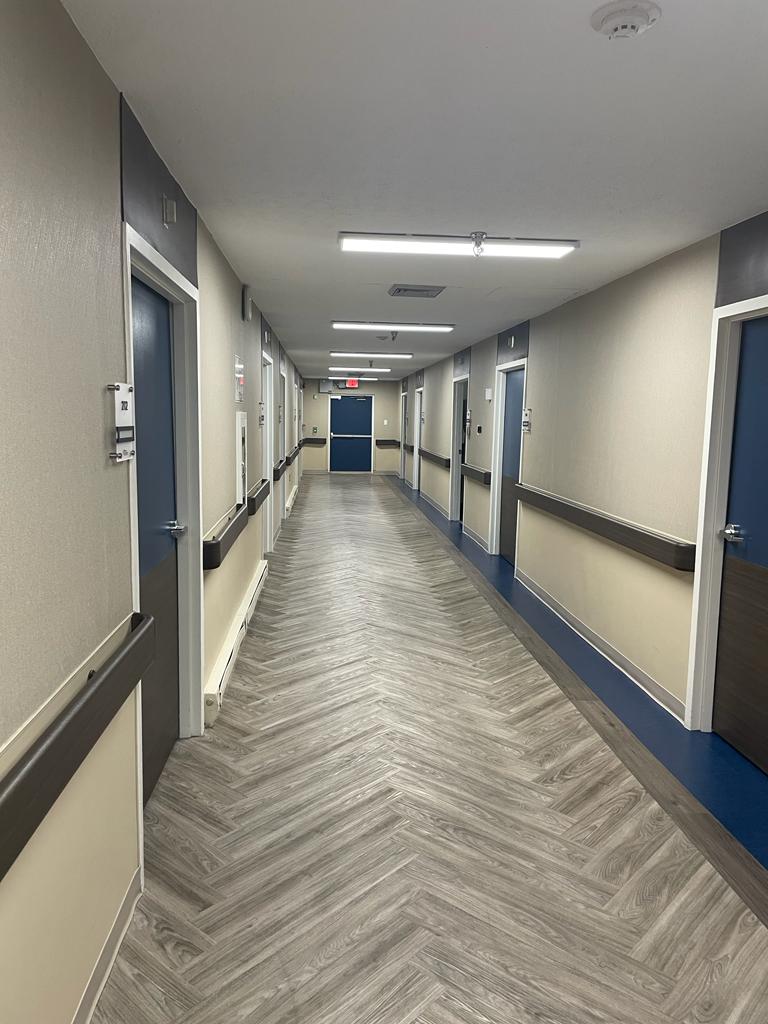
How is Dennett Rehab Center Staffed?

CMS rates DENNETT REHAB CENTER's staffing level at 3 out of 5 stars, which is average compared to other nursing homes.

What Have Inspectors Found at Dennett Rehab Center?

State health inspectors documented 63 deficiencies at DENNETT REHAB CENTER during 2018 to 2025. These included: 2 Immediate Jeopardy (the most serious level, indicating potential for serious harm or death), 3 that caused actual resident harm, 54 with potential for harm, and 4 minor or isolated issues. Immediate Jeopardy findings are rare and represent the most serious regulatory concerns. They require immediate corrective action.
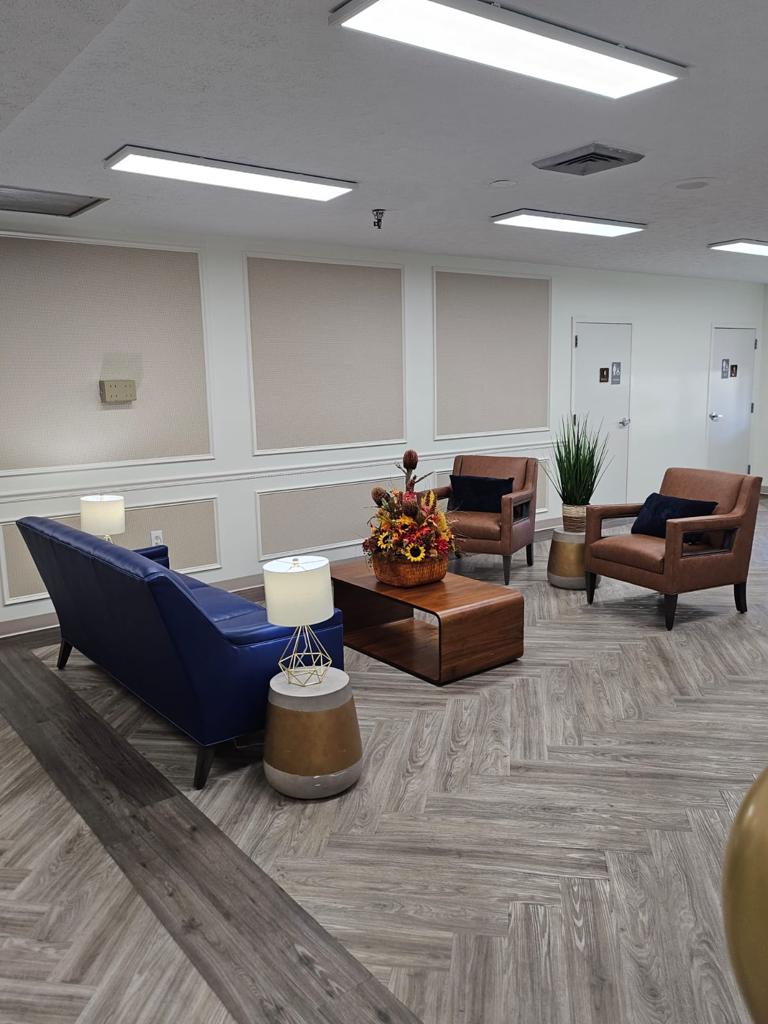
Who Owns and Operates Dennett Rehab Center?

DENNETT REHAB CENTER is owned by a for-profit company. For-profit facilities operate as businesses with obligations to shareholders or private owners. The facility operates independently rather than as part of a larger chain. With 99 certified beds and approximately 70 residents (about 71% occupancy), it is a smaller facility located in OAKLAND, Maryland.
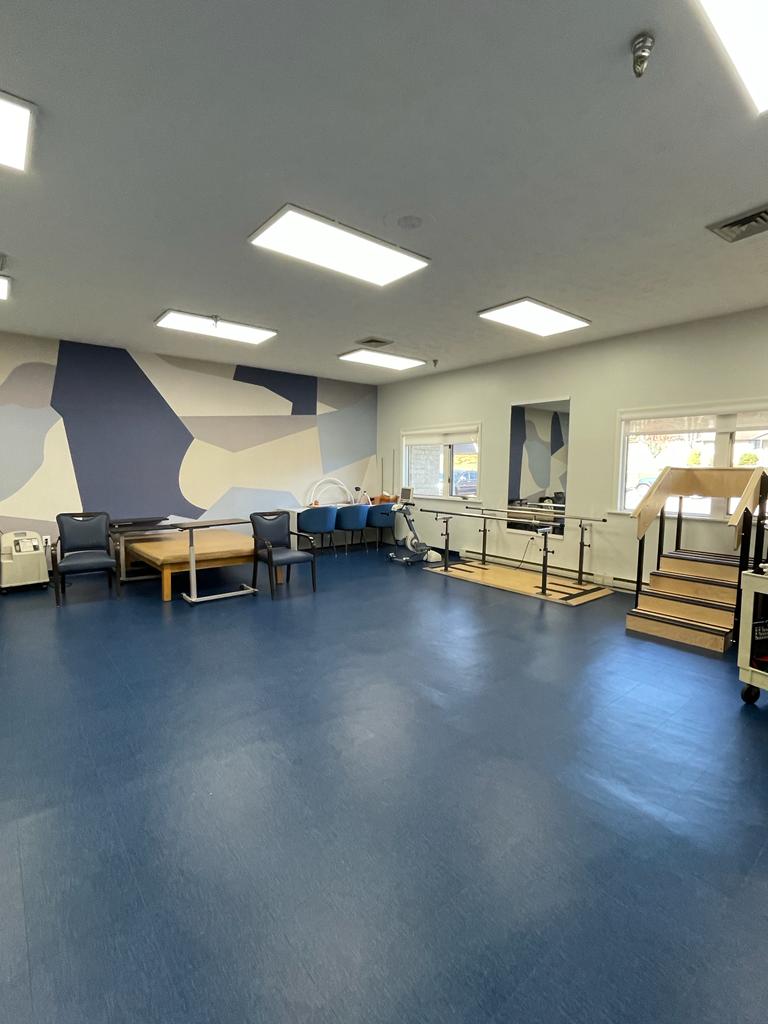
How Does Dennett Rehab Center Compare to Other Maryland Nursing Homes?

Compared to the 100 nursing homes in Maryland, DENNETT REHAB CENTER's overall rating (2 stars) is below the state average of 3.0 and health inspection rating (2 stars) is below the national benchmark.

What Should Families Ask When Visiting Dennett Rehab Center?

Based on this facility's data, families visiting should ask: "What changes have been made since the serious inspection findings, and how are you preventing similar issues?" "Can I visit during a mealtime to observe dining assistance and food quality?" "How do you handle medical emergencies, and what is your hospital transfer rate?" "Can I speak with family members of current residents about their experience?" These questions are particularly relevant given the facility's Immediate Jeopardy citations.

Is Dennett Rehab Center Safe?

Based on CMS inspection data, DENNETT REHAB CENTER has documented safety concerns. Inspectors have issued 2 Immediate Jeopardy citations (the most serious violation level indicating risk of serious injury or death). The facility has a 2-star overall rating and ranks #100 of 100 nursing homes in Maryland. Families considering this facility should ask detailed questions about what corrective actions have been taken since these incidents.

Do Nurses at Dennett Rehab Center Stick Around?

DENNETT REHAB CENTER has not reported staff turnover data to CMS. Staff turnover matters because consistent caregivers learn residents' individual needs, medications, and preferences. When staff frequently change, this institutional knowledge is lost. Families should ask the facility directly about their staff retention rates and average employee tenure.

Was Dennett Rehab Center Ever Fined?

DENNETT REHAB CENTER has been fined $32,938 across 3 penalty actions. This is below the Maryland average of $33,408. While any fine indicates a compliance issue, fines under $50,000 are relatively common and typically reflect isolated problems that were subsequently corrected. Families should ask what specific issues led to these fines and confirm they've been resolved.

Is Dennett Rehab Center on Any Federal Watch List?

DENNETT REHAB CENTER is not on any federal watch list. The most significant is the Special Focus Facility (SFF) program, which identifies the bottom 1% of nursing homes nationally based on persistent, serious quality problems. Not being on this list means the facility has avoided the pattern of deficiencies that triggers enhanced federal oversight. This is a positive indicator, though families should still review the facility's inspection history directly.