Riverside Healthcare Center
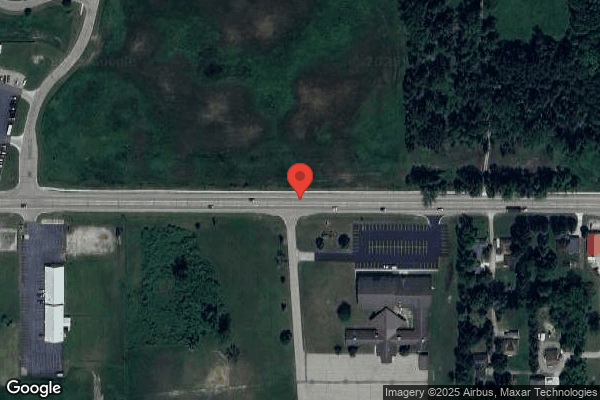

1149 West Monroe Road, St. Louis, MI 48880 (989) 681-3852
For profit - Corporation 39 Beds PIONEER HEALTHCARE MANAGEMENT Data: November 2025
Trust Grade
60/100
#227 of 422 in MI
Last Inspection: March 2025

Within standard 12-15 month inspection cycle. Federal law requires annual inspections.

Overview

Riverside Healthcare Center has a Trust Grade of C+, indicating it is slightly above average but not outstanding. Ranked #227 out of 422 facilities in Michigan, it is in the bottom half of the state, and #4 out of 5 in Gratiot County, meaning only one local option is better. The facility is experiencing a worsening trend, with compliance issues increasing from 3 in 2024 to 12 in 2025. Staffing is a strength here, rated 4 out of 5 stars with a turnover rate of 36%, which is lower than the state average, suggesting that staff are more stable and familiar with residents. On the downside, there have been concerns about cleanliness in food service areas and a failure to properly monitor antibiotic use, which could lead to health risks for residents. Additionally, a resident reported seeing bugs in the facility, highlighting potential issues with pest control. While there are positive aspects, such as no fines and good RN coverage, families should weigh these against the growing number of identified concerns.

Trust Score
C+
60/100
In Michigan
#227/422
Bottom 47%
Safety Record
Low Risk
No red flags
Inspections
Getting Worse
3 → 12 violations
Staff Stability
○ Average
36% turnover. Near Michigan's 48% average. Typical for the industry.
Penalties
✓ Good
No fines on record. Clean compliance history, better than most Michigan facilities.
Skilled Nurses
✓ Good
Each resident gets 48 minutes of Registered Nurse (RN) attention daily — more than average for Michigan. RNs are trained to catch health problems early.
Violations
⚠ Watch
35 deficiencies on record. Higher than average. Multiple issues found across inspections.
★★★☆☆
3.0
Overall Rating
★★★★☆
4.0
Staff Levels
★★★☆☆
3.0
Care Quality
★★★☆☆
3.0
Inspection Score
Stable
2024: 3 issues
2025: 12 issues

The Good

  • 4-Star Staffing Rating · Above-average nurse staffing levels
  • Full Sprinkler Coverage · Fire safety systems throughout facility
  • No fines on record
  • Staff turnover below average (36%)

    12 points below Michigan average of 48%

Facility shows strength in staffing levels, fire safety.

The Bad

3-Star Overall Rating

Near Michigan average (3.1)

Meets federal standards, typical of most facilities

Staff Turnover: 36%

Near Michigan avg (46%)

Typical for the industry

Chain: PIONEER HEALTHCARE MANAGEMENT

Part of a multi-facility chain

Ask about local staffing decisions and management

The Ugly 35 deficiencies on record

Sept 2025 1 deficiency
CONCERN (D) 📢 Someone Reported This

A family member, employee, or ombudsman was alarmed enough to file a formal complaint

Potential for Harm - no one hurt, but risky conditions existed

Pressure Ulcer Prevention (Tag F0686)

Could have caused harm · This affected 1 resident

**NOTE- TERMS IN BRACKETS HAVE BEEN EDITED TO PROTECT CONFIDENTIALITY** This citation pertains to intake #1322431. Based on observation, interview, and record review the facility failed to implement c...

Read full inspector narrative →
**NOTE- TERMS IN BRACKETS HAVE BEEN EDITED TO PROTECT CONFIDENTIALITY** This citation pertains to intake #1322431. Based on observation, interview, and record review the facility failed to implement care planned interventions and ordered treatments for pressure ulcer prevention for 1 resident (R102) of 3 residents reviewed for pressure ulcers. Findings include:Review of a Face Sheet revealed R102 admitted to the facility on [DATE] with pertinent diagnoses which included cerebral infarction (stroke) and hemiplegia (muscle weakness or partial paralysis on one side of the body). Review of a Minimum Data Set (MDS) (a tool used for assessing a resident's care needs) assessment for R102, with a reference date of 8/5/2025 revealed a Brief Interview for Mental Status (BIMS) (a scale used to determine a resident's cognitive status) score of 6, out of a total possible score of 15, which indicated R102 was severely cognitively impaired. Further review of the same MDS assessment revealed R102 was dependent on staff for toileting hygiene, always incontinent of bowel, and at risk for developing pressure ulcers. Review of a current skin risk Care Plan interventions for R102, initiated 2/5/2025, directed staff to keep skin clean and dry as possible, minimize skin exposure to moisture, provide incontinence care after each incontinence episode, and use moisture barrier product to perineal area as needed. Further review of activities of daily living (ADL) interventions revealed R102 was incontinent of bowel and bladder and required extensive assistance with personal hygiene. Review of R102's Physician's Orders, active 9/3/2025, revealed and order for Calmoseptine ointment (a topical medicated ointment used to prevent skin irritation from incontinence) to be applied to buttocks after each episode of incontinence. In an observation on 9/3/2025 at 9:20 AM in R102's room, R102 was assisted back to bed by mechanical lift by Licensed Practical Nurse (LPN) C and Certified Nursing Assistant (CNA) D and was provided incontinence care. R102's brief was soaked, and urine had soaked through the brief and saturated his pants. R102 also had a bowel movement. Observation of buttocks revealed no evidence of barrier cream or ointment residue, and no barrier cream or Calmoseptine ointment were applied by staff at the time. In an interview on 9/3/2025 at 9:39 AM, CNA D reported that the previous shift got R102 up and into his chair at approximately 5:00 AM. CNA D reported she had not checked or changed R102 from when he was placed into his chair by the previous shift at approximately 5:00 AM until she assisted him back into his bed at 9:20 AM because she did not have time. CNA D reported incontinent residents should be checked and changed every two hours. Review of R102's Medication Administration Record (MAR) on 9/3/2025 at 2:00 PM revealed Registered Nurse (RN) F documented that she administered Calmoseptine ointment to R102's buttocks that morning. In an interview on 9/3/2025 at 2:15 PM, RN F reported that she had not administered Calmoseptine ointment to R102 that morning as documented. RN F stated The CNAs do this. In an interview on 9/3/2025 at 2:18 PM, CNA D reported she did not normally apply Calmoseptine ointment to residents. CNA D reported Calmoseptine ointment was stored in the treatment cart and nurses usually applied this. In an observation on 9/4/2025 at 9:05 AM in R102's room, R102 was assisted back to bed by mechanical lift by CNA E and CNA G and was provided incontinence care. R102's brief was soaked, and urine had soaked through the brief and saturated his pants. R102 also had a bowel movement. Observation of buttocks revealed no evidence of barrier cream or ointment residue, and no barrier cream or Calmoseptine ointment were applied by staff at the time. In an interview on 9/4/2025 at 9:20 AM, CNA E reported the previous shift got R102 up to his chair at approximately 5:30 AM. CNA E reported residents with incontinence should be checked and changed every 2 hours. CNA E reported she should have checked R102 for incontinence before breakfast, but he was escorted to breakfast by another staff member before she was able to do this. CNA E reported she did not believe R102 had an order for any kind of barrier cream. CNA E reported CNAs use barrier cream if it is in the room, but if it is in the treatment cart the nurse will administer the cream. In an interview on 9/4/2025 at 12:52 PM, RN F reported she was not aware R102 had a bowel movement that morning. RN F reported she was sure R102 had Calmoseptine ointment placed by the previous shift when they got him up that morning because that is the process. RN F reported CNAs have been getting the Calmoseptine ointment from the treatment cart to apply, but they should not because it is medicated and should be applied by a nurse. RN F reported she was not aware the Calmoseptine order for R102 was to be applied as needed for episodes of incontinence. In an interview on 9/4/2025 at 1:15 PM, the Director of Nursing (DON) reported Calmoseptine ointment was medicated and must be stored in the treatment cart and administered by a nurse. The DON confirmed the expectation that staff check and change incontinent residents every two hours. Review of Fundamentals of Nursing ([NAME] and [NAME]) 11th edition revealed, Usually MASD is mainly caused by moisture from incontinence, so preventing incontinence or having a good management plan when a patient is incontinent is imperative. The do's for effective management include identification and treatment, use of skin risk assessment tools, use of appropriate barrier products, and ensuring adequate hydration ([NAME] and Justice, 2019). Keep the patient's sheets clean and dry, and do not double pad the bed. Also remember that incontinence is not an expected or normal finding in most adults. Thus, do not assume that incontinence is inevitable, especially in older adults ([NAME], 2018). [NAME], [NAME] A.; [NAME], [NAME] G.; Stockert, [NAME] A.; Hall, [NAME]. Fundamentals of Nursing - E-Book (p. 1253). Elsevier Health Sciences. Kindle Edition.
Mar 2025 11 deficiencies
CONCERN (D)

Potential for Harm - no one hurt, but risky conditions existed

Deficiency F0578 (Tag F0578)

Could have caused harm · This affected 1 resident

**NOTE- TERMS IN BRACKETS HAVE BEEN EDITED TO PROTECT CONFIDENTIALITY** Based on observation, interview and record review, the facility failed to ensure updated and accurate advanced directive informa...

Read full inspector narrative →
**NOTE- TERMS IN BRACKETS HAVE BEEN EDITED TO PROTECT CONFIDENTIALITY** Based on observation, interview and record review, the facility failed to ensure updated and accurate advanced directive information was in place for two residents (R7 and R39) of 38 residents reviewed for advanced directives (legal documents that allow a person to identify decisions about end-of-life care ahead of time), resulting in the potential for a resident's preferences for medical care to not be followed by the facility or other healthcare providers. Findings include: Resident #7 (R7) Review of the medical record reflected R7 was an initial admission to the facility on [DATE] with a readmission on [DATE]. Diagnoses of Psychosis not due to a substance or known Physiological condition, Diabetes 2, Post Traumatic Stress Disorder, Obesity, Generalized anxiety, Depression, Chronic Pain, Chronic Pulmonary Disease and muscle wasting. The most recent Minimum Data Set (MDS), with an Assessment Reference Date (ARD) of 12/08/2025 revealed R7 had a Brief Interview of Mental Status (BIMS) of 14 (cognitively intact) out of 15. Under section G0100, Activities of Daily Living (ADL) Assistance reveals R7 requires set up for meals and assistance with all care. Record review revealed of R7's Advanced Directives had a signature from the guardian and dated 09/24/24. Witnesses were Social Worker (SW) F dated for 09/30/24 and Business office Manager (BOM) M signed as a witness for 10/01/24. During an interview on 03/24/25 at 4:47 PM, SW F stated the last Advanced Directives for R7 was dated 09/24/24, stated her process was, when she received it back from the guardian, she put it in the doctor's box to sign, once he signed it, then she signs it. Writer asked SW F why the delay in signing and dating after the guardian signed? Writer asked SW F whose signature was she witnessing? SW F read through the instructions on completing this document above her signature line. SW F stated she was to witness the Guardian or residents' signature. Writer asked SW F why she signed the document after the guardian/resident signed it and after the doctor signs it. SW F stated that was how she was taught to do it when she started working here. SW F asked writer what way should she follow? Writer encouraged her to discuss this with her Administrator. Resident #39 (R39) Review of the medical record reflected R39 was an initial admission to the facility on [DATE] with a readmission on [DATE]. Diagnoses of Cerebral Infarction, Hemiplegia, affecting the left nondominated side, General Anxiety, Adjustment Disorder, Dysphagia, Cognitive Communication deficit and Dementia. The most recent Minimum Data Set (MDS), with an Assessment Reference Date (ARD) of 05/05/2025, revealed R39 had a Brief Interview of Mental Status (BIMS) of 09 (cognitively impaired) out of 15. Under section G0100, Activities of Daily Living (ADL) Assistance reveals R39 dependent of all care. Record review revealed R39 signed his advanced directive on 01/28/25. Provider signed the advanced directives on 01/28/25, 2 witnessed signatures dated 01/29/25, not at the time the R39 signed his advanced directions/ DNR to witness his signature. During an interview on 03/24/25 at 4:47 PM, SW F stated the last Advanced Directives for R7 was dated 09/24/24, stated her process was, when she received it back from the guardian, she put it in the doctor's box to sign, once he signed it, then she signs it. Writer asked SW F why the delay in signing and dating after the guardian signed? Writer asked SW F whose signature was she witnessing? SW F read through the instructions on completing this document above her signature line. SW F stated she was to witness the Guardian or residents' signature. Writer asked SW F why she signed the document after the guardian/resident signed it and after the doctor signs it. SW F stated that was how she was taught to do it when she started working here.
CONCERN (D)

Potential for Harm - no one hurt, but risky conditions existed

Deficiency F0582 (Tag F0582)

Could have caused harm · This affected 1 resident

Based on interview and record review the facility failed to ensure that an accurate and timely Notice of Medicare Non-Coverage (NOMNC) was provided for three Residents (#5, #8, #35) and an accurate Sk...

Read full inspector narrative →
Based on interview and record review the facility failed to ensure that an accurate and timely Notice of Medicare Non-Coverage (NOMNC) was provided for three Residents (#5, #8, #35) and an accurate Skilled Nursing Facility Advance Beneficiary Notice of Non-Coverage (SNFABN) was provided for two Residents (#8 #35) out of three residents reviewed for Beneficiary Notification. Findings Included: Resident #5 (R5) Review of the medical record revealed R5 was admitted to the facility 09/23/2019 with diagnoses that included subarachnoid hemorrhage (stroke), bipolar disorder, hypertension, anxiety, depression, peripheral venous insufficiency, lymphedema (swelling caused by lymphatic system blockage), dysphagia (difficulty swallowing), type 2 diabetes, hyperlipidemia (high fat in blood), chronic obstructive pulmonary disease (COPD), chronic pain, seizures, gout (increase in uric acid in bone joints), and gain and mobility abnormalities. The most recent Minimum Data Set (MDS), with an assessment reference date of 03/05/2025, demonstrated a Brief Interview for Mental Status (BIMS) of 12 (moderate cognitive impairment) out of 15. During review of the SNF (Skilled Nursing Facility) Beneficiary Notification Review (completed by the facility) revealed that the facility failed to provide R5 with an Notice of Medicare Non-Coverage (NOMNC) that notified R5 of when his services will end. Review of the same NOMNC demonstrated that it was signed by the representative on 08/09/2024. Review of R5's Skilled Nursing Facility Advance Beneficiary Notice of Non-Coverage (SNFABN) revealed that his last covered day of services was to be 08/11/2024. Resident #8 (R8) Review of the medical record revealed R8 was admitted to the facility 02/22/2025 with diagnoses that included chronic respiratory failure, chronic obstructive pulmonary disease, sleep apnea, obesity, hypoxemia (low blood oxygen levels), type 2 diabetes, hypertension, anemia (low red blood cells), hyperlipidemia (high fat in blood), aortic valve stenosis, atrial fibrillation, and heart failure. The most recent Minimum Data Set (MDS), with an assessment reference date (ARD) of 02/28/2025, demonstrated a Brief Interview for Mental Status (BIMS) of 15 (cognitively intact) out of 15. R8 discharged home 03/06/2025. During review of the SNF (Skilled Nursing Facility) Beneficiary Notification Review (completed by the facility) revealed that the facility failed to notify R8 with a Notice of Medicare Non-Coverage (NOMNC) that notified R8 48 hours prior to the end of skilled services on 03/05/2025. R8's NOMNC was not signed until 03/04/2025. Review of R8's Skilled Nursing Facility Advance Beneficiary Notice of Non-Coverage (SNFABN), provided to R8 on 03/04/2025, did list the reason that Medicare may not pay for her inpatient skilled services starting 03/06/2025 and did not show the estimated cost that services will cost per day/item or services. Resident #35 (R35) Review of the medical record revealed R35 was admitted to the facility 08/09/2024 with diagnoses that included type 2 diabetes, cerebral infarct (stroke), adjustment disorder with depressed mood, hypokalemia (low potassium levels), hypertension, dysphagia (difficulty swallowing), cognitive communication deficient, muscle weakness, hyperlipidemia (high fat content in blood) and breast cancer. The most recent Minimum Data Set (MDS), with an Assessment Reference Date (ARD) of 02/15/2025, demonstrated a Brief Interview for Mental Status (BIMS) of 15 (cognitively intact) out of 15. During review of the SNF (Skilled Nursing Facility) Beneficiary Notification Review (completed by the facility) revealed that the facility failed to provide R35 with an Notice of Medicare Non-Coverage (NOMNC) that notified R35 of when her services will end. Review of the same NOMNC demonstrated that it was signed by the resident 10/29/2024. Review of R35's Skilled Nursing Facility Advance Beneficiary Notice of Non-Coverage (SNFABN), provided to R35 on 10/29/2024, did list the reason that Medicare may not pay for her inpatient skilled services starting 11/02/2024 and did not show the estimated cost that services will cost per day/item or services. During an interview on 03/26/2025 at 10:16 a.m. Business Office Manager (BOM) M explained that she was the person that provided residents with the Notice of Medicare Non-Coverage (NOMNC) and the Skilled Nursing Facility Advance Beneficiary Notice of Non-Coverage (SNFABN) once resident no longer qualified for Medicare Skilled Services. BOM M reviewed 5's (NOMNC) and confirmed that he had not been notified of the date that services would no longer be provided. BOMM could not explain why the date had not been include on the NOMNC. BOM M reviewed R8's NOMNC and confirmed that it had not been signed within 48 hours of services not provided. BOM M also confirmed that R8's SNFABN did not include the reason that services were no longer provided or listed the estimated cost that services will cost per day/item or services. BOM M could not explain why the information was not completed on the SNFABN or why the NOMNC had not been completed prior to 48 hours before the end of services. BOM M confirmed that R35's NOMNC did not include the information that listed when her services would end. BOM M confirmed that R35's SNFABN did not include the reason that services were no longer provide or listed the estimated cost that services will cost per day/item or services. BOM M could not explained whey the information was not completed on the SNFABN or why the NOMNC did not list when the dates of services would end.
CONCERN (D)

Potential for Harm - no one hurt, but risky conditions existed

Deficiency F0655 (Tag F0655)

Could have caused harm · This affected 1 resident

**NOTE- TERMS IN BRACKETS HAVE BEEN EDITED TO PROTECT CONFIDENTIALITY** Based on observation, interview and record review, the facility failed to develop a Baseline Care Plan with necessary healthcare...

Read full inspector narrative →
**NOTE- TERMS IN BRACKETS HAVE BEEN EDITED TO PROTECT CONFIDENTIALITY** Based on observation, interview and record review, the facility failed to develop a Baseline Care Plan with necessary healthcare information for one (R37) of 14 reviewed. Findings include: Review of the medical record reflected R37 admitted to the facility on [DATE], with diagnoses that included quadriplegia (paralysis of both arms and legs) and neuromuscular dysfunction of the bladder. The admission Minimum Data Set (MDS), with an Assessment Reference Date (ARD) of 12/29/24, reflected R37 scored 15 out of 15 (cognitively intact) on the Brief Interview for Mental Status (BIMS-a cognitive screening tool) and had an indwelling urinary catheter. On 03/24/25 at 11:30 AM, R37 was observed seated in a wheelchair, in their room. R37 reported having a Foley catheter (indwelling urinary catheter). On 03/26/25 at 9:46 AM, R37 was observed in bed, watching TV. A urinary catheter drainage bag was observed hanging on the right side of the bed frame. R37's Baseline Care Plan, which was initiated on 12/23/24, did not reflect the presence of a Foley catheter. R37's Care Plan reflected, .I am on Enhanced Barrier Precautions relate [sic] to wounds and indwelling catheter . The start date of each Approach (intervention) was 12/23/24, however, the approaches/interventions were created on 1/13/25. In an interview on 03/26/25 at 3:43 PM, Certified Nurse Aide (CNA) O reported they used the Care Plan to identify the care needs of a resident. If a resident had a Foley catheter, it would be included in the Care Plan, according to CNA O. In an interview with Registered Nurse (RN) B and Nursing Home Administrator/Director of Nursing (NHA/DON) A on 03/26/25 at 11:58 AM, it was reported that Baseline Care Plans were initiated upon admission. NHA/DON A reported R37's Foley catheter was not on their Baseline Care Plan. It was reported that Foley catheter care was ordered upon admission, so the CNAs would have been able to chart on catheter care.
CONCERN (D)

Potential for Harm - no one hurt, but risky conditions existed

Quality of Care (Tag F0684)

Could have caused harm · This affected 1 resident

**NOTE- TERMS IN BRACKETS HAVE BEEN EDITED TO PROTECT CONFIDENTIALITY** Based on observation, interview and record review, the facility failed to prevent constipation and ensure medication orders spec...

Read full inspector narrative →
**NOTE- TERMS IN BRACKETS HAVE BEEN EDITED TO PROTECT CONFIDENTIALITY** Based on observation, interview and record review, the facility failed to prevent constipation and ensure medication orders specified dosing and route instructions for one (Resident #15) of one reviewed. Findings include: Review of the medical record reflected R15 admitted to the facility on [DATE], with diagnoses that included diabetes, constipation and hemiplegia (paralysis on one side of the body) and hemiparesis (one-sided weakness) following nontraumatic intracranial hemorrhage (brain bleed) affecting the left side. The Quarterly Minimum Data Set (MDS), with an Assessment Reference Date (ARD) of 12/28/24, reflected R15 scored six out of 15 (severe cognitive impairment) on the Brief Interview for Mental Status (BIMS-a cognitive screening tool) and was always incontinent of bowel and bladder. On 03/24/25 at 9:57 AM, R15 was observed in their room, watching TV. R15 reported issues with constipation since their admission to the facility, which they felt staff was doing very little about. R15's medical record reflected Physician's Orders for one 0.52 gram Metamucil capsule (medication used to treat constipation) by mouth twice daily and two tablets of Senna Plus (medication used to treat constipation) 8.6-50 milligrams (mg) by mouth twice daily. In addition, R15's medical record included the following Physician's Orders for constipation: -Senna 8.6 mg by mouth every 12 hours as needed (PRN) -If no bowel movement within 72 hours, give Milk of Magnesia PRN (medication dose and route not specified in the order) -10 mg bisacodyl suppository, every three days, PRN, if Milk of Magnesia was not effective (medication route not specified in the order) -10 mg bisacodyl rectal suppository As Needed (specified frequency not noted in the order) -Fleets enema to be given PRN, every third day, if the bisacodyl suppository was not effective -Dulcolax rectal suppository (dose not specified in the order), PRN, if there were no bowel movement results within approximately 12 hours of Milk of Magnesia administration -Fleets enema rectally, PRN, if results of the suppository were not satisfactory within two hours Documentation of R15's bowel movements for 2/25/25 to 3/25/25 reflected R15 did not have a recorded bowel movement for the dates of 3/7/25, 3/8/25, 3/9/25, 3/10/25, 3/11/25, 3/12/25, 3/13/25 and 3/14/25. In an interview on 03/25/25 at 11:10 AM, Registered Nurse (RN) B reported the night shift nurses pulled bowel movement reports and looked for any resident that had not had a bowel movement in three days. The report was then provided to the day shift nurse. If constipation needed to be addressed, they obtained orders, if needed. RN B acknowledged that it did not appear that R15 had a bowel movement from 3/6/25 to 3/15/25. On 3/25/25, review of R15's March 2025 Medication Administration Record (MAR) did not reflect that any as needed medications had been provided to them for constipation.
CONCERN (D)

Potential for Harm - no one hurt, but risky conditions existed

Accident Prevention (Tag F0689)

Could have caused harm · This affected 1 resident

Resident #5 (R5) Review of the medical record revealed R5 was admitted to the facility 09/23/2019 with diagnoses that included subarachnoid hemorrhage (stroke), bipolar disorder, hypertension, anxiety...

Read full inspector narrative →
Resident #5 (R5) Review of the medical record revealed R5 was admitted to the facility 09/23/2019 with diagnoses that included subarachnoid hemorrhage (stroke), bipolar disorder, hypertension, anxiety, depression, peripheral venous insufficiency, lymphedema (swelling caused by lymphatic system blockage), dysphagia (difficulty swallowing), type 2 diabetes, hyperlipidemia (high fat in blood), chronic obstructive pulmonary disease (COPD), chronic pain, seizures, gout (increase in uric acid in bone joints), and gain and mobility abnormalities. The most recent Minimum Data Set (MDS), with an assessment reference date of 03/05/2025, demonstrated a Brief Interview for Mental Status (BIMS) of 12 (moderate cognitive impairment) out of 15. During observation and interview on 03/24/2025 at 10:00 a.m. R5 was observed sitting up in his wheelchair at the side of his bed. R5's left side of his bed was observed to be against the wall and the right side of his bed a half bedrail was observed. When R5 was asked why he had a bedrail on the right side of his bed, he explained that it was placed there to keep him from falling out of bed. Review of R5's medical record did not demonstrate a physician order for the use of a bedside rail. Review of R5's plan of care did not demonstrate that R5 currently used a bedside rail for assistance of mobility or as a means of restraint to prevent falls. R5's medical record did not demonstrate that R5's bedrail and bed had been measured for possible entrapment at the time the bedrail was applied or on a quarterly basis. Review of R5's medical record did not demonstrate that any alternative interventions were attempted prior to the placement of a bedrail on R5's bed. Review of R5's medical record did not demonstrate that an evaluation had been completed evaluating the independent use by R5 for lowering or raising the bedrail. In an interview on 03/24/2025 at 04:15 p.m. Director of Nursing (DON) A explained that the facility does have residents that use bedrails. DON A explained that if bedrails were used, the resident would be evaluated for independence of use, a physician order would be written, and the bed rail would be care planned for use. DON A also explained that the bed and bedrail would be measured (for possible entrapment) when initiated, quarterly, and when the resident's condition would change. DON A reviewed R5's medical record and confirmed that no physician order was present for the use of a bedrail, no plan of care was present for the use of a bedrail, no assessment for the use of the bedrail was in the medical record. During an interview on 03/25/2025 Director of Nursing (DON) B explained that the facility had not completed measurements of R5's bedrail or bed on implementation of the bedrails for possible entrapment. DON B explained that the facility had not completed quarterly measurements of R5's bedrail or bed for possible entrapment. DON B explained that she could not determine when R5's bedrails were applied to his bed. Based on observation, interview, and record review, the facility failed to ensure a safe environment and provide adequate supervision of smoking or screening them with form named PHCM Smoking risk to determine if they can smoke independently for two of two sampled residents (Resident #5 and Resident #2) reviewed for accidents and safety. Resident #2 (R2) During an interview and observation on 03/26/25 at 4:23 PM, R2 stated he had to turn in his lighter and cigarettes to nursing staff every time he goes inside, and he can get them back whenever he wants to go back outside. R2 also stated he can go outside anytime he wants to smoke. Did not respond to writer asking him if he had a lighter and marijuana hide outside from everyone. R2 stated he is independent with smoking, so he can come and go as he pleases. Observation of burn marks on his hoodie sweatshirt. During an interview on 03/27/25 at 10:39 AM, LNA/DON A stated the document PHCM Smoking risk, was under the assessments found under observations. Record review did not reveal that a smoking risk assessment was completed on admission dated 05/31/24.
CONCERN (D)

Potential for Harm - no one hurt, but risky conditions existed

Deficiency F0757 (Tag F0757)

Could have caused harm · This affected 1 resident

**NOTE- TERMS IN BRACKETS HAVE BEEN EDITED TO PROTECT CONFIDENTIALITY** Based on interview and record review, the facility failed to ensure recommended laboratory monitoring was in place for one (R15)...

Read full inspector narrative →
**NOTE- TERMS IN BRACKETS HAVE BEEN EDITED TO PROTECT CONFIDENTIALITY** Based on interview and record review, the facility failed to ensure recommended laboratory monitoring was in place for one (R15) of five reviewed. Findings include: Review of the medical record reflected R15 admitted to the facility on [DATE], with diagnoses that included diabetes, constipation and hemiplegia (paralysis on one side of the body) and hemiparesis (one-sided weakness) following nontraumatic intracranial hemorrhage (brain bleed) affecting the left side. The Quarterly Minimum Data Set (MDS), with an Assessment Reference Date (ARD) of 12/28/24, reflected R15 scored six out of 15 (severe cognitive impairment) on the Brief Interview for Mental Status (BIMS-a cognitive screening tool). R15's medical record reflected Physician's Orders for 65 units of Basaglar insulin (used to treat diabetes) to be administered twice daily, 500 milligrams (mg) of Metformin (medication used to treat diabetes) by mouth twice daily and four units of Novolin R FlexPen 100 units per milliliter (u/mL) insulin (used to treat diabetes) to be administered three times daily. R15's medical record reflected they were to have a fasting blood sugar check daily, every Monday, Wednesday and Friday. A Note to Attending Physician/Prescriber, for a Pharmacy Medication Regimen Review dated 6/13/24, reflected to consider ordering current labs, which included A1C levels (blood test that measures the average amount of sugar in the blood over the past three months) and Lipid Panel (blood test that measures the amount of fats and cholesterol in the blood). The Physician agreed with the recommendation on 6/18/24. A laboratory report for 6/20/24 reflected R15 refused to have their A1C and Lipid Panel blood tests collected. R15's medical record reflected laboratory test results for 10/28/24, which included but was not limited to fasting lipids and fasting glucose (sugar). An A1C was not included in the laboratory results for 10/28/24. In an interview on 03/25/25 at 11:10 AM, Registered Nurse (RN) B reported A1C was generally checked every three months for diabetic residents. RN B reported R15 refused to have their A1C drawn in June 2024. RN B reviewed R15's laboratory results, dating back to February 2024, and acknowledged they did not see any A1C results.
CONCERN (D)

Potential for Harm - no one hurt, but risky conditions existed

Medication Errors (Tag F0758)

Could have caused harm · This affected 1 resident

Based on observation, interview, and record review the facility failed to provide clinical justification for the continued use of PRN (as needed basis) psychotropic medication (valium) for one residen...

Read full inspector narrative →
Based on observation, interview, and record review the facility failed to provide clinical justification for the continued use of PRN (as needed basis) psychotropic medication (valium) for one resident (#23) out of five residents reviewed for the potential of unnecessary medication. Findings Included: Resident #23 (R23) Review of the medical record revealed R23 was admitted to the facility 01/06/2025 with diagnoses that included fracture of the lower end of right femur (upper leg), Buerger's disease (vascular disease that causes inflammation and swelling in blood vessels of the hands and feet-leading to blocked blood vessels), peripheral vascular disease (PVD), hypertension, gastro-esophageal reflux disease, depression, polyneuropathy (malfunction of nerves throughout the body), restless leg syndrome, type 2 diabetes, anxiety, asthma, right below the knee amputation, left below the knee amputation, constipation, chronic obstructive pulmonary disease (COPD), and atherosclerotic heart disease (damage or disease in the hearts major blood vessels). The most recent Minimum Data Set (MDS), with an assessment reference date of 02/17/2025, demonstrated a Brief Interview for Mental Status (BIMS) of 15 (cognitively intact) out of 15. Review of R23's physician orders demonstrated an order written 01/14/2025 that stated diazepam (valium) 2mg (milligrams) one tablet PRN (as needed) please space doses 12 hours apart as need for muscle spasms and anxiety. The order for valium 2mg prn was still active at the time of this survey. During an interview on 03/26/2025 at 03:19 p.m. Nursing Unit Manager (UM) B explained that R23 had been receiving valium 2mg (milligrams) by mouth prn (as needed) since 01/14/2025. UM B explained that R23 was prescribed the medication for muscle spasms and anxiety. UM B could not demonstrate any documentation in R23's medical record for the prn medication of valium to have been continued past 14 days. UM B could not demonstrate that R23's medical provider had evaluated the continued use of valium prn for muscle spasms or anxiety. During an interview on 03/26/2025 at 03:34 p.m. Director of Nursing (DON) A explained that R23 had been prescribed valium 2mg (milligrams) prn (as needed) for muscle spasm and anxiety since 01/14/2025. DON A could not explain why R23's prn order for valium had been continued past 14 days without a review and a new order by the medical provider. During observation and interview on 03/26/2025 at 03:53 p.m. R23 was observed sitting in his wheelchair in the hall. R23 explained that he had restless leg syndrome and anxiety as medical diagnoses. R23 explained that he took valium, as needed, for his muscle spasms (caused by restless leg syndrome) in the morning but would take the valium in the evening for his anxiety. R23 could not explain how long he had taken valium at the facility. Review of R23's January's Medication Administration Record (MAR) demonstrated that he had taken valium 2mg (milligrams) prn (as needed) 9 times during the p.m. and 6 times during the a.m. Review of R23's February MAR demonstrated that he had taken valium 2mg prn 20 times during the p.m. and 10 times during the a.m. Review of R23's March MAR (until 3/26/2025) demonstrated that he had taken valium 2mg prn 15 times during the p.m. and 16 times during the a.m. Review of facility policy entitled Use of Psychotropic Medication, with a date of implementation of 11/02/20222, demonstrated number 9. PRN orders for all psychotropic drugs shall be used only when medication is necessary to treat a diagnosed specific condition that is documented in the clinical record, and for a limited during (i.e. 14 days). The above policy also demonstrated a. If the attending physician or prescribing practitioner believes that it is appropriate for the PRN order to be extended beyond 14 days, her or she shall documents their rationale in the resident's medical record and indicate the during for the PRN order.
CONCERN (D)

Potential for Harm - no one hurt, but risky conditions existed

Unnecessary Medications (Tag F0759)

Could have caused harm · This affected 1 resident

Based on observation, interview, and record review, the facility failed to ensure a medication error rate less than 5% for one of four residents (Resident #37) reviewed for medication administration, ...

Read full inspector narrative →
Based on observation, interview, and record review, the facility failed to ensure a medication error rate less than 5% for one of four residents (Resident #37) reviewed for medication administration, resulting in an 10.34% medication error rate and potential side effects as a result of the errors. Findings include: During an observation and interview on 03/25/25 at 720 AM, RN C prepared medications to be administered to R37. RN C did not wash her hands or use hand sanitizer prior to setting up medications. RN C prepared Lantus 20 units, Loratadine10mg, Lyrica 200mg, MiraLAX 17gm, Morphine 15mg 1 tab, Pepcid 20mg, Tizanidine 2mg and Buspirone 10mg. Protein drink was declined by R37. Lexapro 5mg tab and Betamethasone cream ointment .2ml topical were not administered or applied as ordered to take in the AM. RN C also set the medication cup with the medications in them and MiraLAX mixture on the over the bed table and walked away to the sink to wash her hands, not looking back to ensure R37 took his medications and drank his MiraLAX. Record review of the medication administration record noted that medications Lexapro 5 mg tab and Betamethasone cream ointment were not administered or signed out. During an interview on 03/27/25 at 9:22 AM, LNA/DON A and MDS/RN B stated nurses should wash hands before going into the room, administering medications, leaving the room, wash their hands, hand sanitizer. During this same conversation, writer asked MDS/RN B what her expectations were for leaving medications at bedside. MDS/RN B stated nurses should not leave meds at bedside.
CONCERN (D)

Potential for Harm - no one hurt, but risky conditions existed

Infection Control (Tag F0880)

Could have caused harm · This affected 1 resident

**NOTE- TERMS IN BRACKETS HAVE BEEN EDITED TO PROTECT CONFIDENTIALITY** This citation has two deficient practice statements DPS A and DPS B. DPS A. Based on observation and interview the facility fai...

Read full inspector narrative →
**NOTE- TERMS IN BRACKETS HAVE BEEN EDITED TO PROTECT CONFIDENTIALITY** This citation has two deficient practice statements DPS A and DPS B. DPS A. Based on observation and interview the facility failed to ensure that accepted infection control protocols related to hand hygiene and glove use for one resident (#13) out of one resident sampled for infection control. Findings include: Resident #13 (R13) Review of the medical record reflected R13 was an initial admission to the facility on [DATE]. Diagnoses of Alzheimer's Disease with late onset, legal blindness, pressure ulcer of other part, stage 4, confined to bed, moderate protein-calorie malnutrition and muscle weakness. The most recent Minimum Data Set (MDS), with an Assessment Reference Date (ARD) of 11/16/2024 revealed R13 had a Brief Interview of Mental Status (BIMS) of 99 (unable to answer the questions) out of 15. Under section G0100, Activities of Daily Living (ADL) Assistance reveals R13 is dependent of all care. During an interview and observation on 03/26/25 at 9:41 AM, Registered Nurse (RN) C donned personal protective equipment (PPE) to including a disposable gown and gloves. RN C placed a barrier on R13's bed and laid down the dressing supplies on it. RN C removed the soiled dressing from R13's left lateral foot with scissors. RN C cleaned the wound with normal saline wearing the same gloves. RN C applied an alginate dressing (specifically for a wound that has heavy drainage) over wound and surrounding tissue. RN C covered the left lateral foot wound with gauze dressing, cut the gauze dressing with the soiled scissors. RN C secured the gauze dressing with kerlix and taped it in place wearing the same pair of gloves. RN C did not change gloves throughout this treatment nor clean scissors after cutting and removing the soiled dressing or before using the scissors on the new dressing. RN C forgot dressing for the coccyx wound, so she removed her gloves and disposable gown and hung it on the back of R13's room door. Observation of 2 other disposable gowns hanging there as well. During an interview and observation on 03/26/25 at 9:50 AM, RN C gowned back up with the disposable gown hanging inside of R13's room and new gloves. RN C removed the soiled outer dressing and packing from R13's open coccyx wound. RN C used normal saline to clean the coccyx wound, moistened the gauze and repacked the coccyx wound. RN C changes her gloves, washed her hands and put on a new pair on gloves. RN C applied a barrier cream to surrounding skin. RN C then covered the coccyx wound with a gauze dressing and taped in place. RN C used the soiled scissors to cut off the new rolled gauze dressing and taped in place. During an interview on 03/27/25 9:04 AM, Wound Care Registered Nurse B pulled up the orders for wound care for both left lateral pressure ulcer and coccyx wound care due to surveyors not having access to these orders. Wound Care Registered Nurse B read the orders out loud, clean the wound with wound care wash or normal saline. Pack wound with a gauze dressing moistened with normal saline, cover surrounding skin with a skin barrier, cover coccyx wound with foam dressing and tape in place. Left lateral foot wound, wash the wound with normal saline, place alginate dressing over wound bed only, cover with a gauze dressing and tape in place. Wound Care Nurse B stated she did occasionally watch the nurse perform wound care. Wound Care Nurse B discussed infection control measures such as opening the packages, reaching into the packages, place dressing supplies on a barrier. Writer asked Wound Care Nurse B about the dressing alginate, she stated they would follow the order, applying it to the wound bed only, for wounds that has a lot drainage, adding that this dressing had a debriding property to it. Dressing changes were ordered 3 x a week and as needed. Writer asked Wound Care Nurse B about wound care product overlapping the wound and on healthy skin with a debriding product. Wound Care Nurse B stated she would not expect the product to be used over the healthy tissue. Wound Care Nurse B stated she expected nurses to wash their hands, put on PPE gowning and gloving, remove soiled dressing, change gloves and wash hands, put on new gloves, clean the wound, wash their hands, put on new gloves, apply the new dressing, clean up the waste, wash their hands, remove the PPE, exit room hand sanitizer. Wound Care Nurse B stated she would not expect to see disposable gowns hanging on the inside the room on the door. DPS B. Based on interview and record review, the facility failed to obtain consent prior to administration of a COVID-19 immunization for one (R3) of five reviewed. Findings include: Review of the medical record reflected R3 admitted to the facility on [DATE] and readmitted [DATE], with diagnoses that included Huntington's disease. The Quarterly Minimum Data Set (MDS), with an Assessment Reference Date (ARD) of 12/22/24, reflected R3 had short-term and long-term memory impairments. The medical record reflected R3 had a Guardian in place. R3's medical record reflected they received COVID-19 immunizations on 7/23/21, 12/1/23 and 11/27/24. Further review of the medical record reflected R3's COVID-19 Vaccine Consent Form was signed by their Guardian on 10/14/24, in the declination of vaccine section. During an interview with Nursing Home Administrator/Director of Nursing (NHA/DON) A and Registered Nurse (RN) B on 03/27/25 at 12:12 PM, it was reported that a pharmacy came to the facility to administer immunizations in 2024. It was reported the facility had a list of residents for which they had received verbal consent to administer immunizations. The list was provided to the pharmacy, as well as consents and face sheets. It was reported that R3's Guardian verbally consented to the COVID-19 immunization but may have signed the wrong section of the consent form. It was reported that the facility had not identified that the declination of vaccine section had been signed. Verbal consent to administer a COVID-19 immunization was not noted in R3's medical record.
CONCERN (F)

Potential for Harm - no one hurt, but risky conditions existed

Food Safety (Tag F0812)

Could have caused harm · This affected most or all residents

Based on observation, interview, and record review the facility failed to effectively clean and maintain food service equipment affecting 38 residents. Findings Included: On 03/24/2025 at 08:32 a.m. ...

Read full inspector narrative →
Based on observation, interview, and record review the facility failed to effectively clean and maintain food service equipment affecting 38 residents. Findings Included: On 03/24/2025 at 08:32 a.m. an initial tour of food services was conduced with Dietary [NAME] I. The following items were observed: Cardboard box, containing dinex cup lids, was observed to be on the floor in the dry storage room. The base boards, on the wall that the door swung into, was observed to have black substance on it the entire length of the wall. The door jam of the dry storage room was observed to be rusted along the floor. Observation of the freezer, which staff called the vegetable freezer, revealed soiled bottom shelf that appear to be dried liquid film. Observation of 7 pots and pans contained dark colored substance on the inside of the pains. The substance appeared to be backed on food substance that could not be removed. Observation of toaster grill appeared to have backed on substances on the grates of the toaster device and what appeared to be burnt on toast crumbs. Observation of the grill, oven, and gas grills appeared to be soiled. The upper porting of the grill revealed dark black substance. The oven door handle appeared to be covered with grease. The oven racks were observed to be discolored with food substances. The bottom of the oven appeared to be covered with burnt grease and food substances. The side of the oven door appeared to have old yellow dark grease covering it. During an interview on 03/24/2025 at 09:27 a.m. Dietary Manager (DM) J was shown concerned items above. DM J explained that items are cleaned daily and demonstrated a document entitled Dietary Aide Daily Cleaning Chart with initials present for cleaning equipment task. Review of the preceding document demonstrated absent charting for 03/22/2025 and 03/23/2025. DM J explained that cleaning of the equipment should have been completed. DM J agreed that the items listed above were not clean as observed during observation. DM J explained that the soiled pots and pans could not be cleaned, and they would be discarded, and new items would be ordered.
MINOR (C)

Minor Issue - procedural, no safety impact

Staffing Information (Tag F0732)

Minor procedural issue · This affected most or all residents

Based on observation, interview and record review, the facility failed to ensure daily nurse staffing information was posted for 38 facility residents, as well as visitors. Findings include: Upon tou...

Read full inspector narrative →
Based on observation, interview and record review, the facility failed to ensure daily nurse staffing information was posted for 38 facility residents, as well as visitors. Findings include: Upon touring the facility on 03/24/25 at 9:41 AM, a daily nurse staffing posting was not observed. Upon touring the facility on 03/26/25 at 2:18 PM, a daily nurse staffing posting was not observed. During an interview on 03/26/25 at 2:41 PM, Human Resources/Scheduler (HR) N reported the daily nurse staffing information had not been completed or posted in the facility for approximately two months. HR N thought they had been told they no longer needed to complete or post the daily nurse staffing information.
Apr 2024 3 deficiencies
CONCERN (D)

Potential for Harm - no one hurt, but risky conditions existed

Accident Prevention (Tag F0689)

Could have caused harm · This affected 1 resident

Based on observation and interview, the facility failed to secure smoking materials per protocol. Findings: During an observation on 04/15/24 at 5:21 AM the following was noted: (a) the door to the sh...

Read full inspector narrative →
Based on observation and interview, the facility failed to secure smoking materials per protocol. Findings: During an observation on 04/15/24 at 5:21 AM the following was noted: (a) the door to the shower room behind the nurses desk was open, (b) the shower room had 2 separate closets, one on the right contained linens and supplies and the one on the left had a open door and contained a plastic box, (c) the lid on the plastic box lifted off and the box contained 7 packs of cigarettes and 2 lighters, and (d) the lid to the box had a small padlock attached to it. During an interview on 04/17/24 at 11:47 AM the Administrator stated that resident smoking materials were kept in a plastic box and double locked. Cigarettes and lighters were stored in a closet in the shower room and the closet door was kept locked. There was also a pad lock on the lid of the plastic box that stored the smoking materials.
CONCERN (E)

Potential for Harm - no one hurt, but risky conditions existed

Safe Environment (Tag F0584)

Could have caused harm · This affected multiple residents

**NOTE- TERMS IN BRACKETS HAVE BEEN EDITED TO PROTECT CONFIDENTIALITY** Resident #18 (R18) Review of an admission Record revealed R18 was a [AGE] year-old male, admitted to the facility on [DATE], wi...

Read full inspector narrative →
**NOTE- TERMS IN BRACKETS HAVE BEEN EDITED TO PROTECT CONFIDENTIALITY** Resident #18 (R18) Review of an admission Record revealed R18 was a [AGE] year-old male, admitted to the facility on [DATE], with pertinent diagnoses which included: hypertension and multiple sclerosis. Review of a Minimum Data Set (MDS) assessment for R18, with a reference date of 1/12/24 revealed a Brief Interview for Mental Status (BIMS) score of 12, out of a total possible score of 15, which indicated R18 was moderately cognitively impaired. During an interview on 04/15/2024 at 5:18 AM, R18 reported there were bugs crawling around and pointed at the floor. During an observation at that time there were 3 insects, which appeared to be ants with wings, near R18's feet. Resident #4 (R4) Review of an admission Record revealed R4 was a [AGE] year-old female, admitted to the facility on [DATE], with pertinent diagnoses which included: Type 2 diabetes mellitus with diabetic neuropathy (nerve pain). Review of a Minimum Data Set (MDS) assessment for R4, with a reference date of 2/9/24 revealed a Brief Interview for Mental Status (BIMS) score of 12, out of a total possible score of 15, which indicated R4 was moderately cognitively impaired. During an interview on 04/15/2024 at 5:28 AM, R4 reported she was dissatisfied with the condition of the dining room in the mornings where she spent her mornings. R4 reported that the facility staff did not clean up after dinner leaving the dining room tables filthy in the mornings. R4 reported facility trashcans were left overflowing with garbage. During an observation on 04/15/2024 at 5:50 AM, the tables in the dining room were visibly soiled with dried stuck on food substances, dried drink spillage, and crumbs. A bin contained used, visibly soiled clothing protectors, left in the entry way of the dining room. During an observation on 04/15/24 at 07:57 AM, there were 2 spiders crawling around a resident's feet and observations of winged insects (ants) accumulating around food that had dropped to the floor. Review of a form hung at the nurses' station titled Dining Room Duties revealed, Beginning Monday 1/29/24 .CNAs (Certified Nursing Assistants) to bus tables after meals when residents are done eating, the cart is available in the dining room *Dietary staff to take off the table cloth and wipe down tables *Housekeeping to clean floors in the dining room after meals . Based on observation, interview, and record review, the facility failed to maintain a clean homelike environment for all residents exposed to insects/pests and that ate their meals in the dining room. Findings include: During an observation on 04/15/24 at 5:12 AM, certified nurse aide (CNA) D stood in the back hallway and was stomping things on the floor with the bottom of her shoe. Wow there are a lot of them. After CNA D left the hall, 25 dead ants with wings were observed on the floor and 6 alive winged ants were crawling on the floor. The winged ants were stepped on and killed so to ascertain an approximate number of alive insects in the area. During an observation on 04/15/24 at 5:20 AM, 6 winged ants were crawling on the floor near the nurses station on the back hall. Also observed on the floor was a spider. These were stepped on and killed so as not to repeat observations of the same insects that were alive. During an observation on 04/15/24 at 5:29 AM, 3 winged ants crawled on the floor near the back hall nurses station. They were stepped on and killed. During an observation on 04/15/24 at 5:33 AM, 2 winged ants crawled on the floor near bed 32-2. They were stepped on. During an observation on 04/15/24 at 5:36 AM, 2 winged ants crawled on the floor in the foyer of room [ROOM NUMBER] and 2 winged ants crawled on the floor just outside room [ROOM NUMBER] in the hallway. They were stepped on. During an observation on 04/15/24 at 5:47 AM, 3 dead and 2 alive winged ants were noted on the floor in the foyer to room [ROOM NUMBER] and 1 alive winged ant was crawling in the sink location just outside the bathroom of room [ROOM NUMBER]. They were killed. During an observation on 04/15/24 at 6:30 AM, housekeeper A swept the floor on the back hall to remove the dead winged ants. During an observation on 04/15/23 at 7:12 AM, 6 winged ants crawled on the floor in the back hallway. They were stepped on and killed. During an observation on 04/15/24 at 7:48 AM, 2 small ants crawled on the floor outside the soiled utility room. They were stepped on. During an observation on 04/15/24 at 8:06 AM, 3 winged ants crawled on the floor outside of room [ROOM NUMBER]. They were stepped on and killed. During an observation on 04/15/24 at 9:20 AM, 2 winged ants crawled on the floor outside of room [ROOM NUMBER]. They were stepped on and killed. During an observation on 04/15/24 at 9:32 AM, a winged ant crawled on the floor outside room [ROOM NUMBER]. It was stepped on. During an interview on 04/16/24 at 9:46 AM, Maintenance Director B stated that he was not made aware of the large amounts of ants found in the building yesterday morning. The Maintenance Director also stated that the expectation would be that staff would notify him of such things so that he could take appropriate action.
CONCERN (E)

Potential for Harm - no one hurt, but risky conditions existed

Deficiency F0658 (Tag F0658)

Could have caused harm · This affected multiple residents

**NOTE- TERMS IN BRACKETS HAVE BEEN EDITED TO PROTECT CONFIDENTIALITY** Based on interview and record review, the facility failed to follow professional standards of nursing practice for medication ad...

Read full inspector narrative →
**NOTE- TERMS IN BRACKETS HAVE BEEN EDITED TO PROTECT CONFIDENTIALITY** Based on interview and record review, the facility failed to follow professional standards of nursing practice for medication administration for 4 residents (Resident #18, #6, #16, and #88), reviewed for the provision of nursing services, resulting in lack of blood pressure assessments prior to medication administration, medication errors, and mismanagement of controlled substances. Findings: Resident #18 (R18) Review of an admission Record revealed R18 was a [AGE] year-old male, admitted to the facility on [DATE], with pertinent diagnoses which included: hypertension and multiple sclerosis. Review of R18's Order Summary dated 3/7/24 revealed, midodrine tablet; 10 mg; Three Times A Day; Amount to Administer: 1 tab; Hold if SBP >120 (systolic blood pressure greater than 120). Review of R18's March Medication Administration Record revealed: *On 3/8/24 R18's blood pressure was 128/78 and the 1 PM dose of midodrine was administered *On 3/8/24 R18's blood pressure was 128/78 and the 7 PM dose of midodrine was administered *On 3/9/24 R18's blood pressure was 130/60 and the 1 PM dose of midodrine was administered *On 3/9/24 R18's blood pressure was 128/62 and the 7 PM dose of midodrine was administered *On 3/10/24 R18's blood pressure was 126/66 and the 7 PM dose of midodrine was administered *On 3/13/24 R18's blood pressure was 122/66 and the 7 PM dose of midodrine was administered *On 3/14/24 R18's blood pressure was 132/69 and the 7 PM dose of midodrine was administered Review of R18's April Medication Administration Record revealed: *On 4/5/24 R18's blood pressure was 122/66 and the 7 PM dose of midodrine was administered *On 4/7/24 R18's blood pressure was 148/90 and the 7 PM dose of midodrine was administered *On 4/8/24 R18's blood pressure was 137/82 and the 7 AM dose of midodrine was administered *On 4/15/24 R18's blood pressure was 130/70 and the 1 PM dose of midodrine was administered Review of R18's Order Summary dated 9/27/23 revealed, gabapentin capsule; 100 mg; Amount to Administer: 1 cap; Once A Day; give at bedtime. Review of R18's Controlled Drug Record revealed on 3/28/24 R18's gabapentin was not signed out (indicating the medication was not administered.) Review of R18's March Medication Administration Record revealed R18's gabapentin was documented as administered on 3/28/24. Review of R18's Controlled Drug Record revealed on 4/10/24 R18's gabapentin was not signed out. Review of R18's April Medication Administration Record revealed R18's gabapentin was documented as administered on 4/10/24. Review of R18's Electronic Health Record revealed no documentation and/or order related to the withholding of the gabapentin on 3/28/24 or 4/10/24. Resident #6 (R6) Review of an admission Record revealed R6 was a [AGE] year-old female, admitted to the facility on [DATE], with pertinent diagnoses which included: Hereditary and idiopathic neuropathy. Review of R4's Order Summary dated 7/1/22 revealed morphine tablet immediate release; 15 mg; Amount to Administer: 1 tab; Three Times A Day. Review of R4's Controlled Drug Record revealed on 4/11/24 R6's morphine was not signed out. Review of R4's Medication Administration Record revealed a reason for not administering the medication was not given by day nurse. Review of R4's Electronic Health Record revealed no documentation indicating the provider was notified that the medication was not administered and no follow up related to the administration of the morphine. During an interview on 4/17/24 at 8:15 AM, Registered Nurse (RN) G reported that licensed nurses are to read the provider orders prior to the administration of medications and ensure vital signs are within the physician ordered parameters. RN G reported that the Electronic Health Record does not prompt licensed nurses to obtain blood pressures prior to the administration of medications if parameters are ordered. Resident #16 (R16) Review of an admission Record revealed R16 was an [AGE] year-old female, admitted to the facility on [DATE], with pertinent diagnoses which included: chronic pain and anxiety. Review of R16's Order Summary dated 4/14/23 revealed, gabapentin capsule; 300 mg; Amount to Administer: 1; Three Times A Day. Review of R16's Controlled Drug Record revealed on 4/8/24 1 of 3 doses of gabapentin was not signed out/administered and on 4/9/24 1 of 3 doses of gabapentin was not signed out/administered. Review of R18's April Medication Administration Record revealed gabapentin was documented as administered. Review of R16's Order Summary dated 8/1/23 revealed, clonazepam tablet; 0.5 mg; Amount to Administer: 1 tab; Three Times A Day. Review of R16's Controlled Drug Record revealed on 4/8/24 1 of 3 doses of clonazepam was not signed out/administered. Review of R18's April Medication Administration Record revealed R16's clonazepam was documented as administered on 4/8/24. Review of R16's Controlled Drug Record revealed on 4/13/24 at 1:30 PM R16 refused her clonazepam. There was no witness signature. (disposing of a controlled medication requires a nurse to witness the wasting/disposal of the controlled medication.) Review of R16's Electronic Health Record revealed no documentation and/or order related to the withholding of the gabapentin and clonazepam. During an interview via email on 04/16/24 12:46 PM, Nursing Home Administrator/Director of Nursing (NHA/DON) reported that the second nurse did not document that she had witnessed the disposal of the controlled medication in the controlled drug record. Resident #88 (R88) Review of an admission Record revealed R88 was a [AGE] year-old male, admitted to the facility on [DATE], with pertinent diagnoses which included: chronic pain. Review of R88's Order Summary dated 4/3/24 revealed, Lyrica (pregabalin) capsule; 75 mg; Amount to Administer: 1 capsule; Three Times A Day. Review of R88's Controlled Drug Record revealed on 4/8/24 R88's Lyrica was not signed out and on 4/13/24 4 doses of Lyrica was administered. Review of R88's April Medication Administration Record revealed all doses of Lyrica were documented as administered on 4/8/24. Review of R16's Electronic Health Record revealed no documentation and/or order related to the withholding of the Lyrica on 4/8/24 or the additional dose of Lyrica on 4/13/24. During an interview via email on 04/16/24 12:46 PM, NHA/DON confirmed R18, R6, R16, and R88's medication errors and stated there would be immediate action taken and the medication administration process will be discussed and education will be provided to the nurses. Review of the facility policy Medication Administration last reviewed/revised 3/27/24 revealed, .8. Obtain and record vital signs, when applicable or per physician orders. When applicable, hold medication for those vital signs outside the physician's prescribed parameters .10. Ensure that the six rights of medication administration are followed: a. Right resident b. Right drug c. Right dosage d. Right route e. Right time f. Right documentation .18. Sign MAR (medication administration record) after administered. For those medications requiring vital signs, record the vital signs onto the MAR. 19. If medication is a controlled substance, sign narcotic book . Review of Fundamentals of Nursing ([NAME] and [NAME]) 10th edition revealed, (Nurses) are responsible for documenting any preassessment data required of certain medications such as a blood pressure measurement for antihypertensive medications or laboratory values, as in the case of warfarin, before giving the medication. After administering a medication, immediately document which medication was given on a patient's MAR per agency policy to verify that it was given as ordered. Inaccurate documentation, such as failing to document giving a medication or documenting an incorrect dose, leads to errors in subsequent decisions about patient care. For example, errors in documentation about insulin often result in negative patient outcomes. [NAME], [NAME] A.; [NAME], [NAME] Griffin; Stockert, [NAME] A.; Hall, [NAME]. Fundamentals of Nursing - E-Book (p. 609). Elsevier Health Sciences. Kindle Edition. Review of Fundamentals of Nursing ([NAME] and [NAME]) 10th edition revealed, The National Coordinating Council for Medication Error Reporting and Prevention (2018) defines a medication error as any preventable event that may cause inappropriate medication use or jeopardize patient safety. Medication errors include inaccurate prescribing, administering the wrong medication, giving the medication using the wrong route or time interval, administering extra doses, and/ or failing to administer a medication. Preventing medication errors is essential. [NAME], [NAME] A.; [NAME], [NAME] Griffin; Stockert, [NAME] A.; Hall, [NAME]. Fundamentals of Nursing - E-Book (p. 605). Elsevier Health Sciences. Kindle Edition.
Dec 2023 7 deficiencies
CONCERN (D) 📢 Someone Reported This

A family member, employee, or ombudsman was alarmed enough to file a formal complaint

Potential for Harm - no one hurt, but risky conditions existed

Safe Transfer (Tag F0626)

Could have caused harm · This affected 1 resident

**NOTE- TERMS IN BRACKETS HAVE BEEN EDITED TO PROTECT CONFIDENTIALITY** This citation pertains to intake #: MI00140348 Based on interview and record review, the facility failed to 1.) permit a residen...

Read full inspector narrative →
**NOTE- TERMS IN BRACKETS HAVE BEEN EDITED TO PROTECT CONFIDENTIALITY** This citation pertains to intake #: MI00140348 Based on interview and record review, the facility failed to 1.) permit a resident to return to the facility following hospitalization, 2.) provide documentation that the facility had fully evaluated the resident, and did not base the discharge on the resident's status at the time of transfer, and 3.) notify the residents guardian in writing of their appeal rights for 1 resident (Resident #1) reviewed for facility initiated transfers, resulting in Resident #1 being denied return to the facility, the inability of Resident #1's guardian to appeal the involuntary discharge, and the potential for R1 to have feelings of sustained confusion, anger, and frustration. The reasonable person would be distressed at the prospect of not returning to their home after a hospitalization. Findings: Resident #1 (R1) Review of an admission Record revealed R1 was a [AGE] year-old female, originally admitted to the facility on [DATE], with pertinent diagnoses which included: schizoaffective disorder bipolar type (a combination of schizophrenia symptoms, such as hallucinations or delusions, and mood disorder symptoms, such as depression or mania.) Review of a Minimum Data Set (MDS) assessment for R1, with a reference date of 9/11/23 revealed a Brief Interview for Mental Status (BIMS) score of 15, out of a total possible score of 15, which indicated R1 was cognitively intact. Review of R1's preadmission documentation faxed to the facility from the hospital on 8/30/23 revealed, XXX[AGE] year old female with past medical history of schizoaffective disorder, bipolar disorder who previously presented from (name omitted) facility for agitation and delusional thinking. History of previous suicide attempt with multiple past inpatient psychiatric evaluations, .patient was initially admitted on [DATE] by court order for 60 days of inpatient setting, 180 days total. Patient was then attempted to transfer (name omitted) SNF (skilled nursing facility) on 8/3/(2023) and she returned on the same day stating she was not notified and demanded to return to ED. Past records showed evidence of patient attempting to leave facility (elopement), becoming aggressive and hitting staff. Patient has been in ED for more than 2 weeks, with multiple attempts with social worker team to transfer patient to nursing home (page 4) .Chief complaint: 'I am looking for a home' .was previously living at (Name omitted-State of Michigan operated inpatient psychiatric hospital) for 7 years (page 10) .Prior to initial hospitalization in July, patient was smoking 5 cigarettes/day .Risk factors: impulsivity, prior suicidal behavior/attempt(s), history of violence, prior inpatient hospitalization(s) .history of non-adherence, history of significant trauma and homelessness (page 13) .She does not require a 1:1 sitter for safety, but may benefit from a video sitter due to history of impulsivity (page 14) . R1's psychotropic medications were listed, including a long-acting injectable antipsychotic medication. Review of the facility policy Green Light-Yellow Light-Red light admission Screen (no date) revealed, .Yellow light - Must be clinically reviewed (reviewed by the management team to determine the ability of the staff to meet resident needs). Examples of what determined a yellow light status included a resident at risk for elopement, aggressive behaviors, homelessness, 1:1 sitter, and smokers (for the sister facility). RED Light - Speak with regional you are not to deny. Examples of what determined a red light status included violent behaviors and homicidal/suicidal ideations. R1's preadmission documentation revealed homelessness aggressive and hitting staff, prior suicidal behavior/attempts, video sitter due to history of impulsivity, Elopement Risk and 7-year inpatient admission to a state operated psychiatric facility which met the criteria for yellow light and/or red light. Confirming the facility management team/interdisciplinary team was aware of R1's behaviors and psychiatric history prior to R1's admission and determined the facility staff were able to meet R1's needs. Review of the Facility Assessment last reviewed/updated 2/10/23 revealed the facility staff were able to care for and meet the needs of residents with Psychiatric/Mood Disorders which included the following, Psychosis (Hallucinations, Delusions, etc.), Impaired Cognition, Mental Disorder, Depression, Bipolar Disorders (i.e. Mania/Depression), Schizophrenia, Post-Traumatic Stress Disorder, Anxiety Disorder, Behavior that Needs Interventions . Section 1.4 Decisions regarding caring for residents with conditions not listed above .Interdisciplinary team review of the condition for discussion of care needed including equipment supplies, training and personnel. Consultation with the medical director at the facility or with providers from prior setting including the hospital. On sight visit to hospital for observations and training of care needs. Arrangement of training as needed by knowledgeable providers. Return demonstration of caregivers for verified competencies. Confirming the facility was required to determine their capacity and capability to care for residents prior to their admission to the facility. Review of R1's Progress Note dated 10/2/23 revealed, Attempted to notify guardian of impending transfer no answer. After x3 attempts. Unable to notify of transfer for evaluation. There was no documentation that a copy of the facility's bed hold notice or notification of appeal rights was sent with the resident at the time of transfer or that an attempt was made to notify R1's legal guardian of the bed hold notice or notification of appeal rights following the facility initiated transfer. Review of R1's MDS assessment dated [DATE] revealed the following: *Discharge assessment-return not anticipated (A0310F-10) *Type of discharge-Unplanned (A0310G-2) *Discharge Status-Short-Term General Hospital (A2105-4) *Observation end date: 10/2/23 Confirming that at the time of R1's transfer to the hospital the facility did not intend on allowing R1 to return. During an interview on 12/15/2023 at 10:55 AM, Hospital Psychiatric Unit Staff (HPUS) D reported that R1 was sent to the hospital early October of 2023 and was subsequently admitted to the psychiatric unit after the facility refused to allow her to return. HPUS D reported that following the refusal to allow R1 to return to the facility the facility staff also refused to assist with finding alternate placement. HPUS D reported that she spoke to Previous Director of Nursing (PDON) B, and she reported that the refusal to allow R1 to return was due to staff claiming they would quit their job if they had to continue caring for her. HPUS D requested the complaint filed with the State of Michigan be referenced for additional information due to the length of time that had passed since R1 was cared for on the psychiatric unit. Review of the complaint filed with the State of Michigan on behalf of R1 revealed, Patient was sent to ED (emergency department) on 10/3 from Riverside (Healthcare Center) for treatment of aggressive behaviors and admitted to inpatient psych following agreement patient could return once stabilized. On 10/4 (2023) it was reported facility would not accept patient back. Unfortunately, this NH (nursing home) has a long history of abandoning patients in local ED, which is why agreement of patient returning was requested prior to admission. Administrator (Regional Management Staff (RMS) A) and (PDON B) reported to me that they would rather accept a citation (written report of a federal regulatory deficiency or violation of law) than accept this patient back, essentially abandoning patient, leaving her homeless. Review of R1's Emergency Department notes dated 9/30/23 at 5:56 AM revealed, .The patient would like to go back to Riverside because she calls that her home . Review of R1's Hospital Records dated 10/4/23 at 3:55 PM revealed, Discharge Planning Note . Called Riverside and spoke with the administrator, they report the patient cannot return after discharge . Review of R1's Hospital Records dated 10/5/23 at 10:52 AM .Spoke with (name omitted) at Riverside (Healthcare Center), she reports patient could not return d/t (due to) guardian not wanting her to return . Received call back from guardian (Legal Guardian LG AA) .Inquired about inpatient psychiatric facility located in Indiana) referral, (LG AA) was upset about patient needing to go so far away and needed to think about it . Review of R1's Electronic Health Record revealed no documentation that LG AA refused to allow R1 to return to the facility. Review of R1's Hospital Records dated 10/5/23 at 4:33 PM revealed, Received call from Riverside DON (PDON B), she reports patient has resided at NH (nursing home) for 2 weeks and was sent from ED (emergency department-hospital name omitted). Patient had been accepted to affiliated NH in Detroit (long term care facility affiliated with Riverside Healthcare Center), but then was not allowed to enter facility. (RMS A) and Intake Coordinator (IC Z) then diverted patient to Riverside for trial period. (PDON B) reports her staff will walk out if patient returns, and cannot accept patient back .(PDON B) reports that decision was made after meeting with administrator to accept citation from state Note: long term care facilities are not permitted to accept residents for a trial period. Review of R1's admission documentation revealed: admission Note/H&P (History and Physical) dated 9/12/23 revealed, (R1) is being seen at Riverside Health Center for initial evaluation and for following of chronic conditions. She is here for long term care due to inability to care for herself .Return in about 1 month (around 10/12/2023). Review of R1's Care Plan revealed, Problem Start Date: 09/05/2023 .I will be long term care in the facility I do have the support of family members. There was no documentation in R1's Electronic Health Record depicting R1's admission as a trial period. Review of R1's Progress Note written by Previous NHA (PNHA) Y on 10/4/23 at 3:57 PM revealed, Spoke with social worker from (hospital name omitted) who asked if resident will be accepted back when ready for discharge. Notified the (hospital name omitted) social worker that Riverside is unable to accept resident back. This resident poses a safety hazard to both residents, staff, self and building as evidenced by multiple progress notes documenting aggressive acts and needed police involvement necessary for hospital transports. Referral was faxed to (name omitted) state hospital as that seems a more proper facility placement for a resident exhibiting these behaviors uncontrolled with medication changes and psychosocial intervention. Note: PNHA Y faxed a referral to a psychiatric facility after refusing R1's return to the facility. During an interview on 12/20/2023 at 10:11 AM, Social Services Director (SSD) F reported that PNHA Y would accept any resident into the facility and the interdisciplinary team didn't have a say in it. During an interview on 12/21/2023 at 10:18 AM, Nursing Home Administrator/Director of Nursing (NHA/DON) reported that PNHA Y approved R1's admission to the facility without discussing the admission with the regional management team or the interdisciplinary team (IDT). NHA/DON reported that R1's admission was denied at the sister facility by Regional Director of Operations (RDO) CC, but by the time regional staff were aware of the pending admission R1 was enroute to the facility and no further action could be taken. NHA/DON verified that there was no documentation that R1's refusal to readmit was discussed by the interdisciplinary team and/or ethics committee, no documentation that the facility staff had made attempts to ascertain an accurate status of R1's condition via communication with hospital staff and/or through visits by nursing home staff to the hospital prior to refusing to allow her to return to the facility, and no documentation of the hospital treatments, medications, and services the facility would need to provide to meet the resident's needs upon returning to the facility. Review of R1's Electronic Health Record revealed no documentation that the facility notified the resident, R1's guardian, and the Long-Term Care Ombudsman in writing of the discharge, including notification of appeal rights. During an interview on 12/21/2023 at 9:30 AM, Legal Guardian (LG) AA reported that she had not been notified of appeal rights and was notified by the hospital that R1 was not allowed to return to the facility. During an interview via email on 12/18/2023 at 1:36 PM, Long-Term Care Ombudsman (LTCO) T confirmed she had not been made aware of R1 or her involuntary transfer. LTCO T stated, the facility staff do not notify me of any transfers or discharges. LTCO T reported that there had been previous situations where the facility would send a resident to the hospital and would not allow them to return. Review of the facility policy admission of a Resident (no date) revealed, 1. Pre-admission Preparation: a. The facility designated staff member(s) (e.g., admissions, social services, etc.) may meet with prospective residents/families while they are first touring the facility. Information about facility services should be provided. b. Once the resident/family has selected the facility, pre-admission information should be gathered. Preadmission information may include, but is not limited to: i. History and physical ii. Discharge summary iii. Physician's orders iv. Medication and/or Treatment records v. Consultation notes vi. Labs/Diagnostic information vii. Wound care notes viii. Mental health evaluations ix. Physician progress notes x. Nursing notes xi. Therapy evaluations/notes . d. Facility designated staff member(s) may be needed to assist in the admission process, in the gathering of information such as MR/MI screening forms, mental health diagnoses, and background information, etc . Review of the facility policy Abuse, Neglect and Exploitation (no date) revealed, .Prospective residents will be screened to determine whether the facility has the capability and capacity to provide the necessary care and services for each resident admitted to the facility. 1. An assessment of the individual's functional and mood/behavioral status, medical acuity, and special needs will be reviewed prior to admission. 2. The facility will make individual determinations in consideration of current staffing patterns, staff qualifications, competency and knowledge, clinical resources, physical environment, and equipment. Review of the State Operations Manual revealed, Facilities are required to determine their capacity and capability to care for the residents they admit. Therefore, facilities should not admit residents whose needs they cannot meet based on the Facility Assessment.
CONCERN (D) 📢 Someone Reported This

A family member, employee, or ombudsman was alarmed enough to file a formal complaint

Potential for Harm - no one hurt, but risky conditions existed

Respiratory Care (Tag F0695)

Could have caused harm · This affected 1 resident

**NOTE- TERMS IN BRACKETS HAVE BEEN EDITED TO PROTECT CONFIDENTIALITY** Based on observation, interview and record review, the facility failed to ensure portable oxygen equipment was properly installe...

Read full inspector narrative →
**NOTE- TERMS IN BRACKETS HAVE BEEN EDITED TO PROTECT CONFIDENTIALITY** Based on observation, interview and record review, the facility failed to ensure portable oxygen equipment was properly installed and readily accessible for 1 resident (Resident #16) out of a total sample of 20 residents reviewed, resulting in the potential for complications from hypoxia and hypoxemia and anxiety due to delayed oxygen administration. Findings: Review of a facility policy Oxygen Safety (undated) specified the following pertinent information: 5. Handling Oxygen Cylinders- . b. Protect cylinders from contamination with dust and dirt. Cylinder-valve protection caps, where provided, shall be kept in place, except when cylinders are in use or connected for use. 6. Oxygen in Use- a. Licensed staff using oxygen equipment will be trained in its operation, safety precautions, and manufacturer's instructions for using the equipment. Training will occur upon hire and periodically for review of safety guidelines and usage requirements . Resident #16 (R16) Review of a facility Resident Face Sheet reflected R16 admitted to the facility on [DATE] with pertinent diagnoses that included high blood pressure, pleural effusion (fluid buildup between the tissues that line the lungs and the chest), anemia, anxiety, pneumonia, chronic obstructive pulmonary disease (COPD), and asthma. Review of a Care Plan initiated on 10/8/2023 reflected R16 required oxygen therapy with the goal of keeping R16 free of respiratory distress. Review of ED Notes, ED Triage Notes, ED Provider Notes (Emergency Department) dated 11/11/2023 reflected Patient (R16) states to RN (registered nurse) '(Name of facility) doesn't always give me my oxygen like they are supposed to. I have a concentrator in my room, but if I go to the dining room, or leave my room they will not put me on an O2 (oxygen) tank because they say they are going through the tanks too quickly. It has been going on so long that I have quit trying to argue with them about it because it gets my heart going which is bad for me. I am supposed to wear oxygen all the time.' Due to this information RN contacted APS (adult protective service) to file a report due to patient's fragile medical condition and recent hospitalization for NSTEMI (Non-ST-Elevation Myocardial Infarction; a type of heart attack that usually happens when your hearts need for oxygen can't be met), renal failure, hx (history) of shortness of breath and asthma and the potential for not having oxygen leading to a negative outcome for patient or deteriorating condition. During an observation and interview on 12/20/23 at 4:40 AM, R16 was in her wheelchair in the hallway outside the facility nursing office, a portable oxygen tank without a regulator attached (used to turn on and measure oxygen flow rate) was in a bag on the back of the wheelchair, no protective cap in place on the oxygen tank fitting. R16 said she wanted the nurse to check her pulse oxygenation and complained of shortness of breath. Registered Nurse (RN) U assessed R16 and discovered her pulse oxygenation was initially less than 90%, but recovered to between 91-93% when R16 took deep breaths. RN U noted R16 was not wearing a nasal cannula (tubing used to deliver oxygen from a tank or concentrator) and that the portable tank on the wheelchair did not have a regulator in place. RN U said she wasn't sure where to find a spare regulator and offered R16 a rescue inhaler to relieve her shortness of breath. At the time of the observation, Certified Nurse Aides (CNA's) J and O were attending to other residents. During an interview on 12/20/23 at 5:38 AM, Certified Nurse Aide (CNA) J reported that she had gotten R16 out of bed and into her wheelchair earlier that morning. CNA J said she noticed that R16 needed a new portable tank of oxygen and placed one on the back of R16's wheelchair when she got her out of bed. CNA J said that she did not attaching the regulator to the tank before she attended to other residents. CNA J was not able to explain where to find a regulator to attach to the tank at this time.
CONCERN (E) 📢 Someone Reported This

A family member, employee, or ombudsman was alarmed enough to file a formal complaint

Potential for Harm - no one hurt, but risky conditions existed

Deficiency F0558 (Tag F0558)

Could have caused harm · This affected multiple residents

**NOTE- TERMS IN BRACKETS HAVE BEEN EDITED TO PROTECT CONFIDENTIALITY** Resident #18 (R18) Review of an admission Record revealed R18 was a [AGE] year-old male, originally admitted to the facility on ...

Read full inspector narrative →
**NOTE- TERMS IN BRACKETS HAVE BEEN EDITED TO PROTECT CONFIDENTIALITY** Resident #18 (R18) Review of an admission Record revealed R18 was a [AGE] year-old male, originally admitted to the facility on [DATE], with pertinent diagnoses which included: multiple sclerosis. Review of a Minimum Data Set (MDS) assessment for R18, with a reference date of 10/12/23 revealed a Brief Interview for Mental Status (BIMS) score of 9, out of a total possible score of 15, which indicated R18 was moderately cognitively impaired. Review of the Functional Status revealed that R18 was dependent on staff for mobility and transferring. R18 required the use of a hoyer lift which required 2 nursing staff to complete his transfer to and from bed. During an observation and interview on 12/19/2023 at 11:04 AM, R18 was observed sitting outside of his door in a wheelchair with his gray sweatpants visibly wet. R18 reported that he had notified facility nursing staff that he had been incontinent and stated, I've been sitting wet, and they (facility nursing staff) told me to wait. R18 reported he had been incontinent of urine after breakfast and had not been provided incontinence care. R18 reported feelings of embarrassment and physical discomfort from being left wet for an extensive amount of time. At 11:07 AM, a CNA approached R18 and began to push him down the hallway. R18 stated to the CNA, I wet myself, they said they would help me. R18 was brought back down to his room and the CNA stated, I'll go grab one of the girls to help me. Staff entered R18's room to provide incontinence care at 11:13 AM. During an interview on 12/20/2023 at 4:39 AM, Certified Nursing Assistant (CNA) O reported that only 2 CNAs and 1 nurse were scheduled for night shift (6 PM-6 AM). CNA O reported she and the 2nd CNA could make it work and could meet resident needs but reported it was difficult to meet resident needs timely and complete resident check and changes if any residents had behaviors during the shift. During an interview on 12/20/2023 4:45 AM, CNA J reported there were many instances where 1 CNA was left alone on the floor. CNA J reported most of the facility residents were hoyer transfers and/or 2 person assist which would leave only the nurse on the floor while care was provided. CNA J reported that if any other resident required assistance while a resident that required 2 person assist was receiving care, they have to wait. CNA J reported that night shift was also responsible for showering certain residents which would leave only 1 CNA and 1 nurse on the floor, and residents were taken out to smoke between 6-7 PM which left only 1 CNA on the floor while the nurse was passing evening medications. This citation is related to intake # MI00140670 Based on observation, interview, and record review, the facility failed to accommodate the needs of four residents (Resident #10, Resident #20, Resident #19 and Resident #18) out of 6 residents reviewed, resulting in (a) call lights placed out of reach of the residents and (b) a resident not receiving timely incontinence care. Findings: Resident #10 (R10) Review of a Face Sheet revealed R10 was a [AGE] year-old female, admitted to the facility on [DATE], with pertinent diagnoses of a stroke causing left sided weakness and paralysis, history of falls, high blood pressure, and vascular dementia. R10 received hospice services, had severe cognitive impairment, and was dependent on staff for all activities of daily living. During an observation on 12/19/23 at 1:20 PM, R10 sat up in a broda chair, facing the doorway, and the call light sat at the head of the bed out of sight and out of reach of the resident. During an observation on 12/19/23 at 2:10 PM, R10 laid in bed, the call light sat under the pillow wrapped into a circle, out of sight and out of reach of the resident. Review of a Care Plan for R10 revealed the following intervention for safety: keep call light in reach at all times. Resident #20 (R20) Review of a Face Sheet revealed R20 was a [AGE] year-old male, admitted to the facility on [DATE], with pertinent diagnoses of stroke with left sided weakness and paralysis, bed confinement status, diabetes mellitus type 2, and high blood pressure. During an observation on 12/20/23 at 4:43 AM, R20's call light laid on the floor at the head of the bed, out of sight and out of reach of the resident. Review of a Care Plan for R20 revealed the following intervention for safety: keep call light in reach at all times. Resident #19 (R19) Review of a Face Sheet revealed R19 was an [AGE] year-old male, admitted to the facility on [DATE], with pertinent diagnoses of vascular dementia, chronic kidney disease, high blood pressure, diabetes mellitus type 2, and had sustained 8 non-care planned falls (not normal for him) since admission to the facility. During an observation on 12/20/23 at 4:55 AM, R19 laid in bed resting with eyes closed and the call light hung wrapped up at the wall plug, out of sight and out of reach of the resident. During an observation on 12/20/23 at 9:58 AM, R19 laid in bed resting with eyes closed and the call light hung wrapped up at the wall plug, out of sight and out of reach of the resident. During an interview on 12/20/23 at 12:35 PM, Certified Nurse Aide (CNA) J stated that the expectation for all staff when entering a residents room was to ensure that the call light was within reach of the resident.
CONCERN (E) 📢 Someone Reported This

A family member, employee, or ombudsman was alarmed enough to file a formal complaint

Potential for Harm - no one hurt, but risky conditions existed

Free from Abuse/Neglect (Tag F0600)

Could have caused harm · This affected multiple residents

**NOTE- TERMS IN BRACKETS HAVE BEEN EDITED TO PROTECT CONFIDENTIALITY** This citation pertains to intake #'s: MI00140117, MI00140120, MI00140122, MI00140239, MI00140670, MI00140239, MI00140348, and MI...

Read full inspector narrative →
**NOTE- TERMS IN BRACKETS HAVE BEEN EDITED TO PROTECT CONFIDENTIALITY** This citation pertains to intake #'s: MI00140117, MI00140120, MI00140122, MI00140239, MI00140670, MI00140239, MI00140348, and MI00137588 This citation has 2 Deficient Practice Statements. Deficient Practice Statement A: Based on interviews and record review, the facility failed to protect the resident ' s(s ' ) right to be free from mental abuse, verbal abuse and physical abuse by a resident when the facility failed to implement interventions to prevent escalating behaviors for one resident (R1) of four residents reviewed for abuse, resulting in R8 verbally abusing R1, R1 getting in a physical altercation with R13 and R11, and emotional distress. Findings include: Review of an admission Record revealed R1 was a [AGE] year-old female, originally admitted to the facility on [DATE], with pertinent diagnoses which included: schizoaffective disorder bipolar type (a combination of schizophrenia symptoms, such as hallucinations or delusions, and mood disorder symptoms, such as depression or mania.) Review of a Minimum Data Set (MDS) assessment for R1, with a reference date of 9/11/23 revealed a Brief Interview for Mental Status (BIMS) score of 15, out of a total possible score of 15, which indicated R1 was cognitively intact. Review of R1's preadmission documentation faxed to the facility from the hospital on 8/30/23 revealed, XXX[AGE] year old female with past medical history of schizoaffective disorder, bipolar disorder who previously presented from (name omitted) facility for agitation and delusional thinking. History of previous suicide attempt with multiple past inpatient psychiatric evaluations .Past records showed evidence of patient attempting to leave facility (elopement), becoming aggressive and hitting staff. Patient has been in ED for more than 2 weeks, with multiple attempts with social worker team to transfer patient to nursing home (page 4) .was previously living at (Name omitted-State of Michigan operated inpatient psychiatric hospital) for 7 years (page 10) .Prior to initial hospitalization in July, patient was smoking 5 cigarettes/day .Risk factors: impulsivity, prior suicidal behavior/attempt(s), history of violence, prior inpatient hospitalization(s) .history of non-adherence, history of significant trauma and homelessness (page 13) .She does not require a 1:1 sitter for safety, but may benefit from a video sitter due to history of impulsivity (page 14) . Confirming the facility was aware of R1's psychiatric and behavioral health history prior to admission on [DATE] and determined the facility had the capacity and capability to meet R1's physical, mental, and psychosocial needs. Review of R1's Progress Note dated 9/28/23 at 5:16 PM revealed, Resident having increased agitation and behaviors, swearing at staff and yelling out at residents and staff members, not always easily directed, offered snacks and TV entertainment. Review of R1's Progress Note dated 9/29/23 at 12:47 AM revealed, Resident aggressive with staff all evening. Calling staff names, yelling down the hallways, requesting cigarettes. Calling family and DON (Director of Nursing). Refused all care from staff. Attempted to refuse medication but took them after her daughter convinced her to take them over the phone. Resident spitting on staff, calling them names. Resident alert and oriented with delusions, states staff was having sex with patients in the building. Resident left the building out the courtyard doors sounding the alarm. Refused to return inside the building. After multiple attempts to bring resident back into the facility police and EMS (Emergency Medical Services) called for transfer to (name omitted) hospital for a psych evaluation. EMS arrived to transport and resident was uncooperative. Resident assisted to gurney after multiple attempts. Message left for guardian. DON and physician notified. Report called to (name omitted) hospital. (ER evaluation #1) Review of R1's Progress Note dated 9/29/23 at 7:13 AM revealed, up in w/c (wheelchair) propelling self. going in to male res rooms calling their names unable to redirect. declining meds at this time. Review of R1's Progress Note dated 9/29/23 at 2:36 PM revealed, .res went outside with the smokers and refused to come in. required a phone call for her mother to come back in. Review of R1's Progress Note dated 9/29/23 at 3:35 PM revealed, Resident is at front hall area demanding staff take bottles back and get her cigarettes. Resident screaming profanity and throwing things. Resident blocking hallways for other people to pass and behaving in a belligerent intimidating manner. Resident making numerous non-reality based accusations and screaming for her momma to get her. Nursing staff calling 911 to send pt (patient) to ER (Emergency Room) for behavior control to protect resident's self and others. (ER evaluation #2) Review of R1's Progress Note dated 9/30/23 at 5:32 AM, Resident returned from ER approximately 1:30am .Resident attempted to leave the facility at 4:15am . Petition completed to send resident to ER for harming others, drawing blood on staff, and spitting all over people. EMS took resident to ER. R1 returned from the hospital on 9/30/23 at 10:20 AM. (ER evaluation #3) Review of R1's Incident Report dated 9/30/23 at 11:32 AM revealed, Resident requested that nursing staff call her guardian to find out if she can go outside and smoke whenever she wants. Guardian stated she is not to be smoking and can only go outside with others who will watch her. Resident is getting increasingly agitated with news that her guardian doesn't want her smoking. she is yelling to this nurse 'You F**cking liar.' She has asked all staff to use their personal phones to call her guardian. Resident is in her room going through boxes to find cell phone at the moment. Safety maintained . Review of R1's Progress Note dated 9/30/23 at 2:27 PM revealed, Patient has been complaining that she should be allowed to go outside ind. (independently) and smoke per her guardian (sic). Gaurdian (sic) called and per wishes res may go outside but is not to be smoking cigarettes for any reason . Review of R1's Progress Note dated 9/30/23 at 5:19 PM revealed, Resident continues to have behaviors. She was yelling at the smoking door for another resident to let her out. She was on the phone with 911 to tell them that we wont let her outside to smoke. Per her guardian, UNDER NO circumstances is she to be smoking. This nurse went up to her to talk to her and remind her that she is not allowed to smoke but can go outside during smoking times to get fresh air. I then asked her to hand me the phone as her time was up with it and another resident wanted it. She proceeded to tell this nurse no and try to hide it under her leg. This nurse took the phone from her and the resident lashed out and scratched this nurse on the forearm and proceeded to punch and hit this nurse in the chest . Review of R1's Progress Note dated 10/1/23 at 12:36 AM revealed, .911 called at this time . Spoke with Mother she indicated she didn't mind res smoking mother also gave consent for transfer. R1 returned from the hospital at 7:35 AM. Review of R1's Progress Note dated 10/1/23 at 2:19 PM revealed, .Asking this writer for cigarettes and insists she can independently go outdoors to smoke. Explained this writer would have to call and further discuss with guardian . Review of a Witness Statement completed by Certified Nursing Assistant (CNA) L and dated 10/1/23 at 3:42 PM revealed R1 had behavioral incidents at 9:30 AM, 10:30 AM, 11:00 AM, and 2 PM. At 9:30 AM (R1) was attempting to let herself outside. I told her we had to wait from (sic) confirmation from her guardian to let her go outside and to smoke . Review of a Witness Statement completed by CNA DD revealed, (R1) was brought back to facility around 7-7:30 AM. After only a few minutes of being back she wanted to go outside and smoke. The day before, the nurse had spoke to her guardian and she said under absolutely no circumstance should (R1) be smoking. so we had reminded (R1) of this but she wouldn't have it. Yelling, cussing and arguing with staff in the hallway. The nurse decided to call the guardian and talk to them herself. There was a misunderstanding the day before and (R1) was allowed to go smoke as long as she was supervised. So even though it was after the 9AM smoke break time, the nurse told (R1) that she would take her out to smoke, but she needed to use the bathroom first. While the nurse was in the bathroom (R1) was in the hallway (by room [ROOM NUMBER]). 2 residents were waiting for her to slide her chair over .I told her if she couldn't move over id have to slide her chair over. She told me not to touch her or she'd beat my a**. I asked her to please slide out of the way and not make this into something it didn't need to be. She continued to argue. Another staff slid her chair out of the way, when they did, (R1) reached behind her and pinched the back of staffs arm. After letting go I told (R1) that I was letting the nurse know what she did and the nurse wasn't taking her out to smoke . R1 was sent to the emergency department on 10/1/23 at approximately 3:00 PM and returned at approximately 10:00 PM. Review of R1's Emergency Department notes dated 10/1/23 at 6:43 PM revealed, .We have come up with the plan of giving the patient a nicotine patch as many of these outbursts at her facility are due to her being not allowed to smoke. The nursing facility has agreed to accept the patient back but is requesting her to be medicated here and to write a as needed medication for when she does return. I have given her Zyprexa orally here, placed a 21mg nicotine patch. I have written her for intramuscular Geodon and oral Zyprexa on as needed basis for the next week . Review of R1's Progress Note dated 10/2/23 at 4:16 AM revealed, .Multiple attempts to petition to psych and resident has been sent back from ER w/o (without) any improvement or plan of action to prevent further danger to herself and to staff . (Note: the Emergency Department note dated 10/1/23 at 6:43 PM and hospital discharge orders reflected a plan of action which was not implemented upon R1's return to the facility). R1 was sent to the emergency department on 10/2/23 at approximately 10:45 AM and was not permitted to return to the facility. Review of R1's Care Plans revealed: Problem Start Date: 09/05/2023-DIAGNOSIS OF SCHIZOPHRENIA; MAY EXHIBIT SYMPTOMS OF DELUSIONS, DISORGANIZED THINKING, FLAT AFFECT, HALLUCINATIONS, SOCIAL WITHDRAWAL, DEPRESSION, ABNORMAL MOTOR BEHAVIORS, IMPULSIVE, HYPERVERBAL, HIGH ENERGY, EUPHORIA; SADNESS, HOPELESSNESS, LOSS OF INTEREST .Last Reviewed/Revised: 09/18/2023 4:28 PM. Problem Start Date: 09/05/2023-Category: Psychotropic Drug Use Resident is at risk for adverse consequences R/T (related to) receiving antipsychotic/antianxiety medication for treatment of Schizophrenia. Last Reviewed/Revised: 09/18/2023 4:24 PM. Problem Start Date: 09/19/2023-Category: Behavioral Symptoms Hitting, kicking, spitting, grabbing, scratching, biting, swearing and yelling. There were no approaches (pharmacologic and/or non-pharmacologic interventions) added/implemented to R1's care plan until 10/5/23 (3 days after facility-initiated discharge). During an interview on 12/21/2023 at 9:30 AM, Legal Guardian (LG) AA reported she was R1's mother and also her legal guardian. LG AA reported the facility staff had never contacted her regarding R1's care plan and had not discussed having a care conference. LG AA reported that she could have communicated what interventions had worked in the past, what signs to look for to determine if R1's mental health was declining (becoming manic), interventions to ensure R1 was compliant with medication regimen, and implemented a plan for R1 to smoke. During an interview on 12/20/2023 at 10:11 AM, Social Services Director (SSD) F reported that care conferences were supposed to be held within 72 hours of a resident's admission and reported she did not recall having a care conference with R1 and LG AA. SSD F reported LG AA had visited R1 one time, but she did not have a conversation with her. SSD F reported that a resident care plan should be updated following an altercation or a change in condition. SSD F reported she was not made aware of an altercation R1 had with another resident on 9/26/23 and therefore R1's care plan was not updated. SSD F reported she relied on nurses to communicate any incidents or changes with a resident's psychiatric condition, psychiatric medications, and behaviors in order to update the care plan. SSD F reported that she was to follow up with residents following any abuse allegations and altercations and reported that would be documented in the resident's progress note. SSD F reported that she and the MDS nurse were responsible for behavior care plans, mental health care plans, psychotropic medication care plans, and smoking care plans. SSD F reported when R1 arrived to the facility she had quit smoking but when she saw other residents smoking, she wanted to start again. R1's care plan was not updated to reflect her smoking status. SSD F reported that psychosocial care plan updating is discussed during behavior management meetings but reported Previous Director of Nursing (PDON) B (employed as DON from 3/29/23-11/22/23) and Previous Nursing Home Administrator (PNHA) Y (employed from 6/5/23-11/22/23) did not hold weekly behavior management meetings. SSD F reported when she would schedule one, it would be cancelled. SSD F reported the weekly behavior management meetings were essential in ensuring the interdisciplinary team was aware of changes in resident behaviors, the need for care plan modifications, new or discontinued medications, nursing assessments, and ensuring there were no other resident concerns. SSD F reported from January 2023 when she began her role as Social Service Director until October, there were no behavior management meetings. SSD F reported the facility did not utilize any type of behavior tracking logs to track and trend resident behaviors and ensure care planned interventions were effective. During an interview via email on 12/19/2023 at 2:57 PM, NHA/DON reported there was no documentation of a care conference with R1 and her family members and/or guardian. During an interview via email on 12/19/23 at 3:21 PM, NHA/DON reported there were no behavioral tracking tools/logs for R1. (Behavioral tracking tools are utilized to track and trend resident behaviors, understand the cause of specific behaviors, facilitate communication with resident/guardian/family, implement new interventions, and track outcomes). Review of R1's Physician Orders revealed no order for behavioral tracking at the time R1 was admitted to the facility on [DATE]. R1's Physician Orders dated 9/30/23 revealed an order to record Aggressive/Combative behaviors. Review of R1's Progress Note dated 9/26/23 at 10:33 AM revealed, verbal altercation with roommate this shift . Review of R1's Progress Note dated 9/27/23 at 1:25 PM revealed, Resident moved to (room) 3B this shift due to altercations with previous roommate . During an interview on 12/21/2023 at 10:18 AM, Nursing Home Administrator/Director of Nursing (NHA/DON) reported there was no Facility Reported Incident, incident report, or soft file (investigation completed by the facility that did not rise to the level of reporting to the State Agency) related to the incident between R1 and an unknown resident on 9/26/23. Review of R1's Hospital Discharge Order dated 9/5/23 revealed an order for nicotine polacrilex (Nicorette) 2mg gum-Place 1 each (2mg total) into mouth between cheek and gum every 2 hours if needed for smoking cessation. Review of R1's Physician Order dated 9/6/23 revealed, nicotine (polacrilex) (OTC-over the counter) gum; 2 mg; Amount to Administer: 1; buccal (cheek) As Needed. Review of R1's September 2023 Medication Administration Record revealed R1 was not administered any nicotine gum. Review of R1's Hospital Discharge Orders dated 10/1/23 revealed (R1 returned to the facility on [DATE] at approximately 10:00 PM): *olanzapine zydis (fast acting medication for agitation/antipsychotic) 5 mg disintegrating tablet every 6 hours as needed for agitation *ziprasidone (injectable antipsychotic medication) intramuscular injection 0.5 ml (10mg) every 6 hours as needed Review of R1's October 2023 Medication Administration Record revealed R1 did not receive a dose of olanzapine zydis or ziprasidone as ordered. Review of R1's September and October 2023 Medication Administration Record revealed R1 began refusing medications on 9/26/23 at 7:00 PM. *Clonazepam (antianxiety medication) refused on 9/26/23 at 7:00 PM, 9/27/23 at 7:00 PM, 9/30/23 at 7:00 PM, 10/1/23 at 7:00 AM, and 10/2/23 at 7:00 AM. *Depakote (mood stabilizer) refused on 9/30/23 at 7:00 AM, 10/1/23 at 7:00 AM, and 10/2/23 at 7:00 AM. *Haldol decanoate (injectable antipsychotic) refused on 10/1/23 pt (patient) refused said she had at hospital. *haloperidol (antipsychotic) refused on 9/26/23 at 7:00 PM, 9/27/23 at 7:00 PM, 9/30/23 at 7:00 PM, 10/1/23 at 7:00 AM, and 10/2/23 at 7:00 AM. Review of R1's Progress Note dated 9/29/23 at 11:15 AM revealed, .declined most of her meds. Haldol (haloperidol) and klonopin (Clonazepam) added to drinks and oatmeal. Review of R1's Electronic Health Record revealed no documentation that R1's legal guardian was notified of R1's medication refusals. Review of R1's Electronic Health Record revealed no documentation that R1's provider was aware of medication refusals until 9/29/23. Review of R1 Progress Note dated 9/29/23 at 2:36 PM revealed, Spoke with (Attending Physician (AP) FF) New order noted for a one time dose of divalproex sprinkles 250mg per one time order to put in her food. this was put in her noon meal she did not eat . Review of the Facility Reported Incident dated 10/2/23 (MI00140117) revealed, .During investigation resident (R11) stated that (R1) was using her hand to make contact with him in the shoulders while in the hallway to the courtyard door on 10/1/2023 .(R1) exhibiting multiple inappropriate behaviors over weekend and Monday 10/2/23 that caused some residents to become frustrated with her behaviors . The allegation could not be verified or refuted because there was no witness to the specific allegation that (R1) hit (R11). However, It would be fair to reason that due to (R1's) ongoing aggressive behaviors during the weekend 9/30-10/1/2023 that the event did happen . Review of the Facility Reported Incident dated 10/2/23 (MI00140120) revealed, .During investigation (R1) said another (R8) was shouting racial remarks calling her a stupid (racial slur). When asked if allegation was true (R8) admitted to using those words. (R8) stated she said it to protect herself because (R1) was trying to get in her room and intimidate her. (R1) exhibiting multiple inappropriate behaviors over weekend 9/30-10/1/2023 and Monday 10/2/23 that caused some residents to become frustrated with her behaviors . Substantiated The allegation was verified because (R8) admitted to using the derogatory term stupid (racial slur) toward (R1) .(R8) also stated if (R1) hadn't come in her room she wouldn't have said anything to her. Staff at the time did witness resident (R1) trying to enter other residents' room uninvited and that (R1) has been given verbal prompts to stop doing so . Review of the Facility Reported Incident dated 10/4/23 (MI00140122) revealed, .(R1) came into her room the evening of 10/1/2023 around dinner time .(R13) stated that (R1) was using her hand to make contact with her right hand in a pulling motion and spit on her right arm on 10/1/2023 while (R13) was in her room laying in bed. (R13) also stated that (R1) knocked her craft supplies off her bedside table and attempting to take her m&ms candy and her phone .Conclusion .It would be fair to reason that due to (R1's) ongoing aggressive behaviors during the weekend 9/30-10/1/2023 that the event did happen . During an interview on 12/20/2023 at 4:39 AM, Certified Nursing Assistant (CNA) O reported that only 2 CNAs and 1 nurse were scheduled for night shift (6 PM-6AM). CNA O reported she and the 2nd CNA could make it work and could meet resident needs but reported it was difficult to meet resident needs timely and complete resident check and changes if any other residents had behaviors during the shift. CNA J reported that 2 CNAs and 1 nurse could meet the needs of the residents as long as there were no behaviors or significant issues (falls, change in condition requiring hospitalization, etc.). During an interview on 12/20/2023 at 5:57 AM, CNA J and CNA O reported that prior to 10/2/23 they had provided care for R1. CNA J reported that R1 did not have behaviors when she first arrived to the facility but approximately a week before her transfer to the hospital, she became hyper focused on going outside to smoke. CNA J reported R1 would try to get outside constantly, was demanding to smoke, and could not be redirected. CNA J reported that she was told by other staff members that R1's family/guardian would not allow her to have cigarettes. CNA J and CNA O reported that there were many resident-to-resident abuse/altercations that weekend because of R1's behaviors. CNA J reported she witnessed R1 in R13's room agitated and yelling (intake # MI00140122). CNA J reported there were not enough staff scheduled each shift to provide R1 with a 1:1 staff member to ensure the safety of R1 and the other residents residing in the facility. During an interview on 12/20/2023 at 5:00 AM, Licensed Practical Nurse (LPN) W reported that if any residents had an increase in behaviors, there were not enough nursing staff to meet all residents needs timely. LPN W reported 1 nurse and 2 CNAs was not sufficient to supervise all the residents residing in the facility. Review of the facility Annual In-Service Education for LTC (long term care) calendar revealed that Behavioral Health Training was not scheduled to be completed until October of 2023 (after R1's transfer to the hospital). Review of CNA DD's employee file revealed she had not had a yearly performance evaluation. Per the State Operations Manual, The facility must complete a performance review of every nurse aide at least once every 12 months and must provide regular in-service education based on the outcome of these reviews. Review of CNA DD's employee file revealed she did not receive 1:1 education and/or a performance improvement plan regarding appropriate communication and de-escalation techniques following the interaction with R1 on 10/1/23 (per her witness statement). Review of R1's Emergency Department notes dated 9/30/23 at 5:56 AM revealed, .The patient has been at the [name omitted] for 3 weeks and has not had any issues except this past 2 nights with the same aide and nurse who apparently quit today .Per the patient, she is allowed to smoke but staff members do not let her smoke. The staff at (facility) mentioned that they do not have enough people to watch the patient as she required one-to-one so they would like to send the patient back to the emergency room in the meantime. The evening staff also reported aggressive behavior that they cannot tolerate as they are also short staffed .(R1's Guardian) has been dealing with the patient since 1985 and patient does have a history of being aggressive especially when she is off her medicines . Review of R1's Emergency Department notes dated 9/30/23 at 6:37 AM revealed, Report from (paramedics) states that pt (patient) and nursing home staff got into a physical dispute that resulted in a scratch on pt right forearm. States that pt was supposed to be a one to one at the nursing home. Pt states she wanted to go outside and smoke and the nursing home staff blocked her door with a wheelchair in attempts to keep pt in her room .Pt states that she loves the staff there except for the one nurse that has been there the past two nights .[Name omitted] contacted about petition (form completed for the process of requesting court-ordered involuntary mental illness hospitalization) because only one page was sent with EMS. Spoke with (LPN EE), explained the situation that legally we need a fully filled out petition for a patient to be petitioned. Also explained that this patient has been medically cleared and cleared by CMH (Community Mental Health) twice in the past 24 hours. (LPN EE) told me that we need to 'step up and give the patients the help that they need.' Proceeded to state that they can not handle the level of care this patient requires . During an interview on 12/21/2023 at 9:20 AM, Family Member (FM) BB reported that she and LG AA visited R1 in person approximately 2-2 ½ weeks after R1 was admitted . FM BB (R1's daughter) reported when she saw R1 she was able to identify that R1 was beginning to get manic. FM BB reported that she and LG AA notified the facility nurse on duty of their concerns that R1 was declining psychologically and alerted the nurse that when R1 became manic she would become aggressive, focus on cigarettes, and refuse medications. FM BB stated, when she gets manic, she smokes, and she'll say she'll kill everyone. FM BB stated, when she's manic we (FM BB and LG AA) say she can have a cigarette to keep everyone safe, we don't want her to harm a nurse or anything. FM BB reported she could have gotten R1 to take her medications if the facility staff would have called her. During an interview on 12/21/2023 at 9:30 AM, Legal Guardian (LG) AA reported she and FM BB had visited R1 in person a couple weeks after R1 was admitted . LG AA reported she identified that R1 was becoming more hyper (manic) after their in person visit and reported it to the nurse on duty immediately. LG AA reported that following the in person visit she notified facility staff via telephone of her concerns of R1's mania worsening. LG AA reported R1 would call her voicing concerns and LG AA would call the facility to communicate her concerns stating, I tried to figure out what was going on in order to assist with deescalating R1. R1 reported that she gave permission for R1 to go outside and have a cigarette as a coping mechanism but then they said she wasn't even to go outside. She started getting hyper (manic) and then they wouldn't let her go outside to smoke. LG AA stated, they never contacted me about letting her go out to smoke until she was already upset and got her hyper (manic), LG AA stated that once she gave permission for R1 to smoke I would expect they'd let her go out. LG AA reported she discussed with facility staff that R1 had not had a cigarette since her admission to the hospital in July, but had never denied R1 smoking privileges. LG AA reported she had not been notified that R1 was refusing her medications and had she been aware she or FM BB could have assisted in deescalating R1 and getting her to take her medications. LG AA reported that R1 could be triggered easily and negative interactions with staff and residents would increase her behaviors and she'd get really upset. LG AA reported on more than one occasion she could hear staff arguing back and forth with R1 while she was talking with her on the phone and LG AA had concerns with the facility staff's ability to appropriately treat and care for R1. (Refer to Progress Note dated 9/30/23 at 5:19 PM which supports LG AA's allegation.) LG AA reported that R1 would call LG AA distraught and alleged unfair treatment when other residents were able to go outside to smoke but she was not (after LG AA had verbalized R1 was able to smoke). LG AA stated they'd tell her to go in, but others could go out. Review of R1's Census revealed that R1 was admitted to room [ROOM NUMBER]A on 9/5/23, was moved to room [ROOM NUMBER]A on 9/22/23, and was moved to room [ROOM NUMBER]B on 9/27/23. References: 1). Review of the facility policy Abuse, Neglect and Exploitation (no date) revealed: .Prospective residents will be screened to determine whether the facility has the capability and capacity to provide the necessary care and services for each resident admitted to the facility. 1. An assessment of the individual's functional and mood/behavioral status, medical acuity, and special needs will be reviewed prior to admission. 2. The facility will make individual determinations in consideration of current staffing patterns, staff qualifications, competency and knowledge, clinical resources, physical environment, and equipment . II. Employee Training . Understanding behavioral symptoms of residents that may increase the risk of abuse and neglect such as: a. Aggressive and/or catastrophic reactions of residents; b. Wandering or elopement-type behaviors; c. Resistance to care; d. Outbursts or yelling out; and e. Difficulty in adjusting to new routines or staff. III. Prevention of Abuse, Neglect and Exploitation .B Identifying, correcting and intervening in situations in which abuse, neglect, exploitation, and/or misappropriation of resident property is more likely to occur with the deployment of trained and qualified, registered, licensed, and certified staff on each shift in sufficient numbers to meet the needs of the residents, and assure that the staff assigned have knowledge of the individual residents' care needs and behavioral symptoms; C. Assuring an assessment of the resources needed to provide care and services to all residents is included in the facility assessment; D. The identification, ongoing assessment, care planning for appropriate interventions, and monitoring of residents with needs and behaviors which might lead to conflict or neglect . VI. Protection of Resident .C. Increased supervision of the alleged victim and residents .F. Providing emotional support and counseling to the resident during and after the investigation, as needed; G. Revision of the resident's care plan if the resident's medical, nursing, physical, mental, or psychosocial needs or preferences change as a result of an incident of abuse . 2.) Review of the facility policy Resident Smoking (no date) revealed, .14. The[TRUNCATED]
CONCERN (E) 📢 Someone Reported This

A family member, employee, or ombudsman was alarmed enough to file a formal complaint

Potential for Harm - no one hurt, but risky conditions existed

Deficiency F0658 (Tag F0658)

Could have caused harm · This affected multiple residents

**NOTE- TERMS IN BRACKETS HAVE BEEN EDITED TO PROTECT CONFIDENTIALITY** Based on interview and record review, the facility failed to follow professional standards when utilizing a central line cathete...

Read full inspector narrative →
**NOTE- TERMS IN BRACKETS HAVE BEEN EDITED TO PROTECT CONFIDENTIALITY** Based on interview and record review, the facility failed to follow professional standards when utilizing a central line catheter (CVC) for the delivery of antibiotics to one resident (Resident #17) out of one resident reviewed for central line catheter (CVC) access, resulting in the potential for bloodstream infections, air embolism (an air bubble that travels to the heart or lungs like a blood clot) and occlusions (blockage). Findings: A central line (or central venous catheter-CVC) is like an intravenous (IV) line. But it is much longer than a regular IV and goes all the way to a vein near the heart or just inside the heart. Resident #17 (R17) Review of a Face Sheet revealed R17 was a [AGE] year-old male, admitted to the facility on [DATE], with pertinent diagnoses of anoxic (no oxygen) brain injury and bed confinement status. R17 had severe cognitive impairment, utilized a tracheostomy and feeding tube, and was completely dependent on staff for all activities of daily living. R17 had a surgically implanted port in his right subclavian vein. (A large vein under the right clavicle that enters the heart). Review of a physician ordered antibiotic for R17 reflected the following: Cefepime 2 grams powder for reconstitution (mixing it with fluid) twice daily. Additionally ordered: flush med port with 10 milliliters (ml's) of normal saline prior to giving antibiotic, administer the antibiotic, after dosing is completed flush with another 10 ml's of normal saline followed with 5 ml flush of heparin (an anticoagulant). The dates for the antibiotic administration were 11/28/23 to 12/07/23. Review of the Electronic Medication Administration Records (Emars) for R17 dated November 2023 and December 2023 reflected orders for 20 doses of antibiotics to be administered via the implanted vascular port. Review of the same Emars reflected that of the 20 doses of antibiotics administered to R17, 13 doses were administered by Licensed Practical Nurses (LPN) and not Registered Nurses (RN). During an interview on 12/21/23 at 9:30 AM, Licensed Practical Nurse (LPN) M recalled using R17's central port to administer antibiotics a few weeks ago. LPN M stated that she questioned the Director of Nursing at that time ( previous DON) B about using the central line because it was usually only registered nurses that handled central lines. LPN M indicated that previous DON B told her it would be fine. Additionally, LPN Mdid not receive any special training or education regarding the administration of antibiotics through R17's central line. Review of the facility policy Accessing an Implanted Vascular Access Port, implemented 11/01/22, reflected: Policy: It is the policy of this facility to ensure that implanted access ports are accessed and de-accessed consistent with the standards of practice. Definition: Implanted Vascular Access Port (CVC) A surgically implanted port, placed under the skin, consisting of a catheter attached to a reservoir (port), covered with a self-sealing silicone septum. Compliance Guidelines: steps one and two of the policy guidelines require a Registered Nurse (RN) to perform the tasks, step three indicated: the registered nurse shall be validated with a competency assessment prior to accessing or de-accessing an implanted vascular port for the first time. During an interview on 12/20/23 at 12:12 PM, Human Resources Director (HRD) S reported that the facility licensed nurses were not required to complete a yearly skills assessment. HRD S reported there was no education related to PICC (peripheral inserted central catheter) lines and/or (CVC) ports on file for licensed nurses. Proper care of central line insertion sites is critical for the prevention of central line- associated bloodstream infection (CLABSI) (Box 42.6) (CDC, 2017; INS, 2016a). Nurses and health care providers must have specialized education regarding care of CVCs and implanted infusion ports (TJC, 2018). Nursing responsibilities for central lines include careful monitoring, flushing to keep the line patent, and site care and dressing changes to prevent CLABSIs (INS, 2016a). [NAME], [NAME] A.; [NAME], [NAME] Griffin; Stockert, [NAME] A.; Hall, [NAME]. Fundamentals of Nursing - E-Book (p. 1001). Elsevier Health Sciences. Kindle Edition.
CONCERN (E) 📢 Someone Reported This

A family member, employee, or ombudsman was alarmed enough to file a formal complaint

Potential for Harm - no one hurt, but risky conditions existed

Accident Prevention (Tag F0689)

Could have caused harm · This affected multiple residents

**NOTE- TERMS IN BRACKETS HAVE BEEN EDITED TO PROTECT CONFIDENTIALITY** Resident #1 (R1) Review of an admission Record revealed R1 was a [AGE] year-old female, originally admitted to the facility on [...

Read full inspector narrative →
**NOTE- TERMS IN BRACKETS HAVE BEEN EDITED TO PROTECT CONFIDENTIALITY** Resident #1 (R1) Review of an admission Record revealed R1 was a [AGE] year-old female, originally admitted to the facility on [DATE], with pertinent diagnoses which included: schizoaffective disorder. Review of Resident Council Meeting Minutes dated 5/26/23 revealed, .we reviewed smoking times as well as making sure all tobacco and smoking products ie .lighters, tubes, loose tobacco are returned to staff. During an observation on 12/20/23 at 4:52 AM, the resident's cigarettes and lighters were accessible to anyone via an open door to the storeroom where they were kept through an open door to the shower room. (The store room that held the cigarettes and lighters sat off the interior of the shower room). During an interview on 12/20/2023 at 5:57 AM Certified Nursing Assistant (CNA) J and CNA O reported they were both working on 10/1/23 and reported R1 must have taken a lighter from one of the smoking residents and lit papers on fire at the nurses' station. Both CNA J and CNA O reported they do not know how R1 was able to obtain a lighter. CNA J and CNA O reported R1 would try to get outside constantly and was demanding to smoke. CNA J and CNA O reported R1 was hyper focused on smoking cigarettes, confirming facility staff should have been diligent with locking up resident smoking paraphernalia to ensure R1 did not obtain a lighter or other residents property (cigarettes). Review of R1's Nursing Progress Note dated 10/1/23 at 12:36 AM revealed, .observed res (resident) take partially smoked but (cigarette butt) out of her shirt and ask for a lighter. res reminded there was Oxygen stored nearby. res then picked a paper up from the desk and pulled a lighter out of her shirt and attempted to light the paper. this nurse rushed her and was able to loosen her grip enough for the other nurse to remove the lighter from her hand . Review of the facility policy Resident Smoking (no date) revealed, .12. If a resident or family does not abide by the smoking policy or care plan (e.g. smoking materials are provided directly to the resident, smoking in non-smoking areas, does not wear protective gear), the plan of care may be revised to include additional safety measures. 13. Smoking materials of residents requiring supervision with smoking will be maintained by nursing staff . This citation pertains to intake #'s: MI00140670, MI00141505, MI00140348, and MI00140239 Based on observation, interview, and record review, the facility failed to (a) provide adequate supervision to prevent a resident to resident altercation, (b) provide a nursing assessment to a resident after an unwitnessed fall that resulted in an injury, (c) accurately and thoroughly complete documentation (Event Reports) for a resident with multiple falls, (d) provide adequate staffing to supervise residents, and (e) safely secure smoking materials, for 4 of 6 residents reviewed for accidents and supervision (Resident #10, Resident #14, Resident #19, and Resident #1) resulting in an injury to R10, an unassessed head injury after a fall for R19, and R1 attempting to start a fire inside the facility. Findings: Resident #10 (R10) Review of a Face Sheet revealed R10 was a [AGE] year-old female, admitted to the facility on [DATE], with pertinent diagnoses of a stroke causing left sided weakness and paralysis, history of falls, high blood pressure, and vascular dementia. R10 received hospice services, had severe cognitive impairment, and was dependent on staff for all activities of daily living. Review of an Event Report for R10, dated 12/03/23, revealed an unwitnessed incident between R10 and R14 and R10 (a) sustained lacerations to her right hand base and index finger, and (b) had a moderate amount of blood loss from the 3 shallow lacerations measuring 2-3 millimeters each. Resident #14 (R14) Review of a Face Sheet revealed R14 was a [AGE] year-old male with pertinent diagnoses of history of stroke affecting the right side of the body. R14 had severe cognitive impairment. Review of an Event Report for R14, dated 12/03/23 revealed an unwitnessed incident between R14 and R10 while sitting in the dining room waiting for lunch to start. There was no direct staff supervision at the time of the incident. The result of the incident was R10 sustained a bite and 3 puncture wounds to her left hand. The Event Report reflected that prior to the incident, R14 had periods of altered perception or awareness of surroundings-behavior present over last 7 days and episodes of disorganized speech-behavior present over last 7 days. Review of the Electronic Health Record (EHR) for R14 reflected the following nursing notes: 10-27-23: needs more staff assistance to eat meals 10-29-23: difficulty with speech and conversation, not able to form words thoroughly 10-30-23: an incident involving another resident was noted but no details given 11-16-23: refusing meals 11-21-23: sustained a fall 11-22-23: kept hitting the hand of a nurse trying to give a TB test 11-25-23: staff maintained fall precautions but did not describe what those precautions were 11-26-23: refused medications, up in wheelchair self-propelling in hallways 11-29-23: had poor oral intake 11-30-23: given Xanax 0.25 mg (milligrams) used for anxiety, after reporting to staff that he was seeing Satan 12-03-23: given Xanax 0.25 mg after reporting to staff that Satan was in his room Review of a Care Plan for R14 reflected the following intervention for safety: Observe frequently and place in a supervised area when in wheelchair. During an interview on 12/19/23 at 11:45 AM, Certified Nurse Aide (CNA) R stated that there was always a staff person in the dining room to supervise if there were residents present and that it was done for safety reasons; in case there was a fall, someone choked or two residents got into a fight. Review of a Facility Reported Incident dated 12/03/23 revealed that following the incident between R10 and R14, staff were educated to supervise the dining room. Resident #19 (R19) Review of a Face Sheet revealed R19 was an [AGE] year-old male, admitted to the facility on [DATE] following a fracture to his right femur (the long bone in the upper leg), with pertinent diagnoses of vascular dementia, chronic kidney disease, high blood pressure, and diabetes mellitus type 2. Review of a Care Plan for R19 revealed R19 would at times intentionally get onto the floor and lay down (place himself on the floor on purpose). Staff indicated he did so because he had been a mechanic in the past and would spend a lot of time under cars. These instances were described in the electronic health record (EHR) as care planned falls. Review of the EHR for R19 reflected there were 8 non-care planned falls (not done intentionally) since admission to the facility. Review of the facility policy Fall prevention Program, with no implementation date nor date it was last reviewed, defined a fall as .an event in which an individual unintentionally comes to rest on the ground, floor, or other level .When any resident experiences a fall, the facility will: (a) assess the resident, (b) complete a post-fall assessment, (c) complete an incident report (event report), (d) notify physician and family, (e) review the resident's care plan and update as needed, (f) document all assessments and actions, and (g) obtain witness statements in the case of injury. Review of an Event Report for R19, dated 09/08/23, reflected: (a) R19 was found in his room and no other details were presented except that there was a fall, (b) there were no witnesses that could report how R19 came to be on the floor, (c) R19 was assessed by nursing and no injuries were observed, a neurological exam was completed, and vital signs were taken (blood pressure was 96/43), (d) immediate interventions included assisted to feet with assist of 2 and no additional safety interventions were documented, and (e) per the report, the physician was not notified, the resident representative was not notified, and R19's care plan was not reviewed. Review of an Event Report for R19, dated 09/15/23, reflected: (a) R19 was found lying on the floor in his room on his left side, next to his bed, (b) there were no witnesses that could report how R19 came to be on the floor, (c) R19 was assessed by nursing and found to have redness on his left forehead and left hip, a neurological exam was completed, vital signs were not noted on the report, (d) immediate interventions included low bed and floor matt's, and, (e) per the report, the physician was not notified, the resident representative was not notified, and R19's care plan was not reviewed. Review of an Event Report for R19, dated 10/01/23, reflected: (a) R19 was found lying on the floor in his room on his left side, next to his bed on the floormat, (b) there were no witnesses that could report how R19 came to be on the floor, (c) R19 was assessed by nursing, vitals signs taken (blood pressure was 93/56), a neurological exam was completed, and R19 was found to have no injury, (d) interventions included to continue current plan of care, and (e) physician not notified, resident representative not notified, and care plan was not reviewed. Review of an Event Report for R19, dated 10/10/23, reflected: (a) R19 was found lying on the floor in his room next to the door, (b) there were no witnesses that could report how R19 came to be on the floor, (c) R19 was assessed by nursing, vitals signs were not listed on the event report, a neurological exam was not completed, and R19 was found to have no injury, (d) the drug review portion of the report was not completed, (e) immediate interventions-none were listed, (f) physician was not notified, resident representative was not notified, and the care plan was not reviewed, and (g) Orders- treatments: initiate fall prevention program for 7 days (10/10/23 to 1017/23). Review of an Event Report for R19, dated 10/21/23, reflected: (a) R19 was found lying on the floor near the dining room door, (b) there were no witnesses that could report how R19 came to be on the floor, (c) R19 was assessed by nursing, vitals signs were not listed on the event report, a neurological exam was completed, and R19 was found to have no injury, (d) the drug review portion of the report incorrectly noted that R19 did not take any medications that could contribute to a fall, (e) immediate interventions-dycem (a material that helps to prevent sliding on a vinyl seat) to the wheelchair seat, (f) the physician was not notified, the resident representative was not notified, and the care plan was not reviewed, and (g) Orders- treatments: initiate fall prevention program for 5 days (10/21/23 to 10/25/23). Review of an Event Report for R19, dated 10/26/23, reflected: (a) R19 was found after a fall in the dining room-no additional details related to how the resident was found were documented, (b) the report indicated that there was a witness to the fall however there was no witness statement or details listed, (c) R19 was assessed by nursing, vitals signs were not listed on the event report, a neurological exam was completed, and R19 was found to have no injury, (d) immediate interventions-none, (e) Notify Medical Provider immediately by phone or beeper for any of the following: Oxygen saturation less than 90% was checked, fasting blood sugar greater than 300 or less than 70 was checked, and new onset of moderate to severe pain was checked, (f) the physician was not notified, the resident representative was not notified, and the care plan was not reviewed, and (g) Orders- treatments: initiate fall prevention program for 4 days (10/26/23 to 10/29/23). Review of a Nursing Progress Note, dated 11/15/23 at 4:01 PM, revealed R19 was found sitting in his bathtub and was unable to tell staff how he had gotten there. R19 was assessed, found to have no injury, and sent to the local emergency room (ER) for further assessment. The next nursing progress note was time stamped at 11:59 PM on 11/15/23 and indicted that R19 had returned from the ER, had fallen again, and was being sent back to the ER. An Event Report for either of the 2 falls sustained by R19 on 11/15/23 could not be located in the EHR. Review of a witness statement, made by Certified Nurse Aide (CNA) J on 11/15/23 following R19's second fall just before midnight, revealed the following: (a) CNA J and a co-worker heard a bump, investigated, and found R19 on the floor just outside the bathroom door, (b) the co-worker stayed with R19 and CNA J informed Licensed Practical Nurse (LPN) G that R19 had fallen and reported hitting his head, (c) LPN G did not go to R19's room and assess the resident at anytime after the fall and prior to R19 being sent to the hospital, (d) CNA J and the co-worker obtained R19's vitals and kept him still and calm until EMS(emergency medical services) arrived, and (e) CNA J could not answer several of the questions that the medics had regarding R19's health history and medication regimen. During an interview on 12/20/23 at 12:35 PM, CNA J stated that after reporting R19's fall to LPN G, LPN G yelled at CNA J stating I'm not dealing with his (R19) crap tonight and refused to go to the room and assess R19 and just called EMS. CNA J stated he is not care planned to fall and hit his head. Review of a witness statement, made by CNA O on 11/15/23 following R19's second fall just before midnight, revealed the following: (a) CNA O and co-worker CNA J heard a thud, investigated the noise and found R19 on the floor in his room just outside the bathroom, (b) R19 stated that he had hit his head on the floor and could not walk, and (c) LPN G did not come to the room to assess R19 prior to EMS arriving to the facility. Review of an Ambulance Run Record dated 11/16/23 at 12:03 AM reflected the following: Upon arrival to facility we were met by an Aide at the door who took us to the patient. On the way to the patients room, the Nurse handed the paramedic a packet of paper through the door of her office. The packet was hospital discharge instructions from a previous fall that day. Upon entering the room the patient was laying on the floor with an aide by his side. Per the aide, the nurse did not come down to the room to evaluate the patient. Patient stated he slipped and fell hitting his head on the hand rail. Patient has a history of dementia but was able to recall what happened and who he was. The paramedic went to find the nurse, who stated patient was not on any blood thinners but would not answer any other questions. Review of an Event Report for R19, dated 12/13/23, reflected: (a) R19 sustained a witnessed fall in the dining room, (b) the report indicated that R19 intentionally placed himself on the floor, locked the brakes on the wheel chair, and then while attempting to get back into the wheelchair,sustained an unintentional fall (c) R19 was assessed by nursing, vitals signs were not listed on the event report, a neurological exam was completed, and R19 was found to have a laceration to the left eyebrow measuring 2 cm (centimeters) x 0.1 cm, (d) immediate interventions-first aid to the left eye, (e) the physician was not notified, the resident representative was not notified, and the care plan was not reviewed, and (f) the narrative documented by the nurse read: per his normal placing himself purposefully on the floor from his chair. He then locks chair brakes and places himself back into the chair. This time he fell again per staff while placing self back into the chair. During an interview on 12/20/23 at 4:45 AM, CNA J reported it would be helpful if there was an additional CNA working from 6 PM-11 PM to assist with dinner clean up, incontinence care, HS care (bedtime care: teeth brushing, face washing, changing into sleepwear, and transferring to bed). CNA J reported that oftentimes water and snacks were passed out late because there were not enough staff on night shift and patient care had to be prioritized. CNA J reported that 2 CNAs and 1 nurse could meet the needs of the residents as long as there were no behaviors or significant issues (falls, change in condition requiring hospitalization, etc.) During an interview on 12/20/2023 at 5:00 AM, Licensed Practical Nurse (LPN) W reported that additional CNAs were needed on the 6 PM-6 AM shift. LPN W reported that if any residents had an increase in behaviors, there were not enough nursing staff to meet all residents needs timely. LPN W reported 1 nurse and 2 CNAs was not sufficient to supervise all the residents residing in the facility. Review of a list of residents that require 2 person assist for bed mobility, bathing, toileting, and transferring provided by the facility revealed 18 out of 30 residents (a census of 28 residents at survey entrance). Review of All Staff Meeting notes dated 12/15/23 revealed, .As of now 3 CNAs on days with 2 nurses and at night 1 Nurse and 2 CNAs.
CONCERN (E) 📢 Someone Reported This

A family member, employee, or ombudsman was alarmed enough to file a formal complaint

Potential for Harm - no one hurt, but risky conditions existed

Deficiency F0730 (Tag F0730)

Could have caused harm · This affected multiple residents

This citation pertains to intake #: MI00140348 Based on interview and record review, the facility failed to 1.) ensure Certified Nursing Assistants (CNAs) yearly performance review was conducted, and ...

Read full inspector narrative →
This citation pertains to intake #: MI00140348 Based on interview and record review, the facility failed to 1.) ensure Certified Nursing Assistants (CNAs) yearly performance review was conducted, and 2.) failed to develop and implement appropriate and effective in-service training programs based on the yearly performance evaluation for 5 of 6 CNAs reviewed for competencies/education, resulting in the potential for CNA's to not be able to safely provide necessary care and services to residents, a lack of training, and the potential for unmet care needs for residents residing at the facility. Findings: Review of the Facility Assessment last reviewed/updated 2/10/23 revealed, .The facility will complete a performance review and competency evaluation of nursing staff annually and provide regular in-service education based on the outcome of these reviews, or as determined to meet the educational needs of the facility. During an interview on 12/20/23 at 12:12 PM, Human Resources Director (HRD) S reported that CNAs were to have yearly performance evaluations completed by the Director of Nursing (DON). However, Previous Director of Nursing (PDON) B (employed as DON from 3/29/23-11/22/23) had not completed any CNA performance evaluations during her time as the DON. HRD S confirmed that all requested CNA employee files did not contain a completed yearly performance evaluation, and 1 CNA was a new hire and had not yet required a yearly performance evaluation. HRD S reported that she had not been aware that the CNA performance evaluations had not been completed until PDON B was no longer employed at the facility. HRD S reported that education to nursing staff was completed monthly with a handout and posttest. HRD S reported she was provided a spreadsheet from regional staff (upper management) which followed CMS guidance for annual in-service education. Confirming yearly education did not consist of the outcome of CNA performance evaluations. Review of the nursing staff list provided by the facility revealed a total of 17 CNAs currently employed at the facility (1 CNA also worked as the social service director but would occasionally work as a floor CNA).
Mar 2023 13 deficiencies
CONCERN (D) 📢 Someone Reported This

A family member, employee, or ombudsman was alarmed enough to file a formal complaint

Potential for Harm - no one hurt, but risky conditions existed

Assessment Accuracy (Tag F0641)

Could have caused harm · This affected 1 resident

**NOTE- TERMS IN BRACKETS HAVE BEEN EDITED TO PROTECT CONFIDENTIALITY** Based on observation, interview and record review, the facility failed to ensure required Minimum Data Set (MDS) assessments acc...

Read full inspector narrative →
**NOTE- TERMS IN BRACKETS HAVE BEEN EDITED TO PROTECT CONFIDENTIALITY** Based on observation, interview and record review, the facility failed to ensure required Minimum Data Set (MDS) assessments accurately reflect the resident's status for 1 resident (Resident #25), resulting in the potential for unmet physical and psychosocial care needs. Findings: Resident #25 (R25) Review of a Face Sheet reflected R25 admitted to the facility with diagnoses that included anoxic brain damage, pneumonia, urinary tract infection, anemia, osteomyelitis of vertebra, sacral and sacrococcygeal region, stage 4, pressure ulcer of right hip, stage 4, pressure ulcer of left hip, stage 4, functional quadriplegia, tracheostomy status, gastrostomy status. During an observation on 3/28/2023 at 10:01 AM, R25 was observed in bed. A tracheostomy was in place. During a follow-up observation on 3/28/2023 at 11:19 AM, Licensed Practical Nurse (LPN) P was observed providing tracheostomy care that included suctioning. Review of Section O - Special Treatments and Programs from an OBRA admission Minimum Data Set assessment dated [DATE] did not reflect R25 was provided Respiratory Treatments including suctioning or tracheostomy care. Review of Section O - Special Treatments and Programs from a OBRA admission Minimum Data Set assessment dated [DATE] did not reflect R25 was provided Respiratory Treatments including suctioning or tracheostomy care. During a telephone interview on 3/30/2023 at 3:37 PM, Registered Nurse (RN)/Minimum Data Set (MDS) coordinator N reported she has been the facility MDS coordinator for around 7 years and typically spends one day a week in the facility and works remotely for the remainder of the week. RN/MDS N said she is very familiar with R25. When asked why R25 was not coded as receiving tracheostomy care or suctioning on the MDS assessments from June and December 2022, RN/MDS N reported it was a mistake due to human error. RN/MDS N said she would need to submit a modified MDS to correct the error.
CONCERN (D) 📢 Someone Reported This

A family member, employee, or ombudsman was alarmed enough to file a formal complaint

Potential for Harm - no one hurt, but risky conditions existed

Pressure Ulcer Prevention (Tag F0686)

Could have caused harm · This affected 1 resident

**NOTE- TERMS IN BRACKETS HAVE BEEN EDITED TO PROTECT CONFIDENTIALITY** Based on observation, interview and record review, the facility failed to operationalize policies and procedures to monitor, ass...

Read full inspector narrative →
**NOTE- TERMS IN BRACKETS HAVE BEEN EDITED TO PROTECT CONFIDENTIALITY** Based on observation, interview and record review, the facility failed to operationalize policies and procedures to monitor, assess, and follow physician orders for pressure ulcer care for 1 (Resident #1), resulting in the potential for the reoccurrence of a pressure ulcer be unnoticed and treated. Findings include: Review of a Face Sheet revealed R1 was originally admitted to the facility on [DATE] and has pertinent diagnoses of anoxic brain damage, contractures, and pressure ulcers. Review of the Minimum Data Set (MDS) dated [DATE] for R1 revealed a Brief Interview for Mental Status (BIMS) assessment was not completed. She is totally dependent on 2 staff for cares and has limited range of motion (LROM) on bilateral upper and lower extremities. She is incontinent of bowel and bladder and has no pressure ulcers but is at risk. Review of the MDS dated [DATE] for R1 revealed she had a stage III pressure ulcer. Resident #1 (R1) Review of physician orders dated 9/15/22 for R1 revealed an order for weekly skin assessments, vital signs, and wound measurements on Fridays. Another order for a Calmoseptine ointment ordered 2/13/23 to be applied after all incontinent episodes to prevent further skin breakdown. Review of the weekly skin assessments revealed R1 is missing several weekly skin assessments from 12/30/22 to 3/10/23. Review of a Weekly Skin assessment dated [DATE] for R1 revealed no skin assessment is documented on the form. Review of a Weekly Skin assessment dated [DATE] for R1 revealed there were no identified concerns. Review of a Wound Clinic progress note for R1 dated 2/28/23 revealed her stage III pressure ulcer on the right sacrum is healed. During an observation and an interview on 3/29/23 at 9:42 AM, Certified Nursing Assistant (CNA) D and CNA M started incontinence care for R1. The resident had a half dollar sized, pink, and blanchable area on the right side of her buttock. The was a smaller dime sized purple area in the middle in the middle of the pink and blanchable area. CNA D confirmed the right buttock was blanchable and had a purple area. The CNA's applied a Dermasil ointment and reported R1 is to have Calmoseptine applied but did not have any in the room and will tell the nurse. Review of a Pressure Ulcer Care Plan for R1 revealed it was created on 2/14/23 revealed: Resident has a pressure ulcer; due to multiple underlying medical conditions, wounds may not heal and formation of more wounds may be unavoidable: **HEALED** 3/27/2023. Review of a Pressure Injury Prevention and Management policy implemented on 11/1/22 revealed: This facility is committed to the prevention of avoidable pressure injuries, unless clinically unavoidable, and to provide treatment and services to heal the pressure ulcer/injury, prevent infection and the development of additional pressure ulcers/injuries.
CONCERN (D) 📢 Someone Reported This

A family member, employee, or ombudsman was alarmed enough to file a formal complaint

Potential for Harm - no one hurt, but risky conditions existed

Tube Feeding (Tag F0693)

Could have caused harm · This affected 1 resident

**NOTE- TERMS IN BRACKETS HAVE BEEN EDITED TO PROTECT CONFIDENTIALITY** This citation pertains to intake MI000129898 Based on observation, interview and record review, the facility failed to provide f...

Read full inspector narrative →
**NOTE- TERMS IN BRACKETS HAVE BEEN EDITED TO PROTECT CONFIDENTIALITY** This citation pertains to intake MI000129898 Based on observation, interview and record review, the facility failed to provide feeding tube care and services in accordance with professional standards of practice for 1 resident (Resident #25), resulting in the potential for avoidable complications for residents who are tube fed. Findings: Review of a facility policy Flushing a Feeding Tube implemented 11/01/2022 reflected It is the policy of this facility to ensure that staff providing care and services to the resident via a feeding tube are aware of, competent in and utilize facility protocols regarding feeding nutrition and care. Feeding tube care and services will be provided in accordance with resident needs and professional standards of practice. The policy specified 9. Prior to flushing the feeding tube, the administration of medication or providing tube feedings, the nurse verifies the proper placement by noting the length of the tubing or performing a measure of the pH of gastric secretions, if performed in the facility. See Verifying Placement of Feeding Tube Policy. Resident #25 (R25) Review of a Face Sheet reflected R25 admitted to the facility with diagnoses that included anoxic brain damage, pneumonia, urinary tract infection, anemia, osteomyelitis of vertebra, sacral and sacrococcygeal region, stage 4, pressure ulcer of right hip, stage 4, pressure ulcer of left hip, stage 4, functional quadriplegia, tracheostomy status, gastrostomy status. Review of a Medication Administration Record from 3/01/2023-3/20/2023 reflected the following orders specific to R25's feeding tube: Enteral Feeding: Check Tube Placement by auscultating air passage-Twice a Day. 400 mL of water every 4 hours and additional 60 mL flush before and after feeding. Check residuals q (every) shift, if > (greater than) 200 hold tube feeding for 1 hour and recheck; if remains >200 notify MD (Medical Doctor). Jevity 1.5 calorie 90mL/hr x 16 hours. Up at 3PM off at 7AM for a total of 1440 ml. Other than the order to hold tube feeding for a residual volume >200 mL prior to initiating enteral nutrition and arbitrarily checking for placement by auscultating for air twice a day, nurses were not prompted to check for placement according to professional standards and facility policy. During an observation on 3/28/2023 at 11:19 AM, Licensed Practical Nurse (LPN) P administered 400 mL of water via R25's feeding tube. LPN P did not check placement or residual prior to administering the ordered water. During an observation and interview on 3/28/2023 at 4:02 PM, LPN P pushed 60 mL of water through R25's feeding tube with a large bore syringe. LPN P then started R25's ordered tube feeding (Jevity 1.5) without checking for residual as ordered or verifying placement of the feeding tube. LPN P said that she did not check for placement but could verify placement by auscultating for air. LPN P was not able to report the amount of residual that would require the tube feeding to be held per the physician order. During an interview on 3/30/2023 at 10:01 AM, the Director of Nursing (DON) reported that licensed nurses were to check for feeding tube placement by checking for residual or by auscultating for air. The DON was not familiar with the facility policies for Tube Feeding but would review them an ensure nurses were following the policy. Review of Fundamentals of Nursing ([NAME] and [NAME]) 11th edition revealed, Historically nurses confirmed placement of feeding tubes by injecting air into the tube while auscultating the stomach for a bubbling or gurgling sound or by asking a patient to speak. Current evidence shows that these methods are ineffective in verifying tube placement. Currently, the most accurate method for verification of tube placement is x-ray film examination. At the bedside, nurses test the pH of secretions withdrawn from the feeding tube to confirm tube location on an ongoing basis. ([NAME], P. A., [NAME], A., Stockert, P. A., Hall, A. M. (2023). Fundamentals of Nursing (Eleventh ed., p. 1198). : Elsevier.)
CONCERN (D) 📢 Someone Reported This

A family member, employee, or ombudsman was alarmed enough to file a formal complaint

Potential for Harm - no one hurt, but risky conditions existed

Respiratory Care (Tag F0695)

Could have caused harm · This affected 1 resident

**NOTE- TERMS IN BRACKETS HAVE BEEN EDITED TO PROTECT CONFIDENTIALITY** This citation pertains to intake MI000129898 Based on observation, interview and record review, the facility failed to ensure tr...

Read full inspector narrative →
**NOTE- TERMS IN BRACKETS HAVE BEEN EDITED TO PROTECT CONFIDENTIALITY** This citation pertains to intake MI000129898 Based on observation, interview and record review, the facility failed to ensure tracheostomy care was provided according to professional standards of practice for 1 resident (Resident #25) when a nurse failed to utilize sterile technique when performing tracheostomy suctioning, resulting in the potential for serious complications from contamination of the resident's airway. Findings: Review of a facility policy Tracheostomy Care implemented 11/1/2022 reflected The facility will ensure that residents who need respiratory care, including tracheostomy care and tracheal suction, is provided such care consistent with professional standards of practice, the comprehensive care plan and resident goals and preferences. The policy indicated, 5. The facility will ensure staff responsible for providing tracheostomy care (Licensed Nurse or Respiratory Therapist) including suctioning are trained and competent according to professional standards of practice. Review of a facility policy Tracheostomy Care-Suctioning implemented on 11/1/2022 reflected The facility will ensure that residents who need respiratory care, including tracheal suctioning, are provided such care consistent with professional standards of practice, the comprehensive person-centered care plan and resident goals and preferences. Tracheal suctioning is performed by a licensed nurse to clear the throat and upper respiratory tract of secretions that may block the airway. The policy specified the procedure was to be completed under sterile technique. Resident #25 (R25) Review of a Face Sheet reflected R25 admitted to the facility with diagnoses that included anoxic brain damage, pneumonia, urinary tract infection, anemia, osteomyelitis of vertebra, sacral and sacrococcygeal region, stage 4, pressure ulcer of right hip, stage 4, pressure ulcer of left hip, stage 4, functional quadriplegia, tracheostomy status, gastrostomy status. Review of a Care Plan dated 6/7/2022 reflected R25 had, Potential for complications related to tracheostomy with the goal of not exhibiting signs of respiratory distress (restlessness, wheezing, dyspnea, difficulty with expectoration, diaphoresis, crackles, bubbling, tachycardia, cyanosis, decreased breath sounds). Interventions to meet the goal of R25's care plan included, Monitor and report signs of hypoxia .monitor and report signs of respiratory distress .monitor respiratory status .provide oxygen per Dr. order .provide tracheostomy care as ordered and prn (as needed) .suction per Dr order. During an observation on 3/28/2023 at 11:19 AM, Licensed Practical Nurse (LPN) P did not perform tracheal suction using sterile technique. LPN P donned clean exam gloves and removed the drain sponge from around R25's trach. Using the same gloved hands, LPN P used a clean 4x4 gauze to clean secretions from around R25's tracheostomy. LPN P removed her gloves, did not perform hand hygiene, donned clean exam gloves and proceeded to suction R25's tracheostomy using clean, not sterile, technique. LPN P was not observed assessing R25's respiratory function, pulse or pulse oxygenation at any point throughout the procedure. During an observation and interview on 3/28/2023 at 3:09 PM, LPN P suctioned R25's tracheostomy. LPN P did not use sterile technique for the procedure and did not assess R25's respiratory status, pulse or pulse oxygenation at any point during the procedure. LPN P said that suctioning of tracheostomies at the facility was always a clean technique and said she had not been told otherwise, I have always done it (tracheostomy suction) clean. Review of a Medication Administration Record dated March 1, 2022-March 30, 2022 reflected an order May suction trach PRN (as needed), use each suction catheter only once and discard. Documentation on the MAR reflected R25 was only suctioned three times (3/8/22, 3/12/2022 and 3/17/22). LPN P did not document she suctioned R25 on 3/28/2022. Review of Fundamentals of Nursing ([NAME] and [NAME]) 11th edition revealed, Patient assessment determines the frequency of suctioning. It is indicated when rhonchi, gurgling breath sounds, and diminished breath sounds are audible on auscultation or visible secretions are present after other methods to remove airway secretions have failed .There is no evidence to support suctioning on a scheduled basis Too-frequent suctioning puts patients at risk for development of hypoxemia, hypotension, arrhythmias, and possible trauma to the mucosa of the lungs. ([NAME], P. A., [NAME], A., Stockert, P. A., Hall, A. M. (2023). Fundamentals of Nursing (Eleventh ed., p. 998). : Elsevier.)
CONCERN (D) 📢 Someone Reported This

A family member, employee, or ombudsman was alarmed enough to file a formal complaint

Potential for Harm - no one hurt, but risky conditions existed

Medical Records (Tag F0842)

Could have caused harm · This affected 1 resident

Based on interview and record review, the facility failed to maintain a complete and accurate medical record for one Resident (R15), resulting in a resident record that lacked past and current pertine...

Read full inspector narrative →
Based on interview and record review, the facility failed to maintain a complete and accurate medical record for one Resident (R15), resulting in a resident record that lacked past and current pertinent health monitoring data and historical information and the potential for all facility resident records to lack vital data for health care providers who rely on an accurate health record to formulate care. Findings: Review of the Electronic Medical Record (EMR) reflects that R15 was admitted to the facility 6/23/22 with diagnoses that included seizure disorder and Anoxic Brain Injury. The EMR Progress Notes for R15 revealed an entry on 3/19/23 at 9:50 AM by Licensed Practical Nurse (LPN) B that R15 had been transferred to the hospital for stroke like symptoms. Review of the hospital documentation dated 3/20/23 reflected imaging results for R15 of an Acute Subdural hematoma in the right frontal and right anterior parafalcine. Small amount of subarachnoid hemorrhage noted in the right frontal lobe. On 3/30/23 at 10:27 AM a telephone interview was conducted with Licensed Practical Nurse (LPN) B. LPN B reported that on 3/19/23 soon after she had started her shift at 5:30 AM, a Certified Nurse Aide (CNA) told her that R15 was having a seizure in his bed. R15 reported that it was not unusual for R15 to have a seizure but when she went to the room R15 was no longer seizing. LPN B reported that R15 was able to answer questions appropriately but that she did not obtain any vital signs or do any kind of an assessment. LPN B reported that she had checked on the resident about every thirty minutes. LPN B reported that at approximately 9:00 AM R15 started having slurred speech. LPN B reported it was at this time that she had contacted the physician and R15 was transported to the hospital. During review of the EMR, no documentation was found that R15 had seizures frequently as indicated by LPN B. The EMR did not reveal any assessment or documentation of the initial interaction with R15 shortly after LPN B had started her shift at 5:30 AM. The EMR did not reveal any documentation of the checks that LPN B indicated she had done or the status of R15 at those alleged times. The EMR did not reveal documentation of the slurred speech or any neurological assessment at the time of the change in condition that prompted the transport to the hospital. The only documentation found of the incident with R15 on 3/19/23 in the EMR were vital signs documented at 9:37 AM and the entry at 9:50 AM that R15 had Stroke like symptoms.
CONCERN (D)

Potential for Harm - no one hurt, but risky conditions existed

Deficiency F0882 (Tag F0882)

Could have caused harm · This affected 1 resident

**NOTE- TERMS IN BRACKETS HAVE BEEN EDITED TO PROTECT CONFIDENTIALITY** Based on interview and record review, the facility failed to ensure the Infection Preventionist had qualified professional train...

Read full inspector narrative →
**NOTE- TERMS IN BRACKETS HAVE BEEN EDITED TO PROTECT CONFIDENTIALITY** Based on interview and record review, the facility failed to ensure the Infection Preventionist had qualified professional training to adequately assess, implement, monitor and manage the Infection Prevention Control Program, have the appropriate knowledge and skills, and consistently perform the duties of this position by being physically onsite, resulting in the potential for knowledge deficits pertaining to current infection prevention and control standards and infectious disease outbreaks potentially affecting all 28 residents who reside at the facility. Findings include: Review of a Job Description requested for the Infection Preventionist and was provided one for an Infection Control Nurse revealed they report to the Director of Nursing (DON). The infection control practitioner is responsible for disease prevention in hospitals and healthcare facilities and should be well-versed in public health. Core Responsibilities: Responsible for the prevention, investigation, monitoring and reporting of the spread of diseases, education of staff regarding infection control protocols and policies. Minimum Qualifications: Must hold a current State of Michigan RN/LPN license. Have primary professional training in nursing, medical technology, microbiology, epidemiology, or other related field; and have completed specialized training in infection prevention and control. Be qualified by education, training, experience, or certification in infection control. In an interview on 3/30/23 at 1:15 PM, the Infection Control Preventionist (ICP) T reported she is at the facility approximately 1-2 times a week. She is also an Administrator at another facility and the Regional Operations Director ROD). She does have her certificate for the Infection Preventionist. When queried about their infection control program, ICP T reported she prints out a monthly report with a list of residents on antibiotics. Then maps out the infections to track and trend. At the time of this survey, the March 2023 report was not implementing surveillance and tracking of residents on antibiotics. The ICP T reported March antibiotic tracing was not done because the month was not over yet and there is no data to show if antibiotics were appropriately prescribed or infection patterns were identified to prevent, monitor, or control infection outbreaks. When queried about residents who were hospitalized and discharged on antibiotics, she reported they do not follow up on residents who were prescribed antibiotics in the hospital to ensure they are on the correct antibiotic. ICP T reported there is a blue sheet (Infection Report Form which utilizes the Society of Healthcare Epidemiology ([NAME]) which defines, surveils, and provides criteria for treatments) the nurses fill out with any signs and symptoms a resident may have to help assist in decisions for antibiotics needs. The ICP T reported they follow the McGeers Criteria for infection surveillance. ICP T was also made aware by another surveyor of staff not following the enhanced barrier precautions (EBP) the facility had in place for a couple residents and their lack of knowledge. The ICP T is not a nurse and does not have a clinical background and reported the previous Director of Nursing (DON) left in February and did the previous infection control tracking. ICP T reported staff get education when they come to pick up their paychecks either in a paper form attached to their checks or a power point. In an interview on 3/31/23 at 12:35 PM, the Nursing Home Administrator (NHA) reported that ICP T is at the facility at least 3 times a week for like a half day and is regularly there and acknowledged she was recently at another facility for a few weeks full time for different survey.
CONCERN (E) 📢 Someone Reported This

A family member, employee, or ombudsman was alarmed enough to file a formal complaint

Potential for Harm - no one hurt, but risky conditions existed

Deficiency F0688 (Tag F0688)

Could have caused harm · This affected multiple residents

**NOTE- TERMS IN BRACKETS HAVE BEEN EDITED TO PROTECT CONFIDENTIALITY** Based on observation, interview and record review, the facility failed to follow physician orders and provide treatments for con...

Read full inspector narrative →
**NOTE- TERMS IN BRACKETS HAVE BEEN EDITED TO PROTECT CONFIDENTIALITY** Based on observation, interview and record review, the facility failed to follow physician orders and provide treatments for contractures for 1 (Resident #1), resulting in the potential for pain and worsening contractures. Findings include: Review of a Face Sheet revealed R1 was originally admitted to the facility on [DATE] and has pertinent diagnoses of anoxic brain damage, contractures, and pressure ulcers. Review of the Minimum Data Set (MDS) dated [DATE] for R1 revealed a Brief Interview for Mental Status (BIMS) assessment was not completed. She is totally dependent on 2 staff for cares and has limited range of motion (LROM) on bilateral upper and lower extremities. She is incontinent of bowel and bladder and has no pressure ulcers but is at risk. Review of a Physician order for R1 dated 3/25/22 revealed: Encourage (patient) to wear B elbow, B hand splints and hip abd (abductor) at all times for improved positioning and decreased contracture. Nursing to check for redness and skin integrity during AM/PM cares. As Needed. Another order dated 10/15/21 revealed: apply therapy carrots to both hands aat's and remove (three times a day) as needed, remove for cleaning and care. Review of the Medication and Treatment Administration Record for R1 in March 2023 revealed there is documentation that the resident had her therapy carrots applied but no documentation indicating her bilateral elbow and hand splints were done and her hip abductor was done. During an observation on 3/28/23 at 10:16 AM, 11:26 AM, 1:03 PM, and 2:00 PM R1 was in bed with hand carrot splints in her hand and no splints on elbows, legs, or hips. No other splint devices noted in her room. During an observation and an interview on 3/29/23 at 9:02 AM, the Physical Therapy Assistant (PTA) R and Occupational Therapist (OT) S was in R1's room trying splints on R1s elbows and legs. They reported they were re-evaluating the resident for splints. When queried when the resident was last evaluated for splints, OT S reported the previous therapist did evaluate her and implemented splints to be placed on her elbows and knees and confirmed the splints were not being done. Review of the closet door in the residents' room had pictures of the knee and elbow splints with instructions on how when they were to be put on the resident. During an observation and an interview on 3/29/23 at 9:50 AM, R1 was getting daily care from the Certified Nursing Assistants (CNAs). The CNAs removed her hand and leg splints while providing care and did not reapply the splints after care was done. Review of a Physical Therapy Progress note dated 3/16/22 for R1 revealed: The patient would benefit from lower extremity hip abductor wedge (hip/knee orthosis) due to tendency to cross lower extremities while in bed. Orthosis will assist with optimal positioning and skin hygiene/integrity. She is totally dependent and is unable to perform functional activities due to her medical history. Review of the Care Plan for R1 revealed on 4/19/22 and last revised on 1/16/23 revealed: The resident has bilateral hip/knee abductor wedge/brace to be worn at all times. Bilateral inflatable hand splints to be worn M-W-F-Sun. Review of the Care Plan for R1 revealed on 1/13/21 and last revised 1/16/23 revealed: Resident has contractures to bilateral hands/elbows related to chronic comatose condition secondary to brain injury.
CONCERN (E) 📢 Someone Reported This

A family member, employee, or ombudsman was alarmed enough to file a formal complaint

Potential for Harm - no one hurt, but risky conditions existed

Deficiency F0727 (Tag F0727)

Could have caused harm · This affected multiple residents

Based on observation, interview, and record review the facility failed to ensure Registered Nurse (RN) coverage for at least eight hours a day resulting in no RN coverage for a Skilled Care facility a...

Read full inspector narrative →
Based on observation, interview, and record review the facility failed to ensure Registered Nurse (RN) coverage for at least eight hours a day resulting in no RN coverage for a Skilled Care facility and the potential for resident tasks and care to be completed by staff operating out of their scope of practice. Findings: On 3/28/23 an unannounced Annual Recertification Survey was initiated at the facility. On entry to the facility the survey team was informed that the facility had a new Director of Nursing (DON) who was currently on vacation. Review of the staff schedule provided by the facility reflected that no RNs were scheduled at the facility the week of 3/26/23 through 4/1/23. At the time of survey entry, one Licensed Practical Nurse (LPN) was observed to be on duty. On 3/31/23 at 9:18 AM an interview was conducted with the Nursing Home Administrator (NHA) in his office. The NHA reported that the facility has not had comprehensive RN coverage since the previous DON had quit about six weeks prior. The NHA acknowledged that were a lot of gaps in RN coverage. The NHA reported that the facility was actively recruiting and had a contract with a nurse staffing agency but that neither effort has resulted in adequate RN coverage.
CONCERN (E) 📢 Someone Reported This

A family member, employee, or ombudsman was alarmed enough to file a formal complaint

Potential for Harm - no one hurt, but risky conditions existed

Deficiency F0761 (Tag F0761)

Could have caused harm · This affected multiple residents

**NOTE- TERMS IN BRACKETS HAVE BEEN EDITED TO PROTECT CONFIDENTIALITY** During an observation on 03/28/23 at 9:45 AM, the medication cart in the hallway across from room [ROOM NUMBER] was unlocked and...

Read full inspector narrative →
**NOTE- TERMS IN BRACKETS HAVE BEEN EDITED TO PROTECT CONFIDENTIALITY** During an observation on 03/28/23 at 9:45 AM, the medication cart in the hallway across from room [ROOM NUMBER] was unlocked and unattended by a nurse. Based on observation, interview, and record review, the facility failed to ensure that controlled drugs and resident medications were properly secured and failed to ensure excessive medications were returned to the pharmacy, resulting in the potential for diversion and misuse of medications, and the potential for inadvertent self-administration of unsecured medication by cognitively impaired residents. Findings: The CMS Form 672 Resident Census and Condition of Residents signed by the facility 3/28/23 was reviewed. The Form 672 reflected a total census of 28 residents with 9 residents diagnosed with some form of dementia and 9 residents with documented psychiatric diagnoses. On 3/28/23 at 10:44 AM one of two doors to the East Hall medication room was discovered to be unlocked. Resident medications were observed to be on a shelving unit in the room and the medication refrigerator was observed to have a clasp attached to the side but no lock in place to secure the contents of the refrigerator. Inside the refrigerator was a hinged box that contained three pre-filled syringes of the controlled medication Ativan (a benzodiazepine). Over the course of the next hour multiple residents were observed unattended in the hall, no nurse was observed in the hall and no staff asked why the door to the medication room was open without other staff in attendance. Readily accessible on the shelving unit were medications labeled with resident names that included six albuterol inhalers and five Ellipta inhalers for Resident #27 (R27). Also observed were three bottles of the anticonvulsant medication Keppra for Resident #6 (R6) with one bottle opened, undated and missing approximately 100 cubic centimeters (cc). The labels reflected that this medication had been dispensed by the pharmacy on 7/5/22. Also observed were multiple glucagon injectable kits and two epinephrin injectable pens with multiple blister packs of resident's medications readily accessible and unsecured. On 3/28/23 at 11:46 AM an interview was conducted with Licensed Practical Nurse (LPN) P in the unsecured medication room. LPN P reported that the door that was found to be unlocked was not the usual door staff use to enter the room. LPN P acknowledged that the room and the refrigerator, that contained controlled medication, should have been secured. LPN P was informed that the case containing the controlled medication Ativan, was not permanently affixed to the refrigerator. On 3/29/23 at 2:22 PM an interview was conducted with LPN I as LPN I unlocked the door to the East Hall medication room. It was observed that the case that contained the scheduled medication in the refrigerator, while locked, was not permanently affixed to the refrigerator. On 3/31/23 at 10:11 AM an interview was conducted with LPN P inside the East medication room. It was observed that the refrigerator was not locked and the case within that held the controlled medication Ativan was not permanently affixed to the refrigerator. LPN I went to the East Hall medication cart and retrieved a padlock from the top drawer and placed it in the clasp attached to the outside of the medication refrigerator. LPN P reported that staff knew the medication refrigerator was to be locked. On 3/31/23 at 11:40 AM a telephone interview was conducted with Consultant Pharmacist (CP) Q. CP Q reported that he completes monthly checks of the facility medication carts and medication rooms. CP Q reported that he has found medication carts and medications rooms at the facility unlocked before. CP Q reported that We tell them (facility staff) it's a state citation if these areas are left unsecured. CP Q was informed of the number and type of resident medications that were found on the shelves in the East medication room. CP Q reported that the amounts observed were a pharmacy overstock and that the pharmacy is sending too much and the excess should be sent back to the pharmacy. Review of the policy provided by the facility titled Medication Storage, implemented 11/1/2022 was reviewed. The facility policy reflected, 1. General Guidelines: a. All drugs and biological's will be stored in locked compartments (i.e.refrigerators, medication rooms) . And 2. Narcotics and Controlled Substances: a. Schedule II drugs and back up stock of Scheduled III, IV, and V medications are stored under double lock and key. b. Schedule II controlled medications are to be stored within a separately locked permanently affixed compartment when other medications are stored in the same area, such as in a refrigerator.
CONCERN (E) 📢 Someone Reported This

A family member, employee, or ombudsman was alarmed enough to file a formal complaint

Potential for Harm - no one hurt, but risky conditions existed

Infection Control (Tag F0880)

Could have caused harm · This affected multiple residents

**NOTE- TERMS IN BRACKETS HAVE BEEN EDITED TO PROTECT CONFIDENTIALITY** DPS B Based on interview and record review, the facility failed to operationalize policies and procedures to establish an infect...

Read full inspector narrative →
**NOTE- TERMS IN BRACKETS HAVE BEEN EDITED TO PROTECT CONFIDENTIALITY** DPS B Based on interview and record review, the facility failed to operationalize policies and procedures to establish an infection prevention and control program that included a system for preventing, identifying, reporting, investigating, and controlling infections and communicable diseases for all 28 residents who reside at the facility, resulting in the potential for early identification of infection concerns to not have timely interventions to prevent potential outbreaks or transmission. Findings include: Review of a policy titled Infection Prevention and Control Program implemented 11/1/22 revealed: This facility has established and maintains an infection prevention and control program designed to provide a safe, sanitary, and comfortable environment and to help prevent the development and transmission of communicable diseases and infections as per accepted national standards and guidelines. 1. The designated Infection Preventionist is responsible for oversight of the program and serves as a consultant to our staff on infectious diseases, resident room placement, implementing isolation precautions, staff and resident exposures, surveillance, and epidemiological investigations of exposures of infectious diseases. This policy also included surveillance, standard precautions, isolation protocol, antibiotic stewardship, immunizations, and staff education. Review of the Infection Control Program tracking from October 2022 to March 2023 revealed a lack of documentation for identifying, tracking, and investigating infections and their potential causes and prevention/interventions. Review of the Antibiotic Use for residents from October 2022 to March 2023 revealed most residents did not have the supporting information to validate the antibiotic prescribed to the residents or an analysis of any trending infections. Review of the March 2023 infection surveillance during the time of this survey revealed there is no data. In an interview on 3/30/23 at 11:00 AM, the Infection Control staff (IC) T reported about 10 residents did receive their influenza vaccine, but it was not documented that they received them. The nurse who administered them no longer works at the facility. She did not document the lot numbers from the vials and through the bottle away, so there was no proof they received them. In an interview on 3/30/23 at 1:15 PM, the Infection Control Preventionist (ICP) T reported she is at the facility approximately 1-2 times a week. She is also an Administrator at another facility and the Regional Operations Director (ROD). She does have her certificate for the Infection Preventionist training. When queried about their infection control program, ICP T reported she prints out a monthly report with a list of residents on antibiotics. Then maps out the infections to track and trend. At the time of this survey, the March 2023 report was not started with any data, surveillance, or tracking of residents with infections, isolations, or antibiotics. The ICP T reported March antibiotic tracing was not done because the month was not over yet. There is no data to show if antibiotics were appropriately prescribed or infection patterns were identified to prevent, monitor, or control infection outbreaks. When queried about residents who were hospitalized and discharged on antibiotics, she reported they do not follow up on residents who were prescribed antibiotics in the hospital to ensure they are on the correct antibiotic. ICP T reported there is a blue sheet (Infection Report Form which utilizes the Society of Healthcare Epidemiology ([NAME]) which is printed on the top of this form) which is an infection control criterion) the nurses fill out with any signs and symptoms a resident may have to help assist in decisions for antibiotic needs. The ICP T reported they follow the McGeers Criteria for infection surveillance. ICP T was also made aware by another surveyor of staff not following the enhanced barrier precautions (EBP) the facility had in place for a couple residents and their lack of knowledge. The ICP T is not a nurse and does not have a clinical background and reported the previous Director of Nursing (DON) left in February and did the previous infection control tracking. ICP T reported staff get education when they come to pick up their paychecks either in a paper form attached to their checks or a power point. This Citation has 2 DPS. DPS A This citation pertains to intake MI000129898 Based on observation, interview and record review, the facility failed to implement Enhanced Barrier Precautions according to Centers for Disease Control and Prevention (CDC) guidelines and facility policy for 1 resident (Resident #25), resulting in the potential for complications from cross contamination of Multidrug-Resistant Organisms (MDROs). Findings: Review of a facility policy Enhanced Barrier Precautions implemented 11/1/2022 reflected It is the policy of this facility to implement enhanced barrier precautions for the prevention of transmission of multidrug-resistant organisms. Enhanced barrier precautions refer to the use of gown and gloves for use during high-contact resident care activities for residents known to be colonized or infected with a MDRO as well as those at increased risk of MDRO acquisition (e.g., residents with wounds or indwelling medical devices). The policy indicated All staff receive training on enhanced barrier precautions upon hire and at least annually and are expected to comply with all designated precautions. The policy indicated what High-contact resident care activities included, within the resident's room or in other areas of the facility where high-contact activities would likely occur. Resident #25 (R25) Review of a Face Sheet reflected R25 admitted to the facility with diagnoses that included anoxic brain damage, pneumonia, urinary tract infection, anemia, osteomyelitis of vertebra, sacral and sacrococcygeal region, stage 4, pressure ulcer of right hip, stage 4, pressure ulcer of left hip, stage 4, functional quadriplegia, tracheostomy status, gastrostomy status. During an observation on 3/28/2023 at 9:55 AM, a sign on the door to R25's room indicated staff were to use Enhanced Barrier Precautions. A three-drawer storage unit outside R25's room contained gloves, N95 respirators and gowns. No face shields were noted. The sign indicated Enhanced Barrier Precautions, Everyone Must: Clean their hands, including before entering and when leaving room. Providers and Staff Must Also: Wear gloves and a gown for the following High-Contact Resident Care Activities: Dressing, bathing, transferring, providing hygiene, changing linens, changing briefs or assisting with toileting, device care or use: central lines, urinary catheters, feeding tubes, tracheostomy/ventilator tubes; wound care: any skin opening requiring a dressing. During an observation and interview on 3/28/23 at 10:01 AM, Therapy Assistant (TA) R was observed providing range of motion and positioning of pillows and devices to treat R25's contractures. TA R did not don any Personal Protective Equipment (PPE) while proving care. When asked about the signage outside R25's room, TA R said she knew she should have worn PPE. During an observation on 3/28/23 at 11:19 AM, Licensed Practical Nurse (LPN) P provided tracheostomy care and flushed R25's feeding tube. LPN P wore clean exam gloves during the cares but did not don any additional PPE. During an observation on 3/28/23 at 3:09 PM, LPN P did not don PPE other than clean exam gloves while proving tracheostomy care, providing extensive wound care or when starting R25's tube feeding. When asked, LPN P said she was not familiar with Enhanced Barrier Precautions and indicated most staff did not observe the precautions.
CONCERN (E) 📢 Someone Reported This

A family member, employee, or ombudsman was alarmed enough to file a formal complaint

Potential for Harm - no one hurt, but risky conditions existed

Deficiency F0883 (Tag F0883)

Could have caused harm · This affected multiple residents

**NOTE- TERMS IN BRACKETS HAVE BEEN EDITED TO PROTECT CONFIDENTIALITY** Based on interview and record review, the facility failed to operationalize policies and procedures to ensure influenza vaccinat...

Read full inspector narrative →
**NOTE- TERMS IN BRACKETS HAVE BEEN EDITED TO PROTECT CONFIDENTIALITY** Based on interview and record review, the facility failed to operationalize policies and procedures to ensure influenza vaccinations were offered with accessible documentation of acceptance or declination in the medical record during the 2022-2023 influenza season for 3 (Resident #1, Resident #3, and Resident #10) of 5 residents reviewed, resulting in the residents not being offered or receiving their vaccinations. Findings include: Review of policy titled Influenza Vaccination implemented on 11/1/22 revealed: It is the policy of this facility to minimize the risk of acquiring, transmitting or experiencing complications from influenza by offering our residents, staff members, and volunteer workers annual immunization against influenza. Review of a policy titled Pneumococcal Vaccine (Series) with no date revealed: It is our policy to offer our residents, staff and volunteer workers immunization against pneumococcal disease in accordance with current CDC guidelines and recommendations. Review of an influenza and pneumococcal vaccination consent for R1 revealed on 1/12/23, the resident's legal representative consented for the resident to receive the vaccinations. Resident #1 (R1) Review of a Face Sheet revealed R1 was originally admitted to the facility on [DATE] and has pertinent diagnoses of anoxic brain damage, contractures, and pressure ulcers. Review of the electronic medical records (EMR) for R1 revealed no documentation the resident received the influenza or pneumococcal vaccine. Her last influenza vaccine was 10/6/21 and the pneumococcal PPSV23 was received on 4/26/17. Resident #3 (R3) Review of the Minimum Data Set (MDS) dated [DATE] revealed the resident originally admitted to the facility on [DATE]. Review of the EMR for R3 revealed no documentation the resident was offered or received the influenza or pneumococcal vaccine. Resident #10 (R10) Review of a Face Sheet for R10 revealed she originally admitted to the facility on [DATE] with pertinent diagnoses of Alzheimer's disease, schizoaffective disorder, and dementia. Review of the EMR for R1 revealed no documentation indicating the resident was offered the influenza vaccine or that it was accepted or declined. In an interview on 3/30/23 at 11:00 AM, the Infection Control Preventionist (ICP) T reported about 10 residents did receive their influenza vaccine, but it was not documented that they received them. The nurse who administered them no longer works at the facility. She did not document the lot numbers from the vials and through the bottle away, so there was no proof they received them.
CONCERN (E) 📢 Someone Reported This

A family member, employee, or ombudsman was alarmed enough to file a formal complaint

Potential for Harm - no one hurt, but risky conditions existed

Safe Environment (Tag F0921)

Could have caused harm · This affected multiple residents

**NOTE- TERMS IN BRACKETS HAVE BEEN EDITED TO PROTECT CONFIDENTIALITY** This citation pertains to intake MI000129509, MI000129898, MI000130296 Based on observation, interview, and record review, the f...

Read full inspector narrative →
**NOTE- TERMS IN BRACKETS HAVE BEEN EDITED TO PROTECT CONFIDENTIALITY** This citation pertains to intake MI000129509, MI000129898, MI000130296 Based on observation, interview, and record review, the facility failed to maintain the physical facilities, maintain a clean environment, and provide a backflow protection device, resulting in a non-homelike facility and potential contamination of the domestic water supply, affecting all residents in the facility. Findings include: On 3/28/23 at 10:12 AM, the bathroom of room [ROOM NUMBER] was observed to have a black trash bag on the floor between the toilet and the wall. On 3/28/23 at 10:37 AM, the wall around the hand sink, located in the bathroom of room [ROOM NUMBER], was observed to have peeling paint, exposing the rough cinder block. The floor of the bathroom was observed to have a gritty texture when stepped on. Additionally, the walls were observed to be soiled with an unidentified dried splatter. At this time, a bag of clean linens was observed in room [ROOM NUMBER] on the floor across from Bed 1, and a television was observed on the floor across from Bed 2, not plugged in or in use. On 3/28/23 at 10:51 AM, all four walls in room [ROOM NUMBER] were observed to have marks and etching in the paint, with significant scratches behind Bed 2. On 3/28/23 at 11:00 AM, the walls around room [ROOM NUMBER] were observed to have marks and etching in the paint. Additionally, dried vegetation/grass clippings was observed to be accumulating on the left window screen. The fin tube radiator cover, near the packaged terminal air conditioning unit (PTAC), was observed to be loose and hanging down towards the floor. At this time, the PTAC filter was observed to be caked with dust. The handrail for the toilet in the bathroom of room [ROOM NUMBER] was observed to be loose at the wall mount site. During an interview on 3/28/23 at 3:45 AM, Maintenance Supervisor J stated that he has started working on touching up the walls in the resident rooms but hasn't gotten to all of them yet. On 3/28/23 at 3:55 PM, a hose connected to the domestic water system, located in the [NAME] Boiler Room, was observed to not be provided with a backflow prevention device to prevent the backflow of solid, liquid, or gas contaminates into the domestic water system. The hose was observed to extend to the floor of the boiler room. According to the Michigan Plumbing Code, Incorporating the 2015 Edition of the Internation Plumbing Code, SECTION 608 PROTECTION OF POTABLE WATER SUPPLY 608.1 General. A potable water supply system shall be designed, installed and maintained in such a manner so as to prevent contamination from nonpotable liquids, solids or gases being introduced into the potable water supply through cross connections or any other piping connections to the system. Backflow preventer applications shall conform to Table 608.1, except as specifically stated in Sections 608.2 through 608.16.10.
CONCERN (F) 📢 Someone Reported This

A family member, employee, or ombudsman was alarmed enough to file a formal complaint

Potential for Harm - no one hurt, but risky conditions existed

Antibiotic Stewardship (Tag F0881)

Could have caused harm · This affected most or all residents

**NOTE- TERMS IN BRACKETS HAVE BEEN EDITED TO PROTECT CONFIDENTIALITY** Based on interview and record review, the facility failed to implement, and operationalize an antibiotic stewardship program and...

Read full inspector narrative →
**NOTE- TERMS IN BRACKETS HAVE BEEN EDITED TO PROTECT CONFIDENTIALITY** Based on interview and record review, the facility failed to implement, and operationalize an antibiotic stewardship program and failed to ensure accurate monitoring and documentation of antibiotic use, resulting in the potential for inappropriate antibiotic utilization and worsening or non-improving infections for all 28 Residents residing within the facility as well as the potential for antibiotic resistance. Findings include: Review of a policy titled Antibiotic Stewardship Program implemented 11/1/22 revealed: It is the policy of this facility to implement an Antibiotic Stewardship Program as part of the facility's overall infection prevention and control program. The purpose of the program is to optimize the treatment of infections while reducing the adverse events associated with antibiotic use. 4. The program includes antibiotic use protocols and a system to monitor antibiotic use. a. Antibiotic use protocols: . b. Monitoring antibiotic use: . 11. Documentation related to the program is maintained by the Infection Preventionist, including, but not limited to: a. Action plans and/or work plans associated with the program. b. Assessment forms. c. Antibiotic use protocols/algorithms. d. Data collection forms for antibiotic use, process, and outcome measures. e. Antibiotic stewardship meeting minutes. f. Feedback reports, g. Records related to education of physicians, staff, residents, and families. h. Annual reports. Review of the infection control/antibiotic tracking system provide by the Infection Control Preventionist at the facility from 10/2022 through March 2023 revealed antibiotics are being prescribed to residents without tracking and following up on the cultures to ensure the correct antibiotic is being prescribed/continued, or an indication if given prophylactically. Review of the October 2022 antibiotic report revealed 6 antibiotics were prescribed for 4 different residents with no indications for use, no diagnostics or cultures, and no mapping, tracing, or potential root cause analysis provided. Review of the November 2022 antibiotic report revealed 5 different residents on antibiotics with some on more than one antibiotic. The infection control log shows urinary tract infections, sepsis, and lymph nodes as the diagnoses but no cultures to ensure the correct antibiotic is given except for one resident. Review of the December 2022 antibiotic tracking revealed no antibiotic report, no infection control log, and no tracking. Review of the January 2023 antibiotic report revealed 2 residents on antibiotics and no concerns. Review of the February 2023 antibiotic report revealed 3 residents on antibiotics, some on more than one, and two other residents listed on antibiotics were crossed off the list and not included on the Infection Control Log. The Infection Control Log is incomplete and lacking organism/culture tracking and appropriate indication for use. This report revealed there was one skin infection, two upper respiratory infections and three urinary tract infections (UTI). Diagnostics for the upper respiratory infections were provided. The notes documented that UTIs had been identified as an issue and will provide education to the Certified Nursing Assistants with their paychecks. Review of the March 2023 antibiotic report revealed there were 7 residents on multiple antibiotics. No cultures, diagnostics, or indications for use and no tracking completed. In an interview on 3/30/23 at 1:15 PM, the Infection Control Preventionist (ICP) T reported she is at the facility approximately 1-2 times a week. When queried about their infection control program, ICP T reported she prints out a monthly report with a list of residents on antibiotics. Then maps out the infections to track and trend. At the time of this survey, the March 2023 report was not implementing surveillance and tracking of residents on antibiotics. The ICP T reported March antibiotic tracing was not done because the month was not over yet and there is no data to show if antibiotics were appropriately prescribed. When queried about residents who were hospitalized and discharged on antibiotics, she reported they do not follow up on residents who were prescribed antibiotics in the hospital to ensure they are on the correct antibiotic. ICP T reported there is a blue sheet (Infection Report Form which utilizes the Society of Healthcare Epidemiology ([NAME]) which defines, surveils, and provides criteria for treatments) the nurses fill out with any signs and symptoms a resident may have to help assist in decisions for antibiotics needs. The ICP T reported they follow the McGeers Criteria for infection surveillance. The ICP T is not a nurse and does not have a clinical background and reported the previous Director of Nursing (DON) left in February and did the previous infection control tracking.
Understanding Severity Codes (click to expand)
Life-Threatening (Immediate Jeopardy)
J - Isolated K - Pattern L - Widespread
Actual Harm
G - Isolated H - Pattern I - Widespread
Potential for Harm
D - Isolated E - Pattern F - Widespread
No Harm (Minor)
A - Isolated B - Pattern C - Widespread

Questions to Ask on Your Visit

  • "Can I speak with families of current residents?"
  • "What's your RN coverage like on weekends and overnight?"

Our Honest Assessment

Strengths
  • • No major safety red flags. No abuse findings, life-threatening violations, or SFF status.
  • • No fines on record. Clean compliance history, better than most Michigan facilities.
  • • 36% turnover. Below Michigan's 48% average. Good staff retention means consistent care.
Concerns
  • • 35 deficiencies on record. Higher than average. Multiple issues found across inspections.
Bottom line: Mixed indicators with Trust Score of 60/100. Visit in person and ask pointed questions.

About This Facility

What is Riverside Healthcare Center's CMS Rating?

CMS assigns Riverside Healthcare Center an overall rating of 3 out of 5 stars, which is considered average nationally. Within Michigan, this rating places the facility higher than 0% of the state's 100 nursing homes. This mid-range rating indicates the facility meets federal standards but may have areas for improvement.

How is Riverside Healthcare Center Staffed?

CMS rates Riverside Healthcare Center's staffing level at 4 out of 5 stars, which is above average compared to other nursing homes. Staff turnover is 36%, compared to the Michigan average of 46%. This relatively stable workforce can support continuity of care.

What Have Inspectors Found at Riverside Healthcare Center?

State health inspectors documented 35 deficiencies at Riverside Healthcare Center during 2023 to 2025. These included: 34 with potential for harm and 1 minor or isolated issues.

Who Owns and Operates Riverside Healthcare Center?

Riverside Healthcare Center is owned by a for-profit company. For-profit facilities operate as businesses with obligations to shareholders or private owners. The facility is operated by PIONEER HEALTHCARE MANAGEMENT, a chain that manages multiple nursing homes. With 39 certified beds and approximately 36 residents (about 92% occupancy), it is a smaller facility located in St. Louis, Michigan.

How Does Riverside Healthcare Center Compare to Other Michigan Nursing Homes?

Compared to the 100 nursing homes in Michigan, Riverside Healthcare Center's overall rating (3 stars) is below the state average of 3.1, staff turnover (36%) is near the state average of 46%, and health inspection rating (3 stars) is at the national benchmark.

What Should Families Ask When Visiting Riverside Healthcare Center?

Based on this facility's data, families visiting should ask: "Can I visit during a mealtime to observe dining assistance and food quality?" "How do you handle medical emergencies, and what is your hospital transfer rate?" "Can I speak with family members of current residents about their experience?"

Is Riverside Healthcare Center Safe?

Based on CMS inspection data, Riverside Healthcare Center has a clean safety record: no substantiated abuse findings (meaning no confirmed cases of resident harm), no Immediate Jeopardy citations (the most serious violation level indicating risk of serious injury or death), and is not on the Special Focus Facility watch list (a federal program monitoring the lowest-performing 1% of nursing homes). The facility has a 3-star overall rating and ranks #100 of 100 nursing homes in Michigan. While no facility is perfect, families should still ask about staff-to-resident ratios and recent inspection results during their visit.

Do Nurses at Riverside Healthcare Center Stick Around?

Riverside Healthcare Center has a staff turnover rate of 36%, which is about average for Michigan nursing homes (state average: 46%). Moderate turnover is common in nursing homes, but families should still ask about staff tenure and how the facility maintains care continuity when employees leave.

Was Riverside Healthcare Center Ever Fined?

Riverside Healthcare Center has no federal fines on record. CMS issues fines when nursing homes fail to meet care standards or don't correct problems found during inspections. The absence of fines suggests the facility has either maintained compliance or corrected any issues before penalties were assessed. This is a positive indicator, though families should still review recent inspection reports for the full picture.

Is Riverside Healthcare Center on Any Federal Watch List?

Riverside Healthcare Center is not on any federal watch list. The most significant is the Special Focus Facility (SFF) program, which identifies the bottom 1% of nursing homes nationally based on persistent, serious quality problems. Not being on this list means the facility has avoided the pattern of deficiencies that triggers enhanced federal oversight. This is a positive indicator, though families should still review the facility's inspection history directly.