DRIFTWOOD NURSING CENTER
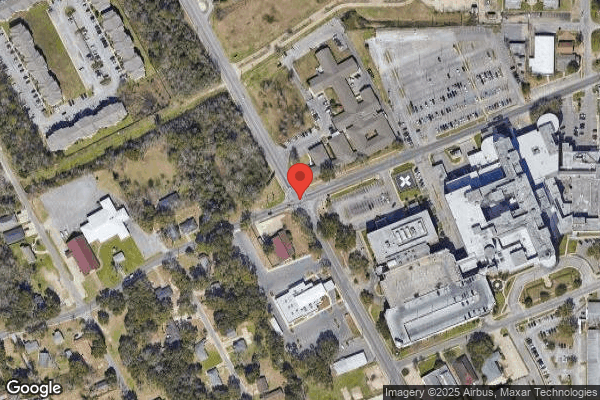
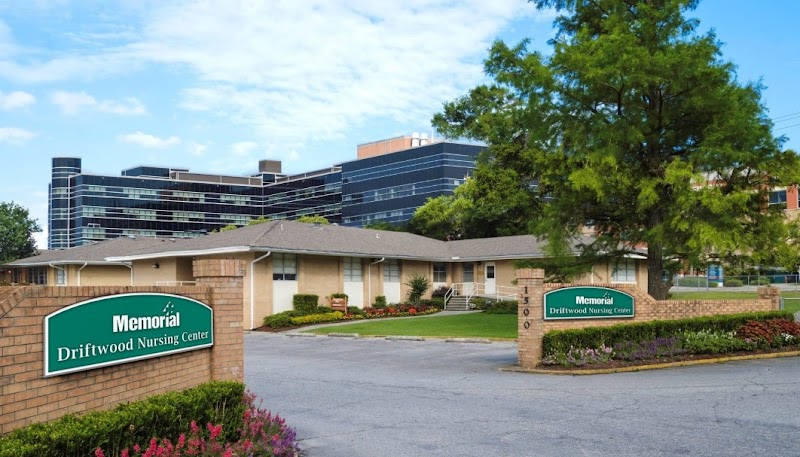
1500 BROAD AVENUE, GULFPORT, MS 39501 (228) 822-6900
Non profit - Other 151 Beds Independent Data: November 2025
Trust Grade
50/100
#113 of 200 in MS
Last Inspection: October 2024

Within standard 12-15 month inspection cycle. Federal law requires annual inspections.

Overview

Driftwood Nursing Center has a Trust Grade of C, which means it is considered average, falling in the middle of the pack among nursing homes. It ranks #113 out of 200 facilities in Mississippi, placing it in the bottom half, but it is #2 out of 6 in Harrison County, indicating it has some local competition. Unfortunately, the facility is worsening, with issues increasing from 3 in 2023 to 5 in 2024. Staffing is a significant concern, receiving a 1 out of 5 stars, with a turnover rate of 94%, much higher than the state average of 47%. On a positive note, the facility has not incurred any fines, which is a good sign, and it is noted for having more registered nurse coverage than many facilities, which helps in catching issues early. However, specific incidents raised concerns, such as a cook using the same thermometer for multiple food items without proper sanitization and failing to ensure that an indwelling catheter was clinically necessary for a resident. Additionally, there were delays in transmitting important assessments for many residents, which could affect their care plans.

Trust Score
C
50/100
In Mississippi
#113/200
Bottom 44%
Safety Record
Low Risk
No red flags
Inspections
Getting Worse
3 → 5 violations
Staff Stability
⚠ Watch
94% turnover. Very high, 46 points above average. Constant new faces learning your loved one's needs.
Penalties
✓ Good
No fines on record. Clean compliance history, better than most Mississippi facilities.
Skilled Nurses
○ Average
RN staffing data not reported for this facility.
Violations
○ Average
8 deficiencies on record. Average for a facility this size. Mostly minor or procedural issues.
★★☆☆☆
2.0
Overall Rating
★☆☆☆☆
1.0
Staff Levels
★☆☆☆☆
1.0
Care Quality
★★★★☆
4.0
Inspection Score
Stable
2023: 3 issues
2024: 5 issues

The Good

  • Full Sprinkler Coverage · Fire safety systems throughout facility
  • No fines on record

Facility shows strength in fire safety.

The Bad

2-Star Overall Rating

Below Mississippi average (2.6)

Below average - review inspection findings carefully

Staff Turnover: 94%

47pts above Mississippi avg (46%)

Frequent staff changes - ask about care continuity

Staff turnover is very high (94%)

46 points above Mississippi average of 48%

The Ugly 8 deficiencies on record

Oct 2024 3 deficiencies
CONCERN (D)

Potential for Harm - no one hurt, but risky conditions existed

Incontinence Care (Tag F0690)

Could have caused harm · This affected 1 resident

Based on observation, staff interview, record review, and facility policy review, the facility failed to ensure an indwelling urinary catheter was clinically indicated for one (1) of four (4) resident...

Read full inspector narrative →
Based on observation, staff interview, record review, and facility policy review, the facility failed to ensure an indwelling urinary catheter was clinically indicated for one (1) of four (4) residents observed with catheters. (Resident #87) Findings Include: A review of the facility's Appropriate Use of Indwelling Catheters Policy, dated 03/01/17, revealed: .An indwelling urinary catheter will be utilized only when a resident's clinical condition demonstrates that catheterization is necessary. Policy Explanation and Compliance Guidelines .4. The use of an indwelling urinary catheter will be in accordance with physician orders, which will include the diagnosis or clinical condition making the use of the catheter necessary .6. Documentation to support decision-making will be included in the medical record, including but not limited to: a. Clinical or medical conditions demonstrating the need for an indwelling catheter. b. Assessment of incontinence .d. Services provided to restore normal bladder function to the extent possible .7. Indwelling urinary catheters will be used on a short-term basis . During an observation on 10/29/24 at 11:00 AM, Resident #87 was observed lying in bed and had an indwelling catheter drainage bag on the side of the bed. A record review of the admission Record revealed the facility admitted Resident #87 on 09/14/24 with diagnoses including Cerebral Infarction. A record review of the Order Summary Report with active orders as of 10/30/24, revealed Resident # 87 had a physician order, dated 9/23/24 for a urinary catheter. A record review of the Progress Notes, dated 09/20/24 at 11:46 AM, revealed Resident #87 had a Nurse's Note indicating .Foley (type of indwelling catheter) cath (catheter) patent and draining clear yellow urine into drainage bag . This was the first documentation in the medical record which indicated Resident #87 had an indwelling catheter. Further review of the medical record revealed there was no documentation to explain when or why an indwelling catheter was placed for Resident #87. On 10/31/24 at 10:30 AM, during an interview with Licensed Practical Nurse (LPN) #2, she stated that she updated physician orders daily and recalled putting in the catheter orders for Resident #87 on 09/23/24 based on a charge nurse's request. However, she did not recall the diagnosis used for the catheter and suggested that the charge nurse may have provided the reason, though she was not certain. At 10:50 AM on 10/31/24, during an interview with LPN #1, she confirmed Resident #87 did not have an indwelling catheter when he was admitted by the facility. She explained that she had been off and when she returned to work, she noted Resident #87 had a catheter, and asked LPN #2 to enter the orders, though no diagnosis was given for the catheter. Upon reviewing the progress notes, she found documentation indicating a Urinalysis was collected on 09/20/24, suggesting the catheter placement occurred around that time, but confirmed there was no documentation specifying the reason for insertion. During an interview on 10/31/24 at 11:20 AM, the Director of Nursing (DON) confirmed Resident #87 did not have a sufficient diagnosis for an indwelling catheter. She had investigated the catheter's origin, suspecting an agency nurse placed it. The DON noted the lack of documentation regarding when or why the catheter was inserted and emphasized her expectation that staff document any changes in resident care and adhere to facility policies. At 11:45 AM on 10/31/24, during an interview with the facility's Nurse Practitioner (NP), she acknowledged awareness of the catheter issue with Resident #87. She explained that the nurse had contacted an on-call doctor, not her, about the catheter placement. She confirmed that urinary retention does not justify the use of an indwelling catheter.
CONCERN (D)

Potential for Harm - no one hurt, but risky conditions existed

Infection Control (Tag F0880)

Could have caused harm · This affected 1 resident

Based on observations, interviews, record reviews, and facility policy review, the facility failed to use enhanced barrier precautions (EBP) by not wearing the appropriate personal protective equipmen...

Read full inspector narrative →
Based on observations, interviews, record reviews, and facility policy review, the facility failed to use enhanced barrier precautions (EBP) by not wearing the appropriate personal protective equipment (PPE) during catheter care for one (1) of four (4) residents reviewed for catheter care. (Resident #87) Findings Include: A review of the facility's policy titled Enhanced Barrier Precautions, dated 05/01/24, revealed, .It is the policy of this facility to implement enhanced barrier precautions for the prevention of transmission of multidrug-resistant organisms. Definitions: 'Enhanced Barrier Precautions' (EBP) refer to an infection control intervention designed to reduce transmission of multidrug-resistant organisms that employs targeted gown and glove use during high-contact resident care activities . Policy Explanation and Compliance Guidelines .2. Initiation of Enhanced Barrier Precautions .b. an order for enhanced barrier precautions will be obtained for residents with any of the following .i .indwelling medical devices (e.g .urinary catheters . During an observation on 10/28/24 at 3:11 PM, Resident #87 was observed lying in bed and had an indwelling catheter drainage bag attached to the bed. There was a yellow dot present near the name of the resident on the outside of the resident's room. During an interview on 10/29/24 at 8:45 AM, Registered Nurse (RN) #1 explained that a yellow dot next to a resident's name in the hallway signifies that the resident is on EBP and explained that residents with openings such as wounds and catheters are on EBP and all staff have been in-serviced accordingly. At 1:50 PM on 10/30/24, Certified Nurse Aide (CNA) #1 and CNA #2 were observed providing catheter care to Resident #87, and did not wear a gown during the care. During an interview on 10/31/24 at 9:10 AM, RN #1 explained that all staff are expected to follow EBP by wearing a gown and gloves while providing care. She noted that PPE supplies are stored in a closet on each hall and are readily available to staff. During an interview on 10/31/24 at 9:50 AM, CNA #1 confirmed that a yellow dot next to a resident's name indicates EBP and that PPE, including gowns, must be worn while providing care. She admitted that she did not wear a gown during catheter care on 10/30/24 and stated that she just got nervous. She confirmed that PPE is available in the closet on the hall. During an interview on 10/31/24 at 11:20 AM, the Director of Nursing (DON) confirmed that enhanced barrier policies are in place and that all staff have been educated on these precautions. She emphasized her expectation that staff always adhere to EBP. At 12:10 PM on 10/31/24, during an interview with CNA #2, he admitted that he did not wear a gown while assisting with catheter care for Resident #87 on 10/30/24. He acknowledged being aware of EBP but stated he was focused on care and forgot to apply PPE. A record review of the admission Record revealed the facility admitted Resident #87 on 09/14/24 with diagnoses including Cerebral Infarction. A record review of the Order Summary Report with active orders as of 10/30/24, revealed Resident # 87 had a physician order, dated 9/23/24 for a urinary catheter.
CONCERN (F)

Potential for Harm - no one hurt, but risky conditions existed

Food Safety (Tag F0812)

Could have caused harm · This affected most or all residents

Based on observation and staff interview, the facility failed to ensure food temperatures were tested under sanitary conditions for one (1) of four (4) kitchen observations. Findings Include: During ...

Read full inspector narrative →
Based on observation and staff interview, the facility failed to ensure food temperatures were tested under sanitary conditions for one (1) of four (4) kitchen observations. Findings Include: During an observation of food temperature readings for the lunch meal on 10/30/24 at 11:45 AM in the kitchen area, the cook was observed using a thermometer to check the temperature of the macaroni and cheese. After testing the temperature, the cook wiped the thermometer on a clean towel. The same thermometer was then used to test the baked chicken, green peas, pureed chicken, and mashed potatoes, with the cook wiping the thermometer on the same towel after each test without sanitizing it. During an interview on 10/31/24 at 09:00 AM, the cook stated she had been cooking at the facility for six (6) months and had been cleaning the thermometer with a clean, dry towel during that time. She was uncertain if she had been specifically trained on sanitizing the thermometer, mentioning that numerous in-services were conducted, but she could not recall specific sanitation training. The cook further stated that she was informed by the Dietary Manager (DM) that failing to sanitize the thermometer could lead to cross-contamination and risk residents becoming ill. During an interview on 10/31/24 at 09:30 AM, the DM confirmed that the cook failed to sanitize the thermometer between food items. She stated that the cook was trained to dip the thermometer in a sanitation solution and dry it after each test. However, she acknowledged that no official in-service documentation was available, as training was often conducted informally through verbal instructions. During an interview on 10/31/24 at 10:00 AM, the Registered Dietitian stated that staff are instructed to sanitize thermometers by dipping them in a sanitizing solution and drying them between each food item. She confirmed that the cook should have sanitized the thermometer after testing each item. During an interview on 10/31/24 at 2:30 PM, the Administrator expressed an expectation that kitchen staff sanitize thermometers between food items to prevent cross-contamination.
Aug 2024 1 deficiency
CONCERN (D) 📢 Someone Reported This

A family member, employee, or ombudsman was alarmed enough to file a formal complaint

Potential for Harm - no one hurt, but risky conditions existed

Deficiency F0602 (Tag F0602)

Could have caused harm · This affected 1 resident

Based on interviews, record review, and facility policy review, the facility failed to ensure a resident's right to be free from misappropriation when facility staff used a resident's credit card to p...

Read full inspector narrative →
Based on interviews, record review, and facility policy review, the facility failed to ensure a resident's right to be free from misappropriation when facility staff used a resident's credit card to purchase goods or services without the consent or authorization of the resident for one (1) of five (5) sampled residents, Resident #1. Based on the facility's implementation of corrective actions, the State Agency (SA) determined the deficiency to be Past Non-Compliance (PNC) as of 6/29/24, prior to the SA's entrance on 8/19/24. Findings Include: A review of the facility's policy, Abuse Neglect and Exploitation, dated 10/01/22, revealed that .It is the policy of this facility to provide protections for the health, welfare and rights of each resident by developing and implementing written policies and procedures that prohibit and prevent .exploitation of resident property .Definitions .Misappropriation of Resident Property means the deliberate misplacement, exploitation, or wrongful temporary or permanent use of a resident's belongings or money without the resident's consent .Prevention of Abuse Neglect and Exploitation .The facility will implement policies and procedures to prevent and prohibit all types of abuse, neglect, misappropriation of resident property, and exploitation that achieves .addressing features of the physical environment that may make abuse, neglect, exploitation, and misappropriation of resident property more likely to occur; and assigning responsibility for the supervision of staff on all shifts for identifying inappropriate staff behaviors . A record review of the Facility Investigation Summary revealed that Registered Nurse (RN) #1 and the Administrator received a report from the RR for Resident #1 on 6/24/24 that there were suspicious charges on the resident's credit card statements. The Administrator obtained the credit card from the resident and locked it up securely. The Administrator reviewed the resident's credit card statements with the Resident and her RR and determined that there were $330.10 in suspicious charges to a local spa, nail salon, and restaurants. Detective #1 with the local police department responded on 7/25/24 and notified the Administrator that Certified Nursing Assistant (CNA) #1 had been arrested and that subpoenaed information on the CNA's personal cell phone revealed that she had a photograph of the resident's credit card saved on the phone. The Summary included reimbursement of all monies fraudulently charged on Resident #1's credit card. A record review of the admission Record for Resident #1 revealed that the facility admitted the resident on 2/28/24, and she had current diagnoses including Diabetes and Atrial Fibrillation. A record review of the Quarterly Minimum Data Set (MDS) for Resident #1 with an Assessment Reference Date (ARD) of 7/22/24 revealed a Brief Interview for Mental Status (BIMS) score of fourteen (14), which indicated no cognitive impairment. A record review of the personnel file for CNA #1 revealed the CNA was hired at the facility on 4/22/24, and her employment at the facility was terminated on 6/21/24, three (3) days prior to the discovery of suspicious charges on Resident #1's credit card. CNA #1's personnel file included no disciplinary actions prior to the termination of employment effective on 6/21/24, documentation of a background record found no violations that prevented her from working with residents served by a nursing home, and an Orientation Checklist dated 4/22/24 signed by the CNA, indicating that she had received information that included Resident Rights and Abuse, Neglect, and Exploitation Prevention and Protection and acknowledged complete understanding and agreement to comply accordingly. A record review of Historical Employee Clocking and Schedules from 4/17/24 to 8/19/24 for CNA #1 revealed that 6/05/24 was the last day the CNA clocked in for duty at the facility. On 8/19/24 at 10:00 AM, during an interview, Resident #1 revealed that her son (and RR) was her power of attorney and received and paid her bills. She said that she was shocked to find that her credit card had charges at a local spa, nail salon, and restaurants in May 2024. She said, It never dawned on me that anyone would do such a thing. She said that she never gave her card to anyone and always kept it in her purse in her room. She reported that she watched a home shopping channel on television and used the card for purchases from the program. She said that she had not been to a spa, nail salon, or out to any restaurants in May 2024. She said she had not given her card to anyone to use for any purpose. She said she remembered CNA #1 and had thought that she was a sweet girl. She reported that she never had any suspicion that her credit card had been compromised, photographed, or used without her authorization. Regarding the response of the facility, Resident #1 stated, I feel like they took care of it correctly. She stated that she had received reimbursement for all unauthorized charges. She denied feeling unsafe at the facility or fear of future misappropriation of property. She said she felt safe at the facility and that her belongings were secure and that everything had been taken care of. On 8/19/24 at 11:42 AM, during a telephone interview, the Resident Representative (RR) for Resident #1 stated that he had notified RN #1 and the Administrator on 6/24/24 after a review of Resident #1's credit card statements for May and June of 2024 revealed suspicious charges. He said he provided copies of the resident's credit card statements, which included charges at a local spa, nail salon, and restaurants during the resident's residence at the facility. He said that the Administrator contacted him on 7/25/24 and reported that CNA #1 had been identified as the person who had used Resident #1's credit card without authorization. He stated that Resident #1 had received restitution for all fraudulent charges. On 8/20/24 at 12:20 PM, during a telephone interview, Detective #1 confirmed that he had spoken with the Administrator and confirmed that Resident #1 was a vulnerable adult who resided at the facility and that CNA #1 had been employed at the facility in direct care from 4/22/24 through 6/05/24. He confirmed that the Administrator had reported an allegation of misappropriation of resident property on 6/24/24. He explained that the investigation led to the discovery that CNA #1 had pictures of Resident #1's credit card on her personal cell phone. Detective #1 said that CNA #1 had a prior arrest for similar charges involving a vulnerable adult, not a resident at the facility, days before being arrested for making unauthorized charges using Resident #1's credit card. The detective said that no police report was available until the investigation was concluded and that he was still investigating information discovered on CNA #1's cell phone regarding individuals who did not reside at the facility. He said he did not have the arrest date, and no court date had been set at the time of the interview. On 8/20/24 at 3:10 PM, during an interview, the Director of Nurses (DON) stated that the facility had provided in-service training regarding Resident Rights and Abuse, Neglect, and Misappropriation of Property after the event and usually completes this type of in-service at least monthly. The in-service included instructions that residents' belongings be respected and protected and that any allegations or signs/symptoms of abuse, neglect, or misappropriation of resident property be reported immediately to a supervisor, DON, or Administrator. A record review of the Quality Assurance and Improvement (QAPI) Committee Meeting Minutes dated 6/28/24 with attached sign-in sheets revealed that during the meeting attended by the facility Medical Director, Administrator, DON, and Infection Preventionist, the committee reviewed the incident and related policies and procedures and made no recommendations for changes. On 8/20/24 at 3:25 PM, during an interview, the Administrator stated that a mandatory in-service titled Abuse, Neglect and Misappropriation Prevention and Protection was provided by the facility to all facility staff on 6/25/24 and 6/26/24 and was completed on 6/26/24. The notifications were made to the SA, Attorney Generals Office (AGO), and local law enforcement. The Administrator also stated other residents were interviewed to make there were no other victims of misappropriation by CNA #1. On 8/2024, the SA validated through record reviews and interviews that the facility investigated the allegation of misappropriation when it was made by the RR, CNA #1 had voluntarily terminated her employment at the facility prior to the allegation being made, the appropriate agencies were notified timely, in-services were conducted for all staff, and a QAPI was held on 6/28/24 to review the incident. The SA determined that corrective actions were completed on 6/28/24 and the facility was in compliance effective 6/29/24, prior to the SA entrance on 8/19/24.
Jun 2024 1 deficiency
CONCERN (D) 📢 Someone Reported This

A family member, employee, or ombudsman was alarmed enough to file a formal complaint

Potential for Harm - no one hurt, but risky conditions existed

Accident Prevention (Tag F0689)

Could have caused harm · This affected 1 resident

Based on staff interviews, record review, and the facility policy review, the facility failed to develop appropriate interventions for a cognitively impaired resident after a fall to prevent reoccurre...

Read full inspector narrative →
Based on staff interviews, record review, and the facility policy review, the facility failed to develop appropriate interventions for a cognitively impaired resident after a fall to prevent reoccurrence for one (1) of three (3) sampled residents. Resident #1 Findings include: A record review of the facility's policy Fall Risk Assessment with revised date 01/05/24 revealed . It is the policy of this facility to provide an environment that is free from accidents and hazards .Policy Explanation and Compliance Guidelines: . 4. The At Risk for Falls care plan will include interventions, including adequate supervision, consistent with a resident's needs, goals, and current standards of practice in order to reduce the risk of an accident . A record review of the Witnessed Fall Report dated 05/15/24 revealed Resident #1 had a fall in the hallway. When the staff asked Resident #1 what had happened, he indicated that he did not know. A record review of the Witnessed Fall Report dated 05/23/24 revealed Resident #1 had a fall in his room. The resident's roommate stated that the resident was trying to get in the bed. A record review of the Quarterly Minimum Data Set (MDS) with an Assessment Reference Date (ARD) of 04/08/24 revealed Resident #1's cognitive skills for daily decision making were moderately impaired. Record review of the care plan with an initiation date of 10/31/23 revealed Problem Falls: At risk for falls r/t (related to) .cognitive impairment Interventions: Be sure the resident's call light is within reach and encourage the resident to use it for assistance as needed .date initiated 5/20/2024 .Educate resident/family/caregivers about safety reminders and what to do if a fall occurs. Date initiated 5/24/24 . The care plan indicated Resident #1 had a witnessed fall out to the wheelchair on 5/15/24 and another witnessed fall on 5/23/24 transferring from the wheelchair to bed unassisted. At 12:10 PM on 06/27/24, during an interview with the Director of Nursing (DON), she confirmed Resident #1 was severely cognitively impaired and had memory loss. She explained he did not say many words but would answer yes and no questions. She stated she did not think Resident #1 could remember to use the call light or remember safety education provided to him. The DON reviewed Resident #1's care plan and confirmed after the resident's fall on 05/15/24 the intervention that was developed was to keep the call light within reach and encourage the resident to use it. The DON confirmed that was not appropriate for Resident #1 because of his cognitive impairment. She also confirmed the intervention initiated on 05/24/23 after the resident's second fall that was developed was to educate the resident about safety reminders and confirmed that was also not appropriate. She stated she expected care plan interventions to reflect the resident's individual needs and the care plan nurse to develop interventions that are appropriate for residents. On 06/27/24 at 12:35 PM, during an interview with Registered Nurse (RN) #1, she stated she was responsible for developing care plan interventions after a resident had a fall. She confirmed care plan interventions for Resident #1 included safety education and to encourage the resident to use the call light. She confirmed Resident #1 had memory problems and was oriented only to person. Resident #1 could not remember things and if his call light was in reach, he was cognitively impaired and would not know or remember how to use it. On 06/27/24 at 4:30 PM, during an interview with the Administrator, she explained the facility discussed falls and interventions daily and she expected the care plan nurse to add appropriate interventions to resident care plans to prevent future falls. A record review of the admission Record revealed the facility admitted Resident #1 on 07/19/2022 with diagnoses that included Hemiplegia and Hemiparesis.
Mar 2023 3 deficiencies
CONCERN (D)

Potential for Harm - no one hurt, but risky conditions existed

Deficiency F0567 (Tag F0567)

Could have caused harm · This affected 1 resident

Based on interviews, record review and facility policy review, the facility failed to ensure a resident had ready and reasonable access to personal funds for one (1) of 24 sampled residents, Resident ...

Read full inspector narrative →
Based on interviews, record review and facility policy review, the facility failed to ensure a resident had ready and reasonable access to personal funds for one (1) of 24 sampled residents, Resident #68 Findings include: A review of the facility's policy, (Proper Name of Facility) - Resident Personal Funds, implemented on 2/1/22, revealed the policy did not contain information regarding ready and reasonable access to personal funds for residents. On 02/27/23 at 11:39 AM, in an interview with Resident #68, he stated that he cannot get money from his personal funds on the weekend because the office staff is not at the facility on weekends. On 03/02/23 at 10:42 AM, in an interview with the Administrative Assistant (AA), she stated she is responsible for the residents' personal trust fund accounts. She said that the Activities Director (AD) also has access to $85 and will issue personal funds to the residents. The AA stated that she works Monday through Friday, from 8:00 AM until 4:30 PM and the AD works on the weekends at times. On 03/02/23 at 10:50 AM, in an interview with the AD, she confirmed that she has $85.00 to issue to residents and that she and the AA are the only staff who have access to the residents' personal fund account. She also confirmed that she works one weekend a month. She explained that the residents know to ask for any money they may need for the weekend by Friday of each week because there is no one at the facility to give the residents money. On 03/02/23 at 11:36 AM, in an interview with the AA, she confirmed that no other staff have access to resident personal funds on weekends and that resident ask for any money they may need for the weekend by Friday. On 03/02/23 at 1:12 PM, in an interview with the Administrator, she stated that residents are supposed to have access to their money on weekends and she was unaware that they did not. She explained that the facility has Management staff at the facility seven (7) days a week. On 03/02/23 at 1:20 PM, in an interview with the Corporate Administrator, she confirmed that weekend management does not have access to see if residents have money available in their personal fund account. Record review of the Face Sheet revealed the facility admitted Resident #68 on 8/03/22 with a diagnosis of Chronic Obstructive Pulmonary Disease. Record review of the Quarterly Minimum Data Set (MDS) with an Assessment Reference Date (ARD) of 11/08/22 revealed Resident #68 had Brief Interview for Mental Status (BIMS) score of 12, which indicated his cognition was moderately Impaired. Record review of the Trust Fund Trial Balance report revealed Resident #68 had a personal trust account at the facility. Record review of the Trust Fund Transaction List with transaction dates from 2/1/23 through 2/28/23 revealed that no resident trust fund transactions took place on a weekend for February 2023.
CONCERN (D)

Potential for Harm - no one hurt, but risky conditions existed

Deficiency F0645 (Tag F0645)

Could have caused harm · This affected 1 resident

Based on staff and resident interviews, record review and facility policy review the facility failed to complete a Pre-admission Screening and Resident Review (PASRR) Level II for one (1) of three (3)...

Read full inspector narrative →
Based on staff and resident interviews, record review and facility policy review the facility failed to complete a Pre-admission Screening and Resident Review (PASRR) Level II for one (1) of three (3) PASRRs reviewed. Resident #6 Findings include: Record review of the facility policy titled, (Proper Name of Facility)-Resident Assessment in Coordination with PASRR Program with a revision date of 02/01/2019 revealed, .Policy Explanation and Compliance Guidelines: 1. All applicants to this facility will be screened for serious mental disorders or intellectual disabilities and related conditions in accordance with the State's Medicaid rules for screening .a. ii. Positive Level I Screen-necessitates a PASRR Level II evaluation prior to admission. b. PASRR Level II-a comprehensive evaluation by the appropriate state-designated authority (cannot be completed by the facility) that determines whether the individual has MD (Mental Disorder) , ID (Intellectual Disorder) or related condition, determines the appropriate setting for the individual, and recommends any specialized services and/or rehabilitative services the individual needs . An interview on 2/28/23 at 2:30 PM, with Social Services (SS) #1, revealed she could not find the completed PASRR Level II for Resident #6, but she had called the Qualified Independent Contractor (QIC) and spoke with a Representative. She revealed that the QIC Representative implied that the PASRR Level II had been completed and she would fax a copy to the facility. She said that once the facility receives a written notice for a need for a Level II, the QIC will call them to set up the assessment via a telephone call. An interview on 3/1/23 at 9:30 AM, with SS #1, revealed that Resident #6 should have had a PASRR Level II completed in June of 2022. The QIC did call to complete the Level II at some point, but the resident was in the hospital and SS #1 did not follow up once the resident returned to the facility to ensure the Level II was completed. She confirmed that the resident had a diagnosis of Schizophrenia on admission and the purpose of a PASRR Level II is to get the guidance from the QIC regarding specific care for the resident. She revealed that the resident not having his PASRR Level II completed could have caused the resident's care to be lacking, because the facility would not have known if there were any additional services recommended. An interview on 3/1/23 at 10:25 AM, with the Director of Nurses (DON), confirmed that Resident #6 had a diagnosis of Paranoid Schizophrenia and Post Traumatic Stress Disorder (PTSD). She confirmed that if the resident needed a PASRR Level II screening, then the resident should have had it done. She confirmed that if the resident had not had the PASRR Level II then a lot of things could have happened, such as behaviors that could have affected the resident or other resident's and the resident would not have received the services that were recommended based on the PASRR Level II assessment. An interview on 3/1/23 at 2:15 PM, with the Administrator, revealed the purpose of the PASSR is to determine if the residents are appropriate for nursing home placement. She revealed that a PASRR Level II is used to determine any special services that the resident may need based on their diagnosis. She revealed that if the resident had a diagnosis of Paranoid Schizophrenia and PTSD and did not get a PASRR Level II, then the resident might have missed some needed services. Record review of the Face Sheet revealed the facility admitted Resident #6 on 3/23/22 and he had medical diagnoses that included Paranoid Schizophrenia, Anxiety Disorder, Unspecified, and Post-Traumatic Stress Disorder, Unspecified. Record review of the Pre-admission Screen (PAS) for Resident #6, dated 03/22/22, revealed the PAS was completed by hospital staff prior to admission to the facility and did not indicate the resident had a medical diagnosis of a mental illness. Record review of the Pre-admission Screen which was electronically submitted on 05/30/2022 after admission to the facility, revealed Resident #6 had a major mental illness. Record review of a notice from the QIC revealed, Notice of Need for Level II PASRR Screen with a Review Date of 6/3/22, which indicated Resident #6 required a Level II evaluation. Record review of a notice from the QIC revealed, Notice of Need for Level II PASRR Screen with a Review Date of 2/28/23, which indicated Resident #6 required a Level II evaluation. This document was faxed by the QIC on 2/28/23 after the inquiry by SS #1.
CONCERN (E)

Potential for Harm - no one hurt, but risky conditions existed

MDS Data Transmission (Tag F0640)

Could have caused harm · This affected multiple residents

Based on staff interviews, record reviews, and facility policy review, the facility failed to transmit Minimum Data Set (MDS) Assessments by their target date, for 19 of 24 residents reviewed for MDS ...

Read full inspector narrative →
Based on staff interviews, record reviews, and facility policy review, the facility failed to transmit Minimum Data Set (MDS) Assessments by their target date, for 19 of 24 residents reviewed for MDS assessments. Resident #1, #2, #4, #17, #25, #32, #36, #37, #62, #65, #69, #72, #74, #78, #79, #83, #86, #93, and #104. Findings include: Review of the Memorial Driftwood Nursing Center MDS Policy with a revision date of 06/30/2019 revealed, Standard: .IX. Transmission of MDS .All MDS will be transmitted .i. Comprehensive assessments must be transmitted electronically within 14 days of the Care Plan completion date .ii. All other MDS assessments must be submitted within 14 days of the MDS completion date . Record review of MDS Assessments on 2/27/23, revealed the following: 1. The quarterly assessment for Resident #1 with a target date of 1/23/23, and the discharge MDS with a target date of 1/24/23, had not been transmitted. 2. The quarterly assessment for Resident # 2, with a target date of 1/20/23, had not been transmitted. 3. The quarterly assessment for Resident #4, with a target date of 1/2/23, had not been transmitted. 4. The quarterly assessment for Resident #17, with a target date of 1/25/23, had not been transmitted. 5. The yearly assessment for Resident #25, with a target date of 1/20/23, had not been submitted. 6. The quarterly assessment for Resident #32, with a target date of 1/13/23, had not been transmitted. 7. The quarterly assessment for Resident #36, with a target date of 1/18/23, had not been transmitted. 8. The annual assessment for Resident #37, with a target date of 1/16/23, had not been transmitted. 9. The quarterly assessment for Resident #62, with a target date of 1/10/23, had not been transmitted. 10. The quarterly assessment for Resident #65, with a target date of 1/11/23, had not been transmitted. 11. The quarterly assessment for Resident #69, with a target date of 1/22/23, had not been transmitted. 12. The quarterly assessment for Resident #72, with a target date of 1/10/23, had not been transmitted. 13. The annual assessment for Resident #74, with a target date of 1/12/23, had not been transmitted. 14. The quarterly assessment for Resident #78, with a target date of 1/17/23, had not been transmitted. 15. The quarterly assessment for Resident #79, with a target date of 1/24/23, had not been transmitted. 16. The quarterly assessment for Resident #83, with a target date of 1/13/23, had not been transmitted. 17. The quarterly assessment for Resident #86, with a target date of 1/17/23, had not been transmitted. 18. The Resident quarterly assessment for Resident #93, with a target date of 1/18/23, had not been transmitted. 19. The quarterly assessment for resident #104, with a target date of 1/23/23, had not been transmitted. An interview on 3/1/23, at 3:30 PM, with the Registered Nurse/MDS Coordinator and RN #1, revealed they are responsible for transmitting MDS assessments. They confirmed that they had completed the assessments but had not had enough uninterrupted time in their office to input the assessments and transmit them. The MDS-RN Coordinator revealed that she had notified the Corporate Administrator that they were behind in their MDS responsibilities. In an interview on 3/1/23, at 3:50 PM, with the Corporate Administrator, she confirmed that in January, the MDS-RN Coordinator had made her aware that they were behind in their work. She stated that the MDS nurses admitted that they had many times left their office to assist some of the lesser experienced nurses during the time the facility had been without a Director of Nurses (DON). The Corporate Administrator revealed that she had not put anything in place to ensure the MDS staff were provided the time that they needed to complete their responsibilities. She confirmed that the purpose of the MDS assessments is for case mix and if not done, it could lead to issues related to resident care and proper funding. During an interview on 3/1/23 at 4:12 PM, with the Administrator, she revealed that she knew that the MDS staff had been behind in their work in January, however, she was unaware that they were currently behind. The Administrator admitted that during the time the facility was without a DON, the MDS nurses had assisted as needed, but that the facility had not been short staffed enough to require the MDS nurses to have to do anything that would prevent them from doing their job. The Administrator stated the purpose of the MDS assessments is to determine the care needed for the residents and ensure payment.
Understanding Severity Codes (click to expand)
Life-Threatening (Immediate Jeopardy)
J - Isolated K - Pattern L - Widespread
Actual Harm
G - Isolated H - Pattern I - Widespread
Potential for Harm
D - Isolated E - Pattern F - Widespread
No Harm (Minor)
A - Isolated B - Pattern C - Widespread

Questions to Ask on Your Visit

  • "Why is there high staff turnover? How do you retain staff?"
  • "Can I speak with families of current residents?"
  • "What's your RN coverage like on weekends and overnight?"

Our Honest Assessment

Strengths
  • • No major safety red flags. No abuse findings, life-threatening violations, or SFF status.
  • • No fines on record. Clean compliance history, better than most Mississippi facilities.
Concerns
  • • Grade C (50/100). Below average facility with significant concerns.
  • • 94% turnover. Very high, 46 points above average. Constant new faces learning your loved one's needs.
Bottom line: Mixed indicators with Trust Score of 50/100. Visit in person and ask pointed questions.

About This Facility

What is Driftwood Nursing Center's CMS Rating?

CMS assigns DRIFTWOOD NURSING CENTER an overall rating of 2 out of 5 stars, which is considered below average nationally. Within Mississippi, this rating places the facility higher than 0% of the state's 100 nursing homes. A rating at this level reflects concerns identified through health inspections, staffing assessments, or quality measures that families should carefully consider.
How is Driftwood Nursing Center Staffed?

CMS rates DRIFTWOOD NURSING CENTER's staffing level at 1 out of 5 stars, which is much below average compared to other nursing homes. Staff turnover is 94%, which is 47 percentage points above the Mississippi average of 46%. High turnover can affect care consistency as new staff learn residents' individual needs. RN turnover specifically is 100%, which is notably high. RNs provide skilled clinical oversight, so turnover in this role can affect medical care quality.

What Have Inspectors Found at Driftwood Nursing Center?

State health inspectors documented 8 deficiencies at DRIFTWOOD NURSING CENTER during 2023 to 2024. These included: 8 with potential for harm.

Who Owns and Operates Driftwood Nursing Center?

DRIFTWOOD NURSING CENTER is owned by a non-profit organization. Non-profit facilities reinvest revenue into operations rather than distributing to shareholders. The facility operates independently rather than as part of a larger chain. With 151 certified beds and approximately 116 residents (about 77% occupancy), it is a mid-sized facility located in GULFPORT, Mississippi.

How Does Driftwood Nursing Center Compare to Other Mississippi Nursing Homes?

Compared to the 100 nursing homes in Mississippi, DRIFTWOOD NURSING CENTER's overall rating (2 stars) is below the state average of 2.6, staff turnover (94%) is significantly higher than the state average of 46%, and health inspection rating (4 stars) is above the national benchmark.

What Should Families Ask When Visiting Driftwood Nursing Center?

Based on this facility's data, families visiting should ask: "How do you ensure continuity of care given staff turnover, and what is your staff retention strategy?" "Can you walk me through typical staffing levels on day, evening, and night shifts?" "Can I visit during a mealtime to observe dining assistance and food quality?" "How do you handle medical emergencies, and what is your hospital transfer rate?" These questions are particularly relevant given the facility's high staff turnover rate and the below-average staffing rating.

Is Driftwood Nursing Center Safe?

Based on CMS inspection data, DRIFTWOOD NURSING CENTER has a clean safety record: no substantiated abuse findings (meaning no confirmed cases of resident harm), no Immediate Jeopardy citations (the most serious violation level indicating risk of serious injury or death), and is not on the Special Focus Facility watch list (a federal program monitoring the lowest-performing 1% of nursing homes). The facility has a 2-star overall rating and ranks #100 of 100 nursing homes in Mississippi. While no facility is perfect, families should still ask about staff-to-resident ratios and recent inspection results during their visit.

Do Nurses at Driftwood Nursing Center Stick Around?

Staff turnover at DRIFTWOOD NURSING CENTER is high. At 94%, the facility is 47 percentage points above the Mississippi average of 46%. Registered Nurse turnover is particularly concerning at 100%. RNs handle complex medical decisions and coordinate care — frequent RN changes can directly impact care quality. High turnover means new staff may not know residents' individual needs, medications, or preferences. It can also be disorienting for residents, especially those with dementia who rely on familiar faces. Families should ask: What is causing the turnover? What retention programs are in place? How do you ensure care continuity during staff transitions?

Was Driftwood Nursing Center Ever Fined?

DRIFTWOOD NURSING CENTER has no federal fines on record. CMS issues fines when nursing homes fail to meet care standards or don't correct problems found during inspections. The absence of fines suggests the facility has either maintained compliance or corrected any issues before penalties were assessed. This is a positive indicator, though families should still review recent inspection reports for the full picture.

Is Driftwood Nursing Center on Any Federal Watch List?

DRIFTWOOD NURSING CENTER is not on any federal watch list. The most significant is the Special Focus Facility (SFF) program, which identifies the bottom 1% of nursing homes nationally based on persistent, serious quality problems. Not being on this list means the facility has avoided the pattern of deficiencies that triggers enhanced federal oversight. This is a positive indicator, though families should still review the facility's inspection history directly.