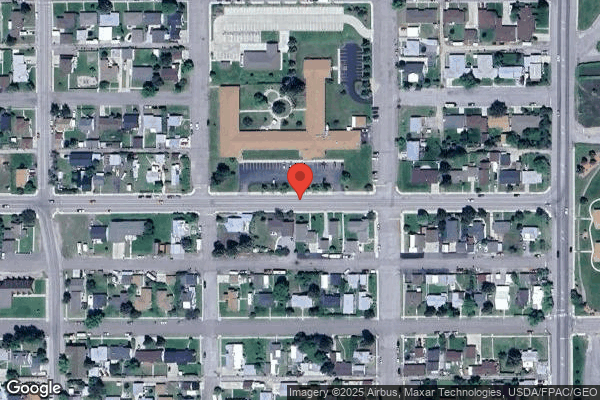

CREST NURSING HOME

3131 AMHERST AVE, BUTTE, MT 59701 (406) 494-7035
For profit - Corporation 103 Beds REAL PROPERTY HEALTH FACILITIES Data: November 2025
Trust Grade
85/100
#3 of 59 in MT
Last Inspection: April 2025

Within standard 12-15 month inspection cycle. Federal law requires annual inspections.

Overview

Crest Nursing Home in Butte, Montana, has a Trust Grade of B+, which means it is above average and recommended for families considering care options. It ranks #3 out of 59 facilities in Montana and #1 out of 4 in Silver Bow County, placing it in the top half of options available. However, the facility is experiencing a worsening trend, with the number of issues found increasing from 2 in 2024 to 4 in 2025. While it boasts excellent overall star ratings and has no fines, its staffing rating is concerning at only 2 out of 5 stars, coupled with a high turnover rate of 67%, which is above the state average. Specific issues included failures in oxygen management, such as staff administering too much oxygen to residents and not replacing empty oxygen tanks, which posed risks to residents' health. Additionally, oxygen tubing was not changed or labeled properly, increasing the risk of respiratory issues. Despite these weaknesses, the high RN coverage and excellent quality measures highlight some strengths in the facility's care.

Trust Score
B+
85/100
In Montana
#3/59
Top 5%
Safety Record
Low Risk
No red flags
Inspections
Getting Worse
2 → 4 violations
Staff Stability
⚠ Watch
67% turnover. Above average. Higher turnover means staff may not know residents' routines.
Penalties
✓ Good
No fines on record. Clean compliance history, better than most Montana facilities.
Skilled Nurses
⚠ Watch
Each resident gets only 29 minutes of Registered Nurse (RN) attention daily — below average for Montana. Fewer RN minutes means fewer trained eyes watching for problems.
Violations
○ Average
6 deficiencies on record. Average for a facility this size. Mostly minor or procedural issues.
★★★★★
5.0
Overall Rating
★★☆☆☆
2.0
Staff Levels
★★★★★
5.0
Care Quality
★★★★★
5.0
Inspection Score
Stable
2024: 2 issues
2025: 4 issues

The Good

  • 5-Star Quality Measures · Strong clinical quality outcomes
  • Full Sprinkler Coverage · Fire safety systems throughout facility
  • No fines on record

Facility shows strength in quality measures, fire safety.

The Bad

Staff Turnover: 67%

21pts above Montana avg (46%)

Frequent staff changes - ask about care continuity

Chain: REAL PROPERTY HEALTH FACILITIES

Part of a multi-facility chain

Ask about local staffing decisions and management

Staff turnover is elevated (67%)

19 points above Montana average of 48%

The Ugly 6 deficiencies on record

Apr 2025 2 deficiencies
CONCERN (D)

Potential for Harm - no one hurt, but risky conditions existed

Medical Records (Tag F0842)

Could have caused harm · This affected 1 resident

Based on observation, interview, and record review, the facility failed to ensure a resident's medical record was accurate for 1 (#36) of 15 sampled residents when an unsigned POLST was removed, but t...

Read full inspector narrative →
Based on observation, interview, and record review, the facility failed to ensure a resident's medical record was accurate for 1 (#36) of 15 sampled residents when an unsigned POLST was removed, but then replaced, in the residents active medical record. Findings Include: During an observation and record review on 4/8/25 at 10:06 a.m., resident #36's hard chart had a green POLST form under the front tab. The POLST showed the selections of DNR, selective treatment, and no tube feeding, and it was signed by resident #36 on 5/20/24. There was no physician signature, therefore, the POLST would be invalid. During an interview on 4/9/25 at 10:09 a.m., staff member F stated in the event of a resident emergency they would check the POLST in the hard chart unless they already had the EMR pulled up to check the code status. The POLST was checked because that, and the facesheet, would be provided to emergency services. During an interview on 4/9/25 at 10:18 a.m., staff member C stated since she started in the position she was directed to have the residents fill out a new POLST and advance directive information to make it accurate and up to date. Once the resident completed the POLST their choice of code status was added to the EMR before the provider signed the POLST. During an interview on 4/10/25 at 10:10 a.m., staff member A stated resident #36's POLST was not signed due to her identifying the resident did not have the mental capacity to make healthcare decisions. Staff member A stated she took the POLST out of her hard chart and somehow it was put back in. Review of resident #36's hard chart showed the green POLST, dated 5/20/24, not signed by a provider still in the chart.
CONCERN (D)

Potential for Harm - no one hurt, but risky conditions existed

Deficiency F0847 (Tag F0847)

Could have caused harm · This affected 1 resident

Based on interview and record review, the facility failed to remove or replace binding arbitration language as required from the facility admission agreement, for 2 (#s 36 and 198) of 2 sampled reside...

Read full inspector narrative →
Based on interview and record review, the facility failed to remove or replace binding arbitration language as required from the facility admission agreement, for 2 (#s 36 and 198) of 2 sampled residents for arbitration agreements. This deficiency had the potential to affect all residents being admitted to the facility signing the admission agreement. Findings Include: During an interview on 4/7/25 at 11:50 a.m., staff member A stated the facility did not do arbitration at all. Staff member A stated the arbitration information was taken out of the admission agreements when the law was changed. During an interview on 4/8/25 at 4:35 p.m., staff member A stated she was directed to leave in the arbitration parts of the admission agreement and just handwrite an 'N/A' by each section related to arbitration. She directed her staff not to review the arbitration information since they no longer did arbitration. During an interview on 4/9/25 at 10:18 a.m., staff member C stated from her understanding, since she started, she was to use the admission agreement copies with the N/A by the binding arbitration areas in the miscellaneous section and not review it with residents or representatives. Review of the facility document, Resident admission Agreement: VIII Miscellaneous, not dated, showed on page two for the resident or representative authorized to sign the agreement, .to enter into and bind the Resident to each and every term and condition of this Agreement and its Exhibits, both financial and non-financial, including Section VIII.G. (Arbitration of All Disputes) and its accompanying Exhibit A, without restriction whatsoever. the Representative understand and acknowledges that this Facility will seek to enforce, without exception, the terms and conditions of this agreement and its Exhibits in full and reasonable reliance thereof. Under VIII. Miscellaneous sections, E. BINDING ON PARTIES AND OTHERS . F. GOVERNING LAW . G. ARBITRATION OF ALL DISPUTES . H. WAIVER OF JURY TRIAL . I. SURVIVAL OF AGREEMENTS TO ARBITRATE . J a. Binding Arbitration Agreement . [sic] each had a handwritten N/A over the letter headings with all binding arbitration verbiage still listed. The only area for signature was on the last page of the attached exhibit with arbitration. The required information for having arbitration agreements was not in the document. There were no dates or initials to show when the arbitration parts were no longer included or for residents or their representatives to decline those areas. Review of signed resident admission agreements for residents #36 and #198, showed each agreement on the first page had a paragraph that stipulated they were consenting to enter into a binding agreement including arbitration. Each had a different handwritten N/A by the sections for binding arbitration. The arbitration language did not include the required information and declination for residents or their representatives. No other initials or dates to show when or who put N/A for the binding arbitration sections of the admission agreement. The only signature line was to accept the agreement. Resident #36's admission agreement with the arbitration language was signed on 5/20/24. Resident #198's admission agreement with the arbitration language was signed on 3/31/25.
Mar 2025 2 deficiencies
CONCERN (E) 📢 Someone Reported This

A family member, employee, or ombudsman was alarmed enough to file a formal complaint

Potential for Harm - no one hurt, but risky conditions existed

Deficiency F0658 (Tag F0658)

Could have caused harm · This affected multiple residents

Based on interview and record review, the facility failed to ensure licensed nursing staff adhered to accepted standards of practice by only administering oxygen within the parameters of provider's or...

Read full inspector narrative →
Based on interview and record review, the facility failed to ensure licensed nursing staff adhered to accepted standards of practice by only administering oxygen within the parameters of provider's orders for 3 (#s 4, 5, and 6) of 3 sampled residents prescribed supplemental oxygen. Findings include: 1. Resident # 5 Review of resident #5's EHR document, titled Treatment Administration Record (Summary Report), printed 3/25/25, showed the following order and documentation: - . Entry Date: 03/12/2024 RESPIRATORY TREATMENT: Oxygen 1lpm via NC to maintain Sp02 >90% for hypoxemia.at bedtime NOC noc O2 Sat: AM am O2 Sat: PM pm O2 Sat. [sic] - All occurrences for resident #5, from 9/2024 through 3/20/25, showed professional nursing staff documented the oxygen levels delivered exceeded the prescribed one liter per minute. - September 2024 showed 14 occurrences out of 89 entries, - October 2024 showed 45 occurrences out of 90 entries, - November 2024 showed 42 occurrences out of 88 entries, - December 2024 showed 55 occurrences out of 91 entries, - January 2025 showed 21 occurrences out of 86 entries, - February 2025 showed 24 occurrences out of 77 entries, and - March 2025 showed 46 occurrences out of 53 entries. Review of resident #5's EHR document, titled Treatment Administration Record (Summary Report), printed 3/25/25, showed the following order and documentation: - . Entry Date: 3/20/25 RESPIRATORY TREATMENT: Oxygen 1lpm via NC to maintain SpO2>90% for hypoxemia continuous to keep oxygen sats at 90% equal to or greater NOC noc O2 Sat: AM am O2 Sat: PM pm O2 Sat . [sic] - 3/20/25 through 3/24/25, showed six occurrences out of 13 entries for resident #5, in which oxygen documented as delivered exceeded the prescribed one liter per minute. 2. Resident #6 Review of resident #6's EHR document, titled Treatment Administration Record (Summary Report), printed 3/25/25, showed the following order and documentation: - . Entry Date: 03/25/2024 RESPIRATORY TREATMENT: Apply oxygenO2 Saturation 2L continuous (per nasal cannula) to keep O2 sat > or equal to 90 % AM PM NOC noc O2 Sat: am O2 Sat: pm O2 Sat. [sic] - All occurrences for resident #6, from 10/1/24 through 11/22/24, showed professional nursing staff documented the oxygen levels delivered exceeded the prescribed two liters per minute. - October 2024 showed 31 occurrences out of 91 entries, and - November 2024 (through 11/22/24) showed 16 occurrences out of 61 entries. Review of resident #6's EHR document, titled Treatment Administration Record (Summary Report), printed 3/25/25, showed the following order and documentation: - . Entry Date: 11/22/2024 RESPIRATORY TREATMENT: Apply oxygen O2 Saturation 2L continuous (per nasal cannula) r/t heart failure to keep O2 sat > or equal to 90 % AM PM NOC noc O2 Sat: am O2 Sat: pm O2 Sat. [sic] - All occurrences for resident #6, from 11/23/24 through 1/31/25, showed professional nursing staff documented the oxygen levels delivered exceeded the prescribed two liters per minute. - November 2024 (11/23/24 - 11/30/24) showed one occurrence out of 23 entries, - December 2024 showed five occurrences out of 86 entries, and - January 2025, showed two occurrences out of 88 entries. 3. Resident #4 Review of resident #4's EHR document, titled Treatment Administration Record (Summary Report), printed 3/25/25, showed the following order and documentation: - . Entry Date: 02/02/2024 RESPIRATORY TREATMENT: evaluate continued oxygen need at night : Administer oxygen 1-2lpm via NC at night to maintain Spo2 equal or greater than 90%. for Resp Failure with hypoxiaNOC noc O2 Sat: first date: 02/02/2024 May titrate to room if SpO2 90% or greater on room air. [sic] - All occurrences for resident #4, from 11/1/24 through 1/31/25, showed professional nursing staff documented the oxygen levels delivered exceeded the prescribed maximum of two liters per minute. - November 2024 had eight occurrences out of 30 entries, - December 2024 had 21 occurrences out of 31 entries, and - January 2025 had two occurrences out of 26 entries. Review of resident #4's EHR document, titled Treatment Administration Record (Summary Report), printed 3/25/25, showed the following order and documentation: - . Entry Date 12/20/2024 RESPIRATORY TREATMENT: Portable O2 tank 1L - 2L nasal cannula when outside the room. Related to Respiratory failure. noc O2 Sat: am O2 Sat: pm O2 Sat. [sic] - 12/20/24 through 12/31/24 had seven occurrences out of 33 entries, showed professional nursing staff documented the oxygen levels delivered exceeded the prescribed maximum of two liters per minute. During an interview on 3/25/25 at 10:28 a.m., staff member D stated nursing was the only discipline allowed to change oxygen levels on the residents' oxygen concentrators or portable tanks. She stated a nurse would need new provider orders to change a resident's oxygen rate of flow, if it was outside the existing order parameters. Staff member D stated oxygen was considered a drug. During an interview on 3/25/25 at 10:38 a.m., staff member G stated a nurse needed provider's orders to change the rate of flow for a resident's oxygen. During an interview on 3/25/25 at 1:10 p.m., staff member A stated nurses were to always follow the provider's orders for the delivery rate of oxygen. Review of the facility document titled, Oxygen - Appropriate Use, Management and Storage, last revised 1/25, showed: - . 1. Oxygen Orders: - a. Treat oxygen as a medication. As with any drug, continuously monitor the dosage or concentration of oxygen and routinely check the provider's orders to verify that the patient is receiving the prescribed oxygen concentration. - . 2. Oxygen Management: - . b. The licensed nurses MUST follow a physician order for oxygen delivery.
CONCERN (E) 📢 Someone Reported This

A family member, employee, or ombudsman was alarmed enough to file a formal complaint

Potential for Harm - no one hurt, but risky conditions existed

Respiratory Care (Tag F0695)

Could have caused harm · This affected multiple residents

Based on observation, interview, and record review, the facility failed to ensure a portable oxygen tank was replaced when the metered volume was empty, with the resident's oxygen saturation at 86%, f...

Read full inspector narrative →
Based on observation, interview, and record review, the facility failed to ensure a portable oxygen tank was replaced when the metered volume was empty, with the resident's oxygen saturation at 86%, for 1 (#6); and failed to ensure licensed nursing staff documented provider notification, nursing assessments, and/or nursing interventions of resident's oxygen saturation levels below the parameters set forth in written orders of 90% for 2 (#s 5 and 6) of 3 sampled residents receiving supplemental oxygen. Findings include: 1. Resident #6 During an observation on 3/24/25 at 11:17 a.m., resident #6 was seated in her wheelchair, in the hallway, outside of her room. Resident #6 had a portable oxygen tank attached to her chair, which showed the pressure gauge needle at approximately 1,500 psi. During an interview on 3/24/25 at 12:33 p.m., staff member D stated all staff were responsible for checking the oxygen levels on the resident's portable oxygen tanks. Staff member D stated, regarding the pressure gauge of the oxygen tanks, when the needle on the gauge was in the red, the tank needed to be replaced. She stated if the needle on the oxygen tank was close to the red area, she would make a mental note to continue to check the gauge constantly. Staff member D stated if the needle on the gauge was really close to the red area and she was afraid the tank would run out, she would just go ahead and change out the oxygen tank. During an interview on 3/24/25 at 12:51 p.m., NF1 stated he had seen resident #6's portable oxygen tank empty (with the needle of the gauge in the red) several times. NF1 stated he was very worried about resident #6's oxygen levels, with readings as low as 74%, and the facility not changing out her portable oxygen tank when it was empty. NF1 stated he had taken his concerns to the administration of the facility. During an observation on 3/25/25 at 8:00 a.m., resident #6 was seated in the dining room for breakfast. Resident #6's portable oxygen tank needle read approximately 1,000 psi on the gauge. During an interview on 3/25/25 at 8:28 a.m., staff member C stated the staff check the oxygen levels on the resident's portable tanks constantly. During an observation on 3/25/25 at 10:00 a.m., staff member A was changing out residents' portable oxygen tanks in the common/activity area of the facility. During an observation on 3/25/25 at 10:10 a.m., resident #6's portable oxygen tank's needle was at the bottom of the red area, on empty. Staff member C was asked about the empty tank and stated they (staff) would change the tank. Staff member C used the pulse oximeter to read resident #6's oxygen level, which was 86%. Review of resident #6's EHR document, titled Treatment Administration Record (Summary Report), printed 3/25/25, showed the following order and documentation: - . Entry Date: 11/22/2024 RESPIRATORY TREATMENT: Apply oxygen O2 Saturation 2L continuous (per nasal Cannula) r/t heart failure to keep O2 sat > or equal to 90 % AM PM NOC noc O2 Sat: am O2 Sat: pm O2 Sat. [sic] - All occurrences and omissions for resident #6, from 11/1/24 through 3/24/25, showed oxygen readings were below 90% or not documented in the record, without any provider notification or documentation of further interventions. - November 2024 showed one occurrence out of 23 entries, - February 2025 showed three occurrences out of 76 entries, and -March (3-1-25 through 3-24-25), showed three occurrences and 20 omissions out of 72 possible entries. Review of resident #6's EHR document, titled Treatment Administration Record (Summary Report), printed 3/25/25, showed the following order and documentation: - . Entry Date 03/25/2024 NURSING ORDER: Check O2 Concentrator or Portable Tank to ensure turned on and at 2L NC AM PM NOC first date: 02/25/2024. [sic] - All omissions for resident #6, from 10/1/24 through 3/24/25, showed no documentation to ensure the oxygen was turned on and set at two liters per minute. - October 2024 showed one omission. - November 2024 showed two omissions, - December 2024 showed six omissions, - January 2025 showed four omissions, - February 2025 showed four omissions, and - As of 3/24/25, March 2025 showed nine omissions. 2. Resident #5 During an observation on 3/24/25 at 11:33 a.m., resident #5 was seated in the dining room. Resident #5 was receiving supplemental oxygen, via nasal cannula, from a portable oxygen tank. Review of resident #5's EHR document titled, Treatment Administration Record (Summary Report), printed 3/25/25, showed the following order and documentation: - . Entry Date: 03/12/2024 RESPIRATORY TREATMENT: Oxygen 1lpm via NC to maintain Sp02 >90% for hypoxemia.at bedtime NOC noc O2 Sat: AM am O2 Sat: PM pm O2 Sat. [sic] - All occurences for resident #5 for September 2024 through January 2025, showed licensed nursing staff failed to document any provider notification, nursing assessments, and/or nursing interventions of resident's oxygen saturation levels when they fell below 90%. - September 2024 showed five occurrences out of 89 entries, - October 2024 showed six occurrences out of 90 entries, - November 2024 showed 15 occurrences out of 88 entries, - December 2024 showed seven occurrences out of 91 entries, and - January 2025 showed seven occurrences out of 86 entries. During an interview on 3/25/25 at 10:25 a.m., staff member F stated she checked the resident's vital signs, including oxygen levels. She stated if a resident had a oxygen level below 90%, she would report the reading to the nurse. During an interview on 3/25/25 at 10:28 a.m., staff member D stated CNAs checked resident's vital signs. She stated if any part of the vital signs were outside of the resident's normal, the CNAs would report to the nurse. Staff member D stated if the resident's oxygen level readings were below 90%, then an assessment would be completed, notification to the provider, and what interventions were performed, all documented in the resident's record. During an interview on 3/25/25 at 10:38 a.m., staff member G stated resident's portable oxygen tanks were checked each shift to make sure oxygen levels were correct. Staff member G stated we (staff) periodically check tank oxygen levels and some residents will tell staff when their oxygen is empty. Staff member G stated nurses and CNAs checked vital signs. She stated a CNA would report to their nurse if a resident's oxygen level was below 90%. Staff member G stated if a resident's oxygen level was below 90%, she would check to see why the oxygen was low and would call the provider for further interventions. Staff member G stated she would chart on the resident's oxygen levels exception in their record. During an interview on 3/25/25 at 12:28 p.m., staff member A stated CNAs did vitals, which was written on the CNA sheet, which was part of the care plan. Staff member A stated if vitals were outside of the normal, the CNA would report to the nurse. She stated the nurse would then further assess the resident and the provider would be notified of changes in the oxygen levels. Staff member A stated the vitals, assessment completed, notification to the provider, and any interventions should be documented in the resident's record.
Mar 2024 2 deficiencies
CONCERN (D)

Potential for Harm - no one hurt, but risky conditions existed

Medication Errors (Tag F0758)

Could have caused harm · This affected 1 resident

**NOTE- TERMS IN BRACKETS HAVE BEEN EDITED TO PROTECT CONFIDENTIALITY** Based on interview and record review, the facility failed to ensure a resident's GDR request was responded to by the physician, ...

Read full inspector narrative →
**NOTE- TERMS IN BRACKETS HAVE BEEN EDITED TO PROTECT CONFIDENTIALITY** Based on interview and record review, the facility failed to ensure a resident's GDR request was responded to by the physician, and completed, for 1 (#34) of 5 sampled residents for unnecessary medications. Findings include: Review of resident #34's MAR showed a physician order for, FLUoxetine HCI 40MG Capsule dose ordered: (1 capsule / 40mg) by mouth daily AM FOR: Depression. Administration Instructions: MEDICATION TO BE GIVEN WITH FLUOXETINE 20MG FOR A TOTAL OF 60MG. Review of resident #34's Consultant Pharmacist's Progress Notes showed: - January 2024: GDR for fluoxetine: Started on 20 mg daily on May 2, 2022 for 14 days, then increased to 40 mg daily. Dose reduced to 20 mg once daily on March 2, 2023. Dose increased to 40 mg once daily on May 3, 2023. Dose increased to 60 mg once daily on May 31, 2023. - February 2024: GDR for fluoxetine: . Dose increased to 60 mg once daily on May 31, 2023. No response to request sent in [DATE]. - March 2024: GDR for fluoxetine: . No response to request sent in [DATE]. Surveyors requested the Fluoxetine GDR request from the pharmacy for January 2024, for resident #34, on 3/27/24 at 5:12 p.m. Review of the facility provided request form showed it was completed on 3/27/24, the day it was requested by the survey team. During an interview on 3/28/24 at 7:47 a.m., staff member A stated the GDR response for resident #34 was completed by the physician the day prior, 3/27/24, and she would talk to staff member D about timeliness of the required GDR completions. During an interview on 3/28/24 at 8:10 a.m., staff member A stated staff member B was responsible for ensuring GDR requests were responded to by the physician, and for ensuring conversations with providers, about GDRs, were documented. Staff member A stated staff member D was probably waiting to respond due to the resident's hospice status, but there was no documentation of this. Review of the facility's policy, Psychoactive Medication Protocol, revised 10/22, showed: . 12. Required Gradual Dose Reductions: a. Compliance with the requirement to perform a GDR may be met if, for example, within the first year in which a resident is admitted on a psychotropic medication or after the prescribing practitioner has initiated a psychotropic medication, a facility attempts a GDR in two separate quarters (with at least one month between the attempts), unless clinically contraindicated.
CONCERN (E)

Potential for Harm - no one hurt, but risky conditions existed

Respiratory Care (Tag F0695)

Could have caused harm · This affected multiple residents

4. During an observation on 3/27/24 at 1:40 p.m., there was no tape on the oxygen tubing, showing the date when the oxygen tubing was last changed, for resident #28. Review of resident #28's electron...

Read full inspector narrative →
4. During an observation on 3/27/24 at 1:40 p.m., there was no tape on the oxygen tubing, showing the date when the oxygen tubing was last changed, for resident #28. Review of resident #28's electronic medical record showed the tubing was scheduled to be changed weekly. Review of the facility's policy, Oxygen - Appropriate Use, Management and Storage, reviewed 1/2024, showed: 2. Oxygen Management: .e . For oxygen supply changes, please ensure that in addition to the provider order for a 7-day (weekly) supply change, that you also document the weekly supply change in the eTAR and date/initial the supply change on the product when put into use . Based on observation, interview, and record review, the facility failed to change and label resident oxygen tubing for 4 (#s 4, 28, 33, and 34) of 5 sampled residents for respiratory care. This deficient practice had the potential to increase the incidence of respiratory disease for residents using supplemental oxygen in the facility. Findings include: 1. During an observation on 3/26/24 at 2:58 p.m., resident #34 was lying in bed with a nasal cannula on. The cannula tubing was labeled and dated, on a piece of tape, as 3/13, thirteen days prior. During an interview on 3/26/24 at 3:27 p.m., NF2 stated he had concerns about resident #34's oxygen. NF2 stated he felt the staff had not been paying attention to the resident's oxygen level and did not think they were looking at her tubing. During an observation and interview on 3/27/24 at 1:28 p.m., staff member G was changing the tubing on resident #34's oxygen concentrator. Staff member G stated resident #34's tubing was changed every Wednesday and was dated with a piece of tape on the tubing. Staff member G stated resident #34's oxygen tubing should have been changed last Wednesday on 3/20/24. During an interview on 3/27/24 at 4:24 p.m., NF3 stated prior to her admission to the facility, resident #34 was in the hospital for respiratory failure with hypoxia (lack of oxygen), and had been titrated down to two liters of oxygen. During an interview on 3/28/24 at 8:15 a.m. with staff members A and C, staff member A stated she expected the nursing staff to change oxygen tubing, and the tubing should have been labeled with tape, or something easily seen. Staff member C stated nurses could delegate oxygen tubing changes to the CNAs, but the nurses often changed it themselves. Review of resident #34's TAR showed, RESPIRATORY TREATMENT: Change oxygen tubing 1 x wk (week). Wednesday AM first date: 10/18/2023. The TAR showed the oxygen tubing was charted as completed on 3/20/24 by staff member F. 2. During an observation on 3/26/24 at 2:52 p.m., resident #33 was in bed, and had a nasal cannula on, and the tubing was without a label containing the date it was last changed. During an observation on 3/27/24 at 1:37 p.m., resident #33 was sitting up in his wheelchair, with his nasal cannula on, and the tubing was undated. During an interview on 3/27/24 at 2:43 p.m., staff member H stated the nursing staff knew to change the oxygen tubing based on the date on the piece of tape on the oxygen tubing. Staff member H stated if she did not see a piece of tape on oxygen tubing, I would just change the tubing and write the date on a piece of tape. The tubing is supposed to be changed once a week. Review of resident #33's TAR showed an order for, RESPIRATORY TREATMENT: Change oxygen tubing with equipment maintenance 1 x wk. daily AM Saturday first date: 03/16/2024. The TAR showed the resident received the tubing change on 3/23/24. Review of resident #33's EMR showed diagnoses for Pneumonia, Chronic Obstructive Pulmonary Disease, and Obstructive Sleep Apnea. 3. During an observation and interview on 3/26/24 at 2:46 p.m., resident #4 was lying in bed, with a nasal cannula on. The oxygen tubing was not labeled with a date of when it was last changed. Resident #4 stated she was always on oxygen due to COPD. During an observation on 3/27/24 at 1:39 p.m., resident #4's oxygen tubing was labeled with a piece of tape with the date 3/27. During an interview on 3/27/24 at 1:43 p.m., staff member F stated the protocol for oxygen tubing change included whoever changed the oxygen tubing, would put a piece of tape on it, with the date it was changed. Review of resident #4's TAR showed an order for, RESPIRATORY TREATMENT: Change oxygen tubing with equipment maintenance 1 x wk. daily AM Saturday first date: 03/16/2024. The TAR showed the resident received the tubing change on 3/23/24. Review of resident #4's EMR showed diagnoses of Chronic Respiratory Failure and Chronic Obstructive Pulmonary Disease.
Understanding Severity Codes (click to expand)
Life-Threatening (Immediate Jeopardy)
J - Isolated K - Pattern L - Widespread
Actual Harm
G - Isolated H - Pattern I - Widespread
Potential for Harm
D - Isolated E - Pattern F - Widespread
No Harm (Minor)
A - Isolated B - Pattern C - Widespread

Questions to Ask on Your Visit

  • "Why is there high staff turnover? How do you retain staff?"
  • "Can I speak with families of current residents?"
  • "What's your RN coverage like on weekends and overnight?"

Our Honest Assessment

Strengths
  • • Grade B+ (85/100). Above average facility, better than most options in Montana.
  • • No major safety red flags. No abuse findings, life-threatening violations, or SFF status.
  • • No fines on record. Clean compliance history, better than most Montana facilities.
Concerns
  • • 67% turnover. Above average. Higher turnover means staff may not know residents' routines.
Bottom line: Generally positive indicators. Standard due diligence and a personal visit recommended.

About This Facility

What is Crest's CMS Rating?

CMS assigns CREST NURSING HOME an overall rating of 5 out of 5 stars, which is considered much above average nationally. Within Montana, this rating places the facility higher than 99% of the state's 100 nursing homes. This rating reflects solid performance across the metrics CMS uses to evaluate nursing home quality.

How is Crest Staffed?

CMS rates CREST NURSING HOME's staffing level at 2 out of 5 stars, which is below average compared to other nursing homes. Staff turnover is 67%, which is 21 percentage points above the Montana average of 46%. High turnover can affect care consistency as new staff learn residents' individual needs. RN turnover specifically is 60%, which is notably high. RNs provide skilled clinical oversight, so turnover in this role can affect medical care quality.

What Have Inspectors Found at Crest?

State health inspectors documented 6 deficiencies at CREST NURSING HOME during 2024 to 2025. These included: 6 with potential for harm.

Who Owns and Operates Crest?

CREST NURSING HOME is owned by a for-profit company. For-profit facilities operate as businesses with obligations to shareholders or private owners. The facility is operated by REAL PROPERTY HEALTH FACILITIES, a chain that manages multiple nursing homes. With 103 certified beds and approximately 46 residents (about 45% occupancy), it is a mid-sized facility located in BUTTE, Montana.

How Does Crest Compare to Other Montana Nursing Homes?

Compared to the 100 nursing homes in Montana, CREST NURSING HOME's overall rating (5 stars) is above the state average of 3.0, staff turnover (67%) is significantly higher than the state average of 46%, and health inspection rating (5 stars) is much above the national benchmark.

What Should Families Ask When Visiting Crest?

Based on this facility's data, families visiting should ask: "How do you ensure continuity of care given staff turnover, and what is your staff retention strategy?" "Can you walk me through typical staffing levels on day, evening, and night shifts?" "Can I visit during a mealtime to observe dining assistance and food quality?" "How do you handle medical emergencies, and what is your hospital transfer rate?" These questions are particularly relevant given the facility's high staff turnover rate and the below-average staffing rating.

Is Crest Safe?

Based on CMS inspection data, CREST NURSING HOME has a clean safety record: no substantiated abuse findings (meaning no confirmed cases of resident harm), no Immediate Jeopardy citations (the most serious violation level indicating risk of serious injury or death), and is not on the Special Focus Facility watch list (a federal program monitoring the lowest-performing 1% of nursing homes). The facility has a 5-star overall rating and ranks #1 of 100 nursing homes in Montana. While no facility is perfect, families should still ask about staff-to-resident ratios and recent inspection results during their visit.

Do Nurses at Crest Stick Around?

Staff turnover at CREST NURSING HOME is high. At 67%, the facility is 21 percentage points above the Montana average of 46%. Registered Nurse turnover is particularly concerning at 60%. RNs handle complex medical decisions and coordinate care — frequent RN changes can directly impact care quality. High turnover means new staff may not know residents' individual needs, medications, or preferences. It can also be disorienting for residents, especially those with dementia who rely on familiar faces. Families should ask: What is causing the turnover? What retention programs are in place? How do you ensure care continuity during staff transitions?

Was Crest Ever Fined?

CREST NURSING HOME has no federal fines on record. CMS issues fines when nursing homes fail to meet care standards or don't correct problems found during inspections. The absence of fines suggests the facility has either maintained compliance or corrected any issues before penalties were assessed. This is a positive indicator, though families should still review recent inspection reports for the full picture.

Is Crest on Any Federal Watch List?

CREST NURSING HOME is not on any federal watch list. The most significant is the Special Focus Facility (SFF) program, which identifies the bottom 1% of nursing homes nationally based on persistent, serious quality problems. Not being on this list means the facility has avoided the pattern of deficiencies that triggers enhanced federal oversight. This is a positive indicator, though families should still review the facility's inspection history directly.