Arbor Care Centers-Countryside LLC
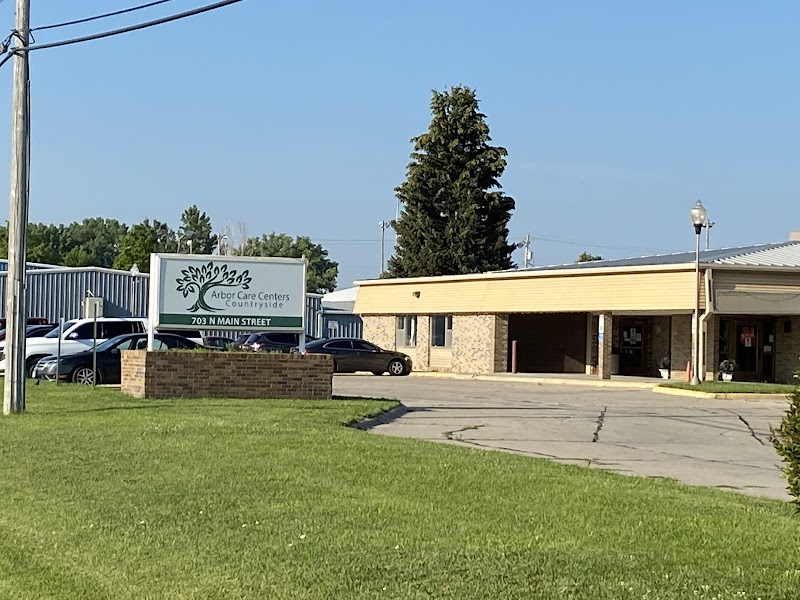
703 North Main Street, Madison, NE 68748 (402) 454-3373
For profit - Limited Liability company 70 Beds ARBOR CARE CENTERS Data: November 2025
Trust Grade
45/100
#105 of 177 in NE
Last Inspection: December 2024

Within standard 12-15 month inspection cycle. Federal law requires annual inspections.

Overview

Arbor Care Centers-Countryside LLC has received a Trust Grade of D, indicating below-average quality with some significant concerns. It ranks #105 out of 177 facilities in Nebraska, placing it in the bottom half of state options, and #3 out of 5 in Madison County, meaning only two local facilities are rated higher. The facility is improving slightly, with issues decreasing from 10 in 2023 to 9 in 2024. However, staffing is a major weakness, with a low rating of 1 out of 5 stars and a turnover rate of 51%, which is average but still concerning for continuity of care. While there have been no fines, there are specific incidents where the facility failed to provide adequate nursing coverage, which is critical for resident safety, and did not implement necessary interventions to prevent pressure sores for some residents.

Trust Score
D
45/100
In Nebraska
#105/177
Bottom 41%
Safety Record
Moderate
Needs review
Inspections
Getting Better
10 → 9 violations
Staff Stability
⚠ Watch
51% turnover. Above average. Higher turnover means staff may not know residents' routines.
Penalties
✓ Good
No fines on record. Clean compliance history, better than most Nebraska facilities.
Skilled Nurses
○ Average
RN staffing data not reported for this facility.
Violations
⚠ Watch
23 deficiencies on record. Higher than average. Multiple issues found across inspections.
★★☆☆☆
2.0
Overall Rating
★☆☆☆☆
1.0
Staff Levels
★★★★☆
4.0
Care Quality
★★★☆☆
3.0
Inspection Score
Stable
2023: 10 issues
2024: 9 issues

The Good

  • 4-Star Quality Measures · Strong clinical quality outcomes
  • Full Sprinkler Coverage · Fire safety systems throughout facility
  • No fines on record

Facility shows strength in quality measures, fire safety.

The Bad

2-Star Overall Rating

Below Nebraska average (2.9)

Below average - review inspection findings carefully

Staff Turnover: 51%

Near Nebraska avg (46%)

Higher turnover may affect care consistency

Chain: ARBOR CARE CENTERS

Part of a multi-facility chain

Ask about local staffing decisions and management

The Ugly 23 deficiencies on record

1 actual harm
Dec 2024 8 deficiencies
CONCERN (D) 📢 Someone Reported This

A family member, employee, or ombudsman was alarmed enough to file a formal complaint

Potential for Harm - no one hurt, but risky conditions existed

Accident Prevention (Tag F0689)

Could have caused harm · This affected 1 resident

Licensure Reference Number 175 NAC 12-006.09(I) Based on observation, record review and interview; the facility failed to implement interventions to prevent potential falls for Resident 27. The total ...

Read full inspector narrative →
Licensure Reference Number 175 NAC 12-006.09(I) Based on observation, record review and interview; the facility failed to implement interventions to prevent potential falls for Resident 27. The total sample size was 3 and the facility census was 34. Findings are: A. Review of the facility Fall Prevention and Fall Leaf Program with a revised date of 2/2020 revealed the following fall prevention procedure: Fall Prevention Procedure: - A fall risk care plan (a written document that outlines the care and support a person needs based on their health needs) would be developed for all residents as deemed appropriate by the Care Plan Coordinator. - If a resident had a fall a Fall Incident & Investigation report would be completed. The report would be reviewed at the next Clinical Team Meeting to determine what interventions would be added to prevent further falls. B. Review of Resident 27's Minimum Data Set (MDS-a federally mandated comprehensive assessment tool used for care planning) dated 11/21/24 revealed diagnoses of Non-Traumatic Brain Dysfunction, Dementia, Anxiety and Depression and indicated the resident had physical and verbal behaviors. Resident 27 was dependent on staff for assist with transfers and for wheelchair mobility. The resident had 2 falls with no injury and 2 falls with only minor injury since the last MDS was completed. Review of Resident 27's care plan revealed that the resident was transferred with a mechanical lift and sat in a reclining wheelchair when not laying in the bed. A fall was documented on the care plan with a date of 11/30/24 identifying Resident 27 was on the floor with the resident's pelvis positioned over the wheelchair. On 12/1/24 an intervention was initiated to not leave the resident alone in their room when in the wheelchair. Observations of Resident 27 in the resident's room on 12/2/24 revealed the following: -7:00 AM The resident was seated in a reclining wheelchair with eyes open and was watching television, no staff were in the room. -9:15 AM The resident was again seated in the reclining wheelchair and was watching television; no staff were observed in the resident's room. -10:30 AM The resident was laying in the reclining wheelchair with eyes closed, no staff were in the room. Observations of Resident 27 in the resident's room on 12/3/24 revealed the following: -7:25 AM The resident was seated in the reclining wheelchair. The resident was awake and had thrown the blanket covering the resident and the call light onto the floor while trying to get up from the wheelchair, no staff were available in the room. -7:35 AM The resident remained in the reclining wheelchair. No staff were observed in the resident's room. -2:30 PM The resident was seated in the reclining wheelchair and was trying to get up independently. No staff were in the resident's room at the time until the resident began to call out and then staff entered the room and provided assistance with repositioning. During an observation of Resident 27 on 12/4/24 at 7:10 AM, the resident was alone in the resident's room and was seated in the reclining wheelchair. The resident was attempting to get up out of the chair and was calling out looking for the resident's car. No staff responded to the resident. Observations of Resident 27 in the resident's room on 12/5/24 revealed the following: -7:15 AM The resident was seated in the reclining wheelchair. The resident was awake and alert and was calling out for staff assistance. No staff were observed in the resident's room. -9:35 AM The resident was seated in the reclining wheelchair in the resident's room with no staff available. -1:00 PM The resident was seated in the reclining wheelchair in the room. The resident was awake, and the resident's legs were to the side of the wheelchair with the resident attempting to sit forward in chair. No staff were in the room. During an interview with Nursing Assistant (NA)-Q on 12/5/24 at 10:00 AM, NA-Q verified the resident transferred with a mechanical lift and staff provided assistance with wheelchair mobility to meals and activities. The resident did try to get out of the bed and wheelchair at times with increased restlessness. During an interview with NA-F on 12/5/24 at 10:05AM, NA-F verified the resident transferred with a mechanical lift and was dependent on staff for wheelchair mobility to meals and activities and has had falls related to trying to self-transfer attempts. During an interview with the Director of Nursing (DON) on 12/5/24 at 11:30 AM, the DON verified that Resident 27 had been left alone in the room and was seated in the wheelchair at times. In addition, the DON verified the staff failed to follow the fall intervention which indicated the resident was not to be left alone in the wheelchair in the resident's room and that further falls may occur.
CONCERN (D)

Potential for Harm - no one hurt, but risky conditions existed

Deficiency F0757 (Tag F0757)

Could have caused harm · This affected 1 resident

Licensure Reference Number 175 NAC 12-006.09(H) Based on record review and interview; the facility failed to ensure Resident 1's long term use of an antibiotic had a clinical rationale for continued u...

Read full inspector narrative →
Licensure Reference Number 175 NAC 12-006.09(H) Based on record review and interview; the facility failed to ensure Resident 1's long term use of an antibiotic had a clinical rationale for continued use or an ordered duration of use. The sample size was 5 and the facility census was 34. Findings are: Review of the facility policy Antibiotic Stewardship Program (ASP) with a revision date of 3/2023 revealed the following: -The facility implemented an ASP as part of the overall infection prevention and control program and the purpose was to optimize the treatment of infections while reducing adverse events associated with antibiotic use. -The Infection Preventionist (IP), with oversight from the Director of Nursing (DON) served as the leader of the ASP. -The Medical Director, Consultant Pharmacist, and attending Physicians supported the program through active participation in the development, promotion, and implementation of a facility wide system for monitoring the use of antibiotics. -All prescriptions for antibiotic included a specific dose, duration, and indication for use. Review of Resident 1's Minimum Data Set (MDS-federally mandated comprehensive assessment use in the development of resident care plans) dated 9/18/24 revealed the following: -the resident received substantial assistance with dressing and transfers and was dependent for toileting hygiene, -was frequently incontinent of bladder and occasionally involuntary of bowel, -and had received antibiotics. Review of Resident 1's Care Plan with a revision date of 9/24/24 revealed the resident was frequently to always incontinent of urine, had Chronic Cystitis (chronic pain bladder inflammation without evidence of active infection) and was on a scheduled antibiotic for prevention. Review of Resident 1's Medication Administration record dated Dec. 2024 revealed the resident was taking the antibiotic medication Nitrofurantoin Macrocrystal (antibiotic) 100 milligrams one time daily with a start date of 12/16/20. During an interview on 12/4/24 at 2:47 PM the facility Infection Preventionist Registered Nurse (IP-RN) confirmed the facility had no evidence they are conducting ongoing and real time surveillance of infections or evidence they were reviewing their antibiotic use in accordance with their Antibiotic Surveillance plan. In addition, the IP confirmed the Resident 1's antibiotic order had no defined duration.
CONCERN (D)

Potential for Harm - no one hurt, but risky conditions existed

Antibiotic Stewardship (Tag F0881)

Could have caused harm · This affected 1 resident

Licensure Reference Number 175 NAC 12-006.18 Based on record review and interview; the facility failed to follow the facility Antibiotic Stewardship Policy for Resident 1 to ensure all antibiotics ord...

Read full inspector narrative →
Licensure Reference Number 175 NAC 12-006.18 Based on record review and interview; the facility failed to follow the facility Antibiotic Stewardship Policy for Resident 1 to ensure all antibiotics ordered had stop dates and or documented clinical rationale for ongoing use. Findings are: Review of the facility policy Antibiotic Stewardship Program (ASP) with a revision date of 3/2023 revealed the following: -The facility implemented an ASP as part of the overall infection prevention and control program and the purpose was to optimize the treatment of infections while reducing adverse events associated with antibiotic use. -The Infection Preventionist (IP), with oversight from the Director of Nursing (DON) served as the leader of the ASP. -The Medical Director, Consultant Pharmacist, and attending Physicians supported the program through active participation in the development, promotion, and implementation of a facility wide system for monitoring the use of antibiotics. -All prescriptions for antibiotic included a specific dose, duration, and indication for use. Review of Resident 1's Minimum Data Set (MDS-federally mandated comprehensive assessment use in the development of resident care plans) dated 9/18/24 revealed the following: -the resident received substantial assistance with dressing and transfers and was dependent for toileting hygiene, -was frequently incontinent of bladder and occasionally involuntary of bowel, -and had received antibiotics. Review of Resident 1's Care Plan with a revision date of 9/24/24 revealed the resident was frequently to always incontinent of urine, had Chronic Cystitis (chronic pain bladder inflammation without evidence of active infection) and was on a scheduled antibiotic for prevention. Review of Resident 1's Medication Administration record dated Dec. 2024 revealed the resident was taking the antibiotic medication Nitrofurantoin Macrocrystal (antibiotic) 100 milligrams one time daily with a start date of 12/16/20. During an interview on 12/4/24 at 2:47 PM the facility Infection Preventionist Registered Nurse (IP-RN) confirmed the facility had no evidence they are conducting ongoing and real time surveillance of infections or evidence they were reviewing their antibiotic use in accordance with their Antibiotic Stewardship plan. In addition, the IP confirmed the resident's Antibiotic order had no defined duration.
CONCERN (E)

Potential for Harm - no one hurt, but risky conditions existed

Deficiency F0727 (Tag F0727)

Could have caused harm · This affected multiple residents

Licensure Reference Number 175 NAC 12-006.04(F) Based on record review and interview the facility failed to provide the required 8 hours of Registered Nurse (RN) coverage daily. The sample size was 14...

Read full inspector narrative →
Licensure Reference Number 175 NAC 12-006.04(F) Based on record review and interview the facility failed to provide the required 8 hours of Registered Nurse (RN) coverage daily. The sample size was 14 and the facility census was 34. Findings are: A. Based on record review of the nurse's schedule for November 2024 there was not any RN coverage on 11/1/24, 11/2/24 and 11/3/24. During an interview on 12/5/24 at 10:00 AM with the Director of Nursing (DON) the DON confirmed that there was not any RN coverage on 11/1/24, 11/2/24 and 11/3/24.
CONCERN (E)

Potential for Harm - no one hurt, but risky conditions existed

Drug Regimen Review (Tag F0756)

Could have caused harm · This affected multiple residents

**NOTE- TERMS IN BRACKETS HAVE BEEN EDITED TO PROTECT CONFIDENTIALITY** C. Review of Resident 27's MDS dated [DATE] revealed the resident received antipsychotic, antianxiety and antidepressant medicat...

Read full inspector narrative →
**NOTE- TERMS IN BRACKETS HAVE BEEN EDITED TO PROTECT CONFIDENTIALITY** C. Review of Resident 27's MDS dated [DATE] revealed the resident received antipsychotic, antianxiety and antidepressant medications. Review of Resident 27's Pharmacist review and recommendations revealed on 5/31/24 the Pharmacist noted that Resident 27 was on 2 antianxiety and insomnia medications and a stop date needed added to the MAR for Ativan (Antianxiety medication) 0.5 mg every 6 hours PRN. The provider documented why resident was on antianxiety medications but did not indicate whether they agreed. There was no response from the provider for the 2 insomnia medications and a stop date for the Ativan. The Pharmacist recommendations were sent to the provider again -On 9/23/24 the Pharmacist requested a stop date be added to the MAR for Xanax (antianxiety medication) PRN, the provider did not respond, and the recommendation was not sent again. -On 10/21/24 the Pharmacist requested a stop date added to the MAR for Xanax PRN and a response from the provider was received on 11/19/24 to continue Xanax PRN for 6 months. During an interview on 12/5/24 at 11:36 AM RN-L confirmed the facility had no evidence they had been forwarding pharmacy recommendations to providers for review in a timely manner, and confirmed the facility had no evidence that recommended identified irregularities For Resident's 27 were addressed in a timely manner or in accordance with facility policy. Licensure Reference Number 175 NAC 12-006.12(A)(vi) Based on record review and interview; the facility failed to follow the pharmacist's recommendations to address irregularities in medication regimens for Resident's 1 and 27. The sample size was 5 and the facility census was 34. Findings are: Review of the undated facility policy Medication Regimen Review (MMR) revealed the following: -The MMR was a thorough process of review and assessment conducted by a Consultant Pharmacist of the medications ordered for each resident, with a goal of promoting positive outcomes and minimizing adverse consequences associated with medications. -The MMR occurred monthly for each resident and recommendations were reported to the Administrator, Director of Nursing, attending physicians, and the Medical Director as it applied. -The Consultant Pharmacist utilized federally mandated standards of care, in addition to other applicable standards. -The Consultant Pharmacist provided reporting each month including documented concerns, irregularities, clinically significant risks, adverse consequences that resulted from of could be associated with medications. -The reports included nursing issues as well as communication to attending physicians. -Letters were provided to attending physicians regarding any significant potential or actual medication concerns. -Facility staff notified the attending physicians and obtained responses within a timely manner. Review of Resident 1's Minimum Data Set (MDS-federally mandated comprehensive assessment use in the development of resident care plans) dated 9/18/24 revealed the resident received antipsychotic, antianxiety, antidepressant and antibiotic medications. Review of Resident 1's Pharmacist Review and Recommendations revealed the following: 5/28/24- The Pharmacist recommended a sleep assessment, Risperdal (antipsychotic medication) 0.25 milligrams (mg) at bedtime required review for a dose reduction, a stop date needed added to the Medication Administration Record (MAR) for PRN (as needed) Ativan (Anti-anxiety medication), and there was no evidence of a response, and the recommendation was to send to the provider again. 5/31/24- The Pharmacist recommended reducing Risperdal from 0.25 mg daily to 0.25 mg every other day. The provider signed the recommendation. but did not indicate whether they agreed. 9/23/24- The Pharmacist requested a review for a dose reduction of Risperdal and Zoloft (anti-anxiety medication), there was no evidence a response was received. In addition, a review for clarification of the resident's use of Nitrofurantoin (antibiotic) daily was generated with no evidence of documented continued need or rationale. 10/21/24 the provider documented that the dose reductions of the Risperdal and Zoloft were clinically contraindicated, however there was no evidence clarification of the of the Nitrofurantoin was received. During an interview on 12/5/24 at 11:36 AM Registered Nurse (RN)-L confirmed the facility had no evidence they had been forwarding pharmacy recommendations to providers for review in a timely manner, and confirmed the facility had no evidence that recommended identified irregularities for Resident's 1 were addressed in a timely manner or in accordance with facility policy.
CONCERN (E)

Potential for Harm - no one hurt, but risky conditions existed

Infection Control (Tag F0880)

Could have caused harm · This affected multiple residents

**NOTE- TERMS IN BRACKETS HAVE BEEN EDITED TO PROTECT CONFIDENTIALITY** Licensure Reference Number 175 NAC 12-006.18(B) Based on observation, record review, and interview the facility failed to imple...

Read full inspector narrative →
**NOTE- TERMS IN BRACKETS HAVE BEEN EDITED TO PROTECT CONFIDENTIALITY** Licensure Reference Number 175 NAC 12-006.18(B) Based on observation, record review, and interview the facility failed to implement Enhanced Barrier Precautions (EBP-an infection control interventions designed to reduce transmission of Multi-Drug-Resistant Organisms (MRDO's) that employed targeted gown and glove use during high contact resident care activities) during the provision of care for Residents 20 and 25 and failed to maintain ongoing evidence of antibiotic surveillance in the facility. Findings are: A. Review of the facility policy Enhanced Barrier Precautions dated [DATE] revealed the following: -It was the policy of the facility to implement enhanced barrier precautions for the prevention of transmission of MRDO's. -EBP referred to controlled interventions designed to reduce the transmission of MRDO's that employed gown and glove use during high contact resident care activities. -When EBP were implemented, the facility made gowns and gloves available immediately near or outside the resident's room. -PPE (Personal Protective Equipment- such as gown and gloves) were necessary when performing high-contact resident care activities including dressing, bathing, transferring, providing hygiene, changing linens, changing briefs, assisting with toileting, device care, or wound care. B. Review of Resident 20's Minimum Data Set (MDS-federally mandated comprehensive assessment used to develop resident care plans) dated 11/7/24 revealed the resident received substantial assistance with dressing, partial assistance with transfers, and substantial assistance with hygiene. In addition, the resident was frequently incontinent of bladder, and always involuntary of bowel. Review of Resident 20's Diagnosis Report dated 12/5/24 revealed skin ulcers of the right and left lower extremities, and a pressure ulcer on the right heel. Review of the undated facility list of residents in isolation included Resident 20 and indicated the resident was on EBP for wounds. During an observation of the provision of care for Resident 20 on 12/5/24 at 1:24 PM Nurse Aid (NA)-I entered the resident's room, performed hand hygiene, put on gloves but did not put on a gown. NA-I proceeded to assist the resident to stand up from a wheelchair, walk to the bathroom, pull down clothing, remove a wet brief, perform toileting hygiene, change the resident's brief and pants and walk back to the wheelchair all while not wearing a gown. C. Review of Resident 25's MDS dated [DATE] revealed the resident received moderate assistance with transfers, and substantial assistance with dressing and hygiene. Review of Resident 25's Care Plan with a revision date of 9/23/24 revealed the resident was on EBP, had an active MRDO to a wound on the left leg and staff were to wear gown and gloves for care in the resident's room. Those cares included, dressing, bathing, transferring, providing hygiene, changing bed linens, changing briefs and/or when assisting with toileting. During an observation on 12/3/24 at 11:40 AM NA-I entered resident 25's room to assist the resident to the bathroom. NA-I performed hand hygiene and then put on gloves but did not put on a gown, then assisted the resident by pushing the wheelchair to the bathroom and then, locked the wheelchair brakes and provide touching assistance for the resident to stand up and then assisted the resident to pull down pants and sit on the toilet. After the resident finished NA-I assisted the resident in performing perineal care and apply a skin cream to the buttocks and then removed the gloves and provided guidance back to the wheelchair. This was also completed while not wearing a gown. C. During an interview on 12/5/24, NA-I confirmed not using a gown during the provision of care for Resident's 20 and 25. NA-I reported being aware that both residents were on EBP but reported not being unaware of the need to wear gloves and a gown during high contact resident care. D. During an interview on 12/5/24 on 2:23 PM the Infection Preventionist (IP) confirmed staff were to be wearing gloves and a gown during cares with resident's on EBP which included but was not limited to transfers, dressing, and toileting. E. Review of the facility Infection Surveillance requested over that past 13 months revealed the facility was only able to provide one month (November 2024) of the requested surveillance. There was no evidence the required surveillance had been completed for the time frame requested. F. During an interview on 12/4/24 at 2:47 PM the IP confirmed the facility had no evidence they are conducting ongoing and real time surveillance of infections or evidence they were reviewing their antibiotic use in accordance with their Antibiotic Surveillance plan.
MINOR (C)

Minor Issue - procedural, no safety impact

Employment Screening (Tag F0606)

Minor procedural issue · This affected most or all residents

**NOTE- TERMS IN BRACKETS HAVE BEEN EDITED TO PROTECT CONFIDENTIALITY** Licensure Reference Number 175 NAC 12-006.04(A)(iii)(3)(c) Based on record review and interview the facility failed to evaluate ...

Read full inspector narrative →
**NOTE- TERMS IN BRACKETS HAVE BEEN EDITED TO PROTECT CONFIDENTIALITY** Licensure Reference Number 175 NAC 12-006.04(A)(iii)(3)(c) Based on record review and interview the facility failed to evaluate adverse finding regarding criminal background checks for 3 of 5 sampled staff to protect residents from potential abuse. The facility census was 34. Findings are: Review of the facility policy Abuse Neglect and Exploitation dated [DATE] revealed the following: -The facility provided protections for the health, welfare, and rights of each resident by developing and implementing policies and procedures that prohibited and prevented abuse, neglect, exploitation and misappropriation of resident property. -Developed policies and procedures to investigate any allegations. -Provided ongoing oversight and supervision of staff to assure policies were implemented. -Screened all potential employees for a history of abuse, neglect, exploitation or misappropriation including background, reference, and credential checks, and documented proof of the screening that occurred. -New employees were educated on abuse, neglect, exploitation and misappropriation during initial orientation, and all employees received annual training. -The facility implemented policies and procedures to prevent and prohibit all types of abuse, neglect, and misappropriation to achieve a safe environment, abuse identification, assessment and intervention to ensure resident health and safety. -The facility reported all alleged violation to the Administrator, state agency, adult protective services and all other required agencies within the specified time frames. Review of the facility policy Human Resources Background Investigations dated 10/10/20 revealed the facility conducted background investigations on each individual making application for employment. -If the background investigations disclosed any material misrepresentation or omission by the applicant indicating the applicant may not have been appropriate for hiring, the company conducted further investigation to determine the applicant's suitability for the position. -If the company determined the applicant or team member to be unsuitable, they were not employed and/or terminated. Review of the following staff files revealed the following criminal background findings: -Nurse Aid (NA)-M, criminal background check revealed criminal findings of careless driving, possession of marijuana, and driving under suspension, -NA-N criminal background check revealed criminal findings or pending cases including possession of controlled substances, transporting a child while intoxicated, driving under suspension, shoplifting, and attempt of a felony. -Medication Aid (MA)-O, criminal background check revealed findings of Driving Under the influence of alcohol. -There was no evidence the facility investigated the background finding to determine if the individuals were appropriate for hiring or suitable for the positions in which they were hired in compliance with the facility Abuse and Background Investigation policies. During an interview on 12/4/24 at 10:07 AM the facility Administrator revealed hiring decisions were finalized through Human Resources (HR) after review of the resident's background checks. Hiring decisions were based on the nature of the conviction and how long ago a crime was committed. She was unsure how the facility recorded review of the background checks or conclusion of the hiring decisions. During an interview on 12/4/24 at 3:00 PM the facility Administrator confirmed the facility had not followed it's hiring, and HR policy related to criminal background check and had no documented evidence the findings on the criminal history checks were further investigated to determine if the employees were appropriate or suitable for positions on the nursing staff of the facility.
MINOR (C)

Minor Issue - procedural, no safety impact

Staffing Information (Tag F0732)

Minor procedural issue · This affected most or all residents

Based on observation, record review and interview; the facility failed to complete the required staff posting of nursing hours. This had the potential to affect all facility residents. The facility ce...

Read full inspector narrative →
Based on observation, record review and interview; the facility failed to complete the required staff posting of nursing hours. This had the potential to affect all facility residents. The facility census was 34. Findings are: Review of the facility Nurse-Staffing-Posting-Information Policy with a date of January 2024 revealed the following guidelines for posting nursing hours: The Nurse Staffing Sheet would be posted daily containing the following information: -facility's name -date -facility's census -The total actual hours worked by licensed and unlicensed nursing staff directly responsible for resident care. -The facility would post the Nurse Staffing Sheet at the beginning of each day. -The information would be posted in a prominent place readily accessible to residents and visitors. During observation on 12/2/24 and 12/3/24 there was no staff posting observed throughout the facility. Based on record review the facility had no evidence of staff postings from 12/2/24- 12/3/24 and no evidence staff postings had been completed over the past 30 days. During an interview with Registered Nurse (RN) consultant-K on 12/4/24 at 11:00 AM RN consultant-K verified that Nurse Staff Posting had not been getting completed or posted.
Aug 2024 1 deficiency
CONCERN (D) 📢 Someone Reported This

A family member, employee, or ombudsman was alarmed enough to file a formal complaint

Potential for Harm - no one hurt, but risky conditions existed

Report Alleged Abuse (Tag F0609)

Could have caused harm · This affected 1 resident

**NOTE- TERMS IN BRACKETS HAVE BEEN EDITED TO PROTECT CONFIDENTIALITY** Licensure Reference Number 175 NAC 12-006.02(H) Based on record review and interview: the facility failed to investigate an all...

Read full inspector narrative →
**NOTE- TERMS IN BRACKETS HAVE BEEN EDITED TO PROTECT CONFIDENTIALITY** Licensure Reference Number 175 NAC 12-006.02(H) Based on record review and interview: the facility failed to investigate an allegation of potential abuse/misappropriation/exploitation for Resident 2 and then to submit the results of the investigation to the State Agency. The sample size was 4 and the facility census was 39. Findings are: A. Review of the facility policy Abuse, Neglect, Exploitation, Mistreatment and Misappropriation dated [DATE] revealed the following; -The facility encouraged and supported all residents, staff, families, visitors, volunteers, and resident representatives to report suspected acts of abuse, neglect, exploitation, involuntary seclusion, or misappropriation of resident property. -Neglect is the failure of the facility, it's employees or service providers to provide services to a resident that are necessary to avoid physical harm, pain, mental anguish, or emotional distress. -Misappropriation of resident property means the deliberate misplacement, exploitation, or wrongful temporary or permanent use of resident belongings or money without the resident's consent. -The facility administrator or designee will report abuse to the state agency per state and federal guidelines. - Reports of abuse would be promptly and thoroughly investigated and then provide a written report of the investigation within 5 working days of the occurrence of the incident to the State Agency. B. Review of Resident 2's Minimum Data Set (MDS- federally mandated comprehensive assessment used to develop resident Care Plans) dated 7/25/24 revealed the resident was admitted [DATE] with diagnoses of osteomyelitis, gas gangrene (bacterial infection that destroys blood cells and soft tissue), major depressive disorder, anxiety, and diabetes. The resident was assessed as cognitively intact with delusions. The resident was identified as having a diabetic foot ulcer with infection to the foot and a surgical wound. In addition, the resident received an antidepressant and an antipsychotic medication. Review of Resident 2's Social Service Progress Notes revealed the following: -8/5/12 at 1:17 PM the resident continues to talk/text/call random men on the resident's phone who appear to be scammers. The note further indicated the resident had bought Apple cards to send to them. The Social Service Director (SSD) and the Director of Nursing (DON) spoke with the resident regarding potential scammers and encouraged the resident not to send money or Apple cards to these individuals. -8/5/24 at 4:11 PM the resident had asked the SSD if staff could take the resident to cash the resident's Social Security check as the resident needed to pick up a couple of things. The resident was in the process of divorcing their spouse as the resident was hoping to start a relationship with someone else. -8/8/24 at 5:17 PM the resident was upset as wanted to cash Social Security check. When SSD offered to assist with purchasing items the resident required, the resident became more upset and indicated a need to move to another facility. The SSD sent an email to the State Ombudsman (resident advocate) to request guidance regarding potential exploitation of the resident. -8/9/24 at 4:34 PM per suggestion of the Ombudsman, the SSD called Adult Protective Services (APS) and the local police to notify of the potential exploitation of the resident. Review of the facility investigations from 11/14/23 through 8/21/24 revealed no evidence an investigation had been completed regarding the resident's potential exploitation or that an investigation was sent to the State Agency within 5 working days of the allegation. During an interview with the SSD on 8/21/24 at 3:00 PM, the SSD confirmed calling APS regarding concerns about Resident 2 as the State Ombudsman had suggested this action. In addition. the SSD confirmed no written investigation had been completed or sent to the State Agency within the required time frame. Interview with the facility Administrator on 8/22/24 at 9:00 AM also confirmed the facility had called APS on recommendation of the Ombudsman but had not completed an investigation related to the potential abuse/misappropriation/exploitation and submitted to the State agency.
Nov 2023 7 deficiencies
CONCERN (D) 📢 Someone Reported This

A family member, employee, or ombudsman was alarmed enough to file a formal complaint

Potential for Harm - no one hurt, but risky conditions existed

Resident Rights (Tag F0550)

Could have caused harm · This affected 1 resident

**NOTE- TERMS IN BRACKETS HAVE BEEN EDITED TO PROTECT CONFIDENTIALITY** LICENSURE REFERENCE NUMBER 175 NAC 12-006.05 (21) Based on interview and record review; the facility failed to address Resident ...

Read full inspector narrative →
**NOTE- TERMS IN BRACKETS HAVE BEEN EDITED TO PROTECT CONFIDENTIALITY** LICENSURE REFERENCE NUMBER 175 NAC 12-006.05 (21) Based on interview and record review; the facility failed to address Resident 85's anxiety, health concerns and behaviors in a manner to promote and maintain the resident's dignity. The sample size was 3 and the census was 32. Findings are: Review of Resident 85's Minimum Data Set (MDS-a comprehensive assessment used to develop a resident's care plan) dated 8/21/23 revealed the resident was admitted [DATE] with diagnoses of Chronic Obstructive Pulmonary Disease, cancer, emphysema, heart failure, respiratory failure, anxiety, pain and altered mental status. The following was assessed regarding Resident 85: -cognitively intact; -behaviors which included; delusions, verbal behaviors directed at others, other behavioral symptoms (hitting, scratching self and verbal/vocal symptoms like screaming or making disruptive sounds) not directed at others and rejection of cares; -need for extensive staff assistance with transfers, bed mobility, toileting, dressing and personal hygiene; -occasional moderate pain; and -shortness of breath with exertion, when at rest and when lying flat. Review of the Resident's Progress Notes revealed the following: -6/28/23 at 3:24 PM the resident was very anxious and would scream loudly. Staff reported the resident was very needy; -7/2/23 at 3:03 AM the resident had repeatedly activated the call light. The resident had spells of normal conversation but would then speak at a toddler level when more than 1 staff were present; -7/4/23 at 4:07 PM the resident was in room and yelling/screaming; -7/5/23 at 3:22 PM the Social Service Director (SSD) heard the resident yelling from the corridor. SSD asked the resident if there was an emergency and told the resident If it is not an emergency then you shouldn't be yelling; -7/11/23 a 11:00 PM continued with increased anxiety, and called out for help while pushing the call light; -7/13/23 at 11:43 AM during a Care Plan meeting, the resident reported the staff would close the resident's room door so the staff would not have to listen to the resident. SSD made a sign to post on the resident's door reminding the staff not to fully close the resident's door; -7/14/23 at 5:29 AM the resident was calling out for help due to difficulty breathing and back pain; -7/20/23 at 3:25 PM Behavioral Health Provider in the building and visited with the resident. New order obtained for labs and to update on behaviors in 2 weeks; -8/1/23 at 5:18 PM the resident had complaint of chest pain and was diaphoretic. The resident received 3 doses of Nitroglycerin (medication used for relieving chest pain) before chest pain began to improve; -8/17/23 at 3:34 PM the resident was seen by the Behavioral Health Provider. The resident had been yelling loudly in room throughout the day. The Charge Nurse was informed if the resident was yelling in the resident's room, the staff were to shut the room door; -8/17/23 at 3:46 PM the resident was heard screaming and the SSD went to the room to check on the resident. The resident indicated screaming due to pain level. SSD asked if screaming helped the resident's pain, or if screaming made the staff come to the resident's room quicker. SSD notified the resident if the resident continued to scream, the staff had been educated to close the door to the resident's room; -9/4/23 at 1:05 PM the resident was yelling on and off throughout the shift with increased anxiety and complaints of not being able to breath. The resident's lung sounds were coarse, and the resident had a productive cough; -9/7/23 at 9:45 AM the resident's physician notified the resident/family the resident's cancer had spread to both lungs; and -9/8/23 at 6:00 PM the resident was discharged to home with family. During an interview on 11/13/23 at 10:18 AM the SSD confirmed the following regarding Resident 85: -was admitted to a room at the end of the 200 corridor which was a significant distance from the Nurse's Station; -no evidence the resident was offered a room closer to the Nurse's Station for enhanced monitoring and to relieve the resident's anxiety; -the resident did not want to be left alone in room and would call out for staff to help the resident. The resident reported during a care plan meeting, the staff would close the resident's room door so they would not have to listen to the resident. SSD had then made a sign to alert staff the resident did not want the room door closed; -the resident continued to have episodes of calling out for help and the staff were then educated to close the resident's room door until the resident was quiet; -had ongoing behaviors/anxiety related to episodes of chest pain, back pain and complaints of not being able to breath; and -no evidence interventions were put into place to address the resident's anxiety and to ensure the resident was treated with respect and dignity.
CONCERN (D)

Potential for Harm - no one hurt, but risky conditions existed

Deficiency F0582 (Tag F0582)

Could have caused harm · This affected 1 resident

Licensure Reference Number 175 NAC 12-006.051 Based on record review and interview, the facility failed to provide the required advance notifications prior to discharge from Medicare services for 2 (R...

Read full inspector narrative →
Licensure Reference Number 175 NAC 12-006.051 Based on record review and interview, the facility failed to provide the required advance notifications prior to discharge from Medicare services for 2 (Resident 4 and 185) of 3 sampled residents. The facility census was 32. Findings are: A. Review of Resident 4's Skilled Nursing Facility Protection Notification Review revealed no evidence the Advance Beneficiary Notice of Non-coverage (ABN) was provided to the resident/representative prior to the resident's Medicare skilled services ending on 10/2/23. B. Review of Resident 185's Skilled Nursing Facility Protection Notification Review revealed no evidence the ABN and Notice of Medicare Non-coverage was provided to the resident/representative prior to the resident's Medicare skilled services ending on 6/13/23. C. An interview with the Social Services Director on 11/8/23 at 12:55 PM confirmed there was no evidence written notification was provided to the residents/representatives prior to the residents Medicare skilled services ending on 10/2/23 for Resident 4 and 6/13/23 for Resident 185.
CONCERN (D)

Potential for Harm - no one hurt, but risky conditions existed

Employment Screening (Tag F0606)

Could have caused harm · This affected 1 resident

Licensure Reference Number 175 NAC 12-006.04A3b Based on record review and interview, the facility failed to ensure background checks through the State Nurse Aide (NA) registry were completed on 5 of ...

Read full inspector narrative →
Licensure Reference Number 175 NAC 12-006.04A3b Based on record review and interview, the facility failed to ensure background checks through the State Nurse Aide (NA) registry were completed on 5 of 7 employees. The facility census was 32. Findings are: A. Review of the Abuse, Neglect, Exploitation, Mistreatment and Misappropriation of Resident Property policy with a revised date of 10/19 revealed, the facility would conduct background checks and not knowingly employ or otherwise engage any individual who: -had been found guilty of abuse, neglect, exploitation, misappropriation of property, or mistreatment by a court of law; -had a negative finding in the State Nurse Aide registry concerning abuse, neglect, exploitation, mistreatment of residents or misappropriation of their property; and/or -a disciplinary action in effect against his or her professional license by a state licensure body because of a finding of abuse, neglect, exploitation, mistreatment of residents or misappropriation of resident property. B. Review of 7 employee files on 11/13/23 revealed no evidence Licensed Practical Nurse (LPN)-P (hired 10/31/23), NA-Q (hired 10/19/23), Dietary [NAME] (DC)-O (hired 10/13/23), Clinical Coordinator (CC)-T (hired 10/11/23) and LPN-M (hired 10/13/23) had background checks completed through the State Nurse Aide registry at the time they were hired. An interview with the Business Office Manager (BOM) on 11/13/23 at 11:26 AM, confirmed there was no evidence LPN-P, NA-Q, DC-O, CC-T and LPN-M had background checks completed through the State Nurse Aide registry prior to their hired dates.
CONCERN (D)

Potential for Harm - no one hurt, but risky conditions existed

ADL Care (Tag F0677)

Could have caused harm · This affected 1 resident

**NOTE- TERMS IN BRACKETS HAVE BEEN EDITED TO PROTECT CONFIDENTIALITY** Licensure Reference Number 175 NAC 12-006.09D1c Based on observations, record review and interview; the facility failed to provi...

Read full inspector narrative →
**NOTE- TERMS IN BRACKETS HAVE BEEN EDITED TO PROTECT CONFIDENTIALITY** Licensure Reference Number 175 NAC 12-006.09D1c Based on observations, record review and interview; the facility failed to provide assistance with shaving, oral hygiene and nail care for Resident 15, who required assistance with activities of daily living. The sample size was 3 and the facility census was 32. Findings are: Review of Resident 15's Minimum Data Set (MDS- a federally mandated assessment tool used for care planning) dated 8/24/23 revealed Resident 15 was admitted [DATE] with diagnoses of Alzheimer's disease, anxiety, post traumatic stress disorder and non-traumatic brain dysfunction. The following was assessed regarding Resident 15: -short- and long-term memory loss with severely impaired decision-making skills; -behaviors which included resistance with cares, verbal and physical behaviors directed at others, wandering and delusions; -required extensive staff assistance with dressing and personal hygiene; and -frequently incontinent of bowel and bladder. Review of the resident's current Care Plan dated 6/8/23 revealed the resident had an inability to perform cares independently due to Alzheimer's Dementia. The following interventions were identified: -has full upper/lower dentures. Staff to assist with removing dentures at night and then to assist the resident to rinse mouth in the morning and after cleansing, replace dentures in mouth; and -staff to assist with shaving daily and clean the electric razor after each use. An observation of Resident 15 on 11/7/23 at 8:55 AM revealed the resident was seated in a recliner in the resident's room. The resident had a heavy layer of facial hair and the resident's fingernails were long and curved with dirt/debris observed under the fingernails. During an interview on 11/7/23 at 9:55 AM, Resident 15's family indicated 3 electric razors had been purchased and brought to the facility for the resident. However, the resident continued to have facial hair when family visited, and family had just purchased a fourth electric razor. In addition, the resident's fingernails were frequently long and soiled and the family member was uncertain who was responsible for cleaning and trimming. Observations of Resident 15 revealed the following: -11/8/23 at 7:05 AM Nursing Assistant (NA)-A entered the resident's room to assist with morning cares. The resident continued to have a heavy layer of facial hair and fingernails were long with dirt/debris visible underneath the nail. NA-A assisted the resident to the bathroom and dressed the resident before assisting the resident to a recliner in the room. NA-A failed to assist the resident with shaving or attempted to clean under the resident's fingernails. Resident 15 had dentures in mouth and no oral cares were offered or provided before NA-A exited the resident's room; and -11/8/23 at 8:36 AM and at 12:23 PM the resident remained seated in the resident's room. The resident continued to be unshaven, and fingernails remained long with dirt/debris under the nails. During an interview on 11/8/23 at 1:34 PM, NA-A confirmed the following regarding Resident 15: -resident was resistive with cares and it was difficult to get the resident to remove dentures for cleaning; -currently did not have an electric razor and family were bringing a new razor for the resident; -bath aide was to trim and clean the resident's fingernails with the resident's bath; and -NA-A did not provide the resident assistance with oral cares, did not attempt to shave the resident or clean the resident's fingernails with morning cares on 11/8/23. During an observation on 11/13/23 at 8:52 AM the resident continued to have a heavy layer of facial hair and the resident's fingernails remained long, curved and had dirt/debris underneath of the nails. Interview with the Interim Administrator on 11/14/23 at 8:23 AM revealed residents should be assisted with oral cares and to shave each day.
CONCERN (D)

Potential for Harm - no one hurt, but risky conditions existed

Quality of Care (Tag F0684)

Could have caused harm · This affected 1 resident

**NOTE- TERMS IN BRACKETS HAVE BEEN EDITED TO PROTECT CONFIDENTIALITY** LICENSURE REFERENCE NUMBER 175 NAC 12-006.09 Based on observation, interview, and record review; the facility failed to follow p...

Read full inspector narrative →
**NOTE- TERMS IN BRACKETS HAVE BEEN EDITED TO PROTECT CONFIDENTIALITY** LICENSURE REFERENCE NUMBER 175 NAC 12-006.09 Based on observation, interview, and record review; the facility failed to follow physician's orders related to surgical wound care for 1 (Resident 17) of 3 sampled residents. The facility identified a census of 32 at the time of survey. Findings are: Review of Resident 17's Minimum Data Set (MDS-a comprehensive assessment tool used to develop a resident's care plan) dated 8/24/23 revealed the resident was admitted [DATE] with diagnoses of down's syndrome, respiratory failure and morbid obesity. The resident's cognition was severely impaired, and the resident required extensive to total staff assist for bed mobility, transfer, dressing, toilet use, and personal hygiene. In addition, the resident had areas of moisture associated skin damage with application of ointments and dressings other than to the resident's feet. Review of the resident's undated current Care Plan revealed the resident was at risk for impaired skin integrity related to excoriation and skin shearing. The resident was frequently incontinent of bowel and bladder and required extensive staff assistance with bed mobility and transfers. The following interventions were indicated: -10/12/23 surgery to wounds on bilateral breasts and right axilla; -contact isolation precautions (used when a resident has an infectious disease that may be spread by touching either the resident or objects handled by the resident. Contact precautions include use of gloves, gown and mask) during personal cares in room due to a history of Methicillin Resistance Staphylococcus Aureus (MRSA-infection caused by staph bacteria that has become resistant to antibiotics); -monitor/document the location, size, and treatment of skin injury; -pressure reduction cushion to chair: -pressure reduction mattress to bed; and -refer to the resident's MAR (Medication Administration Record) and TAR (Treatment Administration Record) Review of the Resident's MAR and TAR for 11/2023 revealed the following treatment orders: -10/27/23 cleanse surgical areas with soap and water then cover with a dry dressing twice a day; and -10/28/23 apply Medi honey gel (promotes the healing of wounds through an anti-inflammatory effect in wounds infected with bacteria) to surgical wounds of bilateral breast and right axilla once a day. During an observation of wound care by Licensed Practical Nurse (LPN)-C on 11/8/23 at 8:33 AM, LPN-C removed Resident 17's dressings to the resident's bilateral breast and axilla areas. LPN-C used several 4x4 squares of gauze and wound wash to cleanse the resident's surgical wounds (not soap and water as ordered by the physician). LPN-C applied the Medi honey gel with a Q-Tip to the sutures on the resident's breasts. LPN-C used another Q-Tip and applied Bacitracin ointment (topical antibiotic) to scabbed areas of the sutures. When LPN-C examined the resident's right axilla, LPN-C indicated there was a small square area which had a darker red appearance than the skin surrounding the area. LPN-C placed a centimeter (cm) x 1 cm Aquacel AG dressing (antimicrobial agent) directly on the darker area. LPN-C then covered/secured ABD (army battle dressings- gauze pads are used to absorb discharges from abdominal and other heavily draining wounds) dressings to all surgical sites. Further review of the resident's medical record revealed the order for the Aquacel AG dressing had been discontinued on 10/12/23 and the Bacitracin ointment had been discontinued on 11/4/23. Interview with the DON (Director of Nursing) on 11/13/23 at 2:58 PM revealed LPN-C should have completed Resident 17's wound care in accordance with the resident's current physician orders.
CONCERN (D)

Potential for Harm - no one hurt, but risky conditions existed

Deficiency F0887 (Tag F0887)

Could have caused harm · This affected 1 resident

**NOTE- TERMS IN BRACKETS HAVE BEEN EDITED TO PROTECT CONFIDENTIALITY** Based on interview and record review; the facility failed to prevent potential COVID-19 infection as the facility failed to prov...

Read full inspector narrative →
**NOTE- TERMS IN BRACKETS HAVE BEEN EDITED TO PROTECT CONFIDENTIALITY** Based on interview and record review; the facility failed to prevent potential COVID-19 infection as the facility failed to provide evidence that a COVID-19 vaccination was offered and refused, and that education was provided for the refusal of the COVID-19 vaccine for 1 (Resident 17) of 5 sampled residents. The facility census was 32. The findings are: A. Review of the facility's COVID-19 Vaccination Policy (dated 10/21) revealed it was the policy of the facility to minimize the risk of acquiring, transmitting or experiencing complications from COVID-19 by educating and offering residents and staff the COVID-19 vaccine. The following was identified: -COVID-19 vaccinations were to be offered to residents and staff when supplies were available unless medically contraindicated, the resident had already received the vaccination during the time period or if the resident refused to receive the vaccine; -residents and staff were to be screened for suspected COVID-19, previous allergic reactions and administration of therapeutic treatments to determine if an appropriate candidate; -prior to receiving the vaccine, staff, residents or the resident's representatives were to be educated regarding the risks, benefits and potential side effects; -residents and/or their representative were to sign a consent form prior to administration of the COVID-19 vaccine; -residents and their representatives retained the right to accept, refuse or change their decision regarding the vaccine; and -the resident's medical record was to include documentation of the education provided regarding the potential risks and benefits, the dose of the vaccine administered, if the resident did not receive the vaccine and any follow-up monitoring if the vaccine was administered. B. Review of Resident 17's Minimum Data Set (MDS-a comprehensive assessment used to develop a resident's care plan) dated 8/24/23 revealed the resident was admitted [DATE] with diagnoses of Chronic lung disease, respiratory failure and Down's syndrome and the resident's cognition was identified as severely impaired. A review of Resident 17's immunization record revealed no evidence the resident had received the COVID-19 vaccination. Review of the resident's medical record revealed no evidence the resident or the resident's representative had been offered the vaccination, education had been provided regarding risks and benefits for the vaccination and/or if the vaccination was refused. During an interview on 11/13/23 at 2:58 PM the Director of Nursing confirmed there was no documentation the COVID-19 vaccine was offered and/or refused by Resident 17 or Resident 17's representative. In addition, there was no documentation that education for the COVID-19 vaccine benefits, risks, and side effects was provided to Resident 17.
CONCERN (E)

Potential for Harm - no one hurt, but risky conditions existed

Accident Prevention (Tag F0689)

Could have caused harm · This affected multiple residents

**NOTE- TERMS IN BRACKETS HAVE BEEN EDITED TO PROTECT CONFIDENTIALITY** Licensure Reference Number 175 NAC 12-006.09D7 Based on observation, record review and interview; the facility failed to impleme...

Read full inspector narrative →
**NOTE- TERMS IN BRACKETS HAVE BEEN EDITED TO PROTECT CONFIDENTIALITY** Licensure Reference Number 175 NAC 12-006.09D7 Based on observation, record review and interview; the facility failed to implement fall interventions for Residents 3 and 16, to assess causal factors and to develop new interventions and/or revise current interventions to prevent ongoing falls for Resident's 3, 14, 15, and 16. The sample size was 4 and the facility census was 32. Findings are: A. Review of the facility policy Fall Prevention and Fall Leaf Program with a revision date of 2/2023 revealed the following; -The purpose was to ensure fall risks were identified and interventions were implemented to prevent falls, as possible, and to maintain a safe environment for each resident of the facility. -Fall Risk Evaluations were to be completed at admission, quarterly and with a significant change. If a risk score was 10 or more a fall leaf program was initiated. -A fall risk Care Plan was developed for all residents as deemed appropriate by the Care Plan Coordinator. -A fall leaf was placed on the resident's door if the resident scored 10 or more or had 1 or more falls in the past 3 months. -If a resident incurred a fall, a post fall evaluation was completed and reviewed at the next Department Clinical meeting of the interdisciplinary team, for review of fall interventions and determination of the need for additional interventions. B. Review of Resident 14's Minimum Data Set (MDS -a federally mandated assessment used to develop comprehensive resident Care Plans) dated 10/5/23 revealed the resident received substantial assistance with Activities of Daily Living ((ADL's) including bed mobility, transfers, toileting, and dressing), was frequently incontinent of bladder and involuntary of bowel, had fallen 2 times since the previous assessment, and had taken anti-anxiety and antidepressant medication. Further review the resident utilized a fall alarm for bed and chair. Review of Resident 14's Physicians Orders revealed the resident had orders started on 4/14/23 for the anti-anxiety medication Lorazepam to be taken every 2 hours as needed for anxiety and restlessness and the for a narcotic pain medication Morphine Sulfate to be taken every 2 hours as needed for pain. Review of Resident 14's Progress Notes revealed the following; -on 10/2/23 at 11:50 PM the resident was found sitting on the floor, the reason for the fall was not evident, the bedside call light had been activated, and fall alarms were sounding. -on 10/3/23 at 2:25 AM the resident was found sitting on a floor mat, the reason for the fall was not evident, and -on 11/7/23 at 4:07 PM the resident was found lying on a floor mat, the resident was able to report having shoulder and back pain. Review of Resident 14's Care Plan with a revision date of 11/8/23 revealed the following; -the resident had the potential for falling, -when the resident was restless or attempting to get out the bed or wheelchair, the staff were to try and find out why, rule out the need to use the restroom or the presence of pain, offer to take the resident for a wheelchair ride outdoors if the weather was nice, and/or offer diversional activities, -the resident needed extensive to total assistance with ADL's -needed a Hoyer Lift (full body mechanical lift used to move a resident from on surface to another) and the assistance of 2 staff to transfer, -had a fall on 10/2/23 next to the bed and the immediate intervention was to perform 15-minute checks (check on the resident every 15 minutes), -on 10/3/23 was observed on the floor next to the bed and sustained a skin tear to the right lower leg, and the intervention was to evaluate the resident's current medication, and -on 11/7/23 was observed on the floor next to the bed and oxygen was applied, an antianxiety medication and a pain medication were given to decrease anxiety. During an interview on 11/8/23 at 11:28 PM with Medication Aide (MA)-D reported no awareness that Resident 14 had a fall prevention intervention of 15-minute checks. During an interview on 11/8/23 at 12:24 PM the Director of Nursing (DON) confirmed the facility did not have documented evidence that they evaluated Resident 14 for the cause of falling or implement fall prevention measures based on the determined causes for falls occurring on 10/2/23, 10/3/23, or 11/7/23. Further interview confirmed that fall interventions including treating the resident's pain and anxiety were not new interventions. During an interview on 11/8/23 at 1:15 PM the RN Corporate Consultant-I confirmed the facility had no documented evidence the facility had or continue to provide 15- minute checks following Resident 14's fall on 10/2/23; or any documented evidence the facility conducted a Medication Review following the resident's fall on 10/3/23. C. Review of Resident 15's MDS dated [DATE] revealed Resident 15 was admitted [DATE] with diagnoses of Alzheimer's disease, anxiety, post-traumatic stress disorder and non-traumatic brain dysfunction. The following was assessed regarding Resident 15: -short- and long-term memory loss with severely impaired decision-making skills; -behaviors which included resistance with cares, verbal and physical behaviors directed at others, wandering and delusions; -required extensive staff assistance with bed mobility, transfers, toilet use, dressing and personal hygiene; -frequently incontinent of bowel and bladder; and -the resident had one fall without injury and one fall with injury (except major) since the previous assessment. Review of a Nursing Progress Note dated 8/18/23 at 7:00 AM revealed the resident was found laying on the floor next to the resident's bed. The resident indicated the resident laid down on the floor because the resident's bed had not been made. Review of the resident's medical record revealed no evidence a new intervention was developed, or current interventions revised. Review of a Nursing Progress Note dated 11/4/23 at 2:11 PM revealed the resident had an unwitnessed fall in the corridor. The resident had been ambulating unassisted, appeared to be in a hurry, was agitated and had labored breathing. The resident sustained a 1-centimeter (cm) skin tear to the resident's left elbow. Further review of the resident's medical record revealed no evidence a new intervention was developed, or current interventions revised. During an interview on 11/13/23 at 2:38 PM, the DON confirmed no new interventions were developed or current interventions revised after the resident's falls on 8/18/23 at 7:00 AM and on 11/4/23 at 2:11 PM. D. Review of Resident 16's MDS dated [DATE] revealed the resident was admitted [DATE] with diagnoses of Chronic Obstructive Pulmonary Disease, diabetes, non-Alzheimer's dementia, Parkinson's disease and respiratory failure. The following was assessed regarding the resident: -cognition was moderately impaired; -behaviors which included verbal behaviors directed at others and rejection of cares; -required extensive staff assistance with bed mobility, transfers, dressing, toilet use and personal hygiene; and -frequently incontinent of urine. Review of the resident's current Care Plan dated 3/17/23 revealed the resident was at risk for falls related to Parkinson's disease and poor balance. The resident had interventions in place for fall alarms to the resident's bed and wheelchair however, the resident would occasionally shut the alarms off independently. Staff were to check the alarms each time they entered the resident's room. In addition, an intervention dated 1/26/23 revealed the resident was not to be left unattended in the resident's room when the resident was seated in the wheelchair. The resident was to be assisted to the bed or the recliner. Review of a Nursing Progress Note dated 4/18/23 revealed at 9:30 PM the resident was found on the floor between the resident's bed and the bathroom. The resident's call light had not been activated and the fall alarm had been disabled. The resident was incontinent of urine. Review of the resident's care plan revealed an intervention related to the resident's fall on 4/18/23 for the staff to receive re-education regarding placement of the resident's most recent care plan and updated fall interventions. Review of a Nursing Progress Note dated 10/8/23 at 11:35 PM revealed the resident was found on the floor of the resident's room. The resident's fall alarm was in place, but the alarm did not activate when the resident fell. No new interventions were identified, current interventions were not revised, and causal factors were not determined to prevent further falls for Resident 16. Observations of Resident 16 revealed the following: -11/8/23 at 7:15 AM the resident was positioned in the wheelchair and was alone in the resident's room; and -11/13/23 at 8:00 AM the resident was seated in the wheelchair and was unattended in the resident's room. During an interview on 11/13/23 at 8:44 AM the DON confirmed the following: -no evidence staff had been provided education regarding Resident 16's Care Plan after the resident's fall on 4/18/23 at 9:30 PM; -no evidence causal factors were identified or fall interventions developed and/or revised after the resident's fall on 10/8/23 at 11:35 PM; and -per the resident's Care Plan, the resident should not have been left alone in the wheelchair and unsupervised in the resident's room. E. Review of Resident 3's MDS dated [DATE] revealed the resident was admitted [DATE] with diagnoses of stroke, anemia, non-Alzheimer's dementia, anxiety, depression and respiratory failure. The following was assessed related to Resident 3: -cognitively intact; -behaviors of delusions and physical behaviors directed toward others; -extensive staff assistance required with bed mobility, transfers, dressing, toilet use and personal hygiene; and -frequently incontinent of urine. Review of the resident's current Care Plan dated 1/21/22 revealed the resident was at risk for falls related to dementia, a previous stroke and a below the knee amputation to the left leg. Interventions included: -bolster mattress to the resident's bed; -do not leave unattended in the resident's room when the resident is positioned in the wheelchair. Assist the resident to bed or the recliner before leaving the resident's room; -sign in the resident's room to remind the resident of the need for staff assistance with transfers; and -fall mat on floor next to the bed. Review of an Incident Report dated 2/4/23 at 4:15 PM revealed the resident was found on the floor in the front solarium/television area. No causal factors were identified for the resident's fall. Further review of the resident's Care Plan revealed an intervention dated 2/4/23 to provide re-education to the facility staff regarding the use of the resident's fall alarms. Review of an Incident Report dated 2/27/23 at 5:55 PM revealed the resident was found lying on the floor in front of the wheelchair. No causal factors were indicated. Review of the resident's Care Plan revealed an intervention dated 2/27/23 for the staff to receive re-education regarding the resident's fall alarm use. Review of an Incident Report dated 10/30/23 at 12:40 PM revealed the resident was found seated on the floor next to the resident's bed. The resident identified a need to be toileted. Review of the resident's Care Plan revealed an intervention dated 10/30/23 for the staff to have re-education regarding the resident's current fall interventions. Observations of Resident 3 on 11/7/23 at 10:20 AM, 11/8/23 at 1:00 PM and 11/13/23 at 7:29 AM revealed the resident was in the resident's room and was seated in a wheelchair. The resident was alone and unattended. In addition, there was no sign posted in the resident's room to remind the resident to call staff for assist with all transfers. During an interview with the DON on 11/13/23 at 1:58 PM the following was confirmed: -no evidence education was provided to the facility staff after the resident's falls on 2/4/23 at 4:15 PM, 2/27/23 at 5:55 PM and on 10/30/23 at 12:40 PM; -no causal factors were identified after the resident's falls on 2/4/23 at 4:15 PM and on 2/27/23 at 5:55 PM; and -per the resident's current Care Plan the resident was not to be left alone in the resident's room and unsupervised while seated in a wheelchair and a sign was to be posted to remind the resident to call for assist with all transfers
Sept 2023 3 deficiencies 1 Harm
SERIOUS (G) 📢 Someone Reported This

A family member, employee, or ombudsman was alarmed enough to file a formal complaint

Actual Harm - a resident was hurt due to facility failures

Pressure Ulcer Prevention (Tag F0686)

A resident was harmed · This affected 1 resident

**NOTE- TERMS IN BRACKETS HAVE BEEN EDITED TO PROTECT CONFIDENTIALITY** Licensure Reference Number 175 NAC 12-006.09D2a Based on observations, interviews and record review, the facility failed to impl...

Read full inspector narrative →
**NOTE- TERMS IN BRACKETS HAVE BEEN EDITED TO PROTECT CONFIDENTIALITY** Licensure Reference Number 175 NAC 12-006.09D2a Based on observations, interviews and record review, the facility failed to implement interventions to prevent Resident 1's pressure sore from developing and worsening and failed to implement interventions to prevent the potential development of a pressure sore for Resident 8. The sample size was 2. The facility census was 31. Findings are: A. Review of the facility policy Pressure Ulcer Prevention Plan dated 2/2020 revealed the following: -Identify high-risk residents by performing comprehensive skin assessments upon admission and re-admission. -Complete a Braden scale (an assessment tool used to determine a person's risk of developing a pressure ulcer) on admission, re-admission, and with a significant change of condition. -Complete daily skin checks by a licensed nurse for high-risk residents or a resident with a current pressure ulcer. -All residents will have a minimum of weekly skin checks by a licensed nurse with documentation on the Weekly Pressure Ulcer Record. -Ensure a prevention plan is in place for each individual resident based on the level of risk. -Interventions for high-risk residents include; increased frequency of repositioning, shift pressure on surfaces, use foam wedges/pillows for lateral positioning, maximal remobilization, protect heels, manage moisture, manage nutrition, reduce friction/sheering, elevate head of bed no more than 30 degrees, use a trapeze (a device used above the bed to assist a person with repositioning) when indicated, use lift sheets to move the resident and protect elbows and heels if exposed to friction. B. Review of the facility policy Turning and Repositioning dated 2/2020 revealed the purpose of the policy was to implement turning and repositioning to prevent and manage pressure injuries using the following guidelines: -All residents at risk of or with existing pressure injuries, will be turned and repositioned, unless it is contraindicated due to a medical condition. In this case, small shifts in repositioning will be employed. -The facility has established routine turning and repositioning schedules consisting of every 2-4 hours. A maximum of 30 minutes before or after the scheduled time will be allotted for compliance with the schedule. -A routine turn schedule includes using both side-lying and back positions, alternating from the right, back and left side. It also includes assisting the resident to stand, or making small shifts of position, if in a chair. A resident's condition will determine whether or not a specialized turn schedule is warranted. -The frequency of turning and repositioning will be documented in the resident's plan of care and determined by the resident's; tissue tolerance, level of mobility/activity, skin condition, medical condition, treatment goals, type of pressure redistribution support surface in use and comfort levels. -Use the appropriate number of staff to perform the tasks safely. -To minimize friction and shear, use lift sheets or lift equipment to avoid pulling or dragging. -Avoid positioning the resident on surfaces with existing pressure injuries, including persistent redness. -Ensure heels are floated off the surface of the bed with pillows or devices designed to do so. If using a heel protector, the heel must still be floated. C. Review of Resident 1's undated care plan revealed the resident had the potential for skin breakdown related to a stroke and limited bed mobility. The resident required extensive assistance with repositioning, transfers and toileting with the following interventions: -prompt and assist with repositioning every 2-3 hours during the day and 1-2 times during the night if awake; -2 staff assistance and a bed pad to reduce friction & sheer, pressure relieving mattress for the bed, Roho cushion (a high quality seat cushion that provides pressure relief for persons at risk of pressure sores) to wheelchair; -encourage to float both heels off the mattress when in bed and off the recliner foot rest; and -while in the wheelchair assist with off-loading every 2-3 hours during the day, offer to assist with lying down between meals to get pressure off buttocks and get out of bed right before meals and back to bed right after meals if resident agrees to this. An observation of Resident 1 assisted with cares and wound treatment on 9/26/23 from 8:00 AM to 8:30 AM revealed the following: -8:00 AM to 8:10 AM, NA-N and NA-G performed incontinence cares for the resident and [gender] was incontinent of feces. There was a large adhesive foam dressing (sacral Mepilex) on the resident's sacral area. The lower section of the dressing closest to the anus, was loosened and not attached to the skin to prevent potential contamination of the wound. NA-N and NA-G had begun to secure the clean incontinence brief and were asked about the dressing's appearance before completing the task. NA-N then indicated [gender] would inform the nurse about the loose dressing before continuing with transferring the resident out of the bed. -8:20 AM, resident was positioned in bed on [gender] left side with a large re-usable pad underneath. Registered Nurse (RN)-C grabbed onto the edge of the pad with both hands behind the resident and pulled the pad, dragging the resident's body across the surface of the bed a few inches. This was not an appropriate technique for re-positioning the resident related to the potential for friction and shearing as indicated in the facility policy for Turning and Repositioning dated 2-2020. -8:25 AM, observation of the sacral wound revealed 2 opened areas positioned directly next to each other, one on the upper portion of the buttock crease and the 2nd one just above the anus. The upper wound was deep and had tan colored drainage inside the wound bed. The lower wound was deeper than the upper wound with a beefy red color and exposed a large amount of muscle tissue inside the wound. -8:30 AM, after the dressing change was completed, NA-N and NA-G, transferred the resident from the bed using a full body mechanical lift. The resident's wheelchair had 2 different cushions on the seat, the Roho cushion was on the bottom and a foam cushion was resting on top of the Roho cushion. NA-N and NA-G began lowering the resident into the wheelchair and just before [gender] was placed onto the seat cushion, they were asked about the 2 cushions in the wheelchair. NA-N, then stated the resident was supposed to have a Roho cushion in the chair, not the foam cushion and removed the foam cushion from the wheelchair. NA-N indicated [gender] had removed the foam cushion from the resident's chair once before and was aware the resident should not have a foam cushion because of the pressure ulcer to the resident's buttock. Review of Resident 1's medical record revealed the following: -Treatment Administration Record dated 7/1/23 to 7/31/23 indicated the resident had an order for a pressure relief cushion . -Weekly Skin Check dated 7/18/23 at 12:01 PM indicated the resident had no new skin issues. -Braden Scale assessment dated [DATE] indicated the resident was assessed as a high risk to develop pressure ulcers. -Weekly Skin Check dated 7/25/23 at 1:30 PM, indicated the resident had a Stage II Pressure Ulcer [an open area with a red or pink wound bed, without slough (shedding dead tissue) or bruising] to the coccyx (a person's tail bone) that measured 1.0 Centimeters (cm) X 0.8 cm. -Weekly Skin Check dated 8/1/23 at 7:21 PM indicated there were no new skin issues and the treatment to the coccyx wound was to be continued. There was no evidence of documentation related to the characteristics of the wound (i.e size and appearance of the wound) and no evidence a Skin and Wound Evaluation had been completed. -Treatment Administration Record (TAR) dated 8/1/23 - 8/31/23 indicated the resident had a treatment with a start date of 7/25/23 for the pressure ulcer on the coccyx that consisted of cleansing with saline, place Aquacel AG (a dressing with antimicrobial properties specialized for hard to heal wounds that are infected or at risk for infection) to wound bed and cover with a Sacral Mepilex (a type of adhesive foam dressing). The treatment was to be completed every 3 days and as needed until healed. -Weekly Skin Check dated 8/8/23 at 7:22 PM indicated there were no new skin issues and coccyx improving, continue with treatment. -Skin & Wound Evaluation dated 8/9/23 at 4:42 PM indicated the resident had a Stage II pressure ulcer to the coccyx that was acquired in the facility on 7/25/23, the surface of the wound was intact and the wound was assessed as healable. In addition, a new order was received for a Duoderm (a flexible, waterproof, opaque dressing used to cover a wound that can remain in place for several days) and nursing would continue to monitor the area and update the physician as needed. There was no evidence wound measurements and characteristics were documented to determine if the wound was improving. -Nursing progress note dated 8/15/23 at 2:09 PM indicated the facility attempted to update the resident's representative that the wound on the coccyx area was intact, darkened and looks a little irritated and the treatment was going back to the Mepilex dressing. -Weekly Skin Check dated 8/15/23 at 7:23 PM indicated there was a Duoderm in place to coccyx. No other skin issues noted at this time. There was no evidence the Skin and Wound Evaluation was completed regarding the wound measurements and characteristics to determine if it was improving. -Physician Fax Sheet dated 8/16/23 at 5:13 PM indicated the resident had a wound to the sacral area that had denuded (to strip something of its covering) skin with a request to change the treatment to Aqualcel AG to denuded area, cover with sacral Mepilex and change every 3 days and daily as needed. Cleanse the area with normal saline (a wound cleanser) prior to application. -Weekly Skin Check dated 8/22/23 at 10:26 AM indicated Continue with treatment to wound to coccyx. Wound base yellow slough. No new skin areas noted. There was no evidence of documentation related to the size of the wound to determine if it was improving with the current treatment. -Progress note dated 8/25/23 at 2:58 PM indicated the wound to the sacral area is pressure stage 2 with slough in wound bed. There was no evidence of documentation related to the size of the wound and if it was improving. -Weekly Skin Check dated 8/29/23 at 2:18 PM indicated there were no new skin issues and Continue with current treatment to coccyx wound. Resident scheduled to see wound clinic. There was no evidence of documentation regarding wound measurements and characteristics to determine if it was improving. -Weekly Skin Check dated 9/5/23 at 12:30 PM indicated there were no new skin issues and Continue with treatments to pressure area to coccyx. Resident has appointment with wound clinic on Thursday. There was no evidence of documentation related to the pressure ulcer size and wound characteristics and if signs of healing or worsening. -9/7/23, Physician Visit Record related to the coccyx wound indicated the physician ordered; a Roho cushion to the wheelchair, reposition onto hips while in bed, and Doxycycline (antibiotic) 100 milligrams (mg) by mouth twice a day for 2 week. -Skin & Wound Evaluation dated 9/12/23 at 11:33 AM indicated the resident had a Deep Tissue Pressure Injury that was new and acquired while a resident at the facility. There was no information included under the sections; Wound Measurements, Wound Bed characteristics, drainage, and the surrounding skin tissue characteristics. -9/14/23, a Physician Visit Record related to the coccyx wound indicated the wound was deep with significant slough with orders to; Remove the Fomi (foam) cushion from chair. Patient needs to sit directly on Roho cushion. Needs position change every 2 hours. -Skin & Wound Evaluation dated 9/20/23 at 12:02 PM indicated the resident had a sacral wound that was Unstageable: Obscured full-thickness skin and tissue loss acquired at the facility on 9/7/23. The wound measurements were 14.0 cm 2 (6.0cm long X 3.2 cm wide) with 30% of the wound bed filled with slough and 60% filled with Eschar (a type of necrotic tissue-typically dry, black and firm, that can develop on severe wounds). In addition, there were no issues related to the surrounding tissue/skin, however, the wound was noted to be deteriorating. -Physician Visit Report dated 9/21/23 indicated the resident was see for wound care which noted the pressure ulcer of the coccyx was a Stage 4 (considered more serious with sores extending below the subcutaneous fat into deep tissues including muscle, tendons and ligaments) with poor healing prognosis. In addition, the physician ordered frequent position changes (at least every 2 hours). An interview with the facility's nurse consultant on 9/27/23 at 2:30 PM, confirmed the following related to Resident 1: -the resident had a pressure ulcer to the sacral area that had worsened since it developed on 7/25/23; -nursing staff should be repositioning the resident every 2 hours; -nursing staff should have completed the Skin & Wound Evaluation for the resident's PU to the sacral/coccyx area weekly with information including measurements and wound characteristics to determine whether the wound was improving; -there was no evidence the ordered treatment for the PU was documented as completed on 8/3/23. D. Review of Resident 8's plan of care with a printed date of 9/27/23 revealed the resident had the potential for skin breakdown related to limited mobility and frequent bowel and bladder incontinence. In addition, the resident had been assessed as a high risk to develop pressure ulcers with the following interventions; use a pressure relieving mattress on the bed, a Roho cushion on the chair and to keep [gender] heels off the mattress and foot rest. An observation of Resident 8 on 9/27/23 at 10:55 AM, revealed the resident was seated in a wheelchair with a foam cushion under the resident and no Roho cushion was observed inside the resident's room. An interview with the nurse consultant on 9/27/23 at 11:35 AM confirmed the following regarding Resident 8: -the resident was assessed as high risk for the development of pressure ulcers; -the resident should have had a Roho cushion under [gender] while seated in the chair and did not; -staff were not able to locate a Roho cushion in the resident's room; and -the facility was not able to determine the amount of time the Roho cushion had not been used with the resident.
CONCERN (D) 📢 Someone Reported This

A family member, employee, or ombudsman was alarmed enough to file a formal complaint

Potential for Harm - no one hurt, but risky conditions existed

Quality of Care (Tag F0684)

Could have caused harm · This affected 1 resident

Licensure Reference Number 175 NAC 12-006.09D Based on observations, interview and record review, the facility failed to ensure physician's orders were followed for 2 residents (Resident 8 and 12) rel...

Read full inspector narrative →
Licensure Reference Number 175 NAC 12-006.09D Based on observations, interview and record review, the facility failed to ensure physician's orders were followed for 2 residents (Resident 8 and 12) related to Resident 8's pressure relief cushion and Resident 12's nutritional supplement. The total sample size was 13 and the facility census was 31. Findings are: A. Review of Resident 8's plan of care with a printed date of 9/27/23 revealed the resident had the potential for skin breakdown related to limited mobility and frequent bowel and bladder incontinence. In addition, the resident had been assessed as a high risk to develop pressure ulcers with the following interventions; use a pressure relieving mattress on the bed, a Roho cushion (a high quality seat cushion that provides pressure relief for persons at risk of pressure sores) on the chair and to keep [gender] heels off the mattress and foot rest. Review of Resident 8's Treatment Administration Record dated 9/1/23 to 9/30/23 revealed the resident had a physician order for a Low profile Roho cushion to the recliner and staff were to check placement and inflation status every shift with a start date of 2/2/21. An observation of Resident 8 on 9/27/23 at 10:55 AM, revealed the resident was seated in a wheelchair with a foam cushion under the resident and no Roho cushion was observed inside the resident's room. An interview with the nurse consultant on 9/27/23 at 11:35 AM confirmed the following regarding Resident 8: -the resident was assessed as high risk for the development of pressure ulcers; -the resident should have had a Roho cushion under [gender] while seated in the chair and did not; -staff were not able to locate a Roho cushion in the resident's room; and -the facility was not able to determine the amount of time the Roho cushion had not been used. B. Review of Resident 12's Treatment Administration Record dated 9/1/23 to 9/30/23 revealed the resident had an order for a nutritional supplement, Ensure Plus 4 ounces twice a day at 8:00 AM and 8:00 PM. An observation of Registered Nurse (RN)-C administering Resident 12's medications on 9/26/23 at 8:40 AM, revealed RN-C provided the resident with the nutritional supplement, Boost Breeze, not the ordered Ensure Plus. RN-C indicated the resident was not administered the Ensure Plus at this time due to having to mix another medication in the supplement and it did not mix well with the Ensure Plus. RN-C confirmed the resident did not have a physician's order for the Boost Breeze and should have been given the Ensure Plus.
CONCERN (D) 📢 Someone Reported This

A family member, employee, or ombudsman was alarmed enough to file a formal complaint

Potential for Harm - no one hurt, but risky conditions existed

Deficiency F0761 (Tag F0761)

Could have caused harm · This affected 1 resident

Licensure Reference Number 175 NAC 12-006.12E7 Based on observations, interview and record review, the facility failed to ensure multiuse medications were dated when opened for 2 residents (Resident 7...

Read full inspector narrative →
Licensure Reference Number 175 NAC 12-006.12E7 Based on observations, interview and record review, the facility failed to ensure multiuse medications were dated when opened for 2 residents (Resident 7 and 13). The total sample size was 13. The facility census was 31. Findings are: A. Review of the facility policy Administering Medications dated 3/2023, revealed the following: -medications are administered in a safe and timely manner, and as prescribed; and -the expiration/beyond-use date on the medication label is checked prior to administering. When opening a multi-dose container, the date opened is recorded on the container. B. An observation of the facility's medication cart on 9/27/23 at 12:10 PM, revealed the following: -Resident 7 had an order for Artificial Tears Solution 1 %, 2 drops in both eyes two times a day for age related macular degneration and dry eyes. There was an opened bottle that had been used and no date was recorded on the container when the bottle was initially opened. -Resident 13 had an order for Flonase Allergy Relief Nasal Suspension 50 micrograms (mcg), 2 sprays in both nostrils two times a day for Allergies. There was an open bottle that had been used and had no date was recorded on the container when the bottle was initially opened. C. An interview with Medication Aide (MA)-F on 9/27/23 at 12:10 PM, confirmed Resident 7's Artificial Tears bottle and Resident 13's Flonase nasal spray should have been dated when opened and there was no date recorded on the containers.
Oct 2022 4 deficiencies
CONCERN (D)

Potential for Harm - no one hurt, but risky conditions existed

Notification of Changes (Tag F0580)

Could have caused harm · This affected 1 resident

**NOTE- TERMS IN BRACKETS HAVE BEEN EDITED TO PROTECT CONFIDENTIALITY** Licensure Reference Number: 175 NAC 12-006.04C3a (6) Based on record review and interviews; the facility failed to notify the P...

Read full inspector narrative →
**NOTE- TERMS IN BRACKETS HAVE BEEN EDITED TO PROTECT CONFIDENTIALITY** Licensure Reference Number: 175 NAC 12-006.04C3a (6) Based on record review and interviews; the facility failed to notify the Primary Care Practitioner (PCP) of weight changes for 2 (Residents 4 and 41) of 2 sampled residents and of elevated blood glucose levels for 1 (Resident 4) of 5 sampled residents. The facility census was 46. Findings are: A. Review of the facility policy Change in Condition Notification with revision date 10/2019 revealed the facility was to monitor residents for changes in their condition, to respond appropriately to these changes and to notify the physician and the responsible party/family members of these changes. B. Review of Resident 4's Minimum Data Set (MDS-a federally mandated comprehensive assessment tool used for care planning) dated 7/14/22 revealed diagnoses of diabetes, congestive heart failure, high blood pressure, atrial fibrillation and coronary artery disease. Review of the resident's current Care Plan with revision date of 7/19/22 revealed the resident had fluctuating blood sugars related to diagnosis of diabetes, congestive heart failure and coronary artery disease. An intervention was identified for staff to obtain blood sugars and to administer insulin as ordered. Further review of the care plan revealed staff were to document the resident's weights and if a 3-pound (lb.) loss or gain discrepancy occurred, staff were to re-weigh the resident and then notify the Charge Nurse. In addition, staff were to notify the PCP of any significant weight loss or gain. Review of Resident 4's Medication Administration Record (MAR) dated 9/2022 revealed a physician order dated 7/11/22 for Insulin Lispro Solution (fast acting insulin used to treat diabetes by managing high blood sugar levels) 100 units/milliliters (ml) per sliding scale: -150-199=2 units; -200-249=3 units; -250-299=5 units; -300-349=7 units; and if -350-999=9 units and notify PCP. Further review of the resident's MAR dated 9/2022 revealed the following regarding the resident's blood sugar levels; -9/11/22 at 11:00 AM blood sugar was 365; -9/14/22 at 8:00 PM blood sugar was 396; -9/16/22 at 5:00 PM blood sugar was 467; -9/16/22 at 8:00 PM blood sugar was 384; -9/18/22 at 11:00 AM blood sugar was 411; -9/18/22 at 5:00 PM blood sugar was 376; -9/19/22 at 11:00 AM blood sugar was 445; -9/19/22 at 5:00 PM blood sugar was 439; -9/20/22 at 5:00 PM blood sugar was 402; -9/20/22 at 8:00 PM blood sugar was 402; -9/21/22 at 5:00 PM blood sugar was 391; and -9/29/22 at 5:00 PM blood sugar was 391. Review of the resident's medical record revealed no evidence the resident's PCP was notified of the resident's elevated blood glucose levels. Review of the resident's Treatment Administration Record (TAR) dated 9/2022 revealed an order dated 8/3/22 for daily weights related to congestive heart failure. Further review of the resident's TAR dated 9/2022 revealed the following regarding the resident's weights: -9/7/22 weight was 185 lbs.; -9/9/22 weight was 181 lbs. (down 4 lbs. in 2 days); -9/10/22 weight was 185 lbs. (up 4 lbs. in 1 day); -9/13/22 weight was 181 lbs. (down 4 lbs. in 3 days); -9/15/22 weight was 193 lbs. (up 12 lbs. in 2 days); -9/29/22 weight was 194 lbs.; and -9/30/22 weight was 198 lbs. (up 4 lbs. in 1 day). Review of Resident 4's TAR for 10/2022 revealed the resident's weight on 10/2/22 was 202 lbs. and on 10/3/22 weight was 197 lbs. (down 5 lbs. in 1 day). Review of the resident's medical record revealed no evidence the staff obtained re-weighs when the resident had a 3 lb. loss or gain of weight and failed to notify the PCP of the weight changes. C. Review of Resident 41's MDS dated [DATE] revealed diagnoses of heart failure, high blood pressure and previous stroke. Review of the resident's current Care Plan revealed the resident was on multiple medications due to previous stroke, heart-valve replacement, heart failure and high blood pressure. An intervention was identified to weigh the resident daily and to re-weigh the resident for a 3 lb. loss or gain discrepancy. Staff were to notify the PCP of a significant weight loss or gain. Review of Resident 41's TAR dated 9/2022 revealed the following regarding the resident's weight: -9/5/22 weight was 145 lbs.; -9/6/22 weight was 152 lbs. (up 7 lbs. in 1 day); -9/9/22 weight was 143 lbs. (down 9 lbs. in 3 days); -9/12/22 weight was 145 lbs.; -9/13/22 weight was 152 lbs. (up 7 lbs. in 1 day); -9/14/22 weight was 147 lbs. (down 5 lbs. in 1 day); and -9/16/22 weight was 155 lbs. (up 8 lbs. in 2 days). Review of the resident's MAR for 10/2022 revealed the resident's weight on 10/3/22 was 150 lbs. and on 10/4/22 weight was 155 lbs. (up 5 lbs. in 1 days). Review of the resident's medical record revealed no evidence the staff obtained re-weighs when the resident had a 3 lb. loss or gain of weight and failed to notify the PCP of the weight changes. D. Interview with the Director of Nursing (DON) on 10/5/22 at 3:29 PM confirmed staff should have notified Resident 4 and 41's PCP of their significant weight changes. The DON identified a loss or a gain of 3 lbs. within 1 day or 5 lbs. within 1 week should be assessed as a significant change. In addition, Resident 4's PCP should have been notified of the resident's elevated blood glucose levels as ordered by the PCP.
CONCERN (D)

Potential for Harm - no one hurt, but risky conditions existed

Quality of Care (Tag F0684)

Could have caused harm · This affected 1 resident

Licensure Reference Number 175 NAC 12-006.09D2 Based on interview and record review; the facility failed to provide ongoing assessment and monitoring of bruising for Resident 19 to assure healing. The...

Read full inspector narrative →
Licensure Reference Number 175 NAC 12-006.09D2 Based on interview and record review; the facility failed to provide ongoing assessment and monitoring of bruising for Resident 19 to assure healing. The sample size was 3 and the census was 46. Findings are: A. Review of the policy Weekly Skin Check with revision date 8/26/21 revealed the purpose of the policy was to ensure the resident's skin was assessed on a weekly basis. Types of concerns to be documented on the weekly skin check included bruises, lacerations, abrasions, skin tears and surgical wounds. Staff assessment of areas of skin breakdown were to include a description with measurements. B. Review of Resident 19's Minimum Data Set (MDS-a federally mandated comprehensive assessment tool used for care planning) dated 8/16/22 revealed the following: -cognition was moderately impaired; -diagnoses of dementia, previous stroke, diabetes, septicemia, diabetes and depression; -required extensive assistance with transfers, dressing, toilet use and personal hygiene; -frequently incontinent of urine; and -chronic disease or condition that may result in a life expectancy of less than 6 months. Review of a Nursing Progress Note dated 9/15/22 at 11:14 PM, revealed the resident was found lying on the floor in front of the resident's bed. The resident had a bruise which was blue in color and measured 15 centimeters (cm) by 10 cm, to the resident's left lower back. Review of a Nursing Progress Note dated 9/20/22 at 1:06 PM, revealed at 5:50 AM while the resident was in the bathroom, staff observed a 9 cm by 17 cm bruise to the left posterior rib cage. Review of Weekly Skin Checks for Resident 19 revealed the following: -9/19/22 at 3:30 AM there were no skin issues observed at the time of the assessment; -9/26/22 at 3:30 AM the resident's skin was assessed as intact with no areas of skin breakdown or bruising identified; and -10/3/22 at 3:30 AM no skin issues were identified. During an interview with the Director of Nursing (DON) on 10/6/22 at 10:26 AM, the DON indicated the Charge Nurse should have assessed the areas of bruising to Resident 19's left lower back and posterior rib cage with the skin assessments completed on 9/19/22, 9/26/22 and on 10/3/22. Staff should have completed an assessment which included measurements to assure healing of the areas of bruising.
CONCERN (D)

Potential for Harm - no one hurt, but risky conditions existed

Accident Prevention (Tag F0689)

Could have caused harm · This affected 1 resident

LICENSURE REFERENCE NUMBER 175 NAC 12-006.18E1 Based on observation, record review and interview; facility staff failed to utilize a full mechanical lift (device that allows residents to be transferre...

Read full inspector narrative →
LICENSURE REFERENCE NUMBER 175 NAC 12-006.18E1 Based on observation, record review and interview; facility staff failed to utilize a full mechanical lift (device that allows residents to be transferred between 2 surfaces using hydraulic power and requires no weight bearing assistance from the resident) in a manner to prevent potential accidents for 1 (Resident 4) of 5 sampled residents. The facility census was 46. Findings are: Review of Resident 4's Minimum Data Set (MDS-a federally mandated comprehensive assessment tool used for care planning) dated 7/14/22 revealed diagnoses of diabetes, stroke, heart failure and dementia. The assessment indicated the resident's cognition was severely impaired and the resident required extensive assistance of 2 staff for transfers, bed mobility, and toilet use. Review of the resident's current Care Plan with revision date 7/19/22 revealed the resident was at risk for falls and impaired mobility related to poor safety awareness, diagnosis of dementia and left below the knee amputation. An intervention was identified for the facility to utilize 2 staff with use of the mechanical lift for all transfers. During an observation on 10/5/22 at 7:00 AM, Nurse Aide (NA)-H used the full mechanical lift to transfer the resident from the bed to a wheelchair. NA-H positioned a lift sling underneath of the resident and then attached the sling to the lift. NA-H indicated the lift had not been functioning properly as the button on the hand control did not always respond when pushed. NA-H attempted to lift the resident from the bed using the hand control, but the control did not respond. NA-H was able to access a small toggle switch on the side of the control panel which then lifted the resident out of bed. NA-H physically maneuvered the resident over the wheelchair and attempted to lower the resident with the hand controls. The hand control still did not respond. NA-H reached around behind the resident who remained in the sling, to the control panel and accessed the toggle button. NA-H lowered the resident into the chair but then had to adjust the resident's positioning multiple times to assure the resident was upright and comfortable. NA-H then removed the sling from the lift. During an interview with NA-H on 10/5/22 at 3:29 PM, the Director of Nursing (DON) verified the following: -Resident 4 required the full mechanical lift for all transfers and 2 staff should be used during the transfer; and -if a lift is not operating correctly, staff should not be using for the residents as this could increase the resident's risk for a potential accident and/or injury.
CONCERN (D)

Potential for Harm - no one hurt, but risky conditions existed

Medication Errors (Tag F0758)

Could have caused harm · This affected 1 resident

Licensure Reference Number 175 NAC 12-006.09D Based on record review and interview, the facility failed to ensure the order for the use of as needed (PRN) psychotropic (drugs that affect brain activit...

Read full inspector narrative →
Licensure Reference Number 175 NAC 12-006.09D Based on record review and interview, the facility failed to ensure the order for the use of as needed (PRN) psychotropic (drugs that affect brain activity associated with mental processes and behavior) medications did not exceed 14 days in duration for Resident 40. The sample size was 5 and the facility census was 46. Findings are: Review of the facility policy Use of Psychotropic Drugs dated 2/2020 revealed the following; -Residents were not to be given psychotropic drugs unless necessary to treat a specific condition as diagnosed and documented in the clinical record, -the medication would have been of benefit to the resident, and -the PRN psychotropic medication would have only been used for a limited duration. Review of the facility policy Gradual Dose Reduction of Psychotropic Drugs dated 2/2020 revealed the following; -Residents who used psychotropic drugs would receive gradual dose reductions and behavioral interventions, unless clinically contraindicated, in an effort to discontinue these drugs. Review of Resident 40's Care Plan dated 9/22/22 revealed the resident had cognitive deficits, visual and auditory hallucinations, exit seeking behavior, and had been prescribed psychotropic medication. Review of Resident 40's Progress Notes dated 10/4/2020 9:36 PM revealed the following; -the resident had short and long term memory loss, -the resident's mood was pleasant with no unwanted behaviors, and -the resident slept through the night. Review of Resident 40's Medication Administration Record dated 10/2020 revealed an active order for Lorazepam (a psychotropic medication used to treat anxiety) with an order date of 6/28/22 and no ordered duration of use or stop date. An Interview on 10/5/22 at 2:18 PM with the Director of Nursing (DON) confirmed that Resident 40 had an order for PRN Lorazepam which was ordered on 6/28/22 and continued to be available for use on 10/3/2022 (80 days past the acceptable duration of 14 days, without order renewal).
Understanding Severity Codes (click to expand)
Life-Threatening (Immediate Jeopardy)
J - Isolated K - Pattern L - Widespread
Actual Harm
G - Isolated H - Pattern I - Widespread
Potential for Harm
D - Isolated E - Pattern F - Widespread
No Harm (Minor)
A - Isolated B - Pattern C - Widespread

Questions to Ask on Your Visit

  • "Can I speak with families of current residents?"
  • "What's your RN coverage like on weekends and overnight?"

Our Honest Assessment

Strengths
  • • No fines on record. Clean compliance history, better than most Nebraska facilities.
Concerns
  • • 23 deficiencies on record, including 1 serious (caused harm) violation. Ask about corrective actions taken.
  • • Grade D (45/100). Below average facility with significant concerns.
Bottom line: Trust Score of 45/100 indicates significant concerns. Thoroughly evaluate alternatives.

About This Facility

What is Arbor Care Centers-Countryside Llc's CMS Rating?

CMS assigns Arbor Care Centers-Countryside LLC an overall rating of 2 out of 5 stars, which is considered below average nationally. Within Nebraska, this rating places the facility higher than 0% of the state's 100 nursing homes. A rating at this level reflects concerns identified through health inspections, staffing assessments, or quality measures that families should carefully consider.

How is Arbor Care Centers-Countryside Llc Staffed?

CMS rates Arbor Care Centers-Countryside LLC's staffing level at 1 out of 5 stars, which is much below average compared to other nursing homes. Staff turnover is 51%, compared to the Nebraska average of 46%. RN turnover specifically is 73%, which is notably high. RNs provide skilled clinical oversight, so turnover in this role can affect medical care quality.

What Have Inspectors Found at Arbor Care Centers-Countryside Llc?

State health inspectors documented 23 deficiencies at Arbor Care Centers-Countryside LLC during 2022 to 2024. These included: 1 that caused actual resident harm, 20 with potential for harm, and 2 minor or isolated issues. Deficiencies causing actual harm indicate documented cases where residents experienced negative health consequences.

Who Owns and Operates Arbor Care Centers-Countryside Llc?

Arbor Care Centers-Countryside LLC is owned by a for-profit company. For-profit facilities operate as businesses with obligations to shareholders or private owners. The facility is operated by ARBOR CARE CENTERS, a chain that manages multiple nursing homes. With 70 certified beds and approximately 36 residents (about 51% occupancy), it is a smaller facility located in Madison, Nebraska.

How Does Arbor Care Centers-Countryside Llc Compare to Other Nebraska Nursing Homes?

Compared to the 100 nursing homes in Nebraska, Arbor Care Centers-Countryside LLC's overall rating (2 stars) is below the state average of 2.9, staff turnover (51%) is near the state average of 46%, and health inspection rating (3 stars) is at the national benchmark.

What Should Families Ask When Visiting Arbor Care Centers-Countryside Llc?

Based on this facility's data, families visiting should ask: "Can you walk me through typical staffing levels on day, evening, and night shifts?" "Can I visit during a mealtime to observe dining assistance and food quality?" "How do you handle medical emergencies, and what is your hospital transfer rate?" "Can I speak with family members of current residents about their experience?" These questions are particularly relevant given the below-average staffing rating.

Is Arbor Care Centers-Countryside Llc Safe?

Based on CMS inspection data, Arbor Care Centers-Countryside LLC has a clean safety record: no substantiated abuse findings (meaning no confirmed cases of resident harm), no Immediate Jeopardy citations (the most serious violation level indicating risk of serious injury or death), and is not on the Special Focus Facility watch list (a federal program monitoring the lowest-performing 1% of nursing homes). The facility has a 2-star overall rating and ranks #100 of 100 nursing homes in Nebraska. While no facility is perfect, families should still ask about staff-to-resident ratios and recent inspection results during their visit.

Do Nurses at Arbor Care Centers-Countryside Llc Stick Around?

Arbor Care Centers-Countryside LLC has a staff turnover rate of 51%, which is 5 percentage points above the Nebraska average of 46%. Moderate turnover is common in nursing homes, but families should still ask about staff tenure and how the facility maintains care continuity when employees leave.

Was Arbor Care Centers-Countryside Llc Ever Fined?

Arbor Care Centers-Countryside LLC has no federal fines on record. CMS issues fines when nursing homes fail to meet care standards or don't correct problems found during inspections. The absence of fines suggests the facility has either maintained compliance or corrected any issues before penalties were assessed. This is a positive indicator, though families should still review recent inspection reports for the full picture.

Is Arbor Care Centers-Countryside Llc on Any Federal Watch List?

Arbor Care Centers-Countryside LLC is not on any federal watch list. The most significant is the Special Focus Facility (SFF) program, which identifies the bottom 1% of nursing homes nationally based on persistent, serious quality problems. Not being on this list means the facility has avoided the pattern of deficiencies that triggers enhanced federal oversight. This is a positive indicator, though families should still review the facility's inspection history directly.