DOVER CENTER FOR HEALTH & REHABILITATION
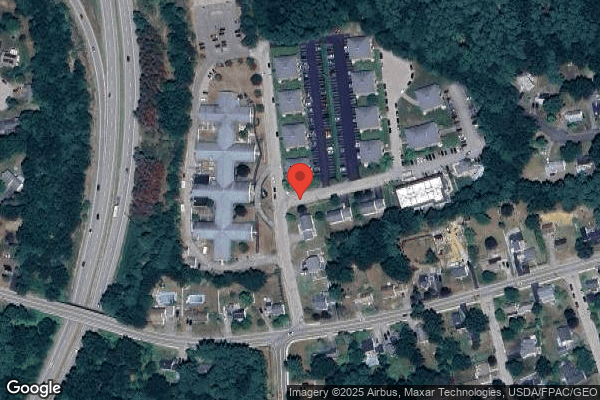

307 PLAZA DRIVE, DOVER, NH 03820 (603) 742-2676
For profit - Limited Liability company 112 Beds NATIONAL HEALTH CARE ASSOCIATES Data: November 2025
Trust Grade
55/100
#49 of 73 in NH
Last Inspection: May 2025

Inspected within the last 6 months. Data reflects current conditions.

Overview

Dover Center for Health & Rehabilitation has a Trust Grade of C, which means it is average and falls in the middle of the pack for nursing homes. It ranks #49 out of 73 facilities in New Hampshire, placing it in the bottom half, and #5 out of 6 in Strafford County, indicating only one local option is better. The facility is experiencing a worsening trend, with the number of issues rising from 5 in 2024 to 8 in 2025. Staffing is rated 2 out of 5 stars, with a turnover rate of 54%, which is close to the state average of 50%, but does not indicate strong staff retention. On a positive note, there have been no fines issued, which is good, and the facility has average RN coverage, meaning there is reasonable nursing oversight. However, there have been specific concerns noted, such as expired medications not being removed from the medication room, which risks resident safety, and a failure to assess the appropriateness of residents self-administering medications. Additionally, there was a lack of a comprehensive care plan for a resident who had access to potentially harmful items like scissors, highlighting gaps in safety protocols. Overall, while there are some strengths, families should carefully consider these weaknesses when researching this nursing home.

Trust Score
C
55/100
In New Hampshire
#49/73
Bottom 33%
Safety Record
Low Risk
No red flags
Inspections
Getting Worse
5 → 8 violations
Staff Stability
⚠ Watch
54% turnover. Above average. Higher turnover means staff may not know residents' routines.
Penalties
✓ Good
No fines on record. Clean compliance history, better than most New Hampshire facilities.
Skilled Nurses
✓ Good
Each resident gets 42 minutes of Registered Nurse (RN) attention daily — more than average for New Hampshire. RNs are trained to catch health problems early.
Violations
⚠ Watch
15 deficiencies on record. Higher than average. Multiple issues found across inspections.
★★☆☆☆
2.0
Overall Rating
★★☆☆☆
2.0
Staff Levels
★★★★☆
4.0
Care Quality
★★☆☆☆
2.0
Inspection Score
Stable
2024: 5 issues
2025: 8 issues

The Good

  • 4-Star Quality Measures · Strong clinical quality outcomes
  • Full Sprinkler Coverage · Fire safety systems throughout facility
  • No fines on record

Facility shows strength in quality measures, fire safety.

The Bad

2-Star Overall Rating

Below New Hampshire average (3.0)

Below average - review inspection findings carefully

Staff Turnover: 54%

Near New Hampshire avg (46%)

Higher turnover may affect care consistency

Chain: NATIONAL HEALTH CARE ASSOCIATES

Part of a multi-facility chain

Ask about local staffing decisions and management

The Ugly 15 deficiencies on record

May 2025 8 deficiencies
CONCERN (D)

Potential for Harm - no one hurt, but risky conditions existed

Deficiency F0554 (Tag F0554)

Could have caused harm · This affected 1 resident

Based on observation, interview, and record review, it was determined that the facility failed to determine if self-administration of medications was clinically appropriate for 1 of 4 residents review...

Read full inspector narrative →
Based on observation, interview, and record review, it was determined that the facility failed to determine if self-administration of medications was clinically appropriate for 1 of 4 residents reviewed for choices in a final sample of 20 residents. (Resident identifier is #68.) Findings include: Observation on 4/30/25 at approximately 8:35 a.m. of Resident #68's bedside table revealed a bottle of Refresh tears and Fluticasone nasal spray. Interview on 4/30/25 at approximately 8:35 a.m. with Resident #68 revealed that the medication has been on his/her bedside table since he/she was admitted about a month ago. Further interview revealed that he/she self-administers the medications 1-2 times a day. Observation on 4/30/25 at approximately 11:15 a.m. of Resident #68's bedside table revealed a bottle of Refresh tears and Fluticasone nasal spray. Review on 5/1/25 of Resident #68's medical record revealed that there was no assessment completed to determine if self-administration of medications is clinically appropriate for Resident #68. There was no physician orders for Refresh tears or Fluticasone nasal spray Interview on 5/1/25 at approximately 10:15 a.m. with Staff D (Licensed Practical Nurse) confirmed the above findings. Review on 5/1/25 of the facility policy titled Clinical Services, revision Date 10/2024 revealed: To maintain the residents' right to maintain a high level of independence, residents who request to self-administer medications are permitted to do so if the center's self-evaluation has determined that the practice would be safe for the resident and there is a health care provider's order to self-administer medication(s)/treatments. Procedure, 1. If the resident requests to self-administer medications, a Self-Administration Evaluation is completed by the licensed nurse to evaluate the resident's safety and understanding of their medication/treatments. 3. Upon obtaining the order for the medication/treatment the licensed nurse will instruct the resident in the process of storing the medications safely which should include a locked box .
CONCERN (D)

Potential for Harm - no one hurt, but risky conditions existed

Comprehensive Care Plan (Tag F0656)

Could have caused harm · This affected 1 resident

Based on interview and record review, it was determined that the facility failed to develop and implement a comphrensive care plan for 1 of of 3 residents reviewed for accidents in a final sample of 2...

Read full inspector narrative →
Based on interview and record review, it was determined that the facility failed to develop and implement a comphrensive care plan for 1 of of 3 residents reviewed for accidents in a final sample of 20 residents (Resident Identifier is #6). Findings include: Review on 5/1/25 of Resident #6's progress notes revealed the following notes: On 3/19/25 at 11:34 a.m., Resident noted to have scissors in [pronoun omitted ] room. Resident states [pronoun omitted] got them from [pronoun] niece. [Name omitted] and ADON [Assistant Director of Nursing] attempted to retrieve scissors from resident but [pronoun omitted] refused multiple times. On 3/19/25 at 12:14 a.m., Scissors and stapler obtained from Resident's room and kept in UM [unit manager] office for safety . On 4/12/25 at 10:58 a.m., This writer was notified by MNA [Medication Nursing Assistant] that resident took [pronoun omitted] scissors and an ensure from med cart when [pronoun omitted] stepped away. Scissors were found hiding inside resident's pillowcase. When staff removed scissors from resident's room, [pronoun omitted] began to threaten the staff. On 4/24/25 at 10:16 a.m., Resident found attempting to get into staff offices and locked cabinets and room . Interview on 4/30/25 at 8:45 a.m. with Staff J (Licensed Nursing Assistant) that Resident #6 wanders in and out of resident's room and takes things from other residents. Interview further revieaed that Resident #6 had a history of being physically threatening to residents and staff. Staff J stated that he/she was not assigned to care for Resident #6 anymore because Resident #6 threatened to stab him/her. Observation on 5/2/25 between 9:00 a.m. and 9:10 a.m. of the medication cart #4 on the TCU unit revealed that there were scissors left unattended on the medication cart while Staff K (Registered Nurse) was in a resident's room administering medication. Interview on 5/2/25 at 9:11 a.m. with Staff K confirmed that he/she left the scissors on top of medication cart #4 and the scissors were not secured. Review on 5/2/25 of Resident #6's comprehensive care plan revealed that there was no focus, goals, or interventions in place for Resident #6's behaviors of taking items that can pose a safety risk to themself or others or physically threatening residents and staff. Interciew on 5/2/25 at approximately 11:00 a.m. with Staff E (Director of Nursing) confirmed the above findings.
CONCERN (D)

Potential for Harm - no one hurt, but risky conditions existed

Deficiency F0658 (Tag F0658)

Could have caused harm · This affected 1 resident

**NOTE- TERMS IN BRACKETS HAVE BEEN EDITED TO PROTECT CONFIDENTIALITY** Based on observation, interview, and record review, it was determined that the facility failed to follow professional standards ...

Read full inspector narrative →
**NOTE- TERMS IN BRACKETS HAVE BEEN EDITED TO PROTECT CONFIDENTIALITY** Based on observation, interview, and record review, it was determined that the facility failed to follow professional standards for medication storage and administration for 1 of 3 medication carts observed. (Resident identifier is #69.) Findings include: [NAME], [NAME] A., and [NAME]. Fundamentals of Nursing. 10th edition St. Louis, Missouri: Elsevier, 2021. Page 608 . Right Medication . Because the nurse who administers the medication is responsible for any errors related to it, nurses administer only the medications they prepare. You cannot delegate preperation of medication to another person and then administer the medication to a patient . Observation on 4/30/25 at approximately 7:30 a.m. of the medication cart TCU #4 with Staff B (Registered Nurse) revealed an unlabeled medication cup with pills in the top drawer. Further observation revealed that the medication cup was tipped on it's side and 3 unidentifiable pills were on the side of the medication cup on the bottom of the medication cart drawer. Interview on 4/30/25 at approximately 7:30 a.m. with Staff B confirmed the above findings and that the unlabeled medication cup with pills were for Resident #69. Review on 4/30/25 of Resident #69's April 2025's MAR (Medication Administration Record) revealed the following 6:00 a.m. medications signed as administered on 4/30/25: Bactrim DS (Double Strength) tablet 800-160 mg (milligrams) Cholecalciferol Tablet 50 mcg (micrograms) Ferrous Sulfate Tablet 325 mg Furosemide Tablet 20 mg Loratidine Tablet 10 mg Multivitamin Tablet Omeprazole Capsule Delayed Release 40 mg Oxycodone Tablet 5 mg Prednisone Tablet 20 mg Reglan Tablet 5 mg Interview on 4/30/25 at approximately 12:00 p.m. with Staff B confirmed the medication in the medicine cup was for Resident #69 and that Staff B was not the nurse who prepared the medications. Further interview with Staff B revealed that the night nurse prepared the medications for Resident #69 and asked him/her to administer the medications to the resident. Staff B administered them to Resident #69. Interview on 4/30/25 at approximately 1:45 p.m. with Staff C (Licensed Practical Nurse) night nurse confirmed that they had prepared Resident #69's morning medications and left them in the top drawer of the medication cart to be administered by Staff B on day shift. Further interview with Staff C confirmed that Resident #69's Oxycodone was in the medication cup and was not double locked. Review on 4/30/25 of the facility policy titled, Clinical Services, revision date 9/23/24, revealed the following . Do not pre-pour medications: administer them as they are prepared. Administration of medications must be documented at the time of the medication pass .
CONCERN (D)

Potential for Harm - no one hurt, but risky conditions existed

Accident Prevention (Tag F0689)

Could have caused harm · This affected 1 resident

Based on observation, interview, and record review, it was determined that the facility failed to maintain an environment free of accident hazards by not securing scissors when not in use for 1 of 3 r...

Read full inspector narrative →
Based on observation, interview, and record review, it was determined that the facility failed to maintain an environment free of accident hazards by not securing scissors when not in use for 1 of 3 residents reviewed for accidents in a final sample of 20 residents (Resident Identifier is #6). Findings include: Observation on 4/30/25 at 9:30 a.m. on the Transitional Care Unit (TCU) revealed that Resident #6 was ambulating with a rolling walker around the TCU unit going in and out of other resident's rooms. Review on 5/1/25 of Resident #6's progress notes revealed the following notes: On 3/19/25 at 11:34 a.m., Resident noted to have scissors in [pronoun omitted ] room. Resident states [pronoun omitted] got them from [pronoun] niece. [Name omitted] and ADON [Assistant Director of Nursing] attempted to retrieve scissors from resident but [pronoun omitted] refused multiple times. On 3/19/25 at 12:14 a.m., Scissors and stapler obtained from Resident's room and kept in UM [unit manager] office for safety . On 4/12/25 at 10:58 a.m., This writer was notified by MNA [Medication Nursing Assistant] that resident took [pronoun omitted] scissors and an ensure from med cart when [pronoun omitted] stepped away. Scissors were found hiding inside resident's pillowcase. When staff removed scissors from resident's room, [pronoun omitted] began to threaten the staff. On 4/24/25 at 10:16 a.m., Resident found attempting to get into staff offices and locked cabinets and room. Resident redirected and educated on staying in resident areas. Resident states I don't care, I'll find the code. Interview on 4/30/25 at 8:45 a.m. with Staff J (Licensed Nursing Assistant) that Resident #6 wanders in and out of resident's room and takes things from other residents. Interview further revieaed that Resident #6 had a history of being physically threatening to residents and staff. Staff J stated that he/she was not assigned to care for Resident #6 anymore because Resident #6 threatened to stab him/her. Observation on 5/2/25 between 9:00 a.m. and 9:10 a.m. of the medication cart #4 on the TCU unit revealed that there were scissors left unattended on the medication cart while Staff K (Registered Nurse) was in a resident's room administering medication. Interview on 5/2/25 at 9:11 a.m. with Staff K confirmed that he/she left the scissors on top of medication cart #4 and the scissors were not secured.
CONCERN (D)

Potential for Harm - no one hurt, but risky conditions existed

Drug Regimen Review (Tag F0756)

Could have caused harm · This affected 1 resident

Resident #55 Review on 5/1/25 of Resident #55's monthly Medication Regimen Review, dated 1/6/25, revealed that Resident #55 was receiving Protonix since 8/2023 and a pharmacist recommendation to consi...

Read full inspector narrative →
Resident #55 Review on 5/1/25 of Resident #55's monthly Medication Regimen Review, dated 1/6/25, revealed that Resident #55 was receiving Protonix since 8/2023 and a pharmacist recommendation to consider tapering to discontinue the Protonix medication or if no change to the Protonix medication to indicate medical necessity of current therapy and potential risk versus current therapeutic benefit in the progress note. Further review of the MRR revealed that there was no documentation that the provider reviewed and/or addressed this recommendation. Review on 5/1/25 of Resident #55's active physician's orders revealed an order for Protonix delayed release 40 milligrams by mouth once a day for acid reflux with a start date of 8/19/23. Review on 5/1/25 of Resident #55's progress notes revealed no documentation from the provider of the medical necessity and potential risk versus current therapeutic benefit for the continued use of the Protonix medication. Interview on 5/1/25 at approximately 2:13 p.m. with Staff E (Director of Nursing) confirmed that Resident #55's MRR, dated 1/6/25, was not reviewed or addressed by the provider. Review on 5/2/25 of the facility policy titled, Documentation and Communication of Consultant Pharmacist Recommendations, revision date of 12/2019, revealed .Comments and recommendations concerning medication therapy are communicated in a timely fashion. The timing of these recommendations should enable a response prior to the next medication regimen review .Recommendations are acted upon and documented by the facility staff and/or the prescriber. If the prescriber does not respond to recommendations directed to him/her [within 30 days], the Director of Nursing and/or the consultant pharmacist may contact the Medical Director . Based on interview and record review, it was determined that the facility failed to ensure that the provider reviewed irregularities identified by the pharmacist during the monthly Pharmacy Medication Regimen Review (MRR) timely for 3 of 5 residents reviewed for unnecessary medications (Resident Identifiers are #1, #51, and #55). Findings include: Resident #1 Review on 5/2/25 of Resident # 1's Pharmacy MRR, dated 3/4/25, revealed the following recommendation: Resident has an order for Gabapentin 200 mg (milligrams), twice daily for, 'post herpetic neuralgia'. This order was initiated 9-16-2024. Please review if this scheduled medication for pain remains necessary for the resident. Further review of the MRR revealed that the physician did not address the recommendation until 5/1/25. Resident #51 Review on 5/2/25 of Resident #51's Pharmacy MRR, dated 3/4/2025, revealed the following recommendation: Resident is receiving Lipitor 40 mg. Please consider lipid panel with next resident lab draw and at least annually thereafter. Further review revealed that the physician did not address the recommendation until 5/1/25. Interview on 5/2/25 at approximately 10:30 a.m. with Staff E (Director of Nursing) confirmed the above findings for Resident #1 and #51.
CONCERN (D)

Potential for Harm - no one hurt, but risky conditions existed

Deficiency F0757 (Tag F0757)

Could have caused harm · This affected 1 resident

**NOTE- TERMS IN BRACKETS HAVE BEEN EDITED TO PROTECT CONFIDENTIALITY** Based on interview and record review, it was determined that the facility failed to ensure that a resident receiving antipsychot...

Read full inspector narrative →
**NOTE- TERMS IN BRACKETS HAVE BEEN EDITED TO PROTECT CONFIDENTIALITY** Based on interview and record review, it was determined that the facility failed to ensure that a resident receiving antipsychotic medication had an adequate indication for use for 1 of 5 residents reviewed for unnecessary medications in a final sample of 20 residents (Resident identifier is #1). Findings include: Review on 5/2/25 of Resident #1's physician orders revealed the following order: Seroquel (Antipsychotic Medication) Oral Tablet 25 mg (milligrams) Give 25 mg by mouth one time a day for confusion, agitation with a start date of 9/16/24. Review on 5/2/25 of Resident #1's medical record revealed that he/she was admitted to the facility on [DATE]. Review on 5/2/25 of Resident #1's diagnosis list revealed a diagnosis of Vascular Dementia, mild, with anxiety. Review on 5/2/25 of Resident #1's medical record for monitoring behavior symptoms revealed that Resident #1 did not exhibit any behaviors from 4/3/25 thru 5/2/25. Review on 5/2/25 of Resident #1's Psychiatric Evaluation and Consultation note, dated 1/24/25, revealed the following: [Name omitted] is a [AGE] year old [pronoun omitted] with no significant past psychiatric history. [Pronoun removed] he was hospitalized on [DATE] for UTI [urinary tract infection], and was started on Seroquel same day per chart review . Family refused GDR [gradual dose reduction]. Review on 5/2/25 of Resident #1's most recent Psychiatric Evaluation and Consultation note. dated 3/7/25. revealed the following: [Name omitted] is a [AGE] year old [gender removed] with no significant past psychiatric history. Further review revealed a diagnosis of Unspecified Dementia without behavioral disturbance- Severity: Low. Interview on 5/2/25 with Staff G (Nurse Practitioner/Psychiatric Provider) revealed that Resident #1 has no significant psychiatric diagnosis. Review on 5/2/25 of facility policy titled Clinical Services Subject: Psychotropic Medications, dated 5/2023, revealed the following: .Guidelines: 2. When the psychoactive medications are prescribed, a specific condition or targeted behavior that warrants the use of psychoactive medications shall be documented in the clinical record .
CONCERN (D)

Potential for Harm - no one hurt, but risky conditions existed

Deficiency F0760 (Tag F0760)

Could have caused harm · This affected 1 resident

Based on interview and record review, it was determined that the facility failed to ensure residents remained free from significant medication errors for 1 of 3 residents reviewed for accidents and ha...

Read full inspector narrative →
Based on interview and record review, it was determined that the facility failed to ensure residents remained free from significant medication errors for 1 of 3 residents reviewed for accidents and hazards in a final sample of 20 residents. (Resident identifiers is #9.) Findings include: Review on 5/1/25 of Resident #9's medical record revealed a nursing note, written by Staff L (Registered Nurse), dated 4/23/25, at 7:51 p.m.: Med error reported to on call physician and DPOA (Durable Power of Attorney). Resident given 30 units of Lantus, 75 mg (milligrams) of Lyrica. 5 mg of oxy. Interview on 5/2/25 at approximately 1:00 p.m. with Staff E (Director of Nursing) confirmed that Resident #9 had received Resident #18's evening medications. Review on 5/2/25 of Resident #9's medical provider note dated 4/23/25 at 4:23 p.m. revealed that .Patient was given Lantus 30 units, Lyrica 75 mg, Oxycodone 5 mg with his usual nightly 4 ounces of scotch. Patient is a diabetic who takes 10 units of long acting typically . Review on 5/2/25 of Resident #9's active physician orders revealed the following: Lantus Solar Subcutaneous Solution 100 Unit/ML (milliliter) (Insulin Glargine), Inject 10 units subcutaneously one time a day for DM (Diabetes Mellitus), (Resident #9 received 30 units); No physician orders for Lyrica Oral Capsule 75 MG (Pregabalin); No physician orders Oxycodone HCI Oral Tablet 5 MG (Oxycodone HCI). Review on 5/2/25 of the facility's policy titled Medication Pass Policy dated 9/24 revealed, .Identify each resident PRIOR to administration of medication (picture, ID bracelet, ect.) .
CONCERN (D)

Potential for Harm - no one hurt, but risky conditions existed

Deficiency F0761 (Tag F0761)

Could have caused harm · This affected 1 resident

Based on observation, interview, and record review, it was determined that the facility failed to label and store medications in accordance with professional standards for 2 of 3 medication carts obse...

Read full inspector narrative →
Based on observation, interview, and record review, it was determined that the facility failed to label and store medications in accordance with professional standards for 2 of 3 medication carts observed. Findings include: Observation on 4/30/25 at approximately 7:20 a.m. of the medication cart Glenwood Cart 2 and 4 with Staff A (Registered Nurse) revealed: Resident #59's Incruse Inhaler, opened without a date of opening; Resident #32's Fluticasone Propionate and Salemetrol inhaler opened with a labeled date of expiration of 4/24; Resident #29's Incruse inhaler opened, without a date of opening; Resident #5's Anoro inhaler opened, without a date of opening. Interview on 4/30/25 at approximately 7:20 a.m. with Staff A confirmed the above findings. Observation on 4/30/25 at approximately 7:30 a.m. of the medication cart TCU #4 with Staff B (Registered Nurse) revealed an unlabeled medication cup with pills in it in the top drawer for Resident #69. Resident #9's Lispro insulin opened labeled with a date of expiration of 4/28/25. Interview on 4/30/25 at approximately 7:30 a.m. with Staff B confirmed the above findings. Further interview revealed that Resident #9 received his/her a.m. dose of Lispro on 4/30/25. Review on 4/30/25 of Resident #9's April 2025's MAR (Medication Administration Record) revealed: On 4/30/25 at 6:00 a.m. Resident #9 received 8 units of Lispro. Review on 4/30/25 of Resident #69's April 2025's MAR (Medication Administration Record) revealed the following 6:00 a.m. medications signed as administered on 4/30/25: Bactrim DS (Double Strength) tablet 800-160 mg (milligrams) Cholecalciferol Tablet 50 mcg (micrograms) Ferrous Sulfate Tablet 325 mg Furosemide Tablet 20 mg Loratidine Tablet 10 mg Multivitamin Tablet Omeprazole Capsule Delayed Release 40 mg Oxycodone Tablet 5 mg Prednisone Tablet 20 mg Reglan Tablet 5 mg Interview on 4/30/25 at approximately 12:00 p.m. with Staff B confirmed the medication in the medicine cup was for Resident #69. Interview on 4/30/25 at approximately 1:45 p.m. with Staff C (Licensed Practical Nurse) night nurse confirmed that they had prepared Resident #69's morning medications and left them in the top drawer of the medication cart to be administered by Staff B on day shift. Further interview with Staff C confirmed that Resident #69's Oxycodone was in the medication cup and was not double locked. Review on 4/30/25 of the manufacturer's instructions for Insulin Lispro Cartridges and Pens, undated revealed: . Store opened cartridges and pens at room temperature. Throw away any part not used after 28 days Review on 4/30/25 of the manufacturer's instructions for Fluticasone and Salmetrol Inhalation Powder, undated revealed . Throw away the inhaler when the dose counter reaches 0', 1 month after opening foil pouch, or after the expiration date, whichever comes first . Review on 4/30/25 of the manufacturer's instructions for Umeclidinium and Vilanterol (Anoro Ellipta), undated revealed . Throw away the inhaler when the dose counter reaches 0', 6 weeks after opening foil pouch, or after the expiration date, whichever comes first . Review on 4/30/25 of the manufacturer's instructions for Umeclidinium (Incruse Ellipta), undated revealed .Throw away the inhaler when the dose counter reaches 0', 6 weeks after opening foil pouch, or after the expiration date, whichever comes first . Review on 4/30/25 of the facility policy titled, ID1: Storage of Medications, Revision Date December 2019, revealed . Procedures . C. All medications dispensed by the pharmacy are stored in the container with the pharmacy label H. Outdated, contaminated, or deteriorated medications . are immediately removed from inventory, . Expiration Dating .D. When the original seal of a manufacturer's container or vial is initially broken, the container or vial will be dated. 1. The nurse shall place a date opened sticker on the medication and enter the date opened and the new date of expiration E. The nurse will check the expiration date of each medication before administering it ID2: Controlled Substances .B. Schedule [II-V] medications and other medications subject to abuse or diversion are stored in a permanently affixed, [double-locked] compartment separate from all other medications .
Apr 2024 5 deficiencies
CONCERN (D)

Potential for Harm - no one hurt, but risky conditions existed

Report Alleged Abuse (Tag F0609)

Could have caused harm · This affected 1 resident

Based on interview and record review, it was determined that the facility failed to report an allegation of neglect to the State Survey Agency (SSA) for 1 out of 3 grievances reviewed for alleged negl...

Read full inspector narrative →
Based on interview and record review, it was determined that the facility failed to report an allegation of neglect to the State Survey Agency (SSA) for 1 out of 3 grievances reviewed for alleged neglect (Resident Identifier #4). Findings include: Review on 4/10/24 of the facility grievance form filed on 3/14/24 by Resident #4 revealed the following allegation: The resident reports [pronoun omitted] waited 30 minutes for [pronoun omitted] call light to be answered and ultimately self-ambulated to the bathroom and fell. [pronoun omitted] reports the nurse on overnight was not helpful and said it was the resident's fault that [pronoun omitted] fell. Interview on 4/10/24 at approximately 12:00 p.m. with Staff A (Administrator) revealed that the above allegation was not reported to the SSA. Review on 4/10/24 of the facility's policy titled Clinical Services, Abuse Policy and Procedure, Procedure for Abuse Investigation revised on 1/23 revealed: .Procedure Guidelines .5. The facility will notify Department of Public Health and Local Law Enforcement immediately but no later than two (2) hours after the allegation is made if the events that cause the allegation involve abuse .
CONCERN (D)

Potential for Harm - no one hurt, but risky conditions existed

Deficiency F0658 (Tag F0658)

Could have caused harm · This affected 1 resident

**NOTE- TERMS IN BRACKETS HAVE BEEN EDITED TO PROTECT CONFIDENTIALITY** Based on interview and record review, it was determined that the facility failed to follow physician orders for 1 of 2 newly adm...

Read full inspector narrative →
**NOTE- TERMS IN BRACKETS HAVE BEEN EDITED TO PROTECT CONFIDENTIALITY** Based on interview and record review, it was determined that the facility failed to follow physician orders for 1 of 2 newly admitted residents reviewed for medications in a final sample of 20 residents (Resident Identifier is #346). Findings include: Review on 4/9/24 of professional nursing standard: Fundamentals of Nursing, [NAME], [NAME] A., and [NAME]. 7th ed. St. Louis, Missouri: Mosby Elsevier, 2009 revealed: Page 336 - Physicians' Orders The physician is responsible for directing medical treatment. Nurses follow physician ' s orders unless they believe the orders are in error or harm clients. Therefore you need to assess all orders, and if you find one to be erroneous or harmful, further clarification from the physician is necessary . Interview on 4/9/24 at approximately 10:45 a.m. with Resident #346 revealed that he/she was admitted to the facility in April 2024 in the afternoon and the facility did not administer his/her medications that evening. Review on 4/10/24 of Resident #346's April 2024 Medication Administration Record (MAR) revealed the following medications ordered for administration: 1. Atorvastatin Calcium (antilipemic) 40 milligram (mg) - 1 tablet at bedtime 2. Finasteride (5-alpha reductase inhibitors) 5 mg - 1 tablet at bedtime 3. Oxcarbazepine (anticonvulsant) 300 mg - 1 tablet twice a day 4. Tamsulosin HCL (alpha blocker) (Hydrochloride) 0.4 mg - 1 tablet twice a day 5. Apixaban (anticoagulant) 5 mg - 1 tablet twice a day. Upon further review, the above medications were not administered and documented as not available. Review on 4/10/24 of the Omnicell (automated dispensing machine) revealed that the following medications were available: 1. Atorvastatin Calcium 2. Oxcarbazepine 3. Tamsulosin 4. Apixaban Interview on 4/10/24 at approximately 10:30 a.m. with Staff C (Unit Manager) confirmed the above findings. Staff C stated that Resident #346 was admitted to the facility around 12:30 p.m. and that medications, as mentioned above, were available in the Omnicell for administration. Review on 4/10/24 of the facility's policy titled Unavailable Medication revision date 5/23 revealed: .Policy If a medication is unavailable, for any reason, the facility shall act promptly to notify the pharmacy and the appropriate practitioners to obtain a new medication supply/order .Procedure .2. The Nursing Supervisor and/or Charge Nurse will check all possible areas where medications are stored to check if medication is available (E-box [emergency box]), Automatic Dispensing Machine .3. If medication is not available, notify the Physician/NP [Nurse Practitioner] if there is a comparable medication available that can be given as an alternate .4. Obtain order for alternate or to hold medication and administer at time of delivery .
CONCERN (D)

Potential for Harm - no one hurt, but risky conditions existed

Accident Prevention (Tag F0689)

Could have caused harm · This affected 1 resident

**NOTE- TERMS IN BRACKETS HAVE BEEN EDITED TO PROTECT CONFIDENTIALITY** Based on observation, interview, and record review, it was determined that the facility failed to ensure that residents' environ...

Read full inspector narrative →
**NOTE- TERMS IN BRACKETS HAVE BEEN EDITED TO PROTECT CONFIDENTIALITY** Based on observation, interview, and record review, it was determined that the facility failed to ensure that residents' environment remained as free as possible of accident hazards to prevent injury in regards to the application of seizure pads on the bed for 1 of 3 residents reviewed for accidents in a final sample of 20 residents (Resident Identifier #67). Findings include: Observation on 4/9/24 at approximately 11:15 a.m. of Resident #67 lying in bed with seizure pads attached to the outside of the quarter rails, with no padding between the bed rails and the resident's body. Observation on 4/9/24 at approximately 2:10 p.m. of Resident #67 lying in bed with seizure pads attached to the outside of the quarter rails, with no padding between the bed rails and the resident's body. Review on 4/9/24 of Resident #67's medical record showed diagnosis of epilepsy present on admission. Further review revealed the following physician's order for seizure pads: Seizure pads, every shift, order date 1/31/24. Interview on 4/10/24 at approximately 10:30 a.m. with Staff C (Unit Manager) confirmed the above findings. Staff C stated that the seizure pads should be attached to the inside of the quarter rails towards the resident. Review on 4/9/24 of professional nursing standard: Lippincott Manual of Nursing Practice, [NAME], 11th Edition, Philadelphia, Wolters Kluwer, 2019 revealed: Page 419 Seizure Disorders .Nursing Interventions .Preventing injury 1. Provide a safe environment by padding side rails .
CONCERN (D)

Potential for Harm - no one hurt, but risky conditions existed

Infection Control (Tag F0880)

Could have caused harm · This affected 1 resident

Based on record review, observation, and interview, it was determined that the facility failed to maintain infection prevention related to catheter care for 1 of 3 residents reviewed for catheters (Re...

Read full inspector narrative →
Based on record review, observation, and interview, it was determined that the facility failed to maintain infection prevention related to catheter care for 1 of 3 residents reviewed for catheters (Resident Identifier #153). Findings include: Review on 4/9/24 of Resident #153's medical record revealed they had a Foley catheter since admission in April 2024. Further review of Resident #153's catheter care plan dated April 2024 revealed: .Keep urinary collection bag off the floor . Observation on 4/9/24 at approximately 12:30 p.m. revealed Resident #153 in a wheelchair with their Foley catheter drainage bag and catheter tubing resting on the floor. Interview on 4/9/24 at approximately 12:30 p.m. with Resident #153 revealed they did not place their Foley catheter drainage bag and catheter tubing on the floor. Observation on 4/10/24 at approximately 12:15 p.m. revealed Resident #153 in their wheelchair self-propelling with the bottom of their Foley catheter drainage bag dragging on the floor. Interview on 4/10/24 at approximately 12:35 p.m. with Staff B (Unit Manager) confirmed the above finding. Review on 4/15/24 of Catheter-Associated Urinary Tract Infections (CAUTI) guidelines on the Centers for Disease Control and Prevention (CDC) website, found at https://www.cdc.gov/infectioncontrol/guidelines/cauti/index.html revealed: .III. Proper Techniques for Urinary Catheter Maintenance .III.B.2 - Keep the collecting bag below the level of the bladder at all times. Do not rest the bag on the floor .
MINOR (B)

Minor Issue - procedural, no safety impact

Medical Records (Tag F0842)

Minor procedural issue · This affected multiple residents

Resident #24 Review on 4/9/24 of Resident #24's April 2024 MAR revealed the following physician order: 1. Insulin Glargine solution 100 UNIT/mL, inject 6 units subcutaneously one time a day with a sta...

Read full inspector narrative →
Resident #24 Review on 4/9/24 of Resident #24's April 2024 MAR revealed the following physician order: 1. Insulin Glargine solution 100 UNIT/mL, inject 6 units subcutaneously one time a day with a start date of 1/23/24, scheduled for bedtime. 2. Humalog solution (Insulin Lispro) 100 UNIT/mL, inject as per sliding scale: 0 - 59 = Notify MD and initiate hypoglycemic protocol; 60 - 150 = 0 units; 151- 200 = 4 units; 201 - 250 = 8 units; 251 - 300 = 12 units; 301 - 350 = 14 units; 351 - 400 = 16 units; 401 plus = 18 units call provider to verify dose prior to administration, subcutaneously before meals and at bedtime with a start date of 1/16/24. Review on 4/10/24 of Resident #24's MAR revealed no documentation of Resident #24's blood sugar value or administration of insulin on the following dates: Insulin Glargine 4/4/24 at bedtime Insulin Lispro 4/4/24 at 8:00 p.m. 4/7/24 at 6:30 a.m. 4/8/24 at 6:30 a.m. Interview on 4/10/24 at approximately 1:40 p.m. with Staff C confirmed the above findings. Resident #67 Review on 4/9/24 of Resident #67's April 2024 MAR revealed the following physician order : 1. Basaglar KwikPen (Insulin Glargine) subcutaneous solution pen - injector 100 UNIT/mL, inject 10 units subcutaneously one time a day with start date of 2/1/24, scheduled at 6:00 a.m. Review on 4/10/24 of Resident #67's MAR revealed no documentation of Resident #67's blood sugar value and administration of insulin on the following dates: Insulin Glargine 4/7/24 at 6:00 a.m. 4/8/24 at 6:00 a.m. Interview on 4/10/24 at approximately 1:40 p.m. with Staff C confirmed the above findings. Review on 4/10/24 of facility's policy titled Diabetes Management Protocol revised 3/23, revealed: .Procedure: Insulin Dependent Diabetic with Routine Insulin Orders and Sliding Scale .3. Administers short acting insulin per sliding scale order .5. Documents result of finger stick dose of insulin administered and site . Based on observation, interview, and record review, it was determined that the facility failed to ensure that resident records were complete and accurate for 3 residents in a final sample of 20 residents (Resident Identifiers #24, #34, and #67). Findings include: Resident #34 Review on 4/10/24 of Resident #34's April 2024 Medication Administration Record (MAR) revealed an order for HumaLOG Solution (Insulin Lispro) 100 unit/milliliter (mL) inject as per sliding scale: 0 - 149 = 0 units if blood sugar (BS) less than 70 after initiating protocol call Doctor of Medicine (MD): 150 - 199 = 2 units 200 - 249 = 4 units 250 - 299 = 6 units 300 - 349 = 8 units 350 - 399 = 10 units 400 plus = notify MD for directions, subcutaneously before meals and at bedtime for Diabetes Mellitus (DM) with a start date of 12/12/23. Further review of the MAR revealed that on 4/7/24 at 6:30 a.m. there was no documentation that Resident #34's blood sugar was taken and no documentation that sliding scale insulin was administered. Review on 4/10/24 of Resident #34's nursing notes revealed that there was no documentation of why the insulin had not been given. Interview on 4/10/24 at approximately 1:30 p.m. with Staff C (Unit Manager) confirmed the above findings.
Mar 2023 2 deficiencies
CONCERN (D)

Potential for Harm - no one hurt, but risky conditions existed

Deficiency F0554 (Tag F0554)

Could have caused harm · This affected 1 resident

Based on observation, interview, and record review it was determined that the facility failed to assess a resident's ability to self-administer medications for 1 of 3 residents reviewed for choices in...

Read full inspector narrative →
Based on observation, interview, and record review it was determined that the facility failed to assess a resident's ability to self-administer medications for 1 of 3 residents reviewed for choices in a final sample of 23 residents (Resident identifier is #41). Findings include: Observation on 3/8/23 at approximately 8:53 a.m. of Resident # 41's room revealed the resident administering his/her medication without any staff present. The resident had already begun taking his/her medication and it appeared that there were approximately 5-6 pills left in the medication cup. The resident stated that some nurses will leave them for him/her to take unsupervised while others will administer them. Interview at 12:01 p.m. on 3/8/23 with Staff A (Unit Manager) revealed that it is facility policy to not give residents Medication unsupervised and that the nurse should stay with him/her. Staff A also stated that the resident was not assessed to self-administer medications and that there was not a physician order for self-administration in the resident's chart. Interview at 12:02 p.m. on 3/8/23 with Staff B (Registered Nurse) confirmed that he/she left the medications with Resident #41 and then left the room. Staff B confirmed that he/she gave the resident the following medications: Keppra 750 Tablet Gabapentin Capsule Irbesartan Tablet Metoprolol Tablet Omeprazole Capsule Oxcarbazepine Tablet Oxcarbazepine Tablet Potassium Chloride Tablet Record Review of the Medication Administration Review (MAR) on 3/9/23 revealed that the above medications were administered by Staff B on 3/8/23.
CONCERN (E)

Potential for Harm - no one hurt, but risky conditions existed

Deficiency F0761 (Tag F0761)

Could have caused harm · This affected multiple residents

**NOTE- TERMS IN BRACKETS HAVE BEEN EDITED TO PROTECT CONFIDENTIALITY** Based on observation, interview, and record review it was determine that the facility failed to ensure that opened medications w...

Read full inspector narrative →
**NOTE- TERMS IN BRACKETS HAVE BEEN EDITED TO PROTECT CONFIDENTIALITY** Based on observation, interview, and record review it was determine that the facility failed to ensure that opened medications were labeled with an open date or open expiration date on 1 of 3 medication carts observed, failed to ensure that expired supplements were removed from the medication room, and failed to ensure that medications were kept secured on 1 of 3 units observed (Resident Identifiers are #41, #52, and #7). Findings include: Passport Medication Room Observation on [DATE] at approximately 8:45 a.m. of the Passport Medication Room revealed: 13 Apple Ensure clear therapeutic drinks, expiration date [DATE] 10 Berry Ensure clear therapeutic drinks, expiration date [DATE] Interview on [DATE] at approximately 8:45 a.m. with Staff D (Licensed Practical Nurse (LPN)) confirmed the above findings and that the expired drinks should have been removed from the medication room. [NAME] Medication Carts 2 and 4 Observation on [DATE] at approximately 9:00 a.m. of the [NAME] Medication Carts 2 and 4 revealed the following medications for Resident #7: A Victoza Pen labeled with an opened date of [DATE] and a Levemir Insulin Pen with no opened date or open expiration date. Interview on [DATE] at approximately 9:00 a.m. with Staff E (LPN) confirmed the above findings. Review on [DATE] of the manufacturer's instructions for Levemir insulin, dated 12/2022 revealed: .After vials have been opened: . Throw away all opened Levemir vials after 42 days, even if they still have insulin left in them Review on [DATE] of the manufacturer's instructions for Victoza insulin, dated 6/2022 revealed: . Use a Victoza pen for only 30 days. Throw away a used Victoza pen 30 days after you start using it, even if some medicine is left in the pen Transitional Care Unit (TCU) Observation on [DATE] at 9:30 a.m. of the mediation administration pass on TCU with Staff C (Registered Nurse) revealed that Staff C entered room [ROOM NUMBER] and left the medication cart unlocked. Staff C was not within sight of the unsecured medication cart for approximately 2 minutes while in room [ROOM NUMBER]. Interview on [DATE] at 09:35 a.m. with Staff C confirmed that the cart was unlocked. Transitional Care Unit - Treatment Cart Observation on [DATE] at approximately 1:45 p.m. of the treatment cart on the TCU revealed the treatment cart was unlocked. Further observation revealed the following treatments that were not secured: 1 bottle of Acetic Acid 0.25 percent (%) irrigation solution (Resident #52) 1 syringe of Glydo 2% Jelly syringe (Resident #71) Interview on [DATE] at approximately 1:48 p.m. with Staff F (LPN) confirmed the above findings and revealed that the treatment cart should be locked. Review on [DATE] of the facility policy titled, Medication Ordering and Receiving From Pharmacy Provider, Medication and Medication Labels, dated 5/16 revealed: .2. Multi-dose vials shall be labeled to assure product integrity, considering the manufacturers, specifications. (Example: Modified expiration dates upon opening the multi-dose vial.) Nursing staff should document the date opened on multi-dose vials on the attached auxiliary label. Review on [DATE] of the facility policy titled, Medication Storage, Storage of Medication, dated 05/16 revealed: Medications and biologicals are stored properly, following manufacturer's or provider pharmacy recommendations, to maintain their integrity and to support safe effective drug administration. The medication shall be accessible only to licensed nursing personnel, pharmacy personnel, or staff members lawfully authorized to administer medications. .3. In order to limit access to prescription medications, only licensed nurses, pharmacy staff, and those lawfully authorized to administer medications (such as medication aides) are allowed access to medication carts. Medication rooms, cabinets and medication supplies should remain locked when not in use or attended by persons with authorized access .
Understanding Severity Codes (click to expand)
Life-Threatening (Immediate Jeopardy)
J - Isolated K - Pattern L - Widespread
Actual Harm
G - Isolated H - Pattern I - Widespread
Potential for Harm
D - Isolated E - Pattern F - Widespread
No Harm (Minor)
A - Isolated B - Pattern C - Widespread

Questions to Ask on Your Visit

  • "Can I speak with families of current residents?"
  • "What's your RN coverage like on weekends and overnight?"

Our Honest Assessment

Strengths
  • • No major safety red flags. No abuse findings, life-threatening violations, or SFF status.
  • • No fines on record. Clean compliance history, better than most New Hampshire facilities.
Concerns
  • • 15 deficiencies on record. Higher than average. Multiple issues found across inspections.
  • • Grade C (55/100). Below average facility with significant concerns.
Bottom line: Mixed indicators with Trust Score of 55/100. Visit in person and ask pointed questions.

About This Facility

What is Dover Center For Health & Rehabilitation's CMS Rating?

CMS assigns DOVER CENTER FOR HEALTH & REHABILITATION an overall rating of 2 out of 5 stars, which is considered below average nationally. Within New Hampshire, this rating places the facility higher than 0% of the state's 100 nursing homes. A rating at this level reflects concerns identified through health inspections, staffing assessments, or quality measures that families should carefully consider.

How is Dover Center For Health & Rehabilitation Staffed?

CMS rates DOVER CENTER FOR HEALTH & REHABILITATION's staffing level at 2 out of 5 stars, which is below average compared to other nursing homes. Staff turnover is 54%, compared to the New Hampshire average of 46%. RN turnover specifically is 64%, which is notably high. RNs provide skilled clinical oversight, so turnover in this role can affect medical care quality.

What Have Inspectors Found at Dover Center For Health & Rehabilitation?

State health inspectors documented 15 deficiencies at DOVER CENTER FOR HEALTH & REHABILITATION during 2023 to 2025. These included: 14 with potential for harm and 1 minor or isolated issues.

Who Owns and Operates Dover Center For Health & Rehabilitation?

DOVER CENTER FOR HEALTH & REHABILITATION is owned by a for-profit company. For-profit facilities operate as businesses with obligations to shareholders or private owners. The facility is operated by NATIONAL HEALTH CARE ASSOCIATES, a chain that manages multiple nursing homes. With 112 certified beds and approximately 99 residents (about 88% occupancy), it is a mid-sized facility located in DOVER, New Hampshire.

How Does Dover Center For Health & Rehabilitation Compare to Other New Hampshire Nursing Homes?

Compared to the 100 nursing homes in New Hampshire, DOVER CENTER FOR HEALTH & REHABILITATION's overall rating (2 stars) is below the state average of 3.0, staff turnover (54%) is near the state average of 46%, and health inspection rating (2 stars) is below the national benchmark.

What Should Families Ask When Visiting Dover Center For Health & Rehabilitation?

Based on this facility's data, families visiting should ask: "Can you walk me through typical staffing levels on day, evening, and night shifts?" "Can I visit during a mealtime to observe dining assistance and food quality?" "How do you handle medical emergencies, and what is your hospital transfer rate?" "Can I speak with family members of current residents about their experience?" These questions are particularly relevant given the below-average staffing rating.

Is Dover Center For Health & Rehabilitation Safe?

Based on CMS inspection data, DOVER CENTER FOR HEALTH & REHABILITATION has a clean safety record: no substantiated abuse findings (meaning no confirmed cases of resident harm), no Immediate Jeopardy citations (the most serious violation level indicating risk of serious injury or death), and is not on the Special Focus Facility watch list (a federal program monitoring the lowest-performing 1% of nursing homes). The facility has a 2-star overall rating and ranks #100 of 100 nursing homes in New Hampshire. While no facility is perfect, families should still ask about staff-to-resident ratios and recent inspection results during their visit.

Do Nurses at Dover Center For Health & Rehabilitation Stick Around?

DOVER CENTER FOR HEALTH & REHABILITATION has a staff turnover rate of 54%, which is 8 percentage points above the New Hampshire average of 46%. Moderate turnover is common in nursing homes, but families should still ask about staff tenure and how the facility maintains care continuity when employees leave.

Was Dover Center For Health & Rehabilitation Ever Fined?

DOVER CENTER FOR HEALTH & REHABILITATION has no federal fines on record. CMS issues fines when nursing homes fail to meet care standards or don't correct problems found during inspections. The absence of fines suggests the facility has either maintained compliance or corrected any issues before penalties were assessed. This is a positive indicator, though families should still review recent inspection reports for the full picture.

Is Dover Center For Health & Rehabilitation on Any Federal Watch List?

DOVER CENTER FOR HEALTH & REHABILITATION is not on any federal watch list. The most significant is the Special Focus Facility (SFF) program, which identifies the bottom 1% of nursing homes nationally based on persistent, serious quality problems. Not being on this list means the facility has avoided the pattern of deficiencies that triggers enhanced federal oversight. This is a positive indicator, though families should still review the facility's inspection history directly.