HILLSBOROUGH COUNTY NURSING HOME
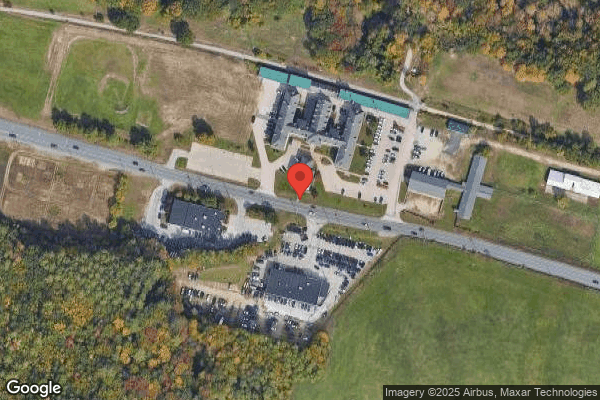
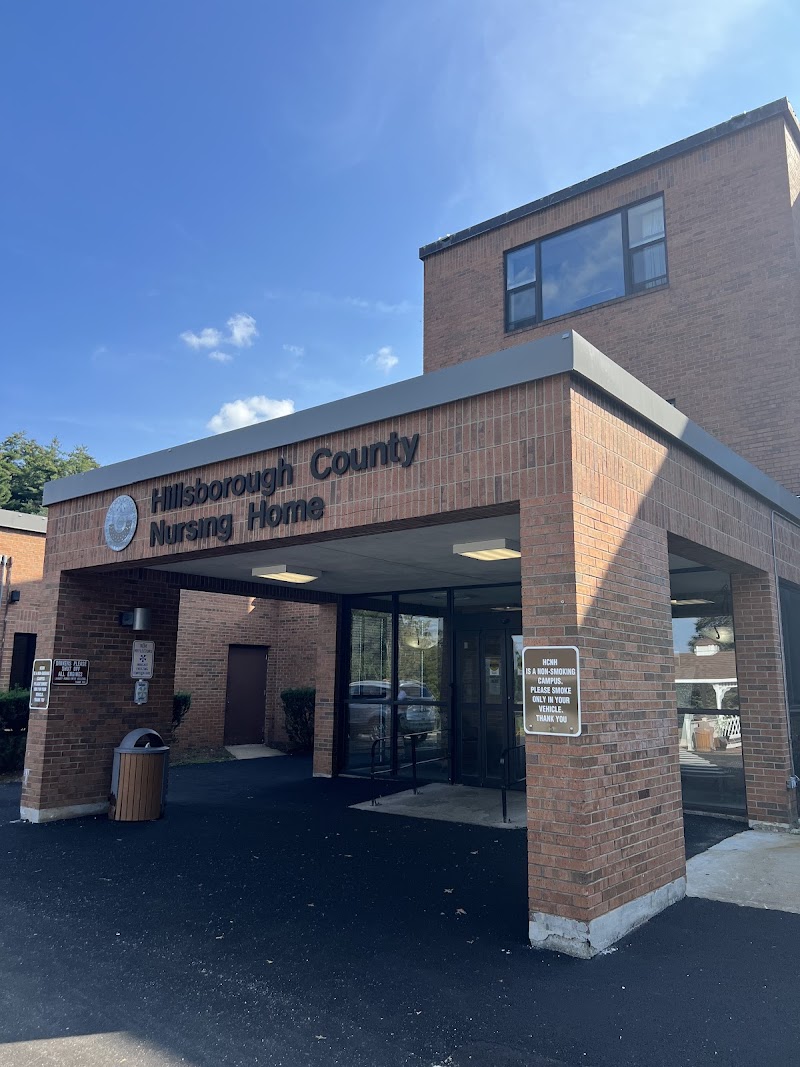
400 MAST ROAD, GOFFSTOWN, NH 03045 (603) 627-5540
Government - County 300 Beds Independent Data: November 2025
Trust Grade
90/100
#8 of 73 in NH
Last Inspection: April 2025

Within standard 12-15 month inspection cycle. Federal law requires annual inspections.

Overview

Hillsborough County Nursing Home in Goffstown, New Hampshire has received a Trust Grade of A, indicating it is excellent and highly recommended for care. It ranks #8 out of 73 facilities in the state and #2 out of 21 in Hillsborough County, placing it in the top tier of local options. The facility is on an improving trend, reducing issues from 4 in 2024 to 2 in 2025. Staffing is a strong point with a perfect rating of 5 out of 5 stars and a turnover rate of 37%, which is significantly better than the state average of 50%. Although there are no fines on record, there were some concerning incidents, such as a staff member crushing a medication that should not be altered and a lack of proper handwashing after handling a resident with a C-diff infection. Overall, while the facility shows strengths in staffing and rankings, families should be aware of the identified concerns related to medication administration and infection control practices.

Trust Score
A
90/100
In New Hampshire
#8/73
Top 10%
Safety Record
Low Risk
No red flags
Inspections
Getting Better
4 → 2 violations
Staff Stability
○ Average
37% turnover. Near New Hampshire's 48% average. Typical for the industry.
Penalties
✓ Good
No fines on record. Clean compliance history, better than most New Hampshire facilities.
Skilled Nurses
✓ Good
Each resident gets 43 minutes of Registered Nurse (RN) attention daily — more than average for New Hampshire. RNs are trained to catch health problems early.
Violations
○ Average
8 deficiencies on record. Average for a facility this size. Mostly minor or procedural issues.
★★★★★
5.0
Overall Rating
★★★★★
5.0
Staff Levels
★★★★☆
4.0
Care Quality
★★★★☆
4.0
Inspection Score
Stable
2024: 4 issues
2025: 2 issues

The Good

  • 5-Star Staffing Rating · Excellent nurse staffing levels
  • 4-Star Quality Measures · Strong clinical quality outcomes
  • Full Sprinkler Coverage · Fire safety systems throughout facility
  • No fines on record
  • Staff turnover below average (37%)

    11 points below New Hampshire average of 48%

Facility shows strength in staffing levels, quality measures, fire safety.

The Bad

Staff Turnover: 37%

Near New Hampshire avg (46%)

Typical for the industry

The Ugly 8 deficiencies on record

Apr 2025 2 deficiencies
CONCERN (D)

Potential for Harm - no one hurt, but risky conditions existed

Deficiency F0658 (Tag F0658)

Could have caused harm · This affected 1 resident

**NOTE- TERMS IN BRACKETS HAVE BEEN EDITED TO PROTECT CONFIDENTIALITY** Based on observation, interview and record review, it was determined that the facility failed to follow medication administratio...

Read full inspector narrative →
**NOTE- TERMS IN BRACKETS HAVE BEEN EDITED TO PROTECT CONFIDENTIALITY** Based on observation, interview and record review, it was determined that the facility failed to follow medication administration instructions for and failed to handle medication according to professional standards for 1 of 5 residents observed for medication administration. (Resident identifier is #136.) Findings include: Standard: [NAME], P.A, [NAME], A.G., Stockhart, P.A., & Hall, A. (2021). Fundamentals of Nursing. Elsevier., page 640 . Skill 31.1 Administering Oral Medications, .Clean gloves (if handling an oral medication) Review on 4/2/25 of the Magnesium Lactate Extended Release manufacturer's instruction, dated 11/29/24, revealed .Warnings Follow all directions on your medicine label and package .Do not crush or chew an extended release tablet . Observation on 4/2/25 at approximately 8:10 a.m. during Resident #136's medication administration revealed that Staff A (Licensed Practical Nurse) crushed the Magnesium Lactate Extended Release (ER) 84 mg (milligrams) tablet. Further observation revealed the Magnesium Lactate ER 84 mg medication card had a pharmacy warning label that read Do not crush the medication. Observation also revealed that Staff A was putting his/her bare fingers in the medication cup to remove pills twice. Interview on 4/2/25 at approximately 8:10 a.m. with Staff A confirmed the above findings. Review on 4/2/25 of Resident #136's current physician orders revealed that Resident #136 did not have a physician's order to crush medication. Interview on 4/2/25 at approximately 9:40 a.m. with Staff B (Director of Nursing) confirmed that Resident #136 did not have a physician's order to crush his/her medications. Review on 4/2/25 of the facility policy titled, Medication Administration of P.O. (by mouth) Medications, Revision Date 1/13 revealed .2. Do not touch the oral solid medication with your bare hands .4. Some medications should not be crushed. 12. If a resident has difficulty swallowing pills whole, the practitioner will be notified, an order from the practitioner will be obtained if appropriate .
CONCERN (D)

Potential for Harm - no one hurt, but risky conditions existed

Infection Control (Tag F0880)

Could have caused harm · This affected 1 resident

Based on observation, interview, and record review, it was determined that the facility failed to implement policies and procedures for 1 of 1 resident reviewed for Transmission Based Precaution (Resi...

Read full inspector narrative →
Based on observation, interview, and record review, it was determined that the facility failed to implement policies and procedures for 1 of 1 resident reviewed for Transmission Based Precaution (Resident identifier is #173). Findings include: Observation on 4/1/25 at approximately 8:30 a.m. on C4 unit revealed that Resident #173's room had a contact precaution signage outside the door. Interview on 4/1/25 at approximately 8:30 a.m. with Staff C (Registered Nurse) revealed that Resident #173 was on contact precaution for Clostridium Difficile (C-diff) infection. Observation on 4/1/25 at approximately 10:28 a.m. on C4 unit revealed that Staff D (housekeeper) was in Resident #173's room wearing a gown and gloves, wiped down Resident #173's bed rails, bedside table, and furniture with a cloth. When finished, Staff D exited the room, doffed the used gown and gloves, and used an Alcohol Based Hand Rub (ABHR). Staff D did not wash their hands with soap and water. Staff D donned new gloves, Staff D did not wear a gown, re-entered Resident #173's room, and mopped the floor. Staff D exited the room, doffed the used gloves, and used ABHR. Staff D did not wash their hands with soap and water. Interview on 4/1/25 at approximately 10:28 a.m. with Staff D confirmed the above observation. Observation on 4/2/25 at approximately 12:23 p.m. on C4 unit revealed that Staff E (Licensed Nursing Assistant) donned gown and gloves, entered Resident #173's room with a meal tray, placed the meal tray at the bedside table in front of Resident #173. Staff E exited the room, doffed the used gown and gloves, and used ABHR. Staff E did not wash their hands with soap and water. Interview on 4/2/25 at approximately 12:23 p.m. with Staff E confirmed the above observation. Review on 4/2/25 of Resident #173's provider note, dated 4/1/25, revealed reason for visit was C-diff which Resident #173 completed additional Vancomycin regimen last week for another recurrent C-diff infection and that Resident #173 reported that his/her loose stool has reoccurred. Further review of the provider note revealed a diagnostic statement of recurrent enterocolitis due to C-diff. The plan was to extend the Vancomycin regimen and follow up with infectious disease. Review on 4/2/25 of Resident #173's C-diff infection care plan, with a revision date of 3/14/25, revealed that Resident #173 was positive for C-diff on 1/6/25, 1/23/25, and 3/13/25 with an intervention that contact precautions was reinstated on 3/13/25. Review on 4/2/25 of the facility policy titled, Contact Precautions, with no date, revealed .Contact Precautions should be implemented for the following: .C. difficile .Gloves And Handwashing: .remove gloves before leaving resident's room and wash hands immediately .remove gown and observe hand hygiene before leaving the resident's room .References: Centers for disease control and prevention. Guideline for Isolation Precautions: Preventing Transmissions of Infectious Agents in Healthcare Settings .2007 . Interview on 4/2/25 at approximately 3:15 p.m. with Staff G (Infection Preventionist) stated that for contact precautions, staff can use ABHR when staff are in a resident room not providing care and gloves are not visibly soiled. Staff G confirmed the above policy and that the policy stated to wash hands. Review on 4/2/25 of the CDC guidelines titled, Guideline for Isolation Precautions: Preventing Transmission of Infectious Agents in Healthcare Settings (2007), dated 11/27/23, revealed .perform hand hygiene ~ in the following clinical situations: .After contact with inanimate objects (including medical equipment) in the immediate vicinity of the patient .After removing gloves .Wash hands with non-antimicrobial soap and water or with antimicrobial soap and water if contact with spores (e.g., C. difficile or Bacillus anthracis) is likely to have occurred. The physical action of washing and rinsing hands under such circumstances is recommended because alcohols, chlorohexidine, iodophors, and other antiseptic agents have poor activity against spores .
May 2024 4 deficiencies
CONCERN (D)

Potential for Harm - no one hurt, but risky conditions existed

Deficiency F0554 (Tag F0554)

Could have caused harm · This affected 1 resident

Based on observation, interview, and policy review, it was determined that the facility failed to ensure that residents were assessed for the ability to self-administer medication for 1 out of 4 resid...

Read full inspector narrative →
Based on observation, interview, and policy review, it was determined that the facility failed to ensure that residents were assessed for the ability to self-administer medication for 1 out of 4 residents reviewed for choices in a final sample of 35 residents (Resident Identifier #116). Findings include: Observation on 4/29/24 at approximately 8:30 a.m. of Resident #116 revealed he/she was in bed administering medications to his/herself off of a napkin. The napkin contained approximately 5 pills. There was no staff present in the room. Interview on 4/29/24 at approximately 8:30 a.m. with Staff B (Licensed Practical Nurse) confirmed the above findings. Staff B revealed that this is his/her regular practice with Resident #116. Review on 4/30/24 of Resident #116's medical record, under physician orders, revealed that there was no order for Resident #116 to self-administer medications. Further review of Resident #116's medical record revealed that there was no assessment done with Resident #116 to self-administer medications. Review on 4/30/24 of the facility's policy titled Medication-Administration of Medications revision date 10/18 revealed: .7. Medications shall not be left at bedside .
CONCERN (D)

Potential for Harm - no one hurt, but risky conditions existed

Pressure Ulcer Prevention (Tag F0686)

Could have caused harm · This affected 1 resident

Based on interview, observation, and record review, it was determined that the facility failed to ensure that residents with pressure ulcers had documentation of weekly assessments that contained meas...

Read full inspector narrative →
Based on interview, observation, and record review, it was determined that the facility failed to ensure that residents with pressure ulcers had documentation of weekly assessments that contained measurements and descriptions of the pressure ulcer for 1 out of 3 residents reviewed for pressure ulcers in a final sample of 35 residents (Resident Identifier #114). Findings include: Review on 5/1/24 of Resident #114's medical record revealed that Resident #114 had a pressure ulcer on his/her coccyx. Review on 5/1/24 of Resident #114's weekly wound assessments revealed: 3/21/24 wound measurements 0.73 centimeters (cm) by (x) 0.99 cm (iimproving) 3/28/24 no documented wound assessment 4/4/24 wound measurements 1.29 cm x 0.4 cm (deteriorating) Interview on 5/1/24 at approximately 11:15 a.m. with Staff G (Wound Nurse) confirmed the above findings.
CONCERN (D)

Potential for Harm - no one hurt, but risky conditions existed

Deficiency F0726 (Tag F0726)

Could have caused harm · This affected 1 resident

Based on record review, interview, and observation, it was determined that the facility failed to ensure licensed nurses had the competencies and skill sets in accordance with the facility assessment ...

Read full inspector narrative →
Based on record review, interview, and observation, it was determined that the facility failed to ensure licensed nurses had the competencies and skill sets in accordance with the facility assessment for 1 of 2 nurses reviewed for competencies. Finding include: Review on 4/30/24 of the facility assessment, dated 1/2024, revealed under the education section: .All nurses, MNAs [Medication Nursing Assistants], and LNAs [Licensed Nursing Assistant] will .have an annual Knowledge and Competency Testing form completed . The assessment further revealed Medication Management: Medication Administration RN [Registered Nurse]/LPN [Licensed Practical Nurse] were indicated. Review of Staff A's (RN) last Knowledge and Competency Documentation revealed a completion date of 2021. Interview on 5/1/24 at approximately 9:45 a.m. with Staff G (Staff Development Coordinator) revealed competencies are completed on hire. The interview further revealed that specifically for medication administration, competencies would not be done again unless there are identified medication errors or questionable medication pass techniques and observations of these would be by unit managers or staff development.
CONCERN (D)

Potential for Harm - no one hurt, but risky conditions existed

Food Safety (Tag F0812)

Could have caused harm · This affected 1 resident

Based on observation, interview, and policy review it was determined that the facility failed to maintain a clean environment for proper washing and sanitizing of dishes and utensils in the main kitch...

Read full inspector narrative →
Based on observation, interview, and policy review it was determined that the facility failed to maintain a clean environment for proper washing and sanitizing of dishes and utensils in the main kitchen and failed to ensure food was kept at the proper temperature in 6 of 6 kitchettes observed. Findings include: Main Kitchen Observation on 4/29/24 at approximately 8:00 a.m. in the kitchen dishwashing area with Staff H (Food Services Director) revealed two wall fans, with accumulated gray dust and grease debris, blowing air towards the clean dishes. Interview on 4/29/24 at approximately 8:00 a.m. with Staff H confirmed the above finding. Observation on 4/29/24 at approximately 8:05 a.m. with Staff H revealed a food mixer with built-up food debris and grease. Interview on 4/29/24 at approximately 8:05 a.m. with Staff H confirmed the above finding and revealed it had not been used since the day prior. Review on 4/29/24 of facility's policy titled Surface: Cleaning and Sanitization revealed: .Non-Food Contact Surfaces. Must be cleaned and rinsed .Examples: walls, floors, storage shelves, equipment exteriors .Food Contact Surfaces. Must be cleaned, rinsed, and sanitized .Examples: knives, cutting boards, pots and pans, prep tables, and other equipment that touches food . Unit Kitchenettes Review on 4/29/24 of the 6 kitchenette refrigerator temperature logs revealed no recorded temperatures on the following dates and locations: March 2024: Unit A-1: 3/21/24, 3/22/24, and 3/23/24 Unit A-2: 3/22/24 and 3/23/24 Unit B-2: 3/21/24, 3/22/24, and 3/23/24 Unit B-3: 3/21/24, 3/22/24, and 3/23/24 Unit C-3: 3/22/24 Unit C-4: 3/23/24 April 2024: Unit A-1: 4/21/24 and 4/30/24 Unit A-2: 4/30/24 Unit B-2: 4/21/24 and 4/30 Unit C-3: 4/20/24, 4/21/24, and 4/30/24 Unit C-4: 4/20/24, 4/21/24, and 4/30/24 Interview on 4/29/24 at approximately 8:30 a.m. with Staff H confirmed the above finding. Review on 4/29/24 of facility policy titled, Storing: Food and Equipment revealed: .Refrigerator and Freezer .An assigned team member will check the temperature of all refrigerators and freezers two times per day .
Apr 2023 2 deficiencies
CONCERN (D)

Potential for Harm - no one hurt, but risky conditions existed

Deficiency F0692 (Tag F0692)

Could have caused harm · This affected 1 resident

**NOTE- TERMS IN BRACKETS HAVE BEEN EDITED TO PROTECT CONFIDENTIALITY** Based on interview and record review, it was determined that the facility failed to monitor a resident who was experiencing sign...

Read full inspector narrative →
**NOTE- TERMS IN BRACKETS HAVE BEEN EDITED TO PROTECT CONFIDENTIALITY** Based on interview and record review, it was determined that the facility failed to monitor a resident who was experiencing significant weight loss for 1 of 5 residents reviewed for nutrition in a final sample of 35 residents (Resident identifier is #224). Findings include: Review on 4/4/23 of Resident #224's medical record revealed that Resident #224 admitted to the facility on [DATE]. Review on 4/4/23 of Resident #224's Weights and Vitals Summary revealed the following weights; - 2/22/23 194.2 pounds - 2/23/23 195 pounds - 2/24/23 189 pounds. - 3/10/23 182.3 pounds. There were no additional weights recorded for Resident #224. Resident #224 had a 6.7 pound weight loss between 2/23/23 amd 2/24/23. Resident #224 experienced a 6.13 percent (%) weight loss in two weeks and five days. Review on 4/4/23 of Resident #224's Weight Change Note dated 3/14/23 revealed Weight Warning: Value: 182.3 . Date [3/10/23] . -5.0% change [6.1% .] Reweight pending, will monitor as available. This note was authored by Staff D (Registered Dietician). Interview on 4/6/23 at 12:34 p.m. with Staff C (Registered Nurse) stated that he/she will have residents reweighed if there is a 3 pound variance in weights. Staff C confirmed that a reweight had not been completed for Resident #224. Interview on 4/6/23 at 12:46 p.m. with Staff D revealed that he/she expected Resident #224 to have a reweight done based on the 3/14/23 above note. Staff D confirmed a reweight had not yet been done. Interview on 4/6/23 at 1:15 p.m. with Staff D revealed he/she would expect a reweight to be done within a week. Review on 4/6/23 of the facility's policy Vital Signs & Weights with a revision date of April 2021 revealed, .10. Weights will be taken at least monthly on each resident unless directed otherwise by the Head Nurse/designee, MD [Medical Doctor], or Dietician .
CONCERN (D)

Potential for Harm - no one hurt, but risky conditions existed

Deficiency F0761 (Tag F0761)

Could have caused harm · This affected 1 resident

Based on observation, interview, and record review it was determined that the facility failed to ensure treatments were secured on 1 out of 6 units observed for 2 out of 20 B-2 Unit residents observed...

Read full inspector narrative →
Based on observation, interview, and record review it was determined that the facility failed to ensure treatments were secured on 1 out of 6 units observed for 2 out of 20 B-2 Unit residents observed, and the facility failed to ensure proper storage of expired medications for 1 out of 3 medication rooms observed (Resident identifiers are #27, #61, #62 and #84). Findings include: Resident #61 (Unit B-2) Observations on 4/4/23 at 1:00 p.m. and 4/5/23 at 9:20 a.m. of Resident #61's shelf in the resident's room revealed one Preparation H 1 percent (%) ointment tube. Interview on 4/5/23 at 9:35 a.m. with Staff E (Licensed Practical Nurse) revealed that Staff E found the Preparation H tube was routinely stored in the resident's room. Interview on 4/5/23 at 3:00 p.m. with Staff F (Registered Nurse) revealed that the Preparation H tube should be secured in the treatment cart/medication room, as Resident #61 does not self-administer medications. Resident #27 (Unit B-2) Observations on 4/4/23 at 1:15 p.m. and 4/5/23 at 9:30 a.m. of Resident #27's shelf in the resident's room revealed one Antifungal Power with Miconazole Nitrate 2% bottle. Interview on 4/5/23 at 9:35 a.m. with Staff E revealed that the Antifungal Powder bottle was routinely stored in the resident's room. Interview on 4/5/23 at 3:00 p.m. with Staff F revealed that the Antifungal Powder bottle should be secured in the treatment cart/medication room, as Resident #27 does not self-administer medications, and confirmed the finding. Review on 4/6/23 of the facility's policy Storage and Safety of Medications with an origination date of 1/2015 revealed, .Oral medications, topical medications, treatments, eye drops and ear drops will be stored .on the medication room shelves. 3C Medication Storage Room Resident #62 Observation on 4/4/23 at approximately 8:45 a.m. of the 3C medication storage room with Staff A (Registered Nurse) revealed Resident #62's Combivent Respimat Inhalation Aerosol Solution 20-100 micrograms/actuation (mcg/act) inhaler that had been used, with a pharmacy dispensed date of 12/14/22 and no open date, stored with stock medications. Further observation of the Combivent Respimat 20-100 mcg/act revealed manufacturer's instructions to discard at least 3 months after first use or when locking mechanism is engaged. Interview on 4/4/23 at approximately 8:45 a.m. of the 3C medication room with Staff A confirmed the above findings. Staff C stated that the Combivent Respimat inhaler should have been labeled with an open date to determine the discard date. Review on 4/5/23 of Resident #62's March and April 2023 Medication Administration Records (MAR) revealed an active PRN [as needed] order for Combivent Respimat 20-100 mcg/act inhaler, 1 puff every 4 hours for short [sic] of breath. Further review of Resident #62's March and April 2023 MAR's revealed that Resident #62 had not received Combivent Respimat 20-100 mcg/act inhaler. Resident # 84 Observation on 4/4/23 at approximately 9:00 a.m. with Staff A (Registered Nurse) revealed Resident #84's used Combivent Respimat Inhalation Aerosol Solution 20-100 (mcg/act) inhaler with an open date of 9/13/22. Further observation of the Combivent Respimat 20-100 mcg/act revealed manufacturer's instructions to discard at least 3 months after first use or when locking mechanism is engaged, and a pharmacy instruction label stating after opening do not use after 90 days. Interview on 4/4/23 at approximately 8:45 a.m. with Staff A confirmed the above findings. Staff C stated that the Combivent Respimat 20-100 mcg/act inhaler should have been discarded 90 days after being opened on 9/13/22. Interview on 4/5/23 at 9:30 a.m. with Staff B (Registered Nurse) confirmed that Resident #84 did not have a current order for Combivent Respimat 20-100 mcg/act inhaler. Resident #84's order for Combivent Respimat 20-100 mcg/act inhaler had been discontinued after returning from the hospital on 9/30/22. Review on 4/6/23 of the facility's policy Storage and Safety of Medications with an origination date of 1/2015 revealed, 7. Medications which are expired will be removed from the medication shelves and placed in the return to bag for pharmacy pickup.
Understanding Severity Codes (click to expand)
Life-Threatening (Immediate Jeopardy)
J - Isolated K - Pattern L - Widespread
Actual Harm
G - Isolated H - Pattern I - Widespread
Potential for Harm
D - Isolated E - Pattern F - Widespread
No Harm (Minor)
A - Isolated B - Pattern C - Widespread

Questions to Ask on Your Visit

  • "Can I speak with families of current residents?"
  • "What's your RN coverage like on weekends and overnight?"

Our Honest Assessment

Strengths
  • • Grade A (90/100). Above average facility, better than most options in New Hampshire.
  • • No major safety red flags. No abuse findings, life-threatening violations, or SFF status.
  • • No fines on record. Clean compliance history, better than most New Hampshire facilities.
  • • 37% turnover. Below New Hampshire's 48% average. Good staff retention means consistent care.
Concerns
  • • No significant concerns identified. This facility shows no red flags across CMS ratings, staff turnover, or federal penalties.
Bottom line: Generally positive indicators. Standard due diligence and a personal visit recommended.

About This Facility

What is Hillsborough County's CMS Rating?

CMS assigns HILLSBOROUGH COUNTY NURSING HOME an overall rating of 5 out of 5 stars, which is considered much above average nationally. Within New Hampshire, this rating places the facility higher than 99% of the state's 100 nursing homes. This rating reflects solid performance across the metrics CMS uses to evaluate nursing home quality.

How is Hillsborough County Staffed?

CMS rates HILLSBOROUGH COUNTY NURSING HOME's staffing level at 5 out of 5 stars, which is much above average compared to other nursing homes. Staff turnover is 37%, compared to the New Hampshire average of 46%. This relatively stable workforce can support continuity of care.

What Have Inspectors Found at Hillsborough County?

State health inspectors documented 8 deficiencies at HILLSBOROUGH COUNTY NURSING HOME during 2023 to 2025. These included: 8 with potential for harm.

Who Owns and Operates Hillsborough County?

HILLSBOROUGH COUNTY NURSING HOME is owned by a government entity. Government-operated facilities are typically run by state, county, or municipal agencies. The facility operates independently rather than as part of a larger chain. With 300 certified beds and approximately 238 residents (about 79% occupancy), it is a large facility located in GOFFSTOWN, New Hampshire.

How Does Hillsborough County Compare to Other New Hampshire Nursing Homes?

Compared to the 100 nursing homes in New Hampshire, HILLSBOROUGH COUNTY NURSING HOME's overall rating (5 stars) is above the state average of 3.0, staff turnover (37%) is near the state average of 46%, and health inspection rating (4 stars) is above the national benchmark.

What Should Families Ask When Visiting Hillsborough County?

Based on this facility's data, families visiting should ask: "Can I visit during a mealtime to observe dining assistance and food quality?" "How do you handle medical emergencies, and what is your hospital transfer rate?" "Can I speak with family members of current residents about their experience?"

Is Hillsborough County Safe?

Based on CMS inspection data, HILLSBOROUGH COUNTY NURSING HOME has a clean safety record: no substantiated abuse findings (meaning no confirmed cases of resident harm), no Immediate Jeopardy citations (the most serious violation level indicating risk of serious injury or death), and is not on the Special Focus Facility watch list (a federal program monitoring the lowest-performing 1% of nursing homes). The facility has a 5-star overall rating and ranks #1 of 100 nursing homes in New Hampshire. While no facility is perfect, families should still ask about staff-to-resident ratios and recent inspection results during their visit.

Do Nurses at Hillsborough County Stick Around?

HILLSBOROUGH COUNTY NURSING HOME has a staff turnover rate of 37%, which is about average for New Hampshire nursing homes (state average: 46%). Moderate turnover is common in nursing homes, but families should still ask about staff tenure and how the facility maintains care continuity when employees leave.

Was Hillsborough County Ever Fined?

HILLSBOROUGH COUNTY NURSING HOME has no federal fines on record. CMS issues fines when nursing homes fail to meet care standards or don't correct problems found during inspections. The absence of fines suggests the facility has either maintained compliance or corrected any issues before penalties were assessed. This is a positive indicator, though families should still review recent inspection reports for the full picture.

Is Hillsborough County on Any Federal Watch List?

HILLSBOROUGH COUNTY NURSING HOME is not on any federal watch list. The most significant is the Special Focus Facility (SFF) program, which identifies the bottom 1% of nursing homes nationally based on persistent, serious quality problems. Not being on this list means the facility has avoided the pattern of deficiencies that triggers enhanced federal oversight. This is a positive indicator, though families should still review the facility's inspection history directly.