SAINT TERESA REHABILITATION & NURSING CENTER
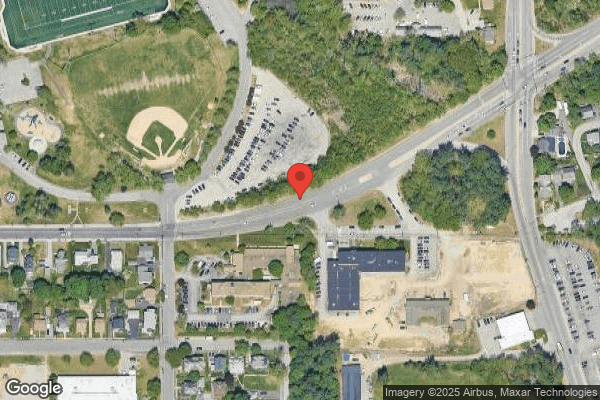
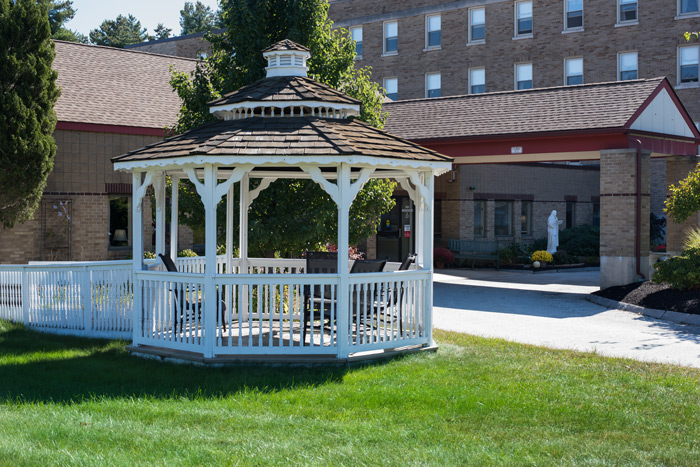
519 BRIDGE STREET, MANCHESTER, NH 03104 (603) 668-2373
Non profit - Church related 51 Beds CATHOLIC CHARITIES NEW HAMPSHIRE Data: November 2025
Trust Grade
70/100
#26 of 73 in NH
Last Inspection: March 2025

Within standard 12-15 month inspection cycle. Federal law requires annual inspections.

Overview

Saint Teresa Rehabilitation & Nursing Center has a Trust Grade of B, indicating it is a good facility and a solid choice for care. It ranks #26 out of 73 nursing homes in New Hampshire, placing it in the top half of facilities in the state, and #10 out of 21 in Hillsborough County, meaning there are only 9 local options that are better. The facility is improving, having reduced issues from 7 in 2024 to just 2 in 2025. Staffing is rated at 4 out of 5 stars, which is a positive sign, although the turnover rate is at 56%, slightly above average. Notably, there have been no fines, which is reassuring, and they have more registered nurse coverage than many other facilities. However, there are some concerning incidents. Residents reported waiting extensive times for assistance due to a malfunctioning call bell system, with one resident waiting an hour and a half for a response. Additionally, staff members did not consistently wear required personal protective equipment (PPE) in certain areas, which poses an infection risk. These issues highlight some areas for improvement despite the overall positive ratings.

Trust Score
B
70/100
In New Hampshire
#26/73
Top 35%
Safety Record
Low Risk
No red flags
Inspections
Getting Better
7 → 2 violations
Staff Stability
⚠ Watch
56% turnover. Above average. Higher turnover means staff may not know residents' routines.
Penalties
✓ Good
No fines on record. Clean compliance history, better than most New Hampshire facilities.
Skilled Nurses
✓ Good
Each resident gets 52 minutes of Registered Nurse (RN) attention daily — more than average for New Hampshire. RNs are trained to catch health problems early.
Violations
⚠ Watch
14 deficiencies on record. Higher than average. Multiple issues found across inspections.
★★★★☆
4.0
Overall Rating
★★★★☆
4.0
Staff Levels
★★★☆☆
3.0
Care Quality
★★★★☆
4.0
Inspection Score
Stable
2024: 7 issues
2025: 2 issues

The Good

  • 4-Star Staffing Rating · Above-average nurse staffing levels
  • Full Sprinkler Coverage · Fire safety systems throughout facility
  • No fines on record

Facility shows strength in staffing levels, fire safety.

The Bad

Staff Turnover: 56%

10pts above New Hampshire avg (46%)

Frequent staff changes - ask about care continuity

Chain: CATHOLIC CHARITIES NEW HAMPSHIRE

Part of a multi-facility chain

Ask about local staffing decisions and management

Staff turnover is elevated (56%)

8 points above New Hampshire average of 48%

The Ugly 14 deficiencies on record

Mar 2025 2 deficiencies
CONCERN (D)

Potential for Harm - no one hurt, but risky conditions existed

Deficiency F0658 (Tag F0658)

Could have caused harm · This affected 1 resident

**NOTE- TERMS IN BRACKETS HAVE BEEN EDITED TO PROTECT CONFIDENTIALITY** Resident #29 Observation on 3/5/25 at 12:20 p.m. of Resident #29's right forearm revealed a penny size open area with one steri-...

Read full inspector narrative →
**NOTE- TERMS IN BRACKETS HAVE BEEN EDITED TO PROTECT CONFIDENTIALITY** Resident #29 Observation on 3/5/25 at 12:20 p.m. of Resident #29's right forearm revealed a penny size open area with one steri-strip on it. There was loose kerlix on the same arm that was no longer covering the open area. There was no date written on the kerlix when the bandage had been placed. Observation on 3/6/25 at 11:03 a.m. of Resident #29's right forearm revealed the above same open area with a steri-strip. There was no bandage covering the area. Review on 3/6/25 of Resident #29's physician's orders revealed an order from 3/4/25 Right lower arm skin tear: Cleanse with [Normal Saline], pat dry, apply a thin coat of bacitracin, and cover with a dry dressing and kerlix dressing one time a day for skin tear. Review on 3/6/25 of Resident #29's medical record, including the Treatment Administration Record (TAR) revealed there was no documentation that the above order had been transcribed to the TAR for the nursing staff to carry out. Interview on 3/6/25 at 1:15 p.m. with Staff D (Registered Nurse) confirmed that Resident #29 had the above open area and stated that there was no treatment ordered based on the Resident's TAR. Interview on 3/6/25 at 1:20 p.m. with Staff C confirmed that the above order was not transcribed to the Resident's TAR. Review on 3/7/25 of the facility's procedure titled Skin Tears revealed, .All skin tears will be assessed, documented and treated . Documentation 1. Daily - Observation and treatment is entered on the Treatment Administration Record . Based on observation, interview, and record review, it was determined that the facility failed to ensure that medications and treatments were administered as ordered for 1 of 1 resident reviewed for Pain Management (Resident identifier is #197) and 1 of 1 resident reviewed for Skin Conditions (Resident identifier is #29) in a final sample of 12 residents. Findings include: Standard: [NAME], [NAME] A., and [NAME]. Fundamentals of Nursing 10th edition St. Louis, Missouri: Elsevier, 2021. Page 614 .It is essential to verify the accuracy of every medication you give to your patients with the patient's order. If the medication order is incomplete, incorrect, or inappropriate, or if there is a discrepancy between the original order and the information on the MAR [Medication Administration Record] consult with the health care provider. Do not give a medication until you are certain that you can follow the seven rights of medication administration . Page 672 .seven rights of medication administration include right medication, right dose, right patient, right route, right time, right documentation and right indication . Page 1262. Changing Dressings. A Health care provider's order for wound care indicates the dressing type, the frequency of changing, and any solutions or ointments to be applied to the wound. Resident #197 Interview on 3/5/25 at 8:43 a.m. with Resident #197 revealed that he/she had not received their lidocaine patch to their right shoulder. Resident #197 stated that their shoulder was uncomfortable. Observation on 3/5/25 at 3:28 p.m. of Resident #197 with Staff C (Unit Manager) revealed that Resident #197 did not have a lidocaine patch to their right shoulder. Interview on 3/5/25 at 3:28 p.m. with Staff C confirmed that Resident #197 did not have a lidocaine patch on their right shoulder. Review on 3/5/25 of Resident #197's physician's orders revealed an order with a start date of 3/4/25 for Lidocaine Patch 5 [percent] . Apply to Right knee and Rt [right] shoulder topically one time a day for pain management and remove per schedule. Review on 3/5/25 of Resident #197's March 2025 Medication Administration Record (MAR) revealed that the above order was signed as being completed on 3/5/25 at 6:00 a.m. Review on 3/7/25 of the facility's policy titled Medication Administration, dated 1/21, revealed, . 3. Prior to administration, review and confirm the medication order for each resident on the Medication Administration Record. Medication Administration: 1. Medications are administered in accordance with written orders of the prescriber .
CONCERN (D)

Potential for Harm - no one hurt, but risky conditions existed

Deficiency F0761 (Tag F0761)

Could have caused harm · This affected 1 resident

**NOTE- TERMS IN BRACKETS HAVE BEEN EDITED TO PROTECT CONFIDENTIALITY** Based on observation, interview, and record review, it was determined that the facility failed to ensure expired medications wer...

Read full inspector narrative →
**NOTE- TERMS IN BRACKETS HAVE BEEN EDITED TO PROTECT CONFIDENTIALITY** Based on observation, interview, and record review, it was determined that the facility failed to ensure expired medications were removed from stock and multi-dose vials were labeled with an open expiration date for 1 of 1 medication carts observed ([NAME] Medication Cart) and 1 of 1 medication rooms observed. Findings include: Observation on 3/5/25 at approximately 9:35 a.m. of the [NAME] Medication Cart revealed the following expired medications: One bottle of Carbamine Peroxide bottle of ear drops for Resident #14 a manufacturer's expiration date on the box of 2/2025. One Tiotropium Bromide Monohydrate Capsule, 18 micrograms, inhaler for Resident #10 with a manufacturer's expiration date of September 2024. Interview on 3/5/25 at 9:45 a.m. with Staff E (Licensed Practicing Nurse) confirmed the above medications were expired. Review on 3/6/25 of Resident #10's Physician's order for the Tiotropium Bromide Monohydrate Capsule revealed that the order had been discontinued on 5/25/24. Interview on 3/6/25 at approximately 3:00 p.m. with Staff C (Unit Manager) confirmed that Resident #10's above medication had been discontinued on 5/24/24. Observation on 3/5/25 at approximately 10:00 a.m. of the medication room revealed that in refrigerator #1 there was an opened multi-dose vial of Tuberculin Purified Protein Derivative (Mantoux) with an opened date of 1/9/25 on the box. Further observation of the medication room revealed that in refrigerator #2 there was an opened multi-dose vial of Tuberculin Purified Protein Derivative (Mantoux) with a manufacturer's expiration date on the box was 12/26/24. Interview on 3/5/25 at approximately 10:15 a.m. with Staff F (Registered Nurse) confirmed the above findings. Review on 3/6/25 of the Manufacturer's instructions for the multi use vial of Tuberculin Purified Protein Derivative revealed .A vial of TUBERSOL [Mantoux] which has been entered and in use for 30 days should be discarded. Do not use after expiration date Review on 3/7/25 of the facility's policy Medication Storage: Storage of Medications, dated 1/21 revealed . Medications and biologicals are stored properly, following manufacturer's or provider pharmacy recommendations, to maintain their integrity and to support safe effective drug administration 14. Outdated, contaminated, discontinued . are immediately removed from stock .
Mar 2024 7 deficiencies
CONCERN (D)

Potential for Harm - no one hurt, but risky conditions existed

Abuse Prevention Policies (Tag F0607)

Could have caused harm · This affected 1 resident

**NOTE- TERMS IN BRACKETS HAVE BEEN EDITED TO PROTECT CONFIDENTIALITY** Based on observation, interview, and record review, it was determined that the facility failed to implement policies and procedu...

Read full inspector narrative →
**NOTE- TERMS IN BRACKETS HAVE BEEN EDITED TO PROTECT CONFIDENTIALITY** Based on observation, interview, and record review, it was determined that the facility failed to implement policies and procedures to ensure screening of staff was conducted prior to working for 1 of 5 staff reviewed for background checks (Staff H). Findings include: Observation on 3/26/24 at 12:17 p.m. of Staff H (Licensed Nursing Assistant (LNA)) working on the [NAME] Unit. Review on 3/27/24 of the nursing schedule for 3/26/24 revealed that Staff H worked the 7:00 a.m. to 3:00 p.m. shift as an LNA. Interview on 3/27/24 at 3:00 p.m. with Staff D (Regional Clinical Director) and Staff I (Director of Nursing) confirmed that Staff H worked on 3/26/24. Interview further revealed that the facility did not have an employee record for Staff H because he/she was from a staffing agency. Staff D revealed Staff H had only worked at the facility on 3/26/24. Review on 3/28/24 of the facility's Weekly Schedules Report revealed that the facility used staff from the same agency that Staff H was from on the following dates: 2/28/24, 2/29/24, 3/1/24, 3/2/24, 3/5/24, 3/7/24, 3/9/24, 3/10/24, 3/11/24, 3/17/24, 3/19/24, 3/20/24, 3/22/24, 3/23/24, 3/24/24, and 3/25/24. Interview on 3/28/24 at 2:51 p.m. with Staff J (Scheduler) revealed that the facility was using agency for staffing needs and that the facility did not have any of the background checks for staff that worked for the same agency that employed Staff H . Staff J confirmed the above findings. Review on 3/28/24 of the facility's policy Abuse/Staff Treatment of Residents revised 3/25/11, revealed, .It is the policy of this facility to ensure protection of all residents' right to be free from verbal, sexual, physical, and mental abuse; neglect; corporal punishment; involuntary seclusion and misappropriation of property . Facility policy must identify procedures for screening potential employees for a history of abuse, neglect or mistreatment of resident .
CONCERN (D)

Potential for Harm - no one hurt, but risky conditions existed

Deficiency F0645 (Tag F0645)

Could have caused harm · This affected 1 resident

Based on interview and record review, it was determined that the facility failed to ensure that a Preadmission Screening and Resident Review (PASARR) screening was done for 1 of 2 residents reviewed f...

Read full inspector narrative →
Based on interview and record review, it was determined that the facility failed to ensure that a Preadmission Screening and Resident Review (PASARR) screening was done for 1 of 2 residents reviewed for PASARR in a final sample of 12 residents (Resident Identifier #2). Findings include: Review on 3/27/24 of Resident #2's medical record revealed that Resident #2 was admitted to the facility in June 2023 and had diagnoses of bipolar disease and major depression. Further review of the medical record revealed there was no Level I PASARR. Interview on 3/27/24 at 1:15 p.m. with Staff A (Director of Social Services) confirmed that he/she could not find that a Level I PASARR had been completed for Resident #2. Interview on 3/27/24 at 1:26 p.m. with Staff E (Medical Records) confirmed that there was no Level I PASARR for Resident #2. Review on 3/28/24 of the facility's 11/16/17 policy titled Preadmission Screening and Annual Resident Review (PASARR) Requirements Policy revealed: .The intent of this policy is to ensure that all residents admitted to this facility are screened for a mental disorder (MD) or intellectual disability (ID) prior to admission and that individuals identified with MD or ID are evaluated and receive care and services in the most integrated setting appropriate to there needs. A negative PASARR I screen permits admission to proceed and ends the pre-screening process . A positive Level I screen necessitated an in-depth evaluation of the individual . Prior to admission the facility will obtain a PASARR Level I screen from the referring agency or physician .
CONCERN (D)

Potential for Harm - no one hurt, but risky conditions existed

Deficiency F0658 (Tag F0658)

Could have caused harm · This affected 1 resident

**NOTE- TERMS IN BRACKETS HAVE BEEN EDITED TO PROTECT CONFIDENTIALITY** Based on observation, interview, and record review, it was determined that the facility failed to follow physician orders for 1 ...

Read full inspector narrative →
**NOTE- TERMS IN BRACKETS HAVE BEEN EDITED TO PROTECT CONFIDENTIALITY** Based on observation, interview, and record review, it was determined that the facility failed to follow physician orders for 1 of 5 residents reviewed for medication pass in a final sample of 12 residents. (Resident Identifier #32). Findings include: Standards: [NAME], [NAME] A., and [NAME]. Fundamentals of Nursing. 7th ed. St. Louis, Missouri: Mosby Elsevier, 2009. Page 336 - Physicians' Orders The physician is responsible for directing medical treatment. Nurses follow physician's orders unless they believe the orders are in error or harm clients. Therefore you need to assess all orders, and if you find one to be erroneous or harmful, further clarification from the physician is necessary . Review on 3/27/24 of Resident #32's physician's orders revealed that Resident #32 had a physician's order dated 2/26/24 for saline nasal spray, 2 sprays two times a day and as needed. Observation on 3/27/24 at 9:03 a.m. revealed Staff L (Medication Nursing Assistant) administering medications to Resident #32. Staff L did not administer saline nasal spray. Review on 3/27/24 of Resident #32's March Medication Administration Record (MAR) revealed a physician's order saline nasal spray nasal solution 0.65% [percent] (saline) 2 sprays alternating nostrils two times a day for 2 sprays per nostril twice daily and as needed. Further review revealed that the saline spray had not been signed off by staff as being administered. Interview on 3/27/24 at 9:47 a.m. with Staff L confirmed he/she did not administer the nasal spray to Resident #32 on 3/27/24. Review on 3/28/24 of the facility's policy titled Medication Administration dated January 2021 revealed: .1. Medications are administered in accordance with written orders of the prescriber. If a dose seems excessive considering the resident's age and condition, or a medication order seems to be unrelated to the resident's current diagnosis or condition, the nurse calls the provider pharmacy for clarification . If necessary the nurse contacts the prescriber for clarification .
CONCERN (E)

Potential for Harm - no one hurt, but risky conditions existed

Infection Control (Tag F0880)

Could have caused harm · This affected multiple residents

**NOTE- TERMS IN BRACKETS HAVE BEEN EDITED TO PROTECT CONFIDENTIALITY** Resident #9 Observation on 3/26/24 at approximately 12:25 p.m. revealed Resident #9 in his/her room. Staff entered the room and ...

Read full inspector narrative →
**NOTE- TERMS IN BRACKETS HAVE BEEN EDITED TO PROTECT CONFIDENTIALITY** Resident #9 Observation on 3/26/24 at approximately 12:25 p.m. revealed Resident #9 in his/her room. Staff entered the room and delivered his/her meal tray without any PPE on. There was no signage up that PPE was required for this room. Observation on 3/27/24 at approximately 12:27 p.m. of Resident #9's room revealed that there was no signage up that PPE was needed for this room. Review on 3/28/24 of Resident #9's progress notes dated 3/24/24 revealed the following; At 9:40 p.m. revealed that Resident started vomiting during [bedtime] care. Standing orders initiated - Pepto Bismol and Clear liquid diet. At 9:41 p.m. revealed that Resident #9 was administered Pepto Bismol which was ineffective. At 10:57 p.m. revealed that Resident #9 had no symptoms of GI [gastro-intestinal] bug at start of shift. Then at [9:00 p.m.] . vomited a small [amount] . Pepto Bismol given and . vomited again . Review on 3/28/24 of Resident #9's progress note dated 3/25/24 at 2:02 p.m. revealed, No emesis, nausea or loose stools today . Review on 3/28/24 of Resident #9 Licenced Nursing Assistant (LNA) documentation of bowel elimination revealed that on 3/25/24 at 2:32 a.m. and 3/26/24 at 10:10 p.m. documented as Loose/Diarrhea. Observation on 3/28/24 of Resident #9's room revealed that there was signage up for precautions and PPE was available outside the door. Review on 3/28/24 of Resident #9's progress note dated 3/28/24 at 12:21 a.m. revealed, Precautions maintained for GI [gastrointestinal] virus . Interview on 3/28/24 at 11:52 a.m. with Staff N (Unit Manager) confirmed that Resident #9 was taken off contact precautions early. Interview on 3/28/24 at 11:55 a.m. with Staff G confirmed that Resident #9 should have been on precautions on 3/26/24 and 3/27/24. Interview on 3/28/24 at 10:55 a.m. with Staff G revealed that Staff I (Director of Nursing) did education for the norovirus outbreak with some of the nursing staff on 3/22/24, but confirmed not all staff, including housekeeping and nursing staff who worked the weekend through 3/26/24, were educated on the infection control precautions that needed to be maintained for the outbreak. Staff G confirmed that he/she did not do any education with staff.Based on observation, interview, record review, and policy review, it was determined that the facility failed to follow Centers for Disease Control and Prevention (CDC) guidance for Transmission Based Precautions (TBP) for 5 of 9 residents with suspected Norovirus (Resident Identifiers #21 and #30, #9, #17, and #13). Findings include: Resident #21 Interview on 3/26/24 at 9:00 a.m. with Staff G (Infection Prevention) revealed that Resident #21 was placed on precautions on 3/22/24 because he/she had the norovirus. Observation on 3/26/24 at 9:30 a.m. of Resident #21's room revealed a Personal Protective Equipment (PPE) cart outside of the door which included, gowns, gloves, masks, face shields, and signage for precautions. Observation on 3/26/24 at 9:30 a.m. of Resident #21's room revealed Staff K (Housekeeper) was cleaning Resident #21's room wearing a gown, gloves, mask, and face shield. Further observation revealed Staff K removed her gown, gloves, and face shield and then used alcohol-based hand sanitizer as he/she left Resident #21's room and before entering another room to clean. Interview on 3/27/24 at 1:00 p.m. with Staff K confirmed the above findings. Staff K revealed that he/she was not educated prior to the morning of 3/27/24 that he/she must wash his/her hands with soap and water before entering and exiting a room of a resident who had the norovirus. Review on 3/27/24 of Resident #21's bowel elimination documentation revealed that Resident #21 had loose/diarrhea on 3/22, 3/23, 3/24, and 3/25. Interview on 3/27/24 at 2:00 p.m. with Staff G confirmed the above findings.Resident #30 Interview on 3/26/24 at approximately 8:00 a.m. with Staff G revealed that the facility was currently in a norovirus outbreak. Staff G also stated that the residents who had symptoms of the norovirus were placed on contact precautions. Observation and interview on 3/26/24 from approximately between 8:15 a.m. to 8:30 a.m. with Staff M (LNA) revealed that Resident #30 was on TBP for vomiting and suspected norovirus. Observation at Resident #30's room revealed a droplet precaution sign outside the room. Staff M doffed PPE and used alcohol-based hand sanitizer before leaving the room. Interview with Staff M confirmed the above observations. Review on 3/26/24 of the facility's Gastrointestinal (GI) norovirus disease outbreak line list, updated 3/26/24, revealed that Resident #30 had nausea, vomiting, and diarrhea with a date of onset of 3/24/24. Review on 3/28/24 of Resident #30's Electronic Medical Record (EMR) revealed that Resident #30 had documentation of vomiting prior to lunch on 3/24/24. There was no documentation that Resident #30 had diarrhea. Interview on 3/28/24 at approximately 2:00 p.m. with Staff G revealed that Staff G was unable to provide documentation and explanation of accurate tracking of Resident #30's GI symptoms. Resident #17 Interview on 3/26/24 at approximately 8:45 a.m. with Staff G revealed that Resident #17 was not on TBP as his/her GI symptoms was resolved. Further interview with Staff G revealed that residents with norovirus symptoms were to be placed on contact precautions and that staff wanted residents on droplet precautions for extra precautions. Staff G stated that they follow the state public health guidelines for the norovirus outbreak. Staff G also stated that residents were taken off contact precautions after 48 hours with no GI symptoms such as nausea, vomiting, and/or diarrhea. Observation on 3/26/24 at approximately 9:00 a.m. revealed that Resident #17 was out of his/her room walking down the hallway of Bridge Street to the [NAME] Street hall going to the [NAME] Street dining/activity area. Random observations between 11:00 a.m. to 1:00 p.m. revealed that Resident #17 was at the [NAME] Street dining/activity area sitting with 3 other residents at the same table talking and having lunch. Observation on 3/27/24 at approximately 8:00 a.m. revealed a contact precaution sign outside of Resident #17's room. Interview on 3/27/24 at approximately 8:00 a.m. with Staff B (Registered Nurse) revealed that Resident #17 was on contact precaution for norovirus. Staff B also stated that Resident #17 has been on contact precautions. Observations on 3/27/24 at approximately 9:00 a.m., 11:00 a.m, and 1:00 p.m. revealed that Resident #17 was walking in the hallway between Bridge Street and [NAME] Street. Further observations revealed that there were staff walking past Resident #17 and staff were present in the nurse's station while Resident #17 walked to the [NAME] Street hallway. Review on 3/27/24 of the facility's GI norovirus disease outbreak line list updated 3/26/24, revealed that Resident #17 had nausea and diarrhea with an onset date of 3/22/24. Review on 3/28/24 of the facility's March 2024 GI norovirus line lists with no date revealed that Resident #17 had diarrhea on 3/23/24 and documented nausea and vomiting on 3/24/24. Review on 3/28/24 of Resident #17's EMR revealed that Resident #17's had a diagnosis of dementia. Review of Resident #17's EMR also revealed that on 3/22/24 resident was evaluated by the provider and that Resident #17 had vomiting and diarrhea. The provider indicated that Resident #17 was experiencing symptoms similar to other residents at the facility and was likely a viral etiology. Review also revealed that there was no vomiting documented between 3/22/24 to 3/28/24. Further review of the EMR revealed that Resident #17 had loose stools on 3/23, 3/25/2,4 and 3/26/24. Review also revealed that on 3/27/24 Resident #17 had 2 large stools in the morning. Interview on 3/28/24 at approximately 9:00 a.m. with Staff N revealed that Resident #17 continues to have loose stools and continued to be on contact precautions. Interview on 3/28/24 at approximately 2:00 p.m. with Staff G confirmed the above findings for Resident #17. Staff G was unable to provide documentation and explanation of accurate tracking of Resident #17's GI symptoms, resolution, and discontinuation of Resident #17's contact precautions. Resident #13 Observation on 3/26/24 at approximately 9:20 a.m. revealed that Resident #13 had a precaution sign outside of Resident #13's door. Observation on 3/27/24 at approximately 8:00 a.m. revealed that Resident #13 changed rooms. Resident #13 did not have a precaution sign outside their new room. Interview on 3/27/24 at approximately 8:00 a.m. with Staff B confirmed the above observation for Resident #13 on 3/27/24. Staff B stated that Staff G tracks the residents with norovirus symptoms and makes the decision on when residents are taken off the contact precautions. Review on 3/27/24 of the facility's GI norovirus disease outbreak line list dated 3/26/24, revealed that Resident #13 had nausea and diarrhea with an onset date of 3/22/24. Observation on 3/28/24 at approximately 8:00 a.m. revealed that Resident #13 was not on contact precautions. Review on 3/28/24 of Resident #13's EMR revealed that Resident #13 was evaluated by the provider for complaints of diarrhea and loose stools in the morning of 3/22/24. Further review of Resident #13's EMR revealed that Resident #13 had 2 loose stools on 3/25/24 at 6:34 a.m. and 12:34 p.m. Review on 3/28/24 of the facility's GI norovirus disease outbreak line list dated 3/28/24, revealed that Resident #13 recovered from norovirus on 3/24/24 and was off contact precaution on 3/25/24, which was inconsistent with the above findings. Interview on 3/28/24 at approximately 2:00 p.m. with Staff G confirmed the above findings for Resident #13. and that Resident #13 was taken off contact precautions before 48 hours of GI symptom resolution. Policy review Review on 3/26/24 of the facility's policy titled Infection Prevention Manual Appendix A, page 129, revealed that for norovirus infection use contact precautions to control institutional outbreaks. Review on 3/27/24 of the facility's policy titled Policy for Outbreak Investigation year 2012, revealed III. DETERMINATION THAT AN OUTBREAK EXISTS When a commonality of symptoms is evident among residents or staff .suspect an outbreak. Get the facts yourself! Confirm that symptoms really exist by chart review, and ask the following questions: A. If gastrointestinal illness is reported IV LOOK FOR NEW CASES .VI INSTITUTE CONTROL AND PREVENTION MEASURES A. Controls may include isolating individuals who are ill from those who are not ill, discontinuing group activities, cohorting residents and staff, limiting visitors (especially if they are ill), and using personal protective equipment (PPE) such as masks, gowns, gloves etc. B. Post signs as needed with instructions about control measures. VII. EDUCATE STAFF< RESIDENTS, AND VISITORS A. In-service all staff about the existence of an outbreak, their individual responsibilities, and the importance of compliance with isolation .C. Reinforce the importance of hand washing and proper personal protective equipment. VIII. BEGIN TO DOCUMENT 1. Institute A LINE LIST OF ALL ILL RESIDENTS AND STAFF. Update the line list daily or as needed .IX NOTIFY STATE AND LOCAL HEALTH OFFICIALS . .Outbreak Measures: Dos and Don'ts .Do .Maintain isolation Wash your hands often after handling a resident or their belongings after touching handrails, doorknobs, etc .Maintain line list on each unit with all available information .Update last columns in pencil each shift . Review on 3/27/24 of the CDC website titled Norovirus Guidelines for Healthcare Settings dated 11/05/2015 found at https://www.cdc.gov/infectioncontrol/guidelines/norovirus/ revealed: 2. Patient Cohorting and Isolation Precautions Place patients with norovirus gastroenteritis on Contact Precautions for a minimum of 48 hours after the resolution of symptoms .8. During outbreaks, use soap and water for hand hygiene after providing care or contact with patients suspected or confirmed with norovirus gastronomists . Review on 3/27/24 of Staff I (Director of Nursing) email to department heads with the subject line GI Bug/Norovirus Fact Sheet dated 3/22/24 at 5:59 p.m., revealed .Proper handwashing for 20 seconds or more with soap and water is needed in this case. Hand sanitizer does not kill the virus residents can come off precautions 48 hours after last symptom and terminal room cleanings must be completed. Interview on 3/27/24 at approximately 11:30 a.m. with Staff I confirmed the above finding. Interview on 3/27/24 at approximately 11:30 a.m. with Staff O (Director of Husekeeping) revealed that he/she read Staff I's email on 3/25/24. Staff O was unable to provide documentation of education provided to the housekeeping staff about the norovirus outbreak and their role in mitigating the risk of norovirus transmission. Review on 3/28/24 of the facility's GI norovirus disease outbreak line list from 3/22/24 to 3/28/24 revealed that the line list did not consistently track resident symptoms after symptoms onset to determine symptom resolution and discontinuation of contact precautions. The facility's GI outbreak line lists did not accurately reflect resident's symptoms onset and symptom resolution of norovirus in regards to the resident's EMR. Interview on 3/28/24 at approximately 2:00 p.m. with Staff G confirmed the above GI outbreak line list.
MINOR (B)

Minor Issue - procedural, no safety impact

Transfer Notice (Tag F0623)

Minor procedural issue · This affected multiple residents

**NOTE- TERMS IN BRACKETS HAVE BEEN EDITED TO PROTECT CONFIDENTIALITY** Based on interview and record review, it was determined that the facility failed to provide the resident or the resident's repre...

Read full inspector narrative →
**NOTE- TERMS IN BRACKETS HAVE BEEN EDITED TO PROTECT CONFIDENTIALITY** Based on interview and record review, it was determined that the facility failed to provide the resident or the resident's representative with a written notice of transfer/discharge and also failed to send a copy of the written notice of transfer/discharge to the Long-Term Care (LTC) Ombudsman for 1 of 2 residents reviewed for transfer/discharge in a final sample of 12 residents (Resident Identifier #14). Findings include: Review on 3/28/24 of Resident #14's medical record revealed they had been discharged to the hospital on [DATE]. There was no documentation of a written notice of transfer/discharge for the 10/7/23 discharge. Interview on 3/28/24 at 9:30 a.m. with Staff A (Director of Social Services) confirmed the above findings. Staff A stated that nursing staff were completing the notice of transfer/discharge forms when residents were transferred. Staff A was unable to provide evidence that Resident #14's copy of written notice of transfer/discharge was sent to the LTC Ombudsman. Interview on 3/28/24 at 10:30 p.m. with Staff C (Registered Nurse) revealed that he/she was not providing residents or the residents' representative a written notice of transfer/discharge when they were transferred to the hospital. Interview on 3/28/24 at 12:30 p.m. with Staff D (Regional Clinical Director) confirmed the above findings. Staff D stated that since the facility changed electronic medical records in August 2023, the residents or the residents' representative were not provided with a written notice of transfer/discharge.
MINOR (B)

Minor Issue - procedural, no safety impact

Deficiency F0625 (Tag F0625)

Minor procedural issue · This affected multiple residents

**NOTE- TERMS IN BRACKETS HAVE BEEN EDITED TO PROTECT CONFIDENTIALITY** Based on record review and interview, it was determined that the facility failed to notify residents of the bed hold policy befo...

Read full inspector narrative →
**NOTE- TERMS IN BRACKETS HAVE BEEN EDITED TO PROTECT CONFIDENTIALITY** Based on record review and interview, it was determined that the facility failed to notify residents of the bed hold policy before transfer for 1 of 1 resident reviewed for hospitalizations in a final survey sample of 12 residents (Resident Identifier #14). Findings include: Review on 3/28/24 of Resident #14's medical record revealed they had been discharged to the hospital on [DATE]. Further review of Resident #14's medical record revealed no evidence that the bed hold policy was provided to Resident #14 upon transfer to the hospital. Interview on 3/28/24 at 10:30 a.m. with Staff C (Registered Nurse) revealed that there was no bed hold policy provided to Resident #14 at the time of transfer since the facility switched to the new electronic medical system in August. Interview on 3/28/24 at 12:30 a.m. with Staff D (Regional Clinical Director) confirmed the above findings. Review on 3/28/24 of the facility's policy titled Bed Hold and Return to Facility dated 8/1/17, revealed: .Residents and their representatives will be provided with bed hold and return information at admission and before a hospital transfer or therapeutic leave .
MINOR (B)

Minor Issue - procedural, no safety impact

Assessment Accuracy (Tag F0641)

Minor procedural issue · This affected multiple residents

**NOTE- TERMS IN BRACKETS HAVE BEEN EDITED TO PROTECT CONFIDENTIALITY** Based on interview and record review, it was determined that the facility failed to ensure that the residents' Minimum Data Set ...

Read full inspector narrative →
**NOTE- TERMS IN BRACKETS HAVE BEEN EDITED TO PROTECT CONFIDENTIALITY** Based on interview and record review, it was determined that the facility failed to ensure that the residents' Minimum Data Set (MDS) accurately reflected the resident's status for 2 of 12 residents reviewed for MDS in a final sample of 12 residents (Resident Identifiers #35 and #42). Findings include: Resident #35 Review on 3/28/24 of Resident #35's quarterly MDS with an Assessment Reference Date (ARD) of 2/29/24 revealed under section N0415 Medications: High-Risk Drug Classes: Use and Indication B. Antianxiety was coded indicating that Resident #35 had received an antianxiety medication during the last 7 days. Review further revealed that no other high-risk drug classes in section N0415 were coded. Review on 3/28/24 of Resident #35's February 2024 Medication Administration Record (MAR) revealed the following orders: Citalopram hydrobromide tablet 20 mg [milligrams], give 1 tablet by mouth one time a day for depression. Start date 8/24/23. Eliquis oral tablet 5 mg, give 1 tablet by mouth two times a day related to other pulmonary embolism. Start date 12/22/23. Interview on 3/28/24 at 2:06 p.m. with Staff C (Registered Nurse) confirmed the above findings. Interview on 3/28/24 at 2:30 p.m. with Staff F (Director of Clinical Reimbursement) revealed that Resident #35's MDS, dated [DATE], was coded incorrectly. Staff F stated that under section N0415 C. Antidepressant and E. Anticoagulant should have been coded. B. Antianxiety was coded in incorrectly. Resident #42 Review on 3/27/24 of Resident #42's progress note dated 1/25/24 revealed that Resident #42 was being discharged to home. Review on 3/27/24 of Resident #42's discharge - return not anticipated MDS with an ARD date of 1/25/24 revealed under section A210504, Identification Information: Discharge Status: 04: Short-Term General Hospital (acute hospital, IPPS) was coded indicating that Resident #42 was discharged to the hospital. Interview on 3/27/24 at 1:00 p.m. with Staff A (Director of Social Services) revealed that Resident #42 was discharged to home and not the hospital. Interview on 3/28/24 at 2:30 p.m. with Staff F confirmed the above findings and that the MDS dated [DATE], was coded incorrectly.
Feb 2023 5 deficiencies
CONCERN (D)

Potential for Harm - no one hurt, but risky conditions existed

Notification of Changes (Tag F0580)

Could have caused harm · This affected 1 resident

**NOTE- TERMS IN BRACKETS HAVE BEEN EDITED TO PROTECT CONFIDENTIALITY** Based on record review and interview, it was determined the facility failed to notify a resident's Durable Power of Attorney (DP...

Read full inspector narrative →
**NOTE- TERMS IN BRACKETS HAVE BEEN EDITED TO PROTECT CONFIDENTIALITY** Based on record review and interview, it was determined the facility failed to notify a resident's Durable Power of Attorney (DPOA) when there was a significant change in the Resident's condition for 1 out of 3 residents reviewed for accidents in a final sample of 15 (Resident identifier is #4). Findings included: Review on 2/10/23 of Resident #4's Clinical Notes Report dated 2/7/23 at 8:27 a.m. written by Staff M (Registered Nurse), revealed 07:30 [7:30 a.m.] resident noted to have right elbow swelling with bruising present. ROM [Range of Motion] assessed with resident guarding area with extending. [Pronoun omitted] notified new order for right elbow X-ray with 2 views and to apply ice to area for 20 min [minutes] on 20 min off intervals. Ice applied at 08:20 [8:20 a.m.]. Tylenol administered for pain. [Pronoun omitted] notified of new orders and [pronoun omitted] condition this am [morning]. Will be in this am. Review on 2/10/23 of Resident's #4 Clinical Notes Report dated 2/7/23 at 2:16 p.m. written by Staff M, revealed X-ray results back from the [name of X-ray supplier removed] and called into [pronoun omitted] results acute olecranon avulsion fracture. Hospice notified of results and will call family with regards to treatment options. New order obtained from [pronoun omitted] for orthopedic consult. Review on 2/10/23 of Resident's #4 Clinical Notes Report dated 2/7/23 1605 [4:05 p.m.] (EST) written by Staff O (Licensed Practical Nurse), revealed Residents [[NAME] omitted] phoned unit and asked to speak with [pronoun omitted] DON [Director of Nursing], call was transferred. [[NAME] omitted] phoned, second time and asked why no one from STT [St. [NAME]] had called [[NAME] omitted] about resident's fractured elbow, and why [[NAME] omitted] had to hear it from hospice. Interview on 2/10/23 at approximately 2:00 p.m. with Staff B (Director of Nursing) confirmed the above findings.
CONCERN (D)

Potential for Harm - no one hurt, but risky conditions existed

Deficiency F0883 (Tag F0883)

Could have caused harm · This affected 1 resident

Based on interview and record review, it was determined that the facility failed to administer the influenza immunization to a resident for 1 of 5 residents reviewed for immunizations (Resident identi...

Read full inspector narrative →
Based on interview and record review, it was determined that the facility failed to administer the influenza immunization to a resident for 1 of 5 residents reviewed for immunizations (Resident identifier is #15). Findings include: Review on 2/9/23 at approximately 8:35 a.m. of Resident #15's medical record revealed an influenza immunization informed consent dated 1/17/23. Further review of Resident #15's medical record revealed no documentation of receiving the influenza immunization. Interview on 2/10/23 at approximately 9:30 a.m. with Staff B (Interim Director of Nursing) confirmed the above information. Review on 2/10/23 of facility protocol titled Immunizations: Influenza (FLU) vaccination of residents, staff, and volunteers initiated 2015, revealed .Current and newly admitted residents, all staff and volunteers will be offered the influenza vaccine from October of each year through the end of March the following year .
CONCERN (D)

Potential for Harm - no one hurt, but risky conditions existed

Deficiency F0887 (Tag F0887)

Could have caused harm · This affected 1 resident

Based on interview and record review, it was determined that the facility failed to offer residents the COVID-19 vaccination for 1 of 5 residents reviewed for COVID-19 immunizations (Resident identifi...

Read full inspector narrative →
Based on interview and record review, it was determined that the facility failed to offer residents the COVID-19 vaccination for 1 of 5 residents reviewed for COVID-19 immunizations (Resident identifier is #32). Findings include: Review on 2/9/23 at approximately 8:35 a.m. of Resident #32's medical record revealed no consent or declination for the COVID-19 vaccination. Further review of Resident #32's medical record revealed an admission date of 1/17/23. Interview on 2/9/23 at approximately 2:00 p.m. with Staff B (Interim Director of Nursing) confirmed Resident #32's medical record had no COVID-19 vaccination information. Interview on 2/10/23 at approximately 10:10 a.m. with Staff F (Regional Nurse Manager) confirmed that the facility administers the COVID-19 vaccination to those who would like to receive it. Staff F stated that immunization education and offering is done with all residents at admission. Review on 2/10/23 of facility policy titled Eligibility for COVID-19 Primary Vaccinations, Extended Vaccine Series and Booster Doses, updated on 6/13/22, revealed .It is the Policy of [Corporation name omitted] to offer and facilitate administration of COVID vaccines and all eligible boosters to residents who choose to accept the vaccine .Upon resident admission, or employee hire, the facility will offer the COVID-19 vaccine, unless the vaccine is medically contraindicated or the resident or staff have already been immunized. The vaccine conversation will be documented on the applicable COVID-19 Vaccine Discussion Form .
CONCERN (F)

Potential for Harm - no one hurt, but risky conditions existed

Infection Control (Tag F0880)

Could have caused harm · This affected most or all residents

**NOTE- TERMS IN BRACKETS HAVE BEEN EDITED TO PROTECT CONFIDENTIALITY** Based on observation, interview, and record review, it was determined that the facility failed to follow Centers for Disease Con...

Read full inspector narrative →
**NOTE- TERMS IN BRACKETS HAVE BEEN EDITED TO PROTECT CONFIDENTIALITY** Based on observation, interview, and record review, it was determined that the facility failed to follow Centers for Disease Control and Prevention (CDC) guidelines for wearing Personal Protective Equipment, CDC guidelines for laundry services, and failed to have policies and procedures designed to minimize the risk of Legionella and other opportunistic pathogens in building water systems with a facility census of 36 residents. Findings include: Personal Protective Equipment (PPE) Observation on 2/8/23 at approximately 11:03 a.m. revealed Staff D (Regional Registered Nurse) transporting a cart with Binax Now COVID-19 tests on the cart to the [NAME] Unit. Staff D stopped outside of room [ROOM NUMBER]. Staff D was wearing a surgical mask, goggles, and gloves. Staff D enteted room [ROOM NUMBER] and collected a COVID-19 test sample from the resident nearest the window. After completing the sample collection, Staff D exited the room, initiated testing and left the test card on top of the cart. Staff D then removed gloves, performed hand hygiene and proceeded to gather supplies for the next COVID-19 sample collection. Staff D entered room [ROOM NUMBER], put on clean gloves and performed a COVID-19 sample collection on the resident nearest the window. Interview on 2/8/23 at approximately 11:15 a.m. with Staff D confirmed the above observations. Staff D stated that they do wear an N95 or isolation gown for COVID-19 sample collection with individuals that are not symptomatic. Staff D stated that they were conducting surveillance testing on all residents due to a staff member testing positive for COVID-19. Interview on 2/8/23 at approximately 11:30 a.m. with Staff B (Interim Director of Nursing) stated that it is the facility policy that an N95 mask and isolation gown is required for COVID-19 sample collection when individual is symptomatic. Review on 2/9/23 of the CDC website titled Performing Broad-Based Testing for SARS-CoV-2 in Congregate Settings, retrieved from https://www.cdc.gov/coronavirus/2019-ncov/hcp/broad-based-testing.html, revised on 3/29/21, revealed .Supplies needed - Personal Protective Equipment (PPE) for staff: N95 equivalent or higher-level respirator (or mask if respirators are not available), masks, gloves, gowns, eye protection (goggles or disposable face shields that cover the front and sides of the face) . Gown, NIOSH-approved N95 equivalent or higher-level respirator (or mask if a respirator is not available), gloves, and eye protection are needed for staff collecting specimens or working within 6 feet of the person being tested . Review on 2/9/23 of facility policy titled COVID-19 updated testing guidance for residents and staff to include: screening, exposure, positive test results, outbreak and return to work, established on 10/3/22, revealed .During specimen collection, facilities must maintain proper infection control and use recommended personal protective equipment (PPE), which includes a NIOSH [National Institute for Occupational Safety and Health] approved N95 or equivalent or higher-level respirator (or facemask if a respirator is not available), eye protection, gloves, and a gown, when collecting specimens . Laundry Services Observation on 2/10/23 at approximately 10:30 a.m. of the facility's Laundry room with Staff E (Administrator) revealed the following observations: - The soiled utility room had storage shelves over the open soiled bins which consisted of 3 cardboard boxes and 18 plastic totes containing extra clean linens. - Two (2) uncovered carts of clean resident clothing hanging on racks on the designated dirty side of laundry room. - A pile of clean blankets folded on a table touching the washer on the dirty side of laundry room, - A folding station for clean laundry with several articles of clean laundry directly across from the washers on the designated dirty side of the laundry room. - Staff H (Housekeeper) entered with a plastic bag of dirty laundry, walked into the laundry room by the clean pile of blankets and the rack of hanging clean resident clothing, touching several articles with the plastic bag and entered the dirty utility room. Interview on 2/10/23 at approximately 10:50 a.m. with Staff E confirmed the above observations. Observation on 2/10/23 at approximately 1:30 p.m. revealed Staff H pushing an uncovered cart of clean resident linen from the [NAME] Unit onto the Bridge Unit. Review on 2/9/23 of the CDC website titled Healthcare-Associated Infections (HAIs) Appendix D-Linen and Laundry management, retrieved from : https://www.cdc.gov/hai/prevent/resource-limited/laundry.html, revised on 3/27/20, revealed .Best practice for linen (and Laundry) handling: .Always launder soiled linens from patient care areas in a designated area, which should: be a dedicated space for performing laundering of soiled linen .have a separation between the soiled linen and clean linen storage areas .Best practices for management for clean linen: Sort, package, transport, and store clean linens in a manner that prevents risk of contamination by dust, debris, soiled linens or other soiled items . Water Management Interview on 2/10/23 at approximately 9:00 a.m. with Staff G (Maintenance Director) revealed the facility did not have any measures in place to control the risk of Legionella and other opportunistic pathogens in building water systems. Staff G confirmed the facility could not provide an assessment to identify where Legionella and other opportunistic waterborne pathogens (e.g., Pseudomonas, Acinetobacter) could grow and spread; and could not provide measures to prevent the growth of opportunistic waterborne pathogens (also known as control measures), and how the facility was monitoring them.
CONCERN (F)

Potential for Harm - no one hurt, but risky conditions existed

Deficiency F0919 (Tag F0919)

Could have caused harm · This affected most or all residents

**NOTE- TERMS IN BRACKETS HAVE BEEN EDITED TO PROTECT CONFIDENTIALITY** Based on observation, interview, and record review, it was determined that the facility failed to ensure that the call bell syst...

Read full inspector narrative →
**NOTE- TERMS IN BRACKETS HAVE BEEN EDITED TO PROTECT CONFIDENTIALITY** Based on observation, interview, and record review, it was determined that the facility failed to ensure that the call bell system was functioning as designed to allow residents to call for staff assistance for a census of 36 residents. Findings include: Interview on 2/8/23 at approximately 10:00 a.m. with Resident #19 revealed that Resident #19 waited an hour and a half for someone to answer his/her call bell on the morning of 2/7/23. Observation on 2/8/23 at approximately 10:30 a.m. of the nursing station revealed 6 pagers on the wall behind the nurse's station. All observed pagers were off. Interview on 2/9/23 at approximately 10:00 a.m. with residents during Resident Council meeting revealed that Resident #32 had waited up to two hours for someone to answer their call bell. Resident #12 and Resident #6 both stated they feel like staff ignore their call bell sometimes. Observation on 2/9/23 at approximately 11:25 a.m. revealed Resident #19 requested staff assistance by initiating the call bell. Further observation at 11:39 a.m. revealed Staff I (Licensed Nursing Assistant (LNA)) entered room [ROOM NUMBER] and responded to Resident #19's call bell. Interview on 2/9/23 at approximately 11:40 a.m. with Staff I revealed that he/she observes the display monitors at the end of each hall to identify if a resident's call bell is ringing. Staff I was not wearing a pager. Interview on 2/9/23 at approximately 11:45 a.m. with Staff A (Unit Manager) revealed that LNAs do not wear pagers to alert them when a call bell is ringing. Resident call bells are identified on the display monitors in the hallways. Licensed nurses working on the unit use pagers to alert them when LNAs do not answer a call bell after 3 minutes. Further interview revealed that Staff A's pager notifies her/him when the call bell is not responded to by staff within 5 minutes. Staff A was not wearing a pager and could not immediately locate her/his assigned pager. Observation on 2/9/23 at approximately 11:50 a.m. of the [NAME] hallway (at the end of the hall) revealed room [ROOM NUMBER] and #110 were displayed on the monitor (meaning the resident requested assistance). Further observation of the [NAME] hallway revealed the paging system display monitor (at the beginning of the hall) was only displaying room [ROOM NUMBER]. Interview on 2/9/23 at approximately 11:50 a.m. with Staff M (Registered Nurse) revealed that sometimes the display system gets stuck and needs to be reset. Staff M stated that when it is stuck it will only read the room that it is stuck on. Interview on 2/9/23 at approximately 11:50 a.m. revealed that Staff A located his/her pager that was not worn and stated that they had no notification of the call bell initiated for room [ROOM NUMBER] at 11:25 a.m. Observation on 2/9/23 at approximately 11:53 a.m. of the Bridge hall paging display monitor at the far end of the hall revealed the resident in room [ROOM NUMBER] needed assistance. Observation 2/9/22 at approximately 12:10 p.m. of the Bridge hall paging display monitor at the far end of the hall revealed the resident in room [ROOM NUMBER] needed assistance. Interview on 2/9/23 at approximately 12:10 p.m. with Staff A confirmed that sometimes the system needs to be reset as it gets stuck. Observation on 2/9/23 at approximately 12:15 p.m. of the [NAME] Unit hall paging display at the far end of the hall revealed the resident in room [ROOM NUMBER] needed assistance. Further observation revealed that room [ROOM NUMBER] call bell was not activated from inside the room (The red light on the call bell wall plate was not on). Observation on 2/9/23 at approximately 2:45 p.m. of the [NAME] and Bridge hallway paging display monitor at the far end of halls revealed the resident in room [ROOM NUMBER] needed assistance. Further observation revealed that room [ROOM NUMBER]'s call bell was not activated from inside the room (The red light on the call bell wall plate was not on). Interview on 2/9/23 at approximately 2:50 p.m. with Staff A revealed that the call bell for room [ROOM NUMBER] had been displayed on the monitors at the end of [NAME] and Bridge hallways for over two hours. The monitors were reset but room [ROOM NUMBER] continued to display on the monitor. Observation on 2/10/23 at approximately 9:10 a.m. of the [NAME] hall paging display monitor at the far end of the hall revealed the resident in room [ROOM NUMBER] needed assistance. Interview on 2/10/23 at 9:12 a.m. with Staff A revealed that the monitor had displayed room [ROOM NUMBER] since the day prior. Further interview revealed that both residents in room [ROOM NUMBER] were given hand call bells to use to alert staff when needing assistance. Interview on 2/9//23 at approximately 1:20 p.m. with Staff E (Administrator) revealed they were unaware on any issues with the call bell system. Staff E states they were unaware that staff were not utilizing the pagers as required by the facility. Interview on 2/9/23 at approximately 2:00 p.m. with Staff G (Maintenance Director) revealed that the display monitors used with the call bell system were reset but the main system computer was not communicating correctly to the display monitors. Further interview revealed that Staff G could not provide a maintenance schedule for the call bell system and stated [pronoun omitted] had no training on the call bell system upon hire. Review on 2/10/23 of the facility's procedure titled, Nurse Call System revealed Pagers (# to have on hand): There will be enough pagers for: Each shift of LNA's, Nurse(s) and unit manager for each unit/floor, One for every Department Head, One for any Department Head who may be difficult to get in touch with because they are roaming the facility (Life Enrichment/Social Worker). Activation of a Pull Station: When a pull station is activated the paging system should be set up for Recall and Escalation as follows: At first pull; goes to LNA. RECALL - After 3 min; again goes to LNA. ESCULATION After another 3 minutes goes to nurse(s), Unit Manager, after another 3 min goes to: ADNS, DNS, Administrator, other Department Heads as assigned. IF at any time the pull station is reset, the escalation will stop.
Understanding Severity Codes (click to expand)
Life-Threatening (Immediate Jeopardy)
J - Isolated K - Pattern L - Widespread
Actual Harm
G - Isolated H - Pattern I - Widespread
Potential for Harm
D - Isolated E - Pattern F - Widespread
No Harm (Minor)
A - Isolated B - Pattern C - Widespread

Questions to Ask on Your Visit

  • "Why is there high staff turnover? How do you retain staff?"
  • "Can I speak with families of current residents?"
  • "What's your RN coverage like on weekends and overnight?"

Our Honest Assessment

Strengths
  • • No major safety red flags. No abuse findings, life-threatening violations, or SFF status.
  • • No fines on record. Clean compliance history, better than most New Hampshire facilities.
Concerns
  • • 14 deficiencies on record. Higher than average. Multiple issues found across inspections.
  • • 56% turnover. Above average. Higher turnover means staff may not know residents' routines.
Bottom line: Mixed indicators with Trust Score of 70/100. Visit in person and ask pointed questions.

About This Facility

What is Saint Teresa Rehabilitation & Nursing Center's CMS Rating?

CMS assigns SAINT TERESA REHABILITATION & NURSING CENTER an overall rating of 4 out of 5 stars, which is considered above average nationally. Within New Hampshire, this rating places the facility higher than 99% of the state's 100 nursing homes. This rating reflects solid performance across the metrics CMS uses to evaluate nursing home quality.
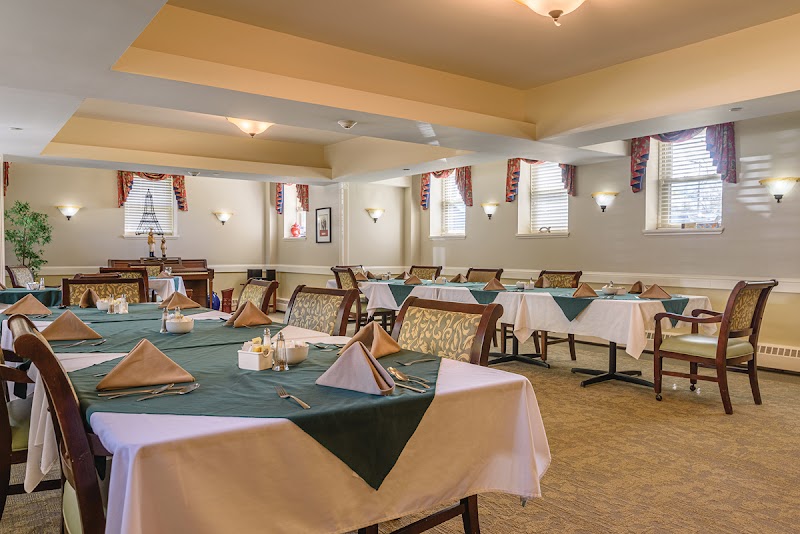
How is Saint Teresa Rehabilitation & Nursing Center Staffed?

CMS rates SAINT TERESA REHABILITATION & NURSING CENTER's staffing level at 4 out of 5 stars, which is above average compared to other nursing homes. Staff turnover is 56%, which is 10 percentage points above the New Hampshire average of 46%. High turnover can affect care consistency as new staff learn residents' individual needs.

What Have Inspectors Found at Saint Teresa Rehabilitation & Nursing Center?

State health inspectors documented 14 deficiencies at SAINT TERESA REHABILITATION & NURSING CENTER during 2023 to 2025. These included: 11 with potential for harm and 3 minor or isolated issues.

Who Owns and Operates Saint Teresa Rehabilitation & Nursing Center?

SAINT TERESA REHABILITATION & NURSING CENTER is owned by a non-profit organization. Non-profit facilities reinvest revenue into operations rather than distributing to shareholders. The facility is operated by CATHOLIC CHARITIES NEW HAMPSHIRE, a chain that manages multiple nursing homes. With 51 certified beds and approximately 43 residents (about 84% occupancy), it is a smaller facility located in MANCHESTER, New Hampshire.
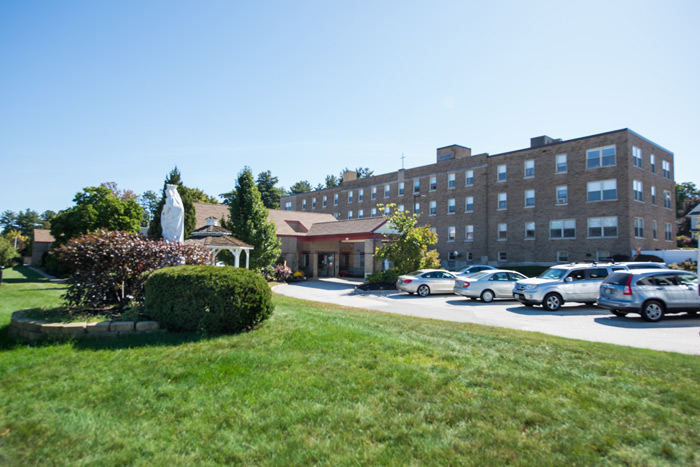
How Does Saint Teresa Rehabilitation & Nursing Center Compare to Other New Hampshire Nursing Homes?

Compared to the 100 nursing homes in New Hampshire, SAINT TERESA REHABILITATION & NURSING CENTER's overall rating (4 stars) is above the state average of 3.0, staff turnover (56%) is significantly higher than the state average of 46%, and health inspection rating (4 stars) is above the national benchmark.

What Should Families Ask When Visiting Saint Teresa Rehabilitation & Nursing Center?

Based on this facility's data, families visiting should ask: "How do you ensure continuity of care given staff turnover, and what is your staff retention strategy?" "Can I visit during a mealtime to observe dining assistance and food quality?" "How do you handle medical emergencies, and what is your hospital transfer rate?" "Can I speak with family members of current residents about their experience?" These questions are particularly relevant given the facility's high staff turnover rate.

Is Saint Teresa Rehabilitation & Nursing Center Safe?

Based on CMS inspection data, SAINT TERESA REHABILITATION & NURSING CENTER has a clean safety record: no substantiated abuse findings (meaning no confirmed cases of resident harm), no Immediate Jeopardy citations (the most serious violation level indicating risk of serious injury or death), and is not on the Special Focus Facility watch list (a federal program monitoring the lowest-performing 1% of nursing homes). The facility has a 4-star overall rating and ranks #1 of 100 nursing homes in New Hampshire. While no facility is perfect, families should still ask about staff-to-resident ratios and recent inspection results during their visit.

Do Nurses at Saint Teresa Rehabilitation & Nursing Center Stick Around?

Staff turnover at SAINT TERESA REHABILITATION & NURSING CENTER is high. At 56%, the facility is 10 percentage points above the New Hampshire average of 46%. High turnover means new staff may not know residents' individual needs, medications, or preferences. It can also be disorienting for residents, especially those with dementia who rely on familiar faces. Families should ask: What is causing the turnover? What retention programs are in place? How do you ensure care continuity during staff transitions?

Was Saint Teresa Rehabilitation & Nursing Center Ever Fined?

SAINT TERESA REHABILITATION & NURSING CENTER has no federal fines on record. CMS issues fines when nursing homes fail to meet care standards or don't correct problems found during inspections. The absence of fines suggests the facility has either maintained compliance or corrected any issues before penalties were assessed. This is a positive indicator, though families should still review recent inspection reports for the full picture.

Is Saint Teresa Rehabilitation & Nursing Center on Any Federal Watch List?

SAINT TERESA REHABILITATION & NURSING CENTER is not on any federal watch list. The most significant is the Special Focus Facility (SFF) program, which identifies the bottom 1% of nursing homes nationally based on persistent, serious quality problems. Not being on this list means the facility has avoided the pattern of deficiencies that triggers enhanced federal oversight. This is a positive indicator, though families should still review the facility's inspection history directly.