CHATHAM HILLS SUBACUTE CARE CENTER
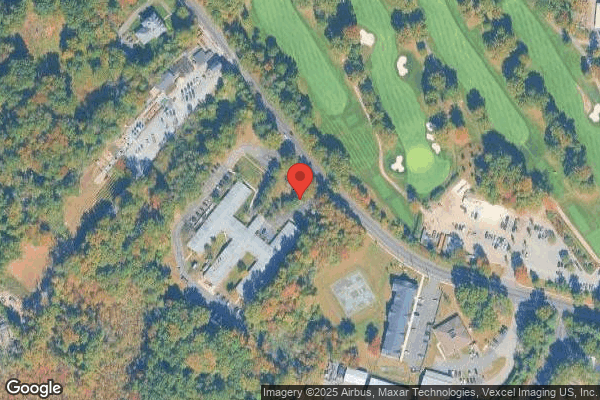
415 SOUTHERN BLVD, CHATHAM, NJ 07928 (973) 822-1500
For profit - Individual 108 Beds CARERITE CENTERS Data: November 2025 1 Immediate Jeopardy citation
Trust Grade
56/100
#109 of 344 in NJ
Last Inspection: May 2024

Within standard 12-15 month inspection cycle. Federal law requires annual inspections.

Overview

Chatham Hills Subacute Care Center has a Trust Grade of C, which means it is average and in the middle of the pack compared to other facilities. In New Jersey, it ranks #109 out of 344, placing it in the top half of the state, and #9 out of 21 in Morris County, indicating that only eight local options are better. The facility is currently improving, as it has reduced issues from seven in 2024 to just one in 2025. Staffing is rated average with a turnover rate of 47%, which is close to the state average, and it has received average RN coverage. However, there are some concerning findings, including a critical incident where CPR was not initiated for a resident who was unresponsive, as well as issues with food safety in the kitchen, such as unlabelled and outdated food items. Overall, while the center has strengths in some areas, there are significant weaknesses that families should carefully consider.

Trust Score
C
56/100
In New Jersey
#109/344
Top 31%
Safety Record
High Risk
Review needed
Inspections
Getting Better
7 → 1 violations
Staff Stability
⚠ Watch
47% turnover. Above average. Higher turnover means staff may not know residents' routines.
Penalties
✓ Good
$14,521 in fines. Lower than most New Jersey facilities. Relatively clean record.
Skilled Nurses
○ Average
Each resident gets 41 minutes of Registered Nurse (RN) attention daily — about average for New Jersey. RNs are the most trained staff who monitor for health changes.
Violations
⚠ Watch
16 deficiencies on record. Higher than average. Multiple issues found across inspections.
★★★★☆
4.0
Overall Rating
★★★☆☆
3.0
Staff Levels
★★★★★
5.0
Care Quality
★★★☆☆
3.0
Inspection Score
Stable
2024: 7 issues
2025: 1 issues

The Good

  • 5-Star Quality Measures · Strong clinical quality outcomes
  • Full Sprinkler Coverage · Fire safety systems throughout facility
  • No fines on record

Facility shows strength in quality measures, fire safety.

The Bad

Staff Turnover: 47%

Near New Jersey avg (46%)

Higher turnover may affect care consistency

Federal Fines: $14,521

Below median ($33,413)

Minor penalties assessed

Chain: CARERITE CENTERS

Part of a multi-facility chain

Ask about local staffing decisions and management

The Ugly 16 deficiencies on record

1 life-threatening 1 actual harm
Feb 2025 1 deficiency
CONCERN (D)

Potential for Harm - no one hurt, but risky conditions existed

Infection Control (Tag F0880)

Could have caused harm · This affected 1 resident

Based on record review, observation, interview, and review of facility policy, the facility failed to ensure staff followed enhanced barrier precautions (EBP) while providing Activities of Daily Livin...

Read full inspector narrative →
Based on record review, observation, interview, and review of facility policy, the facility failed to ensure staff followed enhanced barrier precautions (EBP) while providing Activities of Daily Living (ADLs) care for one resident out of 24 facility residents (Resident (R) 1) on EBP. This failure increased the risk of the spread of infections in the facility. Findings include: Review of the facility list of residents on EBP provided by the facility and titled, Enhanced Barrier, undated, revealed 24 residents were on EBP. The list documented R1 was on EBP. Review of R1's ''Care Plan,'' located in the electronic medical record (EMR) under the Care Plan tab, revealed an admission date of 01/22/24 with diagnoses including encounter for surgical aftercare following surgery on the digestive system. Review of R1's Physicians Order, located in the EMR under the Orders tab, dated 02/13/25 revealed R1 was on EBP. Observation on 02/13/25 at 11:20 AM, revealed an EBP sign posted at the entrance of R1's room. The sign directed providers and staff to wear gloves and a gown for high contact cares which included dressing, bathing/showering, and transferring. During this observation, Certified Nurse Aide (CNA) 1 entered R1's room with a mechanical lift. CNA1 did not don PPE when she entered the room. During this same observation, CNA2 was observed finishing up Activities of Daily Living (ADL) with R1. R1 was observed in a geri-chair (a reclining wheelchair). CNA2 was holding soiled linens, clothing, and briefs in a clear bag and preparing to exit R1's room. CNA2 was not wearing PPE. During an interview on 02/13/25 at 11:31 AM, with both CNAs, CNA1 revealed she was not aware that R1 was on EBP. This surveyor pointed towards the EBP sign on the outside of R1's room. CNA1 stated that there was no PPE cart outside the door, and this is the reason why she did not don PPE (gown and gloves). CNA2 repeated, there is no cart in front of the room and stated, this resident does not have a wound. During an interview on 02/13/25 at 11:35 AM, Licensed Practical Nurse (LPN) 1 confirmed that R1 was on EBP and staff should always follow EBP precautions. During an interview on 02/13/25 at 11:52 AM, the facility Director of Nursing (DON) revealed that there were too many residents on EBP for a supply to be placed at each resident's room. The DON stated posted EBP signage was to be followed by all staff and if staff were unsure, they were to refer to the nurse. Review of the facility's policy titled, Enhanced Barrier Precautions, review date 09/29/24 revealed, Enhanced Barrier Precautions (EBP) are an infection control intervention used to reduce transmission of multidrug-resistant organisms . EBP is an extension of standard precautions utilized for residents . all staff must wear gloves and gown during high contact activities for residents . dressing, bathing/showering . transferring . N.J.A.C. 8:39-19.4(m)(n)
May 2024 7 deficiencies
CONCERN (D)

Potential for Harm - no one hurt, but risky conditions existed

Resident Rights (Tag F0550)

Could have caused harm · This affected 1 resident

Based on observations, interview and record review, it was determined that the facility failed to ensure that residents were served their meals in a dignified manner during meal service. This deficien...

Read full inspector narrative →
Based on observations, interview and record review, it was determined that the facility failed to ensure that residents were served their meals in a dignified manner during meal service. This deficient practice was observed for 3 of 3 meals in 1 of 2 dining rooms. The deficient practice was evidenced by the following: On 05/22/2024 at 12:24 PM, the surveyor observed in the South unit dining area during mealtime that at one table, a staff member sat and fed a resident while the other resident at the same table was not eating or being fed. A second table was observed with three residents that were served their trays and eating, while one resident at the same table did not have their meal. A third table was observed with two residents that were served their trays and eating while two other residents at the same table did not have their meals. A fourth table was observed with one resident who was served their tray and was eating while two other residents at the same table were not served their trays. It was observed by the surveyor that the trays of residents eating at the same table did not arrive to the dining area on the same cart. The first cart with lunch trays arrived to the unit at 11:57 AM and the fourth cart arrived at 12:25 PM. On 05/23/2024 at 12:28 PM, the surveyor observed in the South unit dining area during mealtime that at one table three residents were served their meals and eating at approximately three minutes before another resident seated at the same table had been served. On 05/24/2024 at 08:05 AM, the surveyor observed in the South unit dining area during mealtime that at one table a resident was served their meal and eating approximately seven minutes before the tablemate was served their meal. Another table was observed with a resident who was being fed by a staff member for approximately five minutes before a family member arrived and began feeding the tablemate. On 05/24/2024 at 11:40 AM, the surveyor interviewed the licensed practical nurse (LPN), who stated that all residents sitting at one table should be eating at the same time. On 05/29/2024 at 01:18 PM, the surveyor interviewed the Administrator and Regional nurse who stated that residents at the same table should be served together for dignity issues. The Administrator stated that the new Food Service Director was sending the trays to the units by room number, not according to table seating. Review of facility provided policy Resident Dining Policy dated 04/14/24 indicated that rounds and audits will be conducted to assess: d. Whether residents at each table are served together. N.J.A.C. 8:39-4.1(a)12
CONCERN (D)

Potential for Harm - no one hurt, but risky conditions existed

Deficiency F0576 (Tag F0576)

Could have caused harm · This affected 1 resident

Based on interviews it was determined that the facility failed to provide daily delivery of mail, to include Saturdays. This deficient practice was identified for 1 of 5 residents interviewed during t...

Read full inspector narrative →
Based on interviews it was determined that the facility failed to provide daily delivery of mail, to include Saturdays. This deficient practice was identified for 1 of 5 residents interviewed during the resident council group meeting (Resident #61), and was evidenced by the following: On 05/24/24 at 10:03 AM, the surveyor attended a resident council group meeting with Residents #38, #45, #48, #61 and #64. The surveyor interviewed the residents regarding mail delivery and Resident #61 stated that they did not received mail from November 2023 until mid-March of 2024. The resident stated that he/she was expecting a letter from Social Security and when they brought the concern to the social worker, she returned with a pile of mail including a letter that informed the resident was disqualified because the date had passed. The resident stated that the facility had to write a letter in order to get their (the resident) services. On 5/30/24 at 10:11 AM, the surveyor interviewed the Director of Social Services (DSS) regarding the process of delivering mail at the facility. The DSS stated that when mail was delivered to the facility, mail was dropped off with the receptionist. The business department would sort the mail and that mail would be placed in the social services mailbox and that the social worker would deliver the mail to the resident and contact family from Monday through Friday. The DSS stated that she was on maternity leave from November 2023 through April 2024 and that she was aware that the covering Social Worker (SW) was unaware about the mail delivery process and that this SW was no longer working at the facility. When a new SW started in Mid-March, she found the mail and immediately delivered the mail to the residents. She further stated that she was aware of the situation regarding Resident #61's letter from Social Security. She stated that the facility was able to get the resident Social Security services approved. On 5/30/24 at 10:40 AM, the surveyor interviewed the Business Office Manager, who stated that when she received mail from the receptionist, that she would sort out the mail. She further stated mail such as cards or magazines would be placed in the recreational department mailbox while important mail such as mail from insurance companies, bills, and checks, she would place it in the social services mailbox. She showed the surveyor the social services mailbox and stated that the mailbox had limited space, if it filled up she will bring it to the individual department. She further stated that it was the departments responsibility to deliver the mail to the residents. On 5/30/24 at 10:50 AM, the surveyor interviewed the assistant SW who told the surveyor that she was hired to replace the covering SW who was let go by the facility. She stated that when she started on 3/15/24, she found a bunch of mail that was left throughout the office and in the mailbox in the business office. She further stated that she gathered the mail and distributed the mail to all the residents. She was aware of Resident #61 and acknowledge that the resident had issues with their social security. She stated that the facility worked with the resident and social security to resolve all issues and the resident received his services. On 5/30/24 at 1:30 PM, the surveyor presented the above concerns to the administration team which included the License Nursing Home Administrator (LNHA), Director of Nursing (DON), and the Regional Nurse. There was no additional information provided. A review of the facility's policy for Mail Delivery for residents that was undated and was provided by the DON that revealed the following: Policy statement: It is the policy of {the facility} for residents to receive and send mail in unopened envelopes in a timely manner. Protocol: 1. Mail is delivered to the reception desk daily. 2. The business office manager will separate from departmental mail and sort for each resident. 3. Once mail is sorted if any bills, notices for residents will be placed in social services mailbox. 4. If any cards, newsletters, magazines, letters they will be given to activity aid to distribute to resident. NJAC 8:39-4.1 (a)(19)
CONCERN (D)

Potential for Harm - no one hurt, but risky conditions existed

ADL Care (Tag F0677)

Could have caused harm · This affected 1 resident

**NOTE- TERMS IN BRACKETS HAVE BEEN EDITED TO PROTECT CONFIDENTIALITY** COMPLAINT # 157599 Based on observations, interview, record review and review of pertinent facility documentation, it was determ...

Read full inspector narrative →
**NOTE- TERMS IN BRACKETS HAVE BEEN EDITED TO PROTECT CONFIDENTIALITY** COMPLAINT # 157599 Based on observations, interview, record review and review of pertinent facility documentation, it was determined that the facility failed to ensure a resident who was dependent on staff for activities of daily living (ADL) was consistently provided meal assistance as needed. This deficient practice was identified for 2 of 5 residents (Resident #10 and #32) reviewed for ADLs and was evidence by the following: 1. On 05/22/24 at 12:03 PM, during the initial tour of the South Unit, the surveyor observed Resident #32 lying in bed. The resident's eyes were closed. On 05/23/24 at 11:07 AM, the surveyor observed the resident dressed, lying in bed. There was staff in the room assisting the resident's roommate. The surveyor reviewed the electronic medical record (EMR) for Resident #32. A review of the Resident's admission Record (AR) (an admission summary) revealed that the resident was admitted to the facility with diagnoses which included but were not limited to: Cerebral Infarction due to Embolism of Right Middle Cerebral Artery (occurs when blood flow to the brain is blocked or reduced), Hemiplegia (a severe or complete loss of strength or paralysis on one side of the body) and Hemiparesis (a mild or partial weakness on one side of the body) following Cerebral Infarction affecting Left non-dominant side, and Dysphagia (difficulty swallowing food or liquid) following unspecified Cerebrovascular Disease. A review of the resident's Annual Minimum Data Set, (MDS), an assessment tool used to facilitate the management of care, dated 3/22/24, revealed that the resident had a Brief Interview for Mental Status (BIMS) score of 3 out of 15, which indicated the resident was severely cognitively impaired. A further review of the resident's MDS, Section GG for Functional Abilities and Goals, revealed that the resident was Dependent (Helper does ALL of the effort) on assistance for eating. A review of the Order Summary Report (OSR) revealed a physician order (PO) for Pleasure Feeds diet, Puree Solids texture, Honey Thickened Liquids consistency, Lunch tray only dated 3/6/23. A review of the resident's care plan (CP) revealed a Focus: [name redacted] is at increased dehydration risk r/t (related to) nutrition support via tube feeding, Dysphagia on honey Thickened Liquids and diuretic use, revised on 7/31/23, .Interventions: Monitor oral intake of food and fluid if applicable, Diet order: Pleasure Feeds diet, Puree Solids texture, Honey Thickened Liquids consistency, lunch tray only, created 10/4/22. On 05/23/24 at 12:40 pm, the surveyor observed Resident #32 in a reclining chair watching television. There was a lunch tray on the bed side table, which was located near the resident. There was no staff member in the room. The surveyor observed the tray with utensils in a clear plastic wrap, that did not appear to be opened, the meal cover was intact, and the containers on the tray were not opened. On 05/23/24 at 1:22 PM, the Director of Nursing (DON), the Assistant Director of Nursing (ADON) and the surveyor observed Resident #32's lunch tray. The surveyor asked if the utensils looked as if it was opened, the DON stated, no. The DON removed the plate cover and both the DON and ADON confirmed that the food had not been touched. The DON asked Certified Nursing Assistant (CNA) #1, who was Resident #32's assigned CNA, in the presence of the surveyor, if she had asked the resident if they wanted to eat, the CNA was unable to answer the DON. 2. On 05/23/24 at 12:40 pm, the surveyor observed Resident #10's bedside table without a lunch tray. The surveyor asked the resident if they had eaten, the resident stated, no. The surveyor asked Resident #10 if they were hungry, the resident stated, yes. At 1:04 PM, the surveyor made CNA #1 aware that Resident #10 stated that they did not get a lunch tray. The CNA entered the room and went into the resident's bathroom to wash her hands. The CNA exited the room and walked down the hallway. At 1:22 PM, Resident #10's assigned Licensed Practical Nurse (LPN) and CNA #1 returned to the room with a tray for the resident. The DON and the ADON came to the room at that time. The LPN began feeding Resident #10. At 1:24 PM, the surveyor interviewed the DON, who stated if they (the residents) need assistance they should be fed. She further stated, this (resident not being fed) should not occur. She stated the process was that the nurses and the aides should check to make sure the residents get their trays and that the assigned aides should make sure they assist residents that need to be assisted. The surveyor reviewed the EMR for Resident #10. A review of the Resident's AR revealed that the resident was admitted to the facility with diagnoses which included but were not limited to: Dysphagia, Oropharyngeal Phase, and Unspecified Protein-Calorie Malnutrition (happens when you are not consuming enough protein and calories). A review of the resident's most recent quarterly MDS, dated [DATE], revealed that the resident had a BIMS score of 3 out of 15, which indicated the resident was severely cognitively impaired. A further review of the resident's MDS, Section GG for Functional Abilities and Goals, revealed that the resident required Supervision or touching assistance for eating. A review of the OSR revealed a PO for Regular diet Puree Solids texture, Nectar Thickened Liquids consistency dated 3/23/23. A review of the CP revealed a Focus: [name redacted] is at risk for alteration in nutritional status r/t dx (diagnosis) of dementia, dysphagia, unspecified protein calorie malnutrition, htn (hypertension, high blood pressure) , Revision on 5/9/24 .Goal: [name redacted] Intake of >75% at all meals, .Interventions: Feeding ability: supervision and set-up help needed, Date Initiated: 05/16/2023. A review of the facility's undated policy Resident Dining Policy revealed: Our facility audits the food and nutrition services department regularly to ensure that resident's needs are met, and that dining is a safe and pleasant experience for residents. On 05/30/24 at 12:50 PM, during a meeting with Regional Nurse #1, Regional Nurse #2, the Licensed Nursing Home Administrator (LNHA), the DON and the survey team, the above observations for Resident's #10 and #32 were presented. At that time, the audits for the above-mentioned Resident Dining Policy were requested. On 05/31/24 at 9:41 AM, during a meeting with the survey team and the LNHA, the DON acknowledged that no patient should be missed for meal pass. No additional information was presented for the audits as per the above mentioned Resident Dining Policy. NJAC 8:39-27.2(e)
CONCERN (D) 📢 Someone Reported This

A family member, employee, or ombudsman was alarmed enough to file a formal complaint

Potential for Harm - no one hurt, but risky conditions existed

Pharmacy Services (Tag F0755)

Could have caused harm · This affected 1 resident

**NOTE- TERMS IN BRACKETS HAVE BEEN EDITED TO PROTECT CONFIDENTIALITY** Complaint #: NJ00167644 Based on observation, interview, and record review, it was determined that the facility failed to provid...

Read full inspector narrative →
**NOTE- TERMS IN BRACKETS HAVE BEEN EDITED TO PROTECT CONFIDENTIALITY** Complaint #: NJ00167644 Based on observation, interview, and record review, it was determined that the facility failed to provide pharmaceutical services in accordance with professional standards to a.) clarify duplicate physician's orders for an over-the-counter medication, Ferrous Sulfate and b). failed to obtain a medication for pain. This deficient practice occurred for 2 of 7 residents, (Resident #63 and #133) reviewed for medication review. The deficient practice was evidenced by the following: Reference: New Jersey Statutes Annotated, Title 45. Chapter 11. Nursing Board. The Nurse Practice Act for the State of New Jersey states: The practice of nursing as a registered professional nurse is defined as diagnosing and treating human responses to actual and potential physical and emotional health problems, through such services as case finding, health teaching, health counseling, and provision of care supportive to or restorative of life and wellbeing, and executing medical regimens as prescribed by a licensed or otherwise legally authorized physician or dentist. Reference: New Jersey Statutes Annotated, Title 45, Chapter 11. Nursing Board. The Nurse Practice Act for the State of New Jersey states: The practice of nursing as a licensed practical nurse is defined as performing tasks and responsibilities within the framework of case finding; reinforcing the patient and family teaching program through health teaching, health counseling and provision of supportive and restorative care, under the direction of a registered nurse or licensed or otherwise legally authorized physician or dentist. 1). The surveyor reviewed the medical record for Resident #63. On 5/22/24 at 10:33 AM, the surveyor observed the resident who was seated in the Long-Term Care unit dining/recreational room. The resident was seated in their wheelchair and was participating in activities. A review of the admission Record (an admission summary) reflected that the resident was admitted to the facility with diagnoses which included but not limited to: hypertension (elevated blood pressure), iron deficiency anemia secondary to blood loss (a condition in which blood lacks adequate healthy red blood cells), acute posthemorrhagic anemia (acute blood loss anemia, is a condition that occurs when a person quickly loses a large amount of blood) and anxiety disorder (a mental health disorder characterized by feeling worry, anxiety, or fear that are strong enough to interfere with one's daily activities). A review of the admission Minimum Data Set (MDS), an assessment tool, used to facilitate the management of care, dated 04/23/24, reflected that the resident had a brief interview for mental status (BIMS) score of 99, which indicated that the resident was unable to complete an interview. Further review of the MDS section C1000, reflected the resident's cognitive skills for decision making were a 3 (three) which indicated that the resident's cognition is severely impaired. A review of the May 2024 Order Listing Report (OLR) revealed a physician order (PO): 1. A PO dated 05/25/24 for Ferrous Sulfate oral solution 220 (44 Fe [Iron]) mg (milligrams)/5 ml (milliliters) give 5 ml by mouth one time a day for supplement. 2. A PO dated 05/28/24 for Ferrous Sulfate 325 (65 Fe) mg give 1 tablet by mouth one time a day for supplement. A review of the May 2024, electronic medication administration record (eMAR) revealed an order for Ferrous Sulfate oral solution 220 mg/5ml, give 5 ml by mouth one time a day for supplement which was signed as being administered in the eMAR on 05/28/24 at 9:00 AM. Further review, revealed an order for Ferrous Sulfate 325 mg, give 1 tablet by mouth one time a day for supplement which was signed as being administered in the eMAR on 5/28/24 at 9:00 AM. On 5/28/24 at 1:10 PM, the surveyor interviewed the Long-Term care unit Licensed Practical Nurse (LPN) who acknowledged that she should have discontinued the Ferrous Sulfate 325 mg tablets. The LPN did not respond to the surveyor inquiry about both Ferrous sulfate tablets and liquid being signed as being administered at 9:00 AM on 05/28/24. 2). The surveyor reviewed the closed medical record for Resident #133. A review of the admission Record reflected that the resident was admitted to the facility with diagnoses which included but not limited to: hypertension, chronic kidney disease (long standing disease of the kidneys leading to renal disease), spinal stenosis (happens when space in the spinal cord is to small and could put pressure on the spinal cord and the nerves) and anxiety disorder (a mental health disorder characterized by feeling worry, anxiety, or fear that are strong enough to interfere with one's daily activities). A review of the admission MDS, dated [DATE], reflected that the resident had a BIMS of 6 out of 15, indicating that the resident was severely cognitively impaired. A review of the September 2023 OLR revealed the following PO dated 06/13/23: 1. Pregabalin oral capsule 100 mg, give 1 capsule by mouth one time a day for pain take with 25 mg capsule= 125 mg. 2. Pregabalin oral capsule 25 mg, give 1 capsule by mouth one time a day for pain take with 100 mg capsule=125 mg A review of the September 2023 eMAR revealed an order for Pregabalin oral capsule 100 mg, give 1 capsule by mouth one time a day for pain take with 25 mg capsule = 125 mg with an order date of 6/13/23 and an administration time of 9:00AM. A further review of the eMAR, revealed that the resident's medication was not signed as being administered on 9/6/23, 9/7/23, 9/8/23, 9/9/23, 9/10/23, 9/12/23, and 9/13/23. A review of the September 2023 eMAR revealed an order for Pregabalin oral capsule 25mg, give 1 capsule by mouth one time a day for pain take with 100mg capsule= 125 mg with an order date of 6/13/23 and an administration time of 9:00AM. A further review of the eMAR revealed that the resident's medication was not signed as being administered on 9/6/23, 9/7/23, 9/8/23, 9/9/23, 9/10/23, 9/12/23 and 9/13/23. A review of the facility Progress Notes (PN) revealed that the facility was documenting that the resident's Pregabalin capsules were unavailable from the pharmacy in either a medication administration notes or a nurses note from 9/6/23 until 9/13/23. The notes revealed that the medications were unavailable and were awaiting a delivery from the pharmacy. On 5/30/24 at 1:30 PM, the surveyor discussed the above concerns with the administration team which included the Licensed Nursing Home Administrator (LNHA), Director of Nursing (DON) and a Regional Nurse. On 05/31/24 at 10:40 AM, the DON acknowledge that the resident did not receive their Pregabalin 100 mg and Pregabalin 25 mg capsules from 9/6/23 and 9/13/23. She stated that the pharmacy needed a prescription to send out the medication and that the facility notified the physician and was awaiting a prescription from the physician. There was no additional information provided. A review of the facility's policy for Medication Administration schedule/policy that was dated 12/31/23 and was provided by the DON that revealed the following: 7. If a dosage is believed to be inappropriate or excessive for a resident, or a medication has been identified as having potential adverse consequences for a resident or is suspected of being associated with adverse consequences, the person preparing or administering the medication will contact the prescriber, the resident's attending physician or facility's medical director to discuss concerns. A review of the facility's policy for Physician orders that was dated 10/31/23 and was provided by the DON that revealed the following: The nurses will clarify with the physician any orders needing clarifications. NJAC 8:39-11.2 (b), 29.2 (d)
CONCERN (D)

Potential for Harm - no one hurt, but risky conditions existed

Garbage Disposal (Tag F0814)

Could have caused harm · This affected 1 resident

Based on observation, interview, and review of other facility documentation, it was determined that the facility failed to provide a sanitary environment for residents, staff, and the public by failin...

Read full inspector narrative →
Based on observation, interview, and review of other facility documentation, it was determined that the facility failed to provide a sanitary environment for residents, staff, and the public by failing to keep the garbage container area free of garbage and debris. This deficient practice was evidenced by the following: On 05/22/2024 at 10:31 AM, during the initial kitchen tour with the Food Service Director (FSD), the surveyor observed debris and trash around the dumpster area, including cardboard and paper. The FSD stated that housekeeping was responsible for this area. On 05/29/2024 at 01:17 PM, the surveyor interviewed the Administrator, who stated the dumpster area was cleaned up immediately after the debris was identified by the surveyor. Review of facility provided policy Waste Management Policy, dated 01/03/24, included: #3. The area around the container shall be kept clean and clear at all times. N.J.A.C. 8:39-19.3(c)
CONCERN (E)

Potential for Harm - no one hurt, but risky conditions existed

Food Safety (Tag F0812)

Could have caused harm · This affected multiple residents

Based on observation, interview, and review of other facility documentation, it was determined that the facility failed to handle potentially hazardous foods and maintain sanitation in a safe and cons...

Read full inspector narrative →
Based on observation, interview, and review of other facility documentation, it was determined that the facility failed to handle potentially hazardous foods and maintain sanitation in a safe and consistent manner to prevent food borne illnesses. This deficient practice was evidenced by the following: On 05/22/2024 from 10:10 AM to 10:42 AM, the surveyor, accompanied by the Food Service Director (FSD), toured the kitchen, and observed the following: In the walk-in freezer, the surveyor observed a box of hamburger patties and a box of hot dogs with no labels or dates and both boxes with the inner plastic bags open to the air. The FSD stated that there should be a received date and opened dates. She also stated that the inner bags should be closed. The surveyor also observed the fry basket with an item that resembled a french fry. The FSD stated that nothing was fried for breakfast on this day. On 05/23/2024 in the South unit pantry, the surveyor observed 2 boxes of cereal that were outdated as follows: A box of corn flakes with a date of May0123 and a box of rolled oat cereal with a date of Feb1423. A review of facility provided policy titled Food Receiving and Storage revised November 2022 revealed under Refrigerated/Frozen Storage: 1.All food stored in the refrigerator or freezer are covered, labeled and dated (use by date) 8. Frozen foods are maintained at a temperature to keep frozen food solid. Wrappers of frozen food must stay intact until thawing. A review of facility provided policy titled Refrigerators Freezers , undated revealed: 7. All food shall be appropriately dated to ensure proper rotation by expiration dates. Received dates (dates of delivery) will be marked on cases and on individual items removed from cases for storage. use by dates will be completed with expiration dates on all prepared food in refrigerators. Expiration dates on unopened food will be observed and use by dates indicated once food is opened. 8. Supervisors will be responsible for ensuring food items in pantry, refrigerators, and freezers are not expired or past perish dates. Supervisors should contact vendors or manufacturers when expiration dates are in question or to decipher codes. N.J.A.C. 18:39-17.2(g)
CONCERN (E) 📢 Someone Reported This

A family member, employee, or ombudsman was alarmed enough to file a formal complaint

Potential for Harm - no one hurt, but risky conditions existed

Infection Control (Tag F0880)

Could have caused harm · This affected multiple residents

2.) On 05/22/24 at 12:04 PM, during the initial tour of the facility, the surveyor observed Resident #18 in their room, sitting in wheelchair, by the window. The resident showed the surveyor their gal...

Read full inspector narrative →
2.) On 05/22/24 at 12:04 PM, during the initial tour of the facility, the surveyor observed Resident #18 in their room, sitting in wheelchair, by the window. The resident showed the surveyor their gall bladder drain tube which was placed in a privacy bag and secured to the right-side armrest of the wheelchair. The surveyor did not observe any Enhanced Barrier Precaution (EBP) signs or a PPE bin at the door. On 05/23/24 at 10:34 AM, the surveyor observed the resident #18 sitting up in their bed. No EBP sign and PPE bin noted at the door. On 05/24/24 at 07:48 AM, during incontinence rounds with the Registered Nurse/ Unit Manager (RN/UM), the surveyor did not observe an EBP sign or a PPE bin at Resident#18's door. The RN/UM and the surveyor went to the room and the RN/UM checked the resident for incontinence. The surveyor observed the RN/UM wearing only gloves, no gown. The RN/UM picked up the biliary drain tube (a thin, flexible tube that allows bile to flow out from a blocked bile duct into a collection bag outside the body) to show the surveyor that it was attached to the drainage bag. The RN/UM stated, it (the tube) was inserted about 2 months ago. The surveyor reviewed the eMR for Resident #18. A review of the Resident #18's AR revealed the resident was admitted to the facility with diagnoses which included, but were not limited to: acute cholecystitis (inflammation of the gallbladder that develops over hours), immunodeficiency (failure of the immune system to protect the body adequately from infection, due to the absence or insufficiency of some component process or substance) due to conditions classified elsewhere, obstruction of bile duct (a condition that occurs when the bile ducts, which are small tubes that carry bile from the liver to the small intestines become blocked or narrowed), and encounter for change or removal of drains. A review of the OSR revealed a PO for Enhanced Barrier Precaution r/t [related to] being at risk for MDRO (Multidrug resistant organism) dated 05/22/24. A review of the CP revealed a focus of [Name Redacted] is on Enhanced Barrier Precautions related to being at risk for MDRO dated 4/23/24 and interventions: EBP: wear gown, and gloves during assistance with dressing, bathing, transferring, hygiene, changing linens, changing briefs & toileting, and during therapy. On 05/24/24 at 12:05 PM, during an interview with the surveyor , the RN/UM stated that EBP were used for any resident that had wounds, urinary catheters, feeding tubes and residents with IV antibiotics. The RN/UM explained the process was first to obtain the PO, enter them in the computer, then we put the EBP signs on the doors and place a PPE bin at the door and inform the resident's family. The RN/UM acknowledged that there should be a EBP sign on the door and the required PPE the staff should use when providing direct care to the resident. The RN/UM further stated, PPE is important and is required for the protection of the staff and the other residents. On 05/24/24 at 12:17 PM, the surveyor and the UM/RN walked to Resident # 18's room and checked the door, the UM/RN confirmed that there was no EBP sign on the door. She stated, Yes, there should be a sign on the door. On 05/30/24 at 12:50 PM, during a meeting with Regional Nurse #1, Regional Nurse #2, the Licensed Nursing Home Administrator (LNHA), the Director of Nursing (DON) and the survey team, the above-mentioned observations for Resident #41 and #18 was presented. On 05/31/24 at 9:41 AM, during a meeting with the survey team and the LNHA, the DON acknowledged that the staff did not use the proper PPE while checking resident's for incontinence. A review of the facility's policy Enhanced Barrier Precautions Policy dated 4/18/24, revealed: Statement: Enhanced barrier precautions (EBPs) are utilized to prevent the spread of multi-drug resistant organisms (MDROs) to residents .3. Examples of high-contact resident care activities requiring the use of gown and gloves for EBPs include: .f. changing briefs or assisting with toileting .5. EBPs are indicated for residents with wounds and/or indwelling medical devices regardless of MDRO colonization. 6. EBPs remain in place for the duration of the resident's stay or until resolution of the wound or discontinuation of the indwelling medical device that places them at increased risk .10. Signs are posted on the door or wall outside the resident room indicating the type of precautions and PPE required, 11. PPE is available outside of the resident rooms. NJAC 8:39-19.4(a)(2)(c) NJ #167099 Based on observations, interviews, and record review it was determined that the facility failed to ensure that staff wear the appropriate personal protective equipment (PPE) for residents on Enhanced Barrier Precautions (designed to reduce transmission of multidrug-resistant organisms (MDROs) in nursing homes) to address the risk for infection transmission, in accordance with the facility policy and acceptable standards of infection control practice. This was observed for 2 of 3 residents (Resident #41 and #18) reviewed for Enhanced Barrier Precautions on 2 of 2 units (North and South Unit) and was evidenced by the following: 1. On 05/24/24 at 7:45 AM, during incontinence rounds with the Infection Preventionist on the South Unit, the surveyor observed an Enhanced Barrier Precautions sign outside of unsampled Resident #41's door. There was a PPE bin located under the sign. The IP entered the room with the surveyor and asked the resident for permission to conduct an incontinence check. The resident granted permission. The IP performed hand hygiene and removed gloves from a box. She then pulled the curtain and donned (put on) the gloves. At that time, the surveyor requested to speak with the IP in hallway and pointed out the signage at the door. The Enhanced Barrier Sign read Stop: Enhanced Barrier Precautions Everyone Must: . Wear gloves and a gown for the following High-Contact Resident Care Activities .Changing briefs or assisting with toileting. The IP acknowledged the signage and stated she needed to wear a gown and gloves for incontinence check. She then donned a gown and gloves and proceeded with the incontinence check. The surveyor reviewed the electronic medical record (eMR) for Resident #41. A review of the admission Record (AR, an admission summary) revealed the resident was admitted to the facility with diagnoses which include but not limited to: Secondary Malignant Neoplasm of Breast (breast cancer cells spread from the primary (first) cancer in the breast to other parts of the body) and Hemothorax (a collection of blood in the space between the chest wall and the lung). A review of the Order Summary Report (OSR) revealed a physician order (PO) for Enhanced Barrier Precautions dated 4/23/24. A review of the care plan (CP) revealed: Focus: [name redacted] is on Enhanced Barrier Precaution related to being at risk for MDRO (Multi-Drug Resistant Organism) dated 4/23/24 .Interventions: ENHANCED BARRIER PRECAUTIONS: wear gown and gloves during assistance with dressing, bathing, transferring, hygiene, changing linens, changing briefs & toileting, and during therapy.
Apr 2023 2 deficiencies 1 IJ
CRITICAL (J) 📢 Someone Reported This

A family member, employee, or ombudsman was alarmed enough to file a formal complaint

Immediate Jeopardy (IJ) - the most serious Medicare violation

Deficiency F0678 (Tag F0678)

Someone could have died · This affected 1 resident

**NOTE- TERMS IN BRACKETS HAVE BEEN EDITED TO PROTECT CONFIDENTIALITY** Complaint #NJ 00163449 Based on interviews and review of the medical records (MRs) and other facility documentation on [DATE] an...

Read full inspector narrative →
**NOTE- TERMS IN BRACKETS HAVE BEEN EDITED TO PROTECT CONFIDENTIALITY** Complaint #NJ 00163449 Based on interviews and review of the medical records (MRs) and other facility documentation on [DATE] and [DATE], it was determined the facility failed to immediately initiate Cardiopulmonary Resuscitation (CPR) (an emergency lifesaving procedure performed when the heart stops beating) and activate their emergency response system (ERS) which includes calling 911, notify other staff by announcing the emergency code, and retrieving the crash cart and the automatic external defibrillator (AED) when Resident #1 who was a full code (all resuscitative measures should be taken if the heartbeat or breathing stops) and did not have a physician order (PO) for Do Not Resuscitate (DNR) was found unresponsive and without a pulse or respirations in bed. This was not in accordance with their policy for Emergency Procedure-CPR and the American Heart Association (AHA) and the Basic Life Support (BLS) guidelines for Healthcare Providers. Resident #1 was admitted to the facility on [DATE] with diagnoses that included but were not limited to Hypertension, Congestive Heart Failure, and Right Thalamic Intracerebral Hemorrhage with left hemiparesis (stroke with left-sided weakness). According to documentation and interviews, the facility did not immediately perform CPR or activate their ERS due to not having an order for a full code or DNR in the MR when Resident #1, who was a full code and without a PO for DNR, was found unresponsive without a pulse and respirations on [DATE] at 11:00 PM. Resident #1 was last seen responsive, trying to get out of bed an hour ago by Certified Nursing Assistant (CNA) #1. At that time, CNA #1 repositioned the resident in bed. At 11:00 PM, CNA #1 notified the Licensed Practical Nurse (LPN) #1, the resident was not looking good. LPN #1, a newly assigned agency nurse, went in the room, checked for pulse and vital signs, and found out the resident expired. LPN #1 confirmed during a telephone interview on [DATE] at 1:44 PM he was certified in CPR and did not provide CPR to Resident #1 because he was trying to figure out the resident's code status. He stated that he did not convey or explain to the Physician that he was unsure of the resident's code status. He called the Physician only to inform that Resident #1 had expired so the resident could be pronounced. He confirmed that instead of initiating CPR, he called the Director of Nursing (DON) and Assistant DON (ADON) on the telephone for instructions. However, the DON and ADON were unavailable. Although there was no PO for DNR, LPN #1 strongly insisted that because the POLST form was blank and there was no full code written anywhere in the MR, he would not start CPR at all. The nursing progress notes (PN) indicated that at 11:55 PM, the Registered Nurse/Nursing Supervisor (RN/NS) arrived on the unit for the night shift (11PM-7AM) and was notified by LPN #1 that Resident #1 expired at 11PM. The RN/NS documented that Resident #1 was a full code, CPR was initiated at 12:20 AM, LPN #2 called 911 at 12:50 AM, and the paramedics and team pronounced Resident #1 expired at 01:43 AM. During a telephone interview on [DATE] at 4:07 PM, the RN/NS stated he called the facility prior to his shift because he was going to be late; and at that time 11-7 shift LPN #2 informed him on the phone the resident had expired, and he assumed Resident #1 was not a full code or resuscitation effort was unsuccessful. The RN/NS explained that when he arrived on the unit, he received reports and asked LPN #1 what Resident #1's code status was. LPN #1 responded, I think it's not DNR. He was also informed that the Physician had already been notified the resident had expired. At that time, the RN/NS checked the chart to verify Resident #1's code status and confirmed there was no PO for DNR. He then called the DON, who instructed him to initiate CPR and call 911 An Immediate Jeopardy (IJ) past noncompliance (PNC) began on [DATE] when the facility's failed to initiate CPR and activate their ERS immediately when Resident #1, who was a full code, did not have a PO for DNR, and was found unresponsive, and without a pulse or respirations. This practice placed all residents who are a full code or had no accurate code status in the MR at risk for imminent death if found to be unresponsive without a pulse and respirations. The IJ PNC was determined to have existed on [DATE] and there was sufficient evidence that on [DATE] that the facility corrected the noncompliance and was in substantial compliance at the time of the current survey for the specific regulatory requirement. The Administrator and Assistant Director of Nursing (ADON) were informed of the of the past IJ situation on [DATE]. The deficient practice is evidenced by the following: Reference: https://www.ahajournals.org/toc/circ/122/18_suppl_3 The American Heart Association (AHA) publishes guidelines every five years for CPR and Emergency Cardiovascular Care (ECC). These guidelines reflect global resuscitation science and treatment recommendations. In the guidelines, AHA has established evidenced-based decision-making guidelines for initiating CPR when cardiac or respiratory arrest occurs in or out of the hospital. The AHA urges all potential rescuers to initiate CPR unless a valid Do Not Resuscitate (DNR) order is in place; obvious clinical signs of irreversible death (e.g., rigor mortis, dependent lividity, decapitation, transection, or decomposition) are present; or initiating CPR could cause injury or peril to the rescuer. Prompt emergency activation and initiation of CPR requires rapid recognition of cardiac arrest. A cardiac arrest victim is not responsive. Breathing is absent or is not normal. Consequently, rescuers should start CPR immediately if the adult victim is unresponsive and not breathing or not breathing normally. Reference: https://www.nj.gov/health/advancedirective/polst/ The Practitioner Orders for Life Sustaining Treatment (POLST) form enables patients to indicate their preferences regarding life-sustaining treatment. This form, signed by a patient's attending physician, advanced practice nurse or physician's assistant, provides instructions for health care personnel to follow for a range of life-prolonging interventions. This form becomes part of a patient's medical records, following the patient from one healthcare setting to another, including hospital, nursing home or hospice. 1. According to the admission Record, Resident #1 was admitted to the facility on [DATE]. A Physician's progress notes (PN) dated [DATE] indicated diagnoses which included but were not limited to Hypertension, Congestive Heart Failure, and Right Thalamic Intracerebral Hemorrhage with left hemiparesis (stroke with left-sided weakness) A Minimum Data Set (MDS), an assessment tool, dated [DATE], revealed the resident had a Brief Interview for Mental Status (BIMS) score of 8, which indicated moderately impaired cognition and the resident required extensive assistance with activities of daily living (ADLs). A review of the Order Summary Report (OSR) did not include a physician order (PO) for DNR. A review of the care plan (CP) did not include a CP for the resident's code status, DNR or full code. Review of a document titled Social Service Evaluation (SSE) dated [DATE] indicated that the Social Worker documented Full Code under Advance Directive (AD). A review of Resident #1's closed chart/MR on [DATE] did not include a Physicians Orders for Life- Sustaining Treatment (POLST) form in the chart. A review of the nursing PN dated [DATE] at 12:20 AM, signed by LPN #1, indicated that Resident #1 was last seen on [DATE] at 7 PM complaining of cough and was given cough medication. Resident #1 was found unresponsive at 11 PM by CNA #1. LPN #1 went into the room, checked for pulse and vital signs, and found out the resident expired. A review of nursing PN dated [DATE] at 01:52 AM, signed by LPN #2, indicated at 11:23 PM received report that Resident #1 had expired. The outgoing nurse (LPN #1) called the Physician to notify the resident expired. Called placed to DON message left for a return call. At 11:40 PM, the supervisor was notified (over the phone) of the resident's status. At 12:50 AM, CPR was initiated, and family and 911 were called. At 1:00 AM, the police arrived, and CPR continued. Further review of nursing PN dated [DATE] at 3:37 AM signed by the RN/NS indicated at 11:55 PM, he arrived on the floor and was notified by 3-11 shift nurse (LPN#1) that Resident #1 expired at 11 PM and Physician on-call had been notified. The RN/NS documented that Resident #1 was a full code. At that time, the RN/NS noted the resident was unresponsive and had no heart sounds on auscultation. The DON was notified, and CPR was initiated at 12:20 AM. The charge nurse (LPN #2) called 911 at 12:50 AM. The paramedics pronounced Resident #1 expired at 1:43 AM on [DATE]. A review of a written employee statement signed by CNA #1 and dated [DATE] revealed on [DATE] at 10 PM, CNA #1 indicated Resident #1 was trying to get out of bed, and she went to reposition the resident's legs. At 11 PM, CNA #1 was notified by Temporary Nursing Assistant (TNA) #1 that Resident #1 was unresponsive, CNA #1 checked and confirmed the resident was unresponsive, then immediately informed the nurse (LPN #1). During a telephone interview with the surveyor on [DATE] at 10:50 AM, CNA #1 confirmed that when she checked, Resident #1 was unresponsive, not stiff and skin was warm. During a telephone interview with the surveyor on [DATE] at 1:44 PM, LPN #1 confirmed he did not initiate CPR when he found Resident #1 to be unresponsive and not breathing on [DATE] at 11 PM because he was trying to figure out the resident's code status. LPN #1 confirmed the resident had no palpable pulse and was not cold or stiff at that time. He explained that the POLST form in the resident's chart was blank, and there was no PO for a full code. He continued to explain that he notified the Physician on call only to inform Resident #1 had expired so the resident could be pronounced expired. LPN #1 confirmed he did not convey or explain to the Physician he was unsure of the resident's code status, and CPR was not initiated despite not having a PO for DNR. He continued to state he called the DON and ADON but could not be reached. Although the OSR did not indicate a PO for DNR, LPN #1 strongly insisted that because the POLST form was blank, there was no clear instructions, so the code status was not clear. He added, if a resident code status cannot be found despite not having a PO for DNR, he would not start CPR at all. During a telephone interview with the surveyor on [DATE] at 4:07 PM, the RN/NS confirmed he was the night shift (11PM-7AM) nursing supervisor on [DATE]. He stated on [DATE] after 11 PM, he called the facility to inform the nurses he was going to be late, and at that time, the nurse informed him a resident had expired. The RN/NS explained he did not ask questions because he assumed the resident was not a full code or the resuscitation effort was unsuccessful. When he arrived, he received report and asked LPN #1 what Resident #1's code status was. LPN #1 responded, I think it's not DNR and informed him the Physician had already been notified the resident had expired so that the resident could be pronounced. At that time, he found out there was no PO for DNR. The RN/NS called the DON for instructions. The RN/NS assessed Resident #1 and was noted to be unresponsive, warm to the touch, had no pulse or VS, and pupils were non-reactive. He called the DON and started CPR and call 911 after the call. During a telephone interview with the surveyor on [DATE] at 5:34 PM, LPN #2 confirmed that she was the night shift nurse on [DATE]. She stated, at around 11:20 PM, LPN #1 reported to her that Resident #1 had expired at 11 PM and the Physician had already been notified that the resident expired. She remembered LPN #1 stating, Right now, I have a situation; I have a patient that expired, LPN #1 told her to call the RP and the funeral home. At that time, there was no funeral home listed on the resident's chart, so she called the DON and left a message. LPN #2 agreed that the RN/NS aforementioned interview statement was correct. During an interview with the surveyor on [DATE] at 2:14 PM, the Social Service Director (SSD) stated Resident #1 was unable to complete the POLST form due to cognitive status. The POLST form was discussed and mailed to the family member/Responsible Party (RP), but the form was never completed. The SS was unable to explain why there was not follow discussion about the POLST form with the RP. She confirmed that Resident #1's code status was a full code since the POLST form was never completed, and there was no PO for DNR. During a telephone interview with the surveyor on [DATE] at 11:20 AM, the Social Worker (SW) confirmed she completed the SSE on [DATE], which indicated full code under AD. She stated that a POLST form is not mandatory, but the resident or RP is encouraged to complete the form. She continued to state that Resident #1 was a full code since the POLST form was blank and there was no PO for DNR. During a telephone interview with the surveyor on [DATE] at 11:33 AM, Resident #1's Physician stated that on [DATE], unknown time, the on-call Physician emailed him that Resident #1 had expired. He explained he was not informed that CPR was not provided, or CPR was delayed. The Physician explained that he expects the nurses to call him or the clinician on call for changes in the resident's condition so they can make clinical decisions based on the nurse's assessment. He stated the nurse should have informed the Physician on a call about the unclear code status of the resident. However, if there was no PO for DNR, the resident was full code. Additionally, the physician confirmed that signs of rigor mortis can occur a couple of hours after death, including stiffness, coldness, and cyanosis (bluish skin discoloration), which were not conveyed to the Physician on-call on [DATE]. Review of a witness statement dated [DATE] signed by the DON, indicated that she received a call from at 12:42 AM LPN #2 who reported that Resident #1 expired during 3PM-11PM shift. LPN #2 went on to say that no there was no funeral home listed on the resident's chart and the RP could not be reached. The RN/NS took the phone and explained that Resident #1 expired at 11PM and explained that the resident was identified as a full code and no code was initiated. The RN/NS went on to ask if he should pronounce Resident #1 or move forward doing the code because the on-call Physician had already been notified of the time the resident expired. The DON instructed that a code be initiated and 911 be called. During a telephone interview with the surveyor on [DATE] at 11:22 AM, The DON explained LPN #2 called and informed her at around 12:20 that Resident #1 had expired and did not have a funeral home listed on the chart. The RN/NS who was also on the phone explain what had transpired and informed her that Resident #1 was full code. She instructed the RN/NS to initiate CPR and call 911 immediately. The DON continued to state that LPN #1 should have conveyed the resident's findings when he notified the Physician because LPNs are not permitted to pronounce the resident's death. The DON acknowledged that LPN #1 should have initiated CPR immediately and activated the ERS upon confirming there was no PO for DNR. During an interview with the Assistant Director of Nursing (ADON) and Administrator on [DATE] at 6:19 PM, they both stated that nurses and CNAs who are CPR certified are expected to immediately start CPR and activate 911 if a resident is a full code and found unresponsive, not breathing and without a pulse. They both confirmed that if there was no PO for DNR or a POLST form indicating DNR, the resident is a full code. The ADON confirmed LPN #1 did not follow the facility's policy for Emergency Procedure - Cardiopulmonary Resuscitation and should have initiated CPR and activate 911 immediately. A review of the facility's undated policy titled Emergency Procedure- Cardiopulmonary Resuscitation included but was not limited to the following: Under Guidelines it was indicated that 4. The chances of surviving SCA (sudden cardiac arrest) may be increased if CPR is initiated immediately .5. Early delivery of a shock with a defibrillator plus CPR .can further increase chances of survival. 6. If an individual (resident, visitor .) is found unresponsive and not breathing normally, a licensed staff member who is certified in CPR/BLS shall initiate CPR unless: a. it is known that a DNR order .there are obvious signs of irreversible death (e.g., rigor mortis). 7. If the resident's DNR status is unclear, CPR will be initiated until it is determined that there is DNR . It was indicted under Emergency Procedure- Cardiopulmonary Resuscitation, 1. If an individual is found unresponsive, briefly assess for abnormal or absence of breathing. If sudden cardiac arrest is likely, begin CPR. a. Instruct staff member to activate the emergency response system (code) and call 911. b. Instruct staff member to retrieve the automatic external defibrillator. c. Verify or instruct a staff member to verify the DNR or code status .d. Initiate BLS . A review of the facility's undated policy titled Advance Directives included but was not limited to the following: Under Policy Statement it was indicated that Advance directive are honored in accordance with the state law and facility policy. Under Refusing or Requesting Treatment it was indicated that 1. The resident had the right to refuse medical or surgical treatment whether he or she has and advance directive. a. A resident will not be treated against his or her own wishes. On [DATE] at 9:44 PM, the facility provided a copy of the corrective action that was implemented which began on [DATE]. Review of the plan revealed the following: The facility reported the incident to the Ombudsman office and concluded their investigation on [DATE]. The Investigation Report included the timeline of the incident and witness statements obtained from the staff. Review of the statements from TNA #1, CNA #1, LPN #2, RN/NS, and the DON revealed that each staff member provided a signed and dated witness statements. On [DATE], the facility reported LPN #1 to the licensing board and was removed from working at the facility. On [DATE], the SW audited the medical records for all residents to ensure code status was documented using POLST form, matched the PO in the Electronic MR, and will continue this practice with future residents. On [DATE], the DON and ADON educated staff which included nursing, social service, dietary, rehabilitation, housekeeping and maintenance on rapid response (Emergency Procedue-CPR), code status (DNR, POLST), and following physician's orders and would be ongoing. On [DATE], the ADON educated the RN/NS and LPN #2 via telephone on code initiation and CPR policy and procedurea and would be ongoing. On [DATE], the facility audited and validated the facility staff CPR cards and would be ongoing. On [DATE], agency nurse education packets were updated to include facility CPR policy and procedure. All agency nurses were provided the new educations packets. All incoming agency nurses would be povided new education packets. On [DATE], all department heads which included Social Service, Admisssion, Rehabilitation, Housekeeping and Dietary were re-educated on code status and CPR policy and procedure. On [DATE], CPR protocols and mock code drill performed at the facility and would be ongoing. The surveyor reviewed and conducted onsite verification on [DATE] and [DATE] to confirm the facility had implemented all components of the corrective plan of action. After conducting records review and interviews, it was determined the facility implemented their corrective plan and the deficient practice was corrected on [DATE] prior to the survey. Review of the employee education attendance record (EEAR) dated [DATE] revealed that the RN/NS and LPN #2 received education by telephone on facility's policy and procedure for emergency procedure and CPR. Review of the EEAR dated [DATE], [DATE], and [DATE] revealed that nursing staff received education on facility's policy and procedure for emergency procedure and CPR and [DATE] on who can pronounce when a resident expired. Review of the EEAR dated [DATE] revealed that department heads received education on facility's policy and procedure for emergency procedure and CPR. Review of the EEAR dated [DATE] revealed that a mock drill in-service for all facility staff was performed at 2:20 PM and 6:30 PM and an in-service on [DATE] on CPR and code blue drill. Review of the agency nursing staff education packet included CPR certification requirements, information on facility sponsored CPR classes, and emergency response procedures. During the survey, the surveyor verified the validity of nursing staff CPR certifications. During the survey, the surveyor verified that the resident charts were audited and POLST forms (green form) were placed in front of the charts with the resident's code status. The surveyor verified that the RN/NS, LPN #2, CNA #1, and TNA #1 received education on code status and CPR protocols. During a telephone interview with the surveyor on [DATE] at 5:34 PM, LPN #2 confirmed she received education on code status and CPR protocols. During an interview with the surveyor on [DATE] at 3:10 PM, the RN/UM stated that after the incident she was educated on resident code status, emergency procedures, and CPR protocols. During an interview with the surveyor on [DATE] at 3:41 PM, RN #1 explained that she received education and attended a code drill. She explained the process for identifying code status, CPR, and emergency procedures. During an interview with the surveyor on [DATE] at 8:55 PM, LPN #3 and CNA #2 stated they both received in-service on code status, CPR, and emergency procedures. NJAC 8:39-27.1(a) NJAC 8:39-4.1(31) iii NJAC 8:39-9.6 (g)
SERIOUS (G) 📢 Someone Reported This

A family member, employee, or ombudsman was alarmed enough to file a formal complaint

Actual Harm - a resident was hurt due to facility failures

Free from Abuse/Neglect (Tag F0600)

A resident was harmed · This affected 1 resident

**NOTE- TERMS IN BRACKETS HAVE BEEN EDITED TO PROTECT CONFIDENTIALITY** Complaint #NJ 00163449 Based on interviews and review of the medical records (MRs) and other facility documentation on [DATE] an...

Read full inspector narrative →
**NOTE- TERMS IN BRACKETS HAVE BEEN EDITED TO PROTECT CONFIDENTIALITY** Complaint #NJ 00163449 Based on interviews and review of the medical records (MRs) and other facility documentation on [DATE] and [DATE], it was determined the facility failed to provide services to prevent neglect of a resident (Resident #1). Resident #1 who was a full code (all resuscitative measures should be taken if the heartbeat or breathing stops) and had no advance directive or a physician order (PO) for Do Not Resuscitate (DNR) was found unresponsive and without a pulse or respirations in bed on [DATE]. The Licensed Practical Nurse (LPN) #1, failed to immediately initiate Cardiopulmonary Resuscitation (CPR) (an emergency lifesaving procedure performed when the heart stops beating) and activate their emergency response system (ERS) which includes calling 911, alarm other staff by announcing the emergency code, and retrieving the crash cart and the automatic external defibrillator (AED). Additionally, the facility failed to provide documented evidence LPN #1 who was an agency nurse and new to the facility was provided education on policies for emergency procedure which covers unclear DNR status and advance directives prior to the event. The deficient practice is evidenced by the following: Reference: https://www.ahajournals.org/toc/circ/122/18_suppl_3 The American Heart Association (AHA) publishes guidelines every five years for CPR and Emergency Cardiovascular Care (ECC). These guidelines reflect global resuscitation science and treatment recommendations. In the guidelines, AHA has established evidenced-based decision-making guidelines for initiating CPR when cardiac or respiratory arrest occurs in or out of the hospital. The AHA urges all potential rescuers to initiate CPR unless a valid Do Not Resuscitate (DNR) order is in place; obvious clinical signs of irreversible death (e.g., rigor mortis, dependent lividity, decapitation, transection, or decomposition) are present; or initiating CPR could cause injury or peril to the rescuer. Prompt emergency activation and initiation of CPR requires rapid recognition of cardiac arrest. A cardiac arrest victim is not responsive. Breathing is absent or is not normal. Consequently, rescuers should start CPR immediately if the adult victim is unresponsive and not breathing or not breathing normally. Reference: https://www.nj.gov/health/advancedirective/polst/ The Practitioner Orders for Life Sustaining Treatment (POLST) form enables patients to indicate their preferences regarding life-sustaining treatment. This form, signed by a patient's attending physician, advanced practice nurse or physician's assistant, provides instructions for health care personnel to follow for a range of life-prolonging interventions. This form becomes part of a patient's medical records, following the patient from one healthcare setting to another, including hospital, nursing home or hospice. 1. According to the admission Record, Resident #1 was admitted to the facility on [DATE]. A Physician's progress notes (PN) dated [DATE] indicated diagnoses which included but were not limited to Hypertension, Congestive Heart Failure, and Right Thalamic Intracerebral Hemorrhage with left hemiparesis (stroke with left-sided weakness) A Minimum Data Set (MDS), an assessment tool, dated [DATE], revealed the resident had a Brief Interview for Mental Status (BIMS) score of 8, which indicated moderately impaired cognition and the resident required extensive assistance with activities of daily living (ADLs). A review of the Order Summary Report (OSR) did not reveal a physician order (PO) for DNR. A review of the care plan (CP) did not reveal a CP for the resident's code status, DNR or full code. Review of a document titled Social Service Evaluation (SSE) dated [DATE] indicated that the Social Worker documented Full Code under Advance Directive (AD). A review of Resident #1's closed chart/MR on [DATE] did not include a Physicians Orders for Life- Sustaining Treatment (POLST) form in the chart. A review of a nursing PN dated [DATE] at 12:20 AM, signed by LPN #1, indicated that Resident #1 was last seen on [DATE] at 7 PM complaining of cough and was given cough medication. Resident #1 was found unresponsive at 11 PM by CNA #1. LPN #1 went into the room, checked for pulse and vital signs, and found out the resident expired. A review of a nursing PN dated [DATE] at 01:52 AM, signed by LPN #2, indicated at 11:23 PM received report that Resident #1 had expired. The outgoing nurse (LPN #1) called the Physician to notify the resident expired. Called placed to DON message left for a return call. At 11:40 PM, the supervisor was notified (over the phone) of the resident's status. At 12:50 AM, CPR was initiated, and family and 911 were called. At 1:00 AM, the police arrived, and CPR continued. Further review of a nursing PN dated [DATE] at 3:37 AM signed by the RN/NS indicated at 11:55 PM, he arrived on the unit and was notified the by 3-11 shift nurse (LPN#1) that Resident #1 expired at 11 PM and the Physician on-call had been notified. The RN/NS documented that Resident #1 was a full code. At that time, the RN/NS noted the resident was unresponsive and had no heart sounds on auscultation. The DON was notified, and CPR was initiated at 12:20 AM. The charge nurse (LPN #2) called 911 at 12:50 AM. The paramedics pronounced Resident #1 expired at 1:43 AM on [DATE]. A review of a written employee statement signed by CNA #1 and dated [DATE] revealed on [DATE] at 10 PM, CNA #1 indicated Resident #1 was trying to get out of bed, and she went to reposition the resident's legs. At 11 PM, CNA #1 was notified by Temporary Nursing Assistant (TNA) #1 that Resident #1 was unresponsive, CNA #1 checked and confirmed the resident was unresponsive, then immediately informed the nurse (LPN #1). During a telephone interview with the surveyor on [DATE] at 10:50 AM, CNA #1 confirmed that when she checked, Resident # 1 was unresponsive, not stiff and skin was warm. During a telephone interview with the surveyor on [DATE] at 1:44 PM, LPN #1 confirmed that he did not initiate CPR when he found Resident #1 to be unresponsive and not breathing on [DATE] at 11 PM because he was trying to figure out the resident's code status. LPN #1 confirmed the resident had no palpable pulse and was not cold or stiff at that time. He explained that the POLST form in the resident's chart was blank, and there was no PO for a full code. He continued to explain that he notified the Physician on call only to inform the Physician that Resident #1 had expired so the resident could be pronounced. LPN #1 confirmed he did not convey or explain to the Physician that he was unsure of the resident's code status, and CPR was not initiated despite not having a PO for DNR. He continued to state he called the DON and ADON on the telephone but could not be reached. Although there was no PO for DNR, LPN #1 strongly insisted that because the POLST form was blank and there was no full code written anywhere in the MR, he would not start CPR at all. A document signed by LPN #1 dated [DATE] inluded a list of education materials covered in the orientation packet provided to LPN #1 on [DATE]. The document did not include an orientation/education on policy and procedures for emergency procedure- cardiopulmonary resuscitation. During a telephone interview with the surveyor on [DATE] at 4:07 PM, the RN/NS confirmed he was the night shift (11PM-7AM) nursing supervisor on [DATE]. He stated on [DATE] after 11 PM, he called the facility to inform the nurses he was going to be late, and at that time, the nurse informed him a resident had expired. The RN/NS explained he did not ask questions because he assumed the resident was not a full code or the resuscitation effort was unsuccessful. When he arrived on the unit, he received reports and asked LPN #1 what Resident #1's code status was. LPN #1 responded, I think it's not DNR and informed him the Physician had already been notified the resident had expired so that the resident could be pronounced. At that time, he found out there was no PO for DNR. The RN/NS stated he called the DON on the telephone and was instructed to immediately start CPR and call 911. Afterwards, he assessed Resident #1 who was noted to be unresponsive, warm to the touch, had no pulse, and pupils were non-reactive. He began CPR and instructed the nurse to call 911. The RN/NS was unable to confirm the accuracy of the time CPR was initiated in his documentation but stated that it was immediately before 911 was called. During a telephone interview with the surveyor on [DATE] at 5:34 PM, LPN #2 confirmed that she was the night shift nurse on [DATE]. She stated, at around 11:20 PM, LPN #1 reported to her that Resident #1 had expired at 11 PM and the Physician had already been notified that the resident expired. She remembered LPN #1 stating, Right now, I have a situation; I have a patient that expired, LPN #1 told her to call the RP and the funeral home. At that time, there was no funeral home listed on the resident's chart, so she called the DON on the telephone and left a message. LPN #2 was unable to recall if CPR was started at 12:20 AM but confirmed that the RN/NS initiated CPR and instructed her to call 911 after they spoke with the DON which was immediately before 12:50 AM. During an interview with the surveyor on [DATE] at 2:14 PM, the Social Service Director (SSD) stated Resident #1 was unable to complete the POLST form due to the resident's impaired cognitive status. The POLST form was discussed and mailed to the family member/Responsible Party (RP), but the form was never completed. The SS was unable to explain why a follow discussion about the POLST with the RP did not occur. She confirmed that Resident #1's code status was a full code since the POLST form was never completed, and there was no PO for DNR. During a telephone interview with the surveyor on [DATE] at 11:20 AM, the Social Worker (SW) confirmed she completed the SSE on [DATE], which indicated full code under AD. She stated that a POLST form is not mandatory, but the resident or the RP is encouraged to complete the form. She continued to state that Resident #1 was a full code since the POLST form was blank and there was no PO for DNR. During a telephone interview with the surveyor on [DATE] at 11:33 AM, Resident #1's Physician stated that on [DATE], unknown time, the on-call Physician emailed him that Resident #1 had expired. The Physician explained that he expected the nurses to call him or the clinician on-call for changes in the resident's condition so they can make clinical decisions based on the nurse's assessment. He stated the nurse should have informed the Physician on-call about the unclear code status of the resident. However, the Physician agreed that if there was no PO for DNR, the resident was a full code. Review of a witness statement document dated [DATE] signed by the DON, revealed that she received a telephone call at 12:42 AM from LPN #2 and RN/NS about Resident #1. It was indicated that she was notified the resident had expired during 3PM-11PM shift and there was no funeral home listed on the chart. The DON indicated the RN/NS explained that Resident #1 was identified as a full code and no code was initiated. The RN/NS asked if he should pronounce Resident #1 or move forward doing the code because the on-call Physician had already been notified of the time the resident expired. The document further revealed that the DON instructed the RN/NS to initiate a code and call 911. During a telephone interview with the surveyor on [DATE] at 11:22 AM, The DON explained that she received a voicemail telephone message from LPN #2 at approximately 12:20 AM that Resident #1 had expired and did not have a funeral home listed on the chart. She later spoke with LPN #2 and RN/NS on the telephone at approximately 12:42 AM. The DON stated that the RN/NS explained what had transpired and informed her that Resident #1 was full code. She then instructed the RN/NS to initiate CPR and call 911 immediately. The DON continued to state that LPN #1 should have conveyed to the physician he was unsure of Resident #1's code status. She acknowledged that Resident #1 should have been resuscitated immediately and emergency protocol should have been followed since there was no PO for DNR. During an interview with the surveyor on [DATE] at 10:54 AM, the staffing coordinator (SC) stated that she would approve agency nurses to work for the facility if they meet the facility's credentialing and CPR certification requirements. Afterwards, the newly assigned agency nurses are provided orientation which included education materials either through an online link or a packet that is handed to them on their first day. The agency nurses are required to submit the signed acknowledgement for the receipt and understanding of the orientation/education packet to the ADON or the shift supervisor prior to start. During a follow up interview with the surveyor on [DATE] at 1:11 PM, the ADON confirmed that the process for hiring agency nurses explained by the SC was accurate. The ADON explained that she verbally educates newly assigned agency nurses on emergency procedures, CPR, POLST, and code status before they start. However, she was unable to provide documentation that the education was provided to LPN #1. A review of the facility's undated policy titled Emergency Procedure- Cardiopulmonary Resuscitation included but was not limited to the following: Under Guidelines it was indicated that 4. The chances of surviving SCA (sudden cardiac arrest) may be increased if CPR is initiated immediately .5. Early delivery of a shock with a defibrillator plus CPR .can further increase chances of survival. 6. If an individual (resident, visitor .) is found unresponsive and not breathing normally, a licensed staff member who is certified in CPR/BLS shall initiate CPR unless: a. it is known that a DNR order .there are obvious signs of irreversible death (e.g., rigor mortis). 7. If the resident's DNR status is unclear, CPR will be initiated until it is determined that there is DNR .Under Emergency Procedure - Cardiopulmonary Resuscitation it was indicated that. 1. If an individual is found unresponsive, briefly assess for abnormal or absence of breathing. If sudden cardiac arrest is likely, begin CPR. a. Instruct staff member to activate the emergency response system (code) and call 911. b. Instruct staff member to retrieve the automatic external defibrillator. c. Verify or instruct a staff member to verify the DNR or code status .d. Initiate BLS . A review of the facility's undated policy titled Advance Directives included but was not limited to the following: Under Policy Statement it was indicated that Advance directive are honored in accordance with the state law and facility policy. Under Refusing or Requesting Treatment it was indicated that 1. The resident had the right to refuse medical or surgical treatment whether he or she has and advance directive. a. A resident will not be treated against his or her own wishes. NJAC 8:39-27.1(a) NJAC 8:39-4.1(31)iii NJAC 8:39-9.6(g)
Mar 2022 6 deficiencies
CONCERN (D)

Potential for Harm - no one hurt, but risky conditions existed

Deficiency F0658 (Tag F0658)

Could have caused harm · This affected 1 resident

Based on observation, interview, and facility documentation review, it was determined that the facility failed to document a. ordered behavioral monitoring and b. ordered urinary outputs on 2 of 20 re...

Read full inspector narrative →
Based on observation, interview, and facility documentation review, it was determined that the facility failed to document a. ordered behavioral monitoring and b. ordered urinary outputs on 2 of 20 residents whose care was reviewed for its accordance with professional standards of practice. The deficiency is evidenced by the following: Reference: New Jersey Statues, Annotated Title 45, Chapter 11 Nursing Board, The Nurse Practice Act for the State of New Jersey states; The practice of nursing as a registered professional nurse is defined as diagnosing and treating human responses to actual or potential physical and emotional health problems, through such services as case finding, health teaching, health counseling, and provision of care supportive to or restorative of life and wellbeing, and executing a medical regimens as prescribed by a licensed or otherwise legally authorized physician or dentist. Reference: New Jersey Statutes Annotated, Title 45, Chapter 11. Nursing Board. The Nurse Practice Act for the State of New Jersey states: The practice of nursing as a licensed practical nurse is defined as performing tasks and responsibilities within the framework of case finding; reinforcing the patient and family teaching program through health teaching, health counseling and provision of supportive and restorative care, under the direction of a registered nurse or licensed or otherwise legally authorized physician or dentist. 1. On 3/14/22 at 10:30 AM, the surveyor observed and interviewed Resident #69 who was in bed in their room. A review of the electronic medical record revealed the following: The admission Record indicated that Resident #69 had medical diagnoses that included but were not limited to Major Depressive Disorder. The Order Summary Report indicated that Resident #69 had Physician Orders (PO) to give Escitalopram Oxalate 10 mg once a day active as of 8/13/21 and a PO to give Duloxetine HCL 20 mg 2 capsules once a day active as of 11/12/21. Both medications were indicated for depression. The Depression care plan initiated on 8/15/21 had interventions including to monitor and document the side effects and effectiveness of Resident #69's medication. A review of the Behaviors Treatment Administration Record (TAR) for February and March 2022 indicated that nursing staff should document daily and every shift for Resident #69, the number of times that depressed or withdrawn behavior occurred during each shift, should document whether the depressed or withdrawn behavior improved, worsened, or stayed the same, and should document interventions implemented to address the depressed or withdrawn behavior. A further review of the February 2022 Behaviors TAR revealed that nursing staff failed to document any behavioral monitoring on the 7 AM-3 PM shift on 2/6, 2/10, 2/13, 2/19, 2/23, and from 2/26-2/28, on the 3 PM-11 PM shift from 2/2-2/3, from 2/5-2/8, on 2/12, on 2/15, on 2/23, and from 2/27-2/28, and on 11 PM- 7AM shift from 2/1-2/6, from 2/8-2/12, from 2/14-2/17, on 2/19, from 2/21-2/22, and from 2/24-2/27. A further review of the March 2022 Behaviors TAR revealed that nursing staff failed to document on the 7 AM-3 PM shift from 3/3-3/5, and from 3/12-3/13, on the 3 PM-11 PM shift from 3/1-3/3, from 3/5-3/7, and from 3/10-3/14, and on the 11 PM-7 AM shift from 3/1- 3/2, on 3/5, and from 3/10- 3/11. On 3/16/22 at 10:28 AM, the surveyor interviewed Licensed Practical Nurse #1(LPN#1) regarding Resident #69's Behaviors TAR. LPN #1 stated that she documents Resident #69's behaviors every shift that she works. The LPN could not speak to why there were blanks on the Behaviors TAR and stated that she would have to investigate herself. On 3/21/22 at 12:25 PM, the surveyor interviewed the Assistant Director of Nursing (ADON) who stated that she frequently worked as the Unit Manager. The surveyor showed the ADON the March Behaviors TAR. The ADON stated that she would not expect to see behavior monitoring documented in the way that it was and that she would expect to see it documented daily and on every shift. A review of the facility policy, Behavioral Assessment, Intervention, and Monitoring published 2/22/21 indicated Monitoring: 1. If the resident is being treated for altered behavior or mood, the interdisciplinary team will seek and document any improvements or worsening in the individual's behavior, mood, and function. 2. On 3/14/22 at 10:52 AM, the surveyor observed Resident #97 in bed in their room with a urinary catheter that was draining clear yellow urine. A review of the electronic medical record revealed the following: The admission Record indicated that Resident #97 was admitted to the facility with diagnoses that included but were not limited to Benign Prostatic Hyperplasia, and Obstructive and Reflux Uropathy. The Order Summary Report indicated that Resident #97 had a PO to empty the foley catheter and record urine output every shift active as of 2/22/22. A review of the February 2022 TAR revealed that the urine output was not recorded on 7 AM-3 PM shift on 2/23, 2/25 and 2/26, on 3 PM-11 PM shift on 2/23, and 2/27-2/28, and on 11 PM- 7 AM shift on 2/23 and 2/26. A review of the March 2022 TAR revealed that the urine output was not recorded on 7 AM- 3 PM shift on 3/3, 3/9, 3/13-3/14, and 3/19, on 3 PM- 11 PM shift on 3/7, and 3/13, and on 11 PM- 7 AM shift from 3/2-3/3, from 3/7-3/9, 3/13, and 3/15. On 3/22/22 at 9:52 AM, the surveyor interviewed LPN #2 regarding the process by which Resident #97's urinary outputs were recorded. LPN #2 stated that the certified nursing assistants (CNAs) sometimes empty the urine but that they should tell the nurse the amount and the nurse records the amount in the TAR. LPN #2 stated that urinary outputs should be recorded every shift every day. On 3/23/22 at 10:18 AM, the surveyor interviewed the CNA. The CNA stated that it was a CNA's responsibility to empty the foley catheter bag every shift and to tell the amount of output to the nurse. On 3/24/22 at 10:35 AM, the surveyor interviewed the ADON who stated that she frequently works as the Unit Manager. The ADON stated that she would expect to see urinary output documented daily and every shift for Resident # 97. On 3/23/22 at 1:25 PM, the surveyor presented her concerns to the Director of Nursing (DON), Licensed Nursing Home Administrator (LNHA), and Regional LNHA. On 3/24/22 at 9:30 AM, the surveyor interviewed the DON. The DON stated that there were inconsistencies in CNAs reporting the urine outputs to the nurses. A review of the facility policy, Output, Measuring, and Recording indicated that under the Documentation heading, the following information should be recorded in the resident's medical record: 1. The date and time the resident's urine output was measured and recorded. The amount (in milliliters) of output. NJAC 8:39-27.1(a)
CONCERN (D)

Potential for Harm - no one hurt, but risky conditions existed

Respiratory Care (Tag F0695)

Could have caused harm · This affected 1 resident

Based on observation, interview, and record review it was determined that the facility failed to properly secure an oxygen cylinder and failed to ensure that oxygen was delivered at a rate consistent ...

Read full inspector narrative →
Based on observation, interview, and record review it was determined that the facility failed to properly secure an oxygen cylinder and failed to ensure that oxygen was delivered at a rate consistent with the physician orders for 2 of 3 residents reviewed for respiratory care, Resident #35 and Resident #97. The deficiency is evidenced by the following: 1. On 3/14/22 at 10:07 AM, the surveyor observed Resident #35 seated in a chair in their room with a walker in front of them. The surveyor observed an oxygen cylinder (an oxygen storage vessel) propped sideways inside the open seat of the walker which had a basket inside. The oxygen cylinder was not securely fastened to a caddy or holder. The surveyor interviewed Resident #35 who stated that this is how they, always store their oxygen because this is the way that it works best for them to walk with the oxygen cylinder. On 3/14/22 at 10:09 AM, the surveyor observed the Director of Rehabilitation (DOR) enter Resident #35's room and take the oxygen cylinder out of the seat of the walker and place the oxygen cylinder into a caddy. The DOR affixed the caddy with the oxygen cylinder inside to the frame of the walker. On 3/14/22 at 10:10 AM, the surveyor interviewed the DOR who stated that oxygen cylinders should be stored securely and upright in a caddy. The DOR could not explain why the oxygen was observed leaning sideways and was not securely fastened in a caddy. On 3/16/22 at 1:36 PM, the surveyor interviewed the Certified Nursing Assistant (CNA) about the observation of the oxygen cylinder inside Resident #35's walker. The CNA stated that this storage was, unacceptable and that the cylinder should always be securely fastened in a caddy or holder. On 3/16/22 at 1:48 PM, the surveyor interviewed Licensed Practical Nurse (LPN) #1 about the observation of the oxygen cylinder inside Resident #35's walker. LPN#1 stated that the oxygen should not be stored in the walker and stated that it should be securely fastened in a holder. A review of Resident #35's electronic medical record (EMR) revealed the following: The admission Record indicated that Resident #35 had medical diagnoses that included but were not limited to Pneumonia, Chronic Obstructive Pulmonary Disease and Acute Respiratory Failure. The quarterly Minimum Data Set, an assessment tool used to facilitate the management of care dated 3/4/22 indicated that Resident #35 was assessed as having a Brief Interview for Mental Status score of 15, reflecting that the resident was cognitively intact. The Order Summary Report indicated that Resident #35 had an 8/28/21 Physician Order (PO) for oxygen via nasal cannula at a rate of two liters per minute (LPM). On 3/17/22 at 1:05 PM, the surveyor presented her concern to the Director of Nursing (DON) and Licensed Nursing Home Administrator (LNHA), who had no other information to present. 2. On 3/14/22 at 10:50 AM, the surveyor observed Resident #97 in bed with 10 LPM of oxygen applied to the resident's tracheostomy (an opening created at the front of the neck so a tube can be inserted into the windpipe) collar via an oxygen concentrator. On 3/15/22 at 10:21 AM, the surveyor asked LPN#2 to accompany her into Resident #97's room. The surveyor asked how many LPM of oxygen Resident #97 was receiving. LPN #2 stated that the resident was receiving 10 LPM. On 3/15/22 at 10:25 AM, surveyor along with LPN#2 reviewed the PO for Resident #97. The most recent PO, dated 2/23/22 indicated that Resident #97 was to receive 8 LPM of oxygen via tracheostomy collar. LPN#2 explained to the surveyor that Resident #97 was previously receiving 10 LPM but that the doctor changed the order to 8 LPM. LPN #2 stated that the resident was desaturating (the percentage of oxygen in the blood is lower than it should be) two days ago on night shift and that the nurse put the resident back on 10 LPM of oxygen. Review of he admission Record indicated medical diagnoses that included but were not limited to Acute Respiratory Failure and Tracheostomy status. Review of the Tracheostomy care plan dated 2/21/22 indicated that staff should provide treatments per physician order. Review of a Nursing Progress Note dated 3/11/22, indicated that Resident #97 was experiencing shortness of breath and that their oxygen saturation was 86% (a normal level of oxygen is usually 95% or higher) on 8 LPM of Oxygen. The Nursing Progress Note also indicated that the oxygen was increased back to 10 LPM and the physician was made aware. Review of the Order Summary Report failed to reveal that an order was obtained to change the resident's oxygen from 8 LPM to 10 LPM. On 3/23/22 at 10:37 AM, the surveyor interviewed the Assistant Director of Nursing (ADON) who stated that she frequently acted as the Unit Manager. The ADON stated that a resident's order for oxygen and the amount of oxygen that the resident is receiving should always be consistent and should, match. On 3/23/22 at 1:25 PM, the surveyor presented her concern to the LNHA, DON, and Regional LNHA. A review of the facility policy, Oxygen Administration indicated under the Preparation heading that staff should: 1. Verify that there is a physician's order for this procedure. Review the physician's orders or facility protocol for oxygen administration and indicated under the Steps in Procedure heading that staff should 12. Check the mask, tank, humidifying jar, etc., to be sure that they are in good working order and are securely fastened. NJAC 8:39-27.1(a)
CONCERN (D)

Potential for Harm - no one hurt, but risky conditions existed

Pharmacy Services (Tag F0755)

Could have caused harm · This affected 1 resident

Based on observation, interview and record review, it was determined that the facility failed to accurately document required information on the shift to shift narcotic accountability log and the Cons...

Read full inspector narrative →
Based on observation, interview and record review, it was determined that the facility failed to accurately document required information on the shift to shift narcotic accountability log and the Consultant Pharmacist failed to inform the facility of this discrepancy for 1 of 2 units inspected. This deficient practice was evidenced by the following: On 3/14/22 at 11:30 AM, the surveyor in the presence of the Licensed Practical Nurse #1 (LPN #1) assigned to the Low North Unit medication cart. reviewed the Shift to Shift Narcotic Accountability Log for February 2022 and March 2022 on the Low North Unit. Review of the North Low Unit Shift to Shift Narcotic Accountability Log dated February 2022, presented many missing signatures by nursing staff that were outgoing (ending their shift) and incoming (starting their shift). There were 12 missing signatures of nursing staff outgoing and 13 incoming missing signatures for February 2022 on the North Low Unit. Review of the North Low Unit Shift to Shift Narcotic Accountability Log dated March 2022, presented many missing signatures by nursing staff that were outgoing (ending their shift) and incoming (starting their shift). There were 13 missing signatures of nursing staff outgoing and 12 incoming missing signatures for March 2022 on the North Low Unit. Review of the North Low Unit Shift to Shift Narcotic Accountability Log dated February 2022, presented many missing Start # and End # Packages for Narcotics stored in the narcotic lock box of the North Low Unit medication cart. There were 20 missing #s of Start # Packages and 28 missing End # Packages of Narcotics for the month of February 2022. Review of the North Low Unit Shift to Shift Narcotic Accountability Log dated March 2022, presented many missing Start # and End # Packages for Narcotics stored in the narcotic lock box of the North Low Unit medication cart. There were 15 missing #s of Start # Packages and 17 missing End # Packages of Narcotics for the month of March 2022. On 3/14/22 at 11:40 AM, the surveyor along with LPN #1 performed a physical count of narcotics that were stored in the North Low Unit medication cart and there were no discrepancies noted. On 3/14/22 at 11:45 AM, the surveyor in the presence of the Licensed Practical Nurse #2 (LPN #2) assigned to the High North Unit medication cart reviewed the Shift to Shift Narcotic Accountability Log for February 2022 and March 2022 on the High North Unit. Review of the North High Unit Shift to Shift Narcotic Accountability Log dated February 2022, presented many missing signatures by nursing staff that were outgoing and incoming. There were 9 missing signatures of nursing staff outgoing and 4 incoming missing signatures for February 2022 on the North High Unit. Review of the North High Unit Shift to Shift Narcotic Accountability Log dated March 2022, presented many missing signatures by nursing staff that were outgoing and incoming. There were 6 missing signatures of nursing staff outgoing and 5 incoming missing signatures for March 2022 on the North High Unit. Review of the North High Unit Shift to Shift Narcotic Accountability Log dated February 2022, presented many missing Start # and End # Packages for Narcotics stored in the narcotic lock box of the North High Unit medication cart. There were 10 missing #s of Start # Packages and 19 missing End # Packages of Narcotics for the month of February 2022. Review of the North High Unit Shift to Shift Narcotic Accountability Log dated March 2022, presented many missing Start # and End # Packages for Narcotics stored in the narcotic lock box of the North High Unit medication cart. There were 5 missing #s of Start # Packages and 12 missing End # Packages of Narcotics for the month of March 2022. On 3/14/22 at 11:55 AM, the surveyor along with LPN #2 performed a physical count of narcotics that were stored in the North High Unit medication cart and there were no discrepancies noted. 03/17/22 at 1:07 PM, the surveyor met with the Administrator and Director of Nursing (DON) to discuss the discrepancy issues. The DON explained that she was not aware of the missing nursing signatures or the package numbers missing on the Shift to Shift Narcotic Accountability Log. The DON informed the surveyor that she was not informed of this issue by the Consultant Pharmacist in February, when they performed the unit inspections for the building. On 3/21/22, the surveyor reviewed the Policy and Procedure for Controlled Substances which revealed under, 8. Controlled substances are reconciled upon receipt, administration, disposition, and at the end of each shift. In addition under, 12. At the End of Each Shift: a. Controlled medications are counted at the end of each shift. The nurse coming on duty and the nurse going off duty determine the count together. c. The Director of Nursing Services investigates all discrepancies in controlled medication reconciliation to determine the cause and identify any responsible parties, reports the findings to the Administrator. 14. Policies and procedures for monitoring controlled medications to prevent loss, diversion or accidental exposure are periodically reviewed and updated by the Director of Nursing Services and the Consultant Pharmacist. On 3/22/22 12:03 PM, the surveyor interviewed the Assistant Director of Operations PharmD Pharmacist (ADOO PharmD) via a phone call, who stated that the facility is transitioning to a new Consultant Pharmacist (CRPh). She informed the surveyor that the, previous CRPh was at the facility for 8 months. The ADOO PharmD explained that the CRPh should be reviewing narcotic inventory, which includes Sign In/Out Narcotic sheets. The ADOO PharmD added that the CRPh should be assessing for discrepancies and identifying issues to the facility. On 3/22/22 at 2:28 PM, the surveyor received a return phone call from the ADOO PharmD, who informed the surveyor that the CRPh should have highlighted the narcotic documentation discrepancies and alerted the DON during the February 14, 2022 visit to the facility. On 3/23/22, the surveyor reviewed the February 14, 2022 Unit Inspection Report completed by the facility Consultant Pharmacist (CRPh). Review of the Inspection Report under the section marked Controlled Drugs, there is an entry stating Change of shift signature log is complete and the documentation made by the CRPh is YES. On 3/24/22 at 10:24 AM, the surveyor reviewed the CRPh Agreement entered with the facility on March, 2015. Documented within the agreement was, 2. Duties of Consultant: a. The Consultant shall be responsible for consultation on all aspects of the provision of pharmacy services in the Facility. More specifically, Consultant shall provide the following services: ii. Establishing a system of records of receipt and disposition of all controlled drugs in sufficient detail so as to allow an accurate reconciliation, and determine, through sampling, that drug records are in order and an accountability of all controlled drugs is maintained and periodically reconciled. On 3/25/22 at 12:00 PM, the surveyor exited with the facility. No further information was provided by the DON after the discrepancy was identified to the facility. NJAC 8:39-29.3(a)(1)
CONCERN (D)

Potential for Harm - no one hurt, but risky conditions existed

Deficiency F0804 (Tag F0804)

Could have caused harm · This affected 1 resident

Based on observation, interview, and record review the facility failed to ensure that the safe and appetizing temperatures of food and drink were appropriately served to facility residents. This defic...

Read full inspector narrative →
Based on observation, interview, and record review the facility failed to ensure that the safe and appetizing temperatures of food and drink were appropriately served to facility residents. This deficient practice was identified during the lunch time meal service on 3/17/22 on 2 of 2 nursing units tested for food temperatures (North and South units), and was evidenced by the following: On 3/16/22 at 11:29 AM, two surveyors conducted a group meeting with six residents who were part of the facility's resident council. All six residents indicated that their breakfast and lunch meals are frequently late and the food is cold. The residents informed the surveyors that sometimes they do not get breakfast until 9 AM and lunch until 1 PM. On 3/17/22 at 9:35 AM, the surveyor calibrated the thermometer in accordance with manufacturer instructions in the presence of two other surveyors. On 3/17/22 at 11:55 AM, in the presence of the Food Service Director (FSD), the first set of insulated food trucks arrived in the dayroom area on the South unit. The surveyor identified and labeled a tray in the presence of the FSD that would be used for testing food temperatures. The surveyor did not open the lid to see the contents of the resident's meal and the tray was placed back into the insulated food truck to keep warm. The last tray was removed and served at 12:03 PM. The Surveyor observed that all lunch meals were served in Styrofoam containers with plastic disposable utensils. Tray Delivery Schedule for the South wing previously provided by the facility Administrator indicated that the first truck for lunch should arrive at 11:30 AM daily. The surveyor reviewed the meal ticket which indicated what was being served to the resident. The ticket indicated that the tray would consist of 4 oz of ground consistency Corned Beef, ½ cup of ground consistency Braised Cabbage, 4 oz Mashed Potatoes, 6 fl oz Chicken Noodle Soup, 4 fl oz of Whole milk, 4 fl oz Apple Juice, 8 fl oz Coffee, 4 oz Sherbet and 4 oz Super Pudding On 3/17/22 at 12:04 PM, in the presence of the FSD, the surveyor recorded the temperatures from the food tray that was previously saved. The 4 oz of ground consistency Corned Beef temperature was recorded at 122 degrees Fahrenheit (F). The ½ cup of ground consistency Braised Cabbage was recorded at 137 degrees F. The 4 oz Mashed Potatoes temperature was recorded at 117.8 degrees F. The 6 fl oz Chicken Noodle Soup temperature was recorded at 121 degrees F. The 4 fl oz of Whole milk temperature was recorded at 62.1 degrees F. The 4 oz Sherbet temperature was recorded at 21.1 degrees F, and found with melted liquid at the bottom. The 4 fl oz Apple Juice temperature was recorded at 62.7 degrees F. The 8 fl oz Coffee temperature was recorded at 144.5 degrees F. The 4 oz Supper pudding temperature was recorded at 65.5 degrees F. On 3/17/22 at 12:29 PM, in the presence of the FSD, the second set of insulated food trucks arrived in the dayroom area on the North unit. The surveyor identified and labeled a tray in the presence of the FSD that would be used for testing food temperatures. The surveyor did not open the lid to see the contents of the resident's meal and the tray was placed back into the insulated food truck to keep warm. The last tray was removed and served at 12:32 PM. Again, the surveyor observed all meals were served in Styrofoam containers with plastic disposable utensils. Tray Delivery Schedule for the North wing previously provided by the facility Administrator indicated that the first truck for lunch should arrive at 12:00 PM daily. The surveyor reviewed the meal ticket which indicated the meal that was served to the resident. The ticket indicated the tray would consist of 4 oz of Regular consistency Corned Beef, ½ cup of regular consistency Braised Cabbage, 4 oz Boiled Potatoes, 4 fl oz of Fat-Free milk, 4 fl oz Cranberry Juice, 8 fl oz Hot water, 4 oz Super Pudding On 3/17/22 at 12:33 PM, in the presence of the FSD, the surveyor recorded the temperatures from the food tray saved. The 4 oz of Regular consistency Corned Beef temperature was recorded at 111.4 degrees F. The ½ cup of Regular consistency Braised Cabbage was recorded at 128.1 degrees F. The 4 oz Boiled Potatoes temperature was recorded at 126.3 degrees F. The 4 fl oz of Fat-Free milk temperature was recorded at 67.1 degrees F. The 4 fl oz Cranberry Juice temperature was recorded at 68.3 degrees F. The 8 fl oz Hot water temperature was recorded at 132.4 degrees F. The 4 oz Supper pudding temperature was recorded at 72.7 degrees F. On 3/17/22 at 12:45 PM, the surveyor conducted an interview with the FSD regarding the lunch meal food temperatures. The Surveyor asked, if the recorded temperatures taken at lunch were in safe and appropriate ranges. The FSD explained, No, unfortunately the majority of items were out of safe temperature ranges. The surveyor asked if prior to serving, are food temperatures recorded and why do you think the food temperatures are out of range? The FSD explained, Food temperatures are taken prior to serving and they are always in the appropriate ranges. I think the Styrofoam is not holding the temperature. The surveyor asked if Styrofoam was currently needed or should regular dishes and utensils be used? The FSD stated, We had been using Styrofoam due to Covid. The FSD informed the surveyor that at this time there was no reason for the continued use of Styrofoam and plastic utensils. On 3/22/22 at 1:03 PM, the Administrator provided a copy of the facility's Food Temperature Policy, which was updated on 6/23/21, and documented: 1. All hot foods items must be cooked to appropriate internal temperatures, held and served at a temperature of at least 135 degrees of higher. a. All hot food items must be cooked to appropriate internal temperatures, held and served at a temperature of at least 135 degrees F or higher. b. Hot food items may not fall below 135 degrees F of higher after cooking, unless it is an item which is to be rapidly cooled to below 41 degrees F and reheated to at least 165 degrees F (for a minimum of 15 seconds) prior to serving. Caution should be taken to avoid serving food and liquids at temperatures that are too hot to avoid the risk of burns. 2. All cold foods must be stored and served at 41 degrees or below. On 3/17/22 at 2:00 PM, the surveyor informed the Director of Nursing and Administrator of the food temperature concerns. No further information was provided. NJAC 8:39-17.4(a)
CONCERN (D)

Potential for Harm - no one hurt, but risky conditions existed

Food Safety (Tag F0812)

Could have caused harm · This affected 1 resident

F812 - Food Safety Requirements Based on observation, interview, and record review the facility failed to maintain proper kitchen sanitation practices. This deficient practice was identified by the fo...

Read full inspector narrative →
F812 - Food Safety Requirements Based on observation, interview, and record review the facility failed to maintain proper kitchen sanitation practices. This deficient practice was identified by the following: On 3/14/22 at 10:50 AM, this surveyor conducted the kitchen inspection. Surveyor observed the following: 1. Two dietary aides without hairnets while on the tray line. Surveyor interviewed both dietary aides (DA#1 and DA#2). Surveyor asked DA#1 while in the kitchen what should be worn? DA#1 stated, While serving the tray line we wear disposable gloves and hairnets. DA#1 realized she was not wearing her hairnet and went to put one on. Surveyor interviewed DA#2. DA#2 put on a hairnet while DA#1 was being interviewed but had hair sticking out the front. Surveyor asked why she did not have her hairnet on prior. DA#2 stated, Well, I had my sweatshirt hood on. Surveyor stated, but your hair was sticking out in front, is the considering safe for handling? DA#2 stated, No, my hair should be tied back. 2. While in the presence of the Regional Dietary Manager (RDM), the surveyor observed DA#2 perform handwashing. Surveyor observed DA#2 scrubbed her hands with soap for five seconds which was timed with the surveyors watch, also DA#2 used the same papers towels to dry her hands to turn off the sink. Surveyor interviewed DA#2 and asked, how long do you think you scrubbed your hands? DA#2 stated, Eight seconds, I think. Surveyor asked, how long should you scrub your hands for? DA#2 stated, Ten seconds. Surveyor asked, have you been in-serviced on hand washing, how long does the handwashing handouts say to scrub your hands and why did you use the same paper towels to dry your hands and turn off the faucet? DA#2 stated, Yes, I've had hand washing in-services. I think the hand washing handouts say 10 seconds of scrubbing. DA#2 could not explain why she used the same paper towels to dry hands and turn off faucet. 3. The RDM asked their Chef to perform hand hygiene. Surveyor observed the chef first apply soap to both hands, scrub for 20 seconds, then turn water on, rinse hands, dry hands with paper towels, then turn off paper faucet with clean paper towels. Surveyor asked the Chef, per the hand washing handouts above the sink, should her hands be wet before apply soap? The chef stated, Yes, my hands should be wet prior to applying soap. The Chef was unable to explain why she did not wet hands prior to applying soap. On 3/14/22 at 11:50 AM, surveyor interviewed the RDM. The surveyor asked has the staff been in-serviced on hand washing and wearing hairnets? And when was that in-service conducted. The RDM stated, I'm not sure when the last in-service was conducted, but I will re-in-service everyone today. When the Food Service Director (FSD) is in tomorrow, I will be able to give you the date of the last in-service. I am surprised their handwashing was not perfect. On 3/15/22 at 1:24 PM, the Administrator provided the surveyor with a copy of the facility's policy on Handwashing and hand Hygiene dated 8/2014. The Handwashing and Hand Hygiene policy states under Policy Interpretation and Implementation 2. All personnel shall follow the handwashing /hand hygiene procedures to help prevent the spread of infections to other personnel, residents, and visitors. Washing Hands procedure 1. Wet hands first with water, then apply an amount of product recommended by the manufacturer to hands. 2. Rubs hands together vigorously for at least 15 seconds, covering all surfaces of the hands and fingers. 3. Rinse hands with water and dry thoroughly with a disposable towel. 4. Use towel to turn off the faucet. 5. Avoid using hot water, because repeated exposure to hot water may increase the risk of dermatitis. On 3/21/22 at 1:56 PM, the Administrator provided the surveyor with a copy of the facility's policy on Employee Sanitary Practices, updated 7/22/2021. The Employee Sanitary Practices policy states I. General Statement of Policy: All food handlers must wear effective hair restraints that cover all exposed body hair. Examples include hair nets and beard guards. They must be designed and worn effectively to keep hair from contacting and contaminating exposed food, clean equipment, utensils, unwrapped single service items and single use articles. II. Procedure, All employees shall: A. Wear hair restrains such as, hairnets, hair covering nets, beard restraints and clothing that covers body hair. B. Always cover all hair with hair restraints. C. Never leave bangs or other part of hair hanging outside of hair restraints. D. Always cover all facial hair with beard net. E. Wear clothing that covers all body hair. NJAC 8:39-17.2(g)
CONCERN (E)

Potential for Harm - no one hurt, but risky conditions existed

Infection Control (Tag F0880)

Could have caused harm · This affected multiple residents

4. On 3/14/22 at 10:17 AM, the surveyor observed a yellow STOP sign, a sign indicating contact precautions, and instructions on how to put on and take off PPE, posted on Resident #97's door. The surve...

Read full inspector narrative →
4. On 3/14/22 at 10:17 AM, the surveyor observed a yellow STOP sign, a sign indicating contact precautions, and instructions on how to put on and take off PPE, posted on Resident #97's door. The surveyor interviewed LPN #3 regarding what sort of PPE needs to be worn in Resident #97's room. LPN #3 stated that the only PPE that she wears is an N-95 mask. On 3/16/2021 at 1:28 PM, two surveyors observed CNA #2 in Resident #97's room wearing a N-95 mask and no other PPE. The surveyor interviewed CNA #2 regarding her use of PPE. CNA #2 stated that while in Resident # 97's room a gown, goggles, and gloves should be worn. The surveyors observed that the two straps of CNA #2's N-95 mask were both around her neck. The surveyor asked CNA #2 how her N-95 mask should be worn. CNA #2 stated that the top strap of her N-95 mask should be worn higher on her head. A review of the electronic medical record (EMR) for Resident #97 revealed the following: The Order Summary Report indicated that Resident #97 had a Physician Order (PO) for Maintain Contact Precautions every shift for ESBL, (extended spectrum beta-lactamase, an enzyme found in some strains of bacteria that makes it harder to treat with antibiotics) and a history of MRSA (methicillin-resistant Staphylococcus Aureus, a type of bacteria that is resistant to several antibiotics) active as of 2/22/22. 5. On 3/14/22 at 10:18 AM, the surveyor observed a yellow STOP sign, a sign indicating droplet precautions, and instructions about how to put on and remove PPE on the outside of Resident #11's door. The surveyor observed the Housekeeper cleaning inside of Resident #11's room wearing a N-95 respirator mask, a hairnet, and gloves. On 3/14/22 at 10:20 AM, the surveyor interviewed the Housekeeper regarding the type of PPE that she was observed wearing in the room. The Housekeeper stated that the room is, green (known COVID-19 negative) and that the PPE that she was wearing was appropriate for the room. The surveyor asked about the order in which the Housekeeper cleaned the resident rooms on the unit. The Housekeeper stated that the entire unit is, green and that she goes from room to room and does not have to clean particular rooms first or last. A review of the EMR for Resident #11 revealed the following: The admission Record indicated that Resident #11 was admitted to the facility with medical diagnoses that included but were not limited to End Stage Renal Disease and Dependence on Renal Dialysis. The March 2022 Physician Orders indicated that Resident #11 had a PO for transmission based/ droplet precautions active as of 1/7/22. 6. On 3/14/22 at 11:02 AM, the surveyor observed a yellow STOP sign, a sign indicating droplet precautions, and instructions about how to put on and remove PPE on the outside of Resident #6's door. The surveyor observed the Associate Fire Alarm Technician enter Resident #6's room wearing a surgical mask and no other PPE. The surveyor interviewed the Associate Fire Alarm Technician about the signs on Resident #6's door. The Associate Fire Alarm Technician stated that the signs meant that nurses needed to wear a gown and gloves and stuff while in the resident's room. The Associate Fire Alarm Technician indicated that the signs did not apply to him as he was just in the room briefly. The surveyor asked if he was ever educated about wearing PPE in certain rooms while at the facility. The Associate Fire Alarm Technician stated that he was not. A review of the EMR for Resident #6 revealed the following: The admission Record indicated that Resident #6 was admitted to the facility with medical diagnoses that included but were not limited to End Stage Renal Disease and Dependence on Renal Dialysis. The March 2022 Order Recap Report indicated a PO for transmission based/ droplet precautions active as of 10/10/2021. 7. On 3/16/22 at 10:21 AM, the surveyor observed a green STOP sign on the outside of Resident #69's door indicating that Resident #69 was not on transmission-based precautions (TBP). The surveyor reviewed the Order Summary Report for Resident #69 which revealed that Resident #69 had a PO for transmission based/ droplet precautions active as of 1/13/22. On 3/16/22 at 10:24 AM, the surveyor interviewed CNA #3 and asked if Resident #69 was on TBP. CNA #3 was asked if PPE needed to be worn in the resident's room. CNA #3 stated that the resident is in the green zone and that no PPE aside from a N-95 mask needed to be worn in the resident's room. On 3/16/22 at 10:28 AM, the surveyor interviewed LPN #3 and asked if Resident #69 was on TBP. LPN #3 was asked what PPE was worn in the resident's room. LPN #3 stated that Resident #69 was not on TBP and stated that only a N-95 mask was needed to be worn in the Resident #69's room. On 3/16/22 at 10:38 AM, the surveyor interviewed the Director of Nursing (DON). The DON stated that Resident #69 was not on TBP and that the PO needed to be discontinued. 8. On 3/16/22 at 1:47 PM, the surveyor observed a green STOP sign on the outside of Resident #35's door which indicated that Resident #35 was not on TBP. A review of the Order Summary Report indicated that Resident #35 had a PO for transmission based/ droplet precautions active as of 1/7/22. On 3/16/22 at 1:48 PM, the surveyor interviewed LPN #3 and asked if Resident #35 was on TBP. LPN #3 stated that Resident #35 was not on TBP and that no additional PPE needed to be worn in that room. On 3/17/22 at 1:05 PM, the surveyor presented these concerns to the DON and Licensed Nursing Home Administrator (LNHA). On 3/22/22 at 10:42 AM, the surveyor interviewed the LNHA regarding the TBP policies of the facility. The LNHA stated that during the COVID-19 pandemic residents who were leaving the facility for renal dialysis were on TBP. This requirement has changed and residents receiving renal dialysis no longer need to be on TBP. The LNHA stated that she is not exactly sure when this change took effect. The LNHA stated that the change in TBP status was not communicated to staff and was not implemented properly. 9. On 3/23/22 at 10:27 AM, the surveyor observed a blue STOP sign on a resident's room indicating that the resident was a new admission. The resident's room had a sign indicating that the resident was on droplet precautions, and instructions on how to put on and remove PPE. On 3/23/22 at 10:28 AM, the surveyor observed the Medical Director, and a Medical Doctor enter the resident's room with the blue stop sign wearing surgical face masks and no other PPE. The surveyor observed CNA #4 inform the Medical Director and the Medical Doctor that they were in an isolation room and needed to wear PPE. The Medical Director responded to the CNA #4 explaining that he did not see the blue sign. The Medical Director indicated that he should have worn appropriate PPE, gown, gloves and a face shield. On 3/23/22 at 11:45 AM, the survey team interviewed the DON, LNHA, and Regional LNHA. The surveyor asked who was responsible for creating and carrying out the TBP policy for the facility. The DON stated that the Infection IP was responsible. The surveyor asked what the expectation was for what PPE would be worn in isolation rooms. The DON stated that she would expect to see full PPE worn in isolation rooms including gloves, gowns, goggles or face shield, and a N-95 mask. On 3/23/22 at 12:27 PM, the survey team interviewed the IP. The surveyor asked whose responsibility it was to make sure the correct residents were on isolation precautions. The IP stated that it was her responsibility and stated that her process was to review the residents on TBP daily. The surveyor asked why some residents had orders for TBP when they no longer needed to be on TBP. The IP could not give any further information. The surveyor asked about the facility's policy for residents who leave the facility for renal dialysis. The IP stated that the facility's policy recently changed and that residents who left the facility for renal dialysis no longer had to be on TBP. The IP provide any further information to when the policy change took effect. Based on observation, interview and record review, it was determined that the facility failed to: a. ensure the infection control practices for residents on transmission-based precautions were implemented in accordance with accepted national standards, and b. perform hand hygiene while caring for facility residents and c. disinfect equipment prior to and after use, d.) follow appropriate infection control procedure during wound treatment. These deficient practices were observed on 11 of 20 residents reviewed for infection control practices, Resident #252, #253, #19, #97, #11, #6, #69, #35, #57, #35, #100. The deficiency is evidenced by the following: 1. On 3/14/21 at 11:04 AM, during the initial tour, the surveyor observed the Certified Nursing Assistant (CNA) #1 wearing a disposable gown, gloves and N-95 mask, enter Resident #252's room. The surveyor observed a sign posted on Resident #252's door indicating that Resident #252 was on contact and droplet precautions. An additional sign posted on the resident's door indicated that the proper Personal Protective Equipment (PPE) that staff must wear prior to entering the resident's room included, gown, N-95 mask, goggles or face shield and gloves. On 3/14/21 at 11:19 AM, the surveyor observed CNA #1 exit the resident's room, remove her gown and gloves outside of the room and did not perform handwashing or sanitize her hands using an alcohol-based hand rub (ABHR) gel. On 3/14/21 at 11:20 AM, the surveyor was interviewing CNA #1 when the facility's fire alarm sounded. CNA #1 proceeded to respond to the alarm. The surveyor observed CNA #1 handling the doorknobs of 5 resident's rooms, while closing them. On 3/14/22 at 11:22 AM, CNA #1 was informed that the fire alarm was a drill. The surveyor resumed the interview with CNA #1. CNA #1 acknowledged that she did not wash her hands or sanitize using ABHR gel after exiting Resident #252's room. CNA #1 informed the surveyor that Resident #252 was placed on contact and droplet isolation because the resident was a new admission to the facility. The surveyor questioned CNA #1 as to why she was not wearing any goggles or faceshield prior to entering the resident's room as there was a sign posted on Resident #252's door. CNA #1 stated that she did not wear any goggles or face shield since she has her personal prescription eyeglasses. A review of Resident #252's admission Record (AR) revealed that the resident was admitted to the facility with diagnoses that included Atrial Fibrillation, and Pneumonia status post COVID 19 infection. A review of the March 2022 Physician Order Summary revealed an order dated 3/11/22 to Maintain droplet precaution. Further review of the medical record indicated that the resident was not COVID vaccinated due to refusal. On 3/17/21 at 1:05 PM, the surveyor informed the facility's Administrator, Director of Nursing (DON) and the Regional Administrator regarding the above concern. The surveyor reviewed a facility's form titled, Action Plan Updated Zones that was provided by the Administrator which revealed, New admission Zone - Contact and Droplet Precautions Patient Status: 10-day quarantine for unvaccinated. PPE for Staff: N-95 mask, eye protection/face shield, gown, and gloves. On 3/23/22 at 11:45 AM, the surveyor interviewed the Director of Nursing who stated that personal prescription eye glasses were not acceptable to be used for protection when entering a residents room who was newly or re-admitted to the facility. There was no other information provided. 2. On 3/17/22 at 10:47 AM, the surveyor observed Resident #253 in bed, alert and awake. The surveyor observed Licensed Practical Nursing (LPN) #1 assisted by CNA #1 in the room preparing for Resident #253's wound care. The surveyor observed LPN #1 place the wound treatment equipment and supplies on the resident's daily used overbed table without disinfecting or placing any barrier under the equipment. The surveyor observed LPN #1 put on gloves without performing handwashing. After putting on gloves, LPN #1 was observed touching surfaces in the room, the wheelchair, doorknob and the resident's overbed table. The surveyor observed CNA #1 perform handwashing and was scrubbing both her hands with soap under the running water. After cleansing the wound, LPN #1 removed her soiled gloves, put on a clean glove to her right hand only without performing handwashing or sanitizing with ABHR gel. The surveyor observed LPN #1, using her gloved right hand, remove all the dirty equipment on the resident's overbed table and discarded them in the garbage bin. LPN #1 proceeded to remove the glove from her right hand then touched the resident to help CNA #1 reposition Resident #253 without performing handwashing or sanitizing using ABHR gel. The surveyor observed LPN #1 perform handwashing for 10 seconds while scrubbing both hands with soap under the running water. LPN #1 did not sanitize the resident's overbed table after rendering the wound treatment. The surveyor discussed the above concern with LPN #1, who acknowledged that she did not perform handwashing and did not sanitize the resident's overbed table before and after the wound treatment administration. The surveyor reviewed the facility's policy and procedure titled, Wound Care under procedure, #1. Use disposable cloth (paper towel is adequate) to establish clean field on resident's overbed table. #5. Pull glove over dressing and discard into appropriate receptacle. Wash and dry your hands thoroughly. #19 Use clean field saturated with alcohol to wipe overbed table. On 3/17/22 at 1:05 PM, the surveyor informed the facility's Administrator and DON regarding the above concern. The facility did not provide any further information. 3. On 3/14/21 at 11:35 AM, during the initial tour, the surveyor observed a yellow STOP sign posted in Resident #19's door prior to entering. Further observation revealed that the resident's door had another sign posted indicating that Resident #19 was on contact precautions. There was also a sign indicating the proper PPE that staff must wear prior to entering the resident's door which included, gown, N-95 mask, goggles or face shield and gloves. The surveyor interviewed CNA #1 who stated that when she enters the resident's room, she does not have to wear any PPE except for the N-95 mask. CNA #1 further stated that she does not follow what was posted on the resident's door. The surveyor interviewed LPN #2 who stated that he does not wear any other PPE except for an N-95 mask when entering Resident #19's room. LPN #2 also stated that he does not follow the signage posted on Resident #19's door. LPN #2 informed the surveyor that Resident #19 goes to Hemodialysis outside of the facility. A review of Resident #19's AR revealed that the resident was admitted to the facility with diagnoses that included but were not limited to End Stage Renal Disease with Hemodialysis, and Hypertension. A review of the March 2022 Physician Order Sheet revealed an order dated Hemodialysis every Tuesdays, Thursdays, Saturday's pick up at 5 AM. Further review of the medical record indicated that Resident #19 was fully vaccinated with a booster dose from COVID 19. On 3/17/22 at 1:05 PM, the surveyor discussed the above concerns with the facility's Administrator and DON. A review of the facility's policy titled, Outbreak Communicable Diseases documented, #12. (a) Ordering Isolation precautions, as needed or as per state regulations; A review of the CDC guidelines updated 2/2/22 stated that In most circumstances, quarantine is not recommended for residents who leave the facility for less than 24 hours (e.g., for medical appointments, community outings with family or friends) and do not have close contact with someone with SARS-CoV-2 infection. Quarantining residents who regularly leave the facility for medical appointments (e.g., dialysis, chemotherapy) would result in indefinite isolation of the resident that likely outweighs any potential benefits of quarantine. On 3/23/22 at 11:45 AM, the surveyor interviewed the DON who stated that the Infection Preventionist (IP) was responsible to make rounds and ensure which resident must be placed on Transmission Based Precautions (TBP) and which resident does not require any TBP. On 3/23/22 at 12:27 PM, the surveyor interviewed the Infection Preventionist (IP) who stated that she started the role of being an IP beginning January 2022. The IP could not explain why Resident #19 was placed on contact precautions. There was no further information provided. 10. On 3/17/22 at 9:21, the surveyor observed LPN #2 monitor the blood pressure (BP) via a cuff and Oxygen level using a device, a pulse oximiter for Resident #57. The surveyor observed LPN #2 utilize the two devices and store them in a stand without sanitizing, cleaning the instruments or washing their hands. The surveyor then observed LPN #2 administer the scheduled medication to Resident #57 and wash his hands for 5 seconds under running water. Review of the admission Record for Resident #57 documents that the resident was admitted with diagnosis that included but were not limited to COVID-19, Atrial Fibrillation, Cardiomyopathy and Hypertension. 11. On 3/17/22 at 9:31 AM, the surveyor observed LPN #2 monitor the blood pressure (BP) via a cuff and Oxygen level using a device, a pulse oximiter for Resident #35. The surveyor observed LPN #2 utilize the two devices, sanitize the devices and store them in a stand. The surveyor observed LPN #2 wash his hands for 5 seconds under running water. On 3/17/22 at 9:50 AM, the surveyor interviewed LPN #2 who stated that he should have sanitized/cleaned the reusable equipment before and after every resident use. LPN #2 did not offer any further information for handwashing. Review of the admission Record for Resident #35 documents that the resident was admitted with diagnosis that included but were not limited to Pneumonia, Acute Respiratory Failure with Hypoxia, Chronic Obstructive Pulmonary Disease with Acute Exacerbation and Atrial Fibrillation. 12. On 3/17/22 at 9:59 AM, the surveyor observed LPN #1 administer the scheduled medication to Resident #100 and wash her hands for 5 seconds under running water. On 3/17/22 at 10:20 AM, the surveyor asked LPN #1 to wash her hands, while being observed. LPN #1 washed her hands for 10 seconds under running water. On 3/17/22 at 10:22 AM, the surveyor interviewed LPN #1, she did not offer any further information regarding handwashing. Review of the admission Record for Resident #100 documents that the resident was admitted with diagnosis that included but were not limited to Vascular Dementia with Behavioral Disturbances, Hypertension and Sleep Apnea. On 3/23/22 at 1:02 PM, the surveyor reviewed the Cleaning and Disinfection of Resident-Care Items and Equipment and Handwashing / Hand Hygiene Policies. Review of the Cleaning and Disinfection of Resident-Care Items and Equipment policy documents, Resident-care equipment, including reusable items and durable medical equipment will be cleaned and disinfected according to current CDC recommendations for disinfection and the OSHA Bloodborne Pathogens Standard. 1. The following categories are used to distinguish the levels of sterilization / disinfection necessary for items used in resident care: d. Reusable items are cleaned and disinfected or sterilized between residents (e.g., stethoscopes, durable medical equipment). 4. Reusable resident care equipment will be decontaminated and/or sterilized between residents according to manufacturers' instructions. Review of the facility Handwashing/Hand Hygiene policy that documents, This facility considers hand hygiene the primary means to prevent the spread of infections. Washing Hands 1. Wet hands first with water, then apply an amount of product recommended by the manufacturer to hands. 2. Rub hands together vigorously for at least 15 seconds, covering all surfaces of the hands and fingers. 3. Rinse hands with water and dry thoroughly with a disposable towel. On 3/17/22 at 1:07 PM, the surveyor discussed the device sanitizing/cleaning and hand washing issues with the DON and the Administrator. There was no further information that was supplied at the time. NJAC 8:39 - 19.4, 27.1 (a),
Understanding Severity Codes (click to expand)
Life-Threatening (Immediate Jeopardy)
J - Isolated K - Pattern L - Widespread
Actual Harm
G - Isolated H - Pattern I - Widespread
Potential for Harm
D - Isolated E - Pattern F - Widespread
No Harm (Minor)
A - Isolated B - Pattern C - Widespread

Questions to Ask on Your Visit

  • "What changes have you made since the serious inspection findings?"
  • "Can I speak with families of current residents?"
  • "What's your RN coverage like on weekends and overnight?"

Our Honest Assessment

Strengths
  • • Licensed and certified facility. Meets minimum state requirements.
Concerns
  • • Multiple safety concerns identified: 1 life-threatening violation(s), 1 harm violation(s). Review inspection reports carefully.
  • • 16 deficiencies on record, including 1 critical (life-threatening) violation. These warrant careful review before choosing this facility.
  • • $14,521 in fines. Above average for New Jersey. Some compliance problems on record.
  • • Grade C (56/100). Below average facility with significant concerns.
Bottom line: Mixed indicators with Trust Score of 56/100. Visit in person and ask pointed questions.

About This Facility

What is Chatham Hills Subacute's CMS Rating?

CMS assigns CHATHAM HILLS SUBACUTE CARE CENTER an overall rating of 4 out of 5 stars, which is considered above average nationally. Within New Jersey, this rating places the facility higher than 99% of the state's 100 nursing homes. This rating reflects solid performance across the metrics CMS uses to evaluate nursing home quality.
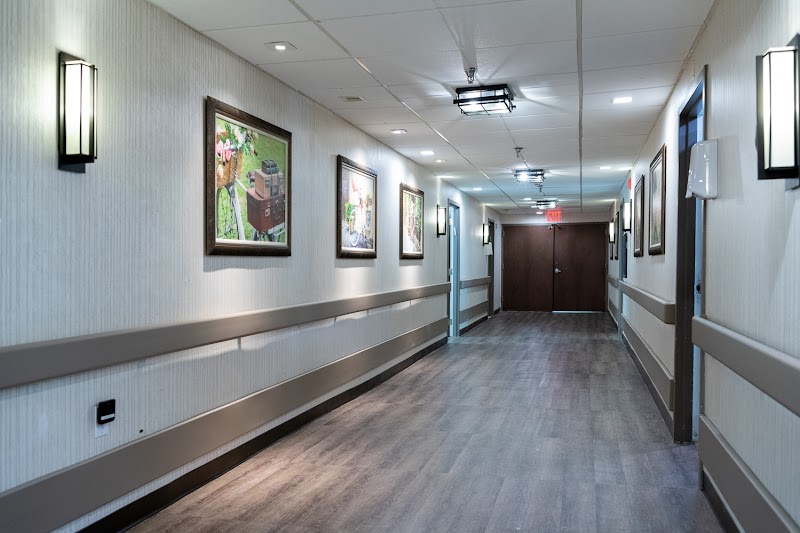
How is Chatham Hills Subacute Staffed?

CMS rates CHATHAM HILLS SUBACUTE CARE CENTER's staffing level at 3 out of 5 stars, which is average compared to other nursing homes. Staff turnover is 47%, compared to the New Jersey average of 46%.

What Have Inspectors Found at Chatham Hills Subacute?

State health inspectors documented 16 deficiencies at CHATHAM HILLS SUBACUTE CARE CENTER during 2022 to 2025. These included: 1 Immediate Jeopardy (the most serious level, indicating potential for serious harm or death), 1 that caused actual resident harm, and 14 with potential for harm. Immediate Jeopardy findings are rare and represent the most serious regulatory concerns. They require immediate corrective action.

Who Owns and Operates Chatham Hills Subacute?

CHATHAM HILLS SUBACUTE CARE CENTER is owned by a for-profit company. For-profit facilities operate as businesses with obligations to shareholders or private owners. The facility is operated by CARERITE CENTERS, a chain that manages multiple nursing homes. With 108 certified beds and approximately 92 residents (about 85% occupancy), it is a mid-sized facility located in CHATHAM, New Jersey.
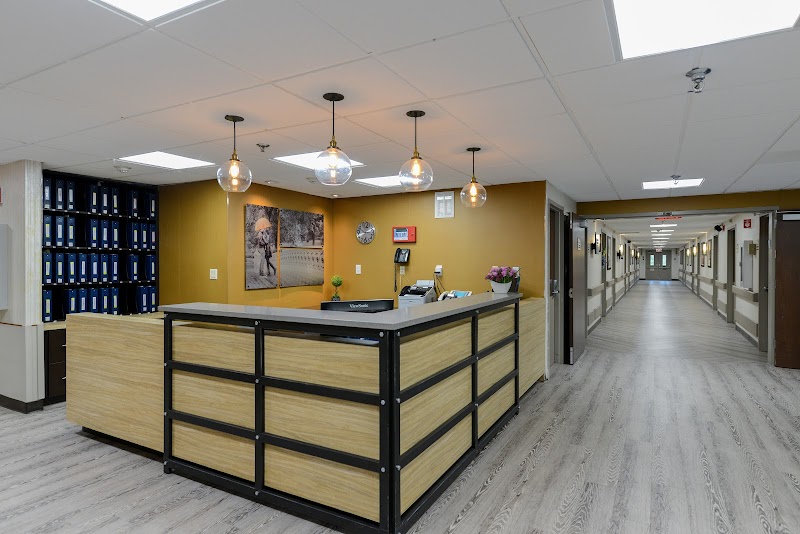
How Does Chatham Hills Subacute Compare to Other New Jersey Nursing Homes?

Compared to the 100 nursing homes in New Jersey, CHATHAM HILLS SUBACUTE CARE CENTER's overall rating (4 stars) is above the state average of 3.3, staff turnover (47%) is near the state average of 46%, and health inspection rating (3 stars) is at the national benchmark.

What Should Families Ask When Visiting Chatham Hills Subacute?

Based on this facility's data, families visiting should ask: "What changes have been made since the serious inspection findings, and how are you preventing similar issues?" "Can I visit during a mealtime to observe dining assistance and food quality?" "How do you handle medical emergencies, and what is your hospital transfer rate?" "Can I speak with family members of current residents about their experience?" These questions are particularly relevant given the facility's Immediate Jeopardy citations.

Is Chatham Hills Subacute Safe?

Based on CMS inspection data, CHATHAM HILLS SUBACUTE CARE CENTER has documented safety concerns. Inspectors have issued 1 Immediate Jeopardy citation (the most serious violation level indicating risk of serious injury or death). The facility has a 4-star overall rating and ranks #1 of 100 nursing homes in New Jersey. Families considering this facility should ask detailed questions about what corrective actions have been taken since these incidents.

Do Nurses at Chatham Hills Subacute Stick Around?

CHATHAM HILLS SUBACUTE CARE CENTER has a staff turnover rate of 47%, which is about average for New Jersey nursing homes (state average: 46%). Moderate turnover is common in nursing homes, but families should still ask about staff tenure and how the facility maintains care continuity when employees leave.

Was Chatham Hills Subacute Ever Fined?

CHATHAM HILLS SUBACUTE CARE CENTER has been fined $14,521 across 1 penalty action. This is below the New Jersey average of $33,224. While any fine indicates a compliance issue, fines under $50,000 are relatively common and typically reflect isolated problems that were subsequently corrected. Families should ask what specific issues led to these fines and confirm they've been resolved.

Is Chatham Hills Subacute on Any Federal Watch List?

CHATHAM HILLS SUBACUTE CARE CENTER is not on any federal watch list. The most significant is the Special Focus Facility (SFF) program, which identifies the bottom 1% of nursing homes nationally based on persistent, serious quality problems. Not being on this list means the facility has avoided the pattern of deficiencies that triggers enhanced federal oversight. This is a positive indicator, though families should still review the facility's inspection history directly.