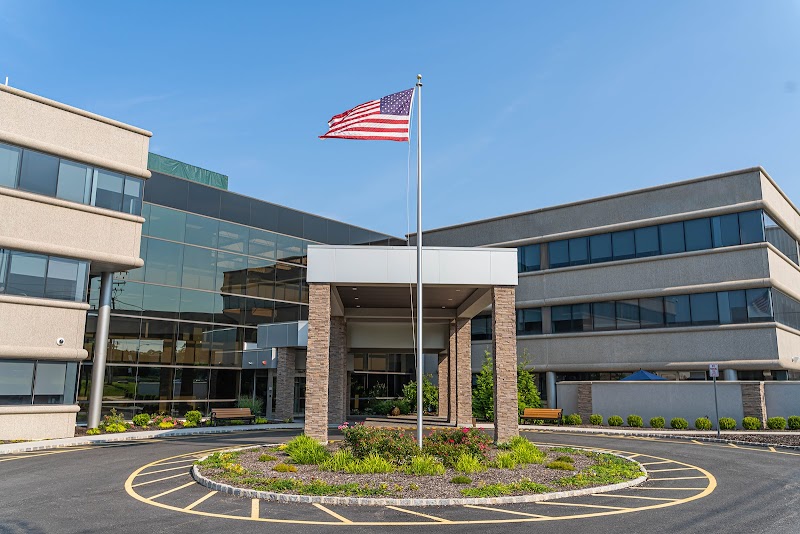
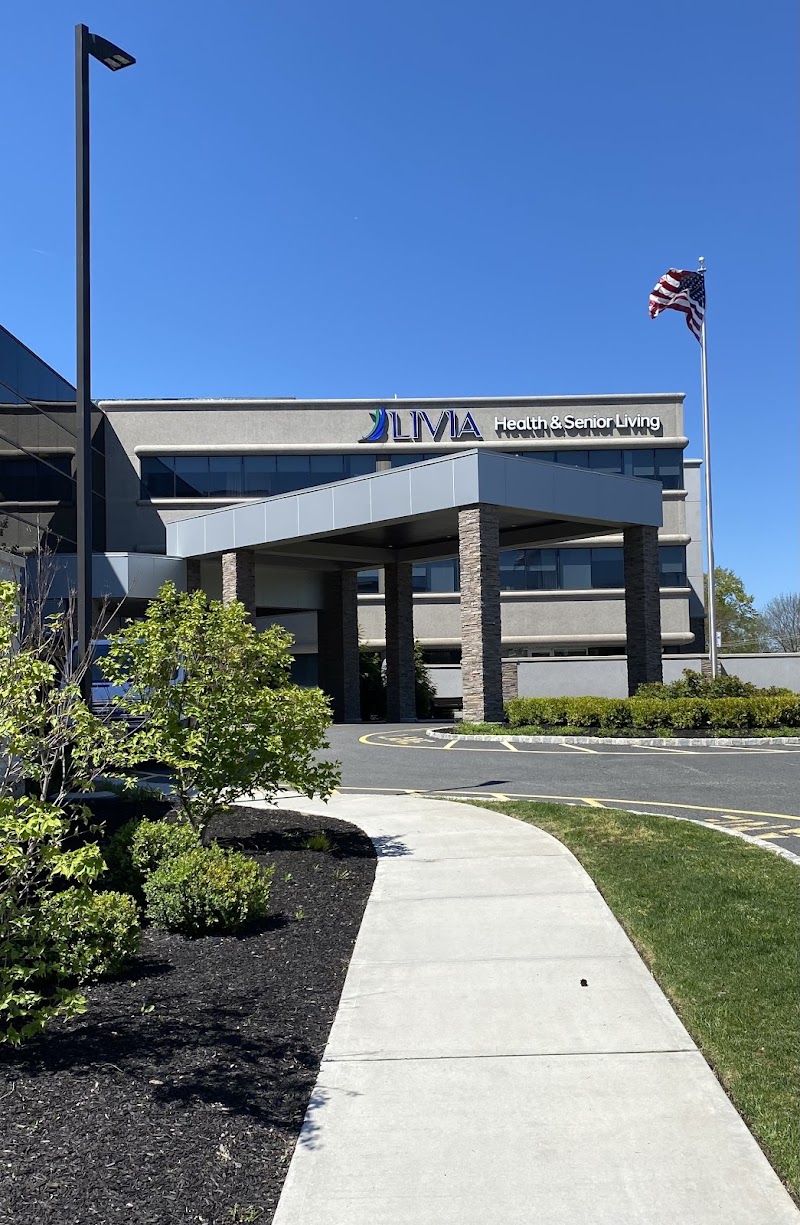
LIVIA HEALTH AND SENIOR LIVING

1 SOUTH RIDGEDALE AVENUE, EAST HANOVER, NJ 07936 (973) 995-6700
For profit - Limited Liability company 86 Beds Independent Data: November 2025 2 Immediate Jeopardy citations
Trust Grade
24/100
#209 of 344 in NJ
Last Inspection: September 2024

Within standard 12-15 month inspection cycle. Federal law requires annual inspections.

Overview

Livia Health and Senior Living has received a Trust Grade of F, indicating significant concerns about the quality of care provided. It ranks #209 out of 344 facilities in New Jersey, placing it in the bottom half of all nursing homes in the state, and #16 out of 21 in Morris County, meaning there are only a few options that perform better locally. The facility is worsening, with reported issues increasing from 2 in 2024 to 5 in 2025. Staffing is rated average, with a turnover rate of 47%, which is slightly above the state average, indicating that while staff do stay, there is room for improvement. There have been concerning fines totaling $24,850, which are higher than 77% of New Jersey facilities, suggesting ongoing compliance issues. Additionally, the nursing home has critical incidents, including a serious neglect case where a resident was left unattended in a van for five hours after returning from dialysis, leading to a dangerously low body temperature. There were also medication administration errors observed, with a rate of 19.2%, significantly above the acceptable threshold. While the facility does have excellent ratings in quality measures, these serious deficiencies highlight significant weaknesses that families should consider.

Trust Score
F
24/100
In New Jersey
#209/344
Bottom 40%
Safety Record
High Risk
Review needed
Inspections
Getting Worse
2 → 5 violations
Staff Stability
⚠ Watch
47% turnover. Above average. Higher turnover means staff may not know residents' routines.
Penalties
⚠ Watch
$24,850 in fines. Higher than 99% of New Jersey facilities. Major compliance failures.
Skilled Nurses
○ Average
Each resident gets 39 minutes of Registered Nurse (RN) attention daily — about average for New Jersey. RNs are the most trained staff who monitor for health changes.
Violations
⚠ Watch
15 deficiencies on record. Higher than average. Multiple issues found across inspections.
★★★☆☆
3.0
Overall Rating
★★★☆☆
3.0
Staff Levels
★★★★★
5.0
Care Quality
★★☆☆☆
2.0
Inspection Score
Stable
2024: 2 issues
2025: 5 issues

The Good

  • 5-Star Quality Measures · Strong clinical quality outcomes
  • Full Sprinkler Coverage · Fire safety systems throughout facility
  • No fines on record

Facility shows strength in quality measures, fire safety.

The Bad

3-Star Overall Rating

Near New Jersey average (3.3)

Meets federal standards, typical of most facilities

Staff Turnover: 47%

Near New Jersey avg (46%)

Higher turnover may affect care consistency

Federal Fines: $24,850

Below median ($33,413)

Minor penalties assessed

The Ugly 15 deficiencies on record

2 life-threatening
Feb 2025 5 deficiencies 2 IJ
CRITICAL (J) 📢 Someone Reported This

A family member, employee, or ombudsman was alarmed enough to file a formal complaint

Immediate Jeopardy (IJ) - the most serious Medicare violation

Free from Abuse/Neglect (Tag F0600)

Someone could have died · This affected 1 resident

**NOTE- TERMS IN BRACKETS HAVE BEEN EDITED TO PROTECT CONFIDENTIALITY** Complaint #: NJ00183458 Based on observations, interviews, and review of pertinent facility documents on 02/25/2025 and 02/26/20...

Read full inspector narrative →
**NOTE- TERMS IN BRACKETS HAVE BEEN EDITED TO PROTECT CONFIDENTIALITY** Complaint #: NJ00183458 Based on observations, interviews, and review of pertinent facility documents on 02/25/2025 and 02/26/2025, it was determined that the facility failed to ensure that a resident (Resident #1) was free from neglect when it failed to provide the required care and services to meet the need of the Resident and follow its policies titled Abuse Prevention Program, Elopements and Wandering Residents, and Tracker for Residents Leaving the Building. On 02/10/2025, Resident #1 was picked up from Dialysis by the facility's van driver and was never brought back inside the building after the driver parked the vehicle in the parking lot at 5:00 pm and left Resident #1 sitting inside in her/his wheelchair unattended for 5 hours. The nursing staff knew Resident #1 should return from Dialysis at 5:00 pm but did not inquire about the Resident's whereabouts. The Licensed Practical Nurse (LPN #1) who was assigned to Resident #1 was notified multiple times by the Certified Nursing Assistants (CNAs) that Resident #1 did not return to the facility from her/his appointment, but LPN #1 did not follow up with the CNAs concerns. LPN #1 failed to notify the nursing supervisor (NS) of Resident #1 not returning from her/his dialysis appointment until 9:48 pm (4 hours and 48 minutes) after the Resident's expected return time. This resulted in Resident #1 missing her/his scheduled mealtime, medications, and treatment services for the shift. After the NS was notified, a search was initiated, and Resident #1 was found at 10:27 pm by the NS. Resident #1 was lying on the van floor with the Resident's wheelchair behind her/him. Resident #1 was assessed by the NS and stated, I am cold. When Resident #1 was found, her/his temperature was obtained by staff, and the temporal [forehead] reading of the Resident's temperature was 92.0 degrees Fahrenheit. Resident #1 was then transferred to an acute care hospital emergency room (ER) for hypothermia [low body temperature] due to exposure to the cold for five hours. This deficient practice created an Immediate Jeopardy (IJ) to the health and well-being of Resident #1 and placed all other residents who had an appointment and were transported by the facility's van and staff in an IJ situation, placing the residents at risk of being left in the van in the facility's parking lot after she/he was picked up from her/her appointment by the staff. The IJ was determined to have existed on 02/10/2025 at the time of the incident through 02/13/2025 when the facility corrected the noncompliance. The facility provided documented evidence of a Plan of Correction (POC) that was initiated at the time of the incident on 02/10/2025 and completed before the beginning of the survey on 02/25/2025 to the Surveyor, which included education and training to all nursing and non-nursing staff on elopement/missing person, safety measures (including the check-mate system and transport checklist), revised policies on transportation and tracker logs, rounding, shift to shift report and documentation. This deficient practice was identified for 1 of 3 residents (Resident #1) who had appointments that required facility transportation and was evidenced by the following: A review of the Facility Reportable Event (FRE), a document submitted by the facilities to report incidents to the New Jersey Department of Health (NJDOH), with date of event of 02/10/25, included a timeline as follows: - 1009 [10:09 am] Transfer log indicates [the] time Resident #1 [name] left the facility. - 1530 [3:30 pm], Resident [unsampled Resident #1] is transported back to [the] facility (front entrance). - 1613 [4:13 pm], Resident [unsampled Resident #2] is transported back to [the] facility (front entrance). - 1624 [4:24 pm], transporter [name] leaves the facility. - 1700 [5:00 pm], transporter [name] drives the van into [the] parking spot. - 1702 [5:02 pm], transporter [name] exits the van and walks to the rear of the building. - 2148 [9:48 pm], the nurse assigned [name], Licensed Practical Nurse (LPN) #1, reached out to the nursing supervisor to inquire about the Resident's return. - 2149 [9:49 pm], [the] nursing supervisor called the dialysis center x 3 [ three times] and the main center x 3, but there was no answer. A building search was initiated, and the transfer log was checked. - 2202 [10:02 pm], the nursing supervisor called the Resident's [family member]. [The] building search continued. - 2204 [10:04 pm], the nursing supervisor called the van driver [name] to confirm the Resident [name] returned to [the] facility. Search continued. - 2221[10:21 pm], the nursing supervisor exited the front of the building to check the van. - 2222 [10:22 pm], the nursing supervisor checks both sides of the van. - 2223 [10:23 pm], the nursing supervisor returns to the building to locate the key for the van. - 2227 [10:27 pm], the nursing supervisor exits the rear of the building, returns to [the] van[,] and opens it. Resident [name] was observed lying on the floor with a wheelchair positioned behind her/him. The nursing supervisor runs back to the building to request additional assistance. - 2231 [10:31 pm], the nursing supervisor starts the van (to warm it). - 2232 [10:32 pm], additional staff members arrived at the van to help. - 2234 [10:34 pm], the back door of the van opened. The Resident [name] was transferred to the wheelchair. - 2235 [10:35 pm], staff providing blankets. - 2237 [10:37 pm], Resident arrived back in [the] building, transferred to [the] bed, and assessed; warm packs and blankets [were] provided. - 2243 [10:43 pm], the Ambulance was called. - 2300 [11:00 pm] (Approximately) [the Resident was] transferred to the [Acute Care Hospital] [name] via Ambulance [name] with 2 [emergency medical technicians] EMTs. - 2331 [11:31 pm], The Resident's niece [name] [was] provided an update. The Plan of Correction (POC) included the following: - On 02/10/2025, after the incident, the family and MD (Doctor) were notified; the driver and the nurse were suspended pending investigation and subsequently were terminated. The transport van was taken out of service until safety measures can be put in place. - Safety measures: a) Purchase of a safety device system (child check-mate system). The Child Check-Mate System is a safety system that reminds drivers to check for children/residents after each route. The alarm system acts as an electronic reminder to drivers. b) Use of Resident Transport Safety Checklist (for all facility van drivers)- Before departing, upon arrival at the destination, and upon returning to the community, Resident tracking sign-off (a second staff member to sign tracker when Resident confirms that all transported residents have returned safely, Accountability and 2 Signatures. This checklist must be followed for every trip to ensure resident safety. - On 02/10/2025 to 02/13/2025: In-services and Education provided to all staff on the following: 02/10/2025 - Topic: Elopement/Missing Person. 02/11/2025 - Topics: Tracking Logs; Purposeful Rounding; Shift-to-Shift Report (nurse provides clinical information about patient's well-being to the oncoming shift); documentation (report and follow up on resident information). 02/13/2025 - Topics: Resident Transport Safety Checklist; Child Check- Mate in-service; Policy Revision for Tracker for Residents leaving the building -All residents on Hemodialysis (HD) and with medical appointments that require transportation were identified and verified to have the plan of care in place and being followed. -On 02/11/2025 - Policy on Resident Transportation dated 04/07/2024 and revised/ updated on 02/11/2025. -On 02/11/2025 to 02/13/2025 - Policy on Tracker for Residents Leaving the Building dated 04/03/24, with a revised date of 02/11/2025 and 02/13/2025. -On 02/13/2025 - the facility completed a Root-Cause-Analysis (RCA) Report, which included a conclusion and follow-up with an expected compliance date of 02/14/2025, final review date of 02/20/2025 and follow-up actions: a. conduct [a] post-implementation review in 3 months to ensure continued adherence b. address[es] any ongoing issues with further policy adjustments if necessary. A review of the facility's video footage and surveillance on 2/26/2025 showed the following: At 1624 [4:24 pm] - the facility van leaves the facility. At 1700 [5:00 pm] - the driver drives the van back to the facility and into the parking spot. At 1702 [5:02 pm] - the driver exits the van and walks to the rear of the building. According to the facility's New Jersey Universal Transfer Form (NJUTF) dated 02/10/25 with Time of Transfer: 11:00 pm and Reasons for Transfer: Resident came back from (hemodialysis) HD Hypothermia (low body temperature) exposed to the cold x 5 hours [for 5 hours]. According to the acute care hospital [name] ED [emergency department] document (EDD) with encounter Date/Time 2/10/2025 11:37 pm under Reason for Visit, the EDD revealed Chief Complaint: Cold Exposure (per BLS [emergency personnel], the patient [Resident #1] was in transport van (post-dialysis) outside for >5 hours (more than 5 hours); under Vital Diagnoses: Hypothermia, initial encounter and Transient alteration of awareness [disorientation]. The EDD further showed under Review of Systems (ROS) that they were unable to perform ROS: Unstable vital signs. Under Physical Exam (PE), the EDD showed an ED vitals: Temp 92.7 F dated 02/11/25 at 0001 [12:01 AM]. Resident #1 had not returned to the facility during the survey. Review of Resident #1's Electronic Medical Record (EMR) revealed the following: According to the admission Record (AR), Resident #1 was admitted to the facility with the following diagnoses, including but not limited to ESRD [End-Stage Renal Disease], nonrheumatic aortic (valve) stenosis [heart problem], hyperkalemia [condition wherein there is a high level of electrolyte potassium in the blood], muscle weakness (generalized), abnormalities in gait and posture, and cerebral ischemia. According to the Minimum Data Set (MDS), an assessment tool that comprehensively assesses a resident's functional capabilities, dated 02/08/2025, Resident #1's Brief Interview for Mental Status (BIMS) Summary Score was 10, revealing moderately impaired cognition. The MDS further revealed in Section GG-Functional Abilities that Resident #1 required supervision or touching assistance to maximal assistance in her/his completion of Activities of Daily Living (ADLs). A review of Resident #1's Care Plan (CP), a document that reflects and addresses a resident's health focus or problem need area with applicable and appropriate interventions, showed a CP Focus [problem/need area]: [Resident's name] needs hemodialysis r/t (related to) renal failure Mon-Wed-Fri [Monday-Wednesday-Friday] at [name of dialysis center] pick up time 10:30 am [morning] chair time [dialysis session starts] 11:15 am. The CP further revealed Resident #1 had a CP Focus of the following: -CP Focus: [Resident's name] has an ADL self-care performance deficit r/t (related to) decrease[d] mobility. Under Focus included but was not limited to the following: [Resident's name] has a pacemaker r/t Atrial Fibrillation (episodes of irregular heart rhythm). [Resident's name] has congestive heart failure (commonly known as heart failure, a chronic condition in which the heart does not pump blood as well as it should). [Resident's name] is at risk for falls r/t deconditioning and gait/balance problems - actual fall 12/30. [Resident's name] is at risk for malnutrition d/t (due to) ESRD (End-Stage Renal Disease) on HD (hemodialysis), T2DM (Type 2 Diabetes Mellitus), CHF (Congestive Heart Failure), Dysphagia (difficulty swallowing), h/o (history of) skin breakdown, variable PO [by mouth] intake - Provide diet as ordered Renal, Cardiac diet, Regular texture, Thin liquids. At risk for pain related to a decrease in mobility and recent hospitalization. A review of Resident #1's Order Summary Report (OSR), a document that reflects the physician orders (POs) with active orders as of 02/10/2025, showed that the Resident had the following POs: -Resident had ordered diet: Renal diet, Regular texture, thin consistency, Cardiac with an order date of 11/07/2024. -Resident receives Dialysis at [name and address of center]. Approximate pickup time: 10:30 am [morning] Approximate chair time: 11:15 am Schedule: Mon [Monday], Wed [Wednesday], Fri [Friday] with an order date of 11/07/2024. -Evaluate dialysis access site for bleeding and signs and symptoms of infection; if present, notify PMD [the primary Doctor] every shift with an order date of 11/07/2024. -Vital Signs post hemodialysis in the evening every Monday, Wednesday, and Friday with an order date of 11/07/2024. -Amiodarone HCL [hydrochloride] Tablet 200 MG [milligram]. Give 1 tablet by mouth one time a day for abnormal heart rhythm. Hold for HR [heart rate] less than [below] 60 with an order date of 11/07/2024. -Dulcolax Suppository [medication given by rectum] 10 MG (Bisacodyl) [common name] insert 1 suppository rectally every 24 hours as needed for constipation with an order date of 11/07/2024. -Metoprolol Succinate ER [medication for high blood pressure] Tablet Extended Release 24 hour 25 MG. Give 0.5 tablet by mouth one time a day for AFIB [atrial fibrillation, irregular heart rhythm]. Give with or immediately after a meal. Hold for SBP [systolic blood pressure, the upper number in a blood pressure reading which represents the pressure of blood in a person's arteries when their heart beats], less than 100 or HR [heart rate] less than 60 (0.5tab=12.5mg) with an order date of 11/07/2024. -Pantoprazole Sodium [medication that reduces the amount of acid in the stomach] Tablet Delayed-Release 40 MG Give 1 tablet by mouth one time a day for GERD [gastroesophageal reflux disease]. Swallow whole with an order date of 11/07/2024. -Senna Tablet [medication for constipation]8.6 MG (Sennosides)[common name] Give 2 tablets by mouth at bedtime for constipation. Take plenty of water with an order date of 11/07/2024. -Sevelamer HCL Tablet 800 mg [milligram]. Give one tablet by mouth two times a day every Monday, Wednesday, and Friday for hypocalcemia (low blood calcium level). Give with meals. Swallow whole. Do not crush or chew. Dialysis days with an order date of 11/07/2024. -Sevelamer HCL Tablet 800 mg [milligram]. Give one tablet by mouth with meals every Tuesday], Thursday, Saturday, and Sunday for hypocalcemia (low blood calcium level). Give with meals. Swallow whole. Do not crush or chew. Nondialysis days with an order date of 11/07/2024. A review of Resident #1's electronic Medication Administration Record (eMAR) dated 2/1/2025-2/28/2025 indicated the Resident was scheduled for the following. The medications and drink supplement were not administered: -Glucerna (nutrient drink supplement) one time a day for being at risk for malnutrition 8oz [ounce] po [by mouth] at 1800 [6:00 pm]. -Senna Tablet: Two tablets are taken at bedtime with plenty of water at 2100 [9:00 pm]. -Sevelamer HCL Tablet 800 mg [milligram]. Give one tablet by mouth two times a day every Mon, Wed, and Fri for hypocalcemia (low blood calcium level). Give with meals. Swallow whole. Do not crush or chew. Dialysis days at 0830 [8:30 am] and 1730 [5:30 pm]. -Vital signs monitoring every day and evening shift -Barrier cream to sacrum every shift. A review of Resident #1's Progress Notes (PN) with an effective date of 02/10/2025 22:27 [10:27 pm] and documented by the Director of Nursing (DON) revealed, Notified by nursing supervisor . [Resident #1] [was] observed lying on the floor in the transport van. [The] Resident states, I am cold. Assistance from additional staff is requested. Staff arrived to assist with the transfer to [the] wheelchair and bed. Upon arriving in bed, the Resident was assessed. The PN further revealed that Resident #1 had an Initial temp 92.0 (temporal). Skin assessment revealed no new findings. Blankets and warm packs [were] provided. [The] Resident was transferred to [name of hospital] ER for evaluation. [Doctor's name] and [Resident's family member's name] [were] notified. VS [vital signs}: 165/58 [blood pressure], HR [heart rate] 58, R [respiration]18, T [temperature] 97.2, O2 [oxygen] saturation 98% at room air. Resident transferred via stretcher, accompanied by 2 EMTs A review of the facility's Summary of Investigation (SOI) under Description: On Monday, 2/10/25 at approximately 2227 [10:27 pm], [Resident #1's name] was observed lying on the floor in the transport van. She/he was picked up by [van driver's name] from [dialysis center name] and was transported back to [facility's name] parking lot at 1700 [5:00 pm]. The SOI provided the following timeline: - 1009 [10:09 am] Transfer log indicates [the] time Resident #1 [name] left the facility. - 2148 [9:48 pm], the nurse assigned [name], Licensed Practical Nurse (LPN) #1, reached out to the nursing supervisor to inquire about the Resident's return. - 2149 [9:49 pm], [the] nursing supervisor called the dialysis center x 3 [ three times] and the main center x 3, but there was no answer. A building search was initiated, and the transfer log was checked. - 2202 [10:02 pm], the nursing supervisor called the Resident's [family member]. [The] building search continued. - 2204 [10:04 pm], the nursing supervisor called the van driver [name] to confirm the Resident [name] returned to [the] facility. Search continued. - 2221[10:21 pm], the nursing supervisor exited the front of the building to check the van. - 2222 [10:22 pm], the nursing supervisor checks both sides of the van. - 2223 [10:23 pm], the nursing supervisor returns to the building to locate the key for the van. - 2227 [10:27 pm], the nursing supervisor exits the rear of the building, returns to the van, and opens it. Resident [name] was observed lying on the floor with a wheelchair positioned behind her/him. The nursing supervisor runs back to the building to request additional assistance. - 2231 [10:31 pm], the nursing supervisor starts the van (to warm it). - 2232 [10:32 pm], additional staff members arrived at the van to help. - 2234 [10:34 pm], the back door of the van opened. The Resident [name] was transferred to a wheelchair. - 2235 [10:35 pm], staff providing blankets. - 2237 [10:37 pm], Resident arrived back in [the] building, transferred to [the] bed, and assessed; warm packs and blankets [were] provided. - 2243 [10:43 pm], the Ambulance was called. - 2300 [11:00 pm] (Approximately) [the Resident was] transferred to the [Acute Care Hospital] [name] via Ambulance [name] with 2 [emergency medical technicians] EMTs. - 2331 [11:31 pm], The Resident's niece [name] [was] provided an update. On 02/25/2025, the Surveyor reviewed the statements obtained from staff during the investigation, which included the following: According to CNA #2's statement, on 02/10/2025 at around 3 pm [3:00 pm], she did her rounds and knew that Resident #1 went to Dialysis. At around 6 pm [6:00 pm], CNA #2 wrote, I went back [she/ he] [Resident #1] still not back [.] I notified the nurse, and I said to check with the Supervisor. I started putting the residents in bed. I checked a few times, [and] [she/he] was not back, it was about 8:40 pm [.] The CNA statement further revealed that the CNA asked LPN #1 if he/she had told the Supervisor that Resident #1 had not returned from Dialysis, and the nurse replied that he/she knew. According to CNA #3's statement, the CNA wrote: On February 10, I worked on [the] 3rd floor [on the] south wing, but I wasn't assigned to the patient [Resident #1]. I brought [Resident #1's] tray to the [room] because she was out to Dialysis. I told the nurse that the patient was still out and asked if he could call the place to find out what was going on. He [nurse] said, Ok[.]. Later on, we were picking up the trays, and the aide who was assigned to [Resident #1] told the [the nurse] to tell the Supervisor that [Resident #1] is [was] not back. The statement further revealed that the nurse had responded that he knew. Later, the nurse called the Supervisor to report that Resident #1 was not yet back from Dialysis. On 02/25/2025 at 1:35 pm, the Surveyor interviewed the Director of Nursing (DON) and the Licensed Nursing Home Administrator (LNHA). The DON stated that LPN #1 notified the nursing supervisor about Resident #1 at around 9:48 pm, as was noted in his statement. The DON explained that the expectation was for the assigned nurse [LPN #1] to follow up on his residents, especially after hemodialysis or medical appointments. The DON stated LPN #1 was suspended and eventually terminated. On 02/26/2025 at 12:47 pm, the Surveyor interviewed the van driver via phone. The van driver stated that, at around 4:30 pm, he had picked up the Resident from the dialysis center. The van driver further stated, She/he [Resident #1] was in her/his wheelchair, put her/him in the vestibule, put on her/his seatbelt, and she/he was fine and did not complain of any pain or discomfort. At 5:00 pm, we arrived at the facility parking lot; I parked the van where I normally parked. I exited the van and walked to the rear of the building. In my mind, I wanted to go back to the building to finish some work. When the Supervisor called me that night, it was shocking to me. I was emotional. I drove her/him [the Resident] on several occasions[,] and I think I was not focused at that time. On 02/26/2025 at 1:27 pm, the Surveyor placed a call to LPN #1 for an interview, but the LPN did not return the call. A review of the facility's policy titled: Policy: Abuse Prevention Program, with date revised on 5/21/2024, showed the following statement, This facility prohibits abuse, neglect, involuntary seclusion .from residents and will utilize the abuse prevention program to effectively prevent occurrences .screen and train staff, investigate, report, and respond to any occurrences. Furthermore, the facility's policy showed under paragraph Passive Forms of Resident Abuse . 2. Neglect - The failure of the facility, its employees, or service providers to provide goods and services to a resident that are necessary to avoid physical harm, pain, mental anguish, or emotional distress. Neglect of goods or services may occur when staff are aware of residents' care needs, based on assessment and care planning, but are unable to meet the identified needs due to lack of training to perform intervention, lack of supplies, or lack of knowledge of needs of the Resident. A review of the facility's policy titled: Policy: Elopements and Wandering Residents with review date: 5/15/24, under Policy Explanation and Compliance Guidelines: .5. Procedure for locating missing Resident: a.Any staff member becoming aware of a missing resident will alert personnel using facility approved protocol (code grey). b.The designated facility staff will look for the Resident . A review of the facility's policy titled: Policy: Tracker for Residents Leaving the Building, last revised 2/13/25, Under Procedure: 1. Receptionist will record Resident name, date, room number, name of person/transport company, destination, and time that Resident leaves the building; 2. Receptionist will then send out an email to the [facility name] team informing staff that Resident has left the building; 3. When the Resident returns from the appointment, the receptionist will record the return time on the tracking log. The receptionist will also ask the driver to sign the tracking log to confirm that they brought the Resident back into the building; 4. Receptionist will then send out an email to the LIVIA team informing staff that Resident has returned; 5. If the Resident does not return to the building within the expected duration, the receptionist will alert the nursing supervisor that the Resident has not yet returned; 6. If the Resident does not return to the building prior to reception change of shift, the receptionist will report to oncoming receptionist for continued follow up. N.J.A.C. 8:39-4.1(a)5
CRITICAL (J) 📢 Someone Reported This

A family member, employee, or ombudsman was alarmed enough to file a formal complaint

Immediate Jeopardy (IJ) - the most serious Medicare violation

Accident Prevention (Tag F0689)

Someone could have died · This affected 1 resident

**NOTE- TERMS IN BRACKETS HAVE BEEN EDITED TO PROTECT CONFIDENTIALITY** Complaint #: NJ00183458 Based on observations, interviews, and review of pertinent facility documents on 02/25/2025 and 02/26/20...

Read full inspector narrative →
**NOTE- TERMS IN BRACKETS HAVE BEEN EDITED TO PROTECT CONFIDENTIALITY** Complaint #: NJ00183458 Based on observations, interviews, and review of pertinent facility documents on 02/25/2025 and 02/26/2025, it was determined that the facility failed to ensure that a resident (Resident #1) was safe when it failed to follow its policies titled Elopements Wandering Residents, Resident Transportation, and Tracker for Residents Leaving the Building. On 02/10/2025, Resident #1 was picked up from Dialysis by the facility's van driver; the driver did not take Resident #1 into the building upon return to the facility; instead, the driver parked the vehicle in the parking lot at 1700 [5:00 pm], exited the vehicle and left the Resident in the van until she/he was found approximately 5 hours later. Resident #1 was found lying on the floor of the van with the wheelchair behind her/him by the Nursing Supervisor [NS]. When assessed, the Resident stated, I am cold. The initial temperature of the Resident obtained by staff showed a temporal [forehead] temperature of 92.0 degrees Fahrenheit. The Resident was then transferred to an acute care hospital emergency room (ER) for hypothermia [low body temperature] due to exposure too cold for five hours. This deficient practice created an Immediate Jeopardy (IJ) to the health and safety of Resident #1 and had the likelihood to impact all residents who went out for appointments and were transported by the facility vehicle and driver in an IJ situation of being left in the van in the facility's parking lot unattended after she/he was picked up from her/her appointment. The IJ was determined to have existed on 02/10/2025 at the time of the incident through 02/13/2025 when the facility corrected the noncompliance. There was sufficient evidence that the facility corrected the noncompliance and is substantially compliant at the time of the survey on 02/25/2025 for the specific regulatory requirements for F689. The Immediate Jeopardy Past Noncompliance started on 02/10/2025 and ended on 02/13/2025 when all nursing and non-nursing staff were educated and trained on elopement/missing person, safety measures (including the check-mate system and transport checklist), revised policies on transportation and tracker logs. This deficient practice was identified for 1 of 3 residents (Resident #1) who had Dialysis and/or appointments that required transportation by the facility. A review of the Facility Reportable Event (FRE), a document submitted by the facilities to report incidents to the New Jersey Department of Health (NJDOH), with date of event of 02/10/25, included a timeline as follows: - 1009 [10:09 am] Transfer log indicates [the] time Resident #1 [name] left the facility. - 1530 [3:30 pm], resident [unsampled resident #1] is transported back to [the] facility (front entrance). - 1613 [4:13 pm], resident [unsampled resident #2] is transported back to [the] facility (front entrance). - 1624 [4:24 pm], transporter [name] leaves the facility - 1700 [5:00 pm], transporter [name] drives the van into [the] parking spot - 1702 [5:02 pm], transporter [name] exits the van and walks to the rear of the building. - 2148 [9:48 pm], the nurse assigned [name], Licensed Practical Nurse (LPN) #1, reached out to the nursing supervisor to inquire about the Resident's return. - 2149 [9:49 pm], [the] nursing supervisor called the dialysis center x 3 [ three times] and the main center x 3, but there was no answer. A building search was initiated, and the transfer log was checked. - 2202 [10:02 pm], the nursing supervisor called the Resident's [family member]. [The] building search continued. - 2204 [10:04 pm], the nursing supervisor called the van driver [name] to confirm the Resident [name] returned to [the] facility. Search continued. - 2221[10:21 pm], the nursing supervisor exited the front of the building to check the van. - 2222 [10:22 pm], the nursing supervisor checks both sides of the van. - 2223 [10:23 pm], the nursing supervisor returns to the building to locate the key for the van. - 2227 [10:27 pm], the nursing supervisor exits the rear of the building, returns to the van, and opens it. Resident [name] was observed lying on the floor with a wheelchair positioned behind her/him. The nursing supervisor runs back to the building to request additional assistance. - 2231 [10:31 pm], the nursing supervisor starts the van (to warm it). - 2232 [10:32 pm], additional staff members arrived at the van to help. - 2234 [10:34 pm], the van's back door opened. The Resident [name] was transferred to the wheelchair. - 2235 [10:35 pm], staff providing blankets. - 2237 [10:37 pm], Resident arrived back in [the] building, transferred to [the] bed, and assessed; warm packs and blankets [were] provided. - 2243 [10:43 pm], the Ambulance was called. - 2300 [11:00 pm] (Approximately) [the Resident was] transferred to the [Acute Care Hospital] [name] via Ambulance [name] with 2 [emergency medical technicians] EMTs. - 2331 [11:31 pm], The Resident's niece [name] [was] provided an update. The facility provided the Surveyor documented evidence of a Plan of Correction (POC) initiated at the time of the incident on 02/10/2025 and completed before the survey on 02/25/2025 of the following: On 02/10/2025, after the incident, the family and MD (Doctor) were notified; the driver and the nurse were suspended pending investigation and subsequently were terminated. [The] transport van was taken out of service until safety measures can be put in place. Safety measures: a) Purchase of a safety device system (child check-mate system). The Child Check-Mate System is a safety system that reminds drivers to check for children/residents after each route. The alarm system acts as an electronic reminder to drivers. b) Use of Resident Transport Safety Checklist (for all facility van drivers)- Before departing, upon arrival at [the] destination, upon returning to [the] community, Resident tracking signs off (a second staff member to sign tracker when Resident to confirm that all transported residents have returned safely, Accountability and 2 Signatures. This checklist must be followed for every trip to ensure resident safety. Education and in-services were provided to all staff as follows: 02/10/2025 - Topic: Elopement/Missing Person. -On 02/11/2025 - Policy on Resident Transportation dated 04/07/2024 and revised/ updated on 02/11/2025. - On 02/11/2025 to 02/13/2025 - Policy on Tracker for Residents Leaving the Building dated 04/03/24 with a revised date of 02/11/2025 and 02/13/2025. - 02/13/2025 - Topics: Resident Transport Safety Checklist; Child Check- Mate in-service; Policy Revision for Tracker for Residents leaving the building. - On 02/13/2025 - [the] facility completed a Root-Cause-Analysis (RCA) Report [,] which included a conclusion and follow-up with [an] expected compliance date of 02/14/2025; final review date of 02/20/2025 and follow-up actions: a. conduct [a ] post-implementation review in 3 months to ensure continued adherence. b. address[es] any ongoing issues with further policy adjustments if necessary. A review of Resident #1's Electronic Medical Record (EMR) revealed the following: According to the admission Record (AR), Resident #1 was admitted to the facility with the following diagnoses, including but not limited to ESRD [End-Stage Renal Disease], nonrheumatic aortic (valve) stenosis [heart problem], hyperkalemia [condition wherein there is a high level of electrolyte potassium in the blood], muscle weakness (generalized), abnormalities in gait and posture, and cerebral ischemia. According to the Minimum Data Set (MDS), an assessment tool that comprehensively assesses a resident's functional capabilities, dated 02/08/2025, Resident #1's Brief Interview for Mental Status (BIMS) Summary Score was 10, revealing moderately impaired cognition. The MDS further revealed in Section GG-Functional Abilities that Resident #1 required supervision or touching assistance to maximal assistance in her/his completion of Activities of Daily Living (ADLs). A review of Resident #1's Care Plan (CP) showed a CP Focus [problem/need area]: [Resident's name] needs hemodialysis r/t (related to) renal failure Monday, Wednesday and Friday at [name of dialysis center] pickup time 10:30 am [morning] chair time [dialysis session starts] 11:15 am. A review of Resident #1's Progress Notes (PN) with an effective date of 02/10/2025 22:27 [10:27 pm]and documented by the Director of Nursing (DON) revealed, Notified by nursing supervisor .[Resident's name] [was] observed lying on the floor in the transport van. The PN further showed that the Resident stated, I am cold[.] Assistance from additional staff [were]requested. Staff arrived to assist with [the] Transfer to [the] wheelchair and bed. Upon arriving in bed, the Resident was assessed. The PN further revealed the Resident's initial temp 92.0 (temporal). Skin assessment revealed no new findings. Blankets and warm packs [were] provided. The Resident [was] transferred to [name of hospital] ER for evaluation. [Doctor's name] and [Resident's niece's name] [were] notified. VS [vital signs}: 165/58 [blood pressure], HR [heart rate] 58, R [respiration]18, T [temperature] 97.2, O2 [oxygen] saturation 98% at room air. Resident transferred via stretcher, accompanied by 2 EMTs . According to the facility's New Jersey Universal Transfer Form (NJUTF) dated 02/10/25 with Time of Transfer: 11 pm [11:00 PM] and Reasons for Transfer: Resident [came] back from (hemodialysis) H.D. Hypothermia (low body temperature) exposed to the cold x 5 hours [for 5 hours]. A review of the facility's Summary of Investigation (SOI) under Description: On Monday, 2/10/25 at approximately 2227 [10:27 pm], [Resident #1's name] was observed lying on the floor in the transport van. She/he was picked up by [van driver's name] from [dialysis center name] and was transported back to [facility's name] parking lot at 1700 [5:00 pm]. The SOI provided the following timeline: - 1009 [10:09 am] Transfer log indicates [the] time Resident #1 [name] left the facility. - 2148 [9:48 pm], the nurse assigned [name], Licensed Practical Nurse (LPN) #1, reached out to the nursing supervisor to inquire about the Resident's return. - 2149 [9:49 pm], [the] nursing supervisor called the dialysis center x 3 [ three times] and the main center x 3, but there was no answer. A building search was initiated, and the transfer log was checked. - 2202 [10:02 pm], the nursing supervisor called the Resident's [family member]. [The] building search continued. - 2204 [10:04 pm], the nursing supervisor called the van driver [name] to confirm the Resident [name] returned to [the] facility. Search continued. - 2221[10:21 pm], the nursing supervisor exited the front of the building to check the van. - 2222 [10:22 pm], the nursing supervisor checks both sides of the van. - 2223 [10:23 pm], the nursing supervisor returns to the building to locate the key for the van. - 2227 [10:27 pm], the nursing supervisor exits the rear of the building, returns to the van, and opens it. Resident [name] is observed lying on the floor with a wheelchair positioned behind her/him. The nursing supervisor runs back to the building to request additional assistance. - 2231 [10:31 pm], the nursing supervisor starts the van (to warm it). - 2232 [10:32 pm], additional staff members arrived at the van to help. - 2234 [10:34 pm], the van's back door opened. The Resident [name] was transferred to a wheelchair. - 2235 [10:35 pm], staff providing blankets. - 2237 [10:37 pm], Resident arrived back in [the] building, transferred to [the] bed, and assessed; warm packs and blankets [were] provided. - 2243 [10:43 pm], the Ambulance was called. - 2300 [11:00 pm] (Approximately) [the Resident was] transferred to the [Acute Care Hospital] [name] via Ambulance [name] with 2 [emergency medical technicians] EMTs. - 2331 [11:31 pm], The Resident's niece [name] [was] provided an update. The Surveyor reviewed the facility's video footage of the [location of the camera] parking lot, and real-time surveillance [with time stamped] showed the following: At 4:24 pm - the van was seen leaving the facility. At 4:59 pm - the facility van was seen coming back and into the driveway. At 5:00 pm - the driver drives [the] van on the left side area of the viewed parking lot. At 5:02 pm, the driver exited the van and walked towards the back of the building [towards the right side of the parking lot]. At 5:03 pm - the driver appeared to wave at somebody in another van parked on the right side of the viewed parking lot. At 9:55 pm - the facility van was seen in the viewed parking lot. At 10:21 pm - the nursing supervisor was seen walking towards the van [coming from the left side of the viewed parking lot]. At 10:22 pm - the nursing supervisor reached the van, walked around the van with cell phone one in hand [Supervisor turned on light in her cell phone], and was seen walking back towards the left of the camera [building] while talking on her cell phone. At 10:26 pm - the nursing supervisor was seen walking back towards the van. At 10:27 pm - the nursing supervisor was seen opening the van and appeared to turn on the van's ignition. At 10:28 pm - the Supervisor was seen running back towards the building. At 10:30 pm - staff were seen running towards the van with the nursing supervisor behind them; they opened the back. At 10:36 pm - additional staff were seen running towards the van and noted carrying blankets. At 10:36:41 pm - the staff took Resident #1 in a wheelchair from the back of the van and towards the building. The Resident was noted with blankets on her/him. On 02/25/2025, the Surveyor reviewed the statements obtained from staff during the investigation. According to the receptionist's statement dated 2/11/2025, Around 10:00 pm, the [nursing supervisor] asked if I've seen [Resident #1] return from Dialysis. I checked my log, and her time in was blank, indicating she didn't return. Sometimes, I have to step away from the desk to either use the bathroom, let someone from Memory Care, or find a nurse . so I thought [driver's name] came and brought her to the room. I didn't see so I called him to confirm around 10:08 pm, and he said yes, he had brought her to her room, so I told [nursing supervisor], and she told me [Resident #1's name] was missing. We proceed to look through the building for her, and around 10:39 pm, [the nursing supervisor] finds her in the [facility name] transport bus. On 02/25/2025 at 1:35 pm, the Surveyor interviewed the Licensed Nursing Home Administrator (LNHA). The LNHA stated the van is owned by the facility and had been used until after the incident and would not use it until after safety measures were installed. LNHA further stated she reviewed the incident and video footage; immediate actions were taken to prevent recurrence, and the policy on transportation and tracker log were revised. On 02/26/2025 at 12:47 pm, the Surveyor interviewed the van driver via phone. The van driver stated that, at around 4:30 pm, he had picked up the Resident from the dialysis center. The van driver further stated, She/ He was in her wheelchair, put her in the vestibule, put on her/ his seatbelt, and she was fine and did not complain of any pain or discomfort. At 5:00 pm, we arrived at the facility parking lot; I parked the van where I normally parked. I exited the van and walked to the rear of the building. In my mind, I wanted to go back to the building to finish some work. When the Supervisor called me that night, it was shocking to me. I was emotional. I drove her [the Resident] on several occasions, and I think I was not focused at that time. On 02/26/2025 at 1:27 pm, the Surveyor placed a call to LPN #1 but did not receive a return call. A review of the facility's policy titled: Policy: Elopements and Wandering Residents with review date: 5/15/24, under Policy Explanation and Compliance Guidelines: .5. Procedure for locating missing resident: a.Any staff member becoming aware of a missing resident will alert personnel using facility approved protocol (code grey). b.The designated facility staff will look for the resident . A review of the facility's policy titled: Policy: Tracker for Residents Leaving the Building date revised 2/13/25, Under Procedure: 1. Receptionist will record Resident name, date, room number, name of person/transport company, destination, and time that resident leaves the building; 2. Receptionist will then send out an email to the LIVIA team informing staff that resident has left the building; 3. When the resident returns from the appointment, the receptionist will record the return time on the tracking log. The receptionist will also ask the driver to sign the tracking log to confirm that they brought the resident back into the building; 4. Receptionist will then send out an email to the LIVIA team informing staff that resident has returned; 5. If the resident does not return to the building within the expected duration, the receptionist will alert the nursing supervisor that the resident has not yet returned; 6. If the resident does not return to the building prior to reception change of shift, the receptionist will report to oncoming receptionist for continued follow up. A review of the facility's policy titled: Resident Transportation date revised 2/11/25, Under Procedure: .6.Resident Tracking Log is completed by receptionist. Driver signs tracking log upon return of resident. 7. Resident Transport Checklist is completed by [facility name] driver . N.J.A.C. 8:39-27.1(a)
CONCERN (D) 📢 Someone Reported This

A family member, employee, or ombudsman was alarmed enough to file a formal complaint

Potential for Harm - no one hurt, but risky conditions existed

Comprehensive Care Plan (Tag F0656)

Could have caused harm · This affected 1 resident

**NOTE- TERMS IN BRACKETS HAVE BEEN EDITED TO PROTECT CONFIDENTIALITY** Complaint #: NJ00182762 Based on observations, interviews, medical record review, and review of other pertinent facility documen...

Read full inspector narrative →
**NOTE- TERMS IN BRACKETS HAVE BEEN EDITED TO PROTECT CONFIDENTIALITY** Complaint #: NJ00182762 Based on observations, interviews, medical record review, and review of other pertinent facility documentation on 02/25/2025 and 02/26/2025, it was determined that the facility failed to develop comprehensive person-centered care plans (CP) for a resident (Resident #4) who wore incontinence underwear while in the facility, and failed to include a complete focus area for a resident (Resident #6) with breathing difficulty. The facility also failed to follow its policy titled Care Plans, Comprehensive Person-Centered. This deficient practice was identified for 2 of 2 residents and was evidenced by the following: During a incontinence tour on 02/25/2025 at 10:35 A.M. accompanied by the facility's Assistant Director of Nursing (ADON), the surveyor observed Resident #4 awake and dressed, sitting in a wheel chair in their room. The resident stood to show the surveyor and the ADON that they were wearing wearing incontinence underwear that was clean, dry and odor free. At 1:30 P.M., the Surveyor interviewed Resident #4, who stated that they were wearing a diaper while in the facility and that they had not used incontinence products at home. Resident #4 stated that they wore the incontinence brief while in the facility because they were unable to get assistance to the bathroom in time to avoid accidents. During a follow-up interview on 02/26/2025 at 12:37 PM Resident #4 stated that no staff member had explained the need for using the incontinence underwear to them. Resident #4 stated that they wore a brief in the hospital and the facility staff continued to use them when the resident arrived at the facility. The resident further stated that they didn't feel great about wearing incontinence briefs and it would be their preference to wear their own underwear. 1. According to the admission Record (AR), Resident #4 was admitted to the facility with diagnoses which included but were not limited to: encounter for other orthopedic aftercare; pathological fracture, right femur, subsequent encounter for fracture with routine healing; muscle weakness; and unspecified abnormalities of gait and mobility. A review of Resident #4's Admission/Readmission, assessment with an effective date of 02/07/2025 at 3:05 P.M., revealed under Bowel/Bladder that Resident #4 was continent of bladder and continent of stool. The document further revealed that Resident #4 did not wear incontinence products. According to the Minimum Data Set (MDS) an assessment tool dated 02/13/2025, Resident #4 had a Brief Interview for Mental Status (BIMS) score of 13 out of 15, indicating that the resident's cognition was intact. The MDS also identified that the Resident #4 was occasionally incontinent of bowel and bladder and required partial or moderate staff assistance to move from sitting to standing and to walk ten feet. A review of Resident #4's CP initiated 02/07/2025 revealed no Focus, Goals, or Approaches related to Resident #4's bowel and bladder function or the use of incontinence products. During an interview on 02/25/2025 at 1:40 P.M., Certified Nursing Assistant (CNA) #1 stated that Resident #4 was continent and received assistance to the toilet. CNA #1 stated that Resident #4 expressed that they wanted to wear the incontinence brief in case they had an accident. 2. According to the AR, Resident #6 was admitted to the facility with diagnoses that included but were not limited to: diverticulitis of large intestine without perforation or abscess without bleeding; gastrointestinal hemorrhage, unspecified; unsteadiness on feet; weakness; need for assistance with personal care; other reduced mobility; dementia in other diseases classified elsewhere, unspecified severity, without other behavioral disturbance; and Alzheimer's Disease with late onset. A review of Resident #6's MDS dated [DATE] revealed a BIMS score of 3 out of 15, which indicated that the resident's cognition was severely impaired. A review of Resident #6's CP initiated on 10/01/2024 included under Focus, The resident has altered respiratory status/difficulty breathing r/t [related to]. This section of the CP did not specify what Resident #6's altered respiratory status was related to. During an interview on 02/26/2025 at 12:12 PM, the Unit Manager (UM) stated that when admissions came into the facility a CP was generated automatically. The UM stated that UMs were responsible to personalize CPs with goals and interventions. The UM further stated that residents should have input in their CPs and should be informed of what is in the CP so that they knew what care to expect. The UM stated that residents who wore incontinence briefs should have a CP focus related to incontinence. During an interview on 02/26/2025 at 3:20 PM, the Assistant Director of Nursing (ADON) stated that UMs were responsible for updating CPs and including resident preferences. The ADON stated that it was important that CPs were kept up to date so that everyone knew how to care for the resident. During an interview on 02/26/2025 at 4:50 PM, the Director of Nursing (DON) stated that CPs were started when residents were admitted and should have been individualized to each resident. The DON stated that any member of the Interdisciplinary Team could have updated a CP and the best practice was to update CPs when new issues came up. The DON stated that the CP for Resident #4 should have included information about the resident's GI/GU (gastrointestinal/genitourinary) systems. The DON further stated that Resident #6's CP did not meet expectations because it was not customized with the resident's name and diagnosis. Review of the facility policy titled Care Plan Comprehensive Person-Centered, with an effective date of 04/01/2024, revealed under Policy Interpretation and Implementation, 7. The care planning process will: [ .] c. Incorporate the resident's personal and cultural preferences in developing the goals for care. This section of the facility policy further revealed, 8. The comprehensive, person-centered care plan will: [ .] g. incorporate identified problem areas; N.J.A.C. 8:39-11.2 (e)2
CONCERN (D) 📢 Someone Reported This

A family member, employee, or ombudsman was alarmed enough to file a formal complaint

Potential for Harm - no one hurt, but risky conditions existed

Pressure Ulcer Prevention (Tag F0686)

Could have caused harm · This affected 1 resident

**NOTE- TERMS IN BRACKETS HAVE BEEN EDITED TO PROTECT CONFIDENTIALITY** Complaint #: NJ00182762 Based on interviews, medical record review, and review of other pertinent facility documentation on 02/2...

Read full inspector narrative →
**NOTE- TERMS IN BRACKETS HAVE BEEN EDITED TO PROTECT CONFIDENTIALITY** Complaint #: NJ00182762 Based on interviews, medical record review, and review of other pertinent facility documentation on 02/25/2025 and 02/26/2025, it was determined that the facility failed to a). obtain a Physician's Order (POs) after a wound consult recommendation for treatments b). follow a POs for treatment of a pressure ulcer, and c). follow its wound care policy for a resident with pressure ulcers to the sacrum. This deficient practice was identified for 1 of 2 residents (Resident #5) reviewed for pressure ulcers and was evidenced by the following: According to the admission Record, Resident #5 was admitted to the facility with diagnoses which included but were not limited to Pneumonitis due to inhalation of food and vomit; coagulation deficit, unspecified; type 2 Diabetes Mellitus without complications; metabolic encephalopathy; and contusion of the right lower leg, subsequent encounter. Review of Resident #5's Admission/Readmission- V3 assessment dated [DATE] revealed that Resident #5 had bruising and swelling to both legs and scabs on their right and left knees. The Admission/Readmission- V3 assessment revealed that Resident #5 was assessed on the Braden Scale (a tool to measure the risk of pressure ulcer development) as at risk for pressure ulcer development. Further review of the document revealed that the resident had deep tissue injury (DTI) (area of discolored, intact skin due to damage of underlying soft tissue) to their sacrum. According to the Minimum Data Set (MDS), an assessment tool, dated 2/16/2025, Resident #5 had a Brief Interview for Mental Status (BIMS) score of 3 out of 15, indicating that the resident's cognition was severely impaired. The MDS revealed that Resident #5 required staff assistance to roll left and right, move from sitting to laying, and move from laying to sitting. The MDS revealed that Resident #5 was always incontinent of urine and bowel. Further review of the Resident MDS revealed under Section M- Skin Conditions, no pressure ulcers or injuries listed under Current Number of Unhealed Pressure Ulcers/Injuries at Each Stage. Review of Resident #5's care plan (CP) initiated 02/13/2025 and revised 02/20/2025 included the following: Under Focus: The resident has the potential for skin integrity r/t [related to] frigile skin. Rt. [right] lower leg hematoma, right lower leg distal shin, rt. proximal lower leg, left knee abrasion, sacrum pressure. Under Goal included: The resident will be free from skin tear[s] through the review date. Under Approaches included: If skin tears treat per facility protocol, Monitor/ document location size and treatment of skin tear. Report abnormalities, failure to heal, s/sx [signs/ symptoms of infection, maceration, etc. to MD [Medical Doctor]. Monitor for signs and symptoms of skin breakdown and report to MD as needed. Weekly treatment documentation will include measurement of each area of skin breakdown, including length, debt, type of tissue, exudate, and any other notable changes or observations. Review of a wound care consult progress note (PN) with an effective date of 02/14/2025 at 11:30 PM revealed that Resident #5 had a Sacral wound from pressure measuring 1.3 cm x 1.2 cm x 0.2 cm, the wound bed was covered 100% by yellow slough (soft, moist tissue that can appear during wound healing). There was moderate serous drainage. The recommendation for wound treatment was to Cleanse and pat dry, apply Santyl (a medication used to remove dead tissue from wounds) to the wound bed, cover with a foam dressing, and change daily. Apply zinc to surrounding areas twice daily. Reviewing the Order Summary Report (OSR), with a date range of 2/13/2025 through 2/28/2025, revealed Resident #5 had no POs for wound care treatment for the aforementioned recommendations from 02/13/2025 through 02/19/2025. On 02/20/2025, a new POs (to begin on 02/21/2025) was entered into the OSR for Collagenase (the generic name for Santyl) Ointment 250 units/ GM (per gram). Apply to sacrum topically every day shift and cover with a bordered foam dressing. On 02/25/2025 at 10:50 AM, Resident #5 was observed awake and talking, lying in bed with the head of the bed elevated. The ADON assisted the resident out of bed to the bathroom. The surveyor observed a bordered foam dressing intact to the resident's sacrum, which was dated 2/23, with the letters MP written on the dressing. During a second observation, on 02/26/2025 at 11:00 AM, wound care for Resident #5 was performed by the Licensed Practical Nurse (LPN #3) in the presence of the Unit Manager (UM). Resident #5 had the same bordered foam dressing intact to the sacrum dated 2/23 with the letters MP. The UM confirmed that the dressing was labeled with the date 2/23. The dressing was removed, and wound care was discarded as ordered by the physician by LPN #3, with a new dressing applied. A review of Resident #5's February 2025 Medication Administration Record (MAR) revealed initials in the boxes that indicated wound care was provided for Resident #5's sacral wound on 02/23/2025, 02/24/2025, and 02/25/2025. However, at the time of the observation, Resident #5's dressing was dated 2/23, indicating that the POs treatment was not carried out for the daily treatment and dressing changes since 2/23/25. During an interview on 02/26/2025 at 11:35 AM, Resident #5 stated that he/she thought there was a sore on their lower back but was unsure. The resident further stated that their dressing had not been changed on 02/25/2025. (BIMS of 3) The surveyor attempted to reach the nurses who initialed Resident #5's MAR indicating that they performed wound care to Resident #5's sacral wound on 02/24/2025 and 02/25/2025. There was no answer. During an interview on 02/26/2025 at 3:20 PM, the Assistant Director of Nursing (ADON) stated that the admitting nurse would conduct and document a skin assessment on admission. If wounds were present on admission, the practice was to follow hospital treatments until the wound care team evaluated the resident. The ADON further stated that it was the practice for the admitting nurse to reconcile medications and treatments with the physician. The ADON stated that it was expected that there would be a physician's order for all treatments, including wound care treatments. In addition, the ADON stated that the admitting nurse, UM, or Nursing Supervisor were responsible for obtaining admission orders, and POs were needed to ensure safe practice. During the same interview, the ADON stated that Resident #5's sacral wound and leg injuries were present when the resident was admitted . The ADON confirmed no orders for wound treatment for Resident #5 from 02/13/2025 to 02/20/2025. The ADON confirmed no documentation of wound treatment for Resident #5 from 02/13/2025 to 02/20/2025. The ADON stated that the only place where wound treatment would be documented was on the MARs or TARs. The ADON stated that Resident #5's dressing changes did not meet expectations of wound care because the date on the dressing would have indicated when it was changed. During an interview on 02/26/2025 at 3:20 PM, the Director of Nursing (DON) stated that skin assessment was part of the admissions process. The DON continued that it was the responsibility of the admitting nurse to obtain orders for wound treatments. The DON stated that she did not see orders for wound treatments from admission or the 02/14/2025 wound care recommendations. The DON stated that if there is no physician order, treatments cannot be documented in the TAR but could be documented in the progress notes. The DON further stated that the dressing observed on Resident #5 during wound care observation should not have been dated 2/23 if dressing changes were performed as ordered. The DON continued that the performance of dressing changes as ordered was important for wound healing and infection control. A review of the facility's Wound Care policy with a revised date of 6/19/24 revealed under the Preparation included Verify that there is a physician's order for this procedure. Further review of the same facility policy under Steps in the Procedure, 5. Put on exam glove[s]. Loosen tape and remove dressing. 6. Pull glove over dressing and discard into appropriate receptacle. Further review of the policy revealed 14. Dress wound. [ .] [NAME] tape with initials, time, and date and apply dressing. NJAC 8:39-27.1(e)
CONCERN (D) 📢 Someone Reported This

A family member, employee, or ombudsman was alarmed enough to file a formal complaint

Potential for Harm - no one hurt, but risky conditions existed

Medical Records (Tag F0842)

Could have caused harm · This affected 1 resident

Complaint #: NJ00182762 Based on interviews, medical record review, and review of other pertinent facility documents on 02/25/2025 and 02/26/2025, it was determined that the facility staff failed to c...

Read full inspector narrative →
Complaint #: NJ00182762 Based on interviews, medical record review, and review of other pertinent facility documents on 02/25/2025 and 02/26/2025, it was determined that the facility staff failed to consistently document in the Documentation Survey Report (DSR) the Activities of Daily Living (ADL) status and care provided to the residents. This deficient practice was identified for 1 of 3 residents (Resident #6) reviewed for ADL documentation. This deficient practice was evidenced by the following: According to the admission Record (AR), Resident #6 was admitted to the facility with diagnoses that included but were not limited to: diverticulitis of large intestine without perforation or abscess without bleeding; gastrointestinal hemorrhage, unspecified; unsteadiness on feet; weakness; need for assistance with personal care; other reduced mobility; dementia in other diseases classified elsewhere, unspecified severity, without other behavioral disturbance; and Alzheimer's Disease with late onset A review of Resident #6's Minimum Data Set (MDS) dated , an assessment tool, revealed a Brief Interview of Mental Status (BIMS) score of 3 out of 15, which indicated that the resident's cognition was severely impaired. The MDS further revealed that the resident depended on a helper to eat and roll left and right. A review of Resident #6's Care Plan (CP) initiated on 10/01/2024 revealed that the resident was at risk for malnutrition due to Alzheimer's Disease, dementia, diverticulitis, and skin breakdown. The CP revealed that Resident #6 was at risk for skin impairment due to decreased bed mobility. Further review of the resident's CP revealed a Focus, initiated on 10/17/2024, that the resident was resistive to turning and positioning. A review of Resident #6's Documentation Survey Report (DSR) and progress notes (PNs) for the months of October and November 2024 revealed no documentation to indicate that the resident's activity of daily living (ADL) care was provided, or that the resident refused care on the following dates and times: Bed mobility: 7:00 AM- 3:00 PM shift on: 10/01/2024, 10/03/2024, 10/04/2024, 10/05/2024, 10/07/2024, 10/10/2024, 10/11/2024, 10/12/2024, 10/13/2024, 10/14/2024, 10/22/2024, 10/24/2024, 10/25/2024, 10/28/2024, 10/29/2024, 10/30/2024, 10/31/2024, 11/03/2024, 11/04/2024, 11/05/2024, 11/06/2024, 11/07/2024, 11/11/2024, 11/12/2024, 11/13/2024, 11/14/2024, 11/15/2024, 11/16/2024,11/17/2024, and 11/18/2024. 3:00 PM - 11:00 PM shift on: 10/01/2024, 10/02/2024, 10/03/2024, 10/05/2024, 10/06/2024, 10/15/2024, 10/18/2024, 10/29/2024, and 11/15/2024. 11:00 PM - 7:00 AM shift on: 10/01/2024, 10/05/2024, 10/08/2024, 10/09/2024, 10/12/2024, 10/13/2024, 10/15/2024, 10/17/2024, 10/18/2024, 10/20/2024, 10/23/2024, 10/20/2024, 10/31/2024, 11/01/2024, 11/02/2024, 11/03/2024, 11/04/2024, 11/05/2024, 11/08/2024, 11/10/2024, 11/11/2024, 11/12/2024, 11/13/2024, 11/16/2024, and 11/17/2024. Eating: 9:00 AM on: 10/01/2024, 10/03/2024, 10/04/2024, 10/05/2024, 10/07/2024, 10/11/2024, 10/11/2024, 10/12/2024, 10/13/2024, 10/14/2024, 10/22/2024, 10/24/2024, 10/25/2024, 10/28/2024, 10/29/2024, 10/30/2024, 10/31/2024, 11/03/2024, 11/04/2024, 11/05/2024, 11/06/2024, 11/07/2024, 11/11/2024, 11/12/2024, 11/13/2024, 11/14/2024, 11/15/2024, and 11/16/2024. 1:00 PM on: 10/01/2024, 10/03/2024, 10/04/2024, 10/05/2024, 10/07/2024, 10/10/2024, 10/11/2024, 10/12/2024, 10/13/2024, 10/14/2024, 10/22/2024, 10/24/2024, 10/25/2024, 10/28/2024, 10/29/2024, 10/30/2024, 10/31/2024, 11/03/2024, 11/04/2024, 11/05/2024, 11/06/2024, 11/07/2024, 11/11/2024, 11/12/2024, 11/13/2024, 11/14/2024, 11/15/2024, and 11/16/2024. 6:00 PM on: 10/01/2024, 10/02/2024, 10/03/2024, 10/05/2024, 10/06/2024, 10/15/2024, 10/18/2024, 10/29/2024, and 11/15/2024. Nutrition- amount eaten: 9:00 AM on: 10/01/2024, 10/03/2024, 10/04/2024, 10/05/2024, 10/07/2024, 10/10/2024, 10/11/2024, 10/12/2024, 10/13/2024, 10/14/2024, 10/22/2024, 10/24/2024, 10/25/2024, 10/28/2024, 10/29/2024, 10/30/2024, 10/31/2024, 11/03/2024, 11/04/2024, 11/05/2024, 11/06/2024, 11/07/2024, 11/11/2024, 11/12/2024, 11/13/2024, 11/14/2024, 11/15/2024, and 11/16/2024. 1:00 PM on: 10/01/2024, 10/03/2024, 10/04/2024, 10/05/2024, 10/07/2024, 10/10/2024, 10/11/2024, 10/12/2024, 10/13/2024, 10/14/2024, 10/22/2024, 10/24/2024, 10/25/202410/28/2024, 10/29/2024, 10/30/2024, 10/31/2024, 11/03/2024, 11/04/2024, 11/05/2024, 11/06/2024, 11/07/2024, 11/11/2024, 11/12/2024, 11/13/2024, 11/14/2024, 11/15/2024, and 11/16/2024. 6:00 PM on: 10/01/2024, 10/02/2024, 10/03/2024, 10/05/2024, 10/06/2024, 10/15/2024, 10/18/2024, 10/29/2024, and 11/15/2024 During an interview with the surveyor on 02/25/2025 at 1:40 PM, the Certified Nursing Assistant (CNA) stated that the care provided should have been documented in the facility's electronic record each day by the end of the shift. The CNA further stated that residents who required assistance with bed mobility were repositioned every two hours. During an interview with the surveyor on 02/26/2025 at 3:20 PM, the Assistant Director of Nursing (ADON) stated that residents who needed repositioning were repositioned multiple times per day. The ADON stated that CNAs were responsible to document repositioning in the facility's electronic medical record. The ADON further stated that it was the expectation that CNAs completed documentation before the end of their shift. The ADON confirmed the presence of blank spaces on Resident #6's DSR. The ADON stated that if the DSR contained blank spaces, we don't know what care was given. During an interview with the surveyor on 02/26/2025 at 4:50 PM, the Director of Nursing (DON) stated that residents who needed repositioning were repositioned at the start and end of each shift, before and after meals, and every two hours on the night shift. The DON stated that CNAs were responsible for repositioning, but no direct care staff was able to do it. The DON further stated that it was the expectation that CNAs completed documentation in the electronic medical record before the end of their shift. The DON confirmed the presence of blank spaces on Resident #6's DSR. The DON stated that if the DSR contained blank spaces, there was no way to know if the care was provided or not. NJAC 8:39-35.2 (f)

Sept 2024 2 deficiencies
CONCERN (D)

Potential for Harm - no one hurt, but risky conditions existed

Tube Feeding (Tag F0693)

Could have caused harm · This affected 1 resident

**NOTE- TERMS IN BRACKETS HAVE BEEN EDITED TO PROTECT CONFIDENTIALITY** Based on observation, interview, record review, and policy review, the facility failed to ensure appropriate care of a gastrosto...

Read full inspector narrative →
**NOTE- TERMS IN BRACKETS HAVE BEEN EDITED TO PROTECT CONFIDENTIALITY** Based on observation, interview, record review, and policy review, the facility failed to ensure appropriate care of a gastrostomy tube (g-tube) during enteral feeding and medication administration for one resident (Resident (R) 178) of one resident reviewed during medication administration with g-tube. Specifically, Licensed Practical Nurse (LPN) 1 administered g-tube medications via push method rather than by gravity administration and failed to check for proper g-tube placement. This failure increases the risk for nausea, vomiting, or aspiration. Findings include: Review of the facility's policy titled Enteral Nutrition revised 11/2018 did not include medication administration, but did include .Risk of aspiration is assessed by the nurse and provider and addressed in the individual care plan. Risk of aspiration may be affected by: .failure to confirm placement of the feeding tube prior to initiating the feeding . Review of the facility's policy titled Administering Medications through an Enteral Tube revised 11/2018 stated to prepare the resident by .verify placement of feeding tube .dilute medication: a. Remove plunger from syringe .11. Reattach syringe (without plunger) to the end of the tubing. 12. Administer medication by gravity flow: a. Pour diluted medication into the barrel of the syringe while holding the tubing slightly above the level of insertion . Review of LPN1's Annual Competency training, provided by the facility, dated 09/14/23 included Gastrostomy (g-tube) Feedings which included checking the placement of the tube and hanging the prescribed feeding. Review of a document provided by the facility titled Attendance Record, dated 12/19/23 for an in-service related to Peg Tube [percutaneous endoscopic gastrostomy which is similar to a g-tube and requires the same in regard to checking of placement and administration of medications] included LPN1's signature. The document indicated LPN1 was educated verbally and performed return skill demonstrations related to peg tubes. Review of R178's undated admission Record located in the electronic medical record (EMR) under the Profile tab indicated the resident was admitted to the facility on [DATE] with diagnoses which included peritoneal abscess, dysphagia, moderate protein-calorie malnutrition, acute pancreatitis, and gastrostomy status. Review of R178's admission Minimum Data Set (MDS) with an assessment reference date (ARD) of 09/10/24 and located in the resident's EMR under the MDS tab, revealed the facility assessed the resident to have a Brief Interview for Mental Status (BIMS) score of 13 out of 15 which indicated R178 was cognitively intact. The MDS also revealed the facility assessed that R178 received nutrition via a feeding tube which provided greater than 51% of her daily nutritional needs. Review of R178's Care Plan located in the resident's EMR under the Care Plan tab included enteral nutrition support and administration of medications as ordered by the physician dated 09/04/24. Review of R178's Order Summary Report located in the EMR under the Orders tab included an order dated 09/04/24 for enteral feeding every four hours, check tube placement before initiation of formula or medication administration. Continued review revealed an order dated 09/04/24 for Nexium oral packet 40 milligrams (mg), give one packet via g-tube two times a day for gastroesophageal reflux disease (GERD) and saccharomyces boulardii (probiotic) 250mg, give one packet via g-tube two times a day for supplement. Flush tube with 30 milliliters (ml) of water before and after administration of medication pass. During an observation and interview on 09/19/24 at 3:58 PM revealed LPN1 prepared and administered R178'sgastrostomy tube feeding at 50 ML per hour. LPN1 did not check placement of g-tube and used push method to administer 30 ML water flush prior to administration of the enteral feeding. R178 immediately asked for the emesis bag and complained of nausea. During an observation on 09/19/24 at 5:14 PM LPN1 prepared Nexium oral packet 40 mg. LPN1 could not prepare the ordered saccharomyces boulardii 250 mg packet because the medication was not available for R178. LPN1 verified the ordered saccharomyces boulardii with Unit Manager (UM) 1. The physician was notified, and the order was changed to acidophilus probiotic 10 mg capsule, give two capsules via g-tube BID. LPN1 paused the enteral feeding, checked for placement of the g-tube by injecting 5 ml of air into the tubing while listening with the stethoscope. LPN1 then checked for residual and flushed the g-tube with 30 ML via push method. Continued observation revealed LPN1 then administered Nexium via push method, flushed with 30 ML water via push method, administered acidophilus probiotic via push method, then flushed the g-tube with 30 ML via push method prior to reconnecting the enteral feeding. During an interview on 09/19/24 at 6:33 PM, UM1 stated it was her expectation nurses check for placement prior to enteral feedings and medication administration via g-tubes. Additionally, unless ordered by the physician, medications and flushes should be administered via gravity from the syringes for all g-tubes. During an interview on 09/19/24 at 7:00 PM, LPN1 confirmed she did not check for placement of R178's g-tube during enteral feeding administration at 4:58 PM because the resident's stomach would have been empty. When asked how she knew the g-tube was in place, LPN1 did not answer. LPN1 then stated she was in the habit of checking placement prior to medication administration. LPN1 confirmed she used the push method to administer medications instead of gravity because with the type of tube that R178 had, she had to do that in order for the medications to go through the tubing. During an interview on 09/20/24 at 7:44 PM, the Director of Nursing (DON) stated she was aware of the concerns and stated it was her expectation for nurses to confirm g-tube placement by listening with a stethoscope, listen for the gurgle, and pull back the syringe for residual volume. The DON also stated some doctors were very specific on residual volume and that would have been included in the order if the nurse should hold the feeding based on the excess residual. Medication administered via g-tube should be done via gravity; however, because R178's tube was special, the nurses had to do it extremely slow. The DON further stated the nurses had to administer medications via push method. After this surveyor notified UM1 of the concern on 09/19/24 of R178's nausea, the facility obtained an order for gravity administration. NJAC 8:39-27.1(a)
CONCERN (D)

Potential for Harm - no one hurt, but risky conditions existed

Infection Control (Tag F0880)

Could have caused harm · This affected 1 resident

**NOTE- TERMS IN BRACKETS HAVE BEEN EDITED TO PROTECT CONFIDENTIALITY** Based on observation, interview, record review, and facility policy review, the facility failed to ensure proper cleaning and di...

Read full inspector narrative →
**NOTE- TERMS IN BRACKETS HAVE BEEN EDITED TO PROTECT CONFIDENTIALITY** Based on observation, interview, record review, and facility policy review, the facility failed to ensure proper cleaning and disinfecting of multi-use glucometer prior to blood glucose testing for one resident (Resident (R) 3) of two residents reviewed for blood glucose monitoring. This failure increased the risk for infection and transmission of blood borne pathogens. Findings include: Review of the facility's policy titled Obtaining a Fingerstick Glucose Level, revised 10/2011 revealed, . Steps in the procedure .Always ensure that blood glucose meters intended for reuse are cleaned and disinfected between resident uses .If alcohol is used to clean the fingertip, allow it to dry completely because the alcohol may alter the reading .Obtain a blood sample by using a sterile lancet .Discard the first drop of blood if alcohol is used to clean the fingertips because alcohol may alter the results . Review of undated glucometer Cleaning and Disinfecting Procedures for the Meter provided by the facility stated, The EVENCARE ProView Meter should be cleaned and disinfected between each patient .Whenever your glucose meter is dirty, clean the outside of the meter with a new CaviWipes (effective surface disinfectant, effective against TB in 3 minutes, and HIV-1, HCV, HBV, and MRSA in 2 minutes) towelette or an EPA-registered disinfecting wipe .Disinfection Instructions: The meter must be disinfected between patient uses by wiping it with a CaviWipe towelette or EPA-registered disinfecting wipe in between tests and cleaned prior to disinfecting. The disinfection process reduces the risk of transmitting infectious diseases if it is performed properly . Review of Licensed Practical Nurse (LPN) 2's Annual Competency training provided by the facility and dated 10/02/23 included blood glucose testing and glucometer cleaning. Review of R33's undated admission Record located in the resident's Electronic Medical Record (EMR) under the Profile tab revealed he was admitted to the facility on [DATE] with diagnoses which included type two diabetes mellitus without complications and long term (current) use of insulin. Review of R33's admission Minimum Data Set (MDS) with an Assessment Reference Date (ARD) of 09/05/24 and located in the EMR under the MDS tab, revealed the MDS documented R33 had diabetes mellitus, had orders for insulin, and received insulin for seven days in the review period. Review of R33's Order Summary Report located in the EMR under the Orders tab included an order dated 08/30/24 of Humalog solution (insulin) 100 unit/ml (milliliter). Inject as per sliding scale (if reading from finger stick was): 200 - 250 = 20 units; 251 - 300 = 24 units; 301 - 350 = 28 units, subcutaneously with meals for diabetes mellitus. During an observation and interview on 09/19/24 at 5:00 PM, LPN2 prepared to check R33's blood glucose by performing hand hygiene, donned gloves, cleansed R33's finger with an alcohol swab. The LPN then used a lancelet to prick the resident's finger, obtained blood sample, and applied it to the glucometer strip; however, LPN2 did not wipe away the first drop of blood prior to applying the blood to the glucometer. LPN2 stated after she completed the test that she had forgotten to wipe away the first drop of blood, and forgot to wipe down the glucometer and let it dry prior to using for R33 but should have. During an interview on 09/20/24 at 3:38 PM, Unit Manager (UM) 2 provided a copy of Cleaning and Disinfecting Procedures for the Meter and confirmed the manufacturer's instructions were the expectation of the facility related to disinfecting glucometers between resident usage. During an interview on 09/20/24 at 7:44 PM, the Director of Nursing (DON) stated it was her expectation nurses disinfect glucometers before and after use for each resident due to risk for infection and transmission of pathogens. NJAC 8:39-19.4
Oct 2022 4 deficiencies
CONCERN (D)

Potential for Harm - no one hurt, but risky conditions existed

Incontinence Care (Tag F0690)

Could have caused harm · This affected 1 resident

Based on observation, interview, and record review, it was determined that the facility failed to maintain a urinary catheter in a manner that would decrease the possibility of the resident developing...

Read full inspector narrative →
Based on observation, interview, and record review, it was determined that the facility failed to maintain a urinary catheter in a manner that would decrease the possibility of the resident developing an infection. This was found with Resident # 111, who was 1 of 1 residents reviewed for urinary catheter care. The deficient practice was evidenced by the following: On 10/14/22 at 9:24 AM, the surveyor observed the resident in bed while wearing a urinary drainage bag attached to their leg. The Registered Nurse (RN) who was assigned to the resident confirmed that the resident was wearing a urinary drainage bag attached to their leg and that the resident always wore the urinary drainage bag while in bed and she did not know why. The RN lifted the resident's blanket and showed the surveyor the leg bag on the resident's left leg above the knee. The drainage bag had yellow urine in it and in the tube. The leg was bent up at the knee. On 10/14/22 at 9:55 AM, the surveyor spoke with the Certified Nursing Assistant (CNA) who was assigned to the resident and asked about the resident wearing the urinary drainage bag attached to the leg while in bed. The CNA said she was full time and had been taking care of the resident since the resident had been there. The CNA said when she came to work in the morning there would be a large urinary drainage bag attached to the catheter. She would remove it and put on the leg bag, in case the resident got up. The CNA said the resident usually didn't like to be up and the resident fought to go back to bed. She said the resident always had the leg bag on in bed. The surveyor asked if the resident should have the leg bag on in bed. The CNA said yes, in case [the resident] gets up. The CNA said the 3-11 shift changed the leg bag to a large drainage bag when the resident was settled in for the night. On 10/14/22 at 11:00 AM, the surveyor reviewed the resident's medical record which revealed the following: An admission record which included the following diagnoses; Other Obstructive and Reflux Uropathy, Unspecified Hydronephrosis, Chronic Kidney Disease, Calculus of Kidney, Benign Prostatic Hyperplasia with Lower Urinary Tract Symptoms, Sepsis, Unspecified Organism. An admission Minimum Data Set with a Brief Interview of Mental Status score of 15 which indicated that the resident was cognitively intact at the time. It was dated 9/9/22. A flu consent form and a pneumonia consent form. Both immunizations were refused by the resident's son over the phone and signed for accuracy by a Registered Nurse. They were dated 9/3/22. On 10/14/22 at 12:00 PM the surveyor spoke with the Assistant Director of Nursing/ Unit Manager/ Nurse Educator (ADON/UM/NE) about the resident wearing the urinary drainage bag attached to their leg while in bed. The ADON/UM/NE said the resident liked the leg bag on. The surveyor asked if there was any documentation that the resident was educated on the risks of wearing a leg bag in bed. She said she wasn't sure but she would check. The surveyor asked the ADON/UM/NE if the resident was alert and oriented and able to make decisions. The ADON/UM/NE said the resident was confused sometimes. The surveyor asked if the resident should be wearing a leg bag in bed. She said It is not recommended because the urine could back flow and cause an infection in the bladder. On 10/14/22 at 1:30 PM, the surveyor spoke with the Director of Nursing (DON) about the concern with the resident wearing the urinary drainage bag attached to their leg while in bed. The DON said the resident shouldn't but she knew that was the resident's preference. Asked if there was any documentation that the resident was educated on the risks of wearing a leg bag in bed. The DON said she would find out. On 10/17/22 at 9:35 AM, the DON stated that the ADON/UM/NE spoke to the resident and the family and went over the pros and cons of wearing a leg bag in bed. The daughter convinced the resident to not wear a leg bag in bed. The resident agreed. The DON further stated that the resident was discharged the day before on Hospice. There was no documentation provided to verify that the resident was educated on the risk of wearing a urinary drainage bag attached to their leg while in bed. On 10/17/22 at 9:00 AM, the surveyor reviewed the facility's policy and procedure titled Urinary Leg Drainage Bags with an effective date of 12/1/2021, and a revision date of 8/1/2022. Under Steps in the Procedure number 11 read; When leg bag is in use, resident must be in the upright position to prevent the urine in the tubing and drainage bag from flowing back into the urinary bladder. The surveyor also reviewed the facility's policy and procedure titled Catheter Care, Urinary with an effective date of 12/1/2020 and a revision date of 12/1/2021 and 4/2/2022. Under Maintaining Unobstructed Urine Flow number 3 read: The urinary drainage bag must be held or positioned lower than the bladder at all times to prevent the urine in the tubing and drainage bag from flowing back into the urinary bladder. NJAC 8:39-19.4 (a) 4,5,6
CONCERN (D)

Potential for Harm - no one hurt, but risky conditions existed

Respiratory Care (Tag F0695)

Could have caused harm · This affected 1 resident

**NOTE- TERMS IN BRACKETS HAVE BEEN EDITED TO PROTECT CONFIDENTIALITY** Based on observation, interview, and record review, it was determined that the facility failed to maintain a record for the use ...

Read full inspector narrative →
**NOTE- TERMS IN BRACKETS HAVE BEEN EDITED TO PROTECT CONFIDENTIALITY** Based on observation, interview, and record review, it was determined that the facility failed to maintain a record for the use of oxygen. This was found with 1 of 3 residents, Resident # 111 reviewed for oxygen use. The deficient practice was evidenced by the following: On 10/5/22 at 11:32 AM, the surveyor observed Resident # 111 in bed awake, the resident appeared thin, and frail. The resident was receiving oxygen at 2 liters per minute (lpm) via a nasal cannula (a tube with prongs sitting in the nostrils that delivers oxygen to the resident) through an oxygen concentrator. On 10/6/22 at 10:29 AM, the surveyor observed the resident in bed receiving oxygen at 2 lpm via a nasal cannula through an oxygen concentrator. The resident was in bed awake. The resident did not answer appropriately when spoken to. The resident looked away and avoided conversation. On 10/11/22 at 10:38 AM, the surveyor observed the resident in bed with oxygen on via a nasal cannula through an oxygen concentrator set at 2 lpm. On 10/12/22 at 9:42 AM, the resident was in bed asleep. The oxygen concentrator was off. The oxygen tubing was attached to the oxygen concentrator. The excess tubing was in the drawer of the bedside stand. The tubing was attached to a mask and was in a plastic bag in the drawer of the bedside stand. The surveyor reviewed the resident's hybrid medical record which revealed the following: An admission record with the following diagnoses: Chronic Obstructive Pulmonary Disease, Personal History of Covid-19, and Anemia. A current Physician's Order Sheet with an order that read; O2 at 2L/min via NC as needed for SOB. The order date was 10/4/22. An initial Minimum Data Set assessment dated [DATE] indicated the resident scored a 15 out of a possible 15 when the brief interview for mental status was done. This indicated that the resident was cognitively intact at the time. An electronic Treatment Administration Record (ETAR) that had an order which read; O2 at 2L/min via NC as needed for SOB. The start date was 10/4/22. The oxygen was never signed for to indicate that it had been used. On 10/13/22 at 11:55 AM, the resident was in bed awake watching television. The oxygen concentrator was off. The oxygen tubing was attached to the oxygen concentrator. The end of the tubing had a mask attached to it and the mask was in a plastic bag that was in the drawer of the bedside stand. On 10/13/22 at 12:03 PM, the surveyor spoke with the Registered Nurse (RN) who was assigned to the resident. The RN said the resident did not receive oxygen continuously, just as needed. She said the resident's oxygen level was 93% that morning but she gave the resident a breathing treatment and the oxygen level went up to 95%. She said if she did give the resident oxygen she would sign for it on the electronic treatment administration record (ETAR) that she gave the oxygen. On 10/14/22 at 12:00 PM, the surveyor asked the Unit Manager/Assistant Director of Nursing/Nurse Educator (UM/ADON/NE) if the nurse should sign the EMAR if the resident used oxygen. The UM/ADON/NE said yes, the nurse should be documenting when the resident used the oxygen. On 10/14/22 at 1:30 PM. the surveyor asked the Director of Nursing (DON) if the nurse should be documenting when the resident used oxygen. The DON said yes, the nurse should. The surveyor reviewed the facility's policy and procedure titled Oxygen Administration with an effective date of 12/1/2020 and revision dates of 12/1/2021, and 4/2/2022. Under documentation it read: After completing the oxygen set up or adjustment, the following information should be recorded in the resident's medical record: 1. The date and time that the procedure was performed. 2. The rate of oxygen flow, route, and rationale. 3. The frequency and duration of the treatment. 4. The reason for p.r.n. administration. 5. All assessment data obtained before, during, and after the procedure. 6. How the resident tolerated the procedure. 7. If the resident refused the procedure, the reason (s) why and the intervention taken. NJAC 8:39-27.1 (a)
CONCERN (D)

Potential for Harm - no one hurt, but risky conditions existed

Deficiency F0761 (Tag F0761)

Could have caused harm · This affected 1 resident

**NOTE- TERMS IN BRACKETS HAVE BEEN EDITED TO PROTECT CONFIDENTIALITY** Based on observation, interview, and record review it was determined that the facility failed to: (a) properly label, store, and...

Read full inspector narrative →
**NOTE- TERMS IN BRACKETS HAVE BEEN EDITED TO PROTECT CONFIDENTIALITY** Based on observation, interview, and record review it was determined that the facility failed to: (a) properly label, store, and date medications in 1 of 5 medication carts and 1 of 2 medication refrigerators inspected; (b) properly discard an expired medication in 1 of 2 medication refrigerators inspected. The deficient practice was evidenced by the following: 1. On [DATE] at 10:22 AM, the surveyor inspected the medication cart on the 3 South unit in the presence of the Licensed Practical Nurse (LPN) assigned to the cart. There was a Latanoprost 0.005% eye drops for a resident open and undated. The LPN # 1 stated she was unsure of when the eye drops were opened or if it was used. The pharmacy label read refrigerate before opening. There was a Novolin R flexpen for a resident observed with a written open date of 9/1 on the plastic bag it was stored in and written on the flexpen itself. The pharmacy label on the flexpen appeared to have a written date of 9/11. The LPN # 1 stated the date opened was 9/11 and not 9/1. On [DATE] at 10:42 AM, the surveyor inspected the medication refrigerator by the nurses' station on the third floor. There was a liquid bottle of Firvanq 50 mg/ml for a resident with a written expiration date from opening of the medication of [DATE]. The Firvanq bottle label read to use medication within 14 days. The surveyor asked the LPN # 1 about the medication. The LPN # 1 stated she re-ordered the medication to be delivered today. The LPN #1 removed the Firvanq bottle from the refrigerator to dispose. On [DATE] at 12:25 PM, the surveyor informed the Director of Nursing (DON), Administrator, and Chief Operating Officer about the concerns found during the medication storage inspection. On [DATE] at 12:57 PM, the DON stated the Novolin R flexpen had a written open date of 9/1 and it was not 9/11. The DON acknowledged the Novolin R flexpen was good for 28 days after opening and the Novolin R flexpen was expired and disposed. The DON further stated the Firvanq bottle was disposed by the LPN # 1 and the Latansprost eye drops was disposed as it could not be determined if it was open or if the eye drops were used. 2. On [DATE] at 10:30 AM, the surveyor inspected the 3 North medication refrigerator with LPN # 2. Inside of the medication refrigerator there was an open Purified Protein Derivative (PPD), tuberculin skin test. The vial was not dated. The box had a date written on it of [DATE]. According to the manufacturer's specifications, once opened the vial should be discarded after 30 days. There was also a Humalog Insulin Vial that was open and undated. The surveyor asked LPN #2 why the Humalog didn't have an open date written on it. LPN # 2 said she opened it that morning but didn't have a pen and then she got caught up with other things. According to the manufacturer's specifications, once opened the vial must be discarded after 28 days. On [DATE] at 12:30 PM, the survey team spoke with the DON and the Administrator about the issues found with the medication storage. The DON confirmed that the vials should have been dated when opened and that the nurses would be educated on dating medication vials when opened and not putting insulin in the refrigerator after it is opened. The surveyor reviewed the facility's policy and procedure titled, Storage of Medications, with a revision date of [DATE]. Under Policy it read, Medications and biologicals are stored safely, securely, and properly, following manufacturer's recommendations or those of the supplier. Under Procedure it read G. Outdated, contaminated or deteriorated medications and those in containers that are cracked, soiled, or without secure closures are removed from inventory, disposed of according to procedures for medication disposal if a current order exists. The surveyor reviewed the facility's policy and procedure, titled Administering Medications, with a revision date of [DATE]. Under Policy Interpretation and Implementation, it read, 9. The expiration/beyond use date on the medication label must be checked prior to administering. When opening a multi-dose container, the date opened shall be recorded on the container .12. Insulin pens will be clearly labeled with the resident's name or other identifying information. Prior to administering insulin with an insulin pen, the Nurse will verify that the correct pen is used for that resident and used within 28 days of opened date. NJAC 8:39-29.4(a)
CONCERN (E)

Potential for Harm - no one hurt, but risky conditions existed

Unnecessary Medications (Tag F0759)

Could have caused harm · This affected multiple residents

Based on observation, interview and record review, it was determined that the facility failed to administer medication with an error rate of less than 5%. The surveyor observed two nurses administer m...

Read full inspector narrative →
Based on observation, interview and record review, it was determined that the facility failed to administer medication with an error rate of less than 5%. The surveyor observed two nurses administer medications to three residents with 26 opportunities for error. There were five errors involving 3 of 3 residents observed, which resulted in an error rate of 19.2% as evidenced by the following: 1. On 10/14/22 at 8:06 AM, the surveyor observed a Licensed Practical Nurse (LPN) administer medication to a resident. One of the medications that the resident received was Levocarnitine oral solution (a medication used to treat those who have a lack of carnitine,which is an amino acid, in their body. It is used for people who have kidney disease). 2. Next, the LPN administered Metoprolol Succinate Extended Release (a beta blocker used to treat chest pain, heart failure, and high blood pressure) for the same resident. Both medications were administered with a cup of water. There was a cautionary on the electronic medication administration record (EMAR) next to the Metorpolol Succinate that read; give with or immediately after a meal. There was a cautionary on the pharmacy label of the Levocarnatine as well as the EMAR that read; give with or immediately after a meal. The surveyor asked the resident if they had eaten breakfast yet. The resident said no, they hadn't had anything to eat. On 10/14/22 at 8:35 AM, the surveyor asked the LPN if she noticed the cautionaries for the Levocarnitine oral solution and the Metoprolol Succinate. The LPN confirmed that the resident had not eaten breakfast. The LPN said she did not realize that the medication should have been given with a meal but she would get the resident some food. She said breakfast usually arrived at 8:30 AM and the medication the resident received was scheduled to be given at 9:00 AM. 3. On 10/14/22 at 8:58 AM, the surveyor observed a Registered Nurse (RN)administer medication to a resident. As she was preparing the medication she crushed two pills. One of the pills crushed was an enteric coated (a coating on the pill so the medicine does not dissolve in the stomach) 81 milligram (mg) aspirin. After the RN crushed the pill, and proceeded to prepare the next medication the surveyor asked the RN if she should crush an enteric coated pill. The RN said No, I will discard this. She then prepared a whole enteric coated 81mg aspirin that she administered. 4. Next, the RN prepared Polyethylene Glycol (increases the number of bowel movements and softens the stool so it is easier to pass) 17 grams for the same resident. The medication was a powder that had to be mixed with a liquid beverage. The cap for the medication was the measuring device. The inside of the cap had an arrow pointing to the line where the medication should have been filled to. According to the manufacturers instructions, the medication should cover the entire white interior of the cap. The RN filled the cap to cover half of the white interior. The surveyor asked the RN if that was the whole dose. The RN said yes, she was told on orientation at the facility that's how much she should give. The RN attempted to administer the Polyethylene Glycol to the resident but the resident refused the medication. 5. The RN then went on to prepare medication for the next resident. One of the medications the resident was to receive was Polyethylene Glycol. The RN poured more of the powder into the cap than she poured for the previous resident but not the full dose. The RN attempted to administer the medication to the resident but the resident refused the medication. On 10/14/22 at 12:00 PM, the surveyor spoke with the Assistant Director of Nursing/Unit Manager/Nurse Educator (ADON/UM/NE). The surveyor asked her about the way the nurse measured the Polyethylene Glycol. The ADON/UM/NE took out the measuring cap for the Polyethylene Glycol. She showed the surveyor on the measuring cap that the medicine should be measured to the top of the white interior of the cap, she stated See the arrow?. The surveyor asked her if the nurses were told on orientation to only fill the cap to half of the white interior of the cap. The ADON/UM/NE said no. On 10/14/22 at 12:45 PM, the survey team spoke with the Director of Nursing (DON), the Administrator, and the Chief Operating Officer about the concerns with the medication pass observation. The DON said she would provide education to the RN and the LPN. On 10/17/22 at 10:00 AM, the surveyor reviewed the facility's policy and procedure titled Administering Medication with an effective date of 12/1/19 and revision dates of 12/31/21 and 4/2/22. The policy and procedure did not address cautionaries, or crushing enteric coated pills. Number 7 under Policy Interpretation and Implementation read; The individual administering the medication must check the label THREE (3) times to verify the right resident, right medication, right dosage, right time, and right method (route) of administration before giving the medication. NJAC 8:39-29.2 (d)
May 2020 4 deficiencies
CONCERN (D)

Potential for Harm - no one hurt, but risky conditions existed

Deficiency F0658 (Tag F0658)

Could have caused harm · This affected 1 resident

Based on observation, interview, and record review, it was determined that the facility failed to: a.) take a blood pressure in accordance with manufacturer specifications, and b.) obtain a physician'...

Read full inspector narrative →
Based on observation, interview, and record review, it was determined that the facility failed to: a.) take a blood pressure in accordance with manufacturer specifications, and b.) obtain a physician's order for an alternative treatment to a skin impairment when a Betadine antiseptic solution was not available for two days. This deficient practice was identified for 2 of 16 residents reviewed for professional standards of practice (Resident #10 and #14). Reference: New Jersey Statutes Annotated, Title 45. Chapter 11. Nursing Board. The Nurse Practice Act for the State of New Jersey states: The practice of nursing as a registered professional nurse is defined as diagnosing and treating human responses to actual and potential physical and emotional health problems, through such services as casefinding, health teaching, health counseling, and provision of care supportive to or restorative of life and wellbeing, and executing medical regimens as prescribed by a licensed or otherwise legally authorized physician or dentist. Reference: New Jersey Statutes Annotated, Title 45, Chapter 11. Nursing Board. The Nurse Practice Act for the State of New Jersey states: The practice of nursing as a licensed practical nurse is defined as performing tasks and responsibilities within the framework of casefinding; reinforcing the patient and family teaching program through health teaching, health counseling and provision of supportive and restorative care, under the direction of a registered nurse or licensed or otherwise legally authorized physician or dentist. The evidence was as follows: 1. On 4/30/2020 at 8:25 AM, the surveyor observed Resident #14 sitting upright in the bed, awake. The resident was unable to be interviewed due to a language barrier. At that time, the surveyor observed the Registered Nurse (RN) prepare to administer medications to the resident. The RN removed a portable electronic blood pressure cuff from the bottom of the medication cart. The RN applied to blood pressure cuff to the resident's left forearm and obtained a reading of 122/63. The RN returned to the medication cart to remove the medications for the resident, which included a medication to control high blood pressure. The surveyor asked the RN about the method in which she took the resident's blood pressure on the forearm. The RN stated that she had to take the blood pressure on the forearm because the blood pressure did not fit on the upper arm which was where the blood pressure was intended to be taken. The surveyor and the RN viewed the manufacturer instructions on the blood pressure machine together which included instructions to take the blood pressure on the upper arm. The RN confirmed the machine instructions did not address taking the blood pressure on the forearm. The surveyor asked the RN if the physician had approved for the blood pressure to be taken in the left forearm and the RN stated she was not aware of it. The RN stated that she would go ask the nurse on the other cart to see if she had a large blood pressure cuff. The RN returned and stated that the other nurse did not have a large blood pressure cuff, so she would just have to use the one she had. She acknowledged that blood pressures were supposed to be taken on the upper arm, but that she did not have the appropriate sized cuff right now. At 8:50 AM, the surveyor observed the RN administer the medications to the resident including the medication to control high blood pressure ordered on 4/26/2020 (Metoprolol Tartrate 12.5 milligrams). A review of the physician's orders summary for April 2020 and the electronic Medication Administration Record (eMAR) for April 2020 did not reflect evidence of hold parameters for the Metoprolol Tartrate based on a blood pressure reading. There was no evidence of a physician's order for blood pressures to be taken on the forearm. On 4/29/2020 at 3:30 PM, the surveyor informed the Licensed Nursing Home Administrator (LNHA) of the surveyors findings related to improper use of the blood pressure cuff, and the availability of a large cuff. On 5/1/2020 at 08:10 AM, the surveyor observed another RN (RN #2) take a blood pressure on an unsampled resident using a brand new electronic vital sign machine, which included the storage of a large red blood pressure cuff. The RN #2 stated that the new vital sign machines were here when she started her shift and that she understood how to use them. She confirmed they had a large blood pressure cuff if one was needed. She stated blood pressures were routinely taken on the upper arm, unless there was a clinical contraindication. On 5/1/2020 at 2:15 PM, the Chief Operating Officer informed the surveyor that the facility had the vital sign machines available but that they had not yet been dispersed on that unit. He couldn't speak to why they were not available to the staff on 4/30/2020. The acting-Director of Nursing/Registered Nurse (RN) and the Licensed Nursing Home Administrator (LNHA) acknowledged that the nurse should be taking the blood pressure on the upper arm of residents (unless contraindicated) and using the appropriate sized blood pressure cuff for the most accurate blood pressure reading. The LNHA was unable to provide documented evidence to refute the surveyor's findings from the manufacturer. 2. On 5/1/2020 at 8:14 AM, the surveyor observed Resident #10 in bed awake. The surveyor observed the resident's left foot wrapped with kling wrap. There was no date or time on the dressing. The resident stated that he/she had a skin impairment to the left toes, and that he/she believed that the nurse changed the dressing to the foot daily. The resident denied pain to the foot during the dressing changes. The surveyor reviewed the medical record for Resident #10. A review of the admission Record face sheet (an admission summary), reflected that the resident was admitted with a diagnoses which included a confirmed positive case for COVID-19, diabetes mellitus with neuropathy (nerve impairment), peripheral vascular disease (reduced blood flow to the limbs), and nontraumatic ischemic infarction of muscle (tissue death) in the left lower leg. A review of the physician's order summary reflected a physician's order (PO) dated 4/28/2020 to cleanse the left foot with normal saline solution, cover the area with a Betadine soak dressing, and wrap the left foot with Kerlix every day shift. A review of the electronic Treatment Administration Record (eTAR) for April 2020 reflected that the corresponding PO dated 4/28/20 for the left foot. The eTAR revealed that on 4/28/20 and 4/29/20, the nurse did not perform the wound treatment with the Betadine solution. There was no documented evidence in the eTAR for the accountability of an alternative order or treatment for the left foot wound on 4/28/20 and 4/29/20. A review of the electronic Progress Notes (ePN) dated 4/28/20 at 12:15 PM reflected that the the Betadine solution was on order and waiting for pharmacy to deliver. A subsequent note timed at 2:52 PM included that the foot dressing cleaned and changed. It did not specify how it was cleaned and changed and there was no documented evidence of communication with the physician regarding an alternate treatment for the left foot while the Betadine solution was pending from pharmacy. A review of the ePN dated 4/29/20 at 10:33 AM included a note from another LPN that the Betadine solution dressing was not done because the medication was not available. There was no documented evidence that the physician was notified and an alternate treatment was ordered or performed while awaiting delivery. At 11:10 AM, the surveyor observed the Licensed Practical Nurse (LPN) prepare to perform the wound treatment to the resident's left toes. The LPN removed the old dressing and acknowledged the dressing was not dated because sometimes the pen does not work. The LPN told the surveyor that the dressing on the resident was not the same dressing she applied the previous day. Resident #10 confirmed to the LPN and surveyor that another nurse during the evening shift did a dressing change after the physician looked at the wound. The LPN stated that the Wound Consultant had been in to give new orders for the left foot skin impairment on 4/30/20 and stated that the new order was to cleanse the left toes with normal saline solution, pat it dry, and cover with a dry dressing daily. At that time, the surveyor observed that the resident's three small toes on the left foot were blackened in color, and the resident denied pain. The LPN changed the dressing in accordance with the physician's order. The LPN informed the surveyor that the resident's toes were necrotic (dead tissue) and that she had performed the dressing changes when the Betadine was not available. She stated that she had cleansed it with Normal Saline and dried it and covered it with Kerlix just like the new order had specified to do. She acknowledged she did not call the physician to get an alternate physician's order and did not document the treatment in the eTAR. She stated that she told the desk nurse that the Betadine was not available, and that the desk nurse contacted the pharmacy. She acknowledged she should have called the Physician to get an alternate order while the Betadine was not available. She acknowledged that the nurse on the subsequent day (4/29) also did not perform a treatment to the foot in accordance with the eTAR or progress notes. On 5/1/2020 at 2:40 PM, the surveyor informed the Registered Nurse/acting-Director of Nursing (RN), LNHA and Chief Operating Officer of the surveyor's findings. The RN acknowledged that when the Betadine solution was not available, the nurse should have called and informed the physician and obtained an alternate treatment order to apply a different dressing until the Betadine was available in accordance with professional standards of nursing practice. The RN acknowledged that there was no evidence in the eTAR that a treatment to the left toes was done on 4/28 and 4/29. The LNHA was unable to provide documented evidence that a treatment was performed to the left toes on 4/29/20. NJAC 8:39-27.1(a)
CONCERN (D)

Potential for Harm - no one hurt, but risky conditions existed

Unnecessary Medications (Tag F0759)

Could have caused harm · This affected 1 resident

Based on observation, interview, and record review, it was determined that the facility failed to ensure that all medications were administered without error of 5% or more. During the medication pass ...

Read full inspector narrative →
Based on observation, interview, and record review, it was determined that the facility failed to ensure that all medications were administered without error of 5% or more. During the medication pass on 4/30/2020, the surveyor observed four (4) nurses administer medications to five (5) residents. There were 37 opportunities and three (3) errors observed which calculated to a medication administration error rate of 8%. This deficient practice was identified for 1 of 4 nurses and 1 of 5 residents (Resident #13) and was evidenced by the following: On 4/30/2020 at 8:11 AM, the surveyor entered the South Neighborhood and observed staff passing out breakfast trays to all the residents on the unit. On 4/30/2020 at 10:10 AM to 10:17 AM, the surveyor observed the Licensed Practical Nurse (LPN) administer medications to Resident #13. The surveyor observed the LPN prepare six medications to be administered by mouth to the resident. Three of the medications included a medication used to prevent heartburn, Omeprazole 20 milligrams (mg); a supplement to treat low potassium levels in the blood, Potassium Chloride ER (extended release) 20 milliequivalents (meq); and a medication to control high blood sugar, Metformin 500 mg. The order for the Metformin specified to administer two (2) tablets by mouth two times a day with breakfast and dinner for a diagnosis of diabetes. The LPN did not address the resident's consumption of breakfast or food at the time the medications were administered. After the nurse administered the medications to the resident, the surveyor interviewed Resident #13 in the presence of the LPN and asked when he/she ate breakfast. The resident stated that it had to be sometime between 8:00 AM to 9:00 AM because he/she ate and then had already completed a physical therapy session. There was no breakfast tray or food in the resident's room at the time of medication administration. The surveyor then stepped out of the resident's room and interviewed the LPN at her medication cart. The LPN stated that the omeprazole was supposed to be administered before breakfast on an empty stomach to prevent heartburn, and the medications Potassium Chloride and Metformin were supposed to be administered when the resident was eating a meal in accordance with the individual manufacturer specifications. The LPN further stated that the breakfast trays arrived on the unit around 8:00 AM and the resident had already eaten his/her breakfast meal. The LPN acknowledged that the medications were given after 10 AM. The surveyor reviewed the medical record for Resident #13. A review of Resident #13's April 2020 electronic Medication Administration Record (eMAR) reflected the following physician's orders (PO): 1. A PO dated 4/13/2020 for the medication Omeprazole tablet delayed release 20 mg, give one tablet two times a day for gastroesophageal reflux disease (GERD; heartburn). The medication was plotted to be administered at 8 AM and 5 PM. There were no pharmacy cautionary warnings on the eMAR that the medication needed to be administer before meals. 2. A PO dated 4/28/2020 for the medication Metformin 500 mg tablets, give two tablets by mouth two times a day for diabetes mellitus with breakfast and dinner. The medication was plotted to be administered at 8AM and 5 PM daily. 3. A PO dated 4/19/2020 for the medication, Potassium Chloride ER 20 meq, give one tablet by mouth every morning and at bedtime for hypokalemia (low potassium in the blood). The medication was plotted to be administered at 9 AM and 9 PM daily. There were no cautionary warnings on the eMAR that the medication needed to be administered in accordance with food or during meals. On 4/30/2020 at 2:38 PM, the surveyor discussed the findings with the Licensed Nursing Home Administrator (LNHA) and Chief Operating Officer. On 5/1/2020 at 10:53 AM the surveyor conducted a phone interview with the Consultant Pharmacist (CP) who stated that she was consulted to come in monthly to do the medication chart reviews and observe a nurse perform a medication pass. The CP further stated that she had been reviewing the resident's medications remotely from home and had not been to the facility to do a medication pass observation since it opened. The CP further stated that the medication Omeprazole should be administered on an empty stomach (Error #1) and the medications Metformin and Potassium Chloride needed to be administered with food (Error #2 and Error #3). A review of the manufacturer specifications for Omeprazole indicated that the medication should be administered 30 to 60 minutes before a meal. A review of the manufacturer specifications for Metformin indicated that the medication should be taken with meals. A review of the manufacturer specifications for the Potassium Chloride indicated that the medication should be taken immediately after a meal or with a meal to prevent an upset stomach. A review of the facility's Medication Administration Guidelines Policy and Procedure dated 10/2017 indicated, Medications will be administered in a safe and accurate manner. The Medication Administration Guidelines Policy and Procedure further indicated, Cautionary information will be adhered to. (e.g. do not crush, take with food, etc.). On 5/1/2020 at 2:45 PM, the LNHA and acting Director of Nursing/Registered Nurse (RN) were unable to provide further information regarding the three errors observed on the medication pass observation. NJAC 8:39-11.2(b), 29.2(d), 29.4(c)
CONCERN (D)

Potential for Harm - no one hurt, but risky conditions existed

Infection Control (Tag F0880)

Could have caused harm · This affected 1 resident

2. On 4/29/2020 at 12:15 PM, the surveyor observed a plastic bin with drawers outside the room of Resident #1. The bin contained personal protective equipment including extra gowns, gloves, and masks....

Read full inspector narrative →
2. On 4/29/2020 at 12:15 PM, the surveyor observed a plastic bin with drawers outside the room of Resident #1. The bin contained personal protective equipment including extra gowns, gloves, and masks. On top of the plastic bin there was a container of disinfecting wipes. The surveyor reviewed the information on the container which indicated that the disinfecting wipes was effective against the bacteria Clostrioides Difficile (formerly called Clostridium Difficile; infectious diarrhea). The surveyor observed a Physical Therapist (PT) inside the resident's room holding a rolling walker and speaking to the resident. At 12:40 PM, the surveyor observed the PT fold the rolling walker while inside of the resident's room with his hands. The surveyor observed the PT touch the top of the rolling walker with both hands and then glide his hands down the side of the rolling walker to fold it in half. There was no evidence that the PT disinfected the rolling walker after it was used by Resident #1. At 12:41 PM, the surveyor observed the PT leave the room of Resident #1 and enter the room of Resident #9 with the same rolling walker that was not disinfected. At 12:47 PM, the surveyor observed Resident #9 sitting on the edge of his/her bed, gripping the handles of the rolling walker while performing leg exercises with the PT. The surveyor reviewed the medical record for Resident #1. A review of the admission Record revealed that the resident was recently admitted to the facility and had diagnoses which included, COVID-19 and Clostridioides Difficile infection (CDI). A review of the April 2020 Order Summary Report reflected a physician's order dated 4/24/2020 for transmission-based precautions for CDI. On 4/29/2020 at 2:43 PM, the surveyor interviewed the PT in the presence of the Director of Rehabilitation who stated that Resident #1 was positive for COVID-19 and had a CDI. The PT stated that he wiped down the rolling walker with the hand sanitizer he put on his hands prior to exiting the resident's room. At 2:45 PM, the Director of Rehabilitation stated that the PT should have used the bleach wipe to disinfect the shared rolling walker prior to exiting the room of Resident #1 who had a CDI. She confirmed that the rolling walker should be disinfected between each resident, using the appropriate equipment wipes available on the unit. On 4/30/2020 at 10:21 AM, the surveyor interviewed the resident's CNA who stated that the resident had a CDI. The CNA added that because a CDI was infectious by means of contact transmission, she would never remove an item from the resident's room without first disinfecting it with a bleach wipe. At 10:23 AM, the surveyor interviewed the resident's RN who stated that all multi-use equipment was to be wiped down using a disinfecting bleach wipe to prevent the spread of infection to other residents. A review of the facility's undated Cleaning and Disinfecting of Resident-Care Items and Equipment Policy and Procedure included, 4. Reusable resident care equipment will be decontaminated and/or sterilized between residents using appropriate disinfectant approved by [the] CDC. Follow directions according to manufacturers' instructions. NJAC 8-39:19.1,2,4,5; 21.1 Based on observation, interview, and record review, it was determined that the facility failed to: a.) perform hand hygiene in accordance with nationally accepted standards for infection control, and b.) ensure a shared rolling walker was disinfected by a therapist after use by a resident with infectious diarrhea. This deficient practice was identified for 2 of 16 residents reviewed with infections (Resident #1 and #2), and was evidenced by the following: 1. On 4/29/2020 at 9:30 AM, the Licensed Nursing Home Administrator (LNHA) informed the survey team that all the residents in the facility had a confirmed positive COVID-19 diagnosis. On 4/29/2020 at 12:20 PM, the surveyor observed Resident #2 in bed, awake. The resident confirmed to the surveyor that he/she had been admitted to the facility due to an infection of COVID-19. At 12:30 PM, the surveyor observed a Certified Nursing Aide (CNA) knock and enter the resident's room. The CNA was wearing an N-95 respirator mask, a face shield, a hair covering, shoe protectors, a gown and gloves. At that time, the surveyor observed the CNA reorganize the resident's belongings in the room and readjust the resident's bedside table. The CNA then doffed her gloves and walked passed an alcohol-based hand rub (ABHR) dispenser in the room and went to the sink to perform hand hygiene. The CNA turned on the faucet and applied soap and rubbed her hands for three (3) seconds outside of the water, then placed her hands under the running water for another three (3) seconds. Then with the water still running in the middle of her hand hygiene, the CNA picked up a body wash soap that was on sink counter, touched a curtain, and placed the body wash soap in a stall. She then returned to the sink, rinsed her hands under the running water a second time without re-applying soap, and activated the paper towel dispenser to dry her hands. She then turned off the faucet with a paper towel and donned a new pair of gloves and exited the resident's room. At that time, the surveyor interviewed the CNA who stated this was her first shift at the facility but knew from working at other facilities that she was supposed to wash her hands before and after resident contact. She did not speak to the proper procedure in which hand hygiene was to be performed. On 5/1/2020 at 2:33 PM, the surveyor informed the Registered Nurse and the LNHA of the surveyor's findings. The RN confirmed that the CNA should perform hand hygiene with friction for 20 seconds outside of running water before rinsing. A review of the facility's Handwashing/Hand Hygiene policy effective 12/1/19 included to use an ABHR or alternatively, soap and water for the following situations .after contact with objects in the immediate vicinity of the resident; after removing gloves and included a method of procedure: Vigorously lather hands with soap and run them together, creating friction to all surfaces, for a minimum of 20 seconds (or longer) under a moderate stream of running water, at a comfortable temperature . According to the Centers for Disease Control and Prevention's (CDC) Guidance for Healthcare Providers about Hand Hygiene and COVID-19, updated 4/27/2020 included, CDC recommends using ABHR with greater than 60% ethanol or 70% isopropanol in healthcare settings. Unless hands are visibly soiled, an alcohol-based hand rub is preferred over soap and water in most clinical situations due to evidence of better compliance compared to soap and water. Hand rubs are generally less irritating to hands and are effective in the absence of a sink. Hands should be washed with soap and water for at least 20 seconds when visibly soiled, before eating, and after using the restroom. It further included, that hand hygiene should performed .after touching a patient or the patient's immediate environment .and immediately after glove removal.
CONCERN (E)

Potential for Harm - no one hurt, but risky conditions existed

Deficiency F0578 (Tag F0578)

Could have caused harm · This affected multiple residents

**NOTE- TERMS IN BRACKETS HAVE BEEN EDITED TO PROTECT CONFIDENTIALITY** Based on observation, interview and record review, it was determined that the facility failed to ensure life-sustaining treatmen...

Read full inspector narrative →
**NOTE- TERMS IN BRACKETS HAVE BEEN EDITED TO PROTECT CONFIDENTIALITY** Based on observation, interview and record review, it was determined that the facility failed to ensure life-sustaining treatment wishes were reviewed with the residents or their representatives and documented consistently within the medical record. This deficient practice was identified for 3 of 6 residents reviewed for advance care planning (Resident #8, #10, and #20), and was evidenced by the following: On [DATE] at 9:30 AM, the Licensed Nursing Home Administrator (LNHA) informed the survey team that all the residents in the facility had a confirmed positive COVID-19 diagnosis, and that they had started accepting new admissions on or about [DATE]. The LNHA further stated that the Licensed Social Worker (LSW) was out on medical leave as of [DATE], and that he was taking over the responsibilities of the LSW at this time. On [DATE] the surveyor reviewed the medical records for Resident #8, #10 and #20 which revealed the following: 1. A review of the admission Record face sheet (an admission summary) for Resident #8 reflected the resident was recently admitted to the facility with diagnoses which also included viral pneumonia. The record indicated the resident was responsible for him/her-self. The section for Advance Directive was blank. A review of the electronic Medical Record (eMR) for Resident #8 revealed under the resident's profile, a section to enter the resident's life sustaining treatment wishes (i.e. full code, do not resuscitate (DNR), do not hospitalize (DNH), do not intubate (DNI)) called, Code Status was also blank. A review of the physician's Order Summary Report for [DATE] and the resident's individualized care plan dated upon admission did not address the resident's life sustaining treatment wishes or code status. On [DATE] at 10:32 AM, the surveyor interviewed the Registered Nurse (RN) assigned to the resident, who reviewed and confirmed there was no code status recorded in the resident's eMR including in the profile, physician orders or care plan. She stated that she thought if it was not recorded in the computer than it meant, by default, the resident was a full code meaning full measures to resuscitate a resident would be implemented including cardiopulmonary resuscitation (CPR) if the resident was found unresponsive. She stated she did not ask the resident about life sustaining treatment wishes but that it was done upon admission but either the admission nurse or it was obtained from the hospital records. She stated that if she found the resident unresponsive, she would perform CPR, because there was no evidence of a DNR order. The RN stated that the resident was alert and oriented to person, place and time. At 10:38 AM, the surveyor observed Resident #8 in awake and in bed. The resident agreed to be interviewed by the surveyor. Resident #8 stated that he/she had not been asked about advance care planning while a resident at the facility. The resident denied having an advance directive or modified life sustaining treatment wishes and that he/she wouldn't be interested in that anyway. 2. A review of the admission Record for Resident #20 revealed that the resident was recently admitted to the facility and was his/her own responsible party. The section for Advance Directive was blank. A review of the Universal Transfer Form sent from the hospital dated [DATE] reflected an option to put a check mark next to the resident's Code Status for DNR, DNH, DNI or out of hospital DNR attached. The code status section was not marked. A review of the physician's Order Summary Report for [DATE] and the resident's individualized care plan dated upon admission did not address the resident's life sustaining treatment wishes or code status. A review of the electronic Progress Notes (ePN) for [DATE] did not reflect documented evidence that the resident's life sustaining treatment wishes or code status were communicated with the resident. On [DATE] at 9:15 AM, the surveyor observed Resident #20 sitting upright in his/her room playing a card game on an electronic tablet device. At that time, the resident agreed to be interviewed. The resident informed the surveyor that he/she has not spoken to a social worker or anyone else in the facility regarding advance care planning. The resident stated that he/she had two children that handle everything. The resident denied having an advanced directive or modified life sustaining treatment wishes. At 9:40 AM, the surveyor interviewed the Licensed Practical Nurse/Desk Nurse (LPN). The LPN stated that when a resident is newly admitted the Desk Nurse was responsible for reviewing the hospital records and inputting information into the eMR including code status. He stated that even if a resident was a full code, that it should be specified in the eMR profile. The LPN reviewed the eMR profile, physician orders, and care plan together and confirmed the resident's life sustaining treatment wishes were not recorded in the eMR. He then looked through the hospital records and confirmed it was not in the Universal Transfer Form or addressed in the hospital records. He stated that it meant by default, that the resident must be a full code and that CPR would need to be immediately implemented if the resident's medical condition warranted it. The LPN acknowledged it should be on the resident's profile for ease of viewing. The LPN then showed the surveyor an example of an unsampled resident that had it correctly entered into the eMR profile. The LPN stated that if it was on the resident profile, it was easier to access and view in an emergency. The LPN stated that the desk nurse handles the paper work and obtaining the physician's orders, and the assigned nurse on the unit handles the head to toe assessments upon admission. He stated that he believed, it was up to the desk nurse to make sure the code status got into the eMR, but that if it wasn't in the hospital records, he wasn't sure who was responsible for that information. 3. A review of the admission Record for Resident #10 reflected that the resident had diagnoses which included diabetes and chronic diastolic heart failure (the heart is not able to pump effectively) and that the resident was his/her own responsible party. The section for Advance Directive was blank. A review of the hospital Discharge summary dated [DATE] reflected that the resident was a Full Code status. A review of the eMR profile for Resident #10 reflected a blank section for Code Status. A review of the physician's Order Recap Report for [DATE] reflected a physician's order dated [DATE] for a Full Code. On [DATE] at 9:06 AM, the surveyor observed Resident #10 awake in bed. At that time, the resident agreed to be interviewed. The surveyor asked the resident about his/her advance care planning, and the resident stated that he/she had a partial living will. The surveyor asked the resident what he/she meant by a partial living will, and the resident stated that he/she had a living will but in the wishes he/she only wanted partial treatment adding that I have a DNR. The resident denied speaking to anyone in the facility about this, or providing the facility with the supporting documents of the DNR. The resident stated that he/she would tell the nurse today. The surveyor continued to interview the facility staff on [DATE], which revealed the following: On [DATE] at 8:20 AM, the surveyor interviewed a Certified Nursing Aide (CNA) who stated that if she found a resident unresponsive, she would immediately call out for a nurse. The CNA stated that the nurse would be CPR certified and could perform CPR on the resident if it was needed. At 8:25 AM, the surveyor interviewed a Registered Nurse (RN) who stated that she was a new nurse and new to the eMR system. The surveyor asked the RN how each resident's designated code status/life sustaining treatment wishes was communicated. The RN stated that it would be in the eMR. The surveyor asked the RN where she would find it in the eMR, and the RN pulled up an unsampled resident and stated it would be in the profile section. She stated it could be in the profile, physician's orders screen, care plan screen, and the RN spent time trying to navigate the screens. The RN stated that if she couldn't find it in the profile or physician's orders than it meant that the resident was likely a full code and that he/she would immediately start CPR if the resident's condition warranted it, and call a Code Blue for medical emergency. The RN confirmed that the code status was not easy accessible on the eMR system, but stated that the admitting nurse was responsible for putting the information into the eMR. The RN stated that if she searched quickly and could not verify the code status on the eMR she would immediately implement CPR. At 8:30 AM, the surveyor interviewed the the medication LPN who stated that she was new to the eMR system but that she had an orientation on the system when she started. She stated that she thought the code status should be documented in the profile screen, but that if it wasn't there it would be in the physician's orders section. She stated that if she couldn't find the code status, she would immediately implement CPR if the resident's condition warranted it, and call a Code Blue for a medical emergency. She stated that emergency code cart would be provided during the code and was at the desk with the Desk Nurse. The LPN could not speak to who was responsible to put the resident's code status into the eMR or who addressed the resident's wishes on admission, if it wasn't addressed in the hospital records. On [DATE] at 2:45 PM, the LNHA who was covering for the LSW acknowledged in the presence of another surveyor, that the code status should be consistently recorded in the eMR but that the life sustaining treatment wishes information was put in based on information from the hospital. He stated that if the resident was full code it should also be documented as a full code and it shouldn't be a full code by default, because it wasn't in the eMR. On [DATE] the LNHA was unable to provide documented evidence that the resident's life sustaining treatment measures were addressed upon admission and documented appropriately in the resident's eMR. A review of the facility's Advance Directive policy effective [DATE] include that upon admission, the resident will be provide with written information concerning the right to refuse or accept or surgical treatment and to formulate an advance directive if he or she chooses to do so . Information about whether or not the resident has executed an advance directive shall be displayed prominently in the medical record .The plan of care for each resident will be consistent with his or her documented treatment preferences and/or advance directive .The resident has the right to refuse treatment, wether or not he or she has an advance directive. A resident will not be treated against his or her own wishes . The Director of Nursing Services or designee will notify the Attending Physician of advance directives so that the appropriate orders can be documented in the resident's medical record and plan of care. A review of the facility's Do Not Resuscitate Order policy effective [DATE] included that Our facility will not use [CPR] and related emergency measures to maintain life functions on a resident when there is a [DNR] in effect. It further included that In addition to the advance directive and DNR order form, state-specific forms may be used to specify whether to administer CPR in case of a medical emergency. State-specific forms include: Physician Orders for Life-Sustaining Treatment (POLST). The Attending Physician will clarify and present any relevant medical issues and decisions to the resident or legal representative as the resident's condition changes in an effort to clarify and adhere to the resident's wishes. NJAC 8:39-4.1(a)2
Understanding Severity Codes (click to expand)
Life-Threatening (Immediate Jeopardy)
J - Isolated K - Pattern L - Widespread
Actual Harm
G - Isolated H - Pattern I - Widespread
Potential for Harm
D - Isolated E - Pattern F - Widespread
No Harm (Minor)
A - Isolated B - Pattern C - Widespread

Questions to Ask on Your Visit

  • "What changes have you made since the serious inspection findings?"
  • "What safeguards are in place to prevent abuse and neglect?"
  • "Can I speak with families of current residents?"
  • "What's your RN coverage like on weekends and overnight?"

Our Honest Assessment

Strengths
  • • Licensed and certified facility. Meets minimum state requirements.
Concerns
  • • Multiple safety concerns identified: Federal abuse finding, 2 life-threatening violation(s). Review inspection reports carefully.
  • • 15 deficiencies on record, including 2 critical (life-threatening) violations. These warrant careful review before choosing this facility.
  • • $24,850 in fines. Higher than 94% of New Jersey facilities, suggesting repeated compliance issues.
  • • Grade F (24/100). Below average facility with significant concerns.
Bottom line: This facility has a substantiated abuse finding. Extreme caution advised. Explore alternatives.

About This Facility

What is Livia Health And Senior Living's CMS Rating?

CMS assigns LIVIA HEALTH AND SENIOR LIVING an overall rating of 3 out of 5 stars, which is considered average nationally. Within New Jersey, this rating places the facility higher than 0% of the state's 100 nursing homes. This mid-range rating indicates the facility meets federal standards but may have areas for improvement.

How is Livia Health And Senior Living Staffed?

CMS rates LIVIA HEALTH AND SENIOR LIVING's staffing level at 3 out of 5 stars, which is average compared to other nursing homes. Staff turnover is 47%, compared to the New Jersey average of 46%. RN turnover specifically is 59%, which is notably high. RNs provide skilled clinical oversight, so turnover in this role can affect medical care quality.

What Have Inspectors Found at Livia Health And Senior Living?

State health inspectors documented 15 deficiencies at LIVIA HEALTH AND SENIOR LIVING during 2020 to 2025. These included: 2 Immediate Jeopardy (the most serious level, indicating potential for serious harm or death) and 13 with potential for harm. Immediate Jeopardy findings are rare and represent the most serious regulatory concerns. They require immediate corrective action.

Who Owns and Operates Livia Health And Senior Living?

LIVIA HEALTH AND SENIOR LIVING is owned by a for-profit company. For-profit facilities operate as businesses with obligations to shareholders or private owners. The facility operates independently rather than as part of a larger chain. With 86 certified beds and approximately 72 residents (about 84% occupancy), it is a smaller facility located in EAST HANOVER, New Jersey.

How Does Livia Health And Senior Living Compare to Other New Jersey Nursing Homes?

Compared to the 100 nursing homes in New Jersey, LIVIA HEALTH AND SENIOR LIVING's overall rating (3 stars) is below the state average of 3.3, staff turnover (47%) is near the state average of 46%, and health inspection rating (2 stars) is below the national benchmark.

What Should Families Ask When Visiting Livia Health And Senior Living?

Based on this facility's data, families visiting should ask: "What changes have been made since the serious inspection findings, and how are you preventing similar issues?" "What safeguards and monitoring systems are in place to protect residents from abuse or neglect?" "Can I visit during a mealtime to observe dining assistance and food quality?" "How do you handle medical emergencies, and what is your hospital transfer rate?" These questions are particularly relevant given the facility's Immediate Jeopardy citations and the substantiated abuse finding on record.

Is Livia Health And Senior Living Safe?

Based on CMS inspection data, LIVIA HEALTH AND SENIOR LIVING has documented safety concerns. The facility has 1 substantiated abuse finding (meaning confirmed case of resident harm by staff or other residents). Inspectors have issued 2 Immediate Jeopardy citations (the most serious violation level indicating risk of serious injury or death). The facility has a 3-star overall rating and ranks #100 of 100 nursing homes in New Jersey. Families considering this facility should ask detailed questions about what corrective actions have been taken since these incidents.

Do Nurses at Livia Health And Senior Living Stick Around?

LIVIA HEALTH AND SENIOR LIVING has a staff turnover rate of 47%, which is about average for New Jersey nursing homes (state average: 46%). Moderate turnover is common in nursing homes, but families should still ask about staff tenure and how the facility maintains care continuity when employees leave.

Was Livia Health And Senior Living Ever Fined?

LIVIA HEALTH AND SENIOR LIVING has been fined $24,850 across 1 penalty action. This is below the New Jersey average of $33,327. While any fine indicates a compliance issue, fines under $50,000 are relatively common and typically reflect isolated problems that were subsequently corrected. Families should ask what specific issues led to these fines and confirm they've been resolved.

Is Livia Health And Senior Living on Any Federal Watch List?

LIVIA HEALTH AND SENIOR LIVING is not on any federal watch list. The most significant is the Special Focus Facility (SFF) program, which identifies the bottom 1% of nursing homes nationally based on persistent, serious quality problems. Not being on this list means the facility has avoided the pattern of deficiencies that triggers enhanced federal oversight. This is a positive indicator, though families should still review the facility's inspection history directly.