FLORHAM PARK REHABILITATION AND HEALTHCARE CENTER


190 PARK AVENUE, FLORHAM PARK, NJ 07932 (973) 867-1500
For profit - Limited Liability company 53 Beds MARQUIS HEALTH SERVICES Data: November 2025
Trust Grade
90/100
#39 of 344 in NJ
Last Inspection: November 2024

Within standard 12-15 month inspection cycle. Federal law requires annual inspections.

Overview

Florham Park Rehabilitation and Healthcare Center has an excellent Trust Grade of A, indicating a high level of care and reliability. It ranks #39 of 344 facilities in New Jersey, placing it in the top half, and #3 of 21 in Morris County, meaning only two local options are better. The facility's trend is stable, with only two issues reported in recent years, suggesting consistent performance. Staffing is an area of concern, with a low rating of 1 out of 5 stars, though the turnover rate is impressively low at 0%, showing that staff tend to stay. There have been no fines, which is a positive sign, but there are some issues with hand hygiene practices observed during inspections, such as staff not washing hands before handling food items, which could pose health risks. Additionally, there were concerns over the accuracy of care assessments for some residents, indicating room for improvement in documentation practices. Overall, while the facility excels in many areas, families should be aware of the staffing challenges and specific hygiene practices that need attention.

Trust Score
A
90/100
In New Jersey
#39/344
Top 11%
Safety Record
Low Risk
No red flags
Inspections
Holding Steady
1 → 1 violations
Staff Stability
○ Average
Turnover data not reported for this facility.
Penalties
✓ Good
No fines on record. Clean compliance history, better than most New Jersey facilities.
Skilled Nurses
✓ Good
Each resident gets 44 minutes of Registered Nurse (RN) attention daily — more than average for New Jersey. RNs are trained to catch health problems early.
Violations
✓ Good
Only 2 deficiencies on record. Cleaner than most facilities. Minor issues only.
★★★★★
5.0
Overall Rating
★☆☆☆☆
1.0
Staff Levels
★★★★★
5.0
Care Quality
★★★★★
5.0
Inspection Score
Stable
2024: 1 issues
2025: 1 issues

The Good

  • 5-Star Quality Measures · Strong clinical quality outcomes
  • Full Sprinkler Coverage · Fire safety systems throughout facility
  • No fines on record

Facility shows strength in quality measures, fire safety.

The Bad

Chain: MARQUIS HEALTH SERVICES

Part of a multi-facility chain

Ask about local staffing decisions and management

The Ugly 2 deficiencies on record

Feb 2025 1 deficiency
CONCERN (D)

Potential for Harm - no one hurt, but risky conditions existed

Infection Control (Tag F0880)

Could have caused harm · This affected 1 resident

Based on observations, interviews, and review of facility policy, the facility failed to ensure two dietary aides and one Certified Nurse Aide (CNA) performed appropriate hand hygiene. This failure to...

Read full inspector narrative →
Based on observations, interviews, and review of facility policy, the facility failed to ensure two dietary aides and one Certified Nurse Aide (CNA) performed appropriate hand hygiene. This failure to perform adequate hand hygiene can lead to cross contamination. Findings include: Observation and interview on 02/12/25 at 11:50 AM, revealed CNA1 entered the Bistro (a kitchenette where all meals are brought from the kitchen, placed in the steaming tables, and prepped for meals) where two Dietary Aides (DAs) were preparing lunch trays. CNA1 proceeded to open the ice machine, retrieve the blue ice scooper, and scoop ice from the machine. CNA1 placed ice into her personal water vessel. CNA1 did not wash or sanitize her hands (perform hand hygiene) prior to handling the ice scoop or after leaving the Bistro. A further observation during this same time revealed DA2 preparing meals inside the Bistro. DA2 exited the Bistro, entered the dining room area, and placed four placemats on a dining room table where four residents were sitting. DA2 returned to the Bistro and continued to assist with preparing lunch meals. DA2 was not observed using proper hand hygiene. During this same time, CNA1 was asked to share the facility policy for entering the Bistro during meal passes. CNA1 stated, during meal services only the DA and cook were allowed to be in the Bistro. CNA1 continued to share, she had been trained on the proper hand hygiene protocol and should have asked the DA to retrieve the ice for her. Observation on 02/12/25 at 12:05 PM revealed Dietary Aide (DA) 1 preparing meal trays in the Bistro. DA1 was donning a red knit cap over her hair net. DA1 was observed to remove the red knit cap, walk out of the Bistro, enter the nursing office located behind the Bistro, return to the Bistro, and continue to prepare resident's meal trays. DA1 failed to perform hand hygiene before returning to handle residents' meal trays. During an interview on 02/12/25 at 12:45 PM, the Dietary Manager (DM) revealed only the DA and cook were to be in the food prep (Bistro) area while food services were being conducted. The DM continued to share hand hygiene protocols were to be followed before starting food service, leaving and returning to the Bistro, or if the hands were visibly soiled. During an interview on 02/12/25 at 1:45 PM, the Infection Preventionist (IP) revealed her expectation was for all staff to wash or sanitize their hands before preparing food items. The IP continued to state that only dietary staff should be in the Bistro during meal preparation. During an interview on 02/12/25 at 2:31 PM, DA2 confirmed he did not follow proper hand hygiene protocol. DA2 continued to share, once he left the Bistro to assist residents in the dining room, he should have washed his hands before returning to the Bistro and preparing meal trays. During an interview on 02/12/25 at 2:38 PM, DA1 confirmed, during the lunch meal pass, she failed to use proper hand hygiene protocols. DA1 continued to share, she should have washed her hands after removing her hat and returning to the Bistro. Review of the facility's policy titled, Hand Hygiene Policy and Table, undated, revealed, . All personnel are trained and regularly in-serviced on the importance of hand hygiene in preventing the transmission of healthcare-associated infections . Hand hygiene is indicated . immediately before touching a resident . after contact with . contaminated surfaces . after touching the residents environment . Staff will perform hand hygiene when indicated, using proper technique consistent with accepted standards of practice . Hand hygiene is indicated and will be performed under the conditions listed in, but not limited to, the attached hand hygiene table . Between resident contacts . [and] after handling contaminated objects . The use of gloves does not replace hand hygiene if your task requires gloves, perform hand hygiene prior to donning gloves, and immediately after removing gloves.
Nov 2024 1 deficiency
CONCERN (D)

Potential for Harm - no one hurt, but risky conditions existed

Assessment Accuracy (Tag F0641)

Could have caused harm · This affected 1 resident

**NOTE- TERMS IN BRACKETS HAVE BEEN EDITED TO PROTECT CONFIDENTIALITY** Based on observation, interview, and record review it was determined that the facility failed to accurately code the Minimum Dat...

Read full inspector narrative →
**NOTE- TERMS IN BRACKETS HAVE BEEN EDITED TO PROTECT CONFIDENTIALITY** Based on observation, interview, and record review it was determined that the facility failed to accurately code the Minimum Data Set (MDS), an assessment tool used to facilitate the management of care, in accordance with federal guidelines for 2 of 12 residents, Resident #6 and #26 reviewed for accuracy for MDS coding. This deficient practice was evidenced by the following: 1.On 11/24/24 at 11:04 AM the surveyor interviewed Resident #6 in their room. Resident #6 stated they occasionally feel anxious but receive medication when needed. On 11/25/24 at 10:30 AM, the surveyor reviewed the electronic medical record for Resident #6 which revealed the resident's face sheet (a one-page summary of important information about the patient) reflected that the resident was admitted to the facility with diagnosis that included but were not limited to chronic kidney disease, hyperlipidemia, and protein-calorie malnutrition. A review of the November 2024 Physicians Orders (PO) revealed a PO with a start date of 11/13/24, Lorazepam Oral Tablet 0.5 milligram (MG), Give 0.25 milliliter (ml) by mouth every 6 hours as needed for anxiety/ agitation. A review of the November 2024 electronic Medication Administration Record revealed Resident #6 received one dose of Lorazepam on 11/16/24 at 3:15 AM. On 11/25/24 at 11:28 AM, the surveyor reviewed the Significant Change in Status Assessment MDS dated [DATE], under Section N (Medications) N0415. High-Risk Drug Classes: Use and Indication, B: Antianxiety medication was listed as No On 11/26/24 at 11:58 AM, the surveyor interviewed the Registered Nurse/Case Manager (RN/CM), who stated, Resident #6 MDS should have been checked yes for the antianxiety medication. RN/CM further stated the facility followed the RAI manual as their policy. According to the latest version of the Center for Medicare/Medicaid Services - Resident Assessment Instrument 3.0 Manual (updated October 2024) on Chapter 2-page 39 . According to the latest version of the Center for Medicare/Medicaid Services - Resident Assessment Instrument 3.0 Manual (updated October 2024). This item documents the type of medication to which the resident is or is not receiving. Steps for Assessment: 1. Review the resident's medical record for documentation that any of these medications were received by the resident and for the indication of their use during the 7-day look back period (or since admission/entry or reentry if less than 7 days). 2. Review documentation from other health care settings where the resident may have received any of these medications while a resident of the nursing home (e.g., valium given in the emergency room). Coding Instructions: Code all high-risk drug class medications according to their pharmacological classification, not how they are being used. Column 1: Check if the resident is taking any medications by pharmacological classification during the 7-day observation period (or since admission/entry or reentry if less than 7 days). Column 2: If Column 1 is checked, check if there is an indication noted for all medications in the drug class. 2. On 11/26/24 at 10:40 AM, the surveyor reviewed the discharge medical records for Resident #26. The resident was admitted to the facility on [DATE]. Further review of the medical records revealed that the resident was discharged to home on 9/15/24. A review of the MDS Discharge Return Not Anticipated assessment for Resident #26 dated 9/15/24 revealed that the resident was discharged to an acute hospital. A review of the interdisciplinary progress notes dated 9/15/24 documented that Resident #26 was discharged to home. On 11/26/24 at 11:59 AM, the surveyor interviewed the facility's RN/CM who was also responsible to oversee the MDS completion and she confirmed that Resident #26 was discharged to home and not to an acute hospital. The RN/CM also stated that it was entered in error. On 11/26/24 at 1:18 PM, the survey team met with the Licensed Nursing Home Administrator, Director of Nursing, Regional Director of Operations, Regional Nurse Consultant, RN/CM, and Regional Director of Clinical Services to review the above concerns. No further information was provided. NJAC 8:39-11.1, 11.2(e)(1)
Understanding Severity Codes (click to expand)
Life-Threatening (Immediate Jeopardy)
J - Isolated K - Pattern L - Widespread
Actual Harm
G - Isolated H - Pattern I - Widespread
Potential for Harm
D - Isolated E - Pattern F - Widespread
No Harm (Minor)
A - Isolated B - Pattern C - Widespread

Questions to Ask on Your Visit

  • "Can I speak with families of current residents?"
  • "What's your RN coverage like on weekends and overnight?"

Our Honest Assessment

Strengths
  • • Grade A (90/100). Above average facility, better than most options in New Jersey.
  • • No major safety red flags. No abuse findings, life-threatening violations, or SFF status.
  • • No fines on record. Clean compliance history, better than most New Jersey facilities.
  • • Only 2 deficiencies on record. Cleaner than most facilities. Minor issues only.
Concerns
  • • No significant concerns identified. This facility shows no red flags across CMS ratings, staff turnover, or federal penalties.
Bottom line: Generally positive indicators. Standard due diligence and a personal visit recommended.

About This Facility

What is Florham Park Rehabilitation And Healthcare Center's CMS Rating?

CMS assigns FLORHAM PARK REHABILITATION AND HEALTHCARE CENTER an overall rating of 5 out of 5 stars, which is considered much above average nationally. Within New Jersey, this rating places the facility higher than 99% of the state's 100 nursing homes. This rating reflects solid performance across the metrics CMS uses to evaluate nursing home quality.

How is Florham Park Rehabilitation And Healthcare Center Staffed?

CMS rates FLORHAM PARK REHABILITATION AND HEALTHCARE CENTER's staffing level at 1 out of 5 stars, which is much below average compared to other nursing homes.

What Have Inspectors Found at Florham Park Rehabilitation And Healthcare Center?

State health inspectors documented 2 deficiencies at FLORHAM PARK REHABILITATION AND HEALTHCARE CENTER during 2024 to 2025. These included: 2 with potential for harm.
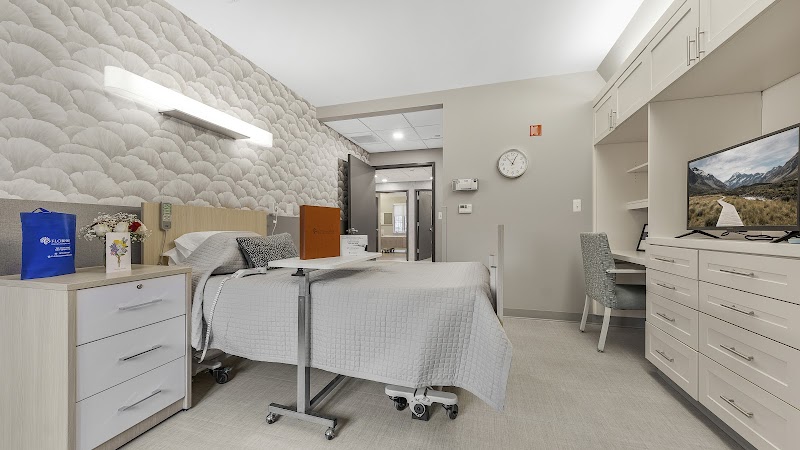
Who Owns and Operates Florham Park Rehabilitation And Healthcare Center?

FLORHAM PARK REHABILITATION AND HEALTHCARE CENTER is owned by a for-profit company. For-profit facilities operate as businesses with obligations to shareholders or private owners. The facility is operated by MARQUIS HEALTH SERVICES, a chain that manages multiple nursing homes. With 53 certified beds and approximately 49 residents (about 92% occupancy), it is a smaller facility located in FLORHAM PARK, New Jersey.
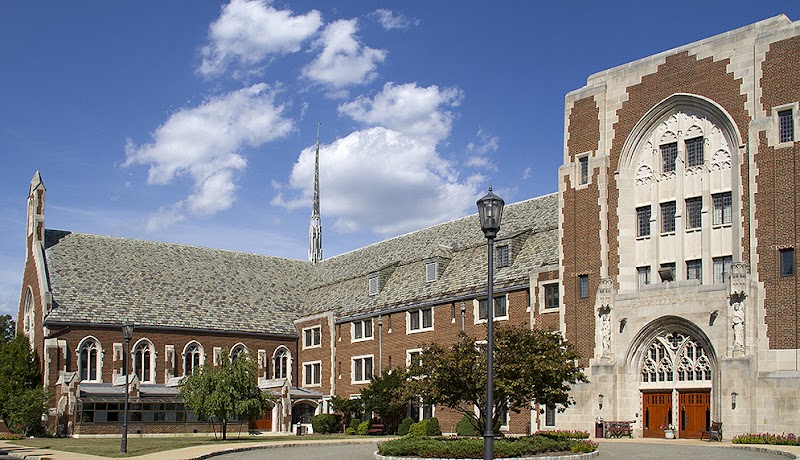
How Does Florham Park Rehabilitation And Healthcare Center Compare to Other New Jersey Nursing Homes?

Compared to the 100 nursing homes in New Jersey, FLORHAM PARK REHABILITATION AND HEALTHCARE CENTER's overall rating (5 stars) is above the state average of 3.3 and health inspection rating (5 stars) is much above the national benchmark.

What Should Families Ask When Visiting Florham Park Rehabilitation And Healthcare Center?

Based on this facility's data, families visiting should ask: "Can you walk me through typical staffing levels on day, evening, and night shifts?" "Can I visit during a mealtime to observe dining assistance and food quality?" "How do you handle medical emergencies, and what is your hospital transfer rate?" "Can I speak with family members of current residents about their experience?" These questions are particularly relevant given the below-average staffing rating.

Is Florham Park Rehabilitation And Healthcare Center Safe?

Based on CMS inspection data, FLORHAM PARK REHABILITATION AND HEALTHCARE CENTER has a clean safety record: no substantiated abuse findings (meaning no confirmed cases of resident harm), no Immediate Jeopardy citations (the most serious violation level indicating risk of serious injury or death), and is not on the Special Focus Facility watch list (a federal program monitoring the lowest-performing 1% of nursing homes). The facility has a 5-star overall rating and ranks #1 of 100 nursing homes in New Jersey. While no facility is perfect, families should still ask about staff-to-resident ratios and recent inspection results during their visit.

Do Nurses at Florham Park Rehabilitation And Healthcare Center Stick Around?

FLORHAM PARK REHABILITATION AND HEALTHCARE CENTER has not reported staff turnover data to CMS. Staff turnover matters because consistent caregivers learn residents' individual needs, medications, and preferences. When staff frequently change, this institutional knowledge is lost. Families should ask the facility directly about their staff retention rates and average employee tenure.

Was Florham Park Rehabilitation And Healthcare Center Ever Fined?

FLORHAM PARK REHABILITATION AND HEALTHCARE CENTER has no federal fines on record. CMS issues fines when nursing homes fail to meet care standards or don't correct problems found during inspections. The absence of fines suggests the facility has either maintained compliance or corrected any issues before penalties were assessed. This is a positive indicator, though families should still review recent inspection reports for the full picture.

Is Florham Park Rehabilitation And Healthcare Center on Any Federal Watch List?

FLORHAM PARK REHABILITATION AND HEALTHCARE CENTER is not on any federal watch list. The most significant is the Special Focus Facility (SFF) program, which identifies the bottom 1% of nursing homes nationally based on persistent, serious quality problems. Not being on this list means the facility has avoided the pattern of deficiencies that triggers enhanced federal oversight. This is a positive indicator, though families should still review the facility's inspection history directly.