CONCERN
(D)
Potential for Harm - no one hurt, but risky conditions existed
Deficiency F0558
(Tag F0558)
Could have caused harm · This affected 1 resident
Based on observation, interview, and record review it was determined that the facility failed to provide access to a call bell for a 3-week period for 1 of 35 residents (Resident #320) reviewed.
The...
Read full inspector narrative →
Based on observation, interview, and record review it was determined that the facility failed to provide access to a call bell for a 3-week period for 1 of 35 residents (Resident #320) reviewed.
The evidence for the deficient practice is as follows:
On 7/18/22 at 11:57 AM, the surveyor knocked on the door to room two South-206 window. Resident #320, in the window bed of the three bedded room, called out loudly come in. During the interview between the surveyor and the resident, Resident #320 stated they had no call bell access since moving to the room. The resident stated that they call out when needing assistance from staff. The resident stated staff routinely responded to their verbal calls for assistance. The surveyor was unable to locate a call bell in the vicinity of the resident's bed.
On 7/19/22 at 1:30 PM, the surveyor again visited the resident in their room. The resident stated they needed assistance the prior evening and had called out for assistance and staff had responded. The surveyor again observed no call bell present in the area surrounding the resident's window bed.
On 7/20/22 at 10:02 AM, the surveyor observed the resident call out for staff assistance. The resident's regularly assigned Certified Nursing Assistant (CNA) responded to the resident in a timely manner. At that time, the surveyor asked the CNA what the resident's care needs were and how the resident alerted staff that assistance was needed. She replied, I do everything for [the resident]. The CNA further stated that the resident called out to summon help from staff members. The surveyor asked the CNA to locate the resident's call bell cord. The CNA was unable to locate it. She stated she did not know how long it had been missing.
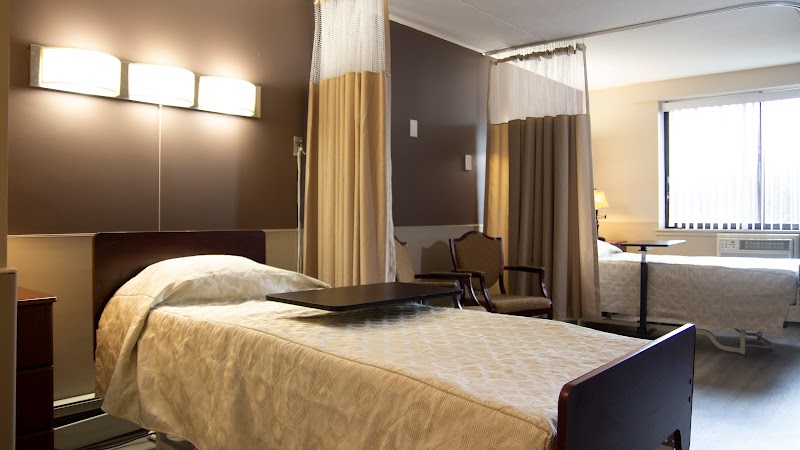
On 7/20/22 at 10:19 AM, the surveyor interviewed the unit Licensed Practical Nurse (LPN). The LPN brought the surveyor into the resident's room and pointed out that the common call bell box was mounted on the wall above the door bed (the 1st of three beds in the room). The box had three call cords coming from it. Bed one and two had accessible call cords. The third call cord for bed #3 was not long enough to extend beyond the second (middle) bed. The cord was on the floor close to the middle bed. The LPN was unaware the cord did not reach to the third bed.
On 7/20/22 at 10:24 AM, the surveyor interviewed the Maintenance Director. He stated his department does not perform a preventative maintenance program for call bell functioning. He stated his department responds directly to staff reports of malfunctions.
The surveyor brought the Maintenance Director into Resident 320's room and confirmed with him the inaccessibility of the call bell cord from the call bell box above bed #1 to bed #3, the window bed. Resident #320 told the Maintenance Director that the call bell was not accessible since moving to the room.
A review of the resident's medical record revealed the following information.
The electronic medical record (Census tab) indicated the resident moved to the two South-206 window bed on 6/26/22.
The 7/8/22 quarterly Minimum Data Set assessment tool (MDS) indicated the resident had no communication deficits and had no long or short-term memory impairment. Additionally, the resident was assessed to be dependent on staff for their activities of daily living.
The Fall Risk care plan, initiated on 11/1/19 and revised on 6/10/20, included the intervention to provide a working and reachable call light.
On 07/27/22 at 02:35 PM, the surveyor discussed the concern of an inaccessible call bell with the Director of Nursing (DON) and the Administrator.
On 07/28/22 at 10:05 AM ,the DON provided the surveyor with the following facility policies.
The Call Light Use policy and procedure was initiated August 2018, revised April 16, 2021, and reviewed April 7, 2022. The purpose of the policy was to assure call bell system is in proper working order and to respond promptly to resident's call for assistance. The process for the policy indicated (step 8) when providing care to residents be sure to position the call light conveniently for the resident to use. Tell the resident where the call light is and show him/her how to use the call light. Additionally step 10 indicated staff was to notify the maintenance department of the malfunctioning call light.
The Preventative Maintenance Program policy and procedure was initiated July 2015, revised April 16, 2021, and reviewed April 7, 2022. The purpose of the policy indicated the facility has a preventative maintenance program to ensure the provision of a safe, functional, sanitary, and comfortable environment for residents, staff, and the public. This conflicted with the Maintenance Director's 7/20/22 statement that the facility did not have a preventative maintenance program.
NJAC 8:39-31.2 (3); 31.8 (c) 9
CONCERN
(D)
Potential for Harm - no one hurt, but risky conditions existed
Deficiency F0583
(Tag F0583)
Could have caused harm · This affected 1 resident
Based on observation, interview, and record review it was determined that the facility failed to provide full visual privacy when providing personal care for, 1 of 35 residents, Resident #247.
The de...
Read full inspector narrative →
Based on observation, interview, and record review it was determined that the facility failed to provide full visual privacy when providing personal care for, 1 of 35 residents, Resident #247.
The deficient practice was evidenced by the following:
On 7/19/22 at 10:51 AM, the surveyor observed from hallway, standing outside the resident's room door, a Certified Nursing Assistant (CNA) providing hygiene care to Resident #247. The door to the room was open and the privacy curtain between Resident #247's bed and the room door was partially pulled back. Resident #247 could be seen lying in the bed from the hallway exposed from abdomen to feet. The resident was not covered with a blanket and their gown was pulled up to their abdomen. The surveyor observed the CNA providing hygiene care and changing the resident's incontinent brief.
On 7/19/22 at 10:57 AM, the surveyor observed the door and privacy curtain remained open as the CNA continued to provide hygiene care to the resident. The surveyor called the Assistant Director of Nursing (ADON) to the outside of the door of the resident's room. The surveyor interviewed the ADON and asked if she observed any concerns from the resident's room. The ADON stated the resident should not be visible from hallway and then closed the door to the room. The ADON stated the door should be closed during care and she will re-educate the CNA. The ADON further stated there were privacy curtains dividing the residents' beds that could be used.
On 07/19/22 at 10:58 AM, the surveyor interviewed the CNA who came out of the room after providing care to Resident #247. The surveyor asked the CNA about providing privacy when giving care to residents and Resident #247 being visible from hallway. The CNA stated she should have provided the resident with privacy by closing the door and pulling the privacy curtain.
On 7/19/22, the surveyor reviewed the medical record of Resident # 247 which revealed the following:
The Quarterly Minimum Data Set, an assessment tool dated 5/4/22, revealed that the resident had a score of 5 out of 15, when a Brief Interview for Mental Status was done, which indicated that the resident has severe cognitive impairment.
On 7/26/22 at 1:20 PM, the surveyor reviewed the facility's policy and procedure with a review date of 3/25/22, titled Resident Rights. Under Policy Interpretation and Implementation the list of residents' right included, d. Privacy and confidentiality. The surveyor also reviewed the facility's policy and procedure with a review date of 5/6/22, titled Social Service Policy for Resident's Rights to Privacy. Under Policy it read, Social Service assures that the resident's rights to personal privacy are enforced in conjunction with all staff. Under Procedure, it read Residents must be allowed to privacy when receiving treatment and Caring for personal needs.
On 7/26/22 at 2:03 PM, the surveyor discussed with the Administrator and the Director of Nursing (DON), about the above concerns. The DON stated she was made aware of the situation when it occurred, and that the CNA was no longer working at the facility.
NJAC 8:39-4.1(a)12,16
CONCERN
(D)
Potential for Harm - no one hurt, but risky conditions existed
Deficiency F0637
(Tag F0637)
Could have caused harm · This affected 1 resident
Based on observation, interview, and record review it was determined that the facility failed to complete a Significant Change in Status Assessment (SCSA) Minimum Data Assessment (MDS) for 1 of 2 resi...
Read full inspector narrative →
Based on observation, interview, and record review it was determined that the facility failed to complete a Significant Change in Status Assessment (SCSA) Minimum Data Assessment (MDS) for 1 of 2 residents reviewed for hospice care, Resident #85 as evidenced by the following:
According to the Resident Assessment Instrument (RAI) Manual Version 3.0 of CMS guidelines, updated October 2019 under Chapter 2 page 23, included that, An SCSA is required to be performed when a terminally ill resident enrolls in a hospice program (Medicare-certified or State-licensed hospice provide) or changes hospice providers and remains a resident at the nursing home. The Assessment reference date (ARD) must be within 14 days from the effective date of the hospice election (which can be the same or later that the date of the hospice election statement, but not earlier than) This is to ensure a coordinated plan of care between the hospice and nursing home is in place.
On 7/20/22 at 10:32 AM, the surveyor observed Resident #85 in bed with eyes closed and in the presence of the Behavioral Assistant by the bedside.
The surveyor reviewed the resident's records which revealed the following:
An admission Record revealed that the resident was admitted to the facility with diagnoses that included but not limited to Senile Degeneration of Brain.
A Physician's Orders revealed the following: Discontinue Ennoble Hospice Care Service effective 3/21/22 and admit to Compassionate Care Hospice effective 3/23/22.
On 7/20/22 at 10:51 AM, the surveyor interviewed the Licensed Practical Nurse (LPN), who was assigned to the resident. The LPN stated that the resident is currently on hospice. She further stated Resident #85 was receiving hospice care services with Ennoble Hospice Care before switching to Compassionate Care Hospice as per his/her family's request.
The Quarterly MDS, an assessment tool, dated 4/18/22, revealed a Brief Interview for Mental Status score of 99, which indicated that the resident was unable to complete the interview. Further review of the MDS revealed that there were no SCSA MDS completed when the resident switched hospice care providers.
On 7/26/22 at 9:59 AM, the surveyor interviewed the MDS Coordinator and asked her if a SCSA was initiated when a resident switched to another hospice provider. She stated, Not really. We were never told to do a SCSA when a resident changes hospice care provider. The MDS coordinator stated that after reviewing the latest SCSA guidelines of the RAI 3.0 manual, she agreed and confirmed that she should have initiated a SCSA MDS after the resident's change of hospice providers.
On 7/27/22 at 2:50 PM, the surveyor expressed her concern to the Licensed Nursing Home Administrator and Director of Nursing (DON). The DON acknowledged that a significant change should have been initiated when the resident switched to another hospice provider.
NJAC 8:39-11.2 (i)
CONCERN
(D)
Potential for Harm - no one hurt, but risky conditions existed
Pressure Ulcer Prevention
(Tag F0686)
Could have caused harm · This affected 1 resident
Based on observation, interview, and record review, it was determined that the facility failed to provide wound care in a manner that would decrease the possibility of the wound deteriorating. This wa...
Read full inspector narrative →
Based on observation, interview, and record review, it was determined that the facility failed to provide wound care in a manner that would decrease the possibility of the wound deteriorating. This was found with 1 of 4 residents reviewed for wound care, Resident # 9.
The deficient practice was evidenced by the following:
On 7/19/22 at 1:24 PM, the surveyor observed the resident in bed awake, the resident asked for food after trying for a few minutes to formulate the question. The resident was on a pressure relieving mattress. The resident was under a sheet and their legs appeared contracted. The resident was clean. The surveyor was able to visualize booties on the residents feet under the sheet. The resident was laying on their back.
On 7/21/22 at 10:56 AM, the surveyor observed the resident in bed with eyes closed. The resident was clean and appeared comfortable. The resident was covered with a sheet. The surveyor was able to visualize booties on both feet.
On 7/21/22 at 11:00 AM, the surveyor reviewed the resident's medical record which revealed the following:
A physician's order sheet with a physician's order that read: Sodium Chloride Solution 0.9% Irrigation. Cleanse Sacrum W/Normal Saline Solution, Then Pat Dry and Apply [calcium] Alginate Then Cover With Foam Dressing Daily. The order was dated 4/27/22.
The quarterly Minimum Data Set an assessment tool dated 7/1/22, revealed that the Brief Interview for Mental Status score was 3, which indicated the resident had severe cognitive impairment.
On 7/26/22 at 10:17 AM, the surveyor observed the Licensed Practical Nurse (LPN) perform a wound treatment to the sacrum of Resident # 9. When cleaning the wound, the LPN wiped the wound with saline soaked gauze, the LPN wiped outside the wound, then inside the wound with the same gauze, three times. The LPN then patted dry in and around the wound with the same gauze.
After cleaning the wound, the LPN opened the calcium alginate package, placed the entire sheet over the wound, and placed the border gauze on top. The LPN did not cut the calcium alginate to fit the wound bed.
On 7/26/22 at 10:50 AM, the surveyor asked the LPN why she placed the entire calcium alginate dressing under the border dressing, instead of cutting it to the size of the wound bed. She said the physician's order did not say to cut the calcium alginate.
On 7/26/22 at 11:00 AM, the surveyor reviewed the package insert for the calcium alginate. Under Description it read Forms a soothing, gel like consistency on contact with moisture, yet maintains integrity for convenient removal. Assists in maintaining a moist wound healing environment. Under To Apply it read 2. Dressing may be cut to size prior to application.
On 7/27/22 at 2:42 PM, the surveyor spoke with the Administrator and the Director of Nursing (DON) about the wound treatment observation, the inappropriate cleaning technique, and the application of the entire calcium alginate pad instead of cutting it to size and placing it on the wound bed. The DON said the cleaning technique the nurse used was incorrect and the nurse should have cut the calcium alginate to the size of the wound bed, because if it was not placed on the wound bed it wouldn't work correctly if it wasn't making contact with the wound bed.
On 7/28/22 at 9:00 AM, the surveyor reviewed the facility's undated policies and procedures titled, Pressure Ulcer Treatment and Wound Care. Neither of those policies addressed the issues observed during the wound treatment.
NJAC 8:39-27.1 (e)
CONCERN
(D)
Potential for Harm - no one hurt, but risky conditions existed
Incontinence Care
(Tag F0690)
Could have caused harm · This affected 1 resident
Based on observation, interview, and record review it was determined that the facility failed to provide indwelling catheter care in a manner to reduce the spread of infection. The deficient practice ...
Read full inspector narrative →
Based on observation, interview, and record review it was determined that the facility failed to provide indwelling catheter care in a manner to reduce the spread of infection. The deficient practice was identified for 1 of 4 residents (Resident #120) reviewed for urinary catheters and evidenced by the following:
On 07/18/22 at 12:07 PM, the surveyor observed Resident #120 awake in bed. The resident's indwelling urinary drainage collection bag was hanging from the bed frame.
On 07/19/22 at 10:44 AM, the surveyor observed the resident seated at the bedside in a wheelchair. The surveyor inspected the resident's bathroom. A blue privacy bag was hung from the hand-rail next to the toilet. A used large urinary drainage collection bag was stored in the privacy bag. The tubing of bag was uncapped and open to air.
On 07/20/22 at 11:57 AM, the surveyor observed in the resident's bathroom a blue privacy bag hung on the hand-rail next to the toilet. A used large urinary drainage collection bag was stored in the privacy bag. The uncapped end of the tubing rested on the floor adjacent to the base of the toilet. The surveyor summoned the regularly assigned Certified Nursing Assistant (CNA) to view the stored drainage bag. He stated the tubing should have been capped. He further stated he would discard the collection bag.
On 07/20/22 at 12:00 PM, the surveyor and the CNA approached the resident who was lying on their back in bed. The CNA stated he changed the resident's overnight collection bag to a smaller leg bag at 9:00 AM. He confirmed the resident had been in bed for three hours with the leg bag in place. The surveyor and the CNA observed the leg bag positioned under the resident's right thigh. There was approximately 100 cc of amber colored urine in the leg bag. The CNA stated since the leg bag was empty when applied, he did not think it was a problem to have the resident lay in bed for three hours with the urine collection bag positioned at the same level of the bladder and under the resident's leg.
On 07/20/22 at 12:10 PM, the Licensed Practical Nurse (LPN #1) assigned to Resident #120 entered the room. LPN #1 explained to the CNA that the urine collection bag must be kept below the level of the bladder so that gravity allows for urine drainage. LPN #1 told the CNA the bag should not be under the resident's leg. LPN #1 told the CNA that the resident must be assisted out of bed to the wheelchair as soon as the leg bag is applied.
On 07/20/22 at 12:15 PM, LPN #2 entered the resident's room. LPN #2 stated the resident had a history of urinary tract infections (UTIs) and sepsis (an extreme response to an infection which may be life-threatening). LPN #2 stated it was important not to put the resident at risk for infection. LPN #2 stated the resident should be taken out of bed as soon as the leg bag is applied.
A review of the resident's medical record revealed the following information.
The July 2022 Physician's Orders contained a 7/12/22 order for the use of an indwelling urinary catheter.
The nurse documented in a 6/29/22 Interdisciplinary Progress Note resident has been admitted [to the hospital] for sepsis (the body's extreme response to an infection and can be life threatening).
The nurse documented in a 7/5/22 Infusion Order Form that the resident was receiving intravenous antibiotic therapy for sepsis.
The 4/28/22 significant change Minimum Data Set (MDS) assessment tool indicated the resident utilized an indwelling urinary catheter. The following diagnoses related to infections were listed as being active in the past seven days (4/21/22 through 4/28/220): pneumonia, septicemia, UTI in the last 30 days. The MDS indicated the resident was prescribed antibiotic medication during the past seven days.
The Indwelling Foley Catheter care plan, initiated on 4/11/22 and revised on 5/6/22, had the following goal, [resident's name] will show no s/s [signs and symptoms] of urinary infection through review date. One of the interventions to prevent urinary infection was position catheter at, and tubing below, the level of the bladder.
On 07/27/22 at 2:32 PM, the surveyor discussed the concerns of storage and placement of urinary drainage collection bags with the Director of Nursing and the Administrator.
On 07/28/22, the surveyor was provided with the Urinary Catheter Care policy, revised 1/25/22. The General Guidelines included the following, maintain a closed drainage system and if breaks in aseptic technique, disconnection, or leakage occur, replace the catheter and collecting system . Instructions for Maintaining Unobstructed Urine Flow included check the resident frequently to be sure he or she is not lying on the catheter . and the urinary drainage bag must be held or positioned lower than the bladder at all times to prevent the urine in the tubing and drainage bag from flowing back into the urinary bladder. The Infection Control section indicated be sure the catheter tubing and drainage bag are kept off the floor.
NJAC 8:39-19.1 (a) ; 19.4 (a) 5.
CONCERN
(D)
Potential for Harm - no one hurt, but risky conditions existed
Respiratory Care
(Tag F0695)
Could have caused harm · This affected 1 resident
Based on observation, interview, and review of facility records, it was determined that the facility failed to ensure that a resident's low oxygen saturation (the amount of oxygen circulating in the b...
Read full inspector narrative →
Based on observation, interview, and review of facility records, it was determined that the facility failed to ensure that a resident's low oxygen saturation (the amount of oxygen circulating in the blood) was responded to appropriately for 1 of 2 residents (Resident #159) reviewed for respiratory care.
This deficient practice was evidenced by the following:
On 7/19/22 at 1:20 PM, the surveyor observed Resident #159 awake in bed and observed that the resident was wearing a nasal cannula (a device to provide supplemental oxygen therapy) attached to an oxygen concentrator. The surveyor observed that the flow rate on the oxygen concentrator was set to two liters per minute (LPM). At the same time the surveyor interviewed Resident #159. Resident #159 stated that they always wear the oxygen and that ordinarily the flow rate is set to 2 LPM.
On 7/19/22 at 2:27 PM, the surveyor interviewed the Licensed Practical Nurse #1 (LPN #1) about Resident #159's use of oxygen therapy. LPN #1 stated that Resident #159 was previously sent to the hospital because their oxygen saturation, dropped really bad and that because of it, the doctor ordered the Resident to be on continuous oxygen. LPN #1 stated that Resident #159's oxygen saturations are measured every shift.
On 7/20/22 at 11:00 AM, the surveyor observed the Treatment Administration Record (TAR) for Resident #159 which indicated that oxygen saturation was checked every shift. The TAR indicated that on the 11 PM- 7 AM shift on 7/10/22 and 7/11/22, that Resident #159's oxygen saturation was documented as 88%. (For most people, a normal oxygen saturation level is between 95% and 100%).
On 7/20/22 at 11:03 AM, the surveyor observed the Interdisciplinary Progress Notes. A review of the Interdisciplinary Progress Notes failed to reveal any nursing documentation from the 7/10/22 and 7/11/22 during the 11 PM-7 AM shifts, when the resident's oxygen saturation were documented as 88%.
On 7/20/22 at 11:05 AM, the surveyor interviewed LPN #1 about the documentation in the TAR and Interdisciplinary Progress Notes. The surveyor asked LPN #1 what she would do if Resident #159's oxygen saturation was 88%. LPN #1 stated that she would call the doctor and would write a nursing progress note documenting the oxygen saturation level and interventions provided. The surveyor showed LPN #1 the TAR and Interdisciplinary Progress Notes. The surveyor asked who signed the TAR the two shifts where Resident #159's oxygen saturation was documented as 88%. LPN #1 stated that it was LPN #2. LPN #1 agreed that she did not see a nursing progress note corresponding to when the resident's oxygen saturation was 88%.
On 7/20/22 at 11:35 AM, the surveyor interviewed Resident #159. The surveyor asked if Resident #159 ever had difficulty breathing. Resident #159 stated that sometimes at 3 o'clock in the morning that they became short of breath and had trouble speaking until the nurse assisted them.
On 7/20/22 at 12:20 PM, the surveyor interviewed the Assistant Director of Nursing (ADON) regarding the oxygen saturations of 88% documented on the TAR. The surveyor asked the ADON what her expectation would be if she saw that Resident #159 had an oxygen saturation of 88%. The ADON stated that she would check to see if the resident had chronic obstructive pulmonary disease (COPD). People with COPD generally have a goal of oxygen saturation from 88-90%). The ADON also stated that if the resident did not have that diagnosis, that she would notify the doctor, and would expect to see a nursing progress note written about the low level.
On 7/20/22 at 12:47 PM, the surveyor interviewed the Nurse Practitioner (NP). The NP stated that she works with Resident #159's physician and that she treats Resident #159. The surveyor asked what Resident #159's goals were for oxygen level. The NP stated that Resident #159 did not have COPD and that her goals for an oxygen level were to be at 93% or above. The surveyor asked what she would expect the nurse who was taking care of Resident #159 to do if she saw that their oxygen saturation was 88%. The NP stated that she would expect that the health care provider would be notified and that the LPM of oxygen would be increased. The surveyor asked if she or the physician were notified that the resident's oxygen saturation was at 88% on 7/10/22 and 7/11/22. The NP stated that, for sure she was not notified.
On 7/20/22 at 1:03 PM, the surveyor interviewed LPN #2 via telephone. LPN #2 stated that she floated to different units within the facility but that she had taken care of Resident #159. The surveyor asked if she remembered documenting that Resident #159's oxygen saturation on the 11 PM- 7 AM shift on 7/10/22 and 7/11/22 was 88%. LPN #2 stated, I'm not sure I remember. The surveyor asked what LPN #2 should have done if she saw that Resident #159's oxygen saturation was 88%. LPN #2 stated that she should go back and recheck the oxygen saturation, that she should raise the resident's head of bed, that she should speak with her nursing supervisor, and that she should call the physician. LPN #2 was unable to speak to which if any of these steps she did take for Resident #159. The surveyor asked LPN #2 if she should have documented anything about the oxygen saturations. LPN #2 stated that she should have written a nursing progress note as well.
On 7/20/22 at 1:10 PM, the surveyor reviewed Resident #159's care plan. The care plan did not have a focus on respiratory function, oxygen saturation, or oxygen use.
On 7/20/22 at 1:21 PM, the surveyor re-interviewed LPN #1. The surveyor asked if she would expect that a resident with a history of pneumonia who was receiving oxygen therapy would have a respiratory care plan in place. LPN #1 stated that she would expect to see a care plan in place for a resident on oxygen.
A review of the hybrid paper and electronic medical record for Resident #159 revealed the following:
The admission Record revealed that Resident #159 had diagnoses including but not limited to Unspecified Asthma, Other Nonspecific Abnormal Finding of Lung Field.
The Physician Progress Note dated 6/23/22 indicated that Resident #159 had a history of Asthma, Wheezing, Pneumonia due to Infectious Agent, Acute Respiratory Failure with Hypoxia (a state in which oxygen is not available in sufficient amounts), and Hypoxemia (abnormally low concentration of oxygen in the blood). A further review of the Physician Progress Note did not indicate that the resident had a diagnosis of COPD but did revealed that the resident was readmitted to the facility from the hospital with an admitting diagnosis of Pneumonia.
The 5/5/22 quarterly Minimum Data Set, an assessment tool utilized to facilitate the management of care indicated that Resident #159 had a Brief Interview for Mental Status (BIMS) score of 3 out of 15, indicating that the resident had severely impaired cognition. The facility had performed a follow up BIMS assessment on 6/22/22 which indicated that Resident #159 had scored an 11 out of 15, indicating that the resident had moderately impaired cognition.
The Physician's Order Form Indicated that Resident #159 had a 7/5/22 active physician order to check oxygen saturation every shift and to provide oxygen at 2 LPM via nasal cannula continuously for acute respiratory failure with hypoxia.
On 7/20/22 at 2:06 PM, the surveyor discussed the above concern with the Licensed Nursing Home Administrator and the Director of Nursing (DON). The surveyor asked what they would expect to see if a resident had an oxygen saturation of 88%. The DON stated that she would expect to see that the healthcare provider was notified, a nursing assessment, and documentation. The DON further stated that she always expected to see documentation especially if there was an abnormal finding.
The facility policy titled, Pulse Oximetry (Assessing Oxygen Saturation) with a revised date of 12/3/2021 indicated under the General Guidelines section 2. Normally SpO2 is between 90 and 100 percent and indicated under the Steps in the Procedure section 11. If SpO2 is less than 90 percent to a. reposition the probe and re-evaluate readings. B. If SpO2 is less than acceptable level for resident's condition, notify the physician.
NJAC 8:39-27.1 (a)
CONCERN
(D)
Potential for Harm - no one hurt, but risky conditions existed
Drug Regimen Review
(Tag F0756)
Could have caused harm · This affected 1 resident
**NOTE- TERMS IN BRACKETS HAVE BEEN EDITED TO PROTECT CONFIDENTIALITY** Based on observation, interview, and record review, it was determined that 1.) the Consultant Pharmacist failed to identify the ...
Read full inspector narrative →
**NOTE- TERMS IN BRACKETS HAVE BEEN EDITED TO PROTECT CONFIDENTIALITY** Based on observation, interview, and record review, it was determined that 1.) the Consultant Pharmacist failed to identify the need for routine pain management medication review for 1 of 38 residents reviewed, Resident #108, and 2.) the facility failed to respond to the Consultant Pharmacist recommendations for 2 of 38 residents reviewed, Resident #211 and Resident #484.
The deficient practice was evidenced by the following:
1. On [DATE] at 10:30 AM, the surveyor interviewed Resident #108 in the resident's room. The resident informed the surveyor that they attend dialysis on Tuesday, Thursday, and Saturday each week. Resident #108 informed the surveyor that due to a previous fall prior to their facility admission and arthritis, they suffer from regular knee pain.
Review of Resident #108's Face Sheet (an admission summary) reflected that Resident #108 was admitted to the facility with diagnoses that included but were not limited to Essential (primary) Hypertension, Anemia in Chronic Kidney Disease and End Stage Renal Disease.
The Quarterly Minimum Data Set (MDS), an assessment tool used for the management of care dated [DATE], revealed a Brief Interview for Mental Status (BIMS) score of 15 out of 15 which indicated that the resident was cognitively intact.
The surveyor reviewed the May, June, and [DATE] Medication Administration Record (MAR) that documented a Physician's Order dated [DATE] for Tramadol 50 mg 1/2 (25 mg) every 8 hours as needed (PRN) for moderate pain.
Review of the [DATE] MAR documented the use of Tramadol 25 mg once to twice daily 37 times during the month. Review of the facility Pain Management Record (PMR) revealed that Resident #108 was documented with pain levels of six, seven and eight out of 10.
Review of the [DATE] MAR documented the use of Tramadol 25 mg once to twice daily 34 times during the month. Review of the PMR revealed that Resident #108 was document with pain levels of six and seven out of 10.
Review of the [DATE] MAR documented the use of Tramadol 25 mg once to twice daily 19 times during the month. Review of the PMR revealed that Resident #108 was document with pain levels of six and seven out of 10.
On [DATE] at 11:55 PM, the surveyor interviewed Resident #108 who stated, I have to go to the nurses and ask for pain medication when my knee hurts. Resident #108 informed the surveyor that they would like routine pain medicine.
Review of the Consultant Pharmacist Evaluation sheet (CPE) with review dates of [DATE], [DATE], and [DATE] have no entries referring to the evaluation of routine pain management for frequent use of as needed Tramadol.
On [DATE] at 12:09 PM, the surveyor interviewed the Consultant Pharmacist (CP). The CP stated that when she reviewed the use of PRN Tramadol, she should have recommended an assessment of the resident's pain management regimen. The CP stated that she should have recommended a review of Resident #108's PRN pain medication use as soon as possible.
2. On [DATE] at 1:02 PM, the surveyor was approached by Resident #211. Resident #211 was upset and verbalizing about their frustration with renewing their driver's license before it expired.
Review of Resident #211's Face Sheet revealed that Resident #211 was admitted to the facility with diagnoses that included but were not limited to Obstructive Sleep Apnea and Unspecified Psychosis.
The Annual MDS dated [DATE], revealed a BIMS score of 12 out of 15 which indicated that the resident's cognition was moderately impaired.
Review of the [DATE] Physician Order Sheet presented an order for Haldol (Haloperidol) 5 mg every 6 hours PRN for agitation with a start date of [DATE].
Review of May, June, and [DATE] MARs for Resident #211 revealed no use for the Haldol 5 mg every 6 hours PRN for agitation order.
Review of the CPE evidenced 4 entries related to the physician's orders for Haldol 5 mg every 6 hours PRN for agitation . On [DATE], [DATE], and [DATE] there were entries of, PRN Haldol duration. On [DATE], there was an entry from the CP that stated, Follow up Haldol.
Review of the CP Therapeutic Suggestions sheets presented to the facility on [DATE], [DATE], [DATE], and [DATE] presented the same statement. The statement read, Per CMS guidelines, PRN antipsychotic are limited to 14 day duration regardless of indication. If continuing with Haloperidol beyond 14 days, a new prescription is required every 14 days and rationale must be documented in the clinical record. The pharmacy consult was not addressed.
On [DATE] at 12:09 PM, the surveyor interviewed the CP. The CP explained, I sent recommendations to discontinue the PRN Haldol on a monthly basis. Non use of a PRN medication is cause for discontinuation as soon as possible.
3. On [DATE] at 2:07 PM, the surveyor interviewed Resident #484. Resident #484 was seated in a wheelchair in their room. Resident #484 was pleasant and eager to speak with the surveyor.
Review of Resident #484's Face Sheet revealed that Resident #484 was admitted to the facility with diagnoses that included but were not limited to essential (primary) hypertension, Schizophrenia and acquired absence of left leg below knee.
The MDS dated [DATE], revealed a BIMS score of 10 out of 15 which indicated that the resident's cognition was moderately impaired.
Review of the resident's May, June, and [DATE] MAR revealed a PO dated [DATE] for Amlodipine 5 mg daily for hypertension (hold for blood pressure (BP) less than 120).
The documentation from the [DATE] MAR indicated that on five days of the month Amlodipine 5 mg was administered when the BP was less than 120. The [DATE] MAR documented nurses signatures as administered on [DATE] BP 112, [DATE] BP 114, [DATE] BP 108, [DATE] BP 101, [DATE] BP 108, [DATE] BP 118.
The documentation from the [DATE] MAR indicated that on seven days of the month Amlodipine 5 mg was administered when the BP was less than 120. The [DATE] MAR documented nurses signatures as administered on [DATE] BP 119, [DATE] BP 112, [DATE] BP 110, [DATE] BP 107, [DATE] BP 116, [DATE] BP 100, and [DATE] BP 107.
The documentation from the [DATE] MAR indicated that on eight days of the month Amlodipine 5 mg was administered when the BP was less than 120. The [DATE] MAR documented nurses signatures as administered on [DATE] BP 114, [DATE] BP 104, [DATE] BP 118, [DATE] BP 101, [DATE] BP 112, [DATE] BP 118, and [DATE] BP 110.
Review of the CPE evidenced an entry related to the Amlodipine 5 mg parameter discrepancy on [DATE]. On [DATE], the CP documented, Review Amlodipine parameter.
Review of the CP Therapeutic Suggestions sheets presented to the facility on [DATE] and [DATE] referred to the Medication error(s) related to the Amlodipine 5 mg. On [DATE], the CP stated Medication error(s) noted. Amlodipine is not always held as required by the physicians hold order as on [DATE], [DATE], [DATE], [DATE], and [DATE]. Please review and follow physicians order. On [DATE], the CP stated Medication error(s) noted. Amlodipine is not always held as required by the physicians hold order. Please review and follow physician's orders [DATE] and [DATE].
On [DATE] at 2:25 PM, the surveyor met with the Director of Nursing (DON) and Licensed Nursing Home Administrator (LNHA) to review the above findings.
On [DATE] at 12:09 PM, the surveyor interviewed the CP who stated that she addressed and reported the parameter discrepancy with the Amlodipine to the facility. The CP added, It was not addressed by the facility.
Review of the Duties of Consultant Duties included in the facility agreement section 2. iii states, Performing a monthly onsite review of the drug regimen of each patient on the Facility's unit census on date(s) of visit. Reports of any irregularities shall be provided to the nurse in charge and/or the attending physician, and the administrator.
Review of the Duties of Facility included in the facility agreement section 3. a. states, The reports of irregularities, if any, included in the Facility's census, shall be acted upon by the nurse in charge and/or the attending physician and/or the administrator.
On [DATE] at 10:20 AM, the surveyor interviewed the 3rd floor Charge Nurse (CN3) who stated that another charge Nurse (CN) was responsible for reviewing and following up with the CP recommendations. CN3 added that the CN responsible for this task was no longer working at the facility. CN3 could not recall when CN's employment ended.
On [DATE] at 12:20 PM, the DON informed the surveyor that CN ended her employment with the facility sometime in February 2022. The DON could not explain why no other employee was assigned the task of reviewing and following up with CP recommendations.
No further information was submitted by the DON or LNHA to explain why the CP recommendations were not reviewed and addressed.
No further information was submitted by the CP to explain why the PRN pain medications for Resident #108 were not reported to the facility.
NJAC 8:39 - 29.3 (a 1, 6)
CONCERN
(D)
Potential for Harm - no one hurt, but risky conditions existed
Deficiency F0761
(Tag F0761)
Could have caused harm · This affected 1 resident
Based on observation, interview, and record review, it was determined that the facility failed to properly store medications meant to be refrigerated in 2 of 13 medication carts inspected.
The defici...
Read full inspector narrative →
Based on observation, interview, and record review, it was determined that the facility failed to properly store medications meant to be refrigerated in 2 of 13 medication carts inspected.
The deficient practice is evidenced by the following:
1. On 7/26/22 at 9:41 AM, the surveyor inspected the 3rd floor JDT high side medication cart in the presence of Licensed Practical Nurse (LPN) #1. The surveyor observed a bag labeled Refrigerate. Inside the bag, the surveyor observed a Frivanq (an antibiotic used to treat infections) Solution 50 milligrams/ milliliter bottle labeled, Must Be Refrigerated. The surveyor observed that the Firvanq bottle felt room temperature.
At that time, the surveyor interviewed LPN #1 who stated that her shift started at 7 AM and that she did not take the Firvanq out of the refrigerator. LPN #1 stated that the nurse who worked the previous shift told her that he could not find the Firvanq in the refrigerator and that he gave a dose from the backup stock of medications because he did not know that the medication was in the cart. LPN #1 stated that the Firvanq should not be in the cart and should be in the refrigerator.
2. On 7/26/22 at 10:14 AM, the surveyor inspected the two North medication cart with LPN #2. The surveyor observed an orange medication bottle labeled Refrigerate Until Opened. The surveyor opened the medication bottle and observed an unopened vial of Admelog insulin (a medication that works to control blood sugar)100 units/ milliliter which felt room temperature. The surveyor also observed a sticker on the Admelog insulin vial which read Date Opened and was completed in black marker, 7/25/22.
At that time, the surveyor interviewed LPN #2 who acknowledged that the Admelog insulin should be in the refrigerator and that the medication was not opened so it should not have an opened date written on it.
The surveyor reviewed the Medication Guides for the Firvanq and Admelog medications which revealed the following:
The Firvanq Medication Guide indicated under Important Administration and Storage Instructions to, Store the reconstituted solutions of Firvanq at refrigerated conditions, 2° C (celsius) to 8° C (36° F (fahrenheit) to 46° F) when not in use.
The Admelog Medication Guide indicated under Storage and Handling that, Not in-use (unopened) Admelog should be stored in a refrigerator (36° F- 46° F [2° C- 8°C]).
On 7/26/22 at 2:06 PM, the surveyor expressed her concern to the Licensed Nursing Home Administrator and Director of Nursing (DON). The surveyor asked if this is how the DON expected for medications to be stored. The DON stated that if medications say refrigerate on them that they should be refrigerated.
On 7/29/22 at 12:23 PM, the surveyor interviewed the Consultant Pharmacist via telephone. The surveyor asked if she would expect to see Firvanq solution stored at room temperature in the medication cart or if she would expect to see unopened Admelog stored in the medication cart when there is a label on it to refrigerate it until it is opened. The Consultant Pharmacist stated, of course not.
The Storage of Medications facility policy with a reviewed date of 12/20/21 indicated under the Policy Interpretation and Implementation section 10. Medications requiring refrigeration must be stored in a refrigerator located in the drug room at the nurse's station or other secured location.
NJAC 8:39-29.4 (h)
CONCERN
(D)
Potential for Harm - no one hurt, but risky conditions existed
Deficiency F0849
(Tag F0849)
Could have caused harm · This affected 1 resident
**NOTE- TERMS IN BRACKETS HAVE BEEN EDITED TO PROTECT CONFIDENTIALITY** Based on observation, interview, and record review it was determined that the facility failed to consistently provide coordinati...
Read full inspector narrative →
**NOTE- TERMS IN BRACKETS HAVE BEEN EDITED TO PROTECT CONFIDENTIALITY** Based on observation, interview, and record review it was determined that the facility failed to consistently provide coordination between facility staff and hospice agency staff to meet the resident's nursing needs. The deficient practice was identified for 1 of 2 residents (Resident # 9) reviewed for hospice/end of life care.
The deficient practice was evidenced by the following:
On 7/19/22 at 1:24 PM, the surveyor observed Resident # 9 in bed and awake. The resident asked for food after trying for a few minutes to formulate the question. The resident was on a pressure relieving mattress. The resident was under a sheet. The resident was clean.
On 7/20/22 at 9:15 AM, the surveyor spoke with the Licensed Practical Nurse (LPN) who was assigned to the resident. The LPN said the Hospice Nurse went to the facility very often, 2 times per week, and the hospice aide went to the facility every morning. The LPN stated when I come in at 7 AM she is already there. The surveyor asked the LPN where the hospice care plan was located. The LPN stated I have never seen the hospice care plan. You can ask her (the hospice nurse) or I can ask her for it.
On 7/20/22 at 9:30 AM, the surveyor reviewed the resident's record which revealed the following:
A quarterly Minimum Data Set assessment dated [DATE]. In that assessment, the Brief Interview for Mental Status score was 3, which indicated the resident had severe cognitive impairment.
Nineteen Hospice Communication/Continuation notes were reviewed with the following dates 3/19/22, 3/30/22, 4/5/22, 4/8/22, 4/22/22, 4/26/22, 4/28/22, 5/10/22, 5/12/22, 5/17/22, 5/18/22, 6/9/22, 6/14/22, 6/21/22, 6/28/22, 6/30/22, 7/5/22, 7/12/22, and 7/13/22. Three of the nineteen notes were completed by the chaplain. Sixteen of the nineteen notes were completed by either the hospice Registered Nurse (RN) or Licensed Practical Nurse (LPN). There should have been thirty three notes by the RN/LPN according to the twice per week schedule reported by the resident's LPN.
On 7/20/22 at 11:21 AM, the surveyor called the hospice provider and spoke with the medical records clerk. The surveyor asked what documentation from the hospice provider was put in the resident's medical record at the facility. The medical records clerk stated I try to keep the facility updated on the documentation we have for the resident, as soon as we get the certification of terminal illness signed, which happens in the week of admission, the medical director document we get 2 weeks after admission, when I get both of those documents signed, I print those out, the DNR/DNI is right at admission or within a week, I print those out, the consents the family signs, those are printed out. The plan of care is printed out within 2 weeks of admission and then every two weeks after that we print out the interdisciplinary group meeting notes and updated plan of care. I send those with the liaison to the facility to be placed in the resident's record.
On 7/20/22 at 11:43 AM, the surveyor spoke with the hospice RN/Case Manager (RN/CM) at the facility and asked where she documented the nursing visits and where the care plan and admission assessment was. The RN/CM stated I have a computer like you and I have all my notes in there. Sometimes I come here and I don't see [the resident's] chart so I can't put the notes in. The surveyor asked the RN/CM for the care plan and the date the resident was admitted to hospice. The RN/CM stated the resident was admitted to hospice on 3/25/22, the surveyor asked the RN/CM why there was a note in the chart written by the hospice LPN and dated 3/19/22, the RN/CM did not know. The RN/CM stated My LPN wrote that and she may have made a mistake with the date. The RN/CM further stated that the hospice provider changed their computer system on April first. She said she didn't know why the chart was missing the admission note and the care plan. The RN/CM stated I have all of the documentation in my computer, the liaison brings the paper copy and puts it in the chart. The resident is scheduled to be seen twice a week. Once a week it's me and once a week it's the LPN. I have a note here dated 7/7/22 that I have to put in the chart because at the time I couldn't find the chart. In other places, they have a separate chart for hospice notes, they don't want that here. They don't thin the charts here so we have this problem where you can't fit the paperwork in the chart I guess. The surveyor asked the RN/CM if she would expect to see the admission assessment and note as well as the care plan in the chart. The RN/CM said yes, it should have been in there.
On 7/27/22 at 2:14 PM, the surveyor discussed the above concern with Administrator and Director of Nursing. No additional information was provided.
On 7/28/22 at 9:00 AM, the surveyor reviewed the facility's policy and procedure with a revision date of December 2011 and titled Hospice Program. Under Policy Interpretation and Implementation number 4. read; The hospice agency retains overall professional management responsibility for directing the implementation of the plan of care related to the terminal illness and related conditions, which includes: a. Designation of a hospice Registered Nurse to coordinate the implementation of the plan of care.
NJAC 8:38-27.1 (a)
CONCERN
(E)
Potential for Harm - no one hurt, but risky conditions existed
Deficiency F0658
(Tag F0658)
Could have caused harm · This affected multiple residents
**NOTE- TERMS IN BRACKETS HAVE BEEN EDITED TO PROTECT CONFIDENTIALITY** 6. On 7/18/22 at 11:33 AM, the surveyor observed Resident #193 lying in bed, alert and awake. Resident #193 had a urinary cathet...
Read full inspector narrative →
**NOTE- TERMS IN BRACKETS HAVE BEEN EDITED TO PROTECT CONFIDENTIALITY** 6. On 7/18/22 at 11:33 AM, the surveyor observed Resident #193 lying in bed, alert and awake. Resident #193 had a urinary catheter (a flexible tube used to empty the bladder and collect urine in a drainage bag).
The surveyor reviewed Resident #193's hybrid medical records (paper and electronic medical record) that revealed the following:
According to the admission Record, Resident #193 was admitted with diagnoses that included neuromuscular dysfunction of bladder, urethral (a duct by which urine is conveyed out of the body from the bladder) fistula (an abnormal or surgically made passage between an organ and the surface of the body), and retention of urine.
The Quarterly MDS dated [DATE], revealed that the facility performed a BIMS which indicated that the resident had a score of 15 out of 15. The resident was assessed to be cognitively intact.
On 7/20/22 at 10:27 AM, the surveyor interviewed LPN #5 who was asked about the resident's urinary catheter care. The LPN #5 stated the resident had a history of bladder issues, frequent urinary tract infections and currently had a suprapubic catheter (a surgically created connection between the urinary bladder and the skin used to drain urine from the bladder). The LPN #5 stated that the nurses' responsibilities included changing the urinary catheter once a month or as needed, monitoring urine output, and flushing the urinary catheter, if needed.
The July 2022 Physician Orders Sheets and July 2022 Treatment Administration Record (TAR) revealed there was no physician's order to flush the resident's urinary catheter.
A review of the resident's hard copy chart revealed nurse progress notes from 7/11/22 and 7/12/22 indicated the nurses flushed the resident's catheter.
On 7/20/22 at 11:14 AM, the surveyor interviewed LPN #5 about the flushing of the urinary catheter for Resident #193. LPN #5 stated the nurses flushed the catheter with normal saline (NS) when there were clogs or issues with patency. The surveyor asked the LPN if there should be a PO to flush a resident's urinary catheter. LPN #5 replied Yes, there should be. The surveyor asked if there was a physician's order to flush the urinary catheter of Resident #193. LPN #5 replied, I think there is. LPN #5 reviewed the TAR and PO with the surveyor, and no order was observed to flush the urinary catheter with NS. The surveyor asked LPN #5 if the physician was aware the resident's catheter was being flushed. LPN #5 replied Yes. The surveyor asked LPN #5 how long have the nurses been flushing the resident's catheter. LPN #5 stated that she hasn't flushed the resident's catheter recently but believed it may have been since the resident's last hospitalization in April. The LPN #5 stated she would contact the physician to obtain an order to flush catheter.
On 7/20/22 at 11:24 AM, the surveyor interviewed a Registered Nurse (RN #2), who had taken care of Resident #193 previously. The surveyor asked RN #2 if she had ever flushed the resident's urinary catheter before and RN #2 replied Yes. The surveyor asked RN #2 if there should be a physician's to flush a resident 's catheter and RN #2 stated Yes. RN #2 was informed upon review with the LPN there were no physician's order found for Resident #193. RN #2 stated the resident had been in and out of hospital a few times and maybe that was how the order was missed.
On 7/20/22 at 12:25 PM, the surveyor interviewed the Assistant Director Of Nursing (ADON), who was asked if it would be expected for there to be an order to flush the resident's catheter. The ADON stated It was expected for there to be an order.
On 7/26/22 at 2:03 PM, the surveyor discussed the above concern with the Licensed Nursing Home Administrator (LNHA) and the Director of Nursing (DON) of the above concern. The DON acknowledged there should have been a PO to flush the resident's urinary catheter.
The surveyor reviewed the facility's policy and procedure with a revised date of 1/28/22, titled Catheter Care, Urinary. Under Managing Obstruction it read Catheter irrigation may be ordered to prevent obstruction in residents' at risk for obstruction. The surveyor also reviewed the facility's policy and procedure with a revised date of 1/28/22, titled Suprapubic Catheter Care. The policy did not address obtaining a PO for flushing a urinary catheter.
NJAC 8:39-11.2 (b); 27.1 (a); 29.2(d)
Based on observation, interview, and record review, it was determined that the facility failed to provide care and services according to acceptable standards of clinical nursing practice by the following: 1.) administer and sign for medication according to physician's orders and facility policy for 4 of 4 nurses; 2.) follow the facility's policy on cleaning shared medical equipment for 1 of 1 nurse observed cleaning shared medical equipment; and 3.) failed to obtain a physician's order for a treatment performed during urinary catheter care for 1 of 3 residents (Resident #193) reviewed for urinary catheter care.
The deficient practice is evidenced by the following:
Reference: New Jersey Statues, Annotated Title 45, Chapter 11 Nursing Board, The Nurse Practice Act for the State of New Jersey states; The practice of nursing as a registered professional nurse is defined as diagnosing and treating human responses to actual or potential physical and emotional health problems, through such services as case finding, health teaching, health counseling, and provision of care supportive to or restorative of life and wellbeing, and executing a medical regimens as prescribed by a licensed or otherwise legally authorized physician or dentist.
Reference: New Jersey Statutes Annotated, Title 45, Chapter 11. Nursing Board. The Nurse Practice Act for the State of New Jersey states: The practice of nursing as a licensed practical nurse is defined as performing tasks and responsibilities within the framework of case finding; reinforcing the patient and family teaching program through health teaching, health counseling and provision of supportive and restorative care, under the direction of a registered nurse or licensed or otherwise legally authorized physician or dentist.
1. On 7/17/22 at 10:30 AM, the surveyor entered the room of Resident #894. The resident was alone in their room and no staff were present. The surveyor observed two white capsules in a medicine cup sitting on the resident's bedside table. The surveyor interviewed Resident #894 about the capsules. Resident #894 stated that they were, not sure what the capsules were.
On 7/27/22 at 10:41 AM, the surveyor interviewed Charge Nurse/Registered Nurse (CN/RN) who stated that she was working with and training the Licensed Practical Nurse (LPN #1) who was caring for Resident #894. The surveyor asked if the CN/RN could accompany the surveyor into Resident #894's room. The surveyor and CN/RN entered Resident #894's room and the surveyor observed that the there was another LPN #2 was in the resident's room. The surveyor asked the nurses what the two capsules observed in the resident's room were. LPN #2 stated that the two capsules were acidophilus probiotics (probiotics are good bacteria that are either the same or similar to bacteria naturally found in the body) and stated that she just gave Resident #894 the acidophilus probiotic. The surveyor asked LPN #2 if she should have left the medication at the resident's bedside and then returned to administer it. LPN #2 stated that she should have given the acidophilus probiotic right away. The CN/ RN agreed that the medication should not have been left at the bedside and should have been administered to Resident #894 before LPN #2 left the room.
The July 2022 Medication Administration Record (MAR) for Resident #894 indicated that the resident had an order for acidophilus two capsules twice a day for 20 days to be administered at 9 AM and 5 PM. A further review of the MAR revealed that the LPN signed that she administered the acidophilus at 9 AM.
On 7/27/22 at 10:55 AM, the surveyor observed LPN #2 exit the hallway where resident rooms were located and approach the nurse's station desk. At this time the surveyor showed LPN #2 the MAR and interviewed her. LPN #2 stated that she signed the MAR prior to giving the medication and that medications should be signed for on the MAR after they are administered. The surveyor asked what the timeframe is for when medications should be given. LPN #2 stated that medications should be given an hour before or an hour after the time when they are ordered to be given. The surveyor asked if the acidophilus probiotic was given within an hour of when it was ordered to be given. LPN #2 stated that it was a, little bit more than an hour.
A review of the hybrid paper and electronic medical record for Resident #894 revealed the following:
The admission Record revealed that Resident #894 had diagnoses including but not limited to Enterocolitis (inflammation that occurs in a person's digestive tract) due to Clostridium Difficile (a bacteria that causes infection of the large intestine), Sepsis (the body's extreme response to an infection), and Urinary Tract Infection (an infection in any part of the urinary system).
The 7/21/22 admission Minimum Data Set (MDS), an assessment tool utilized to facilitate the management of care indicated that Resident #894 had a Brief Interview for Mental Status (BIMS) score of 13 out of 15, indicating that the resident was cognitively intact. The MDS also indicated that the resident was receiving antibiotic (medicine that inhibits the growth of or destroys microorganisms) medication.
The Physician's Orders indicated a 7/19/22 order to start Acidophilus one capsule by mouth twice a day, and a 7/22/22 the order was changed to give Probiotic two caps by mouth twice a day.
The Clostridium Difficile Care Plan initiated on 7/20/22 indicated to, give all meds as ordered.
On 7/27/22 at 2:14 PM, the surveyor discussed the above concern to the Licensed Nursing Home Administrator (LNHA) and the Director of Nursing (DON). No further information was provided.
A review of the facility policy, Administering Medications with a revised date of 11/5/2021 indicated under the Policy Interpretation and Implementation section that 3. Medications must be administered in accordance with the orders, including any required time frame, 9. Medications may not be prepared in advance and must be administered within one (1) hour of their prescribed time, 12. The individual administering the medication must initial the resident's MAR on the appropriate line after giving the medication, and 16. If a drug is withheld, refused, or given at a time other than the scheduled time, the individual administering the medication shall initial and circle the MAR space provided for that drug and dose.
5. On 7/26/22 at 12:20 PM, the surveyor inspected the medication cart for unit J2 in JDT building in the presence of the Registered Nurse (RN#1).
The surveyor observed a blood glucose meter/glucometer (a device used to measure and display the amount of sugar in your blood) on the top drawer of the medication cart. The RN stated to the surveyor that the glucometer was for multi-resident use. The surveyor asked the RN how the glucometer gets disinfected after every use. The RN explained that she uses either an alcohol prep pads or bleach wipes to disinfect.
On 7/26/22 at 12:26 PM, the surveyor observed RN #2 came out from room [ROOM NUMBER] after checking the resident's blood sugar. RN #2 then proceeded to disinfect the glucometer using an alcohol prep pad.
On 7/26/22 at 2:15 PM, the above concern was discussed to the Administrator and DON. The DON verified that a bleach wipe must be used to disinfect the glucometer.
A review of the undated facility's policy and procedure titled, Procedure for Sanitizing Blood Glucose Device that was provided by the DON showed Blood Glucose Monitoring Device must be cleaned and sanitized in between each resident use and PRN. PDI Sani-cloth bleach germicidal disposable wipes are to be used, per manufacturer's instruction:
2. On 7/18/22 at 2:07 PM, the surveyor interviewed Resident #484. Resident #484 was seated in a wheelchair in their room. Resident #484 was pleasant and eager to speak with the surveyor.
Review of Resident #484's Face Sheet (an admission summary) reflected that Resident #484 was admitted to the facility with diagnoses that included but were not limited to essential (primary) hypertension, Schizophrenia, and acquired absence of left leg below knee.
The Quarterly MDS dated [DATE], revealed a BIMS score of 10 out of 15 which indicated that the resident's cognition was moderately impaired.
Review of the resident's May, June, and July 2022 MAR revealed a physician's order dated 6/21/18 for Amlodipine 5 mg daily for hypertension (hold for blood pressure (BP) less than 120).
The documentation from the May 2022 MAR indicated that on five days of the month Amlodipine 5 mg was administered when the BP was less than 120. The May 2022 MAR documented nurses signatures as administered on 5/3/22 BP 112, 5/16/22 BP 114, 5/22/22 BP 108, 5/23/22 BP 101, 5/28/22 BP 108, 5/29/22 BP BP 118.
The documentation from the June 2022 MAR indicated that on seven days of the month Amlodipine 5 mg was administered when the BP was less than 120. The June 2022 MAR documented nurses signatures as administered on 6/14/22 BP 119, 6/17/22 BP 112, 6/18/22 BP 110, 6/20/22 BP 107, 6/21/22 BP 116, 6/27/22 BP 100 and 6/29/22 BP 107.
The documentation from the July 2022 MAR indicated that on eight days of the month Amlodipine 5 mg was administered when the BP was less than 120. The July 2022 MAR documented nurses signatures as administered on 7/2/22 BP 114, 7/12/22 BP 104, 7/15/22 BP 118, 7/16/22 BP 101, 7/17/22 BP 112, 7/19/22 BP 118, and 7/21/22 BP 110.
On 7/28/22 at 2:23 PM, the surveyor informed the DON and LNHA who could not explain why nursing was administering Amlodipine 5 mg when the BP should have been held according to the physician's order. The DON verified that the Amlodipine should have been held when the BP was less than 120.
On 7/29/22 at 9:25 PM, the surveyor interviewed the third floor Unit Manager (UM) in reference to Amlodipine 5 mg parameters ordered for Resident #484. The UM stated that the Amlodipine 5 mg should have been held and the nurses signature should have been circled if the BP was less than 120.
3. On 7/29/22 at 8:20 AM, the surveyor approached the two North LPN (LPN #3) who was preparing to administer medication to a resident. As LPN #3 prepared the medication for administration, she signed the MAR. The surveyor continued to observe LPN #3, as she administered the medication to the resident.
On 7/29/22 at 8:30 AM, the surveyor interviewed LPN #3. LPN #3 stated that she should sign the MAR after the administration of the resident's medication, not before.
4. On 7/29/22 at 8:37 AM, the surveyor approached the two East LPN (LPN #4) who was observed flipping the pages of the MAR and signing the medication for a resident as administered. The surveyor approached LPN #4 and observed the preparation of the resident's medication for administration. LPN #4 had already signed for all the medications in the MAR before the medication was administered to the resident it was intended for.
On 7/29/22 at 8:45 AM, the surveyor interviewed LPN #4. LPN #4 stated that she should sign the MAR after the administration of the resident's medication, not before.
CONCERN
(E)
Potential for Harm - no one hurt, but risky conditions existed
Deficiency F0698
(Tag F0698)
Could have caused harm · This affected multiple residents
**NOTE- TERMS IN BRACKETS HAVE BEEN EDITED TO PROTECT CONFIDENTIALITY** Based on observation, interview, and record review it was determined that the facility failed to: 1. maintain ongoing complete c...
Read full inspector narrative →
**NOTE- TERMS IN BRACKETS HAVE BEEN EDITED TO PROTECT CONFIDENTIALITY** Based on observation, interview, and record review it was determined that the facility failed to: 1. maintain ongoing complete communication notes between the facility and the dialysis center and 2. maintain an assessment of a resident's condition and monitoring for complications upon return from dialysis. This deficient practice was identified for 3 of 4 residents reviewed for dialysis, Residents #138, #108 and #135).
The deficient practice was evidenced by the following:
1. On 7/18/22 at 11:46 AM, the surveyor observed Resident #138 was not in their room. The unit's Assistant Director of Nursing (ADON) informed the surveyor that the resident was at hemodialysis (a process of purifying the blood of a person whose kidneys are not working normally) and had dialysis sessions every Monday, Wednesday, and Friday.
The surveyor reviewed Resident #138's hybrid medical records (paper and electronic medical record) that revealed the following:
According to the admission Record, Resident #138 was admitted with diagnoses that included End Stage Renal Disease (ESRD) and dependence on renal (relating to the kidneys) dialysis.
The Quarterly Minimum Data Set (MDS), an assessment tool dated 4/26/22, revealed that the facility performed a Brief Interview for Mental Status (BIMS) which indicated that the resident had a score of 15 out of 15. The resident was assessed to be cognitively intact.
The care plan titled Resident requires Hemodialysis related to renal failure included the intervention Continue to monitor me upon return to Dialysis.
On 7/25/22 at 8:40 AM, the surveyor interviewed a Licensed Practical Nurse (LPN)who stated the resident had a dialysis communication book. The LPN further stated the resident was scheduled to be picked up for dialysis at 9:30 AM and usually came back to the facility between 2 to 3 PM.
On 7/25/22 at 8:46 AM, the surveyor interviewed the LPN who was asked where nurses documented besides the dialysis communication book. The LPN stated In the 24-hour report.
Resident #138's dialysis communication book included a Communication Log (CL) form that the facility used to communicate with the dialysis center for each of the resident's dialysis sessions. The top section titled CL was to be filled out by the facility nurse before the resident was sent to dialysis. It included for the facility nurse to document the resident's vital signs (blood pressure, pulse, temperature, and respiration rate), medications given, and comments. The second section titled, Dialysis Communication Log, was to be filled out by the dialysis center. It included for the dialysis nurse to document the resident's pre and post dialysis weights and vital signs, and any additional treatment information if required. There was no section for the nurse to complete vital signs assessment upon the resident's return to the facility from dialysis.
On 7/25/22 at 10:30 AM, the surveyor interviewed the LPN, about the procedure for sending residents to dialysis. The LPN stated she would take the resident's vital signs, write in the communication log the vital signs and medications the resident was given prior to going to dialysis. The LPN further stated it was documented when the resident returned from dialysis and if the resident refused to go to dialysis in the chart's progress note. The LPN stated the resident had a left arm dialysis access site which was monitored for bruit/thrills (to assess its function), signs and symptoms of bleeding, drainage, or infection.
At that time, the surveyor reviewed the chart with the LPN where the nurses' documented. Under Interdisciplinary Progress Notes in the chart, there were entries for 7/20/22 when the resident returned from their dialysis session, 7/22/22 when the resident refused and an entry for 7/25/22 at 9am when the resident was picked up by transport for dialysis. The LPN was asked about her entry for the resident going to dialysis that morning, as she previously stated she did not document in the resident's chart. The LPN stated she sometimes forgot to document in the nurses note and acknowledged she wrote an entry for today because the surveyor was asking about nurses' documentation for a dialysis resident. The LPN was asked about the facility's policy for documentation for residents going to hemodialysis. The LPN stated she wasn't sure of the facility policy for the documentation.
On 7/26/22 at 10:23 AM, the surveyor interviewed the unit's ADON and asked about what the nurses were expected to document for residents with dialysis sessions. The ADON stated the nurses were expected to document in the nurses note of the chart upon the resident going to dialysis and upon their return to the facility from dialysis. The surveyor reviewed nurses' notes in the chart with the ADON. The ADON acknowledged the nurses' notes were not consistent and there were dialysis days that were missing nurses' notes. The ADON stated the nurses were expected to document upon the resident's return from dialysis, including their blood pressure, assessment of access site, if there is any bleeding or drainage. The surveyor asked the ADON if there was anywhere else in the medical record where nurses would document. The ADON replied No. The ADON further stated nurses may communicate between shifts using the 24-hour report but were supposed to document in the nurses note.
A review of nurses' progress notes in Resident #138's chart, revealed from 7/1/22 to 7/26/22, there was no documentation on the resident's vital signs or status post dialysis for 7 out of 11 dialysis days. The nurses' notes reviewed in the resident's chart, included notes for two dialysis days the resident refused to go to dialysis and two notes on dialysis days which detailed the resident's status post dialysis.
On 7/26/22 at 2:03 PM, the surveyor informed the Administrator and the Director of Nursing (DON) of the above concern. No additional information was provided.
3. On 7/27/22 at 1:20 PM, the surveyor observed Resident #135 in bed with eyes closed after returning from dialysis.
The surveyor interviewed the first floor South Unit RN (SURN), who was assigned to care for Resident #135. The SURN informed the surveyor that Resident #135 went to hemodialysis on Monday, Wednesday, and Friday with a chair time at 11 AM. The SURN explained that Resident #135 receives breakfast and medications before going to dialysis and lunch is sent with the resident. The SURN also stated that the resident had a dialysis communication book that the CL for the day which was completed before and after dialysis and added that a CNA went with the resident because sometimes there were behaviors.
The surveyor reviewed Resident #135's hybrid medical records which revealed the following:
According to the admission Record, Resident #135 was admitted with diagnoses that included Acute Kidney Failure and ESRD with Dependence on Renal Dialysis.
The Quarterly MDS dated [DATE], revealed the facility performed a BIMS. The BIMS score was 3 out of 15, which indicated that the resident had severe cognitive deficit.
The July 2022 Physician's Order Form revealed a physician's order for hemodialysis every Monday, Wednesday, and Friday with chair time at 11 AM.
The surveyor reviewed the CL forms that the facility used to receive communication from the dialysis center for Resident #135. The CL contained a pre-dialysis assessment done by the facility and a pre and post section completed by the dialysis center.
The CL were completed for the dates of 7/1/22, 7/4/22, 7/6/22, 7/8/22, 7/11/22, 7/13/22, 7/15/22, 7/18/22, 7/20/22, 7/22/22, 7/25/22, and 7/29/22. Review of the Interdisciplinary Progress Notes revealed that the nurses did not document the assessment of the resident's vital signs when Resident #135 returned from dialysis, to ensure there were no complications.
A review of the resident's vitals section revealed that there were no documented assessments of vitals taken after Resident #135 returned from dialysis for the entire from July 1, 2022 to July 27, 2022.
On 7/27/22 at 2:00 PM, the surveyors discussed concerns regarding two addition residents, Resident's #108 and #135 for lack of post dialysis documentation with the Administrator and DON. No additional information was provided.
On 8/2/22 at 9:54 AM, the surveyors reviewed the facility's policy and procedure with a revised date of 1/25/22, titled Hemodialysis Access Care. Under Documentation it read, The general medical nurse should document in the resident's medical record every shift as follows: .3. If dialysis was done during shift 5. Observations post-dialysis. The policy did not address monitoring residents' vital signs post dialysis.
The surveyors reviewed the facility's policy and procedure with a revised date of 1/25/22, titled, End-Stage Renal Disease, Care of a Resident with. The policy did not address documentation by nurses for dialysis residents.
NJAC 8:39 - 27.1(a)
2. On 7/27/22 at 10:30 AM, the surveyor interviewed Resident #108 in the resident's room. The resident informed the surveyor that they attend dialysis on Tuesday, Thursday and Saturday each week.
Review of Resident #108's dialysis communication book revealed CL for 7/21/2022, 7/23/2022, and 7/26/2022. The CL's were completely filled out except for 7/26/22, that was missing documention for pre and post dialysis values. There were no other CL's for dialysis visits prior to 7/21/22.
Review of Resident#108's Face Sheet (an admission summary) reflected that Resident #108 was admitted to the facility with diagnoses that included but were not limited to Essential (primary) Hypertension, Anemia in Chronic Kidney Disease and ESRD.
The Quarterly MDS dated [DATE], revealed a BIMS score of 15 out of 15 which indicated that the resident was cognitively intact.
On 7/27/22 at 10:30 AM, the surveyor interviewed the third floor Registered RN Charge Nurse (RNCN) who stated that he spoke to the dialysis center when he realized that there were many CL missing for Resident #108. RNCN stated that the dialysis center explained that they fill out the sheets. The RNCN could not identify the specific date that this conversation occurred. RNCN stated that the resident rips up the forms or loses the books when they go to dialysis.
The RNCN stated that the nurses should be documenting the residents post dialysis values (Weight, Blood Pressure, Pulse and Temperature) in the nursing progress notes. The RNCN could not provide any evidence that post dialysis values were completed or documented for Resident #108.
On 7/27/22 at 11:55 PM, the surveyor interviewed Resident #108 who stated that upon return to the facility from dialysis, the facility does not weigh or evaluate their vitals. Resident #108 stated that a Dialysis Communication Book accompanies the resident to dialysis but that they were not sure what information was in the book.
On 7/27/22 at 12:30 PM, the surveyor discussed the missing information in the Dialysis Communication Book as well as the Nurses Progress Notes with the RNCN. The RNCN stated that post dialysis evaluation should be documented on the CL as well as in the resident's nursing progress notes. The RNCN stated that the facility would have to find a different way of keeping track of the CL sheets stored in the book as well as making sure that there is documentation in the Nurses Progress Notes upon return from dialysis.
MINOR
(C)
Minor Issue - procedural, no safety impact
Deficiency F0625
(Tag F0625)
Minor procedural issue · This affected most or all residents
**NOTE- TERMS IN BRACKETS HAVE BEEN EDITED TO PROTECT CONFIDENTIALITY** Based on interview and review of the medical record, it was determined that the facility failed to provide the resident or resid...
Read full inspector narrative →
**NOTE- TERMS IN BRACKETS HAVE BEEN EDITED TO PROTECT CONFIDENTIALITY** Based on interview and review of the medical record, it was determined that the facility failed to provide the resident or resident representative written notification of the facility's bed hold policy upon transfer to the hospital for 4 of 4 residents (Resident #50, # 135, #467, # 479) reviewed for hospitalizations.
The deficient practice was evidenced by the following:
1. On 7/25/22 at 1:32 PM, the surveyor reviewed the medical record of Resident # 50 which revealed the following:
A New Jersey Universal Transfer Form (NJUTF) indicated the resident was sent to the hospital on 5/12/22 at 8:55 AM due to a change in speech and an asymmetrical smile.
A Nurses Note dated 5/14/22 indicated the resident was re-admitted to the facility on that day.
2. On 7/25/22 at 10:00 AM, the surveyor reviewed the medical record of Resident # 135 which revealed the following:
A Physician/APN (Advanced Practice Nurse) note dated 4/27/22 read, Readmitting [AGE] year-old from [redacted] hospital. [The resident] was sent out from the dialysis unit for evaluation of seizure like activity during dialysis .stabilized and discharged back to [the facility] for continuation of care and monitoring.
3. On 7/26/22 at 10:10 AM, the surveyor reviewed the medical record of Resident # 467 which revealed the following:
A NJUTF indicated the resident was transferred to the hospital on 6/13/22 at 4:54 PM for Covid-19, with cough and shortness of breath.
An After Visit Summary from the hospital which indicated the resident was in the hospital from [DATE] to 6/21/22.
4. On 7/26/22 at 10:30 AM, the surveyor reviewed the medical record of Resident # 479 which revealed the following:
A NJUTF indicated the resident was transferred to the hospital on 7/16/22 at 2:10 PM for lethargy, fever, and pulling out their urinary catheter.
There were no documentation that the four residents' families or residents' representatives received notification of the facility's policy for bed hold that included the reserve bed payment.
On 7/26/22 at 1:25 PM, the surveyor asked the Social Services Coordinator (SSC)who was responsible for providing notification of the facility's bed hold policy to the resident and/or the resident representative upon transfer to the hospital. The SSC said that nursing would call the family to notify them of the resident's transfer to the hospital, that it was not done in writing, and that nursing staff made the family aware of the bed hold policy via telephone also.
On 7/26/22 at 1:31 PM, the surveyor asked the Charge Nurse (CN) who was responsible for providing notification of the facility's bed hold policy to the resident and/or the resident representative upon transfer to the hospital. The CN stated that social services was responsible to notify the family of the bed hold policy.
On 7/26/22 at 1:42 PM, the surveyor spoke with the Admissions Director (AD) and asked who was responsible for providing notification of the facility's bed hold policy to the resident and/or the resident representative upon transfer to the hospital. The AD said he didn't know but admissions did not do it.
On 7/26/22 at 1:50 PM, the surveyor was approached by the Psychosocial Coordinator (PC) who stated I work with the Director of Social Services and send discharge notification to family members when someone is admitted to the hospital and why, and I also notify the ombudsman of resident's transfer to the hospital and why. The PC also stated that she did not notify the resident or resident representative of the bed hold policy.
On 7/27/22 at 9:00 AM, the surveyor reviewed the facility's policy and procedure titled Holding Bed Space. Under Policy Statement it read Our facility shall inform residents upon admission and prior to a transfer for hospitalization or therapeutic leave of our bed-hold policy when possible. Under Policy Interpretation and Implementation number 1. read Upon admission and when a resident is transferred for hospitalization or for therapeutic leave, a representative of the business office will provide information concerning our bed-hold policy. Number 2. read When emergency transfers are necessary, the facility will provide the resident or representative (sponsor) with information concerning our bed-hold policy.
On 7/27/22 at 2:40 PM, the surveyor spoke with the Administrator and the Director of Nursing (DON) and informed them of the concern with the bed hold policy not being sent to the residents/resident representatives upon discharge to the hospital. The DON said it was a miscommunication about who was responsible for doing that but it had been straightened out.
NJAC 8:39-5.1 (a)