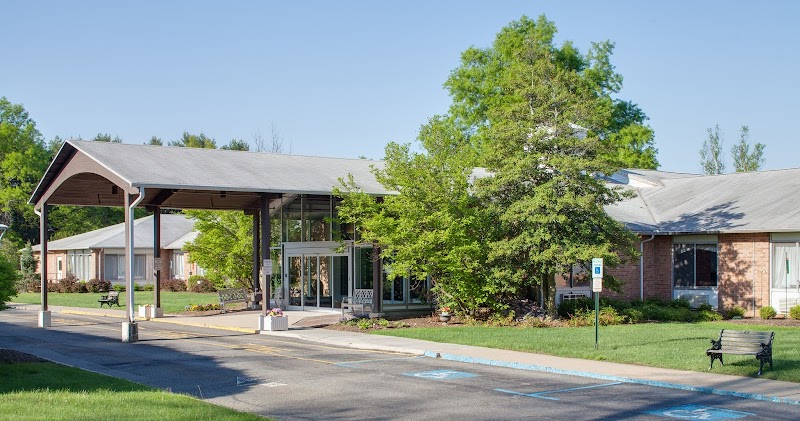


HOLLY MANOR CENTER

84 COLD HILL ROAD, MENDHAM, NJ 07945 (973) 543-2500
For profit - Limited Liability company 124 Beds GENESIS HEALTHCARE Data: November 2025
Trust Grade
48/100
#277 of 344 in NJ
Last Inspection: February 2025

Within standard 12-15 month inspection cycle. Federal law requires annual inspections.

Overview

Holly Manor Center has a Trust Grade of D, indicating below-average performance with some concerning issues. They rank #277 out of 344 facilities in New Jersey, placing them in the bottom half, and #18 out of 21 in Morris County, meaning there are very few local options that perform better. The facility is improving, having reduced the number of issues from 12 in 2023 to 9 in 2025, but it still reported 23 deficiencies in total, with one serious incident involving a resident's significant weight loss due to inadequate nutritional care. Staffing is a relative strength with a turnover rate of 23%, which is well below the state average, but the facility faces challenges with sanitation, as observed in multiple incidents where food items were not properly labeled and kitchen areas were not kept clean. Overall, while there are some positive aspects like staffing stability and a good quality measure rating, families should be aware of serious concerns regarding nutrition and cleanliness.

Trust Score
D
48/100
In New Jersey
#277/344
Bottom 20%
Safety Record
Moderate
Needs review
Inspections
Getting Better
12 → 9 violations
Staff Stability
✓ Good
23% annual turnover. Excellent stability, 25 points below New Jersey's 48% average. Staff who stay learn residents' needs.
Penalties
✓ Good
$9,770 in fines. Lower than most New Jersey facilities. Relatively clean record.
Skilled Nurses
○ Average
Each resident gets 35 minutes of Registered Nurse (RN) attention daily — about average for New Jersey. RNs are the most trained staff who monitor for health changes.
Violations
⚠ Watch
23 deficiencies on record. Higher than average. Multiple issues found across inspections.
★★☆☆☆
2.0
Overall Rating
★★★☆☆
3.0
Staff Levels
★★★★☆
4.0
Care Quality
★★☆☆☆
2.0
Inspection Score
Stable
2023: 12 issues
2025: 9 issues

The Good

  • 4-Star Quality Measures · Strong clinical quality outcomes
  • Low Staff Turnover (23%) · Staff stability means consistent care
  • Full Sprinkler Coverage · Fire safety systems throughout facility
  • No fines on record
  • Staff turnover is low (23%)

    25 points below New Jersey average of 48%

Facility shows strength in quality measures, staff retention, fire safety.

The Bad

2-Star Overall Rating

Below New Jersey average (3.2)

Below average - review inspection findings carefully

Federal Fines: $9,770

Below median ($33,413)

Minor penalties assessed

Chain: GENESIS HEALTHCARE

Part of a multi-facility chain

Ask about local staffing decisions and management

The Ugly 23 deficiencies on record

1 actual harm
Feb 2025 9 deficiencies
CONCERN (D)

Potential for Harm - no one hurt, but risky conditions existed

Comprehensive Care Plan (Tag F0656)

Could have caused harm · This affected 1 resident

Based on observation, interview, and record review, it was determined that the facility failed to develop and implement a comprehensive person-centered care plan (CP) that included refusal of care. Th...

Read full inspector narrative →
Based on observation, interview, and record review, it was determined that the facility failed to develop and implement a comprehensive person-centered care plan (CP) that included refusal of care. This deficient practice was identified for one (1) of 21 residents (Resident #93) reviewed for comprehensive person-centered CP. This deficient practice was evidenced by the following: On 2/4/25 at 10:35 AM, the surveyor observed Resident #93 lying in bed awake, screaming and yelling in their native language. A family member sat beside the resident, who could answer the surveyor's inquiry in simple English. On the same day, the surveyor interviewed the Licensed Practical Nurse (LPN#1), who stated that Resident #93 was refusing care, hitting and yelling at staff frequently. On 2/6/25 at 7:44 AM, the surveyor reviewed the hybrid medical record (paper and electronic) of Resident #93, which revealed the following: A review of the admission Record (an admission summary) (AR) reflected that Resident #93 was admitted with diagnoses that included but were not limited to cerebral infarction (blood flow to the brain was disrupted), adjustment disorder with depressed mood (state of general unhappiness), and other specified persistent mood disorders. A review of the admission Minimum Data Set (A/MDS), (an assessment tool used to facilitate the management of care) dated 1/7/25 indicated that the facility assessed the residents' cognitive status using a Brief Interview for Mental Status (BIMS) score of 9 out of 15, which indicated that the resident had moderately impaired cognition. A further review of the A/MDS revealed that the resident received antipsychotic and antidepressant medications on a routine basis. A review of the most recent Order Summary Report (OSR), with a start date of 12/31/24, reflected a physician's order for olanzapine 2.5 mg (milligram) by mouth every 8 (eight) hours for agitation and trazodone HCl (hydrochloride) 50 mg by mouth at bedtime for insomnia. A review of the January 2025 Medication Administration Record (MAR) revealed that the nurses signed that Resident #93 was administered olanzapine 2.5 mg by mouth every 8 hours for agitation and trazodone HCl 50 mg by mouth at bedtime for insomnia. A review of the recent Psychiatric Progress Note (PPN) dated 1/2/25 revealed that under assessment/plan, it is to continue to monitor mood and behavior for changes. A review of the Progress Notes (PN) in January and February 2025 revealed that the nurses documented Resident #93 has a behavior of chronic refusal of care, medication, and therapy and being uncooperative with care, yelling, being combative, and hitting staff. A review of the resident's individualized person-centered care plan (CP) with an initiated date of 1/1/25 reflected the focus that the resident is at risk for complications related to psychotropic drugs. The interventions included AIMS testing and a complete behavior monitoring flow sheet. The CP did not reflect the resident's behavior of refusing care. On 2/7/25 at 9:35 AM, the surveyor interviewed a Certified Nursing Assistant (CNA) who had been taking care of the resident since they were admitted to the facility. The CNA stated that the resident is refusing care, fighting, and being combative with the staff during care almost daily, and she will report it to the nurse. The resident will only listen to the family member, and then the CNA can give care. On 2/7/25 at 12:02 PM, the surveyor interviewed the Unit Manager/Registered Nurse (UM/RN), who stated that the resident has a behavior of hitting/screaming staff, and she added that it should be in the CP and added that she did not see any CP for the refusal of care. On 2/10/25 at 12:05 PM, the team of surveyors met with the Licensed Nursing Home Administrator (LNHA), Director of Nursing (DON), and Regional Clinical Lead (RCL) regarding the concern and no further information was provided. A review of the facility policy titled Person Centered Care Plan with the revision date of October 24, 2022, stated under Practice Standards 4. 4.2 Any services that would otherwise be required but are not provided due to the patient's exercise of rights, including the right to refuse treatment. NJAC 8:39-27.1(a)
CONCERN (D)

Potential for Harm - no one hurt, but risky conditions existed

Deficiency F0761 (Tag F0761)

Could have caused harm · This affected 1 resident

**NOTE- TERMS IN BRACKETS HAVE BEEN EDITED TO PROTECT CONFIDENTIALITY** Based on observation, interview, and record review, it was determined that the facility failed to properly label, dispose and se...

Read full inspector narrative →
**NOTE- TERMS IN BRACKETS HAVE BEEN EDITED TO PROTECT CONFIDENTIALITY** Based on observation, interview, and record review, it was determined that the facility failed to properly label, dispose and secure medications in four (4) of six (6) medication carts inspected and one (1) of three (3) medication refrigerators inspected. This deficient practice was evidenced by the following: On [DATE] at 10:35 AM, the surveyor inspected the subacute medication cart in the presence of a Licensed Practical Nurse (LPN#1). The surveyor observed an unopened and undated Lantus insulin pen that had a pharmacy date of [DATE] and was stored in the medication cart. The surveyor also observed an unlocked medication refrigerator inside the nursing station that contained two (2) Vancomycin IV (intravenous) bags. The were no residents in the vicinity of the nursing station. At that time, the surveyor interviewed LPN#1 who stated once Lantus insulin pen is removed from the refrigerator that the insulin should have been dated. LPN #1 acknowledge that the medication refrigerator should have been lock and in the presence of the surveyor the nurse locked the medication refrigerator. On [DATE] at 10:40 AM, the surveyor inspected the South medication cart #1 in the presence of a Registered Nurse (RN#1). The surveyor observed two (2) Lantus Insulin pens that were unopened and not date dated and was stored in the medication cart. The surveyor also observed two opened bottles of Xalatan eye drops that had no opened date and had a pharmacy label date of [DATE]. At that time, the surveyor interviewed RN #1 who acknowledge that unopened Lantus insulin pens should have been stored in the medication refrigerator. RN#1 also acknowledge that once Xalatan eye drops are removed from the medication refrigerator and opened that it should be dated. On [DATE] at 10:50 AM, the surveyor inspected the South medication cart #2 in the presence of LPN #2. The surveyor observed an opened Xalatan eye drops that had an opened date of [DATE] and was expired. At that time, the surveyor interviewed LPN #2 who acknowledge that the Xalatan eye drops had a 42-day expiration date and was expired, and the eye drops should have been removed from the medication cart. On [DATE] at 10:55 AM, the surveyor inspected the North medication cart #2 in the presence of RN #2. The surveyor observed an opened bottle of blood glucose test strips that contained no opened date. At that time, the surveyor interviewed RN #2 who acknowledge that once a bottle of blood glucose test strips is opened that it should have been dated. A review of the manufacturer's specifications revealed the following: 1. Unopened Lantus Insulin pen should be stored in the medication refrigerator 2. Xalatan eye drops once opened have an expiration date of 42-days. 3. Blood glucose test strips once opened have an expiration date of 90-days. On [DATE] at 12:05 PM, the survey team met with the Licensed Nursing Home Administrator, Director of Nursing (DON) and the Regional Nurse to discuss the above concerns. There was no additional information provided. A review of the facility's policy titled Medication Administration with a revision date of 1/2025 revealed the following: 8. Check expiration date on package/container. No expired medication will be administered to a resident. a. Drugs dispensed in manufacturer's original container will be labeled with the manufacturer's expiration date. b. Refer to the Medications with shortened Expiration Date reference. If the medication has a shortened expiration date, follow manufacturer's guidelines for labeling. c. Certain products or package types such as multi-dose vials and ophthalmic drops have specified shortened end-of-use dating, once opened, to ensure medication purity and potency. When date open expiration dating is not available from manufacturer, the following may be considered in determining facility policy: - Multi-dose vials: 28 days after open date or per manufacturer's guidelines - Ophthalmic preparations (solutions, suspensions, ointments): discard per manufacturer's guidelines or may implement a facility specific policy for shortened expiration dates. 17. During administration of medications, the medication cart is kept closed and locked when out of sight of the medication nurse. No medications are kept on top of the cart. The cart must clearly visible to the personnel administering medications when unlocked. NJAC: 8:39-29.4 (a) (h) (d)
CONCERN (D)

Potential for Harm - no one hurt, but risky conditions existed

Medical Records (Tag F0842)

Could have caused harm · This affected 1 resident

**NOTE- TERMS IN BRACKETS HAVE BEEN EDITED TO PROTECT CONFIDENTIALITY** Based on observation, interview, review of medical records and other pertinent facility documentation it was determined that the...

Read full inspector narrative →
**NOTE- TERMS IN BRACKETS HAVE BEEN EDITED TO PROTECT CONFIDENTIALITY** Based on observation, interview, review of medical records and other pertinent facility documentation it was determined that the facility failed to maintain medical records accurately and completely in accordance with acceptable standards and practice by the Registered Dietitian (RD) not signing a nutrition note at the time of assessment. This deficient practice was identified for 1 of 4 residents (Resident #5) reviewed for nutrition and was evidenced by the following: On 2/04/25 at 11:02 AM, the surveyor observed and interviewed Resident #5 at bedside. The resident stated they have been in the facility for about three months and were currently on an altered consistency diet for dysphagia, but they were not sure when the RD had assessed them last. The surveyor reviewed Resident #5 electronic medical record (EMAR) including the resident's Face Sheet (an admission record) which revealed that the resident had been admitted to the facility on [DATE] with diagnosis that included pneumonia, moderate protein-calorie malnutrition, and Parkinson's disease. A review of the quarterly Minimum Data Set (MDS), an assessment tool, used to facilitate the management of care, dated 12/3/24, revealed that the resident had a score of 15 out of 15 on the Brief Interview for Mental Status (BIMS), which indicated that the resident was cognitively intact. The MDS also revealed that the resident received a mechanically altered and therapeutic diet. A review of the progress notes in the EMAR revealed a nutrition consult note with an effective date of 12/13/24 labeled as a draft. The nutrition consult note was observed having not been signed off by the RD. On 2/10/25 at 12:05 PM, the surveyor met with the Licensed Nursing Home Administrator (LNHA), Director of Nursing (DON) and Regional Clinical Lead (RCL) to review facility concerns. The LNHA stated all clinical documentation should be signed at the time of service. On 2/10/25 at 11:36 AM, the surveyor conducted a phone interview with the RD who stated, they wrote nutrition consultant note for Resident #5 but had not signed the note upon completion and that is why the note is showing as view draft. RD unable to provide any further details on why no other staff member had not alerted the RD until surveyor investigation. On 2/11/25 at 9:00 AM, the LNHA provided to surveyor with a facility policy titled, Medical Nutrition therapy: Assessment and Care Planning, with a revised date of 9/2017. Under the procedures section of the chart revealed, The RD or other clinically qualified nutrition professional will be responsible for completion of a comprehensive assessment annually, upon referral, or a indicated by clinical condition of the resident. On 2/11/25 11:14 AM, the surveyor met with the LHNA, DON, RCL, and the Market Clinical Advisor (MCA) for the exit conference. No further information provided by the facility staff. NJAC 8:39-35.2(d)6,16(e)
CONCERN (E)

Potential for Harm - no one hurt, but risky conditions existed

Pharmacy Services (Tag F0755)

Could have caused harm · This affected multiple residents

Based on interviews, and review of pertinent facility documents, it was determined that the facility failed to (a). provide pharmaceutical services in accordance with professional standards to ensure ...

Read full inspector narrative →
Based on interviews, and review of pertinent facility documents, it was determined that the facility failed to (a). provide pharmaceutical services in accordance with professional standards to ensure accurate documentation of the receipt of a controlled substance for 6 of 6 Schedule II controlled substance medications ordered and received by the facility for use as an emergency backup supply, on three Drug Enforcement Agency (DEA) 222 Forms (a form used to order controlled substances from a provider) reviewed and (b) to follow a physician orders (PO) for the administration of blood pressure medications for 1 or 1 resident's (Resident#60) reviewed for blood pressure management. The deficient practice was evidenced by the following: Reference: 21 CFR 1305.13 Procedure for filling DEA Forms 222. Reference: New Jersey Statutes Annotated, Title 45. Chapter 11. Nursing Board. The Nurse Practice Act for the State of New Jersey states: The practice of nursing as a registered professional nurse is defined as diagnosing and treating human responses to actual and potential physical and emotional health problems, through such services as case-finding, health teaching, health counseling, and provision of care supportive to or restorative of life and wellbeing, and executing medical regimens as prescribed by a licensed or otherwise legally authorized physician or dentist. Reference: New Jersey Statutes Annotated, Title 45, Chapter 11. Nursing Board. The Nurse Practice Act for the State of New Jersey states: The practice of nursing as a licensed practical nurse is defined as performing tasks and responsibilities within the framework of case finding; reinforcing the patient and family teaching program through health teaching, health counseling, and provision of supportive and restorative care, under the direction of a registered nurse or licensed or otherwise legally authorized physician or dentist. On 2/05/25 at 11:15 AM, the surveyor reviewed a binder provided by the Director of Nursing (DON), containing, but not limited to; facility DEA 222 Forms, copies of medical director state and federal controlled substance registration certificates, and packing slips associated with the DEA 222 Forms for controlled substance deliveries. A review of the facility DEA 222 Forms that were filled out and used to order controlled substances (CDS) revealed the following: DEA 222 Form with order form # 231868319 dated 01/09/24, for one box of five (5) Fentanyl 25 microgram (mcg) patches, one box of five (5) fentanyl 50 mcg patches, thirty (30) tablets of oxycodone 15 milligram (mg) tablets, fifty (50) tablets of oxycodone 5 mg tablets, and thirty (30) tablets of oxycodone/acetaminophen 5/325 mg tablets (a schedule II-CDS used for pain) with the section Part 5: to be filled in by purchaser, number received, date received, not filled in. A supplier packing slip for the items was present. DEA 222 Form with order form # 231868317 dated 02/26/24, for one box of five (5) Fentanyl 25 mcg patches, one box of five (5) fentanyl 50 mcg patches, one box of five (5) fentanyl 12 mcg patches, twenty (20) tablets of Morphine Sulfate SA (extended release) tablets, thirty(30) tablets of oxycodone 5 mg tablets, and twenty (20) tablets of oxycodone 15 mg tablets (a schedule II-CDS used for pain) with the section Part 5: to be filled in by purchaser, number received, date received, not filled in. A supplier packing slip for the items was present. DEA 222 Form with order form # 231868325 dated 04/02/24, for two boxes of five (5) Fentanyl 25 mcg patches, two boxes of five (5) fentanyl 50 mcg patches, one box of five (5) fentanyl 12 mcg patches, fifty (50) tablets of oxycodone 5 mg tablets, and 5 cups of five (5) ml of morphine sulfate 10 mg/5ml liquid (a schedule II-CDS used for pain) with the section Part 5: to be filled in by purchaser, number received, date received, not filled in. A supplier packing slip for the items was present. DEA 222 Form with order form # 231868321 dated 05/22/24, thirty (30) tablets of hydromorphone 2 mg tablets, and thirty (30) tablets of morphine sulfate immediate release 15 mg tablets (a schedule II-CDS used for pain) with the section Part 5: to be filled in by purchaser, number received, date received, not filled in. A supplier packing slip for the items was present. DEA 222 Form with order form # 240840168 dated 10/03/24, thirty (30) tablets of hydromorphone 2 mg tablets, and thirty (30) tablets of morphine sulfate immediate release 15 mg tablets (a schedule II-CDS used for pain) with the section Part 5: to be filled in by purchaser, number received, date received, not filled in. A supplier packing slip for the items was present. DEA 222 Form with order form # 240840167 dated 12/02/24, thirty (30) tablets of oxycodone 5 mg tablets (a schedule II-CDS used for pain) with the section Part 5: to be filled in by purchaser, number received, date received, not filled in. A supplier packing slip for the items was present. On 02/05/25 at 11:10 AM, the surveyor in the presence of the Director of Nursing (DON) reviewed all the above DEA 222 forms. After reviewing all the above DEA 222 forms the DON acknowledge that none of the above DEA 222 forms were filled out under part 5 which was the section that was supposed to be filled out by the purchaser (the facility) which will include documenting the quantity received and the date received. b). On 02/05/25 at 10:19 AM, the surveyor observed Resident #60 in their room, the resident was observed seated in a chair and was watching television. The resident was alert and oriented and was wearing a knee brace on their left knee. The surveyor reviewed Resident #60's medical record. A review of the admission Record (an admission summary) reflected that the resident was admitted to the facility with diagnoses that included but not limited to hypertension (a condition in which the force of the blood against the artery walls is too high), congestive heart failure (a chronic condition in which the heart doesn't pump blood as well as it should), and hyperlipidemia (a condition in which there are high levels of fat particles (lipids) in the blood). A review of the annual Minimum Data Set (MDS), an assessment tool used to facilitate the management of care dated 12/03/24, reflected that the resident's cognitive skills for daily decision-making score was 15 out of 15 which indicated that the resident was cognitively intact. A review of the Order Summary Report (OSR) revealed a PO dated 09/19/24, Cozaar Tablet 25 MG (milligrams) (Losartan), give 1 tablet by mouth one time a day for hypertension. Hold for SBP (systolic blood pressure-top number of blood pressure) below 110. A review of the December 2024 electronic Medication Administration Record (eMAR) revealed a PO dated 09/19/24, for Cozaar tablet 25 mg tablet, give 1 tablet by mouth one time a day. Hold for SBP less than 110. Further review of eMAR revealed that the Cozaar 25 mg tablet was signed as administered ten (10) times without the resident's blood pressure (BP) being documented on the eMAR on the following days: 12/01/24, 12/07/24, 12/8/24, 12/09/24, 12/13/24, 12/19/24, 12/21/24, 12/22/24, 12/25/24 and 12/30/24. A review of the January 2025 eMAR revealed a PO dated 09/19/24, for Cozaar tablet 25 mg tablet, give 1 tablet by mouth one time a day. Hold for SBP less than 110. Further review of eMAR revealed that the Cozaar 25 mg tablet was signed as administered fourteen (14) times without the resident's BP being documented on the eMAR on the following days: 01/04/25, 01/05/25, 01/06/25, 01/10/25, 01/13/25, 01/14/25, 01/16/25, 01/18/25, 01/19/25, 01/21/25, 01/24/25, 01/26/25, 01/27/25, and 01/30/25. A review of the February 2025 eMAR revealed a PO dated 09/19/24, for Cozaar tablet 25 mg tablet, give 1 tablet by mouth one time a day. Hold for SBP less than 110. Further review of eMAR revealed that the Cozaar 25 mg tablet was signed as administered two (2) times without the resident's BP being documented on the eMAR on the following days: 02/01/25 and 02/02/25. On 02/05/25 at 11:00 AM, the surveyor reviewed Resident #60's eMAR in the presence of a South unit Licensed Practical Nurse (LPN#1). The LPN acknowledge that Cozaar had a perimeter to hold for BP less than 110 and that on multiple occasions from December 2024 through February 2025 a nurse omitted documenting the resident's blood pressure when administering the resident's Cozaar. She further stated that since they had no blood pressure documented on the eMAR that there was no way to tell what the resident's systolic BP was when the medication was administered. She further stated that when a resident had perimeters to hold a medication that the blood pressure needs to be documented on the eMAR. On 02/10/25 at 12:05 PM, the survey team met with the Licensed Nursing Home Administrator, Director of Nursing (DON) and the Regional Nurse to discuss the above concerns. There was no additional information provided. A review of the facility's policy titled Controlled Drugs: Management that had a revision date of 01/31/25 revealed the following: Receipt: Controlled substances are received in separate containers with separate invoices. Licensed nursing staff must accept delivery and take responsibility for receipt of controlled substances. A review of the facility's policy titles Medication Administration that had a revision date of 01/2025 revealed the following: Under Medication Administration: 2. Obtain and record any vital signs as necessary prior to medication administration. NJAC 8:39-11.2 (b), 29.2 (d)
CONCERN (E)

Potential for Harm - no one hurt, but risky conditions existed

Drug Regimen Review (Tag F0756)

Could have caused harm · This affected multiple residents

Based on interview, record review, and review of other pertinent facility documentation, it was determined that the facility failed to ensure the Consultant Pharmacist (CP) identified and reported irr...

Read full inspector narrative →
Based on interview, record review, and review of other pertinent facility documentation, it was determined that the facility failed to ensure the Consultant Pharmacist (CP) identified and reported irregularities in the resident's medical record, to the facility staff, and attending physician. This deficient practice was identified for one (1) of twenty (24) residents reviewed, (Resident #60) for medication management and was evidenced by the following: On 2/5/25 at 10:19 AM, the surveyor observed Resident #60 in their room, the resident was observed seated in a chair and was watching television. The resident was alert and oriented and was wearing a knee brace on their left knee. The surveyor reviewed Resident #60's medical record. A review of the admission Record (an admission summary) reflected that the resident was admitted to the facility with diagnoses that included but not limited to hypertension (a condition in which the force of the blood against the artery walls is too high), congestive heart failure (a chronic condition in which the heart doesn't pump blood as well as it should), and hyperlipidemia (a condition in which there are high levels of fat particles (lipids) in the blood). A review of the annual Minimum Data Set (MDS), an assessment tool used to facilitate the management of care dated 12/03/24, reflected that the resident's cognitive skills for daily decision-making score was 15 out of 15 which indicated that the resident was cognitively intact. A review of the Order Summary Report (OSR) revealed a physician's order (PO) dated 9/19/24, Cozaar Tablet 25 MG (milligrams) (Losartan), give 1 tablet by mouth one time a day for hypertension. Hold for SBP (systolic blood pressure-top number of blood pressure) below 110. A review of the December 2024 electronic Medication Administration Record (eMAR) revealed a PO dated 9/19/24, for Cozaar tablet 25 mg tablet, give 1 tablet by mouth one time a day. Hold for SBP less than 110. A Further review of eMAR revealed that the Cozaar 25 mg tablet was signed as being administered ten (10) times without the resident's blood pressure (BP) being documented on the eMAR on the following days: 12/1/24, 12/7/24, 12/8/24, 12/9/24, 12/13/24, 12/19/24, 12/21/24, 12/22/24, 12/25/24 and 12/30/24. A review of the January 2025 eMAR revealed a PO dated 9/19/24, for Cozaar tablet 25 mg tablet, give 1 tablet by mouth one time a day. Hold for SBP less than 110. A Further review of eMAR revealed that the Cozaar 25 mg tablet was signed as administered fourteen (14) times without the resident's BP being documented on the eMAR on the following days: 1/4/25, 1/5/25, 1/6/25, 1/10/25, 1/13/25, 1/14/25, 1/16/25, 1/18/25, 1/19/25, 1/21/25, 1/24/25, 1/26/25, 1/27/25, and 1/30/25. A review of the February 2025 eMAR revealed a PO dated 9/19/24, for Cozaar tablet 25 mg tablet, give 1 tablet by mouth one time a day. Hold for SBP less than 110. Further review of eMAR revealed that the Cozaar 25 mg tablet was signed as administered two (2) times without the resident's bp being documented on the Emar on the following days: 2/1/25 and 2/2/25. On 2/5/25 at 11:00 AM, the surveyor reviewed Resident #60's eMAR in the presence of a South unit Licensed Practical Nurse (LPN#1). The LPN acknowledge that Cozaar had a perimeter to hold for BP less than 110 and that on multiple occasions from December 2024 through February 2025 a nurse omitted documenting the resident's blood pressure when administering the resident's Cozaar. She further stated that since they had no blood pressure documented on the eMAR that it was no way to tell what the resident's systolic BP was when the medication was administered. She further stated that when a resident had perimeters to hold a medication that the blood pressure needs to be documented on the eMAR. The LPN further stated that this was something that the Consultant Pharmacist (CP) would identify during their monthly medication reviews. The surveyor reviewed the Consultant Pharmacist's Medication Regimen Review from December 2024 through February 2025 which revealed that the CP failed to identify that the facility nurse was not documenting the resident's BP for a medication that had a perimeter to hold a blood pressure medication. On 2/10/25 at 10:15 AM, the surveyor called the CP who told the surveyor that she was unable to answer any questions because she was on medical leave. She gave the phone number of her supervisor. The surveyor left a message with the supervisor and never received a follow-up phone call. On 2/10/25 at 11:00 AM, the surveyor interviewed the Director of Nursing (DON) who told the surveyor that it was the CP's responsibility to identified and then notified the facility when a nurse are not documenting the BP for a resident who has a perimeter to hold a blood pressure medication. On 2/10/25 at 12:05 PM, the surveyor presented the above concerns to the facility administrative staff which included the Licensed Nursing Home Administrator (LNHA). The DON and the Regional nurse. No further information was provided. On 2/10/25 at 12:05 PM, the surveyor met with the Licensed Nursing Home Administrator, Director of Nursing (DON) and the Regional Nurse to discuss the above concerns. There was no additional information provided. A review of the facility's policy for Consultant Pharmacist Services Provider Requirements dated 1/31/23 included the following: Communicate to the responsible prescriber, the facility's medical director and the director of nursing potential or actual problems detected, and other findings related to medication therapy orders at least monthly. Communicate recommendations for changes in medication therapy and the monitoring of medication therapy. NJAC 8:39-29.3
CONCERN (E)

Potential for Harm - no one hurt, but risky conditions existed

Medication Errors (Tag F0758)

Could have caused harm · This affected multiple residents

**NOTE- TERMS IN BRACKETS HAVE BEEN EDITED TO PROTECT CONFIDENTIALITY** Based on observation, interview, and record review, it was determined that the facility failed to consistently monitor, document...

Read full inspector narrative →
**NOTE- TERMS IN BRACKETS HAVE BEEN EDITED TO PROTECT CONFIDENTIALITY** Based on observation, interview, and record review, it was determined that the facility failed to consistently monitor, document, and evaluate the ongoing benefits of continued use of psychoactive medications according to the facility's policy for 4 of 6 residents reviewed for unnecessary medications (Resident#4,#45, #68, and #93). The deficient practice was evidenced by the following: 1. On 2/4/25 at 10:35 AM, the surveyor observed Resident #93 lying in bed awake, screaming and yelling in their native language. A family member sat beside the resident, who could answer the surveyor's inquiry in simple English. On the same day, the surveyor interviewed the Licensed Practical Nurse (LPN#1), who stated that Resident #93 was refusing care, hitting and yelling at staff frequently. On 2/6/25 at 7:44 AM, the surveyor reviewed the hybrid medical record (paper and electronic) of Resident #93, which revealed the following: A review of the admission Record (an admission summary) (AR) reflected that Resident #93 was admitted with diagnoses that included but were not limited to cerebral infarction (blood flow to the brain was disrupted), adjustment disorder with depressed mood (state of general unhappiness), and other specified persistent mood disorders. A review of the admission Minimum Data Set (A/MDS), (an assessment tool used to facilitate the management of care) dated 1/7/25 indicated that the facility assessed the residents' cognitive status using a Brief Interview for Mental Status (BIMS) score of 9 out of 15, which indicated that the resident had moderately impaired cognition. A further review of the A/MDS revealed that the resident received antipsychotic and antidepressant medications on a routine basis. A review of the most recent Order Summary Report (OSR), with a start date of 12/31/24, reflected a physician's order for olanzapine 2.5 mg (milligram) by mouth every 8 (eight) hours for agitation and trazodone HCl (hydrochloride) 50 mg by mouth at bedtime for insomnia. A review of the January 2025 Medication Administration Record (MAR) revealed that the nurses signed that Resident #93 was administered olanzapine 2.5 mg by mouth every 8 hours for agitation and trazodone HCl 50 mg by mouth at bedtime for insomnia. The January 2025 MAR did not reflect the resident's target behavior of screaming, hitting, and refusing care. A review of the recent Psychiatric Progress Note (PPN) dated 1/2/25 revealed under assessment/plan, to continue to monitor mood and behavior for changes. The documentation did not reflect monitoring of side effects and target behavior with the use of psychotropic medications. A review of the Progress Notes (PN) in January and February 2025 revealed that the nurses documented Resident #93 has a behavior of chronic refusal of care, medication, and therapy and being uncooperative with care, yelling, being combative, and hitting staff. A review of the resident's individualized person-centered care plan (CP) with an initiated date of 1/1/25 reflected the focus that the resident is at risk for complications related to psychotropic drugs. The interventions included AIMS testing and a complete behavior monitoring flow sheet. The CP did not reflect specific target behaviors for the use of psychotropic medication and non-pharmacological interventions to decrease behaviors and symptoms associated with agitation and insomnia. There was no Abnormal Involuntary Movement Scale (AIMS) assessment to reflect that the resident is receiving anti-psychotic medications according to the facility's policy and CP intervention. There was no Psychotropic/Therapeutic Medication Use Evaluation assessment to reflect that the resident was being monitored routinely with the use of psychotropic medications according to the facility's policy. 2. On 2/4/25 at 10:55 AM, the surveyor observed Resident #68 sitting in bed awake and able to answer the surveyor's inquiry. On 2/10/25 at 11:56 AM, the surveyor reviewed the hybrid medical record of Resident #68, which revealed the following: A review of the AR reflected that Resident #68 was admitted with diagnoses that included but were not limited to hemiplegia (paralysis on one side of the body) and hemiparesis (weakness on the same side) following unspecified cerebrovascular (blood flow on the brain) disease affecting the right dominant side and unspecified dementia (loss of memory), unspecified severity with agitation. A review of the most recent quarterly MDS (Q/MDS) dated [DATE] indicated that the facility assessed the residents' cognitive status using a BIMS score of 13 out of 15, which indicated that the resident had intact cognition. A further review of the Q/MDS revealed that the resident received antipsychotic medications on a routine basis. A review of the most recent OSR, with a start date of 8/13/24, reflected a physician's order for Seroquel 25 mg (quetiapine fumarate) by mouth in the evening for dementia with behavioral disturbance. A review of the January 2025 MAR revealed that the nurses signed that Resident #68 was Seroquel 25 mg (quetiapine fumarate) by mouth in the evening for dementia with behavioral disturbance at 8:00 PM. The January 2025 MAR did not reflect the resident's target behavior and potential side effects of the psychotropic medication used. A review of the recent PPN dated 1/23/25 revealed that under assessment/plan, it is to continue to monitor mood and behavior for changes. The documentation did not reflect monitoring of side effects and target behavior with the use of psychotropic medications. A review of the PN on November 26, 2024, revealed under Medical Practitioner Note that Resident #93 has a history of combative and exit-seeking behavior and was sent to the emergency room and started Seroquel in July 2024. A review of the resident's individualized person-centered CP with an initiated date of 9/24/24 reflected the focus that the resident is at risk for complications related to psychotropic drugs. The interventions included outbursts of anger and monitoring for side effects of the medication. The CP did not reflect specific target behaviors for the use of psychotropic medication and non-pharmacological interventions to decrease behaviors and symptoms associated with behavioral disturbance. There was an AIMS assessment on 1/19/25, but it was not completed. There have been no other AIMS assessments since August 2024, when the psychotropic medication was used. There was no Psychotropic/Therapeutic Medication Use Evaluation assessment to reflect that the resident was being monitored routinely with the use of psychotropic medications according to the facility's policy. 3. On 2/4/25 at 10:45 AM, the surveyor observed Resident #4 asleep in bed. On 2/10/25 at 10:45 AM, the surveyor reviewed the hybrid medical record of Resident #4, which revealed the following: A review of the AR reflected that Resident #4 was admitted with diagnoses that included but were not limited to unspecified psychosis (mental condition), not due to a substance or known physiological condition, unspecified mood affective (feeling/attitude) disorder, and major depressive disorder, single episode severe with psychotic features. A review of the recent Q/MDS dated [DATE] indicated that the facility assessed the residents' cognitive status using a BIMS score of 6 out of 15, indicating severely impaired cognition. A further review of the Q/MDS revealed that the resident received antipsychotic and antidepressant medications on a routine basis. A review of the most recent OSR reflected a physician's order for olanzapine 2.5 mg by mouth every morning and at bedtime for psychosis with a start date of 7/17/24 and sertraline HCl 100 mg by mouth at bedtime for depression with a start date of 11/23/22. A review of the January 2025 MAR revealed that the nurses signed that Resident #4 was olanzapine 2.5 mg by mouth every morning and at bedtime for psychosis at 9:00 AM and PM and sertraline HCl 100 mg by mouth at bedtime for depression at 9:00 PM. The January 2025 MAR did not reflect the resident's target behavior and potential side effects of the psychotropic medication used. A review of the recent PPN dated 1/2/25 revealed that under assessment/plan, it is to continue to monitor mood and behavior for changes. The documentation did not reflect monitoring of side effects and target behavior with the use of psychotropic medications. A review of the PN on June 14, 2024, revealed under assessment that Resident #4 has a behavior of verbally abusive and refused medication. A review of the resident's individualized person-centered CP with an initiated date of 11/23/22 reflected the focus that Resident #4 exhibited behavior as evidenced by swinging at others, cursing, yelling, and refusal of medication related to psychiatric disorder. The goal included the resident having no more than two episodes per week of physically combative behaviors and verbal aggression. An AIMS assessment was done on 1/19/25, 8/2/24 and 2/2/24, but it was not done quarterly. There were quarterly assessments for Psychotropic/Therapeutic Medication Use Evaluation assessments on 12/14/24, 9/14/24, and 6/14/24. 4. On 2/4/25 at 11:00 AM, the surveyor observed Resident #45 in bed, awake, watching television, and able to answer the surveyor's inquiry. On 2/7/25 at 11:50 AM, the surveyor reviewed the hybrid medical record of Resident #45, which revealed the following: A review of the AR reflected that Resident #45 was admitted with diagnoses that included but were not limited to schizophrenia (conditions that affect how people think, feel, and behave) unspecified, and major depressive disorder, recurrent, unspecified. A review of the recent annual MDS (An/MDS) dated [DATE] indicated that the facility assessed the residents' cognitive status using a BIMS score of 15 out of 15, indicating intact cognition. A further review of the An/MDS revealed that the resident received antipsychotic and antidepressant medications on a routine basis. A review of the most recent OSR reflected a physician's order for risperidone 1.0 mg by mouth at bedtime for behavioral problems with order date of 7/5/24, risperidone 0.5 mg by mouth one time a day for behavioral issues-psychosis with an order date of 2/7/25, mirtazapine 15 mg by mouth at bedtime for depression order date of 7/5/24 and duloxetine HCl 30 mg by mouth one time a day for depression with an order date of 7/5/24. A review of the January 2025 MAR revealed that the nurses signed that Resident #45 risperidone 1.0 mg by mouth at bedtime at 8:00 PM, risperidone 0.5 mg by mouth one time a day at 8:00 AM, mirtazapine 15 mg by mouth at bedtime at 8:00 PM, and duloxetine HCl 30 mg by mouth one time a day at 8:00 AM. The January 2025 MAR did not reflect the resident's target behavior and potential side effects of the psychotropic medication used. There was no further documentation to reflect that the resident was being monitored routinely with the use of psychotropic medications after the increase of dosage of risperidone 0.5 mg by mouth one time a day for behavioral issues with a start date of 2/7/25 from January to February 2025. A review of the recent PPN dated 1/23/25 revealed that under assessment/plan, it is to continue to monitor mood and behavior for changes. The documentation did not reflect monitoring of side effects and target behavior with the use of psychotropic medications. There was an AIMS assessment on 1/19/25, that was not completed. There have been no other AIMS assessments after July 2024, when the psychotropic medication was used. There were quarterly assessments for Psychotropic/Therapeutic Medication Use Evaluation assessments on 12/1/24, 9/1/24, and 6/1/24. On 2/7/25 at 12:50 PM, the surveyor interviewed LPN#2 regarding the above concern. LPN#2 revealed that the nurses documented the side effects only if the resident had a side effect but did not provide documentation of the targeted behavior monitoring. On 2/10/25 at 11:47 AM, the surveyor interviewed the Psychiatrist over the phone. She stated that she saw the resident monthly and interviewed the staff to see if any side effects were noted during visits. If there is a behavior issue, the staff would report it to her. On 2/11/25 at 9:34 AM, the surveyor interviewed the Director of Nursing, who acknowledged that the nurse did not assess the target behavior and its side effects. No further information was provided. A review of the facility policy with the revision date 7/1/24 titled Behaviors: Management of Symptoms, under Purpose .using non-pharmacological approaches . and under Practice Standards 6. 6.2 Complete the Psychotropic/Therapeutic Medication use Evaluation ., and 6.3 Complete the Abnormal Involuntary Movement Scale . NJAC 8:39-29.3(a); 29.8; 33.2(a)
CONCERN (E)

Potential for Harm - no one hurt, but risky conditions existed

Infection Control (Tag F0880)

Could have caused harm · This affected multiple residents

Based on observation, interview, review of medical records, and pertinent facility documentation, it was determined that the facility failed to a.) follow appropriate infection control practices for h...

Read full inspector narrative →
Based on observation, interview, review of medical records, and pertinent facility documentation, it was determined that the facility failed to a.) follow appropriate infection control practices for handling and storing linens observed in the laundry room and b.) ensure the clean linen room is free from soiled clothes and devices. This deficient practice was evidenced by the following: On 2/5/25 at 12:37 PM, the surveyor and the Infection Preventionist (IP) observed the laundry room; the surveyor observed a cart full of linen. Some were in the plastic, and some were not, with no cover. The Housekeeping (HK) staff stated that all of those linens are clean and ready to be transported to the North unit, while the linen covered with plastics is from the residents who are no longer in the facility. The HK staff stated that after washing the linen, they put them inside the plastic, but he cannot explain why some of them were not in the plastic or not covered. On the same day, the surveyor observed piles of pillows almost touching the ceiling of the linen room; some were covered, and some were not, and there were heel boots on top of the pile of pillows. The IP stated that the pillows should not touch the ceiling due to fire hazards. Furthermore, the surveyor observed a pile of clothes, luggage, and a floor mat lying on the floor. The IP cannot explain if those clothes and devices are clean. On 2/10/25 at 12:05 PM, the surveyor met with the Licensed Nursing Home Administrator (LNHA), Director of Nursing (DON), and Regional Clinical Lead (RCL) regarding the concern but did not provide further information. On 2/5/25 at 1:30 PM, the IP provided a policy titled Linen Handling, with a revision date of 5/1/24 under Process 2. 2.1 Keep clean linen covered.2.2 Keep clean storage area separate from soiled storage area. NJAC 8:39 - 19.1
CONCERN (F)

Potential for Harm - no one hurt, but risky conditions existed

Food Safety (Tag F0812)

Could have caused harm · This affected most or all residents

Repeat Deficiency Based on observation, interview, and review of facility policies, it was determined that the facility failed to maintain proper kitchen sanitation practices in a manner to prevent f...

Read full inspector narrative →
Repeat Deficiency Based on observation, interview, and review of facility policies, it was determined that the facility failed to maintain proper kitchen sanitation practices in a manner to prevent food borne illness. This deficient practice was observed and evidenced by the following: On 2/4/25 at 9:47 AM, the surveyor in the presence of the Food Service Director (FSD) observed the following during the kitchen tour: 1. In the dry storage area, the surveyor observed a 16 ounce (oz) opened bottle of maple syrup labeled with a use by date of 1/1/24 and an opened 1 gallon opened container of cooking oil labeled with a use by date 1/5/24. The FSD stated both of those items should have been discarded per the use by date. 2. In the walk-in refrigerator, the surveyor observed a 1-gallon opened fat free Italian dressing without a label displaying the open and use by dates. The surveyor also observed a blackish dust like substance on the fan grate of the refrigerator. observed with a black colored substance. The FSD stated the Italian dressing should have been discarded and the fan grate would be cleaned by the maintenance department immediately. 3. On the chef preparation table, the surveyor observed a 1 gallon opened container of Red Wine Vinegar labeled with a use by date of 1/5/25. The FSD stated the vinegar should have been discarded per the use by date. On 2/10/25 at 12:05 PM, the surveyor met with the Licensed Nursing Home Administrator (LNHA), Director of Nursing (DON) and Regional Clinical Lead (RCL) to review facility concerns. The LNHA stated all items in the kitchen should be discarded by their use by dates. On 2/10/25 at 12:50 PM, the DON provided the surveyor with copies of three facility policies. The facility policy titled, Food Storage Dry Goods with a revised dated of 2/2023, stated under the procedures section, 6. Storage areas will be meat, arranged for easy identification, and date marked at appropriate. The facility policy titled, Food Storage: Cold Foods with a revised date of 2/2023, stated under the procedures, 5. All foods will be stored wrapped or in covered containers, labeled and dated. The facility policy titled, Equipment with a revised date of 9/2017, stated under the procedures sections, 1. All equipment will be routinely cleaned and maintained .4. All non-food contact equipment will be cleaned and free of debris. On 2/11/25 at 11:14 AM, the surveyor met with the LNHA, DON, RCL and Marketing Clinical Advisor (MCA) for the exit conference. No further information provided by the facility staff. NJAC 8:39-17.2(g)
CONCERN (F)

Potential for Harm - no one hurt, but risky conditions existed

Garbage Disposal (Tag F0814)

Could have caused harm · This affected most or all residents

Based on observation, interviews, and review of other facility documentation, it was determined that the facility failed to provide a sanitary environment for residents, staff, and the public by faili...

Read full inspector narrative →
Based on observation, interviews, and review of other facility documentation, it was determined that the facility failed to provide a sanitary environment for residents, staff, and the public by failing to keep the dumpster and surrounding area free of garbage and debris. On 2/4/25 at 9:47 AM, the surveyor toured in the presence of the Food Service Director (FSD) toured the kitchen and the designated garbage area and observed the following: There was garbage debris that included food wrapper, cups, gloves, paper products, and medication cups, surrounding the dumpster and surrounding areas. The FSD stated that the area should have been clean by the maintenance and dietary departments. On 2/10/25 at 12:05 PM, the surveyor met with the Licensed Nursing Home Administrator (LNHA), Director of Nursing (DON), and Regional Clinical Lead (RCL) who were informed of the surveyor's findings. The LNHA stated the garbage area should be kept free of debris. On 2/10/25 at 12:50 PM, the DON provided the surveyor with a copy of the facility policy titled, trash Removal, with a revised date of 3/1/24. Under the process section of the policy it states, 7. The trash container is scheduled to be cleaned on regular cleaning cycle or when visibly soiled. On 2/11/25 at 11:14 AM, the surveyor met with the LHNA, DON, RCL and Marketing Clinical Advisor (MCA) for the exit conference. No further information provided by the facility staff. NJAC 8:39-19.7
Jun 2023 3 deficiencies
CONCERN (D) 📢 Someone Reported This

A family member, employee, or ombudsman was alarmed enough to file a formal complaint

Potential for Harm - no one hurt, but risky conditions existed

Deficiency F0604 (Tag F0604)

Could have caused harm · This affected 1 resident

**NOTE- TERMS IN BRACKETS HAVE BEEN EDITED TO PROTECT CONFIDENTIALITY** Based on observation, interview, record review, and facility policy review, the facility failed to assess a reclining geriatric ...

Read full inspector narrative →
**NOTE- TERMS IN BRACKETS HAVE BEEN EDITED TO PROTECT CONFIDENTIALITY** Based on observation, interview, record review, and facility policy review, the facility failed to assess a reclining geriatric chair as a restraint, failed to obtain a physician's order for a restraint, and failed to provide a documented medical symptom for the use of the restraint for one of 10 sampled residents (Resident (R) 10). Findings include: Review of R10's admission Record, located under the Profile tab of the electronic medical record (EMR) revealed R10 was admitted to the facility on [DATE] with diagnoses that included orthopedic aftercare, fracture of the upper and lower end of the right fibular, history of falling, bipolar disorder, and anxiety. Review of R10's Care Plan, dated 04/13/23 and located under the Care Plan tab of the EMR, revealed a focus of R10 being at risk for falls. Interventions included to observe for changes in medical status, pain status, mental status and medication side effects that could contribute to cognitive loss/dementia/delirium and lead to an increased fall risk and to strongly encourage R10 to remain in the day room for closer supervision where her family member was not present. The Care Plan also recorded a focus related to R10 requiring assistance for activities of daily living (ADLs). Interventions included providing extensive assistance of one person for bed mobility and transfers. Review of R10's admission Minimum Data Set (MDS), with an Assessment Reference Date (ARD) of 04/19/23 and located under the MDS tab of the EMR, indicated R10 had Brief Interview for Mental Status (BIMS) score of five out of 15, which indicated R10 was severely cognitively impaired. The MDS recorded R10 required extensive assistance of one person for bed mobility, transfers, walking in her room, dressing, toilet use, and bathing. The MDS recorded R10 required limited assistance with personal hygiene and was occasionally incontinent of bladder and bowel. The MDS recorded R10 was not steady, but able to stabilize herself without staff assistance when moving from a seated to standing position, walking, turning around, moving on and off the toilet, and completing surface-to-surface transfers. The MDS recorded R10 had a functional limitation in range of motion to one lower extremity and staff and the resident believed R10 was capable of increased independence in at least some ADLs. The MDS recorded that no restraints were used with R10. An SBAR (Situation, Background, Assessment, Recommendation) progress note, dated 05/05/23 at 1:00 PM and located under the Progress Notes tab of the EMR, recorded, . Resident found on the floor no injuries noted states that she was trying to reach for something when she fell. states she hit her head but upon assessment no injuries noted . Recommendations: patient to be monitored in the day room . A Nursing Documentation Note, dated 05/05/23 at 3:32 PM and located under the Progress Notes tab of the EMR, recorded, . Resident kept trying to get out of bed by herself this am, I educated resident that she may fall and get hurt and she needs to wait for help . A Nursing Documentation Note, dated 05/07/23 at 9:29 PM and located under the Progress Notes tab of the EMR, recorded, . 1-person extensive assist with dressing, toileting, and transfers. Resident makes several attempts to get up by herself. This writer has educated the importance of the use of her call bell whenever in need, and not to get out of bed or w/c [wheelchair] with assistance . A Nursing Documentation Note, dated 05/07/23 at 11:43 PM and located under the Progress Notes tab of the EMR, recorded, . Patient was received in bed trying to get out of bed . A Care Plan Meeting note, dated 05/08/23 and located under the Progress Notes tab of the EMR, recorded, . Resident currently on PT [physical therapy], OT [occupational therapy], with an emphasis on Transfer training, safety awareness, ADL re-training, and she is being seen by ST [speech therapy] for cognitive impairment . Staff will continue providing frequent reminders to utilize her call bell and wait for staff to assist her with transfers and ambulation. Resident will be strongly encouraged to remain in the day room for closer supervision when her [family member] isn't visiting her . A Nursing Documentation Note, dated 05/10/23 at 10:07 AM and located under the Progress Notes tab of the EMR, recorded, . Resident was attempting to get out of bed. This writer educated resident about the use of the call bell for her needs. This writer informed resident not to try to get out of bed that she may fall and that she already had a fall and hit her head . A Nursing Documentation Note, dated 05/18/23 at 1:49 PM and located under the Progress Notes tab of the EMR, recorded, . trying to get out of bed. A General progress note, dated 05/20/23 at 10:48 AM and located under the Progress Notes tab of the EMR, recorded, . called by another floor nurse to pt's [patient's] room. upon arrival pt noted lying on the floor flat next to her bed. pt stated ' i [sic] was trying to get up'. A Nursing Documentation Note, dated 05/29/23 at 10:34 PM and located under the Progress Notes tab of the EMR, recorded, . multiple attempts to get up and walk . resident stated hears grand kids and daughter talking, trying to get up to go to them . On 05/30/23 at 10:00 AM, R10 was observed seated in a geriatric chair in the day room of the North wing. The back of the geriatric chair was reclined to the furthermost point. R10 had a pillow behind her head and one under her lower extremities. A Practitioner Note, dated 05/31/23 at 1:14 PM, recorded, . Last week staff reported frightening hallucinations that were impairing [R10]'s abilities in PT/OT and started Zyprexa [an antipsychotic medication] 2.5 mg [milligrams] qhs [every night]. Today was told that [R10] had 2 or 3 falls last week since starting Zyprexa. However urinalysis was also positive and she began antibiotic yesterday . so may have contributed to fall . A Nursing Documentation Note, dated 05/31/23 at 2:42 PM and located under the Progress Notes tab of the EMR, recorded, . sitting up in recliner chair . On 06/01/23 at 10:35 AM, R10 was observed seated in a geriatric chair in the day room of the North wing. The back of the geriatric chair was reclined to the furthermost point and a pillow was noted under her lower legs. During an interview on 06/01/23 at 10:36 AM, Licensed Practical Nurse (LPN)1 stated R10 was in the reclined geriatric chair because she tried to get up and did not do well when sitting straight up. LPN1 stated R10 might fall forward if sitting straight up. During an observation on 06/01/23 at 11:29 AM, R10 was observed seated in the geriatric chair in the day room of the North wing. R10 removed the pillow from under her legs and attempted to get out of the geriatric chair by raising her upper body forward and swinging her legs. R10 continued to move about in the chair, raising her upper back up and fidgeting in her chair. During an observation on 06/01/23 at 12:38 PM, R10 was observed seated in the geriatric chair in the day room of the North wing. R10 had a pillow behind her back and was feeding herself the noon meal. Certified Nurse Aide (CNA)8 was seated next to R10, assisting her as required. R10 would raise her upper body forward towards the table and attempt to take a bite of food and then lean backwards. R10 would lean to the right and then straighten herself without assistance. During an observation on 06/01/23 at 1:02 PM, CNA1 propelled R10 to her bathroom in the geriatric chair. CNA1 assisted R10 to stand using one arm, lowered R10's pants and unfastened her incontinent brief, and assisted R10 in transferring to the toilet. CNA1 exited the bathroom, leaving R10 alone while seated on the toilet. CNA1 confirmed R10 could sit on the toilet by herself and stated, She knows how to put the light on. That's why I'm by the door. R10 used the toilet and CNA1 assisted R10 to stand using one arm. R10 stood while CNA1 cleaned her perineal area. R10 stated she could not stand straight and CNA1 encouraged her to do so. CNA1 cleaned and redressed R10, and R10 pivoted back to the geriatric chair. CNA1 instructed R10 to push back in the chair, and R10 did so. Continuing with the observation on 06/01/23 at 1:02 PM, CNA1 assisted R10 in washing her hands and then reclined the geriatric chair to the furthermost point. R10 asked why the chair had to be reclined, and CNA1 responded, I have to do it for your safety. During an interview on 06/01/23 at 1:10 PM, CNA1 stated staff had been using the geriatric chair in the reclined position since 05/29/23. CNA1 stated R10 had attempted to get out of her wheelchair without assistance. CNA1 confirmed the chair was reclined because if it was left in the sitting position, R10 would attempt to get up. CNA1 stated the chair was used for R10's safety. CNA1 stated the nurse on duty on 05/29/23 had instructed her to use the geriatric chair after R10 had attempted to get up so many times. On 06/01/23 at 1:29 PM, R10 was observed in the day room of the North wing. R10 was seated in the geriatric chair and the back was reclined to the furthermost point. R10 was attempting to get out of the geriatric chair by raising her upper body and swinging her legs over the right arm rest. R10 continued to move about in the chair, raising her upper back up and fidgeting in her chair. Review of R10's current Physician Orders, located under the Orders tab of the EMR, revealed no order for the use of a geriatric chair for the resident. Review of R10's Progress Notes, located under the Progress Notes tab of the EMR and Assessments, located under the Assessments tab of the EMR, revealed no documentation an assessment was conducted to see if the geriatric chair was a restraint for R10. There was no specific documentation detailing medical symptoms for the use of the geriatric chair. Review of R10's Care Plan, located under the Care Plan tab of the EMR, revealed no documentation R10's care plan had been updated to include the use of a reclining geriatric chair. On 06/01/23 at 1:35 PM, the Director of Nursing (DON) stated R10 had suffered a medical decline, had been hallucinating, and had been diagnosed with a urinary tract infection and that was why the facility began using the geriatric chair for R10. The DON stated the facility had not considered the possibility the geriatric chair could be a restraint as they were focusing on trying to meet R10's medical needs. The DON reviewed the clinical record and confirmed there was no assessment to determine if the geriatric chair was a physical restraint for R10 and confirmed there was no physician's order for the use of the restraint. The DON confirmed the clinical record documented R10 had been hallucinating, had a urinary tract infection, and had started a new medication but there was no documentation those symptoms were the basis for using a restraint for R10. The DON confirmed anything that prevented a resident from rising or limited a resident's freedom of movement would be considered a restraint. The DON stated the facility's policy was to not use restraints. The DON confirmed the resident could not get out of the geriatric chair. On 06/01/23 at 2:05 PM, Physical Therapist (PT) 2 stated she had been working with R10. PT2 stated R10 had been having episodes of lethargy and tiredness, had been diagnosed with a urinary tract infection, and was hallucinating. PT2 stated R10 tended to lean to the right and had difficulty in sitting up straight. PT2 stated those were the medical symptoms R10 had been exhibiting that required the use of the geriatric chair. PT2 confirmed R10 had not been assessed to see if the reclining geriatric chair was a restraint for R10 and that there was no physician's order for the use of a restraint. On 06/01/23 at 4:30 PM, PT1 reported the degree of recline was 122 degrees when the geriatric chair was reclined to its' furthermost point. Review of the facility's policy titled, Restraints: Use of, revised 06/15/22, revealed, . Patients have the right to be free from any physical . restraints imposed for purposes of discipline or convenience, and not required to treat the patient's medical symptoms . Physical restraint is defined as any manual method, physical or mechanical device, equipment or material that . is attached or adjacent to the patient's body . cannot be removed easily by the patient, and . restricts the patient's freedom of movement . If the device . restricts freedom of movement . The Restraint Evaluation/Reduction will be completed . Prior to the application of any restraint . There must be documentation identifying the medical symptom being treated and an order for the use of the specific type of restraint . Consent must be obtained prior to the application of the restraint . NJAC: 8:39-4.1 (a) 6
CONCERN (D) 📢 Someone Reported This

A family member, employee, or ombudsman was alarmed enough to file a formal complaint

Potential for Harm - no one hurt, but risky conditions existed

Transfer Requirements (Tag F0622)

Could have caused harm · This affected 1 resident

**NOTE- TERMS IN BRACKETS HAVE BEEN EDITED TO PROTECT CONFIDENTIALITY** Complaint # NJ 152729 Based on interview and record review, the facility failed to provide complete skin assessments and treatme...

Read full inspector narrative →
**NOTE- TERMS IN BRACKETS HAVE BEEN EDITED TO PROTECT CONFIDENTIALITY** Complaint # NJ 152729 Based on interview and record review, the facility failed to provide complete skin assessments and treatment information to the admitting provider for one of 10 sampled residents (Resident (R) 3) who was transferred to another healthcare provider. This had the potential to prevent the resident from receiving necessary treatments for pressure ulcers. Findings include: Review of R3's admission Record, located under the Profile tab of the electronic medical record (EMR), revealed R3 was admitted to the facility on [DATE] with diagnoses that included aftercare for a femur fracture. Review of R3's Skin Integrity Reports, dated 12/30/21 and located under the Documents tab of the EMR, revealed R3 had a Stage II (partial-thickness skin loss through the top layer and into the second layer of skin) pressure ulcer on the right buttock, measuring 1.10 centimeters (cm) x 1.1 cm x 0.1; a Stage III (full thickness ulcer extending to tissues beneath the skin layer) pressure ulcer on the left buttock, measuring 0.80 cm x 0.5 cm; and an unstageable pressure ulcer on the left heel, measuring 3.2 cm x 4.5 cm. Review of R3's Treatment Administration Records (TARs), dated 01/06/22 and located under the Orders tab of the EMR, revealed documentation R3 received treatments to all three pressure ulcers on the day shift. Review of R3's Daily/Skilled Note, dated 01/06/22 at 10:00 AM and located under the Progress Notes tab of the EMR, indicated, . reason for skilled care/stay/documentation: Therapy d/c [discharge] to group home today 1/6/22 Additional details about this note: Resident d/c to home. All due medications administered. Discharge planning and meds reviewed and signed with family and group home team. Stable upon discharge. Discharge via wheelchair to group home with all belongings and medications . The note did not address R3's pressure ulcers on her buttocks or her left heel. Review of R3's Discharge Transition Plan, dated 01/06/22 and located under the Documents tab of the EMR, indicated, . Skin Condition: Skin issues identified, DTI [Deep Tissue Injury] left heel . There was no documentation related to the pressure ulcers located on R3's buttocks. On 06/01/23 at 2:58 PM, the Director of Nursing (DON) confirmed R3 was discharged to a group home. The DON stated the social worker and the nurse on duty at the time of discharge were responsible for documenting all pertinent information related to the resident's status, including any pressure ulcers. The DON reviewed the clinical record and the Discharge Transition Plan and confirmed information related to the pressure ulcers on R3's buttocks was not documented on the Discharge Transition Plan or in the clinical record. The DON stated her expectation was for all pertinent information to be conveyed to the receiving provider. Review of the facility's policy titled, Nursing Documentation, revised 05/01/23, revealed, . Nursing documentation will follow the guidelines of good communication and be concise, clear, pertinent, and accurate based on the resident's . condition, situation, and complexity . Documentation of nursing care is recorded in the medical record and reflective of the care provided by nursing staff . Documentation includes information about . nursing assessment and interventions . responses to nursing care . specifies what nursing interventions were performed by whom, when, and where . NJAC 8:39-5.1
CONCERN (D) 📢 Someone Reported This

A family member, employee, or ombudsman was alarmed enough to file a formal complaint

Potential for Harm - no one hurt, but risky conditions existed

Medical Records (Tag F0842)

Could have caused harm · This affected 1 resident

**NOTE- TERMS IN BRACKETS HAVE BEEN EDITED TO PROTECT CONFIDENTIALITY** Based on interview and record review, the facility failed to document a change in condition requiring hospitalization for one (R...

Read full inspector narrative →
**NOTE- TERMS IN BRACKETS HAVE BEEN EDITED TO PROTECT CONFIDENTIALITY** Based on interview and record review, the facility failed to document a change in condition requiring hospitalization for one (Resident (R) 4) of 10 sampled residents. Findings include: Review of R4's admission Record, located under the Profile tab of the electronic medical record (EMR), revealed R4 was admitted to the facility on [DATE] with diagnoses that included congestive heart failure, hypertension, dysphagia following a stroke, and hemiplegia. Review of R4's General progress note, dated 01/03/22 at 5:28 AM, entered as a late entry, and located under the Progress Notes tab of the EMR, revealed, . Note: Adl [activities of daily living] care rendered and medications given as ordered. Resident is alert, oriented, able to make needs and wants known to staff, no sign of discomfort noted or express by resident. Dialysis appointment scheduled and endorsed to am [morning] nurse for follow up . Review of a hospital History and Physical, dated 01/03/22 at 8:20 PM and located under the Documents tab of the EMR, indicated, . according to the facility [R4] has been more weak for the past day and this morning she appeared more tired and more altered than her baseline when the paramedics saw her she was found to have flaccid left-sided weakness on both left arm and left leg-according to [family member] she spoke with the patient yesterday and had a normal conversation patient was initially unable to speak here in the ED [emergency department] when I saw her she was able to speak when asked her why she was here she says she was here because she broke her leg she was unaware that she was in the hospital or that she had a stroke she has flaccid weakness of the left arm and left leg but is able to move a few fingers on the left hand and does not track to the left side neurology . CT [computed tomography, a computerized x-ray image] head which revealed an acute to subacute infarct involving portions of the posterior distribution of the right middle cerebral artery territory with an additional acute to subacute infarct in the right temporal occipital junction . Review of R4's Nursing Documentation Note, dated 01/06/22 at 9:07 PM and located under the Progress Notes tab of the EMR, revealed, . Patient was admitted /readmitted for the following reason(s): recent stroke . Review of R4's Progress Notes, located under the Progress Notes tab of the EMR; Assessments, located under the Assessments tab of the EMR; and the Documents tab of the EMR, revealed no documentation to show R4's clinical condition, physical assessments, or physician communication that precipitated R4's transfer to the hospital. On 06/01/23 at 3:12 PM, the Director of Nursing (DON) confirmed there was no documentation related to the events that precipitated R4's transfer to the hospital. The DON confirmed the clinical record did not reveal R4's clinical picture. The DON confirmed that all events leading to the transfer of a resident to the hospital should be documented in the clinical record and stated it was her expectation for her staff to do so. The facility's policy titled, Nursing Documentation, revised 05/01/23, recorded, . Nursing documentation will follow the guidelines of good communication and be concise, clear, pertinent, and accurate based on the resident's . condition, situation, and complexity . Documentation of nursing care is recorded in the medical record and reflective of the care provided by nursing staff . Documentation includes information about . nursing assessment and interventions . responses to nursing care . specifies what nursing interventions were performed by whom, when, and where . NJAC 8:39-35.2 (d)
Jan 2023 9 deficiencies 1 Harm
SERIOUS (G)

Actual Harm - a resident was hurt due to facility failures

Deficiency F0692 (Tag F0692)

A resident was harmed · This affected 1 resident

**NOTE- TERMS IN BRACKETS HAVE BEEN EDITED TO PROTECT CONFIDENTIALITY** Based on observation, interview, and record review, the facility failed to provide care and services to maintain nutrition statu...

Read full inspector narrative →
**NOTE- TERMS IN BRACKETS HAVE BEEN EDITED TO PROTECT CONFIDENTIALITY** Based on observation, interview, and record review, the facility failed to provide care and services to maintain nutrition status and prevent weight loss for one of three residents reviewed for nutrition (Resident (R) 56). Due in part to the failure to communicate R56's ongoing, significant weight loss to the interdisciplinary team, implement nutritional interventions that were recommended and closely monitor the resident's weight, R56 experienced a significant unintentional weight loss which resulted in his inability to maintain a healthy weight. Findings include: Review of R56's admission Record, located in R56's electronic medical record (EMR) under the Profile tab indicated he was admitted on [DATE] with diagnoses which included pneumonia, respiratory failure, hematuria, and dementia. Review of R56's admission Minimum Data Set (MDS) with an Assessment Reference Date (ARD) of 07/10/22 revealed that R56 had a Brief Interview for Mental Status (BIMS) score of three out of 15, which indicated the resident was severely cognitively impaired. Continued review of the MDS revealed R56 was independent with eating and weighed 160.9 pounds (lbs.) on 07/07/22. Review of R56's weights under the Weights/Vitals tab in the EMR documented the following weights. On 7/7/22 160.9 lbs. On 8/3/22 146.6 lbs. On 8/30/22145.3 lbs. On 9/6/22 145.6 lbs. On 10/1/22 149.9 lbs. On 10/26/22 133.8 lbs. On 11/10/22 136.8 lbs. On 12/1/22 132.6 lbs. On 1/18/23 131.6 lbs. Review of the Nutrition Assessment dated 1/18/23, found in the EMR under the Assessments tab revealed R56's height was 72 inches tall, and his body mass index (BMI) was 18.0 (underweight.) The resident's current body weight was 132.6 pounds. He was noted to be losing weight despite meeting his needs on most days. R56 remained on a Regular/Pureed diet with a good appetite. By mouth (PO) intake was reported at greater then [>]75 percent (%) for most meals. He had lost 28.3lbs /17.6% BW times (x) 180days/Sig; and 13.0lbs /8.9% x 90 days/Sig. He received the house supplement every day. Problem/Etiology/Statement (PES) revealed a nutrition diagnosis of underweight as related to Decreased ability to consume sufficient energy and protein as evidenced by BMI of 18/underweight RD's [Registered Dietician] nutrition plan documented that she would discuss w/[with] care team as the resident is exceeding needs on most days and should not be losing weight. RD will monitor. Review of R56's Physician's Orders located in R56's EMR under the Orders tab indicated an order for a Regular diet, Dysphagia Advanced texture, Thin Liquids; Feeding assistance- alternate bite/sip and slow pace activated on 11/15/2022. Another order indicated a House Supplement one time a day, 118 milliliters (ml) q[per] daily, for additional energy and protein activated on 01/23/22. Review of the R56's Care Plan located in the EMR under the Care Plan tab, initiated on 07/08/22 and revised on 12/30/22 listed a Focus: a nutrition problem r/t [related to] unintended weight loss, Goals initiated on 07/08/22 were to maintain a BW 133+/- [plus or minus] 5 lbs. (revised on 01/03/23) and R56 will tolerate dysphagia advance diet as ordered (revised on 11/05/22) and R56 will complete 75% of 3 meals per day (revised on 11/05/22) and R56 will complete 75% of house supplement q daily (revised on 11/15/22.) R56 interventions included: Honor food preferences as able; Pudding at 2:00PM (Snack 2 (S2)) (initiated on 07/08/22), provide and serve Dysphagia Advance Diet as ordered (initiated on 07/08/22, revised on 09/30/22) provide and serve house supplement as ordered (initiated 08/19/22, no revision date) and the resident will be weighed 1x/month or more if necessary to monitor weight (initiated on 07/08/22, revised on 01/03/23.). There were no revisions to the care plan following R56's 14.3lb weight loss on 08/03/22, a significant weight loss of 8.8% in one month; and his 16.1lb weight loss on 10/26/22, a significant weight loss of 10.74% in one month from 10/01/22. Review of R56's Nutrition/Dietary Note, dated 08/16/22 located in R56's EMR under the Progress Notes tab indicated that the Registered Dietitian (RD) would implement a three day meal monitor to assess energy intake. A house supplement was also started at S2. There was no documentation of the three day meal monitor in the EMR and no intervention added to the care plan. Review of R56's Nutrition/Dietary Note, dated 12/13/22 located in R56's EMR under the Progress Notes tab indicated that the RD would implement magic cup frozen supplement one time a day. This intervention was not added to the care plan and there was no documentation in the EMR that it was added to the resident's orders. Review of a R56's Nutrition/Dietary Note dated 11/11/22 located in R56's EMR under the Progress Notes tab indicated that the RD would implement pudding twice a day and double portions. These interventions were not added to the care plan. Review of R56's Nutrition/Dietary Note dated 01/18/23 located in R56's EMR under the Progress Notes tab indicated that the RD would address weight loss with the care teams. No further follow up is documented in the progress notes. Review of R56's Nursing Progress Notes dated 07/07/22 through 01/25/23 made no mention of any significant weight losses noted during that time period. Review of R56's Physician Progress Notes dated 07/07/22 through 01/25/23 made no mention of any significant weight losses noted during that time period. During an interview on 01/24/23 at 3:17 PM, Certified Nursing Assistant (CNA) 1 stated R56 required total care assistance, he knew everything that was going on. CNA1 stated that the resident has been here over the past six months and that with direction he can turn himself. He can tell you if he needs assistance. He has a good appetite, but he can't stop losing weight, he eats everything sometimes he even asks for snack. He can feed himself, gets a shake regularly. He got a shake at 2pm, he asks for other items like food etc. CNA1 stated that they document his intake in the computer, sometimes he complains about a stomachache and she tells the nurse. During an interview on 01/24/23 at 3:48 PM, the director of Physical Therapy stated that they had just picked R56 back up for therapy. She stated that he was not the same functional status that he was when he was discharged from therapy. She stated that he was moving around well, then started to decline from 10/14/22-11/16/22 so they were able to pick him up from their quarterly screen. During an interview on 01/26/23 at 11:14 AM, the RD stated that R56 eats everything, the weight loss is confounding, he gets a supplement. The RD stated that she was bringing it up as a medical issue now and she did not know why there has not been any follow up. The RD also stated she did not remember if she told the Nurse Practitioner (NP) or the Physician's Assistant (PA) about the weight loss. She indicated that she speaks to the physician on the days that he was at the facility. She had not called the physician about the weight loss but asked the surveyor if she should. The RD stated that there was a NP and a PA that she would tell normally but they had not had a morning meeting. The RD stated she thought she brought it up on the 18th or the 20th of January 2023, and thought they said, okay we will look at it. During a lunch observation of R56 on 01/26/23 at 12:31 PM, he was independently eating his lunch, One half a tuna salad sandwich had already been eaten. R56 stated that he never gets double portions of food and he didn't get any today. Review of the facility's policy titled, Nutrition/Hydration Management revised 06/01/21 revealed To provide safe and effective care to manage patients' nutrition and hydration needs .Develop an interdisciplinary plan of care for enhancing oral intake and promoting adequate nutrition and hydration .Revise patient's care plan as needed. NJAC 8:39-17.1(c) NJAC 8:39-17.2(d) NJAC 8:39-27.2(e)
CONCERN (D)

Potential for Harm - no one hurt, but risky conditions existed

Deficiency F0558 (Tag F0558)

Could have caused harm · This affected 1 resident

**NOTE- TERMS IN BRACKETS HAVE BEEN EDITED TO PROTECT CONFIDENTIALITY** Based on observation, interview, record review, and facility policy review, the facility failed to ensure reasonable accommodati...

Read full inspector narrative →
**NOTE- TERMS IN BRACKETS HAVE BEEN EDITED TO PROTECT CONFIDENTIALITY** Based on observation, interview, record review, and facility policy review, the facility failed to ensure reasonable accommodation of needs for one (Resident (R) 73) of one resident reviewed for accommodation of needs. Findings include: Review of R73's undated admission Record, located in the electronic medical record (EMR) under the Profile tab, indicated R73 was admitted to the facility on [DATE] with diagnoses which included cerebral palsy and muscle weakness. Review of R73's quarterly Minimum Data Set (MDS) with an Assessment Reference Date (ARD) of 01/09/23, located in the EMR under the MDS tab, revealed a Brief Interview for Mental Status (BIMS) score of 12 out of 15 which indicated R73 was moderately cognitively impaired. The MDS indicated R73 required extensive assistance with all activities of daily living (ADL). According to the MDS, R73 had no impairment in range of motion that interfered with her daily functions. Review of R73's Care Plan updated 01/19/23, located in the EMR under the Care Plan tab, did not address R73's keeping call light within reach. During an observation and interview on 01/23/23 at 11:31 AM, R73 was lying in bed on her left side. R73 stated her legs were hurting. She stated she did not know where her call light was to call for help. R73's call light cord was tied to right siderail with cord hanging to outside of siderail. The activation button of the call light was hanging toward and hovering approximately five inches from the floor. During an observation on 01/23/23 at 3:51 PM, R73 was lying in bed on her left side. R73 stated she had pain in her foot. She stated she did not know where her call light was to call for help. R73's call light cord continued to be tied to right siderail with cord hanging to outside of siderail. The activation button of the call light was hanging toward and hovering approximately five inches from the floor. During an observation on 01/24/23 at 9:46 AM, R73 was calling out Nurse! Nurse! R73 was laying on her left side. call light cord continued to be tied to right siderail with cord hanging to outside of siderail. The activation button of the call light was hanging toward and hovering approximately five inches from the floor. During an observation on 01/24/23 at 9:51 AM, the Administrator stopped to check on R73. The administrator left R73's room without putting the call light within R73's reach. Resident continued to call out Nurse! During an observation on 01/24/23 at 9:55 AM, R73 continued to call out. The Activity Director (AD) entered R73's room. R73 stated to the AD that she had pain in her legs. The AD told R73 she would go get help and left R73's room without placing the call light within R73's reach. During an observation on 01/24/23 at 10:02 AM. Licensed Practical Nurse (LPN) 2 entered R73's room and gave her pain medication. R73 was lying in bed on her left side. R73's call light cord continued to be tied to the right siderail. The cord was handing to the outside of the siderail. The activation button of the call light was touching floor. LPN2 left R73's room without placing the call light within R73's reach. During an observation on 01/24/23 at 10:50 AM, R73 was lying in bed on her right side. R73 was calling out Nurse! Her call light cord was tied to the right siderail but hanging on outside of bed. The activation button was touching floor and not accessible by the resident. During an observation on 01/24/23 at 04:22 PM, R73 was lying in bed on her left side. The call light cord was attached to side rail on right side behind R73. The cord was hanging to the outside of the bed. The activation button was touching the floor. During an observation on 01/25/23 at 10:21 AM, R73 was lying in bed on her left side. Her call light was on the floor under the right side of her bed. During an observation on 01/26/23 at 8:50 AM, R73 was lying in bed on her left side. Her call light cord was tied to the siderail on the right side of the bed. The cord was hanging on the outside of the siderail. The activation button was hovering approximately five inches from the floor. During an observation and interview on 01/26/23 at 08:56 AM, R73 was calling Nurse! LPN1 went into R73's room. LPN1 verified R73's call light was not accessible to the resident. LPN1 stated R73's could use her call light if she could reach it and placed the call light across a pillow close to resident's hand. During an interview on 01/26/23 at 10:45 AM, the Director of Nursing (DON) stated R73 could use her call light if she was able to reach it. The DON stated R73's call light should be within reach. During an observation on 01/26/23 at 12:33 PM, R73 was lying on her back with her call light in her hand. R73 was able to activate her call light without difficulty. Review of the facility's policy titled Call Lights, reviewed on 10/24/22, revealed Patients will have a call light or alternative communication device within their reach at all times when unattended. NJAC 8:39-31.8(c)9
CONCERN (D)

Potential for Harm - no one hurt, but risky conditions existed

Deficiency F0561 (Tag F0561)

Could have caused harm · This affected 1 resident

**NOTE- TERMS IN BRACKETS HAVE BEEN EDITED TO PROTECT CONFIDENTIALITY** Based on observation, interviews, record review, and facility policy review, the facility failed to ensure residents' choice of ...

Read full inspector narrative →
**NOTE- TERMS IN BRACKETS HAVE BEEN EDITED TO PROTECT CONFIDENTIALITY** Based on observation, interviews, record review, and facility policy review, the facility failed to ensure residents' choice of shower preference instead of bed baths was promoted for two residents (Residents (R) 63 and R39) of five residents reviewed for choices. Findings include: 1. Review of R63's undated admission Record, located in the resident's electronic medical record (EMR) under the Profile tab revealed the resident was admitted [DATE] with diagnoses that included rheumatoid arthritis, stroke and a history of falling. Review of R63's quarterly Minimum Data Set (MDS) with an Assessment Reference Date (ARD) of 11/08/22, located in the EMR under the MDS tab, revealed a Brief Interview for Metal Status (BIMS)score of 14 out of 15 which indicated R63 was cognitively intact. The MDS also revealed R63 required physical help with bathing. Review of R63's Care Plan revised 12/13/22, located in the EMR under the Care Plan tab, indicated it was important for R63 to choose between a tub bath, shower, bed bath or sponge bath. The care plan indicated R63's ability to perform activities of daily living, including feeding, dressing, bathing, and toileting was impaired. Review of the Certified Nursing Assistant (CNA) POC Documentation Report dated January 2023, located in the EMR under the Reports tab revealed R63 last received a shower 01/02/23. During an interview 01/23/23 on 12:09 PM, R63 stated she had not received a shower in over two weeks. She stated, They don't give us showers they just take a wet cloth and wash us down. R63 stated she would like to have a shower. During an interview on 01/25/23 at 10:25 AM, R63 was up walking in her room. She had makeup on and was dressed appropriately. R63 stated she got a shower yesterday. She stated she was told she could have a shower anytime she wanted but they don't have enough staff for that. During an interview on 01/25/23 at 10:30 AM, CNA5 stated residents usually got showers once a week on either Monday or Thursday. CNA5 stated sometimes they have a shower list in the assignment book, but not today. CNA5 also stated if they offered to give a resident a shower too early and the resident did not want to get up at that time then the resident would get a bed bath and not a shower. 2. Review of R39's undated admission Record located in R39's EMR under the Profile tab indicated she was admitted on [DATE] with diagnoses which included transient ischemic attack, hemiplegia, hemiparesis and dysphagia. Review of R39's significant change MDS with an ARD of 05/22/22 in the EMR under the MDS tab revealed R39 was assessed to have a BIMS score of 13 out of 15 which indicated the resident was cognitively intact. Continued review of the MDS revealed it was very important for R39 to be able to choose between a tub bath, shower, bed bath, or sponge bath. The MDS further revealed R39 required extensive assistance with bed mobility and dressing and total dependence with transfers and bathing. Review of R39's Care Plan dated 12/31/21 in the EMR under the Care Plan tab revealed R39's ability to perform ADL activities, including feeding, dressing, bathing and toileting, are impaired due to s/p left fibula/tibia fracture, CVA with left sided hemiplegia. Interventions included I will accept necessary amount of assistance from the staff safely complete my selfcare activities and I will request assistance from staff if I am unable to safely complete a task independently. Review of R39's Recreation Comprehensive Assessment found in the EMR under the Assessments tab, dated 05/25/22 revealed Focus: While in the facility, resident states that it is important that she has the opportunity to engage in daily routines that are meaningful relative to their preferences and Interventions: It is important for me to choose between a shower and a bath. Review of the undated Shower list for North Wing provided by the facility revealed that R39 should be getting showers twice a week on Mondays and Thursdays during the 7am - 3pm shift. During an interview on 01/23/23 at 1:48 PM, R39 stated that she had not gotten a shower in two weeks. R39 also stated that the staff tell her that they can't do it because they are by themselves. Review of the CNA task list found under the Tasks tab in the EMR revealed that R39 had received bed baths on 19 of the past 30 days. There was no documented evidence of any showers being administered. During an interview on 01/24/23 at 3:05 PM, CNA1 stated that R39 was not scheduled for any showers today. She indicated that there's a shower schedule in the book. She didn't know if she had given her a shower yet this week. CNA1 stated that she could always get her showers done and it's documented in the computer. During an interview on 01/24/23 at 3:17 PM, CNA2 stated that We shower twice a week, if they refuse, they get a bed bath. During an interview on 01/25/23 at 10:42 AM, CNA1 stated all residents received a shower on Monday or Thursday. CNA1 also stated for the past few weeks they had been short staffed and had only been giving bed baths. During an interview on 01/26/23 at 10:47 AM, the DON stated residents were supposed to get showers twice a week. The DON stated if a resident was scheduled to receive a shower, they should get one unless the resident requested otherwise. Review of the facility policy titled Activities of Daily Living (ADL), with a revision date of 06/01/21, read, Purpose: To ensure ADLs are provided in accordance with accepted standards of practice, the care plan, and the patient's choices and preferences. NJAC 8:39-4.1(a)3
CONCERN (D)

Potential for Harm - no one hurt, but risky conditions existed

Deficiency F0582 (Tag F0582)

Could have caused harm · This affected 1 resident

**NOTE- TERMS IN BRACKETS HAVE BEEN EDITED TO PROTECT CONFIDENTIALITY** Based on interview, record review, and policy review, the facility failed to complete the Centers for Medicaid and Medicare Serv...

Read full inspector narrative →
**NOTE- TERMS IN BRACKETS HAVE BEEN EDITED TO PROTECT CONFIDENTIALITY** Based on interview, record review, and policy review, the facility failed to complete the Centers for Medicaid and Medicare Services (CMS) Form CMS-10055 Skilled Nursing Facility Advanced Beneficiary Notice (SNFABN) for three of three residents (Resident (R) 257, R89, and R258) reviewed for advanced beneficiary notices. Failure to provide the form could result in the resident or their responsible party not being aware of the reason services were ending or of the options and cost to continue to receive services. Findings include: 1. Review of R257's undated admission Record, located in the electronic medical record (EMR) under the Profile tab revealed the resident was admitted to the facility on [DATE] with a diagnoses which included muscle wasting and atrophy, congestive heart failure, dementia, and unspecified psychosis. Review of R257's facility-provided document titled SNF Beneficiary Protection Notification Review revealed Last covered day of Part A . 11/09/22 . The facility/provider initiated the discharge from Medicare Part A Services when the benefit days were not exhausted. ABN, Form CMS-10055 provided to the resident? . No . The resident was discharged from the facility and did not receive non-covered services . indicating the resident or family member did not receive form ABN-10055. 2. Review of R89's undated admission Record, located in the EMR under the Profile tab revealed the resident was admitted to the facility on [DATE] diagnoses which included cerebral infarction due to embolism of right middle cerebral artery. Review of R89's facility-provided document titled SNF Beneficiary Protection Notification Review revealed Last covered day of Part A . 12/19/22 . The facility/provider initiated the discharge from Medicare Part A Services when the benefit days were not exhausted. ABN, Form CMS-10055 provided to the resident? . No . The resident was discharged from the facility and did not receive non-covered services . indicating the resident or family member did not receive form ABN-10055. 3. Review of R258's undated admission Record located in the EMR under the Profile tab revealed resident was admitted to the facility on [DATE] with diagnoses which included other toxic encephalopathy and acute respiratory failure hypoxia. Review of R258 facility-provided document titled SNF Beneficiary Protection Notification Review revealed Last covered day of Part A . 10/25/22 . The facility/provider initiated the discharge from Medicare Part A Services when the benefit days were not exhausted. ABN, Form CMS-10055 provided to the resident? . No . The resident was discharged from the facility and did not receive non-covered services . indicating the resident or family member did not receive form ABN-10055. During an interview on 01/25/23 at 09:30 AM, the Administrator and Associate Administrated revealed the Advance Beneficiary Notice (ABN) form CMS 10055 was not provided to any of the residents; however, we verbally tell them (residents) the cost of private, semi-private, or respite care. A contracted person was in the position, then corporate handled it remotely, but as of January 09, 2023, we have a new person, we will ensure that is fully trained. During an interview on 01/25/23at 10:04 AM, the Social Services Director (SSD) confirmed family members were not provided the ABN form CMS-10055 because she was not aware of providing the form to residents and/or family members. The SSD confirmed she has been made aware of the CMS-10055 form and will be starting that process. Review of facility-provided undated policy titled Advance Beneficiary Notice revealed To insure an Advance Beneficiary Notice (ABN) is obtained from Medicare beneficiaries when . wishes to bill for . services that may not be covered by CMS . Advance Beneficiary Notice (ABN): An ABN is a written notice given to a Medicare Beneficiary . when . believes that Medicare will not pay for some or all of the services . and wishes to bill the patient for the provided services . The information in the ABN will assist the beneficiary in making an informed decision whether or not to receive the service and be financially responsible for the payment . If . expects payment for services to be denied by Medicare . employee will advise the beneficiary before services are furnished that, in our opinion, the beneficiary will personally and fully responsible for the payment . If . does not provide a proper ABN in situations where one is required, . will be held liable for the loss of payment if Medicare denies the claim . Patients must be notified well enough in advance of receiving a medical service so the patient can make a rational, informed decision . The ABN will clearly identify the following . Description of services (s) that may be denied, including procedure name, price . Reason why the service may be denied . Patient's or guarantor's signature and date . Witness signature and date . NJAC 8:39-4.1(a)7
CONCERN (D)

Potential for Harm - no one hurt, but risky conditions existed

Incontinence Care (Tag F0690)

Could have caused harm · This affected 1 resident

**NOTE- TERMS IN BRACKETS HAVE BEEN EDITED TO PROTECT CONFIDENTIALITY** Based on observation, interview, record review, and facility policy review, the facility failed to ensure residents received ass...

Read full inspector narrative →
**NOTE- TERMS IN BRACKETS HAVE BEEN EDITED TO PROTECT CONFIDENTIALITY** Based on observation, interview, record review, and facility policy review, the facility failed to ensure residents received assistance to maintain continence for one resident (Resident (R) 303) of one resident reviewed for bowel and bladder continence. R303 was admitted with an indwelling urinary catheter and was continent of bowel. After discontinuing the urinary catheter, the facility did not assess the resident's urinary continence or provide measures to prevent incontinence for R303. Findings include: Review of R303's undated admission Record, located in the electronic medical record (EMR) under the Profile tab, indicated R303 was admitted [DATE] with diagnoses which included urine retention, inflammation of the bladder, and blood in the urine. Review of R303's admission Assessment, dated 11/07/22, located in the EMR under the Assessments tab, revealed the section titled urinary devices/programs had bladder catheter checked and current bowel toileting method had bedpan checked. Review of R303's Progress Note, dated 11/10/22. located in the EMR under the Progress Notes tab revealed a physician's order had been received to discontinue R303's urinary catheter. Review of R303's admission Minimum Data Set (MDS) with an Assessment Reference Date (ARD) of 11/14/22, located in the EMR under the MDS tab, revealed a Brief Interview for Mental Status (BIMS) score of 14 out of 15 indicating R303 was cognitively intact. The MDS also indicated R303 required extensive assistance with toileting and a trial toileting program had not been attempted. The MDS further indicated R303 was always incontinent of urine and bowel. Review of R303's Admission/readmission Nursing Assessment dated 01/17/23, located in the EMR under the Assessments tab revealed, the bed pan was marked in the section titled current toileting method (bowel) and new bladder catheter was marked in the section titled current toileting method (urinary). Review of R303's Nursing Progress Note dated 11/10/22, located in the EMR under the Progress Notes tab, read, New order to discontinue (D/C) foley catheter in AM. Review of R303's Admission/readmission Nursing Assessment dated 01/17/23, located in the EMR under the Assessments tab revealed the section titled current urinary toileting method and current bowel toileting method were blank. During an observation and interview on 01/23/23 at 10:29 AM, R303 was lying in bed receiving incontinent care. R303 stated she had the sensation of when she needed to void and would like to be put on bedpan but have never been asked so she had always made use of the bed. R303 stated They [staff] always seem rushed. During and observation on 01/26/23 at 9:25 AM, Certified Nursing Assistant (CNA) 3 and CNA7 provided R303 incontinence care. During an interview on 01/26/23 at 9:35 AM, CNA7 stated she did not know if R303 could tell her when she needed to go to the bathroom. CNA7 stated she should ask but had not. She stated she had never offered R303 a bedpan but had only assisted with incontinence care. During an interview on 01/26/23 at 9:36 AM, CNA3 stated she did not know if R303 knew when she needed to go to the bathroom. CNA3 stated R303 had just moved to her hall a couple of days ago and she did not know her very well. CNA3 stated she should ask R303 but had not. During an interview on 01/26/23 at 10:30 AM, LPN3 stated R303 could tell staff when she needed to use the bathroom but most of the time, she was already wet when she told them. LPN3 stated bowel and bladder assessments were completed on admission and a trial voiding would be triggered on admission based on the bowel and bladder assessment. LPN3 stated R303's November 2022 admission assessment indicated she used a bed pan which meant she was continent so a trial voiding would not have been completed. LPN3 stated R303 was now incontinent. During an interview on 01/26/23 at 10:45 AM, the Director of Nursing (DON) verified R303 should have had a bowel and bladder assessment completed but one was not completed. Review of R303's Care Plan dated 01/17/23, located in the EMR under the Care Plan tab did not address R303's toileting needs. Review of R303's Urology Consult, dated 12/27/22, located in the EMR under the Documents tab indicated No acute urology issue. Review of the facility's policy titled Continence Management, with a revision date of 06/15/22, read, Patients will be assessed for the need for continence management as part of the nursing assessment process. A urinary incontinence assessment and/or bowel incontinence assessment will be completed upon admission or re-admission and with a change in condition or change incontinence status. Continence status will be reviewed quarterly as part of the care planning process. NJAC 8:39- 33.2(c)5
CONCERN (D)

Potential for Harm - no one hurt, but risky conditions existed

Medication Errors (Tag F0758)

Could have caused harm · This affected 1 resident

**NOTE- TERMS IN BRACKETS HAVE BEEN EDITED TO PROTECT CONFIDENTIALITY** Based on observation, interview, record review, and facility policy review, the facility failed to identify target behaviors for...

Read full inspector narrative →
**NOTE- TERMS IN BRACKETS HAVE BEEN EDITED TO PROTECT CONFIDENTIALITY** Based on observation, interview, record review, and facility policy review, the facility failed to identify target behaviors for monitoring of effectiveness of antipsychotic medication for one resident (Resident (R) 55) of five residents reviewed for unnecessary medications. This failure had the potential to contribute to unnecessary antipsychotic medication use for R55 who used the medication to treat the behavioral symptoms of dementia. Findings include: Review of R55's undated admission Record located in the profile tab of the electronic medical record (EMR)revealed R55 was admitted to the facility on [DATE] with diagnoses which included Alzheimer's Disease, dementia, heart failure and atherosclerotic heart disease. Review of R55's quarterly Minimum Data Set (MDS) with an assessment reference date (ARD) of 11/18/22, located in the MDS tab of the EMR revealed a Brief Interview for Mental Status (BIMS) score of three out of 15 indicating R55 was severely cognitively impaired. The MDS also revealed R55 exhibited mood symptoms of feeling tired or having little energy nearly every day. He did not exhibit any symptoms rejecting care or wandering. He received antipsychotic medication daily during the seven day lookback period. Review of R55's Physician Orders located in the EMR under the Orders tab revealed an order for quetiapine fumarate (an antipsychotic medication) 100 milligram (mg), two tablets by mouth at bedtime for unspecified dementia with behavioral disturbance with a start date of 06/17/22 and an order for quetiapine fumarate ER (extended release) 50 MG, 1 tablet by mouth one time a day for agitation with a start date of 06/04/22 and a discontinue date of 01/04/23. Review of R55's paper Consent form, dated 11/11/22, provided by the facility, revealed R55's responsible party had consented to the use of quetiapine fumarate and was informed of the risks and benefits of the medications. Review of R55's Care Plan located in the Care Plan tab of the EMR and dated 06/03/22, revealed R55 is at risk for complications related to the use of psychotropic drugs. Interventions included Complete behavior monitoring flow sheet and Monitor for side effects and consult physician/pharmacist as needed. Review of R55's Care Plan located in the Care Plan tab of the EMR and dated 66/05/22 revealed R55 had impaired/decline in cognitive function and impaired communication processes related to dementia. Interventions included Engage resident/patient in simple, structured activities of their preference that avoid overly demanding tasks. Review of R55's EMR, including Progress Notes under the Notes tab and Medication/Administration Records under the Orders tab revealed no documentation of monitoring of behavioral symptoms to evaluate the symptoms of the antipsychotic medication. On 01/23/23 at 12:50 PM, the resident was observed in the day room at a table. On 01/24/23 at 07:01 PM, R55 was sitting at the table in dayroom. His dinner tray was delivered with macaroni and cheese, stewed tomatoes and a dinner roll.R55 spilled his coffee and an aide took his tray away with all of his food. During an interview with Certified Nursing Assistant (CNA) 1 on 01/24/23 at 3:00 PM she stated that R55 does stand up. She stated that his mental status is depressed, he will start crying, and she stated that she has not seen any behaviors. He watches TV and sometimes plays cards; she had not seen any family come in. During an interview with CNA2 on 01/25/23 at 12:09 PM she stated R55 does try to get up independently; however, when he does attempt to get up he falls. CNA2 also stated that R33 does not talk to her. When he tries to get up the nurse at the desk will see him. CNA2 further stated because R55 always tries to stand up independently, we have to look at him every time we pass by the day room. During an interview with Licensed Practical Nurse (LPN) 1 on 01/25/23 at 12:18 PM she stated the staff puts R55 in the day room so they can watch him. She indicated that R55 did have some agitated behavior a couple of weeks ago. During the behavioral episode R55 said they are trying to kill him. She stated that he is on antipsychotics though they were not increased after the episode; LPN1 said that R55 is now on Ativan (as needed.) The facility doesn't have specific orders for the monitoring of behaviors for R55. She indicated that other residents do have this type of monitoring and that the facility must be aware of the problem. In a follow up interview with the LPN1 on 01/25/23 at 12:50 PM she stated that there was no official documentation for tracking the side effects of antipsychotics for R55. In most cases, the EMR generates a progress note which is triggered by the MAR. R55's EMR doesn't have that functionality yet. LPN1 showed an example of how the documentation works for different resident. During an interview with the Director of Nursing (DON) on 01/26/23 at 01:34 PM, she stated she couldn't find the pharmacy recommendations to the physician. She further stated that the behavior monitoring did not get linked to the R55's EMR, so the target behaviors were not being monitored. During an interview with the Consultant Pharmacist (CP) on 01/26/23 at 2:56 PM, she indicated that for a resident who had a dementia diagnosis and also on an antipsychotic medication, she had a checklist and looked at the psych consult, diagnosis, gradual dose reduction [GDR] target behaviors, lab monitoring, Abnormal Involuntary Movement Scale (AIMS), target behaviors, and orthostatic blood pressure. The CP also stated she reviews the general progress notes depending on what they are looking at, sometimes including talking to nurses and looking at the MAR. Continued interview revealed for a new resident on an antipsychotic medication, she makes a recommendation on a GDR twice within the first year in two separate quarters, and at least one month apart, starting a quarter from when they come in. The CP stated the recommendations then go back to the facility they have a process in place, the recommendations are sent to the DON or unit manager and they address them with the physician. The CP also stated she provides an upload for the facility to place in a binder. The CP further stated she would check on the recommendations in the software or the next time the Pharmacist go the facility they will look in the binder. They will look at the compliance rate of the facility. She indicated that were someone with dementia to get an antipsychotic it would require frequent monitoring and supervision by the prescriber. When asked if worrying about medical conditions and crying were an adequate indication of use, the pharmacist stated, It's difficult to say; I would defer to the clinician, depending on the patient's response, would defer to Nurse Practitioner. Review of the facility's policy titled, Psychotropic Medication Use revised on 10/24/22 indicated The facility should not use psychotropic medications to address behaviors without first determining if there is a medical, physical, functional, psychological, social or environmental cause of the resident's behaviors .All medications used to treat behaviors must have a clinical indication and be used in the lowest possible dose to achieve the desired therapeutic effect. All medications used to treat behaviors should be monitored for: Efficacy, risks, benefits and harm or adverse consequences Antipsychotic medications used to treat Behavioral or Psychological Symptoms of Dementia (BPSD) must be clinically indicated, be supported by an adequate rationale for use and may not be used for a behavior with an unidentifiable cause .Facility staff should monitor the resident's behavior pursuant to Facility policy using a behavioral monitoring chart or behavioral assessment record for resident's receiving psychotropic medication for organic mental syndrome with agitated or psychotic behaviors. Facility should monitor behavioral triggers, episodes and symptoms. Facility should document the number and/or intensity of symptoms and the resident's response to staff interventions. Review of the facility's policy titled, Behaviors: Management of Symptoms revised on10/24/22 indicated that .Staff will monitor for and document in the medical records any exhibited behavioral symptoms which include, but are not limited to: Verbally aggressive behaviors .Physically aggressive behaviors. NJAC 8:39-29.2(d)
CONCERN (E)

Potential for Harm - no one hurt, but risky conditions existed

Deficiency F0725 (Tag F0725)

Could have caused harm · This affected multiple residents

Based on interview, record review, and review of staffing sheets, the facility failed to have sufficient nursing staff to meet resident needs and/or provide care in a timely manner for four (Resident ...

Read full inspector narrative →
Based on interview, record review, and review of staffing sheets, the facility failed to have sufficient nursing staff to meet resident needs and/or provide care in a timely manner for four (Resident (R) 39, R 63 R76, and 303) of 27 sampled residents. The lack of sufficient staff resulted in residents who were not bathed in accordance with their preference and/or call lights which were not answered in a timely manner. Findings include: 1. During the initial tour on 01/23/23 at approximately 10:30 AM, R303 was interviewed, and stated that staff do not answer the call light very quickly. R303 stated, It takes maybe a half hour. R303 did not feel like staff were abusive, but stated it feels like staff are hurried when they come in to provide care. R303 stated they try to stay awake at night to catch the staff who are assigned to provide care during the evening because I don't know when I will get taken care of again. Review of R303's admission Minimum Data Set (MDS) with an assessment reference date (ARD) of 11/14/22 revealed the resident had a Brief Interview for Mental Status (BIMS) score of 14/15, indicating the resident was cognitively intact. 2. During the initial tour on 01/23/23 at approximately 12:09 PM, R63 was interviewed, and stated that the staff don't give us showers; they just take a wet cloth and wash us down. R63 stated their preference was for a shower at least once a week. On 01/25/23 at approximately 10:25 AM, R63 who was up, wearing makeup and fully dressed, stated they had received a shower yesterday. R63 stated staff said they could have a shower anytime; however, R63 added, but I can't, because they don't have enough staff. (Please refer to F561 - Self Determination.) Review of R63's quarterly MDS, with an ARD of 11/08/22, revealed the resident had a BIMS score of 14/15, indicating the resident was cognitively intact. 3. During the initial tour on 01/23/23 at approximately 12:34 PM, R76 was interviewed, and stated it depends on the time of day, but staff come within a half hour after the call bell has been clicked. Review of R76's quarterly MDS, with an ARD of 11/08/22 revealed the resident had a BIMS score of 14/15, indicating the resident was cognitively intact. 4. During the initial tour on 01/23/23 at approximately 01:43 PM, R39 was interviewed, and stated they sometimes had diarrhea, and staff would not provide care. R39 stated that the certified nursing assistant (CNA) walked out, shut the door and nobody came back. This happened a couple of months ago. R39 said if they yell for help, the staff shut the door; and if they ring the call bell, nobody responds. R39 said that this usually occurred during the evening shift. Review of R39's quarterly MDS, with an ARD of 10/22/22 revealed the resident had a BIMS score of 14/15, indicating the resident was cognitively intact. 5. During an interview on 01/26/2023 at 1:25 PM, the Staffing Coordinator stated residents' showers were completed by CNAs on their scheduled shifts and that there were no bath aides or regular staff to give showers. The Staffing Coordinator stated that the ideal for staffing would be eight residents per CNA for the morning schedule, 10 residents per CNA for the afternoon schedule, and 14 residents per CNA for the night schedule. The Staffing Coordinator stated that the facility was actively pursuing staff agencies to help in shortage of staff members. A review was conducted of the Daily Staffing Sheets from 01/02/23 through 01/21/23. According to the Staffing Coordinator, the ideal staffing ratio for the morning shift would be eight residents per staff. Based on the staffing sheets, the facility was out of compliance 19 out of 20 days, with the lowest ratio being nine residents per staff and the highest being 19 residents per staff. According to the Staffing Coordinator, the ideal staffing ratio for the afternoon staff would be 10 residents per staff. Based on the staffing sheets, the facility was out of compliance for 17 out of 20 days, with the lowest ration being 11 residents per staff and the highest ration being 17 residents per staff. According to the Staffing Coordinator, the ideal staffing ratio for the afternoon staff would be 14 residents per staff. Based on the staffing sheets, the facility was out of compliance for 18 out of 20 days, with the lowest ration being 16 residents per staff and the highest ration being 33 residents per staff. 6. a. Interview with CNA1 on 01/25/23 at approximately 10:42 AM revealed there is a shower list and CNA1 gives all of assigned residents a shower on Monday; however, for the past few weeks, the facility has been short of staff and they have been giving bed baths (instead of showers.) b. An interview was conducted on 01/25/23 at approximately 11:15 AM with CNA8, who works the 7:00 AM - 3:30 PM shift. When asked about staffing ratios, she stated We do the best we can. The residents come first. She also said that when the nurses are finished with doing medications, they will help. She has from time-to-time volunteered to work overtime. c. An interview was conducted on 01/25/23 at approximately 11:30AM with CNA4, who works the 7:00 -3:30 PM shift. When asked about staffing ratios, she also stated We do the best we can. The residents come first. She also said that when the nurses are finished with doing medications, they will help. She has from time-to-time volunteered to work overtime. An interview was conducted on 01/25/23 at approximately 11:45 AM with CNA5, who works the 7:00 AM - 3:30 PM shift. When asked about staffing ratios, he also stated We do the best we can. The residents come first. He also said that when the nurses are finished with doing medications, they will help. He has from time-to-time volunteered to work overtime. He stressed that they all work together to make sure the residents are taken care of. An interview was conducted on 01/26/23 at approximately 9:25 AM with CNA9, who works the 7:00 AM -3:30 PM shift. When asked about staffing ratios, she also stated We do the best we can. The residents come first. She also said that when the nurses are finished with doing medications, they will help. She has from time-to-time volunteered to work overtime. She stressed that they all work together to make sure the residents are taken care of. An interview was conducted with CNA11 on 01/26 at approximately 10:45 AM, who volunteered today to work the 7:00 AM -3:30 PM shift. His normal schedule is double shifts on the weekends from 7:00 AM to 11:00 PM. He stressed that they all work together to make sure the residents are taken care of. Interview with the Unit Manager (UM) on 01/25/23 at approximately 11:45 AM, who works the 7 - 3:30 shift. When asked about staffing ratios, she stated We do the best we can. Sometimes we are short of staff and try to get the best care for the residents. An interview was conducted on 01/26/23 at approximately 11:55 AM with CNA12, who normally works the second shift from 3:30 PM - 11:00 PM. She decided to work a double shift. When asked about staffing ratios, she also stated We do the best we can. The residents come first. Interview with the Director of Nursing (DON) on 01/25/23 at approximately 10:45AM revealed that scheduling of staff members depends on resident populations. If the facility's resident population is full (total 124), then it is maximum staffing. Per the DON, Right now, the resident population is at 99. We use less staff members because the resident population is down. The DON stated the facility has a list of volunteers who want to work extra shifts as needed. If the DON knows that there will be a shortage of staff for the next shift, the DON will ask for volunteers to cover or stay a little longer to help out, and will use a staffing agency if the need comes up. NJAC 8:39-25.2(b)
CONCERN (E)

Potential for Harm - no one hurt, but risky conditions existed

Deficiency F0804 (Tag F0804)

Could have caused harm · This affected multiple residents

**NOTE- TERMS IN BRACKETS HAVE BEEN EDITED TO PROTECT CONFIDENTIALITY** Based on observation, interview, record review, and policy review, the facility failed to ensure palatable food was served to 11...

Read full inspector narrative →
**NOTE- TERMS IN BRACKETS HAVE BEEN EDITED TO PROTECT CONFIDENTIALITY** Based on observation, interview, record review, and policy review, the facility failed to ensure palatable food was served to 11 (Resident (R) 88, R54, R15, R303, R19, R82, R86, R97, R37, R44, R3) of 97 total residents Specifically, the food did not look appetizing, lacked flavor and was not at an appropriate proper temperature. Findings include: 1. Interviews with residents during the survey process revealed the following complaints about food palatability: a. On 01/23/23 at 1:07 PM, R54 stated the food had, No taste - Ask for something different-Nothing happens. Review of the annual Minimum Data Set (MDS) with an Assessment Reference Date (ARD) of 2/12/22 in the electronic Medical Record (EMR) under the MDS tab revealed R54 was admitted to the facility on [DATE]. The MDS indicated R54 had a Brief Interview for Mental Status (BIMS) score of 13/15, indicating the resident was cognitively intact. b. On 01/23/23 at 1:20 PM, R88 stated I cannot eat some of the meals because there's no taste. Review of the annual MDS with an ARD of 12/05/22 in the EMR under the MDS tab revealed R88 was admitted to the facility on [DATE]. The BIMS score was left blank. c. On 01/23/23 at 1:11 PM R15, stated the food was, Terrible --no taste---Ask for something different --No one listens-- What is served is what you get. Review of the annual MDS with an ARD of 02/13/22 in the EMR under the MDS tab revealed R15 was admitted to the facility on [DATE]. R15 was unimpaired in cognition with a BIMS score of 13/15. d. On 01/23/23 at 10:29 R303 stated Food is very bland. Review of the admission MDS with an ARD of 11/14/22 in the EMR under the MDS tab revealed R303 was admitted to the facility on [DATE]. R303 was unimpaired in cognition with a BIMS score of 14/15. e. On 01/23/23 at 11:06 AM, R19 stated Food is dry, tough and tasteless. I never enjoy a meal. I like the soup, but the other food is not eatable [sic]. I don't know why they can't give it taste. Review of the annual admission MDS with an ARD of 12/11/22 in the EMR under the MDS tab revealed R19 was admitted to the facility on [DATE]. R19 was unimpaired in cognition with a BIMS score of 15/15. f. On 01/23/23 at 12:15 PM, R82 stated The food sometimes is terrible. Review of the quarterly MDS with an ARD of 10/12/22 in the EMR under the MDS tab revealed R82 was admitted to the facility on [DATE]. R82 was unimpaired in cognition with a BIMS score of 14/15. g. On 01/23/23 at 11:24 AM, R86 stated The food is not that great. Most of the time it is cold. Review of the quarterly MDS with an ARD of 12/28/22 in the EMR under the MDS tab revealed R86 was admitted to the facility on [DATE]. R86 was unimpaired in cognition with a BIMS score of 14/15. h. On 01/23/23 at 01:27, PM R97 stated The food could be better. i. On 01/23/23 at 12:03, PM R37 stated The food is awful, very difficult to eat. Either too dry or undercooked .a piece of pie the other night was frozen when I tried to eat. Pizza crust was like a biscuit. Review of the admission MDS with an ARD of 04/06/22 in the EMR under the MDS tab revealed R37 was admitted to the facility on [DATE]. R37 was unimpaired in cognition with a BIMS score of 15/15. j. On 01/23/23 at 01:34 PM, R3 stated The food is terrible. The baked potato is hard as a rock, the French fries are not fully cooked, and the sandwich today was a piece of thin sliced turkey and a piece of cheese. Review of the admission MDS with an ARD of 12/05/22 in the EMR under the MDS tab revealed R3 was admitted to the facility on [DATE]. R3 was unimpaired in cognition with a BIMS score of 13/15. k. On 01/23/23 at 02:37 PM, R44 stated that I can't eat their food. It does not taste good .I have to buy my own food. Review of the quarterly MDS with an ARD of 11/18/22 in the EMR under the MDS tab revealed R44 was admitted to the facility on [DATE]. R82 was unimpaired in cognition with a BIMS score of 15/15. 2. The paper Food Committee Minutes revealed the following comments from anonymous residents: 08/10/22 - Pork is not tender enough, breakfast generally served late, sometimes the food is no good. 08/29/22 - Fish is overcooked, French toast and pancakes need to be hotter, some foods are overcooked, no seasonings are used. 10/07/22 - Gravy was too thick. 10/21/22 - Vegetables are too soft, vegetables are also too hard. 11/11/22 - Pork chops were a bit tough. 11/22/22 - Vegetables are too soft at times. 3. Observations revealed concerns with meal palatability, attractiveness/appearance of food, and temperatures: a. On 01/23/23 at 12:53 PM, lunch was observed to be a turkey sandwich and mashed potatoes that lacked color (everything in the meal was a white/beige color). [NAME] beans were on the menu but were missing on residents' plates. b. On 01/24/23 at 6:38 PM, a pureed test tray was obtained from the kitchen. The Registered Dietitian (RD) took the following temperatures of the test tray food items: pureed bread - 145 degrees F, pureed macaroni and cheese - 157.8 degrees F, stewed tomatoes - 141.3 degrees F, pureed broccoli - 54.9 degrees F, pureed cookies - 60 degrees F, milk 43.3 degrees F, coffee - 168.6 degrees F. The RD then brought the tray to the conference room. The RD refused to taste the test tray. The survey team then tasted the test tray. The bread, macaroni and cheese and pureed cookies tasted within acceptable palatability standards; however, the broccoli and tomatoes were found to be bland. c. On 01/26/23 at10:00 AM, an observation with the Dietary Manager (DM) of the pureed bread revealed it to be composed of bread crumbs and water whisked together. No additional ingredients or spices were observed to be added. d. On 01/26/23 at 10:34 AM, an observation of pureed potato salad revealed five scoops of a previously composed potato salad which the DM stated contained: chicken broth, diced potatoes, hard boiled eggs, mayonnaise, poultry seasoning, garlic and turmeric. He added that green beans are hard to puree. On 01/23/23 at 10:14 AM, the DM was interviewed during the kitchen observation. He stated that the facility does have a resident food committee and there is one coming up this month. He indicated that the RD obtains the food preferences, and they are entered in Meal Tracker, tray tickets are printed in the kitchen. During an additional interview with the DM on 01/23/23 at 1:55 PM, he stated that there is a food committee which is made-up of the residents. They meet on a monthly basis to discuss the menu for that month. They also discuss alternative meals for any resident that does not like the main meal. If there are any complaints or concerns about the meals, we will discuss it. Although review of the Food Committee Minutes, revealed food complaints, the DM stated that for the past six months, there have been no complaints about the food being served. On 01/23/23 at 3:15 PM the DM was interviewed again. He stated that he does get some complaints about the food, usually the temperature of the food, that the vegetables are too soft and not salty enough. During an interview with the RD on 01/26/23 at 11:14 AM she stated the food is not palatable, residents cannot cut through it because it is too hard, and staff always tried to offer something from the always available menu. She stated she would change it completely, adding more fruit and probably frozen broccoli. She said she is trying, and the DM is new and trying to work on the palatability of the food, with changes with the cooks. Review of the paper Food: Quality and Palatability policy, dated 05/2014 and revised 09/2017, revealed Food will be prepared by methods that conserve nutritive value, flavor and appearance. Food will be palatable, attractive and served at a safe and appetizing temperature. Food and liquids are prepared and served in a manner, form and texture to meet resident's needs .Food attractiveness refers to the appearance of the food when served to the residents .Food palatability refers to the taste and/or flavor of the food .Proper (safe and appetizing) temperature - Food should be at the appropriate temperature as determined by the type of food to ensure resident's satisfaction .The cook prepares food in accordance with the recipes, and season for region and/or ethnic preferences, as appropriate. [NAME] uses proper cooking techniques to ensure color and flavor retention. NJAC 8:39-17.4(a)2
CONCERN (F)

Potential for Harm - no one hurt, but risky conditions existed

Food Safety (Tag F0812)

Could have caused harm · This affected most or all residents

Based on observation, interview, record review, and policy review, the facility failed to ensure that the kitchen was maintained in a sanitary manner. Specifically, the kitchen was found to be unclean...

Read full inspector narrative →
Based on observation, interview, record review, and policy review, the facility failed to ensure that the kitchen was maintained in a sanitary manner. Specifically, the kitchen was found to be unclean. Work areas were in disrepair. Dishwashing was not conducted in accordance with current professional standards of sanitation, Concerns were noted with food storage, and tray line food temperatures were not within current professional safety standards. The failure to maintain required kitchen sanitation had the potential to affect 96 of 97 residents who received food stored, prepared, and served in the kitchen. Findings include: 1. The initial kitchen inspection was conducted on 01/23/23 from 9:27 AM through 10:27 AM with the Dietary Manager (DM). The following concerns were noted: a. The dishwasher was observed to be leaking and the dish machine floor was in poor repair. Rust was noted along the bottom of the stainless steel legs. The floor under the dishwasher was noted to be crumbling. b. The tile wall behind the three-compartment sink was observed to be covered with a grimy residue. c. The ceiling was in poor condition and was missing several tiles. The ceiling fan was covered with a thick layer of dust. f. The microwave was full of crumbs and detritus. g. A clean plastic coffee mug was observed with a thick coffee stain on the inside of the mug. h. A scoop was observed inside the sugar bin. The DM read the label of sugar bin and did not remove the scoop. i. The walk-in refrigerator had a stainless floor tile missing and chunks of broken white rock/stone were observed on the floor. j. Observation of the dishwashing process revealed multiple crumbs and food debris, a rag, and a sponge located on the stainless counter of the clean side of the dish machine. Dietary Aide 1 (DA)1 was washing dishes. He was not wearing gloves. DA1 sprayed off two soiled stainless steamtable pan lids with water and then placed them on the counter where clean dishes came out of the machine. The lids that were not washed were then dried off with the towel that was on the counter and moved to the clean storage area. DA1 then touched clean plates that he removed from the dish rack after they had been washed in the dish machine. DA1 had not washed his hands/performed hand hygiene after touching the soiled steam table pans and prior to touching the clean plates. DA1 touched all the plates with contaminated hands when he stacked them. DA1 then touched the edge of the garbage can, went to the dirty side of the dish machine and sprayed off dishes/pots and loaded them into racks to be washed. DA1 touched his face mask, and then went to the clean side of the dish machine and grabbed the clean stack of plates and placed them in the plate warmer without washing his hands/performing hand hygiene after touching the garbage can, his face mask, and the soiled steamtable pan lids. On 01/26/23 at 10:34 AM during a kitchen observation, DA1 was interviewed. He states that sometimes he may need to do the dishes by himself if they are short staffed. The person who used to assist DA1 doing the dishes no longer works there. When asked about going back and forth from the clean side to the dirty side in the dishwashing area, he stated he did not recall. On 01/26/23 at 10:34 AM, the DM was interviewed. He explained that he was aware that DA1 had been going from the dirty to clean area and clean to dirty area and that the staff had since been in-serviced on proper dishwashing and hand hygiene practices. When asked about the wet trays stacked up on the clean side of the dishwasher, the DM stated they wipe them dry before using them for tray line. 2. During a kitchen observation on 01/24/23 at 5:00 PM the following concerns were again noted: a. The dish machine floor was still in poor repair, rust noted along bottom of stainless legs. The floor under the dishwasher was noted to be crumbling. b. The tile wall behind the three-compartment sink was observed to be covered with a grimy residue. c. The ceiling was still in poor condition, noted to be missing several tiles, and the ceiling fan was covered with a thick layer of dust. d. The walk-in refrigerator was observed to still have a stainless floor tile missing and chunks of broken white rock/stone observed on floor. e. A scoop was observed in the thickener. The DM stated, There should not be a scoop in thickener. 3. On 01/24/23 at 5:00 PM, the DM stated that two trucks with residents' trays had already gone to the resident units for service, and he failed to obtain tray line food temperatures prior to meal service. An observation and temperature monitoring of the dinner tray line by the DM revealed a failure to maintain food holding temperatures within required parameters. The following temperatures were recorded: cole slaw - 52 degrees F, broccoli salad - 57 degrees F, pureed broccoli salad - 57 degrees F and BBQ chicken - 131.5 degrees F. On 01/24/23 at 6:06 PM, 22 trays were observed already served to residents. The trays were served prior to temperatures being taken and foods being heated/cooled to appropriate temperature range. Review of the paper Food Storage: Dry Goods policy, dated 05/2014 and revised 09/2017, revealed All dry goods will be appropriately stored in accordance with the FDA [Food and Drug Administration] Food Code .Storage areas will be neat, arranged for easy identification, and date marked as appropriate .Toxic materials will not be stored with food. Review of the paper Food Storage: Cold Foods policy, dated 05/2014 and revised 04/2018, revealed All Time/Temperature Control for Safety (TCS) foods, frozen and refrigerated, will be appropriately stored in accordance with guidelines of the FDA Food Code .All perishable foods will be maintained at a temperature of 41 degrees F or below, except during necessary periods of preparation and service. Review of the paper Environment: General Sanitation policy dated 05/2014, and updated 09/2017, revealed All food preparation areas, food service areas, and dining areas will be maintained in a clean and sanitary condition .The Dining Services Director will ensure that the kitchen is maintained in a clean and sanitary manner, including floors, walls, ceilings, lighting and ventilation. The Dining Services Director will ensure that all employees are knowledgeable in the proper procedures for cleaning and sanitizing of all food equipment and surfaces. Review of the paper Equipment: Maintenance policy dated 05/2014, and updated 09/2017. revealed All foodservice equipment will be clean, sanitary and in proper working order .All foodservice equipment will be clean, sanitary and in proper working order .All equipment will be routinely cleaned and maintained in accordance with manufacturer's directions and training materials. All staff members will be properly trained in the cleaning and maintenance of all equipment. All food contact equipment will be cleaned and sanitized after every use. All non-food contact equipment will be clean and free of debris. The Dining Services Director will submit requests for maintenance or repairs to the Administrator and/or Maintenance Director as needed. Review of the paper Ware washing policy dated 05/2014, and revised 09/2017, revealed All dishware, serviceware, and utensils will be cleaned and sanitized after each use. The Dining Services staff will be knowledgeable in the proper technique for processing dirty dishes through the dish machine and proper handling of sanitized dishware .All dishware will be air dried and properly stored. Review of the paper Food: Preparation policy dated 05/2014, and revised 09/2017, revealed All foods are prepared in accordance with the FDA Food Code .All staff will practice proper hand washing techniques and glove use. Dining Services staff will be responsible for food preparation procedures that avoid contamination by potentially harmful physical, biological and chemical contamination. All utensils, food contact equipment and food contact surfaces will be cleaned and sanitized after every use. The Dining Services Director will be responsible for food preparation techniques which minimize the amount of time that food items are exposed to temperatures greater than 41 degrees F and/or less than 135 degrees, or per state regulation .All foods will be held at appropriate temperatures greater than 135 degrees F for hot holding, and less than 41 degrees F for cold food holding. Review of the paper Manual Warewashing policy dated 05/2014, and revised 09/2017, revealed All cookware, dishware and serviceware that is not processed through the dish machine will be manually washed and sanitized .The Dining Services staff will be knowledgeable in proper technique including: Chemical sanitizer testing and concentrations, Appropriate cleaning material (sponges, rags, etc) .Appropriate test strips will be utilized to measure the concentration of the sanitizer solution .All serviceware and cookware will be air dried prior to storage. FDA Food Code 4-101.16 titled Sponges, Use Limitation states Sponges are difficult, if not impossible, to clean once they have been in contact with food particles and contaminants that are found in the use environment .Therefore, sponges area to be used only where they will not contaminate cleaned and sanitized or in-use, food-contact surfaces such as for cleaning equipment and utensils before rinsing and sanitizing. NJAC 8:39-17.2(g) NJAC 8:39-19.7(d)
Feb 2021 2 deficiencies
CONCERN (D)

Potential for Harm - no one hurt, but risky conditions existed

Pharmacy Services (Tag F0755)

Could have caused harm · This affected 1 resident

Based on observation, interview, and record review, it was determined that the facility failed to maintain controlled substances in a manner that would decrease the possibility of loss or diversion. T...

Read full inspector narrative →
Based on observation, interview, and record review, it was determined that the facility failed to maintain controlled substances in a manner that would decrease the possibility of loss or diversion. This was found with the delivery process of controlled substances for the automated medication dispensing machine with 1 of 2 Drug Enforcement Administration (DEA) 222 forms reviewed. The deficient practice was evidenced by the following: On 2/4/21 at 2:03 PM, the surveyor reviewed two sets of DEA-222 forms for completeness and accuracy. The most recent shipment of controlled substances dated 1/25/21 did not have a signature of receipt. The form of receipt listed the following controlled substances delivered: five Fentanyl 12 mcg/hr patches, five Fentanyl 25 mcg/hr patches, five Fentanyl 50 mcg/hr patches, and 10 Oxycontin 10 mg ER tablets. There were two forms that listed the controlled medication which were dated 1/25/21, each required a signature of receipt. The signature line on each form was blank. The Director of Nursing (DON) identified the Assistant Director of Nursing (ADON) as the person responsible for stocking the automated medication dispensing machine. On 2/4/21 at 2:10 PM, the surveyor asked the ADON why there were no signatures to confirm receipt of the controlled substances delivered on 1/25/21. The ADON said it was the first time she filled out the DEA-222 form and she was unsure of the process. The ADON said she did not know who received those controlled substances when they were delivered on 1/25/21. She said the controlled substances and the forms were in her locked office on her desk when she arrived to work the morning of 1/26/21. She said she did not know who left the controlled substances there and she never did an investigation. On 2/4/21 at 2:15 PM, the surveyor asked the DON about the delivery of controlled substances on 1/25/21 and there being no signature for the person who received the 1/25/21 shipment. She said she was unaware of the incident. She agreed that there should have been a signature for the nurse who received the controlled substances. On 2/5/21 at 9:30 AM, the surveyor reviewed the inventory of controlled substances in the automated medication dispensing machine with the ADON. There were no discrepancies. The surveyor asked for a printed discrepancy report for the month of January 2021. On 2/5/21 at 1:04 PM, the surveyor received the discrepancy report. There were no discrepancies that were outstanding. There was one discrepancy for a controlled substance on the report. It listed as an error. The surveyor reviewed the facility's policy and procedure for the Management of Controlled Drugs. Under the heading, Policy it read The management of controlled drugs-including the ordering, receipt, storage, administration, ongoing inventory, and destruction-is conducted under the direction and ultimate responsibility of the Center Executive Director and Center Nurse Executive and follows safe practice and federal/state regulations. Under the heading Receipt it read Controlled drugs are received in separate containers with separate invoices. Licensed nursing staff must accept delivery and take responsibility for receipt of controlled drugs. NJAC 8:29-29.7 (c)
CONCERN (D)

Potential for Harm - no one hurt, but risky conditions existed

Infection Control (Tag F0880)

Could have caused harm · This affected 1 resident

Based on observation, interview, and record review, it was determined that the facility failed to demonstrate appropriate infection control practices when administering medication to a resident. This...

Read full inspector narrative →
Based on observation, interview, and record review, it was determined that the facility failed to demonstrate appropriate infection control practices when administering medication to a resident. This deficient practice as identified with 1 of 2 residents observed during medication pass, Resident # 36, and was evidenced by the following: On 2/3/21 at 9:20 AM, the surveyor observed a Licensed Practical Nurse (LPN) administer medications to Resident #36. After preparing the medications the resident was to receive the LPN used alcohol-based hand rub. The nurse picked up multiple items to carry into the resident's room, such as, a small plastic medication cup full of pills, eye drops, nasal spray, mouth spray, and an inhaled medication. The LPN went in the room, placed those items on the table, touched the door and the privacy curtain to adjust it with no gloves on. The LPN then went back to the medication cart to retrieve a medication cup that contained a protein supplement, brought it into the room and placed it on the table. The LPN returned and proceeded to administer the following: Artificial Tears Solution 1%, the LPN instilled 2 drops in each eye with no gloves on. Flonase nasal spray, 2 sprays in each nostril which the LPN administered into the resident's nostrils. Breo-Ellipta 100-25 mcg/INH, 1 inhalation (an inhaled medication). The LPN held the chamber while the resident inhaled. Chlorhexidine 0.12% from a 30 milliliter (ml) plastic medication cup that the LPN held in front of the resident's mouth. The LPN instructed the resident to swish the Chlorhexidine solution and then spit it back into the 30 ml cup as the LPN held it in place. Biotene Mouth Moisturizing Solution, that the LPN sprayed into the resident's mouth. The LPN washed her hands for 20 seconds when she was done. On 2/03/21 at 9:47 AM, the surveyor asked the LPN if she usually wore gloves while administering eye drops, nasal sprays, mouth sprays, and inhaled medication. The LPN stated Yes I do, I was just nervous I guess. On 2/3/21 at 10:10 AM, the surveyor reviewed the resident's record which revealed the following: According to the face sheet the resident was admitted to the facility with the following diagnoses; Unspecified Asthma with acute exacerbation, other diseases of Tongue, and Pneumonia, unspecified organism. The most recent Minimum Data Set Assessment, dated 11/30/20, included a Brief Interview of Mental Status (BIMS). The top score was 15, which indicated the resident was cognitively intact. The resident scored a 14. On 2/3/21 at 1:45 PM, the surveyor discussed the concern with the Director of Nursing (DON). The DON agreed that the LPN should have worn gloves while administering those medications. On 2/5/21 at 9:00 AM, the surveyor reviewed the following facility policies and procedures: Medication Administration: Eye (Drops and Ointments). Under the heading 4. Administer Medication Number 4.4 read; Perform hand hygiene. Put on gloves. Number 4.5 read; If eye has discharge, remove discharge by cleaning around the eye with moisten 4 X 4 gauze with warm water. With patient's eyes closed, clean from inner to outer canthus using a fresh pad for each stroke. Number 4.6 read; If eye is crusted with secretions, moisten gauze pad with warm water. Ask the patient to close the eye and place gauze pad over it for 1 or 2 minutes. Remove the pad, then repeat with new moist gauze pad, if necessary, until the secretions are soft enough to be removed without traumatizing the mucosa. Number 4.7 read; Remove gloves. Perform hand hygiene. Number 4.8 read; Put on clean gloves. Number 4.9 read; Instill drops/ointment. Medication Administration: Nasal Under the heading Administer Medication Number 3.3 read; Perform hand hygiene. Number 3.4 read; Put on gloves. Number 3.7 read; To administer nasal spray. Number 4 read; Remove and discard gloves. Number 5 read; Perform hand hygiene. NJAC 8:39-19.4 (a)
Understanding Severity Codes (click to expand)
Life-Threatening (Immediate Jeopardy)
J - Isolated K - Pattern L - Widespread
Actual Harm
G - Isolated H - Pattern I - Widespread
Potential for Harm
D - Isolated E - Pattern F - Widespread
No Harm (Minor)
A - Isolated B - Pattern C - Widespread

Questions to Ask on Your Visit

  • "Can I speak with families of current residents?"
  • "What's your RN coverage like on weekends and overnight?"

Our Honest Assessment

Strengths
  • • 23% annual turnover. Excellent stability, 25 points below New Jersey's 48% average. Staff who stay learn residents' needs.
Concerns
  • • 23 deficiencies on record, including 1 serious (caused harm) violation. Ask about corrective actions taken.
  • • Grade D (48/100). Below average facility with significant concerns.
Bottom line: Trust Score of 48/100 indicates significant concerns. Thoroughly evaluate alternatives.

About This Facility

What is Holly Manor Center's CMS Rating?

CMS assigns HOLLY MANOR CENTER an overall rating of 2 out of 5 stars, which is considered below average nationally. Within New Jersey, this rating places the facility higher than 0% of the state's 100 nursing homes. A rating at this level reflects concerns identified through health inspections, staffing assessments, or quality measures that families should carefully consider.

How is Holly Manor Center Staffed?

CMS rates HOLLY MANOR CENTER's staffing level at 3 out of 5 stars, which is average compared to other nursing homes. Staff turnover is 23%, compared to the New Jersey average of 46%. This relatively stable workforce can support continuity of care.

What Have Inspectors Found at Holly Manor Center?

State health inspectors documented 23 deficiencies at HOLLY MANOR CENTER during 2021 to 2025. These included: 1 that caused actual resident harm and 22 with potential for harm. Deficiencies causing actual harm indicate documented cases where residents experienced negative health consequences.

Who Owns and Operates Holly Manor Center?

HOLLY MANOR CENTER is owned by a for-profit company. For-profit facilities operate as businesses with obligations to shareholders or private owners. The facility is operated by GENESIS HEALTHCARE, a chain that manages multiple nursing homes. With 124 certified beds and approximately 85 residents (about 69% occupancy), it is a mid-sized facility located in MENDHAM, New Jersey.

How Does Holly Manor Center Compare to Other New Jersey Nursing Homes?

Compared to the 100 nursing homes in New Jersey, HOLLY MANOR CENTER's overall rating (2 stars) is below the state average of 3.2, staff turnover (23%) is significantly lower than the state average of 46%, and health inspection rating (2 stars) is below the national benchmark.

What Should Families Ask When Visiting Holly Manor Center?

Based on this facility's data, families visiting should ask: "Can I visit during a mealtime to observe dining assistance and food quality?" "How do you handle medical emergencies, and what is your hospital transfer rate?" "Can I speak with family members of current residents about their experience?"

Is Holly Manor Center Safe?

Based on CMS inspection data, HOLLY MANOR CENTER has a clean safety record: no substantiated abuse findings (meaning no confirmed cases of resident harm), no Immediate Jeopardy citations (the most serious violation level indicating risk of serious injury or death), and is not on the Special Focus Facility watch list (a federal program monitoring the lowest-performing 1% of nursing homes). The facility has a 2-star overall rating and ranks #100 of 100 nursing homes in New Jersey. While no facility is perfect, families should still ask about staff-to-resident ratios and recent inspection results during their visit.

Do Nurses at Holly Manor Center Stick Around?

Staff at HOLLY MANOR CENTER tend to stick around. With a turnover rate of 23%, the facility is 23 percentage points below the New Jersey average of 46%. Low turnover is a positive sign. It means caregivers have time to learn each resident's needs, medications, and personal preferences. Consistent staff also notice subtle changes in a resident's condition more quickly.

Was Holly Manor Center Ever Fined?

HOLLY MANOR CENTER has been fined $9,770 across 1 penalty action. This is below the New Jersey average of $33,177. While any fine indicates a compliance issue, fines under $50,000 are relatively common and typically reflect isolated problems that were subsequently corrected. Families should ask what specific issues led to these fines and confirm they've been resolved.

Is Holly Manor Center on Any Federal Watch List?

HOLLY MANOR CENTER is not on any federal watch list. The most significant is the Special Focus Facility (SFF) program, which identifies the bottom 1% of nursing homes nationally based on persistent, serious quality problems. Not being on this list means the facility has avoided the pattern of deficiencies that triggers enhanced federal oversight. This is a positive indicator, though families should still review the facility's inspection history directly.