MORRISTOWN POST ACUTE REHAB AND NURSING CENTER
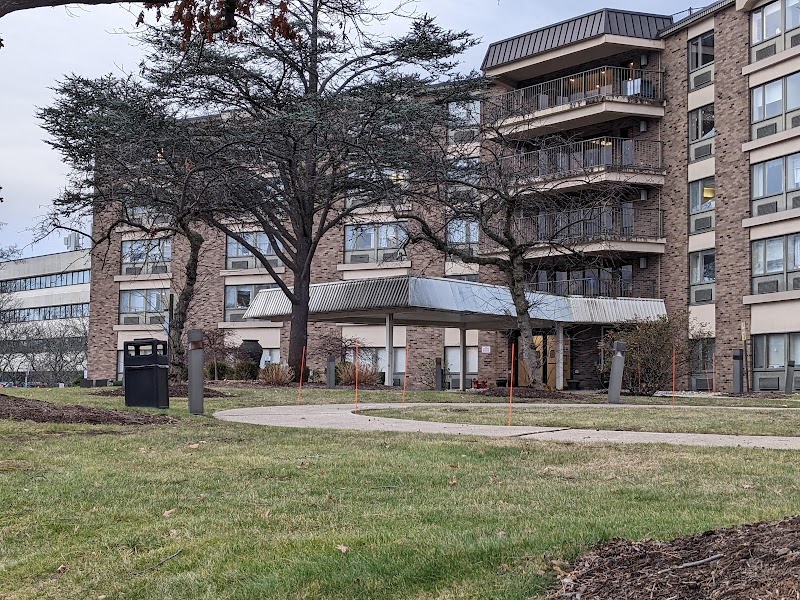
77 MADISON AVENUE, MORRISTOWN, NJ 07960 (973) 540-9800
For profit - Limited Liability company 287 Beds ALLAIRE HEALTH SERVICES Data: November 2025
Trust Grade
60/100
#213 of 344 in NJ
Last Inspection: June 2025

Inspected within the last 6 months. Data reflects current conditions.

Overview

Morristown Post Acute Rehab and Nursing Center has a Trust Grade of C+, indicating it is decent and slightly above average among nursing homes. It ranks #213 out of 344 facilities in New Jersey, placing it in the bottom half, and #17 out of 21 in Morris County, suggesting only a few local options are better. The facility is improving, with the number of issues decreasing from 7 in 2024 to 6 in 2025. Staffing is a strength here, rated 4 out of 5 stars with a turnover rate of 34%, which is lower than the state average, meaning staff are consistent and familiar with residents. However, there have been concerning incidents, such as failures in proper dish sanitation that could lead to foodborne illness, and staff not using appropriate personal protective equipment when caring for residents, posing a risk of infection spread. Overall, while there are strengths in staffing and a lack of fines, the facility needs to address critical infection control practices and maintain food safety standards.

Trust Score
C+
60/100
In New Jersey
#213/344
Bottom 39%
Safety Record
Low Risk
No red flags
Inspections
Getting Better
7 → 6 violations
Staff Stability
○ Average
34% turnover. Near New Jersey's 48% average. Typical for the industry.
Penalties
✓ Good
No fines on record. Clean compliance history, better than most New Jersey facilities.
Skilled Nurses
○ Average
Each resident gets 34 minutes of Registered Nurse (RN) attention daily — about average for New Jersey. RNs are the most trained staff who monitor for health changes.
Violations
⚠ Watch
42 deficiencies on record. Higher than average. Multiple issues found across inspections.
★★★☆☆
3.0
Overall Rating
★★★★☆
4.0
Staff Levels
★★★★★
5.0
Care Quality
★★☆☆☆
2.0
Inspection Score
Stable
2024: 7 issues
2025: 6 issues

The Good

  • 4-Star Staffing Rating · Above-average nurse staffing levels
  • 5-Star Quality Measures · Strong clinical quality outcomes
  • Full Sprinkler Coverage · Fire safety systems throughout facility
  • No fines on record
  • Staff turnover below average (34%)

    14 points below New Jersey average of 48%

Facility shows strength in staffing levels, quality measures, fire safety.

The Bad

3-Star Overall Rating

Near New Jersey average (3.3)

Meets federal standards, typical of most facilities

Staff Turnover: 34%

12pts below New Jersey avg (46%)

Typical for the industry

Chain: ALLAIRE HEALTH SERVICES

Part of a multi-facility chain

Ask about local staffing decisions and management

The Ugly 42 deficiencies on record

Jun 2025 4 deficiencies
CONCERN (D)

Potential for Harm - no one hurt, but risky conditions existed

Deficiency F0577 (Tag F0577)

Could have caused harm · This affected 1 resident

Based on observation and interview, it was determined that the facility failed to post the prior year's State of New Jersey (State) inspection results in an area that was readily accessible to residen...

Read full inspector narrative →
Based on observation and interview, it was determined that the facility failed to post the prior year's State of New Jersey (State) inspection results in an area that was readily accessible to residents, families, and the public. The deficient practice was evidenced by the following: On 6/24/25 at 10:30 AM, the surveyor held the resident council meeting and 4 of 5 residents, who were in attendance, voiced that they did not know where the survey results were located. 1 of 5 of the resident's stated that they thought the survey results were at the receptionist desk. On 6/24/25 at 11:30 AM, the surveyor could not locate survey results near the receptionists desk and could not locate them throughout he facility and the receptionist stated that they did not know where the survey results were located. On 6/24/25 at 1:40 PM, the Surveyor met with Licensed Nursing Home Administrator (LNHA) and the Director of Nursing (DON) and surveyor voiced concerns that previous years survey results could not be located. The LNHA stated the results were at the reception area desk and that they were oocate dbehind the receptionist desk. The LNHA acknowledged that the binder should be kept in an area that is accessible to residents and that residents should be able to access the book without asking for it. NJAC 8:39-9.4(b)(c)
CONCERN (E)

Potential for Harm - no one hurt, but risky conditions existed

Deficiency F0688 (Tag F0688)

Could have caused harm · This affected multiple residents

Based on observation, interview, and review of other pertinent facility documents, it was determined that the facility failed to ensure implementation of interventions designed by the physical therapi...

Read full inspector narrative →
Based on observation, interview, and review of other pertinent facility documents, it was determined that the facility failed to ensure implementation of interventions designed by the physical therapist to stimulate functional performance and prevent further decline. This deficient practice was identified for one (1) of three (3) resident reviewed for positioning and mobility (Resident #88) and was evidenced by the following: On 6/19/25 at 11:31 AM, during the initial tour of the second floor, the surveyor entered Resident #88's room. The resident was awake, alert, pleasant and had a breakfast tray in front of them with built up utensils (an adaptive eating utensils designed with molded plastic handles to assist individuals with limited or weakened grasping strength). No additional assistive device was observed on the resident. The surveyor reviewed the medical record for Resident #88. According to the admission Record, an admission summary, reflected that Resident #88 reflected diagnoses that included Parkinson's Disease (PD; a movement disorder of the nervous system that worsens over time) and plantar fascial fibromatosis (a noncancerous growth on the rubber band-like ligament that stretched from the heel to the toes). A review of the most recent quarterly Minimum Data Set (MDS), an assessment tool dated 4/14/25 reflected the resident had a Brief Interview for Mental Status (BIMS) score of 10 out of 15, which indicated the resident had a moderately impaired cognition. A review of the resident's functional abilities reflected the resident was dependent for activities of daily living related to oral hygiene, toileting, shower/bathing, dressing, movement of sitting to lying, and surface transfer. Section I - Active diagnoses, included plantar fascial fibromatosis. A review of the Order Summary Report for that were active as of 6/25/25 included a physician's order for: Bilateral lower extremity multi podus (MPB; a boot that floats the heel, used for heel pressure relief and prevention of contracture) donned after AM care, and doffed to patient tolerance before PM care. The order was initiated on 6/7/23. A review of the individualized comprehensive care plan (ICCP) reflected a focus on the resident's contracture, bilateral multi podus and the resident's noncompliance, initiated on 5/5/23 and revised on 6/11/25. The interventions included to donn after AM care, and doff after pm care, initiated on 5/5/23, and did not reflect additional intervention to coincide with the revised focus on 6/11/25. A review of the electronic Medication Administration Record (eMAR), electronic Treatment Record where nurses documented offer and refusal or medication and treatments for April 2025, May 2025 and June 2025 did not reflect that the MPB were offered or declined. A review of the task list where the Certified Nursing Assistants (CNAs) documented care provided to the residents for April 2025, May 2025 and June 2025 did not reflect MPB as part of the tasks. On 6/23/25 at 8:51 AM, the surveyor passed by Resident #88's room and an assistive device was not observed worn by the resident. On 6/26/25 at 11:27 AM, in the presence of the surveyor and the Registered Nurse/Unit Manager (RN/UM), Resident #88 confirmed receiving morning care that morning. The RN/UM and the surveyor did not observe the MPB on the resident. The surveyor asked the RN/UM where the MPB was located. The RN/UM looked on the chair, in the closet, and all over the room then stated she could not find it. On 6/26/25 at 11:33 AM, during an interview with the surveyor, the Licensed Practical Nurse (LPN) who was assigned to Resident #88 stated that residents with assistive device were verbally handed over to the next shift and stated she was not told anything that morning about Resident #88. The LPN also stated that she usually checked the eTAR which is another indicator she used to assure residents with assistive device offered/applied their treatment. At that time, the LPN confirmed the MPB was not on the eTAR and was not aware the resident required an MPB. On 6/26/25 at 11:38 AM, during a follow-up interview with the surveyor RN/UM, confirmed that the MPB could not be located and was not on the eTAR. The RN/UM stated it could not be determined when the MPB was offered/applied and declined. At that time, the RN/UM stated she would inform the rehabilitation department, the nurses and the Director of Nursing (DON) to evaluate the resident's status. On 6/26/25 at 11:42 AM, the surveyor, and the Director of Rehabilitation reviewed the rehabilitation notes for Resident #88 together. The DOR stated that the resident was discharge from physical therapy with a recommendation of the MPB, according to the discharge summary signed on 5/23/23. At that time, the DOR stated that the resident was referred to nursing on 10/8/24 by the nursing staff for decline in their activities of daily living unrelated to the MPB. The DOR stated that she was familiar with Resident #88 who was noncompliant, through refusal of the MPB. The DOR could not provide documentation of the attempt to apply the MPB daily and the refusal. At that time, the DOR stated that even though the resident refused, an attempt to offer should be made, documented and refusals should also be documented. The DOR acknowledged that the MPB should be accessible to the nurses and CNA for application. The DOR confirmed she was not aware that the MPB was missing or when it went missing. THe DOR stated that she should have been informed by nursing soon as they knew it was missing, and would have provided a replacement. The DOR could not recall when she last checked where the MPB was or if it was present during the last assessments. On 6/26/25 at 1:16 PM, during a meeting with the survey team, the Licensed Nursing Home Administrator (LNHA), the DON, the Regional Nurse and the Regional Administrator, the surveyor discussed the concerns regarding the missing MPB, the failure carry out the order and enable the nursing staff to consistently document daily the offer/refusal of the MPB on the medical record, and show consistent implementation of interventions designed by the physical therapist to increase functional mobility and prevent further decline . On 6/27/25 at 10:19 AM, during a meeting with the survey team, the DON, the Regional Nurse and the Regional Administrator, the LNHA stated that the resident was re-evaluated by the physical therapist after surveyor inquiry, the resident did not want MPB, and the therapist recommended manual intervention three times a week for four weeks to facilitate mobility improvement. A review of the provided facility policy for Resident Mobility, and Range of Motion dated/revised 1/2025, included that residents with limited mobility would receive appropriate services, equipment and assistance to maintain or improve mobility . NJAC 8:39-27.1(a), 27.2(m)
CONCERN (E)

Potential for Harm - no one hurt, but risky conditions existed

Deficiency F0742 (Tag F0742)

Could have caused harm · This affected multiple residents

Based on observation, interview, record review, and review of other pertinent facility documentation it was determined that the facility failed to ensure a resident with history of post-traumatic stre...

Read full inspector narrative →
Based on observation, interview, record review, and review of other pertinent facility documentation it was determined that the facility failed to ensure a resident with history of post-traumatic stress disorder (PTSD) received appropriate treatment and services to attain the highest practicable mental and psychosocial well-being. This deficient practice was identified for one (1) of five (5) residents (Resident #159) reviewed for unnecessary medications and was evidenced by the following: On 6/23/25 at 12:54 PM, the surveyor observed Resident #159 in bed and was reluctant to discuss their experience in the facility for fear of retaliation. The surveyor reviewed the medical record for Resident #159. According to the admission record, an admission summary, reflected that Resident #159 was admitted to the facility with diagnoses that included, major depressive disorder, mood disorder, anxiety disorder and (PTSD). A review of the most recent comprehensive Minimum Data Set (MDS), an assessment tool dated 4/28/25 reflected the resident had a Brief Interview for Mental Status (BIMS) score of 14 out of 15, which indicated the resident was cognitively intact. Section D for Mood reflected that an interview was conducted and was assessed; In the last two weeks of the assessment, the resident had not reported feelings of having little pleasure of doing things, feelings of being down, depressed and/or hopelessness. Section I. under active diagnoses, under psychiatric/mood disorder included anxiety, depression and PTSD. A review of the individualized comprehensive care plan (ICCP) did not include a focus, interventions and goals for the resident's diagnoses of PTSD from admission. A review of the most recent psychiatric progress note dated, 3/14/25 included that the resident reported poor sleep and was trailed on an antidepressant and the antipsychotic Abilify was discontinued as part of gradual dose reduction GDR. The assessment plan included supportive and individualized non-pharmacologic interventions, support/reassurance, comfort measures, reduced environmental stimuli. A review of the most recent psychotherapy note provided by a psychologist reflected a cognitive behavioral therapy (CBT; a psychotherapy that focuses on changing negative thought pattern and behaviors to improve mental health and well-being) was conducted on 1/13/25. The CBT note reflected a plan to continue emotional support and coping skills for grief/loss. The symptom frequency was identified as daily, and the goal was to reduce symptoms from 7 days a week to 4 days a week. Further review of the note revealed the therapeutic orientation used during the session was cognitive behavioral and person centered. Under follow-up reflected continued emotional support, and the change of treatment reflected as not applicable. No further CBT was found on the medical record . A review of the Social Services Notes from March 2025 to June 2025 did not reflect provision of CBT related to PTSD. On 6/24/25 at 1:30 PM, in the presence of the survey team, the Licensed Nursing Home Administrator (LNHA), the Director of Nursing (DON), the Chief Nursing Officer (CNO), Assistant Administrator (AA #1), (AA #2), Regional Nurse, Regional Administrator, the surveyor discussed the concern that Resident #159 who had an active diagnosis of PTSD, was not seen for CBT since 1/13/25 and no indication from the providers that the resident no longer required the service and the ICCP that did not included focus, interventions and goals for diagnosis of PTSD from admission. On 6/26/25 at 10:06 AM, in the presence of the survey team, the Regional Nurse, and the DON, the LNHA stated the resident was seen by a volunteer psychologist who stopped working in the area. The quarterly assessment screens from February 2025 and April 2025 reflected a mood interview of zero (no reported symptom). The psychiatrist performed a GDR, discontinued the antipsychotic, Abilify [no active diagnoses found], The LNHA also stated the assessment indicated no further need, however the resident was interviewed by the social worker (SW), and was placed back to receive services from the psychologist by the SW. No further information was provided. A review of the provided facility policy, Trauma Informed Care, dated/revised 1/2025 included under policy statement that the facility ensured that residents who are trauma survivors received culturally competent, trauma informed care in accordance with professional standards of practice and accounting for resident's experiences and preferences in order to eliminate or mitigate triggers that may cause re-traumatization of the resident. NJAC 8:39-27.1 (a), 28.1 (c)
CONCERN (E)

Potential for Harm - no one hurt, but risky conditions existed

Pharmacy Services (Tag F0755)

Could have caused harm · This affected multiple residents

4. The surveyor interviewed Resident #134 on 6/19/25 at 12:16 PM. The resident was seated in an armchair at the bedside and told the surveyor they received hemodialysis three times a week. A review of...

Read full inspector narrative →
4. The surveyor interviewed Resident #134 on 6/19/25 at 12:16 PM. The resident was seated in an armchair at the bedside and told the surveyor they received hemodialysis three times a week. A review of the electronic medical record revealed the following information. The 4/19/25 admission MDS assessment tool indicated the resident had no cognitive deficits as evidenced by a BIMS score of 14 of a possible 15. The June 2025 Order Summary Report included a 4/14/25 physician's order for Midodrine oral tablet (medication used to raise blood pressure) 5 mg. twice a day for hypotension (low blood pressure) hold for SBP (systolic blood pressure) above 130 millimeters of mercury (mmHg). A review of the April, May, and June 2025 Medication Administration Records included documentation by the administering nurse that Midodrine was administered 10 times when the SBP was above 130 mmHg or when a blood pressure was not documented. The surveyor interviewed the Licensed Practical Nurse Unit Manager on 6/25/25 at 10:21 AM. She confirmed nurses must follow the parameters for Midodrine to be held when the SBP was above 130 mmHg. The surveyor discussed concerns regarding parameters not being consistently followed for the Midodrine physician order with the Administrator and the DON on 6/25/25 at 1:17 PM. A review of the facility's 2/5/25 policy titled Administering Medications indicated medications must be administered in accordance with the physician order. NJAC 8:39-11.2(b); 27.1(a) ), 29.2(a), 29.7(c) Based on observations, interviews, record review, and review of other facility documents, it was determined that the facility failed to provide pharmaceutical services in accordance with professional standards and ensure a.) documentation of removal, administration, maintenance of accountability and reconciliation of Resident #166's Morphine, a controlled dangerous substance (narcotic; with high potential for drug diversion) that resulted to 23 unaccounted doses, equaled to 115 milligrams (mg), identified during the medication storage inspection of 1 of 7 medication carts and 1 of 3 medication rooms, b.) administration of medication with parameters were administered in accordance with the physician's orders, identified for 1 of 3 residents reviewed for hemodialysis (Resident #134), c.) timely acquisition of medications, and were available for administration to Resident #494, identified for 1 of 35 residents reviewed for medication management. 1. On 6/26/25 at 10:37 AM, the surveyor and the Licensed Practical Nurse (LPN #1) began the narcotic medication inspection, which was stored in a mounted, double locked portion of the medication cart (narcotic box), located in the north side of the second floor. At that time, the surveyor observed the record of narcotic, barbiturate, abuse drug count log (a shift-to-shift accountability log, used by nurses to count each narcotic contained in the narcotic box) was signed daily. On 6/26/25 at 10:46 AM, in the presence of LPN #1, the surveyor observed Resident #166's Morphine 20 milligram (mg)/ 1 milliliter (ml) solution (soln) bottle (narcotic medication indicated for pain) contained 8 ml. At that time, LPN #1 confirmed the observation of 8 ml. A review of the Individual Patient Controlled Drug Record (IPCDR; a declining inventory log) for Resident #166's Morphine 20mg/ml soln indicated a count of 14.25 ml remained, was last signed dispensed and administered on 5/14/25 with a pharmacy label dated 12/6/24. Further review of the IPCDR reflected the following documentation by the nurses: -on 4/15/25 at 3:44 PM, a dose was signed removed. -on 4/20/25 at 8:13 AM, a dose was signed removed. -on 4/21/25 at 2:50 PM, a dose was signed removed. -on 4/30/25 at 2:25 PM, a dose was signed removed. At that time, the surveyor asked the nurse why the discrepancy was not identified during the shift-to-shift accountability check between her and the other nurse. LPN #1 had no response. A review of the shift-to-shift accountability log for Resident #166's Morphine 20mg/ml soln from December 2024 to June 2024 reflected the log was signed three (3) times daily. A review of the electronic Medication Administration Record (eMAR) from December 2024 to June 2025 reflected the following: -December 2024, no administration of Morphine was documented. -January 2025, no administration of Morphine was documented. -February 2025, no administration of Morphine was documented. -March 2025, no administration of Morphine was documented. -April included the following administration of Morphine: The 4/15/25 at 3:44 PM [reflected on the IPCDR] and 4/20/25 at 8:13 AM [reflected on the IPCDR]. Further review of the eMAR, reflected discrepancies on 4/17/25 at 1:33PM, which was not documented on the IPCDR as removed but was signed administered, and on 4/21/25 at 2:50 PM was signed removed from the IPCDR but was not signed as administered. -May 2025 reflected an administration on 5/15/25 at 11:28 AM [reflected on the IPCDR]. -June 2025, no administration of Morphine was documented. At that time, the surveyor asked the nurse why the discrepancy was not identified during the shift-to-shift accountability check between her and the other nurse. LPN #1 had no response. On 6/26/25 at 10:56 AM, during an interview with the surveyor, the Registered Nurse/ Unit Manager (RN/UM) stated she would inform the Director of Nursing (DON) of the discrepancies found on the second floor and begin the investigation. 2. On 6/26/25 at 10:47 AM, during the medication cart observation located in the north side of the second floor, the surveyor observed a sealed bottle of Morphine 100 mg/5ml (20 mg/ml) for Resident #50 without an IPCDR. LPN #1 confirmed the IPCDR could not be located. On 6/26/25 at 10:53 AM, during the medication room observation, located in the north side of the second floor, the surveyor observed two (2) sealed bottle of Lorazepam Oral concentrate 2 mg/ml from different pharmacy providers, for Resident #50 without an IPCDR. LPN #1 confirmed the IPCDR could not be located on the logbook on the cart. At that time, the surveyor asked the nurse why the discrepancy was not identified during the shift-to-shift accountability check between her and the other nurse. LPN #1 had no response. On 6/26/25 at 10:56 AM, during an interview with the surveyor, the Registered Nurse/ Unit Manager (RN/UM) stated she would inform the Director of Nursing (DON) of the discrepancies found on the second floor and begin the investigation. On 6/26/25 at 1:16 PM, during a meeting with the survey team, the Licensed Nursing Home Administrator (LNHA), the DON, the Regional Nurse and the Regional Administrator, the surveyor discussed the concerns regarding the 23 missing doses, equaled to 115 milligrams (mg), for Resident #166, the missed opportunity of identification when the discrepancy occurred when the Resident # 50's Morphine and Lorazepam that did not have an IPCDR to account and reconcile the presence or absence of the medication within the narcotic box in the cart and the refrigerator that was identified during the medication storage inspection. On 6/26/25 at 1:16 PM, the Regional Nurse informed the surveyors that 1 of 2 IPCDR for Lorazepam was found in the box [instead of the accountability logbook for the nurse be aware to account of the presence or absence of a narcotic medication]. The Regional Nurse confirmed that the IPCDR for the Morphine and the other Lorazepam could not be located at that time. On 6/27/25 at 10:19 AM, during a meeting with the survey team, the DON, the Regional Nurse and the Regional Administrator, the LNHA stated that a new IPCDR was received/made for Resident #50's Morphine and Lorazepam for accountability. On 6/27/25 at 12:50 PM, during a follow-up meeting with the survey team, the LNHA, the DON, the Regional Nurse, and the Regional Administrator, the Chief Nursing Officer (CNO) stated that they have identified a 6.25 ml discrepancy, five medication administration by the nurses, the progress notes were reviewed to rule out excessive dosing administration, interviewed 3 of the 5 nurses who administered the medication in April 2025 and May 2025, an education was provided to the nurses and the investigation was still in progress. A review of the investigation provided did not include the investigation of the June 2026, shift-shift log that was signed three times daily up to the first shift of June 26, 2026 (total of 76 signatures) or the prior months to determine when the discrepancy occurred. A review of the provided facility policy for Storage of Medications, dated/revised 1/2025 included that any discrepancies which cannot be resolved must be reported immediately .The DON, charge nurse or designee must also report any loss of controlled substances where theft is suspected to appropriate authorities . 3. On 6/24/25 at 1:56 PM, the Surveyor interviewed Resident #494, who stated that they did not recieve their medication Abilify on 6/18/25, 6/19/25 or 6/20/25, and the resident stated that they received a dose very early the morning of 6/21/25. The resident stated that they also did not receive a dose of their medication Lyrica on evening of 6/16/25. A review of Resident # 494's admission Minimum Data Set (MDS) (an assessment tool), dated 6/4/25, revealed that the resident was cognitively intact with a Brief Interview for Mental Status (BIMS) score of 13 out of 15. A review of the resident's current Physician's Orders (PO) reflected that Resident #494 was precribed Abilify 30 milligram tablet, one time daily at 9:00AM and Lyrica 150 milligram capsule, one capsule three times daily. The residents' eMAR for the month of June 2025 revealed that Abilify was not adminsitered or the dates of 6/18, 6/19, and 6/20 and were marked 9. The eMAR for the month of June 2025 revealed that Lyrica was not adminsitered for the date of 6/16 at 1700 and was marked 9. According to the facility's eMAR key 9 code is revealed as meaning Other/see progress note. A review of the progress notes for these four opportunities indicate that facility was waiting for those medications to be delivered from pharmacy, and there was no indication of a provider notification or alternate orders. On 6/25/25 at 12:45 PM, the surveyor interviewed RN #2, who stated that she was not sure what happened on those dates for those medications and in those cases the facility should have checked the machine located inside the facility for medication availability, if it was not available in the machine, the manager or pharmacy should have been alerted. On 6/25/25 at 12:55 PM, the surveyor interviewed the RN Unit Manager (UM), who stated if the medications could not be obtained through the pharmacy or the facility's back up machine, the facility should have called the attending physician for further orders and document in a progress note. The RN UM stated that she did not know what happened on the dates marked 9. On 6/26/25 at 10:05 AM, the surveyor discussed the above concerns for Resident #494 with the LNHA and DON and they could not explain what had occurred. No further documentation provided to surveyor.
Mar 2025 2 deficiencies
CONCERN (F)

Potential for Harm - no one hurt, but risky conditions existed

Food Safety (Tag F0812)

Could have caused harm · This affected most or all residents

Based on observation, record review, interview, and United States (U.S.) Food and Drug Administration (FDA) dish sanitation recommendations, the facility failed to ensure 1 of 1 dish machine and 1 of ...

Read full inspector narrative →
Based on observation, record review, interview, and United States (U.S.) Food and Drug Administration (FDA) dish sanitation recommendations, the facility failed to ensure 1 of 1 dish machine and 1 of 1 three-compartment sink were utilized in accordance with FDA guidance to minimize the potential for foodborne illness. Specifically, the facility failed to ensure the low-temperature dish machine achieved recommended temperatures, failed to ensure sanitizer testing supplies were not expired, and failed to maintain the chemical concentration of sanitizer in the three-compartment sink. The failed practices had the potential to affect 194 residents who received meals from the dietary department out of a total census of 199 residents. Findings included: Chapter 4 of the U.S. FDA 2022 Food Code indicated, 4-501.110 Mechanical Warewashing Equipment, Wash Solution Temperature (B) The temperature of the wash solution in spray-type warewashers that use chemicals to sanitize may not be less than 49°C [Celsius] (120°F. [Fahrenheit]). The Food Code also specified, 4-501.114 Manual and Mechanical Warewashing Equipment, Chemical Sanitation - Temperature, pH [potential of Hydrogen], Concentration, and Hardness. (A) A chlorine solution shall have a minimum temperature based on the concentration and the pH of the solution as listed in the following chart: For a concentration range of 25 to 49 milligrams per liter (mg/L), the chart indicated the minimum temperature was to be 49 degrees C or 120 degrees F. A continuous observation conducted on 03/08/2025 from 2:30 PM to 2:42 PM revealed the following: Dietary Aide (DA) #21 was standing at the three-in-one compartment sink washing pots, pans, and serving utensils. Dietary #21 had the sanitizing portion of the sink filled with large baking pans submerged in a fuchsia-colored liquid. He indicated he did not know about the chemicals for the sink and had not checked them. Dietary Supervisor (DS) #23 walked over to the sink and stated she was responsible for checking the sanitizer. DS #23 used a chemical test strip to test the solution in the sanitizer. The test strip indicated 400 to 500 parts per million (PPM). DS #23 stated the concentration should be 200 PPM. DS #23 then accompanied the surveyor to observe the dish machine. The manufacturer of the machine was unable to be determined at this time. DA #20 was using the dish machine to run a rack of miscellaneous dishes off the metal table. The temperature gauge on the dish machine registered 110 degrees F. during the final rinse cycle. DA #20 indicated he had not checked the temperature, had not been taught to do so, and that the DS was responsible for checking the temperatures. DS #23 used a chlorine testing strip to check the chemical concentration following a rack of dishes being run through the dish machine. The first test strip indicated the concentration of the solution in the dish machine was zero. DS #23 obtained another chemical test strip and placed it in the dish machine, and the test strip continued to indicate zero. Following third test strip reading zero, the surveyor requested the container of chlorine test strips, which revealed the expiration on the package was 04/01/2024. DS #23 indicated she did not know how the strips could be expired considering how many of the strips they used and asked DS #22 to obtain a new package. DS #22 retrieved a new unopened container of test strips and handed it to DS #23. DS #23 obtained a test strip from the new container, ran a rack of miscellaneous dishes through the dish machine, then dipped the test strip into the liquid solution inside the machine. The new test strip continued to indicate zero. DS #23 was asked what she would do next, and she stated she did not know, because this had never happened before. DS #23 and the surveyor checked the chemical dispenser for the machine and noted there was very little product remaining in the container. During an interview on 03/08/2025 at 3:45 PM, the Regional Director of Clinical Compliance (RDCC) stated she was unable to obtain any policies or competencies for the staff for the dietary department because the Dietary Manager (DM) was not in the facility at that time. During a telephone interview on 03/08/2025 at 4:05 PM, the DM stated he was not certain of how to identify the manufacturer of the dish machine if the information was not listed on the machine. He indicated the machine should reach a minimum temperature of 135 degrees F. for the final rinse cycle. The DM stated at times, the water in the dietary department did not get hot enough and that this had been repaired before. He stated the dish machine chlorine test strips should read between 50 and 100 PPM. The DM stated the three-in-one compartment sink sanitizer should be changed every two hours and that if the chemical concentration was greater than 200, the sink should be emptied and the solution redone and rechecked. He stated he needed to contact the Director of Nursing (DON) or Administrator to tell them the facility needed to start using disposable dishes until the dish machine was fixed. The facility Diet Type Report, dated 03/08/2025, indicated there were 194 residents who received meals from the kitchen. During an interview on 03/08/2025 at 12:50 PM, the RDCC stated the Administrator would be unavailable for any interviews. At 4:23 PM, the RDCC stated she had looked all over the dish machine and had been unable to determine the manufacturer of the machine.
CONCERN (F)

Potential for Harm - no one hurt, but risky conditions existed

Infection Control (Tag F0880)

Could have caused harm · This affected most or all residents

**NOTE- TERMS IN BRACKETS HAVE BEEN EDITED TO PROTECT CONFIDENTIALITY** Based on observation, record review, interview, facility policy review, review of Centers for Disease Control and Prevention (CD...

Read full inspector narrative →
**NOTE- TERMS IN BRACKETS HAVE BEEN EDITED TO PROTECT CONFIDENTIALITY** Based on observation, record review, interview, facility policy review, review of Centers for Disease Control and Prevention (CDC) guidance, and review of the Centers for Medicare and Medicaid Services (CMS) Quality, Safety and (&) Oversight Group (QSOG) memoranda, the facility failed to ensure CDC guidance and the facility's infection prevention and control (IPC) policies were promptly and consistently implemented, as evidenced by: 1) failure to ensure staff donned the appropriate personal protective equipment (PPE) while caring for 3 (Residents #1, #2, and #3) of 3 residents reviewed for enhanced barrier precautions (EBP. 2) failure to ensure staff donned the appropriate PPE when entering the room to deliver and set up a meal tray for 1 (Resident #4) of 3 residents reviewed for transmission-based precautions and failed to perform appropriate hand hygiene between delivering meals to Residents #4, #5, and #6. 3) failure to ensure a vaccination was promptly administered after consent was obtained for 1 (Resident #9) of 5 residents reviewed for vaccinations. 4) failure to ensure a resident who was symptomatic for respiratory syncytial virus (RSV) was promptly tested upon receipt of a physician order for testing for 1 (Resident #11) of 8 residents reviewed for RSV. 5) failure to correctly and consistently conduct and document contact tracing on residents and staff when 7 (Residents #12, #10, #14, #15, #16, #17, and #18) of 8 residents reviewed for COVID-19 tested positive for COVID-19. The failure to implement appropriate infection control measures had the potential to affect all 199 residents residing in the facility. Findings included: 1. QSOG Memorandum QSO-24-08-NH, Enhanced Barrier Precautions in Nursing Homes, dated 03/20/2024, indicated, Enhanced Barrier Precautions (EBP) refer to an infection control intervention designed to reduce transmission of multidrug-resistant organisms that employs targeted gown and glove use during high contact resident care activities. The memo also specified, EBP are indicated for residents with any of the following: - Infection or colonization with a CDC-targeted MDRO [multidrug-resistant organism] when Contact Precautions do not otherwise apply; or - Wounds and/or indwelling medical devices even if the resident is not known to be infected or colonized with a MDRO. 1.a. An admission Record indicated the facility admitted Resident #1 on 06/2018 and readmitted the resident on 07/2021. According to the admission Record, the resident had a medical history that included diagnoses of obstructive and reflux uropathy, mechanical complication of nephrostomy catheter, and need for assistance with personal care. Resident #1's quarterly Minimum Data Set (MDS), with an Assessment Reference Date (ARD) of 12/24/2024, revealed Resident #1 had a Brief Interview for Mental Status (BIMS) score of 10, which indicated the resident had moderate cognitive impairment. The MDS indicated the resident had an indwelling catheter and was dependent on staff for bathing, toileting hygiene, and bed-to-chair transfers. Resident #1's Care Plan Report included a focus area revised 09/19/2024 that indicated Resident #1 was at risk for infection requiring enhanced barrier precautions related to a nephrostomy. Interventions directed staff to use a gown and gloves during high-contact activities, such as dressing, hygiene, transferring, bathing/showering, changing linens, device care, wound care, and therapy and to perform hand hygiene prior to and after providing care to the resident. Resident #1's Kardex revealed the resident required enhanced barrier precautions and directed staff to wear a gown and gloves during high contact activities, such as dressing, hygiene, toileting, transferring, bathing/showering, changing linens, device care, wound care, and therapy and to perform hand hygiene prior to and after providing care. Resident #1's Order Summary Report included an order dated 10/20/2024 for enhanced barrier precautions related to a nephrostomy. During an observation on 03/08/2025 at 9:26 AM, unidentified staff members entered Resident #1's room without donning PPE. At 9:30 AM, a follow-up observation revealed Certified Nurse Aide (CNA) #7 in Resident #1's room assisting the resident to transfer from the bed to a wheelchair. During an interview conducted when CNA #7 exited Resident #1's room on 03/06/2025 at 9:33 AM, CNA #7 stated she had just completed morning care for Resident #1, which included incontinence care, bathing, dressing, and transferring. CNA #7 stated she should wear a gown and gloves when providing care to a resident on EBP, but since there was no basket (clarified to mean PPE cart) outside the resident's room, the EBP signage that was posted should have been taken down. She acknowledged that Resident #1 had a nephrostomy tube in place but stated she had not been instructed that the resident required EBP. She again stated Resident #1 did not have a basket, so she did not wear a gown while providing care to the resident. During a telephone interview on 03/08/2025 at 1:00 PM, the Director of Nursing (DON) stated staff who were providing direct care to residents on EBP were required to wear a gown and gloves. The DON indicated CNA #7 should have donned a gown and gloves before providing morning care to Resident #1. During an interview on 03/08/2025 at 12:50 PM, the Regional Director of Clinical Compliance (RDCC) stated the Administrator would be unavailable for any interviews. 1.b. An admission Record indicated the facility admitted Resident #2 on 04/2022 and readmitted the resident on 08/2023. According to the admission Record, the resident had a medical history that included diagnoses of end stage renal disease and dependence on renal dialysis. Resident #2's quarterly Minimum Data Set (MDS), with an Assessment Reference Date (ARD) of 02/05/2025, revealed the resident had a Brief Interview for Mental Status (BIMS) score of 14, which indicated the resident had intact cognition. The MDS indicated the resident required substantial/maximal assistance for bathing and bed-to-chair transfers and received dialysis while a resident. Resident #2's Care Plan Report included a focus area revised 01/02/2025 that indicated Resident #2 was at risk for infection requiring enhanced barrier precautions related to colonization with a targeted multi-drug resistant organism (MDRO). Interventions directed staff to use a gown and gloves during high-contact activities, such as dressing, hygiene, transferring, bathing/showering, changing linens, device care, wound care, and therapy and to perform hand hygiene prior to and after providing care to resident. Resident #2's Order Summary Report included an order dated 04/01/2024 for enhanced barrier precautions related to a central line. An observation on 03/06/2025 at 10:06 AM revealed that signage was posted outside Resident #2's room indicating enhanced barrier precautions were required and a gown and gloves were required for transfers. Certified Nurse Aide (CNA) #10 retrieved supplies from a linen cart outside Resident #2's room, and CNA #13 followed her into the room pushing a shower chair. Neither CNA donned a gown prior to entering the room. CNA #13 exited the room wearing a pair of gloves and retrieved additional linen from the linen cart in the hallway, then returned to the room. CNA #10 opened the door wearing gloves. Resident #2 was observed to be seated in the shower chair when the door was opened. CNA #10 proceeded to push the resident in the shower chair into the hallway, then propelled the resident down the hallway to the shower room. During an observation on 03/06/2025 at 10:32 AM, CNA #10 and CNA #13 returned Resident #2 to their room after giving the resident a shower. The CNAs donned gowns and gloves prior to assisting the resident further. During an interview on 03/06/2025 at 10:33 AM, CNA #10 stated she and CNA #13 had transferred Resident #2 from the bed to a shower chair wearing only gloves but would don a gown and gloves to put the resident back to bed and dress the resident. She stated since she was not providing any care other than transferring during the surveyor's initial observation, she did not need a gown just to transfer the resident from bed to the shower chair. She stated she had received training on EBP but did not realize transferring was included in the activities for which a gown and gloves would be required. CNA #10 observed the signage posted outside Resident #2's door and stated she should have donned a gown and gloves before transferring the resident. During an interview on 03/06/2025 at 10:58 AM, CNA #13 revealed she received training on EBP that directed her to don a gown and gloves during high contact care. CNA #13 acknowledged she did not wear a gown while transferring Resident #2 from the bed to the shower chair. CNA #13 stated she was not aware EBP required a gown for transfers. CNA #13 observed the EBP signage posted outside Resident #2's door and stated she should have donned a gown and gloves prior to transferring the resident. During an interview on 03/06/2025 at 10:20 AM, Licensed Practical Nurse (LPN) #8 stated the EBP signage posted for Resident #2's room was for Resident #2 due to the resident being on dialysis. During an interview on 03/06/2025 at 10:28 AM, CNA #9 stated Resident #2 required dialysis and was on EBP. She stated staff were to wear a gown and gloves while caring for Resident #2. During a telephone interview on 03/08/2025 at 1:00 PM, the Director of Nursing (DON) stated staff who were providing direct care to residents on EBP were required to wear a gown and gloves. The DON indicated CNA #10 and CNA #13 should have donned a gown and gloves before providing care to Resident #2. During an interview on 03/08/2025 at 12:50 PM, the Regional Director of Clinical Compliance (RDCC) stated the Administrator would be unavailable for any interviews. 1.c. A facility policy titled, Categories of Transmission-Based Precautions, revised 01/2025, included a section under each type of precautions that was titled, Resident Transport which indicated, If the resident is transported to another unit within Facility or to another facility, the Infection Control Coordinator (or designee) will notify the unit or facility of the type of precautions the resident is on and the resident's suspected or confirmed type of infection. Facility is also responsible for notifying transport staff of residents that require special care due to infectious conditions. An admission Record indicated the facility admitted Resident #3 on 06/2012 and readmitted the resident on 06/2021. According to the admission Record, the resident had a medical history that included diagnoses of end stage renal disease and dependence on renal dialysis. Resident #3's annual Minimum Data Set (MDS), with an Assessment Reference Date (ARD) of 02/05/2025, revealed Resident #3 had a Brief Interview for Mental Status (BIMS) score of 15, which indicated the resident had intact cognition. The MDS indicated the resident required supervision or touch assistance for bed-to-chair transfers and received dialysis while a resident. Resident #3's Care Plan Report included a focus area revised on 02/28/2025 that indicated Resident #3 was at risk for infection requiring enhanced barrier precautions related to colonization with a targeted multi-drug resistant organism (MDRO), an indwelling catheter, and a chronic wound. Interventions directed staff to wear a gown and gloves during high-contact activities, such as dressing, hygiene, transferring, bathing/showering, changing linens, device care, wound care, and therapy and to perform hand hygiene prior to and after providing care to the resident. Resident #3's Order Summary Report contained an order dated 02/28/2025 for enhanced barrier precautions related to MDRO colonization, an indwelling catheter, and a chronic wound. An observation on 03/06/2025 at 10:45 AM revealed Medical Transport Staff (MTS) #11 and MTS #12 entering Resident #3's room with a stretcher to transport the resident to the dialysis center. The two staff transferred Resident #3 from the bed to the stretcher wearing a surgical mask, gloves, and no gown. Resident #3's door had signage posted indicating the resident required EBP and that a gown and gloves were required for transfers. During an interview on 03/06/2025 at 10:50 AM, Medical Transport #11 and Medical Transport #12 stated they were familiar with Resident #3 and transported the resident to dialysis every week. They stated they were not required to follow the posted EBP signage. Both staff observed and acknowledged the EBP signage outside Resident #3's room and stated they were only required to don PPE above what would be required for standard precautions if a resident was COVID-19 positive. During an interview on 03/08/2025 at 1:00 PM, the Director of Nursing (DON) stated staff who were providing direct care to residents on EBP were required to wear a gown and gloves. The DON indicated MTS #11 and MTS #12 did not work for him so were not required to wear the same PPE as his staff. During an interview on 03/08/2025 at 12:50 PM, the Regional Director of Clinical Compliance (RDCC) stated the Administrator would be unavailable for any interviews. ------ 2. A facility policy titled, Infection Control Guidelines for All Nursing Personnel, revised 01/2025, indicated Transmission-Based Precautions will be used whenever measures more stringent than Standard Precautions are needed to prevent the spread of infection. a. When transmission-based precautions are required, a sign will be placed at the resident's doorway directing individual to see the nurse before entering the room. Without violating HIPAA [Health Insurance Portability and Accountability Act] regulations, the nurse will ensure that any individual entering the room wears appropriate PPE. A facility policy titled, Categories of Transmission-Based Precautions, revised 01/2025, indicated, 1. Transmission-Based Precautions will be used whenever measures more stringent than Standard Precautions are needed to prevent or control the spread of infection. The policy also specified, Contact Precautions - In addition to Standard Precautions, implement Contact Precautions for residents known or suspected to be infected or colonized with microorganisms that can be transmitted by direct contact with the resident or indirect contact with environmental surfaces or resident-care items in the resident's environment. The policy indicated, c. Gloves and Handwashing - (1) In addition to wearing gloves as outlined under Standard Precautions, wear gloves (clean, non-sterile) when entering the room and (3) Remove gloves before leaving the room and wash hands immediately with an antimicrobial agent or waterless antiseptic agent. The policy further indicated, Gown - (1) In addition to wearing a gown as outlined under Standard Precautions, wear a gown (clean, non-sterile) for all interactions that may involve contact with the resident or potentially contaminated items in the resident's environment. Remove the gown and perform hand hygiene before leaving the resident's environment. A facility policy titled, Clostridium Difficile revised 01/2025 indicated 3. The primary reservoirs for C. [Clostridium] difficile are infected people and surfaces. Spores can persist on resident care items and surfaces for several months and are resistant to some common cleaning and disinfection methods. 4. C. Difficile is transmitted by the fecal-oral route. Therefore, any resident care activity that involves contact with a resident's mouth when hands or instruments are contaminated may provide an opportunity for transmission. The policy also specified, 10. Residents with diarrhea associated with C. difficile (i.e. [that is], residents who are colonized and symptomatic) will be placed on Contact Precautions. a) Healthcare workers will wear gloves and gowns upon entering the room of a resident with C. difficile infection and will remove gown and gloves prior to exiting the room. and Hand washing with soap and water is superior to ABHR [alcohol-based hand rub] for the mechanical removal of C. difficile spores from hands. 12. Glove use when caring for residents with C. difficile, washing hands with soap and water upon exiting the room of a resident with C. difficile infection AND strict adherence to hand hygiene in general is considered best practice. An admission Record indicated the facility admitted Resident #4 on 03/2025. According to the admission Record, the resident had a medical history that included a diagnosis of recurrent enterocolitis due to Clostridium difficile. Resident #4's admission Minimum Data Set (MDS), with an Assessment Reference Date (ARD) of 03/08/2025, revealed the resident's assessment was in progress. Section C of the assessment in progress indicated Resident #4 had a Brief Interview for Mental Status (BIMS) score of 14, which indicated the resident had intact cognition. Section I of the assessment in progress indicated Resident #4 had an active diagnosis of recurrent enterocolitis due to Clostridium difficile (C. diff). Resident #4's Care Plan Report included a focus area revised 03/05/2025 that indicated Resident #4 had a gastrointestinal (GI) infection related to C. diff. Intervention directed staff to maintain isolation precautions as indicated. Resident #4's Order Summary Report contained an order dated 03/05/2025 for transmission-based precautions (TBP)/contact precautions for C. difficile and for staff to wash hands prior to exiting the patient area. A continuous observation on 03/06/2025 from 11:27 AM to 11:33 AM revealed Hospitality Aide (HA) #16 delivering meal trays on a unit of the 500 Hall. HA #16 retrieved a meal tray from the service cart and entered Resident #4's room. Signage was posted outside the resident's room that indicated, Special Contact Precautions and that a gown and gloves were required to enter the room. Special instructions on the signage indicated hand hygiene must be performed using soap and water. Do not use hand sanitizer. HA #16 adjusted Resident #4's bedside table and set the meal tray in front of Resident #4 before exiting the room without washing her hands. HA #16 returned to the meal service cart without performing hand hygiene and retrieved Resident #5's meal tray, entered Resident #5's room, and placed the meal tray on the overbed table before exiting the room. Still without washing her hands, HA #16 returned to the service cart to retrieve Resident #6's meal tray, then entered Resident #6's room to deliver the resident's meal tray. Review of Resident #5's care plan and physician's orders revealed the resident was at risk for infection and required EBP related to a tracheostomy and PleurX catheter (a small tube inserted into the chest to drain fluid from around the lungs). Review of Resident #6's care plan and physician's orders revealed the resident was at risk for infection and required EBP related to a chronic wound. During an interview on 03/06/2025 at 11:28 AM, HA #16 stated she should have performed hand hygiene using alcohol-based hand rub (ABHR) when she exited Resident #4's room. She stated she did not need to wear a gown and gloves nor perform hand hygiene with soap and water before exiting the room because she was only delivering the meal tray. HA #16 then observed and acknowledged the signage posted outside Resident #4's door, which indicated staff were to don a gown and gloves before going into Resident #4's room and perform hand hygiene using soap and water when exiting. HA #16 also stated she should have performed hand hygiene using ABHR between delivering meal trays to Resident #5 and Resident #6. During an interview on 03/06/2025 at 11:34 AM, Licensed Practical Nurse (LPN) #14 stated Resident #4 was on special contact precautions for C. diff and that HA #16 should have donned a gown and gloves before entering the room and washed her hands with soap and water. LPN #14 also stated meal trays for residents on TBP were supposed to be delivered last. During an interview on 03/06/2025 at 11:37 AM, the Director of Nursing (DON) and Administrator were made aware of the observations concerning Resident #4. Both the DON and Administrator acknowledged Resident #4 was on special contact precautions and both stated HA #16 should have donned PPE according to the signage and washed her hands using soap and water when exiting the room. They both acknowledged that Resident #5 and Resident #6 were on EBP and stated HA #16 should have performed hand hygiene using ABHR between delivering their meal trays. ----- 3. A facility policy titled, Coronavirus, Prevention and Control, revised 03/05/2025, indicated Vaccination 1. Each resident and staff member will be educated about and offered an FDA [U.S. Food and Drug Administration]-approved COVID vaccine unless the immunization is medically contraindicated or the resident or staff member has already been fully immunized. The policy also specified, The resident's medical record will include documentation that indicates: a. That the resident or resident representative was provided education regarding benefits and potential risks associated with COVID vaccine. b. Each dose of COVID vaccine administered to the residents, or c. If the resident did not receive the vaccine due to medical contraindication or refusal. An admission Record indicated the facility admitted Resident #9 on 04/2022 and readmitted the resident on 01/2025. According to the admission Record, the resident had a medical history that included a diagnosis of acute osteomyelitis. Resident #9's significant change Minimum Data Set (MDS), with an Assessment Reference Date (ARD) of 02/10/2025, indicated Resident #9 had a Brief Interview for Mental Status (BIMS) score of 13, which indicated the resident had intact cognition. The MDS revealed Resident #9's COVID-19 vaccine was not up to date. Resident #9's Vaccine Consent Form - Multi-Vaccines revealed a consent was signed by the resident on 10/23/2024. The form indicated the resident circled Yes to receiving a COVID-19 (2024-2025) vaccine and a Respiratory Syncytial Virus (RSV) vaccine. As of 03/07/2025, Resident #9's Immunization Record indicated the resident received the RSV vaccine on 10/24/2024 but did not receive the COVID-19 (Moderna Spikevax Vaccine 24-25) until 02/12/2025. During an interview on 03/07/2025 at 11:00 AM, the Infection Preventionist acknowledged the delay in administering Resident #9's COVID-19 (2024-2025) vaccine and stated she was unsure why the vaccine was not administered until four months after the consent was signed. She stated the vaccine should have been administered as soon as possible. During an interview on 03/07/2025 at 11:30 AM, the Director of Nursing (DON) stated he was not sure why Resident #9's COVID-19 vaccine was not administered after the consent was signed but thought it was related to multiple hospital admissions during that time (see hospitalization information below). The DON indicated vaccines should be administered as quickly as possible after consent was obtained. Regarding Resident #9's history of hospitalizations: - A Discharge-return anticipated MDS, with an ARD of 06/27/2024, indicated the resident was discharged to a short-term general hospital on [DATE]. - An MDS with an ARD of 09/23/2024 indicated the resident's reentry date was 07/08/2024. There were no further MDS assessments that indicated subsequent hospitalizations until 01/06/2025. - A Discharge-return anticipated MDS, with an ARD of 01/06/2025, indicated the resident's most recent reentry date was 07/08/2024 and that the resident was discharged on 01/06/2025 to a short-term general hospital. An Entry Tracking Record MDS with an ARD of 01/25/2025 indicated the resident returned to the facility on [DATE]. During an interview on 03/08/2025 at 12:50 PM, the Regional Director of Clinical Compliance (RDCC) stated the Administrator would be unavailable for any interviews. ----- 4. A facility policy titled, Respiratory Syncytial Virus, Prevention and Control revised 01/2025 indicated 1. Residents who test positive for RSV infection should ideally be placed in a single person room. Limit transport and movement of the patient outside the room to medically essential purposes. 2. Residents who test positive for RSV infection should be placed on contact precautions for the duration of illness. The decision to discontinue transmission-based precautions should be made in consultation with infection preventionist and/or physician once symptoms have resolved. CDC online guidance titled, Viral Respiratory Pathogens Toolkit for Nursing Homes, dated 01/08/2025 and available at https://www.cdc.gov/long-term-care-facilities/hcp/respiratory-virus-toolkit/index.html, indicated, Test and Treat - Develop plans to provide rapid clinical evaluation and intervention to ensure residents receive timely treatment and/or prophylaxis when indicated. The policy also indicated, ACTION: RESPOND when a resident or HCP [healthcare personnel] develops signs or symptoms of a respiratory viral infection. When an acute respiratory infection is identified in a resident or HCP, it is important to take rapid action to prevent the spread to others in the facility. While decisions about treatment, prophylaxis, and the recommended duration of isolation vary depending on the pathogen, IPC [infection prevention and control] strategies, such as placement of the resident in a single-person room, use of a facemask for source control, and physical distancing, are the same regardless of the pathogen. An admission Record indicated the facility admitted Resident #11 on 12/2024. According to the admission Record, the resident had a medical history that included a diagnosis of end stage renal disease. Resident #11's admission Minimum Data Set (MDS), with an Assessment Reference Date (ARD) of 12/20/2024, revealed the resident had a Brief Interview for Mental Status (BIMS) score of 13, which indicated the resident was cognitively intact. A Nursing Progress Note, dated 01/22/2025 at 7:06 PM, indicated Resident #11 complained of a cough and a loose bowel movement. According to the note, the resident was seen by the physician and new orders were received for a respiratory viral panel, COVID, and influenza testing. Resident #11's Order Summary Report included a physician's order dated 01/22/2025 to collect a swab specimen for a respiratory panel to rule out infection. There was no documentation in the medical record to indicate the ordered specimen was collected until 01/24/2025. A laboratory report revealed a respiratory viral panel was collected on 01/24/2025 at 3:40 PM, with the results reported the same day at 8:34 PM and confirming that Resident #11 was positive for RSV. During an interview on 03/07/2025 at 11:00 AM, the Infection Preventionist indicated the facility collected the swab specimens for the respiratory panel labs and stated that they should be obtained upon receiving the order from the physician. During an interview on 03/07/2025 at 11:30 AM, the Director of Nursing stated labs should be obtained when the orders were received from the provider. ------ 5. A facility policy titled, Coronavirus, Prevention and Control, revised 03/05/2025, indicated, Regardless of vaccination status, staff who have had higher-risk exposure to a positive COVID case will be tested for COVID as soon as possible, but no sooner than 24 hours following exposure, again 48 hours later, and again 48 hours later (Day 1,3, and 5). The policy also specified, 3) Asymptomatic residents who have had close contact with a COVID case will be encouraged to wear source control for 10 days following exposure. Testing will be conducted on Day 1, Day 3, and Day 5 following day of exposure (Day 0). If results are positive, no further testing is needed, and the resident is to be placed on transmission-based precautions. The policy also indicated, c. An outbreak is defined as a new SARS-CoV-2 infection in any HCP [healthcare personnel] or any nursing-home onset SARS-CoV-2 infection in a resident. d. In the event of an outbreak, the facility will initiate contact tracing to identify residents or staff who may have had close contact (> [greater than or equal to] 15 min [minutes] of exposure within 6 feet, cumulative over 24 hours) or higher-risk exposure with the positive individual during the 48 hours prior to symptom onset / specimen collection. The policy also indicated, When close contacts are identified, HCP with higher risk exposure to a COVID-positive individual and residents who had close contact with the COVID-positive individual will be tested immediately. Repeat testing will be conducted on Day 1 following exposure and again on Day 3 and Day 5. Review of laboratory results revealed the following: - A laboratory report dated 01/26/2025 indicated Resident #10 was positive for COVID-19. - A laboratory report dated 01/28/2025 indicated Resident #12 was positive for COVID-19. - A laboratory report dated 01/29/2025 indicated Resident #14 was positive for COVID-19. - A laboratory report dated 01/30/2025 indicated Resident #15 was positive for COVID-19. - A laboratory report dated 02/02/2025 indicated Resident #16 was positive for COVID-19. - A laboratory report dated 02/10/2025 indicated Resident #17 was positive for COVID-19. - A laboratory report dated 02/13/2025 indicated Resident #18 was positive for COVID-19. The facility's COVID-19 Outbreak Contact Tracing Log revealed the above COVID-19 outbreak started on 01/26/2025. Outbreak investigation #E-2025-30890 included contact tracing documentation for two residents and no staff. During an interview on 03/07/2025 at 11:00 AM, the Infection Preventionist indicated for contact tracing, she interviewed staff to find out if they wore a mask during care for residents who were positive for COVID-19 and determine if they needed to be tested. She stated most staff were determined by her not to be high-risk because they had not spent more than 15 minutes each time they encountered a COVID-positive resident. (This did not align with the facility's policy to consider high-risk exposure as greater than or equal to 15 minutes of exposure over a 24 hour period). The IP nurse stated and provided documentation that she conducted contact tracing for nurses assigned to the residents on the dates each resident tested positive, and on Days 3 and 5 after the exposure; however, she could not locate any documentation of contact tracing completed for the nurse aides and therapy staff who cared for the COVID-positive residents. During an interview on 03/07/2025 at 11:30 AM, the Director of Nursing indicated he had assigned the IP nurse to oversee all contact tracing and stated that to his knowledge, those items had been completed per guidelines. During an interview on 03/08/2025, the Regional Director of Clinical Compliance (RDCC) stated the Administrator would be unavailable for any interviews.
Nov 2024 1 deficiency
CONCERN (E) 📢 Someone Reported This

A family member, employee, or ombudsman was alarmed enough to file a formal complaint

Potential for Harm - no one hurt, but risky conditions existed

Deficiency F0773 (Tag F0773)

Could have caused harm · This affected multiple residents

**NOTE- TERMS IN BRACKETS HAVE BEEN EDITED TO PROTECT CONFIDENTIALITY** Complaint #: NJ00178715 Based on interview, record review, and review of facility's pertinent documentation on 11/06/2024, it wa...

Read full inspector narrative →
**NOTE- TERMS IN BRACKETS HAVE BEEN EDITED TO PROTECT CONFIDENTIALITY** Complaint #: NJ00178715 Based on interview, record review, and review of facility's pertinent documentation on 11/06/2024, it was determined that the facility failed to obtain physician orders for laboratory services performed on 3 of 4 residents (Resident #1, Resident #2, and Resident #3) reviewed for laboratory services and physician orders. The deficient practice was evidenced by the following: 1. According to Resident #1's admission Record (AR), Resident was admitted to the facility with the following diagnoses that included but not limited to: Urinary Tract Infection, Hydronephrosis with Renal and Urethral Calculous Obstruction, Hypertension, Hyperlipidemia, Anxiety Disorder, Depression, Benign Prostatic Hyperplasia, and Congestive Heart Failure. According to the Minimum Data Set (MDS), an assessment tool that provides a comprehensive assessment of a resident's functional capabilities, dated 04/09/2024, Resident #1 had a Brief Interview for Mental Status (BIMS) score of 15 indicating Resident's cognition was intact. The MDS further revealed in Section GG-Functional Abilities, Resident #1 required supervision to minimal assist in his/her completion of Activities of Daily Living (ADLs). A review of the Resident laboratory results from his/her electronic medical record revealed the following: a. Comprehensive Metabolic Panel (CMP) and CBC [Complete Blood Count] with Auto Differential - collected on 5/3/2024 at 12:00 [noon]. b. Glomerular Filtration Rate [GFR] - collected on 5/3/2024 at 13:52 [1:52 p.m./afternoon]. c. Comprehensive Metabolic Panel and CBC - collected on 5/22/2024 at 08:00 [morning]. d. Glomerular Filtration Rate- collected on 5/22/2024 at 12:02 [afternoon]. A review of Resident #1's Order Recap Report (ORR), a detailed list of the completed and discontinued physician orders, with Order Date: 03/01/2024-11/30/2024 indicated there were no documented Physician orders for the above-mentioned laboratory services performed on the Resident on the specified collection dates. 2. According to Resident #2's AR, Resident was admitted to the facility with the following diagnoses that included but not limited to: Other Diseases of Stomach and Duodenum, Acute Posthemorrhagic Anemia, Gastrointestinal Hemorrhage, Chronic Obstructive Pulmonary Disease, Type 2 Diabetes Mellitus, Heart Failure, and End Stage Renal Disease. According to the MDS, dated [DATE], Resident #2 had a BIMS of 15 indicating Resident's cognition was intact. A review of the Resident laboratory results from his/her electronic medical record revealed the following: a. Urine Culture and Urinalysis - with collection date of 10/31/2024 at 14:11 [2:11 pm/afternoon]. b. CBC [Complete Blood Count] with Differential; Comprehensive Panel Plasma; GFR, Estimated - with collection date of 10/03/2024 at 08:34 [morning]. c. Urinalysis with Reflex to culture-Urine Microscopic-Urine Culture -Organism 1 Sensitivities - with collection date of 09/27/2024 at 08:33 [morning]; Urine Culture - Organism 2 Sensitivities - with collection date of 09/26/2024 at 05:00 [morning]. A review of Resident #2's Order Summary Report (OSR), a detailed list of active, completed, and discontinued physician orders, with Order Date: 08/01/2024-11/30/2024 revealed there were no documented Physician orders for the above-mentioned laboratory services performed on the Resident on the specified collection dates. 3. According to Resident #3's AR, Resident was admitted to the facility with the following diagnoses that included but not limited to: Malignant Neoplasm of Bladder, Personal History of (Healed) Traumatic Fracture, Chronic Obstructive Pulmonary Disease, Major Depressive Disorder, Urinary Tract Infection, Chronic Kidney Disease, and Rheumatoid Arthritis. According to the MDS, dated [DATE], Resident #3 had a BIMs of 15 indicating Resident's cognition was intact. A review of the Resident's laboratory results from his/her electronic medical record revealed the following: a. Urine Culture-Organism 1 Sensitivities - with collection date of 08/22/2024 at 14:30 [2:30 p.m./afternoon]. b. Comprehensive Panel Plasma-GFR; CBC - with collection date of 08/27/2024 at 08:37 [morning]. c. CBC - with collection date of 08/30/2024 at 06:31 [morning]. d. Lipid Profile - with collection date of 11/05/2024 at 11:50 [morning]. A review of Resident #3's ORR with Order Date: 08/01/2024-11/30/2024 indicated there were no documented physician orders for the above-mentioned laboratory services performed on the Resident on the specified collection dates. In an interview of the Surveyor with the Registered Nurse-Unit Manager (RN-UM) on 11/06/2024 at 11:23 a.m. [morning], the RN-UM stated, nursing staff after getting MD [physician] order for labs would carry out the order, call the labs and schedule pick up for the specimen especially for urinalysis and culture and once we get the results we relay to the doctor. RN-UM further stated there should be physician orders for labs ordered in the residents' charts. In an interview of the Surveyor with the Director of Nursing (DON) on 11/06/2024 at 3:08 p.m. [afternoon], DON stated they had transition of lab companies last January to February and stated he will check. DON provided Surveyor with ORR and OSR reports. Surveyor informed DON of missing Physician orders for lab services performed on Residents as shown. DON stated all residents' charts are purely electronic, no more paper, and physician lab orders might be queued in the electronic medical record of residents as during the transition the physicians can enter remote orders in the charts. At this point, the DON was unable to provide documented evidence of physician orders for the lab services performed for the Residents. A review of the facility's policy titled, Physician Orders under its Policy Statement: It is the policy of this facility to secure physician orders for care and services for residents as required by state and federal law .; under Procedure .3. In order to maintain resident/patient safety when a verbal and/or telephone order is taken from a healthcare Provider, the following must occur: a. The order must be documented on a physician order form or entered into the electronic health Record (EHR) . N.J.A.C. 8:39-27.1(a)
Aug 2024 1 deficiency
CONCERN (D) 📢 Someone Reported This

A family member, employee, or ombudsman was alarmed enough to file a formal complaint

Potential for Harm - no one hurt, but risky conditions existed

Incontinence Care (Tag F0690)

Could have caused harm · This affected 1 resident

**NOTE- TERMS IN BRACKETS HAVE BEEN EDITED TO PROTECT CONFIDENTIALITY** COMPLAINT # NJ176547 CENSUS: 192 SAMPLE SIZE: 3 Based on observation, interview, and record review, it was determined that the f...

Read full inspector narrative →
**NOTE- TERMS IN BRACKETS HAVE BEEN EDITED TO PROTECT CONFIDENTIALITY** COMPLAINT # NJ176547 CENSUS: 192 SAMPLE SIZE: 3 Based on observation, interview, and record review, it was determined that the facility failed to provide appropriate incontinence care and double diapering a dependent resident who required staff assistance. This deficient practice was identified for 1 of 3 residents reviewed for bladder and bowel incontinence (Resident #2) and was evidenced by the following: According to the admission Record, Resident #2 was admitted to the facility on [DATE], with diagnoses which included but were not limited to: Traumatic Subdural Hemorrhage without loss of Consciousness, [NAME] Syndrome, Acute and Chronic Respiratory Failure with Hypoxia, Persistent Vegetative State, Cerebral Stroke Syndrome, Gastrostomy Status, Tracheostomy Status, Essential Primary Hypertension. According to the Minimum Data Set (MDS), an assessment tool dated 6/4/2024, Resident #2 had a Brief Interview for Mental Status (BIMS) of 99, indicating that Resident # 2's cognition was unable to be assessed. The MDS also identified that the Resident #2 was always incontinent of bowel and bladder and was dependent on staff. Review of Resident #2's Care Plan (CP) initiated on 6/15/2023, under Focus: Resident is Persistent vegetative state related to traumatic subdural hemorrhage. Under Goal: Resident will remain free from discomfort and have all needs met. Under Interventions: Anticipate and meet the resident's needs. A Care Plan (CP) initiated on 7/05/2022, included a focus that the resident is at risk for falls r/t [related to] Deconditioning, Incontinence, Unaware of safety needs. Interventions included but were not limited to: Assist with frequent changing. During a tour of the fourth floor with the Unit Manager (UM) on 8/30/2024 at 10:00 a.m., Resident #2 was lying in bed with eyes closed. Resident #2's incontinence brief was saturated with urine. During another observation at 11:09 a.m. with the assigned Certified Nursing Assistant (CNA), Resident #2 was lying in bed with eyes opened. Resident #2 had two incontinence briefs on, one blue closest to the skin and one yellow. Resident # 2 was soiled with feces and urine, and the urine was soaked all the way through to the bed pad. During interview at 12:14 p.m. with the assigned CNA, CNA indicated that his/her shift started at 7:00 a.m. and stated, I take it for granted that the previous shift changed the residents on their assignment on the previous shift. CNA stated that it was the first time Resident #2 was changed for this shift. CNA further stated that it was important to change residents when soiled to keep skin from breaking down. Interview with the UM at 11:16 a.m. revealed that incontinence care should be done three times per shift which is every two hours, and as needed. UM stated that the shift started at 7:00 a.m. UM further stated that it was not normal practice for Resident #2 to have two incontinent briefs on. Interview with the Director of Nursing (DON) at 1:47 p.m. revealed that the process for incontinence care was for it to be done frequently throughout the shift and as needed. DON further stated that it was not the expectation for a resident to have two incontinence briefs on. Review of the facility's policy titled Incontinence/Perineal Care with reviewed/revised date of 1/1/24, stated: It is the practice of this facility to provide to all incontinent residents during routine bath and as needed in order to promote cleanliness and comfort, prevent infection, to the extent possible, and to prevent and assess for skin breakdown. NJAC 8:39-27.2(h)
Jan 2024 5 deficiencies
CONCERN (D)

Potential for Harm - no one hurt, but risky conditions existed

PASARR Coordination (Tag F0644)

Could have caused harm · This affected 1 resident

**NOTE- TERMS IN BRACKETS HAVE BEEN EDITED TO PROTECT CONFIDENTIALITY** Based on interview and record review, the facility failed to identify the need for a new Preadmission Screening and Resident Rev...

Read full inspector narrative →
**NOTE- TERMS IN BRACKETS HAVE BEEN EDITED TO PROTECT CONFIDENTIALITY** Based on interview and record review, the facility failed to identify the need for a new Preadmission Screening and Resident Review (PASARR-a screening which looks for indicators that a person may have intellectual disability, related disability, or serious mental illness) when a resident had a new diagnosis of mental illness for one (Resident (R) 23) of three sampled residents in a total sample of 42. This failure placed the residents at risk of not receiving necessary services. Findings included. Review of the admission Record located in the Profile tab of the electronic medical record (EMR) revealed R23 was admitted to the facility on [DATE] with diagnoses that included bipolar disorder (a disorder associated with episodes of mood swings ranging from depressive lows to manic highs) and major depressive disorder. The resident did not have diagnosis of Alzheimer and/or dementia. Review of the Medical Diagnosis list located in the Medical Diagnosis tab of the EMR revealed the following mental illness diagnoses were added after admission to the facility: Anxiety disorder, dated 05/14/19; and Schizoaffective disorder (a disorder characterized by or exhibiting symptoms of both schizophrenia and a mood disorder) dated, 04/28/23. Review of the Pre-admission Screening and Resident Review (PASARR) Level I Screen located in the Miscellaneous tab of the EMR, dated 10/13/21, revealed R23 had one mental illness diagnosis which was listed as bipolar. The PASARR did not list the diagnosis of anxiety diagnosed on [DATE]. The level 1 screening was negative (did not require a level 2 screening which is a more in-depth screening). The PASARR had not been updated when new diagnoses of mental illness were identified after 10/13/21. Review of the quarterly Minimum Data Set (MDS) assessment located in the MDS tab of the EMR with an Assessment Reference Date (ARD) of 12/05/23 revealed R23 had a Brief Interview of Mental Illness (BIMS) score of 15 out of 15 which indicated he was cognitively intact, had no behaviors, and was administered an anti-psychotic, and anti-anxiety, and anti-depressant medication during the observation period. During an interview on 01/03/24 at 2:50 PM, the Social Services Director (SSD) was asked if a new Level 1 PASARR had been submitted for the new diagnosis of schizoaffective disorder, as required. The SSD stated, No, not that I am aware of. I have only been in this position since October (2023). NJAC 8:39-5.1(a)
CONCERN (D)

Potential for Harm - no one hurt, but risky conditions existed

Deficiency F0645 (Tag F0645)

Could have caused harm · This affected 1 resident

**NOTE- TERMS IN BRACKETS HAVE BEEN EDITED TO PROTECT CONFIDENTIALITY** Based on interview and record review, the facility failed to ensure the PASARR (Pre-admission Screening and Resident Review-a sc...

Read full inspector narrative →
**NOTE- TERMS IN BRACKETS HAVE BEEN EDITED TO PROTECT CONFIDENTIALITY** Based on interview and record review, the facility failed to ensure the PASARR (Pre-admission Screening and Resident Review-a screening process for residents who have indicators of intellectual disability, related disability, or serious mental illness) was followed for one (Resident (R) 43) of three sampled residents in a total sample of 42. The facility failed to ensure a PASARR Level 1 was corrected to include serious mental illness to determine if a Level II (a more in-depth screening) was required. This failure placed the resident at risk of not receiving the mental health services needed and placed him at risk for a diminished quality of life. Findings included. Review of the admission Record located in the Profile tab of the electronic medical record (EMR) revealed R43 was admitted to the facility on [DATE] with diagnoses that included major depressive disorder, bipolar disorder (a disorder associated with episode of mood swings ranging from depressive lows to manic highs.) and adjustment disorder with mixed anxiety and depressed mood. The resident did not have a diagnosis of Alzheimer or dementia. Review of the Level I PASARR located in the Miscellaneous tab of the EMR, dated 10/06/21 showed no diagnoses of serious mental illness had been documented on the Level I form therefore, no Level II screening (a more in-depth) screening was not performed. Review of the quarterly Minimum Data Set (MDS) assessment located in the MDS tab of the EMR with an Assessment Reference Date (ARD) of 10/17/23 revealed R43 had a Brief Interview of Mental Status (BIMS) score of 10 out of 15 which indicated he was moderately impaired in cognition, had no behaviors, and was administered and anti-psychotic, and anti-anxiety, and anti-depressant medication during the observation period. During an interview on 01/04/23 at 8:30 AM, the Social Services Director (SSD) was asked about the missing diagnoses on R43's 10/06/21 PASARR Level 1. She stated, I wasn't here then, but I am supposed to ensure that they are correct. The MDS coordinator also checks, it must have been missed. NJAC 8:39-5.1(a)
CONCERN (D)

Potential for Harm - no one hurt, but risky conditions existed

Accident Prevention (Tag F0689)

Could have caused harm · This affected 1 resident

**NOTE- TERMS IN BRACKETS HAVE BEEN EDITED TO PROTECT CONFIDENTIALITY** Based on observations, interviews, record review, and review of facility policies, the facility failed to ensure one resident (R...

Read full inspector narrative →
**NOTE- TERMS IN BRACKETS HAVE BEEN EDITED TO PROTECT CONFIDENTIALITY** Based on observations, interviews, record review, and review of facility policies, the facility failed to ensure one resident (Resident (R) 118)'s out of four residents' had appropriate fall prevention interventions to prevent potential accident hazards. Findings include: Review of an undated policy provided by the facility titled, Fall Risk Assessment indicated .The nursing staff, in conjunction with the attending physician, consultant pharmacist, therapy staff, and others, will seek to identify and document resident risk factors for falls and establish a resident-centered falls prevention plan based on relevant assessment information. Review of R118's electronic medical record (EMR) titled, admission Record, located under the Profile tab, indicated the resident was admitted to the facility on [DATE] with a diagnosis of anxiety disorder. Review of R118's EMR titled quarterly Minimum Data Set (MDS) with an Assessment Reference Date (ARD) of 03/14/23, located under the MDS tab indicated the staff was unable to determine the residents Brief Interview for Mental Status (BIMS) score and revealed the resident had short-and-long term memory problems. The assessment indicated the resident required the assistance of two staff members for bed mobility and transfers. Review of R118's EMR titled nursing Progress Notes located under the Prog [Progress] Notes dated 04/11/23 indicated the resident slipped off the bed while one staff member was performing personal care. The resident sustained a scrap on his scalp. Review of R118's EMR titled Morse Fall Scale, located under the Evaluations tab dated 04/11/23 indicated the resident was at high risk for falls and scored 75. Review of R118's EMR titled Care Plan located under the Care Plan dated 04/13/23 indicated the resident was to have two staff members present during bathing and changing. Review of R118's EMR titled nursing Progress Notes located under Prog Notes dated 06/03/23 indicated the resident was found on the side of his bed and sustained an unwitnessed fall. The resident had no injuries. The progress notes indicated the resident's bed was in a low position. Review of the R118's EMR titled Care Plan located under the Care Plan tab dated 06/03/23, indicated the resident had a referral made to physical therapy for evaluation. During an observation on 01/02/24 at 10:38 AM, R118 was in bed. The bed was in the lowest position. There was a wheelchair next to the left side of his bed when facing toward the bed. In addition, there was a chair with arms on the same side but up against the end of the bed. On the right side, facing the resident there was a chair up against the end of the bed. An attempt to interview the resident was made but it was not successful. The placement of the furniture did not During an observation on 01/03/24 at 10:00 AM, R118 was in bed and there were chairs touching each end of the bed on the left and right side when facing the resident. During an interview on 01/03/24 at 10:33 AM, Certified Nursing Assistant (CNA) 2 stated the chairs may have been placed up against R188's bed by a family member. During an observation on 01/04/24 at 5:42 AM, R118 was in bed. On the left side facing there were two chairs up close to the end of his bed. On the right side, facing the resident was one chair up close to the end of the bed. During an interview on 01/04/24 at 5:47 AM, CNA 1 stated she placed the chairs next to the resident's bed since he tends to try and get himself out of bed. CNA 1 stated even after she placed the chairs around the bed, the resident still attempted to get out of bed. During an interview on 01/04/24 at 5:52 AM, Licensed Practical Nurse (LPN) 2, who was also the night supervisor, entered R118's room and stated she was not aware of staff using chairs to create a barrier around the resident's bed. During an interview on 01/04/24 at 5:56 AM, LPN3 stated she has seen the chairs placed around R118 in the past and confirmed she has done nothing about the removal of the chairs. During an interview on 01/04/24 at 8:08 AM, LPN4, who was also the day supervisor, stated she was aware the family of R118 placed the chairs around the resident while he was in bed. LPN4 stated the resident was unable to get out of the bed on his own and had poor safety awareness. During an interview on 01/05/24 at 10:02 AM, the Director of Nursing (DON) stated there was no information the facility spoke with the family regarding placing chairs around R118 while he was in bed. The DON stated the resident had impaired dexterity when asked if the furniture was a potential accident hazard. NJAC 8:39-27.1(a)
CONCERN (D)

Potential for Harm - no one hurt, but risky conditions existed

Tube Feeding (Tag F0693)

Could have caused harm · This affected 1 resident

**NOTE- TERMS IN BRACKETS HAVE BEEN EDITED TO PROTECT CONFIDENTIALITY** Based on observation, interview, and record review, the facility failed to ensure one (Resident (R) 15) of four sampled resident...

Read full inspector narrative →
**NOTE- TERMS IN BRACKETS HAVE BEEN EDITED TO PROTECT CONFIDENTIALITY** Based on observation, interview, and record review, the facility failed to ensure one (Resident (R) 15) of four sampled residents who were fed via a gastrostomy tube had the enteral feeding container labeled, dated, and timed, as required. This failure placed the resident at risk for having received expired and/or inaccurate enteral nutrition. Findings included. Review of the admission Record located in the Profile tab of the electronic medical record (EMR) revealed R15 was admitted to the facility on [DATE] with diagnoses that included a non-traumatic bleeding on the brain, one-sided paralysis, and adult failure to thrive. Review of the quarterly Minimum Data Set (MDS) assessment located in the MDS tab of the EMR with an Assessment Reference Date (ARD) of [DATE] revealed R15 had a staff assessed Brief Interview of Mental Status (BIMS) score of 2 out of 15 that indicated he was moderately impaired in cognition and was administered all of his nutrition via a gastrostomy tube. During an initial observation on [DATE] at 9:31 AM, the enteral feeding container was observed hanging on the pole. The container label was blank and did not show the date, time, rate, or initial of the nurse who hung the feeding container, as required. During an observation of the enteral feeding container on [DATE] at 6:20 AM, the enteral feeding container was observed hanging on the pole. The container label was blank and did not show the date, time, rate, or initial of the nurse who hung the feeding container, as required. During an interview on [DATE] at 6:21 AM, Licensed Practical Nurse (LPN) 7 was asked what information the enteral feeding container should contain. LPN 7 stated, It's supposed to have the date, time, rate and initials on the container. LPN7 confirmed the container did not contain this information. During an interview on [DATE] at 12:30 PM, LPN 5, who is also the unit manager for the floor, confirmed that the enteral feeding containers are to be labeled each time they are hung. NJAC 8:39-27.1(a)
CONCERN (D)

Potential for Harm - no one hurt, but risky conditions existed

Infection Control (Tag F0880)

Could have caused harm · This affected 1 resident

**NOTE- TERMS IN BRACKETS HAVE BEEN EDITED TO PROTECT CONFIDENTIALITY** Based on observation, interview, and record review, the facility failed to ensure infection control standards were performed dur...

Read full inspector narrative →
**NOTE- TERMS IN BRACKETS HAVE BEEN EDITED TO PROTECT CONFIDENTIALITY** Based on observation, interview, and record review, the facility failed to ensure infection control standards were performed during intravenous (IV) medication administration for one (Resident (R) 196) of one resident reviewed for IV antibiotic medications. The facility failed to ensure proper glove use was used during IV medication administration. This failure placed the resident at risk for cross contamination from infectious agents. Findings included. Review of the facility policy's titled, Infection Control (IC) Guidelines For All Nursing Procedures, dated 02/2023, revealed, .It is the policy of this facility to adhere to infection control (IC) guidelines to limit or prevent the spread of infection between residents and/or staff . Review of the admission Record located in the Profile tab of the electronic medical record (EMR) revealed R196 was admitted to the facility on [DATE] with diagnoses that included a kidney infection, a urinary tract infection (UTI), was resistant to multiple antibiotics, and had a PICC line (an IV access for long-term antibiotic use). Review of the Order Summary located in the Orders tab of the EMR revealed a Physician Order, dated 12/27/23 for Piperacillin (an IV antibiotic) 4.5 grams to be administered every six hours for a complicated UTI. During a medication pass observation on 01/04/24 at 5:37 AM, Registered Nurse (RN) 1 applied gloves to administer a by mouth medication. RN1 then removed her gloves, used hand hygiene and without applying clean gloves, proceeded to open the port on the PICC line with her bare hands, administer a normal saline flush, and then connect the IV line to the PICC line for the antibiotic administration. During an interview on 01/04/24 at 5:48 AM, RN1 was asked why she did not use gloves during the administration of an IV medication. RN 1 stated, I should have used gloves for the IV and not the pill, I know to do that. During an interview on 01/04/24 at 9:22 AM, the Director of Nursing (DON) confirmed that gloves and hand hygiene are to be used during IV medication administration. NJAC 8:39-19.4(a)
Oct 2023 1 deficiency
CONCERN (D) 📢 Someone Reported This

A family member, employee, or ombudsman was alarmed enough to file a formal complaint

Potential for Harm - no one hurt, but risky conditions existed

Deficiency F0837 (Tag F0837)

Could have caused harm · This affected 1 resident

**NOTE- TERMS IN BRACKETS HAVE BEEN EDITED TO PROTECT CONFIDENTIALITY** Complaint # NJ00168549 and NJ00168552 Based on observation, interview, and review of pertinent facility documentation on [DATE],...

Read full inspector narrative →
**NOTE- TERMS IN BRACKETS HAVE BEEN EDITED TO PROTECT CONFIDENTIALITY** Complaint # NJ00168549 and NJ00168552 Based on observation, interview, and review of pertinent facility documentation on [DATE], it was determined that the facility failed to implement its policy on Administering Medications and Physician Medication Orders for 4 of 4 resident residents (Resident #1, Resident #2, Resident #3, and Resident #4). This deficient practice was evidenced by the following: During the entrance conference on [DATE] at 9:40 a.m., the Licensed Nursing Home Administrator (LNHA) revealed that LPN #1 was the previous unit manager of XX floor and was currently acting as the facility's Infection Control Preventionist (ICP). During the tour of the XX floor on [DATE] at 9:59 a.m. the Surveyor interviewed LPN #1. LPN #1 introduced herself as the floor LPN/Unit Manager (UM) and the facility's ICP. LPN #1 revealed that she has been in the UM position since last year and 4 weeks for the ICP position. LPN #1 explained that as the floor UM, her job was to make sure that the residents were being taken care of, she also did daily rounds, took orders from the Doctors and the Nurse Practitioner (NP), and entered orders in Point Click Care (PCC). PCC is an online EHR (electronic health record) solution that provides services to the LTPAC (long-term and post-acute care) industry. One of PCC's Care Management is meant to aid care teams in prioritizing care for the patients. This module integrates other options such as secure conversations, practitioner management, nutrition management, skin and wound, point of care, and medication management. The UM stated that when a resident needed help, she would provide care to the resident. The UM stated that she does not administer medications or do the treatment, however, she admitted that a few weeks ago she administered medications because they were short-staffed. A review of LPN #1's employee file on [DATE] indicated that her license expired on [DATE] and her current status was Reinstatement Pending. 1. According to the admission RECORD (AR), Resident #1 was admitted to the facility on [DATE], with diagnoses that included but were not limited to: Unstable Angina and Presence of Cardiac Pacemaker. The Minimum Data Set (MDS) an assessment tool dated [DATE], indicated that Resident #1's cognition was intact and needed assistance from staff with Activities of Daily Living (ADL). A review of Resident #1's Telephone/Verbal Order Form (TVOF), from [DATE] through [DATE] revealed that LPN #1 transcribed an order in the PCC to indicate that an order was received from the PCP on the following dates and times. A verbal order was received. On [DATE] at 3:09 p.m. for Snacks at bedtime On [DATE] at 10:06 a.m. to obtain weight monthly. On [DATE] at 4:44 p.m. to Collect UA/CS (Urinalysis and Culture and Sensitivity). On [DATE] at 8:00 a.m. for Guaifenesin tablet Extended Release. On [DATE] at 2:34 p.m. for Metformin HCl Oral Tablet 500 milligram (mg). On [DATE] at 2:39 p.m. for Iron Oral Tablet 325 mg. On [DATE] at 09:42 a.m. for Nothing by mouth after midnight on [DATE] in preparation for the surgery. On [DATE] at 4:03 p.m. for Guaifenesin-DM Liquid 100-10 mg /5 millimeter (ml). On [DATE] at 4:36 p.m. for Budesonide Suspension 0.5 mg/2 ml via nebulizer. On [DATE] at 4:36 p.m. for Ipratropium-Albuterol Solution 0.5-2.5 (3) MG/3ML 3 ml inhale orally via nebulizer On [DATE] at 12:30 p.m. to Test for COVID-19. On [DATE] at 3:21 p.m., for Zaditor Ophthalmic Solution 0.025 %. On [DATE] at 4:53 p.m. for Guaifenesin Tablet Extended Release 12 Hour 600 mg. On [DATE] at 7:00 a.m. for Afluria Quadrivalent Suspension. A review of Resident #1's Medication Administration Record (MAR) for 9/2023, revealed that LPN #1 administered 26 medications on [DATE] during the 7:00 a.m. to 3:00 p.m. shift. 2. According to the AR, Resident #2 was admitted to the facility on [DATE], with a diagnosis that included but was not limited to End Stage Renal Disease. The MDS dated [DATE], indicated that Resident #2's cognition was intact and needed assistance from staff with ADL. A review of Resident #2's TVOF, from [DATE] through [DATE] revealed that LPN #1 transcribed an order in the PCC to indicate that an order was received from the PCP on the following dates and times. A verbal order was received. On [DATE] at 3:09 p.m. for a snack at bedtime On [DATE] at 2:08 p.m. for a Chest x-ray On [DATE] at 1:23 p.m. Monitor the right upper chest Central Venous Catheter (CVC) for signs and symptoms of infection. On [DATE] at 1:24 p.m. Check Circulation left hand every shift. On [DATE] at 1:24 p.m. Monitor Arteriovenous Fistula site for infection. On [DATE] at 1:24 p.m. Monitor for bleeding. On [DATE] at 1:24 p.m. Monitor left arm fistula for bruit and thrill every shift. On [DATE] at 7:00 a.m. Afluria Quadrivalent Suspension On [DATE] at 7:00 a.m. monitor temperature and injection site for 24 hours. A review of Resident #2's MAR for 9/2023, revealed that LPN # 1 administered 2 medications and monitored the Resident for signs and symptoms of COVID-19, infections to the right upper chest, pain, and obtained the Resident's vital signs on [DATE] during the 7:00 a.m. to 3:00 p.m. shift. 3. According to the AR, Resident #3 was admitted to the facility on [DATE], with a diagnosis that included but was not limited to Malignant Neoplasm. The MDS dated [DATE], indicated that Resident #3's cognition was intact and needed assistance from staff with ADL. A review of Resident #3's TVOF, from [DATE] through [DATE] revealed that LPN #1 transcribed an order in the PCC to indicate that an order was received from the PCP on the following dates and times. A verbal order was received. On [DATE] at 10:54 a.m., to check the Fentanyl Patch Placement. On [DATE] at a.m., Nystatin Powder to apply to the groin, breasts, and abdominal folds topically. On [DATE] at 10:00 a.m., to discontinue Vilazodone oral tablet check 40 mg. On [DATE] at 11:29 a.m., for Isolation for MDR UTI every shift. On [DATE] at 1:00 p.m., for Rapid Covid Swab. On [DATE] at 5:08 p.m., for a Midline Placement for IV antibiotics On [DATE] at 1:56 p.m., for CBC, CMP, Lactic Acid Serum. On [DATE] at 2:33 p.m., for Midline Placement. On [DATE] at 1:00 p.m., for Contact precautions. On [DATE] at 4:44 p.m., for the Cubicin Solution Reconstituted 500 mg for Leukocytosis. On [DATE] at 4:44 p.m., to discontinue Meropenem Solution Reconstituted 1 gm for bacterial infections. On [DATE] at 4:45 p.m., to discontinue Contact precautions. On [DATE] at 7:19 a.m., Afluria Quadrivalent Suspension, inject 0.5 ml intramuscularly. A telephone order was received on the following dates and times: On [DATE] at 1:27 p.m., for Oxycodone tablet 10 mg. On [DATE] at 10:32 a.m., for Duloxetine Capsule 30 mg. On [DATE] at 1:16 p.m., for Fluticasone Propionate Suspension. On [DATE] at 3:18 p.m., for Nystatin powder to apply to the right groin topically. On [DATE] at 10:07 a.m., for Vancomycin HCl Intravenous Solution 1000mg/10 ml On [DATE] at 10:14 a.m., for Piperacillin Solution Reconstituted 4-0.5 g. On [DATE] at 2:21 p.m., for Bupropion HCl Tablet 75 mg On [DATE] at 2:22 p.m., for Cubicin Solution Reconstituted 500 mg, use 500 mg IV. A review of Resident #2's Medication Administration Record (MAR) for 9/2023 revealed that LPN # 1 administered medications on [DATE] and [DATE] during the 7:00 a.m. to 3:00 p.m. shift. 4. According to the AR, Resident #4 was admitted to the facility on [DATE] with diagnoses that included but were not limited to: Hemiplegia and Hemiparesis. The MDS dated [DATE], indicated that Resident #4's cognition was intact and needed assistance from staff with ADL. A review of Resident #4's TVOF, from [DATE] through [DATE] revealed that LPN #1 transcribed an order in the PCC to indicate that an order was received from the PCP on the following dates. A verbal order was received on the following dates and times: On [DATE] at 2:21 p.m., for Contact droplet isolation for COVID On [DATE] 2:24 p.m., to hold Atorvastatin Calcium tablet 20 mg from [DATE] to [DATE] On [DATE] at 12:00 p.m., to Infused 1/2 NS. On [DATE] at 2:12 p.m., to discontinue Sodium Chloride Solution 0.9% On [DATE] at 5:57 p.m., to discontinue Infuse ½ (NS) On [DATE] at 12:49 p.m., to discontinue Contact /Droplet isolation COVID. On [DATE] at 12:50 p.m., for Afluria Quadrivalent Suspension (Influenza A telephone order was received on the following dates and times: On [DATE] at 1:30 p.m., for Bupropion 150 mg Depression. On [DATE] at 1:30 p.m., for Nystatin powder apply to the left breast topically. On [DATE] at 2:21 p.m., for Paxlovid oral tablet therapy pack 20 x 150 mg & 100 x 100 mg. A review of Resident #4's Medication Administration Record (MAR) for 9/2023, revealed that LPN # 1 administered 14 medications on [DATE] and 14 medications on [DATE] during the 7:00 a.m. to 3:00 p.m. shift. In a follow-up interview with the LNHA on [DATE] from 12:20 p.m. through 1:47 p.m., the LNHA stated that since her license expired on [DATE] and was currently on Reinstatement Pending status. He further stated that LPN #1 was given a new position as the Assistant Director of Nursing (ADON). According to LNHA, the role of an ADON was an Administrative duty but not in the clinical aspect. He explained that the LPN should not be accepting and entering orders in PCC from the doctors and should not be administering medication to the residents because LPN #1 was not lawfully authorized because the LPN's license was not current. The Administrator revealed that LPN #1 was being supervised by the Administrator and by the Director of Nursing, however, he was not sure if the LPN was being supervised when she was accepting orders from the doctors and when she was administering medications on the aforementioned dates and times. A follow-up interview with LPN #1 on [DATE] at 2:32 p.m. The LPN revealed that her license expired and was in the process of reinstating. LPN #1 stated that on [DATE] she signed an agreement to continue to work as the facility's ADON and IP. As the ADON and IP, she has to remain on the floor to make sure that the residents are receiving the proper care. LPN #1 explained that she was not aware that she was not allowed to accept orders from doctors and or Nurse Practitioners and was not to administer medications. LPN #1 explained that on [DATE], she had to administer medications to the residents because there was a call out and there was no other nurse available at that time that could administer the medications. LPN#1 further explained that she made the decision to administer medications and did not call the DON and the Administrator. LPN #1 stated that the DON and Administrator were made aware a few days after [DATE]. A review of the job description for LPN Unit Manager indicated under Job Requirements: Licensed Nurse with a current state license. A review of the job description for Assistant Director of Nursing indicated under Summary: Manage administrative and functional areas or programs within the Nursing Department. Assist the Director of Nursing (DON) in the overall operation of the department in accordance with Company policies, and standards of nursing practices and government regulations, so as to maintain quality of care .Job Requirements: Minimum of three (3) years of nursing experience . A review of the facility policy titled Physician Medication Orders, dated 9/2023, indicated POLICY STATEMENT Medication shall be administered only upon the written order of a person duly licensed .3. Verbal orders for drugs and treatments shall be received only by Licensed Nurses . A review of the facility policy titled Administering Medications, dated 12/2022, indicated under Policy Interpretation and Implementation 1. Only persons licensed or permitted by this state to prepare, administer, and document the administration of medications may do so . NJAC 8:39-5.1(a) NJAC 8:39-11.2 (b) NJAC 8:39-25.2 (d) NJAC 8:39-29.2 (d)
Jun 2023 7 deficiencies
CONCERN (D) 📢 Someone Reported This

A family member, employee, or ombudsman was alarmed enough to file a formal complaint

Potential for Harm - no one hurt, but risky conditions existed

Deficiency F0573 (Tag F0573)

Could have caused harm · This affected 1 resident

**NOTE- TERMS IN BRACKETS HAVE BEEN EDITED TO PROTECT CONFIDENTIALITY** Based on interview, record review, and facility policy review, the facility failed to ensure that copies of resident records wer...

Read full inspector narrative →
**NOTE- TERMS IN BRACKETS HAVE BEEN EDITED TO PROTECT CONFIDENTIALITY** Based on interview, record review, and facility policy review, the facility failed to ensure that copies of resident records were provided within two working days for two (Resident (R) 2 and R11) of two residents reviewed for provision of records out of a sample of 11 residents. Requests for records from the residents' responsible parties and/or Power of Attorney were not acted upon in a timely manner, with delays exceeding two years in fulfilling the requests. Findings include: 1. Review of R2's hard copy admission Record revealed R2 was admitted to the facility on [DATE] and was discharged from the facility on 11/02/20. Per the admission Record, a family member (FM 2) was listed as both Emergency Contact #1, as well as R2's financial Power of Attorney (POA). Review of a request for R2's medical records revealed a letter was sent by an attorney and was dated 03/23/21. Attached to this letter was an Authorization for Release of Medical Records, signed by FM2, who was listed on the request for the records as the Durable POA. This form, signed by FM2 and dated 03/17/21, authorized the release of the resident's medical records to the attorney on behalf of the POA. The attorney's request for copies of the records noted the request was being made after the POA, himself, had made several requests for the records but they had not been provided. Review of R2's entire electronic medical record (EMR) revealed no evidence that the requested records were ever copied and delivered to the attorney/POA. An interview by telephone on 06/20/23 at 2:37 PM with the attorney revealed that he was representing the Durable POA. He confirmed that the initial request for the resident's medical records was made in 2021. He stated, It was over a year. We had to file a suit to get the records. They completely ignored us for ages. Further interview with the attorney revealed that even when records were eventually received, they were not complete, and the attorney had recently filed an order for the facility to produce the rest of the requested records. During this call, the attorney emailed a copy of this suit, dated 06/14/23. Review of the document confirmed that it was a request for additional information from R2's medical records which had still not been provided. Interview with the Regional Consultant on 06/20/23 at 11:39 AM revealed that when a POA sends a request for records, they must sign a consent form. The Regional Consultant added that if someone other than the POA requests the records, they ensure the POA has approved the request, and if the POA approves, the records can then be released. Interview on 06/20/23 at 2:06 PM with the Medical Records staff revealed that if the request is from the resident or family, once the request (Authorization form) is signed, it is usually 48 hours for the records to be copied/released. He stated that if the request was from an attorney, the request would go to Administration or Corporate staff for review to make sure the POA is OK with the request. Medical Records stated that for this type of request, it was two weeks max to get the records copied and sent out. When asked about R2's request, Medical Records stated, That was last year, two years ago, and the request was made due to litigation. Medical Records stated that the request was received when a different Administrator was working in the facility. He stated he needed to check to see what happened, and would return with any additional information he had. Interview on 06/20/23 at 1:26 PM with the Assistant Administrator revealed that neither he nor the current Administrator were working at this facility at the time that the initial request was made in 03/2021. The Assistant Administrator stated he thought the request came in during 2022 and, Once the lawyer reached out to me, there was back and forth on the phone, adding that, The issue was trying to find out exactly what he wanted. The Assistant Administrator stated that the records were finally sent out on 04/28/22. The Assistant Administrator stated, Per regulation, I understand records are to be sent out within 48 hours, confirming, So yes, this was late. A follow-up interview on 06/20/23 at 2:00 PM with Medical Records confirmed the copies were not sent to the attorney representing the POA until 04/28/22. He stated that he could find no record of the POA ever calling or sending in requests for copies and would continue to search for any relevant information. An additional interview with the Assistant Administrator was conducted on 06/20/23 at 5:15 PM. During this interview, the Administrator was also present. Interview with the Administrator confirmed that he was not working at the facility at the time the request for records was made in 2021 and had no direct knowledge of what occurred in 2021. Interview with both revealed they were unaware if the facility had a system for logging and tracking record requests. They stated that they would continue to look for any records which might show when the request was first received and the reason for the delay in sending out the copies. An additional interview was conducted with Medical Records on 06/21/23 at 10:34 AM. He stated that he had been the medical records staff since 2019 and had not really done medical records before being assigned to the position. Medical Records stated that he did not have a tracking system to show when record requests were received or completed and the facility had not been able to find any additional information about the request for R2's records. Medical Records confirmed that the submission of R2's copies was not timely, adding the records are supposed to be sent out in 48 hours. 2. Review of the hard copy admission Record revealed R11 was admitted to the facility on [DATE]. Per the admission Record, FM11, a family member, was listed as Emergency Contact #1. Review of a hard copy Authorization to Release Patient Information form, signed by FM11 and provided by the facility, revealed that FM11 had requested R11's medical and any bloodwork or x-rays on 11/15/22. At the top of this paper was a note that stated, Complete 2/15/23. Review of a copy of a letter addressed to the current administrator and sent via certified and regular mail on 04/29/13 by FM11 revealed, For the last two years and four months, I have requested but not received copies of her [R11] medical records. On 04/29/21, I received a record release form and the same date, completed, and mailed it to your facility. Your staff member [Medical Records] confirmed receipt of the signed document and informed me that he would send me [R11]'s medical records. Interview by telephone on 06/20/23 at 4:45 PM with FM11 revealed that she did not receive copies of R11's records until 2023. When asked to verify what she said, FM11 stated, That is correct - nothing from 2021 until 2023, adding, It was two years to get partial records. FM11 was asked to explain, and she stated, Even when they sent the records [in 2023], it wasn't everything. FMS stated she only received a partial set of copies, and these were not the records she requested, adding that what she received was assessments for Medicare/Medicaid. Further interview with FM11 revealed that the Medical Records staff had previously verified to her that the facility received her initial request for copies of the records on 02/15/21. She concluded by noting, I'm told it's my right to get these [copies] but no one will get the medical record to me. Interview on 06/20/23 at 1:55 PM with R11, who was in her bed, revealed she was pleasantly confused, and she stated she was unaware of any issues regarding a request for her medical records. Review of R11's most current Minimum Data Set (MDS), with an Assessment Reference Date (ARD) of 06/06/23, revealed the resident was severely cognitively impaired, based on a Brief Interview for Mental Status (BIMS) score of 5/11. Interview on 06/21/23 at 10:34 AM with Medical Records revealed that he stored record requests on his desk. He stated that when a request for copies comes in, he adds it to the stack on the desk in chronological order for him to work on, and once completed, the request is filed. He stated that he did not have a tracking mechanism to be able to verify when an initial request was first received, subsequent correspondence including sending the facility's Authorization form, or the final disposition of the request, including a date when all requested records were sent. Interview with Medical Records revealed that he did not remember confirming to FM11 that her initial request for records was received in 2021 and he could not find a copy of her initial request. However, Medical Records added that he had spoken back and forth with her after first receiving her request for copies of the record and stated, I had her fill out the Authorization to Release Patient Information. Medical Records stated the only record he could find was FM11's Authorization to Release Patient Information request for records on 11/15/22. During this interview, Medical Records confirmed that copies of records are supposed to be sent out in 48 hours. Medical Records stated that R11's records were sent out 01/15/23, rather than 02/15/23, explaining that the initial date written on the form was incorrect, and he had written over the date, changing the 2 for February to a 1 for January. Medical Record confirmed that the 01/15/21 submission of the copies was untimely, adding, It was quite some time [before the records were copied/sent] .I'm surprised about two years. Review of the facility policy titled, Release of Information, revised 02/20/23, revealed that, . All information contained in the resident's medical record is confidential and may only be released by written consent of the resident or his /her legal representative (sponsor), consistent with state laws and regulations . The policy further noted that . Requests will be honored only upon receipt of a written, signed, and dated request from the resident or representative . A resident may obtain photocopies of his or her records by providing the facility with at least a forty-eight (48) hour (excluding weekends or holidays) advance notice of such request .
CONCERN (D) 📢 Someone Reported This

A family member, employee, or ombudsman was alarmed enough to file a formal complaint

Potential for Harm - no one hurt, but risky conditions existed

Notification of Changes (Tag F0580)

Could have caused harm · This affected 1 resident

**NOTE- TERMS IN BRACKETS HAVE BEEN EDITED TO PROTECT CONFIDENTIALITY** Based on record review, interview, and facility policy review, the facility failed to ensure family representatives were immedia...

Read full inspector narrative →
**NOTE- TERMS IN BRACKETS HAVE BEEN EDITED TO PROTECT CONFIDENTIALITY** Based on record review, interview, and facility policy review, the facility failed to ensure family representatives were immediately informed of a significant change in condition requiring transfer to the hospital for one (Resident (R) 9) of 12 sampled residents. Specifically, R9's family representative was not informed on two separate occasions when R9 was transferred to an acute care facility for severe pain. Findings include: Review of R9's admission Record, located in the EMR under the Profile tab, revealed R9 was admitted on [DATE] with diagnoses that included pneumonia, atherosclerotic heart disease, acute kidney failure, and chronic obstructive pulmonary disease. Review of R9's Nurses Notes, located in the electronic medical record (EMR) under the Progress Notes tab and dated 08/12/22 at 9:12 PM, indicated, . Resident complained of pain due to muscle spasm . Dr. in to see patient . new order to send out to ER (emergency room). Call placed to ER, patient admitted to D5 with diagnosis of back pain. There was no documentation R9's family representative was notified. Review of R9's Nurses Notes, located in the EMR under the Progress Notes tab and dated 02/08/23 at 1:08 AM, indicated, . At 09:55 PM Resident complained of pain from left shoulder extending to his left hip. Requested oxycodone [a pain medication] 5 MG (milligram). At 10:30 PM resident told writer that the pain was too severe, so he wanted to go to the hospital, writer called doctor and she recommended him going to the hospital. He left facility at 12:55 PM . There was no documentation R9's family representative was notified. Review of R9's admission Record, located in the EMR under the Profile tab, indicated two emergency contact numbers and an email address where family representatives could be contacted. During a telephone interview on 06/21/23 at 3:00 PM, R9's family member (FM) 1 stated, I wasn't aware that he (referring to R9) went to the hospital for severe pain. I found out later when he called me from the hospital. During an interview on 06/22/23 at 12:15 PM, the Director of Nursing (DON) stated she could not find documentation in the EMR that the facility notified either of R9's family members on 08/12/22 or 02/08/23 when R9 was transferred to the hospital. The DON stated, The nurse who receives the order from the physician for transfer should have notified the family. Review of the facility's policy titled Change in Condition or Status, revised 1/2022, indicated, . Our facility shall promptly notify the resident, his or her Attending Physician, and representative of changes in the resident's medical/mental condition and/or status . unless otherwise instructed by the resident, a nurse will notify the resident's representative when: there is a significant change in the resident's physical status . when it is necessary to transfer the resident to the a hospital/treatment center .
CONCERN (D) 📢 Someone Reported This

A family member, employee, or ombudsman was alarmed enough to file a formal complaint

Potential for Harm - no one hurt, but risky conditions existed

Quality of Care (Tag F0684)

Could have caused harm · This affected 1 resident

**NOTE- TERMS IN BRACKETS HAVE BEEN EDITED TO PROTECT CONFIDENTIALITY** Based on observation, interview, and record review, the facility failed ensure one (Resident (R) 4) of 12 sampled residents rece...

Read full inspector narrative →
**NOTE- TERMS IN BRACKETS HAVE BEEN EDITED TO PROTECT CONFIDENTIALITY** Based on observation, interview, and record review, the facility failed ensure one (Resident (R) 4) of 12 sampled residents received oxygen at the rate ordered by the physician and per the comprehensive care plan. Findings include: Review of the hard copy admission Record revealed R4 was initially admitted to the facility on [DATE]. Per the admission Record, R4's principal diagnosis was chronic obstructive pulmonary disease (COPD) with acute exacerbation. Additional diagnoses included chronic respiratory failure with hypoxia (an absence of enough oxygen in the tissues to sustain bodily functions), pulmonary edema, dementia, and need for assistance with personal care. Review of R4's current physician orders for 06/2023, located under the Orders tab in the electronic medical record (EMR), revealed that R4 was to receive O2 [oxygen] via nasal canula at 3L/min [liters per minute]. The current order was effective 04/12/23. Review of R4's current care plan, dated 06/03/23 and located under the Care Plan tab of the EMR, revealed that R4 has oxygen therapy r/t [related to] respiratory illness. It was documented R4 was to receive oxygen via nasal cannula at 3 L/min continuously. Observation on 06/20/23 at 12:17 PM revealed the resident was sitting in a wheelchair between her bed and the wall. The resident was receiving oxygen via nasal canula. The oxygen concentrator was behind the resident and the flow rate could not easily be seen, based on the positioning of the resident's chair. Interview with the resident at this time revealed her statement that she was receiving O2 at 4L/min, adding, It's always on 4. After receiving the resident's permission to move around to look at the concentrator, observation revealed that it was set between 4-5L/minute. Observation on 06/21/23 at 8:29 AM and 12:48 PM revealed R4 was asleep in bed, receiving O2 via nasal cannula. During each observation, the resident's O2 was set to 6L/minute. An additional observation was made on 06/21/23 at 12:54PM which showed the resident's O2 was still set at 6L/minute. Registered Nurse (RN) 1, who accompanied the survey team for this observation, confirmed that the oxygen concentrator was set to, and the resident was receiving oxygen at 6L/minute. An additional interview on 06/21/23 at 2:49 PM with RN1 revealed that after making the observation with the survey team, she checked the resident's record. She stated that upon review of the physician's orders, she found that the resident was supposed to receive O2 at 3L/minute, rather than 6L/minute. RN1 confirmed that the resident had been receiving O2 at the wrong rate, and in response, she changed the oxygen setting to the 3L/minute that was ordered. RN1 stated that although she could not be sure, it appeared the aides were setting the rate on the concentrator without knowing the ordered flow rate. Interview with the facility's Infection Preventionist (IP) on 06/22/23 at 12:13 PM revealed that the resident had a long history of respiratory issues, with exacerbations of COPD and a history of rounds of pneumonia. The facility's IP stated she was unaware that the resident had been observed receiving oxygen at a rate higher than prescribed. The IP stated that negative potential outcomes associated with too high a rate of oxygen in a resident with COPD included hypoxia. The IP confirmed that staff needed to follow the physician's orders and administer oxygen at the rate it was prescribed/care planned.
CONCERN (D) 📢 Someone Reported This

A family member, employee, or ombudsman was alarmed enough to file a formal complaint

Potential for Harm - no one hurt, but risky conditions existed

Deficiency F0806 (Tag F0806)

Could have caused harm · This affected 1 resident

**NOTE- TERMS IN BRACKETS HAVE BEEN EDITED TO PROTECT CONFIDENTIALITY** Based on observation, interview, record review, and review of facility policy, the facility failed to serve meals that reflected...

Read full inspector narrative →
**NOTE- TERMS IN BRACKETS HAVE BEEN EDITED TO PROTECT CONFIDENTIALITY** Based on observation, interview, record review, and review of facility policy, the facility failed to serve meals that reflected the resident's preferences for two (Resident (R) 4 and R10) of 10 residents reviewed for dietary services. The residents had identified foods that they disliked; however, these foods were served to the residents. Findings include: 1. Review of R10's hard copy admission Record revealed R10 was initially admitted to the facility on [DATE]. Per the admission Record, the resident's diagnoses included vascular dementia, unspecified protein-calorie malnutrition, reflux disease, Type II diabetes, and dysphagia. Review of a hard copy of R10's Food Preference Assessment revealed that the resident's dislikes included scrambled eggs, fried eggs, Spanish scrambled eggs, cheesy eggs, and Group - All Eggs. Observation on 06/21/23 at 8:39 AM revealed that Certified Nurse Aide (CNA) 4 was feeding R4 breakfast. In addition to french toast, cereal, milk and juice, the resident's meal included scrambled eggs (a listed dislike). Review of the tray card that came with the meal revealed that the resident should have received cereal, ground French toast and a fruit cocktail for the breakfast meal. There was nothing on the card to indicate that eggs were supposed to be served to the resident. 2. Review of R4's hard copy admission Record revealed R4 was initially admitted to the facility on [DATE]. Per the admission Record, the resident's diagnoses included dementia, bipolar disorder, chronic obstructive pulmonary disease (COPD), reflux, and diabetes, Review of a hard copy of R4's Food Preference Assessment, revealed that it included several Dislikes. The foods that the resident did not like included spinach and potato group. Observation on 06/21/23 at 12:51 PM revealed that CNA6 served the resident's meal tray and assisted her in self-feeding. In addition to a chopped pork sandwich, the meal tray contained two foods - spinach and mashed potatoes - that were identified as dislikes. Review of the resident's tray card revealed it listed spinach was to be served, even though this was one of the resident's dislikes. The tray card did not show that the resident was to receive a serving of potatoes; however, they were provided to the resident. Interview with the Director of Dietary (DOD) and the Dietary Supervisor (DS) on 06/21/23 revealed that either they or the Registered Dietitian (RD) obtained each resident's food preferences and documented them on the Food Preference Assessment. Additional interview with the DOD and DS on 06/21/23 at 1:22 PM revealed R10 was not supposed to be served eggs. They reviewed the tray cards against the preference lists and confirmed that, in addition to R10 not getting eggs, R4 should not have received spinach or potatoes. The DOD stated that it appeared that although food allergies were being listed on the tray card, the cards did not reflect the foods that the residents disliked. As a result, the staff serving the food did not know they should provide a substitute for the disliked food. Further interview with the DOD and DS revealed it appeared that even when foods which were disliked were omitted from the card, staff serving the meals still dished up these food items for the residents. A further interview with the DOD and DS on 06/21/23 at 2:00 PM revealed they had called for help with the computer system to fix the issue so that it would black out resident dislikes on the tray card. During this interview they also confirmed the need to ensure that dietary staff were following the tray cards and not giving food that was not listed (as in the example where R4 received potatoes, even though it was not listed as a food to be provided on the tray card. After the interview with the DOD and DS on 06/21/23 at 2:00 PM, observation and interview revealed that the facility had not corrected the system to ensure resident's preferences were honored: Review of R4's 06/22/23 tray card revealed the resident was to receive chopped kielbasa, chopped Oriental vegetable, and fruit cocktail for lunch. The tray card had no mention of potatoes on it. Observation on 06/22/23 at 1:13 PM revealed R4 had finished her lunch and was asleep in bed. Observation of her meal tray revealed the resident received potatoes for lunch for the second day in a row. Although the tray card showed potatoes were not listed as a food to be served during the lunch meal, an interview with CNA6 on 06/22/23 at 1:13 PM confirmed that R4 was provided potatoes for lunch. Review of the facility policy titled, Resident Food Preferences, reviewed/revised 02/2023, revealed, . Individual food preferences will be assessed upon admission and communicated to the interdisciplinary team . Upon the resident's admission or within twenty-four (24) hours after his/her admission) the Dietitian or nursing staff will identify a resident's preferences .
CONCERN (D) 📢 Someone Reported This

A family member, employee, or ombudsman was alarmed enough to file a formal complaint

Potential for Harm - no one hurt, but risky conditions existed

Deficiency F0919 (Tag F0919)

Could have caused harm · This affected 1 resident

**NOTE- TERMS IN BRACKETS HAVE BEEN EDITED TO PROTECT CONFIDENTIALITY** Based on observation, interview, and record review, the facility failed to ensure a functioning call system for one (Resident (R...

Read full inspector narrative →
**NOTE- TERMS IN BRACKETS HAVE BEEN EDITED TO PROTECT CONFIDENTIALITY** Based on observation, interview, and record review, the facility failed to ensure a functioning call system for one (Resident (R) 4) of eight residents reviewed for the environment. The call light in R4's bathroom did not work and had toilet paper stuffed into it to prevent the emergency call light from functioning. Findings include: Review of R4's hard copy admission Record revealed the resident was initially admitted to the facility on [DATE]. Per the Diagnoses List on the admission Record, the resident's diagnoses included dementia, chronic obstructive pulmonary disease (COPD, chronic respiratory failure with hypoxia, muscle weakness, abnormalities of gait and mobility, and need for assistance with personal care. Review of R4's quarterly Minimum Data Set (MDS), with an Assessment Reference Date (ARD) of 06/05/23 and located in the electronic medical record (EMR) under the MDS tab, revealed the resident required extensive assistance for transfers and was totally dependent on staff for locomotion and toileting during the seven days of the assessment period ending 06/05/23. Observation on 06/20/23 at 12:17 PM revealed that the emergency call light in R4's bathroom was not functioning. An attempt to pull the string to turn the light on was not successful. Further observation revealed that there was a wad of toilet paper under the call light button which prevented the call light from depressing and turning on when the string was pulled. Additional observations on 06/20/23 at 3:59 PM, 06/21/23 at 8:29 PM, 12:48 PM and 12:54 PM revealed that the call light continued to not be functional, as it could not be depressed due to the toilet paper holding the button in place. Attempts to interview the resident regarding her emergency call light in the bathroom were unsuccessful. During an interview on 06/20/23 at 1:51 PM, R4 indicated she was not feeling well and did not feel like answering questions, Additional attempts to interview the resident on 06/21/23 at 2:45 PM and 06/22/23 at 8:25 AM and 10:25 AM revealed the resident was in bed with her eyes closed. Interview with Registered Nurse (RN) 1 on 06/21/23 at 12:54 PM confirmed that R4's call light was not functioning, noting that it would not work because the wad of paper was stopping the mechanism from going down so that the light could be activated. After RN1 removed the paper, she stated that the call light was broken, as the depression button was loose and would not stay in place without the paper wadded into the area to support it. RN1 noted that because the switch was loose, without the paper to hold it up, the call light would continuously flash, RN1 stated she did not know how long the call light had not been functioning correctly as it was her first day at the facility. Interview with the Director of Therapy on 06/22/23 at 10:06 AM verified the need for a functioning call light in R4's bathroom. The Director of Therapy stated that although R4 was assessed as currently dependent on staff for care, she was receiving physical and occupational therapy services to increase her ability to perform activities of daily living. The Director of Therapy stated that R4 used to ambulate much better, then had a decline and was now improving, adding that the R4 could currently walk ten feet with assistance. Interview with the Director of Maintenance on 06/22/23 at 4:09 PM revealed that on 06/21/23, nursing staff had created a work order. He provided a copy of the record, which showed that the work order request was created at 1:25 PM and completed by 2:26 PM. Further interview with the Director of Maintenance revealed that he had gone back through previous work orders, and no one had reported that the resident's bathroom call light was not working prior to surveyor intervention.
CONCERN (E) 📢 Someone Reported This

A family member, employee, or ombudsman was alarmed enough to file a formal complaint

Potential for Harm - no one hurt, but risky conditions existed

Transfer Notice (Tag F0623)

Could have caused harm · This affected multiple residents

**NOTE- TERMS IN BRACKETS HAVE BEEN EDITED TO PROTECT CONFIDENTIALITY** Based on interview, record review, and review of facility policy, the facility failed to provide a transfer notice which contain...

Read full inspector narrative →
**NOTE- TERMS IN BRACKETS HAVE BEEN EDITED TO PROTECT CONFIDENTIALITY** Based on interview, record review, and review of facility policy, the facility failed to provide a transfer notice which contained all required information to four (Resident (R) 3, R4, R7, and R9) of four sampled residents reviewed for transfer notices. The notice failed to contain an explicit statement that the resident had the right to appeal against the transfer. The notice also failed to contain the name, address, and contact information for the correct state agency which handled these appeals. Findings include: 1. Review of a hard copy admission Record, provided by the facility, revealed that R3 was admitted to the facility on [DATE]. The resident's diagnoses included adjustment disorder and bipolar disorders. Review of a Notice of Emergency Transfer, dated 05/08/22 and provided by the facility, revealed that the resident was transferred to another facility for a psychiatric evaluation Review of this Transfer notice revealed that it did not contain a statement that the resident had the right to appeal the transfer, nor did it give the name of the agency to whom such appeals should be submitted. The form did contain a statement saying, If the resident or his/her representative disagree with this transfer, the resident and/or representative may contact the following entity: NJ Long Term Care Ombudsman, and gave the contact information for the Ombudsman agency. 2. Review of a hard copy admission Record, provided by the facility, revealed that R4 was initially admitted to the facility on [DATE]. Per the admission Record, the resident's diagnoses included chronic obstructive pulmonary disease (COPD), dementia, and bipolar disorder. Review of hard copy Notice of Emergency Transfer forms, dated 06/28/22, 10/27/22, 01/03/23, and 04/07/23 and provided by the facility, revealed that that for each of the notices, R4 was sent to a hospital for acute care. Review of these four Transfer forms revealed they failed to state that the resident had the right to appeal the transfer. The forms failed to contain the name or contact information for the agency to whom the appeal should be addressed. Instead, each listed only the name and contact information for the Ombudsman's office. 3. Review of R7's admission Record, located in the EMR under the Profile tab, revealed R7 was admitted to the facility on [DATE] with diagnoses that included sepsis, pressure ulcer, and adult failure to thrive. Review of R7's Notice of Emergency Transfer forms, provided by the DON with dates 08/29/22 and 11/14/22, indicated, . This notice is to confirm that . resident [R7] was transferred . on emergent basis . if the resident or his/her representative disagree with this transfer, the resident and/or representative may contact the following entity: NJ Long-Term Care Ombudsman . 4. Review of R9's admission Record, located in the EMR under the Profile tab, revealed R9 was admitted on [DATE] with diagnoses that included pneumonia, atherosclerotic heart disease, acute kidney failure, and chronic obstructive pulmonary disease. Review of R9's Notice of Emergency Transfer forms, provided by the DON with dates of 06/22/22, 08/11/22, 08/30/22, 12/06/22, and 02/08/23, indicated, . This notice is to confirm that . [R9] was transferred . on emergent basis . if the resident or his/her representative disagree with this transfer, the resident and/or representative may contact the following entity: NJ Long-Term Care Ombudsman . Interview with the Corporate Representative on 06/21/23 at 1:47 PM revealed his belief that the information used on the Transfer notices was correct. He stated that the Office of the Ombudsman was the agency that residents should contact if they wanted to make an appeal, and there was no reason to list the Ombudsman's name and address twice on the form. (Federal regulation requires that, in addition to the name of the agency handling appeals, the notice must also contain contact information for the Office of the Ombudsman.) During an interview with a representative of the New Jersey (NJ) Long Term Care Ombudsman program by telephone on 06/22/23 at 9:15 AM, she stated, The Ombudsman is NEVER the appealing agency for transfers or discharges. She stated that after talking with the survey team on 06/21/23, she conferred with her supervisor who confirmed this information. The Ombudsman stated that they did not know who the correct agency was, but it was not them. During an interview with the Administrator on 06/22/2 at 12:11 PM, he was informed that the Transfer notices did not contain the correct agency responsible for appeals. When told that the Ombudsman's office denied being responsible for appeals, he stated that he did not know who the correct agency was and confirmed he would have to find that information. Review of the facility's Transfer or Discharge Notice policy, reviewed/revised 02/2023, revealed it did not identify the proper state agency to whom appeals should be directed. Review of the policy revealed, . The resident and/or representative (sponsor) will be notified in writing of the following information . A statement of the resident's rights to appeal the transfer or discharge, including:(1) the name, address, email, and telephone number of the entity which receives such requests;(2) Information about how to obtain, complete and submit and appeal form; and (3) How to get assistance completing the appeal process .
CONCERN (E) 📢 Someone Reported This

A family member, employee, or ombudsman was alarmed enough to file a formal complaint

Potential for Harm - no one hurt, but risky conditions existed

Deficiency F0657 (Tag F0657)

Could have caused harm · This affected multiple residents

**NOTE- TERMS IN BRACKETS HAVE BEEN EDITED TO PROTECT CONFIDENTIALITY** F657 E Based on interview, record review, and review of facility policy, the facility failed to ensure that four (Resident (R) 1...

Read full inspector narrative →
**NOTE- TERMS IN BRACKETS HAVE BEEN EDITED TO PROTECT CONFIDENTIALITY** F657 E Based on interview, record review, and review of facility policy, the facility failed to ensure that four (Resident (R) 11, R4, R10, and R9) of four sampled residents reviewed for care plan involvement were provided the opportunity to participate in the development of their care plan. The residents and/or their representative/family members (FM) were not consistently invited to care plan meetings. In addition, the facility failed to explain/document if there was a reason that inviting the resident and/or their representative was not practicable. Findings include: 1. Review of a hard copy admission Record revealed R11 was admitted to the facility on [DATE]. The resident's diagnoses listed on the admission Record included dementia, mental disorder, and unspecified intellectual disabilities. The admission Record listed a family member (FM11) as the resident's emergency contact. Per the resident's most recent quarterly Minimum Data Set (MDS), with an Assessment Reference Date (ARD) of 06/06/23 and which was located in the electronic medical record (EMR) under the MDS tab, R11 had severe cognitive impairment, based on a Brief Interview for Mental Status (BIMS) score of 5/15. Review of MDS tracking information revealed the resident had the following MDS assessments, which would trigger a care plan review/revision: 12/07/21 = Quarterly MDS, 03/08/22 - Quarterly MDS, 06/07/22 - Quarterly MDS 09/05/22 - Annual MDS, 12/06/22 - Quarterly MDS, 03/07/23 - Quarterly MDS, and 06/06/23 - Quarterly MDS. Review of a 06/19/23 Social Service Note, located under the tab for Progress notes in the EMR, revealed that a care plan conference was held in response to the 06/07/23 MDS, and FM11 attended via telephone. Further review of the entire EMR, including the Social Service Note records in the Progress Notes tag revealed no evidence that the resident or her FM were invited to any of the care plan conferences held after completion of the MDS assessments dated 12/07/21 through 03/07/23. In addition, a review of all Progress Notes during this time period revealed no explanation as to why the presence of the resident and/or their representative was not practicable for inclusion in care plan meetings. Interview with FM11 by phone on 06/20/23 at 4:45 PM revealed that when she attended the 06/19/23 care plan meeting, it was the first time that she had been invited to or attended a care plan meeting conducted after completion of an MDS. She confirmed that she never had a care plan meeting prior to 06/19/23, and had, in fact, had to call the facility herself and schedule a meeting on 04/18/23 because of concerns that needed to be reviewed. Interview with the Social Services Director (SSD) on 06/21/23 at 9:22 AM revealed that Social Services staff was the department responsible for inviting the resident and their representative to care plan meetings. She stated that the facility invites every alert and oriented resident to the meeting, as well as the family if the resident desires. The SSD stated if a resident was not alert and oriented, they invited the family/responsible party. She stated that these invitations should be sent every quarter. The SSD stated that she would review facility records and provide care plan meeting records for R11, as well as other requested residents. An additional interview with the SSD on 06/21/23 at 10:02 AM revealed that documentation regarding care plan conferences was maintained in the Social Service notes portion of the EMR Progress Notes. The SSD confirmed that she could only find evidence that R11's family member had been invited to one care plan conference - the one that took place two days earlier on 06/19/23. The SSD stated that due to R11's cognitive impairment, FM11 should be invited to all meetings. 2. Review of a hard copy admission Record revealed R4 was admitted to the facility on [DATE]. Per the admission Record, R4 had diagnoses including dementia and bipolar disorder. The admission Record documented that the resident was her own responsible party, and three family members were listed as Emergency Contacts. Review of MDS tracking information in the EMR revealed it included the following MDS assessments, which triggered a care plan review/revision: 06/21/22 - Quarterly, 09/20/22 - Quarterly, 12/13/22 - Quarterly, and 03/07/23 - Annual. Review of the entire EMR, including the Social Service Note records in the Progress Notes tab, revealed no evidence that the resident or her family member were invited to care plan conferences held in response to these four MDS assessments. In addition, review of all Progress Notes during this time period revealed no explanation as to why the presence of the resident and/or their representative was not practicable for inclusion in these four care plan meetings. Interview with the resident on 06/20/23 at 12:17 PM revealed the resident, who was in her room, was pleasant but disoriented to time, and she did not express any concerns related to care planning. Interview with the SSD on 06/21/23 at 10:02 AM revealed that she could not provide evidence that R4, as well as her family/representative, were invited to every care plan meeting. 3. Review of a hard copy admission Record revealed R10 was admitted to the facility on [DATE]. Per the admission Record, R10 had diagnoses including vascular dementia, as well as hemiplegia and hemiparesis following a cerebral infarction affecting the right dominant side. The admission Record documented that the resident's family member (FM 10) was the Power of Attorney (POA) for care, and she was also listed as Emergency Contact #1. Review of MDS tracking information in the EMR revealed it included the following MDS assessments, which triggered a care plan review/revision: 06/11/22 - Quarterly, 09/19/22 - Quarterly, 12/31/22 - Quarterly, and 03/31/23 - Annual. Review of the entire EMR, including the Social Service Note records in the Progress Notes tab revealed no evidence that the resident or her family member were invited to care plan conferences held in response to these four MDS assessments. In addition, review of all Progress Notes during this time period revealed no explanation as to why the presence of the resident and/or their representative was not practicable for inclusion in these four care plan meetings. An attempt to interview the resident in her room on 06/20/23 at 10:00 AM about care issues was unsuccessful, based on interference from FM10, who was also present. An attempt to interview FM10 about various issues, including care planning, was also unsuccessful. An additional attempt to interview R10 on 06/20/23 at 12:36 PM (without FM10's presence) revealed the resident answered basic demographic questions and did not report any care concerns. Review of R10's current MDS, a quarterly with an ARD of 06/09/23 which had not yet been signed, revealed the resident was severely cognitively impaired, based on a BIMS score of 4/15. Interview with the SSD on 06/21/23 at 10:02 AM revealed that she could not provide evidence that R10, as well as her family/representative, were invited to every care plan meeting. 4. Review of R9's admission Record, located in the EMR under the Profile tab, revealed R9 was admitted on [DATE] with diagnoses that included pneumonia, atherosclerotic heart disease, acute kidney failure, and chronic obstructive pulmonary disease. Review of R9's MDS (Minimum Data Set) assessment schedule, located in the EMR under the MDS tab, indicated R9 had a quarterly/Medicare 5-day MDS assessment completed on 10/5/22 and a quarterly MDS assessment completed on 01/03/23. Review of the entire EMR revealed no documentation that the resident or resident's family member were invited to attend the Care Plan Conferences after completion of the two MDS. During a telephone interview on 06/21/23 at 3:00 PM, R9's family member (FM)1 stated, I was never invited to a Care Conference after he (referring to R9) was admitted in June 2022. I attended a Care Conference in June when he was admitted , and they never invited me to another one after that. Interview with the MDS Coordinator on 06/22/23 at 2:26 PM revealed that the care conferences used to be scheduled by the Social Services staff. The MDS Coordinator stated she made the schedule herself now. The MDS Coordinator clarified that by making the schedule, she meant that she set the dates and notified all members of the interdisciplinary team (IDT) about due dates for the assessment and care planning. The MDS Coordinator explained that after receiving the date for the care conference, Social Services (SS) was responsible for calling families and setting the care plan meeting. Interview with the SSD on 06/21/23 at 10:02 AM revealed that the facility had a new SS team, and it had been confirmed that residents and their families were not consistently being invited to the care plan meetings The SSD stated the SS team was working to ensure that this occurred for all future care plan meetings. Review of the facility policy titled, Resident Participation, Assessments and Care Plans, revised 02/2023, revealed, . 1. The resident and his or her legal representatives are encouraged to attend and participate in the . development of the resident's person-centered care plan. 2. Spouses and other members of the family may participate in the .development of the person-centered car plan with the resident's permission, 3. The resident/representative's right to participate in the development and implementation of his or her plan includes the right to: a. participate in the planning process . 4. The care planning process will facilitate the inclusion of the resident and/or representatives . 7. A seven (7) day advance notice of the care planning conference is provided to the resident and his or her representative. Such notice is made by mail and/or telephone. 8. The Social Services Director or designee is responsible for notifying the resident/representative and for maintaining records of such notices, Notices include: a. the date, time, and location of the conference b, the name of each person contacted and date he or she was contacted. c. The method of contact (e.g., mail, telephone, emails, etc.) d, Input from the resident or representative if they are not able to attend e. Refusal of participation, if applicable; and f. The date and signature of the individual making the contact .
Feb 2023 7 deficiencies
CONCERN (D) 📢 Someone Reported This

A family member, employee, or ombudsman was alarmed enough to file a formal complaint

Potential for Harm - no one hurt, but risky conditions existed

Deficiency F0559 (Tag F0559)

Could have caused harm · This affected 1 resident

**NOTE- TERMS IN BRACKETS HAVE BEEN EDITED TO PROTECT CONFIDENTIALITY** Complaint #: NJ159600, NJ160892, NJ160895 Based on interviews, medical record review, and other pertinent facility documents on ...

Read full inspector narrative →
**NOTE- TERMS IN BRACKETS HAVE BEEN EDITED TO PROTECT CONFIDENTIALITY** Complaint #: NJ159600, NJ160892, NJ160895 Based on interviews, medical record review, and other pertinent facility documents on 1/31/2023, 2/1/2023, and 2/2/2023, it was determined that the facility failed to provide documentation in the Resident's medical record that a resident (Resident #2), family member/representative was notified of a room change; and the reason the room change was required. This deficient practice was identified for 1 of 3 residents reviewed for a room change (Resident #2) and was evidenced by the following: According to the admission Record (AR), Resident #2 was originally admitted to the facility on [DATE] and readmitted on [DATE] with diagnoses which included but were not limited to Hemiplegia and Hemiparesis Following Cerebral Infarction Affecting Right Dominant Side, Unspecified Encephalopathy, Unspecified Chronic Kidney Disease, Stage 3, Vascular Dementia, Unspecified Severity, Without Behavioral Disturbance, Psychotic Disturbance, Mood Disturbance, and Anxiety. According to the Minimum Data Set (MDS), an assessment tool used to facilitate the management of care, dated 12/14/2022, Resident #2 had a Brief Interview of Mental Status (BIMS) score of 3/15, which indicated the Resident was severely cognitively impaired. The MDS also showed Resident #2 needed extensive assistance with one person's physical assist with most Activities of Daily Living (ADLs). During a unit tour of the second floor on 1/31/2023 at 11:55 a.m., the Surveyor interviewed Resident #2's family member, who was the Power of Attorney (POA), who stated Resident #2's room was changed with no agreement from me. The family member explained Resident #2 had been living on the 4th floor since his/her initial admission to the facility on 3/11/2022. Resident #2 was sent to the hospital on December 2nd, 2022, for 6 days. Upon return to the facility, Resident #2's room was changed. The POA stated, I was notified about the room and floor change (4th floor to the 2nd floor) on the day of discharge from the hospital. admission called me about the room change, and I told admission that I did not want a room change for my (father/ mother), but the girl [Admissions] told me she was following orders. When asked by the Surveyor for the name of the admission staff, the POA stated, I don't remember the name. She did not give me a reason for the room change. I told her I didn't want a room change. During an interview on 1/31/2023 at 2:15 p.m., the admission Director stated, I am involved with the room change. The nurses let me know what beds are available; families are notified of a reason for the room change. She further stated, I talked with the daughter of the Resident (Resident #2) prior to him/her coming back to the facility. She continued to say, I give her [POA] a reason, the Resident (Resident #2) was going to be in long-term care, so we needed to move him/her to a long-term floor. When asked by the Surveyor if there was any documentation referencing Resident #2's POA was agreeable to the room change, she responded, No, I don't have any notes on this; it was a phone call. During an interview with the Licensed Nursing Home Administrator (LNHA) on 1/31/2023 at 2:28 p.m., he stated, I was involved with the room change. Resident #2 went to the hospital when he/she returned. There were limited rooms on the 4th floor. The LNHA further stated the 4th floor had covid infection, and on the other side was long-term, but it was full. Resident #2's previous room was on the infection side. He further stated, I don't think I discussed the room change directly with Resident #2's daughter, not that I remembered her [daughter] asking me why the room was changed. During a second interview on 2/2/2023 at 11:25 a.m., the POA stated, They [Admission] did not give me a reason for the room change when Resident #2's room was changed. When asked by the Surveyor if she would have preferred another room on the same floor (4th floor), the POA stated, Yes, if they [Admission] had offered me another room on the 4th floor, I would have agreed to it. A review of Resident #2's progress notes revealed the Resident was sent to the hospital on [DATE], returned to the facility on [DATE], and placed on the second floor. There was no documented evidence in the medical record regarding the written notification of the room change or why the room change was required to the Resident's family member/representative. However, the facility provided an internal email where the admission Director notified a staff that the family member was notified of the room change. N.J.A.C. 8:39-4.1(a)(13)
CONCERN (D) 📢 Someone Reported This

A family member, employee, or ombudsman was alarmed enough to file a formal complaint

Potential for Harm - no one hurt, but risky conditions existed

Deficiency F0564 (Tag F0564)

Could have caused harm · This affected 1 resident

**NOTE- TERMS IN BRACKETS HAVE BEEN EDITED TO PROTECT CONFIDENTIALITY** COMPLAINT#: NJ159600, NJ160892, NJ160895 Based on interviews, medical records review, and review of other pertinent facility doc...

Read full inspector narrative →
**NOTE- TERMS IN BRACKETS HAVE BEEN EDITED TO PROTECT CONFIDENTIALITY** COMPLAINT#: NJ159600, NJ160892, NJ160895 Based on interviews, medical records review, and review of other pertinent facility documentation on 1/31/2023, 2/1/2023, and 2/2/2023, it was determined that the facility failed to allow Visitation to a cognitively impaired resident's family member for 1 of 3 residents (Resident #2). The facility also failed to follow its policy titled Visitation Policy. This deficient practice was evidenced by the following: During a tour, the Surveyor interviewed the family member and POA of Resident #2 on 1/31/2023 at 11:55 a.m., who informed the Surveyor she was denied access to enter the building by a nurse supervisor on 10/23/2023 at approximately 8:45 p.m. She continued, I was coming into the building like I always do to assist in getting my (father/mother) into bed. Upon arrival, the front entrance was locked. She explained that she rang the bell and proceeded to the back when there was no response. According to the family member, a staff came to the door, who was the Nursing Supervisor (NS), who would not let her inside. Instead, the NS yelled through the glass door and said visiting hours was over, and she was not allowed to open the door to let in the family member. She stated, I thought she did not know who I was. I explained to her through the door, saying, I come every day to put my dad/mom [Resident #2] to bed every day. I come at least three times per day to assist my loved one with care, and everyone knows me. The Supervisor refused and told me it was after visiting hours, and she could not allow me in the building. A review of Resident #2's Electronic Medical Record was as follows: According to the admission Record (AR), Resident #2 was originally admitted to the facility on [DATE] and readmitted on [DATE] with diagnoses which included but were not limited to Hemiplegia and Hemiparesis Following Cerebral Infarction Affecting Right Dominant Side, Unspecified Encephalopathy, Unspecified Chronic Kidney Disease, Stage 3, Vascular Dementia, Unspecified Severity, Without Behavioral Disturbance, Psychotic Disturbance, Mood Disturbance, and Anxiety. According to the Minimum Data Set (MDS), an assessment tool dated 12/14/2022, Resident #2 had a Brief Interview of Mental Status (BIMS) score of 3/15, which indicated the Resident was severely cognitively impaired. The MDS also showed Resident #2 needed extensive assistance with one person's physical assist with most Activities of Daily Living (ADLs). A review of Resident #2's Progress Notes (PNs) revealed a PN dated 10/23/2022 at 10:08 p.m. written by the Licensed Practice Nurse (LPN), who was also the NS mentioned by the Resident's family member. According to the PN, at 9:00 p.m., a call was received from the Resident's daughter, who stated, I'm at the door; I need to come in to put my [mom/dad] in bed, when asked why she needs to come in for that, resident' daughter stated my mom/dad need[s] to go to be[d]. The Writer told the Resident's daughter, I'm going to check on her mom/dad to know why he/she's not in bed yet. [The] Resident was noted sitting in w/c (wheelchair) in [the] room watching TV (television), alert and verbally responsive, breathing normal[[NAME]] in no distress. The PN further showed that the Resident stated, I'm not ready to go to bed yet, when asked to be put in bed. The Writer informed the Resident's daughter that her mom/dad said, I'm not ready to go to bed yet, and also let her know it's the Resident's right to decide when he/she wants to be transferred to bed . The PN also showed that the Writer asked Resident #2 if the Resident needed his/her daughter to come in to assist him/her in going to bed, and Resident #2 stated, no, I don't need him/her to come in, I will go to bed when I'm ready. Resident's daughter was made aware. During a telephone interview on 2/2/2023 at 10:57 a.m., when the Surveyor asked the LPN/NS who cared for Resident #2 on 10/23/2022 about the visiting hours, she stated, I know the Visitation is from 8:00 a.m. to 8:00 p.m. The LPN/NS continued, on 10/23/2022 between 9:00 p.m.-10:00 p.m., Resident #2's family member called and stated that her dad/mom was still sitting in the chair. I said I'll go check on him/her; the Resident was sitting watching TV. The LPN/NS further stated I told the Resident I was checking on him/her for his/her daughter. I asked Resident #2 if he/she wanted to talk to his/her daughter, the Resident replied, no, and then I went back to the phone and told the daughter the Resident is fine. His/Her Daughter replied the Resident [needed] to go to bed. I told her, OK, and hung up the phone. In the same interview, the LPN/NS stated, I then told the aides (Certified Nursing Assistants, CNAs) to put the Resident into bed, but the Resident said, I'm not ready; you can't force me to go to bed. I told the aides the Resident [might] need to be changed, but the Resident said I'm fine. Then, I went to get supplies in the basement and heard banging on the back [employee entrance] door. The Resident's daughter was banging on the door and screaming, open this door; I need to come in right now! The LPN/NS then stated, I told the Resident's daughter visiting hours are over, and she stated she wanted to come in . I didn't feel comfortable letting her in, so I called my boss, I spoke to the Assistant Director of Nursing (ADON) (the current Director of Nursing), and she stated, no, don't open the door. When the Surveyor asked the LPN/NS what Resident #2's response about his/her daughter coming into the facility was, she stated, .the only thing the [Resident] said was he/she didn't want to go to bed or talk to the daughter on the phone, there was no other conversation. When asked if she asked Resident #2 if he/she wanted the family member to come into the facility, the LPN/NS stated, I don't recall asking the Resident if he/she wanted his/her daughter to come into the facility . During an interview on 2/2/2023 at 12:27 p.m., the Administrator stated the regular [visiting] hours are from 8:00 a.m. to 8:00 p.m. We try to accommodate, to make arrangements through Social Worker for after hours, but [they are] not always guaranteed. During a second interview on 2/2/2023 at 12:30 p.m., in the presence of the Director of Nursing (DON), the Administrator stated Visitation is 24 hours, and there is a phone number at the front desk to call the Nursing Supervisor to accommodate visits after hours. The Administrator continued to say that on that night, 10/23/2022, between 10:00 p.m.-12:00 a.m., Resident #2's daughter was banging on the door at the employee entrance and screaming to let her in. I was not there; the prior DON informed me of this incident. When the Surveyor asked the Administrator if the LPN called to ask permission to let the Resident's daughter into the facility, he replied, Yes, I think I told her to let her in, I don't remember. The Administrator further stated, I can't recall if the nurse (LPN) spoke to me on the day of the incident or the next day. The Surveyor attempted to interview Resident #2 during the survey, but he/she was not able to be interviewed about this incident. A review of the facility's policy titled Visitation Policy, updated 1/31/2023, revealed the following: Under Policy Statement, included: This facility permits residents to receive visitors subject to the Resident's wishes and the protection of the rights of other residents in the facility. Facility is a firm believer in making sure all visitors can visit the Resident and shall accommodate requested within reason. Under Policy Interpretation and Implementation included: 1. We recognize the Resident's need to maintain contact with the community in which he/she has lived or is familiar. Therefore, the Resident is permitted to have visitors as he/she wishes. 2. The facility provides 24-hour access to all individuals with the consent of the Resident .3. Visitors may include, but are not limited to: c. Other family members; and d. Friends .5. Residents shall be informed upon admission of their rights to 24-hour Visitation. N.J.A.C.: 8.39-27.1 (a)
CONCERN (D) 📢 Someone Reported This

A family member, employee, or ombudsman was alarmed enough to file a formal complaint

Potential for Harm - no one hurt, but risky conditions existed

Comprehensive Care Plan (Tag F0656)

Could have caused harm · This affected 1 resident

**NOTE- TERMS IN BRACKETS HAVE BEEN EDITED TO PROTECT CONFIDENTIALITY** Complaint#: NJ159600, NJ160892, NJ160895 Based on interviews, medical record review, and review of other pertinent facility docu...

Read full inspector narrative →
**NOTE- TERMS IN BRACKETS HAVE BEEN EDITED TO PROTECT CONFIDENTIALITY** Complaint#: NJ159600, NJ160892, NJ160895 Based on interviews, medical record review, and review of other pertinent facility documents on 1/31/2023, 2/1/2023, and 2/3/2023, it was determined that the facility failed to develop and implement a care plan for a resident (Resident #1) who had a wander guard in place and resident (Resident #2) who required a Hoyer lift for transfers. The facility also failed to follow its policy title, Care Plans, Comprehensive, Person-Centered. This deficient practice was identified for 2 of 3 residents reviewed for care plan and was evidenced by the following: Review of the Electronic Medical Records (EMRs) was as follows: According to the admission Record (AR), Resident #1 was admitted to the facility on [DATE] with diagnoses which included but were not limited to Unspecified Dementia with Behavioral Disturbances, Major Depressive disorder, and Generalized Muscle Weakness. A review of the Minimum Data Set (MDS), an assessment tool used to facilitate the management of care, dated 8/22/2022, Resident #1 had a Brief Interview of Mental Status (BIMS) score of 6/15, which indicated the resident had severely impaired cognition. The MDS also showed Resident #1 was totally dependent on staff with Activities of Daily Living (ADLs). A review of Resident #1's Person-Center Care Plan initiated on 6/24/2022 did not indicate the resident (Resident #1) was care planned for using a wander guard. According to the AR, Resident #2 was originally admitted to the facility on [DATE] and readmitted on [DATE] with diagnoses which included but were not limited to Hemiplegia and Hemiparesis Following Cerebral Infarction Affecting Right Dominant Side, Unspecified Encephalopathy, Stage 3, Vascular Dementia, and Unspecified Severity, Without Behavioral Disturbance According to the MDS, dated [DATE], Resident #2 had a BIMS score of 3/15, which indicated the Resident was severely cognitively impaired. The MDS also showed Resident #2 needed extensive assistance with one person's physical assist with most ADLs. A review of Resident #2's Person-Center Care Plan with an initiated date of 3/18/2022 indicated that the resident was not care planned for the use of a Hoyer lift for transfers. During an interview on 2/1/2023 at 12:54 p.m., the Licensed Practical Nurse/Unit Manager (LPN/UM) stated, yes, the wander guard for Resident #1 and Hoyer lift for Resident #2 should have been on their care plans. She further stated the care plan could be updated by the LPN/UM or any member of the Team with any changes to the resident's condition. During an interview on 2/3/2023 at 12:17 p.m., in the presence of the Administrator, the Director of Nursing (DON) stated, the purpose of the CP is to outline the different point of care for nursing staff, different goals they (residents) might have. She further stated that the nurses should update the CP when there is a change of condition, mobility, or any significant changes with the resident. The DON said her expectations are for the CP to be updated with all new orders and significant changes in a resident's condition. When presented with Resident #2's CP, the DON stated, I don't see a specific Hoyer lift CP; I think there should be a CP for the Hoyer lift. A review of the facility's Care Plans, Comprehensive, Person-Centered revised 12/2022 under Policy: A comprehensive, person-centered care plan that includes measurable objectives and timetables to meet the resident's physical, psychosocial, and functional needs is developed and implemented for each resident. Under Interpretation #8. The comprehensive, person-centered care plan will: b. describes the services that are to be furnished to attain the resident's highest practicable physical, mental, and psychosocial well-being; #13. Assessments of the residents are ongoing, and care plans are revised as information about the residents and residents' condition change. -#14. The interdisciplinary Team must review and update the care plan: a. when there is significant change in the resident's condition; b. when the desired outcome is not met; c. when the resident has been readmitted to the facility from a hospital stay;. N.[NAME].C.: 8:39-11.2(d)(2)
CONCERN (D) 📢 Someone Reported This

A family member, employee, or ombudsman was alarmed enough to file a formal complaint

Potential for Harm - no one hurt, but risky conditions existed

Deficiency F0658 (Tag F0658)

Could have caused harm · This affected 1 resident

**NOTE- TERMS IN BRACKETS HAVE BEEN EDITED TO PROTECT CONFIDENTIALITY** COMPLAINT#: NJ159600, NJ160892, NJ160895 Based on interviews, medical records review, and review of other pertinent facility doc...

Read full inspector narrative →
**NOTE- TERMS IN BRACKETS HAVE BEEN EDITED TO PROTECT CONFIDENTIALITY** COMPLAINT#: NJ159600, NJ160892, NJ160895 Based on interviews, medical records review, and review of other pertinent facility documentation on 1/31/2022, 2/1/2023, and 2/2/2023, it was determined that the facility failed to follow standards of clinical practice and failed to document medications and treatments as ordered by the Physician for 1 of 3 residents (Resident #2). The facility also failed to follow its policy titled Charting and Documentation. This deficient practice was evidenced by the following: A review of Resident #2s Electronic Medical Record was as follows: According to the admission Record (AR), Resident #2 was originally admitted to the facility on [DATE] and readmitted on [DATE] with diagnoses which included but were not limited to Hemiplegia and Hemiparesis Following Cerebral Infarction Affecting Right Dominant Side, Unspecified Encephalopathy, Unspecified Chronic Kidney Disease, Stage 3, Vascular Dementia, Unspecified Severity, Without Behavioral Disturbance, Psychotic Disturbance, Mood Disturbance, and Anxiety. According to the Minimum Data Set (MDS), an assessment tool dated 12/14/2022, Resident #2 had a Brief Interview of Mental Status (BIMS) score of 3/15, which indicated the Resident was severely cognitively impaired. The MDS also showed Resident #2 needed extensive assistance with one person's physical assist with most Activities of Daily Living (ADLs). A review of Resident #2's Order Summary Report (OSR) with Active Orders as of 10/01/2022 revealed the following Physician's Orders (POs): Omeprazole Capsule Delayed-Release 20 MG (milligram). Give 1 capsule by mouth one time a day for GERD (Gastroesophageal Reflux Disease), order date 03/11/2022. A review of Resident #2's Medication Administration Record (MAR) dated 10/1/2022-10/31/2022 revealed the aforementioned POs was blank on 10/28/2022 at 6:00 a.m., indicating the medication was not administered as ordered. A review of Resident #2's OSR with Active Orders as of 10/1/2022 revealed the following POs: Floor mats at bedside at all times every shift, order date 03/11/2022. Hoyer lift required for all transfers every shift, order date 03/11/2022. A review of Resident #2's Treatment Administration Record (TAR) dated 10/1/2022-10/31/2022 revealed the above-aforementioned POs were not documented on the night shift on 10/27/2022. A review of Resident #2's OSR with Active Orders as of 11/01/2022 revealed the following POs: Floor mats at bedside at all times every shift, order date 03/11/2022. Hoyer lift required for all transfers every shift, order date 03/11/2022. Showers Biweekly on Wednesdays & Saturdays on 3-11 p., [p.m.] Please do skin assessments on Wednesdays every evening shift every Wed., [Wednesday], Sat [Saturday], order date 08/07/2022. A review of Resident #2's TAR dated 11/1/2022-11/30/2022 revealed the aforementioned POs were not documented as being completed as follows: Floor mats at bedside at all times every shift was blank, indicating the POs were not completed on the night shift on 11/6/2022 and 11/27/2022, on the evening shift on 11/14/2022, 11/16/2022, 11/19/2022 and 11/22/2022, and the day shifts on 11/15/2022 and 11/16/2022. Hoyer lift required for all transfers on every shift was blank, indicating the POs were not completed as ordered on the night shift on 11/6/2022 and 11/27/2022, on the evening shift on 11/14/2022, 11/16/2022, 11/19/2022 and 11/22/2022 and the day shift on 11/15/2022 and 11/16/2022. Showers Biweekly on Wednesdays & Saturdays on 3-11 p., [p.m.] Please do skin assessments on Wednesdays every evening shift every Wed., [Wednesday], Sat [Saturday], was blank indicating the POs were not completed on the evening shift on 11/16/2022 and 11/19/2022. A review of Resident #2's OSR with Active Orders as of 1/31/2023 revealed the following POs; Vital Signs Q (every) shift every day and night shift for monitoring, order date 01/11/2023. A review of Resident #2's MAR dated 1/1/2023-1/31/2023 revealed the aforementioned POs on the day shift on 1/12/2023 was blank, indicating the POs was not completed as ordered. During a telephone interview on 2/2/2023 at 11:41 a.m., when the Surveyor asked the Licensed Practice Nurse (LPN) who cared for Resident #2 about the blank spaces on the MAR/TAR, she stated, if the MAR [is] not signed, means [it] [medication] was not done. If not signed on the TAR, it means I may have forgotten to sign it, the treatment was done, but I forgot to sign it. In the same interview, when the Surveyor asked whether the MAR/TAR should be signed, the LPN replied, yes, both should be signed at the end of the shift. I usually sign the MAR/TAR once the medication or treatment is administered at the time it is done. She further stated it is still documented if a resident refuses a medication or treatment. During an interview on 2/2/2023 at 12:30 p.m. with the Director of Nursing (DON), in the presence of the Administrator, when the Surveyor asked the DON about the blank spaces on the MAR/TAR, she stated After administering [medications or treatments], on the MAR/TAR, the expectation is for the eMAR/eTAR (electronic MAR)/TAR [is] to be documented. A review of the facility policy titled Charting and Documentation, with a revised date of 12/2022, revealed the following: Under Policy Statement included: All services provided to the resident, progress toward the care plan goals, or any changes in the resident's medical, physical, functional or psychosocial condition, shall be documented in the resident's medical record. The medical record should facilitate communication between the interdisciplinary team regarding the resident's condition and response to care. Under Policy Interpretation and Implementation, included: 1. Documentation in the medical record may be electronic, manual, or a combination. 2. The following information is to be documented in the resident medical record: .b. Medications administered; c. Treatments or services performed; .3. Documentation in the medical record will be objective (not opinionated or speculative), complete, and accurate .5. Documentation of procedures and treatments will include care-specific details, including: a. the date and time the procedure/treatment was provided; b. The name an title of the individual(s) who provided the care; .d. How the resident tolerated the procedure/treatment; e. Whether the resident refused the procedure/treatment .g. The signature and title of the individual documenting. N.J.A.C.: 8.39-35.2 (g)(1)
CONCERN (D) 📢 Someone Reported This

A family member, employee, or ombudsman was alarmed enough to file a formal complaint

Potential for Harm - no one hurt, but risky conditions existed

Medical Records (Tag F0842)

Could have caused harm · This affected 1 resident

**NOTE- TERMS IN BRACKETS HAVE BEEN EDITED TO PROTECT CONFIDENTIALITY** COMPLAINT#: NJ159600, NJ160892, NJ160895 Based on interviews, medical records review, and review of other pertinent facility doc...

Read full inspector narrative →
**NOTE- TERMS IN BRACKETS HAVE BEEN EDITED TO PROTECT CONFIDENTIALITY** COMPLAINT#: NJ159600, NJ160892, NJ160895 Based on interviews, medical records review, and review of other pertinent facility documentation on 1/31/2023, 2/1/2023 and 2/2/2023, it was determined that the facility failed to maintain an admission agreement for 1 of 3 residents (Resident #2). The facility also failed to follow its policies titled admission Agreement and Charting and Documentation. This deficient practice was evidenced by the following: A review of Resident #2's Electronic Medical Record (EMR) was as follows: According to the admission Record (AR), Resident #2 was originally admitted to the facility on [DATE] and readmitted on [DATE] with diagnoses which included but were not limited to Hemiplegia and Hemiparesis Following Cerebral Infarction Affecting Right Dominant Side, Unspecified Encephalopathy, Unspecified Chronic Kidney Disease, Stage 3, Vascular Dementia, Unspecified Severity, Without Behavioral Disturbance, Psychotic Disturbance, Mood Disturbance, and Anxiety. According to the Minimum Data Set (MDS), an assessment tool dated 12/14/2022, Resident #2 had a Brief Interview of Mental Status (BIMS) score of 3/15, which indicated the Resident was severely cognitively impaired. The MDS also showed Resident #2 needed extensive assistance with one person's physical assist with most Activities of Daily Living (ADLs). During an interview on 2/2/2023 at 12:30 p.m., the Administrator, in the presence of the Director of Nursing (DON), stated I can't find the Admissions Agreement for Resident #2. I assume he/she had an admissions agreement. At that time, he/she had it on paper; now [it] is digital. The Administrator continued, I honestly don't know if there is an updated admissions agreement each time you [resident] readmit to the facility. However, the facility could not provide the admission Agreement at the time of the survey. The Surveyor reviewed Resident #2's EMR but could not locate the Resident's admission Agreement. A review of the facility policy titled Admissions Agreement with a revised date 12/2022 revealed the following: Under Policy Statement included: All residents shall have on file a signed and dated admission Agreement. Under Policy Interpretation and Implementation included: 1. At the time of admission, the resident (or his/her representative) must sign an admission Agreement (contract) that outlines the services covered by the basic per diem rate, as well as any additional services requested by the resident that are not covered by the basic per diem rate. 2. The admission Agreement (contract) will reflect all charges for covered and noncovered items, as well as identify the parties that are responsible for the payment of such services .5. A copy of the admission Agreement will be provided to the resident or his/her representative (sponsor), and a copy will be place in the resident's permanent file. 6. Residents will be informed of any change(s) in the costs or availability of services at least fifteen (15) days prior to such change(s) taking effect. Changes in services, charges, payments, etc., will require that new agreements be signed . A review of the facility policy titled Charting and Documentation with a revised date 12/2022 revealed the following: Under Policy Statement included: All services provided to the resident progress toward the care plan goals, or any changes in the resident's medical, physical, functionally or psychosocial condition, shall be documented in the resident's medical record. The medical record should facilitate communication between the interdisciplinary team regarding the resident's condition and response to care. Under Policy Interpretation and Implementation included: 1. Documentation in the medical record may be electronic, manual or a combination. 2. The following information is to be documented in the resident medical record: .c .services performed; .e. Events .involving the resident .3. Documentation in the medical record will be objective (not opinionated or speculative), complete and accurate . N.J.A.C.: 8.39-4.1 (a)(8)
CONCERN (E) 📢 Someone Reported This

A family member, employee, or ombudsman was alarmed enough to file a formal complaint

Potential for Harm - no one hurt, but risky conditions existed

ADL Care (Tag F0677)

Could have caused harm · This affected multiple residents

**NOTE- TERMS IN BRACKETS HAVE BEEN EDITED TO PROTECT CONFIDENTIALITY** COMPLAINT#: NJ159600, NJ160892, NJ160895 Based on interviews, medical records review, and review of other pertinent facility doc...

Read full inspector narrative →
**NOTE- TERMS IN BRACKETS HAVE BEEN EDITED TO PROTECT CONFIDENTIALITY** COMPLAINT#: NJ159600, NJ160892, NJ160895 Based on interviews, medical records review, and review of other pertinent facility documentation on 1/31/2022, 2/1/2023, and 2/2/2023, it was determined that the facility failed to consistently complete the Resident's Documentation Survey Report v2 (DSR) reviewed for Activities of Daily Living (ADLs) and failed to follow its policy titled Charting and Documentation as required by the Job Description for the Certified Nursing Assistant (CNA) for 3 of 3 residents (Resident #1, #2 and #3). This deficient practice was evidenced by the following: Review of the Electronic Medical Records (EMRs) was as follows: 1. According to the admission Record (AR), Resident #1 was admitted to the facility on [DATE] with diagnoses which included but were not limited to Unspecified Dementia with Behavioral Disturbances, Major Depressive disorder, and Generalized Muscle Weakness. A review of the Minimum Data Set (MDS), an assessment tool used to facilitate the management of care, dated 8/22/2022, Resident #1 had a Brief Interview of Mental Status (BIMS) score of 6/15, which indicated the Resident had severely impaired cognition. The MDS also showed Resident #1 was totally dependent on staff with Activities of Daily Living (ADLs). The Surveyor reviewed Resident #1's DSR, an ADLs care task provided to the Resident and documented by the Certified Nursing Assistants (CNAs) during their assigned shift. The DSR from January 1, 2023, through January 31, 2023, revealed the following: A review of the DSR form used for ADL documentation of Intervention/Tasks, ADL- B&B Bladder Elimination dated 1/1/2023 through 1/31/2023 revealed blank spaces which indicated the task was not documented as follows: on the 7:00 a.m.- 3:00 p.m. shift, from 1/1/2023 through 1/10/2023, on 1/12/2023, 1/14/2023 through 1/18/2023, 1/20/2023 through 1/22/2023 and 1/31/2023; on the 3:00 p.m. - 11:00 p.m. shift, on 1/1/2023, 1/3/2023 through 1/10/2023, 1/13/2023, 1/17/2023, 1/20/2023, 1/26/2023 and 1/31/2023; on the 11:00 p.m.- 7:00 a.m. shift, on 1/1/2023 through 1/4/2023, 1/6/2023, 1/11/2023, 1/14/2023, 1/17/2023, 1/18/2023 and 1/23/2023. A review of the DSR form used for ADL documentation of Intervention/Tasks, ADL- Walk in Corridor dated 1/1/2023 through 1/31/2023 revealed blank spaces which indicated the task was not documented as follows: on the 7:00 a.m.- 3:00 p.m. shift, on 1/1/2023 through 1/10/2023, 1/12/2022, 1/14/2023 through 1/18/2023, 1/20/2023 through 1/22/2023 and 1/31/2023; on the 3:00 p.m.-11:00 p.m. shift, on 1/1/2023, 1/3/2023 through 1/10/2023, 1/12/2023, 1/13/2023, 1/17/2023, 1/20/2023 and 1/26/2023. A review of the DSR form used for ADL documentation of Intervention/Tasks, ADL - Walk in Room dated 1/1/2023 through 1/31/2023 revealed blank spaces which indicated the task was not documented as follows: on the 7:00 a.m.-3:00 p.m. shift, on 1/1/2023 through 1/10/2023, 1/12/2022, 1/14/2023 through 1/18/2023, 1/20/2023 through 1/22/2023 and 1/31/2023; on the 3:00 p.m. - 11:00 p.m. shift, on 1/1/2023, 1/3/2023 through 1/10/2023, 1/12/2023, 1/13/2023, 1/17/2023, 1/20/2023, 1/26/2023 and 1/31/2023. A review of the DSR form used for ADL documentation of Intervention/Tasks, ADL - B&B Bowel Elimination dated 1/1/2023 through 1/31/2023 revealed blank spaces which indicated the task was not documented as follows: on the 7:00 a.m.- 3:00 p.m. shift, on 1/1/2023 through 1/10/2023, 1/12/2023, 1/14/2023 through 1/18/2023, 1/20/2023 through 1/22/2023 and 1/31/2023; on the 3:00 p.m.- 11:00 p.m. shift, on 1/1/2023, 1/3/2023 through 1/10/2023, 1/12/2023, 1/13/2023, 1/17/2023, 1/20/2023, 1/26/2023 and 1/31/2023; on the 11:00 p.m.- 7:00 a.m. shift, from 1/1/2023 through 1/4/2023, 1/6/2023, 1/11/2023, 1/14/2023, 1/17/2023, 1/18/2023 and 1/23/2023. A review of the DSR form used for ADL documentation of Intervention/Tasks, ADL - Toilet Use dated 1/1/2023 through 1/31/2023 revealed blank spaces which indicated the task was not documented as follows: on the 7:00 a.m.- 3:00 p.m. shift, from 1/1/2023 through 1/10/2023, 1/12/2023, 1/14/2023 through 1/18/2023, 1/20/2023 through 1/22/2023 and 1/31/2023; on the 3:00 p.m.- 11:00 p.m. shift, on 1/1/2023, 1/3/2023 through 1/10/2023, 1/12/2023, 1/13/2023, 1/17/2023, 1/20/2023, 1/26/2023 and 1/31/2023; on the 11:00 p.m.- 7:00 a.m. shift, from 1/1/2023 through 1/4/2023, 1/6/2023, 1/11/2023, 1/14/2023, 1/17/2023, 1/18/2023 and 1/23/2023. A review of the DSR form used for ADL documentation of Intervention/Tasks, ADL - Transferring dated 1/1/2023 through 1/31/2023 revealed blank spaces which indicated the task was not documented as follows: on the 7:00 a.m.- 3:00 p.m. shift, on 1/1/2023 through 1/10/2023, 1/12/2023, 1/14/2023 through 1/18/2023, 1/20/2023 through 1/22/2023; on the 3:00 p.m. -11:00 p.m. shift, on 1/1/2023, 1/3/2023 through 1/10/2023, 1/12/2023, 1/13/2023, 1/17/2023, 1/20/2023 and 1/26/2023. A review of the DSR form used for ADL documentation of Intervention/Tasks, ADL - Locomotion on Unit dated 1/1/2023 through 1/31/2023 revealed blank spaces which indicated the task was not documented as follows: on the 7:00 a.m.- 3:00 p.m. shift, on 1/1/2023 through 1/10/2023, 1/12/2023, 1/14/2023 through 1/18/2023, 1/20/2023 through 1/22/2023 and 1/31/2023; on the 3:00 p.m.-11:00 p.m. shift, on 1/1/2023, 1/3/2023 through 1/10/2023, 1/12/2023, 1/13/2023, 1/17/2023, 1/20/2023, 1/26/2023 and 1/31/2023. A review of the DSR form used for ADL documentation of Intervention/Tasks, ADL - Locomotion off Unit dated 1/1/2023 through 1/31/2023 revealed blank spaces which indicated the task was not documented as follows: at 7:00 a.m. - 3:00 p.m. on 1/1/2023 through 1/10/2023, 1/12/2023, 1/14/2023 through 1/18/2023, 1/20/2023 through 1/22/2023 and 1/31/2023; at 3:00 p.m. - 11:00 p.m. on 1/1/2023, 1/3/2023 through 1/10/2023, 1/12/2023, 1/13/2023, 1/17/2023, 1/20/2023, 1/26/2023 and 1/31/2023. A review of the DSR form used for ADL documentation of Intervention/Tasks, ADL- Personal Hygiene dated 1/1/2023 through 1/31/2023 revealed blank spaces which indicated the task was not documented as follows: on the 7:00 a.m.- 3:00 p.m. shift, on 1/1/2023 through 1/10/2023, 1/12/2023, 1/14/2023 through 1/18/2023, 1/20/2023 through 1/22/2023 and 1/31/2023; on the 3:00 p.m.-11:00 p.m. shift, on 1/1/2023, 1/3/2023 through 1/10/2023, 1/12/2023, 1/13/2023, 1/17/2023, 1/20/2023, 1/26/2023 and 1/31/2023. A review of the DSR form used for ADL documentation of Intervention/Tasks, ADL- Bed Mobility dated 1/1/2023 through 1/31/2023 revealed blank spaces which indicated the task was not documented as follows: on the 7:00 a.m.- 3:00 p.m. shift, on 1/1/2023 through 1/10/2023, 1/12/2023, 1/14/2023 through 1/18/2023, 1/20/2023 through 1/22/2023 and 1/31/2023; on the 3:00 p.m. - 11:00 p.m. shift, on 1/1/2023, 1/3/2023 through 1/10/2023, 1/12/2023, 1/3/2023, 1/17/2023, 1/20/2023, 1/26/2023 and 1/31/2023; on the 11:00 p.m.- 7:00 a.m. shift, on 1/1/2023 through 1/4/2023, 1/6/2023, 1/11/2023, 1/14/2023, 1/17/2023, 1/18/2023 and 1/23/2023. A review of the DSR form used for ADL documentation of Intervention/Tasks, ADL - Dressing dated 1/1/2023 through 1/31/2023 revealed blank spaces which indicated the task was not documented as follows: on the 7:00 a.m. - 3:00 p.m. shift, on 1/1/2023 through 1/10/2023, 1/12/2023, 1/14/2023 through 1/18/2023, 1/20/2023 through 1/23/2023 and 1/31/2023; on the 3:00 p.m.- 11:00 p.m. shift, on 1/1/2023, 1/3/2023 through 1/10/2023, 1/12/2023, 1/13/2023, 1/17/2023, 1/20/2023, 1/26/2023 and 1/31/2023. A review of the DSR form used for ADL documentation of Intervention/Tasks, ADL - Nutrition-Amount Eaten dated 1/1/2023 through 1/31/2023 revealed blank spaces which indicated the task was not documented as follows: on the 7:00 a.m. - 3:00 p.m. shift, on 1/1/2023 through 1/10/2023, 1/12/2023, 1/14/2023 through 1/18/2023, 1/20/2023 through 1/22/2023 and 1/31/2023, on the 7:00 a.m. - 3:00 p.m. shift, on 1/1/2023 through 1/10/2023, 1/12/2023, 1/14/2023 through 1/18/2023, 1/20/2023 through 1/22/2023 and 1/31/2023; on the 3:00 p.m. - 11:00 p.m. shift, on 1/1/2023, 1/3/2023 through 1/10/2023, 1/12/2023, 1/13/2023, 1/17/2023, 1/20/2023, 1/26/2023 and 1/31/2023. A review of the DSR form used for ADL documentation of Intervention/Tasks, ADL - Nutrition-Fluid dated 1/1/2023 through 1/31/2023 revealed blank spaces which indicated the task was not documented as follows: at 7:00 a.m. - 3:00 p.m. (8:00 a.m.) on 1/1/2023 through 1/10/2023, 1/12/2023, 1/14/2023 through 1/18/2023, 1/20/2023 through 1/22/2023 and 1/31/2023; at 7:00 a.m. - 3:00 p.m. (1:00 p.m.) on 1/1/2023 through 1/10/2023, 1/12/2023, 1/14/2023 through 1/18/2023, 1/20/2023 through 1/22/2023 and 1/31/2023; at 3:00 p.m.-11:00 p.m. (6:00 p.m.) on 1/1/2023, 1/3/2023 through 1/10/2023, 1/12/2023, 1/13/2023, 1/17/2023, 1/20/2023, 1/26/2023 and 1/31/2023. A review of the DSR form used for ADL documentation of Intervention/Tasks, ADL - Skin Observation dated 1/1/2023 through 1/31/2023 revealed blank spaces which indicated the task was not documented as follows: on the 7:00 a.m.- 3:00 p.m. shift, on 1/1/2023 through 1/10/2023, 1/12/2023, 1/14/2023 through 1/18/2023, 1/20/2023 through 1/22/2023 and 1/31/2023; on the 3:00 p.m.- 11:00 p.m. shift, on 1/1/2023, 1/3/2023 through 1/10/2023, 1/12/2023, 1/13/2023, 1/17/2023, 1/20/2023, 1/26/2023 and 1/31/2023; on the 11:00 p.m. - 7:00 a.m. shift, on 1/1/2023 through 1/4/2023, 1/6/2023, 1/11/2023, 1/14/2023, 1/17/2023, 1/18/2023 and 1/23/2023. A review of the DSR form used for ADL documentation of Intervention/Tasks, ADL - Monitor for Urine Output every shift dated 1/1/2023 through 1/31/2023 revealed blank spaces which indicated the task was not documented as follows: on the 7:00 a.m.-3:00 p.m. shift, on 1/23/2023; on the 3:00 p.m. - 11:00 p.m. shift, on 1/12/2023; on the 11:00 p.m. - 7:00 a.m. shift, on 1/11/2023. 2. According to the AR, Resident #2 was originally admitted to the facility on [DATE] and readmitted on [DATE] with diagnoses which included but were not limited to Hemiplegia and Hemiparesis Following Cerebral Infarction Affecting Right Dominant Side, Unspecified Encephalopathy, Unspecified Chronic Kidney Disease, Stage 3, Vascular Dementia, Unspecified Severity, Without Behavioral Disturbance, Psychotic Disturbance, Mood Disturbance, and Anxiety. According to the MDS, an assessment tool dated 12/14/2022, Resident #2 had a BIMS score of 3/15, which indicated the Resident was severely cognitively impaired. The MDS also showed Resident #2 needed extensive assistance with one person's physical assist with most ADLs. The Surveyor reviewed Resident #2's DSR, an ADL care task provided to the Resident, and documented by the CNAs during their assigned shift. The DSR from October 1, 2022, through October 31, 2022, revealed the following: A review of the DSR form used for ADL documentation of Intervention/Tasks, ADL -Bed Mobility dated 10/1/2022 through 10/31/2022 revealed blank spaces which indicated the task was not documented as follows: on the 7:00 a.m.-3:00 p.m. shift, on 10/1/2022, 10/2/2022, 10/4/2022, 10/5/2022, 10/6/2022, 10/9/2022, 10/11/2022, 10/12/2022, 10/15/2022, 10/16/2022, 10/18/2022, 10/20/2022, 10/22/2022, 10/23/2022, 10/25/2022, 10/29/2022 and 10/30/2022; on the 3:00 p.m.-11:00 p.m. shift, on 10/2/2022, 10/3/2022, 10/7/2022, 10/8/2022, 10/9/2022, 10/12/2022, 10/13/2022, 10/15/2022, 10/16/2022, 10/17/2022, 10/21/2022, 10/22/2022, 10/27/2022, 10/29/2022, 10/30/2022 and 10/31/2022; on the 11:00 p.m.-7:00 a.m. shift, on 10/1/2022, 10/5/2022, 10/6/2022, 10/7/2022, 10/11/2022, 10/13/2022, 10/15/2022, 10/16/2022, 10/18/2022, 10/21/2022, 10/22/2022, 10/25/2022 and 10/29/2022. A review of the DSR form used for ADL documentation of Intervention/Tasks, ADL -Dressing dated 10/1/2022 through 10/31/2022 revealed blank spaces which indicated the task was not documented as follows: at 7:00 a.m.-3:00 p.m. on 10/1/2022, 10/2/2022, 10/4/2022, 10/5/2022, 10/6/2022, 10/9/2022, 10/11/2022, 10/12/2022, 10/15/2022, 10/16/2022, 10/18/2022, 10/20/2022, 10/22/2022, 10/23/2022, 10/25/2022, 10/29/2022 and 10/30/2022; at 3:00 p.m.-11:00 p.m. on 10/2/2022, 10/3/2022, 10/7/2022, 10/8/2022, 10/9/2022, 10/12/2022, 10/13/2022, 10/15/2022, 10/16/2022, 10/17/2022, 10/21/2022, 10/22/2022, 10/27/2022, 10/29/2022, 10/30/2022 and 10/31/2022. A review of the DSR form used for ADL documentation of Intervention/Tasks, ADL - Personal Hygiene dated 10/1/2022 through 10/31/2022 revealed blank spaces which indicated the task was not documented as follows: at 7:00 a.m.-3:00 p.m. on 10/1/2022, 10/2/2022, 10/4/2022, 10/5/2022, 10/6/2022, 10/9/2022, 10/11/2022, 10/12/2022, 10/15/2022, 10/16/2022, 10/18/2022, 10/20/2022, 10/22/2022, 10/23/2022, 10/25/2022, 10/29/2022 and 10/30/2022; at 3:00 p.m. -11:00 p.m. on 10/2/2022, 10/3/2022, 10/7/2022, 10/8/2022, 10/9/2022, 10/12/2022, 10/13/2022, 10/15/2022, 10/16/2022, 10/17/2022, 10/21/2022, 10/22/2022, 10/23/2022, 10/27/2022, 10/29/2022, 10/30/2022 and 10/31/2022. A review of the DSR form used for ADL documentation of Intervention/Tasks, ADL - Toilet Use dated 10/1/2022 through 10/31/2022 revealed blank spaces which indicated the task was not documented as follows: at 7:00 a.m.-3:00 p.m. on 10/1/2022, 10/2/2022, 10/4/2022, 10/5/2022, 10/6/2022, 10/9/2022, 10/11/2022, 10/12/2022, 10/15/2022, 10/16/2022, 10/18/2022, 10/20/2022, 10/22/2022, 10/23/2022, 10/25/2022, 10/29/2022 and 10/30/2022; at 3:00 p.m.-11:00 p.m. on 10/2/2022, 10/3/2022, 10/7/2022, 10/8/2022, 10/9/2022, 10/12/2022, 10/13/2022, 10/15/2022, 10/16/2022, 10/17/2022, 10/21/2022, 10/22/2022, 10/23/2022, 10/27/2022, 10/29/2022, 10/30/2022 and 10/31/2022; at 11:00 p.m.- 7:00 a.m. on 10/1/2022, 10/5/2022, 10/6/2022, 10/7/2022, 10/11/2022, 10/13/2022, 10/15/2022, 10/16/2022, 10/18/2022, 10/21/2022, 10/22/2022, 10/25/2022 and 10/29/2022. A review of the DSR form used for ADL documentation of Intervention/Tasks, ADL -Transferring dated 10/1/2022 through 10/31/2022 revealed blank spaces which indicated the task was not documented as follows: at 7:00 a.m.-3:00 p.m. on 10/1/2022, 10/2/2022, 10/4/2022, 10/5/2022, 10/6/2022, 10/9/2022, 10/11/2022, 10/12/2022, 10/15/2022, 10/16/2022, 10/18/2022, 10/20//2022, 10/22/2022, 10/23/2022, 10/25/2022, 10/29/2022 and 10/30/2022; at 3:00 p.m. - 11:00 p.m. on 10/2/2022, 10/3/2022, 10/7/2022, 10/8/2022, 10/9/2022, 10/12/2022, 10/15/2022, 10/16/2022, 10/17/2022, 10/21/2022, 10/22/2022, 10/23/2022, 10/27/2022, 10/29/2022, 10/30/2022 and 10/31/2022. A review of the DSR form used for ADL documentation of Intervention/Tasks, ADL -B&B Bowel Elimination dated 10/1/2022 through 10/31/2022 revealed blank spaces which indicated the task was not documented as follows: at 7:00 a.m.-3:00 p.m. on 10/1/2022, 10/2/2022, 10/4/2022, 10/5/2022, 10/6/2022, 10/9/2022, 10/11/2022, 10/12/2022, 10/15/2022, 10/16/2022, 10/18/2022, 10/20/2022, 10/22/2022, 10/23/2022, 10/25/2022, 10/29/2022 and 10/30/2022; at 3:00 p.m.-11:00 p.m. on 10/2/2022, 10/3/2022, 10/7/2022, 10/8/2022, 10/9/2022, 10/12/2022, 10/13/2022, 10/15/2022, 10/16/2022, 10/17/2022, 10/21/2022, 10/22/2022, 10/23/2022, 10/27/2022, 10/29/2022, 10/30/2022 and 10/31/2022; at 11:00 p.m.-7:00 a.m. on 10/1/2022, 10/5/2022, 10/6/2022, 10/7/2022, 10/11/2022, 10/13/2022, 10/15/2022, 10/16/2022, 10/18/2022, 10/21/2022, 10/22/2022, 10/25/2022 and 10/29/2022. A review of the DSR form used for ADL documentation of Intervention/Tasks, ADL -B&B Bladder Elimination dated 10/1/2022 through 10/31/2022 revealed blank spaces which indicated the task was not documented as follows: at 7:00 a.m.-3:00 p.m. on 10/1/2022, 10/2/2022, 10/4/2022, 10/5/2022, 10/6/2022, 10/9/2022, 10/11/2022, 10/12/2022, 10/15/2022, 10/16/2022, 10/18/2022, 10/20/2022, 10/22/2022, 10/23/2022, 10/25/2022, 10/29/2022 and 10/30/2022; at 3:00 p.m. - 11:00 p.m. on 10/2/2022, 10/3/2022, 10/7/2022, 10/8/2022, 10/8/2022, 10/12/2022, 10/13/2022, 10/15/2022, 10/16/2022, 10/17/2022, 10/21/2022, 10/22/2022, 10/23/2022, 10/27/2022, 10/29/2022, 10/30/2022 and 10/31/2022; at 11:00 p.m.- 7:00 a.m. on 10/1/2022, 10/5/2022, 10/6/2022, 10/7/2022, 10/11/2022, 10/13/2022, 10/15/2022, 10/16/2022, 10/18/2022, 10/21/2022, 10//22/2022, 10/25/2022 and 10/29/2022. The Surveyor reviewed Resident #2's DSR, an ADL care task provided to the Resident, and documented by the CNAs during their assigned shift. The DSR from November 1, 2022, through November 30, 2022, revealed the following: A review of the DSR form used for ADL documentation of Intervention/Tasks, ADL -Bed Mobility dated 11/1/2022 through 11/30/2022 revealed blank spaces which indicated the task was not documented as follows: at 7:00 a.m.-3:00 p.m. on 11/3/2022, 11/9/2022, 11/12/2022, 11/15/2022, 11/17/2022, 11/20/2022, 11/22/2022, 11/27/2022 and 11/29/2022; at 3:00 p.m. - 11:00 p.m. on 11/2/2022, 11/5/2022, 11/6/2022, 11/7/2022, 11/9/2022, 11/11/2022, 11/12/2022, 11/13/2022, 11/14/2022, 11/15/2022, 11/19/2022, 11/20/2022, 11/21/2022, 11/23/2022, 11/24/2022, 11/25/2022, 11/26/2022, 11/27/2022 and 11/30/2022; at 11:00 p.m.- 7:00 a.m. on 11/8/2022, 11/10/2022, 11/15/2022, 11/20/2022, 11/27/2022, 11/28/2022, 11/29/2022 and 11/30/2022. A review of the DSR form used for ADL documentation of Intervention/Tasks, ADL - Dressing dated 11/1/2022 through 11/30/2022 revealed blank spaces which indicated the task was not documented as follows: at 7:00 a.m.-3:00 p.m. on 11/3/2022, 11/9/2022, 11/12/2022, 11/15/2022, 11/17/2022, 11/20/2022, 11/27/2022 and 11/29/2022; at 3:00 p.m. - 11:00 p.m. on11/2/2022, 11/5/2022, 11/6/2022, 11/7/2022, 11/9/2022, 11/11/2022, 11/12/2022, 11/13/2022, 11/14/2022, 11/15/2022, 11/19/2022, 11/20/2022, 11/21/2022, 11/23/2022, 11/24/2022, 11/25/2022, 11/26/2022, 11/27/2022 and 11/30/2022. A review of the DSR form used for ADL documentation of Intervention/Tasks, ADL - Personal Hygiene dated 11/1/2022 through 11/30/2022 revealed blank spaces which indicated the task was not documented as follows: at 7:00 a.m.-3:00 p.m. on 11/3/2022, 11/9/2022, 11/12/2022, 11/15/2022, 11/17/2022, 11/20/2022, 11/22/2022, 11/27/2022, 11/29/2022 and 11/30/2022; at 3:00 p.m. - 11:00 p.m. on 11/2/2022, 11/5/2022, 11/6/2022, 11/7/2022, 11/9/2022, 11/11/2022, 11/12/2022, 11/13/2022, 11/14/2022, 11/15/2022, 11/19/2022, 11/20/2022, 11/21/2022, 11/23/2022, 11/24/2022, 11/25/2022, 11/26/2022, 11/27/2022 and 11/30/2022. A review of the DSR form used for ADL documentation of Intervention/Tasks, ADL -Toilet Use dated 11/1/2022 through 11/30/2022 revealed blank spaces which indicated the task was not documented as follows: at 7:00 a.m.-3:00 p.m. on 11/3/2022, 11/9/2022, 11/12/2022, 11/15/2022, 11/17/2022, 11/20/2022, 11/22/2022, 11/27/2022 and 11/29/2022; at 3:00 p.m. - 11:00 p.m. on 11/2/2022, 11/5/2022, 11/6/2022, 11/7/2022, 11/11/2022, 11/12/2022, 11/13/2022, 11/14/2022, 11/15/2022, 11/19/2022, 11/20/2022, 11/21/2022, 11/23/2022, 11/24/2022, 11/25/2022, 11/26/2022, 11/27/2022 and 11/30/2022; at 11:00 p.m.-7:00 a.m. on 11/8/2022, 11/10/2022, 11/15/2022, 11/20/2022, 11/27/2022, 11/28/2022, 11/29/2022 and 11/30/2022. A review of the DSR form used for ADL documentation of Intervention/Tasks, ADL - Transferring dated 11/1/2022 through 11/30/2022 revealed blank spaces which indicated the task was not documented as follows: at 7:00 a.m.-3:00 p.m. on 11/3/2022, 11/9/2022, 11/12/2022, 11/15/2022, 11/17/2022, 11/20/2022, 11/22/2022, 11/27/2022 and 11/29/2022; at 3:00 p.m. -11:00 p.m. on 11/2/2022, 11/5/2022, 11/6/2022, 11/7/2022, 11/9/2022, 11/11/2022, 11/12/2022, 11/13/2022, 11/14/2022, 11/15/2022, 11/19/2022, 11/20/2022, 11/21/2022, 11/23/2022, 11/24/2022, 11/25/2022, 11/26/2022, 11/27/2022 and 11/30/2022. A review of the DSR form used for ADL documentation of Intervention/Tasks, ADL - B&B Bowel Elimination dated 11/1/2022 through 11/30/2022 revealed blank spaces which indicated the task was not documented as follows: at 7:00 a.m.-3:00 p.m. on 11/3/2022, 11/9/2022, 11/12/022, 11/15/2022, 11/17/2022, 11/20/2022, 11/22/2022, 11/27/2022 and 11/29/2022; at 3:00 p.m.-11:00 p.m. on 11/2/2022, 11/5/2022, 11/6/2022, 11/7/2022, 11/9/2022, 11/11/2022, 11/12/2022, 11/13/2022, 11/14/2022, 11/15/2022, 11/19/2022, 11/20/2022, 11/21/2022,11/23/2022, 11/24/2022, 11/25/2022, 11/26/2022, 11/27/2022 and 11/30/2022; at 11:00 p.m.-7:00 a.m. on 11/8/2022, 11/10/2022, 11/15/2022, 11/20/2022, 11/27/2022, 11/28/2022, 11/29/2022 and 11/30/2022. A review of the DSR form used for ADL documentation of Intervention/Tasks, ADL -B&B Bladder Elimination dated 11/1/2022 through 11/30/2022 revealed blank spaces which indicated the task was not documented as follows: at 7:00 a.m.-3:00 p.m. on 11/3/2022, 11/9/2022, 11/12/2022, 11/15/2022, 11/17/2022, 11/20/2022, 11/27/2022 and 11/29/2022; at 3:00 p.m.-11:00 p.m. on 11/2/2022, 11/5/2022, 11/6/2022, 11/7/2022, 11/9/2022, 11/11/2022, 11/12/2022, 11/13/2022, 11/14/2022, 11/15/2022, 11/19/2022, 11/20/2022, 11/21/2022, 11/23/2022, 11/24/2022, 11/25/2022, 11/26/2022, 11/27/2022 and 11/30/2022; at 11:00 p.m.-7:00 a.m. on 11/8/2022, 11/10/2022, 11/15/2022, 11/20/2022, 11/27/2022, 11/28/2022, 11/29/2022 and 11/30/2022. The Surveyor reviewed Resident #2's DSR, an ADL care task provided to the Resident, and documented by the CNAs during their assigned shift. The DSR from December 1, 2022, through December 31, 2022, revealed the following: A review of the DSR form used for ADL documentation of Intervention/Tasks, ADL - Bed Mobility dated 12/1/2022 through 12/31/2022 revealed blank spaces which indicated the task was not documented as follows: at 7:00 a.m.-3:00 p.m. on 12/10/2022, 12/11/2022, 12/17/2022, 12/18/2022, 12/19/2022, 12/20/2022, 12/23/2022 and 12/24/2022; at 3:00 p.m.-11:00 p.m. on 12/10/2022, 12/11/2022, 12/12/2022, 12/13/2022, 12/17/2022, 12/18/2022, 12/20/2022, 12/21/2022 and 12/22/2022; at 11:00 p.m.-7:00 a.m. on 12/10/2022, 12/11/2022, 12/13/2022, 12/14/2022, 12/15/2022, 12/16/2022, 12/17/2022, 12/18/2022, 12/20/2022, 12/22/2022, 12/23/2022 and 12/24/2022. A review of the DSR form used for ADL documentation of Intervention/Tasks, ADL- Dressing dated 12/1/2022 through 12/31/2022 revealed blank spaces which indicated the task was not documented as follows: at 7:00 a.m.-3:00 p.m. on 12/10/2022, 12/11/2022, 12/17/2022, 12/18/2022, 12/19/2022, 12/20/2022, 12/23//2022 and 12/24/2022; at 3:00 p.m.-11:00 p.m. on 12/10/2022, 12/11/2022, 12/12/2022, 12/13/2022, 12/17/2022, 12/18/2022, 12/20/2022, 12/21/2022 and 12/22/2022. A review of the DSR form used for ADL documentation of Intervention/Tasks, ADL - Personal Hygiene dated 12/1/2022 through 12/31/2022 revealed blank spaces which indicated the task was not documented as follows: at 7:00 a.m.-3:00 p.m. on 12/9/2022, 12/10/2022, 12/11/2022, 12/17/2022, 12/18/2022, 12/19/2022, 12/20/2022, 12/23/2022 and 12//24/2022; at 3:00 p.m. -11:00 p.m. on 12/9/2022, 12/10/2022, 12/11/2022, 12/12/2022, 12/13/2022, 12/17/2022, 12/18/2022, 12/20/2022, 12/21/2022 and 12/22/2022. A review of the DSR form used for ADL documentation of Intervention/Tasks, ADL - Toilet Use dated 12/1/2022 through 12/31/2022 revealed blank spaces which indicated the task was not documented as follows: at 7:00 a.m.-3:00 p.m. on 12/10/2022, 12/11/2022, 12/17/2022, 12/18/2022, 12/19/2022, 12/20/2022, 12/23/2022 and 12/24/2022; at 3:00 p.m. - 11:00 p.m. on 12/10/2022, 12/11/2022, 12/12/2022, 12/13/2022, 12/17/2022, 12/18/2022, 12/20/2022, 12/21/2022 and 12/22/2022; at 11:00 p.m. -7:00 a.m. on 12/10/2022, 12/11/2022, 12/13/2022, 12/14/2022, 12/15/2022, 12/16/2022, 12/17/2022, 12/18/2022, 12/20/2022, 12/22/2022, 12/23/2022 and 12/24/2022. A review of the DSR form used for ADL documentation of Intervention/Tasks, ADL - Transferring dated 12/1/2022 through 12/31/2022 revealed blank spaces which indicated the task was not documented as follows: at 7:00 a.m.-3:00 p.m. on 12/10/2022, 12/11/2022, 12/17/2022, 12/18/2022, 12/19/2022, 12/20/2022, 12/23/2022 and 12/24/2022; at 3:00 p.m. -11:00 p.m. on 12/10/2022, 12/11/2022 12/12/2022, 12/13/2022, 12/17/2022, 12/18/2022, 12/20/2022, 12/21/2022 and 12/22/2022. A review of the DSR form used for ADL documentation of Intervention/Tasks, ADL - B&B Bowel Elimination dated 12/1/2022 through 12/31/2022 revealed blank spaces which indicated the task was not documented as follows: at 7:00 a.m.-3:00 p.m. on 12/10/2022, 12/11/2022, 12/17/2022, 12/18/2022, 12/19/2022, 12/20/2022, 12/23/2022 and 12/24/2022; at 3:00 p.m. -11:00 p.m. on 12/10/2022, 12/11/2022, 12/12/2022, 12/13/2022, 12/17/2022, 12/18/2022, 12/20/2022, 12/21/2022 and 12/22/2022; at 11:00 p.m. -7:00 a.m. on 12/10/2022, 12/11/2022, 12/13/2022, 12/14/2022, 12/15/2022, 12/16/2022, 12/17/2022, 12/18/2022, 12/20/2022, 12/22/2022, 12/23/2022 and 12/24/2022. A review of the DSR form used for ADL documentation of Intervention/Tasks, ADL - B&B Bladder Elimination dated 12/1/2022 through 12/31/2022 revealed blank spaces which indicated the task was not documented as follows: at 7:00 a.m.-3:00 p.m. on 12/10/2022, 12/11/2022, 12/17/2022, 12/18/2022, 12/19/2022, 12/20/2022, 12/23/2022 and 12/24/2022; at 3:00 p.m.-11:00 p.m. on 12/10/2022, 12/11/2022. 12/12/2022, 12/13/2022, 12/17/2022, 12/18/2022, 12/20/2022 12/21/2022 and 12/22/2022; at 11:00 p.m. -7:00 a.m. on 12/10/2022, 12/11/2022, 12/13/2022, 12/14/2022, 12/15/2022, 12/16/2022, 12/17/2022, 12/18/2022, 12/20/2022, 12/22/2022, 12/23/2022 and 12/24/2022. The Surveyor reviewed Resident #2's DSR, an ADL care task provided to the Resident, and documented by the CNAs during their assigned shift. The DSR from January 1, 2023, through January 31, 2023, revealed the following: A review of the DSR form used for ADL documentation of Intervention/Tasks, ADL - Bed Mobility dated 1/1/2023 through 1/31/2023 revealed blank spaces which indicated the task was not documented as follows: at 7:00 a.m.-3:00 p.m. on 1/13/2023, 1/17/2023, 1/19/2023, 1/20/2023, 1/24/2023, 1/27/2023, 1/28/2023 and 1/31/2023; at 3:00 p.m.-11:00 p.m. on 1/17/2023, 1/19/2023, 1/21/2023, 1/27/2023, 1/29/2023 and 1/31/2023; at 11:00 p.m.-7:00 a.m. on 1/11/2023, 1/12/2023, 1/13/2023, 1/14/2023, 1/15/2023, 1/17/2023, 1/18/2023 1/19/2023, 1/23/2023, 1/26/2023 and 1/28/2023. A review of the DSR form used for ADL documentation of Intervention/Tasks, ADL -Dressing dated 1/1/2023 through 1/31/2023 revealed blank spaces which indicated the task was not documented as follows: at 7:00 a.m.-3:00 p.m. on 1/13/2023, 1/17/2023, 1/19/2023, 1/20/2023, 1//24/2023, 1/27/2023, 1/28/2023 and 1/31/2023; at 3:00 p.m.-11:00 p.m. (6:00 p.m.) on 1/17/2023, 1/19/2023, 1/21/2023, 1/27/2023, 1/29/2023 and 1/31/2023. A review of the DSR form used for ADL documentation of Intervention/Tasks, ADL - Personal Hygiene dated 1/1/2023 through 1/31/2023 revealed blank spaces which indicated the task was not documented as follows: at 7:00 a.m.-3:00 p.m. on 1/13/2023, 1/17/2023, 1/19/2023, 1/20/2023, 1/24/2023, 1/27/2023, 1/28/2023 and 1/31/2023; at 3:00 p.m. -11:00 p.m. on 1/17/2023, 1/19/2023, 1/21/2023, 1/27/2023, 1/29/2023 and 1/31/2023. A review of the DSR form used for ADL documentation of Intervention/Tasks, ADL - Toilet Use dated 1/1/2023 through 1/31/2023 revealed blank spaces which indicated the task was not documented as follows: at 7:00 a.m.-3:00 p.m. on 1/13/2023, 1/17/2023, 1/19/2023, 1/20/2023, 1/24/2023, 1/27/2023, 1/28/2023 and 1/31/2023; at 3:00 p.m. -11:00 p.m. on 1/17/2023, 1/19/2023, 1/21/2023, 1/27/2023, 1/29/2023 and 1/31/2023; at 11:00 p.m. - 7:00 a.m. on 1/12/2023, 1/13/2023, 1/14/2023, 1/15/2023, 1/17/2023, 1/18/2023, 1/19/2023, 1/23/2023, 1/26/2023 and 1/29/2023. A review of the DSR form used for ADL documentation of Intervention/Tasks, ADL - Transferring dated 1/1/2023 through 1/31/2023 revealed blank spaces which indicated the task was not documented as follows: at 7:00 a.m.-3:00 p.m. on 1/13/2023, 1/17/2023, 1/19/2023, 1/20/2023, 1/24/2023, 1/27/2023, 1/28/2023 and 1/31/2023; at 3:00 p.m.-11:00 p.m. on 1/17/2023 1/19/2023, 1/21/2023, 1/27/2023, 1/29/2023 and 1/31/2023. A review of the DSR form used for ADL documentation of Intervention/Tasks, ADL - B&B Bowel Elimination dated 1/1/2023 through 1/31/2023 revealed blank spaces which indicated the task was not documented as follows: at 7:00 a.m.-3:00 p.m. on 1/13/2023, 1/17/2023, 1/19/2023, 1/20/2023, 1/24/2023, 1/27/2023, 1/28/2023 and 1/31/2023; at 3:00 p.m.-11:00 p.m. on 1/17/2023, 1/19/2023, 1/21/2023, 1/27/2023, 1/29/2023 and 1/31/2023; at 11:00 p.m. -7:00 a.m. on 1/12/2023, 1/13/2023, 1/14/2023, 1/15/2023, 1/17/2023, 1/18/2023, 1/19/2023 1/23/2023, 1/26/2023 and 1/29/2023. A review of the DSR form used for ADL documentation of Intervention/Tasks, ADL - B&B Bladder Elimination dated 1/1/2023 through 1/31/2023 revealed blank spaces which indicated the task was not documented as follows: at 7:00 a.m.-3:00 p.m. on 1/13/2023, 1/17/2023, 1/19/2023, 1/20/2023, 1/24/2023, 1/27/2023, 1/28/2023 and 1/31/2023; at 3:00 p.m.-11:00 p.m. on 1/17/2023, 1/19/2023, 1/21/2023, 1/27/2023, 1/29/2023 and 1/31/2023; at 11:00 p.m. -7:00 a.m. on 1/15/2023, 1/17/2023, 1/18/2023, 1/19/2023, 1/23/2023, 1/26/2023 and 1/29/2023. A review of the DSR form used for ADL documentation of Intervention/Tasks, ADL - Eating dated 1/1/2023 through 1/31/2023 revealed blank spaces which indicated the task was not documented as follows: at 7:00 a.m.-3:00 p.m. (8:00 a.m.) on 1/13/2023, 1/17/2023, 1/19/2023, 1/20/2023, 1/24/2023, 1/27/2023, 1/28/2023, and 1/31/2023; at 7:00 a.m.-3:00 p.m. on 1/13/2023 (1:00 p.m.), 1/17/2023, 1/19/2023, 1/20/2023, 1/24/2023, 1/27/2023, 1/28/2023 and 1/31/2023; at 3:00 p.m.-11:00 p.m. (6:00 p.m.) on 1/17/2023, 1/19/2023, 1/21/2023, 1/27/2023, 1/29/2023 and 1/31/2023. A review of the DSR form used for ADL documentation of Intervention/Tasks, ADL - Nutrition, Amount Eaten dated 1/1/2023 through 1/31/2023 revealed blank spaces which indicated the task was not documented as follows: at 7:00 a.m.-3:00 p.m. (8:00 a.m.) on 1/13/2023, 1/17/2023, 1/19/2023, 1/20/2023, 1/24/2023, 1/27/2023, 1/28/2023 and 1/31/2023; at 7:00 a.m. - 3:00 p.m. (1:00 p.m.) on 1/13/2023, 1/17/2023, 1/19/2023, 1/20/2023, 1/24/2023, 1/27/2023, 1/28/2023 and 1/31/2023; at 3:00 p.m.- 11:00 p.m. (6:00 p.m.) on 1/17/2023, 1/19/2023, 1/21/2023, 1/27/2023, 1/29/2023 and 1/31/2023. A review of the DSR form used for ADL documentation of Intervention/Tasks, ADL - Nutrition, Fluids dated 1/1/2023 through 1/31/2023 revealed blank spaces which indicated the task was not documented as follows: at 7:00 a.m.-3:00 p.m. (8:00 a.m.) on 1/13/2023, 1/17/2023, 1/19/2023, 1/20/2023, 1/24/2023, 1/27/2023, 1/28/2023 and 1/31/2023; at 7:00 a.m. - 3:00 p.m. (1:00 p.m.) on 1/13/2023, 1/17/2023, 1/19/2023, 1/20/2023, 1/24/2023, 1/27/2023, 1/28/2023 and 1/31/2023; at 3:00 p.m.- 11:00 p.m. (6:00 p.m.) on 1/17/2023, 1/19/2023, 1/21/2023, 1/27/2023, 1/29/2023 and 1/31/2023. 3. According to the AR, Resident #3 was admitted to the facility on [DATE] with diagnoses which included but were not limited to Unspecified Fracture of the Lower End of Left Femur, Type 2 Diabetes Mellitus, Morbid (Severe) Obesity, Muscle Weakness, Unspecified Dementia. According to MDS, an assessment tool, dated 9/25/2022, Resident #3 had a BIMS score of 13, which indicated the Resident was cognitively intact. The MDS also showed Resident #3 needed extensive assistance with ADLs, was at risk for pressure ulcers/injuries and does not have a wound at this time. The Surveyor reviewed Resident #3's DSR, an ADL care task provided to the Resident, and documented by the CNAs during their assigned shift. The DSR from January 1, 2023, through January 31, 2023, revealed the following: A review of the DSR form used for ADL documentation of Intervention/Tasks, ADL - Bed Mobility, dated 1/1/2023 through 1/31/2023, revealed blank spaces which indicated the task was not documented as follows: on the 7:00 a.m.-3:00 p.m. shift, on 1/1/2023, 1/2/2023, 1/3/2023, 1/4/2023, 1/6/2023, 1/9/2023, 1/13/2023, 1/15/2023, 1/23/2023, 1/24/2023, 1/28/2023, 1/29/2023, 1/30/2023; on the 3:00 p.m.-11:00 p.m. shift, on 1/5/2023, 1/10/2023, 1/14/2023, 1/15/2023, 1/20/2023, 1/25/2023, 1/26/2023; on the 11:00 p.m.-7:00 a.m. shift, on 1/1/2023, 1/2/2023, 1/4/2023, 1/6/20
CONCERN (F) 📢 Someone Reported This

A family member, employee, or ombudsman was alarmed enough to file a formal complaint

Potential for Harm - no one hurt, but risky conditions existed

Deficiency F0882 (Tag F0882)

Could have caused harm · This affected most or all residents

COMPLAINT#: NJ159600, NJ160892, NJ160895 Based on interviews and review of other pertinent facility documents on 1/31/2023, 2/1/2023 and 2/2/2023, it was determined that the facility failed to ensure ...

Read full inspector narrative →
COMPLAINT#: NJ159600, NJ160892, NJ160895 Based on interviews and review of other pertinent facility documents on 1/31/2023, 2/1/2023 and 2/2/2023, it was determined that the facility failed to ensure that the designated Infection Preventionist had completed specialized training in infection prevention and control and was qualified by certification and experience in accordance with Center for Medicare and Medicaid Services (CMS) and New Jersey State guidelines and the facility's own Infection Preventionist Job Description Policy. This deficient practice was identified for 1 of 1 employee and was evidenced by the following: Reference: State of New Jersey Department of Health Executive Directive No 20-026-1, dated October 20, 2020, revealed the following: ii. Required Core Practices for Infection Prevention and Control: Facilities are required to have one or more individuals with training in infection prevention and control employed or contracted on a full-time basis or part-time basis to provide on-site management of the Infection Prevention and Control (IPC) program. The requirements of this Directive may be fulfilled by: a. An individual certified by the Certification Board of Infection Control and Epidemiology or meets the requirements under NJAC 8:39-20.2; or b. A Physician who has completed an infectious disease fellowship; or c. A healthcare professional licensed and in good standing by the State of New Jersey, with five (5) or more years of Infection Control experience. iv. Facilities with 100 or more beds or on-site hemodialysis services must: 1. Hire a full-time employee in the infection prevention role with no other responsibilities and must attest to the hiring no later than August 10, 2021. A complaint survey of the facility was conducted from 1/31/2023 through 2/2/2023. Upon entrance to the facility at approximately 10:15 a.m., the Survey team requested the Infection Preventionist (IP) Certification from the Administrator. On 1/31/2023 at approximately 2:00 p.m., the Survey team received the IP certification dated 1/31/2023. It showed Certificate of Training CDC (Centers for Disease Control) TRAIN, and this certifies that [name of IP] has successfully completed Module 4 - Infection Surveillance. The facility could not provide additional documentation of the complete training certificates for the IP. During an interview on 1/31/2023 at 2:16 p.m., the IP stated she has been in the role of an IP at this facility for two months, since December 2022. At 2/1/2023 at 10:14 a.m., the IP indicated that she has been a Licensed Practical Nurse (LPN) since 2020 and did complete the CDC training for IP. The survey team requested evidence of the certification. However, she could not provide additional documentation of the complete training certificates for the role of IP at the time of the survey. During a joint interview on 2/2/2023 at 12:30 p.m. with the Director of Nursing (DON) and the Administrator, the DON stated that the IP needs to take CDC training online. The Administrator stated that the IP should have the required training from the CDC and experience. The Administrator further stated that he would have to look at the policy to check the requirements. A review of the undated facility's job description for the IP included the following: Position Title: Infection Preventionist for (Facility's name) reveals under Job Summary: The Infection Preventionist has oversight over all infection control related activities within the organization. Directs the efforts of all the performance improvement initiatives to ensure overall compliance with all the regulatory standards, including national, state, CMS, ., and other agencies. The document also reveals under Professional Requirements: [ .] Completes annual education requirements, [ .] Maintains regulatory requirements, including all state, federal and local regulations. The document further reveals under Qualifications: A minimum of three (3) years' experience in a hospital facility required, Quality/IC Leadership experience preferred, Bachelor's degree in nursing, healthcare administration, or a similar field of study preferred, Certification in Infection Prevention. The document also reveals under Knowledge, Skills, and Abilities: Knowledge of CMS and state standards and regulations, Knowledge of infection prevention and control procedures, OSHA (Occupational Safety and Health Administration) and CDC guidelines, Knowledge of the principles of epidemiology and infectious diseases, Knowledge of Local Health Department procedures and practices. The facility failed to have an Infection Preventionist with the required elements of the Infection Control Practitioner as outlined in Reference: State of New Jersey Department of Health Executive Directive No 20-026-1 dated October 20, 2020. N.J.A.C: 8:39-20.2
Aug 2021 14 deficiencies
CONCERN (D)

Potential for Harm - no one hurt, but risky conditions existed

Accident Prevention (Tag F0689)

Could have caused harm · This affected 1 resident

Based on observation, interview and record review, the facility failed to maintain a safe environment during medication administration. This deficient practice was identified for 1 of 32 residents rev...

Read full inspector narrative →
Based on observation, interview and record review, the facility failed to maintain a safe environment during medication administration. This deficient practice was identified for 1 of 32 residents reviewed (Resident #132). The deficient practice was evidenced by the following: Resident #132 was admitted to the facility with diagnoses which included, unspecified convulsions, hypertension, adjustment disorder, congestive heart failure and end stage renal disease. The Quarterly Minimum Data Set (MDS), an assessment tool, dated 04/2021 and the Annual assessment dated 10/2021, revealed that Resident #132 was awake and alert. Resident #132 scored 15 on the Brief Interview for Mental Status (BIMS ) which indicated the resident was cognitively intact. On 07/30/2021 at 8:10 AM, the surveyor observed the nurse in the hallway at the medication cart. The surveyor entered Resident #132's room and observed a cup with medications on the bedside table. The resident stated I am waiting for the breakfast tray to take my medications. Resident #132 shared a room with another Resident. One housekeeping staff was noted in the room. The surveyor asked the resident if she could look at the medications. The Resident agreed and the surveyor requested the nurse to review the medication cup with the surveyor. At 8:25 AM, the RN #1 observed the medications in the cup and stated to the surveyor that she was waiting for the breakfast trays. The RN #1 stated that she left Resident #132's medication at the bedside. The surveyor reviewed the electronic Medication Administration Record (e- MAR ) with the nurse and noted that Resident #132 was scheduled to receive one of the medications at 8:00 AM and the other medications were scheduled for 9:00 AM. 1. Amlodipine Besylate tablet 2.5 mg (milligram). Anti-hypertensive medication. 2.Clopidrel 75 mg. Anticoagulant medication. 3.Colace 100 mg. Stool softener. 4.Ecotrin 81 mg scheduled for 08:00 AM. Anticoagulant medication. 5.Triphrocaps 1 mg . Vitamin supplement 6. Dicyclomine HCL 10 mg. Anti-spasmodic medication. 7. Gabapentin 100 mg. Anti-seizure medication 8. Toprol XL 25 mg. Anti-hypertensive medication. 9. Pantoprazole 40 mg. Anti-acid medication. The nurse identified the medications in the cup and the surveyor verified that the nurse had already signed for the medications as being administered. The surveyor conducted an interview with the Registered Nurse (RN) Unit Manager #1 (UM ) at 8:45 AM, regarding the process for medication administration. The RN UM #1 stated that the nurse should have identified the resident and ensured that the resident took all prescribed medications before signing the e-mar. The RN UM #1 also stated that that the nurse should not have left the medications at the bedside or signed for the medications before verifying that the resident had swallowed the medications. On 08/02/21 at 9:20 AM, the surveyor interviewed Resident #132, who stated that he/she was not fully awake, the nurse left the medications at the bedside for her/him to take with his/her breakfast. Upon further inquiry the resident stated, it was not a daily occurrence but sometimes the nurses would leave medications at the bedside and he/she would take them upon awakening. During a pre-exit conference on 08/05/2021 at 2:00 PM, the facility was made aware of the concern with the medication left at the bedside. On 08/06/2021 at 11:41 AM the Director of Nursing (DON) told the survey team she started to educate the staff on some of the issues. No other information was provided. The Administering Medications Policy Reviewed/Revised 12/2020, revealed, During administration of medications, the medication care will be kept closed and locked when out of sight of the mediation nurse or aide. It may be kept in the doorway of the resident's room, with open drawers facing inward and all other sides closed. No medications are kept on top of the cart. The cart must be clearly visible to the personnel administering medications, and all outward sides must be inaccessible to residents or others passing by, The individual administering the medication must initial the resident's MAR on the appropriate line after giving each mediation and before administering the next ones. NJAC 8:39-27.1(a)(e)
CONCERN (D)

Potential for Harm - no one hurt, but risky conditions existed

Incontinence Care (Tag F0690)

Could have caused harm · This affected 1 resident

**NOTE- TERMS IN BRACKETS HAVE BEEN EDITED TO PROTECT CONFIDENTIALITY** 2.) On 07/27/21 at 9:33 AM, surveyor #2 observed Resident #86 lying in bed. The surveyor observed a urinary catheter drainage ba...

Read full inspector narrative →
**NOTE- TERMS IN BRACKETS HAVE BEEN EDITED TO PROTECT CONFIDENTIALITY** 2.) On 07/27/21 at 9:33 AM, surveyor #2 observed Resident #86 lying in bed. The surveyor observed a urinary catheter drainage bag in privacy bag and urinary catheter tubing, both in direct contact with the floor. On 07/30/21 at 9:40 AM, in the presence of the DON, surveyor #2 observed the urinary catheter bag and urinary catheter tubing in direct contact with the floor. The DON acknowledged the urinary catheter bag and urinary catheter tubing should not be on the floor because of infection control purposes and it could can cause infections. The surveyor reviewed the medical record for Resident #86. Review of the resident's admission Record revealed the resident was admitted to the facility with diagnoses which included but were not limited to Type 2 Diabetes Mellitus (insufficient production of insulin leading to high blood sugars), need for assistance with personal care, cyst of pancreas, and neuromuscular dysfunction of the bladder. Review of the most recent quarterly MDS, dated [DATE], revealed that Resident #86 was rarely/never understood and a BIMS could not be determined. A further review of the resident's MDS, Section H - Bladder and Bowel indicated that the resident had an indwelling catheter. Review of the resident's July 2021 POS reflected a PO dated 06/01/21 to change Foley catheter drainage bag weekly on Wednesday to prevent infections every night sheet every Wed for infection control; a PO dated 03/11/21 to change SPT (suprapubic tubing) dressing daily after cleanse with NSS (normal saline solution) and apply DD (dry dressing) every night shift; and PO dated 03/11/21 to monitor Suprapubic catheter every shift for skin integrity. Review of a laboratory urinalysis with microscopy report dated 07/28/21 reflected that the resident had large amounts of Leukocytes (white cells), some blood, and many bacteria in the urine and the urine appeared cloudy. Review of a verbal physician's order dated 07/28/21 revealed an order for Levaquin (an antibiotic) tablet 500 mg, give one tablet by mouth one time a day for Leukocytosis (increase number of white cells especially in an infection) for 7 days. Review of a Physician's Progress Note, dated 07/28/21, included Resident #86 had very cloudy urine. On 07/28/21 at 11:32 AM, LPN #5 stated Resident #86 has had issues with UTIs and although it was not confirmed, the resident was being tested for another UTI today. LPN #5 stated the catheter care was done by changing the bag as ordered and flushing the tubing as needed. LPN #5 stated the night shift changes the suprapubic catheter (a tube inserted into a hole directly into the bladder) dressing and that no other care would need to be done. LPN #5 stated the nurses do not wipe or clean the catheter tubing and that the urinary collection bag should be hung on side of the bed, not touching the floor because it could become contaminated. Review of the facility's Urinary Catheter Care Policy and Procedure revised 12/2020 indicated that the purpose of the facility's Policy and Procedure was to prevent the spread of infection. The facility's Urinary Catheter Care Policy and Procedure further indicated, Maintain clean technique when handling or manipulating the catheter, tubing, or drainage bag. Be sure the catheter tubing and drainage bag are kept off the floor. The facility's Urinary Catheter Policy and Procedure did not speak to catheter care or storage in regard to changing from an indwelling urinary catheter drainage bag to a leg drainage bag. NJAC 8:39-27.1(a) Based on observation, interview, record review, and review of pertinent facility documentation it was determined that the facility failed to store urinary catheter drainage bags appropriately to limit the development of infection. This deficient practice was identified for 2 of 3 residents reviewed, (Resident #86 & Resident #106) for urinary catheter care, and was evidenced by the following: 1.) On 07/27/21 at 9:52 AM, surveyor #1 observed Resident #106 seated upright in a wheelchair in his/her room. The resident stated that he/she had resided at the facility for, awhile and had an indwelling urinary catheter. The resident then lifted his/her left pant leg and showed the surveyor a drainage bag attached to his/her left leg which contained clear, yellow urine. The surveyor entered the resident's bathroom and observed an indwelling urinary catheter drainage bag stored in a plastic bag that was tied onto the handrail in the resident's bathroom. The surveyor observed that the tubing to the resident's indwelling urinary catheter drainage bag was uncapped. On 07/28/21 at 11:25 AM, surveyor #1 observed the resident laying in bed with his/her eyes closed. The surveyor went into the resident bathroom and observed an indwelling urinary catheter drainage bag stored in a plastic bag in the resident's bathroom. The tubing of the catheter was observed to be uncapped. On 07/29/21 at 10:13 AM, surveyor #1 observed the resident's leg drainage bag and indwelling urinary catheter drainage bag in the garbage in the resident's bathroom. At that time the resident's Certified Nursing Aide (CNA) was in the resident's room. The surveyor interviewed the resident's CNA who stated that she changed the resident's indwelling urinary catheter drainage bag to a leg drainage bag every morning. The CNA stated that she had taken care of the resident the day prior and had not thrown away the resident's indwelling urinary catheter drainage bag. The CNA stated that she did not know anything about capping the tubing to the indwelling urinary catheter drainage bag. On 07/29/21 at 10:24 AM, surveyor #1 interviewed the resident's Licensed Practical Nurse (LPN) #1 who stated that the resident had an indwelling urinary catheter. The LPN #1 stated that the CNA's were responsible for emptying the indwelling urinary catheter drainage bag and switching to a leg bag during AM (morning care). The LPN #1 stated that the nurses would measure the urine, throw away the leg drainage bag and then put on a new urinary catheter drainage bag at night. The LPN #1 stated that if they save the indwelling urinary catheter drainage bag, they would place it in a plastic bag in the resident's bathroom and the tubing was supposed to be capped for infection control purposes and to prevent the spread of infection. The LPN #1 further stated that the resident had a history of UTI's. On 07/29/21 at 10:43 AM, surveyor #1 interviewed the resident's Licensed Practical Nurse/Unit Manager who stated that the leg drainage bag and indwelling urinary catheter drainage bag should be thrown away at the end of every shift and after each usage. The LPN/UM further stated that an indwelling urinary catheter drainage bag should not be stored in a plastic bag to prevent the spread of infection. The surveyor reviewed the medical record for Resident #106. Review of the resident's admission Record reflected that the resident resided at the facility for over a year and had diagnoses which included but were not limited to urinary tract infection, unspecified dementia with behavior disturbances, major depressive disorder, repeated falls, benign prostatic hyperplasia with lower urinary tract symptoms (prostate gland enlargement that causes difficulty urinating), and difficulty walking. Review of the most recent quarterly Minimum Data Set (MDS) an assessment tool dated 06/07/21, indicated that Resident #106 had a Brief Interview for Mental Status (BIMS) score of 08 out of 15 which indicated the resident had moderately impaired cognition. A further review of the resident's MDS, Section H - Bladder and Bowel indicated that the resident had an indwelling catheter. Review of the resident's July 2021 Physician Order Sheet (POS) reflected a Physicians Order (PO) dated 05/23/21 to change drainage bag to leg bag daily when up out of bed and change back to a large drainage bag at night every shift for infection control. A further review of the resident's July 2021 POS reflected a PO dated 07/13/21 to change Foley catheter drainage bag weekly every night shift on Wednesdays to prevent against infection. Review of the July 2021 POS reflected an additional PO dated 07/13/21 to discard leg bag weekly on Wednesdays to prevent infection and replace with a new one. Review of a laboratory urinalysis culture and sensitivity report dated 06/08/21 reflected that the resident was positive for a UTI and required antibiotic treatment. Review of the resident's June 2021 Medication Administration Record (MAR) reflected that the nurses were signing for a PO dated 06/09/21 for the antibiotic medication, Macrobid 100 milligram (mg), 1 capsule by mouth two times a day for UTI for seven days. A further review of the June 2021 MAR reflected that the nurses were signing for a PO dated 06/09/21 for the antibiotic medication, Meropenem 500 milligrams per milliliter Intravenously every eight hours for UTI for seven days. Review of the resident's Care Plan revised 03/30/21 reflected a focus area that the resident had an indwelling catheter, neurogenic bladder (when the nerves that carry information from the bladder to the brain don't work) with hematuria (blood in urine) and UTI. The goal of the resident's Care Plan reflected that the resident would not show signs and symptoms of UTI through the next review date. The interventions for the resident's Care Plan included to monitor catheter for leakage, monitor for pain and discomfort due to catheter, and provide a privacy bag. The resident's indwelling catheter Care Plan did not reflect care of the catheter's drainage bags to prevent the spread of infection.
CONCERN (D)

Potential for Harm - no one hurt, but risky conditions existed

Respiratory Care (Tag F0695)

Could have caused harm · This affected 1 resident

Based on observation, interview, record review and other document review, it was determined, that the facility failed to a.) administer the correct amount of oxygen (O2) to residents per the physician...

Read full inspector narrative →
Based on observation, interview, record review and other document review, it was determined, that the facility failed to a.) administer the correct amount of oxygen (O2) to residents per the physician's order, b.) document the administration of O2 per physician's order, and c.) failed to date and sign the O2 tubing to verify that it was changed. This deficient practice was identified for 1 of 2 residents reviewed (Resident #130) for respiratory care and was evidenced by the following: According to admission Record (AR), Resident # 130 was admitted to the facility with the diagnoses that included but were not limited to: malignant neoplasm (cancer) of the rectum, diabetes mellitus (DM) and obesity. The admission Minimum Data Set (MDS) an assessment tool dated 06/30/21, indicated that Resident # 130 was cognitively intact, required extensive assistance with activities of daily living (ADLs) an required the use of O2 continuously. On 07/27/21 at 10:57 AM, the surveyor observed Resident # 130 in bed with O2 infusing by way of (via) nasal cannula (Soft plastic tubes that can be fitted comfortably into the nostrils for the administration of O2) at 4.5 liters(l)/minute. The O2 tubing was undated or initialed. The resident was not able to be interviewed at that time. The resident requested that the surveyor come back later. On 07/28/21 at 10:51 AM, the surveyor observed Resident #130 in bed with the head of the bed up, his/her eyes were closed, and he/she appeared to be sleeping. The surveyor was unable to interview the resident at this time. The surveyor observed that O2 was infusing via nasal cannula at 4.5 liters/min and the O2 tubing was undated and unsigned. On 07/28/21 at 10:54 AM, the surveyor reviewed the resident's electronic medical record (EMR) which revealed the following: The physician's order (PO) dated 06/25/21, indicated that the resident was to be administered O2 at 2 liters/minute continuously for shortness of breath (dyspnea). The PO dated 06/25/21, indicated that O2 tubing was to be changed every Friday night shift. The surveyor reviewed the Medication Administration Record (MAR) and the Treatment Administration Record (TAR) which did not reflect the physician's order for O2 at 2 liters/min via nasal cannula. There was no documentation to verify what nurses were administering the O2 or at what rate. The TAR indicated that the oxygen tubing was changed on 06/23/21, however the O2 tubing did not reflect a date or initials to verify that the O2 tubing was changed. On 07/28/21 at 11:13 AM, the surveyor observed that the resident was awake and in his/her room. The surveyor interviewed Resident # 130 who stated that he/she was on continuous O2 at 4 liters/min. He/she also stated that the staff occasionally change the O2 tubing but did not remember the date when it was last changed. On 07/28/21 at 11:48 AM, the surveyor interviewed the Licensed Practical Nurse (LPN) who stated that Resident # 130 was here for diagnoses of cancer. The LPN stated that the resident was on 2/l of O2. In the presence of the surveyor, the LPN reviewed the TAR and the MAR and verified that there was no documentation that O2 was being administered. The LPN admitted that she did not know that O2 was a medication and needed to be on the MAR or TAR. In the presence of the surveyor, the LPN also revealed that Resident #130 was receiving 4.5 liters/min of O2 which was the wrong dose according to the PO and also verified that the O2 tubing was not dated or initialed so she could not verify when or if it was changed. On 07/28/21at 12:04 PM, the surveyor interviewed the Registered Nurse Unit Manager (RN/UM) who stated that Resident #130 should not have been on O2 at 4.5 liters/min and that the O2 tubing should have been dated and initialed to verify that it was changed and that O2 tubing should be changed weekly for infection control. The RN/UM further added that O2 was considered a medication and should have been signed off in the TAR that it was being administered by right dose, right route, right time and right resident. On 08/03/21 at 1:35 PM, the surveyor interviewed the Director of Nursing (DON) who stated that O2 tubing should be dated and initialed when changed so it could be verified when it was changed and who changed it. This would ensure that it was done for infection control purposes. She also indicated that the physician's order for O2 administration should be documented in the resident's TAR with the correct dose of O2 that should be administered to the resident and that the nurse should sign the TAR to indicate that the oxygen was administered. The facility policy titled, Oxygen Administration with revised date of 12/2020, indicated that the purpose of this procedure was to provide guidelines for safe O2 administration. The policy indicated that the nursing staff was to verify that there was an PO for this procedure and that staff were to review the physician's orders for oxygen administration. The policy indicated that the following information should be recorded in the resident's medical record: -The date and time that the procedure was performed. -The name and title of the individual who performed the procedure. -The rate, flow, route and rational. -The frequency and duration of the treatment. The policy indicated the steps in the procedure which reflected that the entire O2 set up is to be changed every seven days and stored in a treatment bag that was dated. The facility policy titled, Departmental (Respiratory therapy)-prevention of infection dated 1/2021, indicated that the purpose of this procedure is to guide prevention of infection associated with respiratory therapy tasks and equipment, including ventilators, among residents and staff. The policy indicated that O2 cannula and tubing should be changed every seven days. The policy also indicated that that documentation should be recorded in the residents medical record to include the date and time the respiratory therapy was performed and the signature and title of the person recording the information. The facility policy titled, Administering Medications with revised date of 12/2020, indicated that medications shall be administered in a safe and timely manner as prescribed. The policy revealed that individuals administering medications must verify the right resident, right medication, right dose, right time and right method of administration before giving the medication and medications must be ordered in accordance with orders. The policy also indicated that the individual administering the medication must initial the resident MAR on the appropriate line after giving each medication and before administering the next one. As required or indicated for a medication, the individual administering the medication will record in the resident's medical record: date and time the medication was administered, dosage, route of administration and the signature and title of the person administering the drug. NJAC 8:39-27.1 (a)
CONCERN (E)

Potential for Harm - no one hurt, but risky conditions existed

Resident Rights (Tag F0550)

Could have caused harm · This affected multiple residents

**NOTE- TERMS IN BRACKETS HAVE BEEN EDITED TO PROTECT CONFIDENTIALITY** c.) On 08/03/21 at 8:27 AM, surveyor #2 observed CNA #4 exiting Resident #29's room and was pulling the resident backwards in a ...

Read full inspector narrative →
**NOTE- TERMS IN BRACKETS HAVE BEEN EDITED TO PROTECT CONFIDENTIALITY** c.) On 08/03/21 at 8:27 AM, surveyor #2 observed CNA #4 exiting Resident #29's room and was pulling the resident backwards in a recliner chair. CNA #4 stated the process of transporting a resident was to push the recliner chair forward for safety but that sometimes it was easier to pull the recliner chair backwards. Review of the AR revealed that Resident #29 had been admitted to the facility with diagnoses which included but were not limited to Dementia, Schizoaffective Disorder (a mental disorder with a combination of schizophrenic symptoms), history of falling, and unsteadiness on feet. Review of the CP revealed Resident #29 had a decrease in function in all areas of ADL due to dementia, dated 01/28/20 and revised 11/23/20 with interventions which included but were not limited to provide assistance with transfers; and resident is high risk for falls related to confusion, poor comprehension, unaware of safety needs, dated 03/13/20, with interventions which included but were not limited to provide the resident with a safe environment. Review of the most recent quarterly MDS, dated [DATE], revealed Resident #29 was unable to complete an interview to determine Brief Interview for Mental Status (BIMS) cognition; Section C Cognitive Skills for Daily Decision Making 3 severely impaired never/rarely made decisions; and Section G. Functional Status, E. Locomotion on unit, the resident required extensive assistance. On 08/03/21 at 10:45 AM, the DON stated residents should be transported by being pushed forward so the staff can keep an eye on the resident for safety. On 08/04/21 at 9:11 AM, the DON stated there was no policy and procedure for transporting residents in recliner chair. The DON stated that the CNAs were educated on transporting during orientation. d.) On 08/03/21 at 8:23 AM, surveyor #2 observed Resident #112 in the third floor unit hall sitting in a wheelchair in front of a nurse who was standing at her medication cart. Surveyor #2 observed the resident with a bloody tissue lodged inside his/her left nostril and had dried blood on the left side of his/her nose and the left side of his/her mouth. The resident stated sometimes he/she had nose bleeds and would stuff a tissue inside the nostril. Resident #112 stated he/she has had nosebleeds a few times before, usually at night, and the nose bleed happened last night. Resident #112 stated he/she had told the nurses about the nose bleeds before but could not recall the names of the nurses. Review of the AR revealed that Resident #112 had been admitted to the facility with diagnoses which included but were not limited to hypertension (high blood pressure), cerebrovascular disease (medical condition that affects the blood vessels of the brain and circulation), Epilepsy (a neurological disorder that can cause abnormal brain activity), and tremor. Review of the CP revealed Resident #112 had a decrease function in all areas of ADLs due to dementia, dated 03/10/20, with interventions which included but were not limited to assist with dressing and grooming. Review of the most recent quarterly MDS, dated [DATE], revealed a BIMS of 05 out of 15 which indicated the resident had severely impaired cognition; and Section G. Functional Status, J. Personal Hygiene, indicated the resident required extensive assistance. On 08/03/21 at 8:25 AM, LPN #2 stated she walked away from the resident to call the DON to make her aware of Resident #112's bloody nose, but the DON did not answer. LPN #2 stated when she returned, the resident was no longer at the medication cart. On 08/03/21 at 8:36 AM, surveyor #2 observed Resident #112 in the unit dining room wearing a clothing protector. Resident #112 was observed with dried blood on the left side of his/her nose and mouth. On 08/03/21 at 8:42 AM, CNA #5 entered the unit dining room with Resident #112's breakfast tray. CNA #5 began to set up the food and cut up the pancakes all while the residents face was still visible with dried blood on the left side of his/her nose and mouth. On 08/03/21 at 8:45 AM, CNA #5 stated sometimes Resident #112 had bloody noses. CNA #5 stated that she should have cleaned off the resident's face before eating because you would not want a resident eating blood. CNA #5 further stated she did not notice the blood on the resident's nose and mouth, however, acknowledged the visible blood on the resident's face during the observation with the surveyor. On 08/03/21 at 10:46 AM, the DON stated if a nurse observed a resident with blood on their face, the nurse should find out the source of the bleeding and review the resident's history. The DON stated the blood should be cleaned and especially before eating because it would be an infection control issue, a safety issue, and a dignity issue. e.) On 08/03/21 at 10:44 AM, surveyor #5 observed Resident #45 in bed in his/her room and was wearing a night gown. Surveyor #5 observed crumbs on the front of the night gown, fingernails had a dark substance underneath all the nail beds and the nails extended past the fingertips. Review of the admission Record revealed Resident #45 was admitted with diagnoses which included anemia, Down Syndrome, dehydration, hypotension (low blood pressure), and depression. Review of the CP revealed an entry initiated on 07/05/21 that the resident has decreased function in all areas of ADLs due to depression with interventions which included but were not limited to assist with dressing and grooming. Review of the most recent quarterly MDS, dated [DATE], revealed a BIMS of 02 out of 15 which indicated severe cognitive impairment; and Section G. Functional Status, J. Personal Hygiene that the resident required extensive assistance. On 08/03/21 at 10:49 AM, CNA #10 stated the staff completed all care for Resident #45 since the resident was dependent with most ADLs, except the resident was able to feed him/herself. The surveyor inquired to CNA #10 regarding the time Resident #45 was usually up in the morning. CNA #10 did not offer a time and stated she would be getting the resident up in a few because she was usually by herself and she had other residents to take care of. At 10:55 AM, surveyor #5 observed Resident #45's wheelchair in the corner of the room with caked on debris on the wheels and in the corners of the seat and back of the seat. Surveyor #5 further observed spatters on the resident's blanket which was folded up and located on the seat of the wheelchair covering a soiled seat cushion. CNA #10 acknowledged the visibly soiled wheelchair and further stated that the visibly soiled blanket had been there from yesterday and had a large circular stain on it. On 08/03/21 at 10:57 AM, the Registered Nurse Unit Manager (RN/UM) was present with the surveyor and observed the wheelchair in Resident #45's room. The RN/UM stated, oh jeez and that the CNAs should have informed nursing about the dirty chair. On 08/03/21 at 11:02 AM, RN #1 acknowledged the soiled wheelchair and stated there was no set schedule for cleaning it. Based on observation, interview, review of medical records and review of other pertinent documentation, it was determined that the facility failed to treat all residents in a dignified manner by: a.) applying multiple incontinent briefs to incontinent residents, b.) failing to provide incontinence care to a resident assessed to be dependent on staff for activities of daily living (ADL's ), c.) transporting a resident in a recliner chair backwards, d.) failing to clean blood off a resident's face, and e.) failing to maintain a resident's clothing, blanket, and wheelchair in a clean manner. This deficient practice was identified for 7 of 8 residents reviewed for dignity (Residents #29, #33, #45, #75, #76, #112, #129) on 2 of 4 nursing units and was evidenced by the following. a.) On 07/29/21 at 11:10 AM, surveyor #3 observed Resident #76, who resided on the 3rd floor, lying in bed with a hospital gown over top of a regular shirt with pieces of food lying on his/her chest. The resident's hair appeared greasy and unkempt and he/she was also observed having sharp, jagged nails with dark debris underneath. The resident was unable to be interviewed secondary to decreased cognition. On 07/29/21 at 11:26 AM, surveyor #3 interviewed the Licensed Practical Nurse (LPN) #1 who accompanied the surveyor to the resident's room. LPN #1 observed the resident lying in bed and stated that the resident should not have a hospital gown over regular clothes and that the resident appeared unkempt. Surveyor #1 then asked the LPN if the resident was incontinent of bladder and bowel and if so, had the resident been changed today. LPN #1 stated that the resident was incontinent of bladder and bowel and checked the resident's continence status in the presence of the surveyor. The surveyor observed LPN #1 remove three incontinent briefs from Resident #76. LPN #1 stated that the resident should not have three incontinent briefs on because it could cause the skin to become impaired. Surveyor #1 observed that the resident was dry and no skin impairments were visualized. LPN #1 also verified that the resident's hair was greasy, and the nails were dirty, long and jagged and stated that nail care should be performed with daily care or when the resident was showered. On 07/29/21 at 12:15 PM, two surveyors conducted a care tour on the 3rd floor long term care unit for residents who were assigned to CNA #1. The tour was conducted by two surveyors, CNA #1, the Director of Nursing (DON), and the primary care LPN. CNA #1 performed an incontinent check for residents and found that Resident #33 and Resident #75 both were wearing two incontinent briefs and were observed at that time as being dry. On 07/29/21 at 12:16 PM, Surveyor #3 interviewed CNA #1 who was assigned to provide care to Resident #76, Resident #33, and Resident #75 on 07/29/21 on the 7AM-3 PM shift. CNA #1 stated that she did not provide care to the residents today because CNA #2 who worked the last shift had told her that Resident #76, Resident #33, and Resident #75 were washed and changed at 8:00 AM. CNA #1 stated that she did not apply three incontinent briefs to Resident #76 nor did she apply two incontinent briefs to Resident #33 and Resident #75 and that it was her co-worker that worked the night shift that applied them. CNA #1 stated that she should have been making rounds on her assigned residents and she should have been changing incontinent residents every 2 hours but had not yet provided care to Resident #76, Resident #33, and Resident #75. She further added that she had planned on providing the residents care after her break which was from 11:00 AM-11:45 AM. On 07/29/21 at 1:11 PM, Surveyor #1 interviewed the DON who stated that the nurses and CNAs should give each shift report and walking rounds should be completed before the shift started to ensure that the residents were safe, in the correct rooms, equipment was in place and the residents were in proper positioning. The DON stated that CNAs should give each other report while making walking rounds with the previous shift CNAs and that incontinent residents should be changed as needed and checked every hour. The DON added that incontinent residents should not be wearing multiple incontinent briefs because it could cause skin breakdown. The DON also stated that the CNA should have performed care to Resident #76, Resident #33 and Resident #75 and should have checked on them. The DON stated this was neglectful and undignified. The admission Record (AR) indicated that Resident #76 was admitted to the facility with diagnoses which included but were not limited to: alcohol induced dementia and Alzheimer's disease. The quarterly Minimum Date Set (MDS) an assessment tool dated 06/08/21, indicated that the resident had severe cognitive deficits, was always incontinent of bladder and bowel and required extensive assistance with all aspects of activities of daily living (ADLs). The residents Care Plan (CP) with revision date of 03/16/2021 and target date of 09/06/2021, indicated that Resident # 76 had chronic incontinence and required incontinence care as needed and incontinent briefs as appropriate. The CP also revealed that Resident #76 had alteration in ADLs due to dementia and required assistance with ADLs. The AR indicated that Resident #33 was admitted with the diagnoses which included but were not limited to: unspecified dementia. The quarterly MDS dated [DATE] revealed the resident had severe cognitive deficits, was frequently incontinent of bladder and bowel and required extensive assistance of one staff member for all aspects of ADL's. The CP dated 06/02/21 reflected that Resident #33 had decreased function in all areas of ADLs with interventions that included assistance required with baths and showers. The CP dated 02/21/20 also reflected that Resident #33 had alterations in elimination and was incontinent of bladder and bowel related to impaired memory secondary to dementia. Interventions included but were not limited to: staff were to assist with toileting needs and provide incontinent care as needed and provide briefs as appropriate. The AR indicated that Resident #75 was admitted to the facility with the diagnoses that included but were not limited to: unspecified dementia. The quarterly MDS dated [DATE] indicated that the resident had severe cognitive impairment, required extensive assistance with ADLs and was frequently incontinent of bladder and bowel. The CP dated 12/21/19 with a target date of 08/29/21, reflected that Resident #75 had decreased function in ADL's due to dementia and anxiety disorder. Interventions included but were not limited to assist with toileting needs and set up all needed equipment for ADL care. On 07/30/21 at 11:13 AM, Surveyor #1 attempted a telephone interview the CNA #2 who cared for Resident's #33, #76, and #75 on 07/28/21 on the 11PM-7AM shift, however she was unable to be reached at that time. The CNA did not return the surveyors call. Review of the facility provided, Certified Nursing Assistant, job description included but was not limited to the primary purpose is to provide each of your assigned residents with routine daily nursing care and services in accordance with the resident's assessment and care plan, and as may be directed by your supervisors. Food service functions to prepare residents for meals (i.e. take to bathroom, wash hands, place bibs) and to perform care after meal care (i.e. remove tray, clean residents hands and face). Review of the facility provided, Sensitivity Training and Empowerment in LTC (Long Term Care) booklet, undated, revealed when transporting resident, always push them forward, do not pull them backward. Review of the facility provided, Resident Rights policy, dated 12/20, revealed employees shall treat all residents with kindness, respect, and dignity. 1. Federal and state laws guarantee certain basic rights to all residents of the facility. These rights include the resident's right to, included but was not limited to: a. a dignified existence; and b. be treated with respect, kindness, and dignity. NJAC 8:39-4.1(a)(12) b.) On 07/30/21 at 9:30 AM, surveyor #4 entered the room with the Licensed Practical Nurse (LPN) #6 to observe medication administration. The surveyor observed Resident #129 in bed. The resident was partially covered, exposing his/her gown. The gown was stained with yellow like brown substance and the sheet and the blanket were visibly soiled with feces. On 08/02/21 at 10:19 AM, surveyor #4 observed Resident #129 in bed. The surveyor conducted a resident interview at that time. Resident #129 stated that the staff took a long time to answer call lights and stated (referring to the call light) I call it the never call button. The surveyor inquired to the resident regarding the observations made with the resident covered in feces, and the resident stated, I had a bad night after attending physical therapy. I was restless and achy all over. Resident #129 stated I was told that when you are not allowed to go to the bathroom by yourself you just go in the diaper and after you finished, you can put the light on and someone will come to clean you. The resident added, Just like the baby. Resident #129 further stated that the staff would eventually come to assist but sometimes it took a little longer. The resident stated You just stay still the way you are and I had to accept it the way it is, they are very short handed. The aides are wonderful but they are short of staff. On 08/04/21 at 11:04 AM, surveyor #4 interviewed Resident #129. Surveyor #4 inquired about the care received at the facility. The resident indicated that he/she had adjusted. Resident #129 stated that upon admission to the facility, he/she inquired about using the bathroom and the nurse told the resident, Do not hold it, just go and put your light on when you finished, someone will come to assist you. The resident stated if someone was in the hallway they would come and ask what you needed. If they were busy it took a long time, it could take between 30 to 45 minutes. Resident #129 told the surveyor that he/she was not changed on the morning of 08/02/21. On 08/04/21 at 8:45 AM, an interview conducted with the Registered Nurse Unit Manager (RN/UM) #1 revealed that she went to Resident #129's room to collect the meal tray after breakfast. The RN/UM #1 did not provide the time she went into the room. The RN/UM #1 stated that the breakfast tray was untouched, and the resident was difficult to arouse. She stated she attempted to wake the resident up by removing the blanket. The RN/UM #1 stated at that time, when she pulled off the blanket she observed that Resident #129 was visibly soiled with feces. RN/UM #1 stated she did not change the resident and she informed CNA #3 to change the resident. The RN/UM #1 stated that per her observation, she concluded that the night shift had not checked the resident before leaving. The AR revealed Resident #129 was admitted to the facility with diagnoses that included, Enterocolitis (inflammation of the digestive tract), diabetes mellitus, difficulty in walking, unspecified abnormality of gait and mobility, and need for assistance with personal care. Review of the admission MDS, dated [DATE], revealed that Resident #129 was cognitively intact and required total dependence of one staff for toileting and required a two person assist for transfer. Review of Resident #129's CP revised 07/13/21, showed that Resident #129 had an ADL of self care performance deficit. The CP interventions included: Occupational Therapy for 4 weeks, self care management training. Section H of the MDS coded Resident #129 as always incontinent. The care plan failed to address how the resident's incontinence care would be met. The administrative staff was made aware of the above observations on 08/02/21 and again on 08/05/21 at 11:15 AM. On 08/06/2021 at 11:41 AM, the DON stated to the survey team that she had identified that the facility had some concerns that needed to be addressed. No further information was provided from the facility regarding Resident #129.
CONCERN (E)

Potential for Harm - no one hurt, but risky conditions existed

Abuse Prevention Policies (Tag F0607)

Could have caused harm · This affected multiple residents

Based on interview, record review and review of pertinent documents, it was determined that the facility failed to follow the facility abuse policy by failing to: a.) thoroughly investigate an allegat...

Read full inspector narrative →
Based on interview, record review and review of pertinent documents, it was determined that the facility failed to follow the facility abuse policy by failing to: a.) thoroughly investigate an allegation of a staff member injuring a resident as potential abuse, and b.) failed to investigate an injury of unknown origin. This deficient practice occurred for 2 of 2 residents investigated for abuse (Resident's #45 & #255) and was evidenced by the following: 1. On 08/03/21 at 10:44 AM, the surveyor observed Resident #45 in bed, the resident did not initially respond, held his/her head down and appeared guarded. At 10:49 AM the Certified Nurse Aide (CNA) assigned to Resident #45 entered the room. The CNA stated she completed all care for the resident except for feeding and the resident did not like to be touched. A review of the medical record for Resident #45 revealed the following: The admission Record revealed the resident had diagnoses including Downs Syndrome (a genetic disorder associated with mild to moderate intellectual disability) and major depressive disorder. An annual Minimum Data Set (MDS), an assessment tool, dated 02/16/21, revealed the resident had a Brief Interview for Mental Status (BIMS) score of 2. The BIMS score indicated the resident had a severe cognitive impairment. Section G of the MDS revealed Resident #45 required extensive assistance of one person for bed mobility, transferring, dressing, toileting and personal hygiene. A Progress Note, dated 07/08/21 at 13:31 (1:31 PM), signed by a Registered Nurse (RN #1) revealed the resident returned from the hospital from a less than 24 hour stay. The resident was non verbal and awake and bruise noted to R [right] wrist along thumb side, no pain expressed when palpitated. continue to monitor. Resident #45's Care Plan (CP), initiated 02/17/20, with a target date of 08/11/21 did not reveal a focus related to bruising of the right wrist. On 08/03/21 at 11:09 AM, the surveyor interviewed the RN #1 who was assigned to Resident #45 and who completed the documentation on 07/08/21 at 13:31 (1:31 PM). The RN #1 stated that Resident #45 went to the hospital and came back with the bruise. The RN #1 stated the information was in her note and she endorsed it to the next shift. The RN #1 stated she never told anyone about the bruise or followed up after that because she was busy. The Skilled and 5-day admission Charting, dated 07/07/21 at 9:51 AM and completed by a licensed professional, revealed no new changes to skin integrity noted. Under notable changes to neurological/sensory or communication status rarely talking now, fearful, barely will look staff in eye despite reassurance. 2. On 08/03/21 at 10:40 AM, the surveyor reviewed facility provided investigations. An Investigation Summary for resident #255, dated 08/01/21 revealed: Type of Incident: Alleged Incident to Left Leg, Narrative: Resident #255 reported to one of the CNA's that another staff member hurt [his/her] leg while pushing [him/her] in wheelchair. The Investigation revealed that the resident's recollection of the incident was inconsistent and one report alleged that the CNA pushed him/her while in the wheelchair and another stated the wheelchair hit his/her left leg. Assessment revealed no apparent injuries and/or discoloration to the left leg. An interview with the assigned CNA revealed that the resident was assisted via the wheelchair to the bathroom. The CNA denied any incident or reports of pain during the transfer. The physician was notified and X-Rays were ordered. The Conclusion revealed that the resident was alert and oriented to self with confusion. Based on the information provided and the assessment completed there was no evidence of skin discoloration or injuries to the left leg. Therefore, there is no evidence that any incident took place. The resident was status post revascularization of the left lower extremity due to peripheral vascular disease, in which the resident has pain in the left foot/left leg. The resident had complaints of numbness and tingling in both legs. The incident report dated 08/01/21 at 9:33 AM and completed by a Licensed Practical Nurse (LPN), revealed that the resident reported another staff member hurt leg while pushing the wheelchair. No discoloration noted or injuries observed at the time of incident. Two Employee Witness Statements were included with the Investigation summary. One Statement was completed by the Temporary Nursing Aide (TNA) 08/01/21, who was the TNA identified that took the resident to the bathroom on 08/01/21. The Statement revealed TNA took the resident to the bathroom using the wheelchair, and TNA stayed by the door. When the resident finished, TNA helped the resident to the wheelchair and put the resident to bed. A second Statement, completed by Certified Nursing Aide (CNA) dated 08/01/21 revealed that the resident told her that the nurse aide (TNA) took the resident to the bathroom and the nurse aide bumped the resident's leg. On 08/03/21 at 1:36 PM, the surveyor interviewed the Director of Nursing (DON), in the presence of the survey team, regarding the bruise identified for Resident #45 and the process followed when a bruise of unknown origin is identified. The DON stated the RN #1 should have notified the physician and followed up with the hospital and the RN #1 should have assessed the bruise also. The DON confirmed there was no investigation regarding the bruise identified on Resident #45 and that she was unaware of it. The DON stated that the DON should be notified of all injuries and that endorsing a bruise to the next shift, or putting it in a progress note did not take the place of the DON notification. There were no documented interviews with the person who reported the allegation, staff members or any witnesses. The surveyor inquired to the DON regarding an investigation that would be conducted regarding a resident who made an allegation of abuse. The DON stated if a resident stated they were abused, an investigation would be initiated, the resident would be protected, statements would be taken and the care plan would be updated. On 08/05/21 at 8:36 AM, the surveyor inquired to the facility administrator (LHNA) regarding the process for investigating abuse allegations. The LHNA stated he was the person responsible to ensure the allegations of abuse were investigated. The process would be to speak to the resident, assess the resident and he stated obviously, if they thought that someone actually hurt someone that the person would be taken off of the schedule immediately, but that depended on the situation. He stated if someone had a bruise, the nurse should let the supervisor know. If it was a resident that came from the hospital or from somewhere else, we don't investigate that and stated we don't investigate something that happened outside. On 08/05/21 at 9:17 AM, the surveyor reviewed the assignment sheet and noted that TNA was assigned to resident #255. The surveyor conducted an interview with the TNA outside of the resident's room. The TNA stated to the surveyor that she was assigned to resident #255, but that the resident is trouble and she stated she switched the resident with another CNA. The surveyor showed the TNA the Statement dated 08/01/21 and the TNA confirmed that she wrote the statement and cared for the resident on that day. The surveyor inquired to the TNA regarding any care provided to resident #255 on 08/01/21. The TNA stated that another CNA asked her to assist resident #255 to the bathroom. The TNA further stated she transferred the resident from the wheelchair and had the resident hold onto the bars in the bathroom. Then transferred the resident back into the wheelchair and then into bed. On 08/05/21 at 11:27 AM the surveyor conducted an interview with the Human Resources Manager (HR) who provided a copy the TNA's employee file. A review of the file revealed an Abbreviated Orientation Packet, per 3/28/20 NJ Department of Health Waivers . The packet had the Abuse Policy, Infection Control and Fire Safety and had had Skill #1 Hand Hygiene and Skill #2 Donning/Doffing PPE. The Standards Met area and demonstrated competency area on the form was blank. The surveyor inquired to the HR regarding a policy for the education of the temporary nurse aides. The HR stated there was no policy for the education of the temporary nurse aides. On 08/05/21 at 1:09 PM and 08/06/21 at 11:00 AM, during meetings with the survey team and facility representatives (LHNA, DON, Chief Nursing Officer, Regional Nurse), the DON provided the surveyor with a typed statement, dated 08/01/2021 completed by the LPN. The typed statement revealed that Resident #255 was not able to identify any of the aides on duty as the accused person, primary aide showed proper transfer technique and found no improper behavior. This statement was not provided as part of the investigation, nor included as part of the Investigation Summary. The statement contradicted the interview obtained conducted by the surveyor with the TNA. The Chief Nursing Officer stated that an allegation of abuse depended on the intent and the incident with Resident #255 was an accident and related to the accident policy. The DON stated education of the TNA was not included as part of the investigation. The Abuse Investigation Policy Reviewed/ Revised 01/2021 revealed a Policy Statement: All reports of resident abuse, neglect, exploitation, misappropriation of resident property, mistreatment and/or injuries of unknown source (abuse) shall be thoroughly investigated by facility management . The role of the Administrator: If an incident or suspected incident of resident abuse, mistreatment, neglect or injury of unknown source is reported, the Administrator will assign the investigation to an appropriate individual. The Role of the Investigator: The individual conducting the investigation will, as a minimum: Interview the person (s) reporting the incident, interview the witnesses, resident nurse, staff members .Each interview will be conducted separately and in a private location. The policy failed to address any injures of unknown origin for resident's admitted from outside of the facility or absolve the facility of the responsibility of conducting an investigation. The policy failed to address staff training and education regarding a staff to resident allegation of abuse. The Abuse and Neglect Clinical Protocol Reviewed/Revised 01/2021, included but was not limited to: definitions: 1. Abuse is defined as the willful infliction of injury, unreasonable confirnement, intimidation, or punishment with resulting physical harm, pain or mental anguish Instances of abuse of all residents, irrespective of any mental or physical condition, cause physical harm, pain r mental anguish. 4. Willful as used in the definition of abuse, means the individual must have acted deliberately, not that the individual must have intended to inflect injury or harm. NJAC 8:39-13.4(c)2
CONCERN (E)

Potential for Harm - no one hurt, but risky conditions existed

Quality of Care (Tag F0684)

Could have caused harm · This affected multiple residents

**NOTE- TERMS IN BRACKETS HAVE BEEN EDITED TO PROTECT CONFIDENTIALITY** Based on observation, interview, record review and review of pertinent facility documents, it was determined that the facility f...

Read full inspector narrative →
**NOTE- TERMS IN BRACKETS HAVE BEEN EDITED TO PROTECT CONFIDENTIALITY** Based on observation, interview, record review and review of pertinent facility documents, it was determined that the facility failed to: a.) ensure a resident who left the facility for hemodialysis treatments received physician ordered medications in coordination with the hemodialysis schedule, and in accordance with physician prescribed orders, b.) assess a resident who had a change in condition, and c.) ensure medications were administered, parameters were monitored as ordered, and the physician was notified regarding medications that were not administered per policy. The deficient practice occurred for 1 of 3 residents reviewed for hemodialyis (Resident #7), 1 of 32 residents reviewed for quality of care (Resident #112) and 1 of 1 closed records reviewed for resident death (Resident #155). The deficient practice was evidenced by the following: a.) On 07/27/21 at 10:45 AM, Surveyor #1 interviewed Resident #7 in his/her room. The resident stated that he/she went to dialysis on Tuesday, Thursday, and Saturday and was picked up by transport around 11:00 AM. Resident #7 stated he/she would return to the facility around 5:00 PM on dialysis days. The resident further stated that he/she had diabetes (a chronic condition which affects the way the body processes sugar) and liked to bring a snack with him/her to dialysis incase his/her blood sugar (amount of circulating glucose in the body; normal is between 70 - 100) dropped. On 08/03/21 at 10:05 AM, Surveyor #1 interviewed the resident in his/her room. The resident stated that if his/her blood sugar dropped during dialysis, the nurses at dialysis would provide him/her with a small glass of orange or cranberry juice. The resident further stated that he/she could tell when he/she was hypoglycemic (low blood sugar) because his/her legs became, rubbery and it was hard to move. The resident further stated that he/she did not eat lunch before the dialysis treatments and required a snack to be brought with him/her to the dialysis center. At 11:10 AM, Surveyor #1 was standing at the nurse's station and observed Resident #7 self-propel himself/herself in a wheelchair down the hallway. The resident came up to the surveyor and stated that the last time he/she had been visited by a nurse was 5:30 AM and that he/she had not had a nurse take his/her blood sugar yet that day. Surveyor #1 observed the resident's Licensed Practical Nurse (LPN) #7 on the second floor standing approximately two feet away from the resident. The resident went to the LPN #7 and stated that he/she was supposed to go to dialysis. Surveyor #1 approached LPN #7 and asked if she had administered the resident his/her medications and LPN#7 stated, No. At 11:14 AM, Surveyor #1 inquired to the LPN #7 regarding the resident's medication administration schedule and LPN #7 showed the surveyor the electronic medical record with the resident's August 2021 electronic Medication Administration Record e(MAR) at her medication cart. Surveyor #1 reviewed the eMAR in the presence of LPN #7 and observed that none of the resident's AM medications had been administered. Surveyor #1 further reviewed the eMAR in the presence of LPN #7 and identified that the following medications had not been administered to the resident: Fluticasone Spray 50 micrograms (mcg), two sprays in both nostrils one time a day for rhinitis (stuffy nose), Physician's Order (PO) dated 07/23/21 and plotted to be administered at 900 (9:00 AM). Torsemide 20 milligrams (mg), give one tablet orally one time a day for hypertension, PO dated 01/27/20 and plotted to be administered at 9:00 AM. Triphrocaps, give one capsule orally one time a day for supplement, PO dated 01/27/20 and plotted to be administered at 9:00 AM. Valsartan 160 mg give one tablet orally one time a day for hypertension, PO dated 01/27/20 and plotted to be administered at 9:00 AM. Vitamin B-1 100 mg tabs give one tab orally one time a day for supplement, PO dated 01/27/20 and plotted to be administered at 9:00 AM. Vitamin D-3 5,000 IU tab give one tab orally one time a day for supplement, PO dated 01/27/20 and plotted to be administered at 0800 (8:00 AM). Ferrous Sulfate 325 mg give one tablet orally two times a day for supplement, PO dated 01/27/20 and plotted to be administered at 9:00 AM. Florestor 250 mg give one capsule orally two times a day for maintenance of GI (gastrointestinal) flora, PO dated 01/27/20 and plotted to be administered at 9:00 AM. Humalog100 units/milliliter, inject 10 units subcutaneously before meals. Hold for blood sugar less than 100, PO dated 05/20/21 and plotted to be administered at 0730 (7:30 AM) and 1100 (11:00 AM). Sevelamer Carbonate (Renvela) 800 mg give one tab orally with meals every Tuesday, Thursday, and Saturday for end stage renal disease, PO dated 02/25/20 and plotted to be administered at 0800 (8:00 AM), 1100 (11:00 AM), and 1700 (5:00 PM). At 11:26 AM, Surveyor #1 observed LPN #7 take the resident's blood sugar. The result was 173. The resident stated in the presence of LPN#7 and Surveyor #1 that the nurses usually took his/her blood sugar before breakfast but did not today. The resident further stated that he/she received Humalog insulin every morning depending on what his/her blood sugar was. Resident #7 further stated in front of LPN #7 and Surveyor #1 that he/she did not want his/her insulin administered today because it was too late, and he/she did not eat lunch prior to his/her scheduled dialysis treatments. At 11:30 AM, Surveyor #1 interviewed LPN #7 after the resident exited for dialysis. LPN#7 stated that medications were supposed to be administered one hour before and one hour after the physician's order. LPN #7 stated that she was late administering the resident his/her medications that day because she had 24-25 residents to administer medication too, and it took her a long time. LPN #7 further stated that blood sugars were supposed to be taken prior to meals and the medication Humalog insulin was to be administered when the resident received their meal tray. LPN #7 stated that the resident was alert and aware and was able to verbalize when he/she was having a hypoglycemic (low blood sugar) episode. LPN#7 further stated that the medication Renvela was supposed to be administered with food to help with the absorption of the medication. LPN#7 stated that the resident did not eat food when he/she was administered the Renvela medication. At 11:43 AM, Surveyor #1 interviewed the resident's Licensed Practical Nurse/Unit Manager (LPN/UM) on the second floor who stated that medications were supposed to be administered one hour before and hour after the physician's order. The LPN/UM further stated that Humalog insulin was required to be administered with food. The LPN/UM told the surveyor that if the resident did not get their blood sugar checked prior to the administration of an insulin medication, it could cause a hypoglycemic episode. The LPN/UM further stated that the resident did not eat lunch prior to leaving for dialysis. The LPN/UM stated that the medication, Renvela was supposed to be administered with food for phosphate absorption. The LPN/UM stated that as far as she knew the resident did not have issues with hyper/hypoglycemia (high or low blood sugars or hypertension/hypotension (high or low blood pressure). At 11:56 AM, Surveyor #1 interviewed the Director of Nursing (DON) who stated that medications should be administered as prescribed by the MD and the nurses had one hour before and one hour after the prescribed medication time to administer the medications. The DON further stated that blood sugars should be taken before the residents ate a meal and Humalog insulin should be administered per manufacturer specifications. The DON further stated that the medication, Renvela should be administered with food. Surveyor #7 reviewed the medical record of Resident #7. Review of the resident's admission Record reflected that the resident had resided at the facility for several years and had diagnoses which included but were not limited to end stage renal disease, type two diabetes mellitus, diabetic neuropathy (nerve damage caused by diabetes), morbid obesity, anxiety disorder, and dependence on renal dialysis. Review of the most recent quarterly Minimum Data Set (MDS) an assessment tool dated 07/23/21, indicated that Resident #7 had a Brief Interview for Mental Status (BIMS) score of 15 out of 15 which indicated the resident was cognitively intact. A further review of the resident's MDS, Section N - Medications reflected that the resident had received insulin injections seven out of seven days. Review of the resident's August 2021 Physician Order Sheet (POS) reflected PO for the following medications: PO dated 07/23/21 for the medication, Fluticasone Spray 50 micrograms (mcg), two sprays in both nostrils one time a day for rhinitis. PO dated 01/27/20 for the medication, Torsemide 20 milligrams (mg), give one tablet orally one time a day for hypertension. PO dated 01/27/20 for the medication, Triphrocaps, give one capsule orally one time a day for supplement. PO dated 01/27/20 for the medication, Valsartan 160 mg give one tablet orally one time a day for hypertension. PO dated 01/27/20 for the medication, Vitamin B-1 100 mg tabs give one tab orally one time a day for supplement. PO dated 01/27/20 for the medication, Vitamin D-3 5,000 IU tab give one tab orally one time a day for supplement. PO dated 01/27/20 for the medication, Ferrous Sulfate 325 mg give one tablet orally two times a day for supplement. PO dated 01/27/20 for the medication, Florestor 250 mg give one capsule orally two times a day for maintenance of GI (gastrointestinal) flora. PO dated 05/20/21 for the medication, Humalog100 units/milliliter, inject 10 units subcutaneously before meals. Hold for blood sugar less than 100. PO dated 02/25/20 for the medication, Sevelamer Carbonate (Renvela) 800 mg give one tab orally with meals every Tuesday, Thursday, and Saturday for end stage renal disease. Review of the resident's Care Plan revised on 06/17/21 indicated a focus area that the resident was at risk for alterations in nutritional status related to end stage renal disease and on hemodialysis. The goal of the resident's Care Plan was that the resident would show no signs and symptoms of hypo/hyperglycemia. The interventions of the resident's Care Plan included to monitor for signs and symptoms of hypo/hyperglycemia, monitor oral intake, provide diet as ordered, and reinforce diet restrictions as needed. A further review of the resident's Care Plan revised on 02/10/20 indicated a focus area that the resident was at risk for complications from Diabetes Mellitus. The goal of the resident's Care Plan was that the resident would have no complications related to diabetes through the next review date. The interventions of the resident's Care Plan included to administer diabetes medication as ordered by the doctor and monitor for side effects and effectiveness of the medication. Review of the resident's laboratory results dated [DATE] indicated that the resident's phosphorus level was within normal range. On 08/04/21 at 9:42 AM, Surveyor #1 interviewed the facility's Consultant Pharmacist who stated that nurses had an hour before and an hour after the scheduled medication time to administer the medication to the resident. The CP stated that Humalog insulin should be administered 30 minutes prior to meals and the consequences of not receiving the medication was the person's blood sugar would increase. The CP further stated that the medication, Renvela was supposed to be administered with meals and in accordance with the resident's dialysis schedule. At 10:55 AM, Surveyor #1 conducted a follow up interview with the LPN/UM on the second floor who stated that she called the resident's physician yesterday and reviewed the resident's Humalog insulin order to be plotted according to mealtimes. At 11:05 AM, Surveyor #1 reviewed the resident's documented blood sugars on the eMAR in the presence of the LPN/UM which revealed that the resident did not have a hypoglycemic or hyperglycemic episode since 05/20/21 to present that caused the resident distress. Manufacturer specifications for the medication Humalog insulin indicate that if the medication is administered subcutaneously, the medication should be administered 15 minutes before a meal. Manufacturer specifications for the medication Renvela indicated that the medication was a phosphate binder and should be taken three times a day with food to lower the amount of phosphorus levels in the blood. b.) On 08/03/21 at 8:23 AM, surveyor #2 observed Resident #112 in the third floor hall. Resident #112 was sitting in a wheelchair, next to a nurse standing at her medication cart. Resident #112 was observed with a bloody tissue sticking in his/her left nostril and dried blood on the left side of his/her nose and left side of his/her mouth. At that time, Resident #112 stated sometimes his/her nose bled and he/she stuffed a tissue in the nostril. Resident #112 stated he/she has had nosebleeds a few times before, usually at night, and this nose bleed occurred during the night. Resident #112 further stated he/she had told the nurses before but could not recall their names. Review of the admission Record revealed Resident #112 was admitted to the facility with diagnoses which included, but were not limited, to hypertension (high blood pressure), Epilepsy (a neurological disorder causing abnormal brain activity), cerebrovascular disease (medical conditions that affect the blood vessels to the brain), and tremor. Review of Resident #112's physician order summary report revealed an order dated 12/10/19 for aspirin chewable 81 mg (milligram) one time a day for blood clot prevention and an order dated 12/10/19 for Clopidogrel (a blood thinner) 75 mg give one tablet by mouth one time a day for blood clot prevention. Review of Resident #112's Care Plan revealed an entry dated 03/11/20 that the resident is at risk for bleeding related to the use of Plavix (Clopidogrel) with interventions which included but were not limited to assess for adverse side effects i.e., bleeding gums, epistaxis (nose bleed), bruising, blood in urine or stool; notify MD of any adverse side effects and abnormal labs; and observe for active bleeding, i.e. nose bleeds. Review of Resident #112's quarterly MDS, dated [DATE], revealed a BIMS score of 05 which indicated the resident had severely impaired cognition; and Section G. Functional Status J. Personal hygiene that the resident required extensive assistance. On 08/03/21 at 8:25 AM, LPN #2 stated she had left the resident to call the DON to make her aware of the nose bleed, but that the DON did not answer. LPN #2 stated when she returned, the resident was not at the medication cart any longer. On 08/03/21 at 10:46 AM, the DON stated if a nurse observed a resident with blood on their face, the nurse should find out the source of the bleeding, review the resident's history. On 08/03/21 at 1:36 PM, the DON stated any change in a resident's condition should be documented. The DON stated the resident should also be assessed by checking their vital signs and reviewing their medial history, a body check for lacerations should be completed, the medication list should be checked, and based on the assessment, the physician should be contacted. On 08/04/21 at 10:46 AM, LPN #2 stated she did not find out anything about Resident #112's bloody nose. LPN #2 stated she did not have a chance to call the physician because she was trying to finish administering medications and did not have time. LPN #2 further stated she was not sure if the resident was on any medication that may cause a bloody nose and was not sure what the blood pressure was yesterday when the resident presented with the bloody nose. LPN #2 stated she checked the resident's vital signs two hours after she had seen the resident with the bloody nose. LPN #2 stated it would be important to assess the resident in case medication needed to be checked or if something was wrong with the resident. LPN #2 reviewed resident #112's electronic medical record in the presence of surveyor #2 to determine possible contributing factors (this was more than 24 hours after the LPN #2 first became aware of the residents bloody nose). The electronic medical record revealed the resident was on blood thinners and had a history of high blood pressure. On 08/06/21 at 9:24 AM, the physician stated he was contacted on 08/04/21 but was never informed the resident's nose bleed had occurred on 08/03/21. The physician stated he would expect the nurse to do an assessment such as how much bleeding, any discomfort, and vital signs because a nose bleed could be from trauma, picking at it, being on anticoagulants (blood thinners), spontaneous, or dry air. The physician further stated he should have been notified as soon as the nose bleed happened. Review of the Progress Note dated 08/03/21 at 14:36 PM entered by LPN # 2, revealed resident had a piece of a tissue in nostrils. When noticed, resident was brought to the room. No further bleeding was assessed, cleaned nose with water. Not aware of previous nose bleed. Review of the Progress Note dated 08/04/21 at 9:08 AM entered by the Regional Nurse, revealed resident was re-assessed that day. Resident stated no episode of bleeding. Nostrils clean, normal color appearance, no obvious abnormality noted. No headache, no fever. Review of the Progress Note dated 08/04/21 at 13:30 PM (1:30 PM), entered by nursing, revealed the physician ordered STAT (immediate) blood work and to hold (not administer) the residents two blood thinning medications for 24 hours. Review of the facility provided, Change in Condition or Status policy, dated 12/20, included but was not limited to the following: our facility shall promptly notify the resident, his/her attending physician, and representative of changes in the resident's medical/mental condition and/or status. The nurse will notify the resident's Attending Physician or physician on call when there has been a: b. discovery of injuries of an unknown source, c. adverse reaction to medication, and i. specific instruction to notify the physician of changes in the resident's condition. 2. Prior to notifying the physician or healthcare provider, the nurse will make detailed observations and gather relevant and pertinent information for the provider. 6. The nurse will record in the resident's medical record information relative to changes in the resident's medical/mental condition or status. c.) On 08/02/21 at 11:49 AM, the surveyor reviewed the closed medical record for resident #155 which revealed: A New Jersey Universal Transfer form that indicated Resident #155 was transferred from the hospital to the facility on [DATE] at 15:30 (3:30 PM), and had diagnoses that included ventilator-dependent respiratory failure, status post COVID and pneumonia and diabetes. Resident #155 required tracheostomy care and oxygen administration, was transferred with a medication reconciliation (MR) and medication administration record (MAR) and was a full-code (if a person's heart stopped beating and/or they stopped breathing, all resuscitation procedures would be provided to keep them alive.) An admission Assessment completed by the LPN at 16:50 (4:50 PM) revealed, under Hearing, Speech and Vision, that Resident # 155 was alert to self, had adequate hearing and vision and provided appropriate responses. Under the Medications section, there was a check mark next to Orders received from admitting physician and drug review completed. A review of Progress Notes (PN) authored by a Nursing Supervisor (NS) revealed the following: 05/26/21 at 16:55 (4:55 PM), admission and medication and diet orders were confirmed and verified with the physician per the day shift Registered Nurse (RN) from the second floor. 05/26/21 at 18:23 (6:23 PM), The physician was called and made aware that 2 medication reconciliation discharge papers were released with patient, one from the acute care hospital and one from the long-term acute care hospital (LTAC). The physician instructed the NS to contact the LTAC to clarify the medication orders. The LTAC stated to use the LTAC orders and the physician was notified. Review of a Physician Order Summary Report, dated 05/26/21 and timed 18:51:14 (6:51 PM) revealed a handwritten note faxed 05/26/21, 7 PM and signed by the NS. Review of the Medication Administration Record (MAR) for May 2021 revealed the following physician medications/ parameters: 1. Atorvastatin Calcium Tablet 20 MG (milligrams), give 1 tablet by mouth at bedtime, 2100 (9:00 PM) for hyperlipidemia. The MAR dated 05/26/21 was blank which indicated the medication was not administered. 2. Lantus Solution (Insulin Glargine) inject 20 units subcutaneously at bedtime for diabetes mellitus at bedtime, 2100 (9:00 PM). The BS (Blood Sugar) section and medication section, dated 05/26/21, was left blank which indicated the blood sugar was not checked and the medication was not administered. 3. Vancomycin HCL Solution 50 MG/ML (milliliter) by mouth every 12 hours for infection prevention for 7 days 2.5 ml = 125 mg. at 9:00 AM and 2100 (9:00 PM). The 9:00 PM time, dated 05/26/21, was blank which indicated the medication was not administered. 4. Apixaban Tablet 2.5 MG, give one tablet by mouth two times a day for atrial fibrillation, take with meals at 8:00 AM and 1700 (5:00 PM). The 5:00 PM dose on 05/26/21 was not administered. 5. Monitor for signs/symptoms of COVID-19, including fever, cough, shortness of breath, muscles aches, diarrhea, chills, headache, sore throat, vomiting, loss of taste of small, every shift for infection control. Notify physician and document in progress note if resident presents with any symptoms. The 05/26/21 evening and night shift COVID-19 monitoring was not completed. 6. Pain assessment every shift for pain management 1-3 = mild pain, 4-6 = moderate pain, 7-10 severe pain and 0 for no pain. The 05/26/21 evening and night shift pain assessment was not completed. 7. Dilitiazem HCL Tablet, 30 MG, give 1 tablet by mouth [NAME] 6 hours for hypertension, hold for systolic blood pressure less than 100, heart rate less than 60. The 1800 (6:00 PM) parameters on 05/26/21 for blood pressure and pulse were not completed and the medication was not administered. 8. Oxygen via trach collar at 40% FIO2 every shift to maintain oxygen saturation greater than 92%. Review of subsequent PN revealed: 05/26/21 at 22:10 (10:10 PM), authored by a NS revealed: The NS was notified by the attending nurse that Resident #155 was was found in bed unresponsive and pulseless, the resident was a full-code. Cardio Pulmonary Resuscitation (CPR) was initiated immediately .and the resident was pronounced dead at 22:36 (10:36 PM). 05/26/21 at 22:50 (10:50 PM), authored by a NS revealed the physician was called and made aware of Resident #155's death. 05/27/21 at 5:50 AM, signed by a Licence Practical Nurse, revealed at 7:30 PM received patient in bed, verbally responsive, tracheostomy intact with oxygen via tracheostomy collar at 40 % and no sign of distress or discomfort noted. At 9:00 PM, Certified Nurse Aide (CNA) responded to the call light and patient asked for lights to be turned off. At 9:10 PM observed patient resident quietly, no respiritory distress noted. At 10:10 PM observed patient unresponsive, no pulse, patient is a full- code. CPR initiated immediately. Supervisor present and aware. MD (physician), RP (Responsible Party) and DON (Director of Nursing) notified by supervisor. The surveyor was unable to contact the Supervisor who was no longer employed by the facility. On 8/04/21 at 11:13 AM the surveyor interviewed the Licenced Practical Nurse (LPN). The LPN stated he remembered the resident. He stated Resident #155 was alert, he provided him with a dinner meal. He stated the supervisor entered in all the new orders for the resident because his shift ended at 7:00 PM. He stated he recalled he suctioned the resident once, and did not recall when. He reviewed the nursing assessment he completed and stated he did not document that the resident was suctioned. On 08/05/21 at 11:37 AM the surveyor interviewed the DON regarding the process for obtaining medications for a newly admitted resident. The DON stated the process was to contact the physician and confirm medications and fax the medications to the pharmacy. There is also medication back up supply located int the facility and the surveyor requested the policy and medications available in the back up medication supply. The DON stated all medications were important and the facility can administer medications one hour before and after the time they are supposed to be administered. The DON stated the nurse should have contacted the physician and explained to the physician regarding the medications that were due and not available. The DON stated that the anticoagulant, Apixaban, was not available in the back up supply and did not provide additional information regarding the medications available in the back up supply or a policy related to the back up supply. On 08/06/21 at 9:15 AM the surveyor conducted and interview with Resident #155's physician (MD). The MD stated he did not physically see the resident but recalled the resident came to the facility for rehabilitation. The physician stated the he was surprised to hear of he resident's death and stated it was unexpected and repeated that statement twice. The MD stated he remembered being contacted by the nurse at the facility once to clarify the list of medications to administer to Resident #155 and then contacted when the resident died. The MD stated he was not made aware of the medications not being administered to the resident and he was not contacted regarding the the medications not being administered to the resident within the prescribed time frame. The MD stated if the facility could not provide the medications as ordered within the prescribed time frame, then he should have been contacted. He stated that he remembered alerting the responsible party about the death and that the responsible party could obtain an autopsy if they needed more answers and the MD was unsure if that occurred. Review of the facility's Administering Medications Policy and Procedure revised 12/2020 indicated that medications should be administered in a safe, timely manner, and as prescribed. The facility's Administering Medications Policy and Procedure further indicated, Medications must be administered in accordance with the orders, including any required time frame. Medications must be administered one (1) hour of their prescribed time, unless otherwise specified (for example, before and after meal orders). NJAC 8:39-27 (a)(b)
CONCERN (E)

Potential for Harm - no one hurt, but risky conditions existed

Pressure Ulcer Prevention (Tag F0686)

Could have caused harm · This affected multiple residents

Based on observation, interview, record review, and review of pertinent facility documentation, it was identified that the facility failed to a.) assess and document the development of a facility acqu...

Read full inspector narrative →
Based on observation, interview, record review, and review of pertinent facility documentation, it was identified that the facility failed to a.) assess and document the development of a facility acquired pressure ulcer, b.) notify the physician of the development of the facility acquired pressure ulcer, and c.) obtain a physician ordered treatment for a facility acquired pressure ulcer. This deficient practice was identified for one of two resident's reviewed pressure ulcers, (Resident #129) and was evidenced by the following: Resident #129 was admitted to the facility with diagnoses which included, enterocolitis (inflammation of the digestive tract), diabetes mellitus, difficulty in walking, unspecified abnormality of gait (walking) and mobility, need for assistance with personal care. The admission Minimum Data Set (MDS ) a resident assessment tool, dated 06/29/2021, revealed that Resident #129 was alert and able to make his/her needs known. Resident #129 scored 15 on the Brief Interview for Mental Status (BIMS), which indicated the resident was cognitively intact. Review of the MDS, Section G - Functional Status with activities of daily living indicated Resident #129 was totally dependent on staff for mobility and transfer. A further review of the resident's MDS, Section M - Skin Conditions, revealed that Resident #129 had one stage 4 pressure ulcer to the sacrum area. Review of the Treatment Administration Record (TAR) for August 2021 revealed Clean sacral unstageable with NS (normal saline), apply lotrisine to periwound, then apply Dakin's (cleanser) 1/2 strength saturated gauze, then cover with optifoam every day shift for wound care Start Date 07/29/21 at 0700 (7:00 AM). Review of a Wound Care note, dated 07/30/2021, and completed by a physician, revealed Wound #1 Sacral, Not healed, Stage 4 Pressure Injury. There were no other pressure ulcers documented by the physician Review of a Braden Scale for Predicting Pressure Sore Risk dated 06/25/2021, revealed Resident #129 received a score of 16 which indicated high risk. On the Skin assessment sheet, the following were documented: Right antecubital length 1 centimeter (cm) width 1 cm Sacrum Pressure length 4 cm width 4 cm Depth 0.2 cm. Left gluteal fold Pressure length 1.5 cm width 1.5 cm Depth 0.2 cm stage 3. On 08/03/2021 at 10:03 AM, the surveyor followed the Registered Nurse (RN) into Resident #129's room to observe the wound treatment. The Certified Nursing Assistant (CNA) turned the resident on the left side to facilitate the treatment. At that time, the surveyor observed an open area on the resident's right buttock, in addition to the sacral wound. After the RN completed the wound treatment to the sacral area, she cleansed the right buttock wound with Dakins solution and covered the wound with a wet to dry dressing. The nurse repositioned the resident and exited the room. On 08/03/2021 at 10:30 AM, the surveyor reviewed the clinical record and could not locate any documentation regarding the wound, or the treatment observed that was applied to the right buttock wound by the RN. On 08/03/2021 at 10:38 AM, during an interview with the CNA who cared for Resident #129, the CNA stated that on 07/30/2021 the wound had been visible to the resident's right buttocks and the nurses were aware of the wound. The CNA could not remember the first time she observed the right buttock wound, but she stated that the nurses had been providing a wound treatment to that area. On 08/03/2021 at 10:48 AM, the surveyor interviewed the RN who performed the wound care. The RN stated that she cared for Resident #129 on 07/27/2021 and did not observe a wound on the resident's right buttock. The RN stated that wound rounds were completed on 07/30/2021 and there was no documentation regarding the wound on the right buttock. On 08/03/2021 at 11:15 AM, at the surveyor's request, the Registered Nurse/Unit Manager (RN/UM) measured the wound to the right buttock. The right buttock wound measured 3 (centimeter) cm x 5 cm x 0.1 cm. and the UM classified the wound as being at stage 2. On 08/04/21 at 8:49 AM, the surveyor interviewed the RN/UM regarding Resident #129's pressure ulcer to the right buttock. The RN/UM stated that the CNA had been taking care of Resident #129 since Friday 07/30/21 and the CNA stated that the wound was there since she started caring for the resident. The RN/UM stated that the nurses did not report any redness or open area on the right buttock. The RN/UM further stated that the protocol was for the CNA to report a new wound to the nurse, and the nurses would inform the Unit Manager. The RN/UM would generate an incident report and would notify the physician and the family. The RN/UM indicated that she was not aware of the right buttock wound. The RN /UM went on to state that if a new wound was identified, treatment could be provided based on nursing judgement, then the nurse would call the physician for an order. The RN/UM stated the resident's physician and the family must be notified of the wound. The surveyor reviewed a form titled, Identification of New Skin Breakdown- Clinical Protocol which indicated under Assessment and Recognition the following: The nurse shall describe and document /report the following: 1. Full assessment of pressure sore including location, stage, length, width and depth, presence of exudates or necrotic tissue; b. Current treatments, including support surfaces and c. Relevant active diagnosis. 2. The nurse will complete an incident report documenting /his/ her findings, risk factors, and action taken. 3. The physician and responsible party will be notified of the new skin breakdown. 5. The nurse will refer the resident for consultation with the wound care specialist. During the wound care observation on 08/03/2021, the nurse did not have a physician's ordered treatment for the right buttock wound. The surveyor observed the wound being cleansed with Dakins solution and wet to dry dressing was applied. The nurse utilized the same treatment ordered for the stage 4 wound for the stage 2 wound. The nurse failed to measured the wound. The nurse failed to follow the facility clinical protocol. The surveyor reviewed another form titled, Prevention of Pressure Ulcers / Injuries: Skin Assessment. The purpose of this procedure was to provide information regarding identification of pressure ulcer/injury risk factors. Under Prevention the following were noted: Moisture 1. Keep the skin clean and free of exposure to urine and fecal matter. Mobility/Repositioning At least every two hours, reposition residents who are dependent on staff for positioning. Reposition more frequently as needed, based on the condition of the skin and the resident's comfort. Resident #129 had a care plan for actual impairment to skin integrity, initiated on 05/31/2021, and revised 06/25/2021. The following interventions were noted: Encourage good nutrition and hydration. Follow facility protocols for treatment of injury. Keep skin clean and dry, use lotion. Use caution during transfers and bed mobility to prevent striking arms, legs, and hands against any sharp or hard surface. Weekly skin assessment and document findings. On 08/03/2021 the Care Plan was revised to include to administer treatments as ordered, pressure relieving mattress, pressure relieving cushion for the chair and Incontinent care PRN (as needed). On 08/03/2021 the physician orders revealed an order to clean the right buttock with Normal saline solution and to apply medihoney and cover with silicone foam dressing. On 08/06/21 at 10:33 AM the survey team conducted an interview with the Medical Director (MD), who was also the attending physician for Resident #129. The MD stated when a new wound was identified the facility should absolutely contact the physician and the treatment orders would be obtained from the physician. The MD stated the staff is unable to implement their own wound treatment orders and she stated she was not informed about the 2nd wound. NJAC 8:39-27.1(e)
CONCERN (E)

Potential for Harm - no one hurt, but risky conditions existed

Deficiency F0698 (Tag F0698)

Could have caused harm · This affected multiple residents

Based on observation, interview, record review and review of pertinent facility documentation it was determined, that the facility failed to: a.) maintain adequate monitoring of a resident post dialys...

Read full inspector narrative →
Based on observation, interview, record review and review of pertinent facility documentation it was determined, that the facility failed to: a.) maintain adequate monitoring of a resident post dialysis treatment and b.) consistently document post dialysis treatment on the hemodialysis communication record. This deficient practice was identified for one of three residents reviewed, (Resident #7) for dialysis care and services and was evidenced by the following: On 07/27/21 at 10:45 AM, the surveyor observed Resident #7 in his/her room. The resident stated that he/she went to dialysis on Tuesday's, Thursday's, and Saturdays, was picked up by transport around 11:00 AM and would return to the facility around 5:00 PM. The resident showed the surveyor his/her fistula (a surgically made passage between an artery and a vein that functions as a dialysis access site) on his/her left forearm. The surveyor observed that the fistula site was clean and dry. The surveyor reviewed the medical record for Resident #7. Review of the resident's admission Record reflected that the resident had resided at the facility for several years and had diagnoses which included but were not limited to end stage renal disease, type two diabetes mellitus, diabetic neuropathy (nerve damage caused by diabetes), morbid obesity, anxiety disorder, and dependence on renal dialysis. Review of the most recent quarterly Minimum Data Set (MDS) an assessment tool dated 07/23/21, indicated that Resident #7 had a Brief Interview for Mental Status (BIMS) score of 15 out of 15 which indicated the resident was cognitively intact. Review of the August 2021 Order Summary Report (OSR) did not reflect a physician's order that the resident went to dialysis, the name of the dialysis facility, or the times the resident was scheduled to receive dialysis treatment. Review of the resident's Hemodialysis Communication Record indicated that the nurses caring for the resident were required to fill out the communication record by a licensed nurse at the facility prior to hemodialysis treatment, following dialysis treatment at the dialysis center, and upon return to the facility by a licensed nurse. The Hemodialysis Communication Record Form required the licensed nurses to assess and document the assessment of the resident's dialysis site, the resident's vital signs, review new orders or medications administered during the dialysis treatment, and assess the resident post dialysis treatment upon return to the facility for complications such as dizziness, nausea, vomiting, fatigue, or hypotension. A further review of the Hemodialysis Communication Record revealed the following: 05/25/21- Not completed by a licensed nurse at the facility post dialysis treatment. 05/27/21- Not completed by a licensed nurse at the facility post dialysis treatment. 05/29/21- Not completed by a licensed nurse at the facility post dialysis treatment. 06/01/21- Not completed by a licensed nurse at the facility post dialysis treatment. 06/03/21- Not completed by a licensed nurse at the facility post dialysis treatment. 06/05/21- Not completed by a licensed nurse at the facility post dialysis treatment. 06/10/21- Not completed by a licensed nurse at the facility post dialysis treatment. 06/12/21- Not completed by a licensed nurse at the facility post dialysis treatment. 06/17/21- Not completed by a licensed nurse at the facility post dialysis treatment. 06/19/21- Not completed by a licensed nurse at the facility post dialysis treatment. 06/22/21- Not completed by a licensed nurse at the facility post dialysis treatment. 06/24/21- Not completed by a licensed nurse at the facility post dialysis treatment. 06/29/21- Not completed by a licensed nurse at the facility post dialysis treatment. 07/03/21- Not completed by a licensed nurse at the facility post dialysis treatment. 07/06/21- Not completed by a licensed nurse at the facility post dialysis treatment. 07/08/21- Not completed by a licensed nurse at the facility post dialysis treatment. 07/10/21- Not completed by a licensed nurse at the facility post dialysis treatment. 07/13/21- Not completed by a licensed nurse at the facility post dialysis treatment. 07/15/21- Not completed by a licensed nurse at the facility post dialysis treatment. 07/17/21- Not completed by a licensed nurse at the facility post dialysis treatment. 07/20/21- Not completed by a licensed nurse at the facility post dialysis treatment. 07/22/21- Not completed by a licensed nurse at the facility post dialysis treatment. 07/24/21- Not completed by a licensed nurse at the facility prior to and post dialysis treatment. 07/27/21- Not completed by a licensed nurse at the facility post dialysis treatment. 07/29/21- Not completed by a licensed nurse at the facility post dialysis treatment. Review of the resident's Care Plan revised on 05/19/21 indicated a focus area that the resident required hemodialysis secondary to end stage renal disease. The goal of the resident's Care Plan was the resident would have immediate intervention should any signs and symptoms of complications from dialysis occur through the review date. The interventions for the resident's Care Plan included to coordinate care with the hemodialysis center, encourage resident to go to the scheduled dialysis appointments three times a week, monitor vital signs and notify MD of changes. The interventions of the Care Plan further reflected to monitor, document, report to the MD any signs and symptoms of infection at the access site. On 08/03/21 at 11:30 AM, the surveyor interviewed the resident's Licensed Practical Nurse (LPN) on the second floor who stated that the dialysis communication book was required to be filled out by nurses at the facility prior to the resident leaving for dialysis and upon return to the facility. The LPN further stated that it was important to assess the resident upon return from dialysis because the resident's condition may change. The LPN gave the example that the resident could become hypotensive, so it was important to check to see if the resident's blood pressure dropped low. On 08/03/21 at 11:43 AM, the surveyor interviewed the resident's Licensed Practical Nurse/Unit Manger on the second floor who stated that it was important to assess and check on the resident post dialysis treatment at the facility to make sure the resident was stable. On 08/03/21 at 11:56 AM, the surveyor interviewed the Director of Nursing (DON) who stated that the importance of the dialysis communication book was so the dialysis facility and nursing facility could communicate pertinent information about the resident. The DON further stated that it was important for the nurses to assess the resident before and after dialysis for a clinical comparison. Review of the facility's Dialysis Communication Policy and Procedure dated 01/2021 indicated that the importance of communication with the dialysis facility was to ensure continuity of care. The Dialysis Communication Policy and Procedure further indicated, A binder will be prepared to ensure communication between facility and dialysis center before and after each treatment. The nurse assigned will document resident's departure and return from dialysis. NJAC 8:39-27.1(a)
CONCERN (E)

Potential for Harm - no one hurt, but risky conditions existed

Deficiency F0725 (Tag F0725)

Could have caused harm · This affected multiple residents

Complaint #NJ 00146254 Based on observation, interview, and review of pertinent facility documentation it was determined that the facility failed to: a.) provide nursing and related services to assure...

Read full inspector narrative →
Complaint #NJ 00146254 Based on observation, interview, and review of pertinent facility documentation it was determined that the facility failed to: a.) provide nursing and related services to assure the residents safety and attain or maintain the highest practicable physical, mental, and psychosocial wellbeing of each resident, as determined by resident assessments and individual plans of care in accordance with the facility assessment and b.) provide sufficient staffing numbers to meet minimum staffing requirements. This deficient practice was observed on 4 of 4 nursing units and for eight of 30 residents' reviewed, (Resident #7, #33, #45, #54, #63, #75, #76, and #129) for care related to staffing. Refer to F677, The deficient practice was evidenced by the following: 1.) On 07/27/21 at 11:03 AM, on 07/28/21 at 11:52 AM, and on 07/29/21 at 8:49 AM, Surveyor #1 observed that the fingernails on Resident #54's bilateral hands were contorted and disfigured. The resident's fingernails were observed to be long and jagged with a black substance underneath of them. 2.) On 07/27/21 at 10:04 AM and on 07/28/21 at 11:25 AM, Surveyor #1 observed Resident #106's fingernails on both hands were long, jagged, and extended above of his/her fingertips. 3.) On 07/27/21 at 9:39 AM, on 07/28/21 at 10:48 AM, and on 07/29/21 at 10:03 AM, Surveyor #2 observed Resident #63's fingernails were visibly long extending above his/her fingertips and visible dark debris under all 10 nails. On 07/29/21 at 10:16 AM, CNA#8 stated Resident #63 required some assistance such as washing. CNA#8 stated the CNAs do perform the nail care but that Resident #63 was not her resident that day. On 07/29/21 at 10:19 AM, CNA#4 stated the care for residents would be feeding if necessary, am care and that for Resident #63, CNA#4 stated that today he helped the resident to the bathroom to wash his/her face, clean his/her hands and assist with getting dressed. CNA#4 stated Resident #63 was unable to stand alone, needed help to the wheel chair, and that he had cared for Resident #63 before. CN #4 stated the nurse had someone in the day room to take care of resident's nails. CNA#4 stated he did not do the nail care because he works so much all over the facility. 4.) On 07/29/21 at 11:10 AM, Surveyor #3 observed Resident #76, who resided on the 3rd floor, lying in bed with a hospital gown over top of a regular shirt with pieces of food lying on his/her chest. The resident's hair was greasy and unkept and he/she was also observed having sharp, jagged nails with dark debris underneath. The resident was unable to be interviewed secondary to decreased cognition. On 07/29/21 at 11:26 AM, Surveyor #3 interviewed the Licensed Practical Nurse (LPN)#1 who accompanied Surveyor #3 to the resident's room. LPN#1 observed the resident lying in bed and stated that the resident should not have a hospital gown over regular clothes and that the resident looked unkept. Surveyor #3 then asked the LPN#1 if the resident was incontinent of bladder and bowel and was changed today. LPN#1 stated that the resident was incontinent of bladder and bowel and performed an incontinent check on the resident in the presence of Surveyor #3. Surveyor #3 observed LPN#1 remove three incontinent briefs from Resident #76. LPN#1 stated that the resident should not have three incontinent briefs on because it could cause skin impairments. Surveyor #3 observed that the resident was dry and no skin impairments were visualized. LPN#1 also verified that the resident's hair was greasy, and the nails were dirty, long and jagged and stated that nail care should be performed with daily care or when showered. On 07/29/21 at 12:08 PM, Surveyor #3 interviewed the Certified Nursing Assistant (CNA #4) who was assigned to provide care for Resident # 76 on 7/28/21 on the 7:00 AM-3:00PM shift. CNA #4 reviewed the shower book with Surveyor #3 and CNA #4 stated that Resident #76 was scheduled to have a shower on 7/28/21 on the 7AM-3 PM shift. CNA#4 revealed that Resident # 76 was assigned to have a shower on his shift but that he did not give the resident a shower. CNA#4 had no explanation as to why he did not provide Resident # 76 with a shower. There was a signature on the shower book that indicated Resident #76 had a shower, but CNA#4 stated that it was not his signature and that he didn't know who signed the shower book, but it was not him. 5.) On 07/29/21 at 12:15 PM, Surveyor #2 and Surveyor #3 conducted a care tour on the 3rd floor long term care unit for residents Resident #33, Resident #75 and Resident #76 with the assigned CNA#1, DON, and primary care LPN#1. CNA #1 performed an incontinent check for residents Resident #33 and Resident #75 and both residents were wearing two incontinent briefs but were dry. On 7/29/21 at 12:16 PM, Surveyor #3 interviewed CNA #1 who was assigned to provide care to Resident #76, Resident #33, and Resident #75 on 7/29/21 on the 7 AM-3 PM shift. CNA#1 stated that she did not provide care to the residents today because CNA#2 who worked the last shift told her that Resident #76, Resident #33, and Resident #75 were washed and changed at 8:00 AM. She stated that she did not apply the three incontinent briefs to Resident # 76 nor did she apply two incontinent briefs to Resident #33 and Resident #75 and that it was her co-worker that worked the night shift that did it. CNA#1 admitted that she should be making rounds and changing incontinent residents every 2 hours but had not provided care to Resident #76, Resident #33, and Resident #75 as of yet. She further added that she planned on providing the residents care after her break which was from 11:00 AM-11:45 AM. On 7/29/21 at 1:11 PM, Surveyor #3 interviewed the Director of Nursing ((DON) who stated that the staff members (nurses and CNAs) should give report and walking rounds should be done before the shift starts to assure that residents were safe, in the correct rooms, equipment was in place and the residents were in proper positioning. She stated that CNAs should give each other report while making walking rounds with the previous CNA and that incontinent residents should be changed as needed and checked every hour. The DON added that incontinent residents should not be wearing multiple incontinent briefs because it could cause skin breakdown. The DON also stated that the CNA#1 should have performed care to Resident #76, Resident #33 and Resident #75 and should have checked on them. She admitted that this was neglectful and undignified. The DON further added that the CNAs should be cleaning the resident's nails with showers or with care. She stated that nail care does not have to be scheduled and that if a staff member saw that a residents nails needed to be cleaned then they should be cleaning them. Showers are scheduled in the shower book and it is the CNAs and nurse's responsibility to assure that the showers are completed. She added that if a resident refused a shower then the CNA should notify the nurse and is should be documented in the medical record. On 08/02/21 at 8:32 AM, Surveyor #3 interviewed CNA #9 who had been employed in the facility for 20 years. CNA #9 stated that when the CNAs arrived at their perspective units that the CNAs should be checking the residents to assure everyone is safe and that incontinent residents were clean and dry. She stated that the CNAs should be checking the residents every two hours to assure that they are dry or if they need to be toileted. Care is provided in the morning and all residents should be washed up and dressed for the day. Incontinent resident should never where multiple incontinent briefs because they would be uncomfortable and could cause skin breakdown. On 08/02/21 at 8:43 AM, Surveyor #3 interviewed CNA #3 who had been employed by the facility since January 2021 and worked on the 4th floor long term care. CNA #3 stated that incontinent residents should be toileted every two hours and as needed and that if the resident was unable to be toileted then she would check them every hour to see if their incontinent briefs needed changing. CNA #3 stated that you should always only apply one incontinent brief because resident's have fragile skin and that the skin needed to breathe. She also added that wearing multiple incontinent briefs could lead to skin breakdown and skin rashes. She further added that resident care (washing and dressing) should be provided to each resident when you start your shift, and that CNAs were responsible to check the shower book and perform showers for their residents as assigned in the book. On 08/02/21 at 8:54 AM, Surveyor#3 interviewed CNA#10 who worked on the 5th floor which she identified as the rehabilitation short term unit. CNA#10 stated that there is a shower list which was written on a sheet which was posted at the nurse's station. It's the responsibility of the CNA to find out who is due a shower and that showers are provided 2 times a week. Nail care should be performed anytime you see that they were dirty or long. She also added the incontinent residents were checked every hour or every two hours depending on the resident. She stated that residents should not be wearing multiple diapers because it causes skin issues and infection issues such as UTI's. 6.) On 07/30/21 at 9:30 AM, Surveyor #4 entered a resident's room on the fourth floor with the Registered Nurse (RN) to observe medication administration. Surveyor#4 observed Resident #129 in bed. The resident was partly covered, exposing his/her gown. The gown was stained with yellow like brown substance, the sheet and the blanket were visibly soiled with feces. Shortly after at about 9:40 AM the CNA assigned to the resident entered the room, looked at the linen that was visibly and grossly soiled, shook her head and proceeded to the bathroom to prepare for morning care. Resident #129 told the nurse she had a bad night. The resident went on to state that he/she was restless and achy after physical therapy. Resident #129 further stated that he/she was left in the chair for a long period of times. The resident could not specify of how long she was left in the chair. That same day at 11:30 AM, Surveyor #4 interviewed the CNA who stated that she reported to the floor and clocked in at 7:30 AM and she did not get report from the 11:00 PM - 7:00 AM shift. The CNA told Surveyor #4 that she had not been in the room to check on the resident. The CNA went on to state that the night shift staff were to check and change the resident at the change of shift. She did not know why the resident was not changed. On 08/02/21 at 10:19 AM, Surveyor #4 observed Resident #129 in bed, well dressed. During an interview with the resident, the resident stated that staff took a long time to answer the call light. Resident #129 stated, I call it the never call button. (Referring to the call light ). Regarding the incident with the fecal incontinence, the resident proceeded to say, I had a bad night after attending physical therapy. I was restless and achy all over. The resident stated further stated, I was told that when you are not allowed to go to the bathroom by yourself you just go in the diaper, after you finished you can put the light on, and someone will come to clean you. The resident further stated, Just like the baby. The admission Minimum Data Set (MDS ) a resident assessment tool dated 06/29/2021, revealed that Resident #129 was alert and able to make his/her needs known. Resident#129 scored 15 on the Brief Interview for Mental Status ( BIMS ) which indicated the resident was cognitively intact. The admission MDS coded Resident #129 requiring total dependence of one with bathing and extensive assistance of one with personal hygiene. 7.) On 08/03/2021 at 10:03 AM, Surveyor #4 followed the Registered Nurse (RN) on the fourth floor to Resident #129's room to observe a wound treatment. CNA#3 turned the resident to the left side to facilitate the treatment. At that time, the surveyor observed another open area on the resident right buttock. After the RN completed the wound treatment to the sacral area, she cleansed the right buttock wound with Dakins solution (a wound cleanser) and covered the wound with a wet to dry dressing. The nurse repositioned the resident and exited the room. On 08/03/2021 at 10:30 AM, the surveyor reviewed the clinical record and could not find any documentation regarding the wound and the treatment observed to the right buttock wound. On 08/03/2021 at 10:38 AM, during an interview with CNA#3 who cared for Resident #129, CNA#3 stated that on 07/30/2021 the wound had been visible to the resident's right buttocks and the nurses were aware of the wound. CNA#3 could not remember the first time she observed the wound, but she stated that the nurses had been providing a wound treatment to the area. On 08/03/2021 at 10:48 AM, the surveyor interviewed the RN who performed the wound care. The RN stated that she cared for Resident #129 on 07/27/2021 and did not observed a wound on the resident's right buttock. The RN stated that wound rounds were done on 07/30/2021 and there was no documentation regarding the wound on the right buttock. On 08/03/2021 at 11:15 AM, at the surveyor's request, the Registered Nurse/Unit Manager (RN/UM) measured the wound to the right buttock. The right buttock wound measured 3 (centimeter) cm x 5 cm x 0.1 cm. and was a stage 2 wound. On 08/04/21 at 8:49 AM, the surveyor interviewed the RN/UM regarding Resident #129's pressure ulcer to the right buttock. The RN/UM stated that the CNA#3 had been taking care of Resident #129 since Friday 07/30/21 and CNA#3 stated that the wound was there since she started taking care of the resident. The RN/UM stated that the nurses did not report any redness or open area on the right buttock. The RN/UM further stated that the protocol was for the CNA to report to the nurses, and the nurses would inform the Unit Manager. The RN/UM would generate an incident report and would notify the physician and the family. The RN/UM indicated that she was not aware of the wound. The RN/UM went on to state that if a new wound was identified, treatment can be provided based on nursing judgement, then the nurse would call the physician for an order. The resident's physician and the family must be notified of the wound. 8.) On 08/03/21 at 10:44 AM, Surveyor #5 observed Resident #45 in bed in his/her room in a night gown. Surveyor #5 observed food on the front of the night gown, fingernails visibly soiled with a dark substance underneath the nail beds and extended past the fingertips. On 08/03/21 at 10:55 AM, Surveyor #5 observed Resident #45's wheelchair in the corner of the room with caked on dirt in the wheels and corners. Surveyor #5 further observed spatters on the resident's blanket on the wheelchair and on the wheelchair seat cushion. CNA #10 acknowledged the visibly soiled wheelchair and further stated that the visibly soiled blanket had been there from yesterday and had a stain possibly from being wet. 9.) On 08/03/21 at 11:10 AM, Surveyor #1 was standing at the nurse's station and observed Resident #7 self-propel himself/herself in a wheelchair down the hallway. The resident came up to Surveyor #1 and stated that the last time he/she had been visited by a nurse was 5:30 AM and he/she had not had a nurse take his/her blood sugar yet that day. LPN#7 on the second floor standing approximately two feet away. The resident went up to LPN#7 and stated that he/she was supposed to go to dialysis. The surveyor approached LPN#7 and asked if she had administered the resident his/her medications and LPN#7 stated, No. At 11:14 AM, Surveyor #1 asked LPN#7 to display the resident's electronic Medication Administration Record e(MAR) at her medication cart. Surveyor #1 reviewed the August 2021 eMAR in the presence of the LPN#7 and observed that none of the resident's AM medications had been administered. At 11:26 AM, Surveyor #1 observed LPN#7 take the resident's blood sugar. The result was 173. The resident stated in the presence of LPN#7 and the surveyor that the nurses usually took his/her blood sugar before breakfast but didn't today. At 11:30 AM, Surveyor #1 interviewed the resident's LPN#7 after the resident left for dialysis. LPN#7 stated that medications were supposed to be administered one hour before and one hour after the physician's order. LPN#7 stated that she was late administering the resident his/her medications that day because she had 24-25 residents to administer medication to and it took her a long time. Review of New Jersey Department of Health Long Term Care Assessment and Survey Program Ratios of Direct Care Staff to Residents for the week of May 2, 2021 revealed that the facility was not in compliance with ratios of direct care staff to residents on Sunday 05/02/21, Monday 05/02/21, Tuesday 05/03/21, Wednesday 05/04/21, Thursday 05/05/21, Friday 05/06/21, and Saturday 05/07/21 during the 7:00 AM - 3:00 PM shifts. Surveyor #1 reviewed the facility staffing for the weeks of 05/02/21, 05/09/21, 07/11/21, 07/18/21, and from 07/27/21 through 08/06/21. Review of New Jersey Department of Health Long Term Care Assessment and Survey Program Ratios of Direct Care Staff to Residents for the week of May 2, 2021 revealed that the facility was not in compliance with ratios of direct care staff to residents on Sunday 05/02/21, Monday 05/02/21, Tuesday 05/03/21, Wednesday 05/04/21, Thursday 05/05/21, Friday 05/06/21, and Saturday 05/07/21 during the 7:00 AM - 3:00 PM shifts. Review of New Jersey Department of Health Long Term Care Assessment and Survey Program Ratios of Direct Care Staff to Residents for the week of May 9, 2021 revealed that the facility was not in compliance with ratios of direct care staff to residents on Sunday 05/09/21, Monday 05/10/21, Tuesday 05/11/21, Wednesday 05/12/21, Friday 05/14/21, and Saturday Review of New Jersey Department of Health Long Term Care Assessment and Survey Program Ratios of Direct Care Staff to Residents for the week of July 18, 2021 revealed that the facility was not in compliance with ratios of direct care staff to residents on Sunday 07/18/21, Monday 07/19/21, Tuesday 07/20/21, and on Saturday 07/25/21 during the 7:00 AM - 3:00 PM shifts. The surveyors entered the facility to conduct a Re-certification Survey on 07/27/21. The surveyor reviewed the facility CNA staffing from 07/27/21 through 08/06/21 which revealed the following: Tuesday, 07/27/21 the facility census was 159. 7:00 AM - 3:00 PM shift, 17 CNA's. 159/ (divided by) 17 = (equals) 9.3 3:00 PM - 11:00 PM shift, 17 CNA's. 159/17 = 9.3 11:00 PM - 7:00 AM shift, 9 CNA's. 159/9 = 17.6 Wednesday, 07/28/21 the facility census was 158 . 7:00 AM - 3:00 PM shift, 20 CNA's. 159/20 = 7.95 3:00 PM - 11:00 PM shift, 17 CNA's. 159/17 = 9.3 11:00 PM - 7:00 AM shift, 11 CNA's. 159/11 = 14.45 Thursday, 07/29/21 the facility census was 160. 7:00 AM - 3:00 PM shift, 19 CNA's. 160/19 = 8.4 3:00 PM - 11:00 PM shift, 17 CNA's. 160/17 = 9.4 11:00 PM - 7:00 AM shift, 10 CNA's. 160/10 = 16 Friday, 07/30/21 the facility census was 159. 7:00 AM - 3:00 PM shift, 20 CNA's. 159/20 = 7.95 3:00 PM - 11:00 PM shift, 16 CNA's. 159/16 = 9.9 11:00 PM - 7:00 AM shift, 10 CNA's. 159/10 = 15.9 Saturday, 07/31/21 the facility census was 161. 7:00 AM - 3:00 PM shift, 21 CNA's. 161/21 = 7.6 3:00 PM - 11:00 PM shift, 16 CNA's. 161/16 = 10.0 11:00 PM - 7:00 AM shift, 11 CNA's. 161/11 = 14.6 Sunday, 08/01/21 the facility census was 161 . 7:00 AM - 3:00 PM shift, 17 CNA's. 161/17 = 9.4 3:00 PM - 11:00 PM shift, 15 CNA's. 161/15 = 10.7 11:00 PM - 7:00 AM shift, 9 CNA's. 161/9 = 17.8 Monday, 08/02/21 the facility census was 160. 7:00 AM - 3:00 PM shift, 20 CNA's. 160/20 = 8 3:00 PM - 11:00 PM shift, 16 CNA's. 160/16 = 10 11:00 PM - 7:00 AM shift, 9 CNA's. 160/9 = 17.7 Tuesday, 08/03/21 the facility census was 159. 7:00 AM - 3:00 PM shift, 19 CNA's. 159/19 = 8.3 3:00 PM - 11:00 PM shift, 18 CNA's. 159/18 = 8.8 11:00 PM - 7:00 AM shift, 11 CNA's. 159/11 = 14.4 Wednesday, 08/04/21 the facility census was 160. 7:00 AM - 3:00 PM shift, 21 CNA's. 160/21 = 7.6 3:00 PM - 11:00 PM shift, 17 CNA's. 160/17 = 9.4 11:00 PM - 7:00 AM shift, 12 CNA's. 160/12 = 13.3 Thursday, 08/05/21 the facility census was 159. 7:00 AM - 3:00 PM shift, 21 CNA's. 159/21 = 7.5 3:00 PM - 11:00 PM shift, 18 CNA's. 159/18 = 8.8 11:00 PM - 7:00 AM shift, 12 CNA's. 159/12 = 13.25 Friday, 08/06/21 the facility census was 161. 7:00 AM - 3:00 PM shift, 20 CNA's. 161/20 = 8.0 3:00 PM - 11:00 PM shift, 18 CNA's. 161/18 = 8.9 11:00 PM - 7:00 AM shift, 10 CNA's. 161/10 = 16.1 On 07/27/21 at 10:07 AM, Surveyor #1 interviewed the LPN/UM on the second floor who stated that the census on the second floor was 48 and there were four CNAs on the 7:00 AM - 3:00 PM shift providing direct care to the residents on the unit. This indicated that there were 12 residents on the CNA's assignment on the second floor during the 7:00 AM - 3:00 PM shift on 07/27/21. On 07/29/21 at 11:58 AM, Surveyor #1 interviewed the LPN#3 on the second floor who stated that the census on the second floor consisted of 48 to 56 residents. LPN#3 further stated that the 7:00 AM - 3:00 PM CNAs had around 10 to 12 residents on their assignment, the 3:00 PM - 11:00 PM CNAs had approximately 10 to 12 residents on their care assignment, and the 11:00 PM - 7:00 AM shift usually had three CNA's working, so the CNA assignment was split evenly to provide care to the resident's during that shift. On 08/02/21 at 12:35 PM, Surveyor #1 interviewed CNA#14 on the second floor who stated that she worked at the facility for 19 years and only worked the 7:00 AM - 3:00 PM shift. CNA#14 stated that she usually had eight to nine residents on her assignment. CNA#14 further stated that the amount of care and time she spent with the residents was dependent upon the amount of care that the resident needed. CNA#14 gave the example that she had residents on her assignment that were total care and could not do anything on their own, so they required more of her time and consideration. On 08/02/21 at 1:02 PM, Surveyor #1 interviewed the RN#1on the fourth floor who stated that she worked the 7:00 AM - 3:00 PM shift and the ratio of residents on the CNA's assignment depended upon the census and the number of CNA's working. RN#1 stated that the unit was considered sub-acute so the census fluctuated, and the CNAs could have anywhere from seven to 11 residents on their assignments. On 08/02/21 at 1:06 PM, Surveyor #1 interviewed the Registered Nurse/Unit Manager on the fifth floor. The RN/UM stated that the unit was a sub-acute unit and had residents coming and going so the number of residents on the CNA assignment depended upon the amount of CNA's working and the census. The RN/UM stated that on the 7:00 AM - 3:00 PM and the 3:00 PM -11:00 AM shifts there could be seven to 12 residents on a CNA's assignment. The RN/UM stated that there were usually 15 residents on the CNA's assignment on the 11:00 PM - 7:00 AM shift. The RN/UM further stated that when her unit received new admissions no one from admissions or staffing discussed with her the amount of CNA's working and what the staffing ratio was. The RN/UM stated, That would be great if they did though. On 08/03/21 at 9:40 AM, Surveyor #1 interviewed the Admissions Coordinator who stated that when the facility was receiving new or re-admissions she would be in communication with the Director of Nursing (DON) and the staffing coordinator so the facility could be adequately staffed to care for the residents. On 08/03/21 at 9:54 AM, Surveyor #1 interviewed the Human Resource/Staffing Coordinator (HR/SC) who stated that the required staffing ratio of residents on CNA assignment for the State of New Jersey was eight residents on one CNA assignment for the 7:00 AM - 3:00 PM shift, 10 residents on one CNA assignment on the 3:00 PM - 11:00 PM shift, and 14 resident's one CNA's assignment on the 11:00 PM - 7:00 AM shift. The HR/SC stated that the facility utilized full-time employees, a staffing agency and was in communication with the admission department daily so she would know how to appropriately staff the building. The HR/SC further stated that if she identified that the facility was short staffed, she would ask staff to work overtime so there would be more coverage on the unit. The HR/SC stated that the facility had increased the pay rate during the Pandemic and the facility was in the process of increasing the pay rate to another dollar or two dollars more hourly. The HR/SC stated that she has been in contact with nursing schools and has attended job fairs to obtain more staff. The HR/SC stated, I try my best to do everything I can to staff the building On 08/04/21 at 10:42 AM, Surveyor #1 interviewed the Administrator who stated that the facility was doing everything they could to obtain staff such as offering bonuses, increasing hourly rates, working with a staffing agency, working with a recruitment firm, and posting jobs on the internet. Review of the Facility Assessment Tool dated 10/29/20, indicated that, The facility provides adequate staffing to meet its residents' daily needs, preferences, and routines in order to help each resident attain or maintain the highest practicable physical, mental, and psychosocial wellbeing . In no event does the overall number of qualified staff provided to meet each resident's needs fall below the minimum daily average required by State law for direct care and services per residents per day. The facility consistently reviews adequate staffing based on census, acuity, and diagnoses for out resident population to ensure staffing is sufficient with the appropriate skills and competencies to carry out the needs, care and services of our residents at any given time. The Facility Assessment Tool in regard to staffing further indicated, Individual staffing assignments are reviewed by the Director of Nursing and Administrative team to ensure the coordination and continuity of care for residents within and across these staff assignments based upon census, acuity, and resident diagnoses. NJAC 8:39-5.1(a)
CONCERN (E)

Potential for Harm - no one hurt, but risky conditions existed

Deficiency F0760 (Tag F0760)

Could have caused harm · This affected multiple residents

Based on observation, interview, record review and review of pertinent facility documentation, it was identified that the facility failed to ensure that an insulin medication was administered to a res...

Read full inspector narrative →
Based on observation, interview, record review and review of pertinent facility documentation, it was identified that the facility failed to ensure that an insulin medication was administered to a resident within an appropriate time frame according to: a.) physician's order and b.) manufacturer specifications. This deficient practice was identified for 1 of 1 resident, (Resident #7) reviewed for the administration of an insulin medication, and was evidenced by the following: On 07/27/21 at 10:45 AM, the surveyor observed Resident #7 in his/her room. The resident stated that he/she went to dialysis on Tuesday's, Thursday's, and Saturdays, was picked up by transport around 11:00 AM and would return to the facility around 5:00 PM. The resident further stated that he/she had diabetes (a chronic condition which affects the way the body processes sugar) and liked to bring a snack with him/her to dialysis incase his/her blood sugar (amount of circulating glucose in the body; normal values are between 70 - 100) dropped. On 08/03/21 at 10:05 AM, the surveyor observed the resident in his/her room. The resident stated that if his/her blood sugar dropped during dialysis, the nurses at dialysis would provide him/her with a small glass of orange or cranberry juice. The resident further stated that he/she could tell when he/she was hypoglycemic (low blood sugar) because his/her legs became, rubbery and it was hard to move. The resident further stated that he/she did not eat lunch before the dialysis treatments and required a snack to be brought with him/her to the dialysis center. At 11:10 AM, the surveyor was standing at the nurse's station and observed Resident #7 self-propel himself/herself in a wheelchair down the hallway. The resident came up to the surveyor and stated that the last time he/she had been visited by a nurse was 5:30 AM and he/she had not had a nurse take his/her blood sugar yet that day. The surveyor observed the resident's Licensed Practical Nurse (LPN) on the second floor standing approximately two feet away. The resident went up to the LPN and stated that he/she was supposed to go to dialysis. The surveyor approached the LPN and asked if she had administered the resident his/her medications and the LPN stated, No. At 11:14 AM, the surveyor asked the LPN to pull up the resident's electronic Medication Administration Record e(MAR) at her medication cart. The surveyor reviewed the August 2021 eMAR in the presence of the LPN and observed that none of the resident's AM medications had been administered, including the resident's Humalog insulin (an insulin that is considered rapid-acting insulin and works 15 minutes after administration). The surveyor observed the LPN take the resident's vital signs and start administering the resident his/her medications. The LPN did not administer the resident his/her insulin medication. At 11:26 AM, the surveyor observed the LPN take the resident's blood sugar. The result was 173. The resident stated in the presence of the LPN and the surveyor that the nurses usually took his/her blood sugar before breakfast but didn't today. The resident further stated that he/she received Humalog insulin every morning depending on what his/her blood sugar was. Resident #7 further stated in front of the LPN and the surveyor that he/she did not want his/her insulin administered today because it was too late and he/she did not eat lunch prior to his/her scheduled dialysis treatments. At 11:30 AM, the surveyor interviewed the resident's LPN after the resident left for dialysis. The LPN stated that medications were supposed to be administered one hour before and one hour after the physician's order. The LPN stated that she was late administering the resident his/her medications that day because she had 24-25 residents to administer medication to and it took her a long time. The LPN further stated that blood sugars were supposed to be taken prior to meals and the medication Humalog insulin was to be administered when the resident received their meal tray. The LPN stated that the resident was alert, aware and was able to verbalize when he/she was having a hypoglycemic episode. At 11:43 AM, the surveyor interviewed the resident's Licensed Practical Nurse/Unit Manager (LPN/UM) on the second floor who stated that medications were supposed to be administered one hour before and hour after the physician's order. The LPN/UM further stated that Humalog insulin was required to be administered with food. The LPN/UM told the surveyor that if the resident did not get their blood sugar checked prior to the administration of an insulin medication, it could cause a hypoglycemic episode. The LPN/UM stated that the resident did not eat lunch prior to leaving for dialysis. At 11:56 AM, the surveyor interviewed the Director of Nursing (DON) who stated that medications should be administered as prescribed by the MD and the nurses had one hour before and one hour after the prescribed medication time to administer the medications. The DON further stated that blood sugars should be taken before the residents ate a meal and Humalog insulin should be administered per manufacturer specifications. The surveyor reviewed the medical record for Resident #7. Review of the resident's admission Record reflected that the resident had resided at the facility for several years and had diagnoses which included but were not limited to end stage renal disease, type two diabetes mellitus, diabetic neuropathy (nerve damage caused by diabetes), morbid obesity, anxiety disorder, and dependence on renal dialysis. Review of the most recent quarterly Minimum Data Set (MDS) an assessment tool dated 07/23/21, indicated that Resident #7 had a Brief Interview for Mental Status (BIMS) score of 15 out of 15 which indicated the resident was cognitively intact. A further review of the resident's MDS, Section N - Medications reflected that the resident had received insulin injections seven out of seven days. Review of the resident's August 2021 Physician Order Sheet (POS) reflected a Physician's Order (PO) dated 05/20/21 for the insulin medication, Humalog100 units/milliliter, inject 10 units subcutaneously (under the skin) before meals. Hold for blood sugar less than 100. Review of the resident's August 2021 eMAR printed on 08/03/21 at 11:17 AM reflected a PO dated 05/20/21 for Humalog 100 units/milliliter, inject 10 units subcutaneously before meals. Hold for blood sugar less than 100. The medication Humalog was plotted to be administered at 0730 (7:30 AM), 1100 (11:00 AM), and 1630, (4:30 PM). A further review of the August 2021 eMAR indicated that the nurse had not signed for the administration of the Humaolg insulin on 08/03/21 at 0730. Review of the resident's Care Plan revised on 06/17/21 indicated a focus area that the resident was at risk for alterations in nutritional status related to end stage renal disease and on hemodialysis. The goal of the resident's Care Plan was that the resident would show no signs and symptoms of hypo/hyperglycemia. The interventions of the resident's Care Plan included to monitor for signs and symptoms of hypo/hyperglycemia, monitor oral intake, provide diet as ordered, and reinforce diet restrictions as needed. A further review of the resident's Care Plan revised on 05/19/21 indicated a focus area that the resident needed hemodialysis secondary to end stage renal disease. The goal of the resident's Care Plan was the resident have immediate intervention should any signs and symptoms of complications from dialysis occur through the review date. The interventions for the resident's Care Plan included to coordinate care with hemodialysis center, encourage resident to go to the scheduled dialysis appointments three times a week, monitor vital signs and notify MD of changes, and monitor, document, report to MD any signs and symptoms of infection at the access site. The resident's Care Plan revised on 02/10/20 further indicated a focus area that the resident was at risk for complications from Diabetes Mellitus. The goal of the resident's Care Plan was that the resident would have no complications related to diabetes through the next review date. The interventions of the resident's Care Plan included to administer diabetes medication as ordered by the doctor and monitor for side effects and effectiveness of the medication. On 08/04/21 at 9:42 AM, the surveyor interviewed the facility's Consultant Pharmacist who stated that nurses had an hour before and an hour after the scheduled medication time to administer the medication to the resident. The CP stated that Humalog insulin should be administered 30 minutes prior to meals and the consequences of not receiving the medication was the persons blood sugar would increase. At 10:55 AM, the surveyor conducted a follow up interview with the LPN/UM on the second floor who stated that she called the resident's physician yesterday and reviewed the resident's Humalog insulin order to be plotted according to mealtimes. At 11:05 AM, the surveyor reviewed the resident's documented blood sugars on the eMAR in the presence of the LPN/UM which revealed that the resident did not have a hypoglycemic or hyperglycemic episode since 05/20/21 to present that caused the resident distress. Review of the facility's Administering Medications Policy and Procedure revised 12/2020 indicated that medications should be administered in a safe, timely manner, and as prescribed. The facility's Administering Medications Policy and Procedure further indicated, Medications must be administered in accordance with the orders, including any required time frame. Medications must be administered one (1) hour of their prescribed time, unless otherwise specified (for example, before and after meal orders). Manufacturer specifications for the medication Humalog insulin indicate that if the medication is administered subcutaneously, the medication should be administered 15 minutes before a meal. NJAC 8:39-27.1(a),29.2(d)
CONCERN (E)

Potential for Harm - no one hurt, but risky conditions existed

Deficiency F0808 (Tag F0808)

Could have caused harm · This affected multiple residents

**NOTE- TERMS IN BRACKETS HAVE BEEN EDITED TO PROTECT CONFIDENTIALITY** Based on observation, interview, record review and review of pertinent documentation, it was determined the facility failed to e...

Read full inspector narrative →
**NOTE- TERMS IN BRACKETS HAVE BEEN EDITED TO PROTECT CONFIDENTIALITY** Based on observation, interview, record review and review of pertinent documentation, it was determined the facility failed to ensure residents received the correct physician ordered thickened liquids. This deficient practice was identified for 5 of 10 residents (Resident #30, #69, #93, #104, #112) on the third floor unit, reviewed for therapeutic diets. The deficient practice was evidenced by the following: On 07/30/21 at 8:41 AM, the surveyor observed a Styrofoam cup sitting on the the bedside table in Resident #69's room with the date of 07/30/21 written on it. Resident #69 was lying in bed and unable to reach the cup. The Director of Nursing (DON) was at the third floor unit nurse's desk at that time. The DON accompanied the surveyor to Resident #69's room and observed the Styrofoam cup sitting on Resident #69's bedside table. The DON picked up and examined the Styrofoam cup and acknowledged the contents was thin ice water and the cup was full. The DON stated Resident #69 was on thickened liquids and should not have thin ice water available because he/she could choke. On 07/30/21 at 9:00 AM, the DON provided the surveyor with an, Order Search, undated, that the DON had printed from the electronic medical system. The Order Search revealed the food and fluid consistency of all residents on the third floor. The DON, in the presence of the surveyor, reviewed the orders and identified that there were 10 residents with thickened liquid consistencies residing on third floor. The DON, in the presence of the surveyor, inspected each of the 10 resident rooms and found the following in five of the rooms: At 9:24 AM, Resident #30 was not in the room. The DON inspected and acknowledged a full cup of thin water, dated 07/30/21, by the resident's bed. At 9:25 AM, Resident #104 was not in the room. The DON inspected and acknowledged a full cup of thin water, dated 07/30/21, by the resident's bed. At 9:29 AM, Resident #93 was in the room. The DON inspected and acknowledged a full cup of thin water, dated 07/30/21, but not within the resident's reach. At 9:38 AM, Resident #112 was not in the room. The DON inspected and acknowledged a full cup of thin water, dated 07/30/21, by the resident's bed. The DON removed all the cups of thin water in the resident rooms who were on thickened liquids. On 07/30/21 at 9:51 AM, the DON stated the process of handing out water was that the Certified Nursing Assistants (CNA) should follow a resident's diet restriction and ensure that there was not thin water in the room of resident with thickened liquids. The DON stated it was both the CNA and nurses responsibility but the CNAs would pass out water normally. On 08/03/21 at 10:43 AM, the DON stated that the 11 PM to 7 AM shift would make sure they changed cups with corresponding dates at midnight. The DON stated that every shift gave out water and the CNAs should know who was on thickened liquids by the list that was posted at the nurses station and by the nurses shift report. The DON stated if a resident was on thickened liquids and had thin liquids, they could choke. On 08/04/21 at 10:53 AM, CNA #12 on the third floor stated the process for passing out water was to check first who could have thin water, wash your hands, be sure to date the cups. The CNA stated the way they know who was on thin or thick liquids was because the nurse would tell the CNAs on shift report. CNA #12 stated that if a resident was on thick liquids and drank thin liquids, they could choke or aspirate (breathe (something) in; inhale). Review of the admission Record (AR) revealed Resident #69 had been admitted to the facility with diagnoses that included but were not limited to dehydration, dysphagia (difficulty swallowing), and malnutrition. The Order Summary Report (OSR) revealed Resident #69 had a physician's order dated 02/21/21 for a regular diet pureed texture and (liquids) honey consistency. The Care Plan (CP) revealed Resident #69 had an entry initiated 02/13/21 and revised on 05/25/21 for provision of mechanically altered diet with interventions which included but were not limited to provide diet as ordered and assist with all meals. The quarterly Minimum Data Set (MDS - an assessment tool), dated 05/25/21, revealed under Section K, Nutritional Approaches, C, that Resident #69 had a mechanically altered diet. Review of the AR revealed Resident #30 had been admitted to the facility with diagnoses which included but were not limited to Chronic Ischemic Heart Disease (condition where major blood vessels to the heart are narrowed), Chronic Kidney Disease, and Anemia. The OSR revealed Resident #30 had a physician's order dated 03/17/21 for a regular diet dysphagia ground texture and (liquids) nectar consistency. The CP revealed Resident #30 had an entry initiated 08/10/20 and revised on 05/10/21 for a mechanically altered diet with interventions which included but were not limited to provide nectar liquids as ordered and tolerated. The quarterly MDS, dated [DATE], revealed under Section K, Nutritional Approaches, C, that Resident #30 had a mechanically altered diet. Review of the AR revealed Resident #104 had been originally admitted to the facility with diagnoses which included but were not limited to Gastro-Esophageal Reflux Disease and Anemia. The OSR revealed Resident #104 had a physician's order dated 08/25/20 for nectar consistency liquids. The CP revealed Resident #104 had an entry initiated 12/20/19 and revised on 03/16/20 for a altered texture diet and thickened liquids with interventions which included but were not limited to provide nectar consistency (liquids) as ordered. The annual MDS, dated [DATE], revealed Section K, Nutritional Approaches, C, that Resident #104 had a mechanically altered diet. Review of the AR revealed Resident #93 had been admitted to the facility with diagnoses which included but were not limited to aphasia (difficulty in communication) and dysphagia. The OSR revealed Resident #93 had a physician's order dated 11/30/20 for a cardiac diet pureed texture (liquids) honey consistency. The CP revealed Resident #93 had an entry initiated 02/20/21 and revised on 03/24/21 for modified diet with interventions which included but were not limited to provide diet as ordered. The quarterly MDS, dated [DATE], revealed Section G, Functional Status, H. Eating that the resident needed extensive assistance from staff, and Section K, Nutritional Approaches, C, that Resident #93 had a mechanically altered diet. Review of the AR revealed Resident #112 had been admitted to the facility with diagnoses which included but were not limited to cerebrovascular disease (conditions affecting the blood flow to the brain). The OSR revealed Resident #112 had a physician's order dated 10/22/20 for (liquid) nectar consistency. The CP revealed Resident #112 had an entry initiated 01/07/20 and revised on 06/21/21 for a mechanically altered diet with interventions which included but were not limited to provide diet as ordered. The quarterly MDS, dated [DATE], revealed Section K, Nutritional Approaches, C, that Resident #112 had a mechanically altered diet. The facility provided, Serving Drinking Water document dated 12/20, revealed the purpose was to provide the resident with fresh drinking water and adequate fluids. 2. Verify that there is not a physician's order for nothing by mouth or any fluid or ice restrictions before serving drinking water, 3. review the resident's care plan and provide for any special needs, and 5. when in doubt check with your supervisor. The facility provided, Thickened Liquids, policy dated 12/20, revealed the facility will facilitate optimal nutritional management by identifying those at risk for impairment in oral feeding. Residents with dysphagia who require altered liquid consistency will receive thickened liquids at the level ordered by the physician to safely maintain hydration. 7. It is the responsibility of the nursing department to monitor between-meal beverages and fluids. NJAC 8:39-17.4(a)(2)
CONCERN (F)

Potential for Harm - no one hurt, but risky conditions existed

ADL Care (Tag F0677)

Could have caused harm · This affected most or all residents

**NOTE- TERMS IN BRACKETS HAVE BEEN EDITED TO PROTECT CONFIDENTIALITY** 3.) On 07/27/21 at 9:39 AM, Surveyor #2 observed Resident #63 in a wheelchair in his/her room. Surveyor #2 observed the resident...

Read full inspector narrative →
**NOTE- TERMS IN BRACKETS HAVE BEEN EDITED TO PROTECT CONFIDENTIALITY** 3.) On 07/27/21 at 9:39 AM, Surveyor #2 observed Resident #63 in a wheelchair in his/her room. Surveyor #2 observed the resident's finger nails were visibly long and extended above his/her finger tips, with a visible dark debris under all ten nails. Resident #63 stated to Surveyor #2 that he/she would like to have his/her finger nails cut but couldn't recall if he/she had ever asked any of the staff. On 07/28/21 at 10:48 AM, Surveyor #2 made a second observation of Resident #63 while the resident was sitting in a wheelchair in their room. Resident #63's finger nails remained visibly long with debris observed under the nails. On 07/29/21 at 10:03 AM, Surveyor #2 made a third observation of Resident #63 while sitting in a wheelchair in his/her room. Surveyor #2 observed Resident #63's nails remained visibly long with debris observed under the nails. The resident stated that he/she wanted them cut but nobody would do it. The resident further stated he/she didn't recall if anyone asked him/her if he/she would like his/her nails cut. Review of the admission Record revealed Resident #63 had been admitted to the facility with diagnoses which, included but were not limited to, Alzheimer's Disease and arthritis. The CP for Resident #63 revealed a decrease function in all areas of Activities of daily living (ADL), dated 03/13/20, with interventions which included but were not limited to assist with dressing and grooming. Review of the annual MDS dated [DATE], revealed Section G, Functional Status, J. Personal Hygiene that the resident required extensive assistance from at least one staff member. On 07/29/21 at 10:16 AM, the surveyor interviewed CNA #8 who stated Resident #63 required some assistance such as washing. CNA #8 stated the CNAs performed the nail care but that Resident #63 was not her resident on that day. On 07/29/21 at 10:19 AM, the surveyor interviewed CNA #4 who stated the care for residents would be feeding if necessary and morning care. CNA #4 stated that today he helped Resident #63 to the bathroom to wash his/her face, clean his/her hands and assist with getting dressed. CNA#4 stated Resident #63 was unable to stand alone, needed help to get into the wheelchair, and that he had cared for Resident #63 before. CNA#4 stated he did not do resident nail care because he worked all over the facility. On 07/29/21 at 12:05 PM, the surveyor interviewed CNA #4. CNA #4 stated it was the nurses responsibility to perform nail care and that the CNAs would get report from the nurses which included jobs to complete, like showering. CNA #4 further stated that he, can't lie and that he didn't check the shower book and that part of the morning care included nail care. On 07/29/21 at 1:22 PM, an interview with the Director of Nursing (DON) revealed that the CNAs should look at the shower book. The DON further stated that the shower process was to clean the residents like they (staff) wanted to be cleaned and that nail care should be also be completed. The DON further stated long nails or dirty nails can cause wounds or infections and that nails should be inspected each shift as part of resident care. 4.) On 08/03/21 at 10:44 AM, Surveyor #5 observed Resident #45 in bed in his/her room in a night gown. Surveyor #5 observed food on the front of the resident's night gown, fingernails had a dark substance underneath them and they extended beyond the fingertips. Review of the admission Record revealed Resident #45 was admitted with diagnoses which included anemia, Down Syndrome, dehydration, hypotension (low blood pressure), and depression. Review of the CP revealed an entry initiated on 07/05/21 that the resident has decreased function in all areas of ADLs due to depression with interventions which included but were not limited to assist with dressing and grooming. Review of the most recent quarterly MDS, dated [DATE], revealed a BIMS of 02 out of 15 which indicated severe cognitive impairment; and Section G. Functional Status, J. Personal Hygiene that the resident required extensive assistance. On 08/03/21 at 10:49 AM, CNA #11 stated the staff completed all the care for Resident #45 except the resident was able to feed themselves. CNA #11 further stated she would be getting the resident up in a few because she was usually by herself and had other residents to take care of. The CNA #11 did not offer when the resident's nails would be addressed. At 10:55 AM, Surveyor #5 observed Resident #45's wheelchair in the corner of the room with caked on dirt in the wheels and corners. Surveyor #5 further observed spatters on the resident's blanket on the wheelchair and on the wheelchair seat cushion. CNA#11 acknowledged the visibly soiled wheelchair and further stated that the visibly soiled blanket had been there from yesterday and had a large yellow stain on it. On 08/03/21 at 1:49 PM, the surveyor interviewed the DON about resident shower schedules. The DON stated the shower schedule should be based on resident preference and both the nurses and CNA's were responsible for nail care. The DON stated that all dependent residents should be up and dressed by breakfast. COMPLAINT#: NJ 00146254 Based on observation, interview, record review, and review of pertinent facility documentation it was determined that the facility failed to: a.) provide fingernail care for dependent residents, b.) maintain dependent residents in clean, unsoiled clothing, c.) bathe dependent residents according to their shower schedules, and d.) provide dependent residents with routine and appropriate incontinence care. This deficient practice was identified for 8 of 10 residents reviewed for activities of daily living, (Resident #33, #45, #54, #63, #75, #76, #106, and #129) and on 3 of 4 active nursing units throughout the facility. The deficient practice was evidenced by the following: 1.) On 07/27/21 at 11:03 AM, Surveyor #1 observed Resident #54 lying in bed with his/her eyes closed. Surveyor #1 further observed that the resident's bilateral hands were contorted and disfigured. The resident's fingernails were observed to be long and jagged with a black substance underneath the nails. On 07/28/21 at 11:52 AM, Surveyor #1 made a second observation of Resident #54. The resident was observed lying in bed with his/her eyes open. Surveyor #1 attempted to interview the resident, but the resident was non-verbal. Surveyor #1 further observed that the resident's hands were contorted and disfigured, with his/her fingers intertwined together. The fingernails on the resident's hands were observed to be long, jagged, thick, and had a black brownish substance imbedded underneath his/her fingernails. On 07/29/21 at 8:49 AM, Surveyor #1 made a third observation of Resident #54. The resident was lying in bed with his/her eyes closed. Surveyor #1 observed that the resident's hands were distorted and disfigured. Surveyor #1 further observed that the resident's nails were long, jagged, thick and had a brownish black substance underneath them. Surveyor #1 reviewed the medical record for Resident #54. Review of the resident's admission Record reflected the resident had diagnoses which included, but were not limited, to cerebral infarction (stroke), hypertension, major depression disorder, hemiplegia and hemiparesis following cerebral infarct (weakness or inability to move one side of the body related to stroke), chronic kidney disease, Parkinson's disease (a disorder of the central nervous system that affects movement, often including tremors), type two diabetes mellitus, dysphagia (inability to swallow), unspecified dementia without behavior disturbances, and contracture (a condition of shortening and hardening of muscles, tendons, or other tissue, often leading to deformity and rigidity of joints. Review of the most recent quarterly MDS, dated [DATE], indicated that Resident #54's cognitive skills for decision making were severely impaired. A further review of the resident's MDS, Section G - Functional Status indicated that the resident required one-person physical assist with personal hygiene. Review of the resident's July 2021 Physician Order Sheet (POS) did not reveal a Physician's Order (PO) for fingernail care. Review of the resident's Care Plan revised on 03/18/21, reflected a focus area that the resident had decreased function in all areas of ADLs due to dementia and Parkinson's disease. The goal of the resident's Care Plan was that the resident would maintain and improve ADLs and functional mobility through the next review date. The interventions for the resident's ADL Care Plan included to assist with baths and showers and assist with dressing and grooming. On 07/29/21 at 11:51 AM, Surveyor #1 interviewed the resident's CNA #6 who stated that the resident was a diabetic and it was the licensed nurse's responsibility to cut the resident's fingernails. CNA #6 further stated that if she had noticed the resident's fingernails were long, she would notify the nurse who was working. On 07/29/21 at 12:01 PM, Surveyor #1 interviewed the resident's LPN #3 who stated that the resident was alert, unable to make needs known, and required total care for ADLs. LPN#3 further stated that the CNA's and licensed nursing staff were both responsible for cutting and cleaning the resident's fingernails when they observed them to be long and dirty. Surveyor #1 observed the resident's fingernails in the presence of LPN #3. The LPN #3 stated that Resident #54's fingernails were very long and had a blackish brown-yellow debris underneath of them. Surveyor #1 further observed the resident's palm in the presence of LPN #3, and observed that the skin on the palms of both of the resident's hands were intact, but were stained yellow and had flaky skin throughout. On 07/29/21 at 12:05 PM, Surveyor #1 interviewed the LPN/UM on the second floor who stated it was important to cut a resident's fingernails who had contractures for the prevention of wounds, and to prevent skin deterioration from forming on the resident's hands. The LPN/UM on the second floor was unable to speak to a schedule for cutting and cleaning the resident's fingernails. 2.) On 07/27/21 at 10:04 AM, Surveyor #1 observed Resident #106 in his/her room seated in a wheelchair. Surveyor #1 observed that the resident's fingernails on both hands were long, jagged, and extended above of his/her fingertips. On 07/28/21 at 11:25 AM, Surveyor #1 made a second observation of Resident #106 and the resident was observed lying in bed with his/her eyes closed. Surveyor #1 further observed that the resident's fingernails on both hands were long, jagged, and extended above the fingertips. Surveyor #1 reviewed the medical record for Resident #106. Review of the resident's admission Record reflected that the resident had diagnoses which included, but were not limited to, urinary tract infection, unspecified dementia with behavior disturbances, major depressive disorder, repeated falls, and difficulty walking. Review of the most recent quarterly MDS dated [DATE], indicated that Resident #106 had a Brief Interview for Mental Status (BIMS) score of 8 out of 15 which indicated the resident had moderately impaired cognition. A further review of the resident's MDS, Section G - Functional Status indicated that the resident required one-person physical assist with personal hygiene. Review of the resident's July 2021 Physician Order Sheet (POS) did not reveal a Physician's Order (PO) for fingernail care. Review of the resident's CP dated 06/11/21, revealed a focus area that the resident presented with a decline in the ability to perform Activity of Daily Living (ADLs) self-care tasks. The goal of the resident's CP was the resident would demonstrate decreased need for assistance during ADL/self-care tasks through participation in Occupational Therapy (OT) skilled intervention. The intervention for the resident's ADL Care Plan included skilled OT services five times a week for four weeks for ADL/self-care, therapeutic exercises, therapeutic activities, and education. The resident's ADL Care Plan did not include specific interventions for staff assistance with personal hygiene and care related to the resident's inability to perform ADLs on his/her own. On 07/29/21 at 11:34 AM, Surveyor #1 interviewed the resident's Certified Nursing Aide (CNA) #7 who stated that she didn't cut the resident's fingernails and it was the nurse's responsibility to do so. The CNA #7 further stated that the resident could not cut his/her fingernails on their own, she was unsure of how frequently the resident's fingernails were cut, and if she had noticed the resident's fingernails were long, she would have told the nurse. On 07/29/21 at 11:38 AM, Surveyor #1 interviewed the resident's Licensed Practical Nurse (LPN) #4 who stated that the resident never refused care, was diabetic, and it was the licensed nurse's responsibility to cut the resident's fingernails if the resident was diabetic. The LPN #4 further stated that the CNAs were responsible for cutting the residents fingernails who were not diabetic. LPN #4 stated that the resident's fingernails were supposed to be cut every week or every two weeks. Surveyor #1 observed the resident's elongated fingernails in the presence of LPN #4 who stated that the resident's fingernails looked long, dirty, and needed to be cut. On 07/29/21 at 11:41 AM, Surveyor #1 interviewed the Licensed Practical Nurse/Unit Manager (LPN/UM) on the second floor who stated that the CNAs were responsible for cutting the residents fingernails every week and there was no accountability sheet for cutting the resident's fingernails. 5., 6., 7.,) Surveyor #3 reviewed the medical record for Resident #76, Resident #33, and Resident #75. The admission Record indicated that Resident #76 was admitted to the facility with the diagnoses which included but was not limited to: alcohol induced dementia and Alzheimer's disease. The quarterly Minimum Date Set (MDS) dated [DATE], indicated that the resident had severe cognitive deficits, was always incontinent of bladder and bowel and required extensive assistance with all aspects of activities of daily living (ADLs). The residents Care Plan (CP) with revision date of 03/16/2021 and target date of 09/06/2021, indicated that Resident #76 had chronic incontinence and required incontinence care as needed and incontinent briefs as appropriate. The CP also revealed that Resident #76 had alteration in ADLs due to dementia and required assistance with ADLs. The admission Record indicated that Resident #33 was admitted with the diagnoses which included but was not limited to: unspecified dementia. The quarterly MDS dated [DATE] the resident had severe cognitive deficits, was frequently incontinent of bladder and bowel and required extensive assistance of 1 staff member for all aspects of ADL's. The CP dated 06/2/21 reflected that Resident #33 had decreased function in all areas of ADLs with interventions that included assistance required with baths and showers. The CP dated 02/21/20 also reflected that Resident #33 had alterations in elimination and was incontinent of bladder and bowel related to impaired memory secondary to dementia. Interventions included but were not limited to: staff were to assist with toileting needs and provide incontinent care as needed and provide briefs as appropriate. The admission Record indicated that Resident #75 was admitted to the facility with diagnoses that included but was not limited to: unspecified dementia. The quarterly MDS dated , 06/8/21 indicated that the resident had severe cognitive impairment, required extensive assistance with ADL,s and was frequently incontinent of bladder and bowel. The CP dated 12/21/19 with a target date of 08/29/21, reflected that Resident #75 had decreased function in ADL's due to dementia and anxiety disorder. Interventions included but not limited to assist with toileting needs and set up all needed equipment for ADL care. On 07/29/21 at 11:10 AM, Surveyor #3 observed Resident #76, who resided on the 3rd floor, lying in bed with a hospital gown over top of a regular shirt with pieces of food lying on his/her chest. The resident's hair was greasy and unkept and he/she was also observed having sharp, jagged nails with dark debris underneath. The resident was unable to be interviewed secondary to decreased cognition. On 07/29/21 at 11:26 AM, Surveyor #3 interviewed the LPN#1 who accompanied the surveyor to the resident's room. The LPN#1 observed the resident lying in bed and stated that the resident should not have a hospital gown over regular clothes and that the resident looked unkept. Surveyor #3 then asked LPN#1 if the resident was incontinent of bladder and bowel and was changed today. LPN#1 stated that the resident was incontinent of bladder and bowel and performed an incontinent check on the resident in the presence of the Surveyor #3. Surveyor #3 observed LPN#1 remove three incontinent briefs from Resident #76. LPN#1 stated that the resident should not have three incontinent briefs on because it could cause skin impairments. Surveyor #3 observed that the resident was dry and no skin impairments were visualized. LPN#1 also verified that the resident's hair was greasy, and the nails were dirty, long and jagged and stated that nail care should be performed with daily care or when showered. On 07/29/21 at 12:08 PM, Surveyor #3 interviewed CNA#4 who was assigned to provide care for Resident #76 on 07/28/21 on the 7:00 AM - 3:00 PM shift. CNA#4 reviewed the shower book with the Surveyor #3 and CNA#4 stated that Resident #76 was scheduled to have a shower on 07/28/21 on the 7:00AM - 3:00PM shift. CNA#4 revealed that Resident #76 was assigned to have a shower on his shift but that he did not give the resident a shower. CNA #4 had no explanation as to why he did not provide Resident #76 with a shower. There was a signature on the shower book that indicated Resident #76 had a shower, but CNA #4 stated that it was not his signature and that he didn't know who signed the shower book and reiterated that it was not him. On 07/29/21 at 12:15 PM, Surveyor #2 and Surveyor #3 conducted a care tour on the 3rd floor long term care unit for residents Resident #33, Resident #75 and Resident #76 with the assigned CNA#1, the DON, and primary care LPN#1. CNA#1 performed an incontinent check for residents Resident #33 and Resident #75 and both residents were wearing two incontinent briefs but were dry. On 07/29/21 at 12:16 PM, the surveyor interviewed CNA#1 who was assigned to provide care to Resident #76, Resident #33, and Resident #75 on 07/29/21 on the 7:00 AM - 3:00 PM shift. CNA #1 stated that she did not provide care to the residents today because CNA #2 who worked the last shift told her that Resident #76, Resident #33, and Resident #75 were washed and changed at 8:00 AM. She denied that she applied the three incontinent briefs to Resident #76, and denied that she applied the two incontinent briefs to Resident #33 and Resident #75 and that it was her co-worker that worked the night shift that did it. CNA #1 stated that she should have been making rounds and changing incontinent residents every two hours, and stated she had not provided care to Resident #76, Resident #33, and Resident #75 as of yet. CNA #1 stated that she planned on providing the residents care after her break which was from 11:00 AM-11:45 AM. On 07/29/21 at 1:11 PM, Surveyor #3 interviewed the Director of Nursing (DON) who stated that the nurses and CNA's should give report and complete walking rounds the shift started to ensure that residents were safe, in the correct rooms, equipment was in place and the residents were in properly positioned. The DON stated that CNAs should give each other report while making walking rounds with the previous CNA and that incontinent residents should be changed as needed and checked every hour. The DON added that incontinent residents should not be wearing multiple incontinent briefs because it could cause skin breakdown. The DON also stated that the CNA should have performed care to Resident #76, Resident #33 and Resident #75 and should have checked on them. The DON stated this was neglectful and undignified. The DON further added that the CNAs should be cleaning the resident's nails with showers or with care. She stated that nail care does not have to be scheduled and that if a staff member saw that a residents nails needed to be cleaned then they should be cleaning them. Showers are scheduled in the shower book and it is the CNAs and nurse's responsibility to assure that the showers are completed. She added that if a resident refused a shower then the CNA should notify the nurse and is should be documented in the medical record. On 07/30/21 at 11:13 AM, the Surveyor #3 attempted to telephone interview the CNA#2 who cared for Resident # 76, Resident #33, and Resident #75 on 7/28/21 on the 11:00 PM - 7:00 AM shift, however she was unable to be reached at that time and no return call was received. On 08/02/21 at 8:32 AM, the surveyor interviewed a CNA #9 who had been employed in the facility for 20 years. CNA #9 stated that when the CNAs arrived at their perspective units that the CNAs should be checking the residents to ensure that everyone was safe and that incontinent residents were clean and dry. She stated that the CNAs should be checking the residents every two hours to ensure that they are dry or if they needed to be toileted. Care was provided in the morning and all residents should be washed up and dressed for the day. Incontinent resident should never where multiple incontinent briefs because they would be uncomfortable and could cause skin breakdown. On 08/02/21 at 8:43 AM, the surveyor interviewed CNA #3 who had been employed by the facility since January 2021 and worked on the 4th floor long term care. CNA#3 stated that incontinent residents should be toileted every two hours and as needed and that if the resident was unable to be toileted then she would check them every hour to see if their incontinent briefs needed changing. CNA #3 stated that you should always only apply one incontinent brief because residents had fragile skin and that the skin needed to breathe. She also added that wearing multiple incontinent briefs could lead to skin breakdown and skin rashes. She further added that resident care (washing and dressing) should be provided to each resident when you start your shift, and that CNAs were responsible to check the shower book and perform showers for their residents as assigned in the book. On 08/02/21 at 8:54 AM, Surveyor #3 interviewed CNA #10 who worked on the 5th floor which she identified as the rehabilitation short term unit. CNA#10 stated that there was a shower list which was written on a sheet which was posted at the nursing station. CNA #10 stated it was the responsibility of the CNA to find out who was due a shower and that showers were provided two times a week. Nail care should be performed anytime you see that they were dirty or long. She also added the incontinent residents were checked every hour or every two hours depending on the resident. She stated that residents should not be wearing multiple diapers because it causes skin issues and infection issues such as UTI's. On 08/05/21 at 12:40, the DON was interviewed, and she stated that she investigated who signed the shower book that the Resident #76 obtained a shower on 07/28/21 on the 7:00 AM - 3:00 PM shift, however she was unable to determine who signed the book. She stated that she did determine that Resident #76 did not receive the shower that was scheduled and that she made sure that the resident received a shower. The DON also provided the surveyor with a statement dated 08/04/21 which revealed she interviewed the CNA who worked on 7/28/21 on the 11:00 PM - 7:00 AM shift and that the CNA admitted to applying two incontinent briefs to Resident #33 and Resident #75 but did not give specifics as to why. The facility policy titled, Bowel and Bladder Incontinence Management that had a revised date of 12/2020, indicated that facility was committed to providing appropriate care and aids for each resident to maintain or improve their continence. Each resident will be appropriately assessed for continence and where required, have an individualized continence management plan in place. The continence management plan will be in consultation with the resident and preferences will be considered. The resident's dignity and privacy will always be maintained. The facility policy titled, Showering/Bathing with a revised date of 12/2018, indicated that it was the policy of the facility to maintain resident hygiene through routine bathing and showering. Per choice and physician condition, residents are scheduled to be bathed two times per week unless otherwise indicated in the individualized plan of care. The Certified Nursing Assistant job description which indicated that the primary purpose of the job was to provide each of the assigned resident with routine daily nursing care and services in accordance with the resident's assessment and care plan and as directed by the supervisors. The duties and responsibilities included but were not limited to: -Follow work assignments and work scheduled in completing assigned task. -Assist residents with bath functions (i.e., bed bath, tub or shower bath etc.) as directed. -Assist residents with nail care (i.e., clipping, trimming, and cleaning the finger/toenails) Note: doesn't include diabetic residents. -Keep incontinent residents clean and dry. -Perform after meal care (i.e., remove trays, clean residents' hands, face, clothing, take to bathroom, brush teeth, dentures etc.) -Ensure that residents are treated fairly, with kindness, dignity, and respect. A review of the facility's policy titled, Diarrhea and Fecal Incontinence last revised, 01/2021 indicated the following under purpose The purpose of this procedure is to provide guidelines that will aid in preventing the resident's exposure to feces. Preparation 1. Review the resident's care plan to assess for any special needs of the resident. 2. Assemble the equipment and supplies as needed. General guidelines 1. When residents have diarrhea or fecal incontinence, and there is a possibility of soiling clothing during clean-up, gowns or aprons should be worn and removed immediately after completing the procedure and placed into the laundry hamper or discarded, as appropriate. 2. Residents must be cleaned after each episode of incontinence. It is further stated under reporting, 1. Notify the supervisor if the resident refuses care. Report other information in accordance with facility policy and professional standards of practice. There was no documentation in the progress notes that resident #129 was provided with incontinence care. The policy was not being followed. According to the facility policy titled, Supporting Activities of Daily Living (ADLs) that had a revised date of 12/2018, indicated that residents will be provided with care, treatment, and services as appropriate to maintain or improve their ability to carry out ADL's. The policy indicated that appropriate care and services will be provided for residents who are unable to carry out ADL's independently, with the consent of the resident in accordance with the plan of care, including appropriate support and assistance with: -Hygiene (bathing, dressing, grooming, oral care). -Mobility (transfers and ambulation including walking). -Elimination (toileting). Review of the facility's Care of Fingernails/Toenails Policy and Procedure revised 12/2020 indicated that the purpose of the policy and procedure was to clean the nail bed, to keep nails trimmed, and to prevent infection. The Care of Fingernails/Toenails Policy and Procedure further indicated that nail care included daily cleaning and regular trimming and smooth, trimmed nails prevented the resident from accidentally scratching and injuring his or her skin. Review of the facility provided, Resident Rights policy, dated 12/20, revealed employees shall treat all residents with kindness, respect, and dignity. 1. Federal and state laws guarantee certain basic rights to all residents of the facility. These rights include the resident's right to, included but was not limited to: a. a dignified existence; and b. be treated with respect, kindness, and dignity. Review of the facility provided, Certified Nursing Assistant, job description included but was not limited to the primary purpose is to provide each of your assigned residents with routine daily nursing care and services in accordance with the resident's assessment and care plan, and as may be directed by your supervisors. Food service functions to prepare residents for meals (i.e. take to bathroom, wash hands, place bibs) and to perform care after meal care (i.e. remove tray, clean residents hands and face). NJAC 8:39-27.2 (b)(d)(g)(h)(i) 8.) Resident #129 was admitted to the facility with diagnoses which included, Enterocolitis , diabetes mellitus in walking, unspecified abnormality of gait and mobility, need for assistance with personal care. The admission Minimum Data Set (MDS), dated [DATE], revealed that Resident #129 was alert and able to make his/her needs known. Resident #129 scored 15 on the Brief Interview for Mental Status (BIMS ) which indicated the resident was cognitively intact. The admission MDS coded Resident #129 as requiring total dependence of one staff with bathing and extensive assistance of one staff with personal hygiene. A review of Resident #129's Care Plan revised 07/13/21, showed that Resident #129 had an activity of daily living (ADL) self care performance deficit. The Care Plan intervention included: Occupational Therapy for 4 weeks, self care management training. Section H of the MDS coded Resident #129 as being always incontinent, the facility did not address how Resident #129's incontinence care will me managed. On 07/30/21 at 9:30 AM, Surveyor #4 entered the room with the Registered Nurse (RN) to observe medication administration. The surveyor observed Resident #129 in bed. The resident was partly covered, exposing his/her gown. The gown was stained with yellow like brown substance, the sheet and the blanket were visibly soiled with feces. Shortly after, at approximately 9:40 AM the CNA assigned to the resident entered the room and looked at the linen that was visibly and abundantly soiled. The CNA proceeded to shake her head in the direction of the resident and then proceeded to the bathroom to prepare for morning care. Resident #129 stated to the nurse that he/she had a bad night. The resident went on to state that he/she was restless and achy after physical therapy. Resident #129 further stated to the nurse that he/she was left in the chair for a long periods of times. The resident could not specify of how long she was left in the chair. On 07/30/21 at 11:30 AM, Surveyor #4 interviewed the CNA who stated that she reported to the floor and clocked in at 7:30 AM. The CNA stated she did not receive report from the 11:00 PM - 7:00 AM shift. The CNA told the surveyor that she had not been in the room to check on the resident. The CNA went on to state that the night shift staff were supposed to check on and change the resident at the change of shift. The CNA stated she did not know why the resident was not changed. On 08/02/21 at 10:19 AM, Surveyor #4 observed Resident #129 in bed and conducted an interview. The resident revealed that staff took a long time to answer call light and (referring to the call light) stated I call it the never call button. Regarding the incident with the fecal incontinence, the resident proceeded to say, I had a bad night after attending physical therapy. I was restless and achy all over. The resident stated I was told that when you are not allowed to go to the bathroom by[TRUNCATED]
CONCERN (F)

Potential for Harm - no one hurt, but risky conditions existed

Food Safety (Tag F0812)

Could have caused harm · This affected most or all residents

Based on observation, interview and document review, it was determined that the facility failed to maintain the kitchen in a clean and sanitary manner, and properly store potentially hazardous foods t...

Read full inspector narrative →
Based on observation, interview and document review, it was determined that the facility failed to maintain the kitchen in a clean and sanitary manner, and properly store potentially hazardous foods to ensure they are not used by a safe use by date to prevent the development of food borne illness. The deficient practice was evidenced by the following: On 07/27/21 from 8:50 AM to 10:32 AM the surveyor conducted a tour of the kitchen with the Food Service Director (FSD) and observed the following: 1. A walk in refrigeration unit, box #3, had stored items which included plastic bins of 4 ounce pre- packaged thin juices, thickened juices, 4 ounce yogurts and wrapped pre-made sandwiches. The FSD stated the refrigeration unit was used primarily for tray line items and was currently in operation. There was a puddle of liquid observed on the floor of the refrigeration unit and the air temperature felt warm. The FSD stated the cold items should be stored at 32 degrees Fahrenheit (F) or less and the surveyor and the FSD checked the temperature of 4 ounces of apple juice and the container of cottage cheese. The surveyor utilized a calibrated thermometer and recorded 47.1 degrees F for the apple juice and 49 degrees for the cottage cheese. The FSD utilized a thermometer and checked the temperature of the cottage cheese which read 49.3 degrees F. The surveyor and FSD checked the temperature of a portioned serving of canned pineapple. The surveyor's thermometer read 44 degrees F and the FSD's thermometer read 46.2 degrees F. At that time the surveyor observed a Daily Freezer/Refrigerator Temperature Log for Month/Year 7/2021 affixed to the exterior of the walk in refrigerator. The Date, 7/19 and 7/20 have 46 degrees F as the recorded temperature with a handwritten notation door won't shut on the side and the temperature for 7/27 was blank. The surveyor inquired to the FSD regarding the blank temperature log for 07/27/21. The surveyor inquired to the FSD regarding the blank temperature log and the FSD stated my cooks did not take the temperature. The Maintenance Director (MD) arrived and proceeded to enter the walk in refrigeration unit and stated the pipe was leaking inside and he re-connected the pipe at that time. The FSD stated the door stays propped open and the leaking pipe, along with the door open affects the temperature. The MD stated the walk in refrigerator doors, all three of them, were warped and they were going to be replaced. The FSD stated she was not sure how long the food items were out of temperature range and someone could get sick. She stated she was discarding all of the items and showed the surveyor a tray of 30, 4 ounce portions of cottage cheese which she was going to discard along with the other items contained inside of the box #3 walk in refrigeration unit. 2. The walk in refrigeration unit, box #2 contained the following: a pan of sliced baloney and sliced ham, there was no label or use by date on the pans. The FSD stated there was a three day use by policy and could not confirm when the items were prepared. Five- 5 pounds packages of ground turkey were identified by the FSD and located on a shelf inside a pan. The packages were not labeled or dated with a use by date. Two packages of pepper steak were located on a sheet pan on a rack. The pepper steak were not labeled or dated and the FSD stated it should be dated. 3. A reach in refrigeration unit was that was located by the dry storage area contained a pan of chicken with a handwritten date, 07-23-21. The FSD stated the chicken was kept and used as an alternate menu item. She stated the date was not a use by date and stated to the surveyor I smell it to make sure it was not bad. A pan of cooked meatloaf was dated 7/26 and did not contain a use by date. A container labeled cheese sauce and dated 7/23 did not have a use by date. One 10- pound container of pre-made macaroni salad had a handwritten date of 7-9 on the top. The FSD stated it was usually good for a month, but could not locate a use by date. 4. The walk in freezer contained a cardboard box, with an unsealed bag of frozen cookies inside the box. The bag was dated 6/7/21 and did not contain a use by date. The cardboard box felt moist and the FSD stated it was from the condensation leaking. 5. A four tier metal cart in the dry storage area contained a package of bread on top. The cart was visibly soiled throughout, contained crumbs and splatters. The FSD stated it was cleaned once per week and it is not clean. 6. The dry storage room contained debris throughout the floor area. The FSD stated it should be cleaned daily and after meals and stated it didn't look like it was done. The FSD showed the surveyor the current Daily Checklist, dated 7/26/2020 which was blank. She stated that would indicate if the cleaning was completed in the kitchen and she was not sure why it was not completed. 7. A reach in refrigeration unit contained 6- 1/2 gallon containers of defrosted egg whites which were dated 6/29 and keep frozen and use within 5 days of defrosting was on the label. The FSD stated they were used for egg whites and she was not aware that the product needed to be kept frozen and thought it was good until 06/20/22. There was no use by date on the egg whites. 8. The floor area by the ice machine was soiled with debris. 9. 3/5 large deep pans and 3/3 1/2 full size pans were located on the dry pan rack and were visibly wet inside. 10. The slicer was covered and identified as clean by the FSD- meat debris was observed on the blade. The FSD stated it was used yesterday and it could be cleaner. 11. A table mixer was covered and identified as clean by the FSD. There was debris and crumbs on the side of the machine. 12. Metal grates located above the cooking battery appeared very shiny and soiled with grease. The MD stated the grates were cleaned every four months. 13. The dish machine was observed in operation for the breakfast dishes. A Food Service Director, joined the tour and stated he was from another facility, identified the machine as a low temperature machine and sated the machine should be 130 degrees F for wash and rinse should be 160 degrees and the chemical concentration should be checked. The High Temperature Dishwasher Log was located next to the dishmachine and had Acceptable Temperatures Wash 160-170 degrees F, Final Rinse 180-190 degrees F and there was no area to measure the chemical concentration. The temperature log was blank 7/1 and 7/26 and 7/27. The FSD stated the logs should have been completed. The Refrigerators and Freezers Policy Reviewed/Revised 01-2021, revealed the facility will ensure safe refrigerator and freezer maintenance, temperatures, and sanitation, and will observe food expiration guidelines, acceptable temperature should be 35 degrees F to 40 degrees F for refrigerators and less than 0 degrees F for freezers. Monthly tracking sheets for all refrigerators and freezers will be kept to record temperatures. Monthly tracking sheets will include time, temperature, initials and action taken. The last column will be completed only if temperatures are not acceptable. Food service supervisors or designated employees will check and record refrigerator and freezer temperatures daily with first opening and at closing in the evening. The supervisor will take immediate action if temperatures are out of range. Actions necessary to correct the temperatures will be recorded on the tracking sheet, including the repair personnel and/or department contacted. All food should be appropriately dated to ensure proper rotation by expiration dates. Received dated (dates of delivery) will be marked on cases and on individual items removed from cases for storage. Use by dates will be completed with expiration dates on all prepared food in refrigerators. Expiration dates on unopened food will be observed and use by dates indicated once food is opened. Supervisors will be responsible for ensuring food items in pantry, refrigerators, and freezers are not expires or past perish dates. Supervisors should contact vendors or manufacturers when expiration dates are in question or two decipher codes. The Dish Machine Use Policy Reviewed/Revised 01/2021, revealed a supervisor will check the dish machine for proper concentrations of sanitizer solution [measured as parts-per-million (PPM) or ml/L) after filling the dishmachine and once a week thereafter. Concentrations will be recorded in a facility approved log. The operator will check temperatures using the machine gauge with each dish machine cycle, and will record the results in a facility approved log. The operators will monitor the gauge frequently during dish machine cycle. The Labeling and Dating Food Items Policy Reviewed/Revised 12/2020 revealed the facility will ensure freshness of food items and minimize the potential for food borne illnesses. All food items opened or removed from their original packaging will have a use by date. A visible label and/or dated gun will be used to indicate arrival date of product and appropriate use by date. The Sanitation Policy Reviewed/ Revised 01/2021 revealed that all kitchens, kitchen areas, and dining areas shall be kept clean, free from litter and rubbish and protected from rodents, roaches, flies and other insects. All utensils, counters, shelves and equipment shall be kept clean, maintained in good repair and shall be free from breaks, corrosions, open seams, and cracks, and chipped areas that may affect their use or proper cleaning. NJAC 8:39-17.2(g)
CONCERN (F)

Potential for Harm - no one hurt, but risky conditions existed

Infection Control (Tag F0880)

Could have caused harm · This affected most or all residents

**NOTE- TERMS IN BRACKETS HAVE BEEN EDITED TO PROTECT CONFIDENTIALITY** Review of the facility, Handwashing / Hand Hygiene policy and procedure, dated 01/21, included but was not limited to the polic...

Read full inspector narrative →
**NOTE- TERMS IN BRACKETS HAVE BEEN EDITED TO PROTECT CONFIDENTIALITY** Review of the facility, Handwashing / Hand Hygiene policy and procedure, dated 01/21, included but was not limited to the policy statement that the facility considers hand hygiene the primary means to prevent the spread of infections; 2. all personnel shall follow the handwashing/hand hygiene procedures to help prevent the spread of infections to other personnel, residents, and visitors; procedure - washing hands 1. wet hands with water and apply cleaning product to hands; 2. ivgorously lather hands with soap and rub them together, creating friction to all surfaces for a minimum of 20 seconds, covering all surfaces of hands and fingers; 3. rinse hands thoroughly under running water. Hold hands lower than wrists. Do not touch fingertips to inside of sink; 4. dry hands thoroughly with paper towels and then turn off faucets with a clean, dry paper towel; and 5. discard towels in trash. Review of the U.S. Centers for Disease Control and Prevention (CDC) guidelines, Clean Hands Count for Healthcare Providers, reviewed 1/8/2021, included, When cleaning your hands with soap and water, wet your hands first with water, apply the amount of product recommended by the manufacturer to your hands, and rub your hands together vigorously for at least 15 seconds, covering all surfaces of the hands and fingers. Rinse your hands with water and use disposable towels to dry. Review of the facility, Coronavirus, Prevention and Control policy, dated 05/13/21, included but was not limited to visitors will be screened and logged. Regardless of vaccination status, visitors will not be permitted entry if they have confirmed COVID-19, signs or symptoms of COVID-19, or have had exposure to a COVID-19 case within the last 14 days. NJAC 8:39-19.2(a); 19.4(a)(1)(2)(5); 19.4(l) POLICIES The policy titled, Infection Control Guidelines for all Procedures dated 01/2021 indicated that it was the policy of the facility to adhere to infection control guidelines to limit or prevent the spread of infection between resident and /or staff. The policy indicated that transmission -based precautions (TBP) will be used whenever measures more stringent the standard precautions are needed to prevent the spread of infection. General Guidelines: - When TBP are required, a sign will be placed on the resident's doorway directing the individual to see the nurse before entering the room and the nurse will ensure that any individual entering the room wears the appropriate PPE. -Residents, family and visitors will be educated about infection control practices to prevent the spread of infection. The policy titled, Multidrug Resistant Organisms dated 12/2018 indicated that appropriate precautions will be taken when care for individuals known or suspected to have infection with a multidrug-resistant organism (Note: Infection means that the organism is present and is causing illness. Colonization means that the organism is present in or on the body but is not causing illness.) The policy indicated that the staff and practitioner will evaluate each individual known or suspected to have infection with MDRO for room placement and initiation of contact precautions on a case-by-case bases. The infection prevention and control committee or medical director may implement or consider the following to determine the need for contact isolation and or room placement: a.) The individual's ability to contain infected/colonized body fluids or body site. b.) Personal hygiene of the resident (e.g., handwashing, keeping hands away from infected/colonized areas. c.) Risk for transmission including uncontrolled secretions, stool incontinence, draining wounds, diarrhea, total dependence for ADLs, behaviors that may increase risk of transmission. d.) Should a resident be placed on contact isolation, implement the facility's contact isolation policy. According to this policy, residents who are placed on contact isolation will remain so until it is determined that they no longer present a risk of transmission. Discontinuation of contact precaution: -If a resident is asymptomatic and has a positive culture, he or she is considered colonized and does not require precautions. -If a resident is symptomatic and has a positive culture, a case-by-case decision will be made on whether precautions are needed. -Contact precautions shall not be discontinued until the infection preventionist/designee reviews the situation and/or attending physician approves the discontinuation. The policy also indicated that the nursing staff/and or infection preventionist will ensure that staff are aware of a resident's MDRO infection so that the appropriate transmission-based precautions can be utilized. The policy titled, Transmission-based Precautions (TBP) and dated 01/2021 indicated that TP shall be used when caring for residents who are documented or suspected to have communicable disease or infections that can be transmitted to others. The policy also revealed that TPB shall remain in effect until the attending physician or IP discontinues them. The policy indicated under Contact Precautions that resident should be placed in a private room if feasible and wear PPE such as gloves and gowns with all interactions that may involve contact with the resident or potentially contaminated items in the resident's environment. The policy titled, Infection Control during visitation dated 01/2021 indicated that the facility shall establish appropriate guidelines for visitors to try to prevent the transmission of communicable disease. The policy indicated that visitation during TBP is permitted and family members and visitors who are providing care or have very close contact with the resident will be trained regarding the appropriate use of infection control barriers such as personal protective equipment and must follow infection control practices. CDC Guideline for Isolation Precautions: Preventing Transmission of Infectious Agents in Healthcare Settings. Revision date of 2019 (Accessible version: https://www.cdc.gov/infectioncontrol/guidelines/isolation/index.html) III.B.1. Contact precautions. Contact Precautions are intended to prevent transmission of infectious agents, including epidemiologically important microorganisms, which are spread by direct or indirect contact with the patient or the patient's environment as described. The specific agents and circumstance for which Contact Precautions are indicated are found in Appendix A. Contact Precautions also apply where the presence of excessive wound drainage, fecal incontinence, or other discharges from the body suggest an increased potential for extensive environmental contamination and risk of transmission. A single-patient room is preferred for patients who require Contact Precautions. When a single-patient room is not available, consultation with infection control personnel is recommended to assess the various risks associated with other patient placement options (e.g., cohorting, keeping the patient with an existing roommate). In multi-patient rooms, 3 feet spatial separation between beds is advised to reduce the opportunities for inadvertent sharing of items between the infected/colonized patient and other patients. Healthcare personnel caring for patients on Contact Precautions wear a gown and gloves for all interactions that may involve contact with the patient or potentially contaminated areas in the patient's environment. Donning PPE upon room entry and discarding before exiting the patient room is done to contain pathogens, especially those that have been implicated in transmission through environmental contamination. Review of the facility's Departmental (Respiratory Therapy)- Prevention of Infection Policy and Procedure revised 01/2021 indicated that the purpose of the policy was to guide prevention of infection associated with respiratory therapy tasks and equipment among residents and staff. The facility's Departmental (Respiratory Therapy)- Prevention of Infection Policy and Procedure further indicated, Condensate in the breathing circuits must be drained back into waste bottles, which must be marked with the resident's name, and emptied into the toilet or hopper at the end of every shift. Condensate should be considered infectious. Review of the facility's Cleaning and Disinfection of Resident-Care Items and Equipment Policy and Procedure revised 12/2020 indicated, Resident-care equipment, including reusable items and durable medical equipment will be cleaned and disinfected according to current CDC recommendations for disinfection and the OSHA Bloodborne Pathogens Standard. The facility's Cleaning and Disinfection of Resident-Care Items and Equipment Policy and Procedure further indicated, Reusable items are cleaned and disinfected or sterilized between residents (e.g., stethoscopes, durable medical equipment). A review of the policy titled, Laundry and Bedding, soiled last revised 01/2021 indicated the following: Policy Statement Soiled laundry/ bedding shall be handled in a manner that prevents gross microbial contamination of the air and persons handling the linen. Policy Interpretation and Implementation 1. Soiled laundry and bedding contaminated with blood or other potentially infectious materials must be handled as little as possible and with a minimum agitation. 2. Placed contaminated laundry in a bag or container at the location where it is used and do not sort or rinse at the location of use. The policy was not being followed. A review of the facility's policy titled, Transmission-Based Precautions last revised 01/2021 indicated the following: Policy Statement: Standard Precautions shall be used when caring for residents at all times. regardless of their suspected or confirmed infection status. Transmission-Based Precautions shall be used when caring for residents who are documented or suspected to have communicable diseases or infections that can be transmitted to others. Contact Precautions. In addition to Standard Precautions, implement Contact Precautions for residents known or suspected to be infected or colonized with microorganisms that can be transmitted by direct contact with the resident or indirect contact with environmental surfaces or resident-care items in the resident's environment. Gloves and Handwashing 1. In addition to wearing gloves as outlined under Standard Precautions, wear gloves, (clean non-sterile ) when entering the room. 2. While caring for a resident, change gloves after having contact with infective material ( for example, fecal material and wound drainage ). 3. Remove gloves before leaving the room and wash hands immediately with an antimicrobial agent or a waterless antiseptic agent. 4. After removing gloves and washing hands, do not touch potentially contaminated environmental surfaces or items in the resident's room. Based on observation, interview, record review and review of facility documentation, it was determined that the facility failed to follow facility policy and Centers for Disease Control and Prevention (CDC) guidelines to limit the potential spread of infection by failing to: a) maintain a system of infection surveillance, per facility policy, to identify and monitor facility infections for all residents who resided on 4 of 4 nursing units, b.) ensure physician ordered transmission based precautions (TBP) for 2 of 2 residents (Resident #306 & #307) were implemented and followed, c.) perform appropriate hand hygiene as indicated during a medication observation, upon doffing (removing) personal protective equipment (PPE), during a meal observation, and as observed in a resident's room, d.) maintain a consistent COVID-19 screening process upon facility entry, e.) maintain respiratory suctioning equipment in a clean, sanitary manner for 1 of 2 residents reviewed (Resident #92) and e.) maintain 4 out of 4 multi-use vital sign machines in a sanitary manner on 1 of 4 nursing units. The deficient practice was evidenced by the following: On 07/27/21 at 10:56 AM during the facility entrance conference held with the Administrator (LHNA) and Director of Nursing (DON), the LHNA stated there was no facility infection preventionist at present and the Chief Nursing Officer (CNO) and a Regional Administrator (RA) were filling in the role. The LHNA presented the RA as having an infection control certification in addition to the CNO. The LHNA stated the DON was new to the facility since 07/12/21 and he had been at the facility since April, 2021. On 07/27/21 at 1:27 PM the survey team interviewed the CNO and RA. The CNO stated she was at the facility one to two days per week for eight hours and was available by phone. The CNO stated she had an Infection Control Training Course and was currently the interim Infection Preventionist at the facility. The RA stated that he was also the interim infection preventionist and had also completed the Temporary Nurse Aide Course and the CDC course. The surveyor asked if the LNHA had primary professional clinical training in epidemiology, nursing, microbiology, or other related field. The RA stated, no. The surveyor inquired to the CNO regarding who had the responsibility to order or discontinue Transmission Based Precautions (TBP). The CNO stated TBP could be discontinued but the nurse must check with the physician first. The CNO stated with ESBL (extended-spectrum beta-lactamases), the TBP would be Contact and staff would wear a gown, gloves and goggles due to the splash potential. The CNO stated nurses and CNA's would get shift to shift report and visitors should be educated by the nurses to wear the appropriate PPE. On 07/28/21 at 1:50 PM, the DON provided the survey team with an undated list of residents currently on antibiotics. The document revealed: Resident #307 was listed with a date of onset of 7/13 and an antibiotic start date of 7/12, TBP were not included on the document. Resident #306 was not listed on the document. The pathogens were not listed on the document. The facility infection control policies, procedures, infection surveillance was not provided as requested on 07/27/21. On 08/02/21 at at 11:39 AM, the surveyor inquired to the LHNA and DON regarding the infection control policies, procedures and surveillance that was requested during the facility entrance conference and had yet to be provided to the survey team. At 12:41 PM the LNHA stated the former facility infection preventionist resigned 07/14/21 and the DON (not the CNO or RA) was pulling together whatever surveillance was available. The surveyor inquired to the DON regarding the process if a resident had an infection that required TBP. The DON stated the physician determined when a resident was cultured or re-cultered and a PO was required to discontinue TBP. On 08/02/21 at 1:10 PM, the DON provided the survey team with a facility line listing regarding the most recent staff who tested positive for COVID-19 on 04/28/21. The DON stated she was working on a revised infection surveillance since she had provided us the list of current infections on 07/28/21 at 1:10 PM. The DON stated she was still downloading all the information from the former infection preventionist and will put it into her computer. The DON stated she had no additional information regarding the infection surveillance to provide to the survey team at that time. On 08/04/21 at 8:22 AM the DON stated she contacted the former infection preventionist and located the infection control policies and procedures in a binder in a filing cabining. She confirmed that the policies and procedures that were located were the ones requested by the surveyor upon entrance. On 08/04/21 at 8:55 AM the DON presented the surveyors with a binder labeled Infection Control binder 2021. The DON stated it had all the policies and procedures and and she was updating the infection surveillance. On 08/05/21 at 12:33 PM, the surveyor interviewed the DON regarding the antibiotic stewardship process. The DON stated the process of antibiotic stewardship has not yet started since she has been at the facility for three weeks. 1. On 07/27/21 at 8:34 AM, during a tour of the fifth floor unit, the surveyor observed Resident #306 lying in bed and observed a peripherally inserted central catheter(PICC), used for intravenous medication administration, on the resident's left forearm. The PICC was dated 07/15/21 and was wrapped with gauze. The surveyor attempted to interview Resident #306 and due to cognitive deficits the resident was unable to articulate words. There were no signs posted on the outside of Resident #306's door that indicated Resident #306 was on isolation, or required TBP. There surveyor did not observe that an isolation cart with personal protective equipment (PPE) was located outside of the resident's room, and there were no visible identifiers inside or outside of the resident's room to identified the resident as requiring TBC. The surveyor reviewed the electronic medical record (EMR) for Resident #306 which revealed the following: The admission Record (AR) indicated that Resident #306 was admitted to the facility with diagnoses, that included but was not limited to, encephalopathy (any brain disease that alters brain function), urinary tract infection (UTI), and extended-spectrum beta-lactamases (ESBL) resistance. The admission Minimum Data Set (MDS) an assessment tool, dated 07/23/21, indicated Resident #306 was cognitively impaired, required extensive assistance with activities of daily living (ADLs) and was always incontinent of bladder and bowel. A urine culture laboratory result dated, 07/12/21, indicated that the resident had confirmed ESBL (chemicals produced by bacteria and is a multi-drug resistant organism). A Physicians Order (PO) dated 07/16/21 revealed a physician order for contact isolation precautions (ESBL Urine) every shift. A PO dated 07/17/21, for Vancomycin (antibiotic) 1 gram to infuse intravenously for 10 days from 07/17/21 until 07/27/21 for urinary tract infection (UTI) with ESBL. There was no documentation on the July 2021 Treatment Administration Record (TAR) that Resident #306 was on contact isolation for ESBL. The Care Plan was reviewed and there was no documentation regarding the resident having a UTI/ESBL infection, or that the resident was on contact isolation per the physician order dated 07/16/21. On 07/27/21 at 12:43 PM, the surveyor interviewed the Certified Nursing Assistant (CNA) who was assigned to Resident #306. The CNA stated that she provided direct care for Resident #306 on 7/24/21 during the 7 AM-3 PM shift and on 07/27/21 during the 7 AM-3 PM shift. The CNA stated that on both days that she provided direct care for Resident #306 that the resident was not on contact isolation precautions. She further stated that the resident was confused, was incontinent of bladder and bowel and required extensive assistance with ADL's. The CNA stated that the resident required incontinent briefs and had to be changed frequently. She stated that she was not made aware that the resident had a diagnosis of UTI/ESBL. The CNA stated that when a resident had a contagious infection, that an isolation cart with PPE would have been located directly outside of the resident's room, and that a sign would have been posted on the resident's door to alert the staff. The CNA reiterated that this was not done for Resident #306 and since that was not done, she was not aware that that the resident had an infection. The CNA stated that the nurse did not inform her that the resident had a contagious infection. The CNA stated that she did not wear an isolation gown into the resident's room because she was not aware that she was required to. The CNA stated that she did wear gloves, mask and a face shield. On 07/27/21 at 12:45, the surveyor interviewed the Registered Nurse Unit Manager (RN/UM) regarding Resident #306's diagnosis. The RN/UM stated Resident #306 was on Vancomycin IV for the diagnoses of methicillin-resistant staphylococcus aureus (MRSA). The surveyor inquired to the RN/UM to check the medical record to further explain the resident's diagnosis to the surveyor. At that time the RN/UM reviewed Resident #306's electronic medical record (EMR), in the presence of the surveyor, and stated that Resident #306 had ESBL of the urine since 07/17/21 and did not have MRSA as she previously stated. The RN/UM then stated there was a physician's order dated 07/16/21 that indicated Resident #306 was to be on contact isolation. The RN/UM stated that the resident should have been on contact isolation for ESBL of the urine and she was unsure as to why the resident was not on contact isolation. According to the RN/UM Resident #306's antibiotic therapy was discontinued as of 07/27/21 and the contact isolation would have been discontinued that day. The RN/UM explained that contact isolation precautions should have been in place and the physician would be notified to obtain a PO to discontinue contact isolation. She stated that it was not the facility policy to re-culture and verify that there was no more infection present, and that the facility utilized the symptom presentation of the resident. On 07/27/21 at 12:50 PM, the surveyor interviewed the LPN who stated that she was given a report by the night nurse regarding Resident #306. She stated she was told during the report that the resident was on Vancomycin IV for ESBL of the urine. The surveyor inquired to the LPN regarding after the information that was provided about the ESBL and why Resident #306 was not placed on contact precautions at that time. The LPN was unable to provide the surveyor with an explanation as to: why the resident was not on contact isolation, why she did not obtain an isolation sign to be posted on the resident's door, why the correct PPE was not in place in front of the resident's room to ensure that all persons entering the residents room wore the correct PPE and to prevent the spread of infection. 2. On 07/27/21 at 9:31 AM, the surveyor observed Resident #92 lying in bed with his/her eyes closed. The surveyor further observed that there was a suction machine, a suction canister, and a Yankauer suction device (an oral suctioning tool) to the right of the resident's bed on top of the nightstand. The surveyor observed that the top of the suction machine and the suction canister were covered in a layer of light grey and brown flaky debris. The surveyor further observed that the Yankauer suction device was placed in a plastic bag and was not dated. The suction canister was also observed to be undated and was approximately a quarter full of a clear yellowish thick fluid. On 07/28/21 at 11:40 AM, the surveyor observed the resident lying in bed with the head of the bed elevated. The surveyor attempted to interview the resident, but the resident was nonverbal. The surveyor further observed that there was a suction machine, an undated suction canister, and an undated Yankauer suction device in a plastic bag to the right of the resident's bed on top of the nightstand. The surveyor observed that the top of the suction machine and the suction canister were covered in a layer of light grey and brown flaky debris. The suction canister was observed in the same condition and was approximately a quarter full of a clear yellowish thick liquid. On 07/29/21 at 10:03 AM, the surveyor interviewed the resident's CNA on the second floor who stated that the resident was not alert, was nonverbal and required total care. The CNA stated that the resident had a suction machine and tubing on the side of his/her bed that the nurses used. The CNA further stated that she did not touch the respiratory equipment and was unsure of how often the suction machine and tubing needed to be cleaned. On 07/29/21 at 10:31 AM, the surveyor interviewed the resident's LPN #1 on the second floor who stated that the resident was not alert and oriented but could make needs known by crying out. LPN #1 further stated that the resident sometimes experienced congestion during the evening shift and needed to be suctioned by mouth with the Yankauer suctioning tubing. LPN#1 stated that the Yankauer suctioning tubing was required to be dated and placed in a plastic bag when not in use. At 10:35 AM, the surveyor entered the resident's room in the presence of the LPN #1 who stated that the resident's suction equipment appeared dirty, had dust on it, and the Yankauer suctioning tubing was supposed to be dated. LPN #1 further stated that the purpose for maintaining clean respiratory equipment was to prevent the spread of infection. LPN #1 could not speak to how frequently the suction equipment and Yankauer suctioning tubing needed to be cleaned or replaced. On 07/29/21 at 10:39 AM, the surveyor interviewed the Licensed Practical Nurse/Unit Manager who stated that the suction canister should have been disposed of after use and the Yankauer tubing should be dated and labeled to reflect the length of time it has been in use for the resident The surveyor reviewed the medical record for Resident #92. Review of the resident's admission Record reflected that the resident has resided at the facility for several years and had diagnoses which included but were not limited to traumatic subdural hemorrhage without loss of consciousness (bleeding in the brain caused by trauma), dysphasia (inability to swallow), and stroke. Review of the resident's July 2021 Physician Order Sheet did not reflect a physician's order for respiratory care. Review of the resident's Care Plan did not reflect a focus area for respiratory care. 3. On 07/27/21 at 10:08 AM, during tour of the 5th floor nursing unit, the surveyor observed a sign on Resident #307's door that indicated the resident was on contact precautions. The sign indicated that gloves and gown should be worn while inside the room. There was an isolation cart outside the resident's room that contained gowns and gloves. The surveyor observed from outside of the resident's room, through the door, a person was in Resident #307's room. The person was not wearing a gown or gloves, and at that time the surveyor interviewed the person who identified him/herself as the resident's responsible party (RP). The RP agreed to be interviewed and stated that Resident #307 had some cognitive issues and the RP could not remember the details. The RP stated that he/she was not informed by the staff on what type of PPE he/she was supposed to wear when inside the resident's room. The RP stated that he did not read the sign before he entered the room and he/she was not informed that Resident #307 had anything that was contagious. The RP stated he was informed the resident only had a bladder infection. The RP stated that he was not provided with any education from the facility regarding TBP and stated that he/she had visited every day since 07/08/21 and he/she did not have to wear PPE while in the resident's room. The RP stated he only wore a mask and the surveyor observed that the RP was wearing a cloth mask at that time. The RP stated that he had direct contact with Resident #307 during his/her visits and also had contact with the resident's environment. On 07/27/21 at 10:14 AM, the surveyor interviewed the LPN who stated that Resident #307 had a diagnoses of ESBL of the urine and had completed a course of antibiotic treatment. The LPN stated the resident was still on contact isolation but that it should have been discontinued a while ago because the resident had completed the antibiotic treatment. The LPN stated that he did need to obtain a physician's order to discontinue contact isolation and it was not necessary to do a repeat urine culture or sensitivity because the resident was not symptomatic. On 07/27/21 at 10:26 AM, the surveyor reviewed the resident's Electronic Medical Record (EMR) which revealed the following: The AR indicated that Resident #307 was admitted to the facility with the diagnoses which included but was not limited to: encephalopathy (a broad term for any brain disease that alters brain function), ESBL resistance and urinary tract infection. The admission MDS dated [DATE], indicated that the resident had cognitive impairment, required limited to extensive assistance with ADLs and was frequently incontinent of bladder and bowel. The MDS also reflected that the resident had multi resistant drug organisms (MDRO) and a UTI. A lab result for a urine culture in dated 07/12/21, indicated that the resident had ESBL in the urine. No repeat UA C&S was in the medical record. A PO, dated 07/13/21, to maintain contact isolation precautions for ESBL in the urine. On 07/27/21 at 10:58 AM, the surveyor interviewed the CNA who stated that Resident #307 was on contact precautions for a UTI and that when she entered the room or provided care, she wore gloves and a gown as instructed by the signage on the door. She added that she did not know how long the resident was on isolation for UTI/ESBL. On 07/28/21 at 11:17 AM, the surveyor interviewed the RN/UM for the 5th floor who stated that when visitors were visiting, they were required to wear any type of mask (cloth or surgical) and a face shield. She stated that she was unaware that Resident #307's RP did not apply the appropriate PPE when the RP visited Resident #307, and that she would have educated the RP. The RN/UM stated that a physician's order was required to discontinue isolation precautions and that Resident #307 was still on isolation precautions until a physician's order was obtained to discontinue. A CP dated 07/12/21, indicated that Resident #307 had a UTI with ESBL and was on contact isolation. According to the CP the contact isolation was resolved, 07/28/21, this was the day after the surveyor inquiry . On 07/27/21 at 1:27 PM, the survey team interviewed the CNO, in the presence of a corporate administrator, regarding the facility process for TBP. The CNO stated there would be a physician order to implement the TBP and also an order to discontinue the TBP. She stated the nurse must check with the physician prior to discontinuing the TBP and that the nurse cannot discontinue the TBC on their own. The CNO stated there would be a shift to shift report for the nurses and the CNA's to communicate information in addition to posted signage. The CNO stated visitors were required to wear eye protection and a mask and any other PPE as indicated. She stated the nurse would be responsible educate the visitors. The CNO stated that a resident with ESBL of the urine would require contact precautions that required a person to wear a gown, gloves and eye protection because urine could pose a splash risk. 4. On 07/28/21 at 7:55 AM, the surveyor entered the facility, approached the reception desk, used a non-touch thermometer and had temperature taken, used alcohol based hand rub, and was told by the staff member working the reception area, that the screening tablet was not functioning. The surveyor was instructed to just sign in on the visitor sign-in log and document the temperature. The staff member left the reception area and the receptionist arrived. The receptionist told surveyor she believed the survey team was still in the conference room and the surveyor could go there. At 8:03 AM, a second surveyor entered, had their temperature taken and the receptionist asked surveyor screening questions for COVID-19. No staff member asked the first surveyor any screening questions. The first surveyor asked the receptionist if a screening was needed prior to entry. The receptionist stated yes and she was not informed that the first surveyor was not fully screened. The receptionist stated the prior person who completed the screenings was the business office manager. On 07/28/21 at 8:28 AM, the surveyor interviewed the business office manager (BOM). The BOM stated the screening process was for employees to be screened at the time clock before entering the facility. The BOM further stated she
Understanding Severity Codes (click to expand)
Life-Threatening (Immediate Jeopardy)
J - Isolated K - Pattern L - Widespread
Actual Harm
G - Isolated H - Pattern I - Widespread
Potential for Harm
D - Isolated E - Pattern F - Widespread
No Harm (Minor)
A - Isolated B - Pattern C - Widespread

Questions to Ask on Your Visit

  • "Can I speak with families of current residents?"
  • "What's your RN coverage like on weekends and overnight?"

Our Honest Assessment

Strengths
  • • No major safety red flags. No abuse findings, life-threatening violations, or SFF status.
  • • No fines on record. Clean compliance history, better than most New Jersey facilities.
  • • 34% turnover. Below New Jersey's 48% average. Good staff retention means consistent care.
Concerns
  • • 42 deficiencies on record. Higher than average. Multiple issues found across inspections.
Bottom line: Mixed indicators with Trust Score of 60/100. Visit in person and ask pointed questions.

About This Facility

What is Morristown Post Acute Rehab And Nursing Center's CMS Rating?

CMS assigns MORRISTOWN POST ACUTE REHAB AND NURSING CENTER an overall rating of 3 out of 5 stars, which is considered average nationally. Within New Jersey, this rating places the facility higher than 0% of the state's 100 nursing homes. This mid-range rating indicates the facility meets federal standards but may have areas for improvement.

How is Morristown Post Acute Rehab And Nursing Center Staffed?

CMS rates MORRISTOWN POST ACUTE REHAB AND NURSING CENTER's staffing level at 4 out of 5 stars, which is above average compared to other nursing homes. Staff turnover is 34%, compared to the New Jersey average of 46%. This relatively stable workforce can support continuity of care.

What Have Inspectors Found at Morristown Post Acute Rehab And Nursing Center?

State health inspectors documented 42 deficiencies at MORRISTOWN POST ACUTE REHAB AND NURSING CENTER during 2021 to 2025. These included: 42 with potential for harm.
Who Owns and Operates Morristown Post Acute Rehab And Nursing Center?

MORRISTOWN POST ACUTE REHAB AND NURSING CENTER is owned by a for-profit company. For-profit facilities operate as businesses with obligations to shareholders or private owners. The facility is operated by ALLAIRE HEALTH SERVICES, a chain that manages multiple nursing homes. With 287 certified beds and approximately 198 residents (about 69% occupancy), it is a large facility located in MORRISTOWN, New Jersey.
How Does Morristown Post Acute Rehab And Nursing Center Compare to Other New Jersey Nursing Homes?

Compared to the 100 nursing homes in New Jersey, MORRISTOWN POST ACUTE REHAB AND NURSING CENTER's overall rating (3 stars) is below the state average of 3.3, staff turnover (34%) is significantly lower than the state average of 46%, and health inspection rating (2 stars) is below the national benchmark.

What Should Families Ask When Visiting Morristown Post Acute Rehab And Nursing Center?

Based on this facility's data, families visiting should ask: "Can I visit during a mealtime to observe dining assistance and food quality?" "How do you handle medical emergencies, and what is your hospital transfer rate?" "Can I speak with family members of current residents about their experience?"

Is Morristown Post Acute Rehab And Nursing Center Safe?

Based on CMS inspection data, MORRISTOWN POST ACUTE REHAB AND NURSING CENTER has a clean safety record: no substantiated abuse findings (meaning no confirmed cases of resident harm), no Immediate Jeopardy citations (the most serious violation level indicating risk of serious injury or death), and is not on the Special Focus Facility watch list (a federal program monitoring the lowest-performing 1% of nursing homes). The facility has a 3-star overall rating and ranks #100 of 100 nursing homes in New Jersey. While no facility is perfect, families should still ask about staff-to-resident ratios and recent inspection results during their visit.

Do Nurses at Morristown Post Acute Rehab And Nursing Center Stick Around?

MORRISTOWN POST ACUTE REHAB AND NURSING CENTER has a staff turnover rate of 34%, which is about average for New Jersey nursing homes (state average: 46%). Moderate turnover is common in nursing homes, but families should still ask about staff tenure and how the facility maintains care continuity when employees leave.

Was Morristown Post Acute Rehab And Nursing Center Ever Fined?

MORRISTOWN POST ACUTE REHAB AND NURSING CENTER has no federal fines on record. CMS issues fines when nursing homes fail to meet care standards or don't correct problems found during inspections. The absence of fines suggests the facility has either maintained compliance or corrected any issues before penalties were assessed. This is a positive indicator, though families should still review recent inspection reports for the full picture.

Is Morristown Post Acute Rehab And Nursing Center on Any Federal Watch List?

MORRISTOWN POST ACUTE REHAB AND NURSING CENTER is not on any federal watch list. The most significant is the Special Focus Facility (SFF) program, which identifies the bottom 1% of nursing homes nationally based on persistent, serious quality problems. Not being on this list means the facility has avoided the pattern of deficiencies that triggers enhanced federal oversight. This is a positive indicator, though families should still review the facility's inspection history directly.