
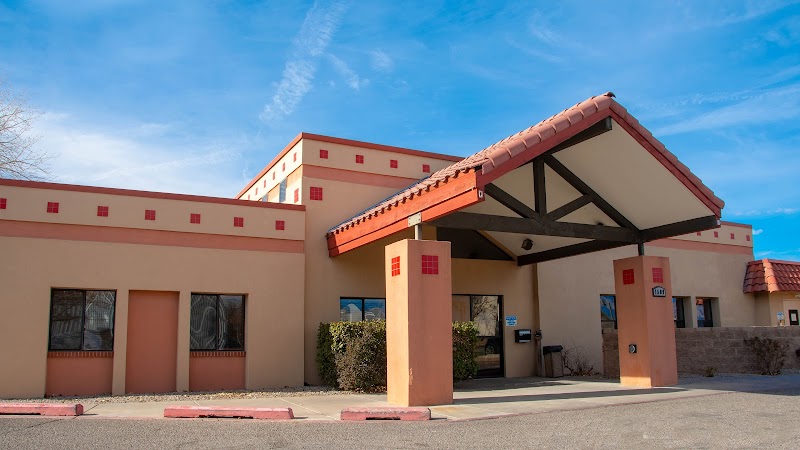
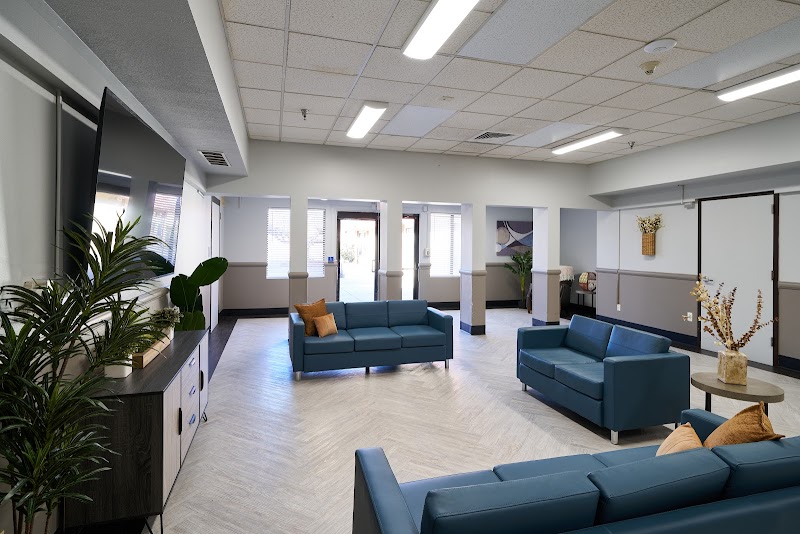
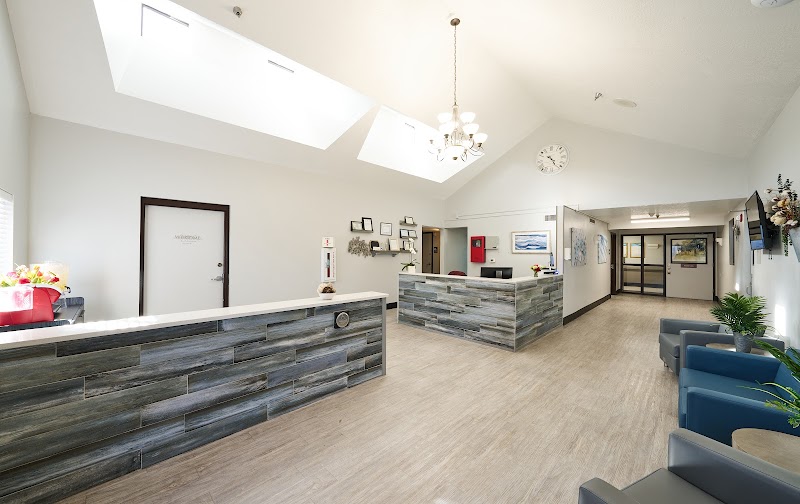
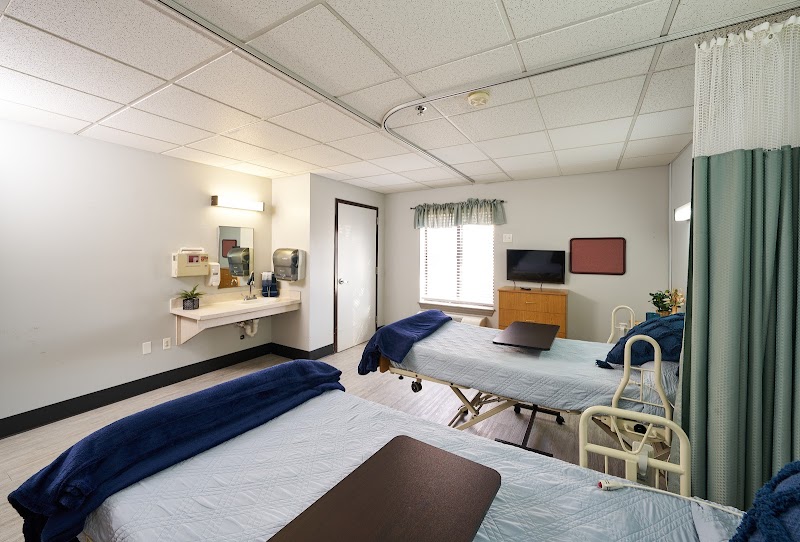
Odelia Healthcare

1509 University Boulevard Ne, Albuquerque, NM 87102 (505) 243-2257
For profit - Corporation 119 Beds OPCO SKILLED MANAGEMENT Data: November 2025 1 Immediate Jeopardy citation
Trust Grade
66/100
#12 of 67 in NM
Last Inspection: May 2025

Inspected within the last 6 months. Data reflects current conditions.

Overview

Odelia Healthcare in Albuquerque, New Mexico has a Trust Grade of C+, indicating it is slightly above average but still has room for improvement. It ranks #12 out of 67 facilities in the state, placing it in the top half, and #5 out of 18 in Bernalillo County, meaning there are only a few local options that perform better. Unfortunately, the facility's trend is worsening, with the number of issues increasing from 12 in 2024 to 13 in 2025. Staffing is a mixed bag; while the turnover rate is a manageable 50%, the facility received a 3 out of 5 stars for staffing, suggesting some areas could be better. However, there are concerning findings from inspections, such as a critical issue where a resident's deteriorating health was not promptly reported to medical staff, potentially jeopardizing their care. There were also issues in the kitchen regarding sanitary practices that could lead to foodborne illnesses, and incidents involving expired medications being administered, raising serious safety concerns. While the facility boasts excellent overall quality ratings and health inspections, families should weigh these strengths against the significant weaknesses revealed in recent inspections.

Trust Score
C+
66/100
In New Mexico
#12/67
Top 17%
Safety Record
High Risk
Review needed
Inspections
Getting Worse
12 → 13 violations
Staff Stability
⚠ Watch
50% turnover. Above average. Higher turnover means staff may not know residents' routines.
Penalties
✓ Good
$23,313 in fines. Lower than most New Mexico facilities. Relatively clean record.
Skilled Nurses
✓ Good
Each resident gets 42 minutes of Registered Nurse (RN) attention daily — more than average for New Mexico. RNs are trained to catch health problems early.
Violations
⚠ Watch
34 deficiencies on record. Higher than average. Multiple issues found across inspections.
★★★★★
5.0
Overall Rating
★★★☆☆
3.0
Staff Levels
★★★★★
5.0
Care Quality
★★★★☆
4.0
Inspection Score
Stable
2024: 12 issues
2025: 13 issues

The Good

  • 5-Star Quality Measures · Strong clinical quality outcomes
  • Full Sprinkler Coverage · Fire safety systems throughout facility
  • No fines on record

Facility shows strength in quality measures, fire safety.

The Bad

Staff Turnover: 50%

Near New Mexico avg (46%)

Higher turnover may affect care consistency

Federal Fines: $23,313

Below median ($33,413)

Minor penalties assessed

Chain: OPCO SKILLED MANAGEMENT

Part of a multi-facility chain

Ask about local staffing decisions and management

The Ugly 34 deficiencies on record

1 life-threatening
Sept 2025 3 deficiencies
CONCERN (D) 📢 Someone Reported This

A family member, employee, or ombudsman was alarmed enough to file a formal complaint

Potential for Harm - no one hurt, but risky conditions existed

Deficiency F0552 (Tag F0552)

Could have caused harm · This affected 1 resident

Based on record reviews and interviews, the facility failed to provide a qualified interpreter for 1 (R #7) of 1 (R #7) residents reviewed. If a facility fails to provide interpreter services, then re...

Read full inspector narrative →
Based on record reviews and interviews, the facility failed to provide a qualified interpreter for 1 (R #7) of 1 (R #7) residents reviewed. If a facility fails to provide interpreter services, then residents with limited English proficiency may not be able to fully understand their care plan, ask questions about their treatment, or communicate their needs effectively to staff. The findings are:A. Record review of the facility's Interpreter Services policy, dated 2003, revealed all nursing home staff with a second language ability will be identified and utilized as interpreters, as needed, to ensure non-English speaking residents can convey their needs and preferences. B. Record review of R #7's admission Record revealed an admission date of 06/14/2025. C. Record review of R #7's Care Plan, dated 06/27/2025, revealed the resident had a communication problem related to Spanish speaking. D. On 08/27/2025, at 2:33 PM, during an interview, R #7's daughter stated her father was primarily Spanish-speaking, and the facility did not provide interpreter services for her father. The daughter stated she had frequent issues caused by lack of communication regarding R #7's abdominal pain, urinary problems, and frustration over inadequate care. E. On 08/27/2025, at 5:53 PM, during an interview, R #7's spouse stated the facility did not provide interpreter services for her husband during his stay. She stated her husband had difficulty communicating concerns about his lack of urine output and inconsistent monitoring by staff. She stated the lack of interpreter services caused confusion and inadequate care. F. On 09/04/2025, at 10:08 AM, during an interview, the Social Services Assistant (SSA) stated interpreter services were not arranged for R #7 during his stay, and interpretation was primarily done by his family members present at his bedside. G. On 09/03/2025 at 2:59 PM, during an interview, the Director of Nursing (DON) stated R #7 was Spanish speaking only, and the lack of an interpreter could lead to miscommunication and affect the resident's quality of care.
CONCERN (D) 📢 Someone Reported This

A family member, employee, or ombudsman was alarmed enough to file a formal complaint

Potential for Harm - no one hurt, but risky conditions existed

Assessment Accuracy (Tag F0641)

Could have caused harm · This affected 1 resident

Based on record reviews and interviews, the facility failed to ensure the resident's MDS (MDS; a federally mandated assessment instrument completed by facility staff) was accurately coded for 1 (R #7)...

Read full inspector narrative →
Based on record reviews and interviews, the facility failed to ensure the resident's MDS (MDS; a federally mandated assessment instrument completed by facility staff) was accurately coded for 1 (R #7) of 1 (R #7) residents reviewed. If the facility fails to ensure the Federally mandated MDS is accurately coded for residents, then the facility cannot develop appropriate care plans or provide individualized treatment, which places residents at risk for unmet needs, delayed interventions, and adverse health outcomes.The findings are: A. Record review of R# 7's Hospital Discharge Orders, dated 06/14/2025, revealed the following: -Resident to receive wound care for hematuria (presence of blood in the urine). -Resident to receive physical occupational therapy for hematuria. B. Record review of R #7's admission Record, dated 06/14/2025, revealed the following: -admission date of 06/14/2025. -Diagnosis of metabolic encephalopathy (a reversable brain disorder of the body's chemicals). -The record did not include a diagnosis of hematuria. C. Record review of R #7's admission MDS (MDS; a federally mandated assessment instrument completed by facility staff), dated 06/17/2025, revealed the record did not contain documentation of active diagnosis of hematuria. D. Record review of R #7's Change in Condition Evaluation, dated 06/19/25, revealed the following:-The resident had a significant decline in food and fluid intake.-The resident was tired, weak, confused, or drowsy.-The resident presented with increase confusion and generalized weakness. E. Record review of R #7's Hospital Discharge documentation, dated 06/21/2025, revealed the following: -Primary diagnosis of hematuria. -readmitted for hematuria. -Resident's plan of care for hematuria. F. Record review of R #7's Progress Notes, dated 06/26/2025, revealed the following:- Resident returned from the hospital for gross hematuria.- Nursing staff observed a small amount of blood in the resident's brief, and a urinalysis (UA; laboratory test on urine to detect infection) ordered.- Urinalysis not yet obtained. G. On 09/03/2025 at 10:23 AM during an interview, the MDS Coordinator stated the facility did not include R #7's gross hematuria diagnosis in the resident's MDS. The MDS Coordinator stated the resident's MDSs, dated 06/17/2025 and 06/26/2025, were correct. The MDS Coordinator stated resident symptoms were not included on the active diagnoses list if the facility was not treating the condition in house. H. On 09/03/2025 at 2:59 PM during an interview, the Director of Nursing (DON) stated R #7's diagnosis of a gross hematuria was not coded in the resident's MDS Assessment. The DON stated the MDS Coordinator was responsible to ensure R #7's diagnosis of a gross hematuria was included in the MDS.
CONCERN (D) 📢 Someone Reported This

A family member, employee, or ombudsman was alarmed enough to file a formal complaint

Potential for Harm - no one hurt, but risky conditions existed

Quality of Care (Tag F0684)

Could have caused harm · This affected 1 resident

Based on a record review and interviews, the facility failed to ensure a resident received care for a diagnosis included on their hospital discharge paperwork for 1 (R #7) of 1 (R #7) residents. If th...

Read full inspector narrative →
Based on a record review and interviews, the facility failed to ensure a resident received care for a diagnosis included on their hospital discharge paperwork for 1 (R #7) of 1 (R #7) residents. If the facility fails to ensure all admitting diagnoses are included in the resident's plan of care, then staff may fail to monitor and treat the condition which could lead to the adverse outcomes or re-hospitalization. The findings are: A. Record review of R# 7's Hospital Discharge paperwork, dated 06/14/2025, revealed the following: - Diagnoses of hematuria (blood in the urine) attributed to traumatic Foley catheter insertion (injury or damage to the urethra, bladder, or surrounding tissue during Foley catheter)and urinary tract infections with hematuria.- Referrals to physical and occupational therapy.-Resident to receive care for hematuria (presence of blood in the urine). B. Record review of R #7's admission Record, dated 06/14/2025, revealed the following: -admission date of 06/14/2025. -Diagnosis of metabolic encephalopathy (a reversable brain disorder of the body's chemicals). -The record did not include a diagnosis of hematuria. C. Record review of R #7's Provider Progress Note, dated 06/16/2025, revealed the notes did not contain documentation of treatment for resident's admitting diagnosis of hematuria. D. Record review of R #7's Care Plan, dated 06/17/2025, revealed the care plan did not include the resident's admitting diagnosis of a hematuria. E. Record review of R #7's Minimum Data Set (MDS) assessment, dated 06/17/2025, revealed the MDS did not contain documentation of hematuria diagnosis. F. Record review of R # 7's Change in Condition Evaluation, dated 06/19/25, revealed the following: -Significant decline in food and fluid intake.-Seems different than usual.-Tired, weak, confused or drowsy.-Since the change of condition occurred the symptoms or signs have gotten worse.-Increase confusion.-General weakness. G. Record review of R #7's Hospital Discharge documentation, dated 06/21/2025, revealed the following: -Primary diagnosis of hematuria. -readmitted for hematuria. -Resident's plan of care for hematuria. H. Record review of R #7's Progress Notes, dated 06/26/2025, revealed the following:-Resident returned from the hospital for diagnosis of hematuria.-Nursing staff observed a small amount of blood in the resident's brief, and a urinalysis ordered.-Uranalysis not yet obtained. I. Record review of R #7's Provider Notes, dated 08/20/2025, r revealed the notes did not contain documentation of treatment for resident's admitting diagnosis of hematuria. J. Record review of R #7's Change of Condition Evaluation, dated 08/21/2025, revealed the following: -Urine retention. -Bladder scan greater than 999 milliliters (ml). -Attempted catheter insertion, unsuccessful due to severe resistance and severe pain.-Abdominal tenderness. -Persistent discomfort not associated with other acute symptoms. -Decreased urine output over one to two days. -Lower severe abdominal pain. K. On 09/03/2025 at 10:23 AM during an interview, the MDS Coordinator stated the facility did not include R #7's gross hematuria diagnosis in the resident's MDS. The MDS Coordinator stated resident symptoms were not included on the active diagnoses list if the facility was not treating the condition in house. L. On 09/03/2025 at 2:59 PM during an interview, the Director of Nursing (DON) stated staff did not document R #7's hematuria diagnosis in the resident's admission record, Care Plan, and MDS. The DON stated the MDS Coordinator was responsible to include R #7's hematuria diagnosis in the resident's MDS. The DON stated staff failed to complete the urinalysis as ordered by the provider. The DON stated it was her expectation for all residents' hospital diagnoses to be entered in the resident's MDS and care plan for appropriate care.
May 2025 10 deficiencies
CONCERN (D)

Potential for Harm - no one hurt, but risky conditions existed

Assessment Accuracy (Tag F0641)

Could have caused harm · This affected 1 resident

**NOTE- TERMS IN BRACKETS HAVE BEEN EDITED TO PROTECT CONFIDENTIALITY** Based on record review and interview, the facility failed to ensure the Minimum Data Set (MDS; a federally mandated assessment i...

Read full inspector narrative →
**NOTE- TERMS IN BRACKETS HAVE BEEN EDITED TO PROTECT CONFIDENTIALITY** Based on record review and interview, the facility failed to ensure the Minimum Data Set (MDS; a federally mandated assessment instrument completed by facility staff) was accurate for 1 (R #37) of 1 (R #37) resident reviewed for MDS assessments. This deficient practice could result in failure to provide adequate care and treatment of the resident's needs. The findings are: A. Record review of R #37's face sheet revealed an admission date of 10/18/23 and included the following diagnoses: - Fracture (break of a bone.) -Muscle weakness (reduction in the power exerted by muscles.) B. Record review of R #37's care plan, dated 01/26/25, revealed R #37 was at a high risk for falls. C. Record review of R #37's MDS, dated [DATE], revealed health condition of injury (not major injury.) D. Record review of R #37's progress note, dated 01/21/25, revealed resident was found on the floor outside the bathroom. R #37's fall resulted in injury, and the resident was sent to the emergency room (ER). E. Record review of R #37's ER encounter notes, dated 01/21/25, revealed a fracture of the scapula (broken bone of shoulder blade.) F. On 06/02/25 at 1:48 pm, during an interview, the MDS Coordinator stated R #37's MDS, dated [DATE], was coded incorrectly. The MDS Coordinator stated staff should have coded the MDS as a fall with major injury because of the fracture.
CONCERN (D)

Potential for Harm - no one hurt, but risky conditions existed

Deficiency F0645 (Tag F0645)

Could have caused harm · This affected 1 resident

Based on record review and interview, the facility failed to ensure the Preadmission Screening and Resident Review (PASRR; a federal requirement to help ensure individuals who have a mental disorder o...

Read full inspector narrative →
Based on record review and interview, the facility failed to ensure the Preadmission Screening and Resident Review (PASRR; a federal requirement to help ensure individuals who have a mental disorder or intellectual disabilities are not inappropriately placed in nursing homes for long term care) was accurate for 1 (R #31) of 1 (R #31) resident reviewed for PASRR accuracy. This deficient practice is likely to result in the facility not providing the services needed by residents. The findings are: A. Record review of R #31's face sheet revealed an admission date of 05/18/18 with the following diagnoses: - Alcohol dependence with alcohol induced persisting dementia, primary admitting diagnosis. - Major depressive disorder, recurrent severe without psychotic disturbances. B. Record review of R #31's baseline care plan, dated 05/27/18, revealed R #31 used an antidepressant for depression. C. Record review of R #31's PASRR Level 1 Screening, dated 05/18/18, revealed staff documented R #31 did not have a diagnosis of or a suspicion of a serious mental illness. Further review revealed the instructions of the form identified mental illness from the Diagnostic and Statistical Manual of Mental Illness, edition 5 (DSM-5; a reference manual) included diagnosis such as disorders of mood, panic, anxiety, or substance-related. D. On 06/02/25 at 2:14 pm during an interview, the Director of Nursing (DON) stated the Social Services Department was responsible to complete the PASRR for all residents. E. On 06/02/25 at 2:28 pm during an interview, the Social Services Assistant (SSA) stated the Social Services Director (SSD) was out of town. The SSA stated the Social Services Department was responsible for the completion of the PASRR for each resident. The SSA stated R #31's diagnosis of major depressive disorder was a mental illness. The SSA did not review R #31's PASRR and stated if the SSD completed the form then it was correct.
CONCERN (D)

Potential for Harm - no one hurt, but risky conditions existed

Deficiency F0692 (Tag F0692)

Could have caused harm · This affected 1 resident

**NOTE- TERMS IN BRACKETS HAVE BEEN EDITED TO PROTECT CONFIDENTIALITY** Based on observation, record review, and interview the facility failed to ensure staff administered a resident's tube feeding (f...

Read full inspector narrative →
**NOTE- TERMS IN BRACKETS HAVE BEEN EDITED TO PROTECT CONFIDENTIALITY** Based on observation, record review, and interview the facility failed to ensure staff administered a resident's tube feeding (feeding tube; a medical device used to provide nutrition to individuals who cannot eat or drink normally) according to physician's orders for 1 (R #23) of 1 (R #23) resident. This failure could potentially cause a resident not to receive enough daily nutrition and lose weight. The findings are: A. Record review of R #23's face sheet revealed the resident was admitted on [DATE] with a traumatic brain injury (TBI; injury to the brain caused by an outside force, usually a violent blow to the head) and used a feeding tube for nutrition. B. Record review of R #23's physician orders, dated 11/25/24, revealed the following: - Order for Glucerna 1.5 (nutrition) every shift continuously by feeding tube. - Administer 80 milliliters (ml) per hour for 20 hours [resident's tube feeding should run for 20 hours continuously and off for four hours per day]. - Continuous every shift via pump. - Flush 65 ml water per hour for 20 hours. C. On 05/29/25 at 8:58 am, observation revealed R #23's tube feeding was turned off. D. On 05/29/25 at 3:30 pm, observation revealed R #23 sat in his chair in the hallway, and his feeding tube was not on. E. On 05/29/25 at 3:54 pm, during an interview with Nurse #5, she stated staff would lay R #23 down soon since it was almost 4:00 pm. She stated staff turned R #23's tube feeding off at 7:00 am and put him in his chair. She stated staff lay R #23 back down and turn his tube feeding on at 4:00 pm. She stated she was told to do it this way. She stated R #23 had been in his chair all day. Nurse #5 stated she was not sure what the resident's physician order said regarding the tube feeding. F. On 05/30/25 at 9:32 am, during an interview, Nurse #4 stated staff stopped R #23's tube feeding from 9:00 am to 11:00 am. She stated staff lay the resident down in bed after four hours and turn the feeding tube back on. She stated R #23 should not be off the feeding tube for longer than four hours, per the resident's physician order. G. On 05/30/25 at 2:38 pm, during an interview, the Registered Dietician (RD) stated if staff did not place R #23 back on the feeding tube after four hours, then he would likely be lower on his nutrients for the day. She stated staff will take residents off their tube feeding for a while so they could do other things, like appointments or activities.
CONCERN (D)

Potential for Harm - no one hurt, but risky conditions existed

Pharmacy Services (Tag F0755)

Could have caused harm · This affected 1 resident

Based on observation, record reviews and interviews, staff failed to request a new provider medication order and to ensure drug records were accurate for 1 (R #45) of 1 (R #45) residents. This deficie...

Read full inspector narrative →
Based on observation, record reviews and interviews, staff failed to request a new provider medication order and to ensure drug records were accurate for 1 (R #45) of 1 (R #45) residents. This deficient practice is likely to lead to potential drug misuse or diversion (medical and legal concept involving the transfer of any legally prescribed controlled substance from the individual for whom it was prescribed to another person for any illicit use). The findings are: A. Record review of the facility's Medication Administration Policy, undated, revealed the following: - Nursing staff will keep in mind the seven rights of medication when administering medication which includes: - The right medication, - The right amount, - The right resident, - The right time, - The right route, - The right indication, - The right outcome. - Compare the licensed practitioner's order with the Medication Administration Record (MAR; first check). - Compare the licensed practitioner's order with the pharmacy label on the medication package (second check). - Compare the pharmacy label and MAR (third check). - Any discrepancies identified during the first, second, or third check must be resolved prior to the administration of any medication. - The licensed Nurse will chart the drug, time administered, and initial their name with each medication administration and sign full name and title on each page of the MAR. B. Record review of R #45's physician orders, dated 05/17/25, revealed an order for oxycodone (opioid pain medication) oral tablet 5 milligram (mg). Give 7.5 mg by mouth every six hours as needed for pain. C. On 05/29/25 at 8:55 am, during observation and interview, Nurse #1 poured and administered oxycodone 5 mg tablet to R #45. Nurse #1 stated R #45 preferred to receive oxycodone 5 mg instead of 7.5 mg. Nurse #1 signed R #45's MAR and entered nursing notes to reflect R #45's dosing preference of 5 mg instead of 7.5 mg oxycodone. Nurse #1 then logged the administration of 5 mg of oxycodone on R #45's Controlled Drug Record (CDR, a detailed document that tracks the movement and use of controlled substances). D. Record review of R #45's nursing notes, dated 05/29/25, revealed Nurse #1 documented the resident preferred 5 mg of oxycodone rather than 7.5 mg. Nurse #1 linked her nursing notes to the oxycodone administration record. E. On 05/29/25 at 9:00 am, during an interview, R #45 stated she preferred to receive oxycodone 5 mg instead of the prescribed dose of 7.5 mg. F. On 05/29/25 at 9:01 am, during an observation, Nurse #1 and the Assistant Director of Nursing (ADON) spoke with R #45, and the resident agreed to receive oxycodone an additional 2.5 mg of oxycodone (to total 7.5 mg as prescribed). Nurse #1 poured a 5 mg oxycodone tablet, split the tablet in half, and administered an additional 2.5 mg of oxycodone to R #45. Nurse #1 wasted (destroyed) the other half of the tablet which was not administered to the resident (2.5 mg). Nurse #1 logged the administration of an additional 2.5 mg oxycodone on R #45's CDR. G. Record review of R #45's MAR, dated 05/29/25, revealed Nurse #1 signed she administered oxycodone 7.5 mg by mouth as ordered. H. On 05/29/25 at 9:03 am, during an interview, Nurse #1 stated she was not aware she should contact the on-call provider to request a new order to match R #45's dosing preference. I. On 05/29/25 at 9:05 am, during an interview, the ADON stated she expected Nurse #1 to call the on-call provider to request a new medication order. She stated Nurse #1 should not sign the resident's MAR to indicate she administered the medication as ordered then enter into the nursing notes that the resident preferred 5 mg. J. On 05/29/25 at 9:10 am, during an interview, the Director of Nursing (DON) stated she expected Nurse #1 to call the on-call provider to request a new order. The DON stated Nurse #1 received training on The Management of Controlled Medications during Nurse #1's annual competency training. K. On 05/29/25 at 9:15 am, during an interview, the facility's Consultant Pharmacist (CP) stated she expected Nurse #1 to call the on-call provider to request a new order. The CP stated if a staff signed a medication order with a certain dose but administered a different dose, then it might lead to drug diversion due to staff not maintaining controlled medications records in order. L. On 06/02/25 at 1:03 pm, during an interview, the Medical Director (MD) stated she expected Nurse #1 to call her, request a new order, and explain the resident's preference. M. On 06/02/25 at 1:07 pm, during an interview, the Pain Management Nurse Practitioner (PMNP) stated she expected Nurse #1 to call the on-call provider and request a new order.
CONCERN (D)

Potential for Harm - no one hurt, but risky conditions existed

Deficiency F0804 (Tag F0804)

Could have caused harm · This affected 1 resident

Based on record review, observation and interview, the facility failed to ensure meals were served at an appetizing temperature for 2 (R #59 and R #33) of 2 (R #59 and R #33) resident reviewed for mea...

Read full inspector narrative →
Based on record review, observation and interview, the facility failed to ensure meals were served at an appetizing temperature for 2 (R #59 and R #33) of 2 (R #59 and R #33) resident reviewed for meal quality. This deficient practice may decrease the resident's quality of life and have the potential to cause weight loss due to the food not being the proper temperature. The findings are: A. Record review of the facility's Food Temperatures Policy, dated 01/01/25, revealed the following: - At start of meal services hot food should be served above 135 degrees (°) Fahrenheit (F) and cold food should be served below 41° F. - If a hot food item is below 135° F, remove items and reheat on stove or in oven to bring the internal temperature above 165° F for 15 seconds. The reheating process can be done twice before food product should be discarded. B. Record review of the facility's Food and Nutrition Services Trayline/ Dining Observation, dated 05/22/25, revealed the Dietary Manager (DM) conducted an internal audit during lunch service and revealed the following: - The DM measured the temperature of the food, and it was appropriate. - The record did not state what food the DM tested or the temperature of the food tested. C. Record review of the facility's lunch schedule revealed staff served lunch between 12:00 pm and 1:30 pm. D. On 05/30/25 at 2:04 pm, during an observation and interview, the DM measured the food temperatures on R #59's lunch tray. The lunch was mashed potatoes with white gravy, mixed vegetables, cubed grilled chicken, and a piece of bread. The temperature of the mashed potatoes and white gravy measured at 110° F. The DM did not measure the rest of the temperatures for the food items on R #59's lunch tray. The DM stated the temperature for R #59's mashed potatoes with white gravy was 110° F, and it was not an acceptable temperature. E. On 05/27/25 at 10:26 am, during an interview, R #33 stated the food was cold and constantly served late past 1:30 pm. R #33 stated it was expected for staff to deliver the meals timely, and the food to be hot. F. On 5/30/25 at 2:04 pm, during an interview, R #59 stated the food was cold, and they did not like to eat cold food. R #59 stated they expected staff to serve hot food.
CONCERN (E)

Potential for Harm - no one hurt, but risky conditions existed

Safe Environment (Tag F0584)

Could have caused harm · This affected multiple residents

Based on observation, interview, and record review, the facility failed to maintain the facility in a homelike manner when staff piled various items in an enclosed outside area near the facility. This...

Read full inspector narrative →
Based on observation, interview, and record review, the facility failed to maintain the facility in a homelike manner when staff piled various items in an enclosed outside area near the facility. This failure had the potential to affect all residents who utilized the South 4 hallway, the Activities Room, and a courtyard near the Activities Room. If staff fail to maintain the facility in a homelike manner, then residents could feel unimportant and sad. The findings are: A. On 05/29/25 at 10:30 am, observation revealed a gated area located on the backside of the building which contained the following items: - Several metal frame beds with wooden headboards. - Wooden framed cage with metal wire. - A rolled up carpet. - Two new, still in box, hospital beds. - Two new, still in box, hospital bed mattresses. - Five cardboard boxes. - Metal scraps, buckets, medical equipment, and other items. The outside storage area was unkept and was not stored in an orderly manner. B. On 05/29/25 at 10:30 am, during an interview, the Maintenance Director (MD) stated the facility had a contractor which would take the stuff, but the area had been like that for a couple weeks. He stated they tried to ensure the items were not visible from the residnet rooms, because it did not look good and was not homelike. C. On 05/29/25 at 2:30 pm, observation revealed the enclosed storage area was visible to residents who lived on the South 4 hallway. D. On 05/29/25 at 4:15 pm, observation revealed the enclosed storage area was visible to resident who utilized the Activities Room. E. On 05/29/25 at 4:20 pm, observation revealed the enclosed storage area was visible to the residents who utilized the courtyard near the Activities Room.
CONCERN (E)

Potential for Harm - no one hurt, but risky conditions existed

Accident Prevention (Tag F0689)

Could have caused harm · This affected multiple residents

Based on record review, observation, and interview, the facility failed to place caution signs on the floor when the floor was wet. This failure had the potential to affect any resident who wanted to ...

Read full inspector narrative →
Based on record review, observation, and interview, the facility failed to place caution signs on the floor when the floor was wet. This failure had the potential to affect any resident who wanted to walk down the hallway. If staff fail to post caution signs on a wet floor, then residents could slip, fall, and injure themselves. The findings are: A. Record review of the facility's Housekeeping Safety Precautions, last revised on August 2020, revealed the following: - Wet mop one side of the corridor or floor at a time and make sure the first side dried before mopping the other side. - Post a Wet Floor warning sign on both ends of the wet side of the floor. B. On 05/29/25 at 10:25 am, observation revealed the floor technician used the rotary floor machine (used to clean and shine floors) in the area between the main hallway and a section of resident rooms. The floor was wet, and there were not any caution signs posted. Two unknown staff members tiptoed across the wet section of the floor. C. On 05/29/25 at 10:25 am, during an interview with one of the unknown staff members, she stated the wet section of floor did not have any wet floor signs set out. D. On 05/30/25 at 2:00 pm, during an interview, the Maintenance Director (MD) stated he supervised the floor technician. The MD stated the rotary floor machine vacuumed up some of the water when it cleaned the floor. He stated staff should have posted wet floor signs to let people know the floor was wet.
CONCERN (E)

Potential for Harm - no one hurt, but risky conditions existed

Drug Regimen Review (Tag F0756)

Could have caused harm · This affected multiple residents

Based on record review and interviews, the facility failed to implement pharmacist recommendations for 1 (R #26) of 3 (R #9, #26 and #67) residents reviewed for unnecessary medications when staff fail...

Read full inspector narrative →
Based on record review and interviews, the facility failed to implement pharmacist recommendations for 1 (R #26) of 3 (R #9, #26 and #67) residents reviewed for unnecessary medications when staff failed to ensure R #26 had lab work completed. This deficient practice is likely to result in more than minimal harm because if residents lab work is not current then residents are likely to reach toxic levels of lithium (a mineral) or may not be receiving the correct dosage for therapeutic effects. The findings are: A. Record review of R #26's face sheet revealed an initial admission date of 07/20/15 and included the following diagnoses: - Mood disorder. - Bipolar disorder (a mental health condition characterized by significant mood swings). - Major depressive disorder (a serious mental health condition characterized by persistent feelings of sadness, loss of interest in activities, and a range of emotional and physical problems). - Obsessive-compulsive behavior (a mental health condition characterized by uncontrollable, recurring thoughts and behaviors that the individual feels compelled to perform). - Anxiety disorder (a group of mental health conditions characterized by excessive fear, worry, and anxiety that interfere with daily life). B. Record review of R #26's Minimum Data Set (MDS; a federally mandated assessment instrument completed by facility staff), dated 05/08/25, revealed the following: - R #26 felt down, depressed, or hopeless nearly every day. - R #26 had trouble staying asleep or slept too much nearly every day. - R #26 took antipsychotic, antidepressant, and anticonvulsant medications. C. Record review of R #26's Physicians Orders, dated 08/10/23, revealed an order for lithium carbonate (a mood stabilizer used to treat or control the manic episodes of bipolar disorder) oral capsule, 150 milligrams (mg). Give one capsule by mouth one time a day for isolation and insomnia (difficulty falling asleep and staying asleep). D. Record review of R #26's Medication Regimen Review (MRR; pharmacy review of the medication a resident receives), dated 12/29/24, revealed the following: - This resident received lithium. - Recommendation for serum lithium level (measures the level of lithium in blood), electrolytes (particles that carry an electric charge and necessary for various bodily functions), and thyroid panel (measures the thyroid hormone levels) if not already done. There are no recent labs in the medical record. - Physician responded and ordered labs, lithium level, complete blood count (CBC; determines general health status, screens for, and monitors for a variety of disorders to include low iron), white blood cells and platelets (a type of blood cell), and comprehensive metabolic panel (CMP; measurement of blood sugar, electrolytes, fluid balance, kidney and liver function). Signed by facility physician on 01/01/25. E. Record review of R #26's electronic medical record revealed the record did not contain documentation to show the labs were completed as recommended by the Pharmacist and ordered by the Physician. F. On 05/29/25 at 9:10 am during an interview, the Director of Nursing stated the resident's labs were not completed as recommended by the Pharmacist and ordered by the Physician. She stated it is was her expectation staff follow-up on pharmacy review recommendations promptly.
CONCERN (E) 📢 Someone Reported This

A family member, employee, or ombudsman was alarmed enough to file a formal complaint

Potential for Harm - no one hurt, but risky conditions existed

Deficiency F0802 (Tag F0802)

Could have caused harm · This affected multiple residents

Based on observation, interview, and record review, the facility failed to provide sufficient support staff to carry out the functions of food and nutrition services at the facility. This deficient pr...

Read full inspector narrative →
Based on observation, interview, and record review, the facility failed to provide sufficient support staff to carry out the functions of food and nutrition services at the facility. This deficient practice is likely to result in longer waits for meal service for any resident receiving a room tray during the three meals served at the facility. A. Record review of the facility's meal times revealed the following: - Breakfast 7:00 am to 8:30 am. - Lunch 12:00 pm to 1:30 pm. - Dinner 5:00 pm to 6:30 pm. B. On 05/27/25 at 2:46 pm, during an interview, R #28 stated meals were served late to his room three to four times a week. R #28 stated staff served meals up to an hour late sometimes. R #28 stated staff served the dinner room trays around 7:00 pm on 05/26/25. C. On 05/28/25 at 11:52 am, during an interview with R #24 and R #25, R #25 stated the food came out cold a lot of the time. R #24 stated staff served dinner around 7:30 pm on 05/27/25. R #25 stated sometimes staff served lunch around 1:30 or 2:00 pm. R #25 stated she was late for an activity in the past because staff served lunch late. D. On 05/28/25 at 12:05 pm, during an interview, R #66 stated staff delivered the food late almost every meal. R #66 stated staff served dinner around 8:00 pm on 05/27/25. He stated staff frequently served dinner between 7:30 pm and 8:00 pm. E. On 05/29/25 at 9:00 am, observation revealed the breakfast trays for R #49 and R #56 arrived at 9:00 am. F. On 05/30/25 at 1:55 pm, observation revealed staff delivered the lunch meal cart to the south hall for distribution. G. On 05/30/25 at 2:51 pm, during an interview with the Dietary Manager (DM) and the Assistant Dietary Manager (ADM), the ADM stated they had a late start that morning getting the room trays out. She stated room meal trays have been going out late. The DM stated the cook walked out at dinner time the other night, which caused issues with timely meal service. The DM stated part of the issue with late meals was the kitchen was short staffed. The DM stated the Dietary Department currently had six vacant positions. The DM and ADM stated they were short staffed on the weekends and at lunch time. They stated they needed more help.
CONCERN (F)

Potential for Harm - no one hurt, but risky conditions existed

Food Safety (Tag F0812)

Could have caused harm · This affected most or all residents

**NOTE- TERMS IN BRACKETS HAVE BEEN EDITED TO PROTECT CONFIDENTIALITY** Based on observation, interviews, and record review, the facility failed to maintain the kitchen in a sanitary manner when staff...

Read full inspector narrative →
**NOTE- TERMS IN BRACKETS HAVE BEEN EDITED TO PROTECT CONFIDENTIALITY** Based on observation, interviews, and record review, the facility failed to maintain the kitchen in a sanitary manner when staff failed to: - Maintain the air gap on the ice machine in a manner to prevent contamination and foodborne illness, - Properly store open food with labels and dates to prevent cross contamination and outdated usage, - Sanitize dishes when staff did not maintain the dish washing machine at 120 degrees (°) Fahrenheit (F), per manufacturer's instructions, - Wash, rinse, and sanitize the food preparation sink between uses to prevent cross-contamination and the growth of food-borne pathogens, - Maintain the kitchen environment in a clean and sanitary manner, - Store clean dishes and single use plasticware in a manner to prevent contamination, - Thaw frozen food by submerging in cold running water. These failures had the potential to result in cross contamination, the growth of foodborne pathogens, and foodborne illnesses. This failure had the potential to affect all residents who ate food from the kitchen. The findings are: Maintenance of Ice Machine A. Record review of the facility's Ice Machine Operation and Cleaning policy, dated 12/2020, revealed the policy did not address the air gap (space between the drain pipe and the floor which prevents dirty water from coming in contact with the drain pipe) for the drain pipe. B. On 05/28/25 at 10:06 am, observation revealed an ice machine located in the kitchen next to the hand washing sink. Further observation revealed the ice machine did not drain through an air gap. The drain pipe to the ice machine drained below the surface of the floor. C. On 05/29/25 at 4:03 pm, during an interview with the Maintenance Director (MD), he stated the ice machine was cleaned monthly. He stated the ice machine was cleaned by a third party company. The MD stated he was responsible for maintaining the ice machine, and he inspected it monthly. The MD stated he did not know the ice machine should drain through an air gap. Unlabeled and Undated Food Items D. Record review of the facility's Food Storage policy, dated 01/21/25, revealed the following: - Foods to be frozen should be stored in airtight in the original packing containers, in plastic Ziploc storage bags, or wrapped in heavy-duty aluminum foil or special laminated papers. - Label and date all food items. - Any open products should be placed in storage containers with tight-fitting lids or plastic Ziploc storage bags. E. On 05/28/25 at 10:10 am, observation of the pantry revealed a bag of bread and hamburger bread opened and undated. F. On 05/28/25 at 10:49 am, observation of the walk-in refrigerator revealed a bin of carrots, dated 05/25/25, unprotected and open to air. G. On 05/28/25 at 10:52 am, observation of the walk-in freezer revealed vanilla ice cream unprotected and open to air. H. On 05/30/25 at 9:50 am, during an interview, the Dietary Manager (DM) stated it was her expectation for staff to place the bread in a sealed bag, labeled and dated, after it was opened. The DM stated that should be the process for all food. She stated all food should be covered and protected. Dish Washing Machine I. On 05/28/25 at 10:23 am, during an interview, the Assistance Dietary Manager (ADM) and the DM stated the kitchen dish washer used low temperatures of 120° F and quaternary ammonium (quat; sanitizing solution) to sanitize the dishes. J. Record review of the Ecolab Low Temperature Dish Machine (low temperature dish washing machines utilize chemicals for sanitation) Manufacturer's Recommendations, dated 2022, revealed the dish machine should be operated at minimum temperatures of 120° F for washing and rinsing. K. Record review of the facility's dish washing machine's manufacturer's plate attached to the dishwashing machine revealed the wash and rinse cycles to be a minimum of 120° F. L. On 05/28/25 at 10:23 am, observation the dishwasher's temperature gauge revealed the wash cycle of the facility's dishwasher measured 115° F. M. On 05/29/25 at 4:00 pm, observation of the dishwasher's temperature gauge revealed the wash cycle of the facility's dishwasher measured 115° F. Staff washed another load of dishes, and the water temperature measured 115° F. N. On 05/30/25 at 9:36 am, observation of the dishwasher's temperature gauge revealed the wash cycle of the facility's dishwasher measured 108° F. Staff ran the dishwasher again, and the water temperature of the wash cycle measured 110° F. O. On 05/30/25 at 3:02 pm, during an interview with Dishwasher #1, she stated the dishwasher should reach a temperature of 120° F during the dishwashing process. . Food Preparation Sink P. Record review of the facility's [NAME] Pot & Pan Wash Procedure, dated 2007, revealed the following: - First sink used for washing pots and pans. - Second sink used for rinsing pots and pans. - Third sink used for sanitizing pots and pans. Q. On 05/28/25 at 10:32 am and 10:54 am, observation revealed the facility's kitchen contained a three-compartment sink (a sink with three sections to wash, rinse, and sanitize dishes) and a two compartment sink (for food preparation). Further observation revealed staff washed dishes in the two compartment food preparation sink and used the sink for the resident's lunch meal preparation. Staff did not wash, rinse, or sanitize the sink between washing dishes and food preparation. R. On 05/28/25 at 10:54 am, during an interview, the ADM and the DM stated staff utilized the food preparation sink to wash dishes. The DM stated the two compartment sink was the designated food preparation sink, and staff should use the three compartment sink should for hand washing dishes. The ADM stated staff should not wash dishes in the food preparation sink, and staff should sanitize the sink after washing dishes and before using the sink for food preparation. Kitchen Cleanliness S. Record review of the facility's Cleaning Schedule policy, dated 12/2020, revealed the nutrition services staff will maintain a sanitary environment in the nutrition services department by complying with the routine cleaning schedule developed by the Nutrition services manager. - The Nutrition Service Manager will develop a cleaning schedule that includes the frequency of which equipment and areas are to be cleaned. - The Nutrition Service Manager monitored the cleaning schedule to ensure compliance. T. On 05/28/25 at 10:10 am and 10:38 am, observation revealed the following: - A bag of hamburger buns on the floor of the pantry. - Knife rack with visible accumulation brown dust like substance. - Grease accumulation on suppression system above deep fryer and on the left side panel of deep fryer. - Stove backsplash with visual oil stains. The stove was not in use. - Griddle with left over food particles and grease. The griddle was not in use. U On 05/30/25 at 9:45 am, observation revealed the following: - Grease accumulation present on the suppression system above deep fryer and on left side panel of deep fryer. - Black grease stains on floor between fryer and stove. V. On 05/30/25 at 9:45 am, during an interview, the DM and the Registered Dietician (RD) stated they were aware of the grease accumulation around the deep fryer. They stated the grease should be cleaned up. Protection of Stored Plastic Ware and Dishes W. Record review of the facility's Discarding of Chipped/Cracked Dishes and Single Service Items (plastic ware used one time and then discarded in the trash) policy, dated December 2020, revealed the following: - The nutrition services staff will discard chipped or cracked dish or glass ware. - Single service containers are discarded after use and are not reused as a storage container. - Containers used for storage will be purchased specifically for that purpose. - Storage containers will have a tight fitting lid and sanitized in the dishwashing machine. X. On 05/28/25 at 10:06 am, observation revealed the following: - Plastic lids stored unprotected. Further observation revealed multiple staff walked past the storage shelves with the unprotected lids. - Clean plates and bowls stored unprotected on a shelf in the dishwashing area. Further observation revealed multiple staff walked past the shelf with the unprotected plates and bowls. Y. On 05/30/25 at 9:40 am, observation revealed the following: - Plastic lids stored unprotected. Further observation revealed multiple staff walked past the storage shelves with the unprotected lids. - Clean plates and bowls stored unprotected on a shelf in the dishwashing area. Further observation revealed multiple staff walked past the shelf with the unprotected plates and bowls. Z. On 05/30/25 at 9:40 am, during an interview, the DM and the ADM stated it was expected for the staff to store the dishes and the plastic lids protected in order to prevent contamination. They stated the dishes on the rack in the dishwashing area used to be protected, but they did not know why they were not protected any longer. Thawing of Frozen Food AA. Record review of the facility's Food Temperatures Policy, dated 01/01/25, revealed the following: - Potentially hazardous foods, such as beef, chicken, port, etc., must not be left to thaw at room temperature. - Recommended methods to safely thaw frozen foods include: - Thawing in the refrigerator, in a drip-proof container, and in a manner that prevents cross contamination. - Completely submerge the item under cold water (at a temperature of 70° F or below) that is running fast enough to agitate and float off loose ice particles. - Thawing the item in a microwave oven, then cooking and serving it immediately afterward; or - Thawing as part of a continuous cooking process. BB. On 05/30/25 at 9:43 am, observation revealed multiple bags of frozen chicken sat in pans in the kitchen's two compartment sink. Further observation revealed the faucet was turned on and ran onto the divider between the two sinks. The bags of frozen chicken were not submerged in the water in the pan, and the cold running water did not run into the pans which contained bags of frozen chicken. CC. On 05/30/25 at 9:43 am, during an interview, the ADM and the DM stated chicken could be thawed in the refrigerator, the microwave, or under cold running water in the sink. The DM stated she was not aware the chicken should be submerged in the water and the water should run directly into the pan of chicken.
Sept 2024 1 deficiency
CONCERN (D) 📢 Someone Reported This

A family member, employee, or ombudsman was alarmed enough to file a formal complaint

Potential for Harm - no one hurt, but risky conditions existed

Deficiency F0602 (Tag F0602)

Could have caused harm · This affected 1 resident

Based on interview and record review, the facility failed to prevent staff to resident exploitation when a staff member used a resident's bank debit card to make an unauthorized (without the account h...

Read full inspector narrative →
Based on interview and record review, the facility failed to prevent staff to resident exploitation when a staff member used a resident's bank debit card to make an unauthorized (without the account holders permission) money withdrawal or purchases for 1 (R #1) of 1 ( R #1) resident looked at for abuse, neglect, and misappropriation. This deficient practice caused undue stress and anxiety for the resident when it was discovered they had money missing. The findings are: A. Record review of a complaint received by the State Agency, dated 05/17/24, revealed allegations of misappropriation (wrongful use of another's belongings, money, etc.) of property. The alleged Perpetrator (a person who commits an illegal or harmful act) was the Transport Driver for the facility, and he allegedly stole up to $480 from the alleged victim, R #1. B. On 09/17/24 at 9:15 am, during an interview with the facility Administrator, she stated she was contacted by R #1 on 05/14/24, and the resident told her the Transport Driver took $480 US dollars from his checking account without his permission on 05/12/24. The Administrator stated R #1 told her that he did not report the incident the day it happened, because he thought the Transport Driver would pay him back. The Administrator stated she immediately filed a facility initiated report and started her investigation. The Administrator stated she asked the Transport Driver about the incident, and he stated nothing happened. The Administrator stated she immediately suspended the Transport Driver. The Administrator stated R #1 reported to her the Transport Driver asked him (the resident) for some money, because he (the Transport Driver) was late on his rent. The Administrator stated R #1 told the Transport Driver that he (the Transport Driver) could use his (the resident's) debit card to withdraw $50 dollars from his checking account, $20 for the Transport Driver and $30 for R #1. The Transport Driver withdrew the money from the resident's account, but the Transport Driver did not return the resident's debit card to him (the resident). The Administrator stated R #1 checked his bank account and noticed someone withdrew $240 twice during the night (05/13/24), totaling $480, which R #1 did not authorize. The Administrator stated R #1 showed her a text he received from the Transport Driver after the money was missing. The Administrator stated the Transport Driver texted the resident that he was very sorry for taking the money and promised to pay R #1 back. The Administrator stated R #1 contacted his bank about the theft, and they refunded all the missing money. The Administrator contacted local law enforcement and filed a report about the incident. The Administrator stated the Transport Driver was fired after she concluded her investigation. The Administrator stated the facility did ask the residents who had contact with the Transport Driver if he had asked them for money, none were identified. The facilities staff was reeducated on their exploitation policy. C. On 09/17/24 at 10:00 am, during an interview with the Transport Driver, he stated he asked R #1 for money, and R #1 agreed to give him the debit card to the resident's checking account to get $50, $20 for himself and $30 for R #1. The Transport Driver stated he withdrew the money from R #1's bank account on 05/12/24, using R #1's debit card and personal identification number. The Transport Driver stated he was supposed to return R #1's debit card, but he did not. The Transport Driver stated he did used R #1's debit card to withdraw $240 twice on 05/13/24, for a total of $480, which R #1 did not authorize.
May 2024 2 deficiencies
CONCERN (D) 📢 Someone Reported This

A family member, employee, or ombudsman was alarmed enough to file a formal complaint

Potential for Harm - no one hurt, but risky conditions existed

Transfer Requirements (Tag F0622)

Could have caused harm · This affected 1 resident

**NOTE- TERMS IN BRACKETS HAVE BEEN EDITED TO PROTECT CONFIDENTIALITY** Based on record review and interview, the facility failed to readmit 1 (R #1) of 1 (R #1) resident back to the facility after be...

Read full inspector narrative →
**NOTE- TERMS IN BRACKETS HAVE BEEN EDITED TO PROTECT CONFIDENTIALITY** Based on record review and interview, the facility failed to readmit 1 (R #1) of 1 (R #1) resident back to the facility after being sent to the hospital for evaluation and treatment. This deficient practice is likely to result in a resident experiencing anxiety, confusion, and despair over not being allowed to return to their residence. The findings are: A. Record review of the facility face sheet, dated 05/02/24, for R #1 revealed she was admitted on [DATE] with an admitting diagnoses of broken left leg, high blood pressure, gastro-esophageal reflux disease (GERD; heart burn), and generalized muscle weakness. B. Record review of the facility census showed R #1 was transported to the hospital on [DATE] after a fall in the facility. C. Record review of the hospital discharge paperwork, dated 02/28/2024, for R #1 revealed R #1 did not sustain an injury in her fall at the facility that required her to be admitted to the hospital, and it was recommended she return to the facility. D. Record review of the hospital social worker's discharge notes, dated 02/28/24, showed the hospital social worker called the facility on 02/28/24 at 11:42 pm to arrange R #1's transportation back to the facility, but the facility's social worker told the hospital social worker that R #1 could not return to the facility. The facility's social worker stated the resident could not return, because they believed the resident required a memory care unit or a sitter (one-on-one observation of a resident) due to her dementia. E. Record review of the electronic medical record for R #1 revealed the record contained a bed hold release agreement (written document explaining how long the facility will hold the residents room while they are out of the facility), dated 02/29/24. Further review revealed the document was signed by the Administrator but not by R #1 or their representative. The document contained a handwritten statement, Facility not accepting back. Patient admitted to hospital. Better suited in a memory care facility. F. On 05/02/24 at 10:14 am, during an interview with the facility's social services director (SSD), she stated she had no idea why R #1 could not come back to the facility. The SSD stated she did not remember speaking with anyone from the hospital or telling anyone R #1 could not return to the facility. The SSD looked at R #1's electronic medical record and stated she did not see a reason why R #1 could not be readmitted to the facility. G. On 05/02/24 at 11:19 am, during an interview with the Assistant Director of Nursing (ADON), she stated R #1 had a Brief Interview for Mental Status (BIMS; a screening for cognitive impairment) score of 6 out of 15 (severe impairment) and did not have any safety awareness. The ADON stated she thought R #1 would be better cared for in a memory care facility. The ADON stated staff placed a wander guard (wearable devise that sounds an alarm and locks doors if near an exit) on R #1 on 02/23/24, because staff saw the resident go towards the front door while stating she did not want to be at the facility anymore. The ADON stated this was the only time R #1 mentioned that she wanted to leave the facility. The ADON stated the staff did not contact R #1 or her Power of Attorney (POA; legal authorization for a designated person to make decisions about another person's property, finances, or medical care) while the resident was at the hospital. H. On 05/02/24 at 11:25 am, during an interview with the facility Administrator, she stated staff did not talk to R #1 or the resident's POA about the resident not returning to the facility. The Administrator stated she thought R #1 would be better cared for in a memory care facility. The Administrator reviewed the bed hold release agreement from R #1's medical record and stated she wrote the note on the document. The Administrator stated her expectation for a facility initiated discharge would be for the staff to communicate with the resident or the resident's POA during the process. I. On 05/03/24 at 12:00 pm, during an interview with the hospital social worker, she stated she called the facility to arrange for transportation for R #1 back to the facility, and she was told by someone in social services that the facility would not accept R #1 back into the facility. J. On 05/03/24 at 12:15 pm, during an interview with R #1's POA, he stated he never spoke with anyone at the facility. The POA stated he was told by the hospital staff on 02/28/24 that they contacted the facility, and the facility refused to let R #1 return. The POA stated R #1 really liked the facility, and he would have preferred for R #1 to be readmitted there.
CONCERN (D) 📢 Someone Reported This

A family member, employee, or ombudsman was alarmed enough to file a formal complaint

Potential for Harm - no one hurt, but risky conditions existed

Transfer Notice (Tag F0623)

Could have caused harm · This affected 1 resident

**NOTE- TERMS IN BRACKETS HAVE BEEN EDITED TO PROTECT CONFIDENTIALITY** Based on record review and interview, the facility failed to ensure residents, resident representatives, and Ombudsman received ...

Read full inspector narrative →
**NOTE- TERMS IN BRACKETS HAVE BEEN EDITED TO PROTECT CONFIDENTIALITY** Based on record review and interview, the facility failed to ensure residents, resident representatives, and Ombudsman received a written notice of transfer as soon as practicable for 1 (R #1) of 1 (R #1) residents sampled for being discharged . This deficient practice could likely result in the resident representatives not knowing the reason for discharge, location of the resident, and when the resident can return to the facility. The findings are: A. Record review of R #1's administration progress note, dated 02/28/24, revealed R #1 was admitted to a hospital on [DATE]. B. Record review of R #1's discharge Minimum Data Set (MDS; a federally mandated assessment instrument completed by the facility staff), dated 02/28/24, revealed the resident had an unplanned discharge to a short-term general hospital. C. Record review of R #1's hospital discharge notes written by the hospital social worker, dated 02/28/24, showed the hospital social worker called the facility on 02/28/24 at 11:42 pm to arrange R #1's transportation back to the facility, but the facility's social worker told the hospital social worker that R #1 could not return to the facility. D. On 05/02/24 at 11:19 am, during an interview with the Assistant Director of Nursing (ADON), she stated she thought R #1 would be better cared for in a memory care facility. The ADON stated the staff did not contact R #1 or the resident's Power of Attorney (POA; legal authorization for a designated person to make decisions about another person's property, finances, or medical care) while the resident was at the hospital. E. On 05/02/24 at 11:25 am, during an interview with the facility Administrator, she stated staff did not talk to R #1 or the resident's POA about the resident not returning to the facility. The Administrator stated she thought R #1 would be better cared for in a memory care facility. The Administrator stated her expectation for a facility initiated discharge would be for the staff to communicate with the resident and or the POA during the process. F. On 05/03/24 at 12:00 pm, during an interview with the hospital social worker, she stated she called the facility to arrange for transportation for R #1 back to the facility, and she was told by someone in social services that the facility would not accept R #1 back into the facility. G. On 05/03/24 at 12:15 pm, during an interview with R #1's POA, he stated he never spoke with anyone at the facility. The POA stated that on 02/28/24 the hospital staff told him they contacted the facility, and the facility refused to let R #1 return. The POA stated he was never contacted by the facility about R #1's discharge, never given written notice, and was not aware he could have appealed the facility initiated discharge. H. On 05/14/23 at 09:39 am, during an interview with the Ombudsman (provides advocacy and assistance by offering residents a means to voice their concerns and have their complaints addressed) for the facility, he stated the facility did not notify him in writing when they discharged R #1, but they should have.
Jan 2024 9 deficiencies
CONCERN (D)

Potential for Harm - no one hurt, but risky conditions existed

Deficiency F0583 (Tag F0583)

Could have caused harm · This affected 1 resident

Based on observation and interview, the facility failed to safeguard clinical record information when they left protected health information (PHI; protected health information) unattended. This defici...

Read full inspector narrative →
Based on observation and interview, the facility failed to safeguard clinical record information when they left protected health information (PHI; protected health information) unattended. This deficient practice had the potential to affect 1 (R #44) of 1 (R #44) (residents were identified by the Resident Census List provided by the Administrator on 01/09/24). If resident's clinical information is not adequately safeguarded, resident's PHI is likely to be accessed by unauthorized residents, visitors, or staff. The finding are: A. On 01/10/24 at 8:00 am, during observation of the south hall, PHI was observed on the nurses station desk, which was in open view of anyone who walked by the desk. An 8 inch by 11 inch piece of white paper lay on the desk with four labels which contained Resident (R) #44's first name, last name, and medication name on them. On top of the document was a handwritten note to reorder medications. B. Record review the Resident Census List provided by the Administrator on 01/09/24 revealed R #44 was a current resident at the facility.
CONCERN (D)

Potential for Harm - no one hurt, but risky conditions existed

Deficiency F0658 (Tag F0658)

Could have caused harm · This affected 1 resident

Based on observation, record review, and interview, the facility failed to meet professional standards of quality care when staff failed to disconnect, flush, and clamp a PICC line (peripherally inser...

Read full inspector narrative →
Based on observation, record review, and interview, the facility failed to meet professional standards of quality care when staff failed to disconnect, flush, and clamp a PICC line (peripherally inserted central catheter; a long, thin tube that is inserted through a vein in the arm and passed through to the larger veins near your heart) after an antibiotic (medication used to treat infections) infusion (putting the medication into the body through the PICC line) for 1 (R #96) of 1 (R #96) resident sampled for PICC lines. This deficient practice could likely result in the PICC becoming occluded (blocked), which would not allow medications to be infused, and the resident would not receive needed medications. The findings are: A. Record review of R #96's medication administration record (MAR) revealed an order for staff to administer Cefazolin (antibiotic) injection, to be infused three times a day, from 01/03/24 thru 01/26/24, for treatment of sepsis (infection). The order also instructed staff to flush the PICC with 10 milliliters of normal saline before and after the infusion of the antibiotic. B. On 01/10/24 at 7:40 am, during an observation and record review of the medication pass in R #96's room, LPN #1 noticed R #96 had his IV antibiotics attached to his PICC line. Record review of R #96's MAR revealed the IV antibiotics were administered on 01/09/24 at 8:00 pm and infused for 30 minutes. Further observation showed the IV was not clamped (closed off so blood from R#96 did not enter the IV line and occlude it). LPN #1 disconnected the IV line, flushed with the required 10 milliliters of normal saline fluid, and clamped the line. C. 01/10/24 at 8:57 am, during an interview with the Assistant Director of Nursing (ADON), she stated once an IV is finished infusing medication, it cannot be left attached all night. She said staff should have flushed, disconnected, and clamped the IV soon after the medication finished infusing.
CONCERN (D)

Potential for Harm - no one hurt, but risky conditions existed

Deficiency F0687 (Tag F0687)

Could have caused harm · This affected 1 resident

Based on record review and interview, the facility failed to provide proper foot care for 1 (R#42) of 1 (R#42) resident reviewed for foot care. This deficient practice is likely to cause pain, tendern...

Read full inspector narrative →
Based on record review and interview, the facility failed to provide proper foot care for 1 (R#42) of 1 (R#42) resident reviewed for foot care. This deficient practice is likely to cause pain, tenderness, and complications in foot health. The findings are: A. Record review of R #42's health record revealed an intitial admission date of 11/17/23 with the following relevant diagnosis: other chronic pain, gout (a painful form of arthritis caused by uric acid crystals, a normal body waste product, that form in and around the joints), osteoarthritis (a degenerative joint disease, in which the tissues in the joint break down over time), difficulty walking, other reduced mobility and need for assistance with personal care. B. On 01/10/24 at 11:52 am, during an interview, R #42 stated he had an ingrown toenail that grew into the skin of his toe. The resident said it was painful, and he could not put on shoes. Observation of R #42's right foot revealed the toenail on his 3rd toe was excessively long and measured approximately ½ inch in length. Observation also showed the toenail grew in a curved pattern over the top of the toe and cut into the top of the fleshy portion of the bottom of the toe. The toenail was also jagged in appearance. Further observation revealed the rest of R #42's toenails on both feet were long and jagged in appearance. R #42 stated he informed facility staff he needed his toenails to be cut, and the CNAs told him they were not permitted to cut resident's toenails. C. Record review of R #42's weekly skin checks revealed the following: - On 11/27/24, staff did not document any skin impairments or notes related to the feet. - On 12/05/23, staff did not document any skin impairments or notes related to the feet. - On12/10/23, staff did not document any skin impairments or notes related to the feet. - On 12/27/23, staff documented skin impairments to the coccyx, groin, back of right hand, both armpits, both arms, the back. Staff did not document any notes related to the feet. - On 01/03/24, staff documented skin impairments to the coccyx, groin, left armpit, right forearm. Staff did not document any notes related to the feet. D. On 01/12/24 at 11:20 am, during an interview with the Assistant Director of Nursing, she stated it was best practice for staff to check the resident's feet and document any concerns related to the feet during skin assessments. E. On 01/12/24 at 11:30 am, during an interview, Certified Nursing Assistant #5 confirmed R #42's toenails needed to be cut, and the toenail of R #42's right foot grew into the pad of his toe. F. Record review of the facility policy titled Nail/Hand and Foot Care, effective date 05/2017, stated the following: - It was the policy of the facility to ensure residents received nail care (hand and foot) in a safe manner. - Staff to take the following precautions: - Nursing assistants were not to cut toenails of residents with ingrown nails, painful nails, or nails that were too hard, thick or difficult to cut easily, - Staff to observe and report to charge nurse any problems such as corns, calluses, ingrown nails, swelling, redness, infection, skin breakdown, drainage, foul odors, or other significant changes.
CONCERN (E)

Potential for Harm - no one hurt, but risky conditions existed

Deficiency F0558 (Tag F0558)

Could have caused harm · This affected multiple residents

Based on observation and interview, the facility failed to provide accommodation of residents' needs for 3 (R #1, R #11, and R #111) of 3 (R #1, R #11, and R #111) residents reviewed for call lights w...

Read full inspector narrative →
Based on observation and interview, the facility failed to provide accommodation of residents' needs for 3 (R #1, R #11, and R #111) of 3 (R #1, R #11, and R #111) residents reviewed for call lights within reach. This deficient practice is likely to result in residents being unable to request assistance, with activities of daily living, transfers after falling, or other acute distress. The findings are: A. Record review of the facility's policy titled Communication Call System, revision date 10/24/22, stated call cords will be placed within the resident's reach in the resident's room. Findings for R #11: B. On 01/10/24 at 12:37 pm, during an observation and interview, Licensed Practical Nurse (LPN) #2 brought R #11 to his room. The resident sat in his wheelchair, in front of his television set. R #11 stated he needed help to adjust his table tray. Further observation showed R #11's call button was on the floor, on the far side of his bed next to the wall. R #11 was not able to reach the call light. C. On 01/10/24 at 12:42 pm, Certified Nursing Assistant, CNA #1 confirmed the call light was not within R #11's reach. Findings for R #1 D. On 01/11/24 at 12:10 pm, during an observation and interview, R #1 lay in her bed. During an interview, she stated she needed assistance to adjust herself in the bed. Further observation showed R #1's call light was located under a pillow, used to prop her left side. The resident was unable to reach her call light for assistance. E. On 01/11/24 at 12:12 pm, during an interview, the Staffing Coordinator confirmed R #1 was unable to reach her call light. Findings for R #111: F. On 01/11/24 at 1:22 pm, during an observation and an interview, R #111 stated he needed assistance, and he needed to be cleaned. The resident sat in his wheelchair, near his bedroom door, and his call light was in the center of his bed. R #111 was not able to reach the call light. G. On 01/11/24 at 1:36 pm, during an interview, CNA #4 confirmed R #111 was not able to reach his call light. She stated she was unable to place the call light within reach of R #111 where he was currently seated, because the call light was secured to the bed rail with a quick tie (a plastic cable usually used for securing items together). The CNA stated the cord was not long enough to reach R #111.
CONCERN (E)

Potential for Harm - no one hurt, but risky conditions existed

Quality of Care (Tag F0684)

Could have caused harm · This affected multiple residents

Based on interview and record review, the facility failed to provide quality care for 2 (R #65 and #115) of 2 (R #65 and 115) residents by not following physician orders to get STAT (immediately) x-ra...

Read full inspector narrative →
Based on interview and record review, the facility failed to provide quality care for 2 (R #65 and #115) of 2 (R #65 and 115) residents by not following physician orders to get STAT (immediately) x-rays. These deficient practices could likely cause a medical concern to go unidentified and untreated, causing the medical condition to worsen. The findings are: R #65 A. Record review of the physician orders for R #65 indicated an order, dated 12/11/23, for abdomen x-ray STAT to rule out an obstruction, for abdominal distention. B. Record review of a physician note for R #65, dated 12/11/23, indicated there was a concern of mild distention to abdomen. The note stated the resident's abdomen was soft and non-tender. C. Record review of a follow-up physician note for R #65, dated 12/13/23, indicated the following, I had also ordered an ABD (abdominal) Xray on Monday which was not completed so I ordered it again stat today and nurse is calling to get it done. D. Record review of the physician orders for R #65 indicated an order, dated 12/13/23, for an abdomen KUB (kidneys, ureters, bladder) X-ray STAT to rule out an obstruction. Further review revealed the resident's record did not contain documentation this was completed. R #115 E. Record review of the physician orders for R #115 indicated an order, dated 11/08/23, for a STAT chest x-ray to rule out aspiration. F. On 01/12/24 at 2:30 pm, during an interview with Assistant Director of Nursing (ADON), she stated they were unable to find the x-rays for R #65 and R #115. She stated she called the company that did the x-rays for the facility, and they have no record of the residents' x-rays either. She was unclear where the breakdown occurred with the two x-rays.
CONCERN (E)

Potential for Harm - no one hurt, but risky conditions existed

Pressure Ulcer Prevention (Tag F0686)

Could have caused harm · This affected multiple residents

Based on observation, record review, and interview, the facility failed to ensure a resident wore protective boots while in bed to prevent pressure wounds (damaged skin caused by pressure, shear, or f...

Read full inspector narrative →
Based on observation, record review, and interview, the facility failed to ensure a resident wore protective boots while in bed to prevent pressure wounds (damaged skin caused by pressure, shear, or friction) for 1 (R #96) of 4 (R #10, 26, 50, and 96) residents reviewed for pressure ulcers. This deficient practice could likely result in the wound on the resident's heel to worsen. The findings are: A. Record review of the physician orders for R #96 indicated an order, dated 12/26/23, for offloading (to minimize or reduce pressure on feet and heels) boots while in bed every day and night shift. B. On 01/10/24 at 8:00 am, during an interview, R #96 stated he wore a boot on for his pressure wound at night, but it falls off. The resident said his heel hurt when it rested on the bed. C. On 01/10/24 at 8:00 am, an observation revealed R #96 lay in bed without heel protective boots on, and the resident did not have anything under his legs or feet to raise his heels off the bed. D. On 01/11/24 at 1:41 pm, an observation revealed R #96 lay in bed without heel protective boots on, and the resident had a thin pillow under his legs that did not sufficiently support his heels. E. On 01/12/24 at 10:41 am, during an interview with Registered Nurse (RN) #3, she stated she noticed R #96 did not have on his protective boots. The RN said she was aware the resident should have the boots on while he was in bed.
CONCERN (E)

Potential for Harm - no one hurt, but risky conditions existed

Respiratory Care (Tag F0695)

Could have caused harm · This affected multiple residents

Based on observations, interviews, and record review, the facility failed to provide the recommended humidified oxygen (a device used to increase the level of moisture) for resident's comfort for 2 (R...

Read full inspector narrative →
Based on observations, interviews, and record review, the facility failed to provide the recommended humidified oxygen (a device used to increase the level of moisture) for resident's comfort for 2 (R #1 and R #64) of 2 (R #1 and R #64) residents reviewed for oxygen therapy. This deficient practice of not providing humidified oxygen to a resident may likely result in a moisture deficit that naturally occurs when breathing through the nose and mouth and in a feeling of discomfort from irritation of throat and nose caused by administration of pure oxygen. The findings are: Findings for R #1 A. Record review of R #1's care plan, completion date 12/14/23, revealed R #1 received oxygen therapy related to chronic respiratory failure. The care plan directed staff to maintain humidified oxygen at 2 liters per minute as needed to keep R #1's oxygen saturation level (the amount of oxygen you have circulating in your blood) above 89%. B. On 01/09/24 at 1:48 pm, during an observation and interview, R #1 lay in bed and received oxygen therapy via nasal cannula (a device that delivers extra oxygen through a tube in the nose). During an interview, R #1 stated the air felt dry and questioned if there was water in the humidifier (refillable plastic bottle that infuses the normal flow of oxygen with water droplets). Observation revealed the humidifier was empty and dated 01/04/24. C. On 01/09/21 at 2:00 pm during an interview, Certified Nursing Assistant (CNA) #1 confirmed R #1's humidifier was empty. She stated the humidifier should be checked daily, but the day had been very busy. She also stated there was a staff member who came weekly to change out R #1's tubing and humidifier, but the humidifier always seemed to get empty before the staff member returned. Findings for R #64 D. Record review of R #64's medication orders revealed an order, dated 08/03/23, for oxygen at 3 liters per minute via nasal cannula continuously, increased as necessary to maintain oxygen saturation above 89%. The order also directed staff to check the humidifier bottle each week and as needed. E. On 01/09/24 at 3:39 pm, during an observation, R #64 lay in bed and received oxygen therapy. Observation revealed the humidifier was empty and dated 01/04/24. F. On 01/09/24 at 3:40 pm, during an interview, CNA #3 confirmed the humidifier was empty and needed to be replaced.
CONCERN (F)

Potential for Harm - no one hurt, but risky conditions existed

Deficiency F0761 (Tag F0761)

Could have caused harm · This affected most or all residents

**NOTE- TERMS IN BRACKETS HAVE BEEN EDITED TO PROTECT CONFIDENTIALITY** Based on observations and interviews the facility failed to: 1. Ensure the medication carts did not contain loose medications. ...

Read full inspector narrative →
**NOTE- TERMS IN BRACKETS HAVE BEEN EDITED TO PROTECT CONFIDENTIALITY** Based on observations and interviews the facility failed to: 1. Ensure the medication carts did not contain loose medications. 2. Ensure expired supplies were not kept with unexpired supplies. 3. Ensure all medication carts were locked when not in use. These deficient practices are likely to result in all 114 residents, identified on the census list provided by the Executive Director (ED) on [DATE], receiving expired medication, having expired medical supplies used in their treatments, and allowing access to medication carts to unauthorized personnel. The findings are: Findings for loose medications found in medication carts. A. On [DATE] at 9:00 am, during observation of the north 2 medication cart, one loose white oval tablet lay under the medication cards (vertical cardboard and foil cards pre-filled with prescription medications for easy storage and dispensing) in the drawer of the cart. B. On [DATE] at 9:05 am, during an interview with registered nurse (RN) #1, she stated staff should have found the loose medication and disposed of it properly. C. On [DATE] at 9:16 am, during observation of the south 3 and 4 medication cart, a 50 mg (milligrams) trazodone (medication used to treat depression and anxiety) tablet was loose in the over-the-counter medication drawer. Observation also revealed a white capsule, imprinted with IP101, lay loose under the medication cards. D. On [DATE] at 9:17 am, during an interview with licensed practical nurse (LPN #2), she verified the loose medications should not be in the cart. E. On [DATE] at 9:24 am, during observation of the south 1 medication cart, 4 round white tablets, 1/2 (half) a white tablet, 2 round yellow tablets, 1 oval white tablet, and 1 pink tablet were loose under the medication cards. F. On [DATE] at 9:25 am, during an interview with LPN #3, he stated loose medications should not be in the medication cart. Findings for expired supplies stored with unexpired supplies. G. On [DATE] at 9:53 am, observation of the south medication and supply storage room revealed the following expired medical supplies stored with unexpired medical supplies: - One Sol-Care Luer Lock Syringe, 3 milliliters, 21 gauge (size of needle), by 1 inch, expired [DATE]; - One Zyno Medical IV Administration Set, expired [DATE]; - Two Bio Patch protective disks with chlorhexidine gluconate (CHG; disinfectant), expired [DATE]; - One Povidone-iodine swab sticks, expired 10/2023; - Fifty-one Assure ID tuberculin safety syringes, 25 gauge, by 5/8 inch, expired [DATE]. H. On [DATE] at 10:11 am, during an interview with nurse contractor (NC) #1, she verified all the supplies were expired and should not be stored with unexpired supplies. Findings for unlocked medication cart. I. On [DATE] at 1:09 pm, during observation, the north medication cart was unlocked and accessible. Observation also revealed the staff did not use or control the cart, for five minutes. Further observation revealed the nearby nurses station was also vacant during this time. J. On [DATE] at 1:15 pm during an interview with NC #1, she verified the medication cart was unlocked but should be locked at all times.
CONCERN (F)

Potential for Harm - no one hurt, but risky conditions existed

Infection Control (Tag F0880)

Could have caused harm · This affected most or all residents

**NOTE- TERMS IN BRACKETS HAVE BEEN EDITED TO PROTECT CONFIDENTIALITY** Based on observation, record review, and interview, the facility failed to maintain proper infection prevention measures by: 1....

Read full inspector narrative →
**NOTE- TERMS IN BRACKETS HAVE BEEN EDITED TO PROTECT CONFIDENTIALITY** Based on observation, record review, and interview, the facility failed to maintain proper infection prevention measures by: 1. Not performing hand hygiene between resident medication pass. 2. Not performing hand hygiene between collecting resident breakfast trays and passing out resident breakfast trays. This deficient practice could likely result in the spread of infectious agents (viruses and bacteria) for all of the 114 residents who resided at the facility. The findings are: Hand hygiene at medication pass A. On 01/10/24 at 7:28 am, during observation of the medication pass on the north hallway, licensed practical nurse (LPN) #1 passed medications to an unknown resident and did not perform hand hygiene when he left the resident's room. LPN #1 went directly to his medication cart and got the medication ready for R #96. LPN #1 then walked into R #96's room and administered his medication. LPN #1 did not perform hand hygiene before he prepared or administered R #96's medication. B. On 01/10/24 at 8:00 am, during observation of the south 3 and 4 hall medication passes, LPN #2 passed medications to room [ROOM NUMBER] and did not perform hand hygiene she left the resident's room. LPN #2 walked directly to her medication cart and did not perform hand hygiene before she prepared and administered the medications for the resident in room [ROOM NUMBER]. C. On 01/10/24 at 8:57 AM, during an interview with the assistant director of nursing (ADON), she stated staff should perform hand hygiene in between residents when they pass medications. Hand hygiene between dirty and clean tasks D. During observation on 01/10/24 at 8:28 am, certified nursing assistant (CNA) #1 and CNA #2 walked in and out of resident rooms 16 through 21. The CNAs collected used, dirty trays from residents who finished eating breakfast and passed out clean trays with breakfast to other residents. The CNAs did not perform hand hygiene between collecting dirty trays and passing out the clean trays. E. On 01/10/24 at 8:57 AM, during an interview with the assistant director of nursing (ADON), she stated staff should perform hand hygiene in between residents when they picked up and passed out food trays.
Dec 2022 2 deficiencies
CONCERN (E) 📢 Someone Reported This

A family member, employee, or ombudsman was alarmed enough to file a formal complaint

Potential for Harm - no one hurt, but risky conditions existed

ADL Care (Tag F0677)

Could have caused harm · This affected multiple residents

**NOTE- TERMS IN BRACKETS HAVE BEEN EDITED TO PROTECT CONFIDENTIALITY** Based on interviews and record review, the facility failed to provide bathing assistance for 3 (R #s 40, 50, and 54) residents o...

Read full inspector narrative →
**NOTE- TERMS IN BRACKETS HAVE BEEN EDITED TO PROTECT CONFIDENTIALITY** Based on interviews and record review, the facility failed to provide bathing assistance for 3 (R #s 40, 50, and 54) residents of 5 (R #s 40, 50, 51, 52, and 54) residents who required assistance or were dependent upon staff for bathing. This deficient practice has the potential to cause the resident anxiety, depression, and embarrassment by contributing to an undignified appearance and body odor. The findings are: Findings for R #40 A. Record review of R #40's medical record revealed the following: R #40 resided at the facility from 08/11/22 until 09/30/22. R #40 had the following diagnoses: polyneuropathy, unspecified (the simultaneous malfunction of many peripheral nerves {nerves from the spinal cord to the rest of the body} that may result in impaired sensation or strength); need for assistance with personal care; morbid (severe) obesity due to excess calories; and major depressive disorder, recurrent, moderate (a mood disorder that causes a persistent feeling of sadness and loss of interest and can lead to a wide variety of emotional and physical concerns). These diagnoses are not all inclusive and do not include all of R #40's diagnoses. B. On 12/19/22 at 2:33 pm during an interview with the complainant, the complainant stated that the facility had not been giving R #40 a bath or cleaning her. The complainant stated that R #40 told the complainant that she (R #40) had not been receiving baths. The complainant also stated she would come to the facility daily, stay approximately 2 hours, and did not witness any staff interacting with R #40 or giving her a bath. The complainant stated she told R #40's family member to complain to the facility about R #40 not receiving baths. The complainant stated after R #40's family member complained, R #40 finally received a bath. The complainant is unsure how long R #40 had been at the facility and had gone without a bath. C. Record review of the facility's shower schedule indicated residents are scheduled to receive showers twice a week. A record review of the Activities of Daily Living (ADLs) Bathing Task Sheet revealed R #40 received showers on 08/22/22 with a refusal documented earlier on the same day for the shower, indicating R #40 resided at facility for 11 days prior to any showers or baths being documented. R #40 received a shower on 08/27/22, 08/29/22, 09/05/22, 09/16/22, 09/20/22 and 09/22/22. R #40 discharged on 09/30/22 with no shower or bath documented the last full week she resided there. There were 8 missed opportunities for a bed bath or shower. No completed shower sheets could be found for this resident. D. On 12/20/2022 at 2:25 pm during an interview, the Director of Nursing (DON) stated residents were to be provided with the opportunity to shower or bathe twice a week. These should be documented on shower sheets. Refusals to shower should also be documented on the shower sheets. A refusal would be followed up by a notification to the nurse to provide a different opportunity for the resident to be bathed later in the shift. The DON confirmed there was missing shower documentation for R #40 for the days as shown in R #40's ADL bathing task list E. On 12/20/22 at 12:20 pm during an interview, Certified Nursing Assistant, CNA #1, and CNA #2 stated they have a shower list of the residents needing showers for the day. There are usually between 1 and 3 residents for each of the CNAs to shower. When possible, they will ask the residents when they want their showers, either in the morning or the afternoon. The CNAs stated they need 5 or more [CNAs] to complete all assigned showers. If only 3 CNAs are to work that shift, resident showers get missed. The CNAs stated sometimes they must leave the showers for the night shift, but the night shift never communicates to the day shift whether those missed showers were completed. If the resident does not say anything, then the day shift CNAs do not know the resident's shower has not been given. F. On 12/22/2022 at 9:51 am, during an interview, R #40's family member, (FM #1) stated that R #40 received only 2 baths during the 6 weeks R #40 resided at the facility, that he was aware of. He stated one of those baths he gave to her. FM #1 stated that once he .caught a tech . putting false information in her record. He stated the false information was that R #40 refused a shower. FM #1 stated this was untrue and that R #40 had never refused a shower or bath. He stated she asked every day for a bath, but the facility never gave her one, so R #40 stopped asking. Findings for R #50 G. Record review of R #50's admission face sheet revealed he was admitted to the facility on [DATE] and discharged on 07/21/22. He was admitted with the following diagnoses: obesity, unspecified; other reduced mobility; need for assistance with personal care; and major depressive disorder, recurrent, unspecified. These diagnoses are not all inclusive and do not include all of R #50's diagnoses. H. Record review of R #50's Activities of Daily Living (ADLs) Bathing Task Sheet revealed no documentation of showers or baths being provided to R #50 during his stay at the facility from 07/01/22 through 07/21/22. There were 6 missed opportunities for bathing. No shower sheets were provided for this resident. I. On 12/20/22 at 9:25 am during an interview, R #50 stated during his stay at the facility he received no baths and no showers. He stated sometimes the CNAs said they would come back to give him a shower, but they never did come back to give him a shower. J. On 12/21/22 at 4:45 PM during an interview with the DON, she confirmed that she could not find any evidence that R #50 was assisted with a shower or bath during his stay at the facility from 06/30/22 - 07/21/22. Findings for R #54 K. Record review of R #54's admission face revealed R #54 was admitted to the facility on [DATE] with the following diagnoses: encounter for surgical aftercare following surgery on the digestive system; other cerebral palsy (a group of permanent, but not unchanging, disorders of movement and/or posture and of motor function) muscle weakness (generalized); and difficulty in walking, not elsewhere classified. L. On 12/20/22 at 11:12 AM, during an interview, R #54 I have been here two weeks and just got my first bath. I advocate for myself. I asked Friday and they said Saturday and I asked Saturday and they said Monday .I just think that they are too busy. M. Record review of R #54's Activities of Daily Living (ADLs) Bathing Task Sheet revealed no documentation of showers or baths being provided to R #54. A record review of the shower sheet provided for the resident, indicated R #54 was bathed on 12/20/22, 14 days after her date of admission on [DATE]. N. On 12/21/22 at 5:28 pm, during an interview with the DON, she confirmed the shower sheet dated 12/20/22 was the only documentation of bathing for R #54. She stated that residents should be offered the opportunity to shower or bathe twice a week and it should be documented.
CONCERN (F) 📢 Someone Reported This

A family member, employee, or ombudsman was alarmed enough to file a formal complaint

Potential for Harm - no one hurt, but risky conditions existed

Infection Control (Tag F0880)

Could have caused harm · This affected most or all residents

Based on observation, interviews, and record review, the facility failed to provide proper infection control practices when the facility failed to track skin rash that has been reoccurring in resident...

Read full inspector narrative →
Based on observation, interviews, and record review, the facility failed to provide proper infection control practices when the facility failed to track skin rash that has been reoccurring in residents and staff. This deficient practice has the potential to affect all 116 residents identified on the resident census list provided by the Administrator on 12/19/22. If the facility is not tracking and treating skin rash before it can spread to other residents and staff in the facility, then residents and staff are at risk of being exposed to or developing infections they may otherwise have avoided. The findings are: A. On 12/20/22 at 2:35 pm during an observation of R #3's skin, revealed that R #3 had a rash on her back and right shoulder. During an interview at this time, Certified Nurse Aide (CNA) #5 stated, R #3 has had a rash since she got here. Record review of Face Sheet dated 04/10/22 for R #3 revealed an initial admission date of 03/06/21. B. On 12/20/22 at 2:40 pm during an observation of R #5's skin, revealed that R #5 had a rash on her arms. Record review of Face Sheet dated 07/13/22 for R #5 revealed this as an initial admission date. C. On 12/20/22 at 2:44 pm during an interview, Licensed Practical Nurse (LPN) #1 stated, We use ammonium lactate (medication used to treat dry, scaly skin conditions) and triamcinolone (medication used to treat skin conditions) on R #2 on her rash that she had for 2-3 weeks before Hospice (end of life care) came in and we combined treatments. Since we combined treatments with Hospice it seems to be helping or working better. She further stated that R #4 also has a rash. D. Record review of Face Sheet dated 12/01/22 for R #2 revealed an initial admission date of 10/04/22. E. On 12/20/22 at 2:48 pm during an observation of R #4, revealed that R #4 had a rash on his chest, abdomen and groin (thigh and leg) area. During an interview at this time, LPN #1 stated that R #4 is being treated with triamcinolone. R #4 stated that he's had the rash for about three weeks. Record review of Face Sheet dated 12/19/22 for R #4 revealed an initial admission date of 06/27/22. F. Record review of Face Sheet dated 11/27/22 for R #1 revealed an initial admission date of 04/08/21. G. Record review of Face Sheet dated 06/04/22 for R #6 revealed this as an initial admission date. H. On 12/21/22 at 2:21 pm during an interview the Infection Preventionist (IP - nursing professional who stops the spread of infectious diseases among people in health care settings or communities) stated that one resident [R #7] had a skin biopsy (medical procedure of obtaining a tissue sample to be tested in a lab) about a year ago (approximately December 2021) that was inconclusive (no definite result); [name of] R #1 had a biopsy done on 07/29/22 and the lab results were dermatitis (a general term that describes a common skin irritation). IP further stated, these were the only two residents [R #1 and R #7] that had any type of biopsy. R #2 was going to have a skin biopsy done (in either September/October 2022), but Nurse Practitioner (NP) #1 felt that the rash was a 'run of the mill rash' and did not order the biopsy. I have not seen that R #3 has a rash; I have not heard of R #4 having a rash; and I haven't heard anything being mentioned about R #5 having a rash. IP further stated that he has gotten information from residents and staff about there being a contagious rash and that he referred them to the DON (Director of Nursing). He stated, I directed one staff member to speak to the DON and I believed it was [name of] who is a Certified Nurse Aide (CNA). CNA #3 showed me her rash and it was like some red spots on her arms. He further stated that rashes that are extensive or very concerning to someone would be brought to his attention. I. On 12/21/22 at 2:43 pm during an interview with the DON and Administrator (ADM) revealed the following: ADM stated Epi (Epidemiology) called me and they didn't ask for names of patients. We had the water tested through [name of testing lab] this past summer because we have had residents with rashes on and off. DON stated, I've been here for two years and there have been rashes on and off. DON stated that there was a former employee and her daughter who she believes is the source of the scabies (a skin condition caused by mites. Scabies is contagious and can spread quickly in areas where people are in close physical contact) complaint. This CNA had reported this rash to one of the nurses [in September or October] and I (DON) then reported it to the ADM. The CNA came in and took off her jacket and asked me, 'what is this' and I told her to follow up with the doctor. The CNA told me that she got this rash from the facility and named a few patients to me that she had seen the rash on. DON further stated that R #6 had a rash that her daughter was concerned about and they requested a punch biopsy for her mother and it was ordered and the daughter canceled the biopsy before it was done, and told the facility that the rash that she thought was MRSA (Methicillin-resistant Staphylococcus aureus, a type of bacteria that is resistant to several antibiotics [medication used to treat infections]) had cleared on its own. The DON stated that one new staff, [Name of CNA #4], showed her a rash on his hands and she suggested to him to go see his provider or go to urgent care which he did, he was told that he was having an allergy to the gloves. She stated that they brought [name of] Medical Director (MD) in on the rash about two years ago. DON further stated, [Name of R #2] had an order for the atopical cream to treat a rash. The hospice nurse who was treating [Name of R #2] told me that she felt there was a scabies outbreak in this facility. MD was going to come in and do the punch biopsy for R #2, then the Nurse Practitioner (NP) checked [Name of R #2] and stated that she would not recommend a punch biopsy as she didn't feel was scabies. I am not sure 'off the top of my memory' if [Name of R #3] had a rash. I am not aware that [Name of R #5] has a rash. The ADM stated, I spoke to the Epidemiologist (EPI) and told her about R #7 dermatologist labs and that they were inconclusive. The DON stated, I was not sure about R #4 having a rash so I can't give any information on him; [Name of CNA #4] and [Name of CNA #3] are the two staff that brought to my attention personal concerns with rash. Both the ADM and DON stated that there has always been an ongoing rash in this facility that seems to have its dips and highs in occurrence. The ADM stated, when I spoke to the EPI, I gave her a general idea of what we have been doing, (water was tested approximately July 2022, laundry detergent was tested in the past as well), this discussion was not specific about what was done a year ago versus what has been done recently. The DON stated that the hospice nurse reported this rash as scabies after speaking with staff in this facility who told her (Hospice Nurse) that there was scabies in the facility and hospice was treating R #2 as if she did have scabies and the treatment seemed to help. J. On 12/21/22 at 4:54 pm during an interview, Human Resources Director, (HRD) stated, one former employee did come to me and show me a rash, this employee had been working here for two weeks, it was a new employee. I sent this employee, [CNA #3], to the Assistant Director of Nursing (ADON) and the ADON sent [name of CNA #3] to [name of medical provider]. CNA #3 came back and asked for medicine for the rash, and it was recommended that she go to the Emergency Department (ED), CNA #3 did not go to the ED at that time, but she went the beginning of December (approximately two weeks later) and she texted a picture of the doctors note that stated 'out til December 19th.' [name of CNA #3] called me and told me that the physician told her that she has scabies, and two weeks later she showed up in person and turned the note in to me; she showed her arms to me and told me that the medicine the doctor gave her cleared up the rash. CNA #3 told me that she had also called the DON and told her that she had scabies. I spoke to the DON and the DON told me that [name of CNA #3] stated to her that she had scabies. K. On 12/21/22 at 5:10 pm during an interview the IP stated that he has been the IP for about a year and that [name of] DON is also qualified to be IP and they just cover each other. He stated, I track things (infections) by what medications are ordered. At the beginning of the year we do an infection risk assessment. All the rashes that are identified are most likely skin infections and they put nystatin (medication that treats fungal skin infections) on them; the current rashes do not seem to be infection control risks, the feeling is that it might be a post covid rash and not an infectious process. I believe the current residents with rash all were infected with the COVID virus. I am not sure why this was not occurring on the other halls/units. This rash is not being tracked as potentially infectious; I think it is probably related to post covid infection. I would be made aware of an infection such as scabies or covid depending on the circumstance, like how long did the staff person work. If it was brought to my attention then I would immediately send the staff home if they had scabies and would tell them to go to their doctor. We would then do contract tracing to see who the staff worked with. IP stated that he was not aware of any staff member having scabies. L. On 12/21/22 at 5:36 pm during an interview, the DON, stated that when she first got here [to the facility] two years ago, it was discussed [the ongoing rash] and that [name of] Medical Provider (MP) #1 had them treat Prophylactically (to prevent) and bagged all items for all residents. She stated that R #2 did get two rounds of medication and that all residents who were treated seemed to get better and that those residents were treated on individual basis not the facility as a whole. DON stated that the CNAs document rashes on shower sheets and that there is a process for when a person gets a rash who it gets reported to and what action will be taken. She further stated that there is not a tracking or trending process for the rash and that there has never been a directive to address the rashes; the medical provider is made aware of the residents with rash. She stated, [Name of CNA #3] never told me that she had scabies, I believe the last conversation I had with her (CNA #3) was when she came into my office to show me her the rash. I was not aware of CNA stating that she had scabies, CNA #3 did not talk to me at all about being diagnosed with scabies. The DON further stated that she would expect her staff to report to her if they were made aware that another staff had something contagious (capable of being spread either through direct or indirect physical contact) such as scabies. M. On 12/ 21/22 at 12:10 pm during an interview, CNA #3 stated that she made a complaint to the State about a rash that, Riddled her body. She stated that she was working on the South Hall when she saw a resident undressed who had a rash on her back and arms. She asked the nurse on duty about the resident's rash, she stated that the nurse stated, we don't know what it is, but think it is a Covid Rash (skin irritation related to the Covid-19 [highly contagious virus that causes respiratory illness]). It could be from the Covid Vaccine, we don't know what they injected us with, what is in those vaccines. CNA #3 stated that she was told by [name of] the Former Assistant Director of Nursing (FADON), if you think it is scabies, I will give you the medication for it and was given Pyrethrin (medication used to treat scabies). CNA #3 stated that she also got Pyrethrin spray and put it on her couches, beds, and everything. CNA #3 stated, I took all the bedding to the laundry and washed them in hot water and dried them in a hot dryer. I took medication and continued to work and as it [rash] got worse, I once again complained to the nurse and [name of] FADON. She stated that she was sent to [name of healthcare provider] and the Nurse Practitioner took one look, and backed away, saying, we don't see rashes here, only broken bones and work injuries. I suffered the whole time, September, October, November with this [rash]. I could see that the residents were also in pain, they [residents] were saying they feel that they are being bitten by ants. I asked what the aides (CNAs) could do to help these poor little people and the nurses said, put lotion on it. I spoke, once again, with the DON and the DON turned and walked away from me. I told the DON that I could quit and get meds, but what will happen to the residents and [name of] DON told me, 'How do I know, they could be F-king bedbugs for all I know, I don't have time for this, do what you have to do.' CNA #3 stated that she went to the [name of hospital] where the provider told her that this is the worst case of scabies they'd ever seen. CNA #3 stated, that she went to speak with HRD on December 1, 2022, to let them know that the doctor stated that she had to be off until December 19, 2022. CNA #3 further stated, my daughter was also working there and got a rash, she had a skin scrape, and they couldn't tell if it was scabies, but it was a parasite. N. Record review of medical records provided by CNA #3 dated 12/01/2022 at 4:33 am revealed she was treated for scabies and prescribed the following: Ivermectin (medication used to treat parasitic diseases) 3 mg (milligrams) tablet; Methylprednisolone (a prescription medication used to reduce inflammation caused by many conditions); and Permethrin (medication used to treat scabies). O. Record review of electronic medical records for R #s 1, 2, 3, 4, 5 and 6 revealed no assessments were done to rule out if their rashes were scabies.
Nov 2022 1 deficiency
CONCERN (D) 📢 Someone Reported This

A family member, employee, or ombudsman was alarmed enough to file a formal complaint

Potential for Harm - no one hurt, but risky conditions existed

Deficiency F0625 (Tag F0625)

Could have caused harm · This affected 1 resident

**NOTE- TERMS IN BRACKETS HAVE BEEN EDITED TO PROTECT CONFIDENTIALITY** Based on record review and interview, the facility failed to ensure residents, or their representatives received a written notic...

Read full inspector narrative →
**NOTE- TERMS IN BRACKETS HAVE BEEN EDITED TO PROTECT CONFIDENTIALITY** Based on record review and interview, the facility failed to ensure residents, or their representatives received a written notice of their bed hold policy indicating the duration that the bed would be held for 1 (R #21) of 2 (R #21 and R #23) residents reviewed for transfers to hospital. This deficient practice could likely result in the resident and/or their representative being unaware of the resident being able to return to their previous room upon return from the hospital. The findings are: R #21 A. Record Review of R #21's Medical Record revealed the following: 1. R #21 has the following diagnoses: unspecified dementia with behavioral disturbance (a chronic or persistent disorder of the mental processes caused by brain disease or injury and marked by memory disorders, personality changes, and impaired reasoning with agitation including verbal and physical aggression, wandering, and hoarding); suicidal ideations (having thoughts and ideas about the possibility of ending one's own life); major depressive disorder; recurrent severe without psychotic features, bipolar disorder, current episode mixed, moderate; muscle weakness (generalize) difficulty in walking not elsewhere classified, other abnormalities of gait and mobility, chronic fatigue, unspecified, and chronic obstructive pulmonary disease, unspecified (a group of lung diseases that make it hard to breathe and get worse over time). This list is not all inclusive and does not include all of R #21's diagnoses. 2. R #21 was sent to the hospital on [DATE], for a fall. R #21 remained hospitalized until 04/22/22. 3. No documentation of written notification of the facility's bed hold being provided to the resident's family representative and Power of Attorney (POA-the authority to act for another person in specified or all legal or financial matters) informing of the bed hold policy at the time of R #21's transfer. 4. R #21 was sent to the hospital on [DATE] due to suicide ideation, statements of wanting to die, escalating (increasing rapidly and becoming more intense and serious) threats to kill herself, and refusing medication and oxygen. 5. No documentation of written notification of the facility's bed hold policy being provided to the resident's POA at the time of R #21's transfer. B. On 11/18/22 at 12:17 pm, during an interview, Social Services Director verified that no bed hold notification had been provided to R #21's POA for R #21's hospitalization on 04/18/22 and that it should have been provided to the POA. She stated that for R #21's transfer on 07/26/22, there was a voicemail left for the POA. C. On 11/16/22 at 10:33 am, during an interview with R #21's POA, he stated that he was not aware that R #21 had been transferred from the facility on 07/26/22, prior to receiving a phone call from the hospital that R #21 was being treated at. He stated he did not receive written notification of the bed hold policy from the facility related to R # 21's transfer of 07/26/22. D. Record review of the facility's policy titled Bed Hold, revision date 06/20, .Procedure IV. Transfer to an Acute Care Hospital A. The facility notifies the resident or his/her representative, in writing, of the bed hold policy any time the resident is transferred to general acute care hospital even if the facility has not met the occupancy requirements outlined in Section II above .
Sept 2022 6 deficiencies 1 IJ
CRITICAL (J)

Immediate Jeopardy (IJ) - the most serious Medicare violation

Notification of Changes (Tag F0580)

Someone could have died · This affected 1 resident

**NOTE- TERMS IN BRACKETS HAVE BEEN EDITED TO PROTECT CONFIDENTIALITY** Based on record review, observation, and interview the facility failed to recognize a resident's deteriorated (to become worse) ...

Read full inspector narrative →
**NOTE- TERMS IN BRACKETS HAVE BEEN EDITED TO PROTECT CONFIDENTIALITY** Based on record review, observation, and interview the facility failed to recognize a resident's deteriorated (to become worse) health status and immediately notify the Medical Provider of a change in condition for 1 (R #33) of 1 (R #33) resident reviewed for a change in condition. If the facility it not actively monitoring resident changes and notifying the Medical Provider in a timely manner, then residents are likely to not receive the care and interventions needed to maintain their highest practical well-being. The findings are: A. Record review of the face sheet for R #33 revealed, she was admitted to the facility on [DATE] with a primary diagnosis of Fibromyalgia [disorder that affects muscle and soft tissue characterized by chronic pain], and secondary diagnoses that included, a need for assistance with personal care [assistance with activities of daily living such as bathing, grooming and toileting] and Bipolar Disorder [mental health condition that results in mood swings that include emotional highs and lows]. B. On [DATE] at 1:15 pm during an observation and interview with R #33, it was observed that she had just finished lunch and was in her wheelchair by the nurse's station. She was dressed in clean clothing and appeared well groomed. She was talkative and greeted others as they walked by. She was friendly and seemed happy by how she interacted with others. R #33 stated that she had a couple of concerns about how long she waits for the bathroom and that she had a rash all over her body. She confirmed that the physician knew about the rash and that it was being treated. C. On [DATE] at approximately 2:45 pm, during an observation R #33 was observed in the dining room, participating with staff and other residents in the afternoon recreational activity. D. Record review of nursing progress notes for R #33 on [DATE] from midnight until noon in their entirety revealed: 7:49 am, Staff attempted to toilet [first name of R #33] at 0700 [7:00 am] this morning as requested. She is still sleeping and refuses toileting. 8:29 am, Resident still sleepy. Tried to wake her up for medications and looks drowsy. 9:02 am Resident still in deep slumber [sleep] Saturation 86%. Oxygen per nasal cannula [tube to deliver O2 to nose] commenced (started). 9:15 am, Resident continued to deteriorate in condition. Comfort measures provided until she breathed her last at 0930 hrs. [hours, am]. 9:30 am, Resident noted to have no pulse, no resps [respirations/breathing], pupils (circular opening that allows light to enter the eye) fixed [not reactive to light] and dilated (to become larger or more open). Code status is DNR. Resident pronounced [officially declared dead] at 0930 [9:30 am]. No other nursing documentation for [DATE] was available. E. Record review of facility policy Change of Condition Notification Policy number, NP-104 not dated, revealed, in pertinent part, An acute change of condition (ACOC) is a sudden, clinically important deviation [anything away from a usual or normal], from a patient's baseline in physical, cognitive [thinking], behavioral, or functional [residents ability to perform activities of daily living such as bathing or dressing] domains. Clinically important means a deviation that, without intervention, may result in complications or death .The Licensed Nurse will notify the resident's Attending Physician when there is .deterioration in health, mental or psychosocial [the combined influence of both psychological and social factors] status .The Licensed Nurse will assess the resident's change of condition and document observations and symptoms . The Attending Physician will be notified timely with a resident's change in condition .Notification of the Attending Physician will include a summary of the condition change and an assessment of the resident's vital signs [measurement of the essential [to life] body functions of a resident most commonly, in this community in long term care, these include blood pressure, pulse, respirations, temperature and oxygen saturation] and system review focusing on the condition and/or signs and symptoms for which notification is required. F. On [DATE] at 2:28 pm, during an interview with Registered Nurse (RN) #1, he reported at about 7:30 [am on [DATE]], I told my supervisor [Unit Manager (UM) #1 that [name of R #33] was drowsy and wouldn't wake up for us. She [UM #1] said she (R #33) was always sleepy, she didn't come see her. We [nursing staff] kept an eye on her [R #33], The CNA's [Certified Nursing Assistants] and I kept checking on her. R #33 didn't take her morning meds. [medications] She didn't say, no she didn't speak [when RN #1 attempted to have her take her medication] she was just [demonstrated her action with his head lolling around in a circle] I did not tell anyone else [other than my Supervisor, UM #1] about R #33 being sleepy. She did not get her medication that morning. R #33 is DNR [Do not resuscitate, if the residents heart stops or they stop breathing do not try to revive them]. During this conversation, it was reported that she was administered Tramadol [an opiod drug used to relieve pain] by the night shift nurse per the documentation on the Medication Administration Record (MAR). G. Record review of the [DATE], MAR for R #33, documented she received Tramadol on [DATE] at midnight and 6:00 am. H. On [DATE] at 2:38 pm during an interview with the Director of Nursing (DON) she revealed, when a resident is DNR status it does not change the expectation of when or whether a nurse would notify a medical provider of a resident with a change in health condition. They [staff] are expected to let them [medical provider] know right away. I. On [DATE] at 3:10 pm, during an interview with UM #1 she stated, He [RN #1] just said she (R #33) was sleeping and didn't want to get up, which was normal for her. J. On [DATE] at 4:10 pm, during an interview with RN #2 he revealed, She (R #33) was not my patient that day, but I knew her well. She always woke up for me [when I was her nurse] she might say she didn't want to take the meds [her medications] even when she was drowsy, but she woke up. That would have triggered me that something was wrong, if she didn't wake up enough to speak. I would have been more aggressive, a sternal rub (technique performed by rubbing the knuckles of a closed fist firmly on the chest in an effort to get a response from the resident as it is painful) and immediate set of vital signs and called the doctor. At about 9:25 [am today] the CNA [CNA #2] came and said,Will you come see Mrs. [last name of R #33], She was gone [had died] at that time . I had been in the room [the room that R #33 shared with two other residents] to see another resident about thirty to forty-five minutes before [before 9:25 am] and [first name of NA #1] said [first name of R #33] was not waking up and I just glanced over at her [from where I was in the room with another resident] and she was sleeping. He confirmed he did not go to her bedside to assess her. K. On [DATE] at 8:34 am, during an interview with R #33's medical provider, Nurse Practitioner #1 she revealed, if there was a change in condition, we should have been called . I would have wanted a call with the additional sleepiness or drowsiness [R #33 was displaying on the morning of [DATE]] and with the O2 [oxygen saturation, being lower than normal], [oxygen saturation is a measurement of the amount of oxygen being carried in the blood, normal is generally considered to be between 88 -100 percent, decreasing below normal]. L. On [DATE] at 2:51 pm , during an interview, Nursing Assistant [NA] #1 reported I get here [to the facility] about 5:40 [am] I went to see [first name of R #33] about 6:40 [am] I found her sleepy, I shook her and said, hey [first name of R #33] are you going to get up? and she was breathing okay, but she didn't wake up and talk to me like usual .I told [first name of RN #1] and [first name of CNA #2]. In report [from the night shift on [DATE]] [first name of R #33] was up until about 1:00 am and rearranging the room .They [staff] said she [R #33] was normal. M. On [DATE] at 4:19 pm, during an interview with CNA #3 she revealed, she was with R #33 at about 9:30 pm on [DATE] and R #33 was normal, talkative, didn't want to go to bed yet. N. On [DATE] at 11:53 am, during an interview with RN #1 he revealed, she (R #33) wouldn't wake up [to take her medication] it was around about 7 to 7:30 [am], that was the first I knew she was sleepy she was moving her head like refusing [back and forth for no] her speech was incoherent (unable to express oneself clearly), she was breathing normally. He stated, that NA #1 never came and told him anything about R #33 on [DATE], that CNA #2 came to him two times that morning before R #33 died the first time he [CNA #2] had given him R #33's, vital signs [and] they were, 102 [pulse rate, most often is the number of times a heart beats per minute], 24 [number of respirations, breaths in and out per minute normal rate for adults at rest is 12 -20], 97.3 [body temperature in Fahrenheit] nothing for BP [blood pressure, measure of force of blood flow against artery walls] or O2 saturation [was given to him ] I didn't have the time recorded [of when CNA #2 obtained the vital signs] .I didn't chart the vital signs. The second time [CNA #2 came to him about R #33] was just before she died when CNA #2 told him her [R #33] O2 saturation was 77, at that time he went directly to R #33's room obtained another O2 saturation reading, which was 86 percent and he stayed with her and sent CNA #2 to get oxygen supplies for R #33. He confirmed that he did not make an attempt to notify the Medical Provider of a change in condition for R #33 prior to her death on [DATE]. O. On [DATE] at 2:22 pm, during an interview with CNA #2 he revealed, me and another CNA .yes [first name of NA #1] we let the nurse [RN #1] know [first name of R #33] was sleepy, we couldn't wake her up for the bathroom, that was about 7:00 [am] .Vitals [vital signs] were turned in to the nurse [RN #1] her [R #33] blood pressure (B/P) didn't read [the machine he was using to obtain the blood pressure would not obtain it for him]. I let the nurse (RN #1) know I couldn't get her BP that I would go back and try again that was maybe about 8 [am] I was with another resident most of the time that morning so did not get back to check on R #33's blood pressure. The next time I saw her, we [RN #1 and RN #2] were all there and it was just before she died. I'm not sure of the time. This resulted in an Immediate Jeopardy (IJ) at a scope and severity of J [isolated jeopardy]to resident health and safety] being identified on [DATE] at 3:08 pm. The facility took corrective action by implementing an acceptable Plan of Removal on [DATE] at 12:00 pm which was verified onsite. Based on the Plan of Removal, the interventions included: 1. Audited for other residents who could also be affected 2. Identified staff with responsibility and actions taken 3. Conducted staff training (also known as In-Service Training) 4. Implementation of system changes 5. Monitoring for adverse (harmful or unfavorable) resident findings going forward 6. Involvement of the Medical Director 7. Involvement of the Quality Assurance Performance Improvement (QAPI) Committee 8. Assignment of responsibility for follow up on new process identified
CONCERN (D)

Potential for Harm - no one hurt, but risky conditions existed

Deficiency F0657 (Tag F0657)

Could have caused harm · This affected 1 resident

**NOTE- TERMS IN BRACKETS HAVE BEEN EDITED TO PROTECT CONFIDENTIALITY** Based on observation, interview, and record review, the facility failed to update the care plan for 1 (R #76) of 1 (R #76) resid...

Read full inspector narrative →
**NOTE- TERMS IN BRACKETS HAVE BEEN EDITED TO PROTECT CONFIDENTIALITY** Based on observation, interview, and record review, the facility failed to update the care plan for 1 (R #76) of 1 (R #76) resident reviewed for care planning following a fall. This deficient practice may likely result in staff confusion regarding best practices for the care of a resident who was at risk for falls and also preventing the resident from reaching their highest level of well-being. The findings are: A. Record review of nursing progress note for R #76, dated 08/20/22 at 12:10 pm, revealed, R #76 was admitted on [DATE] with a diagnosis of cutaneous [skin] abscess [purulent/pus filled mass due to infection] of head, also revealed, resident has an unsteady gait (shakiness or wobbling when walking) requiring supervision. B. On 09/19/22 at 10:45 am, during an observation and interview with R #76, she stated she had fallen on an escalator (moving staircase) prior to her admission and that is how she obtained the wound that resulted in the diagnosis of cutaneous abscess on the right side of the back of her head. R #76 was observed to have a bruise on her left forehead that was approximately 4 inches around and was yellow and blue colored. She revealed she had fallen two times at the facility since being admitted . R #76 revealed she had fallen about 2 weeks ago and hit her head causing the bruise on her left forehead. R#76 reported that the first time she fell (on 08/20/22), she hurt her right arm and the second time was when she hit her head and got the bruise on her left forehead. C. Record review of Care Plan for R #76 revealed, on 08/22/22 a care plan focus [goal] was initiated regarding fall prevention, it documented, [First name of R #76] is at Moderate risk for falls, The planned outcome was [First name of R #76] will be free of falls through the review date and the approach [interventions planned to achieve the focus] was Pt [Physical Therapy] evaluate and treat as ordered or PRN [as needed]. There was no follow up plan or interventions documented to address R #76's having had two falls while at the facility. D. Record review of R #76's nursing progress notes revealed the resident had fallen at the facility on 08/20/22 and had another fall on 09/08/22. E. On 09/23/22 at 1:17 pm, during an interview with Registered Nurse (RN) #3 she revealed that the Unit Supervisor or the Nurse Manager should update the care plan for a resident after each fall. She confirmed that R #76's care plan had not been updated to address the two falls R #76 has had since her admission to the facility.
CONCERN (D)

Potential for Harm - no one hurt, but risky conditions existed

Accident Prevention (Tag F0689)

Could have caused harm · This affected 1 resident

**NOTE- TERMS IN BRACKETS HAVE BEEN EDITED TO PROTECT CONFIDENTIALITY** Based on interview, and record review the facility failed to re-assess 1 (R #56) of 1 (R #56) resident for safe smoking. This de...

Read full inspector narrative →
**NOTE- TERMS IN BRACKETS HAVE BEEN EDITED TO PROTECT CONFIDENTIALITY** Based on interview, and record review the facility failed to re-assess 1 (R #56) of 1 (R #56) resident for safe smoking. This deficient practice could likely contribute to an accident if residents are not being re-assessed to be safe to smoke without supervision. The findings are: A. On 09/19/22 at 10:04 am, during an interview with R #56, he stated you can go smoke whenever you want to go smoke. He stated you (residents) are allowed to keep your smoking materials on you. B. Record review of the Smoking assessment dated on 08/02/22 (also R #56's admission date) indicated that R #56 needed supervision to smoke. C. Record review of the Smoking List (for residents) located at the nursing station revealed that R #56 was noted to be independent with smoking. D. On 09/21/22 at 7:57 am, during an interview with Registered Nurse (RN) #2, he stated that R #56 was supervised for smoking when he arrived to the facility, but he was independent now. E. On 09/26/22 at 10:03 am, during an interview with the Assistant Director of Nursing (ADON), she stated that Smoking Assessments are completed for all residents on admission, any change in condition and quarterly. She stated that when R #56 was admitted to the facility he was assessed to be supervised smoker, but his care plan was updated on 08/30/22 and noted that he was independent with smoking. She confirmed that there was no Smoking assessment dated [DATE] in R #56's medical record indicating that R #56 had been re-assessed for smoking.
CONCERN (E)

Potential for Harm - no one hurt, but risky conditions existed

ADL Care (Tag F0677)

Could have caused harm · This affected multiple residents

**NOTE- TERMS IN BRACKETS HAVE BEEN EDITED TO PROTECT CONFIDENTIALITY** Resident #21 I. On 09/20/22 at 8:26 am, during an observation and interview, R #21 was observed to have long fingernails, approx...

Read full inspector narrative →
**NOTE- TERMS IN BRACKETS HAVE BEEN EDITED TO PROTECT CONFIDENTIALITY** Resident #21 I. On 09/20/22 at 8:26 am, during an observation and interview, R #21 was observed to have long fingernails, approximately ¼ inch long on both hands. His right hand was observed to have a contracture (a condition of shortening and hardening of muscles, tendons, or other tissue, often leading to deformity and rigidity of joints). R #21 indicated he wanted his fingernails cut and that he could not remember the last time his nails were trimmed. J. Record review of R #21's most recent care plan of July 2022, revealed he was dependent for activities of daily living (ADL). K. On 09/26/22 at 9:34 AM, Certified Nursing Assistant, (CNA) # 5 stated he had not been clipping residents' nails and that this was something part-time CNAs did, not the the full-time CNAs. He had not been checking nails during showers. L. On 09/26/22 at 9:51 am, during an observation and interview, CNA #6 observed R #21's fingernails and verified that his nails were long and needed to be trimmed. She stated she had checked his nails during his shower today, but had not got around to cutting them yet. M. On 09/26/22 at 10:20 am, during an interview, CNA #7 stated he had seen some residents that needed nails to be cut. He stated there was a place to document if toenails needed cutting on the shower sheets but there was no place to document if a resident needed fingernails cut. He stated if a resident's nails needed to be cut a CNA could perform it but a higher level of intervention required a nurse to cut the resident's nails and needed to be told to a nurse. N. Record review of the facility policy titled Grooming Care of the Fingernails and Toenails (no date of revision on policy) revealed fingernails can be cut by CNAs with the exception of some nail conditions or resident medical conditions. The policy also stated that the each of the resident's hands must be must be soaked in warm soapy water for 5 minutes, prior to implementing nail care to that hand. Resident # 82 O. On 09/19/22 1:04 pm, during an interview, R #82 stated he had not been given a shower or bath lately for a couple of weeks. He stated he was supposed to get showers on Mondays, Wednesdays, and Fridays. R #82 appeared agitated and stated he was not sure why his showers had not been given and he has stopped asking. P. Record review of R #82's care plan dated May 2022 revealed that he requires assistance with ADLs and was to be provided with showers twice a week. Q. Record review of R #82's provided shower sheets revealed prior to the date of entry of the survey, R #82 received showers on 08/18/22 and 09/01/22. A floor level shower schedule was provided revealed showers given to floor residents were indicated with a checkmark and no other information. R #82 showed checkmarks on 08/11/22 and 08/15/22. R. A review of ADLs documented in Point Click Care (online patient record documentation program) revealed one-person bathing assistance was given on 09/17/22. S. On 09/26/22 at 10:20 am, during an interview CNA #7 stated he does not give R #82 showers because R #82's showers are scheduled in the evening. CNA #7 stated he was familiar with R #82 and that R #82 was not likely to be confused if he had or had not received a shower. CNA #7 stated showers for residents were documented on shower sheets. He was not aware of any other system to document resident showers and does not document resident showers in Point Click Care, the digital patient record documentation system. T. On 09/26/22 at 8:58 am, during an interview with the Assistant Director of Nursing (ADON), she stated there had been some problems with getting CNAs to document showers on shower sheets. She stated the shower documentation she had for residents' showers were her own record keeping. The ADON stated showers are being given but are not being documented accurately. Based on observation, interview and record review the facility failed to provide Activities of Daily Living (ADL) care for 3 ( R # 8, #21 and #82) of 4 (R #8, #21, #30, and #82) residents reviewed for ADL care by not providing: 1. Eating assistance for R #8. 2. Grooming care of the fingernails for R #21. 3. Showers per resident choice for R #82. These deficient practices could likely cause weight loss due to needing assistance with eating, increased infections caused by tears in the skin from long and unclean fingernails, and increased infections and feelings of anger and depression from not being able to shower, according to resident's preference. The findings are: Resident #8 A. On 09/20/22 at 7:45 am, during an interview with Registered Nurse (RN) #2, he stated that they have several residents who need assistance with eating. When asked about R #8 needing assistance to eat, he stated that she does need assistance with eating. B. On 09/20/22 at 11:16 am, during an interview with Family Member #8, she stated that her mother has tremors (involuntary movements or shakiness) affecting her hands and needs help to eat. C. On 09/21/22 at 8:05 am, an observation was made of R #8 sleeping and her breakfast tray sitting on the beside tray table. None of the food on the plate had been eaten. D. On 09/21/22 at 8:23 am, an observation was made of Certified Nursing Assistant (CNA) #4 stating that she was going to start picking up the breakfast trays. CNA #4 went to R #8's room and called out R #8's name a couple of times. R #8 did not wake up or acknowledge CNA #4. CNA #4 removed and dumped everything that was on R #8's breakfast tray into the trash can. It was observed that R #8 did not eat breakfast on 09/21/22 as she was asleep and staff did not make a good effort to wake her up and assist her with eating. E. On 09/21/22 at 9:23 am, during an interview with CNA #4, she stated that they aren't supposed to leave the meal trays if they (residents) aren't there, or are asleep. She stated the meal trays can only sit there (in the residents room) for so long before they need to be removed. CNA #4 did not indicate that R #8 needed assistance with her meals to eat. F. On 09/22/22 at 7:59 am, during an interview with Unit Manager, she stated that from what she understands they are leaving the trays at the bedside when residents are asleep. UM stated that she doesn't want them to do that. She stated that she also would prefer that they don't leave a tray for more than two hours, that would be the maximum to leave a tray. G. Record review of the MDS (Minimum Data Set) assessment dated [DATE] indicated that for eating, R #8 was an extensive assist and needed one person physical assistance. H. Record review R #8's Care Plan revised on 09/25/22 indicated under Interventions serve diet as ordered, monitor intake and record every meal. Provide extensive assistance as needed during meal and with snacks.
CONCERN (F)

Potential for Harm - no one hurt, but risky conditions existed

Infection Control (Tag F0880)

Could have caused harm · This affected most or all residents

Based on observation, interview, and record review, the facility failed to provide proper infection control practices by: 1. Not covering clean linens (microfiber cloths, bed comforters and covers) an...

Read full inspector narrative →
Based on observation, interview, and record review, the facility failed to provide proper infection control practices by: 1. Not covering clean linens (microfiber cloths, bed comforters and covers) and physical therapy harnesses/slings (adaptive equipment used to safely lift a person or parts of their body during physical therapy). 2. Staff transporting soiled (dirty) linens carried in arms and pressed against staff's uniform, 3. Transporting soiled linen through a clean area, 3. Mixing soiled linen with clean linen, 4. Allowing build-up and accumulation of dust and lint on air conditioning vent of laundry folding room, and 5. Using torn cover on a clothing rolling garment rack. These deficient practices could likely affect all 117 residents in the facility as identified on the census list provided by the Administrator on 09/19/22. Failure to practice proper infection control standards could likely cause the spread of infections and illness to residents and staff within the facility. The findings are: A. On 09/26/22 at 1:32 pm, the Maintenance Director (MD) provided a tour of the laundry facilities. An uncovered round trash can (approximately 32 gallons) was observed, filled with microfiber cloths on the washing side of the laundry room. Also, observed was a large container of physical therapy equipment (harnesses and slings) covered with a cloth cover. During an interview, the MD stated the cloths in the trash can were clean and were usually covered with a lid. The lid could not be found in the immediate area. B. Record review of the Accreditation Standards for Processing Reusable Textiles (fabric products that touch patients and employees directly or indirectly on a daily basis) for Use in Healthcare Facilities 2016 Edition, Implementation Date: January 1, 2016, by The Healthcare Laundry Accreditation Council, states on page 40: 6.3. Storage Options 6.3.2. If unwrapped textiles fiber-based materials) are placed into carts or hampers and covered, the container shall remain covered at all times until delivered to the customer's textiles storage room or other designated location in the healthcare facility . C. On 09/26/22 at 1:32 pm, the tour of the laundry room continued. Comforters were observed folded and being stored on a shelf of a wire baker's rack in the folding room (folding area - an area where textiles are folded). The MD stated the folding room was considered a clean area. A sheet was observed tied to the front of the shelving where the comforters were stored and the wire shelf directly above the comforters was observed to be open and uncovered. Air from an air conditioning vent, located in the ceiling above the rack, could be felt blowing down on the comforters. The louvers (any of a series of narrow openings framed at their longer edges with slanting, overlapping fins or slats [thin, narrow pieces of wood, plastic, or metal, especially of a series which overlap or fit into each other, as in a fence or a Venetian blind], adjustable for admitting light or air) of the vent were observed to be heavily covered with dust and lint. During an interview, the MD stated the louvers of the vent were supposed to be clean and had been missed when the other vents had been cleaned. He acknowledged the shelving above the comforters was open and the comforters below the open wire shelf were clean. D. Record review of the Accreditation Standards for Processing Reusable Textiles for Use in Healthcare Facilities 2016 Edition, Implementation Date: January 1, 2016, by The Healthcare Laundry Accreditation Council, states on page 11: 2.1.3. Clean Textile Staging and Storage Areas 2.1.3.1. In the provider's facility, the textile staging and storage areas for cleaned, processed textiles must be in compliance with the following specifications: free of vermin (small common harmful or objectionable animals [such as lice or fleas] that are difficult to control; devoid (entirely lacking or free from) of lint; without obvious moisture contamination . E. On 09/26/22 at approximately 1:42 pm, during the tour of the laundering facilities for the nursing facility, the cover for the rolling garment rack was observed to have a large tear in the upper seam, approximately 18 inches in length. The rack was used to transport residents cleaned personal laundry from the folding room to the residents' room. The MD observed the tear at that time and stated the cover could be easily replaced. F. Record review of the Accreditation Standards for Processing Reusable Textiles for Use in Healthcare Facilities, by The Healthcare Laundry Accreditation Council, states on page 40: 7. Delivery of Cleaned Healthcare Textiles 7.1. Clean healthcare textiles must be transported, delivered to the customer's storage area, and stored by methods designed to minimize microbial contamination (the non-intended or accidental introduction of infectious material like bacteria, yeast, mold, fungi, virus, prions (types of protein that can trigger normal proteins in the brain to fold abnormally), protozoa (a single-celled animal or microorganism, that has a true nucleus [membrane bound genetic material]), or their toxins and by-products) from surface contact or airborne deposition (being deposited or dropped by travel through the air) . 7.2 Delivery methods: 7.2.1. Clean textiles shall be transported in containers used exclusively for this purpose and/or including, but not limited to, any of the following methods: 7.2.1.3. Clean textiles shall be placed on a wire rack and covered with a suitable cover . G. On 09/26/22 at approximately 1:45 pm, during an interview with the MD, a member of the housekeeping staff was observed as she walked through the clean laundry staging and folding area, carrying a large linen bundle in her arms, pressed against her uniform. The linen bundle was observed placed on top of the uncovered, clean microfiber cloths located in the trash can. At that time, MD verified the linen bundle that the housekeeper was carrying and had placed on the clean microfiber cloths, was dirty. He stated the linen was a tablecloth that had come from the dining room. He stated the dirty linen should have been placed in the trash can for the soiled and used microfiber cloths. He showed that the soiled linen trash can was in a separate washroom (which had its own separate) entrance and was filled with soiled microfiber cloths. The soiled linen trash can was observed to be identical to the clean linen trash can. He stated the housekeeper was confused. During this time, it was observed that a member of the rehabilitation (therapy intended to restore physical, mental and/or cognitive abilities and allow a person to be more independent) team had entered the laundry area, and had left the container of physical therapy harnesses/slings (which was located next to the container of microfiber cloths) uncovered. The MD stated that it was a problem with staff leaving clean linen storage containers uncovered. H. Record review of the Accreditation Standards for Processing Reusable Textiles for Use in Healthcare Facilities, by The Healthcare Laundry Accreditation Council, states on page 10: 2.1.1. Based on the workflow pattern principle where processing of soiled textiles flows to clean textiles, the laundry facility's physical layout and maintenance procedures must ensure efficiency (the state or quality of being efficient, or able to accomplish something with the least waste of time and effort), minimize environmental contamination (any physical, chemical, biological, or radiological substance or matter that has a negative effect on air, water, soil, or living organisms), and protect the material and hygienic integrity (the quality and state of being free of pathogens [any microorganism capable of causing a disease]) in sufficient numbers to minimize risk of infection) of the processed textiles . I. Record review of the Accreditation Standards for Processing Reusable Textiles for Use in Healthcare Facilities 2016 Edition, Implementation Date: January 1, 2016, by The Healthcare Laundry Accreditation Council, states on page 33: Part II. The Textile Processing Cycle 1. Handling, Collection and Transportation of Soiled Healthcare Textiles 1.1. Universal Precautions 1.1.1. All soiled healthcare textiles must be assumed to be contaminated. 1.1.2. Universal Precautions must apply to all personnel who handle soiled textiles during moving, containing, loading, unloading, and sorting said textiles . J. Record review at the Centers for Disease Control and Prevention, Healthcare-Associated Infections, Appendix D - Linen and laundry management found at https://www.cdc.gov/hai/prevent/resource-limited/laundry.html last reviewed date March 27, 2020, states: Best practices for linen (and laundry) handling: Never carry soiled linen against the body. Always place it in the designated container.
CONCERN (F)

Potential for Harm - no one hurt, but risky conditions existed

Safe Environment (Tag F0921)

Could have caused harm · This affected most or all residents

Based on observation and interview, the facility failed to ensure that cleaning products were inaccessible to residents and that bottles were appropriately labeled according to the product inside the ...

Read full inspector narrative →
Based on observation and interview, the facility failed to ensure that cleaning products were inaccessible to residents and that bottles were appropriately labeled according to the product inside the bottle. This deficient practice has the potential to effect all 117 residents per the facility census provided by the Administrator on 09/19/22, by putting residents at risk of harming themselves by accessing harmful chemicals and cleaning solutions. The findings are: A. On 09/26/22 at 2:02 pm, during an observation of an unattended housekeeping cart located in the South 3 hallway revealed that the upper compartment where cleaning supplies were stored, including spray bottles of cleaning products, was unlocked and easily accessible. Further observation of the housekeeping cart revealed that 3 of the spray bottles contained cleaning products that did not match the label on the bottle: 1. A bottle labeled for a hydrogen peroxide cleaning product contained a quat solution (a disinfectant cleaning solution usually composed of benzalkonium chloride). 2. A second bottle labeled for a hydrogen peroxide cleaning product contained Windex (a cleaning product for windows). 3. A non-labeled bottle contained an unknown clear solution. B. On 09/26/22 at 2:02 pm, during an interview, the Maintenance Director, he confirmed that the housekeeping cart was unlocked with mislabeled spray bottles. He also confirmed that the housekeeping cart should remain locked at all times and that the product inside the bottle should match the label accordingly.
Understanding Severity Codes (click to expand)
Life-Threatening (Immediate Jeopardy)
J - Isolated K - Pattern L - Widespread
Actual Harm
G - Isolated H - Pattern I - Widespread
Potential for Harm
D - Isolated E - Pattern F - Widespread
No Harm (Minor)
A - Isolated B - Pattern C - Widespread

Questions to Ask on Your Visit

  • "What changes have you made since the serious inspection findings?"
  • "Can I speak with families of current residents?"
  • "What's your RN coverage like on weekends and overnight?"

Our Honest Assessment

Strengths
  • • Licensed and certified facility. Meets minimum state requirements.
Concerns
  • • Multiple safety concerns identified: 1 life-threatening violation(s). Review inspection reports carefully.
  • • 34 deficiencies on record, including 1 critical (life-threatening) violation. These warrant careful review before choosing this facility.
  • • $23,313 in fines. Higher than 94% of New Mexico facilities, suggesting repeated compliance issues.
Bottom line: Mixed indicators with Trust Score of 66/100. Visit in person and ask pointed questions.

About This Facility

What is Odelia Healthcare's CMS Rating?

CMS assigns Odelia Healthcare an overall rating of 5 out of 5 stars, which is considered much above average nationally. Within New Mexico, this rating places the facility higher than 99% of the state's 100 nursing homes. This rating reflects solid performance across the metrics CMS uses to evaluate nursing home quality.

How is Odelia Healthcare Staffed?

CMS rates Odelia Healthcare's staffing level at 3 out of 5 stars, which is average compared to other nursing homes. Staff turnover is 50%, compared to the New Mexico average of 46%. RN turnover specifically is 55%, which is notably high. RNs provide skilled clinical oversight, so turnover in this role can affect medical care quality.

What Have Inspectors Found at Odelia Healthcare?

State health inspectors documented 34 deficiencies at Odelia Healthcare during 2022 to 2025. These included: 1 Immediate Jeopardy (the most serious level, indicating potential for serious harm or death) and 33 with potential for harm. Immediate Jeopardy findings are rare and represent the most serious regulatory concerns. They require immediate corrective action.

Who Owns and Operates Odelia Healthcare?

Odelia Healthcare is owned by a for-profit company. For-profit facilities operate as businesses with obligations to shareholders or private owners. The facility is operated by OPCO SKILLED MANAGEMENT, a chain that manages multiple nursing homes. With 119 certified beds and approximately 115 residents (about 97% occupancy), it is a mid-sized facility located in Albuquerque, New Mexico.

How Does Odelia Healthcare Compare to Other New Mexico Nursing Homes?

Compared to the 100 nursing homes in New Mexico, Odelia Healthcare's overall rating (5 stars) is above the state average of 2.9, staff turnover (50%) is near the state average of 46%, and health inspection rating (4 stars) is above the national benchmark.

What Should Families Ask When Visiting Odelia Healthcare?

Based on this facility's data, families visiting should ask: "What changes have been made since the serious inspection findings, and how are you preventing similar issues?" "Can I visit during a mealtime to observe dining assistance and food quality?" "How do you handle medical emergencies, and what is your hospital transfer rate?" "Can I speak with family members of current residents about their experience?" These questions are particularly relevant given the facility's Immediate Jeopardy citations.

Is Odelia Healthcare Safe?

Based on CMS inspection data, Odelia Healthcare has documented safety concerns. Inspectors have issued 1 Immediate Jeopardy citation (the most serious violation level indicating risk of serious injury or death). The facility has a 5-star overall rating and ranks #1 of 100 nursing homes in New Mexico. Families considering this facility should ask detailed questions about what corrective actions have been taken since these incidents.

Do Nurses at Odelia Healthcare Stick Around?

Odelia Healthcare has a staff turnover rate of 50%, which is about average for New Mexico nursing homes (state average: 46%). Moderate turnover is common in nursing homes, but families should still ask about staff tenure and how the facility maintains care continuity when employees leave.

Was Odelia Healthcare Ever Fined?

Odelia Healthcare has been fined $23,313 across 3 penalty actions. This is below the New Mexico average of $33,312. While any fine indicates a compliance issue, fines under $50,000 are relatively common and typically reflect isolated problems that were subsequently corrected. Families should ask what specific issues led to these fines and confirm they've been resolved.

Is Odelia Healthcare on Any Federal Watch List?

Odelia Healthcare is not on any federal watch list. The most significant is the Special Focus Facility (SFF) program, which identifies the bottom 1% of nursing homes nationally based on persistent, serious quality problems. Not being on this list means the facility has avoided the pattern of deficiencies that triggers enhanced federal oversight. This is a positive indicator, though families should still review the facility's inspection history directly.