TERESIAN HOUSE NURSING HOME CO INC

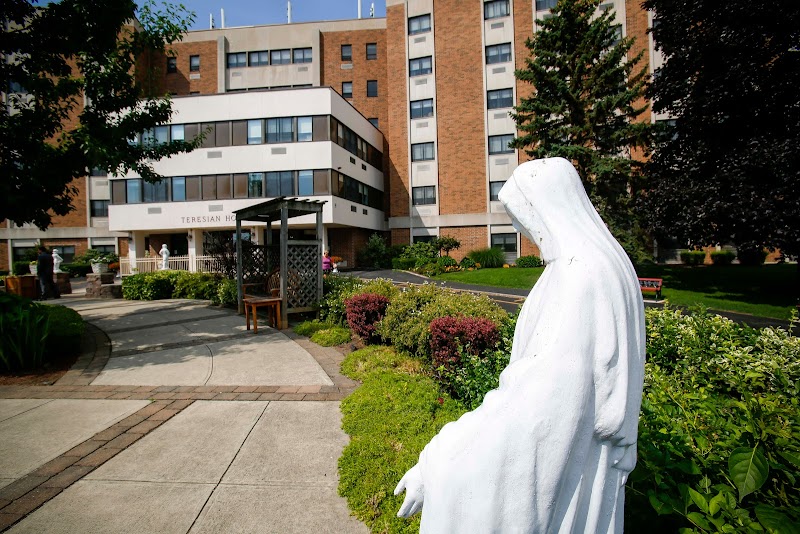
200 WASHINGTON AVE EXT, ALBANY, NY 12203 (518) 456-2000
Non profit - Corporation 302 Beds Independent Data: November 2025 1 Immediate Jeopardy citation
Trust Grade
48/100
#342 of 594 in NY
Last Inspection: November 2024

Within standard 12-15 month inspection cycle. Federal law requires annual inspections.

Overview

Teresian House Nursing Home has a Trust Grade of D, indicating below-average performance with some significant concerns regarding care. It ranks #342 out of 594 nursing homes in New York, placing it in the bottom half of facilities statewide, and #6 out of 11 in Albany County, meaning there are only a few local options that are better. The facility's issues are worsening, with problems increasing from 1 in 2023 to 9 in 2024. Staffing is relatively strong with a 4/5 rating and a turnover rate of 38%, which is better than the state average, but it has concerning RN coverage, being lower than 90% of other facilities, which could affect the quality of care. Notably, there have been critical incidents, including a resident with severe cognitive impairment exiting the building unsupervised for over two hours, and significant medication errors where residents received the wrong medications or missed doses altogether, highlighting serious gaps in safety and oversight. Overall, while there are strengths in staffing, the facility's recent decline and specific incidents raise serious concerns for families considering this option.

Trust Score
D
48/100
In New York
#342/594
Bottom 43%
Safety Record
High Risk
Review needed
Inspections
Getting Worse
1 → 9 violations
Staff Stability
○ Average
38% turnover. Near New York's 48% average. Typical for the industry.
Penalties
✓ Good
No fines on record. Clean compliance history, better than most New York facilities.
Skilled Nurses
⚠ Watch
Each resident gets only 24 minutes of Registered Nurse (RN) attention daily — below average for New York. Fewer RN minutes means fewer trained eyes watching for problems.
Violations
⚠ Watch
26 deficiencies on record. Higher than average. Multiple issues found across inspections.
★★★☆☆
3.0
Overall Rating
★★★★☆
4.0
Staff Levels
★★★★★
5.0
Care Quality
★★☆☆☆
2.0
Inspection Score
Stable
2023: 1 issues
2024: 9 issues

The Good

  • 4-Star Staffing Rating · Above-average nurse staffing levels
  • 5-Star Quality Measures · Strong clinical quality outcomes
  • Full Sprinkler Coverage · Fire safety systems throughout facility
  • No fines on record
  • Staff turnover below average (38%)

    10 points below New York average of 48%

Facility shows strength in staffing levels, quality measures, fire safety.

The Bad

3-Star Overall Rating

Near New York average (3.1)

Meets federal standards, typical of most facilities

Staff Turnover: 38%

Near New York avg (46%)

Typical for the industry

The Ugly 26 deficiencies on record

1 life-threatening
Nov 2024 9 deficiencies
CONCERN (D) 📢 Someone Reported This

A family member, employee, or ombudsman was alarmed enough to file a formal complaint

Potential for Harm - no one hurt, but risky conditions existed

Report Alleged Abuse (Tag F0609)

Could have caused harm · This affected 1 resident

**NOTE- TERMS IN BRACKETS HAVE BEEN EDITED TO PROTECT CONFIDENTIALITY** Based on interviews and record review during the recertification survey and an abbreviated survey (Case #NY00346710), the facili...

Read full inspector narrative →
**NOTE- TERMS IN BRACKETS HAVE BEEN EDITED TO PROTECT CONFIDENTIALITY** Based on interviews and record review during the recertification survey and an abbreviated survey (Case #NY00346710), the facility did not ensure that (a.) all alleged violations of resident abuse, neglect, exploitation, or mistreatment, including injuries of unknown source, were reported immediately but not later than 2 hours after the allegation was made, if the events that cause the allegation involve abuse or resulted in serious bodily injury, to the administrator of the facility and to other official (including the State Survey Agency and adult protective services where state law provided for jurisdiction in long-term care facilities) in accordance with State law through established procedures; and (b.) reported the results of all investigations to the administrator or their designated representative, and to other officials in accordance with State law, including to the State Survey Agency, within 5 working days of the incident for 2 (Resident #s88 and 144) of 5 residents reviewed for reporting of allegations. Specifically, for (a.) Resident #88 received a wrong medication and the initial report was submitted more than 24 hours after the incident; (b.) Resident #141 sustained a fracture to the left hand on 8/18/2024, and then another fracture to the right wrist diagnosed on [DATE], neither severe injury was reported to the State Survey Agency. In addition, a 5-day investigation report was not submitted when . This is evidenced by: A facility policy, Abuse Prevention Program, last revised 10/20/2022 documented that the facility would ensure that all alleged violations involving abuse, neglect, exploitation or mistreatment, including injuries of unknown source and misappropriation of resident property were reported immediately but not later than 2 hours after the allegation is made, if the events that cause the allegation involve abuse or result in serious bodily injury, to the administrator of the facility and to other officials (including the State Survey Agency and adult protective services where state law provided for jurisdiction in long-term care facilities) in accordance with State law through established procedures. It further documented to report the results of all investigations to the administrator or his or her designated representative and to other officials in accordance with State law, including to the State Survey Agency, within 5 working days of the incident and if the alleged violation is verified appropriate corrective action must be taken. Under the section titled What to Report, it documented both Federal and State regulations require the reporting of alleged violations of abuse, mistreatment, and neglect, including injuries of unknown origin. The administrator would provide the appropriate agencies or individuals listed above with a written report of the finding of the investigation within five working days of the occurrence of the incident. State Operations Manual Appendix PP - Guidance to Surveyors for Long Term Care Facilities (Rev. 225; Issued 08-08-2024) documents that injuries should be classified injuries of unknown source when all of the following criteria are met: the source of the injury was not observed by any person, and the source of the injury could not be explained by the resident, and the injury is suspicious because of a. the extent of the injury or b. the location of the injury or c. the number of injuries observed at one particular point in time or d. the incidence of injuries over time. It further documents that examples of injuries of unknown source that were required to report: unobserved/unexplained fractures, sprains or dislocations, unobserved/unexplained swelling that is not linked to a medical condition, and unobserved/unexplained injury requiring transfer to a hospital for examination and/or treatment. Resident #88 Resident #88 was admitted to the facility with diagnosis of Alzheimer's dementia (the loss of cognitive functioning - thinking, remembering, and reasoning), osteoarthritis (degenerative disease that worsens over time, often resulting in chronic pain. Joint pain and stiffness) and history of falls. The Minimum Data Set (an assessment tool) dated 10/03/2024, documented the resident could not complete the Brief Interview for Mental Status due to severely impaired cognition; it further documented that the resident could rarely/never be understood and could rarely/never understand others. The Medication Error or Discrepancy Report dated on 6/27/2024 at 9:50 AM documented Licensed Practical Nurse #7, in error administered the following medications prescribed for another resident to resident #88: Morphine Sulfate 5 milligrams sublingual, Lantus insulin injection 10 units, Keppra 5 milligrams orally, Lasix 40 milligrams orally, metoprolol 25 milligrams orally and Miralax 17 grams mixed with fluid orally. The Incident Report submission form documented that the Director of Nursing reported the medication error on 6/28/2024 at 1:35 PM to the State Survey Agency. It further documented that the Administrator was first made aware of the incident on 6/27/2024 at 10:20 AM. There was no documented evidence of 5-day investigation report for this incident (NY00346710) was submitted to the Department of Health. During an interview on 11/08/2024 at 3:15 PM, Director of Nursing #1 stated that someone from the department of health called about the intake that was submitted and the Director of Nursing believed the department of health had all of the information and no 5-day report was needed. In addition, they said they did not get an email with a link to complete the 5-day report. During an interview on 11/08/2024 at 3:38 PM, Administrator #1 stated they were with Director of Nursing #1 when the department of health called, and the Administrator did not get an email with the link to submit a 5-day investigation report and that was the only way to submit a 5-day report to the Administrator's knowledge. Resident #141 Resident #141 was admitted to the facility with the diagnoses of adjustment disorder with mixed disturbance of emotions and conduct (difficulty adjusting to new situations causing changes in emotions and behaviors), dementia with psychotic disturbance (a degenerative neurological disease causing memory loss and significant behavior changes), and age-related osteoporosis (weakening of bone density related to aging). The Minimum Data Set, dated [DATE] documented the resident was able to be understood, understand others, and was significantly cognitively impaired. Facility's Incident Report #757 dated 8/18/2024 at 1:52 PM documented that Resident #141 was noted to have swelling and a darkened area between the left thumb and left index finger and the resident complained of pain when it was touched. The resident was not able to describe what happened, but they were observed using the inner part of the wheelchair to propel instead of the outer wheel. It documented that an x-ray of the left hand reflected a displaced fracture of the fifth metacarpal (bones that connect wrist to fingers). Facility's Incident Report #805 dated 9/04/2024 at 3:00 PM documented that Resident #141 was observed on the floor and was unable to state what happened due to dementia. The resident was assessed, and no injury was found, and range of motion was intact without pain. There were no documented evidence of reported incidents involving injury of unknown origin reported for Resident #141 to the Department of Health. A Progress Note dated 9/10/2024 at 4:56 PM documented that Resident #141 had 2 skin discolorations on the left facial area due to the fall on 9/04/2024. A Skin Evaluation note dated 9/16/2024 at 12:58 PM documented that skin color was within normal limits and no issues were documented. A Skin Evaluation note dated 9/23/2024 at 2:19 PM documented that skin color was within normal limits and no issues were documented. A Progress Note dated 9/26/2024 at 8:31 PM documented that Resident #141 had swelling to the right mid lateral forearm, right elbow and right index finger, no recent trauma, and pain when palpated. A Progress Note dated 9/27/2024 at 8:59 AM documented a new order for an x-ray to the right forearm, wrist, hand, and fingers. A Progress Note dated 9/27/2024 at 12:55 PM documented that because Resident #141 had no fall since 9/4/2024, the present fracture was determined to be a direct result from the fall on 9/4/2024. A Progress Note dated 9/27/2024 at 7:54 PM documented that Resident #141 was sent to the emergency room at 3:50 PM. A Progress Note dated 9/28/2024 at 5:13 AM documented that Resident #141 returned from the emergency room with a new diagnosis of a closed fracture of the distal end of the right ulna (wrist) and a cast. During an interview on 11/8/2024 at 2:26 PM, Director of Nursing #1 stated that when a fall or injury occurs the nursing staff would notify the Director of Nursing, and the Director of Nursing would determine if they looked suspicious and if so it would be reported within 2 hours. They stated just because Resident #141 could not describe what happened and it was not witnessed does not mean it was suspicious and required to be reported in their understanding. 10 New York Codes, Rules, and Regulations 415.4(b)(2)
CONCERN (D)

Potential for Harm - no one hurt, but risky conditions existed

Deficiency F0637 (Tag F0637)

Could have caused harm · This affected 1 resident

Based on observation, record review, and interviews conducted during the recertification survey, the facility did not ensure a Significant Change Minimum Data Set assessment was completed for a 1 (Res...

Read full inspector narrative →
Based on observation, record review, and interviews conducted during the recertification survey, the facility did not ensure a Significant Change Minimum Data Set assessment was completed for a 1 (Resident #141) of 42 residents reviewed for significant changes in health status. Specifically, Resident #141 sustained a fractured wrist on 8/18/2024, and a fracture of the other wrist on 9/27/2024 after a fall on 9/04/2024. There was no documented evidence that a significant change assessment was done. This is evidenced by: The policy Change in a Resident's Condition or Status, revised 3/3/2023, documented that if a significant change in the resident's physical or mental condition occurs, a comprehensive assessment of the resident's condition will be conducted as required by current OBRA regulations governing resident assessments and as outlined in the Minimum Data Set Resident Assessment Instrument instruction manual. Resident #141 was admitted to the facility with the diagnoses of adjustment disorder with mixed disturbance of emotions and conduct (difficulty adjusting to new situations causing changes in emotions and behaviors), dementia with psychotic disturbance (a degenerative neurological disease causing memory loss and significant behavior changes), and age-related osteoporosis (weakening of bone density related to aging). The Minimum Data Set (an assessment tool) dated 10/18/2024 documented the resident was able to be understood, understand others, and was significantly cognitively impaired. It further documented that Resident #141 had no major injuries from a fall, and the definition of major injury included bone fracture. A nursing assessment note dated 8/18/2024 at 12:43 PM documented that the resident was observed to have left hand discoloration, swelling and complaints of pain. A nursing note dated 8/19/2024 at 11:12 AM documented that the resident had a left- hand fracture due to the incorrect use of their wheelchair. An x-ray dated 8/19/2024 showed a fracture of the 5th metacarpal (palm bone) on the left distal side that was slightly displaced. A follow up note dated 8/19/2024 at 3:48 PM documented that a brace was ordered by orthopedics and the resident was referred to physical therapy for treatment. A physical therapy note dated 8/21/2024 at 4:51 PM documented that the resident would receive skilled physical therapy services 5 times a week for 4 weeks to improve transfers and functional mobility. There was no documented evidence that a Minimum Data Set assessment was done to account for the change in condition of the resident's left wrist. A nursing note dated 9/26/2024 at 8:31 PM documented that the resident was assessed for swelling and pain to the right forearm. A nursing note dated 9/27/2024 at 12:55 PM documented that the resident had a right hand fracture which was attributed to a fall the resident had on 9/04/2024. There was no documented evidence that a Minimum Data Set assessment was done to account for the change in condition of the resident's bilateral broken hands. During an interview on 11/08/2024 at 1:48 PM, Minimum Data Set Coordinator #1 stated that a fracture would be a significant change of condition and 2 fractures would definitely be a significant change that would require an updated Minimum Data Set (resident assessment). They stated they missed the fractures for Resident #141. They stated they were s going to look into the situation and get back with the surveyor, but no further information was provided. During an interview on 11/08/2024 at 2:26 PM, Director of Nursing #1 stated they believed a fracture was a significant change and it was the responsibility of the Minimum Data Set Coordinator to update the Minimum Data Set after a significant change. The Director of Nursing stated sometimes things get missed. 10 New York Codes, Rules, and Regulations 415.12(a)(3)
CONCERN (D)

Potential for Harm - no one hurt, but risky conditions existed

Deficiency F0657 (Tag F0657)

Could have caused harm · This affected 1 resident

**NOTE- TERMS IN BRACKETS HAVE BEEN EDITED TO PROTECT CONFIDENTIALITY** Based on observations, record review, and interviews conducted during a recertification survey, the facility did not ensure Comp...

Read full inspector narrative →
**NOTE- TERMS IN BRACKETS HAVE BEEN EDITED TO PROTECT CONFIDENTIALITY** Based on observations, record review, and interviews conducted during a recertification survey, the facility did not ensure Comprehensive Care Plans were reviewed and revised based on changing goals, preferences, and needs for 2 (Residents #83 and #261) of 62 residents reviewed. Specifically, for Resident #s 83 and 261, the facility did not ensure an interdisciplinary care plan meeting reviewed the comprehensive care plan to include weight monitoring. This is evidenced by: The Policy and Procedure titled Change in a Resident's Condition or Status dated 04/22/2024, documented it was the facilities policy to promptly identify changes in condition, notify his or her attending physician, and the resident/representative of changes in the resident's medical/mental condition and/or status. The Interdisciplinary Team must review and update the care plan at least quarterly, in conjunction with the required quarterly Minimum Data Set assessment. The assessments of residents were ongoing and care plans were revised as information about the residents and the residents' conditions change. Resident #83 Resident #83 was admitted to the facility with the diagnoses of anxiety, Alzheimer's, and mood disorder. The Minimum Data Set (an assessment tool) dated 1/19/2024 documented the resident could rarely understand and rarely be understood by others; resident was cognitively impaired. The Comprehensive Care Plan dated 5/07/2024, documented the resident required assistance with Activities of Daily Living related to limited mobility, Alzheimer's, and inability to complete Activities of Daily Living tasks. Interventions included a shower every week. On 5/05/2022 Resident #83 was on comfort measures and per health care proxy request no weights to be obtained. The signed physician orders dated 01/22/2024 documented an order to discontinue weights and heights dated 1/08/2024. During an interview on 11/07/2024 at 11:30 AM, Resident #83's Family #1 stated they would assume the facility was weighing Resident #83 but was unsure. Family #1 stated they had been to all the care plan meetings but could not remember discussing the weight. During an interview on 11/07/2024 at 12:38 PM, Registered Nurse #5 stated they believed the weights should be gone over with residents/representatives at each family meeting. During an interview on 11/07/2024 at 12:53 PM, Social Worker #1 stated that Resident #83's family attended care planning meetings religiously. Social Worker #1 stated they were unsure why the order had been in effect for so long, they knew the providers would go over the orders and continue them or discontinue them when necessary. During an interview on 11/08/2024 at 01:01 PM, Director of Nursing stated they would expect the care plan to be updated as soon as possible. The weights should be discussed at the care conference, and they also discuss weights at their meeting titled Wounds and Weights. Resident #261 Resident #261 was admitted to the facility with the diagnoses of atrial fibrillation, coronary artery disease (damage or disease in the heart's major blood vessels), and hypertension,. The Minimum Data Set, dated [DATE] documented the resident could understand and be understood by others; resident was cognitively impaired. The Comprehensive Care Plan dated 11/01/2024, documented the resident required assistance with Activities of Daily Living related to dementia. On 08/23/2024 Resident #261, per health care proxy request, no weights to be obtained. Resident #261 had altered cardiovascular status and staff were to monitor/document/report any changes in weight. Review of the Medical Charting System listed no weight within the last 90 days. Medical Charting System listed a weight of 170.8 pounds on 8/21/2024. During an interview on 11/07/2024 at 11:45 AM, Resident #261's Family #2 stated they never told the facility not to weight Resident #261 and believed they should weight them. During an interview on 11/07/2024 at 9:06 AM, Certified Nurse Aide #4 stated they obtained weights from a list provided by the unit manager, enter them in the Medical Charting System, and return the list to the unit manager. During an interview on 11/07/2024 at 12:38 PM, Registered Nurse #5 stated they believed the weights should be gone over with residents/representatives at each family meeting. During an interview on 11/07/2024 at 12:53 PM, Social Worker #1 stated that health care proxies should be asked quarterly regarding weights. During an interview on 11/08/2024 at 1:01 PM, Director of Nursing stated they would expect the care plan to be updated as soon as possible. The weights should be discussed at the care conference, and they also discuss weights at their meeting titled Wounds and Weights. 10 New York Codes, Rules, and Regulations 415.11(c)(2)(i-iii)
CONCERN (D)

Potential for Harm - no one hurt, but risky conditions existed

Deficiency F0676 (Tag F0676)

Could have caused harm · This affected 1 resident

Based on observations, record review, and interviews during the recertification survey, the facility did not ensure a dependent resident was provided with appropriate treatment and services to maintai...

Read full inspector narrative →
Based on observations, record review, and interviews during the recertification survey, the facility did not ensure a dependent resident was provided with appropriate treatment and services to maintain or improve their language and communication for 1 t (Resident #268) of 1 resident reviewed for Activities of Daily Living. Specifically, Resident #268 was not provided with an adequate, structured approach and tools to communicate effectively in accordance with professional standards of care. This is evidenced by: The facility's Policy on Communication with Residents with Speech Impairments reviewed on 1/24/2024, documented its purpose was to provide staff with a structured approach to communicate effectively and compassionately with residents affected by speech impediments due to stroke, ensuring clear, respectful, and supportive interactions. Procedures include use of communication aids; non-verbal cues; environment adjustments, documentation, and staff training. The New York State Department of Health Code, Rules and Regulation, Volume C (Title 10) Section 415.3 Effective 2/24/2022, documented each resident shall have the right to: (i) adequate and appropriate medical care, and to be fully informed by a physician in a language or in a form that the resident can understand, using an interpreter when necessary, of his or her total health status including but not limited to, his or her medical condition including diagnosis, prognosis, and treatment plan. Residents shall have the right to ask questions and have them answered. Resident #268 was admitted to the facility with a diagnoses of cerebral vascular accident (stroke), right side hemiplegia (paralysis of one side of the body), and aphasia (loss of ability to understand or express speech, caused by brain damage). The Minimum Data Set (an assessment tool) dated 9/01/2024, documented a Brief Interview for Mental Status score of 00 suggesting the assessment was incomplete. The documentation indicated resident could understand and be understood by others. Resident's Communication Comprehensive Care Plan dated 6/2024, documented Resident #268 was dependent on staff for meeting emotional, intellectual, physical, and social needs due to physical and verbal limitations status post cerebral vascular accident (stroke) resulting in aphasia. Resident is a very social and creative person and is interested in participating in activities during their short term stay for rehabilitation. Due to recent aphasia, Resident #268 preferred activities which did not involve the need for them to verbalize. Resident is presently limited to yes/no responses to simple questions. During an observation on 11/04/2024 at 11:53 AM, Resident #268 was observed sitting in their room in their wheelchair dozing off and on while watching television. Resident's speech was garbled and difficult to understand. Resident appeared to become frustrated when unable to express their thoughts and hold conversation. During an interview on 11/04/2024 at 11:57 AM, Certified Nurse Aide #2 and Certified Nurse Aide #3 stated some of them understand resident #268. They mostly speak in short phrases with closed ended yes/no answers. They stated resident was able to nod, shake head and point. Certified Nurse Aide #2 and Certified Nurse Aide #3 stated they did not receive training on stroke or resident with dysphagia (difficulty speaking) at this facility. During an interview on 11/06/2024 at 1:03 PM, Registered Nurse #1 stated Resident #268 was able to answer yes/no questions and points to objects. They had no other means of communication. Resident at times becomes frustrated with inability to express themselves. They stated Resident #268 was currently working with speech therapy and making gains. During an interview on 11/06/2024 at 1:20 PM, Speech Therapist #1 stated they were working with Resident #268 on dysphagia (difficulty speaking) and cognitive communication, targeting expressive and receptive skills including communication partner training picture based. Resident had no pictures in room; they point to objects. They had been using the therapy department's IPAD. Resident's family would bring in an IPAD, but first needed to delete some items prior to brining to facility. They stated Resident #268 was only communicating with closed end questions yes/no answers and pointing. During an interview on 11/08/2024 at 11:17 AM, Director of Nursing #1 stated when residents were admitted with language barriers, they were assessed by speech therapy. The resident was also discussed during interdisciplinary team meeting. Communication board and picture boards were used to assist with communication. 10 New York Codes, Rules, and Regulations 415.12(a)(2)
CONCERN (D)

Potential for Harm - no one hurt, but risky conditions existed

ADL Care (Tag F0677)

Could have caused harm · This affected 1 resident

Based on observation, record review, and interviews during a recertification survey, the facility did not ensure residents who were unable to carry out activities of daily living received the necessar...

Read full inspector narrative →
Based on observation, record review, and interviews during a recertification survey, the facility did not ensure residents who were unable to carry out activities of daily living received the necessary services to maintain personal hygiene for 1 (Resident #83) of 9 residents reviewed for Activities of Daily Living. Specifically, Resident #83 was not provided assistance with personal hygiene during care leaving facial hair to grow on the upper lip. This is evidenced by: Resident #83 was admitted to the facility with the diagnoses of anxiety, Alzheimer's, and mood disorder. The Minimum Data Set (an assessment tool) dated 01/19/2024 documented the resident could rarely understand and rarely be understood by others; resident was cognitively impaired. The facility policy Activities of Daily Living Support effective 03/16/2023 documented residents who were unable to carry out activities of daily living independently would receive the services necessary to maintain good nutrition, grooming and personal and oral hygiene. The Comprehensive Care Plan dated 9/22/2023 documented the resident required assistance with Activities of Daily Living related to limited mobility, Alzheimer's, and inability to complete Activities of Daily Living tasks. Interventions included a shower every week. The following observations of Resident #83 were made: - On 11/04/2024 at 10:09 AM, resident was noted with facial hair on the upper lip. - On 11/06/2024 at 9:55 AM, resident was in the wheelchair in the room and noted to have facial hair on the upper lip. - On 11/07/2024 at 10:02 AM, resident noted with longer hair to upper lip. During an interview on 11/07/2024 at 11:30 AM, Resident #83's Family #1 stated their daughter used to provide the facial shaving for Resident #83 but cannot do it now, they would expect that staff provided the care for the facial hair. During an interview on 11/07/2024 at 10:02 AM, Certified Nurse Aide #1 stated they would shave the male residents on their shower day but did not think about shaving the female residents. They confirmed Resident #83 did have facial hair on their upper lip. During an interview on 11/07/2024 at 10:52 AM, Licensed Practical Nurse #1 confirmed Resident #83 had facial hair on their face. Licensed Practical Nurse #1 stated it was expected to be taken care of on bath days. During an interview on 11/08/2024 at 1:01 PM, Director of Nursing #1 stated they would expect all residents to receive shaving on bath days and as needed. 10 New York Codes, Rules, and Regulations 415.12(a)(3)
CONCERN (D)

Potential for Harm - no one hurt, but risky conditions existed

Respiratory Care (Tag F0695)

Could have caused harm · This affected 1 resident

Based on observations, record review, and interviews conducted during the recertification survey, the facility did not ensure that each resident received the necessary respiratory care and services th...

Read full inspector narrative →
Based on observations, record review, and interviews conducted during the recertification survey, the facility did not ensure that each resident received the necessary respiratory care and services that were in accordance with professional standards of practice for 1 (Resident #'s 148) of 4 residents reviewed for oxygen administration. Specifically, Resident #148's portable oxygen tank ran out of oxygen. This is evidenced by: A review of the facility's policy and procedure titled Oxygen Administration, last revised on 5/09/2024, documented that oxygen would be administered by licensed nurses with a physician's order. Oxygen could be delivered via an E size oxygen tank for short-term use and when the resident was not on their concentrator. Resident #148 was admitted to the facility with diagnoses including malignant neoplasm of the right upper bronchus or lung (a cancerous tumor located in the upper lobe of the right lung, specifically within the bronchus, the airway leading to the lung lobe), acute respiratory failure with hypoxia (breathing disorder when there is not enough oxygen in the body's tissue), and essential hypertension (high blood pressure). The Minimum Data Set (an assessment tool) dated 9/16/2024 documented that the resident could understand others and had intact cognition for daily living decisions. During an observation on 11/05/2024 at 11:34 AM, a portable oxygen tank on the back of Resident #148's wheelchair was set to deliver 2 liters per minute of oxygen via nasal cannula and the oxygen gauge showed the tank was in the red zone, indicating it was empty. During an observation on 11/06/2024 at 3:50 PM, a portable oxygen tank on the back of Resident #148's wheelchair was set to deliver 2 liters per minute of oxygen via nasal cannula and the oxygen gauge showed the tank was in the red zone, indicating it was empty. During the follow-up with Resident #148 and observation of their oxygen tank, Licensed Practical Nurse #8 came into the room and attempted to remove the oxygen tank from the surveyor's view. A record review for Resident #148 Medication Administration Record for November 2024 documented resident was to be on 2 liters per minute of oxygen via a nasal cannula for shortness of breath. The administration record also documented that the resident oxygen tank was to be monitored when the resident was on the portable oxygen and turned on. The oxygen tank needed to be changed when the gauge was in the red range or when necessary. During an interview on 11/06/2024 at 3:50 PM, Licensed Practical Nurse #8 stated that they were coming in to do their routine check and change the Resident #148 bottle. They stated that the oxygen tank usually lasts approximately 2-3 hours with the resident on their current oxygen flow of 2 liters per minute. During an interview on 11/08/2024 at 10:20 AM, Registered Nurse #6 stated that residents' oxygen should be checked every shift to ensure the portable oxygen tank had oxygen. They stated that the oxygen bottle should be checked whenever the resident was out of their room and not on their concentration. They stated that Certified Nurse Aides were allowed to check the level of oxygen in the tank but are not allowed to change the tank if nearing empty and would notify a nurse. Registered Nurse #6 was made aware of the observations made and the incident with the Licensed Practical Nurse. They stated that they would need to reeducate their staff regarding checking the tank for oxygen levels. 10 New York Code of Rules and Regulations 415.12(k)(6)
CONCERN (D)

Potential for Harm - no one hurt, but risky conditions existed

Food Safety (Tag F0812)

Could have caused harm · This affected 1 resident

Based on observation and interviews during the recertification survey, the facility did not ensure that food was stored, prepared, distributed, or served in accordance with professional standards for ...

Read full inspector narrative →
Based on observation and interviews during the recertification survey, the facility did not ensure that food was stored, prepared, distributed, or served in accordance with professional standards for food service safety in 2 of 14 resident unit kitchenettes. Specifically, refrigerators and freezers were not operating appropriately. This is evidenced by: A review of facility policy for the environment last revised 3/04/2024 documents that the facility was to maintain a clean and safe environment. The policy documents the facility would maintain the building and all department equipment to comply with all current Federal, State, and Local regulations and guidelines. The facility should maintain a regularly scheduled maintenance on all department equipment and repair as needed. During observations on the Carmel Garden [NAME] Unit on 11/06/2024 at 10:34 AM, the resident kitchenette refrigerator flashed an E-1 error code. During observations on the second-floor west unit on 11/06/2024 at 10:46 AM, the resident kitchenette freezer had a temperature reading of 33 degrees Fahrenheit. An observation of the food within the freezer was soft and not frozen. During an interview on 11/06/2024 at 11:30 AM, Director of Dining Services and Clinical Nutrition #1 stated that Catering Assistants should check the refrigerator and freezer temperatures during their morning routine and fill out logs for the daily temperatures. During an interview on 11/06/2024 at 11:35 AM, Director of Plant Operations #1 and Life Safety #1 stated that their maintenance supervisor performs morning rounds and takes temperature readings of all refrigerators and freezers in the facility. A review of temperature logs supplied by Director of Plant Operations #1 from 10/30/2024 through 11/06/2024 documented that the Unit 2B freezer temperature taken by Plant Operation supervisor ranged from 9 degrees at its lowest to 27 degrees at its highest. When asked if their supervisor mentioned that the freezer was not getting to the appropriate temperatures, Director of Plant Operations stated that they did not mention it. A review of temperature logs supplied by Director of Dining Services and Clinical Nutrition #1 from 10/01/2024 through 11/06/2024 documented that the Unit 2B freezer temperature taken by Catering Assistant ranged from 6 degrees at its lowest on 10/10/2024 to 30 degrees at its highest on 11/06/2024. When asked if the Catering Assistant assigned to the unit mentioned that the freezer was not getting to the appropriate temperatures, Director of Dining Services and Clinical Nutrition #1 stated that they did not mention it or reported it to anyone. During a follow-up interview on 11/06/2024 at 2:30 PM, Director of Dining Services and Clinical Nutrition #1 and Director of Plant Operations #1 stated that they had taken all the items out of the freezer on the unit and discarded them. They also stated they placed an out-of-order sign on the freezer door, so it was not used. They also stated that the code flashing on the Carmel Gardens unit was an error code for an evaporator probe for the unit and they would place a work order to get it repaired. 10 New York Codes, Rules, and Regulations 415.14(h)
CONCERN (E)

Potential for Harm - no one hurt, but risky conditions existed

Unnecessary Medications (Tag F0759)

Could have caused harm · This affected multiple residents

Based on observation, record review, and interviews conducted during a recertification survey, the facility did not ensure that its medication error rate did not exceed 5% for 1 (Resident #77) of 4 re...

Read full inspector narrative →
Based on observation, record review, and interviews conducted during a recertification survey, the facility did not ensure that its medication error rate did not exceed 5% for 1 (Resident #77) of 4 residents observed during a medication pass for a total of 25 observations. This resulted in a medication error rate of 24%. This is evidenced by: The facility's Policy and Procedure titled Administering Medications, last reviewed 3/16/2023 and Last Revision: 11/5/2024, documented medications were administered in a safe and timely manner, and as prescribed. Policy Interpretation and Implementation #2: medications may be administered within (1) hour before or after prescribed times. Scheduled medications designated as time-critical (medications that may cause harm or sub-therapeutic effect if administered before or after the scheduled time were administered at the scheduled time (for example, rapid-acting insulin) or within 30 minutes of the scheduled time. #8: The individual administering the medication checks the label THREE (3) times to verify: a. right resident, b. right medication, c. right dosage, d. right time and e. right method (route) of administration before giving the medication. Resident #77 was admitted to the facility with a diagnoses of primary generalized osteoarthritis (characterized by joint pain, stiffness, limited range of motion, and weakness); adjustment disorder with anxiety (a strong emotional or behavioral reaction to stress or trauma); and unspecified dementia (mild cognitive impairment). The Minimum Data Set (an assessment tool) dated 9/02/2024, documented resident had severe cognitive impairment, could be understood, and understand others. Resident #77's current physician orders on the Medication Administration Record dated 11/2024 revealed that the resident should receive Tylenol Extra Strength 500 milligram (Acetaminophen) give 2 tablets by mouth every 8 hours (8:00AM), and the following medications at 9:00 AM: Ferrous Sulfate 325 milligrams give 1 tablet by mouth. Finasteride 5 milligram give 1 tablet by mouth. Flomax 0.4 milligram (Tamsulosin Hydrochloride) give 1 capsule by mouth. Lidocaine External Patch, apply to right side of ribs topically in the morning and remove at bedtime. Losartan Potassium 25 milligram give 1 tablet by mouth. Senna Plus 8.6-50 milligrams give 1 tablet by mouth. During a medication observation conducted on 11/06/2024 at 10:42 AM on Mount Carmel 1st floor [NAME] Wing. Licensed Practical Nurse #3 administered the following medication at 10:50 AM: Tylenol Extra Strength 500 milligram (Acetaminophen) 2 tablets by mouth; Ferrous Sulfate 325 milligrams 1 tablet by mouth. Finasteride 5 milligram 1 tablet by mouth. Flomax 0.4 milligram (Tamsulosin Hydrochloride) 1 capsule by mouth. Lidocaine External Patch, applied to right side of ribs topically; Losartan Potassium 25 milligram 1 tablet by mouth. Senna Plus 8.6-50 milligrams 1 tablet by mouth. During an interview on 11/06/2024 at 1:30 PM, Licensed Practical Nurse #3 stated they were late with their morning medication pass because it was a heavy medication pass and they were always running late with medication. Licensed Practical Nurse #3 was asked what the policy or protocol was when they were late with medication pass. Licensed Practical Nurse #3 stated they usually ask for help but did not ask today 11/06/2024. During an interview on 11/08/2024 at 11:04 AM, Nurse Educator #1 stated upon hire each nurse completed three days of general orientation. The third day of orientation was dedicated to nurse competencies including medication administration. The Nurse then was assigned a preceptor, and the orientation checklist is completed. Each nurse must pass a medication competency test. The medication competency test included the 6 rights of medication administration: a. right resident, b. right medication, c. right dosage, d. right time and e. right method (route) of administration before giving the medication. Nurse Educator #1 stated if a medication was given late the medication nurse was responsible to notify either their charge nurse and or the physician, then document in progress notes of the late medication, notification, and next steps. During an interview on 11/08/2024 at 11:17 AM, Director of Nursing #1 stated all nurses completed a medication pass competency with nurse educator and with their preceptor. It was the expectation that if a medication was late the nurse passing medication would call the physician and document in progress notes. If the medication nurse notified their charge nurse/manager of a late medication, it was the responsibility of the charge nurse/manager to notify the physician and document. During an interview on 11/08/2024 at 11:44 AM, Assistant Director of Nursing #1 reviewed the medication administration record for Resident #77 for the morning of 11/06/2024, Assistant Director of Nursing #1 verified Tylenol Extra Strength 500 milligram (Acetaminophen) was signed as given 11:10AM; and the following medications: Ferrous Sulfate 325 milligrams; Finasteride 5 milligram; Flomax 0.4 milligram; Lidocaine External Patch, apply to right side of ribs; Losartan Potassium 25 milligram; and Senna Plus 8.6-50 milligrams were signed as given 10:50 AM. 10 New York Codes, Rules, and Regulations 415.12 (m)(1)]
CONCERN (E) 📢 Someone Reported This

A family member, employee, or ombudsman was alarmed enough to file a formal complaint

Potential for Harm - no one hurt, but risky conditions existed

Deficiency F0760 (Tag F0760)

Could have caused harm · This affected multiple residents

Based on observation, record review, and interviews conducted during a recertification survey, the facility did not ensure that residents were free of any significant medication errors for 2 (Resident...

Read full inspector narrative →
Based on observation, record review, and interviews conducted during a recertification survey, the facility did not ensure that residents were free of any significant medication errors for 2 (Resident #s 88 and 144) of 2 resident reviewed. Specifically, (a.) on 6/27/2024 Resident #88 received medications that were prescribed for another resident; (b.) on 11/02/2024 and 11/03/2024 Resident #144 did not receive a medication as prescribed. Additionally, there was no documented evidence that physician was notified, and that Resident #144 was monitored for side effects. This is evidenced by: The facility's Policy and Procedure titled Administering Medications, last reviewed 3/16/2023 and last Revision: 11/05/2024, documented medications were administered in a safe and timely manner, and as prescribed. Policy Interpretation and Implementation #15: If a drug was withheld or refused, the nurse administering the medication should initial and code the space provided for that drug and dose. If resident refused medication after 3 attempts document in Electronic Medication Administration Record and report to Registered Nurse. If this occurs for 3 consecutive days, notify Medical Doctor/Nurse Practitioner. If any medication was unavailable from pharmacy, it must be reported to the supervisor and Director of Nursing. State Operations Manual Appendix PP - Guidance to Surveyors for Long Term Care Facilities (Rev. 211, 02-03-23) documents, under A. PROVISION OF ROUTINE AND/OR EMERGENCY MEDICATIONS: The regulation at 42 CFR 483.45 requires that the facility provide or obtain routine and emergency medications and biologicals in order to meet the needs of each resident. Procedures should identify how staff, who were responsible for medication administration: o Ensure each resident had a sufficient supply of his or her prescribed medications (for example, a resident who was on pain management had an adequate supply of medication available to meet his or her needs). At a minimum, the system is expected to include a process for the timely ordering and reordering of medication. o Monitor the delivery and receipt of medications when they were ordered; and o Determine the appropriate action, example: contact the prescriber or pharmacist, when medication(s) is not available for administration. Resident #88: Resident #88 was admitted to the facility with diagnosis of Alzheimer's dementia (the loss of cognitive functioning - thinking, remembering, and reasoning), Osteoarthritis (degenerative disease that worsens over time, often resulting in chronic pain. Joint pain and stiffness) and history of falls. The Minimum Data Set (an assessment tool) dated 10/3/2024, documented the resident could not complete the Brief Interview for Mental Status due to severely impaired cognition; it further documented that the resident could rarely/never be understood and could rarely/never understand others. The Medication Error or Discrepancy Report documented on 6/27/2024 at 9:50 AM, Licensed Practical Nurse #7, in error administered the following medications prescribed for another resident to Resident #88: Morphine Sulfate 5 milligrams sublingual, Lantus insulin injection 10 units, Keppra 5 milligrams orally, Lasix 40 milligrams orally, metoprolol 25 milligrams orally and MiraLAX 17 grams mixed with fluid orally. The Medication Administration Record dated for June 2024 documented Resident #88 should have received the following medications at 9:00 AM: Cholecalciferol 500 micrograms orally; Ferrous Sulfate 325 milligram orally; Lasix 20 milligrams orally; Loratadine 10 milligrams orally; Cardizem 60 milligram orally; Cyclosporin 0.05% eye drops, 1 drop to both eyes. The facility's Investigative Report documented on 6/27/2024 at 10:30 AM documented Medical Director #2 initiated orders to hold scheduled medications for Resident #88; start intravenous fluids of normal saline at 150 milliliters per hour for a total of 250 milliliters. A Physician's Progress Note dated 6/27/2024 at 2:16 PM, documented Resident #88 had a medication error and subsequent low systolic blood pressure (the amount of pressure experienced by the arteries while the heart is beating) 91 and Heart Rate 80 manually. They were seen and examined personally. Resident was alert, breathing comfortably, not acutely ill-appearing, no distress, no sweating, Lungs: clear with auscultation (listening). The resident had no complaints. Medical Director #2 documented would give 250 milliliters normal saline intravenously at 150 milliliters per hour for good measure. During an interview on 11/08/2024 at 2:26 PM, Director of Nursing #1 stated Resident #88 was given another resident's medication. Resident #88's scheduled medications were held, and Medical Doctor #2 ordered intravenous fluids. They stated Licensed Practical Nurse #7, who gave the wrong medication quit shortly after the incident. The staff were in-serviced to remember to verify the identity of the resident to whom they provide medication to ensure it was the correct resident. The current expectation was that staff checked the resident's bracelet before administering medication to a resident. Resident #144: Resident #144 was admitted to the facility with a diagnoses depression (a mood disorder that causes a persistent feeling of sadness and loss of interest); dementia (the loss of cognitive functioning - thinking, remembering, and reasoning), and right middle cerebral artery (MCA) stroke (occurs following damage to the right distribution of the middle cerebral artery). The Minimum Data Set (an assessment tool) dated 8/02/2024, documented for the resident was cognitively intact, could be understood, and understand others. During an observation and interview on 11/04/2024 at 10:49 AM, Resident #144 stated they had not received prescribed Ingrezza for the third day. Resident #144 stated they had been up all night unable to sleep, grinding teeth with upset stomach. Resident #144 stated they were told it was to be re-ordered the previous Friday (11/01/2024) but was not ordered due to insurance pre-authorization. Review of Resident #144's Medication Administration Record dated 11/2024 documented: 11/02/2024 12:09 PM, Ingrezza Oral Capsule 40 milligrams Give 1 capsule by mouth one time a day for tardive dyskinesia - On order. 11/03/2024 11:13 AM, Ingrezza Oral Capsule 40 milligrams Give 1 capsule by mouth one time a day for tardive dyskinesia. Spoke with pharmacy who stated medication was on its way. 11/04/2024 10:17 AM, Ingrezza Oral Capsule 40 milligrams Give 1 capsule by mouth one time a day for tardive dyskinesia Unavailable. During an interview on 11/04/2024 at 11:03 AM, Registered Nurse #3 stated they were in process of calling the physician regarding medication that required pre-authorization by the insurance company. Registered Nurse #3 was unable to present documentation of physician notification. They stated Resident #144 had not received Ingrezza medication since Friday, 11/01/2024, and the physician was not made aware until now. During an interview on 11/04/2024 at 11:15 AM, Director of Nursing #1 sated when a medication was up for re-order, the medication nurse notifies pharmacy. If the medication was not available, the physician was notified for further direction. During an interview on 11/04/2024 at 11:45 AM, Medical Director #1 stated when a drug required prior authorization from the insurance carrier, it was difficult to obtain. It was a long process to get through to the insurance company and wait for the decision. Medical Director #1 stated if a medication was not available to be given, the physician should be notified. Medical Director #1 stated they were not made aware of the unavailable medication. If they had been notified, they would have authorized a 3-day supply to be paid by the facility, so that the patient would have medications as prescribed while awaiting insurance authorization. During an interview on 11/06/2024 at 8:40 AM, Licensed Practical Nurse #2 stated they attempted to re-order the medication on Thursday 10/31/2024 for Resident #144. However, the re-order would not go through as the medication required prior authorization. Licensed Practical Nurse #2 stated they notified Registered Nurse #3 on 10/31/2024 that drug required pre-authorization. They stated on Friday morning 11/01/2024 they administered the last pill in the packet to Resident #144 and left after their morning medication pass. 10 New York Codes, Rules, and Regulations 415.12(m)(2)
May 2023 1 deficiency
CONCERN (D) 📢 Someone Reported This

A family member, employee, or ombudsman was alarmed enough to file a formal complaint

Potential for Harm - no one hurt, but risky conditions existed

Report Alleged Abuse (Tag F0609)

Could have caused harm · This affected 1 resident

**NOTE- TERMS IN BRACKETS HAVE BEEN EDITED TO PROTECT CONFIDENTIALITY** Based on record review and interviews during an abbreviated survey (Case #s NY00312160 and NY00302754), the facility did not ens...

Read full inspector narrative →
**NOTE- TERMS IN BRACKETS HAVE BEEN EDITED TO PROTECT CONFIDENTIALITY** Based on record review and interviews during an abbreviated survey (Case #s NY00312160 and NY00302754), the facility did not ensure that all alleged violations involving abuse, neglect, exploitation or mistreatment, including injuries of unknown source and misappropriation of resident property, are reported immediately, but not later than 2 hours after the allegation is made, if the events that cause the allegation involve abuse or result in serious bodily injury, or not later than 24 hours if the events that cause the allegation do not involve abuse and do not result in serious bodily injury, to the administrator of the facility and to other officials (including to the State Survey Agency and adult protective services where state law provides for jurisdiction in long-term care facilities) in accordance with State law through established procedures. For 2 (Resident #1 and #2) of 2 residents reviewed for abuse reporting. Specifically, for Resident #1, the facility did not ensure that upon knowledge that the resident sustained an injury of unknown source on 3/6/2023 resulting in serious bodily injury (acute communicated left femoral fracture) was reported to other officials (including to the State Survey Agency and adult protective services where state law provides for jurisdiction in long-term care facilities) in accordance with State law through established procedures immediately but not later than 2 hours after the allegation is made and for Resident #2, the facility did not ensure that upon knowledge on 9/21/2022 that the resident sustained an injury of unknown source resulting in serious bodily injury (acute right ulnar fracture), that the injury was reported to the other officials (including to the State Survey Agency and adult protective services where state law provides for jurisdiction in long-term care facilities) in accordance with State law through established procedures immediately but not later than 2 hours after the allegation is made. The facility reported the injury to the NYSDOH on 9/23/2022 at 9:04 PM. This is evidenced by: The policy titled Abuse Prevention Program last revised on 3/1/23, documented, in response to allegations of abuse, neglect, exploitation, or mistreatment, the facility will ensure that all alleged violation involving abuse, neglect exploitation or mistreatment, including injuries of unknown source and misappropriation of resident property, are reported immediately, but not later than 2 hours after the allegation is made, if the events that cause the allegation involve abuse or result in serious bodily injury, to the administrator of the facility and to other officials(including to the State Survey Agency and adult protective services where state law provides for jurisdiction in long-terms care facilities) in accordance with State law through established procedure. Report the results of all investigations to the administrator or his/her designated representative and to other officials in accordance with the State law, including the State Survey agency within 5 working days of the incident and if the alleged violation is verified appropriate corrective action must be taken. The Policy and Procedure (P&P) titled Incident/Accident/Reporting/Investigation Injuries Quality Assurance last revised 10/22, documented the facility will report and investigate, accidents and incidents to support risk management actions and promote quality of life and a safe working environment. Incidents/accidents will be reported on the 24-hour Report. The Director of Nursing (DON) will review incidents reports to ensure timely completion of incidents investigations. If suspected crimes do not involve serious bodily injury, the report is to be made no less than 24 hours to the Department of Health and a local enforcement agency. Resident #1 Resident #1 was admitted to the facility on with diagnoses psychotic disorder with hallucinations, seizures, and unspecified dementia. The Minimum Data Set (MDS - an assessment tool) dated 3/8/23, documented resident had severe cognitive impairment, could not understand, or be understood by others. The comprehensive care plan (CCP) for Activities of Daily Living last revised on 3/14/23 documented resident was totally dependent on staff on and off the unit and bed mobility. The CCP for accidents and falls last revised on 3/14/23 documented, resident was at risk for falls, dependent on staff for proper positioning. Interventions included: use a dycem between residents and netted Hoyer sling (transfer assist device) when out of bed and in chair, totally dependent with two assists with transfers and toileting. Facility Incident Form dated 3/6/2023 for date and time of occurrence at 8:00AM by Registered Nurse (RN) #5, documented Resident #1 had a change in condition. On 3/6/23 at 10:37 AM, Resident #1's daughter who is the health care proxy/Power of attorney (POA) requested a physician to assess the resident. RN #5 stated they were made aware by the resident's daughter that the resident's left upper leg was swollen. No redness or bruising was noted. Nurse Practitioner (NP) #4 was notified and X-rays were ordered. The X-ray results showed acute communicated left femoral fracture. After examination by NP #4, it was determined that left femoral fracture was a result of significant degenerative joint disease, osteopenia, and poor born mineralization due to immobility and possible hip contractures due to poor mobility and possibility of being transferred with use of mechanical lift. A nursing progress note dated 3/6/23 at 08:10 AM, written by DON documented, resident's daughter at bedside requested to see a physician, POA removed the cover from the resident and pointed to the left upper leg which was noted to be swollen. NP #4 ordered an x-ray During an interview on 4/18/23 at 10:43 AM, RN #5 stated injuries of unknown source are reported immediately to the DON or the Assistant Director of Nursing (ADON) and an investigation is started right away. RN #5 stated they examined the resident when they became aware that the resident was experiencing pain, the resident's leg was rotated sideways. They reported the incident to the DON, and they expected the DON to notify the NYSDOH immediately. RN #5 stated they were under the impression that the incident was reported to NYSDOH. During an interview on 4/18/23 at 2: 23 PM, NP #4 stated on 3/6/23 at approximately 8:30 AM, it was reported that the resident was experiencing pain on their leg. The resident had slight discoloration and swelling, and they ordered an x-ray. The x-ray revealed a fracture of the left hip. NP #4 stated they were unable to determine the cause of the injury. NP #4 stated the DON, and the Administrator were responsible for reporting allegations to the NYSDOH. During an interview on 4/18/23 at 4:17 PM, the Administrator stated all abuse mistreatment and injuries of unknown source should be reported to NYSDOH within 2 hours and an investigation should completed and forwarded to NYSDOH within 5 days. The administrator stated they became aware of the incident on 3/6/2023 after the X-ray result showed left hip fracture. The DON started the investigation regarding the injury of unknown source on Resident #1. The Administrator stated the incident should have been reported to NYSDOH. During an interview on 4/27/23 at 10:40 AM, the DON stated on 3/6/23 the resident was assessed by the NP #4 and ordered an x-ray due to swelling on left hip. The x-ray revealed a fracture of the left hip. They started the investigation immediately. The DON stated the administrator was made aware of Resident #1's left hip fracture on the day of the X-ray. The DON stated there were some confusion regarding whether the incident was reportable, and they did not report to NYSDOH. The DON stated the incident should have been reported to NYSDOH. Resident #2 Resident #2 was admitted with diagnoses of peripheral vascular disease, hypertension, and renal insufficiency. The MDS dated [DATE], documented the resident's had severe cognitive impairment, could not understand, or be understood by others. The comprehensive care plan (CCP) for Accidents dated 7/22/19 and last revised on 2/19/23 documented the resident has a self-care performance deficit due to dementia and muscle weakness. Interventions included padding attached to the left side of the wall. The comprehensive care plan (CCP) for Activities of Daily Living (ADL) dated 10/09/19 and last revised on 9/23/22 documented the resident can be combative and resistive during care, moves arms freely. Interventions included staff to allow the resident to make decisions to provide sense of self control. The Facility Investigation Form dated 9/20/22 for date and time of occurrence 9/20/22 at 3:04 PM, the DON documented on 9/19/22, PH #8, was attempting to draw blood on the resident's right hand and the resident verbalized pain. PH #8 notified Licensed Practical Nurse (LPN) #5, who observed no abnormalities. On 9/20/22, at approximately 11:00 AM, CNA #11, was attempting to dress the resident, while fitting the resident's arm through their sleeve, the resident verbalized pain. CNA #11 notified clinical lead LPN #7 who observed the resident's hand to be swollen. LPN #7 notified NP #2 and they ordered a doppler, which came back with no abnormalities. On 9/21/22 NP #2 ordered an X-ray due to swelling; the results showed a right acute ulnar fracture. Facility documented, based on review of statements from staff and other residents on the unit, the incident appeared to be isolated and there was no abuse, neglect, or mistreatment to the resident. The NYSDOH Intake Information form for Case # NY00302754 dated 9/23/22 at 9:33 PM, documented receipt of a facility reported incident that occurred on 9/20/22 at 3:04 PM. During an interview on 4/18/23 at 4:30 PM, the Administrator stated all abuse mistreatment and injuries of unknown source should be reported to the NYSDOH within 2 hours and an investigation should completed and forwarded to NYSDOH within 5 days. The administrator stated they became aware of the incident on 9/21/22, the day of the X-ray results. The administrator stated all allegations need to be reported to NYSDOH in a timely manner. The administrator stated they were not aware of there was a delay in reporting the incident. During an interview on 4/27/23 at 10:40 AM, the DON stated on 9/20/22 they became aware Resident #2 had an injury of unknown source. On 9/21/22 X-ray results showed the resident had a right acute ulnar fracture and they notified the administrator. On 9/23/22 at 9:39 PM, the incident was reported to NYSDOH. They expected the administrator to report the incident in a timely manner. 10 NYCRR 415.4(b)(2)
Dec 2021 5 deficiencies 1 IJ
CRITICAL (J)

Immediate Jeopardy (IJ) - the most serious Medicare violation

Accident Prevention (Tag F0689)

Someone could have died · This affected 1 resident

**NOTE- TERMS IN BRACKETS HAVE BEEN EDITED TO PROTECT CONFIDENTIALITY** Based on observation, medical and facility record review, video footage, and staff interview during a recertification and abbrev...

Read full inspector narrative →
**NOTE- TERMS IN BRACKETS HAVE BEEN EDITED TO PROTECT CONFIDENTIALITY** Based on observation, medical and facility record review, video footage, and staff interview during a recertification and abbreviated survey (Case # NY00287505) the facility failed to provide adequate supervision for one (Resident #216) of 8 residents reviewed for accidents. Specifically, on 12/3/21 at 11:30 AM the facility failed to provide Resident #216, who was severely cognitively impaired, with supervision. Subsequently, Resident #216 was able to exit the building through a coded/locked door off the unit and 2 sets of alarmed doors exiting the facility for over two hours. Both alarmed doors were disabled by facility staff. Facility video footage revealed resident exited the facility at 11:30AM and facility staff did not discover the resident missing until lunch time at 12:15PM. In addition, facility staff did not follow their process for elopement when the facility staff member that exited through the coded/locked door did not observe and ensure the door closed and locked behind them; did not perform a headcount when the interior alarmed door sounded and the source of the alarm was not identified and the facility staff deactivated the alarmed door that exited to the outside and did not call a Code 1, when an alarmed perimeter door is breached, a Code 1 would be announced. This resulted in no actual harm with the likelihood for more than minimal harm that is Immediate Jeopardy and substandard quality of care/past noncompliance to resident health and safety. The Immediate Jeopardy was lifted on 12/15/2020. This was evidenced by: The facility's policy and procedure dated 6/2017 titled Resident (Missing) Code 1 Alarm, Doctor Yellow, Door Alarm (Interior) documented that when an interior door alarm sounds, staff would immediately respond to the alarm and if unable to determine the reason for the alarm, a head count would be performed on that unit and if a resident was missing, the staff would follow a Dr Yellow - potential missing resident alert. Additionally, it documented when an alarmed perimeter door was breached, a Code 1 would be announced, the staff in the immediate location must proceed to the door and determine the cause. If the cause is undetermined, search procedures will begin. A resident head count would be completed. Resident #216: Resident #216 was admitted to the facility with the diagnoses of dementia, adjustment disorder with anxiety, and hypertension. The Minimum Data Set (an assessment tool) dated 11/28/2021 documented Resident #216 was able to understand others, was able to make self-understood, and had severe cognitive impairment. Resident #216 was able to walk with supervision only. The Comprehensive Care Plan (CCP) dated as initiated on 1/18/2021 and revised on 8/24/2021, documented the resident was at risk for wandering related to disorientation to place, and impaired safety awareness. The CCP documented the resident was non exit seeking and the goal documented that the resident would not leave the facility unattended through 2/22/2022. Interventions included; provide structured activities, walking inside and outside, and re-orientation strategies. It documented to re-evaluate the resident's risk for wandering quarterly and as needed. The Behavior assessment dated [DATE] documented that Resident #216 had the behavior of unsafe wandering without regard to physical safety by ambulating or self-propelling their wheelchair, may attempt to open doors, enter unsafe areas, or follow others through exit doors but is not seeking to leave and does not verbalize the desire to leave. The assessment did not document that Resident #216 was a risk for elopement. Observation of video footage provided by the facility showed that the resident exited the facility on 12/3/2021 at 11:30 AM. Facility staff did not discover the resident missing until 12:15 PM. The Director of Information Technology verified the date and time of the video footage as above. The facility's Incident Report dated 12/3/2021 documented the resident was an elopement risk. The incident Report documented the date the resident was last seen before elopement was 12/3/2021, the time last seen before the elopement was 11:30 AM, and the time missing was 12:15 PM. The Incident Report documented the system to prevent elopement functioned properly. -The description section of the Incident Report documented; on 12/03/2021 at 12:40 pm, staff could not find Resident #216 in the dining room for lunch and proceeded to search the immediate areas with no results. A code Yellow (Missing resident) was called at 01:00 pm and a facility wide search began. -Resident #216 was seen and assessed by a Registered Nurse (RN), Physician and Nurse Practitioner (NP). Resident #216 had no evidence of distress, their skin was a bit warm and dry, no visible injuries were noted and appeared not to have had any psychological negative effect from the incident. -The investigation findings documented on 12/03/2021: 11:25 AM - Resident #216 left the unit through the west kitchen door after Certified Nurses Aide (CNA) #5 punched in the security code and left the unit for his lunch break. Resident #216 was following CNA #5 who was also Resident #216's caregiver for the day, by quickly grabbing the door and exiting taking a left turn, while CNA #5 proceeded straight ahead to the elevator: 11:30 am - Resident #216 proceeded to push and walk through a security door (Elevator E- Double-Door) while the alarm was sounding. The Director of Housekeeping (DOH) who had just come into the Carmel Garden core area from Carmel Gardens [NAME] heard the alarm, looked around in the core area, looked up the ambulance entrance hallway and did not see or hear anything unusual and reset the alarm. 11:35 am - Resident #216 was observed on video exiting the ambulance entrance (exterior door), walked to the left and got into an unlocked employee car (silver car) which was parked about 300 ft on a paved parking lot; 01:45 pm - Social Worker (SW) #1 found Resident #216 sitting alone in the back seat of the silver car after SW #1 approached the left back door and noticed the resident. SW #1 knocked on the window and Resident #216 responded by opening the door. SW #1 asked for the name and Resident #216 responded I'm cold. It's freezing out here. SW #1 gave Resident #216 their jacket and brought Resident #216 back into facility. 02:00 pm - Director of Nursing (DON) performed an RN assessment on Resident #216 after returning to the facility. Resident #216 showed signs of apprehension when approached, pulling away and folding arms. After about three minutes the resident was smiling and was offered something to eat and drink. Color was pale, skin warm and dry. No flush to face, arms warm. Resident #216 had socks and shoes on with a shirt and sweater. No bruises or redness observed to body. Resident #216 was able to ambulate without difficulty, was not able to relate how they got out of building, refused a BP and has a BIMS of 03. The Medical Director, Physician and NP were made aware. Resident #216's niece and responsible party were notified. The nursing progress note dated 12/3/2021 at 3:01 PM, documented at around 11:55 AM Resident #216 was seen on the cameras following staff. The staff member had entered the code to the exit door and Resident #216 was seen following right after the staff member out the locked unit. Code yellow initiated, Resident #216 found and redirected back to the unit without incident. Resident #216 was assessed by the Nurse Practitioner (NP) and MD #1 and no issues found. Medical Director notified. POA (power of attorney) notified. Roam alert (a system to provide protection to wandering-prone residents by controlling exit doors) placed on right wrists for Resident 216's safety. The nursing progress note dated 12/3/2021 at 4:31 PM documented Resident #216 was assessed by this writer after they were returned to facility, showed signs of apprehension when approached pulling away and folding arms. After about three minutes was smiling and was offered something to eat and drink. Color was pale, skin warm and dry. No flush to face, arms warm. Resident #216 had socks and shoes on with shirt and sweater. No bruises or redness observed to body. Resident #216 was able to ambulate without difficulty. Resident #216 was not able to relate how they got out of the building, had a BIMS of 3 and had diagnosis of Alzheimer/Dementia. Medical Director, MD #1, and NP was made aware. Family, niece made aware. Labs were ordered, Roam alert was applied to the resident's right wrist. Behavior assessment done. Care Plan and Care Card updated. During an interview on 12/21/2021 at 12:21 PM, the Director of Life Enrichment (DOLE) stated the west kitchen door was only used by staff. On the day of the elopement CNA #5 did not see Resident #216 come out of the door (west kitchen door) behind them. The second door (security door-Elevator E- Double-Door) was a push and go door, people did it all the time. It would alarm and could just be egressed (exited), staff would have to come to the door and reset the code, it was typical that someone would reset code after looking. During an interview on 12/21/2021 at 12:21 PM, the Registered Nurse Manager (RNM) of the secured memory unit stated, staff were expected to ensure all coded doors closed and locked prior to them leaving the area to ensure a resident did not exit the unit undetected. Resident #216 was not at risk for elopement and did not have exit seeking behavior. Before, the resident never demonstrated they wanted to leave the unit, they wandered throughout the unit and lacked safety awareness, liked to pick up residents' things and look into rooms and things would catch the resident's attention. All people are responsible for identifying compliance, if someone put in a code and came through the door it would stop the alarm for 20 seconds. The west kitchen door alarm did not go off that we know of. The second door (security door-Elevator E- Double-Door) alarm would go off a lot, the code had to be entered physically at the door. During an interview on 12/22/2021 at 9:20 AM the Director of Environmental Services (DES) stated they heard the alarm while on a resident unit. DES approached the alarming door (security door-Elevator E- Double-Door), was unable to identify the cause of the alarm and entered a code to silence the alarm. A resident head count was not completed. The alarm goes off a lot and staff became complacent about responding to the alarm. During an interview on 12/22/2021 at 09:44 AM the Assistant Director of Maintenance stated the double doors (security door-Elevator E- Double-Door) was, push and open doors that had a local alarm, that would sound only in the area of the door and on both units on that same floor. The alarm would go off when the doors were held open a little too long. That alarm was not considered a Code 1 alarm, when the alarm goes off staff needed to search the immediate area, a head count should have been initiated and was not done. The back door (ambulance entrance-exterior double door), the right-side door had no code but was alarmed and had a crash bar. The left side door had a Mag lock (automatic releasing mechanism) and delayed egress. Both doors would have alarmed at the front reception desk. During an interview on 12/22/2021 at 12:26 PM, the Director of Plant Management (DPM) stated staff became desensitized to the interior door (security door-Elevator E- Double-Door) alarm as the alarm sounded five to six times per day from staff members holding the door open too long. After the cause of the alarm going off was unable to be identified, staff did not implement a resident head count, and they should have. Then, when the resident exited the back door (ambulance entrance-exterior double door) the alarm was activated at the front reception desk and a Code 1 should have been called by the receptionist and was not called. It was more than an hour later that a staff member called the receptionist and had them announce a Code Yellow for a Missing Resident. After the incident a Mag Alarm was added for extra protection. The staff are educated frequently for responding to the alarms no matter how often they go off. The DPM stated there was no camera at the double doors in the vestibule, and cameras were placed after the incident. During an interview on 12/22/2021 at 12:45 PM the Director of IT and a member of their alarm company stated, they confirmed the alarm was activated when the resident exited the facility (as confirmed by video and an alarm log reviewed by the facility). A Code 1 was not called, a resident head count was not completed and a Dr Yellow - missing resident search was not initiated. During an interview on 12/22/2021 at 1:40 PM the Front Lobby Receptionist stated they took their lunch break every day at 12:00 PM until 12:30 PM. From the timeframe of 11:00 AM until 12:00 PM no alarms for the exit doors had gone off, the alarms are so loud that anyone in the surrounding area would have heard them. The Receptionist would have looked at the panel that would display which door was alarming, and the computer screen at the reception desk showed every exit door in real time, then the button to turn off the alarm would have to be pushed to disarm the alarm once it was determined there was no problem. During an interview on 12/22/2021 at 5:18 PM, the Administrator (ADM) stated the double doors in the vestibule (security door-Elevator E- Double-Door) needed to have a code put in and then you could go through, it had a 15 second delay, then the alarms would start sounding. The ADM was not aware that staff were not compliant with the door alarm. If there is an alarm going off staff must respond to it. If ADM had been aware that staff were desensitized to the alarm, the ADM would have rolled out an education right then and there. The alarm is part of an elopement protocol. There is always someone at the reception desk. After the incident when the alarm did not sound at the reception desk, we did a sweep of all the egress doors. The ADM stated they knew the receptionist denied an alarm had gone off, and that all receptionists have been re-inserviced on the alarms. On the Memory Care Unit, they have individualized dining, there was no set time for a resident to have lunch, Resident #216 was always on the go. Immediately following the event, a Mag Alarm was placed on the security door-Elevator E- Double-Door that eliminated the 15 second delay and cameras were also installed in that area. In the future Administrative staff will receive text messages when the exit doors are breached. The ADM assessed the search for Resident #216 in order to improve upon the protocol. Improved pictures of all residents have been placed at the front reception desk. 10NYCRR483.25(d)(1)(2) Based on the following corrective actions, the facility corrected the non- compliance as of 12/15/2021. The facility reached past noncompliance by taking sufficient corrective actions prior to the recertification and abbreviated survey to both remove the immediate jeopardy and fully correct the noncompliance before the start of the survey. The facility's corrective actions included the following effective 12/15/21: - 95% of staff have been reeducated on elopement. The education provided included: unsafe wandering/elopement in-service that includes if the reason for an alarmed door cannot be determined a headcount is performed, and elopement prevention policy and procedure with emphasis on making sure there are no residents behind staff when going through any door on the secured unit and ensure the door has closed and was locked before leaving the area. -A delayed egress with Westminster Chimes feature was added to the right interior door on 12/14/2021 (the left door opens from the other direction). When the crash bar is depressed, within 5 seconds, this door alarms locally and via the nurse call system; the Westminster chimes alarm throughout the unit. The door releases 30-seconds after the delayed egress feature is activated. The keypad bypasses the delayed egress feature and all alarms. -A delayed egress with a local alarm feature was added to the right leaf of the exterior doors on 12/13/2021. The left leaf had been delayed egress. When the crash bar is depressed, within 5 seconds, either door will alarm locally and at the Reception Desk. The keypad bypasses both local alarm and reception alarm. Surveillance staff from the Capital District Regional Office remained onsite to complete the recertification survey.
CONCERN (D)

Potential for Harm - no one hurt, but risky conditions existed

Deficiency F0583 (Tag F0583)

Could have caused harm · This affected 1 resident

Based on observation, record review and interviews during a recertification survey, the facility did not maintain the residents' right to personal privacy and confidentiality on 2 (1st floor and 6th F...

Read full inspector narrative →
Based on observation, record review and interviews during a recertification survey, the facility did not maintain the residents' right to personal privacy and confidentiality on 2 (1st floor and 6th Floor) of 6 units (the 4th floor was closed). Specifically, for the 1st Floor and 6th Floor, the facility did not ensure the residents' right to privacy and confidentiality were maintained when finger sticks (blood sugar monitoring for diabetes) and blood pressures were obtained, and the results were read out loud, with other residents were present in the dining rooms and common areas. This was evidenced by: The Policy and Procedure titled Resident Dignity dated 10/31/2019, documented the policy of the facility was to promote care for residents in a manner and in an environment that maintained or enhanced each resident's dignity and respect in a full recognition of their individuality, and this included maintaining resident privacy. A review of Resident Council Minutes dated 12/2/2021, documented the dining room was sometimes used as a laboratory. Vital signs were taken in there, as well as blood draws. During a Resident Council Meeting on 12/20/2021 at 10:00 AM, 5 of the 5 residents in attendance, representing 5 different units in the facility, stated staff were taking blood pressures, doing finger sticks, and taking resident temperatures in the dining room during meals. The Council stated these issues had been talked about over and over, but there had been no resolution to their expressed concerns because it was still happening. A Council Member stated they sit a table with 4 other residents in the dining room and everyone at the table knew what the resident's vital signs were. The other 4 residents in the Council Meeting stated this happened in the dining rooms on their units too, and they were not happy about it. The Council stated they did not like other residents knowing their blood pressures when the nurse would say it for everyone to hear. During an observation on 12/21/2021 at 8:15 AM, Licensed Practical Nurse (LPN) #4 on the 1st Floor/ Mount Caramel unit, checked the blood pressure of Resident #105 in the dining room with two other residents present and loudly stated 113 on 66, and informed the resident the blood pressure was very good and handed the resident a cup of medications. At 8:25 AM, LPN #4 checked the blood pressure of Resident #145 while sitting in a chair next to the dining area where three other residents were seated and loudly stated 130 over 60. LPN #4 handed Resident #145 with their medications and observed them being swallowed. During an observation on 12/21/2021 at 9:02 AM, LPN #1 on 6th Floor, was obtaining a finger stick on Resident #13 who was at the dining room table for breakfast. There were 4 residents at the dining room table with Resident #13. LPN #1 announced at the table that the resident's blood sugar was 186. During an interview on 12/21/21 at 8:40 AM, LPN #4 stated they were the only licensed nurse assigned to the 1st Floor (Mt. Carmel Unit) and were required to stay in the dining area during breakfast. LPN #1 breakfast lasted through 11:00 AM and therefore they needed to complete vital signs, glucose checks and pass medications to the residents in the common area and dining room. During an interview on 12/21/2021 at 11:12 AM, LPN #1 stated they did not normally take finger sticks in the dining room, but today they obtained the resident's finger stick in the dining room at the table. Finger sticks should be done in the resident's room and the LPN stated they normally brought the resident to their room but did not today. LPN #1 stated finger sticks and blood pressures were not supposed to be done in the dining room. LPN #1 stated it morning was busy and it was the last finger stick they had to do so they just did it at the dining room table. During an interview on 12/22/2021 at 9:57 AM, Registered Nurse (RN) #1 stated obtaining finger sticks at the dining room table was an infection control issue because blood was involved, and it was a privacy issue when the numbers were read out loud for others to hear. RN #1 stated they spoke with the nurses about this all the time, and no one should know that another resident had diabetes by seeing a finger stick be obtained and hearing the number read out loud. RN #1 stated blood pressures and finger sticks should not be done in the dining room and the resident should be taken to a private area. RN #1 stated if they saw anything like that in the dining room, they would address it immediately with that nurse. RN #1 stated they had seen blood pressures taken in the dining room but had not seen finger sticks being done in the dining room. RN #1 stated they addressed things they saw on the spot with the nurse, so it would not continue. During an interview on 12/22/2021 at 11:06 AM, the Director of Nursing (DON) stated they had not seen staff taking vital signs including blood pressures and temperatures, or finger sticks in the dining areas. The DON stated they should not be doing those things in the dining room. The DON stated they did not recall this issue being brought to their attention. The DON stated the resident should be brought to their room or to a private area and staff were in-serviced during orientation to not obtain vital signs and finger sticks at mealtimes. Staff were aware it should not be done in the dining room and if another staff saw it happening, it should be brought to that nurse's attention at the time. 10NYCRR415.3(d)(1)
CONCERN (D)

Potential for Harm - no one hurt, but risky conditions existed

Report Alleged Abuse (Tag F0609)

Could have caused harm · This affected 1 resident

**NOTE- TERMS IN BRACKETS HAVE BEEN EDITED TO PROTECT CONFIDENTIALITY** Based on record review and interviews during a recertification, the facility did not ensure that all alleged violations of abuse...

Read full inspector narrative →
**NOTE- TERMS IN BRACKETS HAVE BEEN EDITED TO PROTECT CONFIDENTIALITY** Based on record review and interviews during a recertification, the facility did not ensure that all alleged violations of abuse, neglect, or mistreatment were immediately reported to the Administrator of the facility for 1 (Resident #167) of 4 residents reviewed for abuse. Specifically, the facility did not ensure an allegation of abuse involving Resident #167 was immediately reported to the Administrator. This is evidenced by: Resident #167: Resident #167 was admitted with diagnoses of non-ST elevation myocardial infarction, muscle weakness generalized and acute respiratory failure. The Minimum Data Set (MDS - an assessment tool) dated 12/2/2021 documented the resident was cognitively intact, was understood and could understand others. The facility's policy and procedure (P&P) titled Abuse Prevention Protocol last revised on 5/26/2021, documented abuse allegations were reported per Federal and State Law. The facility would ensure that all alleged violations involving abuse, neglect, exploitation or mistreatment including injuries of unknown source and misappropriation of resident property, were reported immediately, but not later than 2 hours after the allegation was made, if the events that caused the allegation involved abuse or resulted in serious bodily injury to the administrator of the facility and to other officials (including to the State Survey Agency) in accordance with State law. A progress note dated 10/22/2021, written by Licensed Practical Nurse (LPN), who is no longer employed by facility documented Resident #167 had made an allegation of abuse against a Certified Nursing Assistant (CNA) on 10/20/2021 at 6:05 PM and that the supervisor had been made aware. A document titled Re-education Verification documented the CNA had been re-educated on safe patient handling during care, reading care [NAME] before providing care and asking for help if in situations of uncertainty on 10/22/2021. A document titled Facility (Named) Resident Grievance/Complaint Investigation Form provided by the administration documented an investigation regarding Resident #167's allegation dated 12/21/2021 documented an investigation was initiated on 12/20/2021. During an interview on 12/19/2021 at 11:56 AM, Resident #167 informed this surveyor that a Certified Nurse Assistant (CNA) pulled on their arm during care and stated that the CNA was quite rude. Resident #167 stated they had reported it to Licensed Practical Nurse (LPN) #3 on 10/21/2021. During a phone interview on 12/22/2021 at 12:03 PM, LPN #3 stated that Resident #167 had informed them that a CNA had been rough with them the night before. LPN #3 stated they spoke to the CNA and informed the Nurse Educator the CNA may need more education. LPN #3 stated they spoke to Resident #167 who requested that this CNA not take care of them. LPN #3 stated they made sure the CNA was not assigned to Resident #167 but the CNA did work after reported incident. During an interview on 12/20/2021 at 1:12 PM, the Assistant Director of Nursing (ADON) #3 stated they had not been aware of Resident #167's allegation of abuse on 10/20/2021. ADON #3 stated the steps taken if they had known of the allegation would include to investigate, talk to the resident and staff, and based on information received they would take it to the director of nursing. An investigation would be done in some fashion. During an interview on 12/20/2021 at 1:30 PM, LPN #2 stated they remember hearing about this incident but wasn't directly involved in it. LPN #2 stated if an allegation of abuse was reported to them, they would take the CNA out of the room and off the assignment, immediately contact their supervisor and make sure the resident is all right. During an interview on 12/22/2021 at 3:19 PM, the Director of Nursing (DON) stated that progress notes for the previous 24 hours from the electronic medical record (EMR) were discussed in the morning interdisciplinary team (IDT) meeting. The DON stated they should have been notified of the allegation of abuse before the meeting. This incident was not in the 24-Hour Report so it was not discussed. The progress note was entered as a late entry and sometimes late entries are not picked up in the 24-Hour Report. The Educator who is longer employed by the facility should have elevated the incident and started an investigation including gathering statements. The Educator would have received this training about abuse, reporting and investigation when they were hired. The staff have been educated on reporting abuse and mistreatment. This education is ongoing and will be reinforced. During an interview on 12/23/2021 at 2:18 PM, the Administrator stated they were not aware of the incident until day 2 of the recertification survey on 12/20/2021. The Administrator stated normally any alleged abuse or mistreatment has to be ruled out including gathering statements immediately from resident and staff on the unit. Other residents would be interviewed if they were taken care of by the employee involved. The employee should also be suspended during the investigation and a report made to the New York State Department of Health (NYSDOH). Each morning the expectation is to review the 24-Hour Report which would include incidents and accidents and they do not recall this being discussed at the time of the allegation. The Administrator stated they don't know why the Educator didn't elevate the allegation. 10 NYCRR 415.4 (c)(1)(2)
CONCERN (D)

Potential for Harm - no one hurt, but risky conditions existed

Medication Errors (Tag F0758)

Could have caused harm · This affected 1 resident

Based on record review and interview during a recertification survey, the facility did not ensure as needed (PRN) orders for psychotropic drugs were limited to 14 days, unless the attending physician ...

Read full inspector narrative →
Based on record review and interview during a recertification survey, the facility did not ensure as needed (PRN) orders for psychotropic drugs were limited to 14 days, unless the attending physician or prescribing practitioner believed it was appropriate for the PRN order to be extended beyond 14 days, they should document their rationale in the resident's medical record and indicate the duration for the PRN order for 1 (Resident #195) of 5 residents reviewed for unnecessary medications. Specifically, for Resident #195, the facility did not ensure a PRN Trazodone (antidepressant medication) was not ordered for more than 14 days without a documented rationale from the attending physician or prescribing practitioner. This is evidenced by: Resident #195: Resident #195 was admitted to the facility with the diagnoses of major depressive disorder, anxiety disorder, and dementia with behavioral disturbance. The Minimum Data Set (MDS - an assessment tool) dated 11/19/2021 documented the resident had moderately impaired cognition, could understand others and could make self understood. The Policy and Procedure titled Antipsychotic Medication Use dated 12/17/2021, documented residents would not receive PRN doses of psychotropic medications unless that medication was necessary to treat a specific condition that was documented in the clinical record. The need to continue PRN orders for psychotropic medications beyond 14 days required the practitioner to document the rationale for the extended order. The duration of the PRN order would be indicated in the order. The Comprehensive Care Plan did not include a care plan for antidepressant medication. A physician order dated 9/7/2021, documented Trazodone tablet; give 25 milligrams (mg) by mouth every 24 hours as needed for agitation. The medical record did not include a clinical justification documented by the attending physician or prescribing practitioner for continuing the PRN Trazodone order for more than 14 days. During an interview on 12/21/2021 at 11:13 AM, Licensed Practical Nurse (LPN) #1 was interrupted during the interview by the physician who told the LPN to discontinue the Trazodone order for Resident #195. The LPN stated the physician told them to discontinue the resident's Trazodone order, so they did. During an interview on 12/22/2021 at 9:45 AM, Registered Nurse (RN) #1 stated they were aware of the regulation regarding PRN psychotropic medications and stated the order for PRN psychotropic medications should be for 14 days. The RN stated they tried to put PRN psychotropic orders in for 14 days and then had the physician re-assess. The RN stated the policy should be that the doctor reassesses the need for the PRN medication after 14 days, and then decided whether to continue or discontinue the PRN order. During an interview on 12/22/2021 at 10:58 AM, the Director of Nursing (DON) stated the process should be that PRN psychotropic medications were ordered for 14 days, then re-assessed by the physician, and the physician determined whether to continue it. If the order was to be continued, it should be reordered to include a duration for the order or there a stop date should be added to the order. The physician would write a progress note to say why the PRN should or should not be continued. The DON stated a PRN psychotropic medication that had been ordered for longer than 14 days should have been noticed during the monthly pharmacy reviews. The DON stated they thought they saw a note with a medication justification to extend the PRN Trazodone order for Resident #195 and would provide it to the survey team. During a subsequent interview on 12/22/2021 at 5:42 PM, the DON stated they spoke to the Medical Director and the Medical Director would speak with the team of providers about PRN psychotropic medications. The DON also spoke with the pharmacy to make them aware, and all the staff were in-serviced regarding PRN psychotropic medications. The DON did not provide documentation of a clinical justification for extending the use of the PRN Trazodone past 14 days for Resident #195. 10NYCRR 415.12(1)(2)(ii)
CONCERN (E)

Potential for Harm - no one hurt, but risky conditions existed

Food Safety (Tag F0812)

Could have caused harm · This affected multiple residents

Based on observation, record review, and staff interview during the recertification survey, the facility did not store, prepare, distribute, and serve food in accordance with professional standards fo...

Read full inspector narrative →
Based on observation, record review, and staff interview during the recertification survey, the facility did not store, prepare, distribute, and serve food in accordance with professional standards for food service safety. The sanitizing chemical in the final rinse of low temperature automatic dishwashing machines are to be within a specific range, and food preparation and serving areas are to be kept clean. Specifically, the automatic dishwashing machine chemical sanitizing final rinse was too concentrated, and the unit kitchens required cleaning. This is evidenced as follows. When checked on 12/19/2021 at 9:14 AM, the concentration of sanitizing chemical in the final rinse of the automatic dishwashing machine final rinse was 200 parts per million of available chlorine (ppm). The directions on the bottle of sanitizing chemical concentrate state the concentration is to be between 50 and 100 ppm. The Director of Dining Services stated in an interview on 12/19/2021 at 11:16 AM that the vendor will be contacted to adjust the concentration of available chlorine to be compliant. In the interim, dishes will be manually sanitized. When checked on 12/19/2021 at 10:00 AM, cabinetry, floors, and windowsills on the unit kitchens were soiled with food particles or grime. The Director of Environmental Services stated in an interview on 12/19/2021 at 11:35 AM that the nursing units are on a cleaning schedule, and the findings today will be addressed. The Administrator stated in an interview on 12/19/2021 at 1:23 PM that the facility has identified and developed a schedule to address the cleaning issues on the unit kitchens and will make sure the kitchen dishwashing machine final rinse is as required. 10 NYCRR 415.14(h); Chapter 1 State Sanitary Code Subpart 14-1.110, 14-1.112, 14-1.170, 14-1.171
Oct 2019 11 deficiencies
CONCERN (D)

Potential for Harm - no one hurt, but risky conditions existed

Deficiency F0582 (Tag F0582)

Could have caused harm · This affected 1 resident

Based on medical record review and staff interview during the recertification survey, the facility did not ensure that residents and/or their designated representative were fully informed of potential...

Read full inspector narrative →
Based on medical record review and staff interview during the recertification survey, the facility did not ensure that residents and/or their designated representative were fully informed of potential financial liability for rehabilitative services during a non-covered stay. Specifically, residents who remained in the facility and after receiving covered rehabilitative services were not provided with the SNF ABN, Form CMS-10055. This was evident for two (2) (Resident #'s 214 and 234 out of three (3) sampled residents reviewed for Beneficiary Protection Notification. This is evidenced by: The findings are: 1) Review of the medical records for Resident #214 of 10/07/2019 revealed that though the resident remained in the facility after receiving rehabilitative services, the resident was not provided the SNF ABN, Form CMS-10055 to inform the resident of their potential financial liability if receiving non-covered rehabilitative services. 2) Review of the medical records for Resident #234 of 10/07/2019 revealed that though the resident remained in the facility after receiving rehabilitative services, the resident was not provided the SNF ABN, Form CMS-10055 to inform the resident of their potential financial liability if receiving non-covered rehabilitative services. The Minimum Data Set Coordinator stated in an interview on 10/07/2019 at 10:35 AM, that an SNF ABN, Form CMS-10055 was not but should have been issued, and this form is now being issued when required. 10 NYCRR 415.3 (g)
CONCERN (D)

Potential for Harm - no one hurt, but risky conditions existed

Deficiency F0604 (Tag F0604)

Could have caused harm · This affected 1 resident

**NOTE- TERMS IN BRACKETS HAVE BEEN EDITED TO PROTECT CONFIDENTIALITY** Based on observations, record review, and interviews during a recertification survey the facility did not ensure that a resident...

Read full inspector narrative →
**NOTE- TERMS IN BRACKETS HAVE BEEN EDITED TO PROTECT CONFIDENTIALITY** Based on observations, record review, and interviews during a recertification survey the facility did not ensure that a resident was free from physical restraints, for one (Resident #126, of three reviewed for physical restraints. Specifically, the facility did not ensure that the least restrictive restraint for the least amount of time was used for the resident and that the Merry [NAME] (an enclosed walker, that the resident could not exit alone), was care planned as a restraint. This is evidenced by: Resident #126: The resident was admitted to the nursing home on 9/8/16, with diagnoses of Alzheimer's disease, hypertension, and glaucoma. The Minimum Data Set (MDS-an assessment tool) dated 5/24/19, assessed the resident as having severely impaired cognitive skills for daily decision making. It documented that the resident usually understood and was usually understood by others. The Comprehensive Care Plan (CCP) for High Risk for Falls, dated 3/15/18, documented that the Merry [NAME] was to maximize ambulating and reducing fall risk due to impulsive behaviors. The walker was considered an enabler for safe ambulation and was to be used when the resident was restless, all needs were met, and the resident wanted to ambulate. The CCP for falls documented that on 7/4/18 and 12/17/18, the resident fell from the merry walker and on 12/17/18 padding was added to the merry walker to increase safety and to decrease the amount of space around the resident. A Bedside [NAME] Report (a resident care guide for CNAs) documented the following: - Apply the walker for 2 hours when the resident is restless. - Place the resident in her Broda chair (chair that the seat back can be moved closer to the ground to prevent falls) or bed when fatigued or sleeping in PVC walker. Observations: - 10/07/19 from 09:17 AM-10:18 AM, the resident was asleep in merry walker with head on the left rail of the walker that was padded. There was also a large cylindrical padded covering over the front bar of the walker extending the length of the bar. - 10/07/19 at 03:39 PM, staff woke the resident who was asleep in her Broda chair in the common area. The resident was pushed back out to the common area in the Merry Walker, where she remained calm and made no attempts to stand or ambulate. - 10/08/19 at 02:15 PM -2:38 PM, the resident was noted sitting in the Merry [NAME] in the common area. She was calm and made no attempts to stand or ambulate. The Restraint assessment dated [DATE], documented the device was an enabler as it maximized the resident's independence with ambulation and assisted in minimizing her fall risk due to cognitive impairment and impulsive behaviors. During an interview on 10/07/19 at 04:14 PM, Certified Nursing Assistant (CNA) #4 stated she had just toileted the resident and put her in the Merry Walker, because she got restless sometimes and at least she could stand and walk in the Merry Walker. It was not a restraint. During an interview on 10/08/19 at 03:47 PM, Registered Nurse Manager #4 stated the Merry [NAME] was being used as an enabler for ambulation. They would put her in it when she was restless and wanted to go. When the resident was calm or sleepy, she would be placed in her Broda chair. It is not appropriate to put her in the Merry [NAME] when she is not attempting to ambulate. She should be put in the Broda chair when asleep. The Merry [NAME] met the definition of a restraint. During an interview on 10/10/19 at 10:18 AM, the Director of Nursing stated that they had the resident's Merry [NAME] revaluated to make the device an enabler instead of a restraint because the DOH was pushing for no restraints. They knew it would go either way and the resident should have a care plan for the restraint. 10NYCRR 415.4(a)(2-7)
CONCERN (D)

Potential for Harm - no one hurt, but risky conditions existed

PASARR Coordination (Tag F0644)

Could have caused harm · This affected 1 resident

**NOTE- TERMS IN BRACKETS HAVE BEEN EDITED TO PROTECT CONFIDENTIALITY** Based on record review and interview, the facility did not refer residents with newly evident mental illness for a level II resi...

Read full inspector narrative →
**NOTE- TERMS IN BRACKETS HAVE BEEN EDITED TO PROTECT CONFIDENTIALITY** Based on record review and interview, the facility did not refer residents with newly evident mental illness for a level II resident review for two (Resident #'s 31 and 280) of two residents reviewed for PASRR (Pre-admission Screening and Resident Review). Specifically, the facility did not ensure Resident #'s 31 and 280, both newly diagnosed with a mental illness, received a level 1 screen to determine if a level II screen needed to be done. This is evidenced by: Resident #31: The resident was admitted on [DATE] with diagnoses of schizoaffective disorder-bipolar type, major depressive disorder and obsessive-compulsive disorder. The Minimum Data Set (MDS) of 7/05/19, documented the resident had moderate impairment for cognition, was able to understand others, and was able to be understood by others. The resident was also diagnosed with bipolar disorder on 11/04/15 and anxiety disorder, unspecified on 9/29/17. The Screen Form dated 4/12/12, Level 1 Review for Possible Mental Illness (question #23) documented the resident did not have a serious mental illness. A Physician's Order dated 12/08/13, documented the resident was to receive Escitalopram Oxalate f/c 20 mg two times a day related to obsessive-compulsive disorder. A Physician's Order dated 10/08/19, documented the resident was to receive Lorazepam 0.5 mg, give 0.25 mg three times a day for anxiety. A Physician's Order dated 9/15/17, documented the resident was to receive Olanzapine 10 mg at bedtime for schizoaffective disorder. A careplan for diagnosis of schizoaffective disorder, bipolar type, obsessive-compulsive disorder, mild cognitive impairment, drug induced sub acute dyskinesia - not dated, documented a goal: the resident will take medications safely and as prescribed through the review date. Interventions included, the resident liked to watch TV, read, and listen to her religious books on tape. A Psychiatrist Consult Note dated 10/2/18, documented feelings of anxiety have worsened along with worsening feelings of apprehension. Increase in frequency of hypervigilance episodes. Reports excessive worrying has worsened. Auditory hallucinations have lessened. A Psychiatrist Consult Note dated 8/13/19, documented the resident showed a partial treatment response. There has been a lessening of the feelings of apprehension. Hypervigilance is occurring less frequently. Uncomfortable sensations of excessive motor tension have decreased. The resident has diagnoses of severe OCD and psychosis. She reports less frequent intrusive and persistent thoughts and less intrusive and persistent impulses of an obsessive type. Her episodes of paranoid process occurring less frequently than previously. A Psychiatrist Consult Note dated 2/12/19, documented the resident continues with bouts of anxiety which have gotten worse and has subjective feeling of apprehensive. Frequency of episodes of hypervigilance remains the same. Uncomfortable sensations of excessive motor tension are present. She reports that excessive worrying continues unchanged. She has less irritability. Episodes of hallucinations seem to have been occurring less frequently. Resident describes delusion of being controlled by others has lessened. Diagnoses: schizoaffective disorder, bipolar type-active; obsessive-compulsive disorder-chronic. During an interview on 10/08/19 at 09:56 AM, Director of Social Worker #1 stated the resident should have had a new level 1 screen to include new diagnoses of serious mental illness to determine if a level II screen needed to be done. She stated she had a list of residents to do and had not yet gotten to this resident. Social Worker #1 then changed her mind and stated she did not think a new Level 1 screen was necessary for the resident. 10NYCRR 415.11(e)
CONCERN (D)

Potential for Harm - no one hurt, but risky conditions existed

Deficiency F0679 (Tag F0679)

Could have caused harm · This affected 1 resident

**NOTE- TERMS IN BRACKETS HAVE BEEN EDITED TO PROTECT CONFIDENTIALITY** Based on observations, record review, and interviews during a recertification survey the facility did not ensure it had an ongoi...

Read full inspector narrative →
**NOTE- TERMS IN BRACKETS HAVE BEEN EDITED TO PROTECT CONFIDENTIALITY** Based on observations, record review, and interviews during a recertification survey the facility did not ensure it had an ongoing program to support residents in their choice of activities, both facility-sponsored group and individual activities and independent activities, designed to meet the interests of and support the physical, mental, and psychosocial well-being of each resident for one (Resident #109) of one resident reviewed for activities. Specifically, the facility did not ensure that the resident was provided activities based on the resident's mental and physical abilities, and for 3 of 6 units the facility did not ensure that television (TV's) stations in the common areas were set on stations appropriate for residents' who were in the those areas. This is evidenced by: Resident #89: The resident was admitted to the nursing home on 2/15/16, with diagnoses of dementia, Coranary Artery Disease, and Alzheimer's Disease with late onset. The Minimum Data Set (MDS - an assessment tool) dated 8/3/19, assessed the resident as having severely impaired cognitive skills for daily decision making. It documented that the resident rarely understood and was rarely understood by others. The Activities assessment dated [DATE], documented the resident's favorite activities were musical performances, food socials, manicures, mass, house parties, 1:1 with activity staff, and pet therapy. The MDS dated [DATE], documented that music, pets, group activities and time outdoors were that important to the resident. The following observations were made: - 10/07/19 from 10:26 AM - 11:09 AM, the resident was sitting at table with food in front of her. -10/07/19 at 11:10 AM, the resident was moved to the day room across the hall and at 11:27 AM, the resident was moved back to the dining room for lunch. - 10/08/19 at 09:42 AM, the resident was in the Dining Room being fed by staff. - 10/08/19 from 9:55 AM - 11:45 AM, The resident was sitting in the day room in front of the television sleeping (9 other residents were in the area). At 11:58 AM, the resident was back at the dining room table for lunch. - 10/09/19 from 09:40 AM - 10:51 AM, the resident was sitting in day room. The Comprehensive Care Plan (CCP) titled The resident is dependent on staff for meeting emotional intellectual, physical, and social needs, dated 11/16/17, documented that the resident needed assistance to and from activity functions, and would attend activities 3-5 times weekly. The Resident's Activity Logs documented the following: - 8/1/2019- 8/31/19, the resident attended 12 activities - 9/1/2019-9/30/19, the resident attended 9 activities. - 10/1/19 - 10/ 9/19, the resident did not attend any activities During an interview on 10/08/19 at 11:15 AM, Certified Nursing Assistant (CNA) #2 stated the resident went to the donut and coffee activity that is about every 2 weeks and did go to music sometimes. Occasionally, activities would do a 1:1 visit with the resident. During an interview on 10/08/19 at 12:03 PM, Activity Coordinator (AC) #7 stated each floor had their own AC. She was assigned to the fourth floor, but was not full time; she worked two days one week and three days the opposite week. They had a separate book for 1:1 visits; in the book, they documented the date, time, and how long the visit was. This resident did not have any 1:1s documented in the book so she probably did not have any. The main issue with the lack of activities was that there was not a full-time AC on the unit. During an interview on 10/10/19 at 10:09 AM, the Director of Nursing stated it was not appropriate to have residents in day room with news, cartoons or talk shows on, and residents should have more activities to keep them engaged. Finding #1: The Following observations were made: 4th floor: - 10/07/19 10: 37 AM, nine residents were sitting in day room with mass on but volume down and the television was inaudible. - 10/08/19 from 9:55AM - 11:45AM, there were 10 residents sitting in the day room. The TV was on a talk show. Only one resident appeared to be engaging with the television. 5th floor: - 10/9/19 - 11:06 AM to 11:58 AM - 7 residents, 3 males and 4 females were sitting in the TV room on the right side of the 5th floor dining area, the television was on a female talk show, the residents were not engaged in the television program, the LPN was positioned in the room passing medication to other residents, 2 CNA's were coming in and out of the area and would occasionally speak to residents in the room. No one addressed the program on the television or asked the resident if they would prefer another program. One resident was sitting in a chair that did not face the television. 6th Floor: - 10/9/19 at 11:30 AM, residents on Unit 6B were seated in common area TV room with a news channel showing graphic war footage. After LPN #5 was asked if the residents were interested in watching this on TV, the channel was changed to an old movie channel. During an interview on 10/07/19 10:39 AM, a family member #1 stated last night she found the resident during the day, sitting in her room in the dark with the television on a station that the resident would not want to watch. During an interview on 10/10/19 at 08:50 AM, CNA #3 stated the talk show that was on was probably not appropriate for the residents, who mainly had dementia. They should have put something on the television that was from their era that they would understand. During an interview on 10/10/19 at 08:55 AM, AC #7 stated the main issue with activities was that there was not a full-time AC. She sometimes saw that the televisions were set to news or talk shows that were not appropriate for dementia residents. When she noticed it, she would sometimes change the station but did not always do it. Having the residents sitting in the day room watching TV all day was not considered an activity for the residents. During an interview on 10/10/19 at 09:36 AM, RNM #4 stated they had brought up the issue with the television's multiple times with staff and she wished they could just lock the stations. During an interview on 10/10/19 at 10:09 AM, the Director of Nursing stated it was not appropriate to have residents in day room with news, cartoons or talk shows on, and residents should have more activities to keep them engaged. During an interview on 10/09/19 at 02:16 PM, Family Member #2 stated that staff are on their phones in the day room and not interacting with the residents. She will see 3-4 CNAs watching television. This was brought up at the family meetings which is usually attended by someone from administration, but it is still going on. 10NYCRR 415.5(f)(I)
CONCERN (D)

Potential for Harm - no one hurt, but risky conditions existed

Accident Prevention (Tag F0689)

Could have caused harm · This affected 1 resident

**NOTE- TERMS IN BRACKETS HAVE BEEN EDITED TO PROTECT CONFIDENTIALITY** Based on record review and interview during a recertification survey and an abbreviated survey (Case #NY00241822), the facility ...

Read full inspector narrative →
**NOTE- TERMS IN BRACKETS HAVE BEEN EDITED TO PROTECT CONFIDENTIALITY** Based on record review and interview during a recertification survey and an abbreviated survey (Case #NY00241822), the facility did not ensure the resident environment remained as free of accident hazards as possible, and did not ensure each resident received adequate supervision to prevent accidents for 1 (Resident #383) of 4 residents reviewed for accidents and supervision. Specifically, for Resident #383, the facility did not ensure the resident, with a roam alert, was adequately supervised after the resident was escorted to the chapel by a staff member. Additionally, the front door did not alarm when the resident exited the building and returned a short time later through the same front door. This is evidenced by: Based on the following corrective actions taken, there was sufficient evidence the facility corrected the noncompliance and was in substantial compliance for this specific regulatory requirement at the time of this survey. Resident #383: The resident was admitted to the facility on [DATE], with diagnoses of unspecified dementia, displaced fracture of surgical neck of right humerus and glaucoma. The Minimum Data Set (MDS-an assessment tool) dated 6/12/19, documented the resident had severe cognitive impairment, was understood by others and understood others. On 7/12/19 at 10:35 AM the resident left the facility unaccompanied. The resident was seen on camera exiting behind a family member; the resident was observed on the welcome pad in front of the building and then returned back inside around 10:37 AM. The Comprehensive Care Plan (CCP) for a resident who is an elopement risk/wanderer related to history of attempts to leave facility unattended (undated), documented the resident attempted to exit through the elevator despite staff re-directions. The resident also left the facility unattended on 7/12/19. Interventions documented; monitor the resident's location every 30 minutes; document wandering behavior and attempt diversional interventions in the behavior log; and distract the resident from wandering by offering pleasant diversions, structured activities, food, conversation, television, books. Wander alert: F03F82. A Physician Order dated 07/15/19, documented to check placement of (the resident's) left ankle roam alert every shift for wandering resident. Behavioral assessment dated [DATE], documented on Section 4b: At Risk for Elopement; resident is verbalizing the desire to leave the facility; resident has had a previous elopement or attempt within the last 6 months-at home, at other facility, or at this facility; and exit or destination seeking behavior. During an interview on 10/09/19 at 09:20 AM, the Risk Manager stated the resident was a risk for elopement and had a yellow badge indicating she needed to be accompanied at all times. The Activity Coordinator #11 brought the resident to the chapel and left her. She did not alert anyone in the chapel that the resident needed to be watched at all times. The resident followed visitors out the front door and the alarm did not sound. On her own accord, the resident turned around and came back in. It was not known why the alarm did not sound and another roam alert was immediately placed on the resident. The receptionist did not notice the resident going out the front door, but did notice her coming back in wearing a yellow badge. The resident who is confused, was a short term rehab (rehabilitation) resident. She did not have a history of eloping from the facility. The alarm company came into the facility and decreased the area being picked up by roam alerts to increase sensitivity of picking up the roam alert. The night supervisor checks the roam alert every night. The resident's roam alert worked the previous night when checked. The resident did not sustain an injury. The Activities Coordinator did not provide an explanation as to why she left the resident and did not tell anyone. A written statement from Activities Coordinator #11, documented she brought the resident to chapel for Mass with her yellow badge. She sat the resident in a chair and left her under the supervision of pastoral care and two Activities Coordinators. During an interview on 10/09/19 at 01:40 PM, the Director of Maintenance stated the Assistant Director of Maintenance called the alarm company, who checked the system and discovered no issues. The field was extended further so the alarm would sound if a roam alert was within 3 feet of the door. During an interview on 10/09/19 at 09:32 AM, the Director of Activities #3 stated all activity staff had been re-educated on the importance of safety in regard to the residents in regard to elopement. Also, all staff are inserviced annually. Actvities Director #2 stated Activities Coordinator #11 went back to get another resident and left the resident, who wore a yellow badge, alone without notifying staff she was doing so. Based on the following corrective actions taken, there was sufficient evidence the facility corrected the noncompliance and was in substantial compliance for this specific regulatory requirement at the time of this survey: -Resident is alert and suffered no harm as a result of this incident. The resident was placed on 30 minute surveillance for 3 days. - On 7/16/19, the company that supplied the alarm (named) came into the facility and checked the main entrance lobby door and documented intermittent tag pickup. Possible coverage issue low to the round. Resident wore tag on her ankle and was able to go out the door. On 7/17/19 the Rx antenna was moved to above the door and adjusted Exciter field to cover a larger area. Tested with Assistant Director of Maintenance. Tags are placed on wheelchairs and walkers, not on wrists/ankles. Explained to the Assist Director that this is not good practice and that tag pickup may be affected when tag is attached to metal. - During an Ad Hoc Meeting on Elopement on 8/02/19, it was decided that residents at risk for elopement will attend Mass in the chapel only if a staff member from their unit can accompany them and remain with them for the entire Mass. The staff member must then return the resident safely to their unit after Mass. If a staff member cannot accompany the resident, the resident can watch Mass on TV Cannel 3 on their unit. - Staff member along with full in house re-education took place on proper procedure for transporting residents at risk for elopement. -All resident's roam alerts were tested at the doors to ensure proper functioning. - Maintenance staff doing a field signal check on every elevator and exit door and checking all roam alerts in the lock box daily. An audit is being done. 10NYCRR415.12(h)(1)
CONCERN (D)

Potential for Harm - no one hurt, but risky conditions existed

Drug Regimen Review (Tag F0756)

Could have caused harm · This affected 1 resident

Based on record review and interview during the recertification survey, the facility did not ensure a policy was developed for the monthly Medication Regimen Review (MRR) that included time frames for...

Read full inspector narrative →
Based on record review and interview during the recertification survey, the facility did not ensure a policy was developed for the monthly Medication Regimen Review (MRR) that included time frames for the different steps in the process. Specifically, the facility did not ensure there were time frames established for the steps in the MRR process concerning actions the pharmacist and facility needed to take when an irregularity was identified. This is evidenced by: Pharmacy Consultation Reports with a review date of 2/12/18 documented: - The pharmacy will compile any recommendations and send them to the facility to the attention of the Director of Nursing. A detailed summary is emailed to the Medical Director and copy to the DON/designee. - The Director of Nursing/designee will send the original to the specific units for the MD to address and sign. - The attending physician will acknowledge by making a comment and signing the consultation. During an interview on 10/08/19 at 08:15 AM, the Director of Nursing stated all pharmacy recommendations arrive by fax and are divided up by unit during morning meeting. They are reviewed with the physician when he comes into the facility and reviewed with the nurse practitioner who is in-house. If immediate action is required, the physician will be called. Time frames for steps in the MRR process was reviewed. 10NYCRR415.18(c)(2)
CONCERN (D)

Potential for Harm - no one hurt, but risky conditions existed

Deficiency F0813 (Tag F0813)

Could have caused harm · This affected 1 resident

Based on record review and staff interview during the recertification survey, the facility did not ensure the policy regarding foods brought in to residents is in accordance with adopted regulations. ...

Read full inspector narrative →
Based on record review and staff interview during the recertification survey, the facility did not ensure the policy regarding foods brought in to residents is in accordance with adopted regulations. Specifically, the facility policy does not include the provision to provide information to families and other visitors on the safe and sanitary storage, handling and consumption of food and does not include a procedure to ensure facility staff assist dependent residents in accessing and consuming the food. This is evidenced is as follows. Record review of the facility policy for food brought in by visitors was reviewed on 10/03/2019. The policy did not include a process to ensure family and other visitors are provided information on safe food handling practices and did not include a method by which staff assists residents in accessing and consuming the food, if the resident is not able to do so on his or her own. The Director of Nursing stated in an interview on 10/03/2019 at 1:51 PM, that the she is not aware of any information on food safety that is provided to families or visitors, and the method by which food, brought in from the outside, is provided to residents is probably not in written policy.
CONCERN (D)

Potential for Harm - no one hurt, but risky conditions existed

Antibiotic Stewardship (Tag F0881)

Could have caused harm · This affected 1 resident

**NOTE- TERMS IN BRACKETS HAVE BEEN EDITED TO PROTECT CONFIDENTIALITY** Based on record review and interview during the recertification surveys the facility did not conduct an ongoing review that incl...

Read full inspector narrative →
**NOTE- TERMS IN BRACKETS HAVE BEEN EDITED TO PROTECT CONFIDENTIALITY** Based on record review and interview during the recertification surveys the facility did not conduct an ongoing review that included antibiotic use protocols and a system to monitor antibiotic use. Specifically, for Resident #238, the facility did not ensure that their antibiotic stewardship program was implemented to improve antibiotic use when an antibiotic was prescribed without appropriate indications and monitoring. This was evidenced by: The facility's policy and procedure titled Antibiotic Stewardship - Staff and Clinical Training Roles last updated on 3/19 documented that the facility will educate and train staff and practitioners about the Facility Antibiotic Stewardship Program, including appropriate prescribing, monitoring and surveillance of antibiotic use and outcomes to ensure staff have a complete understanding of the goals of the program and their roles for ensuring good outcomes for the residents. For the role of the Director of Nursing and the Infection Preventist it documented that administrative and management personnel with clinical oversight responsibilities will receive initial orientation and on-going training on the rationale for judicious use of antibiotics. The Infection Preventionist will audit and provide feed back to the Medical Director and the Director of Nursing on the providers antibiotic prescribing practices. The Consultant Pharmacist will identify, and flag, orders for antibiotics that are not consistent with antibiotic stewardship practices. The Infection Surveillance Criteria policy documents that the facility utilizes the McGeer Criteria in their Infection Watch program as their surveillance tool in the determination of Infection Surveillance amoung residents in the facility. The procedure dated 1/2/19, documented that Infection Surveillance Definitions are largely based on symptoms localizing to a specific body system. It documented that the following changes in resident status should not be used to meet infection surveillance definitions; behavior and mental status changes, falls, foul smelling urine, history of Urinary Tract Infection (UTI), and a positive urinalysis or urine culture in the absence of other symptoms of a UTI that does not meet the Center for Disease Control (CDC) infection surveillance definitiions. Resident #238: The resident was admitted on [DATE], with diagnoses including unspecified dementia, adjustment disorder with mixed anxiety and depression, chronic pain, and morbid obesity. The Minimum Data Set (MDS- an assessment tool) dated 9/10/19, documented the resident was understood, able to understand, and was severely cognitively impaired for daily decision making. Physician order dated 9/27/19, documented give 500 mg Cipro (Ciprofloxacin HCL- antibiotic) by mouth 2 times a day for UTI for 7 days with a start date of 9/27/19 at 5:00 PM. The electronic Medication Administration Record (eMAR) dated September and October 2019, documented the resident received Cipro 500 mg by mouth 2 times a day beginning on 9/27/19 at 5:00 PM until 10/4/19 at 9:00 AM for a total of 14 doses over a 7-day period. A Nursing Progress Note dated 9/26/19 at 4:32 PM, Registered Nurse Manager (RNM) #5 documented the resident was seen by the physician and was still complaining of right shoulder discomfort. The physician felt cold therapy may be more beneficial to shoulder than heat. A Nursing Progress Note dated 9/27/19 at 11:34 AM, RNM #6 documented the resident complained of chest pain and back pain. The resident stated she had pain in chest, back, and left shoulder region, resident was calm, skin was warm and dry, pupils and speech were appropriate, per resident pain was 8/10 and could not identify if the pain was radiating from her shoulder to the back and chest or if it was more chest. Resident just finished ambulating with restorative therapy, blood pressure (BP) 160/100, Pulse (P) 82, Respirations (R) 82, oxygen pulse ox (SP02) 96%, rechecked vitals, B/P 146/88, P 82, R 18, SP02 99%. Nurse practitioner (NP) made aware and electrocardiogram (EKG) ordered. Resident resting comfortably. A clinician's Progress Note dated 9/27/19 at 11:41 AM, the Nurse Practitioner (NP)documented the resident was complaining of light-headed sensation. Complaining to nurse of pain in upper chest and down her arm. B/P slightly elevated but resident gets anxious easily. On exam she was complaining of general pain. Mylanta given, EKG ordered and will continue to monitor vitals. Spoke with Health Care Proxy (HCP) who stated symptoms are consistent with past episodes of a UTI. I relayed that UA/CS could not go out until Monday. He (HCP) requested prophylactic antibiotics. Will review past cultures and set up treatment. A Nursing Progress Note dated 9/27/19 at 3:23 PM, documented a new order from the NP, Cipro 500 mg, BID (2 times a day) for 7 days. First dose given, resident has no further complaints of shortness of breath, states just feeling a little off. Will continue to monitor. Daily Nursing Progress Notes from 9/27/19 to 10/4/19, documented the resident had no further complaints and was afebrile with temperatures ranging from 97.1 to 98.1. During record review on 10/9/18, the record did not include evidence of urinary cultures (UA for Culture and Sensitivity (C&S- test to identify infection and type of antibiotic needed) obtained. The resident was not febrile and there were no urinary tract symptom complaints documented. During interview on 10/8/19 at 11:33 AM, RNM #6 stated the resident had shoulder pain from a recent fall and arthritis. She was on a restorative program for ambulation for complaints of pain after her fall on 8/12/19. During interview on 10/9/18 at 3:05 PM, RNM #5 stated the NP ordered the antibiotic after talking to the residents HCP. The resident had a history of UTI's, and the HCP felt her complaints were consistent with symptoms she exhibits when a UTI is present. This happened on a Friday and we don't do labs on a weekend, so the NP ordered an antibiotic prophylactically. A UA for C&S was not ordered. I am not sure if a culture was ever obtained. The NP who ordered the medication is not here any longer and so I'm not sure what happened with that. We followed the order based on the communication from the NP. During interview on 10/10/19 at 10:40 AM, RNM #5 stated she had verified a urine culture was not obtained prior to starting the antibiotic or after the antibiotic was begun. The NP is an outside provider and we follow the orders they give. She is not sure how they determined what antibiotic would be needed to address the UTI. During interview on 10/10/19 at 11:05 AM, the Assistant Director of Nursing (ADON) stated the outside providers are not held to the facilities policy on antibiotic stewardship. The facilities policy when a resident is suspected to have an infection is to obtain a culture prior to beginning an antibiotic so they can ensure the right antibiotic is given for the right infection. After the culture is obtained an antibiotic may be started so treatment is not delayed, but if the drug is not sensitive to the organism it can be changed. During an interview on 10/10/19 at 08:38 AM, the Infection Control Registered Nurse stated that contracted medical providers who provided antibiotics to residents prior to diagnositic results, or who have not stopped an antibiotic after test results are negative are re- educated on antibiotic stewardship. 10NYCRR 415.19(a)(1-3)
CONCERN (E)

Potential for Harm - no one hurt, but risky conditions existed

Comprehensive Care Plan (Tag F0656)

Could have caused harm · This affected multiple residents

**NOTE- TERMS IN BRACKETS HAVE BEEN EDITED TO PROTECT CONFIDENTIALITY** Based on observation, record review, and interview conducted during the recertification survey, the facility did not ensure deve...

Read full inspector narrative →
**NOTE- TERMS IN BRACKETS HAVE BEEN EDITED TO PROTECT CONFIDENTIALITY** Based on observation, record review, and interview conducted during the recertification survey, the facility did not ensure development of comprehensive person-centered care plans, that included measurable objectives and timeframe's to meet the resident's medical, nursing, and mental and psychosocial needs that are identified in the comprehensive assessment, for five (Residents #'s 24, 120, 134, 152, and #221) of thirty-two residents reviewed for comprehensive care plans (CCP). Specifically; for Resident #152, the facility did not ensure a CCP for the diagnosis of urinary retention requiring the need for monitoring and treatment was developed and implemented with specific person-centered interventions; for Resident #221, the facility did not ensure a CCP was developed for the resident's diagnosis of pulmonary embolism, and deep vein thrombosis with anticoagulant therapy; for Resident #24, the facility did not ensure a CCP was developed for the use of Meclizine (a medication for dizziness), and for Resident #120, the facility did not ensure that directions for not wearing socks until the resident's foot healed was not followed; and for Resident #134, the facility did not ensure a CCP was developed for a diagnosis of chronic pain syndrome. This is evidenced by: Resident #134: The resident was admitted on [DATE], with diagnoses of peripheral vascular disease (PVD), sciatica neuralgia of left leg and Chronic Kidney Disease Stage 4. The Minimum Data Set (MDS-an assessment tool) dated 8/15/19, documented the resident was cognitively intact, was able to understand others and was able to understand. A Physician's Order dated 5/22/19, documented the resident was to receive acetaminophen 500 milligrams (mg)- give 2 tablets three times a day for pain. A Physician's Order dated 5/24/19, documented the resident was to receive Tizanidine hydrochloride (Hcl) tablet 50 mg at bedtime for spasms. A Physician's Order dated 9/10/19, documented the resident was to receive Lidocaine Patch 4%-apply to left rib area topically every day for pain. A Physician's Order dated 10/07/19, documented the resident was to receive Tramadol Hcl 50 mg as needed (PRN) for severe pain at bedtime. A Nurses Progress Note dated 8/2/19 at 9:51 AM, documented the resident complained of left knee pain and was asking about her pain medication. She was informed she needed to inform the nurse if she was having severe pain as she had an order for PRN Tramadol. A Nurses Progress Note dated 9/9/19 at 11:05 AM, documented the resident complained of left side/back pain like my shingles felt like in October. The electronic Medication Administration Record (eMAR) dated 09/2019, documented the resident received PRN Tramadol 50 mg for severe leg pain on 9/01/19 at 12:40 AM, 09/08/19 at 01:30 AM and on 09/15/19 at 12:17 AM. The eMAR dated 10/2019, documented the resident received PRN Tramadol 50 mg on 10/6/19 at 03:07 AM and on 10/07/19 at 11:59 PM. Clinician's Note dated 9/10/19, documented a diagnosis of chronic pain syndrome. Seen for chronic pain and pain on resident's left rib area. Continue to monitor for any changes in her pain and consider other medications. Consider other medical issues for a cause of increased pain and treat as necessary. During an interview on 10/07/19 at 09:31 AM, Licensed Practical Nurse (LPN) #4 stated the resident tells the nurse if she has pain and will request either Tylenol or Tramadol. The resident states she needs it because her sciatica flares up. During an interview on 10/07/19 at 09:54 AM, Registered Nurse Manager (RNM) #2 reviewed the careplans and reported she cannot find a Pain Careplan. The resident should have a pain careplan but does not. Resident #152: The resident was admitted on [DATE], with diagnoses including Parkinson's Disease, anemia, muscle weakness, and unspecified abnormality of gait and mobility. The MDS dated [DATE], documented the resident was understood and able to understand. A Nursing Progress Note dated 7/25/19 at 2:34 PM, documented the resident complained of urinary retention, bladder scan (test to determine how much urine is left in the bladder after voiding) done, straight cath (catheterization-insertion of catheter to empty bladder) for 560 milliliter (mls) of urine. A Physicians Order dated 7/25/19, documented monitor voiding every shift, if no void may straight cath every shift for urinary retention. A Nursing Progress Note dated 7/26/19, documented resident continues to have urinary retention, Medical Doctor (MD) notified, positive relief with straight cath, continue to bladder scan every shift if residual greater than 250 than resident is to be catheterized. If concerns persist will follow up with Urology. A Physicians order dated 7/28/19, documented give Flomax Capsule 0.4 milligrams (mg) by mouth 1 time a day for urinary retention, monitor voiding every shift, if no void may straight cath every shift for urinary retention, document and monitor urine output each shift and document every shift for urinary retention. Daily Nursing progress notes from 7/26/19 to 8/21/19, documented the continued need for bladder scanning and straight cath procedure for urinary retention three times a day. A Nursing Progress Note dated 8/21/19 at 5:19 PM, documented the resident was seen by Urology for urinary retention, continue Flomax, scanning and intermittent straight catherization three times a day. Resident has follow up appointment scheduled. Daily nursing progress notes from 8/21/19 to 9/9/19, documented continued need for bladder scanning and straight cath procedure for urinary retention three times a day. A Nursing Progress note dated 9/9/19 at 6:02 PM, documented the resident was seen by Urology. Continue bladder scan and straight cath if needed. Supra pubic catheter being considered. Follow up in 3 weeks. A Physicians Order dated 9/13/19, documented straight cath three times a day for urinary retention if residual is greater than 300 mls. A Physician Order dated 9/27/19, documented straight cath every shift only if bladder scan volume is greater than 400 mls every shift for urinary retention, cath only if bladder scan volume in > 400 ml. A Physician Order dated 9/28/19, documented give Bactrim DS 880-160 mg (antibiotic) 1 tablet 2 times a day for urinary tract infection (UTI) until 10/11/19. Follow up with urinalysis (test for infection in the urine) after antibiotic is completed. An electronic Treatment Administration Record (eTAR) dated August 2019, documented, resident had bladder scan every day, every shift due to urinary retention, straight cath if amount greater than 250 mls. It documented the resident was straight cathed 54 times from 9/1/19 to 9/31/19. Daily nursing progress notes from 9/9/19 to 10/9/19, documented continued need for bladder scanning and straight cath procedure for urinary retention three times a day. An eTAR for October 2019, documented, bladder scan every day, every shift due to urinary retention, straight cath if amount greater than 400 mls. It documented the resident was straight cathed 10 times from 10/1/19 to 10/9/19. An electronic Medication Administration Record (MAR) Dated October 2019, documented, Bactrim DS tablet 800-160 mg, give 1 tablet two times a day for UTI until 10/11/19. It documented the resident received the antibiotic 19 times from 10/1/19 to 10/10/19. An eMAR dated October 2019, documented Flomax Capsule 0.4 mg by mouth 1 time a day for urinary retention. It documented the resident received the medication 10 times from 10/1/19 to 10/10/19. Review of the resident's record did not include a CCP that addressed the resident's needs associated with the diagnosis of urinary retention. During an interview on 10/8/19 at 11:08 AM, RNM #5 stated there were no care plans in place for the diagnosis of urinary retention that addressed the residents need for bladder scanning and intermittent straight catheterization. She stated there should have been one in place with goals and patient specific interventions after this was identified to be a diagnosis. Bladder scanning and straight catheterization of the resident began in July 2019. Treatment had changed course several times, resident was seen by Urology, and the resident currently had a Urinary Tract Infection (UTI) being treated with an antibiotic. During an interview on 10/9/19 at 1:35 PM, the Director of Nursing (DON) stated she expects CCP's to be developed by the Registered Nurses at the time the diagnosis is made. It should include goals and interventions to monitor the resident's response to treatment. Resident #221: The resident was readmitted to the facility on [DATE], following a post-acute hospital stay with admitting diagnoses of pulmonary embolism (PE) and bilateral lower extremities (BLE) deep vein thrombosis (DVT) (a blockage in one of the pulmonary arteries in your lungs. In most cases, pulmonary embolism is caused by blood clots that travel to the lungs from the legs), Systematic Inflammatory Response Syndrome (SIRS) of Non-Infectious origin (SIRS is an inflammatory state affecting the whole body) and Alzheimer's Disease. The MDS dated [DATE], documented the resident has severe impaired cognition, could sometimes understand others and sometimes made self-understood. A review of the resident's Comprehensive Care Plan (CCP) did not include the resident's diagnosis of PE and DVT with anticoagulant therapy. A Nursing Note dated 8/18/19, documented the resident was transferred to the hospital for an acute change in condition. A Provider note dated 8/23/19, documented the resident was re admitted from the hospital with a diagnosis of PE and BLE DVT, started on Lovenox (anticoagulant medication used to treat and prevent DVT and PE). A Physician's Order dated 8/23/19, documented Lovenox 80 mg/0.8 ml inject 70 mg Subcutaneous every 12 hours for blood thinner and discontinued on 9/3/19. A physician's order dated 8/31/19, documented Eliquis (an anticoagulant used to treat and prevent blood clots) 5 mg tablet two times a day for PE and DVT. During an interview on 10/09/19 at 2:47 PM, Registered Nurse Manager #1 stated there should be a CCP for the resident's diagnosis of PE, DVT and anticoagulant therapy. The whole point of the CCP is to paint a picture of the resident's care needs and to make sure they are being met. 10NYCRR415.11(c)(1)
CONCERN (E)

Potential for Harm - no one hurt, but risky conditions existed

Food Safety (Tag F0812)

Could have caused harm · This affected multiple residents

Based on observation and staff interview during the recertification survey, the facility did not store, prepare, distribute and serve food in accordance with professional standards for food service sa...

Read full inspector narrative →
Based on observation and staff interview during the recertification survey, the facility did not store, prepare, distribute and serve food in accordance with professional standards for food service safety. Automatic dishwashing machines are to operate in accordance with manufacturer specifications, and food and non-food contact surfaces are to be kept clean. Specifically, automatic dish washing machines were not rinsing at the specified water pressure, and floors and equipment were not clean. Also, safe food handling was not practiced to prevent the outbreak of foodborne illnesses. This is evidenced as follows: Finding #1: The main kitchen and unit kitchenettes were inspected on 10/03/2019 at 9:00 AM. The slicer and the floor under cooking equipment and next to walls in the main kitchen were soiled with food particles. The cabinets and cabinet doors, window sills, and floor next to walls were soiled with food particles. Finding #2: The automatic dish washing machine (machine) on the 4-B unit was rinsing at 0 pounds per square inch (psi). The machine on the Mount Carmel East unit was rinsing at 0 psi. The machine on the Carmel Gardens East unit was rinsing at 35 psi. And the machine on the Carmel Gardens [NAME] unit was rinsing at 35 psi. The data plate instructions on each machine state that the final rinse water flow pressure is to be 15 to 25 psi. The General Manager stated in an interview on 10/03/2019 at 11:25 AM, that the low pressure will be reported to the maintenance department, and there is an area for improvement with cleaning the kitchenettes and main kitchen. Finding #3: During an observation on 10/03/19 at 12:08 PM on 5B Unit, wearing gloves, CNA #1 unwrapped luncheon meat and cheese, opened the refrigerator, made and cut the sandwich in half, opened the cabinet and took out a bag of chips, placed chips on plate, put chips away and closed the cabinet door. She served the resident the sandwich. CNA #1 then removed her gloves but did not wash her hands. She wore the same gloves and did not remove them after touching non-food items. During an observation on 10/03/19 at 12:16 PM on 5B Unit, CNA #1, wearing gloves, took knife out of drawer, touched outside of bread wrapper, cut the sandwich, closed the container of sandwich filling, put it back in refrigerator and removed gloves without washing her hands. She wore the same gloves and did not remove them after touching non food items. During an observation on 10/03/19 at 12:18 PM on 5B Unit, wearing gloves, CNA #1 took break out of wrapper, opened the refrigerator, took out container, opened the drawer, retrieved a knife, spread contents from container onto bread, touched the bread, cut the sandwich, put container back in refrigerator, removed gloves and did not wash her hands. She wore the same gloves and did not remove them after touching non food items. During an observation on 10/03/19 at 12:24 PM, wearing gloves, CNA #1 opened the cabinet, opened the bread wrapper, removed the bread, closed the wrapper and placed back in the cabinet, opened the refrigerator, removed and opened a container, picked up the sandwich and cut it in half. She wore the same gloves and did not remove them after touching non food items. During an interview on 10/03/19 at 12:53 PM, CNA #1 stated she had been inserviced on safe food handling practices but was nervous because she was being watched and she forgot to change her gloves. During an interview on 10/10/19 at 07:43 AM, Food Service Manager #6 stated on orientation the staff receive basic handwashing inservicing, proper use of gloves, and basic kitchen etiquette. Additional inservicing takes place on the units. Gloves should be changed if any non-food items are touched. She would prefer for the staff to set up everything prior to making the sandwich. Ideally, staff should wash hands after removing gloves. Everyone is inserviced not to touch food if they touched anything else without washing their hands and changing gloves. 10 NYCRR 415.14(h); Chapter 1 State Sanitary Code Subpart 14-1.40(a) 14-1.110, 14-1.113
MINOR (C)

Minor Issue - procedural, no safety impact

Resident Rights (Tag F0550)

Minor procedural issue · This affected most or all residents

Based on observations, record review, and interviews during a recertification survey the facility did not ensure that it treated each resident with respect and dignity and cared for each resident in a...

Read full inspector narrative →
Based on observations, record review, and interviews during a recertification survey the facility did not ensure that it treated each resident with respect and dignity and cared for each resident in a manner and in an environment that promotes maintenance or enhancement of his or her quality of life, recognizing each resident's individuality, for one of fourteen dining rooms observed. Specifically, the facility did not ensure staff were talking with the residents rather than each other while assisting with meals, and that three (Resident #'s 119, 122 and #175) of three residents in Broda chairs (chair that the seat can be moved closer to the ground to prevent falls) were not eating their meals while sitting at nose level to the table. This is evidenced by: Finding #1: During dining observations on 10/07/19 at 11:56 AM - 12:35 PM, Resident #'s 119, 122, and #175 were sitting in Broda chairs in the low seat position at nose level to their tables. Resident #119 picked her plate up from the table and held it in her hand near her lap so she could eat her food. A staff member approached the resident to give her more food, but did not raise the chair. Resident #'s 122 and 175, were seated at tables nose level with the table with beverages in front of them. During an interview on 10/07/19 at 12:31 PM, Licensed Practical Nurse (LPN) #4 stated residents who were in the Broda chairs should have their chairs raised so they could sit and eat normally at the table. During an interview on 10/10/19 at 10:43 AM, the Director of Nursing (DON) stated the staff should be raising the Broda chairs when they are put at the table and the nurse should have spotted that the Broda chairs were in the low position and raised them. Finding #2: During a dining observation on 10/07/19 from 11:56 PM - 12:34 PM, there were four staff members sitting at a table with 6 residents requiring extensive assistance with meals. Staff were carrying on personal conversations with each other about kids and haircuts. Staff also discussed Resident #122, who was seated at another table, and how she was tired but that she could be combative with care when another person was there. LPN #4 approached the table and advised the staff that they were not to carry on personal conversations. Staff were quiet for a few minutes then continued with their personal conversations. Staff did not have resident interaction during the observation. During an interview on 10/07/19 at 12:31 PM, LPN #4 stated staff should be interacting with the residents during the meal and not with each other. He had already spoken to staff a short time ago about not having personal conversations instead of interacting with the residents, that lasted about two minutes because they were doing it again during the interview. Residents should should have had their Broda chairs lifted so they could eat. During an interview on 10/10/19 at 10:43 AM, the Director of Nursing (DON) stated staff should be interacting with the residents and not themselves and this is taught every day. It is a dignity issue for the residents. 10NYCRR 415.5(a)
Understanding Severity Codes (click to expand)
Life-Threatening (Immediate Jeopardy)
J - Isolated K - Pattern L - Widespread
Actual Harm
G - Isolated H - Pattern I - Widespread
Potential for Harm
D - Isolated E - Pattern F - Widespread
No Harm (Minor)
A - Isolated B - Pattern C - Widespread

Questions to Ask on Your Visit

  • "What changes have you made since the serious inspection findings?"
  • "Can I speak with families of current residents?"
  • "What's your RN coverage like on weekends and overnight?"

Our Honest Assessment

Strengths
  • • No fines on record. Clean compliance history, better than most New York facilities.
  • • 38% turnover. Below New York's 48% average. Good staff retention means consistent care.
Concerns
  • • Multiple safety concerns identified: 1 life-threatening violation(s). Review inspection reports carefully.
  • • 26 deficiencies on record, including 1 critical (life-threatening) violation. These warrant careful review before choosing this facility.
  • • Grade D (48/100). Below average facility with significant concerns.
Bottom line: Trust Score of 48/100 indicates significant concerns. Thoroughly evaluate alternatives.

About This Facility

What is Teresian House Co Inc's CMS Rating?

CMS assigns TERESIAN HOUSE NURSING HOME CO INC an overall rating of 3 out of 5 stars, which is considered average nationally. Within New York, this rating places the facility higher than 0% of the state's 100 nursing homes. This mid-range rating indicates the facility meets federal standards but may have areas for improvement.
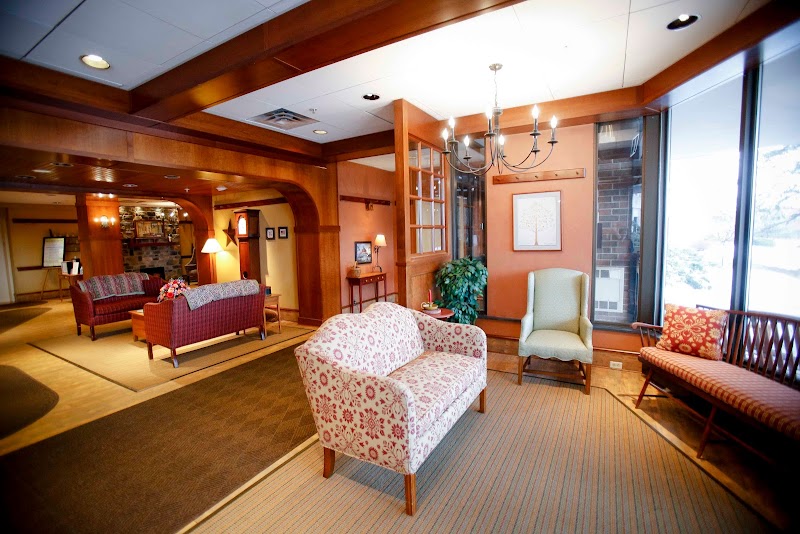
How is Teresian House Co Inc Staffed?

CMS rates TERESIAN HOUSE NURSING HOME CO INC's staffing level at 4 out of 5 stars, which is above average compared to other nursing homes. Staff turnover is 38%, compared to the New York average of 46%. This relatively stable workforce can support continuity of care.

What Have Inspectors Found at Teresian House Co Inc?

State health inspectors documented 26 deficiencies at TERESIAN HOUSE NURSING HOME CO INC during 2019 to 2024. These included: 1 Immediate Jeopardy (the most serious level, indicating potential for serious harm or death), 24 with potential for harm, and 1 minor or isolated issues. Immediate Jeopardy findings are rare and represent the most serious regulatory concerns. They require immediate corrective action.
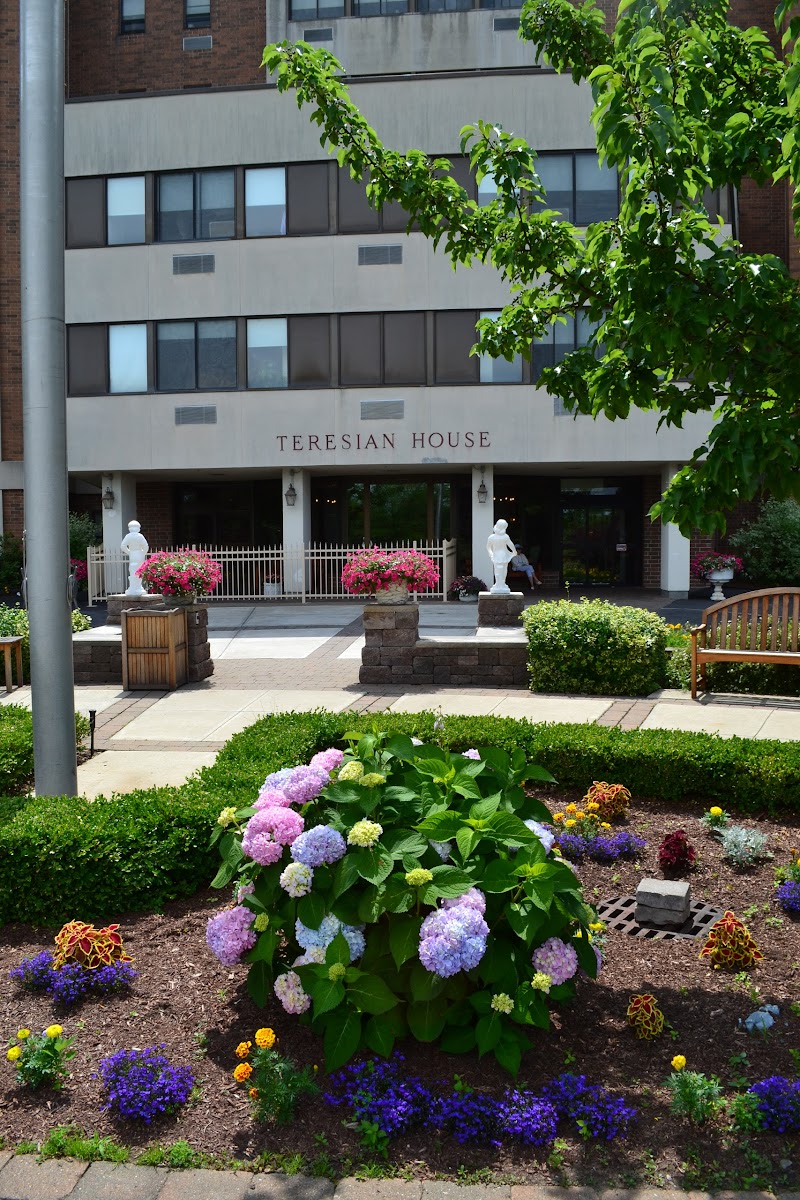
Who Owns and Operates Teresian House Co Inc?

TERESIAN HOUSE NURSING HOME CO INC is owned by a non-profit organization. Non-profit facilities reinvest revenue into operations rather than distributing to shareholders. The facility operates independently rather than as part of a larger chain. With 302 certified beds and approximately 286 residents (about 95% occupancy), it is a large facility located in ALBANY, New York.
How Does Teresian House Co Inc Compare to Other New York Nursing Homes?

Compared to the 100 nursing homes in New York, TERESIAN HOUSE NURSING HOME CO INC's overall rating (3 stars) is below the state average of 3.1, staff turnover (38%) is near the state average of 46%, and health inspection rating (2 stars) is below the national benchmark.

What Should Families Ask When Visiting Teresian House Co Inc?

Based on this facility's data, families visiting should ask: "What changes have been made since the serious inspection findings, and how are you preventing similar issues?" "Can I visit during a mealtime to observe dining assistance and food quality?" "How do you handle medical emergencies, and what is your hospital transfer rate?" "Can I speak with family members of current residents about their experience?" These questions are particularly relevant given the facility's Immediate Jeopardy citations.

Is Teresian House Co Inc Safe?

Based on CMS inspection data, TERESIAN HOUSE NURSING HOME CO INC has documented safety concerns. Inspectors have issued 1 Immediate Jeopardy citation (the most serious violation level indicating risk of serious injury or death). The facility has a 3-star overall rating and ranks #100 of 100 nursing homes in New York. Families considering this facility should ask detailed questions about what corrective actions have been taken since these incidents.

Do Nurses at Teresian House Co Inc Stick Around?

TERESIAN HOUSE NURSING HOME CO INC has a staff turnover rate of 38%, which is about average for New York nursing homes (state average: 46%). Moderate turnover is common in nursing homes, but families should still ask about staff tenure and how the facility maintains care continuity when employees leave.

Was Teresian House Co Inc Ever Fined?

TERESIAN HOUSE NURSING HOME CO INC has no federal fines on record. CMS issues fines when nursing homes fail to meet care standards or don't correct problems found during inspections. The absence of fines suggests the facility has either maintained compliance or corrected any issues before penalties were assessed. This is a positive indicator, though families should still review recent inspection reports for the full picture.

Is Teresian House Co Inc on Any Federal Watch List?

TERESIAN HOUSE NURSING HOME CO INC is not on any federal watch list. The most significant is the Special Focus Facility (SFF) program, which identifies the bottom 1% of nursing homes nationally based on persistent, serious quality problems. Not being on this list means the facility has avoided the pattern of deficiencies that triggers enhanced federal oversight. This is a positive indicator, though families should still review the facility's inspection history directly.