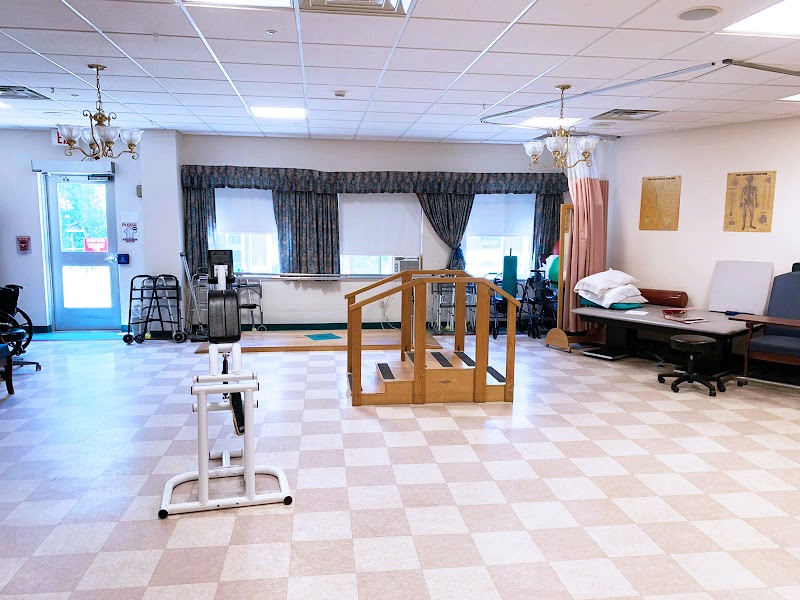
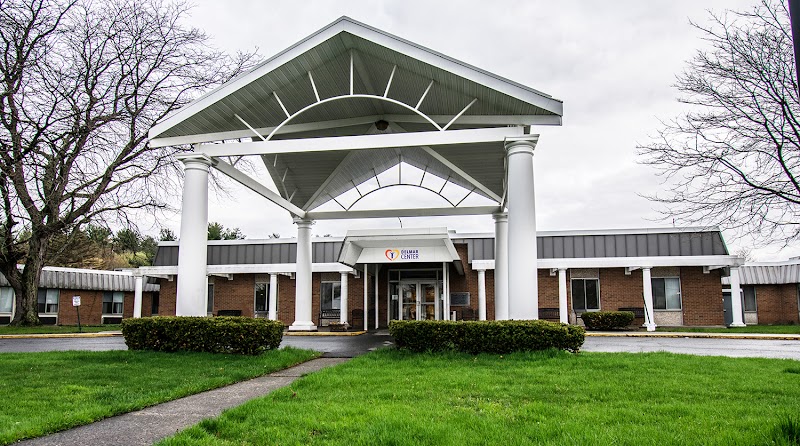
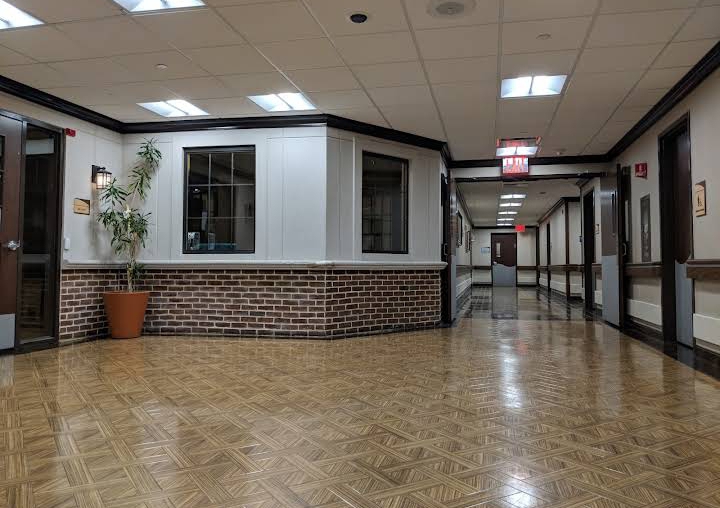
DELMAR CENTER FOR REHABILITATION AND NURSING

125 ROCKEFELLER ROAD, DELMAR, NY 12054 (518) 439-8116
For profit - Limited Liability company 120 Beds Independent Data: November 2025
Trust Grade
13/100
#499 of 594 in NY
Last Inspection: January 2025

Within standard 12-15 month inspection cycle. Federal law requires annual inspections.

Overview

Delmar Center for Rehabilitation and Nursing has received a Trust Grade of F, indicating significant concerns and a poor overall performance. Ranking #499 out of 594 facilities in New York places it in the bottom half, and #7 out of 11 in Albany County suggests only a few local options are better. The facility is worsening, with reported issues increasing from 10 in 2024 to 33 in 2025. Staffing is a significant concern, with a rating of 2 out of 5 stars and a high turnover rate of 60%, which is above the state average. Additionally, there were incidents where nursing staff did not meet required minimum staffing levels, leading to delays in resident assistance. For example, one resident experienced delays of 10-15 minutes to receive help at night, and another resident's urinary catheter bag was found lying on the floor, exposing them to potential infection risks. While the facility has some good quality measures, these serious staffing issues raise significant red flags for families considering this home for their loved ones.

Trust Score
F
13/100
In New York
#499/594
Bottom 16%
Safety Record
Low Risk
No red flags
Inspections
Getting Worse
10 → 33 violations
Staff Stability
⚠ Watch
60% turnover. Above average. Higher turnover means staff may not know residents' routines.
Penalties
⚠ Watch
$9,750 in fines. Higher than 81% of New York facilities, suggesting repeated compliance issues.
Skilled Nurses
⚠ Watch
Each resident gets only 23 minutes of Registered Nurse (RN) attention daily — below average for New York. Fewer RN minutes means fewer trained eyes watching for problems.
Violations
⚠ Watch
79 deficiencies on record. Higher than average. Multiple issues found across inspections.
★☆☆☆☆
1.0
Overall Rating
★★☆☆☆
2.0
Staff Levels
★★★★☆
4.0
Care Quality
★☆☆☆☆
1.0
Inspection Score
Stable
2024: 10 issues
2025: 33 issues

The Good

  • 4-Star Quality Measures · Strong clinical quality outcomes
  • Full Sprinkler Coverage · Fire safety systems throughout facility
  • No fines on record

Facility shows strength in quality measures, fire safety.

The Bad

1-Star Overall Rating

Below New York average (3.0)

Significant quality concerns identified by CMS

Staff Turnover: 60%

14pts above New York avg (46%)

Frequent staff changes - ask about care continuity

Federal Fines: $9,750

Below median ($33,413)

Minor penalties assessed

Staff turnover is elevated (60%)

12 points above New York average of 48%

The Ugly 79 deficiencies on record

Jan 2025 33 deficiencies
CONCERN (D)

Potential for Harm - no one hurt, but risky conditions existed

Deficiency F0577 (Tag F0577)

Could have caused harm · This affected 1 resident

Based on observation and interviews conducted during a recertification survey, the facility did not ensure results of the most recent Federal/State survey were posted in a place readily accessible to ...

Read full inspector narrative →
Based on observation and interviews conducted during a recertification survey, the facility did not ensure results of the most recent Federal/State survey were posted in a place readily accessible to residents. Specifically, survey results were posted in a place that was not frequented by most residents, visitors, or other individuals; was not in a location that would allow individuals to examine the survey results without having to ask and to maintain privacy to review the results; and there was no documentation on resident units notifying residents of the location of the survey results. This was evidenced by: During the resident council meeting on 1/14/2025 at 11:07 AM, 4 of 4 residents in attendance verbalized they did not know where the facility had the Department of Health Survey results located. During an observation on 01/17/2025 at approximately 10:40 AM, the surveyor observed the facility had a black binder near the entrance area in a plastic holder attached to the wall with incomplete documentation regarding results of surveys for the past three years. There was no prominent sign on the wall indicating what was in the binder. During an interview on 01/17/2025 at 10:40 AM, Receptionist #1 stated reports regarding survey results went straight to the Administrator. The reports were not kept at the front desk. Receptionist #1 did not know where reports with results from Department of Health surveys were kept and Receptionist #1 stated there was no sign indicating the survey results were available for anyone to view. During an interview on 01/17/2025 at 10:42 AM, Administrator #1 stated, previously there was a sign on the wall above where the survey results were kept indicating results of surveys were available for anyone to view. They stated they would put the sign back up. During a subsequent interview on 01/17/2025 at 11:40 AM, Administrator #1 stated there was nothing in the binder for surveys dated 11/30/2023, 1/09/2024, and 5/23/2024. They stated they would put the results from the surveys for the past 3 years. 10 New York Codes, Rules, and Regulations:415.3(d)(1)(v)
CONCERN (D) 📢 Someone Reported This

A family member, employee, or ombudsman was alarmed enough to file a formal complaint

Potential for Harm - no one hurt, but risky conditions existed

Free from Abuse/Neglect (Tag F0600)

Could have caused harm · This affected 1 resident

Based on observation, record review and interviews during the recertification survey, the facility did not ensure the resident's right to be free from abuse and neglect for 1 (Resident #40) of 40 resi...

Read full inspector narrative →
Based on observation, record review and interviews during the recertification survey, the facility did not ensure the resident's right to be free from abuse and neglect for 1 (Resident #40) of 40 residents reviewed for abuse and neglect. Specifically for Resident #40, a Certified Nurse Aide did not follow the resident's comprehensive care plan when giving personal care, during which the resident fell from their bed and sustained a broken leg on 10/01/2024. This is evidenced by: A policy titled, Abuse Policy, revised 12/2022, documented that the facility prohibited the mistreatment, neglect, and abuse of residents/patients and misappropriation of the resident/patient property by anyone including but not limited to staff, family, friends and residents of the facility. The policy further documented that neglect was defined as failure of the facility, its employees or service providers to provide goods and services necessary to avoid physical harm, pain, mental anguish or distress. Under Abuse - Protocol, it was documented that the Administrator and Director of Nursing were responsible for investigating and reporting. Under Abuse - Prevention, it was documented that to identify, correct, and intervene in situations where abuse, neglect, and or mistreatment were more likely to occur included but was not limited to identification/analysis of sufficient staffing on each shift to meet the needs of the residents/patients, assigned staff demonstrating knowledge of individual resident/patient needs, and sufficient and appropriate supervisory staff to identify inappropriate behaviors. Resident #40 was admitted to the facility with the diagnoses of seizure disorder (brain condition that causes episodes of abnormal electrical activity in the brain), morbid obesity (severe form of obesity that's characterized by a high body mass index), and bipolar disorder (mental illness that causes extreme mood swings). The Minimum Data Set (an assessment tool) dated 10/16/2024, documented that the resident was able to understand others, be understood, was minimally cognitively impaired, and needed significant help with activities of daily living. Review of the Comprehensive Care Plan for Activities of Daily Living, created 12/04/2023 and last updated 10/09/2024, documented the goal of Resident's activities of daily living status will improve through the review date. The documented interventions included that Resident #40 was dependent on 2 or more staff members and did not use their own strength to complete the following tasks: Shower/Bathe Roll Left and Right: Dependent x2 or more staff Lying to Sitting on Side of Bed Personal Hygiene Toileting Hygiene Review of the Comprehensive Care Plan for mobility, created 12/01/2023 and updated 10/09/2024, documented the goal that the resident would remain free of complications related to immobility, including contractures (a permanent tightening of the muscles, tendons, skin, and nearby tissues that causes limb stiffness and shortening), thrombus formation (a blood clot formed in a blood vessel or the heart), skin-breakdown, and falls with related injury. The documented interventions included but were not limited to, wheeling in wheelchair (resident was dependent on at least one person to physically assist them to complete the task). The resident did not use own strength for any part of the activity. A facility incident report, dated 10/01/2024 at 6:31 PM, documented that Resident #40 had fallen out of bed while being cared for by Certified Nurse Aide #5. Resident #40 stated per the report, documented that the staff member was assisting them to roll over, the resident rolled too close to the edge of the bed and fell off it. Registered Nurse #6 was called to assess Resident #40, and the decision was made to send the resident to the hospital because the resident was complaining of pain to their leg, had struck their head, was on Eliquis (a blood thinner), and they had a laceration on their toe which was bleeding. A hospital orthopedic (a doctor that specialized in bones and tendons) consultation note dated 10/02/2024 at 2:54 AM documented that Resident #40 had sustained a right distal femur fracture (a break in the lower part of the right thigh bone, just above the knee joint). Resident #40 did not require surgical intervention for the fracture. During an interview on 1/13/2025 at 11:58 AM, Resident #40 stated that in October 2024, they were getting cleaned up and Certified Nurse Aide #5 rolled them over too far, and they fell out of bed and broke their leg. Resident #40 stated that Certified Nurse Aide #5 had been fired after the fall. Resident #40 stated that they did not like getting out of bed because it required a Hoyer lift and that they could not stand on their own because of their leg. During an interview on 1/21/2025 at 1:17 PM, Licensed Practical Nurse #4 stated that the Director of Nursing kept all incident reports and investigations in their office and reports would need to be requested directly from the Director of Nursing. Additionally, Licensed Practical Nurse #4 stated that documentation of resident incidents and complaints were never documented in Point Click Care (the electronic system used by the facility), only on the incident report sheets completed by Director of Nursing or Administrator, and they were the only authorized staff to report incidents to the Department of Health. During an interview on 1/21/2025 at 2:02 PM, Licensed Practical Nurse #1 stated they were educated on abuse and neglect yearly. If a resident sustained a fall during care, if anything was broken, it would require reporting, and possibly call 911. During an interview on 1/21/2025 at 2:16 PM, Registered Nurse Manager #1 stated that for falls with injuries, the Unit Manager should have been notified immediately. The Director of Nursing should have been notified immediately. Additionally, only the Director of Nursing or the Administrator reported to Department of Health, but if the Registered Nurse Manager #1 thought an incident needed to be reported and thought that no one had reported it, the Registered Nurse Manager #1 would call themselves. During an interview on 1/23/2025 at 8:44 AM, Director of Nursing #1 stated that if the resident fell because of a care plan violation, the Department of Health had to be called within 2 hours. If the staff did not know how the resident got injured, that would also be a reportable incident. The employee involved would be sent home and investigation would begin. If a resident sustained an injury and the source of the injury could be explained, or if there was no violation of the care plan, no reporting would be required. Additionally, Director of Nursing #1 stated that abuse training was provided to all staff annually, when something adverse occurred, or if they felt the staff needed a refresher. Director of Nursing #1 stated that agency staff were educated on the facility's abuse policy during their orientation. During an interview on 1/22/2025 at 1:00 PM, Administrator #1 stated that they would report all allegations of abuse in 2 hours if they were found to be substantiated. Administrator #1 also stated the regulation for reporting abuse stated that all abuse needs to be reported in 2 hours and that they would attempt to unsubstantiate the abuse allegations within two hours. Administrator #1 stated that if there were multiple witnesses to the incident, if a staff member was not working, or if there was no evidence of abuse, they would consider the allegation unsubstantiated and not report it. Administrator #1 stated that the first thing to do would be to suspend the accused staff member and then complete the investigation. They stated if they believed abuse or neglect had occurred, they would report the incident to the Department of Health within 2 hours. 10 New York Code of Rules and Regulations 483.12 (a) (1)
CONCERN (D) 📢 Someone Reported This

A family member, employee, or ombudsman was alarmed enough to file a formal complaint

Potential for Harm - no one hurt, but risky conditions existed

Investigate Abuse (Tag F0610)

Could have caused harm · This affected 1 resident

Based on record review and interview during the post-survey revisit and abbreviated survey (Case # NY00376983), the facility did not have evidence that all alleged violations were thoroughly investiga...

Read full inspector narrative →
Based on record review and interview during the post-survey revisit and abbreviated survey (Case # NY00376983), the facility did not have evidence that all alleged violations were thoroughly investigated for 1 (Resident #365) of 4 residents reviewed. Specifically, the facility did not have evidence of thorough investigation when Resident #365 reported they injured their hand on the front door when they were coming back into the facility at 11:00 PM on 3/25/2025. This is evidenced by: Cross-reference to F689: Free of Accident Hazards/Supervision/Devices Resident #365 Resident #365 was admitted to the facility with diagnoses of type 2 diabetes mellitus (chronic metabolic disease characterized by persistently high blood sugar levels) without complications, nicotine dependence - cigarettes, and schizophrenia (a serious mental condition that effects how people think, feel, and behave). The Minimum Data Set, dated (an assessment tool) dated 2/27/2025, documented the resident was cognitively intact. The resident was able to make themselves understood and understood others. The Policy and Procedure titled, Accident – Incidents, revised 7/2020, documented it was the policy of the facility to monitor and evaluate all occurrences of accidents of incidents or adverse events occurring on the facility ' s premises, which was not consistent with the routine operation of the facility or care of a particular resident. The occurrences were to be evaluated and investigated. Occurrences included skin tears. An Incident/Accident report form was to be completed and would include as applicable the date/time of the incident/accident, the nature of the injury, the circumstances surrounding the incident/accident, where the accident/incident took place, the names of the witnesses if observed, the resident ' s account if applicable, the time the resident ' s attending physician was notified as well as the time the physician responded and his/her instructions. Incident Report for Resident #365 dated 3/25/2025 at 11:00 PM by Registered Nurse #101, documented Licensed Practical Nurse #52 reported a skin tear on Resident #365 ' s right hand. Licensed Practical Nurse #52 told them the resident scraped their hand on their way in from the outside. Resident #365 stated they scraped their hand on the door coming in from outside. The wound was cleansed and dressed, and the provider was notified. Facility document titled, LN: Initial Event Documentation and dated 3/25/2025 at 11:00 PM by Registered Nurse #101, documented a new skin tear was noted to the right hand that was 1 centimeter and round. The resident reported they scraped their hand on the door on their way in from outside. The area was cleaned, and pressure applied to stop the bleeding. The wound was covered was covered with a dry sterile dressing. The Nurse Practitioner was notified and gave an order for a daily dressing. Facility document titled, Accident/Incident Statement Form – Licensed Nurse and dated 3/25/2025 at 11:00 PM by Licensed Practical Nurse #52, documented Resident #365 told them they scraped their hand on their way in from the outside. There was no documented evidence of a thorough investigation to determine how the accident/incident occurred and to protect the resident from recurrence. During an observation on 4/03/2025 at 1:19 PM, Resident #365 was noted to have a small scab on the knuckle of their right hand. During an interview on 4/03/2025 at 1:19 PM, Resident #365 stated they got their hand caught between the wheelchair grab bar and the right door frame on the main entrance to the facility when they were coming in from outside one night. They stated they rarely went out at late at night and then showed the surveyor a blank, Out on Pass Agreement, they had to complete prior to leaving the facility. During a subsequent interview on 4/04/2025 at 12:04 PM, Resident #365 stated someone let them out of the facility and back in on 3/25/2025. They could not recall who let them out/in and stated they were not sure if they completed and signed an Out on Pass Agreement that night. They could not recall why they went outside. During an interview on 4/07/2025 at 1:41 PM, Registered Nurse #101 stated they were the supervisor when Licensed Practical Nurse #52 told them that Resident #365 had a new skin tear. They stated it happened during change of shift at 11:00 PM on 3/25/2025. They stated Resident #365 was coming in from outside and hit their hand. They stated the resident was not supposed to be outside after 8:00 PM because there was no one at the front desk to let them out or back in. They stated they had no idea how the resident got outside and stated they did not ask the resident how they got out. They stated it was change of shift and said someone might have let him out/back in at that time. They stated they did not start an investigation to find out how the incident/accident happened. They stated they just checked the resident ' s skin and completed the incident/accident form. They stated happened at change of shift and they would have reported to the night supervisor. During an interview on 4/07/2025 at 2:17 PM, Director of Nursing #1 stated Resident #365 sustained an injury to their hand on 3/25/2025 that was resolved on 3/31/2025. They stated they would expect that an investigation be started immediately after identifying/treating the injury and said the supervisor should have asked the resident what they were doing outside, how they got outside and then back in, and where there leave of absence paperwork was. During an interview on 4/08/2025 at 12:08 PM, Licensed Practical Nurse #52 stated they recalled the incident with Resident #365 on 3/25/2025. They stated the resident came to them and showed them their hand that on a skin tear on it. The resident told them they hurt their hand when they were coming back into the building. Licensed Practical Nurse #52 stated they cleaned and dressed the wound and reported to Registered Nurse #101. They stated they did not let the resident out of the building that evening or any evening, since they never leave the unit once they started their shift. They stated they were new to the building and thought that there was always someone at the front desk to let people out/in. They stated they were aware the resident would leave the facility and usually would have a form for the nurse to sign. They had only signed one Out on Pass Agreement form for the resident and did not recall signing a form for the resident to leave the facility on 3/25/2025. They did not know who permitted the resident to go outside and did not know who let them back in. 10 New York Codes, Rules, and Regulations: 415.4(b)(3)
CONCERN (D)

Potential for Harm - no one hurt, but risky conditions existed

Deficiency F0625 (Tag F0625)

Could have caused harm · This affected 1 resident

**NOTE- TERMS IN BRACKETS HAVE BEEN EDITED TO PROTECT CONFIDENTIALITY** Based on record review and interview during the recertification survey, the facility did not ensure written notice specifying th...

Read full inspector narrative →
**NOTE- TERMS IN BRACKETS HAVE BEEN EDITED TO PROTECT CONFIDENTIALITY** Based on record review and interview during the recertification survey, the facility did not ensure written notice specifying the duration of the bed-hold policy, was provided to the resident and the representative at the time of transfer for hospitalization for 1 (Resident #22) of 1 resident reviewed for hospitalization. Specifically, for Resident #22, the resident and the resident's representative were not notified in writing of the bed hold policy when the resident was admitted to the hospital on [DATE]. This is evidenced by: The facility policy titled, Discharge - Transfer/Discharge Process, date created 11/2017, last revised 10/10/2024, documented the facility would coordinate a safe transfer or discharge for residents leaving the facility. When a resident is transferred or discharged from the facility, details of the transfer or discharge would be documented in the clinical record and appropriate information would be communicated to the receiving health care facility or provider. Additionally, the policy documented that if a transfer to the hospital was required for an urgent medical need or if the resident's behaviors posed a threat to their or others' safety or well-being; a resident being transferred to a hospital for an urgent medical or psychiatric need would be provided the written notice at the time of the transfer to the hospital, and their resident representative would be provided the written notice as soon as practicable thereafter; if a resident was transferred to the hospital because the facility was unable to safely manage the resident's care at the time of transfer, the facility was expected to readmit the resident once the hospital has determined it is safe for them to return to the facility unless the resident/representative has already appealed the transfer decision and it has been determined by the Department of Health that the facility is not the appropriate placement for the resident. Resident #22 Resident #22 was admitted to the facility with a diagnosis of diabetes mellitus (A chronic metabolic disorder characterized by high blood sugar (glucose) levels), chronic obstructive pulmonary disease (inflammation inside the airways); and anxiety disorder (a type of mental health condition). The Minimum Data Set (an assessment tool) dated 12/24/2024 documented resident was cognitively intact, could be understood and understand others. Resident #22 was transferred to the hospital on 8/25/2024 to 9/15/2024 related to respiratory distress. There was no documented evidence that a notice of discharge or bed hold was provided to the resident or the resident's representative. There was no documented evidence that there was a notice of discharge or bed hold in Resident #22's facility records. During an interview on 1/17/2025 at 11:41 AM, Registered Nurse #5, the nurse responsible for sending Resident #22 to the hospital, stated that on 8/25/2024, when Resident #22 went to the hospital, they notified the medical provider, notified the family, filled out the transfer sheet, was given verbal consent to send Resident #22 to the hospital, and filled out the electronic transfer sheet. Registered Nurse #5 stated that they called Resident #22's family and they had an issue with the bed hold, which they made note of but did not follow up on. During an interview on 1/17/2025 at 11:12 AM, Director of Nursing #1 stated that when a resident required transfer to the hospital, the order of operations was to document the change in the resident's condition, call the medical provider to get an order to transfer the resident to the hospital or call 911 if needed, make a copy of the resident's Medical Orders for Life-Sustaining Treatment (MOLST) form, notify the resident's family regarding the transfer, give report to emergency services, and send the resident to the hospital with the appropriate paperwork. Director of Nursing #1 stated appropriate paperwork was described as the electronic transfer form, order summary, medical diagnosis, immunizations, resident face - sheet, resident profile information, and any new labs that were done. Director of Nursing #1 stated the staff member would be expected to call the hospital emergency room and give a report of the resident's condition and reason for sending. 10 New York Code Rules and Regulations 415.3(h)(4)(i)(a)
CONCERN (D) 📢 Someone Reported This

A family member, employee, or ombudsman was alarmed enough to file a formal complaint

Potential for Harm - no one hurt, but risky conditions existed

Accident Prevention (Tag F0689)

Could have caused harm · This affected 1 resident

Based on observation, record review and interviews during a recertification survey, the facility did not ensure each resident had an environment that was as free of accident hazards as was possible to...

Read full inspector narrative →
Based on observation, record review and interviews during a recertification survey, the facility did not ensure each resident had an environment that was as free of accident hazards as was possible to prevent accidents for 1 (Resident #13) of 1 resident reviewed for accident hazards. Specifically, Resident #13 who shared a room with another resident was observed with medications in their room not supervised. This is evidenced by: Resident #13 was admitted to the facility with diagnoses of acute and chronic respiratory failure with hypoxia (when the body cannot exchange oxygen and carbon dioxide), type 2 diabetes mellitus without complications, and chronic obstructive pulmonary disease with (acute) exacerbation. The Minimum Data Set (an assessment tool) dated 11/12/2024 documented the resident was cognitively intact, could be understood and understand others. The Policy titled, Medication-Storage created 02/2014 last revised 01/2019 documented, The center would have Medications stored in a manner that maintained the integrity of the product, ensures the safety of the residents, and is in accordance with Department of Health guidelines. Procedures included that all medications will be stored in a locked cabinet, cart, or medication room that is accessible only to authorized personnel, as defined by facility policy. The Policy titled, Medication, Self- Administration created 03/2018 last revised 07/2019 documented Self-administered medications must be stored in a safe and secure place, which is not accessible by other residents. Storage should be in a locked box in the resident's drawer and if safe storage is not possible in the resident's room, medications of residents permitted to self-administer would be stored on a central medication cart or in the medication room. During an observation on 01/13/2025 at 11:56 AM, an Albuterol inhaler (a prescription medication used to prevent and treat difficulty breathing, wheezing, shortness of breath, coughing, and chest tightness caused by lung diseases such as asthma and chronic obstructive pulmonary disease) was noted to be present on the bedside table of Resident #13. Resident #13 was in a double occupancy room, with a roommate present in the other bed in the same room as Resident #13. The Albuterol inhaler was not stored in a safe and secure place, and was accessible to Resident #13 and to other residents. During an observation on 01/15/2025 at 10:25 AM, an Albuterol inhaler (as described above) and a Trelegy inhaler (a prescription inhaler used to treat asthma and chronic obstructive pulmonary disease) was noted to be present on the bedside table of Resident #13. Resident #13 was in a double occupancy room with a roommate present in the other bed in the same room as Resident #13. The Albuterol inhaler and the Trelegy inhaler were not stored in a safe and secure place, and they were accessible to Resident #13 and other residents. During an interview on 01/15/2025 at 10:25 AM, Resident #13 stated the nurses left the inhalers on their bedside table throughout the day and at the end of the day after the last time it was used, they stored it on the cart. They stated in the next morning, sometimes the nurses would leave the inhalers on their bedside table, or they may store them on the medication cart. During an interview on 01/21/2025 at 10:12 AM, Director of Nursing #1 stated there was no resident in the building that administered their own medications. They stated if a resident was not capable to administer their own medications independently but could do so with supervision, residents should not have access to the medications until it was provided by nursing. 10 New York Codes, Rules, and Regulations: 415.12 (h)(2)
CONCERN (D)

Potential for Harm - no one hurt, but risky conditions existed

Deficiency F0757 (Tag F0757)

Could have caused harm · This affected 1 resident

Based on observations, record reviews, and interviews during recertification survey, the facility did not ensure that each resident's drug regimen was free from unnecessary drugs, which was any drug u...

Read full inspector narrative →
Based on observations, record reviews, and interviews during recertification survey, the facility did not ensure that each resident's drug regimen was free from unnecessary drugs, which was any drug used in excessive dose, for excessive duration, without adequate monitoring, without adequate indications for its use, or in the presence of adverse consequences which indicated the dose should be reduced or discontinued for 1 (Resident #27) of 5 residents reviewed for unnecessary medications. Specifically, Resident #27's physician order for Estrace (a vaginal cream) did not include an indication for use in accordance with professional standards. This is evidenced by: Resident #27 was admitted to the facility with diagnoses of urinary tract infection, unspecified dementia, and major depressive disorder The Minimum Data Set (an assessment tool) dated 11/18/2024 documented the resident had severe cognitive impairment, could be understood and understand others. Policy titled Medication Regimen Reviews created 05/2019 last revised 11/2021 documented the consultant pharmacist reviews the medication regimen of each resident at least monthly. The medication regimen review involved a thorough review of the resident's medical record to prevent, identify, report, and resolve medication related problems, medication errors and other irregularities for example: medications ordered in excessive doses or without clinical indication. Resident #27's physician order dated 08/16/2024 documented Estrace Vaginal Cream 0.1 MG/GM (Estradiol Vaginal). Insert 1 application vaginally one time a day every Tue, Fri for apply a small pea size amount to external vaginal opening. There was no documented evidence indication for the use of Estrace Vaginal Cream. Consultant Pharmacist's Medication Regimen Review for recommendations created between 12/01/2024 and 12/30/2024 documented a medication regimen review occurred for Resident #27 on 12/11/2024. It documented resident's medication regimen had been reviewed and there were no irregularities noted at this time. Review of Resident #27's care plan did not document the use of Estrace Vaginal Cream , and it did not document the indication for this medication. During an interview on 01/16/2025 at 11:00 AM, Licensed Practical Nurse #1 stated medication orders were supposed to have a reason why the medication was given. If there was no reason indicated, one should call the doctor and ask them to put it in. Licensed Practical Nurse #1 was shown Resident #27's order for Estrace Vaginal Cream. Licensed Practical Nurse #1 stated the order did not show a reason why this medication was given, and they would ask the Physician Assistant to include an indication for use of this medication on the order. During an interview on 01/16/2025 at 11:08 AM, Registered Nurse #1 was shown Resident #27's order for Estrace Vaginal Cream. They acknowledged an indication for use of this medication was missing. Registered Nurse #1 stated they would reach out to the provider if there was no indication for use, and they would not use the medication again until the indication was there. They stated sometimes the provider did not include an indication for use and they would call the provider if the indication was not there. During an interview on 1/21/2025 and 10:12 AM, Director of Nursing #1 stated that orders should include the reason for use. The admission nurse or unit manager enters the information for the orders, and the physician should indicate why the resident received the medication. They stated when nurses enter the orders for a medication, it should include an indication for use. During an interview on 01/21/2025 at 8:57 AM, Provider #1 stated they did not put anything down for indication for a medication on the order. The nurses entered the indication on the order sheet. When asked what they would do if there was no indication for a medication's use, Provider #1 stated they knew what the indication for use was. If a nurse were to ask them what the indication for use was, they would tell the nurse. During an interview on 01/23/2025 at 11:55 AM, Medical Director #1 stated the nurses entered the orders for the residents. When asked if the physician provided the indication for use of the medication on the order, they stated as far as they were concerned the indication for use of medications was in their clinical notes. The reason for indication for use of a medication was documented by the provider under progress notes. They stated nurses should give the medication based on the order that was coming from the provider who is competent to give that order. 10 New York Code of Rules and Regulations 415.12(l)(1)
CONCERN (D) 📢 Someone Reported This

A family member, employee, or ombudsman was alarmed enough to file a formal complaint

Potential for Harm - no one hurt, but risky conditions existed

Deficiency F0760 (Tag F0760)

Could have caused harm · This affected 1 resident

Based on observation, record review, and interviews conducted during a recertification survey, the facility did not ensure that residents were free of any significant medication errors for 1 (Resident...

Read full inspector narrative →
Based on observation, record review, and interviews conducted during a recertification survey, the facility did not ensure that residents were free of any significant medication errors for 1 (Resident #s 62) of 40 residents reviewed. Specifically, Resident #62 was not given Alprazolam (used to treat anxiety) at the prescribed therapeutic times. Additionally, there was no documented evidence that physician was notified, and that Resident #62 was monitored for side effects. This is evidenced by: Resident # 62 was admitted to the facility with diagnoses of pubic ramus fracture (a fracture of the pubic bone), primary osteoarthritis (arthritis of the bones and joints), left shoulder, and muscle weakness. The Minimum Data Set (an assessment) dated 12/24/2024 documented the resident had intact cognition, could be understood, and understand others. The facility's Policy and Procedure titled Medication Administration revised 12/2019, documented medications must be administered in accordance with the orders, including any required time frame. The individual administering the medication must check the label three (3) times to verify the right medication, right dosage, right time and right method (route) of administration before giving the medication. During an interview on 01/14/2025 at 11:40 AM, Resident #62 stated the night nurse came in a week ago and gave Tylenol and Alprazolam (Xanax) at 5:30 PM. They came in again at 7:30 PM to give their night pills including another Xanax. When Resident #62 refused, Nurse left the pills on the table and told resident take them or not, I don't care. The Medication Administration Record dated 12/17/2024 through 1/15/2025 documented give Alprazolam 0.5 milligrams at 09:00, 16:00, and 21:00. The Physician's order dated 12/18/2024 documented give Alprazolam 0.5 milligram 1 tablet by mouth three times a day for anxiety. The Physician's order dated 12/18/2024 documented give Alprazolam 0.5 milligram 1 tablet by mouth every eight hours as needed for anxiety for 14 days. Order was discontinued on 1/1/2025. Resident received one as needed dose on 12/18/2024 at 11:02 AM. On 12/18/2024: 09:00 dose was not administered. 11:02 AM Resident received as needed dose. 16:00 dose administered at 18:33 - given 2 ½ hours late 21:00 dose administered at 20:08 - given 1 hour early, and 2 hours after previous dose. On 12/24/2024: Alprazolam 0.5 milligram ordered at 16:00 and 21:00 were administered at 17:23 and 20:30 respectively. Medication given three hours apart. On 12/26/2024: Alprazolam 0.5 milligram ordered at 16:00 and 21:00 were administered at 17:52 and 20:37 respectively. Medication given 2 hours and 15 minutes apart On 12/28/2024: Alprazolam 0.5 milligram ordered at 09:00 AM. Administered at 12:00 PM. Given 3 hours late. On 1/02/2025: Alprazolam 0. 5 milligram ordered at 16:00 and 21:00 were administered at 16:57 and 20:03 respectively, 3 hours and 6 minutes apart. On 1/04/2025: Alprazolam 0.5 milligram ordered for 16:00 and 21:00 were administered at 17:24 and 20:34 respectively, 3 hours and 10 minutes apart. On 1/06/2025: Alprazolam 0.5 milligram ordered for 16:00 and 21:00 were administered at 17:20 and 20:20 respectively, 3 hours apart. During an interview on 01/16/2025 at 10:45 AM, Director of Nursing #1 stated nursing staff received new hire orientation including medication administration. They stated Nurses were assigned a preceptor who completed the orientation checklist of skills. A medication pass was demonstrated with competency prior to signing off checklist. The 5 rights of medication administration per policy were to be followed including right time that medication was administered. They stated if a medication was given late the physician should be notified. During an interview on 1/21/2025 at 1:17 PM, Licensed Practical Nurse # 3 stated all medications should be given as ordered by the physician and written in the Medication Administration Record. They stated the Unit Manager checked the dashboard to determine whether the medications were given, and at the end of the month the unit manager checked that all medications were signed for on the Medication Administration Record. During an interview on 1/21/2025 at 1:17 PM, Licensed Practical Nurse #4, (Unit Manager) and Licenses Practical Nurse #3 stated they agree that administering Xanax at 18:33 and then again at 20:08 was a medication error. Both stated they were unaware of the Xanax medication errors. 10 New York Codes, Rules, and Regulations 415.12(m)(2)
CONCERN (D)

Potential for Harm - no one hurt, but risky conditions existed

Deficiency F0813 (Tag F0813)

Could have caused harm · This affected 1 resident

Based on observation, record review, and staff interviews during the recertification survey, the facility did not ensure safe and sanitary storage of foods brought to residents by families and other v...

Read full inspector narrative →
Based on observation, record review, and staff interviews during the recertification survey, the facility did not ensure safe and sanitary storage of foods brought to residents by families and other visitors to prevent food-borne illness for 1 (Resident #52) of 1 resident reviewed for outside food. Specifically, Resident #52's food brought from outside was not labeled and discarded per the facility policy. This is evidenced by: Resident #52 was admitted to the facility with the diagnoses of unilateral inguinal hernia with obstruction (when tissue, such as part of the intestine, protrudes through a weak spot in the abdominal muscles causing pain and obstruction to the intestine), hepatomegaly (a condition where the liver is larger than normal), and type 2 diabetes mellitus (a chronic disease that occurs when the body can't use insulin properly, resulting in high blood sugar levels). The Minimum Data Set (an assessment tool) dated 12/25/2024 documented the resident was cognitively intact, could be understood, and understand others. The document titled, Food Brought in from Outside Facility, revised on 3/25/2022, documented that families or visitors would be educated on safe food handling practices for food brought in from outside the facility. Food or beverages brought in from the outside would be monitored by nursing staff for spoilage, contamination, and safety. The policy further documented that a refrigerator and microwave were available to residents and families to ensure that foods were stored and served at a safe temperature. Nursing staff would monitor resident's rooms for food and beverage disposal. During an observation on 01/13/2025 at 1:55 PM, Resident #52 had 3 raw hotdogs in their room, in their dresser, and had a Tupperware container at their bedside with rice in it. Resident #52 stated that their family member brought them food in the morning. During an interview on 01/14/2025 at 7:45 AM, Family Member #1 stated that when Resident #52 was on the D unit, the staff would take the food from them and put it in the refrigerator for the resident. They stated that since the resident was moved to the G unit, the staff had not been asking to place the food in the refrigerator and had let the resident keep the food in the room unmonitored. When Family Member #1 was asked if the staff ever discussed with them the food from outside policy regarding safe storage of food brought in to the resident, they stated that they had not received any education regarding the policy. During an interview on 01/21/2025 at 2:02 PM, Licensed Practical Nurse #1 stated that the family was aware if they were to bring outside food to the resident, they were to give it to the staff, so that it could be placed in the unit refrigerator. When Licensed Practical Nurse #1 was asked about the food that was observed in the resident's room, they stated they did not have any knowledge that it was there. During an interview on 01/21/2025 at 2:16 PM, Registered Nurse #1 stated that they expected staff to take the food from the family and inspect it for multiple issues. They expected staff to look at the food for consistency, diet compliance, safeness to eat, and/or temperature. They stated that if they identified any significant issues, they would reach out to the Speech-Language Pathologist or Dietician for guidance. Registered Nurse #1 stated that overall, they would take the food to examine it and store it properly. During an interview on 01/23/2025 at 8:44 AM, Director of Nursing #1stated they did not know the specifics of the Food from Outside Facility policy and had to read certain areas of the policy. They stated that they would expect Certified Nurse Aides to ask about the food, if residents had any food items in their room. They stated that they would expect that if there were any problems with food in the resident's room, the staff would notify the proper supervision. 10 New York Code of Rules and Regulations 483.60(i)(3)
CONCERN (E)

Potential for Harm - no one hurt, but risky conditions existed

Resident Rights (Tag F0550)

Could have caused harm · This affected multiple residents

**NOTE- TERMS IN BRACKETS HAVE BEEN EDITED TO PROTECT CONFIDENTIALITY** Based on record review and interview during the recertification survey, the facility did not ensure each resident was treated wi...

Read full inspector narrative →
**NOTE- TERMS IN BRACKETS HAVE BEEN EDITED TO PROTECT CONFIDENTIALITY** Based on record review and interview during the recertification survey, the facility did not ensure each resident was treated with respect and dignity and cared in a manner and in an environment that promoted maintenance or enhancement of their quality of life for 4 (Resident #s 13, 17, 62, and 364) of 40 residents reviewed. Specifically, [a.] Resident #13 was unable to attend activities of their choice as their wheelchair was not able to fit through the interior doorways to the activities room, which caused the resident to feel excluded, [b.] Resident #17 expressed feeling like a burden and was uncomfortable asking for help because of staff ' s unprofessionalism, [c.] Resident #62, was observed on 1/13/2025 at 11:40 AM with matted, greasy hair, fully clothed, and was malodorous. , and [d] Resident #364 was observed on 1/13/2025 at 1:41 PM, with a urinary catheter drainage bag that was not covered with a privacy pouch. This is evidenced by: The Policy and Procedure titled, Quality of Life/Dignity, revised 5/28/2024, documented each resident would be cared for in a manner that promoted and enhanced quality of life, dignity, respect, and individuality. Policy implementation documented, residents would be treated with dignity and respect at all times. ' Treated with dignity ' was defined as the resident would be assisted in maintaining and enhancing his or her self-esteem and self-worth, residents would be assisted in attending the activities of their choice, including activities outside the facility, and residents would be assisted in transporting throughout the facility as needed. The policy documented staff would speak respectfully to residents. Demeaning practices and standards of care that compromise dignity were prohibited. Staff would promote dignity and assist residents as needed by promptly responding to the resident ' s request for toileting assistance and other needs. The Policy and Procedure titled, Catheter Guidelines; Urinary, revised 9/11/2023, documented urinary catheter use would adhere to the principles of dignity to include discreet use and privacy (e.g. covering urinary catheter drainage bags). Resident #13: Resident #13 was admitted to the facility with diagnoses of acute and chronic respiratory failure with hypoxia (low level of oxygen in the bloodstream), morbid (severe) obesity and type 2 diabetes mellitus without complications. The Minimum Data Set (an assessment tool) dated 11/12/2024 documented the resident was cognitively intact, could be understood, and understand others. The Care Plan for Resident #13 titled, does not express an interest in recreational activities, initiated 8/4/2023, documented a goal that the resident ' s wishes related to their recreational/leisure area would be respected and listed respect resident refusals as an intervention/task. During an interview on 1/13/2025 at 11:39 AM, Resident #13 stated their wheelchair did not fit through the activities entrance and they would like to go to more activities like bingo. During an observation on 1/16/2025 at 9:12 AM, Resident #13 ' s wheelchair was brought to the activities room. The wheelchair was not able to be pushed through the interior doorways that led into the activities room as it was wider than the doorways. During a subsequent interview on 1/16/2025 at 11:46 AM, Resident #13 stated, ' I feel kinda left out a little bit. I do like going to bingo. I ' m what you call a people person. I like talking to people. It ' s not that I don ' t want to go down there, but I can ' t fit through the doors. ' Resident #13 explained that for them to attend an activity in the activities room, they needed to have their wheelchair pushed through an exterior door on their unit that leads to an exterior door of the activities room, which was able to be opened to accommodate the width of their wheelchair. This meant they needed to go outside to have access to the activities room. Resident #13 stated they would do this during the good weather to be able to attend activities, but they rather do it year-round if they could. Resident #13 stated if their wheelchair fit through the interior doors to the activities room, they would attend activities more often. During an interview on 1/16/2025 at 9:12 AM, Certified Nurse Aide #2 stated Resident #13 ' s wheelchair did not fit through any of the interior doors. Stated that when the weather was nice, they would bring Resident#13 into the activities room from one of the outside doors, but the other residents would watch, and it made Resident #13 feel uncomfortable. Now resident #13 spends their time on the unit. During an interview on 1/17/2025 at 11:24 AM, Corporate Recreation Director #1 stated Resident #13 did say they wanted to go to activities. Corporate Recreation Director #1 stated they had Certified Nurse Aides show them the path they used to get Resident #13 into the activities room from the outside. They stated Resident #13 stated if the weather was nice, they did not mind being brought to activities like this, but if the weather was not nice, Resident #13 stated they did not want to go outside. Corporate Recreation Director #1 stated Certified Nurse Aides stated for the most part, the facility did a good job with maintaining the sidewalk used to bring Resident #13 to the activities room, but there was a ' rut ' (deep track) that could make it hard to push the wheelchair. They stated the aides would get by it and they got through it. Resident #17: Resident #17 was admitted to the facility with diagnoses of anxiety disorder, paraplegia (inability to voluntarily move the lower parts of the body), and stage 4 pressure ulcer of right buttock. The Minimum Data Set, dated [DATE], documented the resident was cognitively intact. The resident was able to make themselves understood and was able to understand others. The Certified Nurse Aide Task Report dated January 2025, documented the resident required assistance with catheter care/bowel incontinence and bowel movements every shift. During an interview on 1/16/2025 at 12:57 PM, Resident #17 stated staff need an in-service on professionalism. Stated staff made them feel like they were a burden when they asked for things. Resident #17 stated they needed help when they needed to have a bowel movement and staff ' s unprofessionalism made them feel uncomfortable to ask for help. Stated they knew there was a lot of residents that felt like that. Stated they heard staff talking about things that were not Resident #17 ' s business. Resident #17 stated staff would talk about their own, other staff ' s, and residents ' personal business. Resident #17 stated staff need an in-service on dignity. During an interview on 1/23/2025 at 4:22 PM, Registered Nurse #2 stated most staff working in the facility were agency staff. Stated there was not a lot of facility hired staff. Stated agency staff did receive orientation but did not know what it entailed. Their expectation was that all staff would be respectful to all residents. Stated they had not observed any staff being disrespectful but was not in the building during the evenings and nights. Stated a supervisor was in the building during those times. Resident #62: Resident # 62 was admitted to the facility with diagnoses of pubic ramus fracture (a fracture of the pubic bone), primary osteoarthritis (arthritis of the bones and joints), left shoulder, and muscle weakness. The Minimum Data Set, dated [DATE] documented the resident was cognitively intact, could be understood, and could understand others. During an observation on 1/13/2025 at 11:40 AM, Resident #62 was observed seated in a wheelchair in their room, with the door closed. Resident #62 had matted and greasy hair, was fully clothed, and was malodorous. The room was cluttered with personal belongings and their breakfast tray was still present on the bedside table. Resident #62 expressed their frustration that their breakfast tray had sat on the bedside table since 8:00 AM and staff had not come in to remove it. Stated that every day the meal tray would stay on the bedside table until the next meal, when it was replaced with the next tray. Resident #62 reported they shared a bathroom with another resident in an adjoining room. Stated the other resident would lock Resident #62 ' s side of the bathroom door when they used the bathroom and there was a time when the door stayed locked. Stated they put their call light on and waited by the bathroom door for two hours before staff answered the light. Resident #62 reported they were embarrassed because they had been incontinent of stool while they waited for staff to unlock the door,and felt this could have been prevented. Resident #62 could not remember the exact date of the incident but stated it happened on the 3:00 PM to 11:00 PM shift sometime around Christmas. Resident #62 stated the Certified Nurse Aides and Licensed Practical Nurses on evening and night shifts were ' very rude and unhelpful. ' During an interview on 1/15/2025 at 6:00 PM, Certified Nurse Aide #1 stated they normally work the 3:00 PM to 11:00 PM shift but were often floated to other units. Certified Nurse Aide #1 stated the residents could be demanding. Certified Nurse Aide #1 reported Resident #62 was a demanding resident. Certified Nurse Aide #1 stated they did not remember the bathroom being locked in Resident #62 ' s room. Certified Nurse Aide #1 reported staff tried to answer call bells a quickly as possible, but there had been busy times when it had taken 40 minutes or more. Certified Nurse Aide #1 stated ' These people should be grateful for the care we give them. If not for this place, where would they be? They should treat the aides with respect if they want to get respect ' . During an interview on 1/21/2025 at 1:17 PM, Licensed Practical Nurse # ' s 3 and 4 stated Resident #62 had a shared bathroom. They stated other residents often lock both doors for privacy. This happens frequently in all shared rooms. Licensed Practical Nurse #3 stated that no call light should go unanswered for more than 5 minutes. They stated they were unaware Resident #62 had been locked out of the bathroom and waited 2 hours for someone to answer the call light, causing incontinence. Licensed Practical Nurse #3 stated this should not have happened and it was considered poor care. During an interview on 1/22/2025 at 2:04 PM, Social Worker #1 stated they were not aware of the locked bathroom door, but they were aware of concerns about care, voiced by Resident #62 ' s family member. Social Worker #1 reported they checked in on Resident #62 often and they did not think the resident was unhappy. Social Worker #1 stated the resident ' s biggest concern had been about the size of their bed. Resident #364: Resident #364 was admitted to the facility with diagnoses of unspecified fall, influenza virus A, and other acidosis (a condition where the body has too much acid in its fluids). A Minimum Data Set, dated [DATE], documented the resident was cognitively intact. The resident was able to make themselves understood and was able to understand others. The Care Plan for Indwelling Urinary Catheter related to urinary retention, dated 1/8/2025, documented goals that the resident would show no signs or symptoms of urinary infection, and the resident would remain free from catheter-related trauma. Interventions documented change catheter as ordered; ensure tubing was anchored to prevent pulling; and maintain urine collection bag below the level of the bladder. During an observation on 1/13/2025 at 1:41 PM, Resident #364 ' s urinary catheter drainage bag was lying flat on the floor. The drainage bag did not have a cloth privacy cover. Resident #364 reported they were admitted to the facility with the catheter in place from their hospital stay. Resident #364 reported the catheter drainage bag had always been uncovered and lying on the floor or on the bed. During an interview on 1/14/2025 at 11:00 AM, Resident #364 asked the surveyor about the privacy bag which was covering the catheter drainage bag, ' Why are we suddenly covering this now? ' During an interview on 1/21/2025 at 1:17 PM, Licensed Practical Nurse #3 stated all urinary catheters with exposed drainage bags were required to have a privacy bag and were to be hung below the level of the bladder. Licensed Practical Nurse #3 stated they did not know why Resident #364 did not have a privacy bag to cover their exposed catheter bag on 1/13/2025. 10 New York Code of Rules and Regulations 415.5(a)
CONCERN (E)

Potential for Harm - no one hurt, but risky conditions existed

Deficiency F0554 (Tag F0554)

Could have caused harm · This affected multiple residents

**NOTE- TERMS IN BRACKETS HAVE BEEN EDITED TO PROTECT CONFIDENTIALITY** Based on observations, record reviews, and interviews during a recertification survey, the facility did not ensure residents wer...

Read full inspector narrative →
**NOTE- TERMS IN BRACKETS HAVE BEEN EDITED TO PROTECT CONFIDENTIALITY** Based on observations, record reviews, and interviews during a recertification survey, the facility did not ensure residents were assessed by an interdisciplinary team to determine their ability to safely self-administer medication when clinically appropriate for 2 (Residents #s 13 and 22) of 2 residents reviewed for self-administration of medication. Specifically, (a.) Resident #13 was observed with their prescribed Albuterol inhaler and Trelegy inhalers on their overbed table and; (b.) Resident #22 was noted to have an Albuterol sulfate hydrofluoroalkane (HFA) inhaler on their overbed table. There was no documented evidence that Resident #s 13 and 22 were assessed to determine their ability to safely self-administer medications, and there was no physician order for self-administration of medications. This is evidenced by: Facility policy titled Medication-Self Administration created 03/2018, last revised 07/2019 stated criteria must be met to determine if a resident is both mentally and physically capable of self-administering medication and to keep accurate documentation of these actions. Procedure included, staff and practitioner would assess each resident's mental and physical abilities to determine whether self-administering medications was clinically appropriate for the residents upon request. In addition to general evaluation of decision-making capability, the nurse would perform a more specific skill assessment, this could be accomplished on paper or through Electronic Health Record system. If the team determines from this assessment, that a resident cannot fully safely self-administer medications, the nursing staff may determine that the resident could self-administer medications with assistance from the nurse, by storing the medication in the med-cart and having the resident being observed self-administered at the prescribed time Procedure also included, The Electronic Medication Administration Record/Medication Administration Record must identify medications that are self-administered and the medication nurse would need to follow-up with resident as to documentation and storage of medication during each med pass. Facility policy titled Medication-Storage created 02/2014 revised 01/2019 stated this center would have Medications stored in a manner that maintained the integrity of the product, ensures the safety of the residents, and is in accordance with Department of Health Guidelines. With the exception of Emergency Drug Kits, all medications would be stored in a locked cabinet, cart, or medication cart that is accessible to only authorized personnel, as defined by facility policy. Resident #13 Resident #13 was admitted to the facility with diagnoses of acute and chronic respiratory failure with hypoxia (a medical condition where the body is unable to effectively exchange oxygen and carbon dioxide in the lungs leading to persistently low levels of oxygen in the blood), type 2 diabetes mellitus without complications (a chronic condition that happens when a person has persistently high blood sugar levels) , and chronic obstructive pulmonary disease with (acute) exacerbation (narrowing of airways in the lungs making it difficult to breathe). The Minimum Data Set (an assessment tool) dated 11/12/2024 documented the resident was cognitively intact, had the ability to make themselves understood and had the ability to understand others. During an observation on 01/13/2025 at 11:56 AM, an Albuterol inhaler (a prescription medication used to prevent and treat difficulty breathing, wheezing, shortness of breath, coughing, and chest tightness caused by lung diseases such as asthma and chronic obstructive pulmonary disease) was noted to be present on the overbed table of Resident #13. During an observation on 01/15/2025 at 10:25 AM, an Albuterol inhaler (as described above) and a Trelegy inhaler (a prescription inhaler used to treat asthma and chronic obstructive pulmonary disease) was noted to be present on the overbed table of Resident #13. A review of Resident #13's medical record did not include documented evidence that the resident was assessed for their ability to self-administer their medications. A review of Resident #13's care plan did not include documented evidence that the resident could self-administer their medications. A review of the physician orders for Resident #13 dated 03/04/2024 documented Proventil HFA Inhalation Aerosol Solution 108 (90 Base) MCG/ACT Solution 0.5-2.5 (3) MG/3 ML (Albuterol) to be inhaled orally every four hours every day for shortness of breath to be administered by clinician. A review of the physician orders for Resident #13 dated 02/20/2024 documented Trelegy-Elliptia Inhalation Aerosol Powder Breath Activated to be inhaled orally one time a day for chronic obstructive pulmonary disease to be administered by clinician. During an interview on 01/15/2025 at 10:25 AM, Resident #13 stated the inhalers were there to help their breathing, The Trelegy was used once a day, and the Albuterol was used four times a day. The nurses were there when it was used. They stated the nurses handed the medication to them and watched them use it. They stated medications were left on the overbed table throughout the day, and at the end of the day after the last time it was used, the nurses kept it on their medication cart. Resident #13 stated they never went through an assessment for administering their own medications and stated, They trust me. They know I'm not going to overdose. During an interview on 01/15/2025 at 11:26 AM, Licensed Practical Nurse #1 stated there were no residents that were able to self-administer medications on the unit and they would never leave medications at the bedside. If they found medications at the bedside, they would go to a nurse manager. Licensed Practical Nurse #1 stated there was a protocol for residents to be allowed to self-administer medications, but they were not sure of the protocol because medications were not left at the bedside. During an interview on 01/15/2025 at 10:58 AM, Registered Nurse #1 stated there needed to be an order for a resident to be able to self-administer medications. The resident needed to be trained and demonstrate they could use the medication appropriately. Registered Nurse #1 stated they did not have any residents on the unit that they were aware of who could administer their own medications. During a follow up interview on 01/21/2025 at 9:31 AM, Registered Nurse #1 stated there were no orders for Resident #13 to have any medications at the bedside. During an interview on 01/21/2025 at 10:12 AM, Director of Nursing #1 stated there were no residents in the building that administered their own medications. They stated if a resident was not capable to administer their own medications independently but could do so with supervision, residents should not have access to the medications until it was provided by Nursing and medications were to be kept locked up on the medication cart. Resident #22 Resident #22 was admitted to the facility with diagnosis of diabetes mellitus, chronic obstructive pulmonary disease (inflammation inside the airways), and anxiety disorder (a type of mental health condition. Those affected may respond to certain things and situations with fear and dread). The Minimum Data Set, dated [DATE], documented resident was cognitively intact, could be understood, and understand others. During an observation on 1/13/2025 at 11:58 AM, Resident #22 was noted to have an Albuterol sulfate hydrofluoroalkane (HFA) inhaler on their overbed table. The Medication Administration Record dated 12/30/2024, documented give Ventolin hydrofluoroalkane (HFA) Aerosol solution 108 (90 base) micrograms (albuterol sulfate) 2 puffs inhale orally every 4 hours as needed for wheezing or shortness of breath. During an interview on 1/13/2025 at 11:58 AM, Resident #22 stated the nurse gave them the inhaler out of the medication cart because they know when to use it. Resident #22 stated they used the inhaler when they felt they needed it. During an interview on 1/15/2025 at 10:29 AM, Licensed Practical Nurse #7 stated to their knowledge no resident at the facility self-administered their medication. If a resident was able to self-administer, there would be an order in the medication administration record. During an interview on 01/21/25 at 01:13 PM, Director of Nursing #1 stated there were no residents at the facility who self-administered their medication. If a resident wished to self-medicate, there would be an assessment completed; a doctor's order would be placed in the medication administration record and the care plan would be updated. 10 New York Codes, Rules, and Regulations: 415.3(f)(1)(vi)
CONCERN (E) 📢 Someone Reported This

A family member, employee, or ombudsman was alarmed enough to file a formal complaint

Potential for Harm - no one hurt, but risky conditions existed

Safe Environment (Tag F0584)

Could have caused harm · This affected multiple residents

**NOTE- TERMS IN BRACKETS HAVE BEEN EDITED TO PROTECT CONFIDENTIALITY** Based on observation and staff interviews during a recertification survey, the facility did not ensure a safe, comfortable home-...

Read full inspector narrative →
**NOTE- TERMS IN BRACKETS HAVE BEEN EDITED TO PROTECT CONFIDENTIALITY** Based on observation and staff interviews during a recertification survey, the facility did not ensure a safe, comfortable home-like environment and effective housekeeping and maintenance services were maintained for 5 (Units A, B, C, D, and G) of 5 resident units. Specifically, for all units, the handrails throughout the unit were scuffed, nicked, and scraped, exposing the untreated wood; for Unit A, there was not sufficient hot water to the resident's rooms; for Units B, C, D, and G, the bathrooms were not fully cleaned, tidy, and lights in residents bathroom not working. This is evidenced by: The undated Policy &Procedure, titled Maintenance/Housekeeping Work Order Policy, documented that it was the facility's policy to ensure all areas maintained a clean, comfortable, and well-functioning environment. When problems were identified, employees were required to complete a Maintenance/Housekeeping Work Order. Observations: Observations on Unit A were as follows; -On 1/13/2025 at 12:14 PM, room [ROOM NUMBER] lighting in the bathroom was not fully lit only dimly working and the water was not hot and took approximately 3 minutes to get to a comfortable temperature. The door handle on the inside of room [ROOM NUMBER] sticks and unable to open the door. -On 1/13/2025 at 12:59 PM, Handrails throughout the unit were scuffed, nicked, and scraped, exposing the untreated wood. -On 1/13/2025 at 3:32 PM, in room [ROOM NUMBER], the toilet was stained with a reddish color and had not been cleaned Observations on Unit B were as follows; -On 1/13/2025 at 11:49 AM, the handrails throughout the unit were scuffed, nicked, and scraped, exposing the untreated wood. -On 1/13/2025 at 12:22 PM, the resident stated that it was hard to regulate the heat in the room which gets very warm sometimes too warm. Observations on Unit C were as follows: -On 1/13/2025 at 12:41 PM, the handrails throughout the unit were scuffed, nicked, and scraped, exposing the untreated wood. -On 1/13/2025 at 11:49 AM, multiple shared bathrooms were not cleaned and had buildup around toilets and in corners of bathrooms. Observations on Unit D were as follows; - On 1/13/2025 at 12:07 PM, the handrails throughout the unit were scuffed, nicked, and scraped, exposing the untreated wood. - On 1/13/2025 at 11:13 AM, Room A-10 was very dirty. The room was cluttered with equipment, a wheelchair, and a walker. The areas around the bathroom door and entry door in the hinged corner crusted with dirt and dust. The floor and bedside tray were sticky with spilled food. - On 1/13/2025 at 4:50 PM, Resident room A-10 still had cluttered equipment in the room as well as uncleaned areas. The resident's floor still had areas that were not cleaned from the previous observation. Observations on Unit G were as follows: - On 1/13/2025 at 10:58 AM, room [ROOM NUMBER] had valance coming off the holder above the window, and exposed radiator tubing under the radiator. - On 1/13/2025 at 11:46 AM, the bathroom for room [ROOM NUMBER] had no light working. - On 1/13/2025 at 12:41 PM, the handrails throughout the unit were scuffed, nicked, and scraped, exposing the untreated wood. During an interview on 1/14/2025 at 2:21 PM, Family Representative #2 reported there was always a smell on the unit from bags when they change people. They stated staff left the bags in the hallway and then removed them to the soiled linen room at a later time. They stated that housekeeping was less to be desired, and they did not do the proper cleaning of areas as they felt the floors were not properly cleaned. During an interview on 1/21/2025 at 11:04 AM, Director of Housekeeping #1 stated that resident rooms were cleaned daily. They stated they did a 4/10 daily cleaning of the rooms in which they clean the high-touch areas, made sure there was no dust in the rooms, cleaned the bathroom, sweep and mopped the floors. They stated that they did a 10/10 deep clean of the room when a resident was discharged , or a resident changed room. They stated they did evaluations and inspections on rooms occasionally and kept records of what was cleaned. They stated they may have to increase the consistency of spot inspections for their staff. Currently, they stated they did not have any complaints or grievances when it came to the cleanliness of resident rooms. During an interview on 1/23/2025 at 9:45 AM, Director of Maintenance #1 stated the unit damage to the walls, doors, and handrails happened from residents' grabbing and scratching the rails as well as their wheelchairs or stretchers hitting it. If any damage to the walls occurs or other issues the staff need to inform maintenance so they could fix it. Director of Maintenance #1 stated they had not received any work orders related to any issues within the units. Work orders were created by staff when an issue occurred and were placed in a work order book. Maintenance would then review the books several times a day and fix any immediate issues they find. They stated that if a part needs to be ordered then the work order did not get completed. Director of Maintenance #1 stated that they did not notify residents that the order could not be completed due to a part being ordered. They stated that they were aware of the handrails but have not done anything yet to correct them. e Director of Maintenance #1 stated that the building was old. They stated that the facility was working with an outside contractor to replace all of the current lights in the building with higher-efficiency LED lighting. They stated that they had completed the main areas and hallways and were now transitioning to resident rooms which they believed would start very soon. They stated that they were aware that hot water took some time to get from the boiler to the resident's room on the far side of the building. They have instructed staff to let water run to get the hot water circulating through the system to the resident' rooms and showers in those locations. Director of Maintenance #1 stated that they were transitioning heating and air-conditioning units in the resident's rooms to newer units. If an issue regarding the units was reported, then the maintenance department would correct it by replacing the unit in the resident room. In mentioning room [ROOM NUMBER], Director of Maintenance #1 viewed the exposure of the hoses under the radiator system. They stated that the unit was smaller, and they would need to do something regarding the exposed hoses. In mentioning the exposed old radiator piping they stated that they would need to do something about that as well since these were a smaller unit. 10 New York Codes of Rules and Regulations 415.5(h)(2)
CONCERN (E)

Potential for Harm - no one hurt, but risky conditions existed

Grievances (Tag F0585)

Could have caused harm · This affected multiple residents

Based on observations, interviews, and record review conducted during a recertification survey, the facility did not ensure residents had the right to voice grievances without discrimination or repris...

Read full inspector narrative →
Based on observations, interviews, and record review conducted during a recertification survey, the facility did not ensure residents had the right to voice grievances without discrimination or reprisal and without fear of discrimination or reprisal. Specifically, residents were not provided information on how to file a grievance or complaint anonymously. This is evidenced by: The facility Policy titled, Grievances, created 3/2016 with a current revision date of 7/02/2024, documented policy implementation included upon admission, the resident and/or resident representative are provided with information on how to file a grievance. Grievances may be submitted orally, in writing, and anonymously. Written grievances should be signed by the resident and/or representative whenever possible. The Director of Social Work is the facility's Grievance Officer and is responsible for facilitating the grievance process. During a general observation on 1/23/2025 at 1:48 PM, there was no location for a resident or representative to put a completed grievance form if they wanted to file a grievance anonymously. There was no secured box or drop area noted in an easily accessible location for residents or representatives, such as in the front lobby of the facility, or on any of the three units throughout the facility, for anonymously completed grievance forms. During Resident Council meeting on 1/14/2025 at 11:07 AM, that was attended by five residents, it was stated if residents wanted to file a grievance, they would go to the office and ask to speak with the administrator. Most residents at the meeting stated they had never filed an official grievance. They stated people may be afraid to speak frankly due to retaliation. They also stated it may be hard to file an anonymous complaint because it could be obvious which resident the concern was related to, and that confidentiality could be broken. The resident council president shared that some residents take their concerns to the president, and they share it with the Director of Social Work or another staff member. During an interview on 1/21/2025 at 2:29 PM, Licensed Practical Nurse #1 was asked if there was a place, such as a box, in which a resident could submit an anonymous grievance. Licensed Practical Nurse #1 stated they did not know of a place where an anonymous grievance could be deposited. When asked what they would do if a resident came to them with a grievance, they stated they did not know what they would do and they would find the unit manager or the Director of Nursing to let them know. They stated they assumed there was some paperwork they would need to fill out. During an interview on 1/21/2025 at 2:31 PM, Registered Nurse #1 was asked to describe the grievance process. They stated there was a form to take down the information and they would bring it to their supervisor who was the Director of Nursing. They stated they would start to think of immediate steps that should be taken for the resident or family member. Registered Nurse #1 stated there was no box on the unit for an anonymous grievance to be deposited. During an interview on 1/21/2025 at 2:11 PM, Director of Social Work #1 stated they were the Grievance Officer and there was a binder on each unit labeled 'grievances' with blank grievance forms. Staff could fill out the grievance form. They stated when they received the completed form, they went to the appropriate team member to discuss the grievance and come up with a resolution as a team, followed up with the resident and implemented the resolution. The grievance process procedure was outlined in the new admission paperwork provided to the residents when they were admitted to the facility. They stated there was no way to file a grievance anonymously. During an interview on 1/22/2025 at 1:59 PM, Administrator #1 stated there were binders on each unit for filling out blank grievance reports. When asked how the residents would know about this binder, they replied there was an ad hoc meeting in December in the dining room and this was discussed. When asked about how a resident could file an anonymous grievance, Administrator #1 stated residents usually do not want their grievances to be anonymous because the Administrator would not be able to rectify it. Residents came to them with the details of their grievance, and they investigated it. Administrator #1 stated they had not been in a situation where the resident reporting the grievance wanted to be completely anonymous. When asked how a resident could file an anonymous grievance, Administrator #1 stated residents could put the completed form in their box outside their office door or could give it to someone the resident trusted and have that person slip it under the administrator's door or put it in the social worker's mailbox. 10 New York Codes, Rules, and Regulations: 415.3(d)(1)(i)
CONCERN (E)

Potential for Harm - no one hurt, but risky conditions existed

Report Alleged Abuse (Tag F0609)

Could have caused harm · This affected multiple residents

Based on observations, record review, and staff interviews during the recertification survey, the facility did not ensure that all alleged violations involving abuse, neglect, exploitation or mistreat...

Read full inspector narrative →
Based on observations, record review, and staff interviews during the recertification survey, the facility did not ensure that all alleged violations involving abuse, neglect, exploitation or mistreatment, including injuries of unknown source and misappropriation of resident property, are reported immediately, but not later than 2 hours after the allegation is made, if the events that cause the allegation involve abuse or result in serious bodily injury, or not later than 24 hours if the events that cause the allegation do not involve abuse and do not result in serious bodily injury, to the administrator of the facility and to other officials (including to the State Survey Agency and adult protective services where state law provides for jurisdiction in long-term care facilities) in accordance with State law through established procedures for 1 resident (Resident #40) of 40 residents reviewed for abuse, neglect, exploitation, or mistreatment. Specifically for Resident #40 the facility did not report a violation of Comprehensive Care Plan requiring two care givers to provide personal care which resulted in a fall with injury. This is evidenced by: The facility policy titled, Abuse Policy, created 9/2012, last updated 12/2022, documented that the facility prohibited the mistreatment, neglect, and abuse of residents/patients and misappropriation of the resident/patient property by anyone including but not limited to staff, family, friends and residents of the facility. The policy further documented that neglect was defined as failure of the facility, its employees or service providers to provide goods and services necessary to avoid physical harm, pain, mental anguish or distress. Under Abuse - Protocol, it was documented that the Administrator and Director of Nursing were responsible for investigating and reporting. Under Abuse - Prevention, it was documented that to identify, correct, and intervene in situations where abuse, neglect, and or mistreatment were more likely to occur included, but was not limited to, identification/analysis of sufficient staffing on each shift to meet the needs of the residents/patients, assigned staff demonstrating knowledge of individual resident/patient needs, and sufficient and appropriate supervisory staff to identify inappropriate behaviors. Resident #40 Resident #40 was admitted to the facility with the diagnoses of seizure disorder (brain condition that causes episodes of abnormal electrical activity in the brain), morbid obesity (severe form of obesity that's characterized by a high body mass index), and bipolar disorder (mental illness that causes extreme mood swings). The Minimum Data Set (an assessment tool) dated 10/16/2024, documented that the resident was able to understand others, be understood, was minimally cognitively impaired, and needed significant help with activities of daily living. Review of the Comprehensive Care Plan for Activities of Daily Living, created 12/04/2023 and last updated 10/09/2024, documented the goal of Resident's activities of daily living status will improve through the review date. The documented interventions included that Resident #40 was dependent on 2 or more staff members and did not use their own strength to complete the following tasks: - Shower/Bathe - Roll Left and Right: Dependent x 2 or more staff - Lying to Sitting on Side of Bed - Personal Hygiene - Toileting Hygiene Review of the Comprehensive Care Plan for mobility, created 12/01/2023?and updated 10/09/2024, documented the resident would remain free of complications related to immobility, including contractures ( permanent tightening of the muscles, tendons, skin, and nearby tissues that causes the joints to shorten and become very stiff), thrombus formation (the formation of a blood clot inside a blood vessel), skin-breakdown, and falls related injury. The documented interventions included but were not limited to, wheeling in wheelchair (resident was dependent on at least one person to physically assist them to complete the task). The resident did not use own strength for any part of the activity. A facility incident report, dated 10/01/2024 at 6:31 PM, documented that the resident had fallen out of bed while being cared for by Certified Nurse Aide #5. Resident #40 stated per the report, that the staff member was assisting them to roll over, the resident rolled too close to the edge of the bed and fell off it. Registered Nurse #6 was called to assess Resident #40, and the decision was made to send the resident to the hospital because the resident was complaining of pain to their leg, had struck their head, was on Eliquis (a blood thinner), and they had a laceration on their toe which was bleeding. A hospital orthopedic (a doctor that specialized in bones and tendons) consultation note dated 10/02/2024 at 2:54 AM documented that Resident #40 had sustained a right distal femur fracture (a break in the lower part of the right thigh bone, just above the knee joint). Resident #40 did not require surgical intervention for the fracture. There was no documented evidence that the incident was reported to the Department of Health. During an interview on 1/13/2025 at 11:58 AM, Resident #40 stated that in October they were getting cleaned up and a Certified Nurse Aide rolled them over too far and Resident #40 fell out of bed and broke their leg. Resident #40 stated that the Certified Nurse Aide #5 had been fired after the fall. Resident #40 stated that they did not like getting out of bed because it required a Hoyer lift and that they couldn't stand on their own because of their leg. During an interview on 1/21/2025 at 1:17 PM, Licensed Practical Nurse #4 stated that the Director of Nursing keeps all incident reports and investigations in their office. Licensed Practical Nurse #4 stated documentation of resident incidents and complaints were never documented in the medical chart. The information was included on the incident report by the Director of Nursing or the Administrator, and they were the only authorized staff to report incidents to the Department of Health.? During an interview on 1/21/2025 at 2:02 PM, Licensed Practical Nurse #1 stated they were educated on abuse and neglect yearly. If a resident sustained a fall during care, which resulted in a broken bone, it would require reporting and possibly a call 911. During an interview on 1/21/2025 at 2:16 PM, Registered Nurse Manager #1 stated that for falls with injuries, the Unit Manager and the Director of Nursing should have been notified immediately. Registered Nurse Manager #1 stated that only the Director of Nursing or the Administrator reported to Department of Health, but if the Registered Nurse Manager #1 thought an incident needed to be reported and they thought that no one had reported it, the Registered Nurse Manager #1 would call themselves. During an interview on 1/22/2025 at 12:40 PM, Director of Nursing #1 stated they had to pull up the policy for abuse and reporting to refer to it when asked about the reporting process for allegations of abuse, neglect, and misappropriation. Director of Nursing #1 stated they were responsible for investigating allegations, interviewing all staff and residents involved, and bringing the information to the Administrator. They stated the Administrator could speak to the reporting within two (2) hours requirement.? During an interview on 1/22/2025 at 1:00 PM, Administrator #1 stated they would report all allegations of abuse within two (2) hours if they were found to be substantiated. Administrator #1 also stated the regulation for reporting abuse stated that all abuse needs to be reported within two (2) hours, and they would attempt to unsubstantiate the abuse allegations within two (2) hours. Administrator #1 stated that if there were multiple witnesses to the incident, if a staff member was not working, or if there was no evidence of abuse, they would consider the allegation unsubstantiated and not report it. During a follow up interview on 1/23/2025 at 8:44 AM, Director of Nursing #1 stated if a resident fell because of a care plan violation, the Department of Health had to be called within 2 hours. The employee involved would be sent home, and an investigation would begin. If the staff did not know how the resident got injured, that would be a reportable incident. 10 New York Code of Rules and Regulations 415.4(b)(2)
CONCERN (E)

Potential for Harm - no one hurt, but risky conditions existed

Transfer Requirements (Tag F0622)

Could have caused harm · This affected multiple residents

**NOTE- TERMS IN BRACKETS HAVE BEEN EDITED TO PROTECT CONFIDENTIALITY** Based on interview and record review, the facility did not ensure each resident had an appropriate and safe discharge for 1(Resi...

Read full inspector narrative →
**NOTE- TERMS IN BRACKETS HAVE BEEN EDITED TO PROTECT CONFIDENTIALITY** Based on interview and record review, the facility did not ensure each resident had an appropriate and safe discharge for 1(Resident #362) of 3 residents reviewed for discharge. Specifically, Resident #392 did not feel they were discharged appropriately, did not have a discharge planning meeting with Social Work and did not receive adequate discharge education or written notice of their rights to appeal the decision. This is evidenced by: Resident # 362 was admitted to the facility with diagnoses of fracture of one femur, repaired (broken hip repaired surgically), polysubstance abuse (drug and alcohol abuse) and unspecified osteoarthritis (arthritis of the bones and joints). The Minimum Data Set (an assessment tool) dated 1/14/2025 documented resident was cognitively intact, could be understood by and could understand others. Policy and procedure titled, Discharge - Transfer/Discharge Process, created 11/2017 and revised 10/10/2024, documented if a resident was being discharged to the community, the Social Worker or designee in conjunction with the interdisciplinary team and healthcare provider would coordinate the necessary medical, physical, mental, and psychosocial services for the resident's safe transition to the community. The resident and/or their representative would receive written notice of the facility's intent for transfer/discharge and their appeal rights prior to the time of discharge from the facility. A Physical Therapy Initial assessment dated [DATE], documented Resident #362 presented below baseline and would benefit from skilled Physical Therapy to increase strength, balance, endurance coordination, and safety to decrease pain and improve functional mobility. The assessment further documented Resident #362 needed to be able to climb stairs to safely return to their home in the community. A Physical Therapy Evaluation dated 1/13/2025, documented remaining impairments were decreased and skilled Physical Therapy was required due to decreased self efficacy, impairments in multiple areas of the body and to multiple systems, need for multiple therapies, pain severity level and time since onset or acuity of the resident's injury. Physical Therapy assessment dated [DATE] documented Resident #362 demonstrated little to no physical impairments as a result of skilled rehab and that the resident reached their maximum potential. Record Review of Social Work discharge planning update note for Resident #362 dated 1/17/2025, documented the following: - Social Worker #1 met with Resident #362 to discuss discharge planning. - A 2-wheeled walker was provided. -Referral to be made for Physical Therapy and Occupational Therapy through a Certified Home Health Agency. - Resident would be transported to their home by a family member. - Social Work would fax a discharge notice to Primary Care Provider. - Resident signed their discharge notification. There was no documented evidence that education was provided to Resident #362 or if Notification of Appeal Process had been reviewed. During an interview on 1/14/2025 at 11:13 AM, Resident # 362 stated they were admitted on [DATE]. They stated that on 1/09/2025, they were very distressed by the care they had received and requested to leave the facility for another facility. They were told by the 3 PM - 11 PM nurse that they were not allowed to leave because they had signed for admission for 20 days. Resident #362 stated they were told if they left, they would be signing out Against Medical Advice and the insurance would not pay for their stay. The 3 PM - 11 PM nurse told them that they would call an ambulance and send Resident #362 wherever they wanted to go. Resident #362 Stated they became confused when Social Worker #1 came to them on 1/13/2025 and told them they were ready to leave. Social Worker #1 told Resident #362 they needed to sign a paper for the insurance stating they agreed with leaving. Resident #362 stated no other documentation was provided. Social Worker #1 told Resident #362 if they did not want to be discharged and chose to stay after 1/17/2025, they would be responsible for private pay. Resident #362 stated they did not feel ready to leave because they needed more Physical Therapy, and they thought they were deemed independent after they had complained about their care. During an interview on 1/23/2025 at 1:50 PM, Director of Rehabilitation #1 stated Resident #362 was very ready to go home as far as they could ascertain from the therapy documentation, but they would need to consult with the actual therapists for more details. During an interview on 1/23/2024 at 2:04 PM Social Work Director #1 stated they had received a Notice of Discontinuation of payment from Resident #362's insurance and this was the reason for discharge prior to 20 days. During an interview 1/23/2025 at 2:04PM, Social Work Director #1 stated Resident #362 was discharged because their insurance was cut. They stated the original plan had been approved for 20 days, but they were notified the insurance would stop paying on 1/17/2025. Social Work Director #1 did not report that an appeal had been offered to Resident #362 and appeal information was not documented. During an interview on 1/23/2025 at 2:04 PM Social Worker #1 stated they had delivered the Notice of Discharge to Resident #362 on 1/13/2025. Social Worker #1 stated Resident #362 was determined by the facility to be well enough to go home with [NAME] Home Care in place. Social Worker #1 stated they had not yet set up Home Care but planned to send a referral. They stated Resident #362 signed the discharge notice on 1/17/2025. Social Worker #1 did not report that an appeal had been offered to Resident #362 and appeal information was not documented. During an interview on 1/21/2025 at 2:20 PM, surveyor stated that resident was discharged on 1/17/2025; Administrator #1 stated, 'were they?' 10 New York Code of Rules and Regulations 483.15 (c)(5)
CONCERN (E)

Potential for Harm - no one hurt, but risky conditions existed

Deficiency F0645 (Tag F0645)

Could have caused harm · This affected multiple residents

**NOTE- TERMS IN BRACKETS HAVE BEEN EDITED TO PROTECT CONFIDENTIALITY** Based on record review and interviews during the recertification survey, the facility did not ensure that each resident was scre...

Read full inspector narrative →
**NOTE- TERMS IN BRACKETS HAVE BEEN EDITED TO PROTECT CONFIDENTIALITY** Based on record review and interviews during the recertification survey, the facility did not ensure that each resident was screened for a mental disorder or intellectual disability prior to admission for 7 (Resident #s 6, 17, 22, 24, 40, 60, and 92) of 40 residents reviewed. Specifically, the Preadmission Screening and Resident Review (PASARR, New York State Department of Health form 695) was incomplete for Residents #s 6, 17, 22, 24, 40, 60, and 92). This is evidenced by: The Policy and Procedure titled, Preadmission Screening and Resident Review (PASARR)/Screens, revised 12/2019, documented the Admissions department would obtain a completed Level 1 Screen for all admissions prior to being accepted to and arriving at the facility. The Admissions department would ensure that if the Level 1 Screen required a Level II Preadmission Screening and Resident Review (PASARR) evaluation, the Level II Preadmission Screening and Resident Review (PASARR) evaluation was completed and obtained for those individuals prior to admission to the facility. Upon admission, the social worker would be responsible to ensure the completed Level 1 Screen (and Level II Preadmission Screening and Resident Review (PASARR) if required) was in the medical record. To identify if a Level II Preadmission Screening and Resident Review (PASARR) evaluation was required for a resident who had a newly diagnosed mental illness or intellectual disability, a Level 1 Screen would be completed by a qualified screener. A new Screen and a Level II Preadmission Screening and Resident Review (PASARR) evaluation (if required) would be completed within the required timeframe according to state regulations. The Director of Social Work would conduct regular audits to ensure compliance of the Screen/ Preadmission Screening and Resident Review (PASRR) process. Resident #17: Resident #17 was admitted to the facility with diagnoses of major depressive disorder (recurrent), Post-Traumatic Stress Disorder (a mental health condition caused by an extremely terrifying event, with symptoms that may include flashbacks, nightmares, severe anxiety, and uncontrollable thoughts about the event), and anxiety disorder. The Minimum Data Set, dated [DATE], documented the resident was cognitively intact. The resident was able to make themselves understood and was able to understand others. The Telepsychology Note dated 10/23/2024 at 1:10 PM, Notes documented Post-Traumatic Stress Disorder, generalized anxiety disorder, major depressive disorder; recurrent, unspecified, and anxiety disorder. The provider met with the resident, who refused to engage with the provider. The resident's behavior documented anxious, pleasant, resistant, and paranoid. The Preadmission Screening and Resident Review for Resident #17 dated 8/31/2022, Level I Review for Possible Mental Illness (MI) (question 23 - does this person have a serious mental illness?) documented no, when the resident had a diagnosis of major depressive disorder (recurrent, moderate). Level II Referrals (questions 33 and 34) were unanswered. There was no documented evidence of a Level II Referral for Resident #17. Resident #40: Resident #40 was admitted to the facility with diagnoses of seizure disorder (brain condition that causes episodes of abnormal electrical activity in the brain), morbid obesity (severe form of obesity that's characterized by a high body mass index), and bipolar disorder; current episode depressed, moderate (mental illness that causes extreme mood swings). The Minimum Data Set, dated [DATE], documented the resident was minimally cognitively impaired, could be understood, and understand others and needed significant help with activities of daily living. The Preadmission Screening and Resident Review for Resident #40 dated 11/20/2020, Dementia Diagnosis (question 22), Level I Review for Possible Mental Illness (MI) (question 23), Level I Review for Possible Mental Retardation/Developmental Disability (MR/DD) (questions 24, 25, 26), and Level II Referrals (questions 33 and 34), were unanswered. Resident #60: Resident #60 was admitted to the facility with diagnoses of bipolar disorder, schizophrenia (a serious mental health condition that affects how people, think, feel, and behave), and unspecified dementia without behavioral disturbance. The Minimum Data Set, dated [DATE], documented the resident had moderate cognitive impairment. The resident usually made themselves understood and usually understand others. The Preadmission Screening and Resident Review for Resident #60 dated 10/4/2022, Level I Review for Possible Mental Illness (MI) (question 23 - does this person have a serious mental illness?) documented no, when the resident had diagnoses of schizophrenia and bipolar disorder. Level II Referrals (questions 33 and 34) were unanswered. There was no documented evidence of a Level II Referral for Resident #60. During an interview on 1/16/2025 at 9:45 AM, Director of Social Work #1 stated the Preadmission Screening and Resident Review Level II form was not required for Resident #60 because they needed to qualify for all requirements on page 30-32 of the Instruction Manual for Screen form that they used. The Surveyor reviewed the document and pointed out that Resident #60 could potentially qualify for all the requirements based on their diagnoses of bipolar disorder and schizophrenia with dementia. Director of Social Worker #1 responded, That doesn't apply because they were admitted for rehab. The Director of Social Work #1 stated, I checked with my Corporate Social Worker, and they said we do not have to do it. During an interview on 1/22/2025 at 10:41 AM, Minimum Data Set Coordinator #1 stated the Social Worker was responsible for reviewing the Preadmission Screening and Resident Review. They stated there should be a Level II evaluation whenever there was a qualifying mental illness diagnosis. During an interview on 1/23/2025 at 9:41 AM, Corporate Registered Nurse #1 was asked to provide Level II evaluations on Resident #s 6, 17, 60, and 92. They stated the residents did not have a qualifying stay for mental illness and according to Corporate, the facility did not have to do a Level II. 10 New York Code of Rules and Regulations 415.11(e)
CONCERN (E) 📢 Someone Reported This

A family member, employee, or ombudsman was alarmed enough to file a formal complaint

Potential for Harm - no one hurt, but risky conditions existed

Comprehensive Care Plan (Tag F0656)

Could have caused harm · This affected multiple residents

**NOTE- TERMS IN BRACKETS HAVE BEEN EDITED TO PROTECT CONFIDENTIALITY** Based on record review and interview during the recertification survey and an abbreviated survey (Case #NY00358820), the facilit...

Read full inspector narrative →
**NOTE- TERMS IN BRACKETS HAVE BEEN EDITED TO PROTECT CONFIDENTIALITY** Based on record review and interview during the recertification survey and an abbreviated survey (Case #NY00358820), the facility did not ensure the development and implementation of comprehensive person-centered care plans that included measurable objectives and timeframes to meet the resident's medical, nursing, and psychosocial needs for 7 (Resident #s 14, 27, 38, 40, 211, 362, and 364) of 40 residents reviewed. Specifically, the facility did not ensure [a.] Resident #14 had a care plan developed for diagnoses of benign prostatic hyperplasia, obstructive uropathy, tremors, generalized anxiety disorder, and constipation, [b.] Resident #27 had a care plan developed for the use of a physician prescribed hormone cream, [c.] Resident #38 had a care plan developed for diagnoses of epilepsy and seizures, [d.] Resident #40 had a care plan developed for diagnosis of constipation, [e.] Resident #211 had a care plan developed to address self-performed oral suctioning as ordered by the physician, [f.] Resident #362 had a care plan developed to address the use of thigh high stockings for deep vein thrombosis (blood clot) prevention as ordered by the physician, and [g.] Resident #364 had a care plan developed for pain management. This is evidenced by: Cross-referenced to: F684: Quality of Care The Policy and Procedure titled, Care Plans-Comprehensive, revised 10/2019, documented a comprehensive, person-centered care plan that included measurable objectives and timetables to meet the resident's physical, psychosocial and functional needs was developed and implemented for each resident. The care planning process would include an assessment of the resident's strengths and needs. The comprehensive, person-centered care plan was developed within seven (7) days of the completion of the required comprehensive Minimum Data Assessment and would include measurable objectives and timeframes, describe services that were to be furnished to attain or maintain the resident's highest practicable physical, mental, and psychosocial well-being, and incorporate identified problem areas, reflect currently recognized standards of practice for problem areas and conditions. Resident #14: Resident #14 was admitted with diagnoses of Schizophrenia (a chronic mental illness characterized by symptoms such as hallucinations, delusions, and cognitive challenges), benign prostatic hyperplasia (prostate enlargement), and obstructive and reflux uropathy (a disorder of the urinary tract). The Minimum Data Set (an assessment tool) dated 11/30/2024, documented that the resident was cognitively intact, could be understood and could understand others. The Minimum Data Set, Quarterly assessment dated [DATE], Section I Active Diagnoses documented obstructive uropathy and benign prostatic hyperplasia with lower urinary tract symptoms. The Federally Mandated (60-day) Visit note dated 12/12/2024 by Provider #1, documented the resident received Flomax Capsule daily for benign prostatic hyperplasia, Miralax powder and Senna tablets daily for constipation, and Amantadine Capsule daily for tremors. Past medical and surgical history documented bowel resection (part of the intestine was removed). Assessment documented obstructive uropathy symptoms were controlled and generalized anxiety disorder was stable and was followed by psychiatry. The resident's comprehensive care plan did not include a care plan with measurable objectives and timeframes for diagnoses of benign prostatic hyperplasia, obstructive uropathy, tremors, generalized anxiety disorder, and constipation. Resident #38: Resident #38 was admitted with diagnoses of bipolar disorder (mental illness that causes extreme mood swings), anxiety disorder (a mental health condition characterized by excessive and persistent worry, fear, and nervousness), and epilepsy (a chronic neurological condition characterized by recurrent seizures). The Minimum Data Set, dated [DATE], documented the resident, was severely cognitively impaired, could be understood, and understand others, and was dependent with activities of daily living. The Minimum Data Set, Quarterly assessment dated [DATE], Section I Active Diagnoses documented seizure disorder or epilepsy. The Order Summary Report for active orders as of 7/21/2024, documented a physician order dated 4/18/2024 for Valproic Acid Oral Solution 250 milligram/5 milliliters give 15 milliliters by mouth at bedtime for seizures. The Federally Mandated (60-day) Visit note dated 1/21/2025, documented the resident received Valproic Acid 750 milligram (used for epilepsy and bipolar disorder) daily at bedtime. The indication for use of the medication was not documented. Assessment documented bipolar disorder: currently depressed, mild, stable and was followed by psychiatry. There was no documentation about the resident's epilepsy diagnosis. The resident's comprehensive care plan did not include a care plan with measurable objectives and timeframes for diagnoses of epilepsy and seizures. Resident #211: Resident #211 was admitted to the facility with diagnoses of cardiomyopathy (a group of heart muscle diseases that weaken the heart's ability to pump blood effectively), malignant neoplasm of the lip, oral cavity, and pharynx (also known as cancer, is an abnormal growth of cells that can invade and spread to other parts of the body, specific to the lip, mouth and throat), and abdominal aortic aneurysm (a bulge or enlargement in the aorta). The Minimum Data Set (an assessment tool) dated 10/10/2024, documented the resident had moderately impaired cognition. The resident was able to make themselves understood and was able to understand others. The Order Summary Report for active orders as of 10/08/2024, documented and ordered dated 10/8/2024 for the resident to perform oral suctioning as needed every shift for excessive oral mucous. The LN: Admission/readmission Evaluation Part 1 dated 10/08/2024 by Registered Nurse #4, documented oral suctioning under the category of Respiratory Evaluation Concerns. The General Documentation Note dated 10/8/2024 at 8:00 PM by Registered Nurse #4, documented proper technique and education related to oral suctioning was provided to the resident. The resident was able to demonstrate proper technique when providing oral suctioning to self and the resident was able to teach-back education received related to oral suctioning. The resident was deemed appropriate for performing oral suctioning to self without supervision. The resident was encouraged to request assistance or ask questions when needed, the resident verbalized understanding. The Treatment Administration Record dated 10/1/2024 to 10/31/2024, documented the resident was to perform oral suctioning as needed every shift for excessive oral mucous. The treatment record was signed by the nurse as being done on 1/08/2024 during the evening shift, on 1/09/2024 during all 3 shifts, and on 1/10/2024 during the day shift. The Minimum Data Set, dated [DATE], Section O Special Treatments, Procedures, and Programs, documented scheduled suctioning was performed while a resident and within the last 14 days. The resident's comprehensive care plan did not include a care plan with measurable objectives and timeframes for self-performed oral suctioning. During an interview on 1/21/2025 at 2:16 PM, Registered Nurse #1 stated that they participate care plan meetings. They would inform the social worker, providers and families of changes made to the plans of care. Additionally, Registered Nurse #1 stated that they did review comprehensive care plans but was not yet familiar with how to update them. They stated they had not been trained on how to review the care plans. Registered Nurse #1 stated that any medications that a resident take should have an International Classification of Diseases code and should be care planned for. During an interview on 1/23/2025 at 8:44 AM, Director of Nursing #1 stated that the Registered Nurses in the building update or create care plans. Stated a Licensed Practical Nurse could put interventions in place but could not initiate a new focus. If there was a new diagnosis or medication, there should have been a new care plan focus. Stated the Registered Nurse in the building at the time of the need for a care plan initiation or change was responsible for updating the care plan. During an interview on 1/23/2025 at 10:45 AM Director of Nursing #1 stated a resident who was permitted to self-suction would need to have a doctor's order and be assessed by nursing staff to be able to perform self-suctioning. They stated something should be in the resident's care plan for the ability to self-suction and intermittent monitoring should be done by nursing staff to ensure the resident was performing the procedure properly. They stated there should also be something in the medication and treatment administration records as well. 10 New York Code of Rules and Regulations 415.11(c)(1)
CONCERN (E) 📢 Someone Reported This

A family member, employee, or ombudsman was alarmed enough to file a formal complaint

Potential for Harm - no one hurt, but risky conditions existed

Deficiency F0657 (Tag F0657)

Could have caused harm · This affected multiple residents

Based on record review and interview during the recertification and an abbreviated survey (Case #NY00364136), the facility did not ensure comprehensive care plans were reviewed and revised based on ch...

Read full inspector narrative →
Based on record review and interview during the recertification and an abbreviated survey (Case #NY00364136), the facility did not ensure comprehensive care plans were reviewed and revised based on changing goals, preferences, and needs for 1 (Resident #s 6) of 40 residents reviewed. Specifically, the facility did not ensure Resident #6's comprehensive care plan was reviewed and revised when the resident fell and was assessed on 10/01/2024, 10/05/2024, 10/07/2024, 10/16/2024, 10/20/2024, 11/01/2024, 12/09/2024, and 12/11/2024. This is evidenced by: The Policy and Procedure titled, Care Plans-Comprehensive, revised 10/2019, documented assessments of residents were ongoing, and care plans were revised as information about the residents and the residents' conditions change. The Interdisciplinary Team reviewed and updated the care plan when there had been a significant change in the resident's condition, when the desired outcome was not met, when the resident had been readmitted to the facility from a hospital stay, and at least quarterly, with scheduled quarterly Minimum Data Sets. Resident #6: Resident #6 was admitted to the facility with diagnoses of muscle weakness, pain, and fall. The Minimum Data Set (an assessment tool) dated 12/20/2024, documented the resident was cognitively intact. The resident was able to make themselves understood and was able to understand others. Review of Incident Reports for Resident #6 dated October, November, and December 2024 documented the resident fell and was assessed with no injuries noted on 10/01/2024, 10/05/2024, 10/07/2024, 10/16/2024, 10/20/2024, 11/01/2024, 12/09/2024, and 12/11/2024. The Care Plan for Resident had an Actual Fall related to gait/balance problems, revised 10/30/2024, did include updates following the falls documented in Incident Reports dated October, November, and December noted above. During an interview on 1/23/2025 at 9:39 AM, Director of Nursing #1 stated that at the time of a fall the resident was immediately assessed, and interventions implemented to prevent further occurrence. They stated that the next day during the morning meeting, the resident's fall would be reviewed to ensure appropriate interventions were implemented and the resident's comprehensive care plan would be updated. 10 New York Code of Rules and Regulations 415.11(c)(2)(i-iii)
CONCERN (E)

Potential for Harm - no one hurt, but risky conditions existed

Deficiency F0679 (Tag F0679)

Could have caused harm · This affected multiple residents

Based on observation, record review, and interviews during the recertification survey, the facility did not ensure ongoing provision of programs to support each resident and their choices of activitie...

Read full inspector narrative →
Based on observation, record review, and interviews during the recertification survey, the facility did not ensure ongoing provision of programs to support each resident and their choices of activities, designed to meet the interests of and support the physical, mental, and psychosocial well-being of each resident for 2 (Resident #s 22, and 75) of 40 residents reviewed. Specifically, Resident #s 22 and 75 did not consistently attend meaningful, accommodating activities to maintain their highest practicable quality of life. Additionally, Resident #22 requested supplies for an activity that was not provided. This is evidenced by: The facility's Policy and Procedure titled Recreation Services , last revised 5/2019, documented, The facility must provide, based on the comprehensive assessment and care plan and the preferences of each resident, an ongoing program to support residents in their choice of activities, both facility-sponsored group and individual activities and independent activities designed to meet the interests of and support the physical, mental and psychosocial wellbeing of each resident. The activity program consists of individual, small and large group activities that are designed to meet the needs and interests of each resident and include: Activities that stimulate the cardiovascular system and assist with range of motion, such as exercise, movement to music, and physical games. Intellectual activities that are mentally stimulating, such as current events, trivia, word games, book reviews. Creative and expressive activities, such as arts and crafts, ceramics, painting, drama, creative writing, poetry and music. Social activities are scheduled to increase self-esteem, to stimulate interest and friendships, and to provide fun and enjoyment. Activities include, but are not limited to coffee socials, birthday and holiday parties, live entertainment, cultural / themed meals and events. Spiritual programming scheduled to meet the religious needs of the residents. Community outings, weather permitting. Outdoor activities, weather permitting. Residents are encouraged, but not required, to participate in scheduled activities. When a facility has a locked/secure unit, group and individual activities would be offered daily on the unit. Whenever possible, arrangements will be made to ensure that residents on the locked/secure unit are able to attend off unit activities of their choice. Resident #22: Resident #22 was admitted to the facility with diagnosis of diabetes mellitus, chronic obstructive pulmonary disease (inflammation inside the airways), and anxiety disorder (a type of mental health condition. Those affected may respond to certain things and situations with fear and dread). The Minimum Data Set (an assessment tool) dated 12/24/2024, documented resident was cognitively intact, could be understood and understand others. During an interview on 01/14/2025 at 10:46 AM, Resident #22 stated they never went out of their room for an activity. They were not interested in the activities offered. Resident #22 stated they like to crochet blankets and sweaters and asked for yarn several times. They had not received the yarn. Resident #22 admitted to feeling bored often. Resident #75: Resident #75 was admitted to the facility with the diagnoses of cerebral infarction (a medical condition where blood flow to the brain is interrupted, leading to damage or death of brain cells), bipolar disorder (a mental health condition characterized by extreme and persistent mood swings), and morbid obesity (a severe form of obesity characterized by a significantly excessive body weight that poses serious health risks). The Minimum Date Set dated 10/14/2024 documented that the resident was able to understand others, be understood, was cognitively intact and required some assistance for activities of daily living. Review of the Comprehensive Care Plan for activities initiated 1/09/2024 and last revised 8/05/2024, documented the focus of Resident #75 displayed or reported mood symptoms as evidenced by feeling depressed, decreased sleep pattern, and trouble concentrating. The goal documented that Resident #75 would verbalize an improved mood. The interventions documented included encouraging family/informal support involvement, encourage participation in activities of choice, encourage participation in activities offered, encourage resident to remain social with peers/staff, provide opportunity for resident to express self, provide support and reassurance. Resident #75's activities enjoyed were listed as TV/Adult Coloring, music (country/Doo-Wop), bingo and watching movies. Resident #75 was noted to be very social and enjoyed group activities. Review of the Comprehensive Care Plan for Recreational activities initiated 1/24/2024 documented the focus that Resident #75 did not express an interest in recreational activities. The goal documented that Resident #75's wishes related to their recreation/leisure areas would be respected. Review of the Comprehensive Care Plan for feelings initiated 10/15/2024 documented the focus of Resident #75 reported sometimes having feelings of loneliness and isolation from those around them. The documented goal was that Resident #75 would seek social engagement. The documented interventions included encourage participation in social events, refer to psychiatry evaluation and ongoing services as indicated, and refer for psychological evaluation and ongoing services as indicated. A social services documentation note dated 1/09/2025 at 10:55 AM documented that Resident #75 was feeling down due to the death of their cat and enjoyed playing games on their computer. The note further documented that the social worker would continue to monitor the resident, encourage them to attend activities and encourage participation. During an interview on 1/13/2025 at 12:43 PM, Resident #75 stated that they had to go to the dining room for activities. Mostly they were offered coloring with other residents. Resident #75 stated that they felt that it was demeaning. During an interview on 01/21/2025 at 12:48 PM, Corporate Recreation Director #1 stated they were currently working on updating the January and February 2025 Activities calendars. They stated Activities took place 7 days per week, which was led by the Activities staff. There were a total of 4 Activities Aides, plus the Activities Director. Corporate Recreation Director #1 stated if a resident had a specific activity request, they would try to accommodate them and add to the calendar. Supplies for specific activities would be purchased. They were not aware of yarn request from Resident #22. They would place the order immediately for the yarn. Residents with dementia or unable to attend group activities were provided with 1:1 activity including books, music and food cart. Corporate Recreation Director #1 stated Activity attendance rosters along with 1:1 activity were documented manually in a binder. They were unable to provide documentation of attendance rosters and or 1:1 activities. During an interview on 01/21/2025 at 1:10 PM, Administrator #1 stated the Activities Director resigned without notice as of 1/13/2025. They currently have interim support from Director at Schenectady Center. 10 New York Codes, Rules, and Regulations 415.5(f)(1)h
CONCERN (E) 📢 Someone Reported This

A family member, employee, or ombudsman was alarmed enough to file a formal complaint

Potential for Harm - no one hurt, but risky conditions existed

Quality of Care (Tag F0684)

Could have caused harm · This affected multiple residents

**NOTE- TERMS IN BRACKETS HAVE BEEN EDITED TO PROTECT CONFIDENTIALITY** Based on observation, record review, and interview during the recertification survey and an abbreviated survey (Case #NY00358820...

Read full inspector narrative →
**NOTE- TERMS IN BRACKETS HAVE BEEN EDITED TO PROTECT CONFIDENTIALITY** Based on observation, record review, and interview during the recertification survey and an abbreviated survey (Case #NY00358820), the facility did not ensure residents receive treatment and care in accordance with professional standards of practice for 2 (Resident #s 34 and 211) of 40 residents reviewed for. Specifically, [a.] Resident #34 did not receive daily dressing changes per physician order, and [b.] the physician ordered for Resident #211 to self-perform oral suctioning as needed every shift for excessive oral mucous, however, facility policy for oral suctioning did not include a procedure and/or guidelines for self-performed oral suctioning, [c.] there was no documented evidence that Resident #211's vital signs were monitored and respiratory status assessed in accordance with professional standards of practice when the resident self-performed oral suctioning on 10/08/2024, 10/09/2024, and 10/10/2024. This is evidenced by: Cross-referenced to: F656: Develop/Implement Comprehensive Care Plan Cross-referenced to: F842: Resident Records - Identifiable Information Resident #34: Resident #34 was admitted to the facility with diagnoses of disruption or dehiscence (splitting open) of internal surgical wound of abdominal wall muscle, surgical aftercare, and personal history of malignant neoplasm (cancer) of the large intestine. The Minimum Data Set (an assessment tool) dated 1/2/2025, documented the resident was cognitively intact. The resident was able to make themselves understood and was able to understand others. The policy and procedure titled, Wound Identification and Wound Rounds, revised 11/6/2023, documented the facility would identify, assess, and manage residents with pressure injuries, skin alterations, impairments, or wounds in accordance with current standards of practice. Record review of Resident #34's care plan section titled, Care Plan for Resident has Impaired Skin Integrity related to surgical abdomen, revised 1/9/2025, documented an intervention to apply treatment per physician order. During an observation on 1/13/2025 at 1:53 PM, Resident #34's abdominal dressing was noted with dry, brown-colored drainage and was dated 1/11/2025. Resident #34 stated they had abdominal surgery and had stitches. Stated that when they were in the previous rehabilitation facility, the wound opened, and they had to close it. Resident #34 stated they did not feel facility nursing staff was monitoring their incision and abdomen the way it should be. Record review of, Order Recap Report, dated 12/01/2024 to 1/31/2025, documented an order dated 12/23/2024 to cleanse abdominal wound with normal saline wet; pat dry with clean gauze; apply saline wet-to-moist gauze to wound bed; cover with abdominal pad; secure with dressing retention tape; every evening shift for wound care. Review of the Treatment Administration Record dated January 2025, documented the resident's abdominal wound treatment was administered by Licensed Practical Nurse #8 on 1/12/2025. During an observation of Resident 34's dressing change on 1/21/2025 at 12:39 PM, Resident #34's abdominal dressing was dated 1/20/2025. When asked about daily dressing changes, the resident stated staff have forgotten to change the dressing 3 or 4 times. The resident stated they had never refused a dressing change. Resident #34 stated there was a time when they reminded a male nurse on the evening shift that the dressing needed to get changed and the nurse said they were busy doing other things. Resident #34 stated the dressing did not get changed that evening. Resident #34 stated the male nurse was busy with this unit and had to run to the B/C unit. Resident #34 stated somebody reported the nurse about the dressing not being changed. Resident #34 stated that they wanted to report to the supervisor that their dressing was not being changed and a staff member (unknown) told them no, they would just change the dressing. During an interview on 1/23/2025 at 8:53 AM, Registered Nurse #2 stated they were not aware that Licensed Practical Nurse #8 had signed the Treatment Administration Record on 1/12/2025, but did not do the treatment. They stated they were not aware the resident had a concern about their dressing changes not being done. They stated the only time they knew the dressing was changed was on Monday 1/20/2025, during wound rounds. During an interview on 1/23/2025 at 9:39 AM, Director of Nursing #1 stated that the minute they found out the dressing was not changed on 1/12/2025, Licensed Practical Nurse #8 was written up and received a final warning. They stated Licensed Practical Nurse #8 documented the treatment was done on 1/12/2025, but did not change the dressing. During an interview on 1/23/2025 at 10:57 AM, Licensed Practical Nurse #8 stated that on 1/12/2025, there was a patient that needed to be sent to the hospital, and they were called off the unit. They stated they did click it as being done before it was done, and their intention was to go back in the room and change the dressing. Resident #211: Resident #211 was admitted to the facility with diagnoses of cardiomyopathy (a group of heart muscle diseases that weaken the heart's ability to pump blood effectively), malignant neoplasm of the lip, oral cavity, and pharynx (also known as cancer, is an abnormal growth of cells that can invade and spread to other parts of the body, specific to the lip, mouth and throat), and abdominal aortic aneurysm (a bulge or enlargement in the aorta). The Minimum Data Set, dated [DATE], documented the resident had moderately impaired cognition. The resident was able to make themselves understood and was able to understand others. The Policy and Procedure titled, Suctioning - Oral Pharyngeal, revised 1/2020, documented the purpose of the procedure was to clear the upper airway of mucous and prevent the development of respiratory distress. Preparation for the procedure documented to obtain baseline vital signs from the resident's medical record. General guidelines documented to monitor the resident's vital signs during the procedure and discontinue and notify physician if resident showed signs of distress. Assessment documented to assess for the following signs and symptoms of respiratory distress: dyspnea (difficulty breathing or shortness of breath), gurgling or rattling breath sounds, cyanosis (a bluish color in the skin, lips, and nail beds caused by a shortage of oxygen in the blood), decreased oxygen level, restlessness, and/or obvious secretions or vomitus in the mouth. Steps in the Procedure documented to assess the respiratory status of the resident and effectiveness of the procedure. The facility's policy did not include a procedure and/or guidelines for self-performed oral suctioning by a resident. Record review of the Order Summary Report for active orders as of 10/8/2024, documented an order dated 10/08/2024 for the resident to perform oral suctioning as needed every shift for excessive oral mucous. Record review of the Treatment Administration Record dated 10/01/2024 to 10/31/2024, documented the resident was to perform oral suctioning as needed every shift for excessive oral mucous. The treatment record was signed by the nurse as being done on 10/08/2024 during the night shift, on 10/09/2024 during all 3 shifts, and on 10/10/2024 during the day shift. There was no documented evidence on the Treatment Administration Record or Nursing Progress Notes that the resident's vital signs were monitored and respiratory status assessed in accordance with professional standards of practice when the resident self-performed oral suctioning on 10/08/2024, 10/09/2024, and 10/10/2024. During an interview on 1/23/2025 at 10:45 AM, Director of Nursing #1 stated a resident who was permitted to self-suction would need to have a doctor's order and be assessed by nursing staff to be able to perform self-suctioning. They stated something should be in the resident's care plan for the ability to self-suction and intermittent monitoring should be done by nursing staff to ensure the resident was performing the procedure properly. They stated there should also be something in the medication and treatment administration records as well. 10 New York Code of Rules and Regulations 415.12
CONCERN (E)

Potential for Harm - no one hurt, but risky conditions existed

Deficiency F0692 (Tag F0692)

Could have caused harm · This affected multiple residents

**NOTE- TERMS IN BRACKETS HAVE BEEN EDITED TO PROTECT CONFIDENTIALITY** Based on observations, record review and staff interviews during the recertification survey, the facility did not ensure that it...

Read full inspector narrative →
**NOTE- TERMS IN BRACKETS HAVE BEEN EDITED TO PROTECT CONFIDENTIALITY** Based on observations, record review and staff interviews during the recertification survey, the facility did not ensure that it maintained acceptable parameters of nutritional status, maintain usual body weight or desirable body weight range and electrolyte balance related to resident preferences for ordered diet; and maintain the physician ordered therapeutic diet, and offered sufficient fluid intake to maintain proper hydration and health for 2 (Resident #s 51, and 364) of 40 reviewed. Specifically, for (a.) Resident #51 the facility did not ensure that the resident was tolerating tube feedings without symptoms or nausea or vomiting, monitoring the resident's weights for significant changes, or addressing the significant weight change; for (b.) Resident #56, the physician did not order an end stage renal, diabetic therapeutic diet, the dietary department and physician did not coordinate their services to make required adjustments to therapeutic diet, based on resident lab values; and dieticians did not respect resident's choices and preferences regarding food types resulting in weight loss, poor nutrition, and psychological distress; for (c.) Resident #364, did not receive extra beverages as ordered to maintain a healthy hydration status. This is evidenced by: Resident #51: Resident #51 was admitted with the diagnoses of gastrostomy malfunction (complications of a gastrostomy tube), dysphagia (difficulty swallowing), and protein-calorie malnutrition (when a protein in unable to function properly). The Minimum Data Set, dated [DATE] documented that the resident was sometimes able to understand others, sometimes able to be understood, was severely cognitively impaired and required extensive assistance with activities of daily living. The American Society for Parenteral and Enteral Nutrition Journal of Parenteral and Enteral Nutrition Volume 41 dated January 2017, documented that anthropometry (the scientific study of the measurements and proportions of the human body), including weight and weight history, was assessed to identify an adequate and appropriate feeding regimen and to determine the presence or risk of malnutrition. Additionally, important elements of the enteral nutrition recommendation made by the nutrition clinician address the monitoring of biochemical data, anthropometrics, nutrient needs, enteral access, and enteral nutrition tolerance. Communication and implementation of the enteral nutrition recommendations were essential for successful nutrition intervention and may impact outcomes in terms of desired weight gain, and improved markers of nutrition status. The facility's policy, Enteral Nutrition, date last reviewed 6/2023, documented that the facility would provide dietary-nursing nutritional support to residents unable to obtain nourishment orally, and were receiving enteral feeding ordered by a physician and not clinically contraindicated. The policy further documented that a Registered Dietitian would assess residents who were receiving enteral feedings and make appropriate recommendations for intervention to enhance tolerance and nutritional adequacy of enteral feedings. Additionally, the policy documented that the Registered Dietitian would recommend bolus fluid flushes with consideration of fluid content of feeding product, resident weight, diagnosis, and fluid, electrolyte and nutritional status. Review of the Comprehensive Care Plan for tube feeding, date created 1/13/2023 and initiated 2/20/2023, documented the goals of tolerating tube feed, receive adequate nutrition and hydration without any unplanned significant weight changes, and achieve gradual weight gain towards healthy body mass index range. The interventions listed included, but were not limited to, follow weights as ordered and report significant weight changes to the medical director and interdisciplinary care team for input. Review of the comprehensive care plan for gastrointestinal function, date created 1/13/2023 and initiated 2/20/2023, documented the goal of resident would be free of signs and symptoms of gastrointestinal upset, nausea, vomiting, and internal bleeding. The interventions documented included, but were not limited to, monitoring for signs and symptoms, and or complaints of gastrointestinal upset, nausea vomiting, distension, internal bleeding, and notify the medical director of abnormal findings. Review of the comprehensive care plan for tube feeding related to dysphagia (difficulty swallowing) secondarily to subarachnoid hemorrhage (brain bleed), date initiated 2/20/2023, documented that the resident would be free of side effects or complications related to tube feeding, the resident's insertion site would be free of signs and symptoms of infection, and the resident would maintain adequate nutritional and hydration status as evidenced by weight stable, and no signs and symptoms of malnutrition or dehydration. The interventions listed included, but were not limited to, monitor/document/report to medical director as needed: abnormal lab values, abdominal pain, distention, tenderness, nausea and vomiting or dehydration. On 8/06/2024 at 2:00 PM, Resident #51's weight was documented at 97.2 pounds. On 9/11/2024 at 8:18 AM, Resident #51's weight was documented at 97 pounds. On 10/07/2024 at 5:07 PM, Resident #51's weight was documented at 134.6 pounds. On 11/14/2024 at 10:37 AM, Resident #51's weight was documented at 132.4 pounds. On 12/06/2024 at 1:44 PM, Resident #51's weight was documented at 128 pounds. A doctor's order on 12/01/2024 at 7:00 AM documented weigh on admission/readmission x 1, then weekly x 4, then monthly starting on the 1st for 1 day. Monthly weights must be obtained by the 7th of each month. There was no documented evidence of weekly weights. A dietary note, dated 7/20/2024, did not document any issue with Resident #51's tube feed. A dietary note dated 11/07/2024 at 1:57 PM, documented Resident #51 had a vomiting episode. Resident #51 was noted to have had significant weight gain and vomiting episodes, suspected too much tube feeding. Would keep resident on weekly weights for close monitoring and monitor tube feed tolerance. A follow up provider notes, dated 11/08/2024, documented that Resident #51 vomited after tube feeds on 11/07/2024 and was to have tube feed adjusted. An acute provider notes, dated 11/21/2024, documented that Resident #51 had vomited twice on the overnight shift and had loose bowel movements. A 30 day follow up provider note, dated 11/27/2024, documented Resident #51's weight was 102.4 pounds, and that Resident #51 had been unremarkable except for multiple episodes of abdominal pain which were relieved by increasing bowel regimen. A dietary note, dated 11/27/2024 at 2:36 PM, documented that Resident #51 was to see a gastrointestinal doctor on 1/28/2025. During an interview on 1/16/2025 at 11:05 AM, Dietitian #1 stated that they had seen the weight fluctuation. Dietitian #1 stated that they had spoken with nursing staff at the time and asked for a weight in December that was not done. Dietitian #1 stated they would speak with staff again and explain the importance of the weights. Additionally, Dietitian #1 stated they had spoken with the unit manager on 1/15/2025 and was told that staff would do the weight for Resident #51 on that day. Noting that it was still not done at the time of the interview, Dietitian #1 stated that they would speak with the staff more forcefully about it. Dietitian #1 stated that the Director of Nursing got the weight sheets and was supposed to follow up with the staff when they were not doing what they were supposed to. On 1/16/2025 at 11:30 AM, Dietitian #1 was observed on the unit in front of Resident #51's room asking a staff member to get the weight. During an interview on 1/21/2025 at 2:02 PM, Licensed Practical Nurse #1 stated that they did not have time to review the resident's weights. During an interview on 1/21/2025 at 2:16 PM, Nurse Manager #1 stated that weights should get done, but they did not always get to them done. Certified Nurse Aides could not enter weights, however there was more of a problem with Certified Nurse Aides not doing them. They stated if they saw something off regarding a resident's weight, they would send nutritionist an email. Nurse Manager stated that most of the time the process was reversed, and nutritionist would come to the nurse manager. Nurse Manager #1 stated there was not enough staff to give everyone the ability to do their job effectively. Resident #364 Resident #364 was admitted to the facility with diagnoses of unspecified fall, influenza virus A, and other acidosis (a condition where the body has too much acid in body fluids). A Minimum Data Set, dated [DATE] documented Resident #364 was alert and oriented and cognition was intact. Resident could be understood and understand others. A facility policy titled, Hydration, created 10/2015 and revised on 1/24/2024, documented residents would receive sufficient fluid intake that was consistent with their individual needs and preferences to maintain proper hydration and health. Calculation of the resident fluid needs would follow current standards of practice. Based on an Interdisciplinary Team review and subsequent plan of care development, the dietitian or designee would evaluate and calculate the resident fluid needs and preferences during the initial assessment, and as needed. Fluids needs would be calculated according to the resident individual needs; and the provision of fluids would be based on the resident individual preferences. The Interdisciplinary Team would routinely review the resident's fluid intake. If concerns were observed regarding the resident intake or hydration status, the resident's plan of care might be revised if indicated and the nurse would notify the healthcare provider for changes in orders as appropriate. During an observation on 1/15/2025 at 5:30 PM, Resident #364 was observed sitting at the bedside. Resident #364 had dry, flaky skin with a slight yellow tinge. Resident #364 was observed to have dry mucous membranes in their mouth and dry lachrymal (small bone forming part of the eye socket) area around the eyes. Record review of Care Plan titled, potential for compromised nutritional status, dated 1/08/2025 and updated 1/15/2025, documented the goals of receive adequate nutrition and hydration without any unplanned significant weight changes; and tolerate and accept modified diet texture and consistency. Interventions documented included: follow weights as ordered; monitor labs as available; review meal/ fluid consumption records; dining: (fluid ranges); fluid intake every shift (DO NOT include fluid with meals); and a bedtime snack. Record review of a [NAME] dated 1/17/2025, documented under Eating/Nutrition: Record fluid intake every shift (DO NOT include fluid with meals). The Certified Nurse Aide task sheet did not document fluid monitoring on 1/08/2025 (11 AM-7 PM), 1/09/2025 through 1/14/2025 (all shifts), 1/15/2025 (7 AM - 3 PM), 1/17/2025 (11 PM - 7 AM), and 1/18/2025 and forward for all shifts. A Mini-Nutritional assessment dated [DATE] at 1:56 PM, documented Resident #364 had not had a decrease in food intake in the past 3 months, had not had weight loss, had suffered psychological trauma or acute disease in the past three months, and had a recorded Body Mass Index of 23 or greater, a weight of 195.6 pounds in their wheelchair, and a height of 69.5 using the ulnar method. The assessment did not address fluid status, or hydration. A comprehensive dietary assessment, dated 1/15/2024 at 1:57 PM, documented Resident #56's average oral intake was 75-100% of food, and 240-300+milliliters fluid per meal. Resident had a potential for weight fluctuation due to diuretic use. Resident requested to take salt packet off tray and remove high sodium foods. Would recommend changing diet to no salt products per request. Labs on 1/10/2025 showed elevated blood urea nitrogen 27 with diuretic use, other pertinent labs within normal limits. Dietary Technician #1 also documented Resident #364 had requested milk, ginger ale, and cranberry juice with their meals. Record review of weights and vital signs, dated 1/08/2025 and 1/16/2025, documented an initial weight of 195.6 pounds, and a subsequent weekly weight of 193.6 pounds, which indicated a 2-pound weight loss in 8 days. Record review of laboratory blood work, dated 1/16/2025, documented a blood urea nitrogen level of 27 milligrams per deciliter, an abnormal high value. The Comprehensive Care Plan and [NAME] did not indicate the amount of extra fluids Resident #364 required each shift. During an interview on 1/15/2025 at 5:30 PM, Resident #364 stated they had asked for water at 1 PM. Resident #364 asked a Certified Nurse Aide, and they never came back. Resident #364 reported a second Certified Nurse Aide checked on them at 4:30 PM and Resident #364 asked for 2 glasses of ice water because they did not want to be forgotten again. Resident #364 stated they received both glasses after they had waited another 20 minutes and planned to save the second glass to drink before bed. Resident # 364 reported that unless a Certified Nurse Aide opened their door to check on them, they did not receive any fluids, except for an early morning fluid pass with ice water and one drink on their meal tray. Resident #364 reported they never received extra fluids unless they asked multiple times for them. During an interview on 1/15/2025 at 6:00 PM, Certified Nurse Aide #1 stated the residents were always thirsty and they tried to bring them ice water all day long. Certified Nurse Aide #1 reported they were not aware of special amounts of extra fluids required for any residents, or specifically for Resident #364. Certified Nurse Aide #1 reported fluids were not usually brought to residents unless they asked for more. Certified Nurse Aide #1 reported there were usually one or two drinks included with the resident's meal tray. During an interview on 1/15/2025 at 6:15 PM, Certified Nurse Aide #4 reported they had checked on Resident #364 that evening and retrieved two plastic cups of ice water for them. Certified Nurse Aide #4 reported the did not expect that Resident #364 would ask for fluids again. During an interview on 1/21/2025, Licensed Practical Nurse # 4 stated the residents were offered fluids, usually a cup of ice water, at the beginning of the day around 7:00 AM. Licensed Practical Nurse #4 reported any resident could request fluids at any time. Licensed Practical Nurse #4 reported they were unaware of any specific fluid needs for Resident #364. During an interview on 1/23/2025 at 11:10 AM, Dietary Director #1 stated snacks and nourishments were delivered to the units every night. Dietary Director #1 stated the comprehensive nutritional assessment identified the required calorie and fluid amounts for each resident and were updated based on laboratory blood work and weights. Dietary Director #1 stated the Certified Nurse Aides on the unit were responsible to provide extra fluids which supplemented fluids received with meal trays. Dietary Director #1 stated the amount of fluids needed should have been on the care plan. During an interview on 1/23/2025 at 8:44 AM, Director of Nursing stated that if there was a problem with resident's food or weight that the staff would bring it up the ladder to their attention. 10 New York Code Rules and Regulations 415.12(j)
CONCERN (E)

Potential for Harm - no one hurt, but risky conditions existed

Respiratory Care (Tag F0695)

Could have caused harm · This affected multiple residents

**NOTE- TERMS IN BRACKETS HAVE BEEN EDITED TO PROTECT CONFIDENTIALITY** Based on observations, record review, and interviews during the Recertification Survey, the facility did not ensure that residen...

Read full inspector narrative →
**NOTE- TERMS IN BRACKETS HAVE BEEN EDITED TO PROTECT CONFIDENTIALITY** Based on observations, record review, and interviews during the Recertification Survey, the facility did not ensure that residents who required respiratory care were provided such care in a manner consistent with professional standards of practice, the comprehensive person-centered care plan, and the resident goals and preferences for 2 (Resident #'s 13 and 22) of 40 residents reviewed. Specifically, Resident #s 13 and 22 oxygen therapy were not administered as ordered by the physician. This is evidenced by: The Policy and Procedure titled Oxygen Therapy, last revised 09/2022, documented the administration of supplemental oxygen is an essential element of appropriate management for a wide range of clinical conditions. However, oxygen should be regarded as a drug and therefore requires prescribing in all but emergency situations. Failure to administer oxygen appropriately could result in serious harm to the patient. The safe implementation of oxygen therapy with appropriate monitoring was an integral component of the Healthcare Professional's role. Oxygen is administered according to physician order. Oxygen is delivered by wall oxygen, oxygen tank (stationary or portable) or concentrator. Method used depends on the resident need and concentration required and facility capabilities. Residents who use oxygen would be monitored throughout their shift by the unit nurse to determine effectiveness of the treatment. Oxygen use would be documented on the Electronic Medical Records (EMAR) or Electronic Treatment Record (ETAR). Flow rate must be adjusted by a Licensed Nurse. Resident #13 was admitted to the facility with diagnoses of acute and chronic respiratory failure with hypoxia (low levels of oxygen in your body tissues) , type 2 diabetes mellitus without complications (a problem in the way the body regulates and uses sugar as a fuel), and chronic obstructive pulmonary disease with (acute) exacerbation (a condition caused by damage to the airways or other parts of the lung, with sudden flare ups). The Minimum Data Set (an assessment tool) dated 11/12/2024 documented the resident was cognitively intact. The resident had the ability to make themselves understood and had the ability to understand others. The Comprehensive Care Plan focus Alteration in Respiratory system related to chronic obstructive pulmonary disease dated 7/07/2023, documented resident is oxygen dependent secondary to chronic respiratory failure, emphysema and pneumonia. Goals include: Resident would receive effective treatments as evidenced by no shortness of breath or bronco spasm through the review date. Interventions: Provide oxygen per medical doctor orders. Maintain/change tubing per protocol and observe vital signs as ordered by medical doctor and report those not within normal limits. During an observation on 01/13/2025 at 11:55 AM and on 01/15/2025 at 11:41 AM, Resident #13 was awake in their bed. The resident had oxygen via nasal cannula with a portable oxygen concentrator which was set to a liter flow of 2.5 liters per minute. During an observation and interview on 11/17/2025 at 10:27 AM, Licensed Practical Nurse #8 stated the computer indicated Resident #13's oxygen should be 3 liters per minute. If it was not set for 3 liters per minute, they would readjust it to the correct level. Licensed Practical Nurse #8 was asked to check Resident #13's oxygen level. Licensed Practical Nurse #8 noted the oxygen level was not set to 3 liters per minute, and they adjusted the level to 3 liters per minute. Licensed Practical Nurse #8 stated they did not know how often the oxygen level was checked to ensure it was set at the correct level. A Physician Order dated 07/26/2024 documented supplemental oxygen via nasal Cannula at 3 liters per minute to maintain oxygen saturation greater than 88%. Every shift check oxygen saturation every shift. The Weights and Vitals Summary indicating oxygen saturation levels for Resident #13 had the following dates and times marked for when Resident #13's oxygen saturation levels were checked for dates 01/10/2025 through 01/20/2025. 01/20/2025- checked at 12:32 AM, 8:29 AM, 4:13 PM 01/19/2025- checked at 5:06 AM, 7:38 AM, 3:55 PM 01/18/2025- checked at 9:20 AM, 4:09 PM 01/17/2025- checked at 8:24 AM, 4:14 PM 01/16/2025- checked at 12:06 AM, 10:57 AM, 3:59 PM 01/15/2025- checked at 1:23 PM, 4:10 PM 01/14/2025- checked at 7:46 AM, 4:06 PM 01/13/2025- checked at 1:55 PM, 3:44 PM, 8:21 PM 01/12/2025- checked at 8:19 AM, 4:53 PM 01/11/2025- checked at 4:43 AM, 8:35 AM, 3:18 PM 01/10/2025- checked at 4:39PM Oxygen saturation levels were not checked each shift on 01/10/2025, 01/12/2025, 01/14/2025, 01/15/2025, 01/17/2025, 01/18/2025. During an interview on 11/16/2025 at 11:04 AM, Licensed Practical Nurse #1 stated Licensed Practical Nurses and Registered Nurses check oxygen levels, oxygen saturations, and adjust the flow of oxygen. They indicated the Medex (a medication administration record) reminded them the levels and tank should be checked every shift. During an interview on 01/16/2025 at 11:12 AM, Registered Nurse #1 stated there was a prompt on the medication administration record or the treatment administration record which cued the nursing staff to check the oxygen levels for residents who received oxygen therapy. They stated the medication nurses were responsible for that task, but when they were doing rounds in the hall, they would check the oxygen levels if needed. Resident #22 was admitted to the facility with diagnoses of diabetes mellitus (a disease that affect how the body uses blood sugar (glucose), chronic obstructive pulmonary disease (inflammation inside the airways); and anxiety disorder (a type of mental health condition. Those affected may respond to certain things and situations with fear and dread). The Minimum Data Set, dated [DATE], documented resident was cognitively intact, could be understood, and could understand others. During an observation on 01/14/2025 11:09 AM, Resident #22 was noted to have oxygen in place via nasal cannula. Oxygen concentrator was set at 3 liters per minute. During an observation on 01/17/2025 at 12:00 PM, Resident #22 attended physical therapy in the facility gym. Resident was noted to have oxygen in place via nasal cannula. Oxygen tank was set at 3 liters per minute. The Medication Administration Record effective 12/30/2024 documented apply supplemental oxygen via nasal cannula at 2 liters per minute to maintain an oxygen saturation greater than 88%, every shift for respiratory failure. Measure oxygen saturation every shift. During an interview on 01/17/2025 at 12:00 PM, Physical Therapy Aide #1 stated they noted Resident #22's concentrator was set at 3 liters per minute and switched resident over to a tank at 3 liters per minute prior to transporting resident to therapy. They also stated they asked resident how much oxygen they were using, and resident told them they were on 3 liters per minute. During an interview on 01/17/2025 at 12:00 PM, Resident #22 stated they had always been on 3 liters per minute, even prior to hospitalization last October. During an interview on 01/17/2025 at 12:00 PM, Licensed Practical Nurse #9 assessed resident #22's oxygen tank and noted it was set at 3 liters per minute. They then reviewed the medication administration record and noted oxygen order for 2 liters per minute. Licensed Practical Nurse #9 stated the oxygen should be set at 2 liters per minute as ordered. They stated only Licensed Practical Nursing and Registered Nursing staff were to apply oxygen. Oxygen was assessed every shift. Licensed Practical Nurse #9 stated Resident #22 did not self-administer oxygen. During an interview on 01/17/2025 at 12:20 PM, Director of Rehabilitation #1 stated oxygen was to be applied by nursing staff. They stated they would follow up with Physical Therapy Aide #1. During an interview on 01/22/2025 at 1:45 PM, Director of Nursing #1 stated the physician's orders included how many liters oxygen should be set. Nurses marked on the medication administration record when oxygen saturation was checked, and their signature indicated that it was checked. They stated they expected to see that it was checked every shift and there were three shifts each day. 10 New York Codes, Rules, and Regulations 415.12 (k)(6)
CONCERN (E)

Potential for Harm - no one hurt, but risky conditions existed

Deficiency F0727 (Tag F0727)

Could have caused harm · This affected multiple residents

Based on interview and record review conducted during the recertification survey, the facility did not use the services of a Registered Nurse for at least eight consecutive hours a day, seven days a w...

Read full inspector narrative →
Based on interview and record review conducted during the recertification survey, the facility did not use the services of a Registered Nurse for at least eight consecutive hours a day, seven days a week. Specifically, a review of staffing revealed a Registered Nurse was not scheduled for eight consecutive hours per day on multiple dates from July 4, 2024, to September 28, 2024. This is evidenced by: The facility assessment dated 1/2025 documented that the staffing plan was based on the resident population and their needs for care and support. The staffing plan documented the following daily staffing needs: Shift Category of Staff Number of Staff Total Hours Worked Days Registered Nurse 1-4 7.5-30 Evenings Registered Nurse 0-1 0-7.5 Nights Registered Nurse 0-1 0-7.5 The facility Job Title Report dated 7/1/2024 to 9/30/2024 documented that the facility did not have a registered nurse for 8 consecutive hours in the facility on the following dates: 7/04/2024, 7/14/2024, and 9/20/2024. There were no staffing waivers in place for the facility both before the recertification survey or during the recertification survey. During an interview on 1/17/2025 at 11:23 AM, Staffing Coordinator #1 stated that there was a Registered Nurse in the building on 7/04/2024 for 7.5 hours. When asked why the registered nurse was scheduled for 7.5 hours, not 8, Staffing Coordinator #1 stated they could not confirm what the situation was for that day. Additionally, Staffing Coordinator #1 confirmed there was no Registered Nurse scheduled for 8 hours on 7/14/2024 but was unable to speak as to why. Staffing Coordinator #1 stated that on 9/20/2024 there was a Registered Nurse in the facility for 6.75 hours, however the Director of Nursing was also here that day and they were scheduled for 8 hours. Staffing Coordinator #1 stated that they put their schedule in place months in advance and gave it to upper management for review so that the facility knew well in advance if there were not 8 hours of Registered Nurse coverage scheduled. Staffing Coordinator #1 stated that every Tuesday and Thursday, Staffing Coordinator #1 met with the Director of Nursing and the Administrator to discuss any staffing issues that had been identified. Staffing Coordinator #1 stated that they worked with staff to swap hours to try and meet the 8-hour requirement. For example, if a nurse was working a 12-hour shift 7 AM to 7 PM, Staffing Coordinator #1 stated they would ask them to work 8 AM to 8 PM to meet the requirement. Staffing Coordinator #1 stated that the Director of Nursing should not be in an assignment, but it has happened. Recently it happened over the holidays. During an interview on 1/23/2025 at 8:44 AM, Director of Nursing #1 stated there were no Registered Nurses working in the facility that had been employed with the facility for more than a year. Director of Nursing #1 stated that they were not the Director of Nursing in July or September and was therefore unable to speak to the lack of 8 hours of Registered Nurse coverage. Director of Nursing #1 stated that they try to work on staffing issues as far in advance as they were able to. During an interview on 1/23/2025 at 11:03 AM, Administrator #1 stated that staffing was a struggle. They had spent a lot of time working on recruiting staff until 1/06/2025. Administrator #1 was unable to speak to what happened on the three dates without 8 consecutive hours of Registered Nurse coverage in the facility. 10 New York Code Rules and Regulations 415.13(b)(1)
CONCERN (E)

Potential for Harm - no one hurt, but risky conditions existed

Unnecessary Medications (Tag F0759)

Could have caused harm · This affected multiple residents

Based on observation, record review, and interviews conducted during a recertification survey, the facility did not ensure that its medication error rate did not exceed 5% for 1 (Resident #5) of 7 res...

Read full inspector narrative →
Based on observation, record review, and interviews conducted during a recertification survey, the facility did not ensure that its medication error rate did not exceed 5% for 1 (Resident #5) of 7 residents observed during a medication pass for a total of 27 observations. This resulted in a medication error rate of 22.22%. This is evidenced by: The facility's Policy and Procedure titled, Medication Administration revised 12/2019, documented medications must be administered in accordance with the orders, including any required time frame. The individual administering the medication must check the label three (3) times to verify the right medication, right dosage, right time and right method (route) of administration before giving the medication. Resident #5 was admitted to the facility with a diagnoses of muscle weakness, depression and dementia unspecified (loss of memory, language, problem-solving and other thinking abilities). The Minimum Data Set (an assessment tool) dated 11/2024, documented resident was severely cognitively impaired, could be understood, and understand others. The Medication Administration Record dated 1/01/2025 for Resident #5, documented orders as follows: Give Eliquis 2.5 milligram tablet daily; Metoprolol Tartrate 50 milligram tablet daily; Lotrel 10-20 milligram capsule daily; Calcium Vitamin D3 500-10 tablet daily; Omeprazole 40 milligram delayed release daily; Tradjenta 50 grams tablet daily. The following were manufacturer recommendations: Calcium Vitamin D3 500-10: Do not crush, chew, or break an extended-release tablet. Omeprazole 40 milligrams delayed release: Do not chew or crush omeprazole delayed-release capsules. Tradjenta 50-gram tablet: The tablets must not be split, crushed, dissolved, or chewed before swallowing. The Medication Administration Record dated January 2025, for Resident #5, did not include a crush medication order. During an observation on 01/16/2025 at 9:06 AM, Registered Nurse #3 poured, crushed and administered the following medications to Resident #5: Eliquis 2.5 milligram tablet; Metoprolol Tartrate 50 milligram tablet; Lotrel 10-20 milligram capsule; Calcium Vitamin D3 500-10 tablet; Omeprazole 40 milligram delayed release tablet; and Tradjenta 50 grams tablet. During an interview on 01/16/2025 at 9:15 AM, Registered Nurse #3 stated they discussed medication administration route with Registered Nurse #1 (unit manager), and was advised to crush the above medications in separate cups then administer to Resident #5. During an interview on 01/16/2025 at 9:33 AM, Registered Nurse #1 stated they advised Registered Nurse #3 NOT to crush Vitamin D3 Omeprazole and Tradjenta . Instead, they should put Vitamin D3 Omeprazole and Tradjenta in a separate cup and give whole with yogurt. Registered Nurse #1 stated residents who received crushed medications have orders in the Medication Administration Record. When reviewing Resident #5's Medication Administration Record, Registered Nurse #1 was unable to locate orders to crush medications. Registered Nurse #1 stated they would obtain orders and update. During an interview on 01/16/2025 at 10:45 AM, Director of Nursing #1 stated nursing staff received new hire orientation including medication administration. Nurses were assigned a preceptor who completed the orientation checklist of skills. A medication pass was demonstrated with competency prior to signing off checklist. There was no post-test. The 5 rights of medication administration per policy were to be followed. Director of Nursing #1 stated there should be a physician order for crushing medication in the Medication Administration Record, also noted in special comments. They also stated if a resident required medications to be crushed, a medication that could not be crushed would not be prescribed. The physician would have to write an alternate order. They stated they would address medication error after survey. 10 New York Codes, Rules, and Regulations 415.12 (m)(1)]
CONCERN (E)

Potential for Harm - no one hurt, but risky conditions existed

Deficiency F0761 (Tag F0761)

Could have caused harm · This affected multiple residents

**NOTE- TERMS IN BRACKETS HAVE BEEN EDITED TO PROTECT CONFIDENTIALITY** Based on observation, record review, and interviews conducted during the recertification survey, the facility did not ensure dru...

Read full inspector narrative →
**NOTE- TERMS IN BRACKETS HAVE BEEN EDITED TO PROTECT CONFIDENTIALITY** Based on observation, record review, and interviews conducted during the recertification survey, the facility did not ensure drugs and biologicals were labeled and stored in accordance with professional standards of practice for 3 of 3 medication carts (Unit G, Cart 2; Unit C, Cart 2; Unit D, Cart 1) and 2 of 2 medication rooms (Unit G and Unit B units) reviewed. Specifically, (a.) opened medications had no open and or expiration dates (b.) 1 open vial of insulin had an expired date: (c.) discontinued medications were stored in medication carts and refrigerator; (d.) 2 narcotic boxes were not double locked; (e.) and personal items were stored in medication carts and medication room. This is evidenced by: The facility's Policy and Procedure titled Medication Storage, revised 1/2019, documented this center would have Medications stored in a manner that maintained the integrity of the product, ensures the safety of the residents, and in accordance with Department of health guidelines. Medications would be stored in an orderly, organized manner in a clean area. Expired, discontinued and/or contaminated medications would be removed from the medication storage areas and disposed of in accordance with facility policy. The facility's Policy and Procedure titled Medication Administration, revised 12/2019, documented the expiration date on the medication label must be checked prior to administering. When opening a multi-dose container, the date should be recorded on the container. Refer to Pharmacy guidance for expiration of opened medications. PART 80. RULES AND REGULATIONS ON CONTROLLED SUBSTANCES NEW [NAME] STATE, (1) Schedule I, II, III and IV controlled substances shall be kept in stationary, locked double cabinets. Both cabinets, inner and outer, shall have key-locked doors with separate keys; spring locks or combination dial locks are not acceptable. During an observation on [DATE] at 10:04 AM, Unit G cart 2 contained the following medications with no open and or expiration dates: 2 albuterol inhalers; 1 DuoNeb liquid vial; 1 bottle of Prednisone eye drops, 1 bottle Brimonidine eye drops, 1 bottle of lispro insulin, 1 Novolog insulin pen, 2 Fluticasone nasal sprays, 1 bottle of Miralax powder, and 1 bottle of Lactulose liquid. 1 can of ginger-ale, 1 telephone charger, a note pad with a list of employee telephone numbers were also noted in medication cart #2. During an observation on [DATE] at 10:30 AM, the Unit G unit medication room Narcotic Box 2 west, the inside lock was found open. The mediation room refrigerator contained 1 unopened bottle of Purified Protein Derivative, was inside of a box labeled opened on [DATE]. The medication room refrigerator had no lock. Inside the refrigerator had 1 lockbox containing 1 vial of lorazepam injectable. There were 2 coats, and 2 sweaters belonging to staff noted in the medication room. During an observation on [DATE] at 10:46 AM, the Unit C Medication Cart 2 contained glucose tablets with no resident name. Licensed Practical Nurse # 5 stated this was not a stock item. The sharps container on side of medication cart was full and unanchored. 1 tube of Diflucan gel with an expiration date of [DATE] belonging to a discharged resident was noted on cart. 1 box of TUCKS hemorrhoid pads that had been discontinued on [DATE] was found on cart. The medication room refrigerator for Unit B and Unit C contained 1 unopened box of Ozempic, filled on [DATE], belonging to a discharged resident was noted. During an observation on [DATE] at 11:35 AM, The Unit D, Medication Cart D contained 1 bottle of Fluticasone nasal spray; 1 bottle of Systane eye drops both with no open and or expiration dates. The following stock medications had no open dates: 1 bottle of Mucus ER, Melatonin, Omeprazole, Gas Ban, All-Day Allergy Relief, Vitamin B12, Vitamin D3, Sodium Chloride Tablets, Multivitamin tablets and Acidophilus probiotics. 1 Novolog insulin pen and 1 Admelog Solostar insulin pen both had illegible expiration dates. 1 bottle of Geri [NAME] had two conflicting dates of [DATE] and 1/24. 1 bottle of Geri Tussin was soiled with dirt and syrup. The medication cart narcotic box was found unlocked. During an interview on [DATE] at 11: 40 AM, Registered Nurse #3 stated they were unaware of medications that have a shortened expiration date after opening. During an interview on [DATE] at 11:50 AM, Licensed Practical Nurse #6 stated they are a float nurse and not familiar with the floor or cart. They were unaware of medications that have a shortened expiration date after opening. During an interview on [DATE] at 1:13 PM, Director of Nursing #1 stated it was the responsibility of the medication nurse to ensure the medication cart was clean and orderly. All nurses received medication training and were observed for medication pass competency prior to passing medication independently. The medication nurse checked expiration dates prior to giving medications. Multi-vial medications and medications with shortened expiration dates should be labeled by the medication nurse upon opening. 10 New York Codes, Rules, and Regulations 415.18(d)
CONCERN (E)

Potential for Harm - no one hurt, but risky conditions existed

Food Safety (Tag F0812)

Could have caused harm · This affected multiple residents

Based on observation and interviews during the recertification survey, the facility did not ensure that food was stored, prepared, distributed, or served following professional standards for food serv...

Read full inspector narrative →
Based on observation and interviews during the recertification survey, the facility did not ensure that food was stored, prepared, distributed, or served following professional standards for food service safety in 3 (A/D, B/C, and G units) of 3 resident unit nutrition rooms and the main kitchen. Specifically, the area of the main kitchen and resident kitchenettes were not clean. This is evidenced by: During the initial inspection in the main kitchen on 1/13/2025 at 11:20 AM, the following observations were made: The rolling toaster appliance had a large amount of buildup and debris on the device. The meat slicer had dirt and debris on and under the device. Cooler #1 had a broken seal with dirt and debris in the seal. Cooler #3 had a broken seal around the lid not allowing proper sealing. The top of the Accutemp steamer had dirt and debris on the equipment. Areas of the kitchen floor were dirty and needed cleaning. The walk-in freezer doorway had significant ice build-up around the doorway and would not allow the door to fully close. During the follow-up inspection in the main kitchen on 1/15/2025 at 11:00 AM, the following observations were made: The walk-in freezer door was not closed with ice build-up around the doorway and on the condenser in the freezer. The storage area for clean pots, pans, and food containers had multiple containers stacked together that were not fully dried. Containers, pots, and trays were put away wet and contained moisture. The rolling toaster contained a large amount of debris on buttons and rolling apparatus. The meat slicer had debris under and around the slicer. Chemical sanitizer in three sink systems when tested with Hydrion test strip read closer to 500 parts per million on the test strip. During an observation on 1/15/2025 at 12:15 PM, the G unit nutrition room had an out-of-service ice machine that was rusted and had open areas. The cabinet doors and handles were broken, and the counters were covered with dirt and debris. During an observation on 1/15/2025 at 12:22 PM, the B/C unit's nutrition room had broken cabinet doors with broken handles, and the counters had dirt and debris on them. During an observation on 1/15/2025 at 12:30 PM, the A/D unit's nutrition room counters had dirt and debris on them, and the door seals for the refrigerator and freezer had dirt and debris on them. During a follow-up observation of the main kitchen on 1/22/2025 at 11:35 AM, the rolling toaster was not cleaned and still had a large amount of debris on the device. During an interview on 1/22/2025 at 11:45 AM, Director of Food Services #1 stated their staff was responsible for the cleaning of the refrigerators in the nutrition rooms and that housekeeping was responsible for the rooms themselves. They stated they wanted to dispose of the ice machine in that room as it was a hazard and could have mold. They stated that all the other ice machines in the other units were removed. Food Service Director #1 stated they had been at the facility for the last 6 months and had been making progress in tightening up some things in the interim. They stated that they had plans for the nutrition rooms and some of the equipment in the kitchen. They stated they would need to be more diligent in the cleaning of the equipment and areas within the kitchen. They stated they may need to get a new toaster if they were unable to fully clean it. They stated that the staff member who washed the pots, pans, and containers did not let them dry fully and put them away too soon as it took several hours to fully dry. Director of Food Service #1 stated that the chemical sanitizer in the three-sink system should read anywhere from 300 - 400 parts per million range. In showing them the test strip reading closer to the 500 parts per million reading they stated they would need to get the service company in to adjust the concentration. During an interview on 1/25/2024 at 11:45 AM, Director of Housekeeping #1 stated their staff was responsible for the overall cleaning in the nutrition rooms but not the refrigerators. They stated that they had not received any complaints about the cleanliness of the rooms and staff were expected to clean the areas within the rooms. 10 New York Codes, Rules, and Regulations 415.14(h)
CONCERN (E)

Potential for Harm - no one hurt, but risky conditions existed

Garbage Disposal (Tag F0814)

Could have caused harm · This affected multiple residents

Based on observation during the recertification survey, the facility did not dispose of garbage and refuse properly for 2 of 3 trash bins. Specifically, 2 trash bins were not pest and rodent-proof wit...

Read full inspector narrative →
Based on observation during the recertification survey, the facility did not dispose of garbage and refuse properly for 2 of 3 trash bins. Specifically, 2 trash bins were not pest and rodent-proof with trash bin doors not fully closed, and the drain plug was not secured. This is evidenced as follows: During an inspection on 1/15/2025 at 12:48 PM, garbage waste was found around the dumpsters. the right dumpster did not have a drain plug, and the left dumpster side door was open. During an interview on 1/23/2025 at 10:35 AM, Director of Maintenance #1 stated they were responsible for the dumpsters and the area. They stated the left dumpster was for the adult apartment facility, but it was still their responsibility. They stated that they would clean up the area daily but refuse still litters the ground around the dumpsters throughout the day. They stated that they noticed that the right dumpster did not have a drain plug cover and contacted the dumpster vendors to have one placed. In a follow-up observation of the dumpster area on 1/23/2025 at 10:40 AM, During the follow-up observation, the Director of Maintenance #1 observed that the side door was open on the dumpster and had to close it themselves. They stated that they needed to make sure everyone was aware to close the dumpster doors after disposing of garbage. 10 New York Code of Rules and Regulations 415.14(h)
CONCERN (E)

Potential for Harm - no one hurt, but risky conditions existed

Administration (Tag F0835)

Could have caused harm · This affected multiple residents

Based on observation, resident and staff interviews, review of facility policies and procedures, staffing records, resident records, accident and incident reports, and the facility's maintenance recor...

Read full inspector narrative →
Based on observation, resident and staff interviews, review of facility policies and procedures, staffing records, resident records, accident and incident reports, and the facility's maintenance records, during the recertification survey, it was determined the facility was not administered in a manner to effectively use its resources to attain or maintain the highest practicable well-being of each resident. The administration failed to ensure the facility was in compliance with the following regulatory requirements, which affected or potentially affected all residents in the facility. These failed practices directly impacted 39 of 39 residents sampled (Resident #s 3, 6,13, 14, 17, 22, 24, 27, 34, 38, 39, 40, 42, 46, 51, 52, 56, 58, 60, 62, 68, 75, 92, 97, 102, 103, 107, 108, 109, 160, 210, 211, 212, 213, 218, 260, 261, 362, 364). Specifically, the lack of effective oversight and planning on the part of facility administration had the potential to adversely affect the health and safety of all residents residing in the facility. This is evidenced by: 1) Deficiencies related to ineffective administration: Please refer to F550 as it pertains to the facility's failure to resident dignity. Please refer to F554 as it pertains to the facility's failure to assess the resident's ability to self-administer medications. Please refer to F577 as it pertains to the facility's lack of accessibility of the survey results in the facility. Please refer to F584 as it pertains to the facility's failure to provide a a safe, clean, comfortable and homelike environment. Please refer to F585 as it pertains to the facility's failure to provide availability for residents to file a grievance or complaint. Please refer to F600 as it pertains to the facility's failure to ensure residents were free from abuse and neglect. Please refer to F609 as it pertains to the facility's failure to ensure injuries from unknown sources were reported to the State Survey Agency. Please refer to F622 as it pertains to the facility's failure to provide residents with a safe and appropriate discharge. Please refer to F623 as it pertains to the facility's failure to notify the Office of the State Long-Term Care ombudsman office on discharges. Please refer to F625 as it pertains to the facility's failure to provide a notice of discharge or bed hold policy when discharged to the hospital. Please refer to F645 as it pertains to the facility's failure to assess residents with mental or intellectual disabilities received preadmission screening. Please refer to F656 as it pertains to the facility's failure to develop and implement a comprehensive person-centered care plan for each resident. Please refer to F657 as it pertains to the facility's failure to review and revise a comprehensive person-centered care plan for each resident. Please refer to F679 as it pertains to the facility's failure to provide activities based on comprehensive assessment, care plan, and preferences of each resident. Please refer to F684 as it pertains to the facility's failure to ensure services provided met professional standards. Please refer to F689 as it pertains to the facility's failure to ensure residents were free of accidents and hazards. Please refer to F692 as it pertains to the facility's failure to ensure acceptable parameters of nutritional status and sufficient fluid intake to maintain proper hydration . Please refer to F695 as it pertains to the facility's failure to ensure respiratory care services provided met professional standards. Please refer to F725 as it pertains to the facility's failure to ensure sufficient staffing services provided met professional standards. Please refer to F726 as it pertains to the facility's failure to ensure competent nursing services provided met professional standards. Please refer to F727 as it pertains to the facility's failure to provide Registered Nursing staff for a minimum of 8 consecutive hours 7 days per week. Please refer to F757 as it pertains to the facility's failure to ensure each resident's drug regimen was free from unnecessary medications without adequate indications. Please refer to F759 as it pertains to the facility's failure to endure medication error rates were less than 5%. Please refer to F760 as it pertains to the facility's failure to ensure residents were free of any significant medication errors. Please refer to F761 as it pertains to the facility's failure to ensure the storage of drugs and biologicals met professional standards. Please refer to F812 as it pertains to the facility's failure to store, prepare, distribute, and serve food met professional food service safety standards. Please refer to F813 as it pertains to the facility's failure to ensure the use and storage of foods, brought to residents by family and other visitors met professional food service safety standards. Please refer to F814 as it pertains to the facility's failure to ensure garbage and refuse were disposed of properly. Please refer to F842 as it pertains to the facility's failure to ensure medical records for residents were complete and accurate. Please refer to F868 as it pertains to the facility's failure to maintain a quality assurance program. Please refer to F880 as it pertains to the facility's failure to ensure infection control practices met professional standards. Please refer to F882 as it pertains to the facility's failure to have an Infection Preventionist provide a distinct role. During an interview on 1/23/2025 at 4:05 PM Administrator #1 stated that they held Quality Assurance meetings every month and it was the responsibility of the staff to sign in for the meetings. Administrator #1 stated that they along with the nursing staff, and heads of all the departments attend the meetings. The Quality Assurance meetings focus on making sure that the facility is in 100% compliance and to discuss problems or concerns that they find. Administrator #1 stated that they identify and recognize items to address and attend to correcting the problem. They stated that they have identified some system failures and were trying to correct them as best as possible. 10 New York Code of Rules and Regulations 483.70(i)
CONCERN (E)

Potential for Harm - no one hurt, but risky conditions existed

Medical Records (Tag F0842)

Could have caused harm · This affected multiple residents

Based on record review and interview during the recertification survey, the facility did not ensure in accordance with accepted professional standards and practices, it maintained medical records on e...

Read full inspector narrative →
Based on record review and interview during the recertification survey, the facility did not ensure in accordance with accepted professional standards and practices, it maintained medical records on each resident that were complete, accurately documented, readily accessible, and systematically organized for 1 (Resident #34) of 40 residents reviewed. Specifically, Resident 34's Treatment Administration Record was not accurately documented on 1/12/2025. This is evidenced by: Cross-referenced to: F684: Quality of Care Resident #34 was admitted to the facility with diagnoses of disruption or dehiscence (splitting open) of internal surgical wound of abdominal wall muscle, surgical aftercare following surgery on the digestive system, and personal history of malignant neoplasm (cancer) of the large intestine. The Minimum Data Set (an assessment tool) dated 1/2/2025, documented the resident was cognitively intact. The resident was able to make themselves understood and was able to understand others. During an observation on 1/13/2025 at 1:53 PM, Resident #34's abdominal dressing was noted with dry, brown-colored drainage and was dated 1/11/2025. Resident #34 stated they had abdominal surgery and had stitches. They stated that when they were in the previous rehabilitation facility, the wound opened, and they had to close it. They stated they did not feel facility nursing staff was monitoring their incision and abdomen the way they should be. The Order Recap Report dated 12/1/2024 to 1/31/2025, documented an order dated 12/23/2024 to cleanse abdominal wound with normal saline wet; pat dry with clean gauze; apply saline wet-to-moist gauze to wound bed; cover with abdominal pad; secure with dressing retention tape; every evening shift for wound care. Review of the Treatment Administration Record dated January 2025, documented the resident's abdominal wound treatment was administered by Licensed Practical Nurse #8 on 1/12/2025. During an interview on 1/23/2025 at 8:53 AM, Registered Nurse #2 stated they were not aware that Licensed Practical Nurse #8 had signed the Treatment Administration Record on 1/12/2025, but did not do the treatment. They stated they were not aware Resident #34 had a concern about their dressing changes not being done. Registered Nurse #2 stated the only time they knew the dressing was changed for certain was on Monday 1/20/2025, during wound rounds. During an interview on 1/23/2025 at 9:39 AM, Director of Nursing #1 stated that the minute they found out the dressing was not changed on 1/12/2025, Licensed Practical Nurse #8 was written up and received a final warning. They stated Licensed Practical Nurse #8 documented the treatment was done on 1/12/2025, but did not change the dressing. During an interview on 1/23/2025 at 10:57 AM, Licensed Practical Nurse #8 stated that on 1/12/2025, there was a patient that needed to be sent to the hospital, and they were called off the unit. They stated they did click it as being done before it was done, and their intention was to go back in the room and change the dressing. 10 New York Code of Rules and Regulations 415.22(a)(1-4)
CONCERN (E)

Potential for Harm - no one hurt, but risky conditions existed

Deficiency F0868 (Tag F0868)

Could have caused harm · This affected multiple residents

Based on interviews, record reviews, and review of facility policy, the facility failed to maintain a quality assurance committee that met with the participation of all required members, including the...

Read full inspector narrative →
Based on interviews, record reviews, and review of facility policy, the facility failed to maintain a quality assurance committee that met with the participation of all required members, including the director of nursing, Medical Director or designee, Administrator, and Infection Preventionist. The failure to meet to coordinate and evaluate the need for performance improvement projects had the potential to affect all residents of the facility. This is evidenced by: A review of the facility's undated Quality Assurance and Performance Improvement Plan, revealed that the Quality Assurance and Performance Improvement Plan provides leadership through its committee. The Quality Assurance and Performance Improvement committee shall be comprised of the Administrator, Medical Director, Director of Nursing, Assistant Director of Nursing, Facility Educator, Unit Managers, Wound Nurse, nursing and ancillary staff, and all department heads. The Administrator is the chairperson of the Quality Assurance and Performance Improvement committee and is responsible for ensuring that Quality Assurance and Performance Improvement are implemented throughout the facility. The Quality Assurance and Performance Improvement Committee shall meet monthly to review reports, evaluate the significance of data, and monitor quality-related activities of all departments, services, or committees. The overall responsibility of the steering committee is to develop and modify the Quality Assurance and Performance Improvement, identify teams who will problem solve as well as set priorities for the Performance Improvement Projects. A Review of Policy and Procedure titled Infection Prevention and Control created 10/2015 and revised 5/30/2024 documents under Policy Implementation: Through oversight of the Quality Assessment and Assurance Committee, the Infection Prevention and Control Committee, shall oversee the implementation of infection control policies and practices, and help department heads and managers implement infection prevention and control measures within their departments: and, inquiries concerning infection control policies, procedures, and facility practices should be referred to the Infection Preventionist or Director of Nursing Services. A review of the last six months of Quality Assurance meeting attendance records revealed that meetings were held from July 2024 through December 2024. A review of the sign-in sheets for these meetings revealed no evidence that the Medical Director or designee attended the 2024 meeting or Infection Preventionist attended any of these meetings. During an interview conducted on 01/17/2025 at 12:05 PM, Director of Nursing #1 stated they were the current Infection Preventionist as well as the Nurse Educator. They stated there had not been anyone available to complete the role of Infection Preventionist up to the current time. They stated they had been trying to promote a nurse to the Assistant Director of Nursing role and stated they thought the nurse already had their Infection Preventionist certification. They stated the nurse would be offered training if they did not. During an interview on 1/23/2025 at 4:05 PM, Administrator #1 stated that they held meetings every month and it was the responsibility of the staff to sign in for the meetings. They stated that the Medical Director was at the December 2024 meeting but must have failed to sign in. They stated that they were unaware that the Infection Control Preventionist was their own role and could not be a dual role with the Director of Nursing. 10 New York Code of Rules and Regulations 415.27(b)(3)
CONCERN (E)

Potential for Harm - no one hurt, but risky conditions existed

Deficiency F0882 (Tag F0882)

Could have caused harm · This affected multiple residents

Based on observation and interview during the recertification survey, the facility did not designate one or more individual(s) as Infection Preventionist (s) responsible for the facility's Infection P...

Read full inspector narrative →
Based on observation and interview during the recertification survey, the facility did not designate one or more individual(s) as Infection Preventionist (s) responsible for the facility's Infection Prevention Control Practices. Specifically, the facility did not have designated individual as their Infection Control Preventionist from October 4th 2024 to January 2025. This is evidenced by: Cross referenced to: F880 Infection Control The Policy and Procedure titled C-IC-14 Antibiotic Stewardship created 10/2017 and revised 7/25/2024, documented under Accountability: The facility Infection Preventionist has oversight of the Antibiotic Stewardship , with input, review, guidance, and actions taken by the facility's Medical Director, Consultant Pharmacist, Director of Nurses, Administrator, and other facility leaders as appropriate; and The Medical Director, Consultant Pharmacist, Administrator, and Director of Nurses shall regularly participate in Infection Prevention and Control Committee/QAA meetings and provide feedback in regards to the Antibiotic Stewardship Program. The policy further documented under Policy Implementation: Through oversight of the Quality Assessment and Assurance (QAA) Committee, the Infection Prevention and Control Committee (IPCC), shall oversee implementation of infection control policies and practices, and help department heads and managers implement infection prevention and control measures within their departments and, inquiries concerning infection control policies, procedures, and facility practices should be referred to the Infection Preventionist or Director of Nursing Services. General observations during the entire recertification survey indicated insufficient infection control practices among the staff. An interview conducted on 01/17/2025 at 12:05 PM, Director of Nursing #1 stated they were the current Infection Preventionist and the Nurse Educator. They stated there had not been anyone available to complete the Infection Preventionist role since they became the Director of Nursing role in October 2024. They stated they were the Nurse Educator in the facility as well as Infection Preventionist and Director of Nursing. They stated there was no way they could train and observe everyone in the facility. 10 New York Code of Rules and Regulations 483.80 (b) (1)-(4) (c)
CONCERN (F) 📢 Someone Reported This

A family member, employee, or ombudsman was alarmed enough to file a formal complaint

Potential for Harm - no one hurt, but risky conditions existed

Deficiency F0725 (Tag F0725)

Could have caused harm · This affected most or all residents

Based on observation, record review, and interviews during a recertification and abbreviated survey (Case #s NY00358820 and NY00359065), the facility did not ensure the provision of sufficient nursing...

Read full inspector narrative →
Based on observation, record review, and interviews during a recertification and abbreviated survey (Case #s NY00358820 and NY00359065), the facility did not ensure the provision of sufficient nursing staff to assure resident safety and attain or maintain the highest practicable physical, mental, and psychosocial well-being of each resident throughout the facility. Specifically, the facility's staffing minimum staffing levels were not met each day from 1/12/2025 through 1/17/2025 per facility assessment and New York State Nursing Home Minimum Staffing and Direct Resident Care. This is evidenced by: Upon entrance to the facility on 1/12/2024 there were 118 residents residing on 3 units. Nursing Homes are required by New York State Public Health Law and Regulations to meet minimum staffing standards. These minimum standards required every nursing home to maintain daily staffing hours equal to 3.5 hours of care per resident per day by a certified nurse aide, licensed practical nurse, or registered nurse. Of the 3.5 hours required, at least 2.2 hours of care per resident per day must be provided by a certified nurse aide and at least 1.1 hours of care per resident per day must be provided by a licensed nurse. The facility assessment dated 1/2025 documented that the staffing plan was based on the resident population and their needs for care and support. The staffing plan documented the following daily staffing needs: ** Shift, Category of Staff, Number of Staff, Total Hours Worked Days, Registered Nurse, 1-4, 7.5-30 Days, Licensed Practical Nurse, 3-6, 22.5-45 Days, Certified Nurse Aide, 6-14, 45-105 Evenings, Registered Nurse, 0-1, 0-7.5 Evenings, Licensed Practical Nurse, 3-6, 22.5-45 Evenings, Certified Nurse Aide, 6-12, 45-90 Nights, Registered Nurse, 0-1, 0-7.5 Nights, Licensed Practical Nurse, 2-3, 15-22.5 Nights, Certified Nurse Aide, 3-8, 22.5-60 [Note: Where Days = 7 AM to 3 PM, Evenings = 3 PM to 11 PM, Nights = 11 PM to 7 AM] ** A review of staffing sheets provided by the facility from 12/01/2024 through 1/11/2025 documented the following: Based on facility census, there were not the required number of Registered Nurses or Licensed Practical Nurses on 12/07/2024, 12/14/2024, 12/28/2024, 12/31/2024, and 1/05/2025. On 12/07/2024, the facility census was 118. There were 15 licensed nurses (Licensed Practical Nurses and Registered Nurses) scheduled to work on that day. The required hours of licensed care for the facility were 129.8 hours based on the census. The licensed staff scheduled accounted for 120 hours of care. On 12/14/2024, the facility census was 119. There were 16 licensed nurses scheduled to work on that day. The required hours of licensed care for the facility were 130.9 hours based on the census. The licensed staff scheduled accounted for 128 hours of care. A review of staffing sheets provided by the facility from 1/12/2024 through 1/17/2025 documented the following: Based on facility census, there were not the required number of Registered Nurses or Licensed Practical Nurses on 1/12/2025 and 1/17/2025. To fulfill the staffing requirement for licensed nursing care (Registered Nurses and Licensed Practical Nurses) per resident per day, a facility with a census of 118 would need to schedule at least 17 staff members with nursing licenses for the entire day. ** Date, Facility Census, Scheduled Staff, Actual Scheduled Hours, Required Staffing Hours 01/12/2025 ,118 ,10 ,80 ,129.8 01/13/2025 ,118 ,17 ,136 ,129.8 01/14/2025 ,118 ,18 ,144 ,129.8 01/15/2025 ,118 ,19 ,152 ,129.8 01/16/2025 ,118 ,19 ,152 ,129.8 01/17/2025 ,118 ,16 ,128 ,129.8 ** Based on facility census, there were not the required number of Certified Nurse Aides on any day between 1/12/2025 and 1/17/2025. To fulfill the staffing requirement for Certified Nurse Aide care per resident per day, a facility with a census of 118 would need to schedule at least 37 staff members with nurse aide certifications for the entire day. ** Date, Facility Census, Scheduled Staff, Actual Scheduled, Required Staffing Hours 1/12/2025, 118, 14, 112, 289.1 1/13/2025, 118, 26, 208, 289.1 1/14/2025, 118, 31, 248, 289.1 1/15/2025, 118, 30, 240, 289.1 1/16/2025, 118, 29, 232, 289.1 1/17/2024, 118, 23, 184, 289.1 ** A review of punch cards provided by the facility from 1/12/2024 through 1/17/2025 documented the following: To fulfill the staffing requirement for licensed nursing care (Registered Nurses and Licensed Practical Nurses) per resident per day, a facility with a census of 118 would have at least 17 staff members with nursing licenses registered as working the entire day. Per the punched timecards, and based on the facility census, there were not the required number of Registered Nurses or Licensed Practical Nurses on 1/12/2025 or 1/17/2025. ** Date, Facility Census, Staff Timecard Punches, Actual Scheduled Hours, Required Staffing Hours 1/12/2025, 118, 12, 96, 129.8 1/13/2025, 118, 19, 152, 129.8 1/14/2025, 118, 22, 176, 129.8 1/15/2025, 118, 25, 200, 129.8 1/16/2025, 118, 23, 184, 129.8 1/17/2025, 118, 14, 112, 129.8 ** To fulfill the staffing requirement for Certified Nurse Aide care per resident per day, a facility with a census of 118 would need to schedule at least 37 staff members with nurse aide certifications for the entire day. Per the punched timecards, and based on the facility census, there were not the required number of Certified Nurse Aides on any day between 1/12/2025 and 1/17/2025. Date, Facility Census, Staff Timecard Punches, Actual Scheduled Hours, Required Staffing Hours 1/12/2025, 118, 16, 128, 289.1 1/13/2025, 118, 23, 184, 289.1 1/14/2025, 118, 21, 168, 289.1 1/15/2025, 118, 26, 208, 289.1 1/16/2025, 118, 19, 152, 289.1 1/17/2025, 118, 13, 104, 289.1 During a Resident Council Meeting on 1/14/2025 at 11:07 AM observed by the New York State Department of Health survey team, five out of five residents expressed concerns related to staffing in the building. When asked if they got the help and care they needed without waiting a long time and if staff responded to their call light timely, residents stated they did not, and it could take a good hour for call lights to be answered. The residents noted that it took longer for the call lights to be answered at nighttime. The residents' stated staffing was a disaster on the weekends. During an interview on 1/14/2025 at 9:32 AM Family Member #3stated that they had concerns with staffing, particularly on the weekends. The Family Member #3 further stated that they provide personal care and ambulation assistance because staff were not providing the care. During an interview on 1/17/2025 at 11:23 AM, Staffing Coordinator #1 stated that they put their schedule in place months in advance and gave it to upper management for review. At the time of the interview, Staffing Coordinator #1 stated they had completed the staffing schedule through May 2025. Every Tuesday and Thursday, upper management and Staffing Coordinator meet to discuss any issues with the schedule as it was written. Additionally, the Staffing Coordinator #1 stated that the Director of Nursing should not be in an assignment, but it has happened. It most recently happened over the holidays. Staffing Coordinator #1 stated they used travel nurses or borrow from other corporate facilities. Borrowing from another corporate facility was a last resort. During an interview on 1/21/2025 at 2:02 PM Licensed Practical Nurse #1 stated that they worked alone the day before and there was not enough staff at the facility. Licensed Practical Nurse #1 stated that they struggled to complete all their work, but they loved the residents, so they stay even though the work was difficult. During an interview on 1/21/2025 at 2:16 PM Registered Nurse #1 stated that there was never enough staff to give everyone the ability to do their job effectively, but they had only been employed at the facility a little over a month and was still learning. During an interview on 1/23/2025 at 8:44 AM, Director of Nursing #1 stated that they had been the Director of Nursing for 3 months and employed at the facility for 9 months. Director of Nursing #1 stated that it was hard to recruit staff because the pay structure was not good, but the facility was working with the union to increase the amount that can be offered to staff. During an interview on 1/23/2025 at 11:03 AM Administrator #1 stated that they used to recruit for the whole building and beginning on 1/06/2025, corporate also started helping with staff recruitment. Administrator #1 stated they spend 2-3 hours a day trying to get staff hired or interviewed. 10 New York Code Rules and Regulations 415.13(a)(1)(i-iii)
CONCERN (F)

Potential for Harm - no one hurt, but risky conditions existed

Deficiency F0726 (Tag F0726)

Could have caused harm · This affected most or all residents

**NOTE- TERMS IN BRACKETS HAVE BEEN EDITED TO PROTECT CONFIDENTIALITY** FACILITY Sufficient and Competent Nurse Staffing 01/13/25 11:37 AM [NAME] O2 cannula not in nose. 2.5L NC on concentrator. Probl...

Read full inspector narrative →
**NOTE- TERMS IN BRACKETS HAVE BEEN EDITED TO PROTECT CONFIDENTIALITY** FACILITY Sufficient and Competent Nurse Staffing 01/13/25 11:37 AM [NAME] O2 cannula not in nose. 2.5L NC on concentrator. Problems at nighttime getting help. + cough. Usually takes 10-15 minutes to get help. Only one person works at night. 01/17/25 11:23 AM Interview with Deprincess Golden Staffing coordinator Given numbers on PBJ that were less than 8h in the building. 7/4 7.5h - looked at punch sheets and stated that the RN was present for 7:05 to 3:04. Asked if took a lunch break would that be a 7.5h day. Couldn't confirm that was the situation for that day. 7/14 confirmed there was no RN on that day. 9/20 stated the DON was in the building at the time for full 8h and another RN was here 6.75 The staff are not allowed to clock in 7 minutes before shift start or 7 minutes before time to leave. Puts her schedule in place months in advance and gives it to upper management for review. Right now she has the schedule out to May so that the facility knows well in advance that there aren't 8h scheduled. Every T/Th she meets with the DON and Admin to discuss any staffing issues she has. Works with staff to swap hours to try and meet the 8h requirement. For example if a nurse is working a 12h shift 7-7 she will ask them to work 8-8 to meet the requirement. The DON shouldn't be in an assignment but it does happen. Recently it happened over the holidays. When speaking with Yonni the staffing coordinator will advocate for her staff and stated the admin and DON do listen. They work together to recruit more RNs. Will go to Centers corporate if they need staffing. Deprincess has called Corporate maybe once to advocate for them to send more staff. They use Travelers. Some are from local agencies. Some they are from agencies that are outside the state like Louisiana. Have pulled staff from other Centers. Stated she recruits staff from people she knows as a health care worker in the past. The staff already in house recruit and send people to her. Borrowing from a sister facility is a last resort. The LPNs that work w here are really good. There are local RNs that will come in if they need to to do things that LPNs can't do. There is an oncall RN list updated monthly. DePrincess does the CNA and LPN orientation. She does not do the RN orientation. If the staff are not newly graduate, orientation is usually around 4 days, never shorter. While they are on orientation, they cannot work by themselves. If the staff is a new graduate, the orientation is longer, no less than 6 months but probably about 2 weeks. She does not let anyone loose if the orienting staff state that the new person is ready. After the CNA packet is completed in orientation there is a skills assessment test. Licensed person above the new person does a competency test and signs off that the new staff are ready. DePrincess does not get involved with performance reviews but does talk to the staff and report upwards if she is hearing that someone isn't ready or isn't a good match for the facility. Stated home grown staff and contractors want to be here and ask to come back. 01/23/25 11:03 AM Yonni interview. Until 1/6 he was doing recruiting for the whole bldg. Constantly reaching out to corporate and uses PLOY which is a website that funnels online resumes and applications. Corporate took it over on 1/6 and now he spends 2-3 hours a day trying to get staff hired or interviewed. There is a sign on and referral bonus. They go to job fairs to try and recruit nursing students. Tries to set up clinical rotations to come to the bldg. Is talking to CDTA to get them to put a bus stop in front of the bldg to make the building more accessible.
CONCERN (F)

Potential for Harm - no one hurt, but risky conditions existed

Infection Control (Tag F0880)

Could have caused harm · This affected most or all residents

**NOTE- TERMS IN BRACKETS HAVE BEEN EDITED TO PROTECT CONFIDENTIALITY** Resident # 364 Resident #364 was admitted to the facility with diagnoses of unspecified fall, influenza virus A and other acido...

Read full inspector narrative →
**NOTE- TERMS IN BRACKETS HAVE BEEN EDITED TO PROTECT CONFIDENTIALITY** Resident # 364 Resident #364 was admitted to the facility with diagnoses of unspecified fall, influenza virus A and other acidosis (a condition where the body has too much acid in body fluids). A Minimum Data Set, dated [DATE] documented Resident #364 was cognitively intact, could be understood, and understand others. During an observation on 1/13/2025 at 1:41 PM, Resident #364 had a urinary catheter in place connected to a bed bag. The urinary catheter bag was observed uncovered and lying on the floor. A care plan titled risk for Multiple Drug-Resistant Organisms (MDRO) colonization/ infection related to indwelling urinary catheter dated 1/08/2025 documented goal of Resident #364 would remain free of Multiple Drug -Resistant Organism infection/colonization. Interventions included: Educate Resident, family and visitors on Enhanced Barrier Precautions; Enhanced barrier precautions: wear personal protective equipment (gown, gloves) when providing high contact activities at bedside including dressing, bathing/showering, transferring, changing bed linens, providing hygiene, changing briefs/assisting with toileting, device care and/or use, or wound care. May additionally wear face protection (e.g., goggles, face shield, face mask) if there is a risk of splash or spray or circulating respiratory viruses in the community; and Remove Personal Protective Equipment , perform hand hygiene and reapply necessary Personal Protective Equipment before caring for another resident. During an interview on 1/14/2025 at 1:47 PM, Resident #364 stated they had never had a nurse check their catheter until 1/14/2025 when the nurse came in the room, did not put on Personal Protective Equipment, and looked at the catheter underneath their brief. Resident #364 stated staff left a package of cleansing wipes on the bedside stand and told them to clean the catheter three times a day. Resident #364 stated they were not given education on how to clean the catheter and they had not had a shower since leaving the hospital on 1/08/2024. Resident #364 stated the Certified Nurse Aides and the nurses who had taken care of them had never worn a gown or a mask until 1/14/2025; and they only recalled seeing staff wearing masks and gloves on 1/14/2025. During observations on 1/13/2025 at 11:00 AM, a Certified Nurse Aide did not perform hand hygiene, put on or take off personal protective equipment before entering or exiting Resident #83's room [ROOM NUMBER] times to retrieve supplies. Resident #83 was noted to be on enhanced barrier precautions, and the Certified Nurse Aide had provided personal care. During an observation on 1/13/2025 at 11:31 AM, a shared bathroom was noted to have personal care items not labeled or designated as belonging to which resident in the shared room, including, but not limited to a denture cup, and wash basin. During an observation on 1/13/2025 at 11:48 AM, a shared bathroom was noted to have personal care items not labeled or designated as belonging to which resident in the shared room, including, but not limited to 2 wash basins, and a bariatric bed pan. During an observation on 1/13/2025 at 12:07 PM, a shared bathroom was noted to have personal care items not labeled or designated as belonging to which resident in the shared room, including, but not limited to a bed pan. During an observation on 1/13/2025 at 12:07 PM, a Certified Nurse Aide did not perform hand hygiene, put on or take off personal protective equipment before entering a resident's room, who was on transmission-based precautions. Upon exiting the room, the Certified Nurse Aide was observed to not be wearing gloves, taking dirty towels and cups from the resident's room to the dirty utility room. During an observation on 1/13/2025 at 12:09 PM, a Certified Nurse Aide was observed leaving the dirty utility room without completing hand hygiene and directly entered another resident's room. During an observation on 1/13/2025 at 12:13 PM, a Certified Nurse Aide was observed entering a resident's room, who was on enhanced barrier precautions, and they did not complete hand hygiene or put on personal protective equipment. During an observation on 1/13/2025 at 1:05 PM, a Certified Nurse Aide was observed providing incontinence care to a resident on transmission-based precautions. The Certified Nurse Aide did not put on or take off personal protective equipment or perform hand hygiene both before and after providing personal care to the resident. During an observation on 1/22/2025 at 10:31 AM, Licensed Practical Nurse #6 on B Unit was observed wearing their N95 mask under their nose. During an interview on 1/15/2025 at 6:00 PM, Certified Nurse Aide #1 stated they needed to wear a gown, gloves and a mask when they entered a room with a Transmission Barrier Precaution or Enhanced Barrier Precaution sign. They stated that all Personal Protective Equipment was located on the resident's door. They stated they could go to the clean utility room and get more Personal Protective Equipment if it had been stocked. Certified Nurse Aide #1 stated that most aides only wore the Personal Protective Equipment when they were giving personal care to a resident, not if they were just answering the light or checking in on them. During an interview on 01/17/2025 at 12:05 PM, Director of Nursing #1 stated that handwashing must be completed when staff entered the patient's room, exited the room, before and after care was provided and between passing trays and during meals. Director of Nursing #1 stated that Enhanced Barrier Precautions required a mask, gloves and gown; and Transmission Based Precautions required N95 mask, gloves, gown and face shield. They stated staff were trained in Standard Precautions and Enhanced Barrier Precautions/ Transmission Barrier Precautions education, and this was provided at hire, yearly, and as needed. Director of Nursing #1 stated when they saw a staff member not wearing Personal Protective Equipment or applying Personal Protective Equipment incorrectly, they had stopped and re-educated them by asking them what they had done incorrectly and then walked them through the process of putting on and taking off step by step. Director of Nursing #1 stated they did not complete this as a formal education and had not asked staff to sign off that they were re-educated. They stated they depended on their unit managers from 7 AM to 4:30 PM Monday through Friday to monitor the standard precautions and Registered Nurse supervisors to monitor for noncompliance on weekends and evenings. Director of Nursing #1 stated if someone was noted to be noncompliant on more than one occasion, they were in serviced and retrained and auditing would be done by someone. Director of Nursing #1 stated supplies were located in the central supply room and maintenance, or housekeeping restocked the carts and door containers when they were low. Hand sanitizers were located on the wall in dispensers and there are individual bottles of sanitizer located in the central supply room. Director of Nursing #1 stated employees were expected to put on and take off Personal Protective Equipment in the resident's room; staff were expected to carry linens and soiled clothing in a garbage bag. 10 New York Code of Rules and Regulations 483.80 (b) (1)-(4) (c) Resident #17 Resident #17 was admitted to the facility with diagnoses of anxiety disorder, paraplegia (inability to voluntarily move the lower parts of the body), and stage 4 pressure ulcer of buttock. The Minimum Data Set, dated [DATE] (an assessment tool), documented the resident was cognitively intact. The resident was able to make themselves understood and was able to understand others. During an observation on 1/13/2025 at 1:53 PM, Resident #17 was in bed and the resident's urinary catheter drainage bag was exposed, lying on the floor. Resident #218 Resident #218 was admitted to the facility with diagnoses of Chronic Obstructive Pulmonary Disease (an inflammatory disorder that causes muscle pain and stiffness); failure to thrive (syndrome of weight loss, decreased appetite and poor nutrition, and inactivity); and dementia (loss of memory, language, problem-solving and other thinking abilities). The Minimum Data Set, dated 09/2024, documented the resident had no impaired cognition, could be understood or understand others. During an observation on 1/13/2025 at 1:40 PM, Resident #218 was sitting in their room and there was no labeling on either oxygen tubing to their concentrator or portable oxygen bottle. Resident oxygen tubing from the concentrator was sitting on the floor of the resident's room. During an interview on 1/13/2025 at 1:41 PM, Resident #218 stated staff never changed the tubing and rarely labelled it either. This was evidenced by: Cross referenced to F882 Policy and Procedure titled, C-IC-1 Infection Prevention and Control, created 10/2015 and revised 5/30/2024 documented: Policies, procedures, and practices of Infection Prevention and Control in the facility were designed to: Prevent, identify, report, investigate, and control infections and communicable diseases in the facility through a system of surveillance; Identify and determine, when possible, incidents of communicable disease or infections should be stated; Maintain a safe, sanitary, and comfortable environment for residents, healthcare personnel, visitors, and others who may visit the facility. Based on the facility assessment: Establish guidelines for the adherence to Standard Precautions in the care of residents; Establish guidelines for adherence to Enhanced-Barrier Precautions in the care of residents, when applicable; Establish guidelines for implementing Transmission-Based Precautions, when necessary, based on the pathogen and circumstances of the illness/infection and to be the least restrictive possible for the resident under the circumstances; and Establish guidelines and practices for hand hygiene to be observed by healthcare personnel, residents and visitors. The Policy and Procedure titled, Catheter Guidelines; Urinary, revised 9/11/2023, Infection Prevention and Control documented do not position catheter drainage bag touching the floor. A minimum of standard precautions followed when handling or manipulating the drainage System: Additional precautions (e.g., enhanced barrier, contact, droplet) will be followed based on the resident's plan of care and/or individualized needs; Provide routine hygiene (e.g., cleansing of the meatal surface during daily bathing or showering). Based on observation, record review, and interviews during the recertification survey the facility did not provide a safe, sanitary and comfortable environment to help prevent the development and transmission of communicable diseases and infections; and maintain an infection prevention and control practices designed to help prevent the development and transmission of communicable diseases and infection for all resident's and staff on 4 of 4 units. Specifically, (a.) during general observations staff were observed not putting on and taking off Personal Protective Equipment or practicing hand hygiene while entering and exiting residents' rooms with Transmission and Enhanced Barrier Precautions; (b.) for Resident #218, oxygen tubing was observed lying on the floor; (c.) Resident #17 was observed with urinary catheter bag lying on the floor; and (d.) catheter care for Resident #364 was not maintained as ordered to prevent urinary tract infection and urinary catheter bag was observed lying on the floor.
May 2024 10 deficiencies
CONCERN (D) 📢 Someone Reported This

A family member, employee, or ombudsman was alarmed enough to file a formal complaint

Potential for Harm - no one hurt, but risky conditions existed

Resident Rights (Tag F0550)

Could have caused harm · This affected 1 resident

Based on record review and interviews during an abbreviated survey (Case# NY00319982), the facility did not ensure each resident was treated with respect, dignity, and care for 1 (Resident #1) of 3 re...

Read full inspector narrative →
Based on record review and interviews during an abbreviated survey (Case# NY00319982), the facility did not ensure each resident was treated with respect, dignity, and care for 1 (Resident #1) of 3 residents reviewed. Resident #1, who had post-traumatic stress disorder, became angry while waiting for care on 1/12/2024. Resident #1 approached Certified Nurse Aide #1 about their care needs, and the aide responded to the resident in an undignified manner. During an interview on 1/23/2024 at 12:02 PM, Resident #1 stated they confronted Certified Nurse Aide #1 about their care needs and there was an argument. They stated they felt damaged, verbally abused, and betrayed at the time of the incident. This is evidenced by: Refer to F609 Resident #1: Resident #1 was admitted to the facility with diagnoses of paraplegia, acquired absence of right and left leg above the knee, and post-traumatic stress disorder. The Minimum Data Set (an assessment tool) dated 1/07/2024, documented the resident was cognitively intact. The Policy and Procedure titled Resident Rights last revised 2/2020, documented employees would treat all residents with kindness, respect, and dignity. The Policy and Procedure titled Quality of Life/Dignity last revised 10/2021, documented each resident would be cared for in a manner that promoted and enhanced quality of life, dignity, respect, and individuality. It documented residents would always be treated with dignity and respect and staff were to always speak respectfully to residents. The Comprehensive Care Plan for Trauma Community violence, last revised 1/25/2024, documented staff were to provide the resident with a calming and reassuring environment, encourage the resident to express emotions in a safe environment, and were to help the resident learn to manage anxiety that accompanied flashbacks or environmental stressors and triggers. The Accident/Incident Statement Form - General dated 1/12/2024 at 10:45 PM and signed by Licensed Practical Nurse Supervisor #5 on 1/17/2024, documented a verbal altercation between staff and a resident. They observed Resident #1 in the common area with the Certified Nurse Aides yelling at the resident and the resident was yelling back at them, and all parties were using foul language. As they approached the situation, Certified Nurse Aide #1 was calling the resident names and told the resident they were rude, disgusting, and was a legless nigger who did not need to disrespect them. The resident was removed from the area. The Accident/Incident Statement Form - General dated 1/12/2024 at 11:00 PM and signed by Registered Nurse Supervisor #2 on 1/17/2024, documented that while they were making their rounds on the A/D unit, they heard what they thought was loud conversation between some Certified Nurse Aides and Resident #1. As they got closer, they came to realize that it was an unfriendly verbal exchange between two Certified Nurse Aides and Resident #1. They attempted to interrupt but the parties did not hear them, and they continued to a point where the resident used the B word and the Certified Nurse Aides (not sure if both or one) used the F word a few times in the exchange. Licensed Practical Nurse Supervisor #5 came onto the scene and managed to deescalate the situation as it was getting louder and sent the Certified Nurse Aides home. During the incident, the resident continued to try and get out of the way by wheeling themselves away, but the ladies continued to get in the resident's face yelling profanities at the resident. The resident was very upset. The Grievance Form dated 1/13/2024 by Certified Nurse Aide #4, documented they and Certified Nurse Aide #1 were doing their last rounds when Licensed Practical Nurse Supervisor #5 asked them if they could empty Resident #1's urinary catheter bag. It documented Certified Nurse Aide #1 went into Resident #1's room and told them they would be in shortly. Resident #1 came out of the room about 5 minutes later with an attitude and told them they had been ringing the call bell. The resident continued the conversation with an attitude towards Certified Nurse Aide #1 after they told the resident to stop disrespecting them. Certified Nurse Aide #1 let the resident know that respect would be given from both sides and the resident continued with conversation and started using disrespectful language. A Grievance Form dated 1/15/2024 by Certified Nurse Aide #1, documented that on 1/12/2024 at about 10:40 PM, they and Certified Nurse Aide #4 were making their last rounds. Certified Nurse Aide #1 went to Resident #1's room per Licensed Practical Nurse Supervisor #5's request and the resident told them to come back because they were using the bathroom. A few minutes later, Resident #1 approached Certified Nurse Aide #1 saying they knew they heard them calling them. Certified Nurse Aide #1 told the resident they did not hear anything and explained why, and the resident started hollering and being rude and was very disrespectful. It documented (Licensed Practical Nurse Supervisor #5 never stepped foot on the unit while the argument was going on but was telling other people that I called Resident #1 a legless nigger, which I didn't, which I think is very unprofessional). A statement dated 1/15/2024 by the Administrator #1, documented Resident #1 requested to speak with them and the Director of Nursing #1. Resident #1 stated that on 1/12/2024, they needed assistance and put their call light on. The resident stated it took too long for an aide to come in. They left their room to see why no one was coming and stated they were angry. They confronted Certified Nurse Aide #1 about the reason for not coming and their response was they did not hear the call bell but would be right in when done with another resident. They did not believe the aide and said that due to their post-traumatic stress disorder they could get very angry, very quickly, which they did. Certified Nurse Aide #1 told the resident not to yell at them, which made them angrier. A statement dated 1/15/2024 by the Director of Nursing #1, documented that around 11:00 AM on 1/15/2024, Resident #1 asked to speak to them and the Administrator #1. During the conversation, Resident #1 reported they had a disagreement with a staff member during the night of 1/12/2024. They felt like they were ignored when they needed assistance. They became very upset and went into their post-traumatic stress disorder mode. The staff member told them they did not hear the call light and they did not think the aide was being truthful. The resident denied any physical or psychological injury. A statement dated 1/17/2024 by the Administrator #1, documented they spoke to Resident #4's family who was visiting on 1/12/2024. They reported that around 10:50 PM, they heard Resident #1 tell someone to do not do that again. They heard voices start to escalate and heard a female voice say, F you. When the family member came out of Resident #4's room they saw Resident #1 by the staff break room and Certified Nurse Aide #1 was screaming at Resident #1 while Resident #1 was screaming back at the aide. They saw a total of 6 employees there but did not know who they were because they were all wearing masks. There was a lot of yelling going back and forth between the aide and the resident and the only aide that was yelling was Certified Nurse Aide #1. Other staff members were trying to de-escalate the situation by trying to talk over the screaming but there was one aide that was trying to really stop it. The screaming went on for about 4-5 minutes, and then the supervisor came onto the unit. The Investigation Form dated 1/17/2024, documented an incident of verbal abuse on 1/12/2024. It was discovered on 1/15/2024, that on 1/12/2024 in the PM, Resident #1 was involved with an argument with a Certified Nurse Aide on their unit. Upon interview, Resident #1 reported that approximately 10:45 PM on 1/12/2024, they became very upset because they thought staff was ignoring their call light. The resident reported that they and the Certified Nurse Aide argued and had to be separated. Investigation findings documented a resident and staff altercation did occur on the unit between Resident #1 and Certified Nurse Aide #1. During an interview on 1/23/2024 at 12:02 PM, Resident #1 stated staff had no respect for them. There was an incident with Certified Nurse Aides #1 and #4 on 1/12/2024. They asked Certified Nurse Aide #1 at 10:00 PM, if they could bring them juice and check the wound vacuum line. They fell asleep and woke up around 10:30 PM and did not see any juice and stated no one had woken them to check the line on the wound vacuum. Resident #1 confronted Certified Nurse Aide #1 about them not coming when asked and there was an argument between them. Certified Nurse Aide #1 told them Aint no legless mother fucker gonna talk to me like that. They stated Certified Nurse Aide #4 got involved in the altercation. They stated both Certified Nurse Aides #1 and #4 called them a legless nigger. Resident #1 stated they felt damaged at the time of the incident and stated, It made me think, what will other people who aren't paid to take care of me, think of me? They felt verbally abused and betrayed because prior to the incident both aides were nice to them, and then they called them those things. During an interview on 1/23/2024 at 3:11 PM, Certified Nurse Aide #4 stated Certified Nurse Aide #1 was assigned to Resident #1 on 1/12/2024 and there was an incident. They stated Licensed Practical Nurse Supervisor #5 told Certified Nurse Aide #1 the resident needed their urinary catheter emptied. Both aides went to the resident's room and told them Certified Nurse Aide #1 would be there shortly. They stated Resident #1 came out of their room and started being aggressive toward Certified Nurse Aide #1. Resident #1 was being disrespectful and Certified Nurse Aide #1 told the resident, Respect goes both ways. Resident #1 then called Certified Nurse Aide #1 a bitch. Certified Nurse Aide #4 tried to defuse the situation and never once said anything disrespectful to the resident. Resident #1 told the Administrator #1 and Director of Nursing #1 that Certified Nurse Aide #1 said Aint no legless mother fucker gonna talk to me that way. They stated they did not hear Certified Nurse Aide #1 say that to Resident #1 and stated Certified Nurse Aide #1 said you stank bitch to the resident because the resident called Certified Nurse Aide #1 a bitch. Certified Nurse Aide #4 stated they did not call Resident #1 a legless nigger. During an interview on 2/05/2024 at 3:45 PM, Certified Nurse Aide #1 stated they and Certified Nurse Aide #4 were doing their last rounds when Licensed Practical Nurse Supervisor #5 went into Resident #1's room. Licensed Practical Nurse Supervisor #5 came out of the room and told them the resident needed to have their urinal emptied. They went to the resident's room, and they were having a bowel movement. They told the resident that when they were finished, they would be out in the hallway and to call them. They walked over to the computer and Resident #1 came into the hall, was upset and was asking why they did not come into the room. They told the resident they did not hear the call bell. They stated Resident #1 was being disrespectful and told them You don't know who the fuck you are dealing with and then started using the B word several times and told them Bitch, I could have you fired. Certified Nurse Aide #4 told the resident to stop disrespecting the lady and the resident kept on being disrespectful. They and Resident #1 then started cursing each other and they told the resident Fuck you. The resident kept cursing at them and they told the resident, I don't give a fuck. I'm leaving. They did not tell the resident Aint no legless mother fucker gonna talk to me that way. They did not call the resident stank bitch and did not call the resident a legless nigger and stated it was never said. They stated Licensed Practical Nurse Supervisor #5 told the Administrator #1 it was said. They stated Certified Nurse Aide #4 was present during the altercation and stated they kept telling Resident #1 to stop being disrespectful. They stated they (Certified Nurse Aide #1) and Resident #1 were arguing and they admitted to using the F word. On 1/15/2024, the Administrator #1 called them into the office, and they admitted to cursing at the resident and apologized for being out of character. During an interview on 2/06/2024 at 9:34 AM, Director of Nursing #1 stated that when they and Administrator #1 first spoke with Resident #1 on 1/15/2024, Resident #1 told them nothing occurred, and that Certified Nurse Aide #1 was a wonderful caregiver. They interviewed staff and were getting statements saying Resident #1 was the aggressor. They stated they did not know what had occurred because there were inconsistencies in staff reports and their statements. During an interview on 3/05/2024 at 2:09 PM, Registered Nurse Supervisor #2 stated there was a verbal altercation between Resident #1 and the Certified Nurse Aides on 1/12/2024. They did not know who the aides were; they were new to the facility, and most Certified Nurse Aides were travelers. As they approached the situation, the aides' backs were toward them (Registered Nurse Supervisor #2) and they were literally on the resident in their face. The aides had surrounded the resident and it was ugly. Licensed Practical Nurse Supervisor #5 raced past them and forced the situation to stop. They were in shock that staff were doing this to the resident and stated it was totally inappropriate. They did not hear anyone call the resident a legless nigger. They stated Resident #1 was visually upset. They knew the resident was difficult at times but in that moment the resident was being ganged up on and it was uncalled for. They could not believe what was coming out of staff's mouths. There was a lot of people in the area, and it was hard to determine who was involved or who was trying to help. The resident was trying to get away from them to go outside and they were not letting the resident get by. During an interview on 4/18/2024 at 12:49 PM, Licensed Practical Nurse Supervisor #5 stated they were in the office in the hallway just off the A/D unit, when they heard loud voices in the vicinity of the office. Registered Nurse Supervisor #2 left the office to see what was happening and then came back in and told them they there was a verbal altercation taking place and no one was listening to them when they tried to stop it. They left the office and saw Resident #1 in the lounge area yelling profanities at 5 female Certified Nurse Aides that were around them, and they were all yelling profanities back at the resident. Licensed Practical Nurse #1 was sitting by their medication cart and was just watching and did not intervene. They heard Certified Nurse Aide #1 call Resident #1 a dirty legless nigger. They stated the resident was upset and their focus was to get the resident out of the situation and brought the resident outside, and a nurse stayed with the resident. When they went back inside the building, they told Certified Nurse Aide #1 they were taking them off the schedule and they could not come back to the building until they spoke with Administrator #1 or Director of Nursing #1. During an interview on 4/18/2024 at 1:05 PM, Licensed Practical Nurse #1 stated Certified Nurse Aides #s 1 and 4 were making their rounds at the end of the 3:00 PM - 11:00 PM shift on 1/12/2024. Resident #1's light was on, and the resident came out of their room angry because it was not answered fast enough for the resident's liking. The resident was cursing at the aides and the aides were cursing at the resident, but they could not recall specifically what was said. They stated the resident curses a lot and everyone knew about it. They stated no one called Resident #1 a legless nigger and stated all the staff statements were in alignment except for statements from Licensed Practical Nurse Supervisor #5 and Licensed Practical Nurse #6, who were not present during the altercation. Licensed Practical Nurse #1 sent Certified Nurse Aide #1 home, and they left the unit to clock out. They stated Licensed Practical Nurse Supervisor #5 was not present in the area when they (Licensed Practical Nurse #1) were there, and the altercation was taking place. 10 New York Codes Rules and Regulations 415.5(a)
CONCERN (D) 📢 Someone Reported This

A family member, employee, or ombudsman was alarmed enough to file a formal complaint

Potential for Harm - no one hurt, but risky conditions existed

Quality of Care (Tag F0684)

Could have caused harm · This affected 1 resident

Based on observation, record review and interviews during an abbreviated survey (Case# NY00331306), the facility did not ensure each resident received treatment and care in accordance with professiona...

Read full inspector narrative →
Based on observation, record review and interviews during an abbreviated survey (Case# NY00331306), the facility did not ensure each resident received treatment and care in accordance with professional standards of practice for 1 (Resident #3) of 3 residents reviewed. Specifically, while at a medical consult on 1/10/2024, Resident #3 showed the clinician an injury on their left forearm. Skin evaluations were not done or documented from 1/10/2024 through 1/24/2024. The injury was not identified by the facility until the time of the survey. This is evidenced by: Refer to F610 Resident #3: Resident #3 was admitted to the facility with diagnoses of chronic kidney disease stage 3, diabetes with diabetic neuropathy (nerve damage caused by diabetes), and dementia without behavioral disturbance. The Minimum Data Set (an assessment tool) dated 12/29/2023, documented the resident had moderate cognitive impairment, made themselves understood and was able to understand others. The Policy and Procedure titled Skin and Pressure Injury Prevention revised 3/13/2023, documented the facility would assess residents for risk in development of pressure injuries and implement preventative measures in accordance with current standards of practice. Interventions for risk assessment documented the licensed nurse would perform weekly skin monitoring and staff would inspect the skin when performing or assisting with person care of activities of daily living. The Policy and Procedure titled Wound Identification and Wound Rounds revised 11/06/2023, documented the facility would identify, assess, and manage residents with pressure injuries, skin alterations, impairments, or wounds in accordance with current standards of practice. The Comprehensive Care Plan for Risk for Impaired Skin Integrity related to diabetes and fragile skin, initiated 12/30/2023, documented an intervention for skin observation. The Order Summary Report for date range 12/01/2023 to 1/31/2024, documented an order dated 12/30/2023 for weekly skin evaluation done on Wednesday during the day shift for weekly skin monitoring. It documented must complete LN: Weekly Skin Monitoring UDA. The Licensed Nurse: Weekly Skin/Braden Scale for Predicting Pressure Sore Risk dated 1/05/2024 at 7:57 AM by Licensed Practical Nurse Manager #4, documented Resident #3's skin was intact. The Out of House Consult dated 1/10/2024, documented a consult with the infection control physician and the reason documented lab work for physician appointment. The New York State Department of Health Intake Information for Case# NY00331306 received on 1/10/2024, documented Resident #3 had a scratch on the left inner arm. The L N: Weekly Skin/Braden Scale for Predicting Pressure Sore Risk dated 1/12/2024 at 8:53 AM by Licensed Practical Nurse Manager #4, documented Resident #3's skin was intact. Skin Alteration Details documented all skin alterations should be documented in this area. The injury on the resident's left forearm was not documented. The Treatment Administration Record dated 1/01/2024 to 1/31/2024, documented weekly skin evaluation done Wednesday during the day shift. It documented must complete LN: Weekly Skin Monitoring UDA. The skin evaluation was signed as being done by the Licensed Practical Nurse on 1/10/2024, 1/17/2024, and 1/24/2024. There was no documented Licensed Nurse: Weekly Skin Monitoring UDA dated 1/10/2024, 1/17/2024, and 1/24/2024. Review of Nursing Progress Notes dated 1/10/2024, 1/17/2024, and 1/24/2024, did not document the injury on the resident's left forearm. The Encounter Note dated 1/19/2024 at 12:00 AM and signed by Physician Assistant #1 at 9:59 AM, documented progress note. Review of systems documented the skin was warm and dry. The plan documented the resident had an infectious disease follow up on 1/10/2024 with unknown details and suspected it was an appointment for lab work to be done for a pending appointment. There was no documentation about the injury on Resident #3's left arm. The Encounter Note dated 1/24/2024 at 12:00 AM and Signed by Physician Assistant #1 at 8:42 AM, documented visit type discharge. There was no documentation about the injury on Resident #3's left arm. The LN: Initial Event Documentation report dated 1/26/2024 at 10:00 AM by Licensed Practical Nurse Manager #4, documented a new wound on the resident's skin. It documented the resident reported an area on their forearm which appeared to be a scratch that measured 5x0.1.0.0 centimeters. The area was scabbed over at this time. The resident was unable to state for sure when the area occurred or how it occurred. The Registered Nurse Supervisor, Physician Assistant, and the family was made aware. The RN: Wound Assessment (Initial) dated 1/26/2024 at 10:50 AM, documented there was an abrasion on the left forearm that measured 5.0 x 0.5 centimeters, and was closed. The provider and resident representative were notified. The facility's investigation report dated 1/31/2024 for date of incident 1/26/2024, documented an abuse/neglect investigation. On 1/09/2024, Resident #3 reported to Registered Nurse Supervisor #1, they were thrown to the ground by a staff member. -While at the facility on a complaint survey on 1/26/2024, the New York State Department of Health reported there was an accusation of abuse from an outside medical facility. -On 1/26/2024, the resident reported to the Director of Nursing #1 and to the regional nurse that someone grabbed their arm, and their bracelet scratched them. -Review of the most recent incident was on 12/29/2023 and there was no injury or care plan violation. -Registered Nurse Supervisor #1 was interviewed and stated on 1/9/2024 they were outside the resident's room for 10 minutes prior to the resident saying someone was in their room and threw them on the floor. The resident allowed an assessment to be completed are there were no skin impairments documented. They did not report the incident on 1/09/2024, as they felt the resident did not have a fall. On 1/10/2024, the resident was assessed, and no skin impairments were documented. The facility's investigation report interventions documented: -Staff re-education on investigations, accidents, and incidents -Staff re-education on completion of head-to-toe skin observation and skin findings During an interview on 1/23/2024 at 12:28 PM, Resident #3 was noted to have a scratch on the left forearm. During a subsequent interview on 1/25/2024 at 5:16 PM, Resident #3 pulled up their left sleeve and showed the Surveyor an injury on their left forearm that was about 4 inches long, had a linear pattern of scabbed areas, and appeared to be healing. During an interview on 1/24/2024, the complainant stated Resident # 3 was seen in the clinic for laboratory work on 1/10/2024. During the visit it was noted the resident had a scratch on the left forearm. On 1/26/2024 at 8:51 AM, the Surveyor asked Licensed Practical Nurse Manager #4 to accompany them to Resident #3's room. Licensed Practical Nurse Manager #4 stated they were not aware of the incident, the injury, or the allegation. During an interview on 1/26/2024 at 10:15 AM, Licensed Practical Nurse Manager #4 stated the weekly skin evaluations were done by the medication nurses and they would document their findings on the Weekly Skin Monitoring form in the electronic medical record. In addition to the skin evaluations, Licensed Practical Nurse Manager #4 would complete the Weekly Skin/Braden Scale form. They stated the Certified Nurse Aides were responsible for reporting any skin change that was not there the last time they provided care to the resident. During an interview on 1/26/2024 at 10:28 AM, Certified Nurse Aide #3 stated the last time they provided care to Resident #3 was on 1/22/2024. They gave the resident a shower, and they did not notice anything on the resident on the skin. They stated the resident usually wore long sleeved shirts. They stated they always reported all skin changes. During an interview on 1/26/2024 at 2:47 PM, Licensed Practical Nurse Manager #4 stated that when they completed the Weekly Skin/Braden Scale form on 1/12/2024, they did not actually see the injury on the resident's left forearm and stated they did pull up the resident's sleeves during the evaluation. During an interview on 1/26/2024 at 3:05 PM, the Director of Nursing #1 stated they were not aware of the injury on the resident's left arm and said the facility was doing an investigation. During an interview on 2/01/2024 at 10:50 AM, Physician Assistant #1 stated Nursing told them about the scratch on the resident's arm on the date of discharge, 1/26/2024. They were not aware of the scratch prior to 1/26/2024, and stated it was unremarkable at that time. During an interview on 4/23/2024 at 9:07 AM, the complainant stated the resident showed the complainant an injury on their left arm that was about 4 inches long, had deep scrapes and dig marks, and was newly scabbed over. They stated there were actual nail marks on the resident's arm. 10 New York Codes Rules and Regulations 415.12
CONCERN (D) 📢 Someone Reported This

A family member, employee, or ombudsman was alarmed enough to file a formal complaint

Potential for Harm - no one hurt, but risky conditions existed

Accident Prevention (Tag F0689)

Could have caused harm · This affected 1 resident

Based on observation, record review and interviews during an abbreviated survey (Case# NY00319982), the facility did not ensure the resident environment remained as free of accident hazards as possibl...

Read full inspector narrative →
Based on observation, record review and interviews during an abbreviated survey (Case# NY00319982), the facility did not ensure the resident environment remained as free of accident hazards as possible and each resident received adequate supervision to prevent accidents for 1 (Resident #1) of 3 residents reviewed. Specifically, the facility did not provide adequate supervision of Resident #1 during medication administration of Oxycodone (narcotic pain medication). As a result, Resident #1 had possession of ten (10) Oxycodone pills that the resident kept in the top drawer of their unsecured nightstand. During interview on 1/23/2024, Resident #1 stated they were saving them to prove to the New York State Department of Health, the nurses were not administering their medication correctly. This is evidenced by: Refer to F760 Resident #1: Resident #1 was admitted to the facility with diagnoses of paraplegia (paralysis of the lower body), acquired absence of right and left leg above the knee, and post-traumatic stress disorder. The Minimum Data Set (an assessment tool) dated 1/7/2024, documented the resident was cognitively intact. The Comprehensive Care Plan for Alteration in Comfort related to paraplegia, wound, and muscles spasms, revised 1/28/2023, documented nursing staff were to administer medications as ordered. The Order Summary Report dated as of 1/01/2024, documented an order dated 12/27/2023 for Oxycodone HCl oral tablet 15 milligrams; give 1 tablet every 6 hours for pain. The Medication Administration Record dated 1/01/2024 to 1/31/2024, documented an order dated 12/27/2023 for Oxycodone HCl oral tablet 15 milligrams; give 1 tablet every 6 hours for pain. The medication was scheduled to be given at 12:00 AM, 6:00 AM, 12:00 PM, and 6:00 PM. It documented the medication was given as ordered from 1/01/2024 to 1/22/2024. A statement by Director of Nursing #1, documented that on 1/23/2024, 10 Oxycodone were placed in the medication waste device in their office. The statement was signed by the Director of Nursing #1 and Licensed Practical Nurse #3. The Registered Nurse Assessment Note dated 1/23/2024 at 6:15 PM by Director of Nursing #1, documented they spoke with the Medical Director about the resident's hoarding of pain medications. The Medical Director gave a new order to change the current dose to a liquid form (15 mg PO (by mouth) every 6 hours). The Physician Assistant to update resident in the AM. The Team Meeting Note dated 1/23/2024 at 6:37 PM by Director of Nursing #1, documented the Interdisciplinary Team met on 1/23/2024 for a High Risk meeting to discuss Resident #1's behavior concerns. It documented Resident #1 was not appropriate to attend. Summary documented the resident was noted to be hoarding pain medications. The physician was contacted, and the medication was changed to liquid form. The resident was educated on the importance of taking medications as scheduled by the physician. It documented the resident reported understanding. The Encounter Note dated 1/24/2024 at 00:00 and signed by the Physician Assistant #1 at 11:42 AM, documented the resident was seen at the request of Nursing to discuss pain management. It documented yesterday, the Department of Health was visiting the resident and found multiple (approximately 10) pills in the resident's nightstand. There was concern the resident was not requiring their overnight pain medications and therefore wanted to reevaluate the resident's pain regimen to see if decreasing the amount was needed. The resident reported they were fine the way they were. They reported they were not skipping doses, but staff were giving them extra pills that were above and beyond their current order. It documented of note, the narcotic book did not have any discrepancies. It documented the resident felt a higher dose of pain medication might be needed due to their history of severe spine injuries, no legs, and large sacral wound. During an interview on 1/23/2024 at 12:58 PM, Resident #1 stated the 11:00 PM to 7:00 AM nurses had not been administering their Oxycodone as scheduled. They stated the night nurse had been giving them the 12:00 AM and 6:00 AM doses, at 12:00 AM. They stated that sometimes they would take the 12:00 AM dose and would not take the 6:00 AM dose, and eventually, stopped taking both the 12:00 AM and 6:00 AM doses. They stated that the nurses had been doing this over the past several weeks to months. They stated it did not happen every night and depended on who the nurse was. They could not identify any of the nurses. They stated they reported it to Director of Nursing #1 and Administrator #1, and they did not believe them. The resident then told the Surveyor they had something to show them. The resident went over to their nightstand, opened the top drawer and showed the Surveyor a medication cup that they said was Oxycodone. The Surveyor noted 10 small, round, green pills. The resident stated they were saving them to prove to the New York State Department of Health, the nurses were not administering their medication correctly. They then stated there was also 30 additional Oxycodone pills in their drawer that went missing after a nurse was looking through the drawer for wound vacuum supplies. They stated they did not recall when that occurred. During a subsequent interview on 1/23/2024 at 1:41 PM, Resident #1 stated the last time a nurse gave them the 12:00 AM dose and 6:00 AM dose together at 6:00 AM the night before last, on 1/21/2024. Resident #1 stated they did not put the pills in their mouth when they were administered and did not spit them out. They stated the nurses had been leaving 2 pills at 6:00 AM. They stated they were in pain but felt it was more important to show what the nurses were doing. They stated they had no concerns with the 12:00 PM and 6:00 PM dose and the nurses would watch them swallow the pill. On 1/23/2024 at 2:05 PM, Director of Nursing #1, Administrator #1, and Licensed Practical Nurse #3 entered Resident #1's room. Resident #1's Oxycodone medication card was requested and reviewed. The medication provided by the resident; 10 small, round, green pills were the same pills that were on the resident's Oxycodone 15 mg medication card. Resident #1 then told Director of Nursing #1 and Administrator #1 that they were both aware that the medication was being administered incorrectly. Both Director of Nursing #1 and Administrator #1 denied the allegation, and stated they were not aware. They both stated they were not aware the resident had medication in their possession. During an interview on 2/01/2024 at 10:33 AM, Physician Assistant #1 stated they were asked to see the resident for pain management on 1/24/2024. They stated they were told Resident #1 was getting both the 12:00 AM and 6:00 AM dose, at 6:00 AM. They stated they did not know if the resident was taking one, both or none of the doses. They stated that when they entered the resident's room, the resident wanted to talk to them about their pain pills. Per the resident, they were taking the Oxycodone every 6 hours, and said their pain was controlled with getting it every 6 hours. They stated the resident told them they had the extra pills because staff was giving them extra on top what they were getting every 6 hours. Physician Assistant #1 told the resident they wanted to decrease the dose and the resident argued. They stated the medication was changed to liquid by Medical Director #1 on 1/24/2024, to prevent the resident from hoarding the medication. During an interview on 1/23/2024 at 2:23 PM, Assistant Director of Nursing #1 stated they were not aware that Resident had 10 Oxycodone pills in their room and stated it was just brought to their attention. They stated the nurses were supposed to watch the resident take the medication, no matter what their cognitive status was. During an interview on 1/23/2024 at 3:04 PM, Director of Nursing #1 stated they were going to meet with Assistant Director of Nursing #1 to discuss in-service education with all nurses to ensure they were watching the residents take their medications. Education was to start immediately. They stated the facility was doing room sweeps to ensure no medications were in residents' rooms. During an interview on 1/23/2024 at 3:07 PM, Administrator #1 stated they were trying to pinpoint who the nurses were, and they were going to rely on Director of Nursing #1's judgement. They stated the facility was re-educating all nursing staff immediately on medication administration and watching the resident take their medications. 10 New York Codes Rules and Regulations 415.12(h)(1) 10 New York Codes Rules and Regulations 415.12(h)(2)
CONCERN (D) 📢 Someone Reported This

A family member, employee, or ombudsman was alarmed enough to file a formal complaint

Potential for Harm - no one hurt, but risky conditions existed

Deficiency F0760 (Tag F0760)

Could have caused harm · This affected 1 resident

Based on record review and interviews during an abbreviated survey (Case# NY00319982), the facility did not ensure residents are free of any significant medication error for 1 (Resident #1) of 3 resid...

Read full inspector narrative →
Based on record review and interviews during an abbreviated survey (Case# NY00319982), the facility did not ensure residents are free of any significant medication error for 1 (Resident #1) of 3 residents reviewed. Specifically, the facility did not ensure Resident #1 received prescribed Oxycodone (narcotic pain medication) on 1/21/2024, as ordered by the physician. This is evidenced by: Refer to F689 Resident #1: Resident #1 was admitted to the facility with diagnoses of paraplegia (paralysis of the lower body), acquired absence of right and left leg above the knee, and post-traumatic stress disorder. The Minimum Data Set (an assessment tool) dated 1/7/2024, documented the resident was cognitively intact. The Policy and Procedure titled Medication Administration last revised 12/2019, documented medications would be administered in a safe and timely manner, and as prescribed. Medications would be administered in accordance with the orders, including any required time frame. It documented as required or indicated for a medication, the individual administering the medication would record in the resident's medical record, this may include electronic health record if being utilized. The Comprehensive Care Plan for Alteration in Comfort related to paraplegia, wound and muscle spasm, revised 1/28/2023, documented an intervention for staff to administer medications as ordered. The Order Summary Report dated as of 1/01/2024, documented an order dated 12/27/2023 for Oxycodone HCl oral tablet 15 milligrams, 1 tablet every 6 hours for pain. The Medication Administration Record dated 1/01/2024 to 1/31/2024, documented an order dated 12/27/2023 for Oxycodone HCl oral tablet 15 milligrams, 1 tablet every 6 hours for pain. The resident was to receive the medication at 12:00 AM, 6:00 AM, 12:00 PM, and 6:00 PM. The Medication Administration Audit Report dated 1/17/2024 to 1/24/2024, documented Oxycodone HCl oral tablet 15 mg; every 6 hours for pain was scheduled to be given at 12:00 AM. It documented the medication was given on 1/21/2024 at 3:10 AM by Licensed Practical Nurse #7, over 3 hours past the scheduled time. -The scheduled 6:00 AM dose on 1/21/2024 was documented by Licensed Practical Nurse #7 that it was administered at 5:28 AM, less than 2 hours and 30 minutes after the previous dose at 3:10 AM. The investigation General Statement Form for Resident #1's medication pass dated 1/25/2024 by Licensed Practical Nurse #7, documented whenever they administered medication to Resident #1, they have medication as prescribed by the physician. It documented they always watched Resident #1 take their medication. The Medication Error Report dated 1/25/2024 for Licensed Practical Nurse #7, documented Oxycodone 15 mg tablet was administered on 1/21/2024 at 3:10 AM. It documented the Licensed Practical Nurse #7 administered medication 3 hours after the scheduled time and did not allow 6 hours between doses. During an interview on 1/24/2024 at 3:12 PM, Director of Nursing #1 stated they started investigation for Resident #1's report of getting the 12:00 AM and 6:00 AM dose of Oxycodone at 12:00 AM. They reviewed the Medication Administration Audit Report and discovered that on 1/21/2024, Resident #1 received the Oxycodone 12:00 AM dose, 3 hours after the scheduled time and then the nurse gave the Oxycodone less than 6 hours prior to the 6:00 AM dose. They stated they documented a Medication Error Report for Licensed Practical Nurse #7. Director of Nursing #1 stated they should have called the provider to them know they gave the 12:00 AM dose late and to ask about the 6:00 AM dose. During an interview on 1/24/2024 at 4:21 PM, Licensed Practical Nurse #8, stated the policy to was to give residents their medications as scheduled by the physician. They stated if medications were given late or the resident refused, the nurse was to call the physician for further instruction. Licensed Practical Nurse #7 could not be reached for interview. 10 New York Codes Rules and Regulations 415.12(m)(2)
CONCERN (D) 📢 Someone Reported This

A family member, employee, or ombudsman was alarmed enough to file a formal complaint

Potential for Harm - no one hurt, but risky conditions existed

Deficiency F0761 (Tag F0761)

Could have caused harm · This affected 1 resident

Based on observation, record review and interviews during an abbreviated survey (Case# NY00331306), the facility did not ensure in accordance with State and Federal laws, that all drugs were stored in...

Read full inspector narrative →
Based on observation, record review and interviews during an abbreviated survey (Case# NY00331306), the facility did not ensure in accordance with State and Federal laws, that all drugs were stored in locked compartments. Specifically, the facility did not ensure that all medications were secured and inaccessible for Resident #3, when the surveyor observed a bottle of aspirin on the resident's nightstand during interview of the resident on 1/23/2024 at 12:28 PM. The resident stated they noticed the bottle of aspirin there earlier but did not know where it came from or what to do with it. This is evidenced by: Resident #3: Resident #3 was admitted to the facility with diagnoses of chronic kidney disease stage 3, diabetes with diabetic neuropathy (nerve damage caused by diabetes), and dementia without behavioral disturbance. The Minimum Data Set (an assessment tool) dated 12/29/2023, documented the resident had moderate cognitive impairment, made themselves understood and was able to understand others. The Policy and Procedure titled Medication Storage last revised 1/2019, documented the facility would have medications stored in a manner that maintained the integrity of the product, ensured the safety of the residents, and was in accordance with Department of Health guidelines. Except for Emergency Drug Kits, all medications would be stored in a locked cabinet, cart, or medication room that was accessible only to authorized personnel, as defined by facility policy. The Order Summary Report for date range 12/01/2023 to 1/31/2024, documented an order dated 12/30/2023 for Aspirin 81 milligrams to be given one time daily for heart health. During an interview with Resident #3 on 1/23/2024 at 12:28 PM, the surveyor noted a bottle of aspirin on the resident's nightstand. When asked about the medication Resident #3 responded that they noticed the bottle on the nightstand earlier but, did not know where it came from or what to do with it. The surveyor asked the medication nurse, Licensed Practical Nurse #3 to come look at something in the resident's room. When the bottle of aspirin was pointed out to Licensed Practical Nurse #3, they stated they had been looking everywhere for the bottle. They stated they believed they must have accidently sat the bottle down on the resident's nightstand during the morning medication pass. According to the nurse's report the medication was not prescribed for Resident #3. During an interview on 1/23/2024 at 3:18 PM, Licensed Practical Nurse #3 stated that around 10:00 AM that morning they realized the bottle of aspirin was missing. They actively looked for the bottle for a while, going room to room looking, and checked the trash cans. When they could not find the bottle, they assumed one of the supervisors found it sitting on the medication chart and removed it. They stated they did not check with the supervisor to confirm their belief that one of them were in possession of the missing pill bottle nor did they report it to anyone. They stated they knew it was their responsibility to ensure medications were either in a secure location or were supervised by another licensed professional. During an interview on 1/23/2024 at 2:23 PM, Assistant Director of Nursing #1, stated the expectation was for over-the-counter medications to be locked in the nurse's medication cart. 10 New York Codes Rules and Regulations 415.18(e)(1-4)
CONCERN (D) 📢 Someone Reported This

A family member, employee, or ombudsman was alarmed enough to file a formal complaint

Potential for Harm - no one hurt, but risky conditions existed

Laboratory Services (Tag F0770)

Could have caused harm · This affected 1 resident

**NOTE- TERMS IN BRACKETS HAVE BEEN EDITED TO PROTECT CONFIDENTIALITY** Based on record review and interviews during an abbreviated survey (Case# NY00331399), the facility did not ensure laboratory se...

Read full inspector narrative →
**NOTE- TERMS IN BRACKETS HAVE BEEN EDITED TO PROTECT CONFIDENTIALITY** Based on record review and interviews during an abbreviated survey (Case# NY00331399), the facility did not ensure laboratory services were provided timely to meet the needs of the residents for 1 (Resident #2) of 3 residents reviewed. Specifically, Resident #2 was ordered to have a laboratory test completed on 12/25/2023. The test was not completed as ordered and Physician Assistant #1 was not notified. Subsequently, the test was not done until 12/29/2023. This is evidenced by: Refer to F773 Resident #2 Resident #2 was admitted to the facility with diagnoses of surgical aftercare for fracture of part of neck of right femur (hip fracture), diffuse large B-cell lymphoma (fast-growing blood cancer and the most common form of non-Hodgkin lymphoma), and diastolic (congestive) heart failure. The Minimum Data Set, dated [DATE], documented the resident had moderate cognitive impairment, could understand others, and be understood. The Policy and Procedure titled, Lab Services, last revised 8/2019, documented the facility would provide or obtain laboratory services to meet the needs of the residents. The facility would promote practices to ensure the quality and timeliness of laboratory services including routine and STAT (immediately, without delay) labs. The Hospitalist Discharge summary dated [DATE], Hospital Course documented the resident had transfusion dependent lymphoma and received 1 unit of packed red blood cells on 12/14/2023. It documented the hemoglobin (a protein inside red blood cells that carries oxygen from the lungs to the tissues and organs) level was stable on 12/15/2023, at 9.1. The Progress Note dated 12/21/2023 and signed at 11:12 AM by Physician Assistant #1, documented the resident had a history of B-cell lymphoma was being seen for low hemoglobin level. The Plan documented the resident reported they often had a drop in hemoglobin and required transfusions. It documented, on hospital discharge (12/15/2023), the resident's hemoglobin was 9.1 and on 12/20/2023 was 7.6. The resident was to receive a transfusion for hemoglobin less than 7. Review of the Order Summary Report for date range 12/1/2023 to 1/31/2024, documented an order dated 12/21/2023 for a CBC laboratory test to be done on 12/25/2023, one time only for follow up for 3 days. There was no documented evidence that the laboratory specimen was collected on 12/25/2023 and the test completed. There was no documentation in Nursing Progress notes that Physician Assistant #1 was notified. Review of the Order Summary Report for date range 12/1/2023 to 1/31/2024, documented an order dated 12/27/2023 for a CBC laboratory test to be done every Friday. The Lab Results Report dated (Friday) 12/29/2023, documented the specimen for CBC was collected on 12/29/2023 at 2:35 PM, and was received on 12/29/2023 at 7:17 PM. The CBC result was dated 12/29/2023 at 8:23 PM and documented the hemoglobin level was 7.4. During an interview on 2/1/2024 at 9:43 AM, Physician Assistant #1 stated a CBC was completed on 12/20/2023. After talking with the resident's son, they ordered a CBC to be done on 12/25/2023. They stated they expected orders to be followed and the test done on 12/25/2023. They stated they were not notified that the test was not completed. They stated the CBC was not done until 12/29/2023. They stated the resident's son expected everything that was done in the hospital to be continued in the facility. They reviewed the Hospital Discharge Summary and did not recall seeing an order to check labs weekly. They were aware of the resident's low hemoglobin levels, was monitoring the level, and wrote to transfuse for a hemoglobin level of less than 7. During an interview on 2/1/2024 at 11:26 AM, Registered Nurse Manager #1 stated on 12/27/2023, the resident's son was asking about laboratory tests that were supposed to be done on 12/25/2023, and they looked in the computer and did not see a result. They then put in an order for a CBC on 12/27/2023, to be done on 12/29/2023. During an interview on 2/5/2024 at 2:50 PM, Director of Nursing #1 stated it was a struggle to get the nurses to write a progress note when they received an order from the provider. They stated all laboratory tests were to be done as ordered and the provider was to be notified in the event the test could not be completed. 10 New York Codes Rules and Regulations 415.20
CONCERN (D) 📢 Someone Reported This

A family member, employee, or ombudsman was alarmed enough to file a formal complaint

Potential for Harm - no one hurt, but risky conditions existed

Deficiency F0773 (Tag F0773)

Could have caused harm · This affected 1 resident

**NOTE- TERMS IN BRACKETS HAVE BEEN EDITED TO PROTECT CONFIDENTIALITY** Based on record review and interviews during an abbreviated survey (Case# NY00331399), the facility did not promptly notify the ...

Read full inspector narrative →
**NOTE- TERMS IN BRACKETS HAVE BEEN EDITED TO PROTECT CONFIDENTIALITY** Based on record review and interviews during an abbreviated survey (Case# NY00331399), the facility did not promptly notify the physician assistant of laboratory results that fall outside of clinical reference ranges in accordance with facility policies and procedures for notification of a practitioner or per the ordering physician's orders for 1 (Resident #2) of 3 residents reviewed. Specifically, the facility did not ensure it promptly notified Physician Assistant #1or the on-call provider of an abnormal laboratory result for Resident #2 on 12/29/2023 at 8:23 PM. Physician Assistant #1 was not made aware of the result until they were in the facility on 1/2/2024. This is evidenced by: Refer to F770 Residnet #2: Resident #2 was admitted to the facility with diagnoses of surgical aftercare for fracture of part of neck of right femur (hip fracture), diffuse large B-cell lymphoma (fast-growing blood cancer and the most common form of non-Hodgkin lymphoma), and diastolic (congestive) heart failure. The Minimum Data Set, dated [DATE], documented the resident had moderate cognitive impairment, could understand others, and be understood. The Policy and Procedure titled, Lab Services, last revised 8/2019, documented to promptly inform the resident's physician of all abnormal test results by telephone or fax. Once the physician had responded, the response was to be documented in the resident's chart. The Policy and Procedure titled, Lab/Test Results - Reporting, last revised 9/2019, documented that upon completion of the test, the lab would send written results to the facility. Communication would be via fax, or electronic depending on facility's capabilities. The nurse was to call or fax the abnormal results to the physician. When the nurse had called or faxed the results to the physician, the nurse would write on the lab slip. The policy documented examples of what the nurse was to write on the lab slip, respective of the method used to communicate to the physician. The Hospitalist Discharge summary dated [DATE], Hospital Course documented the resident had transfusion dependent lymphoma and received 1 unit of packed red blood cells on 12/14/2023. It documented the hemoglobin (a protein inside red blood cells that carries oxygen from the lungs to the tissues and organs) level was stable on 12/15/2023, at 9.1. The Progress Note dated 12/21/2023 and signed at 11:12 AM by Physician Assistant #1, documented the resident had a history of B-cell lymphoma was being seen for low hemoglobin level. The Plan documented the resident reported they often had a drop in hemoglobin and required transfusions. It documented, on hospital discharge (12/15/2023), the resident's hemoglobin was 9.1 and on 12/20/2023 was 7.6. The resident was to receive a transfusion for hemoglobin less than 7. Review of the Order Summary Report for date range 12/1/2023 to 1/31/2024, documented an order dated 12/27/2023 for a CBC laboratory test to be done every Friday. The Lab Results Report dated 12/29/2023 (Friday), documented the specimen for CBC was collected on 12/29/2023 at 2:35 PM, and was received on 12/29/2023 at 7:17 PM. The CBC result dated 12/29/2023 at 8:23 PM, documented the hemoglobin level was 7.4 and indicated it was abnormal, as the clinical reference range was (11.2 - 15.7). - The report electronically documented it was reviewed by Physician Assistant #1 on 1/2/2024 at 7:18 AM. During an interview on 2/1/2024 at 9:43 AM, Physician Assistant #1 stated the CBC dated 12/29/2023, was not resulted until 8:30 PM. They stated they saw the resident on 12/29/2023 in the AM for coccyx pain. They stated the nurse usually called them or the on-call provider when the results were available, especially with an abnormal result. They stated they were not called about the results and was not back in the facility to see the results until 1/2/2024, due to the holiday weekend. They were aware of the resident's low hemoglobin levels, was monitoring the level, and wrote to transfuse for a hemoglobin level of less than 7. During an interview on 2/1/2024 at 11:26 AM, Registered Nurse Manager #1 stated Resident #2's 12/29/2023 CBC result came in during the evening shift on 12/29/2023. They stated that when a lab result was received in the facility, the nurse would receive a message on the dashboard in the electronic medical record that there was an unreviewed lab. The nurse would then notify the provider or on-call provider the lab result was received and needed to be reviewed and inform them of any critical or abnormal results. Registered Nurse Manager #1 would not have been in the facility when the result came in and stated the Nursing Supervisor, was usually made aware when abnormal results were received. During an interview on 2/5/2024 at 2:50 PM, Director of Nursing #1 stated it was the facility's policy to notify the ordering provider or on-call provider of any abnormal test result. 10 New York Codes Rules and Regulations 415.20
CONCERN (D) 📢 Someone Reported This

A family member, employee, or ombudsman was alarmed enough to file a formal complaint

Potential for Harm - no one hurt, but risky conditions existed

Medical Records (Tag F0842)

Could have caused harm · This affected 1 resident

**NOTE- TERMS IN BRACKETS HAVE BEEN EDITED TO PROTECT CONFIDENTIALITY** Based on record review and interviews during an abbreviated survey (Case# NY00331399), the facility did not ensure in accordance...

Read full inspector narrative →
**NOTE- TERMS IN BRACKETS HAVE BEEN EDITED TO PROTECT CONFIDENTIALITY** Based on record review and interviews during an abbreviated survey (Case# NY00331399), the facility did not ensure in accordance with accepted professional standards and practices, it maintained medical records on each resident that were complete, accurately documented, readily accessible, and systematically organized for 1 (Resident #2) of 3 residents reviewed. Specifically, for Resident #2, the facility did not ensure A) a documented assessment of the resident's condition, when there was a change in physical condition on 12/31/2023, B) documentation the physician was notified of the resident's condition on 12/31/2023, and orders given, C) documentation of the resident's response to the ordered treatment given on 12/31/2023 and ongoing monitoring of the resident's condition and D) documentation of the resident's condition on 1/1/2024. The resident was sent to the hospital on 1/2/2024. This is evidenced by: Resident #2: Resident #2 was admitted to the facility with diagnoses of surgical aftercare for fracture of part of neck of right femur (hip fracture), diffuse large B-cell lymphoma (fast-growing blood cancer and the most common form of non-Hodgkin lymphoma), and diastolic (congestive) heart failure. The Minimum Data Set, dated [DATE], documented the resident had moderate cognitive impairment, could understand others, and be understood. The Policy and Procedure titled, Change in Resident's Condition, last revised 5/2019, documented the nurse would record in the resident's medical record information relative to changes in the resident's medical/mental status. The Provider Communication Book dated 12/31/2023, documented Resident #2 complained of chest congestion and cough. It documented the family requested a chest x-ray. The entry was signed by the provider on 1/2/2024. There was no documented evidence in the medical record of an assessment of the resident's condition when there was a change in physical condition on 12/31/2023. The Order Summary Report for date range 12/1/2023 to 1/31/2024, documented an order dated 12/31/2023 for ipratropium-albuterol solution 0.5-2.5 (3) mg/3ml (used to treat and prevent symptoms (e.g., wheezing and shortness of breath) caused by lung problems) inhale orally one time only for cough until 12/31/2023 at 11:59 PM, use as a nebulizer (a special machine that changes the solution to a fine mist that is inhaled). The Medication Administration Record dated 12/31/2023, documented Resident #2 received ipratropium-albuterol solution 0.5-2.5 (3) mg/3ml via nebulizer at 4:29 PM. There was no documentation in the medical record Nursing Progress Notes that the physician was notified of the resident's condition on 12/31/2023, and orders given. There was no documentation in the medical record Nursing Progress Notes of the resident's response to the ordered treatment given on 12/31/2023 and of ongoing monitoring of the resident's condition. There was no documentation in the medical record Nursing Progress Notes of the resident's condition on 1/1/2024. The Progress Note dated 1/2/2024 and signed at 4:58 PM by Physician Assistant #1, documented the resident was seen at the request of Nursing for cough with green phlegm. It documented the resident's aides reported the resident had been getting a more congested cough, was not eating, and was appeared gray over the weekend. The Plan documented shortness of breath/cough/upper respiratory and would get a chest x-ray to rule out pneumonia. The Nursing Progress Note dated 1/2/2024 at 7:10 PM, documented the resident's son visited and was concerned about a decline in the resident's condition. A call was placed to the on-call provider and Physician Assistant #1 gave an order for the resident to go to the hospital Emergency Department for evaluation. During an interview on 2/5/2024 at 2:50 PM, Director of Nursing #1 stated the facility's policy was for the nurses to write a progress note whenever there was a change in a resident's condition, when a provider was notified, and anytime there was an order given. They stated it was not enough to just write a physician's order and the nurse needed to explain why the order was given in the progress note. They stated the Nursing Progress Notes should read like a little book. They stated there should have been a documented assessment of the resident's condition and that they were monitoring the resident. During an interview on 2/1/2024 at 9:43 AM, Physician Assistant #1 stated whenever a resident was sick during off hours, Nursing staff was to call the on-call provider. They stated the on-call provider was not called about Resident #2 on 1/1/2024 or 1/2/2024. They stated they were not in the facility on 1/1/2024 and there was no doctor in the facility on 1/1/2024.They stated they saw Resident #2 at Nursing's request on 1/2/2024. During an interview on 2/1/2024 at 11:26 AM, Registered Nurse Manager #1 stated the nurse would write a communication in the doctor's book whenever a resident was sick. The medication cart nurse notifies the supervisor and supervisor calls the on-call provider during off hours. They stated the nurse should write a progress note whenever there was a change in condition or if they were monitoring the resident's condition. They stated there were no doctors or other medical staff in the facility on Saturdays, Sundays, or holidays, and the on-call provider needed to be called. 10 New York Codes Rules and Regulations 415.22(a)(1-4)
CONCERN (E) 📢 Someone Reported This

A family member, employee, or ombudsman was alarmed enough to file a formal complaint

Potential for Harm - no one hurt, but risky conditions existed

Report Alleged Abuse (Tag F0609)

Could have caused harm · This affected multiple residents

Based on observation, record review and interviews during an abbreviated survey (Case #s NY00319982 and NY00331306), the facility did not ensure that all alleged violations involving abuse, including ...

Read full inspector narrative →
Based on observation, record review and interviews during an abbreviated survey (Case #s NY00319982 and NY00331306), the facility did not ensure that all alleged violations involving abuse, including injuries of unknown source were reported immediately, but not later than 2 hours after the allegation was made, if the events that cause the allegation involve abuse, to the Administrator of the facility and to the State Agency for 2 (Resident #s 1 and 3) of 3 residents reviewed. Specifically, for Resident #1, allegation of verbal abuse by Certified Nurse Aide #1 on 1/12/2024 was not reported to the Administrator and to the State Agency within 2 hours after the allegation was made. The Administrator was made aware of the allegation on 1/15/2024. The facility did not report to the New York State Department of Health until 1/18/2024. Resident #3 reported an allegation of physical abuse to Registered Nurse Supervisor #1 on 1/09/2024, and the allegation was not reported to the Administrator. While at an appointment on 1/10/2024, Resident #3 reported a female staff member grabbed their arm and almost took them to the floor. The resident then showed the clinician an injury on their left arm that was about 4 inches long, had deep scrapes and dig marks, and was newly scabbed over. The incident was reported to the New York State Department of Health on 1/10/2024 by complainant. Resident #3 was interviewed during the survey and the resident's report was consistent with what they reported on 1/10/2024, and the resident was noted to have an injury on their left forearm. On 1/26/2024, the Licensed Practical Nurse Manager #4 and Director of Nursing #1 stated they were not aware of the injury or the allegation. The facility reported the incident to the New York State Department of Health on 1/26/2024 at 5:09 PM. This is evidenced by: Refer to F610 Refer to F550 The Policy and Procedure titled Abuse last revised 12/2022, documented the following protocol: the shift supervisor was responsible for the immediate initiation of the reporting process and the Administrator and Director of Nursing were responsible for investigation and reporting. The policy documented the State Agency would be notified immediately (no later than 2 hours after allegation/identification of allegation) by the Agency's designated process after alleged/suspected incident. It documented the results of the investigation would be reported to the proper authorities as required by State law. Resident #1: Resident #1 was admitted to the facility with diagnoses of paraplegia, acquired absence of right and left leg above the knee, and post-traumatic stress disorder. The Minimum Data Set (an assessment tool) dated 1/7/2024, documented the resident was cognitively intact. The Accident/Incident Statement Form - General dated 1/12/2024 at 10:45 PM and signed by Licensed Practical Nurse Supervisor #5 on 1/17/2024, documented a verbal altercation between staff and a resident. It documented they observed Resident #1 in the common area with the Certified Nurse Aides yelling at the resident and the resident was yelling back at them, and all parties were using foul language. As they approached the situation, Certified Nurse Aide #1 was calling the resident names and told the resident they were rude, disgusting, and was a legless nigger who did not need to disrespect them. The resident was removed from the area. The aide was removed from the schedule, left the building, and they notified the Director of Nursing via text of the verbal altercation. The Investigation Form dated 1/17/2024, documented an incident of verbal abuse on 1/12/2024. It was discovered on 1/15/2024, that on 1/12/2024 in the PM, Resident #1 was involved with an argument with a Certified Nurse Aide on their unit. Upon interview, Resident #1 reported that approximately 10:45 PM on 1/12/2024, they became very upset because they thought staff was ignoring their call light. The resident reported they and the Certified Nurse Aide argued and had to be separated. Investigation findings documented a resident and staff altercation did occur on the unit between Resident #1 and Certified Nurse Aide #1. -Measures that would be put in place or systemic changes made to ensure that the deficient practice would not occur documented the Director of Nursing and Administrator would be educated on abuse, neglect, mistreatment prevention, reporting guidelines to the Department of Health. The investigation conclusion documented the facility investigation substantiated the complaint. The resident remained at the facility without evidence of adverse psychological effects and the employee was terminated. The New York State Department of Health Intake form (Case# NY00319982) documented an addendum on 1/18/2024: received Facility Incident Report involving Resident #1 as the victim of staff verbal abuse. During an interview on 1/23/2024 at 12:02 PM, Resident #1 stated staff had no respect for them. There was an incident with Certified Nurse Aides #1 and #4 on 1/12/2024. They asked Certified Nurse Aide #1 at 10:00 PM, if they could bring them juice and check the wound vacuum line. They fell asleep and woke up around 10:30 PM and did not see any juice and stated no one had woken them to check the line on the wound vacuum. Resident #1 confronted Certified Nurse Aide #1 about them not coming when asked and there was an argument between them. Certified Nurse Aide #1 told them Aint no legless mother fucker gonna talk to me like that. They stated Certified Nurse Aide #4 got involved in the altercation. They stated both Certified Nurse Aides #1 and #4 called them a legless nigger. Resident #1 stated they felt damaged at the time of the incident and stated, It made me think, what will other people who aren't paid to take care of me, think of me? They felt verbally abused and betrayed because prior to the incident both aides were nice to them, and then they called them those things. During an interview on 2/6/2024 at 9:34 AM, the Director of Nursing #1 stated the investigation did not start until 1/15/2024, when they first learned about the incident from Resident #1. The resident stated they got into Post Traumatic Stress Disorder mode and started yelling at the aides. They stated Licensed Practical Nurse Supervisor #5 received a discipline because if there was any question of abuse, they were to call them and the Administrator #1, right when it occurred. They stated Licensed Practical Nurse Supervisor #5 texted them on 1/12/2024 and they did not see the text because they texted from their personal phone number. They did not report to the New York State Department of Health until 1/18/2024 because they were told Licensed Practical Nurse Supervisor #5 and Licensed Practical Nurse #6 were present during the altercation and they were not, and there were other inconsistencies with staff statements. They stated they were trying to determine if abuse had occurred. They stated they had no doubt that the resident started the altercation. During an interview on 4/18/2024 at 12:29 PM, Licensed Practical Nurse Supervisor #5 stated there was a verbal altercation between five female Certified Nurse Aides and Resident #1 during the evening shift on 1/12/2024. They texted the Director of Nursing #1 immediately following the incident. They did not receive a text back from them and when they did receive a text the next day, it was not in reference to the text about the incident. They did not remind the Director of Nursing #1 about the text they sent regarding the alleged verbal abuse. They stated, My failure in the proceedings is, I didn't notify the Administrator. The facility's protocol was to notify the Administrator within 2 hours of an allegation of verbal abuse. They stated they thought they had done that when they texted Director of Nursing #1 on 1/12/2024. During an interview on 4/22/2024 at 3:42 PM, Administrator #1 stated that on 1/15/2024, Resident #1 approached them and told them they were cursing at staff but did not tell them that Certified Nurse Aide #1 called them a legless nigger. Administrator #1 stated Resident #1's report did not seem to be a big deal, given the resident's behavioral history. Statements received by staff on 1/15/2024, documented Resident #1 was the instigator at the time of the incident. It was not until they received Licensed Practical Nurse Supervisor #5 and Licensed Practical Nurse #6 statements on 1/18/2024 that they were made aware the Certified Nurse Aide #1 called the resident a legless nigger and then a report was made to the New York State Department of Health. They stated Licensed Practical Nurse Supervisor #5 and Licensed Practical Nurse #6 should have reported to the Administrator #1 on 1/12/2024. They would expect any allegation of abuse to be reported immediately, followed by an investigation of the incident. Resident #3: Resident #3 was admitted to the facility with diagnoses of radiculopathy of cervical region (nerve in the neck is irritated as it leaves the spinal canal) depression, and dementia without behavioral disturbance. The Minimum Data Set (an assessment tool) dated 12/29/2023, documented the resident had moderate cognitive impairment, made themselves understood and was able to understand others. The Registered Nurse Assessment Note dated 1/10/2024 at 12:49 PM by Registered Nurse Supervisor #1, documented a late entry note dated 1/09/2024 at 12:40 PM. They talked with Resident #3. The resident seemed confused and said someone was just in their room and threw them on the floor. Registered Nurse Supervisor #1 was outside their room for approximately 10 minutes prior to entering and no one was in their room previously or currently. An assessment of the resident was not documented. There was no documented evidence that the allegation was reported to the Administrator on 1/09/2024. The facility's investigation report dated 1/31/2024 for date of incident 1/26/2024, documented an abuse/neglect investigation. On 1/09/2024, Resident #3 reported to Registered Nurse Supervisor #1, they were thrown to the ground by a staff member. Investigation findings/interviews documented: -On 1/09/2024 at approximately 10:00 (AM/PM not documented) Registered Nurse Supervisor was on the unit observing staff in the vicinity of Resident #3's room and then went in Resident #3's room to visit them. The resident was laying in bed and complained that someone was in their room and threw them on the floor. -On 1/09/2024 Progress Note indicated Registered Nurse Supervisor #1 talked with Resident #3. The resident seemed confused and said someone was just in their room and threw them on the floor. Registered Nurse Supervisor #1 was outside their room for approximately 10 minutes prior to entering and no one was in their room previously or currently. -On 1/10/2024, Resident #3 went out to a medical appointment and reported to the medical center that they were abused. It documented the medical center reported to the New York State Department of Health, with no notification to the facility. -While at the facility on a complaint survey on 1/26/2024, the New York State Department of Health reported there was an accusation of abuse from an outside medical facility. -On 1/26/2024, the resident reported to the Director of Nursing #1 and to the regional nurse that someone grabbed their arm, and their bracelet scratched them. -Review of the most recent incident was on 12/29/2023 and there was no injury or care plan violation. -On 1/26/2024, the resident discharged as originally scheduled. -Certified Nurse Aide #3 was interviewed and stated they gave Resident #3 a shower on 1/22/2024 and did not see a scratch on the resident's arm. They denied they pulled the resident down the hallway and stated they did not wear bracelets or bangles. They stated the resident never reported that anyone hurt them or did anything to them. -Registered Nurse Supervisor #1 was interviewed and stated on 1/09/2024 they were outside the resident's room for 10 minutes prior to the resident saying someone was in their room and threw them on the floor. The resident allowed an assessment to be completed and there were no skin impairments documented. They did not report the incident on 1/09/2024, as they felt the resident did not have a fall. On 1/10/2024, the resident was assessed, and no skin impairments were documented. -On 1/27/2024, the resident's emergency contact was interviewed and said they asked Resident #3 about the scratch. They said the resident did not elude that they hurt them, but they may have pulled on their arm when helping him up from the floor. The emergency contact stated they were on their way to visit the resident and would ask the resident again and let the facility know. The emergency contact returned the call and said Resident #3 mentioned that they were out of their room once, and whether they were being defiant or not, they were sitting on the floor. The nurse then grabbed them by the arm and dragged them down the hall until everyone gathered around. -On 1/30/2024 during a phone interview, Resident #3 reported to the Director of Nursing #1 and the regional nurse that someone pulled them by their arm and dragged them to another room. The facility's investigation report interventions documented: -Staff re-education on abuse, neglect prevention -Staff re-education on reporting requirements - reporting issues related to allegations of abuse -Staff re-education on investigations, accidents, and incidents -Staff re-education on completion of head-to-toe skin observation and skin findings -Staff re-education on review of skin after returning from appointments The facility's investigation conclusion documented the facility's investigation determined that although there was a scratch of unknown origin, there was no reasonable cause to believe there was any evidence to support that an alleged intent abuse may have occurred. The New York State Department Health confirmation report documented the Nursing Home Facility Incident Report was successfully submitted on 1/26/2024 at 5:09 PM. During an interview on 1/23/2024 at 12:28 PM, Resident #3 was noted to have a scratch on the left forearm, small bruises and a small scratch were present on the left hand. The resident stated the scratch was caused by a facility staff member being rough. The resident reported that due to a failure to follow a directive to go back to the resident's assigned room, a facility staff grabbed the resident's arms and dragged them down the hall. Resident #3 reported the staff member's jewelry caused the scratch. Resident #3 was not able to identify the staff member involved in the incident. Resident #3 stated the incident was reported to a facility staff member and they could not remember who it was reported to. Per the resident, the incident was also reported to a staff member at the doctor's office during a visit for lab work. During an interview on 1/23/2024 at 2:59 PM, Assistant Director of Nursing #1 stated they were not made aware of an abuse allegation by an outside agency involving Resident #3, nor did they know about a scratch on the resident's arm. They stated if they were made aware an investigation would have been conducted. During an interview on 01/23/2024 at 3:20 PM, Licensed Practical Nurse #1 reported the resident fell approximately a month ago and maybe the bruises and scratches were related to the fall. During an interview on 1/24/2024, the complainant stated Resident # 3 was seen in the clinic for laboratory work on 1/10/2024. During the visit it was noted the resident had a scratch on the left forearm. The resident reported some of the nurses at the facility get rough sometimes and they were scratched on the arm when staff instructed them to return to their room. The resident stated they did not follow the staff member's directive and staff then grabbed their arms and dragged them down the hall. The staff member's jewelry scratched the resident's arm during this encounter. The complainant reported taking pictures of the scratch on Resident #3's arm. They stated they reported the abuse allegation to the facility and reported the abuse allegation to the New York State Department of Health. During an interview on 1/24/2024, Director of Nursing #1 stated there were no abuse reports or investigations for December 2023 or January 2024. They did not speak with staff from an outside agency regarding an allegation of staff being rough with Resident #3 or physically injuring/scratch on the resident's arm. They stated if they were made aware they would have done an investigation and reported the allegation. During a subsequent interview on 1/25/2024 at 5:16 PM, Resident #3 reported to the Surveyor that a female staff member dragged them into a room against their will. They stated they were in the lobby at the time of the incident, and it was at night. Resident #1 then pulled up their left sleeve and showed the Surveyor an injury on their left forearm that was about 4 inches long, had a linear pattern of scabbed areas, and appeared to be healing. They stated they reported it a staff member (name unknown) and stated the facility was teaching about it the next day. They stated they did not tell the Administrator or Director of Nursing and stated, This woman has bodyguards and was threatening me and saying, her bodyguards were going to beat me up. It was like a crime movie. The resident stated they had two friends that were involved with their care but did not want to involve them. On 1/26/2024 at 8:51 AM, the Surveyor asked Licensed Practical Nurse Manager #4 to accompany them to Resident #3's room. At 8:53 AM, the Surveyor asked Resident #3 to tell Licensed Practical Nurse Manager #4 what had happened to them. Resident #3 stated they did not remember the exact situation but recalled the female staff member wanted them to do something, and the next thing they knew, the staff member was trying to pull them in the office. Resident #3 stated they were resisted and sustained an injury on their left arm that was caused from the bottom of the staff member's chain bracelet. Licensed Practical Nurse Manager #4 asked the resident why they did not tell them and the resident they did not report this but someone else did. Licensed Practical Nurse Manager #4 stated they were not aware of the incident, the injury, or the allegation. The Surveyor requested the Director of Nursing #1 to come into the room. At 8:58 AM, Resident #3 told the Director of Nursing #1 that the injury was caused by a female nurse. They did not know their name and said they were new to the facility. The resident stated they were trying to take them to an office, the resident resisted, and the nurse started pulling them. Resident #3 stated the nurse was forceful and the resident refused to do what they wanted. Director of Nursing #1 stated Registered Nurse Supervisor #1 was outside the room and said nothing happened. There was no injury at the time of the allegation. Director of Nursing #1 stated no one has reported the allegation or the injury. They stated there was no incident/accident report for the allegation. During an interview on 1/26/2024 at 9:30 AM, Registered Nurse Supervisor #1 stated injuries of unknown origin were reported to Director of Nursing #1 and then they would report to the New York State Department of Health. During an interview on 1/26/2024 at 10:28 AM, Certified Nurse Aide #3 stated the last time they provided care to Resident #3 was on 1/22/2024. They gave the resident a shower, and they did not notice anything on the resident on the skin. They stated the resident usually wore long sleeved shirts. They stated they always reported all skin changes and stated, I don't play no games. During an interview on 2/2/2024 at 11:35 AM, Director of Nursing #1 stated they overheard the Surveyor talking with Certified Nurse Aide #3, and that the aide stated they gave the resident a shower on 1/22/2024, and there was no scratch. Director of Nursing #1 later questioned Certified Nurse Aide #3, and they denied they gave a shower, and then later the wrote a statement that they did give a shower and there was no scratch. Certified Nurse Aide #3 also matched the description of the Certified Nurse Aide that Resident #3 reported and was suspended. During a subsequent interview on 2/02/2024 at 12:41 PM, Registered Nurse Supervisor #1 stated they assessed the situation on 1/09/2024, and no one had entered or exited the room and the resident was not on the floor. They stated that around 12:40 PM, they looked at the resident at around overall and did not see any skin impairments. They stated they did not recall if they reported the allegation of being thrown to the floor. They stated the allegation was reportable and they should have reported the allegation to the Director of Nursing #1 on 1/09/2024, and an investigation would have been started immediately. During an interview on 4/23/2024 at 9:07 AM, the complainant stated they were familiar with Resident #3 and the resident generally had clear thoughts and was not aggressive. They stated the resident had some cognitive impairment and was forgetful about appointments and may not know names of staff in the facility. The resident told them some of the nurses at the facility were rough. The complainant asked the resident to explain more about them being rough and Resident #3 reported a female staff member grabbed their arm and almost took them to the floor. The resident then showed the complainant an injury on their left arm that was about 4 inches long, had deep scrapes and dig marks, and was newly scabbed over. They stated there were actual nail marks on the resident's arm. They stated the resident was seen in the clinic at the end of February 2024 and the resident still had scars on their arm. They had their Office Manager call the facility's director. 10 New York Codes Rules and Regulations 415.4(b)(2)
CONCERN (E) 📢 Someone Reported This

A family member, employee, or ombudsman was alarmed enough to file a formal complaint

Potential for Harm - no one hurt, but risky conditions existed

Investigate Abuse (Tag F0610)

Could have caused harm · This affected multiple residents

Based on record review and interviews during an abbreviated survey (Case #s NY00319982 and NY00331306), the facility did not ensure that in response to an allegation of abuse, that it had evidence tha...

Read full inspector narrative →
Based on record review and interviews during an abbreviated survey (Case #s NY00319982 and NY00331306), the facility did not ensure that in response to an allegation of abuse, that it had evidence that all alleged violations were thoroughly investigated for 2 (Resident #s 1 and 3) of 3 residents reviewed. Specifically, the facility did not have evidence of a thorough investigation for 1) Resident #1, when staff witnessed an allegation of verbal abuse on 1/12/2024. The investigation was not started until 1/15/2024, and 2) Resident #3, when the resident reported an allegation of physical abuse on 1/09/2024. The investigation was not started until 1/26/2024, during the abbreviated survey. This is evidenced by: Refer to F609 The Policy and Procedure titled Abuse last revised 12/2022, documented allegations/reports of suspected abuse and injury of unknown etiology would be promptly and thoroughly investigated by facility management. The shift supervisor was responsible for the immediate initiation of the reporting process and the Administrator and Director of Nursing were responsible for investigation and reporting. It documented the investigation should be thorough with witness statements from staff, residents, visitors, and family members who may be interview able and have information regarding the allegation. The Policy and Procedure titled, Accidents - Incidents last revised 7/2020, documented it was the policy of the facility to monitor and evaluate all occurrences of accidents, incidents, or adverse events that occurred on the facility's premises which were not consistent with the routine operation of the facility or care of a particular resident. It documented these occurrences must be evaluated and investigated. Incident was defined as any occurrence the was not consistent with the routine operation of the center, normal care of the resident. An occurrence may involve abuse, neglect and mistreatment or an injury of unknown origin. Policy process documented the Nursing Supervisor/Charge Nurse/Unit Manager and or the department Director or Supervisor would promptly be notified and then responsible for assessing, reviewing, documenting, and reporting of the incident and/or accident. It documented regardless of how minor an incident or accident may be, it must be reported to the Nurse Manager or Nursing Supervisor. Employees witnessing an accident or incident involving a resident must report the occurrence to the Nurse Manager or Nursing Supervisor as soon as practical. Any unwitnessed incident or accident must be investigated for potential abuse. The supervisor must be informed of all accidents or incidents so that medical attention could be provided, assesses for any injury, completes follow up and signs; determines if it is of known or unknown origin. The location and type of injury was to be documented and the resident's ability to explain the injury was to be accurately documented. Staff were to document on the Incident/Accident Report Form all data applicable to the incident/accident, including the resident's statement and any witnesses to the incident must fill out their own Incident/Accident Involved Party Statement form. Resident #1: Resident #1 was admitted to the facility with diagnoses of paraplegia, acquired absence of right and left leg above the knee, and post-traumatic stress disorder. The Minimum Data Set (an assessment tool) dated 1/07/2024, documented the resident was cognitively intact. The Disciplinary Action Record for Licensed Practical Nurse Supervisor #5 initiated on 1/15/2024, documented a violation of policy. On 1/12/2024, they failed to call the Director of Nursing to report possible abuse and thought text message was sufficient. There was no documented evidence of an Accident/Incident Form dated 1/12/2024 for the alleged abuse of Resident #1, and there was no documented evidence that the facility conducted interviews with Resident #1 and staff on 1/12/2024. A statement dated 1/15/2024 by Administrator #1, documented Resident #1 requested to speak with them and Director of Nursing #1. Resident #1 stated that on 1/12/2024, they needed assistance and put their call light on. The resident stated it took too long for an aide to come in. They left their room to see why no one was coming and stated they were angry. They confronted Certified Nurse Aide #1 about the reason for not coming and their response was they did not hear the call bell but would be right in when done with another resident. They did not believe the aide and said that due to their post-traumatic stress disorder they could get very angry, very quickly, which they did. Certified Nurse Aide #1 told the resident not to yell at them, which made them angrier. A statement dated 1/15/2024 by Director of Nursing #1, documented that around 11:00 AM on 1/15/2024, Resident #1 asked to speak to them and Administrator #1. During the conversation, Resident #1 reported they had a disagreement with a staff member during the night of 1/12/2024. They felt like they were ignored when they needed assistance. They became very upset and went into their post-traumatic stress disorder mode. The staff member told them they did not hear the call light and they did not think the aide was being truthful. The resident denied any physical or psychological injury. The Accident/Incident Statement Form - General dated 1/12/2024 at 10:45 PM and signed by Licensed Practical Nurse Supervisor #5 on 1/17/2024, documented a verbal altercation between staff and a resident. It documented they observed Resident #1 in the common area with the Certified Nurse Aides yelling at the resident and the resident was yelling back at them, and all parties were using foul language. As they approached the situation, Certified Nurse Aide #1 was calling the resident names and told the resident they were rude, disgusting, and was a legless nigger who did not need to disrespect them. The resident was removed from the area. The aide was removed from the schedule, left the building, and they notified the Director of Nursing via text of the verbal altercation. The Investigation Form dated 1/17/2024, documented an incident of verbal abuse on 1/12/2024. It documented it was discovered on 1/15/2024, that on 1/12/2024 in the PM, Resident #1 was involved with an argument with a Certified Nurse Aide on their unit. Upon interview, Resident #1 reported that approximately 10:45 PM on 1/12/2024, they became very upset because they thought staff was ignoring their call light. The resident reported they and the Certified Nurse Aide argued and had to be separated. Investigation findings documented a resident and staff altercation did occur on the unit between Resident #1 and Certified Nurse Aide #1. During an interview on 1/23/2024 at 12:02 PM, Resident #1 stated the facility did not interview them or get a statement from them on 1/12/2024. They stated the facility did not start their investigation until 1/15/2024. During an interview on 2/6/2024 at 9:34 AM, Director of Nursing #1 stated the investigation did not start until 1/15/2024, when they first learned about the incident from Resident #1. They stated the resident said they got into Post Traumatic Stress Disorder mode and started yelling at the aides. They stated Licensed Practical Nurse Supervisor #5 was to call them and the Administrator #1, right when it occurred. They stated Licensed Practical Nurse Supervisor #5 texted them on 1/12/2024 and they did not see the text because they texted from their personal phone number. During an interview on 4/18/2024 at 12:29 PM, Licensed Practical Nurse Supervisor #5 stated there was a verbal altercation between five female Certified Nurse Aides and Resident #1 during the evening shift on 1/12/2024. They texted Director of Nursing #1 immediately following the incident. They did not receive a text back from them and when they did receive a text the next day, it was not in reference to the text about the incident. They did not remind Director of Nursing #1 about the text they sent regarding the alleged verbal abuse. They stated, My failure in the proceedings is, I didn't notify the Administrator. The facility's protocol was to notify the Administrator within 2 hours of an allegation of verbal abuse. They stated they thought they had done that when they texted the Director of Nursing #1 on 1/12/2024. During an interview on 4/22/2024 at 3:42 PM, Administrator #1 stated that on 1/15/2024, Administrator #1 stated Resident #1's report did not seem to be a big deal, given the resident's behavioral history. Statements received by staff on 1/15/2024, documented Resident #1 was the instigator at the time of the incident. It was not until they received Licensed Practical Nurse Supervisor #5 and Licensed Practical Nurse #6 statements on 1/18/2024 that they were made aware the Certified Nurse Aide #1 called the resident a legless nigger and then a report was made to the New York State Department of Health. They stated Licensed Practical Nurse Supervisor #5 and Licensed Practical Nurse #6 should have reported to the Administrator #1 on 1/12/2024. They would expect any allegation of abuse to be reported immediately, followed by an investigation of the incident. Resident #3: Resident #3 was admitted to the facility with diagnoses of radiculopathy of cervical region (nerve in the neck is irritated as it leaves the spinal canal) depression, and dementia without behavioral disturbance. The Minimum Data Set (an assessment tool) dated 12/29/2023, documented the resident had moderate cognitive impairment, made themselves understood and was able to understand others. The RN Assessment Note dated 1/10/2024 at 12:49 PM by Registered Nurse Supervisor #1, documented a late entry note dated 1/09/2024 at 12:40 PM. They talked with Resident #3. The resident seemed confused and said someone was just in their room and threw them on the floor. Registered Nurse Supervisor #1 was outside their room for approximately 10 minutes prior to entering and no one was in their room previously or currently. There was no documented evidence of assessment of the resident's injury. There was no documented evidence of an Accident/Incident Form dated 1/09/2024 for the allegation of abuse report by Resident #3, and there was no documented evidence that the facility conducted interviews with Resident #3 and staff on 1/09/2024. The New York State Department of Health Intake Information for Case# NY00331306 received on 1/10/2024, documented Resident #3 had a scratch on the left inner arm that may have been caused by staff at the nursing home. The Licensed Nurse: Initial Event Documentation report dated 1/26/2024 at 10:00 AM by Licensed Practical Nurse Manager #4, documented a new wound on the resident's skin. It documented the resident reported an area on their forearm which appeared to be a scratch that measured 5x0.1.0.0 centimeter. The area was scabbed over at this time. The resident was unable to state for sure when the area occurred or how it occurred. The Registered Nurse Supervisor, Physician Assistant, and the family was made aware. The Registered Nurse: Wound Assessment (Initial) dated 1/26/2024 at 10:50 AM, documented there was an abrasion on the left forearm that measured 5.0 x 0.5 centimeters, and was closed. The provider and resident representative were notified. The facility's investigation report dated 1/31/2024 for date of incident 1/26/2024, documented an abuse/neglect investigation. On 1/09/2024, Resident #3 reported to Registered Nurse Supervisor #1, they were thrown to the ground by a staff member. -While at the facility on a complaint survey on 1/26/2024, the New York State Department of Health reported there was an accusation of abuse from an outside medical facility. -On 1/26/2024, the resident reported to Director of Nursing #1 and to the regional nurse that someone grabbed their arm, and their bracelet scratched them. -Review of the most recent incident was on 12/29/2023 and there was no injury or care plan violation. -Registered Nurse Supervisor #1 was interviewed and stated on 1/09/2024 they were outside the resident's room for 10 minutes prior to the resident saying someone was in their room and threw them on the floor. The resident allowed an assessment to be completed and there were no skin impairments documented. They did not report the incident on 1/09/2024, as they felt the resident did not have a fall. On 1/10/2024, the resident was assessed, and no skin impairments were documented. The facility's investigation report interventions documented: -Staff re-education on investigations, accidents, and incidents -Staff re-education on completion of head-to-toe skin observation and skin findings The facility's investigation conclusion documented the facility's investigation determined that although there was a scratch of unknown origin, there was no reasonable cause to believe there was any evidence to support that an alleged intent abuse may have occurred. During an interview on 1/23/2024 at 12:28 PM, Resident #3 was noted to have a scratch on the left forearm, small bruises and a small scratch were present on the left hand. The resident stated the scratch was caused by a facility staff member being rough. The resident reported that due to a failure to follow a directive to go back to the resident's assigned room, a facility staff grabbed the resident's arms and dragged them down the hall. Resident #3 reported the staff member's jewelry caused the scratch. Resident #3 was not able to identify the staff member involved in the incident. Resident #3 stated the incident was reported to a facility staff member and they could not remember who it was reported to. Per the resident, the incident was also reported to a staff member at the doctor's office during a visit for lab work. During an interview on 1/23/2024 at 2:59 PM, Assistant Director of Nursing #1 stated they were not made aware of an abuse allegation by an outside agency involving Resident #3, nor did they know about a scratch on the resident's arm. They stated if they were made aware an investigation would have been conducted. During an interview on 01/23/2024 at 3:20 PM, Licensed Practical Nurse #1 reported the resident fell approximately a month ago and maybe the bruises and scratches were related to the fall. During an interview on 1/24/2024, the complainant stated Resident # 3 was seen in the clinic for laboratory work on 1/10/2024. During the visit it was noted the resident had a scratch on the left forearm. The resident reported some of the nurses at the facility get rough sometimes and they were scratched on the arm when staff instructed them to return to their room. The resident stated they did not follow the staff member's directive and staff then grabbed their arms and dragged them down the hall. The staff member's jewelry scratched the resident's arm during this encounter. The complainant reported taking pictures of the scratch on resident #3's arm. They stated they reported the abuse allegation to the facility and reported the abuse allegation to the New York State Department of Health. During an interview on 1/24/2024, Director of Nursing #1 stated there were no abuse reports or investigations for December 2023 or January 2024. They did not speak with staff from an outside agency regarding an allegation of staff being rough with Resident #3 or physically injuring/scratch on the resident's arm. They stated if they were made aware they would have done an investigation and reported. During a subsequent interview on 1/25/2024 at 5:16 PM, Resident #3 reported to the Surveyor that a female staff member dragged them into a room against their will. They stated they were in the lobby at the time of the incident, and it was at night. Resident #3 then pulled up their left sleeve and showed the Surveyor an injury on their left forearm that was about 4 inches long, had a linear pattern of scabbed areas, and appeared to be healing. They stated they reported it a staff member (name unknown) and stated the facility was teaching about it the next day. They stated they did not tell the Administrator or Director of Nursing and stated, This woman has bodyguards and was threatening me and saying, her bodyguards were going to beat me up. It was like a crime movie. The resident stated they had two friends that were involved with their care but did not want to involve them. On 1/26/2024 at 8:51 AM, the Surveyor asked Licensed Practical Nurse Manager #4 to accompany them to Resident #3's room. At 8:53 AM, the Surveyor asked Resident #3 to tell Licensed Practical Nurse Manager #4 what had happened to them. Resident #3 stated they did not remember the exact situation but recalled the female staff member wanted them to do something, and the next thing they knew, the staff member was trying to pull them in the office. Resident #3 stated they were resisted and sustained an injury on their left arm that was caused from the bottom of the staff member's chain bracelet. Licensed Practical Nurse Manager #4 asked the resident why they did not tell them and the resident stated they did not report this but someone else did. Licensed Practical Nurse Manager #4 stated they were not aware of the incident, the injury, or the allegation. The Surveyor requested Director of Nursing #1 to come into the room. At 8:58 AM, Resident #3 told Director of Nursing #1 that the injury was caused by a female nurse. They did not know their name and said they were new to the facility. The resident stated they were trying to take them to an office, the resident resisted, and the nurse started pulling them. Resident #3 stated the nurse was forceful and the resident refused to do what they wanted. Director of Nursing #1 stated Registered Nurse Supervisor #1 was outside the room and said nothing happened. There was no injury at the time of the allegation. Director of Nursing #1 stated no one had reported the allegation or the injury. They stated there was no incident/accident report for the allegation. During an interview on 1/26/2024 at 10:28 AM, Certified Nurse Aide #3 stated the last time they provided care to Resident #3 was on 1/22/2024. They gave the resident a shower, and they did not notice anything on the resident on the skin. They stated the resident usually wore long sleeved shirts. They stated they always reported all skin changes. During an interview on 2/2/2024 at 11:35 AM, Director of Nursing #1 stated they overheard the Surveyor talking with Certified Nurse Aide #3, and that the aide stated they gave the resident a shower on 1/22/2024, and there was no scratch. Director of Nursing #1 later questioned Certified Nurse Aide #3, and they denied they gave a shower, and then later the wrote a statement that they did give a shower and there was no scratch. Certified Nurse Aide #3 also matched the description of the Certified Nurse Aide that Resident #3 reported and was suspended. During a subsequent interview on 2/02/2024 at 12:41 PM, Registered Nurse Supervisor #1 stated they assessed the situation on 1/09/2024, and no one had entered or exited the room and the resident was not on the floor. They stated that around 12:40 PM, they looked at the resident at around overall and did not see any skin impairments. They stated they did not recall if they reported the allegation of being thrown to the floor. They stated the allegation was reportable and they should have reported the allegation to Director of Nursing #1 on 1/09/2024, and an investigation would have been started immediately. During an interview on 4/23/2024 at 9:07 AM, the complainant stated they were familiar with Resident #3 and the resident generally had clear thoughts and was not aggressive. They stated the resident had some cognitive impairment and was forgetful about appointments and may not know names of staff in the facility. The resident told them the some of the nurses at the facility were rough. The complainant asked the resident to explain more about them being rough and Resident #3 reported a female staff member grabbed their arm and almost took them to the floor. The resident then showed the complainant an injury on their left arm that was about 4 inches long, had deep scrapes and dig marks, and was newly scabbed over. They stated there were actual nail marks on the resident's arm. They stated the resident was seen in the clinic at the end of February and the resident still had scars on their arm. They had their Office Manager call the facility's director. 10 New York Codes Rules and Regulations 415.4(b)(3)
Nov 2023 8 deficiencies
CONCERN (D) 📢 Someone Reported This

A family member, employee, or ombudsman was alarmed enough to file a formal complaint

Potential for Harm - no one hurt, but risky conditions existed

Comprehensive Care Plan (Tag F0656)

Could have caused harm · This affected 1 resident

Based on record review and interviews during an abbreviated survey (Case #NY00297761), the facility did not ensure a comprehensive, person-centered care plan was developed and implemented that include...

Read full inspector narrative →
Based on record review and interviews during an abbreviated survey (Case #NY00297761), the facility did not ensure a comprehensive, person-centered care plan was developed and implemented that included measurable objectives and services that were to be furnished to attain or maintain the resident's highest practicable physical, mental, and psychosocial well-being for one (1) resident (Resident #3) of 17 sampled residents. Specifically, the facility did not ensure that Resident #3's care plan included support required by the resident to complete activities of daily living and care required to attain or maintain their highest practical physical wellbeing. This was evidenced by: The Policy and Procedure titled, Care Plans- Comprehensive, last revised October 2019, read in pertinent part, a comprehensive, person-centered care plan that included measurable objectives and timetables to meet the resident's physical, psychosocial and functional needs was developed and implemented for each resident. Resident #3 Resident #3 was admitted to the facility with diagnoses which included chronic obstructive pulmonary disease, hypertension, and dysphagia (difficulty or discomfort with swallowing). The Minimum Data Set (an assessment tool) dated 4/21/2022, documented the resident could be understood and could understand others with intact cognition for decisions of daily living. Review of Resident #3's comprehensive care plan, dated 4/18/2022, revealed the care plan did not identify the support, equipment or specific care needs the resident required to complete activities of daily living including personal hygiene, oral care, transfers, bathing, eating or ambulation. The care plan did not identify how to care for the resident's skin to maintain skin integrity and prevent injury or skin breakdown. The care plan did not identify whether the resident was at risk for falls or accidents. During an interview on 11/29/2023 at 10:09 AM, the Director of Nursing stated, after reviewing Resident #3's care plan, the resident's care plan did not include activities of daily living care. They said a resident's comprehensive care plan should include all of a resident's care needs and equipment required to provide care to the resident. The Director of Nursing stated the facility had previously self-identified that care plans were not being completed properly and had conducted staff education and completed measures to ensure that care plans were completed timely and thoroughly. During an interview on 11/29/2023 at 11:35 AM, Registered Nurse Supervisor #1 stated residents' care plans should document all their the care needs such as skin, dietary needs, advanced directives, activities of daily living. They stated staff would refer to the resident care plan to know the needs of a resident. They stated staff should go to the unit manager to report if they notice that information is missing from the resident's care plan and let them know that they need the correct information in to provide resident-centered care. Past Non-Compliance F656: Based on the following corrective actions taken, there was sufficient evidence the facility corrected the noncompliance and was in substantial compliance for this specific regulatory requirement at the time of this survey. An in-service titled Comprehensive Care Planning was conducted by the facility on 1/12/2023 for a duration of two hours. Nursing, social work and therapy staff signed off that they had completed the in-service. A Quality Assurance and Performance Improvement Committee form, dated 1/12/2023, documented that comprehensive care planning was identified by the committee to be an issue. A process to complete auditing of care plans, creation of a new care plan scheduling template, review process and periodic follow-up was identified and conducted by the committee.
CONCERN (D) 📢 Someone Reported This

A family member, employee, or ombudsman was alarmed enough to file a formal complaint

Potential for Harm - no one hurt, but risky conditions existed

Pressure Ulcer Prevention (Tag F0686)

Could have caused harm · This affected 1 resident

**NOTE- TERMS IN BRACKETS HAVE BEEN EDITED TO PROTECT CONFIDENTIALITY** Based on observation, interview, and record review conducted during an abbreviated survey (Case #NY00293839), the facility did n...

Read full inspector narrative →
**NOTE- TERMS IN BRACKETS HAVE BEEN EDITED TO PROTECT CONFIDENTIALITY** Based on observation, interview, and record review conducted during an abbreviated survey (Case #NY00293839), the facility did not ensure that a resident received care, consistent with professional standards of practice, to prevent pressure ulcers and did not develop pressure ulcers unless the individual's clinical condition demonstrated that they were unavoidable; and a resident with pressure ulcers received necessary treatment and services, consistent with professional standards of practice, to promote healing, prevent infection for 1 (Resident #1) of 3 residents reviewed for pressure ulcers. Specifically, Resident #1, who was admitted to the facility without pressure ulcers, developed a pressure ulcer on their buttocks 5 days after admission. The facility did not implement their policy and procedure for wound identification and wound rounds that included initial and weekly pressure injury assessment. This was evidenced by: The facility's policy titled Skin and Pressure Injury Prevention, last revised on 3/13/2023, documented the facility would assess a resident for risk in the development of pressure injuries and implement measures in accordance with current standard of practice. Risk assessment would be completed on admission/re-admission for existing pressure /injury risk factors utilizing Braden change in skin status/integrity. Braden Risk Assessment weekly for 4 weeks, quarterly, annually, or change in resident skin status/integrity. The facility's policy titled Wound Identification and Wound Rounds, last revised on 3/13/2023, documented the facility would identify, assess, and manage residents with pressure injuries/skin impairments in accordance with current standards of practice: -Upon discovery of skin impairment, the Registered Nurse would complete a skin assessment including documentation of size, depth, stage, and appearance of the skin impairment. -The physician would be notified to obtain appropriate treatment utilizing the facility's wound care guideline. The Licensed Nurse will notify the physician and obtain treatment order. -The Registered Nurse/Interdisciplinary Team would develop the care plan for the new skin impairment and initiate a care plan including preventions as necessary. -The Wound Nurse/Designee and Wound Care Provider would be notified of Pressure Ulcer or skin impairment and the resident would be scheduled for weekly wound rounds. -New wound identified in-house, the Licensed Nurse would perform weekly and as needed skin monitoring and describe their findings in the electronic health records. -Wound would be followed weekly until resolved. Resident #1: Resident #1 was admitted to the facility with diagnoses which included severe morbid obesity due to excess calories, chronic venous hypertension with ulcer and inflammation of unspecified lower extremity, and a history of falling. The Minimum Data Set (an assessment tool) dated 3/17/2022, documented the resident could be understood and could understand others. Comprehensive Care Plan initiated on 3/22/2022 for Resident at Risk for Pressure Ulcer development related to impaired mobility documented interventions including monitor/document/report to physician changes in skin status, provide pressure relieving device, turn and re-position every 2 hours while in bed. The Comprehensive Care Plan did not include documentation that Resident #1 had an actual pressure ulcer, location, stage, treatment, monitoring, and/or prevention. Resident #1's admission Braden Skin assessment dated [DATE] at 12:17 AM, documented a Braden score of 18 which indicated resident was at a low risk for skin breakdown. Physician order dated 3/16/2022, documented staff to apply Thera Honey Gel (wound dressing) to Resident #1's buttocks topically, every day and evening shift, for wound care. Physician order dated 4/14/2022, documented staff to apply Sliver sulfadiazine cream 1% to Resident #1's buttocks / sacrum topically, every day and evening shift, for Moisture Associated Skin Damage. Weekly Skin Monitoring dated 3/17/2022 at 14:10 PM, documented no new skin alteration noted. Weekly Skin Monitoring dated 4/14/2022 at 09:31 AM, documented no new skin alteration noted. Weekly Skin Monitoring dated 4/20/2022 at 09:31 AM, documented no new skin alteration noted. The Treatment Administration Records, dated 3/2022, documented Thera Honey Gel (Wound Dressing). Apply to buttocks topically every day and evening shift for wound care started on 3/16/2023. Treatment Administration Records documented treatment administered from 3/16/2022 through 3/31/2023 to both buttocks at 7 AM and 3 PM. The Treatment Administration Records for Resident #1, dated 4/2022, documented the following: - Thera Honey (wound dressing). Apply to buttocks topically every day and evening for wound care started on 3/16/2022 and discontinued on 4/14/2023. - Sliver sulfadiazine cream 1%. Apply to buttocks, sacrum topically every day and evening for Moisture Associated Skin Damage started on 4/15/2022 and discontinued on 4/22/2022. Review of Resident #1's electronic health records did not include documented evidence that resident was initially assessed by a Registered Nurse when the wound was first noticed, and the care plan was not updated to include the actual pressure sore. Review of the resident's electronic health records did not include documented evidence that the resident wound was monitored weekly to describe their findings in the electronic health records. During an interview on 11/17/2023 at 3:36 PM via telephone, the Assistant Director of Nursing stated when a resident had a new pressure ulcer, the facility would investigate why the resident obtained the pressure ulcer if it were facility acquired. The Registered Nurse would complete the initial assessment and document the stage, size, and the location of the wound. The Physician would be notified, and treatment will be obtained. The resident would be monitored weekly on wound rounds by the wound physician to see if the wound was improving or getting worse, and documented in the resident's electronic health records. The Assistant Director of Nursing stated they could not find the documentation of Resident #1's wound assessment, but that the resident was receiving wound treatment to their buttocks and the resident should have been monitored weekly, and documented in the resident's electronic health record. The Assistant Director of Nursing further stated that they were the party responsible for ensuring weekly wound monitorings were done and subsequently documented in the residents' records currently, but that they were not working in the facility in 2022. During an interview on 11/29/2023 at 9:43 AM, the Director of Nursing stated unit managers would let them know if there were new wounds on a resident. They stated they would update the provider to ensure a treatment order was in place, and would put the resident on the list to see the wound doctor when they came in. The Director of Nursing stated the first thing that needed to be done was to have the wound assessed by a Registered Nurse and documented in the electronic health records. Resident wounds should be followed weekly during weekly wound rounds and tracking documented in the electronic health records. The Director of Nursing stated they ensured that the wound would be assessed if they became aware of them and completed a care plan with interventions in place. The wound assessment would include measurement, stage, drainage, and surrounding skin. If Thera Honey was ordered, the Thera Honey would be for a wound that had some slough (yellow/white material in a wound bed), possibly an unstageable wound. They stated there should be a Registered Nurse initial assessment and weekly monitoring and they did not know why it was not done for Resident #1. The Director of Nursing further stated that a wound treated with Thera Honey should have been referred to the wound doctor, and there were wounds identified in the facility that were not brought to the team. The Director of Nursing stated all resident wounds were monitored weekly and Resident #1's wound should have been monitored weekly to see if they were improving or getting worse. They stated that the facility identified issues with wound assessments and monitoring and Quality Assurance and Performance Improvement was involved in January 2023. . During an interview on 11/29/2023 at 10:43 AM, the facility's Wound Doctor stated they received referrals from the nurses every week with residents to be seen on wound rounds and Resident #1 was not one of them. The Wound Doctor further stated that resident wounds should be monitored weekly to see the progress from week to week; that current weekly wound rounds were conducted with the Assistant Director of Nursing but were previously conducted with the Director of Nursing. Past Non-Compliance F686: Based on the following corrective actions taken, there was sufficient evidence the facility corrected the noncompliance and was in substantial compliance for this specific regulatory requirement at the time of this survey. - On 1/19/2023 90% of facility's Licensed staff were In-Serviced on wound management Policy and Procedure Education included: -Inconsistent medical record entry- no documentation of location, size, etc. -Inconsistency in entering treatment orders. -Inconsistent notification of Registered Nurse of new wound. -Inconsistent tracking of current wounds for weekly follow-up. -Inconsistent of Medical Doctor of new wound. -Missing or inaccurate wound care log monitoring to identify wound care progression. -Missing weekly skin monitoring. -Missed opportunities on care plan development or revision. -No defined process for rounds. -On 1/19/2023, the facility identified pressure ulcers in Quality Assurance and Performance Improvement as high priority with steps presented for improvement in the committee meeting. Attendance included: Administrator, Director of Nursing, Assistant Director of Nursing, Minimum Data Set Coordinators, Medical Director, Social Worker, Human Resource Personnel, Business Office Personnel, Unit Managers, Food Services Director, and Director of Maintenance. 10NYCRR 415.12(c)(1)
CONCERN (D) 📢 Someone Reported This

A family member, employee, or ombudsman was alarmed enough to file a formal complaint

Potential for Harm - no one hurt, but risky conditions existed

Deficiency F0790 (Tag F0790)

Could have caused harm · This affected 1 resident

Based on record review and interviews during an abbreviated survey (Case # NY00297761), the facility did not ensure that dentures were replaced for one (1) resident (Resident #3) of two (2) residents ...

Read full inspector narrative →
Based on record review and interviews during an abbreviated survey (Case # NY00297761), the facility did not ensure that dentures were replaced for one (1) resident (Resident #3) of two (2) residents reviewed for dental services. Specifically, when Resident #3's lower denture went missing at the facility, the facility referred the resident to dental services for replacement of the denture, however, the facility did not follow through with replacing the denture and the resident never received the replacement denture nor did the facility reimburse the cost for the denture to be replaced. Cross referenced to F677: ADL care for dependent residents; see Resident #5 Cross referenced to F656: Comprehensive Care Plan This was evidenced by: The Policy and Procedure, last revised July 2019, read in pertinent part that the facility is responsible for managing resident's dentures. Direct care staff will assist residents with denture care, including removal, cleaning, and storage of dentures. Lost or damaged dentures will be replaced at the resident's expense unless an employer of contractor of the facility is responsible for accidentally or intentionally damaging the dentures. It will be the responsibility of the facility to replace damaged or lost dentures if they are dropped and broken by a staff member or if they are removed from the resident by a staff member and the staff member misplaces or loses the dentures. If dentures are damaged or lost, residents will be referred for dental services within three (3) days. Documentation will be completed regarding what is being done to ensure the resident is able to eat and drink adequately until seen by the dentist. Handle dentures carefully; they are fragile and costly. Resident's dentures should be cleaned and (their) mouth rinsed after each meal. [NAME] resident's dentures for identity. Resident #3 Resident #3 was admitted to the facility with diagnoses which included chronic obstructive pulmonary disease, hypertension and dysphagia (difficulty swallowing). The Minimum Data Set (an assessment tool) dated 4/21/2022, documented the resident could be understood and could understand others with intact cognition for decisions of daily living. The admission Nursing Assessment, dated 4/15/2022, documented that the resident's oral care included oral hygiene with the ability to use suitable items to clean teeth; and dentures (if applicable) with the ability to insert and remove dentures into and from the mouth, and manage denture soaking and rinsing with use of equipment. The admission Nursing Assessment also documented that the resident had no teeth and no dentures. Review of the Care Plan, initiated 4/15/2023, revealed no plan of care in place for oral hygiene, management of dentures, or the resident's ability to chew. Dental Orders and Progress Notes form dated 4/26/2022 documented that the resident had complete loss of all dentition (completing edentulous, without teeth). The resident was documented to have a full upper denture prosthesis and the lower denture prosthesis had been lost. A lower impression was obtained during the dental consult. A follow up to the initial progress note, added on 5/10/2022, documented the resident was being discharged on 5/10/2022. In an email correspondence dated 5/4/2022 at 9:58 AM, the facility's former Social Worker #1 wrote to the resident's family member that Medical Records Associate #1 handled the consults and appointments, and informed Social Worker #1 that Resident #3's dentures should be in within a week; furthermore, Social Worker #1 was waiting to hear from Medical Records Associate #1 if the dentures were a full set. Review of records from Accounts Receivable dated 7/18/2022 revealed a note written by Financial Tracker #1. The note documented that the resident's family member was withholding copayments due to their assertion that the facility had lost the resident's denture, that Financial Tracker #1 was working on settling the bill with the family member, and working to satisfy the dentures the family member stated were lost at the facility. During an interview on 11/7/2023 at 8:30 AM, Resident #3's family member (Family Member #1) stated the resident was admitted to the facility with a full set of upper and lower dentures on 4/15/2022. They stated they were present with the resident when the resident was admitted , and had brought the resident's belongings to the facility. They stated they first noticed the lower denture missing on Sunday 4/24/2022 and reported it to Licensed Practical Nurse #6. They stated the nurse on duty searched for the denture in the Resident #3's room and reported that the lower denture was nowhere to be found. Family Member #1 stated the nurse then searched the medication cart and checked in with the kitchen staff. The nurse reported that the kitchen did not have the resident's lower denture. Family Member #1 stated they then asked Certified Nurse Aide #8, who had also worked on 4/23/2022, if they recalled seeing the resident with the lower denture. They said the aide came into the room and looked for the denture and commented that they (Certified Nurse Aide #8) had been in the room on Saturday 4/23/2022 and remembered that the resident's upper denture had fallen onto the floor but did not remember seeing the lower denture. Family Member #1 stated when they were leaving the facility at approximately 4:00 PM on 4/24/2022, they asked the receptionist if anyone had turned in a lower denture and the receptionist said no one had but would place a note up. Family Member #1 further stated they sent an email to the Acting Director of Social Work to follow up about the missing lower denture, and received a response from the that employee, who referred them to the business center for follow through on denture replacement. Family Member #1 stated the facility stopped responding to their requests and the family ended up purchasing a denture replacement themselves, which cost approximately $4500. Family Member #1 stated they sent an additional email to the facility contact, who was identified as a financial tracker for denture follow up, but the facility stopped responding to the follow-up attempts and never reimbursed them. During an interview on 11/20/2023 at 12:12 PM, Social Worker #1 stated they had not worked at the facility in over a year, did not recall many specifics about the case or where it had been left off, and stated that if they were helping to facilitate the replacement of dentures, it meant that the dentures were lost at the facility. They stated that they vaguely recalled having Resident #3 referred to have new impressions completed with the dental provider. During an interview on 11/20/2023 at 12:20 PM, Medical Records Associate #1 stated that part of their job included making appointments for residents, and they had been informed that Resident #3's had needed to be seen by the dentist because their lower denture was lost. They stated they made the resident an appointment for the resident to see the dentist, that the resident was seen by the dentist and an impression was completed. They stated the resident was discharged from the facility after the impression was made and before they received the dentures. They stated they did not know if any other follow-up occurred after the resident was discharged from the facility. During an interview on 11/01/2023 at 3:07 PM, the Assistant Director of Nursing said certified nurse aides should provide daily cleaning and care of resident's dentures. They stated dentures should be cleaned at least once per day and placed in a container to soak in a sanitizing solution when not being worn by the resident. During an interview on 11/27/2023 at 12:12 PM, Licensed Practical Nurse #6 stated they recalled that the resident's family member reported the lower denture missing, and they searched the resident's room and the kitchen, and spoke with kitchen staff to see if it was left on a tray or thrown out. They stated it happened quite often where a denture would be left on a meal tray or fell into the resident's bedding and could end up being lost. They stated Resident #3 was not at the facility for very long and had been admitted for rehab. They stated they did not find the denture and reported it missing during shift change. They stated that upon admission, it would be identified whether the resident wore dentures; dentures impacted a resident's overall health. Licensed Practical Nurse #6 further stated that facility nursing staff were tasked to ensure a resident had their dentures, were responsible for keeping track of dentures when not in resident's mouth, were tasked to ensure dentures did not end up missing, were responsible for helping residents keep dentures clean, and were responsible in making sure dentures were stored safely when a resident came in for care. Licensed Practical Nurse #6 further stated if dentures went missing, the facility was responsible; and that typically, if a denture or hearing aid was lost at the facility and was not found, the Social Worker would facilitate the replacement. They stated dentures were very hard to replace because Medicaid only approved replacement every couple years and were very expensive. They stated the facility would get angry when a denture went missing because they did not want to incur the cost of replacement. They stated if the resident went out on an appointment or was out the facility, the resident or resident's family would be responsible for their dentures. During an interview on 11/29/2023 at 10:09 AM, the Director of Nursing stated that, upon review of the resident's care plan, the plan did not include whether the resident wore dentures or how oral hygiene care was to be provided. They stated the admission Nursing Assessment indicated the resident did not have teeth and did not have dentures. They stated if a resident required a dental appointment to be scheduled, the appointment would be made by nursing staff; and if a resident's denture was lost at the facility and the facility was responsible for placing the denture, then Social Work Department would be involved to set the appointment and ensure follow-up was completed to replace the denture at the expense of the facility. Review of the facility record and upon request of any such record, the facility did not produce documentation that the resident was provided with a replacement denture or was reimbursed for the cost of replacing the denture. 10 NYCRR 415.17 (a-d)
CONCERN (D) 📢 Someone Reported This

A family member, employee, or ombudsman was alarmed enough to file a formal complaint

Potential for Harm - no one hurt, but risky conditions existed

Deficiency F0838 (Tag F0838)

Could have caused harm · This affected 1 resident

Based on record review and interviews during an abbreviated survey (Case# NY00289722), the facility did not ensure that the facility assessment addressed the care required by the resident population c...

Read full inspector narrative →
Based on record review and interviews during an abbreviated survey (Case# NY00289722), the facility did not ensure that the facility assessment addressed the care required by the resident population considering the types of diseases, conditions, physical and cognitive disabilities, overall acuity, and other pertinent facts that are present within that population. Specifically, the facility assessment did not address the care and equipment needed to care for bariatric care residents. This was evidenced by: The Policy and Procedure titled, Facility Assessment and last revised January 2020 read, in pertinent part, the following: a facility assessment would be conducted annually to determine and update the facility's capacity to meet the needs of and competently care for faciliy residents during day-to-day operations. Determining the facility's capacity to meet the needs of and care for the facility's residents during emergencies was included in the assessment. Once a year, and as needed, a designated team would conduct a facility-wide assessment to ensure that resources are available to meet the specific needs of the facility's residents. Once the reviews of the resident needs and the facility resources were conducted, the facility assessment would consist of systematically evaluating how well aligned they were. Each department would provide input on current or potential gaps in care or services due to possible misalignment or lack of appropriate resources. The facility assessment was intended to help the facility plan for and respond to changes in the needs of their resident population and helped to determine budget, staffing, training, equipment, and supplies needed. It was separate from the Quality Assurance and Performance Improvement evaluation. The facility's ability to meet the requirements of their residents during emergency situations was a component of the facility assessment. This assessment was based on the information acquired during the assessment of operations under normal conditions, and the facility's Hazards Vulnerability Assessment conducted as part of their emergency preparedness plan. Review of the Facility Assessment completed October 2023 revealed the facility had a capacity of 120 residents and a then-census of 111 residents. The facility assessment did not include bariatric care residents and did not outline what resources were required to provide care to these residents such as equipment including but not limited to bariatric beds, mechanical lifts, mechanical lift slings, shower chairs or commodes. During an interview on 11/29/2023 at 12:00 PM, The Director of Nursing stated a facility assessment was conducted annually with interdisciplinary team participation. They stated the assessment consisted of identifying the capabilities of the facility, emergency procedures and should include all resident care needs and the equipment required to provide their care. Upon review of the last facility's last assessment, the Director of Nursing stated that the facility assessment did not include residents who required bariatric care and equipment, and that in their experience, bariatric care and equipment was something that should have been included. During an interview on 11/29/2023 at 12:52 PM, the Administrator stated a facility assessment was conducted annually to look at acuity or the resident population. They stated they would run and review reports from the electronic medical record which identified the level of support residents required to perform activities of daily living tasks, and was not very involved in conducting the facility assessment, which was completed by a corporate team. The Administrator further stated that they were not familiar with the process in which the corporate team identified specialized care needs when conducting the facility assessment. 10NYCRR 415.26
CONCERN (D) 📢 Someone Reported This

A family member, employee, or ombudsman was alarmed enough to file a formal complaint

Potential for Harm - no one hurt, but risky conditions existed

Infection Control (Tag F0880)

Could have caused harm · This affected 1 resident

**NOTE- TERMS IN BRACKETS HAVE BEEN EDITED TO PROTECT CONFIDENTIALITY** Based on observations and interviews during an abbreviated survey (Case # NY00289722, NY00289386), the facility did not ensure t...

Read full inspector narrative →
**NOTE- TERMS IN BRACKETS HAVE BEEN EDITED TO PROTECT CONFIDENTIALITY** Based on observations and interviews during an abbreviated survey (Case # NY00289722, NY00289386), the facility did not ensure to maintain an infection control program designed to provide a safe, sanitary, and comfortable environment to help prevent the development and transmission of communicable diseases and infections. Specifically, the facility did not ensure (1) Resident #5's dentures were clean and stored in a sanitary way; (2) resident bathrooms were clean and sanitary; (3) toothbrushes were stored in a sanitary way; and (4) toothbrushes were discarded when they became visibly dirty/soiled. This was evidenced by: The Policy and Procedure titled, Cleaning and Disinfection of Environmental Surfaces, last revised 6/13/2023, read in pertinent part that the facility would clean and disinfect environmental surfaces according to current Centers for Disease Control and Prevention recommendations for disinfection of healthcare facilities and the Occupational Safety and Health Administration Bloodborne Pathogens Standard. During an observation on 10/27/2023 at 2:40 PM, the room [ROOM NUMBER] bathroom had two uncovered toothbrushes on the shelf. The toothbrushes were unlabeled and placed on a shelf next to a piece of bunched up paper towel and plastic container. On the toilet seat there was brown streaks from feces. On the wall next to the toilet, there was brown stains. The garbage in the bathroom was full and a towel was in the garbage bin. During a follow up observation on 10/30/2023 at 2:40 PM, the condition of the room remained unchanged. During an observation on 10/31/2023 at 10:35 AM, Resident #5's lower denture was sitting directly on their bedside table and was not stored in a sanitary manner. The resident was not in their room. The denture had a yellow/brown colored hardened substance caked in between the teeth of the denture. There was a plastic denture container on top of plastic shelving near the entrance to the room. During an observation on 10/31/2023 at 1:40 PM, there was an unlabeled toothbrush sitting on a shelf in the shared bathroom of room [ROOM NUMBER]. The toothbrush was caked with a thick yellowish substance and had brown hair wrapped in the bristles of the brush. The toilet had brown streaks on the seat which appeared to be feces. The floor of the bathroom was sticky. During an interview on 10/31/2023 at 1:50 PM, Housekeeper #1 stated resident rooms and bathrooms should be cleaned and disinfected daily. During an environmental tour on 11/01/2023 at 11:10 AM in room [ROOM NUMBER] with the Director of Maintenance, Nursing Home Administrator, and Director of Housekeeping, there was a blood-like substance on the seat of the toilet and on the floor upon observation. The Director of Housekeeping stated that it would be cleaned up right away. The Administrator stated the two unlabeled toothbrushes on the shelf in the shared bathroom should be thrown away. During an interview on 11/1/2023 at 3:07 PM, the Infection Preventionist stated that residents' personal hygiene products should be stored and labeled. They stated each resident had a grey plastic basin in their room that should be used to store residents' toothbrushes, and visibly soiled or dirty toothbrushes, or toothbrushes that had build-up, should be thrown away to help prevent spread of disease. They stated toothbrushes not stored in a sanitary way, or discarded when soiled, could lead to spread of illness/infectious diseases because leaving or storing a toothbrush or dentures in unsanitary areas could meant the item could come into contact with infectious diseases or illnesses that are then placed into the resident's mouth. They stated feces in shared bathrooms should be cleaned up immediately, with surfaces sanitized with proper disinfectants. They further stated Certified Nurse Aides were responsible for providing daily cleaning and care of resident's dentures, and dentures should be cleaned at least once per day and placed in a container to soak in a sanitizing solution when not being worn by the resident. During an interview on 11/29/2023 at 11:48 AM, the Director of Housekeeping stated it was their expectation that resident rooms were cleaned and sanitized daily. They stated housekeeping staff received training upon hire on what disinfectants to use and how long the dwell time should be to sanitize surfaces. They stated they would audit two rooms on each wing and planned to increase the number of audits they were doing after this tour revealed that resident rooms and bathrooms were not being sanitized properly. They stated staff were provided of areas of cleaning and sanitization that should be performed daily, however, the staff did not complete the checklist during their shifts. They stated not properly sanitizing residents' rooms could create risks for spread of infection. They stated they planned to more diligent in the oversight of housekeeping services. During an interview on 11/29/2023 at 12:00 PM, The Director of Nursing stated resident's toothbrushes should be stored in a secured, separate, and sanitary way. They said the residents had individual plastic containers that were designated for storage of personal products such as toothbrushes. They said residents' toothbrushes being stored on a shelf in a shared bathroom created the possibility for the resident to be exposed to possible infectious diseases. They stated if two toothbrushes were in a shared bathroom that were unlabeled, the toothbrush could be used for the wrong resident, which put them at risk for spread of infection. The Director of Nursing stated feces, blood or other bodily fluids in shared bathrooms should be cleaned and sanitized right away when identified. They stated Certified Nurse Aides received training on infection control practices and which sanitizing agents to use when sanitizing the resident environment. They stated housekeeping should be conducting daily cleaning of all resident rooms and bathrooms and nursing staff should be cleaning and sanitizing when feces or other possible sources that could contribute of spread of infection were identified in the resident environment while providing care. 10NYCRR 415.19(a)(1-3)
CONCERN (E) 📢 Someone Reported This

A family member, employee, or ombudsman was alarmed enough to file a formal complaint

Potential for Harm - no one hurt, but risky conditions existed

Safe Environment (Tag F0584)

Could have caused harm · This affected multiple residents

**NOTE- TERMS IN BRACKETS HAVE BEEN EDITED TO PROTECT CONFIDENTIALITY** Based on observations and interviews during an abbreviated survey (Case # NY00289386), the facility did not ensure a safe, clean...

Read full inspector narrative →
**NOTE- TERMS IN BRACKETS HAVE BEEN EDITED TO PROTECT CONFIDENTIALITY** Based on observations and interviews during an abbreviated survey (Case # NY00289386), the facility did not ensure a safe, clean, comfortable homelike environment for three (3) out of five (5) units. Specifically, the facility did not ensure that resident rooms were clean and sanitary and that holes in the walls and areas of the facility that were in disrepair were repaired. This was evidenced by: Facility Policy and Procedure titled, Maintenance/Housekeeping Work Order Policy, undated, read in pertinent part that the facility was to assure all areas of the facility maintained a clean, comfortable, and well-functioning environment. Upon noticing any problem with this standard, all employees were required to complete a Maintenance/Housekeeping Work Order. The date, time, location, request description and person requesting would be written/listed on the order. This work order would then be attached to a clip board provided on each unit. Maintenance Staff would check all clip boards twice daily and address issues promptly. Then, upon satisfying the request, maintenance staff would complete the lower section of the Work Order form including date, description of the work completed and initials. During an observation on 10/27/2023 at 2:40 PM, the room [ROOM NUMBER] bathroom had two uncovered toothbrushes on the shelf. The toothbrushes were unlabeled and placed on a shelf next to a piece of bunched up paper towel and plastic container. On the toilet seat there was brown streaks from feces. On the wall next to the toilet, there was brown stains. The garbage in the bathroom was full and a towel was in the garbage bin. During an observation on 10/27/23 at 2:51 PM, room [ROOM NUMBER] had garbage and the floors were visibly dirty. The wall behind the headboard of bed number two had a large hole that ran along where the baseboard should be and there were multiple deep scratches approximately six to twelve inches length and approximately half inch deep. There were holes/ gaps in the wall around two electrical sockets in the room. There was an accumulation of dry wall and paint that had been scraped off the wall on the floor beneath the headboard of the bed. In the bathroom, the toilet was observed to have dark brown/purple colored stain inside the toilet that came to the water line. There was a thick buildup of a dark colored residue inside the toilet and stains on the toilet seat. During an interview on 10/30/2023 at 2:00 PM, Resident #8, who lived in room [ROOM NUMBER], stated facility staff hardly ever came in to clean. They stated the room had been in disrepair for a while. Resident #8 stated they thought facility staff were going to fix the hole in the wall, but the staff never did. They further stated that the bathroom was never cleaned. During an observation on 10/31/2023 at 11:30 AM, the shared bathroom between room [ROOM NUMBER] and #42 had a brown substance that appeared to be feces smeared on the back of the toilet near where the toilet seat hinged to the base of the toilet. Dirty socks were on the floor of the bathroom. During an observation on 10/31/2023 at 11:00 AM, room [ROOM NUMBER] and the bathroom of room [ROOM NUMBER] appeared to be in the same condition as previously observed; with holes in the wall, an accumulation of dry wall, and paint that had been scraped off on the floor and the bathroom was dirty, with a thick build up inside the toilet. During an interview on 10/31/2023 at 11:00 AM, Occupational Therapist #1 was in the bathroom for room [ROOM NUMBER] assisting Resident #8. When asked how long it had been since the bathroom in the room had been cleaned/how that the toilet appeared with buildup, they stated the bathroom had been like that for a long time and would not be able to say for how many weeks. During an interview on 10/31/2023 at 11:25 AM, the Director of Nursing was present in the bathroom of room [ROOM NUMBER]. They stated they had no idea when the bathroom had been cleaned and definitely needed attention. They stated they would need to speak with housekeeping staff. During an observation on 11/01/2023 at 9:26 AM, room [ROOM NUMBER] bathroom had wall tiles coming off the wall and peeling paint. Personal hygiene products such as a toothbrush and towel were on top of the grab bar. The floor of the bathroom had dark brown discoloration and appeared unclean. During an observation on 11/01/2023 at 9:50 AM, room [ROOM NUMBER], the bathroom floor had trash on the floor, a used incontinence brief and toiletries in the garbage can without plastic liner. The bathroom was soiled, brown discolored, and with a malodor. There was a broken bed lying on its side, and a dirty mattress standing against the wall. During an observation on 11/01/2023 at 10:44 AM, room [ROOM NUMBER] had dark brown stains on the floor with a buildup of dirt/grime underneath two of two resident bureaus. The shared bathroom had black splatter on the walls, the area around the toilet was dark brown and the linoleum was coming lose from the flooring. The bathroom toilet had a dark ring around the base and was missing caulking. During an observation on 11/01/2023 at 11:00 AM, room [ROOM NUMBER] bathroom had holes in the wall above the sink. The bathroom linoleum floor was discolored and appeared to be not secured to the sub-flooring. During an environmental tour on 11/01/2023 at 11:10 AM in room [ROOM NUMBER] with the Director of Maintenance, Nursing Home Administrator, and Director of Housekeeping, there was a blood-like substance on the seat of the toilet and on the floor upon observation. The Director of Housekeeping stated that it would be cleaned up right away. During an interview on 11/29/2023 at 11:23 AM, the Director of Maintenance stated when staff identified an environmental issue, they should complete a work order. They stated they then see what could be fixed right away and what parts were needed to complete the repair. They stated they recently added another maintenance to assist with needed repairs. They stated staff had started patching and covering scraped walls behind resident beds and holes in the walls. They stated many areas of the building required remodeling and replacement. They stated the flooring in the bathrooms of the resident rooms were last replaced in 1996. They said they were training their new employee and the employee had started making their way through each room to address needed repairs. During an interview on 11/29/2023 at 11:48 AM, the Director of Housekeeping stated it was their expectation that resident rooms were cleaned and sanitized daily. They stated housekeeping staff received training upon hire on what disinfectants to use and how long the dwell time should be to sanitize surfaces. They stated they would audit two rooms on each wing and planned to increase the number of audits they were doing after this tour revealed that resident rooms and bathrooms were not being sanitized properly. They stated staff were provided of areas of cleaning and sanitization that should be performed daily, however, the staff did not complete the checklist during their shifts. They stated not properly sanitizing residents' rooms could create risks for spread of infection. They stated they planned to more diligent in the oversight of housekeeping services, and that having a clean and sanitary bathroom was a resident's right. 10NYCRR415.5(h)(2)
CONCERN (E) 📢 Someone Reported This

A family member, employee, or ombudsman was alarmed enough to file a formal complaint

Potential for Harm - no one hurt, but risky conditions existed

ADL Care (Tag F0677)

Could have caused harm · This affected multiple residents

Based on observations and interviews during an abbreviated survey (Case # NY00291257, NY00298722, NY00293839), the facility did not ensure residents who were unable to carry out activities of daily li...

Read full inspector narrative →
Based on observations and interviews during an abbreviated survey (Case # NY00291257, NY00298722, NY00293839), the facility did not ensure residents who were unable to carry out activities of daily living received the necessary services to maintain personal hygiene for 3 (Residents #5, #11, #17) of 7 residents reviewed for activities of daily living care. Specifically, the facility did not ensure that Resident #5's used incontinence brief was not properly discarded and that their dentures were cleaned regularly and stored in a sanitary way, that Resident #11 was regularly transferred from their bed in order to receive a full shower and that Resident #17 received bi-weekly showers in accordance with their plan of care. Resident #5's used incontinence brief was not properly discarded and that their dentures were cleaned regularly and stored in a sanitary way. This was evidenced by: The Policy and Procedure titled, ADL Support, last revised October 2019, read in pertinent part, Residents would be provided with care, treatment, and services as appropriate to maintain or improve their ability to carry out activities of daily living. Residents who were unable to carry out activities of daily living independently would receive the services necessary to maintain good nutrition, grooming and personal and oral hygiene. Residents would be provided with care, treatment, and services to ensure that their activities of daily living do not diminish unless the circumstances of their clinical condition(s) demonstrate that diminishing activities of daily living were unavoidable. Appropriate care and services would be provided for residents who were unable to carry out activities of daily living independently, with the consent of the resident and in accordance with the plan of care, including appropriate support and assistance with: - Hygiene (bathing, dressing, grooming, and oral care); - Mobility (transfer and ambulation, including walking); - Elimination (toileting); - Dining (meals and snacks); and - Communication (speech, language, and any functional communication systems). Resident #5 Resident #5 was admitted to the facility with diagnoses which included Parkinson's Disease, peripheral vascular disease, and unspecified severe protein-calorie malnutrition. The Minimum Data Set (an assessment tool) dated 11/17/2022, documented the resident could be understood and could understand others with moderate cognitive impairment for decisions of daily living. The resident was assessed to require extensive, physical assistance of one staff to complete activities of daily living including toileting and personal hygiene. During an observation on 10/27/2023 at 2:23 PM, Resident #5 was observed to be in their wheelchair in the hallway outside of their room. An adult incontinence brief soiled with feces was in the middle of the resident's bed. During an observation on 10/31/2023 at 10:35 AM, Resident #5's lower denture was sitting directly on their bedside table and was not stored in a sanitary manner. The resident was not in their room. The denture had a yellow/brown colored hardened substance caked in between the teeth of the denture. There was a plastic denture container on top of plastic shelving near the entrance to the room. During an interview on 10/31/2023 at 11:02 AM, Certified Nurse Aide #5 stated soiled briefs should be immediately, properly discarded after assisting a resident with incontinence care. During an interview on 11/1/2023 at 3:07 PM, the Assistant Director of Nursing stated Certified Nurse Aides should provide daily cleaning and care of resident's dentures. They stated dentures should be cleaned at least once per day and placed in a container to soak in a sanitizing solution when not being worn by the resident. During an interview on 11/29/2023 at 12:00 PM, the Director of Nursing stated that soiled briefs should be disposed of immediately after a resident was assisted with continence care. They stated used incontinences briefs should be discarded in a soiled utility room. They said Resident #5 required continence care from nursing staff and nursing staff would be responsible for disposing of soiled briefs. Resident #11 Resident #11 was admitted to the facility with diagnoses which included muscle weakness, morbid obesity due to excess calories, and overactive bladder. The Minimum Data Set (an assessment tool) dated 10/9/2023, documented the resident could be understood and could understand others with moderate cognitive impairment for decisions of daily living. The resident required total dependent assistance of two staff members to perform transfers and bathing. During an observation on 11/1/2023 at 9:55 AM, Resident #11 was lying in bed wearing a hospital gown. Their hair appeared saturated and oily with white particles present. During an interview on 10/31/23 at 12:01 PM, Certified Nurse Aide #3 stated Resident #11 had not been able to get out of bed or receive a shower because the facility did not have the right bariatric sling to transfer the resident from their bed. They said they cared about the residents, and it was frustrating to them when care could not be provided properly due to not having the right equipment. During an interview on 10/31/2023 at 12:10 PM, Licensed Practical Nurse #2 stated the facility did not have the right bariatric equipment to care for Resident #11. They said it could be difficult to locate a bariatric mechanical lift when needed and a regular mechanical lift could tip over if used with a bariatric resident. During an interview on 11/1/2023 at 9:55 AM, Resident #11 stated they had been unable to get out of bed because the facility did not have the correct mechanical lift or sling size for them. They stated staff had attempted to get them up, but the mechanical lift they used would not come up high enough. Resident #11 stated they had not received a full shower in a while and so staff would wipe them down while in bed, but their hair did not get washed. They stated they would like to receive full showers and have their hair washed regularly. They resident stated they would love to get out of bed and go to bingo and associate with other people. Resident #11 stated the facility should have appropriate equipment for people like them. During an interview on 11/1/2023 at 10:05 AM, Certified Nurse Aide #7 stated that the facility did not have the correct bariatric sling to use the mechanical lift with the resident and stated, I don't think they have the right one that fits (them). They stated the resident had not been able to get out of bed in a while, and they reported the issue to their supervisor. During an interview on 11/29/2023 at 12:00 PM, the Director of Nursing stated they were unaware of any shortages in bariatric equipment and that lack of equipment was something that should have been brought to their attention. They stated there should have been a bariatric sling for each resident who required one and each resident was scheduled to receive full showers biweekly. In an email correspondence on 11/30/2023 at 12:10 PM, the Nursing Home Administrator documented that the facility had fourteen (14) bariatric residents who required transfers via mechanical lift and three (3) mechanical lifts avilable for those residents. Specifically, the facility had two (2) mechanical lifts that could lift residents up to 500 pounds and one (1) mechanical lift that could lift a resident up to 600 pounds. Resident #17 Resident #17 was admitted to the facility with diagnoses which included chronic respiratory failure with hypoxia, adult failure to thrive, and vascular dementia. The Minimum Data Set (an assessment tool) dated 8/17/2023, documented the resident could be understood and could understand others with moderate cognitive impairment for decisions of daily living. The resident required extensive, physical assistance from one staff to perform transfers and bathing. Review of Resident #17's Bathing Preferences record, initiated on 9/8/2021 documented that the resident required assistance with activities of daily living and preferred to receive a shower twice per week on Monday and Thursday, day shift. Review of Resident #17's Bathing Record revealed the resident received one shower between 10/13/2023 to 11/2/2023. During an interview on 10/31/2023 at 12:35 PM, Certified Nurse Aide #6 stated that it could be difficult at times to ensure all residents received their showers as scheduled due to short staffing. They said Resident #17 had not been able to receive their showers as scheduled and it made them feel bad as the residents loved getting their showers. During an interview on 11/1/2023 at 9:43 AM, Resident # 17 stated they were scheduled to receive two showers every week but had only been receiving one. Resident #17 further stated, they skip my showers every week, it makes me feel grungy and dirty. They stated that staff would come in and tell them they did not have enough staff to provide them with their shower or that they would get their shower on a different day, however, would then not receive their shower. During an interview on 11/29/2023 at 12:00 PM, the Director of Nursing stated that each resident was scheduled to receive full showers biweekly and was unaware that Resident #17 had not been receiving showers biweekly as scheduled. They stated a communication book was on each unit such that if for any reason a resident's shower needed to be moved a different shift, it was communicated to other staff. 10 NYCRR 415.12 (a)(3)
CONCERN (E) 📢 Someone Reported This

A family member, employee, or ombudsman was alarmed enough to file a formal complaint

Potential for Harm - no one hurt, but risky conditions existed

Food Safety (Tag F0812)

Could have caused harm · This affected multiple residents

Based on observation, record review, and interviews during abbreviated survey (Case #NY00324950), the facility did not store, prepare, distribute, or serve food in accordance with professional standar...

Read full inspector narrative →
Based on observation, record review, and interviews during abbreviated survey (Case #NY00324950), the facility did not store, prepare, distribute, or serve food in accordance with professional standards for food service safety in the main kitchen. Specifically, (1) the dishwashing machine final rinse water pressure was too high; (2) areas were soiled with food particles and/or dirt; (3) walls contained holes and were broken; (4) the kitchen door and wall behind the preparation sink were peeling; and (5) the preparation sink faucet was leaking. This was evidenced as follows: During observations of the main kitchen on 11/15/2023 at 9:50 AM: 1) The automatic dishwashing machine final rinse water pressure was 60 pounds per square inch (psi); the gauge on dishwashing machine states final rinse is to be 15-25 pounds per square inch. 2) The table mixer, floor fan, ceiling tiles, K-rated fire extinguisher, floor in the receiving area, and staff restroom were soiled with food particles and/or dirt. 3) An 18-inch by 3-inch section of wall below 3-compartment sink drainboard was broken with cracked pieces exposing spaces between studs; there was a 12-inch by 12-inch hole below pre-rinse sink. 4) The kitchen door and wall behind the preparation sink were peeling. 5) The preparation sink faucet was leaking. The final rinse temperature log for the automatic dishwashing machine temp log dated November 2023 did not record the breakfast and lunch hour temperatures or final rinse water pressures for 11/09/2023 through 11/15/2023. During an interview on 11/15/2023 at 9:51 AM, the Food Service Director stated that they were not aware that the final rinse water pressure was too high for the automatic dishwashing machine, but a work order would be submitted to have the final rinse pressure adjusted; additionally, staff would be re-educated to complete the dishwashing machine temperature log and on how to check the water pressure. The Food Service Director stated that cooks would be educated on cleaning the mixer, the floor fan would be cleaned and moved to storage, and the housekeeping department would be notified to clean the bathroom and floors. The Food Service Director stated that a work order had been submitted with the maintenance department about 3 or 4 months ago to fix the 2-bay sink faucet leak, and work orders would be submitted to have the ceiling tiles and fire extinguisher cleaned and the door and walls repaired. During an interview on 11/15/2023 at 11:07 AM, the Administrator stated that the facility did not have a good reason as to why the issues with the dishwashing machine, kitchen cleanliness, and items in disrepair were missed; the Food Service Director would be directed to complete the dietary staff education; and work orders would be submitted to fix the dishwashing machine and other items found in the kitchen. The Administrator stated that to ensure these issues do not happen again, the kitchen rounds would include the dishwashing machine water pressure, cleanliness, and wall repair. 10 NYCRR 415.14(h); Chapter 1 State Sanitary Code Subpart 14-1
Feb 2023 11 deficiencies
CONCERN (D) 📢 Someone Reported This

A family member, employee, or ombudsman was alarmed enough to file a formal complaint

Potential for Harm - no one hurt, but risky conditions existed

ADL Care (Tag F0677)

Could have caused harm · This affected 1 resident

**NOTE- TERMS IN BRACKETS HAVE BEEN EDITED TO PROTECT CONFIDENTIALITY** Based on observation, record review and interviews during the recertification survey and abbreviated survey (Case #NY00308551) o...

Read full inspector narrative →
**NOTE- TERMS IN BRACKETS HAVE BEEN EDITED TO PROTECT CONFIDENTIALITY** Based on observation, record review and interviews during the recertification survey and abbreviated survey (Case #NY00308551) on 1/25/2023 through 2/03/2023, the facility did not ensure residents who were unable to carry out activities of daily living received the necessary services to maintain personal hygiene for 3 (Resident #s 9, 12, and #271) of 8 residents reviewed for Activities of Daily Living (ADLs). Specifically, for Resident #'s 12 and #271, the facility did not ensure the residents received showers twice a week in accordance with the comprehensive care plan (CCP) to maintain good personal hygiene and for Resident #9, who could not carry out activities of daily living independently, the facility did not ensure the resident's need to have their hair washed, their facial hair trimmed, and their fingernails cleaned and trimmed to maintain good personal hygiene was addressed. This is evidenced by: The Policy and Procedure titled ADL - BATH (SHOWER) dated 7/2019, documented it was the facility policy to shower residents, to cleanse and refresh the resident, observe the skin, and to provide increased circulation. The resident was to be encouraged to do as much of their own care as possible; supervise and assist resident as necessary and was to have their face washed and hair shampooed. Resident #9: Resident #9 was admitted with diagnoses of unspecified dementia, chronic kidney disease, and muscle weakness. The Minimum Data Set (MDS-an assessment tool) dated 11/25/2022, documented the resident could be understood, could usually understand and had moderately impaired cognition for daily decision making. The Comprehensive Care Plan (CCP) for Activities of Daily Living (ADLs) dated 10/15/2022, documented Resident #9 was to receive a shower/bath Tuesday and Friday on the 3:00 PM to 11:00 PM shift. The CCP did not include documentation regarding nail care or shaving. The Certified Nursing Assistant (CNA) documentation for the Task: Shower/Bath Tuesday and Friday evening shift from 1/2/2023 to 1/30/2023, on 1/3/2023, 1/16, 1/10, 1/13, 1/17, and 1/20/23, did not include documentation that the resident received or refused a shower. During observations and interviews on: -1/25/2023 at 10:40 AM, Resident #9 was observed to have dirty hair, long facial hair, soiled dentures, and smelled of strong urine and body odor. During a telephone interview on 1/26/2023 at 9:05 AM, Resident #9's Health Care Proxy stated the resident was disheveled looking when family visited. Resident #9 is never shaved and that was something the resident never let slide at home prior to entering the facility. The resident verbalized to family they want to be shaved and have their hair cut. During an interview on 1/26/2023 at 11:03 AM, the Registered Nurse Unit Manager (RNUM) for B/C Unit stated the resident had never refused showers or shaving that they were aware of if the residents refuse care, they are care planned for refusal. The CNAs should know this needs to be addressed. Resident #9 was a supervision with set up for meals. Hand hygiene should be done before and after each meal this includes nail care. -1/30/2023 at 2:22 PM, Resident #9 was observed lying in bed. The resident's attends was and an odor of urine was present when the room door was opened. The resident's hair was greasy and long and the resident remained unshaven. The residents' fingernails were long and jagged with brown matter under them on the right and left hand. The resident stated they wanted to be shaved and get their hair cut but the people tell them this is going to be done but never gets done. -2/01/2023 at 9:58 AM, Resident #9 stated they had not been showered or shaved last evening. No one asks me, I would like a shave and a haircut. Resident #9's hair was observed to be greasy and fingernails on both hands were dirty. -2/01/2023 at 10:37 AM, the acting RN Unit Manager stated they were trying to address the residents care needs. The resident is supposed to be showered and shaved at least twice a week and did not know why that hadn't been done. 2/2/2023 at 9:30 AM, CNA #9 stated they had tried to shave the resident, but the facial hair was too long and the razor they were given was dull and didn't work very well. CNA #9 stated they did the best they could. During an interview on 2/3/2023 at 3:45 PM, the Director of Nursing (DON) stated residents should be receiving showers as scheduled. If there are changes or equipment isn't working the nurse on the unit or supervisor should be told so they can give the care the residents need. This doesn't always occur. Education for this is being addressed. Resident #12: Resident #12 was admitted with diagnoses of cerebral infarction, atrial fibrillation, and hypertension. The Minimum Data Set (MDS-an assessment tool) dated 12/16/2022, documented the resident was cognitively intact, could understand others and could make themself understood by others. The Comprehensive Care Plan for Activities of Daily Living (ADLs) dated 2/1/2022, documented Resident #12 was to receive a shower/bath Tuesday and Friday on the 3:00 PM to 11:00 PM shift. The Certified Nursing Assistant (CNA) documentation for the Task: Shower/Bath Tuesday and Friday evening shift from 1/2/2023 to 1/30/2023, documented the resident received a shower on 1/6, 1/13, 1/17, 1/20, 1/27, and 1/31/2023. On 1/3, 1/10, and 1/24/23, there was no documentation the resident had received or refused a shower. A review of Progress Notes from 1/2/2023 to 1/30/2023, did not include documentation the resident refused a shower. During observations and interviews on: -1/26/2023 at 11:40 AM, Resident #12 stated they had not received a shower in 2 months. They did not receive bed baths in place of showers and needed to use body sprays and deodorant, so they did not smell. Resident #12 stated they reported not receiving their showers to the nurse, CNAs, and the Social Worker. The resident's hair was greasy (oily) and laid flat to their head. -1/30/2023 at 12:22 PM, Resident #12 stated they were not feeling well and were staying in bed. Resident's hair was greasy (oily) and laid flat to their head. -1/31/2023 at 11:25 AM, Resident #12 stated they had not received a shower in weeks. The resident stated they did not receive or refuse a shower on Friday, 1/27/2023. Resident #12 stated they were able to recall they were not offered and did not receive a shower because they were not feeling well Friday evening and would have remembered if they had gotten up to take a shower. Resident #12's hair was greasy (oily) and laid flat to their head. -2/01/2023 at 9:48 AM, Resident #12 stated they did not receive a shower last evening and had not been offered a shower. Resident #12's hair was observed to be greasy (oily) and flat to their head. During an interview on 2/01/2023 at 11:23 AM, the Director of Social Services (DSS) stated they were not aware of any complaints from Resident #12 regarding their shower. The DSS stated they were not aware of any resident reporting they were not getting their showers as scheduled. During an interview on 2/01/2023 at 3:27 PM, CNA #3 stated they did not give Resident #12 a shower last night on 1/31/2023 as documented. CNA #3 stated they gave the resident a bed bath but did not wash the resident's hair. CNA #3 stated they were not sure if they gave the resident a shower on Friday, 1/27/2023. CNA #3 stated they did not know why they documented they gave Resident #12 a shower on 1/27 and 1/31/2023. During an interview on 2/02/2023 at 3:50 PM, Licensed Practical Nurse (LPN) #4 stated showers were offered to residents 2x a week and staff were to report to the nurse or the Nurse Manager when a resident did not want their scheduled shower. LPN #4 stated no one had reported Resident #12 refused their shower and the LPN had not received resident complaints from the resident that they were not receiving their shower. LPN #4 stated as far as they knew, Resident #12 was getting their shower. LPN #4 stated the CNAs documented when showers were provided and when a resident refused their shower. LPN #4 stated they were working with the CNAs on documentation and would go around before the end of the shift to make sure the documentation was completed. LPN #4 stated the CNA documentation not only needed to be completed but also needed to be accurate. The staff were educated that the documentation needed to be accurate and that they should not document something was provided when it was not. During an interview on 2/03/2023 at 10:00 AM, the Director of Nursing (DON) stated they were not aware that residents were missing showers or not getting their scheduled showers. It had not been reported to them that there was an issue with receiving or providing showers by residents or staff. The DON stated they were working with staff to make sure they reported to a nurse when a resident refused their shower. The DON stated there was ongoing education with the staff about documentation and stated the staff should not document something they did not do. The staff should let a supervisor or the nurse on the floor know if a resident refused their shower. Resident #271: Resident #271 was admitted with diagnoses of aftercare status post fall with multiple fractures requiring surgery, coronary artery disease, malnutrition/anemia, and depression. The MDS dated [DATE], documented the resident could be understood, could understand others and had intact cognition for daily decision making. The Comprehensive Care Plan for Activities of Daily Living (ADLs) dated 12/28/2022, documented Resident #271 was to receive a shower/bath Monday and Thursday on the 7:00 AM to 3:00 PM shift. The Certified Nursing Assistant (CNA) documentation for the Task: Shower/Bath Monday and Thursday on day and evening shifts from 12/28/2022 to 1/31/2023, did not include documentation that the resident received or refused a shower. During observations and interviews on: -1/25/2023 at 2:45 PM, Resident #271was observed to have greasy, matted, and uncombed hair and dry scaly feet. Resident #271 stated they had not had a shower since their admission. During an interview on 1/26/2023 at 4:00 PM, Resident #271stated they had not received a shower that day. The resident stated they had not refused showers but had accepted bed baths a few times. During observations and interviews on: -1/31/2023 at 10:45 AM, Resident #271 was observed to have greasy, matted, uncombed hair and dry scaly feet. Resident #271 stated they had not had a shower since admission despite their request for a shower. During an interview on 1/31/2023 at 12:28 PM, CNA #12 stated they had given Resident #271 a bed bath. We do the best we can but personal care for the residents doesn't always get done. -2/1/2023 at 12:22 PM, Resident #271 was observed lying in bed. The resident's hair was greasy and flat to their head and the resident remained un-showered. The resident stated they wanted to have a shower but were still waiting. A CNA had given them a bed bath and they were told maybe tonight they could have a shower. During an interview on 2/02/2023 at 8:56 AM, Resident #271 stated they had finally received a shower last evening and this was the first shower they had since their admission on [DATE]. During an interview on 2/3/2023 at 3:45 PM, the Director of Nursing (DON) stated residents should be receiving showers as scheduled. 10 NYCRR 415.12(a)(3)
CONCERN (D)

Potential for Harm - no one hurt, but risky conditions existed

Drug Regimen Review (Tag F0756)

Could have caused harm · This affected 1 resident

Based on record review and interview during the recertification survey on 1/25/2023 through 2/3/2023, the facility did not ensure irregularities reported by the pharmacist to the attending physician, ...

Read full inspector narrative →
Based on record review and interview during the recertification survey on 1/25/2023 through 2/3/2023, the facility did not ensure irregularities reported by the pharmacist to the attending physician, the facility's medical director and the director of nursing (DON) were acted upon for 1 (Resident # 12) of 5 residents reviewed for unnecessary medications. Specifically, for Resident #12, the facility did not ensure an irregularity identified by the pharmacist during a medication regimen review was reviewed and acted upon by the physician and the DON in a timely manner. This is evidenced by: Resident #12: Resident #12 was admitted to the facility with the diagnoses of type 2 diabetes mellitus, hemiplegia and hemiparesis following cerebral infarction and essential (primary) hypertension. The Minimum Data Set (MDS - an assessment tool) dated 9/20/2022, documented the resident had intact cognition, could understand others, and could make themselves understood. The Policy and Procedure titled Medication Regimen Reviews (MRR) dated 11/2021, documented the goal of the MRR was to promote positive outcomes while minimizing adverse consequences and potential risks associated with medication. Within 7 days of the MRR, the Consultant Pharmacist provided a written report to the attending physicians for each resident identified as having a non-life threatening medication irregularity. The attending physician documented in the medical record that the irregularity has been reviewed and what (if any) action was taken to address it within 30 days of receiving the report. The Consultant Pharmacist provided the Director of Nursing Services and Medical Director with a written, signed, and dated copy of all medication regimen reports as soon as available but no later than 14 days from the review. The Physician's Order dated 10/14/2022 documented Insulin Aspart injection solution 100 units per milliliter. Inject 10 units subcutaneously before meals for diabetes. Hold for blood sugar less than 200. The Physician's Order dated 12/9/2022 documented Insulin Aspart injection solution flexpen solution 100 units per milliliter. Inject 10 units subcutaneously before meals for diabetes. Hold for blood sugar less than 200. A review of the Medication Administration Reviews from 11/8/2022 through 1/31/2023 documented the Insulin Aspart was administered to Resident #12 when the resident's blood sugar less than 200, outside of the physician ordered parameter, on 11/10/22, 11/12/22, 11/13/22, 11/14/22, 1/15/22, 11/21/22, 11/23/22, 11/25/22, 11/26/22, 11/28/22, 11/29/22, 12/3/22, 12/5/22, 12/7/22, 12/8/22, 12/10/22, 12/12/22, 12/13/22, 12/18/22, 12/17/22, 12/18/22, 12/20/22, 12/23/22, 12/27/22, 12/31/22, 1/1/23, 1/2/23, 1/15/23, 1/16/23, 1/23/23, and 1/25/23. A document titled Consultant Pharmacist's Medication Regimen Review dated 11/8/2022 documented the insulin for Resident #12 should have been held several times in October/November 2022 due to being below parameters. The Consultant Pharmacist's recommendation was to review with the staff. Resident #12's medical record did not include documentation that the pharmacist's recommendation dated 11/8/2022 was reviewed and acted upon by the physician and the DON in a timely manner. From 1/8/2022 to 1/31/2023, the resident received insulin when their blood sugar was less than 200 on 31 days. During an interview on 1/31/2023 at 3:22 PM, the DON stated they tried to follow up on the pharmacy recommendations and had given verbal education to the medication nurses regarding the insulin parameters. The DON did not know which nurses they had verbally educated and stated they thought speaking with the nurses one time about the insulin parameters was enough to address the pharmacy recommendation. The DON stated there had not been formal, written education given to nursing staff in response to the pharmacy recommendation. During a subsequent interview on 2/3/2023 at 10:41 AM, the DON stated an ad hoc Quality Assurance and Performance Improvement (QAPI) meeting was held in January 2023 to address the MRR dated 11/8/2022. The DON stated the physician was aware of the pharmacy recommendation from the ad hoc QAPI meeting and Resident #12's insulin order was changed. During an interview on 2/3/2023 at 10:41 AM, the Administrator stated the physician was now aware of the pharmacy recommendation for Resident #12 and the resident's insulin order was changed based on the pharmacist's medication review. The Administrator stated the original insulin order with the blood sugar parameter had come from the hospital, and the facility did not typically order insulin with that kind of parameter. The Administrator stated they were implementing a call and hold policy, in which the nursing staff were to call the physician and hold the medication until they received direction from the provider. 10 NYCRR 415.18(c)(2)
CONCERN (D)

Potential for Harm - no one hurt, but risky conditions existed

Deficiency F0760 (Tag F0760)

Could have caused harm · This affected 1 resident

Based on record review and interviews during the recertification survey dated 1/25/2023 through 2/3/2023, the facility did not ensure residents were free from significant medication errors for 1 (Resi...

Read full inspector narrative →
Based on record review and interviews during the recertification survey dated 1/25/2023 through 2/3/2023, the facility did not ensure residents were free from significant medication errors for 1 (Resident #12) of 5 residents reviewed. Specifically, for Resident #12, the facility did not ensure a physician ordered medication (Insulin Aspart) was administered in accordance with physician ordered parameters on 62 occasions between October 14, 2022 and January 2023. This is evidenced by: Resident #12: Resident #12 was admitted to the facility with the diagnoses of type 2 diabetes mellitus, hemiplegia and hemiparesis following cerebral infarction and essential (primary) hypertension. The Minimum Data Set (MDS - an assessment tool) dated 9/20/2022, documented the resident had intact cognition, could understand others, and could make themselves understood. The Policy and Procedure (P&P) titled Medication Administration dated 12/9/2019, documented medications must be administered in accordance with the physician orders. The Physician's Order dated 10/14/2022 documented insulin Aspart injection solution 100 units per milliliter. Inject 10 units subcutaneously before meals for diabetes. Hold for blood sugar less than 200. The Physician's Order dated 12/9/2022 documented Insulin Aspart injection solution flexpen solution 100 units per milliliter. Inject 10 units subcutaneously before meals for diabetes. Hold for blood sugar less than 200. Notify MD (medical doctor) if blood sugar is less than 70 or greater than 400. The Physician's Order dated 1/23/2022 documented Insulin Aspart injection solution flexpen solution 100 units per milliliter. Inject 14 unit subcutaneously before meals for diabetes. Hold for blood sugar less than 200. Notify MD if blood sugar is less than 70 or greater than 400. A document titled Consultant Pharmacist's Medication Regimen Review dated 11/8/2022 documented the insulin for Resident #12 should have been held several times in October/November 2022 due to being below parameters. The Consultant Pharmacist documented the recommendation was to review this with the staff. The Medication Administration Record (MAR) dated October 2022 documented the Insulin Aspart was administered to Resident #12 outside of the ordered parameters on 10/18/2022, 10/20/2022, 10/21/2022, 10/23/2022, 10/25/2022, 10/27/2022, and 10/29/2022 for a total of 13 times. The MAR dated November 2022 documented the Insulin Aspart was administered to Resident #12 outside of the ordered parameters on 11/1/2022, 11/2/22, 11/3/2022, 11/6/2022, 11/7/2022, 11/10/2022, 11/12/2022, 11/13/2022, 11/14/2022, 11/15/2022, 11/21/2022, 11/23/2022, 11/25/2022, 11/26/2022, 11/28/2022, and 11/29/2022 for a total of 25 times. The MAR dated December 2022 documented the Insulin Aspart was administered to Resident #12 outside of the ordered parameters on 12/3/2022, 12/5/22, 12/7/22, 12/8/22, 12/10/22, 12/12/22, 12/13/22, 12/18/22, 12/17/22, 12/18/22, 12/20/22, 12/23/22, 12/27/22, and 12/31/22 for a total of 17 times. The MAR dated January 2023 documented the insulin Aspart was administered to Resident #12 outside of the ordered parameters on 1/1/2023, 1/2/2023, 1/15/23, 1/16/2023, 1/23/2023, and 1/25/2023 for a total of 7 times. During an interview on 1/31/2023 at 2:54 PM, Licensed Practical Nurse (LPN) #2 stated they didn't know why they administered the insulin outside of the parameters on 10/25/22, 12/16/22 and 12/23/22. LPN #2 stated they had been told to pay attention to insulin parameters but could not recall when or by whom. During an interview on 1/31/23 at 3:07 PM, LPN #9 stated they think they didn't pay attention to the parameters when administering the insulin on 10/20/22, 10/21/22, 11/1/22, 11/2/22, 11/3/22, 11/7/22, 11/14/22, 11/15/22, 11/21/22, 11/23/22, 11/28/22, 12/5/22, 12/7/22, 12/8/22, 12/10/22, 12/12/22, 12/27/22, 12/31/22 and 1/2/23. LPN #9 stated the facility offers education all the time but could not recall if they were educated on insulin orders and parameters. During an interview on 1/31/23 at 3:22 PM, the Director of Nursing (DON) stated they tried to follow up on the pharmacy recommendations and had given verbal education to the medication nurses, but there had not been formal, written education given to staff in response to the pharmacy recommendation. 10 NYCRR 415.12(m)(2)
CONCERN (D)

Potential for Harm - no one hurt, but risky conditions existed

Deficiency F0806 (Tag F0806)

Could have caused harm · This affected 1 resident

Based on observation, interview, and record review during the recertification survey, the facility did not ensure food that accommodated resident allergies, intolerances and preferences for 1 (Residen...

Read full inspector narrative →
Based on observation, interview, and record review during the recertification survey, the facility did not ensure food that accommodated resident allergies, intolerances and preferences for 1 (Resident #12) of 3 residents reviewed. Specifically, for Resident #12, the facility did not ensure Lactaid (lactose-free dairy products) milk and diet hot chocolate documented on the resident's meal ticket were provided on 1/25/2023 and 1/26/2023. This is evidenced by: Resident #12: Resident #12 was admitted to the facility with the diagnoses of type 2 diabetes mellitus, hemiplegia and hemiparesis following cerebral infarction and essential (primary) hypertension. The Minimum Data Set (MDS - an assessment tool) dated 9/20/2022, documented the resident had intact cognition, could understand others, and could make themselves understood. During an observation on 1/25/23 at 12:55 PM, Resident #12's meal ticket documented resident was to receive 8 fluid ounces of Lactaid (lactose-free dairy products) milk and 6 fluid ounces of diet hot chocolate. Resident #12's meal tray included regular milk and regular hot chocolate. Resident #12's meal tray did not include Lactaid milk or diet hot chocolate. During an observation on 1/26/23 at 6:01 PM, Resident #12's meal ticket documented resident was to receive 8 fluid ounces of Lactaid milk and 6 fluid ounces of diet hot chocolate. Resident #12's meal tray included regular hot chocolate. Resident #12's meal tray did not include Lactaid milk or diet hot chocolate. A Progress Note on 1/2/23 at 11:14 AM, documented Resident #12 received regular diet with diabetes mellitus alternatives. During an interview on 1/26/23 at 11:34 AM, Resident #12 stated they don't receive their Lactaid milk or diet hot chocolate. During an interview on 1/26/23 at 12:55 PM, Resident #12 stated they requested Lactaid milk and diet hot chocolate and did not receive them at lunch. During an interview on 2/3/23 at 9:04 AM, Registered Dietician (RD) #1 stated a resident's preferences were entered into (named) a menu program used by the facility, which provided the information to the kitchen and production reports for ordering. The information entered into the menu program populated the residents' meal tickets as well. During an interview on 2/3/23 at 9:09 AM, the Food Services Director (FSD) stated the meal ticket should match what was provided on the resident's food tray. The FSD stated each resident tray was checked by a member of the kitchen staff before leaving the kitchen. If an item was not available, the item should be crossed off the meal ticket. Through the ordering process, the FSD stated they had some difficulty getting Lactaid milk at times and they were working with their staff to ensure they were told when the kitchen was low on an item. 10 NYCRR415.14(d)(4)
CONCERN (D)

Potential for Harm - no one hurt, but risky conditions existed

Deficiency F0825 (Tag F0825)

Could have caused harm · This affected 1 resident

Based on observation, record review and interviews during the recertification survey, the facility did not ensure residents requiring specialized rehabilitative services were provided with services fo...

Read full inspector narrative →
Based on observation, record review and interviews during the recertification survey, the facility did not ensure residents requiring specialized rehabilitative services were provided with services for 1 (Resident #41) of 1 resident reviewed for rehabilitation. Specifically, the facility did not ensure Resident #41 was provided with Physical Therapy (PT) and Occupational Therapy (OT) screens per facility policy, following a referral made on 1/23/23. This was evidenced by: Resident #41: Resident #41 was admitted to the facility with diagnoses of morbid obesity, muscle weakness, and diabetes. The Minimum Data Set (MDS - an assessment tool) dated 1/2/23, documented the resident was able to make themselves understood, understand others, and was cognitively intact. The undated Policy and Procedure (P&P), titled Therapy Services, documented when a rehabilitation referral was generated, the therapy department's goal was to respond within 72 hours. The response is to include a description of findings, and recommendation of whether a full evaluation and assessment was necessary. It was the responsibility of the Director of Rehabilitation to triage referrals for therapy review. The Comprehensive Care Plan (CCP), titled Activities of Daily Living (ADLs), reviewed 1/25/23, documented the resident was an extensive assist x 1 staff for ambulation on/off the unit, and a limited assist x 1 staff for transfers. An Interdisciplinary Team (IDT) note dated 1/20/23 at 11:35 AM, documented the resident requested to receive therapy services to increase their overall function, mobility, and strength in their legs. A referral for a Therapy screen would be completed by Nursing. An IDT Therapy Referral Form, dated 1/23/23 at 4:10 PM, documented a PT screen request due to the resident reporting a general decline in overall function, and an OT screen request for difficulty with grooming and/or hygiene, and upper body weakness. During an interview on 1/25/23 at 11:12 AM, Resident #41 stated staff needed to assist them with walking, and someone from PT was supposed to be see them soon to start working with them. During an interview on 1/30/23 at 12:15 PM, Resident #41 stated they had still not seen anyone from PT, and no one had followed up with them to let them know what was going on. They asked someone from Therapy about the rehabilitation screen, but no one followed up with them. During an interview on 2/1/23 at 09:38 AM , Registered Nurse (RN) #1 stated when a resident was identified as a candidate for rehabilitation, a referral was initiated. They were not sure why the rehabilitation referral they entered on 1/23/23 for Resident #41 had not been completed. After the referral was entered, they did not hear anything further from PT/OT regarding Resident #41. Once the referrals were entered, there was no process for Nursing to track their completion. If there was going to be a delay in providing the rehabilitation referral, follow up with the resident should have been performed. During an interview on 2/1/23 at 12:56 PM, the Director of Rehabilitation (DOR) stated referrals for rehabilitation were typically discussed by Therapy and Nursing at morning IDT meetings, and Nursing usually entered the referral afterwards. Turnaround time for rehabilitation referrals was 72 hours, unless specifically requested for sooner. They recalled a conversation with someone about Resident #41's rehabilitation referral, and recalled seeing the referral, but were not sure why it was not assigned and completed; this should have been followed up on sooner to avoid the delay the resident was currently experiencing. During an interview on 2/1/23 at 1:12 PM, RN #2 stated they were currently covering Unit C, and were unaware of the rehabilitation referral for Resident #41; no one from PT/OT had spoken with them about the referral at any point. During an interview on 2/3/23 at 10:06 AM, the Director of Nursing (DON) stated rehabilitation referrals were initiated following team discussions, usually at daily IDT meetings where both Nursing and Therapy were in attendance. The facility policy was for 72-hour turnaround time on rehabilitation referrals. If the referral was unable to be completed within 72 hours, communication with the resident should have occurred. There was currently no formal tracking process to ensure rehabilitation referrals were completed once they were entered. 10 NYCRR 415.16(a)
CONCERN (D)

Potential for Harm - no one hurt, but risky conditions existed

Deficiency F0925 (Tag F0925)

Could have caused harm · This affected 1 resident

**NOTE- TERMS IN BRACKETS HAVE BEEN EDITED TO PROTECT CONFIDENTIALITY** Based on observation, interview, and record review during the recertification survey, the facility did not ensure an effective p...

Read full inspector narrative →
**NOTE- TERMS IN BRACKETS HAVE BEEN EDITED TO PROTECT CONFIDENTIALITY** Based on observation, interview, and record review during the recertification survey, the facility did not ensure an effective pest control program was maintained for 2 (Units C and G) of 5 units. Specifically, for Unit C, the facility did not ensure room C 63, the hallway bathroom, and the Unit C hallway were kept free from flies and for Unit G, the facility did not ensure the hallway and hallway bathroom outside of the resident dining room were were kept free from flies. This was evidenced by: The Policy and Procedure (P&P) titled Pest Control, dated 11/2022, documented the facility maintains an ongoing pest control program to ensure the building is kept free of pests and rodents. Unit C: Facility Pest Management Logs dated 9/29/22 documented an inspection for flies in C 63; follow up inspections for flies in room C 63 were not performed between 9/30/22 - 1/20/23. Facility work orders dated October 2022 - January 2023 did not include work orders for flies on Unit C, or room C 63. During an interview on 01/25/23 at 10:40 AM, Resident #94's wife stated they had seen fruit flies on Unit C, and in Resident #94's room. They had seen flies during their visits for almost a year and told the staff about them several times. The last time they told the staff about them, was yesterday, when they told one of the Certified Nurse Aids (CNA) after they saw 4 flies in the hallway bathroom on the toilet seat. There were flies in the resident's room this morning as well. They were not aware of any follow up from the facility. During an interview on 01/30/23 at 10:39 AM, Resident #94's wife stated they saw 2 more flies in Resident #94's room. Observations on Unit C on: - 01/25/23 at 12:04 PM, two (2) small black flies were observed in the staff bathroom. - 01/26/23 at 09:12 AM, a small black fly flew past the surveyor near the Unit C shower room. - 01/26/23 at 09:17 AM, eleven (11) small black flies were in room C 63. Five (5) flies were on the room walls, one (1) was on the side of the resident's bed, and five (5) were on the walls of the bathroom. - 01/30/23 at 10:15 AM, two (2) small black flies were observed in C 63 bathroom; one (1) on the wall, and one (1) on the sink. - 01/30/23 at 11:47 AM. one (1) small black fly landed on the surveyor's workstation in the Unit C hallway between rooms C 63 and C 64. - 01/31/23 at 10:18 AM, four (4) small black flies were observed in room C 63 (two (2) on the wall, and two (2) flying), and two (2) small black flies were observed in the hallway bathroom. During an interview on 01/31/23 at 11:18 AM, CNA #6 stated they were aware of the flies in room C 63 for the past month or two, the resident's wife had complained about the flies to them. They reported the flies to Registered Nurse #1 and completed a work order about a month ago. They had not noticed any improvement since then. During an observation/interview on 01/31/23 at 11:05 AM, the Director of Maintenance (DOM) stated the facility contracted with a pest management service that came to the facility every two weeks for routine service. Any time pests were reported or observed, the pest management log was supposed to be updated. Sometimes, staff completed work orders as well. They had not received any work orders recently regarding flies on Unit C, and there was nothing documented in the pest management log regarding flies on Unit C or C 63 since 9/29/22. On Unit C, 1 small black fly was observed in the hallway bathroom, and small black flies were observed in room C 63. They were not sure where the flies were coming from, but they should have been reported, documented in the pest management binder, and the maintenance supervisor informed. During an interview on 01/31/23 at 11:51 AM, Registered Nurse (RN) #1 stated they were not aware of the flies on Unit C, they had not seen them and they had not been reported by staff or visitors. When staff identify flies on the unit, or they are reported by visitors, they need to report this to the manager or supervisor so it can be followed up on and addressed by the appropriate person. Unit G: During observations on Unit G on: -2/01/2023 at 10:45 AM, there was a small black fly in the hallway bathroom located outside of the resident dining room on Unit G. -2/01/2023 at 1:25 PM, there was a small black fly flying through the hallway on Unit G area across from room [ROOM NUMBER]. During an interview on 2/01/2023 at 10:45 AM, the DOM stated they were not aware there were flies on Unit G. The DOM stated they had a pest control company come to the facility every 2 weeks and they would address the flies in the facility with the pest control company on their next visit. During an interview on 2/03/2023 at 10:41 AM, the Administrator stated it had not been brought to the Administration's attention that flies were observed on the units. The Administrator stated Administration relied on staff to report things they see on the units, such as flies. 10 NYCRR 415.29(j)(5)
CONCERN (E) 📢 Someone Reported This

A family member, employee, or ombudsman was alarmed enough to file a formal complaint

Potential for Harm - no one hurt, but risky conditions existed

Safe Environment (Tag F0584)

Could have caused harm · This affected multiple residents

**NOTE- TERMS IN BRACKETS HAVE BEEN EDITED TO PROTECT CONFIDENTIALITY** Based on observation and staff interviews during a recertification survey, the facility did not ensure a safe comfortable home l...

Read full inspector narrative →
**NOTE- TERMS IN BRACKETS HAVE BEEN EDITED TO PROTECT CONFIDENTIALITY** Based on observation and staff interviews during a recertification survey, the facility did not ensure a safe comfortable home like environment was provided and effective housekeeping and maintenance services were maintained for 5 of 5 residents units. Specifically, for Unit A, the facility did not ensure doors and handrails throughout the Unit were not scraped and walls in rooms were not patched, unfinished, and unpainted, the main shower room floor was not dirty and dusty and that equipment stored there was not soiled, and did not ensure personal care products and equipment were labeled with residents' names in shared bathrooms; for Unit B, the facility did not ensure a strong smell of urine was not present throughout the unit, did not ensure doors and bathroom floors were clean, that tile around bathrooms near toilets were not missing, and that insulation was not exposed, did not ensure walls around heating units were finished and painted, and that the walls in the halls were not scraped, and partially unpainted, that floors around wardrobes in most rooms did not have a build up of brown colored dirt and dust and were not sticky; for Unit C, did not ensure the walls were kept clean, that chipped paint was repaired, and that holes in the wall were filled; for Unit D, did not ensure the shower room was kept clean and tidy; for Unit G, did not ensure a strong odor of urine was not present throughout the unit, that doors and a bathroom floor were clean, that nail holes were not evident on the wall, that walls were not left finished, scraped, and partially not painted, that particle board was not exposed on dining room tables, and the handrails throughout the unit were not scuffed, nicked, and scraped, exposing the untreated wood. This was evidenced as follows: The undated P&P, titled Maintenance/Housekeeping Work Order Policy, documented It was the policy of the facility to assure all areas maintained a clean, comfortable, and well-functioning environment. When problems were identified, employees were required to complete a Maintenance/Housekeeping Work Order. The Policy and Procedure (P&P) titled MAINTENANCE - PREVENTATIVE dated 12/2020, documented the Maintenance Director was responsible for educating, training, and in-servicing the maintenance staff on how to check and perform routine preventative maintenance tasks throughout the building and making sure that the tasks were being performed in a timely manner. Unit A Observations on Unit A were as follows; -2/02/2023 at 12:40 PM, a strong odor of urine was present outside rooms A-4 and A-5. Both room doors were open and doors to the shared bathrooms of these rooms were open, 2 urinals sitting on the sink were not labeled in the shared bathroom . -2/02/2023 at 12:56 PM, the wall behind the hand sanitizer in front of room A-15 had peeling paint and was not pateched and painted against the cream colored wall. -2/02/2023 at 12:59 PM, the wall in room A-13 had large gouges on the right side of the room where the door opened into the room and the blue painted wall had a large patched area above the nightstand that was not sanded and painted. -2/02/2023 at 01:09 PM, the wall in room A-12 that the headboard of the residents' bed was on, had large gouges approximately 4 feet above the floor and the blue painted wall had a large, scraped area that was not sanded and painted. -02/02/23 at 01:17 PM, the shower room floor on the A wing was covered with a dusty gray matter, the blue vinyl mat on the mesh shower stretcher had large clumps of Grey hair, white clumps of dried tissue, and clumps of dried brown matter. During an interview on 2/02/2023 at 12:43 PM, Licensed Practical Nurse (LPN) #11 stated the doors to the bathrooms should be closed and the urinals should be emptied to minimize odors in the hall. LPN #11 stated the urinals and bedpans should be identified with the resident's name and room number and placed in plastic bags and kept in the resident room. LPN #11 stated they were not sure why this hadn't been done, and stated I don't go in the bathrooms. During an interview on 2/2/2023 at 12:48 PM, the Certified Nursing Assistant (CNA) #7 stated the urinals should always be rinsed and returned to the resident they belong to. Items in the shared room should be marked and would now need to be discarded because that hadn't been done. Both residents used the shared bathroom in rooms A-4 and A-5. During an interview on 2/02/2023 at 1:30 PM, LPNUM #7 for Units A and D stated the shower room should have been cleaned daily and after each shower. The blue mat had drain holes in it so dirty matter washed off the resident could drain away from the resident when showered. After the shower either the CNA or housekeeping should clean the stretcher and that included under the mat. LPNUM #7 stated the brown matter looked to be feces. During an interview on 2/02/2023 at 2:30 PM, the Director of Maintenance stated the unit was recently painted but damage to the walls and doors happened from residents' wheelchairs and stretchers. We try to keep up. If damage to the walls occur the staff need to inform us so we can fix it. That doesn't always happen. The damages to the wall around the hand-sanitizer dispenser occurred when new ones were installed and had not been fixed yet. They need to be patched and painted. Unit B: Observations on Unit B were as follows; -1/25/2023 at 10:30 AM, a strong odor of urine was present outside room B-56 and B-54 and halfway down the Unit. Both room doors and the doors to their shared bathrooms were open. Tile was missing against the wall closest to the toilet with insulation exposed. Scrapes on walls, doors, and handrails were found on the complete hallway on Unit B. -1/26/2023 at 11:30 AM, a strong smell of urine was present outside room B-56 and B-54. Both rooms had door open and doors to their shared bathrooms open. A full urinal was observed on an overbed table in room [ROOM NUMBER]. -1/26/2023 at 1:56 PM, the wardrobe in room B-39 was pulled from the wall by the Director of Maintenance who was attempting to secure the wardrobe to the wall. A large amount of dirt, a soiled hairbrush and paper was on the floor beneath the wardrobe. The wall on the side of the wardrobe and behind the wardrobe had a different color paint and old wallpaper that was dusty and dirty. -1/27/2023 at 1:30 PM, a strong odor of urine was present outside room B-56 and B-54. Both room doors and the doors to their shared bathrooms were open. A full urinal that was not labeled was observed on an overbed table in room [ROOM NUMBER]. -2/2/2023 at 10:30 AM, a strong odor of urine was present outside room B-56 and B-54. The floor was soiled with yellow spatter and the mat on the floor by Resident #9's window had a sticky Grey matter and gray foot prints. Dirt and dust was under the blue mat and there was a build up of gray dust found along the walls on the floor. A brown substance was found around the floor by the wardrobe and dresser. Patched areas in the room on the walls and around the heater were not finished and not painted. The shared bathroom between B-56 and B-54 had a foul odor and a urine soaked towel was found on the floor in front of the toilet. A [NAME] found in the room had brown staining on the seat. During an interview on 1/25/2023 at 2:16 PM, the Registered Nurse Unit Manager (RNUM) stated the unit was due for updating. The smell of urine comes and goes because there are a lot of people who are incontinent on the 20 bed unit. During an interview on 1/26/2023 at 2:15 PM, the Director of Maintenance stated the wardrobes were moved recently for painting and the floors underneath should have been cleaned before being put back in place. They were not aware why the walls behind the wardrobe had not been patched, painted, or cleaned. During an interview on 2/2/2023 at 11:03 AM, CNA #11 stated the resident was able to use their urinal and sometimes spilled it when placing it on the bedside table. The brown smear on the [NAME] looked to be stool. The resident hadn't been out of bed yet today so it was probably from last night and should have been cleaned. CNA #11 was not sure why there was a urine soaked towel on the floor but the resident from the other room stated the toilet was leaking and maintenance needed to be notified. Housekeeping would need to come and clean the residents floor as well. During an interview on 2/2/2023 at 11:15 AM, when shown the condition of Resident #9's room, the Medical Director stated the building is old and in need of repair but that the cleanliness of the building needs to be addressed. During an interview on 2/2/2023 at 12:07 PM, the Director of Maintenance upon seeing the urine soaked towel in the shared bathroom stated that no one notified them the toilet was leaking. The missing tile on the wall was on the list of items that needed to be repaired. We are working on each unit and have not begun Unit C. Unit C: Observations on Unit C were as follows: - 01/25/23 at 10:15 AM, paint was chipped and peeling off the wall at the entrance to Unit C and a dried brown/reddish substance was smeared on wall at head height. Long, horizontal, black scuff marks were present on the wall above the hallway side rail outside room [ROOM NUMBER], and between rooms [ROOM NUMBERS], 61 and 62, 63 and 64, 65 and 66, 67 and 68. Paint was peeled off the wall underneath the hand sanitizer dispenser between rooms [ROOM NUMBERS]. - 01/25/23 at 10:48 AM, a doorknob sized hole was present in the wall across from the shower room door. A triangular section of the wall approximately 12 inches long and 6 inches wide at the widest point was peeled off underneath the hand sanitizer dispenser between rooms [ROOM NUMBERS]. - 01/26/23 at 11:51 AM, a green/brown streak was present on the wall outside room [ROOM NUMBER]. A crushed insect body was present inside the green/brown streak. - 02/02/23 at 01:01 PM, a section of paint wrapping from hallway wall over to the nursing station across was present on the wall across from the salon. During an interview on 02/02/23 at 03:12 PM, the Director of Maintenance stated they had not received any work orders related to any of the chipped paint, the paint peeled off the wall under the sanitizer dispenser, the long black marks on the wall, the red and green smears on the walls, or the hole in the wall on Unit C; staff should be entering work orders for these things. The facility had been approved for some renovations to the building, but at this point there was nothing scheduled. During an interview on 02/03/23 at 08:43 AM, Registered Nurse (RN) #1 stated they were not aware of any environmental issues on Unit C, and staff had not reported any to them. When things like paint chips, peeled paint, colored streaks or scuff marks on the walls, or holes in the wall were present, staff should notify them, and work orders should be entered so the issues could be addressed and fixed. Unit D: Observations on Unit D were as follows; -1/25/23 at 10:39 AM, 1/26/23 at 5:32 PM, 1/30/23 at 11:12 AM and 1/31/23 at 10:10 AM, the shower room on Unit D was noted to have a brown substance smeared on the wall, brown substances on the floor and the room had a foul odor. The heating unit fixed to the wall was rusty and dirty. -2/01/2023 at 11:01 AM, the shower room on Unit D was dirty with black dust running down the wall when the water from the shower head was turned on and water hit the walls. Grey debris was observed on the floor of the shower. Personal care items (shampoo and antiperspirant) were found in the shower and were not labeled with a resident's name on the bottles. During an interview on 1/30/2023 at 2:06 PM, CNA #12 stated no one was using the shower and so it probably hadn't been cleaned. During an interview on 1/31/2023 at 11:17 AM, the Director of Maintenance stated the hot water for the shower had been resolved. This surveyor reviewed the concerns with the DM who acknowledged the shower had been in disrepair and the facility was making attempts to fix the tile and walls. The rust on the heating unit didn't affect anything it was cosmetic in nature. It looked bad and the gray dust and debris running down the wall when the water from the shower head hit on it made it apparent the shower had not been cleaned. During an interview on 2/1/2023 at 11:30 PM, LPN #5 stated the shower hadn't been used frequently because there had been trouble with the hot water on Unit D and they were not sure how frequently housekeeping was cleaning the shower area. During an interview on 2/02/2023 at 1:38 PM, LPNUM #7 for Units A and D stated the shower room should have been cleaned daily and after each shower. After the shower either the CNA or housekeeping should clean the room and personal care items should not be left in the resident's bathroom or shower rooms and should always have the residents name on them. Unit G: Observations on Unit G were as follows: -1/25/2023 at 10:32 AM, there was a strong odor of urine throughout the unit walking from room [ROOM NUMBER] to room [ROOM NUMBER]. -1/26/2023 at 9:12 AM, there was strong odor of urine throughout the unit from room [ROOM NUMBER] to room [ROOM NUMBER]. The finishing on the wood handrails were scuffed, nicked, and scraped, exposing the untreated wood on the handrails throughout the Unit G. -1/26/2023 at 9:15 AM, the resident dining room on the Unit G had doors that were scraped and scuffed and had partially peeled off stickers and sticker residue on them and a wall that was not fully painted. There was a strong smell of urine in the dining room. There were 18 nail holes on the walls of the dining room. There was an unfinished wall with spackle under the paper towel holder and the wall hand sanitizer container. A round and square dining room table was missing a section of edging, exposing the particle board. The brown, wood-like tabletops had a white discoloration to them. In the Unit G dining room, there was an office sign and under the sign paint had been removed exposing the wallboard. Additionally, the hallway bathroom located outside of the resident dining room on Unit G, had a door that was scraped and scuffed, the bathroom floor was dirty (brown/black discoloration on a yellow color flooring), and there were 2 nail holes and 4 anchor holes in wall across from sink. In the hallway, there were 6 screw and/or nail holes across from room [ROOM NUMBER] under the office sign and to the left-hand side of the emergency exit door past room [ROOM NUMBER] there was paint peeled off the wall. -1/26/2023 at 4:20 PM, there was strong odor of urine throughout the unit. Resident #12 stated they used spray air freshener in their room to cover up the smells. -1/31/2023 at 10:30 AM, there was strong odor of urine throughout the unit. Also, above the handrail, between rooms [ROOM NUMBERS], there were digs and scraps into the paint and wall board. -2/02/2023 at 3:50 PM, there was a strong odor of urine throughout the unit. During an interview on 2/01/2023 at 10:45 AM, the Director of Maintenance toured Unit G with the surveyor. The Director of Maintenance stated they had not gotten to Unit G yet to patch and paint. They had started on the other units with maintenance repairs. The Director of Maintenance stated they had recently hired a maintenance tech and having a second person in the department would help to get repairs completed more quickly. The Director of Maintenance was aware Unit G needed maintenance work. The Director of Maintenance stated housekeeping would be responsible for cleaning the bathroom floors and the walls and the doors in the dining room and on the unit. During an interview on 2/01/2023 at 11:04 AM, the Director of Housekeeping stated the floors of Unit G were washed 2 x a day and resident rooms were cleaned daily. There were air purifiers in each resident room, but they were not sure exactly why the air purifiers were initially put in the resident rooms. Housekeeping was responsible for changing the filters in the air purifiers in the resident rooms. The Director of Housekeeping stated housekeeping was responsible for cleaning the doors on the unit, but did not who was responsible for cleaning the partially peeled off stickers and sticker residue off the doors in the common areas. The Director of Housekeeping stated housekeeping was responsible for cleaning the hallway bathroom floor on Unit G and stated the bathroom floor looked discolored. During an interview on 2/03/2023 at 10:41 AM, the Administrator stated they were aware of some of the issues with the resident environment throughout the facility and stated the facility had plans for heavy renovations for all units. The Administrator stated they make rounds throughout the facility that include checking the environment. The Administrator stated they were not aware of a urine odor on the Unit G. 10NYCRR415.5(h)(2)
CONCERN (E)

Potential for Harm - no one hurt, but risky conditions existed

Accident Prevention (Tag F0689)

Could have caused harm · This affected multiple residents

**NOTE- TERMS IN BRACKETS HAVE BEEN EDITED TO PROTECT CONFIDENTIALITY** Based on observation and interview during the recertification survey on 1/25/2023 through 2/03/2023, the facility did not ensure...

Read full inspector narrative →
**NOTE- TERMS IN BRACKETS HAVE BEEN EDITED TO PROTECT CONFIDENTIALITY** Based on observation and interview during the recertification survey on 1/25/2023 through 2/03/2023, the facility did not ensure the resident environment remained as free of accident hazards as was possible. Specifically, the facility did not ensure resident room wardrobes were secured and as a result could topple over on 5 (A/D unit, B/C Unit, and G Unit) of 5 resident units. This is evidenced by: During observations on 1/26/2023 from 9:30 AM to 10:30 AM, the wardrobes in resident rooms were not attached to the wall and could topple on the following units and their room #s: -A Unit: 13, 17 -D Unit: 20, 21, 22, 25, 26, 30, 31, 36, 38 -B Unit: 39, 40, 41, 52, 54, 55 -C Unit: 59, 60, 66, 67, 69, 73 -G Unit: 101, 103, 104, 106, 107, 108, 109, 113 During an interview on 1/26/2023 at 10:50 AM, the Director of Maintenance stated they were not aware wardrobes were not attached to the walls. The Director of Maintenance observed the wardrobe in room [ROOM NUMBER] and stated it was not secured to the wall. The Director of Maintenance stated about 6 months ago the facility had painters come into the facility to paint the resident rooms and believed the painters might have moved the wardrobes while painting and did not resecure the wardrobes to the wall when they were done. The Director of Maintenance opened the wardrobe door in room [ROOM NUMBER] and stated they could see that the screw that was supposed to secure the wardrobe to the wall was coming out of the wardrobe and was no longer attached to the wall. The Director of Maintenance stated they were aware that all wardrobes in the residents' room should be secured and stated they would secure all the wardrobes in the facility today. During an interview on 1/26/2023 at 10:50 AM, the Administrator stated they were not aware the wardrobes were not secured to the wall. The Administrator observed the wardrobe in room [ROOM NUMBER] that was not secured. The Administrator stated a full house audit would be done and the wardrobes that were not secured would be secured today. During a subsequent interview on 1/26/2023 at 6:15 PM, the Director of Maintenance stated the resident wardrobes on the A/D unit and B/C unit were secured. The facility called in employees from sister facilities to assist with securing the wardrobes to the walls. The Director of Maintenance stated the last unit, Unit G, was a quarter of the way done and would be finished tonight. The Director of Maintenance stated the anchored device they were using to secure the wardrobes to the wall was a long-term solution and in addition to that device, they were also placing additional screws to secure the wardrobes to the wall in each room. During an interview on 1/27/2023 at 10:50 AM, the Director of Maintenance stated the wardrobes in the resident rooms throughout the facility were secured. They did a full house audit and secured the wardrobes on each unit to the wall. The Director of Maintenance stated they were aware unsecured wardrobes could be an accident hazard and stated the wardrobes were secured to the wall so this would not happen again. The Director of Maintenance stated the wardrobes would need to be unscrewed for them to be moved. 10 NYCRR 415.12(h)(1)
CONCERN (E)

Potential for Harm - no one hurt, but risky conditions existed

Food Safety (Tag F0812)

Could have caused harm · This affected multiple residents

Based on observation and interviews during the recertification survey, the facility did not prepare and serve food in accordance with professional standards for food service safety in the main kitchen...

Read full inspector narrative →
Based on observation and interviews during the recertification survey, the facility did not prepare and serve food in accordance with professional standards for food service safety in the main kitchen and three (3) of 3 nourishment rooms. Specifically, the components of the automatic dishwashing machine required repair, dishware was not protected from contamination, and equipment, fixtures, and floors required cleaning and repair. This is evidenced as follows: During observations on 01/25/23 at 9:30 AM, in the main kitchen, the automatic dishwashing machine (machine) final rinse registered zero degrees Fahrenheit (F) while tableware was being washed. The operating instruction on the dishwashing machine state that the final rinse temperature is to be 180 F. After a second attempt, the dial did not move to register a temperature for a wash or a rinse. The was an accumulation of dust on the ceiling above the door to the entrance of the main kitchen, across from the serving line. The plates, used to serve resident meals, were observed stored in the plate warmer, next to the steam tables. They were face up, and not inverted or without a cover to protect them from contamination. The microwave across from the food preparation area was soiled with food particles and splatter on the insides. In the A-Unit nourishment room, there was a heavy accumulation of food splatter inside the microwave oven, on the walls, and on the overhead light fixture, and a brown substance was observed on the bottom shelf and under the bottom drawers of the refrigerator. In the B/C-Unit nourishment room, the microwave oven was observed with an accumulation of food splatter and debris. The floor tile was observed chipping away in the right corner, the floor was dirty and observed with trash and debris on the floor. The caulking was observed black and wearing away from the counter and the wallboard. A hole was observed in the ceiling tile above the sink and the adjacent ceiling tile was observed with several holes around the edges. In G-Unit nourishment room, debris was observed in the overhead light fixture, the microwave oven and floors were soiled with food particles and dirt. During an interview on 1/25/2023 at 9:42 AM, the Food Service Director (FSD) stated that the dishwashing staff is supposed to check the water temperature of the dishwashing machine, using the thermometer gauge, prior to starting the dishwashing process. The machine was recently serviced for a pipe that was leaking and they were not aware that the gauge was not working. The FSD also stated that they did not know it was regulation to invert or cover the plates to protect them from contamination. During an interview on 1/25/2023 at 1:10 PM, the FSD stated that the main kitchen in deep cleaned by the dietary staff weekly or whenever they can get staff to stay later to help clean it. Housekeeping is responsible for maintaining the cleanliness of the nourishment rooms and the dietary staff is responsible for making sure the nourishment rooms are stocked. During an interview on 1/26/2023 at 10:00 AM, the Housekeeping Director stated that housekeeping is responsible for making sure the nourishment rooms are cleaned, daily. They clean and wipe down everything except the equipment (microwaves and refrigerators). That is the responsibility of the dietary staff. 10 NYCRR 415.14(h)
CONCERN (E)

Potential for Harm - no one hurt, but risky conditions existed

Infection Control (Tag F0880)

Could have caused harm · This affected multiple residents

**NOTE- TERMS IN BRACKETS HAVE BEEN EDITED TO PROTECT CONFIDENTIALITY** Based on observation, interview, and record review during a recertification survey the facility did not ensure it established an...

Read full inspector narrative →
**NOTE- TERMS IN BRACKETS HAVE BEEN EDITED TO PROTECT CONFIDENTIALITY** Based on observation, interview, and record review during a recertification survey the facility did not ensure it established and maintained an infection prevention and control program (IPCP) designed to help prevent the development and transmission of communicable diseases and infection. Specifically: the facility did not ensure proper hand hygiene was performed, during a dressing change to prevent contamination of a resident's wound. Additionally, the facility did not ensure proper use of personal protective equipment was maintained to prevent the spread of infectious disease: This was determined by: Finding #1 The facility did not ensure proper hand hygiene was performed, during a dressing change. A document titled: Wound Care Policy last revised 10/2021 documented the following: 1. Use disposable cloth (paper towel is adequate) to establish clean field on resident's overbed table. Place all items to be used during procedure on the clean field. Arrange the supplies so they can be easily reached. 2. Wash and dry your hands thoroughly 3. Position resident. Place disposable cloth next to resident (under the wound) to serve as a barrier to protect the bed linen and other body sites. 4. Put on exam glove. Loosen tape and remove dressing. 5. Pull glove over dressing and discard into appropriate receptacle. Wash and dry your hands thoroughly, put on gloves. 6. Put on gloves. 7. Use no-touch technique. Use sterile tongue blades and applicators to remove ointments and creams from their containers. 8. Pour liquid solutions directly on gauze sponges on their papers. 9. Wear exam gloves for holding gauze to catch irrigation solutions that are poured directly over the wound 10. Wear sterile gloves when physically touching the wound or holding a moist surface over the wound. 12. Dress wound. Pick up sponge with paper and apply directly to area. [NAME] tape with initials, time, and date and apply to dressing. Be certain all clean items are on clean field. 13. Remove the disposable cloth next to the resident and discard into the designated container. 14. Discard disposable items into the designated container. Discard all soiled laundry, linen, towels, handwash into the soiled laundry container. Remove disposable gloves and discard into designated container. Wash and dry your hands thoroughly Resident #38 Resident #38 was admitted with diagnoses of non-Alzheimer's Dementia, peripheral vascular disease, and coronary artery disease. The Minimum Data Set (MDS-an assessment tool) dated 1/19/2023, documented the resident was understood, could understand others and had severely impaired cognition for decisions of daily living. A Physician Order dated 1/07/2023 documented the following: Cleanse right calf with Normal Saline (NS), apply collagen particles and then xeroform on the wound bed (cut xeroform to size), Cover with DCD (dry clean dressing) every day shift for Wound Care. A Physician Order dated 1/23/2023 documented the following: Cleanse abdominal wound with NS, pat dry, apply Nystatin powder with Anasept (used for management of skin abrasions, minor irritations, lacerations, cuts, exit sites and intact skin) to wound bed then cover with border gauze and apply to wound topically as needed if soiled or displaced. The electronic Treatment Administration Record (eTAR) dated January 2023 documented the following: Cleanse right calf with NS, apply collagen particles and then xeroform on the wound bed (cut xeroform to size), Cover with DCD every day shift for Wound Care. The eTAR for January 2023 documented the following: Cleanse abdominal wound with NS, pat dry, apply Nystatin powder with anasept to wound bed then cover with border gauze and apply to wound topically as needed if soiled or displaced. During an observation on 1/26/2023 at 10:30 AM, Licensed Practical Nurse #7 with the assistance of LPNUM #5 performed wound care for Resident #38 on their abdominal surgical wound and right lower leg vascular wound during wound rounds with the Wound Care Specialist (WCS). The bedside table was not cleaned prior to the wound supplies were placed on the bedside table. LPN #7 was stopped and instructed to discard items and restart to prevent contamination of the wound. After set up, LPN #7 did not maintain handwashing and glove changes while opening supplies, cleaning the abdominal wound and applying the DCD to the residents open abdominal wound. Yellow drainage was noted from the abdominal dressing removed. LPN #7 repeatedly removed gloves from their uniform pocket, applied gloves without sanitizing their hands between cleaning the abdominal wound after pushing the old dressing down into the garbage can below the bed. LPN #7 did not sanitize their hands between glove change removing the old dressing, placing the old soiled dressing into the garbage, cleaning of the abdominal wound, and reapplying a dry clean dressing to Resident #38's abdomen. LPN #7 removed their gloves, removed a roll of tape from their uniform pocket and applied this to the dressing on the residents abdomen. During an observation on 1/26/2023 at 10:45 AM, LPNUM #5 cleansed the resident's right lower leg during wound rounds with the WCS and LPN #7. LPNUM #5 washed their hands, applied gloves, took several dry dressings in their left hand and poured NS from an open bottle of NS onto the gauze. While pouring the NS onto the gauze LPNUM #5 unsecured hair fell into the bottle. The WCS left the room as LPNUM #5 was beginning to clean the open wound on Resident #38's right calf. This surveyor stopped them and requested they get clean supplies and restart to prevent contamination of the wound. LPNUM #5 returned with fresh supplies, cleaned the open leg wound with gauze soaked with NS and left the room. A barrier was not placed beneath the residents leg to prevent soiling of the sheet beneath the residents leg. The red stained gauze used to clean the residents leg was observed to have dripped on to the residents sheets and the gauze was placed in the garbage next to the residents bed. During an observation on 1/26/2023 at 10:56 AM, LPN #7 continued wound care to the right leg. LPN #7 removed gloves from their uniform pocket, opened the zeroform and cut a piece of zeroform with scissors laying on the bed. LPN #7 applied the zeroform to the residents right leg while holding the outer packaging of the gauze in their left hand. LPN #7 then tore open a package of border gauze after having placed the package on Residents #38 bed and applied it to the residents leg. The scissors were not cleansed after they were removed from the pocket of the LPN's uniform prior to cutting the zeroform. LPN #7 did not perform hand sanitizing or a glove change between removing the scissors, opening packages of dressings, applying Xeroform, and final application of the DCD. No clean field had been used or placed during the wound care performed on Resident #38 right leg dressing. During an interview on 1/26/2023 at 11:10 AM, the WCP stated both LPNs that assisted with the dressing change for Resident #38 were new to the facility. They were learning to assist with wound care rounds. The WCP stated they had not maintained clean technique throughout and need education. During an interview on 1/26/2023 at 11:47 AM, LPNUM #5 stated they hadn't realized their hair had fallen into the bottle of normal saline. They acknowledged they had not followed proper wound care procedure while donning and doffing gloves and should have prepared a clean field before beginning the wound care. During an interview on 1/26/2023 at 12:53 PM, LPN #7 acknowledged they had not followed proper wound care procedure while donning and doffing gloves and should have prepared a clean field before beginning the wound care. The LPN #7 stated they were new and still learning and no formal education had been provided by the facility for doing wound care. They had not reviewed the policy and procedure on wound care since starting work at the facility. During an interview on 1/26/2021 at 2:17 PM, the Director of Nursing (DON) stated the LPN's were being trained to help with wound care and wound rounds. There was a shortage of Registered Nurses and properly trained LPN's should be able to perform this task. The DON could not provide any education given to LPNUM #5 or LPN #7 on wound care. Both LPN's should have had this training. A clean field is the first thing that should be done before beginning wound care. Items and supplies should not be used once placed in the nurses pocket. Sanitizing of the hands should be done before putting clean gloves on before each step in the procedure. Both LPN's would need reeducation and the WCS was helping the facility with that. Finding #2 The facility did not ensure proper use of personal protective equipment was maintained to prevent the spread of infectious disease During an observation on 1/25/2023 at 12:50 PM, a Certified Occupational Therapy Aide, was observed standing in the hall area between the main hall and the G- Unit, talking to a staff member with their mask below their nose. During an observation on 1/26/2023 at 4:20 PM, the Director of Recreation (DR) was observed in the dining room conducting an activity with residents. The DR's mask was observed on their face, positioned below the nose. During an observation on 1/26/2023 at 4:40 PM, Certified Nursing Assistant (CNA) #1 was observed providing care to a resident in room [ROOM NUMBER] on the A Unit. When the CNA exited the resident's room, CNA #1's mask was observed on their face, positioned below the nose. During an observation on 1/26/2023 at 4:45 PM, CNA #2 was observed standing at the nurse's desk of the B/C Unit with their mask positioned below the nose. During an interview on 1/27/2023 at approximately 11:00 AM, the Infection Preventionist (IP) stated all facility staff are expected to wear their masks covering both the nose and the mouth and pinched at the top of the nose to keep it in place. 10NYCRR 415.19(b)(4) 10NYCRR 415.19(a)(1-3)
CONCERN (E)

Potential for Harm - no one hurt, but risky conditions existed

Deficiency F0940 (Tag F0940)

Could have caused harm · This affected multiple residents

Based on interview and record review during a recertification survey from 1/25/2023 through 2/3/2023, the facility did not ensure an effective training program for all new and existing staff was devel...

Read full inspector narrative →
Based on interview and record review during a recertification survey from 1/25/2023 through 2/3/2023, the facility did not ensure an effective training program for all new and existing staff was developed, implemented, and maintained based on the facility assessment. Specifically, for 7 of 7 Employee Files reviewed, the facility did not ensure staff participated in general orientation in accordance with the facility assessment. This is evidenced by: The Facility Assessment Portfolio dated January 2023, under the heading Overview of Staff training/education and competencies, documented upon hiring, all facility personnel would participate in general orientation and job specific orientation. A primary objective of the facility staff training program was to provide employees with an in-depth review of the established operational policies and procedures and evidence-based practices that would assist the employees in providing high quality care. The Facility Assessment Portfolio also documented: - Registered Nurses (RNs) and Licensed Practical Nurses (LPNs) would receive a one-day General Orientation, and their length of orientation would be 1-3 weeks based on the licensed nurse's experience including 2 days of classroom and the rest would be preceptorship. - Certified Nursing Assistants (CNAs), Dietary staff, Social Services, and Housekeeping would receive a one-day General Orientation, and their length of orientation would be 3-5 days & may be increased as needed as based on the orientee evaluation. The 7 Employee Files were reviewed on 1/31/2023 at 2:30 PM and 2/2/2023 at 11:50 AM and during the on-site reviews, did not include the following: -Registered Nurse Supervisor (RNS) #1: the New Hire Checklist did not include completion dates under the General Orientation heading for Environmental Safety, Resident Rights, Abuse, Neglect, Infection Control, HIPAA (Health Insurance Portability and Accountability Act- Federal act protects patient health information), Compliance and Ethics form. On the checklist, it was documented Packet 11/12/22. There was an Orientation Written Competency dated 11/12/2022 and an Abbreviated Orientation Acknowledgement dated 11/12/2022. -LPN #2: the New Hire Checklist did not include completion dates under the General Orientation heading for Environmental Safety, Resident Rights, Abuse, Neglect, Infection Control, HIPAA, Compliance and Ethics form. On the checklist, it was documented Packet 8/5. The Employee File did not include documentation of a General Orientation packet. -RN #1: the New Hire Checklist did not include completion dates under the General Orientation heading for Environmental Safety, Resident Rights, Abuse, Neglect, Infection Control, HIPAA, Compliance and Ethics form. On the checklist, it was documented Packet given 11/4. Rec'd on 11/5. Orientation Checklist did not have a year documented on it. There was an Orientation Written Competency dated 11/5/2021 and an Abbreviated Orientation Acknowledgement dated 11/8/2021. -Housekeeper #1: the New Hire Checklist did not include completion dates under the General Orientation heading for Environmental Safety, Resident Rights, Abuse, Neglect, Infection Control, HIPAA, Compliance and Ethics form. The Employee File did not include documentation of General Orientation upon hire. -LPN #3: The Employee File did not include a New Hire Checklist or documentation of General Orientation upon hire. -Director of Social Services (DSS): the New Hire Checklist did not include completion dates under the General Orientation heading for Environmental Safety, Resident Rights, Abuse, Neglect, Infection Control, HIPAA, Compliance and Ethics form. On the checklist, it was documented Packet 7/15/22. There was an Orientation Written Competency dated 7/15/2022 and Abbreviated Orientation Acknowledgement dated 7/15/2022. -Dietary Aide (DA) #1: the New Hire Checklist did not include completion dates under the General Orientation heading for Environmental Safety, Resident Rights, Abuse, Neglect, Infection Control, HIPAA, Compliance and Ethics form. The Employee File did not include documentation of General Orientation upon hire. During an interview on 1/27/2023 at 10:10 AM, Housekeeper #1 stated that they had only been working at the facility for about 2 weeks. When asked about receiving training, the housekeeper stated they had not received any training. Their job duties were to empty the trash, dust the lights, wipe windows and tray tables, dust the air purifiers, mop and sweep. During an interview on 1/30/2023 at 10:46 AM, RN #1 stated they did not receive a General Orientation upon hire. They shadowed a nurse on the unit but did not going through trainings upon hire. They had since been trained by going through the annual mandatory trainings. During an interview on 1/31/2023 at 10:13 AM, LPN #2 stated upon hire, they started on the floor (unit) and then after about 1-2 weeks they had a group orientation and reviewed the fire safety, infection control, and abuse policies. During an interview on 1/31/2023 at 10:31 AM, LPN #3 stated they shadowed another nurse yesterday on another unit. Today was their first day on their own with the other nurse on the unit for support. The LPN stated on the 1st day in morning, they completed paperwork and reviewed fire safety and abuse prevention hand out and with a test. During an interview on 2/03/2023 at 8:45 AM, the Onboarding Specialist (OS) stated the full General Orientation was provided to new hires on the same date as their hire date. General Orientation was a packet with a post test that covered topics such as HIPAA, resident rights, dignity, facility codes, dementia care, attendance, and cellphone use. The OS stated any paperwork related to an employee's hiring and orientation were filed and kept in the employee's file. The OS stated the facility used to do General Orientation in a classroom setting every other Wednesday, but the facility no longer had a facilitator. Now the new hires sat with the OS to view and go through slides as their General Orientation on the OS's computer and it took about 1 hour to complete. The OS stated currently, every new employee received this type of General Orientation. The OS stated the Abbreviated Orientation Acknowledgement did not mean anything; it was just a paper attached the back of the orientation posttest that the new hires signed. The OS was unsure why it was titled abbreviated because the 1-hour orientation was not an abbreviated orientation, it was the full General Orientation for new employees. The OS stated the facility would be rolling out a new computerized orientation and education system soon. When it was rolled out, new hires would complete the trainings on the computer as their orientation before starting their positions in the facility. During an interview on 2/03/2023 at 10:04 AM, the Director of Nursing (DON) stated they were unsure of the General Orientation process and the OS was responsible for the hiring and orientation process. During an interview on 2/03/2023 at 10:41 AM, the Administrator stated the General Orientation process would be fixed with the new computerized orientation when it was rolled out in the facility. All new and current staff in-house would be completing the trainings on the new system. The Administrator stated the Assistant Director of Nursing, who facilitated the education for orientation and annual trainings, was no longer employed at the facility and due to the turnover in the ADON position, that was likely why General Orientation was not being completed as documented in the Facility Assessment. The Administrator stated at this time, the OS was responsible for the hiring and orientation process.
Sept 2020 17 deficiencies
CONCERN (D)

Potential for Harm - no one hurt, but risky conditions existed

Report Alleged Abuse (Tag F0609)

Could have caused harm · This affected 1 resident

**NOTE- TERMS IN BRACKETS HAVE BEEN EDITED TO PROTECT CONFIDENTIALITY** Based on record review, and interviews during a recertification survey the facility did not ensure that all alleged violations i...

Read full inspector narrative →
**NOTE- TERMS IN BRACKETS HAVE BEEN EDITED TO PROTECT CONFIDENTIALITY** Based on record review, and interviews during a recertification survey the facility did not ensure that all alleged violations involving abuse, neglect, exploitation or mistreatment, including injuries of unknown source and misappropriation of resident property, are reported immediately, but not later than 2 hours after the allegation is made, if the events that cause the allegation involve abuse or result in serious bodily injury, or not later than 24 hours if the events that cause the allegation do not involve abuse and do not result in serious bodily injury, to the administrator of the facility and to other officials (including to the State Survey Agency and adult protective services where state law provides for jurisdiction in long-term care facilities) in accordance with State law through established procedures for one (Resident #17) of one residents reviewed. Specifically, for Resident #17, the facility did not ensure that an alleged incident involving a staff member screaming at Resident #17 was reported to the Administrator. This is evidenced by: Resident #17: The resident was admitted to the facility on [DATE], with diagnoses of Parkinson's disease and dysphagia. The Minimum Data Set (MDS- an assessment tool) dated 6/9/20, documented the resident had a moderate cognitive impairment During an interview on 9/15/20 at 11:40 AM, CNA #1 stated he/she was told by multiple residents on the Unit B/C that Resident #17 and CNA #7 were screaming at each other in the resident's room on Friday evening/night. CNA #1 stated he/she did not tell administration about this incident as he/she felt bullied by his/her peers and was fearful of retaliation for reporting. During an interview on 9/15/20 at 3:16 PM, Resident #17 stated he/she put his call light on Friday night. He/she stated when CNA#7 entered his /her room, CNA#7 yelled at the resident and told the resident he/she would not assist the resident to the bathroom. Resident #17 stated he/she felt threatened at the time, and CNA #7 refused to assist him/her to the bathroom. Resident #7 stated this incident was not reported to staff. Resident #17 stated he/was did not feel threatened of fearful of this staff member any longer. During an interview on 9/16/20 at 11:46 AM the Administrator stated he was not informed of any incidents occurring with Resident #17 and CNA #7. The Administrator stated the expectation was any incident with staff allegedly yelling at a resident should be reported to the supervisor and the administrator immediately. The administrator stated the facility provided education upon hire and at a minimum of annually. During an interview on 9/16/20 at 12:05 PM the Director of Nursing (DON) stated she was unaware of an incident occurring Friday night at the facility. The DON stated all staff were educated on abuse and reporting at time of hire and a minimum of yearly. 10NYCRR 415.4
CONCERN (D)

Potential for Harm - no one hurt, but risky conditions existed

Deficiency F0655 (Tag F0655)

Could have caused harm · This affected 1 resident

**NOTE- TERMS IN BRACKETS HAVE BEEN EDITED TO PROTECT CONFIDENTIALITY** Based on observations, interviews and record reviews during a recertification survey the facility did not ensure the development...

Read full inspector narrative →
**NOTE- TERMS IN BRACKETS HAVE BEEN EDITED TO PROTECT CONFIDENTIALITY** Based on observations, interviews and record reviews during a recertification survey the facility did not ensure the development and implementation of baseline care plan within 48 hours of admission and did not ensure summaries of the baseline care plans were provided to the resident and the residents representative for 4 (Residents #'s 41, 203, 204, and #352) of 13 residents reviewed. Specifically, for Resident #'s 41, 203, 204, and #352 baseline care plans were not developed and implemented, and written summaries were not provided to the residents and their representatives. This is evidenced by: A Policy and Procedure titled Care Plans-Baseline with a last revised date of January 2020 documented, a baseline plan of care to meet the resident's immediate needs shall be developed for each resident within forty- eight (48) hours of admission. Resident #41: Resident #41 was admitted to the facility on [DATE], with diagnosis of Congestive Heart Failure (CHF), diabetes mellitus (DM), and atrial fibrillation. The Minimum Data Set (an assessment tool) dated 8/24/20 documented the resident had mild cognitive impairment and was able to make needs known. On 9/14/20 at 10:30 AM, the residents record did not include documentation that a summary of the baseline care plan was provided to the resident and their representative. During an interview on 9/14/20 at 12:30 PM, Social Worker #1 stated baseline care plans should be completed and a summary reviewed with the resident and their representative within 72 hours of admission. During an interview on 09/16/20 12:51 PM, the Director of Nursing (DON) stated the baseline care plan was not completed and should have been completed within 48 hours of admission. Resident #203: The resident was admitted to the facility on [DATE] with diagnosis of cerebral infarction, epilepsy, and dysphasia. A progress note titled; Social Services Documentation dated 9/8/20 at 12:39 PM documented the resident had severe cognitive impairment. On 9/11/20 at 3:43 PM, the residents record did not include a baseline care plan. On 9/15/20 at 9:38 AM, the facility provided a blank document titled Baseline Care Plan. During an interview on 9/16/20 at 12:51 PM, the DON stated the baseline care was not completed and should have been completed within 48 hours of admission. Resident #352 Resident #352 was admitted to the facility on [DATE], with diagnosis of Noninfective Gastroenteritis and Colitis, depression, irritable bowel syndrome, and diverticulosis. On 9/15/20 at 3:01 PM, the residents record did not include a baseline care plan with goals or interventions to care for this resident. During an interview on 09/16/20 12:08 PM, the Director of Nursing (DON) stated the baseline care plan should include problem statements with goals and interventions. The DON stated the resident did not have a baseline care plan with goals and interventions developed or implemented, as the computerized system that was used did not include this. The DON stated the resident should have had a baseline care plan developed and implemented within 48 hours of admission. 10NYCRR415.11
CONCERN (D)

Potential for Harm - no one hurt, but risky conditions existed

Deficiency F0692 (Tag F0692)

Could have caused harm · This affected 1 resident

**NOTE- TERMS IN BRACKETS HAVE BEEN EDITED TO PROTECT CONFIDENTIALITY** Based on observation, record review, and interviews during the recertification survey, the facility did not ensure acceptable pa...

Read full inspector narrative →
**NOTE- TERMS IN BRACKETS HAVE BEEN EDITED TO PROTECT CONFIDENTIALITY** Based on observation, record review, and interviews during the recertification survey, the facility did not ensure acceptable parameters of nutritional status were maintained for 2 (Resident #'24 and 79) of 6 residents reviewed for nutrition. Specifically, for Resident #24 and 79, the facility did not recognize, evaluate, and address the resident's needs related to significant weight loss. This is evidenced by: The policy and procedure titled Weight Assessment and Interventions documented any weight change of 5 pounds per month or more will result in the weight being retaken within 48 hours and confirmed by nursing. The nurse will notify the dietitian of weight change, the dietitian notification will be documented in the medical record and the dietitian or diet technician will respond within 72 hours. Resident #24 Resident #24 was admitted to the facility with diagnoses of dementia, anxiety disorder, and chronic kidney disease. The Minimum Data Set (MDS - an assessment tool) dated 6/13/20, documented the resident was severely cognitively impaired, could understand others, and could be understood. The height and weight record for Resident #24 documented a 25.4-pound (14.7%) weight loss over a 6-month period as follows; 03/03/20 = 172.6 04/01/20 = 172.8 05/04/20 = 165 (7.8 pound loss) 06/10/20 = 154.8 (10.2 pound loss) 07/22/20 = 149 (5.8 pound loss) 080/2/20 = 150.4 09/04/20 = 147.2 (3.2 pound loss) The last documentation on the resident's Care Plan titled, Potential Alteration In Nutritional Status dated 8/18/20 documented weight has stabilized, continue plan of care. The resident's medical record did not include notes from the physician that adressed the residents weight loss. A Nutrition assessment dated [DATE], documented the resident has had no significant weight changes over past 6 months and is on no supplements. Intakes have been mostly poor, have added Magic Cup to lunch and supper to prevent significant loss. A Nutrition assessment dated [DATE], documented the resident had significant weight loss over past month, continue plan of care. A Consideration for Nutrition Intervention form dated 6/23/20, recommended 4 ounces of Ensure three times a day with med (medication) pass. The resident's record did not include Nutrition Assessments, notes, or intervention recommendations after 6/23/20. The Medication Administration Record (MAR) for July - September 2020 documented the resident was to receive Ensure three times a day. The MAR documented that the Ensure was given. It did not include the amount of Ensure the resident consumed. The Food, Fluid and Supplement Intake Record for August 2020 documented food and fluid intakes for breakfast 8 times, lunch 4 times, and dinner 18 times for the entire month. There was no documentation that supplements were consumed with meals (magic cup). During an interview on 9/14/20 at 11:26 AM, Licensed Practical Nurse #4, the Acting Unit Manager stated, if a weight difference of 5 pounds or more is identified a re-weight should be done within 24 hours, if the weight change is confirmed, the Dietician should be notified, and it would also be discussed in morning meeting. LPN #4 was not here during the time of the resident's weight loss and does not know why the Physician did not address it or why the Dietician stopped addressing nthe weight loss after June 2020. During an interview on 9/15/20 at 9:30 AM, the Corporate Registered Dietician (RD), reported she has been in the facility approximately two weeks. The RD stated the previous RD should have been monitoring the resident's weights weekly, intake of all meals and supplements should documented by staff and monitored by the RD. The RD stated it did not appear the previous RD recognized the resident's continued weight loss and did not evaluate or address the residents needs related to that weight loss. Resident #79 Resident #79 was admitted to the facility with diagnoses of Alzheimer's disease, psychotic disorder with delusions, and cerebral infarction. The Minimum Data Set (MDS - an assessment tool) dated 7/22/20, documented the resident was severely cognitively impaired, could understand others, and could be understood. The height and weight record for Resident #24 documented 21.6 pound, 14.4% loss in 1 month; 07/02/20 = 150 08/12/20 = 150 09/02/20 = 128.4 The resident's medical record did not include documentation by the physician that addressed the resident's weight loss. A Nutrition assessment dated [DATE] (the most recent) documented, some weight loss over past 6 months, additional loss undesirable. Will add Magic cup to supper meal. A Consideration for Nutrition Intervention form dated 8/11/2, recommended 4 ounces of Glucerna three times a day with med pass. Nutrition Assessments or notes documenting the reason for the intervention recommendation on 8/11/20. The resident's record did not include Nutrition Assessments, notes, or intervention recommendations that addressed the resident's 21.6 pouind weight lost from 8/12/20 to 9/2/20. The Medication Administration Record (MAR) for August - September 2020 does not document that Glucerna was administered. The resident's record did not include documentation that supplements were consumed with meals (Magic cup). During an interview on 9/14/20 at 11:26 AM, LPN #4, the Acting Unit Manager stated, she did not know if the resident received any supplements and was not aware of any recent weight loss. During an interview on 9/15/20 at 9:30 AM, the Corporate Registered Dietician (RD), reported the weight loss documented on 9/2/20 does not appear to have been addressed. During an interview on 09/16/20 at 11:25 AM, LPN #11, was asked if this resident received any nutritional supplements. LPN #11 stated the resident has been getting Glucerna, it was on the MAR however, she was not able to show documentation that the resident was provided with Glucerna. During an interview on 09/16/20 at 3:15 PM, the Director of Nursing stated there were no documentation that Glucerna was administered to Resident #79 and there were no Interdisciplinary Team notes documenting either the resident's significant weight loss and there should be, because weight changes should be brought up in morning meeting by the RD or even the Unit Manager. The RD and Unit Manager are no longer working at the facility. 10NYCRR415.12(i)(1)
CONCERN (D)

Potential for Harm - no one hurt, but risky conditions existed

Deficiency F0698 (Tag F0698)

Could have caused harm · This affected 1 resident

**NOTE- TERMS IN BRACKETS HAVE BEEN EDITED TO PROTECT CONFIDENTIALITY** Based on record review and interviews during a recertification survey the facility did not ensure a resident requiring dialysis ...

Read full inspector narrative →
**NOTE- TERMS IN BRACKETS HAVE BEEN EDITED TO PROTECT CONFIDENTIALITY** Based on record review and interviews during a recertification survey the facility did not ensure a resident requiring dialysis received such services consistent with professional standards of practice and the comprehensive person-centered care plan for one (Resident # 204) of one residents reviewed. Specifically, for Resident #204, the facility did not ensure the resident's dialysis care and services was communicated between the dialysis care center and the facility and did not follow the resident's physician ordered daily 1500 fluid restriction. This is evidenced by: Resident #204: The resident was admitted to the facility on [DATE] with the diagnoses of End Stage Renal Failure (ESRF), diabetes mellitus, and hypertension. An admission MDS was not completed for this resident. The Policy & Procedure titled Dialysis Management last revised 5/2019, documented that residents receiving hemodialysis will be assessed and monitored to ensure quality of life and well-being. A dietary assessment will be conducted to evaluate the need for fluid restriction/ dietary restrictions. Orders will be obtained as per recommendations. Facility will establish open communication with the Resident's Dialysis Center utilizing a Dialysis Communication Book. During record review on 9/15/20 at 9:50 AM, the Renal Impairment care plan dated 8/11/20 did not include interventions for ongoing communication and collaboration with the dialysis facility. During record review on 9/15/20 at 9:50 AM, the Potential for Altered Nutrition dated 8/11/20 documented a 1500 cc in 24 hours fluid restriction. A physicians admission order form dated 8/11/2020, documented the resident was to receive a 1500 cc /24 hours Fluid Restriction: Dietary 1200 cc/24 hours; Nursing 300cc/ 24 hours;11-7 100cc; 7-3 100cc; 3-11 100cc. During record review on 9/15/20 at 9:50 AM, the Medication Administration Record (MAR) did not document the physician order for Fluid Restriction, and the resident's medical record did not include documentation of the resident's fluid intake in a 24 hour period. During an interview on 9/09/20 at 2:38 PM, the resident stated the facility did not use a book for communicating with the dialysis facility. The resident stated he/she should be on a fluid restriction but the facility does not monitor fluid intake. During an interview on 09/16/20 at 11:04 AM, LPN #10 stated the order for fluid restriction should have been transcribed on the MAR to ensure all nursing staff sign that it was maintained. The fluid intake should be monitored and documented each shift and the 24-hour totals should be documented in the MAR. During an interview on 9/16/20 at 11:19 AM, LPN #8 stated the admission order for fluid restriction was not transcribed on the MAR, the nurse who signed the order was responsible to ensure all orders were transcribed. There is a 3 nurse check system, so 3 nurses should have checked the orders to verify accuracy. During an interview on 9/16/20 at 11:19 AM, LPN #8 stated all dialysis residents have a communication book and nursing is responsible to document the resident's vital signs before and after dialysis and check the communication book for information from the dialysis center. During an interview on 9/16/20 at 11:19 AM, LPN #8 stated Resident #204 was not provided with a dialysis communication book on admission. During an interview on 9/16/20 at 1:05 PM, the Director of Nursing stated a communication book is part of our dialysis policy. The fluid restriction should be documented on the Certified Nursing Assistant care card and in the MAR. The CNAs document the meal intake and nursing staff document in the MAR. 10NYCRR415.12
CONCERN (D)

Potential for Harm - no one hurt, but risky conditions existed

Deficiency F0744 (Tag F0744)

Could have caused harm · This affected 1 resident

Based on record review and interviews during the recertification survey, the facility did not ensure residents diagnosed with dementia, received the appropriate treatment and services to attain or mai...

Read full inspector narrative →
Based on record review and interviews during the recertification survey, the facility did not ensure residents diagnosed with dementia, received the appropriate treatment and services to attain or maintain his or her highest practicable physical, mental, and psychosocial well-being for 2 (Resident #'s 73 and 79) of 2 residents reviewed for dementia care. Specifically, the facility did not ensure that person-centered care plans with individualized interventions that included and supported the residents' dementia care needs were developed. This is evidenced by: Resident #73: Resident #73 was admitted to the facility with the diagnoses of Alzheimer's disease, hypertension, and chronic kidney disease. The Minimum Data Set (MDS - an assessment tool) dated 7/9/2020 documented the resident had severely impaired cognition, could understand others and could make self understood. The Comprehensive Care Plan (CCP) for Alteration in Cognition, a preprinted form listing problems/strengths, goals and interventions that could be check marked, last revised 1/30/2020, documented the resident had a short and long-term memory problem related to dementia/Alzheimer's. There were thirteen available interventions on the preprinted form and none of the interventions were check marked. The care plan did not include any interventions specific to the resident and did not address customary routines, interests, preferences, or choices to enhance the resident's well-being related to her cognitive status. During an interview on 9/16/20 at 11:14 AM, the Director of Nursing stated all care plans should be individualized especially the care plans for dementia care. She stated the dementia care plan should be specific to the individual resident and include individualized interventions for that resident. She stated the care plans should be accurate, appropriate, and individualized for each resident. She stated dementia care training was done annually but stated not enough training had been done with staff related to dementia care. Resident #79: Resident #79 was admitted to the facility with diagnoses of Alzheimer's disease, psychotic disorder with delusions, and cerebral infarction. The Minimum Data Set (MDS - an assessment tool) dated 7/22/20, documented the resident was severely cognitively impaired, could understand others, and could be understood. The resident's medical record did not include a Comprehensive Care Plan (CCP) to address the resident's alteration in cognition or associated behaviors. The resident's medical record did not include a CCP to provide meaningful activities. During an interview on 09/16/20 at 11:15 AM, LPN #4, the Acting Unit Manager, stated there was no CCP in place directing the staff with individualized approaches and there should be because the resident refuses interactions, frequently saying no to staff attempting to provide care. During an interview on 09/16/20, at 3:15 PM, the Director of Nursing (DON) stated, resident's with dementia should have a CCP that directs their care with personalized approaches. Dementia residents should also be receiving individualized activities to engage their memories. 10NYCRR415.12
CONCERN (D)

Potential for Harm - no one hurt, but risky conditions existed

Medication Errors (Tag F0758)

Could have caused harm · This affected 1 resident

Based on record review and interview during a recertification survey, the facility did not ensure as needed (PRN) orders for psychotropic drugs were limited to 14 days, unless the attending physician ...

Read full inspector narrative →
Based on record review and interview during a recertification survey, the facility did not ensure as needed (PRN) orders for psychotropic drugs were limited to 14 days, unless the attending physician or prescribing practitioner believed it was appropriate for the PRN order to be extended beyond 14 days, he or she should document their rationale in the resident's medical record and indicate the duration for the PRN order for 1 (Resident #99) of 6 residents reviewed for unnecessary medications. Specifically, for Resident #99, the facility did not ensure a PRN antianxiety medication (Xanax) was not ordered for more than 14 days without a documented rationale from the attending physician or prescribing practitioner. This is evidenced by: Resident #99: Resident #99 was admitted to the facility with diagnoses of anxiety disorder, post-traumatic stress disorder, and borderline personality disorder. The Minimum Data Set (MDS - an assessment tool) dated 8/26/20, documented the resident was cognitively intact, could understand others and could make self understood. The Policy and Procedure titled Antipsychotic Medication Use, dated 11/2018, documented the need to continue PRN orders for psychotropic medications beyond 14 days required that the practitioner document the rationale for the extended order. The duration of the PRN order would be indicated in the order. The Comprehensive Care Plan for Psychotropic Medications, last updated 4/6/2020, documented the resident received Xanax for the diagnosis of anxiety. The care plan interventions included; administer medication as ordered, observe for side effects, and assess for continued need of medication quarterly. A physician order dated 8/24/20, documented Xanax 0.5 mg every 12 hours PRN for anxiety. A pharmacy note to the attending physician/prescriber dated 5/27/20, documented psychotropic medication ordered on an as needed or PRN basis were not recommended. Use on a PRN basis could be considered a chemical restraint and therefore medications should only be prescribed on a STAT (one dose) basis when the resident was assessed to be causing harm to themselves or others. The pharmacist documented to evaluate PRN alprazolam (Xanax), and if it was being used more than 50% of the days, perhaps consider making it a routine order. The physician signed the pharmacy note on 6/6/20 and checked that he disagreed with the recommendation. However, a rationale for disagreement with the recommendation was not documented. The medical record did not include a medical justification documented by the attending physician or prescribing practitioner for continuing the PRN Xanax order for more than 14 days. During an interview on 9/11/20 at 2:45 PM, the Director of Nursing (DON) stated she and the physician were aware of the regulation regarding PRN psychotropic medications, but the physician was not going to change the resident's PRN antianxiety order. She stated when the medication was ordered for a scheduled time, the resident would refuse it and then request the medication at a different time. The physician continued the PRN order so that the resident could request the medication when he/she felt he/she needed it. During a subsequent interview on 9/16/20 at 11:28 AM, the DON stated she had discussed the regulation with the physician on several occasions, but the physician did not write an explanation for extending the PRN order beyond 14 days. 10NYCRR 415.12(1)(2)(ii)
CONCERN (D)

Potential for Harm - no one hurt, but risky conditions existed

Deficiency F0773 (Tag F0773)

Could have caused harm · This affected 1 resident

**NOTE- TERMS IN BRACKETS HAVE BEEN EDITED TO PROTECT CONFIDENTIALITY** Based on record review and interview during a recertification survey, the facility did not ensure the ordering physician was not...

Read full inspector narrative →
**NOTE- TERMS IN BRACKETS HAVE BEEN EDITED TO PROTECT CONFIDENTIALITY** Based on record review and interview during a recertification survey, the facility did not ensure the ordering physician was notified promptly when a laboratory result fell outside of clinical reference range for 1 of 1 resident (Resident #41) reviewed for edema. Specifically, for Resident #41, who had weeping edema in both lower extremities, the facility did not promptly notify the physician according to facility policy and procedure for notification of a critical lab result that indicated the resident was likely in congestive heart failure (CHF). This is evidenced by: Resident #41: Resident #41 was admitted to the facility on [DATE], with diagnosis of congestive heart failure (CHF), diabetes mellitus (DM), and atrial fibrillation. The Minimum Data Set (an assessment tool) dated 8/24/20 documented the resident had mild cognitive impairment and was able to make needs known. The Policy and Procedure titled Lab/Test Results -Reporting last revised 9/2019 documented to ensure timely reporting of lab results to the facility. The lab will identify any critical values so the nurse will immediately notify the physician. Critical values will be called to the physician immediately. The nurse will call or fax the abnormal results to the physician. The Comprehensive Care Plan for Impaired Cardiac Function dated 6/8/20, documented the resident had an alteration in cardiac function related to hypertension and cardiac dysrhythmia. Care plan interventions included to monitor labs as ordered and to report abnormal results to the physician. A Physician Order dated 9/2/20, documented to check the resident's BMP (a blood test- basic metabolic panel) and BNP (a blood test- brain natriuretic peptide; NTBNP; NT PROBNP (N-terminal pro-BNP). Laboratory (lab) report dated 9/4/20, documented a NT PROBNP (N-terminal pro-BNP) of 2699 (<125) PG/ML. The lab report also documented CHF was likely if the NTBNP was > (greater than) 900 for person's in the residents age group. The medical record did not include documentation that facility staff notified the physician until 9/11/20 of the resident's abnormal lab results (six days after the lab report was received). During a record review, the lab report dated 9/4/20 was initialed by the physician and dated 9/11/20. A nursing progress note dated 9/11/20, documented the resident was seen by the physician due to reddened swollen legs and the physician had reviewed the available labs. The progress note documented additional labs would be drawn Monday. During an interview on 9/11/20 at 11:45 AM, Physician #10 stated nursing would document in the progress notes if he was notified of any changes in the resident's condition. He stated he would have to review the resident's chart. During an interview on 9/11/20 at 11:55 AM, Licensed Practical Nurse (LPN) #8 stated the physician was in the facility to do rounds on multiple residents and Resident #41's lab report was flagged in the chart for the physician to review. A nursing progress note dated 9/13/20, documented the resident was sent to the emergency room and was admitted to the hospital with CHF. During a subsequent interview on 9/14/20 at 11:41 AM, LPN #8 stated abnormal lab results should be reviewed with the physician when received, and the nurse who notified the physician should sign and date the form and document it in the progress notes. During an interview on 9/16/20 at 1:14 PM, the Director of Nursing stated nursing was responsible to notify the physician of abnormal lab values or test results when they were received. Nursing was expected to document their signature and date on the lab report, notify and document the physician notification, the physician's response, place a copy in the physician folder and document in the resident's record. 10NYCRR 415.20
CONCERN (D)

Potential for Harm - no one hurt, but risky conditions existed

Dental Services (Tag F0791)

Could have caused harm · This affected 1 resident

Based on interviews and record review during the recertification survey, the facility did not ensure residents received routine dental services for 1 (Resident #99) of 1 resident reviewed for dental s...

Read full inspector narrative →
Based on interviews and record review during the recertification survey, the facility did not ensure residents received routine dental services for 1 (Resident #99) of 1 resident reviewed for dental services. Specifically, for Resident #99, the facility did not obtain the services of a dentist to provide the resident with annual routine dental services. This is evidenced by: Resident #99: Resident #99 was admitted to the facility with diagnoses of anxiety disorder, post-traumatic stress disorder, and borderline personality disorder. The Annual Minimum Data Set (MDS - an assessment tool) dated 6/8/2020 documented the resident was cognitively intact, could understand others and could make self understood. The MDS also documented the resident did not have natural teeth (edentulous). The Policy and Procedure titled Dental Services, last revised 2/2019, documented routine and emergency dental services were available to meet the resident's oral health care needs based upon the resident assessment and plan of care. The comprehensive care plan for dental care dated 2/3/2020, documented the resident was at risk for impaired dentition/oral hygiene related to being edentulous. The care plan interventions included a dental consult annually and PRN (as needed). A dental progress note documented the resident last received dental services on 10/14/16. During an interview on 9/09/20 at 10:21 AM, Resident #99 stated he/she did not see a dentist annually and would like to be seen by a dentist. The resident was unsure when or if he/she had ever seen a dentist in the facility. During an interview on 9/16/20 at 11:24 AM, the Director of Nursing stated every resident should be provided with dental services annually and then follow up with a dentist as needed. She stated if a resident declined to be seen by the dentist, there should be documentation of the refusal. She stated there was no documentation that Resident #99 had declined to be seen by the dentist since 2016. 10NYCRR415.17(b)
CONCERN (D)

Potential for Harm - no one hurt, but risky conditions existed

Medical Records (Tag F0842)

Could have caused harm · This affected 1 resident

Based on observation, record review and interviews during a recertification survey the facility did not ensure Medical Records were maintained in accordance with accepted professional standards and pr...

Read full inspector narrative →
Based on observation, record review and interviews during a recertification survey the facility did not ensure Medical Records were maintained in accordance with accepted professional standards and practices that were complete, accurately documented, readily accessible and systematically organized for 5 (Residents #8, 13, 73, 79, and 354) of 23 residents reviewed. Specifically, for Resident #8, the facility did not ensure the resident's treatment to his/her face and neck was documented as administered on the treatment administration record; for Resident #73, the facility did not ensure daily Certified Nurse Aide (CNA) documentation of Activities of Daily Living (ADLs) care; for Resident #79, the facility did not ensure accurate and complete documentation related to significant weight loss, and for Residents # 13 and 354, the facility did not ensure the resident's treatment records were complete. This was evidenced by: Resident #8: Resident #8 was admitted to the facility with the diagnoses of seizure disorder, pain, and dementia. The Minimum Data Set (MDS - an assessment tool) dated 5/27/2020 documented the resident had severely impaired cognition, could sometimes understand others and could rarely/never make self understood. The Comprehensive Care Plan did not include a care plan to address the physician ordered treatments related to the resident's sensitive skin. A physician order dated 6/17/20, documented Cerave cream to face and neck BID (2 times a day) for sensitive skin The August-September 2020 Treatment Administration Record (TAR) from 8/29/20-9/13/20 documented the resident's treatment to his/her face and neck 2x a day was not signed that it was administered 24 out of 32 opportunities during that time period. During an interview on 9/16/20 at 8:17 AM, Licensed Practical Nurse (LPN) #7 stated she applied the cream to the resident's face and neck on the day shift. She stated it should be documented on the TAR when the nurses completed the treatment because it was an ordered treatment for the resident. During an interview on 9/16/20 at 11:31 AM, the Director of Nursing (DON) stated the resident's treatment should be documented on the TAR. She stated it should be signed for daily immediately after application. Resident #73: Resident #73 was admitted to the facility with the diagnoses of Alzheimer's disease, hypertension, and chronic kidney disease. The Minimum Data Set (MDS - an assessment tool) dated 7/9/2020 documented the resident had severely impaired cognition, could understand others and could make self understood. The Comprehensive Care Plan for Self Care Deficit, last updated 4/13/2020, documented the resident was independent with eating after set up and required staff assistance with toileting. The Certified Nursing Assistant (CNA) Activities of Daily Living (ADLs) Documentation Record dated August 2020, required documentation to be completed every shift for eating and toilet use. Documentation for eating and toilet use were not completed for 45 of 93 shifts from 8/1/20-8/31/20. During an interview on 9/16/20 at 10:01 AM, CNA #2 stated there should not be any blanks on the CNA documentation sheet for the resident's ADLs. She stated a blank on the sheet meant that a staff member did not document the resident's ADLs were completed. During an interview on 9/16/20 at 11:14 AM, the DON stated there should not be blanks on the CNA ADL documentation sheets. She stated the MDS was in the CNA documentation books most frequently to gather information for MDSs and would notify her if she noticed CNA documentation was incomplete. The DON stated ADL documentation should be completed every day and every shift. Resident #79: Resident #79 was admitted to the facility with diagnoses of Alzheimer's disease, psychotic disorder with delusions, and cerebral infarction. The Minimum Data Set (MDS - an assessment tool) dated 7/22/20, documented the resident was severely cognitively impaired, could understand others, and could be understood. On 09/15/20 01:15 PM, a weight record scanned and sent by the DON did not match weights documented on the Height and Weight Record, observed and recorded by the surveyor on 9/10/20. Following review of the scanned document the original paper document was reviewed and found to have the documentation; 08/12/2020 weight of 150 pounds, to be completely covered in a white substance with 8/5/20 weight 131.2 written over the white substance. On 9/15/20 at 1:45 PM, the original document was shown to LPN #4 Acting Unit Manager and she stated it was clearly white-out on the document and that should never be used on a medical record. LPN #4 also stated she put the resident's weights in the electronic medical record (EMR) last week. LPN #4 was able to provide the EMR documentation which showed a weight taken in August 2020 was 150 pounds. LPN #4 confirmed she obtained the weight from the Height and Weight Record and the August weight was 150 not 131.2 as was documented over the white-out. On 9/15/20 at 1:50 PM, the original paper document was reviewed by the DON and she stated that white-out was used to alter the August weight, she did know who would have done it or why the document was altered. On 09/15/20 at 3:04 PM, a second surveyor observed the original Height and Weight Record and agreed it appeared to be altered with white-out. Resident #354: Resident #354 was admitted to the facility with diagnosis of right femoral head fracture, osteoporosis and acute kidney injury. The resident was without cognitive impairment. The Comprehensive Care Plan (CCP) dated 1/28/20, documented the resident had a suspected deep tissue injury (SDTI). An evaluation/update to the CCP dated 2/19/20, documented the resident's SDTI declined to a stage IV pressure ulcer. The Treatment Administration Record dated August - September 2020, did not include a staff signature for wound care to the coccyx on dates 9/8/20, 9/9/20 and 9/10/20. The medical record did not include progress notes from 9/8/20 through 9/15/20. During an interview on 9/15/20 at 3:26 PM, the Director of Nursing (DON) stated staff were expected to sign when a treatment was completed. The DON was unsure why the document was incomplete, or if the staff had completed the treatments. The DON stated the unit manager and DON are responsible for ensuring documentation is completed and the medical record reflects the care and treatments received. 10NYCRR415.22(c)
CONCERN (E)

Potential for Harm - no one hurt, but risky conditions existed

Comprehensive Care Plan (Tag F0656)

Could have caused harm · This affected multiple residents

**NOTE- TERMS IN BRACKETS HAVE BEEN EDITED TO PROTECT CONFIDENTIALITY** Based on observation, record review and interviews during the recertification survey the facility did not develop and implement ...

Read full inspector narrative →
**NOTE- TERMS IN BRACKETS HAVE BEEN EDITED TO PROTECT CONFIDENTIALITY** Based on observation, record review and interviews during the recertification survey the facility did not develop and implement a comprehensive person-centered care plan for each resident, consistent with the residents rights, that included measurable objectives and timeframes to meet a resident's medical, nursing, and mental and psychosocial needs that are identified in the comprehensive assessment for 9 (Resident #'s 8, 13, 30, 41, 60, 73, 79, 99, and #204) of 23 residents reviewed for comprehensive care plans (CCPs). Specifically, for Resident #8, the facility did not ensure a CCP was in place for the care and physician ordered treatments for sensitive skin; for Resident #13, the facility did not ensure a CCP was in place for the care and treatment of an unstageable pressure ulcer; for Resident #30, the facility did not ensure a CCP was in place for the care and treatment related to Methicillin-resistant staphylococcus aureus (MRSA) infection or the associated isolation and lack of activity participation; for Resident #41, the facility did not ensure a CCP was in place to address the monitoring for and treatment of edema for a resident with the diagnosis of CHF and documented weeping edema; for Resident #60, the facility did not ensure a CCP was in place to address the resident's history of pressure ulcers or treatments related to maintaining the resident's skin integrity; for Resident #'s 73 and 99, the facility did not ensure the CCP for alteration in behavior included resident specific goals and person-centered interventions; for Resident #79, the facility did not ensure a CCP was in place to address the resident's needs related to Alzheimer's disease or the behaviors associated with hallucinations and psychotic disorder diagnosis; for Resident #204, the Renal Impairment CCP did not include interventions for ongoing communication and collaboration with the dialysis facility, and for Resident #41, the CCP's did not include the care and monitoring of weeping edema in the resident's right lower leg. This is evidenced by: Resident #13: Resident #13 was re-admitted to the facility with diagnoses of chronic kidney disease and generalized muscle weakness. The Minimum Data Set (MDS-an assessment tool) dated 6/11/20 documented the resident had a stage III pressure ulcer present. The resident was without cognitive impairment. An initial wound assessment dated [DATE], documented the resident had an unstageable pressure ulcer on the sacrum. It documented the wound was identified on 9/3/20. Medical Doctor (MD) orders dated 9/9/20, included orders to cleanse the left and right buttock with normal saline, apply skin prep around the wound perimeter, apply calcium alginate to the wound bed and cover with foam dressing once daily and as needed. During an interview on 9/15/20 at 3:26 PM, the Director of Nursing (DON) stated she completed the wound assessment on 9/4/20 for Resident #13. The DON stated it was the responsibility of the Registered Nurse that completed the initial wound assessment to initiate the Comprehensive Care Plan after the initial wound assessment was completed. The DON stated she did not implement a CCP for a pressure ulcer for Resident #13 until after the survey team requested it. Resident #41: The resident was admitted to the facility on [DATE] with diagnosis of Congestive Heart Failure (CHF), diabetes mellitus (DM), and atrial fibrillation. The minimum data set (an assessment tool) dated 8/24/20 documented the resident had mild cognitive impairment and was able to make needs known. On 9/09/20 at 11:33 AM, Resident # 41 was observed sitting in a wheelchair with feet resting on the floor. Bilateral lower extremities noted to be swollen and red. A gauze bandage to the right lower extremity (RLE) was wet and dripping with drainage pooling on the floor under the wheelchair. During an interview on 9/9/20 at 11:33 AM, Resident # 41 stated nursing staff changed the bandage to RLE daily but did not measure legs or apply ace wraps. Resident #41 also stated education to elevate legs had not been provided. During an interview on 9/11/20 at 11:40 AM, LPN # 8 stated that there was not a care plan for edema in the resident's record. During an interview on 9/16/20 01:14 PM, the DON stated a care plan for CHF with interventions for monitoring edema should have been initiated upon readmission. Resident #79: Resident #79 was admitted to the facility with diagnoses of Alzheimer's disease, psychotic disorder with delusions, and cerebral infarction. The Minimum Data Set (MDS - an assessment tool) dated 7/22/20, documented the resident was severely cognitively impaired, could understand others, and could be understood. The resident's medical record did not include a Comprehensive Care Plans (CCP) to address needs related to the diagnosis of Alzheimer's disease or the behaviors associated with hallucinations and psychotic disorder diagnosis or for the actual alteration in nutritional status after the resident experienced a significant weight loss. The Comprehensive Care Plans documented the following: -Psychotropic Drug Use, last revised 7/20/20, documented the resident was on Seroquel (an antipsychotic medication) as indicated for dementia with behavioral disturbance, hallucinations, and psychotic disorder. The pre-printed CCP did not include interventions specific to this resident's needs and did not include any non-pharmacological interventions. -Recreation Care Plan, last reviewed 7/30/20, documented the resident's recreation is impacted by limitations of group settings due to COVID-19. The pre-printed CCP did not include check marks for have any goals, and documented a checkmark for one intervention checked-provide 1:1 visits. -Impaired Psychosocial Well-being, last revised 3/30/20, documented the resident had impaired psychosocial well-being as evidenced by increased isolation due to restrictions put in place by DOH on visitation from family and friends and canceling group activities to prevent the spread of COVID-19 virus. The CCP's documentation did not include goals and the interventions were not resident specific (medicate as ordered, psych visits as ordered) and did not include interventions specific to alleviating isolation. -Potential for Altered Nutrition last revised 8/11/20, documented Potential for Alteration in Nutritional Status related to dementia with paranoia, advanced age and therapeutic diet. It did not include specific interventions regarding food preferences or ways to increase intake other than nutritional supplements. The CCP did not include interventions for monitoring weights, oral intake for meals and for supplements. During an interview on 9/16/20 at 11:15 AM, Licensed Practical Nurse (LPN) #4, the Acting Unit Manager stated, there is a lack of person-centered interventions on most of the care plans. LPN #4 was unable to provide CCPs addressing the residents Alzheimer's dementia, behaviors or hallucinations and stated, there certainly should be as she has observed some of the behaviors herself in the short time that she's been here. During an interview on 9/16/20 at 3:15 PM, the Director of Nursing (DON) stated all care plans should be individualized especially dementia care plans and they should be specific to the resident's behaviors, care plans should be accurate, appropriate, individualized, reviewed quarterly and updated whenever necessary. 10 NYCRR 415.11(c)(1)
CONCERN (E)

Potential for Harm - no one hurt, but risky conditions existed

Unnecessary Medications (Tag F0759)

Could have caused harm · This affected multiple residents

Based on observation, interview and record review conducted during a recertification survey, the facility did not ensure that its medication error rate did not exceed 5% or greater. This was evident f...

Read full inspector narrative →
Based on observation, interview and record review conducted during a recertification survey, the facility did not ensure that its medication error rate did not exceed 5% or greater. This was evident for four (4) (Resident #'s 71, 75, 91 & #356) of eight (8) residents observed during a medication pass for a total of 27 opportunities resulting in a total medication error rate of 33.33 %. This is evidenced by: A Policy and Procedure titled Medication Administration with a date last revised of 12/2019, documented medications are to be administered within one hour of their prescribed time. It documented, if a drug is withheld, refused, or given at a time other than the scheduled time, the individual administering the medication shall initial and circle the MAR space provided for that drug and dose and the individual administering the medication will record the date and time the medication was administered. Resident #71: During an observation on 9/11/20 at 9:55 AM, Licensed Practical Nurse (LPN) #3 administered Resident #71's Metformin (a medication used to treat Diabetes) scheduled for 8:00 AM. The medical record did not include late administration of the medication, nor did it include communication with the physician (MD) about late medication administration. During an interview on 9/11/20 at 10:04 AM, LPN #3 stated medications should be administered within one hour before or one hour after a medication was due. LPN #3 stated when a medication was administered late a medication event report should be completed and submitted to the unit manager and a progress note should be completed. During an interview on 9/11/20 at 10:15 AM, Registered Nurse Unit Manager (RNUM) #1 stated the expectations was that all medications were to be given within one hour before or one hour after a medication was due. RNUM #1 stated if a medication was given late, this should be noted on the Medication Administration Record (MAR), the MD should be notified, and a progress note should be included in the medical record. Resident #75: During an observation on 9/11/20 at 8:37 AM, LPN #2 administered Resident #75's medications scheduled for 8:00 AM. These medications include Keflex (an antibiotic), Miralax (a laxative), and Aspirin (a non-steroidal anti-inflammatory). LPN #2 mixed ½ cap of Miralax in two cups with four ounces of juice in each. Resident #75 refused one of the four-ounce cups of juice mixed with Miralax. LPN #2 was observed throwing the second cup of Miralax in the garbage. The medical record did not include refusal of the medication or physician notification that the entire dose was not administered. During an interview on 9/11/20 at 10:15 AM, RNUM #1 stated if a medication was refused, the nurse should contact the MD and note this in the medical record. Resident #91: During an observation on 9/11/20 at 11:04 AM, LPN #1 administered Resident #91's medications scheduled for 8:00 AM. These medications include: Allopurinol (used to treat gout), Aspirin (a non-steroidal anti-inflammatory), Lisinopril (used to treat high blood pressure), Metoprolol (used to treat high blood pressure), and Nifedipine Extended Release (high blood pressure). The medical record did not include documentation that the medications were administered late, or physician notification that the medications were late. During an interview on 9/11/20 at 11:08 AM, LPN #1 stated medications should be given one hour before or after their scheduled time, however she is new to this unit and these residents and was unable to complete her medication pass prior to this time. LPN #1 stated when a medication is administered greater than one hour after the time it was due, she would note in on the back of the Medication Administration Record and in the progress notes that the medication was given late. During an interview on 9/15/20 at 11:12 AM, Licensed Practical Nurse Unit Manager (LPNUM) #4 stated the expectation was that all medications were to be given within one hour before or one hour after a medication was due. LPNUM #4 stated if a medication was administered late, the nurse was expected to inform the LPNUM, contact the MD, and complete a progress note in the medical record. LPNUM #4 stated the MAR should reflect the time the medication was administered. LPNUM #4 stated she was not aware that staff were unable to complete medication administration timely on her unit. Resident #356: During an observation on 9/11/20 at 10:47 AM, LPN #1 attempted to administer Resident #356's medications scheduled for 8:00 AM. These medications included: Metoprolol (treats high blood pressure), Refresh eye drops (lubricates and moisturizes eyes) and Cromolyn eye drops (treats a condition in allergic conjunctivitis). LPN #1 checked the blood pressure of Resident #354 and did not administer the Metoprolol. LPN #1 checked the date the Cromolyn eye drops were opened and did not administer the Cromolyn eye drops. The MAR was blank for the 8:00 AM dosage of Metoprolol and Cromolyn for the date 9/11/20. The medical record did not include documentation that the medication was not given, or communication with the physician that the medications were not administered. During an interview on 9/11/20 at 10:55 AM, LPN #1 stated when a medication was not given the Medical Doctor (MD) should be contacted, it should be noted on the MAR and in a progress note. During an interview on 9/11/20 at 1:42 PM, LPN #1 stated she was utilizing her professional judgement and not administering the Metoprolol to Resident #356. During an interview on 9/15/20 at 11:10 AM, LPNUM #4 stated when a medication was not administered, the nurse was expected to inform the LPNUM, contact the MD, and complete a progress note in the medical record. LPNUM #4 stated the MAR should reflect that the medication was not administered. During an interview on 9/15/20 at 3:46 PM, the Director of Nursing (DON) stated the expectation was that all medications would be passed within a timeframe of one hour before or one hour after the medication is due. The DON stated if a medication is refused by a resident, the expectation was that the staff would try to administer the medication at least 2 additional times. The DON stated when a medication cannot be given or is given late a call to the physician must be made and this should be documented in the resident's medical record. 10NYCRR 415.12(m)(1)
CONCERN (E)

Potential for Harm - no one hurt, but risky conditions existed

Deficiency F0761 (Tag F0761)

Could have caused harm · This affected multiple residents

Based on observation and interview during the recertification survey the facility did not maintain drugs and biologicals labeled in accordance with currently accepted professional standards, and inclu...

Read full inspector narrative →
Based on observation and interview during the recertification survey the facility did not maintain drugs and biologicals labeled in accordance with currently accepted professional standards, and include the appropriate accessory and cautionary instructions on 3 (Unit A/D, Unit G, and Unit B/C) of 3 nursing units inspected. Specifically, inspection of medication rooms and medication carts revealed 3 nursing units had medications and other biological items that were expired or outdated beyond the date listed on the medication container labels. This is evidenced by the following: Finding #1: On 9/11/20 at 9:00 am, the medication room inspection on the A/D unit revealed the following: Vancomycin (a medication used to treat infections) liquid had an expiration date of 8/7/20 and was in the unit refrigerator. The Director of Nursing (DON) stated the Vancomycin should not have been left in the refrigerator and all medications should be discarded when expired or no longer indicated for a resident. The DON stated it was the responsibility of all nurses on the unit to ensure medications were discarded when expired, when no longer needed or when the resident was discharged from the facility. Finding #2 On 9/11/20 at 10:10 AM, the medication room inspection on the G unit revealed the following: PPD (purified protein derivative-the most commonly used skin test to check for TB is the PPD -) solution labeled as opened on 7/30/20. The manufacturer's instructions stated to discard the medication 30 days after opening. RNUM #1 stated this medication should have been discarded per the manufacturer's instructions, however, the facility does not have a specific policy or procedure in place to ensure medications are discarded timely within the refrigerator on the unit. Finding #3: On 9/11/20 at 10:30 AM, the medication cart inspection on the C unit revealed the following: Calcium (a supplement) tablets that with a pharmacy filled date of 5/2/19 and a discard date of 5/2/20. On 9/11/20 at 11:25 AM, the medication cart inspection on the B unit revealed the following: Oyster shell calcium 500mg with Vitamin D (a supplement) tablets with an expiration date of 8/2019. LPNUM #4 stated she removed the bottle of Calcium tablets out of the C unit medication cart the day prior and was unsure how it got back into the medication cart. LPNUM #4 stated medications should be discarded and removed from the mediation cart when expired. LPNUM #4 stated it was the responsibility of all nurses entering the medication carts to remove and discard medications that were expired During an interview on 9/16/20 at 12:15 PM, the DON stated all medications that are expired should be removed from the medication cart, or storage room and discarded. The DON stated it was the responsibility of all licensed to staff to ensure medication carts, storage rooms and refrigerators do not contain expired medications. 10NYCRR415.18(e)(1-4)
CONCERN (E)

Potential for Harm - no one hurt, but risky conditions existed

Deficiency F0806 (Tag F0806)

Could have caused harm · This affected multiple residents

Based on observations, record review, and interviews during a recertification survey, the facility did not ensure that each resident received, and the facility provided food that accommodated resident...

Read full inspector narrative →
Based on observations, record review, and interviews during a recertification survey, the facility did not ensure that each resident received, and the facility provided food that accommodated resident preferences on 3 (AD Unit, BC Unit, and G Unit) of 3 units. Specifically, the facility did not ensure residents were given the opportunity to receive their food preferences at meals or choose an alternative meal. This is evidenced by: During meal observations on 3 (AD Unit, BC Unit, and G Unit) of 3 units from 9/9/20-9/16/20, the resident meal tickets included the following information: resident name, room number, table/seat, diet consistency, level of assistance needed, adaptive equipment used, the amount of solids and liquids consumed, and if the resident received a liquid supplement. The meal tickets did not include the food items being served to the resident and alternative menu options were not made known to the residents. On 3 (AD Unit, BC Unit, and G Unit) of 3 units, pre-plated meals were served to the residents. The residents were not asked their food preferences or offered an alternative meal. During an interview on 9/9/20 at 11:25 AM, Resident #33 stated You get what you get and thought sandwiches were available but was not sure. He/she stated alternative food items were not offered by the staff and there were no food choices at meals. During an interview on 9/10/20 at 10:10 AM, Resident #62 stated he/she was on a mechanical soft diet and wanted to be upgraded to a regular diet. He/She stated at one time, due to dental work, he/she required a mechanical soft diet, but no longer required a soft diet. He/she stated she preferred diet was a regular textured diet, but facility staff had not addressed this preference with him/her. During an interview on 9/15/20 at 8:12 AM, Certified Nursing Assistant #2 stated the residents did not get to choose what they ate at mealtime. She stated the facility made up a menu and whatever was on the menu was what the residents were served. She stated the residents did not get a choice or preference, but that staff could get the residents a sandwich if the residents asked for a sandwich. She stated there was not an alternative meal to the main meal that was being served. During an interview on 9/15/20 at 8:21 AM, Resident #96 stated he/she did not get to choose what he/she ate at meals. He/she stated, if you do not like it, you either eat it or you leave it. He/she stated staff had never offered him/her something different to eat. During an interview on 9/15/20 at 11:30 AM, the Registered Dietician (RD) stated resident food preferences were obtained upon admission, but that staff on the unit would not know the resident's preferences. The staff did not readily have access to the residents' preferences and the facility did not offer an alternate meal. She stated the residents had no way of knowing what the next meal was going to be and the meal tickets did not list the resident's individual food items they were receiving at that meal. She stated the facility was transitioning from a paper dietary system to a computerized dietary system for resident menus and preferences which would allow both staff on the unit and residents to know what meals were being served and what each resident's food preferences were. She stated the paper system in place was broken and did not accommodate resident food preferences and did not offer resident's alternative meals. 10NYCRR 415.14(d)(4)
CONCERN (E)

Potential for Harm - no one hurt, but risky conditions existed

Food Safety (Tag F0812)

Could have caused harm · This affected multiple residents

Based on observation, staff interview, and record review during the recertification survey, the facility did not adhere to adopted food safety regulations. Automatic dishwashing machines are to operat...

Read full inspector narrative →
Based on observation, staff interview, and record review during the recertification survey, the facility did not adhere to adopted food safety regulations. Automatic dishwashing machines are to operate in accordance with manufacturer specifications. Specifically, the automatic dishwashing machine was not operating within the manufacturer's specifications required to sanitize food surfaces. This is evidenced as follows. The main kitchen was inspected on 09/09/2020 at 09:48 AM. When checked, the automatic dishwashing machine final rinse was 168 Fahrenheit (F) at 38 pounds per square inch (psi) water pressure. Record review on 09/09/2020 revealed that the automatic dishwashing machine information plate stated that the minimal final rinse water temperature is to be 180 F at 20 psi, and the temperature of the rinse cycle of the dishwashing machine was recorded as 170 F on 09/09/2020 at 9:00AM by kitchen staff on the temperature log. The Director of Food Services stated in an interview on 09/09/2020 at 11:00 AM, that she was unaware that the high temperature automatic dishwashing machine's final rinse was only reaching 168 F and she will contact the service company. Additionally, she stated staff will be educated on the proper temperature for the rinse cycle for the automatic dishwashing machine. 10 NYCRR 415.14(h); Chapter 1 State Sanitary Code Subpart 14-1.40(b), 14-1.113
CONCERN (E)

Potential for Harm - no one hurt, but risky conditions existed

Infection Control (Tag F0880)

Could have caused harm · This affected multiple residents

**NOTE- TERMS IN BRACKETS HAVE BEEN EDITED TO PROTECT CONFIDENTIALITY** Based on observation, interview and record review during a recertification survey, the facility did not maintain an infection pr...

Read full inspector narrative →
**NOTE- TERMS IN BRACKETS HAVE BEEN EDITED TO PROTECT CONFIDENTIALITY** Based on observation, interview and record review during a recertification survey, the facility did not maintain an infection prevention and control program designed to help prevent the development and transmission of communicable diseases and infection. Specifically: the facility did not ensure hand hygiene was performed before and after resident care on one (Unit B/C) of three units, and before and after medication administration for two (Resident #'s 75 and #91) of 9 residents reviewed during a medication pass; did not ensure multi-use resident equipment was sanitized before and after resident use and prior to placement on a medication cart for 1 (Unit B/C) of 3 units observed and did not ensure infection control standards were maintained during a dressing change and that contaminated dressing supplies were discarded and not returned to a multi-resident treatment cart for 1 (Resident #354) of 2 residents observed during wound care. The findings are: Finding #1 The facility did not ensure hand hygiene was performed before and after resident care on one (Unit B/C) of three units. A Policy and Procedure titled hand hygiene dated 12/2019 documented an alcohol-based hand rub or soap and water are to be used before and after direct contact with residents, before preparing medications, and after contact with objects in the immediate vicinity of the resident. During an observation on 9/11/20 at 12:29 PM, Certified Nurse Assistant (CNA) #4 was observed in Resident #61's room touching several items on the resident's bedside table and cutting up his/her food for lunch. CNA #4 moved the resident's bedside table in front of the resident for the resident to eat. CNA #4 exited the resident's room, did not perform hand hygiene, walked down the hallway, picked up a meal tray from the meal cart and delivered the meal tray to Resident #355. CNA #4 exited resident #355's room, obtained a meal tray from the meal cart, and entered Resident #10's room. CNA #4 was observed setting up Resident #10's meal tray by cutting up food, touching several items on the tray and in the resident's room. CNA #4 placed a towel over the resident and moved the bedside tray closer to the resident. CNA #4 exited the room and did not perform hand hygiene. During an interview on 9/11/20 at 12:35 PM, CNA #4 stated hand hygiene should be performed before and after contact with a resident or their environment. CNA #4 stated she should have performed hand hygiene prior to exiting Resident #62's room, before touching Resident #355's meal tray, prior to exiting Resident #355's room and prior to touching Resident #61's meal tray. CNA #4 stated she did not perform hand hygiene because she was rushing around. During an interview on 9/15/20 at 11:29 AM, Licensed Practical Nurse Unit Manager (LPNUM) #4 stated hand hygiene should be performed before and after resident contact, or contact with the resident's environment. Finding #1a The facility did not ensure hand hygiene was performed before and after medication administration for two (Resident #'s 75 and #91) of 9 residents reviewed during a medication pass. During an observation on 9/11/20 at 8:37 AM, Licensed Practical Nurse (LPN) #2 administered medications to Resident #38. LPN #2 returned to a medication cart, did not perform hand hygiene, opened the medication cart, handed a staff member an item from the third drawer of the cart, opened the second drawer of the medication cart and removed a bottle of multi-resident use polyethylene glycol powder (used to treat occasional constipation) and poured a half cap of medication in a cup of juice on the medication cart. Upon the request of the surveyor LPN #2 picked up a spray bottle of hand sanitizer that was on top of the medication cart, squirted 1 spray of sanitizer on her hand, rubbed the bottoms of her hands together for two swipes and continued with the medication pass and administered medications to Resident #75. During an interview on 9/11/20 at 8:40 AM, LPN #2 stated hand sanitizer can be used for hand hygiene when hands are not visible soiled. LPN #2 stated hand sanitizer should be placed on hands and all surfaces of hands should be rubbed vigorously until dry. LPN #2 stated she is unsure why she did not utilize hand sanitizer correctly. During an interview on 9/11/20 at 10:10 AM, Registered Nurse Unit Manager (RNUM) #1 stated hand hygiene should be performed before and after administering medications and before entering a medication cart. RNUM #1 stated hands should be rubbed on all surfaces and up the arms to the elbows until the solution has dried when using hand sanitizer to perform hand hygiene. Finding #2 The facility did not ensure multi-use resident equipment was sanitized before and after resident use and prior to placement on a medication cart for 1 (Unit B/C) of 3 units observed. During an observation on 9/11/20 at 10:46 AM, LPN #1 placed a blood pressure cuff on the right arm and an oxygen saturation device on a finger of Residents #356's right hand. Upon completion of obtaining vital sign measurements, LPN #1 placed the equipment on top of the medication cart. At 11:04 AM, LPN #1 picked up the same blood pressure cuff and applied it to the left arm of Resident #91 and placed the oxygen saturation device on a finger of Resident #91's right hand. LPN #1 did not sanitize multi-use resident equipment after resident use, prior to placing on top of a clean surface, and prior to utilizing the equipment on another resident. During an interview on 9/11/20 at 11:08 AM, LPN #1 stated multi-use resident equipment should be sanitized after each resident use and prior to placing it on a clean surface such as her medication cart. LPN #1 stated she should have cleaned the blood pressure cuff and oxygen saturation device prior to using it on the second resident. Finding #3 The facility did not ensure infection control standards were maintained during a dressing change and that contaminated dressing supplies were not returned to a multiresident treatment cart for 1 (Resident #354) of 2 residents observed during wound care. Resident #354 was admitted to the facility on [DATE] with diagnosis of right femoral head fracture, osteoporosis and a suspected deep tissue injury. The resident was without cognitive impairment. Medical Doctor (MD) orders dated 8/19/20 documented calcium alginate dressing apply to coccyx every day, collagen powder to wound bed every day and as needed and Solosite wound gel to be applied to coccyx wound over collagen powder every day and as needed. A treatment administration record (TAR) dated September/October 2020, documented to cleanse coccyx with normal saline, blot dry, apply collagen powder ( for wound healing and care due to its ability to stop bleeding, to recruit immune and skin cells central to wound healing, as well as stimulate new blood vessel formation) to wound bed, then apply solosite wound gel (hydrogel wound dressing with preservatives) to area and cover with calcium alginate dressing (highly absorbent, biodegradable alginate dressing derived from seaweed. that promotes healing and the formation of granulation tissue)everyday. During an observation on 9/11/20 at 2:12 PM, LPN #1 gathered supplies including a package of Calcium alginate for Resident #354's wound care from a multi-use resident treatment cart. The Calcium alginate was not labeled for this resident and had been used previously. LPN #1 placed clean gloves on, opened a 2x2 gauze package and poured saline on the gauze. LPN #1 cleansed the wound, discarded the gauze. LPN #1 repeated this process and picked up normal saline bottle with his/her contaminated gloved hand, poured it onto clean gauze and discarded the gauze. LPN #1 opened a gauze package and blotted the wound base dry. LPN #1 removed gloves and performed hand hygiene. LPN #1 applied gloves, opened collagen powder package, stuck right hand pointer finger in the package and pushed finger inside wound base while holding resident over with her left gloved hand. She removed the opened calcium alginate from the open package with her left contaminated gloved hand, picked up scissors and cut a piece of the calcium alginate. Placed the remainder of the calcium alginate on top of the outside of the package. LPN #1 placed calcium alginate onto of wound and pushed this into wound with right pointer finger. LPN #1 opened the wound gel container with his/her right gloved hand, squeezed wound gel onto the foam dressing and placed dressing over the wound, removed gloves and performed hand hygiene. LPN #1 picked up the contaminated calcium alginate, normal saline and collagen powder, exited the room and placed all items on top of the treatment cart. LPN #1 opened the treatment cart and placed the contaminated calcium alginate on top of the unopened dressing supplies in the top drawer of the treatment cart and closed the drawer. LPN #1 was stopped from continuing to place items in the treatment cart. During an interview on 9/11/20 at 1:56 PM, LPN #1 stated she was unsure of the facility policy for dressing supplies and multi-resident use. LPN #1 stated she was nervous and did not think about what items were contaminated during wound care. LPN #1 stated she was aware the calcium alginate was opened, and it was not labeled. LPN #1 stated she should have discarded any contaminated items and not placed them in the treatment cart. LPN #1 discarded all contaminated items, which included items contaminated by calcium alginate in the treatment cart. During an interview on 9/15/20 at 3:55 PM, the Director of Nursing (DON)/Infection Control Nurse stated the expectation was that hand hygiene would be performed before and after contact with a resident or a resident's environment, before and after administering medications and before entering a clean area such as a medication or treatment cart. Hand hygiene included washing hands with soap and water for at least 20 seconds, or the use of hand sanitizer in which a liberal amount of sanitizer is applied, all surfaces of the hand are covered and rubbed vigorously until the sanitizer was dried. The DON stated, multi-resident use house stock items such as calcium alginate should be used for only one resident once the package is opened. The DON stated the calcium alginate and collagen powder should have been labeled and left in the resident's room once opened and discarded if contaminated. The DON stated the nurse should not have stuck her gloved finger into the package or in the base of the wound and should have removed her gloves and performed hand hygiene after doing this. The DON stated the LPN should not have utilized an opened unlabeled package of calcium alginate during wound care. 10NYCRR 415.19
MINOR (C)

Minor Issue - procedural, no safety impact

Safe Environment (Tag F0584)

Minor procedural issue · This affected most or all residents

Based on observation and staff interview during the recertification survey, the facility did not provide effective maintenance and pest control services. Specifically, on 3 of 3 resident units floors ...

Read full inspector narrative →
Based on observation and staff interview during the recertification survey, the facility did not provide effective maintenance and pest control services. Specifically, on 3 of 3 resident units floors were soiled, walls were in disrepair, and fly activity was observed. This is evidenced as follows. Observations on 09/15/2020 at 11:15 AM, revealed brown debris on the floors in resident room #'s 21, 22, 40, 56, 58, 106, 107, #109, and the hallways on the Cherry Circle Unit. Walls were in disrepair in resident room #'s 32, 35, 40, and #111, and on the Maple Avenue Unit lounge and hallways. Additionality, fly activity was observed in resident room #'s 111, 112, and #122, the Cherry Circle dining room, the Maple Avenue nursing station and the conference room. The Director of Plant Operations stated in an interview on 09/15/2020 at 2:45 PM, that he will have the floors cleaned, will repair the walls and will have a pest control company service the building to prevent fly activity. 483.10(i)(2)
MINOR (C)

Minor Issue - procedural, no safety impact

Assessment Accuracy (Tag F0641)

Minor procedural issue · This affected most or all residents

**NOTE- TERMS IN BRACKETS HAVE BEEN EDITED TO PROTECT CONFIDENTIALITY** Based on observation, interviews, and record reviews during a recertification survey, the facility did not ensure the assessment...

Read full inspector narrative →
**NOTE- TERMS IN BRACKETS HAVE BEEN EDITED TO PROTECT CONFIDENTIALITY** Based on observation, interviews, and record reviews during a recertification survey, the facility did not ensure the assessment accurately reflected the resident's status for 3 (Resident #'s 30, 68, and #354) of 23 residents reviewed for accuracy of resident assessments. Specifically, for Resident #30, the facility did not ensure the Minimum Data Set (MDS) accurately reflected the resident's status related to Non-Alzheimer's related dementia; for Resident #68, the facility did not ensure the MDS accurately reflected the resident's status related to the resident's functional status for eating and toileting; for Resident #354, the facility did not ensure the MDS accurately reflected the resident's status related to a stage IV pressure ulcer. This is evidenced by: The facility did not provide a Policy and Procedure related to the Minimum Data Set. The Centers for Medicare & Medicaid Services' Long-Term Care Facility Resident Assessment Instrument 3.0 User's Manual, Chapter 1: Resident Assessment Instrument (RAI), documented an accurate assessment requires collecting information from multiple sources, some of which are mandated by regulations. Those sources must include the resident and direct care staff on all shifts, and should also include the resident's medical record, physician, and family, guardian, or significant other as appropriate or acceptable. Resident #30: Resident #30 was admitted to the facility with diagnoses of Cerebral Aneurysm, Chronic Obstructive Pulmonary Disease and Depression. The Minimum Data Set (MDS - an assessment tool) dated 6/23/20 documented the resident was without cognitive impairment. The MDS dated [DATE] documented the resident had an active diagnosis of dementia. During an interview on 9/16/20 at 12:34 PM, MDS Coordinator #4 stated the resident does not have a diagnosis of dementia and was without cognitive impairment. During an interview on 9/16/20 at 1:13 PM, MDS Coordinator #5 stated the MDS dated [DATE] was coded inaccurately and a correction would be submitted, as the resident does not have a diagnosis of dementia. Resident #68: Resident #68 was admitted to the facility with the diagnoses of Huntington's Disease, epilepsy, hypertension. The Minimum Data Set (MDS - an assessment tool) dated 7/29/2020 documented the resident had severely impaired cognition, could sometimes understand others and could rarely/never make self understood. The Comprehensive Care Plan (CCP) for Activities of Daily Living (ADL), last updated on 7/24/2020, documented the resident required staff to feed him and staff assisted the resident for toileting. The Certified Nursing Assistant (CNA) care card, as of 9/11/2020, documented the resident was totally dependent on staff for being fed and totally dependent on 2 staff for toileting. The MDS dated [DATE], documented the resident's functional status for eating and toileting were coded as 7/3; the code 7 indicated the activity of eating and toileting occurred only once or twice over the 7-day look back period and the code 3 indicated the resident required 2+ persons for physical assistance. During an interview on 9/11/20 at 1:48 PM, MDS Coordinator #6 stated the resident's functional status for eating and toileting in Section G of the July 29, 2020 MDS was coded inaccurately. She stated over a 7-day period the resident should have been fed and toileted more than once or twice over the 7-day period. She stated the MDS coordinator who completed Section G- Functional Status would be the individual responsible for ensuring the accuracy of that section. During an interview on 9/14/20 at 12:48 PM, MDS Coordinator #4 stated the resident returned from the hospital on 7/24/20 and the only documentation she had available to her indicated the resident's functional status for eating and toileting only occurred once or twice over the look back period. She stated there was no other documentation in the resident's chart to tell her otherwise. She stated she did not verbally gather information from nursing staff about the resident's eating and toileting status. She stated she coded the MDS accurately based on the documentation that was available but did not discuss the accuracy of information for eating and toileting with other staff members. Resident #354: Resident #354 was admitted to the facility with diagnosis of right femoral head fracture, osteoporosis and acute kidney injury. The resident was without cognitive impairment. The comprehensive care plan (CCP) dated 1/28/20, documented the resident had a suspected deep tissue injury (SDTI). An evaluation/ update to the CCP dated 2/19/20, documented the resident's SDTI declined to a stage IV pressure ulcer. The MDS dated [DATE] documented the resident had zero stage IV pressure ulcers and one suspected deep tissue injury. During an interview on 9/15/20 at 12:48 PM, MDS Coordinator #5 stated she entered the MDS but did not gather the assessment data for the responses. During an interview on 9/15/20 at 1:03 PM, MDS Coordinator #4 stated she completed the MDS assessment for Resident #354. MDS Coordinator #4 stated the resident had a stage IV pressure ulcer since 2/19/20, but she was unaware of this when she completed the MDS on 7/7/20. She stated the MDS should have indicated the resident had a stage IV pressure ulcer and not a SDTI. 10NYCRR415.11(b)
Understanding Severity Codes (click to expand)
Life-Threatening (Immediate Jeopardy)
J - Isolated K - Pattern L - Widespread
Actual Harm
G - Isolated H - Pattern I - Widespread
Potential for Harm
D - Isolated E - Pattern F - Widespread
No Harm (Minor)
A - Isolated B - Pattern C - Widespread

Questions to Ask on Your Visit

  • "Why is there high staff turnover? How do you retain staff?"
  • "Can I speak with families of current residents?"
  • "What's your RN coverage like on weekends and overnight?"

Our Honest Assessment

Strengths
  • • Licensed and certified facility. Meets minimum state requirements.
Concerns
  • • Multiple safety concerns identified: Special Focus Facility. Review inspection reports carefully.
  • • 79 deficiencies on record. Higher than average. Multiple issues found across inspections.
  • • Grade F (13/100). Below average facility with significant concerns.
  • • 60% turnover. Above average. Higher turnover means staff may not know residents' routines.
Bottom line: This facility is on CMS's Special Focus list for poor performance. Consider alternatives strongly.

About This Facility

What is Delmar Center For Rehabilitation And Nursing's CMS Rating?

CMS assigns DELMAR CENTER FOR REHABILITATION AND NURSING an overall rating of 1 out of 5 stars, which is considered much below average nationally. Within New York, this rating places the facility higher than 0% of the state's 100 nursing homes. A rating at this level reflects concerns identified through health inspections, staffing assessments, or quality measures that families should carefully consider.

How is Delmar Center For Rehabilitation And Nursing Staffed?

CMS rates DELMAR CENTER FOR REHABILITATION AND NURSING's staffing level at 2 out of 5 stars, which is below average compared to other nursing homes. Staff turnover is 60%, which is 14 percentage points above the New York average of 46%. High turnover can affect care consistency as new staff learn residents' individual needs. RN turnover specifically is 79%, which is notably high. RNs provide skilled clinical oversight, so turnover in this role can affect medical care quality.

What Have Inspectors Found at Delmar Center For Rehabilitation And Nursing?

State health inspectors documented 79 deficiencies at DELMAR CENTER FOR REHABILITATION AND NURSING during 2020 to 2025. These included: 77 with potential for harm and 2 minor or isolated issues. While no single deficiency reached the most serious levels, the total volume warrants attention from prospective families.

Who Owns and Operates Delmar Center For Rehabilitation And Nursing?

DELMAR CENTER FOR REHABILITATION AND NURSING is owned by a for-profit company. For-profit facilities operate as businesses with obligations to shareholders or private owners. The facility operates independently rather than as part of a larger chain. With 120 certified beds and approximately 114 residents (about 95% occupancy), it is a mid-sized facility located in DELMAR, New York.

How Does Delmar Center For Rehabilitation And Nursing Compare to Other New York Nursing Homes?

Compared to the 100 nursing homes in New York, DELMAR CENTER FOR REHABILITATION AND NURSING's overall rating (1 stars) is below the state average of 3.0, staff turnover (60%) is significantly higher than the state average of 46%, and health inspection rating (1 stars) is much below the national benchmark.

What Should Families Ask When Visiting Delmar Center For Rehabilitation And Nursing?

Based on this facility's data, families visiting should ask: "How do you ensure continuity of care given staff turnover, and what is your staff retention strategy?" "Can you walk me through typical staffing levels on day, evening, and night shifts?" "Can I visit during a mealtime to observe dining assistance and food quality?" "How do you handle medical emergencies, and what is your hospital transfer rate?" These questions are particularly relevant given the facility's high staff turnover rate and the below-average staffing rating.

Is Delmar Center For Rehabilitation And Nursing Safe?

Based on CMS inspection data, DELMAR CENTER FOR REHABILITATION AND NURSING has documented safety concerns. The facility is currently on the Special Focus Facility watch list (a federal program monitoring the lowest-performing 1% of nursing homes nationwide). The facility has a 1-star overall rating and ranks #100 of 100 nursing homes in New York. Families considering this facility should ask detailed questions about what corrective actions have been taken since these incidents.

Do Nurses at Delmar Center For Rehabilitation And Nursing Stick Around?

Staff turnover at DELMAR CENTER FOR REHABILITATION AND NURSING is high. At 60%, the facility is 14 percentage points above the New York average of 46%. Registered Nurse turnover is particularly concerning at 79%. RNs handle complex medical decisions and coordinate care — frequent RN changes can directly impact care quality. High turnover means new staff may not know residents' individual needs, medications, or preferences. It can also be disorienting for residents, especially those with dementia who rely on familiar faces. Families should ask: What is causing the turnover? What retention programs are in place? How do you ensure care continuity during staff transitions?

Was Delmar Center For Rehabilitation And Nursing Ever Fined?

DELMAR CENTER FOR REHABILITATION AND NURSING has been fined $9,750 across 1 penalty action. This is below the New York average of $33,176. While any fine indicates a compliance issue, fines under $50,000 are relatively common and typically reflect isolated problems that were subsequently corrected. Families should ask what specific issues led to these fines and confirm they've been resolved.

Is Delmar Center For Rehabilitation And Nursing on Any Federal Watch List?

DELMAR CENTER FOR REHABILITATION AND NURSING is currently an SFF Candidate, meaning CMS has identified it as potentially qualifying for the Special Focus Facility watch list. SFF Candidates have a history of serious deficiencies but haven't yet reached the threshold for full SFF designation. The facility is being monitored more closely — if problems continue, it may be added to the official watch list. Families should ask what the facility is doing to address the issues that led to this status.