CRITICAL
(J)
📢 Someone Reported This
A family member, employee, or ombudsman was alarmed enough to file a formal complaint
Immediate Jeopardy (IJ) - the most serious Medicare violation
Deficiency F0603
(Tag F0603)
Someone could have died · This affected 1 resident
**NOTE- TERMS IN BRACKETS HAVE BEEN EDITED TO PROTECT CONFIDENTIALITY** Based on observation, record review, video review, physician, physician assistant and staff interviews the facility failed to pr...
Read full inspector narrative →
**NOTE- TERMS IN BRACKETS HAVE BEEN EDITED TO PROTECT CONFIDENTIALITY** Based on observation, record review, video review, physician, physician assistant and staff interviews the facility failed to protect Resident #98 and Resident #305 from involuntary seclusion when Medication Aide #1 and Nurse Aide (NA) #2 placed the residents in an activity/dining room in the evening with the doors closed, dim lighting, and no supervision due to the residents' yelling/screaming behaviors. The residents were unable to exit the room without assistance. Residents #98 and #305 were diagnosed with dementia and were at risk for falls. The reasonable person concept was applied for this deficient practice in that a reasonable person would have experienced feelings of fear and isolation from being confined to a room with no ability to exit. This deficient practice affected 2 of 2 residents reviewed for involuntary seclusion (Resident #98 and Resident #305).
Immediate Jeopardy began on Sunday 3/10/24 when Resident #98 and Resident #305 were placed in involuntary seclusion. Immediate jeopardy was removed as of 3/22/24 when the facility implemented a credible allegation of immediate jeopardy removal. The facility will remain out of compliance at a lower scope and severity of D (no actual harm with a potential for minimal harm that is not Immediate jeopardy) to ensure education is completed and monitoring systems put into place are effective.
The findings included:
A review of the facility's policy entitled Identifying Involuntary Seclusion and Unauthorized Restraint (Revised September 2022) revealed in part the following:
Involuntary Seclusion is defined as a separation of a resident from other residents or from his/her room or confinement to his/her room against the resident's will or the will of the resident's legal representative.
-
Examples of involuntary seclusion include in part: any attempt to keep a resident confined to a certain area by blocking an exit or a closed door. Placing the resident in an area without access to a call light or other method of direct communication with staff. Confining a resident to a room as a form of punishment or for staff convenience.
-
Secluding or confining a resident against his or her will is prohibited.
a. Resident #98 was admitted to the facility on [DATE] with diagnoses which included severe dementia with agitation, bipolar disorder, anxiety disorder, disorder of adult personality and behavior, hemiplegia and hemiparesis following cerebral infarction (stroke), muscle weakness, and need for assistance with personal care.
Review of the admission Minimum Data Set (MDS) dated [DATE] revealed Resident #98 was cognitively intact, with delirium sign/symptoms, and inattentive behaviors. The MDS further revealed Resident #98 was coded for physical and verbal behaviors directed toward other, and other behaviors not directed toward others (i.e., physical behaviors directed toward self or verbal/vocal symptoms like screaming). The MDS indicated the residents' behaviors put the resident at significant risk for physical injury and put others at significant risk of physical injury. The MDS revealed Resident #98 had rejection of care behaviors and required assistance with mobility.
Resident #98's care plan revised on 3/5/24 revealed Resident #98's had displayed behaviors of hitting others and screaming. Resident #98's care plan interventions included: one on one as indicated, administering medications as indicated, help resident avoid situations or people that are upsetting to them, make sure resident is not in pain or uncomfortable, offer activities as indicated, when negative behaviors begin remove resident from current activity, let the physician know if any of the resident's behaviors are interfering with daily living, offer the resident something they like as a diversion. The care plan revealed Resident #98 was at risk for injury due to poor safety awareness and history of behaviors of wrapping things around herself. Her care plan further indicated she was at risk for falls due to behaviors, poor safety awareness, and history of falls. The care plan goals included: to manage factors that increase risk for falls daily, Resident #98 will be safe in her environment, and will calm down with staff interventions.
An interview was performed on 3/17/24 at 12:06 PM with Medication Aide #4. She stated they typically left Resident #98's room door closed and did not like to wake her up because she would yell/scream all day and ramp the other residents up. She stated the resident yelled and screamed when she was awake. She stated Resident #98 was in a single occupied room and said they usually kept Resident #98's door closed in the morning and at night because other residents were trying to sleep.
On 3/20/24 at 2:35 PM an interview was performed with NA #3 who was typically assigned to B hall. She stated Resident #98 was originally able to propel her wheelchair by scooting herself with her feet. She explained over the last 2 weeks Resident #98 had declined in condition and could no longer scoot herself with her feet to propel her wheelchair. She stated she had never seen Resident #98 be able to open doors.
An interview was performed with Medication Aide #2 on 3/20/24 at 2:45 PM. She stated she was typically assigned to work on B hall. She explained Resident #98 had a decline in condition the last couple of weeks. She stated Resident #98 had screaming/ yelling behaviors and she did not like to be alone. Medication Aide #2 said Resident #98 liked being with someone (one on one) and interventions like sitting and talking to her would help her calm down. She said Resident #98 was only able to move herself maybe a few feet by scooting herself in her chair with her feet. Medication Aide #2 said she had never seen Resident #98 be able to open a door and was unsure if she would be able to get out of a room with the doors closed.
b. Review of Resident #305's hospital Discharge summary dated [DATE] revealed she had issues with sundowning/ agitation.
Resident #305 was admitted to the facility on [DATE] with diagnoses including dementia, muscle weakness, and the need for assistance with personal care.
Resident #305's admission nursing assessment dated [DATE] revealed she required extensive assistance with activities of daily living (ADLs), transfers, and mobility. She had risk alerts for falls, harm to self or other, and may attempt to exit.
Resident #305's admission Interim Care Plan dated 3/8/24 revealed Resident #305 used a wheelchair. She required two-person assistance for ambulation and transfers. The baseline care plan indicated Resident #305 was at risk for behaviors.
A care plan dated 3/8/24 revealed Resident #305 required staff assistance with personal hygiene and activities of daily living (ADL). Her care plan revealed she was at risk for falls due to a history of falls, weakness, and had a recent fall with injury. The care plan interventions included staff assistance with ADLs and managing factors that increase the risk of falls daily.
Skilled nursing documentation dated 3/10/24 indicated under the section labeled cognition Resident #305 had inattention and disorganized thinking. The section labeled mood/ behavior was marked with psychosis.
An interview was performed with NA #4 on 3/20/24 at 6:00 AM. She stated Resident #98 had screaming behaviors. She said she had been told by facility staff to close Resident #98's room door when she was screaming. She said she had been told this by different staff members. She did not provide the names of the staff members. She said Resident #305 did not typically have yelling/ screaming behaviors but when Resident #98 would scream/yell, Resident #305 would start yelling back.
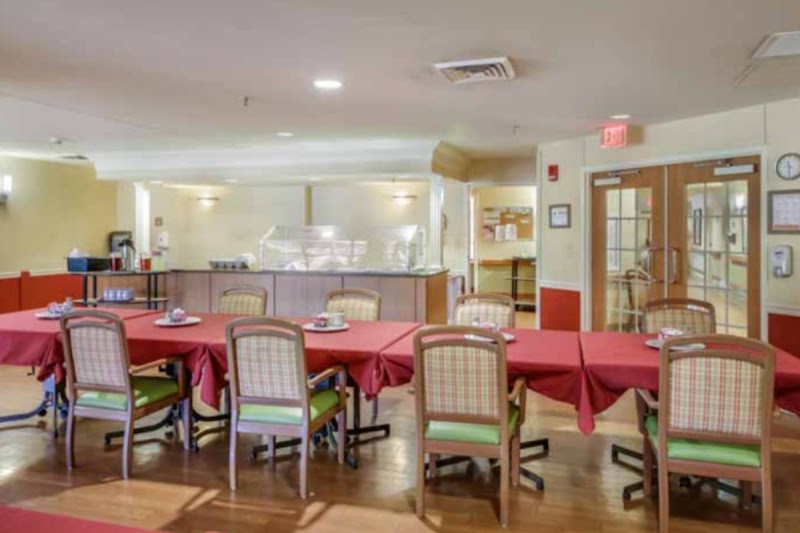
An observation of the activity/dining room located at the top of A/B hall was completed on 3/20/24 at 6:15 AM. The observation revealed the activity/dining room had a door located on A-hall with a glass windowpane. The activity room could be viewed from A-hall hallway directly in front of the door. The room contained an exit door with a glass window leading out to a courtyard. The activity/dining room had recessed lighting as well as 7 wall sconces. When the recessed lighting was not on, the room was dim to dark when observed at 6:15 AM. The 7 wall sconces provided very low lighting. The activity/ dining room has an access door on B hall, the door was a solid wooden door, the activity room could not be viewed when the door was closed. The activity/dining room front entrance had double glass windowpane doors facing the nursing station.
On 3/20/24 at 4:07 PM the facility's video tape recording of the incident on 3/10/24 with Resident #98 and Resident #305 was reviewed with the Administrator, the Regional Director of Operations, and the Corporate Nurse. The Administrator stated there was no sound recorded.
The video recording date was 3/10/24 and revealed the following:
-
7:13 PM: Resident #98 was seated in her wheelchair at the top of B hall. She was sitting next to the medication cart in her wheelchair. She was facing down the hallway with her back to the camera. Medication Aide #1 was present at the medication cart preparing medication. Resident #98 used her feet to turn herself in her wheelchair about 45-degrees in a circular motion to the right, so she was facing toward the medication cart positioned against the wall. Medication Aide #1 administered Resident #98 medications.
-
7:17 PM: Medication Aide #1 pushed Resident #98 into the activity/dining room at the top of B hall, there was not a drink or snack observed to be taken into the activity/dining room with her.
-
7:18 PM: Medication Aide #1 walked out of the activity/dining room. The front glass paned doors to the activity/ dining room were closed, the wooden door to B hall was open.
-
7:23 PM: Resident #98 was at the glass paned doors at the front of the activity/ dining room. Resident #98 was visibly able to be seen on the video recording with her mouth wide open. Her mouth was seen repeatedly opening and closing. She was seen attempting to push on the doors with her hand and foot. The door was momentarily pushed slightly ajar with the edge of the door protruding forward from where the doors met in the center, but she was unable to push the door open. She banged her hand on the glass pane of the door. There were no staff members who came to check on Resident #98.
-
7:26 PM: Resident #305 was pushed into the activity/dining room by NA # 2. While in the dining room NA #2 moved Resident #98 away from the front glass pane doors. NA #2 then exited the room and walked away; the wooden side door remained open.
-
7:31 PM: Nurse #2 stopped at the wooden door on B hall and peered into the activity/dining room and then walked away.
-
7:33 PM: staff were observed closing one side of the wooden fire doors at the top of B hall.
-
7:33 PM to 7:37 PM: 2 staff members walked past the activity/dining room but none of the staff members stopped or turned their heads toward the room's doors.
-
7:38 PM: NA #2 closed the wooden activity room side door at the top of B hall. The front glass paned doors to the activity/dining room remained closed.
-
7:41 PM: a staff member stopped and looked through the front glass pane doors, and then walked away.
-
7:41 PM to 8:20 PM: four staff members walked by the activity/dining room but did not stop or turn their head toward the room.
-
8:21 PM: Nurse #3 brought Resident #98 out of the activity/dining room and down to B hall. Nurse #3 stopped and spoke to Medication Aide #1.
-
8:27 PM: NA #2 brought Resident #305 out of the activity/dining room and back to B hall.
Throughout the video recording staff were not observed to bring snacks or drinks into the activity/dining for the residents.
The sunset on 3/10/24 where the facility was located at was 7:25 PM (www.timeanddate.com).
A telephone interview was performed on 3/20/24 at 9:37 AM with Medication Aide #1. She stated she had been working night shift (7:00 PM- 7:00 AM) on 3/10/24. She explained she recalled Resident #98 and said her room was located at the end of B hall and she never stopped screaming. She said Resident #98 would scream for days and would scream during the night. Medication Aide #1 said, no amount of doors being shut could keep the residents' from hearing [Resident #98] scream. She explained Resident #98 did not like to be alone, or in her room by herself, and wanted someone to be with her. She stated Resident #98 was scared to be in her room by herself. She explained staff were usually able to calm her down by taking her to the nurse's station. She said she sometimes brought Resident #98 to sit at the medication cart with her while she passed meds, and she would calm down. Medication Aide #1 stated, on 3/10/24 around 8:00 PM she put Resident #98 and Resident #305, who had also been screaming, in the activity/dining room together. She did not indicate if the residents were provided with any refreshments. She explained she put the residents in the activity/dining room because, they were yelling/screaming and keeping the other residents on the hall from sleeping. She stated staff could usually calm Resident #98 down but recently it had become harder to calm her screaming/yelling behaviors even doing one on one and said, the residents on B hall could not sleep. She said the two residents were in the dining room for about an hour. She explained while the two residents were in the activity/dining room the screaming/yelling got worse when the two residents started screaming at each other. She said Nurse #3 working on A hall came and told her the residents needed to be moved. Medication Aide #1 stated she thought the lights in the activity/dining room were originally on, but then they were off (time unknown) except for the lights above the television (wall sconces). She said the front doors to the dining room were closed, but she thought the wooden door to B hall had been open.
A telephone interview was performed on 3/20/24 at 11:28 AM with NA #2. She explained she worked night shift on B hall. She said she remembered the incident from 3/10/24 when Resident #305 and Resident #98 had been screaming. She stated Resident #305 did not usually have screaming behaviors and that it was unusual for her to be screaming at night. She stated Resident #98 typically screamed all night long. NA #2 explained Resident #98 did not want to be alone in her room. She said if staff did one on one with her, she stopped screaming and calmed down. NA #2 said when Resident #98 was agitated and screaming, she talked to her, gave Resident #98 her favorite drink, and brought her out to the nurse's station to do one on one with her; she explained these were the things that helped calm Resident #98 down. NA #2 stated she and Medication Aide #1 had put Resident #98 and Resident #305 in the activity/dining room because they were screaming and disturbing other residents from sleeping on the hall. NA #2 stated the TV in the activity/dining room had already been on and that the lights that don't go off (wall sconces) were on in the activity/dining room. She explained the wooden door to the activity/dining room that connected to B hall was originally open but, she was unsure if it remained open the entire time the residents were in the room. She stated the residents were in the dining room for about 45 minutes. NA #2 explained Nurse #3 brought Resident #98 back down to B hall.
An interview was performed on 3/20/24 at 7:05 AM with Nurse #3. She stated she had worked the night of 3/10/24 (7:00 PM- 7:00 PM). She said she was familiar with Resident #98 and Resident #305. Nurse #3 explained Resident #98 had screaming/yelling behaviors and screamed/yelled at night. She said she sometimes kept Resident #98 with her on A hall and did one on one with her at night. Nurse #3 stated they had one girl who isolated her. Nurse #3 identified the girl as Medication Aide #1. She explained she remembered the incident from the night of 3/10/24. She said she heard a resident screaming and yelling loudly. Nurse #3 stated she looked in the activity/dining room and Resident #98 was sitting in her wheelchair in the activity/dining room screaming. She said all the doors to the activity/dining room were closed and the room was dim to dark. She stated Resident #305 was also in the dining room yelling. She stated there had not been any staff members present in or around the activity/dining room where the residents had been located. Nurse #3 verbalized she removed Resident #98 from the activity/dining room, she was uncertain of the exact time but stated it was between 8:00 PM- 9:00 PM. Nurse #3 stated Resident #98 looked scared due to how she had been screaming/yelling when she had walked into the activity/dining room. She explained she removed the residents from the dining room because she felt staff should not isolate them and they had the right to be able to be in their rooms to go to bed. She explained she was taking her back to her room on B hall when Medication Aide #1 stopped her and said, she can't come down here, she has kept everyone up for three days and she can't come down here. Nurse #3 stated she told the Medication Aide yes she can, her room is here. Nurse #3 said NA #2 took Resident #98 to her room and she quieted down after being assisted to bed. She verbalized NA #2 then went and removed Resident #305 from the dining room and took her back to her room. Nurse #3 said she was unsure how long Resident #98 and Resident #305 were in the activity/dining room but stated it had been at least an hour. Nurse #3 explained, there was not anyone from administration at the facility during the night, so she reported the incident during shift change report to Medication Aide #5 the following morning (3/11/24). She said she also sent a phone message to the Assistant Director of Nursing (ADON) on 3/11/24 to report the incident. She stated her phone indicated the message had been delivered but she never heard back from the ADON. Nurse #3 stated no one from the facility approached her to ask about the incident. She indicated when she returned to work on 3/13/24 Medication Aide #1 was working and had continued to work since. Nurse #3 stated she felt like the [Medication Aide] secluded her because of the way the [Medication Aide] yelled at her when she brought her [Resident #98] back to the hall. She stated Resident #98 and Resident #305 would not have been able to get out of the activity/dining room by themselves. Nurse #3 stated she had felt like the incident was abuse.
An interview was performed on 3/20/24 at 6:24 AM with Nurse #2. She said she had been working the night of 3/10/24 on the other side of the building and remembered the incident. She explained Resident #98 was yelling and that there was another resident yelling as well, she said she did not know the other resident's name (Resident #305). She stated the staff put Resident #98 and Resident #305 who were yelling in the activity/dining room, and staff had put the TV on. She said she was not sure if the doors to the room were open or closed. She explained she could hear the residents yelling from the other side of the building. She said she felt placing two dementia residents who were screaming/yelling together in a room would agitate the residents.
A telephone interview was performed with Medication Aide #5 on 3/20/24 at 3:40 PM. She explained she received (7:00 AM) shift change report on the morning of 3/11/24 from Nurse #3 who had worked night shift on 3/10/24. She stated Nurse #3 told her the following: Medication Aide #1 put Resident #98 and Resident #305 in the activity/dining room with the doors closed. Resident #98 had been screaming loudly in the activity/dining room. Resident #98 and Resident #305 were removed from the activity/dining room and when she had taken Resident #98 back to B hall Medication Aide #1 stated don't bring her back down here the residents are tired of hearing her scream. Medication Aide #5 stated she (Medication Aide #5) had called and reported the incident to the Assistant Director of Nursing (ADON). Medication Aide #5 said Resident #98 did not like to be alone and if she was by herself, she yelled out more. She explained Resident #98's behaviors were less if she was with someone or sitting beside someone. Medication Aide #5 stated she often brought Resident #98 to the nurse's station to sit with her so Resident #98 was not alone. She explained Resident #98 could propel herself in her chair very little and that she had never seen her open a door. She explained Resident #98 had deficits in her hands from having a stroke. Medication Aide #5 stated Resident #98 and Resident #305 would absolutely not be able to get out or leave the dining room if she had wanted to without help. Medication Aide #5 stated she felt like the incident was abuse and stated, that is abuse. She explained after the incident occurred, she had looked up abuse and neglect definitions on google because the incident had bothered her and stated, when I read the definitions that is exactly what it said abuse was.
On 3/22/24 at 10:00 AM an interview was performed with the ADON. She stated the incident of Resident #305 and Resident #98 being placed in the activity/dining room by staff had been reported to her by Medication Aide #5 on 3/11/24. She stated there was not always a staff member able to be with Resident #98 one on one and the staff had tried the intervention to put the residents in the activity room to socialize. The ADON stated staff had turned on the TV, did frequent checks, and the door to the activity/dining room was open. She said staff had given the resident snacks and drinks in the activity/dining room that night. She did not indicate where she received the information on frequent checks being completed, the door being open, or snacks and drinks being provided. The ADON was questioned if she thought yelling and screaming could further agitate dementia behavior and she stated, she thought it could. The ADON stated she did not think it had been inappropriate for staff to leave the residents alone in the dining room with the doors closed, with Resident #305's history of falls and Resident #98's history of falls and history of wrapping things around herself.
An interview was performed on 3/21/24 with Occupational Therapist (OT) #1 at 9:26 AM. She stated Resident #98 had received occupational therapy and services had ended on 3/2/24. She stated Resident #98's cognition was affected by her stroke, she had very little impulse control, very poor safety awareness, and yelling/screaming behaviors. She stated they would sometimes ask Resident #98 why she was yelling, and she would tell them I don't know I can't stop. She stated one side of Resident #98's body was impacted by the stroke and was very weak. She stated if Resident #98 tried to get up without assistance she would fall. OT #1 stated the side affected by the stroke was very weak and could not support her without assistance. She explained Resident #98's upper extremity on the side impacted by the stroke did not provide functional use of her arm. OT #1 stated when Resident #98 was discharged from therapy she could scoot herself 10-20 feet in her wheelchair. She stated over the last couple weeks Resident #98 had declined in condition and she had not seen her propelling herself in her wheelchair. She explained over the last couple of weeks she had always seen Resident #98 being pushed around in her wheelchair by a staff member. She stated she did not think Resident #98 would be able to get out of the dining/activity room by herself. OT #1 also discussed Resident #305, she stated she had completed the initial therapy evaluation for Resident #305 on 3/8/24. The OT explained Resident #305's cognition and safety awareness was not good. She said she needed a lot of cues for safety. The OT stated Resident #305 did not propel herself very far in her wheelchair. She explained Resident #305 would try to get up and do stuff but Resident #305 could not safely get up and walk by herself. She stated Resident #305 had falls since being at facility related to her trying to get up by herself. The OT stated she did not think Resident #305 would be able to get out of the activity/dining room by herself with it being a room she was not familiar with, the lights being dim, being agitated with screaming, and the doors being closed.
An interview was performed on 3/21/23 at 9:53 AM with Physical Therapy Assistant (PTA) #1. She explained Resident #98 had been discharged from services on 3/2/24. She explained Resident #98 had deficits to her left side from her stroke. PTA #1 said Resident #98 had originally been able to propel herself short distances in her wheelchair but had not observed Resident #98 being able to propel herself any far distances. PTA #1 explained over the last 2 weeks Resident #98 had declined in condition and since the decline she had observed Resident #98 mostly being pushed by staff in her wheelchair. She stated she thought if Resident #98 was placed in a dimly lit room with the doors closed during a period when Resident #98 had increased agitation/ yelling behaviors, she would not be able to get out of the room. PTA #1 also discussed Resident #305. She stated she had been working in therapy with Resident #305. She explained Resident #305 could stand up but could not walk by herself safely for any distance. She stated she did try to stand up and walk. She said she recalled her having a fall since being admitted and having to go out to the hospital because of the fall. The PTA explained she had poor safety awareness, and she used a wheelchair. The PTA stated if Resident #305 was in a dimly lit room, she was not familiar with, and the door was closed, she would not be able to safely get out of the room.
On 3/21/24 at 10:23 AM a telephone interview was performed with Nurse #8. She stated she remembered the incident with Resident #98 and Resident #305 from 3/10/24. She explained she had been on the other side of the building passing medications and kept hearing loud yelling. She explained Nurse #3 had been with her and they walked across the building together to see who was yelling and it had been Resident #98. Nurse #8 stated Resident #98 was in the activity/dining room with Resident #305 and was yelling and screaming with all the doors closed. She said she was unsure if Resident #305 was also screaming. Nurse #8 stated all the lights had been off in the activity/dining room and stated, that room was very dark, if she had not been yelling you wouldn't even have known she was in there. Nurse #8 indicated she was present when Nurse #3 removed Resident #98 from the activity/dining room and said Nurse #3 pulled Resident #98 out of the dining room and took her to B hall. Nurse #8 stated when Nurse #3 took Resident #98 back to B hall Medication Aide #1 said she can't be down here she has been yelling and screaming for the last 2 nights. She needs to stay in the dining room because she has kept all these residents up. She stated they told Medication Aide #1 she could not isolate her. She stated NA #2 took Resident #98 to her room and then went and took Resident #305 back to her room. Nurse #8 stated there were times she had seen Resident #98 at the nurse's station and she was loud but not screaming like she was that night. She stated, it was a different tone. Nurse #8 stated she felt Resident #98 had been scared based on how loud the screaming was and the tone of the screaming. She stated she was unsure if Resident #305 appeared scared. Nurse #8 stated Resident #98 and Resident #305 would not have been able to get out of the dining/activity room by themselves. Nurse #8 stated she felt Resident #98 and #305 had been secluded because of behaviors.
A telephone interview was performed on 3/21/24 with the Physician Assistant (PA) at 12:40 PM. She explained Resident #98 had yelling/screaming behaviors and was a complicated case. She stated Resident #98 responded best when staff would do one on one with her. She said when Resident #98 was left alone she would start yelling. She stated Resident #98 was not able to maneuver around well without much help. The PA verbalized she thought placing Resident #98 in a dim lit room alone or with another resident who was yelling would exacerbate her behaviors. She explained Resident #98 was fine if someone was with her or provided one on one with her. She stated she was not aware of the incident from 3/10/24. The PA also discussed Resident #305 and reported she saw the resident within the last week. The PA said Resident #305 had dementia. When asked if she would be able to get out of the activity room/ dining room at night if it was dimly lit and the doors were closed, the PA stated, I would say no, but I have not seen how well she propels the wheelchair. She said she was not aware of the incident from 3/10/24. The PA was asked if placing two residents with dementia having yelling/ screaming behaviors, in a dark/ dim room, at night, with the doors closed alone would be appropriate, the PA stated, probably not and that this would exacerbate the behaviors.
An interview was conducted on 3/21/24 at 1:19 PM with the Medical Director. He stated the facility had notified him of the incident from 3/10/24 when Resident #98 and Resident #305 had been placed in the activity/dining room by staff due to yelling/screaming. He said he felt the intervention had been appropriate and the low lighting was good to try to decrease stimuli. He also stated, Resident #98 did not like to be alone. He said Resident #98 would stop screaming/ yelling if someone was with her and talking to her but, as soon as they walked away, she would start screaming/yelling again. The Medical Director stated he was made aware of the incident from 3/10/24 on 3/20/24.
On 3/21/24 at 4:15 PM an interview was performed with the Director of Nursing (DON). She was aware of the incident from 3/10/24 when Resident #98 and #305 had been placed in the activity/dining room by staff. She stated she felt it was okay that staff had placed both residents who were having screaming/ yelling behaviors into the activity/dining room alone, with dim lighting, with the doors closed. The DON stated she felt like this had been appropriate because staff had been trying to provide Resident #98 and Resident #305 with an activity. She stated she did not think the intent was to isolate Resident #98 and Resident #305, she stated I think it was to provide an activity to help with behaviors. The DON stated the staff had provided an activity because they had placed a TV show on for Resident #305 and provided Resident #98 a Mountain Dew. She did not indicate where she received the information about a drink being provided. The DON said she was unsure how well Resident #98 could maneuver her wheelchair. She stated she was unsure if Resident #98 would have been able to open the door of the activity/dining room or be able to get to the door if Resident #98 did not have a railing to pull on. The DON stated she was unable to say if Resident #305 would be able to get out of the activity/dining room at night with it being dimly lit and the doors closed, she stated, &quo[TRUNCATED]
CRITICAL
(J)
📢 Someone Reported This
A family member, employee, or ombudsman was alarmed enough to file a formal complaint
Immediate Jeopardy (IJ) - the most serious Medicare violation
Deficiency F0604
(Tag F0604)
Someone could have died · This affected 1 resident
**NOTE- TERMS IN BRACKETS HAVE BEEN EDITED TO PROTECT CONFIDENTIALITY** Based on record review and staff interview the facility failed to protect a resident (Resident #15) from unauthorized physical r...
Read full inspector narrative →
**NOTE- TERMS IN BRACKETS HAVE BEEN EDITED TO PROTECT CONFIDENTIALITY** Based on record review and staff interview the facility failed to protect a resident (Resident #15) from unauthorized physical restraint when the Activities Director witnessed Nurse Aide (NA) #1 administer a COVID test to Resident #15, while Resident #15 was flailing her arms, resisting, and saying that she did not want a COVID test. NA #1 failed to identify a medical necessity that warranted restraining a resident. The reasonable person concept was applied for this deficient practice in that a reasonable person would experience feelings such as fear, pain, and dehumanization (deprivation of human qualities such as compassion). The deficient practice was revealed for 1of 3 residents (Resident #15) reviewed for the right to be free from physical restraints.
Immediate Jeopardy began on 3/12/2024 when NA #1 was observed by the Activities Director physically restraining Resident #15 to administer a COVID test while Resident #15 was flailing her arms, resisting, and saying that she did not want a COVID test. Immediate jeopardy was removed on 3/22/2024 when the facility implemented a credible allegation of immediate jeopardy removal. The facility remains out of compliance at a lower scope and severity level D (no actual harm with the potential for more than minimal harm that is not immediate jeopardy) to complete employee education and ensure monitoring systems put into place are effective.
Findings included:
A review of the facility's 'Identifying Involuntary Seclusion and Unauthorized Restraint policy revised September 2022 revealed 'residents are to be free from the use of any physical restraints not required to treat their medical conditions'. The policy stated, 'sometimes the use of restraints is not intentional, but this does not absolve the staff of the responsibility to recognize and report the unauthorized use of restraints which include holding down a resident in response to a behavioral symptom or during the provision of care if the resident is resistive or refusing the care'. Additionally, the policy stated, 'inappropriate or unauthorized use of a restraint occurs when it is used for discipline or convenience, unnecessarily inhibits a resident's freedom of movement or activity, is not the least restrictive option or used for the least amount of time needed; and/or is not accompanied by ongoing re-evaluation of the need for the restraint.'
Resident #15 was admitted to the facility on [DATE] with diagnoses which included vascular dementia, Alzheimer's disease, and generalized anxiety disorder.
A review of Resident #15's Medication Administration Record (MAR) revealed a rapid COVID test had previously been ordered and collected on 2/5/2024.
The quarterly Minimum Data Set (MDS) dated [DATE] revealed Resident #15 was severely cognitively impaired and had fluctuating behaviors regarding inattention and disorganized thinking.
A review of the care plan dated 2/6/2024 for Resident #15 revealed goals and interventions related to Resident #15 having difficulty expressing her wants, thoughts, and needs. Interventions included staff were to ask Resident #15 yes or no questions and allow her extra time to answer questions. Additionally, the care plan revealed goals and interventions related to behaviors with interventions which included caregivers providing opportunities for interaction and attention. There were not any goals or interventions that insinuated Resident #15 refused care.
A record review for Resident #15 was conducted and did not contain any documentation of the unauthorized physical restraint by NA #1 on 3/12/2024.
There was no documentation in Resident #15's medical record of a COVID test being collected.
An interview with Resident #15's family was unable to be obtained.
An interview was conducted on 3/20/2024 at 4:13 pm with the Activities Director. The Activities Director reported she worked on 3/12/2024 and witnessed Resident #15 refusing to have a COVID test. The Activities Director reported NA #1 administered a COVID test while Resident #15 was flailing, resisting, and saying that she did not want a COVID test while in the activity room. The Activities Director observed NA #1 stand over Resident #15 on the right-hand side of her wheelchair. NA #1 placed her left arm around the back of Resident #15's neck and held down the resident's left arm with her left hand. NA #1 used her body to immobilize Resident #15's right hand. The Activities Director verbalized she had told NA #1 to stop two times and NA #1 was persistent and inserted the COVID swab into Resident #15's nostril. NA #1 told the Activities Director that the Assistant Director of Nursing (ADON) told her to administer the test. The Activities Director reported that she felt as though NA #1 'was restraining her which is a form of abuse.' She verbalized she was the only staff member that witnessed the unauthorized physical restraint. The Activities Director reported the incident to the ADON and Unit Manager immediately on 3/12/2024 and no action was taken. She also reported the incident to the Director of Nursing (DON) on 3/12/2024 and was told that 'it had been handled.'
An interview was conducted on 3/20/2024 at 3:25 pm with the ADON. She reported that after the first resident had tested positive for COVID, the facility had administered COVID tests to all residents once a week, on Tuesdays. The ADON reported the facility had just gotten over a COVID outbreak as of 3/12/2024 after staff had administered COVID tests to all residents in the facility and had no positive results. She reported that NA #1 assisted with the last round of COVID testing in the facility on 3/12/2024. The ADON reported only Resident #15 had refused COVID testing on 3/12/2024. She reported that she was told NA #1 had taken Resident #15 outside of the activity room to administer a COVID test. Resident #15 was swatting at NA #1 and refused to take the COVID test. She stated she did not assess the resident because she was not told that Resident #15 was physically restrained by NA #1 while NA #1 was trying to administer a COVID test.
An interview was conducted on 3/20/2024 at 10:48 am with NA #1. NA #1 reported she was conducting COVID testing on residents on 3/12/2024. She verbalized she attempted to administer a COVID test to Resident #15 after she had explained what she was going to do. She reported that once she tried to put the swab up Resident #15's nose, that Resident #15 started screaming and swinging at her. She reported that once Resident #15 began swinging her arms, she held her hands from the front. NA #1 stated after Resident #15 refused a COVID test that she took her to the ADON.
A review of Resident #15's medical record revealed no assessment was completed on 3/12/2024 after the unauthorized physical restraint.
An interview was conducted on 3/20/2024 at 5:20 pm with the DON. The DON reported she was made aware of Resident #15 refusing a COVID test by the ADON. The DON stated the Activities Director came to her on 3/12/2024 and was aggravated that NA #1 had interrupted activities in the activity room to give a COVID test. The DON did not recall the Activities Director describing how NA #1 administered the test, or that NA #1 had physically restrained Resident #15, but that she could have. The DON verbalized if a resident was being physically restrained by a staff member that she would go check on the resident.
An interview was conducted with the Administrator on 3/20/2024 at 5:50 pm. The Administrator was not aware of Resident #15 being physically restrained by NA #1 while NA #1 attempted to administer a COVID test.
The Administrator was notified of immediate jeopardy on 3/20/2024 at 5:55 pm.
The facility provided the folllowing credible allegation of immediate jeopardy removal.
1. Identify those recipients who have suffered, or are likely to suffer, a serious adverse outcome because of the noncompliance:
The facility took the following actions to address the citation and prevent any additional residents from suffering an adverse outcome.
- On 3/12/2024 nurse aide (NA) #1 was administering a COVID test to Resident #15. NA #1 was observed by the Activities Director standing over Resident #15 in her wheelchair. NA #1 stood on the right-hand side of her wheelchair and wrapped her left arm around the back of Resident #15's neck and held down the resident's left arm and NA #1 used her body to immobilize Resident #15's right arm while she was flailing and saying that she did want a COVID test. The Activity Director tried to intervene twice, and NA #1 would not stop. NA #1 proceeded to stick the swab up the resident's nostril to complete the COVID test. Resident #15 (BIMS 4) was discharged to the hospital on 3/16/24 for a GI related issue and has not returned. Resident #15 had a weekly skin assessment done on 3/13/24 that showed no bruising or skin issues noted. NA #1 was called by the DON on 3/20/22 at approximately 6:45pm and educated on Unauthorized restraint and ensuring that no resident is ever restrained without proper authorization from the Physician and Responsible Party. NA #1 denies that she ever restrained the resident and never stuck the swab in the residents nostril because she refused. NA#1 was terminated as of 3/20/24. The VP of Regional Operations and Regional Nurse on 3/20/24 assessed all residents and determined that no resident has an unauthorized restraint. On 3/20/24 the Social Worker, MDS Nurse and Regional Operations questioned all residents with BIMS above 8 if they have ever been restrained against their will. All residents stated that they have not been restrained.
2. Specify the action the entity will take to alter the process or system failure to prevent a serious adverse outcome from occurring or recurring, and when the action will be complete:
The facility took the following actions to prevent an adverse outcome from reoccurring. (Completion Date: 3/22/24)
- The facility's policies and procedures on Identifying Involuntary Seclusion and Unauthorized Restraint and the Abuse, Neglect and Exploitation policy were reviewed on 3/20/24 at approximately 6:15pm by the DON, Administrator, Social Worker, ADON/IP, Regional Nurse Consultant, Regional Operations, and VP of Clinical. The VP of Clinical in-serviced the participants on the Identifying Involuntary Seclusion and Unauthorized Restraint policy and the Abuse, Neglect and Exploitation policy and importance ensuring all residents are kept free from Restraints and Abuse.
- Current medication aides, RNs, licensed nurses and CNAs will receive training on the Identifying Involuntary Seclusion and Unauthorized Restraint policy and the Abuse, Neglect, and Exploitation policy and the importance of ensuring all residents are kept free from unauthorized restraints. Inservice began on 3/20/24 at approximately 7pm. Education ensures that staff understand they must keep all residents free from unauthorized restraints to keep residents from experiencing Physical or Psychosocial harm. This education was started on 3/20/24 at approximately 7 pm by the Director of Nursing, Assistant Director of Nursing and/or Regional Nurse. Effective 3/20/24 no medication aide, RN, CNA or licensed nurse will work without having gone through the in-service training. This will include an agency and new staff. The Director of Nursing will be responsible for keeping up the list of staff training completion. The Medical Director was informed by the Director of Nursing services on 3/20/24 of the Immediate Jeopardy related to Unauthorized Restraint. The Medical Director had no recommendations. On 3/20/24 the DON notified Resident #15's responsible party about the incident of Unauthorized Restraint. He voiced understanding and denied having any concerns. The facility alleges removal of Immediate Jeopardy on 3/22/24.
Alleged date of immediate jeopardy removal: 3/22/24
On 03/26/24, the facility's immediate jeopardy removal plan was validated through record review and interviews:
Nursing staff and other department interviews revealed that had received education on Involuntary Seclusion and Unauthorized Restraint and the abuse, Neglect and Exploitation policy. Administrative staff interviews revealed they had completed the education for all staff and interview with the staff revealed that they had been education on the topic.
On 03/20/24 the facilities policy and procedure on identifying involuntary seclusion and unauthorized restraints was reviewed by the DON, Administrator, Social Worker, ADON, Regional Nurse Consultant, Regional Operations and VP of clinical. On 03/20/24 the resident responsible party about the incident of involuntary seclusion. The representative voiced understanding and expressed no further concerns. On 3/21/24 training was started with the administration staff by the VP of Clinical services on different types of abuse, abuse investigation, and protecting all residents from abuse. Nursing staff interviews and other department interviews revealed they had received education on Identifying Involuntary Seclusion what involuntary seclusion was and what was not acceptable concerning separation of residents from care areas and to ensure no resident experience involuntary seclusion. No employees were allowed to return to work until they had completed the training on involuntary seclusion. Residents were assessed to ensure no harm had come to any resident. Interviews with the Medical Director revealed he had no concerns about the situation and that residents were not harmed. Administrative staff interviews revealed they had completed the education for all nursing staff, dietary staff, therapy staff, and maintenance staff. The Director of Nurse confirmed that the Medication Aid was suspended during investigation and the Nursing assistant was terminated.
The IJ removal date of 3/22/24 was validated.
CRITICAL
(K)
Immediate Jeopardy (IJ) - the most serious Medicare violation
Grievances
(Tag F0585)
Someone could have died · This affected multiple residents
**NOTE- TERMS IN BRACKETS HAVE BEEN EDITED TO PROTECT CONFIDENTIALITY** Based on record review and Resident, Resident Representative (RR) and staff interviews the facility failed to implement grievanc...
Read full inspector narrative →
**NOTE- TERMS IN BRACKETS HAVE BEEN EDITED TO PROTECT CONFIDENTIALITY** Based on record review and Resident, Resident Representative (RR) and staff interviews the facility failed to implement grievance policy and procedures when a resident (Resident #21) reported on 11/30/23 the facility was running out of her Methadone. The Director of Nursing (DON) was assigned the grievance and on 12/01/23 confirmed Resident #21 had Methadone in the medication cart, and it had been documented as administered. The DON did not interview the resident or determine if there had been any supply issues with Resident #21's Methadone. Due to the lack of investigation this problem continued. Resident #21 reported she experienced terrible/awful pain of greater than ten on a scale of 1 to 10. Resident #21 stated she was crying during the night and her anxiety was 'out the roof' because she was afraid she would not have her medications available and feeling as though she went through withdrawals. The deficit practice occurred for 1 of 1 resident (Resident #21) reviewed for grievances.
Immediate jeopardy began on 11/30/2023 when Resident #21 filed a grievance and reported the facility was running out of her Methadone and a thorough investigation was not completed to determine if there were issues with supply. Immediate jeopardy was removed on 03/23/24 at 3:33 PM when the facility implemented a credible allegation of immediate jeopardy removal. The facility remains out of compliance at a lower scope and severity level E (no actual harm with the potential for more than minimal harm that is not immediate jeopardy) to complete employee education and ensure monitoring systems put into place are effective.
The findings included:
A review of the Resident and Family Grievances Policy implemented on 1/30/2023 stated 'the staff member receiving the grievance will record the nature and specifics of the grievance on the designated grievance form or assist the resident or family member to complete the form. Reports of any allegations involving neglect, abuse, injuries of unknown source, and/or misappropriation of resident property immediately to the administrator and follow procedures for those allegations.' The policy further states 'the Grievance Official, or designee, will keep the resident appropriately apprised of progress towards resolution of the grievances and 'in accordance with the resident's right to obtain a written decision regarding his or her grievance, the Grievance Official will issue a written decision on the grievance to the resident or representative at the conclusion of the investigation. The written decision will include at a minimum: the date the grievance was received, the steps taken to investigate the grievance, a summary of the pertinent findings or conclusions regarding the resident's concern(s), a statement as to whether the grievance was confirmed or not confirmed, any corrective action taken or to be taken by the facility as a result of the grievance, and the date the written decision was issued.'
Resident # 21 was admitted to the facility on [DATE] with diagnoses which included paralysis that affects the lower half of the body, anxiety disorder, hereditary and idiopathic neuropathy (nerve pain), major depressive disorder, insomnia, headache, chronic pain syndrome, and opioid dependence.
A quarterly Minimum Data Set (MDS) dated [DATE] revealed Resident #21 was cognitively intact.
Review of a grievance dated 11/30/2023 received by the Business Office Manager revealed Resident #21 reported the facility was running out of her Methadone. The handwritten documentation on the grievance form noted Methadone was on the medication cart and had been administered per documentation. The Director of Nursing (DON) signed the grievance on 12/1/2023. No further investigation, summary of pertinent findings, conclusions or the date the written decision was issued were documented.
A quarterly Minimum Data Set (MDS) dated [DATE] revealed Resident #21 was cognitively intact.
An interview was conducted on 3/18/2024 at 12:18 pm with Resident #21. Resident #21 reported starting the end of November 2023 she was told by a night shift staff member, Medication Aide (MA) #3, that the facility had run out of her Methadone, the pharmacy had not sent enough of her pain medication at one time, or MA #3 would tell her that she would bring her pain medication and never return. This occurred more frequently beginning in December of 2023 and Resident #21 reported she went several days at a time without getting her Methadone (9:00 PM and 6:00 AM dose) and experienced severe anxiety, terrible/awful pain greater than ten on a scale of 1 to 10, and went through 'withdrawal symptoms' which included anxiety, pain, nausea, and a headache. She reported she had filed a grievance about the facility running out of her Methadone at the end of November 2023 and that no one had addressed/spoke with her regarding her concerns. Resident #21 reported the problem was ongoing until about three or four weeks ago.
An interview was conducted on 3/19/2024 at 3:16 pm with the DON. The DON confirmed she had investigated Resident #21's grievance and acknowledged that she did not go speak with Resident #21 about the issue. She reported she did not follow the process because Resident #21's Methadone was present on the medication cart and per documentation on the Medication Administration Record (MAR) it was initialed as administered without omissions. The DON reported that when a grievance was completed, it should be investigated, and the resident or resident representative should be notified of the outcome.
A follow-up interview was conducted on 3/21/2024 at 4:47 pm with the DON. The DON reported most grievances were turned into the nursing department. She reported when a grievance is received, administrative staff would investigate the issue, and notify the resident or RR of the outcome. She reported the Social Worker (SW) had the grievance log in her office. She reported grievances were discussed in their clinical meetings and the Administrator would discuss them in a stand-up meeting if they pertained to nursing.
An interview was conducted on 3/20/2024 at 2:43 pm with Resident #21's representative. The Resident Representative (RR) reported Resident #21 was continuously told on night shift that the facility had run out of her pain medication (Methadone) and Resident #21 had filed a grievance on 11/30/2023. This continued through the middle of February 2024. She reported the facility had told Resident #21 the pharmacy had not sent it. She recalled her daughter calling her multiple times during the night from December 2023 until February 2024 hysterical and frightened because she was worried, she was not going to get her medication.
An interview was conducted on 3/22/2024 at 8:52 am with the SW. The SW stated staff are trained to complete a grievance form when a resident or resident representative (RR) voiced a concern. The grievance form should then be given to a department head or placed in an administrative mailbox. She was provided with a copy of the grievance and reported she logged the grievances and ensured they were investigated and resolved. The SW reported that new concerns were brought up in their morning clinical meeting. She reported after the grievance investigation was completed, they would contact the resident being involved in the grievance if they were alert and oriented and if the grievance was filed by a RR, they would contact the resident and the RR. She stated grievances were usually handled within 24 hours. She had Resident #21's original grievance form in the grievance log but was not able to recall if Resident #21 or the RR had been notified of the outcome.
An interview was conducted on 3/20/2024 at 10:50 am with the Administrator. The Administrator reported she was not aware Resident #21 had filed a grievance on 11/30/2023. The Administrator reported that when a grievance was filed, whoever received the grievance should complete a grievance form and should give the form to a supervisor. The grievance should then be given to the appropriate department. After an investigation, the resident or resident representative should be followed up with. She reported that each department head would investigate and resolve grievances that involved their department, and the department head was responsible for following up with the resident and/or RR.
The Administrator was notified of Immediate Jeopardy on 3/21/2024 at 6:25 pm.
The facility submitted the following acceptable credible allegation of immediate jeopardy removal.
Identify those recipients who have suffered, or are likely to suffer, a serious adverse outcome as a result of the noncompliance:
- On 11/30/23 a grievance was filed for Resident #21 that stated the facility ran out of her Methadone. The Director of Nursing (DON) documented Methadone was present on the medication cart and per documentation had been administered. There was no further follow-up documented on the grievance form and an investigation was not completed. An interview was conducted on 3/19/24 with DON. The DON reported that she went to the medication cart on 12/1/23, saw Methadone was in the medication cart and verified that Methadone had been administered on the Medication Administration Record (MAR) without completing an investigation.
- Resident #21 had a grievance completed on 3/22/24 by the Regional Nurse related to her past complaints that the facility runs out of her Methadone frequently. Resident stated that she has not experienced the facility running out of Methadone since her complaint in November. The resident states that she is no longer in fear of not having her medication. Full Grievance completed.
- On 3/22/24 the Administrator audited Grievances for the past 3 months to ensure the grievance process to include the investigation was completed per policy.
Specify the action the entity will take to alter the process or system failure to prevent a serious adverse outcome from occurring or recurring, and when the action will be complete:
- The facility's policies and procedures on Resident and Family Grievances were reviewed on 3/22/24 by the DON, Administrator/Grievance Official, Social Worker, Assistant Director of Nursing (ADON), Regional Nurse Consultant, Regional Operations, and VP of Clinical. The VP of Clinical in-serviced the participants on the Resident and Family Grievances policy and the importance of following through with the investigation on all Grievances that are filed and tracking the grievance through to the conclusion and providing written decision to the resident or responsible party by the Grievance Official.
- The DON, ADON, Social Worker and/or Regional Nurse on 3/22/24 began educating all staff on ensuring that grievances made are reported according to our Resident and Family Grievances policy and all will be educated prior to their next shift. The DON, Social Worker and/or ADON will be responsible for keeping up with who has and has not been in-serviced and completing the education themselves or assigning the Administrator, Regional Operations or VP of Clinical to assist with training as needed. All New Staff and/or agency staff will also be in-serviced during orientation or before taking a resident assignment.
Alleged date of IJ removal: 3/23/24
On 03/26/24, the facility's immediate jeopard removal plan effective 03/23/24 was validated through record review, interviews and the following:
On 03/22/24 the Regional Nurse completed a grievance with resident related to past complaints that facility ran out of Methadone. Resident reported has not happened again since her complaint and is no longer in fear of not having her medications.
On 3/22/24 the Administrator audited Grievances for the past three months and ensured the grievance process and investigation was completed per policy. The facility policies and procedures on Resident and Family Grievances were reviewed on 03/22/24 by the DON, Administrator, Social Worker, ADON, Regional Nurse Consultant, Regional Operations, and VP of Clinical. The VP of Clinical in-serviced the Administrator and DON on Resident and Family Grievances policy and importance of following through with investigation and track the grievances until conclusion and written decision to resident or responsible party.
On 03/26/24 staff were interviewed from all departments, and it was confirmed they had received education regarding reporting grievances per the facility policy. Review of in-service sheets verified that staff had received education provided by the administrative team with assistance from the VP of Clinical. An interview with the Administrator and the DON revealed that all training had been completed across all departments and staff were required to be completed before their next shift. No currents grievances present during validation to review.
The IJ removal date of 3/23/24 was validated.
CRITICAL
(K)
📢 Someone Reported This
A family member, employee, or ombudsman was alarmed enough to file a formal complaint
Immediate Jeopardy (IJ) - the most serious Medicare violation
Deficiency F0602
(Tag F0602)
Someone could have died · This affected multiple residents
**NOTE- TERMS IN BRACKETS HAVE BEEN EDITED TO PROTECT CONFIDENTIALITY** Based on record review and family, Pharmacist, Medical Director (MD), Physician Assistant (PA), former staff, and current staff ...
Read full inspector narrative →
**NOTE- TERMS IN BRACKETS HAVE BEEN EDITED TO PROTECT CONFIDENTIALITY** Based on record review and family, Pharmacist, Medical Director (MD), Physician Assistant (PA), former staff, and current staff interviews the facility failed to protect a resident (Resident #21) from misappropriation of controlled substances by facility staff. Resident #21 reported starting the end of November 2023 she was told by Medication Aide (MA) #3 the facility had run out of her Methadone (analgesic opioid agonist), or MA #3 would tell her that she would bring her pain medication and never return during the night shift (7:00 pm to 7:00 am). Review of Resident #21's Medication Administration Record (MAR) for 11/2023 through 02/14/2024 revealed Resident #21's Methadone was signed out as administered by Medication Aide (MA) #3 every night shift she was assigned to the resident. Review of dispensary reports from the pharmacy and the facility's narcotic sign out sheets demonstrated two missing cards of Resident #21's Methadone that could not be accounted for which were signed on the dispensary report as received by Med Aide #3. Resident #21 reported when she was not administered her Methadone, she experienced terrible/awful pain of greater than ten on a scale of 1 to 10, was crying during the night, had nausea and a headache, and reported her anxiety was 'out the roof' because she was 'terrified all the time' that she would not have her medications available, and she thought she was having withdrawals. The deficient practice occurred for 1 of 2 residents reviewed for misappropriation of resident property (Resident #21).
Immediate jeopardy began on 11/30/2023 when the facility failed to protect Resident #21 from misappropriation of controlled substances by facility staff. Immediate jeopardy was removed on 3/23/2024 when the facility implemented a credible allegation of immediate jeopardy removal. The facility will remain out of compliance at a lower scope and severity of E (no actual harm with a potential for minimal harm that is not immediate jeopardy) to ensure education is completed and monitoring systems put into place are effective.
Findings included:
Resident # 21 was admitted to the facility on [DATE] with diagnoses which included paralysis that affects the lower half of the body, anxiety disorder, hereditary and idiopathic neuropathy (nerve pain), major depressive disorder, insomnia, headache, chronic pain syndrome, and opioid dependence.
A review of Resident #21's physician orders revealed the following:
An order dated 10/31/2023 through 12/18/2023 for Methadone 35 milligrams to be administered at bedtime (9:00 pm) for pain.
An order dated 11/1/2023 through 12/18/2023 for Methadone 30 milligrams to be administered two times per day (6:00 am and 2:00 pm).
A quarterly Minimum Data Set (MDS) dated [DATE] revealed Resident #21 was cognitively intact. It was documented that Resident #21 received opioid medications daily during the 7-day look back period.
Review of a grievance dated 11/30/2023 received by the Business Office Manager revealed Resident #21 reported the facility was running out of her Methadone. The handwritten documentation on the grievance form noted Methadone was on the medication cart and had been administered per documentation. The Director of Nursing (DON) signed the grievance on 12/1/2023. No further investigation, summary of pertinent findings, conclusions or the date the written decision was issued were documented.
An interview was conducted on 3/18/2024 at 12:18 pm with Resident #21. Resident #21 reported starting the end of November 2023 she was told by a night shift staff member, Medication Aide (MA) #3, that the facility had run out of her Methadone, the pharmacy had not sent enough of her pain medication at one time, or MA #3 would tell her that she would bring her pain medication and never return. This occurred more frequently beginning in December of 2023 and Resident #21 reported she went several days at a time without getting her Methadone (9:00 PM and 6:00 AM dose) and experienced severe anxiety, terrible/awful pain greater than ten on a scale of 1 to 10, and went through 'withdrawal symptoms' which included anxiety, pain, nausea, and a headache. She reported she had filed a grievance about the facility running out of her Methadone at the end of November 2023 and that no one had addressed/spoke with her regarding her concerns. Resident #21 reported the problem was ongoing until about three or four weeks ago.
A follow-up interview was conducted on 3/19/2024 at 12:43 pm with Resident #21. Resident #21 again verbalized she had been missing doses of her Methadone around the time a grievance was filed on her behalf (11/30/2023). She reported she had increased pain (especially around the middle of December), anxiety, nervousness, and a headache during the time she was not receiving her Methadone, and feeling as though she was going through withdrawal. She was unable to remember specific staff members she had notified about not receiving her Methadone, but reported her Resident Representative had come to the facility to speak with administrative staff about this and none of the administrative staff came to speak with her.
A follow-up interview was conducted on 3/20/2024 at 11:19 am with Resident #21. Resident #21 reported she remembered not getting her Methadone at night beginning around or before Christmas and ending three to four weeks ago. She reported during the month of December MA #3 was assigned to her hall almost every night and would not bring her scheduled Methadone. She reported, in December especially, she experienced terrible/awful pain from the waist down and felt like she was 'going to blow up.' Resident #21 reported she would cry during the night and vocalized every time she experienced pain and was scared.
An interview was conducted on 3/20/2024 at 2:43 pm with Resident #21's representative. The Resident Representative (RR) reported Resident #21 was continuously told on night shift that the facility had run out of her pain medication (Methadone) beginning 11/30/2023 when Resident #21 filed a grievance. This continued through the middle of February 2024. She reported the facility had told Resident #21 the pharmacy had not sent it. She recalled her daughter calling her multiple times during the night from December 2023 until February 2024 hysterical and frightened because she was worried, she was not going to get her medication. The RR recalled speaking in person with the Assistant Director of Nursing (ADON) about the facility running out of Resident #21's medication in December and the ADON told her she was unaware of the issue, did not know that Resident #21 had been running out of her Methadone, and did not further investigate the issue or follow up with her regarding her concerns. She stated Resident #21 had not reported the facility running out of Methadone since about three or four weeks ago.
A review of the Physician Assistant (PA) note dated 12/12/2023 for Resident #21 revealed Resident #21 was placed on rounds for anxiety. Resident #21 had expressed frustration that her pain medications were not being given to her and stated I should have been told it was the last one [Methadone]. It's just a death sentence. The PA had written that medications had been ordered.
An interview was conducted on 3/21/2024 at 12:21 pm with the Physician Assistant (PA). The PA reported she saw Resident #21 for mandated visits and for any sporadic issues that would arise. She reported at one point Resident #21 had discussed tapering off her Methadone because she wanted to get off it. The PA was unable to recall Resident #21 reporting she was not getting her pain medication at night and had not suspected any issues with diversion. She reported if Resident #21 had reported increased pain, she would check with the Unit Manager, and write another script to ensure that the resident had the medications she needed. The PA was not able to remember details about what she wrote in her note on 12/12/2023 and did not remember Resident #21 saying that she was having increased pain at night. She reported Resident #21 had mentioned being started on Methadone was a 'death sentence' because she would not be able to stop taking it and would be on it for the rest of her life.
A review of the PA's note dated 12/18/2023 for Resident #21 revealed she was placed on rounds for chronic pain. The PA noted the resident was told that insurance had requested a prior authorization specifically on Methadone which she had been on for quite some time. Resident #21 had told her I wish hospice would have never started me on it [Methadone].
A physician order dated 12/18/2023 to current revealed an order for Methadone 30 mg to be administered three times per day (6:00 am, 2:00 pm, and 9:00 pm) for pain.
A PA note dated 1/5/2024 for Resident #21 revealed chronic pain and anxiety appeared relatively stable. Resident #21 reported some increased pain primarily at night and while working with physical therapy.
A quarterly Minimum Data Set (MDS) dated [DATE] revealed Resident #21 was cognitively intact. It was documented that Resident #21 received opioid medications daily during the 7-day look back period.
A review of the Medical Director's (MD) notes dated 2/29/2024 for Resident #21 revealed her chronic pain was controlled on Methadone schedule three times daily, Lyrica (nerve pain medication) twice daily, and hydromorphone as needed. He reported her anxiety on 2/29/2024 as stable on Ativan (anxiety medication).
An interview was conducted on 3/19/2024 at 1:10 pm with MA #3. MA #3 reported she was no longer employed at the facility and had been terminated approximately one month ago. MA #3 reported when medications, including controlled medications, arrived from the pharmacy, a nurse and a medication aide would receive them. She reported the medications were counted, she would put her name on the narcotic sign-out sheet and packing slip and would add the sheets to the narcotic book on the medication cart. MA #3 verbalized she did receive medications for Resident #21 from the pharmacy, including Resident #21's Methadone. MA #3 reported Resident #21 would run out of Methadone a lot and would be out for a couple of days at a time. She reported the issue was due to Resident #21 being discharged from Hospice services and her insurance requiring a prior authorization for the medication. MA #3 reported she did initial any narcotic sign out sheets that she received and verbalized that there should have been two signatures for the receiving portion of the sheet. She was not able to explain why the dispensary reports only contained her signature or why there were discrepancies between the narcotic sign out sheet and the pharmacy dispensary reports.
An interview was conducted on 3/20/2024 at 6:25 am with Nurse #2. Nurse #2 reported she had worked on night shift with MA #3. Nurse #2 verbalized residents, including Resident #21, on 300-hall would often report that they did not receive their medications when MA #3 was assigned to them. She indicated Resident #21 was a good historian and Nurse #2 did not report the resident's concerns to administrative staff. Nurse #2 did not have an explanation for why they did not report the resident's concerns.
An interview was conducted on 3/20/2024 at 7:08 am with Nurse #3. Nurse #3 reported she had worked with MA #3 on night shift and had suspected MA #3 had not given residents all their medication due to how quickly she completed her medication pass. Nurse #3 verbalized residents, including Resident #21, had told her they were not getting their medications when assigned to MA #3. She indicated Resident #21 was a good historian and Nurse #3 did not report the residents saying they had not received their medication to anyone. Nurse #3 did not have an explanation for why she did not report the resident's concerns.
A review of MA #3's timecard revealed reported time for every day in December of 2023 and 28 of 31 days she was assigned to Resident #21.
An interview was conducted on 3/21/2024 at 8:04 am with NA #2. NA #2 reported she had worked with MA #3 on night shift. NA #2 reported she would frequently receive complaints from Resident #21 that she was not getting her scheduled pain medication during the night shift. NA #2 did not report this complaint to administrative staff and did not have an explanation for why she did not report Resident #21's concern.
A phone interview was conducted on 3/21/2024 at 8:10 am with Nurse #4. Nurse #4 reported she was a hall nurse and had worked on night shift at the facility until October 2023. Nurse #4 reported MA #3 would routinely work 6 days per week on 300-hall (Resident #21's hall). Nurse #4 verbalized residents from 300 hall would tell her MA #3 had not given them their prescribed medications from August 2023 until she left the facility in October 2023. Nurse #4 stated when she looked at the MARs, MA #3 had documented the medications as given. Nurse #4 explained when she would approach MA #3 about the residents not receiving their medications, MA #3 would tell her she had pulled and documented their medications but had not given them yet. Nurse #4 reported she would not see MA #3 go back and administer the medications, and residents would continue to tell her they never received their medications when assigned to MA #3. Nurse #4 stated she could not recall specific dates, but she had reported the issue to the ADON on several occasions and was told 'we just don't have any help on third shift, I just don't know what to do.' Nurse #4 also reported her concerns to the Administrator who told her 'We will take care of it.'
An interview was conducted on 3/20/2024 at 3:09 pm with the Pharmacist. He reported he randomly audited approximately three narcotic sheets monthly when he visits the facility. The Pharmacist reported he strictly looked at the narcotic sign-out sheet and medication card on the medication cart. He reported he did not validate narcotic sign-out sheets with dispensary reports from the pharmacy. He verbalized if he suspected diversion that he would have a conversation with nursing management in the facility. The Pharmacist did not recall being made aware of any missing narcotics or the facility running out of Resident #21's Methadone.
An interview was conducted on 3/21/2024 at 9:21 am with the ADON. The ADON reported that during November and December staff would frequently come to her with concerns due to the Director of Nursing (DON) being on leave. The ADON stated she did not recall Nurse #4 telling her residents were not getting their medications when assigned to MA #3 or that MA #3 was pulling medications and charting them as administered without giving them to the residents. She reported there had not been any issues with MA #3, that she enjoyed working and would work every day. The ADON reported MA #3 would come in at 3:00 pm and work until 7:00 am (16-hour shifts) most days of the week. She reported MA #3 had frequently received medications, including controlled medications, from the pharmacy and that no discrepancies had been reported by nurses or medication aides regarding Resident #21's Methadone. She was only able to recall Resident #21's Representative reporting Resident #21 was out of Methadone but was unable to remember when. The ADON stated 'the pharmacy had never let the facility run out of Methadone. The RR had reported to her that the facility had run out of Resident #21's Methadone and the resident reported she was not getting it.' The ADON reported that she had not investigated the RR's concerns because she had never known the pharmacy to let the facility run out of Methadone. She verbalized that she had not followed up with the RR.
An interview was conducted on 3/19/2024 at 3:16 pm with the Director of Nursing. The DON verbalized she was not aware of a discrepancy involving Resident #21's Methadone or that the pharmacy dispensary reports did not align with the narcotic sign out sheets for Resident #21. During the interview, the DON reviewed the narcotic sign out sheets and compared them to the pharmacy dispensary reports, she confirmed 16 tablets of Methadone were not accounted for from the 10/13/2023 pharmacy dispensary report, which she verbalized would be 'a whole sleeve of medication.' She also confirmed 25 tablets of Methadone (an entire card, card number 5 of 6) were not accounted for from the 1/15/2024 dispensary report. The DON identified MA #3's initials as the receiving signature on the other narcotic sign-out sheets for Resident #21 for both dispensary dates, at which point she suspected diversion.
An interview was conducted on 3/21/2024 at 9:41 am with the Administrator. The Administrator was not able to recollect any information regarding MA #3 and was unable to remember why MA #3 was terminated. The Administrator reported she was never made aware that MA #3 was signing out medications and not giving them to residents, including Resident #21, and had not been notified of any discrepancies involving controlled substances. The Administrator did not recall Nurse #4 reporting her concerns. The Administrator reported MA #3 was terminated on 2/14/24 because she was working more hours than any other staff member and became upset when they cut her hours. She reported MA #3 had attempted to get other staff to call in so that she could have their hours.
An interview was conducted on 3/21/2024 at 9:45 am with the Corporate Nurse. The Corporate Nurse reported the ADON would call her with concerns while the DON was on leave. She reported the ADON had called to report missing controlled medications in October 2023, but the situation did not involve MA #3. The Corporate Nurse did not recall any complaints about MA #3 or about residents, including Resident #21, not receiving their medications. She reported she had never known the facility to run out of Methadone, but they did communicate back and forth with the pharmacy regarding Resident #21's Methadone prior authorization.
An interview was conducted with the MD on 3/21/2024 at 10:50 am. The MD reported he had taken care of Resident #21 and that she had been a patient of his in the primary care setting. He reported that medically Resident #21 was 'a pretty reliable historian.' He reported she could get anxious, upset, and fixated on things at times. The MD reported that pain management had been a challenge for years. He was unable to recall Resident #21 reporting she had not received her Methadone at night.
The Administrator was notified of Immediate Jeopardy on 3/21/2024 at 6:25 pm.
The facility provided the following credible allegation of Immediate Jeopardy Removal:
Identify those recipients who have suffered, or are likely to suffer, a serious adverse outcome because of the noncompliance:
- The facility failed to protect Resident #21 from misappropriation of controlled drugs by facility staff. Resident #21 reported she was frequently told that the facility was out of her Methadone during the night shift. Review of Resident #21's Medication Administration Record revealed it was signed out as given without omission by Med Aide #3. Review of the narcotic sheets for Resident #21 revealed discrepancies between the dispensary report from the pharmacy and the facilities narcotic sign out sheets and demonstrated missing controlled medications.
- Resident #21s controlled drugs were counted and reconciled on 3/22/24 by the Regional Nurse and found to be in order with no medications missing.
- An initial allegation report was initiated on 3/21/24 and faxed to the state by the Director of Nursing for Misappropriation of controlled substances related to this incident and the investigation is ongoing.
- Police notified of possible drug diversion by Med Aide #3 on 3/21/24 by the Director of Nursing.
- On 3/22/24 the Director of Nursing (DON) reported Nurse #5 to the North Carolina Board of Nursing for possible Drug Diversion that occurred in October 2023.
- On 3/22/24 the Social Worker questioned all residents with BIMS above an 8 to see if there were any residents complaining about any type of misappropriation or exploitation to include but not limited to identity theft, money theft, credit card theft, coerced purchases, medication theft or any type of theft of resident property. If identified, the administrator will initiate all reporting and investigative procedures per policy.
Specify the action the entity will take to alter the process or system failure to prevent a serious adverse outcome from occurring or recurring, and when the action will be complete:
- The VP of Clinical on 3/22/24 inserviced the Administrator, Director of Nursing, Assistant Director of Nursing and Social Worker on the Abuse, Neglect and Exploitation policy which outlines types of Misappropriation, Exploitation and reporting responsibilities and procedures to follow.
- The Director of Nursing, Assistant Director of Nursing and/or Regional Nurse began in person educating on 3/22/24 all facility staff on the Abuse, Neglect and Exploitation policy which outlines types of Misappropriation, Exploitation and reporting responsibilities and procedures to include reporting any type of abuse immediately to their immediate supervisor, Administrator or Director of Nursing directly or by phone on nights or weekends. Supervisors will notify the Administrator and/or DON directly or by phone on nights or weekends. Phone contact information is posted at both nurses stations. The DON and/or ADON will be responsible for keeping up with who has and has not been inserviced and completing the education themselves or assigning the Social Worker, Administrator, Regional Nurse, Regional Operations or VP of Clinical to assist with training as needed. Social Worker, Administrator, Regional Nurse, Regional Operations or VP of Clinical were notified of this on 3/22/24. New Staff and/or agency staff will also be inserviced during orientation or before taking a resident assignment.
Alleged date of IJ removal: 3/23/24
On 03/26/24, the facility's immediate jeopardy removal plan effective 03/23/24 was validated by record review and interviews: On 03/22/24 revealed that the Regional Nurse checked resident narcotics and revealed no medication missing. Police were notified on 03/21/24 by the DON concerning drug diversion. The DON notified the North Carolina Board of Nursing on 03/22/24 of possible drug diversion. The social worker on 03/22/24 questions all residents with BIMS over an 8 if residents had any concerns with misappropriation or exploitation and found no concerns. The VP of Clinical on 03/22/24 in serviced the Administrator, DON, ADON, and social worker on the Abuse, Neglect, exploitation policy. All staff received training on Abuse, Neglect, and Exploitation policy which outlines types of Misappropriation, Exploitation and reporting responsibilities and procedures. The DON, ADON, and Regional Nurse began in person education on 03/22/24 all facility staff on abuse, neglect, and exploitation. Administrative staff interviewed and revealed they had completed the education of all staff. Interviews with staff from all departments revealed they had received training from administration staff.
The IJ removal date of 3/23/24 was validated.
CRITICAL
(K)
📢 Someone Reported This
A family member, employee, or ombudsman was alarmed enough to file a formal complaint
Immediate Jeopardy (IJ) - the most serious Medicare violation
Abuse Prevention Policies
(Tag F0607)
Someone could have died · This affected multiple residents
**NOTE- TERMS IN BRACKETS HAVE BEEN EDITED TO PROTECT CONFIDENTIALITY** 2. Resident #98 was admitted to the facility on [DATE] with diagnoses which included severe dementia with agitation, bipolar dis...
Read full inspector narrative →
**NOTE- TERMS IN BRACKETS HAVE BEEN EDITED TO PROTECT CONFIDENTIALITY** 2. Resident #98 was admitted to the facility on [DATE] with diagnoses which included severe dementia with agitation, bipolar disorder, anxiety disorder, disorder of adult personality and behavior, hemiplegia and hemiparesis following cerebral infarction (stroke), and muscle weakness. Resident #98 was discharged on 3/17/24.
Resident #305 was admitted to the facility on [DATE] with diagnoses including dementia and muscle weakness.
An interview was performed on 3/20/24 at 7:05 AM with Nurse #3. She stated she had worked the night of 3/10/24 (7:00 PM- 7:00 AM) on A hall. Nurse #3 said she was familiar with Resident #98 who resided on B hall. She said she also knew Resident #305 who resided on B hall but was not as familiar with Resident #305 because she had just been admitted a few days ago. She stated, Resident #98 had screaming/ yelling behaviors and screamed/yelled at night. Nurse #3 stated, We had one girl who isolated her [Resident #98]. Nurse #3 identified the girl as Medication Aide #1. She explained she remembered the incident from the night of 3/10/24. She stated she had been working on A hall the night of 3/10/24 and Medication Aide #1 had been working on B hall. Nurse #3 stated she heard a resident screaming loudly, she had gone to see about the screaming/yelling and found Resident #98 and #305 in the activity/dining room alone, with dim-dark lighting, all the doors closed, and Resident #98 was screaming/yelling loudly. Nurse #3 verbalized she removed Resident #98 from the activity/dining room, she was uncertain of the exact time but stated it was between 8:00 PM- 9:00 PM. She explained she was taking Resident #98 back to her room on B hall when Medication Aide #1 stopped her and said, She can't come down here, she has kept everyone up for three days, and she can't come down here. Nurse #3 stated she told the Medication Aide, Yes she can, her room is here. Nurse #3 said Nursing Assistant (NA) #2 took Resident #98 to her room assisted her to bed and the resident quieted down. She verbalized NA #2 then went and removed Resident #305 from the dining room and took her back to her room. Nurse #3 said she was unsure how long Resident #98 and Resident #305 were in the activity/dining room but stated it had been at least an hour. Nurse #3 explained, there was not anyone from administration at the facility during the night, so she reported the incident during 7:00 AM shift change report to Medication Aide #5 the following morning (3/11/24). She said she also sent a phone text message to the Assistant Director of Nursing (ADON) on 3/11/24 to report the incident, she did not specify what time she sent the message. She stated her phone indicated the message had been delivered but she never heard back from the ADON. Nurse #3 stated no one from the facility approached her to ask about the incident from 3/10/24. She indicated when she returned to work on 3/13/24 Medication Aide #1 was working and had continued to work at the facility since. She stated Medication Aide #1 was typically assigned to work on B hall. Nurse #3 stated she felt like the Medication Aide [Medication Aide #1] had secluded the residents because of the way the Medication Aide [Medication Aide #1] yelled at her when she brought her (Resident #98) back to the hall. She stated Resident #98 and Resident #305 would not have been able to get out of the activity/dining room by themselves. Nurse #3 stated she had felt like the incident was abuse.
A follow up interview with Nurse #3 was performed on 3/20/24 at 9:22 AM and revealed she had worked at the facility since January 2023. She stated the facility had not provided any abuse training since she started working at the facility. Nurse #3 explained she had not received any education from the facility related to the chain of command for abuse reporting or who she should report concerns of abuse to. She stated she was unsure if Medication Aide #1 had continued to care for Resident #98 and #305 for the remainder of the shift on 3/10/24, but that Medication Aide #1 had been assigned to work on B hall. Nurse #3 stated Medication Aide #1 continued to work at the facility since the incident that occurred on 3/10/24.
A telephone interview was performed with Medication Aide #5 on 3/20/24 at 3:40 PM. She explained she received (7:00 AM) shift change report on the morning of 3/11/24 from Nurse #3 who had worked night shift on 3/10/24. She stated Nurse #3 had told her during shift change report that Medication Aide #1 had put Resident #98 and Resident #305 in the activity/dining room with the doors closed. Medication Aide #5 continued to explain Nurse #3 said Resident #98 had been screaming loudly and when she had taken Resident #98 back to B hall, Medication Aide #1 stated, Don't bring her back down here the residents are tired of hearing her scream. Medication Aide #5 stated she called and reported the incident to the Assistant Director of Nursing (ADON) on the morning of 3/11/24. She further explained, Nurse #3 had told her she had sent a phone text message to the ADON as well to report the incident. Medication Aide #5 stated about the incident, That is abuse. She explained after the incident occurred, she had looked up abuse and neglect definitions on google because the incident had bothered her and stated, When I read the definitions that was exactly what it said abuse was. The Medication Aide did not say if she had received abuse training and reporting from the facility.
A telephone interview was performed on 3/20/24 at 9:37 AM with Medication Aide #1, who was still working at the facility at the time of the interview. She stated, on 3/10/24 around 8:00 PM she put Resident #98 and Resident #305, who had also been screaming, in the activity/dining room together because, they were yelling/screaming and keeping the other residents on the hall from sleeping. She said the two residents were in the dining room for about an hour, she did not say how she knew how long the residents had been in the dining room. She explained while the two residents were in the activity/dining room she had heard them start screaming at each other and the screaming/ yelling had gotten louder when the residents had started screaming at each other. She said Nurse #3, who was working on A hall, came and told her the residents needed to be moved. She explained she had put the residents in the activity/ dining room for the other residents on the B hall to be able to sleep. Medication Aide #1 stated she thought the lights in the activity/dining room were originally on, but then they were off except for the light from the television (TV) lights. She said the front doors to the dining room were closed, but she thought the wooden door to B hall had been open. She did not say she had been suspended or that the facility had asked her about the incident.
An interview was performed on 3/20/24 at 11:28 AM with NA #2. NA #2 said she had been working 7:00 PM- 7:00 AM on B hall the night of 3/10/24. She stated she and Medication Aide #1 had put Resident #98 and Resident #305 in the activity/dining room because they were screaming and disturbing other residents from sleeping on the hall, she did not say what time they put the residents in the activity/ dining room. NA #2 stated the TV in the activity/dining room had already been on and that the lights that don't go off (wall sconces) had been on in the activity/dining room. She explained the wooden door to the activity/dining room that connected to B hall was originally open, but she was unsure if it remained open. She stated the residents were in the dining room for about 45 minutes, but she was unsure of exactly how long. She did not mention if the facility had contacted her about the incident or if she had received abuse training from the facility.
On 3/22/24 at 10:00 AM an interview was performed with the ADON. She stated the incident of Resident #305 and Resident #98 being placed in the activity/dining room by Medication Aide #1 had been reported to her by Medication Aide #5 on 3/11/24, she did not say what time the incident had been reported to her. She stated she had not received a message from Nurse #3 reporting the incident. She stated Medication Aide #1 and NA #2 had tried the intervention to put the residents in the activity room to socialize. The ADON stated she felt this had been an appropriate intervention. The ADON said she had reported the incident to the Director of Nursing (DON) on 3/11/24, she did not specify what time she had reported the incident. She said the DON typically did the investigation for all incidents. She stated Medication Aide #1 had been suspended that night on 3/11/24 and the incident was investigated. The ADON said they had seen the incident as staff providing an activity for the Resident #98 and #305 because: staff had turned on the TV, did frequent checks, and the door to the activity/ dining room was open.
On 3/21/24 at 4:15 PM an interview was performed with the Director of Nursing (DON). She was made aware of the incident, Resident #98 and Resident #305 being placed in the activity/dining room by staff, that occurred on 3/10/24 by the ADON on 3/11/24, she did not specify what time she was made aware. She did not explain if Medication Aide #1 or NA #2 had been suspended or how the facility had investigated the incident. She stated she had felt it was okay that staff had placed both residents, who were having screaming/ yelling behaviors, into the activity/dining room alone, with dim lighting, and with the doors closed. The DON stated she felt this had been appropriate because staff had been trying to provide Resident #98 and Resident #305 with an activity. She stated she did not think the intent was to isolate Resident #98 and Resident #305, she stated, I think it was to provide an activity to help with behaviors. She said she had not seen the incident as the residents being secluded. The DON was not able to provide documentation about the facility investigation of the incident.
An interview was performed on 3/20/24 at 4:38 PM with the Administrator. She verbalized she was aware of the incident from 3/10/24 when Resident #98 and Resident #305 had been placed in the activity/dining room by staff. She did not say when she had been notified of the incident. The Administrator stated the incident was not reported to her by any of the floor staff. She verbalized floor staff had reported the incident and concerns regarding the residents being secluded to the administrative nursing staff and they had looked at it. She did not say when the floor staff had reported the incident to the administrative nursing staff. The Administrator did not have any documentation of where the incident had been looked at. She did not mention if Medication Aide #1 had been suspended. She stated the facility had not seen the incident as seclusion and said the door was open and people were checking on Resident #98 and Resident #305 the whole time.
A Review Medication Aide #1's time record revealed she worked 3/10/24, 3/13/24, and 3/14/24.
A review of NA #2's time record revealed she had worked 3/10/24, 3/11/24, 3/12/24, 3/14/24, 3/15/24, and 3/16/24.
The facility was unable to provide any documentation regarding an investigation into the incident. The facility did not have any facility reportable incident records for the month of March.
The Administrator was notified of immediate jeopardy on 3/21/2024 at 9:35 am.
The facility provided the following credible allegation of immediate jeopardy removal:
Identify those recipients who have suffered, or are likely to suffer, a serious adverse outcome because of the noncompliance:
The facility took the following actions to address the citation and prevent any additional residents from suffering an adverse outcome.
On 3/12/2024 the Activities Director observed Nurse Aide (NA) #1 physically restrain Resident #15 to obtain a COVID test. The Activities Director reported her observation to the Assistant Director of Nursing (ADON), Unit Manager, and the Director of Nursing (DON). There was no investigation completed and no assessment of Resident #15 after being physically restrained. The facility failed to protect residents by allowing NA #1 to continue working. Resident #15 had a weekly skin assessment done on 3/13/24 that showed no bruising or skin issues noted. NA #1 was called by the DON on 3/20/22 at approximately 6:45pm and educated on Unauthorized restraint and ensuring that no resident is ever restrained without proper authorization from the Physician and Responsible Party. NA#1 was terminated as of 3/20/24. The VP of Regional Operations and Regional Nurse on 3/20/24 assessed all residents and determined that no resident has an unauthorized restraint. On 3/20/24 the Social Worker, MDS Nurse and Regional Operations questioned all residents with BIMS above 8 if they have ever been restrained against their will. All residents stated that they have not been restrained.
On 3/10/2024 Resident #98 and Resident #305 were placed in an activity/dining room by Medication Aide (MA) #1 with the doors closed and recess lighting turned off. 7 wall sconces were lit which provided very low lighting. Resident #98 and Resident #305 were alone with no staff supervision for greater than one hour. MA #1 placed Resident #98 and Resident #305 in the room due to screaming and yelling behaviors which disturbed other residents trying to sleep on 200 hall. There was no investigation following the involuntary seclusion of Resident #98 and Resident #305 and no assessment of Resident #98 and Resident #305 or any other residents in the facility after involuntary seclusion. The facility failed to protect residents by allowing MA #1 to continue working. Resident #98 (BIMS 15) had a skilled assessment performed on 3/11/24 and found no behaviors at the time and she was also assessed by Geri psych NP provider on 3/11/24 assessed and evaluated. She was discharged to hospice house on 3/17/24. Resident #305 had a skilled assessment performed by nurse on 3/11/24 that revealed no behaviors at the time and was assessed and evaluated by the Geri Psych NP provider on 3/11/24. Resident #305 (BIMS 9) was assessed by the DON on 3/20/24 and the residents stated that she was not upset in any way from being in the activities room with Resident #98 on the night in question. She does not feel like she was abused, neglected, or secluded in any way and is not showing any signs or symptoms of psychosocial problems. Medication Aide #1 was called by the DON on 3/20/22 at approximately 4pm and educated on involuntary seclusion and ensuring that no resident is ever involuntarily secluded. MA#1 was suspended pending investigation as of 3/20/24. The DON on 3/20/24 assessed the entire building and determined that no resident was being involuntarily secluded. On 3/20/24 the Social Worker began questioning all residents with a BIMS above 8 about if they feel like they have ever been secluded or isolated by the staff. All the residents stated that they have never experienced involuntary seclusion.
Specify the action the entity will take to alter the process or system failure to prevent a serious adverse outcome from occurring or recurring, and when the action will be complete:
The facility took the following actions to prevent an adverse outcome from reoccurring.
The facility's policies and procedures on Identifying Involuntary Seclusion and Unauthorized Restraint and the Abuse, Neglect and Exploitation policy were reviewed on 3/20/24 at approximately 6:15pm by the DON, Administrator, Social Worker, ADON/IP, Regional Nurse Consultant, Regional Operations, and VP of Clinical. The VP of Clinical in-serviced the participants on the Identifying Involuntary Seclusion and Unauthorized Restraint policy and the Abuse, Neglect and Exploitation policy which outlines types of abuse and reporting responsibilities and procedures to follow.
Current medication aides, RNs, licensed nurses, and CNAs will receive training on the Identifying Involuntary Seclusion and Unauthorized Restraint policy and the Abuse, Neglect, and Exploitation policy which outlines types of abuse and reporting responsibilities and procedures to follow. Inservice began on 3/20/24 at approximately 7pm. This education was started on 3/20/24 at approximately 7 pm by the Director of Nursing, Assistant Director of Nursing and/or Regional Nurse. Effective 3/20/24 no medication aide, RN, CNA, or licensed nurse will work without having gone through the in-service training. This will include agency staff and new staff. The Director of Nursing will be responsible for keeping up the list of staff training completion.
Both occurrences were reported to the state on 3/20/24 and have ongoing investigations.
On 3/21/24 the Administrator implemented a new abuse investigation checklist to ensure investigations were initiated and completed thoroughly.
On 3/21/24 the Administrator, DON, ADON, Activities Director, and Social Services Director received education from the VP of Clinical on identifying different types of abuse/ the seriousness of allegations, timely and thorough abuse investigations, and the importance of implementing protection for all residents and assessing all residents after allegations of abuse are made.
The VP of Clinical questioned the DON and Administrator on 3/21/24 about the unauthorized restraint allegations being reported to them. Both deny that these allegations were reported to them. The Activities Director stated to the surveyors that she did report the allegations of abuse to both the Administrator and DON. There were no witnesses to corroborate any of these statements. All involved received reeducation related to Abuse, reporting, investigations, and resident safety from abuse from the VP of Clinical on 3/21/24.
The VP of Clinical questioned the DON on 3/21/24 and she stated that she was informed of the incident where resident #98 and #305 were placed in the activity room on 3/14/24 and spoke to MA#1 and another nurse that were present that night and didn't feel like it was involuntary seclusion because of the definition of Involuntary seclusion that includes Emergency or short term monitored separation from other residents will not be considered involuntary seclusion and may be permitted if used for a limited time as a therapeutic intervention to reduce agitation until professional staff can develop a plan of care to meet the resident's needs as long as the least restrictive approach is used for the minimum amount of time. The DON received reeducation related to Abuse, reporting, investigations, and resident safety from abuse from the VP of Clinical on 3/21/24.
Alleged Date of Immediate Jeopardy Removal: 3/22/24
On 03/26/24, the facility's immediate jeopardy removal plan was validated through record review and interviews:
The facility failed to report suspected involuntary seclusion and physical restraint of residents. The facility failed to protect residents by allowing a NA to continue working after a suspected incident of physical restraint of a resident was reported to the Administration on 03/12/24 and no investigation was completed by the administration staff. On 03/13/24 resident was assessed, and no injuries were identified from the physical restraint. On 03/20/24 individual training was completed by the DON with the NA on unauthorized restraint and ensuring resident is every restraining and ultimately the NA was terminated from the position.
On 03/20/24 the VP of Regional Operations and Regional Nurse assessed all resident and determined that no resident had unauthorized restraint. The social worker, MDS Nurse and Regional Operations interviewed all resident on 03/20/24 and no resident reported being restraint. Interviews with staff revealed that they had received training on physical restraints.
On 3/21/24 training was started with the administration staff by the VP of Clinical services on reporting different types of abuse. Nursing staff interviews and other department interviews revealed they had received education on reporting involuntary Seclusion. No employees were allowed to return to work until they had completed the training on reporting involuntary seclusion. On 03/26/24, the facility's corrective action plan for reporting abuse, neglect, and involuntary seclusion, effective 03/23/24 was validated through record review of assessments and audits and interviews with all staff who worked for the facility. Nursing staff received training on reporting Involuntary seclusion, unauthorized restraint, and the Abuse Neglect and Exploitation policy which outlines types of abuse and reporting responsibilities and procedures to follow. Administrative staff interviews revealed they had completed the education for reporting involuntary seclusion for all staff employed by the facility.
The IJ removal date of 3/22/24 was validated.
Based on record review and staff interviews the facility failed to implement their abuse, neglect, and exploitation policy in the areas of protection, reporting, and investigating allegations of abusive actions perpetrated by staff toward residents. On 3/10/24 Medication Aide (MA) #1 and Nurse Aide (NA) #2 placed Resident #98 and Resident #305 in involuntary seclusion and on 3/12/24 Nurse Aide (NA) #1 utilized a physical restraint for Resident #15 that was not required to treat the resident's medical symptoms. Following the incidents, MA #1 and NA #1 were allowed to continue working direct care resident assignments. Additionally, the facility failed to investigate the allegations and to report the allegations to the state agency, law enforcement, and Adult Protective Services. The deficient practice was identified for 3 of 3 residents reviewed for abuse and placed other residents at a high likelihood of serious injury or harm (Resident #15, Resident #98 and Resident #305).
Immediate jeopardy began on 3/10/2024 when MA #1 continued to provide resident care following an allegation of the involuntary seclusion of Resident #98 and Resident #305. Immediate jeopardy was removed on 3/22/2024 when the facility implemented a credible allegation of immediate jeopardy removal. The facility will remain out of compliance at a lower scope and severity of E (no actual harm with a potential for minimal harm that is not immediate jeopardy) to ensure education is completed and monitoring systems put into place are effective.
Findings included:
A review of the facility's Abuse, Neglect, and Exploitation policy implemented on 3/1/2022 Policy included: Alleged Violations, Crime, Criminal sexual abuse, Exploitation, Involuntary Seclusion, Mental Abuse, Misappropriation of Resident Property, Mistreatment, Neglect, Physical Abuse, Serious Bodily Injury, Sexual Abuse, Verbal Abuse. The policy further revealed, 'all alleged violations should be reported to the Administrator, state agency, adult protective services, and to all other required agencies (e.g. law enforcement) when applicable within specified timeframes immediately, but not later than 2 hours after the allegation is made, if the events that cause the allegation involve abuse or result in serious bodily injury. The policy further stated 'an immediate investigation is warranted when suspicion of abuse, neglect or exploitation, or reports of abuse, neglect, or exploitation occur. Written procedures for investigations include identifying staff responsible for the investigation, exercising caution in handling evidence that could be used in a criminal investigation, investigating different types of alleged violations, identifying and interviewing all involved persons, focusing the investigation on determining if abuse, neglect, or exploitation occurred, the extent, and cause; and providing complete and thorough documentation of the investigation. The facility will make efforts to ensure all residents are protected from physical and psychosocial harm, as well as additional abuse, during and after the investigation.'
1) Resident #15 was admitted to the facility on [DATE].
An interview was conducted on 3/20/2024 at 4:13 pm with the Activities Director. The Activities Director reported she worked on 3/12/2024 when she observed NA #1 attempting to administer a COVID test while Resident #15 was flailing her arms and resisting. The Activities Director observed NA #1 stand over Resident #15 on the right-hand side of her wheelchair. NA #1 placed her left arm around the back of Resident #15's neck and held down the resident's left arm with her left hand. NA #1 used her body to immobilize Resident #15's right hand. The Activities Director verbalized she had told NA #1 to stop two times and NA #1 was persistent and kept going. The Activities Director reported that she felt as though NA #1 was restraining her which is a form of abuse. The Activities Director immediately reported that NA #1 had physically restrained Resident #15 to administer a COVID test to the ADON and Unit Manager and no action was taken at that time. She was told by the Director of Nursing (DON) on 3/12/2024 that it had been handled. The Activities Director reported NA #1 had worked since the incident.
Resident #15's medical record was reviewed and there was no evidence of the abuse allegation that occurred on 3/12/24 in the medical record.
A review of NA #1's time entry records revealed NA #1 worked on 3/13/2024, 3/15/2024, 3/16/2024, 3/17/2024, 3/18/2024, and 3/19/2024, and was assigned on various halls.
An interview was conducted on 3/20/2024 at 3:25 pm with the Assistant Director of Nursing (ADON). The ADON reported the facility had just been cleared from a COVID outbreak and had administered COVID tests every week, usually on Tuesdays. She reported that NA #1 assisted with the last round of COVID testing in the facility on 3/12/2024. The ADON reported Resident #15 had refused COVID testing on 3/12/2024. She reported that she was aware NA #1 had taken Resident #15 outside of the activity room to administer the COVID test, Resident #15 was swatting at NA #1 and refused to take the COVID test. She reported she was not made aware that NA #1 had physically restrained Resident #15 to administer a COVID test.
An interview was conducted on 3/20/2024 at 5:20 pm with the DON. The DON reported she was made aware on 3/12/2024 of Resident #15 refusing a COVID test on 3/12/2024. The DON stated the Activities Director came to her on 3/12/2024 and was aggravated that NA #1 had interrupted activities to give a COVID test. The DON did not recall the Activities Director describing how NA #1 administered the test, but that the Activities Director could have told her, and she just forgot. The DON reported NA #1 was allowed to work after 3/12/2024 and received a verbal write up for being insubordinate to a department head (the Activities Director). The DON reported no other investigation was completed regarding the unauthorized physical restraint. The DON verbalized if a resident was being physically restrained by a staff member, she would go check on the resident, investigate the incident, suspend the employee, and report the incident. The DON did not specifically indicate who she would report the incident to. She stated she did not feel that this incident needed to be reported because she did not recall the Activities Director telling her Resident #15 had been physically restrained.
An interview was conducted with the Administrator on 3/20/2024 at 5:50 pm. The Administrator was not aware of Resident #15 being physically restrained by NA #1 while NA #1 attempted to administer a COVID test. She verbalized the incident should have been investigated and reported to local law enforcement, the state agency, and the facility's corporate office.
CRITICAL
(K)
Immediate Jeopardy (IJ) - the most serious Medicare violation
Deficiency F0697
(Tag F0697)
Someone could have died · This affected multiple residents
**NOTE- TERMS IN BRACKETS HAVE BEEN EDITED TO PROTECT CONFIDENTIALITY** Based on observation, record review and resident, resident representative, Pharmacy, Medical Director (MD), Physician Assistant ...
Read full inspector narrative →
**NOTE- TERMS IN BRACKETS HAVE BEEN EDITED TO PROTECT CONFIDENTIALITY** Based on observation, record review and resident, resident representative, Pharmacy, Medical Director (MD), Physician Assistant (PA), and staff interviews, the facility failed to address a resident's pain (Resident #21) after repeated reports to staff that she had not received her pain medications during the night shift (7:00 AM to 7:00 PM). Resident #21 reported starting the end of November 2023 she was told by Medication Aide (MA) #3 the facility had run out of her Methadone (analgesic opioid agonist), or MA #3 would tell her that she would bring her pain medication and never return during the night shift. Resident #21 informed the PA on 12/12/23 that her pain medications were not being given to her. On 1/05/24 Resident #21 was seen by the PA and reported increased pain primarily at night. Resident #21 reported when she was not administered her Methadone, she experienced terrible/awful pain of greater than ten on a scale of 1 to 10, was crying during the night, had nausea and a headache, and reported her anxiety was 'out the roof' because she was 'terrified all the time' that she would not have her medications available, and she thought she was having withdrawals. The deficient practice occurred for 1 of 5 residents (Resident #21) reviewed for pain management.
Immediate jeopardy began on 01/05/24 when Resident #21 reported increased pain primarily at night to PA. Immediate jeopardy was removed on 3/23/2024. When the facility implemented a credible allegation of immediate jeopardy removal. The facility will remain out of compliance at a lower scope and severity of E (no actual harm with a potential for minimal harm that is not immediate jeopardy) to ensure education is completed and monitoring systems put into place are effective.
The findings included:
Resident # 21 was admitted to the facility on [DATE] with diagnoses which paralysis that affects the lower half of the body, anxiety disorder, hereditary and idiopathic neuropathy (nerve pain), assault by unspecified firearm discharge, neuromuscular dysfunction of the bladder, major depressive disorder, insomnia, headache, chronic pain syndrome, and opioid dependence.
A review of Resident #21's physician orders revealed the following:
An order dated 11/1/2023 through 12/18/2023 for Methadone 30 milligrams to be administered two times per day (6:00 am and 2:00 pm).
An order dated 10/31/2023 through 12/18/2023 for Methadone 35 milligrams to be administered at bedtime (9:00 pm) for pain.
An order dated 11/2/24 through 1/5/2024 Lyrica 100 mg (6:00 am, 2:00 pm, and 9:00 pm).
A quarterly Minimum Data Set (MDS) dated [DATE] revealed Resident #21 was cognitively intact and had not exhibited any behaviors. It was documented that Resident #21 received opioid medications (Methadone) daily during the 7-day look back period for pain.
Review of a grievance dated 11/30/2023 was completed by the Business Office Manager on behalf of Resident #21. The handwritten documentation on the grievance form noted Methadone was on the medication cart and had been administered per documentation. The Director of Nursing (DON) signed the grievance on 12/1/2023. No further investigation, summary of pertinent findings, conclusions, or the date the written decision was issued were documented.
A review Resident #21's pain scale documentation revealed her pain was scored at all numbers from a 0 to 10 during December 2023. 16 of the 31 days in December 2023, Resident #21's pain was documented as a seven or greater on a scale of 1 to 10.
An interview was conducted on 3/18/2024 at 12:18 pm with Resident #21. Resident #21 reported starting the end of November 2023 she was told by a night shift staff member, Medication Aide (MA) #3, that the facility had run out of her Methadone, the pharmacy had not sent enough of her pain medication at one time, or MA #3 would tell her that she would bring her pain medication and never return. This occurred more frequently beginning in December of 2023 and Resident #21 reported she went several days at a time without getting her Methadone (9:00 PM and 6:00 AM dose) and experienced severe anxiety, terrible/awful pain greater than ten on a scale of 1 to 10, and went through 'withdrawal symptoms' which included anxiety, pain, nausea, and a headache. She reported a grievance had been filed about the facility running out of her Methadone at the end of November 2023 and that no one had addressed/spoke with her regarding her concerns. Resident #21 reported the problem was ongoing until about three or four weeks ago.
An interview was conducted on 3/19/2024 at 12:43 pm with Resident #21. Resident #21 reported she had been told by Medication Aide (MA) #3 that the facility had been continually running out of her Methadone around Christmas after not receiving her prescribed pain medications at night. From around Christmas to approximately three or four weeks ago she had not been receiving her pain medications at night and was experiencing increased pain. Resident #21 reported her pain was greater than a ten on a scale of 1 to 10, she would cry during the night, and her anxiety was 'out the roof.' She reported during the times she was told the facility was out of her Methadone she would have increased anxiety, pain, nervousness, nausea, a headache, and as though she was 'having withdrawal.' Resident #21 could not recall specific names but stated she reported the increase in pain to nurses on the day and night shift as well as the Physician Assistant.
A follow-up interview was conducted on 3/20/2024 at 11:19 am with Resident #21. Resident #21 reported she remembered not getting her Methadone at night beginning around or before Christmas and ending three to four weeks ago. She reported during the month of December 2023 MA #3 was assigned to her hall almost every night and would not bring her scheduled Methadone at 9:00 pm or 6:00 am. She reported, in December especially, she experienced terrible/awful pain from the waist down and felt like she was 'going to blow up.' Resident #21 reported she would cry during the night and vocalized every time she experienced pain and was scared.
A review of MA #3's timecard revealed reported time for 28 of 31 days in December of 2023 when MA #3 was assigned to Resident #21's hall.
A review of the Physician Assistant (PA) note dated 12/12/2023 for Resident #21 revealed Resident #21 was placed on rounds for anxiety. Resident #21 had expressed frustration that her pain medications were not being given to her and stated I should have been told it was the last one [Methadone]. It's just a death sentence. The PA had written that medications had been ordered.
An interview was conducted on 3/21/2024 at 12:21 pm with the Physician Assistant (PA). The PA reported she saw Resident #21 for mandated visits and for any sporadic issues that would arise. She reported at one point Resident #21 had discussed tapering off her Methadone because she wanted to get off it. The PA was unable to recall Resident #21 reporting she was not getting her pain medication at night and had not suspected any issues with diversion. She reported if Resident #21 had reported increased pain, she would check with the Unit Manager, and write another script to ensure that the resident had the medications she needed. The PA was not able to remember details about what she wrote in her note on 12/12/2023 and did not remember Resident #21 saying that she was having increased pain at night. She reported Resident #21 had mentioned being started on Methadone was a 'death sentence' because she would not be able to stop taking it and would be on it for the rest of her life.
A review of the PA's note dated 12/18/2023 for Resident #21 revealed she was placed on rounds for chronic pain. The PA noted the resident was told that insurance had requested a prior authorization specifically on Methadone which she had been on for quite some time. Resident #21 had told her I wish hospice would have never started me on it [Methadone].
An interview was conducted on 3/19/2024 at 9:18 am with the Pharmacy Quality Assurance Representative. She reported review of the prior authorization for Methadone was approved for the medication itself effective 12/18/2023 but not for amount ordered. The facility was instructed to submit a different prior authorization since the medication amount exceeded the original limit request. The medication continued to be billed and dispensed to the facility while the prior authorization was trying to be resolved. She was not aware of any discrepancies involving Resident #21's Methadone.
A review of Resident #21's care plan dated 1/4/2024 revealed a focus that was initiated on 5/29/2023 that stated Resident #21 was at risk for a change in comfort due to chronic pain syndrome. Resident #21 had goals and interventions related to pain which included having pain medications administered per Medical Doctor (MD) order and staff were to observe for signs and symptoms of side effects of pain medications (constipation, urinary retention, change in level of consciousness, or altered mental status).
A PA note dated 1/5/2024 for Resident #21 revealed chronic pain and anxiety appeared relatively stable. Resident #21 reported increased pain primarily at night and while working with physical therapy.
A physician order was written on 1/5/24 for Lyrica (nerve pain medication) 150 mg to be administered three times per day (6:00 am, 2:00 pm, and 9:00 pm) for neuropathy (nerve pain).
A quarterly Minimum Data Set (MDS) dated [DATE] revealed Resident #21 was cognitively intact and had not exhibited any behaviors. It was documented that Resident #21 received opioid medications (Methadone) daily during the 7-day look back period for pain.
An interview was conducted on 3/20/2024 at 2:43 pm with Resident #21's representative. The Resident Representative (RR) reported Resident #21 was continuously told on night shift that the facility had run out of her pain medication (Methadone) and Resident #21 had filed a grievance on 11/30/2023. This continued through the middle of February 2024. She reported the facility had told Resident #21 the pharmacy had not sent it. She recalled her daughter calling her multiple times during the night from December 2023 until February 2024 hysterical and frightened because she was worried, she was not going to get her medication. The RR recalled speaking in person with the Assistant Director of Nursing (ADON) about the facility running out of Resident #21's medication in December and the ADON told her she was unaware of the issue, did not know that Resident #21 had been running out of her Methadone, and did not further investigate the issue or follow up with her regarding her concerns. The RR stated Resident #21 had not reported the facility running out of Methadone since about three or four weeks ago.
An interview was conducted on 3/19/2024 at 1:10 pm with MA #3. MA #3 reported she was no longer employed at the facility and had been terminated approximately one month ago. MA #3 reported Resident #21 would run out of Methadone a lot and would be out for a couple of days at a time and would report increased pain. She reported the issue was due to Resident #21 being discharged from Hospice services and her insurance requiring a prior authorization for the medication. MA #3 reported Resident #21 was always in a lot of pain and did not relay any reports of increased pain to the MD or PA.
A telephone interview was conducted on 3/21/2024 at 8:04 am with Nurse Aide (NA) #8. NA #8 reported Resident #21 would complain of increased pain at night and had reported that she did not get her Methadone when MA #3 was assigned to her. She reported other residents had complained they had not gotten their medications either. She stated that she had approached MA #3 on various occasions about medications not being administered to residents, MA #3 would get upset with her and she had not seen her go give the residents their medications. NA #8 indicated she did not report the resident's concerns to administrative staff and did not have an explanation for why she did not report the resident's concerns.
An interview was conducted on 3/20/2024 at 6:45 am with Nurse #2. Nurse #2 reported she worked on night shift and was familiar with Resident #21. She reported Resident #21 would complain of increased pain on night shift and that Resident #21 had voiced concerns that she was not receiving her pain medication correctly. She indicated Resident #21 was a good historian. Nurse #2 indicated she did not report the resident's concerns to administrative staff and did not have an explanation for why she did not report the resident's concerns.
An interview was conducted on 3/21/2024 at 8:10 am with Nurse #4. Nurse #4 reported she was a hall nurse and had worked on night shift at the facility until October 2023. Nurse #4 reported MA #3 would routinely work 6 days per week on 300-hall. She reported staff had a hard time finding MA #3 at night because she would always go outside and would sleep at work. Nurse #4 verbalized residents from 300 hall would tell her MA #3 had not given them their prescribed medications. Nurse #4 stated when she looked at the MARs MA #3 had documented the medications as given. Nurse #4 explained when she would approach MA #3 about the residents not receiving their medications, MA #3 would tell her she had pulled and documented their medications but had not given them yet. Nurse #4 reported she had not witnessed MA #3 go back and administer the medications that she pulled, and residents would continue to tell her they never received them. Nurse #4 had reported the issue to the ADON on several occasions, the last occasion being 10/22/2023, and was told 'we just don't have any help on third shift, I just don't know what to do.' Nurse #4 also reported her concerns to the Administrator who told her 'We will take care of it.' She reported Resident #21 had verbalized she didn't get her medications as they were ordered and had a lot of pain.
An interview was conducted on 3/21/2024 at 9:21 am with the ADON. The ADON reported that during November and December staff would frequently come to her with concerns due to the Director of Nursing (DON) being on leave. The ADON stated she did not recall Nurse #4 telling her residents were not getting their medications when assigned to MA #3 or that MA #3 was pulling medications and charting them as administered without giving them to the residents. She reported there had not been any issues with MA #3, that she enjoyed working and would work every day. The ADON reported MA #3 would come in at 3:00 pm and work until 7:00 am (16-hour shifts) most days of the week. She was only able to recall Resident #21's Representative reporting Resident #21 was out of Methadone but could not recall when this occurred. The ADON stated the pharmacy had never let the facility run out of Methadone. She stated the RR had reported to her that the facility had run out of Resident #21's Methadone and Resident #21 had not received her Methadone. The ADON reported that she had not investigated the issue because the pharmacy had never let the facility run out of Methadone. She verbalized that she had not followed up with the RR.
An interview was conducted on 3/19/2024 at 3:16 pm with the DON. The DON reported Resident #21's had called her Resident Representative around the time a grievance was filed (11/30/2023) and told her RR that she had not had her Methadone. The DON stated she went to the med cart and confirmed Resident #21's Methadone was in the medication cart, the counts were correct, and Methadone had been administered to Resident #21 per documentation. The DON confirmed she did not complete any further investigation, assess Resident #21's pain, or speak with Resident #21 about the issue.
An interview was conducted on 3/20/2024 at 10:50 am with the Administrator. The Administrator reported she was not aware Resident #21 had reported she was not receiving her Methadone at night, having increased pain and Resident #21 had been told the facility was running out of her Methadone. She reported she was not aware of any issues obtaining Resident #21's Methadone and was not aware of the grievance filed by Resident #21. The Administrator denied the ADON telling her about the RR's visit and was not able to recall Nurse #4 reporting any concerns about MA #3 to her. The Administrator reported MA #3 was terminated on 2/14/24 because she was working more hours than any other staff member and became upset when they cut her hours. She reported MA #3 had attempted to get other staff to call in so that she could have their hours.
An interview was conducted with the MD on 3/21/2024 at 10:50 am. The MD reported he had taken care of Resident #21 and that she had been a patient of his in the primary care setting. He reported that medically Resident #21 was a pretty reliable historian. He reported she could get anxious, upset, and fixated on things at times. The MD reported that pain management had been a challenge for years. He was unable to recall Resident #21 reporting she had not received her Methadone at night. The MD reported withdrawal from Methadone could occur after 3 to 5 days and would cause nausea, vomiting, increased pain, and possibly cardiac issues. He reported Resident #21 had been on Methadone for a long time and it would be dangerous to take her off it, if she was to try to come off Methadone, she would need to be seen by a Cardiologist.
The Administrator was notified of Immediate Jeopardy on 3/21/2024 at 6:25 pm.
The facility provided the following credible allegation of Immediate Jeopardy Removal:
1. Identify those recipients who have suffered, or are likely to suffer, a serious adverse outcome because of the noncompliance:
- The facility failed to address Resident #21's repeated reports that she had not received her pain medications during the night shift and being told by staff the medications were not available. Residents #21 informed staff of the increased amount of pain that she was having from not receiving her scheduled medications as ordered.
- Resident #21's pain level was evaluated on 3/21/24 by the Assistant Director of Nursing (ADON). The resident stated that her pain level will always be an 8-10 and it's a daily battle for her. She displayed no signs or symptoms of pain during the assessment. She was smiling and building model houses during the interview. She denied not receiving her pain medication at this time. Her pain medications were inventoried by the ADON on the medication cart and the controlled medications were at appropriate levels. The resident's Medical Doctor (MD) was called and stated that it was unsafe to give her anymore pain medications at this time. The MD agreed and the resident agreed to be evaluated at a pain clinic. An appointment will be scheduled as soon as possible. The ADON called the pain clinic on 3/22/24 and had to leave a message with no call back. The Clinic is closed on the weekend and will be called again Monday to follow up for an appointment.
- The Director of Nursing (DON) and/or ADON will review the Resident #21's Medication Administration Record 3 days per week (Monday, Wednesday, Friday) to ensure that pain medications were given as ordered and ask Resident #21 if her pain medications have been administered as ordered.
- On 3/21/24 the DON, ADON, Minimum Data Set (MDS) Coordinator, MDS nurse completed a pain assessment on all residents to identify any unmet pain needs/change in pain. Cognitively intact residents were interviewed and impaired residents were assessed for signs or symptoms of pain.
- One additional resident was identified who stated that her pain was not controlled enough at this time with her current pain regimen. The additional resident identified during audit had her Medical Doctor notified by MDS nurse on 3/21/24 with new orders given for Neurontin 300mg to be titrated to Three times per day.
2. Specify the action the entity will take to alter the process or system failure to prevent a serious adverse outcome from occurring or recurring, and when the action will be complete:
- The DON, ADON and/or Regional Nurse began in person educating on 3/22/24 with all Nurses and Medications Aides (MAs) on the Controlled Substance Administration and Accountability policy, documenting response to as needed controlled pain medications on the MAR and importance of providing pain medications per the physicians orders, ensuring appropriate pain management to control the residents level of pain, if the residents pain is not controlled the physician must be called for further treatment and if the medication is not available they must call the physician to get alternate treatment that is available per physicians orders. All will be educated prior to their next shift including any agency staff. The DON is responsible for ensuring and tracking that all Nurses and MAs are educated. The DON and/or ADON will be responsible for keeping up with those who have and has not been inserviced and completing the education themselves or assigning the Regional Nurse, Regional Operations or VP of Clinical to assist with training as needed. The Regional Nurse, Regional Operations or VP of Clinical were notified of the responsibility on 3/22/24. New and/or Agency Nurses and Medication Aides will also be inserviced during orientation or before taking a resident assignment.
- The DON, ADON and/or Nursing Supervisor will begin the process on 3/22/24 of checking all residents with controlled medications Monday/Wednesday/Friday to ensure that adequate levels are on hand to not be at risk of running out of pain medications.
Alleged date of IJ removal: 3/23/24
On 03/26/24, the facility's immediate jeopardy removal plan was validated through record review and interviews:
On 03/21/24 the DON, ADON, MDS Coordinator, MDS nurse completed pain assessments on all residents to identify any unmet pain needs. The DON, ADON, and Regional Nurse began training nursing staff and medication aids on Controlled Substance Administration and Accountability policy and documenting response on 03/22/24. Administrative staff interviews revealed they had completed the education for all nursing staff and medication Aids. The DON, ADON, and nursing supervisors will begin checking all residents with controlled medication on Monday, Wednesday, and Friday to ensure that medications are in the cart that are needed to prevent residents running out of ordered pain medications. Interviews with administration stated training was completed for nurses and medication aids and that the training will continue with this training with new employees. Interviews with nursing staff revealed they had received training on Controlled Substance on 03/22/24 and had signed off on an orientation sheet. The orientation sheet reveals that staff had signed off on the training.
The IJ removal date of 3/23/24 was validated.
CRITICAL
(K)
📢 Someone Reported This
A family member, employee, or ombudsman was alarmed enough to file a formal complaint
Immediate Jeopardy (IJ) - the most serious Medicare violation
Pharmacy Services
(Tag F0755)
Someone could have died · This affected multiple residents
**NOTE- TERMS IN BRACKETS HAVE BEEN EDITED TO PROTECT CONFIDENTIALITY** Based on record review and Resident, Pharmacist and staff interviews the facility failed to have systems in place for accurately...
Read full inspector narrative →
**NOTE- TERMS IN BRACKETS HAVE BEEN EDITED TO PROTECT CONFIDENTIALITY** Based on record review and Resident, Pharmacist and staff interviews the facility failed to have systems in place for accurately receiving and reconciling controlled medications from the pharmacy. On 10/23/23 a possible drug diversion by Nurse #5 was reported to administration by Nurse #4. An effective investigation was not conducted which put other residents at risk for loss or diversion of controlled medications. In addition, a discrepancy was identified between the pharmacy dispensary reports and the controlled medication sign-out sheets for Resident #21's Methadone received by Medication Aide (MA) #3 on 10/13/23 and 1/16/24. The deficient practice was identified for 1 of 1 resident (Resident #21) reviewed for pharmacy services and due to the lack of effective systems there was the high likelihood of further diversion or loss of residents controlled medications.
Immediate Jeopardy began on 10/23/2023 when a possible drug diversion by Nurse #5 was reported to administration and the facility did not investigate to determine if nursing staff were following the systems and processes for receiving and reconciling controlled medications or if current systems were effective. Immediate jeopardy was removed on 3/23/2024 when the facility implemented a credible allegation of immediate jeopardy removal. The facility will remain out of compliance at a lower scope and severity of E (no actual harm with a potential for minimal harm that is not immediate jeopardy) to ensure education is completed and monitoring systems put into place are effective.
The findings included:
1. A phone interview was conducted on 3/21/2024 with Nurse #4. Nurse #4 reported she had worked at the facility until October 2023. She reported that she worked as the weekend charge nurse and worked mostly with Med Aides. She reported she came to work on a Sunday in October of 2023 when she was approached by MA #2. MA #2 told Nurse #4 a narcotic card and narcotic sign out sheet was missing. Nurse #4 reported she and MA #2 had searched everywhere including the medication cart and nurses' station for the missing card of narcotics and the narcotic sign out sheet. She reported MA #2 had gotten a report from Nurse #5 and that Nurse #5 had taken narcotic cards and narcotic sign out sheets home in the past and Administration would have to call Nurse #5 to bring the medications back to the facility. She reported that historically Nurse #5 would say that the cards and sheets had got mixed up in her paperwork and she did not realize it until she got home. When Nurse #4 realized on a Sunday in October 2023 that a narcotic card and narcotic sign out sheet were missing, she immediately notified the Administrator via telephone and text message and did not get a response. She contacted the Assistant Director of Nursing (ADON) and was told that 'she did not have time to deal with it and to place a paper under her door for her to take care of on Monday morning.' Nurse #4 stated she reported several times to the administrative nursing staff that she was concerned Nurse #5 was diverting resident medications. She reported Nurse #5 would appear 'high at work,' would be sweating profusely, cursing at residents, and would go sit in her car all night.
Review of Nurse #5's timecard revealed Nurse #5 had worked on Sunday (10/22/2023) and Monday (10/23/2023). Nurse #5 clocked out at 8:14 am on 10/23/2023 and there were no further time entries after that date.
An attempt was made was made to contact Nurse #5 on 3/19/2024 at 1:00 pm, with no answer and there was no way to leave a message.
Attempts to interview MA #2 were not successful.
An interview was conducted on 3/21/2024 at 9:21 am with the ADON. The ADON reported she was able to recall one instance when a nurse called her to report that narcotics were missing. The ADON stated Nurse #5 and MA #2 had counted medications during shift change and after medications were counted MA #2 had reported approximately seven oxycontin pills (narcotic) were missing that should have been in the medication cart. The ADON stated she instructed Nurse #5 to not leave the building until they could find the card. She reported that as staff was looking for the missing narcotic card and narcotic sign-out sheet, Nurse #5 told her she was going outside to smoke. Nurse #5 then proceeded to exit the building, get in her car, and leave the premises. The ADON stated she attempted to call Nurse #5 multiple times and was never able to get ahold of her. The ADON reached out to the Corporate Nurse and the Administrator on 10/23/2023 and was told not to report the incident to law enforcement or the State Agency because they could not prove that Nurse #5 had taken the medications. The ADON reported the narcotic card and the associated narcotic sign out sheet were never located.
An interview was conducted on 3/21/2024 at 9:41 am with the Administrator. The Administrator reported she had not been told any narcotics or narcotic sign out sheets had gone missing in October 2023. She reported that she did not recall why Nurse #5 was terminated. She reported that if diversion was suspected she would notify the Drug Enforcement Administration (DEA), police, pharmacy, and their corporate office. She reported that she had not received a call from the ADON and had not received a text message from Nurse #4 about missing narcotic medication.
An interview was conducted on 3/21/2024 at 9:45 am with the Corporate Nurse. She reported that during October 2023 she was supporting the facility while the DON was out on leave. The Corporate Nurse recalled the ADON called her in October 2023 and reported missing narcotic medications. The ADON told her that a MA had recalled more pills being on the medication cart the day before. The Corporate Nurse stated she told the ADON to call Nurse #5 and have her come back to the facility, but that Nurse #5 would not return any phone calls. She advised the ADON to complete a facility wide narcotic count and nothing else was missing. She stated that she did not report the incident to the State Agency or law enforcement. The Corporate Nurse reported she called the pharmacy to get the pills replaced and had the facility pay for the missing narcotic medications. She reported she was not aware that both the narcotic card and narcotic sign out sheet were missing. The Corporate Nurse reported if she had known both were missing, she would have immediately called law enforcement, the State Agency, and the North Carolina State Board of Nursing (NCBON).
2. Resident # 21 was admitted to the facility on [DATE] with diagnoses which included opioid dependence and chronic pain syndrome.
A review of Resident #21's physician orders revealed the following:
An order dated 9/6/2023 through 10/31/2023 revealed an order for Methadone 40 mg to be administered at bedtime (9:00 pm) for pain.
An order dated 9/7/2023 through 10/31/2023 revealed an order for Methadone 30 mg to be administered two times per day (6:00 am and 2:00 pm) for pain.
An order dated 10/31/2023 through 12/18/2023 revealed an order for Methadone 35 mg to be administered at bedtime (9:00 pm) for pain.
An order dated 11/1/2023 through 12/18/2023 revealed an order for Methadone 30 mg to be administered two times per day (6:00 am and 2:00 pm) for pain.
An order dated 12/18/2023 to current revealed an order for Methadone 30 mg to be administered three times per day (6:00 am, 2:00 pm, and 9:00 pm) for pain.
A review of the pharmacy dispensary report revealed 160 tablets (14-day supply) of Methadone 10 mg tablets were dispensed to the facility on [DATE] for Resident #21 and received by MA #3. There was no second nurse signature acknowledging the receipt of this delivery.
A review of the narcotic sign out sheets against the corresponding pharmacy dispensary reports for Resident #21 revealed a discrepancy of 16 Methadone 10 mg tablets that were not accounted for from the 10/13/2023 pharmacy dispensary report with just MA #3's signature on the top of the narcotic sign out sheet.
A review of the pharmacy dispensary report revealed 150 tablets (25-day supply/6 numbered medication cards) of Methadone 10 mg tablets were dispensed to the facility on 1/16/2024 for Resident #21 and received by MA #3. There was no second nurse signature acknowledging the receipt of this delivery.
A review of the narcotic sign out sheets against the corresponding pharmacy dispensary reports for Resident #21 revealed a discrepancy of 25 Methadone 10 mg tablets (card #5 was missing) that were not accounted for from the 1/16/2024 pharmacy dispensary with just MA #3's signature on the top of the narcotic sign out sheet.
An interview was conducted on 3/19/2024 at 1:10 pm with MA #3. MA #3 reported she was no longer employed at the facility and had been terminated approximately one month ago (2/14/2024). MA #3 reported when medications, including controlled medications, arrived from the pharmacy, a nurse and a medication aide would receive them. She reported the medications were counted, she would put her name on the narcotic sign-out sheets and pharmacy dispensary report and would add the sheets to the narcotic book on the medication cart. MA #3 was not aware of any discrepancies involving Resident #21's Methadone. MA #3 reported that she always counted and signed with a nurse. She could not recall an instance where she had been the only staff member to sign the narcotic sign out sheets and pharmacy dispensary reports.
An interview was conducted on 3/20/2024 at 6:25 am with Nurse #2. Nurse #2 reported she had worked on night shift (7:00 pm to 7:00 am) with MA #3 and had received medications from the pharmacy, including narcotics, with MA #3. She reported that when medications were delivered from the pharmacy, she compared the pharmacy dispensary reports to the narcotic cards and then filled out the top portion of the narcotic sign out sheet. Nurse #2 reported she would then take the narcotic card and sign out sheet to each cart and have the nurse/MA sign at the top of the narcotic card. Nurse #2 reported she would often take controlled medications to MA #3 at her medication cart.
An interview was conducted on 3/20/2024 at 7:08 am with Nurse #3. Nurse #3 reported she had worked with MA #3 on night shift (7:00 pm to 7:00 am). She reported when medications were received from the pharmacy, two people, either nurse or MA, would sign and complete the narcotic sign out sheet after the count was verified. She reported sometimes this did not happen because another nurse or MA could not be found, and she would have to sign and verify the medication count herself.
An interview was conducted on 3/21/2024 at 9:21 am with the ADON. The ADON reported when the pharmacy sends residents medications it should be verified by two staff members, a nurse or a MA, medications should be counted to make sure that the packing slip matches the amount of medication delivered, and the medications should be distributed to the appropriate medication cart. The ADON reported oncoming and off going nurses and MAs should be counting cards and comparing numbers with the narcotic sign out sheet. She reported there had not been any issues with MA #3, that she enjoyed working and would work every day. She reported MA #3 would frequently receive medications, including controlled medications, from the pharmacy and that no discrepancies had been reported.
An interview was conducted on 3/19/2024 at 3:16 pm with the Director of Nursing (DON). The DON reported that two staff members, either a nurse or a MA, could receive medications delivered by the pharmacy. She reported medications were bagged when they arrived at the facility and hall nurses and med aides or just the nurses dispense the medications to the cart after validating the medication count. The DON reported nurses and MAs should be doing a narcotic count at shift change. She reported nurses and MAs should verify the amount of medication to the narcotic sign out sheet and both sign off on the log. She reported she only reviewed the narcotic sheets when she received an empty card along with the narcotic sign-out sheet. The DON reported she only reviewed the narcotic sign out sheets after a medication card. She verbalized she only checked to make sure that the narcotic card to ensure no pills were left and checked the associated narcotic sign out sheet to ensure that it was zeroed out. She reported she did not always check to ensure two nurses, or a nurse and an MA, were signing the narcotic sign out sheets. She verbalized did not review and compare the pharmacy dispensary reports to the narcotic sign out sheets. The DON verbalized she was not aware of a discrepancy involving Resident #21's Methadone. She was not aware the pharmacy dispensary reports did not align with the narcotic sign out sheets for Resident #21. During the interview, the DON reviewed the narcotic sign out sheets and compared them to the pharmacy dispensary reports, she confirmed 16 tablets of Methadone received for Resident #21 were not accounted for from the 10/13/2023 pharmacy dispensary report, which she verbalized would be 'a whole sleeve of medication.' She also confirmed 25 tablets of Methadone received for Resident #21 (an entire card, card number 5 of 6) were not accounted for from the 1/15/2024 dispensary report. The DON identified MA #3's initials as the receiving signature on the other narcotic sign-out sheets for Resident #21 for both dispensary dates, at which point she suspected diversion.
An interview was conducted on 3/20/2024 at 3:09 pm with the Pharmacist. The Pharmacist reported he reviewed resident medications monthly, ensured that Gradual Dose Reductions (GDRs) are being completed, and checked for duplicate medication orders, etc. He reported he randomly audited approximately three narcotic sheets monthly when he visited the facility. The Pharmacist reported he strictly looked at the narcotic sign out-sheet and medication card on the medication cart. He reported he did not validate narcotic sign out sheets with discrepancy reports from the pharmacy. He verbalized if he suspected diversion that he would have had a conversation with nursing management in the facility. The Pharmacist did not recall being made aware of any missing narcotics or the facility running out of Resident #21's Methadone.
An interview was conducted on 3/21/2024 at 9:45 am with the Corporate Nurse. The Corporate Nurse reported the ADON would call her with concerns while the DON was on leave. She reported the ADON had called to report missing controlled medications, but the situation did not involve MA #3. The Corporate Nurse did not recall any complaints about MA #3 or about residents, including Resident #21, not receiving their medications. She reported she had never known the facility to run out of Methadone but they did communicate back and forth with the pharmacy about Methadone at one point.
An interview was conducted on 3/21/2024 at 9:41 am with the Administrator. The Administrator had not been notified of missing medications or possible diversion involving controlled substances. The Administrator reported MA #3 was terminated on 2/14/24 because she was working more hours than any other staff member and became upset when they cut her hours. She reported MA #3 had attempted to get other staff to call in so that she could have their hours.
The Administrator was notified of Immediate Jeopardy on 3/21/2024 at 6:25 pm.
The facility provided the following credible allegation of Immediate Jeopardy Removal:
1. Identify those recipients who have suffered, or are likely to suffer, a serious adverse outcome because of the noncompliance:
•
Pharmacy, Staff and Administration interviews revealed the facility failed to implement policy, procedures and have systems in place for accurately receiving and reconciling controlled medications. Nurse #4 stated Medication Aide (MA) #2 had approached her in October of 2023 on night shift and reported that narcotics were missing along with the narcotic sign out sheet after MA #2 had received report from Nurse #5. Nurse #4 notified the Administrator and Assistant Director of Nursing (ADON) of the missing narcotics immediately. In addition, a review of Resident #21's controlled medications records revealed a discrepancy in the pharmacy dispensary report and the controlled/narcotic record sheets.
•
On 3/22/24 the Director of Nursing (DON), Regional Nurse and VP of Clinical completed an audit of controlled medication count sheets by comparing the pharmacy dispense report for the last 30 days compared to the number of controlled sheets compared to number of medications on the cart. Any issues, if found, will be investigated and reported to the State Licensing board and authorities per policy.
2. Specify the action the entity will take to alter the process or system failure to prevent a serious adverse outcome from occurring or recurring, and when the action will be complete:
•
The facility's policies and procedures on Controlled Substance Administration and Accountability was reviewed on 3/22/24 by the DON, Administrator, Social Worker, ADON/IP, Regional Nurse Consultant, Regional Operations, and VP of Clinical. The VP of Clinical in-serviced the participants on the Controlled Substance Administration and Accountability policy, importance of accurate reconciliation of controlled substances and proper procedure of reconciling the count using the packing slips and/or Narcotic dispense report to ensure accurate reconciliation of controlled medications. This in-service included the new process of including a Counting of Controlled medication sheets/cards form will be started. When new controlled medications come in from pharmacy two nurses and/or a Nurse and Med Aide enter that the sheet was added and correct the count of controlled medication sheets/cards. The count will be verified before the start of each shift as the shift- to -shift count of controlled medications is completed. If the count of controlled sheets/cards is wrong the DON or ADON must be called, and an investigation done prior to the off going nurse leaving. The only people who can remove sheets and or discontinued meds or empty cards from the medication carts are the DON, ADON or Regional Nurse. The DON, ADON or Regional Nurse will check all medication carts Monday through Friday to remove any discontinued or completed cards and sheets and sign off on the Count Sheet Log.
•
The DON, ADON, Regional Nurse, VP of Clinical on 3/22/24 began educating all Nurses and Medication Aides on the Controlled Substance Administration and Accountability policy, importance of accurate reconciliation of controlled substances and proper procedure of reconciling the count using the packing slips and/or controlled medication/narcotic dispense report to ensure accurate reconciliation of controlled medications. The in-service included that two nurses or a nurse and med aide will sign the packing slip verifying that the amount received from pharmacy was the amount sent, the new process of including a Counting of Controlled medication sheets/cards form will be started 3/22/24. When new controlled medications come in from pharmacy two nurses and/or a Nurse and Med Aide sign that the sheet was added and correct the count of controlled medication sheets/cards. The count will be verified before the start of each shift as the shift- to -shift count of controlled medications is completed. If the count of controlled sheets/cards is wrong the DON or ADON must be called, and an investigation done prior to the off going nurse leaving. The only people who can remove sheets and or discontinued meds or empty cards from the cart are the DON, ADON or Regional Nurse. The DON, ADON or Regional Nurse will check all medication carts Monday through Friday to remove any discontinued or completed cards and sheets and sign off on the Count Sheet Log. The DON and/or ADON will be responsible for keeping up with those who have and has not been in-serviced and completing the education themselves or assigning the Regional Nurse, Regional Operations or VP of Clinical to assist with training as needed. New and/or Agency Nurses and Medication Aides will also be in-serviced during orientation or before taking a resident assignment.
•
The DON, ADON and/or Regional Nurse will begin the process of verifying the amount of controlled medications sent from pharmacy matches the amount of controlled medications on the cart Monday through Friday by comparing the pharmacy dispense report to the controlled medications card count sheet.
Alleged date of IJ removal: 3/23/24
On 03/26/24, the facility's immediate jeopardy removal plan was validated through record review and interviews:
On 3/22/24 the Director of Nursing, Regional Nurse, and VP of clinical completed an audit of controlled medication count sheets while comparing the pharmacy dispense report for the last thirty days. The facilities policies and procedures on Controlled Substance Administration and Accountability was reviewed on 3/22/24 by the Administrator, DON ADON, Social worker, regional Nurse Consultant, Regional Operations, and VP of Clinical. Nursing staff interviews and review of in-service sign in sheets revealed nursing staff had received education on the Controlled Substance Administration and Accountability Policy regarding pharmacy. Inservice provided to the staff included the new process of including the Counting of Controlled medication sheets/cards form will be started, two nurses or nurse and medication aid enter that the sheet was added and corrected. This was verified that the checks were completed by record review. Staff was aware that only the DON and ADON are able removed control cards from carts and verified that checks on the carts were being completed Monday through Friday. Interview with the nurses and medication aids revealed they acknowledge receiving training on Counting of controlled medication. Interview with the nurses and medication aids revealed they acknowledge receiving training on Counting of controlled medication. Administrative staff interviews revealed they had completed the education for nurses and medication aides before their next shift.
The IJ removal date of 3/23/24 was validated.
CRITICAL
(K)
Immediate Jeopardy (IJ) - the most serious Medicare violation
Infection Control
(Tag F0880)
Someone could have died · This affected multiple residents
Based on observations, staff interviews, and record review, the facility staff failed to disinfect a shared blood glucose meter (glucometer) after use and before placing the glucometer back in the med...
Read full inspector narrative →
Based on observations, staff interviews, and record review, the facility staff failed to disinfect a shared blood glucose meter (glucometer) after use and before placing the glucometer back in the medication cart. Furthermore, the facility failed to disinfect a shared glucometer between residents with an approved disinfectant wipe for 3 out of 4 residents whose blood glucose levels were checked (Resident #60, Resident #54, and Resident #47). This occurred while there was a resident with known bloodborne pathogens in the facility. Three different staff were involved in the deficient practice (Nurse #1, Medication Aide #4 and Nurse #7). Shared glucometers can be contaminated with blood and must be cleaned and disinfected after each use with an approved product and procedure. Failure to use an Environmental Protection Agency (EPA)-approved disinfectant in accordance with the manufacturer's instructions for disinfection of the glucometer has the high likelihood to expose residents to bloodborne pathogens.
Immediate jeopardy began on 3/18/24 when three different staff failed to disinfect equipment shared between residents. Immediate jeopardy was removed on 3/20/24 when the facility provided and implemented an acceptable credible allegation of Immediate Jeopardy removal. The facility will remain out of compliance at a lower scope and severity level of E (no actual harm with a potential for minimal harm that is not Immediate Jeopardy) to ensure monitoring of systems are put in place and to complete employee in-service training.
The findings included:
A review of the facility's policy entitled Obtaining a Fingerstick Glucose [Sugar] Level (Revised October 2011) included:
To clean and disinfect reusable equipment between uses according to the manufacturer's instructions and current infection control standards of practice.
A review of the facility's policy entitled Cleaning and Disinfection of Resident-Care Equipment (Dated 3/1/23) included:
Each user is responsible for routine cleaning and disinfection of multi-resident items after each use.
Multiple resident use equipment shall be cleaned and disinfected after each use.
Verify the disinfectant is compatible with the equipment.
Follow manufacturer recommendations for cleaning equipment.
A review of the facility's policy entitled Infection Prevention and Control Program (Dated 5/23/23; reviewed/revised 3/12/24) included:
Equipment Protocol:
All reusable items and equipment requiring special cleaning, disinfection or sterilization shall be cleaned in accordance with our current procedure governing the cleaning and sterilization of soiled or contaminated equipment.
Staff Education:
All staff shall receive training, relevant to their specific roles and responsibilities, regarding the facility's infection prevention and control program, including policies and procedures related to their job function.
All staff shall demonstrate competence in relevant infection control practices. Direct care staff shall demonstrate competence in resident care procedures established by out facility.
The manufacturer's User Guide for the glucometer used at the facility included Important Safety Instructions. These instructions noted, in part, All parts of the glucose monitoring system should be considered potentially infectious and are capable of transmitting blood-borne pathogens between patients and healthcare professionals. The meter should be disinfected after use on each patient. This blood glucose monitoring system may only be used for testing multiple patients when standard precautions and the manufacturer's disinfection procedures are followed. The Cleaning and Disinfecting Procedures for the Meter read in part, The [Brand Name] meter should be cleaned and disinfected between each patient. A list of products approved for cleaning and disinfecting the glucometer was provided by the manufacturer. The glucometer's manufacturer also noted, Other EPA registered wipes may be used for disinfecting the [Brand Name] system; however, these wipes have not been validated and could affect the performance of your meter .
Two types of disinfectant wipes available for use at the facility to disinfect a shared glucometer were observed on 3/18/24 on the facility's medication carts. On 3/18/24 at 4:30 PM [brand name] Disinfect wipe #2 was observed on the D hall medication cart. On 3/18/24 at 4:50 PM [brand name] Disinfect wipe #2 was observed on the B hall medication cart. On 3/18/24 at 12:15 PM and 6:17 PM [brand name] Disinfect wipe #1 was observed on the C hall medication cart. On 3/18/24 at 4:23 PM [brand name] Disinfect wipe #1 was observed on the A hall medication cart. Disinfectant Wipe #1 was a [brand name] bleach disinfectant wipe listed as an approved product by the manufacturer of the glucometer for cleaning/disinfecting the facility's [Brand Name] glucometer; Disinfectant Wipe #2 was a [brand name] bleach free disinfectant wipe not specifically listed as approved by the manufacturer of the glucometer for cleaning and disinfecting the facility's glucometers. Disinfectant wipe #2's product label did not list the product as effective against human immunodeficiency virus (HIV-1), hepatitis B virus (HBV) and hepatitis C virus (HCV). The product label indicated the product was effective against: Human Coronavirus, Influenza Virus; Staphylococcus aureus; Escherichia coli 0157:H7; Methicillin-resistant Staphylococcus aureus; Salmonella enterica; Streptococcus pyogenes; Klebsiella Pneumoniae; pet dander, dust mite matter, pollen particles, grass; Pseudomonas aeruginosa; Salmonella enterica; Staphylococcus aureus; Influenza Virus; Kills SARS CoV-2 on hard nonporous surfaces. The product indicated To Disinfect and deodorize hard, nonporous surfaces: For visibly soiled surfaces, clean first. Wipe surface; use enough wipes for treated surface to remain visibly wet for 4 minutes. Let surface dry. There were no special instructions on the product label for cleaning and decontamination against HIV-1, HBV and HCV indicated.
a. An observation was conducted on 3/18/24 at 12:09 PM as Nurse #1 collected supplies (a vial of test strips, a lancet, and an alcohol wipe) and obtained a glucometer from the medication cart in preparation to conduct a blood glucose check for Resident #60. The glucometer was not labeled with a resident's name. Nurse #1 was accompanied as she carried the glucometer and supplies down to Resident #60's room. After entering the room, the nurse put the glucometer and supplies down on the resident's bedside tray table. While wearing gloves, the nurse wiped the resident's finger with an alcohol pad, used a lancet to obtain a drop of blood from his finger and applied the blood to the test strip inserted into the glucometer. Once the blood glucose results were obtained, Nurse #1 discarded the trash and lancet, then returned to the medication cart with the glucometer. The nurse was observed to place the glucometer back into the top drawer of the medication cart and locked the cart. The nurse returned to the nurse's station.
On 3/18/24 at 12:15 PM an interview was conducted with Nurse #1. She was questioned as to whether she had completed all scheduled blood glucose checks on her assigned hall. The nurse stated Resident #60 was the last scheduled blood glucose check on the hall. The nurse was questioned why she did not clean/disinfect the glucometer after checking Resident #60's blood glucose before placing the glucometer back into the top drawer of the medication cart. Nurse #1 stated she typically cleaned the glucometer after performing a blood glucose check. Nurse #1 stated she had been nervous and forgot to clean the glucometer before placing the glucometer back into the medication cart. At the end of the interview, Nurse #1 returned to the medication cart to disinfect the shared glucometer and drawer compartment the glucometer had been placed in using Disinfectant wipe #1.
A follow up interview with Nurse #1 was performed on 3/18/24 at 6:17 PM. Nurse #1 stated she had 8 residents on her assigned hall who received blood glucose checks. Nurse #1 said she had received training during her orientation through a video she watched on the computer on bloodborne pathogens. She said the video talked about cleaning shared glucometers and said to use bleach wipes to clean/disinfect shared glucometers. Nurse #1 stated she knew from other places she had been employed bleach wipes were supposed to be used on glucometers to disinfect. Nurse #1 explained bleach wipes (Disinfectant wipe #1) were located in the supply building. She stated when she needed more bleach wipes, she would go and get them herself. Nurse #1 opened the bottom drawer of her medication cart and a pop-up tub of [brand name] bleach wipes (disinfectant wipe #1) was observed in the drawer.
b. An observation and interview was performed on 3/18/24 at 4:30 PM of Nurse #7, who was assigned to D hall. Nurse #7 was observed performing a blood glucose check for Resident #47. She verbalized that she had already cleaned the glucometer and obtained a peel-back resealable package of disinfectant wipes (disinfectant wipe #2) from her medication cart to show what she had used to clean the glucometer with. While Nurse #7 was collecting supplies, the Assistant Director of Nursing (ADON) approached Nurse #7's medication cart with a pop-up tub of Disinfectant Wipe #2 and stated to Nurse #7, I wanted to make sure you had disinfectant wipes on your cart to clean your glucometer. Nurse #7 held up and showed the ADON the peel-back resealable package of disinfectant wipes (disinfectant wipe #2) she had on her medication cart. The ADON handed Nurse #7 the pop-up tub of disinfectant wipes, which were also Disinfectant wipe #2 and stated, Use these. They're better. The ADON then walked away from the medication cart. Nurse #7 collected supplies (a vial of test strips, a lancet, and an alcohol wipe) and obtained a glucometer from the medication cart in preparation to conduct a blood glucose check for Resident #47. The glucometer was not labeled with a resident's name. Nurse #7 was accompanied as she carried the glucometer and supplies into Resident #47's room. After entering the room, the nurse put the glucometer and supplies down on the resident's bedside tray table. While wearing gloves, the nurse wiped the resident's finger with an alcohol pad, used a lancet to obtain a drop of blood from his finger and applied the blood to the test strip inserted into the glucometer. Once the blood glucose results were obtained, Nurse #7 discarded the trash and lancet, then returned to the medication cart with the glucometer. Nurse #7 retrieved [brand name] Disinfectant wipe #2 from the peel-back resealable package of wipes on her medication cart to clean/ disinfect the glucometer. Nurse #7 was observed to wrap the disinfectant wipe around the glucometer and placed the glucometer in the top drawer of her medication cart. The only product Nurse #7 had available on her cart to clean/ disinfect the shared glucometer was [brand name] Disinfectant wipe #2. She verbalized Resident #47 was the last blood glucose check on D Hall.
A follow up interview was performed on 3/18/24 at 5:52 PM with Nurse #7. She stated she had worked at the facility for 15 months. She recalled she thought she had been trained on how to clean/ disinfect glucometers when she started working at the facility, but stated it was a long time ago and did not recall exactly. Nurse #7 stated she was not aware of having any yearly training or check off on cleaning/ disinfecting, care, or use of the shared glucometer. She verbalized any disinfectant was okay to use for cleaning/ disinfecting the shared glucometer, if the disinfectant said it killed germs. Nurse #7 verbalized she had never been told by anyone at the facility there was a specific disinfectant wipe that needed to be used for cleaning/ disinfecting the shared glucometer. She stated she was unsure if different cleaning/ disinfecting products had different cleaning times to kill pathogens. Nurse #7 explained she obtained the product for cleaning/ disinfecting the glucometer from the supply order person. She stated 9 residents on D hall had received blood glucose checks.
c. An observation was performed on 3/18/24 at 4:50 PM of MA #4 assigned to B hall performing a glucose check on resident #54. MA #4 collected supplies (a vial of test strips, a lancet, and an alcohol wipe) and obtained a glucometer from the medication cart in preparation to conduct a blood glucose check for Resident #54. The glucometer was not labeled with a resident's name. MA #4 was accompanied as she carried the glucometer and supplies into Resident #54's room. After entering the room, the nurse put the glucometer and supplies down on the resident's bedside tray table. While wearing gloves, the nurse wiped the resident's finger with an alcohol pad, used a lancet to obtain a drop of blood from his finger and applied the blood to the test strip inserted into the glucometer. Once the blood glucose results were obtained, MA #4 discarded the trash and lancet, then returned to the medication cart with the glucometer. MA #4 retrieved [brand name] Disinfectant wipe #2 from a pop-up container of disinfectant wipes on her medication cart to clean/ disinfect the glucometer. MA #4 was observed to wipe off the glucometer using Disinfectant wipe #2 then, wrap the disinfectant wipe around the glucometer. She then placed the glucometer wrapped in the disinfectant wipe in a clean plastic cup on the top of the medication cart. MA #4 explained she would leave the glucometer wrapped in the disinfectant wipe for 4- 5 minutes. MA #4 further explained she did not know 4-5 minutes was needed to disinfect the glucometer until a Nurse working on a different hall came and told her a little while ago. She stated there were 2 shared glucometers on her cart and she would use one while the other was wrapped in the disinfectant wipe. The only product MA #4 had available on her cart to clean/ disinfect the shared glucometer was [brand name] Disinfectant wipe #2. MA #4 stated she had 2 residents left to perform blood glucose testing for but the residents were currently off the hall visiting with family.
An interview was performed with MA #4 on 3/18/24 at 6:01 PM. MA #4 explained she did not know there was a specific cleaning time needed to disinfect the shared glucometer until Nurse #1 explained to her to use 4-5 minutes for cleaning the glucometer earlier today. She verbalized that she obtained the wipes for cleaning the shared glucometer from the Housekeeping Supervisor. MA #4 stated no one at the facility had ever told her what type of wipe to use to clean the shared glucometer. She verbalized she did not know which wipe to use until today. MA #4 explained she used to see Disinfectant wipe #1 but that she had stopped seeing them. She stated she thought maybe Disinfectant wipe #1 went out of stock. MA #4 said the Unit Manager (UM) had spoken with her on 3/18/24 and showed her the proper wipes to use to clean/disinfect the shared glucometer. She stated 9 residents on B hall had received blood glucose checks today.
An attempt was made to interview the UM, she was not available.
An interview was performed on 3/22/24 at 9:41 AM with the Housekeeping Supervisor. He stated he would tell the Supply Manager what he needed, and the Supply Manager would place the order. He stated he did not have [brand name] Disinfectant wipe #2 in housekeeping. He explained housekeeping used one product of cleaner that was dispensed through a machine.
On 3/22/24 at 10:16 AM an interview was performed with the Supply Manager. He stated he only ordered [brand name] Disinfectant wipe #1. He explained he did not order the [brand name] Disinfectant wipe #2. He explained [brand name] Disinfectant wipe #2 was not on the facility's formulary and he did not know where staff had obtained the wipes from. He verbalized he also ordered the supplies for housekeeping.
An interview was performed on 3/18/24 at 5:08 PM with the ADON. The ADON was also the facility's designated Infection Preventionist (IP) and Staff Development Coordinator (SDC). The ADON stated she was aware shared glucometers needed to be cleaned/ disinfected between residents. She stated the facility had been using Clorox wipes ([brand name] Disinfectant wipe #2) to clean the shared glucometers and she had told staff to use Clorox wipes. The ADON explained she called all disinfecting wipes Clorox wipes and did not realize there was a difference in the different disinfecting wipes. She stated she told the staff to clean the glucometers between patients and leave the glucometer wet for 3 minutes. The ADON said she was not aware different disinfectant products had different kill times based on the product and pathogen. She explained the facility policy stated to clean per policy instruction, which was the glucometer manufacturer's instruction booklet and infection control procedures. The ADON stated MAs and Nurses received training on the cleaning/disinfecting, care, and use of glucometers on hire, yearly, and as needed.
On 3/18/24 at 5:00 PM The Director of Nursing (DON) The DON stated she would check for the correct disinfectant product and ensure the medication carts had the correct product for disinfecting the facility's shared glucometers. The DON stated the facility should have been using Disinfectant wipe #1 to clean/disinfect glucometers and that shared glucometers should be cleaned/ disinfected between each use.
An interview was conducted on 3/21/24 at 1:19 PM with the facility's Medical Director. He stated the facility should disinfect shared glucometers between resident use to prevent the spread of bloodborne pathogens. The Medical Director said the facility should be using the disinfectant wipes that were approved by the glucometer manufacturer for disinfecting.
An interview was performed on 3/21/24 at 4:40 PM with the Administrator and the Regional Director of Operations. They stated they were aware of the concerns related to shared glucometers not being disinfected per manufacturer instructions and a nurse not disinfecting a glucometer after use. They stated staff should follow policy for shared glucometers. They said the policy stated, to clean/disinfect glucometers between patient use. They said disinfection and cleaning time should be done per manufacturer guidelines. The Administrator stated glucometer disinfection should be performed to prevent the transmission of bloodborne pathogens. The Administrator stated she could not speak to why [brand name] Disinfectant wipe #2 was used for disinfecting shared glucometers. The Administrator said [brand name] Disinfectant wipe #2 were not purchased by the facility, not obtained by the facility, and were not on the facility's formulary. The Administrator explained the process failure was from staff not being sure what product to use for disinfecting glucometers and staff needed education on the glucometer manufacturer guidelines and using the correct disinfectant per manufacturer guidelines. The Administrator stated Nurse #1 did not disinfect the glucometer after use because she was nervous and was focused on making sure the medication cart was locked.
A review of the electronic medical record (EMR) and medical diagnoses for current residents at the facility was conducted. One resident was identified as having diagnoses which included a bloodborne pathogen (Chronic Hepatitis C (HVC)).
The facility's Administrator and DON were informed of the immediate jeopardy on 3/18/24 at 7:15 PM.
The facility submitted an acceptable credible allegation of immediate jeopardy removal.
The following interventions were put into place to remove the immediate jeopardy:
1. Identify those recipients who have suffered, or are likely to suffer, a serious adverse outcome as a result of the noncompliance. (Completion date 3/20/24)
•
The facility failed to use the appropriate procedure and/or disinfecting wipes to clean and disinfect shared glucometers by nurse #1 who failed to disinfect glucometer after use and Nursing staff on halls 2 and 4 were observed using disinfectant wipes that were not recommended in the glucometer manufacturer guidelines. Nurse #1 on 3/18/24 at approximately 12:15 pm after returning from talking to surveyors removed the glucometer from the top drawer of the cart, properly disinfected the glucometer prior to using it again and immediately disinfected the top drawer of the cart preventing any chance of cross contamination. The DON, on 3/18/24 at approximately 9:00 pm made sure that each cart has the Medline Micro-Kill Bleach Germicidal Wipes for use during the disinfecting of the glucometers. This wipe is listed as an approved disinfectant in the Glucometer user manual. On 3/18/24 at 9:00 pm the DON looked at every chart to see who got fingerstick blood sugar (FSBS) test and one resident who had orders for a FSBS had hepatitis, but the resident is on hall 1 that was not affected by the deficient practice so there was no chance of cross contamination of bloodborne pathogens. There were no residents in the facility with a diagnosis of Human Immunodeficiency Virus (HIV) that required fingerstick blood glucose.
2. Specify the action the entity will take to alter the process or system failure to prevent a serious adverse outcome from occurring or recurring, and when the action will be complete.
(Completion date 3/20/24)
•
The facility's policies and procedures on Cleaning and Disinfection of Resident-Care Equipment was reviewed on 3/18/24 at approximately 6:30 pm by the DON, Administrator, ADON/IP, Unit Manager, Regional Nurse Consultant, Regional Operations, and VP of Clinical. The VP of Clinical in-serviced the participants on the Cleaning and Disinfection of Resident-Care Equipment policy, Infection Prevention and Control Program policy and the importance of proper disinfection to prevent the cross contamination of Bloodborne Pathogens.
•
Current medication aides and licensed nurses will receive training on the Cleaning and Disinfection of Resident-Care Equipment and Infection Prevention and Control Program. Inservice began on 3/18/24 at approximately 7:00 pm. Also, in-serviced was the importance of cleaning and disinfecting the glucometer per manufacturer's guidelines using the Blood Glucose Monitoring/Cleaning checklist. This checklist indicates the facility will use the Medline Micro-Kill germicidal bleach wipes and the contact time required is 5 minutes. Education ensures that staff understand they must clean and disinfect them after every use according to the manufacturer ' s instructions. The education includes the purpose for following cleaning check list process for glucometers due to the likelihood of cross contamination and the spread of bloodborne pathogens among residents. This education was started on 3/18/24 at approximately 7:00 pm by the Director of Nursing, Assistant Director of Nursing and/or Unit Manager. Effective 3/19/24 no medication aide or licensed nurse will do a fingerstick blood sugar check without the validation of the blood glucose monitoring checklist. This will include agency staff and new staff. The Director of Nursing will be responsible for keeping up the list of staff training completion of the blood glucose monitoring checklist. The Medical Director was informed by the Director of Nursing services on 3/18/24 of the Immediate Jeopardy related to shared glucometers and the cleaning/disinfecting procedures required per manufacturer's guidelines were not followed. The Medical Directors only recommendation was to follow manufactures guidelines for the glucometer disinfection. On 3/19/24 the DON, ADON/IC and/or Unit Manager notified all the residents that had Accuchecks on hall 2 and 4 with BIMS above 8 and/or their responsible parties to notify them of potential for bloodborne pathogen exposure. All voiced understanding and denied having any concerns. The DON notified the Local Health Department on 3/19/24 at approximately 9:00 am. The Local Health Department stated that they would have to call the State about the issue and would let us know if they had any recommendations. The facility alleges removal of immediate jeopardy on 3/20/24.
The immediate jeopardy was removed on 3/20/24.
On 3/22/24 the facility's credible allegation of immediate jeopardy removal was validated by the following:
The validation was evidenced by nurse and administrative interviews conducted that included the required infection control practices for glucometers. Observations were conducted and revealed the facility had implemented individually assigned glucometers for each resident requiring blood glucose monitoring. The individual glucometers were labeled with resident name and stored in individually sealed plastic bags. The education included review of the facility's infection control policy and manufacturer instructions related to glucometer disinfection. The immediate jeopardy removal date of 3/20/24 was validated.
SERIOUS
(G)
📢 Someone Reported This
A family member, employee, or ombudsman was alarmed enough to file a formal complaint
Actual Harm - a resident was hurt due to facility failures
Resident Rights
(Tag F0550)
A resident was harmed · This affected 1 resident
**NOTE- TERMS IN BRACKETS HAVE BEEN EDITED TO PROTECT CONFIDENTIALITY** Based on record reviews, observations, resident, and staff interviews, the facility failed to protect residents' dignity when re...
Read full inspector narrative →
**NOTE- TERMS IN BRACKETS HAVE BEEN EDITED TO PROTECT CONFIDENTIALITY** Based on record reviews, observations, resident, and staff interviews, the facility failed to protect residents' dignity when residents were left soiled in feces and saturated in urine for 2 of 2 residents reviewed for dignity issues (Resident #4 and Resident #305). When they were not provided incontinent care Resident #4 reported feeling unworthy of being looked at, sanitary rights being ignored, uncomfortable, and nasty; Resident #305 reported feeling cold, wet, and uncomfortable.
1.) Resident #4 was admitted to the facility on [DATE] with diagnoses including muscle weakness, neuromuscular dysfunction of the bladder, and the need for assistance with personal care.
The Minimum Data Set (MDS) quarterly assessment dated [DATE] revealed Resident #4 was cognitively intact. She was incontinent of bowel, had an indwelling catheter, and required substantial maximum assistance by staff with toileting hygiene. The MDS indicated her vision was adequate. She had no rejection of care.
An interview and observation were performed on 3/17/24 at 11:33 AM with Resident #4. She stated she had bowel incontinence and had turned on her call light for staff assistance 30 minutes prior (around 11:00 AM). She had a clock located on the wall in her room. Her call light was observed turned on with the call light visible above her door from the hall.
At 11:36 AM Nurse Aide #3 (NA) entered Resident #4's room, turned off the call light, and exited the room.
On 3/17/24 at 12:23 PM Resident #4's lunch meal tray was observed being delivered by the admission Coordinator.
An interview was performed with the admission Coordinator at 12:28pm on 3/17/24 upon her exiting the room. The admission Coordinator explained her role at the facility was the admission Coordinator. She stated she had helped set up the meal tray for Resident #4. She said Resident #4 had asked her for ice and to help cut up her chicken. She did not mention a foul odor, or the resident needed assistance with incontinence care.
On 3/17/24 at 12:33 PM an additional interview and observation was performed with Resident #4. She was observed in bed, with the head of her bed raised, with her meal tray set up in front of her on the overbed table. She stated staff had not provided incontinent care and she still had incontinent bowel movement in place. She stated NA #3 had told her She was sorry and would get to her as soon after lunch as she could Resident #4 verbalized eating her meal while sitting in incontinent bowel movement made her feel nasty and uncomfortable. She said this made her feel unworthy, and no one was taking the time to look at her.
A follow up interview was performed with Resident #4 on 3/17/24 at 3:41 PM. She stated she was clean and dry. She said NA #3 had come to provide her bowel incontinence care at 2:00 PM. She stated she knew the time was 2:00 PM because a family member was at the facility doing her hair. She stated not being changed until 2:00 PM made her feel less important than everyone else and like my sanitary rights were being ignored.
An interview was performed on 3/17/24 at 4:23 PM with MA #4. She stated residents should be checked every two hours for incontinent care. She explained If a resident was incontinent and had requested to be changed, they should not have to wait. MA #4 said residents should not have to sit in bowel movement to eat. She said no one should have to sit in bowel movement to eat, that was disgusting. She verbalized it would be degrading for a resident to have to sit in a wet soiled brief or bowel movement to eat their meal.
An interview was performed on 03/17/24 at 4:45 PM with NA #3. NA #3 stated she had only been able to make it three-fourths of the way down her hall (B hall) for resident care and rounds before lunch trays had come out. NA #3 stated she was typically only able to do 3 rounds for incontinence care during her 7:00AM-7:00PM shift. NA #3 stated she did not go in to change Resident #4 until 2:00 PM. She stated Resident #4 had bowel incontinence when she provided incontinent care for her. NA #3 explained Resident #4 had turned on her call bell before lunch requesting incontinence care and she had answered the light before lunch. NA #3 said she had turned off the call light before lunch and told Resident #4 she would be back but got busy. She said she thought having to eat sitting in bowel incontinence would make her and the resident feel terrible.
An interview with the Director of Nursing (DON) was performed on 3/21/24 at 4:15 PM. The DON stated staff should provide incontinence care as soon as possible. She stated staff provided incontinent care at a frequency as needed per resident. She explained some residents urinated heavier and needed incontinent care more frequently. She stated for non-oriented residents, staff try to make rounds for incontinence care every 2-3 hours. She explained she was not sure if staff could get to it at that frequency because of what staffing was like. The DON said staff should not turn off a call light if the resident had called for incontinent care. She stated the call bell should be attended to and should not be passed. She explained staff could provide bowel incontinence care even if meal service was going on. The DON said if no one was eating in the room, staff could go in the room and provide bowel incontinence care. She said, not being in control of yourself does not make you feel good.
On 3/21/24 at 4:40 PM an interview was performed with the Administrator. The Administrator stated she expected the staff to provide incontinence care when they were requested to. She said she expected incontinent care to be provided in a timely manner. The Administrator explained timely as being within 10-15 min. She said she would expect staff to check on non-oriented residents frequently throughout the shift for incontinent care needs. When asked to expand on what frequently meant, the Administrator stated she could not expand on that, and stated she could not say every 2 hours. The Administrator stated a resident having to eat a meal in bowel incontinence would make the resident not feel good. She said they would not like it and was not something that should have happened.
2.) Resident #305 was admitted to the facility on [DATE] with diagnoses including muscle weakness, and the need for assistance with personal care.
The Minimum Data Set (MDS) admission assessment dated [DATE] revealed Resident #305 had moderately impaired cognition. She had incontinence of bowel/ bladder and required substantial maximum assistance by staff with toileting hygiene. She had no rejection of care.
On 3/17/24 at 11:30 AM an observation and interview were performed with Resident #305. She was observed in the bed with her night gown on. She was laying on her back in the bed with her body slid down toward the center of the bed. She was awake, alert, and able to answer questions. Resident #305's bottom sheet had a visible wetness under her buttock and her top blanket was wet to the touch. Resident #305 stated she was wet.
On 3/17/24 at 12:25 PM NA #3 and the Assistant Director of Nursing (ADON) were observed repositioning Resident #305 up in her bed and recovered her with her blankets.
An interview was performed at 12:31pm on 3/17/24 when the ADON exited the room, she stated she gave Resident #305 insulin. She did not mention any odor of incontinence or other care needs for the resident.
On 3/17/24 at 12:26 PM the admission Coordinator was observed entering the room with a meal tray and placed the tray on Resident #305's overbed table. NA #3 was still at the bedside of Resident #305 and provided meal tray setup.
A follow up interview and observation was completed on 3/17/24 at 12:32 PM with Resident #305. She was observed in her bed, with the head of the bed raised, in her gown, holding a cup of coffee, with her meal tray set up in front of her on the overbed table. Resident #305 stated she was still wet. She stated, that woman said she was going to come change me in a little bit. she was unable to say who that woman was. Resident #305 said not being changed prior to her meal made her feel wet and cold and said, it doesn't feel good.
A follow up interview and observation of Resident #305 was performed on 3/17/24 at 3:39 PM. She was observed up in her wheelchair, with a new gown, her bed was made with new linen and a new top blanket. Resident #305 stated she was dry.
An interview was performed on 3/17/24 at 4:23 PM with MA #4. She stated residents should be checked every two hours for incontinent care needs. She explained If a resident was incontinent and had requested to be changed, they should not have to wait. MA #4 said residents should not have to sit in incontinence to eat. She verbalized it would be degrading for a resident to have to sit in a wet soiled brief to eat their meal.
An interview was performed on 03/17/24 at 4:45 PM with NA #3. NA #3 stated she had only been able to make it three-fourths of the way down her hall (B hall) for resident care and rounds before lunch trays came out. NA #3 stated she was typically only able to do 3 rounds for incontinence care during her 7:00AM-7:00PM shift. NA #3 stated she had not been able to provide care to Resident #305 until 2:00 PM. She said when she changed Resident #305 at 2:00 PM she was very wet. NA #3 stated Resident #305's sheets and blankets were wet, and she had to change Resident #305's entire bed. She explained, when she pulled Resident #305 up in bed at lunch she did not check if she was wet. NA #3 said she thought having to eat while sitting in incontinence would make her and the resident feel terrible.
An interview with the Director of Nursing (DON) was performed on 3/21/24 at 4:15 PM. The DON stated staff should provide incontinence care as soon as possible. She stated staff provided incontinent care at a frequency as needed per resident. She explained some residents urinated heavier and needed incontinent care more frequently. She stated for non-oriented residents, staff try to make rounds for incontinence care every 2-3 hours. She explained she was not sure if staff could get to it at that frequency because of what staffing was like.
On 3/21/24 at 4:40 PM an interview was performed with the Administrator. The Administrator stated she expected the staff to provide incontinence care when they were requested to. She said she expected incontinent care to be provided in a timely manner. The Administrator explained timely as being within 10-15 min. She said she would expect staff to check on non-oriented residents frequently throughout the shift for incontinent care needs. When asked to expand on what frequently meant, the Administrator stated she could not expand on that, and stated she could not say every 2 hours.
CONCERN
(D)
📢 Someone Reported This
A family member, employee, or ombudsman was alarmed enough to file a formal complaint
Potential for Harm - no one hurt, but risky conditions existed
Deficiency F0561
(Tag F0561)
Could have caused harm · This affected 1 resident
**NOTE- TERMS IN BRACKETS HAVE BEEN EDITED TO PROTECT CONFIDENTIALITY** 2. Resident #256 was originally admitted to the facility on [DATE] with diagnoses which included hypertension and muscle weaknes...
Read full inspector narrative →
**NOTE- TERMS IN BRACKETS HAVE BEEN EDITED TO PROTECT CONFIDENTIALITY** 2. Resident #256 was originally admitted to the facility on [DATE] with diagnoses which included hypertension and muscle weakness.
Review of Resident #256's care plan revised on 06/16/23 revealed the resident required assistance with grooming, bathing, and personal hygiene due to mobility impairment, range of motion limitations related to generalized weakness. The goal was for Resident #256 to improve the current level of physical functioning by next review.
Review of the Resident 256's admission Minimum Data Set (MDS) dated [DATE] revealed it was very important to choose between a tub bath, shower, bed bath, or sponge bath.
Review of Resident #256's quarterly Minimum Data Set (MDS) dated [DATE] revealed the resident was moderately cognitively impaired and required physical help with one person assist for bathing. The MDS further revealed no refusals were coded for Resident #256.
Review of Resident #256's shower documentation from 12/01/23 through 02/01/24 revealed it was documented the resident had received a bed bath on 12/14/23, 12/18/23, and 01/19/24 for these scheduled bathing days.
An interview conducted with Resident #256's Resident Representative (RR) on 03/06/24 at 4:30 PM revealed they had visited the resident consistently. The RR further revealed there had been multiple days Resident #256 had received a bed bath instead of a preferred shower due to staffing. The RR indicated nursing staff had reported this to the RR.
An interview conducted with Nurse Aide (NA) #3 on 03/26/24 at 10:45 AM revealed she had often cared for and assisted Resident #256 with showers. NA #3 further revealed Resident #256 preferred showers but had received multiple bed baths due to short staffing and NAs had to be pulled to the floor to conduct incontinence care for other residents.
An interview conducted with NA #8 on 03/26/24 at 12:25 PM revealed there was issues residents had not received a preferred shower due to staffing concerns. NA #8 further revealed a bed bath was often given instead of a shower because staff would have to be pulled to the floor to conduct incontinence care for other residents and assist on other halls.
An interview conducted with the Director of Nursing (DON) and the Administrator on 03/26/24 at 1:05 PM revealed they did not recall Resident #256 had received bed baths instead of a preferred shower. It was further revealed they had expected residents to receive their preferred bath or shower. They indicated they were unaware staff were having difficulty performing showers as scheduled.
Based on resident, staff interviews, observations and record review, the facility failed to honor resident's preference for showers. This was for 2 (Resident #59 and Resident #256) of 4 residents reviewed for choices.
The findings included:
1. Resident #59 was admitted on [DATE] with chronic obstructive pulmonary disease, diabetes, atrial fibrillation, and a need for of assistance with personal care.
Resident #59 was care planned on 11/17/23 for needing assistance with grooming, bathing and personal hygiene related to mobility and self-care impairments. Review of the comprehensive care plan did not include a problem area for any refusals of assistance with his ADLs.
Review of Resident #59's admission Activity Interview for Daily and Activity Preferences assessment dated [DATE] read choosing between a bed bath and shower was very important to him.
The quarterly Minimum Data Set, dated [DATE] indicated Resident #59 was cognitively intact, exhibited no behaviors and required partial to moderate assistance with bathing and showering.
An observation was completed on 3/21/24 at 9:40 AM. Resident #59 was lying on top of his bed wearing a button up shirt and a pair of shorts. He appeared disheveled but he was absent of bodily odors.
During an interview with Resident #59 on 3/21/24 at 9:40 AM, he stated he completed his own baths. He stated on occasion, one of the aides would come in and set his bath items up but on most occasion, they did not. Resident #59 stated staff were not providing him any showers and had not in months. He stated he really needed and wanted regular showers. Resident #59 stated he had not mentioned it to anyone because he liked it at the facility and he did not want to get kicked out.
Review of Resident #59 electronic medical record did not include any documented evidence of a shower from 1/1/24 to 3/21/24. The facility also did not provide any other form of documentation indicating Resident #59 had received a shower from 1/1/24 to 3/21/24.
An interview was completed on 3/21/24 at 2:40 PM with nursing assistant (NA) #5. She stated she routinely worked with Resident #59 and knew him to not take shower per his request but was unable to state where she obtained her information. NA #5 stated Resident #59 does not refuse any ADLs and denied any staffing concerns that would prevent her from completing her assignments.
An interview was completed on 3/21/24 at 2:45 PM with NA #6. She stated Resident #59 could not go to the shower room because it wasn't safe because he had a problem with spasms in his legs and it was not safe for him. NA #6 denied any staffing concerns that would prevent her from assisting Resident #59 with showers.
A wound care observation was completed on 3/22/24 at 10:10 AM with the Treatment Nurse and the Regional Corporate Nurse present. The Treatment Nurse and Resident #59 denied him having any problem with leg spasms and no leg spasms were observed during the wound care to his left foot. Resident #59 stated no staff had come in to help him with a bath yet and he thought the last time he had a shower was maybe two months ago. Resident #59 stated he really needed and wanted a shower. He confirmed his desire for regular showers but stated he needed staff to help him. Neither the Treatment Nurse or the Regional Corporate Nurse acknowledged her statement.
During an interview with the Administrator on 3/22/24 at 10:20 AM, she was unable to offer any explanation as to why Resident #59 was not receiving his scheduled showers but stated it was her expectation that his showers were completed as scheduled and/or requested.
CONCERN
(D)
📢 Someone Reported This
A family member, employee, or ombudsman was alarmed enough to file a formal complaint
Potential for Harm - no one hurt, but risky conditions existed
Free from Abuse/Neglect
(Tag F0600)
Could have caused harm · This affected 1 resident
Based on record review, staff and Medical Director interviews, the facility neglected to implement a physician order for intravenous fluids for 1 of 3 residents reviewed for neglect. (Resident #255). ...
Read full inspector narrative →
Based on record review, staff and Medical Director interviews, the facility neglected to implement a physician order for intravenous fluids for 1 of 3 residents reviewed for neglect. (Resident #255).
The findings included:
This tag was cross-referenced to:
F692: Based on record review, staff and Medical Director interviews, the facility failed to implement a physician order for intravenous fluids. The deficient practice was for 1 of 3 sampled residents for review of hydration.
CONCERN
(D)
Potential for Harm - no one hurt, but risky conditions existed
Incontinence Care
(Tag F0690)
Could have caused harm · This affected 1 resident
**NOTE- TERMS IN BRACKETS HAVE BEEN EDITED TO PROTECT CONFIDENTIALITY** Based on observations, record review, Medical Director, resident, and staff interviews, the facility failed to ensure a resident...
Read full inspector narrative →
**NOTE- TERMS IN BRACKETS HAVE BEEN EDITED TO PROTECT CONFIDENTIALITY** Based on observations, record review, Medical Director, resident, and staff interviews, the facility failed to ensure a resident's urinary catheter collection bag was drained for 2 of 2 residents reviewed for catheter care (Resident #4 and Resident #52).
The findings included:
1. Resident #4 was admitted to the facility on [DATE] with a diagnosis of Neuromuscular Dysfunction of the Bladder (a condition where normal bladder function is disrupted due to nerve damage).
Review of Resident #4's physician orders dated 01/04/24 and 3/20/24 revealed she had orders for a suprapubic catheter (device that's inserted into the bladder to drain urine if one can't urinate on their own). Catheter care every shift, every day and night shift, catheter to be secured with an anchor and monitor for placement.
Review of care plan dated 01/29/24 revealed Resident #4 had an alteration in bladder elimination with indwelling urinary catheter related to Neuromuscular Dysfunction of the Bladder. Interventions included: catheter care every shift and as needed, check catheter tubing for proper drainage and positioning, change tubing/catheter bag as ordered, anchor catheter, avoid excessive tugging on the catheter during transfer and delivery of care; monitor and report symptoms of urinary tract infection, changes in color, odor, or consistency of urine, dysuria, frequency, fever, and/or pain.
Review of the quarterly Minimum Data Set (MDS) assessment dated [DATE] revealed Resident #4 was cognitively intact, had an indwelling catheter, required assistance with activities of daily living (ADL), and always incontinent of urine.
On 03/17/24 at 3:52 PM, Resident #4 was observed in her room resting in bed. Resident #4 reported she had a catheter, because her bladder was paralyzed and that she was being followed by urology. The resident stated she didn't have an anchor to keep the catheter from being pulled. However, she stated the catheter did not feel like it was pulling until the catheter bag was full. Resident #4 continued to verbalize staff did not empty her catheter bag, and in the last two weeks her catheter bag was so full it burst open. Resident #4 voiced this had happened to her twice.
On 03/19/24 at 10:30 AM, an interview with Nurse Aide (NA) #4 revealed she had worked at the facility for over a year. NA #4 stated she recalled last Wednesday (03/13/24) or Thursday (03/14/24) that Resident #4's catheter bag was so full it was about to burst, urine was back flowing in the tubing and leaking out from the bottom of the bag onto the floor. NA #4 stated she was unable to open and drain the catheter bag and stated she immediately reported the incident to Medication Aide (MA) #7; MA #7 then changed Resident #4's catheter bag for a new one. NA #4 continued to report incidences like this always happened in the morning coming off night shift (7pm to 7am).
On 03/20/24 at 6:05 AM, Resident #4's catheter drainage bag was observed to be full and had 1800 millimeter (ML) of clear yellow urine in it.
On 03/20/24 at 7:05 AM, an interview with the night shift Nurse #3 was conducted. Nurse #3 stated the nurses were responsible for emptying resident's catheter bag, and when she worked her shift (7pm to 7am) she emptied the catheter bags upon arrival, and then again before she left in the morning. Nurse #3 voiced that at times she was not able to make rounds over to the B hall and empty Resident #4's catheter bag. She stated by the time she tried to round on the B hall; the morning shift (7am to 7pm) staff had arrived and she gave report to them.
On 03/20/24 at 8:45 AM, an interview with the Administrator was conducted. The Administrator stated all new hires received urinary catheter training during orientation and were checked off on the procedure. She also stated urinary catheter care was only done by med aides and nurses, and that the Director of Nursing (DON) was responsible for the training. The Administrator continued to voice that med aides or the nurses should be checking Resident #4's catheter and drainage bag.
On 03/20/24 at 2:45 PM, an interview with MA #2 was conducted. She verbalized catheters must be emptied by a nurse or MA. MA #2 continued to state she remembered one time recently (unable to recall exact date) Resident #4's catheter bag was leaking from the bottom from being so full; she was able to empty the catheter bag and notified the treatment nurse that Resident #4's catheter bag needed to be changed.
On 03/21/24 at 11:40 AM, an interview with the Medical Director (MD) was conducted. The MD verbalized that if Resident #4's urinary catheter was not properly assessed or drained, it increased the chance of an infection and could lead to potential harm for the resident. The MD was aware of Resident #4's catheter bag incident however, had no comment.
On 03/21/24 at 12:30 PM, an interview with the DON was conducted. The DON verbalized all new hires (nurses and med aides) received urinary catheter care training during orientation and annually. She stated only med aides and nurses were to perform urinary catheter care, because they could assess the residents for any changes, monitor for signs/symptoms of an infection, as well as monitor and drain the catheter drainage bag as needed.
2. Resident #52 was admitted to the facility on [DATE] with a diagnosis that included a Neuromuscular Dysfunction of the Bladder (a condition where normal bladder function is disrupted due to nerve damage) requiring chronic indwelling foley catheter.
Review of care plan dated 02/29/24 revealed Resident #52 has an alteration in bladder elimination with indwelling urinary catheter related to Neuromuscular Dysfunction of the Bladder. Interventions included: catheter care every shift and as needed, check catheter tubing for proper drainage and positioning, change tubing/catheter bag as ordered, keep drainage bag of catheter below the level of the bladder and off floor, privacy bag in place for dignity. Monitor and report symptoms of urinary tract infection, changes in color, odor, or consistency of urine, frequency, fever, and/or pain.
Review of the quarterly Minimum Data Set (MDS) assessment dated [DATE] revealed Resident #52 was cognitively intact, had an indwelling catheter, and required two-person physical assistance with activities of daily living (ADL).
Review of Resident #52's physician orders dated 03/07/24 revealed he had orders for a suprapubic catheter (device that's inserted into the bladder to drain urine if one can't urinate on their own). Monitor for placement and functioning, every day and night shift for neurogenic bladder. Monitor output every 4 hours, catheter to be secured properly for proper drainage every shift and as needed. Perform indwelling catheter care with soap and water every shift, and as needed. Privacy bag in place for dignity.
On 03/17/24 at 4:04 PM, Resident #52 was observed in bed watching television. The resident was observed to have an indwelling urinary catheter in place, and the fluid in the tubing appeared to be cloudy with sediment.
On 03/18/24 at 12:28 PM an interview with Resident # 52 was conducted. The resident reported he had a urinary catheter in place for some time now due to his bladder dysfunction. Resident #52 voiced he had issues with the staff not emptying his catheter bag. The resident further mentioned his catheter bag wasn't emptied last night, and the aide or nurse had not emptied the bag until around 8am this morning (03/18/24). He continued to voice this made the second time his catheter bag had not been emptied, and the last time this occurred his catheter bag started leaking and almost burst open.
On 3/18/24 at 12:28 PM Resident #52's catheter drainage bag was observed to have 1000 milliliters (ml) of cloudy yellow urine in it.
On 03/19/24 at 12:40 PM an interview with NA #4 was conducted. NA #4 stated she was familiar with Resident #52 and had provided care for him. She reported when she came into work this morning (7am to 7pm) Resident #52's urinary catheter bag was completely full and had not been emptied/drained by the staff on night shift (7pm to 7am). NA #4 voiced this was a reoccurring issue and that residents' catheter bags were not being monitored or emptied by the night staff, which overflowed into day shift. NA #4 reported she received urinary catheter care training during her NA training a few years ago and voiced that's the only true catheter care training she received. She continued to voice a couple of months ago nurse aides were instructed by the DON not to do anything with Resident #52's urinary catheter, and only the nurses or med aides would do it.
On 03/20/24 at 6:30AM, an interview with NA #4 was conducted. She stated when she arrived to work this morning (03/20/24), she received report from the night shift staff that Resident #52 kept complaining he felt like the urine was backing back up into him and they (staff name not given) eventfully emptied 2000 milliliters (ml) of urine from his drainage bag. NA #4 continued to mention again that the nurse or med aide were supposed to be emptying the catheter drainage bags.
On 03/20/24 at 7:30 AM an interview with MA # 2 was conducted. MA #2 stated she was familiar with Resident #52 and heard about his catheter bag being full last night (3/19/24). She stated the resident's drainage bag was emptied when she arrived at work this morning (7am to 7pm). She continued to state only a nurse or med aide could perform catheter care and should be monitoring the catheter drainage bag at least every 1-2 hours.
On 03/20/24 at 8:00 AM an interview with Resident #52 was conducted. The resident reported he started feeling pressure around his stomach/bladder area and thought his catheter bag was full and leaking. He stated during night shift (7pm to 7am) staff had not come into his room at all to check or empty his catheter bag. Resident #52 further stated he had to call out to staff several times for someone to empty his catheter bag.
On 03/20/24 at 8:45 AM, an interview with the Administrator stated all new hires received urinary catheter training during orientation and were checked off on the procedure. She also stated urinary catheter care was only done by med aides and nurses and the Director of Nursing (DON) was responsible for the training. The Administrator continued to voice that med aides or the nurses should be checking Resident #52's catheter and drainage bag.
On 03/21/24 at 11:40 AM, an interview with the Medical Director (MD) was conducted. The MD verbalized that if Resident #52's urinary catheter was not properly assessed or drained, it increased the chance of an infection and could lead to potential harm for the resident. The MD was aware of Resident #52's catheter bag incident however, had no comment.
On 03/21/24 at 12:30 PM, an interview with the DON was conducted. The DON verbalized all new hires (nurses and med aides) received urinary catheter care training during orientation and annually. She stated only med aides and nurses were to perform urinary catheter care, because they could assess the residents for any changes, monitor for signs/symptoms of an infection, as well as monitor and drain the catheter drainage bag as needed.
CONCERN
(D)
📢 Someone Reported This
A family member, employee, or ombudsman was alarmed enough to file a formal complaint
Potential for Harm - no one hurt, but risky conditions existed
Deficiency F0692
(Tag F0692)
Could have caused harm · This affected 1 resident
**NOTE- TERMS IN BRACKETS HAVE BEEN EDITED TO PROTECT CONFIDENTIALITY** Based on record review, staff and Medical Director interviews, the facility failed to implement a physician order for intravenou...
Read full inspector narrative →
**NOTE- TERMS IN BRACKETS HAVE BEEN EDITED TO PROTECT CONFIDENTIALITY** Based on record review, staff and Medical Director interviews, the facility failed to implement a physician order for intravenous fluids (Resident #255). The deficient practice was for 1 of 3 sampled residents for review of hydration.
The findings included:
Resident #255 was admitted to the facility on [DATE] with diagnoses that included malnutrition.
A physician order dated 02/29/24 revealed Resident #255 was to receive 0.45% normal saline intravenous infusion at a rate of 85 milliliters per hour (ml/hr) x 2 liters of fluid every day and night shift as a supplement for a duration of 3 days.
A Medication Administration Record dated February 2024 revealed an order for 0.45% normal saline intravenous infusion at 85ml/hr x 2 liters for a duration of 3 days. The documentation revealed Medication Aide #5 initialed the MAR as Resident #255 received the infusion on 03/01/24 on the 7:00 AM to 3:00 PM shift and 11:00 PM to 7:00 AM shift. Nurse #6 initialed the MAR as Resident #255 did not receive the infusion on 03/02/24 for the 7:00-3:00 PM shift and on 03/03/24 for the 7:00 to 3:00 PM shift.
An interview conducted on 03/27/24 at 11:27 AM with Unit Manager #1 revealed she had entered the physician order dated 02/29/24 for intravenous (IV) fluids for Resident #255. The interview revealed she would have normally started the IV herself, however it was a busy day and she didn't get to it. She stated the supplemental fluids were ordered by the physician because the resident had a decrease in oral intake and was experiencing a decline. She stated she was in charge of the resident's hall on 02/29/24 and did not let the oncoming nurse know Resident #255 needed an IV started. The interview revealed she received a call from Nurse #6 on 03/01/24 who asked if Resident #255 had ever had an IV and were his fluids completed. She stated she did not know the answer to that question and that they would have to investigate further on Monday. The interview revealed she identified on Monday 03/04/24 that Resident #255's IV fluids had never been initiated as ordered and the facility contacted Emergency Medical Services (EMS) to come and start and IV for the resident.
An interview was attempted with Medication Aide #5 on 03/27/24 at 11:50 AM, 2:13 PM and 3:34 PM with no return phone call received.
An interview conducted on 03/27/24 at 6:45 PM with Nurse #6 revealed he was responsible for Resident #255 during first shift on 03/01/24 and 03/02/24. He stated he saw the order for IV fluids for the resident and went into the room to see if he had an IV in place. He stated the resident did not have an IV or IV fluids running in the room. The interview revealed he did not initiate an IV on his shift because he called Unit Manager #1, and she told him they would investigate it further on the following Monday.
An interview conducted on 03/27/24 at 11:24 AM with Nurse #11 revealed she was called into the Director of Nursing (DON) office on 03/04/24 and asked to initiate an IV for Resident #255. She stated once she entered Resident #255's room she attempted to initiate an IV but was unable to find a vein. The interview revealed she contacted Emergency Medical Services (EMS) to come to the facility and start the resident's IV fluids. Nurse #11 stated Resident #255 did not have an IV or IV fluids in the room when she first entered the room on 03/04/24.
An interview conducted on 03/27/24 at 11:56 AM with the Director of Nursing (DON) revealed a family member had came to her on 03/04/24 and stated Resident #255 was supposed to have IV fluids and did not. She stated she immediately asked Nurse #11 to start the IV. She stated once she reviewed Resident #255's MAR she spoke to Medication Aide #5 who stated the resident never had IV fluids and she had documented in error. The DON stated Nurse #6 should have initiated an IV when he realized the resident did not have one.
An interview conducted on 03/27/24 at 2:15 PM with the Medical Director revealed he had written an order for IV fluids as a prophylactic measure for Resident #255. He stated the resident's lab values were not abnormal, but the resident was observed to have dry lips and he felt like he would benefit from IV fluids. The Medical Director stated he expected nursing staff to follow his orders regarding medication or IV fluids but there was no harm or negative outcome for Resident #255 for the delay in care. He stated he was notified on Monday 03/04/24 and gave a verbal order to initiate the IV fluids after the facility realized the error.
CONCERN
(D)
📢 Someone Reported This
A family member, employee, or ombudsman was alarmed enough to file a formal complaint
Potential for Harm - no one hurt, but risky conditions existed
Deficiency F0760
(Tag F0760)
Could have caused harm · This affected 1 resident
**NOTE- TERMS IN BRACKETS HAVE BEEN EDITED TO PROTECT CONFIDENTIALITY** Based on staff interviews, Medical Director interview, and record review, the facility failed to prevent a significant medicatio...
Read full inspector narrative →
**NOTE- TERMS IN BRACKETS HAVE BEEN EDITED TO PROTECT CONFIDENTIALITY** Based on staff interviews, Medical Director interview, and record review, the facility failed to prevent a significant medication error when Medication Aide #1 and Medication Aide #4 did not administer medications for 1 of 1 resident (Resident #98) reviewed for significant medication errors.
The findings included:
Resident #98 was admitted to the facility on [DATE] with diagnoses which included severe dementia with agitation, bipolar disorder, anxiety disorder, disorder of adult personality and behavior, hemiplegia and hemiparesis following cerebral infarction (stroke), hypertensive encephalopathy.
Review of the admission Minimum Data Set (MDS) dated [DATE] revealed Resident #98 was cognitively intact, with delirium sign/symptoms, and inattentive behaviors. The MDS further revealed Resident #98 was coded for physical and verbal behaviors directed toward others, and other behaviors not directed toward others (i.e., physical behaviors directed toward self or verbal/vocal symptoms like screaming). The MDS indicated the residents' behaviors put the resident at significant risk for physical injury and put others at significant risk of physical injury. The MDS revealed Resident #98 had rejection of care behaviors. She was coded on the MDS for receiving antianxiety. She was not coded on the MDS for receiving antipsychotic medication.
1a)
Record review of active medications revealed an order dated 3/5/24 that read Xanax (antianxiety medication) Oral Tablet 0.5 Milligrams (MG) (Alprazolam), give 1 tablet by mouth three times a day for anxiety hold for sedation.
The Medication Administration Record (MAR) for March 2024 revealed Xanax had not been administered as ordered for 8:00 AM scheduled dose on 3/16/24 by Medication Aide #4. The medication was marked on the MAR by Medication Aide #4 as not administered on 3/16/24 due to resident sleeping.
1b)
Record review of active medications revealed an order dated 3/6/24 that read, Nuedexta (used for neurological condition) Oral Capsule 20-10 MG (Dextromethorphan HBr-Quinidine Sulfate), give 1 capsule by mouth two times a day for yelling and crying.
The Medication Administration Record (MAR) for March 2024 revealed Neudexta had not been administered in the morning as ordered on 3/16/24, 3/17/24 by Medication Aide #4. The medication was marked as not administered on the MAR by Medication Aide #4 for the reason resident sleeping.
1c)
Record review of active medications revealed an order dated 3/16/24 that read Seroquel (antipsychotic medication) Oral Tablet 25 (MG) (Quetiapine Fumarate), give 25 mg by mouth one time a day related to bipolar disorder.
The Medication Administration Record (MAR) for March 2024 revealed Seroquel had not been administered daily (in the morning) as ordered on the following days: 3/16/24, 3/17/24. The Medication was marked on the MAR by Medication Aide #4 as not administered due to the resident sleeping.
An interview was performed on 03/17/24 at 04:23 PM with Medication Aide #4. She said Resident #98 screamed and yelled when she was awake. She stated she had received a shift change report from night shift this morning (3/17/24), that Resident #98 had been awake and screaming until 4:00 AM. She explained Resident #98 had not received her morning medications today (3/17/24) or yesterday (3/16/24) because she did not think it was a good idea to wake her up. She explained she usually would go back and try to administer medications once Resident #98 woke up but had gotten busy and forgotten. She explained there was a manager on duty present on the weekend and there was always a registered nurse in the building if she had questions about medications, or if a resident needed to be assessed.
A follow-up interview was completed with Medication Aide #4. She said she thought she had notified the Assistant Director of Nursing (ADON) on Saturday (3/16/24) that she had not given Resident #98 her morning medications. She stated she did not notify anyone on Sunday 3/17/24.
An interview was performed on 3/22/24 at 11:20 AM with Nurse #7. She explained that medication aides could not make the decision to hold medications. She stated, it's a nurse's discretion and you definitely need to contact the doctor to notify them if medications had been held. She explained if a resident was sleeping, she tried to respect their sleep, but would try to administer scheduled medications to them within an hour before/ after time frame of the scheduled time of the medications. Nurse #7 said she thought a medication, such as Seroquel (antipsychotic medication) could impact a resident's behaviors later in the day if it was not administered.
A telephone interview was performed on 3/21/24 at 12:40 PM with the Physician Assistant (PA). She said Resident #98 had yelling/ screaming behaviors. She explained she had seen Resident #98 and made several different adjustments in her medications for her behavior. She stated she had not been notified and was not aware Resident #98 had not received her scheduled morning medications on 3/16/24 or 3/17/24. The PA was asked if Resident #98's medications would have been able to be administered when she awoke at 11:30 AM, the PA stated she requested to be notified if medications were that late. The PA said Resident #98 not receiving her scheduled psychotropic medications, such as Seroquel and Xanax in the morning on 3/16/24 and 3/17/24 would cause her behaviors to be worse. She said medications should be administered as ordered.
An interview was performed with Assistant Director of Nursing (ADON) on 3/22/24 at 10:00 AM. She explained the nurse assigned on the hall next to the medication aide would follow the hall for assessments, medications, falls, questions, and administered insulin. The ADON stated she had been the manager on duty on 3/16/24 and 3/17/24 and was the nurse who had followed Medication Aide #4 on B hall. She explained medication aides could not make the decision to hold medications she stated, that required an assessment by the nurse and the nurse would make the decision. She said that there was an order to hold medications if the physician was not there. The ADON said, if a resident was sleeping in the morning staff should still try to wake the resident up to give them their medication. She said Medication Aide #4 had notified her on 3/16/24 that Resident #98 had not received her morning medications. She stated Resident #98 would not take them, that she would not wake up to take them. The ADON explained staff should go back and try again to administer medications if a resident refused them. She said she was not aware Medication Aide #4 did not wake Resident #98 up in the mornings to give her medications, because Resident #98 would start screaming/ yelling. The ADON said she was aware Resident #98 had been up until 4:00 AM the night of 3/16/24 screaming/ yelling. She explained she had thought Medication Aide #4 had not given Resident #98 her medications on 3/16/24 because she could not get her awake to take them. She said she assumed it had been because she had been up all night. The ADON said she could not say why Medication Aide #4 did not attempt to give Resident #98 her medications when she awoke on 3/16/24 or 3/17/24. She said the physician was not notified on 3/16/24 or 3/17/24 that Resident # 98 had not received her morning medications. The ADON said if Resident #98 did not receive her psychotropic medications in the morning it could impact her behaviors during the day and cause them to be worse.
An interview was performed on 3/22/24 with the Director of Nursing (DON) at 11:38 AM. She said the medication aides would usually talk to the nurse if they had questions about medication, falls, or if a resident needed to be assessed. She said if Resident #98 was resting and sleeping she would not wake her up to give medications. When asked if Resident #98 not receiving her morning psychotropic medications would impact her behaviors she stated, her situation was difficult to say. The DON said she would want staff to attempt to give the medications when Resident #98 woke up and was unaware they were not provided. The DON stated on Sunday 3/17/24 Resident #98 screamed for 5 hours, and they had called the provider and gotten an order to give Resident #98 an extra dose of Xanax and Seroquel. She said she did not think the medications being administered as ordered would have impacted Resident #98's behaviors.
An Interview was performed on 3/22/24 at 11:40 AM with the Administrator. The Administrator said she would not wake Resident #98 up to give her sedating medications. She explained she would expect medications to be given if a resident was awake and alert. She said, if this was later than the scheduled time of the medication, she would call the physician and ask what he wanted them to do with medications. The Administrator stated Medication Aides could make the decision to hold medications. She said she would have to look at if the Medication Aide needed to check with a nurse if they held medications. The Administrator said she thought it would be okay for the medication aide to not give the medication and then check with the nurse later when they talked to them. She said she thought Medication Aide #4 did not go back and offer medications to Resident #98 once she awoke, because she got busy and forgot. The Administrator stated nursing had to call hospice on 3/17/24 to get Resident #98 an extra dose of Xanax and Seroquel because she was yelling/ screaming.
CONCERN
(D)
📢 Someone Reported This
A family member, employee, or ombudsman was alarmed enough to file a formal complaint
Potential for Harm - no one hurt, but risky conditions existed
Deficiency F0761
(Tag F0761)
Could have caused harm · This affected 1 resident
Based on observations and staff interviews, carts containing medications were left unlocked and unattended for 2 of 4 carts (A and C Hall medication carts) observed for medication storage.
The findin...
Read full inspector narrative →
Based on observations and staff interviews, carts containing medications were left unlocked and unattended for 2 of 4 carts (A and C Hall medication carts) observed for medication storage.
The findings included:
a. During a continuous observation on 3/17/24 at 11:01 AM to 11:04 AM the 100-hall (A hall) medication cart was observed unlocked by the lock protruding and the cart was unattended. At 11:02 AM Nurse #6 returned to the medication cart, retrieved an item off the cart, and then walked away from the medication cart leaving the medication cart unlocked. There were two staff members observed in the hallway who walked by the unlocked medication cart. At 11:04 AM Nurse #6 returned to the medication cart and locked the cart.
An interview was conducted with Nurse #6 on 3/17/24 at 4:19 PM. He said a resident had needed something. Nurse #6 stated he went to see what the resident needed, and he walked off and left the cart unlocked. He said he usually locked the medication cart but had forgotten to lock it. Nurse #6 explained it was important to keep the medication cart locked so no one, including residents, could get into the cart. He verbalized he thought it was possible for a resident to be able to pull on the cart and open the cart if it was unlocked.
b. A continuous observation was conducted on 3/17/24 from 11:10 AM to 11:14 AM. The 300-hall (C hall) medication cart was observed unlocked by the lock protruding and the cart was unattended. There were two mobile residents observed in the hallway, along with a staff member. Nurse #1 returned to the medication cart and locked the cart at 11:14 AM.
An interview was performed with Nurse #1 on 3/17/24 at 5:06 PM. She stated she did not typically leave the medication unlocked. Nurse #1 said she had been distracted and forgot to lock the cart. She stated if the medication cart was unlocked it would be possible for residents and staff to open the cart. Nurse #1 explained leaving the cart unlocked could be bad and said there were a lot of medications in the cart, and that was why there was a lock on the cart
c. The 300-hall (C hall) medication cart was again observed on 3/17/24 from 3:05 PM- 3:13 PM to be unlocked as evidence by the lock protruding and the cart was unattended. There was one resident who was observed wheeling by the medication cart. Nurse #1, who was responsible for the medication cart was observed to walk past the medication cart two times without locking the cart. Nurse #1 returned to the medication cart at 3:13 PM.
An Interview was performed with Nurse #1 upon her return to the medication cart on 3/17/24 at 3:13 PM. Nurse #1 stated she typically locks her cart but had just forgot to lock it.
On 3/21/24 at 4:15 PM an interview was performed with the Director of Nursing (DON). She stated the medication and treatment carts should remain locked. The DON explained if a nurse left the cart, they should lock the cart. She stated she could not elaborate on what could have happened because of the carts being unlocked, she stated you just never know.
An interview was performed on 3/21/24 at 4:40 PM with the Administrator. She stated if the nurse walked away from the cart, they should lock the cart. She stated if the cart was left unlocked, and a resident or staff was around, they could have opened the cart drawer and had access to medications in the cart. She stated she could not speak to why the carts were unlocked.
CONCERN
(D)
📢 Someone Reported This
A family member, employee, or ombudsman was alarmed enough to file a formal complaint
Potential for Harm - no one hurt, but risky conditions existed
Medical Records
(Tag F0842)
Could have caused harm · This affected 1 resident
Based on record review, staff and Medical Director interviews, the facility failed to maintain accurate medical records related to intravenous fluids for 1 of 3 residents reviewed for hydration (Resid...
Read full inspector narrative →
Based on record review, staff and Medical Director interviews, the facility failed to maintain accurate medical records related to intravenous fluids for 1 of 3 residents reviewed for hydration (Resident #255).
The findings included:
A physician order dated 02/29/24 revealed Resident #255 was to receive 0.45% normal saline intravenous infusion at a rate of 85 milliliters per hour (ml/hr) x 2 liters of fluid every day and night shift as a supplement for a duration of 3 days.
A Medication Administration Record dated February 2024 revealed an order for 0.45% normal saline intravenous infusion at 85ml/hr x 2 liters for a duration of 3 days. The documentation revealed Medication Aide #5 initialed the MAR as Resident #255 received the infusion on 03/01/24 on the 7:00 AM to 3:00 PM shift and 11:00 PM to 7:00 AM shift. Nurse #6 initialed the MAR as Resident #255 did not receive the infusion on 03/02/24 for the 7:00-3:00 PM shift and on 03/03/24 for the 7:00 to 3:00 PM shift.
An interview conducted on 03/27/24 at 11:27 AM with Unit Manager #1 revealed she had entered the physician order dated 02/29/24 for intravenous (IV) fluids for Resident #255. The interview revealed she would have normally started the IV herself, however it was a busy day and she didn't get to it. She stated the supplemental fluids were ordered by the physician because the resident had a decrease in oral intake and was experiencing a decline. She stated she was in charge of the resident's hall on 02/29/24 and did not let the oncoming nurse know Resident #255 needed an IV started. The interview revealed she received a call from Nurse #6 on 03/01/24 who asked if Resident #255 had ever had an IV and were his fluids completed. She stated she did not know the answer to that question and that they would have to investigate further on Monday. The interview revealed she identified on Monday 03/04/24 that Resident #255's IV fluids had never been initiated as ordered and the facility contacted Emergency Medical Services (EMS) to come and start a IV for the resident. She stated she did not know why Medication Aide #5 documented the resident had an IV because he did not.
An interview was attempted with Medication Aide #5 on 03/27/24 at 11:50 AM, 2:13 PM and 3:34 PM with no return phone call received.
An interview conducted on 03/27/24 at 11:56 AM with the Director of Nursing (DON) revealed a family member had came to her on 03/04/24 and stated Resident #255 was supposed to have IV fluids and did not. She stated she immediately asked Nurse #11 to start the IV. She stated once she reviewed Resident #255's MAR she spoke to Medication Aide #5 who stated the resident never had IV fluids and she had documented in error. The DON stated Nurse #6 should have initiated an IV when he realized the resident did not have one.
CONCERN
(E)
📢 Someone Reported This
A family member, employee, or ombudsman was alarmed enough to file a formal complaint
Potential for Harm - no one hurt, but risky conditions existed
ADL Care
(Tag F0677)
Could have caused harm · This affected multiple residents
**NOTE- TERMS IN BRACKETS HAVE BEEN EDITED TO PROTECT CONFIDENTIALITY** 3.) Resident #4 was admitted to the facility on [DATE] with diagnoses including muscle weakness, neuromuscular dysfunction of th...
Read full inspector narrative →
**NOTE- TERMS IN BRACKETS HAVE BEEN EDITED TO PROTECT CONFIDENTIALITY** 3.) Resident #4 was admitted to the facility on [DATE] with diagnoses including muscle weakness, neuromuscular dysfunction of the bladder, and the need for assistance with personal care.
A care plan dated 6/22/23 revealed Resident #4 required staff assistance with personal hygiene and activities of daily living (ADL). The care plan interventions included Incontinent care after each incontinent episode, use of brief/pads for incontinence protection, catheter care as needed, and providing thorough skin care after incontinent episodes.
The Minimum Data Set (MDS) quarterly assessment dated [DATE] revealed Resident #4 was cognitively intact. She was incontinent of bowel, had an indwelling catheter, and required substantial maximum assistance by staff with toileting hygiene. The MDS indicated her vision was adequate. She had no rejection of care.
On 3/17/24 a continuous observation of Resident #4's room was performed from 11:25 AM through 12:50 PM. At 11:25 AM the call light above Resident #4's door was observed turned on from the hallway.
An interview and observation were performed on 3/17/24 at 11:33 AM with Resident #4. She was observed in her room lying in bed. She had an indwelling catheter present connected to a bedside drainage bag. The call bell panel behind her bed indicated her call bell was turned on. She stated she had turned her call bell on 30 minutes prior (around 11:00 AM) to call for staff assistance. She verbalized she had a bowl movement and needed staff to come change her.
At 11:36 AM Nurse Aide #3 (NA) entered Resident #4's room, turned off the call light, and exited the room.
An interview with Resident #4 was performed at 12:05 PM on 3/17/24 and revealed NA #3 had turned off her call light. Resident #4 stated the NA said she would come back, but no one had come back to help her. She stated she still had bowel incontinence. Resident #4 turned her call light back on again.
At 12:09 PM the Social Worker (SW) entered Resident #4's room and turned off her call light. The SW exited the room at 12:11 PM.
An interview with the SW was performed at 12:11 PM on 3/17/24 when she exited the room. The SW stated a couple of residents needed help and she was going to get an NA to assist the residents. She did not specify what type of assistance the resident had requested.
At 12:14 PM the lunch cart arrived on the hallway and staff started passing out meal trays at 12:20 PM. Medication Aide #4 and NA #3 entered the room at 12:22 PM, NA #3 was observed going behind the privacy curtain to Resident #4's bedside. At 12:23 PM the admission Coordinator entered the room and delivered a meal tray to Resident #4. NA #3 and Medication Aide #4 both exited the room at 12:24 PM. At 12:28 PM the admission Coordinator exited the room.
An interview was performed with the admission Coordinator at 12:28pm on 3/17/24 upon her exiting the room. The admission Coordinator explained her role at the facility was the admission Coordinator. She stated she had helped set up the meal tray for Resident #4. She said Resident #4 had asked her for ice and to help cut up her chicken. She did not mention a foul odor, or the resident needed assistance with incontinence care.
At 12:29 PM the Assistant Director of Nursing (ADON) entered Resident #4's room. She was observed going behind the privacy curtain to Resident #4's bedside. At 12:31 PM the ADON exited Resident #4's room.
An interview was performed with the ADON at 12:31pm on 3/17/24 upon her exiting Resident #4's room. The ADON stated she had given a drink to Resident #4. She did not mention a foul odor, or the resident needed assistance with incontinent care
The continuous observation of Resident #4's room was continued from 12:31 PM to 12:50 PM; there were no other staff members observed entering Resident #4's room.
At 12:33 PM an interview and observation were performed with Resident #4. She was observed in bed, with the head of her bed raised, with her meal tray set up in front of her on the overbed table. She stated staff had not provided incontinent care and she still had incontinent bowel movement in place. She stated NA #3 had told her She was sorry and would get to her as soon after lunch as she could.
A follow up interview was performed with Resident #4 on 3/17/24 at 3:41 PM. She stated she was clean and dry. She said NA #3 came to provide her bowel incontinence care at 2:00 PM. She stated she knew the time was 2:00 PM because she had looked at the clock and a family member was at the facility doing her hair.
An interview was performed on 3/17/24 at 4:23 PM with Medication Aide #4 She stated residents should be checked every two hours for incontinent care. She explained If a resident was incontinent and had requested to be changed, they should not have to wait. She explained with having one NA for 28 residents it was impossible for the NA's to complete all the scheduled tasks and ADL care needs for the residents. She said if a resident turned on their call light at 11:30 AM and asked to be changed, if trays were not out on the hall yet, then staff would go in and change the resident. She said if meal trays were out on the hall, it was more difficult with only one NA on the hall. Medication Aide #4 said residents should not have to sit in bowel movement to eat. She said no one should have to sit in bowel movement to eat, that was disgusting. She verbalized it would be degrading for a resident to have to sit in a wet soiled brief or bowel movement to eat their meal. She stated staff typically do not turn off the call light without assisting the resident with their needs. She said she was not aware the resident had needed to be changed.
An interview was performed on 03/17/24 at 4:45 PM with NA #3. She stated her assignment on 200 hall (B hall) today had 28 residents and she was the only NA assigned to the hall. She explained with having 28 residents she did not feel like she could complete all tasks and ADL care for the residents. She explained she was only able to make it three-fourths of the way down her hall (B hall) for rounds before lunch came out. NA #3 stated she was typically only able to do 3 rounds for incontinence care during her 7:00 AM-7:00 PM shift. NA #3 stated she did not go in to change Resident #4 until 2:00 PM and that Resident #4 did have bowel incontinence. She stated Resident #4 had turned on her call bell requesting incontinence care before lunch, and she had answered the light. NA #3 said she had turned off the call light and told Resident #4 she would be back but got busy. She said she thought having to eat sitting in bowel incontinence would make her and the resident feel terrible.
An interview with the Director of Nursing (DON) was performed on 3/21/24 at 4:15 PM. The DON stated staff should provide incontinence care as soon as possible. She stated staff provided incontinent care at a frequency as needed per resident. She explained some residents urinate heavier and need incontinent care more frequently. She stated for non-oriented residents, staff try to make rounds for incontinence care every 2-3 hours. She explained she was not sure if staff could get to it at that frequency because of what staffing was like. The DON said staff should not turn off a call light if the resident had called for incontinent care. She stated the call bell should be attended to and should not be passed. She explained staff could provide bowel incontinence care even if meal service was going on. The DON said if no one was eating in the room, staff could go in the room and provide bowel incontinence care. She said not being in control of yourself does not make you feel good.
On 3/21/24 at 4:40 PM an interview was performed with the Administrator. The Administrator stated she expected the staff to provide incontinence care when they were requested to. She said staff should not turn off the call light and not come back. The Administrator stated she would not consider a bowel incontinent episode emergent as someone being on the floor from a fall but would expect the incontinent care to be provided in a timely manner. The Administrator explained timely as being within 10-15 min. She said she would expect staff to check on non-oriented residents frequently throughout the shift for incontinent care needs. When asked to expand on what frequently meant, the Administrator stated she could not expand on that, and could not say every 2 hours. The Administrator stated a resident having to eat a meal in bowel incontinence would make the resident not feel good. She said they would not like it and was not something that should have happened.
4.) Resident #305 was admitted to the facility on [DATE] with diagnoses including muscle weakness, and the need for assistance with personal care.
A care plan dated 3/8/24 revealed Resident #305 required staff assistance with personal hygiene and activities of daily living (ADL). A care plan dated 3/14/24 indicated she was at risk for alteration in elimination of bowel and bladder related to dementia, functional incontinence, and history of UTI's. The care plan interventions included staff assistance with ADL's and personal hygiene, Incontinent care after each incontinent episode, use of brief/pads for incontinence protections, and providing thorough skin care after incontinent episodes.
The Minimum Data Set (MDS) admission assessment dated [DATE] revealed Resident #305 had moderately impaired cognition. She had incontinence of bowel/ bladder and required substantial maximum assistance by staff with toileting hygiene. She had no rejection of care.
On 3/17/24 at 11:30 AM an observation and interview were performed with Resident #305. She was observed in the bed with her night gown on. She was laying on her back in the bed with her body slid down toward the center of the bed. She was awake, alert, and able to answer questions. Resident #305's bottom sheet had a visible wetness under her buttock and her top blanket was wet to the touch. Resident #305 stated she was wet.
On 3/17/24 a continuous observation was performed from 11:25 AM until 12:50 PM. At 11:36 AM NA #3 entered the room but did not check Resident #305 for incontinence or provide care for resident #305. At 12:09 PM the Social Worker (SW) entered the room but was not observed to check resident #305 for care needs, the SW exited the room at 12:11 PM. At 12:14 PM the lunch cart arrived on the hallway. Staff began to pass out lunch trays on the hallway at 12:20 PM. At 12:22 PM the Medication Aide #4 and NA #3 entered the resident's room, Medication Aide #4 checked Resident #305's blood sugar at 12:25 PM NA #3 and the Assistant Director of Nursing (ADON) entered the room; they pulled Resident #305 up in her bed and recovered her with her blankets that remained wet. The admission Coordinator entered Resident #305's room at 12:26 PM with a meal tray and placed the tray on Resident #305's overbed table. NA #3 was at the bedside of Resident #305 and provided meal tray setup. At 12:28 PM NA #3 and the admission Coordinator exited the room. The ADON entered room [ROOM NUMBER] at 12:29 PM, she went to Resident #305 bedside with her back turned toward the door. The ADON exited the room at 12:31 PM.
An interview with the SW was performed at 12:11 pm on 3/17/24 when she exited the room. The SW stated a couple of residents needed help and she was going to get an NA to assist the residents. She did not mention what type of assistance the residents needed.
An interview was performed at 12:31pm on 3/17/24 when the ADON exited the room, she stated she gave Resident #305 insulin. She did not mention any odor of incontinence or other care needs for the resident.
Continued observation at 12:32 PM on 3/17/24 revealed Resident #305 was in her bed, with the head of the bed raised, in her gown, holding a cup of coffee, with her meal tray set up in front of her on the overbed table. Resident #305 stated she was still wet. She stated, that women said she was going to come change me in a little bit.
Observation of room [ROOM NUMBER] was continued from 12:33 PM- 12:50 PM and there were no other staff members observed to enter the room.
A follow up interview and observation of Resident #305 was performed on 3/17/24 at 3:39 PM. She was observed up in her wheelchair, with a new gown, her bed was made with new linen and a new top blanket. Resident #305 stated she was dry.
An interview was performed on 3/17/24 at 4:23 PM with Medication Aide #4 She stated residents should be checked every two hours for incontinent care needs. She explained If a resident was incontinent and had requested to be changed, they should not have to wait. She explained with having one NA for 28 residents it was impossible for the NA's to complete all the scheduled tasks and ADL care needed for the residents. Medication Aide #4 said residents should not have to sit in incontinence to eat. She verbalized it would be degrading for a resident to have to sit in a wet soiled brief or bowel movement to eat their meal. She stated she was not aware Resident #305 was wet and needed to be changed.
An interview was performed on 03/17/24 at 4:45 PM with NA #3. She stated her assignment on the 200 hall (B hall) today had 28 residents and she was the only NA assigned to the hall. She explained with having 28 residents she did not feel she could complete all tasks and ADL care for the residents. She explained she was only able to make it three-fourths of the way down her hall (B hall) for rounds before lunch came out. NA #3 stated she had not been able to provide care to Resident #305 until 2:00 PM. She said when she changed Resident #305 at 2:00 PM she was very wet. NA #3 stated Resident #305's sheets and blankets were wet, and she had to change Resident #305's entire bed. She explained, when she pulled Resident #305 up in bed at lunch she did not check if she was wet. NA #3 said she thought having to eat while sitting in incontinence would make her and the resident feel terrible.
An interview with the Director of Nursing (DON) was performed on 3/21/24 at 4:15 PM. The DON stated staff should provide incontinence care as soon as possible. She stated staff provided incontinent care at a frequency as needed per resident. She explained some residents urinate heavier and needed incontinent care more frequently. She stated for non-oriented residents, staff try to make rounds for incontinence care every 2-3 hours. She explained she was not sure if staff could get to it at that frequency because of what staffing was like. She said staff should not turn off a call light if the resident has called for incontinent care. She stated the call bell should be attended to and should not be passed. She explained the facility had more challenges on the weekend than during the week with call bell response and providing incontinent care timely because the administrative staff were not there. She explained staff could provide bowel incontinence care even if meal service was going on. She said if no one was eating in the room, staff can go in the room and provide bowel incontinence care. She said, not being in control of yourself does not make you feel good.
On 3/21/24 at 4:40 PM an interview was performed with the Administrator. The Administrator stated she expected the staff to provide incontinence care when they are requested to. She said staff should not turn off the call light and not come back. The Administrator stated she would not consider a bowel incontinent episode emergent as someone being on the floor from a fall but would expect the incontinent care to be provided in a timely manner. She explained timely was within 10-15 min. She said she would expect them to check on non-oriented residents frequently throughout the shift for incontinent care needs. When asked to expand on what frequently meant, the Administrator stated she could not expand on that and stated she could not say every 2 hours. The Administrator stated a resident having to eat a meal in incontinence would make the resident not feel good. She said they would not like it and was not something that should not have happened.
Based on observations, record review, resident and staff interviews the facility failed to provide baths and showers, and incontinence care for residents requiring or dependent on staff assistance with activities of daily living (ADL). This was for 3 of 8 residents reviewed for ADLs (Residents #59, #305 and #4).
The findings included:
1. Resident #59 was admitted on [DATE] with chronic obstructive pulmonary disease (COPD) and a need for assistance with personal care.
Resident #59 was care planned on 11/17/23 for needing assistance with grooming, bathing and personal hygiene related to mobility and self-care impairments. Review of the comprehensive care plan did not include a problem area of his refusals of assistance with his ADL.
The quarterly Minimum Data Set, dated [DATE] indicated Resident #59 was cognitively intact, exhibited no behaviors and required partial to moderate assistance with bathing and showering.
Review of Resident #59's bath documentation from 1/1/24 to 3/21/24 noted the following:
*January 2024: documented evidence of bed bath on 1/2/24, 1/5/24, 1/9/24, 1/13/24, 1/16/24, 1/19/24, 1/24/24, 1/26/24 and 1/30/24. No documentation of any showers was provided by the facility.
*February 2024: documented evidence of bed bath on 2/2/24, 2/6/24, 2/9/24, 2/13/24, 2/16/24, 2/20/24 and 2/23/24. No documentation of any showers was provided by the facility.
*March 2024: documented evidence of bed bath on 3/1/24 and 3/5/24. No documentation of any showers was provided by the facility.
An observation was completed on 3/21/24 at 9:40 AM. Resident #59 was lying on top of his bed wearing a button up shirt and a pair of shorts. He appeared disheveled but he was absent of bodily odors.
During an interview with Resident #59 on 3/21/24 at 9:40 AM, he stated he completed his own baths. He stated on occasion, one of the aides would come in and set his bath items up but on most occasion, they did not. Resident #59 stated staff were not providing him any showers and had not in months. He stated he had not mentioned it to anyone because he liked it at the facility, and he did not want to get kicked out.
An interview was completed on 3/21/24 at 2:40 PM with Nursing Assistant (NA) #5. She stated she routinely worked with Resident #59 and knew him to not take shower per his request. NA #5 stated he preferred bed baths and does not refuse any ADLs. She stated he does his own baths and only needs his bathwater set up for him. NA #5 denied any staffing concerns that would prevent her from completing her assignments.
An interview was completed on 3/21/24 at 2:45 PM with NA #6. She stated Resident #59 could not go to the shower room because he had a problem with spasms in his legs and it was not safe for him. NA #6 stated Resident #59 preferred doing his own bed baths and only required set up assistance. NA #6 denied any staffing concerns that would prevent her from completing her assignments.
A care observation was conducted on 3/22/24 at 10:10 AM with the Treatment Nurse and the Regional Corporate Nurse present. The Treatment Nurse and Resident #59 both denied he had any problem with leg spasms, and no leg spasms were observed during the care provided. Resident #59 stated no staff had come in to help him with a bath yet this morning, and he thought the last time he had a shower was maybe two months ago.
During an interview with the Administrator on 3/22/24 at 10:20 AM, she was unable to offer any explanation as to why Resident #59 was not receiving his bed baths or showers but stated it was her expectation that staff assist him with his bed baths daily and showers as scheduled unless he refused.
CONCERN
(E)
📢 Someone Reported This
A family member, employee, or ombudsman was alarmed enough to file a formal complaint
Potential for Harm - no one hurt, but risky conditions existed
Deficiency F0725
(Tag F0725)
Could have caused harm · This affected multiple residents
Based on record review, observations, resident and staff interviews, the facility failed to provide sufficient nursing staff to honor a resident's preference for showers for 2 of 4 residents (Resident...
Read full inspector narrative →
Based on record review, observations, resident and staff interviews, the facility failed to provide sufficient nursing staff to honor a resident's preference for showers for 2 of 4 residents (Resident #59 and Resident #256) and to provide baths, showers, and incontinence care to dependent residents for 3 of 8 (Resident #4, Resident #59, and Resident #305) residents reviewed for sufficient nursing staff.
The findings included:
This tag was cross-referenced to:
F677 - Based on observations, record review, resident and staff interviews, the facility failed to provide baths and showers, and incontinence care for residents requiring or dependent on staff assistance with activities of daily living (ADLs). This was for 3 of 8 residents reviewed for ADLs.
F561 - Based on resident, staff interviews and record review, the facility failed to honor resident's preference for showers. This was for 2 of 4 residents reviewed for choices.
An interview was conducted with Nurse #3 on 3/20/24 at 6:15 AM. Nurse #3 revealed she started working at the facility in January 2023 and worked 2nd shift (7:00 PM to 7:00 AM). She indicated in June of 2023 her resident assignment increased from 30 residents to 60 residents which she attributed to the facility no longer using a staffing agency. Nurse #3 stated the Nurse Aide (NA) on her shift were assigned 30 residents and if there were call outs, up to 60 residents. She revealed the NAs were not able to complete their tasks and she had to assist residents with activities of daily living (ADLs) which made completing her nursing tasks difficult. Nurse #3 stated on 3/19/24 she did not have a NA assigned to her halls from 5:00 AM to 7:00 AM and she had to assist residents with ADLs which prevented her from completing her 6:00 AM medication administration pass. Nurse #3 further stated there were not sufficient staff to meet the residents' needs.
An interview was conducted with Nurse Aide (NA) #7 on 3/20/24 at 6:36 AM. NA #7 revealed she worked the 7:00 PM to 7:00 AM shift and was assigned to the 300-hall. NA #7 stated she had 28-30 residents on her assignment which made it difficult to complete all her tasks. NA #7 indicated she was not able to complete all the resident showers and baths scheduled on her shift due to not having enough staff.
An interview was conducted with Nurse #10 on 3/20/24 at 6:45 AM. Nurse #10 stated she worked 7:00 AM to 7:00 PM on the 300-hall. She indicated there was 1 NA scheduled to her hall for 29-30 residents. She revealed the NAs had difficulty completing resident care and they were not able to complete resident showers/baths as scheduled.
An interview was conducted with Medication Aide (MA) #6 on 3/20/24 at 6:55 AM. MA #6 stated her schedule varied and she worked both 1st (7:00 AM - 7:00 PM) and 2nd (7:00 PM - 7:00 AM) shift. She stated she was assigned 2 halls with 55-60 residents and there was 1 NA assigned to each hall. She indicated 1 NA to 30 residents was not sufficient to meet the residents' needs and she had to assist the NAs with resident care. MA #6 stated because she was assisting with resident care it was difficult for her to complete her task of administering medications.
An interview was conducted with the Assistant Director of Nursing (ADON) on 3/20/24 at 8:29 AM. The ADON stated a new scheduler was hired 2 weeks ago and while they completed training, she continued to manage the nursing schedule. She stated the facility's goal was to schedule1 NA to 15 residents and 1 Nurse or MA to 30 residents. She further stated with the staffing challenges they were experiencing and after call outs the average staffing on both shifts was 1 NA to 30 residents and 1 Nurse or MA to 60 residents. The ADON revealed with 1 NA having an assignment of 30 residents it was difficult to complete the residents' ADL needs and complete resident showers as scheduled. The ADON indicated she educated staff to prioritize incontinent care and turning/repositioning residents when staffing was low. She further indicated she communicated to staff the importance of answering resident call bells and letting them know staff were aware of their needs and would return to assist them as soon as possible. The ADON revealed the facility used a scheduling application and staff self-scheduled. She stated she monitored the schedule and either sent out a message to nursing staff via the scheduling application or called staff individually and asked them to work the available shifts.
The ADON indicated although staff self-scheduled they were required to work a minimum of 4 weekend days a month. She stated recruiting new nursing staff was challenging and they competed with the hospital which paid a higher wage, and the patient assignments were lower. The ADON revealed the Human Resources Director was responsible for recruiting and hiring new staff and communicated to her the facility staffing needs for hiring purposes.
An interview was conducted with the Director of Nursing (DON) on 3/22/24 at 10:56 AM. The DON stated attracting new nursing staff was a challenge and they competed with the local hospital which paid a higher wage. She further stated although hiring new staff was a challenge they had a good core group of current staff that were dependable and willing to work a lot of hours. The DON indicated the nursing management team met daily to discuss strategies for recruiting new staff and retaining current staff. She revealed the Human Resources Director was responsible for hiring new staff and scheduled 15 interviews a week but only 3 to 4 of the scheduled interviews showed up. The DON stated the facility had used a staffing agency in the past however agency staff were not reliable, would sign up to work and then not show up for their scheduled shift. The DON indicated she was not aware if low staffing was having a negative effect on the residents' care.
An interview was conducted with the Administrator on 03/22/24 at 11:17 AM. The Administrator indicated attracting and hiring new staff was a challenge. She stated they were focused on staff referrals and were offering referral, sign on and retention bonuses. The Administrator revealed retention of current staff was also a focus and they held staff appreciation events weekly which included bringing in breakfast or lunch, and all nursing staff recently received a pay increase. She stated the current staffing challenge was not having an adverse effect on patient care and the nursing management team provided support by assisting with resident care as needed. The Administrator indicated the Human Resources Director had several upcoming interviews scheduled along with newly hired nursing staff starting orientation next week.
CONCERN
(F)
Potential for Harm - no one hurt, but risky conditions existed
QAPI Program
(Tag F0867)
Could have caused harm · This affected most or all residents
Based on record review and staff interviews the facility's Quality Assessment and Assurance (QAA) committee failed to maintain implemented procedures and monitor interventions the committee had put in...
Read full inspector narrative →
Based on record review and staff interviews the facility's Quality Assessment and Assurance (QAA) committee failed to maintain implemented procedures and monitor interventions the committee had put into place following the recertification survey and complaint investigation on 12/01/2022. The failure included five deficiencies that were originally cited in the areas of Free from Abuse and Neglect (F600), Developing/Implementing Abuse/Neglect Policies (F607), Accuracy of Assessments (F641), Nutrition/Hydration Status Maintenance (F692), Sufficient Nurse Staffing (F725), Pharmacy Services and Procedures (F755), and Significant Medication Errors (F760) that were subsequently recited on the current recertification and complaint investigation on 3/27/2024. The repeat deficiencies during two federal surveys of record showed a pattern of the facility's inability to sustain an effective QA program.
The findings included:
This tag is cross referred to:
F600: Based on record review, staff and Medical Director interviews, the facility neglected to implement a physician order for intravenous fluids for 1 of 3 residents reviewed for neglect. (Resident #255).
During the recertification and complaint survey of 12/01/2022 the facility failed to ensure a resident was free from neglect when it failed to provide the care after requested for 1 of 1 sampled resident who required extensive assistance and had an episode of vomiting and incontinence.
F607: Based on record review and staff interviews the facility failed to implement their abuse, neglect, and exploitation policy in the areas of protection, reporting, and investigating allegations of abusive actions perpetrated by staff toward residents. On 3/10/24 Medication Aide (MA) #1 and Nurse Aide (NA) #2 placed Resident #98 and Resident #305 in involuntary seclusion and on 3/12/24 Nurse Aide (NA) #1 utilized a physical restraint for Resident #15 that was not required to treat the resident's medical symptoms. Following the incidents, MA #1 and NA #1 were allowed to continue working direct care resident assignments. Additionally, the facility failed to investigate the allegations and to report the allegations to the state agency, law enforcement, and Adult Protective Services. The deficient practice was identified for 3 of 3 residents reviewed for abuse and placed other residents at a high likelihood of serious injury or harm.
During the recertification and complaint survey of 12/01/2022 the facility failed to implement their abuse and neglect policy in the area of reporting by failing to report an allegation of neglect to facility administration after the allegation was reported directly to her for 1 of 1 resident.
F641: Based on record review and staff interviews, the facility failed to accurately complete the discharge Minimum Data Set (MDS) assessment for 1 of 1 resident reviewed for hospitalization (Resident #103).
During the recertification and complaint survey of 12/01/2022 the facility failed to accurately code an annual MDS assessment for the presence of a level 2 Preadmission Screening and Resident Review (PASRR) for 1 of 2 residents reviewed for PASRR.
F692: Based on record review, staff and Medical Director interviews, the facility failed to implement a physician order for intravenous fluids (Resident #255). The deficient practice was for 1 of 3 sampled residents for review of hydration.
During the recertification and complaint survey of 12/01/2022 the facility failed to carry out and implement nutritional interventions recommended by the Registered Dietician for a resident with significant weight loss following a hospitalization for 1 of 6 residents reviewed for nutrition.
F725: Based on record review, observations, resident and staff interviews, the facility failed to provide sufficient nursing staff to honor a resident's preference for showers for 2 of 4 residents (Resident #59 and Resident #256) and to provide baths, showers, and incontinence care to dependent residents for 3 of 8 (Resident #4, Resident #59, and Resident #305) residents reviewed for sufficient nursing staff.
During the recertification and complaint survey of 12/01/2022 the facility failed to provide sufficient nurse staffing to provide care for residents' dependent on staff for assistance for 2 of 2 residents.
F755: Based on record review and Resident, Pharmacist and staff interviews the facility failed to have systems in place for accurately receiving and reconciling controlled medications from the pharmacy. On 10/23/23 a possible drug diversion by Nurse #5 was reported to administration by Nurse #4. An effective investigation was not conducted which put other residents at risk for loss or diversion of controlled medications. In addition, a discrepancy was identified between the pharmacy dispensary reports and the controlled medication sign-out sheets for Resident #21's Methadone received by Medication Aide (MA) #3 on 10/13/23 and 1/16/24. The deficient practice was identified for 1 of 1 resident (Resident #21) reviewed for pharmacy services and due to the lack of effective systems there was a high likelihood of further diversion or loss of resident's-controlled medications.
During the recertification and complaint survey of 12/01/2022 the facility failed to have an effective system in place to ensure staff did not have to borrow controlled substance medications from 3 of 3 residents to give to other residents whose medications were not available in the facility on 3 of 4 hallways and failed to administer a physician ordered medication for 1 of 1 resident reviewed for psychotropic medications.
F760: Based on staff interviews, Medical Director interview, and record review, the facility failed to prevent a significant medication error when Medication Aide #1 and Medication Aide #4 did not administer medications for 1 of 1 resident (Resident #98) reviewed for significant medication errors.
During the recertification and complaint survey of 12/01/2022 the facility failed to prevent a significant medication error when they failed to obtain and administer a sleeping medication as ordered by the Physician for 1 of 1 resident reviewed for medications.
An interview was conducted on 3/27/2024 at 10:30 am with the Administrator via a virtual meeting. The Administrator reported a performance improvement plan (PIP) was in place for developing/implementing abuse/neglect policies. She reported administrative staff talked to each resident, family members, and staff members to identify any concerns of abuse or neglect. She reported staff received approximately three months of ongoing education and the system failed because ongoing staff education had not occurred for a long enough period. The Administrator reported the DON performed Minimum Data Set (MDS) audits for three months. She stated during that time, there were no other MDS errors. She stated the system failed because they had not monitored MDS coding for a long enough period. The Administrator reported the facility had systems in place to retain and recruit staff for the past two years. She reported the administrative staff had spoken to college nursing students and Certified Nursing Assistant (CNA) classes at high schools to recruit new nurses and CNAs. She reported that newly hired staff were given a sign-on bonus that was paid out over a year, offered incentive bonuses, and the facility implemented the 'Buddy System' which allowed new staff members to have a 'confidant' they could go to and share experiences with. The Administrator verbalized referral bonuses and incentives were offered to both new and seasoned staff members. The Administrator reported the facility had a system in place and monitored medication carts and narcotic sign-out sheets for three months and ensured that nurses and medication aides (MA) were no longer borrowing narcotics. She reported the system failed because they had not monitored the medication carts and narcotic sign-out sheets for a long enough period. She reported significant medication errors had been monitored for twelve weeks however, the system failed because medication errors were not monitored long enough. She explained the facility was doing the best they could due to their Director of Nursing being out and other nursing administrative staff filling in during the DONs absence.
MINOR
(B)
Minor Issue - procedural, no safety impact
Assessment Accuracy
(Tag F0641)
Minor procedural issue · This affected multiple residents
**NOTE- TERMS IN BRACKETS HAVE BEEN EDITED TO PROTECT CONFIDENTIALITY** Based on record review and staff interviews, the facility failed to accurately complete the discharge Minimum Data Set (MDS) ass...
Read full inspector narrative →
**NOTE- TERMS IN BRACKETS HAVE BEEN EDITED TO PROTECT CONFIDENTIALITY** Based on record review and staff interviews, the facility failed to accurately complete the discharge Minimum Data Set (MDS) assessment for 1 of 1 resident reviewed for hospitalization (Resident #103).
The findings included:
Resident #103 was admitted to the facility on [DATE]. Facility documentation indicated Resident #103 had discharged to the community on 02/09/24.
Review of Resident #103's discharge MDS dated [DATE] revealed the discharge status was to a short-term general hospital (acute hospital).
An interview was completed with MDS/Resident Assessment Directors #1 and #2 on 03/19/24 at 11:08 am, both of whom reviewed the electronic health record of Resident #103. MDS/Resident Assessment Director #1 stated she reviewed the MDS assessments, then signed them. MDS/Resident Assessment Director #2 reported Resident #103 was documented in MDS as being discharged to the hospital; however, she confirmed that Resident #103 was discharged to the community. MDS/Resident Assessment Director #1 stated that the MDS should have been coded for discharge to the community.
An interview with the Director of Nursing (DON) was conducted on 03/22/24 at 10:40 am. The DON stated the MDS Nurses completed the discharge MDS assessments. She reported she did not know why the discharge assessment for Resident #103 was coded in error; but, stated that it may have been a mis-click when entering data into the computer program.
MINOR
(C)
Minor Issue - procedural, no safety impact
Staffing Information
(Tag F0732)
Minor procedural issue · This affected most or all residents
Based on observations and staff interviews, the facility failed to update the posted nurse staffing information on each shift for 2 of 5 days during the onsite recertification survey.
The findings inc...
Read full inspector narrative →
Based on observations and staff interviews, the facility failed to update the posted nurse staffing information on each shift for 2 of 5 days during the onsite recertification survey.
The findings included:
An observation made during the initial tour of the facility on 3/17/24, Sunday, at 11:01 AM revealed the daily posted nurse staffing and information sheet was dated 3/14/24, Thursday.
An observation of the daily posted nurse staffing and information sheet on 3/19/24 at 8:30 AM revealed the sheet was dated 3/19/24 and contained the staffing information for the 7:00 AM-7:00 PM and 7:00 PM-7:00 AM shifts.
An observation of the daily posted nurse staffing and information sheet on 3/19/24 at 7:15 PM indicated the sheet had not been updated at the 7:00 PM shift change and contained the same information that was observed on 3/19/24 at 8:30 AM.
An interview was conducted with the Assistant Director of Nursing (ADON) on 3/21/24 at 12:30 PM. The ADON stated the Unit Manager was responsible for posting the daily nurse staffing and information sheet Monday through Friday and the nurse manager on duty was responsible for updating the posted information on the weekends. She indicated the posted nurse staffing and information sheet was changed out every 24 hours and they were not updating it at each shift change. The ADON stated she was not aware the posted staffing information should be updated on each shift. The ADON was not sure why the Unit Manager had not updated the posted staffing on 3/15/24. The ADON revealed she was the nurse manager on duty 3/16/24 and 3/17/24 and she forgot to update the posted staffing information.
The Unit Manager was unavailable for interview.
An interview was conducted with the Administrator on 03/21/24 at 12:38 PM. The Administrator indicated the posted nurse staffing and information sheet should be updated daily. The Administrator stated the nursing management department was responsible for posting the daily nurse staffing information and they worked as a team to ensure it was updated daily. The Administrator further stated the nurse manager on duty was responsible for updating the posted nurse staffing and information sheet on the weekends.
A follow up telephone interview was conducted with the Administrator on 3/27/24 at 12:24 PM. The Administrator indicated the facility operates on 12-hour shifts, 7:00 AM to 7:00 PM and 7:00 PM to 7:00 AM. She stated the posted nurse staffing and information sheet was posted daily in the morning showing both shifts and was only changed out every 24 hours. She further stated the posted nurse staffing sheet was updated throughout the day to reflect actual working hours when there were call outs. The Administrator revealed the ADON and Unit Manager were responsible for posting the nurse staffing and information sheet daily.